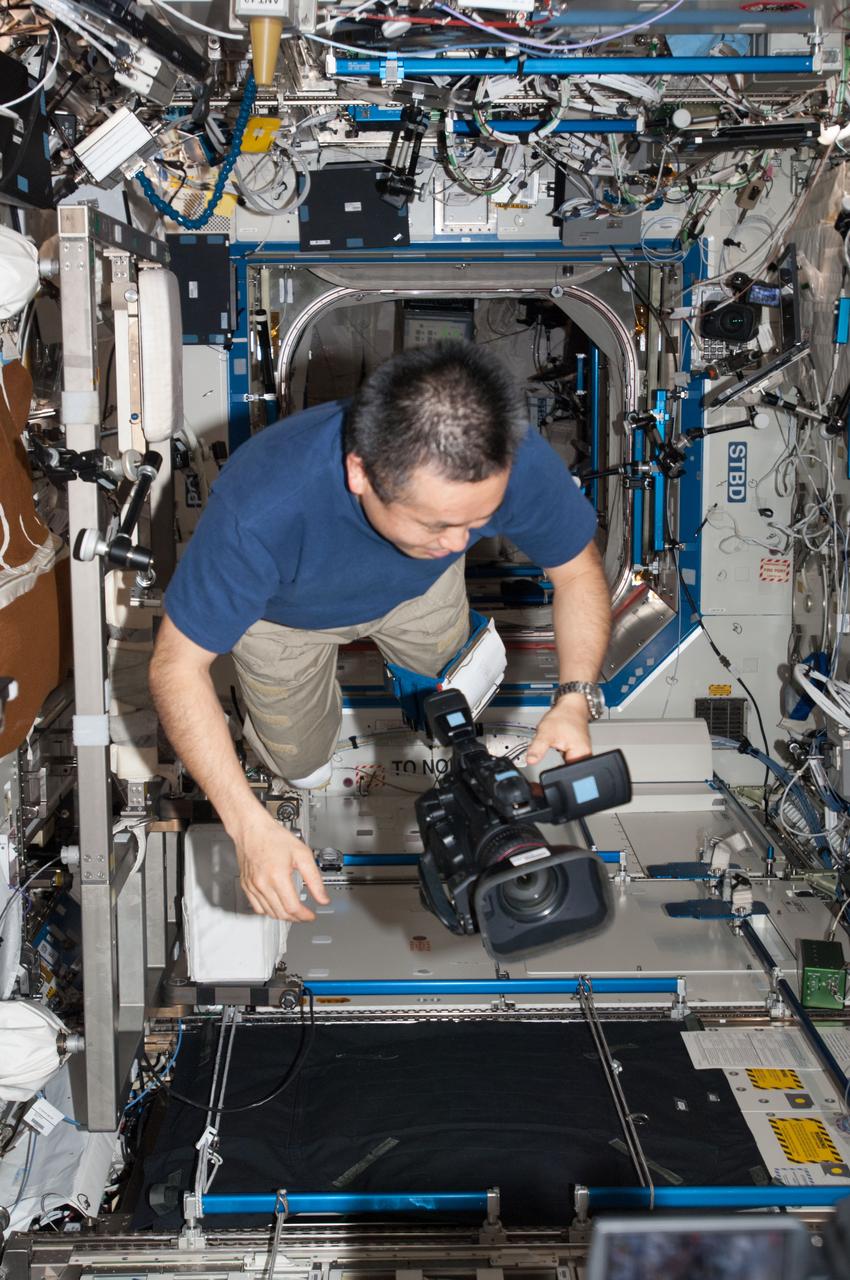
ISS038-E-015225 (11 Dec. 2013) --- Japan Aerospace Exploration Agency astronaut Koichi Wakata, Expedition 38 flight engineer, floats freely while holding a video camera in the Destiny laboratory of the International Space Station.
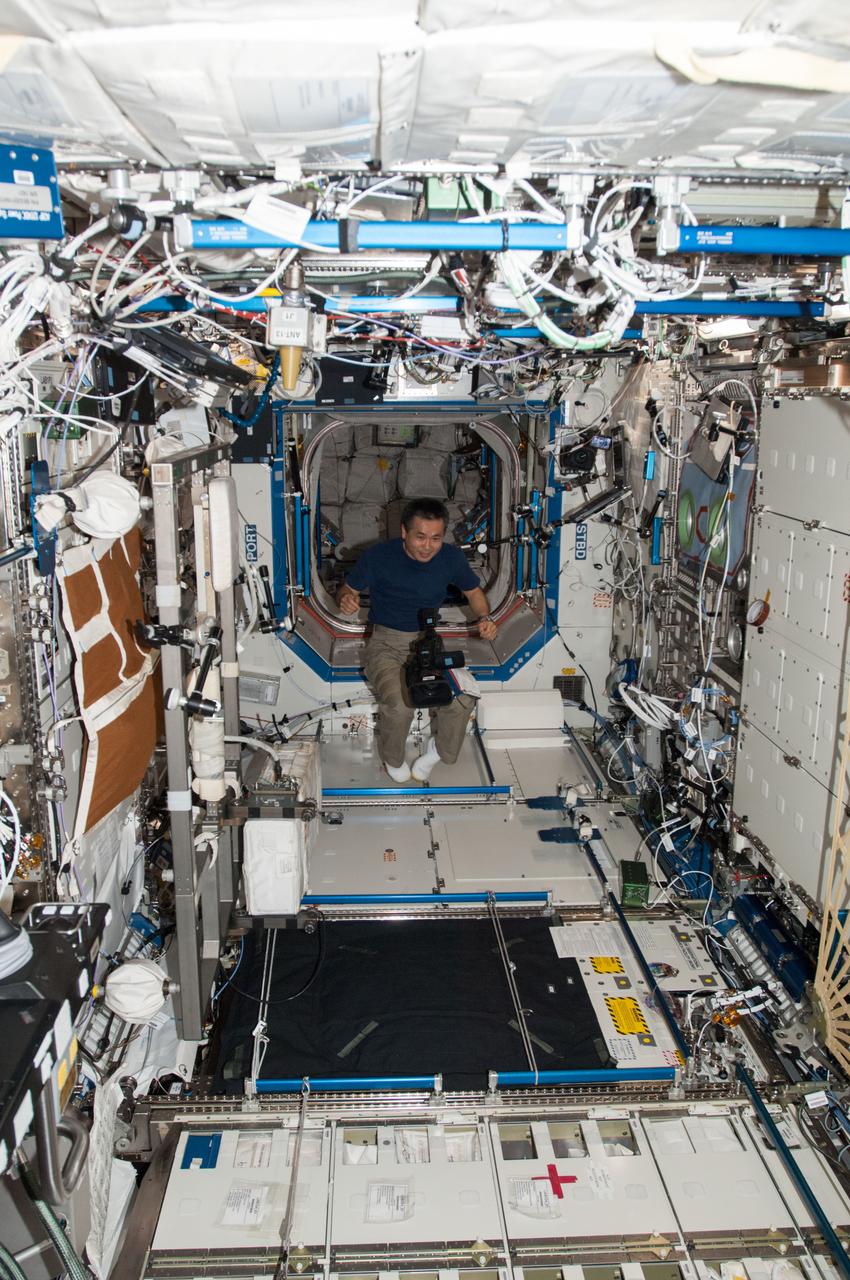
ISS038-E-015223 (11 Dec. 2013) --- Japan Aerospace Exploration Agency astronaut Koichi Wakata, Expedition 38 flight engineer, works with a video camera in the Destiny laboratory of the International Space Station.
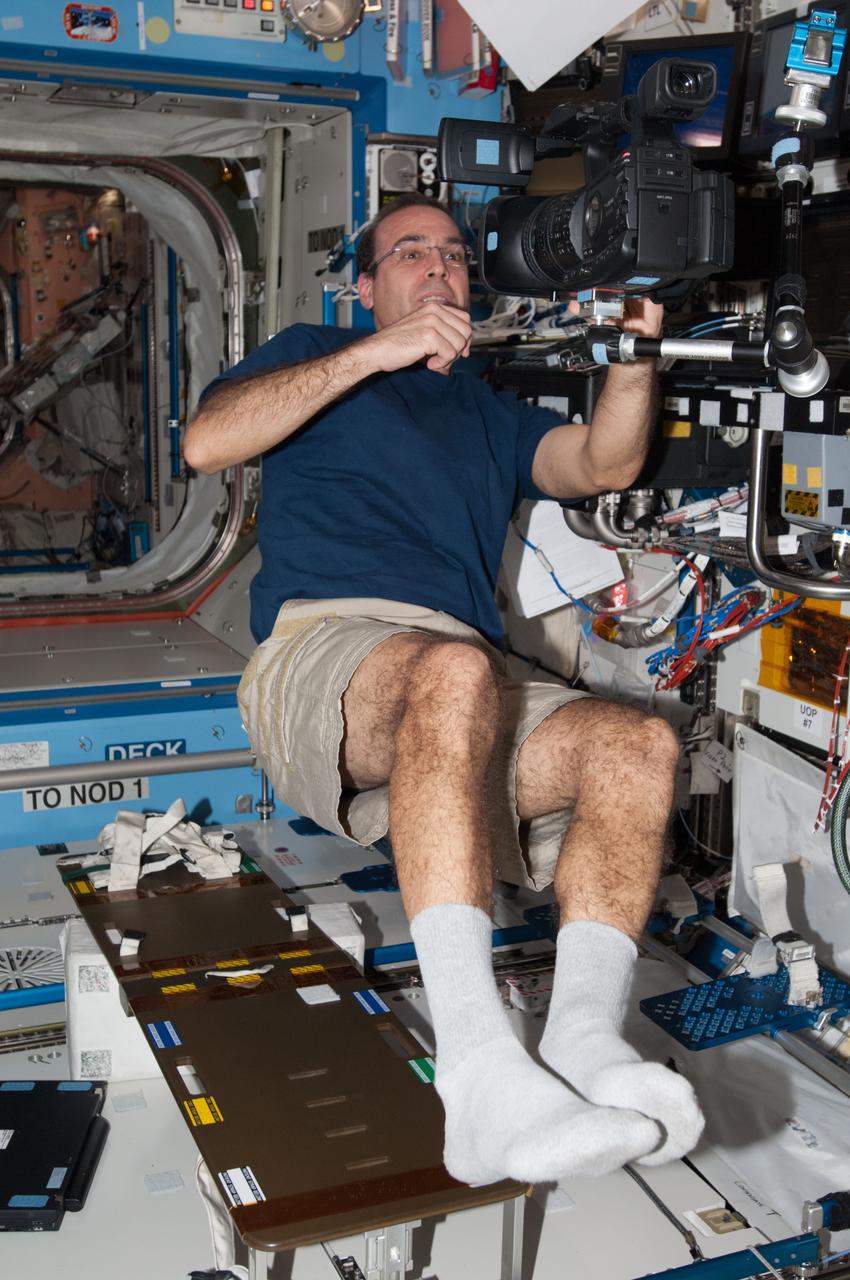
ISS038-E-015235 (11 Dec. 2013) --- NASA astronaut Rick Mastracchio, Expedition 38 flight engineer, works with a video camera in the Destiny laboratory of the International Space Station.
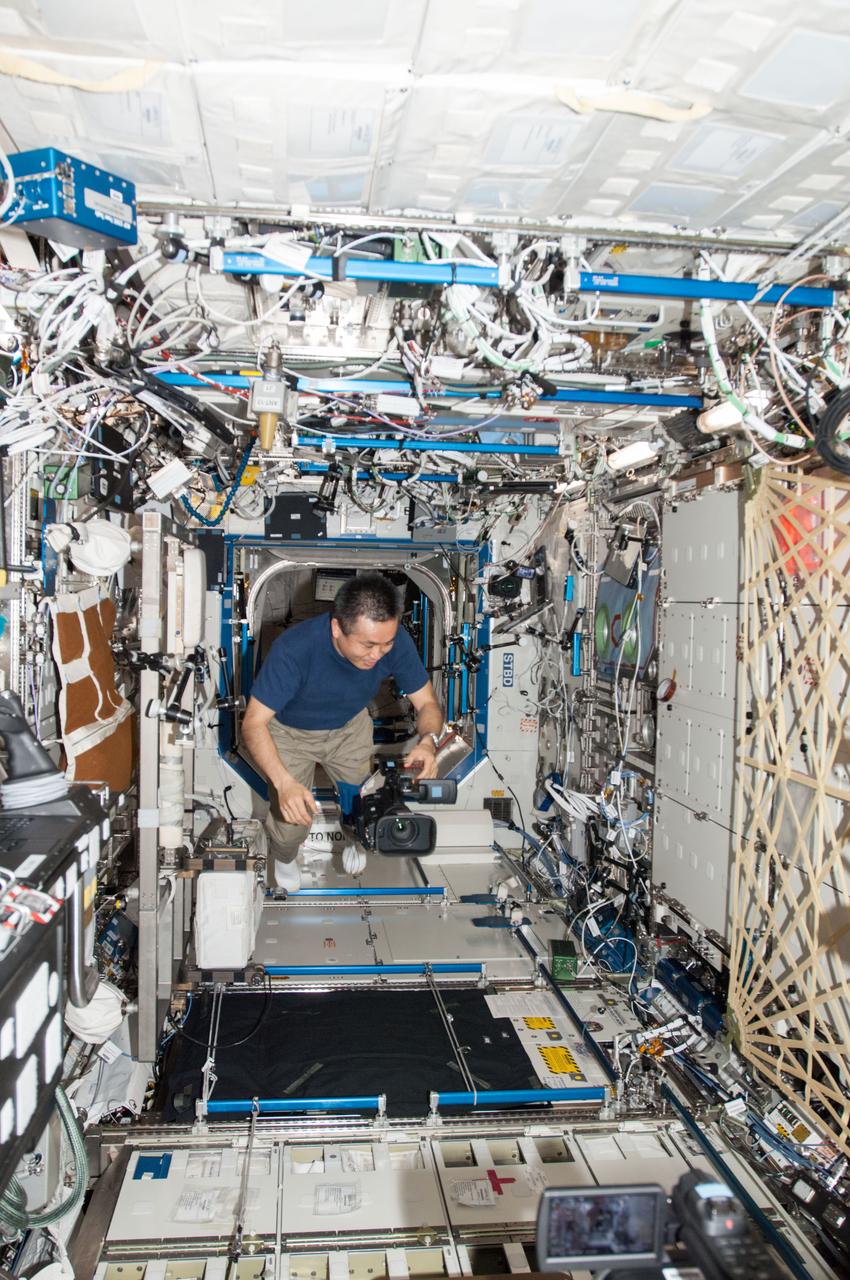
ISS038-E-015224 (11 Dec. 2013) --- Japan Aerospace Exploration Agency astronaut Koichi Wakata, Expedition 38 flight engineer, floats freely while holding a video camera in the Destiny laboratory of the International Space Station.
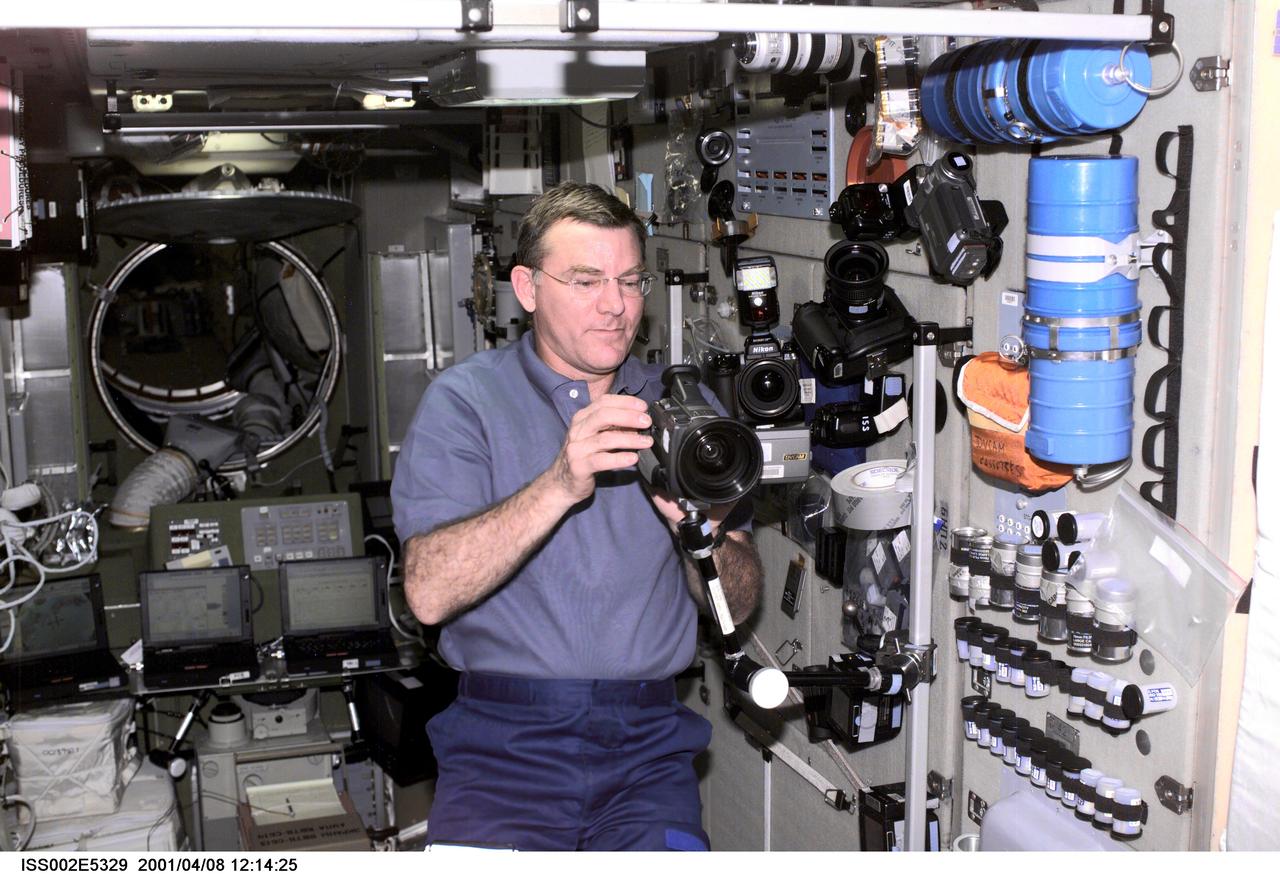
ISS002-E-5329 (08 April 2001) --- Astronaut James S. Voss, Expedition Two flight engineer, sets up a video camera on a mounting bracket in the Zvezda / Service Module of the International Space Station (ISS). A 35mm camera and a digital still camera are also visible nearby. This image was recorded with a digital still camera.
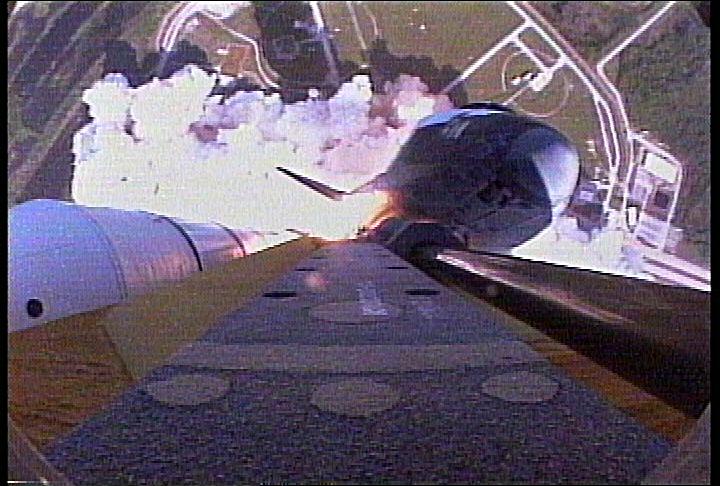
A color video camera mounted to the top of the External Tank (ET) provided this spectacular never-before-seen view of the STS-112 mission as the Space Shuttle Orbiter Atlantis lifted off in the afternoon of October 7, 2002, The camera provided views as the the orbiter began its ascent until it reached near-orbital speed, about 56 miles above the Earth, including a view of the front and belly of the orbiter, a portion of the Solid Rocket Booster, and ET. The video was downlinked during flight to several NASA data-receiving sites, offering the STS-112 team an opportunity to monitor the shuttle's performance from a new angle. Atlantis carried the S1 Integrated Truss Structure and the Crew and Equipment Translation Aid (CETA) Cart. The CETA is the first of two human-powered carts that will ride along the International Space Station's railway providing a mobile work platform for future extravehicular activities by astronauts. Landing on October 18, 2002, the Orbiter Atlantis ended its 11-day mission.
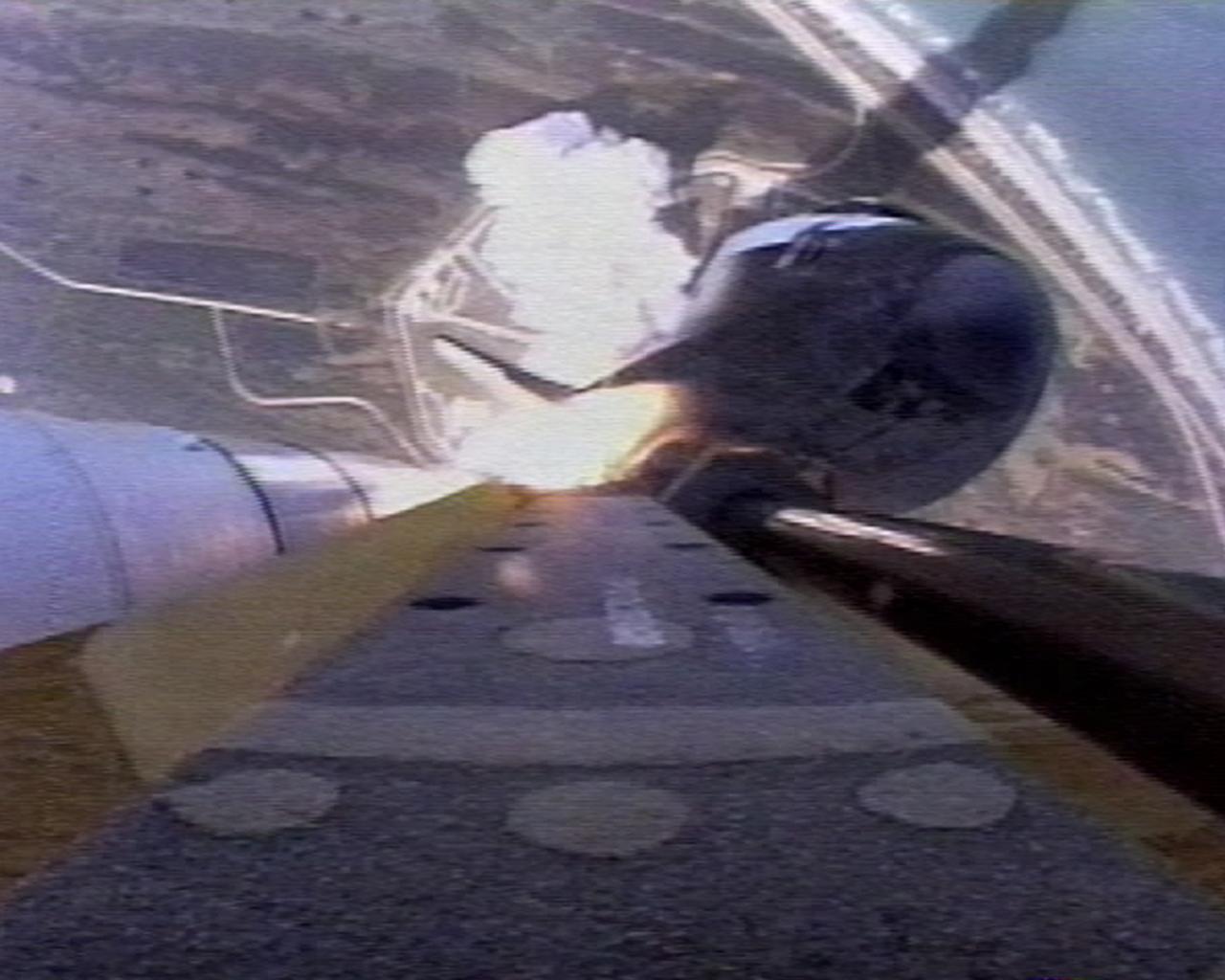
A color video camera mounted to the top of the External Tank (ET) provided this spectacular never-before-seen view of the STS-112 mission as the Space Shuttle Orbiter Atlantis lifted off in the afternoon of October 7, 2002. The camera provided views as the orbiter began its ascent until it reached near-orbital speed, about 56 miles above the Earth, including a view of the front and belly of the orbiter, a portion of the Solid Rocket Booster, and ET. The video was downlinked during flight to several NASA data-receiving sites, offering the STS-112 team an opportunity to monitor the shuttle's performance from a new angle. Atlantis carried the S1 Integrated Truss Structure and the Crew and Equipment Translation Aid (CETA) Cart. The CETA is the first of two human-powered carts that will ride along the International Space Station's railway providing a mobile work platform for future extravehicular activities by astronauts. Landing on October 18, 2002, the Orbiter Atlantis ended its 11-day mission.

ISS030-E-060104 (1 Feb. 2012) --- NASA astronaut Dan Burbank, Expedition 30 commander, uses a video camera in the Destiny laboratory of the International Space Station during installation and routing of video cable for the High Rate Communication System (HRCS). HRCS will allow for two additional space-to-ground audio channels and two additional downlink video channels.
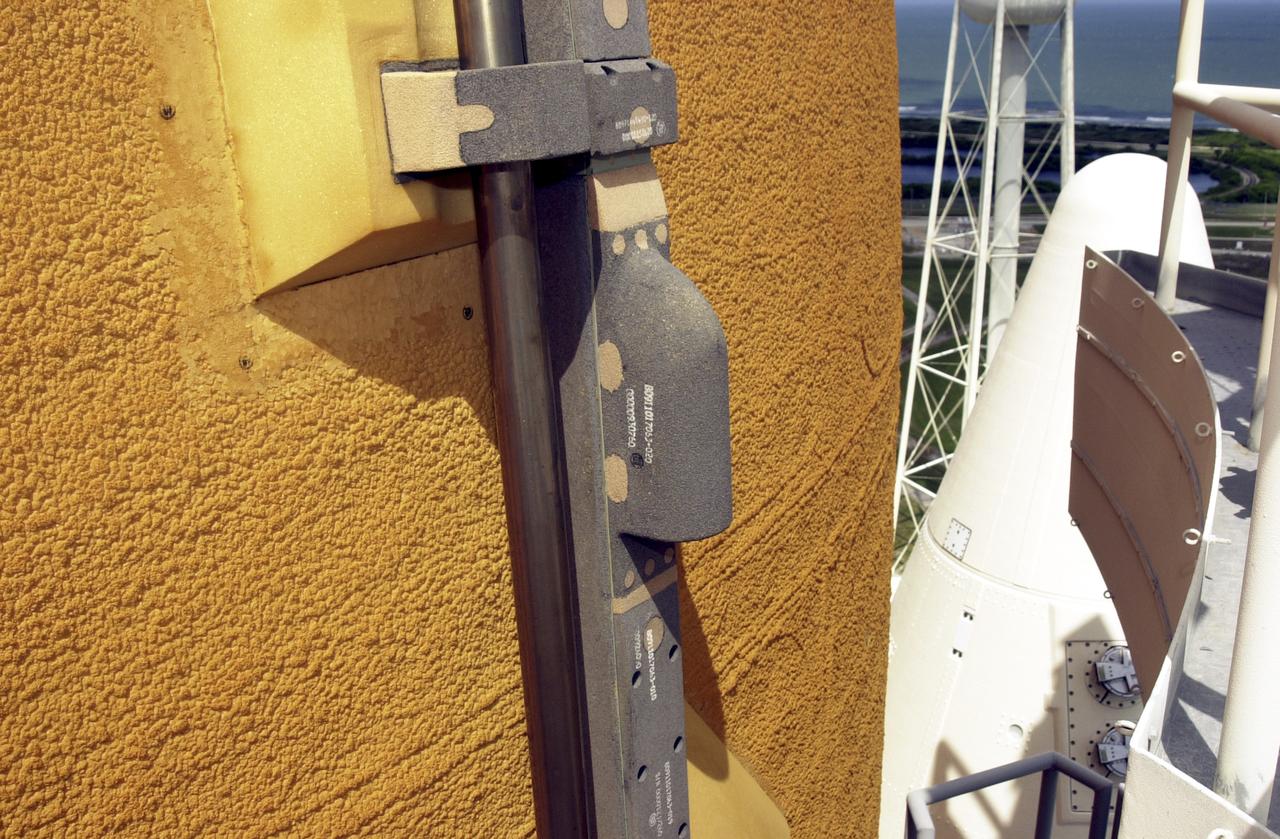
This is a view of the video camera mounted on the External Tank (ET) of the Space Shuttle Orbiter Atlantis (STS-112). The camera provided a view of the front and belly of the orbiter, a portion of the Solid Rocket Boosters (SRBs), and ET during the launch. Located high on the ET liquid oxygen tank cable tray, the camera, 6 inches long and resembling a short thin flashlight, is inside an aluminum fairing covered in protective insulating foam. The battery pack and transmitter are contained in an electronics box and mounted in the intertank crossbeam inside the ET. The camera turned on 15 minutes prior to launch and operated for about 15 minutes following liftoff. At liftoff, viewers saw the Shuttle clearing the launch tower and, at 2 minutes after liftoff, saw the right SRB separate from the ET, and ET separation about 8 minutes into the flight. The video was downlinked from the ET during flight to several NASA data-receiving sites and then relayed to the live television broadcast. It provided the STS-112 team an opportunity to monitor the Shuttle's performance from a new angle. Launched on October 7, 2002, Atlantis carried its primary payload, the S1 Truss for the International Space Station.
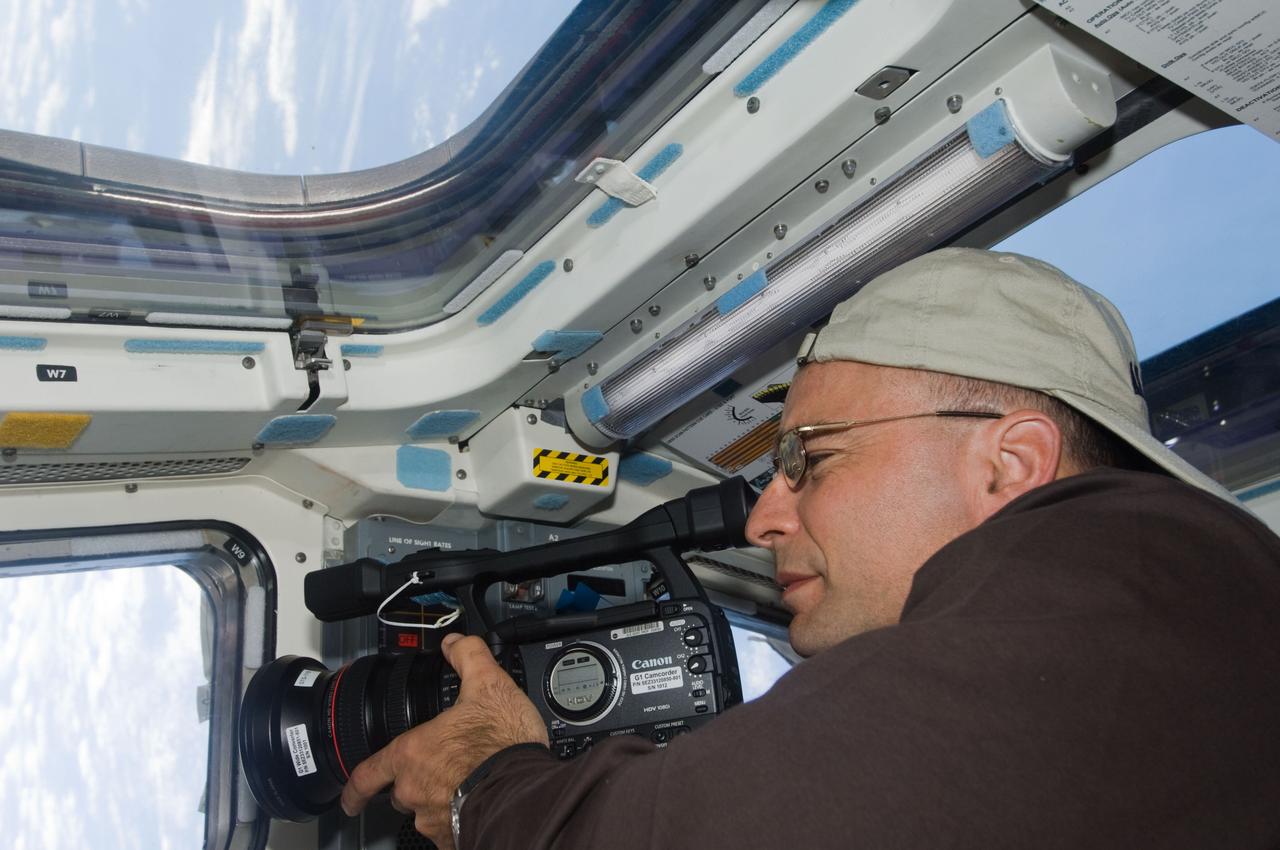
S119-E-006155 (16 March 2009) --- Astronaut Lee Archambault, STS-119 commander, uses a HD video camera at a window on the aft flight deck of Space Shuttle Discovery during flight day two activities.
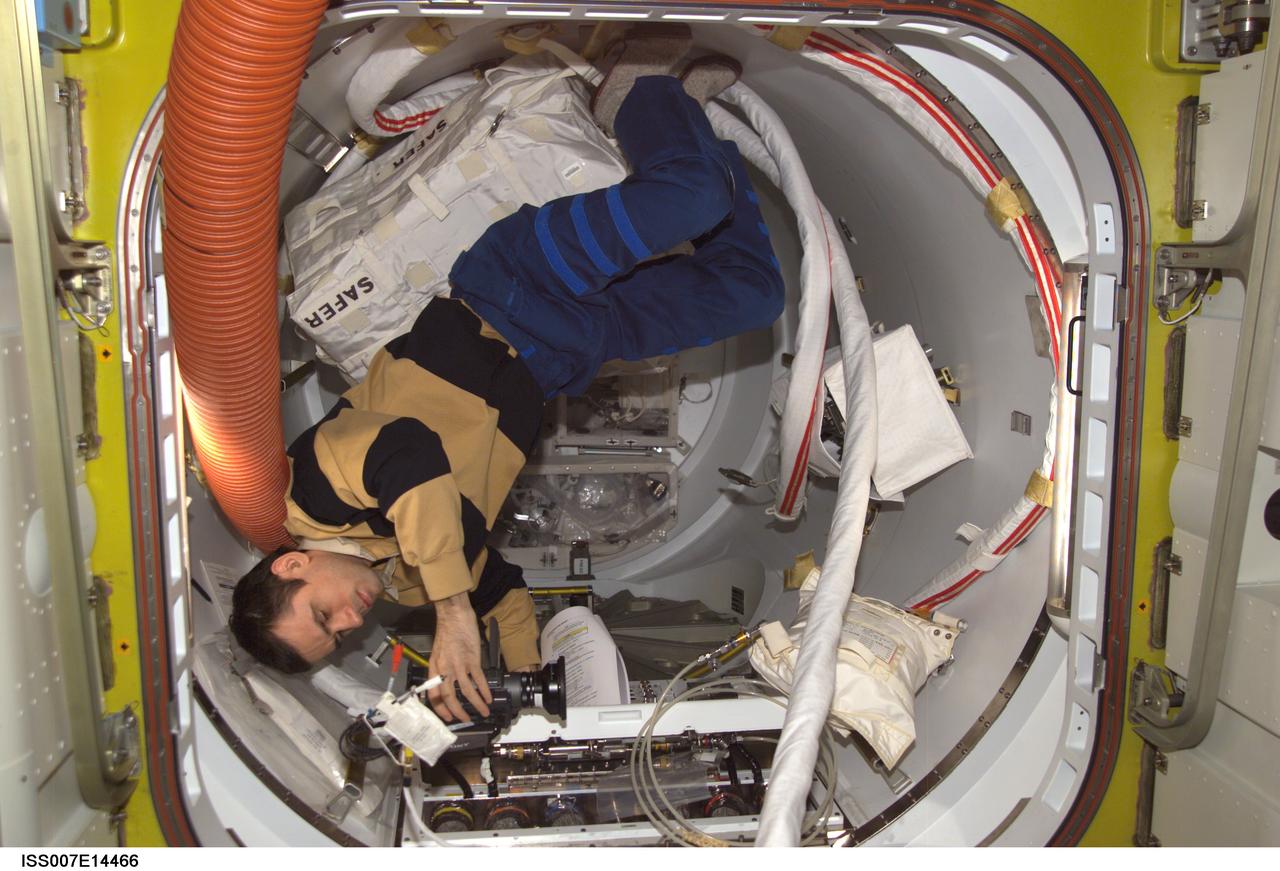
ISS007-E-14466 (5 September 2003) --- Cosmonaut Yuri I. Malenchenko, Expedition 7 mission commander, sets up a video camera to document a review of one of the Extravehicular Mobility Unit (EMU) space suits in the Quest airlock on the International Space Station (ISS). Malenchenko represents Rosaviakosmos.
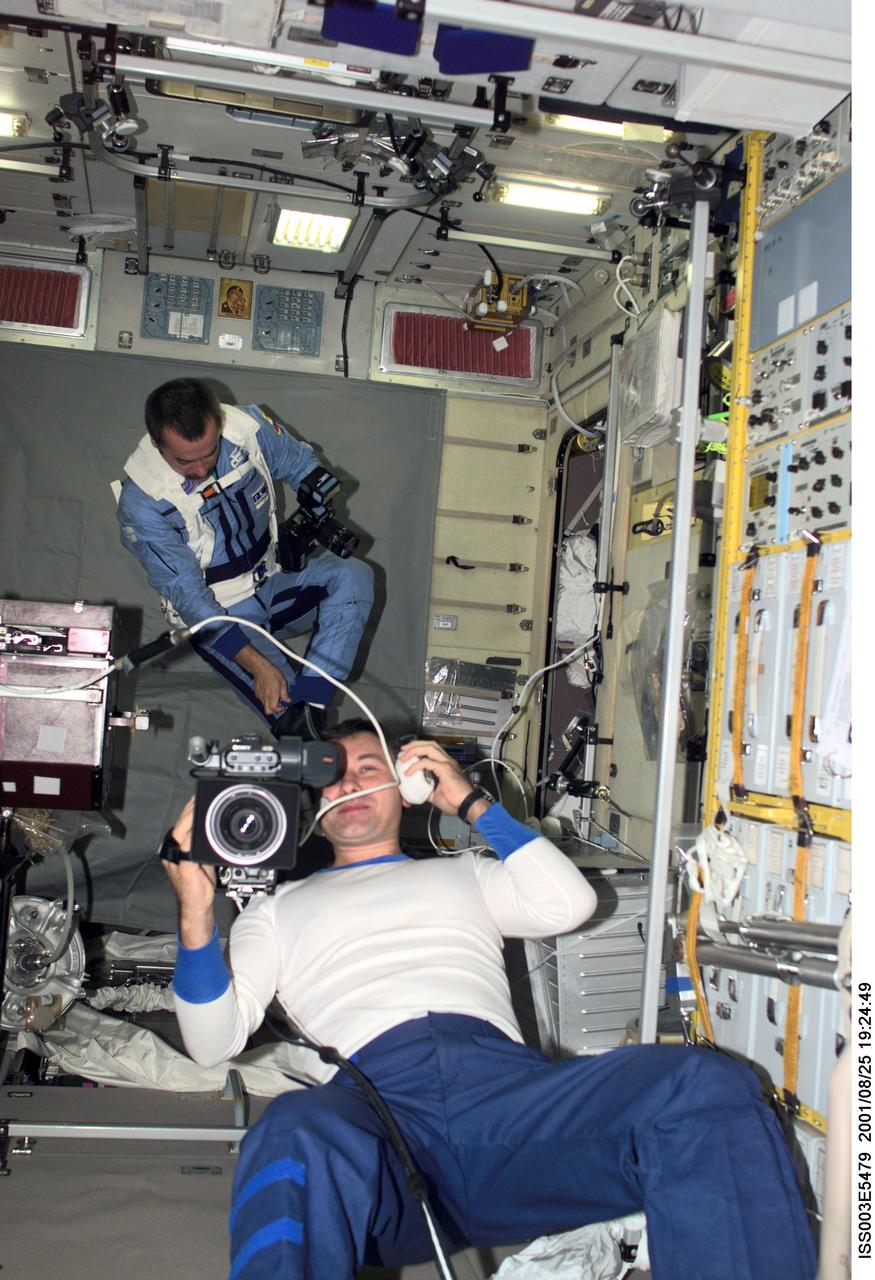
ISS003-E-5479 (24 August 2001) --- Cosmonaut Vladimir Dezhurov, Expedition Three flight engineer, operates a video camera in the Zvezda Service Module. In the background, cosmonaut Mikhail Tyurin, flight engineer, is visible with a photographic camera. Tyurin and Dezhurov represent Rosaviakosmos.
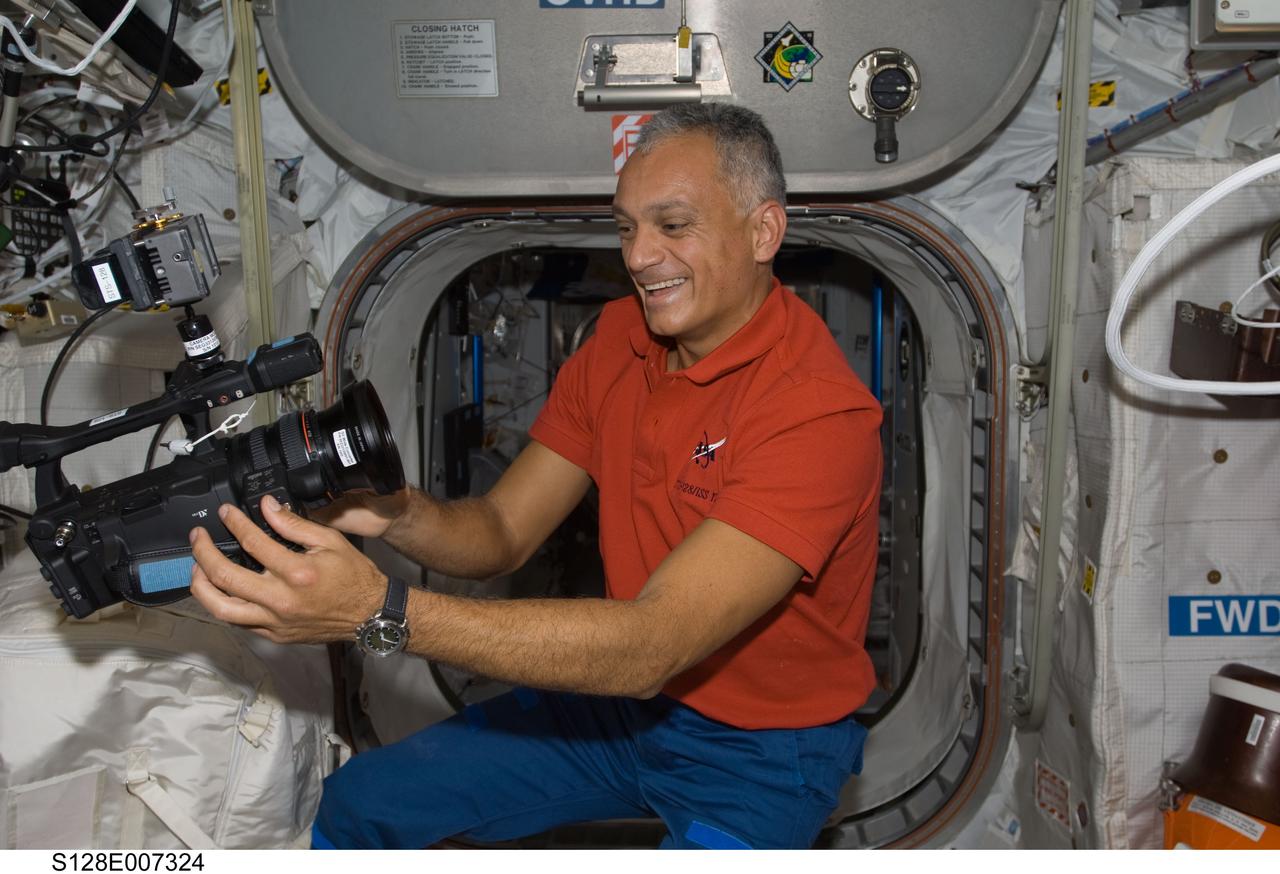
S128-E-007324 (4 Sept. 2009) ---- Astronaut John “Danny” Olivas, STS-128 mission specialist, checks out a video camera. The Space Shuttle Discovery is currently docked with the International Space Station while the STS-128 astronauts work with the Expedition 20 crewmembers aboard the orbital outpost. In the last several days, Olivas has already participated in two days of extravehicular activity and is preparing for his third and final spacewalk on Sept. 5.

S132-E-012188 (23 May 2010) --- NASA astronaut Tony Antonelli, STS-132 pilot, uses a video camera at an overhead window on the aft flight deck of space shuttle Atlantis to photograph the International Space Station after the station and shuttle began their post-undocking relative separation.
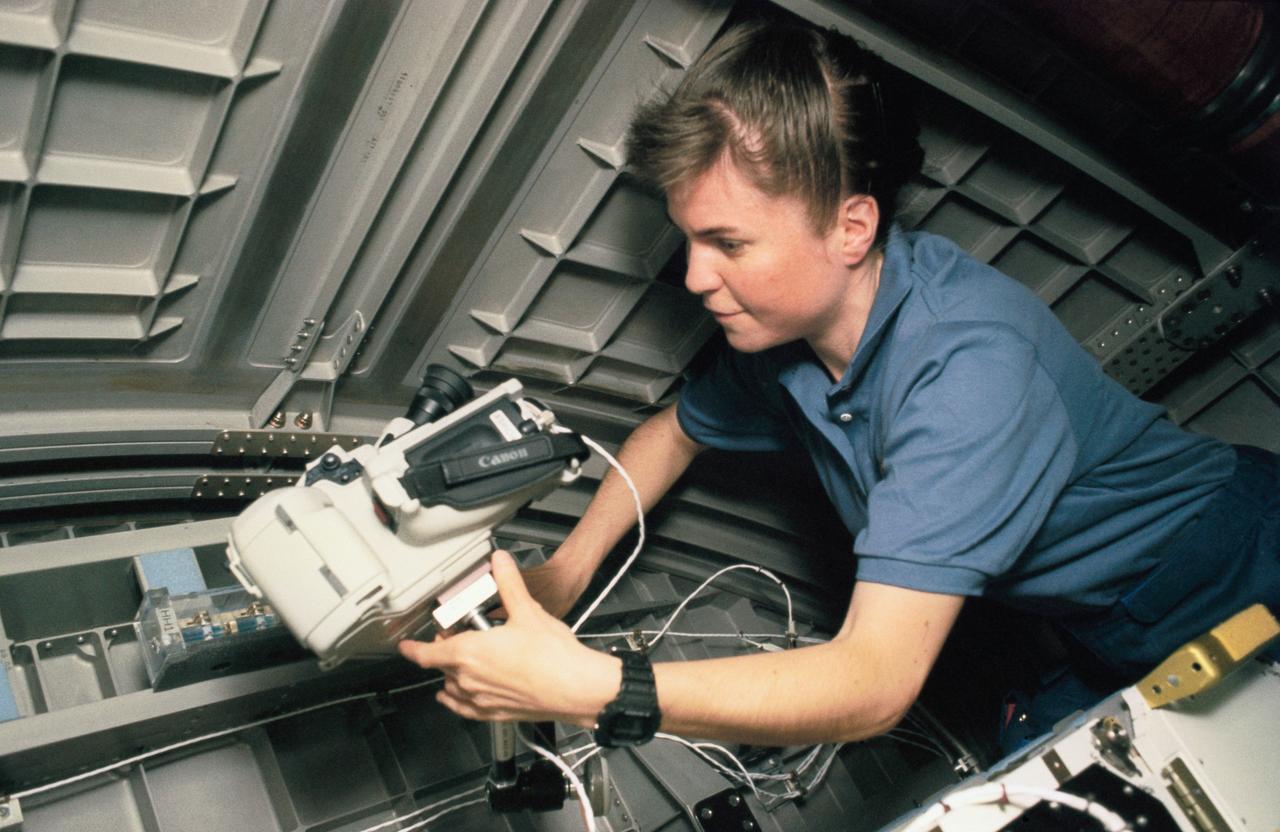
STS063-313-018 (3-11 Feb 1995) --- Janice E. Voss, mission specialist, with a video camera in SpaceHab-3 onboard the Space Shuttle Discovery. This is one of 16 still photographs released by the NASA Johnson Space Center (JSC) Public Affairs Office (PAO) on February 14, 1995. Others onboard the Discovery were astronauts James D. Wetherbee, mission commander; Eileen M. Collins, pilot; Bernard A. Harris Jr., payload commander; mission specialists C. Michael Foale, and cosmonaut Vladimir G. Titov.
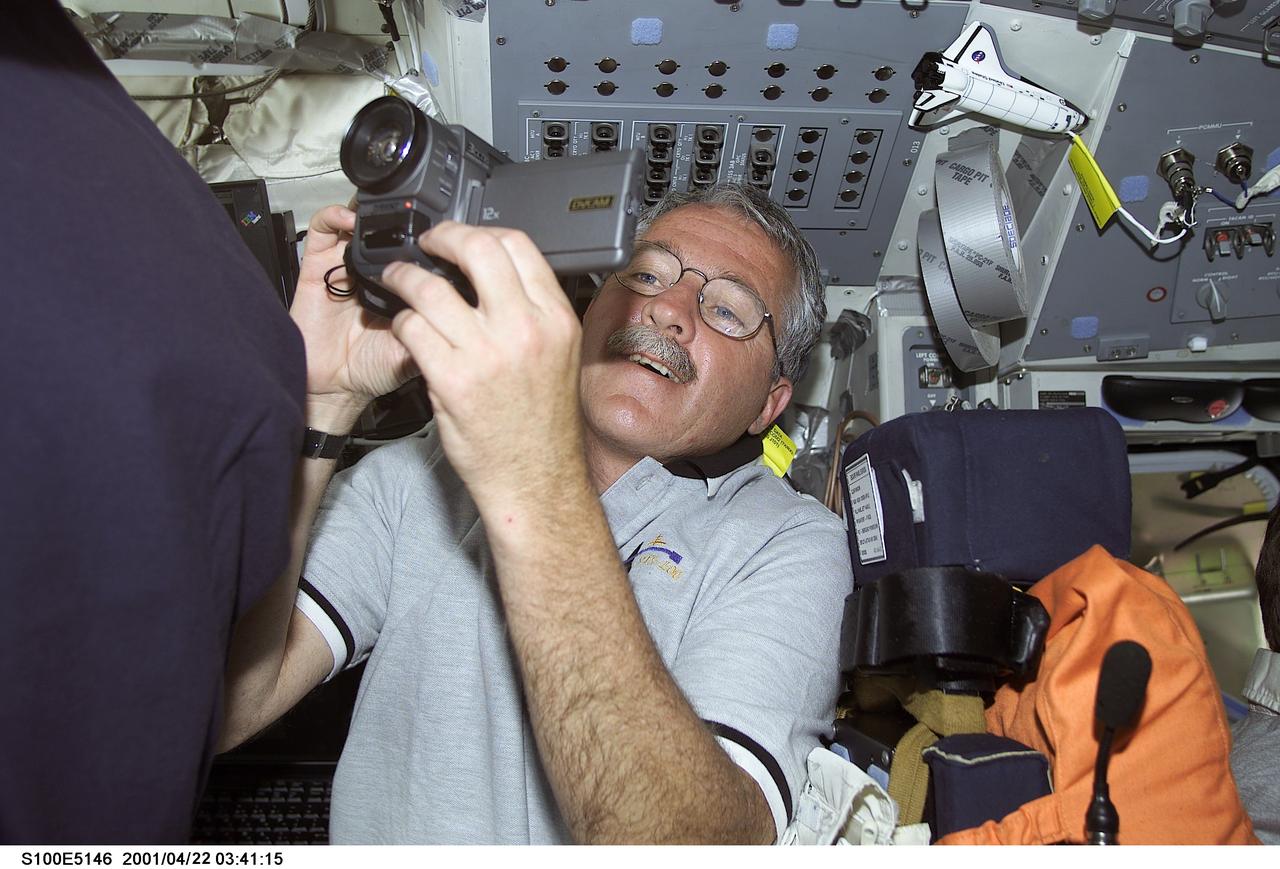
S100-E-5146 (21 April 2001) --- Astronaut John L. Phillips, mission specialist, uses a video camera to record activity on the flight deck of the Space Shuttle Endeavour.
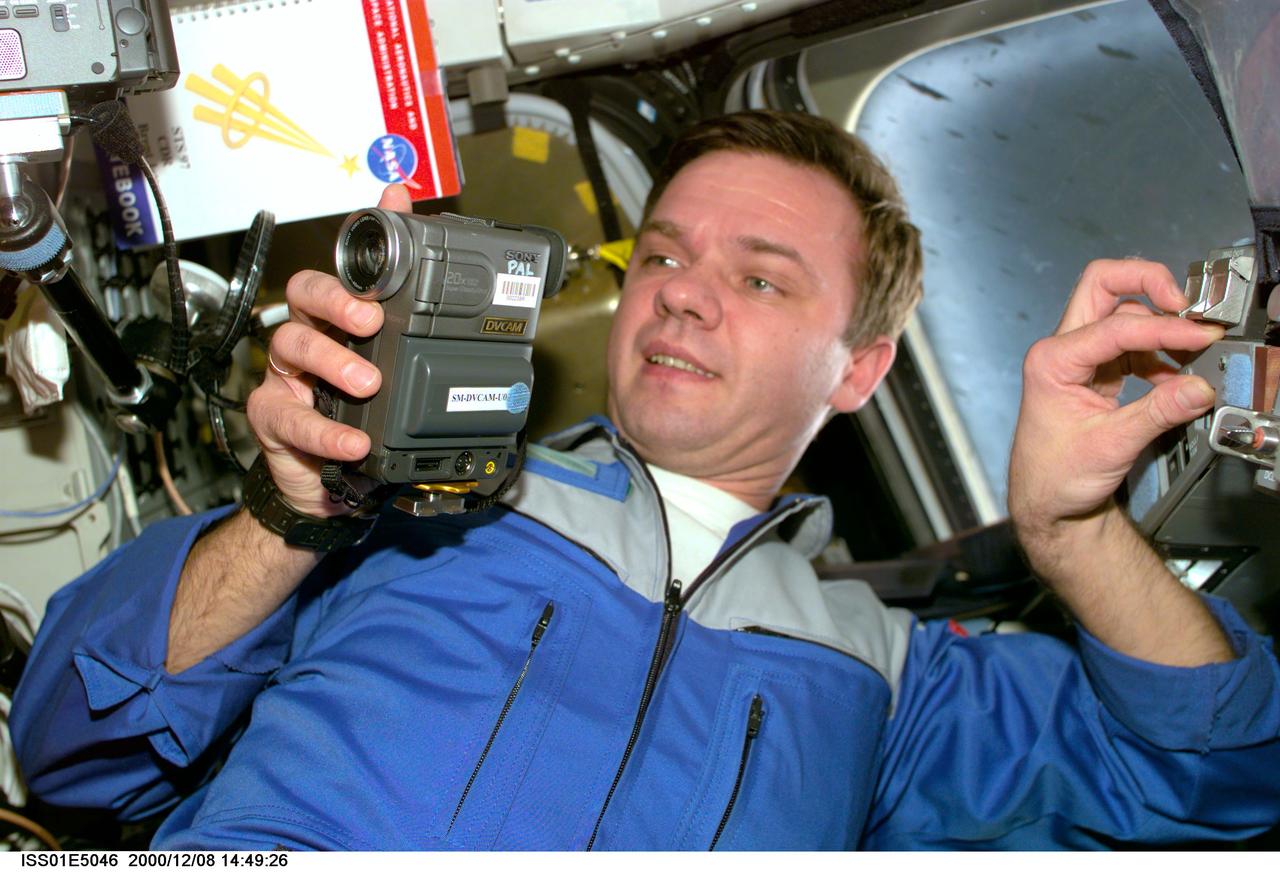
ISS01-E-5046 (8 December 2000) -- Cosmonaut Yuri P. Gidzenko, Soyuz commander for Expedition One, uses a Russian PAL video camera on the flight deck of Endeavour. The three ISS Expedition One crew members were onboard the Endeavour for a brief visit following ISS hatch-opening and a reunion between the crews of station and shuttle.
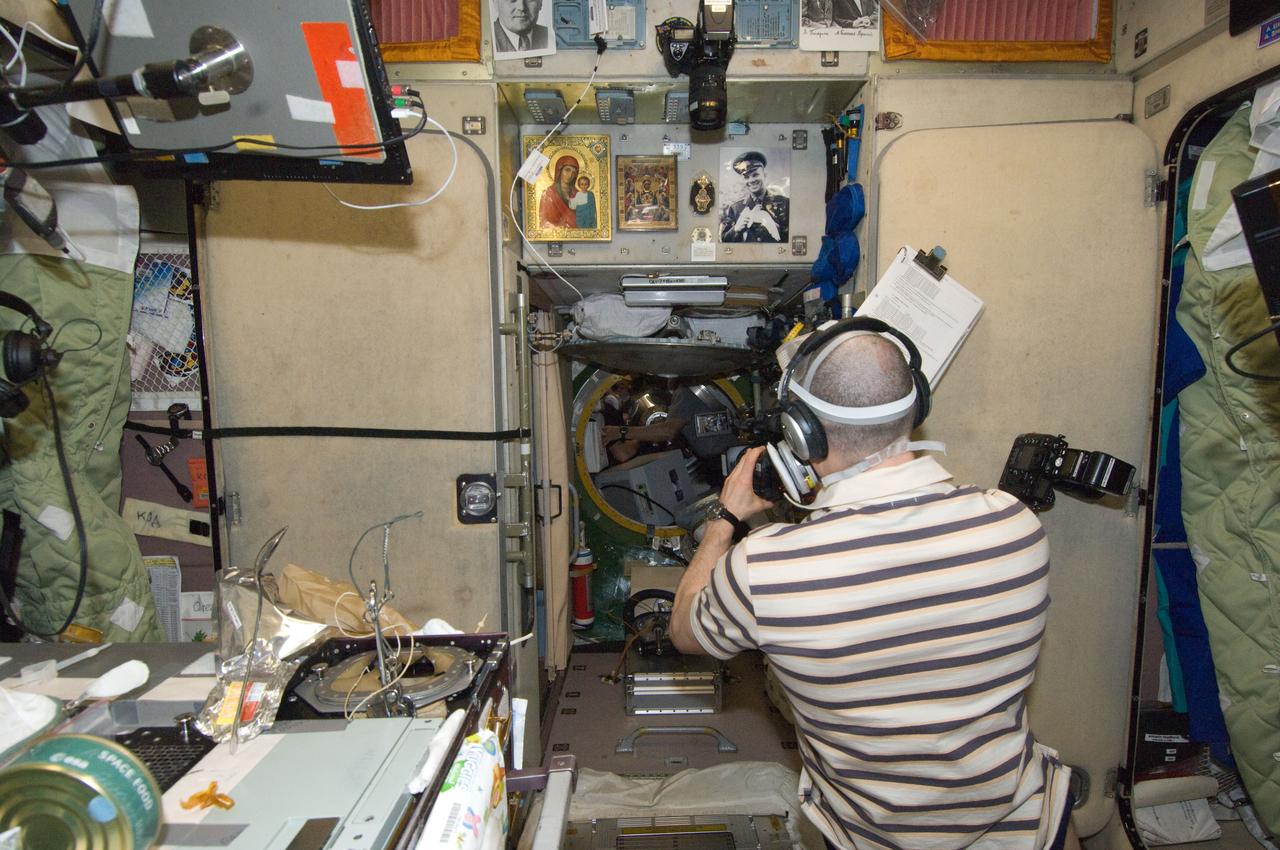
ISS030-E-177715 (29 March 2012) --- In the International Space Station?s Zvezda Service Module, Russian cosmonaut Anatoly Ivanishin, Expedition 30 flight engineer, uses a video camera as his crewmates prepare to open the hatch to European Space Agency?s ?Edoardo Amaldi? Automated Transfer Vehicle-3 (ATV-3). The ATV docked with the space station on March 28, 2012.
This video shows images taken through infrared range cameras during a recovery simulation at the Utah Test and Training Range on Dec 13, 2005. Infrared cameras will track the landing.
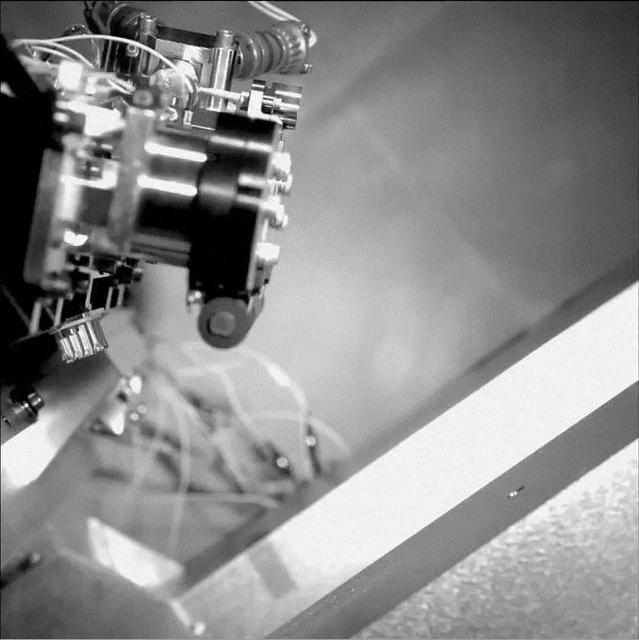
This frame from a video shows an engineering test for NASA Curiosity rover. During the test, the clear dust covers on the Hazard-Avoidance cameras were popped off.
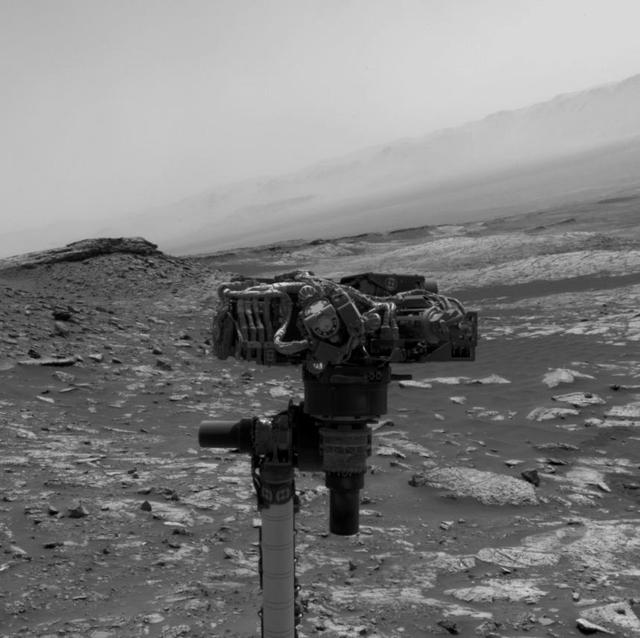
This video, taken by the Navigation Cameras, or Navcams, on the Mast of NASA's Curiosity Mars rover, shows the rover's robotic arm as it rotates to take a selfie. A camera at the end of the arm captured 86 individual images that were later stitched into a panorama. The Navcams are black-and-white cameras generally used to help engineers plan Curiosity's movements. Animation available at https://photojournal.jpl.nasa.gov/catalog/PIA23625
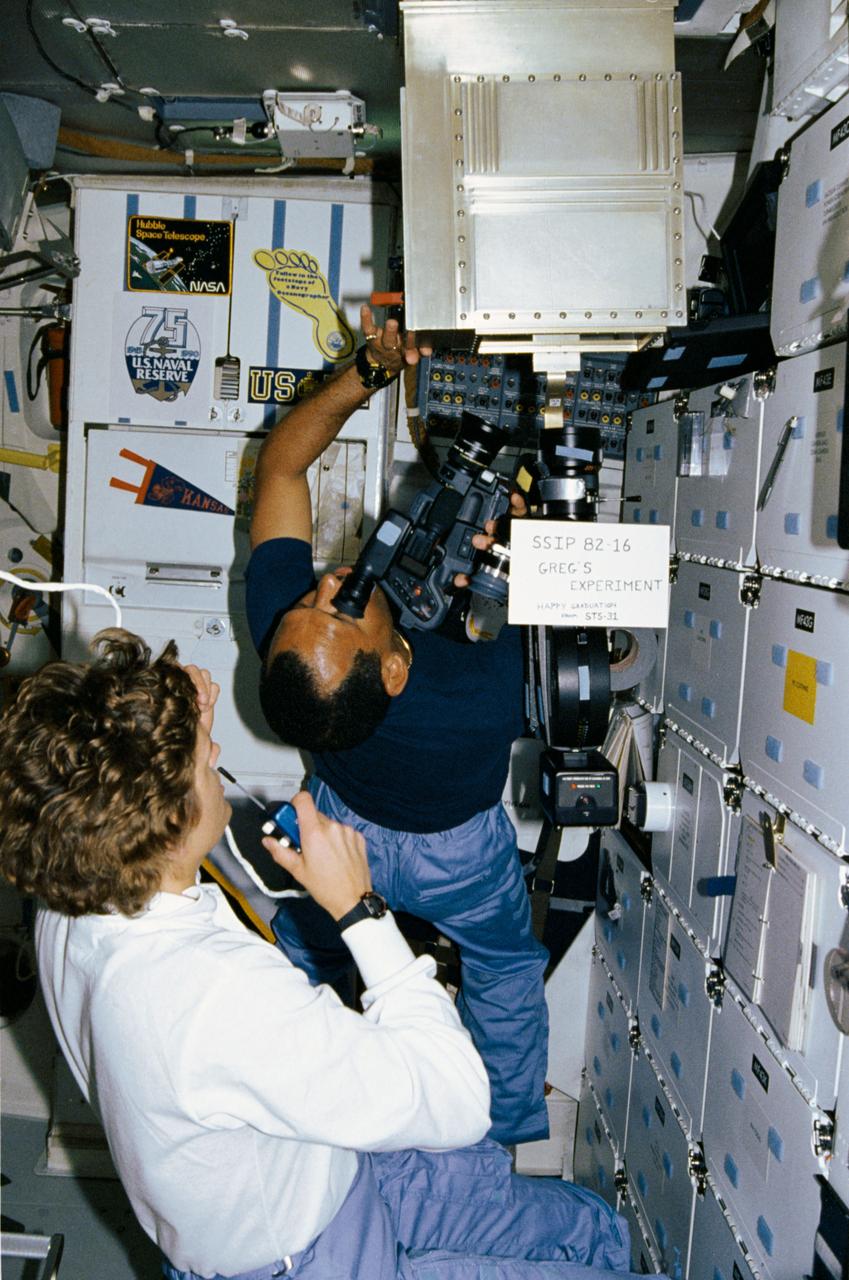
STS-31 Mission Specialist (MS) Kathryn D. Sullivan monitors and advises ground controllers of the activity inside the Student Experiment (SE) 82-16, Ion arc - studies of the effects of microgravity and a magnetic field on an electric arc, mounted in front of the middeck lockers aboard Discovery, Orbiter Vehicle (OV) 103. Pilot Charles F. Bolden uses a video camera and an ARRIFLEX motion picture camera to record the activity inside the special chamber. A sign in front of the experiment reads "SSIP 82-16 Greg's Experiment Happy Graduation from STS-31." SSIP stands for Shuttle Student Involvement Program. Gregory S. Peterson who developed the experiment (Greg's Experiment) is a student at Utah State University and monitored the experiment's operation from JSC's Mission Control Center (MCC) during the flight. Decals displayed in the background on the orbiter galley represent the Hubble Space Telescope (HST), the United States (U.S.) Naval Reserve, Navy Oceanographers, U.S. Navy, and University of Kansas.
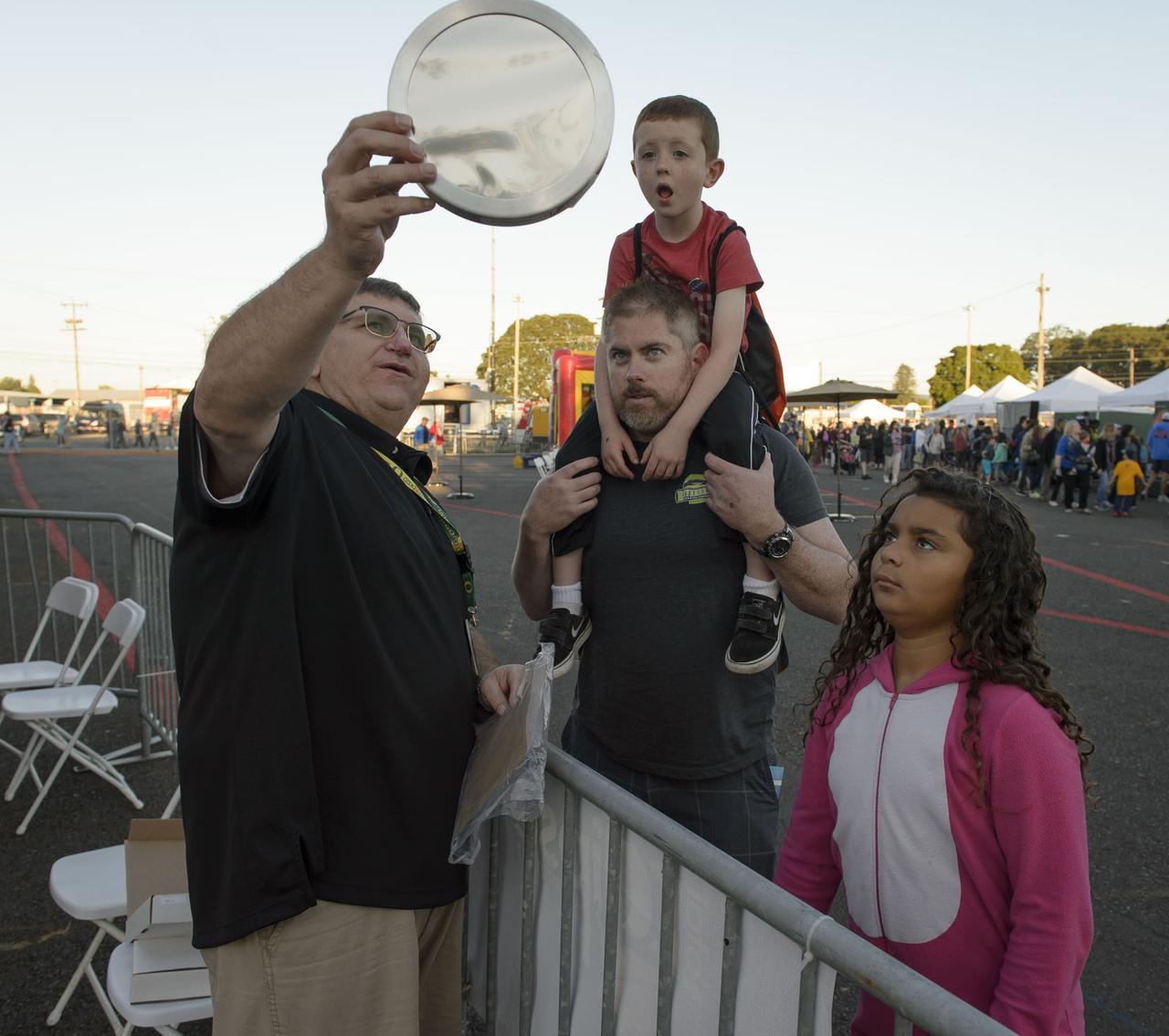
Bill Moede, Howard Video Productions, of the NASA Ames Video group explains how the filter that will be used on the camera to safely photograph the sun during the eclipse.
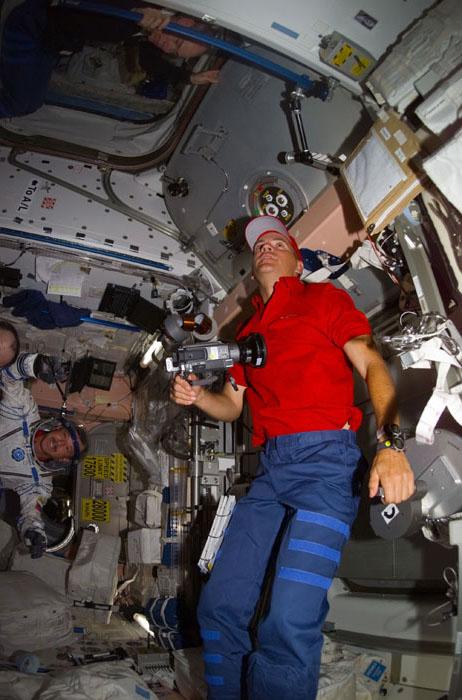
STS105-E-5364 (20 August 2001) --- Frederick W. Sturckow (center), STS-105 pilot, talks with Daniel T. Barry, mission specialist, in Unity Node 1. In the background, Scott J. Horowitz, STS-105 commander, is trying on Vladimir N. Dezhurov's, Expedition Three flight engineer, Russian Sokol suit. This image was taken with a digital still camera.
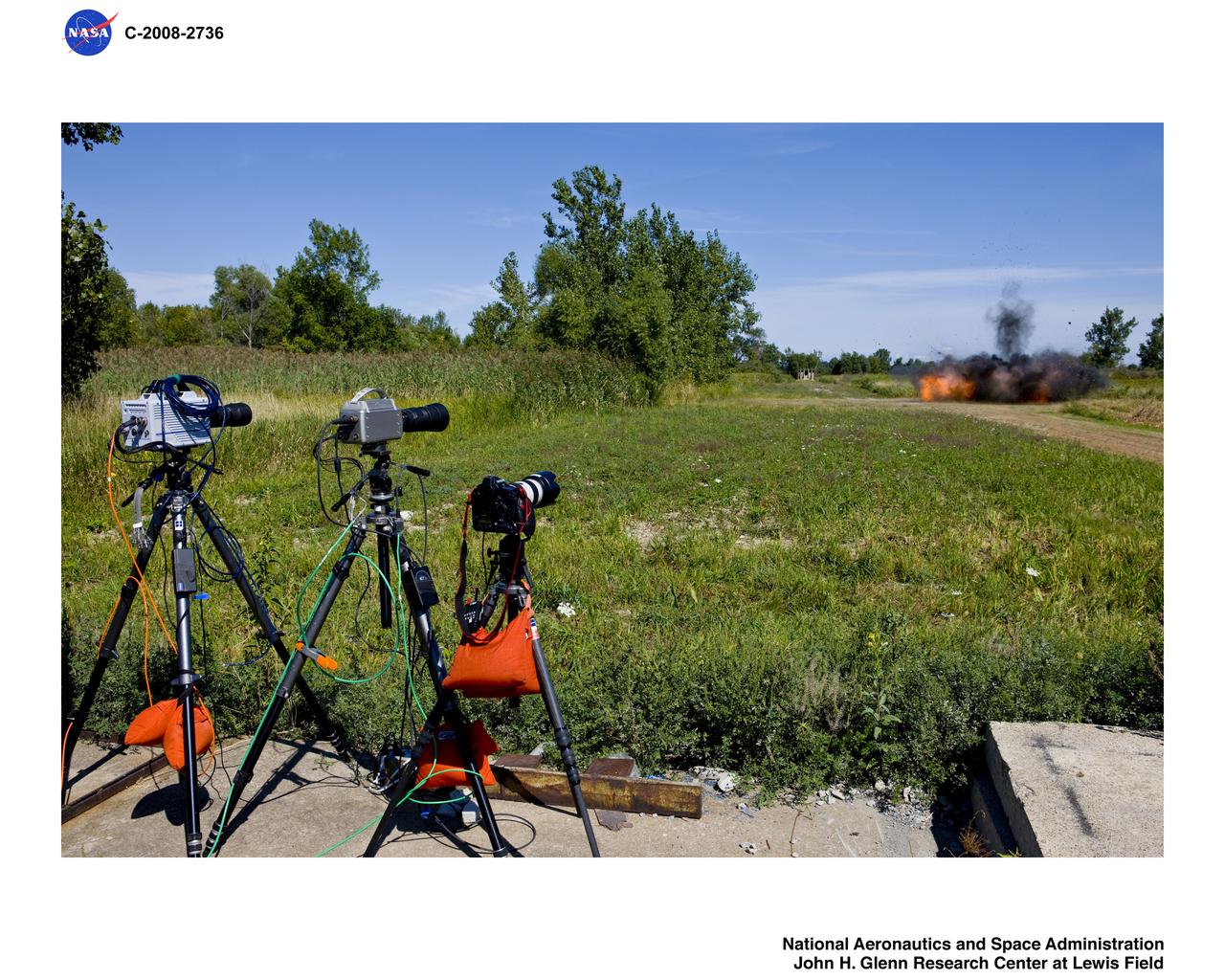
Documentation of explosives detonation at ARES of 10lbs. of C-4 Aerostat Video Program with 2 high speed cameras and digital still camera in foreground

iss052e002495 (6/15/2017) --- A view of the Japanese Experiment Module (JEM) Internal Ball Camera aboard the International Space Station (ISS). This device is a free-flying camera robot that provides real time video downlink and photographs. It is expected to reduce the crew time requirements to support video recording of activities, especially at the blind spot of existing JEM internal cameras.

iss052e002482 (6/15/2017) --- A view of the Japanese Experiment Module (JEM) Internal Ball Camera aboard the International Space Station (ISS). This device is a free-flying camera robot that provides real time video downlink and photographs. It is expected to reduce the crew time requirements to support video recording of activities, especially at the blind spot of existing JEM internal cameras.

iss052e046695 (8/15/2020) --- A view of NASA astronaut Peggy Whitson aboard the International Space Station (ISS) with the Japanese Experiment Module (JEM) Internal Ball Camera. This device is a free-flying camera robot that provides real time video downlink and photographs. It is expected to reduce the crew time requirements to support video recording of activities, especially at the blind spot of existing JEM internal cameras.

iss052e046674 (8/15/2020) --- A view of NASA astronaut Peggy Whitson aboard the International Space Station (ISS) with the Japanese Experiment Module (JEM) Internal Ball Camera. This device is a free-flying camera robot that provides real time video downlink and photographs. It is expected to reduce the crew time requirements to support video recording of activities, especially at the blind spot of existing JEM internal cameras.
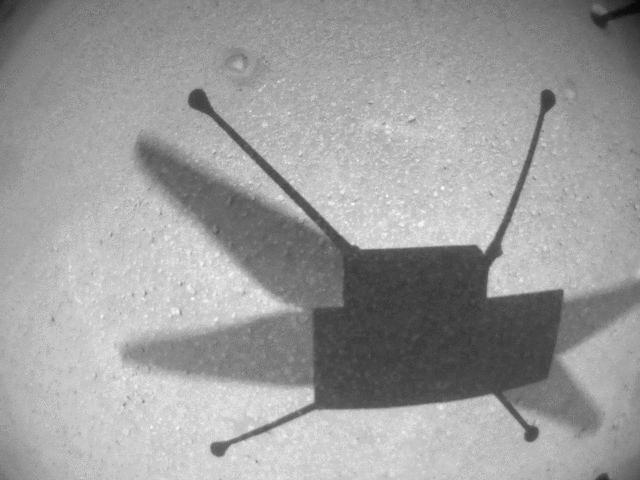
This video clip was obtained by the Ingenuity Mars Helicopter's black-and-white navigation camera during its 14th flight, on Oct. 24, 2021. During the flight, the rotorcraft reached a peak altitude of 16 feet (5 meters) with a small sideways translation of 7 feet (2 meters) to avoid a nearby sand ripple, before setting down again. Flight 14 was only 23 seconds in length. As a result, enough onboard memory was available to obtain black-and-white navigation camera imagery at the high-rate of 7.4 frames a second. Movie available at https://photojournal.jpl.nasa.gov/catalog/PIA24976
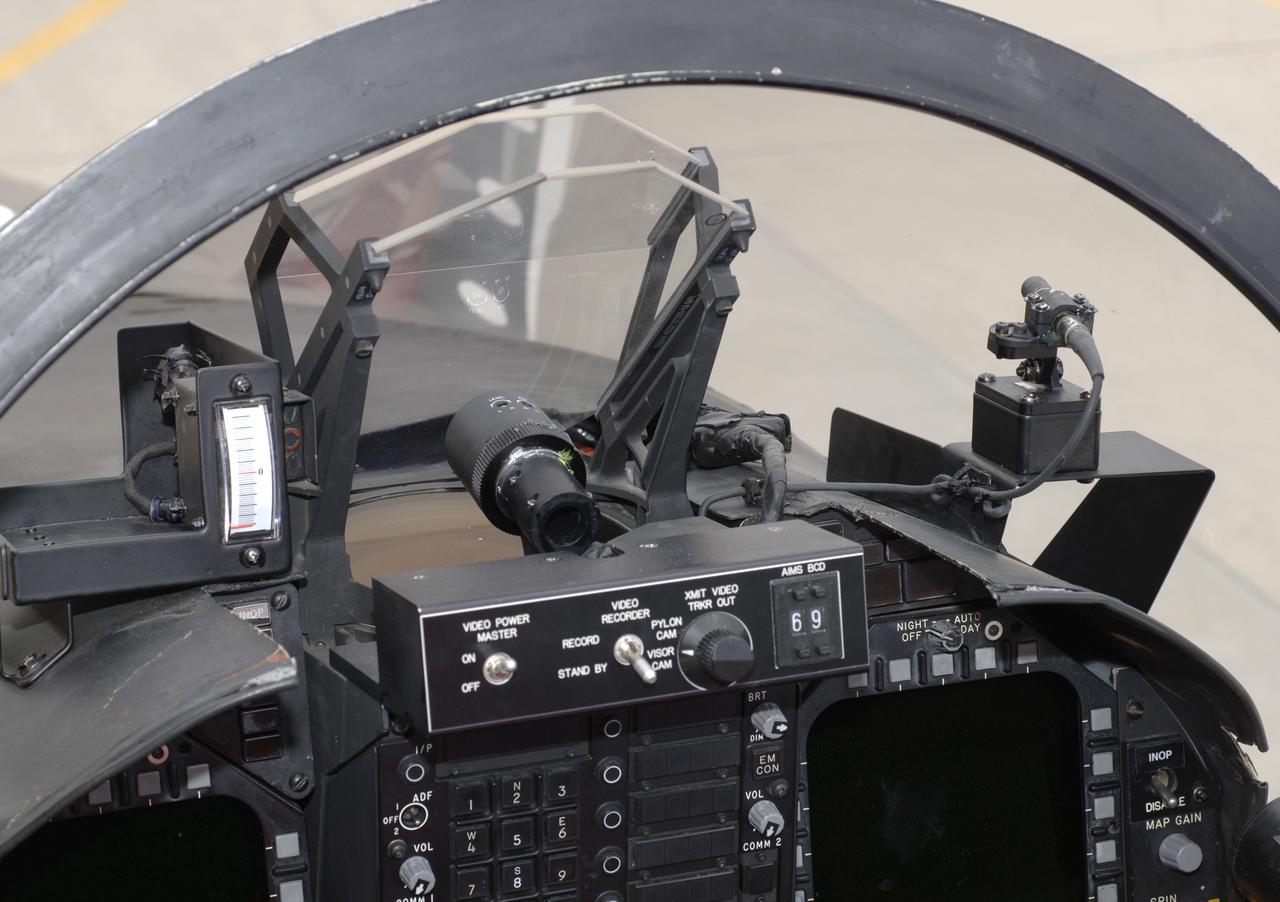
F/A-18 #845 HUD and video camera setup for Autonomous Airborne Refueling Demonstration (AARD) project
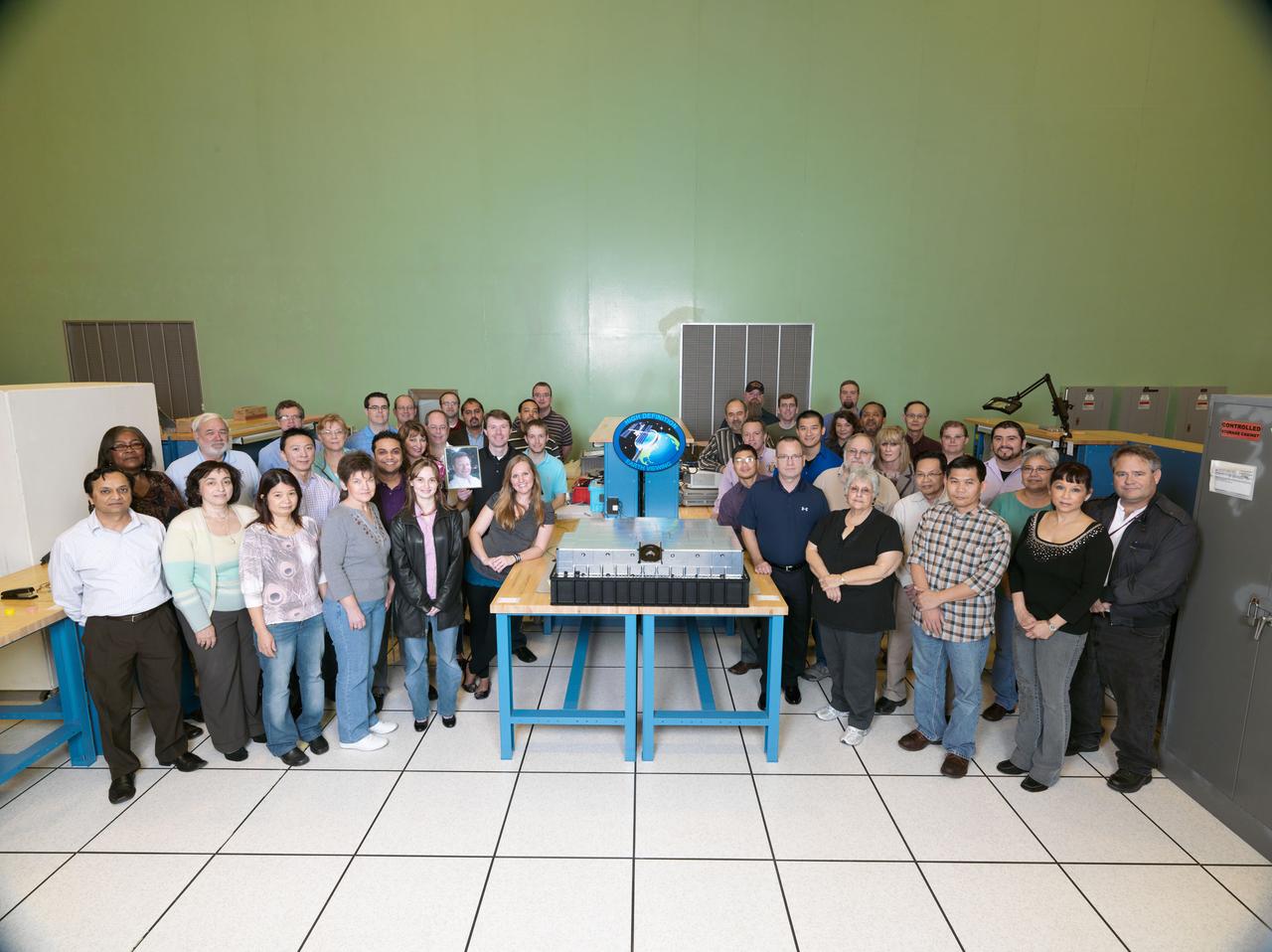
jsc2012e030007 (2-23-2012) --- The High Definition Earth Viewing (HDEV) development team. The HDEV experiment places four commercially available HD cameras on the exterior of the space station and uses them to stream live video of Earth for viewing online. The cameras are enclosed in a temperature specific housing and are exposed to the harsh radiation of space. Analysis of the effect of space on the video quality, over the time HDEV is operational, may help engineers decide which cameras are the best types to use on future missions. High school students helped design some of the cameras' components, through the High Schools United with NASA to Create Hardware (HUNCH) program, and student teams operate the experiment.
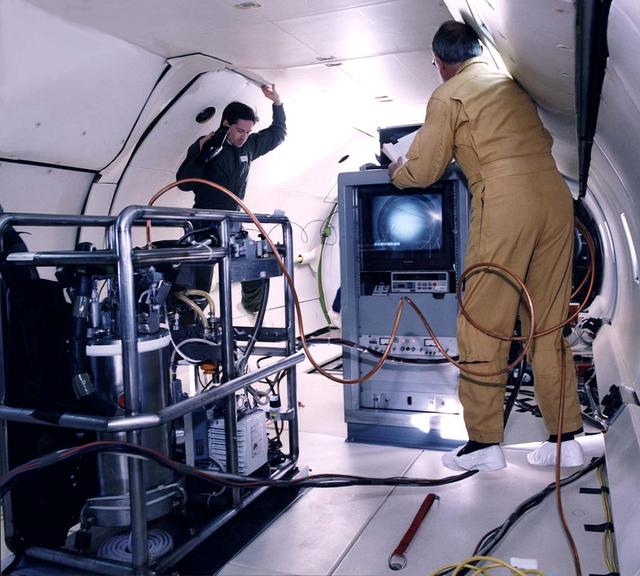
Ted Brunzie and Peter Mason observe the float package and the data rack aboard the DC-9 reduced gravity aircraft. The float package contains a cryostat, a video camera, a pump and accelerometers. The data rack displays and record the video signal from the float package on tape and stores acceleration and temperature measurements on disk.
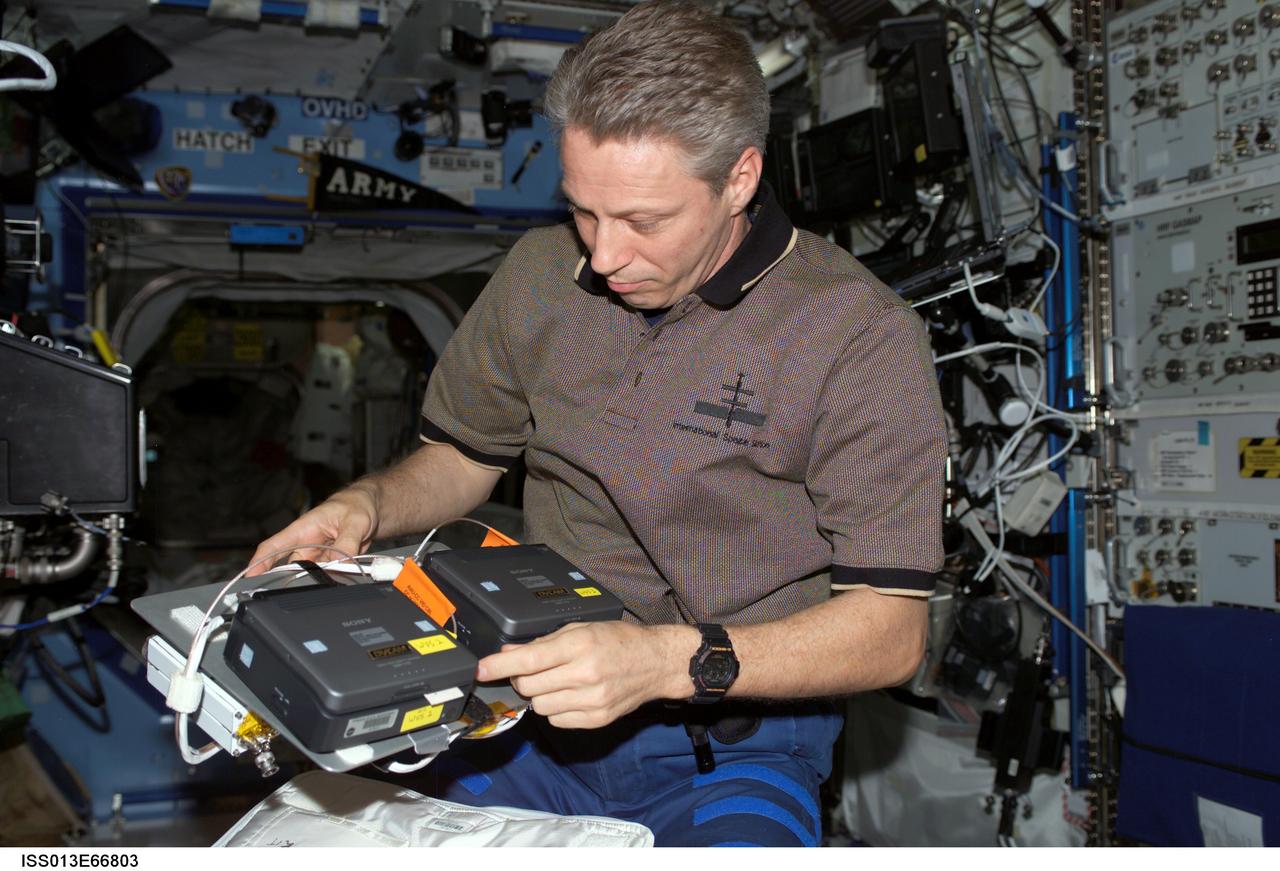
ISS013-E-66803 (16 Aug. 2006) --- European Space Agency (ESA) astronaut Thomas Reiter, Expedition 13 flight engineer, works with a mini-digital video camera (DVCAM) and advanced video interface unit (AVIU)-CC VID cables in the Destiny laboratory of the International Space Station.
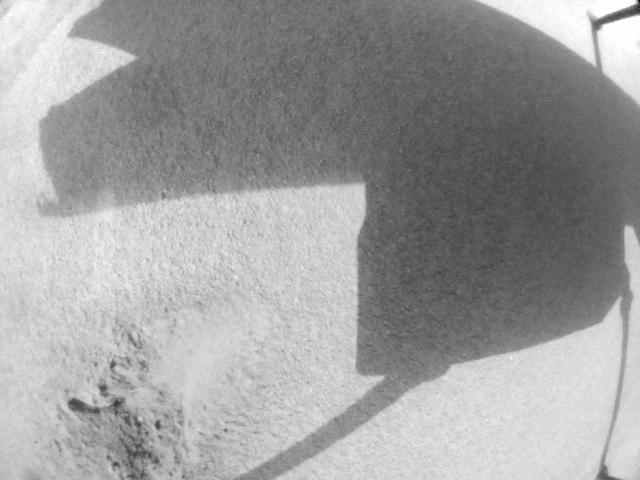
NASA's Ingenuity Mars Helicopter used its black-and-white navigation camera to capture this video showing the shadows of its rotor blades turning on Feb. 11, 2024. Engineers planned the video to get more information about damage that was sustained by the rotor blades after a rough landing occurred during the helicopter's 72nd flight on Jan. 18, 2024. This video shows that Ingenuity's upper rotor, the first rotor seen in this video, has a rotor blade missing. The blade appears to have separated near the mast. Video available at https://photojournal.jpl.nasa.gov/catalog/PIA26244
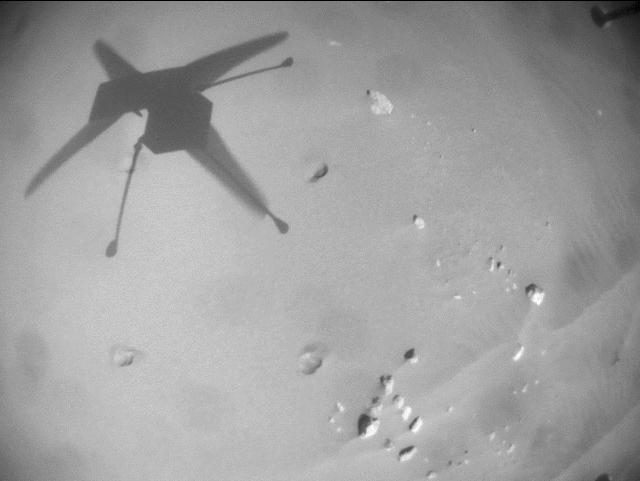
This animated GIF was generated using imagery acquired by the navigation camera aboard NASA's Ingenuity Mars Helicopter during its 25th flight on April 18, 2022. Covering a distance of 2,310 feet (704 meters) and at a speed of 12 mph (5.5 meters per second), it was the Red Planet rotorcraft's longest and fastest flight to date. The first frame of the clip shows the view about one second into the flight. After reaching an altitude of 33 feet (10 meters), the helicopter heads southwest, accelerating to its maximum speed in less than three seconds. Ingenuity first flies over a group of sand ripples then, about halfway through the video, several rock fields. Finally, relatively flat and featureless terrain appears below, making a good landing spot. The video of the 161.3-second flight was speeded up approximately five times, reducing it to less than 35 seconds. Ingenuity's navigation camera has been programmed to deactivate whenever the rotorcraft is within 3 feet (1 meter) of the surface. This helps ensure any dust kicked up during takeoff and landing won't interfere with the navigation system as it tracks features on the ground. Movie available at https://photojournal.jpl.nasa.gov/catalog/PIA25321
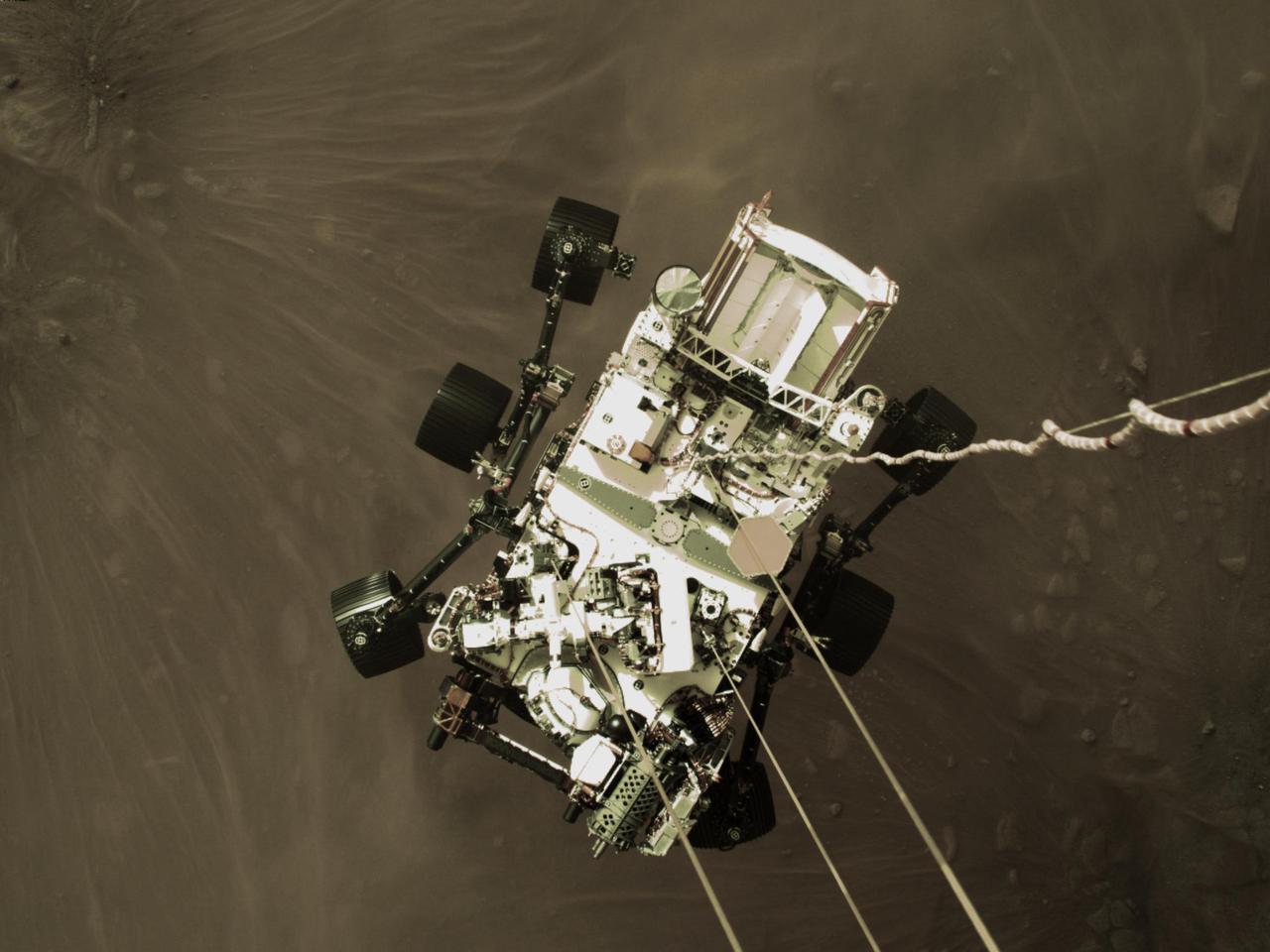
This high-resolution still image is part of a video taken by several cameras as NASA's Perseverance rover touched down on Mars on Feb. 18, 2021. A camera aboard the descent stage captured this shot. A key objective for Perseverance's mission on Mars is astrobiology, including the search for signs of ancient microbial life. The rover will characterize the planet's geology and past climate, pave the way for human exploration of the Red Planet, and be the first mission to collect and cache Martian rock and regolith (broken rock and dust). Subsequent NASA missions, in cooperation with ESA (the European Space Agency), would send spacecraft to Mars to collect these cached samples from the surface and return them to Earth for in-depth analysis. The Mars 2020 mission is part of a larger program that includes missions to the Moon as a way to prepare for human exploration of the Red Planet. https://photojournal.jpl.nasa.gov/catalog/PIA24428
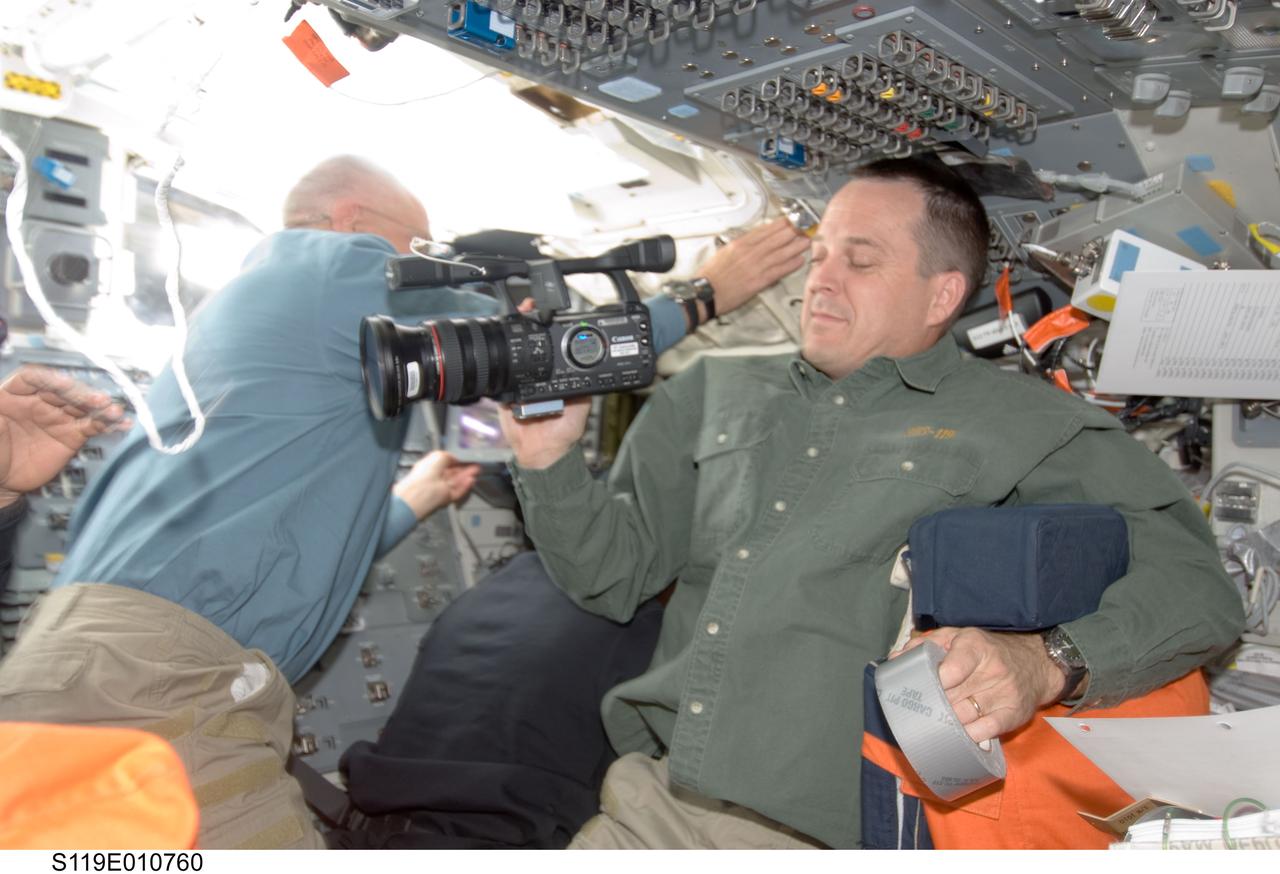
S119-E-010760 (27 March 2009) --- Astronaut Richard Arnold, mission specialist, appears to be multi-tasking on the flight deck of the Earth-orbiting Space Shuttle Discovery on its final full day in space for STS-119. Arnold shares space with two other astronauts as he records activity with a camera while toting supplies with his other hand. Astronaut John Phillips, mission specialist, is at left.
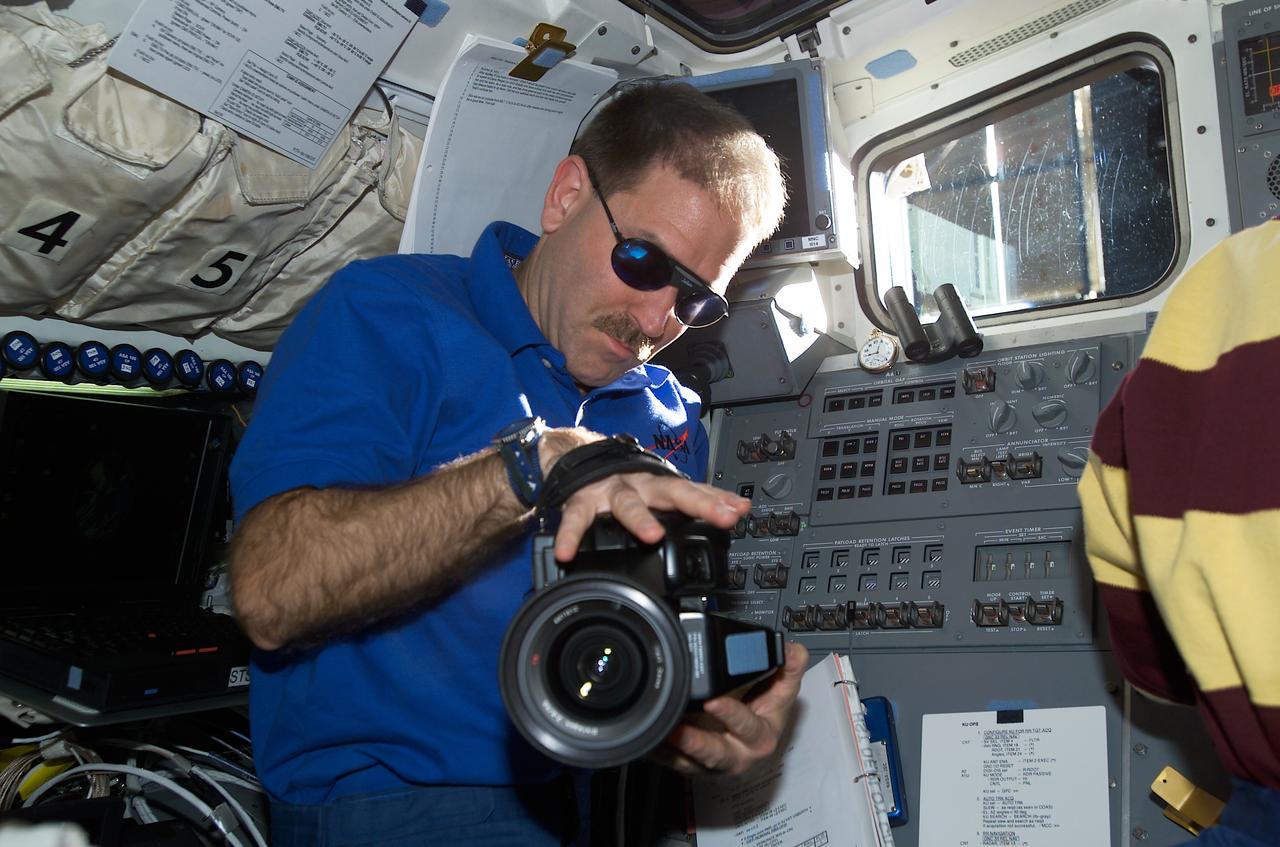
STS109-E-5904 (9 March 2002) --- Astronaut John M. Grunsfeld, STS-109 payload commander, holds a camera on the aft flight deck of the Space Shuttle Columbia. The image was recorded with a digital still camera.
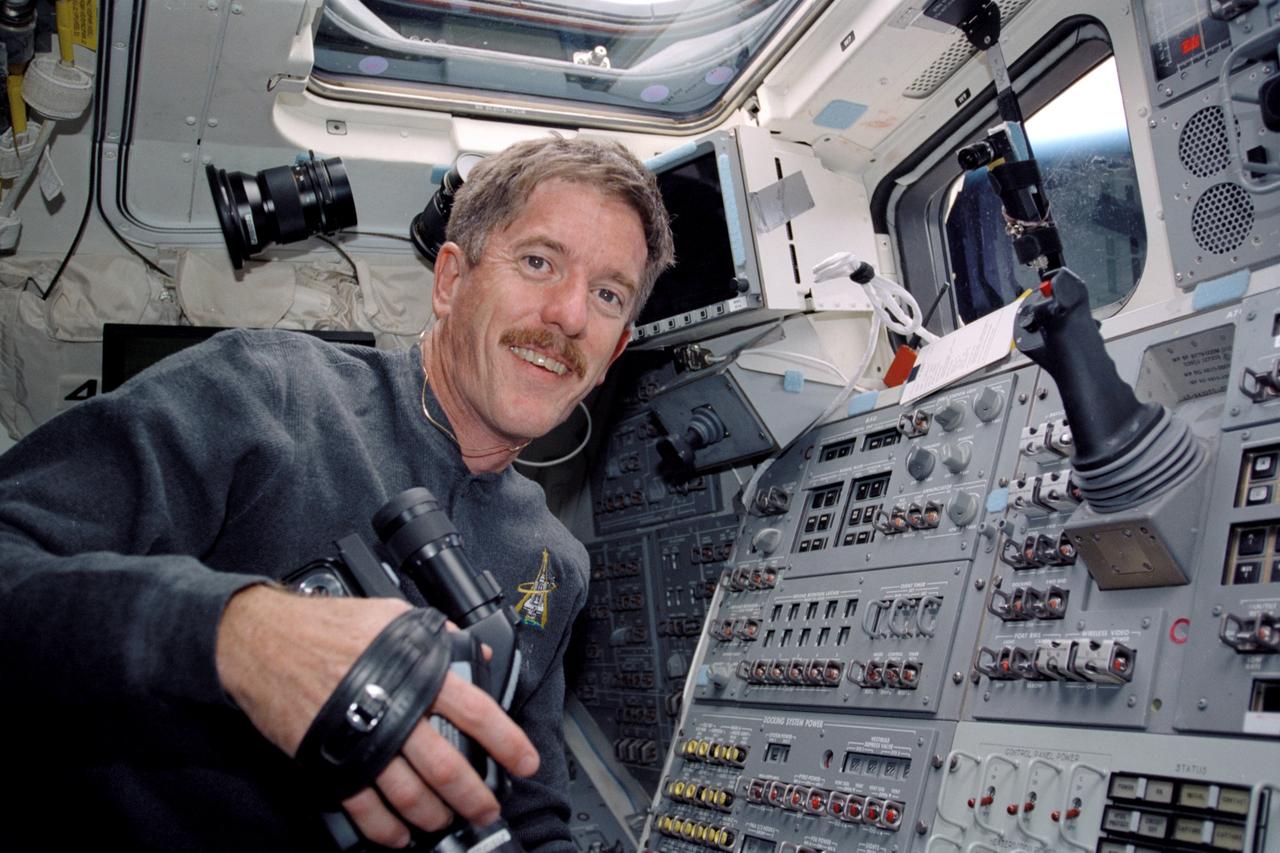
STS104-309-003 (12-24 July 2001) --- Astronaut James F. Reilly, STS-104 mission specialist, moves toward aft flight deck windows on the Space Shuttle Atlantis for a viewing opportunity. Reilly is one of five NASA astronauts aboard the Atlantis who will be participating in work on the International Space Station (ISS).
![ISS007-E-17842 (23 October 2003) --- European Space Agency (ESA) astronaut Pedro Duque (left) of Spain and cosmonaut Alexander Y. Kaleri, Expedition 8 flight engineer representing Rosaviakosmos, work with a scientific experiment in the Zvezda Service Module on the International Space Station (ISS). Duque and Kaleri performed the European educational VIDEO-2 (VID-01) experiment, which uses the Russian DSR PD-150P digital video camcorder for recording demos of several basic physical phenomena, viz., Isaac Newton's three motion laws, with narration. [The demo made use of a sealed bag containing coffee and a syringe to fill one of two hollow balls with the brown liquid (to provide "mass", as opposed to the other, "mass-less" ball).]](https://images-assets.nasa.gov/image/iss007e17842/iss007e17842~medium.jpg)
ISS007-E-17842 (23 October 2003) --- European Space Agency (ESA) astronaut Pedro Duque (left) of Spain and cosmonaut Alexander Y. Kaleri, Expedition 8 flight engineer representing Rosaviakosmos, work with a scientific experiment in the Zvezda Service Module on the International Space Station (ISS). Duque and Kaleri performed the European educational VIDEO-2 (VID-01) experiment, which uses the Russian DSR PD-150P digital video camcorder for recording demos of several basic physical phenomena, viz., Isaac Newton's three motion laws, with narration. [The demo made use of a sealed bag containing coffee and a syringe to fill one of two hollow balls with the brown liquid (to provide "mass", as opposed to the other, "mass-less" ball).]
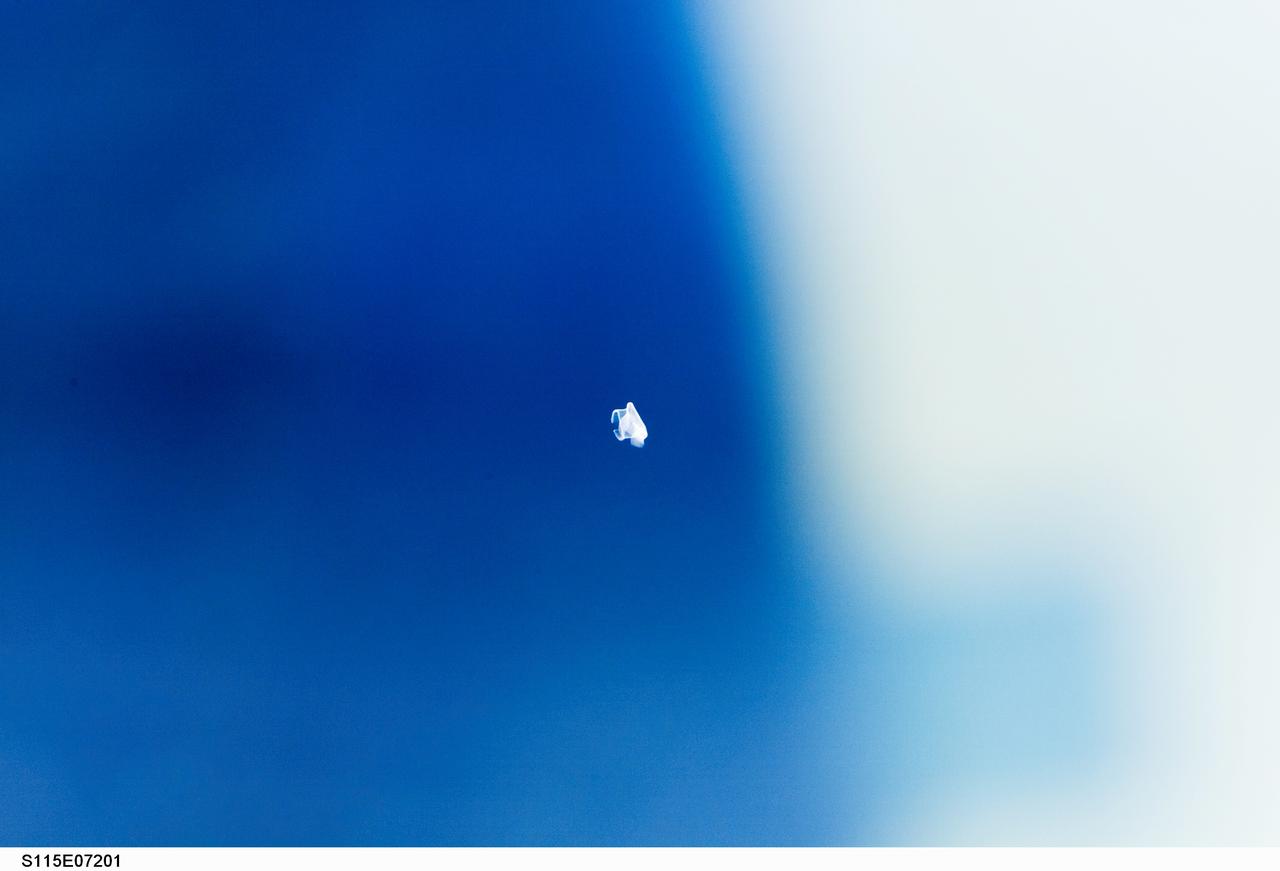
S115-E-07201 (19 Sept. 2006) --- This picture of unidentified possible small debris was recorded with a digital still camera by astronaut Daniel Burbank onboard the Space Shuttle Atlantis around 11 a.m. (CDT) today. Engineers do not believe this to be the same object seen in video taken by shuttle TV cameras earlier in the day.
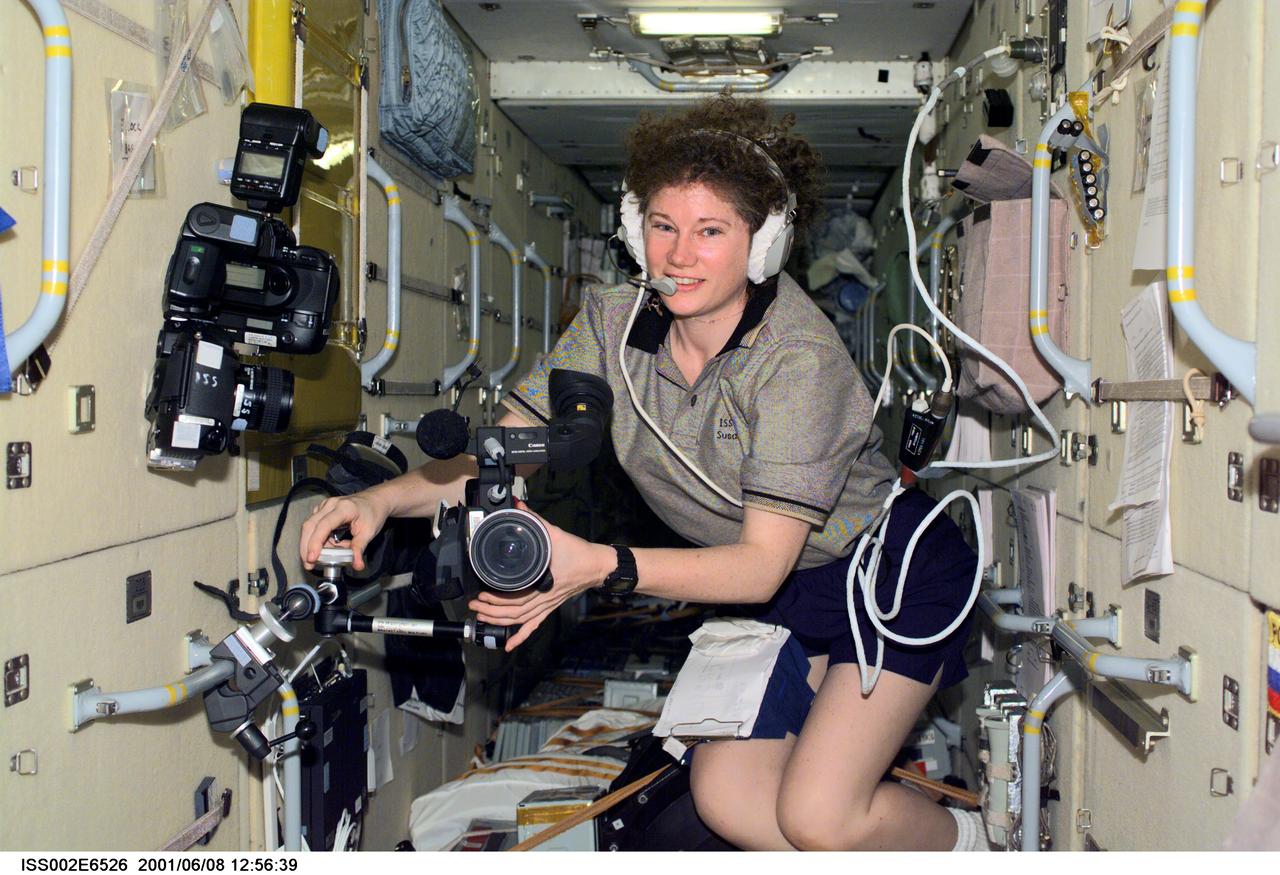
ISS002-E-6526 (8 June 2001) --- Astronaut Susan J. Helms, Expedition Two flight engineer, mounts a video camera onto a bracket in the Zarya or Functional Cargo Block (FGB) of the International Space Station (ISS). The image was recorded with a digital still camera. Alternate NASA ID of 0202499.
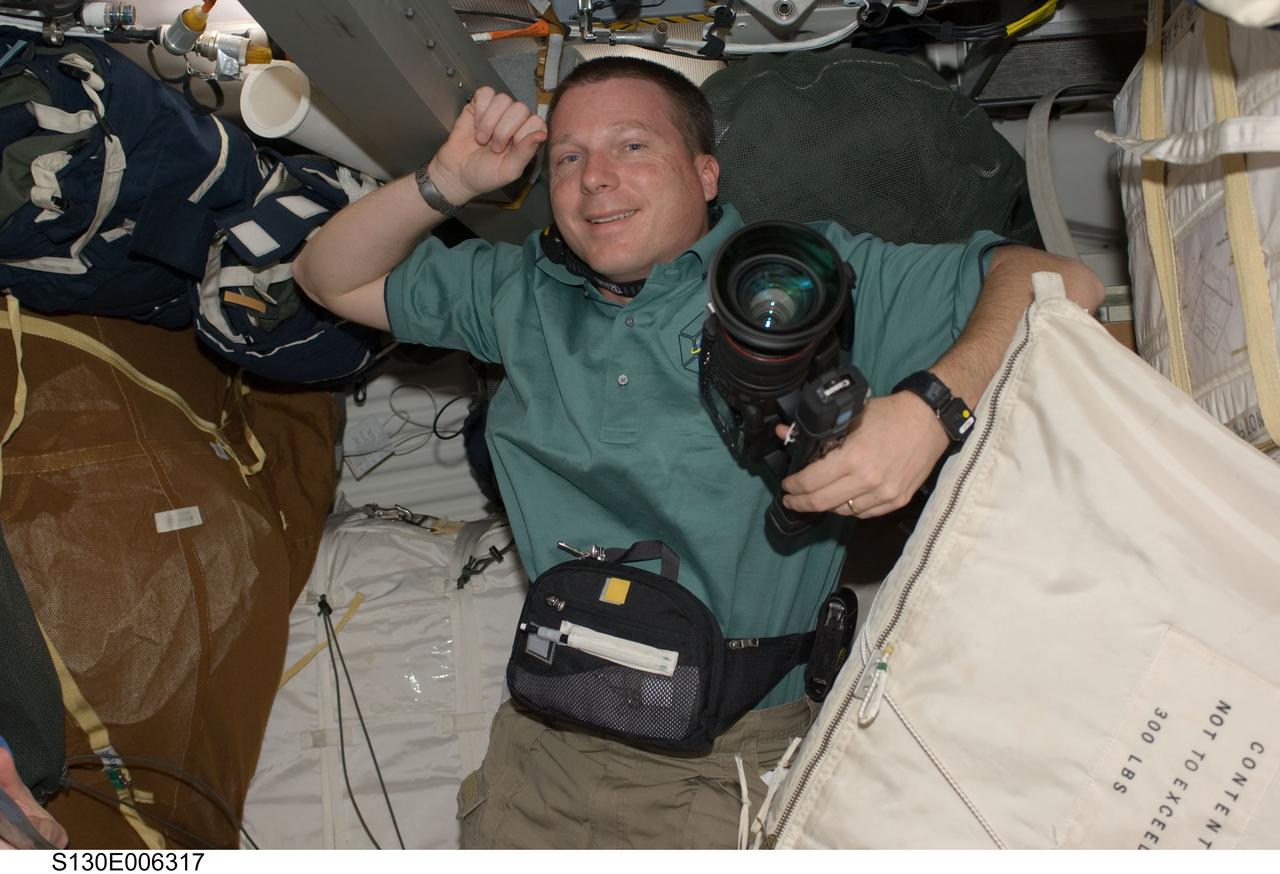
S130-E-006317 (9 Feb. 2010) --- NASA astronaut Terry Virts, STS-130 pilot, holds a video camera on the middeck of space shuttle Endeavour during flight day two activities.
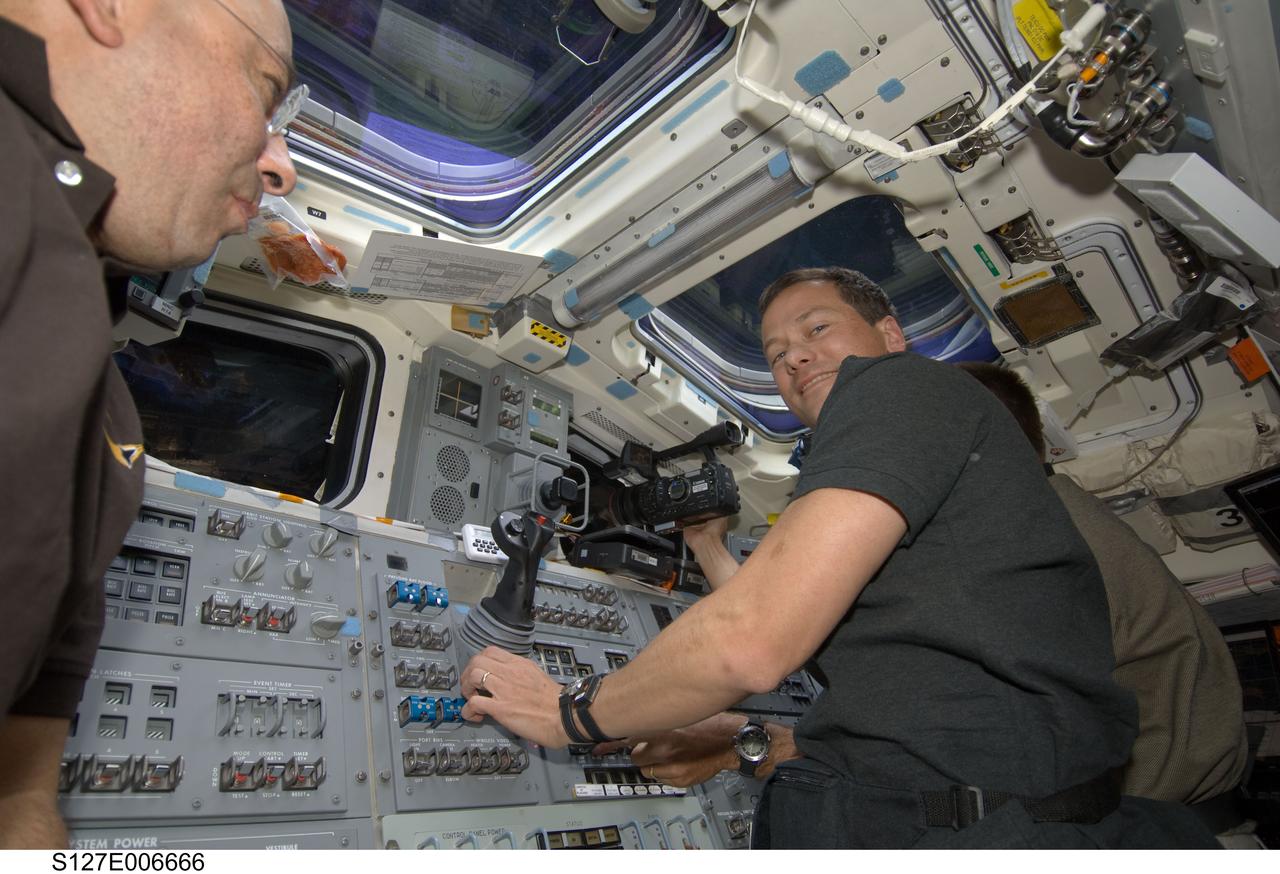
S127-E-006666 (17 July 2009) --- Astronaut Tom Marshburn, STS-127 mission specialist, positions a video camera in one of Endeavour's aft flight deck windows during flight day three activities.
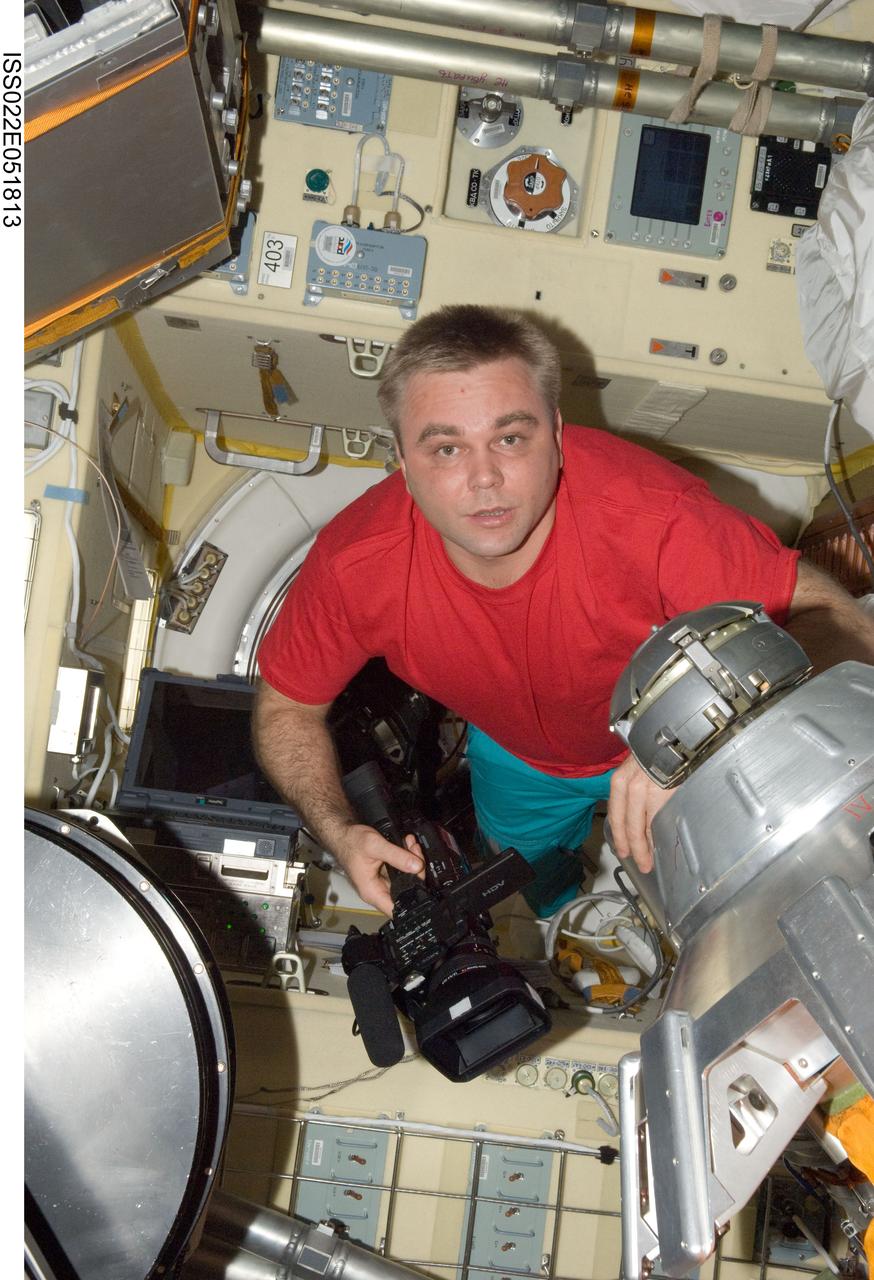
ISS022-E-051813 (28 Jan. 2010) --- Russian cosmonaut Maxim Suraev, Expedition 22 flight engineer, holds a High Definition Video (HDV) camera in the in the Zvezda Service Module transfer compartment of the International Space Station.
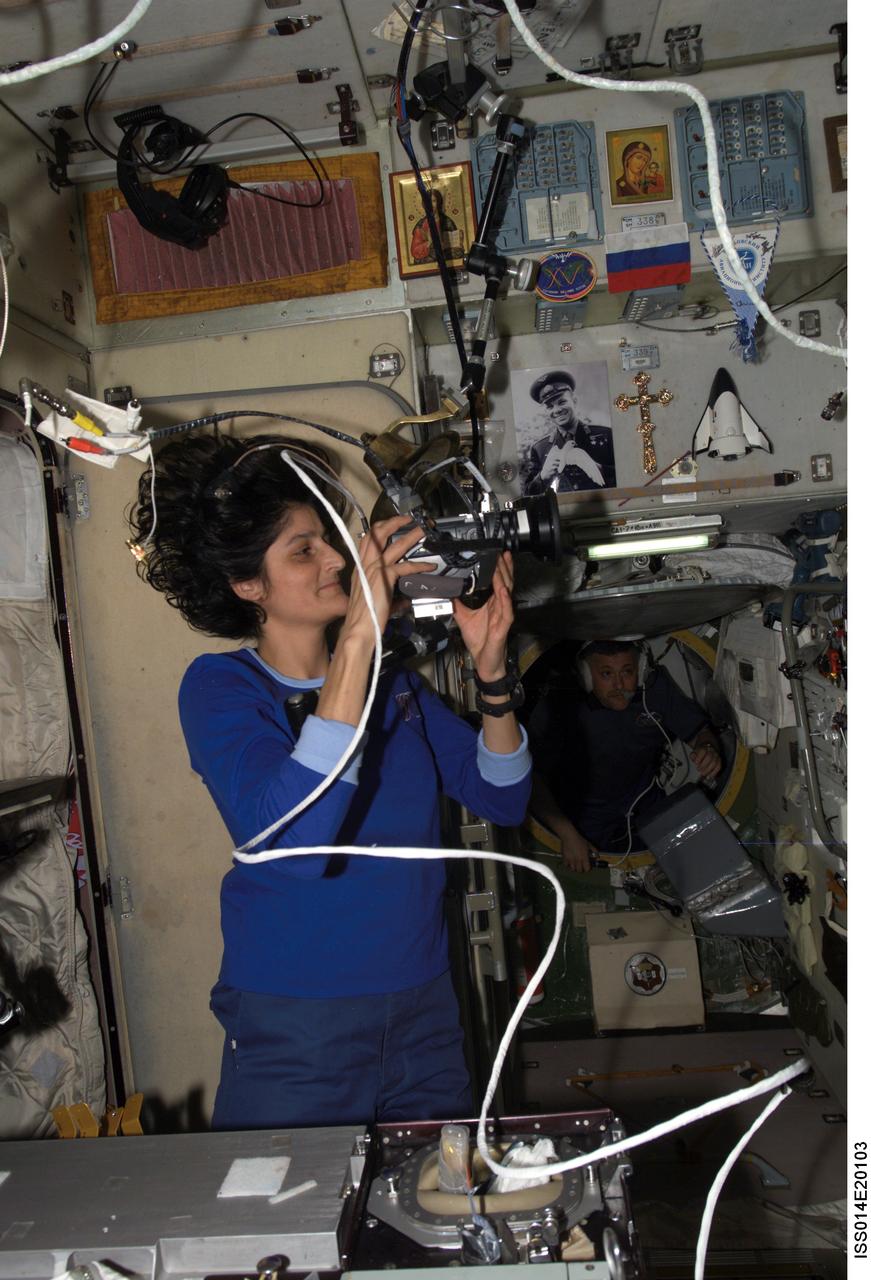
ISS014-E-20103 (21 April 2007) --- Astronaut Sunita L. Williams, Expedition 14/15 flight engineer, sets up a video camera in the Zvezda Service Module of the International Space Station.
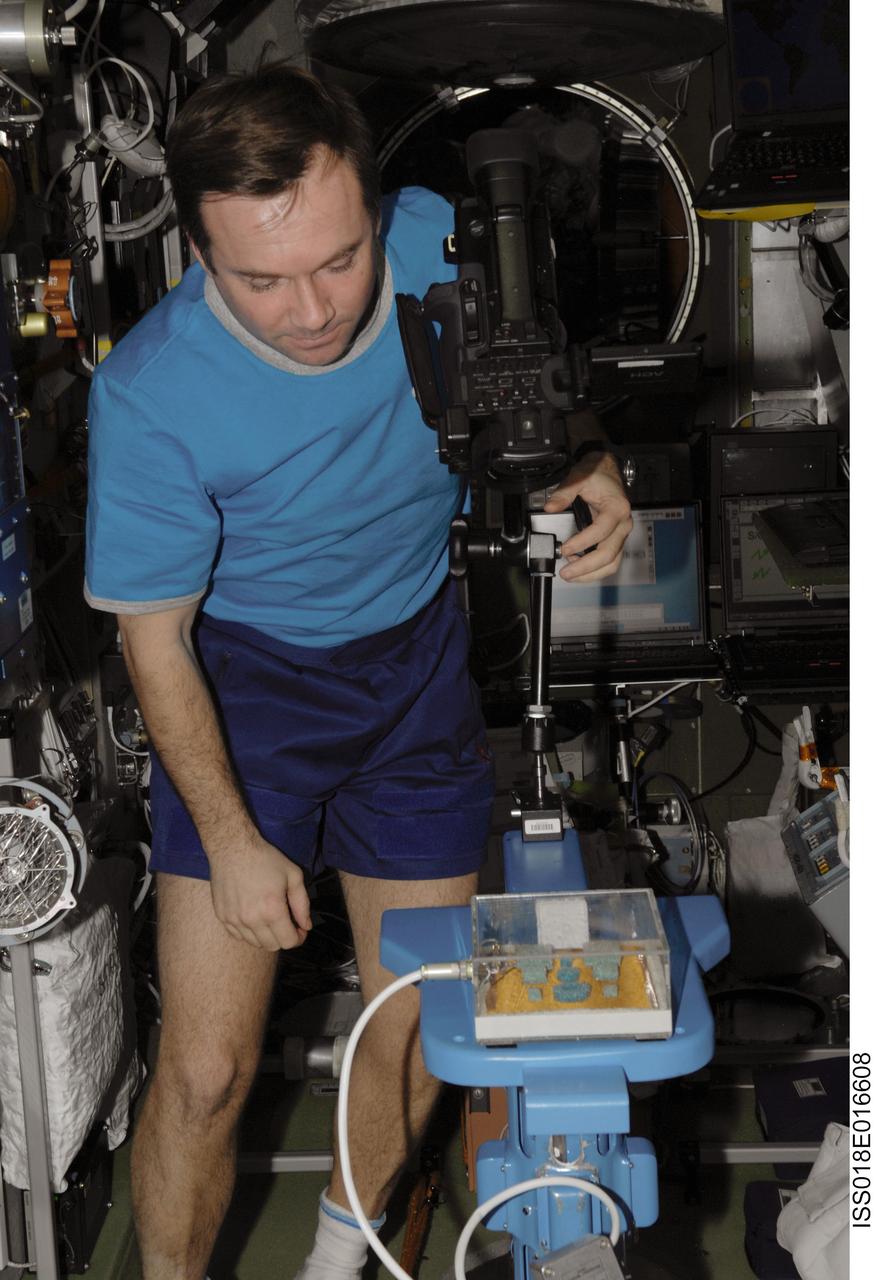
ISS018-E-016608 (5 Jan. 2009) --- Cosmonaut Yury Lonchakov, Expedition 18 flight engineer, configures a video camera for the MATI-75 experiment in the Zvezda Service Module of the International Space Station.
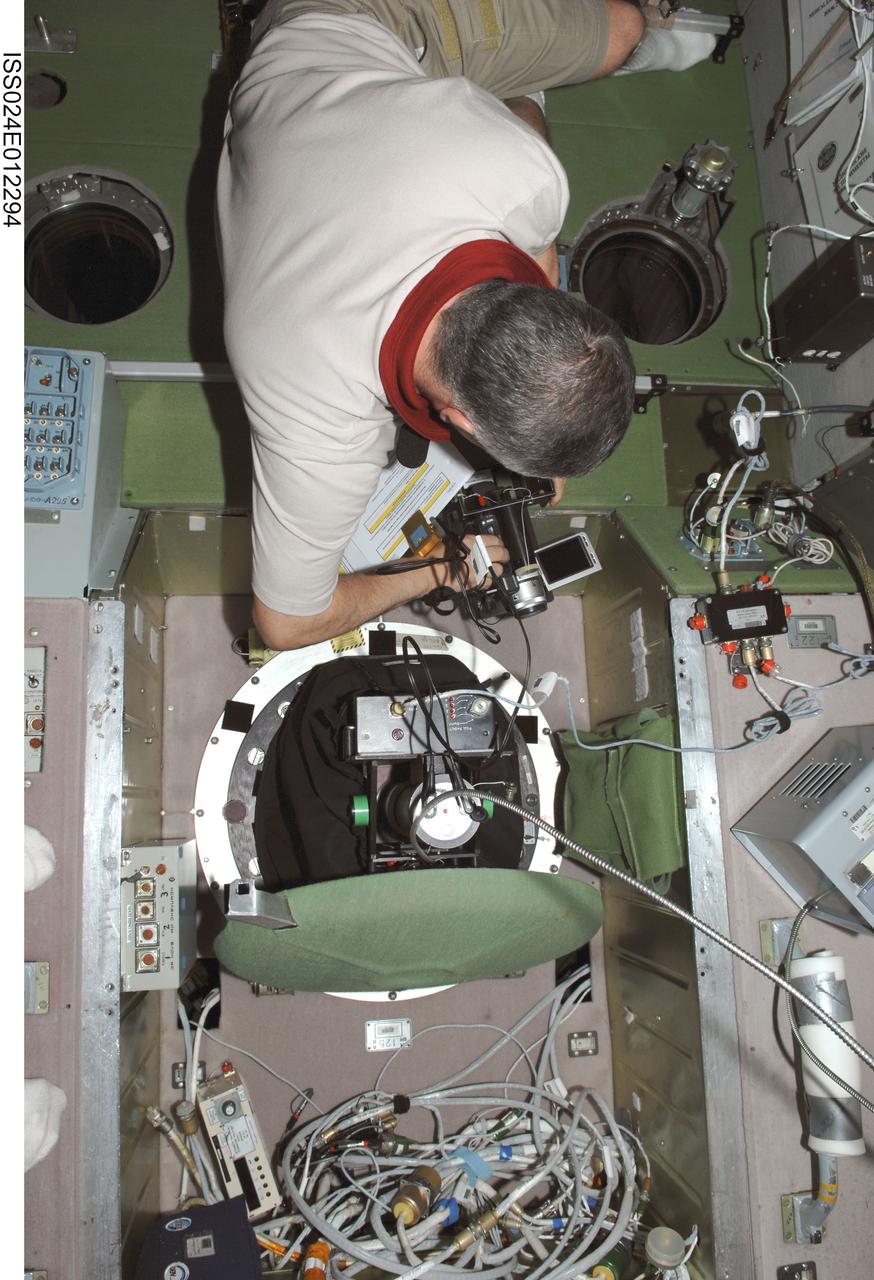
ISS024-E-012294 (19 Aug. 2010) --- Russian cosmonaut Fyodor Yurchikhin, Expedition 24 flight engineer, works with High Definition Video (HDV) camera equipment in the Zvezda Service Module of the International Space Station.
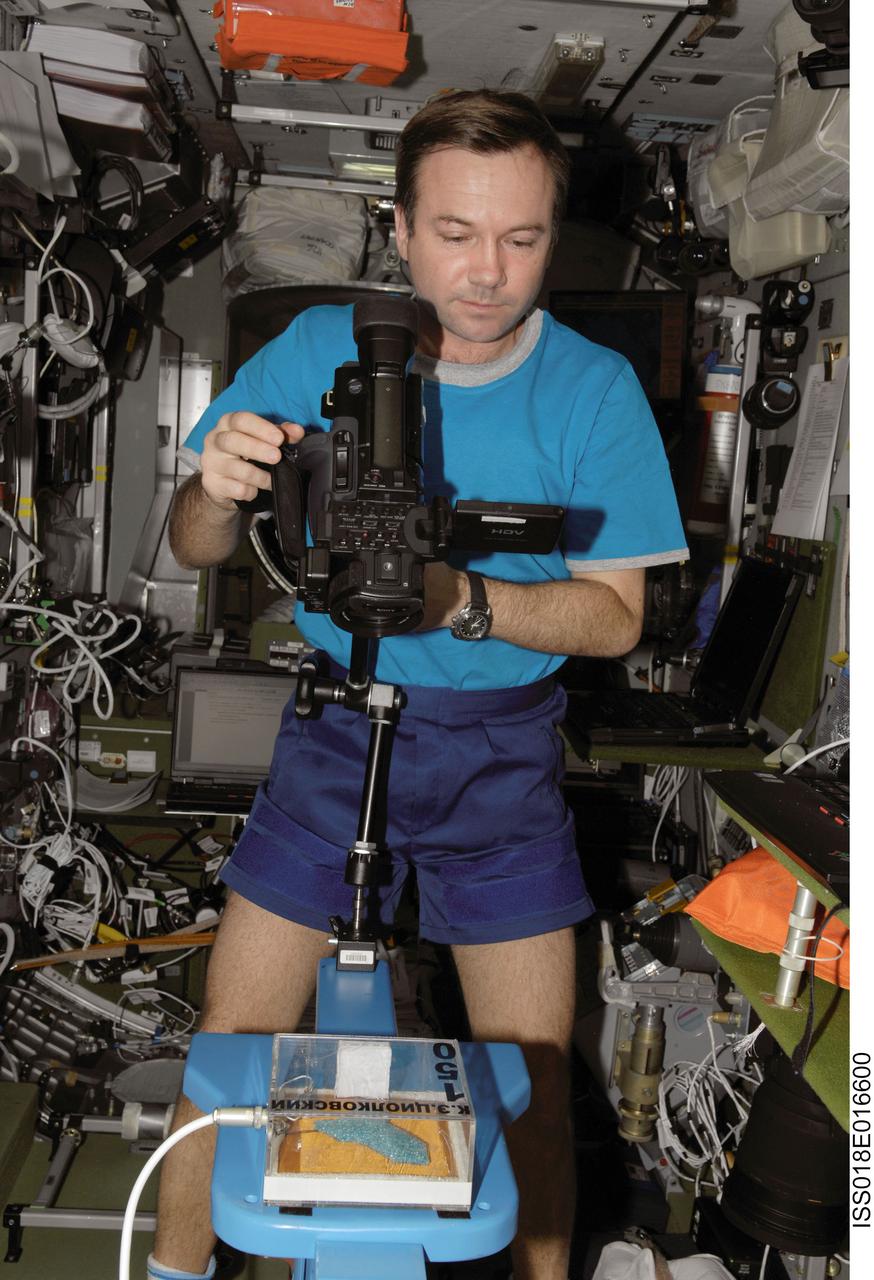
ISS018-E-016600 (5 Jan. 2009) --- Cosmonaut Yury Lonchakov, Expedition 18 flight engineer, configures a video camera for the MATI-75 experiment in the Zvezda Service Module of the International Space Station.
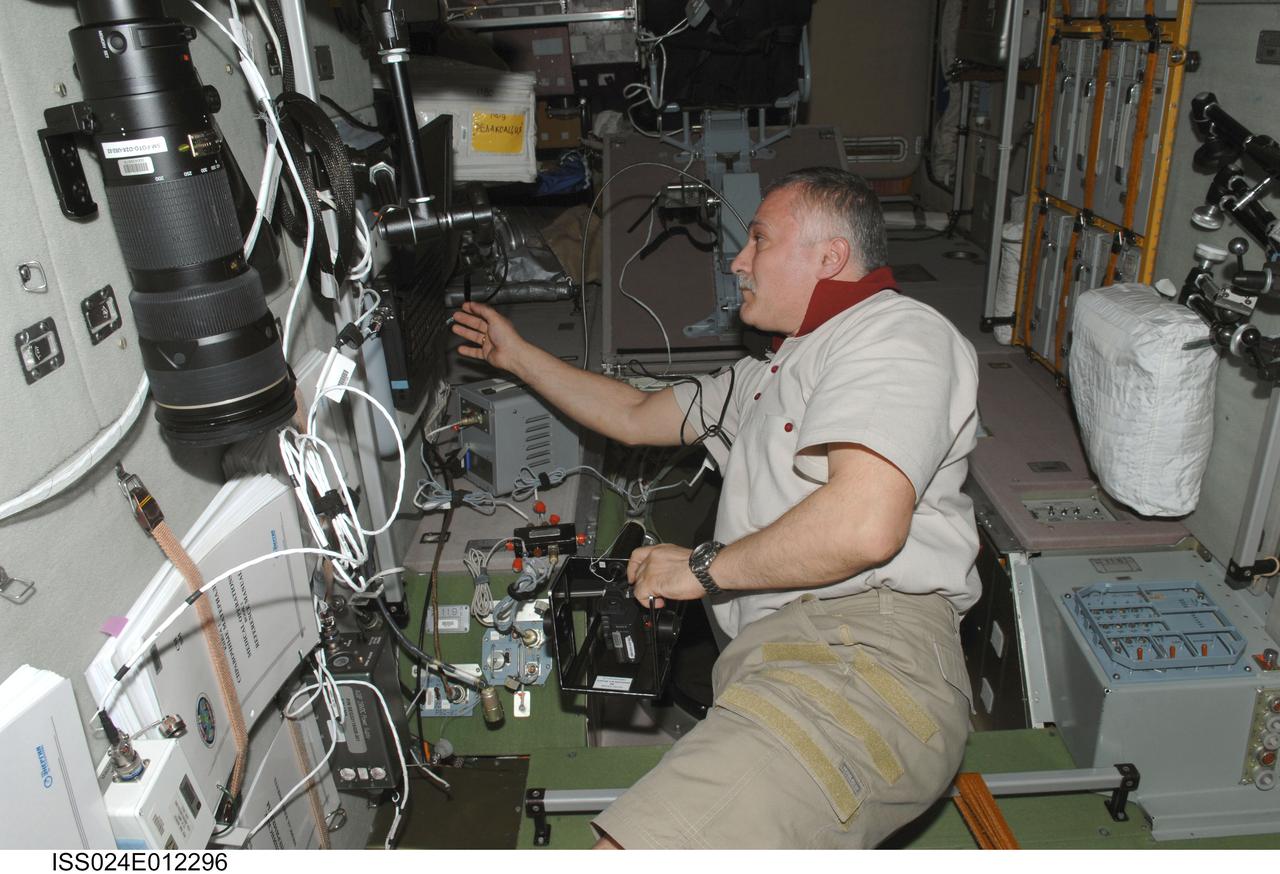
ISS024-E-012296 (19 Aug. 2010) --- Russian cosmonaut Fyodor Yurchikhin, Expedition 24 flight engineer, works with High Definition Video (HDV) camera equipment in the Zvezda Service Module of the International Space Station.
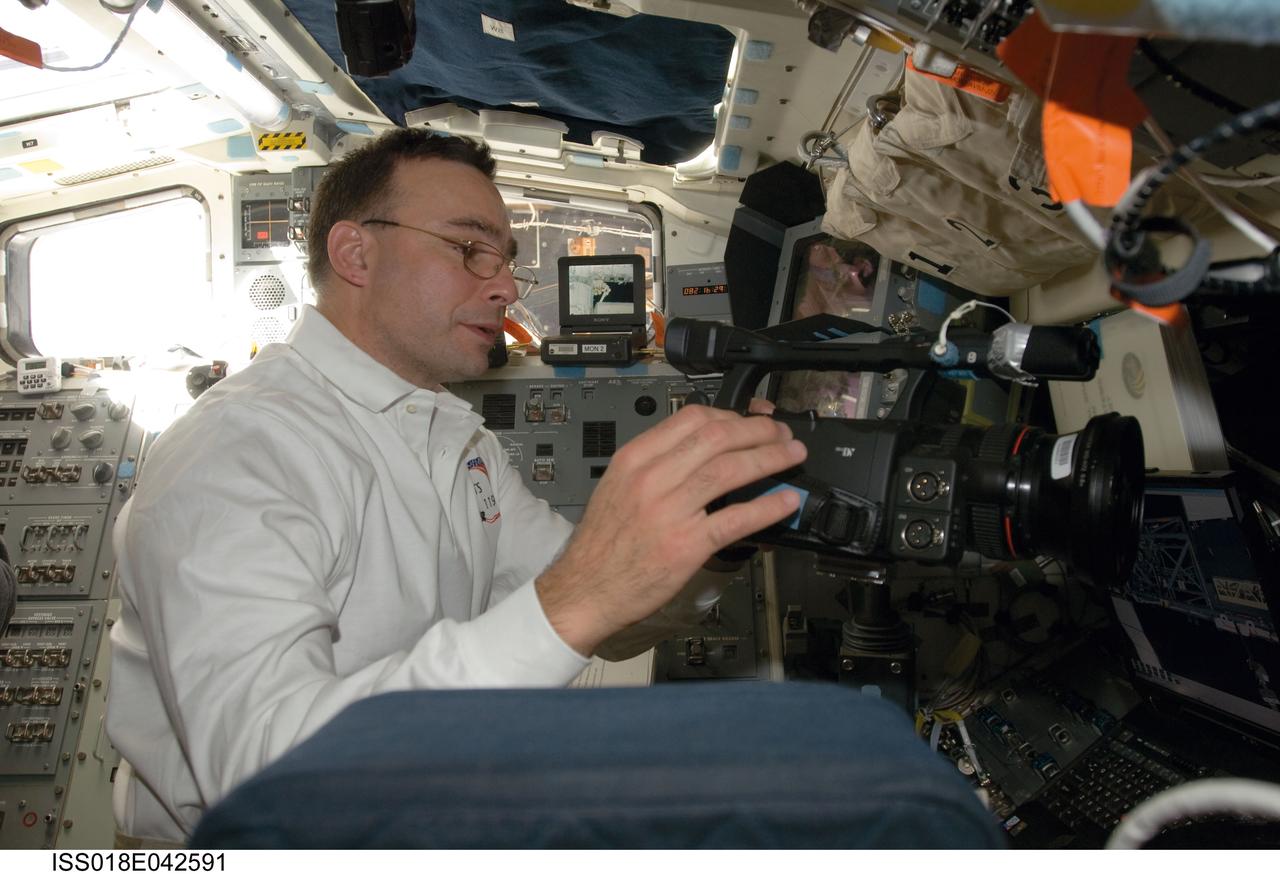
ISS018-E-042591 (23 March 2009) --- Astronaut Lee Archambault, STS-119 commander, uses a video camera on the flight deck of Space Shuttle Discovery while docked with the International Space Station.
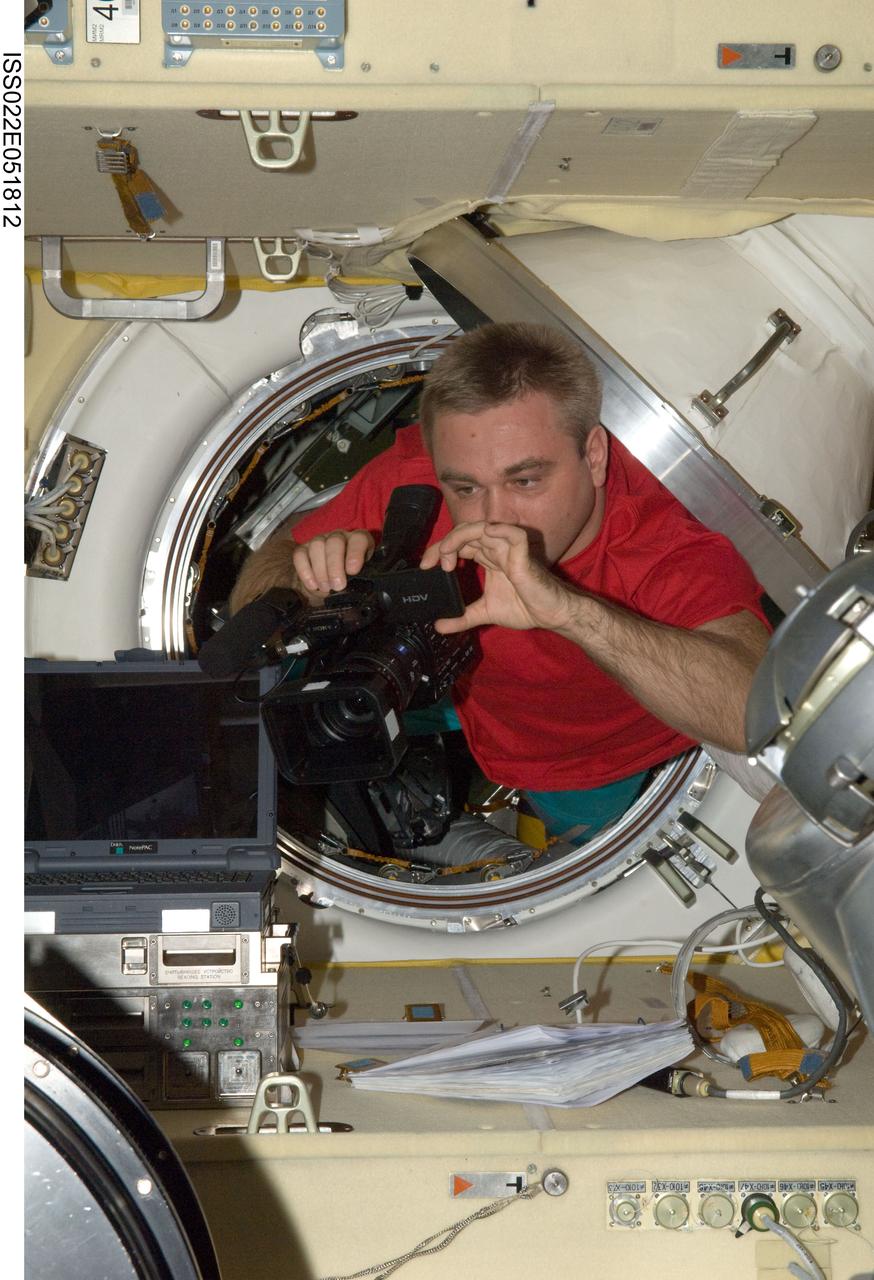
ISS022-E-051812 (28 Jan. 2010) --- Russian cosmonaut Maxim Suraev, Expedition 22 flight engineer, uses a High Definition Video (HDV) camera in the in the Zvezda Service Module transfer compartment of the International Space Station.
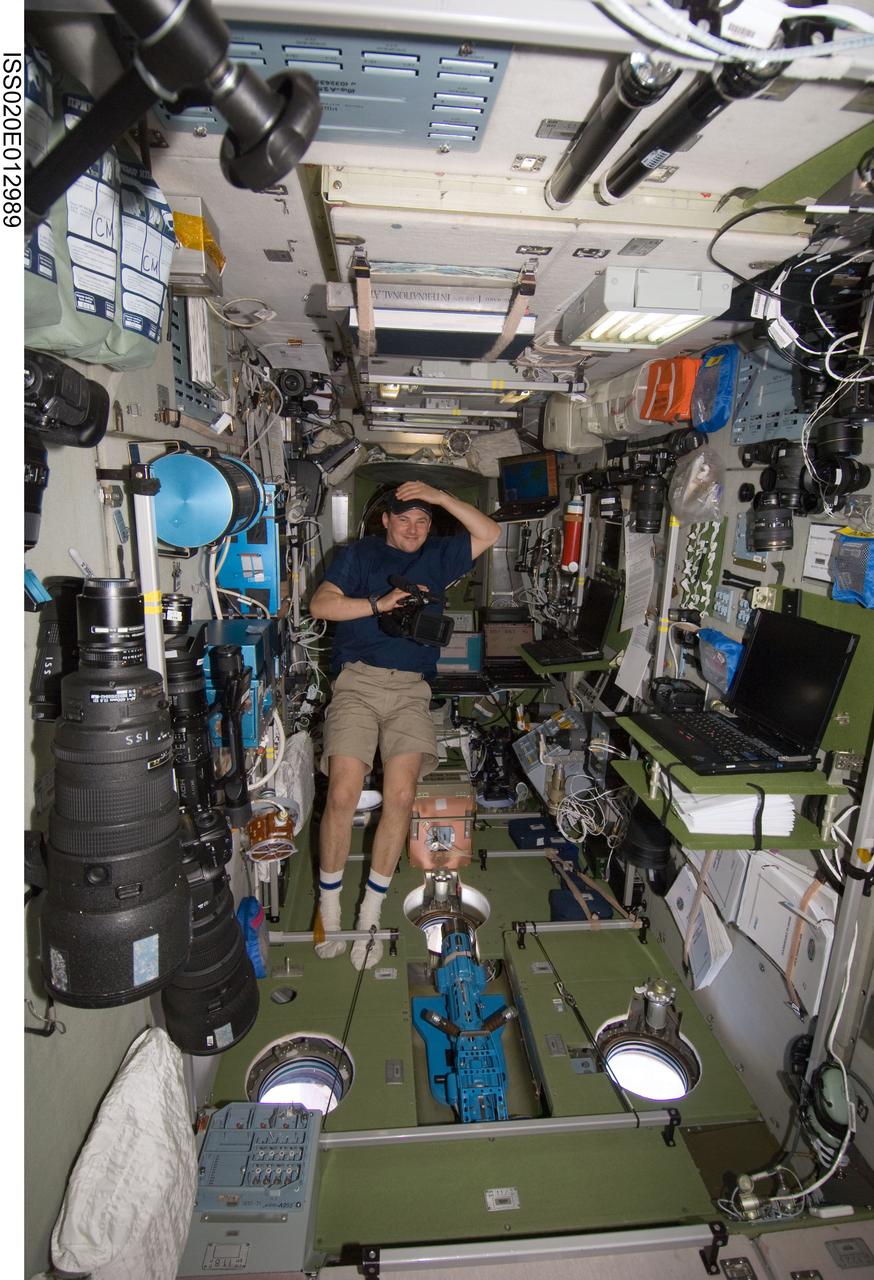
ISS020-E-012989 (21 June 2009) --- Cosmonaut Roman Romanenko, Expedition 20 flight engineer, prepares to use a High Definition Video (HDV) camera in the Zvezda Service Module of the International Space Station.
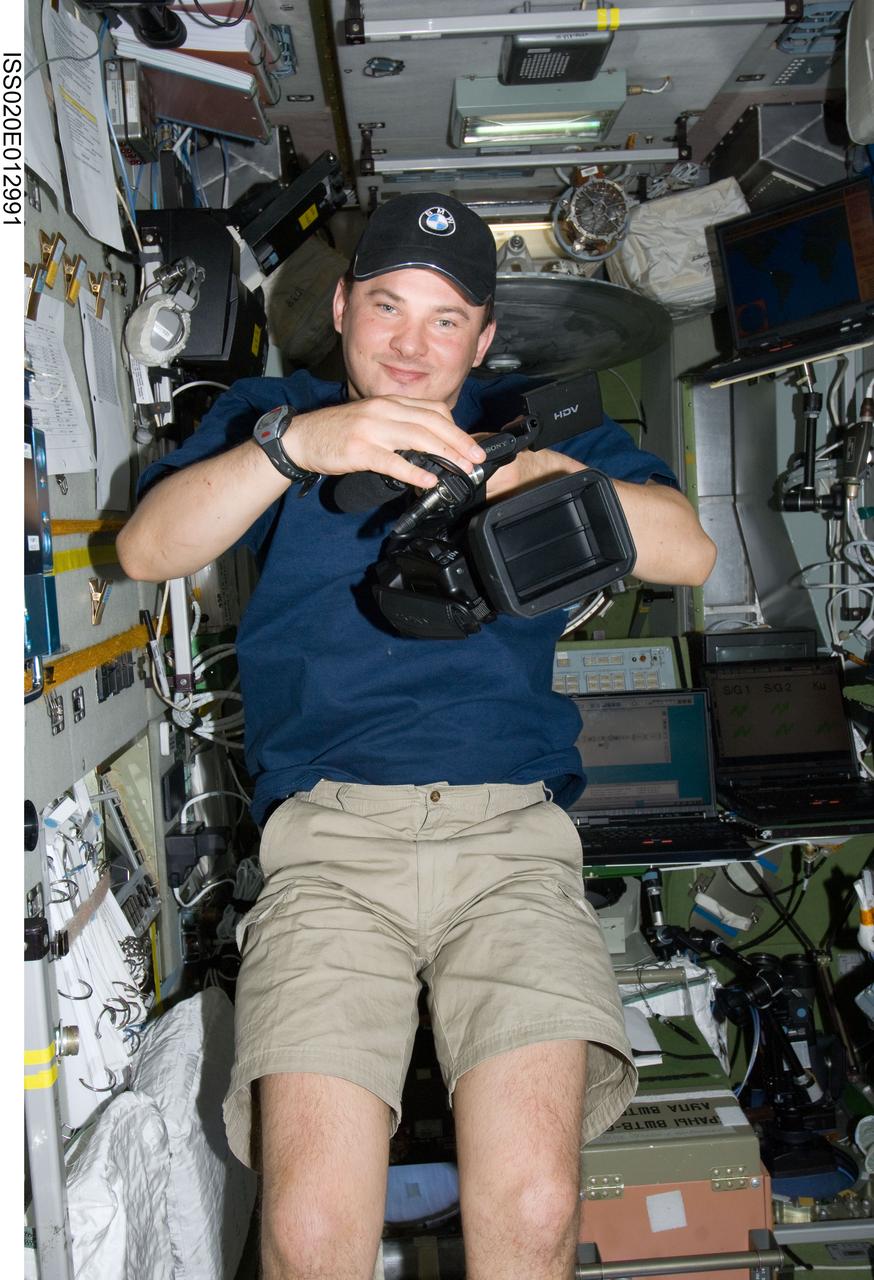
ISS020-E-012991 (21 June 2009) --- Cosmonaut Roman Romanenko, Expedition 20 flight engineer, prepares to use a High Definition Video (HDV) camera in the Zvezda Service Module of the International Space Station.
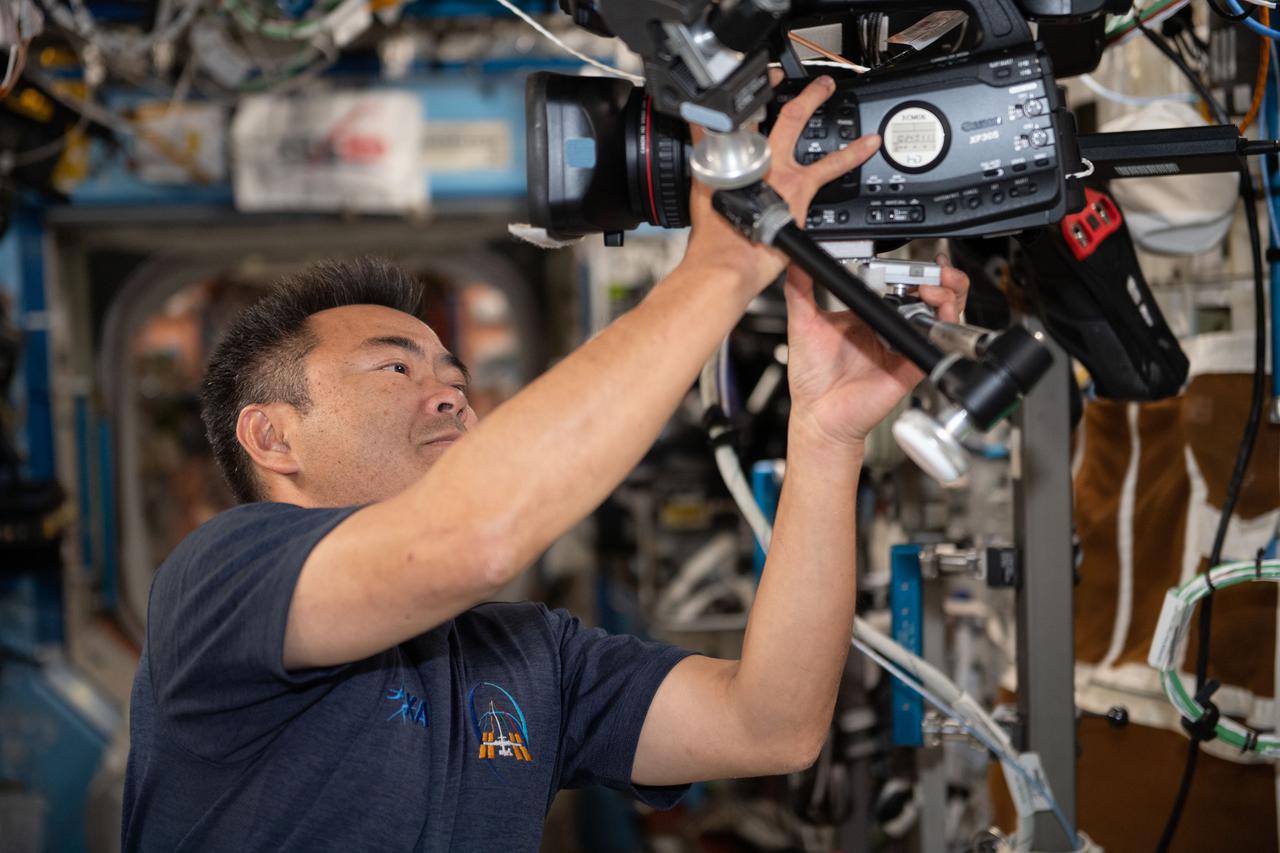
iss065e073924 (May 26, 2021) --- Expedition 65 Commander Akihiko Hoshide of the Japan Aerospace Exploration Agency sets up a video camera to record crew member activities aboard the International Space Station.
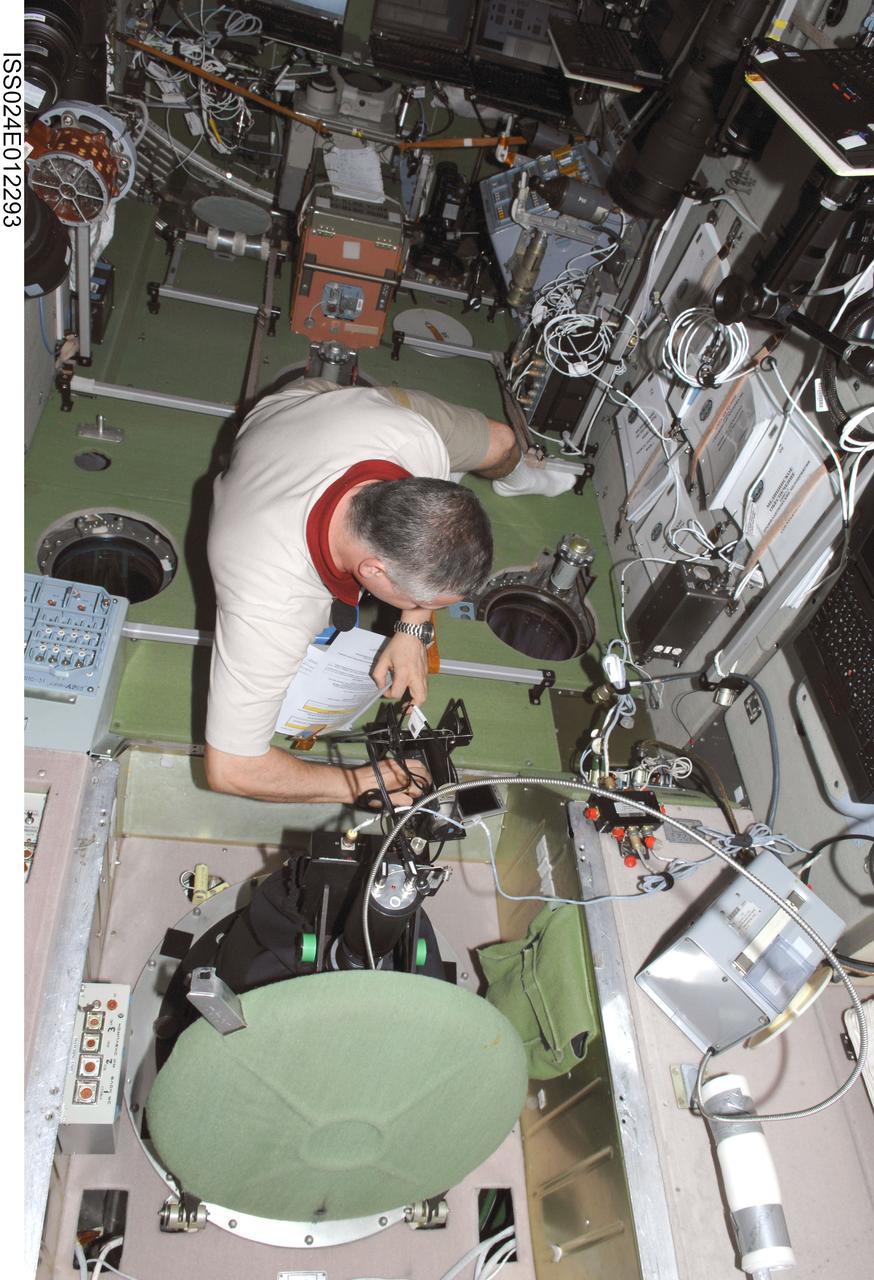
ISS024-E-012293 (19 Aug. 2010) --- Russian cosmonaut Fyodor Yurchikhin, Expedition 24 flight engineer, works with High Definition Video (HDV) camera equipment in the Zvezda Service Module of the International Space Station.
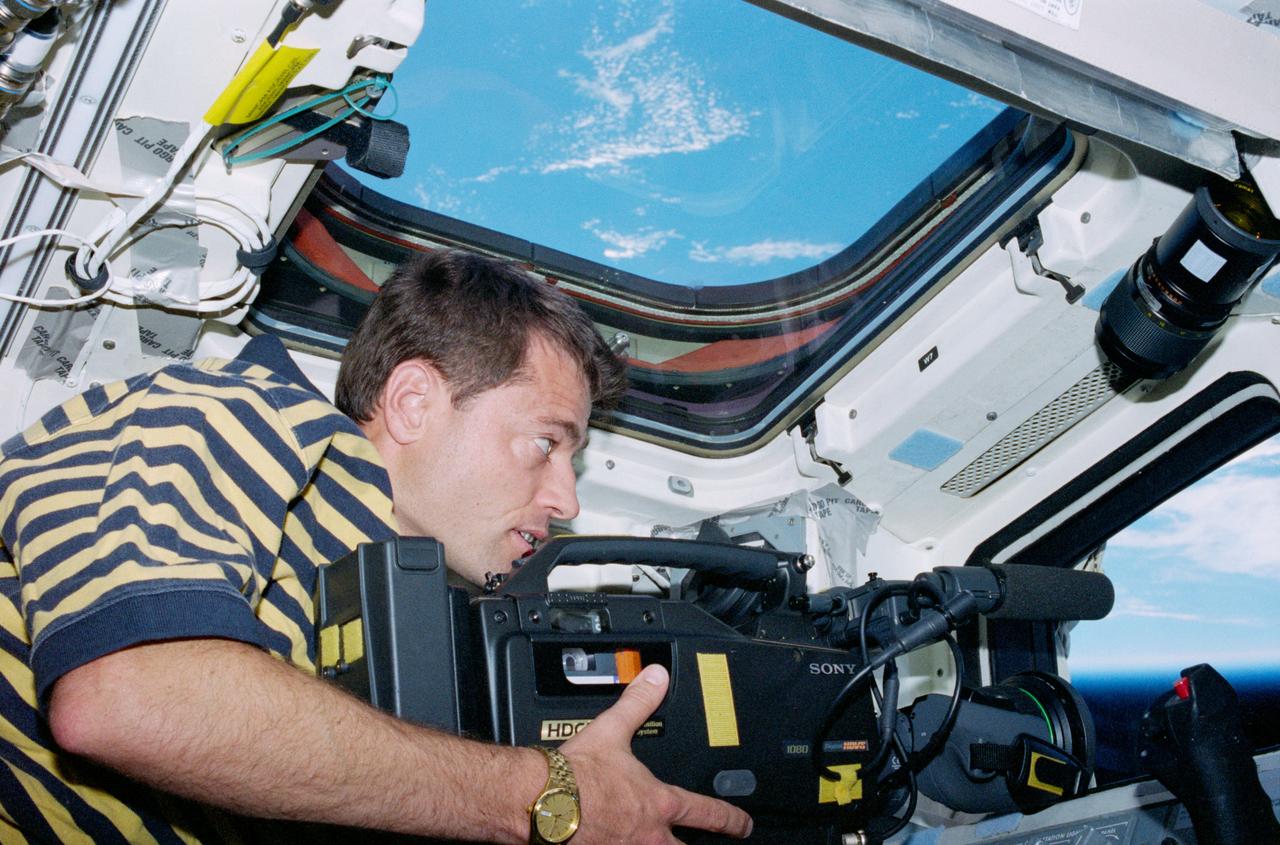
STS093-328-007 (22-27 July 1999) --- Astronaut Jeffrey S. Ashby, pilot, takes video footage with a High Definition Camera (HD-CAM) from the flight deck of the Earth-orbiting Space Shuttle Columbia.
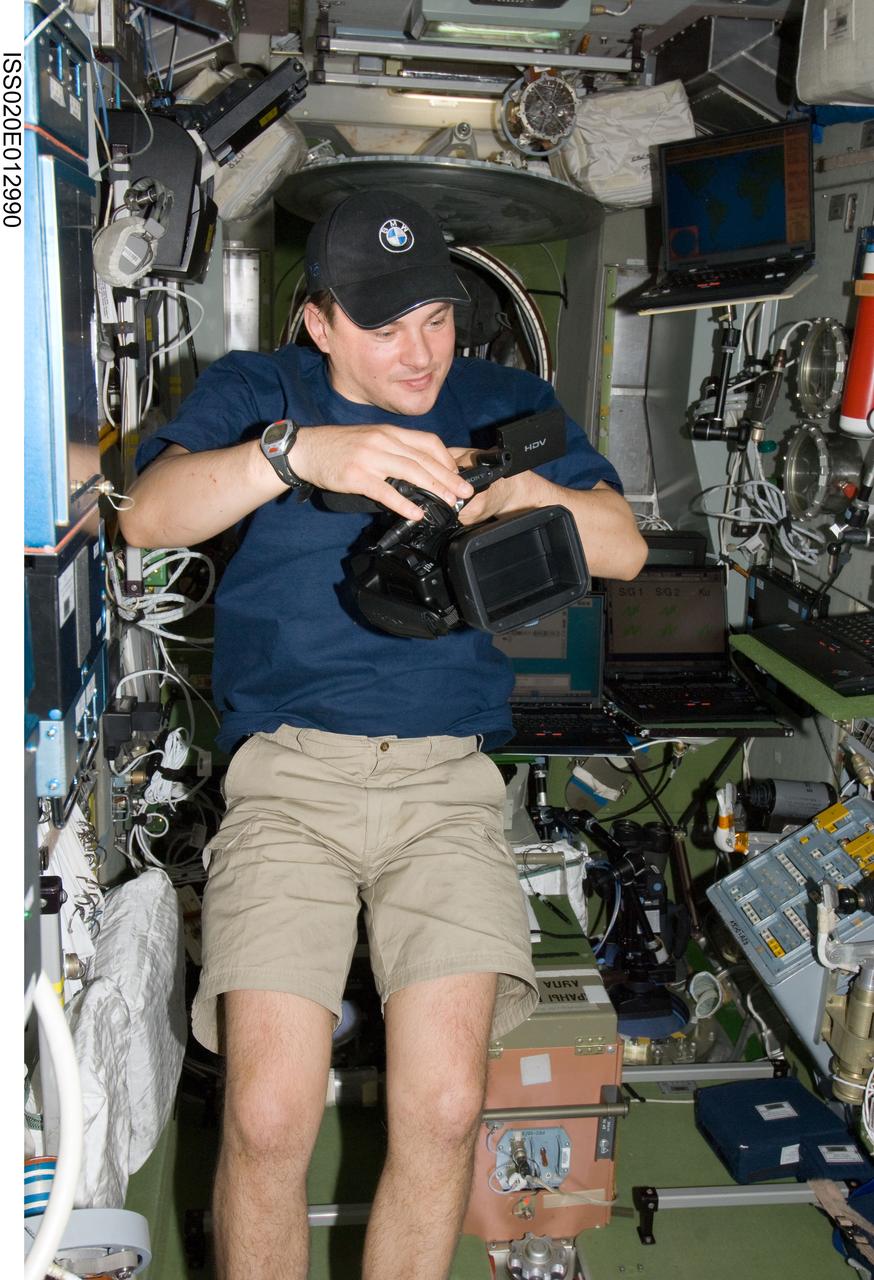
ISS020-E-012990 (21 June 2009) --- Cosmonaut Roman Romanenko, Expedition 20 flight engineer, prepares to use a High Definition Video (HDV) camera in the Zvezda Service Module of the International Space Station.
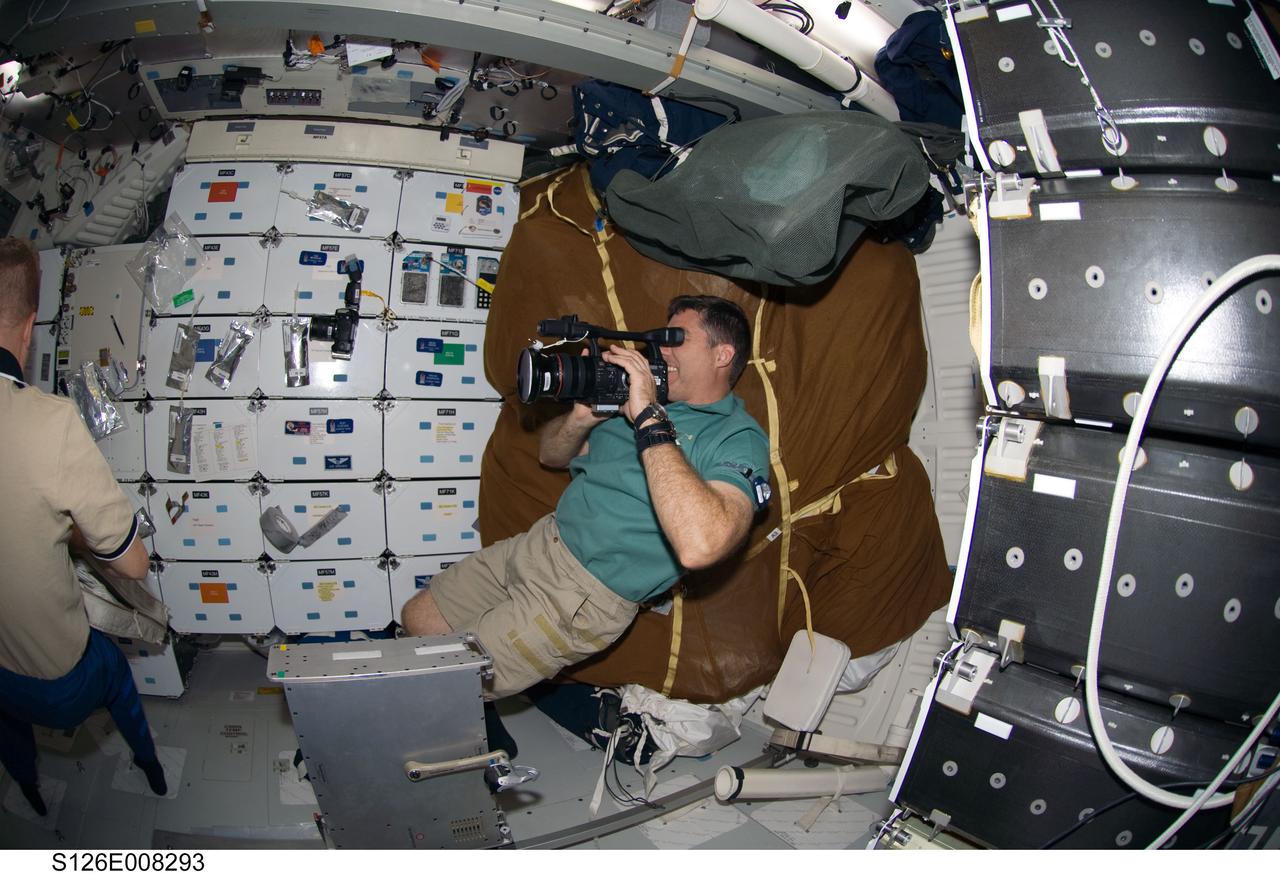
S126-E-008293 (19 Nov. 2008) --- Astronaut Steve Bowen, STS-126 mission specialist, uses a video camera on the middeck of Space Shuttle Endeavour while docked with the International Space Station.
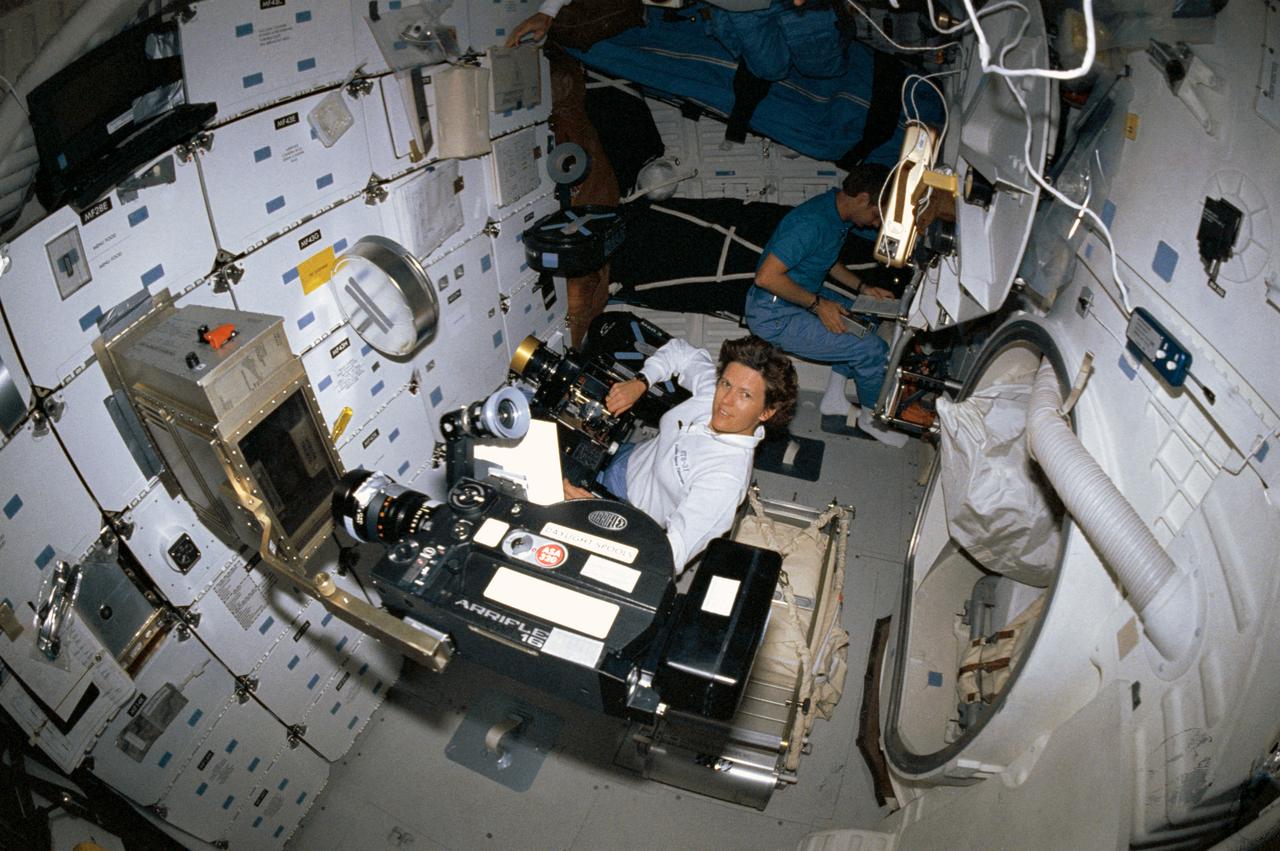
STS031-05-002 (24-29 April 1990) --- A 35mm camera with a "fish eye" lens captured this high angle image on Discovery's middeck. Astronaut Kathryn D. Sullivan works with the IMAX camera in foreground, while Astronaut Steven A. Hawley consults a checklist in corner. An Arriflex motion picture camera records student ion arc experiment in apparatus mounted on stowage locker. The experiment was the project of Gregory S. Peterson, currently a student at Utah State University.
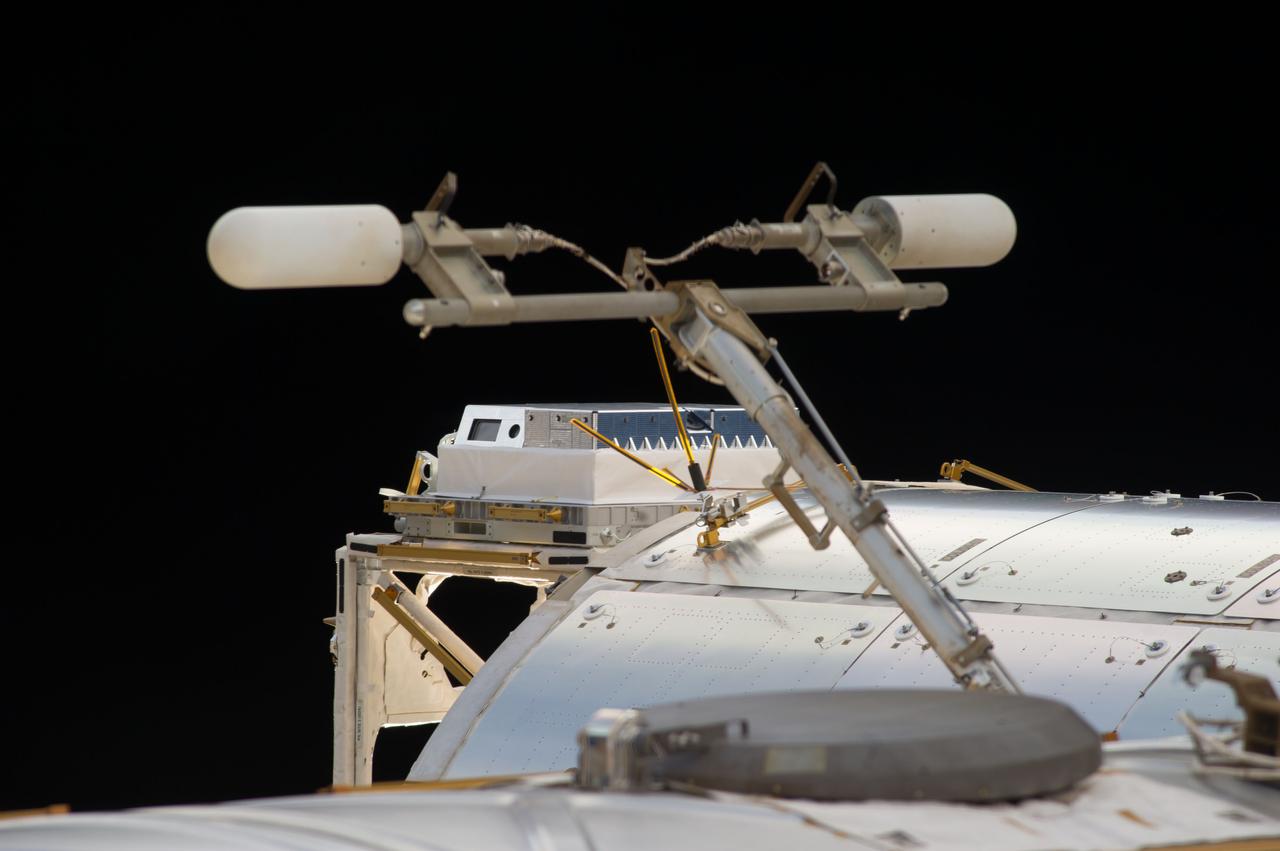
iss039e019134 (5/7/2014) - View of the High Definition Earth Viewing (HDEV) flight assembly installed on the exterior of the Columbus European Laboratory module. The High Definition Earth Viewing (HDEV) experiment places four commercially available HD cameras on the exterior of the space station and uses them to stream live video of Earth for viewing online. The cameras are enclosed in a temperature specific housing and are exposed to the harsh radiation of space. Analysis of the effect of space on the video quality, over the time HDEV is operational, may help engineers decide which cameras are the best types to use on future missions. High school students helped design some of the cameras' components, through the High Schools United with NASA to Create Hardware (HUNCH) program, and student teams operate the experiment.
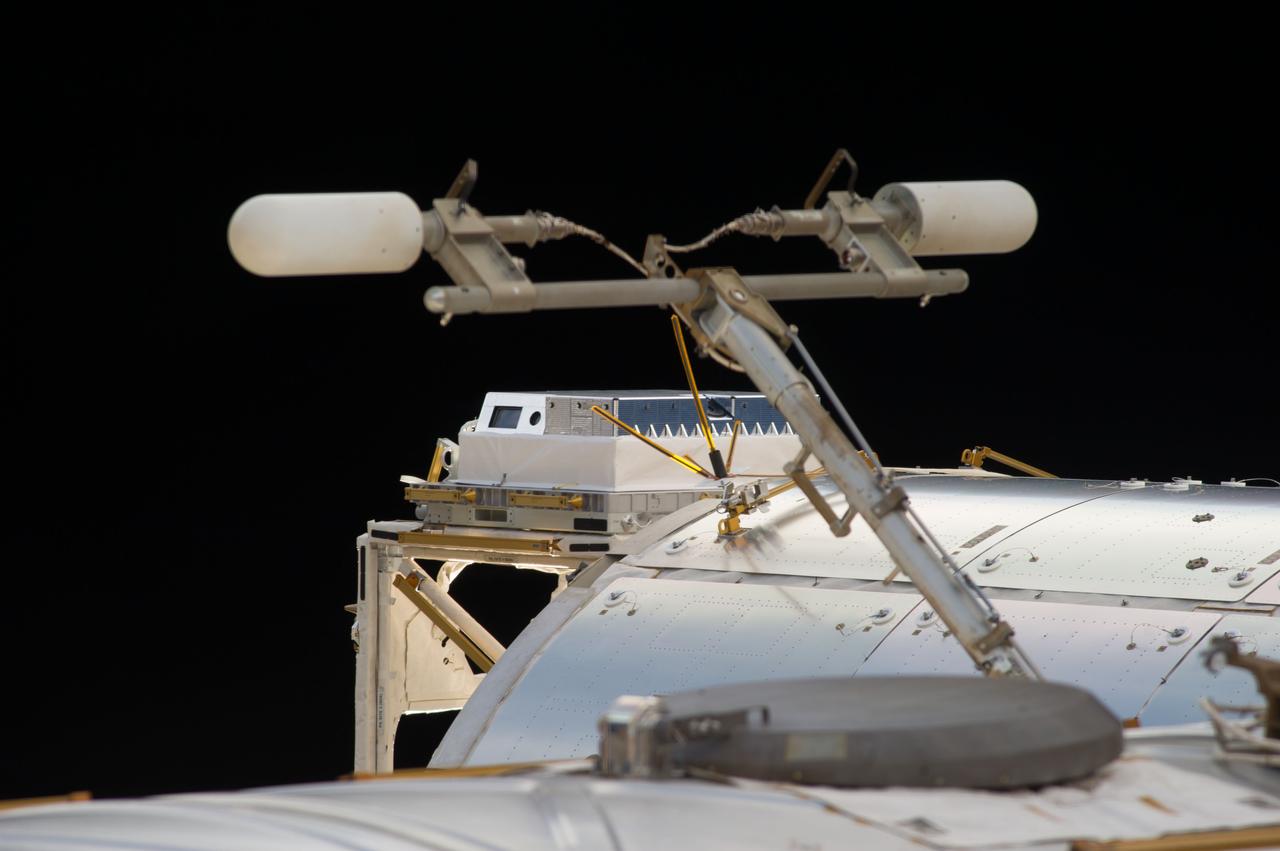
View of the High Definition Earth Viewing (HDEV) flight assembly installed on the exterior of the Columbus European Laboratory module. Image was released by astronaut on Twitter. The High Definition Earth Viewing (HDEV) experiment places four commercially available HD cameras on the exterior of the space station and uses them to stream live video of Earth for viewing online. The cameras are enclosed in a temperature specific housing and are exposed to the harsh radiation of space. Analysis of the effect of space on the video quality, over the time HDEV is operational, may help engineers decide which cameras are the best types to use on future missions. High school students helped design some of the cameras' components, through the High Schools United with NASA to Create Hardware (HUNCH) program, and student teams operate the experiment.
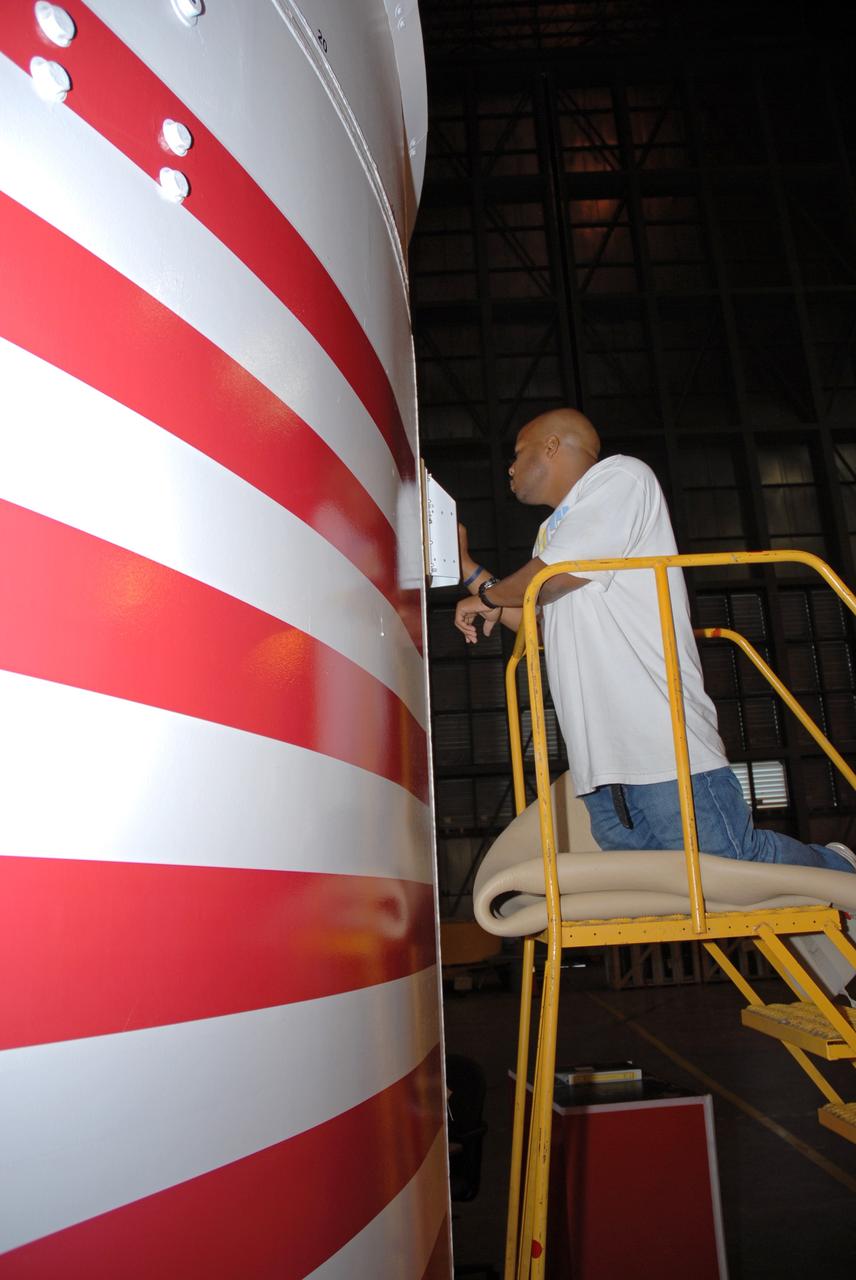
CAPE CANAVERAL, Fla. – In the Vehicle Assembly Building's High Bay 4 at NASA's Kennedy Space Center in Florida, technician Troy Merrick, with United Space Alliance, installs a video camera on the side of the Ares I-X segments 6 and 7. The downward facing camera will provide live video during launch. Part of the Constellation Program, the Ares I-X is the test vehicle for the Ares I, which is the essential core of a space transportation system that eventually will carry crewed missions back to the moon, on to Mars and out into the solar system . The Ares I-X flight test is targeted for no earlier than Aug. 30. Photo credit: NASA/Jack Pfaller
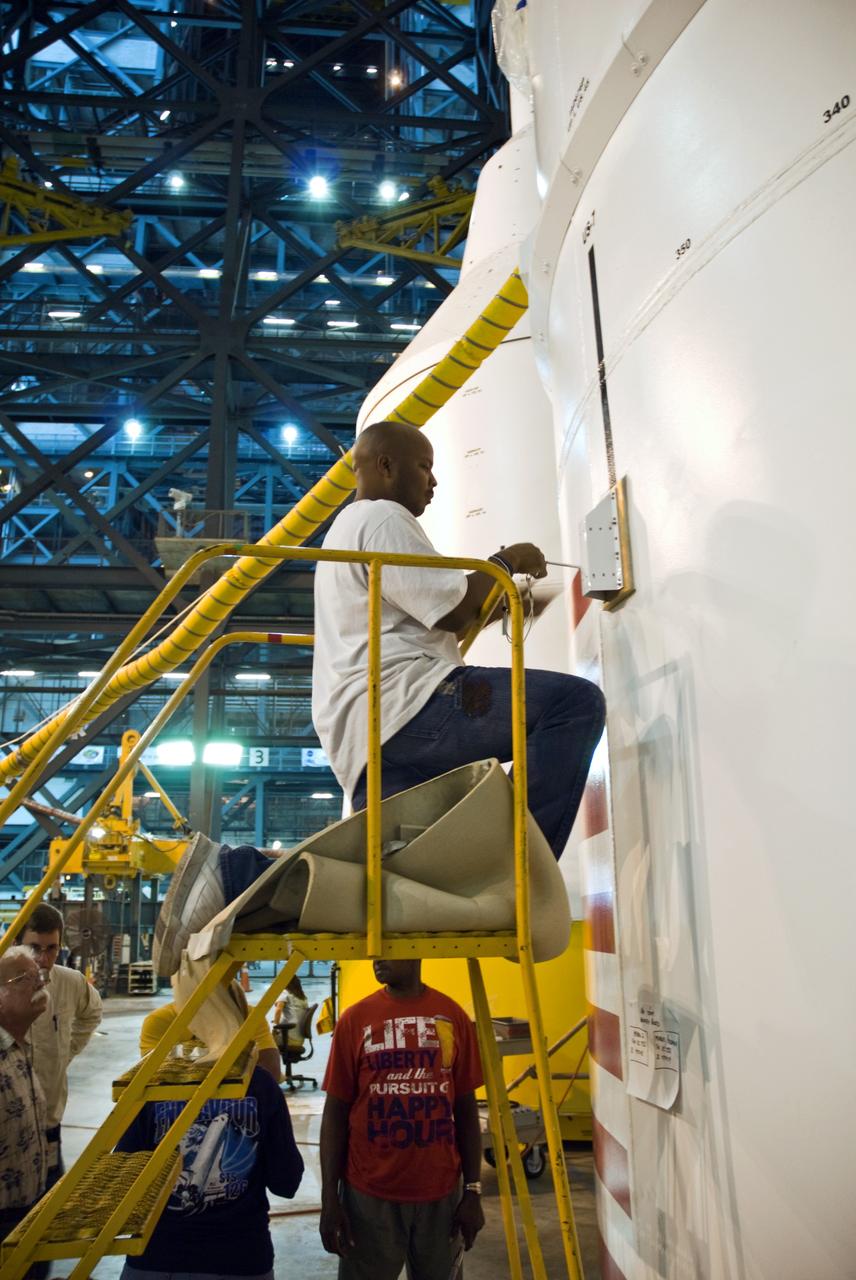
CAPE CANAVERAL, Fla. – In the Vehicle Assembly Building's High Bay 4 at NASA's Kennedy Space Center in Florida, technician Troy Merrick, with United Space Alliance, finishes installing a video camera on the side of the Ares I-X segments 6 and 7. The downward facing camera will provide live video during launch. Part of the Constellation Program, the Ares I-X is the test vehicle for the Ares I, which is the essential core of a space transportation system that eventually will carry crewed missions back to the moon, on to Mars and out into the solar system . The Ares I-X flight test is targeted for no earlier than Aug. 30. Photo credit: NASA/Jack Pfaller
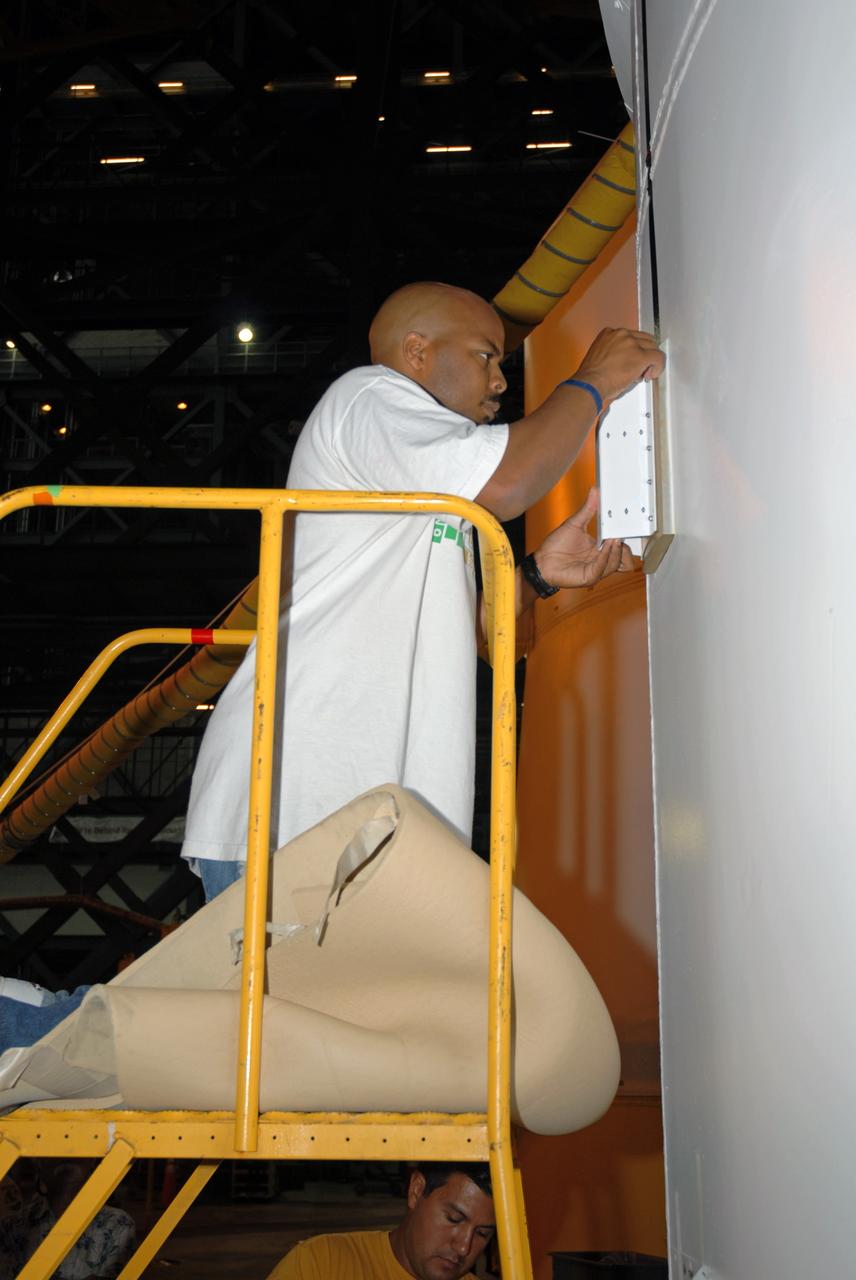
CAPE CANAVERAL, Fla. – In the Vehicle Assembly Building's High Bay 4 at NASA's Kennedy Space Center in Florida, technician Troy Merrick, with United Space Alliance, installs a video camera on the side of the Ares I-X segments 6 and 7. The downward facing camera will provide live video during launch. Part of the Constellation Program, the Ares I-X is the test vehicle for the Ares I, which is the essential core of a space transportation system that eventually will carry crewed missions back to the moon, on to Mars and out into the solar system . The Ares I-X flight test is targeted for no earlier than Aug. 30. Photo credit: NASA/Jack Pfaller
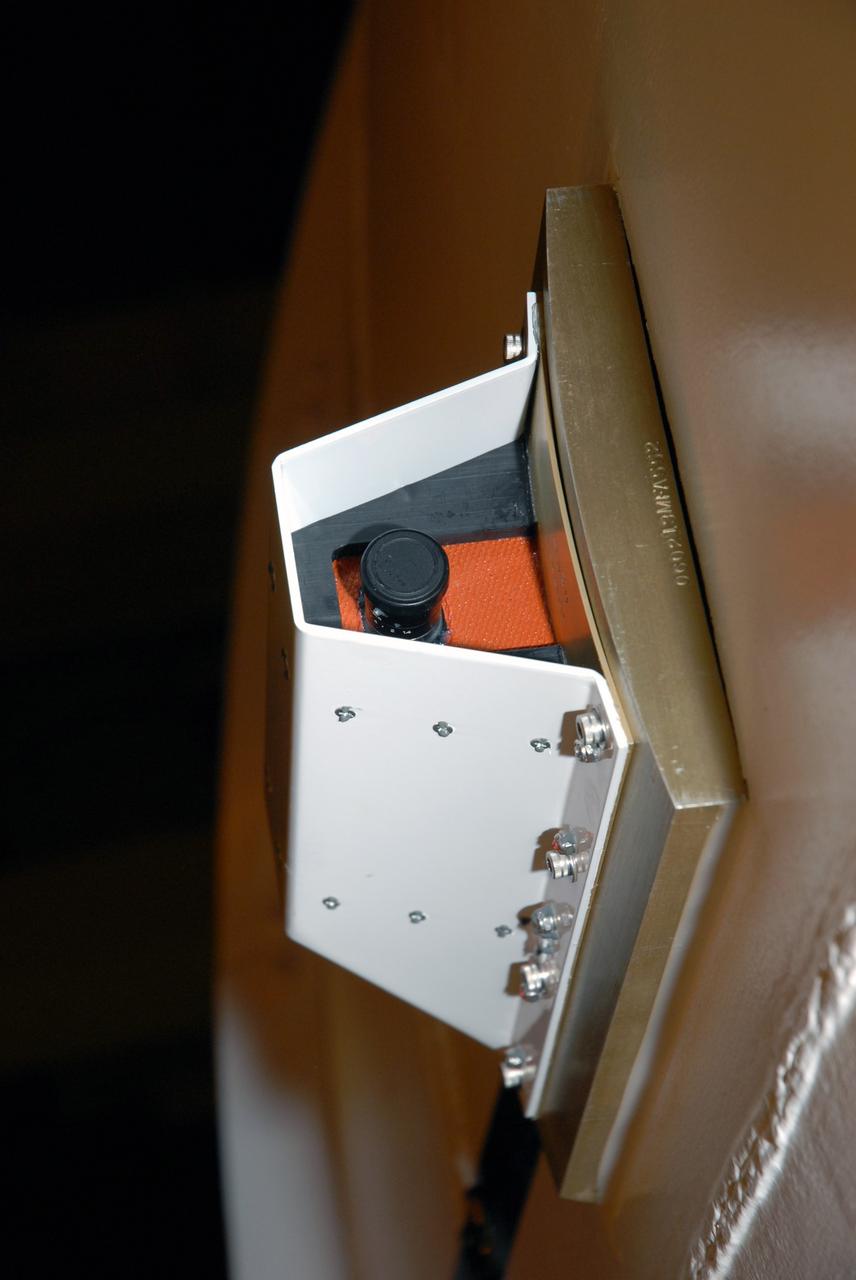
CAPE CANAVERAL, Fla. – A close-up of the video camera installed on the side of the Ares I-X segments 6 and 7, which are in the Vehicle Assembly Building's High Bay 4 at NASA's Kennedy Space Center in Florida. The downward facing camera will provide live video during launch. Part of the Constellation Program, the Ares I-X is the test vehicle for the Ares I, which is the essential core of a space transportation system that eventually will carry crewed missions back to the moon, on to Mars and out into the solar system . The Ares I-X flight test is targeted for no earlier than Aug. 30. Photo credit: NASA/Jack Pfaller
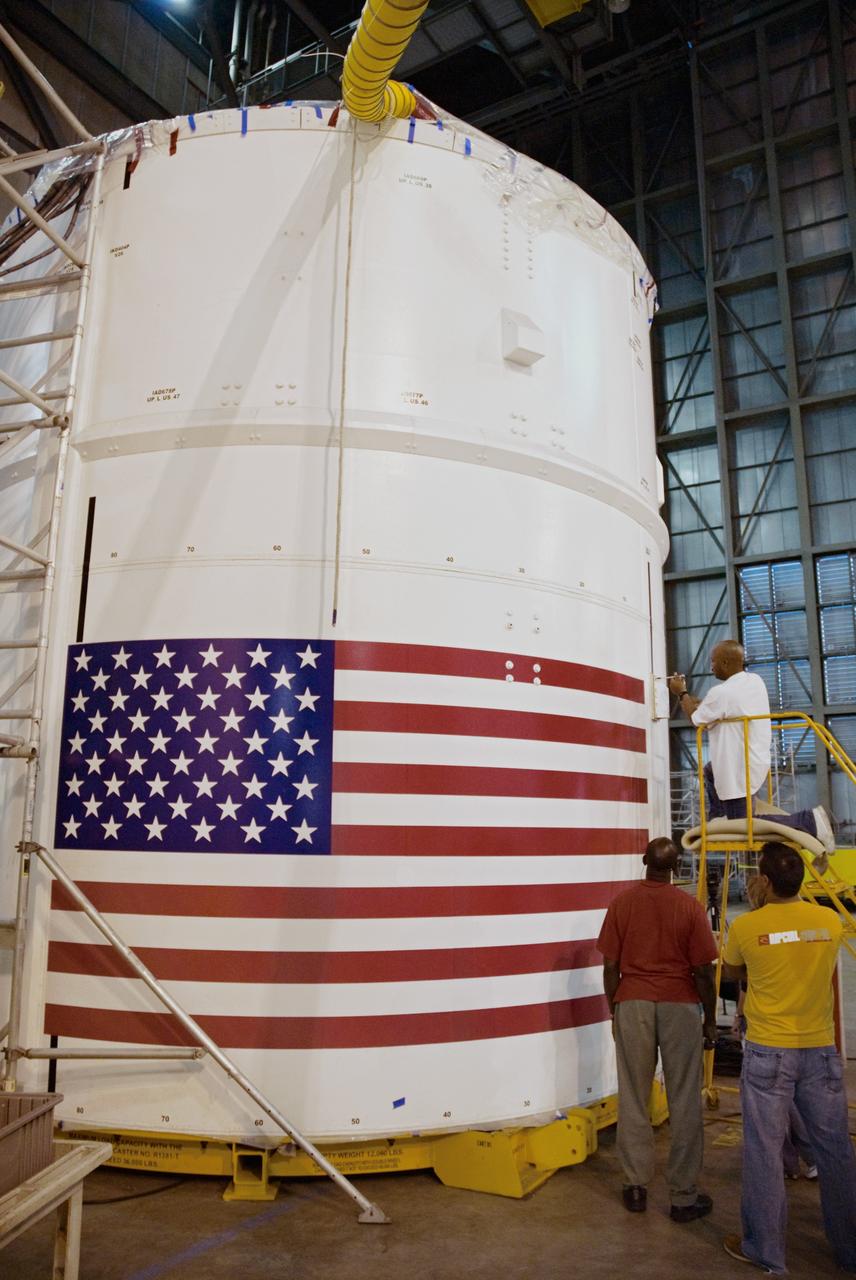
CAPE CANAVERAL, Fla. – In the Vehicle Assembly Building's High Bay 4 at NASA's Kennedy Space Center in Florida, technician Troy Merrick, with United Space Alliance, finishes installing a video camera on the side of the Ares I-X segments 6 and 7. The downward facing camera will provide live video during launch. Part of the Constellation Program, the Ares I-X is the test vehicle for the Ares I, which is the essential core of a space transportation system that eventually will carry crewed missions back to the moon, on to Mars and out into the solar system . The Ares I-X flight test is targeted for no earlier than Aug. 30. Photo credit: NASA/Jack Pfaller

CAPE CANAVERAL, Fla. – In the Vehicle Assembly Building's High Bay 4 at NASA's Kennedy Space Center in Florida, technician Troy Merrick, with United Space Alliance, prepares a site on the Ares I-X segments 6 and 7 where a video camera will be installed. The downward facing camera will provide live video during launch. Part of the Constellation Program, the Ares I-X is the test vehicle for the Ares I, which is the essential core of a space transportation system that eventually will carry crewed missions back to the moon, on to Mars and out into the solar system . The Ares I-X flight test is targeted for no earlier than Aug. 30. Photo credit: NASA/Jack Pfaller
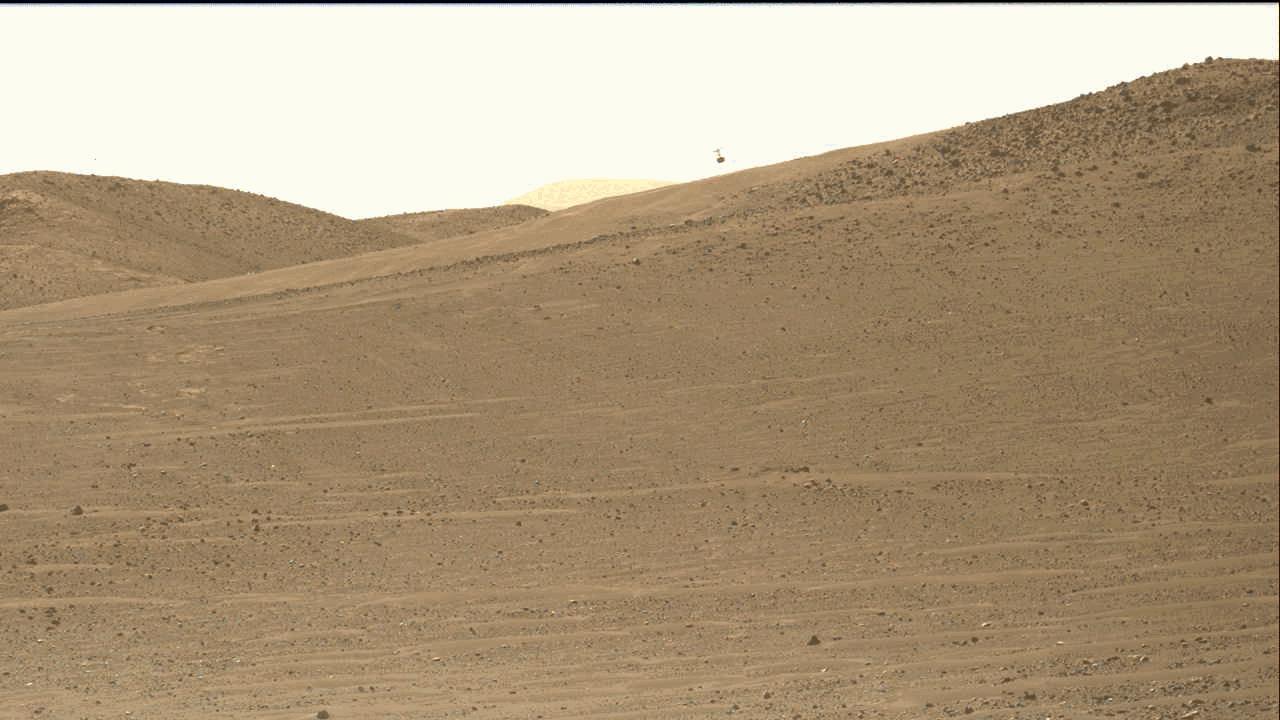
NASA's Ingenuity Mars Helicopter is seen here at the starting point of its 47th flight on Mars. This video shows the dust initially kicked up by the helicopter's spinning rotors, as well as Ingenuity taking off, hovering, and beginning its 1,444-foot (440-meter) journey to the southwest. The rotorcraft landed – off camera – at Airfield "Iota." The video was captured by the Mastcam-Z imager aboard NASA's Perseverance rover on March 9, 2023. At the time the video was taken, the rover was about 394 feet (120 meters) from the helicopter. Animation available at https://photojournal.jpl.nasa.gov/catalog/PIA25686
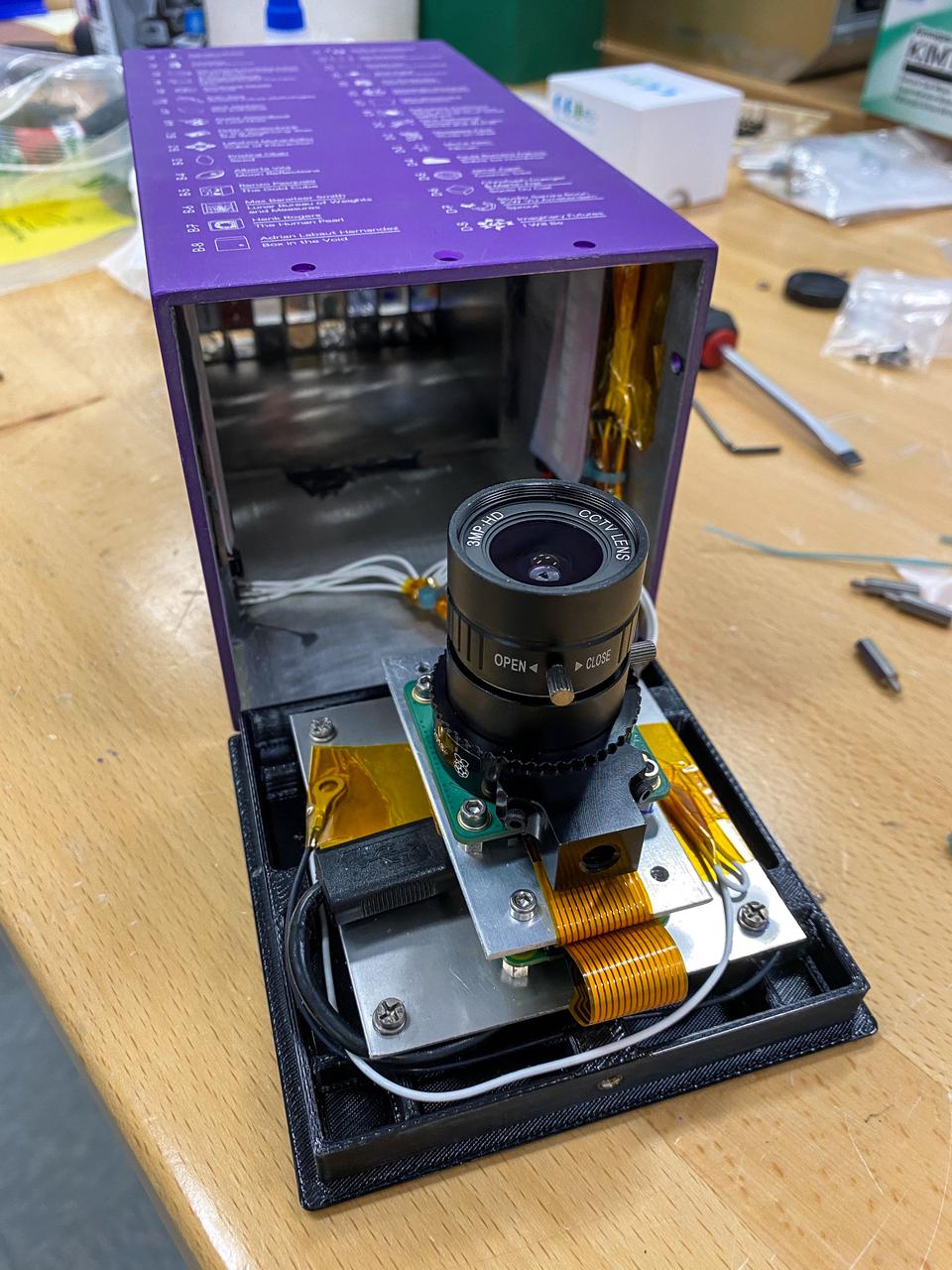
jsc2022e008878 (12/9/2021) --- A preflight view of the Moon Gallery payload. Moon Gallery evaluates the performance of a single-board computer platform with a high-quality camera in the space station’s radiation environment. Photos and videos taken with the camera become part of an art installation known as the Moon Gallery. The camera could be used in future space platforms and science hardware.
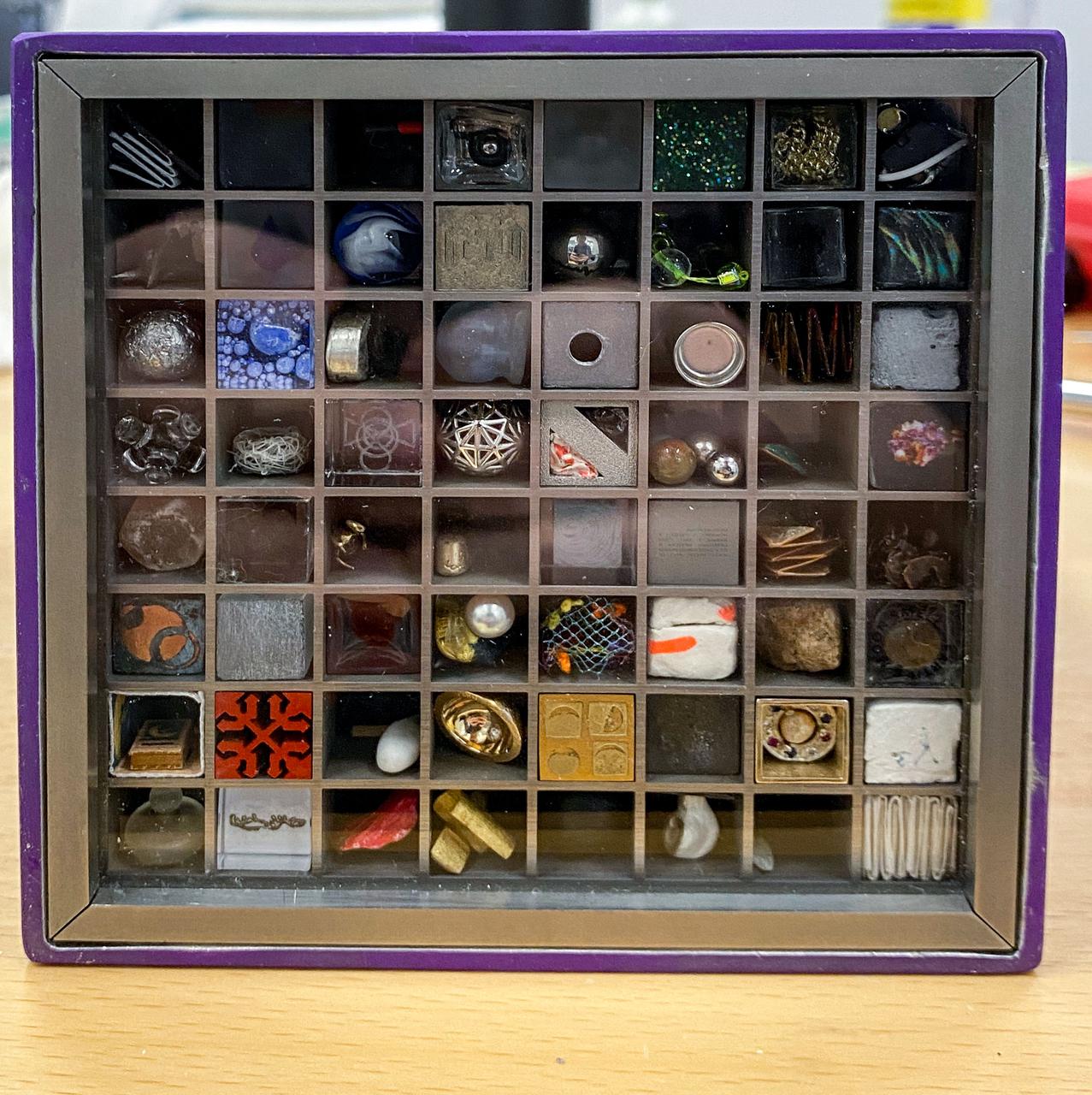
jsc2022e008880 (12/9/2021) --- A preflight view of the Moon Gallery payload. Moon Gallery evaluates the performance of a single-board computer platform with a high-quality camera in the space station’s radiation environment. Photos and videos taken with the camera become part of an art installation known as the Moon Gallery. The camera could be used in future space platforms and science hardware.
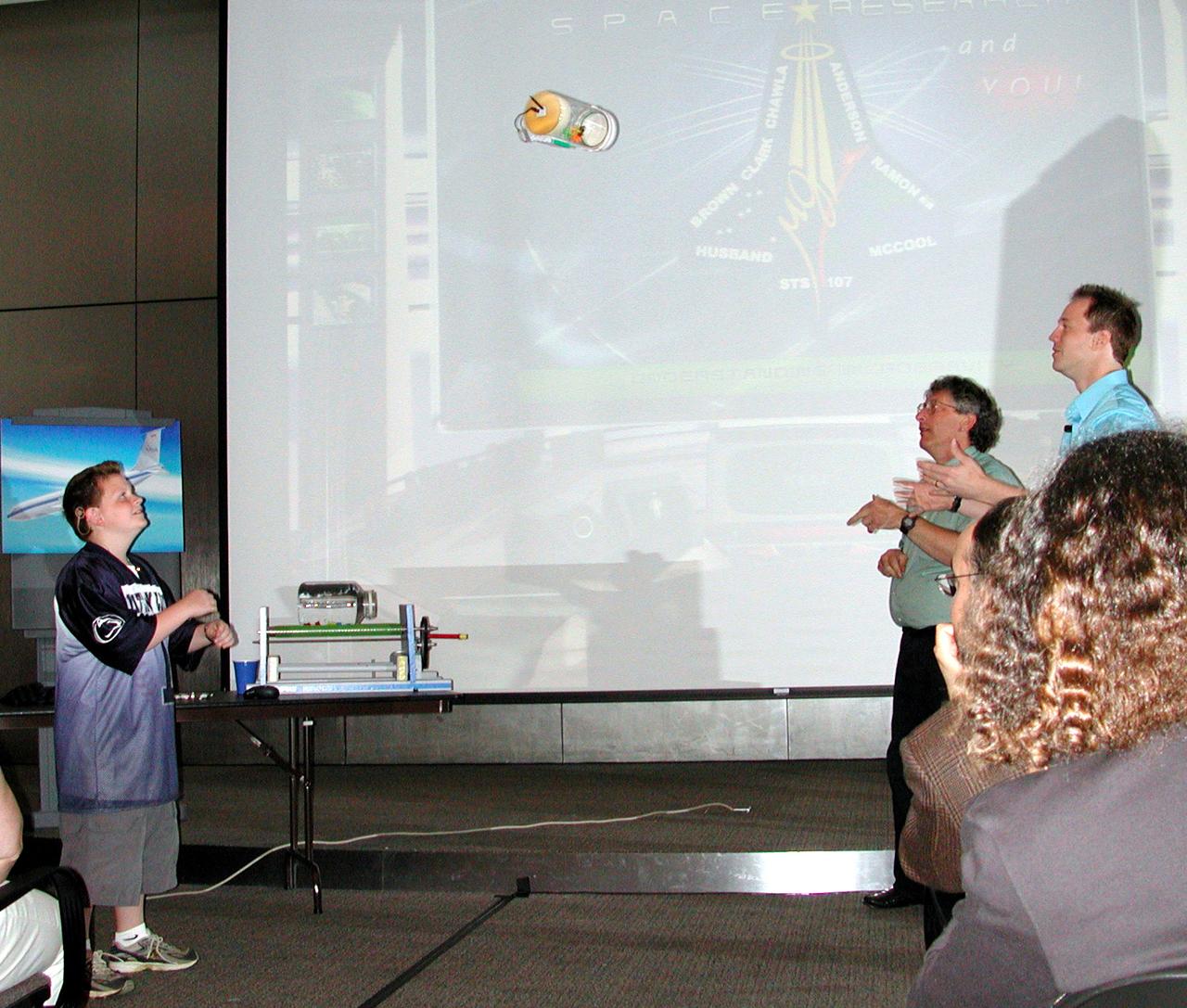
A student gets ready to catch a plastic tube carrying a small fluid bottle and a wireless video camera. As it arced through the air, the container was in free-fall -- just like astronauts in space -- and the TV camera broadcast images of how the fluid behaved. The activity was part of the Space Research and You education event held by NASA's Office of Biological and Physical Research on June 25, 2002, in Arlington, VA, to highlight the research that will be conducted on STS-107. (Digital camera image; no film original.
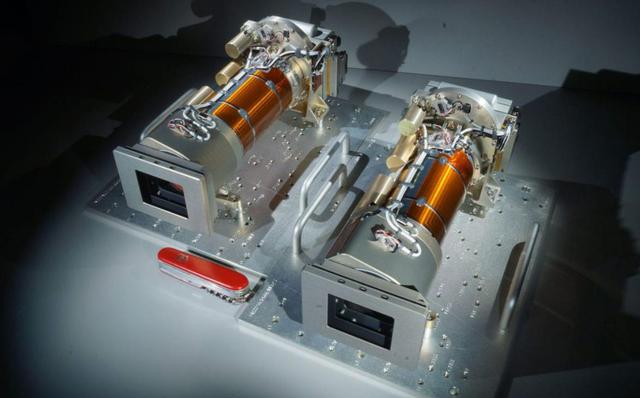
The twin Mastcam-Z cameras, shown with a pocket knife for scale, are assembled and ready for testing in this photo taken at Malin Space Science Systems, in San Diego, California. One of two sets of "eyes" on the "head," or mast, of the rover, these cameras can take high-definition video, panoramic color, and 3D images of the Martian surface. These are the first cameras sent to Mars with built-in zoom capability, able to switch from a wide angle to a close-up view. https://photojournal.jpl.nasa.gov/catalog/PIA24200
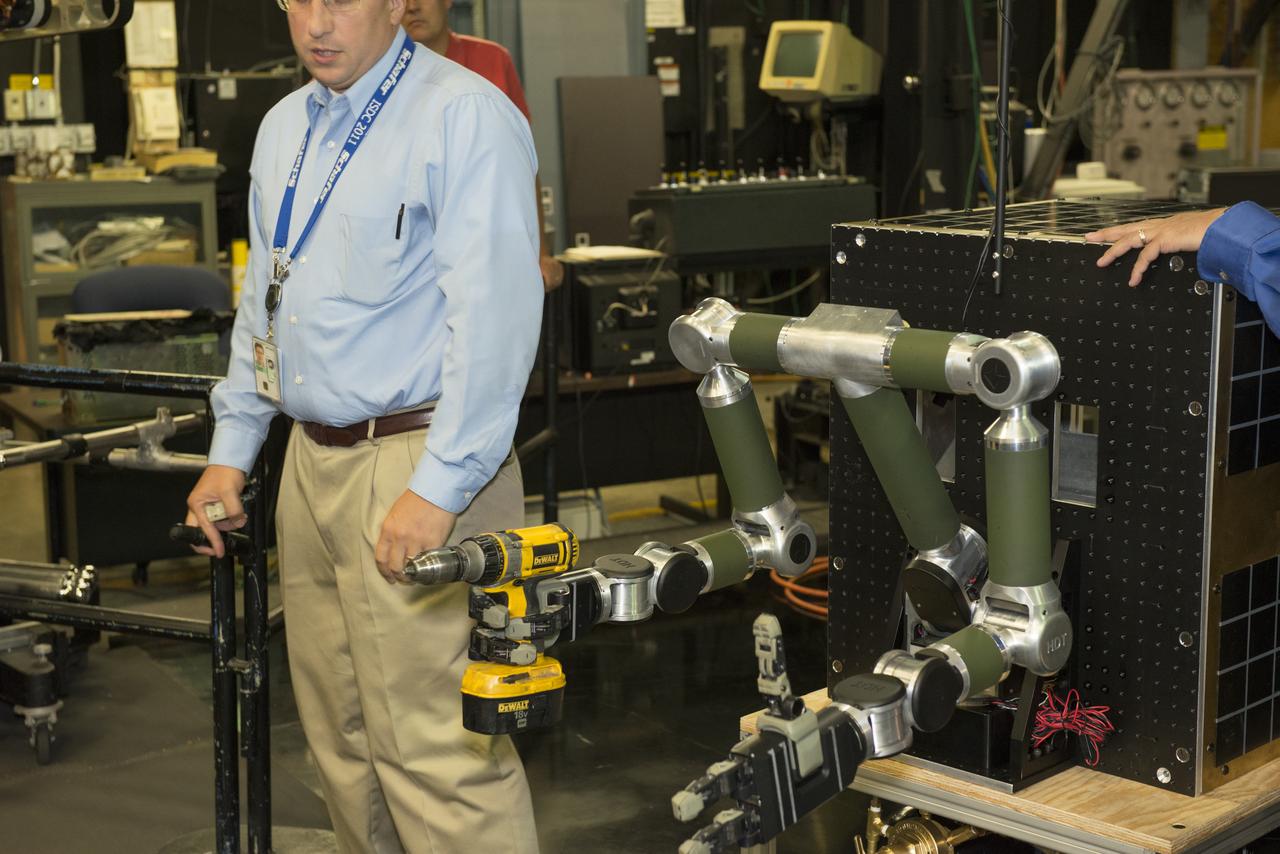
FINAL DEMONSTRATION OF A WIRELESS DATA TASK SUPPORTED BY SLS ADVANCED DEVELOPMENT USED TO DEMONSTRATE REAL-TIME VIDEO OVER WIRELESS CONNECTIONS ALONG WITH DATA AND COMMANDS AS DEMONSTRATED VIA THE ROBOTIC ARMS. THE ARMS AND VIDEO CAMERAS WERE MOUNTED ON FREE FLOATING AIR-BEARING VEHICLES TO SIMULATE CONDITIONS IN SPACE. THEY WERE USED TO SHOW HOW A CHASE VEHICLE COULD MOVE UP TO AND CAPTURE A SATELLITE, SUCH AS THE FASTSAT MOCKUP DEMONSTRITING HOW ROBOTIC TECHNOLOGY AND SMALL SPACECRAFT COULD ASSIST WITH ORBITAL DEBRIS MITIGATION
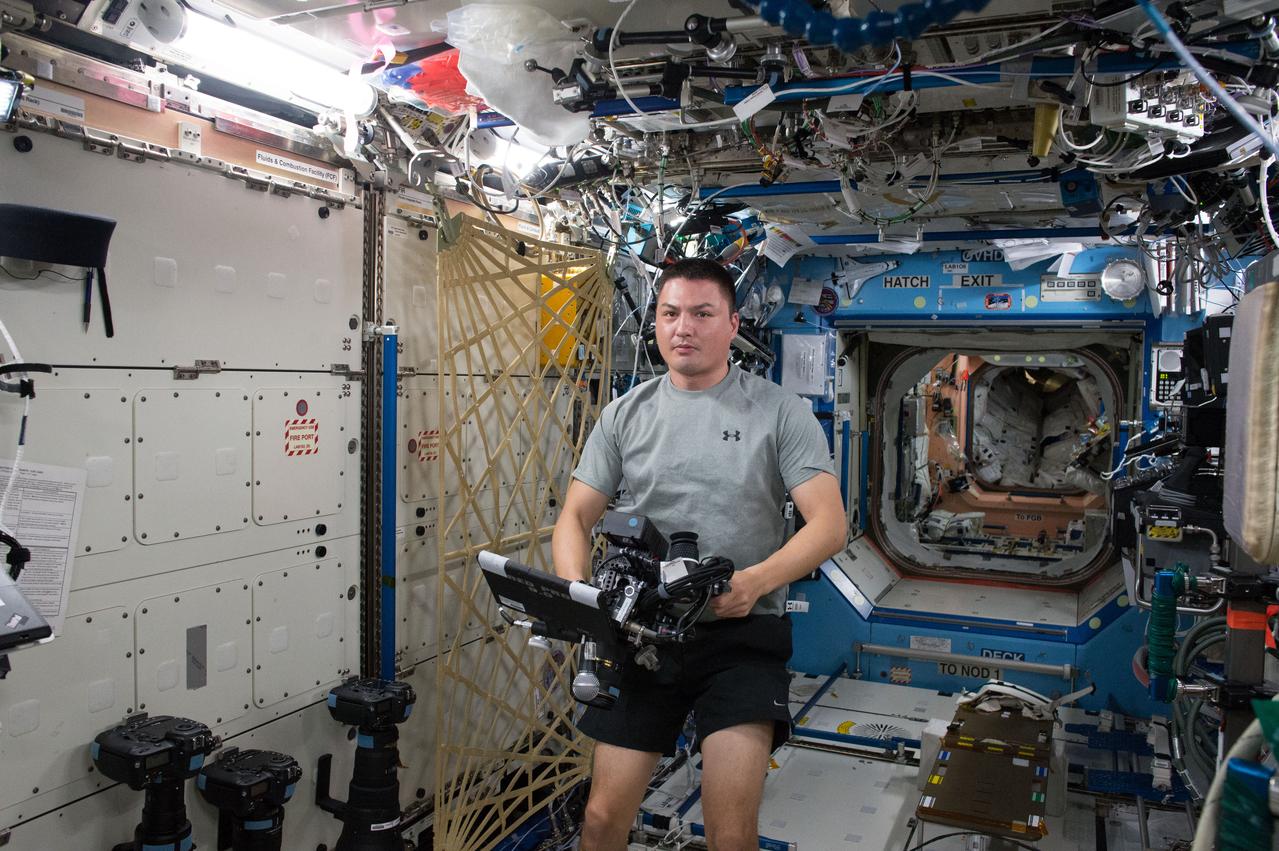
ISS045E028189 (09/24/2015 --- NASA astronaut Kjell Lindgren prepares to film with a RED Dragon camera, capable of capturing Ultra High-Definition (UHD) video. This new capability will allow researchers to acquire high resolution - high frame rate video to provide new insight into the vast array of experiments taking place every day. It will also bestow the most breathtaking views of planet Earth and space station activities ever acquired for consumption by those still dreaming of making the trip to outer space.
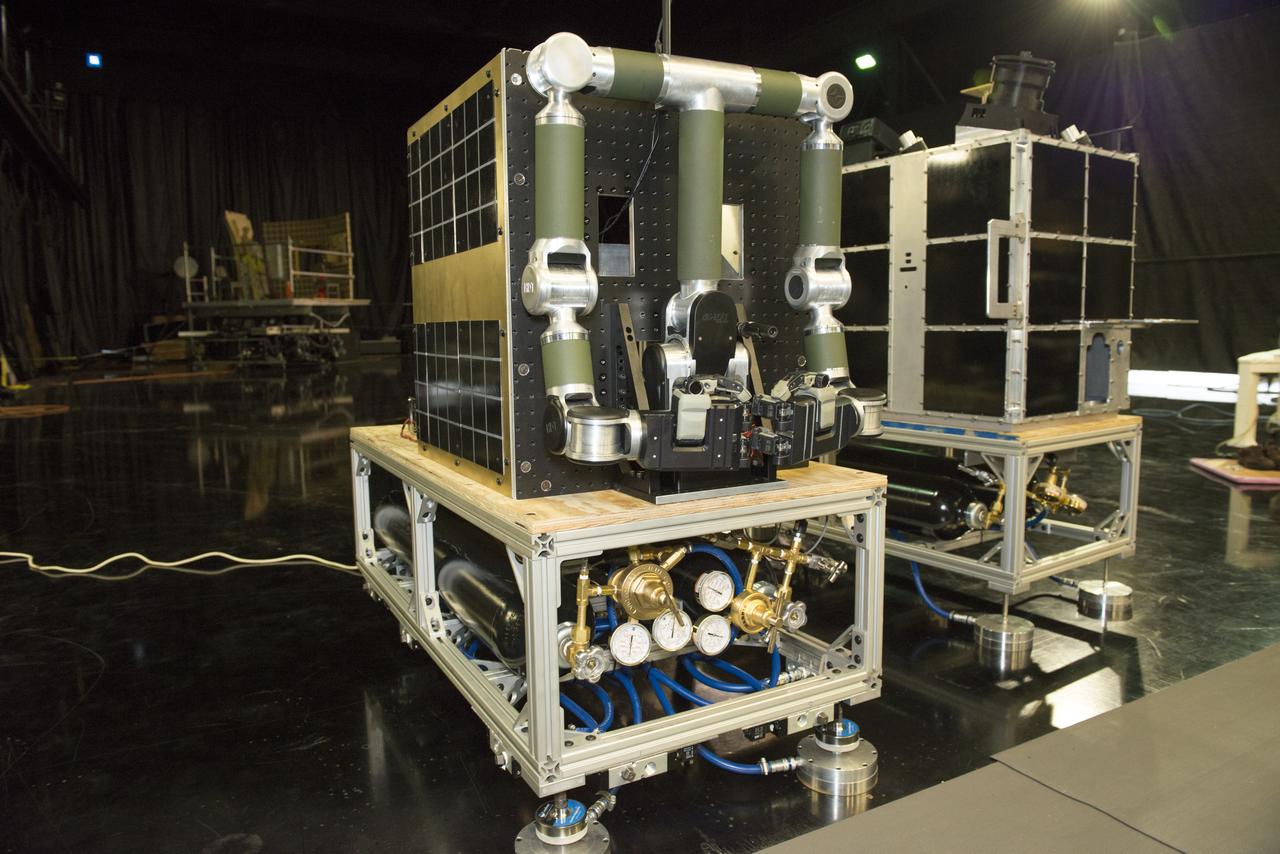
FINAL DEMONSTRATION OF A WIRELESS DATA TASK SUPPORTED BY SLS ADVANCED DEVELOPMENT USED TO DEMONSTRATE REAL-TIME VIDEO OVER WIRELESS CONNECTIONS ALONG WITH DATA AND COMMANDS AS DEMONSTRATED VIA THE ROBOTIC ARMS. THE ARMS AND VIDEO CAMERAS WERE MOUNTED ON FREE FLOATING AIR-BEARING VEHICLES TO SIMULATE CONDITIONS IN SPACE. THEY WERE USED TO SHOW HOW A CHASE VEHICLE COULD MOVE UP TO AND CAPTURE A SATELLITE, SUCH AS THE FASTSAT MOCKUP DEMONSTRITING HOW ROBOTIC TECHNOLOGY AND SMALL SPACECRAFT COULD ASSIST WITH ORBITAL DEBRIS MITIGATION
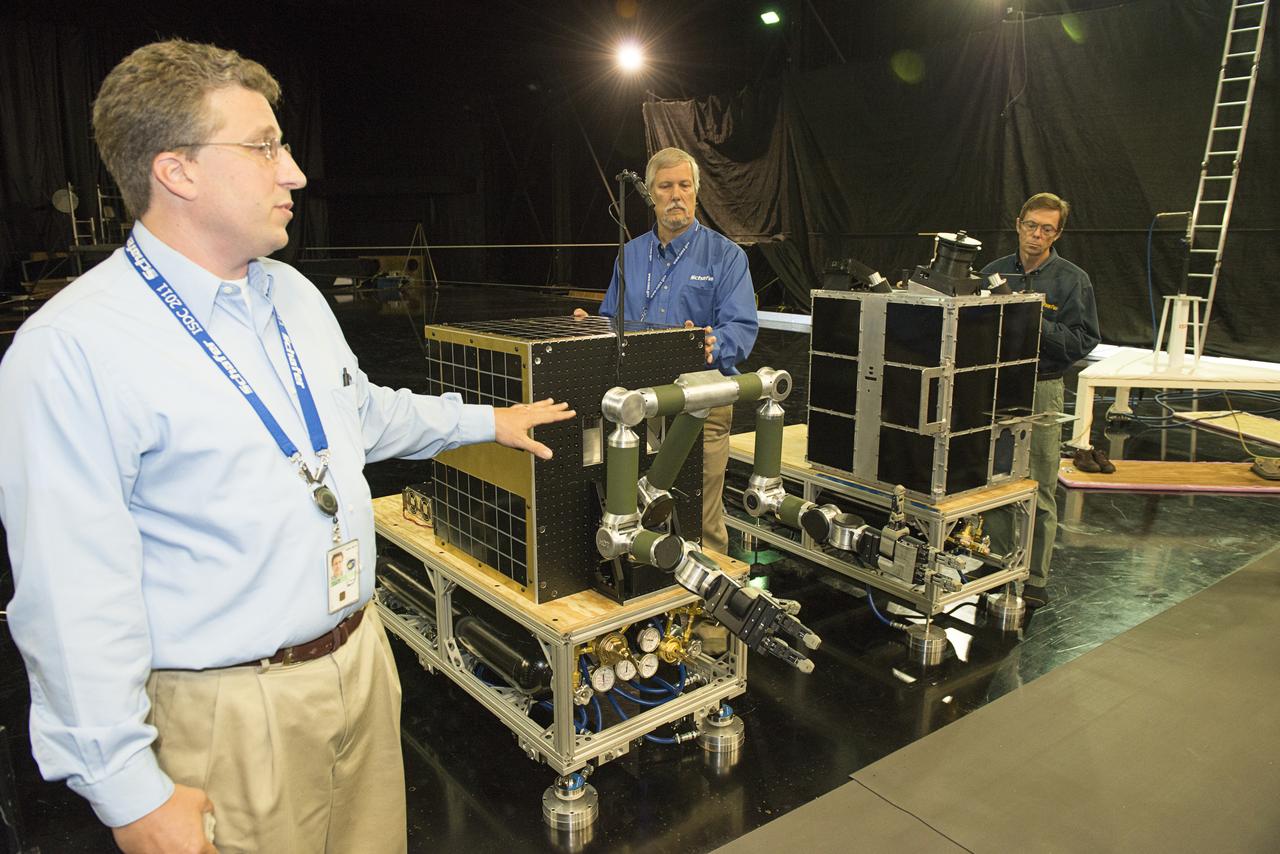
FINAL DEMONSTRATION OF A WIRELESS DATA TASK SUPPORTED BY SLS ADVANCED DEVELOPMENT USED TO DEMONSTRATE REAL-TIME VIDEO OVER WIRELESS CONNECTIONS ALONG WITH DATA AND COMMANDS AS DEMONSTRATED VIA THE ROBOTIC ARMS. THE ARMS AND VIDEO CAMERAS WERE MOUNTED ON FREE FLOATING AIR-BEARING VEHICLES TO SIMULATE CONDITIONS IN SPACE. THEY WERE USED TO SHOW HOW A CHASE VEHICLE COULD MOVE UP TO AND CAPTURE A SATELLITE, SUCH AS THE FASTSAT MOCKUP DEMONSTRITING HOW ROBOTIC TECHNOLOGY AND SMALL SPACECRAFT COULD ASSIST WITH ORBITAL DEBRIS MITIGATION

Two scientists at NASA Marshall Space Flight Center, atmospheric scientist Paul Meyer (left) and solar physicist Dr. David Hathaway, have developed promising new software, called Video Image Stabilization and Registration (VISAR), that may help law enforcement agencies to catch criminals by improving the quality of video recorded at crime scenes, VISAR stabilizes camera motion in the horizontal and vertical as well as rotation and zoom effects; produces clearer images of moving objects; smoothes jagged edges; enhances still images; and reduces video noise of snow. VISAR could also have applications in medical and meteorological imaging. It could steady images of Ultrasounds which are infamous for their grainy, blurred quality. It would be especially useful for tornadoes, tracking whirling objects and helping to determine the tornado's wind speed. This image shows two scientists reviewing an enhanced video image of a license plate taken from a moving automobile.
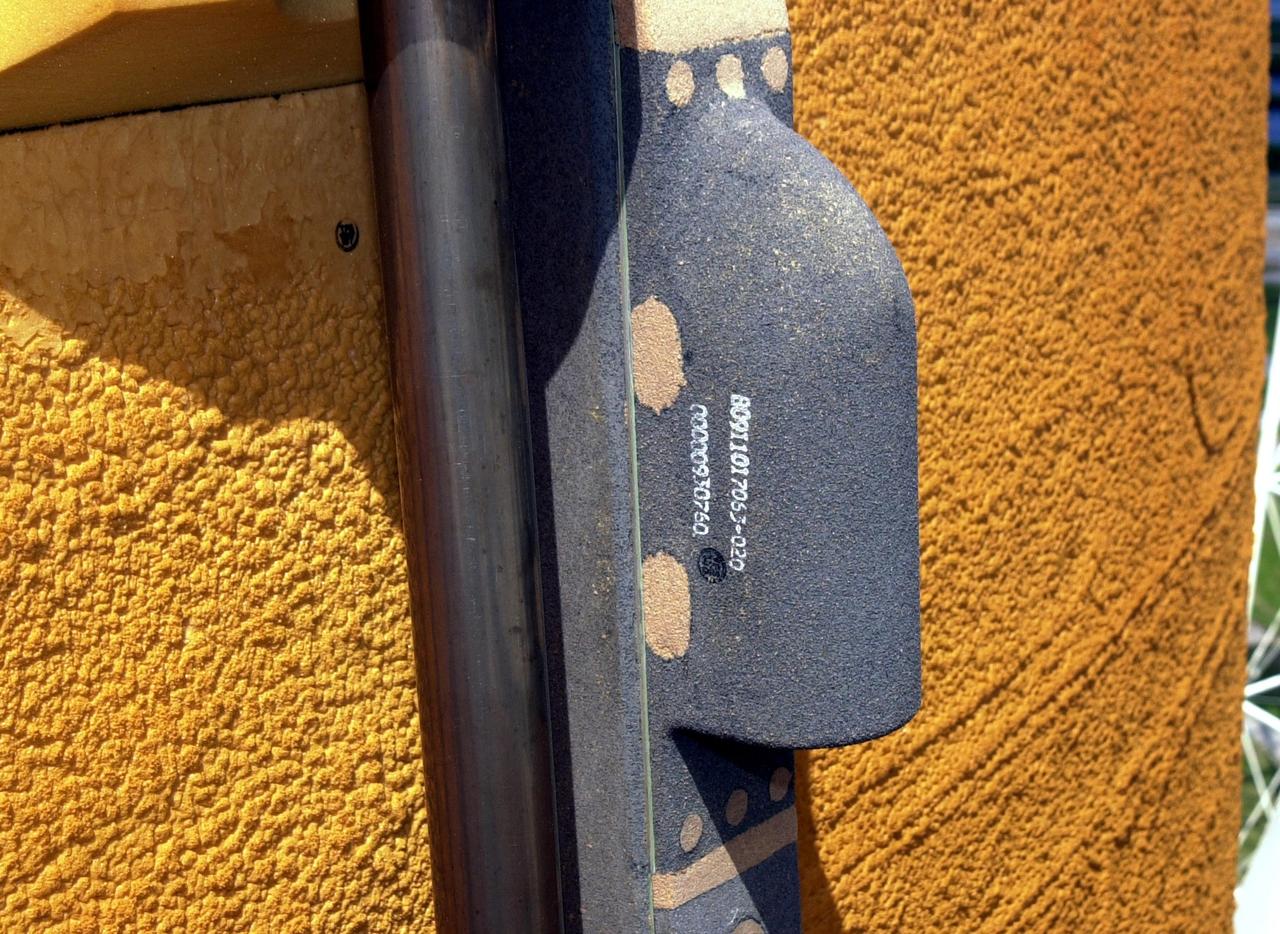
KENNEDY SPACE CENTER, FLA. - A closeup view of the camera mounted on the external tank of Space Shuttle Atlantis. The color video camera mounted to the top of Atlantis' external tank will provide a view of the front and belly of the orbiter and a portion of the solid rocket boosters (SRBs) and external tank during the launch of Atlantis on mission STS-112. It will offer the STS-112 team an opportunity to monitor the shuttle's performance from a new angle. The camera will be turned on fifteen minutes prior to launch and will show the orbiter and solid rocket boosters on the launch pad. The video will be downlinked from the external tank during flight to several NASA data-receiving sites and then relayed to the live television broadcast. The camera is expected to operate for about 15 minutes following liftoff. At liftoff, viewers will see the shuttle clearing the launch tower and, at two minutes after liftoff, see the right SRB separate from the external tank. When the external tank separates from Atlantis about eight minutes into the flight, the camera is expected to continue its live feed for about six more minutes although NASA may be unable to pick up the camera's signal because the tank may have moved out of range.
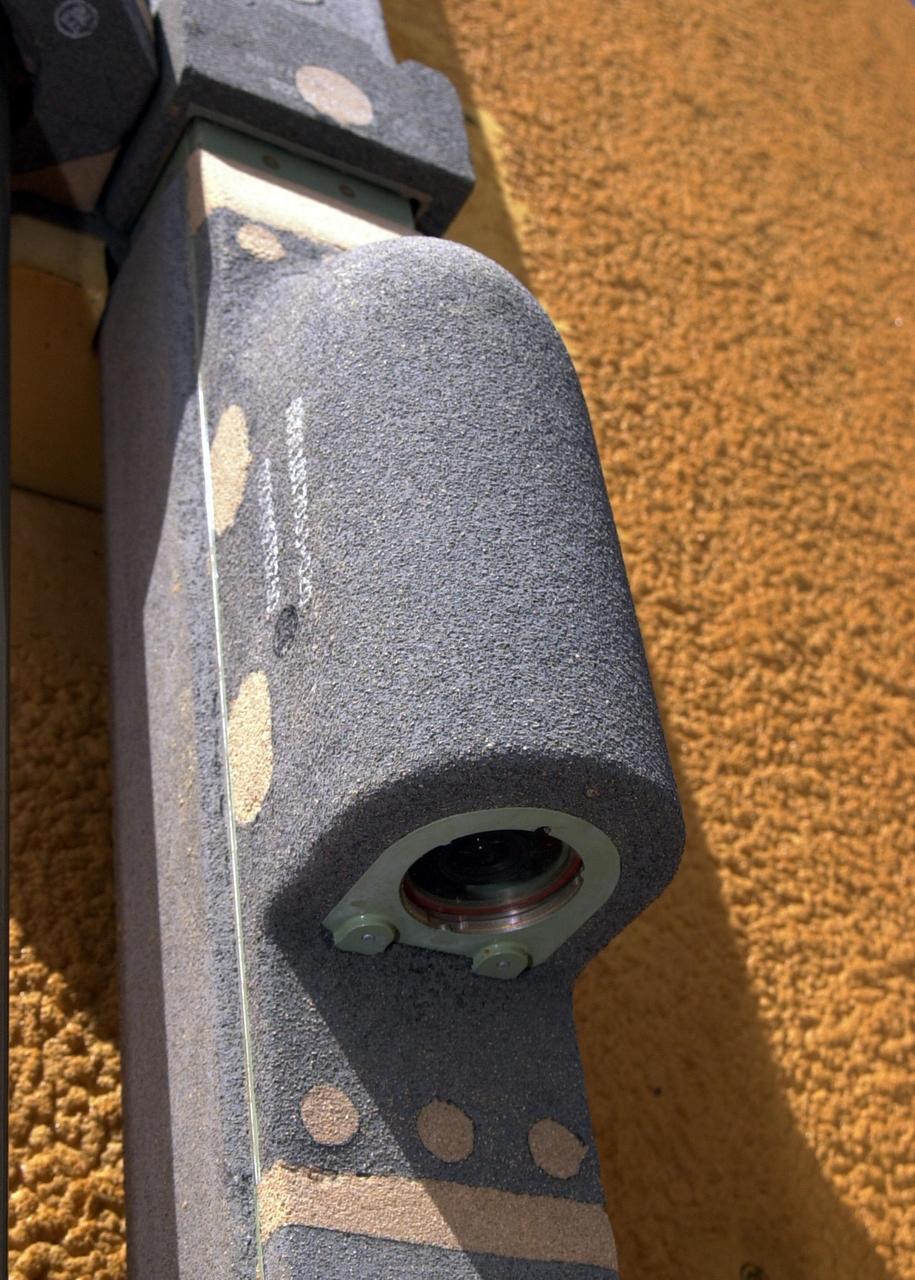
KENNEDY SPACE CENTER, FLA. - A closeup view of the camera mounted on the external tank of Space Shuttle Atlantis. The color video camera mounted to the top of Atlantis' external tank will provide a view of the front and belly of the orbiter and a portion of the solid rocket boosters (SRBs) and external tank during the launch of Atlantis on mission STS-112. It will offer the STS-112 team an opportunity to monitor the shuttle's performance from a new angle. The camera will be turned on fifteen minutes prior to launch and will show the orbiter and solid rocket boosters on the launch pad. The video will be downlinked from the external tank during flight to several NASA data-receiving sites and then relayed to the live television broadcast. The camera is expected to operate for about 15 minutes following liftoff. At liftoff, viewers will see the shuttle clearing the launch tower and, at two minutes after liftoff, see the right SRB separate from the external tank. When the external tank separates from Atlantis about eight minutes into the flight, the camera is expected to continue its live feed for about six more minutes although NASA may be unable to pick up the camera's signal because the tank may have moved out of range.
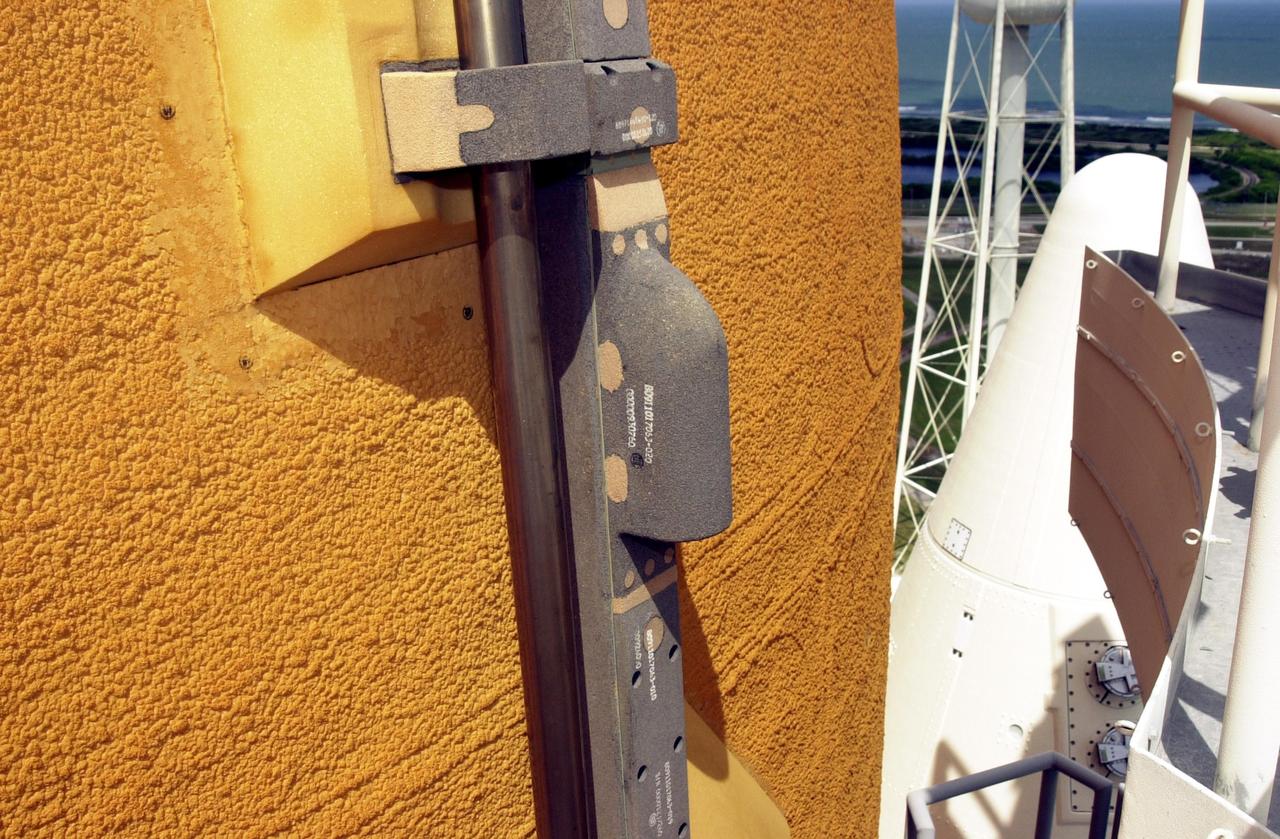
KENNEDY SPACE CENTER, FLA. - A view of the camera mounted on the external tank of Space Shuttle Atlantis. The color video camera mounted to the top of Atlantis' external tank will provide a view of the front and belly of the orbiter and a portion of the solid rocket boosters (SRBs) and external tank during the launch of Atlantis on mission STS-112. It will offer the STS-112 team an opportunity to monitor the shuttle's performance from a new angle. The camera will be turned on fifteen minutes prior to launch and will show the orbiter and solid rocket boosters on the launch pad. The video will be downlinked from the external tank during flight to several NASA data-receiving sites and then relayed to the live television broadcast. The camera is expected to operate for about 15 minutes following liftoff. At liftoff, viewers will see the shuttle clearing the launch tower and, at two minutes after liftoff, see the right SRB separate from the external tank. When the external tank separates from Atlantis about eight minutes into the flight, the camera is expected to continue its live feed for about six more minutes although NASA may be unable to pick up the camera's signal because the tank may have moved out of range.
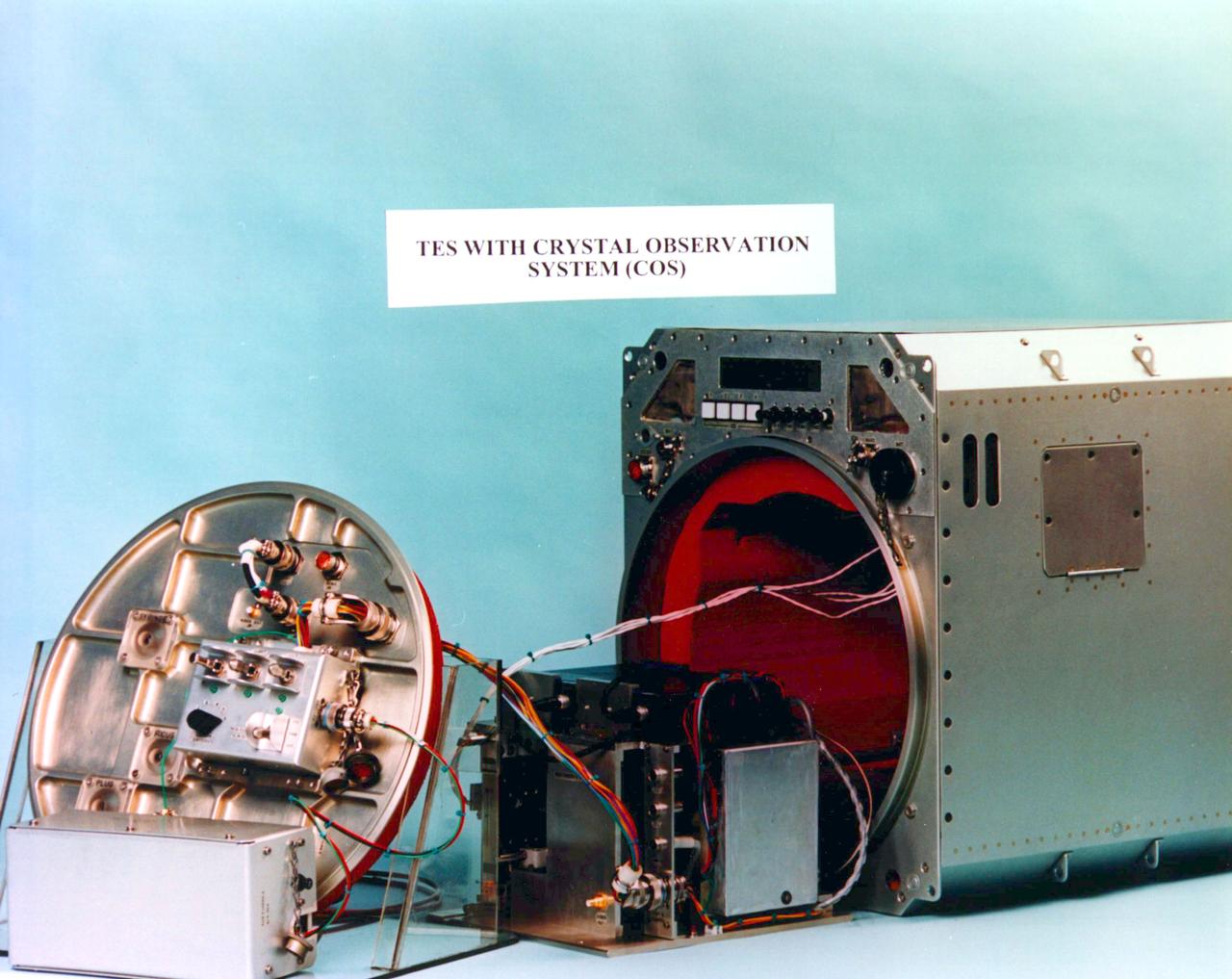
The COS consists of a specially designed (VDA) Vapor Diffusion Apparatus tray with 6 chambers, a video camera for each chamber, a lighting system, and associated hardware. By observing the crystal growth in each chamber, researchers can identify which conditions and concentrations of proteins and precipitants are best for promoting the crystal growth to a particular protein.
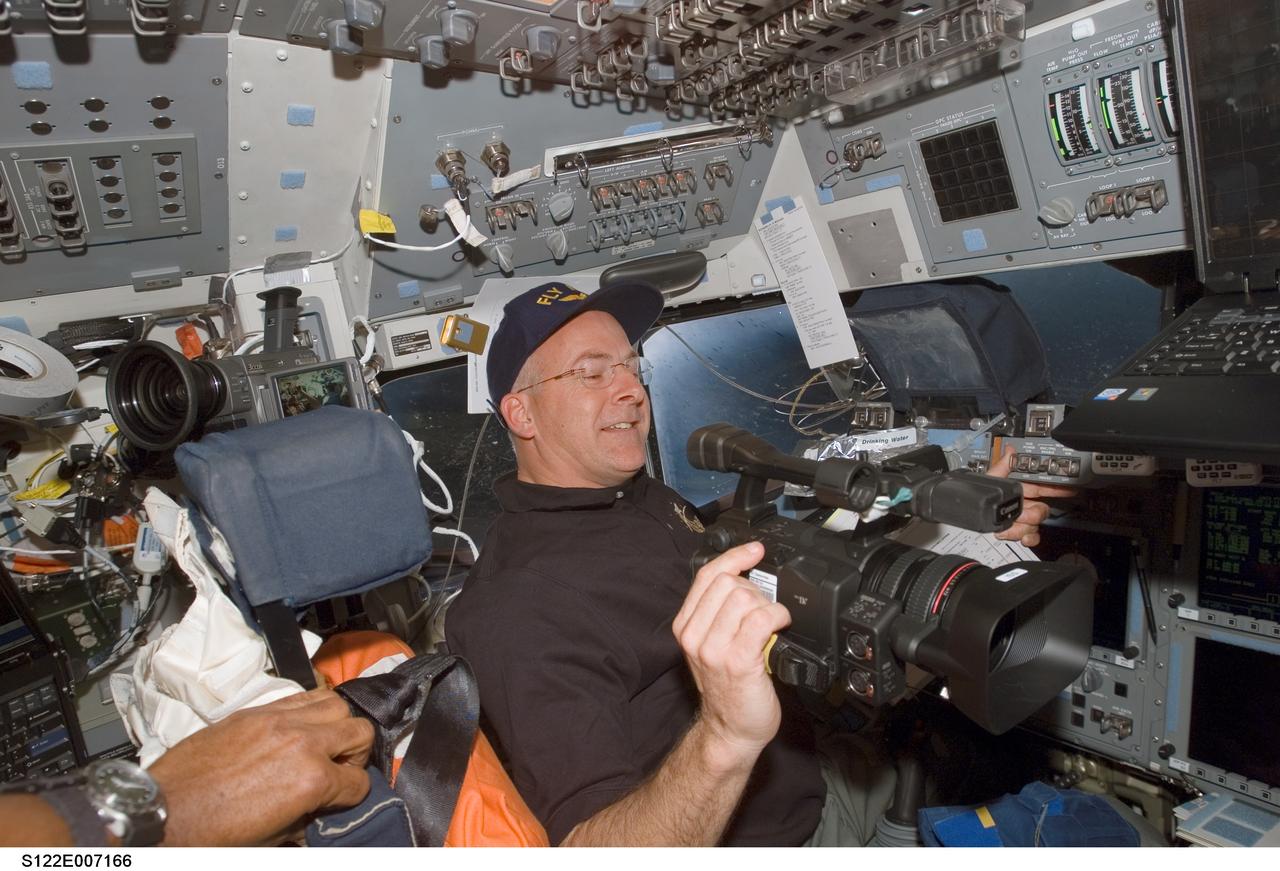
S122-E-007166 (9 Feb. 2008) --- Astronaut Alan Poindexter, STS-122 pilot, prepares to use a High Definition Video (HDV) camera, a Station Detailed Test Objective (SDTO), on the flight deck of Space Shuttle Atlantis during flight day three activities.
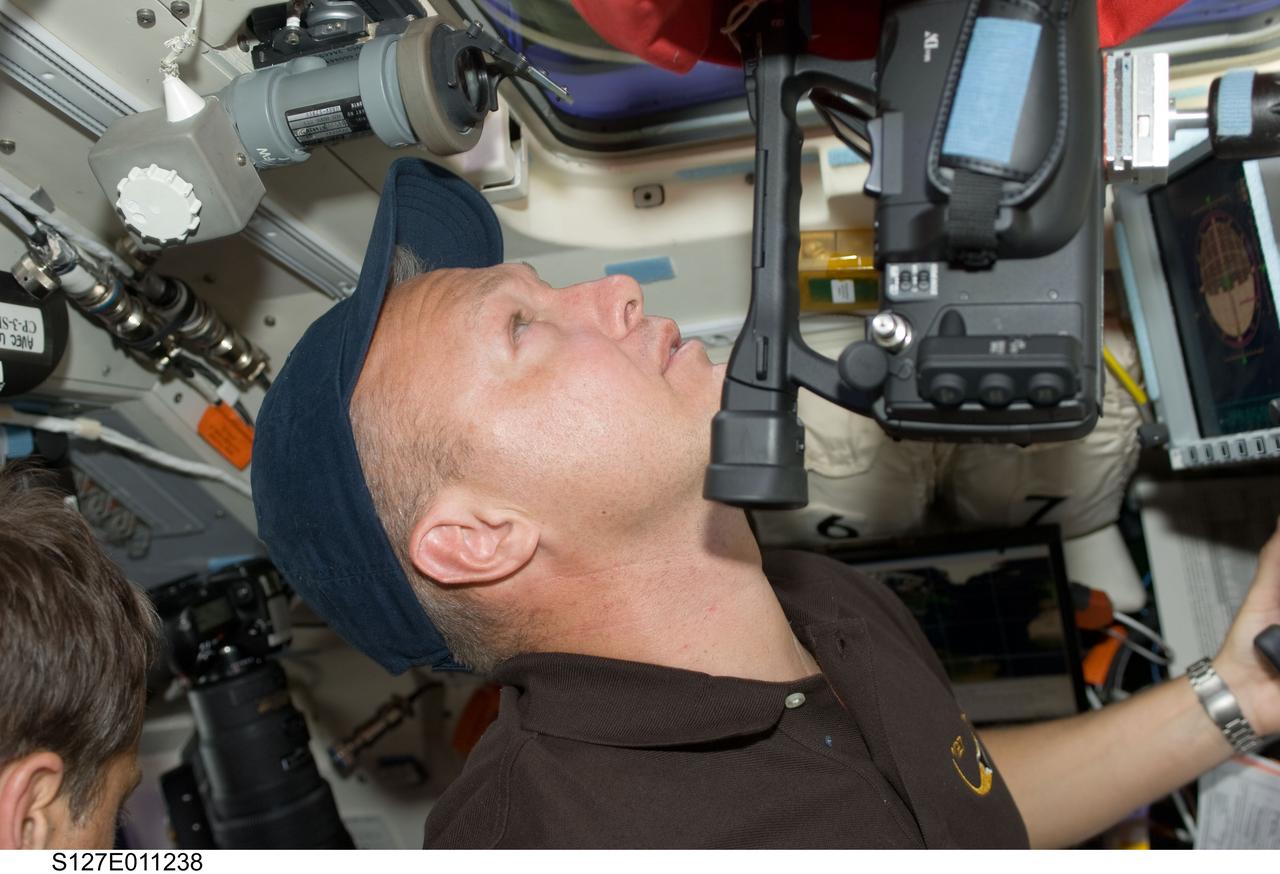
S127-E-011238 (28 July 2009) --- Astronaut Doug Hurley, STS-127 pilot, uses a High Definition Video (HDV) camera at an overhead window on the aft flight deck of Space Shuttle Endeavour during flight day 14 activities.
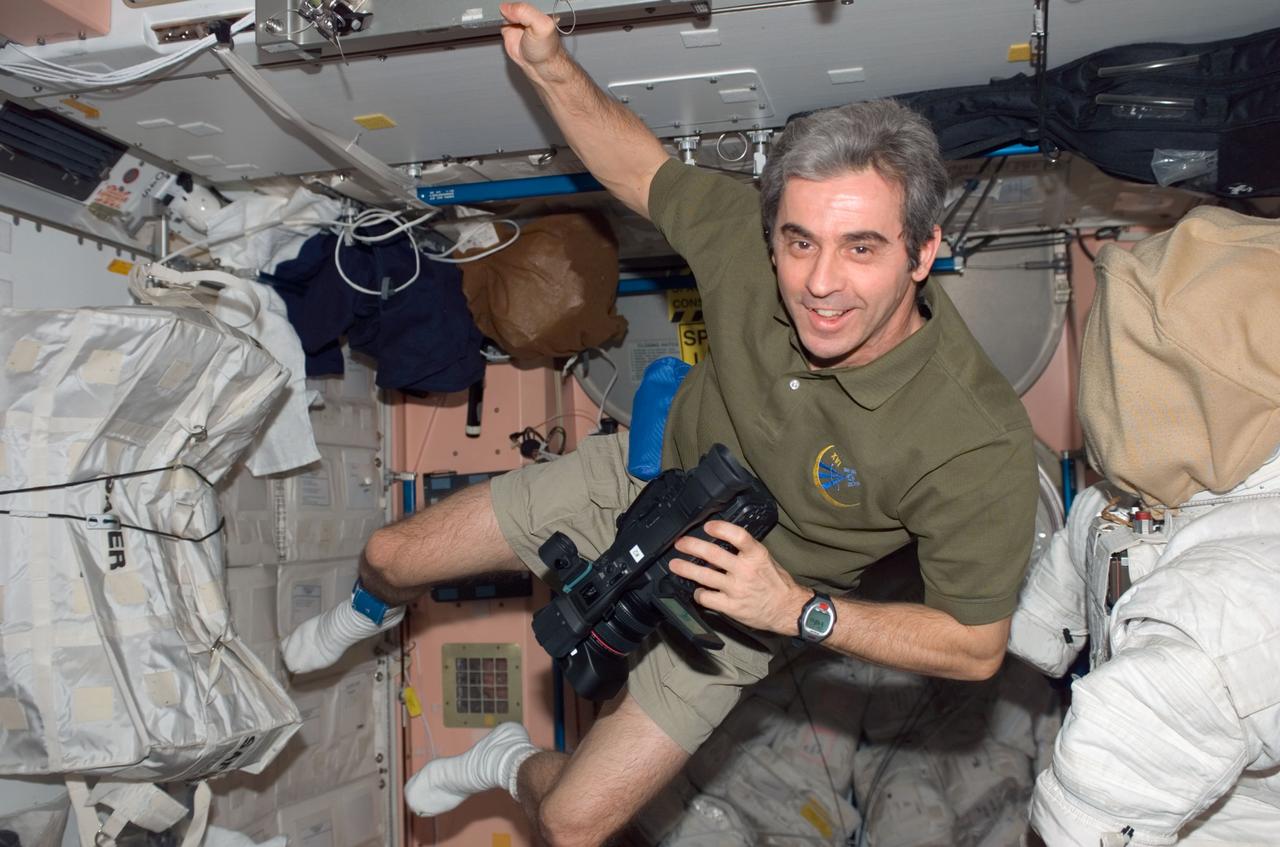
S123-E-006607 (13 March 2008) --- European Space Agency (ESA) astronaut Leopold Eyharts, STS-123 mission specialist, holds a video camera in the Unity node of the International Space Station while Space Shuttle Endeavour is docked with the station.
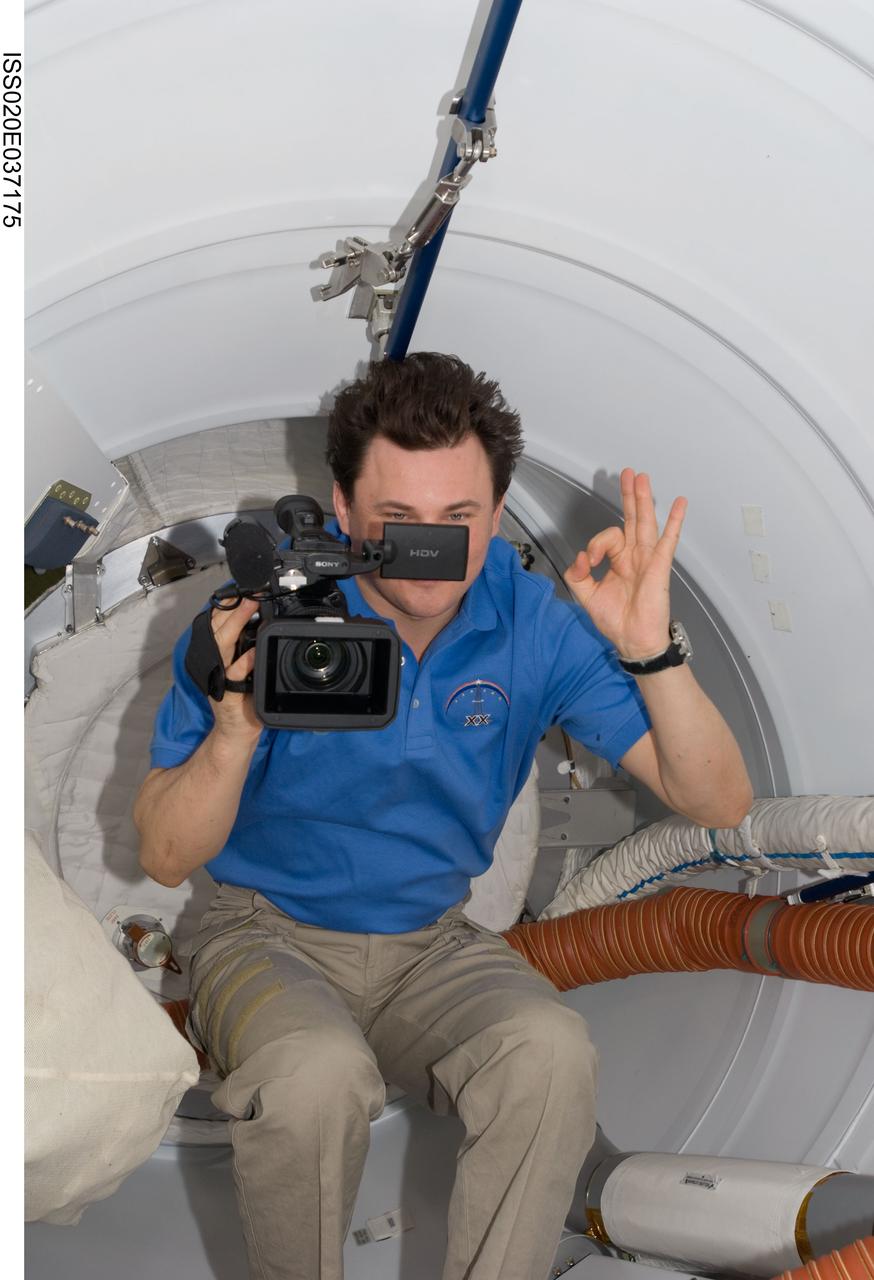
ISS020-E-037175 (30 Aug. 2009) --- Russian cosmonaut Roman Romanenko, Expedition 20 flight engineer, uses a High Definition Video (HDV) camera in the Pressurized Mating Adapter 2 (PMA-2) of the International Space Station while Space Shuttle Discovery (STS-128) remains docked with the station.

iss074e0590844 (May 13, 2026) --- NASA astronaut and Expedition 74 flight engineer Chris Williams poses aboard the International Space Station’s Kibo laboratory module with a free‑flying robotic camera developed by JAXA (Japan Aerospace Exploration Agency) that could assist astronauts with video and photography activities. Credit: NASA/Chris Williams
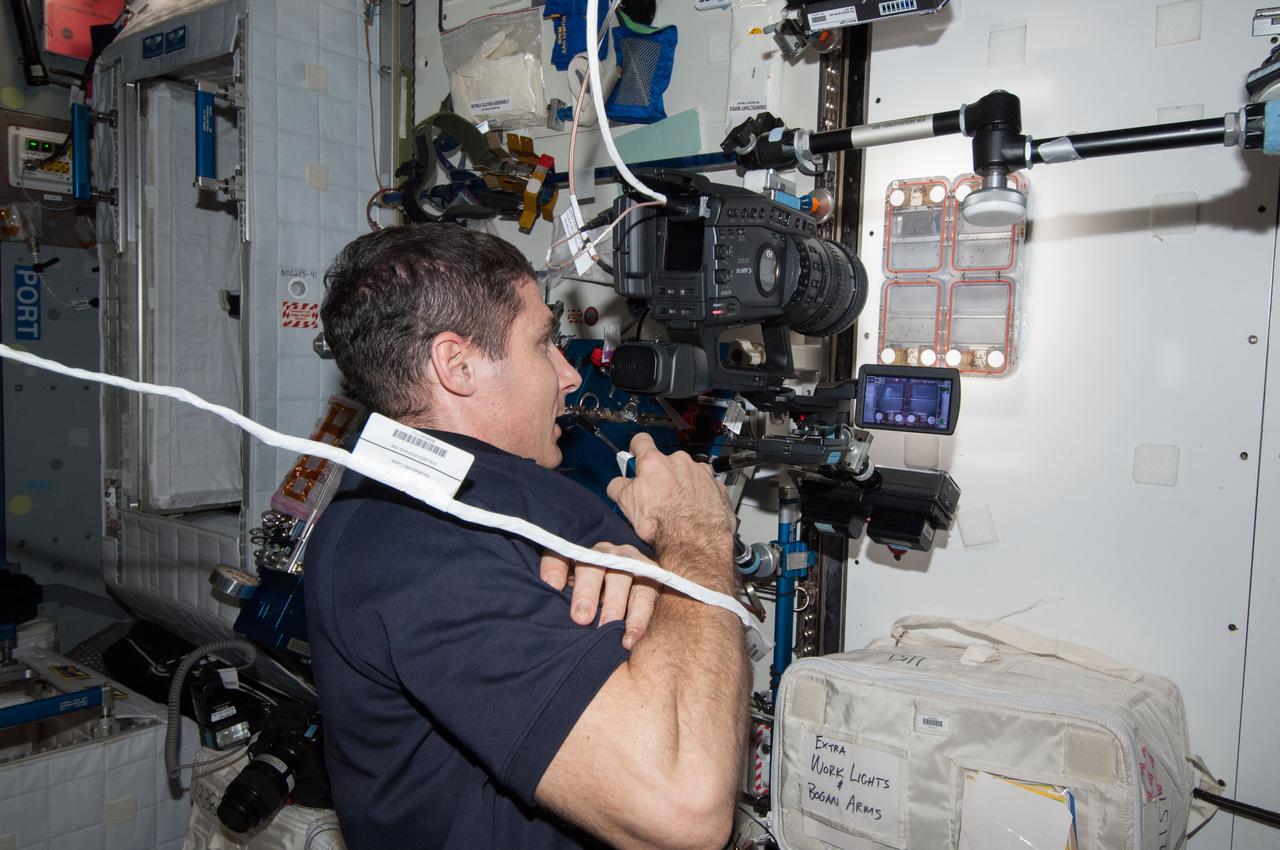
ISS038-E-029077 (12 Jan. 2014) --- In the International Space Station's Harmony node, NASA astronaut Mike Hopkins, Expedition 38 flight engineer, uses a video camera to photograph the Ant Forage Habitat Facility which will study ant behavior and colonization in microgravity.
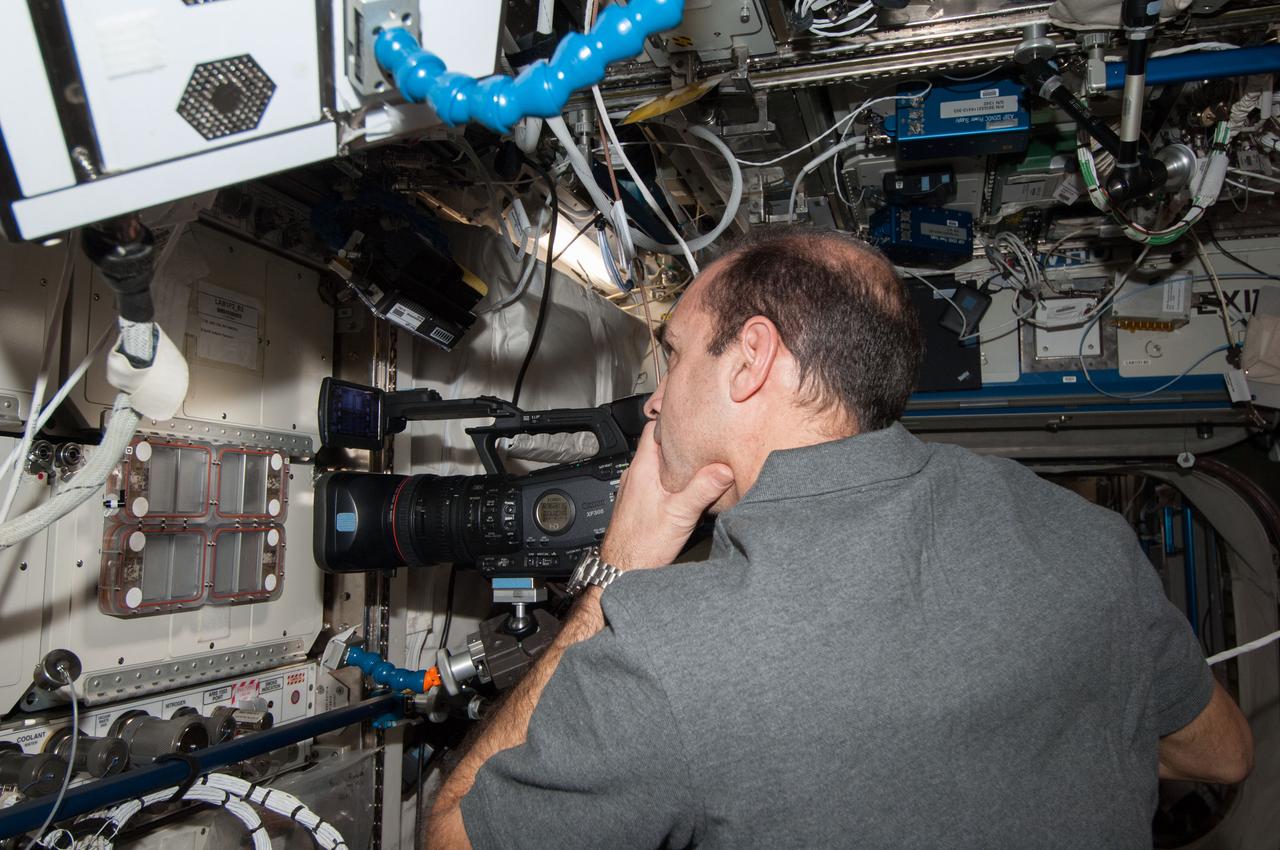
ISS038-E-029059 (12 Jan. 2014) --- In the International Space Station's Destiny laboratory, NASA astronaut Rick Mastracchio, Expedition 38 flight engineer, uses a video camera to photograph the Ant Forage Habitat Facility which will study ant behavior and colonization in microgravity.
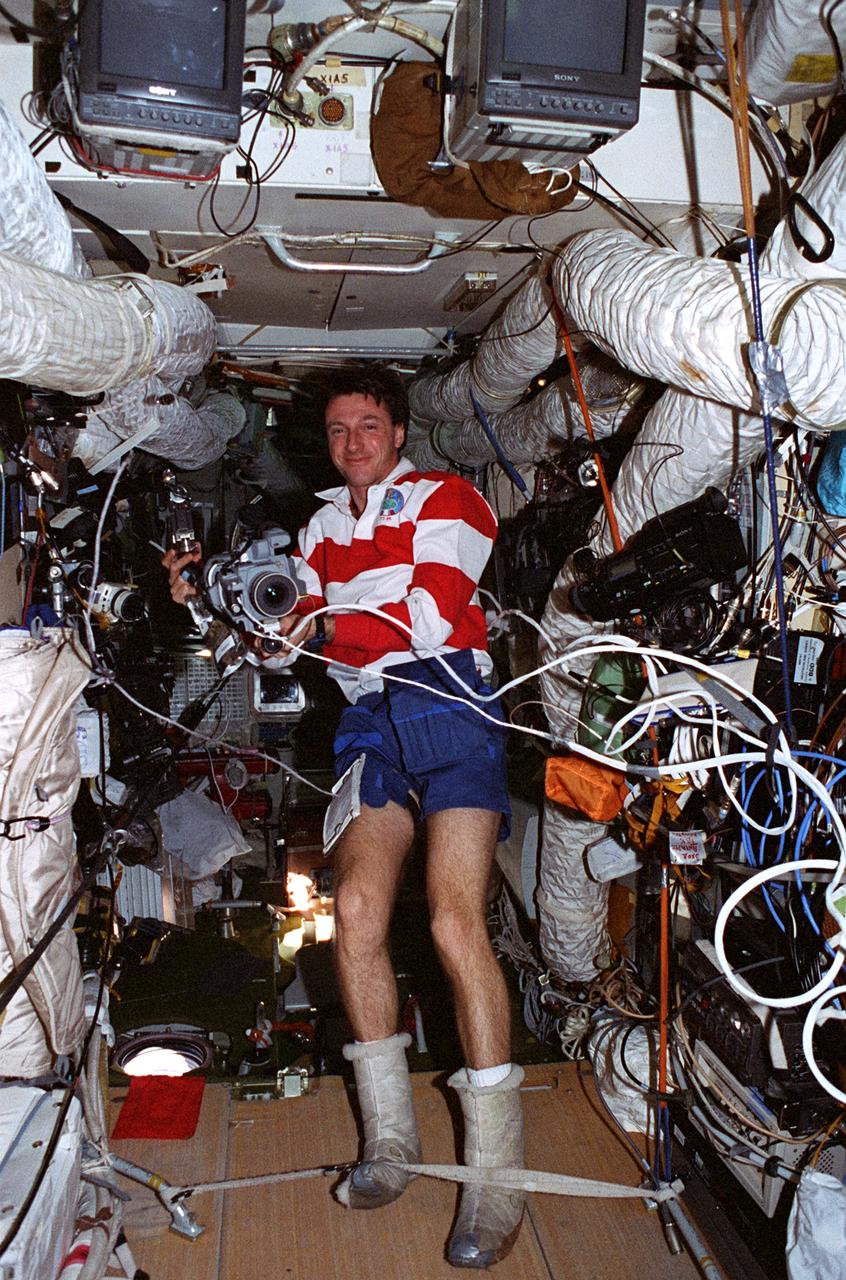
STS086-405-008 (25 Sept-6 Oct 1997) --- Astronaut C. Michael Foale, sporting attire representing the STS-86 crew after four months aboard Russia?s Mir Space Station in Russian wear, operates a video camera in Mir?s Base Block Module. Photo credit: NASA
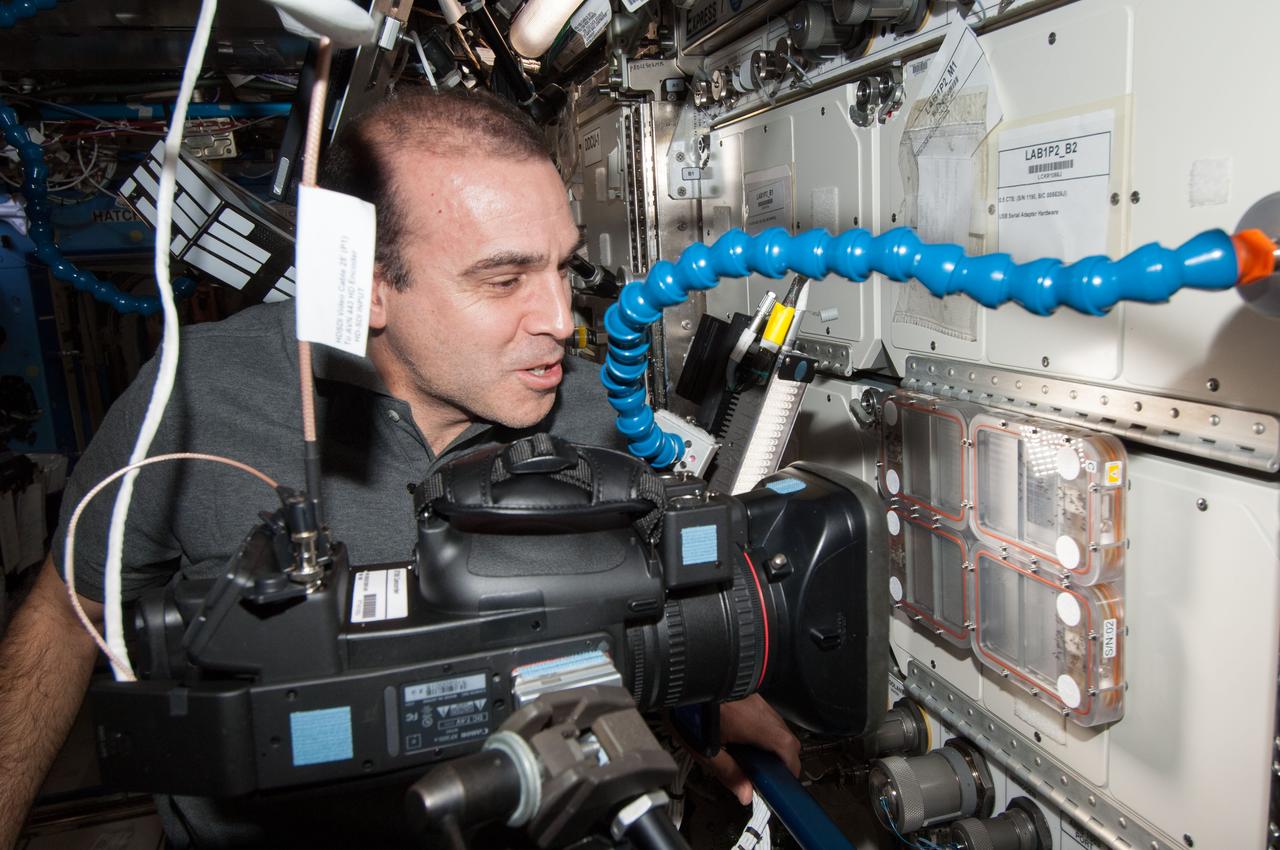
ISS038-E-029065 (12 Jan. 2014) --- In the International Space Station's Destiny laboratory, NASA astronaut Rick Mastracchio, Expedition 38 flight engineer, uses a video camera to photograph the Ant Forage Habitat Facility which will study ant behavior and colonization in microgravity.
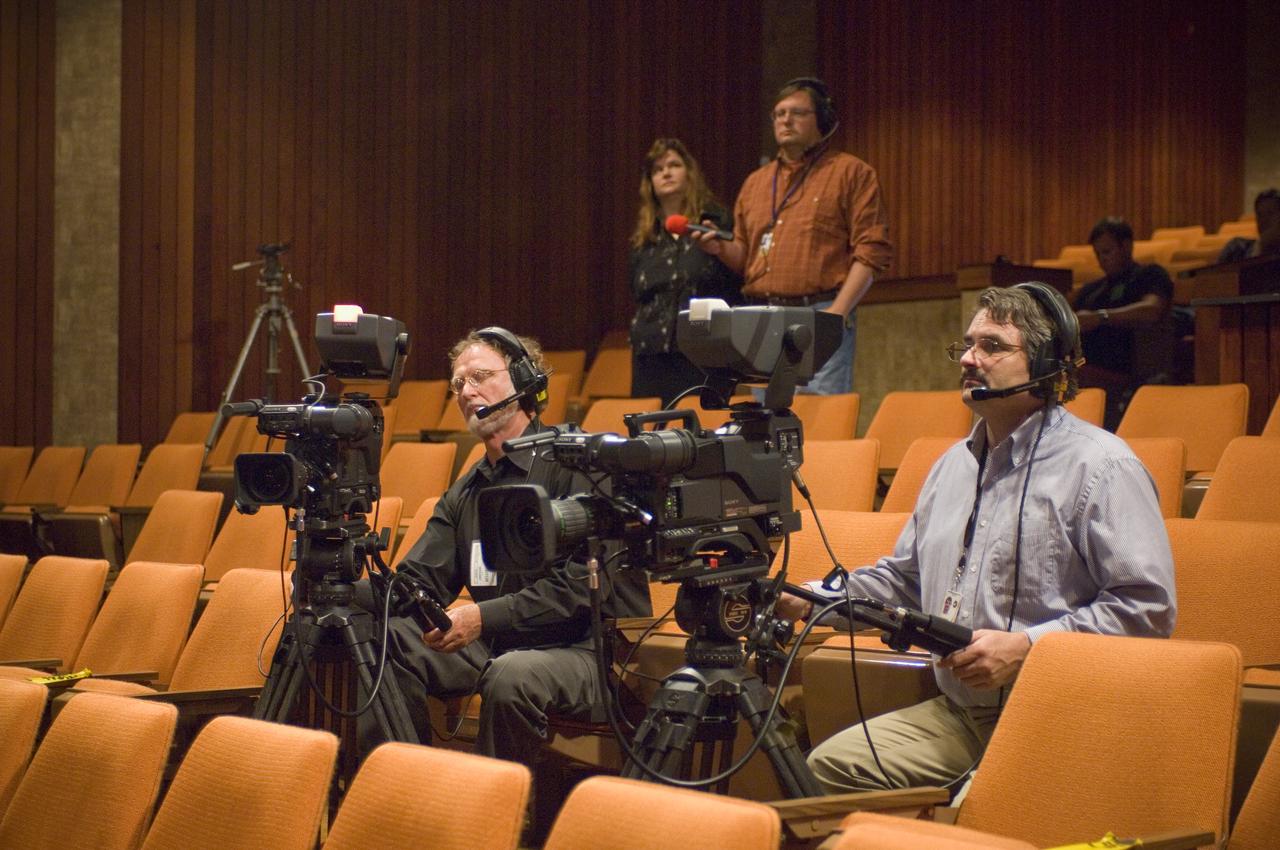
NASA Officials gather at Ames Research Center to discuss Spaceship development progress. Constellation is developing the Orion spacecraft and Ares rockets to support an American return to the moon by 2020. (with front right, Eric James, NASA-EX on camera, Ed Schilling, NASA video producer in distance with Astrid Olson, NASA Ames PAO)
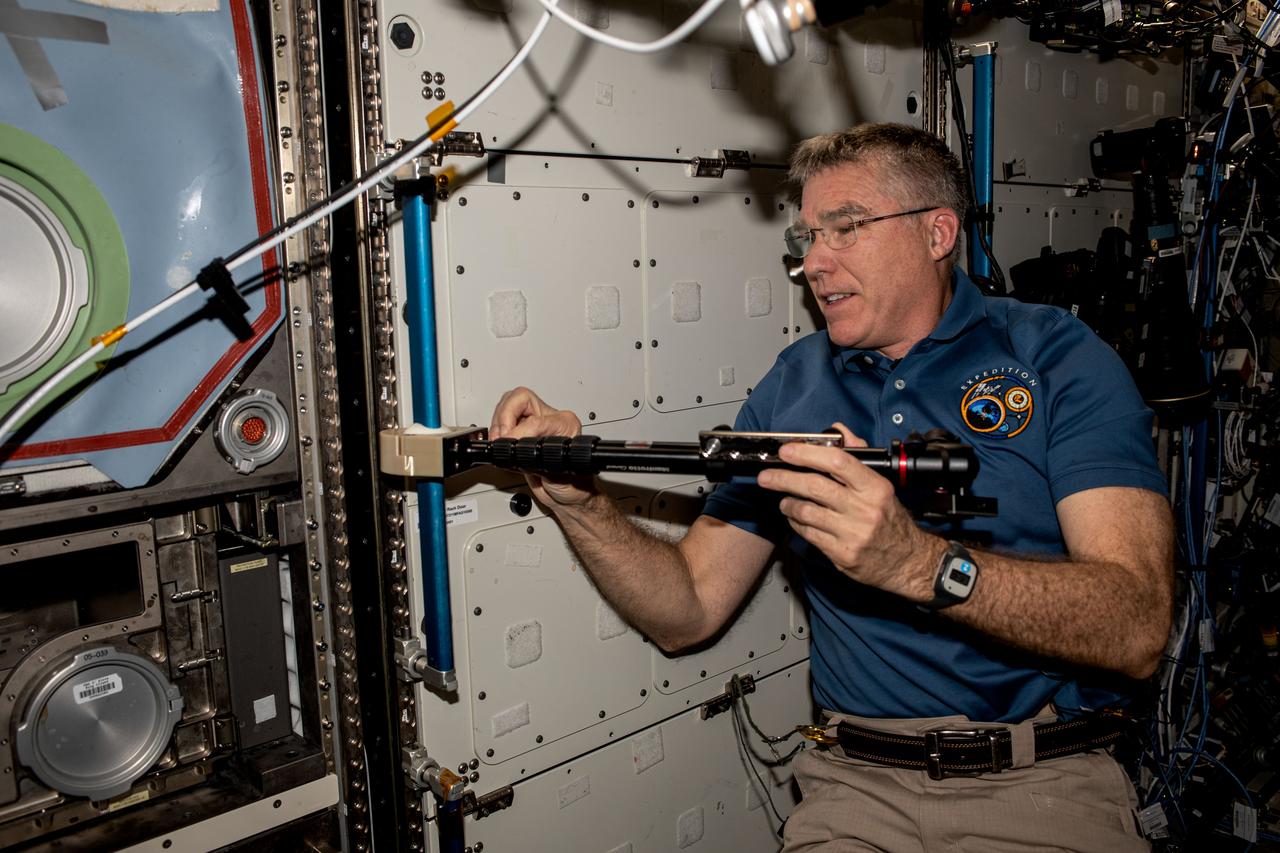
iss069e009790 (May 9, 2023) --- NASA astronaut and Expedition 69 Flight Engineer Stephen Bowen installs student-made hardware next to the Destiny laboratory module's Microgravity Science Glovebox to test a platform that improves the stability of cameras used to track targets on the ground or take images and video inside the International Space Station.
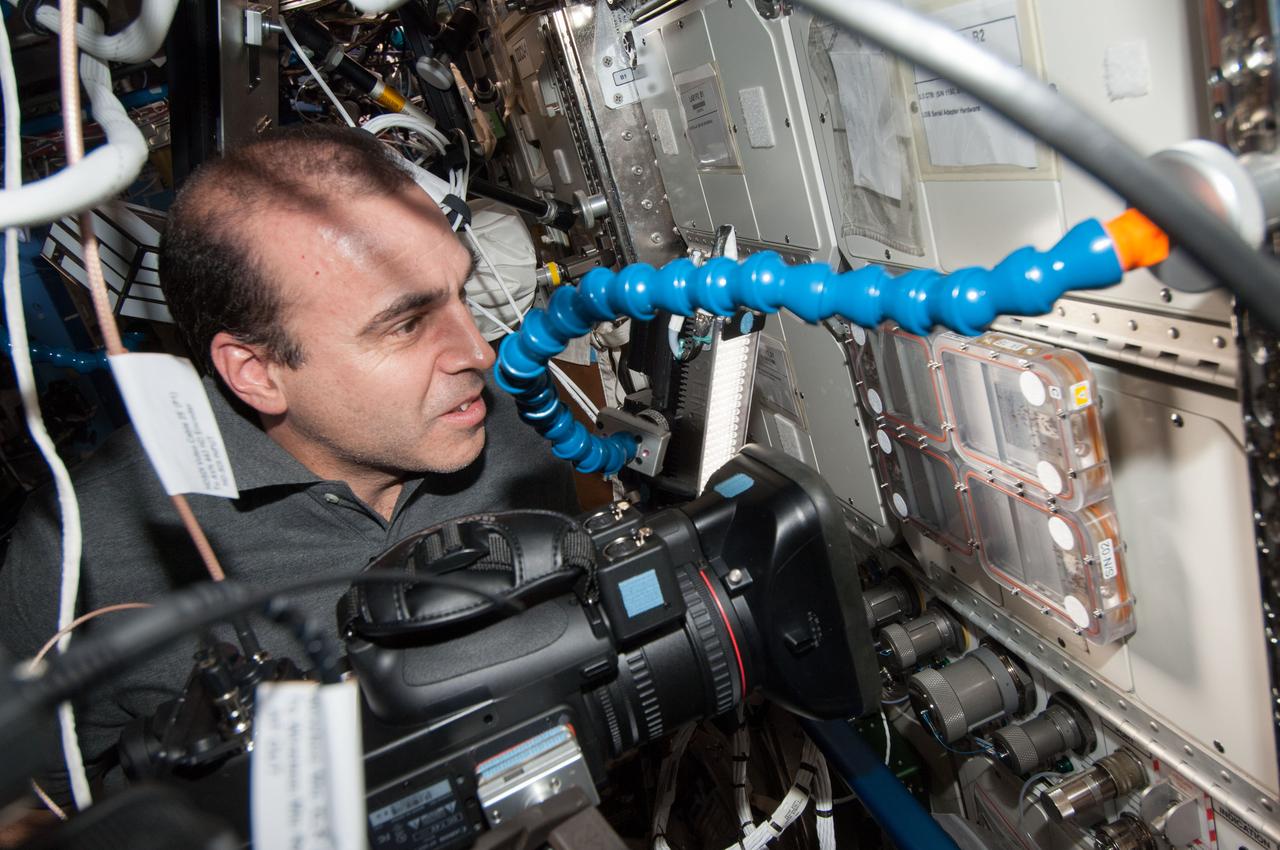
ISS038-E-029062 (12 Jan. 2014) --- In the International Space Station's Destiny laboratory, NASA astronaut Rick Mastracchio, Expedition 38 flight engineer, uses a video camera to photograph the Ant Forage Habitat Facility which will study ant behavior and colonization in microgravity.
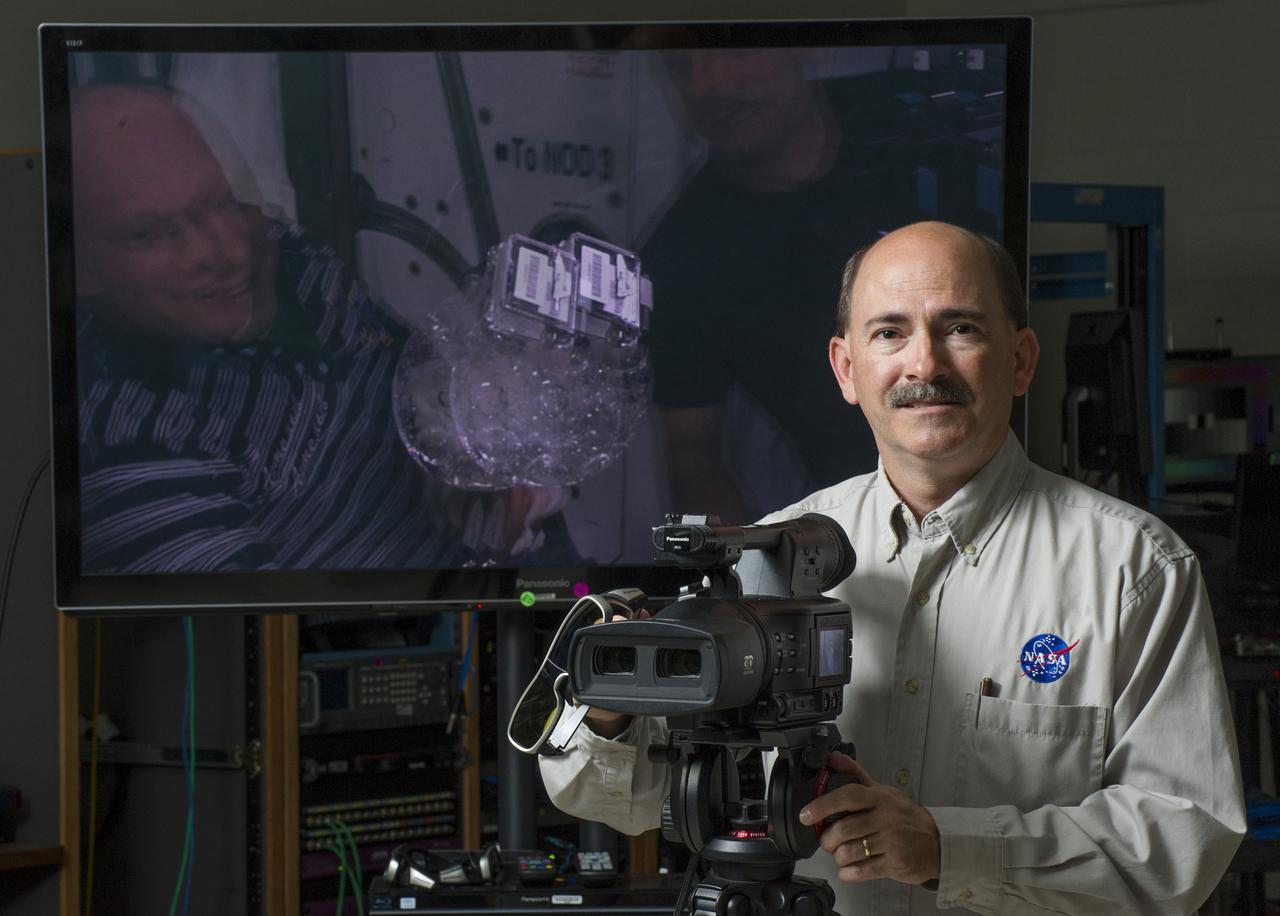
RODNEY GRUBBS, PROGRAM MANAGER FOR NASA'S IMAGERY EXPERTS PROGRAM AT THE MARSHALL SPACE FLIGHT CENTER, DISPLAYS THE 3-D CAMERA THAT WAS RETURNED FROM THE INTERNATIONAL SPACE STATION. THE MONITOR BEHIND HIM SHOWS THE 3-D VIDEO THAT WILL NEED SPECIAL GLASSES TO VIEW CORRECTLY.
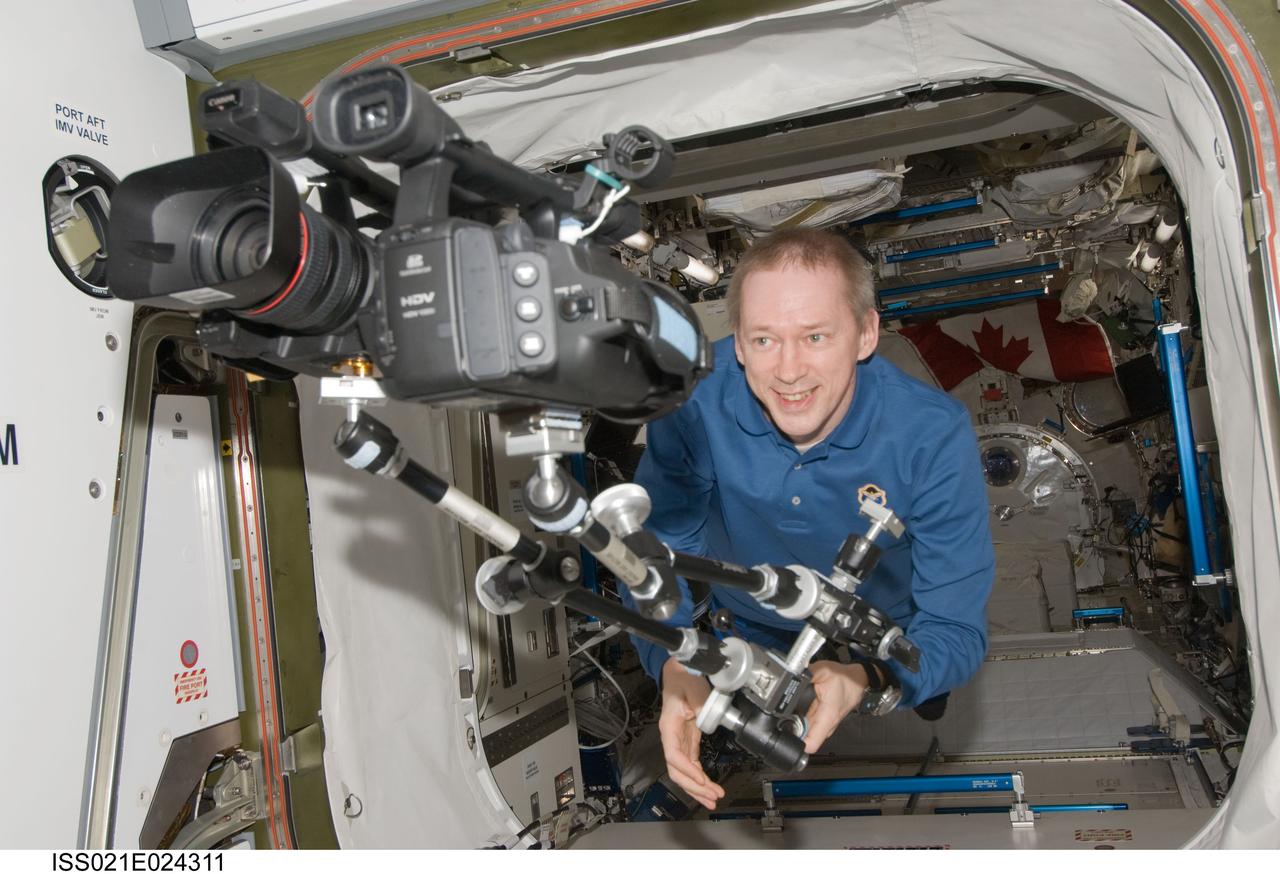
ISS021-E-024311 (12 Nov. 2009) --- European Space Agency astronaut Frank De Winne, Expedition 21 commander, moves a High Definition Video (HDV) camera and equipment from the Kibo laboratory into the Harmony node of the International Space Station.
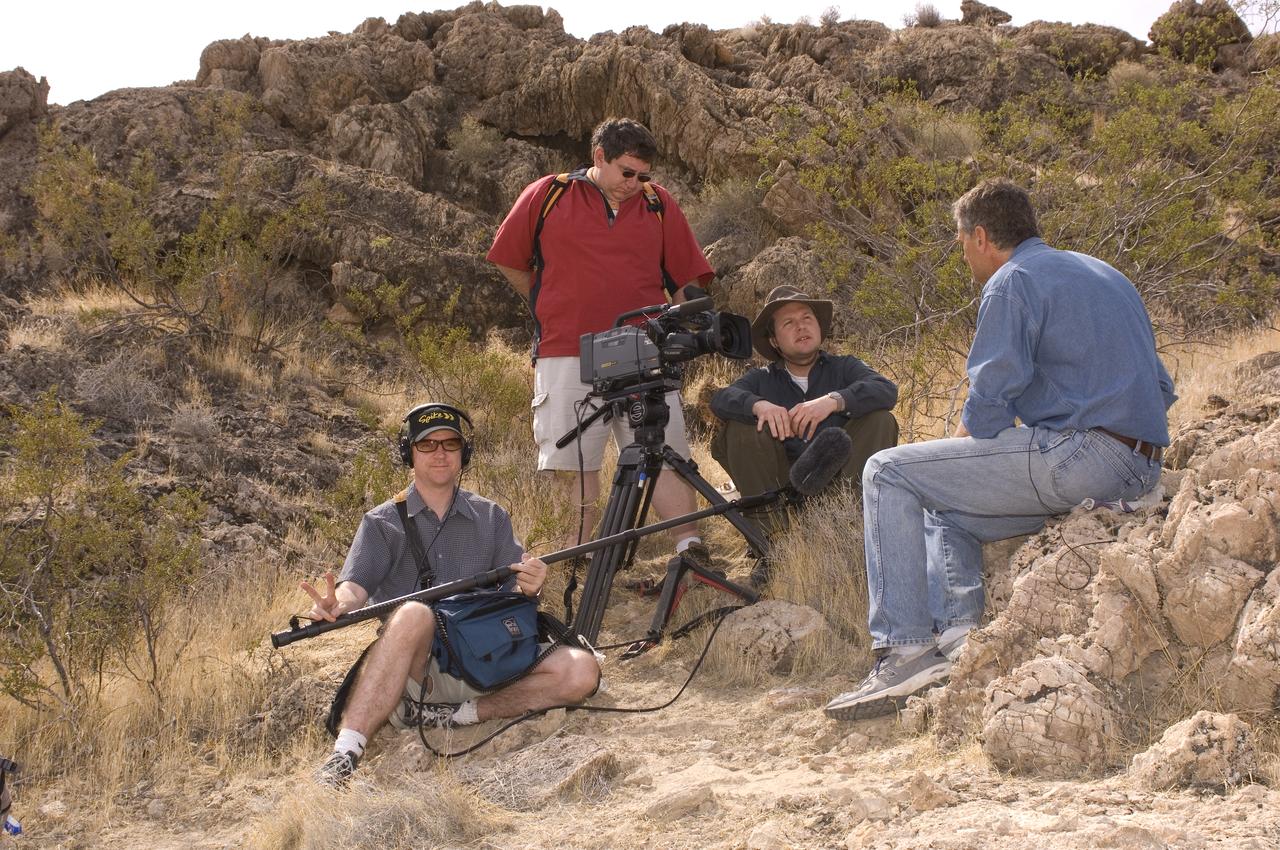
Spaceward Bound event in the Mojave Deser , CA (an outreach exercise) with Dr Chris McKay and Ames Education department personnel Brian Day, Barbara Bazar accompaning teachers (learning for the the classroom) Ames video crew L-R, Eric Land (on sound), Bill Moede (on camera) and Jessie Carpenter interview Chris McKay
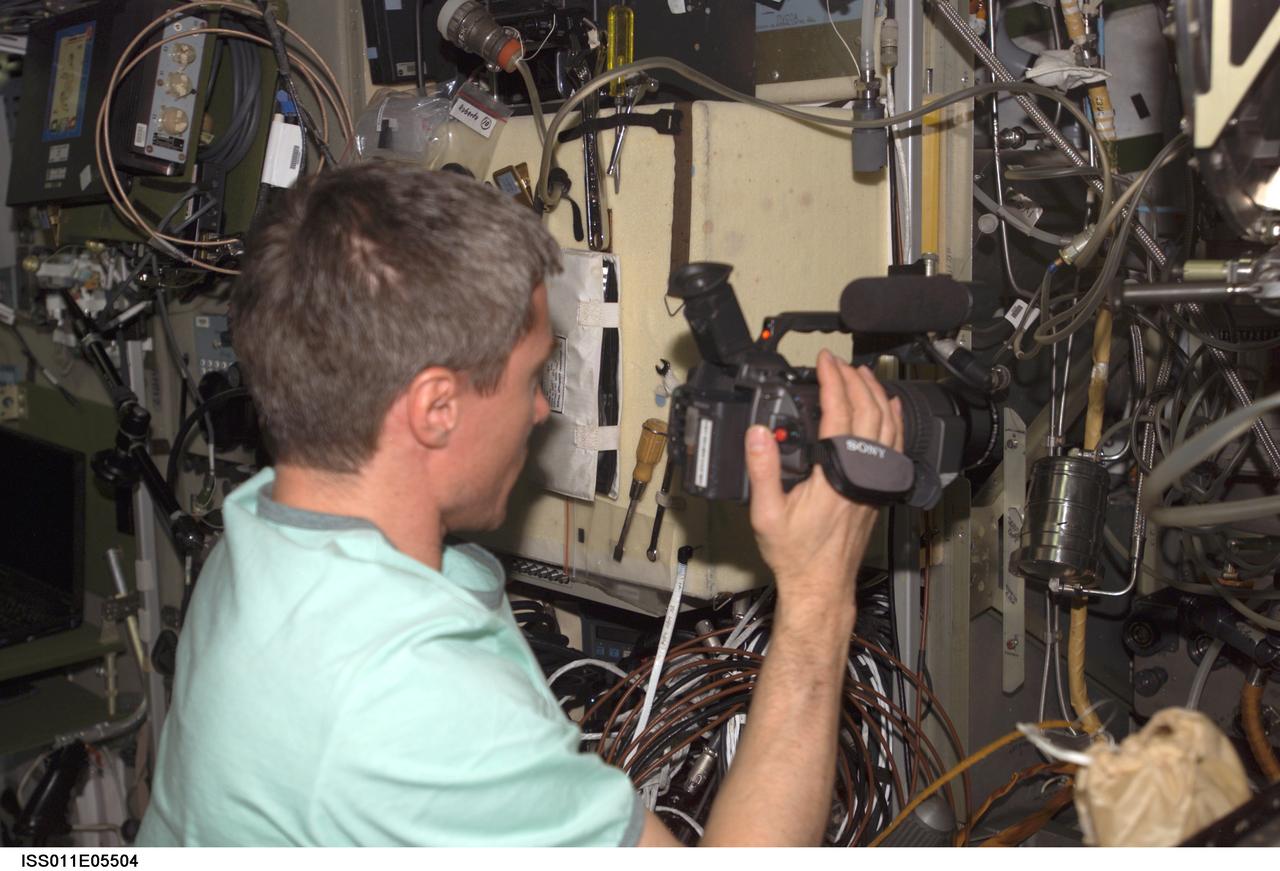
ISS011-E-05504 (5 May 2005) --- Cosmonaut Sergei K. Krikalev, Expedition 11 commander representing Russia's Federal Space Agency, uses a video camera to document repairs to the Elektron oxygen generator in the Zvezda Service Module of the International Space Station (ISS).
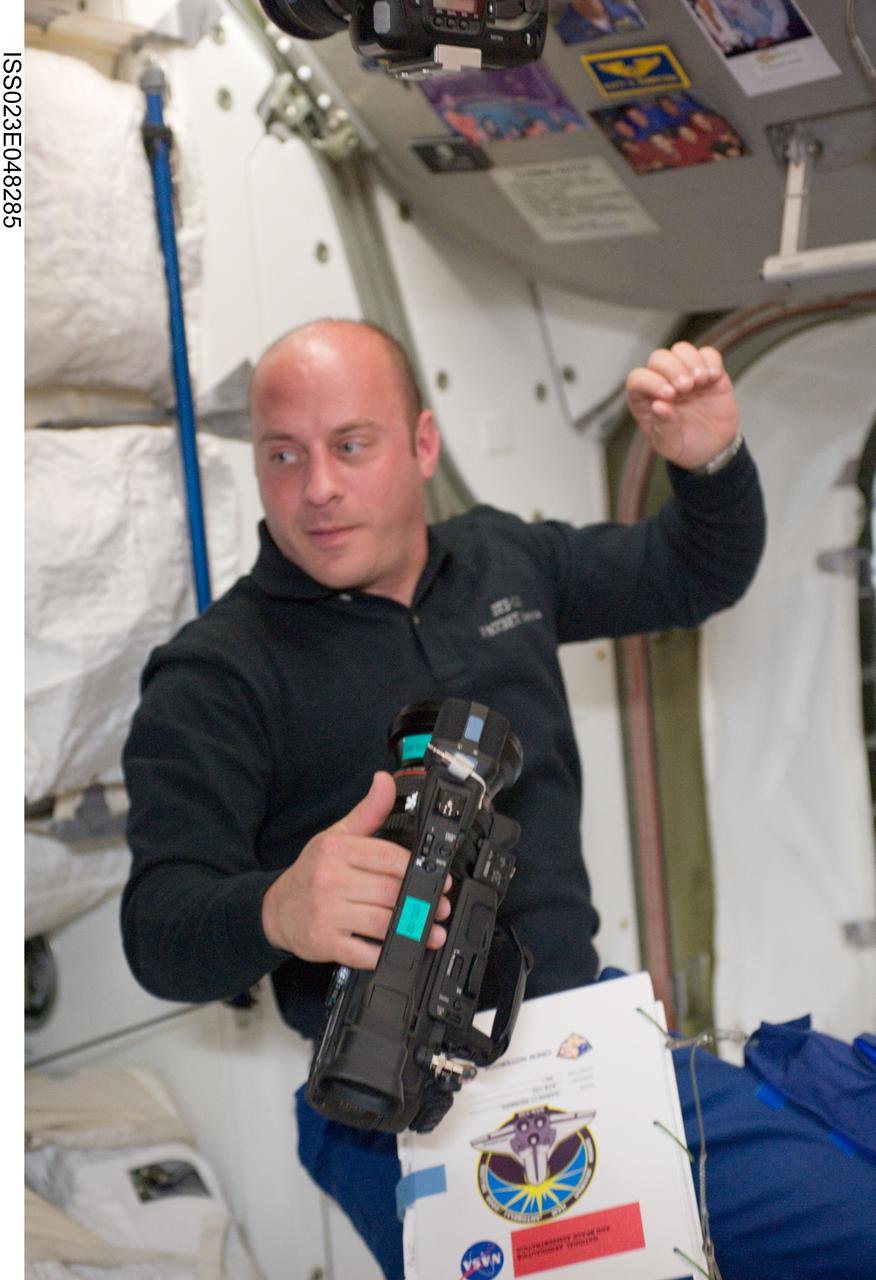
ISS023-E-048285 (19 May 2010) --- NASA astronaut Garrett Reisman, STS-132 mission specialist, holds a High Definition Video (HDV) camera in the Unity node of the International Space Station while space shuttle Atlantis remains docked with the station.