
Colors of the Innermost Planet: View 1
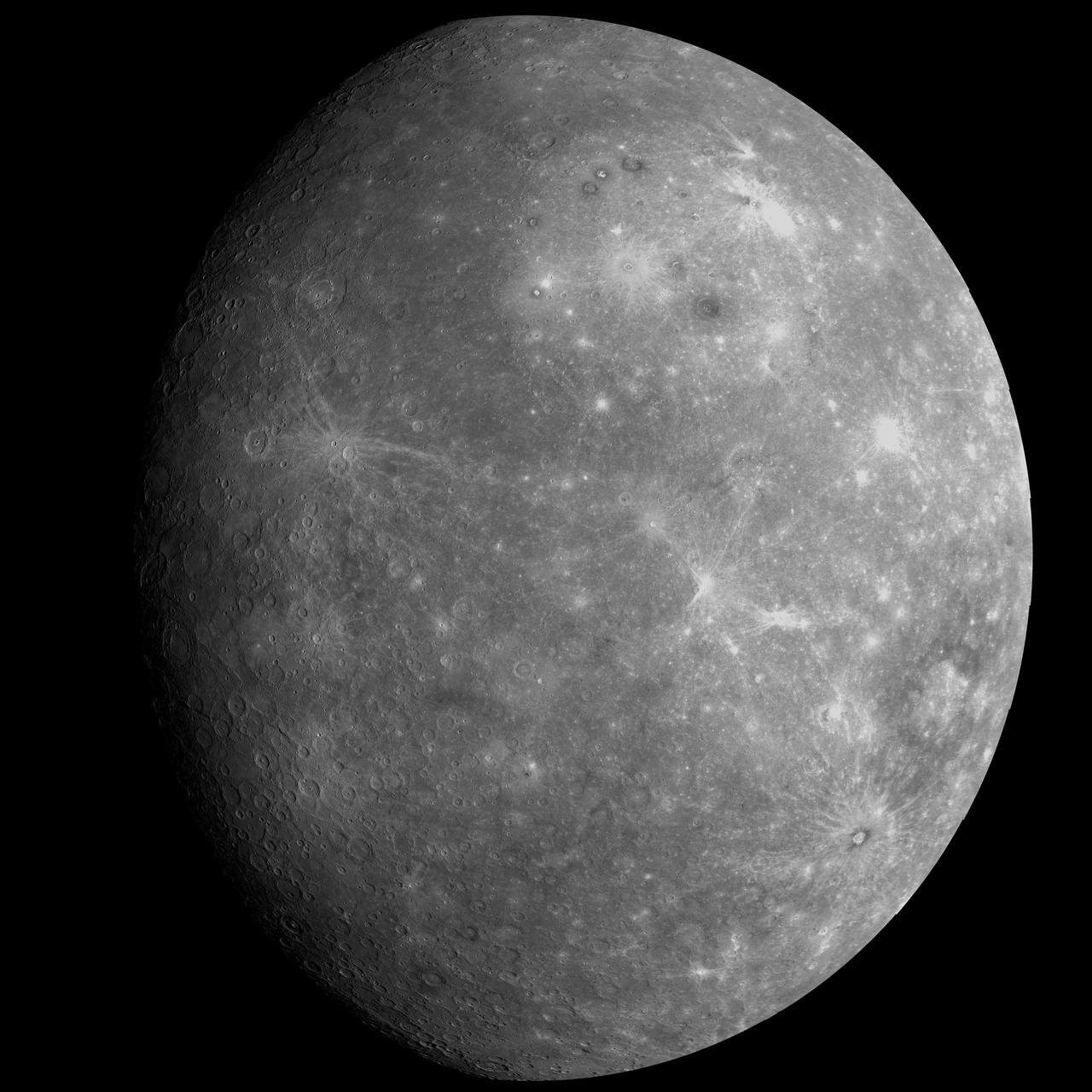
High-Resolution View from Mercury Flyby 1
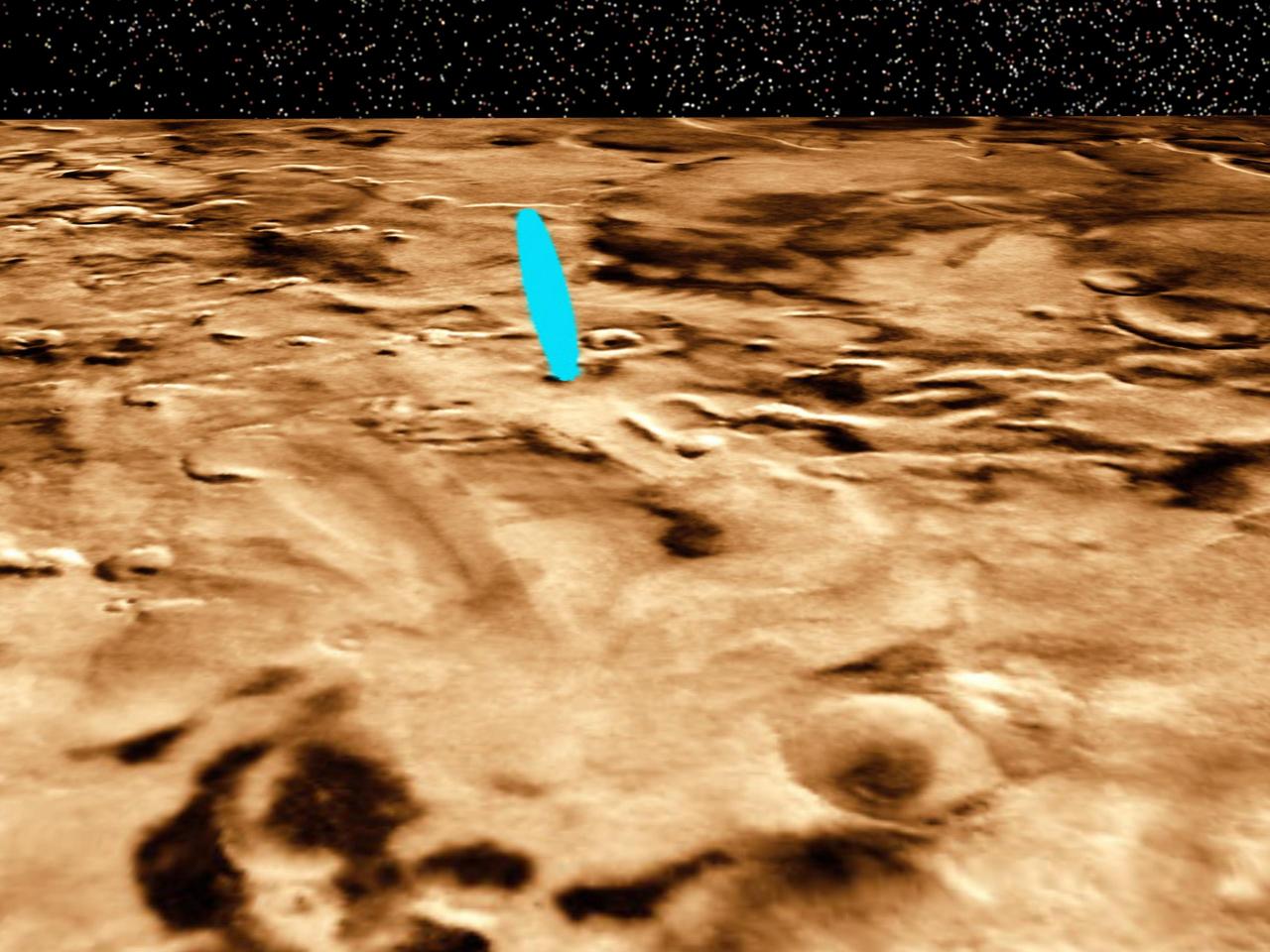
Proposed Mars Polar Lander Landing Site Perspective View 1
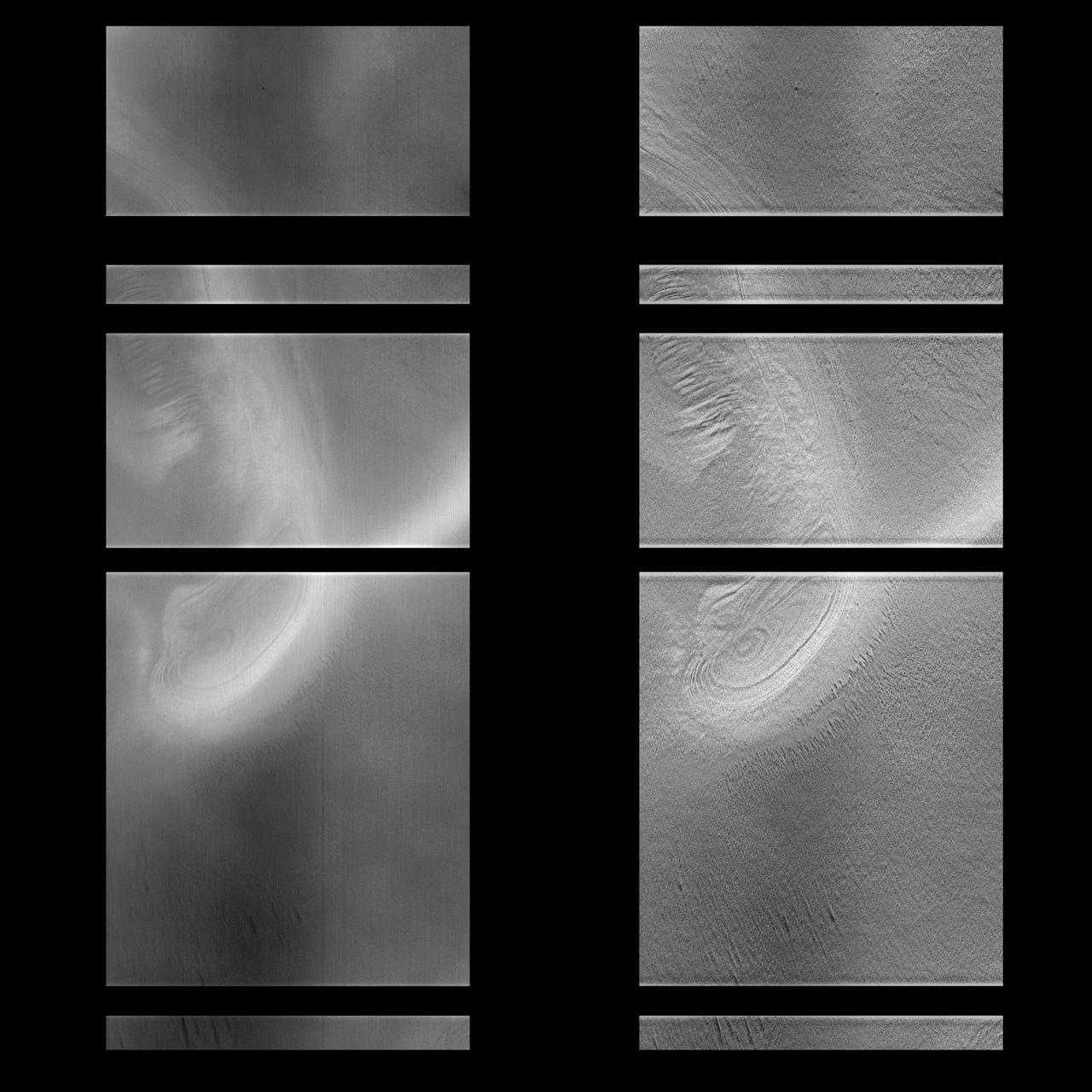
MOC View of Mars98 Landing Zone - 1/16/98
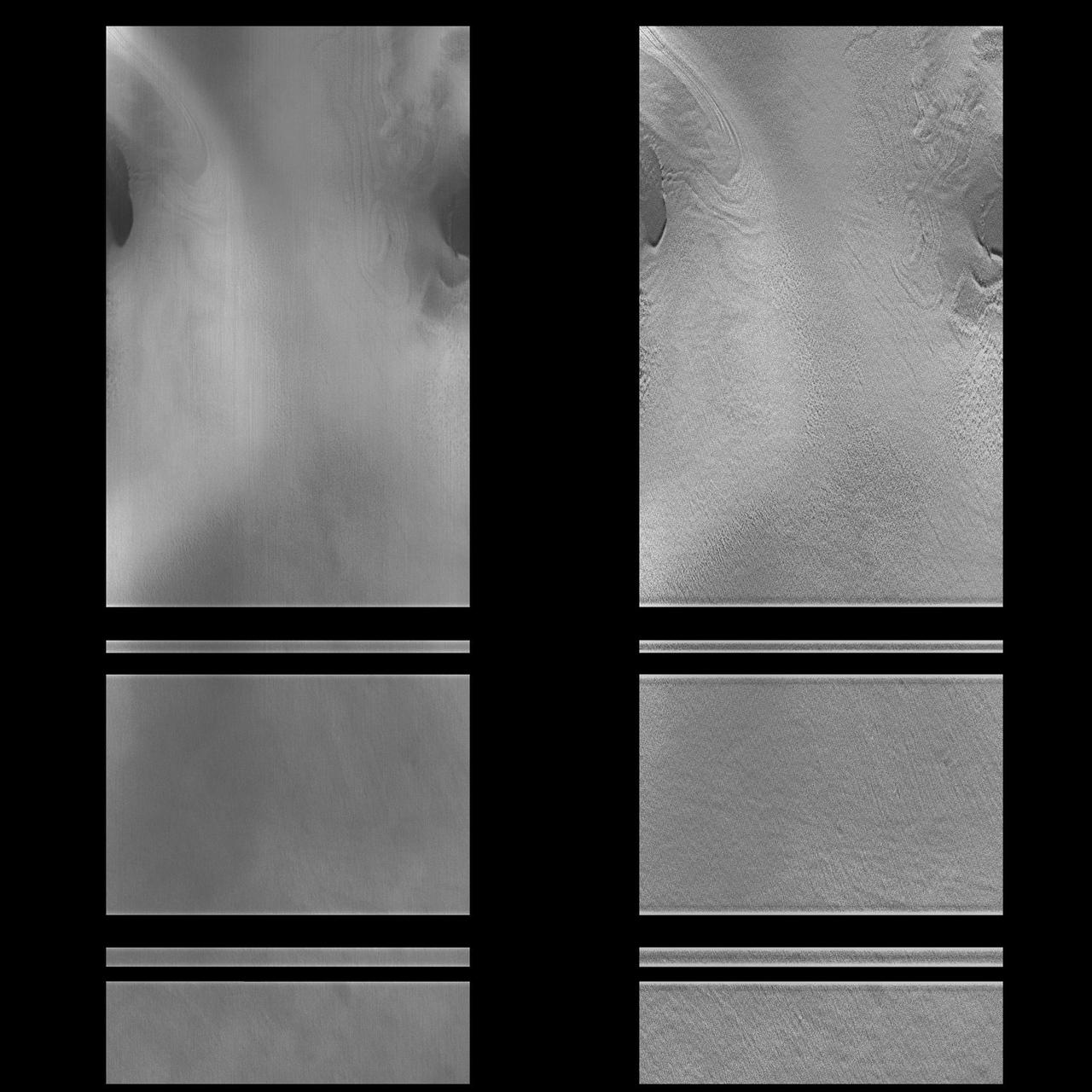
MOC View of Mars98 Landing Zone - 1/16/98
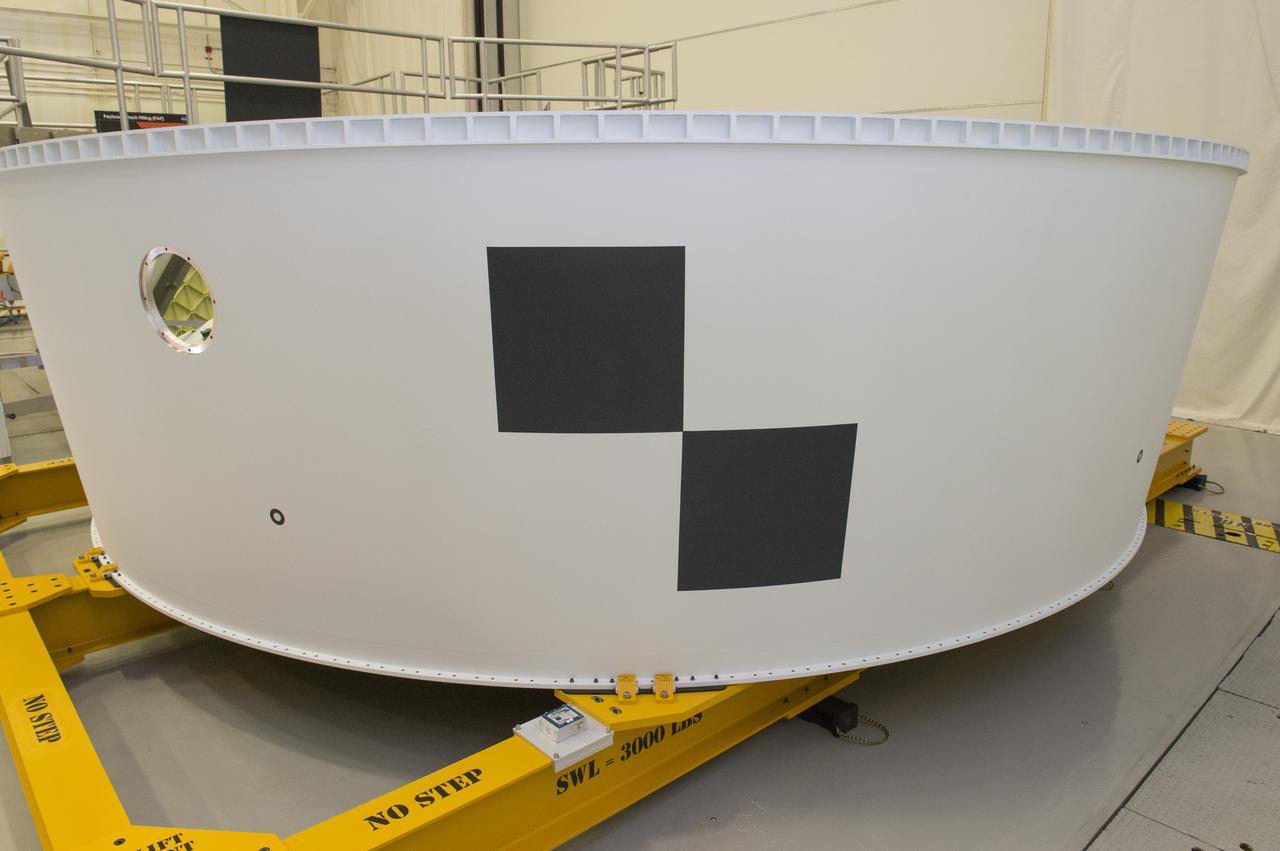
General overview and detail, Close-Out, photos of the SLS Orion Stage Adapter EM-1...exterior overall views (5)
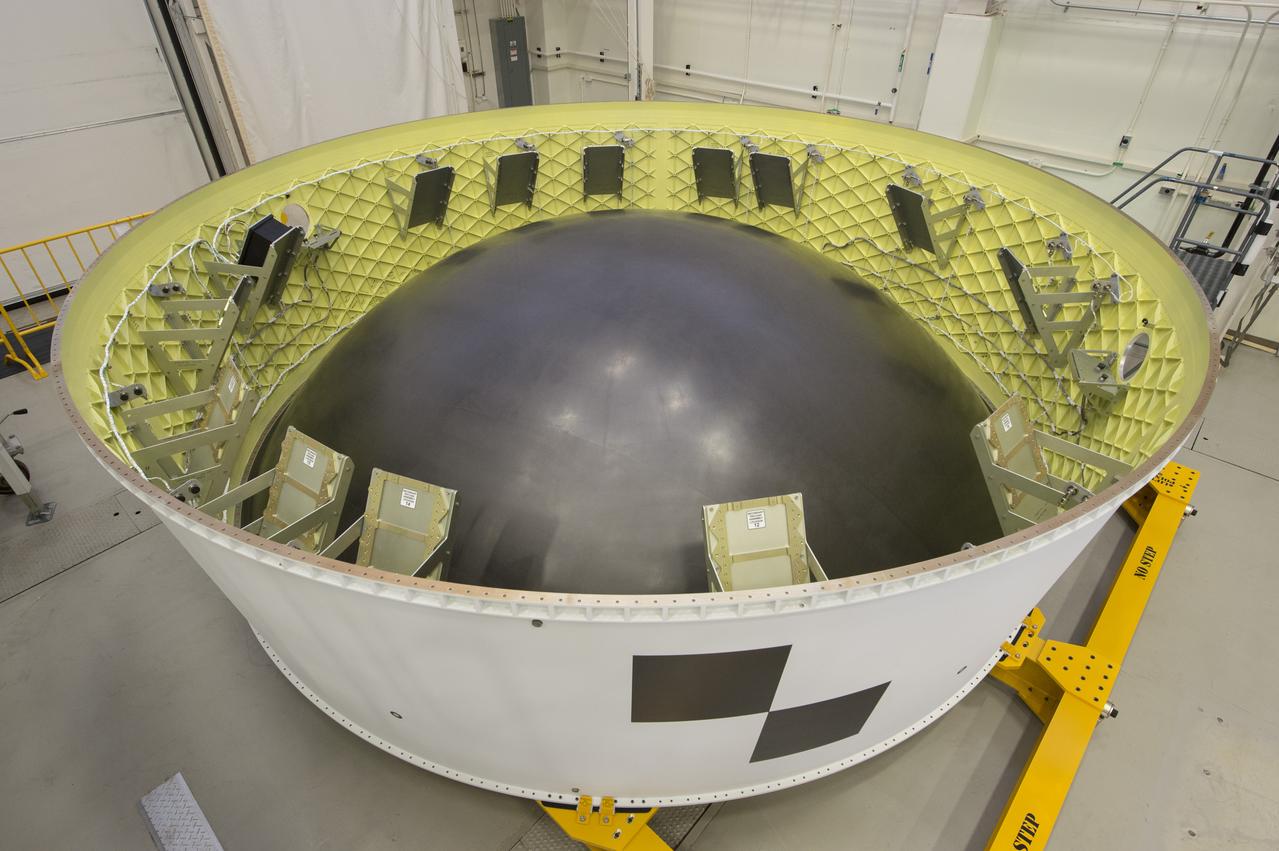
General overview and detail, Close-Out, photos of the SLS Orion Stage Adapter EM-1...exterior overall views (5)
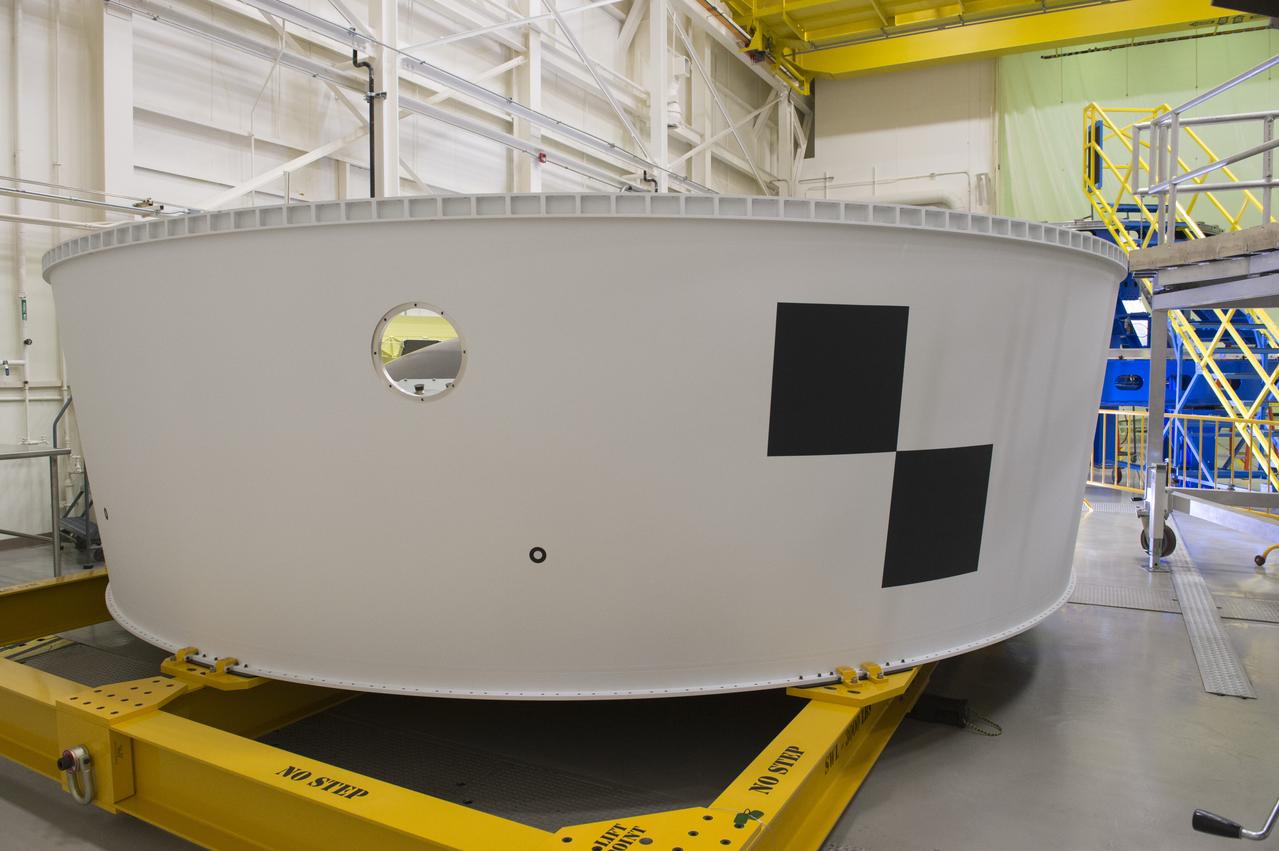
General overview and detail, Close-Out, photos of the SLS Orion Stage Adapter EM-1...exterior overall views (5)
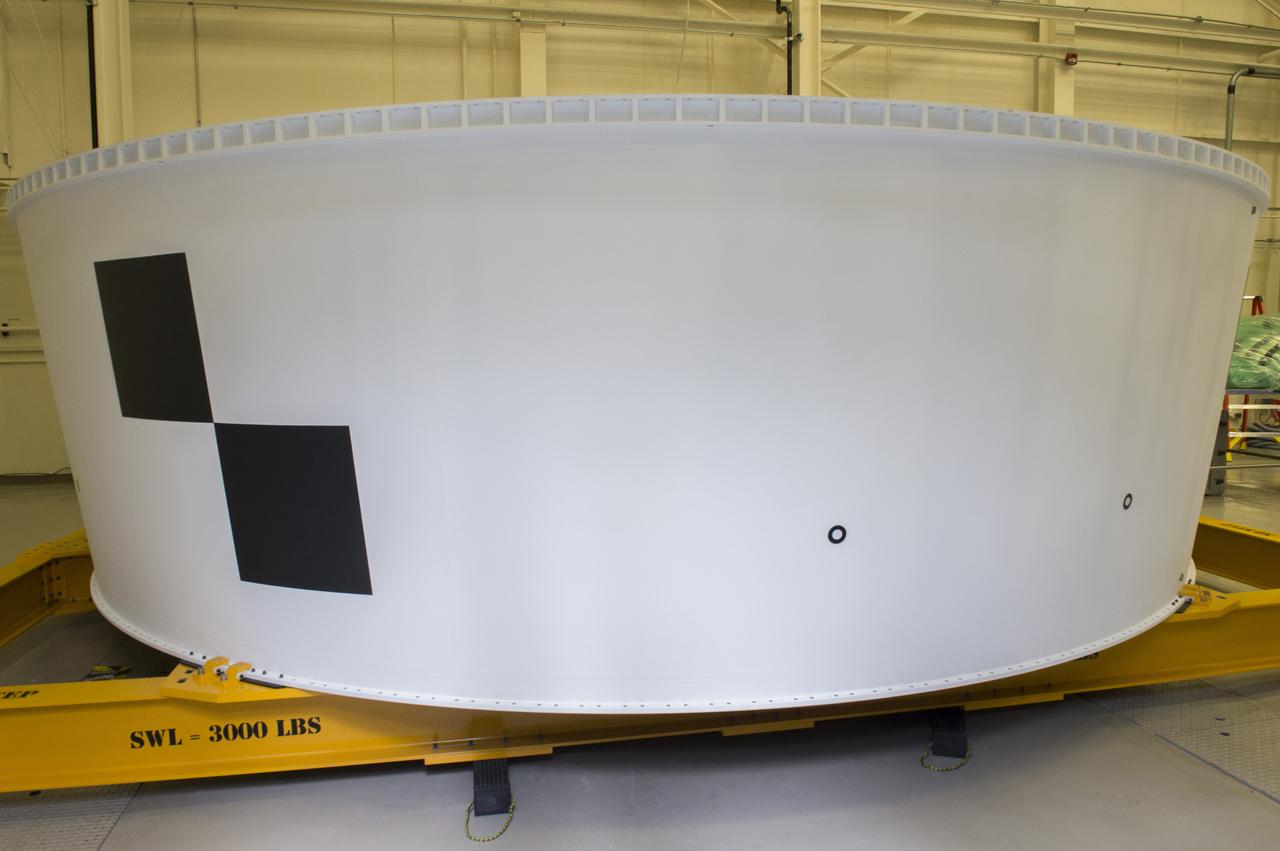
General overview and detail, Close-Out, photos of the SLS Orion Stage Adapter EM-1...exterior overall views (5)
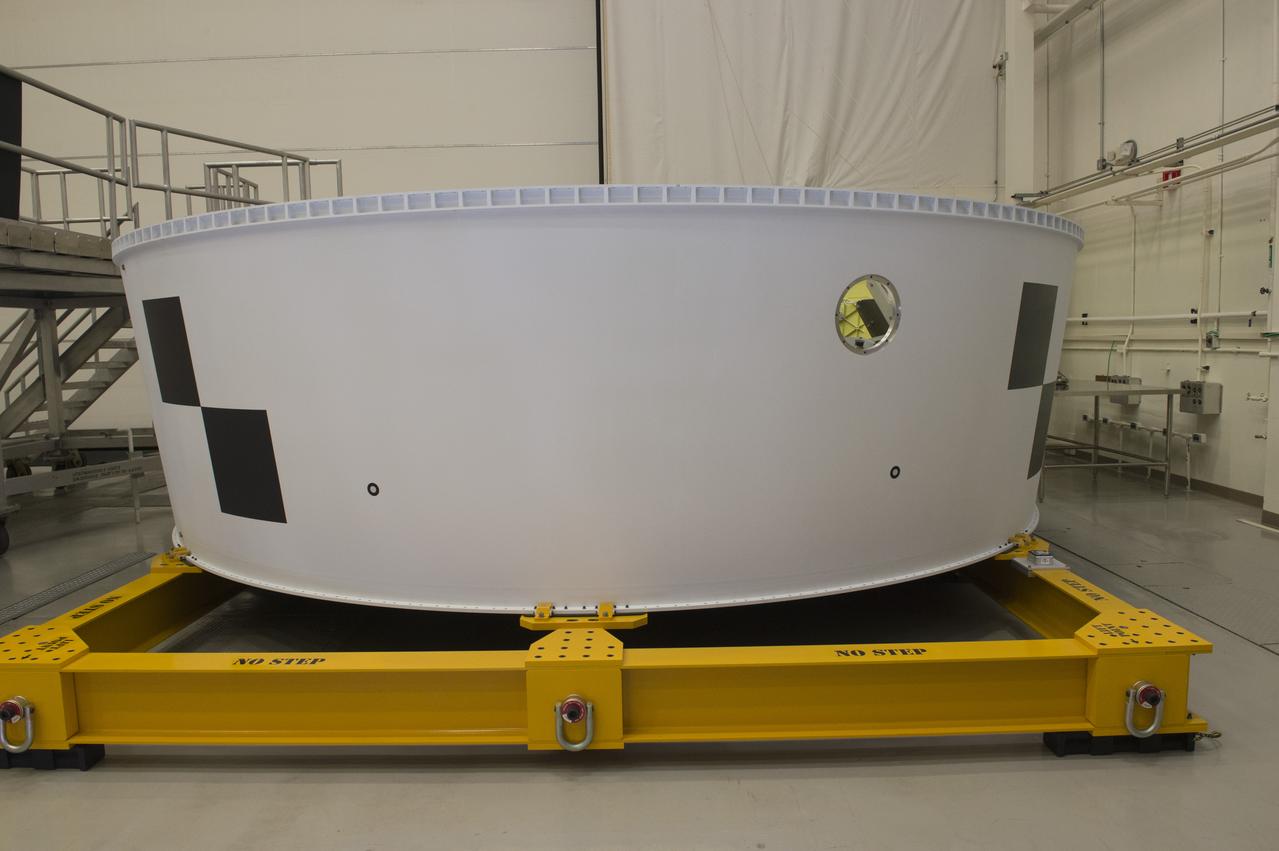
General overview and detail, Close-Out, photos of the SLS Orion Stage Adapter EM-1...exterior overall views (5)

This image mosaic shows four different views of comet Tempel 1 as seen by NASA Stardust spacecraft as it flew by on Feb. 14, 2011. The images progress in time beginning at upper left, upper right, to lower left, then lower right.
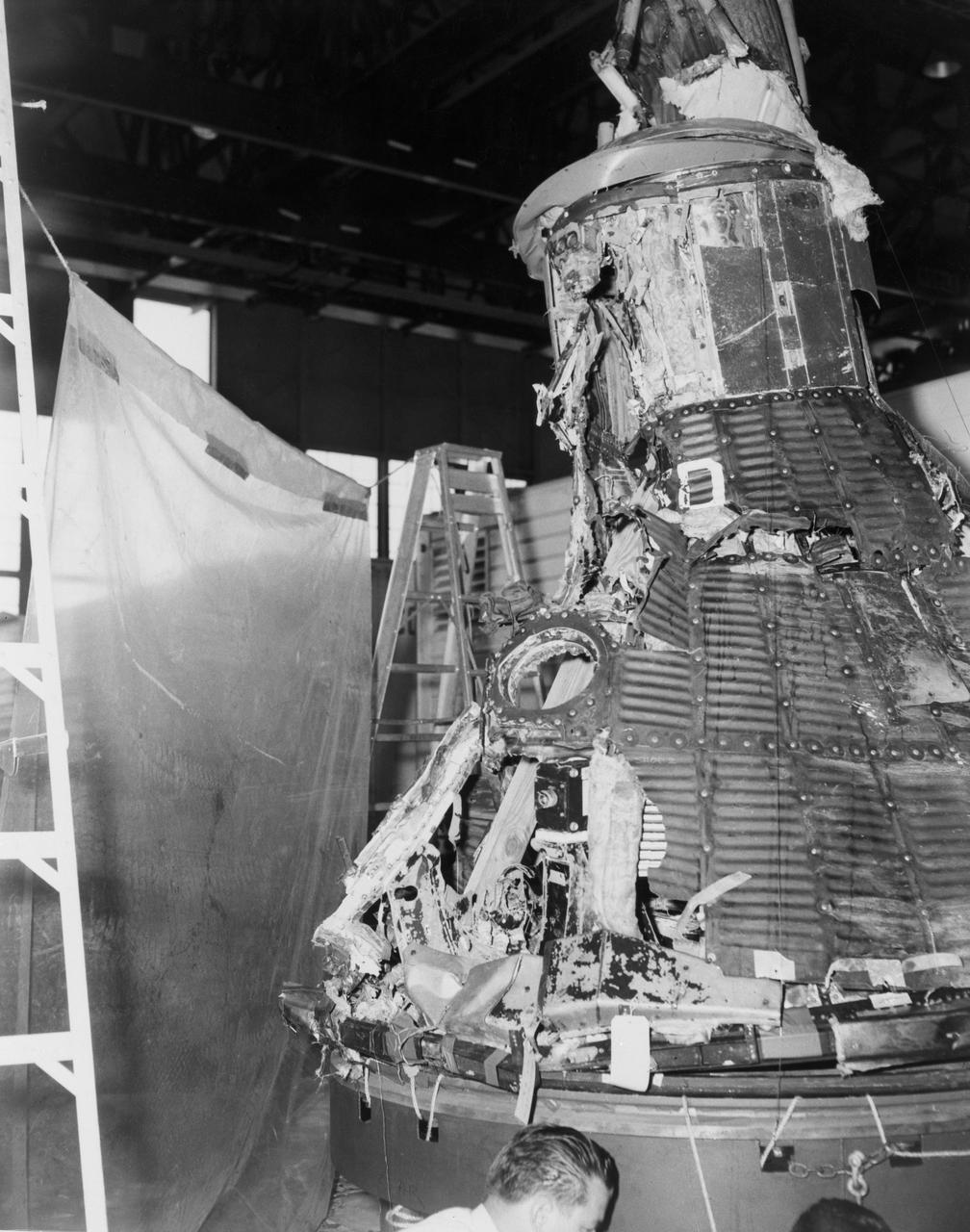
S67-19582 (1961) --- View of the reconstructed Mercury-Atlas 1 (MA-1) spacecraft. The capsule exploded one minute after launch and the debris was reassembled for study. Photo credit: NASA
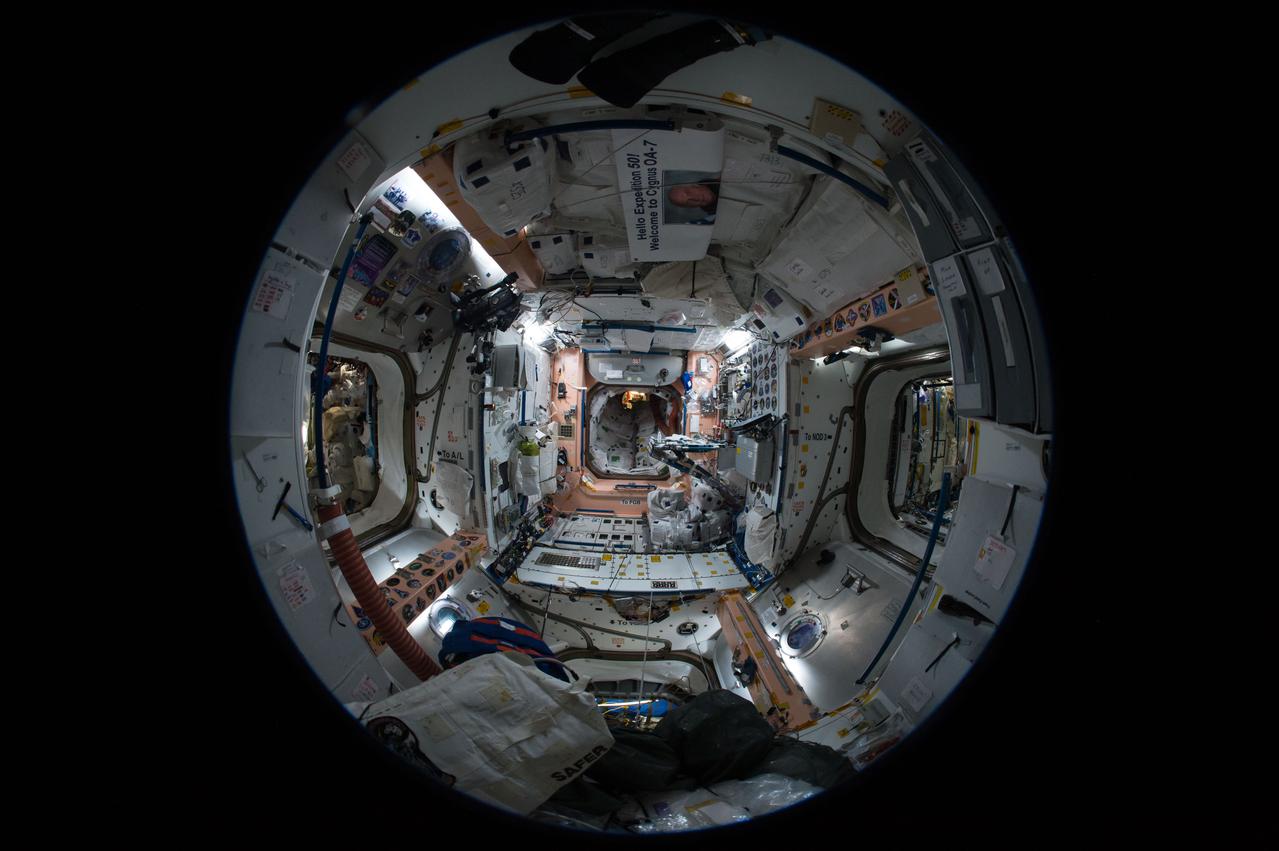
iss051e040946 (5/11/2017) --- A fish-eye view looking aft in the Unity Node 1, taken for a Google Street View of the ISS.
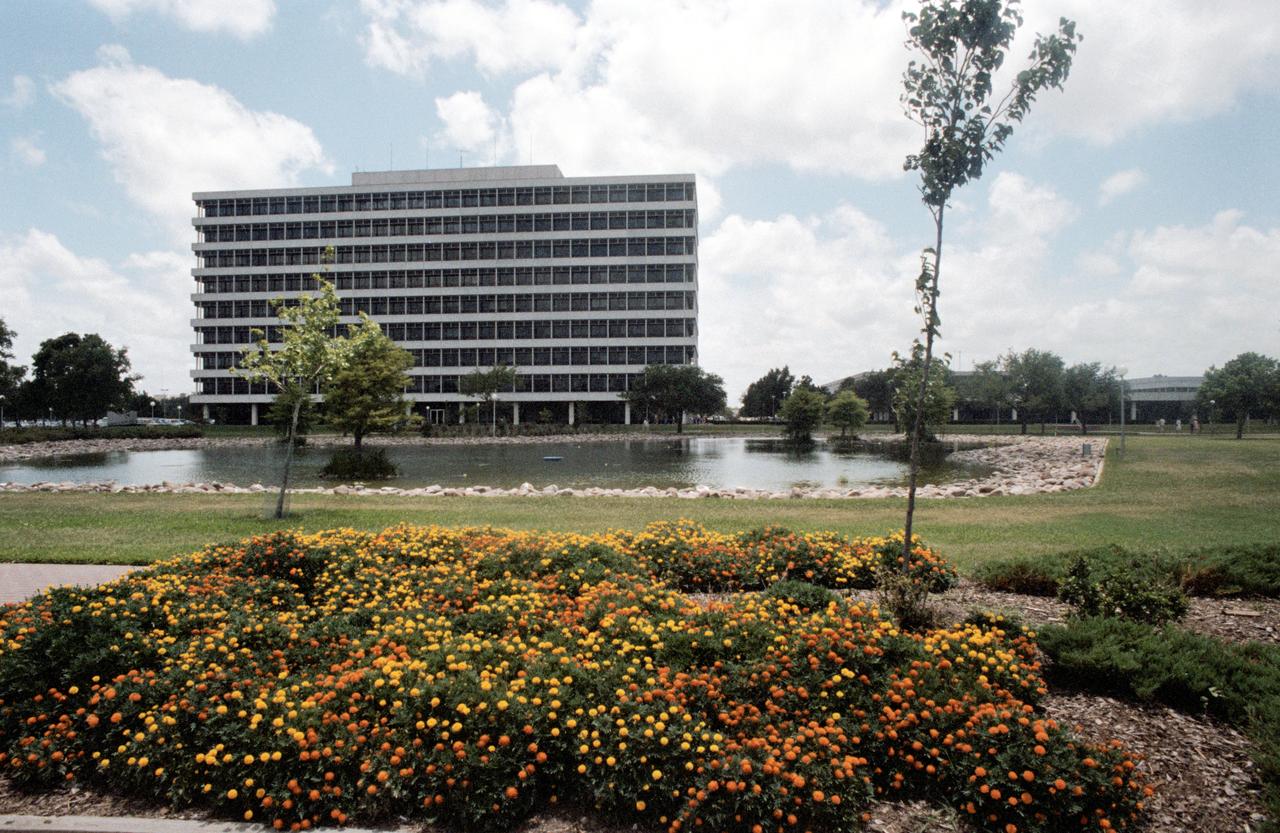
View of Johnson Space Center Administrative Building 1 taken from across the fish pond.
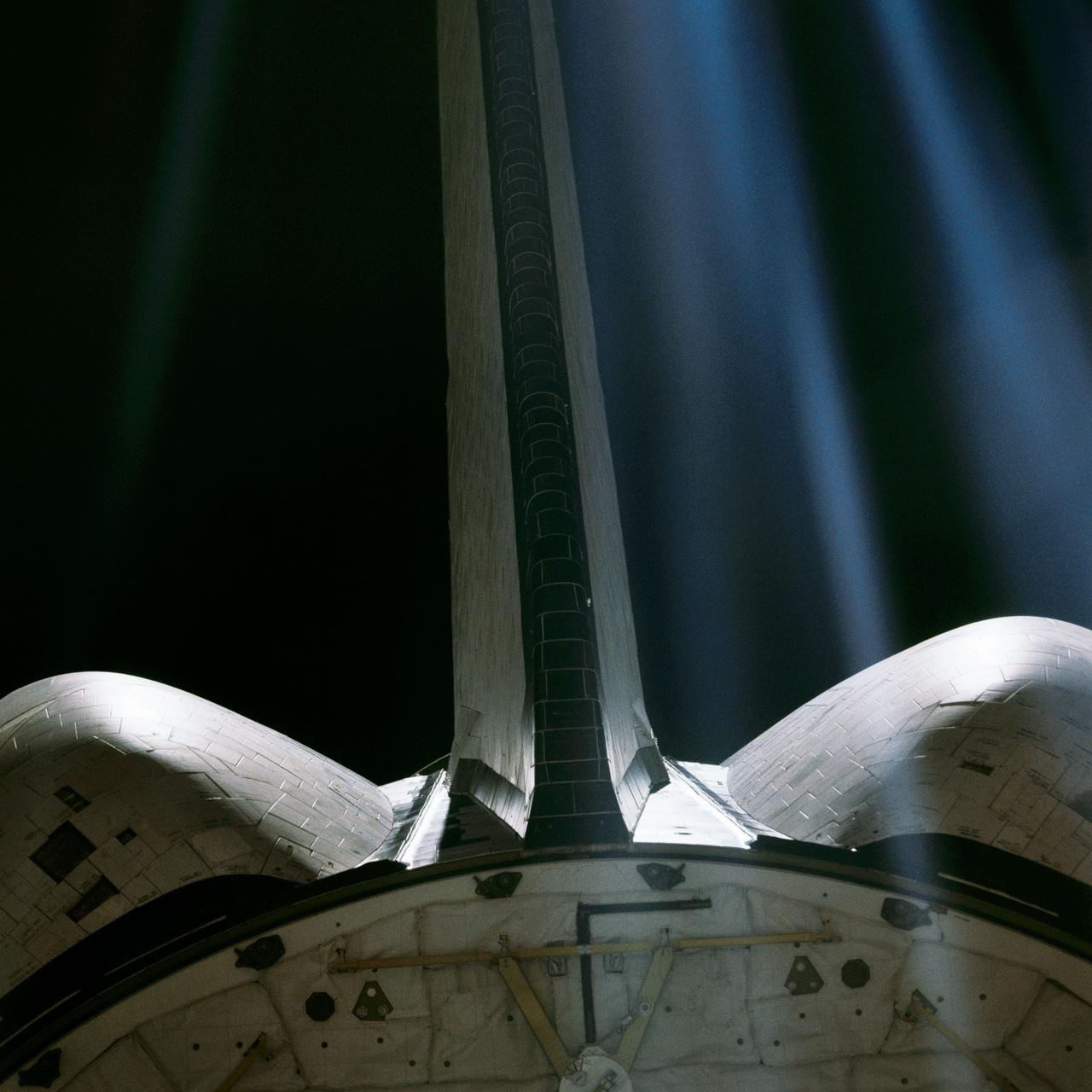
Views of the aft end of the space shuttle Columbia during the STS-1 mission include view of shuttle stabilizer.
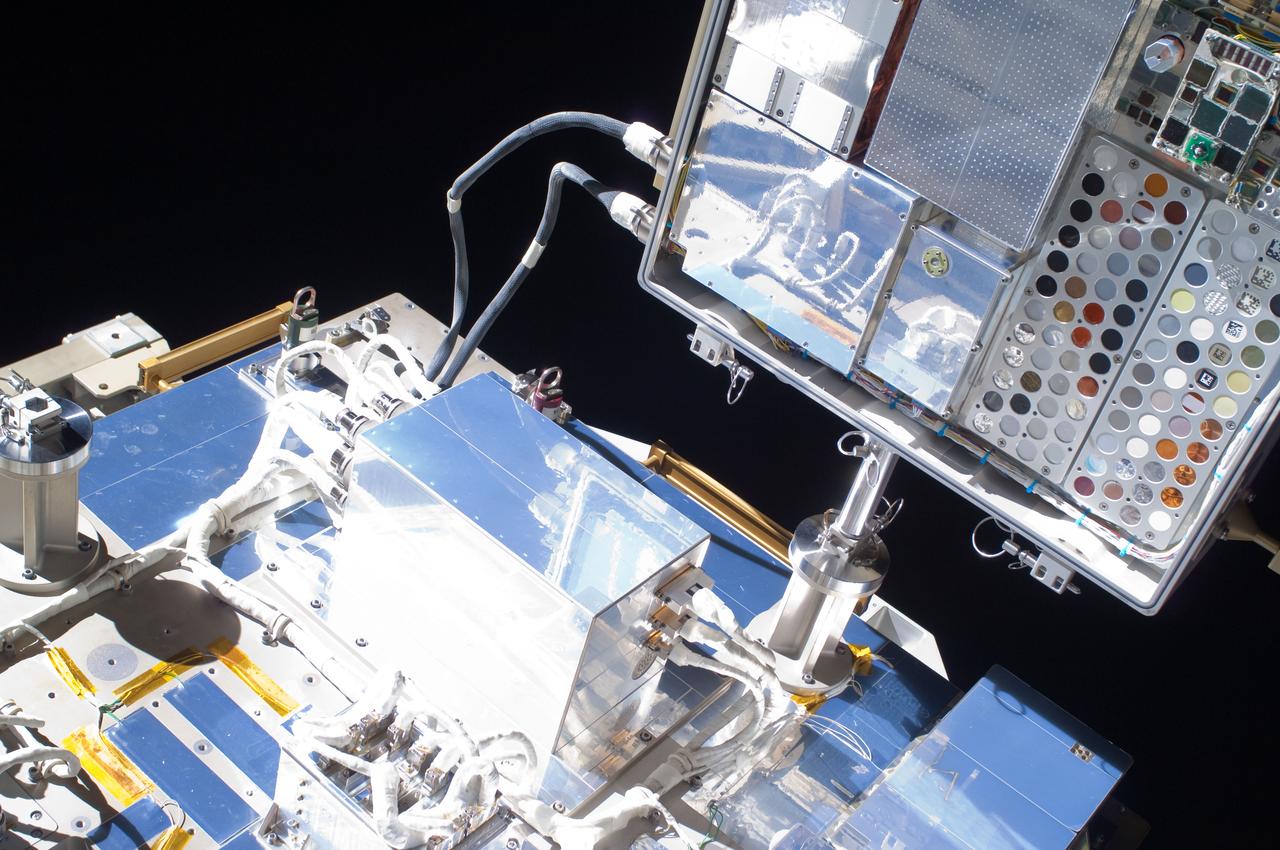
iss027e034948 (5/20/2011) --- Close-up view of Materials International Space Station Experiment (MISSE) 8 and ExPRESS (Expedite the Processing of Experiments to Space Station) Logistics Carrier-2 (ELC-2) taken during MISSE 8 installation. Image was taken by Extravehicular crewmember 1 (EV1) during Expedition 27 / STS-134 Extravehicular Activity 1 (EVA 1).

This crescent view of Jupiter was taken by NASA Voyager 1 on Mar. 24, 1979.
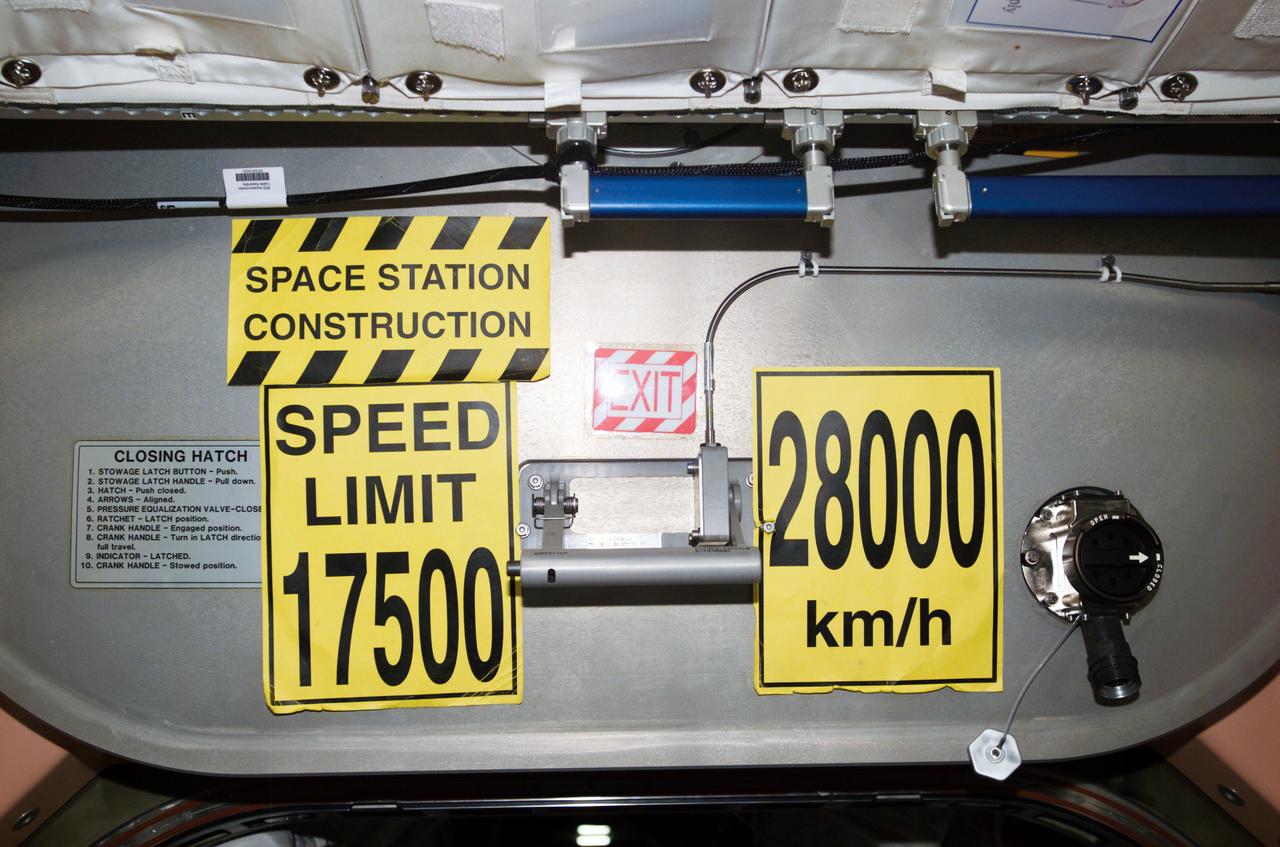
ISS012-E-22884 (29 March 2006) --- A close-up view of signs on the Pressurized Mating Adapter-1 (PMA-1) hatchway photographed by an Expedition 12 crewmember on the International Space Station.
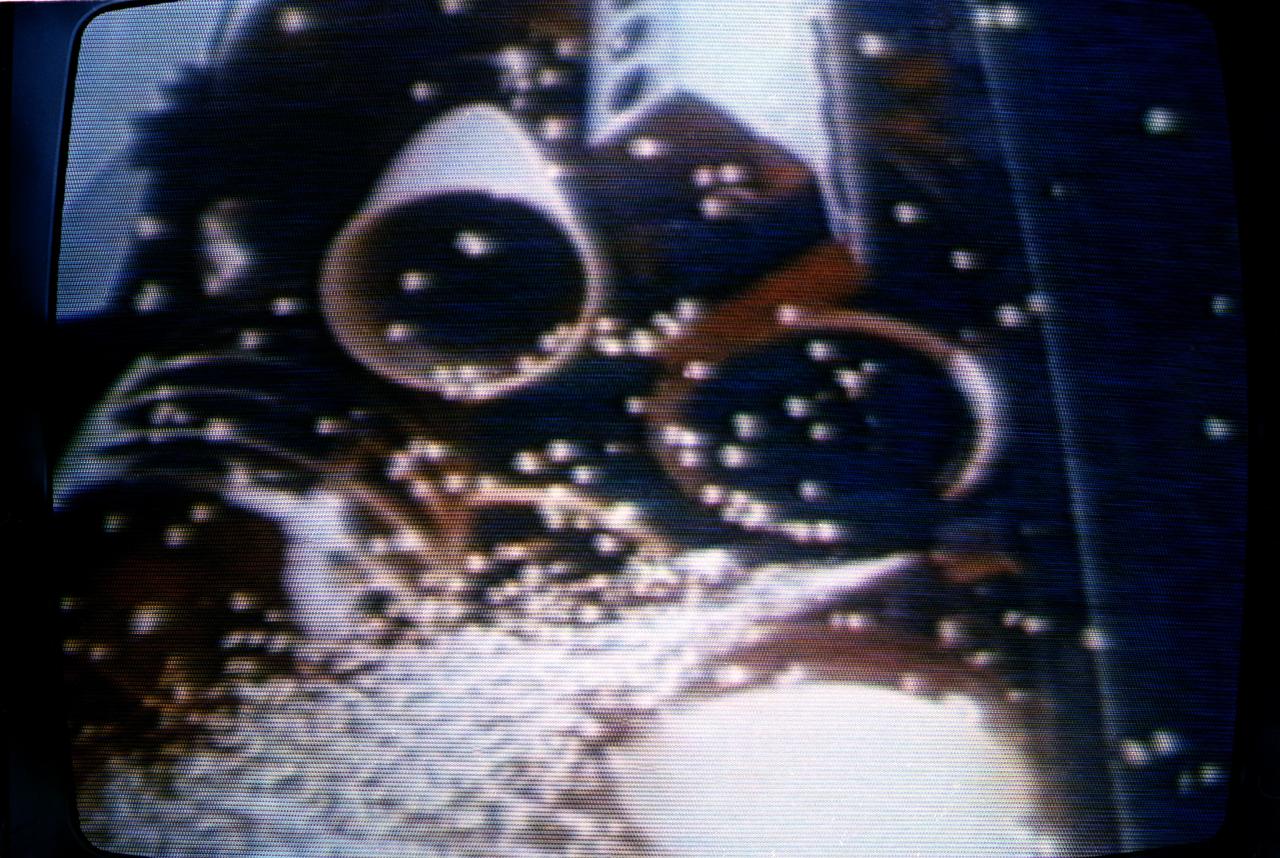
S84-36146 (12 April 1981) --- This close-up television view captures the flames of the space shuttle Columbia’s three main engines just seconds before launch and the beginning of the STS-1 mission. Photo credit: NASA or National Aeronautics and Space Administration
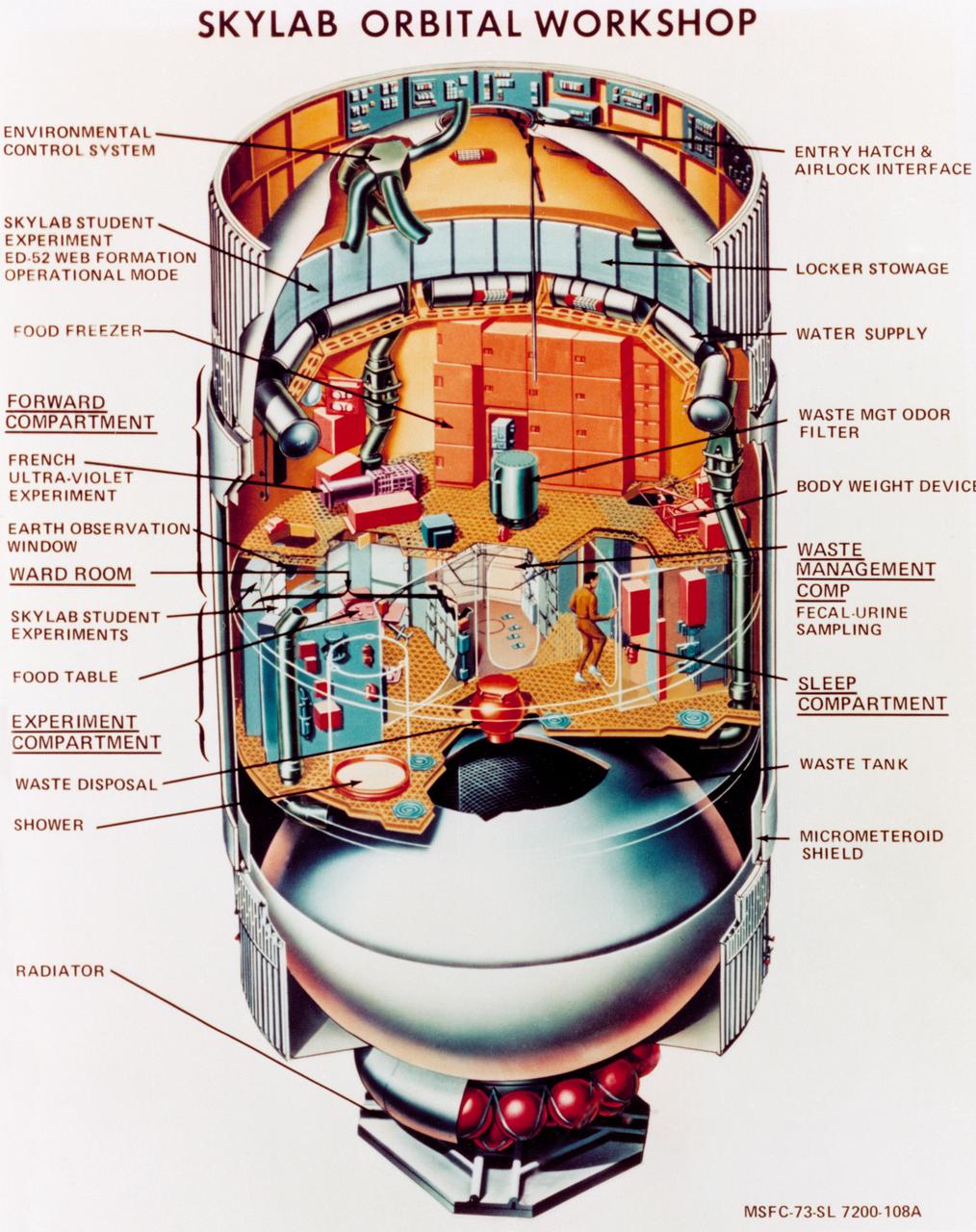
S73-23919 (May 1973) --- An artist's concept illustrating a cutaway view of the Skylab 1 Orbital Workshop (OWS). The OWS is one of the five major components of the Skylab 1 space station cluster which was launched by a Saturn V on May 14, 1973 into Earth orbit. Photo credit: NASA
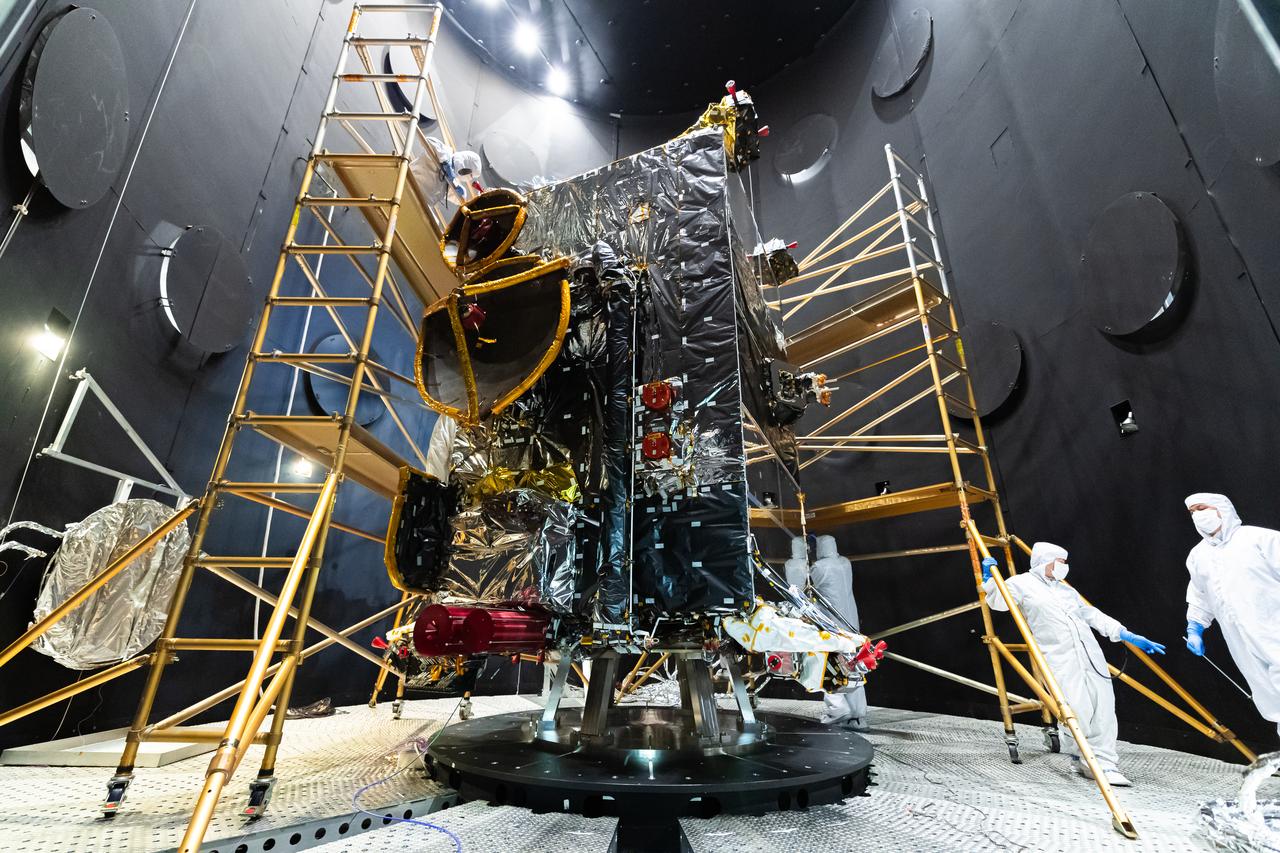
A view of the OSAM-1 spacecraft bus inside the thermal vacuum chamber at Goddard Space Flight Center, Greenbelt Md., Dec 1, 2023. This photo has been reviewed by Maxar, OSAM1 project management, and the Export Control Office and is released for public view. NASA/Mike Guinto
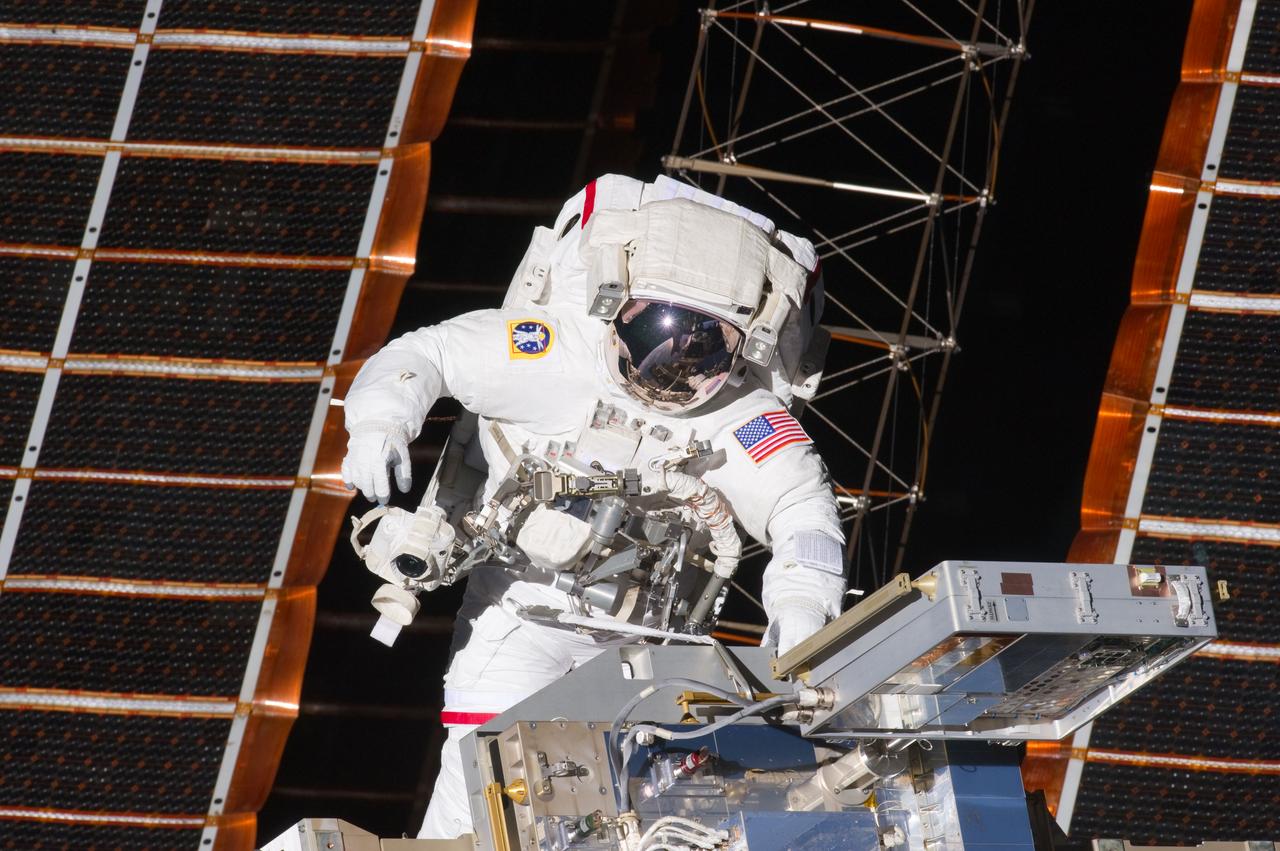
s134e007603 (5/20/2011) --- View of STS-134 Mission Specialist (MS-3) Andrew Feustel working to install a new Materials International Space Station Experiment (MISSE) on the EXPRESS (Expedite the Processing of Experiments to Space Station) Logistics Carrier 2 (ELC2) during the first session of Extravehicular Activity (EVA-1).
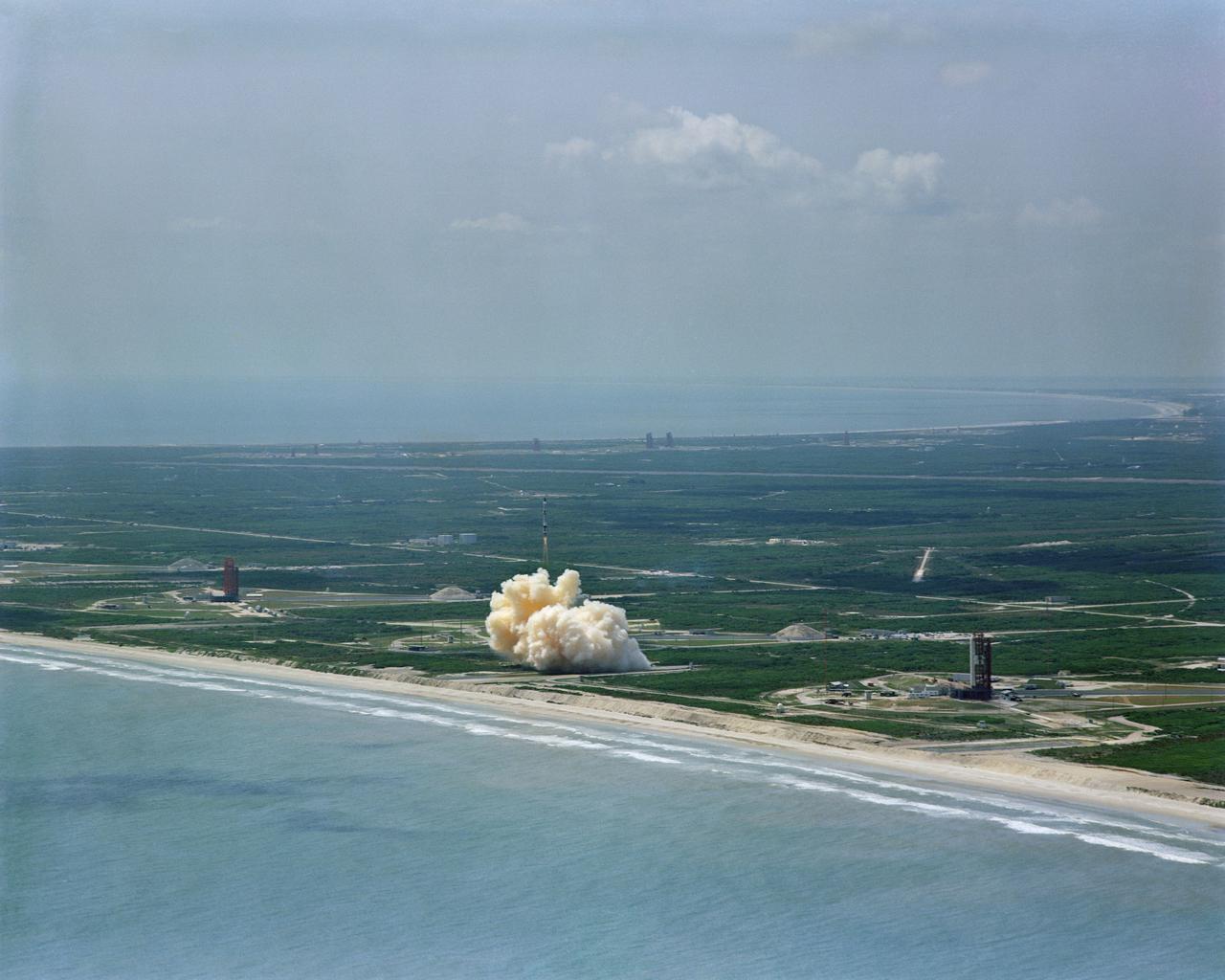
S64-22412 (8 April 1964) --- Aerial view of the Gemini/Titan-II launch vehicle #1 liftoff at Cape Kennedy, Florida.
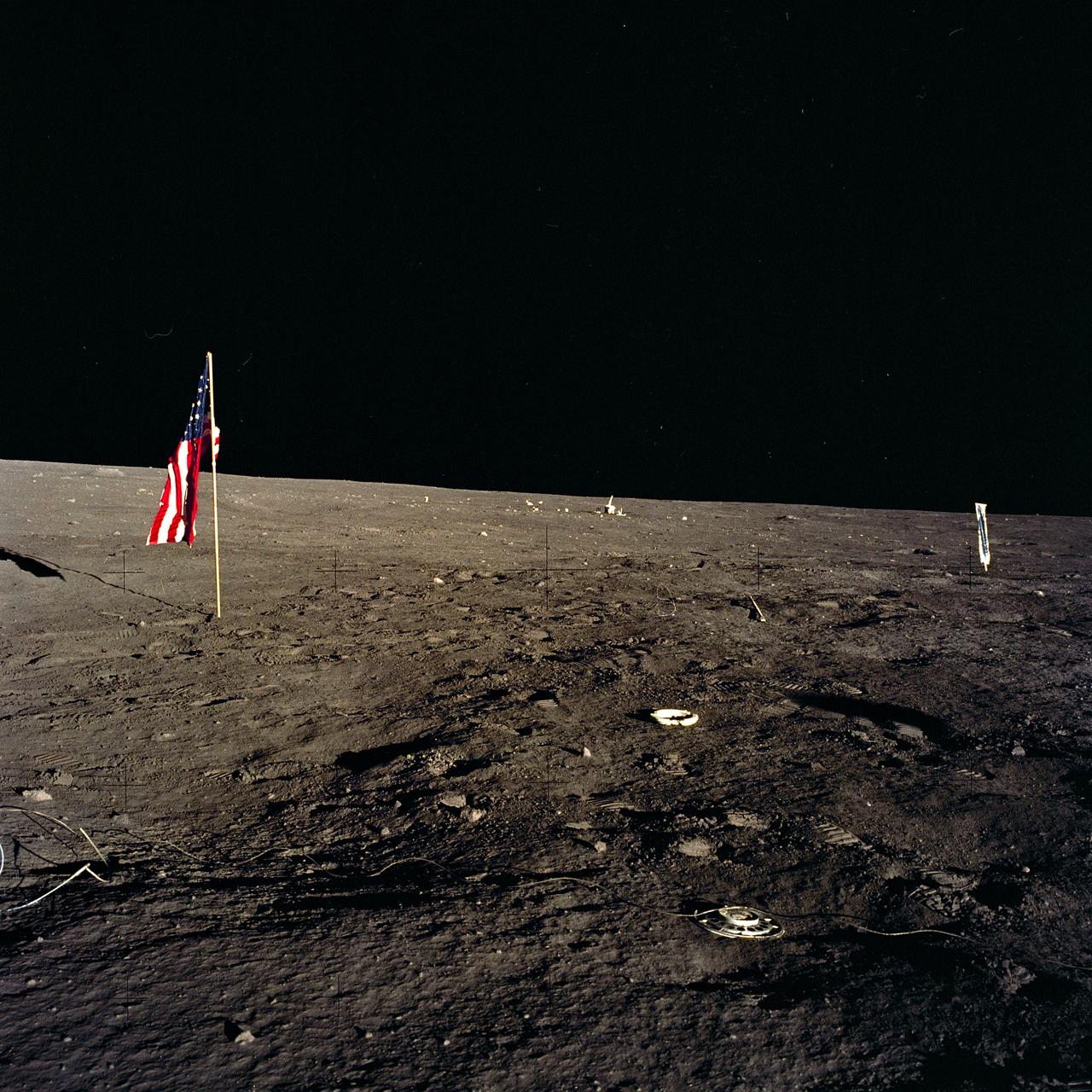
The second manned lunar landing mission, Apollo 12 launched from launch pad 39-A at Kennedy Space Center in Florida on November 14, 1969 via a Saturn V launch vehicle. The Saturn V vehicle was developed by the Marshall Space Flight Center (MSFC) under the direction of Dr. Wernher von Braun. Aboard Apollo 12 was a crew of three astronauts: Alan L. Bean, pilot of the Lunar Module (LM), Intrepid; Richard Gordon, pilot of the Command Module (CM), Yankee Clipper; and Spacecraft Commander Charles Conrad. The LM, Intrepid, landed astronauts Conrad and Bean on the lunar surface in what’s known as the Ocean of Storms while astronaut Richard Gordon piloted the CM, Yankee Clipper, in a parking orbit around the Moon. Lunar soil activities included the deployment of the Apollo Lunar Surface Experiments Package (ALSEP), finding the unmanned Surveyor 3 that landed on the Moon on April 19, 1967, and collecting 75 pounds (34 kilograms) of rock samples. This is the first of 25 images captured by the crew in attempt to provide a 360 degree Lunar surface scene. Apollo 12 safely returned to Earth on November 24, 1969.
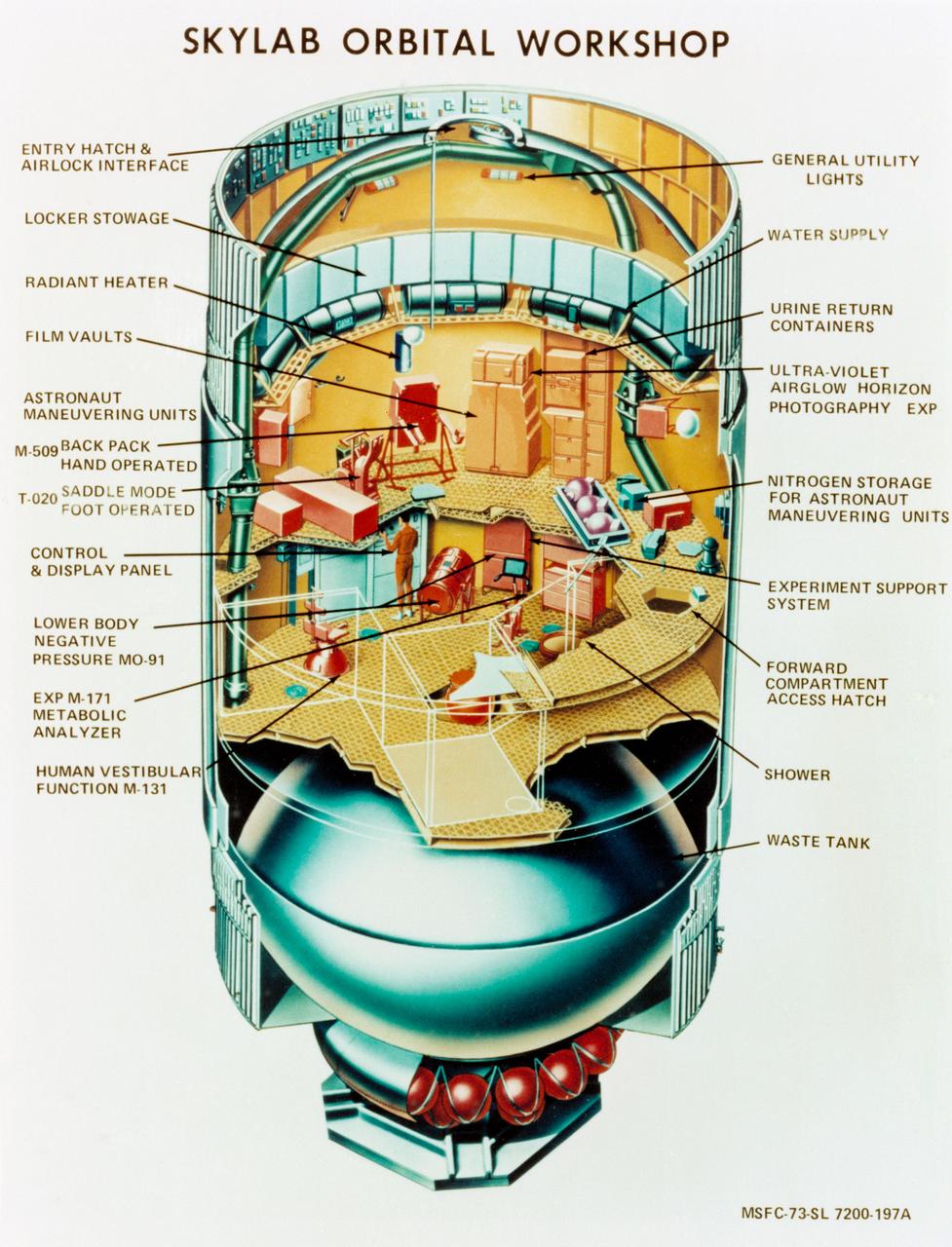
S73-23918 (May 1973) --- An artist's concept illustrating a cutaway view of the Skylab 1 Orbital Workshop (OWS). The OWS is one of the five major components of the Skylab 1 space station cluster which was launched by a Saturn V on May 14, 1973 into Earth orbit. Photo credit: NASA
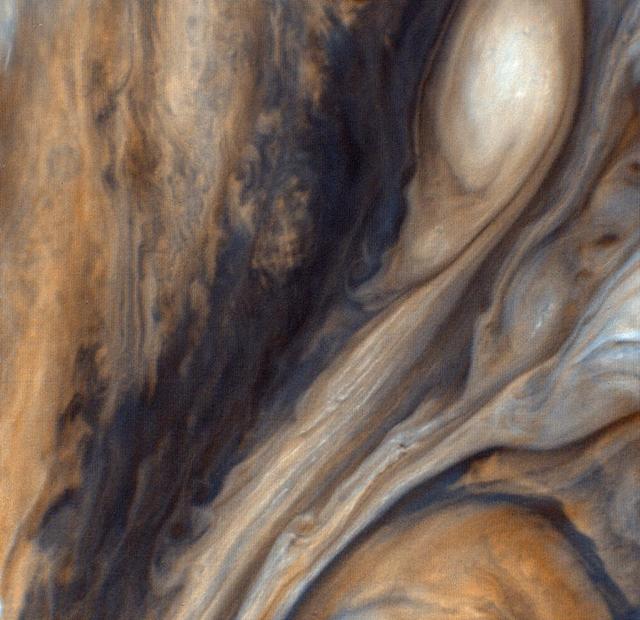
This view from NASA Voyager 1 in 1979 is of the region just to the east of the Red Spot, seen in greatly exaggerated color. http://photojournal.jpl.nasa.gov/catalog/PIA00020
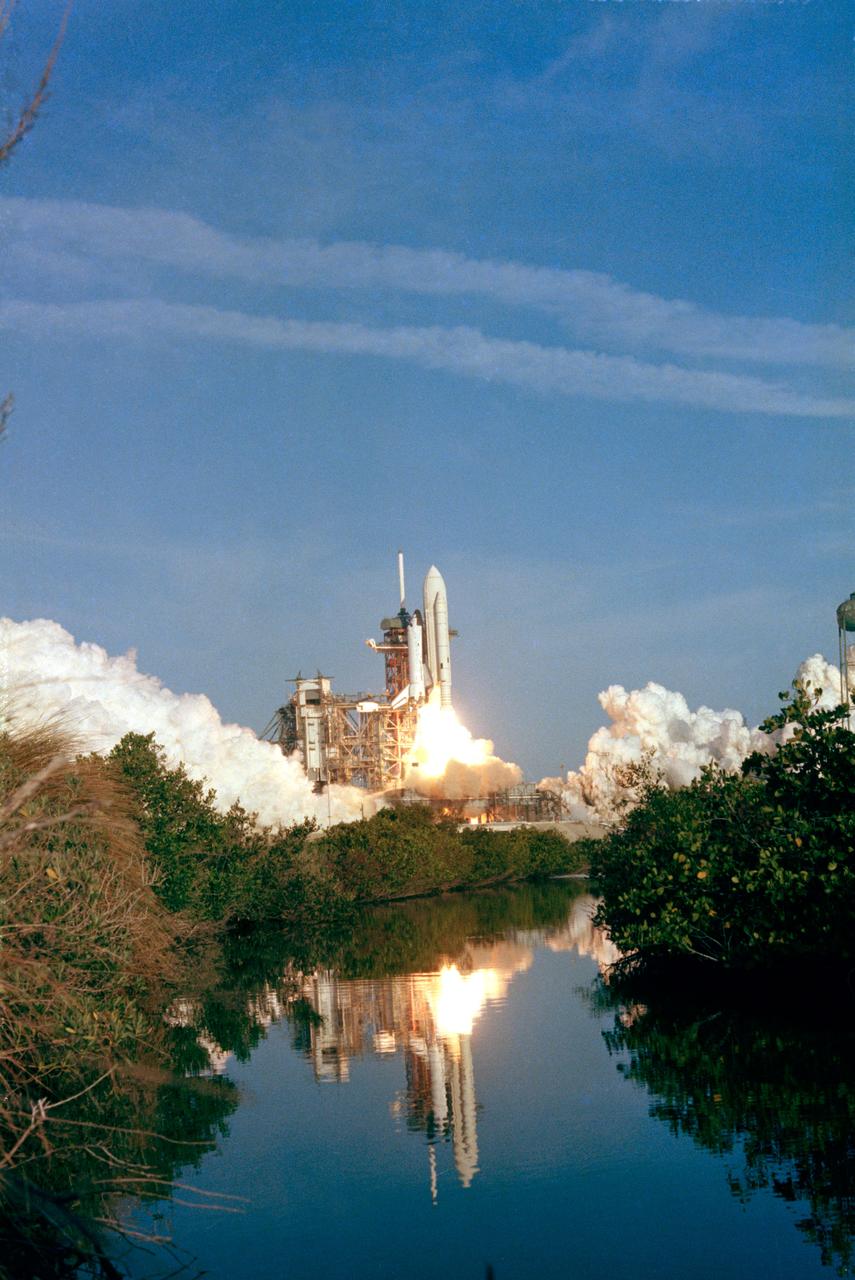
S81-30462 (12 April 1981) --- The space shuttle Columbia rises off Pad 39A a few seconds past 7 a.m. (EST) on April 12, 1981. Onboard, astronauts John W. Young, STS-1 commander, and Robert L. Crippen, pilot, head toward an Earth-orbital mission which represents the beginning of a new era in space transportation. Thousands of persons were in the area to view the historic launch. Photo credit: NASA or National Aeronautics and Space Administration
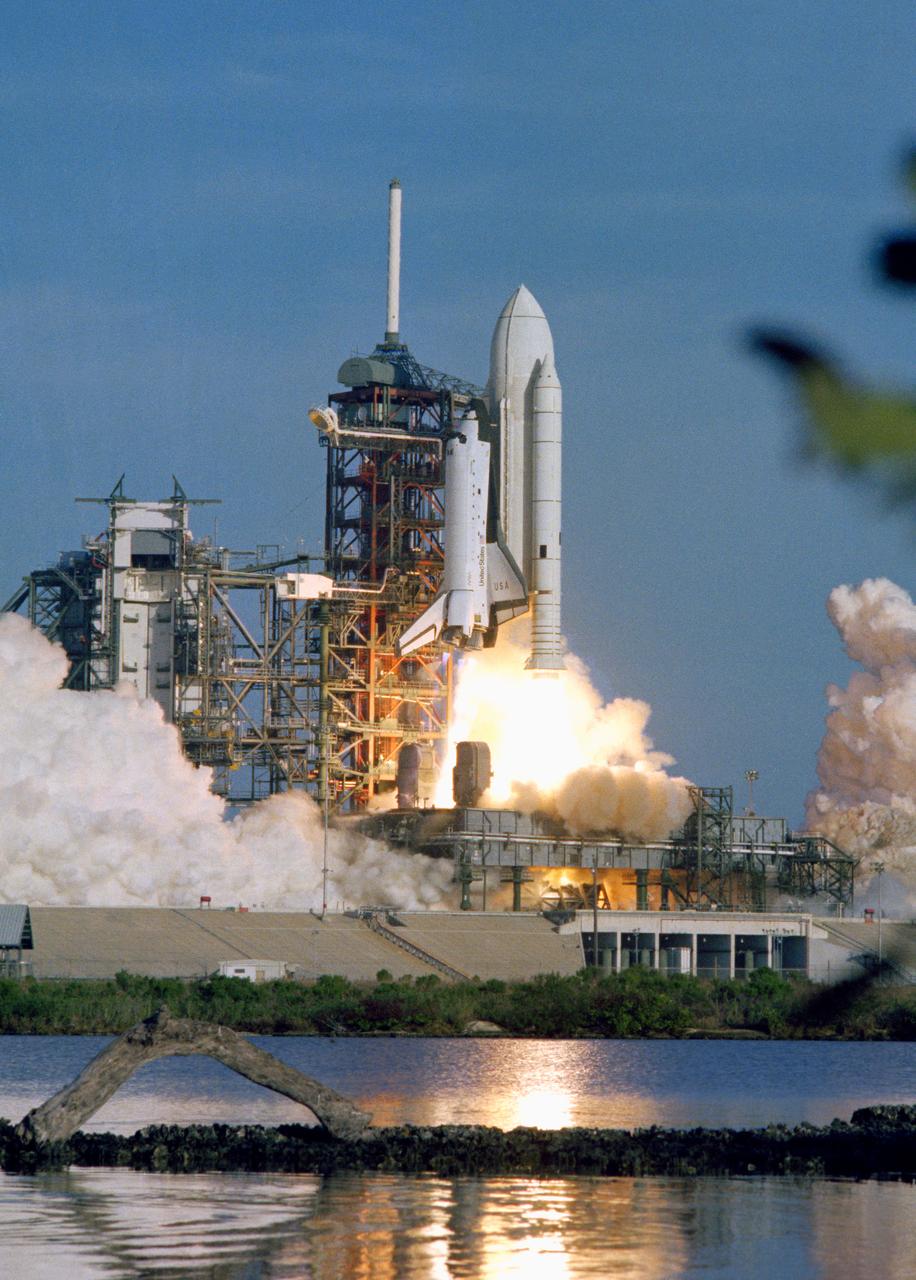
S81-30463 (12 April 1981) --- The space shuttle Columbia rises off Pad 39A a few seconds past 7 a.m. (EST) on April 12, 1981. Onboard, astronauts John W. Young, STS-1 commander, and Robert L. Crippen, pilot, head toward an Earth-orbital mission which represents the beginning of a new era in space transportation. Thousands of persons were in the area to view the historic launch. Photo credit: NASA or National Aeronautics and Space Administration
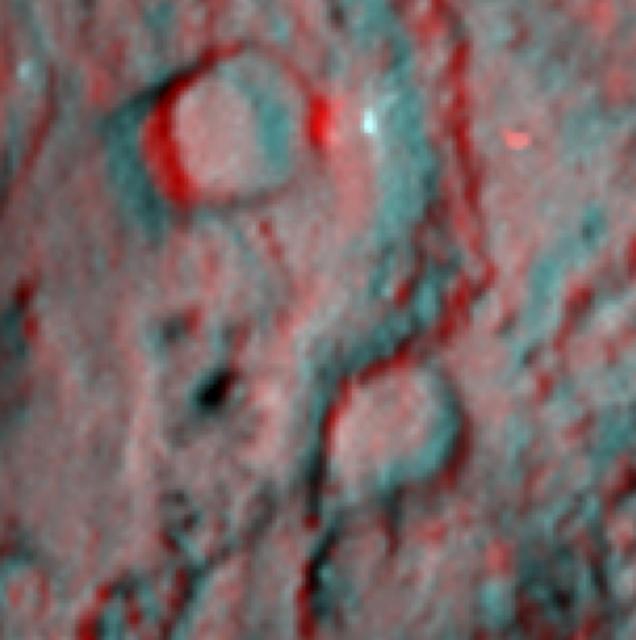
This anaglyph shows the region where NASA Deep Impact mission sent a probe into the surface of comet Tempel 1 in 2005. 3D glasses are necessary to view this image.
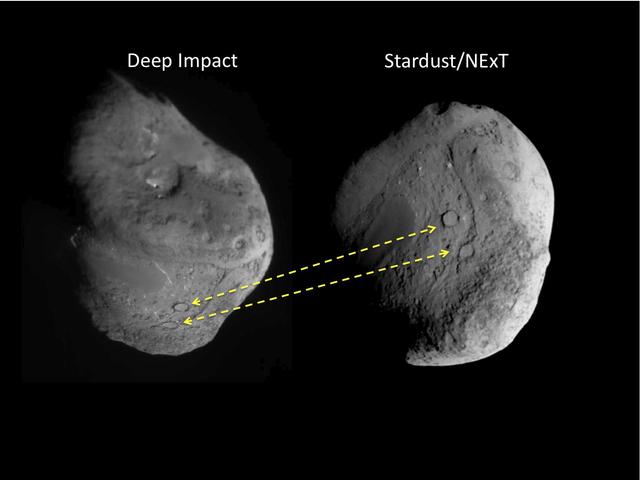
These two images show the different views of comet Tempel 1 seen by NASA Deep Impact spacecraft left and NASA Stardust spacecraft right.
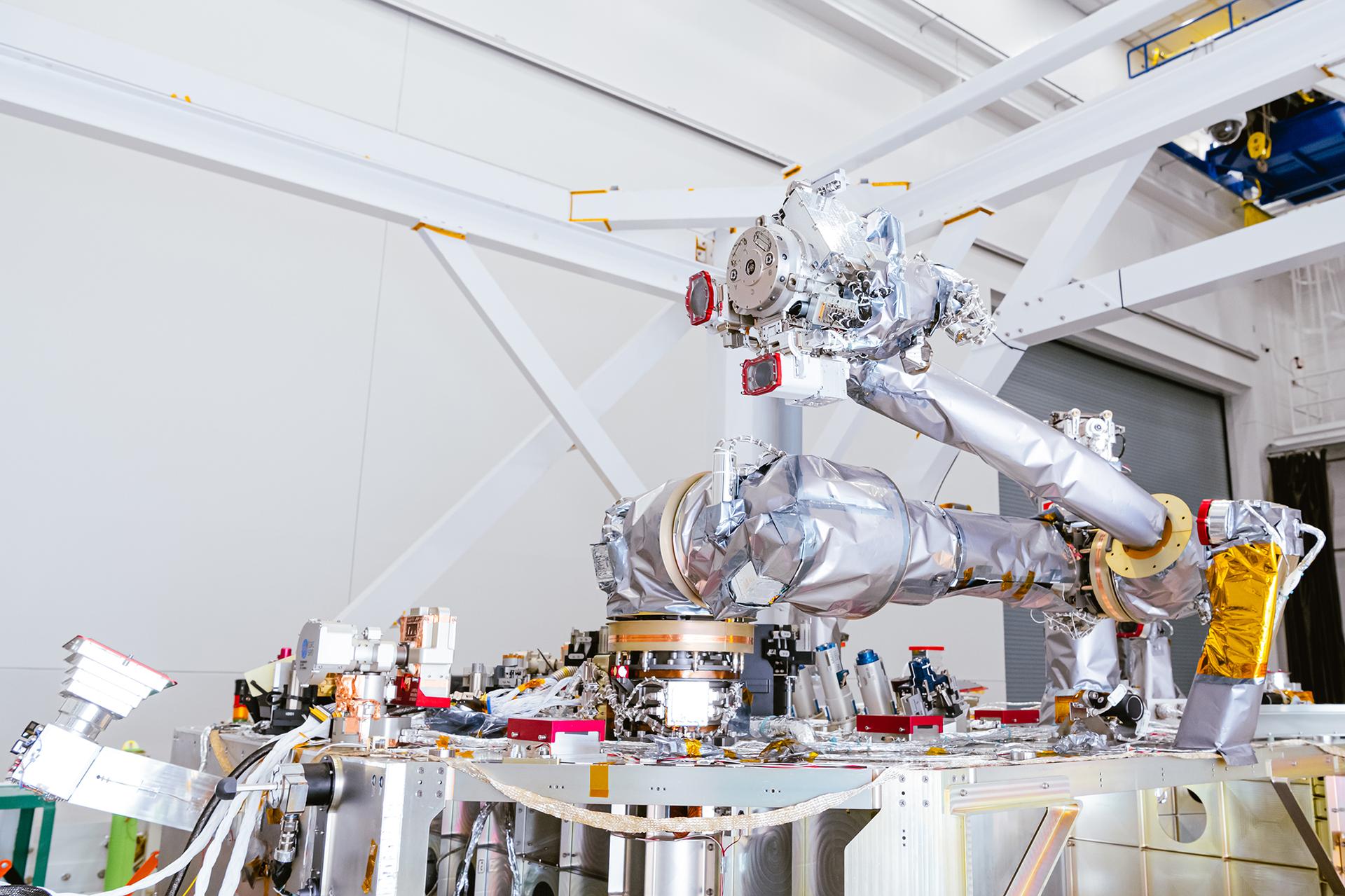
A detail view of one of the OSAM-1 robotic arms after being integrated onto the flight payload top-deck at Goddard Space Flight Center, Greenbelt., Md Oct 4, 2024. This photo has been approved for public release. NASA/Mike Guinto
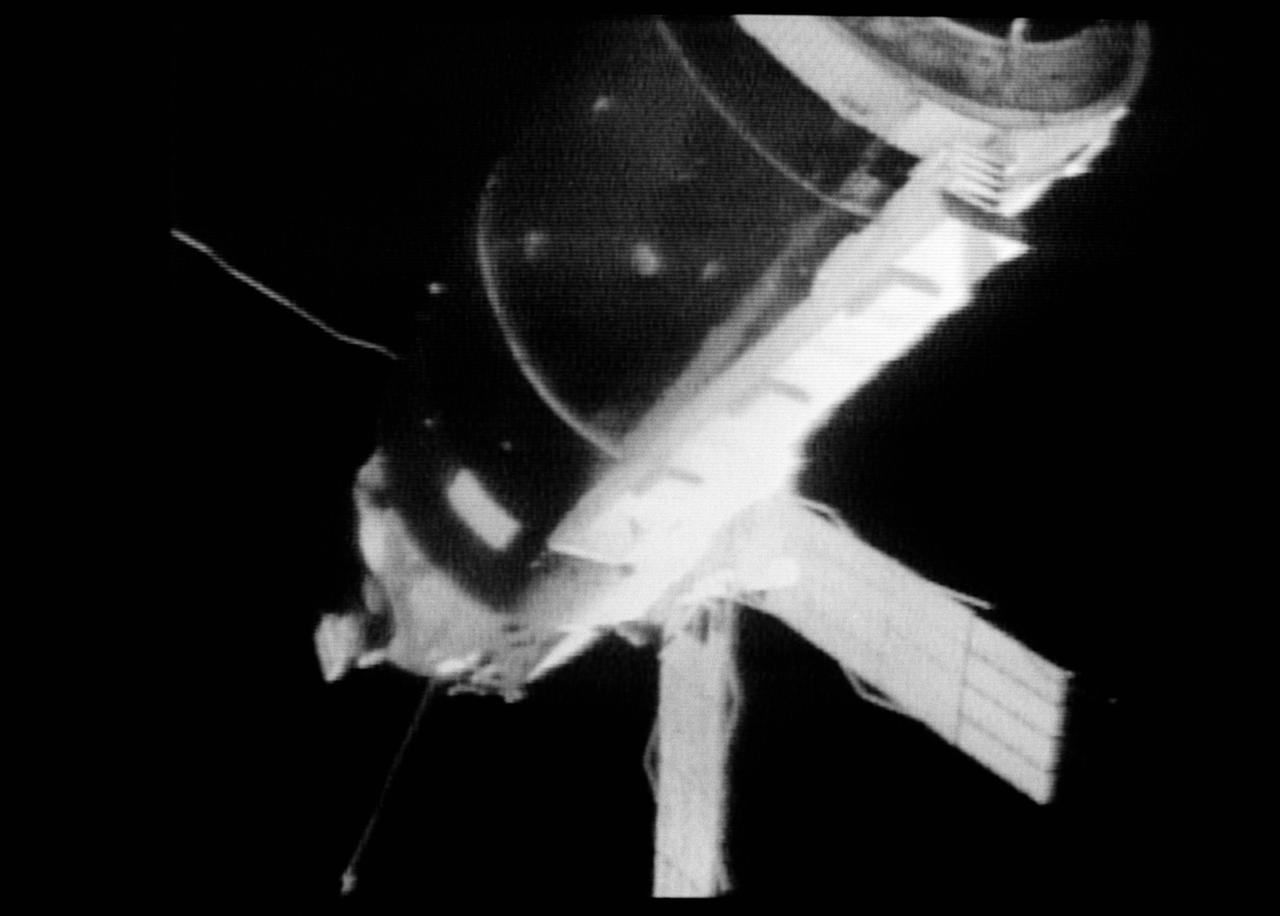
S73-27182 (25 May 1973) --- A close-up view of the Skylab 1 space station cluster can be seen in this reproduction taken from a color television transmission made by a TV camera aboard the Skylab 2 Command Module during its "fly around" inspection of the cluster. This view has been enhanced. At left center the damaged solar array system wing on the Orbital Workshop (OWS) appears to be partly folded. In their preliminary inspection the crewmen noted that portions of the micrometeoroid shield had slid back underneath the OWS solar wing. Solar panels on the Apollo Telescope Mount extend out at the top center. Photo credit: NASA
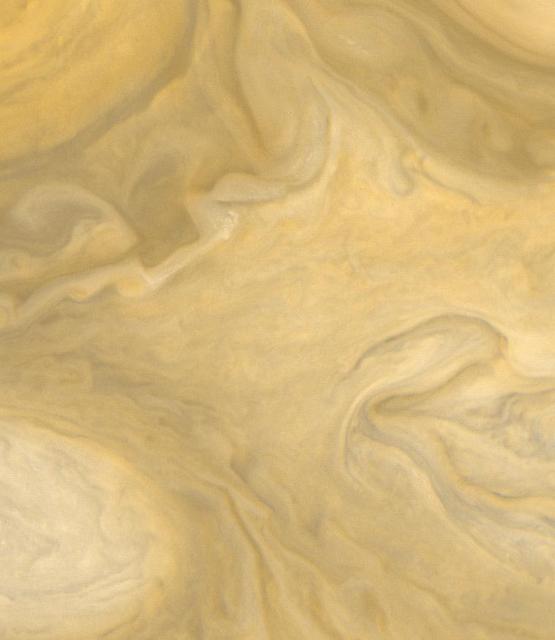
This view of the region just to the Southeast of the Great Red Spot was taken by NASA Voyager 1 on March 4, 1979 at a distance of 1,100,000 miles 1,800,000 km. http://photojournal.jpl.nasa.gov/catalog/PIA00017
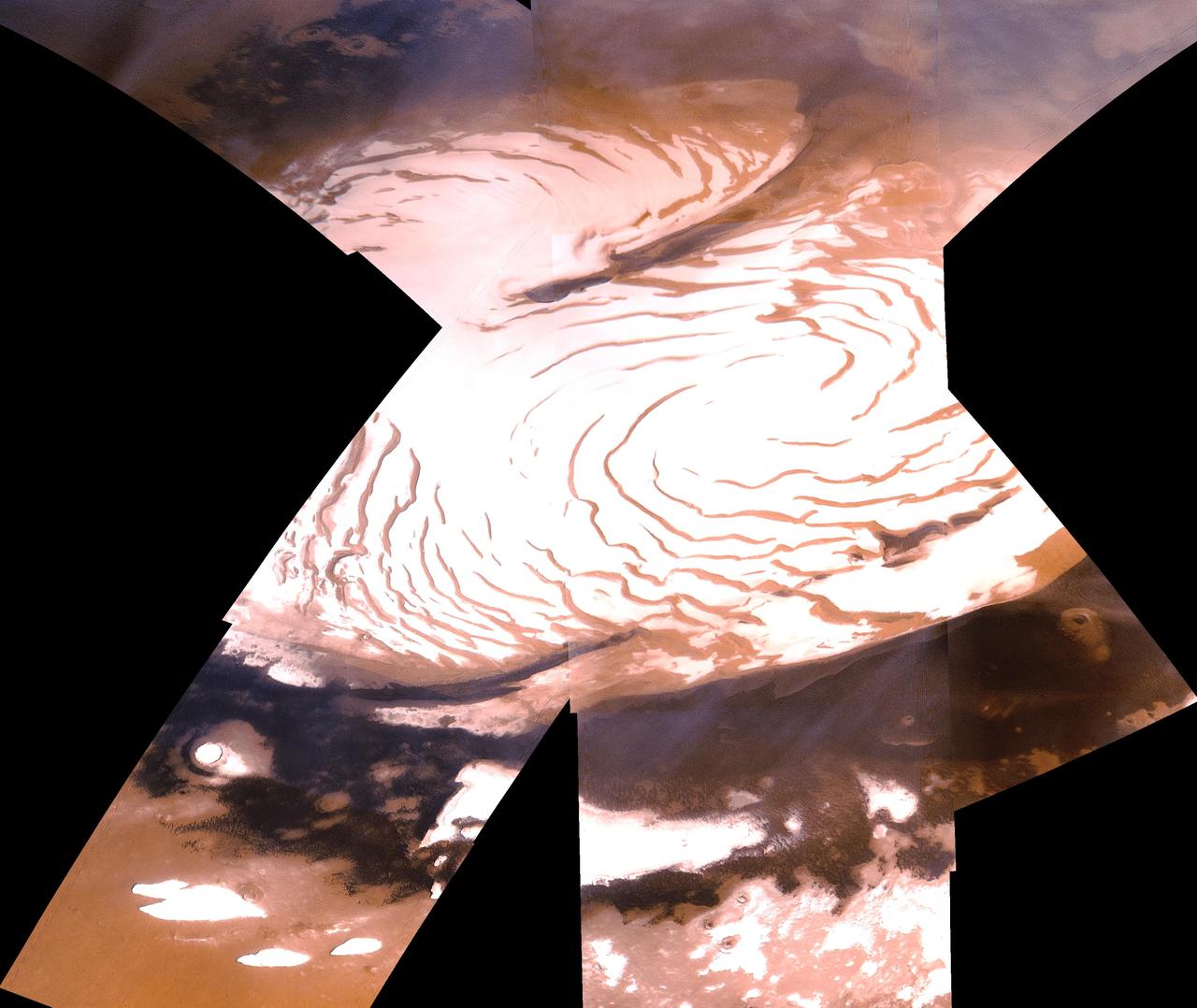
Shown here is an oblique view of the polar region, as seen with NASA Viking 1 spacecraft orbiting Mars over latitude 39 degrees north. http://photojournal.jpl.nasa.gov/catalog/PIA00009
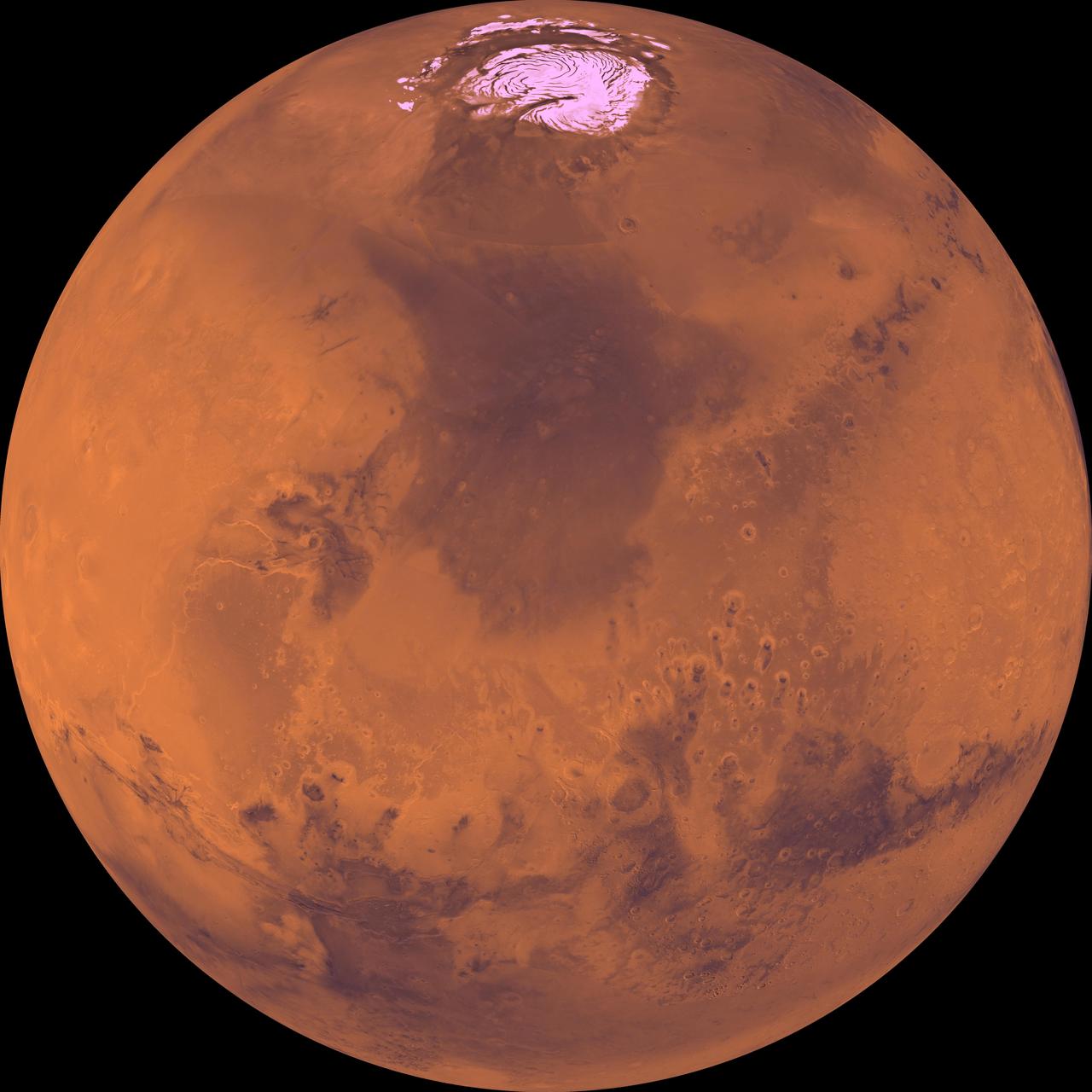
The north polar residual ice cap, which is cut by spiral-patterned troughs, is located at the top in this view from NASA's Viking Orbiter 1. http://photojournal.jpl.nasa.gov/catalog/PIA00192

This color view of the region just to the East of the Great Red Spot was taken by NASA Voyager 1 on March 4, 1979 at a distance of 1,000,000 miles 1,800,000 km. http://photojournal.jpl.nasa.gov/catalog/PIA00019
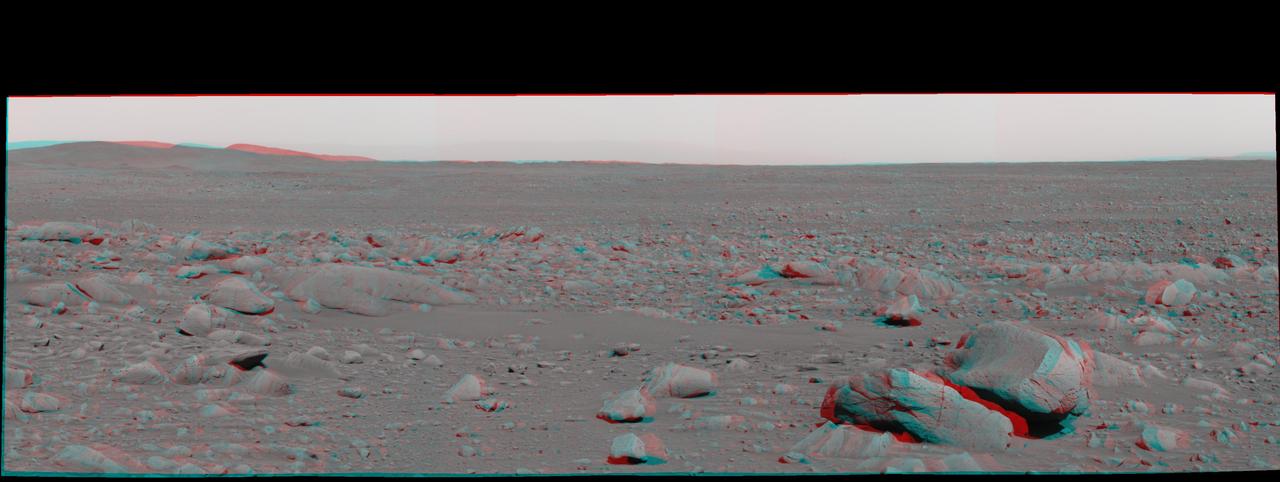
This stereo view was taken by the panoramic camera on NASA Mars Exploration Rover Spirit on the rover 87th martian day, or sol April 1, 2004, just after Spirit left Bonneville Crater. 3D glasses are necessary to view this image.
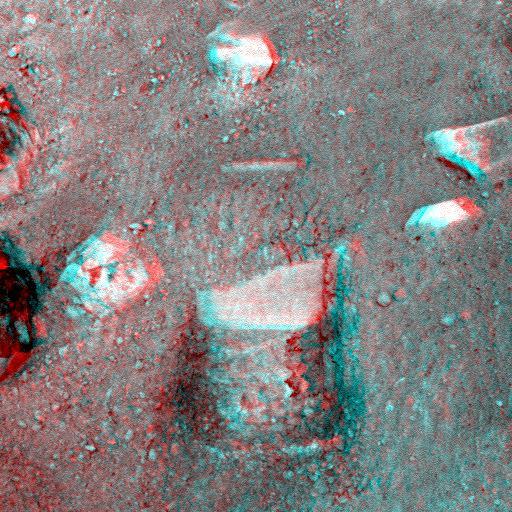
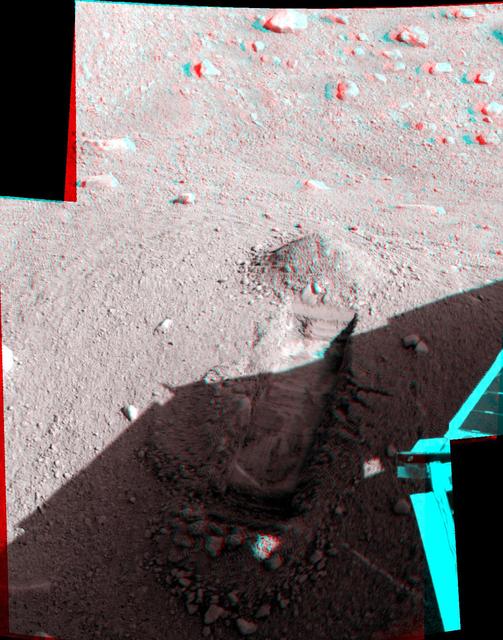
This anaglyph image, acquired by NASA’s Phoenix Lander’s Surface Stereo Imager on June 1, 2008, shows a stereoscopic 3D view of the so-called Knave of Hearts first-dig test area to the north of the lander. 3D glasses are necessary to view this image.

S73-25140 (16 April 1973) --- A ground-level view of Pad A, Launch Complex 39, Kennedy Space Center, Florida, showing the 341-feet tall Skylab 1/Saturn V space vehicle on the pad soon after being rolled out from the Vehicle Assembly Building (VAB). The vehicle is composed of the Saturn V first (S-1C) stage, the Apollo Telescope Mount (ATM), the Multiple Docking Adapter (MDA), the Airlock Module (AM), and the Orbital Workshop (OWS). Photo credit: NASA
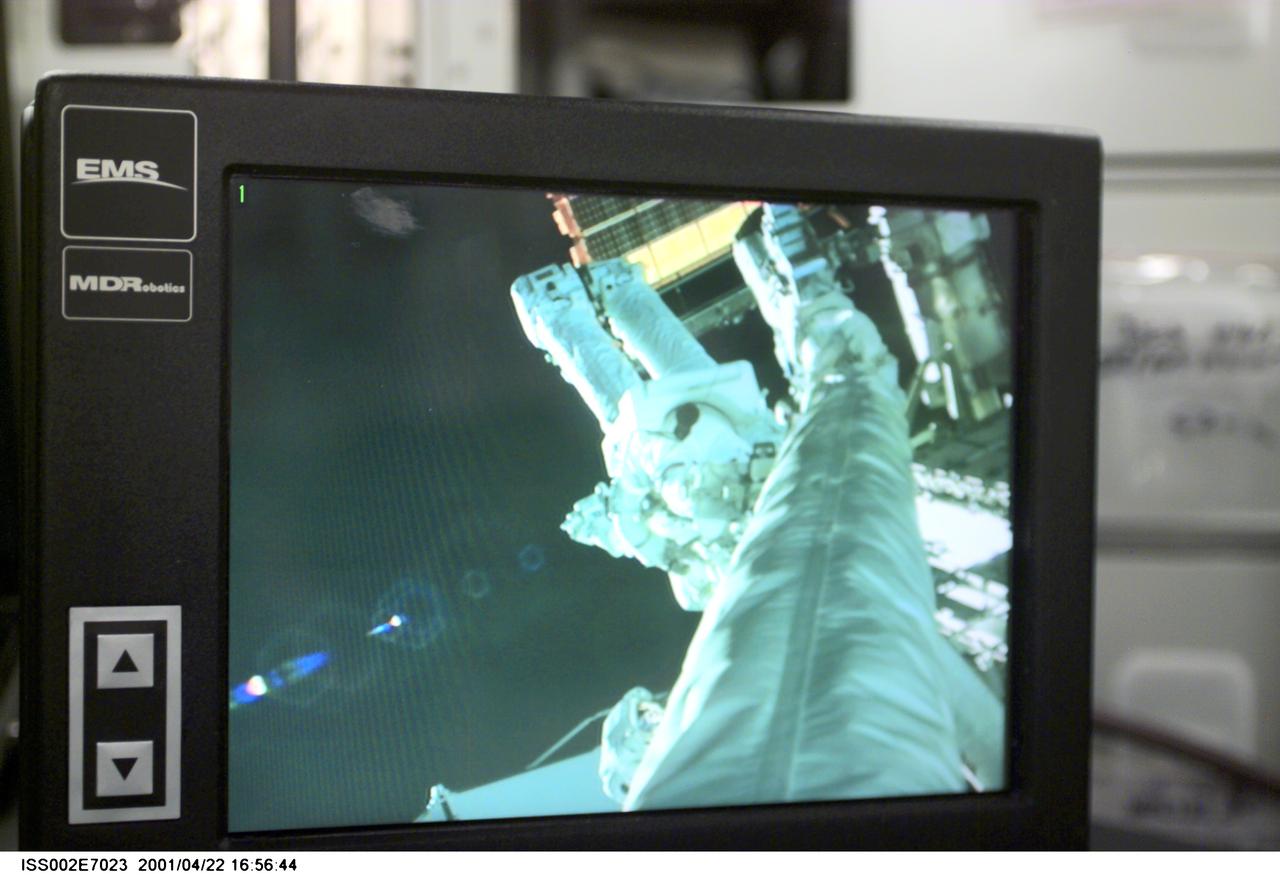
ISS002-E-7023 (22 April 2001) - Viewed on a monitor in the Destiny/U.S. Laboratory, Astronaut Chris A. Hadfield, STS-100 mission specialist representing the Canadian Space Agency (CSA), can be seen during the first space walk (EVA-1) of the STS-100 mission. The image on the monitor was taken with the Canadian-built Remote Manipulator System (RMS) arm video camera, and this still image was recorded with a digital still camera.
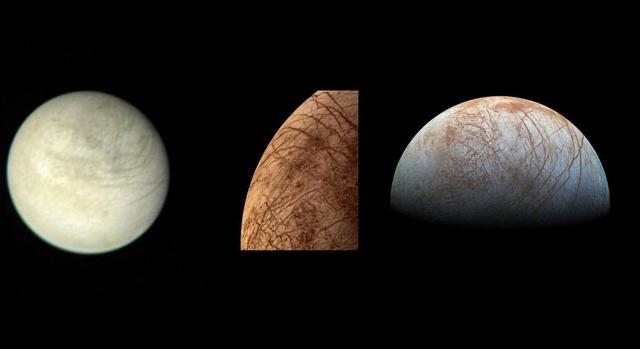
On the left is a view of Jupiter's moon Europa taken on March 2, 1979, by NASA's Voyager 1 spacecraft. In the middle is a color image of Europa taken by NASA's Voyager 2 spacecraft during its close encounter on July 9, 1979. On the right is a view of Europa made from images taken by NASA's Galileo spacecraft in the late 1990s. https://photojournal.jpl.nasa.gov/catalog/PIA24895
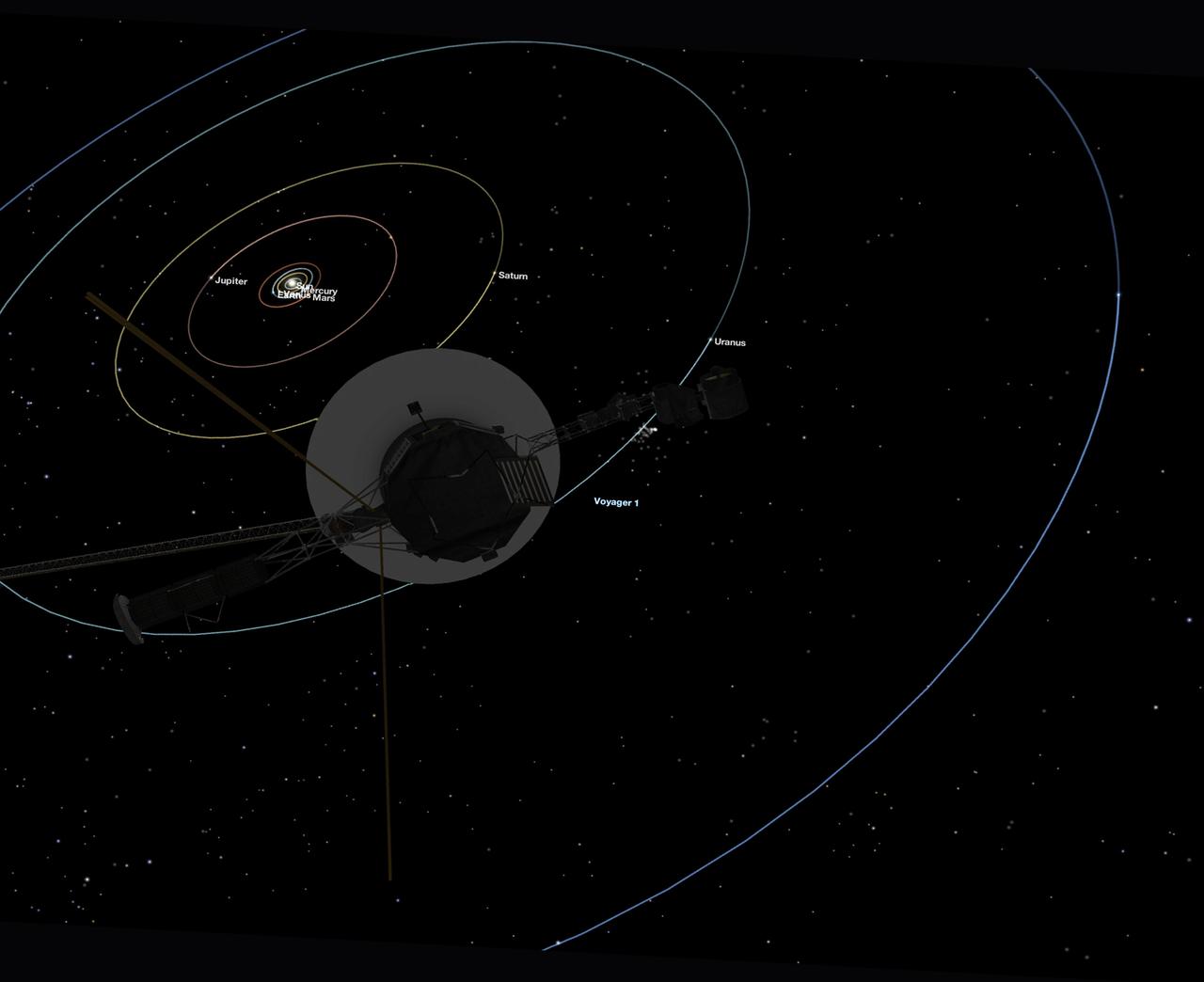
This simulated view, made using NASA's Eyes on the Solar System app, approximates Voyager 1's perspective when it took its final series of images known as the "Family Portrait of the Solar System," including the "Pale Blue Dot" image. https://photojournal.jpl.nasa.gov/catalog/PIA23681
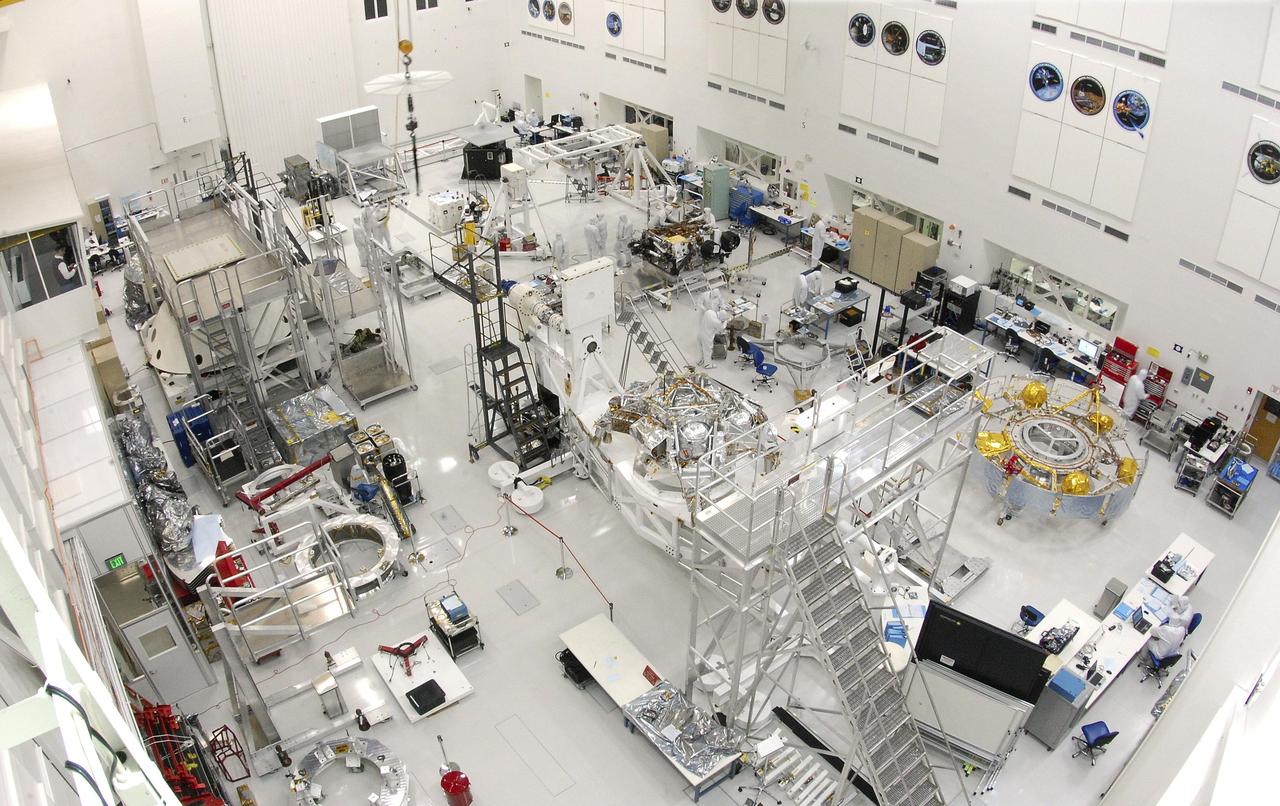
This wide-angle view shows the High Bay 1 cleanroom inside the Spacecraft Assembly Facility at NASA Jet Propulsion Laboratory, Pasadena, Calif. Specialists are working on components of NASA Mars Science Laboratory spacecraft.
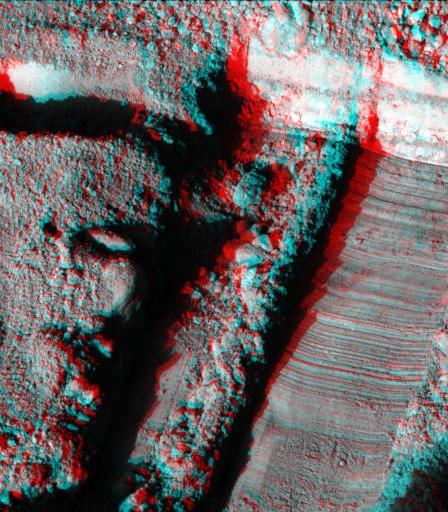
This anaglyph, acquired by NASA Phoenix Lander Surface Stereo Imager on June 19, 2008, shows a view of the Martian surface near the lander. The trench shown here is informally called Snow White 1. 3D glasses are necessary.
This anaglyph, acquired by NASA Phoenix Lander Surface Stereo Imager on June 19, 2008, shows a view of the Martian surface near the lander. The trench shown here is informally called Snow White 1. 3D glasses are necessary.
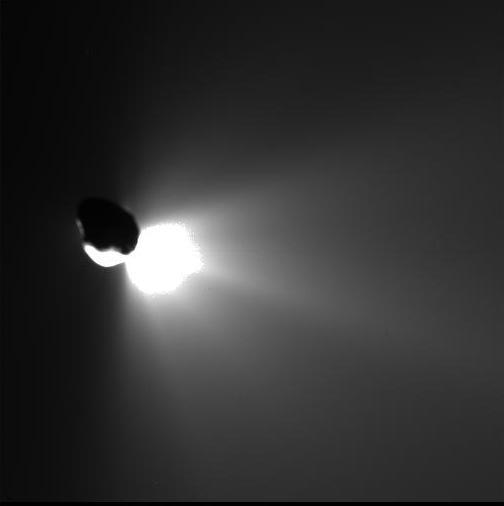
This image shows the view from NASA Deep Impact flyby spacecraft as it turned back to look at comet Tempel 1. Fifty minutes earlier, the spacecraft probe was run over by the comet.
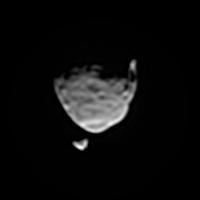
This view of the two moons of Mars comes from a set of images taken by NASA Mars rover Curiosity as the larger moon, Phobos, passed in front of the smaller one, Deimos, from Curiosity perspective, on Aug. 1, 2013.
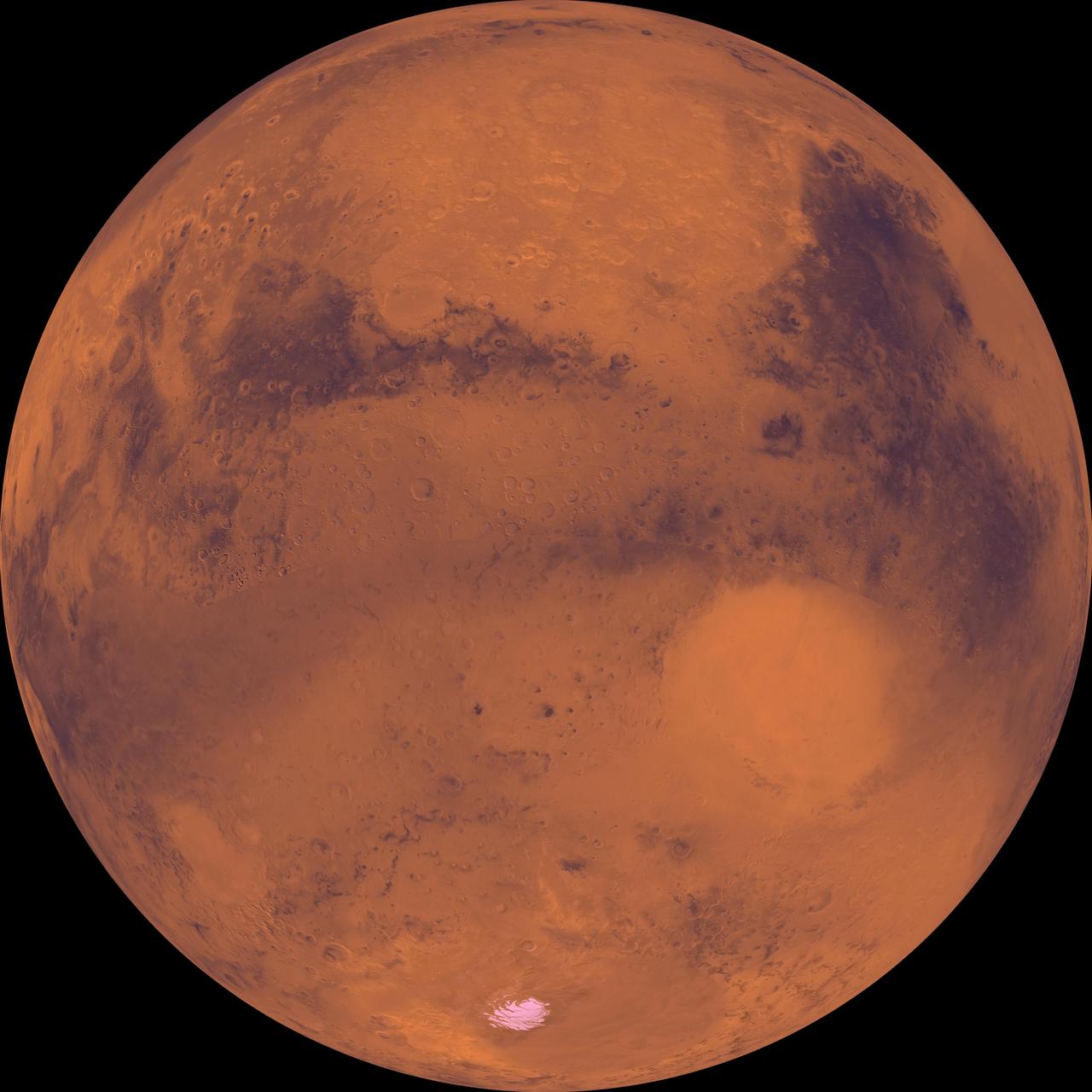
Heavily cratered highlands dominate this view from NASA's Viking Orbiter 1. Toward the lower right, a conspicuous light-colored circular depression marks the ancient large Hellas impact basin. http://photojournal.jpl.nasa.gov/catalog/PIA00191
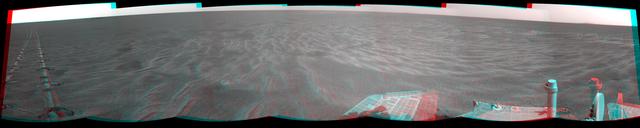
A dance-step pattern is visible in the wheel tracks near the left edge of this scene recorded by NASA Mars Exploration Rover Opportunity on Mars on April 1, 2011. 3D glasses are necessary to view this image.
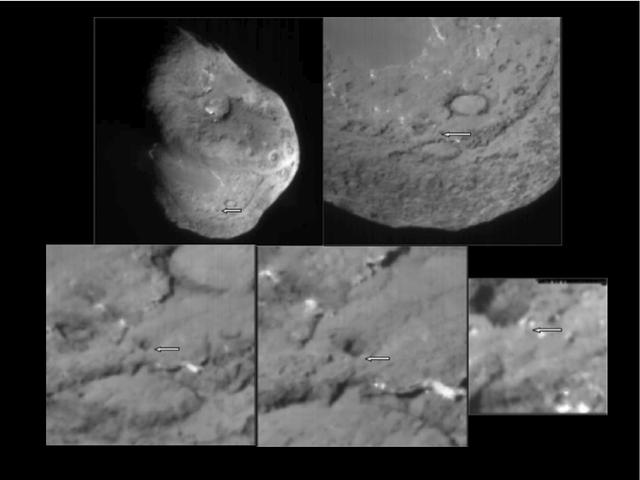
This series of images shows the area where NASA Deep Impact probe collided with the surface of comet Tempel 1 in 2005. The view zooms in as the images progress from top left to right, and then bottom left to right.
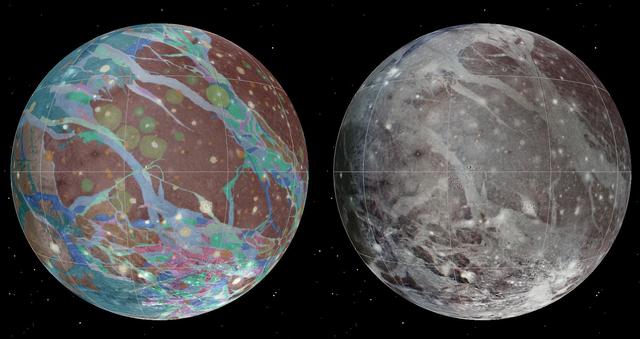
To present the best information in a single view of Jupiter moon Ganymede, a global image mosaic was assembled, incorporating the best available imagery from NASA Voyager 1 and 2 spacecraft and NASA Galileo spacecraft.
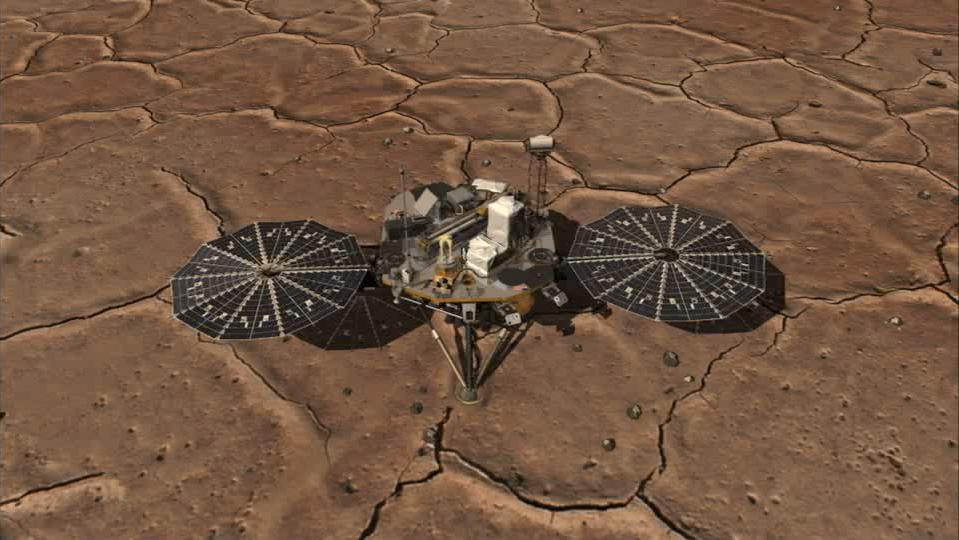
This image from Sol 1 shows a mosaic of NASA Mars Phoenix digging area in the Martian terrain. Phoenix scientists were very pleased with this view as the terrain features few rocks -- an optimal place for digging.
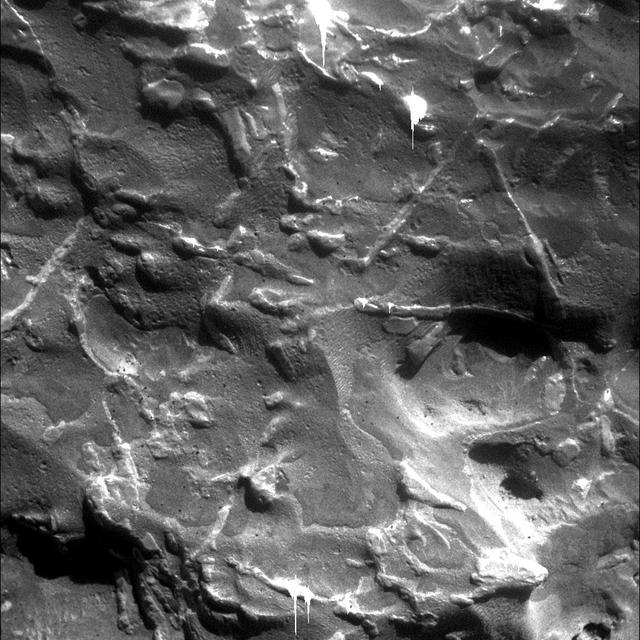
NASA Mars Exploration Rover Opportunity used its microscopic imager to get this view of the surface of a rock called Block Island during the 1,963rd Martian day, or sol, of the rover mission on Mars Aug. 1, 2009.
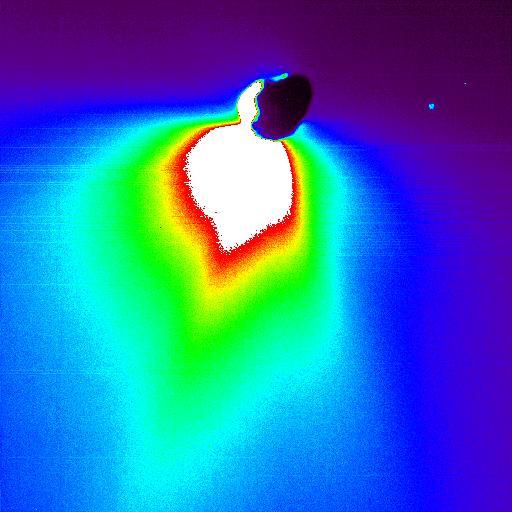
This false-color image shows comet Tempel 1 about 50 minutes after NASA Deep Impact probe smashed into its surface. The impact site is located on the far side of the comet in this view.
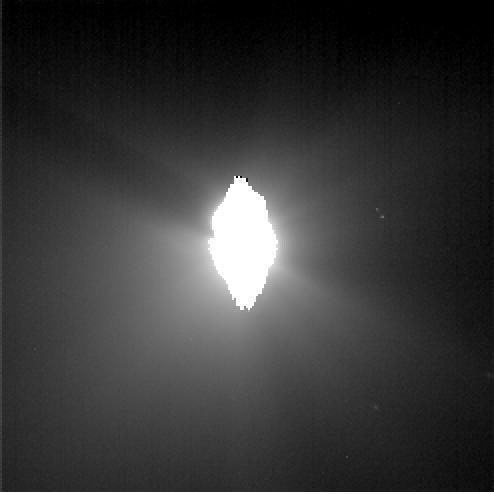
This image shows the view from NASA Deep Impact probe 30 minutes before it was pummeled by comet Tempel 1. The picture brightness has been enhanced to show the jets of dust streaming away from the comet.
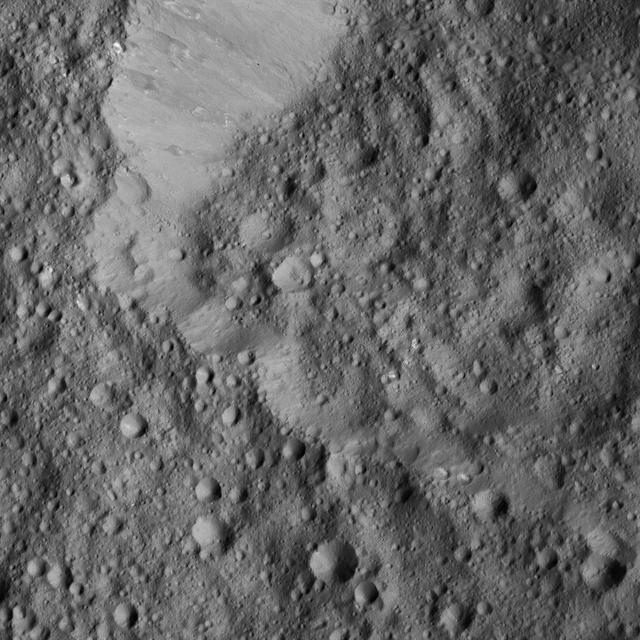
This view from NASA's Dawn spacecraft shows Rongo Crater, located near Ceres' equator. The image is centered at 0 degrees south latitude, 346 degrees east longitude. Dawn took this image on June 1, 2016, from its low-altitude mapping orbit, at a distance of about 240 miles (385 kilometers) above the surface. The image resolution is 120 feet (35 meters) per pixel. http://photojournal.jpl.nasa.gov/catalog/PIA20935
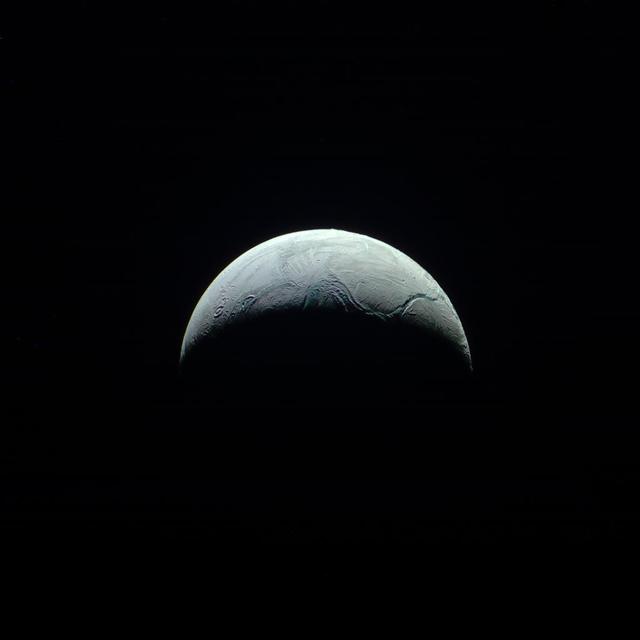
The heavens often seem vast and unchanging as seen from Earth, but movement in the skies is the norm. The relative motions of both Cassini and Enceladus over a 15-minute period create the movement seen in this movie sequence. Cassini has monitored Enceladus (313 miles or 504 kilometers across) with a particular interest in the plumes and the geology of the south polar region for many years. Different viewing geometries give scientists different information, and the resulting animation gives us a unique "spacecraft's eye" view of the flyby. The movie is a composite of six images taken with the Cassini spacecraft narrow-angle camera on Aug. 1, 2017 using filters that allow infrared, green, and ultraviolet light. The image filter centered on 930 nm (IR) is red in this image, the image filter centered on the green is green, and the image filter centered on 338 nm (UV) is blue. The view was obtained at a distance of approximately 112,000 miles (181,000 kilometers) from Enceladus. Image scale is about 0.6 mile (1 kilometer) per pixel. The animation is available at https://photojournal.jpl.nasa.gov/catalog/PIA21344
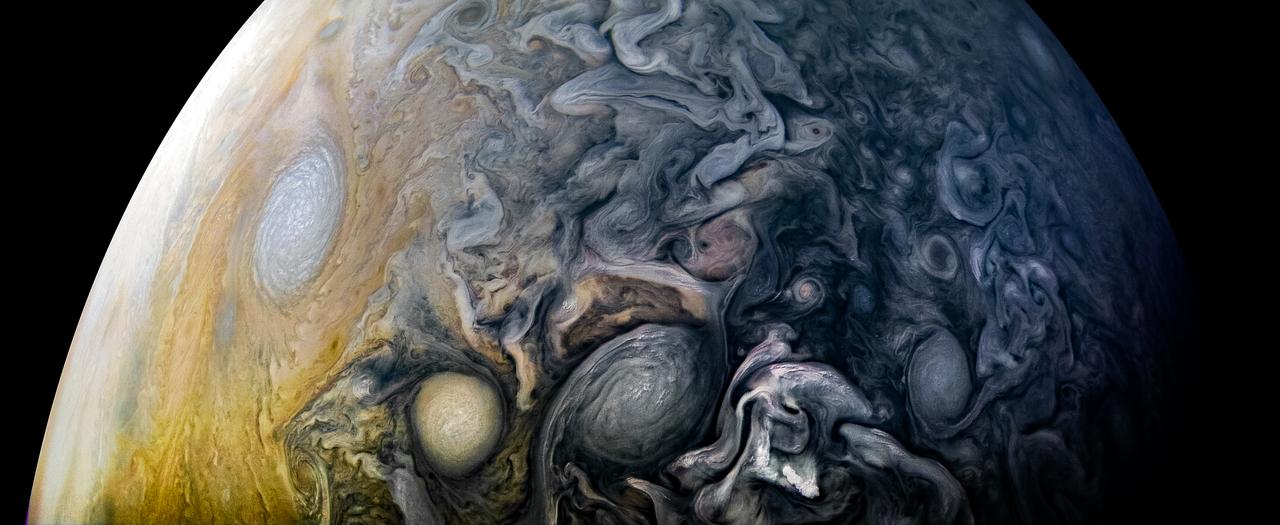
See intricate cloud patterns in the northern hemisphere of Jupiter in this new view taken by NASA's Juno spacecraft. The color-enhanced image was taken on April 1, 2018 at 2:32 a.m. PST (5:32 a.m. EST), as Juno performed its twelfth close flyby of Jupiter. At the time the image was taken, the spacecraft was about 7,659 miles (12,326 kilometers) from the tops of the clouds of the planet at a northern latitude of 50.2 degrees. Citizen scientist Kevin M. Gill processed this image using data from the JunoCam imager. https://photojournal.jpl.nasa.gov/catalog/PIA21984 . - Enhanced image by Kevin M. Gill (CC-BY) based on images provided courtesy of NASA/JPL-Caltech/SwRI/MSSS

This view of Jupiter was taken by Voyager 1. This image was taken through color filters and recombined to produce the color image. This photo was assembled from three black and white negatives by the Image Processing Lab at Jet Propulsion Laboratory. http://photojournal.jpl.nasa.gov/catalog/PIA01384
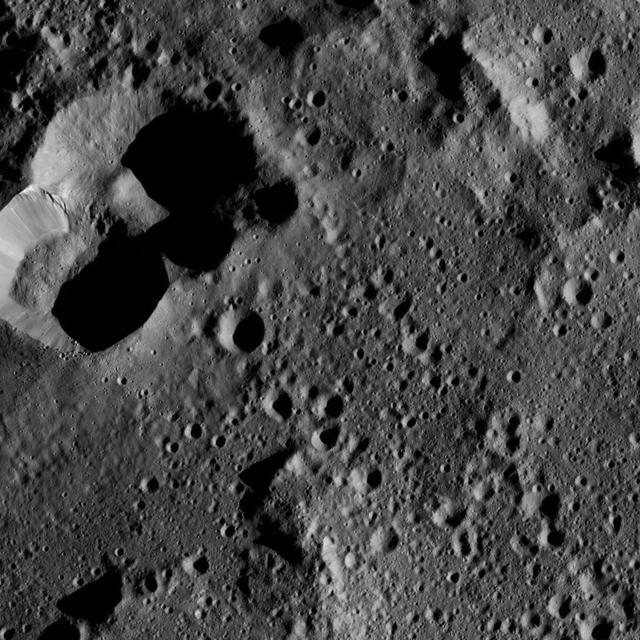
This view from NASA's Dawn spacecraft shows cratered terrain on the edge of the giant crater Yalode. The image is centered at 44 degrees south latitude, 316 degrees east longitude. Dawn took this image on June 1, 2016, from its low-altitude mapping orbit, at a distance of about 240 miles (385 kilometers) above the surface. The image resolution is 120 feet (35 meters) per pixel. http://photojournal.jpl.nasa.gov/catalog/PIA20936

This animation shows the overlap of the field of view of Juno's Stellar Reference Unit (SRU) star camera (in yellow) and Juno's Microwave Radiometer (MWR) Antenna-1 beam (in red). The animation depicts Juno flying over Jupiter's North pole where the planet's massive northern aurora is located. Juno observes Jupiter's lightning using multiple instruments which detect lightning at different parts of its spectrum. Animation avaiable at https://photojournal.jpl.nasa.gov/catalog/PIA22967
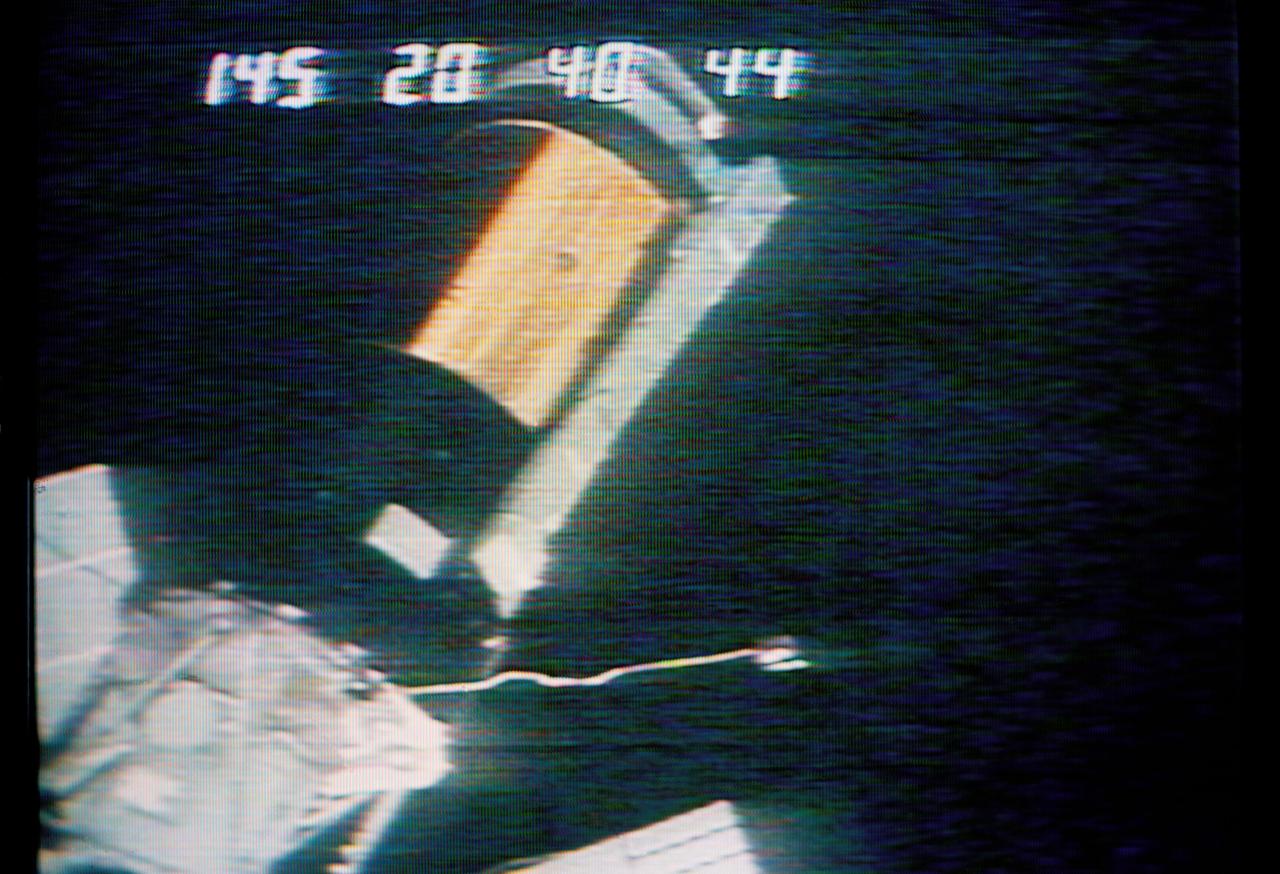
S73-26738 (25 May 1973) --- A close-up view of the Skylab 1 space station cluster can be seen in this reproduction taken from a color television transmission made by a TV camera aboard the Skylab 2 Command Module during its ?fly-around? inspection of the cluster. The numbers across the top of the picture indicate the Skylab 1 ground lapse time. Note the missing portion of the micrometeoroid shield on the Orbital Workshop. The shield area was reported to be solid gold by the Skylab 2 crewmen. A cable appears to be wrapped around the damaged OWS solar array system wing. The crewmen reported that the other OWS solar panel was completely gone, with only tubes and wiring sticking out. One of the discone antennas extends out form the Airlock Module. The Multiple Docking Adapter is in the lower left corner of the picture. A portion of a solar panel on the Apollo Telescope Mount is visible at the bottom and at the left edge. In their ?fly around? inspection the crewmen noted that portions of the micrometeoroid shield had slid back underneath the OWS solar wing. Photo credit: NASA
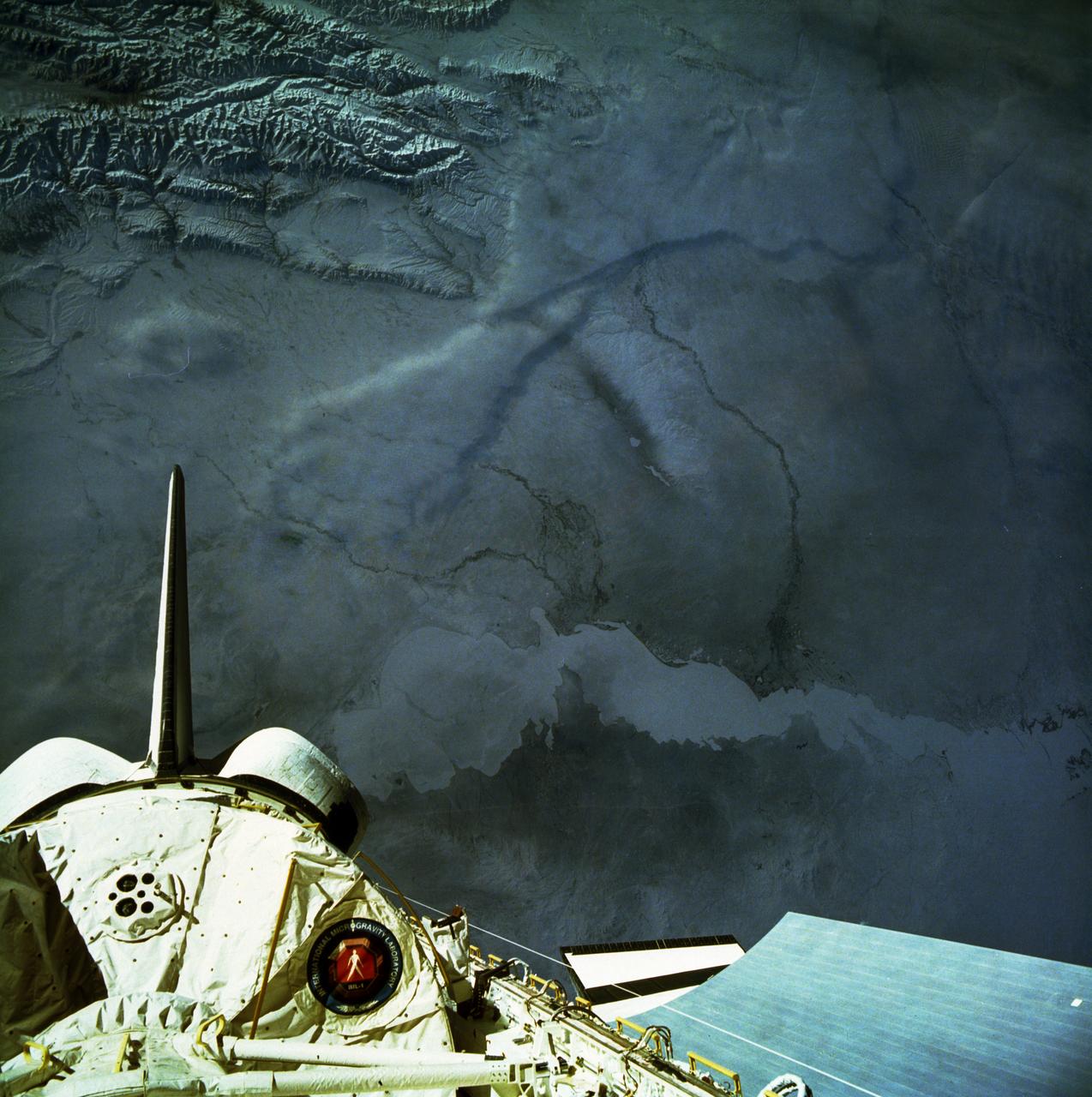
STS-42, Viewing earth with lots of snow, partial view of IML-1 (International Microgravity Laboratory) in cargo bay.
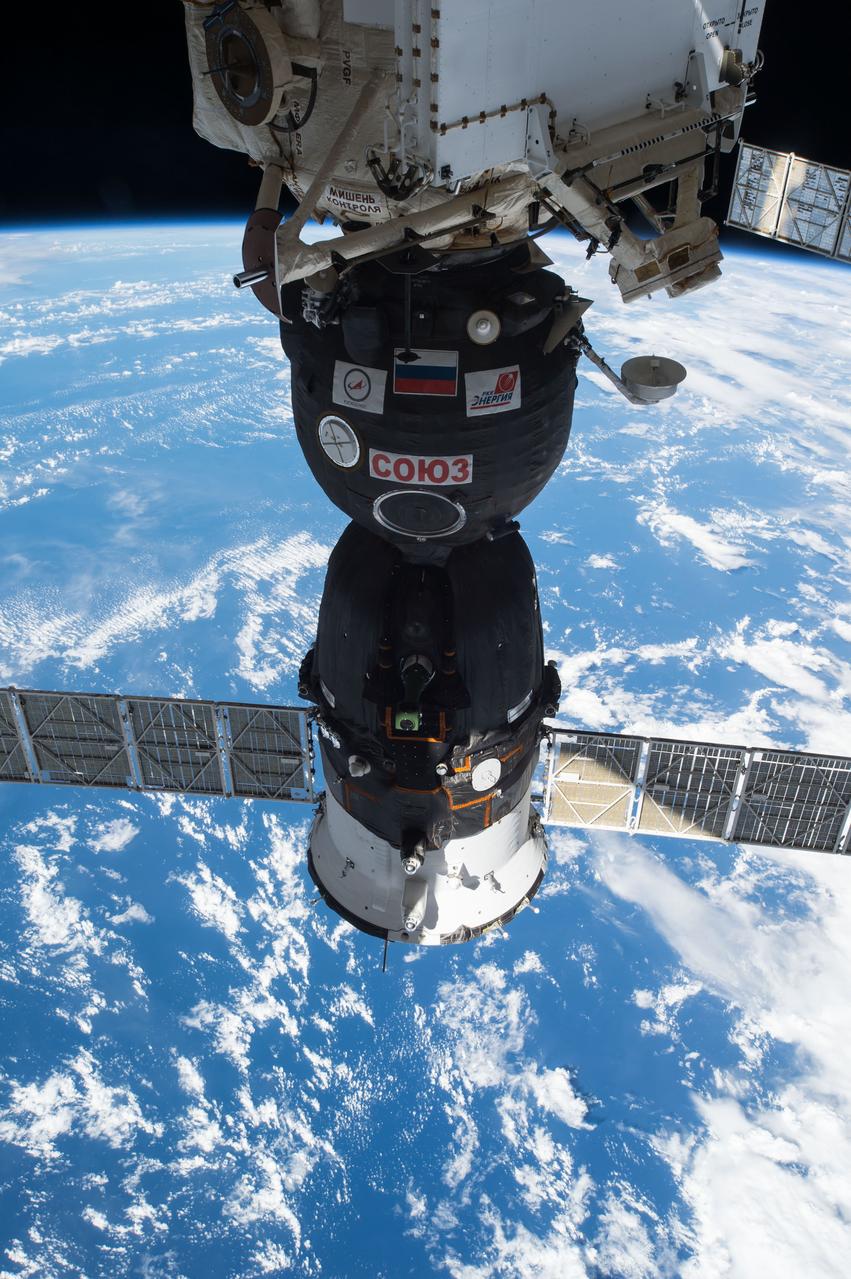
View of the Soyuz TMA-15M spacecraft docked to Rassvet Mini-Research Module 1 (MRM1) An Earth limb is in view.

Voyager 1 views of Jupiter's rings
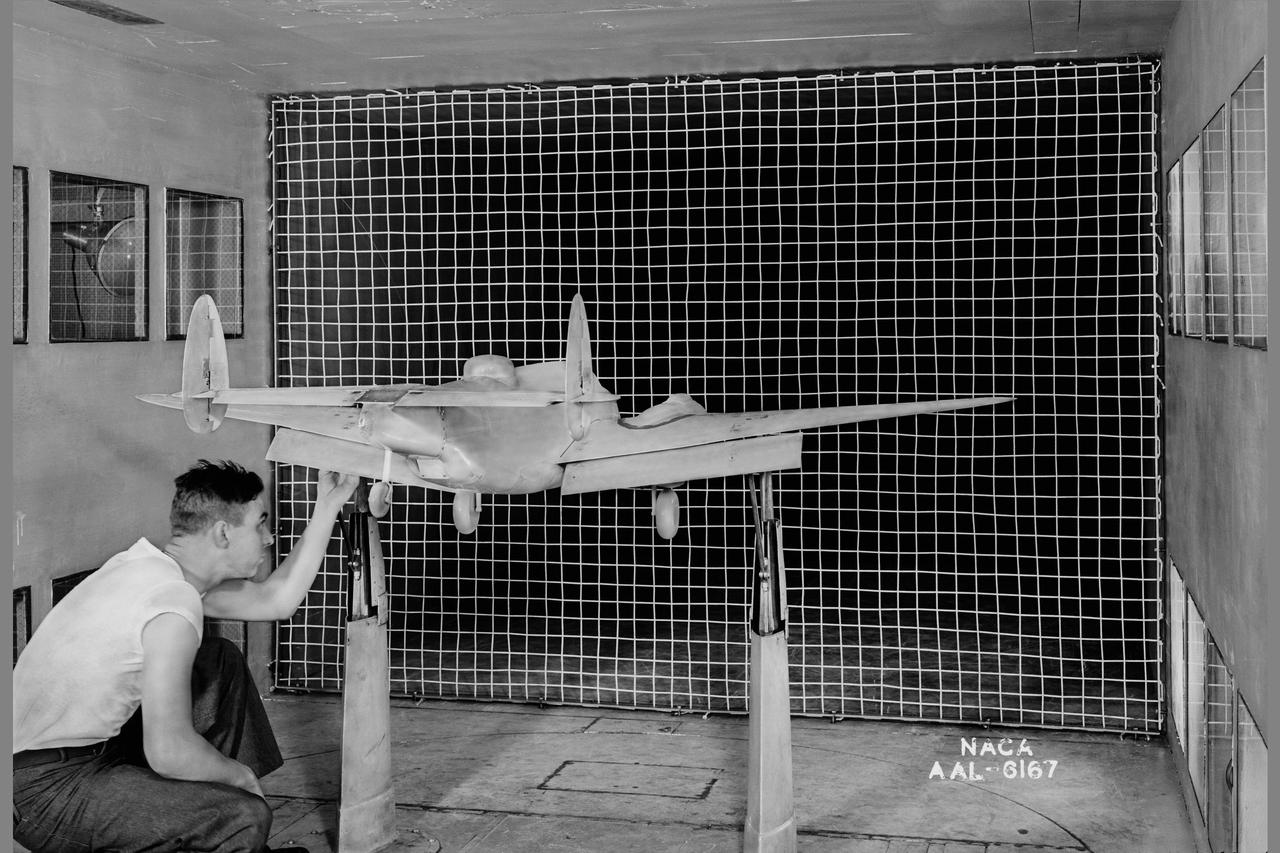
PV-1 model; rear view with 2 1/2' x 2 1/2' trubulene net mount in the 7x10ft w.t. at Ames Research Center
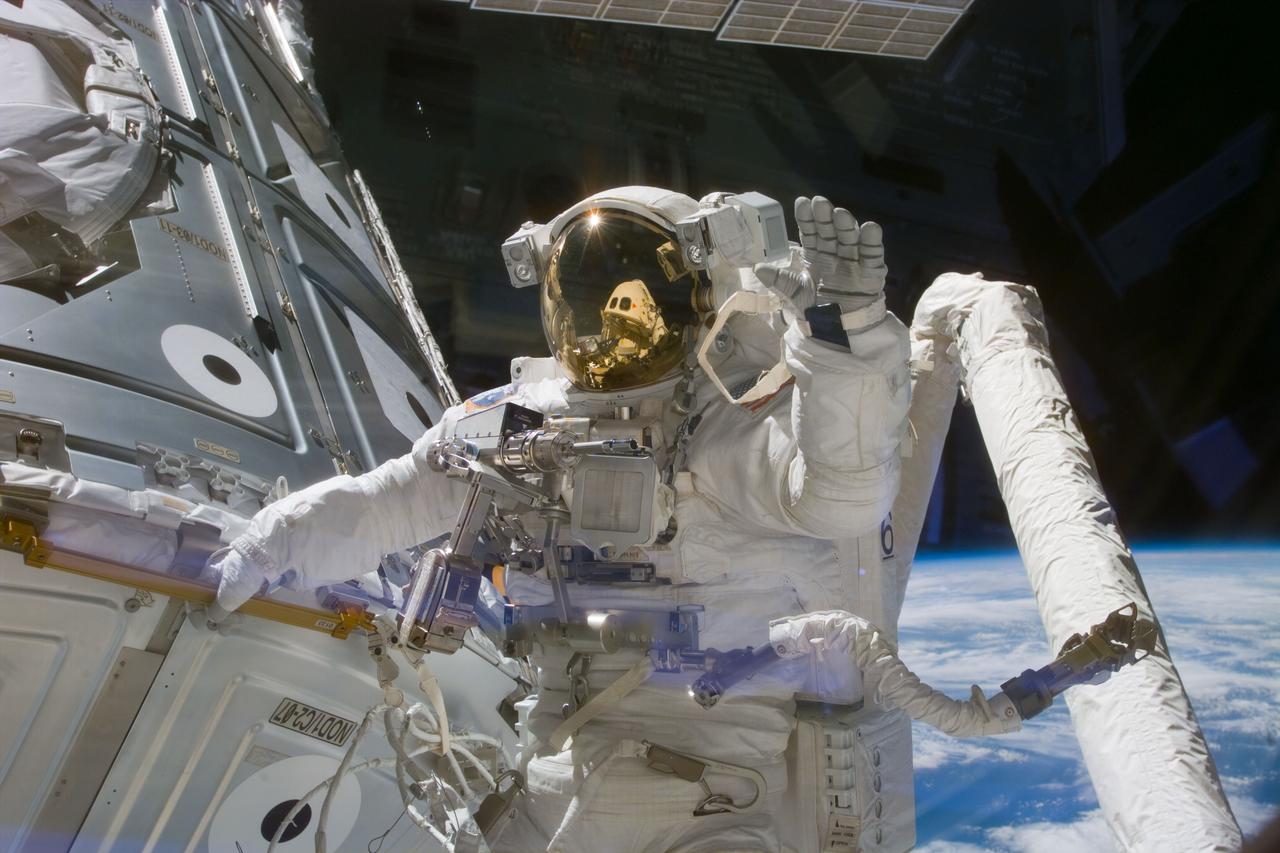
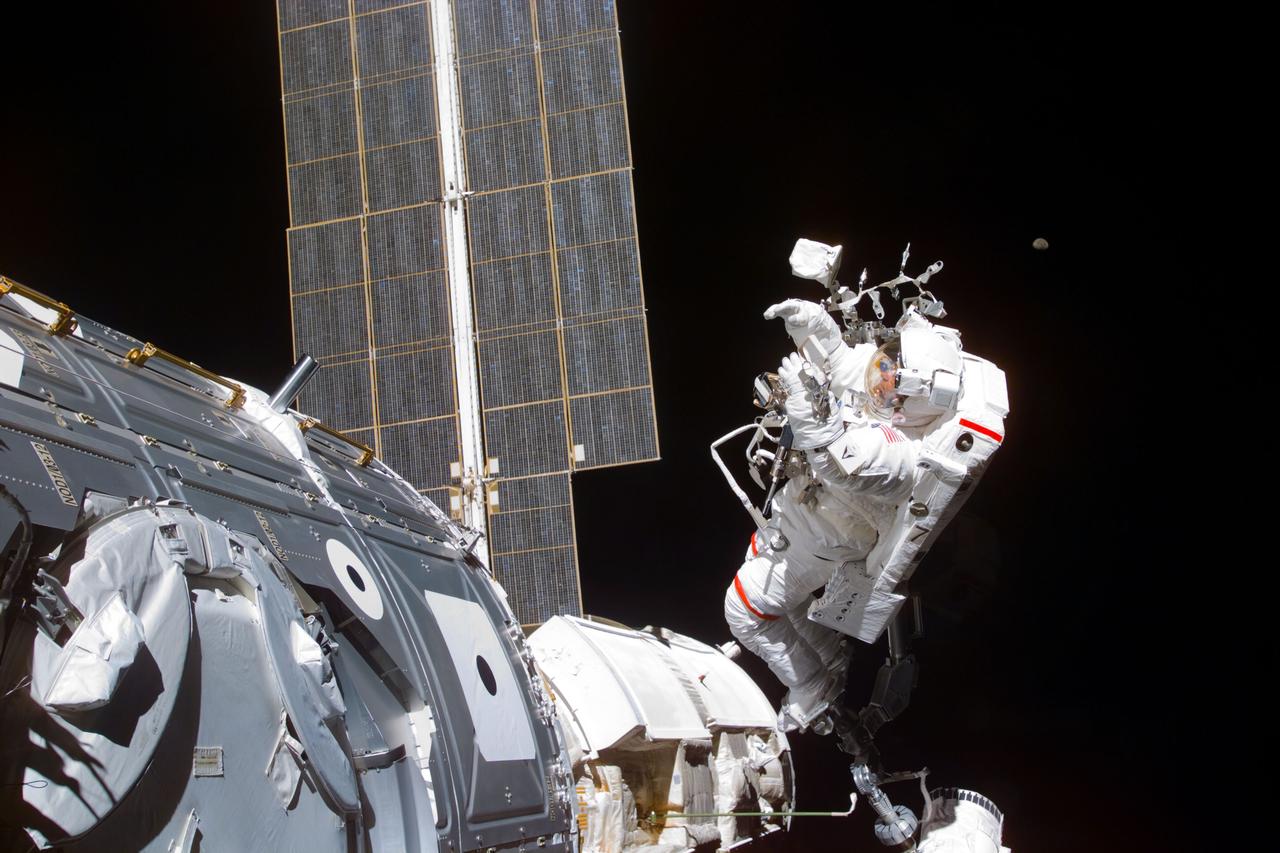
S88-E-5057 (12-07-98) --- Astronaut James H. Newman, waves at camera as he holds onto one of the hand rails on the Unity connecting module during the early stages of a 7-hour, 21-minute spacewalk. Astronauts Newman and Jerry L. Ross, both mission specialists, went on to mate 40 cables and connectors running 76 feet from the Zarya control module to Unity, with the 35-ton complex towering over Endeavour's cargo bay. This photo was taken with an electronic still camera (ESC) at 23:37:40 GMT, Dec. 7.
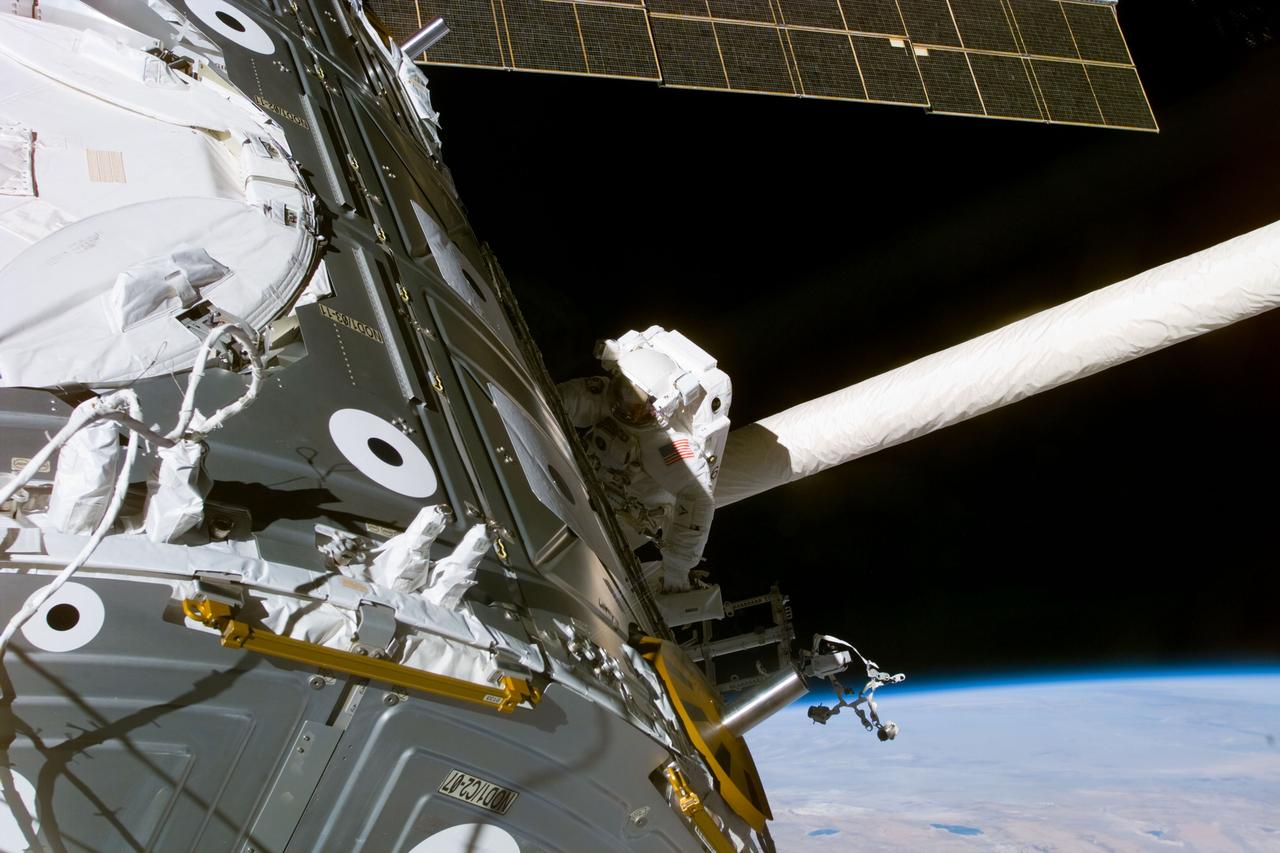
S88-E-5060 (12-08-98) --- Astronaut James H. Newman is seen near the Unity module during late phases of the first of three scheduled spacewalks on STS-88. At the end of the extravehicular activity (EVA), astronauts Newman and Jerry L. Ross, both mission specialists, were successful in mating 40 cables and connectors running 76 feet from the Zarya control module to Unity, with the 35-ton complex towering over Endeavour's cargo bay. The spacewalk last 7 hours and 21 minutes. This photo was taken with an electronic still camera (ESC) at 03:50:28 GMT, Dec. 8.
S88-E-5058 (12-08-98) --- Astronaut Jerry L. Ross takes a picture during a 7-hour, 21 minute spacewalk. Astronauts Ross and James H. Newman went on to mate 40 cables and connectors runing 76 feet from the Zarya control module to Unity, with the 35-ton complex towering over Endeavour's cargo bay. The photo was taken with an electronic still camera (ESC) at 00:35:05 GMT, Dec. 8.

This image of Tempel 1 is a compilation of nine images that were taken on June 15, 2005 by NASA Deep Impact spacecraft.
This image is a compilation of four images that were taken on June 13, 2005 by NASA Deep Impact. The spacecraft is 18,675,137.9 kilometers 11,604,190 miles away from comet Tempel 1.
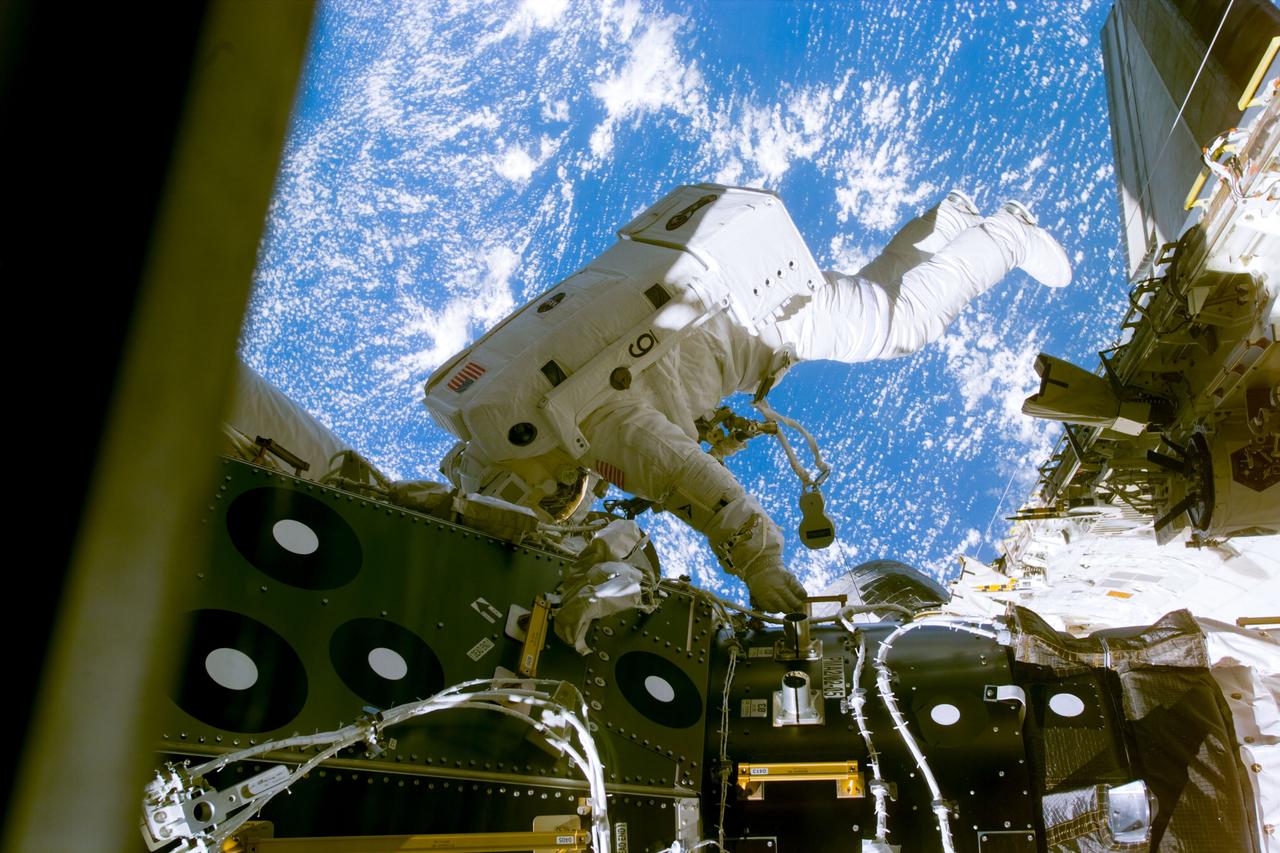
S88-E-5055 (12-07-98) --- Astronaut James H. Newman is seen at a pressurized mating adapter during early moments of the first of three scheduled spacewalks on STS-88. Astronauts Newman and Jerry L. Ross, both mission specialists, went on to mate 40 cables and connectors running 76 feet from the Zarya control module to Unity, with the 35-ton complex towering over Endeavour;'s cargo bay. This photo was taken with an electronic still camera (ESC) at 23:26:22 GMT, Dec. 7.

This image of Tempel 1 is a compilation of nine images that were taken on June 15, 2005 by NASA Deep Impact spacecraft.
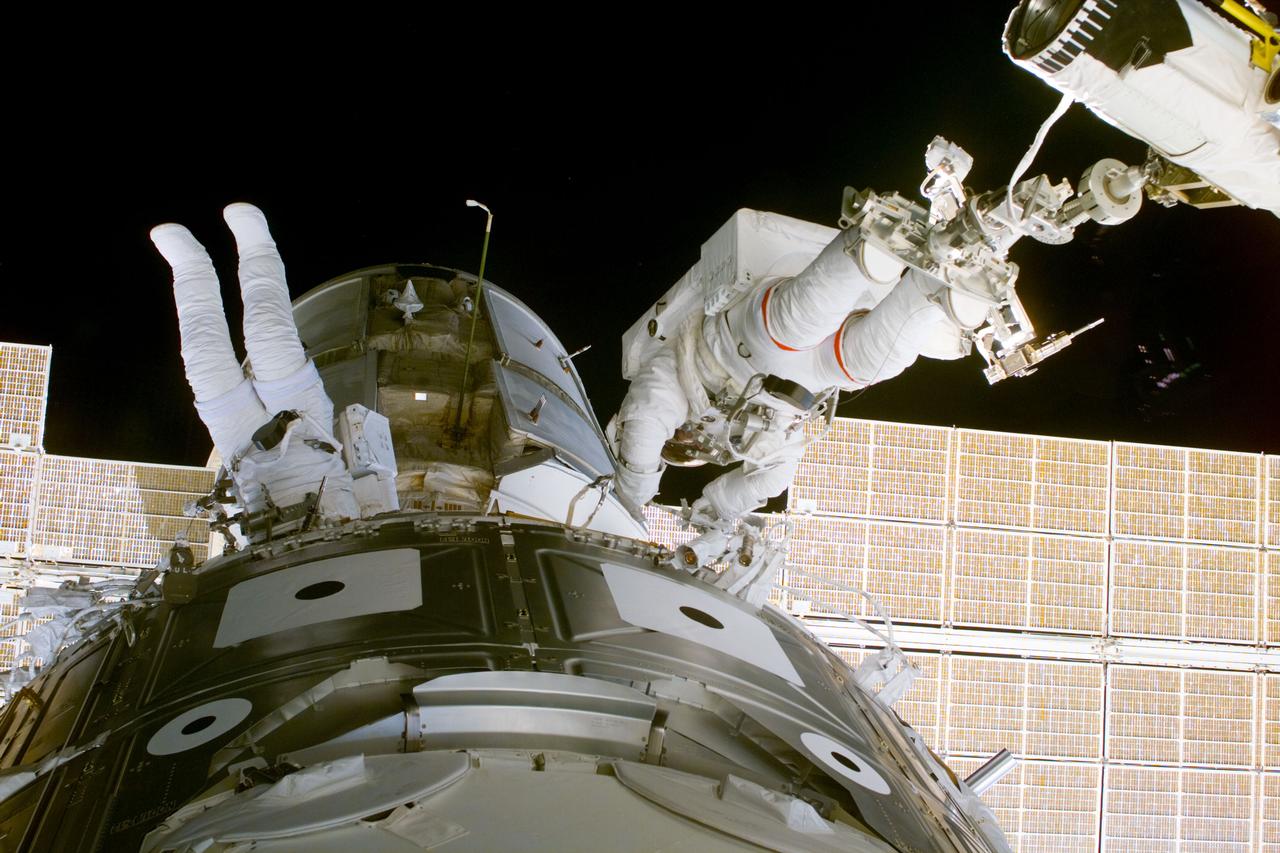
S88-E-5059 (12-08-98) --- Astronauts James H. Newman (left) and Jerry L. Ross work between Zarya and Unity (foreground) during the first of three scheduled spacewalks on the STS-88 mission. Newman is tethered to the module, while Ross is anchored at the feet to a mobile foot restraint mounted on the end of the remote manipulator system (RMS) arm.
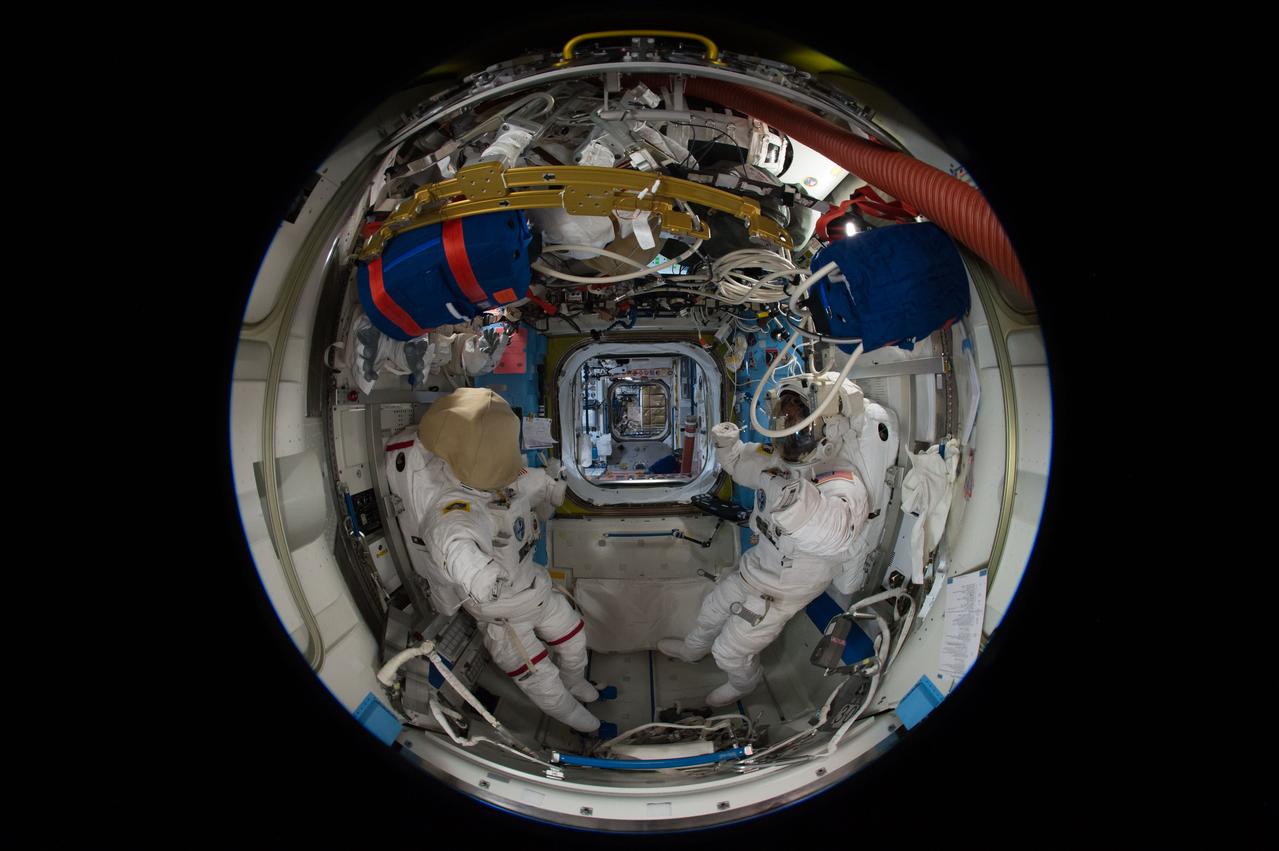
iss051e041018 (5/11/2017) --- A fish-eye view looking port in the Quest Airlock (A/L), taken for a Google Street View of the ISS. The port hatch into the Unity Node 1 is in view.
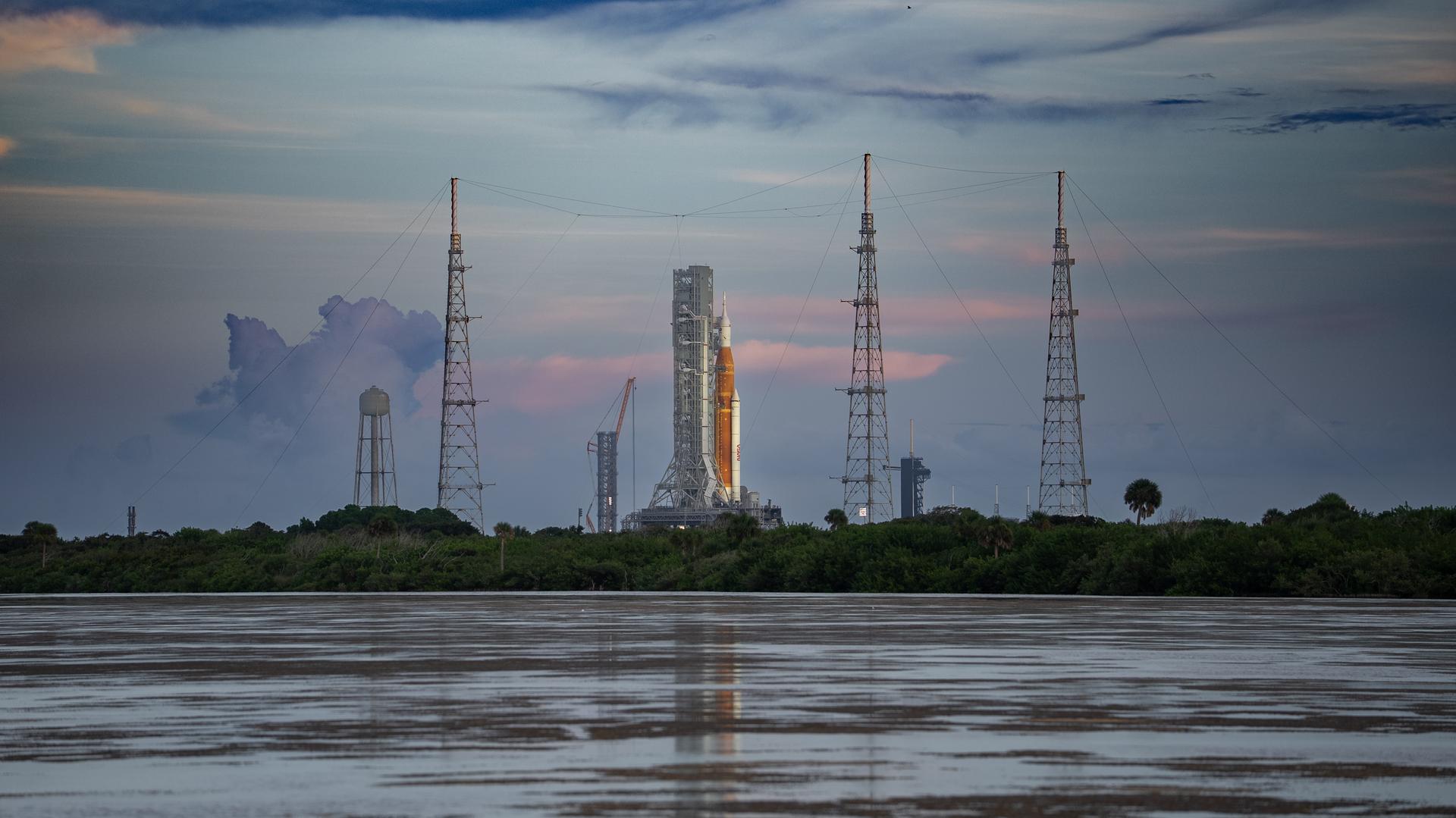
NASA’s Space Launch System (SLS) rocket with the Orion spacecraft aboard is seen atop the mobile launcher at Launch Pad 39B at NASA’s Kennedy Space Center in Florida. Artemis I mission is the first integrated test of the agency’s deep space exploration systems: the Space Launch System rocket, Orion spacecraft, and supporting ground systems. The mission is the first in a series of increasingly complex missions to the Moon. Launch of the uncrewed flight test is targeted for no earlier than Sept. 3 at 2:17 p.m. ET. With Artemis missions, NASA will land the first woman and first person of color on the Moon, using innovative technologies to explore more of the lunar surface than ever before.
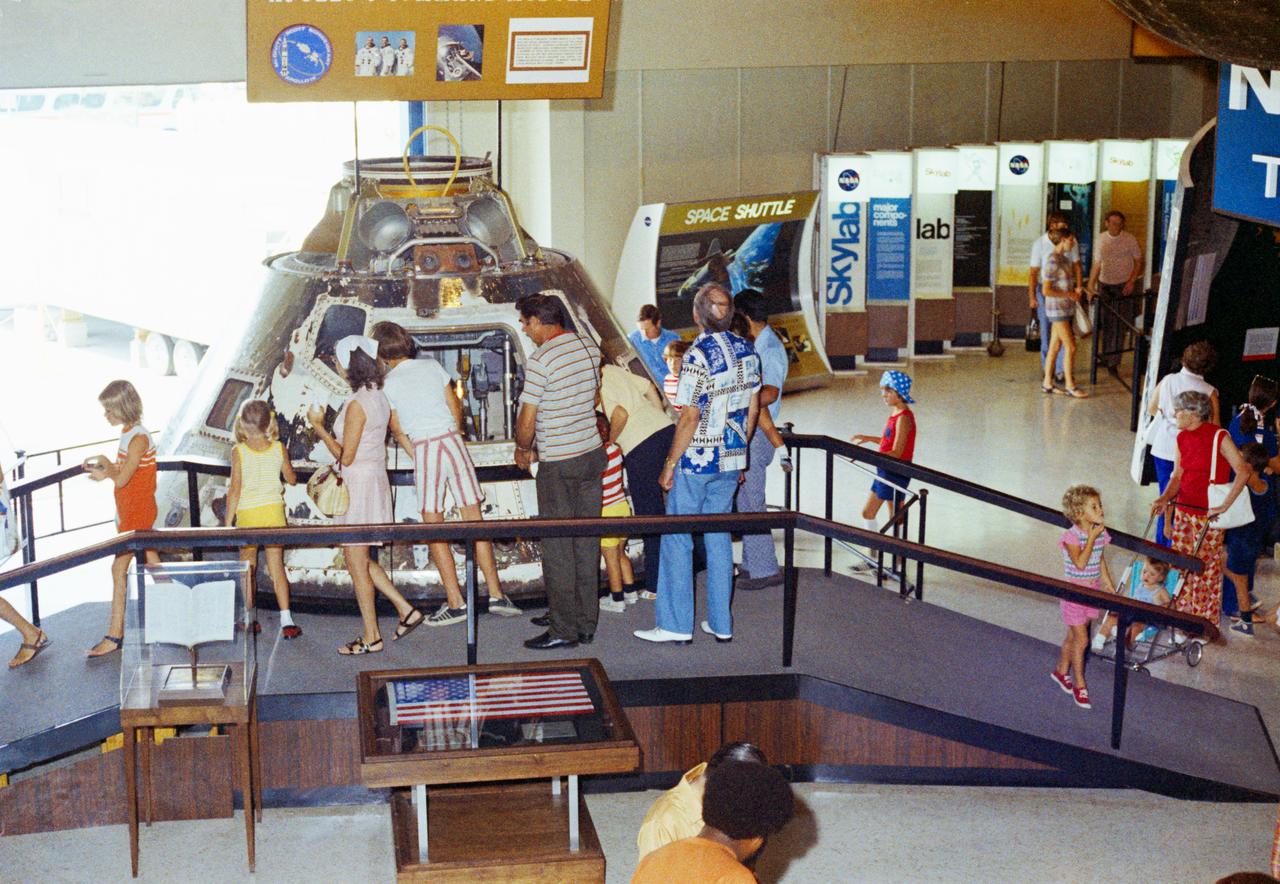
Series show exhibits displayed in the lobby and museum of Bldg. 1 Auditorium for public viewing. Views include spectators looking at the exhibits. JSC, HOUSTON, TX
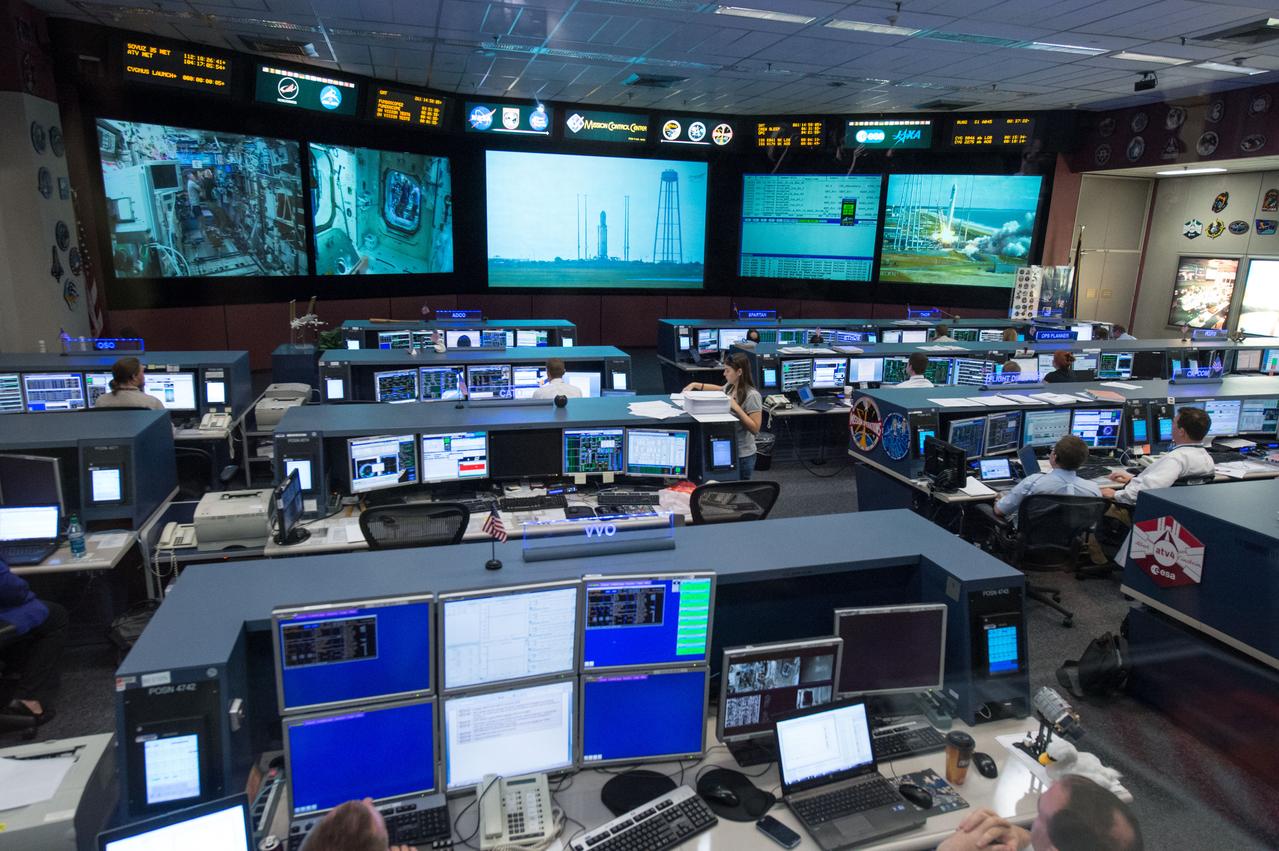
PHOTO DATE: 18 September 2013 LOCATION: Bldg. 30 FCR-1 Viewing Room SUBJECT: Students with experiements aboard the Orbital Sciences Cygnus launch watch the launch in the FCR-1 viewing room. PHOTOGRAPHER: Mark Sowa
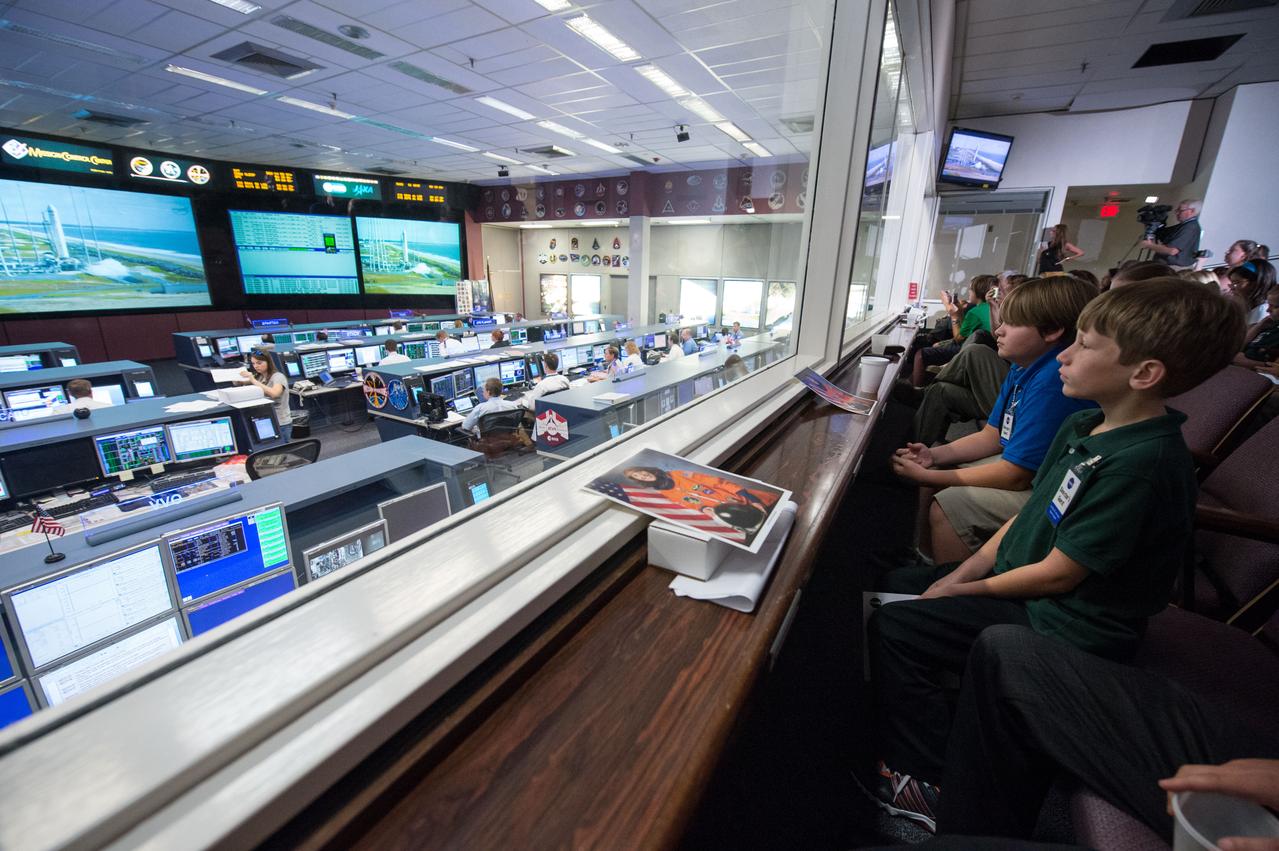
PHOTO DATE: 18 September 2013 LOCATION: Bldg. 30 FCR-1 Viewing Room SUBJECT: Students with experiements aboard the Orbital Sciences Cygnus launch watch the launch in the FCR-1 viewing room. PHOTOGRAPHER: Mark Sowa
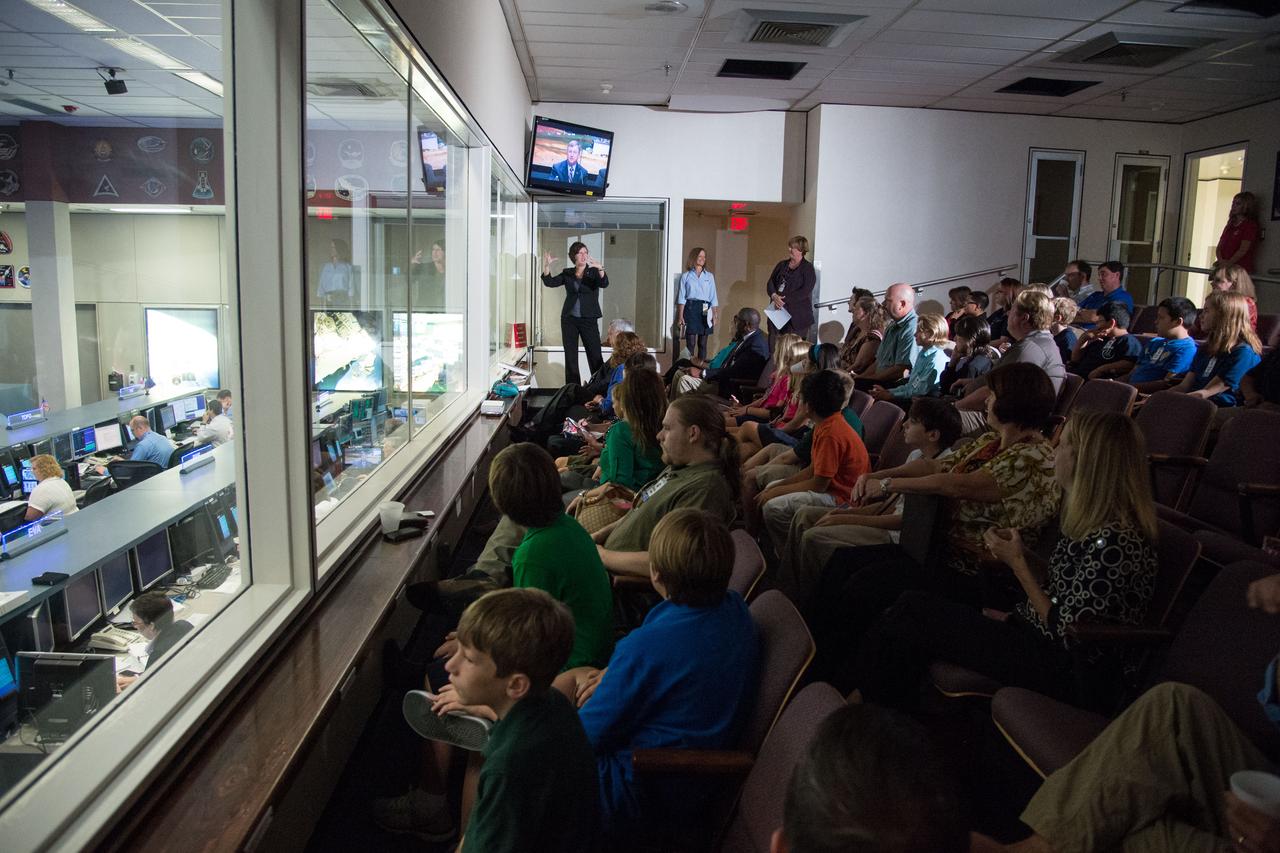
PHOTO DATE: 18 September 2013 LOCATION: Bldg. 30 FCR-1 Viewing Room SUBJECT: Students with experiements aboard the Orbital Sciences Cygnus launch watch the launch in the FCR-1 viewing room. PHOTOGRAPHER: Mark Sowa

PHOTO DATE: 18 September 2013 LOCATION: Bldg. 30 FCR-1 Viewing Room SUBJECT: Students with experiements aboard the Orbital Sciences Cygnus launch watch the launch in the FCR-1 viewing room. PHOTOGRAPHER: Mark Sowa
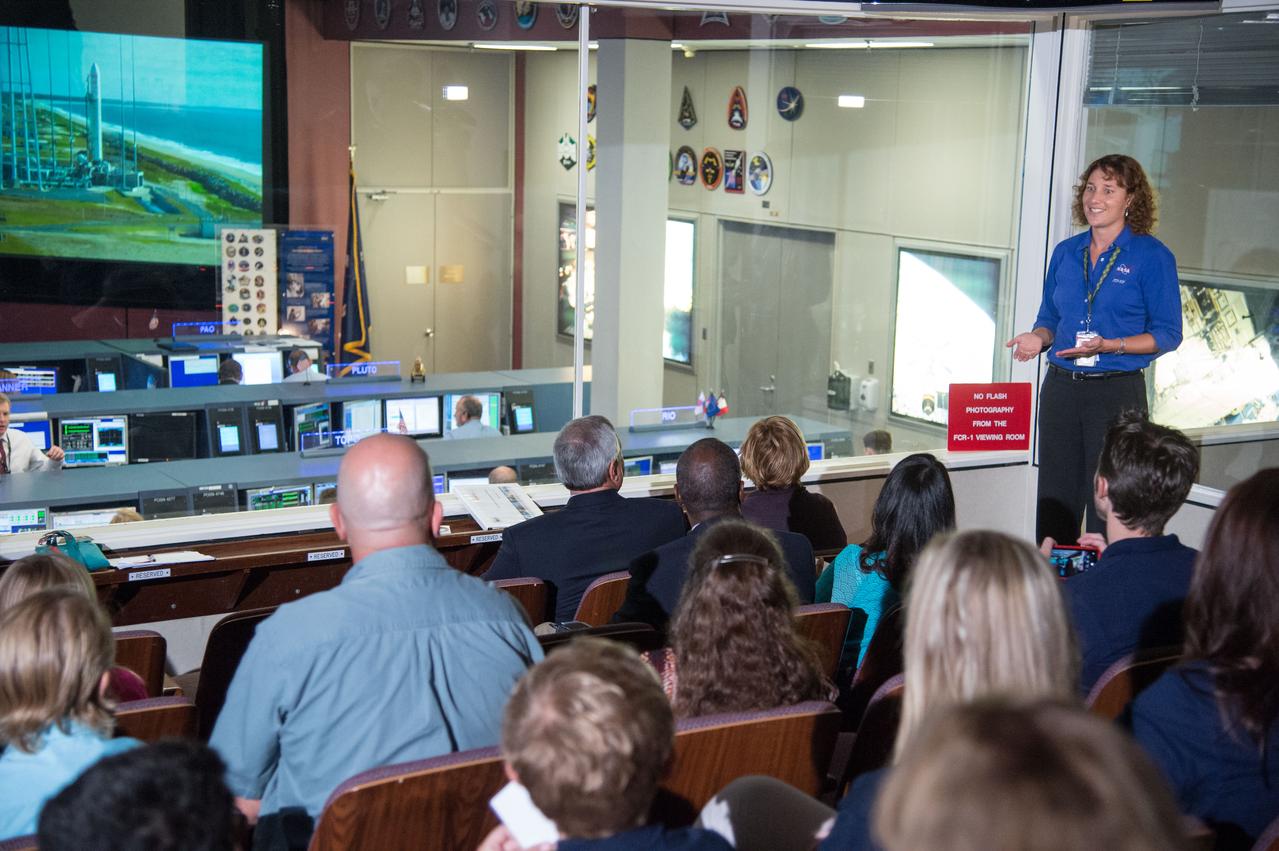
PHOTO DATE: 18 September 2013 LOCATION: Bldg. 30 FCR-1 Viewing Room SUBJECT: Students with experiements aboard the Orbital Sciences Cygnus launch watch the launch in the FCR-1 viewing room. PHOTOGRAPHER: Mark Sowa

PHOTO DATE: 18 September 2013 LOCATION: Bldg. 30 FCR-1 Viewing Room SUBJECT: Students with experiements aboard the Orbital Sciences Cygnus launch watch the launch in the FCR-1 viewing room. PHOTOGRAPHER: Mark Sowa
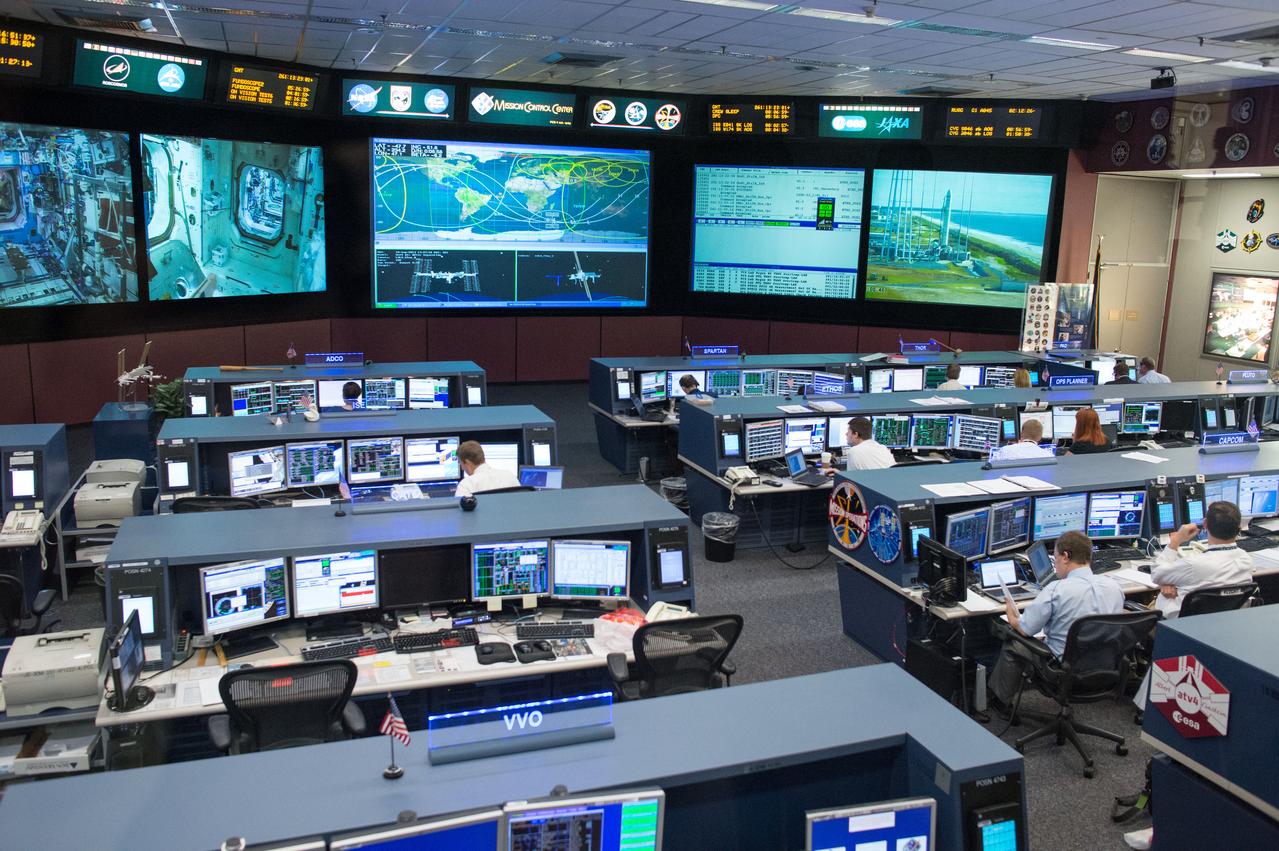
PHOTO DATE: 18 September 2013 LOCATION: Bldg. 30 FCR-1 Viewing Room SUBJECT: Students with experiements aboard the Orbital Sciences Cygnus launch watch the launch in the FCR-1 viewing room. PHOTOGRAPHER: Mark Sowa
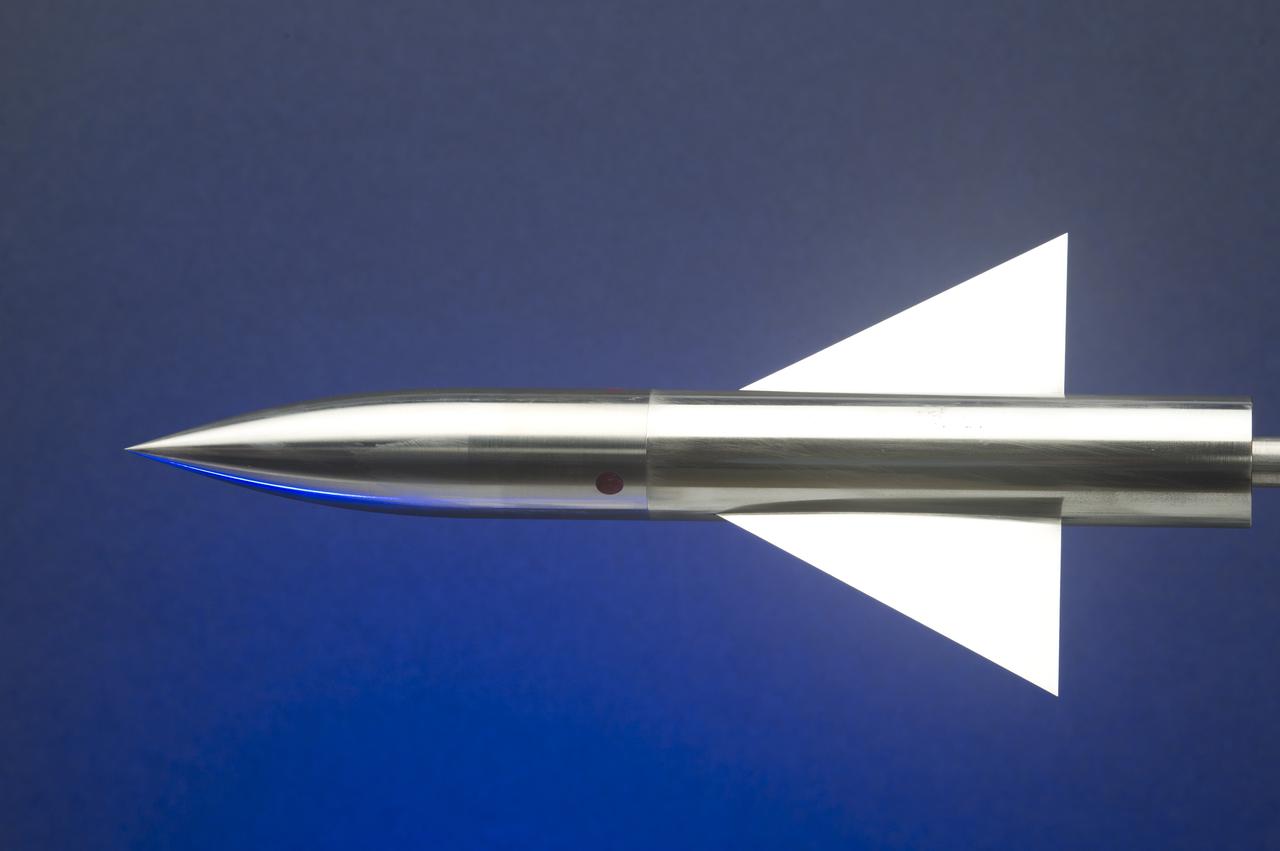
AGARD-B WIND TUNNEL MODEL, VIEW 1 OF 3
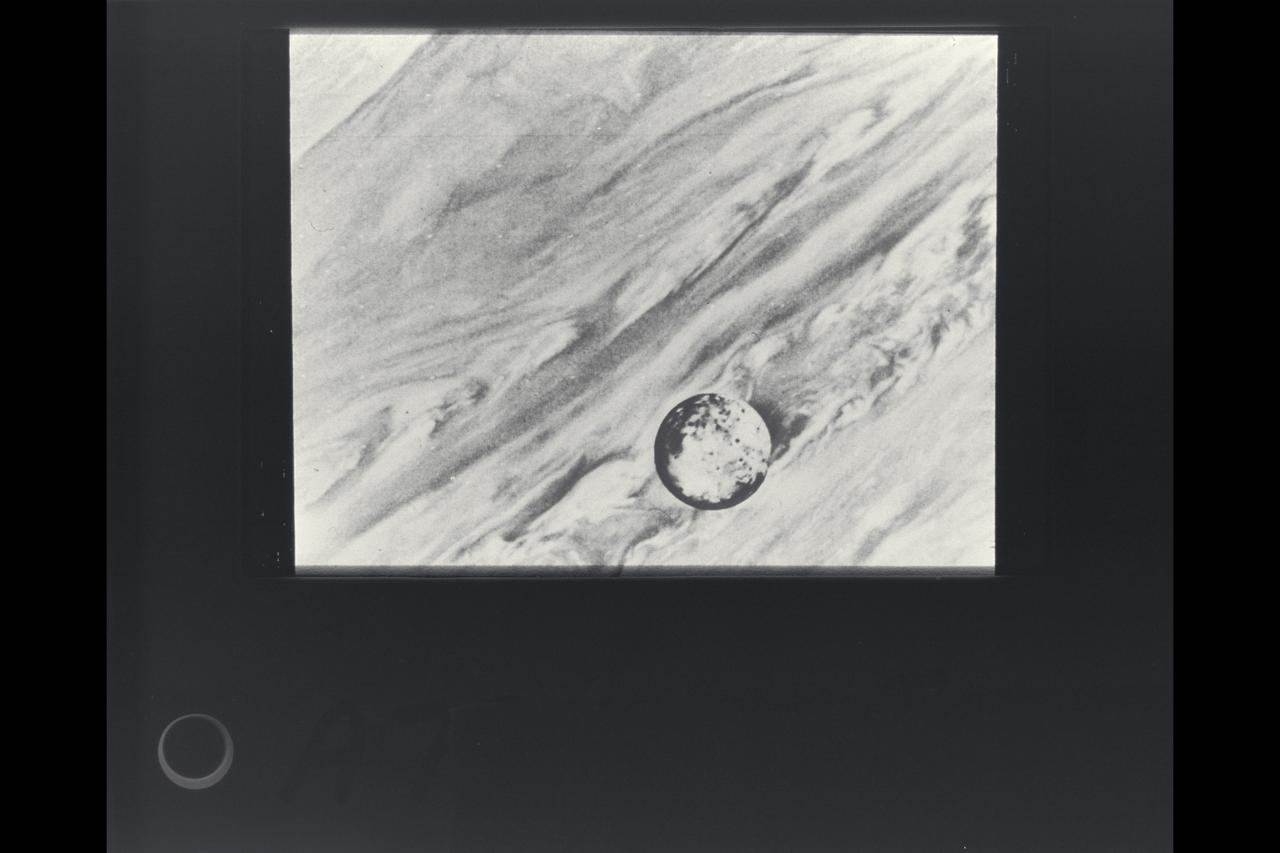
Voyager 1 view Io in its orbit around Jupiter
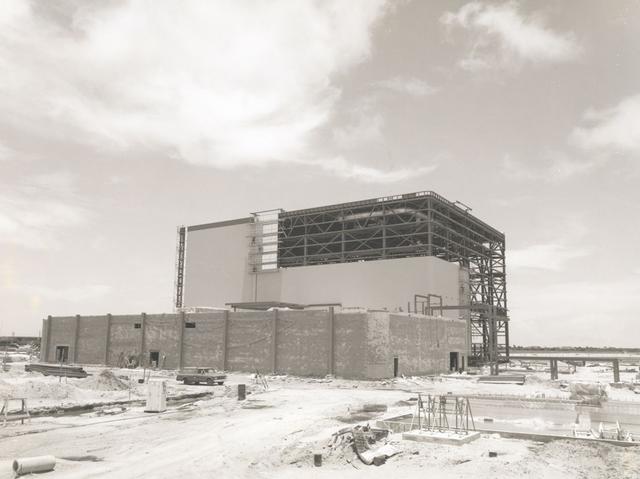
View of OPF High Bay No. 1 and Low Bay construction, 1976

View of OPF High Bay No. 1 and Low Bay construction, 1976
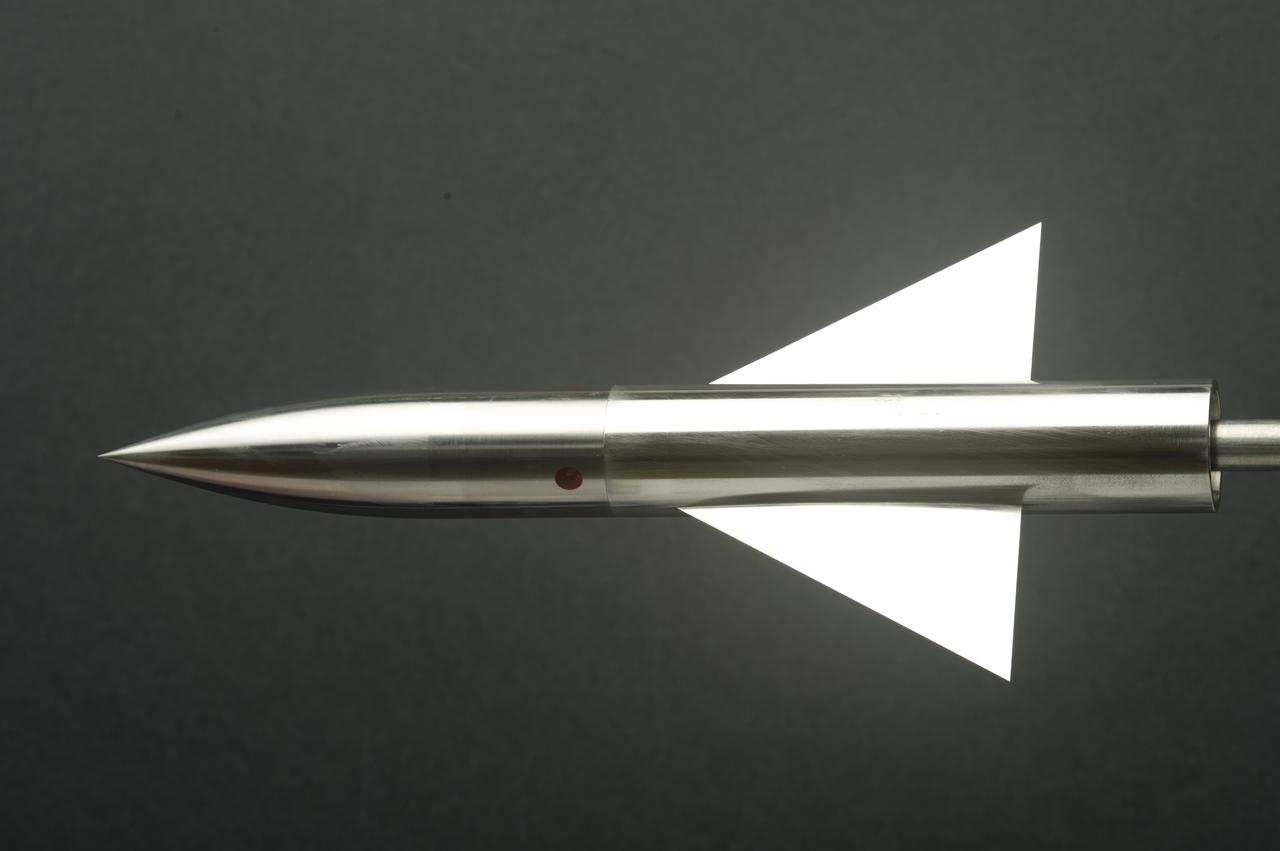
AGARD-B WIND TUNNEL MODEL, VIEW 1 OF 3
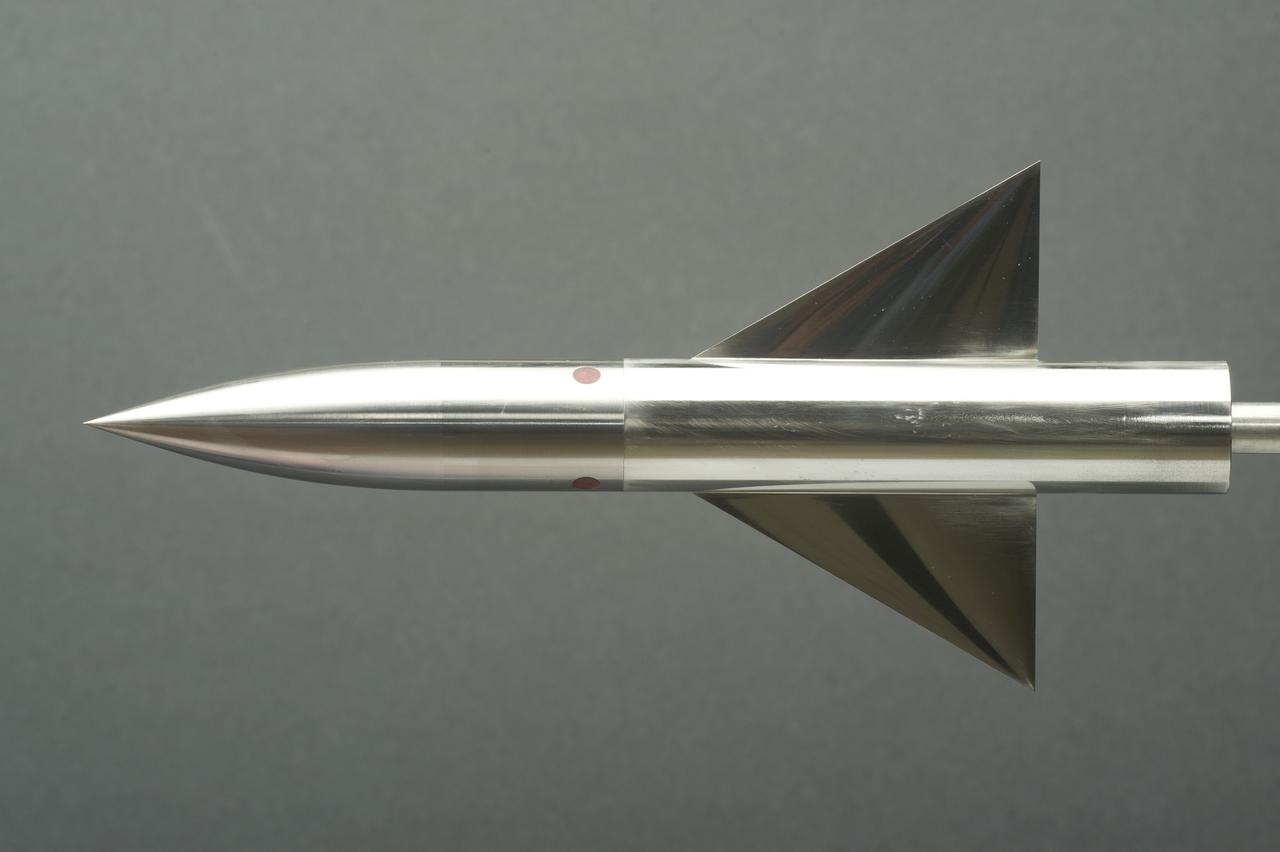
AGARD-B WIND TUNNEL MODEL, VIEW 1 OF 3
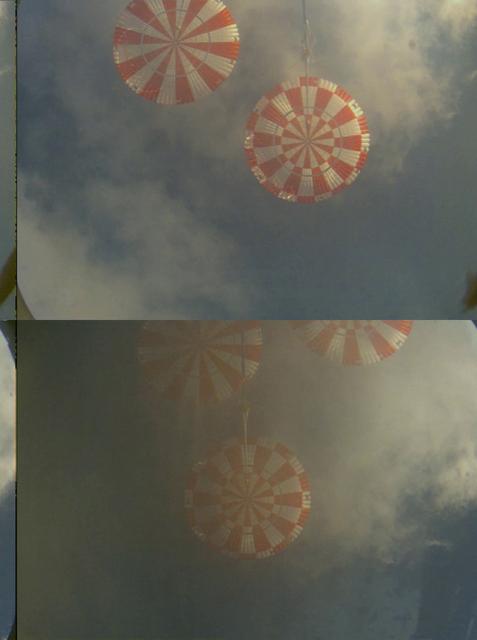
A view from the side windows as the parachutes deploy on Orion's first flight test, Exploration Flight Test-1 (EFT-1), on December 5, 2014.
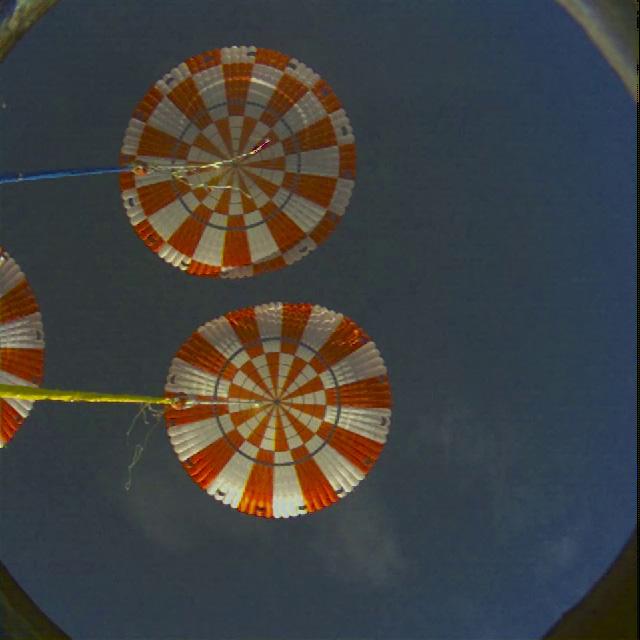
A view from the top hatch window as the parachutes deploy on Orion's first flight test, Exploration Flight Test-1 (EFT-1), on December 5, 2014.
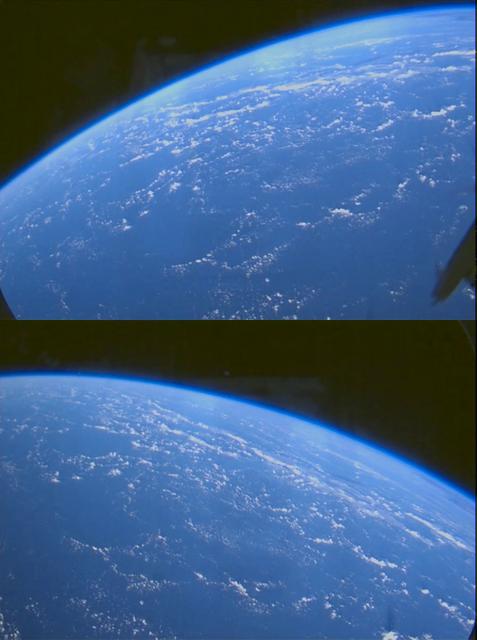
View from side windows of Earth on Orion's first flight test, Exploration Flight Test-1 (EFT-1), on December 5, 2014.
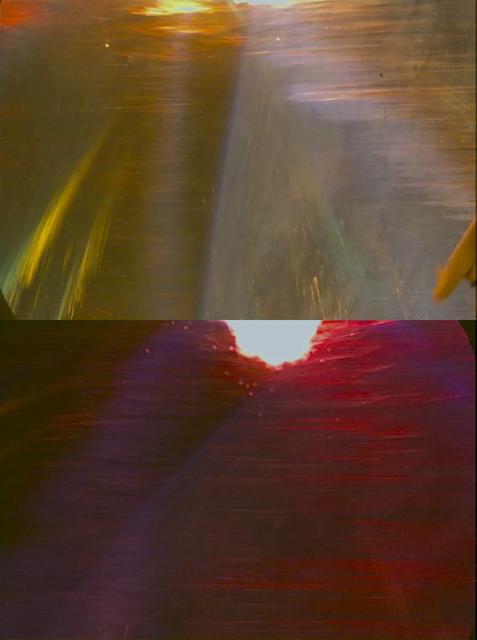
A view from side windows on Orion's first flight test, Exploration Flight Test-1 (EFT-1), on December 5, 2014.
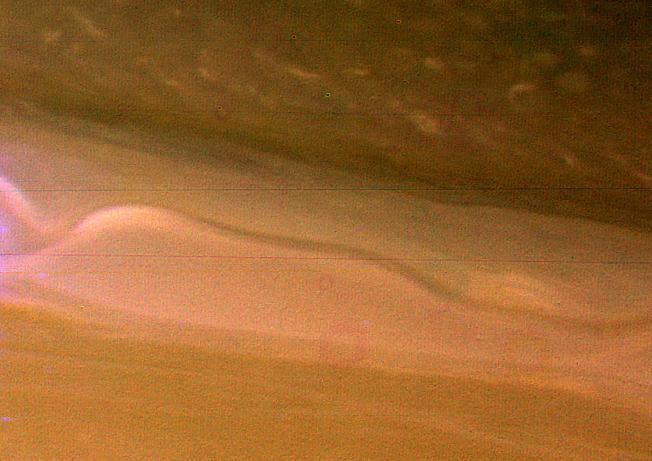
A view of Saturn clouds extending from 40 N latitude shows a ribbon-like wave structure in the south with small convective features marking a westward jet in the north. This image was obtained on November 10, 1980 by NASA Voyager 1.
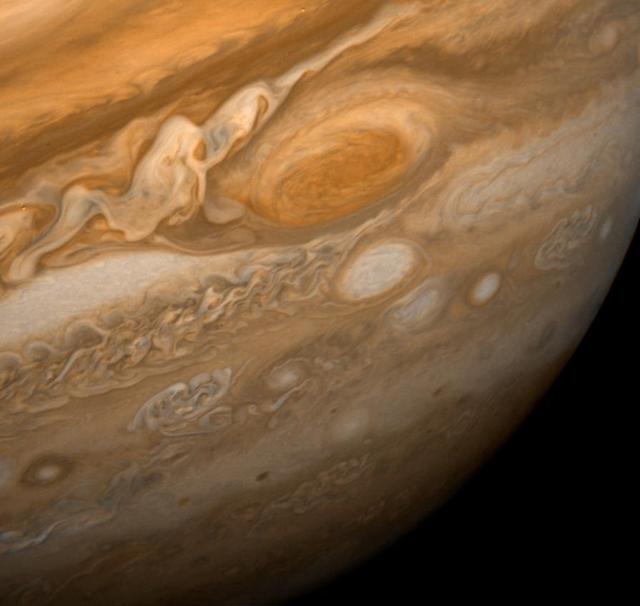
This dramatic view of Jupiter Great Red Spot and its surroundings was obtained by NASA Voyager 1 on Feb. 25, 1979. The colorful, wavy cloud pattern to the left of the Red Spot is a region of extraordinarily complex end variable wave motion. http://photojournal.jpl.nasa.gov/catalog/PIA00014

What does Earth look like when viewed from Mars? At the time, Mars and the orbiting camera were 139 million kilometers 86 million miles from Earth and almost 1 billion kilometers nearly 600 million miles from Jupiter.
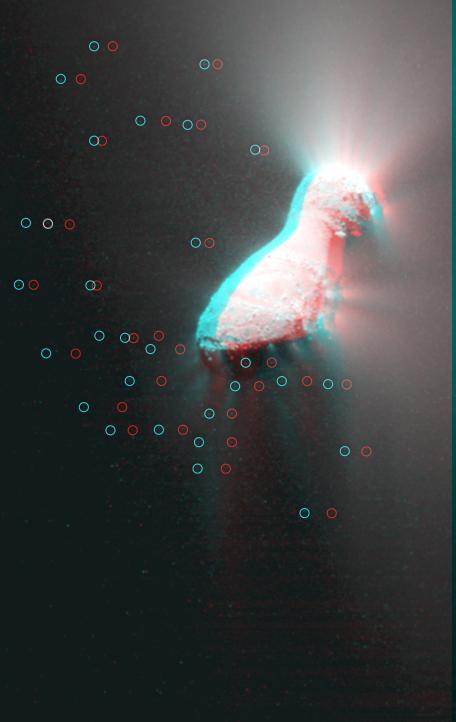
This 3-D image shows the region where NASA Deep Impact mission sent a probe into the surface of comet Tempel 1 in 2005. This picture was taken six years after the Deep Impact collision. 3D glasses are necessary to view this image.
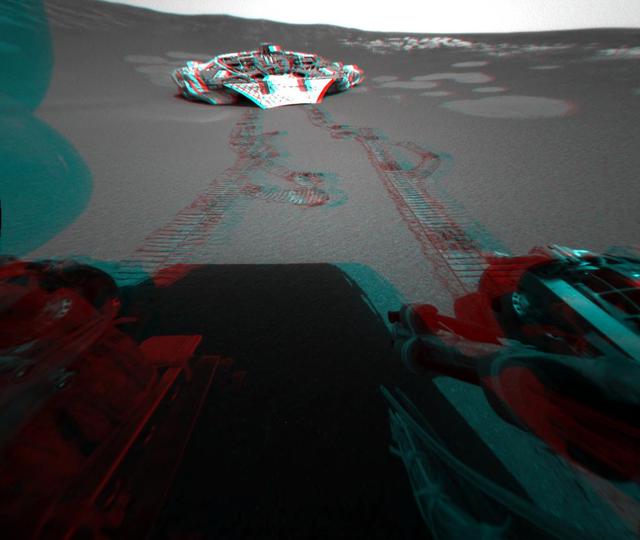
This 3-D view from behind NASA Mars Exploration Rover Opportunity shows the path the rover has traveled since rolling 1 meter 3 feet away from its empty lander on the seventh martian day, or sol, of its mission. 3D glasses are necessary.
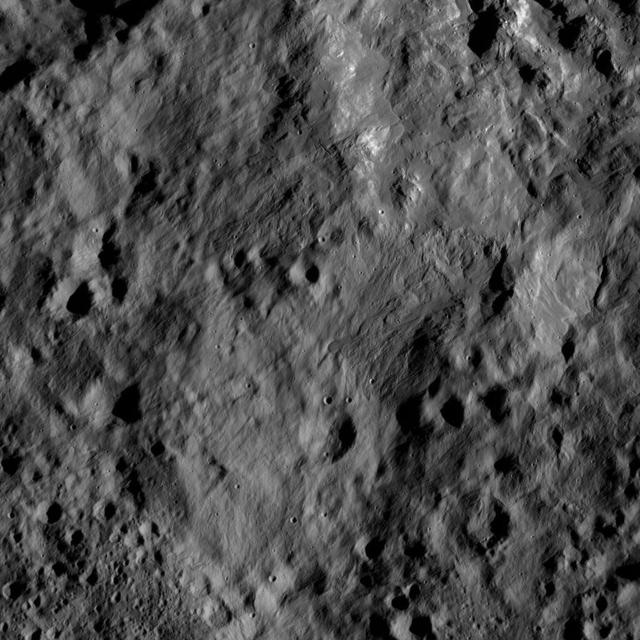
This view from NASA's Dawn spacecraft shows terrain on Ceres directly south of Kupalo Crater. The area is blanketed by smooth ejecta from Kupalo. The image is centered at 44 degrees south latitude, 173 degrees east longitude longitude. Dawn took this image on June 1, 2016, from its low-altitude mapping orbit, at a distance of about 240 miles (385 kilometers) above the surface. The image resolution is 120 feet (35 meters) per pixel. http://photojournal.jpl.nasa.gov/catalog/PIA20934