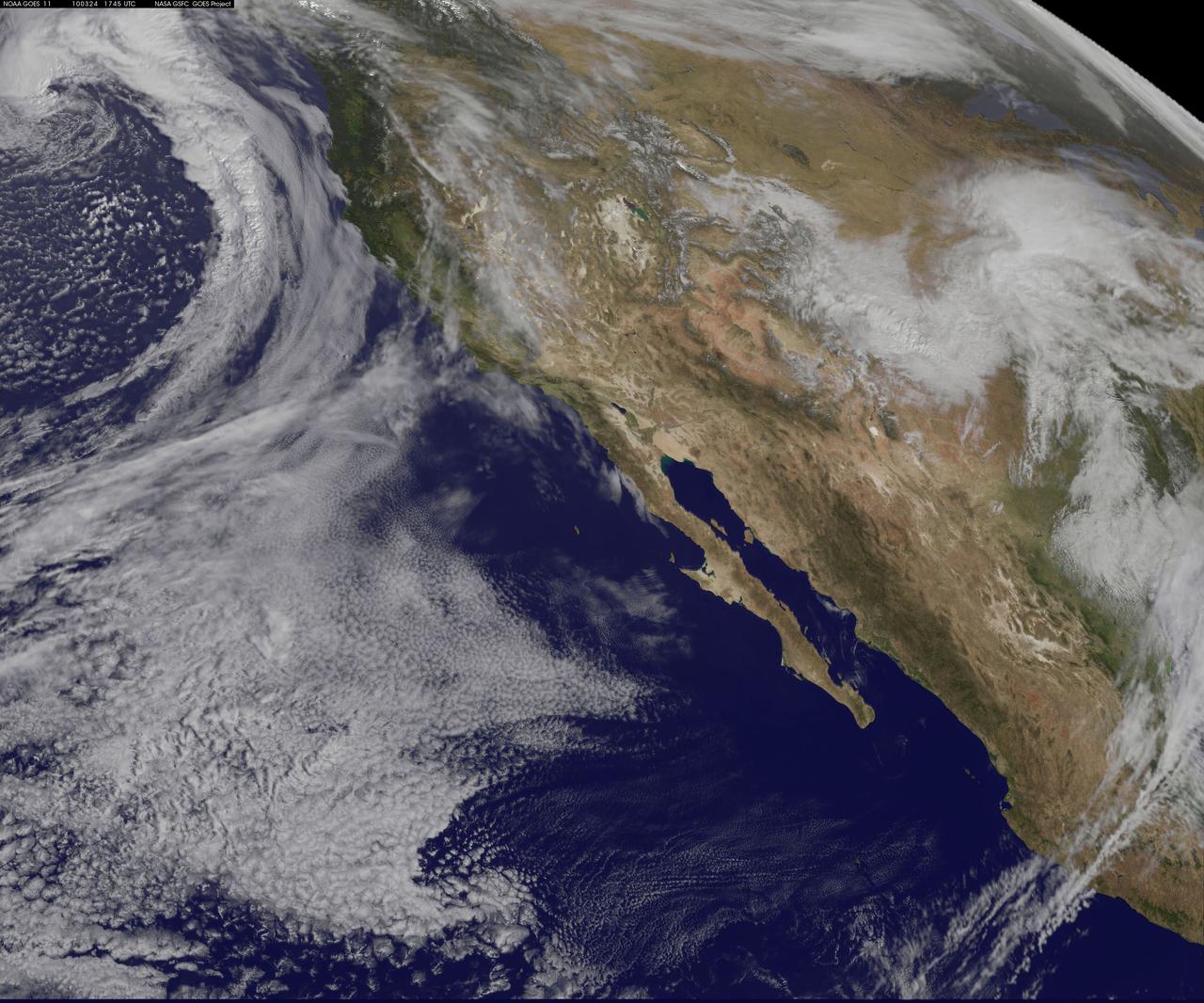
NASA GOES-11 satellite image showing the US west coast on March 24, 2010 1:45 PM EDT. <b><a href="http://goes.gsfc.nasa.gov/" rel="nofollow">Credit: NOAA/NASA GOES Project</a><b> <b><a href="http://www.nasa.gov/centers/goddard/home/index.html" rel="nofollow">NASA Goddard Space Flight Center</a></b> is home to the nation's largest organization of combined scientists, engineers and technologists that build spacecraft, instruments and new technology to study the Earth, the sun, our solar system, and the universe. <b>Follow us on <a href="http://twitter.com/NASA_GoddardPix" rel="nofollow">Twitter</a></b> <b>Join us on <a href="http://www.facebook.com/pages/Greenbelt-MD/NASA-Goddard/395013845897?ref=tsd" rel="nofollow">Facebook</a></b></b></b>
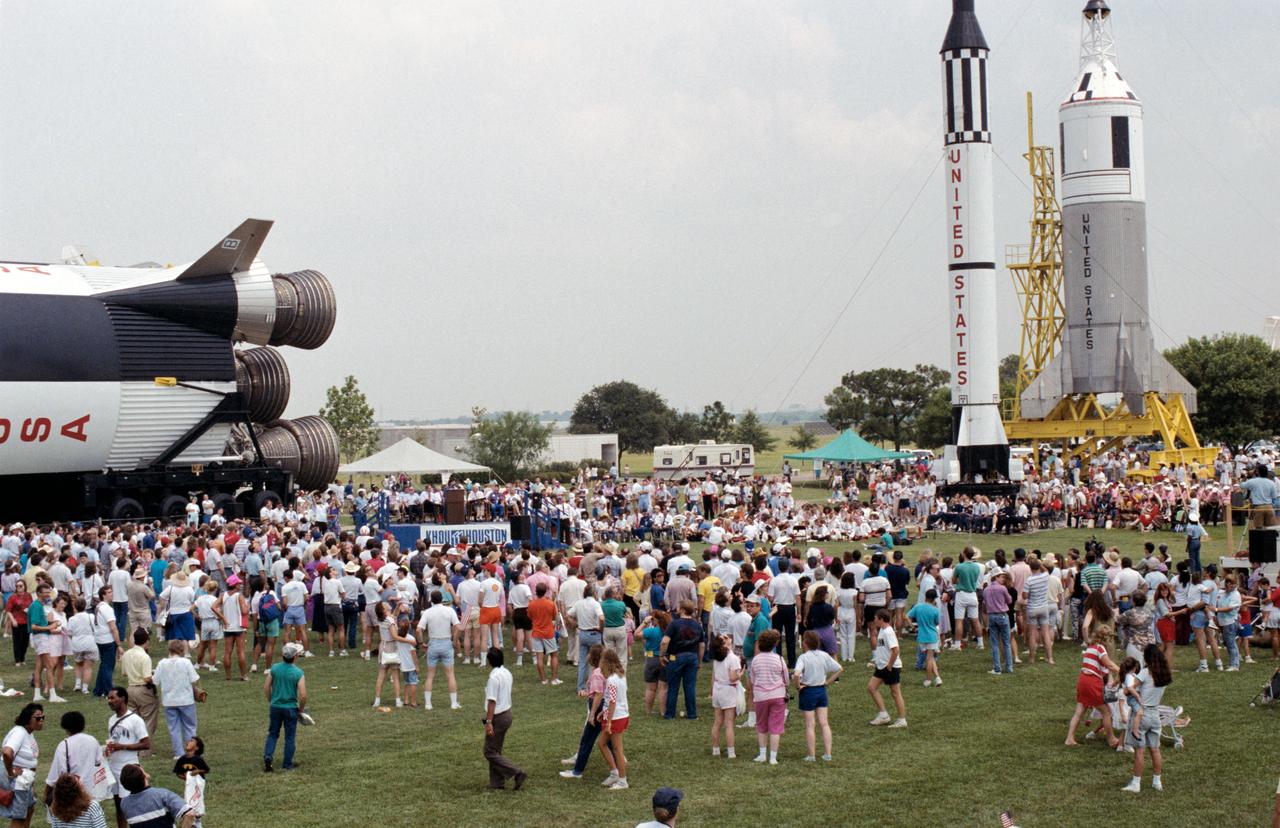
View of crowd at Rocket Park during Apollo 11 Anniversary festivities.
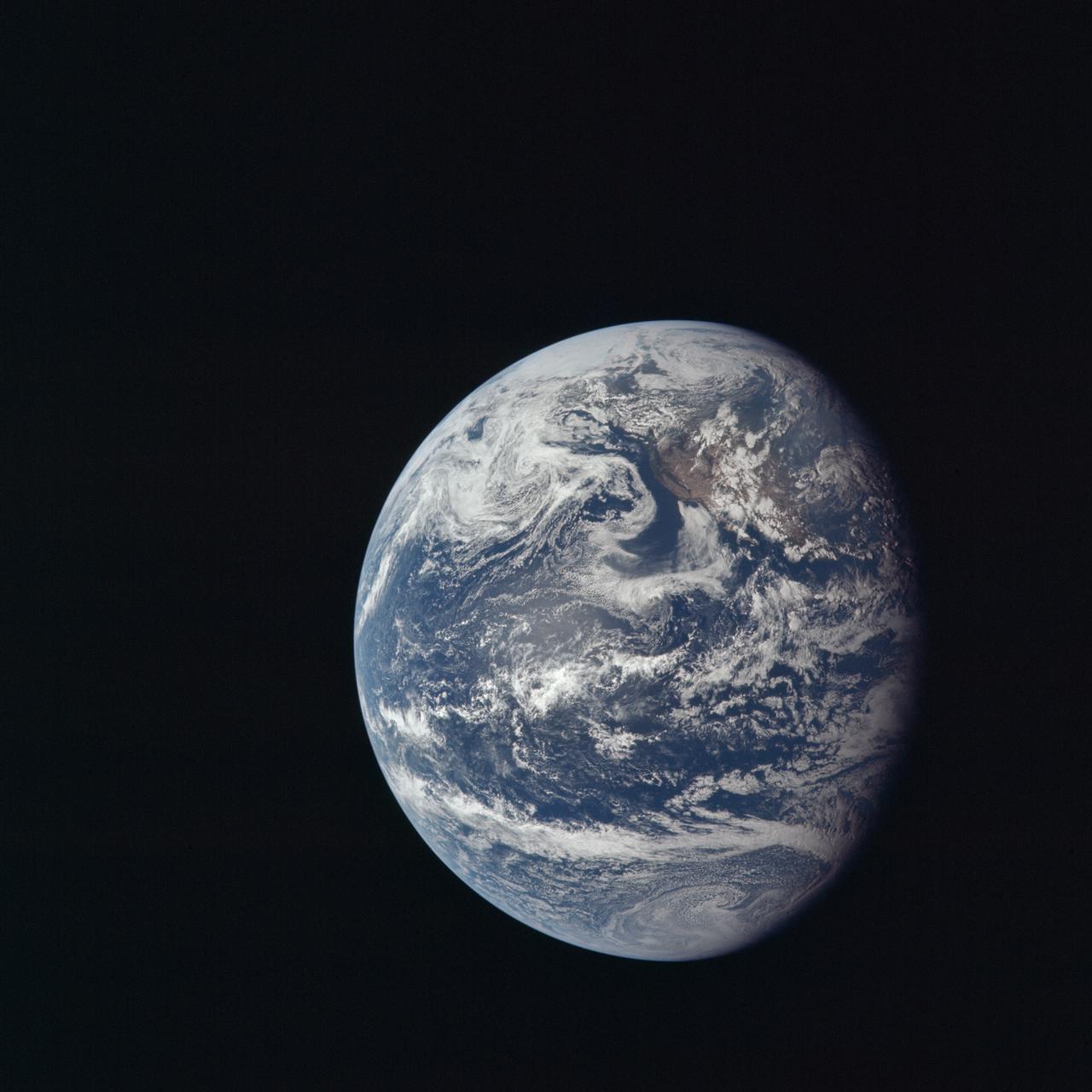
AS11-36-5337 (16 July 1969) --- This view of Earth showing clouds over its surface was photographed from the Apollo 11 spacecraft during its translunar journey toward the moon. The spacecraft was already about 10,000 nautical miles from Earth when this picture was taken. Portions of the land mass of North America and Central America can be seen. Aboard Apollo 11 were astronauts Neil A. Armstrong, Michael Collins and Edwin E. Aldrin Jr.
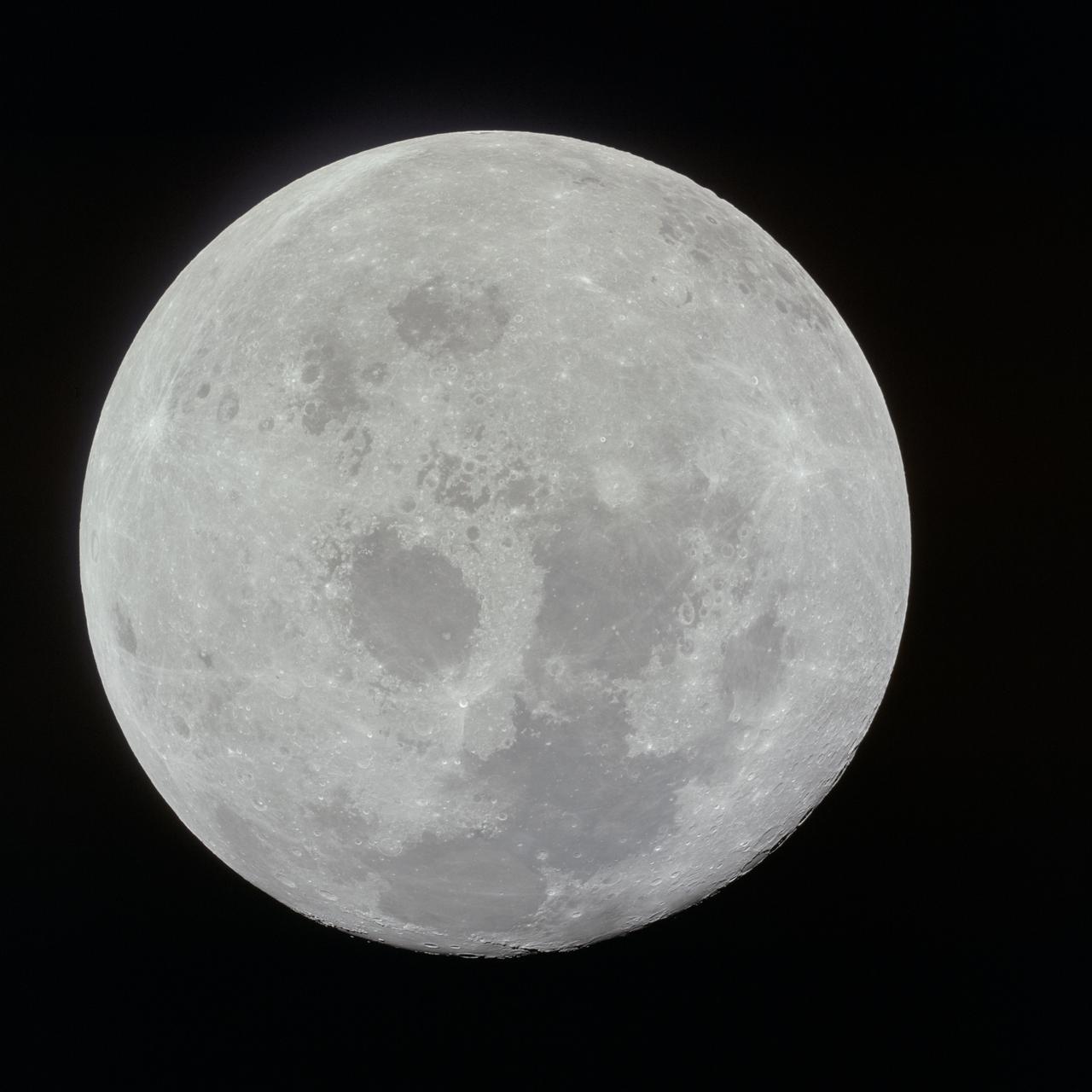
AS11-44-6665 (21 July 1969) --- This outstanding view of the entire nearside surface of the moon was photographed from the Apollo 11 spacecraft during its trans-Earth journey homeward. When this picture was taken, the spacecraft was already 10,000 nautical miles away. Onboard Apollo 11 were astronauts Neil A. Armstrong, commander; Michael Collins, command module pilot; and Edwin E. Aldrin Jr., lunar module pilot.
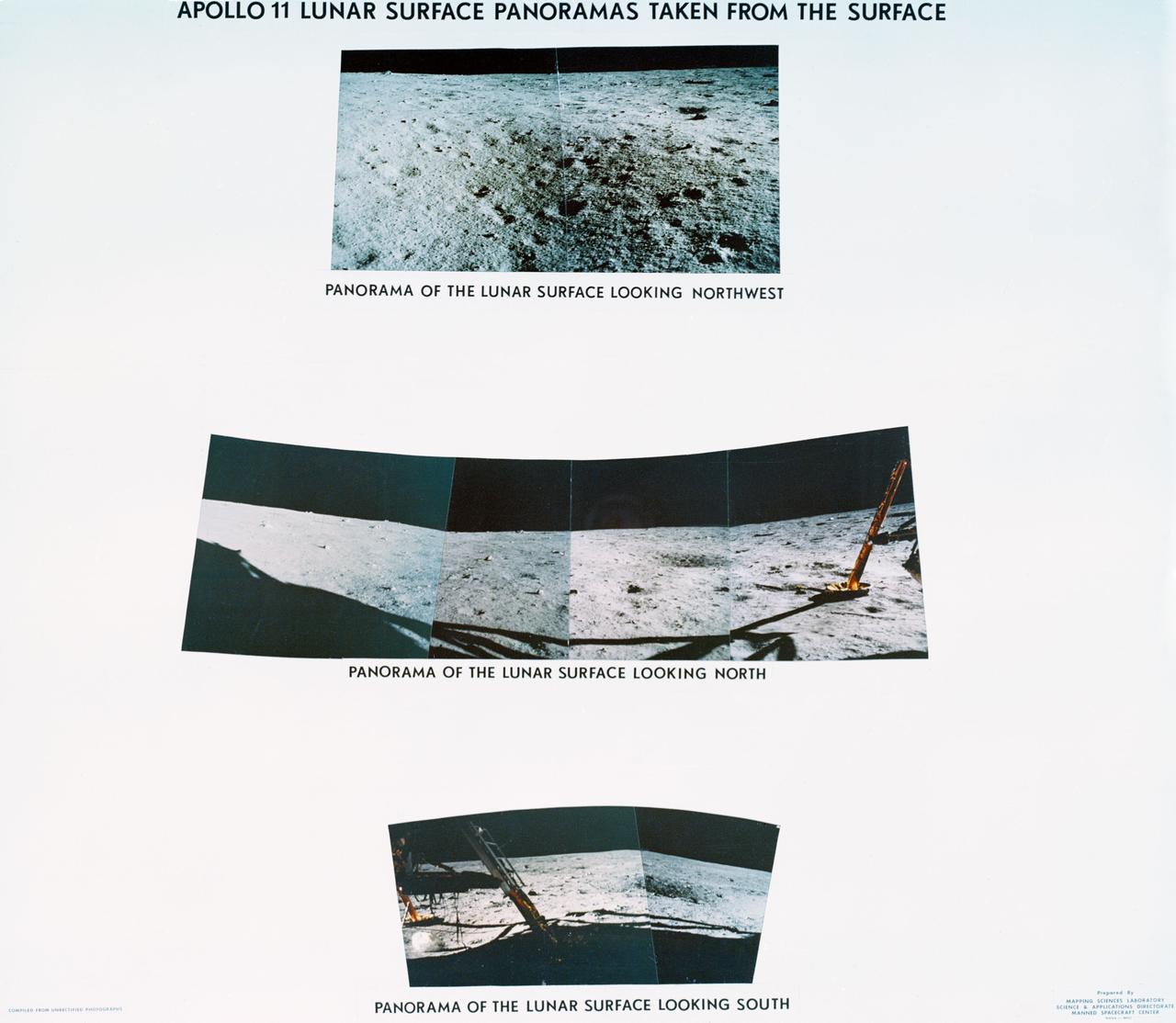
S69-44463 (July 1969) --- Astronaut Neil A. Armstrong took this series of pictures of the landing site of Apollo 11's Lunar Module (LM) Eagle on the lunar surface. These panoramic views of the lunar surface reveal the surface near where the LM touched down, in the southeastern Sea of Tranquility. Foot pads and shadows of the LM are visible in the two of the three panoramic views.
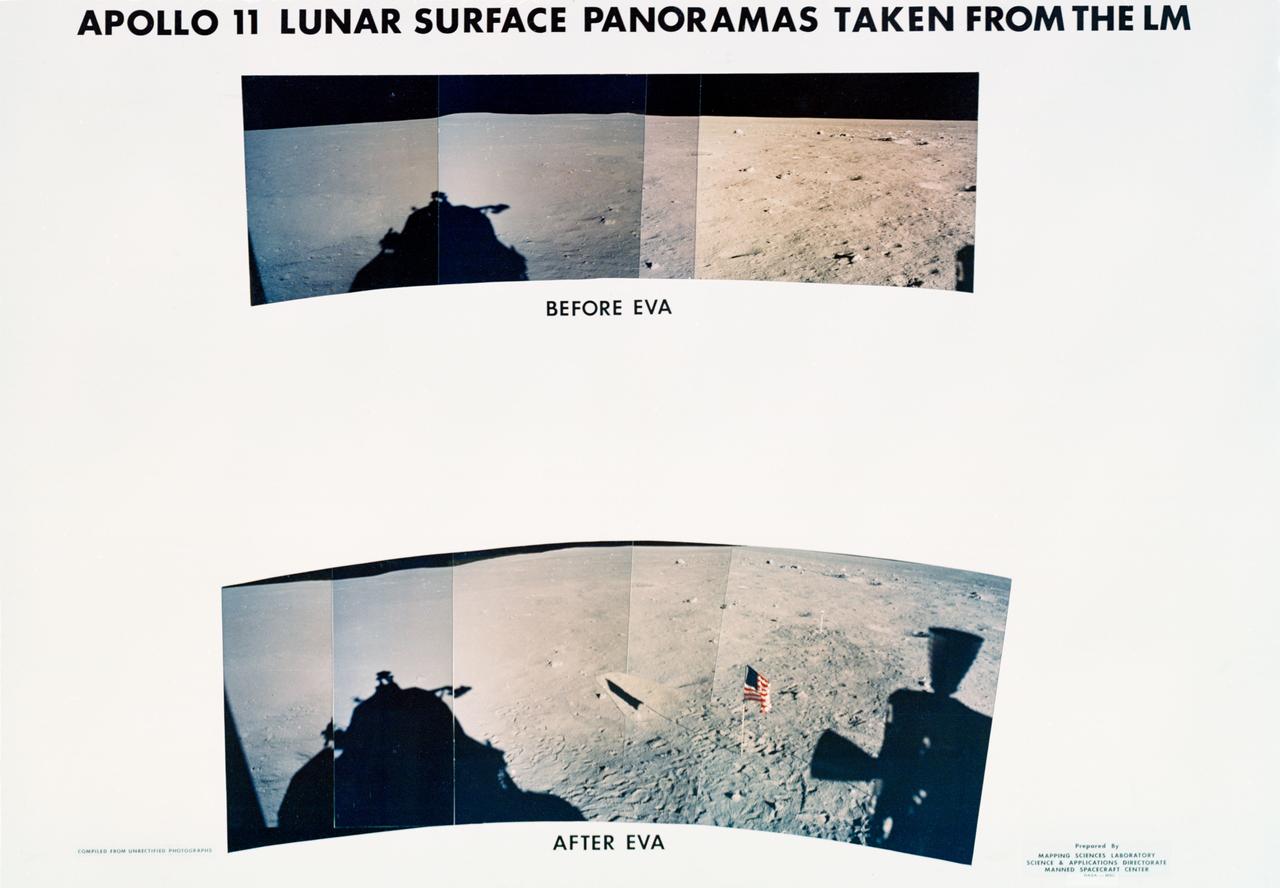
S69-44465 (20 July 1969) --- These panoramic views of the lunar surface, photographed from the Apollo 11 Lunar Module (LM) as it rested on the lunar surface. The views reveal the surface near where the LM touched down, in the southeastern Sea of Tranquility. The views are as it looked before and after astronauts Neil A. Armstrong and Edwin E. Aldrin Jr. participated in extravehicular activity (EVA). The United States flag is pictured in the bottom or "after" photo with the black and white lunar surface television camera pictured at the right of flag. Shadows of the LM are visible in the two panoramic views and a silhouette of part of a Reaction Control Subsystem thruster is seen in the bottom picture. Note the numerous footprints made by the two crewmen during the EVA period.
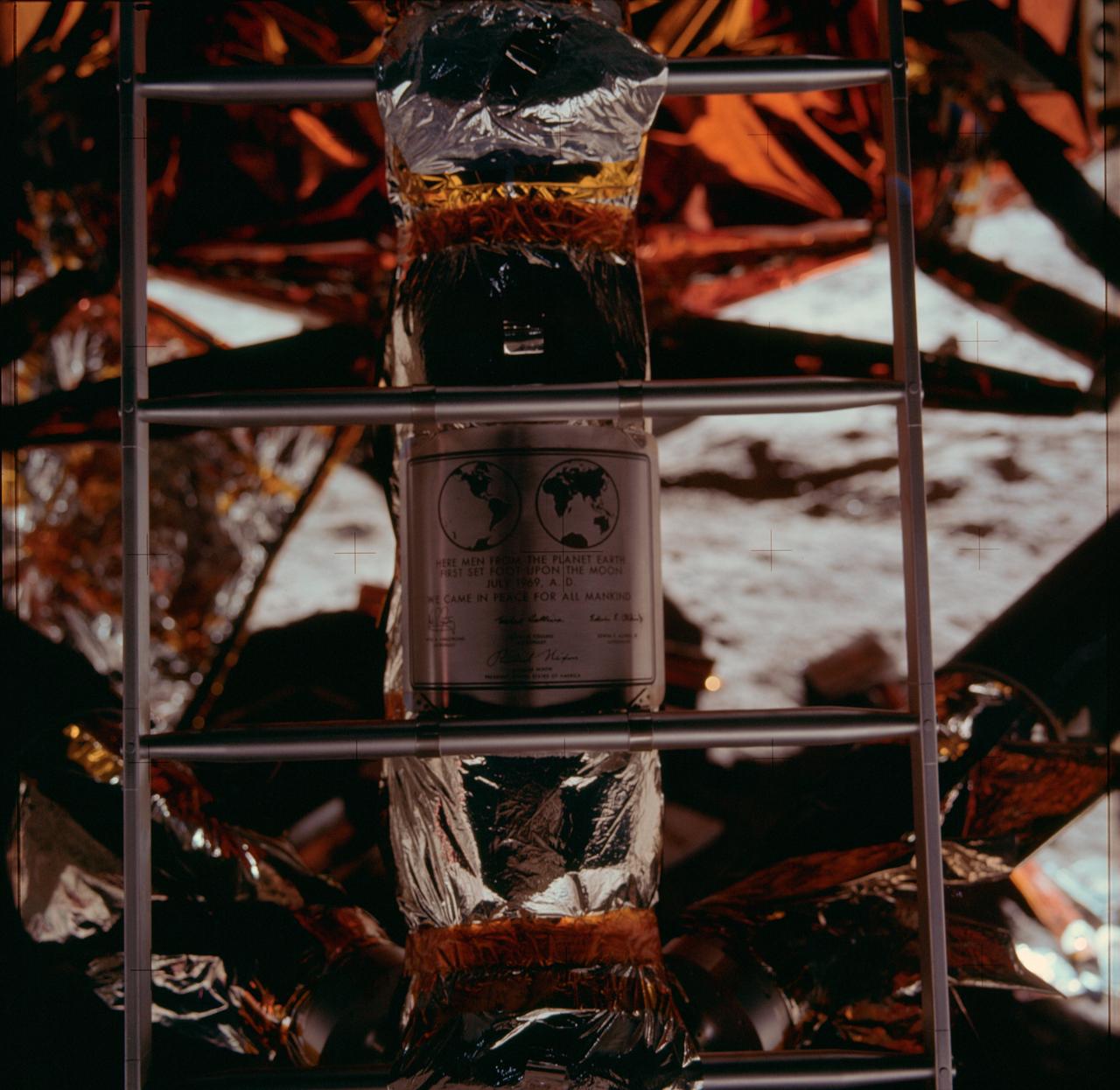
AS11-40-5899 (20 July 1969) --- Close-up view of the plaque which the Apollo 11 astronauts left on the moon in commemoration of the historic lunar landing mission. The plaque was attached to the ladder on the landing gear strut on the descent stage of the Apollo 11 Lunar Module (LM). The plaque was covered with a thin sheet of stainless steel during flight. Astronaut Michael Collins, command module pilot, remained with the Command and Service Modules (CSM) in lunar orbit while astronauts Neil A. Armstrong, commander, and Edwin E. Aldrin Jr., lunar module pilot, explored the moon.

GOES 11 satellite image showing earth on March 26, 2010 8:00 AM EDT. <b><a href="http://goes.gsfc.nasa.gov/" rel="nofollow">Credit: NOAA/NASA GOES Project</a><b> <b><a href="http://www.nasa.gov/centers/goddard/home/index.html" rel="nofollow">NASA Goddard Space Flight Center</a></b> is home to the nation's largest organization of combined scientists, engineers and technologists that build spacecraft, instruments and new technology to study the Earth, the sun, our solar system, and the universe. <b>Follow us on <a href="http://twitter.com/NASA_GoddardPix" rel="nofollow">Twitter</a></b> <b>Join us on <a href="http://www.facebook.com/pages/Greenbelt-MD/NASA-Goddard/395013845897?ref=tsd" rel="nofollow">Facebook</a></b></b></b>
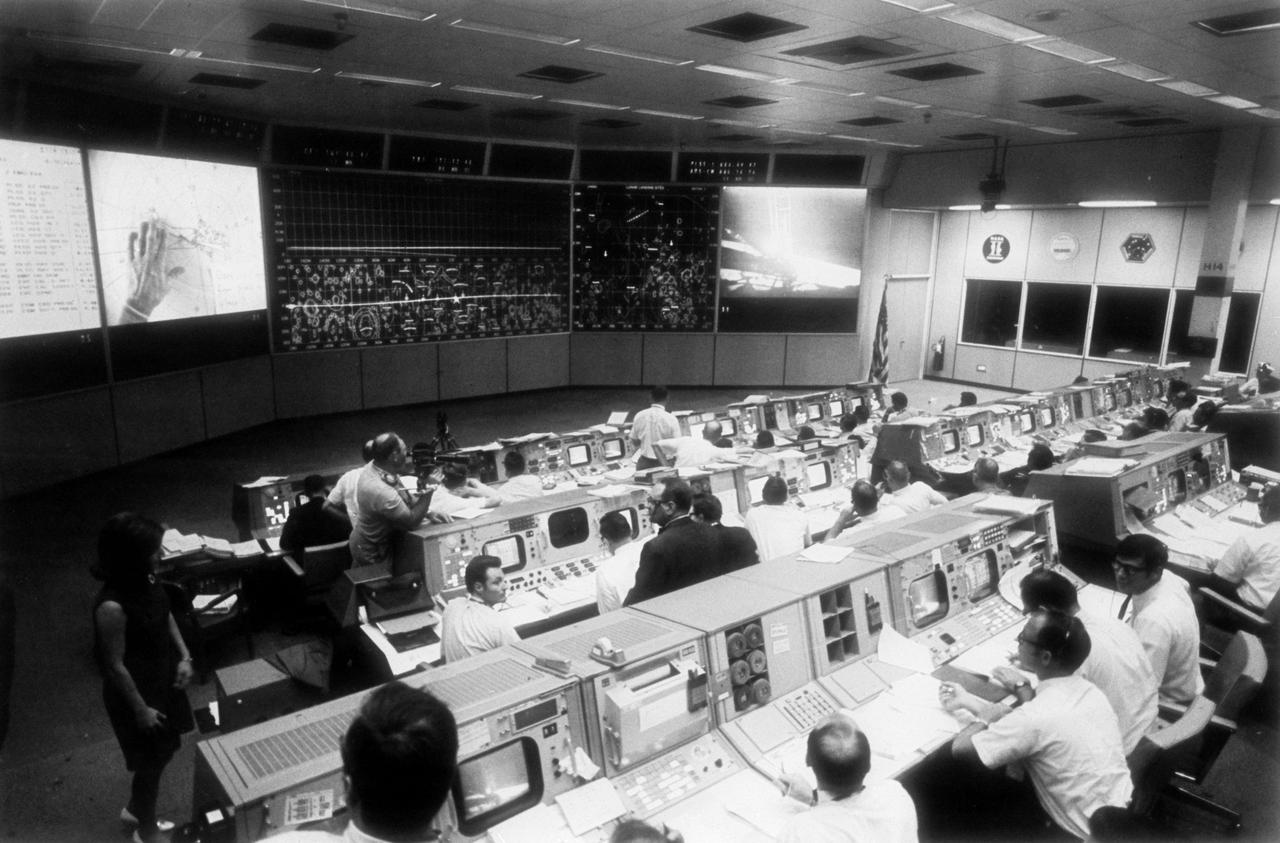
Overall view of the Mission Operations Control Room in the Mission Control Center, bldg 30, during the lunar surface extravehicular activity (EVA) of Apollo 11 Astronauts Neil A. Armstrong and Edwin E. Aldrin Jr.
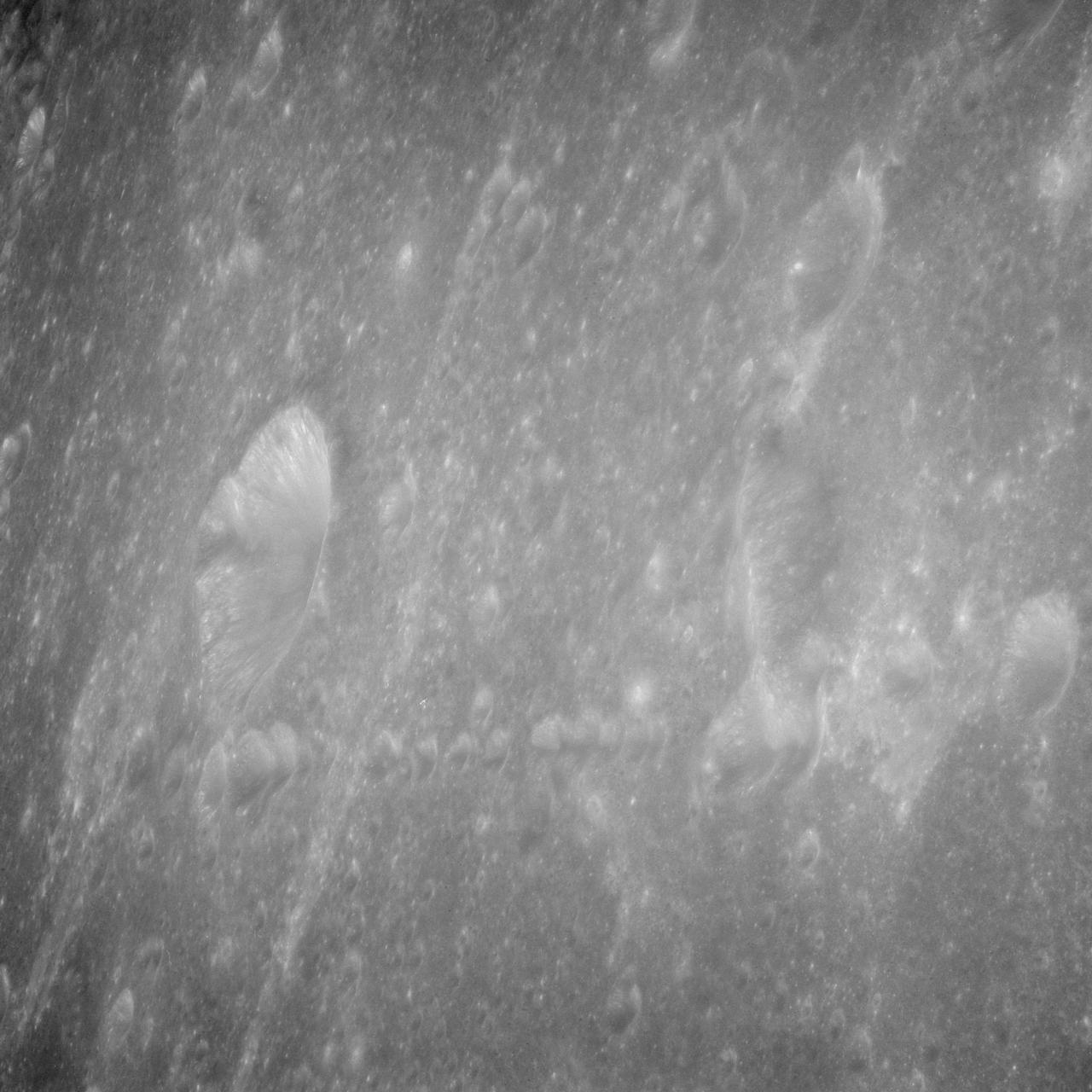
AS11-43-6439 (July 1969) --- An Apollo 11 oblique view of the lunar farside. The linear group of small craters is located within the large International Astronomical Union crater No. IX, and is centered at 139.5 degrees east longitude and 7 degrees north latitude. The absence of shadows is due to the high sun angle. The crater chain is approximately 34 statute miles in length, and the large crater adjacent to the crater is 10.5 statute miles in diameter.
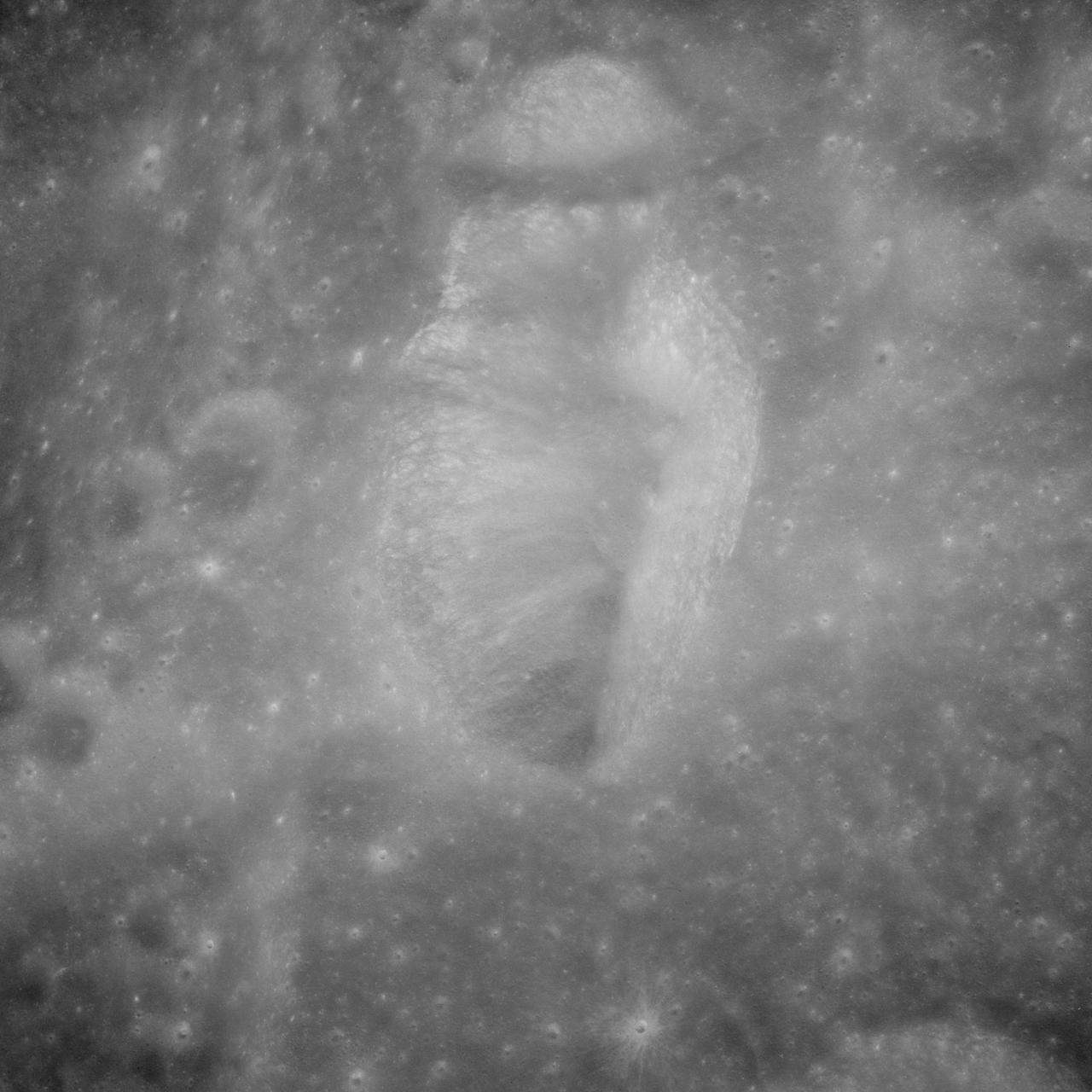
AS11-43-6422 (July 1969) --- An Apollo 11 oblique view of the lunar farside. These two odd-shaped craters are located midway between International Astronomical Union craters 218 and 220, and are centered at 155 degrees east longitude and 3 degrees north latitude. The craters total approximately 13.5 statute miles in length and 7.5 statute miles in width at their widest point.
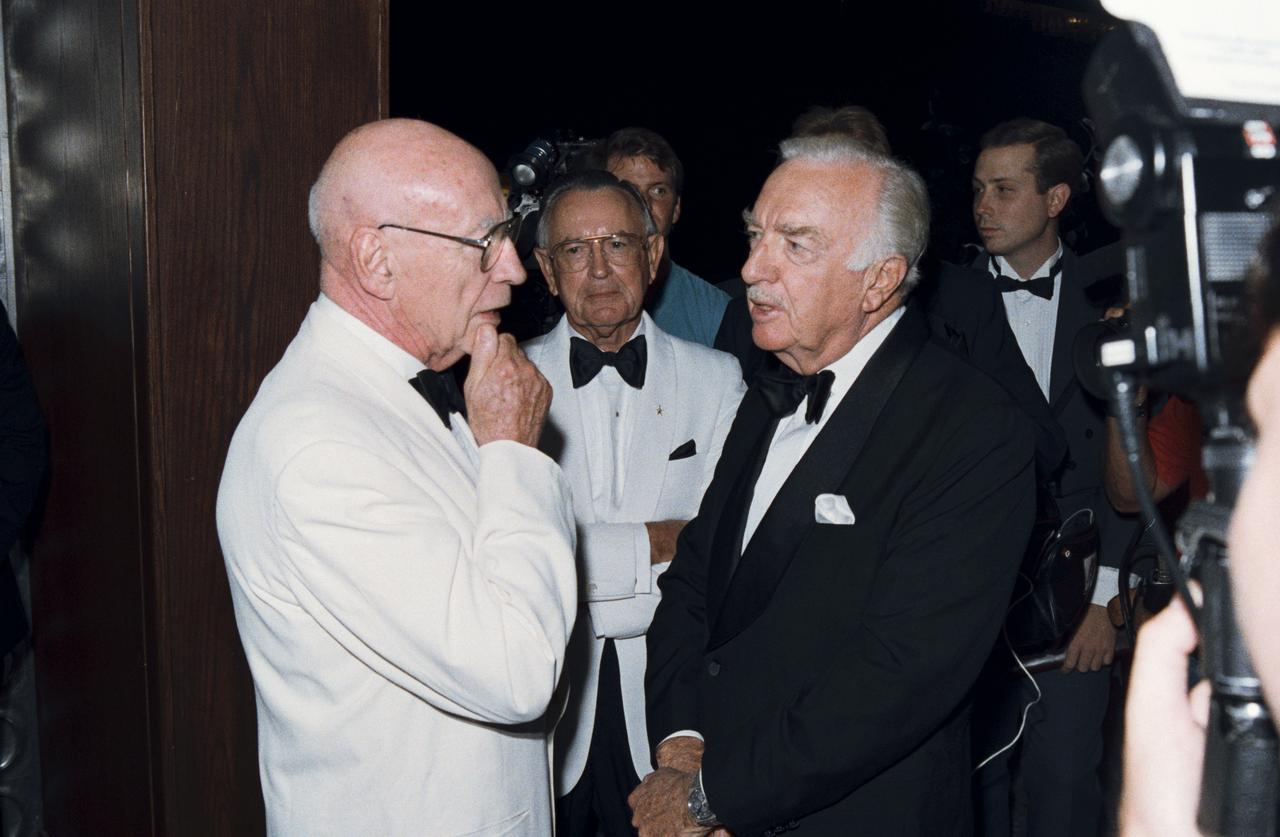
Views of the Apollo 11 Twentieth Anniversary Black Tie reception at the downtown Houston Hyatt Regency Hotel. Views include former JSC Directors Robert Gilruth and Christopher C. Kraft Jr. reminiscing with keynote speaker Walter Cronkite (39934); Apollo astronauts Tom Stafford (left) and Neil Armstrong (right) talk with former Soviet cosmonaut Alexei Leonov (center) at the gala (39935).
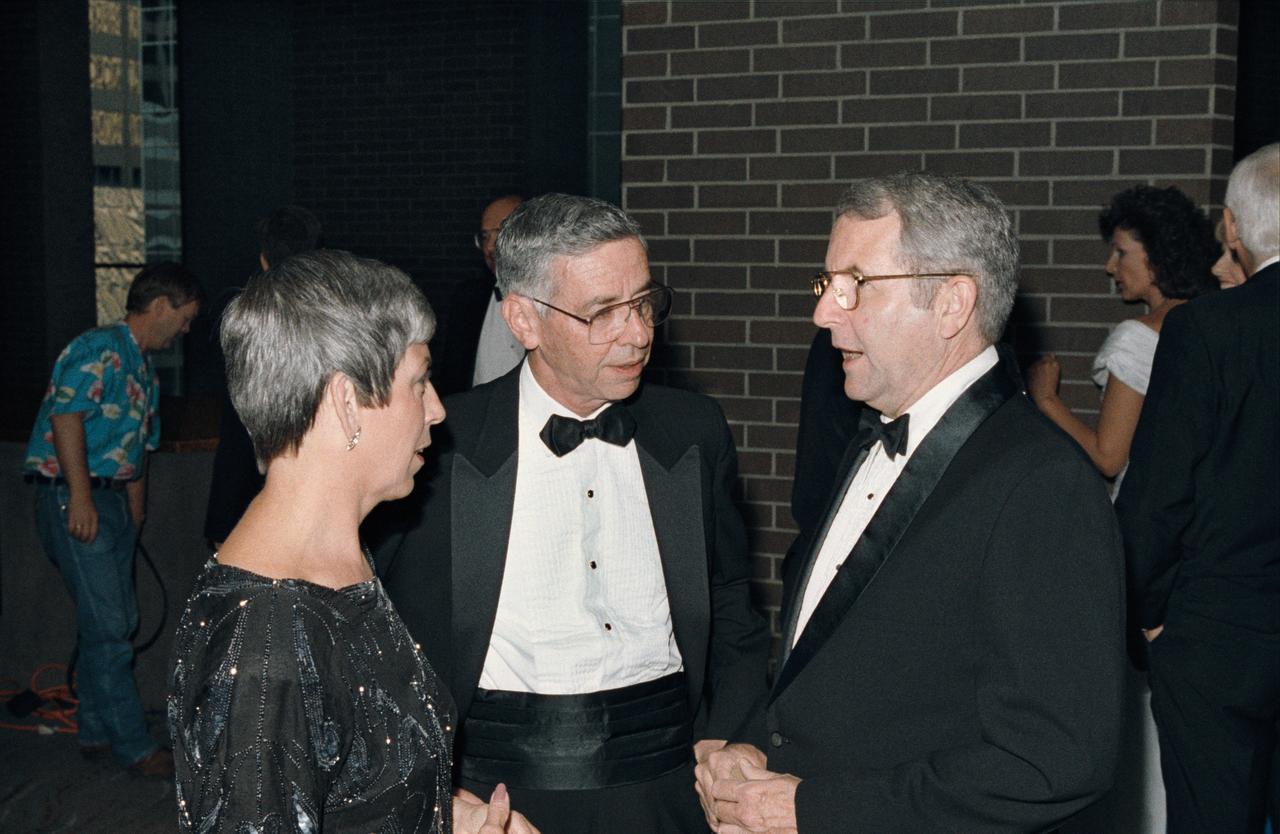
View from the Apollo 11 Twentieth Anniversary Black Tie reception at the downtown Houston Hyatt Regency Hotel. Scene show NASA/JSC Director Aaron Cohen talking with NASA Administrator Richard H. Truly and his wife, Cody.
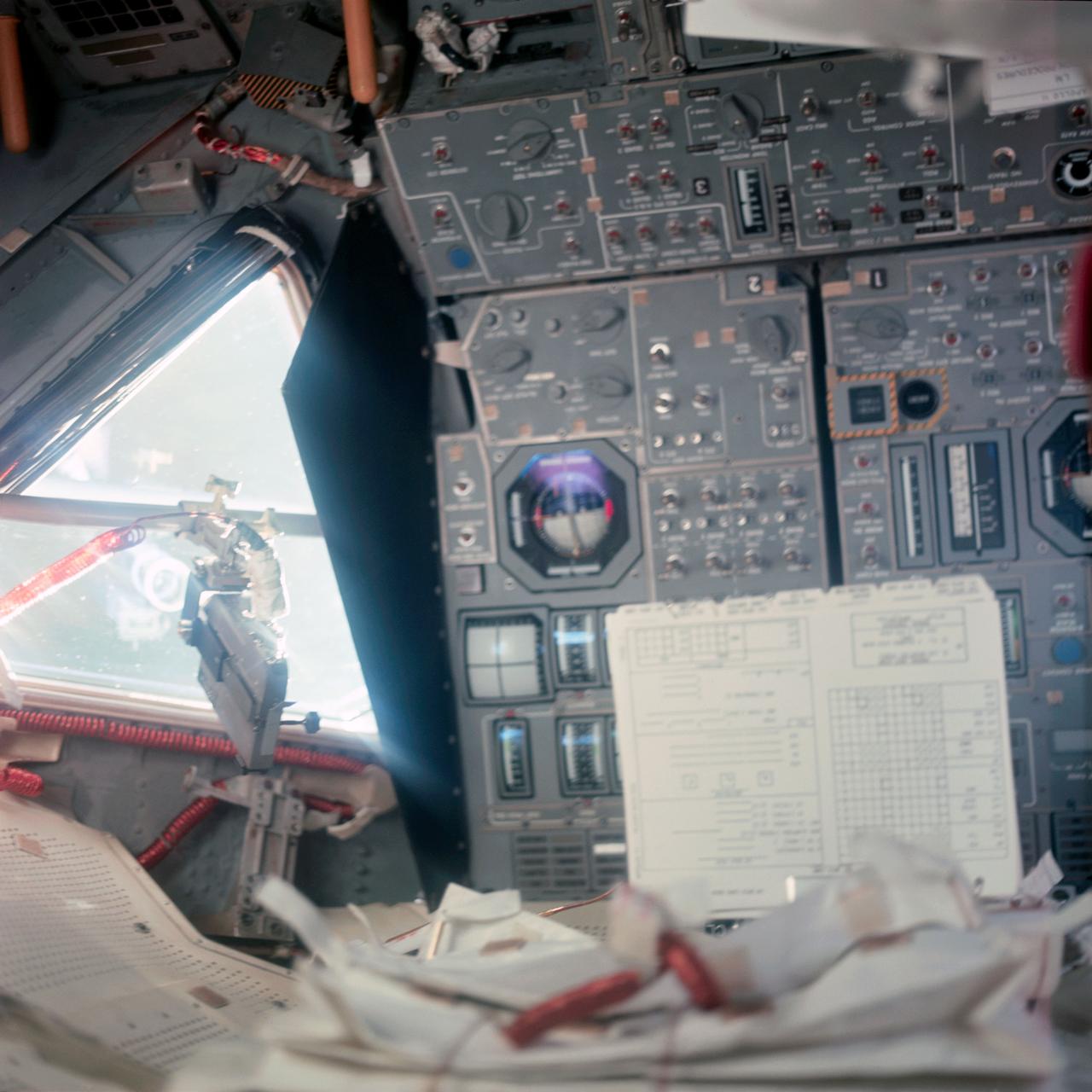
AS11-36-5389 (July 1969) --- An interior view of the Apollo 11 Lunar Module showing some of the displays and controls. Mounted in the Lunar Module window is a 16mm data acquisition camera which has a variable frame speed of 1, 6, 12 and 24 frames per second. Photo credit: NASA

S69-40022 (24 July 1969) --- Overall view of the Mission Operations Control Room (MOCR) in the Mission Control Center (MCC), Building 30, Manned Spacecraft Center (MSC), showing the flight controllers celebrating the successful conclusion of the Apollo 11 lunar landing mission.
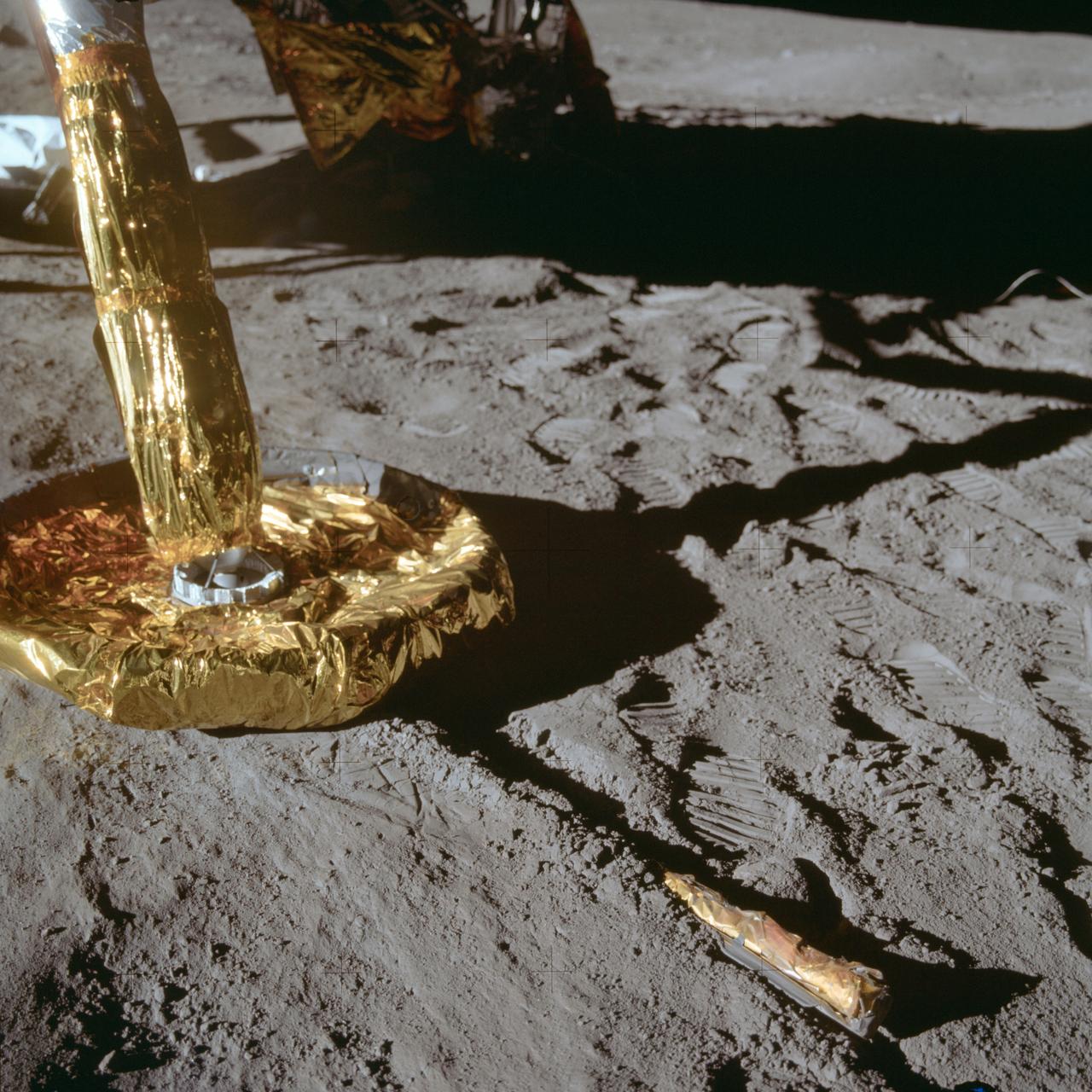
A close-up view of a footpad of the Apollo 11 Lunar Module as it rested on the surface of the Moon. The stick-like protruding object is a lunar surface sensing probe. This photograph was take with a 70mm lunar surface camera during the extravehicular activity of Astronauts Neil Armstrong and Edwin Aldrin on July 20, 1969.
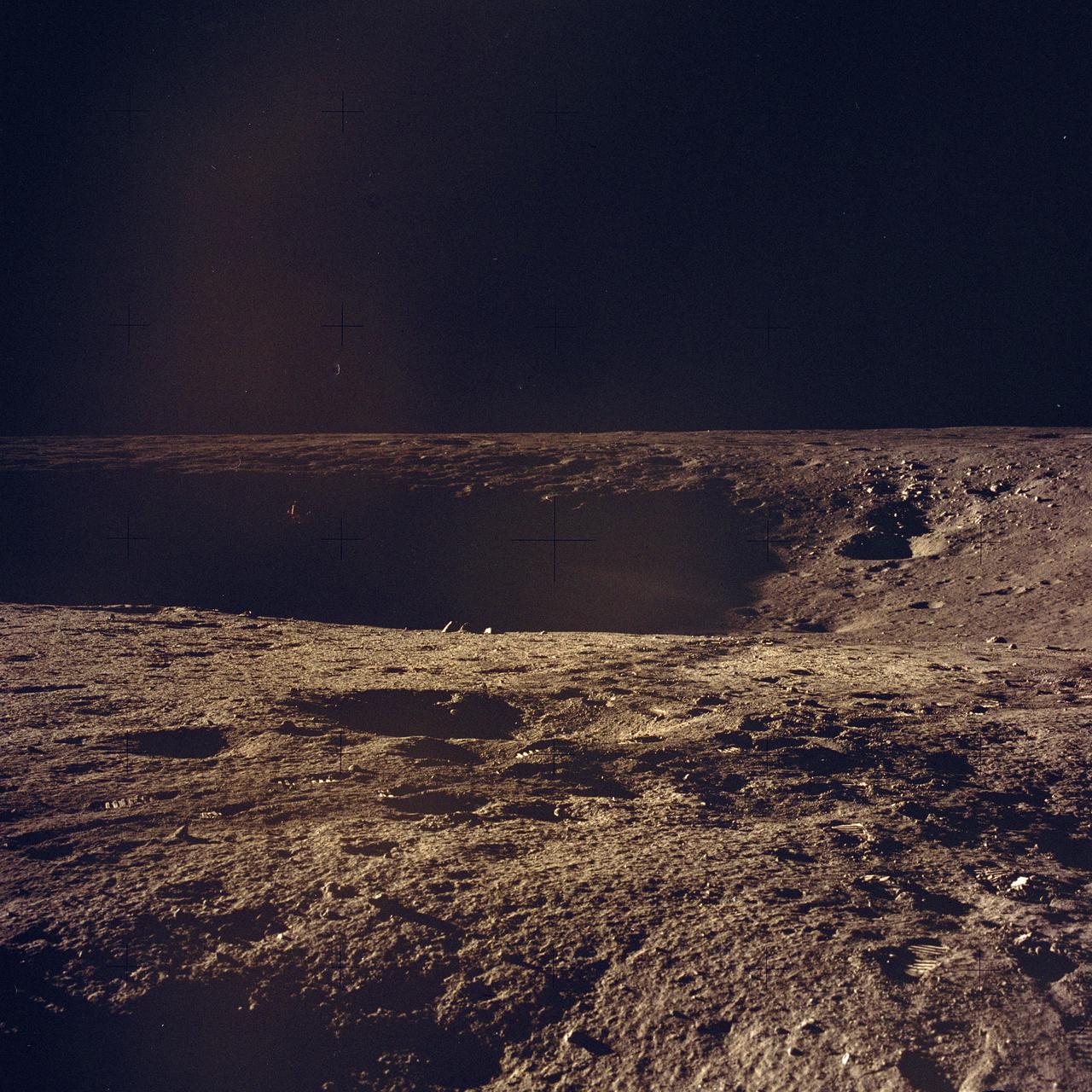
The second manned lunar landing mission, Apollo 12, launched from launch pad 39-A at Kennedy Space Center in Florida on November 14, 1969 via a Saturn V launch vehicle. The Saturn V vehicle was developed by the Marshall Space Flight Center (MSFC) under the direction of Dr. Wernher von Braun. Aboard Apollo 12 was a crew of three astronauts: Alan L. Bean, pilot of the Lunar Module (LM), Intrepid; Richard Gordon, pilot of the Command Module (CM), Yankee Clipper; and Spacecraft Commander Charles Conrad. The LM, Intrepid, landed astronauts Conrad and Bean on the lunar surface in what’s known as the Ocean of Storms while astronaut Richard Gordon piloted the CM, Yankee Clipper, in a parking orbit around the Moon. Lunar soil activities included the deployment of the Apollo Lunar Surface Experiments Package (ALSEP), finding the unmanned Surveyor 3 that landed on the Moon on April 19, 1967, and collecting 75 pounds (34 kilograms) of rock samples. This is the eleventh of 25 images captured by the crew in attempt to provide a 360 degree Lunar surface scene. Apollo 12 safely returned to Earth on November 24, 1969.

AS11-44-6667 (21 July 1969) --- This outstanding view of the whole full moon was photographed from the Apollo 11 spacecraft during its trans-Earth journey homeward. When this picture was taken, the spacecraft was already 10,000 nautical miles away. Onboard Apollo 11 were astronauts Neil A. Armstrong, commander; Michael Collins, command module pilot; and Edwin E. Aldrin Jr., lunar module pilot. While astronauts Armstrong and Aldrin descended in the Lunar Module (LM) "Eagle" to explore the moon, astronaut Collins remained with the Command and Service Modules (CSM) "Columbia" in lunar orbit.
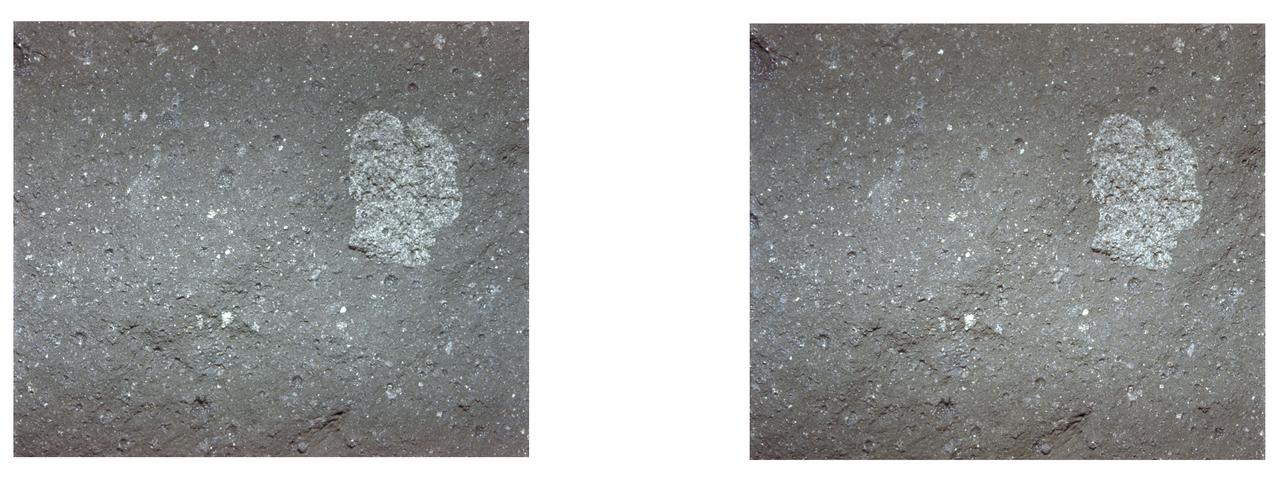
AS11-45-6709 (20 July 1969) --- An Apollo 11 stereo view of the surface of a lunar rock showing an embedded three-fourths inch fragment of a different color. On the surface several small pits are seen; mostly less than one-eighth inch in size, and with a glazed surface. They have a raised rim, characteristic of pits made by high-velocity micro meteorite impacts. The exposure was made by the Apollo 11 35mm stereo close-up camera. The camera was specially developed to get the highest possible resolution of a small area. A three-inch square area is photographed with a flash illumination and at a fixed distance. The camera is mounted on a walking stick, and the astronauts use it by holding it up against the object to be photographed and pulling the trigger. The pictures are in color and give a stereo view, enabling the fine detail to be seen very clearly. The project is under the direction of Professor T. Gold of Cornell University and Mr. F. Pearce of NASA. The camera was designed and built by Eastman Kodak. Professor E. Purcell of Harvard University and Dr. E. Land of the Polaroid Corporation have contributed to the project. The pictures brought back from the moon by the Apollo 11 crew are of excellent quality and allow fine detail of the undisturbed lunar surface to be seen. Scientists hope to be able to deduce from them some of the processes that have taken place that have shaped and modified the surface.
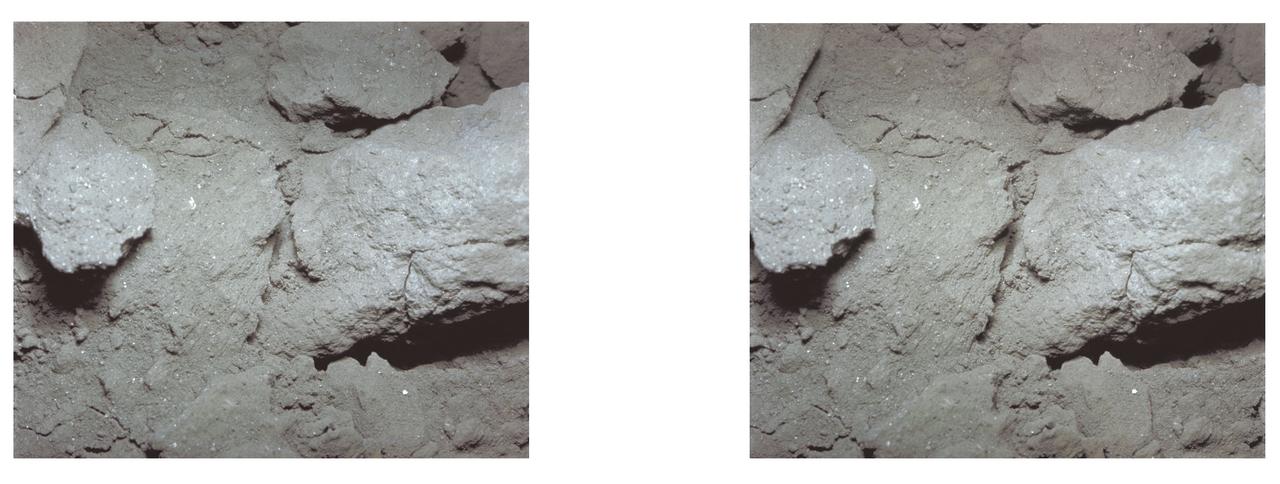
AS11-45-6706 (20 July 1969) --- An Apollo 11 stereo view showing a clump of lunar surface powder, with various small pieces of different color. Many small, shiny spherical particles can be seen. The picture is three inches across. The exposure was made by the Apollo 11 35mm stereo close-up camera. The camera was specially developed to get the highest possible resolution of a small area. A three-inch square area is photographed with a flash illumination and at a fixed distance. The camera is mounted on a walking stick, and the astronauts use it by holding it up against the object to be photographed and pulling the trigger. The pictures are in color and give a stereo view, enabling the fine detail to be seen very clearly. The project is under the direction of Professor T. Gold of Cornell University and Mr. F. Pearce of NASA. The camera was designed and built by Eastman Kodak. Professor E. Purcell of Harvard University and Dr. E. Land of the Polaroid Corporation have contributed to the project. The pictures brought back from the moon by the Apollo 11 crew are of excellent quality and allow fine detail of the undisturbed lunar surface to be seen. Scientists hope to be able to deduce from them some of the processes that have taken place that have shaped and modified the surface.
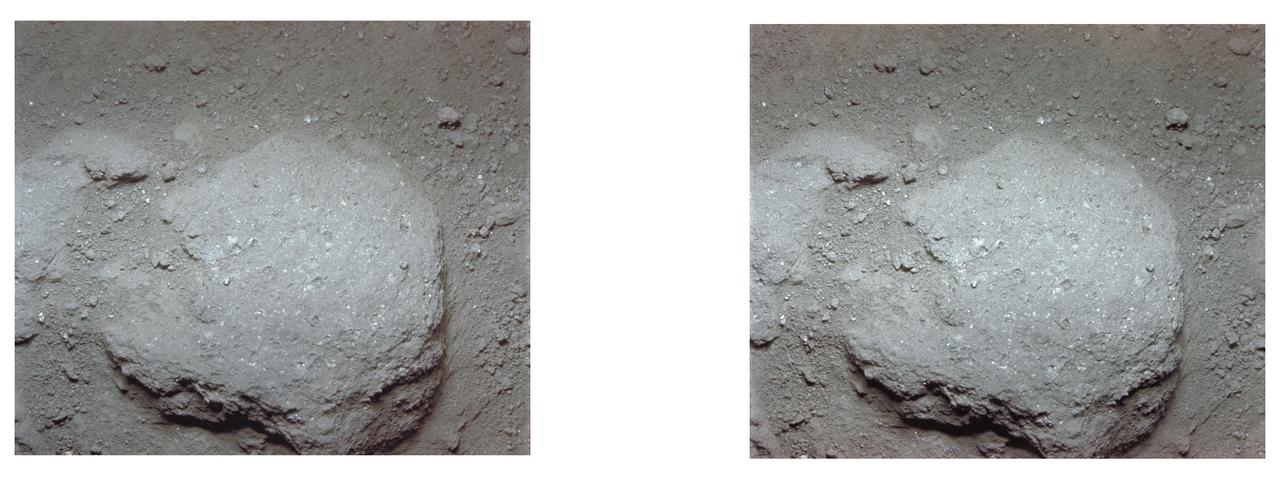
AS11-45-6712 (20 July 1969) --- An Apollo 11 stereo view of a stone, about two and one-half inches long, embedded in the powdery lunar surface material. The little pieces closely around it suggest that it has suffered some erosion. On the surface several small pits are seen, mostly less than one-eighth inch in size, and with a glazed surface. They have a raised rim, characteristic of pits made by the Apollo 11 35mm stereo close-up camera. The camera was specially developed to get the highest possible resolution of a small area. A three-inch square area is photographed with a flash illumination and at a fixed distance. The camera is mounted on a walking stick, and the astronauts use it by holding it up against the object to be photographed and pulling the trigger. The pictures are in color and give a stereo view, enabling the fine detail to be seen very clearly. The project is under the direction of Professor T. Gold of Cornell University and Mr. F. Pearce of NASA. The camera was designed and built by Eastman Kodak. Professor E. Purcell of Harvard University and Dr. E. Land of the Polaroid Corporation have contributed to the project. The pictures brought back from the moon by the Apollo 11 crew are of excellent quality and allow fine detail of the undisturbed lunar surface to be seen. Scientists hope to be able to deduce from them some of the processes that have taken place that have shaped and modified the surface.
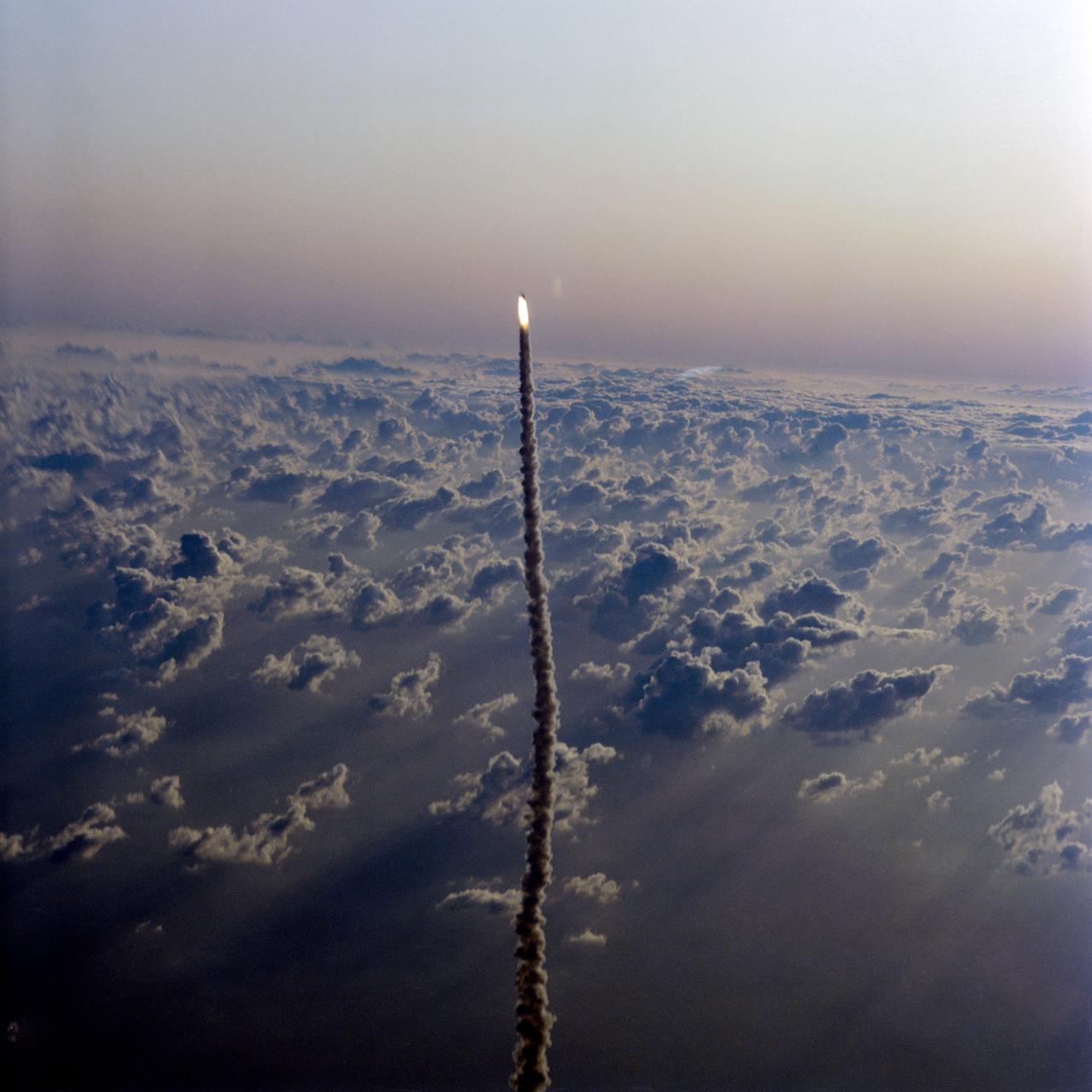
Aerial views of the STS-5 launch from T-38 chase aircraft Nov. 11, 1982. Shuttle Columbia can be seen as a small figure trailed by a line of smoke.
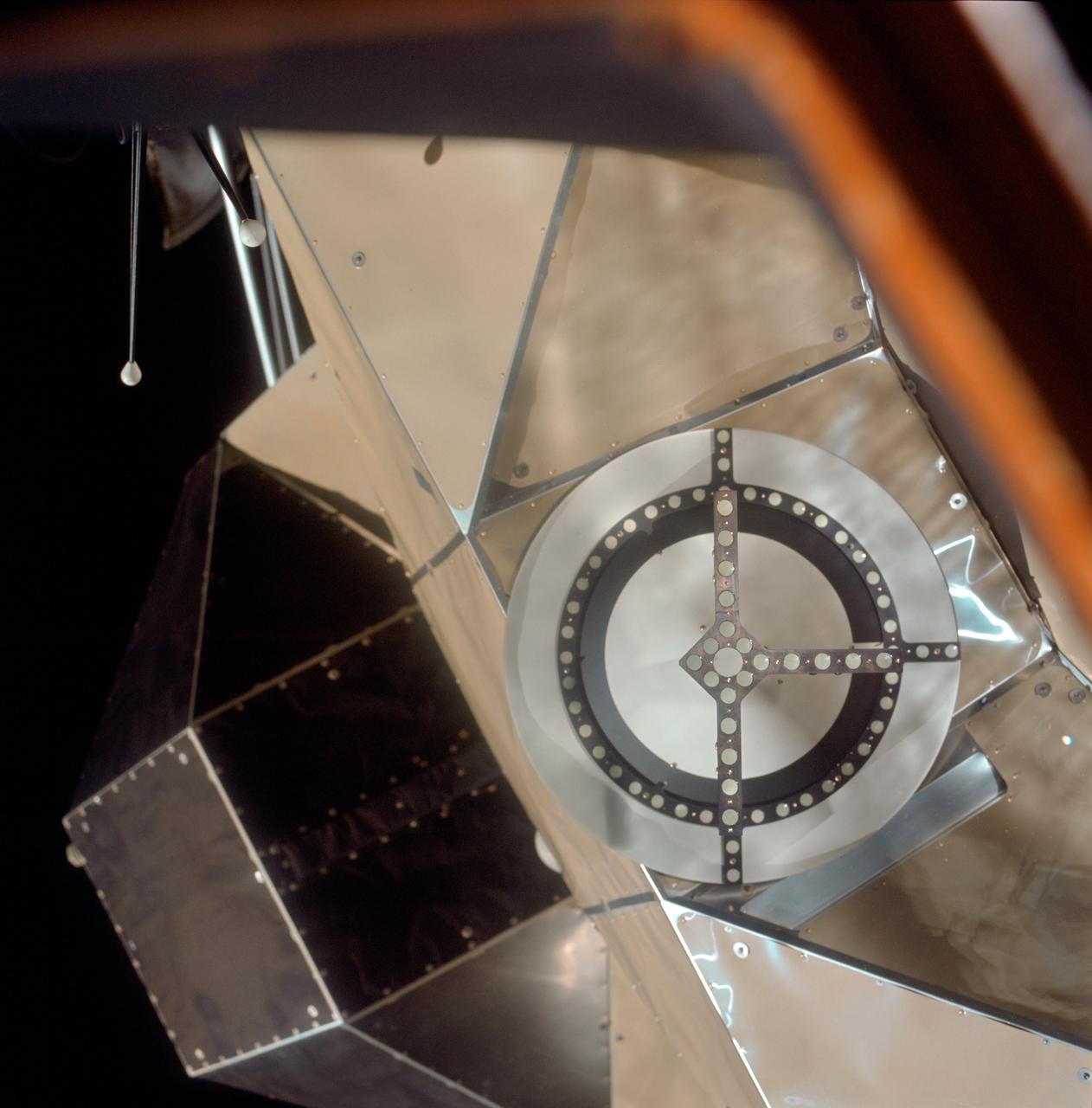
AS11-36-5365 (21 July 1969) --- A close-up view of the docking target on the Apollo 11 Lunar Module (LM) photographed from the Command Module during the LM/CSM docking in lunar orbit. Astronauts Neil A. Armstrong, commander, and Edwin E. Aldrin Jr., lunar module pilot, in the LM, were returning from the lunar surface. Astronaut Michael Collins, command module pilot, remained with the Command and Service Modules (CSM) in lunar orbit while Armstrong and Aldrin explored the moon.

AS11-36-5299 (16 July 1969) --- This view of Earth showing clouds over water was photographed from the Apollo 11 spacecraft following translunar injection. While astronauts Neil A. Armstrong, commander, and Edwin E. Aldrin Jr., lunar module pilot, descended in the Lunar Module (LM) "Eagle" to explore the Sea of Tranquility region of the moon, astronaut Michael Collins, command module pilot, remained with the Command and Service Modules (CSM) "Columbia" in lunar orbit.
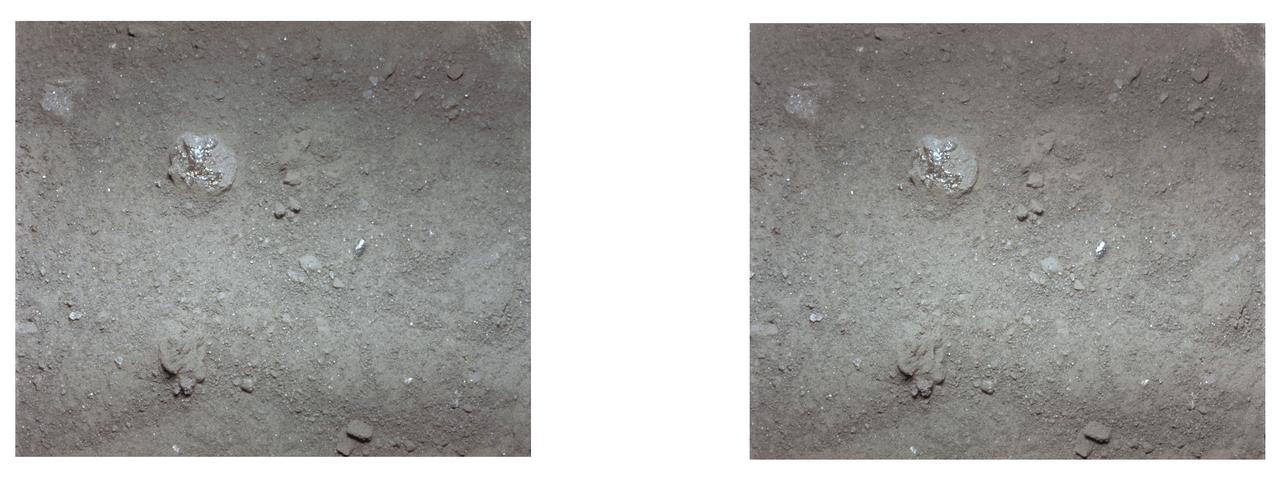
AS11-45-6704 (20 July 1969) --- An Apollo stereo view showing a close-up of a small lump of lunar surface powder about a half inch across, with a splash of a glassy material over it. It seems that a drop of molten material fell on it, splashed and froze. The exposure was made by the Apollo 11 35mm stereo close-up camera. The camera was specially developed to get the highest possible resolution of a small area. A three-inch square area is photographed with a flash illumination and at a fixed distance. The camera is mounted on a walking stick, and the astronauts use it by holding it up against the object to be photographed and pulling the trigger. The pictures are in color and give a stereo view, enabling the fine detail to be seen very clearly. The project is under the direction of Professor T. Gold of Cornell University and Dr. F. Pearce of NASA. The camera was designed and built by Eastman Kodak. Professor E. Purcell of Harvard University and Dr. E. Land of the Polaroid Corporation have contributed to the project. The pictures brought back from the moon by the Apollo 11 crew are of excellent quality and allow fine detail of the undisturbed lunar surface to be seen. Scientists hope to be able to deduce from them some of the processes that have taken place that have shaped and modified the surface.

AS11-44-6584 (20 July 1969) --- View of Apollo 11 Lunar Module (LM). This image was taken during separation of the LM and the Command Module during and the LM;s descent to the lunar surface. Blackness of space in background. Film Type: S0-368 color taken with a 250mm lens. Photo credit: NASA

AS11-44-6551 (July 1969) --- This view from the Apollo 11 spacecraft shows the Earth rising above the moon's horizon. The lunar terrain pictured is in the area of Smyth's Sea on the nearside. Coordinates of the center of the terrain are 85 degrees east longitude and 3 degrees north latitude. While astronauts Neil A. Armstrong, commander, and Edwin E. Aldrin Jr., lunar module pilot, descended in the Lunar Module (LM) "Eagle" to explore the Sea of Tranquility region of the moon, astronaut Michael Collins, command module pilot, remained with the Command and Service Modules (CSM) "Columbia" in lunar orbit.
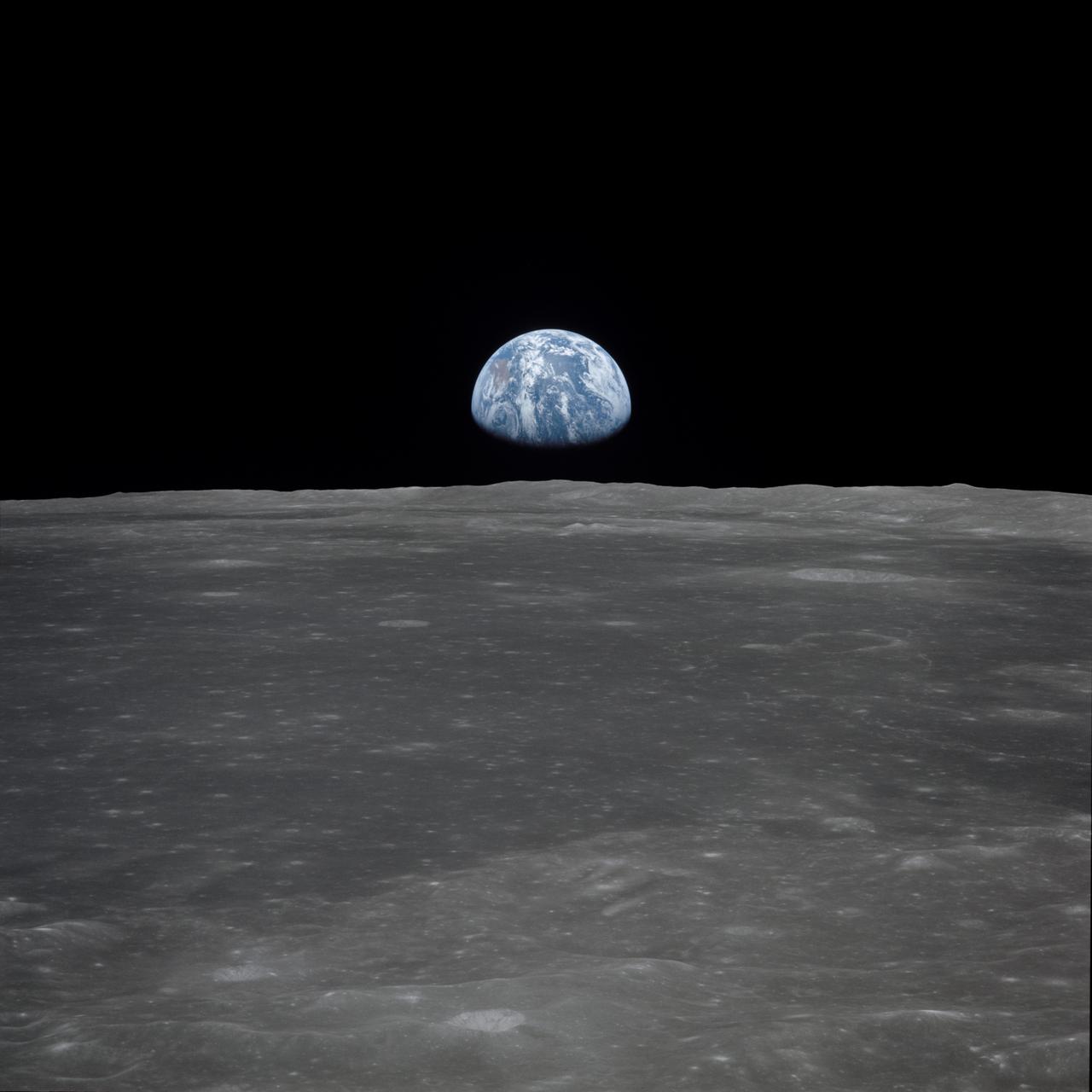
AS11-44-6550 (16-24 July 1969) --- This view from the Apollo 11 spacecraft shows Earth rising above the moon's horizon. The lunar terrain pictured is in the area of Smyth's Sea on the nearside. Coordinates of the center of the terrain are 86 degrees east longitude and 3 degrees north latitude. While astronauts Neil A. Armstrong, commander, and Edwin E. Aldrin Jr., lunar module pilot, descended in the Lunar Module (LM) "Eagle" to explore the Sea of Tranquility region of the moon, astronaut Michael Collins, command module pilot, remained with the Command and Service Modules (CSM) "Columbia" in lunar orbit. Apollo 11 was NASA's first lunar landing mission in the Apollo program.
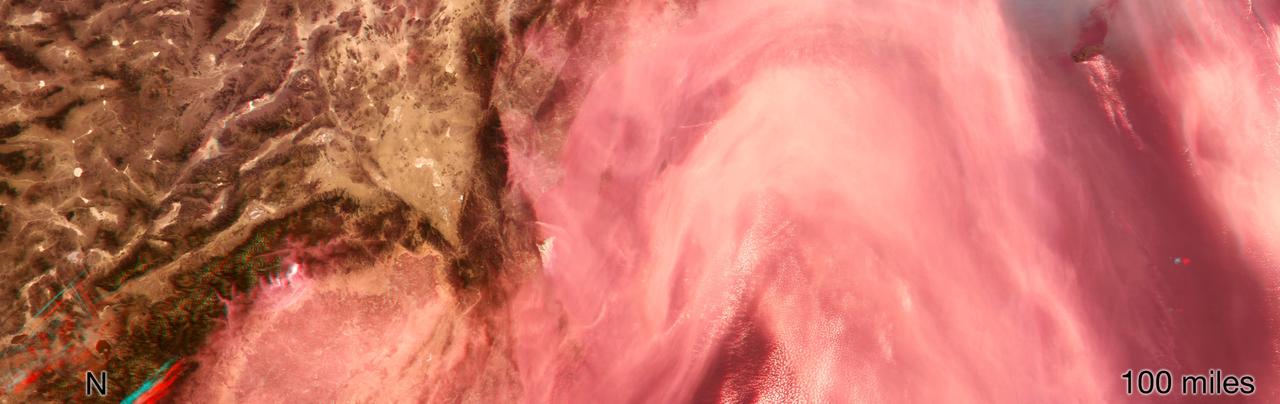
Data from the Multi-angle Imaging SpectroRadiometer (MISR) instrument aboard NASA's Terra satellite was used to produce this stereo anaglyph of the Woolsey Fire in southern California on Nov. 11, 2018. It shows a three-dimensional view of the smoke plume -- visible through red-blue 3D glasses. https://photojournal.jpl.nasa.gov/catalog/PIA22817
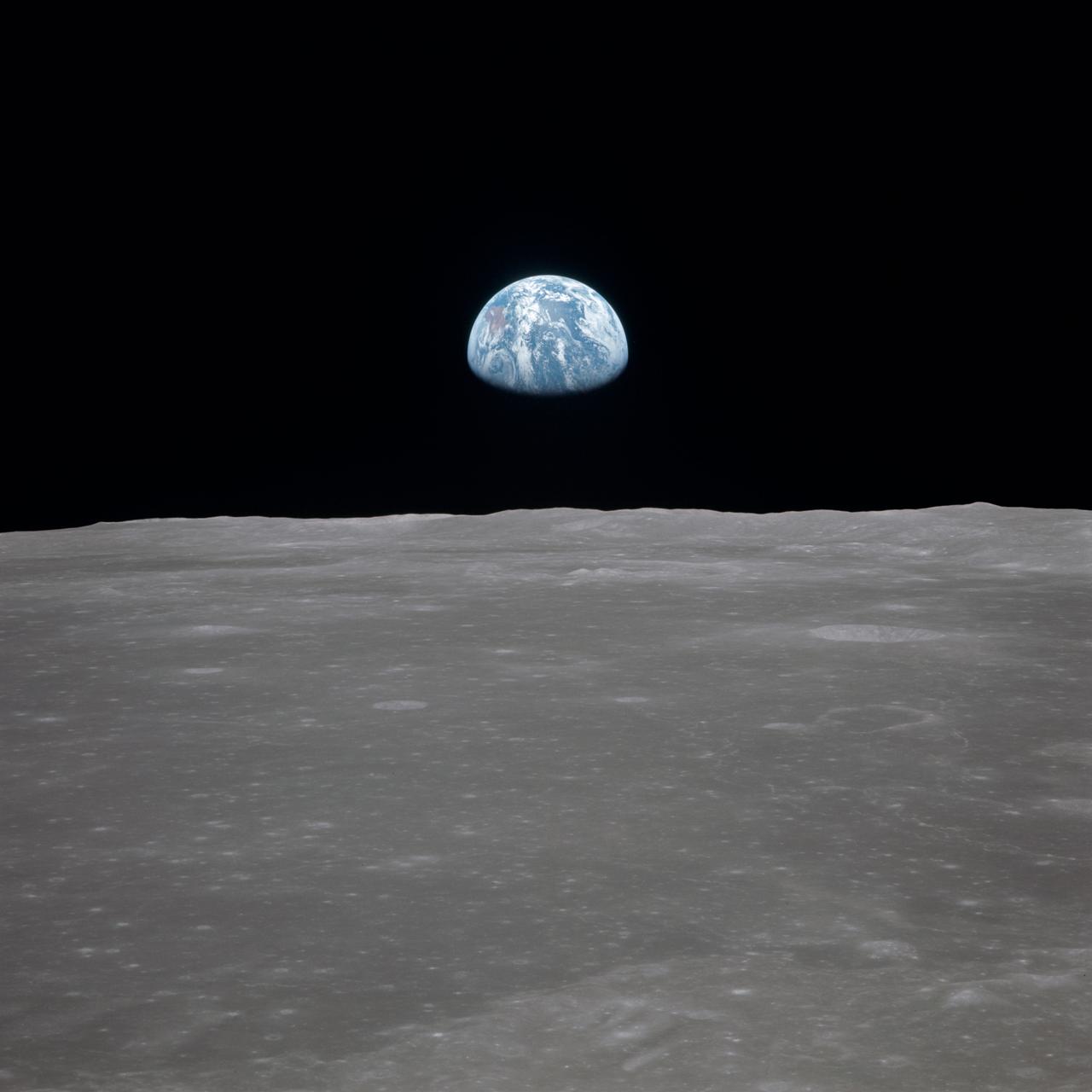
View of Moon limb with Earth on the horizon,Mare Smythii Region. Earth rise. This image was taken before separation of the LM and the Command Module during Apollo 11 Mission. Original film magazine was labeled V. Film Type: S0-368 Color taken with a 250mm lens. Approximate photo scale 1:1,300,000. Principal Point Latitude was 3 North by Longitude 85 East. Foward overlap is 90%. Sun angle is High. Approximate Tilt minimum is 65 degrees,maximum is 69. Tilt direction is West (W).
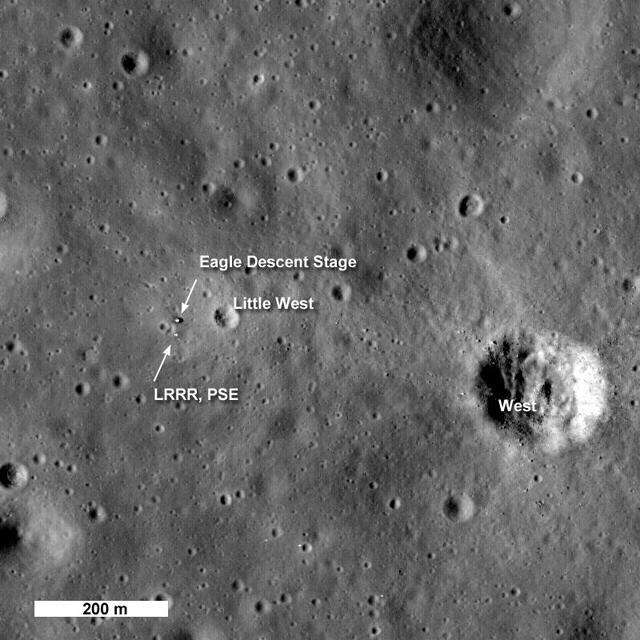
One month after its first image of the Apollo 11 landing site was acquired, NASA Lunar Reconnaissance Orbiter passed over the site again providing a new view of the historic site.

This 360-degree stereo panorama shows the terrain surrounding NASA Mars Exploration Rover Spirit on Nov. 11, 2004. At that point, Spirit was climbing the West Spur of the Columbia Hills. 3D glasses are necessary to view this image.
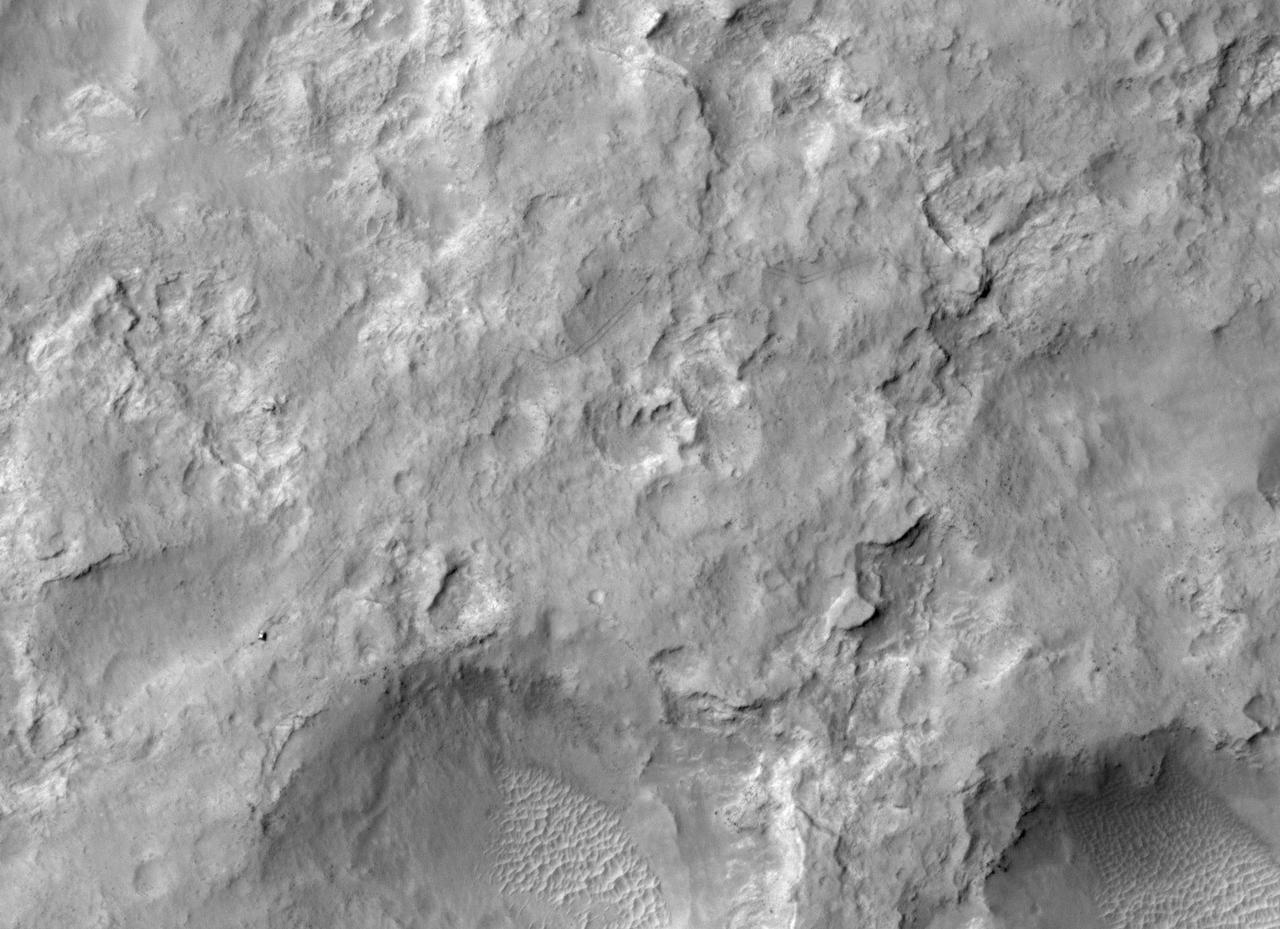
NASA Curiosity Mars rover and tracks left by its driving appear in this portion of a Dec. 11, 2013, observation by the HiRISE camera on NASA Mars Reconnaissance Orbiter. The rover is near the lower-left corner of this view.
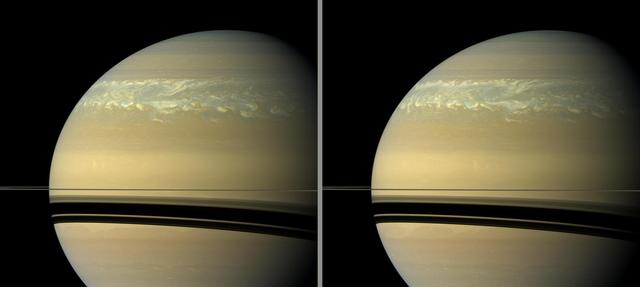
These two natural color views taken 11 hours -- one Saturn day -- apart by NASA Cassini spacecraft help scientists measure wind speeds in the huge storm seen here in the planet northern hemisphere.
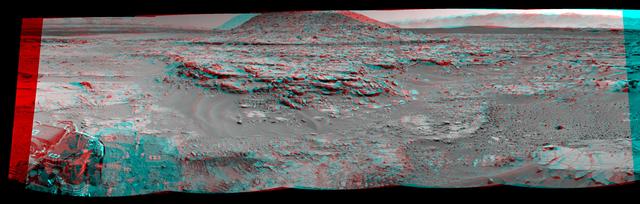
NASA Curiosity Mars rover used its Navigation Camera Navcam on April 11, 2014, to record this stereo scene of a butte called Mount Remarkable and surrounding outcrops. You need 3-D glasses to view this image.
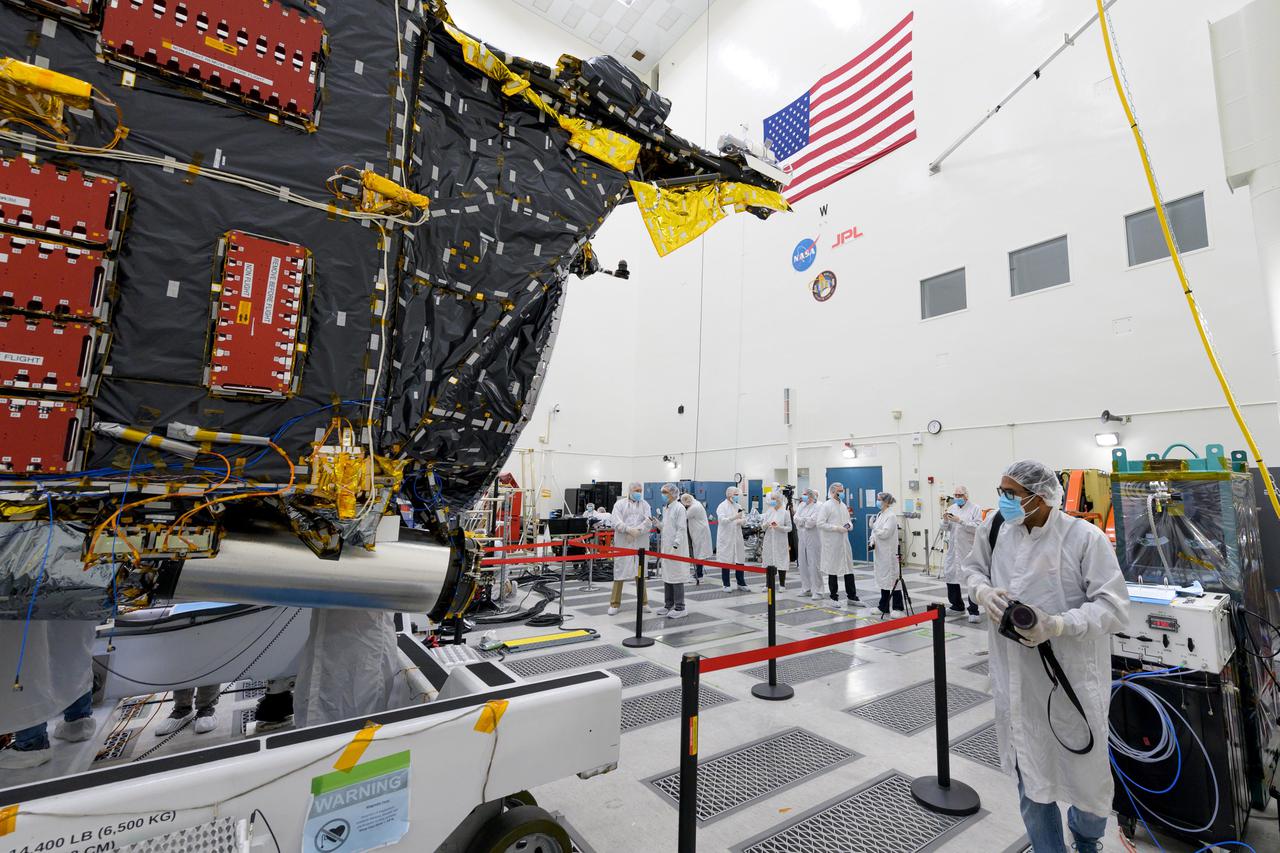
Members of the media view the Psyche spacecraft on April 11, 2022, inside a clean room at JPL. The spacecraft is scheduled to launch in August on a journey to a metal-rich asteroid of the same name. https://photojournal.jpl.nasa.gov/catalog/PIA25242
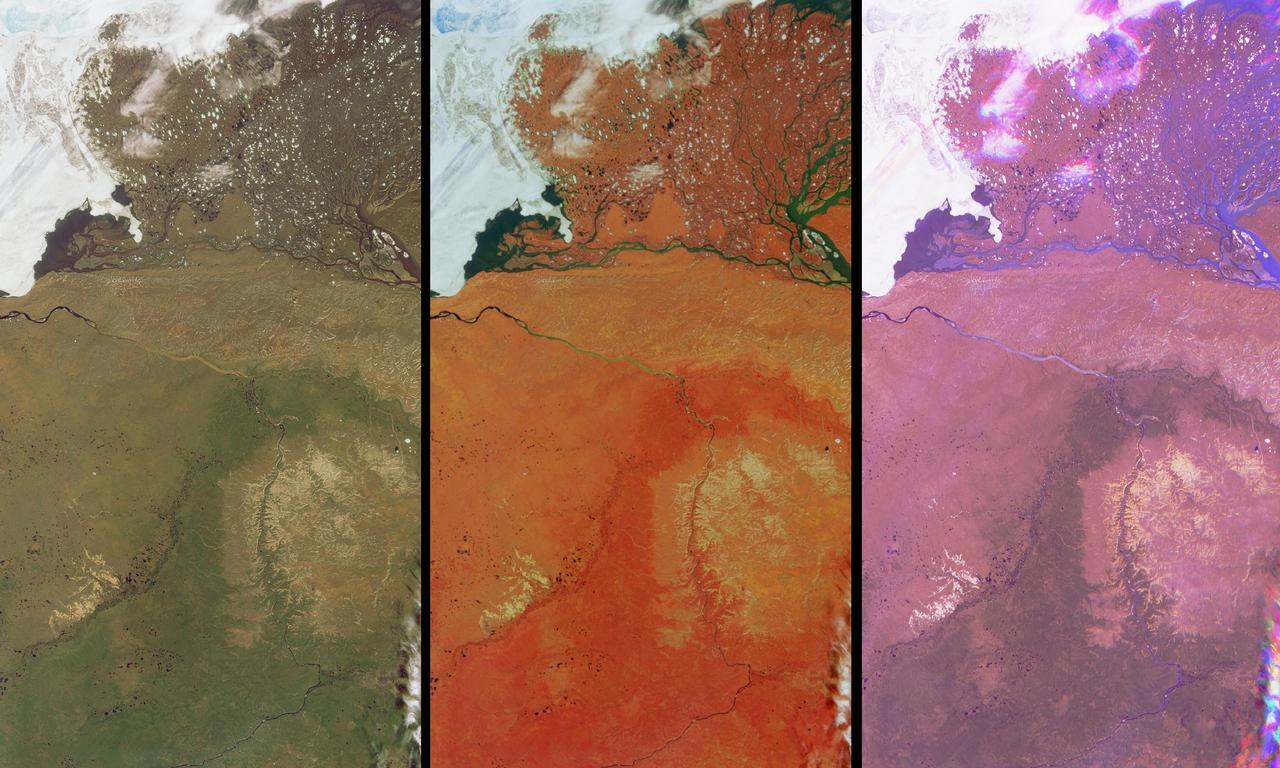
These views of the Russian Arctic were acquired by NASA Terra spacecraft on July 11, 2004, when the brief arctic summer had transformed the frozen tundra and the thousands of lakes, channels, and rivers of the Lena Delta into a fertile wetland.
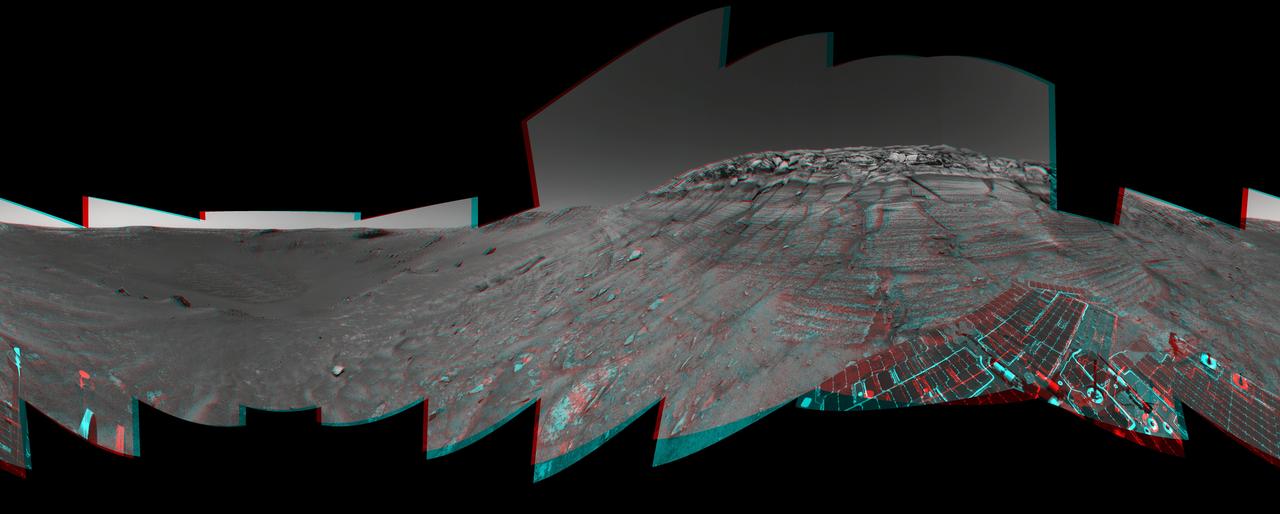
NASA Mars Exploration Rover Opportunity reached the base of Burns Cliff, a portion of the inner wall of Endurance Crater in this anaglyph from the rover 285th martian day Nov. 11, 2004. 3D glasses are necessary to view this image.
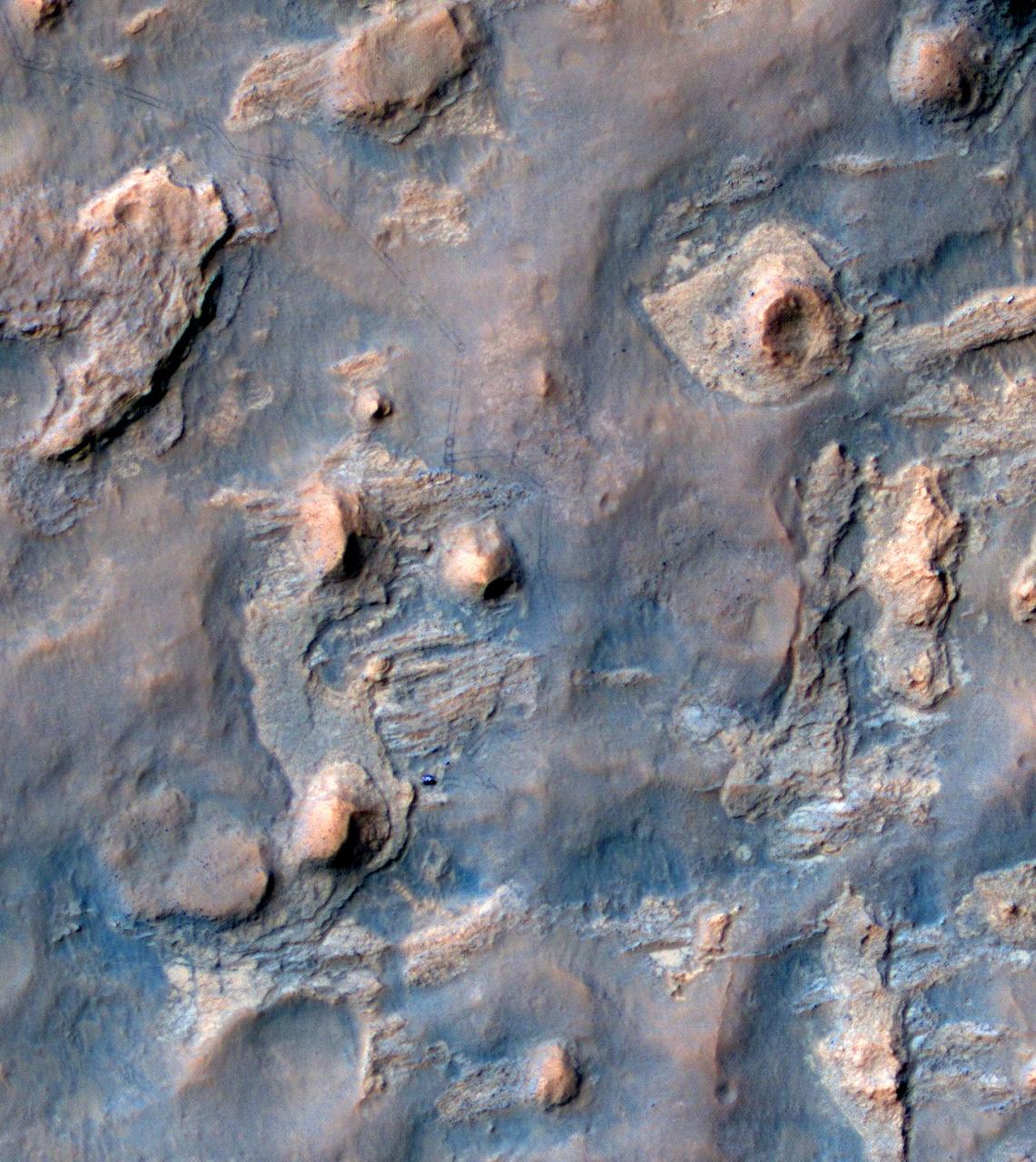
NASA Curiosity Mars rover and tracks from its driving are visible in this view from orbit, acquired on April 11, 2014, by the High Resolution Imaging Science Experiment HiRISE camera on NASA Mars Reconnaissance Orbiter.
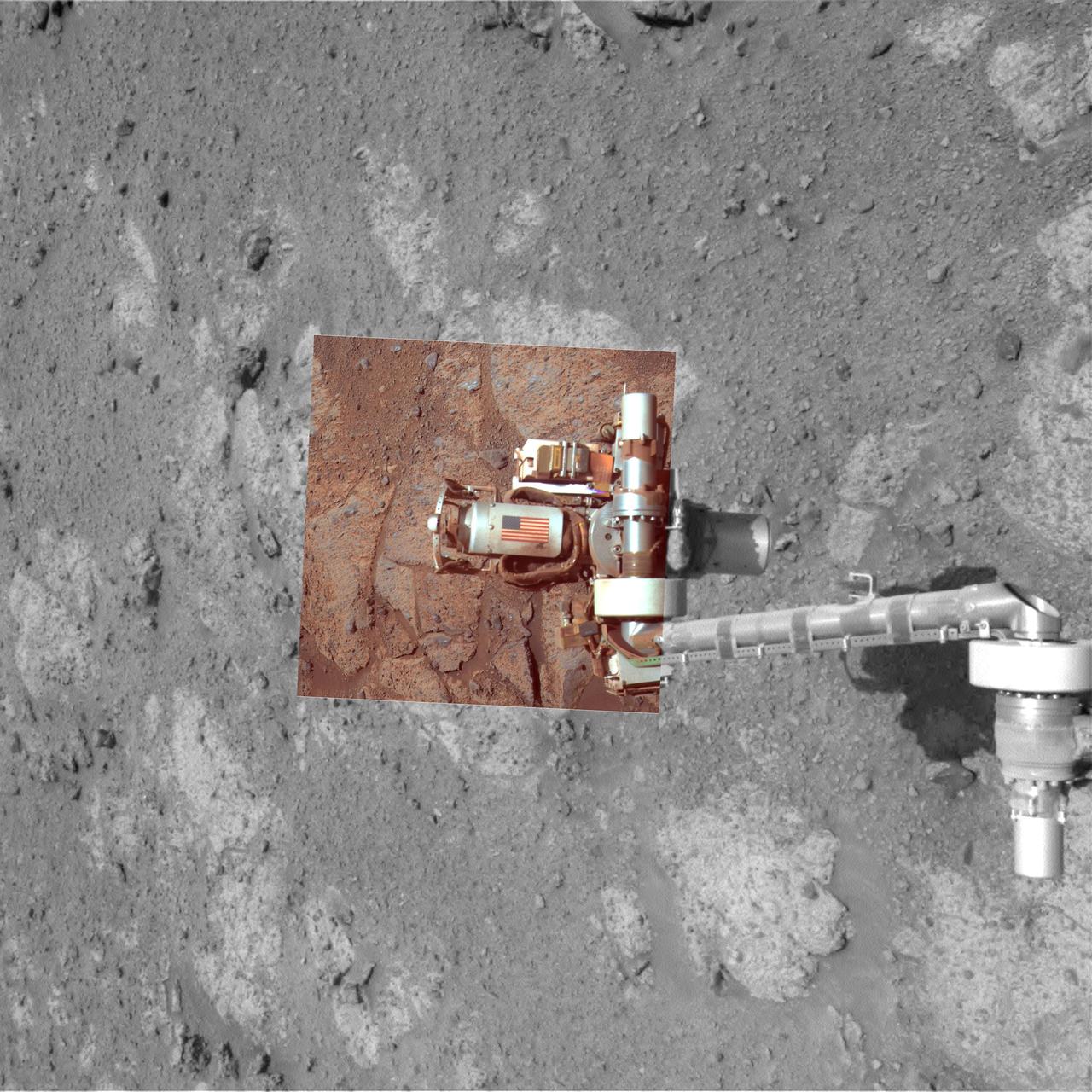
This view from NASA rover Opportunity, of an American flag on metal recovered from the site of the World Trade Center towers shortly after their destruction, was taken on Mars on Sept. 11, 2011, the 10th anniversary of the attacks on the towers.
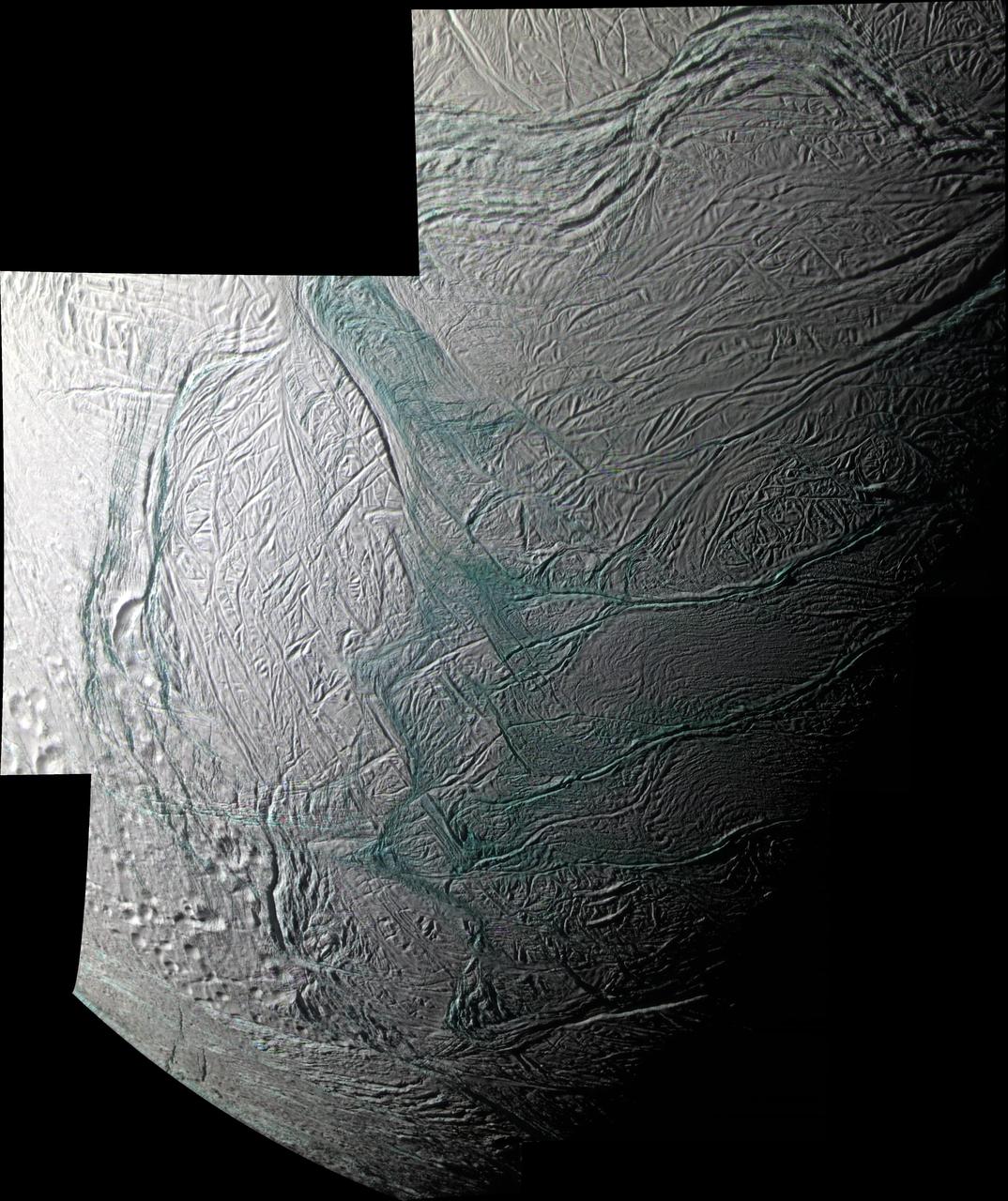
This sweeping mosaic of Saturn moon Enceladus provides broad regional context for the ultra-sharp, close-up views NASA Cassini spacecraft acquired minutes earlier, during its flyby on Aug. 11, 2008.
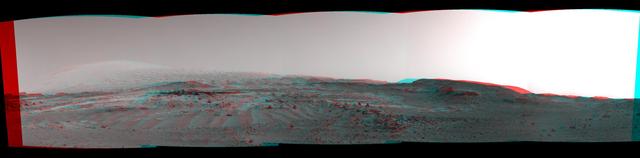
NASA's Curiosity Mars rover used its Navigation Camera (Navcam) to capture this view on April 11, 2015, during the 952nd Martian day, or sol of the rover's work on Mars. The image appears three-dimensional when viewed through red-blue glasses with the red lens on the left. The rover's location was in a valley called "Artist's Drive" on the route up Mount Sharp. The view spans from east, at left, to southwest, at right. Upper Mount Sharp appears on the horizon at left. http://photojournal.jpl.nasa.gov/catalog/PIA19387
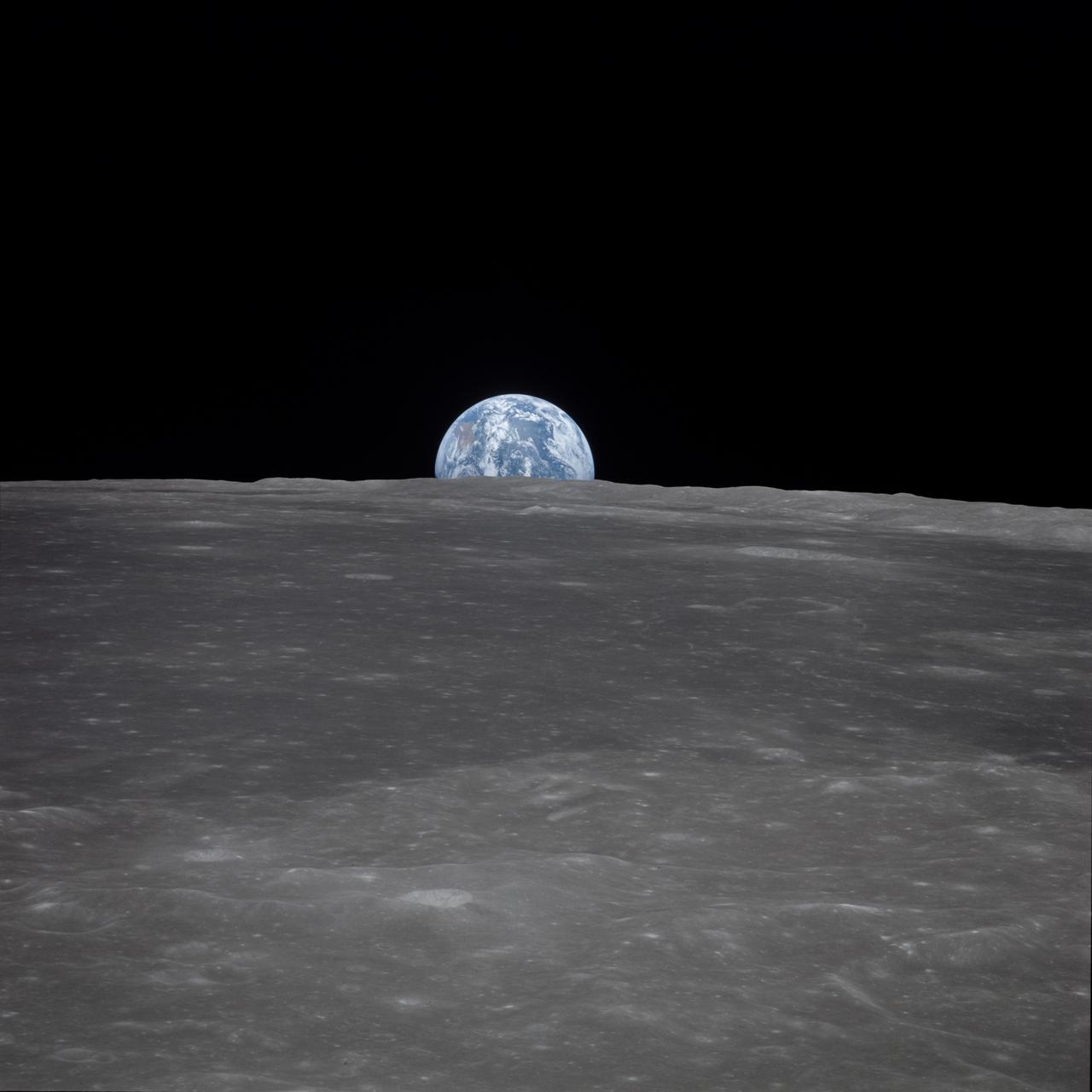
AS11-44-6548 (16-24 July 1969) --- This view from the Apollo 11 spacecraft shows Earth rising above the moon's horizon. The lunar terrain pictured is in the area of Smyth's Sea on the nearside. Coordinates of the center of the terrain are 86 degrees east longitude and 3 degrees north latitude. While astronauts Neil A. Armstrong, commander, and Edwin E. Aldrin Jr., lunar module pilot, descended in the Lunar Module (LM) "Eagle" to explore the Sea of Tranquility region of the moon, astronaut Michael Collins, command module pilot, remained with the Command and Service Modules (CSM) "Columbia" in lunar orbit.

AS11-44-6549 (16-24 July 1969) --- This view from the Apollo 11 spacecraft shows Earth rising above the moon's horizon. The lunar terrain pictured is in the area of Smyth's Sea on the nearside. Coordinates of the center of the terrain are 86 degrees east longitude and 3 degrees north latitude. While astronauts Neil A. Armstrong, commander, and Edwin E. Aldrin Jr., lunar module pilot, descended in the Lunar Module (LM) "Eagle" to explore the Sea of Tranquility region of the moon, astronaut Michael Collins, command module pilot, remained with the Command and Service Modules (CSM) "Columbia" in lunar orbit.
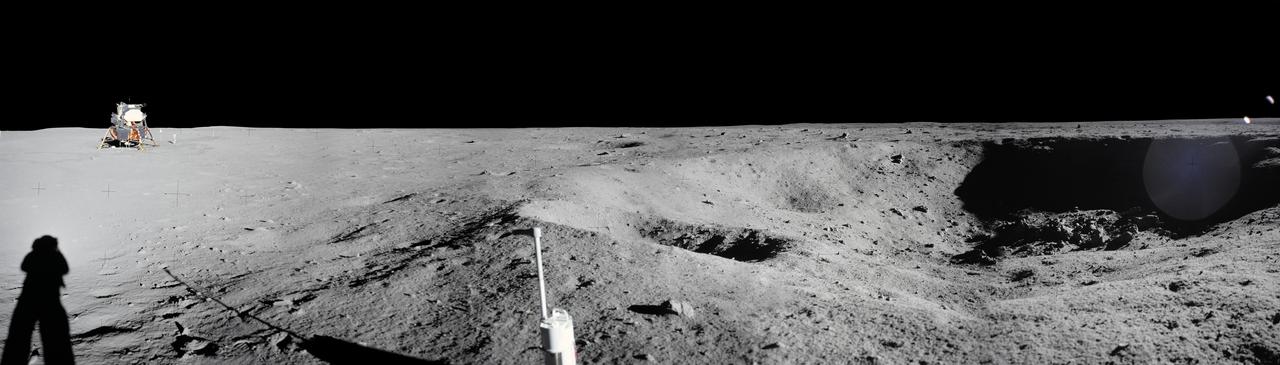
jsc2008e040725 - Panorama view of Apollo 11 Lunar surface photos taken by Astronaut Neil Armstrong at Tranquility Base of a crater Armstrong noted during the Lunar Module descent. The panoramas were built by combining Apollo 11 images starting with frame AS11-40-5954 through end frame AS11-40-5961. The panoramic images received minimal retouching by NASA imagery specialists, including the removal of lens flares that were problematic in stitching together the individual frames and blacking out the sky to the lunar horizon. These adjustments were made based on observations of the Moon walkers who reported that there are no stars visible in the sky due to the bright lunar surface reflection of the Sun.
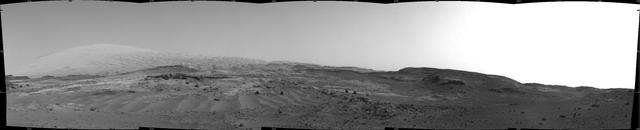
NASA's Curiosity Mars rover used its Navigation Camera (Navcam) to capture this view on April 11, 2015, during the 952nd Martian day, or sol of the rover's work on Mars. The rover's location was in a valley called "Artist's Drive" on the route up Mount Sharp. The view spans from east, at left, to southwest, at right. Upper Mount Sharp appears on the horizon at left. http://photojournal.jpl.nasa.gov/catalog/PIA19386

This montage of 11 images taken by NASA Galileo spacecraft as it flew by the asteroid Gaspra on Oct. 1991, shows Gaspra growing progressively larger in the field of view of Galileo solid-state imaging camera as the spacecraft approached the asteroid. http://photojournal.jpl.nasa.gov/catalog/PIA00079
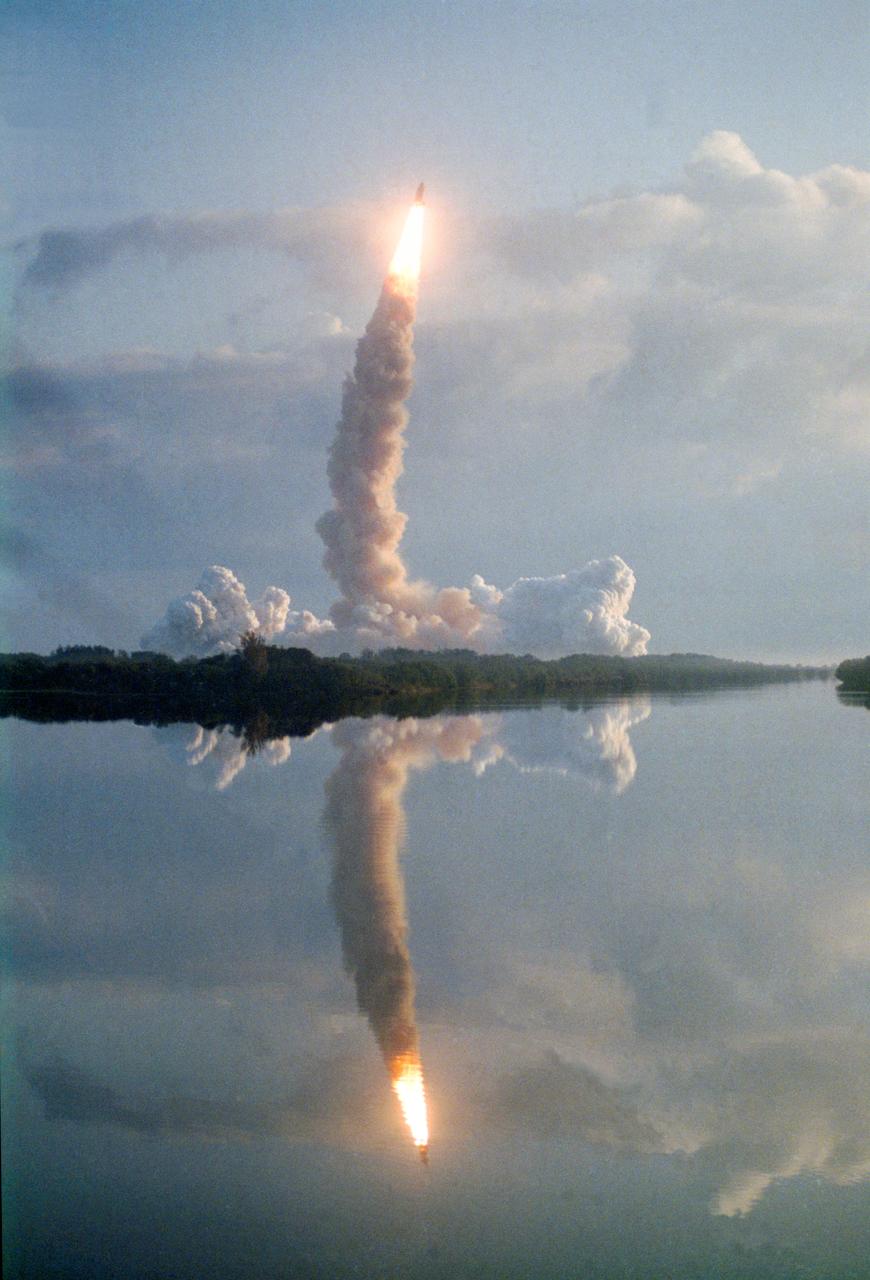
S84-28205 (3 Feb. 1984) --- Reflected in nearby water, NASA's space shuttle Challenger, attached to two solid rocket boosters and an external fuel tank which it will later jettison, blasts off from Pad A at Kennedy Space Center's Launch Complex 39, at 8:00 a.m. (EST), Feb. 3, 1984. The photograph was taken by Otis Imboden. Photo credit: NASA
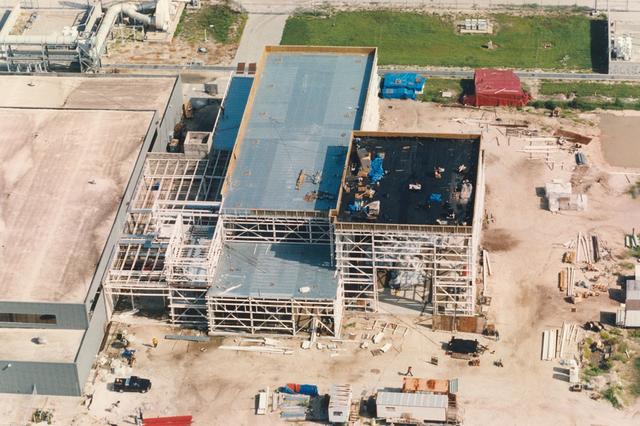
Aerial view of SSMEPF construction, August 11, 1997

The Sun's rotation brought a new active region into view, revealing the dynamic arches and twisting streams of its magnetic field (Oct. 10-11, 2018). A new active region is becoming more of a rare sight, as the Sun is currently approaching solar minimum -- the point of the 11-year solar cycle when activity is most reduced. The video clip, showing images taken in a wavelength of extreme ultraviolet light covers 33 hours and consists of over 500 frames (i.e., one frame selected every 4 minutes). Animations are available at https://photojournal.jpl.nasa.gov/catalog/PIA18139
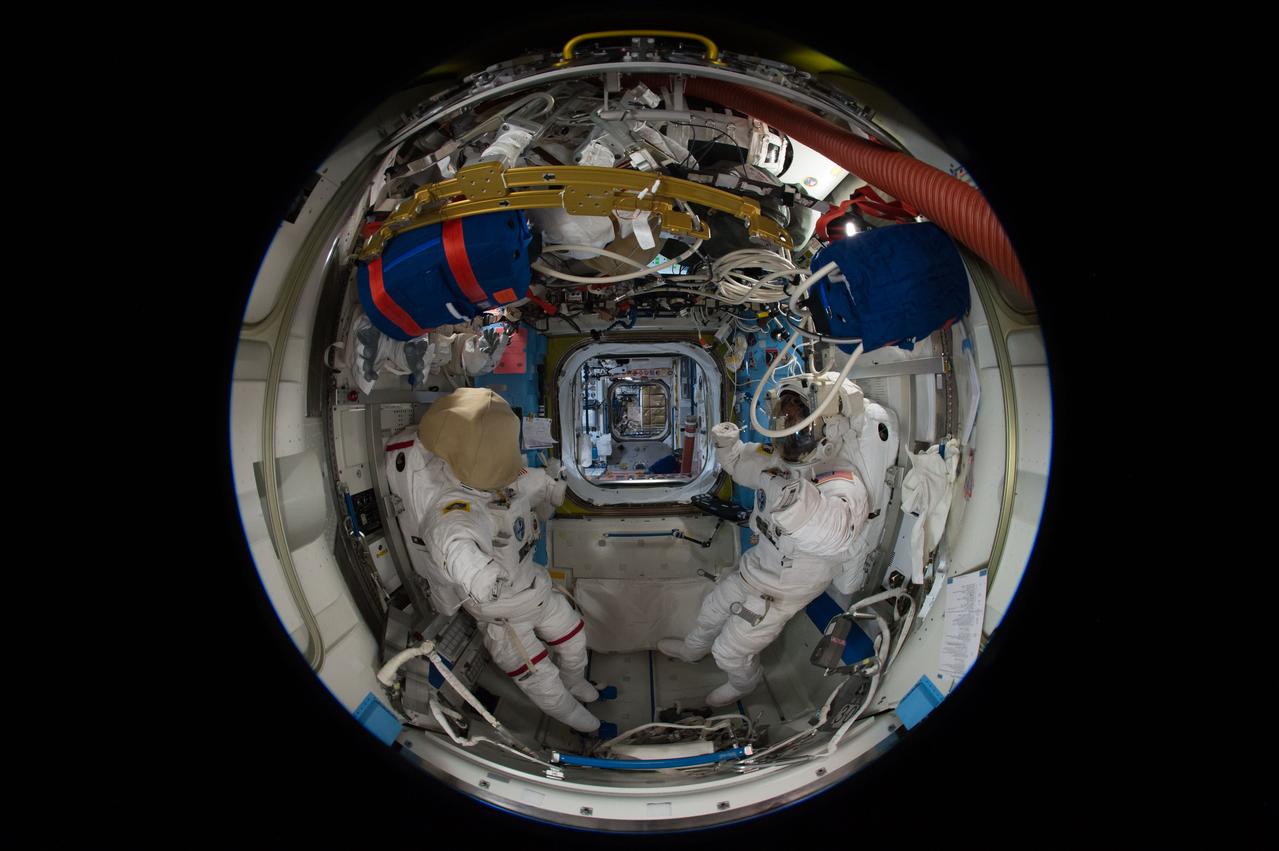
iss051e041018 (5/11/2017) --- A fish-eye view looking port in the Quest Airlock (A/L), taken for a Google Street View of the ISS. The port hatch into the Unity Node 1 is in view.
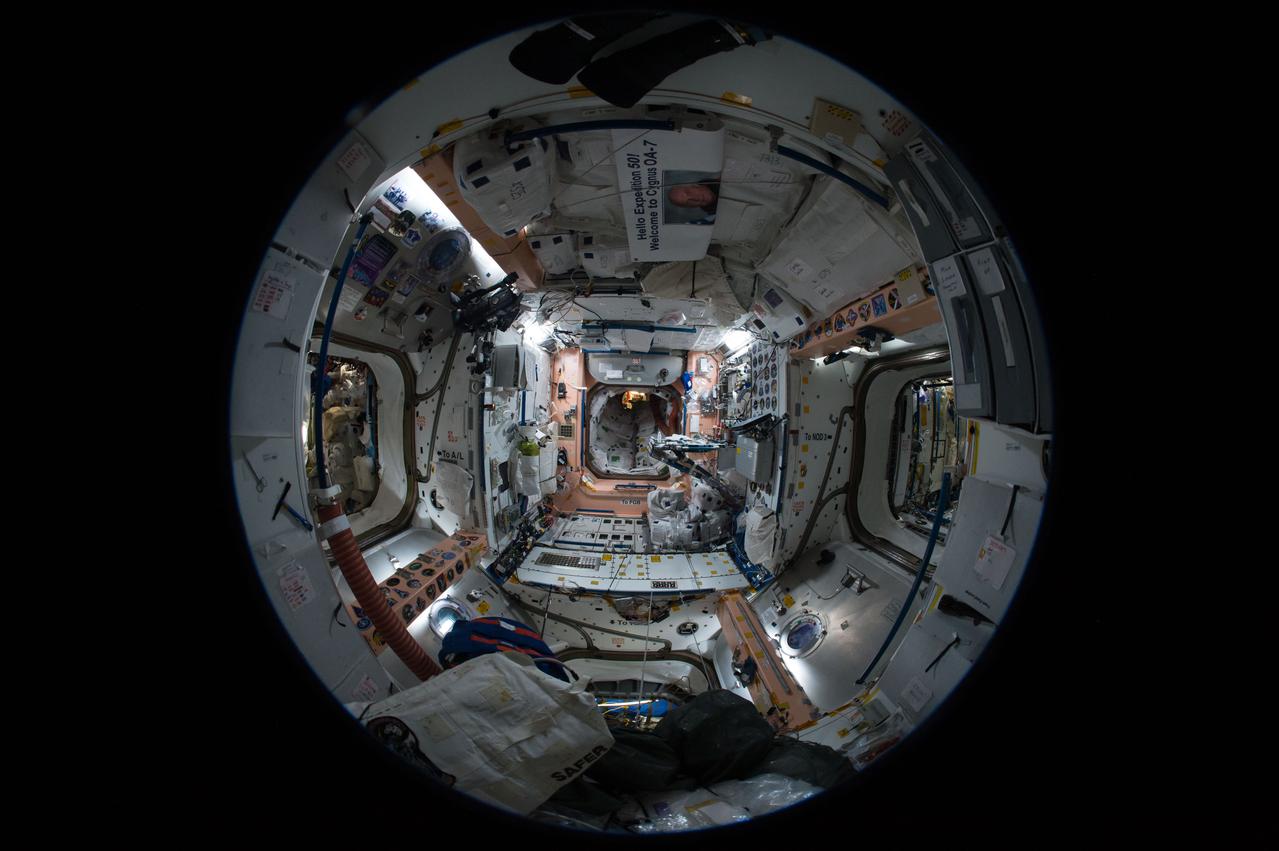
iss051e040946 (5/11/2017) --- A fish-eye view looking aft in the Unity Node 1, taken for a Google Street View of the ISS.
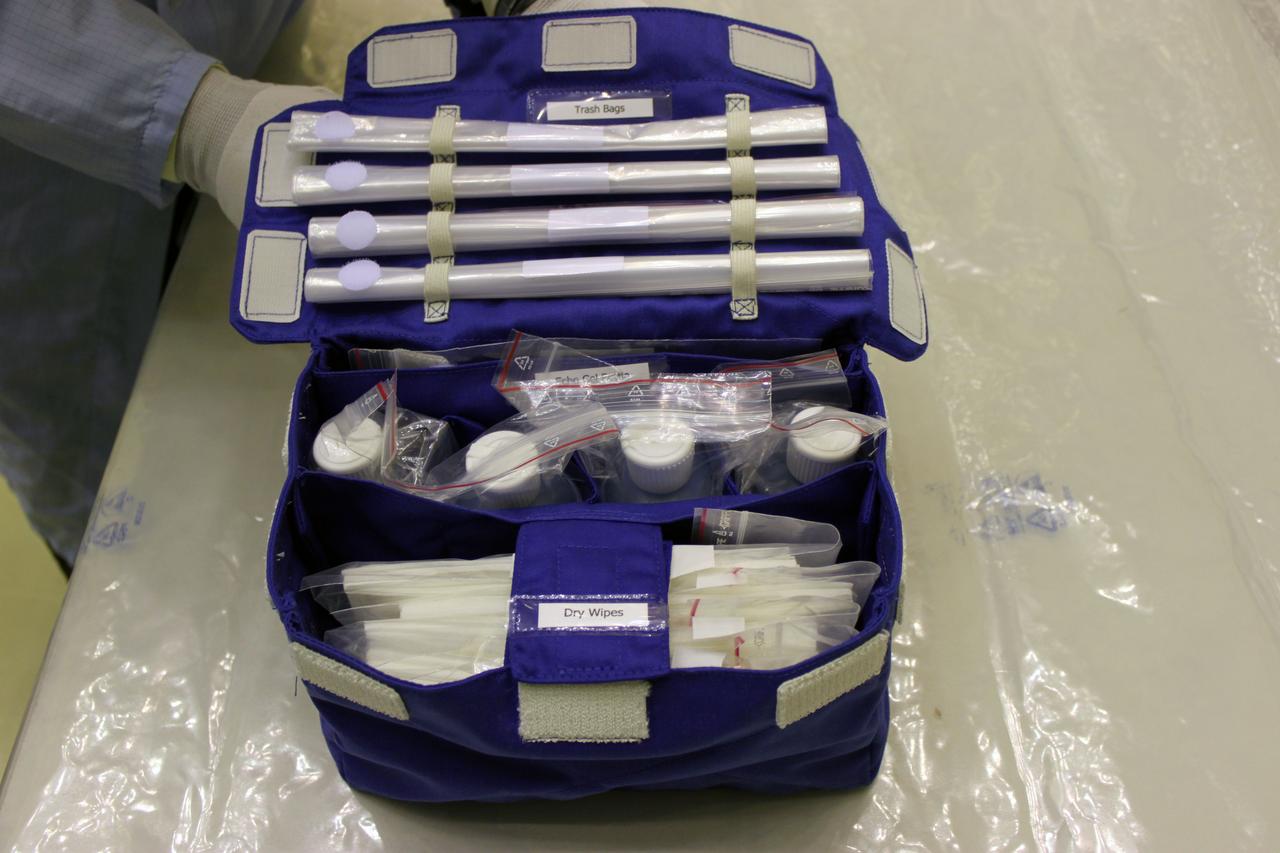
jsc2010e187274 (11/2/2010) --- Oblique-open view of Vessel Imaging Kit

Intrepid crater on Mars carries the name of the lunar module of NASA Apollo 12 mission, which landed on Earth moon Nov. 19, 1969. NASA Mars Exploration Rover Opportunity recorded this stereo view on Nov. 11, 2010. 3D glasses are necessary.

This is a reconstructed view of Jupiter's northern lights through the filters of Juno's Ultraviolet Imaging Spectrometer (UVS) instrument on Dec. 11, 2016, as the Juno spacecraft approached Jupiter, passed over its poles, and plunged towards the equator. Such measurements present a real challenge for the spacecraft's science instruments: Juno flies over Jupiter's poles at 30 miles (50 kilometers) per second -- more than 100,000 miles per hour -- speeding past auroral forms in a matter of seconds. https://photojournal.jpl.nasa.gov/catalog/PIA21938
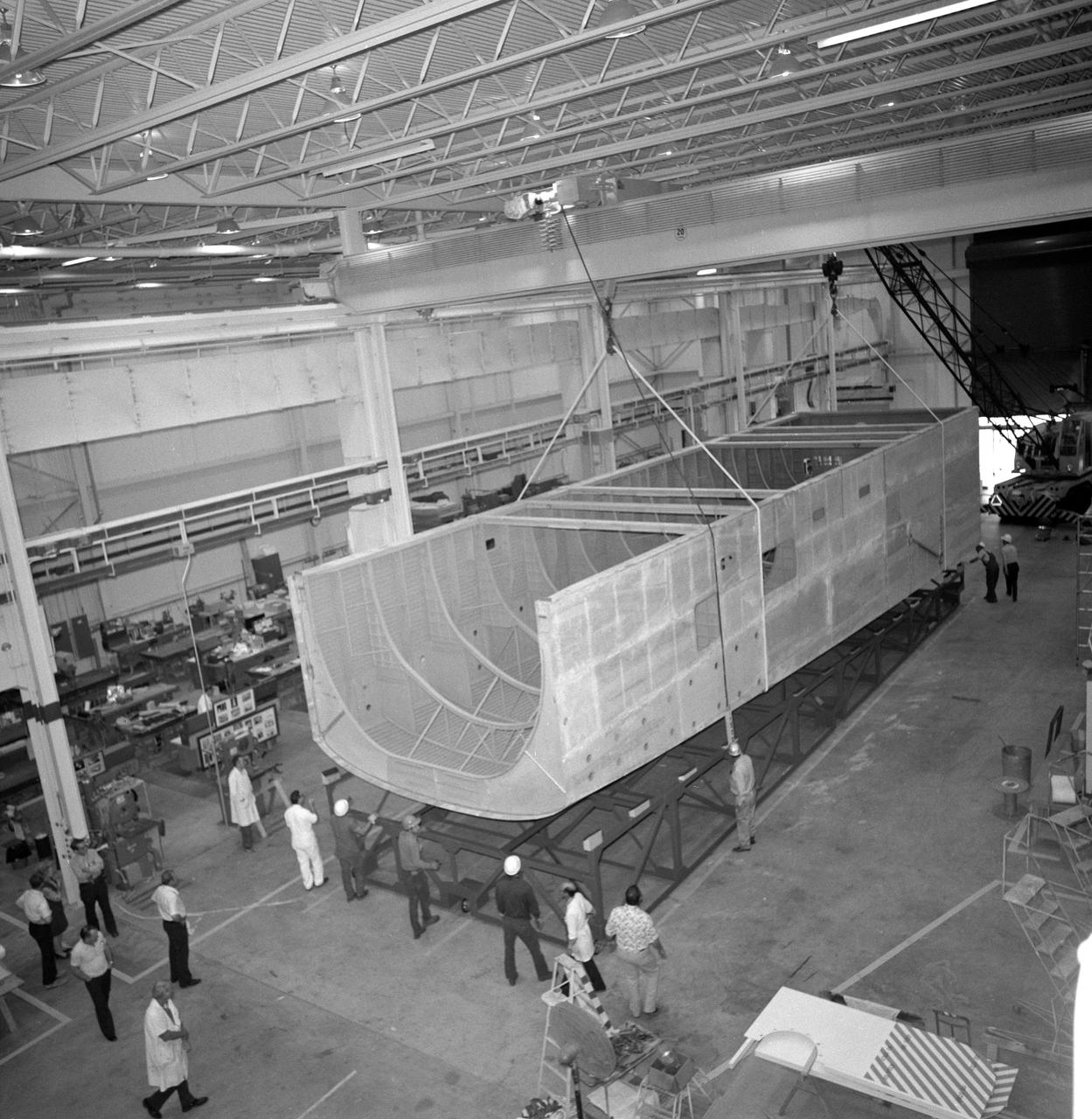
Eleven (11) wide-angle views and medium shots showing progess on construction of Shuttle Orbiter Mid-Body Mockup in Bldg. 9. Workers seen in views. JSC, Houston, TX
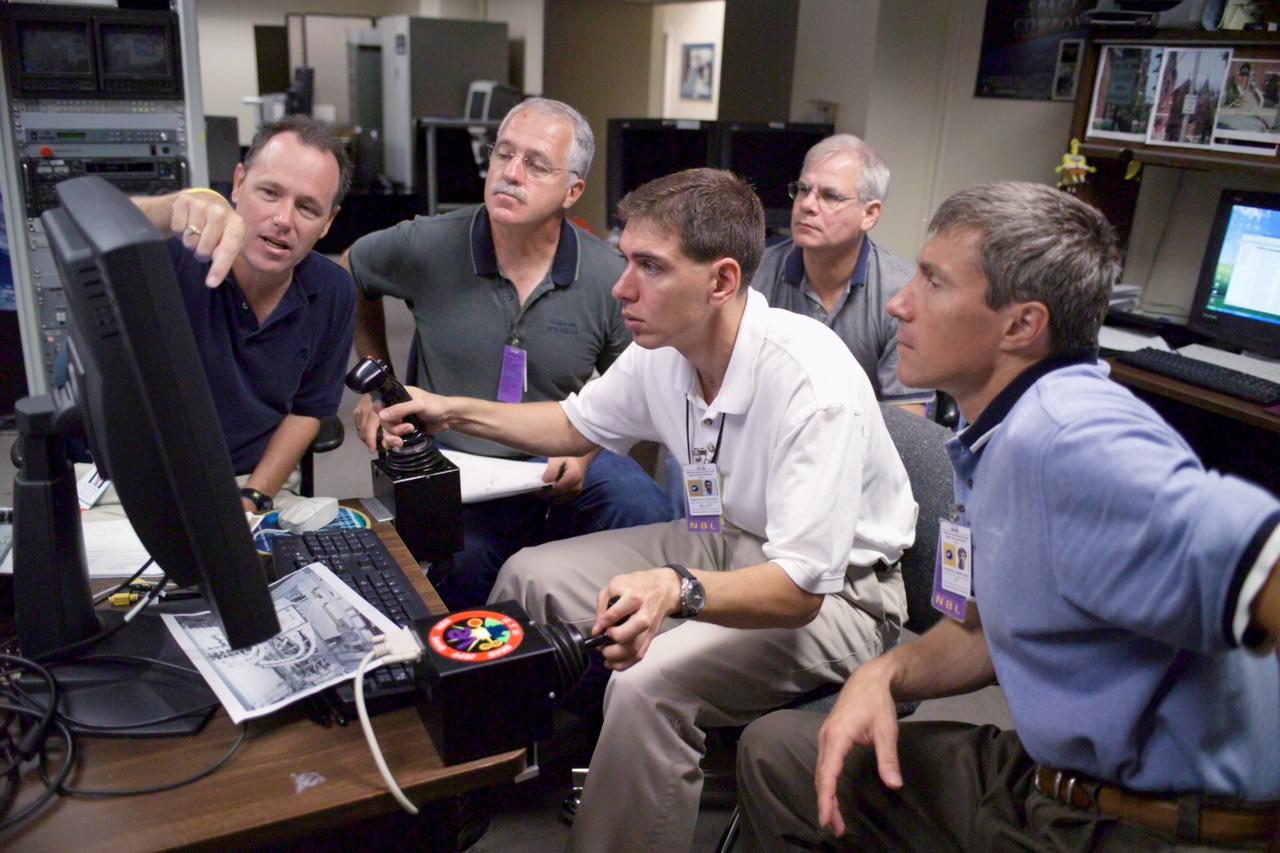
Expedition 11 Training with Krikalev/Henderson as their continued their training in the Virtual Reality Laboratory in building 9. View includes: Sergei Krikalev and Henderson using the virtual optics to view the International Space Station.
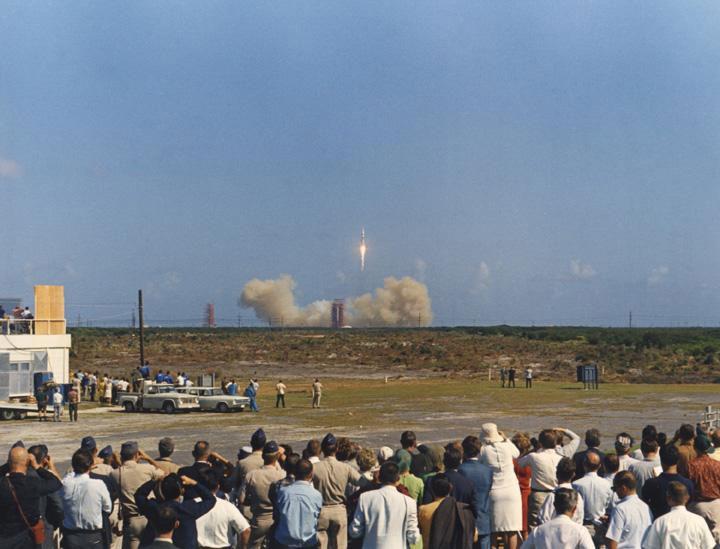
View of Press Site 2, CCAFS, during launch of Apollo 8, October 11, 1968
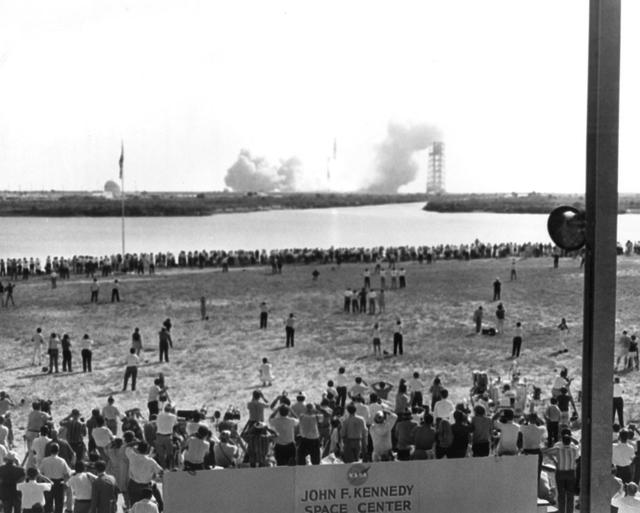
View of Complex 39 Press Site during Apollo 11 launch, July 16, 1969
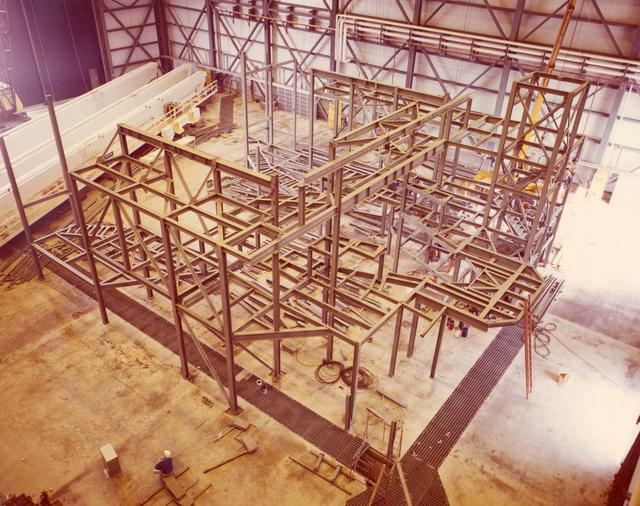
View of OPF High Bay No. 1, nose area platform installation, March 11, 1977
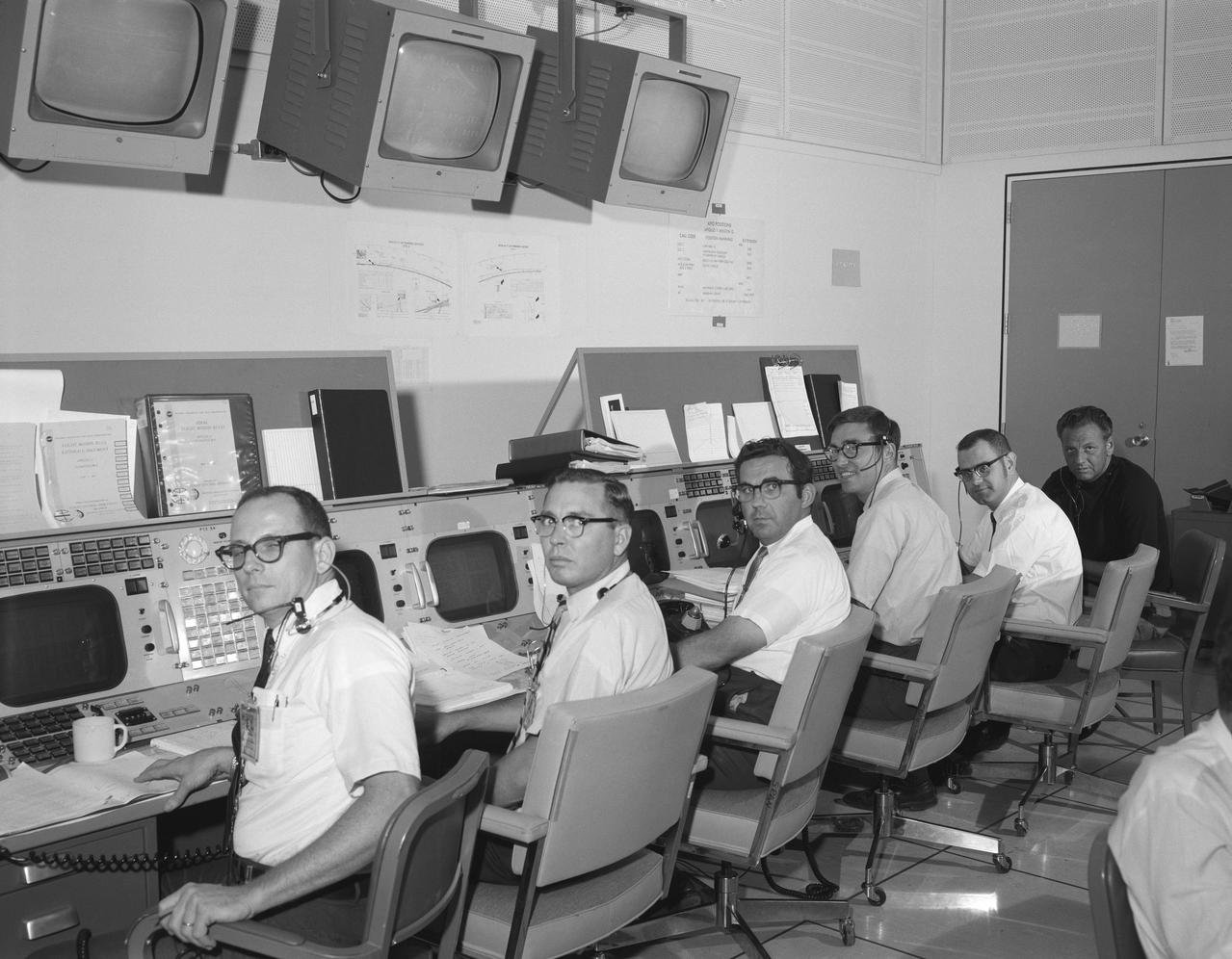
Documentary views of the SPAN preparations in the MCC during the Apollo 11 Mission. MSC, Houston, TX
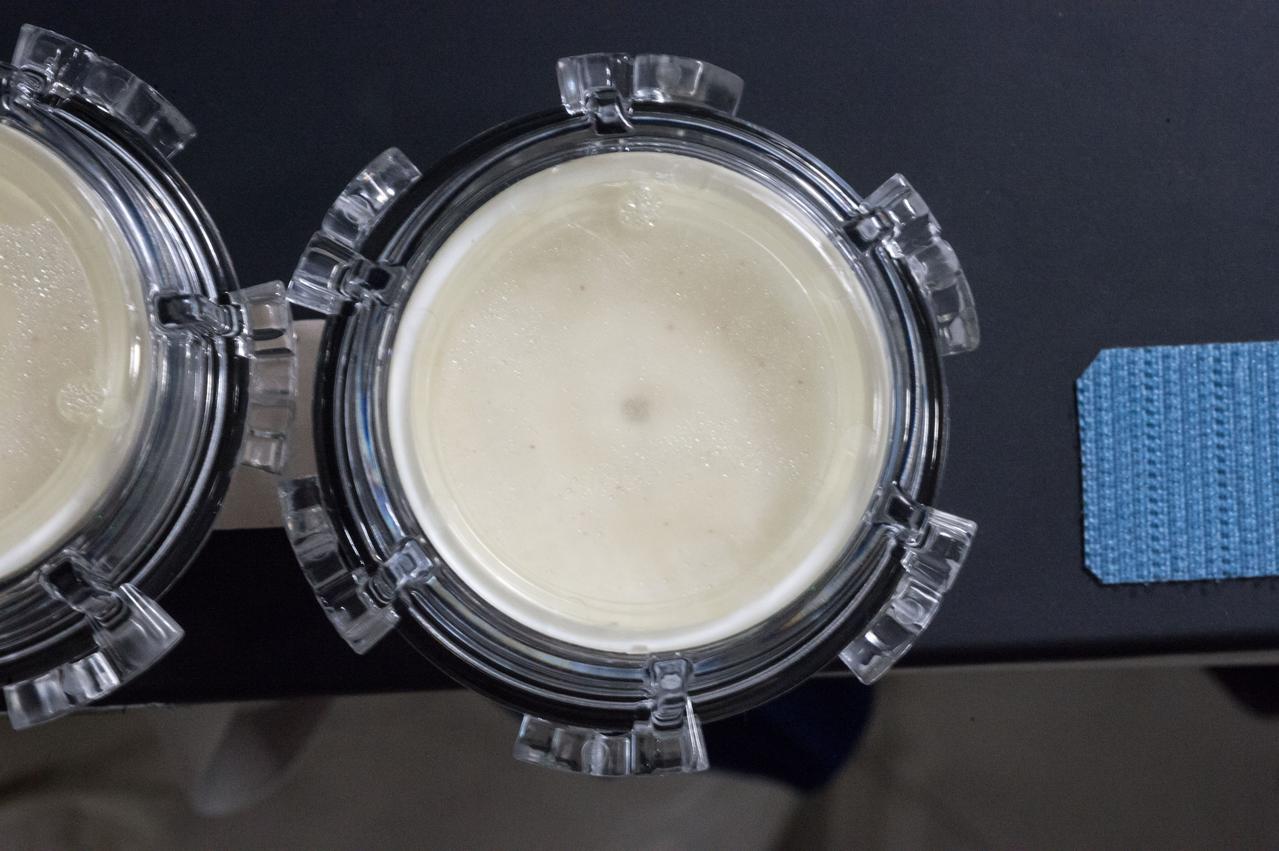
iss050e011727 (11/25/2016) --- View of Aquapad Microbial Contamination after incubation. Photo was taken during Expedition 40.
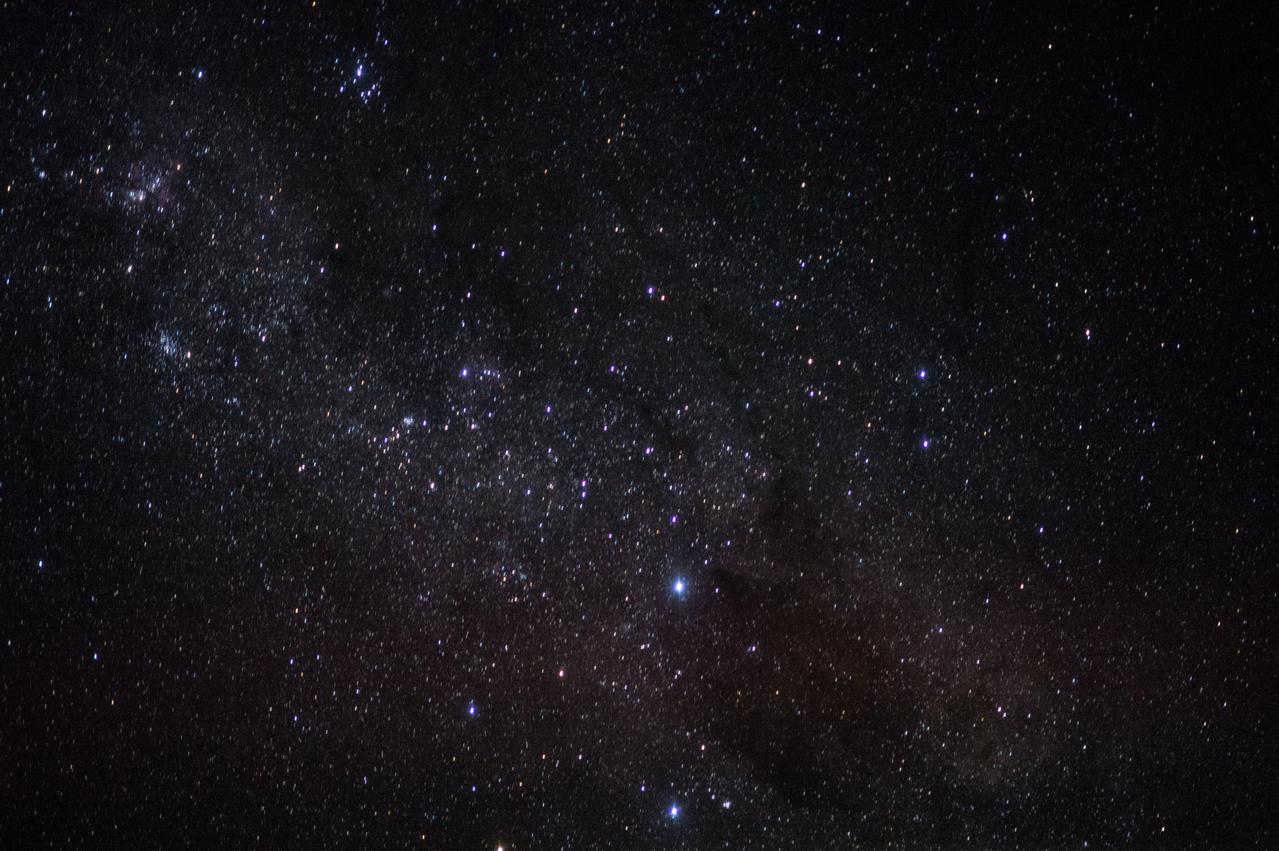
iss045e057047 (10/11/2015) --- A view of stars taken by the Expedition 45 crew aboard the International Space Station (ISS).
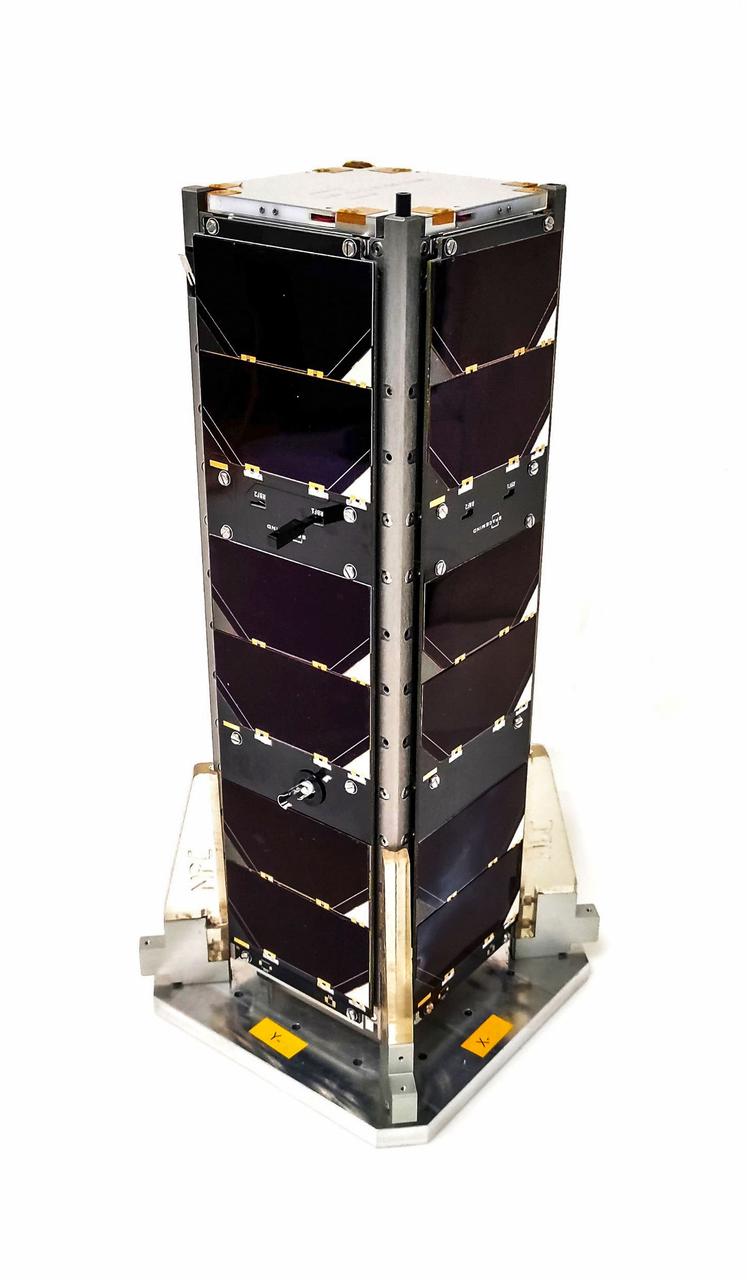
jsc2022e084486 (11/2/2022) --- A preflight view of the DANTESAT 3U CubeSat. Image courtesy of NPC Spacemind.
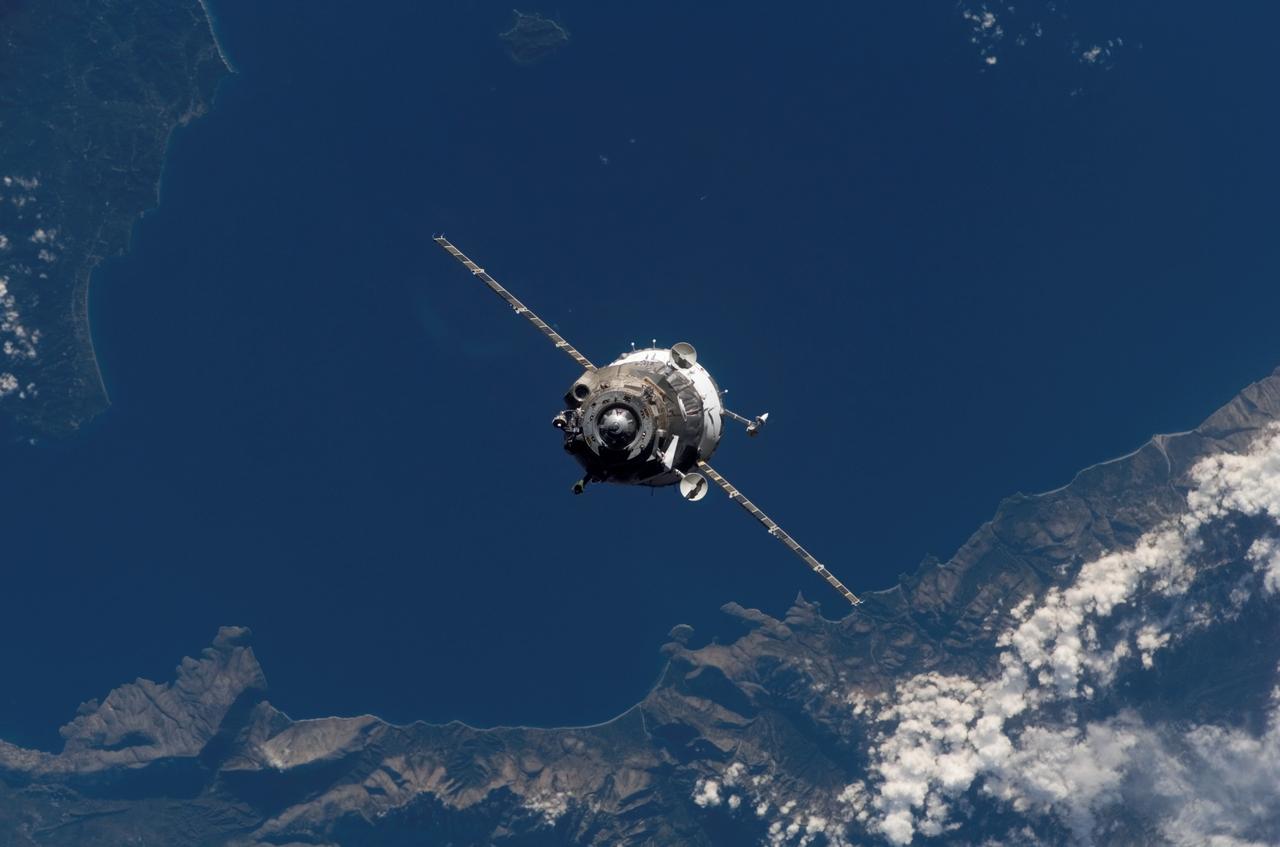
ISS015-E-34473 (12 Oct. 2007) --- The Soyuz 15 (TMA-11) approaches the International Space Station, carrying NASA astronaut Peggy A. Whitson, Expedition 16 commander; cosmonaut Yuri I. Malenchenko, Soyuz commander and flight engineer representing Russia's Federal Space Agency; and Malaysian spaceflight participant Sheikh Muszaphar Shukor. Whitson and Malenchenko will spend six months on the station, while Shukor will return to Earth Oct. 21 with two of the Expedition 15 crewmembers currently on the complex.
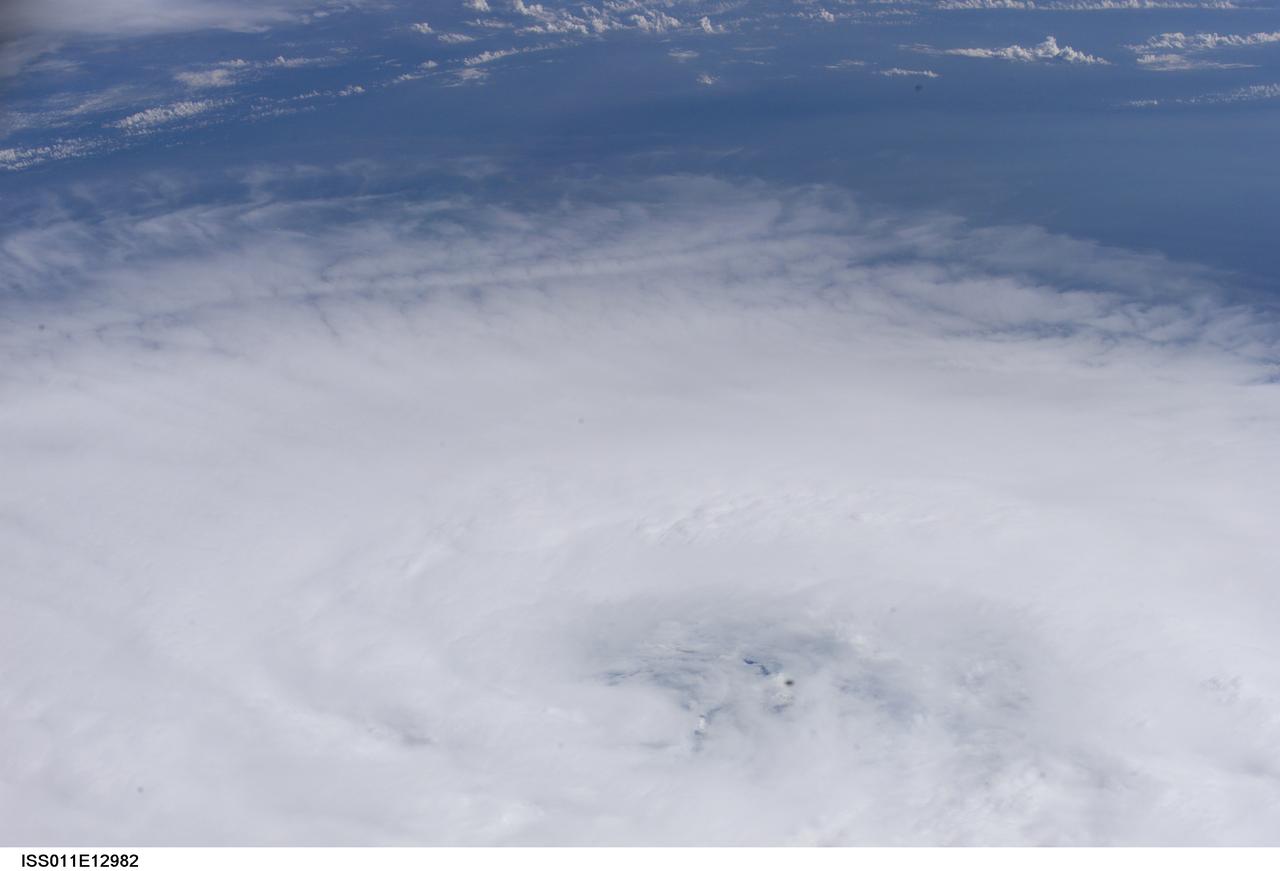
ISS011-E-12982 (14 September 2005, 19:14:09 GMT) --- This high oblique view of Hurricane Ophelia was taken on the afternoon of September 14 from the International Space Station. The ill-defined eye is located at bottom center of the frame. The slow-moving storm is off the coast of the Carolinas.
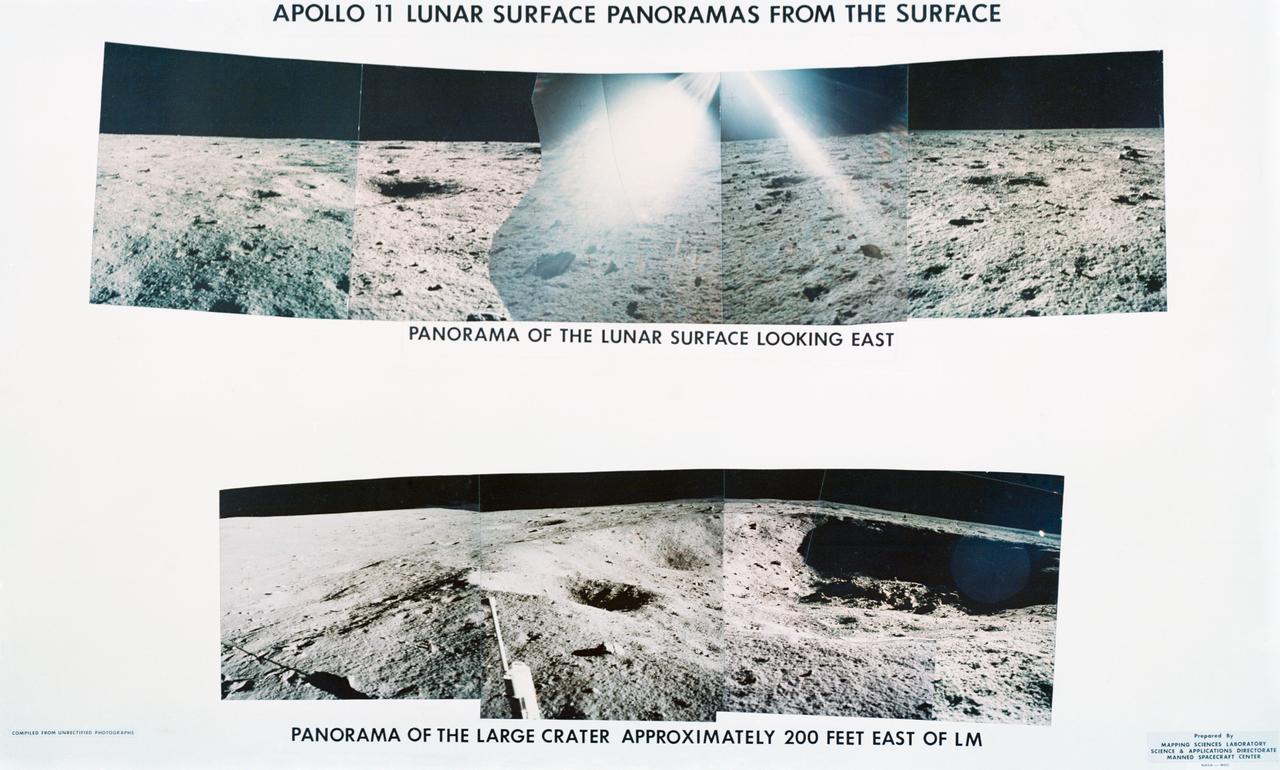
S69-44464 (July 1969) --- Astronaut Neil A. Armstrong took this series of pictures of the landing site of Apollo 11's Lunar Module (LM) Eagle on the lunar surface. Glare in the middle of the top frames is the result of the Hasselblad being aimed toward the sun.
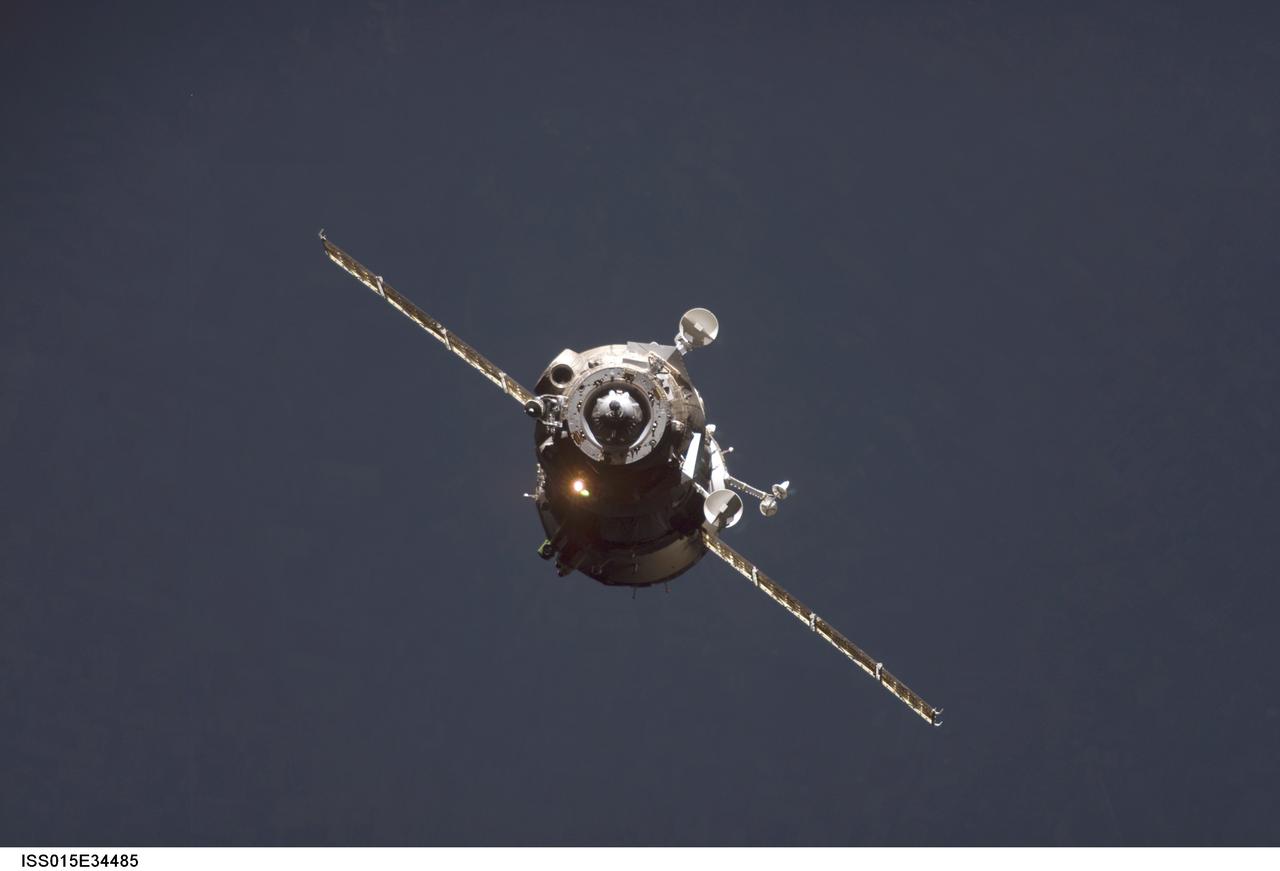
ISS015-E-34485 (12 Oct. 2007) --- The Soyuz 15 (TMA-11) approaches the International Space Station, carrying NASA astronaut Peggy A. Whitson, Expedition 16 commander; cosmonaut Yuri I. Malenchenko, Soyuz commander and flight engineer representing Russia's Federal Space Agency; and Malaysian spaceflight participant Sheikh Muszaphar Shukor. Whitson and Malenchenko will spend six months on the station, while Shukor will return to Earth Oct. 21 with two of the Expedition 15 crewmembers currently on the complex.
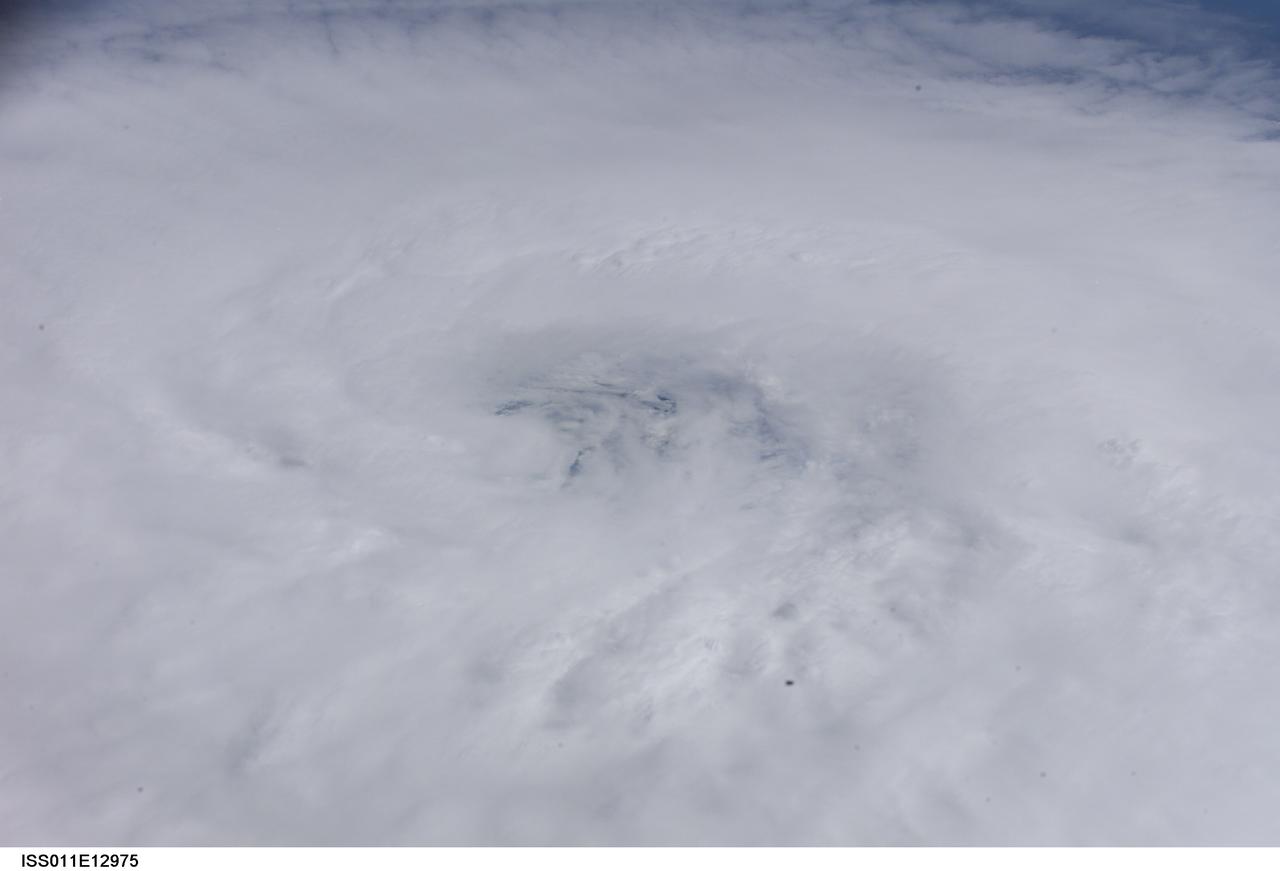
ISS011-E-12975 (14 September 2005, 19:13:58 GMT) --- This high oblique 80-mm image of Hurricane Ophelia was taken on the afternoon of September 14 from the International Space Station. The ill-defined eye is located at center of the frame. The slow-moving storm is off the coast of the Carolinas.
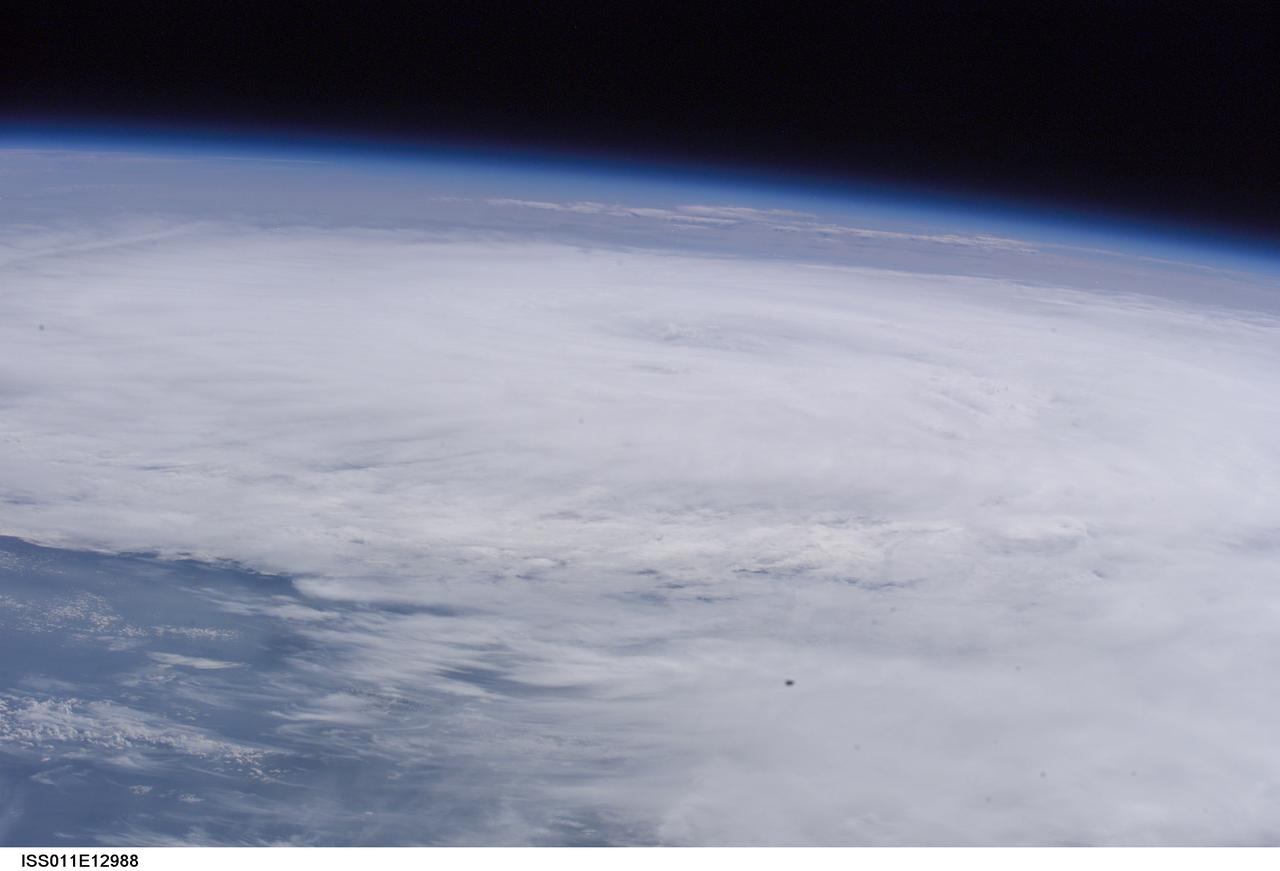
ISS011-E-12988 (14 September 2005, 19:16:29 GMT) --- This oblique view of Hurricane Ophelia was taken on the afternoon of September 14 from the International Space Station. The somewhat ill-defined eye is located just above right center. The slow-moving storm is off the coast of the Carolinas.
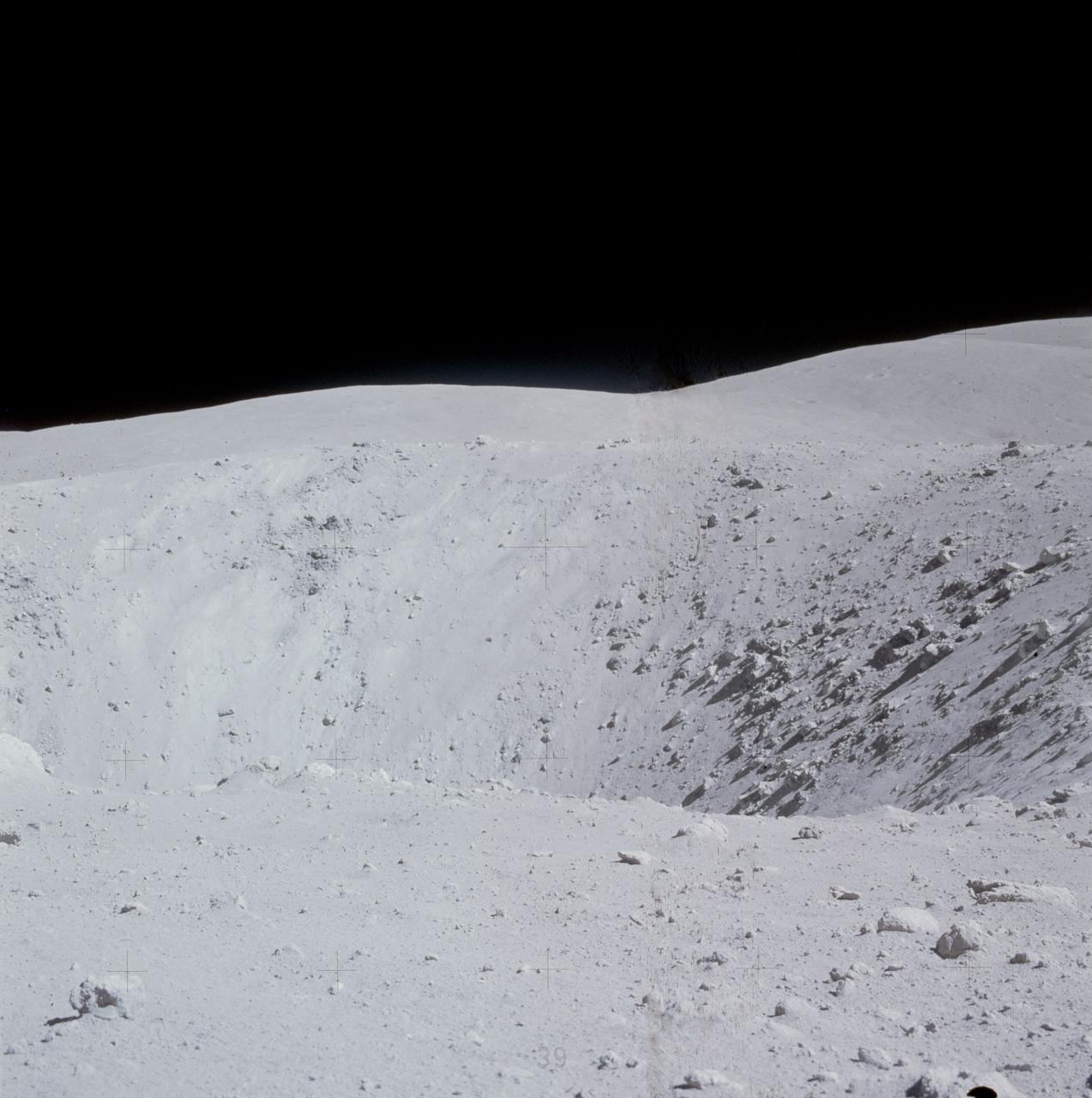
AS16-116-18599 (21 April 1972) --- A close-up view of Buster Crater, which was visited by the two moon-exploring crew men of the Apollo 16 lunar landing mission, during the first extravehicular activity (EVA), April 21, 1972. Astronaut Charles M. Duke Jr. said the crater appeared to be larger than 50 meters, and he called it a very spectacular crater. This was the second stop for astronauts John W. Young and Duke on the mission's first EVA. Young exposed this view with his 70mm Hasselblad camera. While astronauts Young, commander; and Duke, lunar module pilot; descended in the Apollo 16 Lunar Module (LM) "Orion" to explore the Descartes highlands landing site on the moon, astronaut Thomas K. Mattingly II, command module pilot, remained with the Command and Service Modules (CSM) "Casper" in lunar orbit.
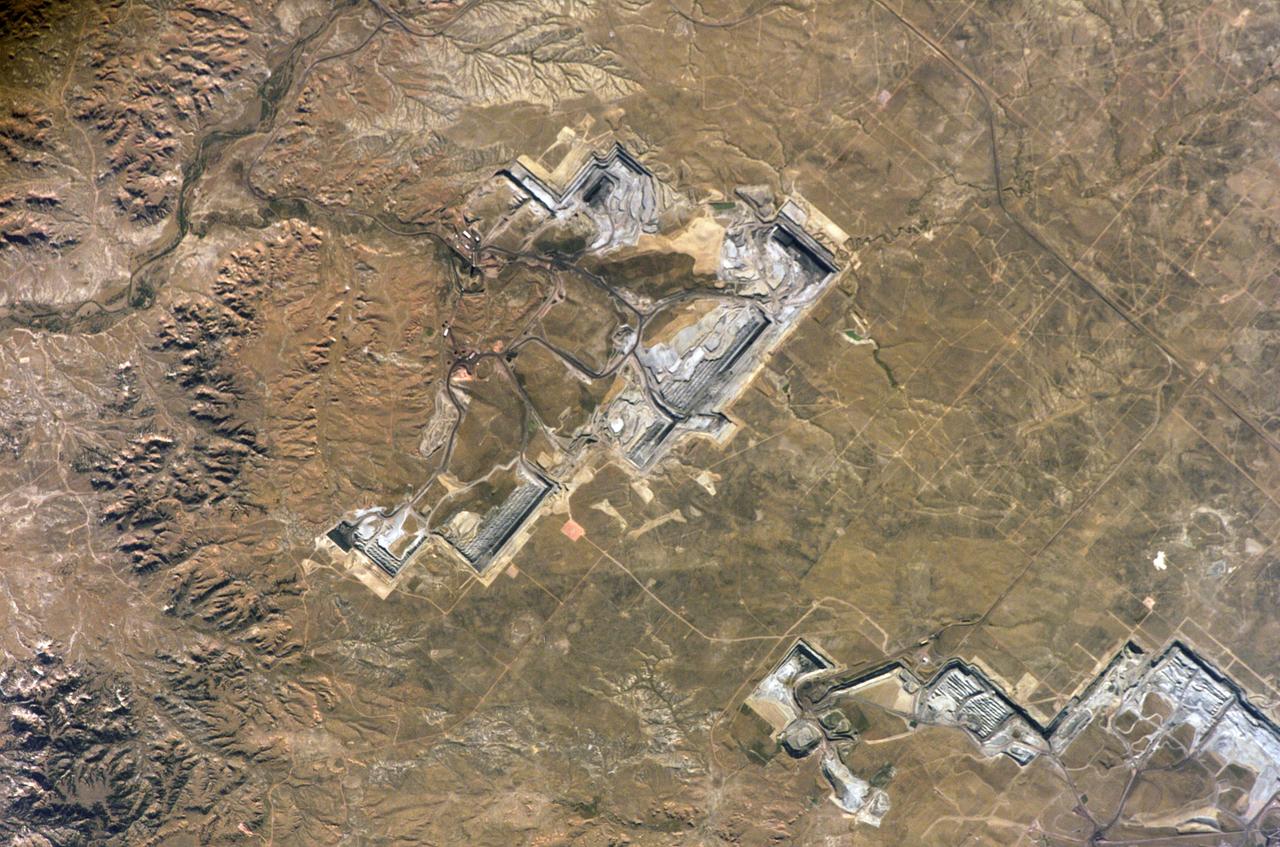
ISS011-E-12863 (11 September 2005) --- North Antelope Rochelle Coal Mine, Wyoming is featured in this image photographed by an Expedition 11 crewmember on the international space station. This area, according to NASA scientists studying the Expedition 11 photos, is a major coal producer.
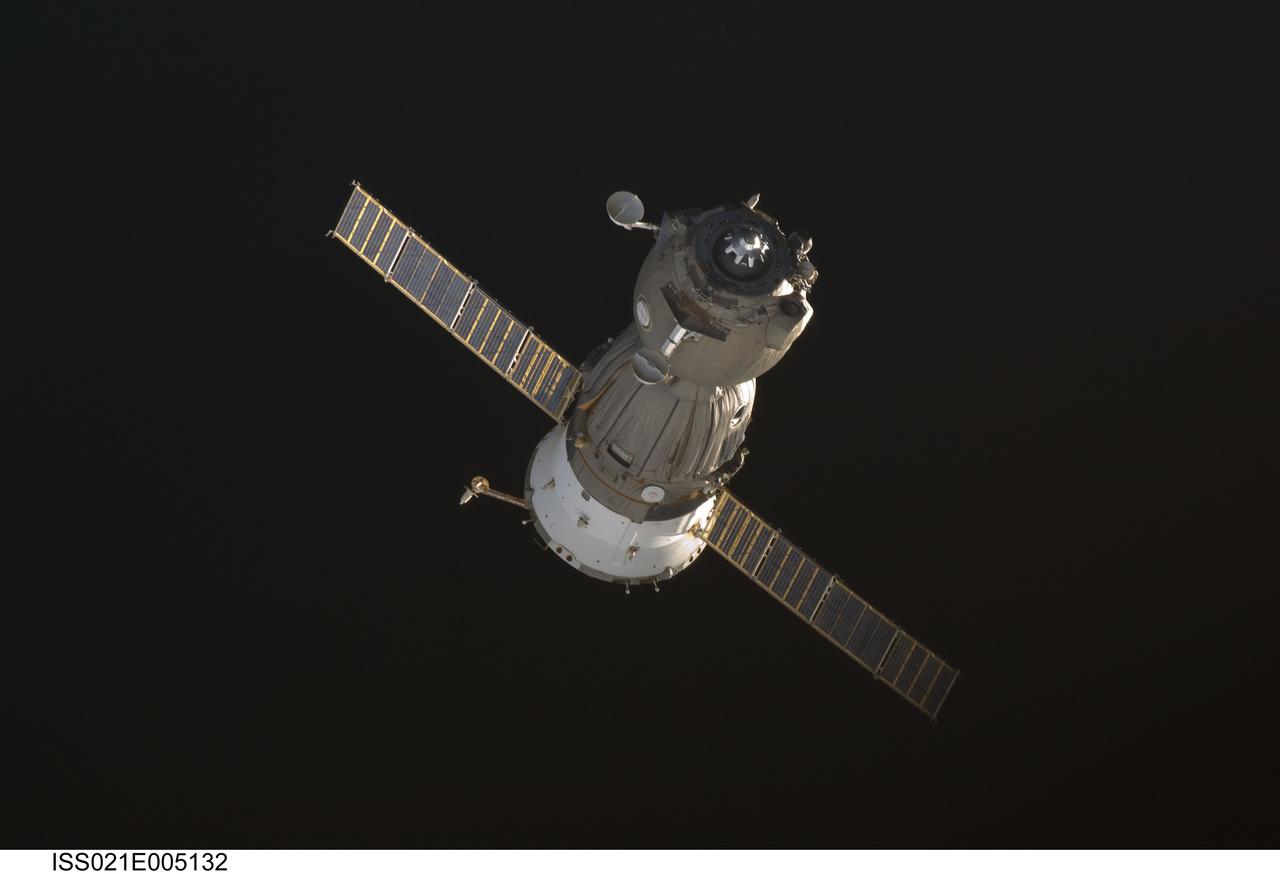
ISS021-E-005132 (11 Oct. 2009) --- Backdropped by the blackness of space, the Soyuz TMA-14 spacecraft departs from the International Space Station carrying Russian cosmonaut Gennady Padalka, Expedition 19/20 commander and Soyuz commander; NASA astronaut Michael Barratt, flight engineer; and spaceflight participant Guy Laliberte. Padalka guided the spacecraft to a parachute-assisted landing at 10:32 a.m. (Kazakhstan time) on Oct. 11, 2009, near the town of Arkalyk, Kazakhstan.
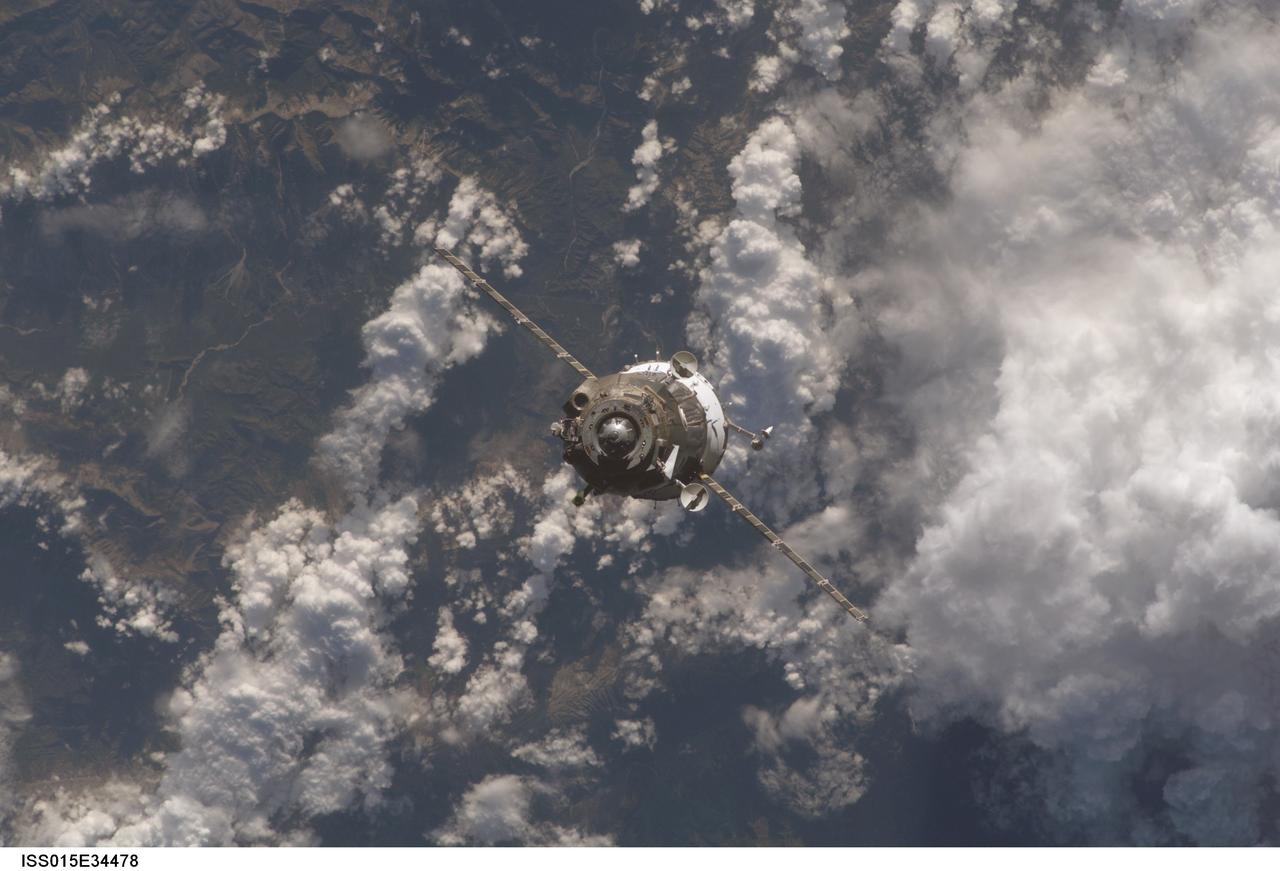
ISS015-E-34478 (12 Oct. 2007) --- The Soyuz 15 (TMA-11) approaches the International Space Station, carrying NASA astronaut Peggy A. Whitson, Expedition 16 commander; cosmonaut Yuri I. Malenchenko, Soyuz commander and flight engineer representing Russia's Federal Space Agency; and Malaysian spaceflight participant Sheikh Muszaphar Shukor. Whitson and Malenchenko will spend six months on the station, while Shukor will return to Earth Oct. 21 with two of the Expedition 15 crewmembers currently on the complex.
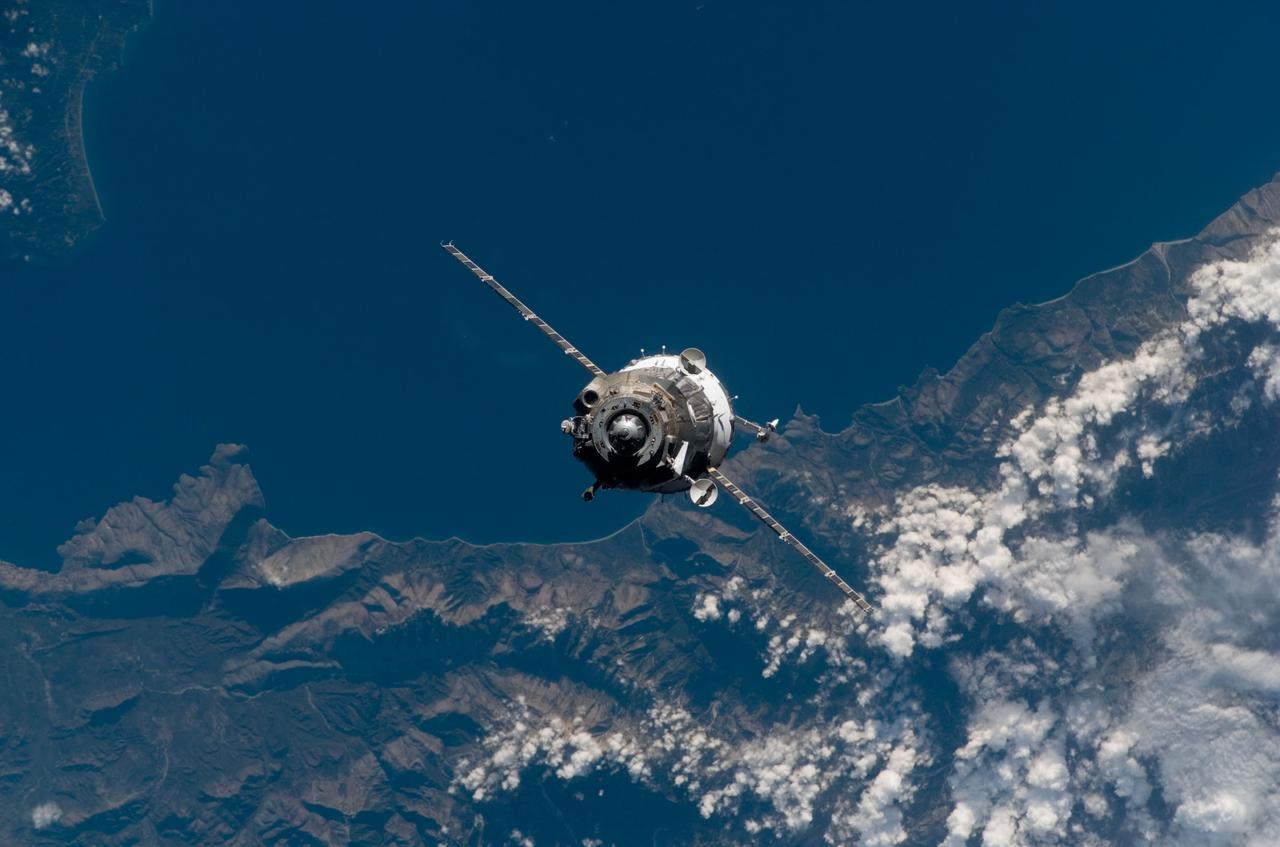
ISS015-E-34474 (12 Oct. 2007) --- The Soyuz 15 (TMA-11) approaches the International Space Station, carrying NASA astronaut Peggy A. Whitson, Expedition 16 commander; cosmonaut Yuri I. Malenchenko, Soyuz commander and flight engineer representing Russia's Federal Space Agency; and Malaysian spaceflight participant Sheikh Muszaphar Shukor. Whitson and Malenchenko will spend six months on the station, while Shukor will return to Earth Oct. 21 with two of the Expedition 15 crewmembers currently on the complex.
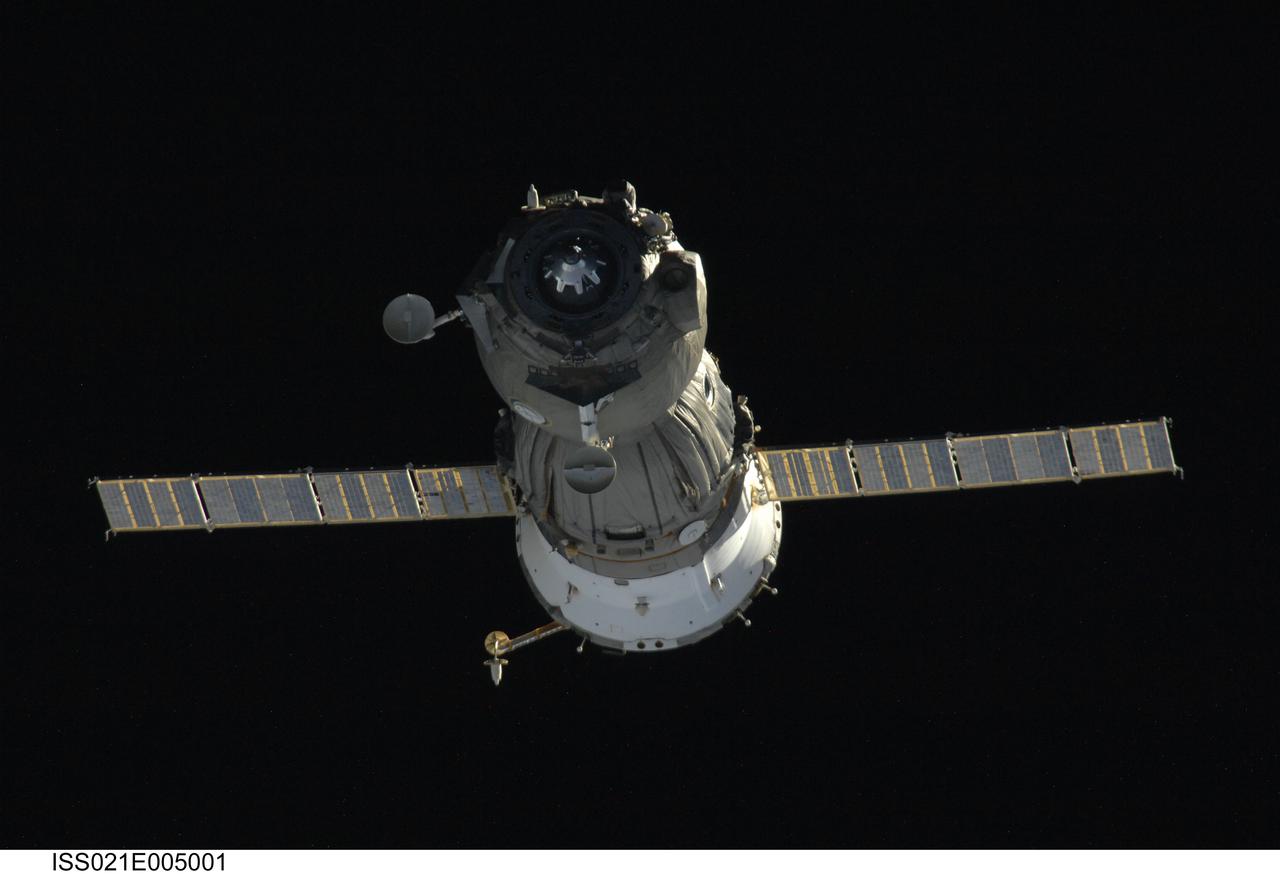
ISS021-E-005001 (11 Oct. 2009) --- Backdropped by the blackness of space, the Soyuz TMA-14 spacecraft departs from the International Space Station carrying Russian cosmonaut Gennady Padalka, Expedition 19/20 commander and Soyuz commander; NASA astronaut Michael Barratt, flight engineer; and spaceflight participant Guy Laliberte. Padalka guided the spacecraft to a parachute-assisted landing at 10:32 a.m. (Kazakhstan time) on Oct. 11, 2009, near the town of Arkalyk, Kazakhstan.
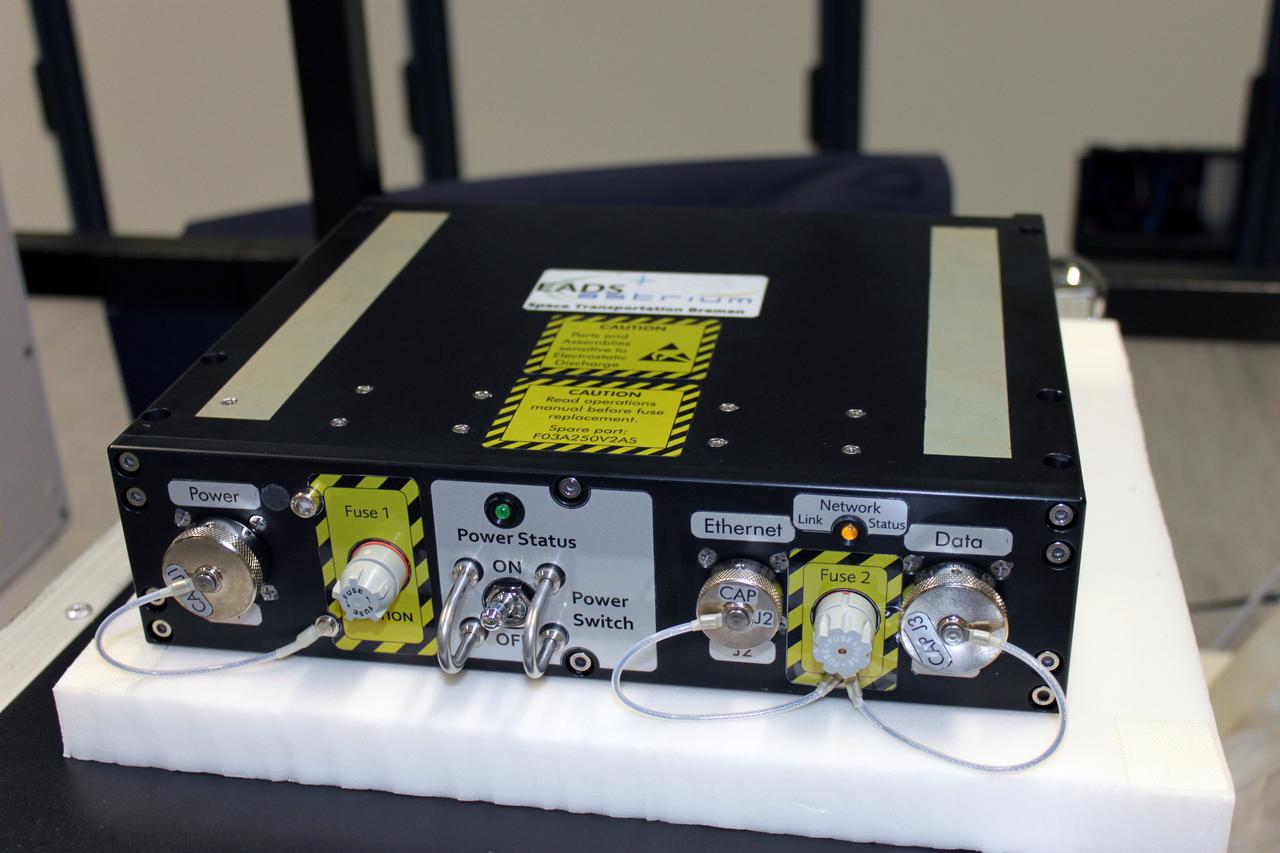
jsc2010e187176 (11/22/2010_ A preflight view of the European Research National Organization (ERNO) Box, ERNObox (Entwicklungsring Nord, or modular computer for low earth orbit)

iss042e006636 (11/18/2014) ---Aboard the International Space Station: this image is a Close-up view of hardware for a chemistry experiment and was taken in the Rassvet Mini-Research Module.
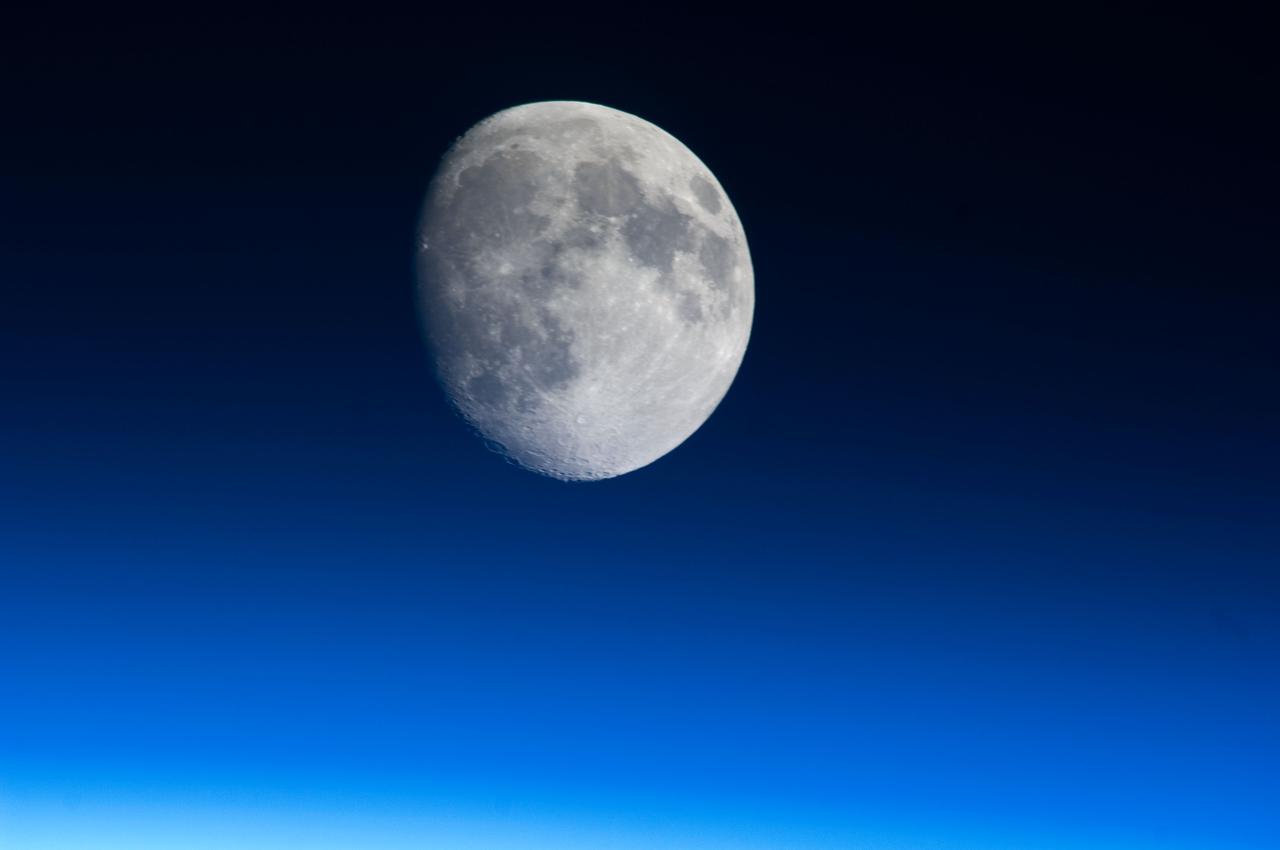
ISS017-E-019390 (11 Oct. 2008) --- A gibbous moon is visible in this view above Earth's atmosphere, photographed by an Expedition 17 crewmember on the International Space Station.
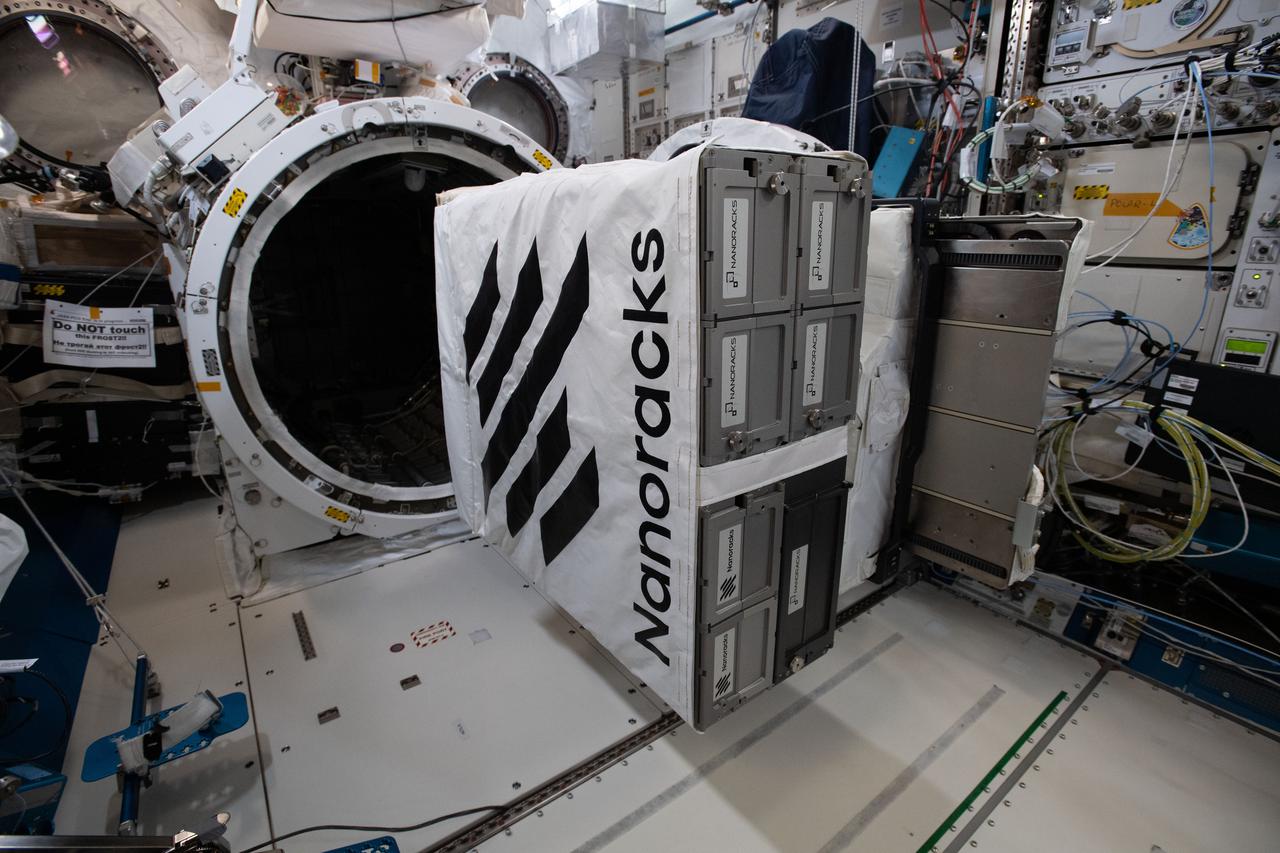
iss065e444435 (10/11/2021) --- A view of NanoRacks CubeSat Deployers hardware on the MPEP (Multipurpose Experiment Platform) aboard the International Space Station (ISS).
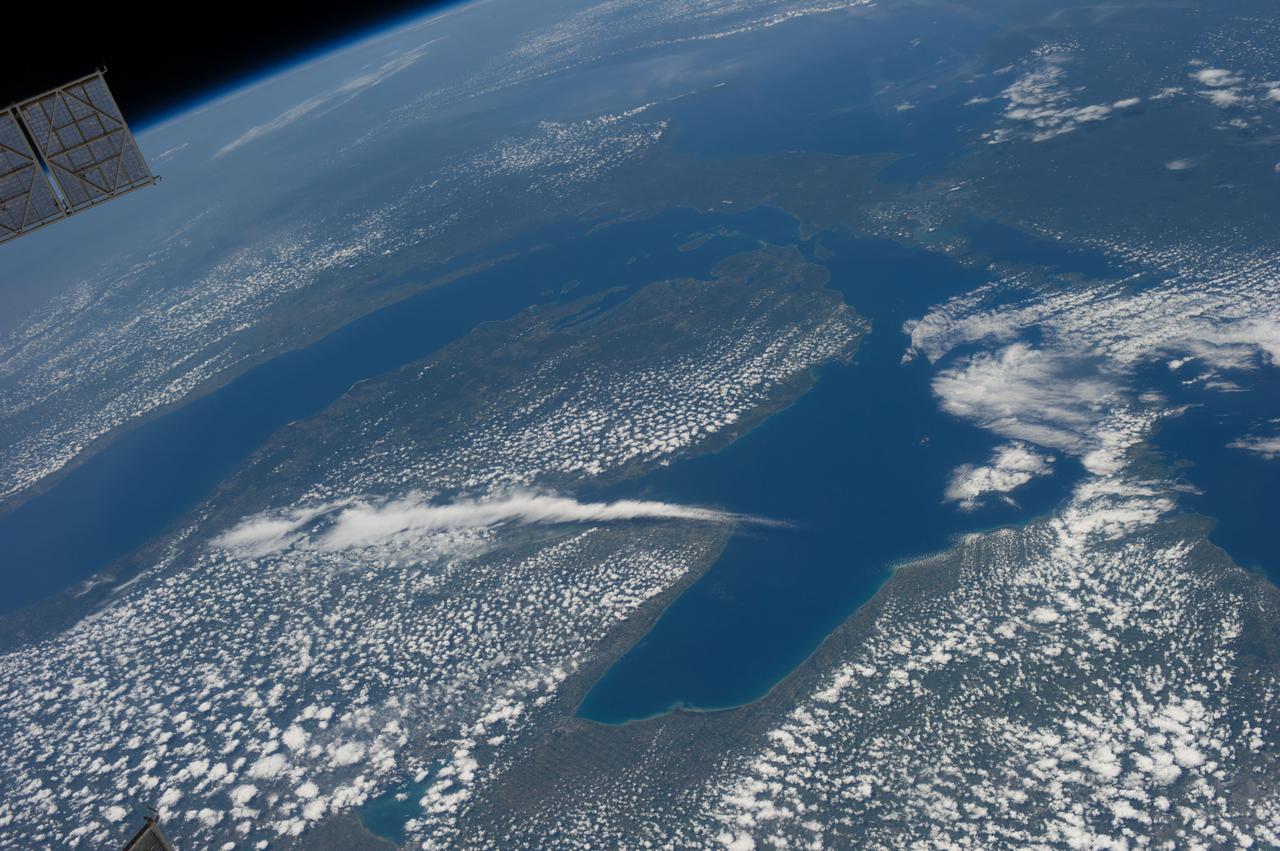
ISS036-E-017925 (11 July 2013) --- One of the Expedition 36 crew members aboard the Earth-orbiting International Space Station on July 11 captured this high oblique view of Lake Michigan (left) and Lake Huron and much of the state of Michigan in between.
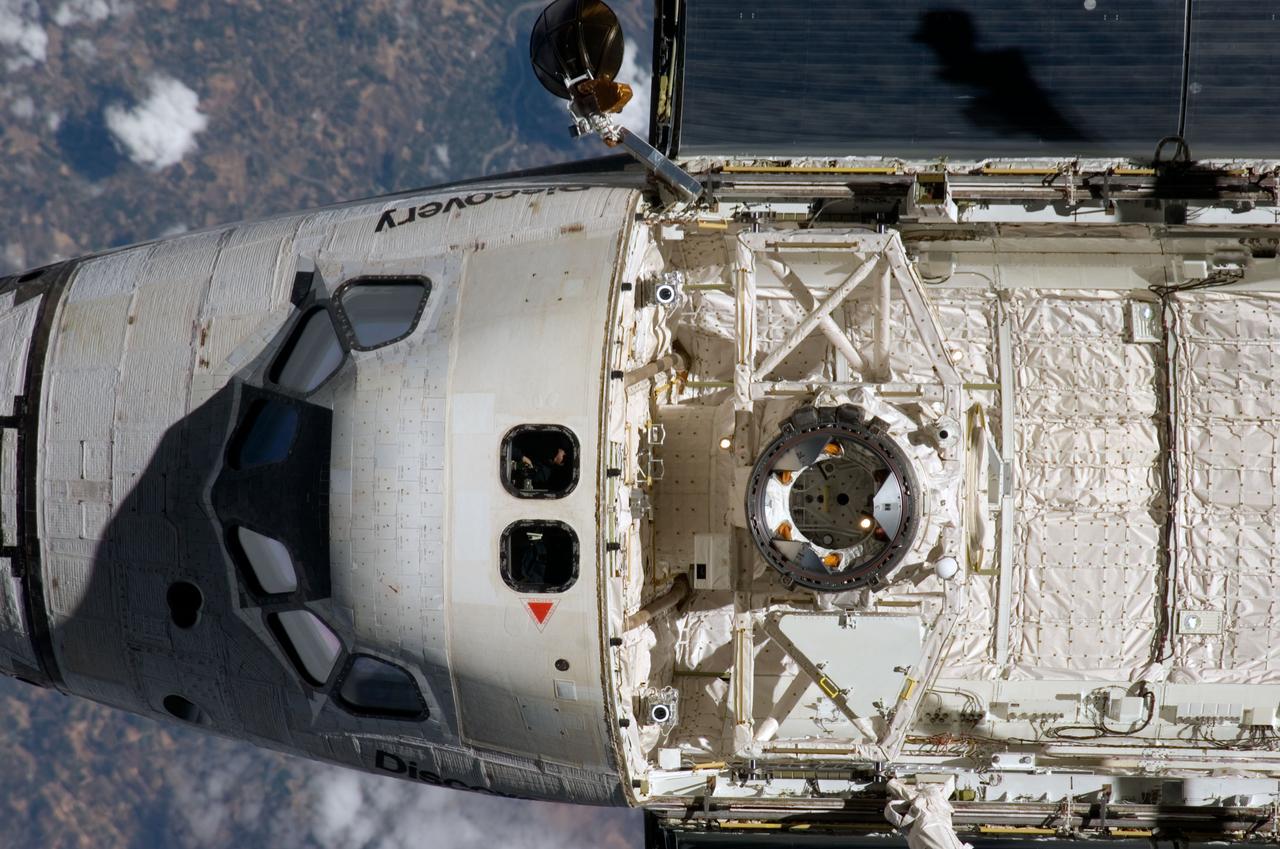
ISS017-E-009386 (11 June 2008) --- A nadir view of the Space Shuttle Discovery's crew cabin and the forward section of the payload bay soon after the shuttle and the International Space Station began their post-undocking relative separation on June 11. One of the Expedition 17 crewmembers recorded the photo with a digital still camera.
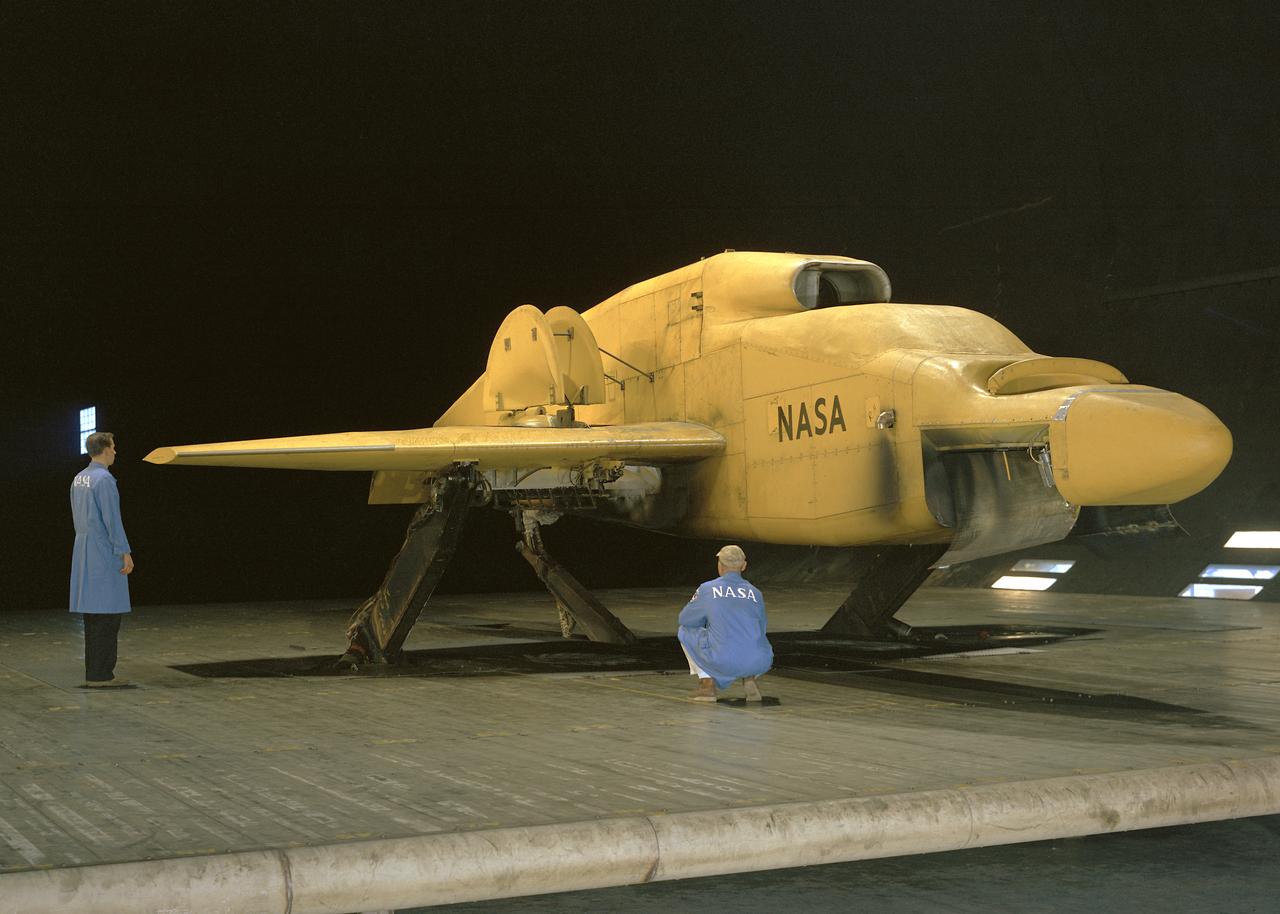
3/4 front view VZ-11 ground test - variable height struts. Engines of the VZ-11 are a pair of General Electric J85-5 turbojets, mounted in high in the centre fuselage, well away from fan disturbance. Designed in the Ames 40x80 foot wind tunnel.
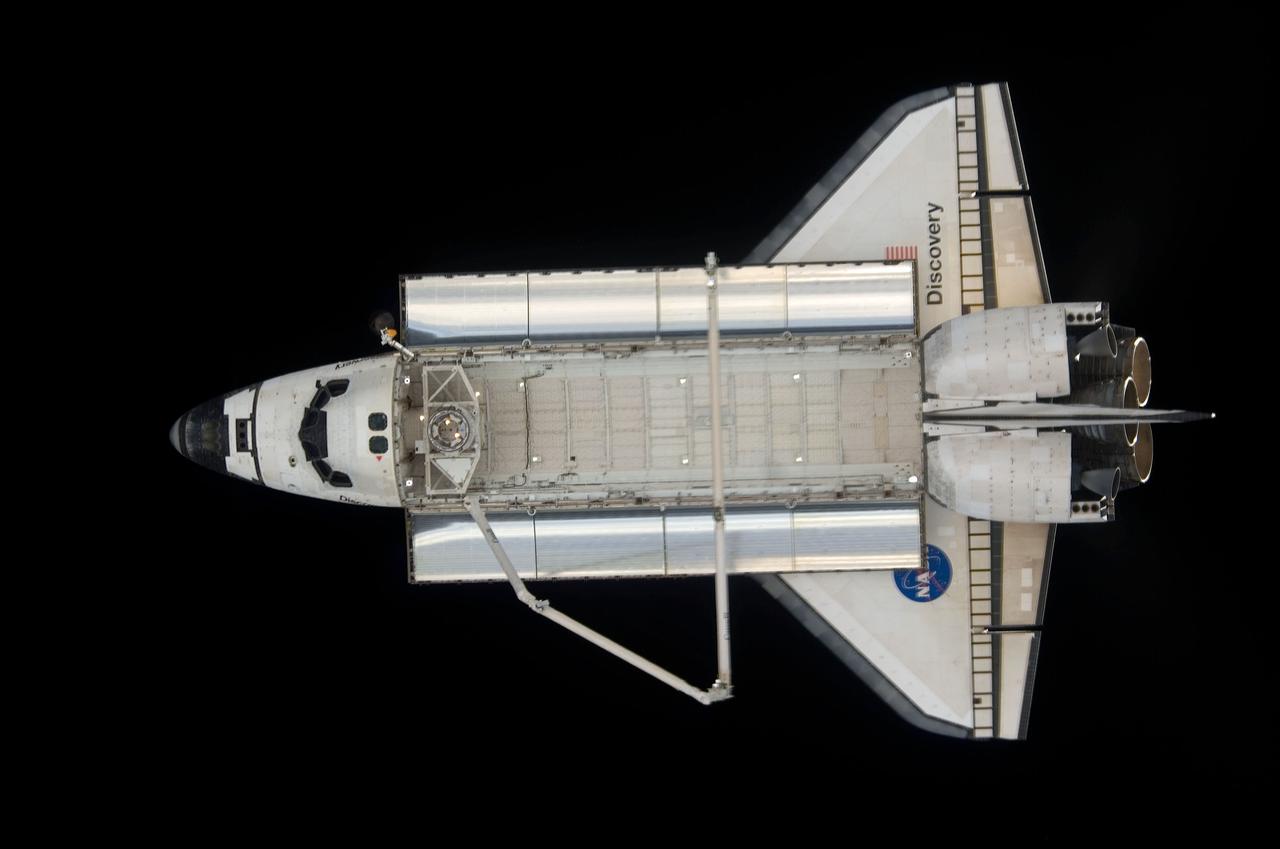
ISS017-E-009341 (11 June 2008) --- A view of the Space Shuttle Discovery backdropped against the blackness of space soon after the shuttle and the International Space Station began their post-undocking relative separation on June 11. One of the Expedition 17 crewmembers recorded the photo with a digital still camera.
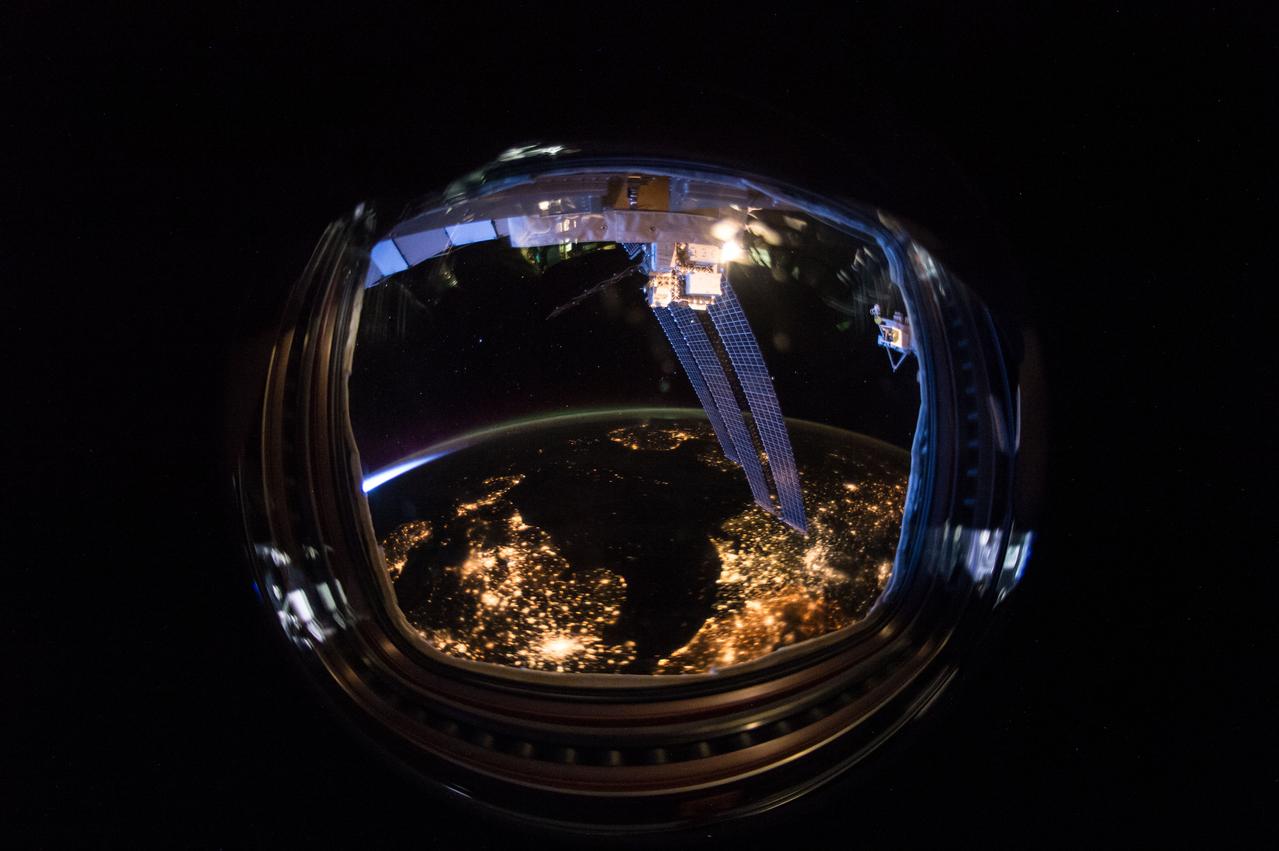
ISS046e040151 (02/11/2016) --- This wide fisheye lens night view of the Earth was taken aboard the International Space Station on Feb 11, 2016 by the crew of Expedition 46. Some of the stations solar array juts down into the image on the left side.
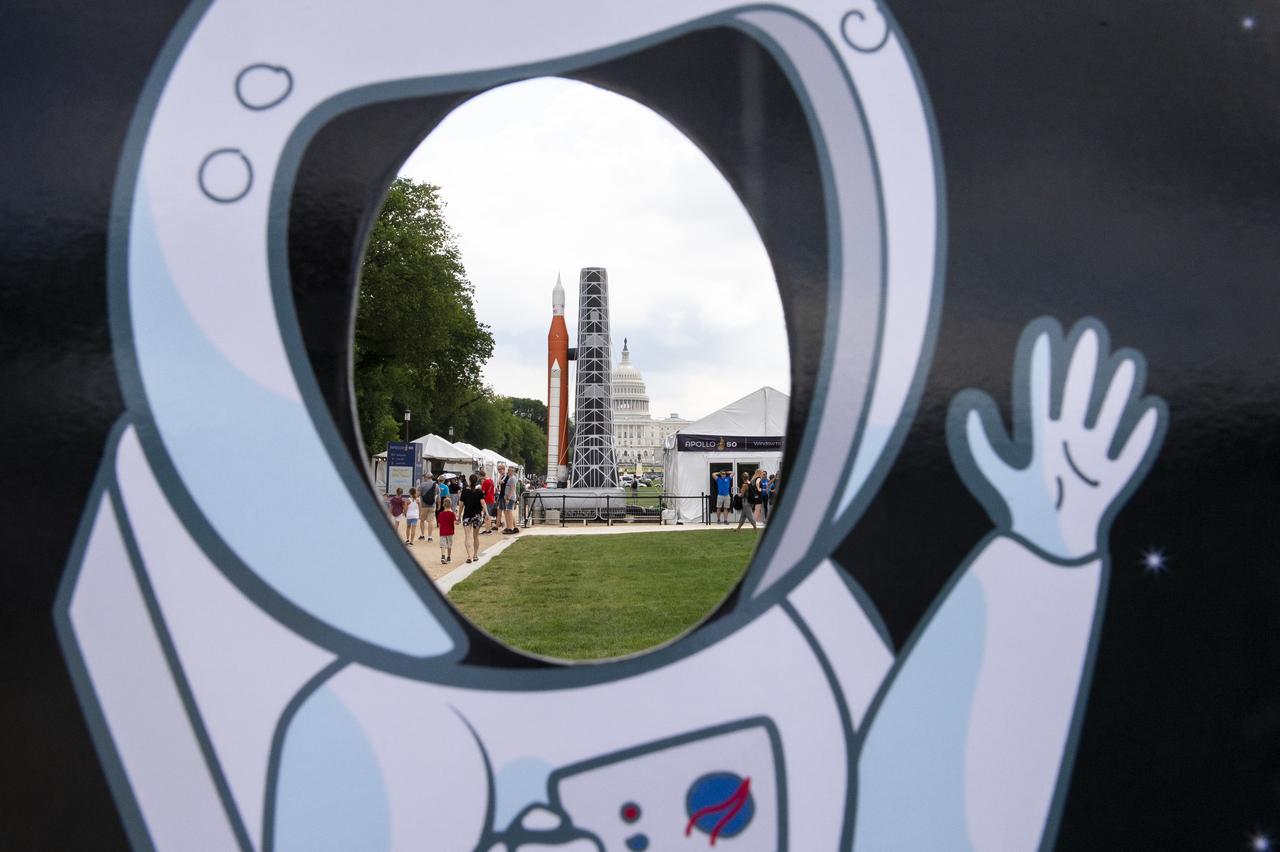
A view of the Apollo 11 50th Anniversary celebration on the National Mall, Thursday, July 18, 2019 in Washington. Apollo 11 was the first mission to land astronauts on the Moon and launched on July 16, 1969 with astronauts Neil Armstrong, Michael Collins, and Buzz Aldrin. Photo Credit: (NASA/Connie Moore)
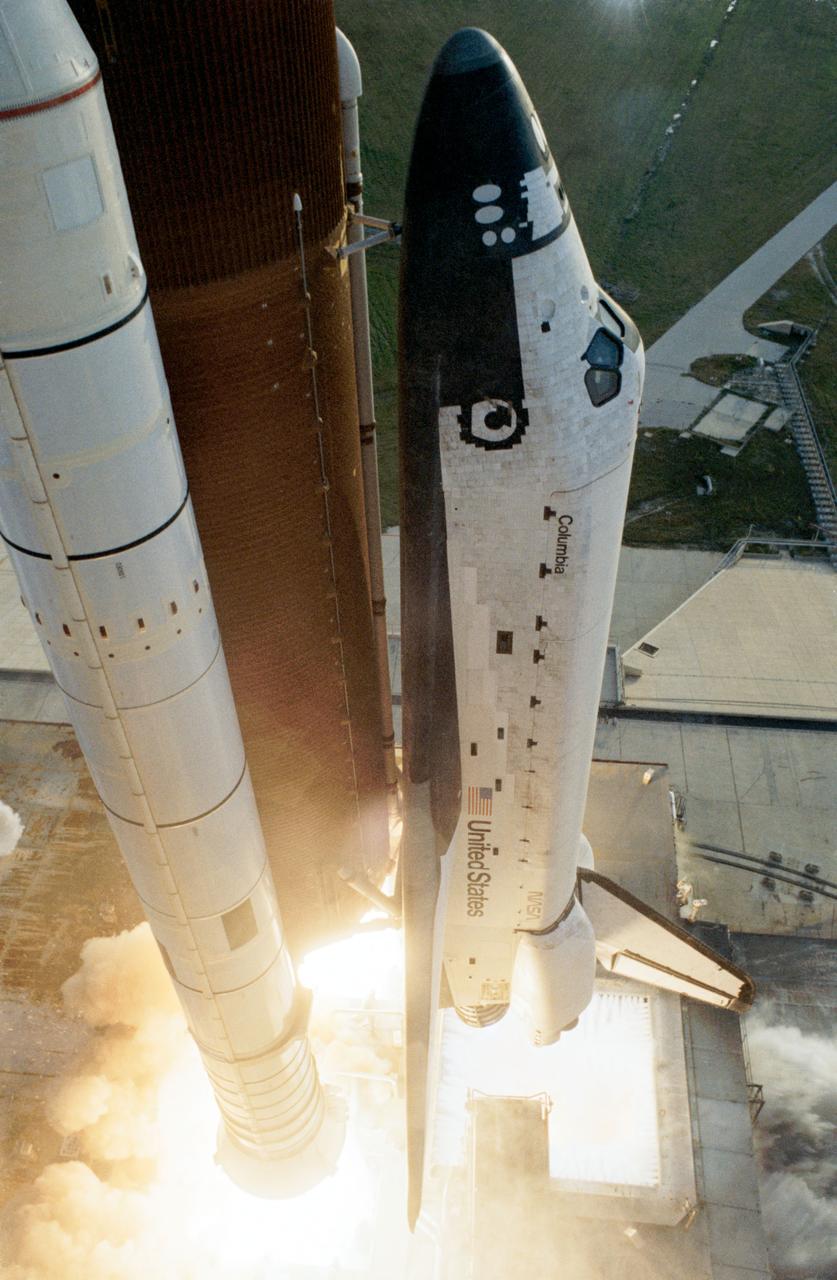
Views of the External Tank (ET) Beanie Cap in place just prior to Final Count, and another looking down from the Service Structure, with engines and rockets firing, just as it left the Pad deck, 11/11/1982. KSC, FL
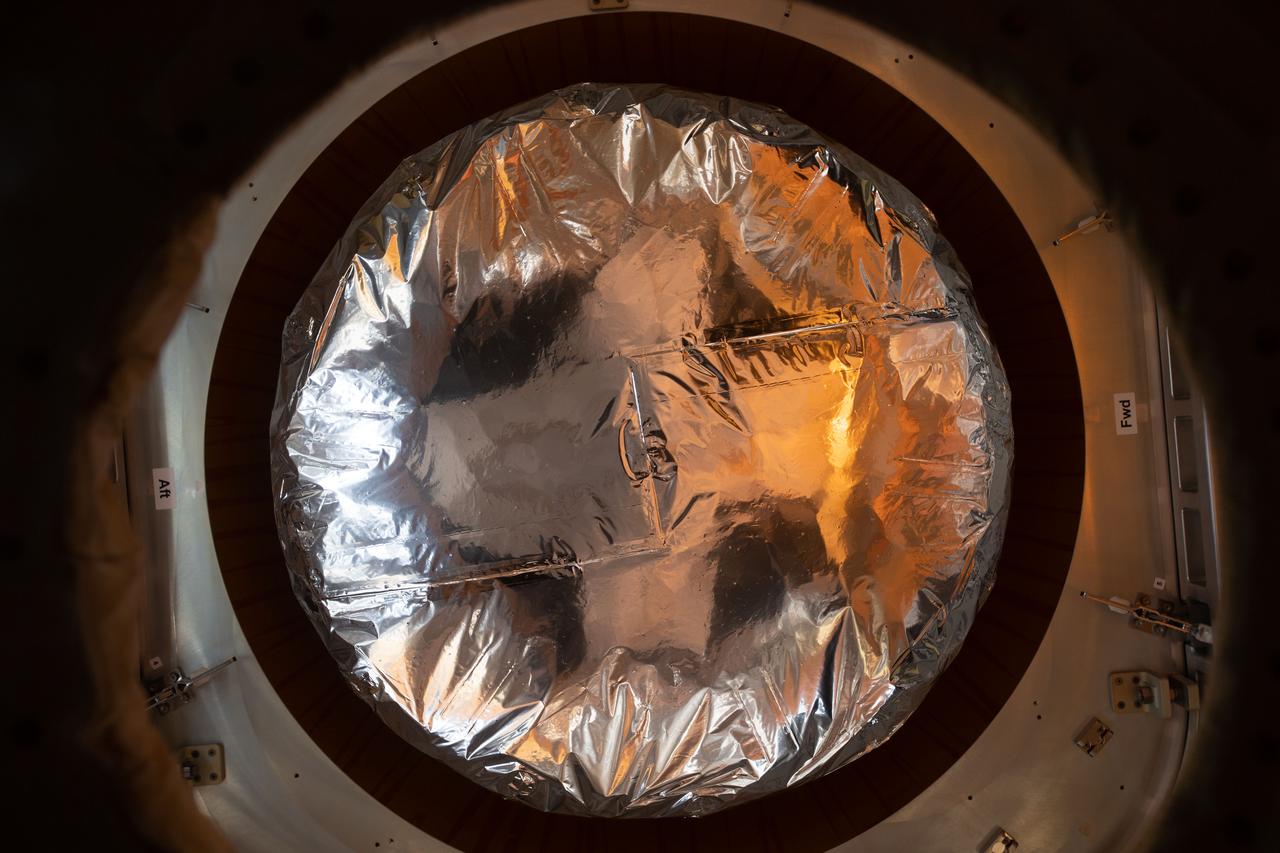
iss057e059221 (11/7/2018) --- A view taken through the Harmony Node 2 nadir hatch window of the Kounotori H-II Transfer Vehicle 7 (HTV-7), with the HTV Small Re-entry Capsule (HSRC) in view, during unberthing and backing away from the International Space Station (ISS).

JOHNSON SPACE CENTER, HOUSTON, TEXAS - A view of the Earth appears over the lunar horizon as the Apollo 11 Command Module comes into view of the Moon before astronauts Neil Armstrong and Edwin Aldrin Jr. leave in the Lunar Module, Eagle, to become the first men to walk on the Moon's surface.
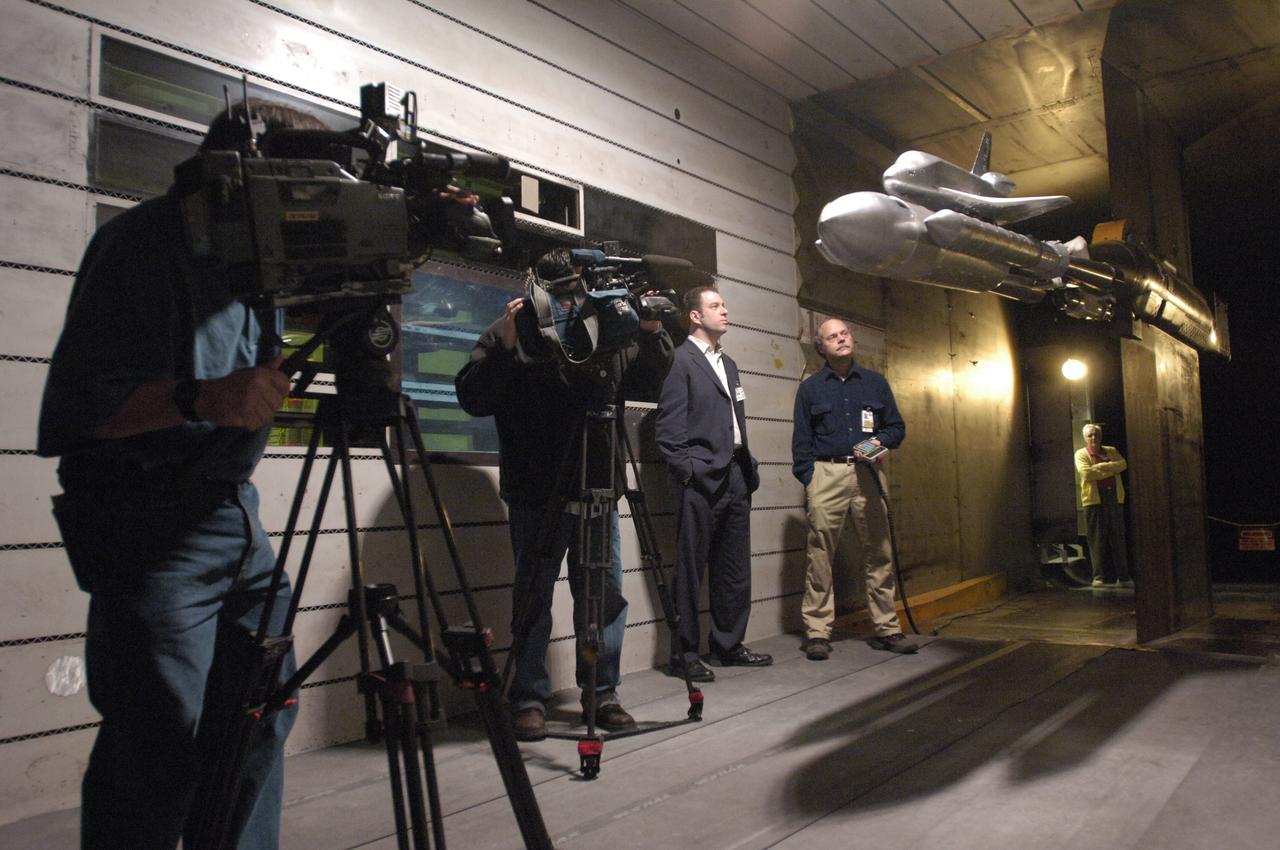
The media invited to view the 3% Space Shuttle model mounted in the Ames 11ft .w.t. with Scott Budman, NBC Channel 11 News and Jim Strong, Ames Aeronautics
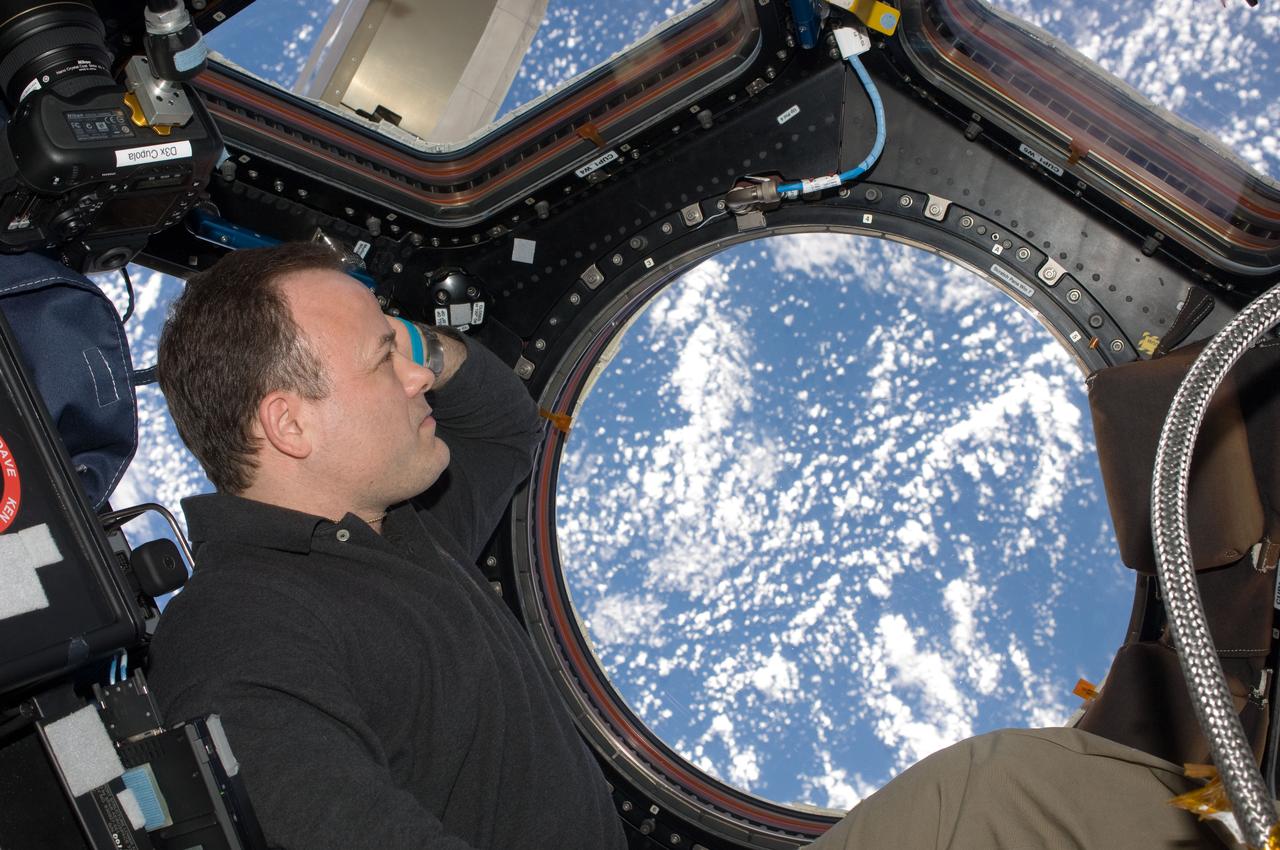
ISS028-E-048088 (11 Sept. 2011) --- NASA astronaut Ron Garan, Expedition 28 flight engineer, views a point on Earth through one of the windows in the Cupola of the International Space Station.
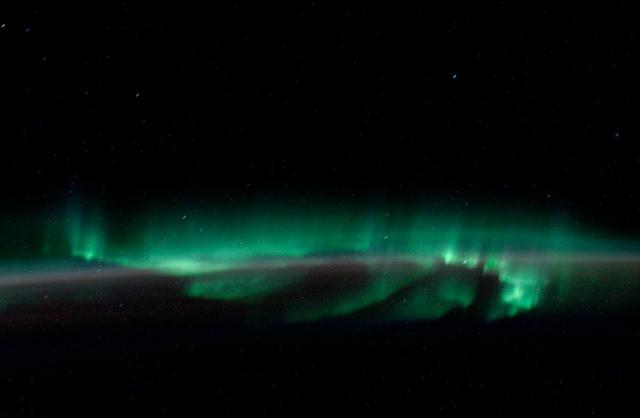
ISS011-E-14205 (May 2005) --- This view featuring the Aurora Australis or “southern lights” was photographed by an Expedition 11 crewmember aboard the International Space Station.
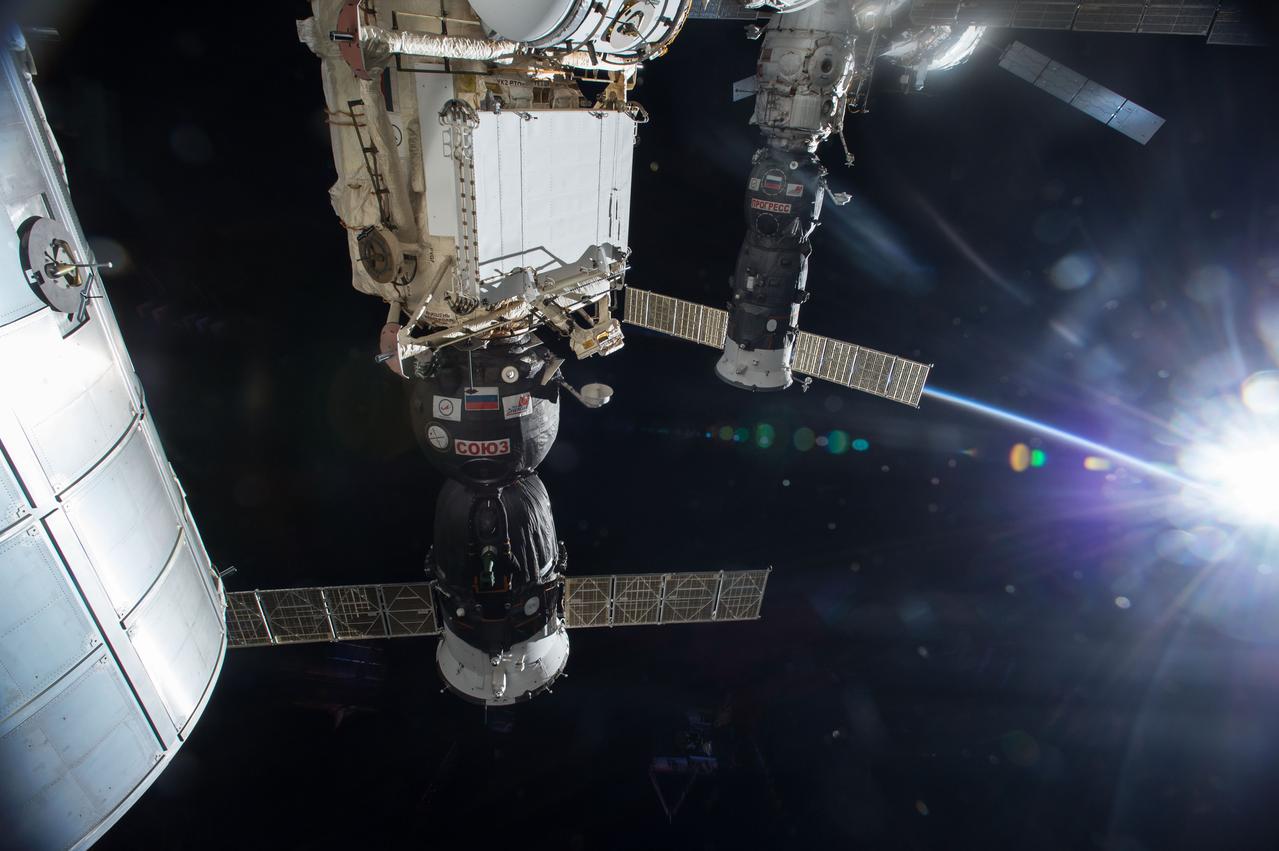
ISS042E015787 (11/25/2014) --- NASA astronaut Terry Virts captured this beautiful sunset on board the International Space Station. Astronauts, and cosmonauts are treated to many changing views of the Earth and stars as the station carries them around the Earth.

jsc2022e084482 (11/02/2022) --- A preflight view of the Space Test Program-Houston 9-Neutron Radiation Detection Instrument (STP-H9-NeRDI). Image courtesy of U.S. Naval Research Laboratory.

51L-10162 (8-9 March 1986) --- View of the left solid rocket booster first piece retrieval #11 (STS-51L space shuttle Challenger). Photo credit: NASA
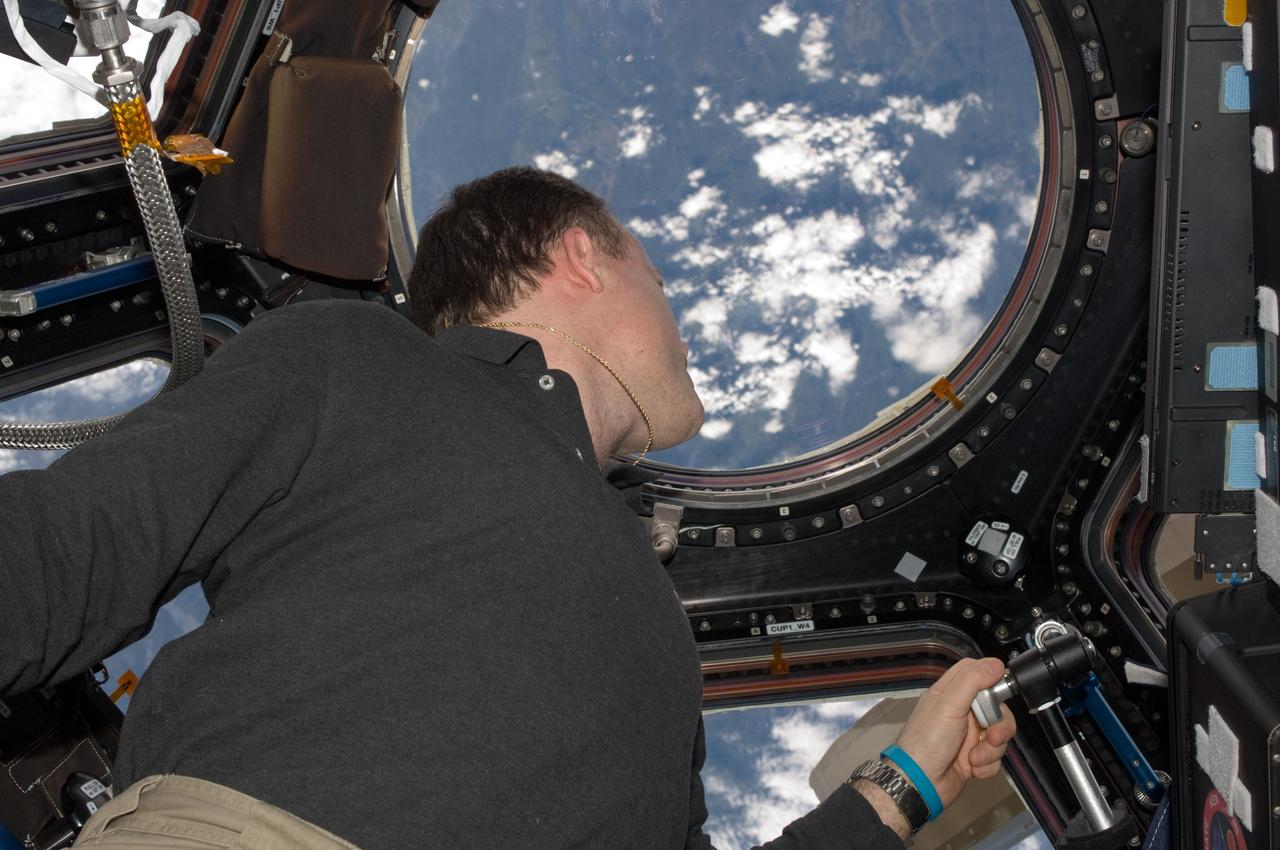
ISS028-E-048060 (11 Sept. 2011) --- NASA astronaut Ron Garan, Expedition 28 flight engineer, views a point on Earth through one of the windows in the Cupola of the International Space Station.

S66-45613 (23 Sept. 1966) --- Astronauts Charles Conrad Jr. (with pipe) and Richard F. Gordon Jr. (background) view negatives from their Gemini-11 mission. Photo credit: NASA
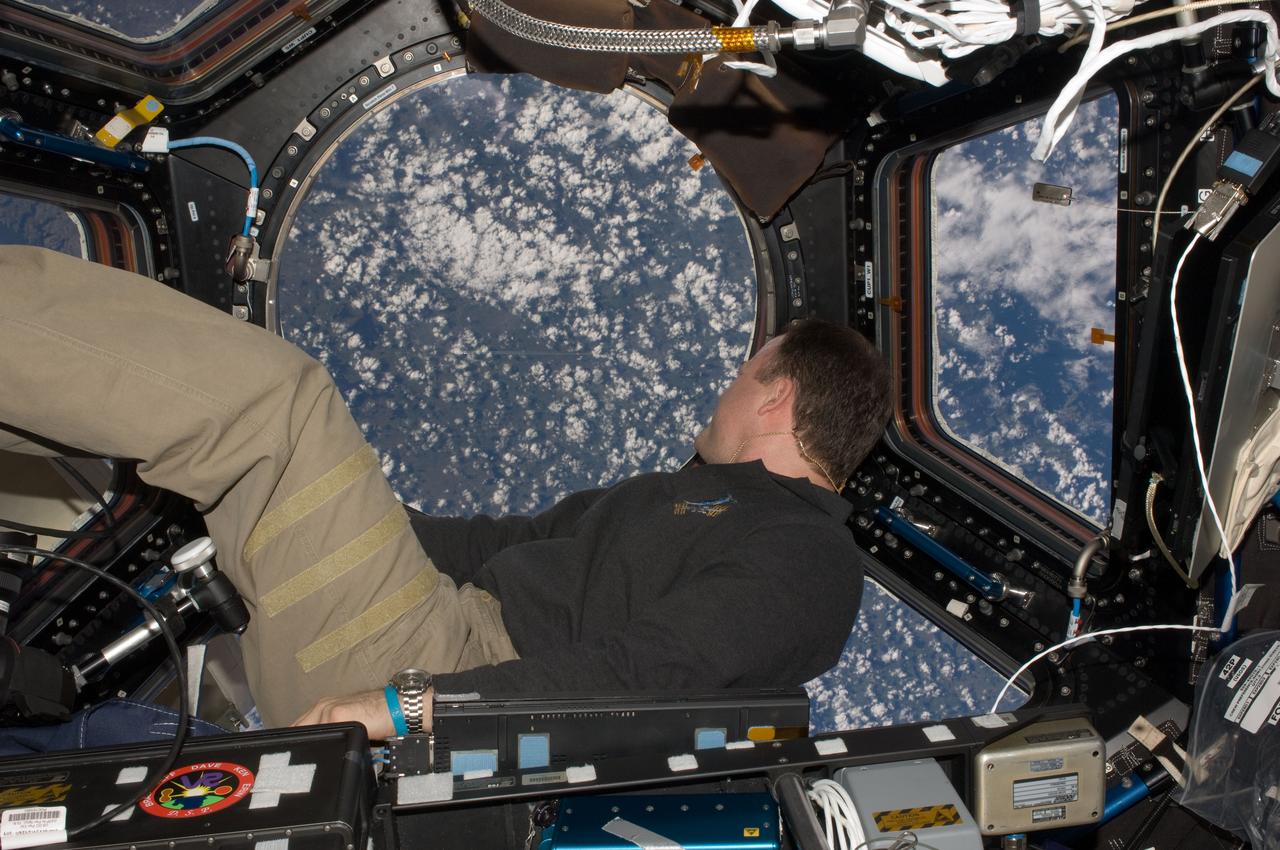
ISS028-E-048070 (11 Sept. 2011) --- NASA astronaut Ron Garan, Expedition 28 flight engineer, views a point on Earth through one of the windows in the Cupola of the International Space Station.
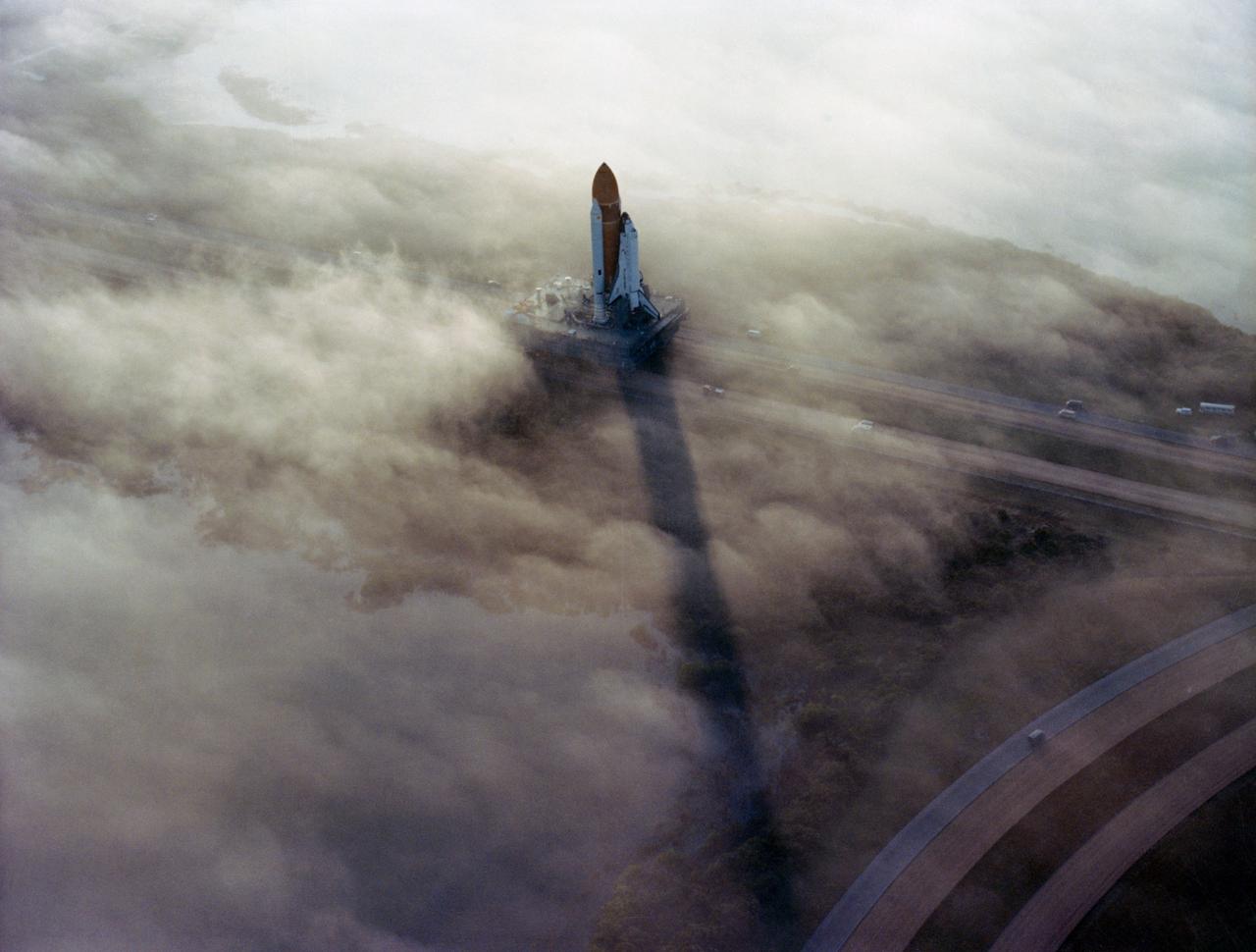
Two (2) views of the "Challenger" - STS-6 - being Rolled Out to Pad 39A in the morning fog, 11/30/1982. 1. KSC - STS-6 PREFLIGHT KSC, FL
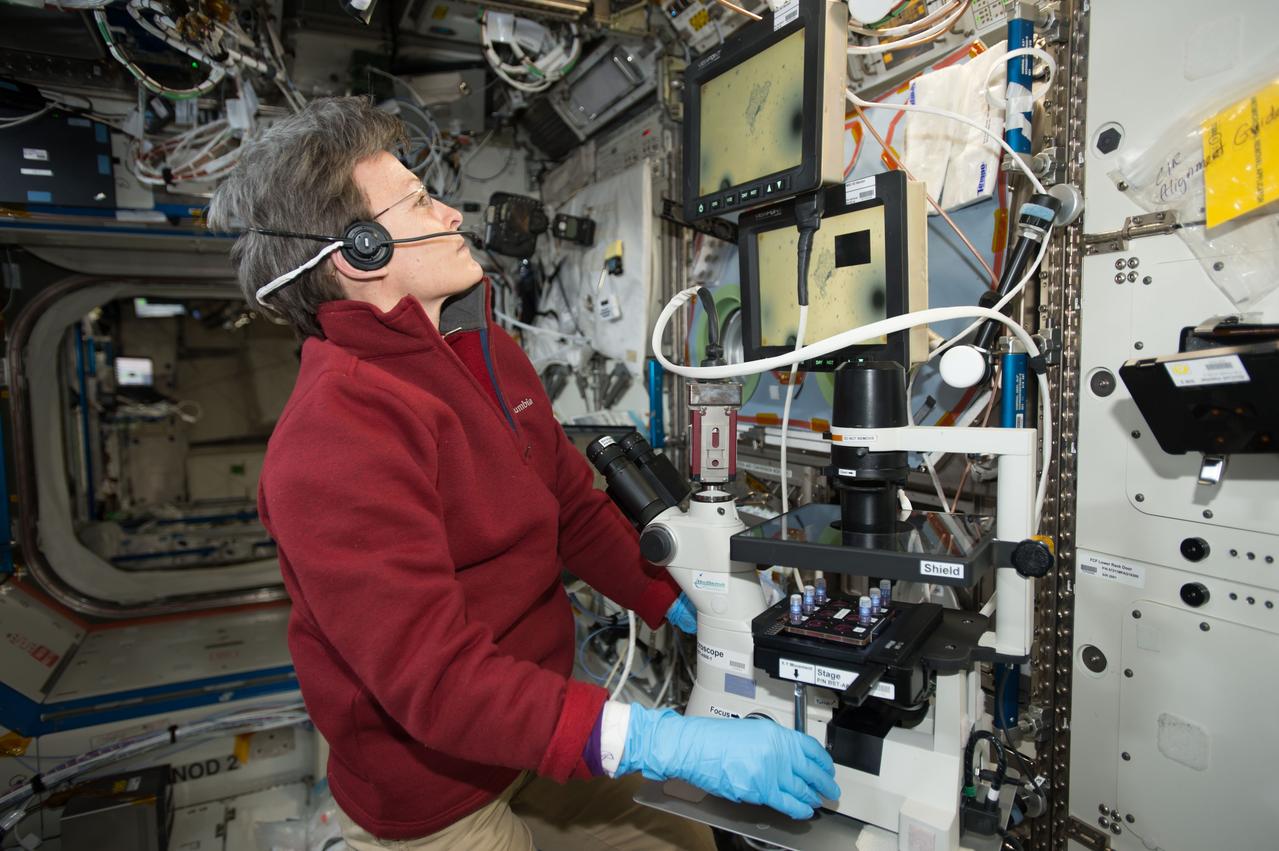
iss052e014201 (7/11/2017) --- NASA astronaut Peggy Whitson uses a microscope to view Magnetic 3D Biocells. This investigation uses magnetized cells and tools to make it easier to handle cells and cultures and to improve the reproducibility of experiments.