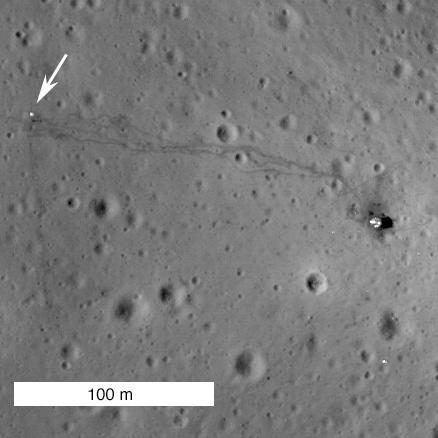
New View of Apollo 14
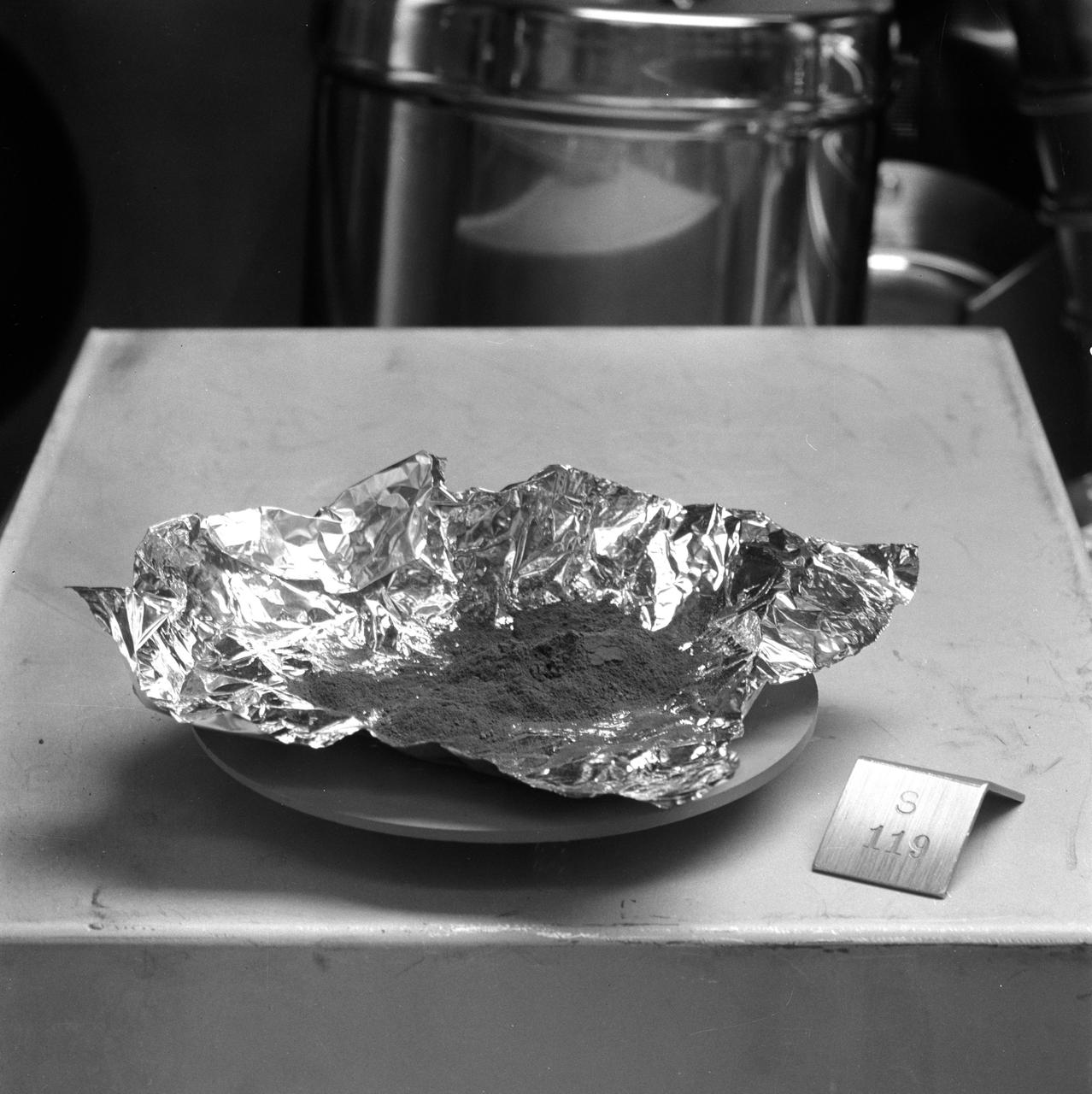
S71-19269 (12 Feb. 1971) --- A close-up view of Apollo 14 sample number 14414 & 14412, a fine lunar powder-like material under examination in the Sterile Nitrogen Atmospheric Processing (SNAP) line in the Lunar Receiving Laboratory (LRL) at the Manned Spacecraft Center (MSC). Scientists are currently making preliminary analyses of material brought back from the moon by the crew of Apollo 14 lunar landing mission.
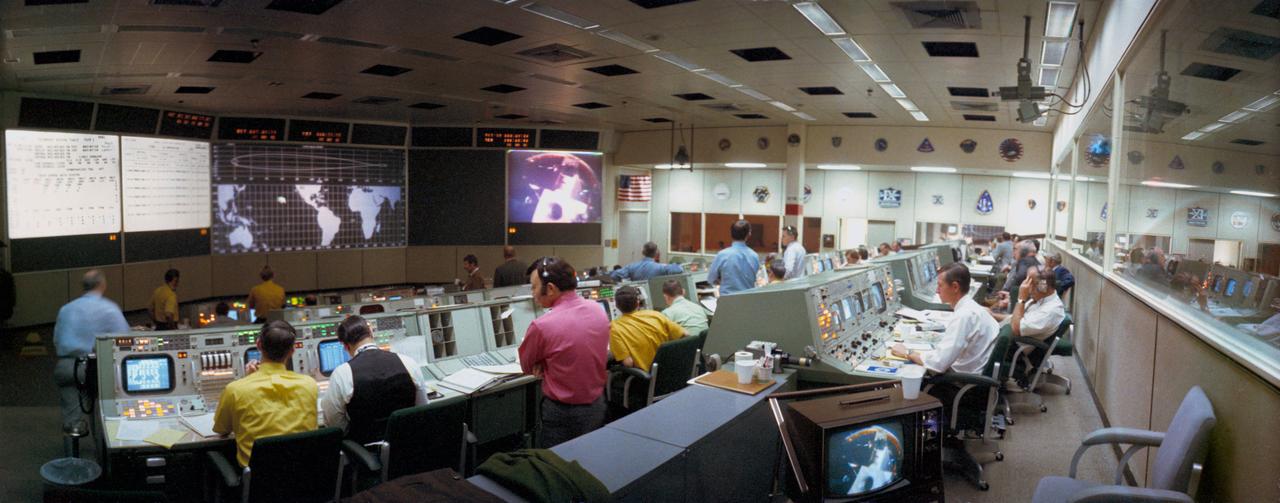
S71-17122 (31 Jan. 1971) --- A wide angle overall view of the Mission Operations Control Room (MOCR) in the Mission Control Center at the Manned spacecraft Center. This view was photographed during the first color television transmission from the Apollo 14 Command Module. Projected on the large screen at the right front of the MOCR is a view of the Apollo 14 Lunar Module, still attached to the Saturn IVB stage. The Command and Service Modules were approaching the LM/S-IVB during transposition and docking maneuvers.
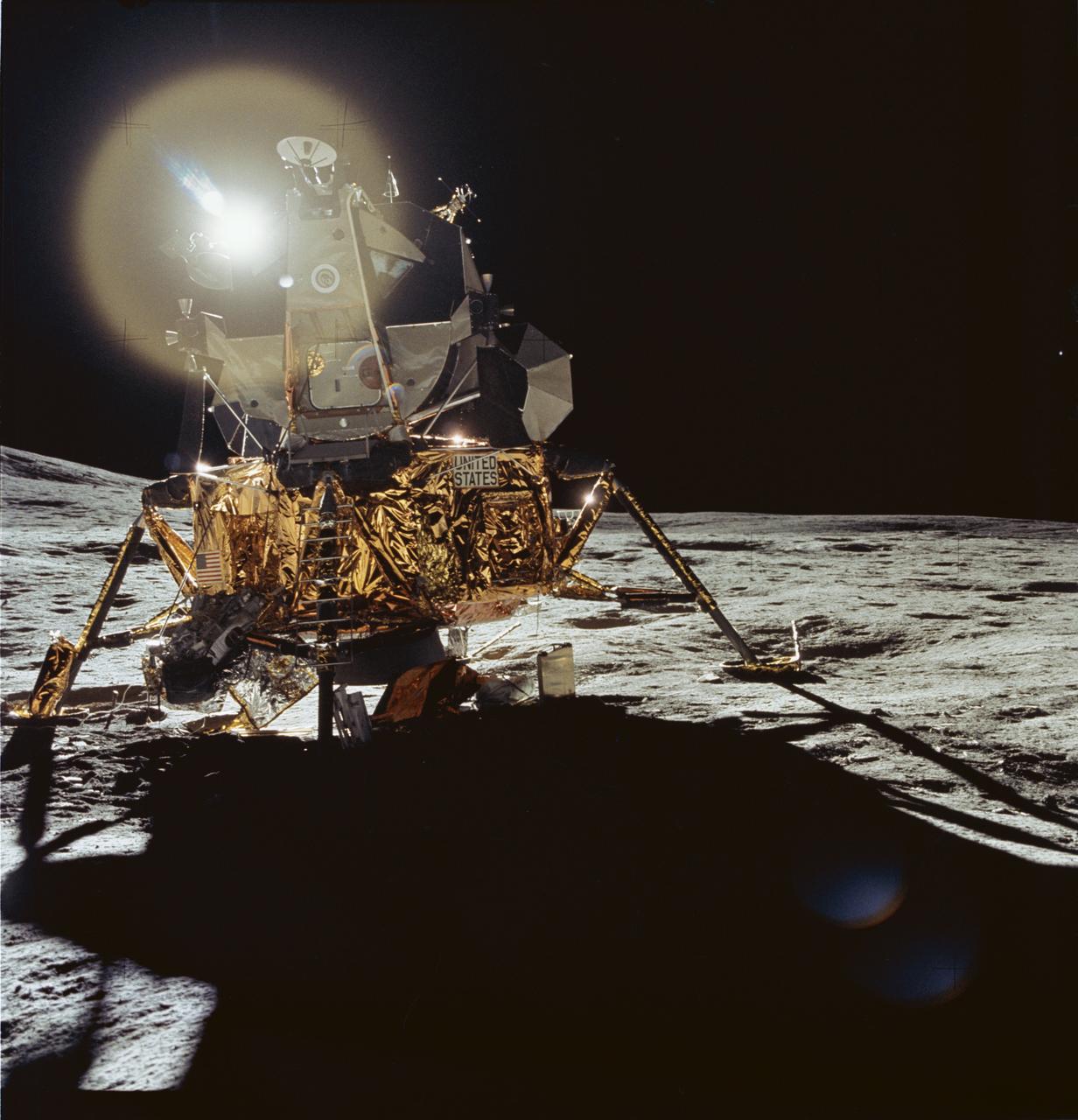
AS14-66-9306 (5 Feb. 1971) --- A front view of the Apollo 14 Lunar Module (LM), which reflects a circular flare caused by the brilliant sun, as seen by the two moon-exploring crew men of the Apollo 14 lunar landing mission during their first extravehicular activity (EVA). The unusual ball of light was said by the astronauts to have a jewel-like appearance. At the extreme left the lower slope of Cone Crater can be seen. Astronauts Alan B. Shepard Jr., commander; and Edgar D. Mitchell, lunar module pilot; descended in the LM, while astronaut Stuart A. Roosa, command module pilot; remained with the Command and Service Modules (CSM) in lunar orbit.
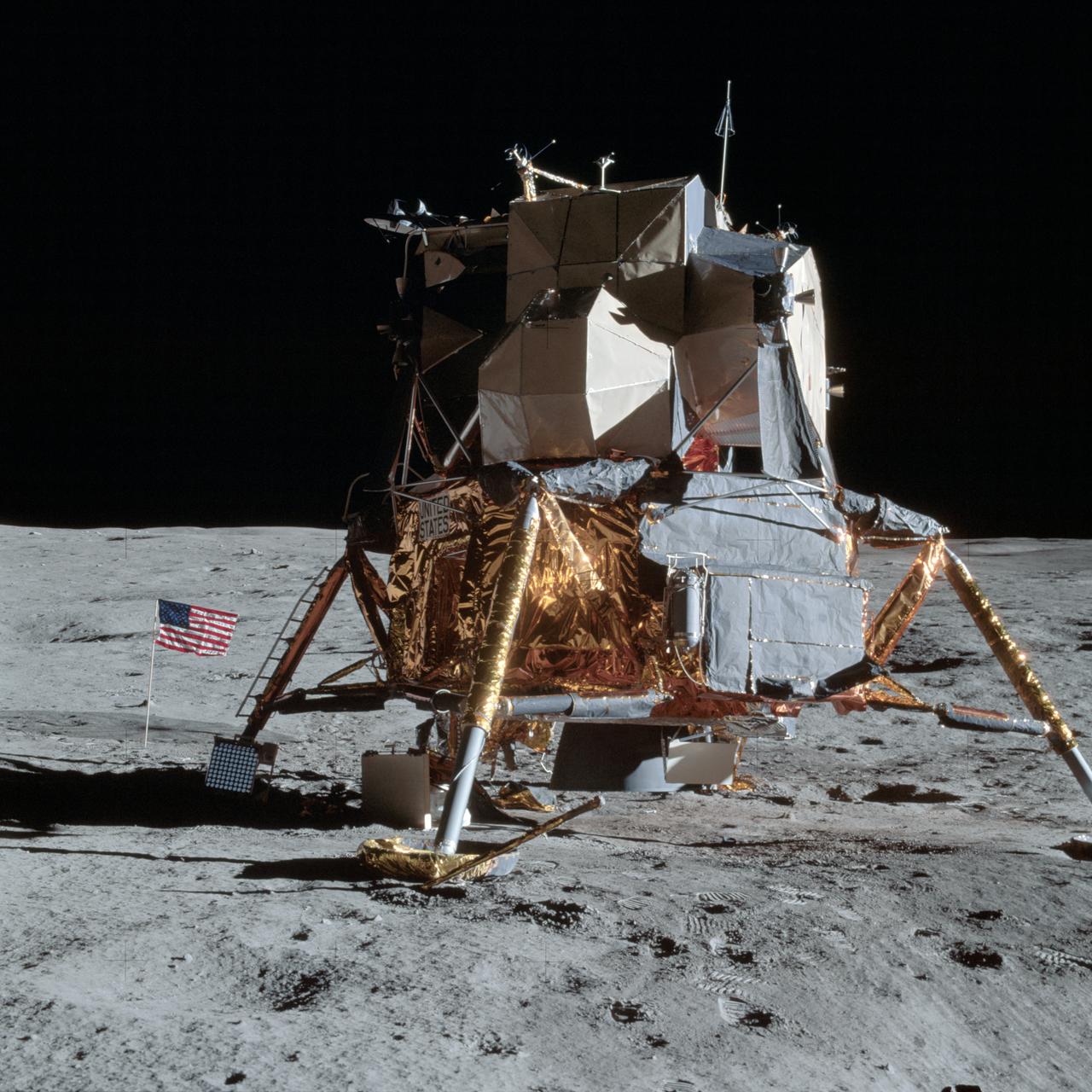
AS14-66-9277 (5 Feb. 1971) --- An excellent view of the Apollo 14 Lunar Module (LM) on the moon, as photographed during the first Apollo 14 extravehicular activity (EVA) on the lunar surface. The astronauts have already deployed the U.S. flag. Note the laser ranging retro reflector (LR-3) at the foot of the LM ladder. The LR-3 was deployed later. While astronauts Alan B. Shepard Jr., commander, and Edgar D. Mitchell, lunar module pilot, descended in the LM to explore the moon, astronaut Stuart A. Roosa, command module pilot, remained with the Command and Service Modules (CSM) in lunar orbit.

AS14-68-9448 (6 Feb. 1971) --- A close-up view of a large multi-colored boulder in the boulder field located on the rim of Cone Crater, as photographed by the moon-exploring crew members of the Apollo 14 lunar landing mission. This view is looking west by southwest. The Lunar Module (LM) can be seen in the background. While astronauts Alan B. Shepard Jr., commander, and Edgar D. Mitchell, lunar module pilot, were exploring the moon, after descending in the LM, astronaut Stuart A. Roosa, command module pilot, remained with the Command and Service Modules (CSM) in lunar orbit.
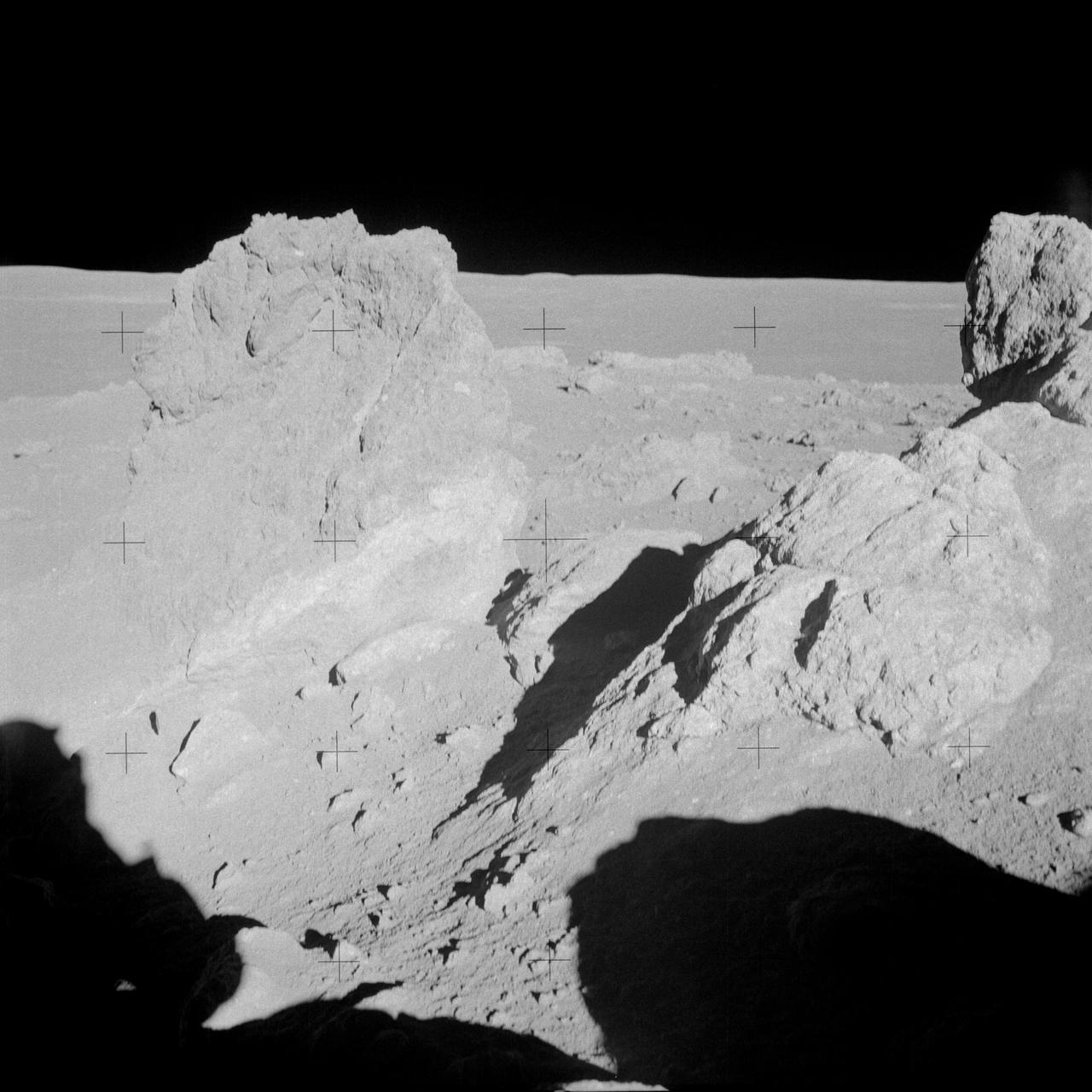
AS14-68-9449 (6 Feb. 1971) --- A close-up view of a group of large boulders near the rim of Cone Crater photographed by the Apollo 14 astronauts during their second extravehicular activity (EVA). While astronauts Alan B. Shepard Jr., commander, and Edgar D. Mitchell, lunar module pilot, descended in the LM to explore the moon, astronaut Stuart A. Roosa, command module pilot, remained with the Command and Service Modules (CSM) in lunar orbit.
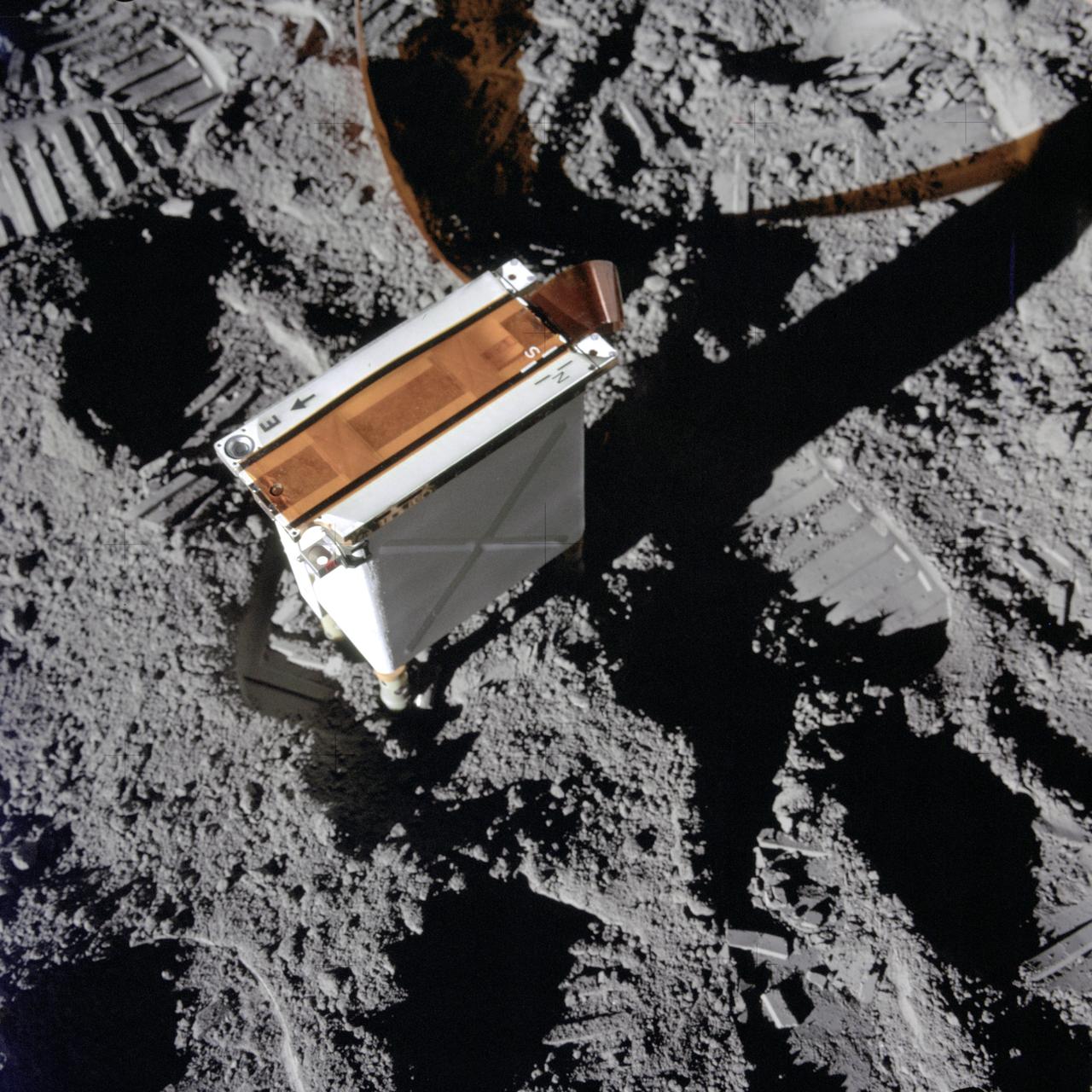
AS14-67-9364 (5 Feb. 1971) --- A close-up view of the charged particle lunar environment experiment (CPLEE), a component of the Apollo lunar surface experiments package (ALSEP) which was deployed on the moon by the Apollo 14 astronauts. While astronauts Alan B. Shepard Jr., commander, and Edgar D. Mitchell, lunar module pilot, descended in the Lunar Module (LM) to explore the moon, astronaut Stuart A. Roosa, command module pilot, remained with the Command and Service Modules (CSM) in lunar orbit.

AS14-66-9278 (5 Feb. 1971) --- An excellent view of the Apollo 14 Lunar Module (LM) on the moon, as photographed during the first Apollo 14 extravehicular activity (EVA) on the lunar surface. While astronauts Alan B. Shepard Jr., commander, and Edgar D. Mitchell, lunar module pilot, descended in the LM to explore the moon, astronaut Stuart A. Roosa, command module pilot, remained with the Command and Service Modules (CSM) in lunar orbit.
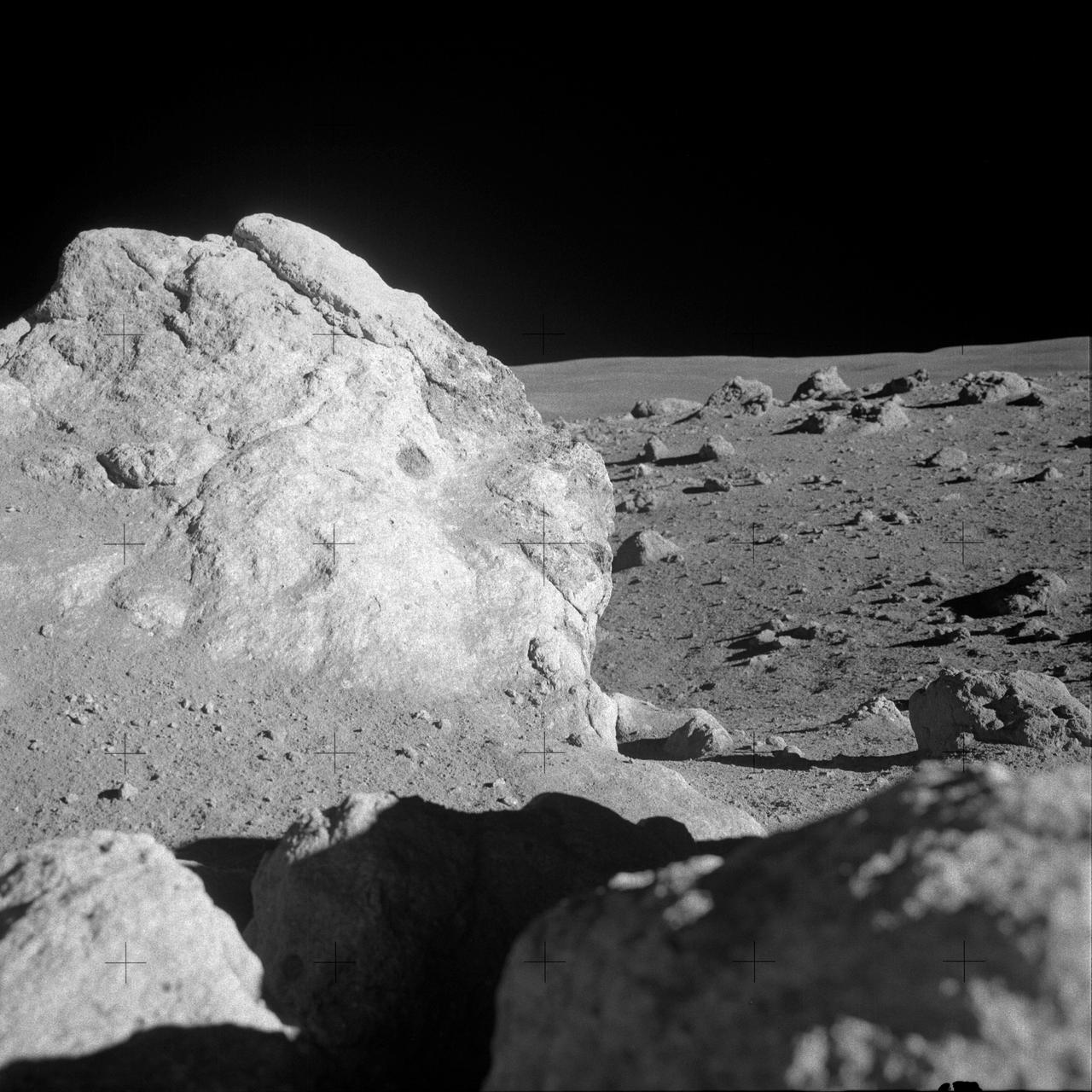
AS14-68-9451 (6 Feb. 1971) --- A close-up view of a large boulder in a field of boulders near the rim of Cone Crater, which was photographed by the Apollo 14 moon-explorers during the mission's second extravehicular activity (EVA). Astronauts Alan B. Shepard Jr., commander, and Edgar D. Mitchell, lunar module pilot, descended in the Apollo 14 Lunar Module (LM) to explore the lunar surface while astronaut Stuart A. Roosa, command module pilot, remained with the Command and Service Modules (CSM) in lunar orbit.
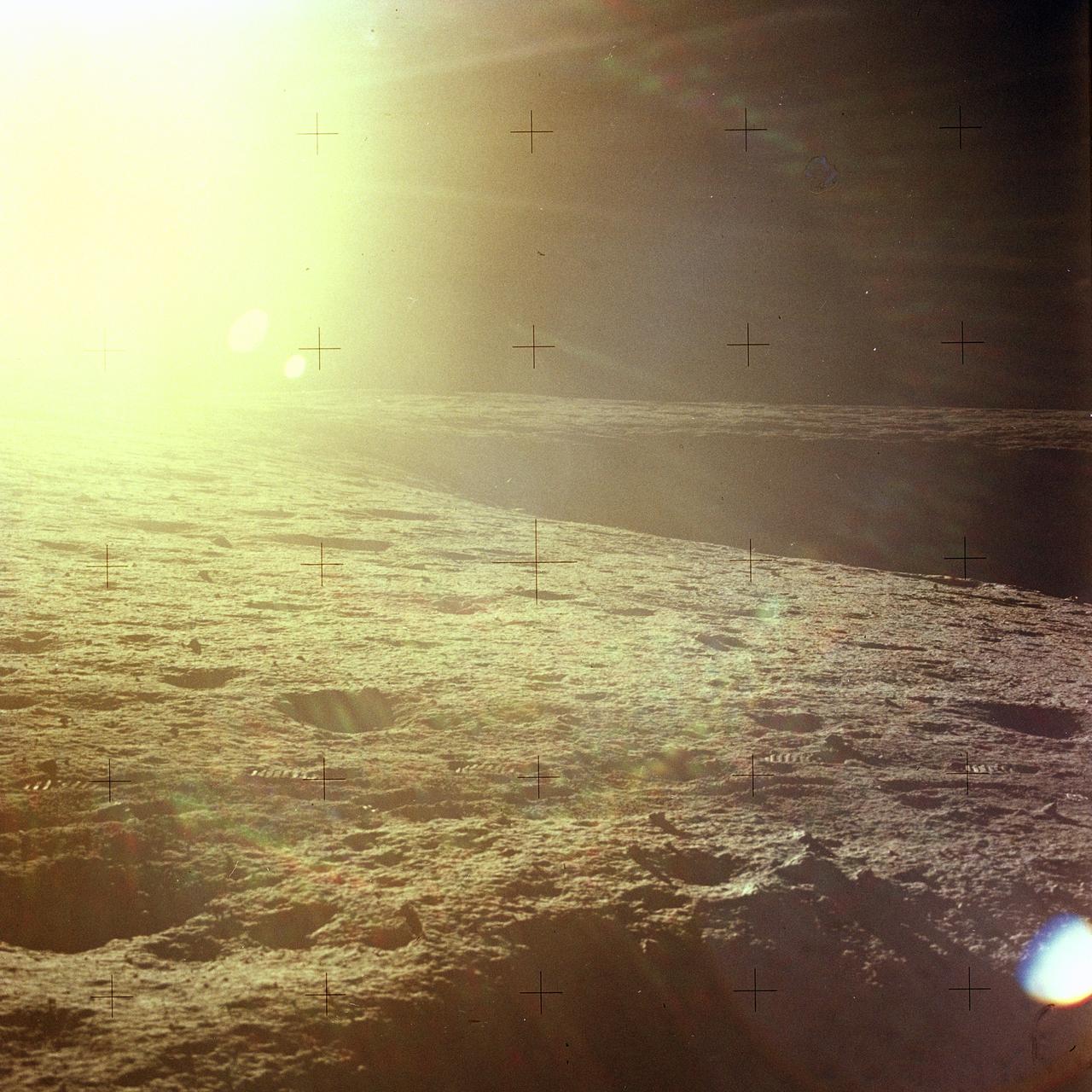
The second manned lunar landing mission, Apollo 12, launched from launch pad 39-A at Kennedy Space Center in Florida on November 14, 1969 via a Saturn V launch vehicle. The Saturn V vehicle was developed by the Marshall Space Flight Center (MSFC) under the direction of Dr. Wernher von Braun. Aboard Apollo 12 was a crew of three astronauts: Alan L. Bean, pilot of the Lunar Module (LM), Intrepid; Richard Gordon, pilot of the Command Module (CM), Yankee Clipper; and Spacecraft Commander Charles Conrad. The LM, Intrepid, landed astronauts Conrad and Bean on the lunar surface in what’s known as the Ocean of Storms while astronaut Richard Gordon piloted the CM, Yankee Clipper, in a parking orbit around the Moon. Lunar soil activities included the deployment of the Apollo Lunar Surface Experiments Package (ALSEP), finding the unmanned Surveyor 3 that landed on the Moon on April 19, 1967, and collecting 75 pounds (34 kilograms) of rock samples. This is the fourteenth of 25 images captured by the crew in attempt to provide a 360 degree Lunar surface scene. Apollo 12 safely returned to Earth on November 24, 1969.
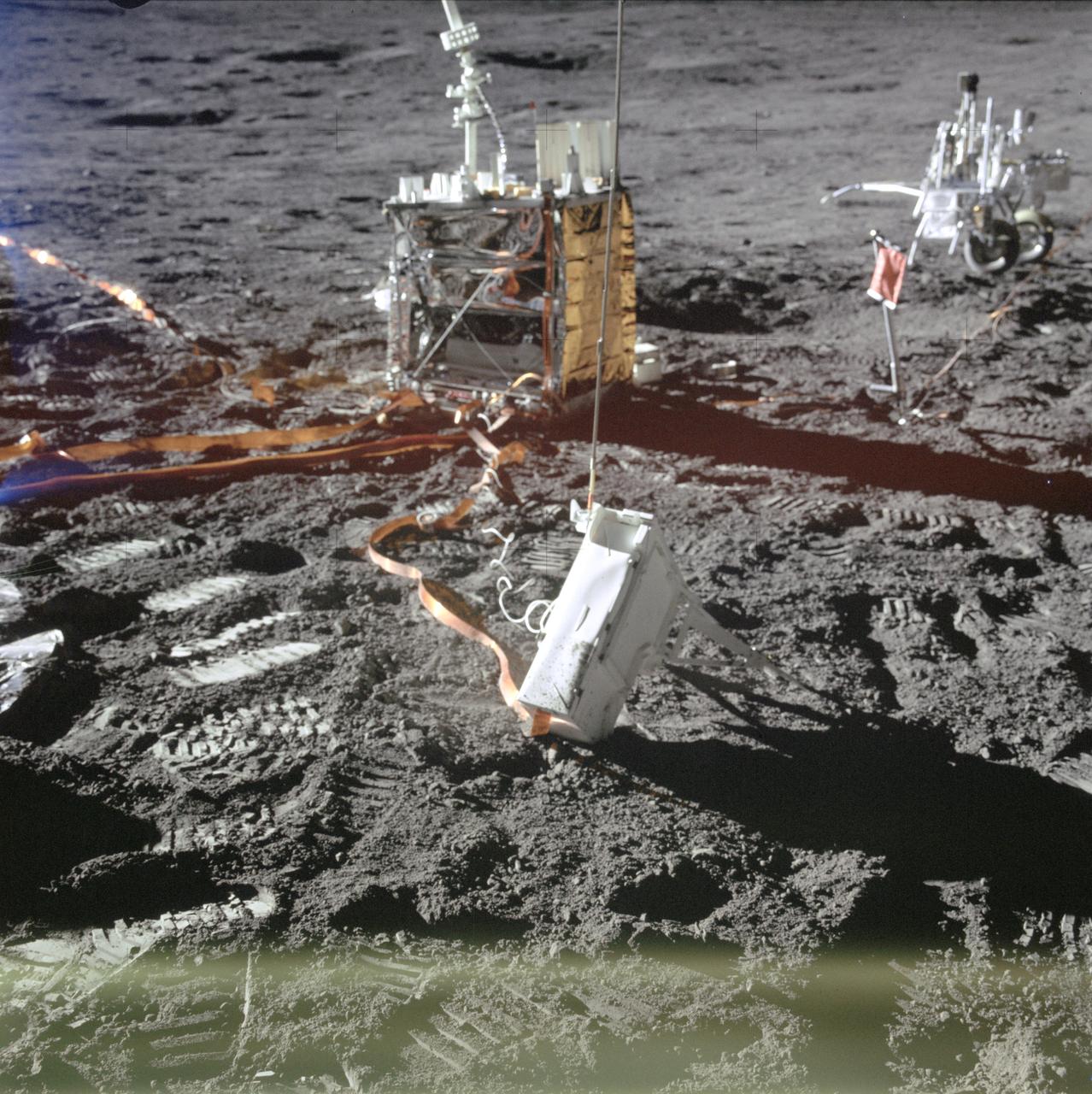
AS14-67-9361 (5 Feb. 1971) --- A close-up view of two components of the Apollo lunar surface experiments package (ALSEP) which the Apollo 14 astronauts deployed on the moon during their first extravehicular activity (EVA). In the center background is the ALSEP's central station (CS); and in the foreground is the mortar package assembly of the ALSEP's active seismic experiment (ASE). The modularized equipment transporter (MET) can be seen in the right background. While astronauts Alan B. Shepard Jr., commander, and Edgar D. Mitchell, lunar module pilot, descended in the Lunar Module (LM) to explore the moon, astronaut Stuart A. Roosa, command module pilot, remained with the Command and Service Modules (CSM) in lunar orbit.
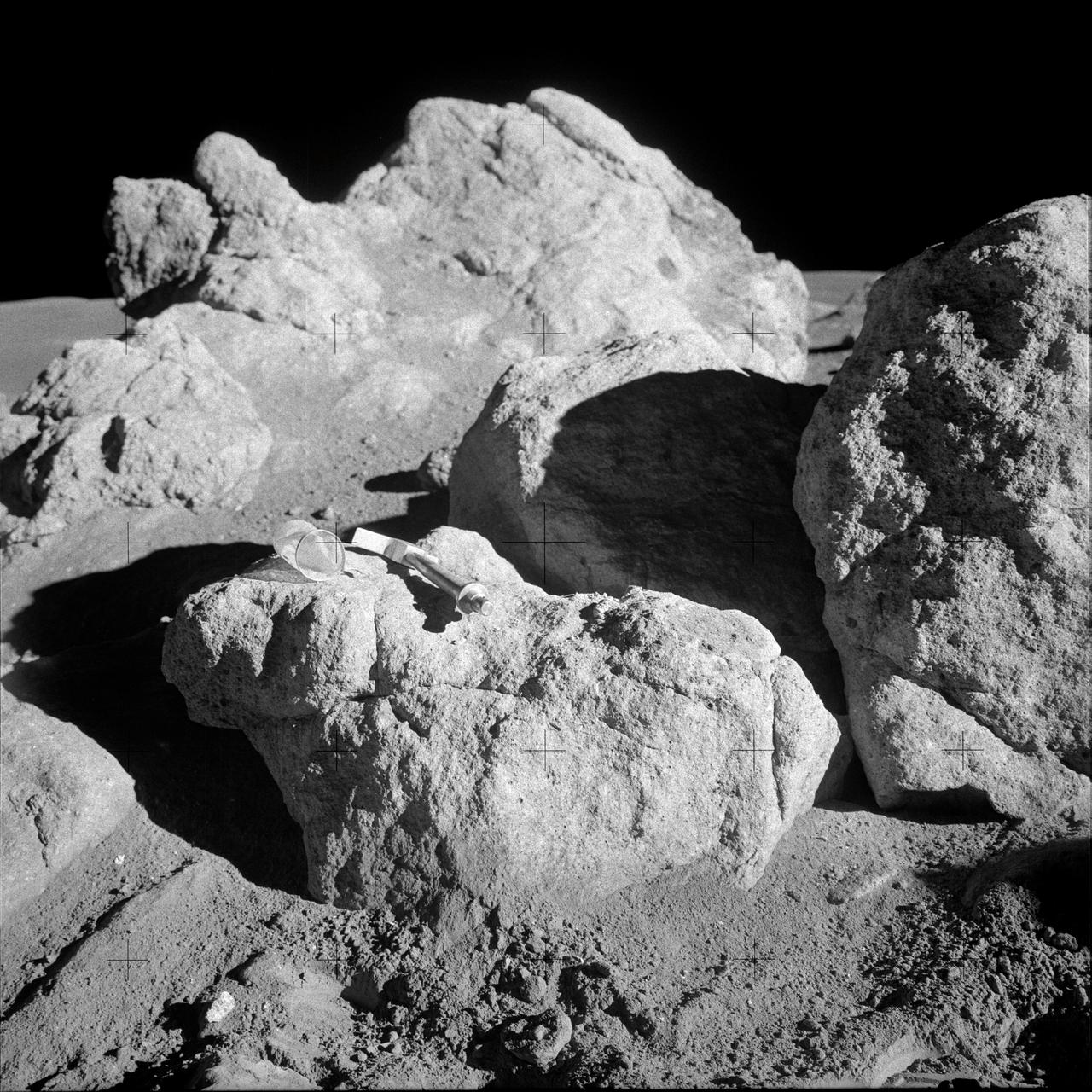
AS14-68-9452 (5-6 Feb. 1971) --- A hammer and a small collection bag lie atop a lunar boulder to give some indication of size in this view of several boulders clustered together. This is one of the white rocks from which samples were taken by the two moon-exploring crew men of the Apollo 14 lunar landing mission. While astronauts Alan B. Shepard Jr., commander, and Edgar D. Mitchell, lunar module pilot, were exploring the moon, astronaut Stuart A. Roosa, command module pilot, remained with the Command and Service Modules (CSM) in lunar orbit.
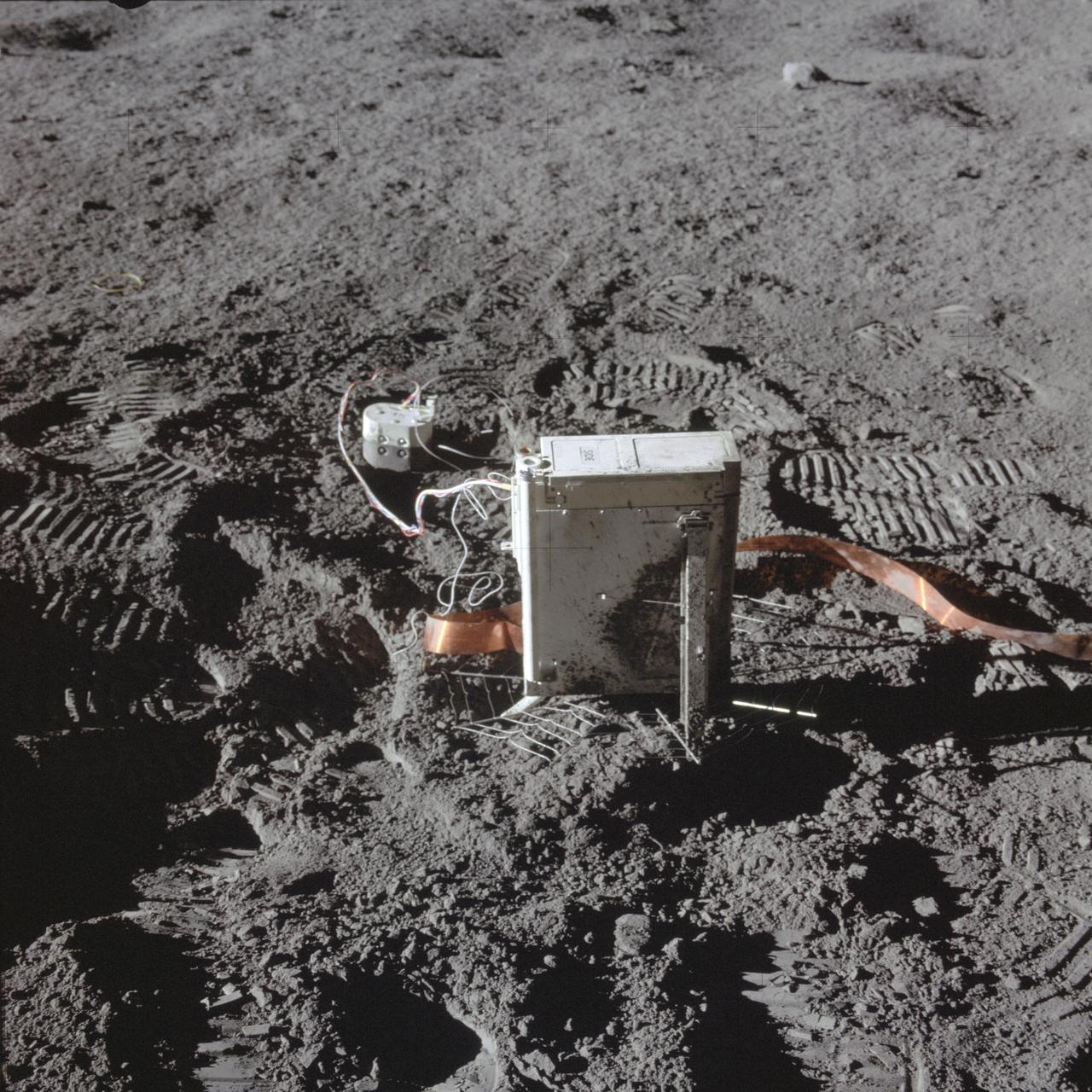
AS14-67-9369 (5 Feb. 1971) --- A close-up view of the Suprathermal ion detector experiment (SIDE), foreground, and cold cathode ion gauge (CCIG), smaller object in background, components of the Apollo lunar surface experiments package (ALSEP), which was deployed on the moon by the Apollo 14 astronauts during their first extravehicular activity (EVA). While astronauts Alan B. Shepard Jr. and Edgar D. Mitchell descended in the Lunar Module (LM) to explore the moon, astronaut Stuart A. Roosa remained with the Command and Service Modules (CSM) in lunar orbit.
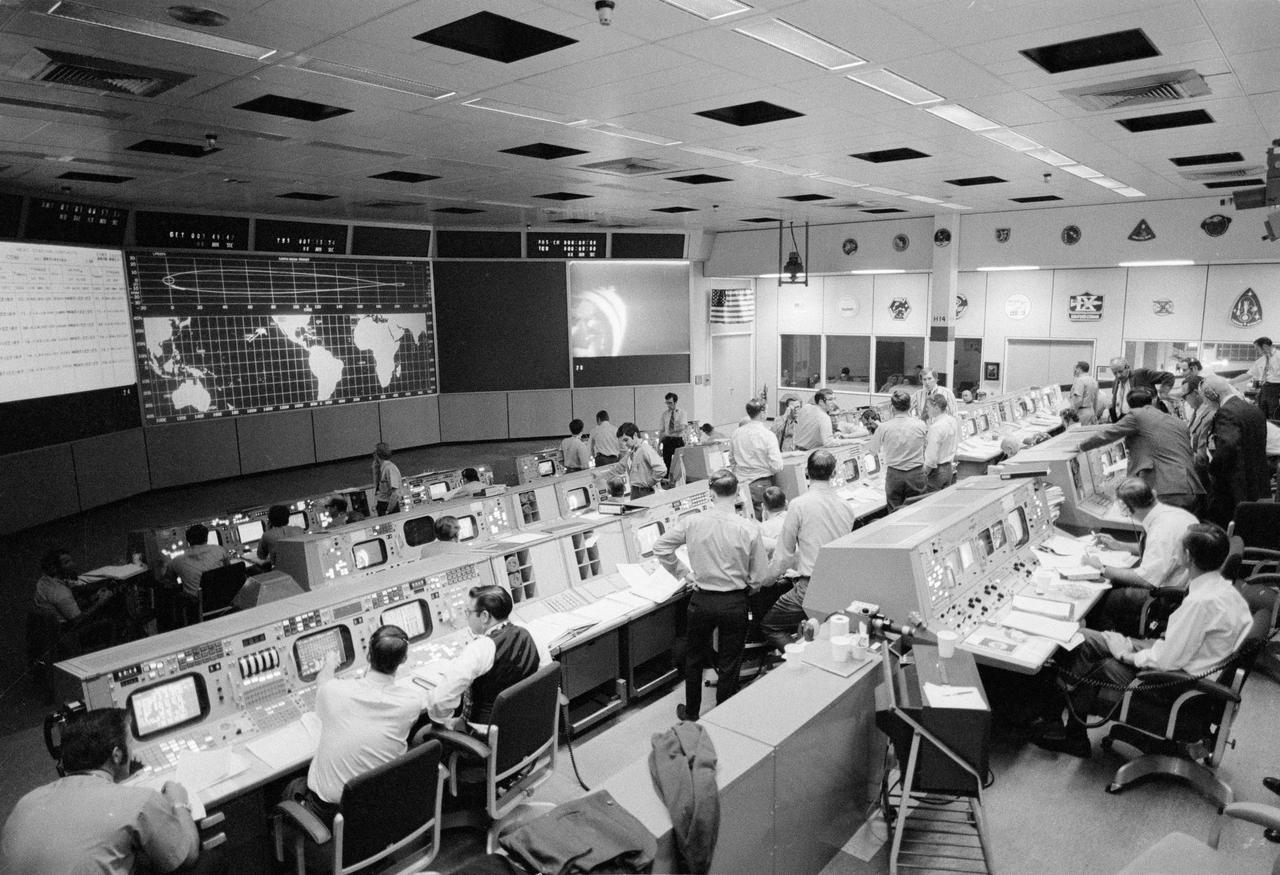
S71-16879 (31 Jan. 1971) --- Overall view of activity in the Mission Operations Control Room in the Mission Control Center during the Apollo 14 transposition and docking maneuvers. The Apollo 14 Lunar Module, still attached to the Saturn IVB stage, can be seen on the large television monitor. Due to difficulty with the docking mechanism six attempts were made before a successful "hard dock" of the Command Module with the Lunar Module was accomplished. Aboard the Command Module were astronauts Alan B. Shepard Jr., Stuart A. Roosa, and Edgar D. Mitchell.
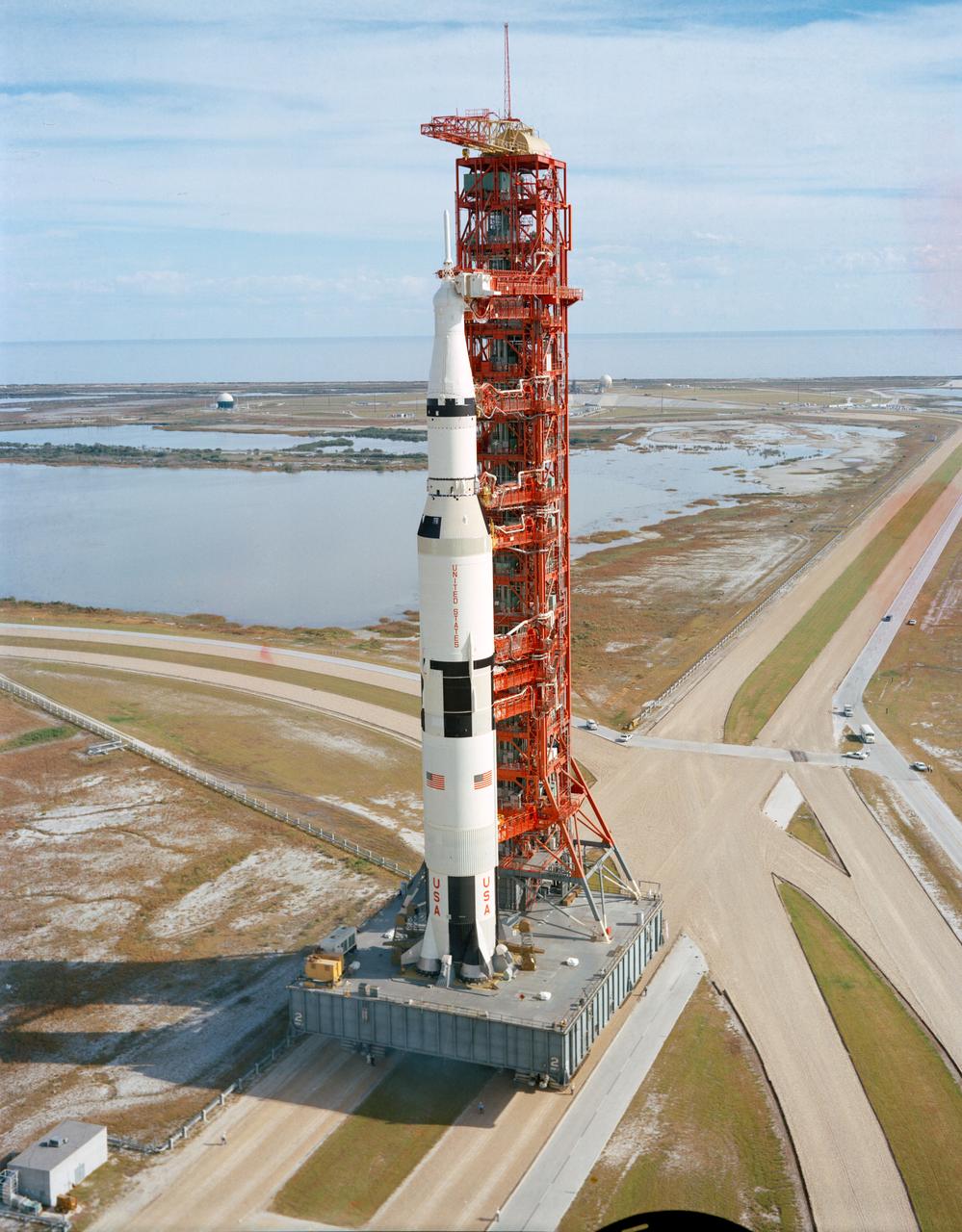
S70-54127 (9 Nov. 1970) --- A high-angle view at Launch Complex 39, Kennedy Space Center (KSC), showing the Apollo 14 (Spacecraft 110/Lunar Module 8/Saturn 509) space vehicle on the way from the Vehicle Assembly Building (VAB) to Pad A. The Saturn V stack and its mobile launch tower sit atop a huge crawler-transporter. The Apollo 14 crewmen will be astronauts Alan B. Shepard Jr., commander; Stuart A. Roosa, command module pilot; and Edgar D. Mitchell, lunar module pilot.
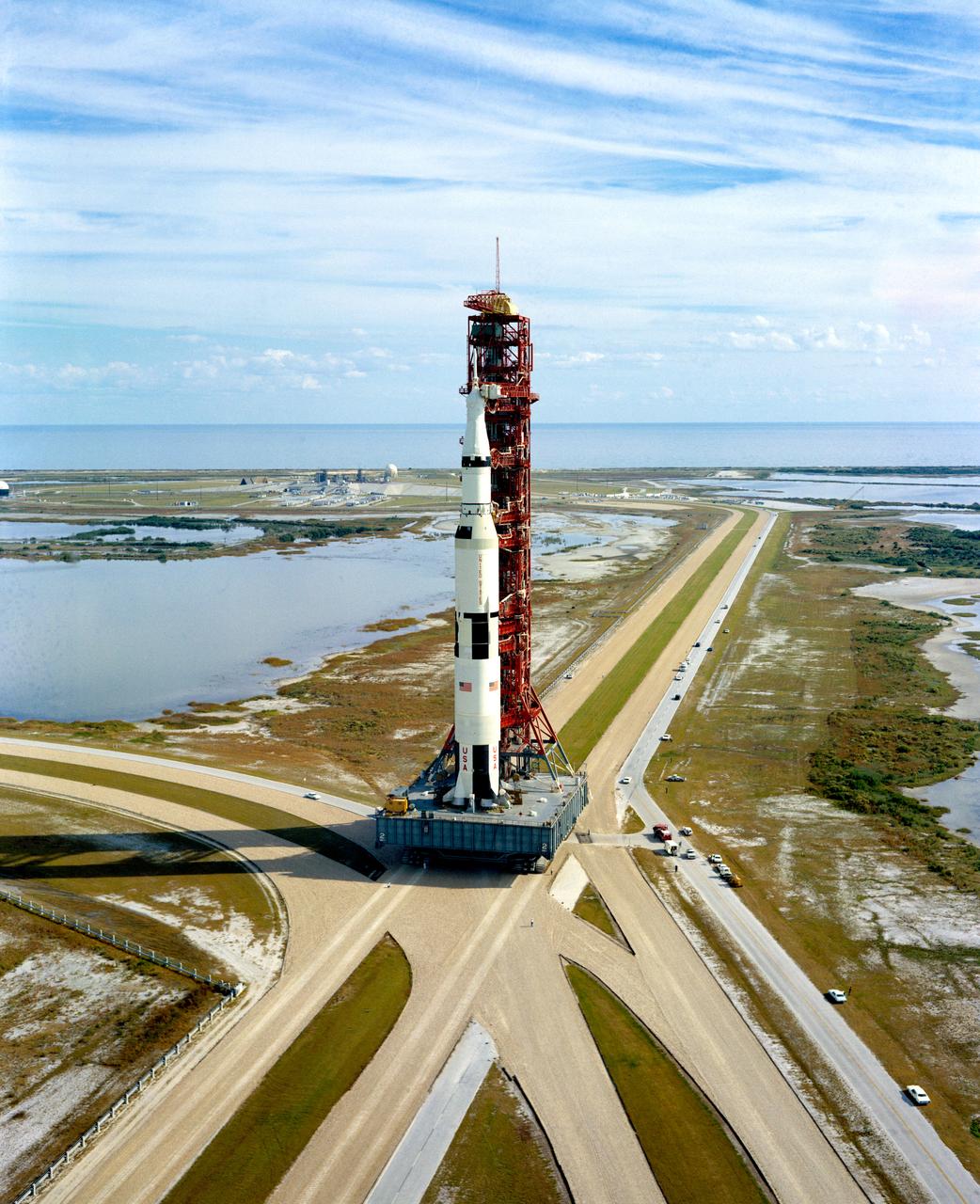
S70-54119 (9 Nov. 1970) --- A high-angle view at Launch Complex 39, Kennedy Space Center (KSC), showing the Apollo 14 (Spacecraft 110/Lunar Module 8/Saturn 509) space vehicle on the way from the Vehicle Assembly Building (VAB) to Pad A. The Saturn V stack and its mobile launch tower sit atop a huge crawler-transporter. The Apollo 14 crewmen will be astronauts Alan B. Shepard Jr., commander; Stuart A. Roosa, command module pilot; and Edgar D. Mitchell, lunar module pilot.
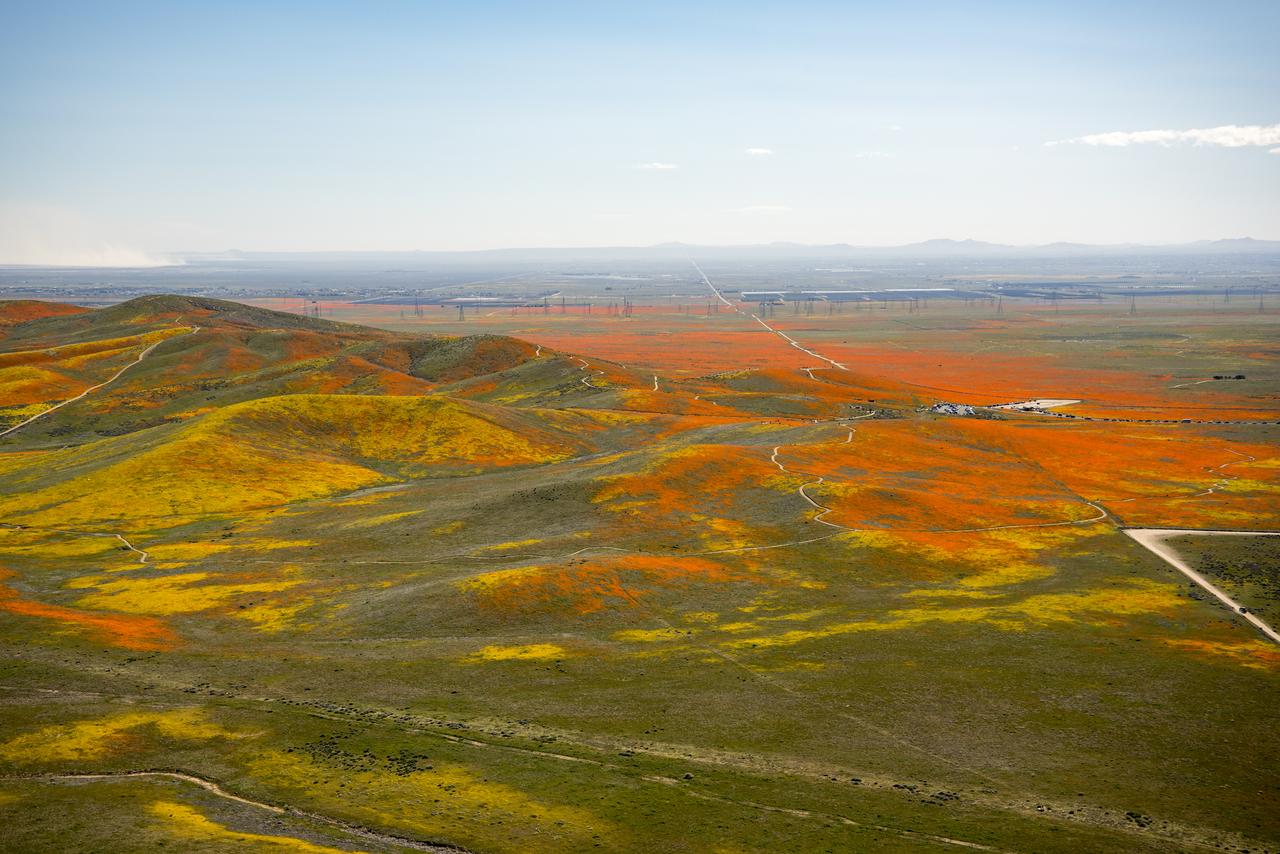
View from a NASA aircraft, TG-14, over the Superbloom of wildflowers and poppies from the Antelope Valley in Southern California, Poppy Reserve and solar panels are in the background.
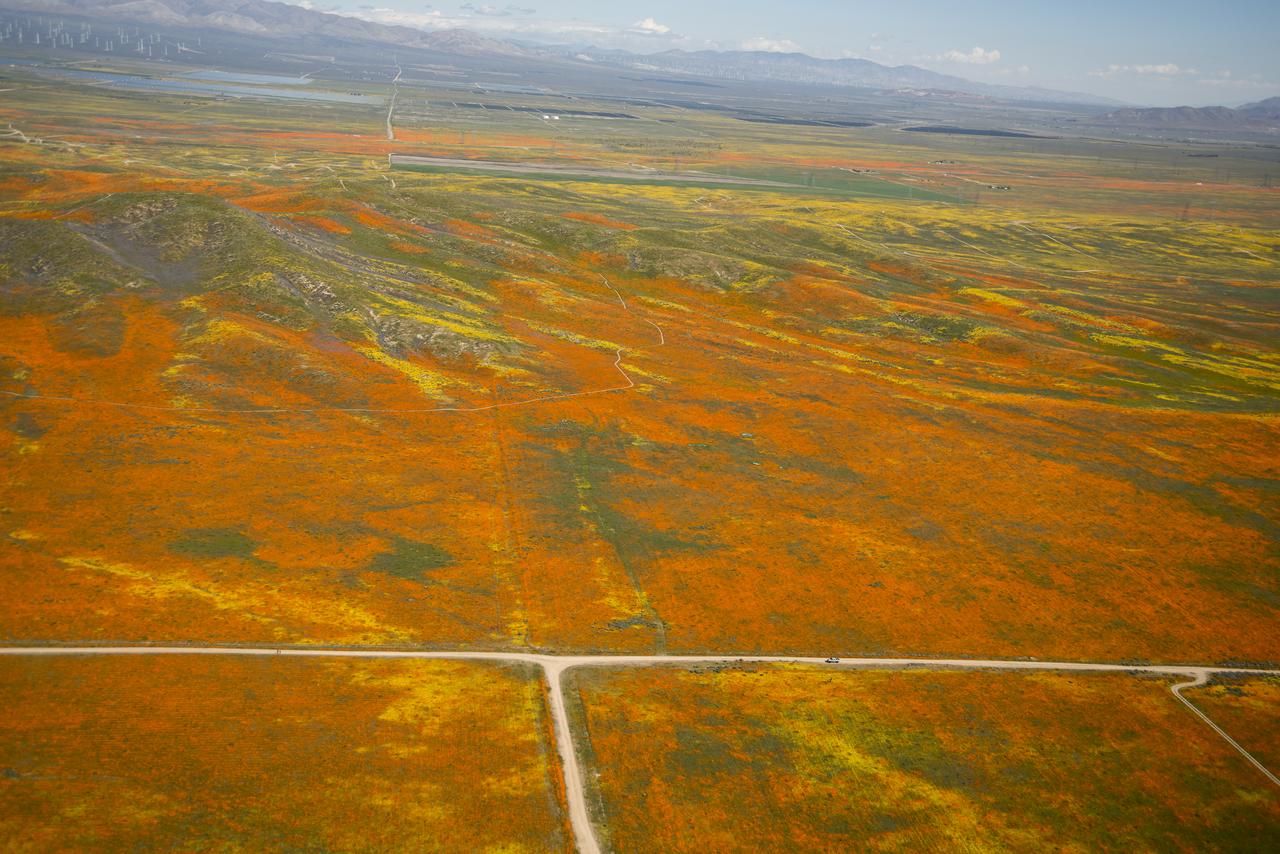
View from a NASA aircraft, TG-14, over the Superbloom of yellow wildflowers and orange poppies from the Antelope Valley in Southern California. The poppy is the state flower.

View from a NASA aircraft, TG-14, over the Superbloom of wildflowers and poppies from the Antelope Valley in Southern California and Poppy Reserve and solar panels in background
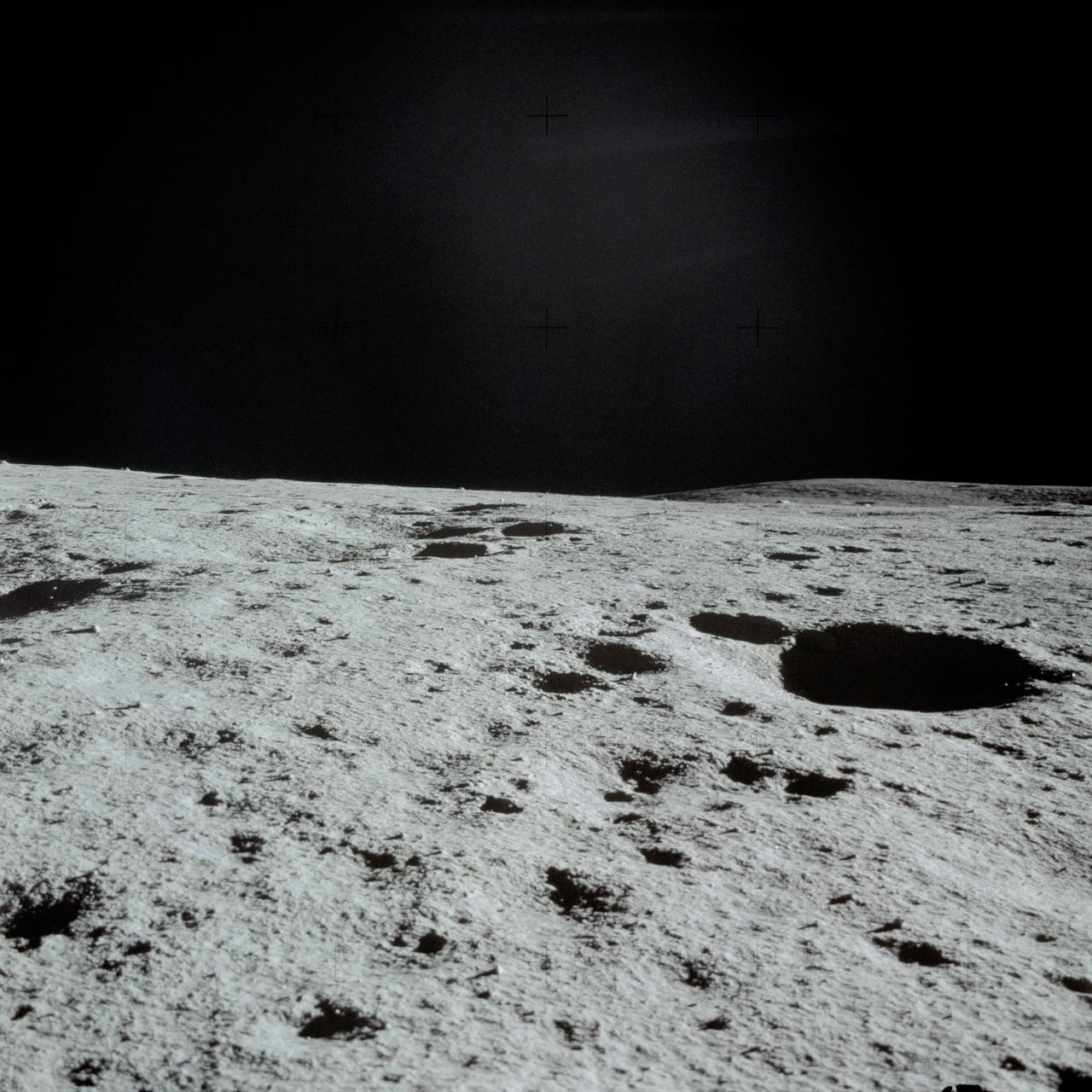
AS14-66-9244 (5-6 Feb. 1971) --- An excellent view of the lunar terrain looking through the right window of the Lunar Module (LM), photographed by one of the Apollo 14 astronauts during their stay on the lunar surface. Pothole-sized craters can be seen in the foreground. While astronauts Alan B. Shepard Jr., commander, and Edgar D. Mitchell, lunar module pilot, descended in the LM to explore the moon, astronaut Stuart A. Roosa, command module pilot, remained with the Command and Service Modules (CSM) in lunar orbit.
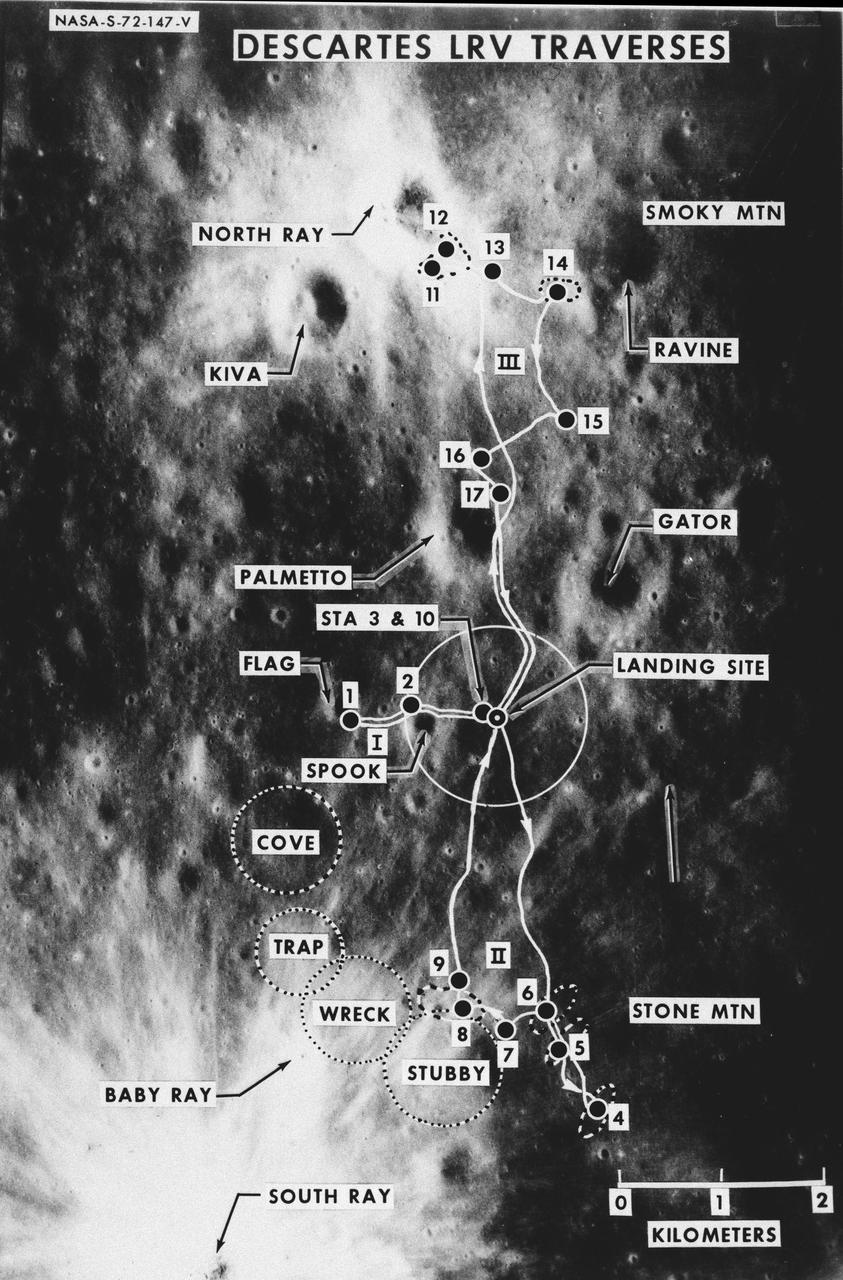
S72-00147 (January 1972) --- An almost vertical view of the Apollo 16 Descartes landing area, as photographed from the Apollo 14 spacecraft. Overlays are provided to point out extravehicular activity (EVA) Lunar Roving Vehicle (LRV) traverse routes and the nicknames of features. Hold picture with South Ray Crater in lower left corner. North will then be at the top. The Roman numerals indicate EVA numbers and the Arabic numbers point out stations or traverse stops.
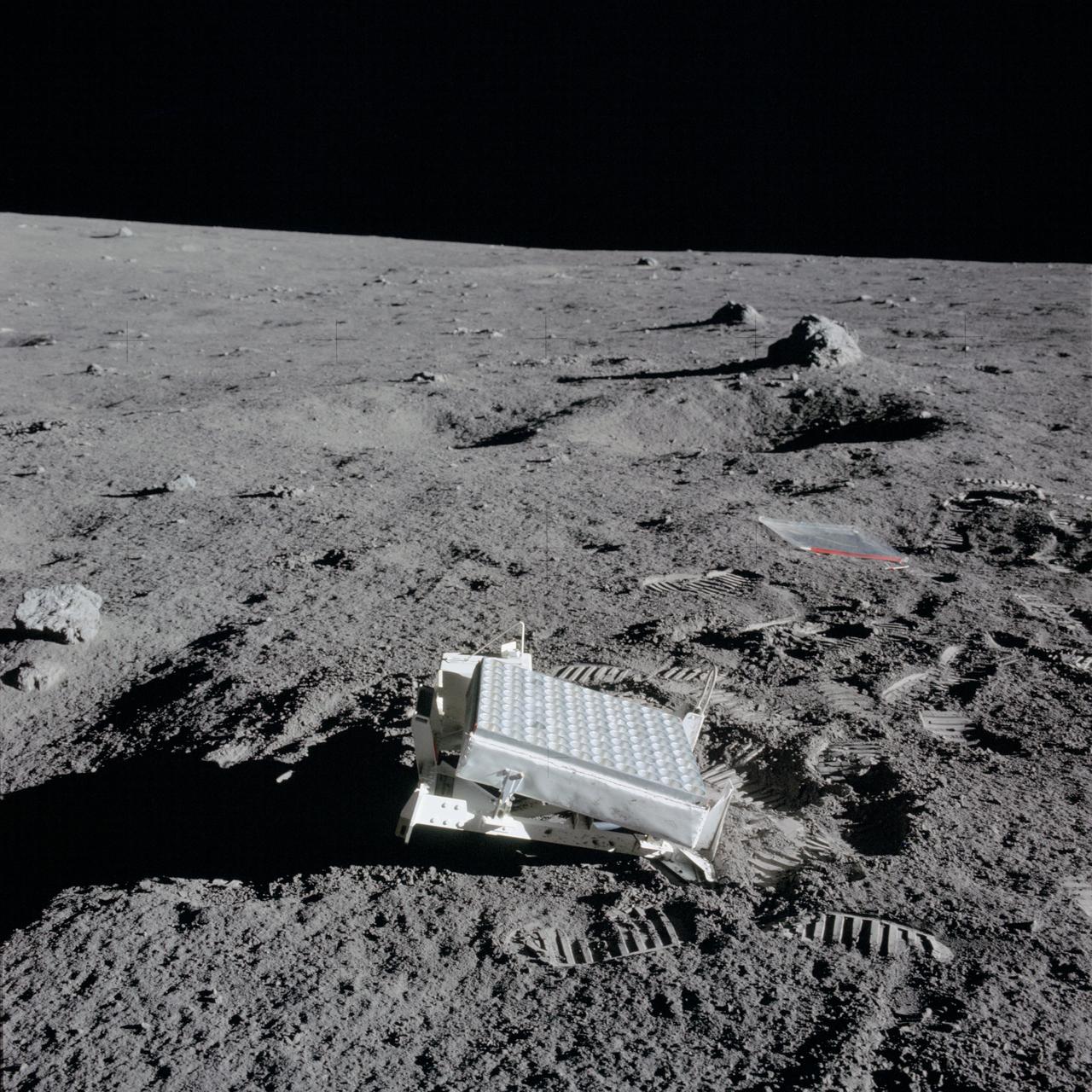
AS14-67-9386 (5 Feb. 1971) --- A close-up view of the laser ranging retro reflector (LR3) which the Apollo 14 astronauts deployed on the moon during their lunar surface extravehicular activity (EVA). While astronauts Alan B. Shepard Jr., commander, and Edgar D. Mitchell, lunar module pilot, descended in the Lunar Module (LM) to explore the moon, astronaut Stuart A. Roosa, command module pilot, remained with the Command and Service Modules (CSM) in lunar orbit.
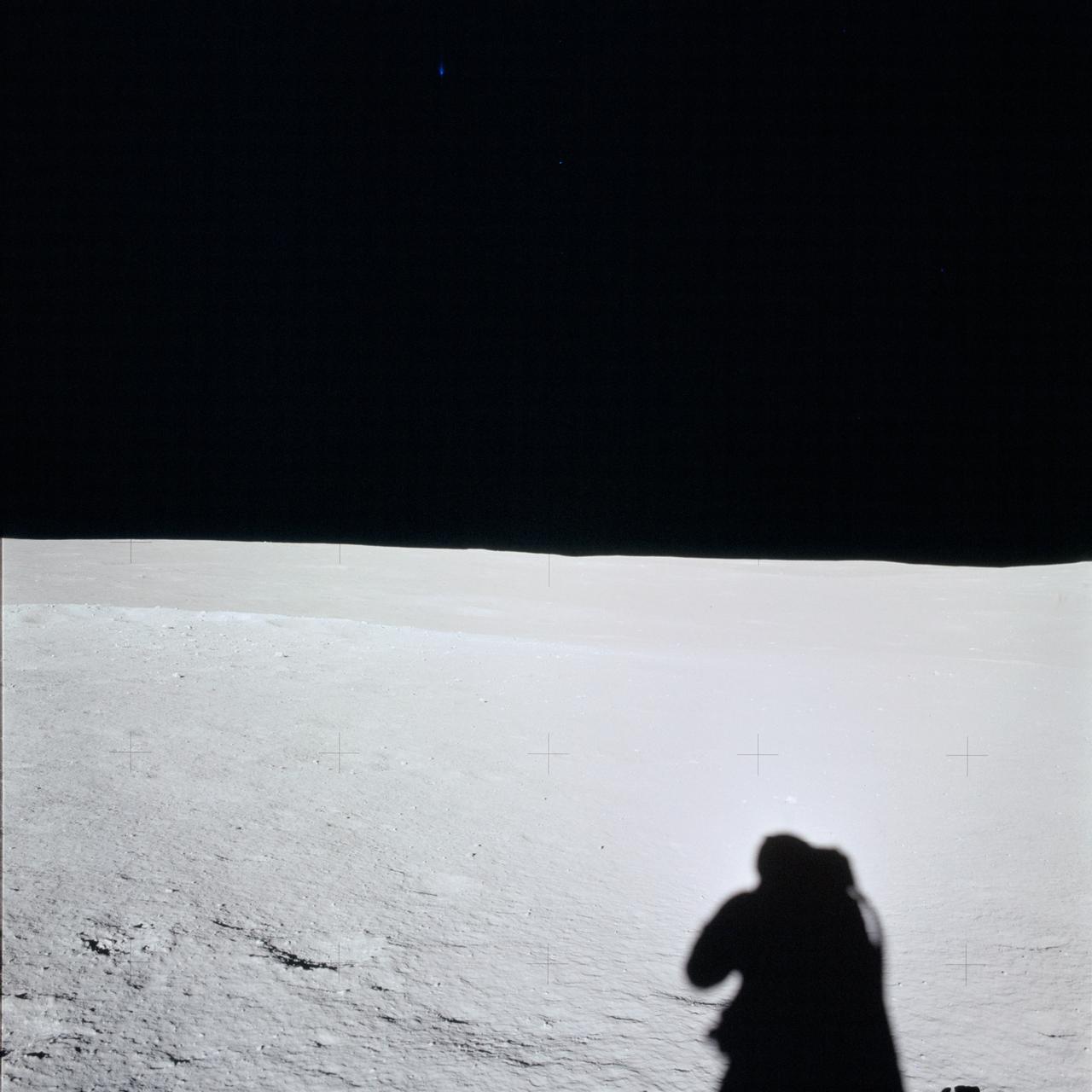
AS14-66-9293 (5 Feb. 1971) --- A portion of the Fra Mauro landing site as photographed by one of the Apollo 14 astronauts, standing slightly southwest of the Lunar Module (LM), during the early minutes of their first extravehicular activity (EVA) on the moon. The shadow of the astronaut taking the picture is at lower right. Photographs numbered AS14-66-9271 through AS14-66-9293 comprise a 360 degree panoramic view.
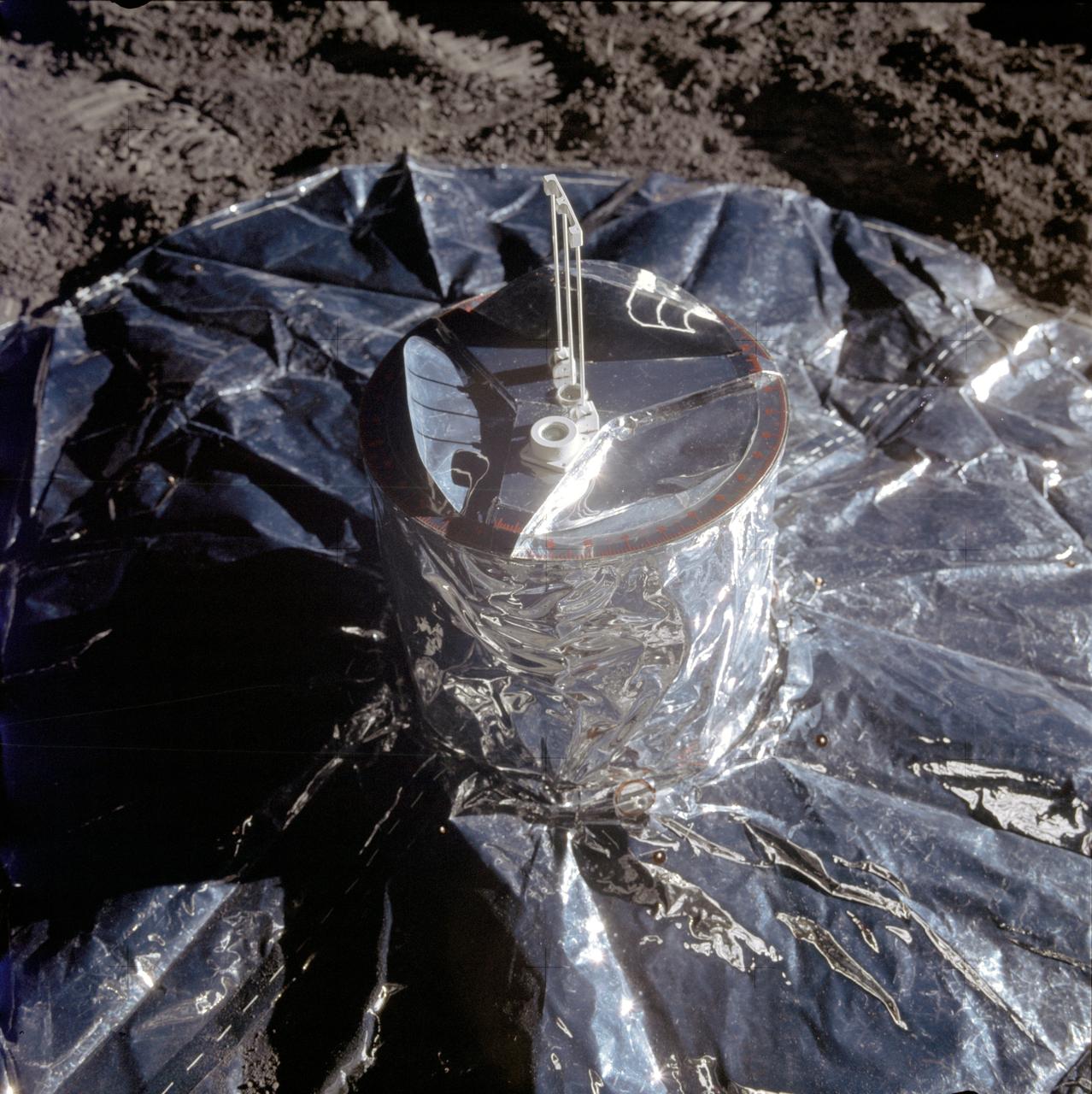
AS14-67-9362 (5 Feb. 1971) --- A close-up view of the passive seismic experiment (PSE), a component of the Apollo lunar surface experiments package (ALSEP), which was deployed on the moon by the Apollo 14 astronauts during their first extravehicular activity (EVA). While astronauts Alan B. Shepard Jr., commander, and Edgar D. Mitchell, lunar module pilot, descended in the Lunar Module (LM) to explore the moon, astronaut Stuart A. Roosa, command module pilot, remained with the Command and Service Modules (CSM) in lunar orbit.
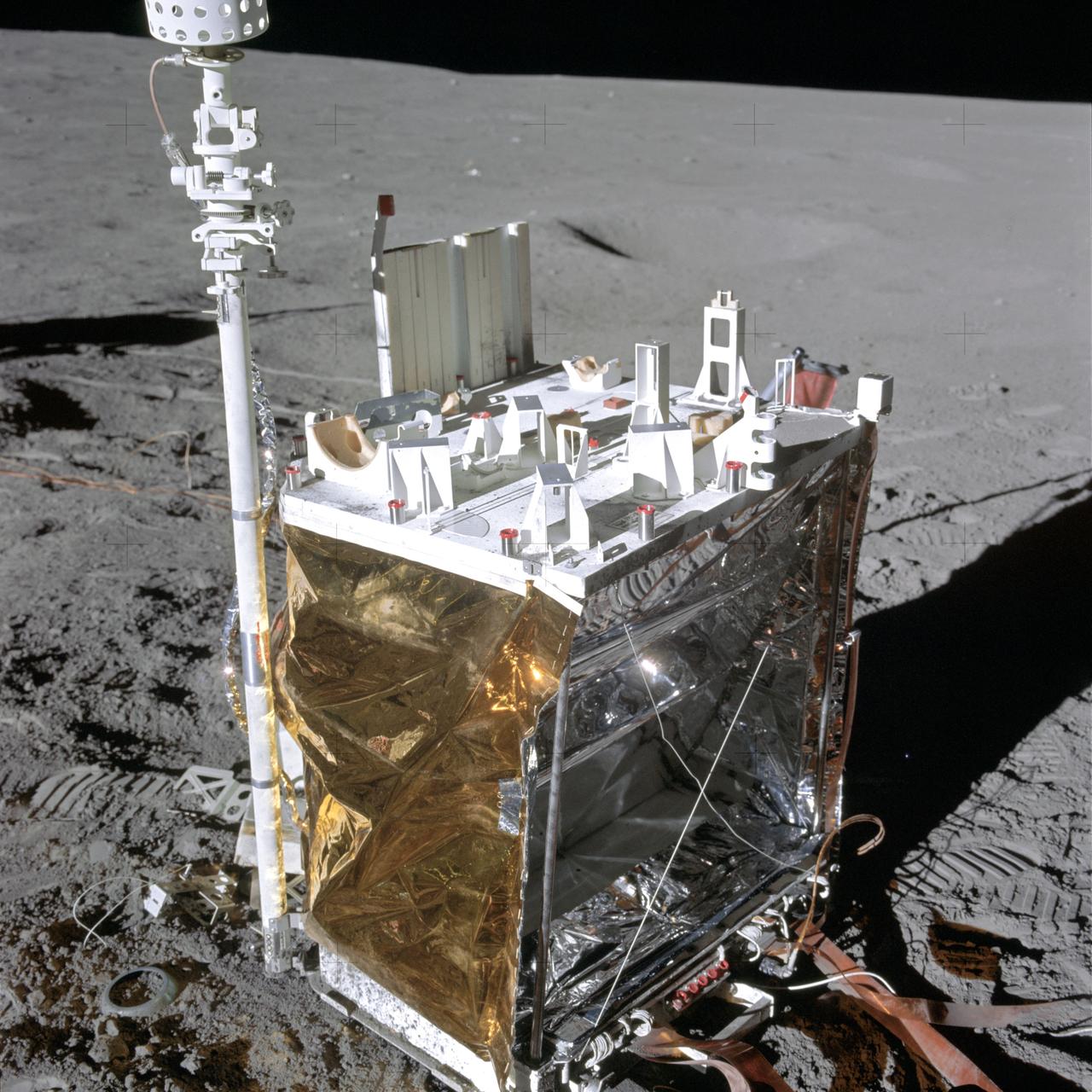
AS14-67-9379 (5 Feb. 1971) --- A close-up view of the central station (CS) of the Apollo lunar surface experiments package (ALSEP), which was deployed on the moon by the Apollo 14 astronauts during their first extravehicular activity (EVA). While astronauts Alan B. Shepard Jr., commander, and Edgar D. Mitchell, lunar module pilot, descended in the Lunar Module (LM) to explore the moon, astronaut Stuart A. Roosa, command module pilot, remained with the Command and Service Modules (CSM) in lunar orbit.
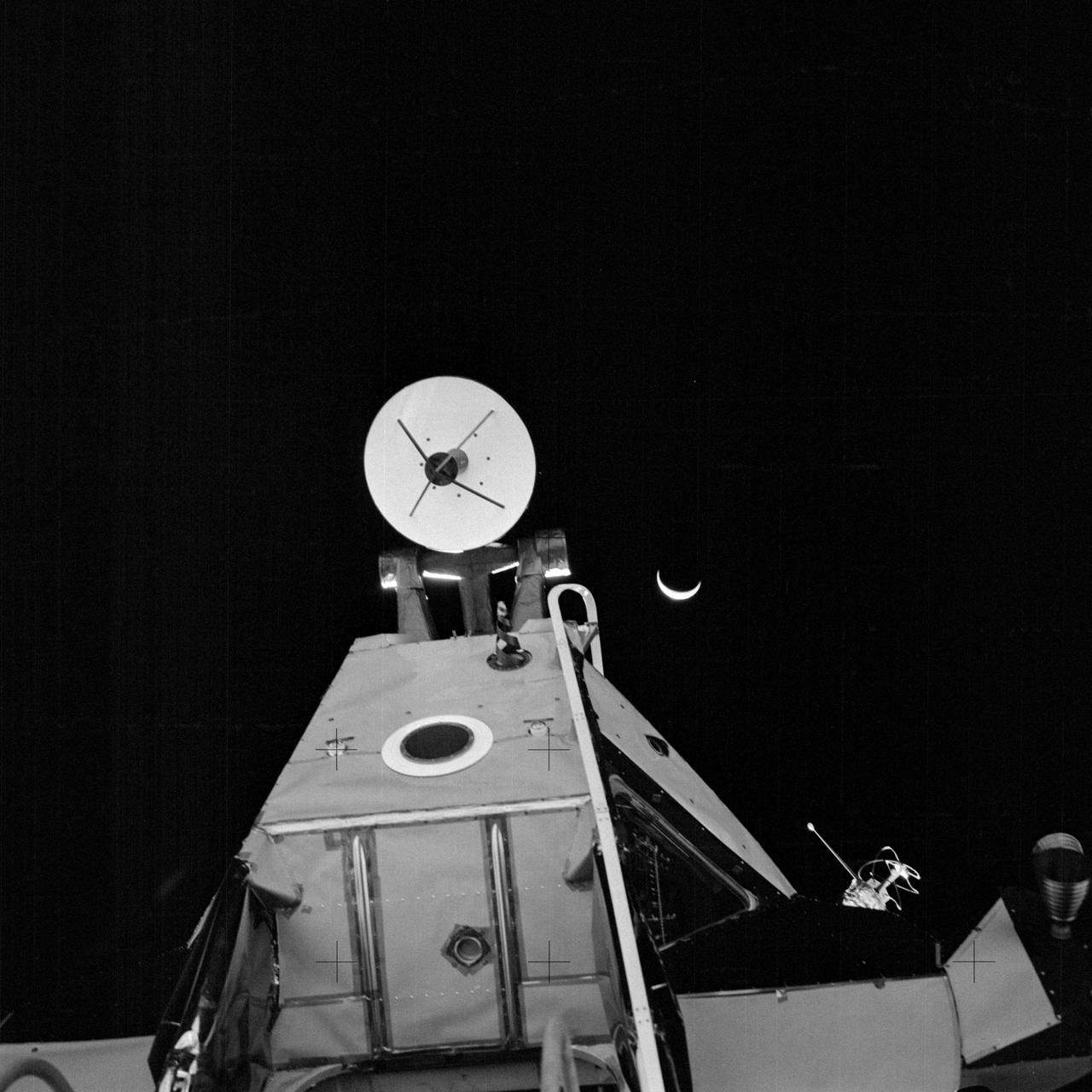
AS14-64-9193 (5 Feb. 1971) --- A close-up view of the forward section of the Apollo 14 Lunar Module (LM) ascent stage, looking upward from the LM ladder. This photograph was taken by one of the Apollo 14 astronauts at the close of their first extravehicular activity (EVA). The LM's ingress/egress hatch is just out of view at the bottom, near center. At the top center is the rendezvous radar antenna. An RCS thruster is visible at the far right. One of the two VHF antennas is on the right. The LM's optical alignment telescope is located at the black circle which has a wide, white ring around it. The crescent Earth can be seen in the far distant background.
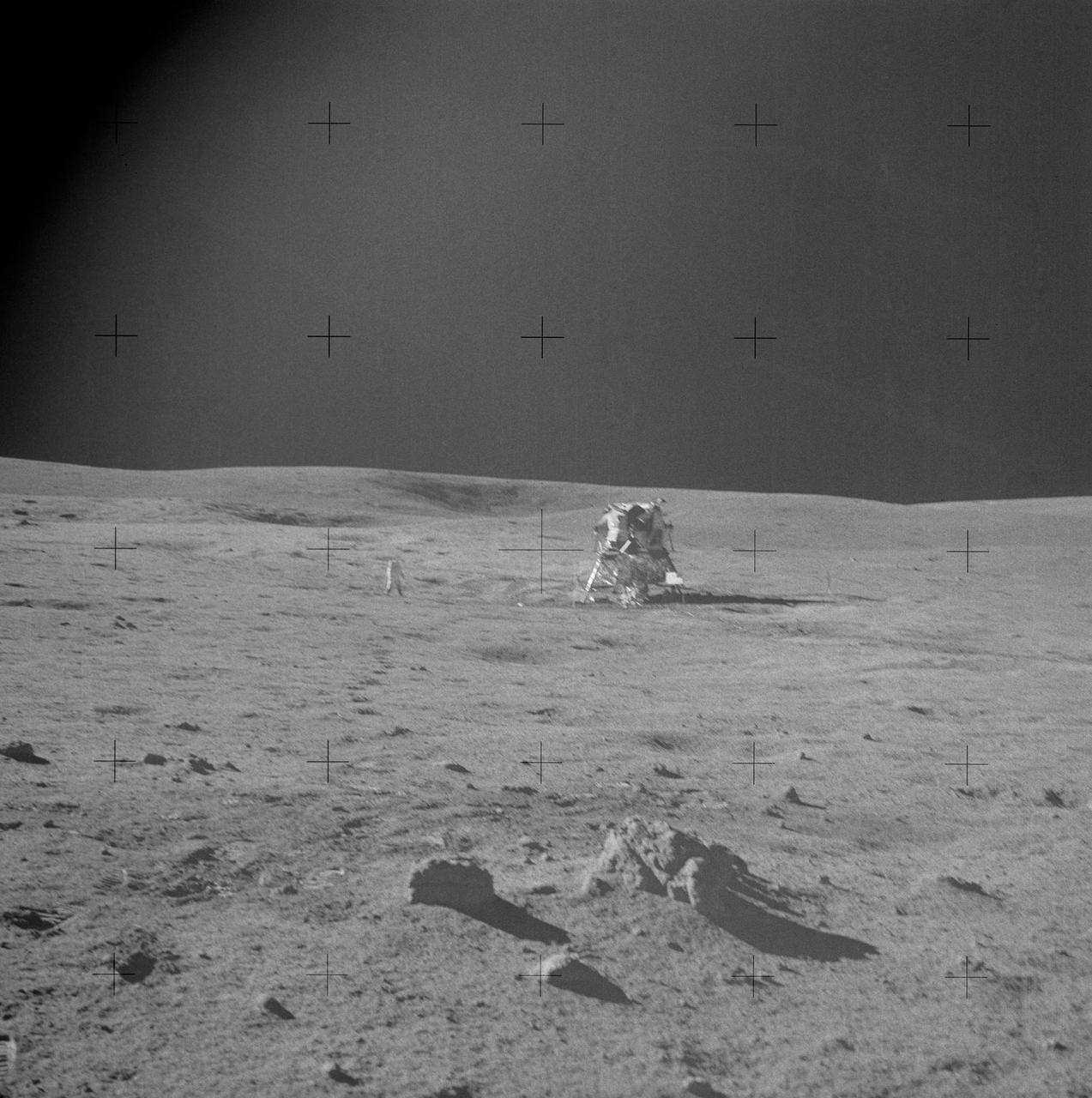
AS14-68-9487 (6 Feb. 1971) --- Astronaut Edgar D. Mitchell, lunar module pilot, photographed this sweeping view showing fellow moon-explorer astronaut Alan B. Shepard Jr., mission commander, and the Apollo 14 Lunar Module (LM). A small cluster of rocks and a few prints made by the lunar overshoes of Mitchell are in the foreground. Mitchell was standing in the boulder field, located just north by northwest of the LM, when he took this picture during the second Apollo 14 extravehicular activity (EVA), on Feb. 6, 1971. While astronaut Stuart A. Roosa, command module pilot, remained with the Command and Service Modules (CSM) in lunar orbit, Shepard and Mitchell descended in the LM to explore the moon.
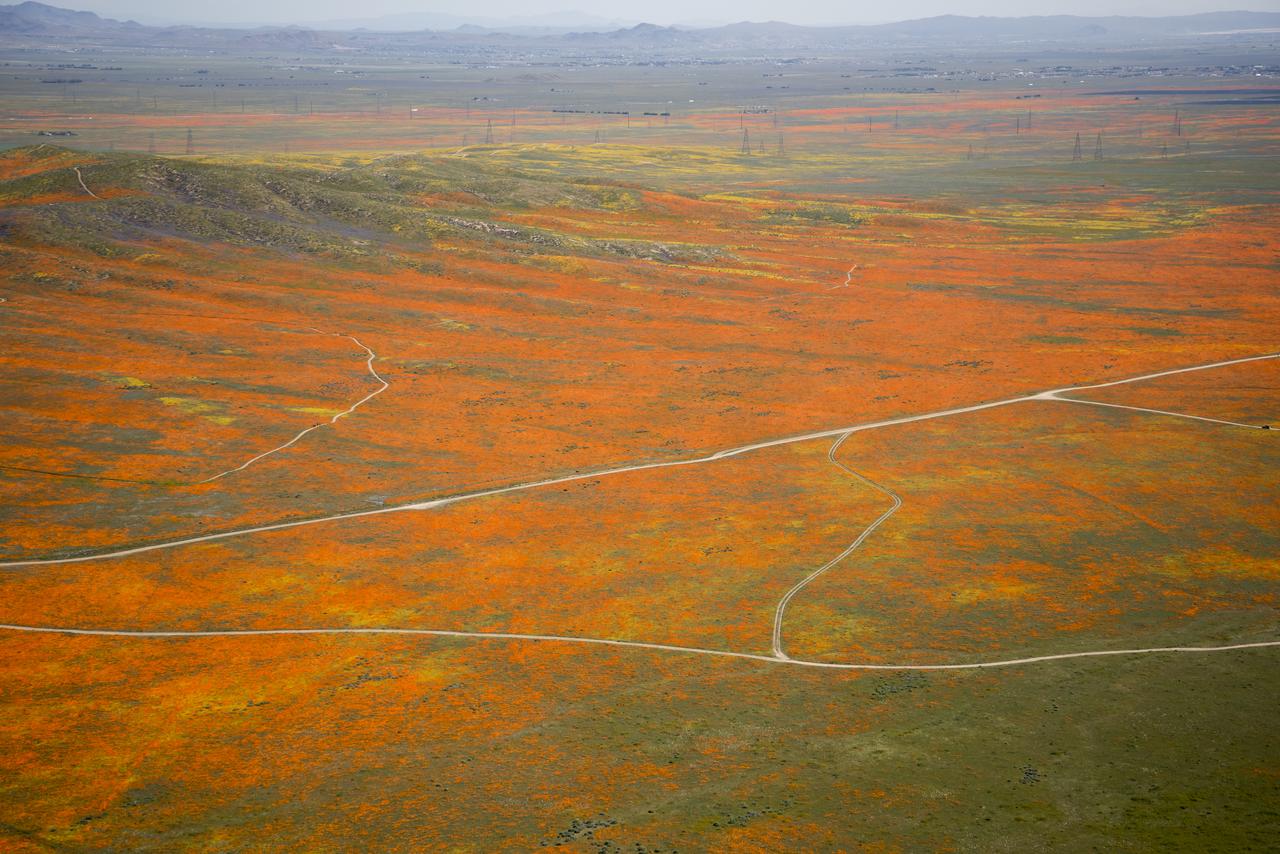
View from a NASA aircraft, TG-14, over the Superbloom of yellow wildflowers and orange poppies from the Antelope Valley in Southern California, Poppy Reserve and solar panels are in the background.
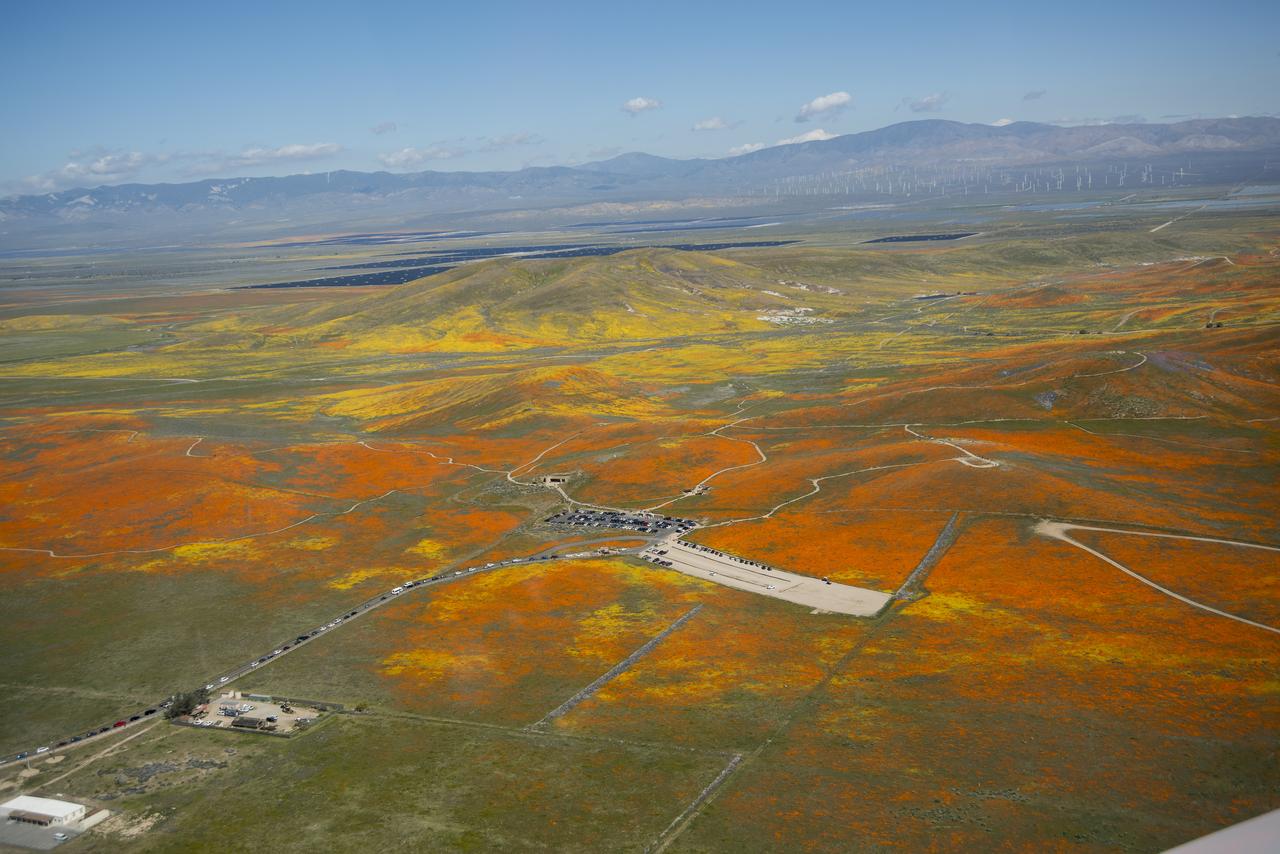
View from a NASA aircraft, TG-14, over the Superbloom of wildflowers and poppies from the Antelope Valley in Southern California. The Poppy Reserve is in the foreground and solar panels are in the background.
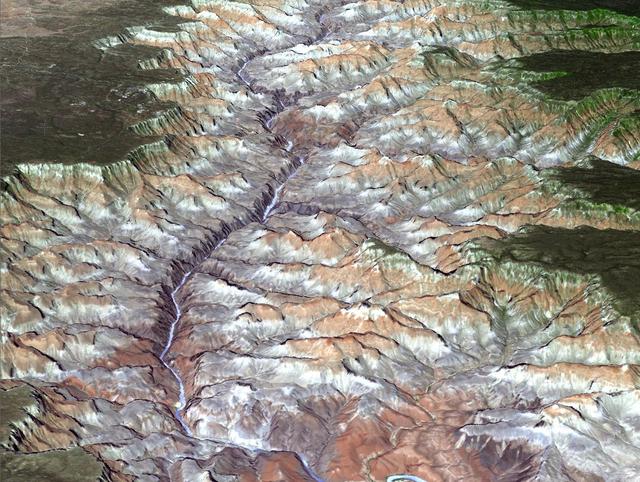
NASA Terra spacecraft provided this view of the eastern part of Grand Canyon National Park in northern Arizona in this image on July 14, 2011. This view looks to the west, with tourist facilities of Grand Canyon Village visible in the upper left.
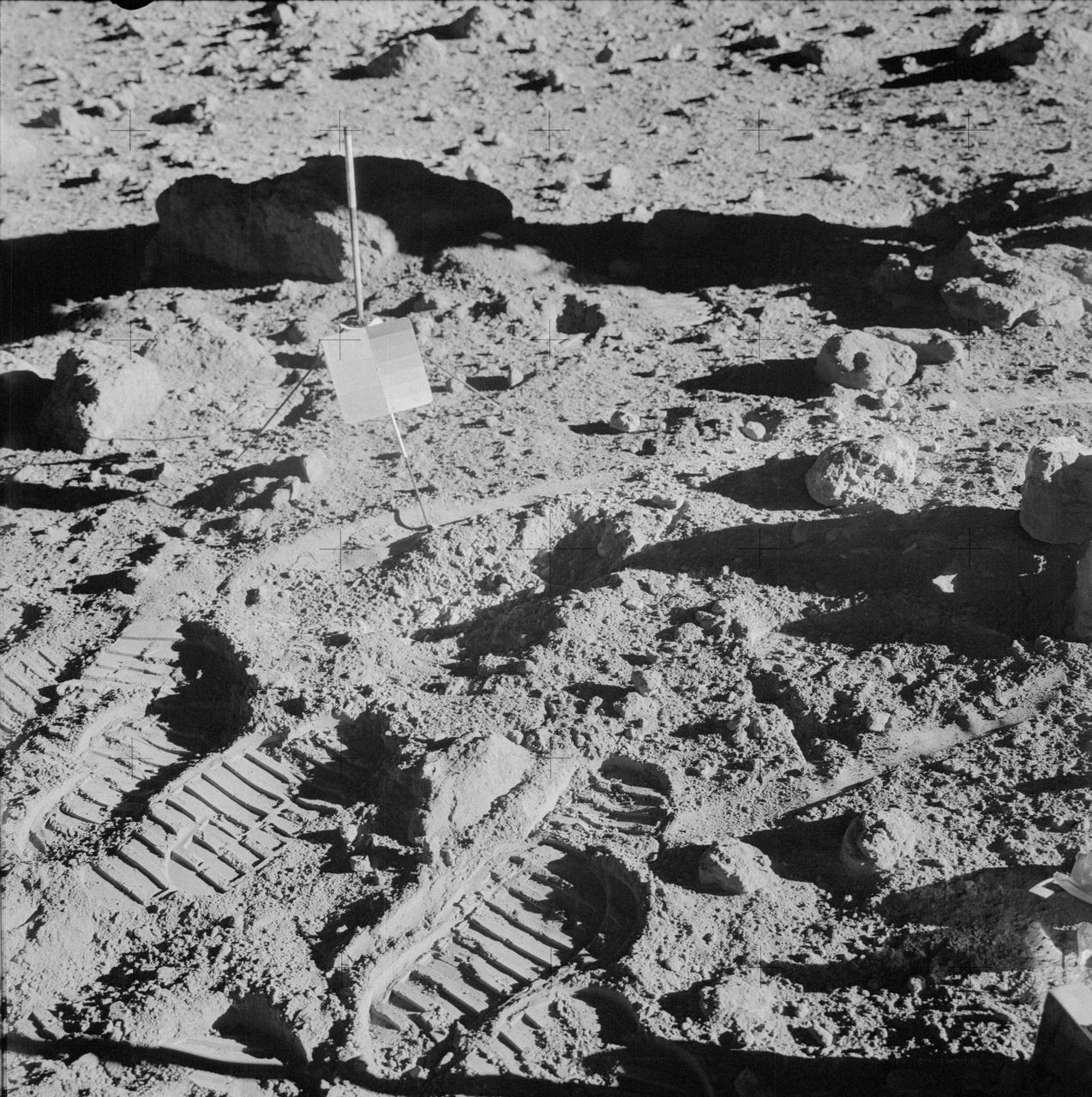
AS14-64-9127 (5-6 Feb. 1971) --- A close-up view of lunar soil, showing bootprints made by the Apollo 14 astronauts during extravehicular activity (EVA) on the lunar surface. Also visible are tracks made by the modularized equipment transporter (MET) and deployed gnomon. Astronauts Alan B. Shepard Jr., commander, and Edgar D. Mitchell, lunar module pilot, descended in the Apollo 14 Lunar Module (LM) to explore the moon, while astronaut Stuart A. Roosa, command module pilot, remained with the Command and Service Modules (CSM) in lunar orbit.
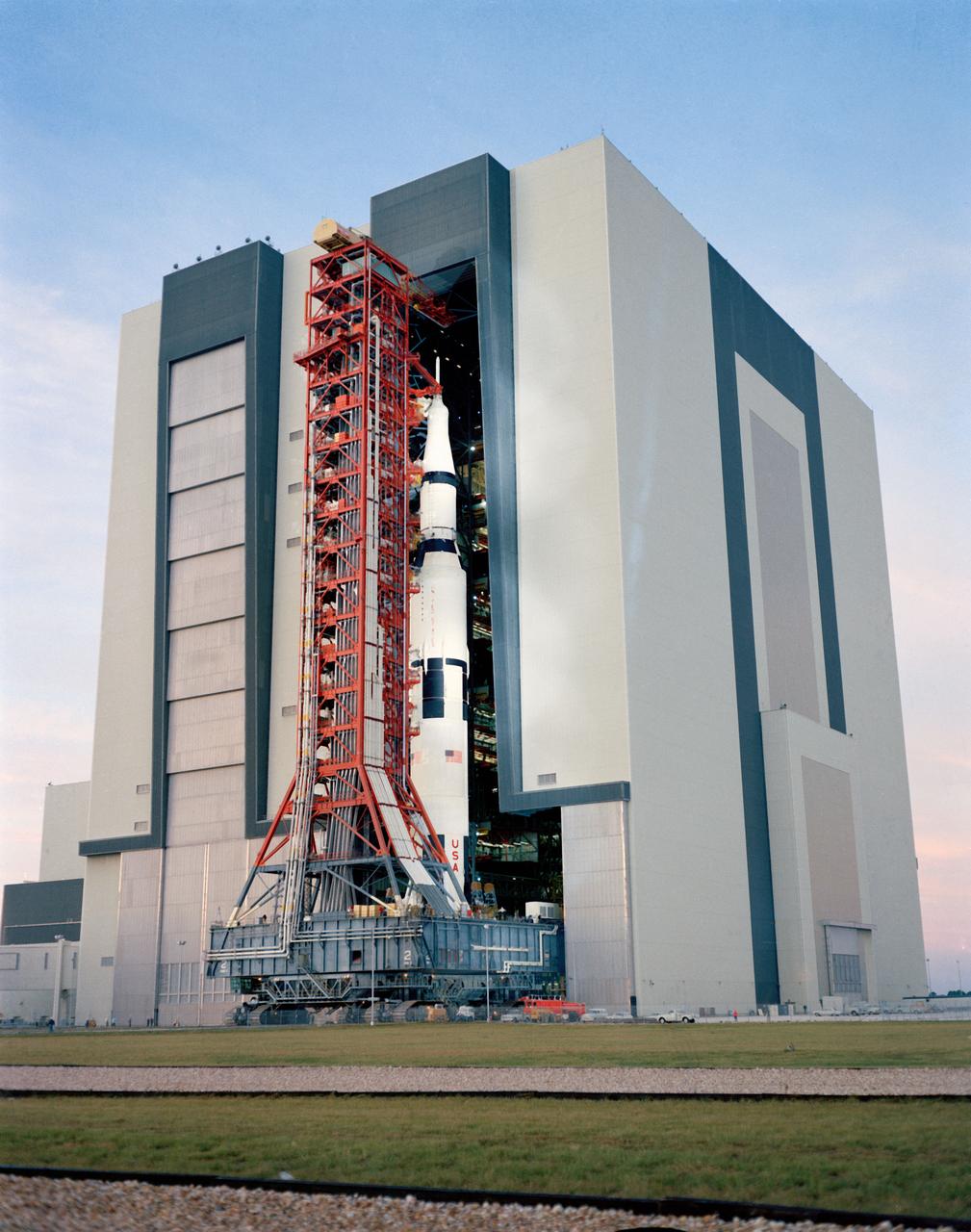
S70-54121 (9 Nov. 1970) --- A ground level view at Launch Complex 39, Kennedy Space Center (KSC), showing the Apollo 14 (Spacecraft 110/Lunar Module 8/Saturn 509) space vehicle leaving the Vehicle Assembly Building (VAB). The Saturn V stack and its mobile launch tower, atop a huge crawler-transporter, were rolled out to Pad A. The Apollo 14 crewmen will be astronauts Alan B. Shepard Jr., commander; Stuart A. Roosa, command module pilot; and Edgar D. Mitchell, lunar module pilot.
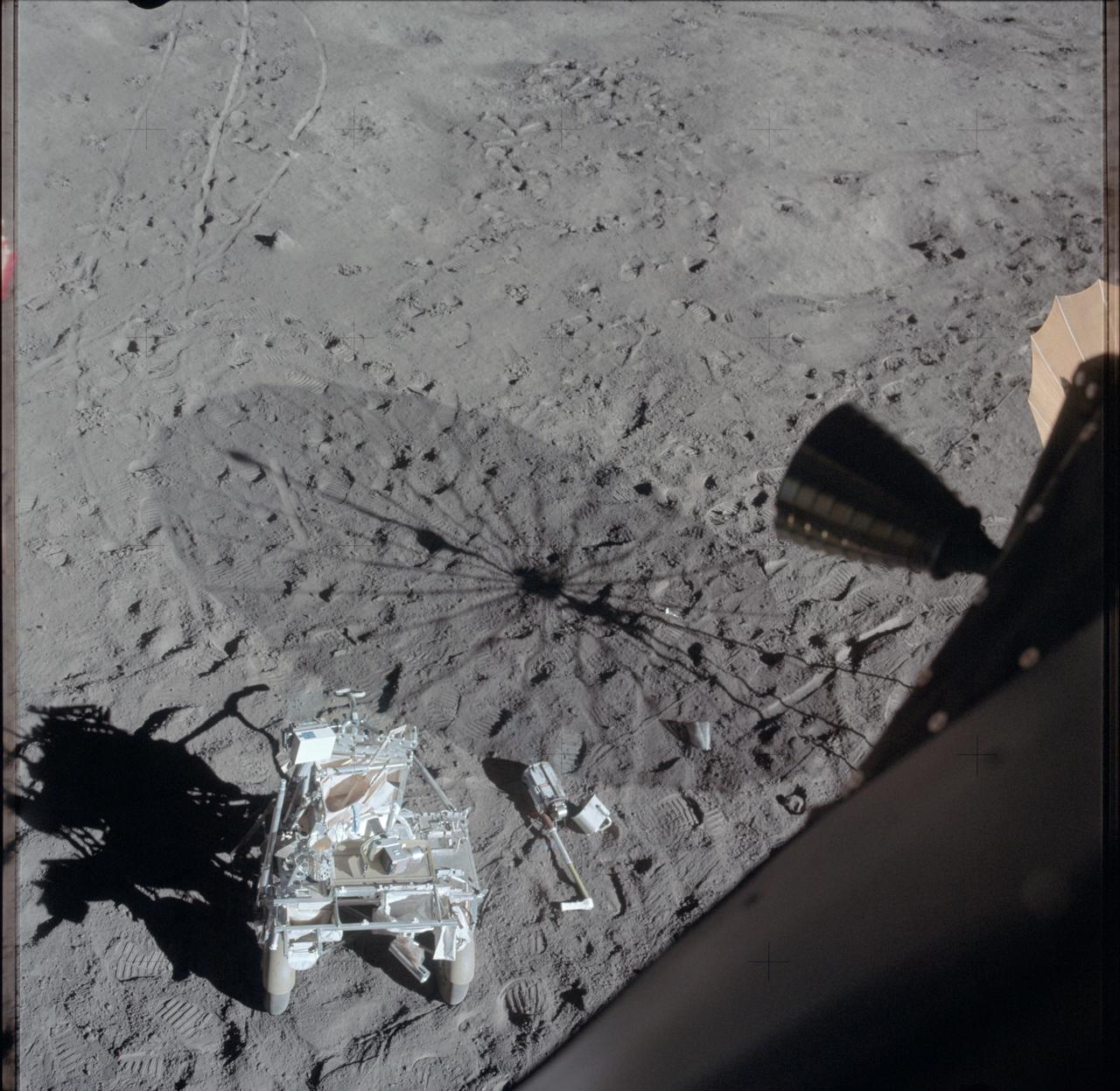
AS14-66-9340 (6 Feb. 1971) --- A view from inside the Lunar Module (LM) following the second Apollo 14 extravehicular activity (EVA). At the left foreground is the modularized equipment transporter (MET). Tracks made by the two-wheeled "Rickshaw"-type cart can be seen in the left background. The Apollo 35mm stereo close-up camera lies next to the MET, near a huge shadow of the erectable S-Band antenna. The area is largely covered with bootprints made by astronauts Alan B. Shepard Jr., commander, and Edgar D. Mitchell, lunar module pilot. While the pair explored the moon, astronaut Stuart A. Roosa, command module pilot, remained with the Command and Service Modules (CSM) in lunar orbit.

AS14-66-9305 (5 Feb. 1971) --- A front view of the Apollo 14 Lunar Module (LM), which reflects a circular flare caused by the brilliant sun, as seen by the two moon-exploring crew men (out of frame) of the Apollo 14 lunar landing mission during their first extravehicular activity (EVA). The unusual ball of light was said by the astronauts to have a jewel-like appearance. In the left background Cone Crater can be seen. In the left foreground are the erectable S-Band antenna and the United States flag. Astronauts Alan B. Shepard Jr., commander, and Edgar D. Mitchell, lunar module pilot, descended in the LM, while astronaut Stuart A. Roosa, command module pilot, remained with the Command and Service Modules (CSM) in lunar orbit.
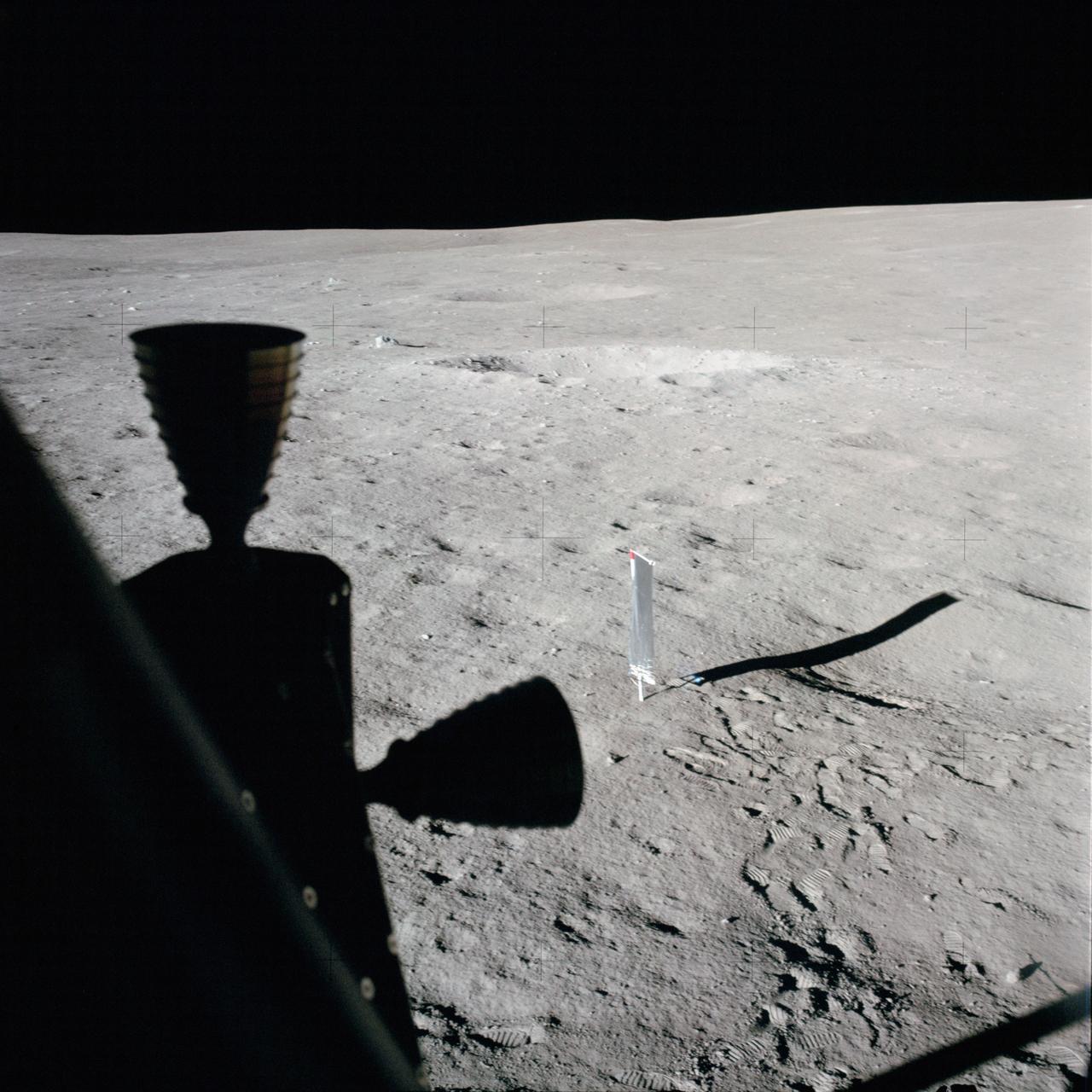
AS14-66-9322 (5-6 Feb. 1971) --- This photograph taken through a window of the Apollo 14 Lunar Module (LM), on the moon, shows an excellent view of the nearby terrain. In the center background is the deployed solar wind composition (SWC) experiment. Two LM RCS thrusters are silhouetted in the left foreground. While astronauts Alan B. Shepard Jr., commander; and Edgar D. Mitchell, lunar module pilot; descended in the LM, astronaut Stuart A. Roosa, command module pilot, remained with the Command and Service Modules (CSM) in lunar orbit.

This 3D scene shows the view from where NASA Mars Exploration Rover Opportunity first arrived on the rim of Endeavour crater, an impact crater about 14 miles 22 kilometers in diameter. You will need 3D glasses to view this image.
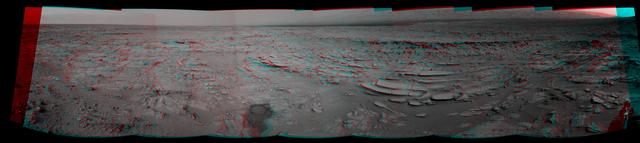
This stereo panoramic view combines 14 images taken by NASA Mars rover Curiosity during the mission 120th Martian day, or sol Dec. 7, 2012. You need 3D glasses.
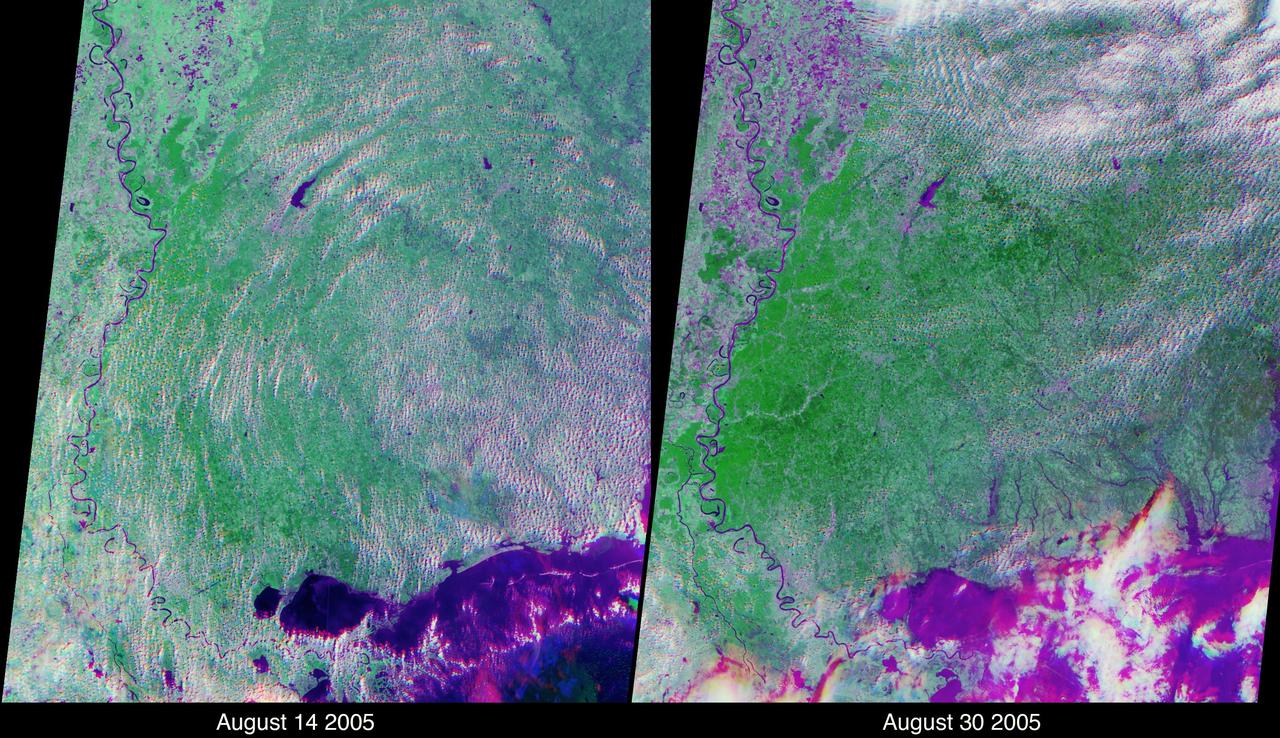
These views of the Louisiana and Mississippi regions were acquired before and one day after Katrina made landfall along the Gulf of Mexico coast. The images were acquired by NASA Terra spacecraft on August 14 and August 30, 2005.
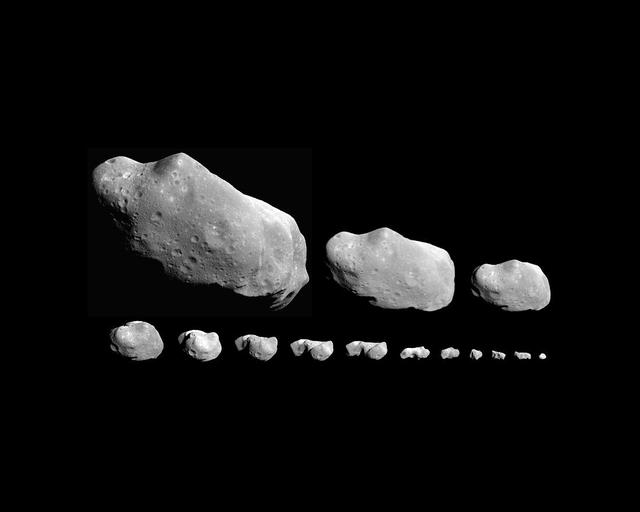
This montage of 14 images the time order is right to left, bottom to top shows asterpod Ida as it appeared in the field of view of NASA Galileo camera on August 28, 1993. http://photojournal.jpl.nasa.gov/catalog/PIA00070
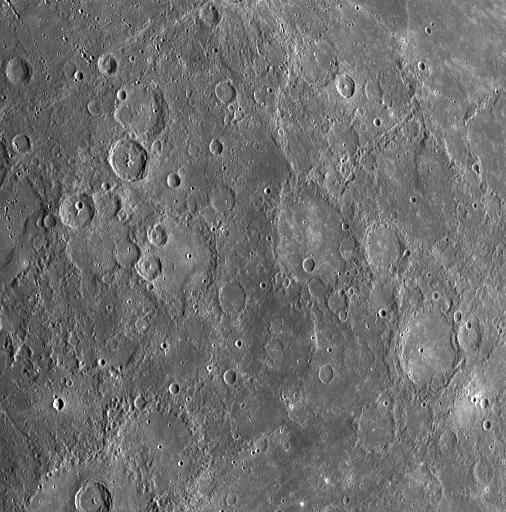
During NASA MESSENGER spacecraft flyby of Mercury on January 14, 2008, part of the planned sequence of observations included taking images of the same portion of Mercury surface from five different viewing angles.
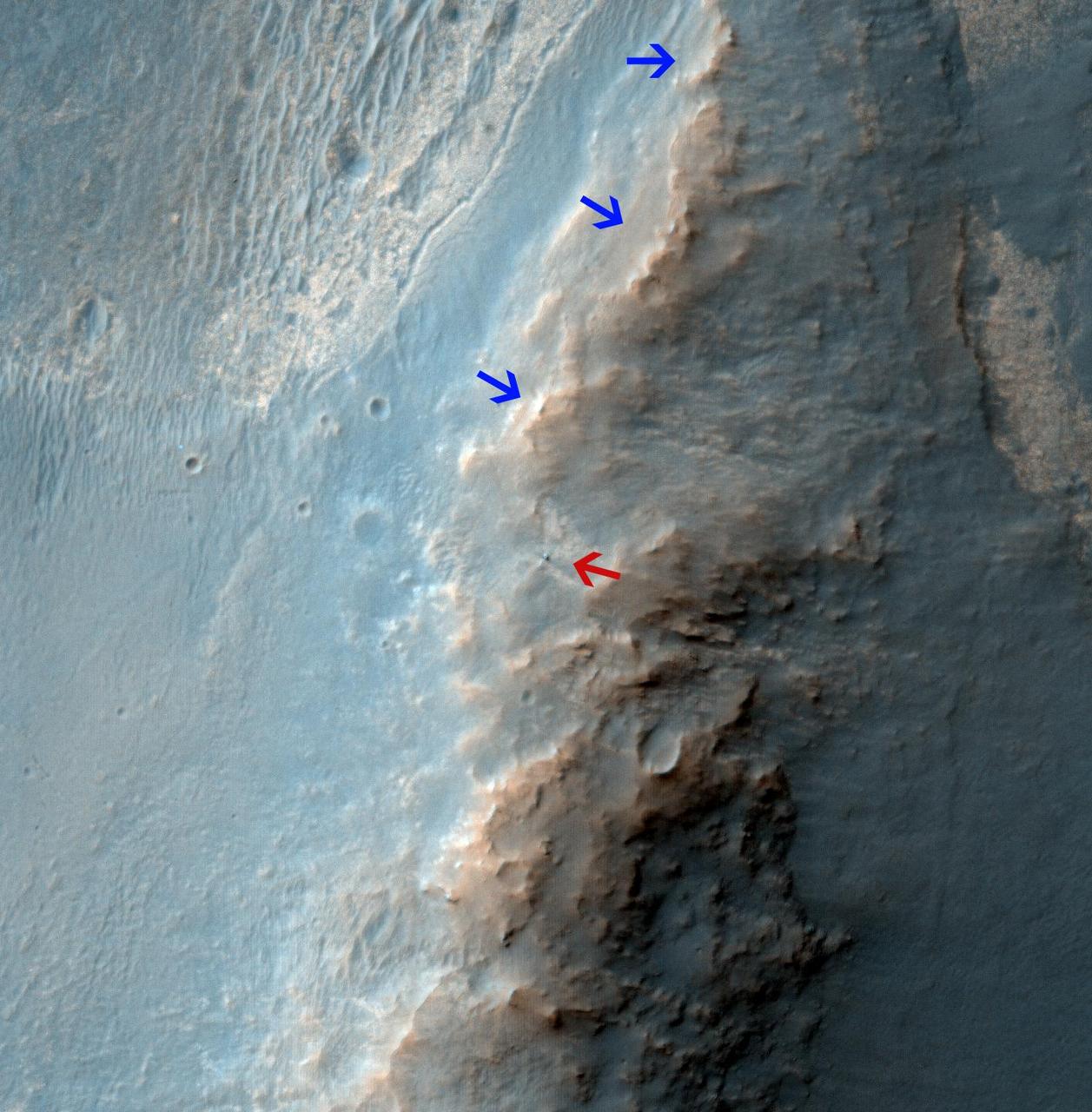
NASA Mars Reconnaissance Orbiter caught this view of NASA Mars Exploration Rover Opportunity on Feb. 14, 2014. The red arrow points to Opportunity at the center of the image. Blue arrows point to tracks left by the rover in October 2013.
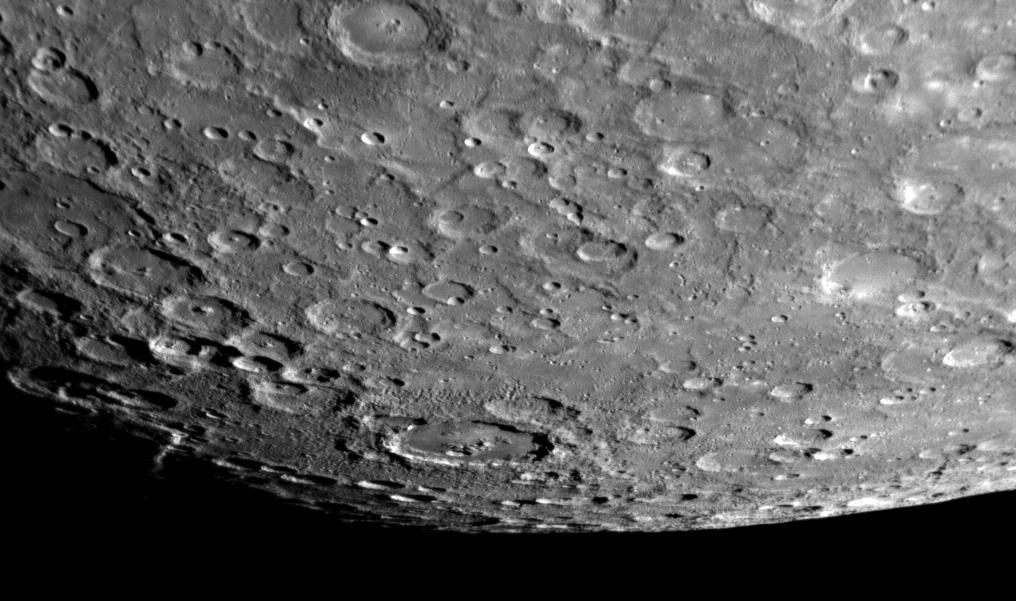
On January 14, 2008, NASA MESSENGER spacecraft passed 200 kilometers 124 miles above the surface of Mercury and snapped the first pictures of a side of Mercury not previously seen, with a view looking toward Mercury south pole.
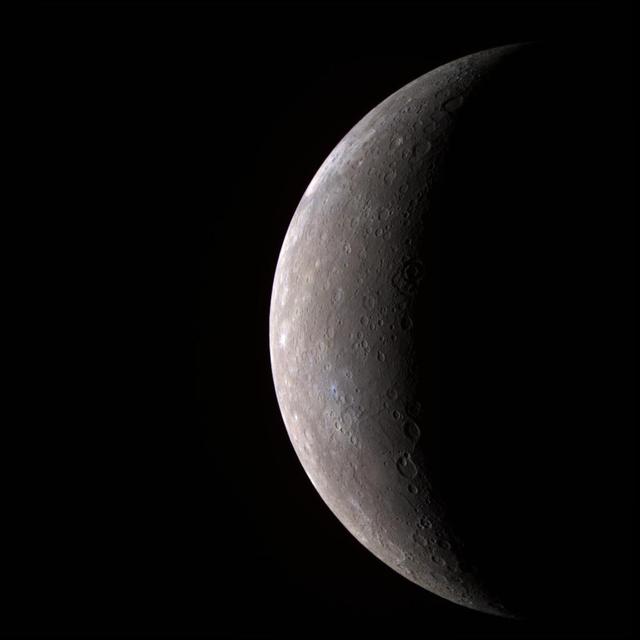
This visible-infrared image shows an incoming view of Mercury, about 80 minutes before NASA MESSENGER spacecraft closest pass of the planet on January 14, 2008, from a distance of about 27,000 kilometers 17,000 miles.
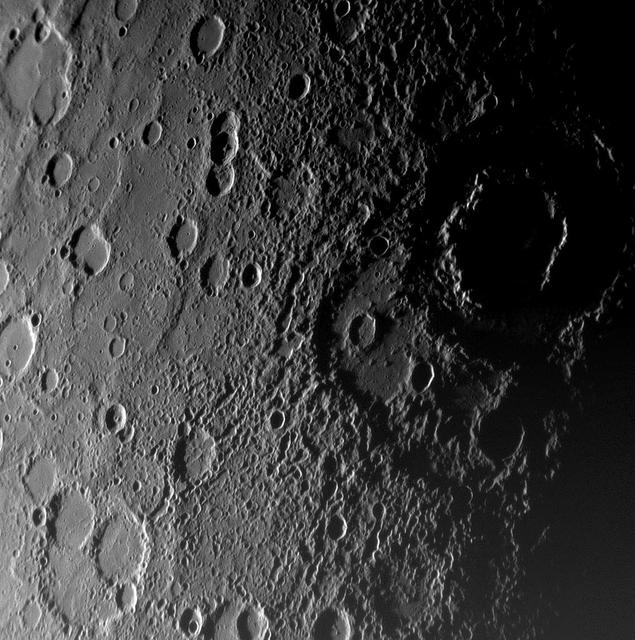
As NASA MESSENGER approached Mercury on January 14, 2008, the spacecraft Narrow-Angle Camera on the Mercury Dual Imaging System MDIS instrument captured this view of the planet rugged, cratered landscape illuminated obliquely by the Sun.
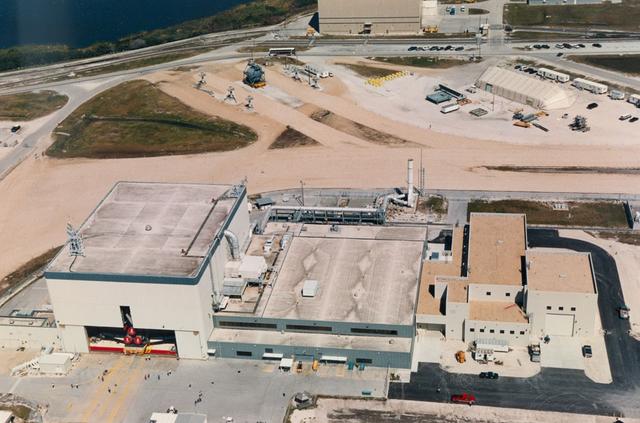
Aerial view of OPF-3, March 14, 1998

This image mosaic shows four different views of comet Tempel 1 as seen by NASA Stardust spacecraft as it flew by on Feb. 14, 2011. The images progress in time beginning at upper left, upper right, to lower left, then lower right.
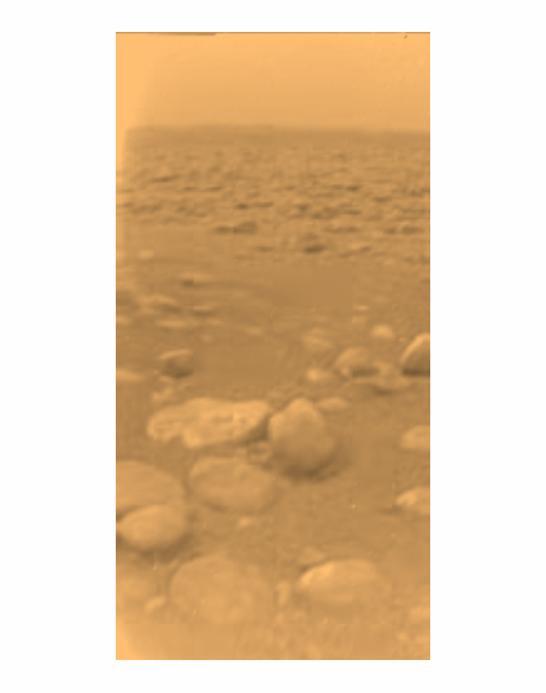
This image was returned on Jan 14, 2005, by the European Space Agency Huygens probe during its successful descent to land on Titan. This colored view, following processing to add reflection spectra data, gives a better indication of the actual color.

NASA's New Horizons spacecraft captured this high-resolution enhanced color view of Pluto on July 14, 2015. The image combines blue, red and infrared images taken by the Ralph/Multispectral Visual Imaging Camera (MVIC). Pluto's surface sports a remarkable range of subtle colors, enhanced in this view to a rainbow of pale blues, yellows, oranges, and deep reds. Many landforms have their own distinct colors, telling a complex geological and climatological story that scientists have only just begun to decode. The image resolves details and colors on scales as small as 0.8 miles (1.3 kilometers). http://photojournal.jpl.nasa.gov/catalog/PIA19952
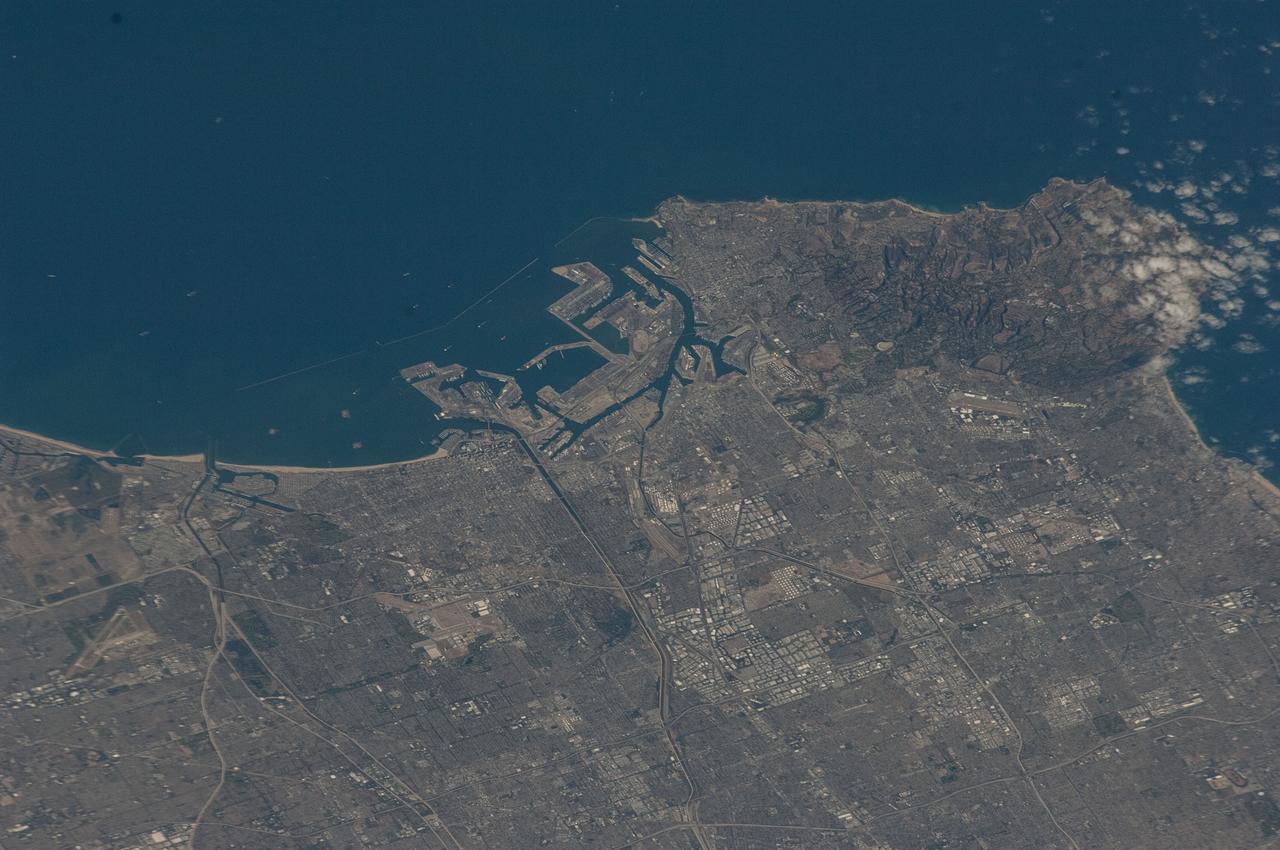
ISS040-E-011511 (14 June 2014) --- One of the Expedition 40 crew members aboard the International Space Station used a 400mm lens to get this detailed view of Los Angeles basin on June 14.
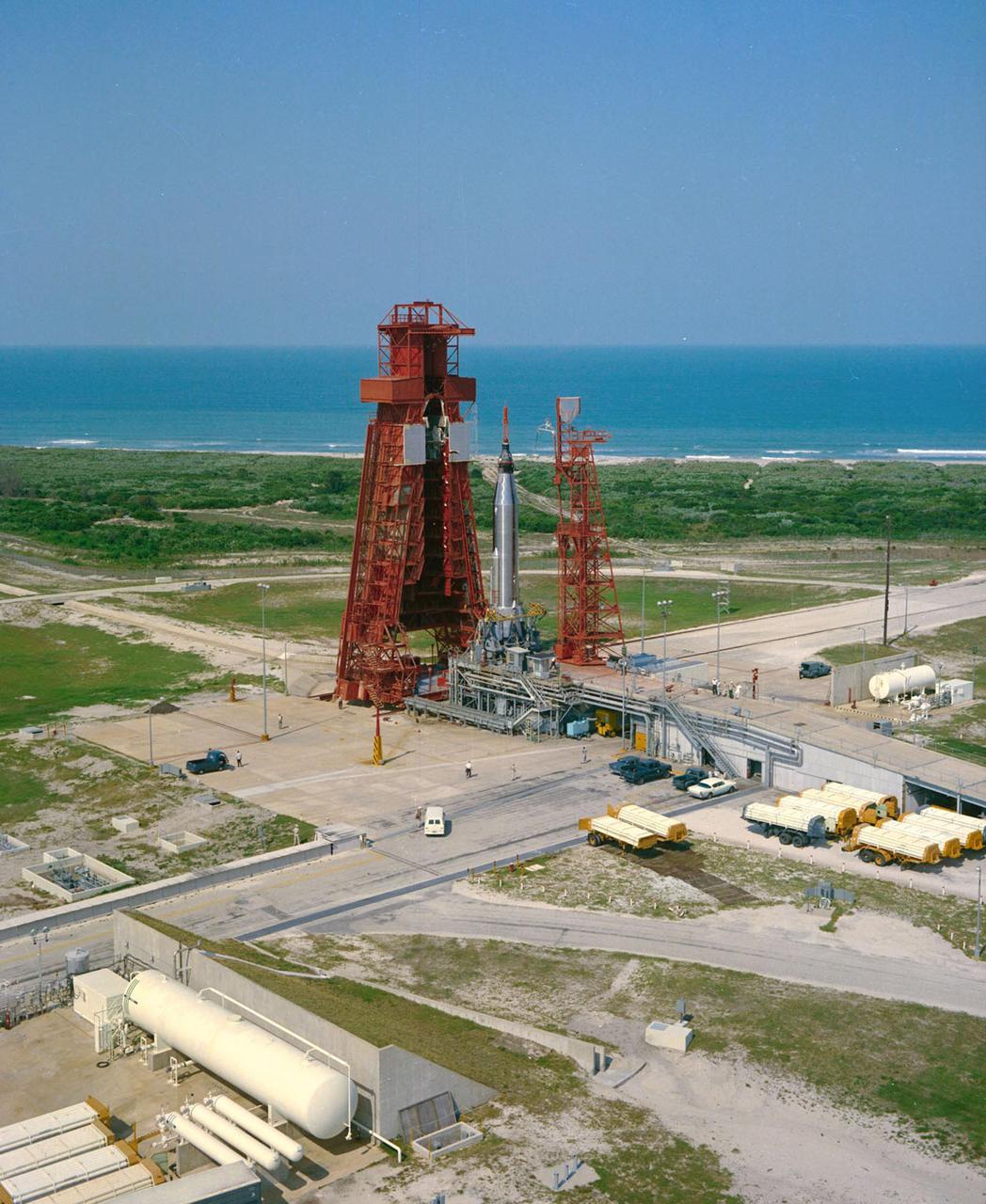
KENNEDY SPACE CENTER, FLA. -- Aerial view of Launch Complex 14. Mercury-Atlas 9 (MA-9), visible on Pad 14, is scheduled to carry astronaut Gordon Cooper for the fourth manned orbital mission.

iss056e033143 (June 25, 2018) --- A view during installation the NanoRacks Cubesat Deployer-14 (NRCSD-14) on the Multipurpose Experiment Platform inside the Japanese Kibo laboratory module. The NRCSD-14 was then placed in the Kibo airlock and moved outside of the space station to deploy a variety of cubesats into Earth orbit.
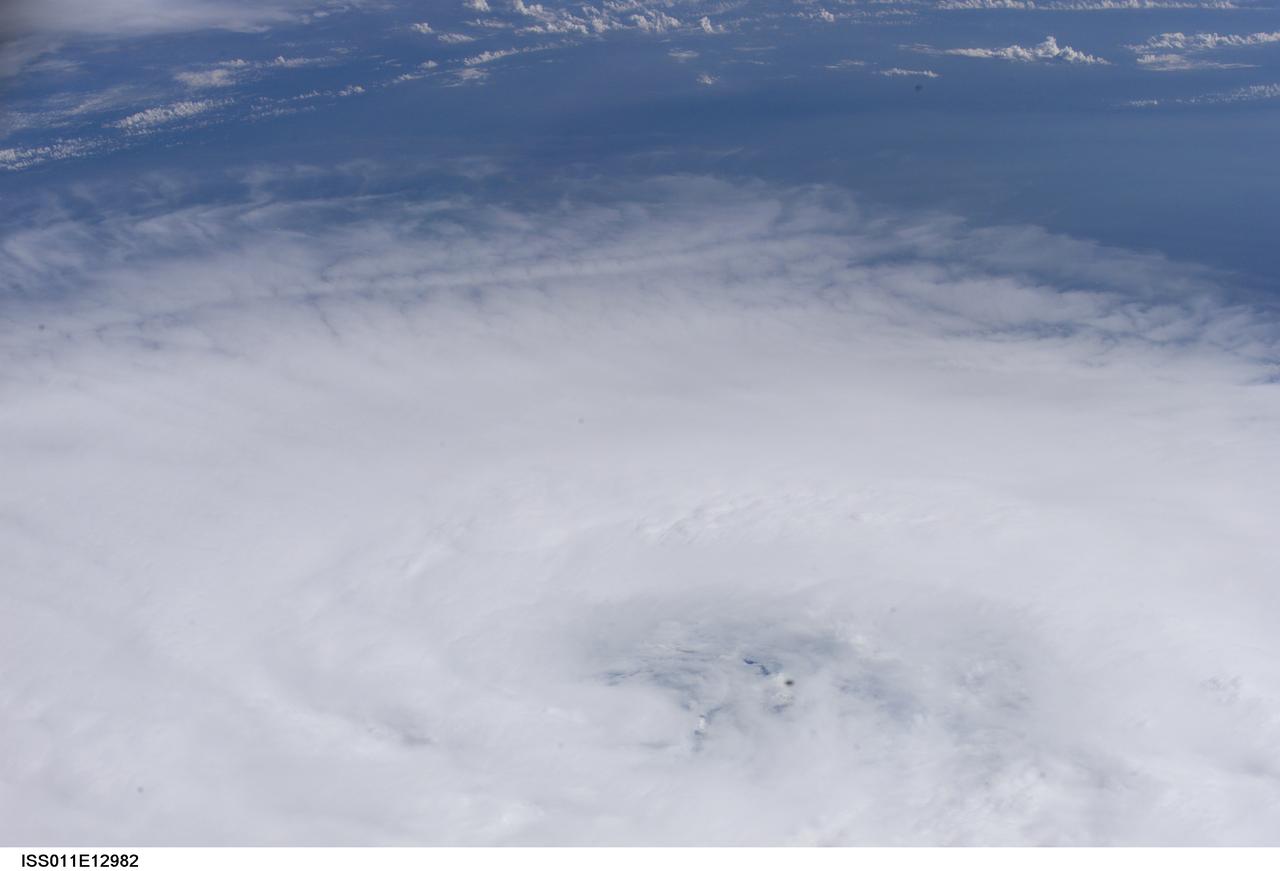
ISS011-E-12982 (14 September 2005, 19:14:09 GMT) --- This high oblique view of Hurricane Ophelia was taken on the afternoon of September 14 from the International Space Station. The ill-defined eye is located at bottom center of the frame. The slow-moving storm is off the coast of the Carolinas.
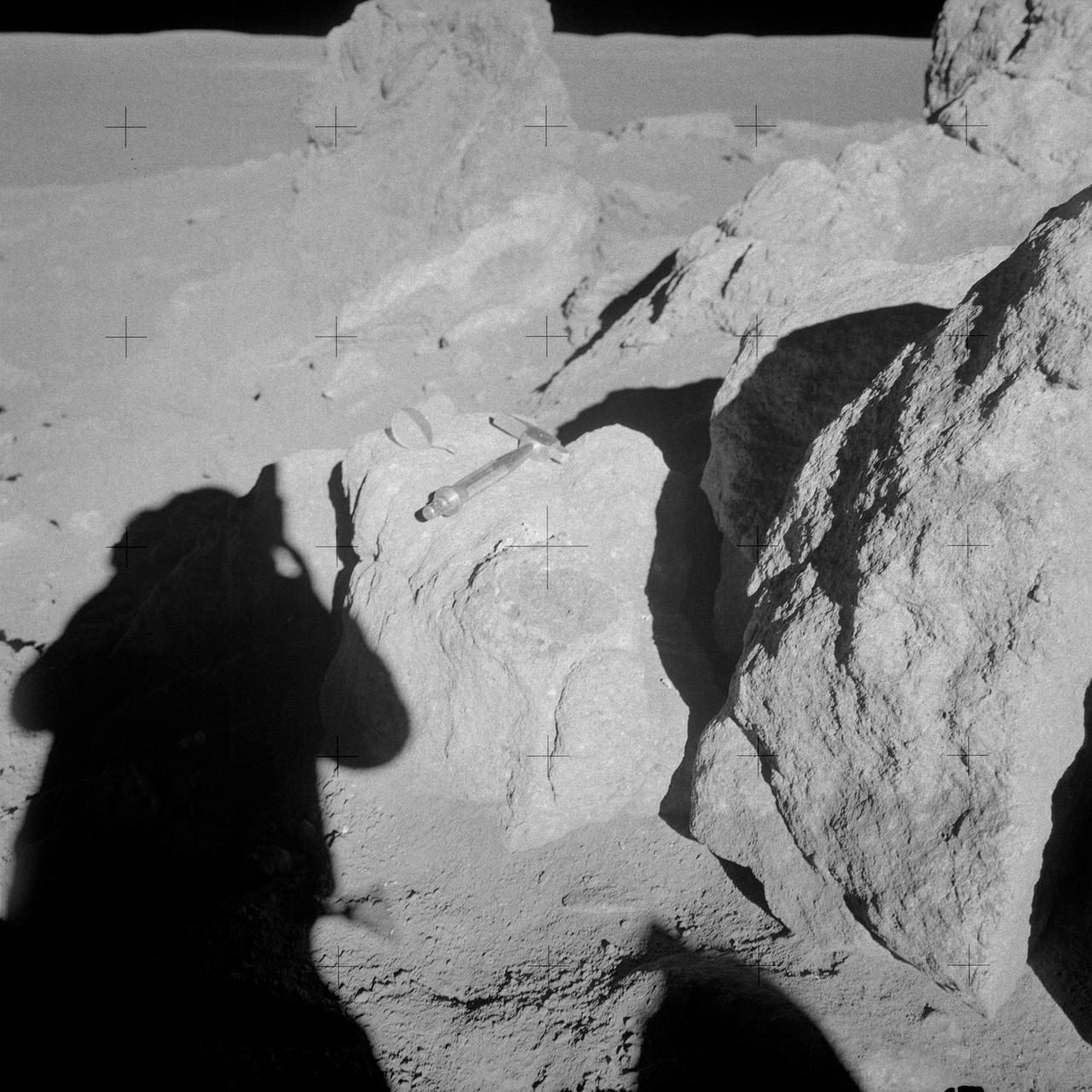
AS14-68-9453 (6 Feb. 1971) --- Astronaut Edgar D. Mitchell, lunar module pilot, whose shadow is in the foreground, photographs a group of large boulders near the rim of Cone Crater. An interesting feature is the white and brown rock in the boulder. Mitchell removed a sample where the hammer is lying. While astronauts Alan B. Shepard Jr., commander, and Mitchell descended in the Lunar Module (LM) "Antares" to explore the Fra Mauro region of the moon, astronaut Stuart A. Roosa, command module pilot, remained with the Command and Service Modules (CSM) "Kitty Hawk" in lunar orbit.
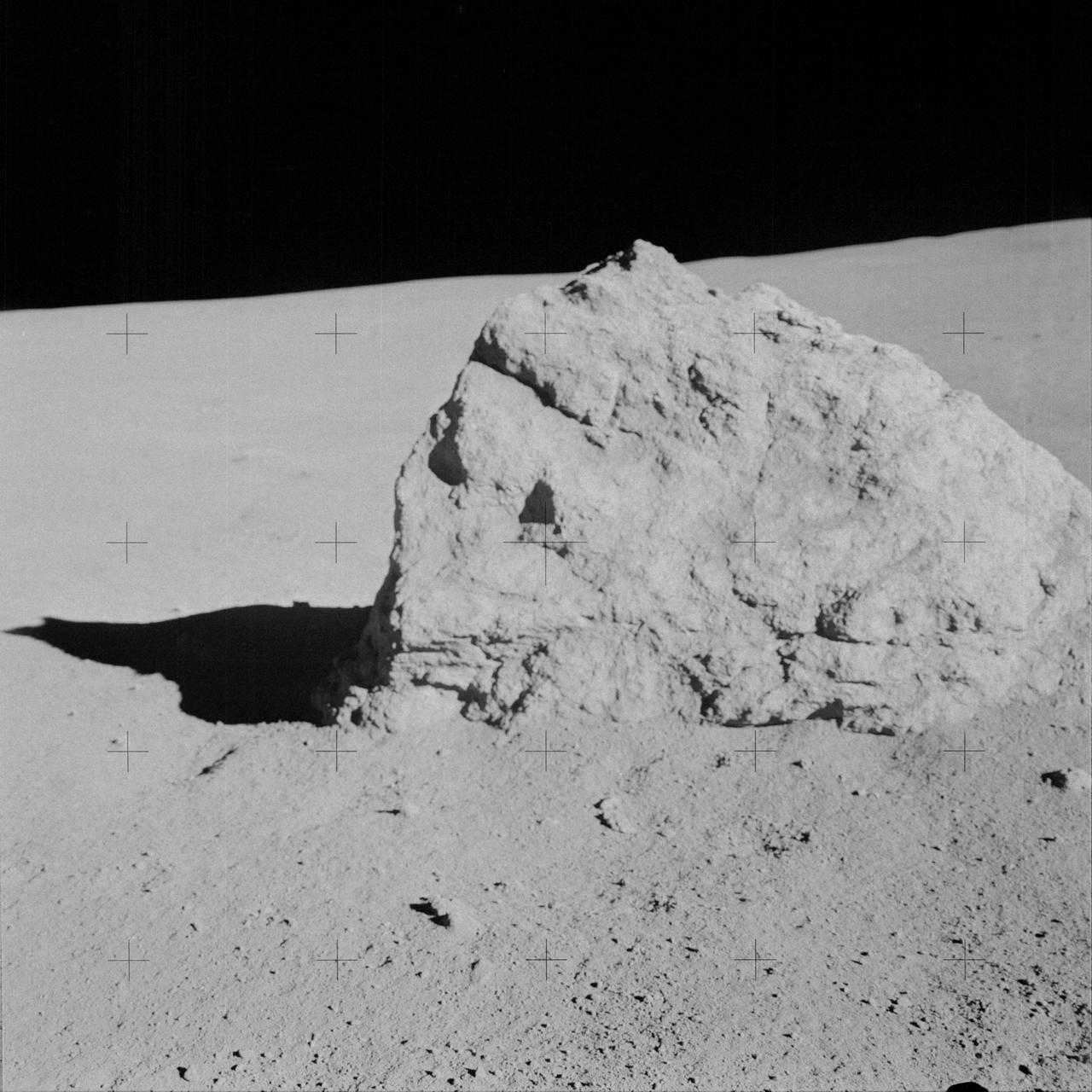
AS14-64-9135 (6 Feb. 1971) --- Astronaut Alan B. Shepard Jr., commander, took this close-up view of a large boulder, approximately five feet long, during the second extravehicular activity (EVA), on Feb. 6, 1971. Astronauts Shepard and Edgar D. Mitchell, lunar module pilot, descended in the Lunar Module (LM) to explore the moon, while astronaut Stuart A. Roosa, command module pilot, remained with the Command and Service Modules (CSM) in lunar orbit.
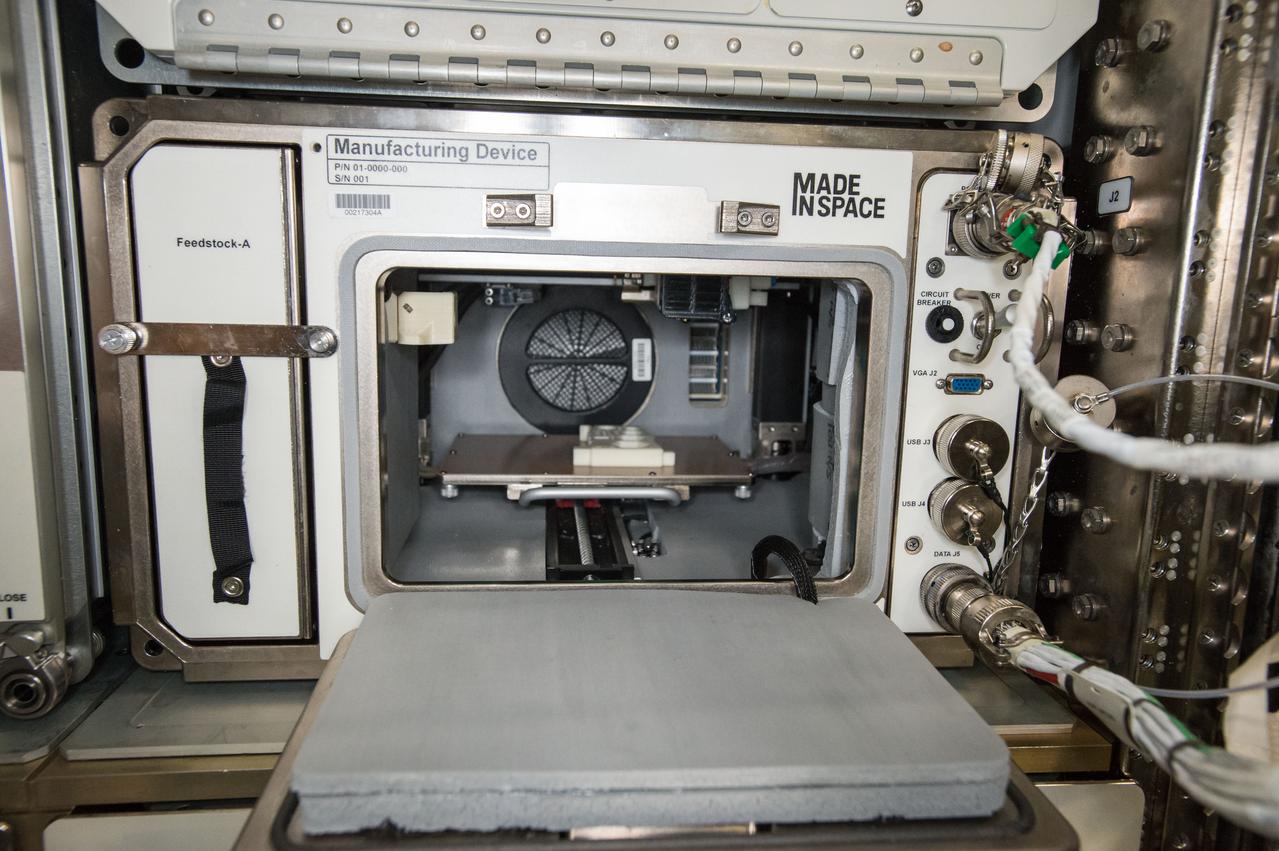
iss047e152500 (6/14/2016) --- A view of the Additive Manufacturing Facility (AMF) aboard the International Space Station (ISS).
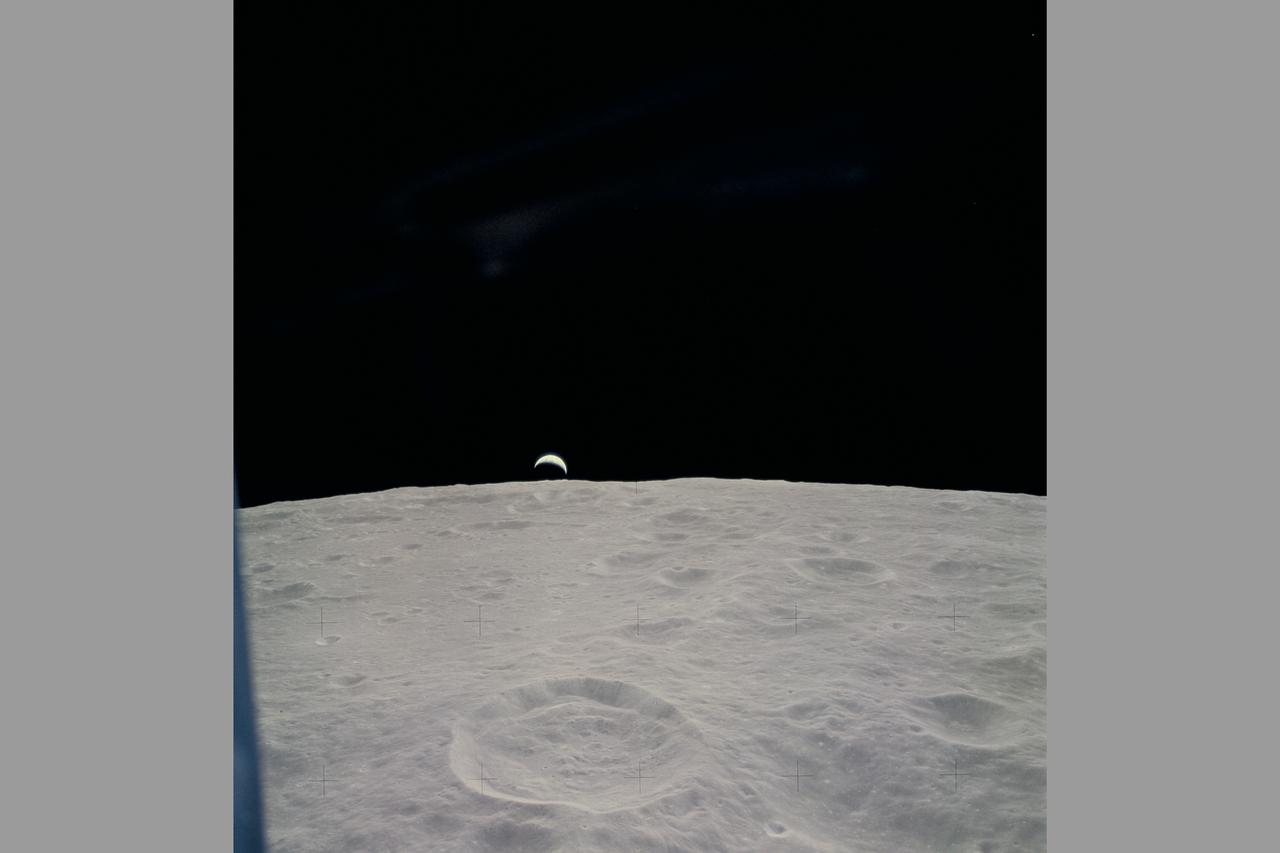
Photo by Apollo Crew The Apollo 14 crew catch a cresent view of the Earth as it raises above the lunar horizon during one moon orbit
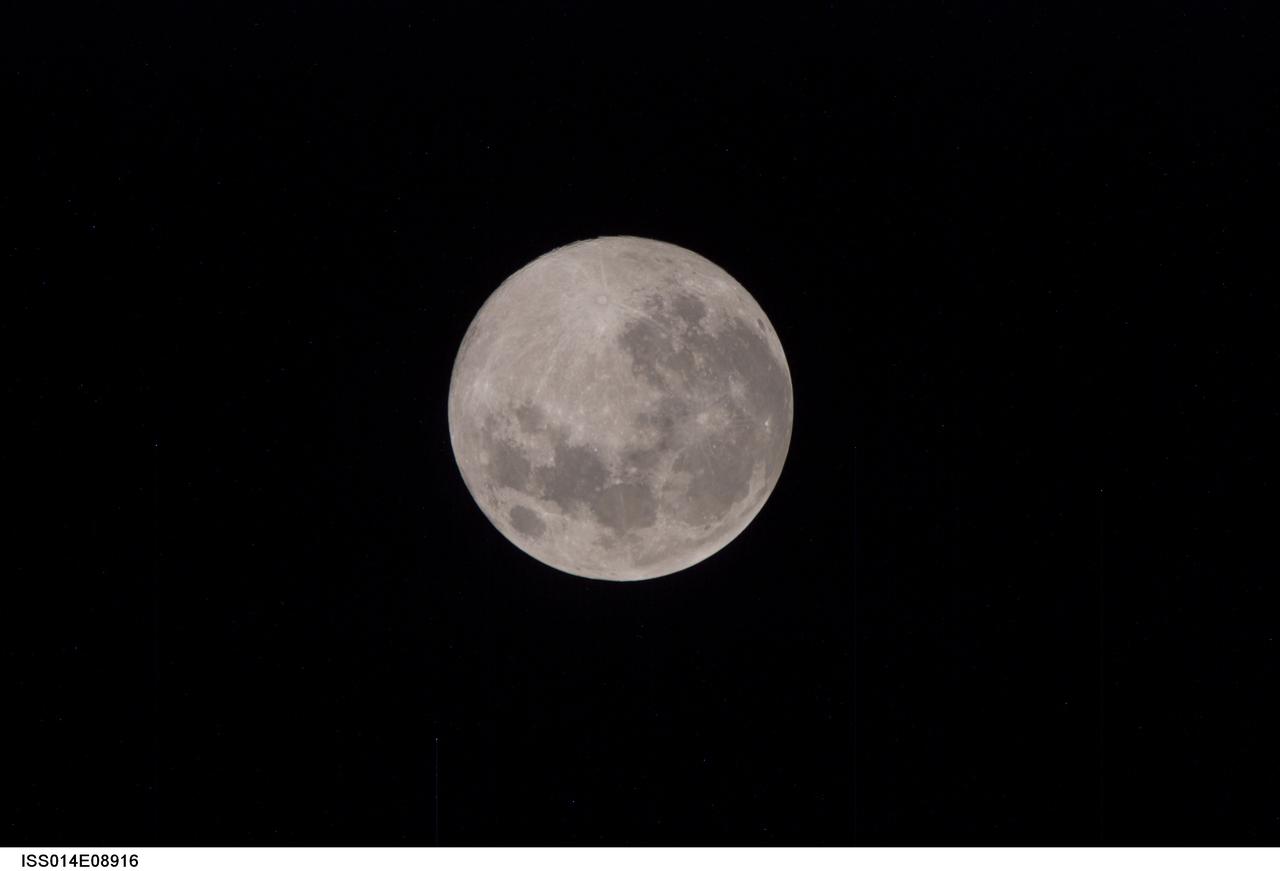
ISS014-E-08916 (4 Dec. 2006) --- This view of a full moon was photographed by an Expedition 14 crewmember onboard the International Space Station.
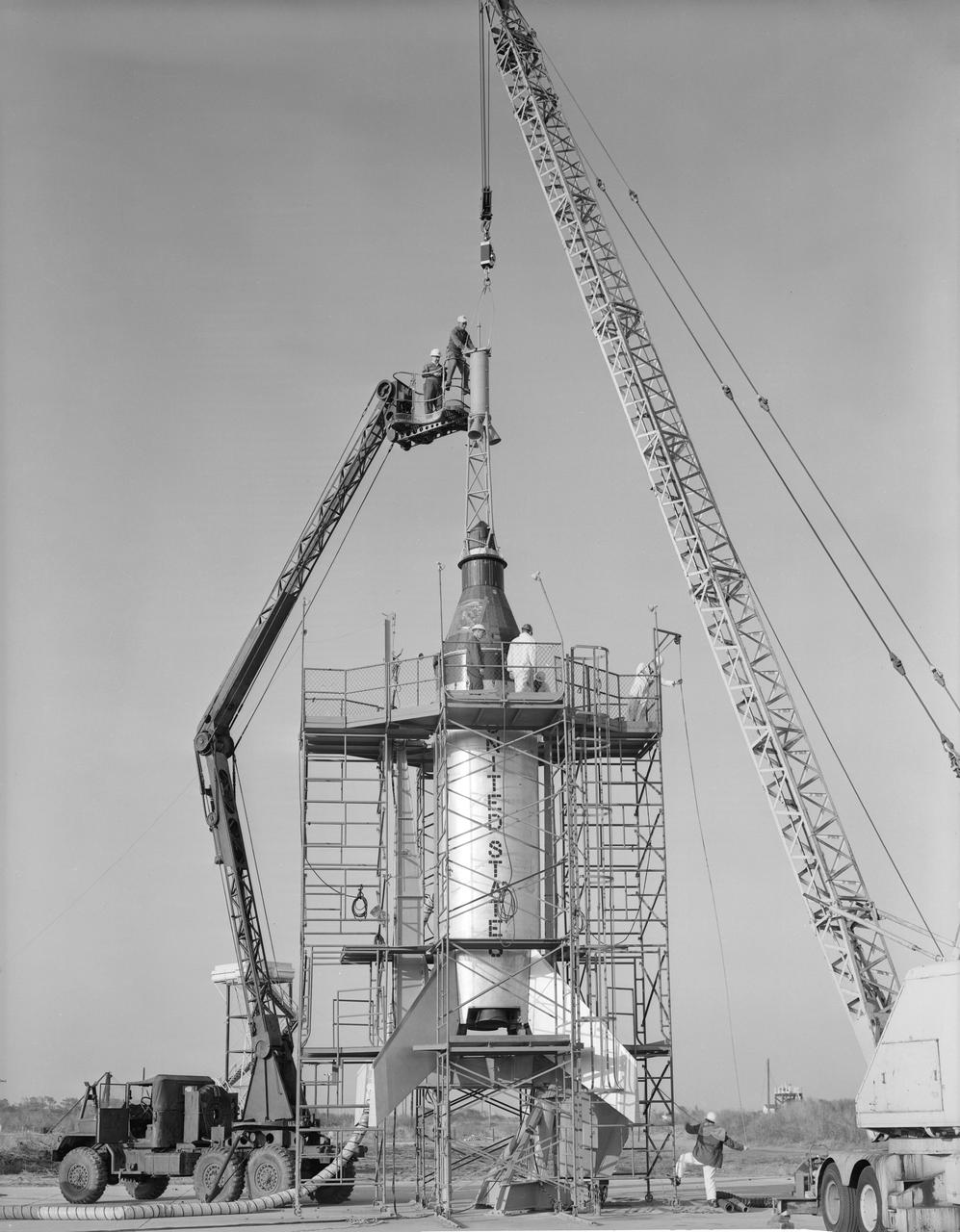
S61-01663 (23 April 1961) --- View of the mating of Little Joe-5B launch vehicle with Mercury capsule #14. Photo credit: NASA
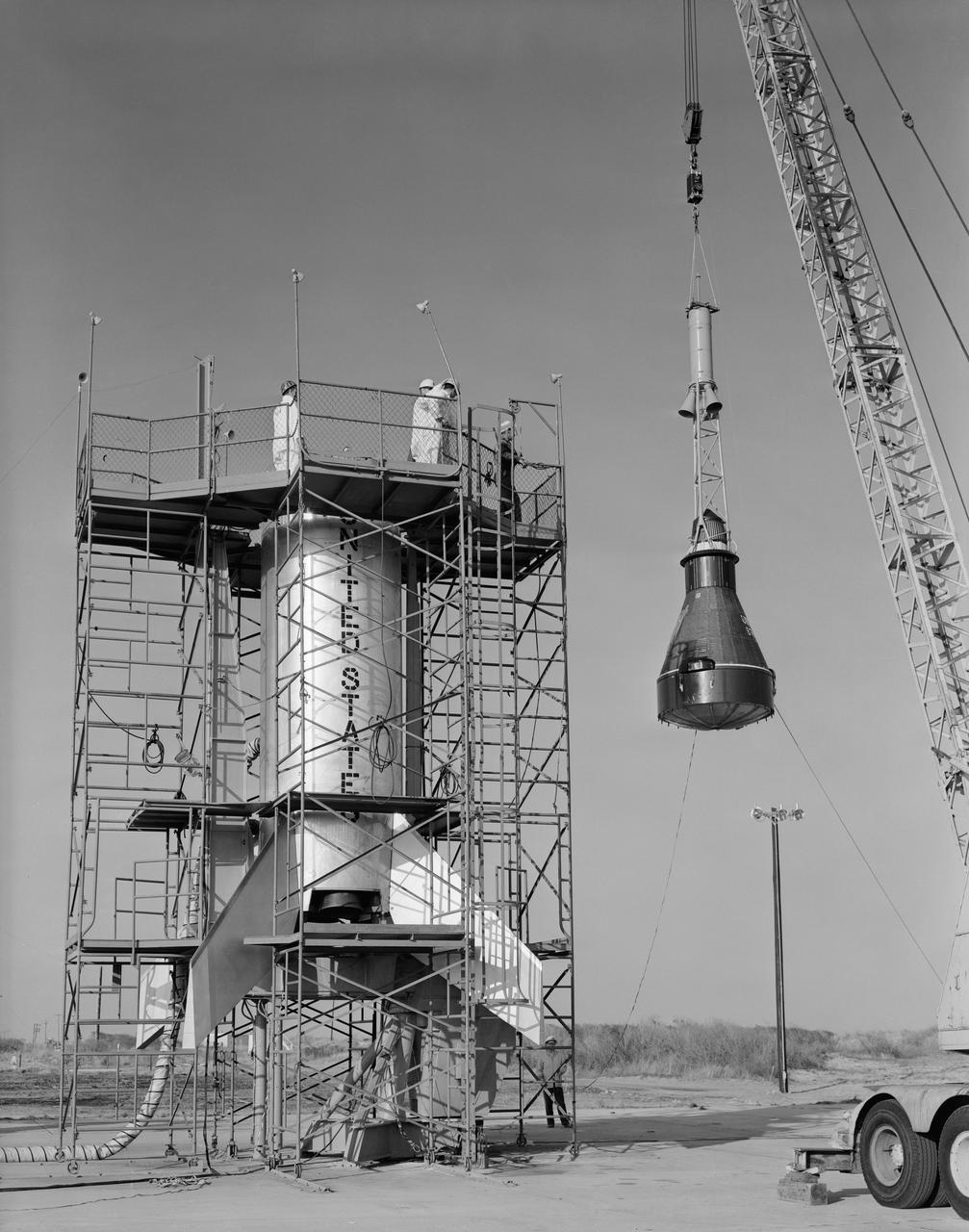
S61-01673 (23 April 1961) --- View of the mating of Little Joe-5B launch vehicle with Mercury capsule #14. Photo credit: NASA
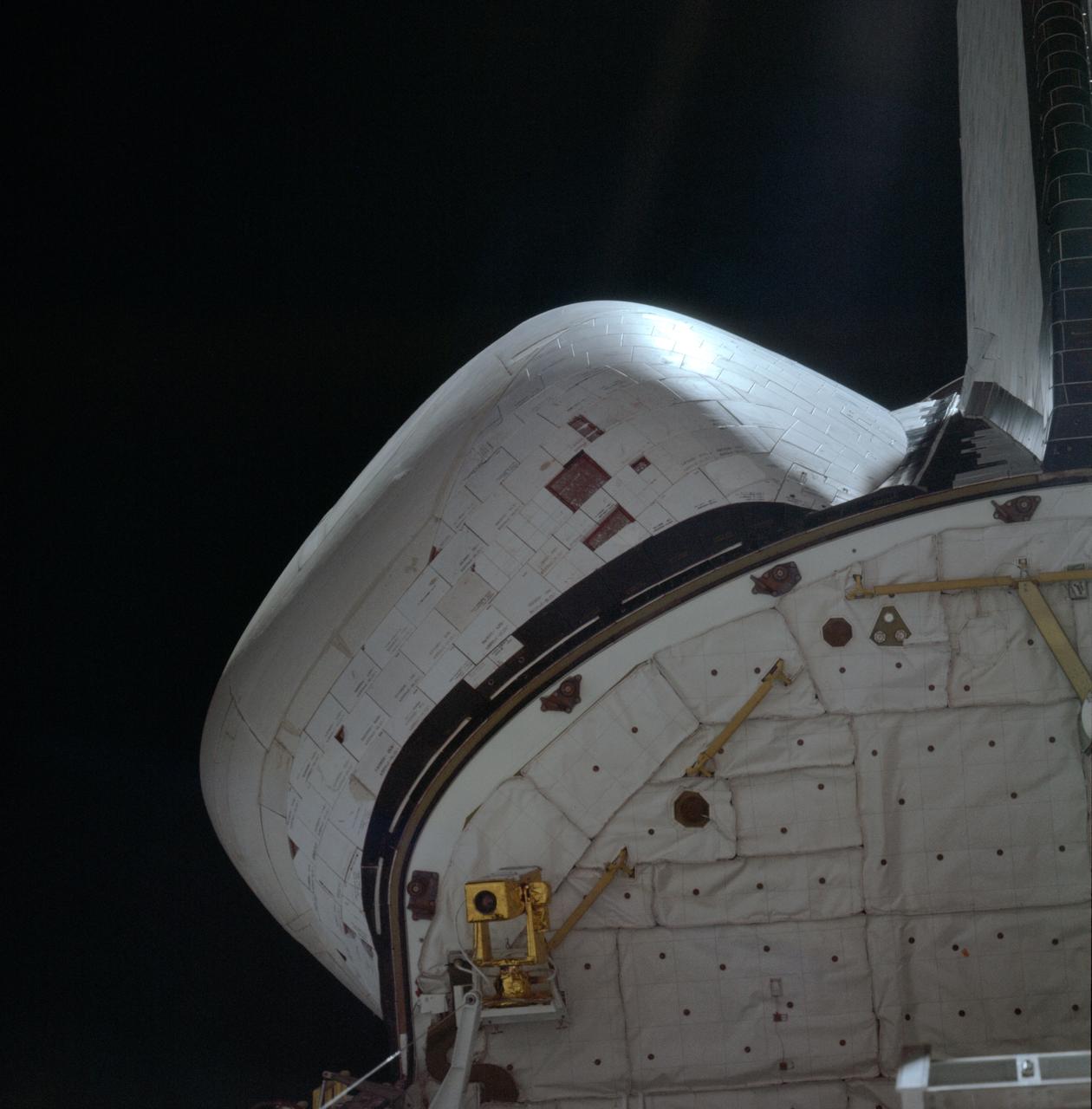
STS001-08-289 (12-14 April 1981) --- A 250mm Hasselblad view of the left OMS pod and missing tiles. Photo credit: NASA
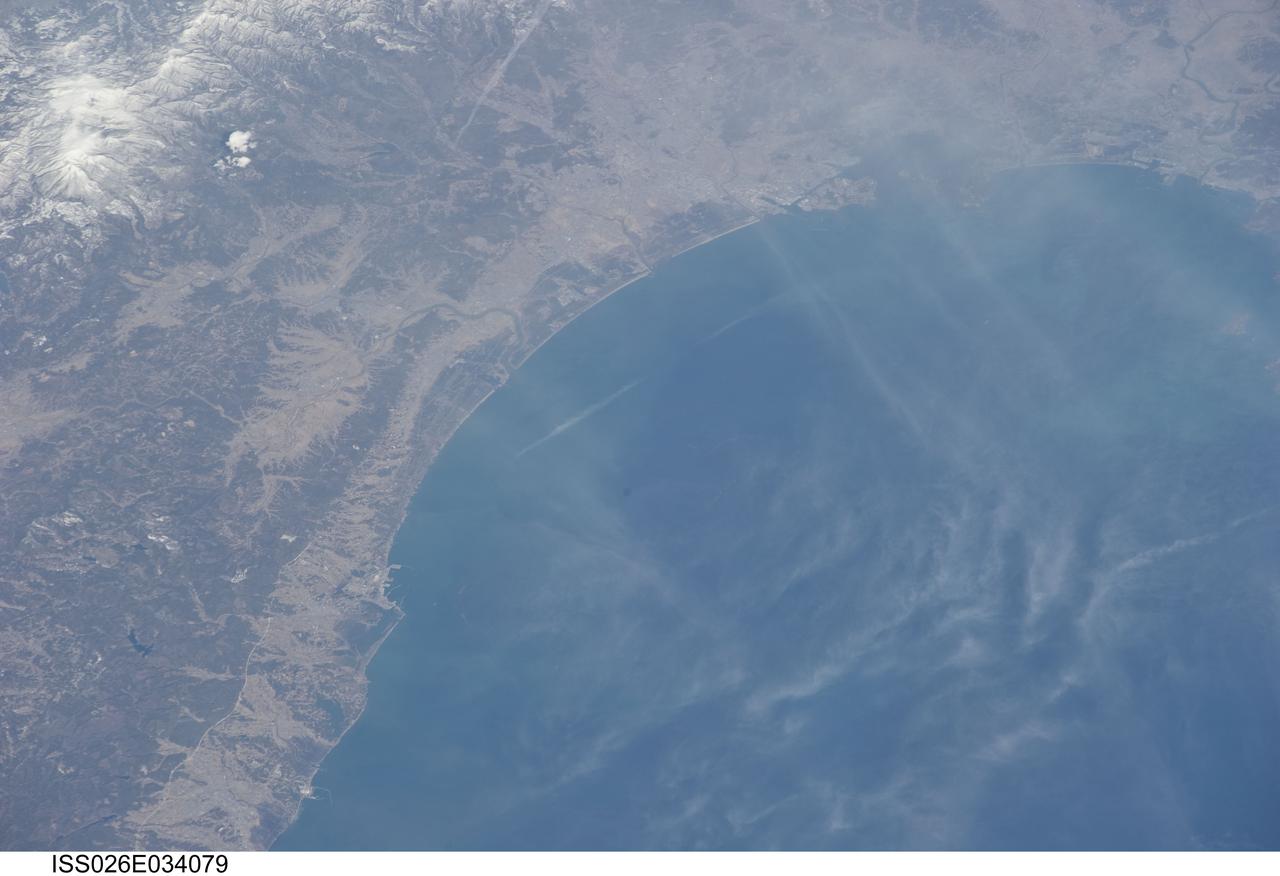
ISS026-E-034079 (14 March 2011) --- From 220 miles above Japan, an Expedition 26 crew member onboard the International Space Station took this 200mm view of the Sendai coast and southward, on March 14, three days after the one-two-punch of earthquake and tsunami.
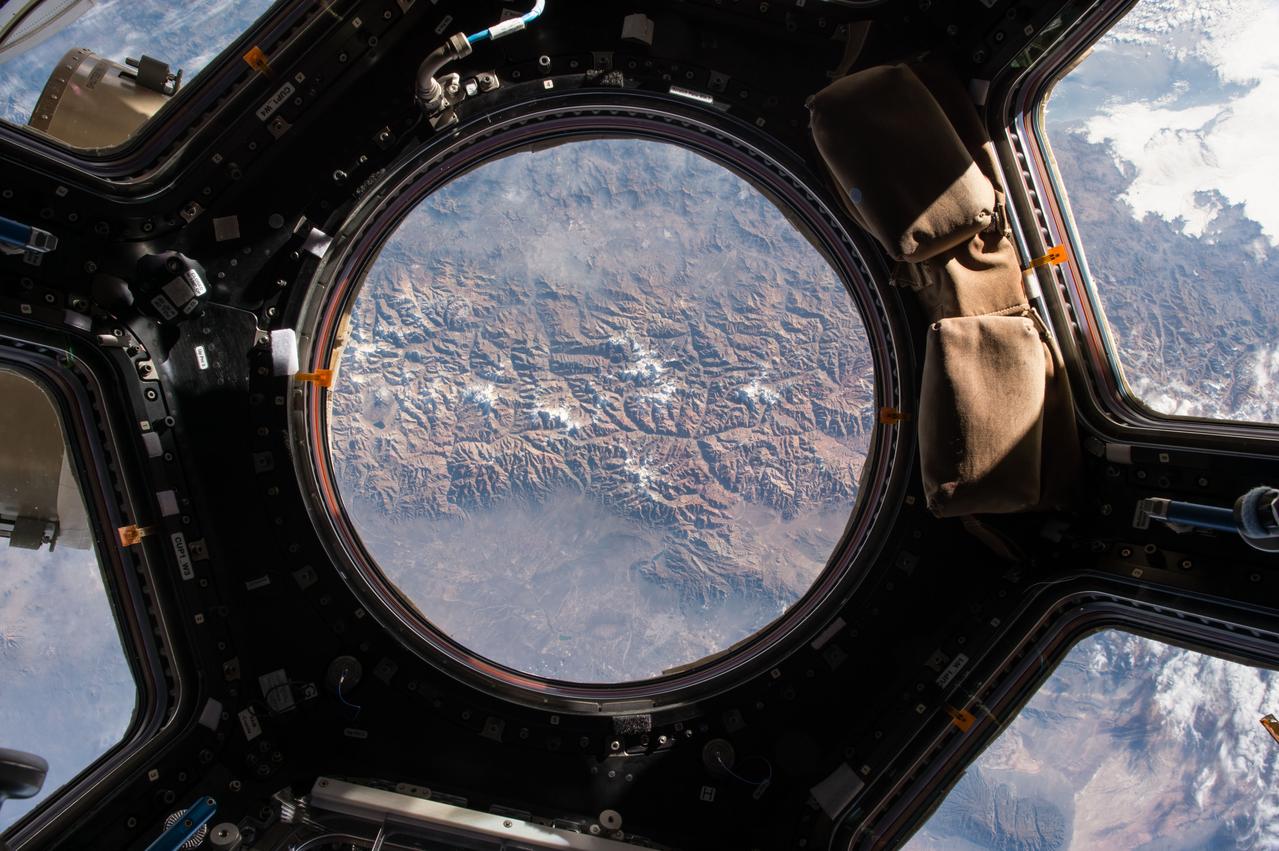
ISS043E193556 (05/14/2015) --- The Earth view from the cupola onboard the International Space Station. NASA astronaut Scott Kelly tweeted this image with a comment on May 14, 2015: "My first look out the window today. #YearInSpace".
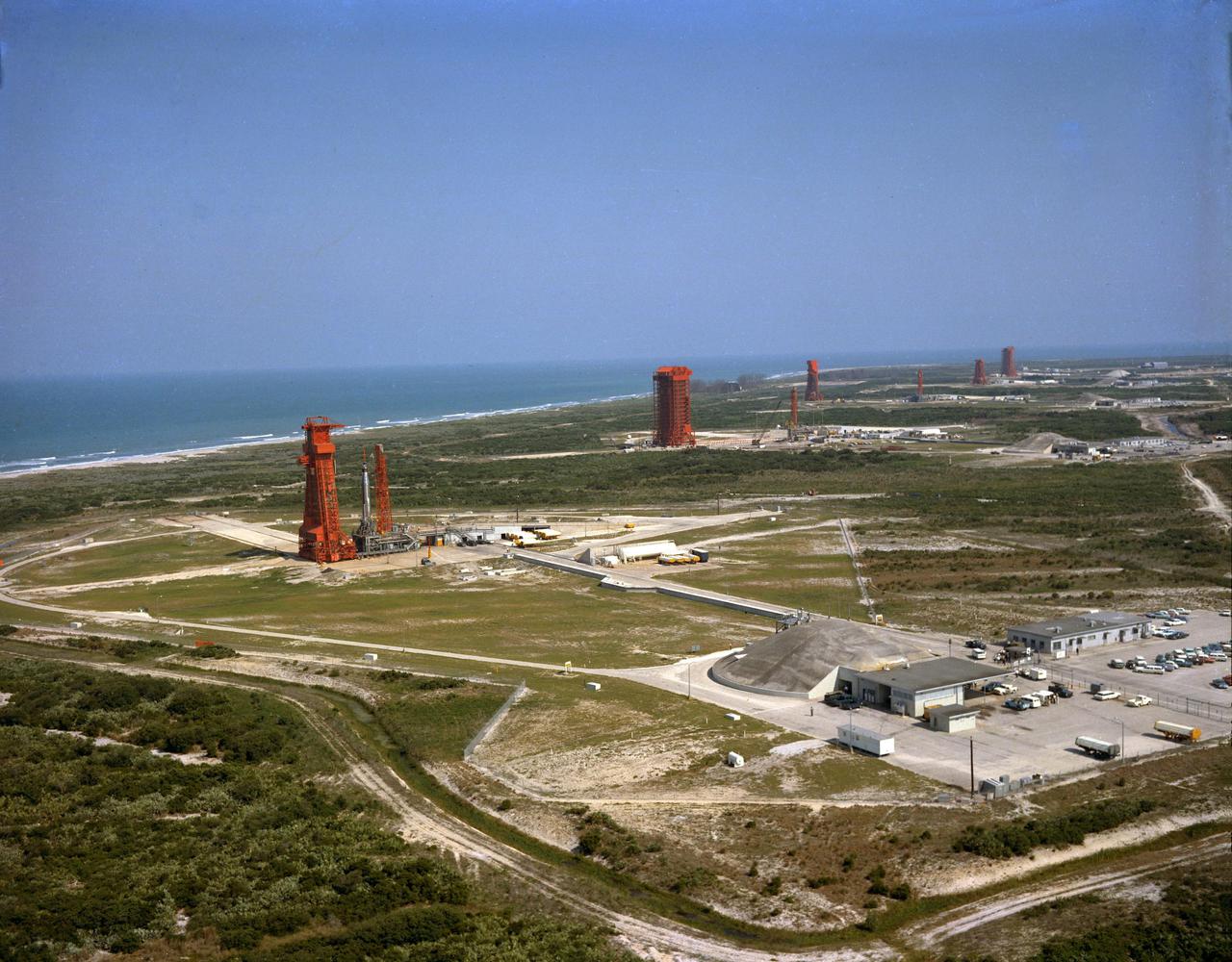
KENNEDY SPACE CENTER, FLA. -- Aerial view of Launch Complex 14 with Missile Row visible to the right. Mercury-Atlas 9 (MA-9), visible on Pad 14, is scheduled to carry astronaut Gordon Cooper for the fourth manned orbital mission.
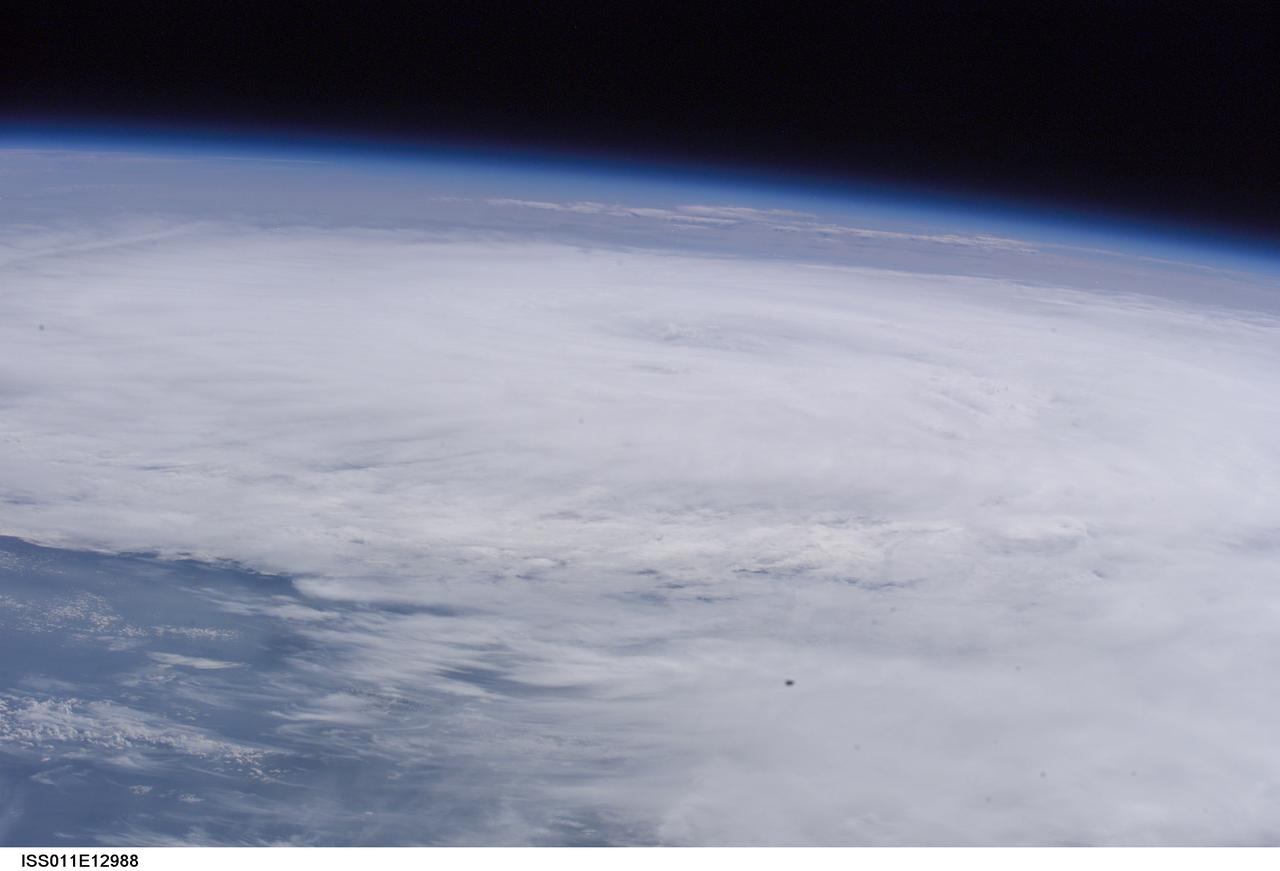
ISS011-E-12988 (14 September 2005, 19:16:29 GMT) --- This oblique view of Hurricane Ophelia was taken on the afternoon of September 14 from the International Space Station. The somewhat ill-defined eye is located just above right center. The slow-moving storm is off the coast of the Carolinas.
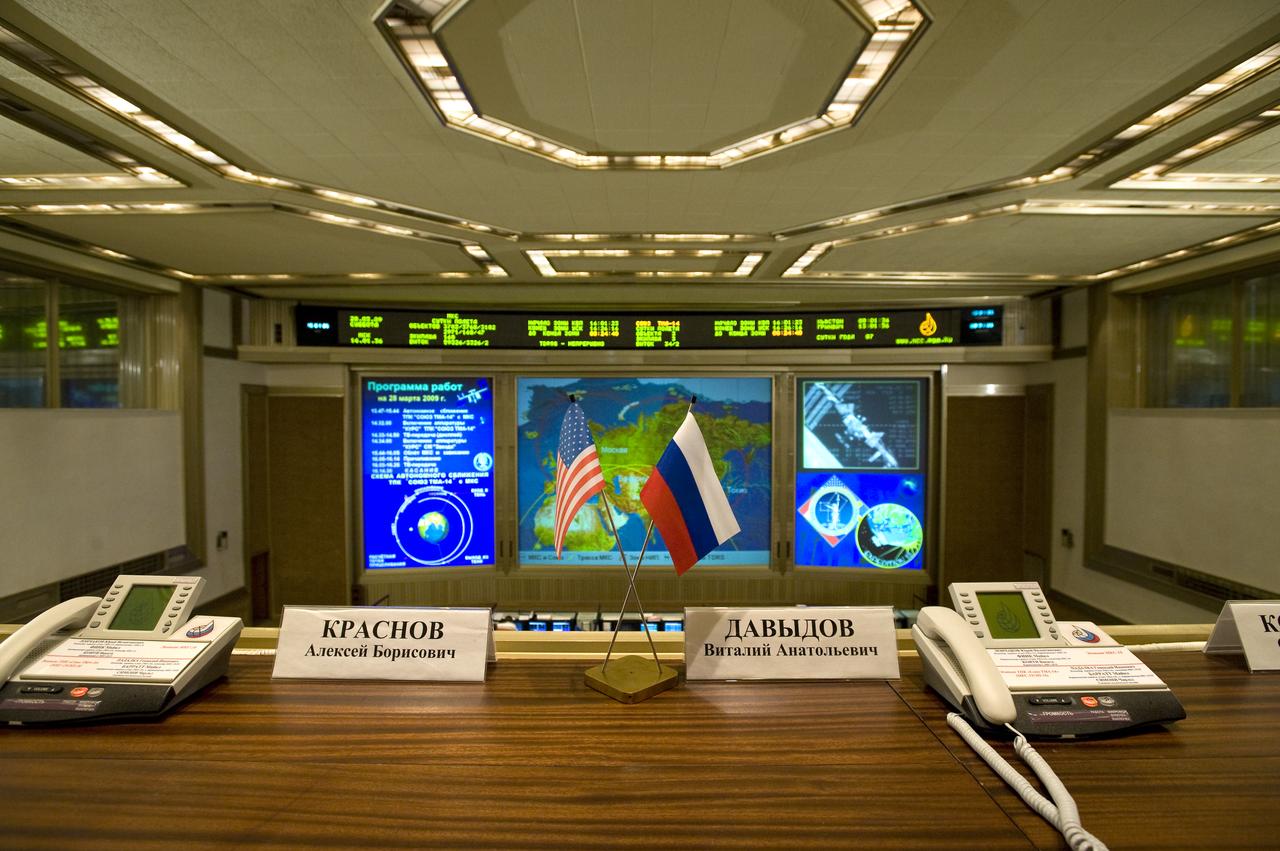
View from the balcony of the Russian Mission Control Center in Korolev, Russia moments before the Soyuz TMA-14 docks to the International Space Station on Saturday, March 28, 2009. A view of the International Space Station from Soyuz onboard cameras is visible in the upper right display. Photo Credit: (NASA/Bill Ingalls)
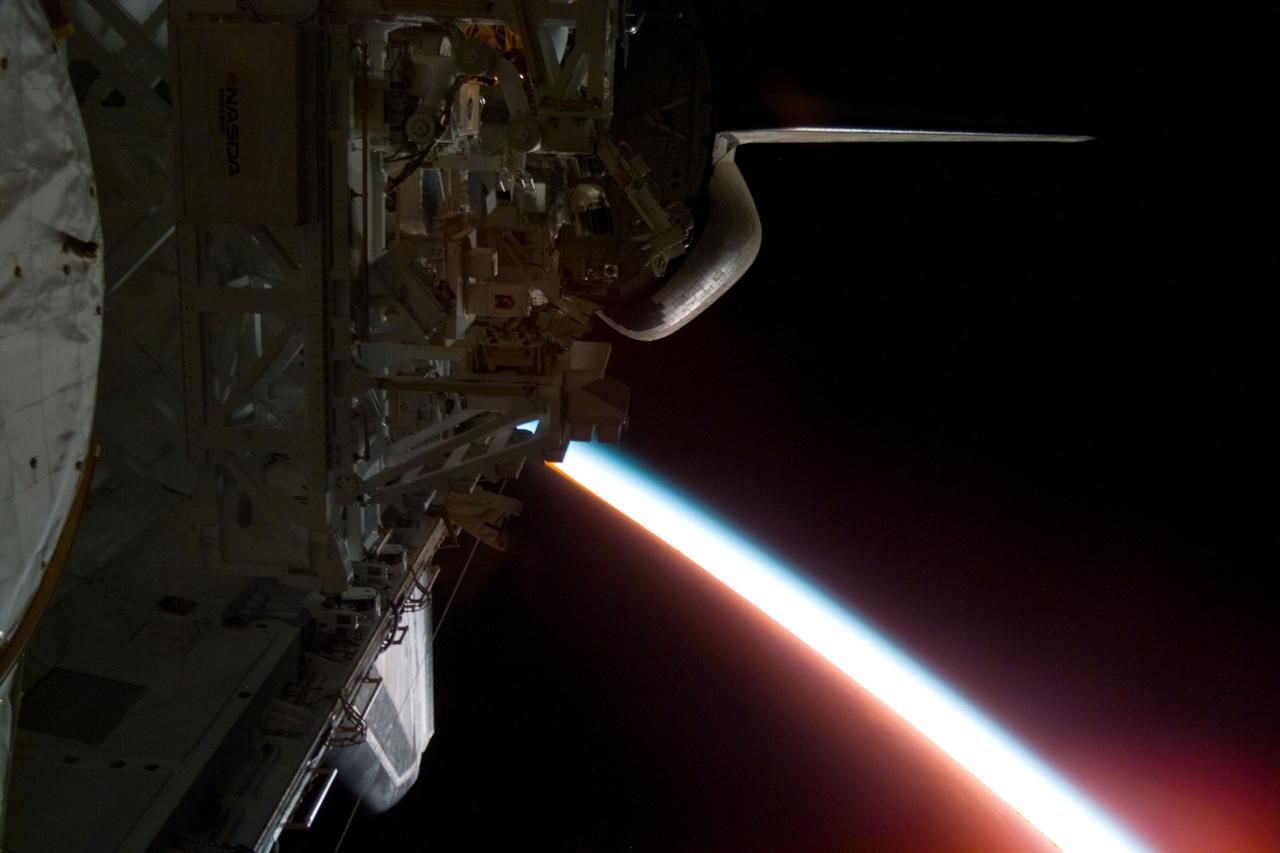
S85-E-5089 (14 August 1997) --- The sun sets on Earth's horizon in this electronic still camera's view photographed on STS-85 flight day 8 aboard the Space Shuttle Discovery. The portside wing of Discovery is pointed toward Earth in the view, captured through windows on the aft flight deck.
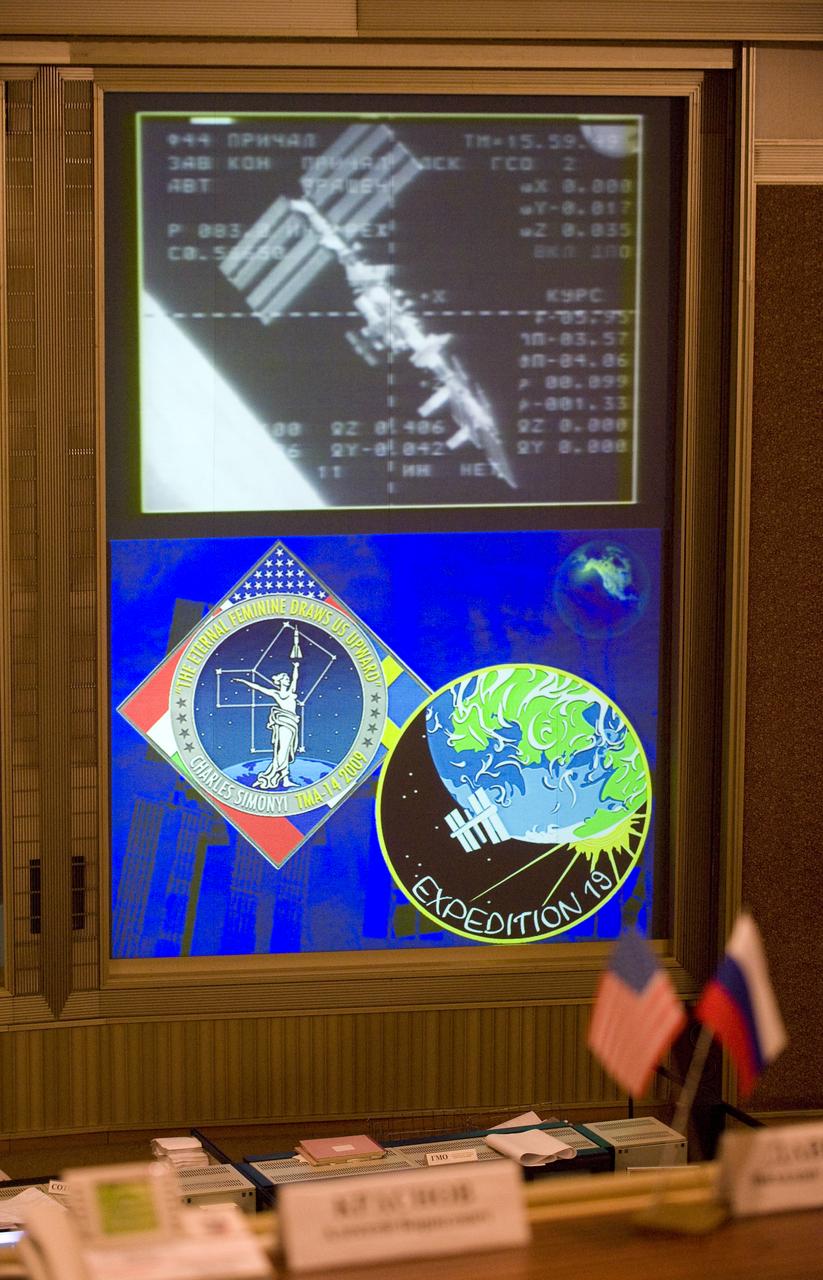
View from the balcony of the Russian Mission Control Center in Korolev, Russia moments before the Soyuz TMA-14 docks to the International Space Station on Saturday, March 28, 2009. A view of the International Space Station from Soyuz onboard cameras is visible in the upper display. Photo Credit: (NASA/Bill Ingalls)
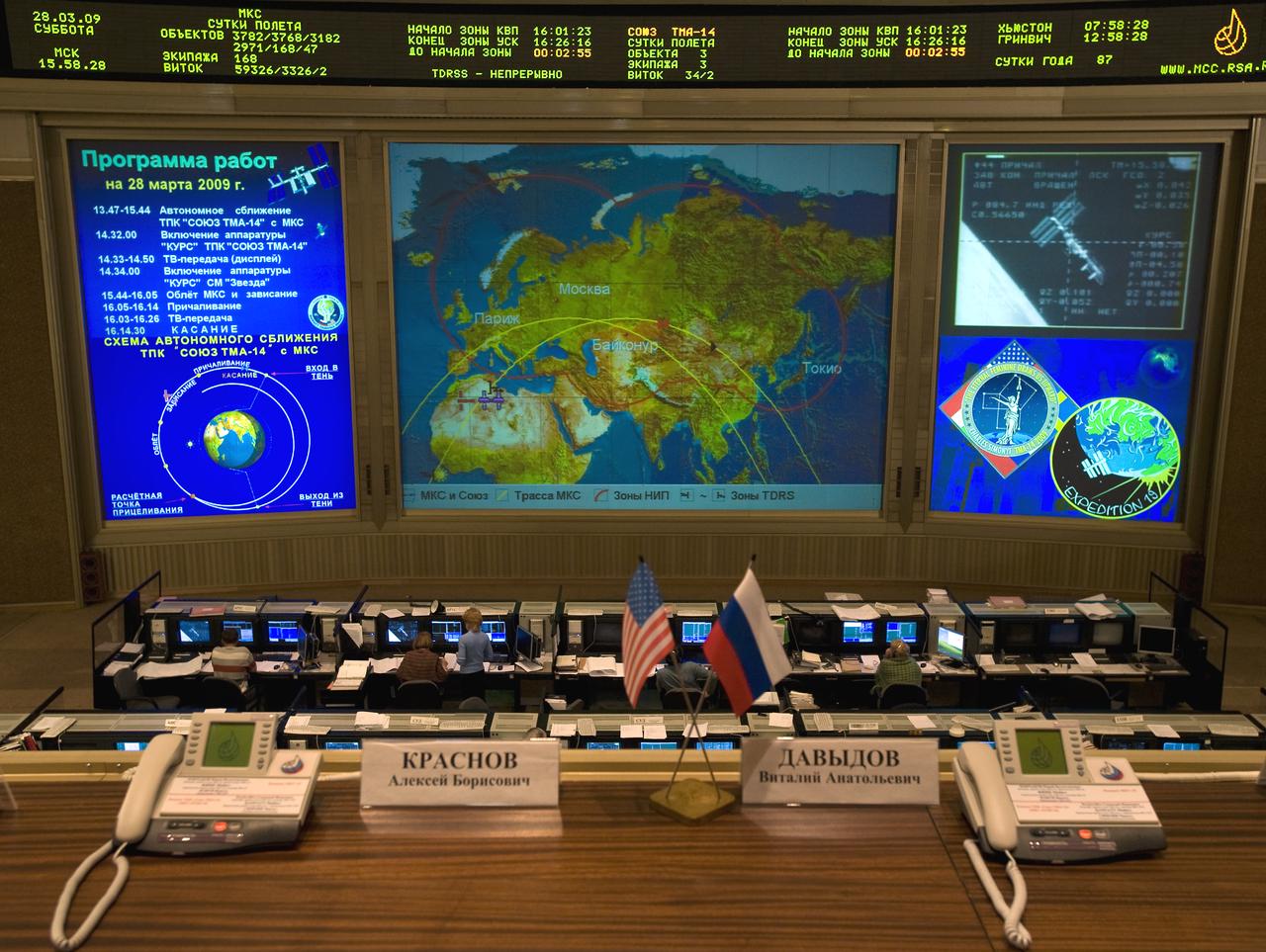
View from the balcony of the Russian Mission Control Center in Korolev, Russia moments before the Soyuz TMA-14 docks to the International Space Station on Saturday, March 28, 2009. A view of the International Space Station from Soyuz onboard cameras is visible in the upper right display. Photo Credit: (NASA/Bill Ingalls)
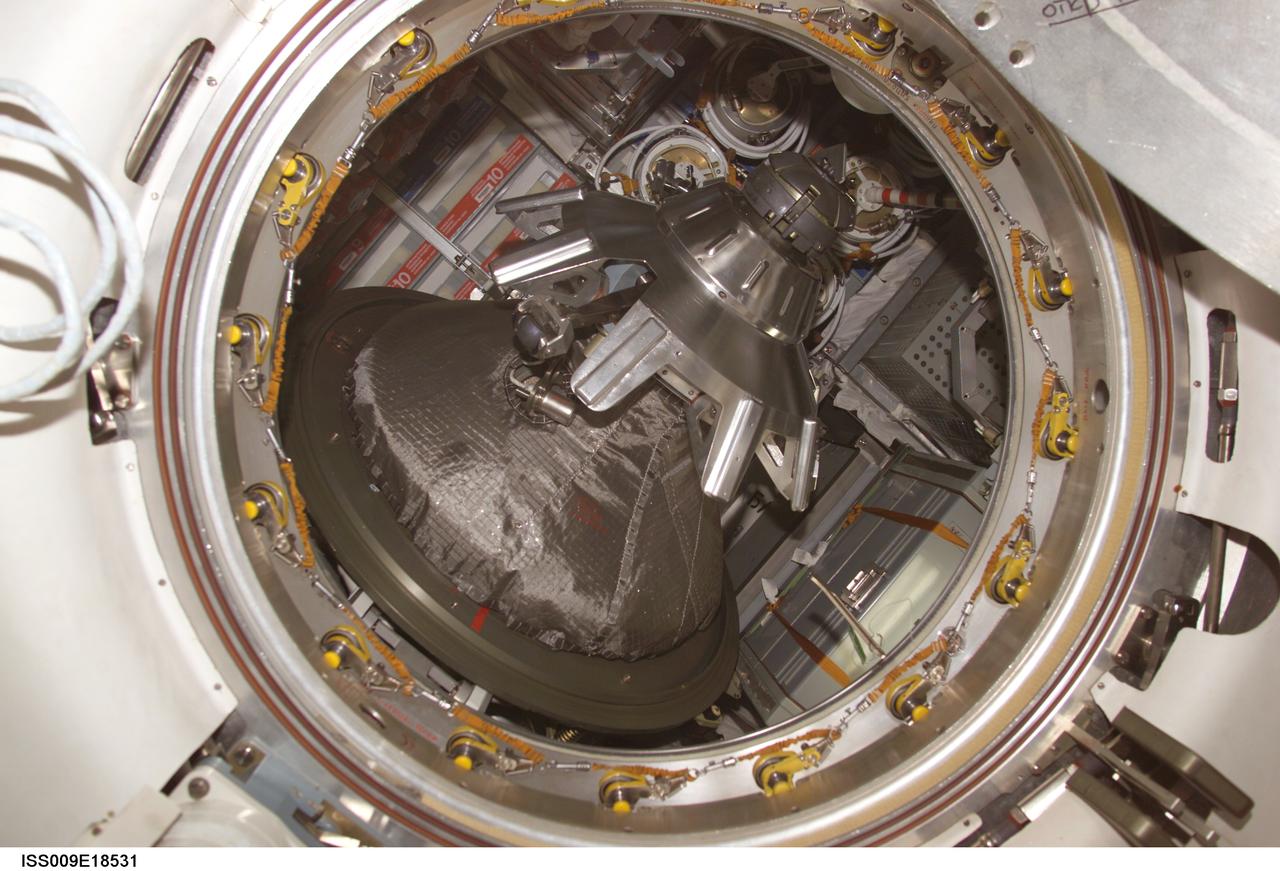
ISS009-E-18531 (14 August 2004) --- Looking into the Progress 15 supply vehicle docked to aft port on the Zvezda Service Module of the International Space Station (ISS), this view shows the probe-and-cone mechanism on the hatch.
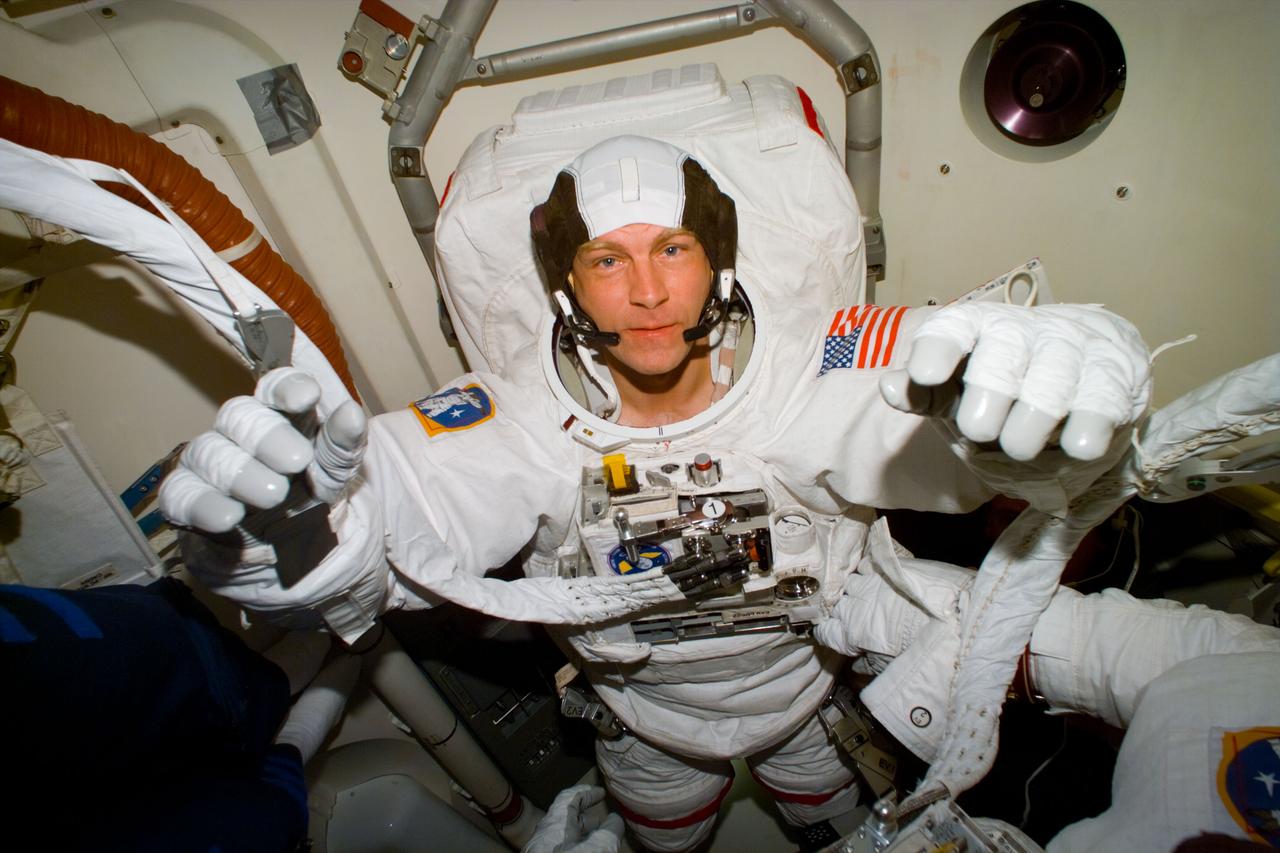
S82-E-5290 (14 Feb. 1997) --- Astronaut Mark C. Lee after his Extravehicular Activity (EVA) - unsuiting. This view was taken with an Electronic Still Camera (ESC).
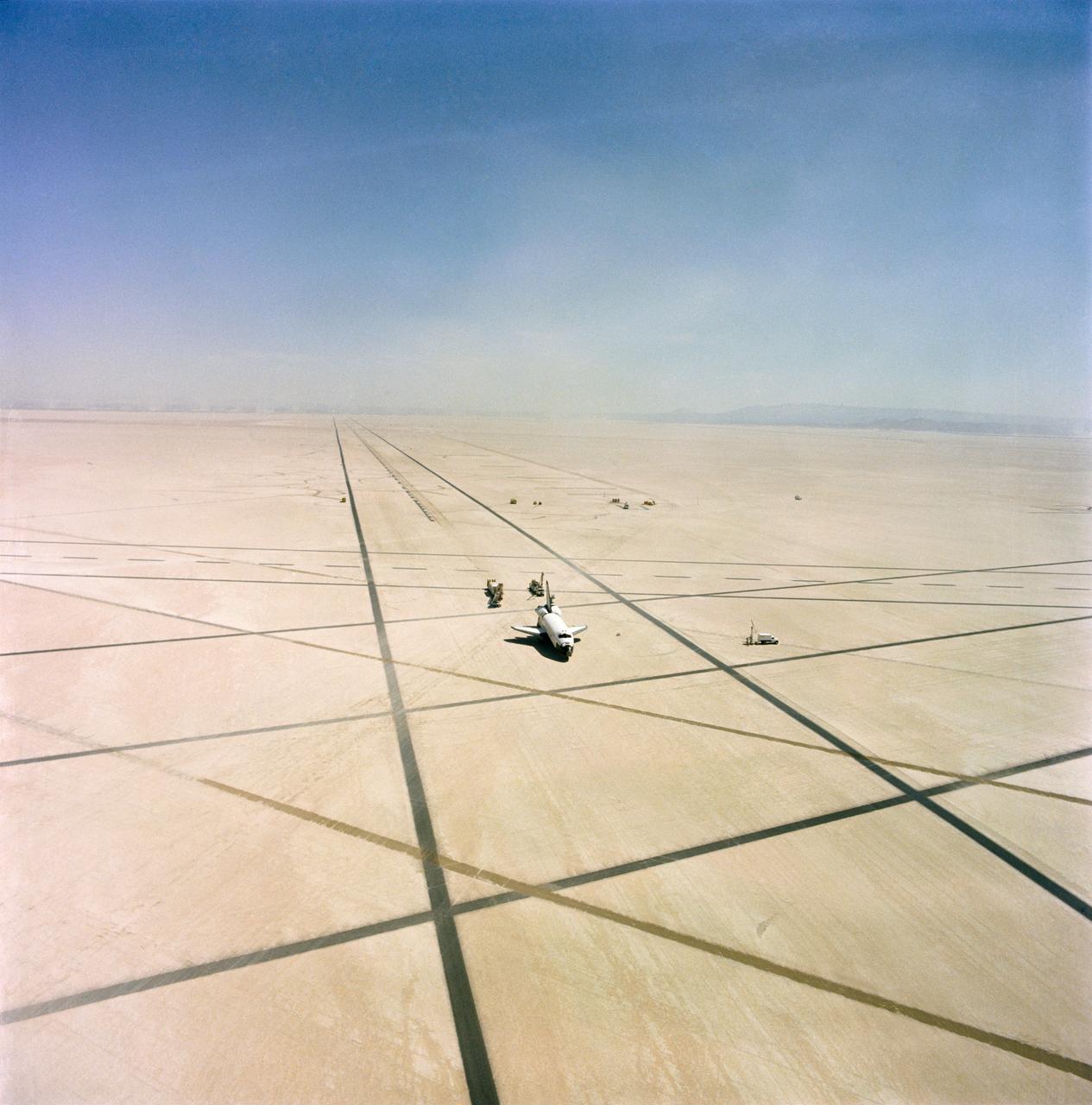
Documentary aerial and ground views of the Columbia sitting on the Lakebed Runway with the deservicing trucks following the STS-1 Mission, 04/14/1981. EAFB, CA Also available in 70 CN
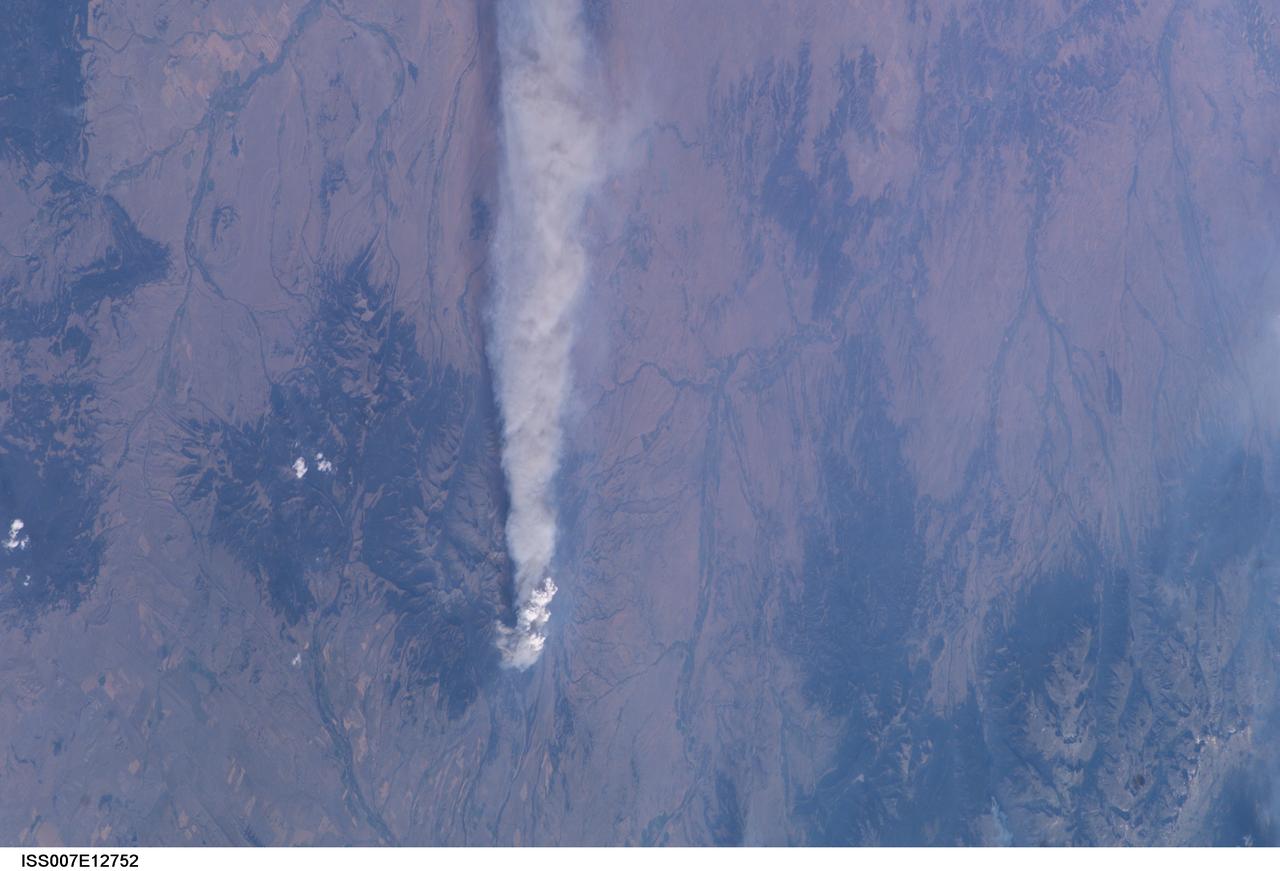
ISS007-E-12752 (14 August 2003) --- This view of forest fires in Glacier National Park in Montana was taken by one of the Expedition 7 crewmembers onboard the International Space Station (ISS).
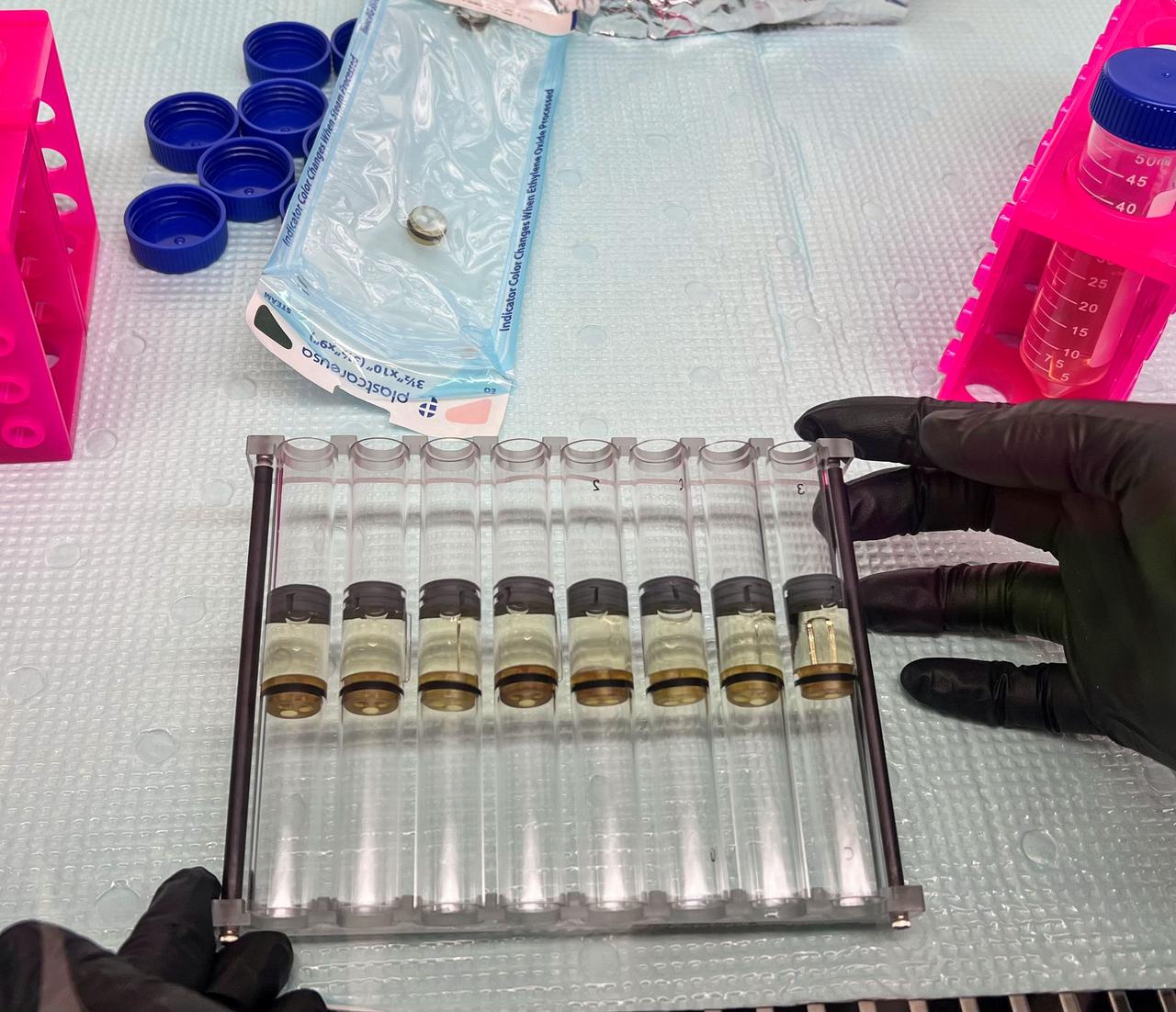
jsc2025e007256 (2/14/2025) --- Another view of the eight Fluid Processing Apparatus (FPAs) used in the Polaris Bioremediation Science Experiment - Genetic Exchange in Microgravity for Biofilm Bioremediation (GEM-B2) investigation. Image courtesy of BioServe.

ISS007-E-12749 (14 August 2003) --- This view of forest fires in lower British Columbia, Canada was taken by one of the Expedition 7 crewmembers onboard the International Space Station (ISS).
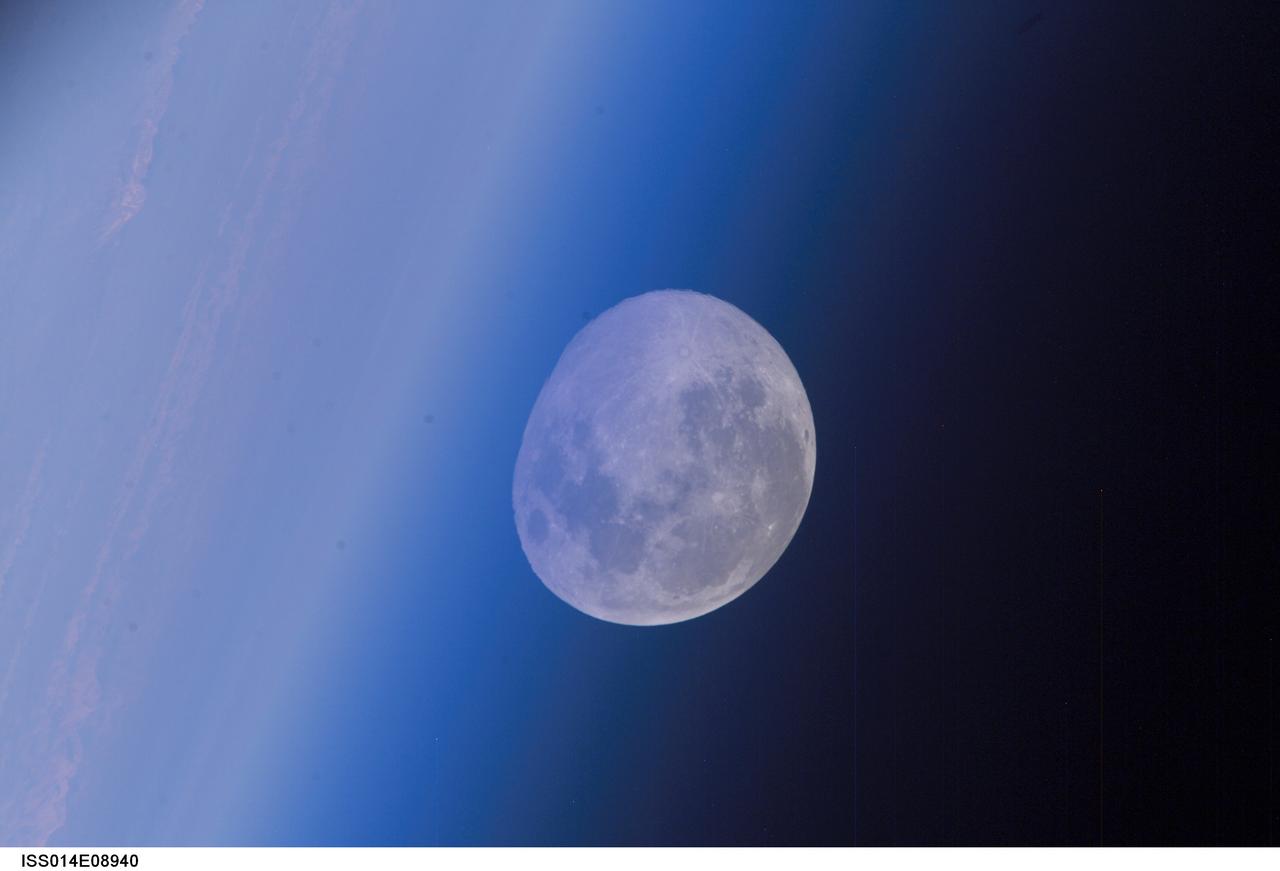
ISS014-E-08940 (4 Dec. 2006) --- This distorted view of a full moon intersecting Earth's horizon was photographed by an Expedition 14 crewmember onboard the International Space Station.
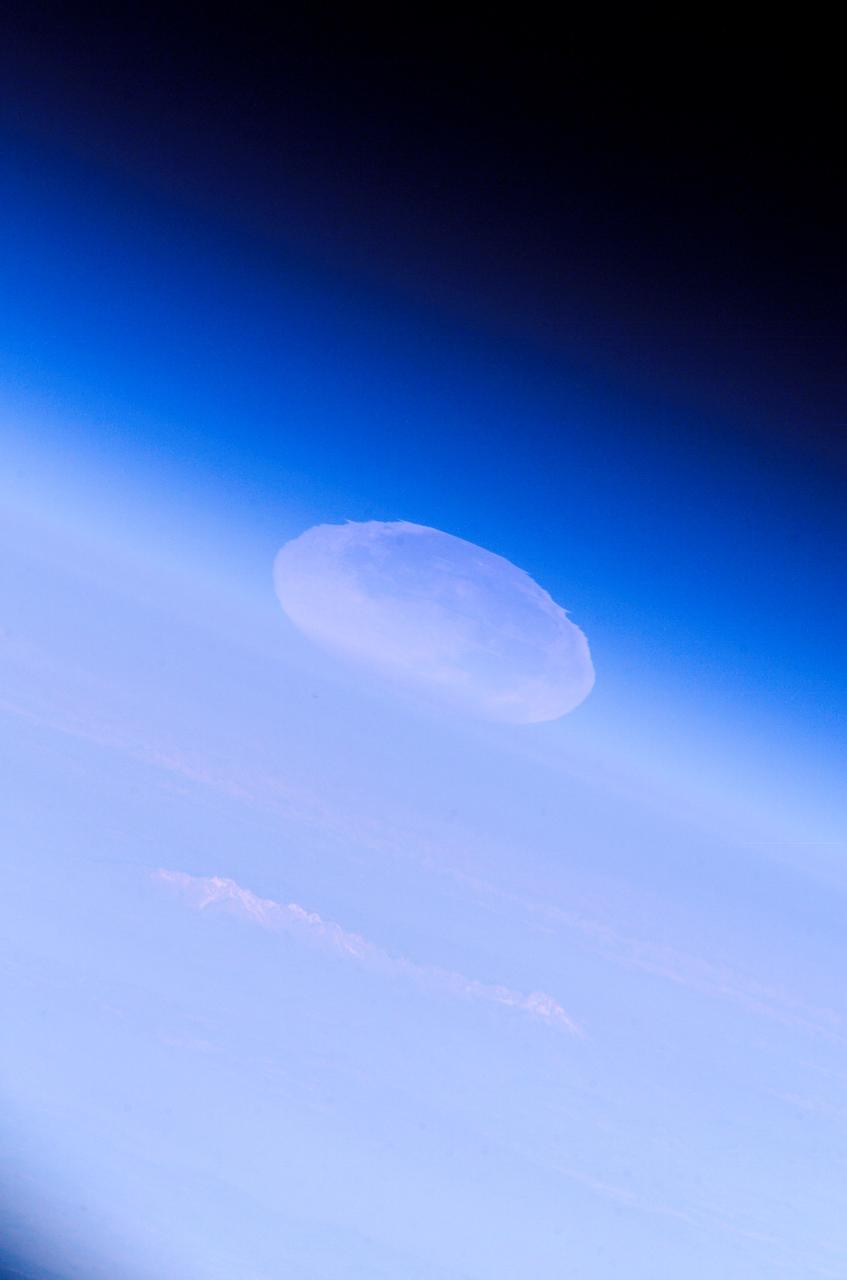
ISS014-E-08948 (4 Dec. 2006) --- This distorted view of a full moon intersecting Earth's horizon was photographed by an Expedition 14 crewmember onboard the International Space Station.
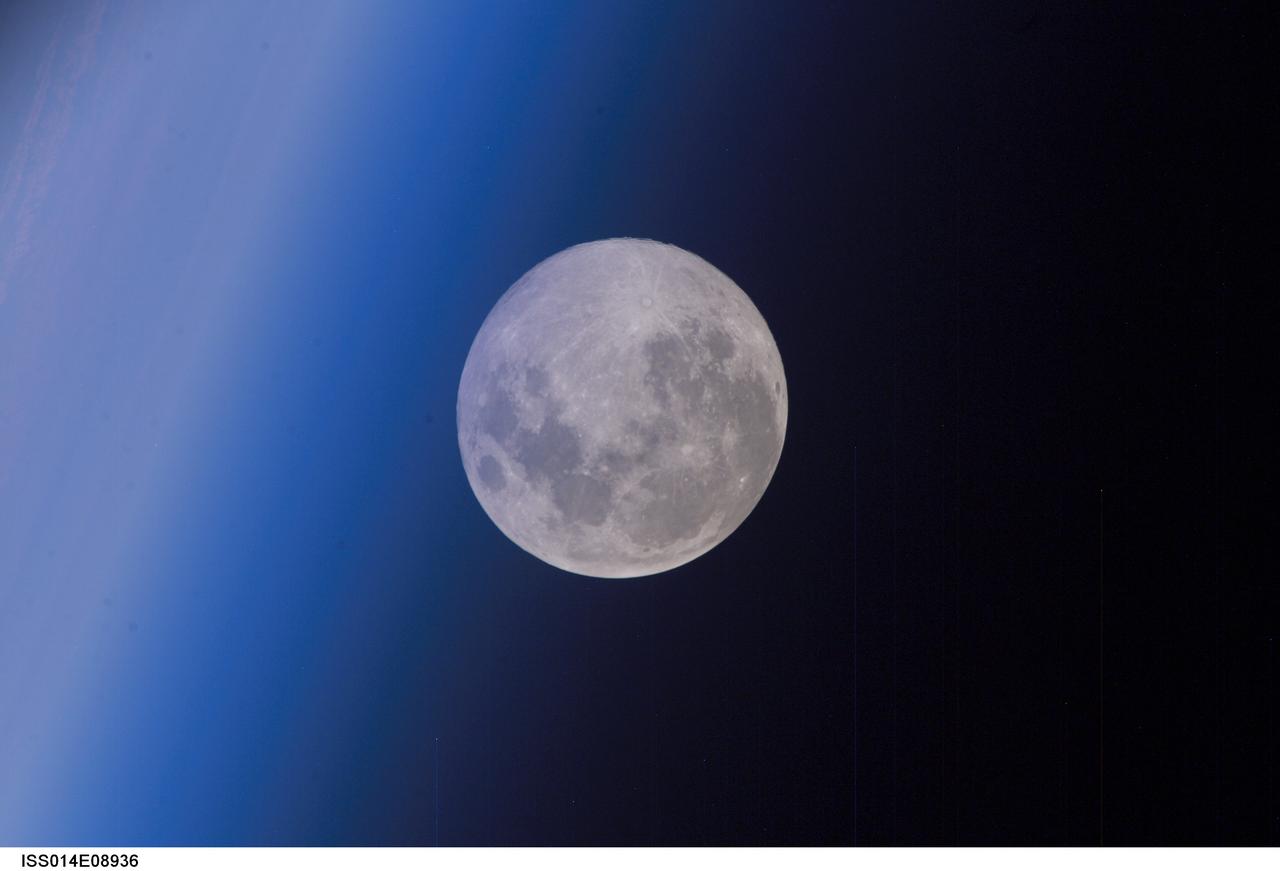
ISS014-E-08936 (4 Dec. 2006) --- This view of a full moon was photographed by an Expedition 14 crewmember onboard the International Space Station. Earth's horizon and airglow are visible at left.
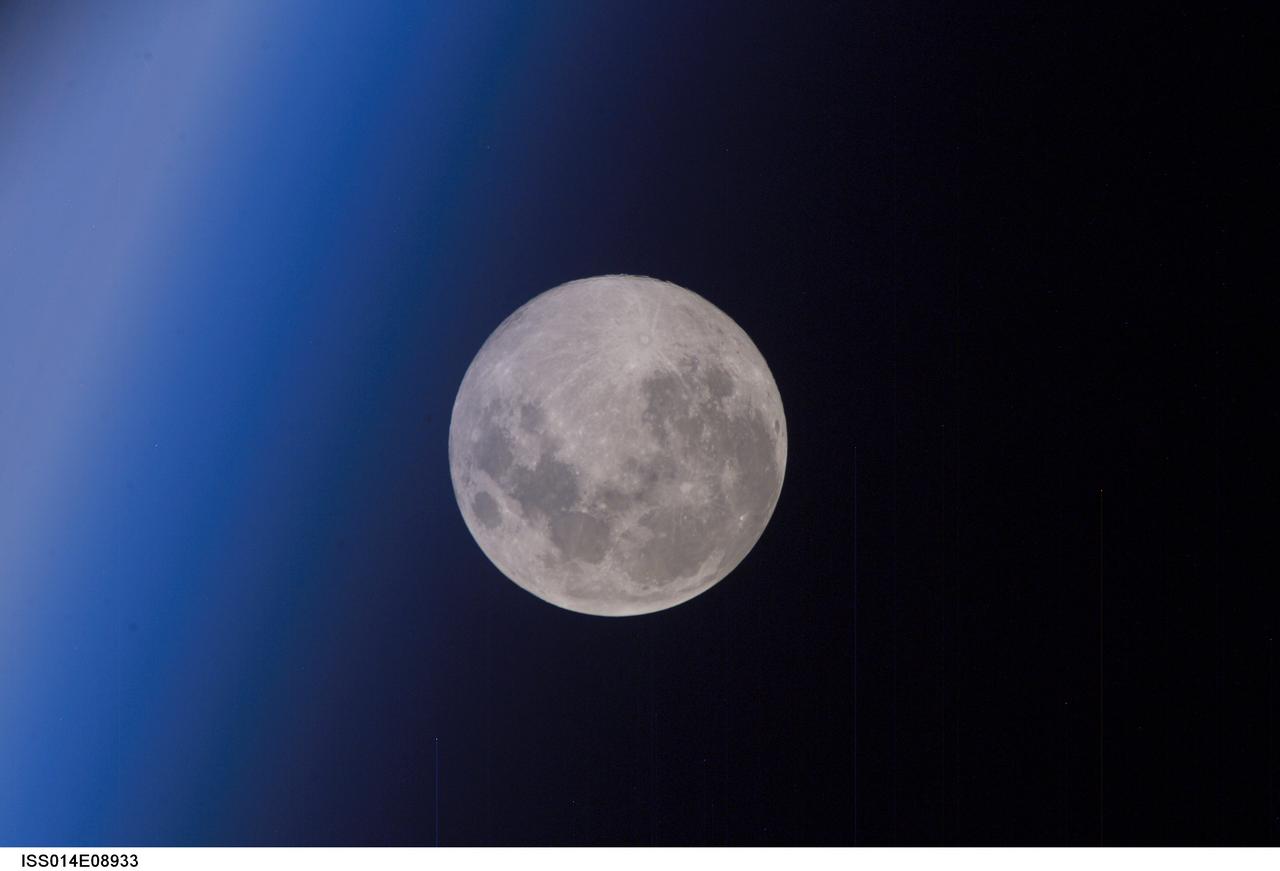
ISS014-E-08933 (4 Dec. 2006) --- This view of a full moon was photographed by an Expedition 14 crewmember onboard the International Space Station. Earth's horizon and airglow are visible at left.
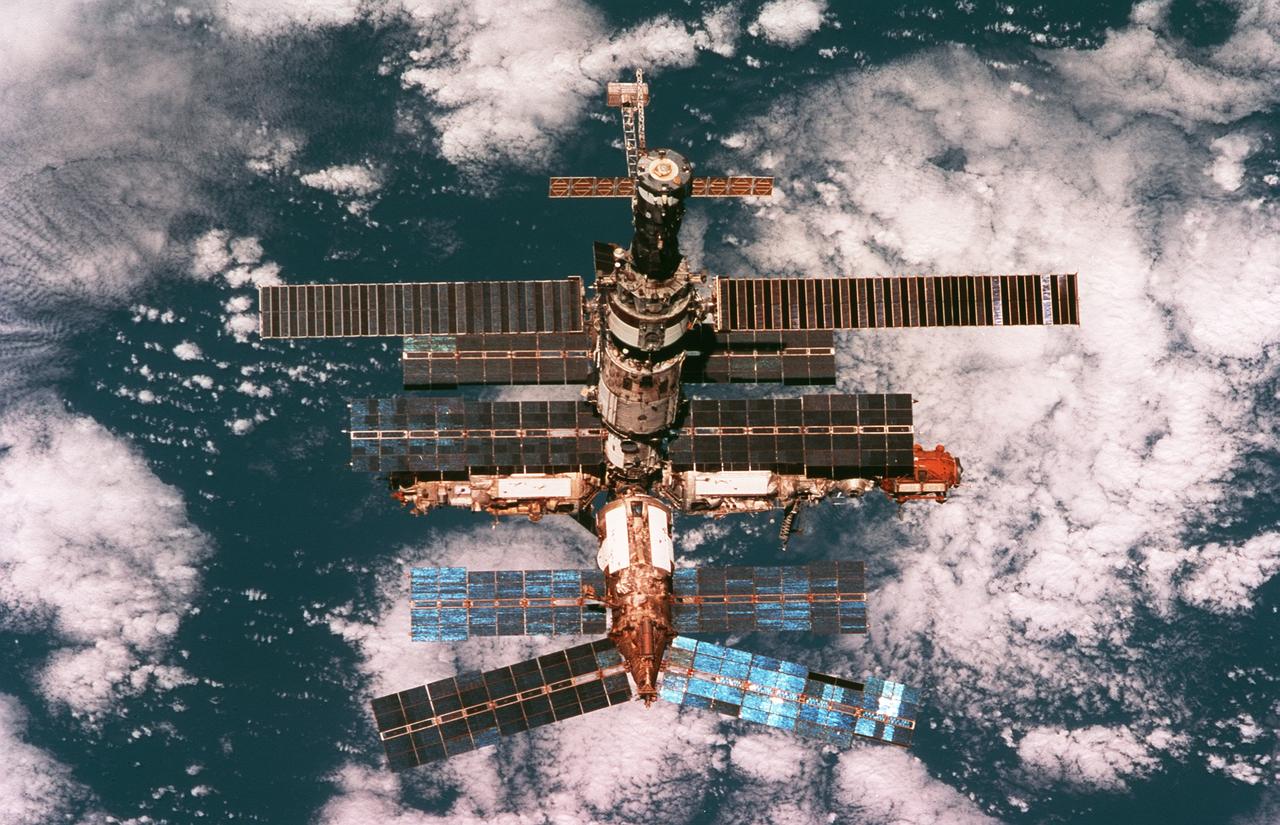
STS081-330-002 (12-22 Jan. 1997) --- As seen from the Space Shuttle Atlantis, this 35mm frame affords a full view of Russia's Mir Space Station complex during approach for docking on Jan. 14, 1997.
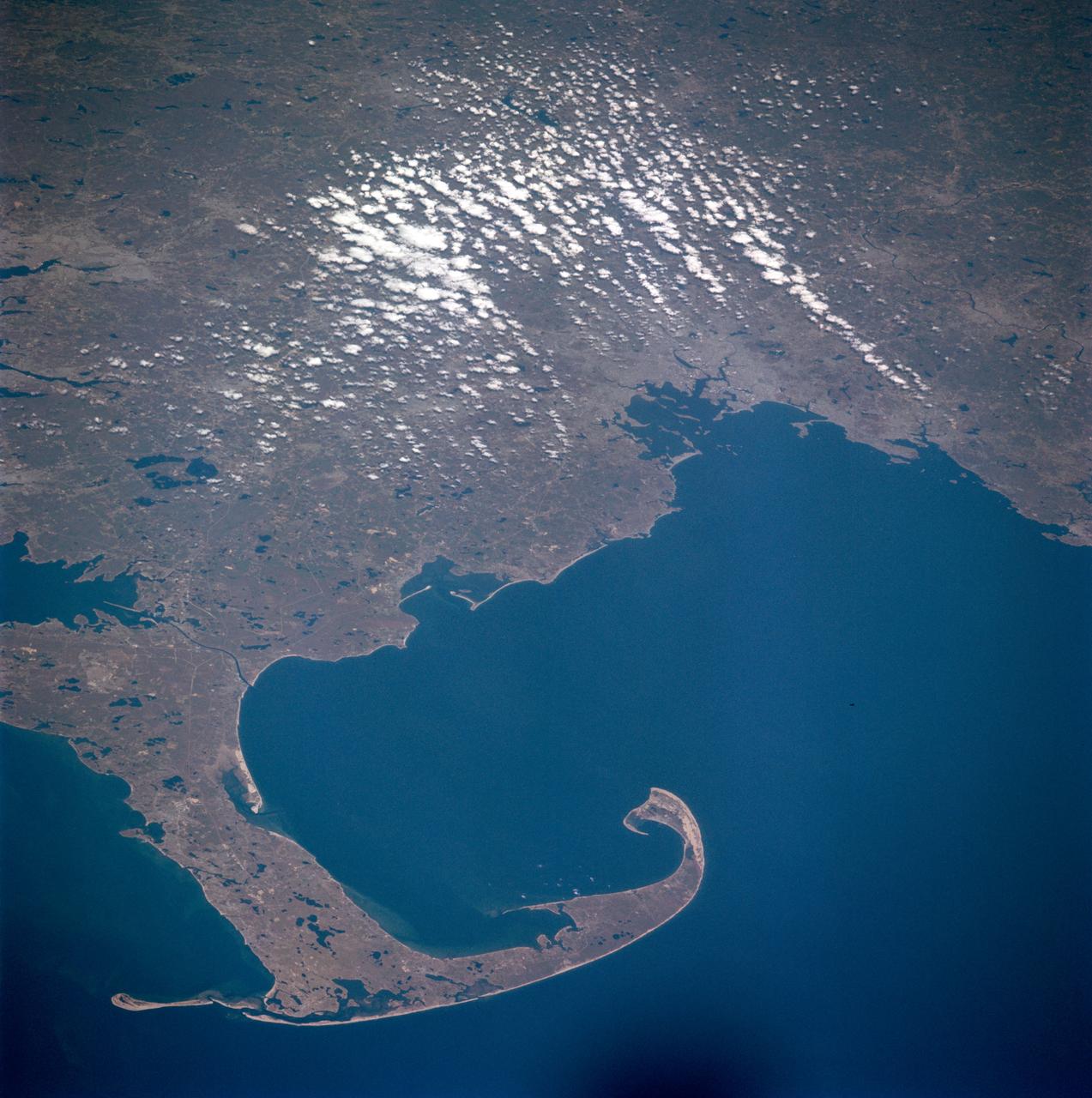
STS001-11-173 (12-14 April 1981) --- Space shuttle Columbia's view of Cape Cod, Boston, Plymouth, Glouster, Providence, Lowell, Taunton, and Worcester. Photo credit: NASA

jsc2022e084485 (10/14/2022) --- A preflight view of the Space Test Program-Houston 9-Neutron Radiation Detection Instrument (STP-H9-NeRDI) during vibration testing. Image courtesy of U.S. Naval Research Laboratory.
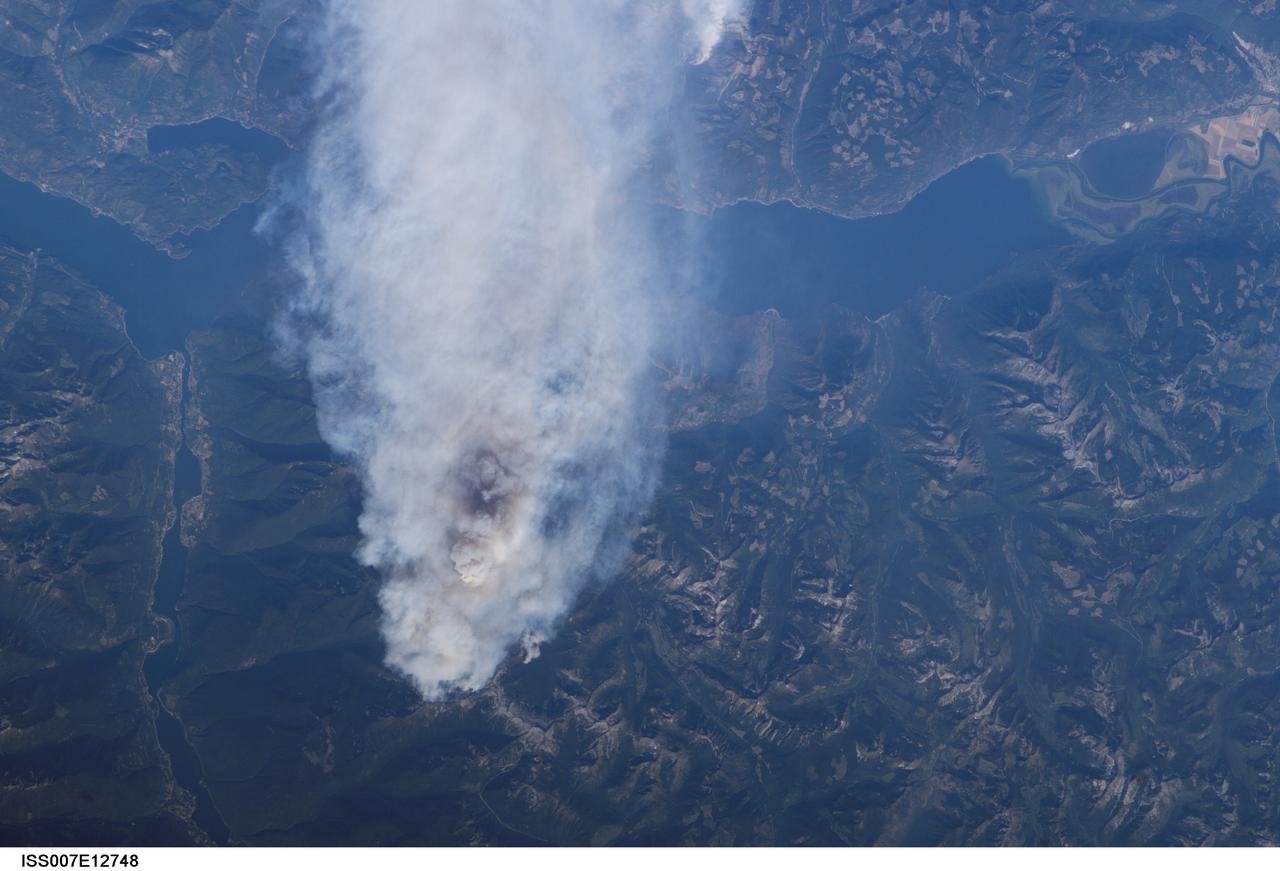
ISS007-E-12748 (14 August 2003) --- This view of forest fires in lower British Columbia, Canada was taken by one of the Expedition 7 crewmembers onboard the International Space Station (ISS).
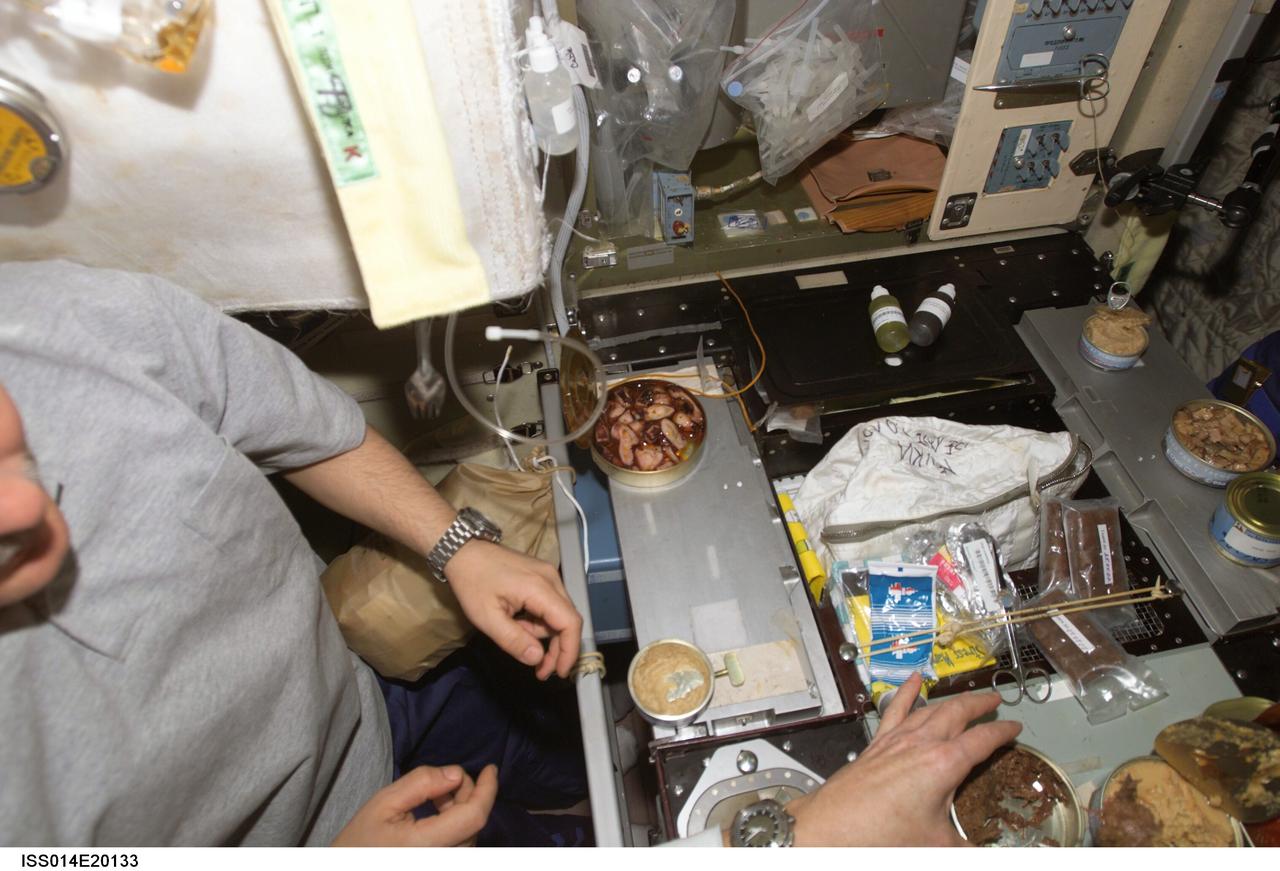
ISS014-E-20133 (April 2007) --- A close-up view of the galley in the Zvezda Service Module of the International Space Station is featured in this image photographed by an Expedition 14 crewmember during mealtime.

jsc2025e007257 (2/14/2025) --- A view of the Fluid Processing Apparatus (FPAs) used in the Polaris Bioremediation Science Experiment - Genetic Exchange in Microgravity for Biofilm Bioremediation (GEM-B2) investigation. Image courtesy of BioServe.
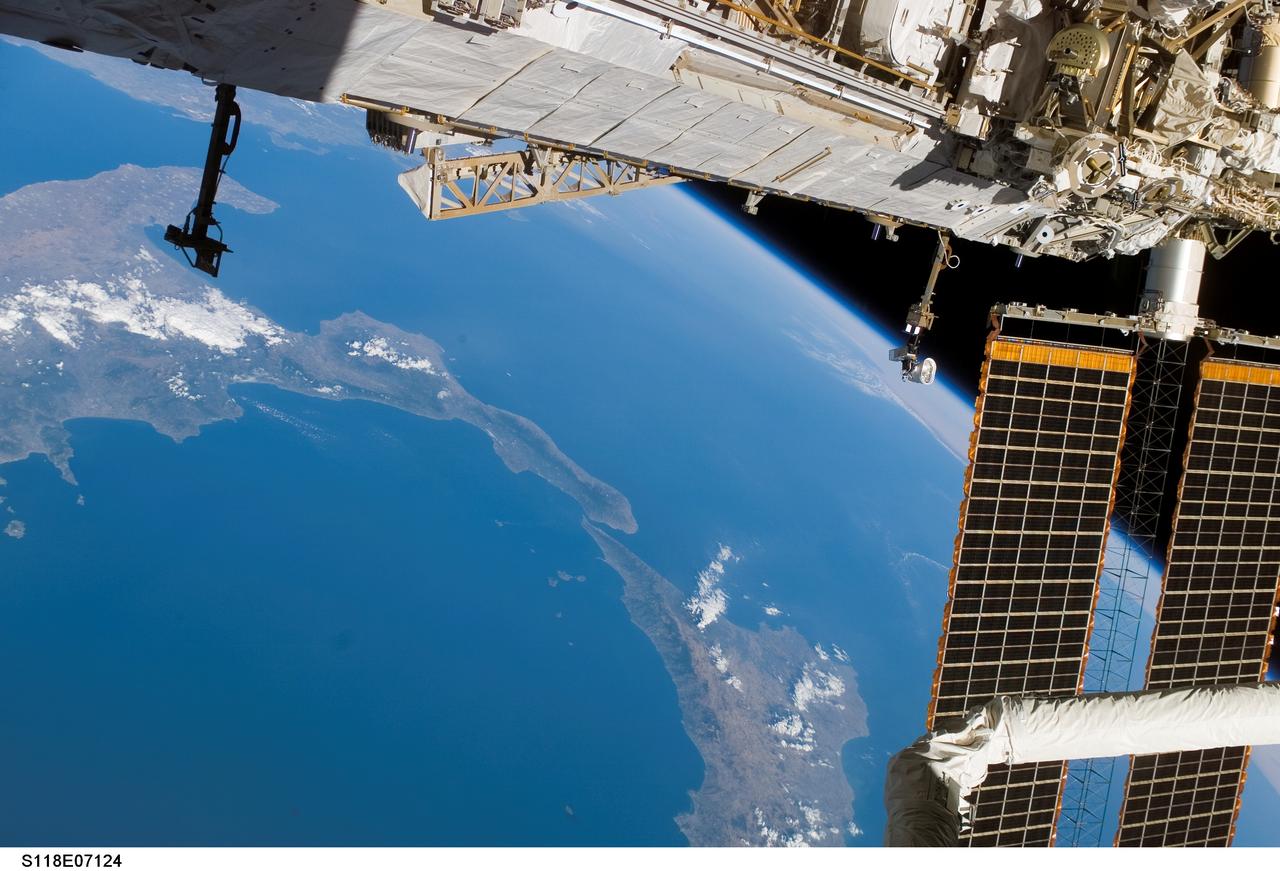
S118-E-07124 (14 Aug. 2007) --- A portion of the International Space Station frames this view of the lower portion of Italy and a portion of Sicily, photographed by a STS-118 crewmember while Space Shuttle Endeavour remains docked with the station.
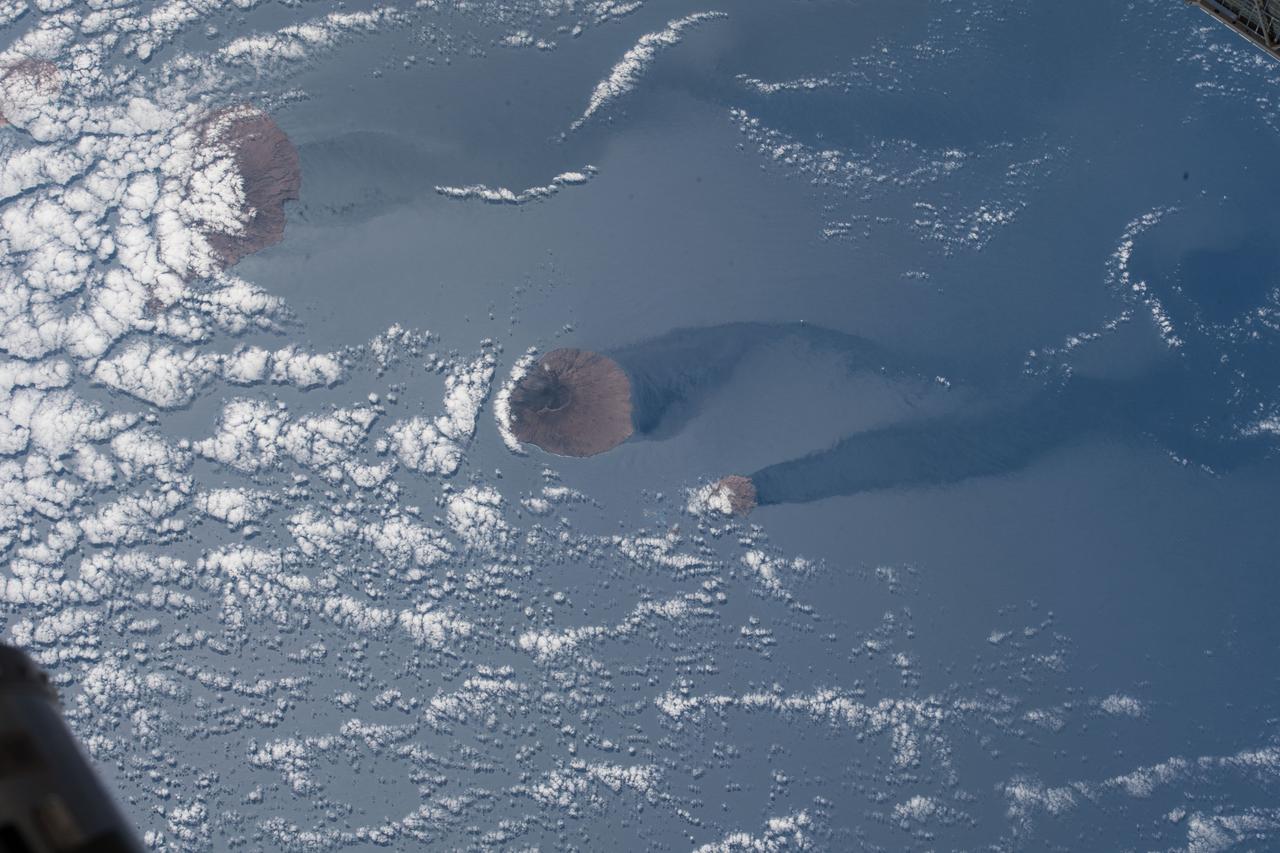
iss055e023643 (April 14, 2018) --- Another view of a trio of islands that are part of the volcanic ten-island nation of Cape Verde is pictured off the northwestern coast of Africa as the International Space Station orbited over the Atlantic Ocean.
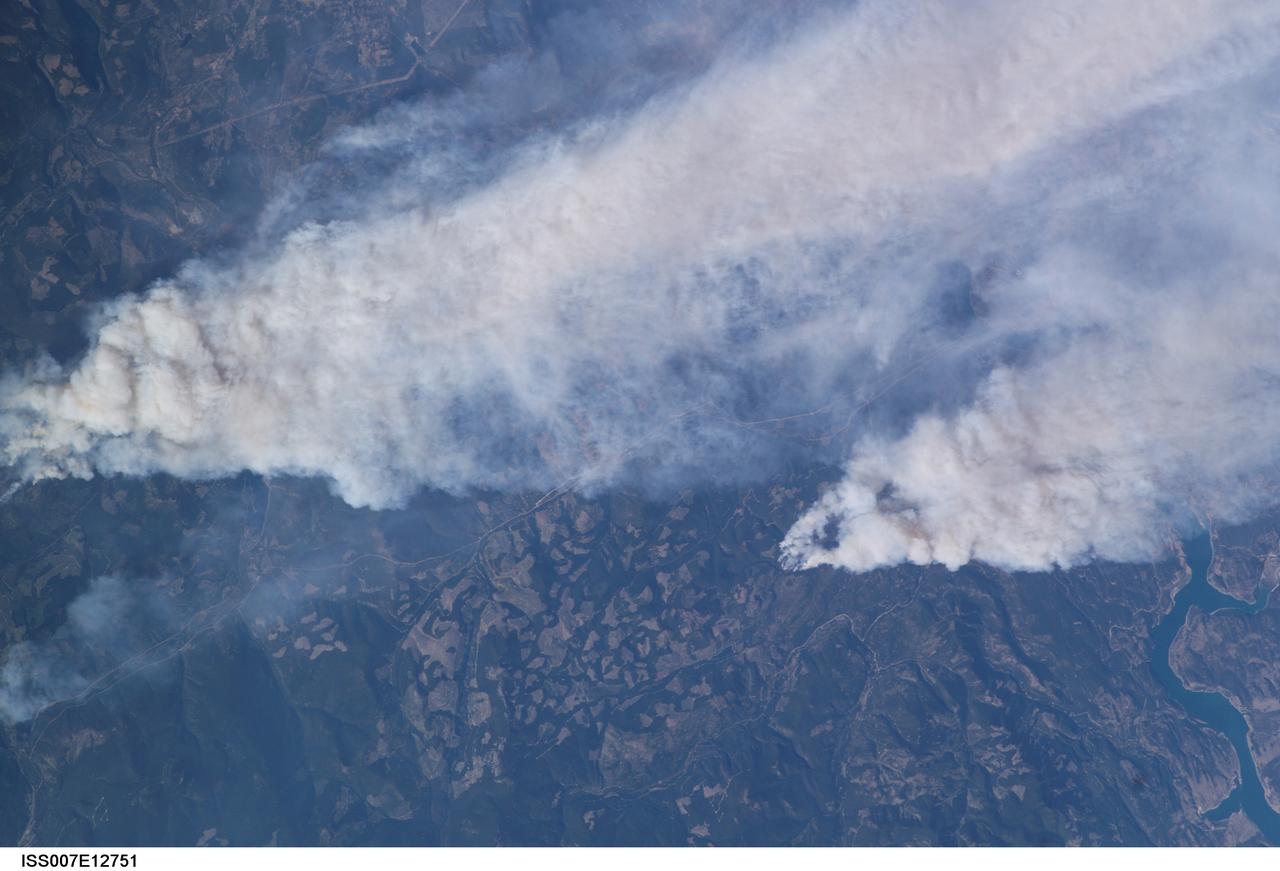
ISS007-E-12751 (14 August 2003) --- This view of forest fires in lower British Columbia, Canada was taken by one of the Expedition 7 crewmembers onboard the International Space Station (ISS).
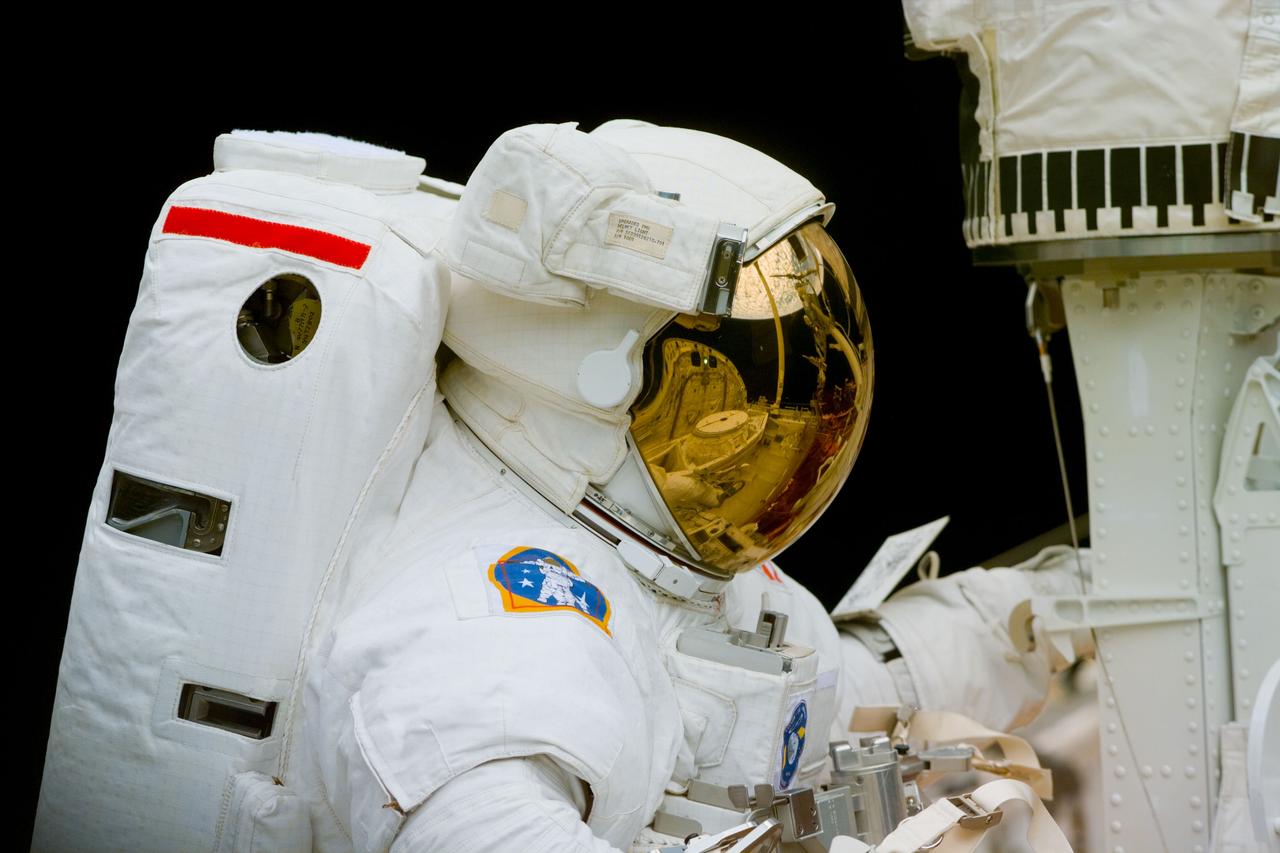
S82-E-5283 (14 Feb. 1997) --- Close-up of astronaut Mark C. Lee during Extravehicular Activity (EVA) of the Hubble Space Telescope (HST) repair mission. This view was taken with an Electronic Still Camera (ESC).
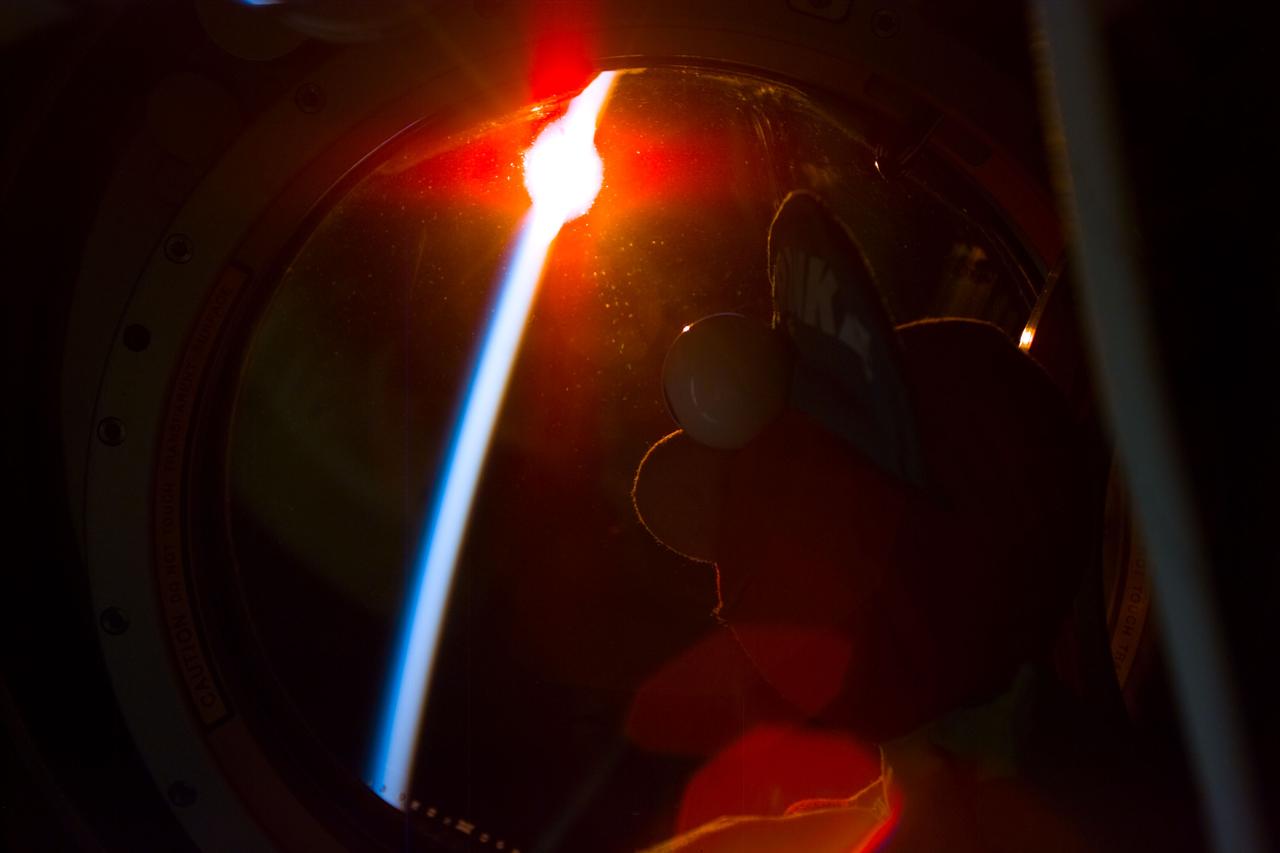
STS095-E-5145 (2 Nov. 1998) --- View of sunrise from Discovery's side hatch was captured with an electronic still camera (ESC) at 18:18:14 GMT, Nov. 2.
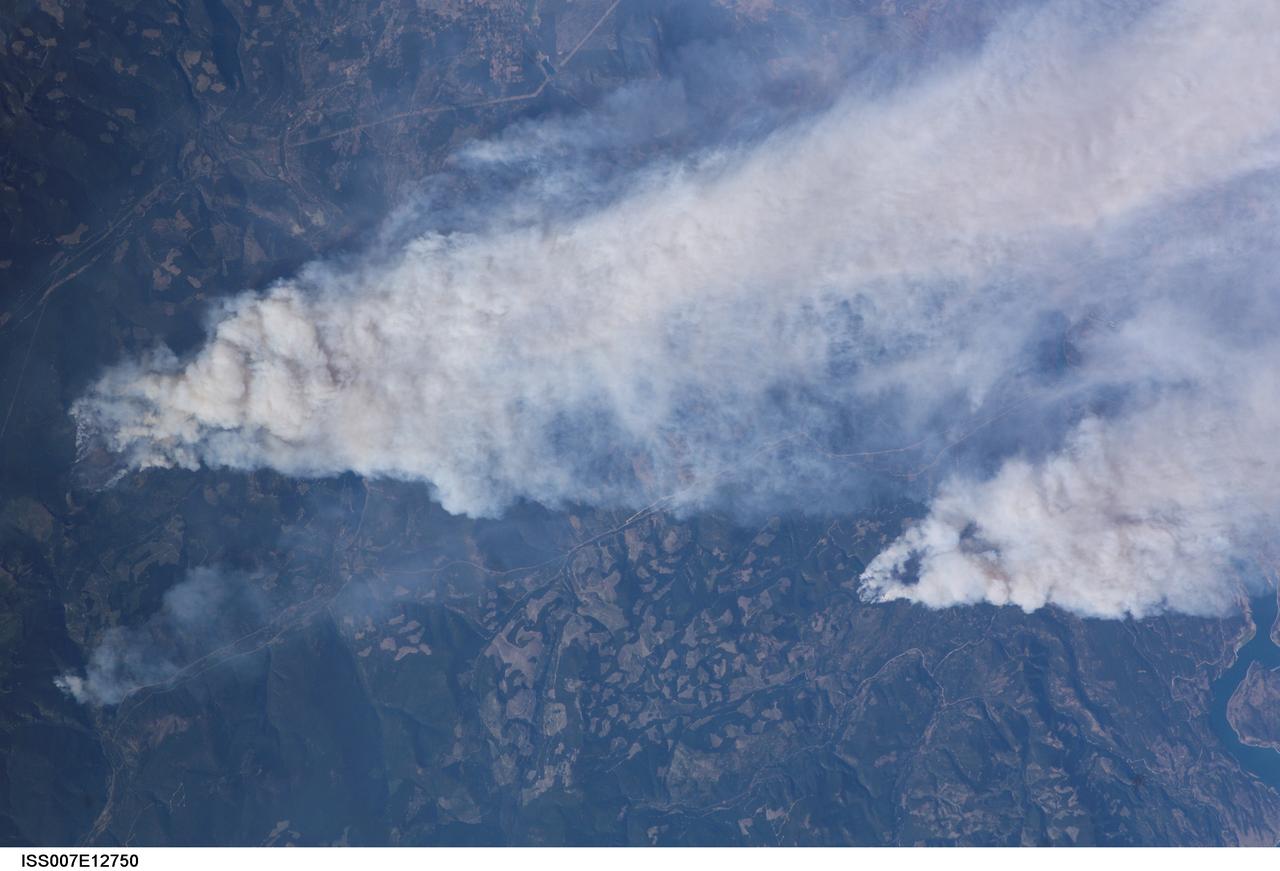
ISS007-E-12750 (14 August 2003) --- This view of forest fires in lower British Columbia, Canada was taken by one of the Expedition 7 crewmembers onboard the International Space Station (ISS).
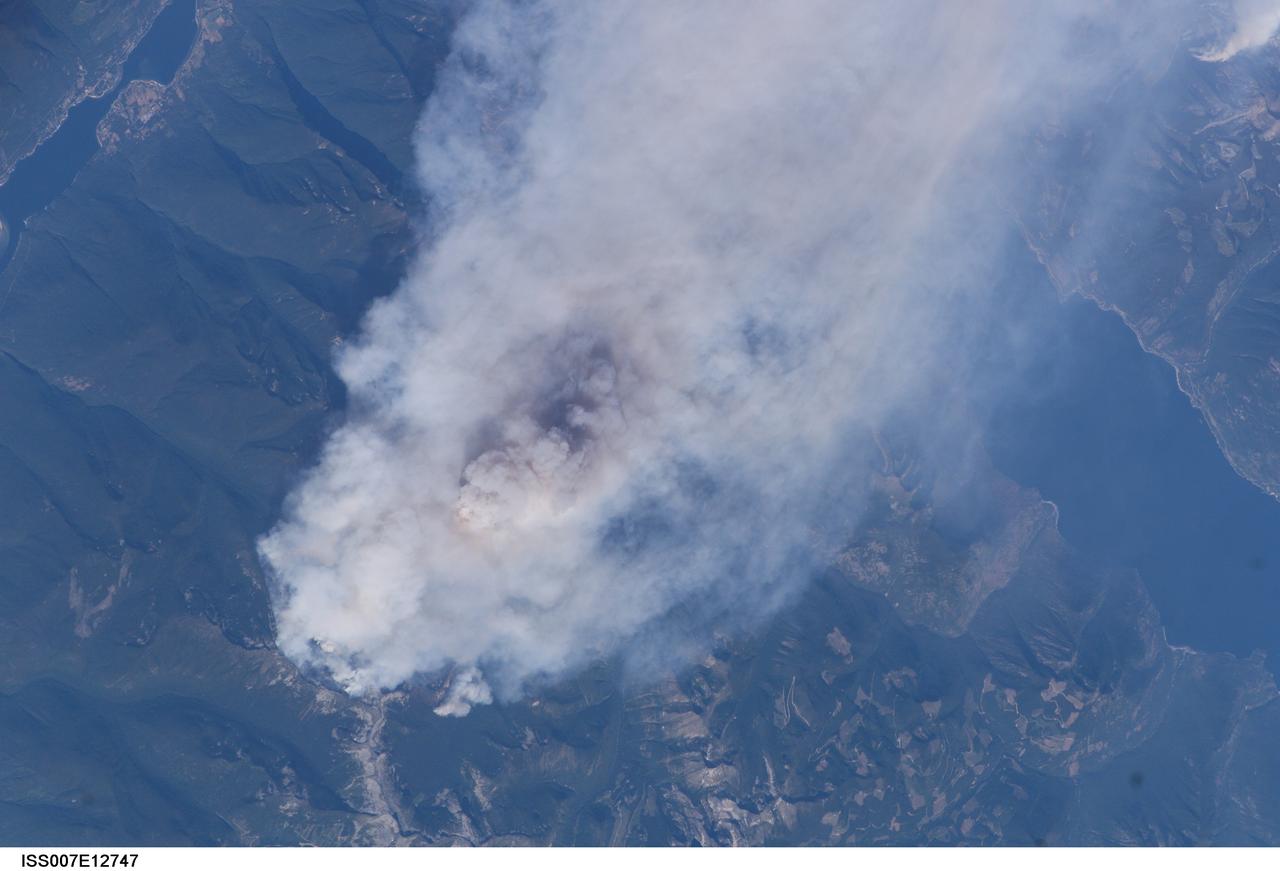
ISS007-E-12747 (14 August 2003) --- This view of forest fires in lower British Columbia, Canada was taken by one of the Expedition 7 crewmembers onboard the International Space Station (ISS).
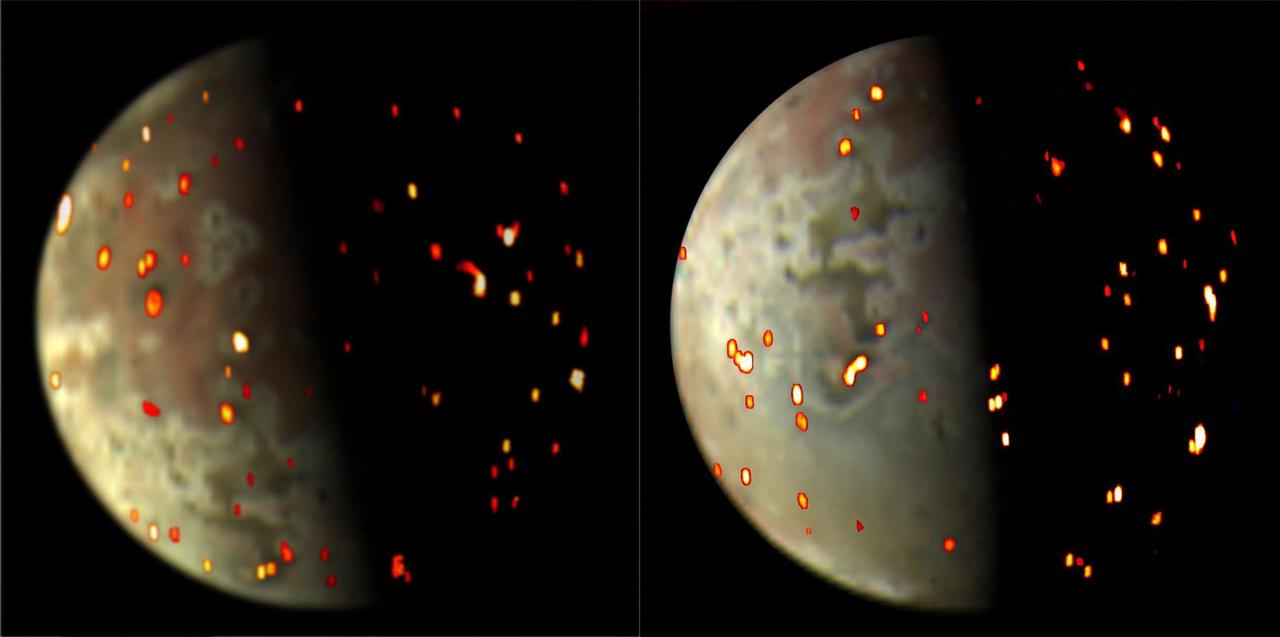
These composite views depicting volcanic activity on Io were generated using both visible light and infrared data collected by NASA's Juno spacecraft during flybys of the Jovian moon on Dec. 14, 2022 (left) and March 1, 2023. In both views, the view of the moon (in mottled grays and browns) is provided by the JunoCam imager. The overlays of reds, yellows and bright whites is data from spacecraft's JIRAM (Jovian Infrared Auroral Mapper) instrument. The JIRAM data on the left was collected from an altitude of about 50,000 miles (80,000 kilometers), with a spatial resolution of around 12 miles (20 kilometers) per pixel. The JIRAM data annotated into the right JunoCam image was acquired at an altitude of about 36,000 miles (58,000 kilometers) and has a spatial resolution of 9 miles (15 kilometers) per pixel. JIRAM "sees" infrared light not visible to the human eye. It measures heat radiated from the planet at an infrared wavelength of around 5 microns. Annotated views like these can help the Juno science team better understand location and variations in the active volcanoes on the moon's surface. https://photojournal.jpl.nasa.gov/catalog/PIA25888
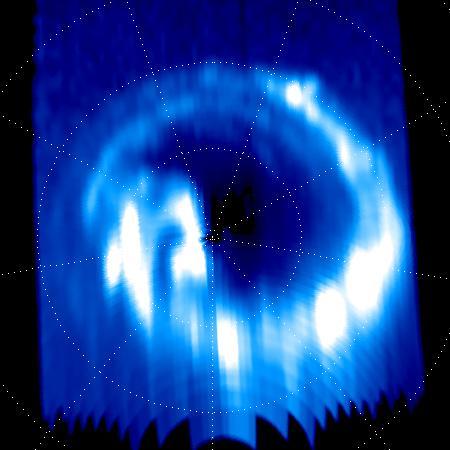
On Sept. 14, 2017, one day before making its final plunge into Saturn's atmosphere, NASA's Cassini spacecraft used its Ultraviolet Imaging Spectrograph, or UVIS, instrument to capture this final view of ultraviolet auroral emissions in the planet's north polar region. The view is centered on the north pole of Saturn, with lines of latitude visible for 80, 70 and 60 degrees. Lines of longitude are spaced 40 degrees apart. The planet's day side is at bottom, while the night side is at top. A sequence of images from this observation has also been assembled into a movie sequence. The last image in the movie was taken about an hour before the still image, which was the actual final UVIS auroral image. Auroral emissions are generated by charged particles traveling along the invisible lines of Saturn's magnetic field. These particles precipitate into the atmosphere, releasing light when they strike gas molecules there. Several individual auroral structures are visible here, despite that this UVIS view was acquired at a fairly large distance from the planet (about 424,000 miles or 683,000 kilometers). Each of these features is connected to a particular phenomenon in Saturn's magnetosphere. For instance, it is possible to identify auroral signatures here that are related to the injection of hot plasma from the dayside magnetosphere, as well as auroral features associated with a change in the magnetic field's shape on the magnetosphere's night side. Several possible scenarios have been postulated over the years to explain Saturn's changing auroral emissions, but researchers are still far from a complete understanding of this complicated puzzle. Researchers will continue to analyze the hundreds of image sequences UVIS obtained of Saturn's auroras during Cassini's 13-year mission, with many new discoveries likely to be made. This image and movie sequence were produced by the Laboratory for Planetary and Atmospheric Physics (LPAP) of the STAR Institute of the University of Liege in Belgium, in collaboration with the UVIS Team. The animation is available at https://photojournal.jpl.nasa.gov/catalog/PIA21899
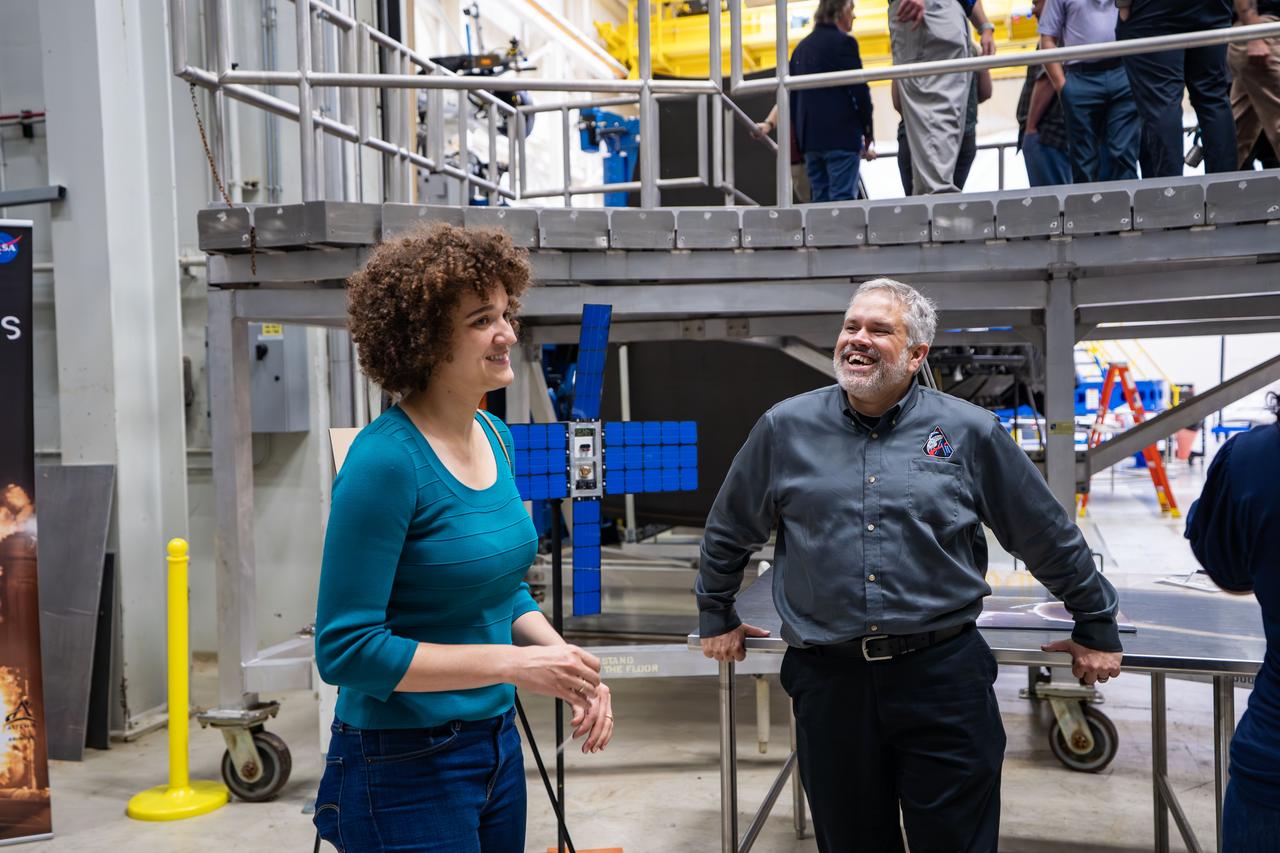
These images show NASA employees attending an event August 14, 2025, at Marshall Space Flight Center in Huntsville, Alabama, to view the Orion stage adapter for Artemis II before it is transported to NASA’s Kennedy Space Center in Florida. Manufactured entirely at NASA Marshall, the adapter plays a crucial role in connecting the SLS (Space Launch System) rocket’s interim cryogenic propulsion stage to the Orion spacecraft. This adapter is the final piece of SLS hardware to be delivered to Kennedy Space Center in preparation for the Artemis II mission.
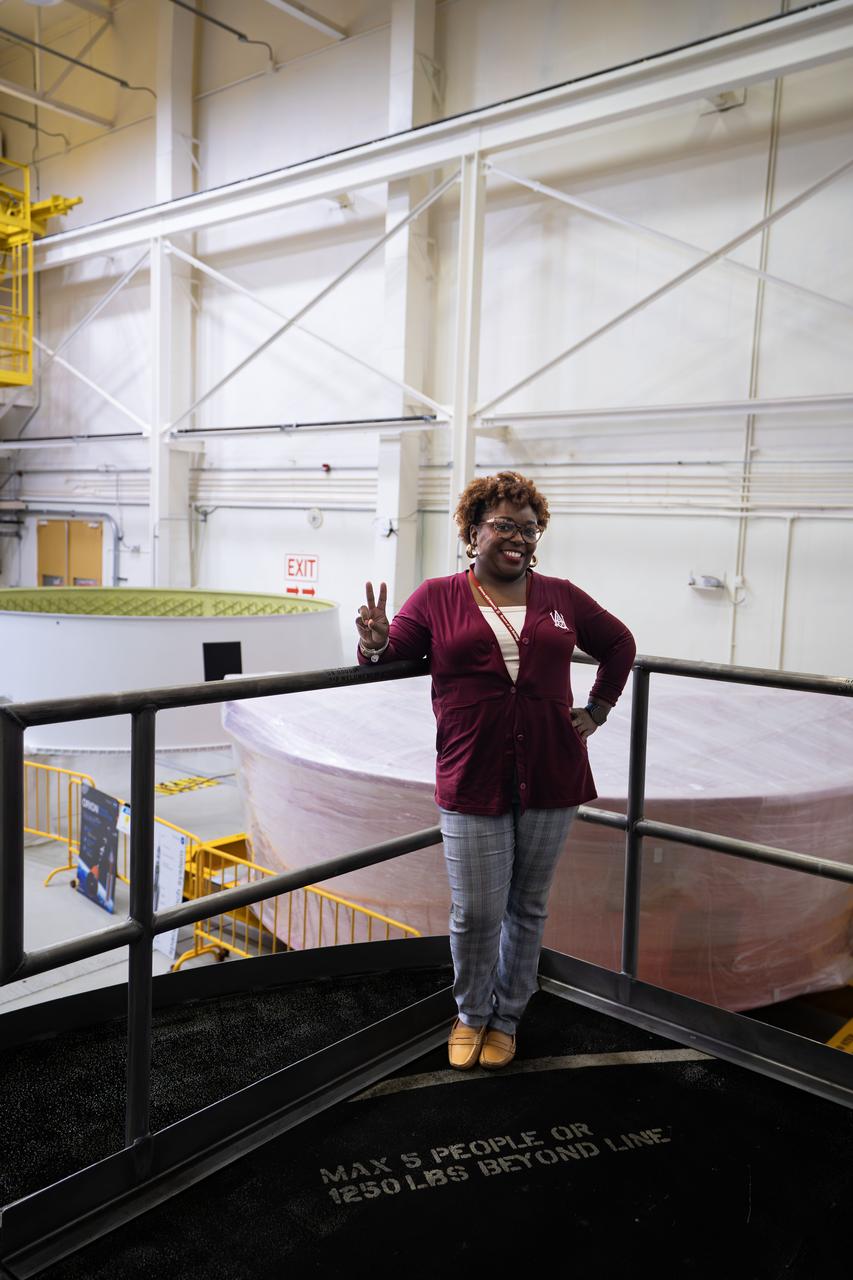
These images show NASA employees attending an event August 14, 2025, at Marshall Space Flight Center in Huntsville, Alabama, to view the Orion stage adapter for Artemis II before it is transported to NASA’s Kennedy Space Center in Florida. Manufactured entirely at NASA Marshall, the adapter plays a crucial role in connecting the SLS (Space Launch System) rocket’s interim cryogenic propulsion stage to the Orion spacecraft. This adapter is the final piece of SLS hardware to be delivered to Kennedy Space Center in preparation for the Artemis II mission.
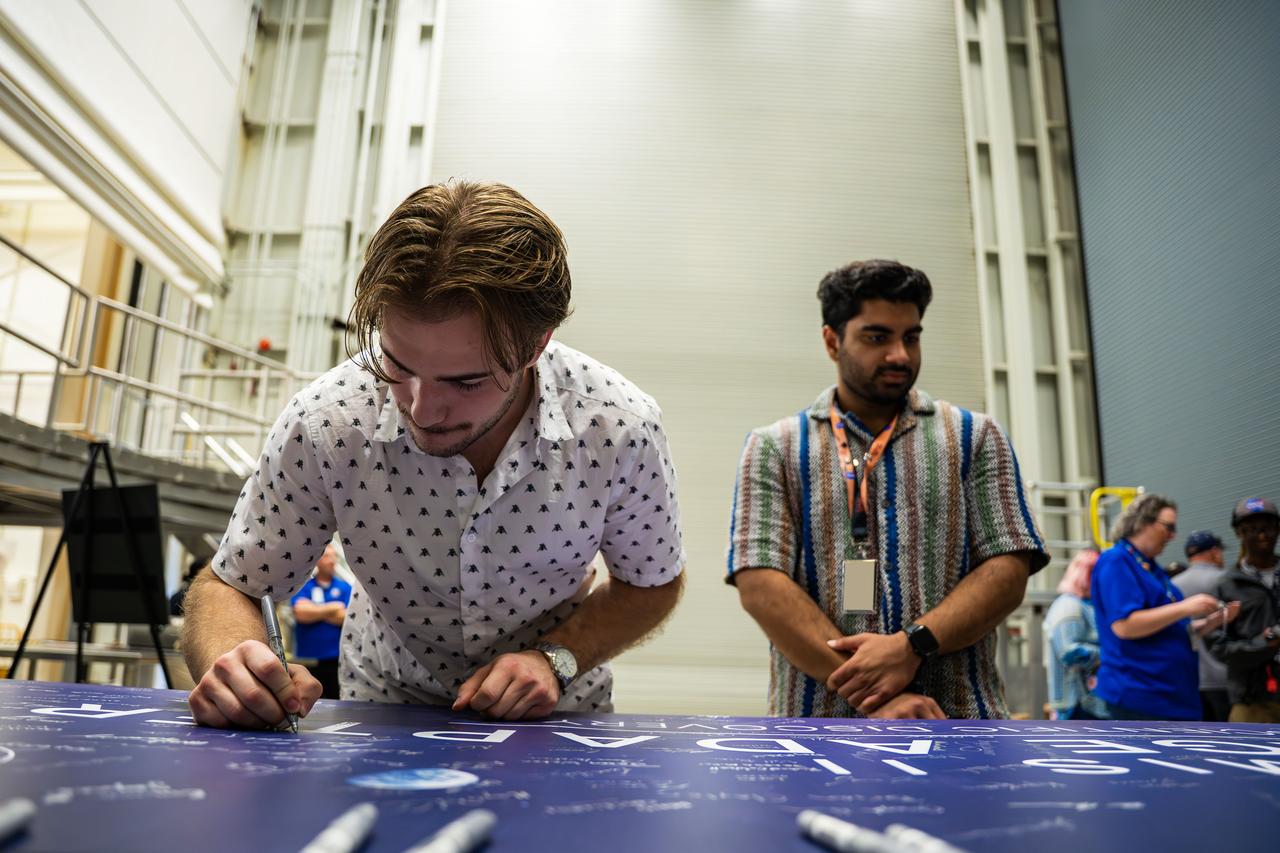
These images show NASA employees attending an event August 14, 2025, at Marshall Space Flight Center in Huntsville, Alabama, to view the Orion stage adapter for Artemis II before it is transported to NASA’s Kennedy Space Center in Florida. Manufactured entirely at NASA Marshall, the adapter plays a crucial role in connecting the SLS (Space Launch System) rocket’s interim cryogenic propulsion stage to the Orion spacecraft. This adapter is the final piece of SLS hardware to be delivered to Kennedy Space Center in preparation for the Artemis II mission.
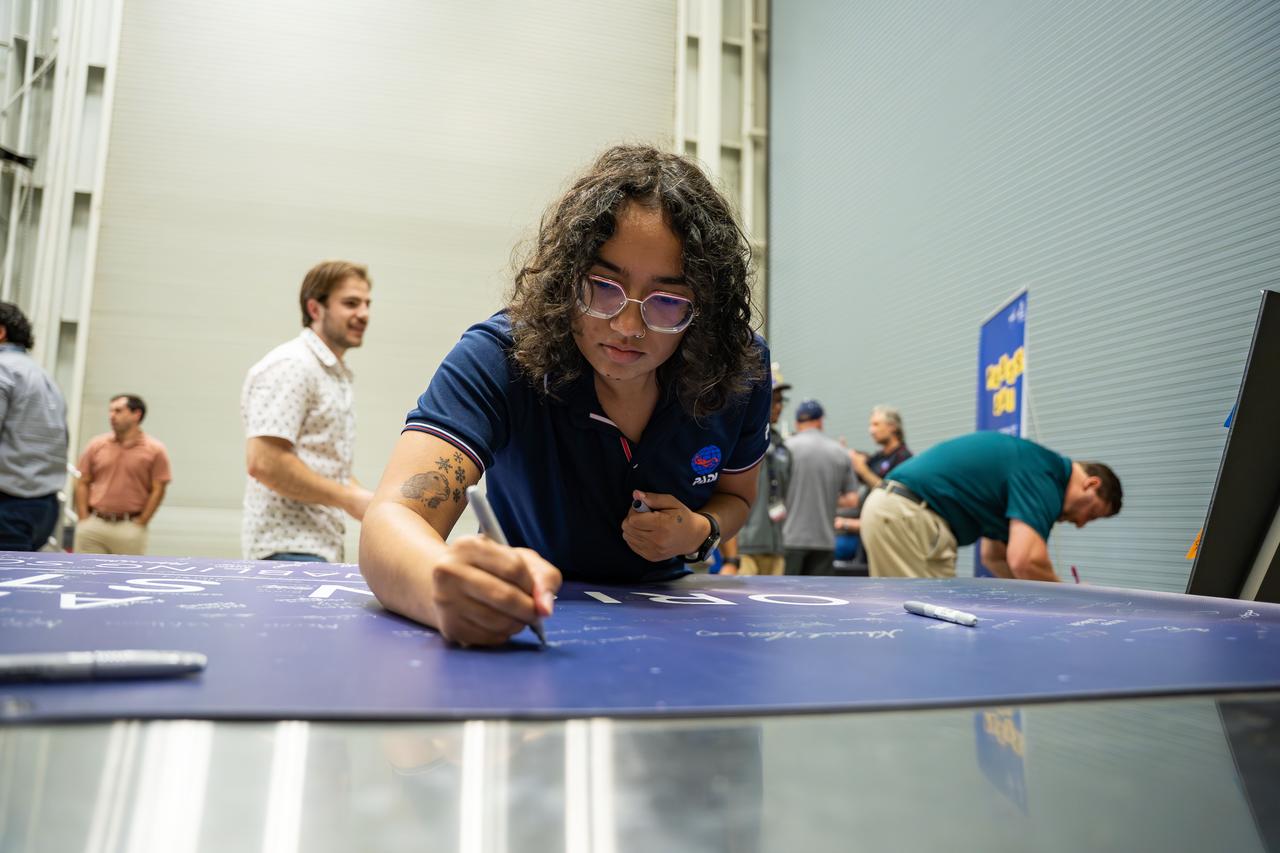
These images show NASA employees attending an event August 14, 2025, at Marshall Space Flight Center in Huntsville, Alabama, to view the Orion stage adapter for Artemis II before it is transported to NASA’s Kennedy Space Center in Florida. Manufactured entirely at NASA Marshall, the adapter plays a crucial role in connecting the SLS (Space Launch System) rocket’s interim cryogenic propulsion stage to the Orion spacecraft. This adapter is the final piece of SLS hardware to be delivered to Kennedy Space Center in preparation for the Artemis II mission.

These images show NASA employees attending an event August 14, 2025, at Marshall Space Flight Center in Huntsville, Alabama, to view the Orion stage adapter for Artemis II before it is transported to NASA’s Kennedy Space Center in Florida. Manufactured entirely at NASA Marshall, the adapter plays a crucial role in connecting the SLS (Space Launch System) rocket’s interim cryogenic propulsion stage to the Orion spacecraft. This adapter is the final piece of SLS hardware to be delivered to Kennedy Space Center in preparation for the Artemis II mission.
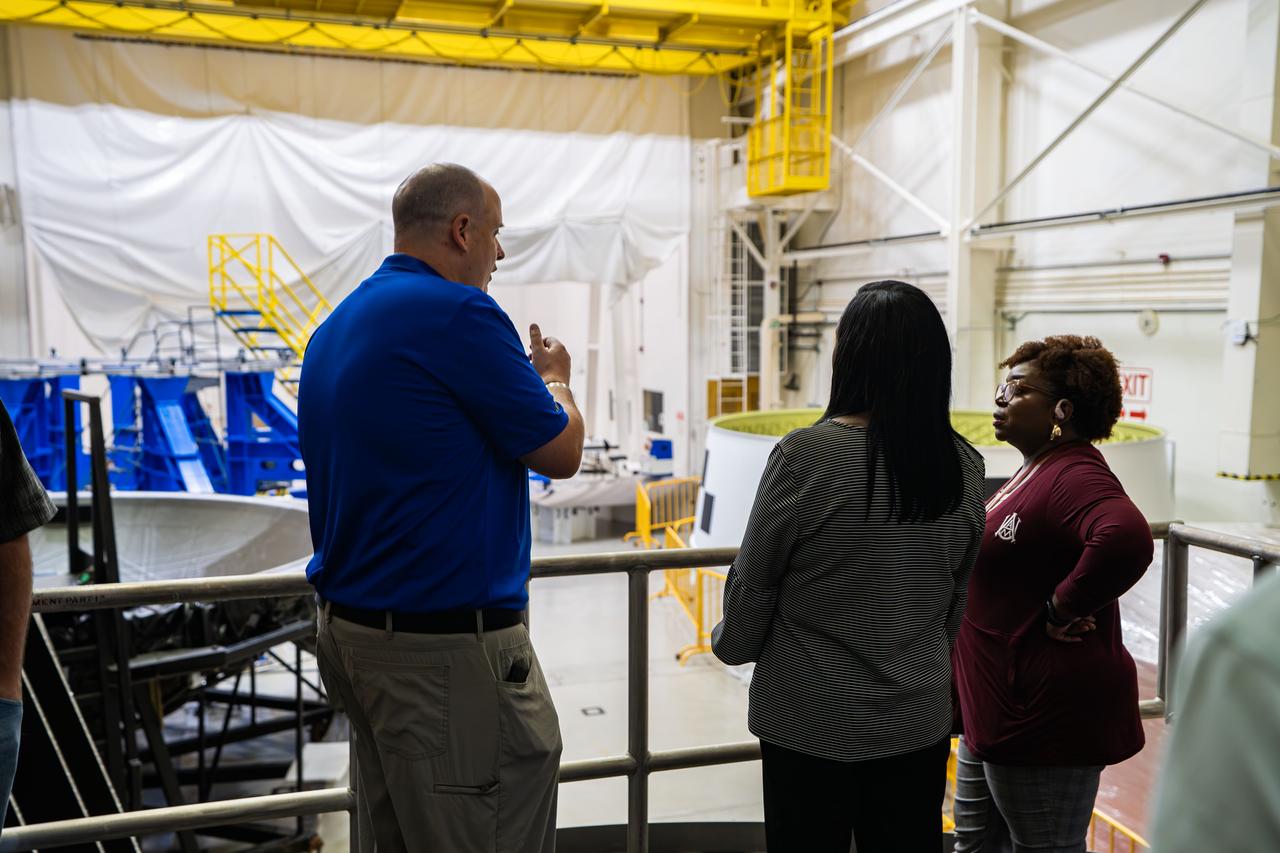
These images show NASA employees attending an event August 14, 2025, at Marshall Space Flight Center in Huntsville, Alabama, to view the Orion stage adapter for Artemis II before it is transported to NASA’s Kennedy Space Center in Florida. Manufactured entirely at NASA Marshall, the adapter plays a crucial role in connecting the SLS (Space Launch System) rocket’s interim cryogenic propulsion stage to the Orion spacecraft. This adapter is the final piece of SLS hardware to be delivered to Kennedy Space Center in preparation for the Artemis II mission.