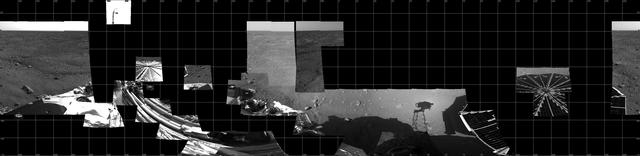
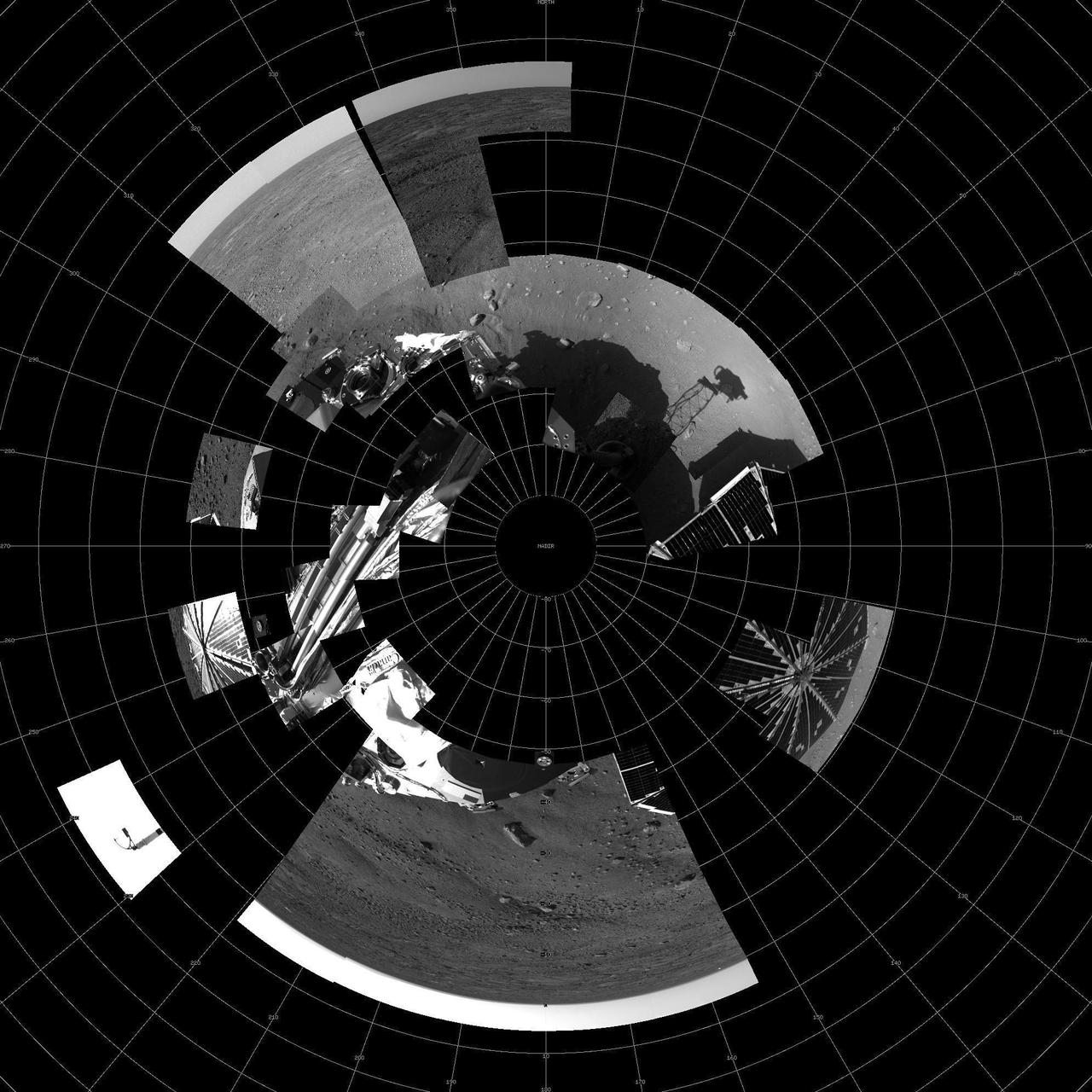
View of Phoenix Surroundings as of Sol 2
Colors of the Innermost Planet: View 2
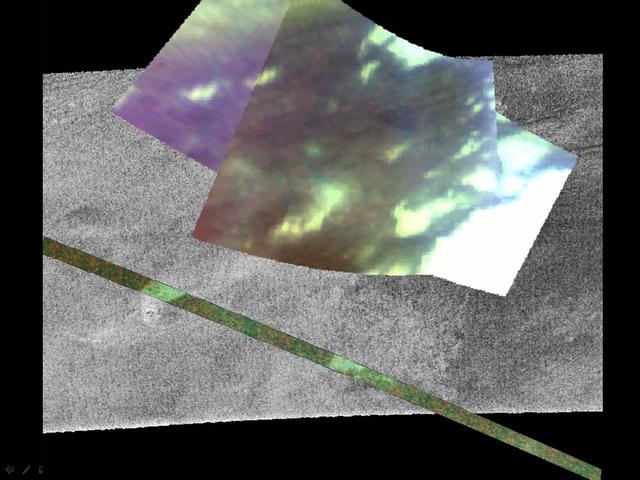
Infrared and Radar Views of Titan #2
Phoenix view of Mars as of the end of Sol 2
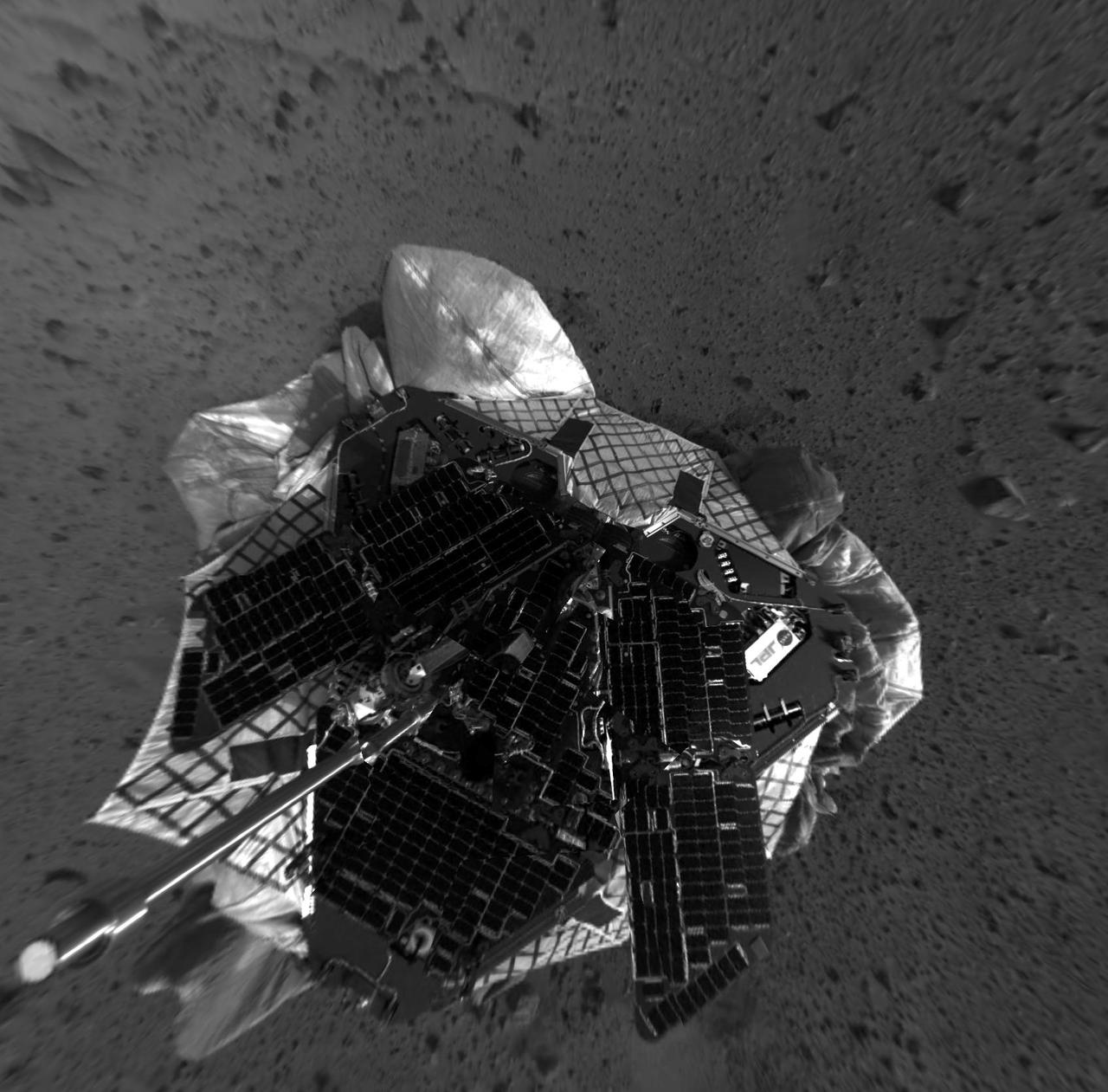
View From Above Spirit on Mars-2
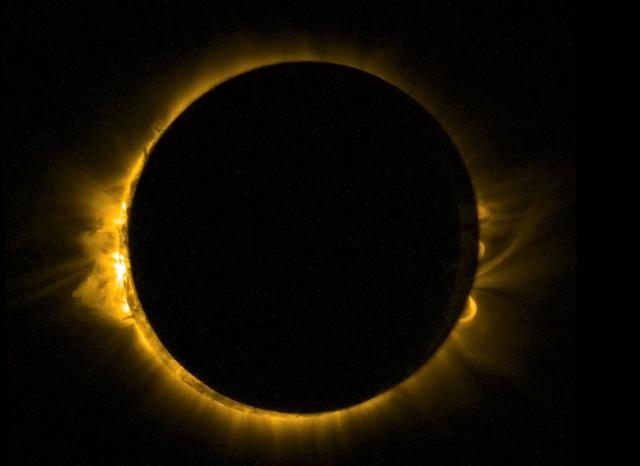
As Europe enjoyed a partial solar eclipse on the morning of Friday 20 March 2015, ESA’s Sun-watching Proba-2 minisatellite had a ringside seat from orbit. Proba-2 used its SWAP imager to capture the Moon passing in front of the Sun in a near-totality. SWAP views the solar disc at extreme ultraviolet wavelengths to capture the turbulent surface of the Sun and its swirling corona.  Credit: ESA/Proba-2
ESA's PROBA-2 View of Europe's Solar Eclipse
Proposed Mars Polar Lander Landing Site Perspective View 2
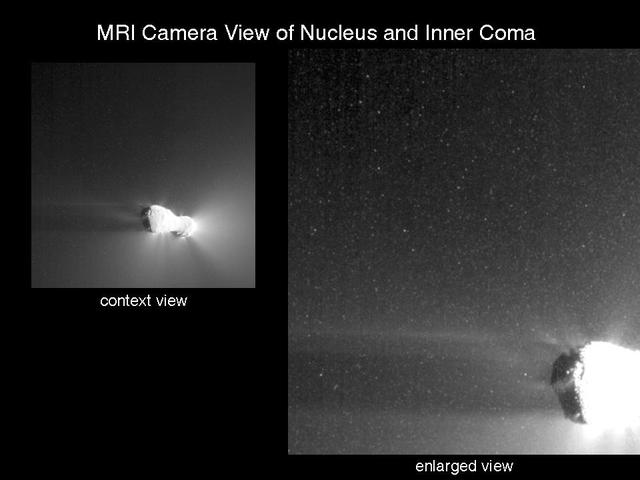
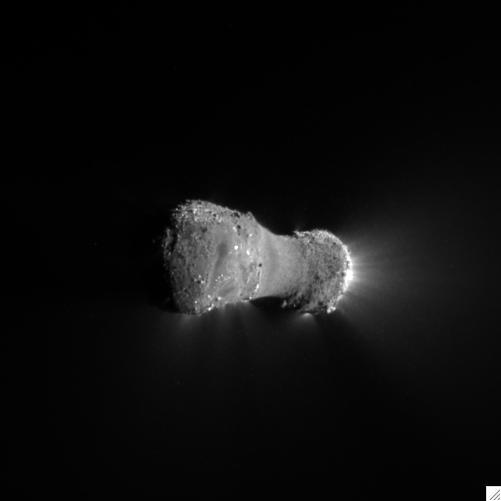
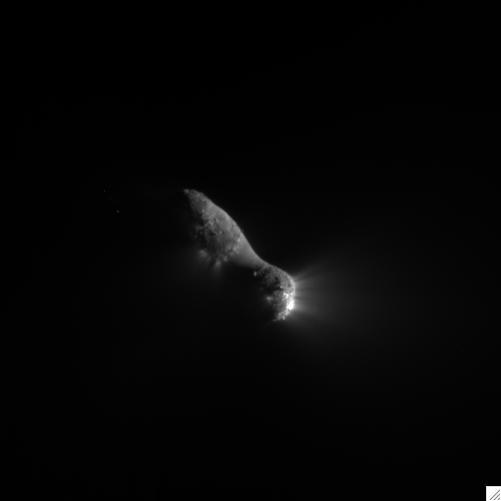
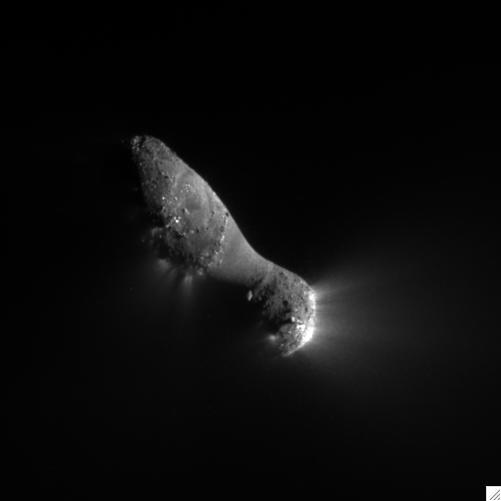
NASA EPOXI mission spacecraft obtained these views of the icy particle cloud around comet Hartley 2. The image on the left is the full image of comet Hartley 2 for context, and the image on the right was enlarged and cropped.
Views of Hartley 2 Nucleus and Inner Coma
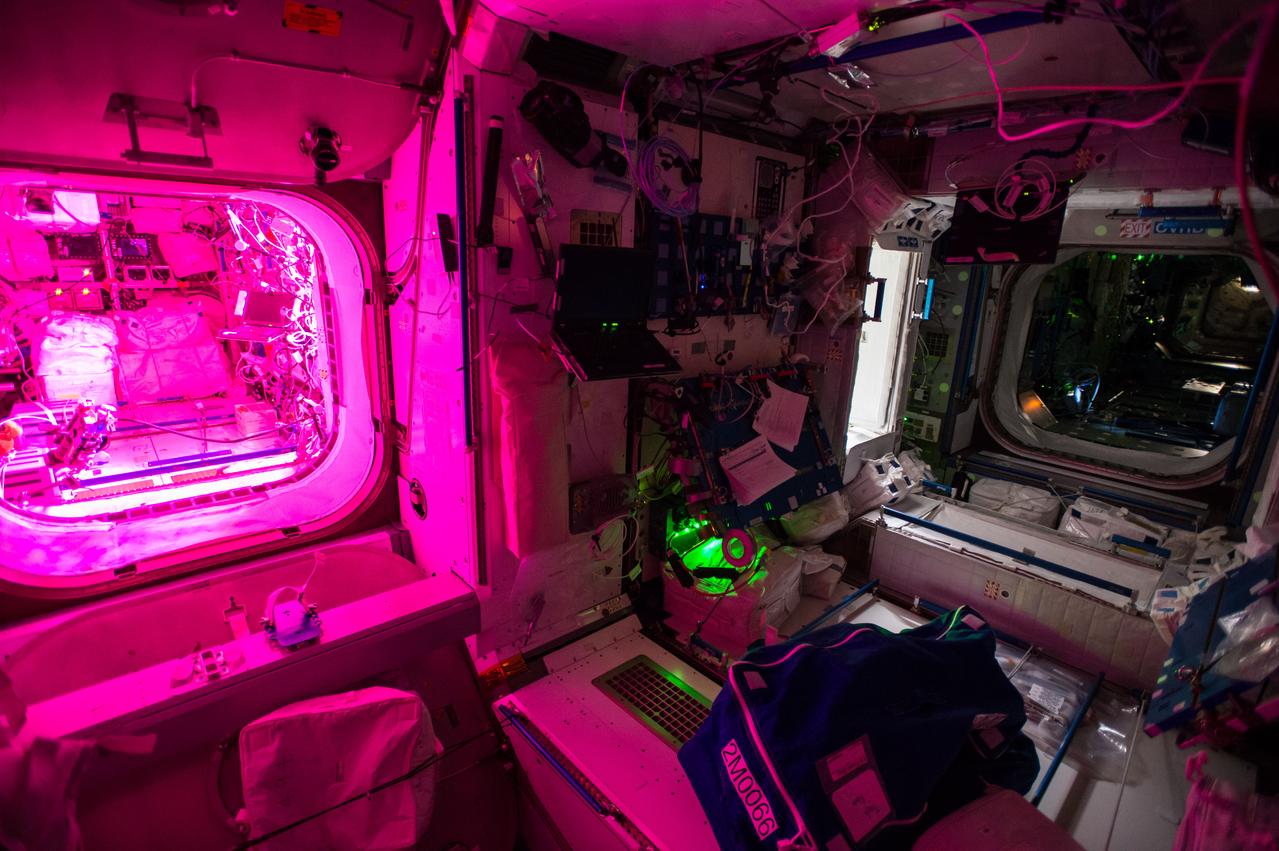
Interior view looking starboard (STBD) and aft in the Harmony Node 2, taken during the crew's sleep period (main lights are turned off). Hatches into the Columbus European Laboratory and Destiny U.S. Laboratory are in view. The pink glow comes from the Vegetable Production System (Veggie) greenhouse, housed in Columbus.
Interior View in Node 2
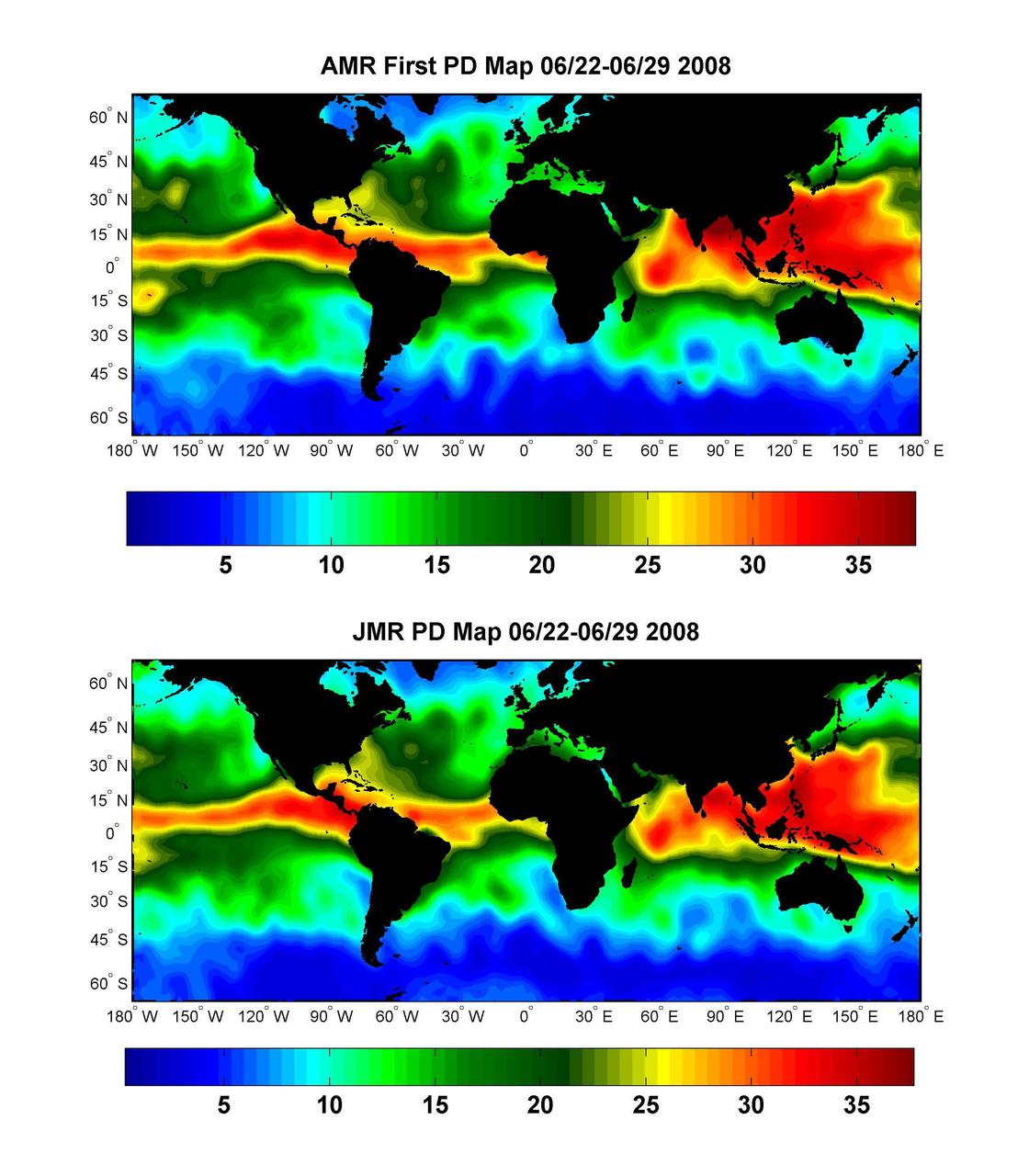
Global Views of Atmospheric Water Vapor:<br />First Data from OSTM/Jason-2 Advanced Microwave Radiometer
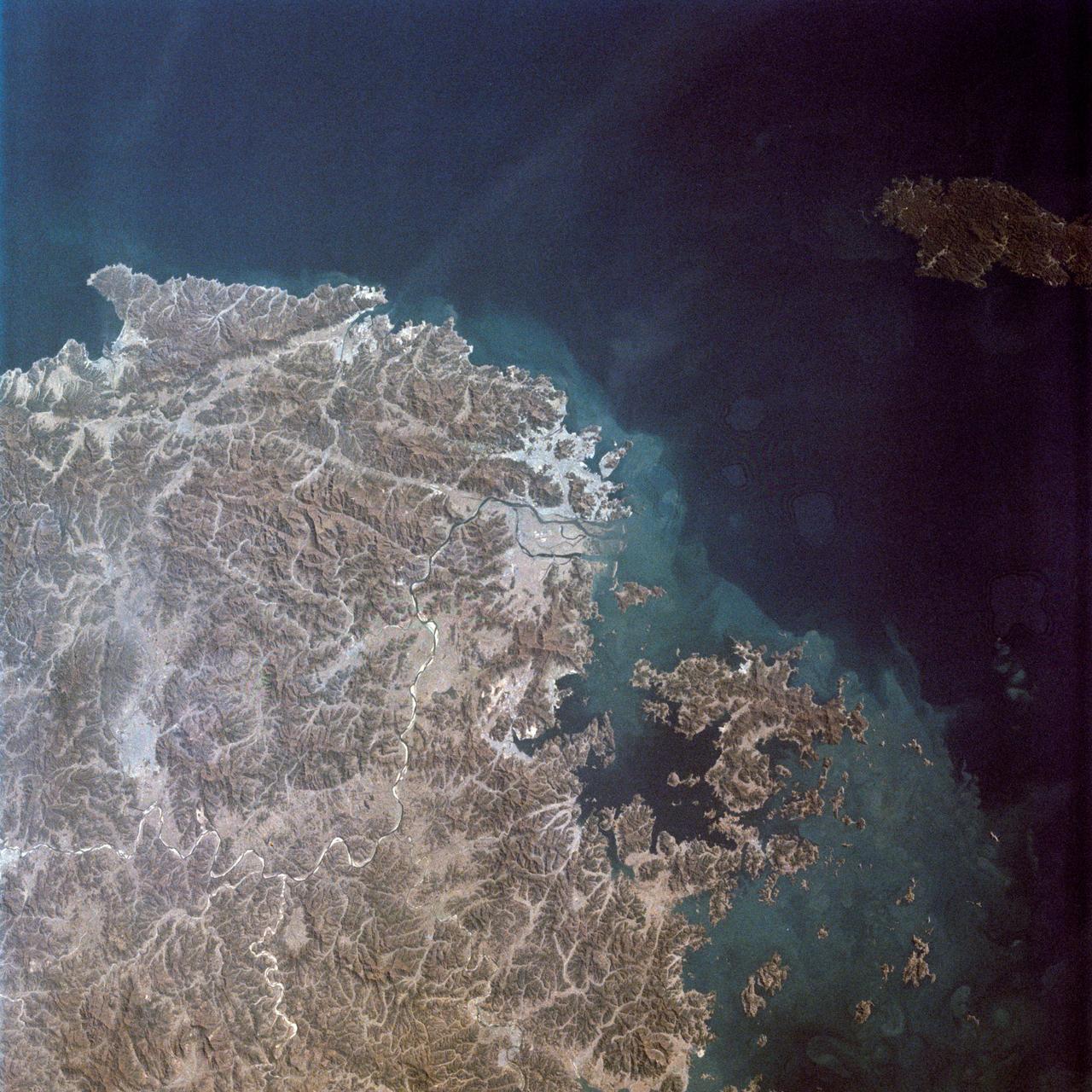
Onboard views by the STS-2 Crew of the Payload Bay with Office of Space and Terrestrial Applications (OSTA)-1 Payload, the Remote Manipulator System (RMS) and Earth views of:  Korea, China and Columbia.    Also available in 4x5 BW        1.  REAGAN, RONALD PRESIDENT - MOCR (STS-2)       JSC, HOUSTON, TX          Also available in 4x5 BW, 35 CN, 35 BW
INFLIGHT (EARTH VIEWS) - STS-2
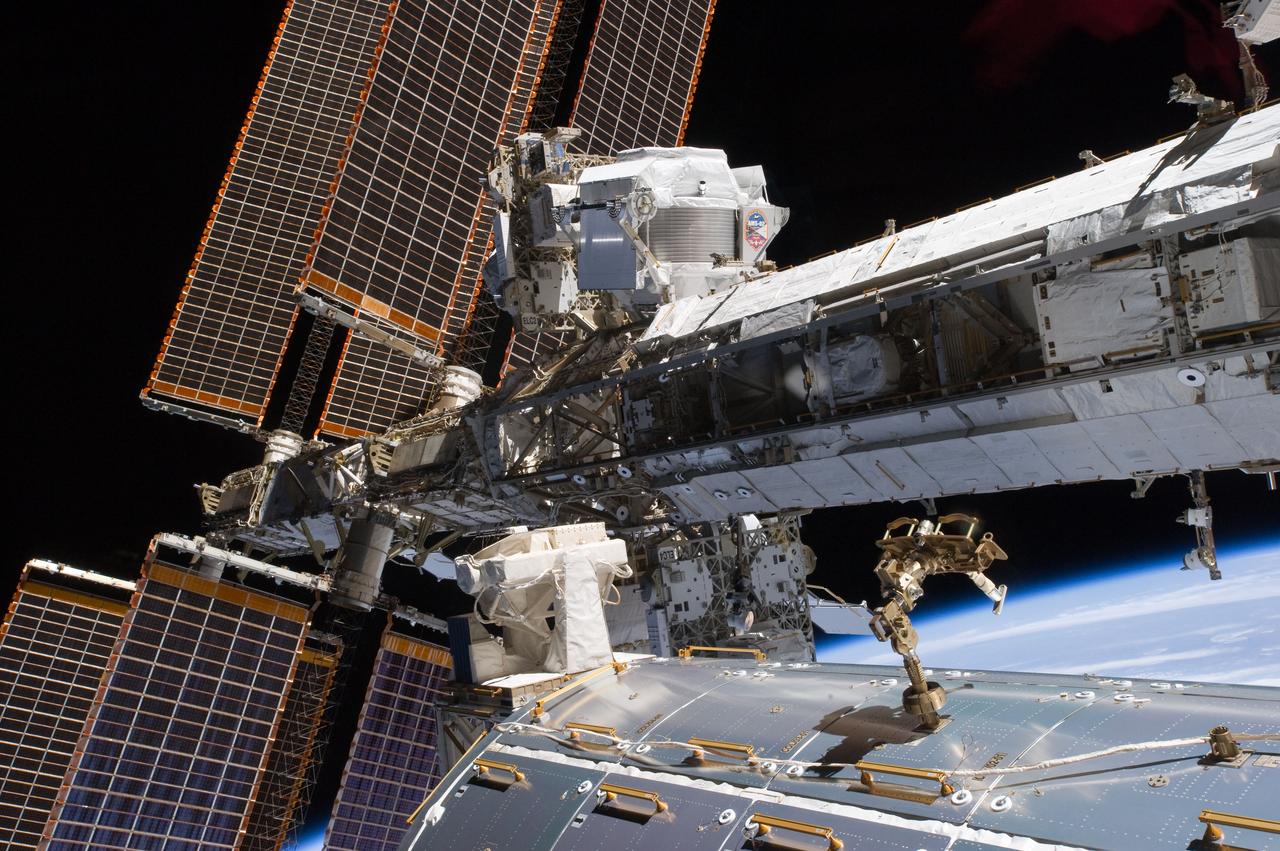
s134e007533 (5/20/2011) --- View of the Alpha Magnetic Spectrometer - 2 (AMS-2) mounted on the S3 Truss segment. The EXPRESS (Expedite the Processing of Experiments to Space Station) Logistics Carrier 2 (ELC2) is also visible behind the AMS-2. Photo taken during STS-134 and Expedition 27 joint operations.
View of the AMS-2 mounted on the S3 Truss
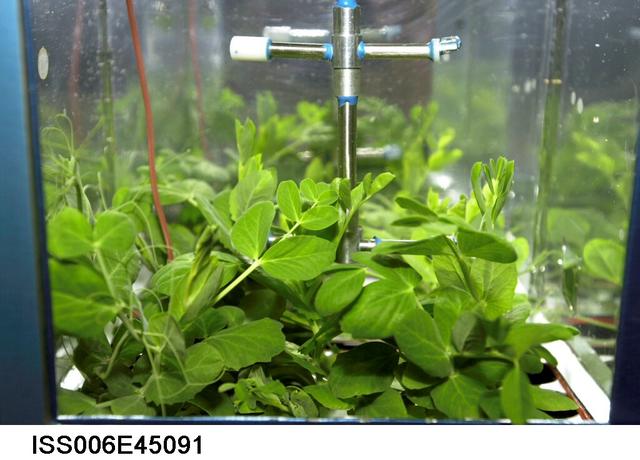
ISS006-E-45091 (25 March 2003) --- A view of the Russian BIO-5 Rasteniya-2/Lada-2 (Plants-2) plant growth experiment located in the Zvezda Service Module on the International Space Station (ISS).
View of plants in the Russian BIO-5 Rasteniya-2/Lada-2 (Plants-2) Plant Growth Experiment in the SM
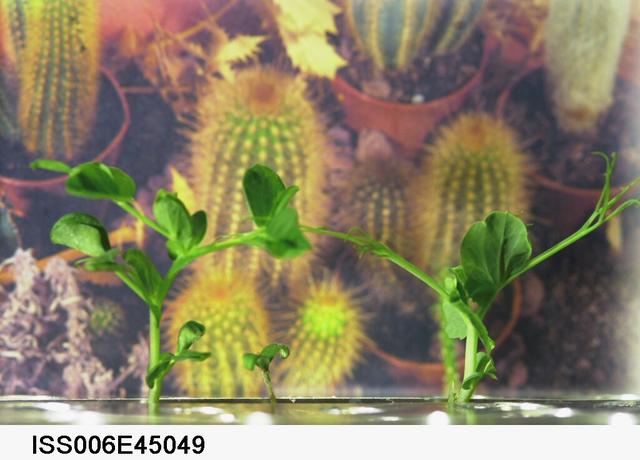
ISS006-E-45049 (14 March 2003) --- A close up view of sprouts on the Russian BIO-5 Rasteniya-2/Lada-2 (Plants-2) plant growth experiment, which is located in the Zvezda Service Module on the International Space Station (ISS).
Close-up view of sprouts on the Russian BIO-5 Rasteniya-2/Lada-2 (Plants-2) plant growth experiment
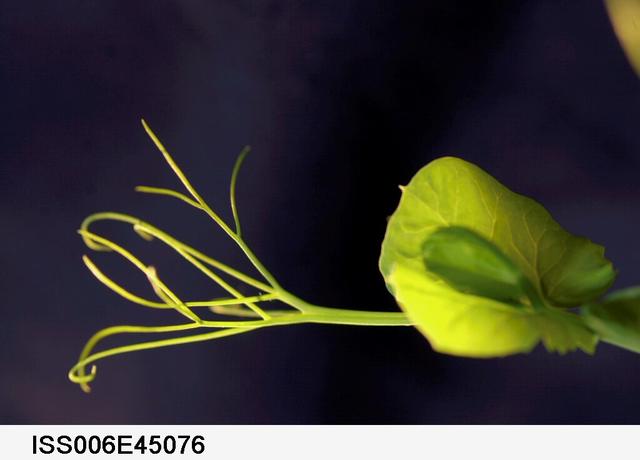
ISS006-E-45076 (17 March 2003) --- A close up view of sprouts on the Russian BIO-5 Rasteniya-2/Lada-2 (Plants-2) plant growth experiment, which is located in the Zvezda Service Module on the International Space Station (ISS).
Close-up view of sprouts on the Russian BIO-5 Rasteniya-2/Lada-2 (Plants-2) Plant Growth Experiment
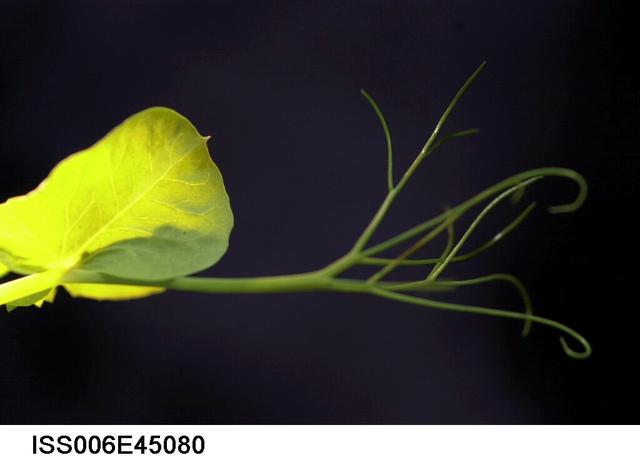
ISS006-E-45080 (17 March 2003) --- A close up view of sprouts on the Russian BIO-5 Rasteniya-2/Lada-2 (Plants-2) plant growth experiment, which is located in the Zvezda Service Module on the International Space Station (ISS).
Close-up view of sprouts on the Russian BIO-5 Rasteniya-2/Lada-2 (Plants-2) Plant Growth Experiment
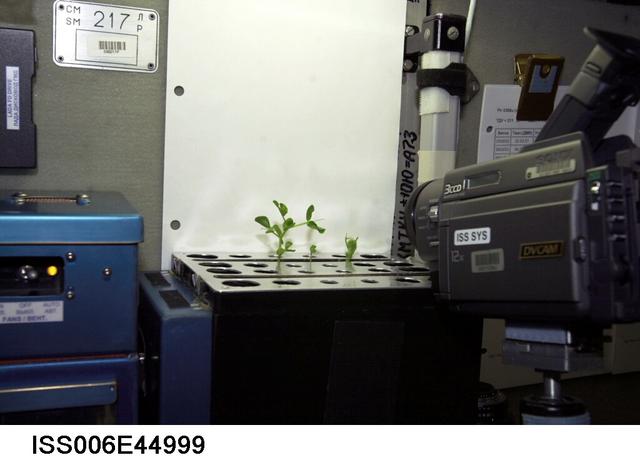
ISS006-E-44999 (12 March 2003) --- A view of the Russian BIO-5 Rasteniya-2/Lada-2 (Plants-2) plant growth experiment located in the Zvezda Service Module on the International Space Station (ISS).  A camera used for recording progress of the experiment is visible on the right.
View of the Russian BIO-5 Rasteniya-2/Lada-2 (Plants-2) plant growth experiment in the SM
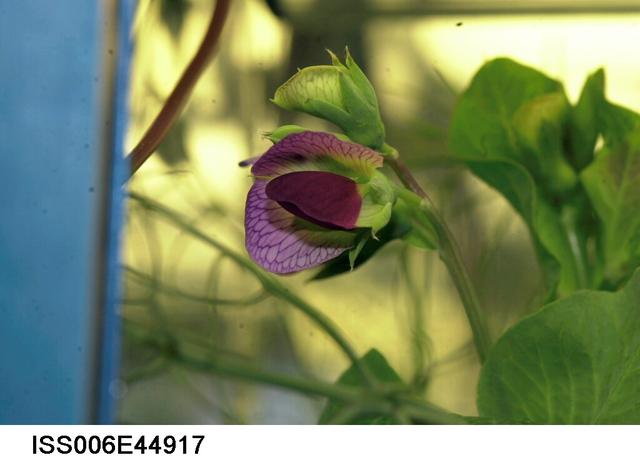
ISS006-E-44917 (5 April 2003) --- A close up view of a bloom on the Russian BIO-5 Rasteniya-2/Lada-2 (Plants-2) plant growth experiment, which is located in the Zvezda Service Module on the International Space Station (ISS).
Close-up view of a bloom on the Russian BIO-5 Rasteniya-2/Lada-2 (Plants-2) Plant Growth Experiment
51F-33-005 (29 July - 6 August 1985) --- Experiments and the instrument pointing system (IPS) for Spacelab 2 are backdropped against the Libya/Tunisia Mediterranean coast and black space in this 70mm view photographed through the aft flight deck windows of the Space Shuttle Challenger. Also partially visible among the cluster of Spacelab 2 hardware are the solar optical universal polarimeter (SOUP) experiment and the coronal helium abundance experiment (CHASE).
View of Spacelab 2 pallet in the open payload bay
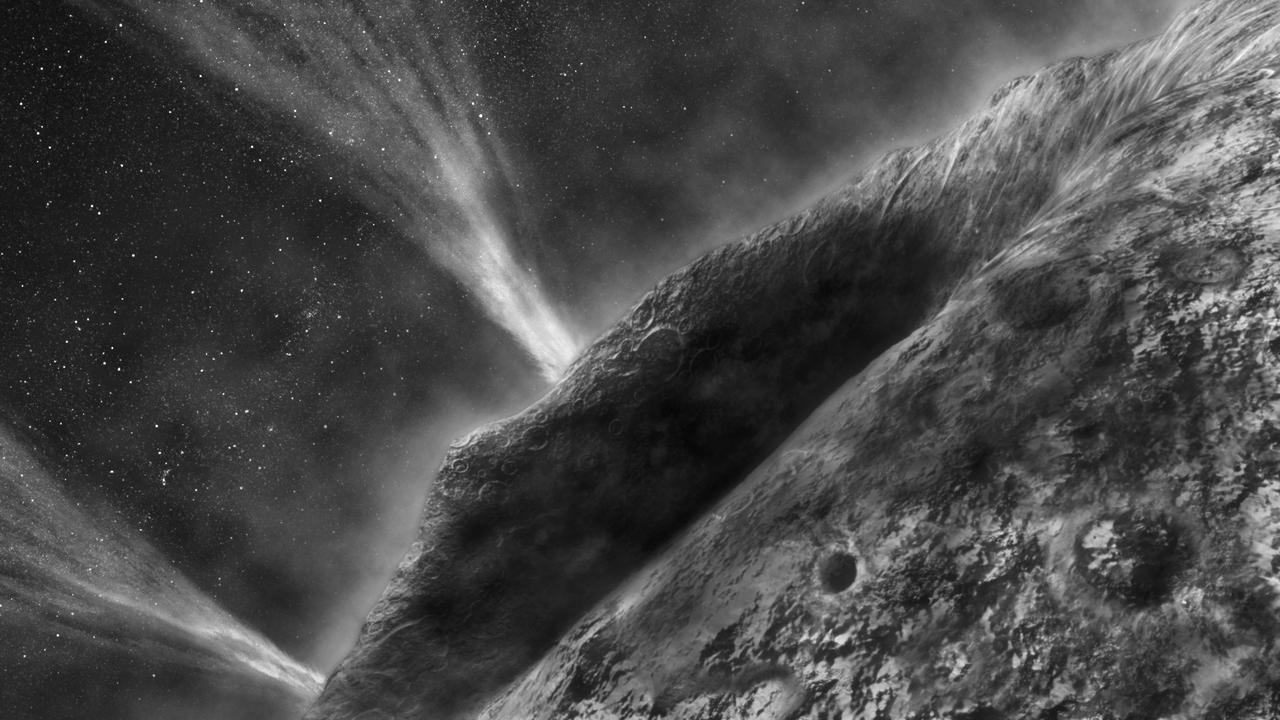
This is an artist's concept depicting a view of comet Wild 2 as seen from NASA's Stardust spacecraft during its flyby of the comet on Jan. 2, 2004.  http://photojournal.jpl.nasa.gov/catalog/PIA06283
Wild 2: If You Were There
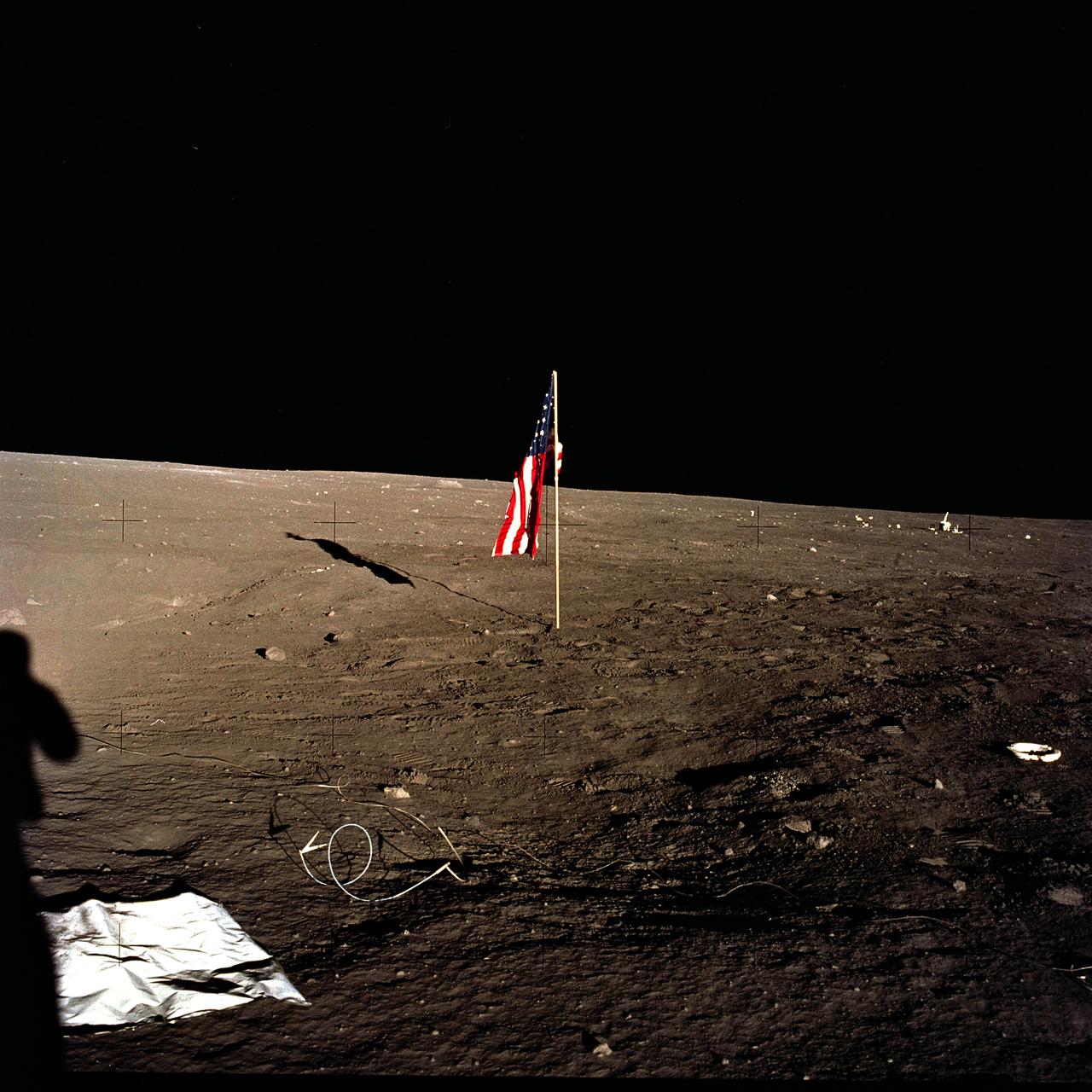
The second manned lunar landing mission, Apollo 12 launched from launch pad 39-A at Kennedy Space Center in Florida on November 14, 1969 via a Saturn V launch vehicle. The Saturn V vehicle was developed by the Marshall Space Flight Center (MSFC) under the direction of Dr. Wernher von Braun. Aboard Apollo 12 was a crew of three astronauts: Alan L. Bean, pilot of the Lunar Module (LM), Intrepid; Richard Gordon, pilot of the Command Module (CM), Yankee Clipper; and Spacecraft Commander Charles Conrad. The LM, Intrepid, landed astronauts Conrad and Bean on the lunar surface in what’s known as the Ocean of Storms while astronaut Richard Gordon piloted the CM, Yankee Clipper, in a parking orbit around the Moon. Lunar soil activities included the deployment of the Apollo Lunar Surface Experiments Package (ALSEP), finding the unmanned Surveyor 3 that landed on the Moon on April 19, 1967, and collecting 75 pounds (34 kilograms) of rock samples. This is the second of 25 images captured by the crew in attempt to provide a 360 degree Lunar surface scene. Apollo 12 safely returned to Earth on November 24, 1969.
Saturn Apollo Program
NASA Voyager 2 post-encounter view of Neptune south pole as the spacecraft sped away on a southward trajectory.
Post-encounter View of Neptune South Pole
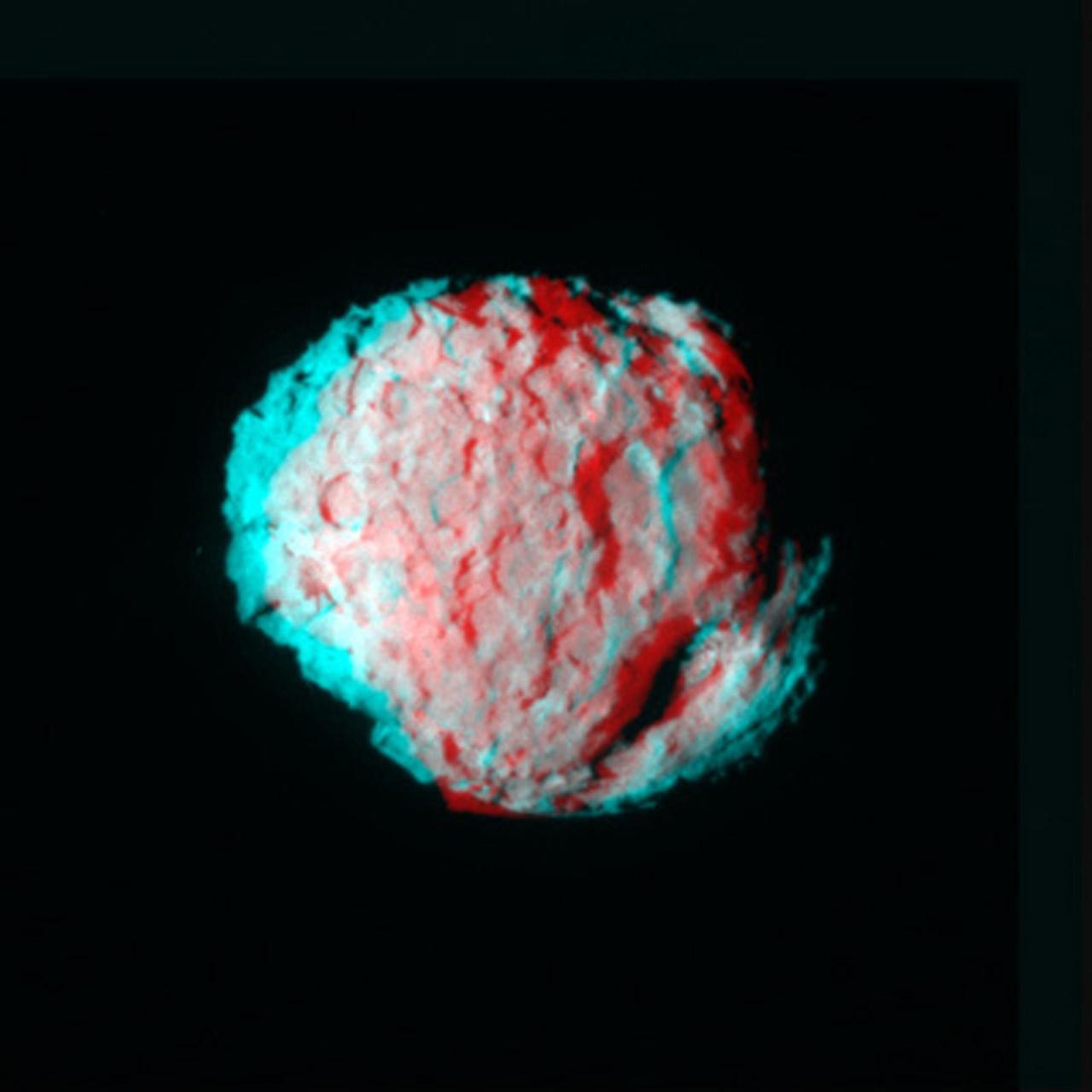
NASA Stardust Navigation Camera captured this anaglyph of the comet Wild 2. 3D glasses are necessary to view this image.
Comet Wild 2 - Anaglyph
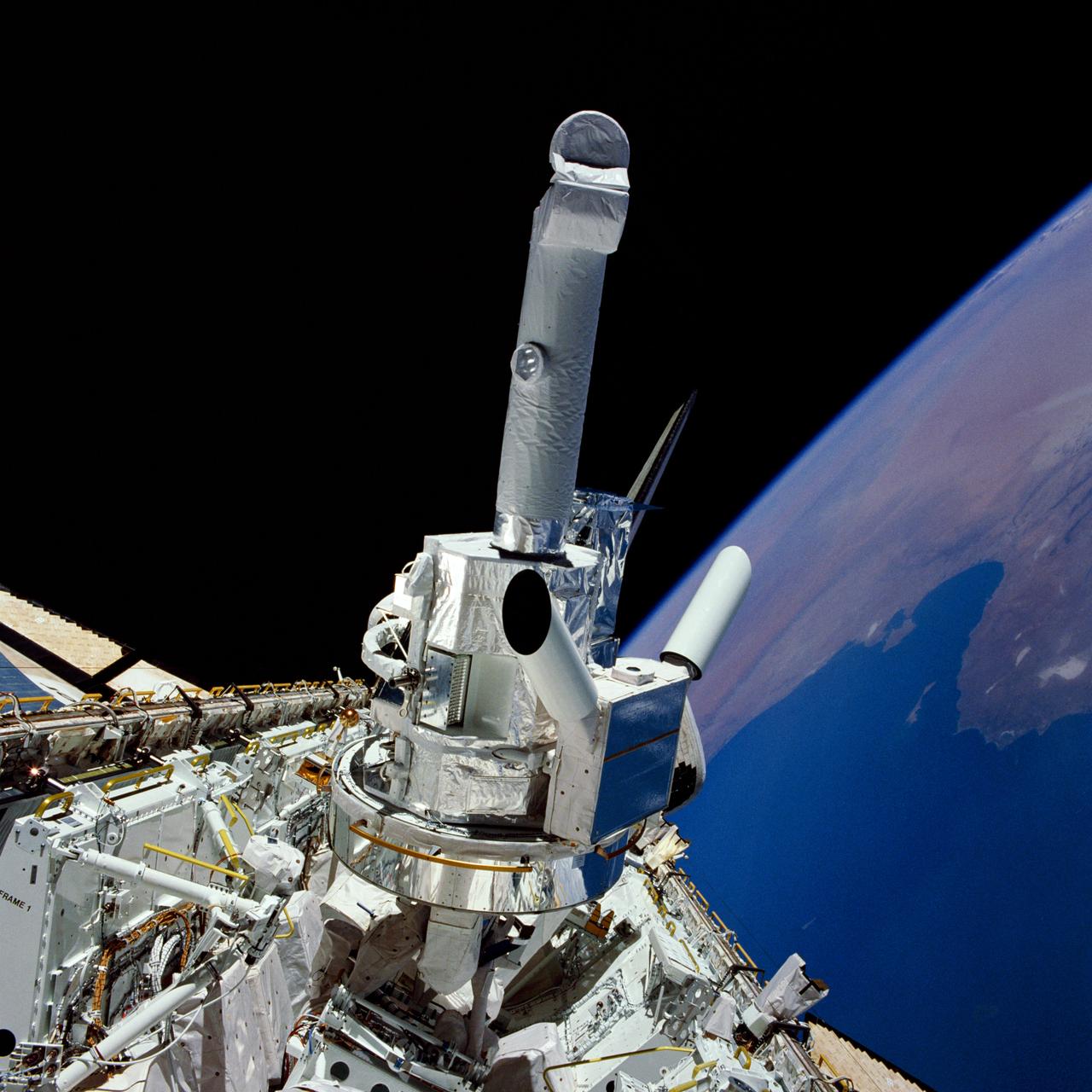
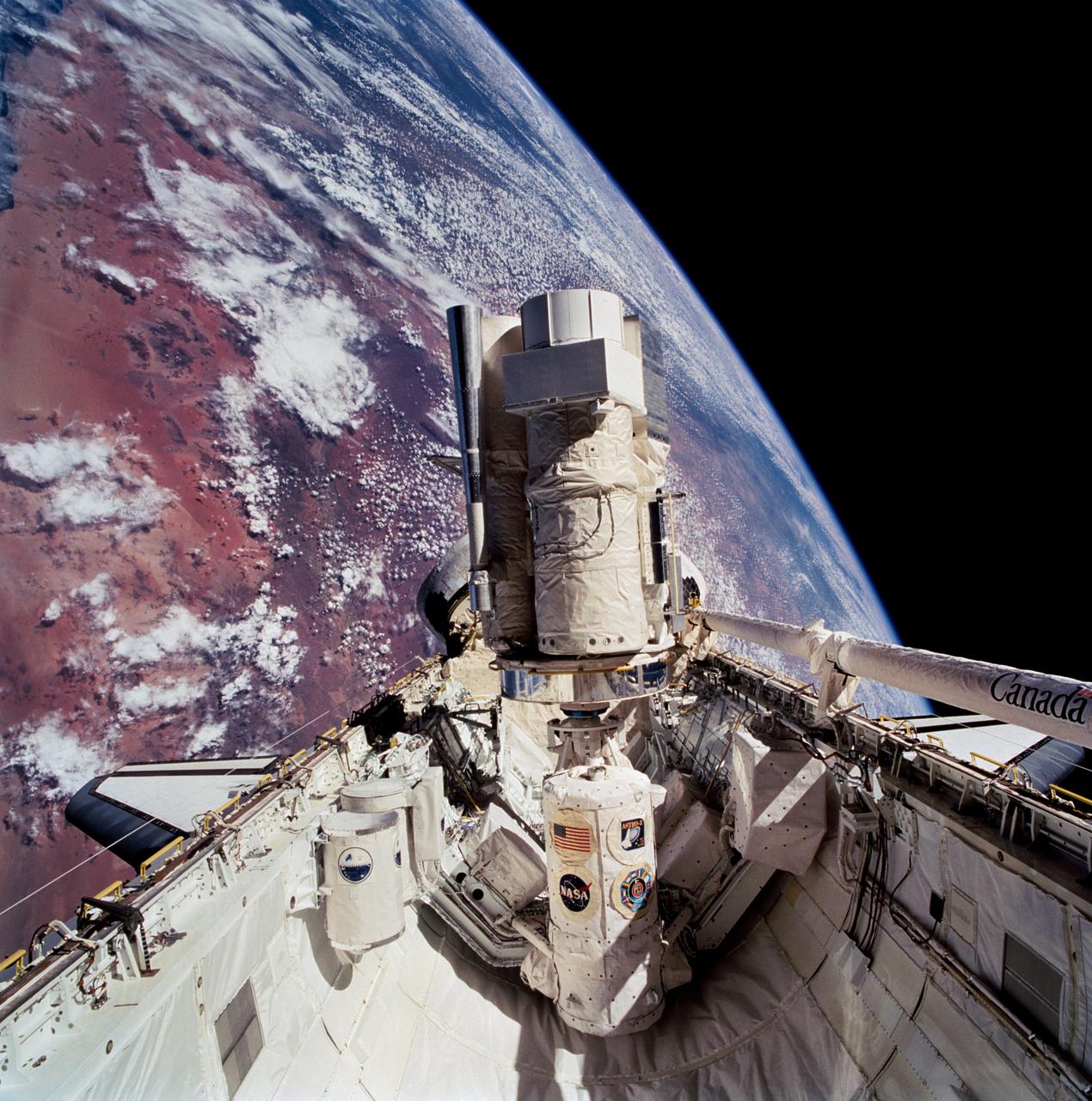
STS067-713-072 (2-18 March 1995) --- This 70mm cargo bay scene, backdropped against a desert area of Namibia, typifies the view that daily greeted the Astro-2 crew members during their almost 17-days aboard the Space Shuttle Endeavour.  Positioned on the Spacelab pallet amidst other hardware, the Astro-2 payload is in its operational mode.  Visible here are the Instrument Pointing System (IPS), Hopkins Ultraviolet Telescope (HUT), Star Tracker (ST), Ultraviolet Imaging Telescope (UIT), Wisconsin Ultraviolet Photo-Polarimeter Experiment (WUPPE), and Integrated Radiator System (IRS).  At this angle, the Optical Sensor Package (OPS) is not seen.  The Igloo, which supports the package of experiments, is in center foreground.  Two Get-Away Special (GAS) canisters are in lower left foreground.  The Extended Duration Orbiter (EDO) pallet, located aft of the cargo bay, is obscured by the Astro-2 payload.  The Endeavour was 190 nautical miles above Earth.
View of ASTRO-2 payload in cargo bay of STS-67 Endeavour
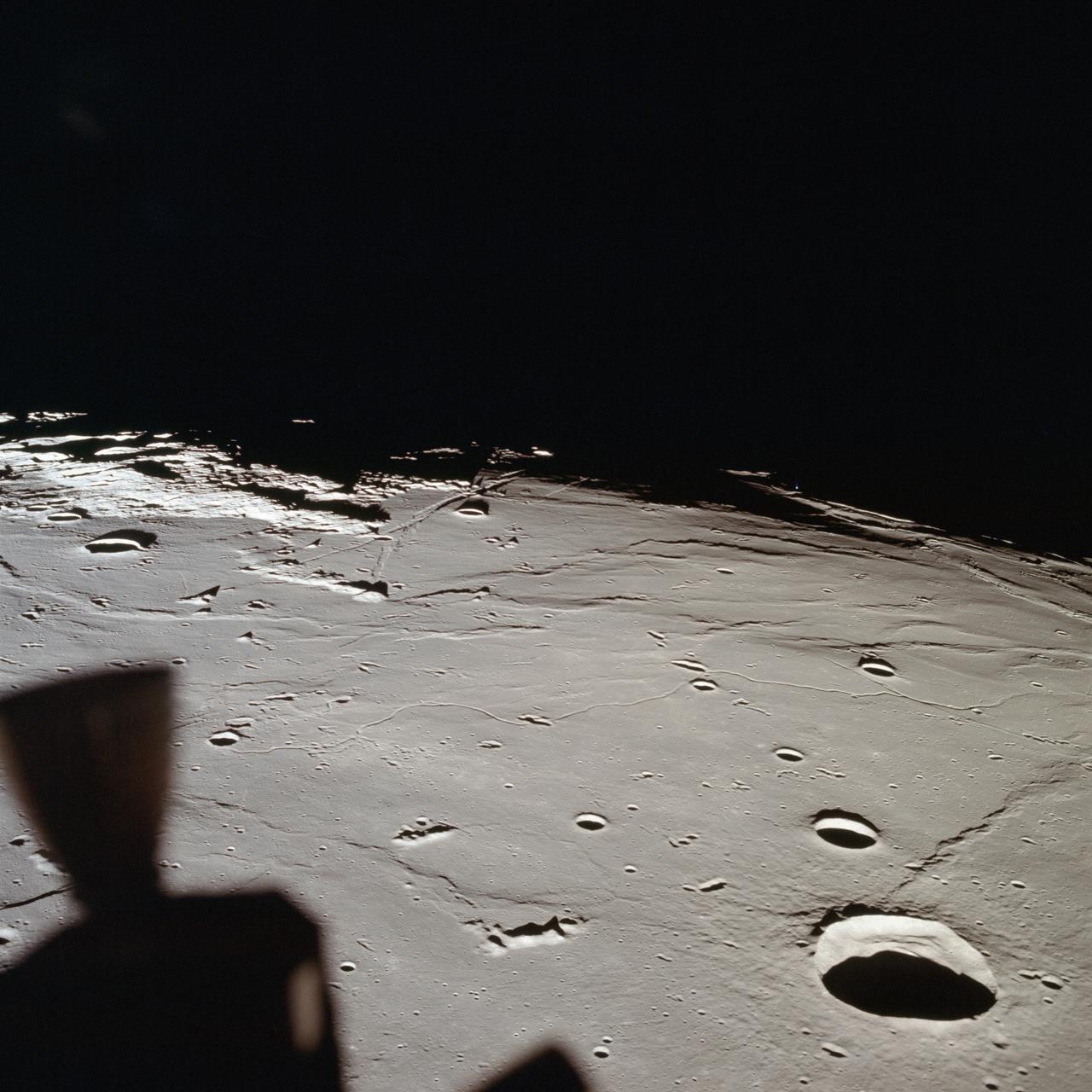
AS11-37-5437 (20 July 1969) --- The approach to Apollo Landing Site 2 in southwestern Sea of Tranquility is seen in this photograph taken from the Apollo 11 Lunar Module (LM) in lunar orbit. When this picture was made, the LM was still docked to the Command and Service Modules (CSM). Site 2 is located just right of center at the edge of the darkness. The crater Maskelyne is the large one at the lower right. Hypatia Rille (U.S. 1) is at upper left, with the crater Moltke just to the right (north) of it. Sidewinder Rille and Diamondback Rille extend from left to right across the center of the picture. This view looks generally west.
View of approach to Apollo Landing Site 2 in southwestern Sea of Tranquility
This stereo view from NASA Opportunity rover shows Lunokhod 2 Crater, which lies south of Solander Point on the west rim of Endeavour Crater. Lunokhod 2 Crater is approximately 20 feet 6 meters in diameter.
Lunokhod 2 Crater on Mars Stereo
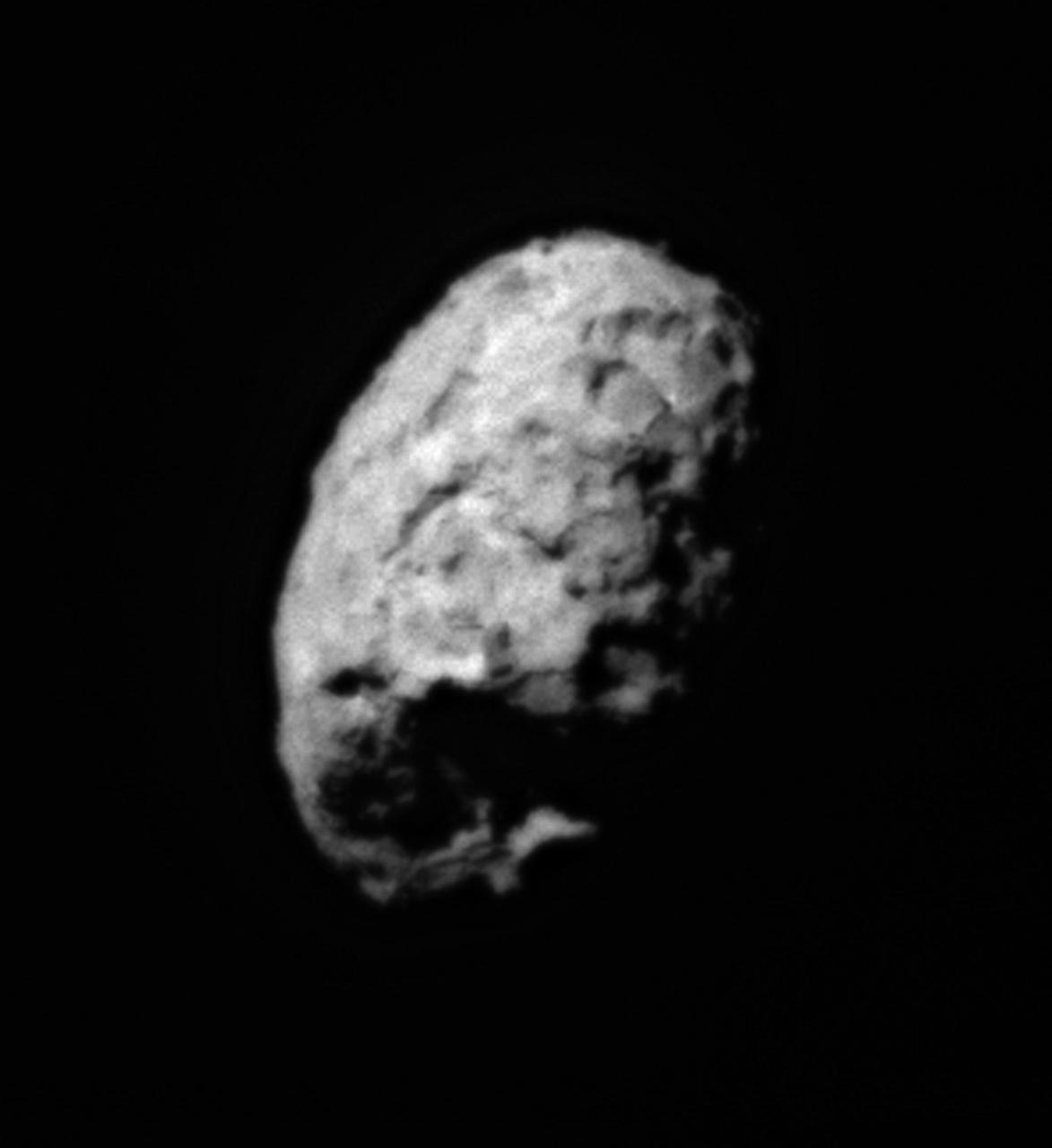
This image was taken during the close approach phase of NASA Stardust Jan 2, 2004 flyby of comet Wild 2. It is a distant side view of the roughly spherical comet nucleus.
Comet Wild 2 - Stardust Approach Image
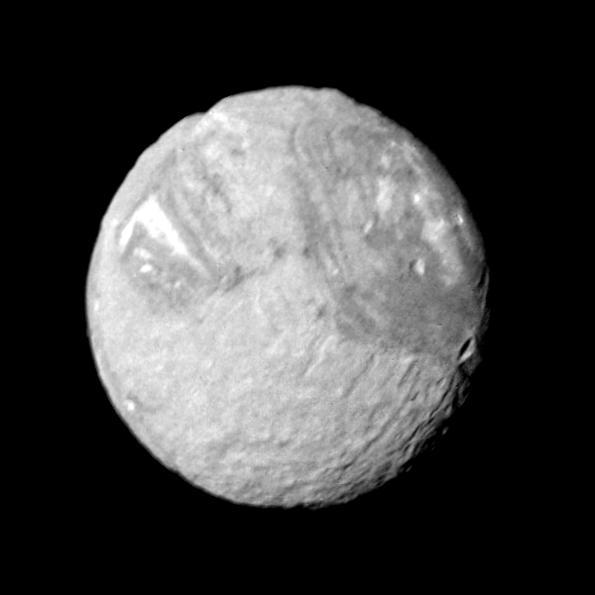
One wide-angle and eight narrow-angle camera images of Miranda, taken by NASA Voyager 2, were combined in this view. The controlled mosaic was transformed to an orthographic view centered on the south pole.
Miranda
This is a stereoscopic version of NASA Mars Exploration Rover Spirit Lookout panorama, acquired on Feb. 27 to Mar. 2, 2005. The view is from a position known informally as Larry Lookout. 3D glasses are necessary to view this image.
Spirit Lookout Panorama in 3-D
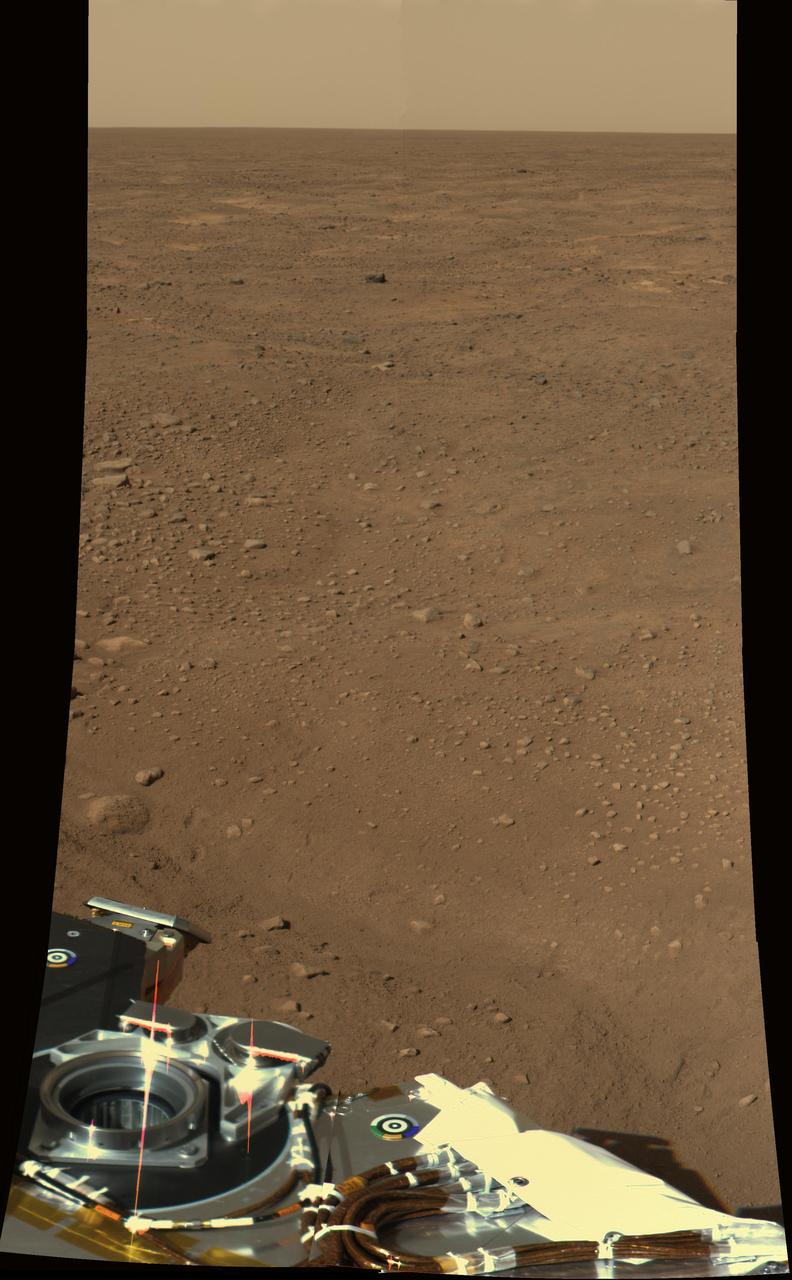
This approximate color view was obtained on sol 2 by the Surface Stereo Imager SSI on board NASA Mars Phoenix lander. The view is toward the northwest, showing polygonal terrain near the lander and out to the horizon.
Color view to Northwest of Phoenix
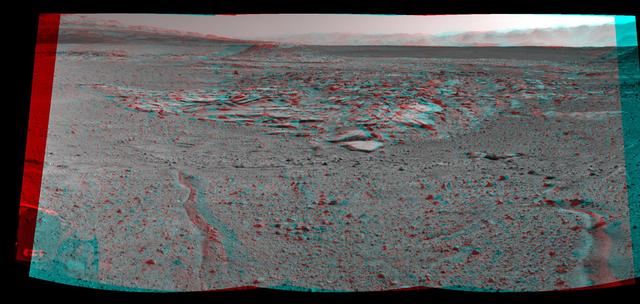
NASA Curiosity Mars rover recorded this stereo view of various rock types at waypoint called the Kimberley shortly after arriving at the location on April 2, 2014. You need 3-D glasses to view this image.
Curiosity View From Arrival Point at The Kimberley Waypoint Stereo
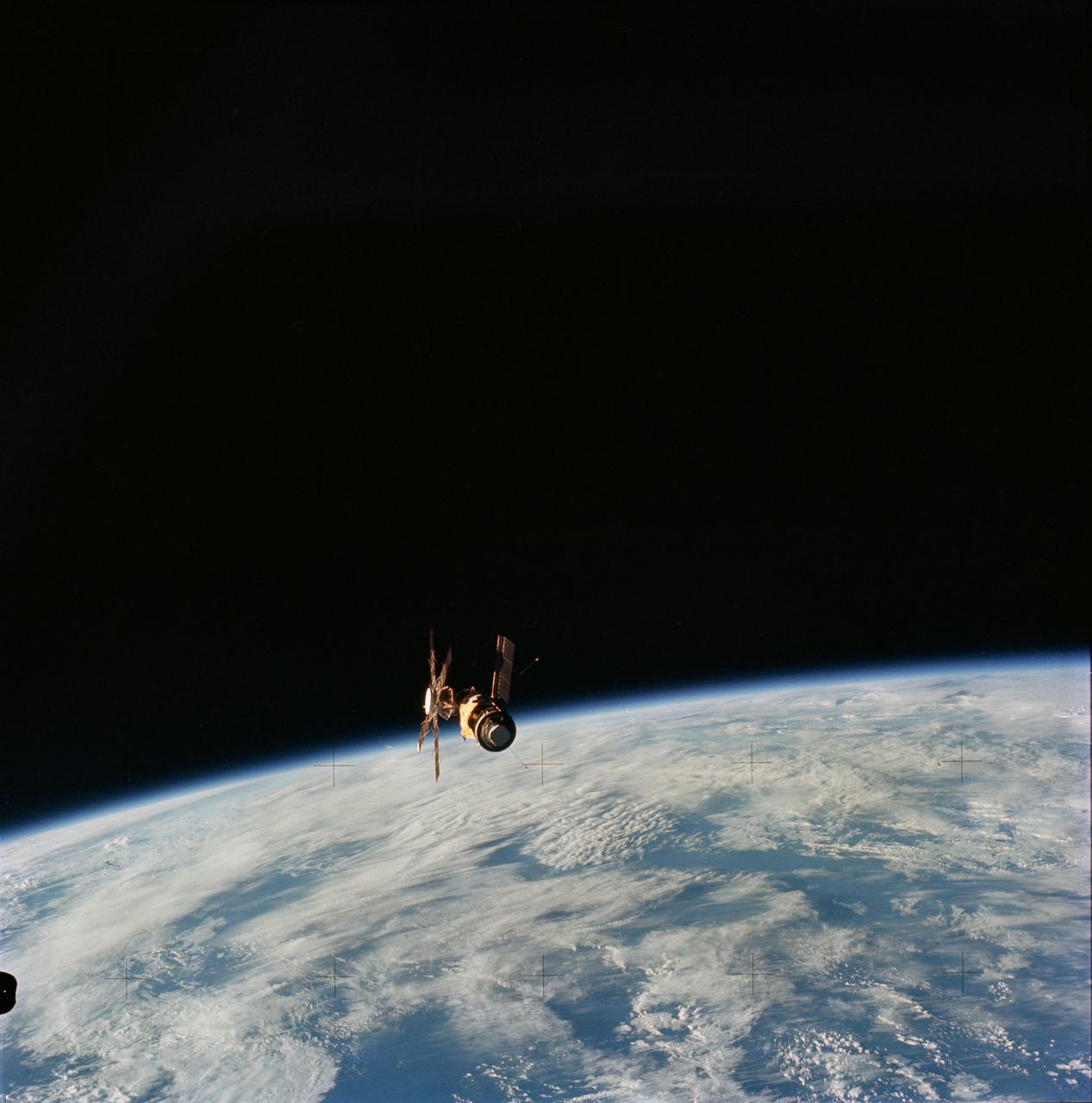
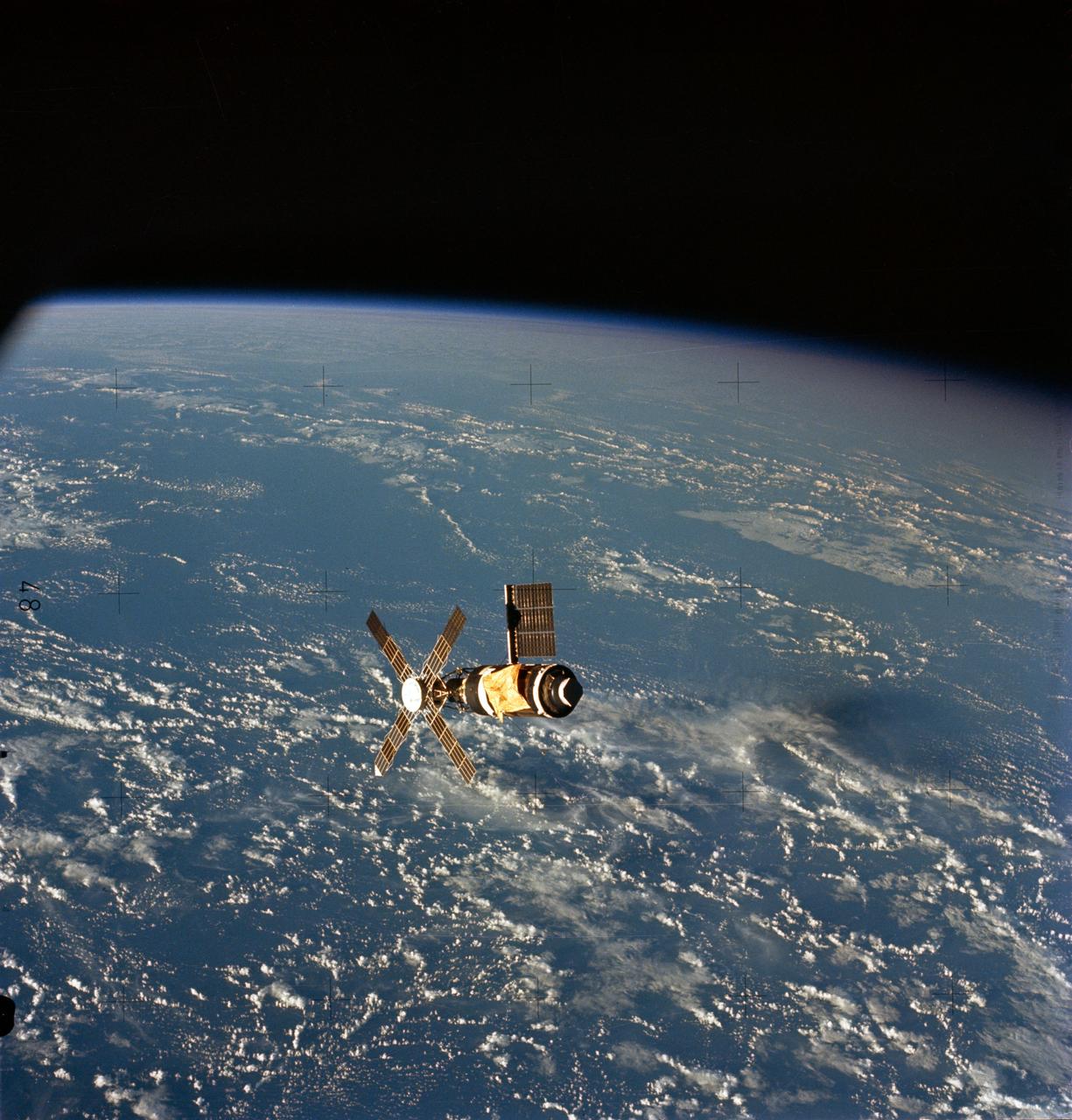
SL2-07-667 (22 June 1973) --- This overhead view of the Skylab Space Station was taken from the Departing Skylab Command/Service Module during the Skylab 2's final fly-around inspection. The single solar panel is quite evident as well as the parasol solar shield, rigged to replace the missing micrometeoroid shield. Both the second solar panel and the micrometeoroid shield were torn away during a mishap in the original Skylab 1 liftoff and orbital insertion. Photo credit: NASA
Skylab 2 Farewell View from the Departing Skylab Command/Service Module
SL2-07-651 (22 June 1973) --- This overhead view of the Skylab Space Station was taken from the Departing Skylab Command/Service Module during the Skylab 2's final fly-around inspection. The single solar panel is quite evident as well as the parasol solar shield, rigged to replace the missing micrometeoroid shield. Both the second solar panel and the micrometeoroid shield were torn away during a mishap in the original Skylab 1 liftoff and orbital insertion. Photo credit: NASA
Skylab 2 Farewell View from the Departing Skylab Command/Service Module
This composite view from NASA Voyager 2 shows Neptune on Triton horizon. The foreground in this computer generated view of Triton maria as they would appear from a point approximately 45 km above the surface.  http://photojournal.jpl.nasa.gov/catalog/PIA00344
Neptune on Triton Horizon
This close-up view of comet Hartley 2 was taken at 7:00 a.m. PDT 10 a.m. EDT, after NASA EPOXI mission flew by.
Leaving Comet Hartley 2
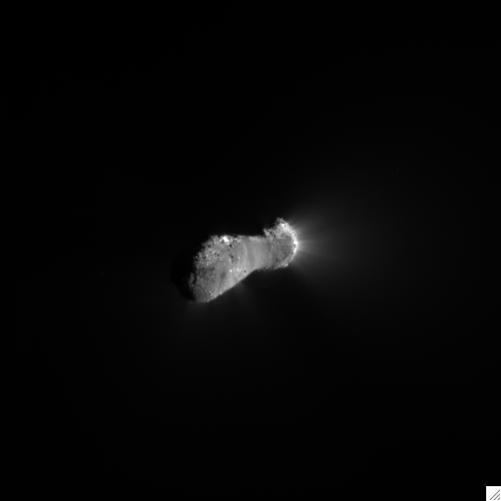
This close-up view of comet Hartley 2 was taken as NASA EPOXI mission approached the comet at 6:59 a.m. PDT 9:59 a.m. EDT.
Almost There at Comet Hartley 2
This close-up view of comet Hartley 2 was taken as NASA EPOXI mission approached the comet at 6:58 a.m. PDT 9:58 a.m. EDT.
Closing in on Comet Hartley 2
This close-up view of comet Hartley 2 was taken at 7:00 a.m. PDT 10 a.m. EDT, after NASA EPOXI mission flew by.
Slipping By Comet Hartley 2
This NASA Voyager 2 view of Uranus moon Ariel terminator shows a complex array of transecting valleys with super-imposed impact craters.
Ariel Transecting Valleys
The large, dark oval spot in Neptune atmosphere is just coming into view in this picture returned from NASA Voyager 2 spacecraft on June 30, 1989.
Neptune - Dark Oval
This enhanced color image shows cracks and ridges on Europa surface that reveal a detailed geologic history. The view was captured by NASA Galileo spacecraft on February 2, 1999.
Cracks and Ridges on Europa
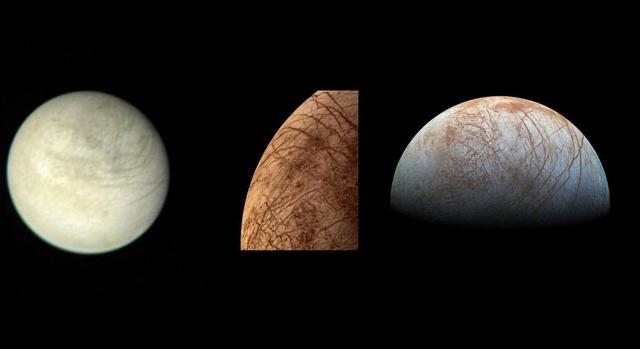
On the left is a view of Jupiter's moon Europa taken on March 2, 1979, by NASA's Voyager 1 spacecraft. In the middle is a color image of Europa taken by NASA's Voyager 2 spacecraft during its close encounter on July 9, 1979. On the right is a view of Europa made from images taken by NASA's Galileo spacecraft in the late 1990s.  https://photojournal.jpl.nasa.gov/catalog/PIA24895
Three Views of Europa
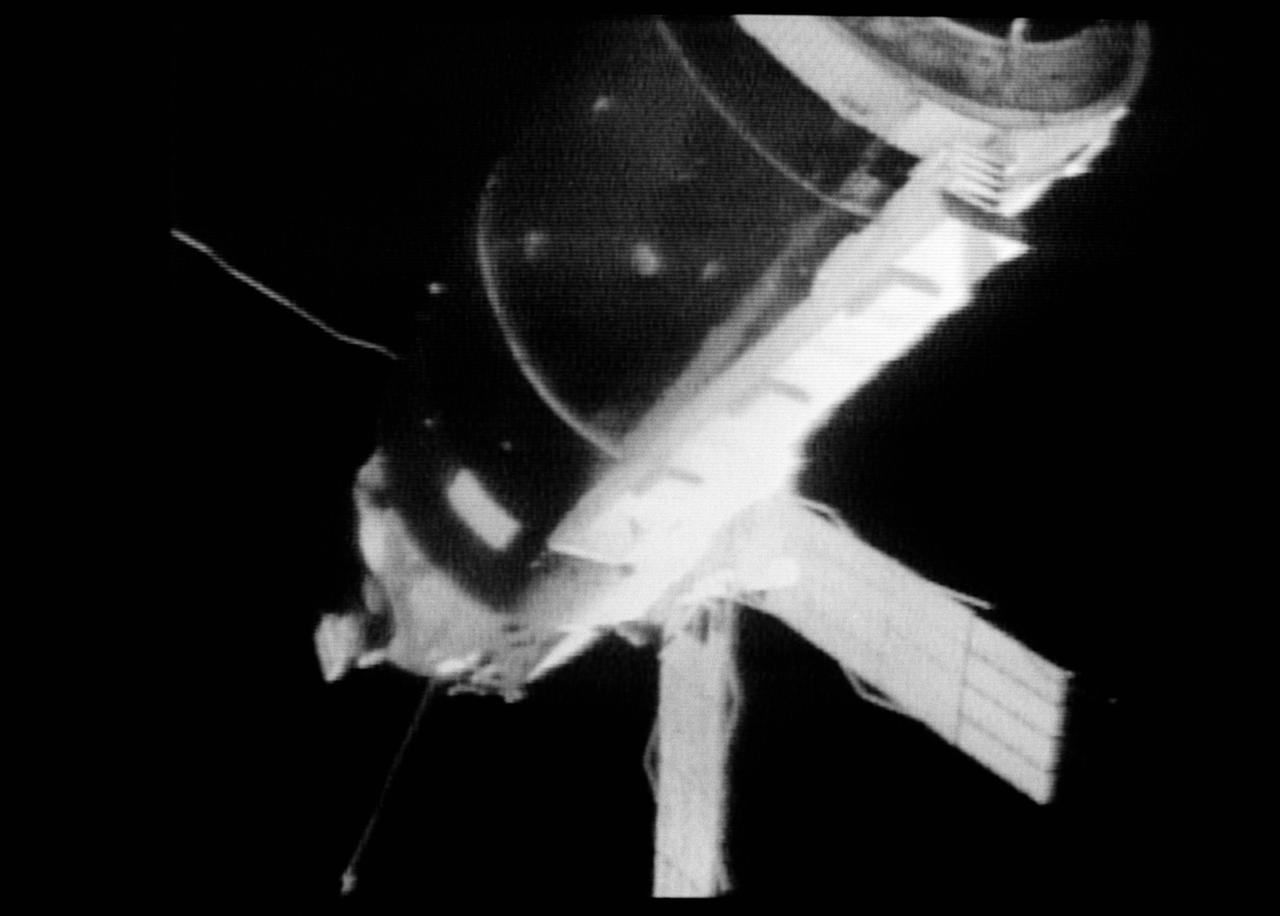
S73-27182 (25 May 1973) --- A close-up view of the Skylab 1 space station cluster can be seen in this reproduction taken from a color television transmission made by a TV camera aboard the Skylab 2 Command Module during its "fly around" inspection of the cluster. This view has been enhanced. At left center the damaged solar array system wing on the Orbital Workshop (OWS) appears to be partly folded. In their preliminary inspection the crewmen noted that portions of the micrometeoroid shield had slid back underneath the OWS solar wing. Solar panels on the Apollo Telescope Mount extend out at the top center. Photo credit: NASA
View of the Skylab 1 space station cluster from the Skylab 2 Command Module
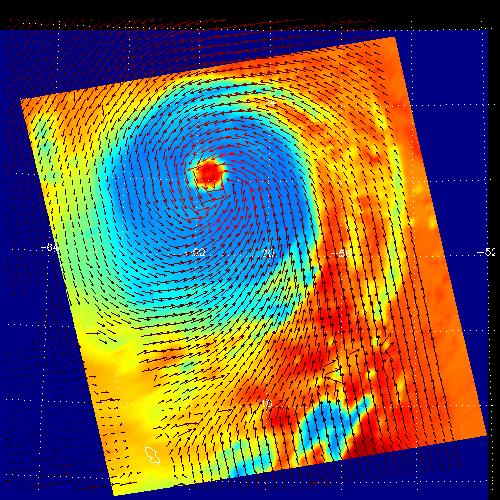
These two images show Hurricane Isabel as viewed by AIRS and SeaWinds scatterometers on NASA ADEOS-2 and QuikScat satellites in September, 2003. AIRS data are used to create global three-dimensional maps of temperature, humidity and clouds, while scatterometers measure surface wind speed and direction.  http://photojournal.jpl.nasa.gov/catalog/PIA00429
Hurricane Isabel, AIRS Infrared and SeaWinds Scatterometer Data Combined
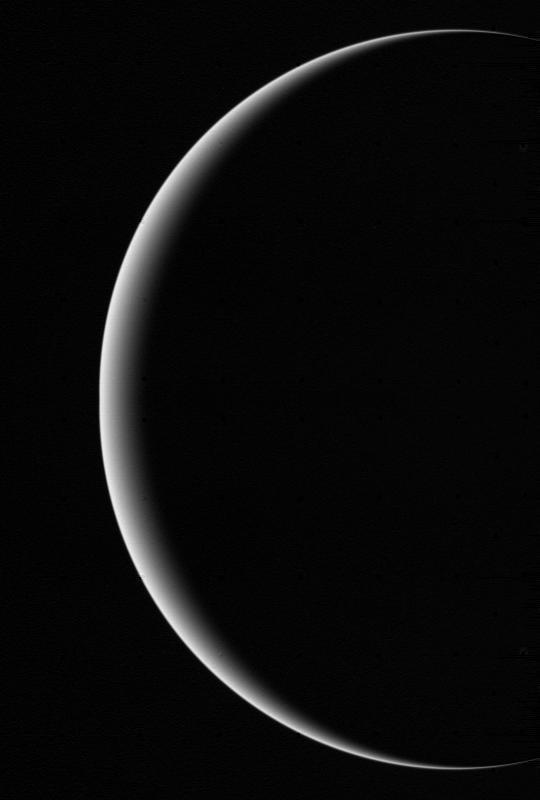
This image shows a crescent Uranus, a view that Earthlings never witnessed until Voyager 2 flew near and then beyond Uranus on Jan 24, 1986.  http://photojournal.jpl.nasa.gov/catalog/PIA00346
Color Voyager 2 Image Showing Crescent Uranus
This stereo view combines a pair of images taken by the microscopic imager on NASA Mars Exploration Rover Spirit during the 1,925th Martian day sol of Spirit mission on Mars June 2, 2009. 3D glasses are necessary to view this image.
Spirit View of Own Underbelly, Sol 1925 Stereo
This bulls-eye view of Neptune small dark spot D2 was obtained by NASA s Voyager 2 narrow-angle camera on Aug. 24, 1989, when Voyager 2 was within 1.1 million km 680,000 miles of the planet.  http://photojournal.jpl.nasa.gov/catalog/PIA00064
Neptune Dark Spot D2 at High Resolution
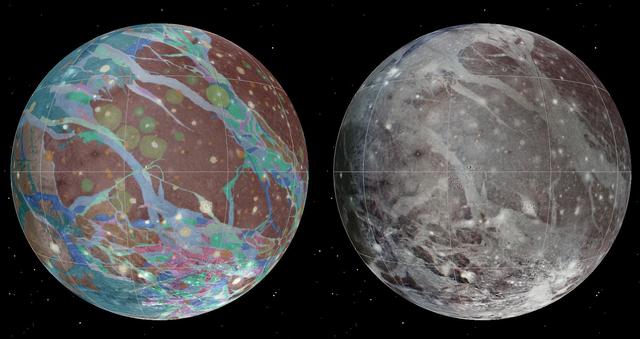
To present the best information in a single view of Jupiter moon Ganymede, a global image mosaic was assembled, incorporating the best available imagery from NASA Voyager 1 and 2 spacecraft and NASA Galileo spacecraft.
Ganymede Global Geologic Map and Global Image Mosaic
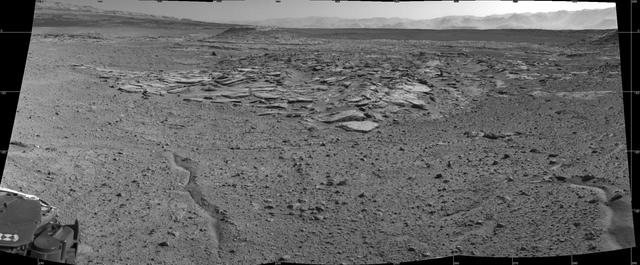
NASA Curiosity Mars rover recorded this view of various rock types at waypoint called the Kimberley shortly after arriving at the location on April 2, 2014. The site offers a diversity of rock types exposed close together.
Curiosity View From Arrival Point at The Kimberley Waypoint
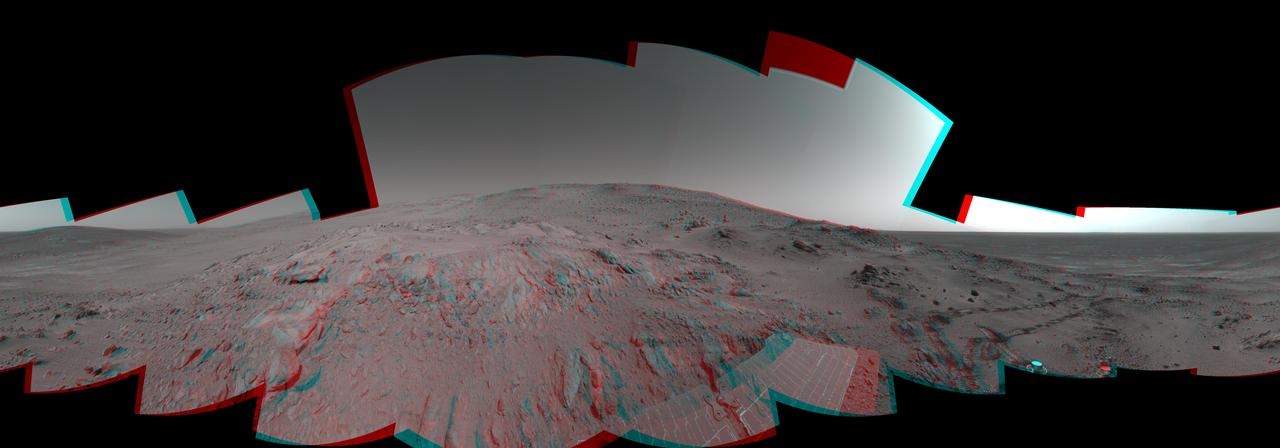
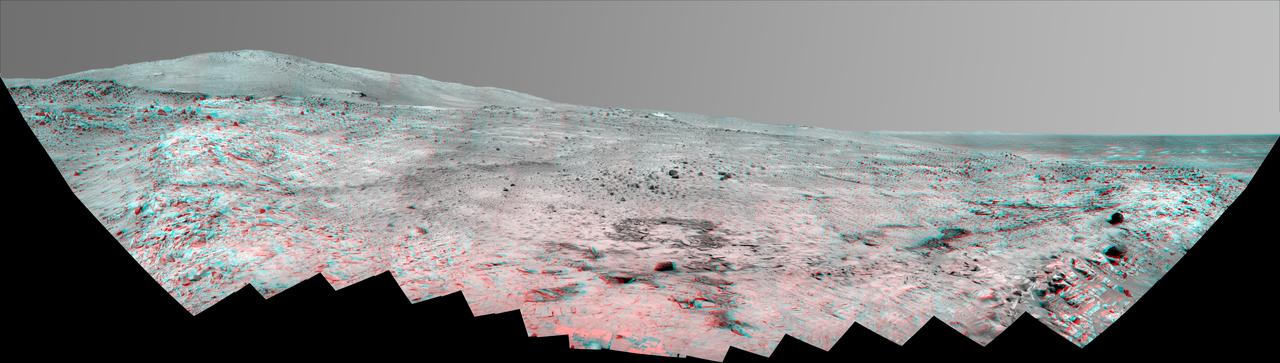
This stereo, 180-degree panorama shows the southward vista from the location where Spirit is spending its third Martian winter inside Mars Gusev Crater on July 2, 2008. 3D glasses are necessary to view this image.
Southern Half of Spirit Bonestell Panorama Anaglyph
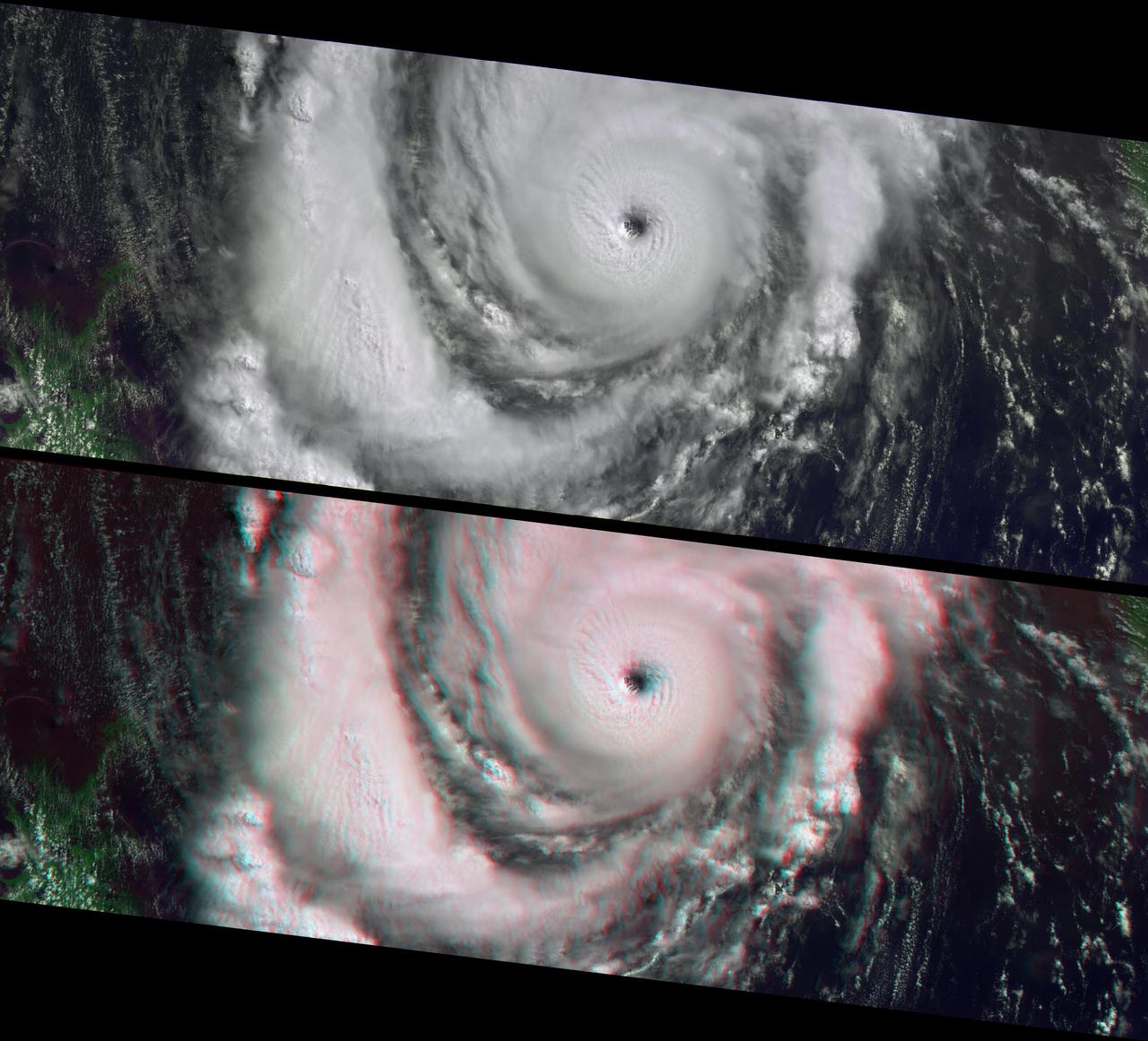
This anaglyph from the MISR instrument aboard NASA Terra spacecraft shows Hurricane Lili headed for Louisiana on October 2, 2002. 3D glasses are necessary to view this image.
Hurricane Lili Heads for Louisiana Landfall
This bulls-eye view of Neptune small dark spot D2 was obtained by NASA Voyager 2 narrow-angle camera. Banding surrounding the feature indicates unseen strong winds.
Neptune Small Dark Spot D2
On Feb. 26, 2005, NASA Mars Exploration Rover Spirit had drive 2 meters 7 feet on this sol to get in position on Cumberland Ridge for looking into Tennessee Valley to the east. 3D glasses are necessary to view this image.
Spirit 360-Degree View on Sol 409 3-D
This family portrait of Uranus five largest moons was compiled from images sent back Jan. 20, 1986, by NASA Voyager 2 spacecraft. Even in these distant views, the satellites exhibit distinct differences in appearance.
Uranus - Family Portrait
This dramatic view of the crescents of Neptune and Triton was acquired by Voyager 2 approximately 3 days, 6 and one-half hours after its closest approach to Neptune north is to the right.
Crescents of Neptune and Triton
This image was returned by NASA Voyager 2 spacecraft on July 3, 1989. The planet and its largest satellite, Triton, are captured in view; Triton appears in the lower right corner at about 5 oclock relative to Neptune.
Neptune and Triton
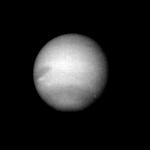
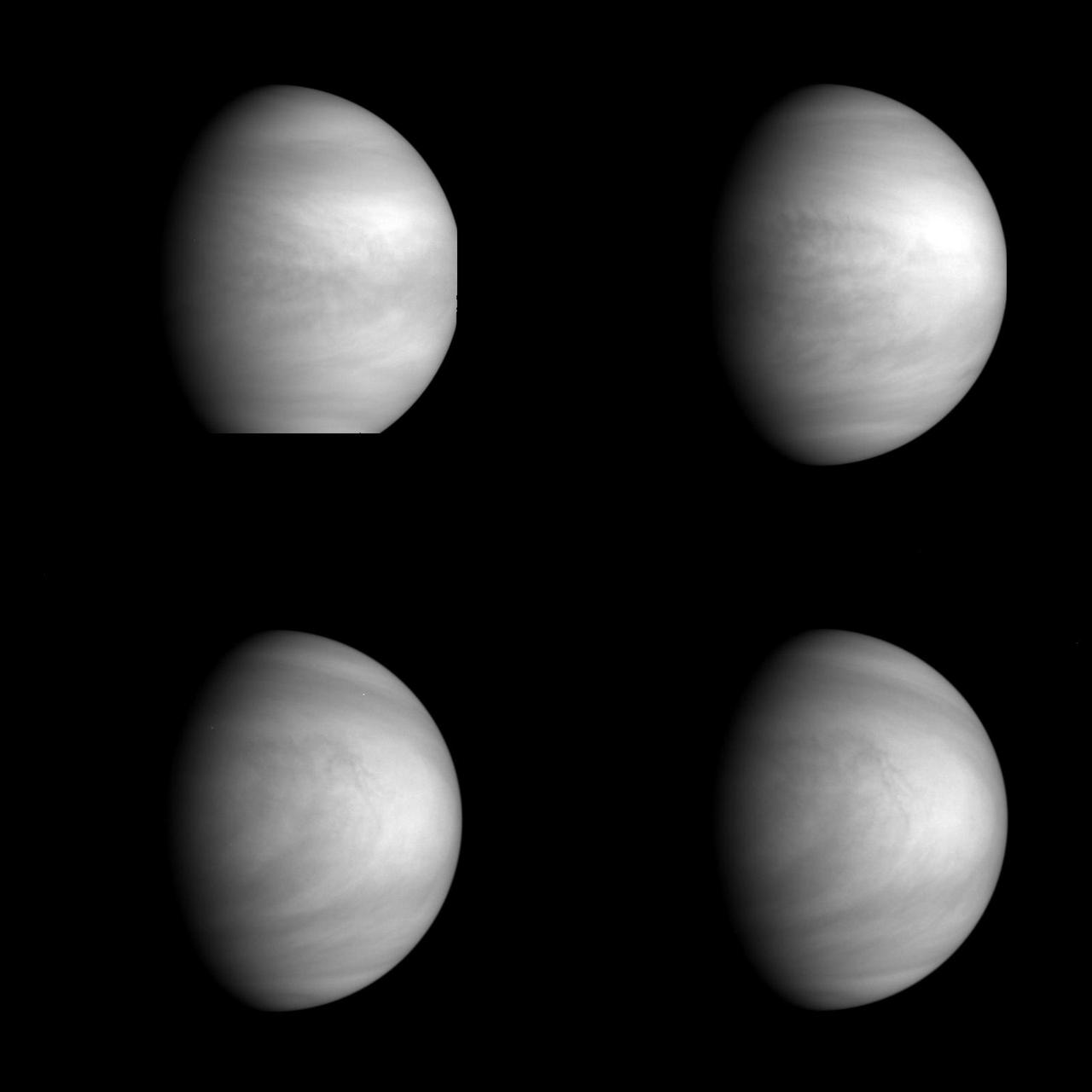
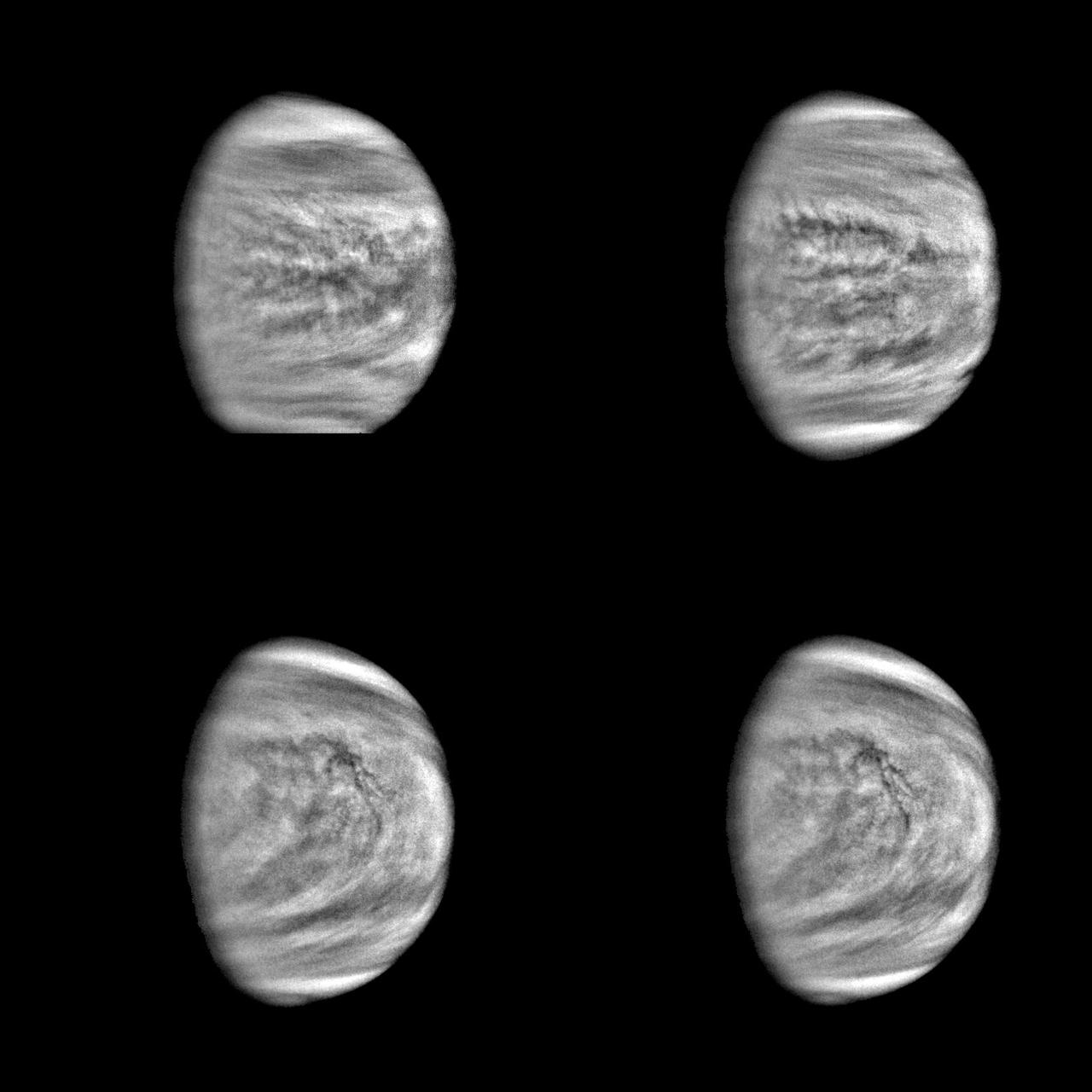
These are enhanced versions of four views of the planet Venus taken by NASA's Galileo Solid State Imaging System at distances ranging from 1.4 to 2 million miles as the spacecraft receded from Venus.  http://photojournal.jpl.nasa.gov/catalog/PIA00110
Four Views of Venus High Pass Filter
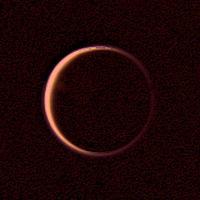
NASA Voyager 2 obtained this wide-angle image of the night side of Titan on Aug. 25, 1979. This is a view of Titan extended atmosphere. the bright orangish ring being caused by the atmosphere scattering of the incident sunlight.
Night Side of Titan
This series of pictures shows four views of the planet Venus obtained by NASA Galileo Solid State Imaging System at ranges of 1.4 to 2 million miles as the spacecraft receded from Venus.  http://photojournal.jpl.nasa.gov/catalog/PIA00223
Venus - Multiple Views of High-level Clouds
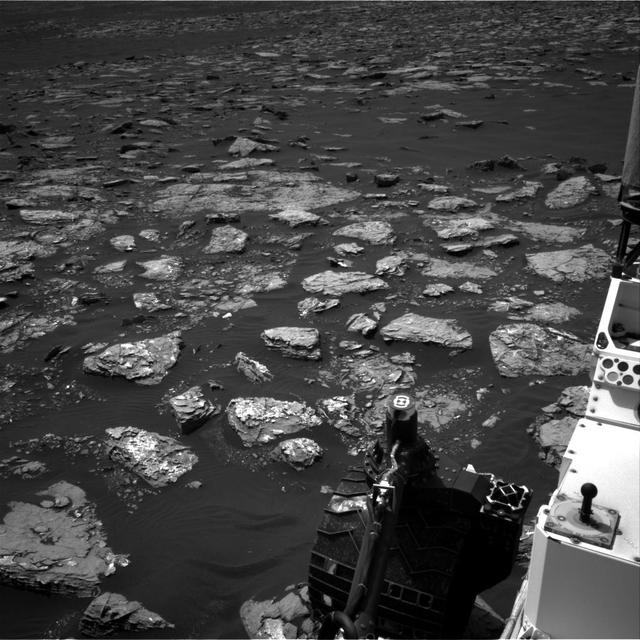
This view from the Navigation Camera (Navcam) on the mast of NASA's Curiosity Mars rover shows rocky ground within view while the rover was working at an intended drilling site called "Precipice" on lower Mount Sharp.  The right-eye camera of the stereo Navcam took this image on Dec. 2, 2016, during the 1,537th Martian day, or sol, of Curiosity's work on Mars. On the previous sol, an attempt to collect a rock-powder sample with the rover's drill ended before drilling began. This led to several days of diagnostic work while the rover remained in place, during which it continued to use cameras and a spectrometer on its mast, plus environmental monitoring instruments.  In this view, hardware visible at lower right includes the sundial-theme calibration target for Curiosity's Mast Camera.   http://photojournal.jpl.nasa.gov/catalog/PIA21140
Martian Terrain Near Curiosity Precipice Target
This image was returned by NASA's Voyager 2 spacecraft on July 3, 1989. The planet and its largest satellite, Triton, are captured in view; Triton appears in the lower right corner at about 5 oclock relative to Neptune.  http://photojournal.jpl.nasa.gov/catalog/PIA01287
Hubble Space Telescope Wide Field Planetary Camera 2 Observations of Neptune
This is one of the most detailed views of the surface of Triton taken by NASA Voyager 2 on its flyby of the large satellite of Neptune early in the morning of Aug. 25, 1989. The picture was stored on the tape recorder and relayed to Earth later.  http://photojournal.jpl.nasa.gov/catalog/PIA00061
Triton High Resolution View of Northern Hemisphere
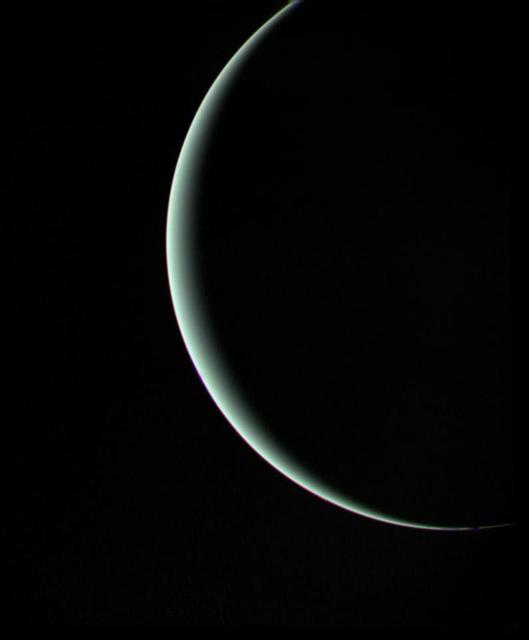
This view of pale blue-green Uranus was recorded by NASA's Voyager 2 on Jan 25, 1986, as the spacecraft left the planet behind. The thin crescent of Uranus is seen here between the spacecraft, the planet and the Sun.  http://photojournal.jpl.nasa.gov/catalog/PIA00143
Uranus - Final Image
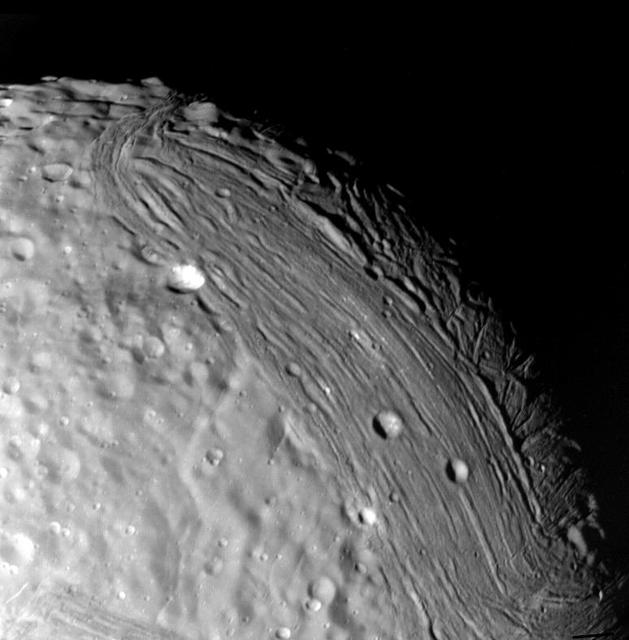
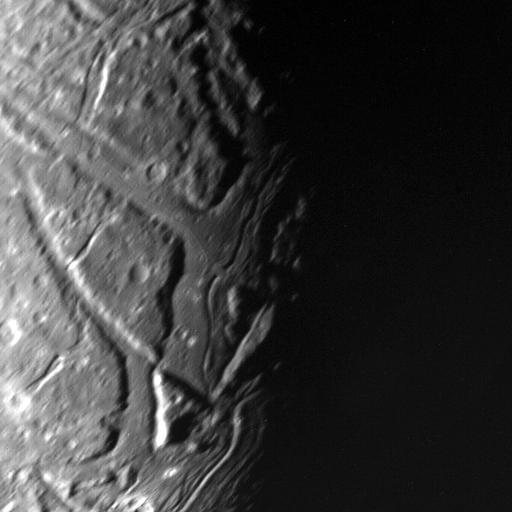
Miranda reveals a complex geologic history in this view, acquired by NASA's Voyager 2 on Jan. 24, 1986, around its close approach to the Uranian moon. At least three terrain types of different age and geologic style are evident.  http://photojournal.jpl.nasa.gov/catalog/PIA00141
Miranda Geologic History Variety of Terrain
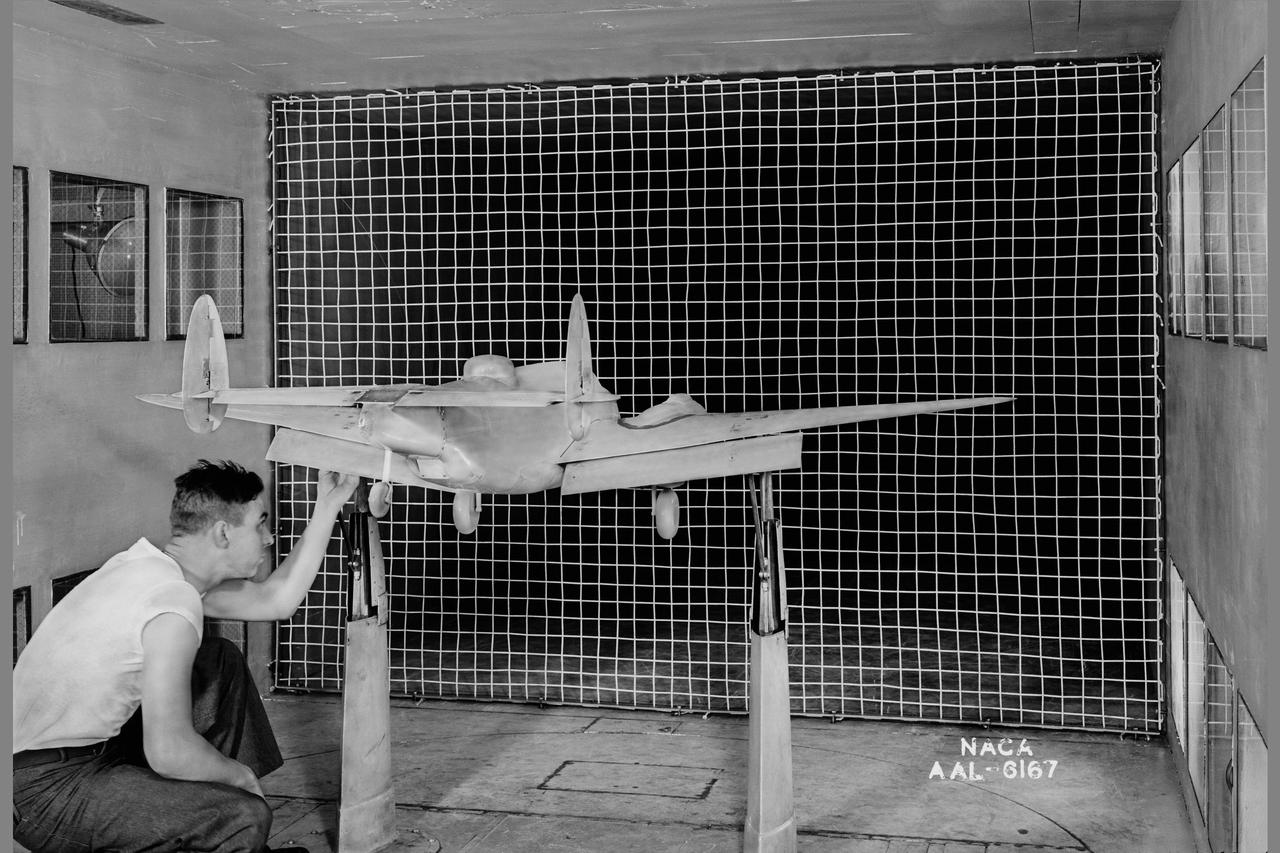
PV-1 model; rear view with 2 1/2' x 2 1/2' trubulene net mount in the 7x10ft w.t. at Ames Research Center
ARC-1944-AAL-6167
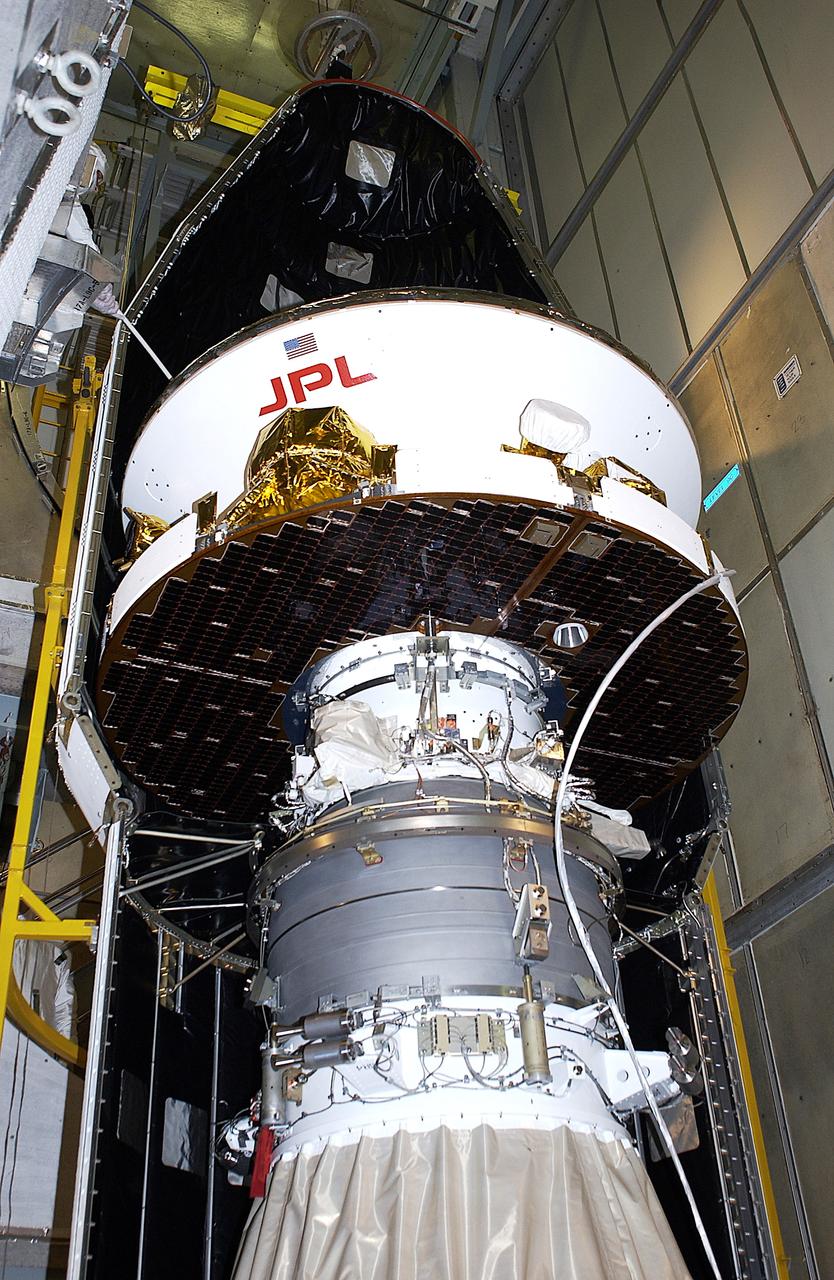
KENNEDY SPACE CENTER, FLA. - At Launch Complex 17-A, Cape Canaveral Air Force Station, the first half of the fairing for the Mars Exploration Rover 2 (MER-2) is installed around the Mars Exploration Rover 2 (MER-2).  MER-2 is one of NASA's twin Mars Exploration Rovers designed to study the history of water on Mars. These robotic geologists are equipped with a robotic arm, a drilling tool, three spectrometers, and four pairs of cameras that allow them to have a human-like, 3D view of the terrain. Each rover could travel as far as 100 meters in one day to act as Mars scientists' eyes and hands, exploring an environment where humans can't yet go.  MER-2 is scheduled to launch no earlier than June 8 as MER-A, with two launch opportunities each day during the launch period that closes on June 19.
KENNEDY SPACE CENTER, FLA. - At Launch Complex 17-A, Cape Canaveral Air Force Station, the first half of the fairing for the Mars Exploration Rover 2 (MER-2) is installed around the Mars Exploration Rover 2 (MER-2). MER-2 is one of NASA's twin Mars Exploration Rovers designed to study the history of water on Mars. These robotic geologists are equipped with a robotic arm, a drilling tool, three spectrometers, and four pairs of cameras that allow them to have a human-like, 3D view of the terrain. Each rover could travel as far as 100 meters in one day to act as Mars scientists' eyes and hands, exploring an environment where humans can't yet go. MER-2 is scheduled to launch no earlier than June 8 as MER-A, with two launch opportunities each day during the launch period that closes on June 19.
KENNEDY SPACE CENTER, FLA. - At Launch Complex 17-A, Cape Canaveral Air Force Station, the first half of the fairing for the Mars Exploration Rover 2 (MER-2) is installed around the Mars Exploration Rover 2 (MER-2).  MER-2 is one of NASA's twin Mars Exploration Rovers designed to study the history of water on Mars. These robotic geologists are equipped with a robotic arm, a drilling tool, three spectrometers, and four pairs of cameras that allow them to have a human-like, 3D view of the terrain. Each rover could travel as far as 100 meters in one day to act as Mars scientists' eyes and hands, exploring an environment where humans can't yet go.  MER-2 is scheduled to launch no earlier than June 8 as MER-A, with two launch opportunities each day during the launch period that closes on June 19.
KENNEDY SPACE CENTER, FLA. - At Launch Complex 17-A, Cape Canaveral Air Force Station, the first half of the fairing for the Mars Exploration Rover 2 (MER-2) is installed around the Mars Exploration Rover 2 (MER-2). MER-2 is one of NASA's twin Mars Exploration Rovers designed to study the history of water on Mars. These robotic geologists are equipped with a robotic arm, a drilling tool, three spectrometers, and four pairs of cameras that allow them to have a human-like, 3D view of the terrain. Each rover could travel as far as 100 meters in one day to act as Mars scientists' eyes and hands, exploring an environment where humans can't yet go. MER-2 is scheduled to launch no earlier than June 8 as MER-A, with two launch opportunities each day during the launch period that closes on June 19.
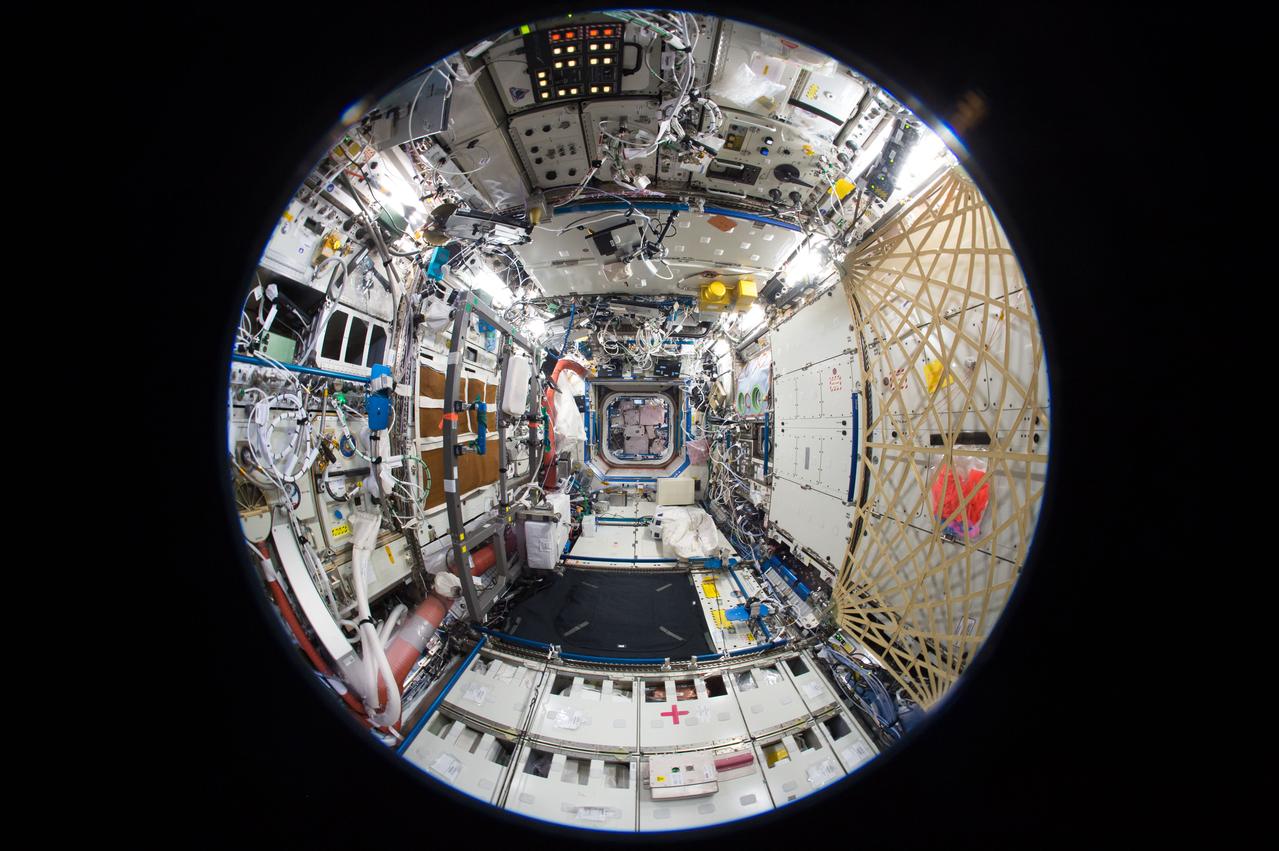
iss050e050873 (2/19/2017) --- A fish-eye view of the U.S. Laboratory taken for a Google Street View of the ISS.
Fish-eye view of the U.S. Laboratory
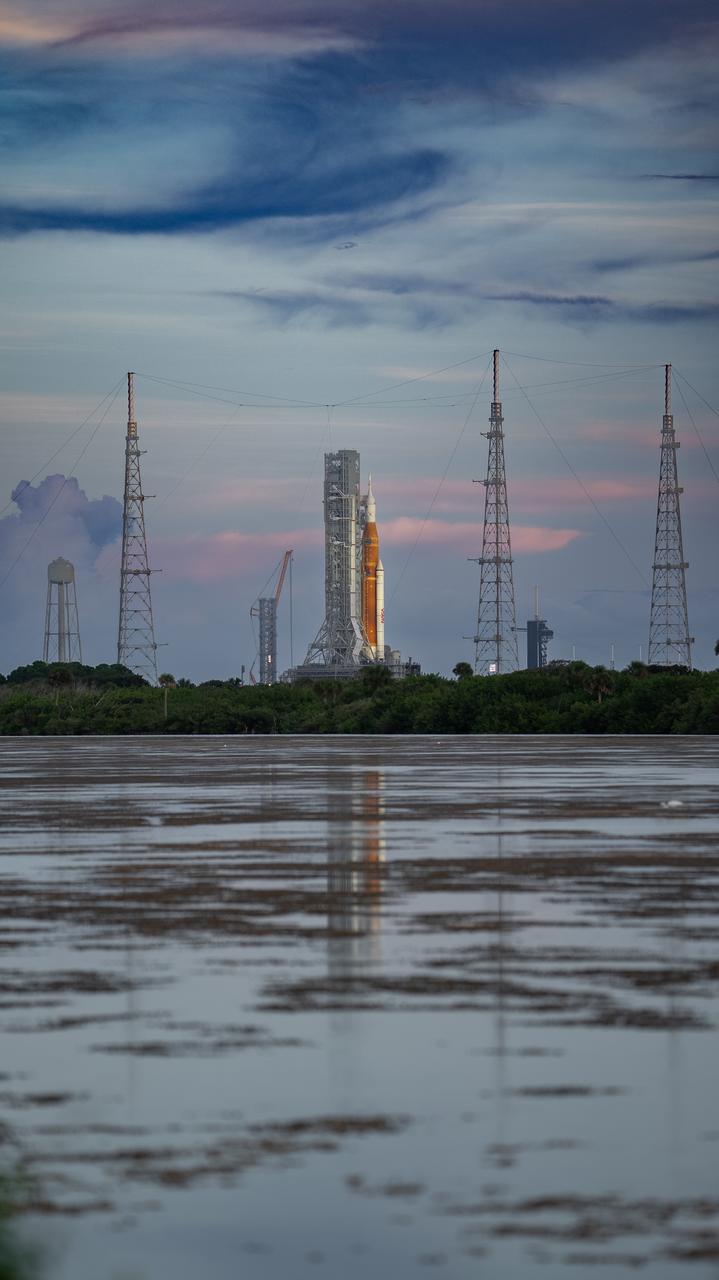
NASA’s Space Launch System (SLS) rocket with the Orion spacecraft aboard is seen atop the mobile launcher at Launch Pad 39B at NASA’s Kennedy Space Center in Florida. Artemis I mission is the first integrated test of the agency’s deep space exploration systems: the Space Launch System rocket, Orion spacecraft, and supporting ground systems. The mission is the first in a series of increasingly complex missions to the Moon. Launch of the uncrewed flight test is targeted for no earlier than Sept. 3 at 2:17 p.m. ET. With Artemis missions, NASA will land the first woman and first person of color on the Moon, using innovative technologies to explore more of the lunar surface than ever before.
Artemis I Space Launch System
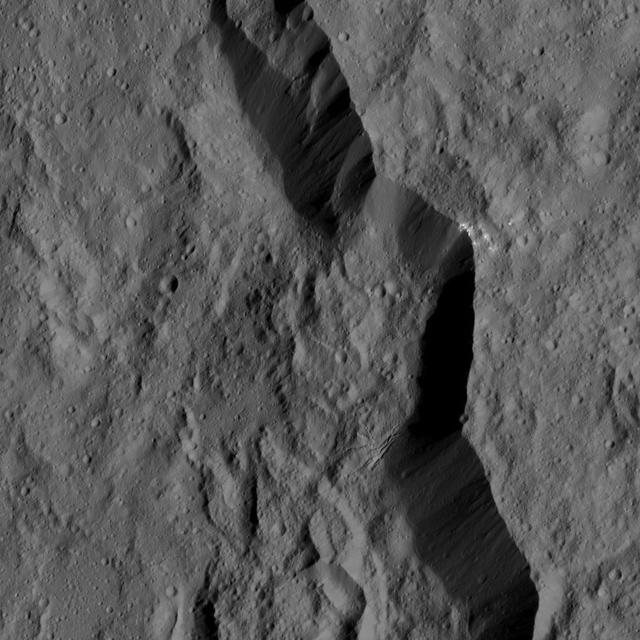
The rim of Dantu Crater (78 miles, 125 kilometers wide) is seen in this view of Ceres from NASA's Dawn spacecraft.  Dawn took this image on June 2, 2016, from its low-altitude mapping orbit, at a distance of about 240 miles (385 kilometers) above the surface. The image resolution is 120 feet (35 meters) per pixel.  http://photojournal.jpl.nasa.gov/catalog/PIA20938
Dawn LAMO Image 176
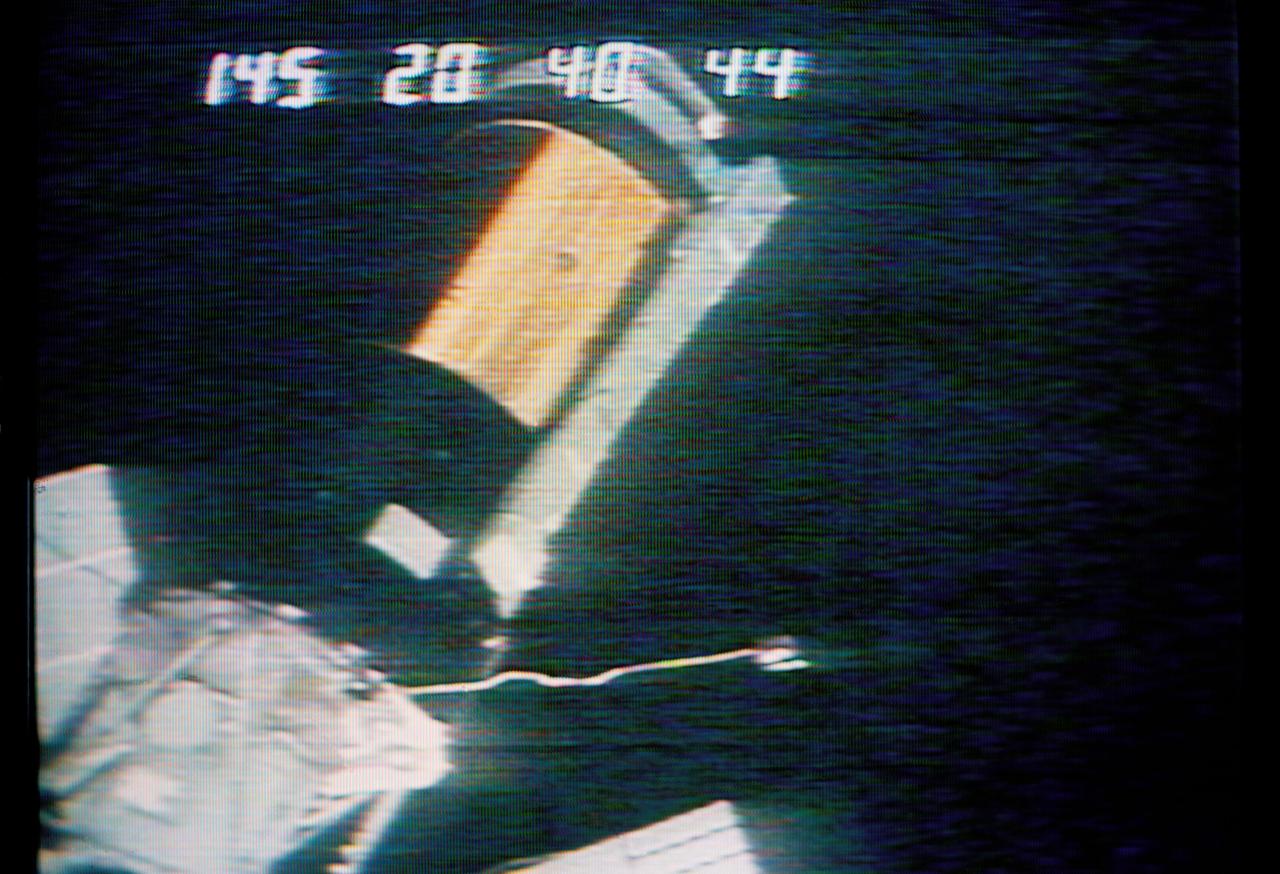
S73-26738 (25 May 1973) --- A close-up view of the Skylab 1 space station cluster can be seen in this reproduction taken from a color television transmission made by a TV camera aboard the Skylab 2 Command Module during its ?fly-around? inspection of the cluster.  The numbers across the top of the picture indicate the Skylab 1 ground lapse time. Note the missing portion of the micrometeoroid shield on the Orbital Workshop. The shield area was reported to be solid gold by the Skylab 2 crewmen. A cable appears to be wrapped around the damaged OWS solar array system wing. The crewmen reported that the other OWS solar panel was completely gone, with only tubes and wiring sticking out. One of the discone antennas extends out form the Airlock Module. The Multiple Docking Adapter is in the lower left corner of the picture. A portion of a solar panel on the Apollo Telescope Mount is visible at the bottom and at the left edge. In their ?fly around? inspection the crewmen noted that portions of the micrometeoroid shield had slid back underneath the OWS solar wing. Photo credit: NASA
View of the Skylab 1 space station cluster from the Skylab 2 Command Module
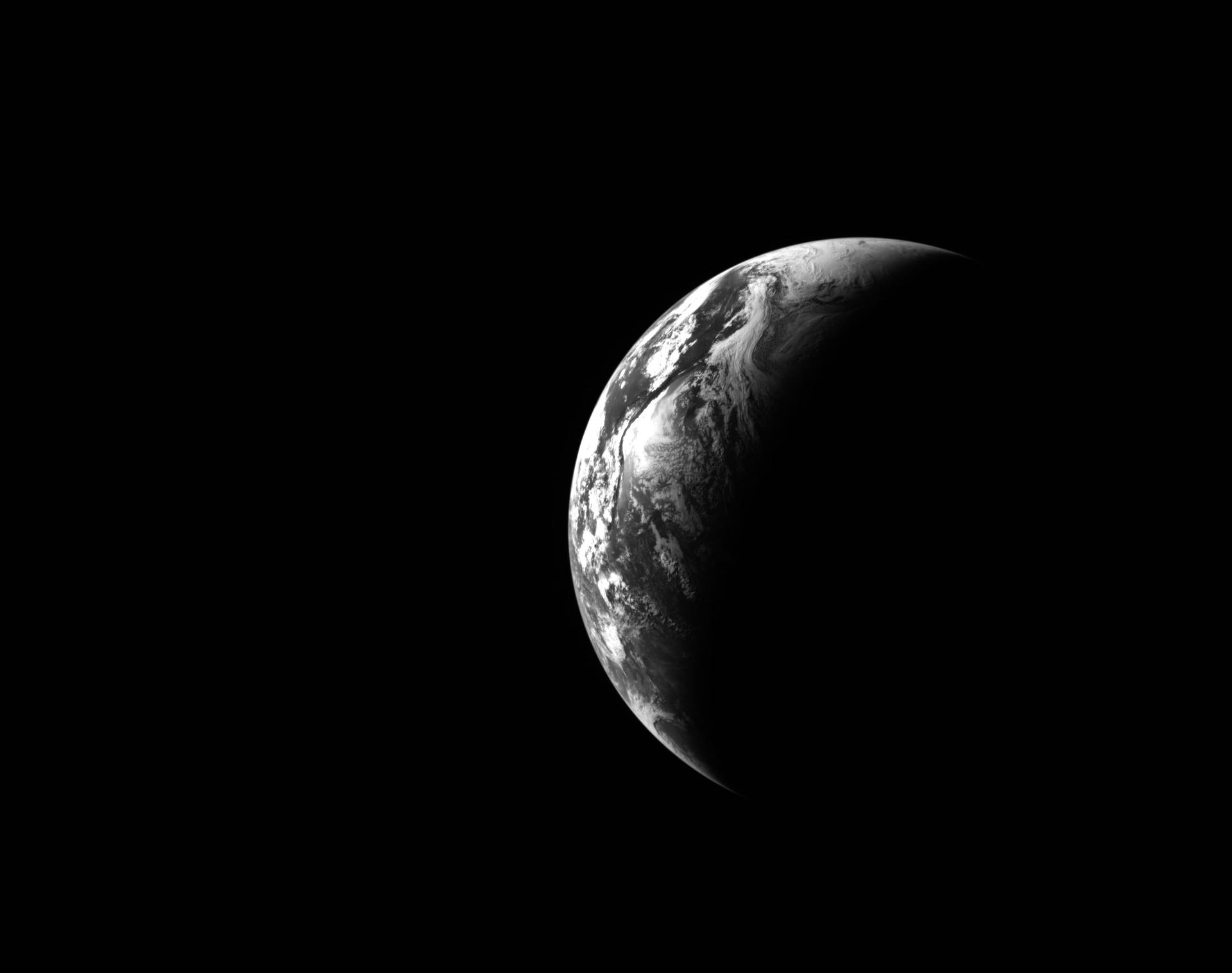
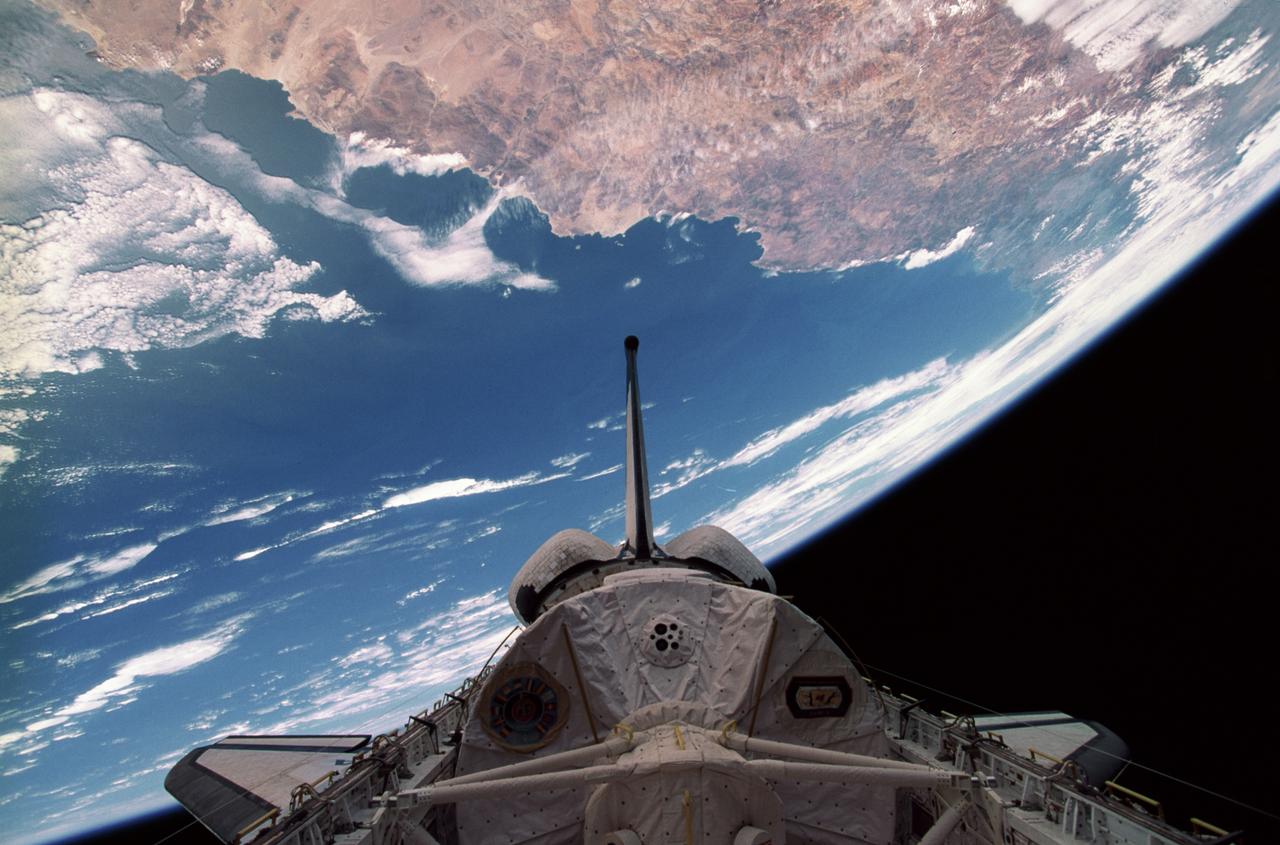
View of earth from STS-73, USML-2.
Microgravity
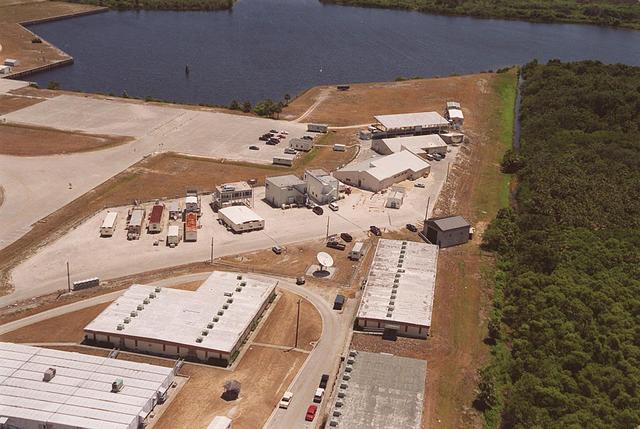
Aerial view of Press Site, June 2, 2000
KSC-20120209-PH-UK_pressSite_FigureA-10
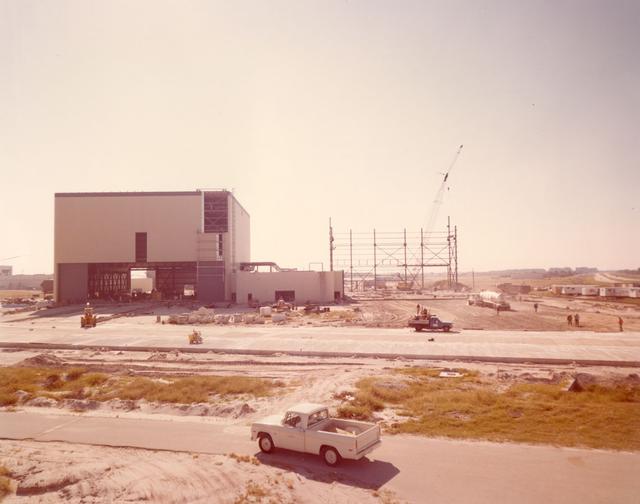
View of OPF High Bay No. 2 construction, 1976
KSC-20120208-PH-UK_OPF3_Figure-B-3
This was Cassini's view from orbit around Saturn on Jan. 2, 2010. In this image, the rings on the night side of the planet have been brightened significantly to more clearly reveal their features. On the day side, the rings are illuminated both by direct sunlight, and by light reflected off Saturn's cloud tops.  This natural-color view is a composite of images taken in visible light with the Cassini spacecraft's narrow-angle camera at a distance of approximately 1.4 million miles (2.3 million kilometers) from Saturn.  The Cassini spacecraft ended its mission on Sept. 15, 2017.  https://photojournal.jpl.nasa.gov/catalog/PIA12567
Planet Six
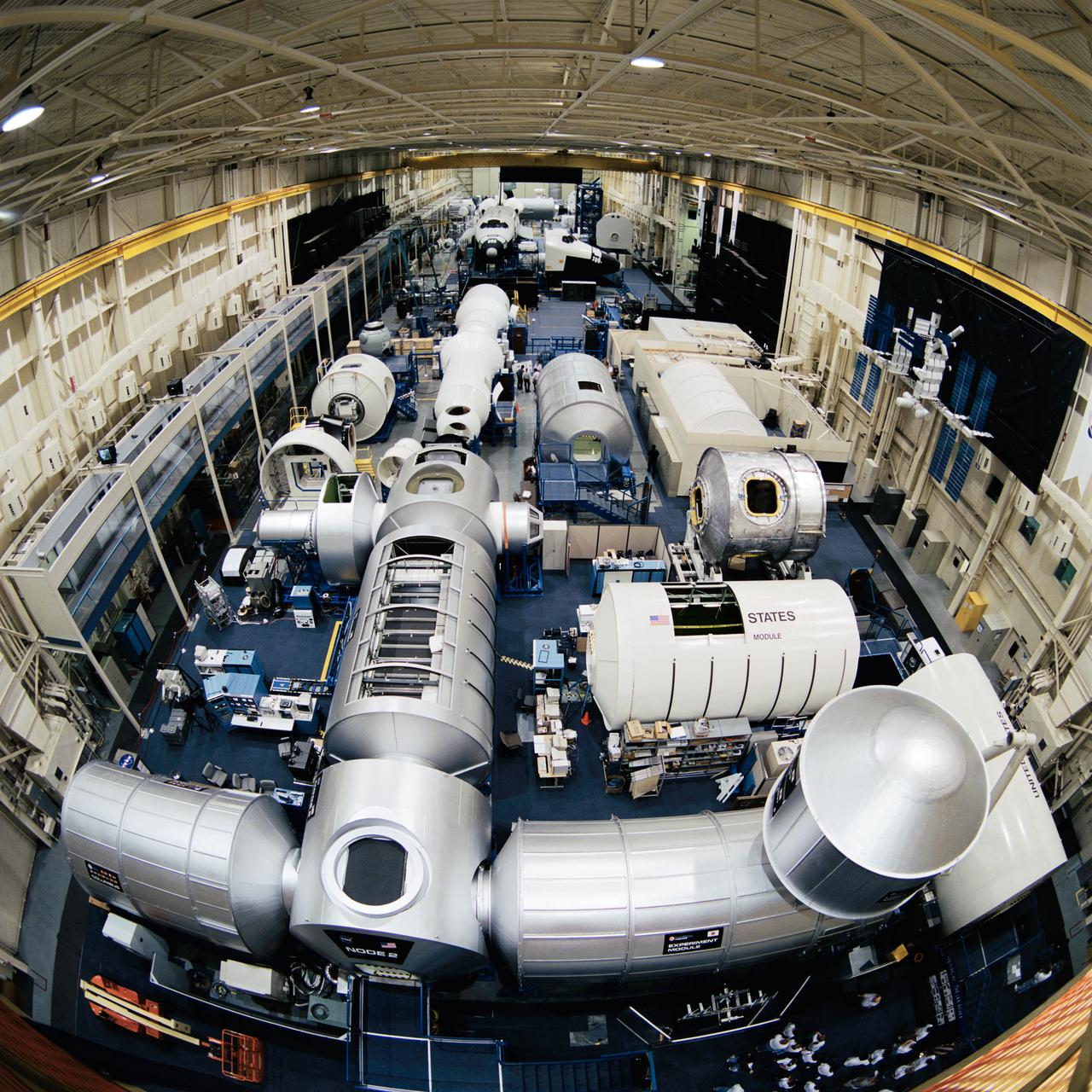
Photographic documentation showing the bldg. 9 ISS module mock-ups and trainers. Views include: various overall views of the configuration of the ISS module trainers on the floor of bldg. 9 (08445-46, 08449-51, 08458-61, 08464-65, 08469, 08471, 08476); various portions of the mock-ups (08447-48, 08470); views of the Node 2, Experiment Module and Logistics Module (08452); Node 2 (08453, 08466); Destiny and Node 2 (08454); Destiny, Unity and Airlock (08455); Zarya, Service Module and shuttle mock-ups (08456); Logistics Module and Experiment Module (08457, 08468); various views of Columbia, Node 2 and Destiny (08462-63); Columbus, Node 2, Experiment Module and Logistics Module (08467); U.S. Laboratory module (08472); Logistics Module (08473); module layout (08474); Logistics Module and Experiment Module (08475).
Building 9 ISS mock-ups and trainers
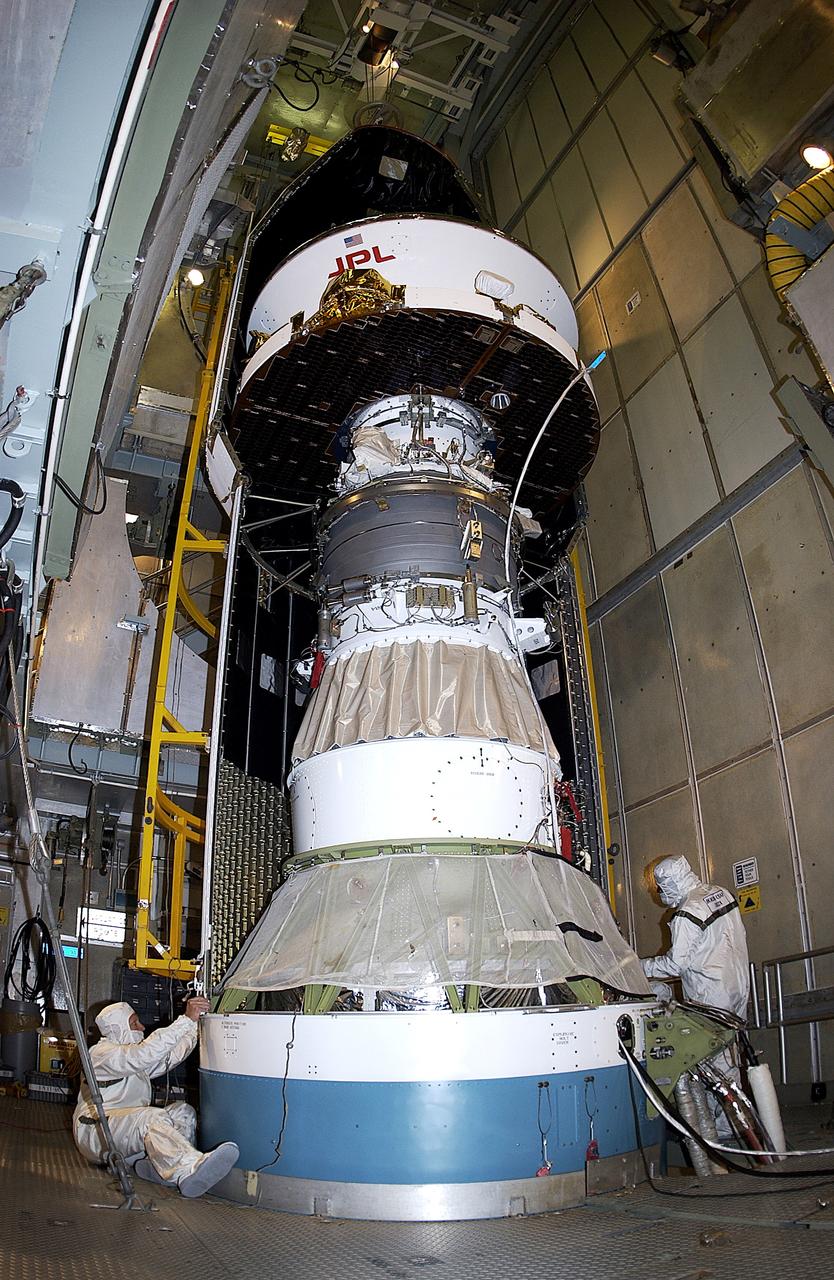
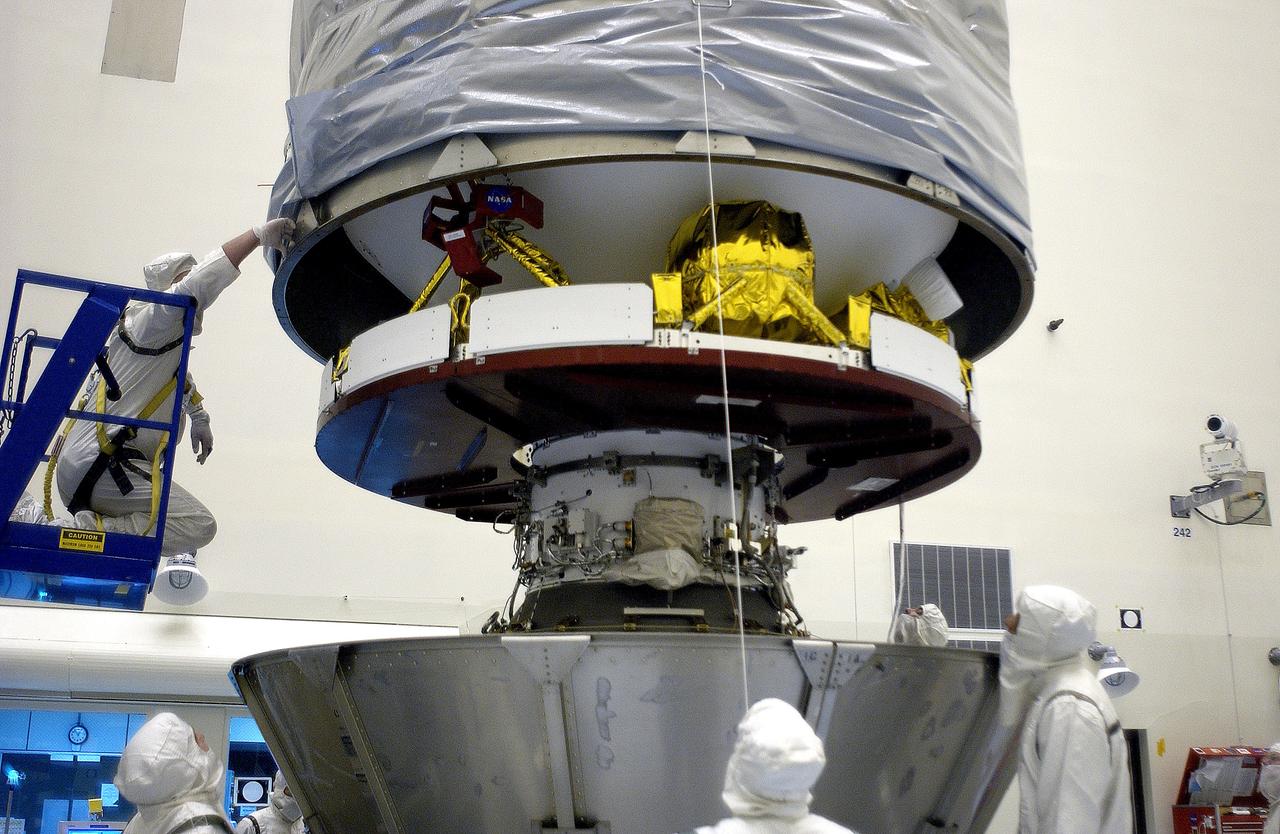
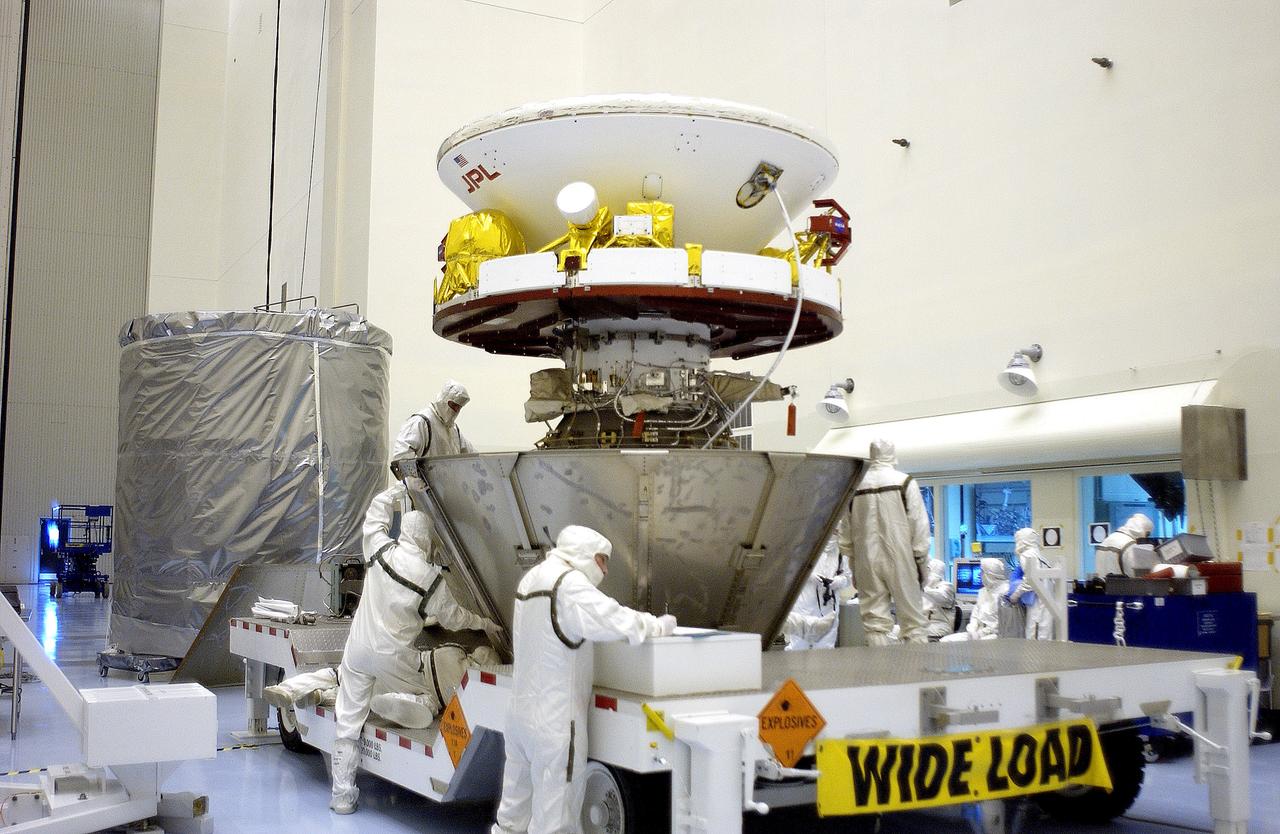
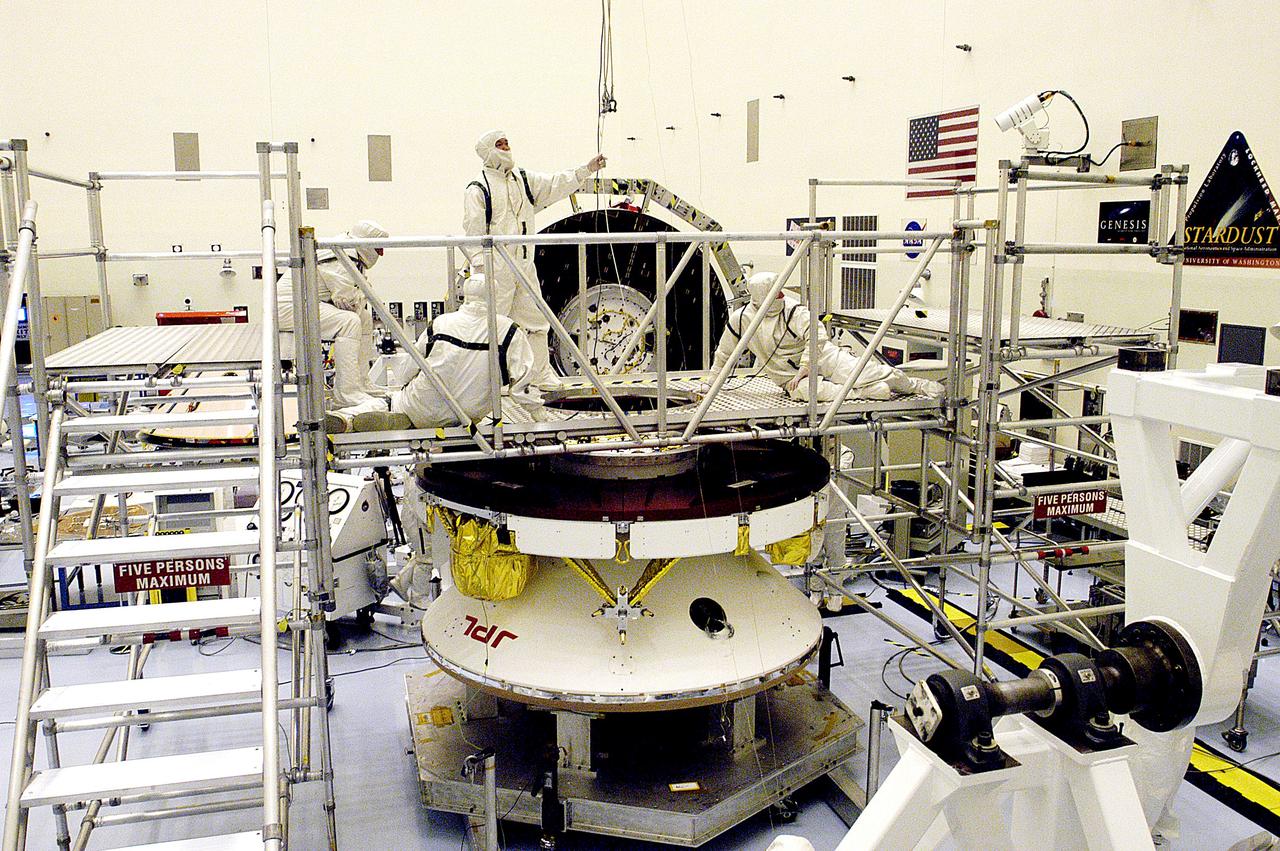
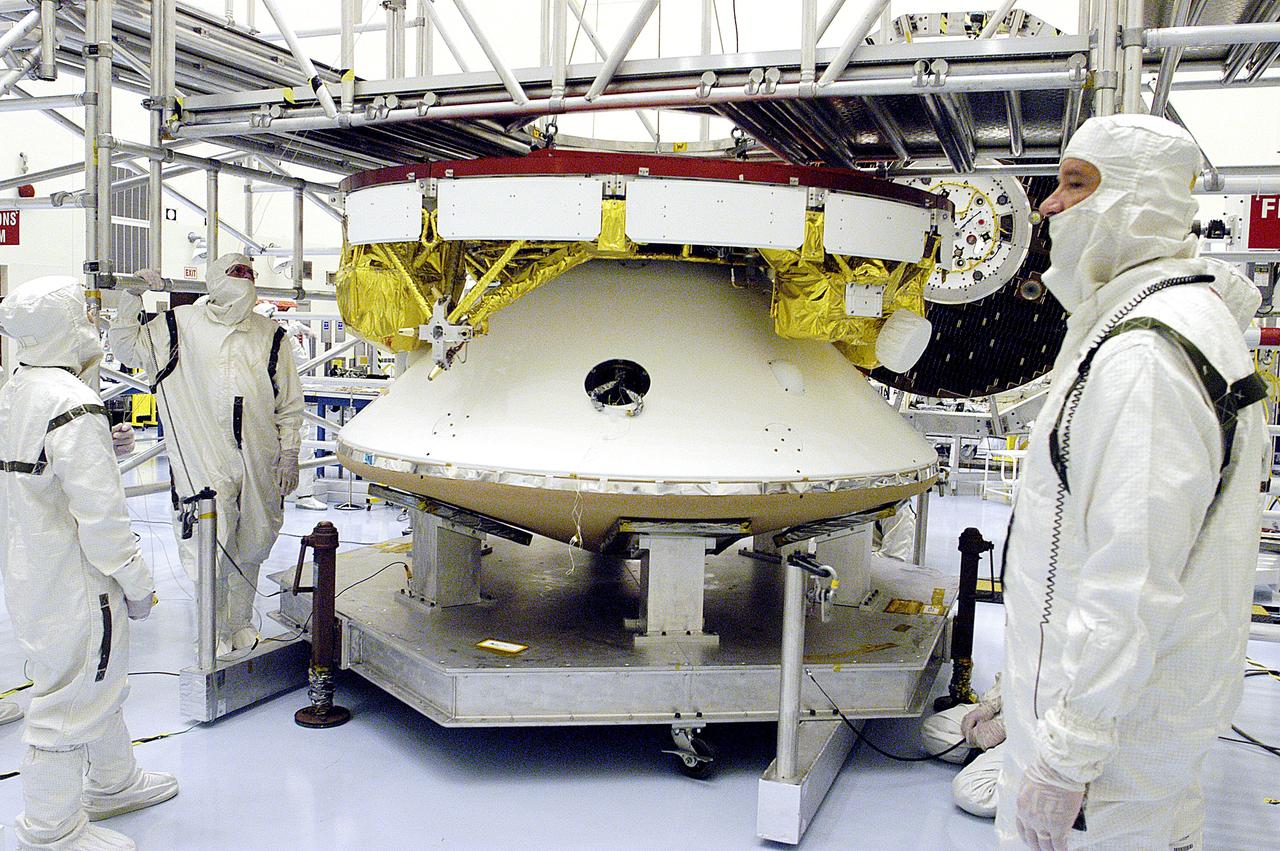
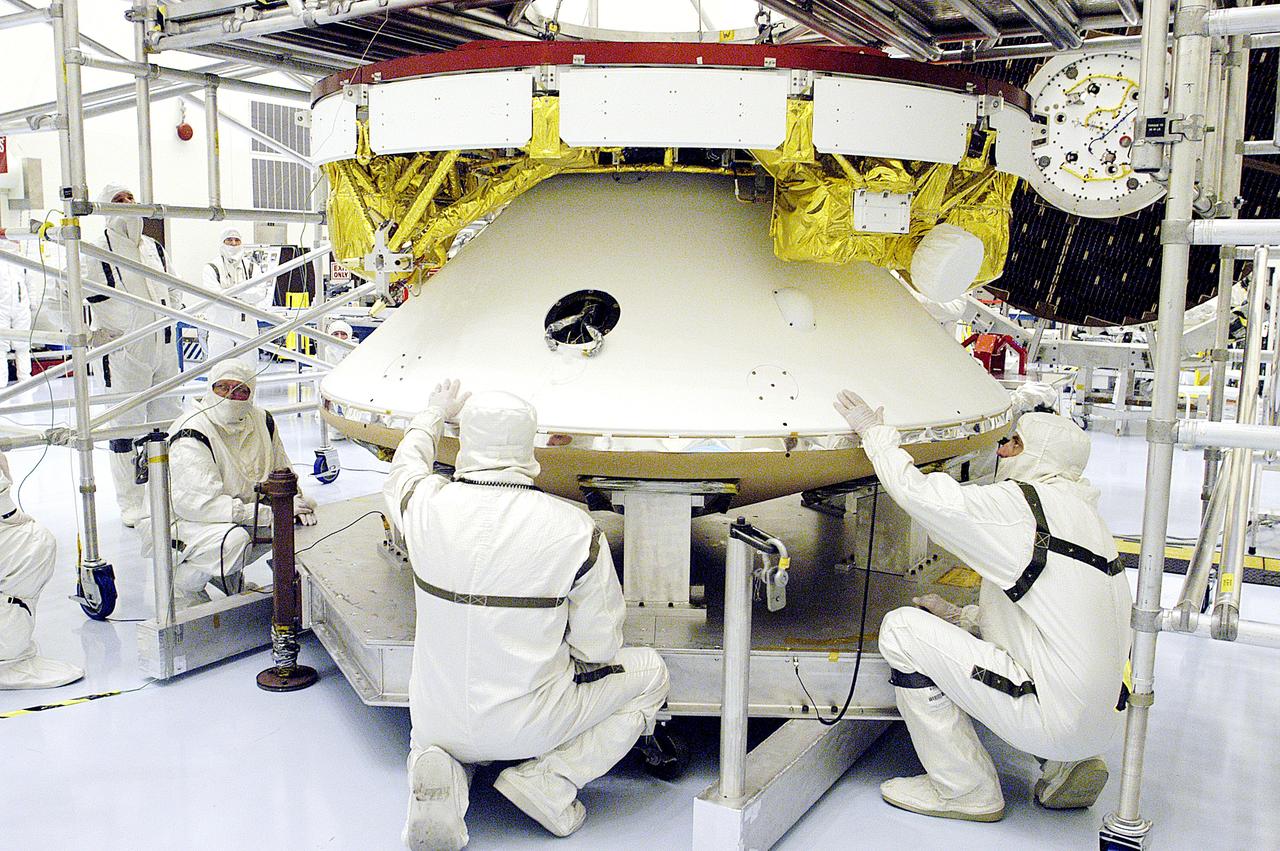
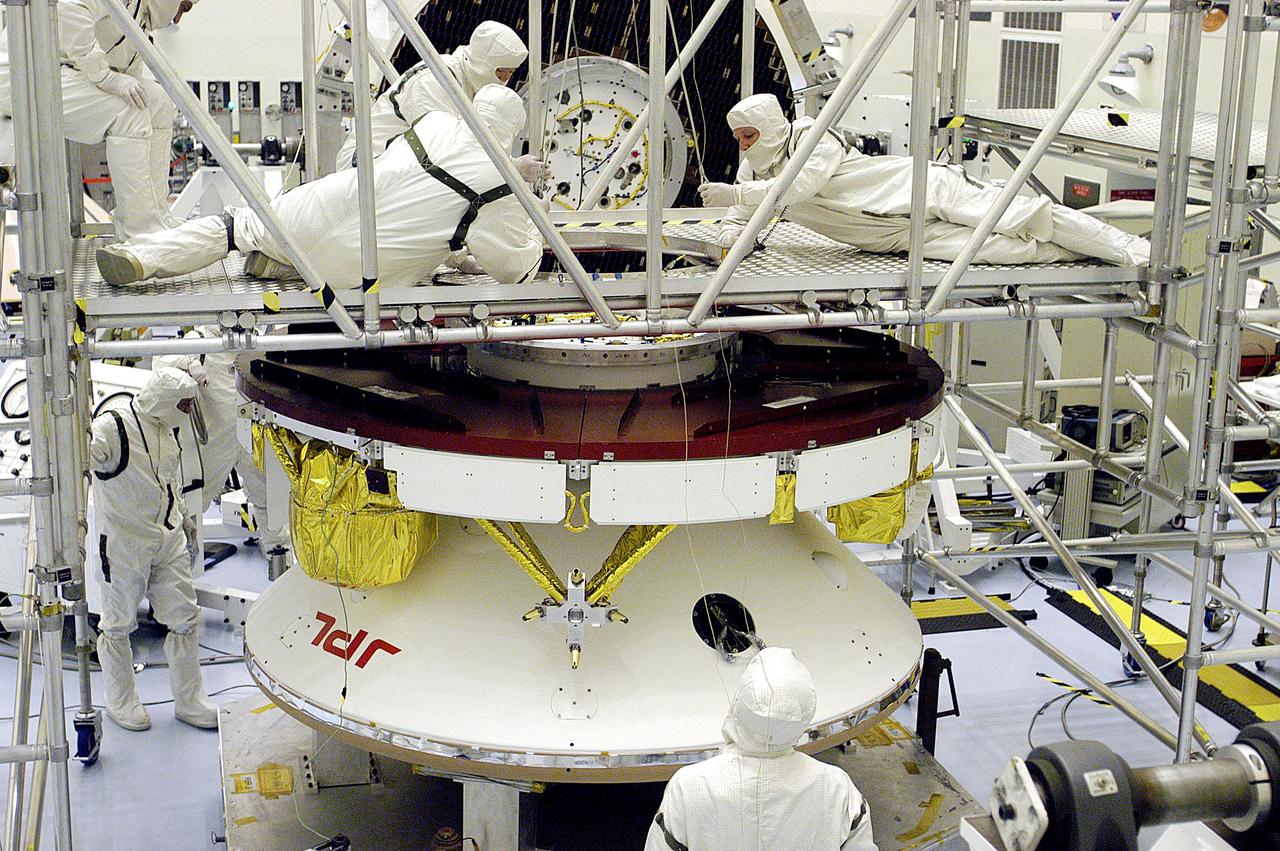
KENNEDY SPACE CENTER, FLA. - In the Payload Hazardous Servicing Facility, workers attach the upper canister to the lower portion to encapsulate the Mars Exploration Rover 2 (MER-2).  After encapsulation, MER-2 will be transferred to Launch Complex 17-A, Cape Canaveral Air Force Station.  MER-2 is one of NASA's twin Mars Exploration Rovers designed to study the history of water on Mars. These robotic geologists are equipped with a robotic arm, a drilling tool, three spectrometers, and four pairs of cameras that allow them to have a human-like, 3D view of the terrain. Each rover could travel as far as 100 meters in one day to act as Mars scientists' eyes and hands, exploring an environment where humans can't yet go.  MER-2 is scheduled to launch no earlier than June 8 as MER-A aboard a Delta II rocket.
KENNEDY SPACE CENTER, FLA. - In the Payload Hazardous Servicing Facility, workers attach the upper canister to the lower portion to encapsulate the Mars Exploration Rover 2 (MER-2). After encapsulation, MER-2 will be transferred to Launch Complex 17-A, Cape Canaveral Air Force Station. MER-2 is one of NASA's twin Mars Exploration Rovers designed to study the history of water on Mars. These robotic geologists are equipped with a robotic arm, a drilling tool, three spectrometers, and four pairs of cameras that allow them to have a human-like, 3D view of the terrain. Each rover could travel as far as 100 meters in one day to act as Mars scientists' eyes and hands, exploring an environment where humans can't yet go. MER-2 is scheduled to launch no earlier than June 8 as MER-A aboard a Delta II rocket.
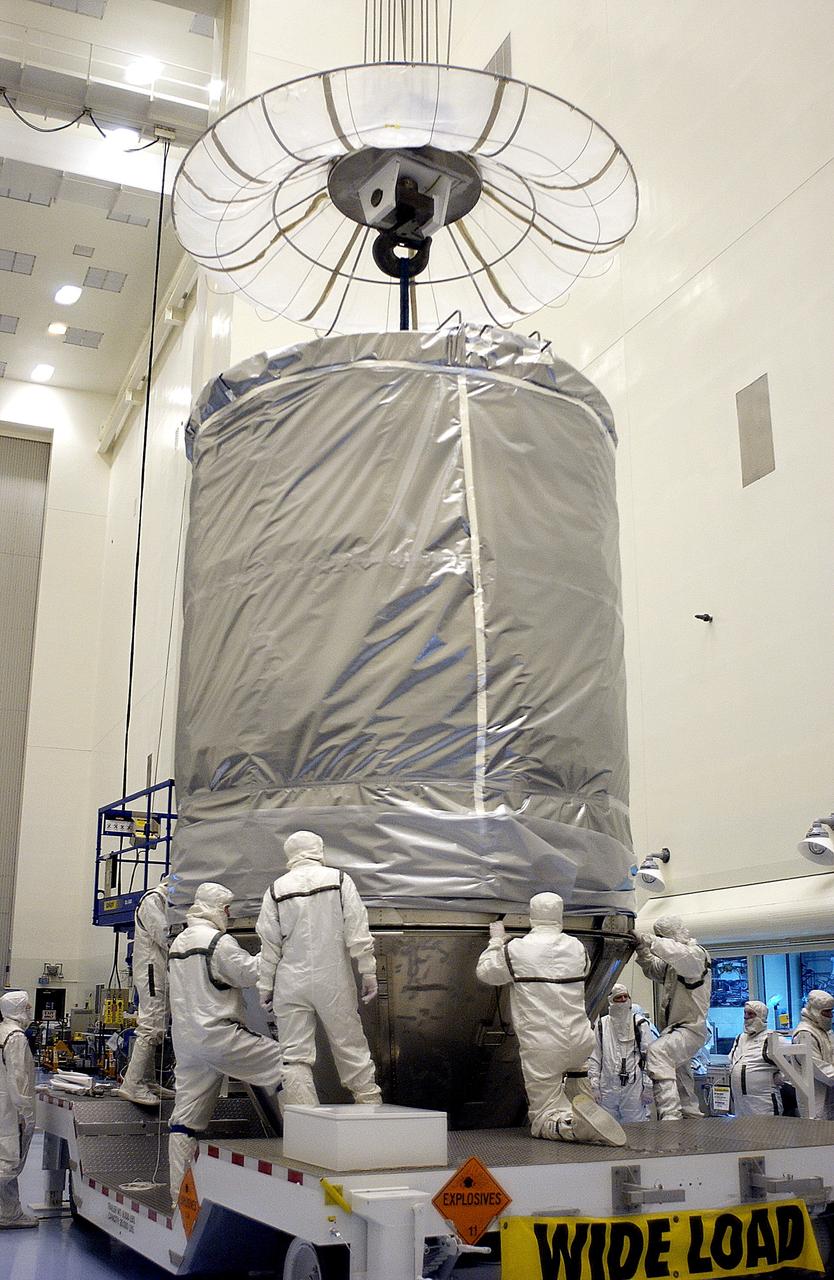
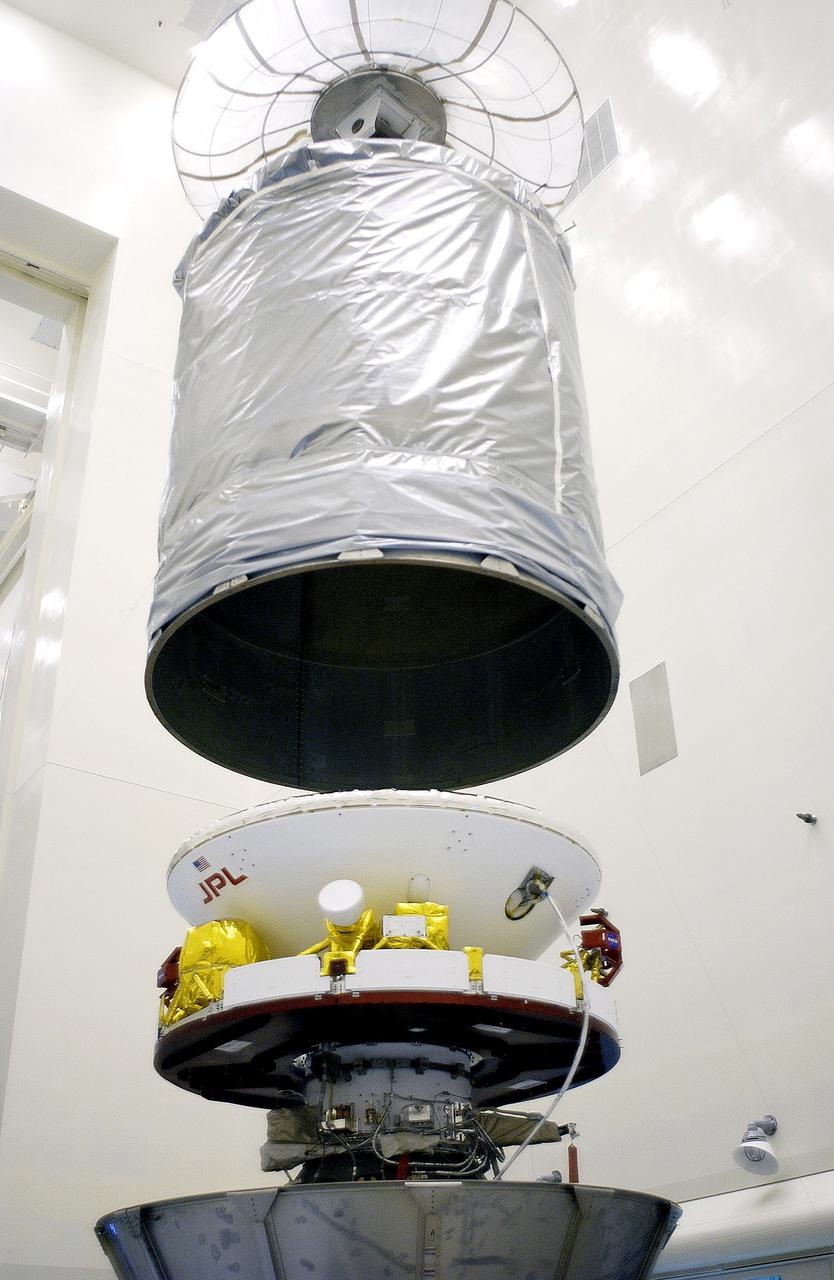
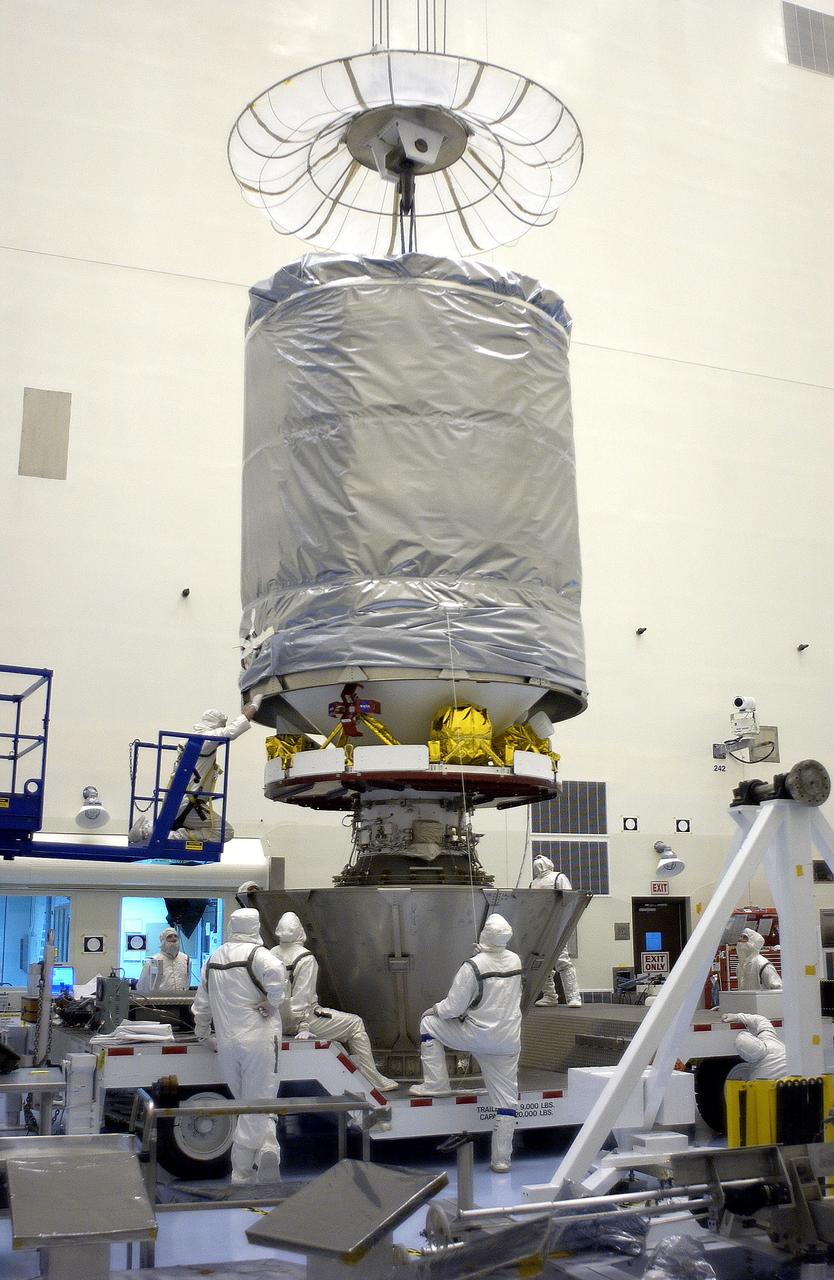
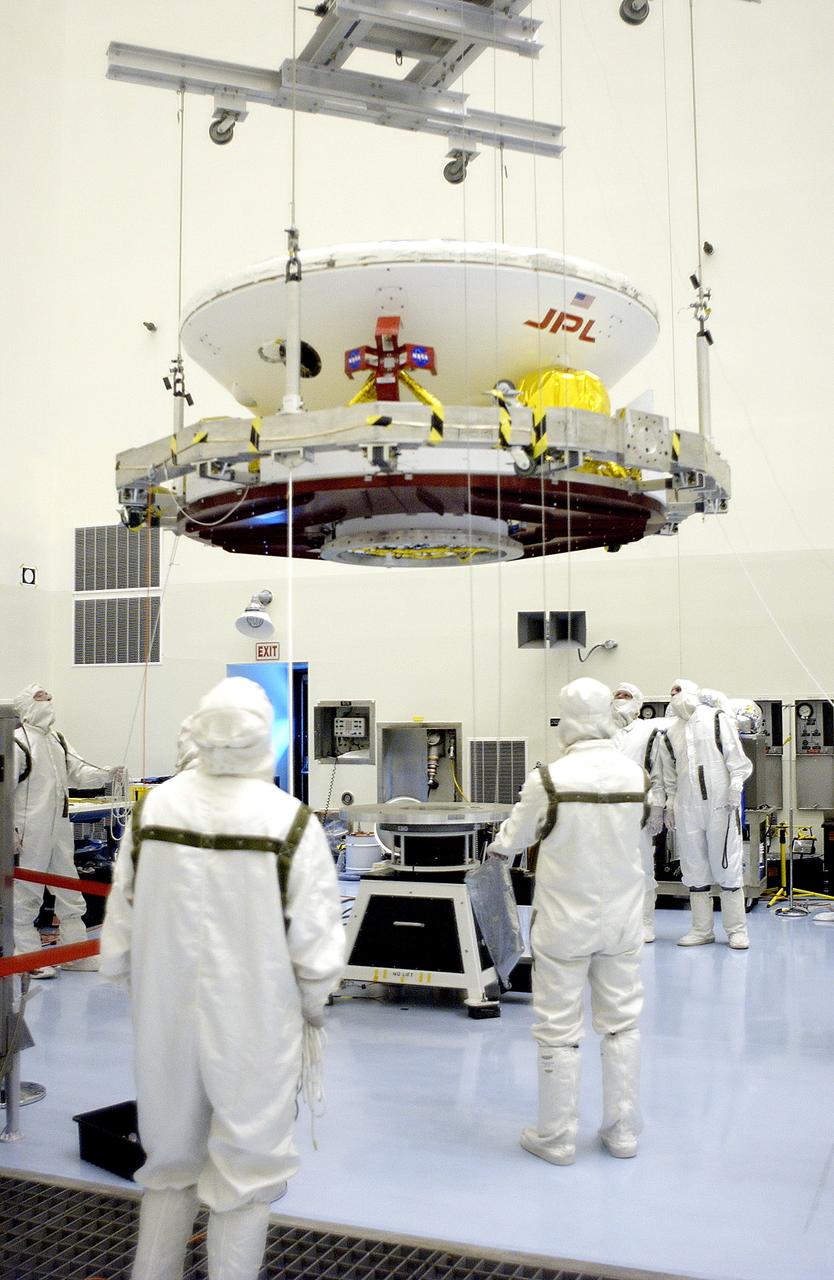
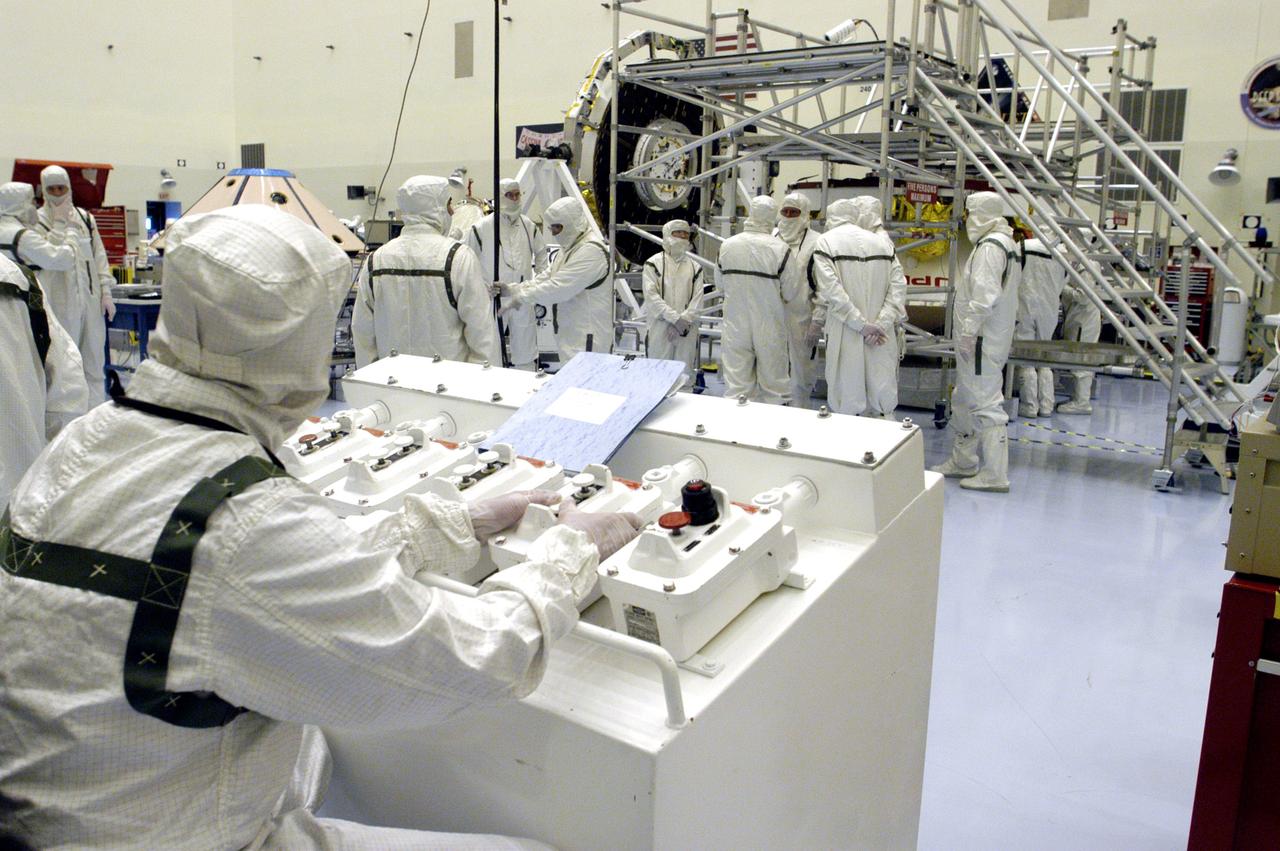
KENNEDY SPACE CENTER, FLA. - In the Payload Hazardous Servicing Facility, an overhead crane lowers the canister that will complete encapsulation of the Mars Exploration Rover 2 (MER-2), at right.  After encapsulation, MER-2 will be transferred to Launch Complex 17-A, Cape Canaveral Air Force Station.  MER-2 is one of NASA's twin Mars Exploration Rovers designed to study the history of water on Mars. These robotic geologists are equipped with a robotic arm, a drilling tool, three spectrometers, and four pairs of cameras that allow them to have a human-like, 3D view of the terrain. Each rover could travel as far as 100 meters in one day to act as Mars scientists' eyes and hands, exploring an environment where humans can't yet go.  MER-2 is scheduled to launch no earlier than June 8 as MER-A aboard a Delta II rocket.
KENNEDY SPACE CENTER, FLA. - In the Payload Hazardous Servicing Facility, an overhead crane lowers the canister that will complete encapsulation of the Mars Exploration Rover 2 (MER-2), at right. After encapsulation, MER-2 will be transferred to Launch Complex 17-A, Cape Canaveral Air Force Station. MER-2 is one of NASA's twin Mars Exploration Rovers designed to study the history of water on Mars. These robotic geologists are equipped with a robotic arm, a drilling tool, three spectrometers, and four pairs of cameras that allow them to have a human-like, 3D view of the terrain. Each rover could travel as far as 100 meters in one day to act as Mars scientists' eyes and hands, exploring an environment where humans can't yet go. MER-2 is scheduled to launch no earlier than June 8 as MER-A aboard a Delta II rocket.
KENNEDY SPACE CENTER, FLA. - Workers in the Payload Hazardous Servicing Facility secure the lower sections of the transport canister around the Mars Exploration Rover 2 (MER-2).  The upper portion waits at left.  After encapsulation, MER-2 will be transferred to Launch Complex 17-A, Cape Canaveral Air Force Station.  MER-2 is one of NASA's twin Mars Exploration Rovers designed to study the history of water on Mars. These robotic geologists are equipped with a robotic arm, a drilling tool, three spectrometers, and four pairs of cameras that allow them to have a human-like, 3D view of the terrain. Each rover could travel as far as 100 meters in one day to act as Mars scientists' eyes and hands, exploring an environment where humans can't yet go.  MER-2 is scheduled to launch no earlier than June 8 as MER-A aboard a Delta II rocket.
KENNEDY SPACE CENTER, FLA. - Workers in the Payload Hazardous Servicing Facility secure the lower sections of the transport canister around the Mars Exploration Rover 2 (MER-2). The upper portion waits at left. After encapsulation, MER-2 will be transferred to Launch Complex 17-A, Cape Canaveral Air Force Station. MER-2 is one of NASA's twin Mars Exploration Rovers designed to study the history of water on Mars. These robotic geologists are equipped with a robotic arm, a drilling tool, three spectrometers, and four pairs of cameras that allow them to have a human-like, 3D view of the terrain. Each rover could travel as far as 100 meters in one day to act as Mars scientists' eyes and hands, exploring an environment where humans can't yet go. MER-2 is scheduled to launch no earlier than June 8 as MER-A aboard a Delta II rocket.
KENNEDY SPACE CENTER, FLA. - On Launch Pad 17-A, Cape Canaveral Air Force Station, the Mars Exploration Rover 2 (MER-2), inside the transport canister, is moved toward the platform in the launch tower.  MER-2 will be mated to the Delta II rocket for launch.  MER-2 is one of NASA's twin Mars Exploration Rovers designed to study the history of water on Mars. These robotic geologists are equipped with a robotic arm, a drilling tool, three spectrometers, and four pairs of cameras that allow them to have a human-like, 3D view of the terrain. Each rover could travel as far as 100 meters in one day to act as Mars scientists' eyes and hands, exploring an environment where humans can't yet go.  MER-2 is scheduled to launch no earlier than June 8 as MER-A.
KENNEDY SPACE CENTER, FLA. - On Launch Pad 17-A, Cape Canaveral Air Force Station, the Mars Exploration Rover 2 (MER-2), inside the transport canister, is moved toward the platform in the launch tower. MER-2 will be mated to the Delta II rocket for launch. MER-2 is one of NASA's twin Mars Exploration Rovers designed to study the history of water on Mars. These robotic geologists are equipped with a robotic arm, a drilling tool, three spectrometers, and four pairs of cameras that allow them to have a human-like, 3D view of the terrain. Each rover could travel as far as 100 meters in one day to act as Mars scientists' eyes and hands, exploring an environment where humans can't yet go. MER-2 is scheduled to launch no earlier than June 8 as MER-A.
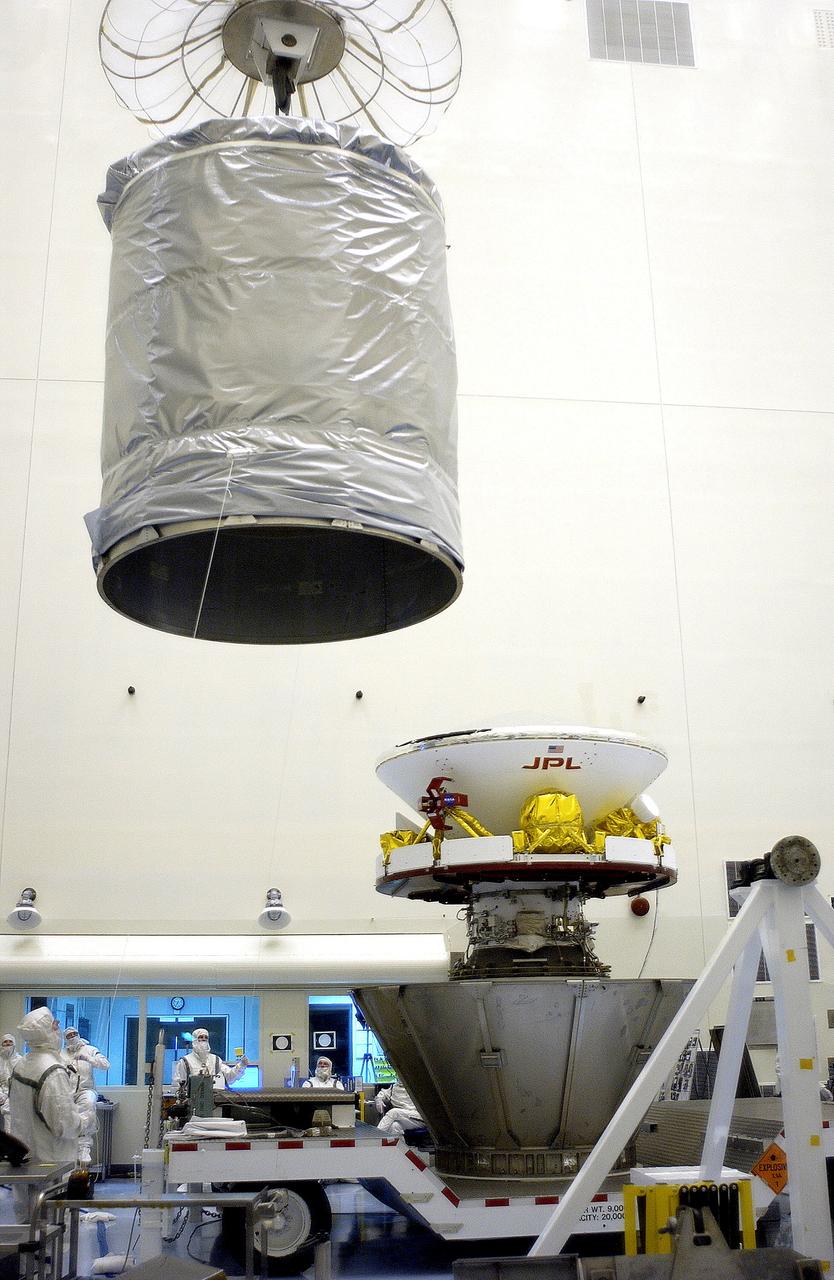
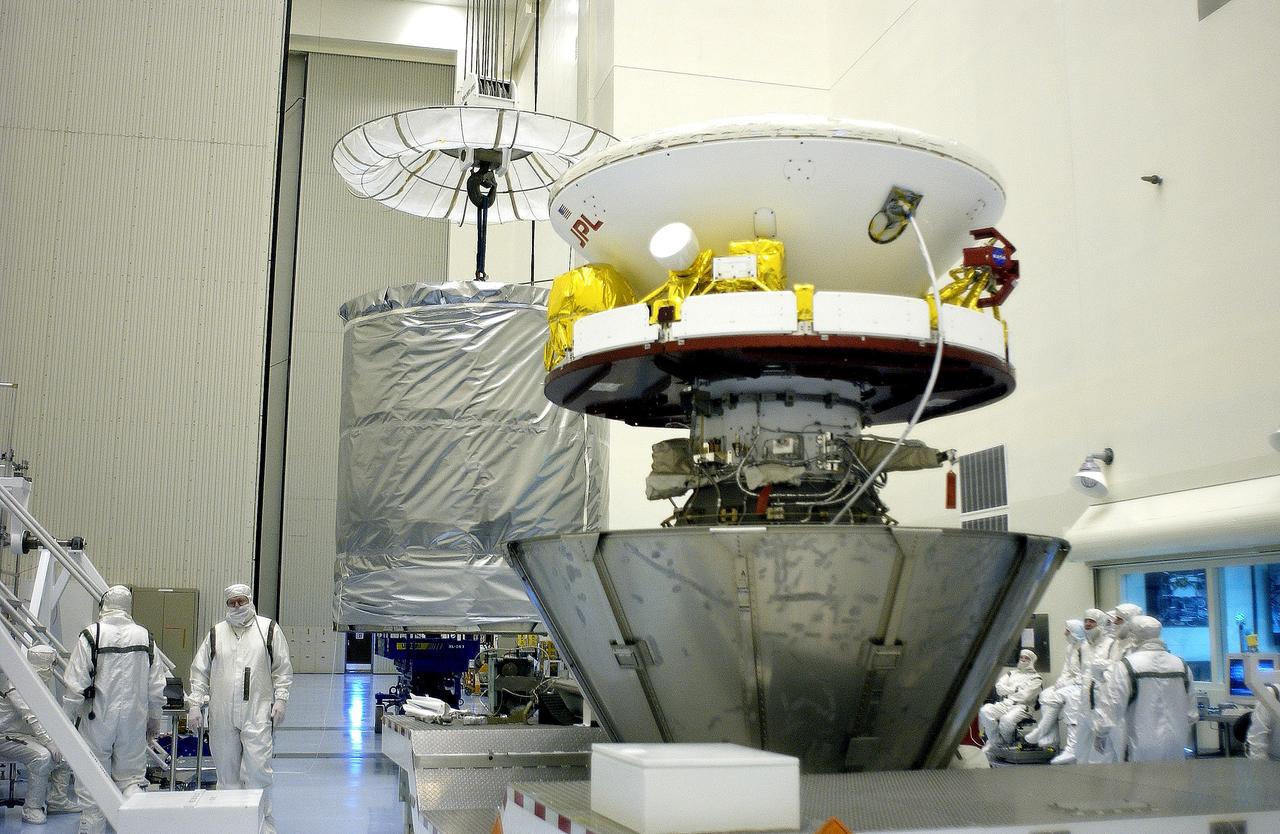
KENNEDY SPACE CENTER, FLA. - In the Payload Hazardous Servicing Facility, an overhead crane moves the canister that will complete encapsulation of the Mars Exploration Rover 2 (MER-2), at right.  After encapsulation, MER-2 will be transferred to Launch Complex 17-A, Cape Canaveral Air Force Station.  MER-2 is one of NASA's twin Mars Exploration Rovers designed to study the history of water on Mars. These robotic geologists are equipped with a robotic arm, a drilling tool, three spectrometers, and four pairs of cameras that allow them to have a human-like, 3D view of the terrain. Each rover could travel as far as 100 meters in one day to act as Mars scientists' eyes and hands, exploring an environment where humans can't yet go.  MER-2 is scheduled to launch no earlier than June 8 as MER-A aboard a Delta II rocket.
KENNEDY SPACE CENTER, FLA. - In the Payload Hazardous Servicing Facility, an overhead crane moves the canister that will complete encapsulation of the Mars Exploration Rover 2 (MER-2), at right. After encapsulation, MER-2 will be transferred to Launch Complex 17-A, Cape Canaveral Air Force Station. MER-2 is one of NASA's twin Mars Exploration Rovers designed to study the history of water on Mars. These robotic geologists are equipped with a robotic arm, a drilling tool, three spectrometers, and four pairs of cameras that allow them to have a human-like, 3D view of the terrain. Each rover could travel as far as 100 meters in one day to act as Mars scientists' eyes and hands, exploring an environment where humans can't yet go. MER-2 is scheduled to launch no earlier than June 8 as MER-A aboard a Delta II rocket.
KENNEDY SPACE CENTER, FLA. - In the Payload Hazardous Servicing Facility, an overhead crane (background) begins to lift the canister that will complete encapsulation of the Mars Exploration Rover 2 (MER-2) in the foreground.  After encapsulation, MER-2 will be transferred to Launch Complex 17-A, Cape Canaveral Air Force Station.  MER-2 is one of NASA's twin Mars Exploration Rovers designed to study the history of water on Mars. These robotic geologists are equipped with a robotic arm, a drilling tool, three spectrometers, and four pairs of cameras that allow them to have a human-like, 3D view of the terrain. Each rover could travel as far as 100 meters in one day to act as Mars scientists' eyes and hands, exploring an environment where humans can't yet go.  MER-2 is scheduled to launch no earlier than June 8 as MER-A aboard a Delta II rocket.
KENNEDY SPACE CENTER, FLA. - In the Payload Hazardous Servicing Facility, an overhead crane (background) begins to lift the canister that will complete encapsulation of the Mars Exploration Rover 2 (MER-2) in the foreground. After encapsulation, MER-2 will be transferred to Launch Complex 17-A, Cape Canaveral Air Force Station. MER-2 is one of NASA's twin Mars Exploration Rovers designed to study the history of water on Mars. These robotic geologists are equipped with a robotic arm, a drilling tool, three spectrometers, and four pairs of cameras that allow them to have a human-like, 3D view of the terrain. Each rover could travel as far as 100 meters in one day to act as Mars scientists' eyes and hands, exploring an environment where humans can't yet go. MER-2 is scheduled to launch no earlier than June 8 as MER-A aboard a Delta II rocket.
KENNEDY SPACE CENTER, FLA. - In the Payload Hazardous Servicing Facility, an overhead crane lowers the canister that will complete encapsulation of the Mars Exploration Rover 2 (MER-2), at right.  After encapsulation, MER-2 will be transferred to Launch Complex 17-A, Cape Canaveral Air Force Station.  MER-2 is one of NASA's twin Mars Exploration Rovers designed to study the history of water on Mars. These robotic geologists are equipped with a robotic arm, a drilling tool, three spectrometers, and four pairs of cameras that allow them to have a human-like, 3D view of the terrain. Each rover could travel as far as 100 meters in one day to act as Mars scientists' eyes and hands, exploring an environment where humans can't yet go.  MER-2 is scheduled to launch no earlier than June 8 as MER-A aboard a Delta II rocket.
KENNEDY SPACE CENTER, FLA. - In the Payload Hazardous Servicing Facility, an overhead crane lowers the canister that will complete encapsulation of the Mars Exploration Rover 2 (MER-2), at right. After encapsulation, MER-2 will be transferred to Launch Complex 17-A, Cape Canaveral Air Force Station. MER-2 is one of NASA's twin Mars Exploration Rovers designed to study the history of water on Mars. These robotic geologists are equipped with a robotic arm, a drilling tool, three spectrometers, and four pairs of cameras that allow them to have a human-like, 3D view of the terrain. Each rover could travel as far as 100 meters in one day to act as Mars scientists' eyes and hands, exploring an environment where humans can't yet go. MER-2 is scheduled to launch no earlier than June 8 as MER-A aboard a Delta II rocket.
KENNEDY SPACE CENTER, FLA. - In the Payload Hazardous Servicing Facility, an overhead crane lowers the canister that will complete encapsulation of the Mars Exploration Rover 2 (MER-2), at right.  After encapsulation, MER-2 will be transferred to Launch Complex 17-A, Cape Canaveral Air Force Station.  MER-2 is one of NASA's twin Mars Exploration Rovers designed to study the history of water on Mars. These robotic geologists are equipped with a robotic arm, a drilling tool, three spectrometers, and four pairs of cameras that allow them to have a human-like, 3D view of the terrain. Each rover could travel as far as 100 meters in one day to act as Mars scientists' eyes and hands, exploring an environment where humans can't yet go.  MER-2 is scheduled to launch no earlier than June 8 as MER-A aboard a Delta II rocket.
KENNEDY SPACE CENTER, FLA. - In the Payload Hazardous Servicing Facility, an overhead crane lowers the canister that will complete encapsulation of the Mars Exploration Rover 2 (MER-2), at right. After encapsulation, MER-2 will be transferred to Launch Complex 17-A, Cape Canaveral Air Force Station. MER-2 is one of NASA's twin Mars Exploration Rovers designed to study the history of water on Mars. These robotic geologists are equipped with a robotic arm, a drilling tool, three spectrometers, and four pairs of cameras that allow them to have a human-like, 3D view of the terrain. Each rover could travel as far as 100 meters in one day to act as Mars scientists' eyes and hands, exploring an environment where humans can't yet go. MER-2 is scheduled to launch no earlier than June 8 as MER-A aboard a Delta II rocket.
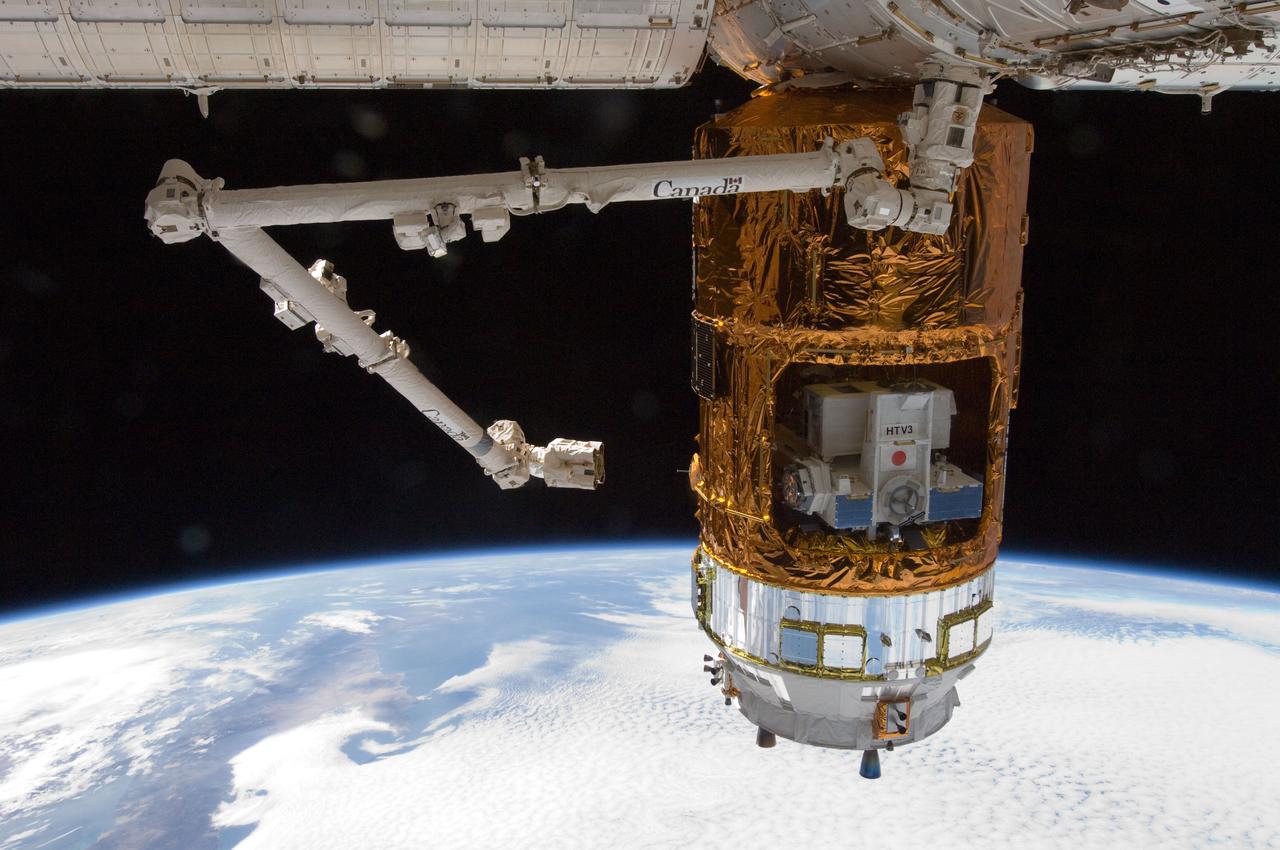
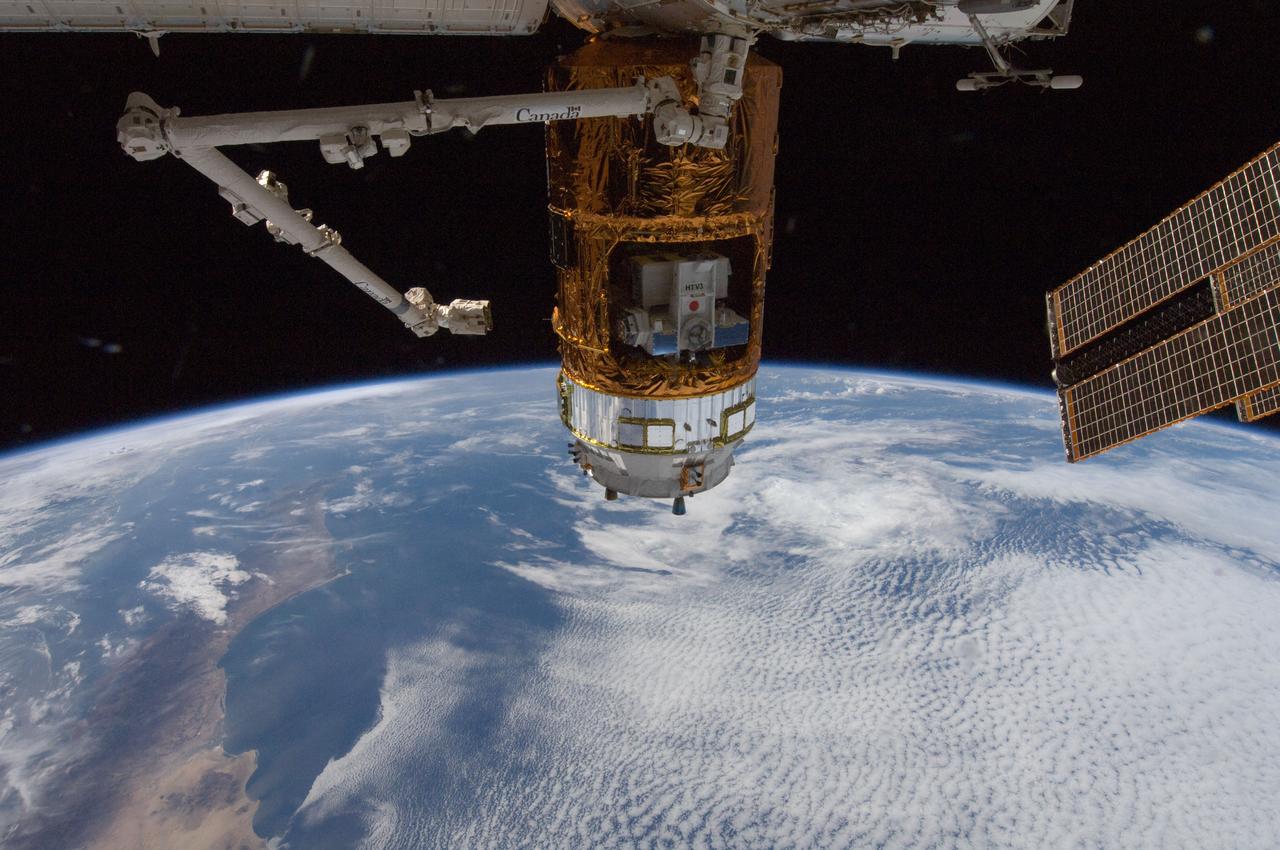
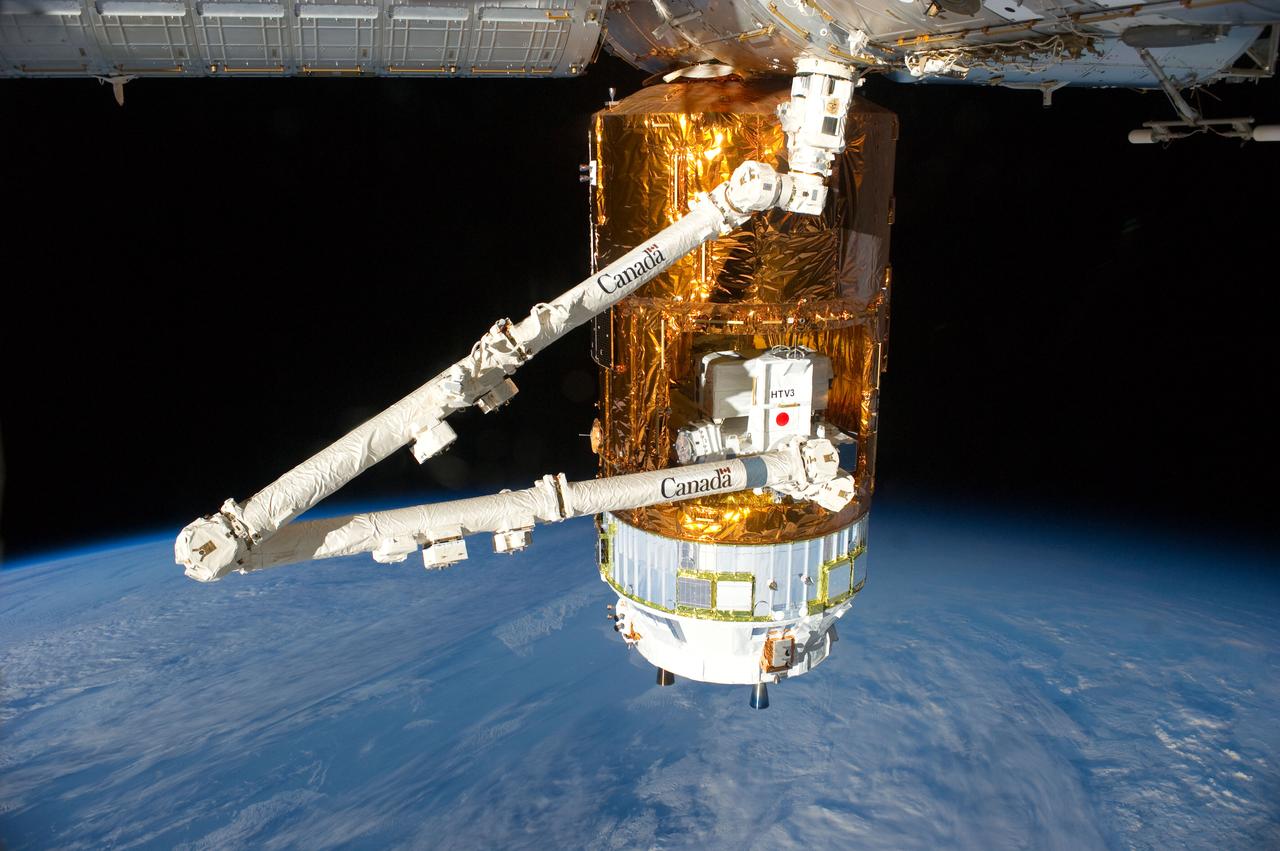
ISS032-E-010858 (29 July 2012) --- The Japan Aerospace Exploration Agency (JAXA) H-II Transfer Vehicle (HTV-3), currently attached to the Earth-facing port of the International Space Station's Harmony node, is featured in this image photographed by an Expedition 32 crew member on the station. Earth’s horizon and the blackness of space provide the backdrop for the scene.
View of HTV3 berthed to Node 2
ISS032-E-010855 (29 July 2012) --- The Japan Aerospace Exploration Agency (JAXA) H-II Transfer Vehicle (HTV-3), currently attached to the Earth-facing port of the International Space Station's Harmony node, is featured in this image photographed by an Expedition 32 crew member on the station. Earth’s horizon and the blackness of space provide the backdrop for the scene.
View of HTV3 berthed to Node 2
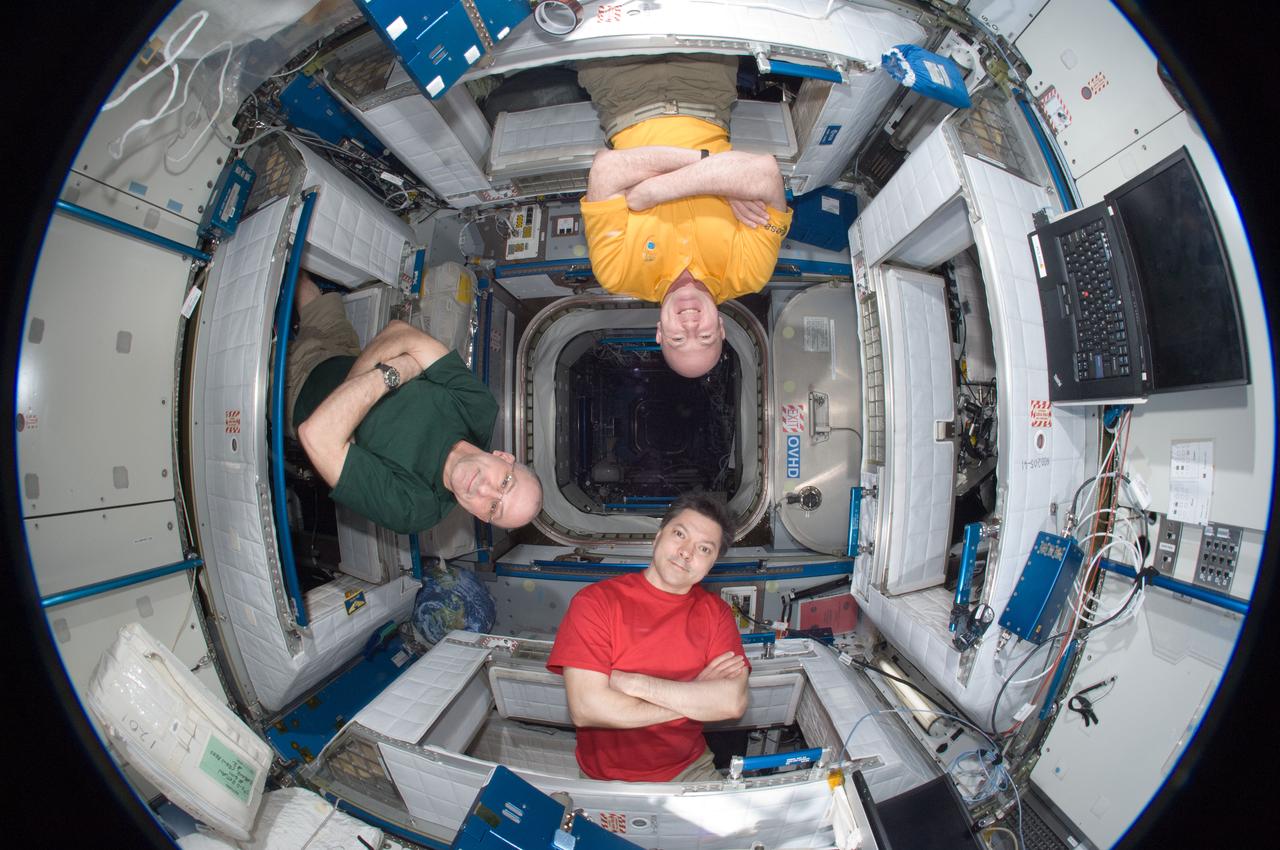
ISS031-E-030602 (12 May 2012) --- A fisheye lens attached to an electronic still camera was used to capture this image of Russian cosmonaut Oleg Kononenko (bottom), Expedition 31 commander; along with NASA astronaut Don Pettit (left) and European Space Agency astronaut Andre Kuipers, both flight engineers, in the Harmony node of the International Space Station.
Crewmembers in Fisheye View of Node 2
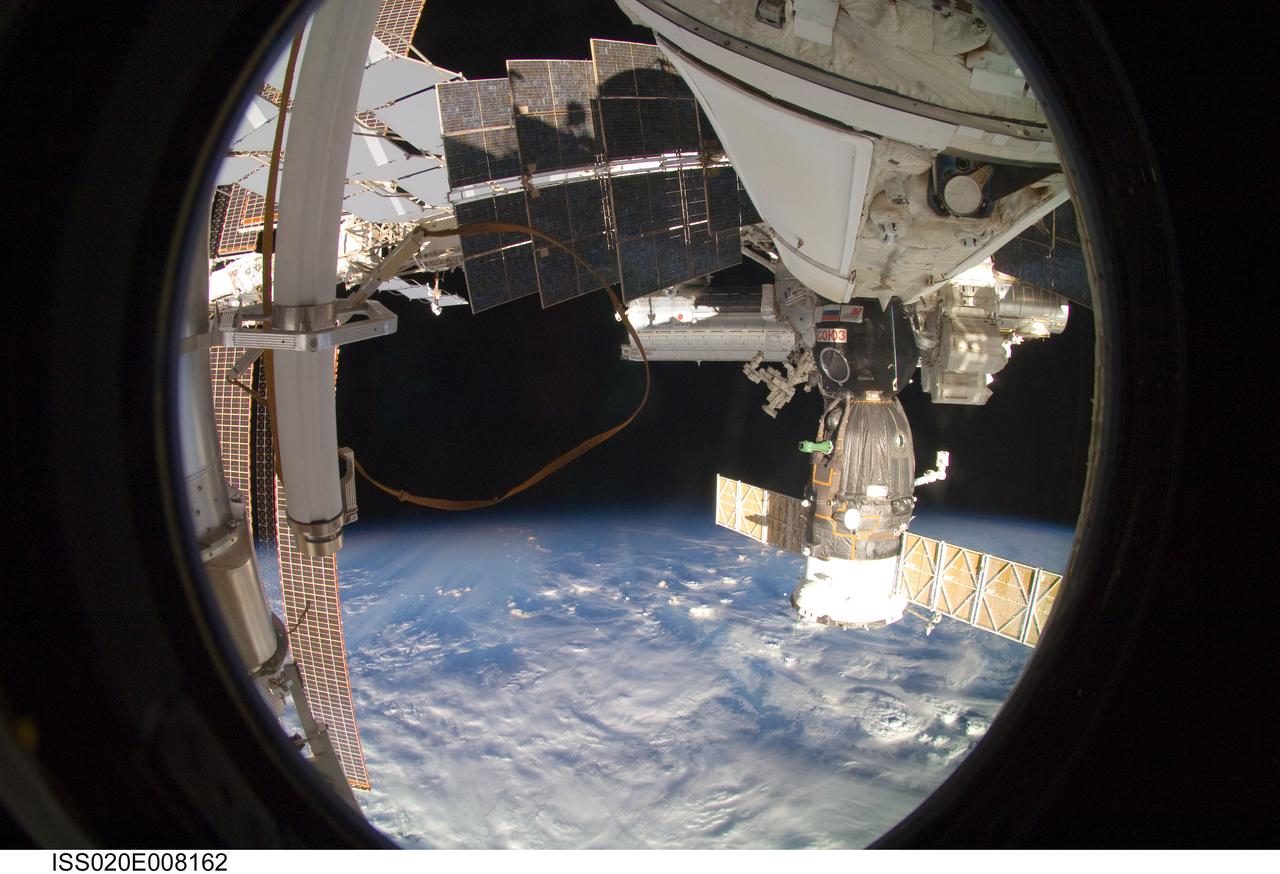
ISS020-E-008162 (10 June 2009) --- Backdropped by Earth?s horizon and the blackness of space, a portion of the International Space Station and a docked Soyuz spacecraft are featured in this image photographed by an Expedition 20 crew member aboard the station.
Node 2 & CO1 window views
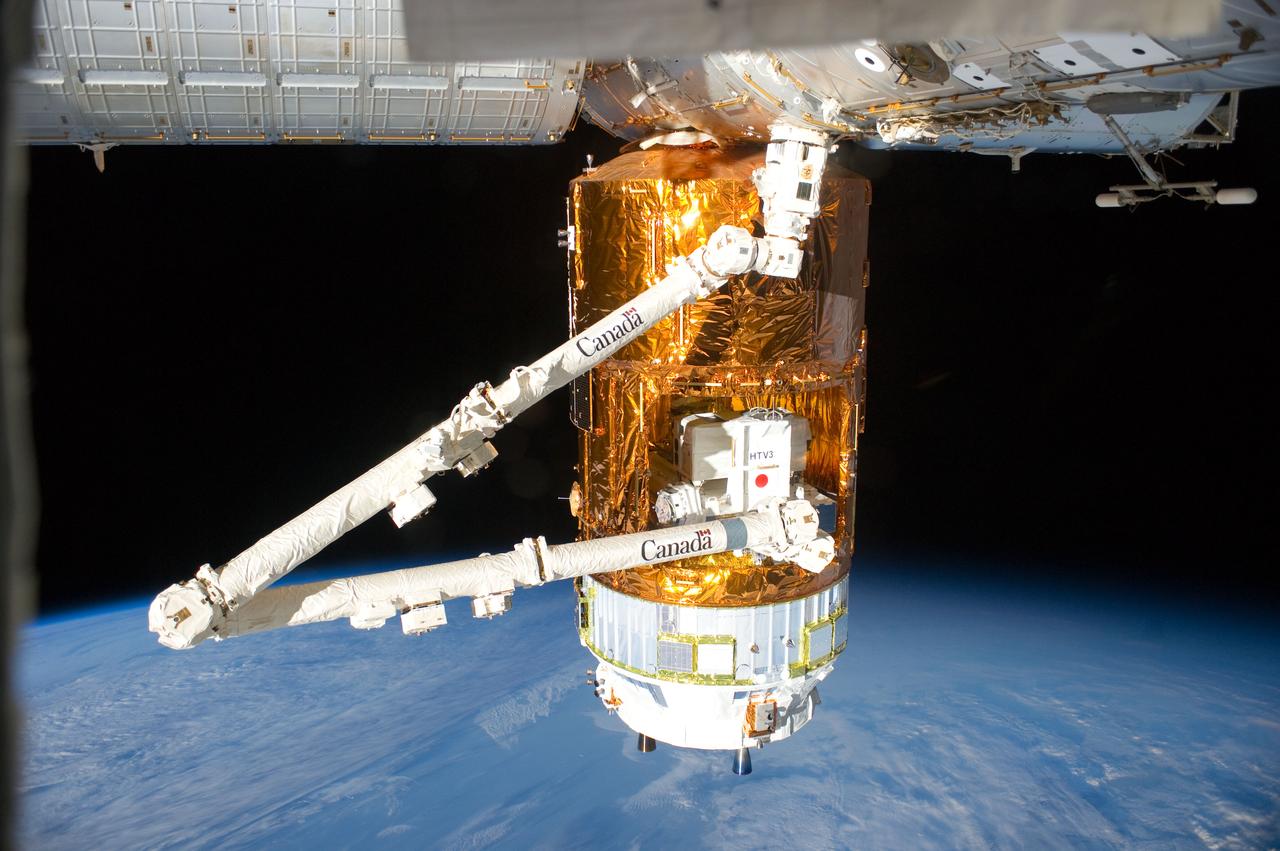
ISS032-E-010464 (27 July 2012) --- The unpiloted Japan Aerospace Exploration Agency (JAXA) H-II Transfer Vehicle (HTV-3) is featured in this image photographed by an Expedition 32 crew member shortly after the HTV-3 was berthed to the Earth-facing port of the International Space Station's Harmony node using the Canadarm2 robotic arm. The attachment was completed at 10:34 a.m. (EDT) on July 27, 2012. Earth?s horizon and the blackness of space provide the backdrop for the scene.
View of HTV3 berthed to Node 2
ISS032-E-010473 (27 July 2012) --- The unpiloted Japan Aerospace Exploration Agency (JAXA) H-II Transfer Vehicle (HTV-3) is featured in this image photographed by an Expedition 32 crew member shortly after the HTV-3 was berthed to the Earth-facing port of the International Space Station's Harmony node using the Canadarm2 robotic arm. The attachment was completed at 10:34 a.m. (EDT) on July 27, 2012. Earth?s horizon and the blackness of space provide the backdrop for the scene.
View of HTV3 berthed to Node 2
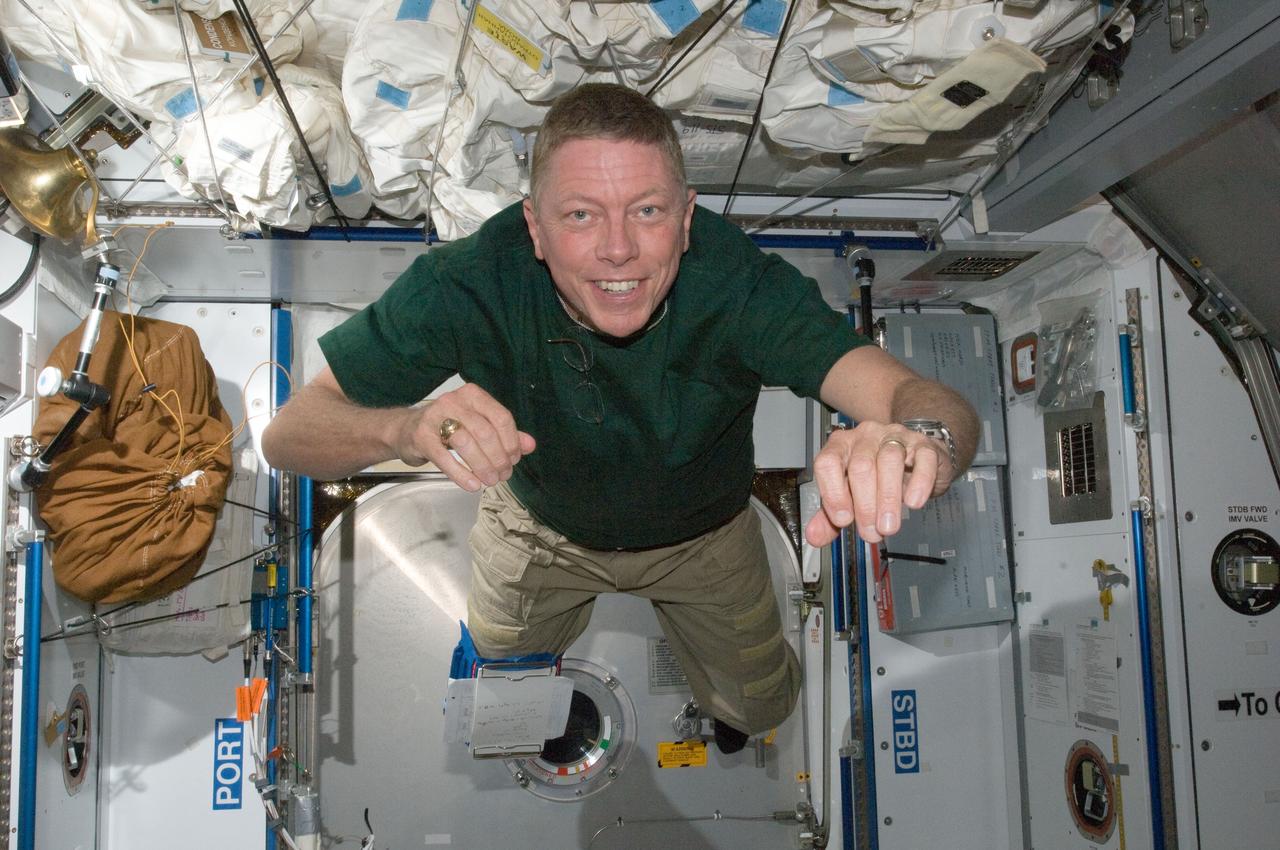
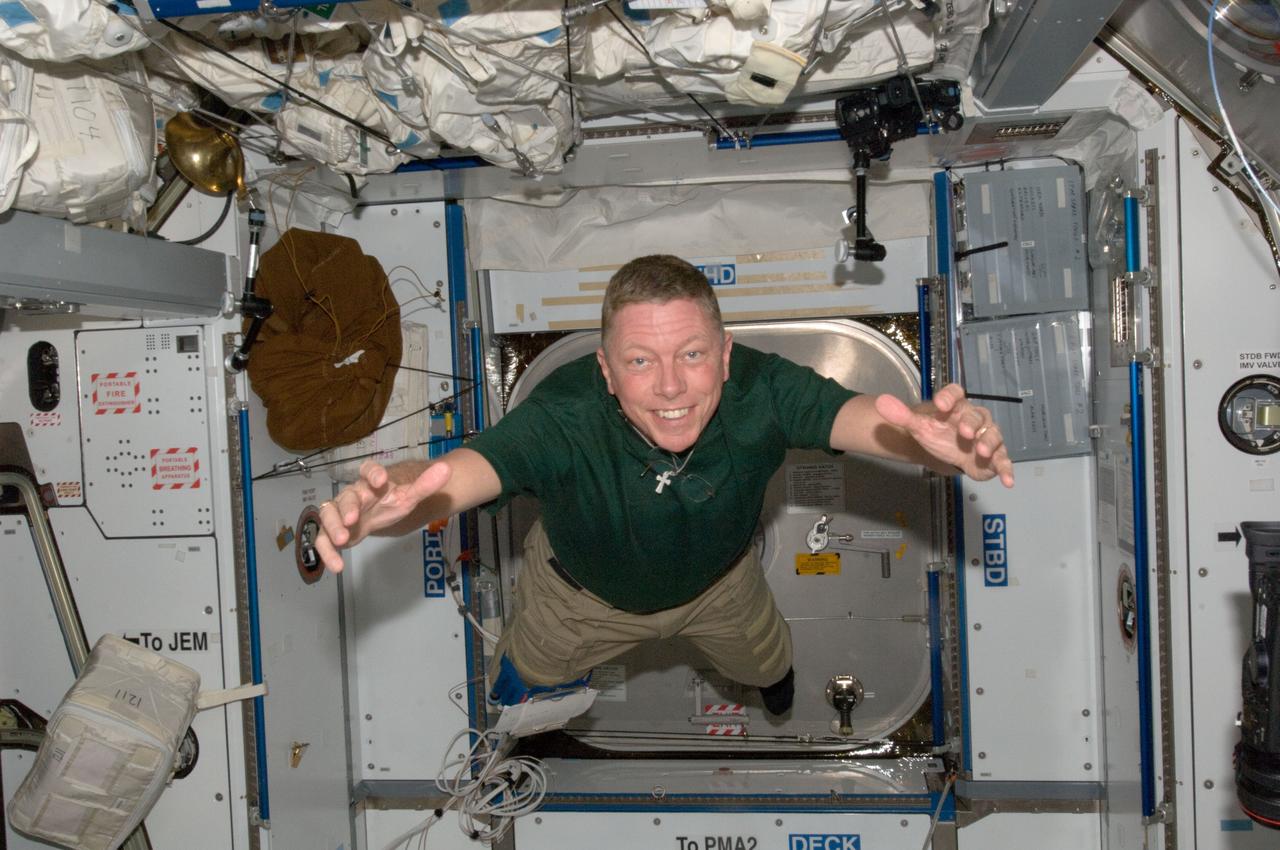
ISS028-E-007695 (12 June 2011) --- NASA astronaut Mike Fossum, Expedition 28 flight engineer, is pictured floating freely in the Harmony node of the International Space Station.
View of FE Fossum in the Node 2
ISS032-E-010476 (27 July 2012) --- The unpiloted Japan Aerospace Exploration Agency (JAXA) H-II Transfer Vehicle (HTV-3) is featured in this image photographed by an Expedition 32 crew member shortly after the HTV-3 was berthed to the Earth-facing port of the International Space Station's Harmony node using the Canadarm2 robotic arm. The attachment was completed at 10:34 a.m. (EDT) on July 27, 2012. Earth?s horizon and the blackness of space provide the backdrop for the scene.
View of HTV3 berthed to Node 2
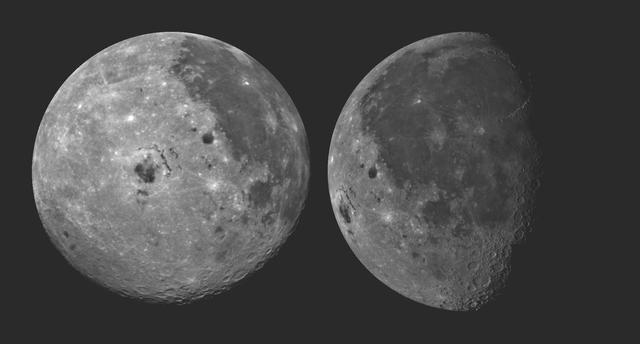
These pictures of the Moon were taken by NASA Galileo spacecraft at right photo Dec.8, 1990 from a distance of almost 220,000 miles, and at left photo Dec. 9, 1990 at a range of more than 350,000 miles.  http://photojournal.jpl.nasa.gov/catalog/PIA00077
Moon - 2 Views of Orientale Basin
S81-39556 (13 Nov. 1981) --- This photograph of the cargo bay of NASA?s space shuttle Columbia was taken by the STS-2 crewmen from inside the shuttle?s cabin. In the foreground is the pallet of experiments developed by NASA?s Office of Space and Terrestrial Applications (OSTA). The orbital maneuvering system (OMS) pods and vertical stabilizer of Columbia are in upper left corner. The window through which this 70mm frame was exposed is one of two on the aft side of the flight deck. Astronauts Joe H. Engle, commander, and Richard H. Truly, pilot, were aboard the Columbia on its second trip for two days, six hours, 13 minutes and 10 seconds prior to landing at Edwards Air Force Base. Photo credit: NASA
INFLIGHT (EARTH VIEWS) - STS-2
ISS032-E-010859 (29 July 2012) --- The Japan Aerospace Exploration Agency (JAXA) H-II Transfer Vehicle (HTV-3), currently attached to the Earth-facing port of the International Space Station's Harmony node, is featured in this image photographed by an Expedition 32 crew member on the station. Earth’s horizon and the blackness of space provide the backdrop for the scene.
View of HTV3 berthed to Node 2
ISS028-E-007701 (12 June 2011) --- NASA astronaut Mike Fossum, Expedition 28 flight engineer, is pictured floating freely in the Harmony node of the International Space Station.
View of FE Fossum in the Node 2
KENNEDY SPACE CENTER, FLA. - Workers in the Payload Hazardous Servicing Facility prepare the Mars Exploration Rover 2 (MER-2) for a weight and center of gravity determination.  NASA's twin Mars Exploration Rovers are designed to study the history of water on Mars. These robotic geologists are equipped with a robotic arm, a drilling tool, three spectrometers, and four pairs of cameras that allow them to have a human-like, 3D view of the terrain. Each rover could travel as far as 100 meters in one day to act as Mars scientists' eyes and hands, exploring an environment where humans can't yet go.  Launch of MER-2 is scheduled for June 5 from Cape Canaveral Air Force Station.
KENNEDY SPACE CENTER, FLA. - Workers in the Payload Hazardous Servicing Facility prepare the Mars Exploration Rover 2 (MER-2) for a weight and center of gravity determination. NASA's twin Mars Exploration Rovers are designed to study the history of water on Mars. These robotic geologists are equipped with a robotic arm, a drilling tool, three spectrometers, and four pairs of cameras that allow them to have a human-like, 3D view of the terrain. Each rover could travel as far as 100 meters in one day to act as Mars scientists' eyes and hands, exploring an environment where humans can't yet go. Launch of MER-2 is scheduled for June 5 from Cape Canaveral Air Force Station.
KENNEDY SPACE CENTER, FLA. - The Mars Exploration Rover 2 (MER-2) undergoes a weight and center of gravity determination in the Payload Hazardous Servicing Facility.  NASA's twin Mars Exploration Rovers are designed to study the history of water on Mars. These robotic geologists are equipped with a robotic arm, a drilling tool, three spectrometers, and four pairs of cameras that allow them to have a human-like, 3D view of the terrain. Each rover could travel as far as 100 meters in one day to act as Mars scientists' eyes and hands, exploring an environment where humans can't yet go.  Launch of MER-2 is scheduled for June 5 from Cape Canaveral Air Force Station.
KENNEDY SPACE CENTER, FLA. - The Mars Exploration Rover 2 (MER-2) undergoes a weight and center of gravity determination in the Payload Hazardous Servicing Facility. NASA's twin Mars Exploration Rovers are designed to study the history of water on Mars. These robotic geologists are equipped with a robotic arm, a drilling tool, three spectrometers, and four pairs of cameras that allow them to have a human-like, 3D view of the terrain. Each rover could travel as far as 100 meters in one day to act as Mars scientists' eyes and hands, exploring an environment where humans can't yet go. Launch of MER-2 is scheduled for June 5 from Cape Canaveral Air Force Station.
KENNEDY SPACE CENTER, FLA. - In the Payload Hazardous Servicing Facility, the Mars Exploration Rover 2 (MER-2) is moved to a spin table.  NASA’s twin Mars Exploration Rovers are designed to study the history of water on Mars. These robotic geologists are equipped with a robotic arm, a drilling tool, three spectrometers, and four pairs of cameras that allow them to have a human-like, 3D view of the terrain. Each rover could travel as far as 100 meters in one day to act as Mars scientists' eyes and hands, exploring an environment where humans can’t yet go.  The MER-2 is scheduled to launch June 5 from Launch Pad 17-A, Cape Canaveral Air Force Station.
KENNEDY SPACE CENTER, FLA. - In the Payload Hazardous Servicing Facility, the Mars Exploration Rover 2 (MER-2) is moved to a spin table. NASA’s twin Mars Exploration Rovers are designed to study the history of water on Mars. These robotic geologists are equipped with a robotic arm, a drilling tool, three spectrometers, and four pairs of cameras that allow them to have a human-like, 3D view of the terrain. Each rover could travel as far as 100 meters in one day to act as Mars scientists' eyes and hands, exploring an environment where humans can’t yet go. The MER-2 is scheduled to launch June 5 from Launch Pad 17-A, Cape Canaveral Air Force Station.
KENNEDY SPACE CENTER, FLA. -  The Mars Exploration Rover 2 (MER-2) undergoes a weight and center of gravity determination in the Payload Hazardous Servicing Facility.  NASA's twin Mars Exploration Rovers are designed to study the history of water on Mars. These robotic geologists are equipped with a robotic arm, a drilling tool, three spectrometers, and four pairs of cameras that allow them to have a human-like, 3D view of the terrain. Each rover could travel as far as 100 meters in one day to act as Mars scientists' eyes and hands, exploring an environment where humans can't yet go.  Launch of MER-2 is scheduled for June 5 from Cape Canaveral Air Force Station.
KENNEDY SPACE CENTER, FLA. - The Mars Exploration Rover 2 (MER-2) undergoes a weight and center of gravity determination in the Payload Hazardous Servicing Facility. NASA's twin Mars Exploration Rovers are designed to study the history of water on Mars. These robotic geologists are equipped with a robotic arm, a drilling tool, three spectrometers, and four pairs of cameras that allow them to have a human-like, 3D view of the terrain. Each rover could travel as far as 100 meters in one day to act as Mars scientists' eyes and hands, exploring an environment where humans can't yet go. Launch of MER-2 is scheduled for June 5 from Cape Canaveral Air Force Station.