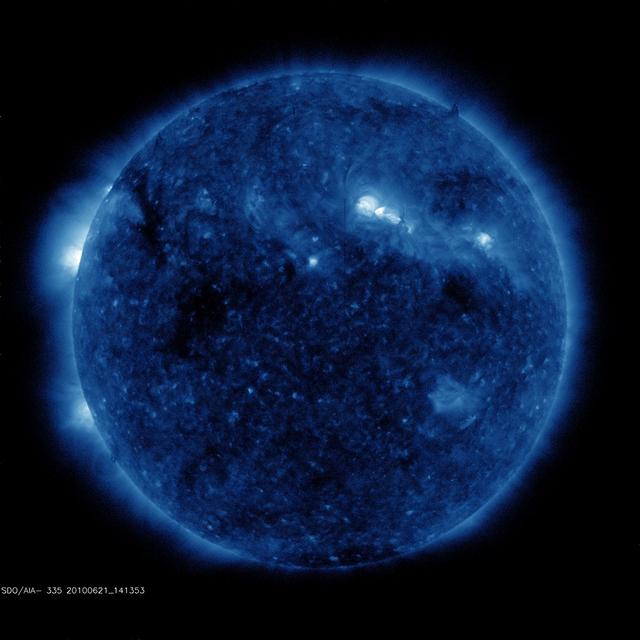
Full disk view of the sun from SDO, telescope AIA 335 on June 2, 2010. To learn more about SDO go to: <a href="http://sdo.gsfc.nasa.gov/" rel="nofollow">sdo.gsfc.nasa.gov/</a> <b><a href="http://www.nasa.gov/centers/goddard/home/index.html" rel="nofollow">NASA Goddard Space Flight Center</a></b> is home to the nation's largest organization of combined scientists, engineers and technologists that build spacecraft, instruments and new technology to study the Earth, the sun, our solar system, and the universe.

This 3D mosaic, created from images taken by NASA Mars Exploration Rover Opportunity on sols 115 and 116 May 21 and 22, 2004 provides a dramatic view of Endurance Crater. 3D glasses are necessary to view this image.
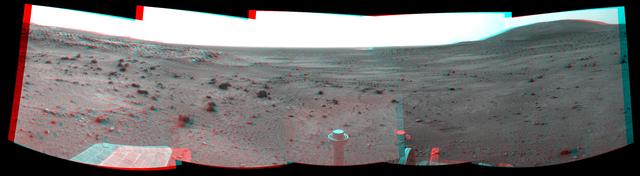
NASA Mars Exploration Rover Spirit took the images combined to make this stereo view on March 21, 2009. West is at the center, where a dust devil is visible in the distance. 3D glasses are necessary to view this image.
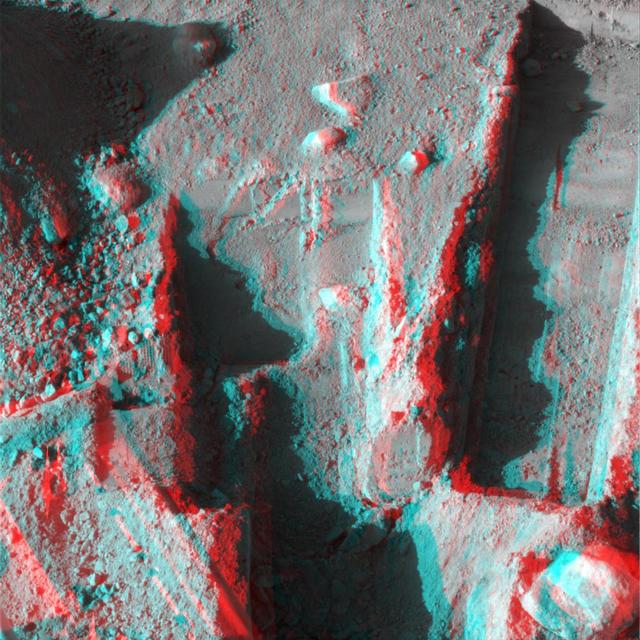
NASA Phoenix Mars Lander took this anaglyph on Oct. 21, 2008; the trench on the upper left is called Dodo-Goldilocks. 3D glasses are necessary to view this image.
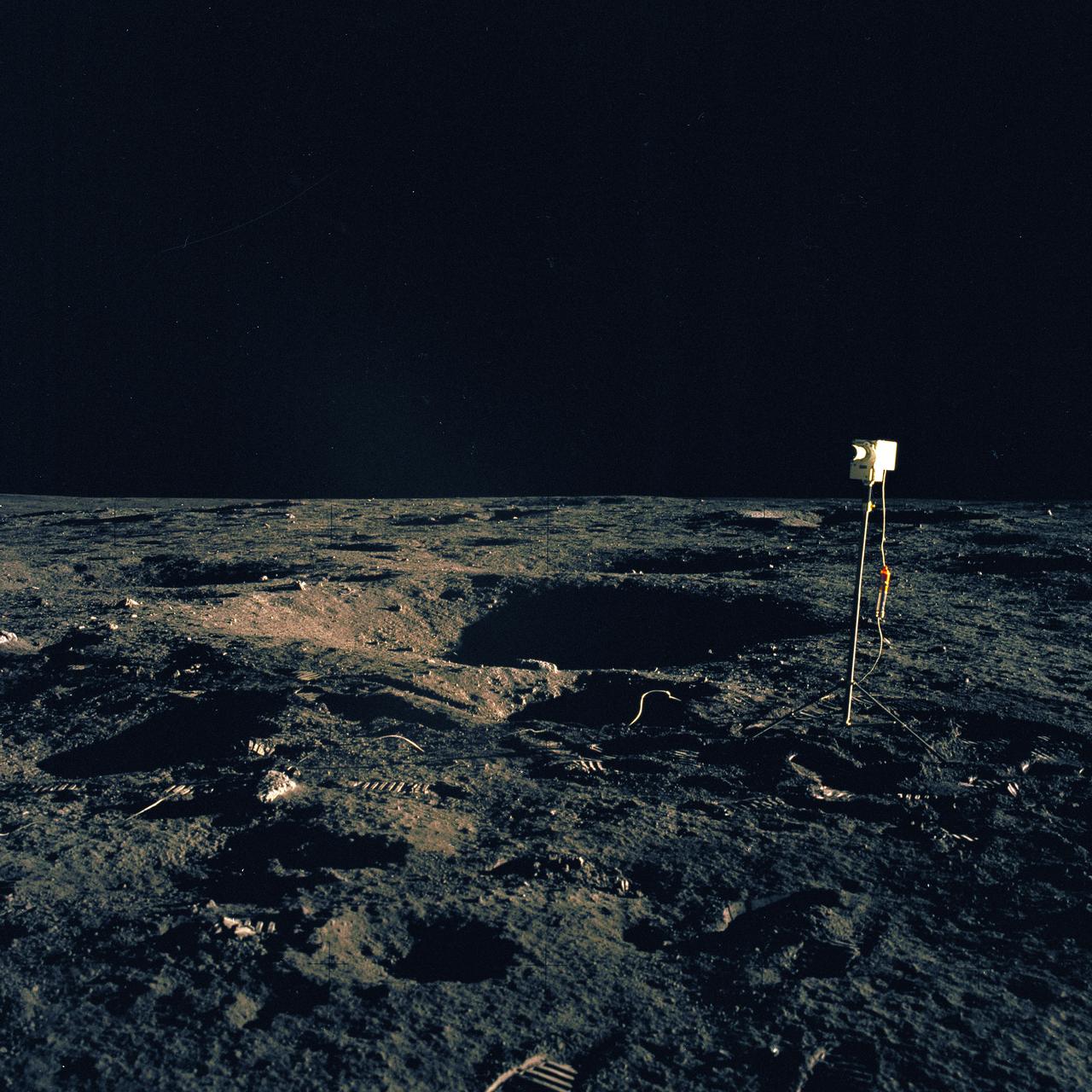
The second manned lunar landing mission, Apollo 12, launched from launch pad 39-A at Kennedy Space Center in Florida on November 14, 1969 via a Saturn V launch vehicle. The Saturn V vehicle was developed by the Marshall Space Flight Center (MSFC) under the direction of Dr. Wernher von Braun. Aboard Apollo 12 was a crew of three astronauts: Alan L. Bean, pilot of the Lunar Module (LM), Intrepid; Richard Gordon, pilot of the Command Module (CM), Yankee Clipper; and Spacecraft Commander Charles Conrad. The LM, Intrepid, landed astronauts Conrad and Bean on the lunar surface in what’s known as the Ocean of Storms while astronaut Richard Gordon piloted the CM, Yankee Clipper, in a parking orbit around the Moon. Lunar soil activities included the deployment of the Apollo Lunar Surface Experiments Package (ALSEP), finding the unmanned Surveyor 3 that landed on the Moon on April 19, 1967, and collecting 75 pounds (34 kilograms) of rock samples. This is the twenty-first of 25 images captured by the crew in attempt to provide a 360 degree Lunar surface scene. Apollo 12 safely returned to Earth on November 24, 1969.
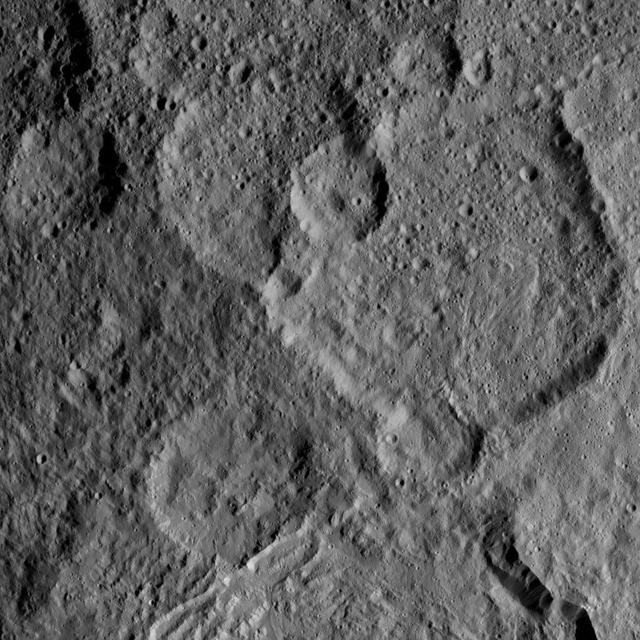
This view, taken on Oct. 21, 2016, from NASA Dawn spacecraft shows Megwomets Crater on Ceres. Megwomets is the largest crater in this image, at right of center. The crater is named for a Yurok god of acorns and distributor of vegetal abundance. Dawn took this image on Oct. 21, 2016, from its second extended-mission science orbit (XMO2), at a distance of about 920 miles (1,480 kilometers) above the surface. The image resolution is about 460 feet (140 meters) per pixel. http://photojournal.jpl.nasa.gov/catalog/PIA21245
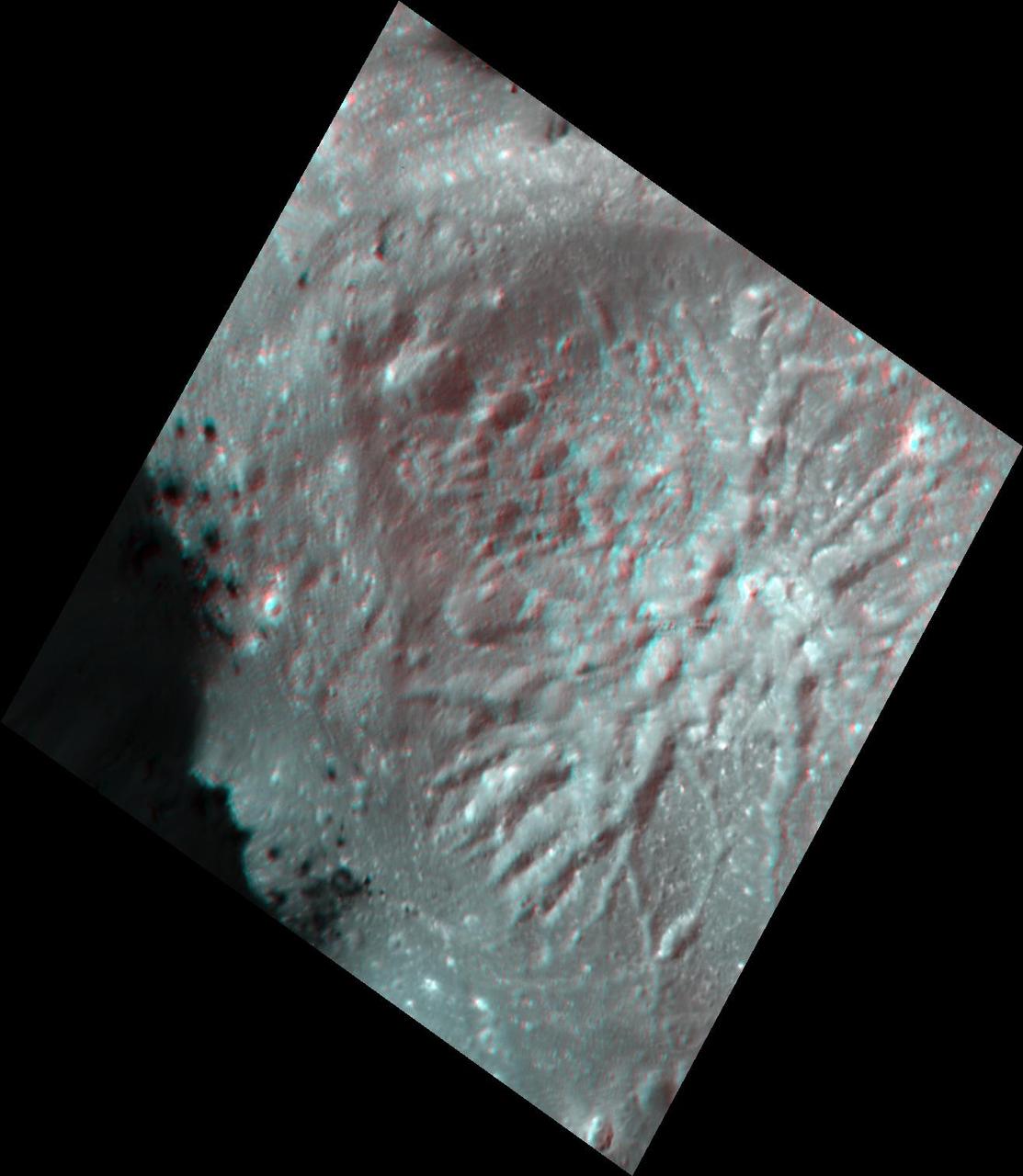
Scientists created this stereo view, called an anaglyph, with two images of the same part of Ceres's surface taken by Dawn on different orbits and from different viewing angles. The images were artificially colored and combined so that when viewed through glasses with a red filter on the left and blue on the right, they provide a 3-D view. The images used for this anaglyph were obtained by NASA's Dawn spacecraft from an altitude of about 21 miles (34 kilometers). The center of this image is located at about 19.6 degrees north latitude and 239.5 degrees east longitude. https://photojournal.jpl.nasa.gov/catalog/PIA22866
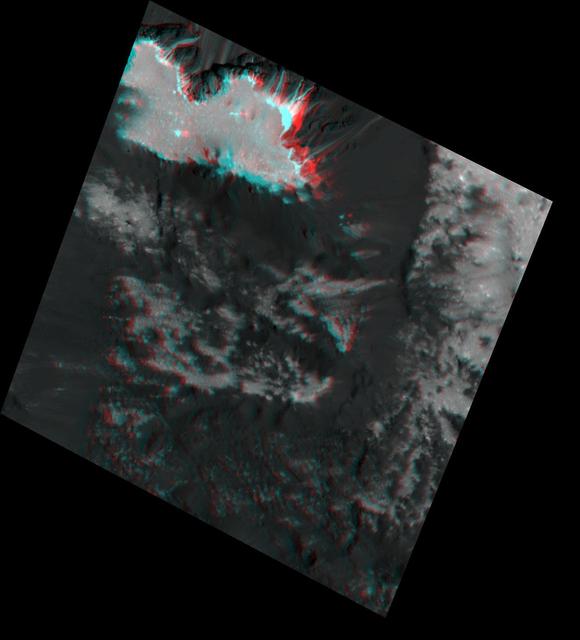
Scientists created this stereo view, called an anaglyph, with two images of the same part of Ceres's surface taken by Dawn on different orbits and from different viewing angles. The images were artificially colored and combined so that when viewed through glasses with a red filter on the left and blue on the right, they provide a 3-D view. The images used in this anaglyph were obtained by NASA's Dawn spacecraft from an altitude of about 21 miles (34 kilometers). This feature is located at about 19.5 degrees north latitude and 239.2 degrees east longitude, in the western part of Cerealia Facula. https://photojournal.jpl.nasa.gov/catalog/PIA22862
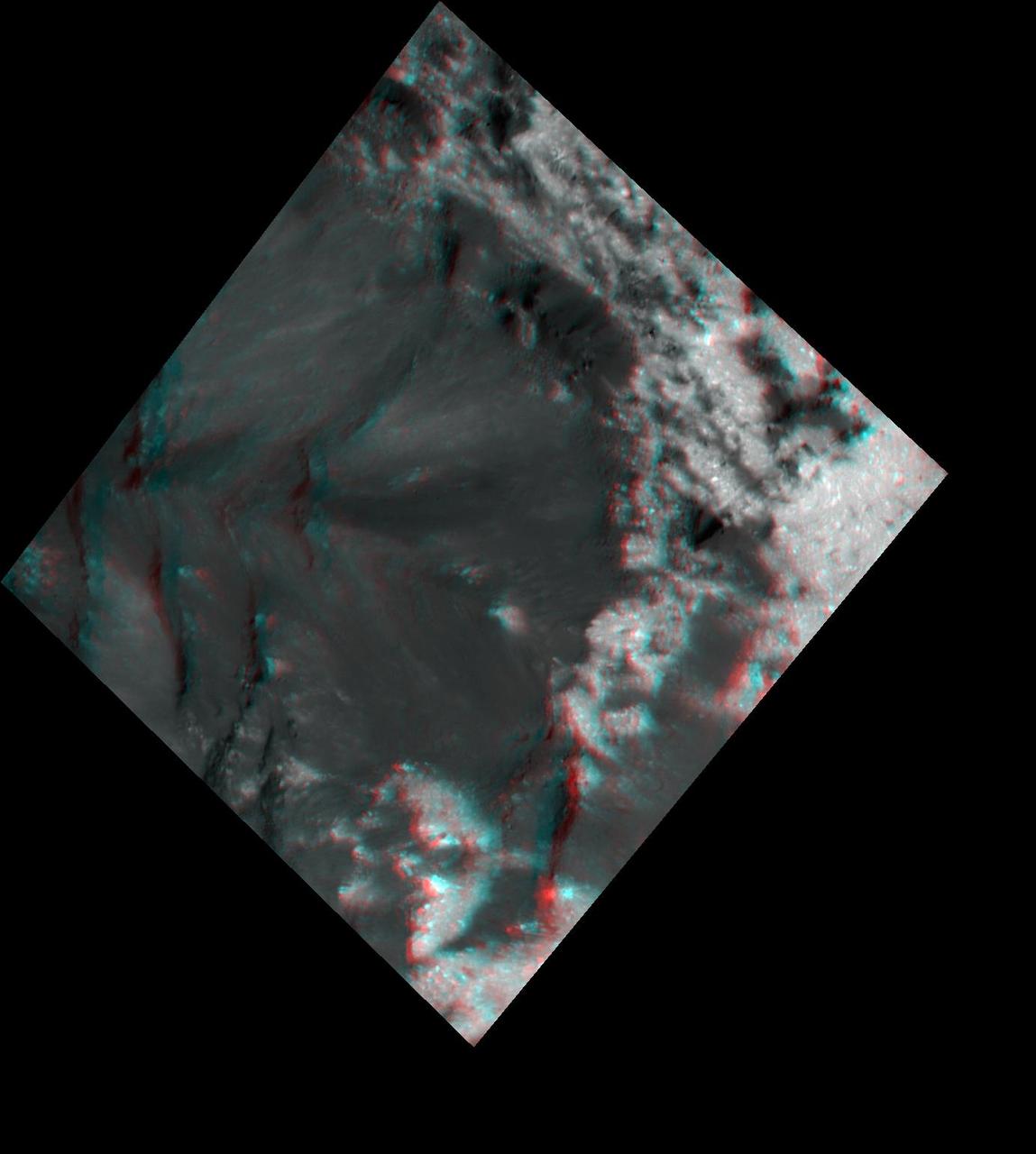
Scientists created this stereo view, called an anaglyph, with two images of the same part of Ceres's surface taken by Dawn on different orbits and from different viewing angles. The images were artificially colored and combined so that when viewed through glasses with a red filter on the left and blue on the right, they provide a 3-D view. The images used in this anaglyph were obtained by NASA's Dawn spacecraft from an altitude of about 21 miles (34 kilometers). The center of this picture is located at about 20.4 degrees north latitude and 239.9 degrees east longitude. https://photojournal.jpl.nasa.gov/catalog/PIA22863
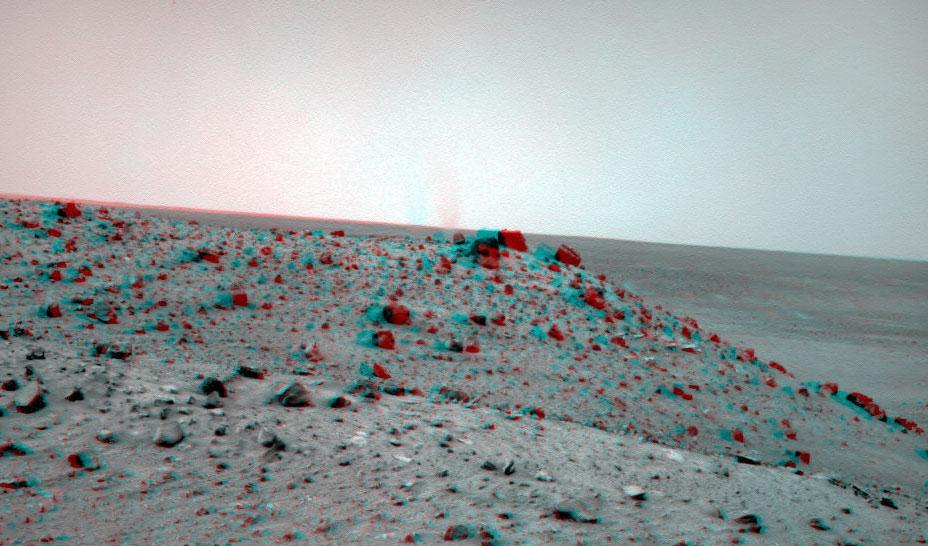
The navigation camera on NASA Spirit caught this stereo view of a dust devil during the on May 21, 2009. The view is to the west from Spirit position at the Troy location where Spirit had become embedded a few weeks earlier. 3D glasses are needed.
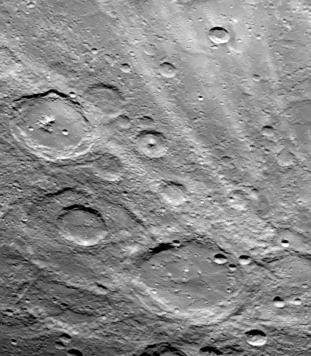
A field of bright rays, created by ejecta from a crater, radiating to the north top from off camera lower right is seen in this view of Mercury taken Sept. 21, 1974 by NASA Mariner 10.
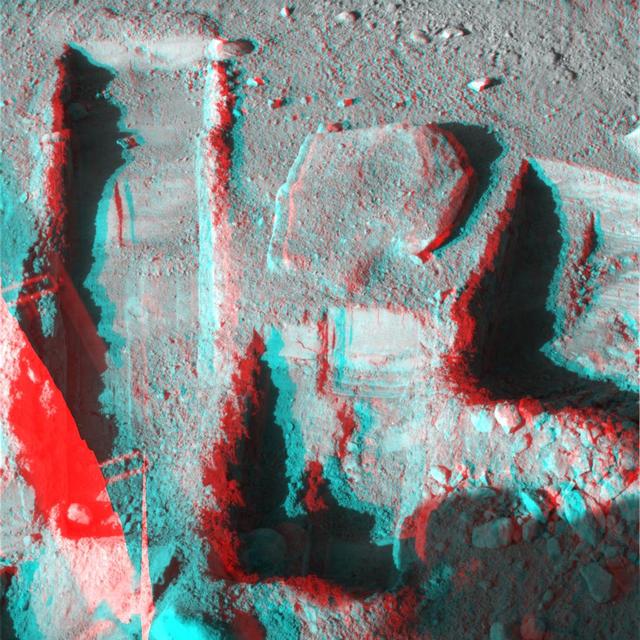
The Surface Stereo Imager on NASA Phoenix Mars Lander took this anaglyph on Oct. 21, 2008; the trench on the upper left is called Upper Cupboard. 3D glasses are necessary to view this image.

This is the clearest view yet of the distant planet Pluto and its moon, Charon, as revealed by NASA Hubble Space Telescope. The image was taken by the European Space Agency Faint Object Camera on February 21, 1994.
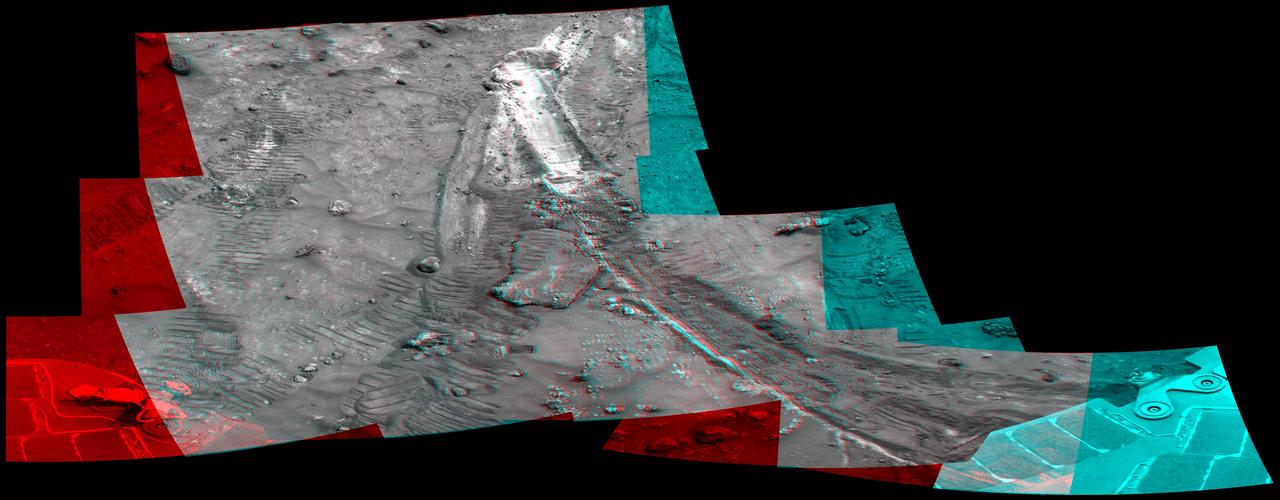
NASA’s Mars Exploration Rover Spirit acquired this mosaic on May 21, 2007, while investigating the area east of the elevated plateau known as Home Plate in the Columbia Hills. 3D glasses are necessary to view this image.
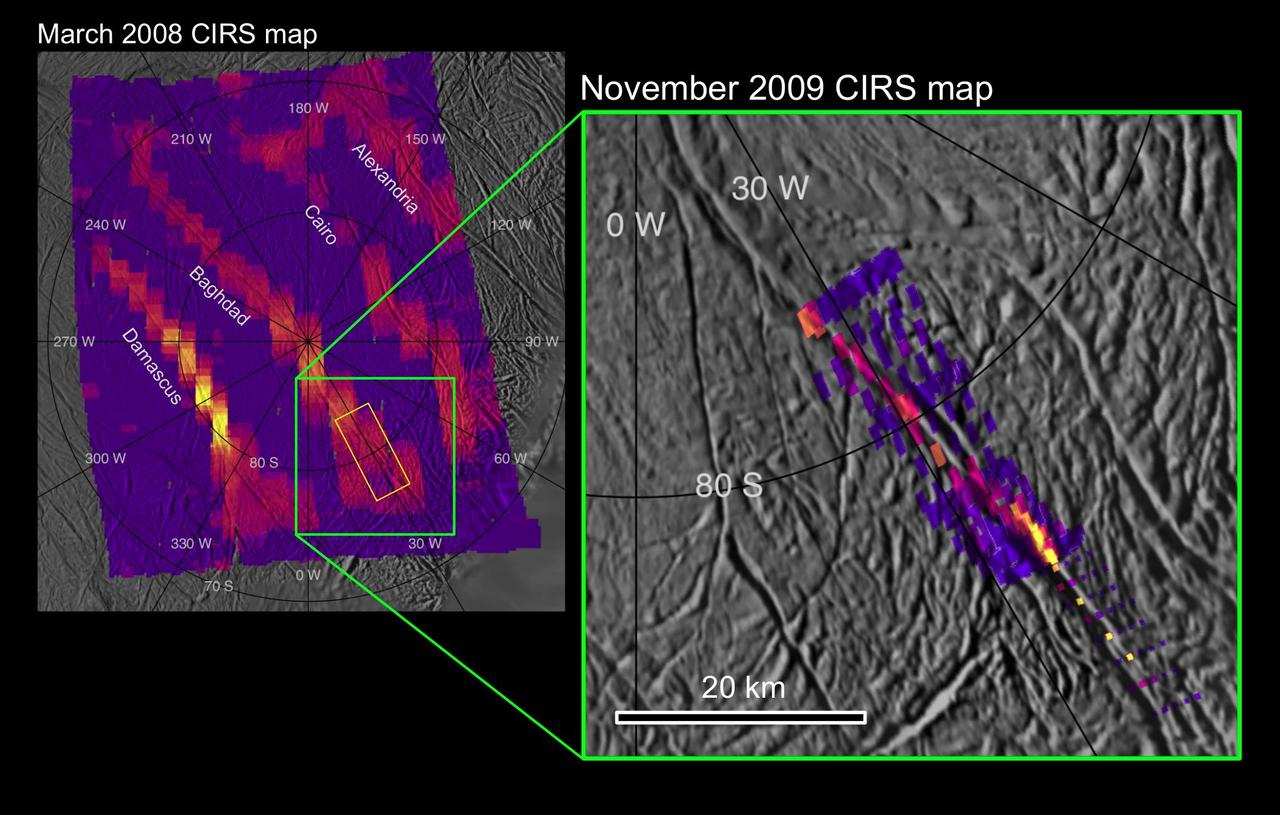
This map shows a dramatically improved view of heat radiation from a warm fissure near the south pole of Saturn icy moon Enceladus. It was obtained by NASA Cassini spacecraft during its Nov. 21, 2009, flyby of that moon.
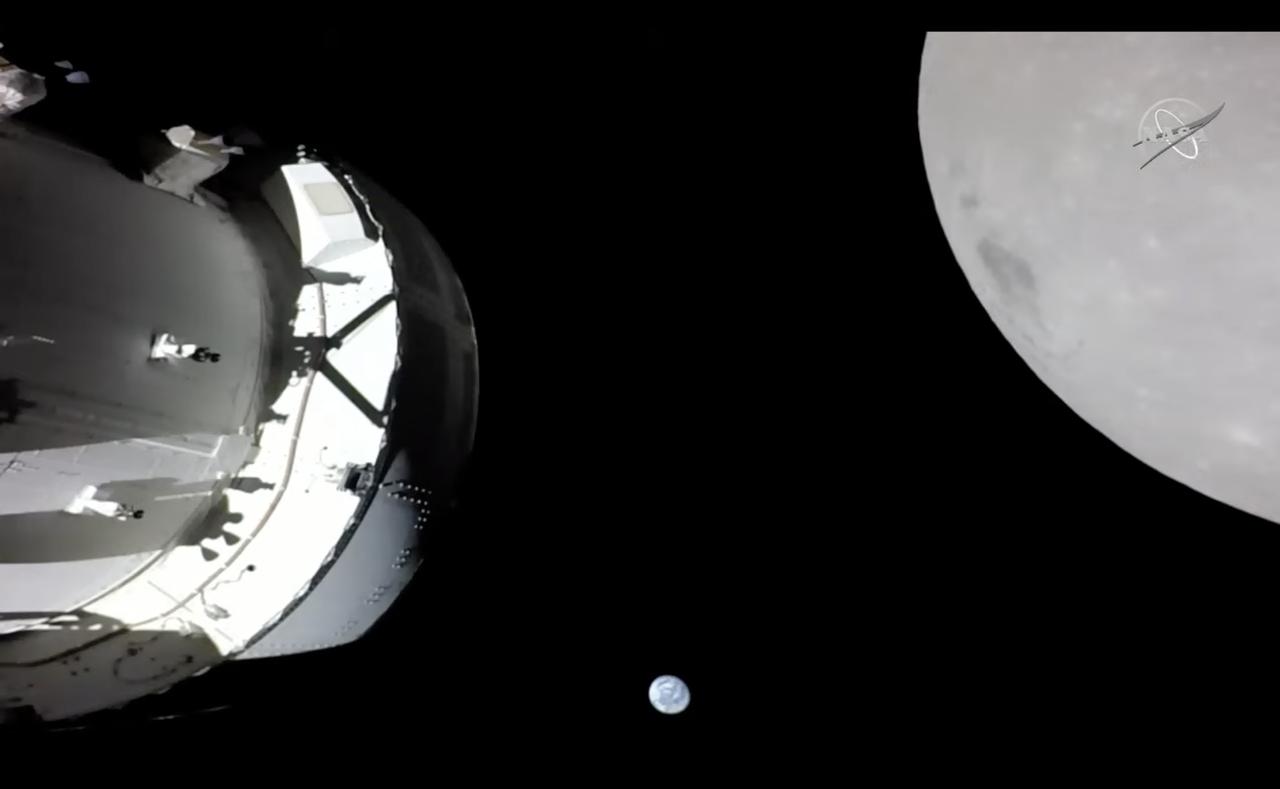
On Nov. 21, 2022, a camera on Orion's solar array wing captured this view of the spacecraft, the Earth and the Moon. Orion was making its outbound powered flyby of the Moon as part of the Artemis I mission, approaching within 80 miles of the lunar surface. Artemis I, the first flight test of NASA's Orion capsule and Space Launch System rocket, launched Nov. 16, 2022, and is scheduled to splashdown Dec. 11.
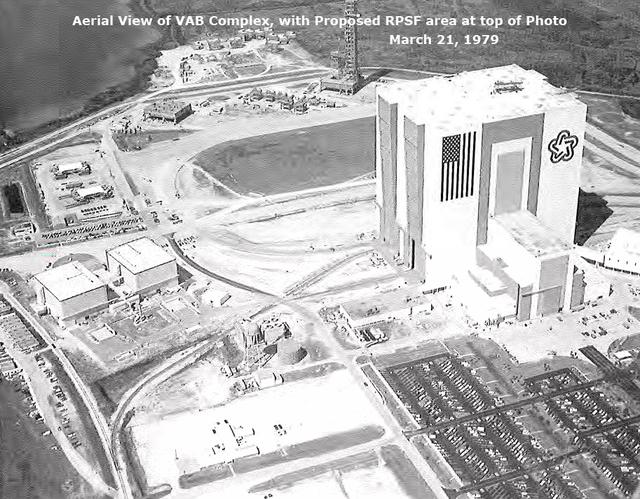
Aerial View of VAB Complex, with Proposed RPSF Area, March 21, 1979
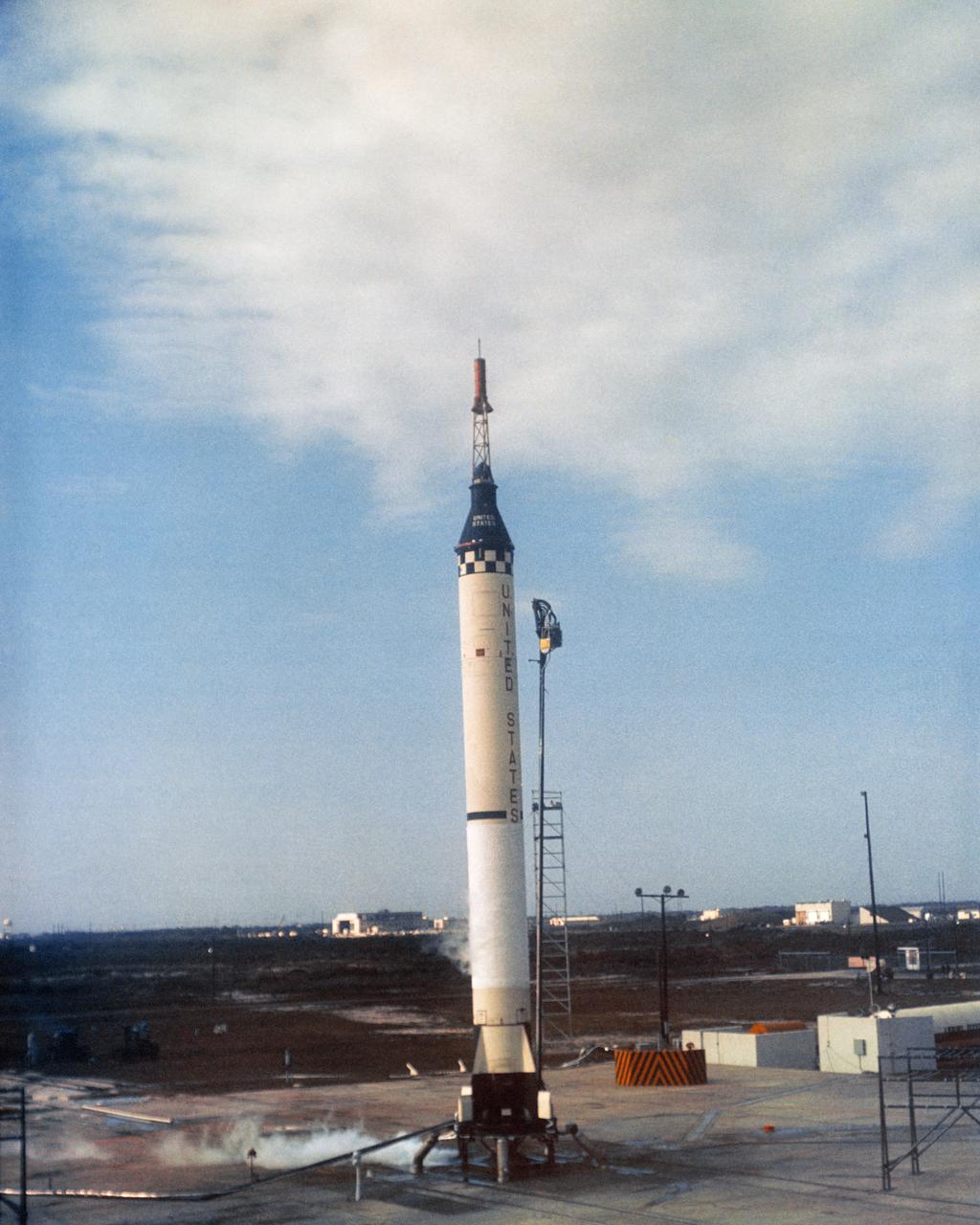
S63-02651 (21 July 1961) --- This is a ground-level view of the Mercury-Redstone (MR-4) launch of Virgil I. Grissom on July 21, 1961, from Cape Canaveral, Florida. Photo credit: NASA

This false-color view of the rings of Uranus was made from images taken by NASA Voyager 2 on Jan. 21, 1986. All nine known rings are visible here; the somewhat fainter, pastel lines seen between them are contributed by the computer enhancement. http://photojournal.jpl.nasa.gov/catalog/PIA00033
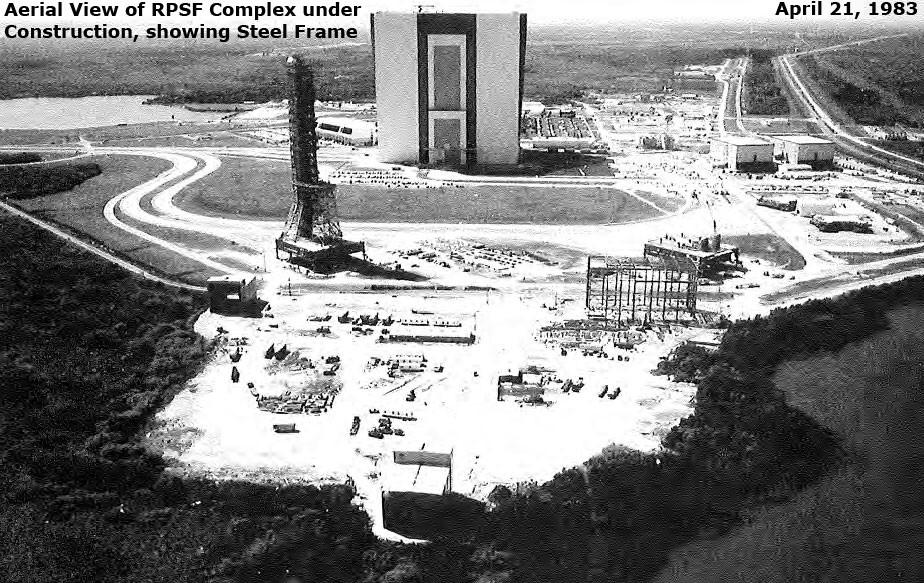
Aerial View of RPSF Complex under construction showing steel frame, April 21, 1983
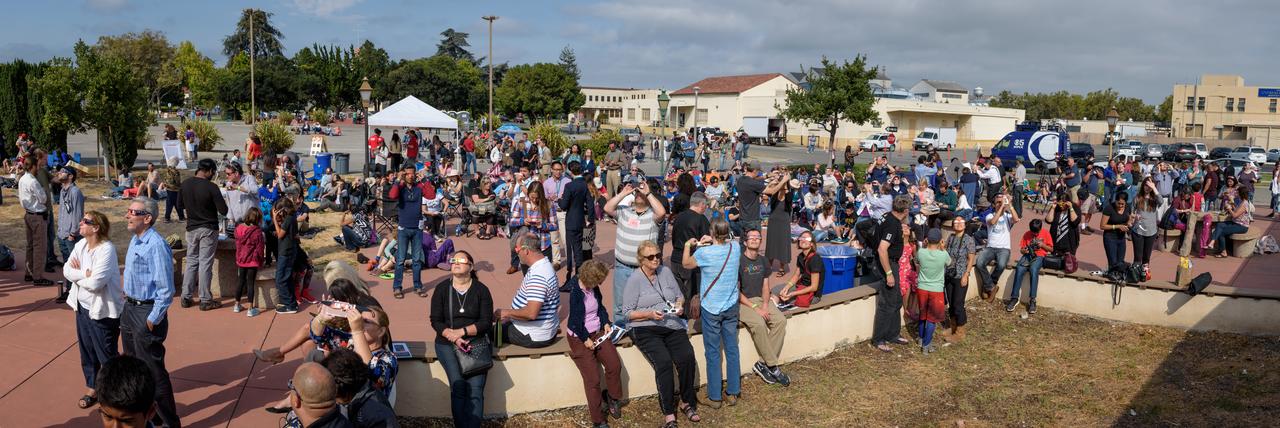
NASA Ames invited the public to participate in the 2017 Solar Eclipse viewing event on August 21, 2017.
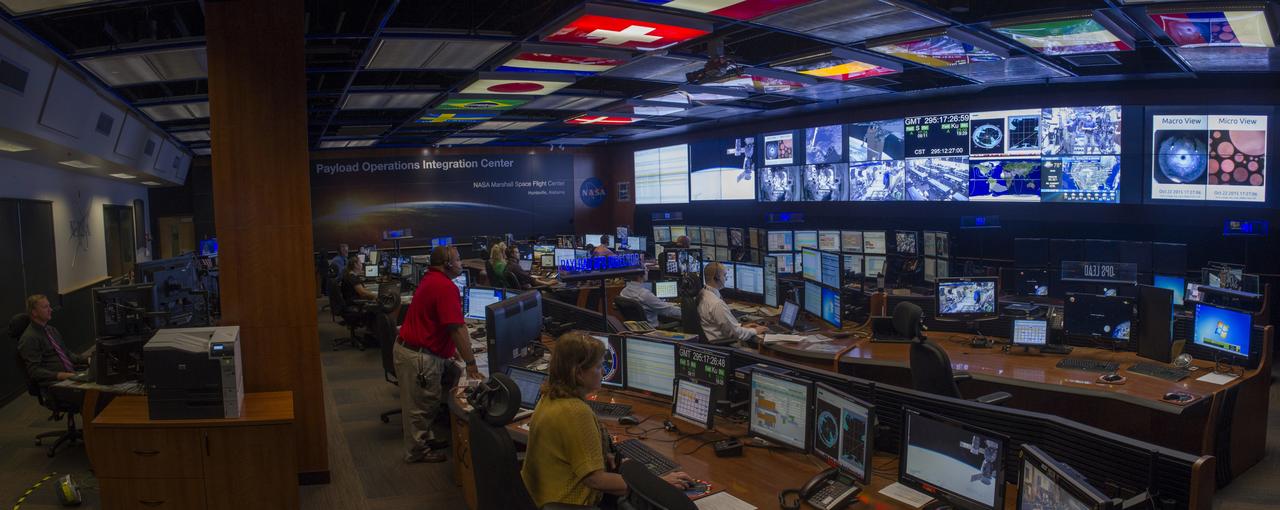
PANORAMIC VIEW OF PAYLOAD OPERATIONS INTEGRATION CENTER, PCA1, BLDG. 4663…UPDATED 10/21/15
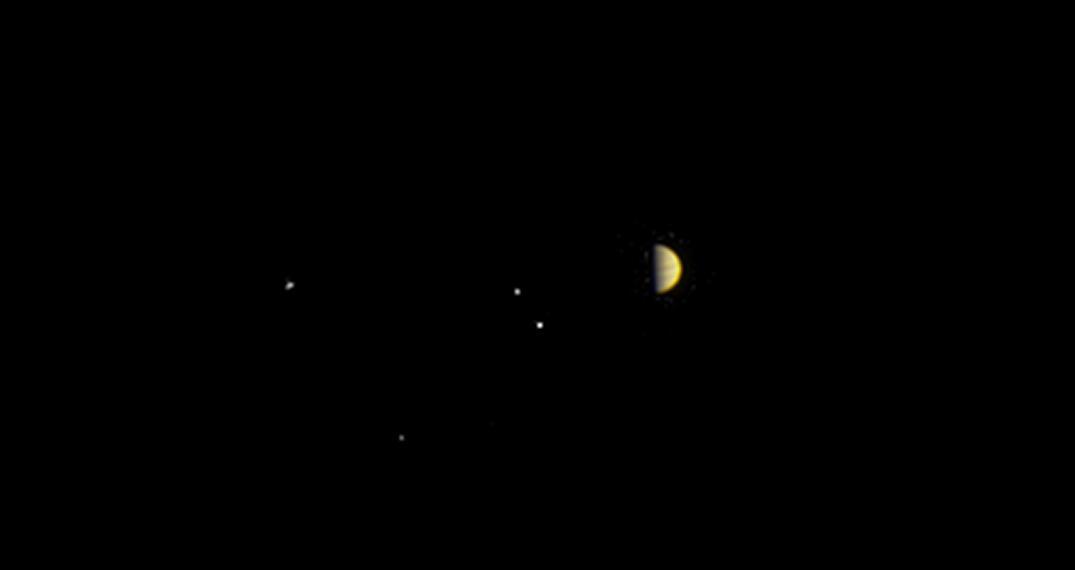
NASA's Juno spacecraft obtained this color view on June 21, 2016, at a distance of 6.8 million miles (10.9 million kilometers) from Jupiter. As Juno makes its initial approach, the giant planet's four largest moons -- Io, Europa, Ganymede and Callisto -- are visible, and the alternating light and dark bands of the planet's clouds are just beginning to come into view. Juno is approaching over Jupiter's north pole, affording the spacecraft a unique perspective on the Jupiter system. Previous missions that imaged Jupiter on approach saw the system from much lower latitudes, closer to the planet's equator. The scene was captured by the mission's imaging camera, called JunoCam, which is designed to acquire high resolution views of features in Jupiter's atmosphere from very close to the planet. http://photojournal.jpl.nasa.gov/catalog/PIA20701
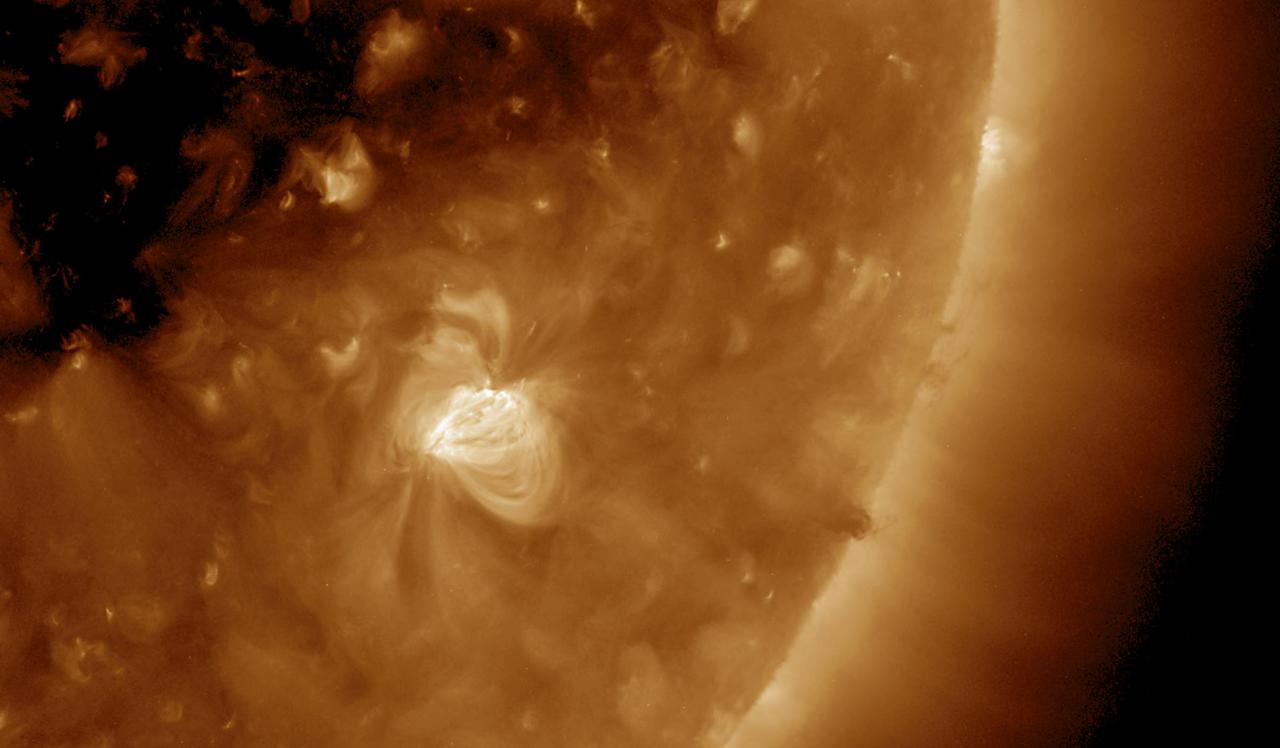
A close-up view of one day in the life of a rather small active region shows the agitation and dynamism of its magnetic field (Dec. 21, 2016). This wavelength of extreme ultraviolet light reveals particles as they spin along the cascading arches of magnetic field lines above the active region. Some darker plasma rises up and spins around at the edge of the sun near the end of the video clip also being pulled by unseen magnetic forces. Movies are available at http://photojournal.jpl.nasa.gov/catalog/PIA15032
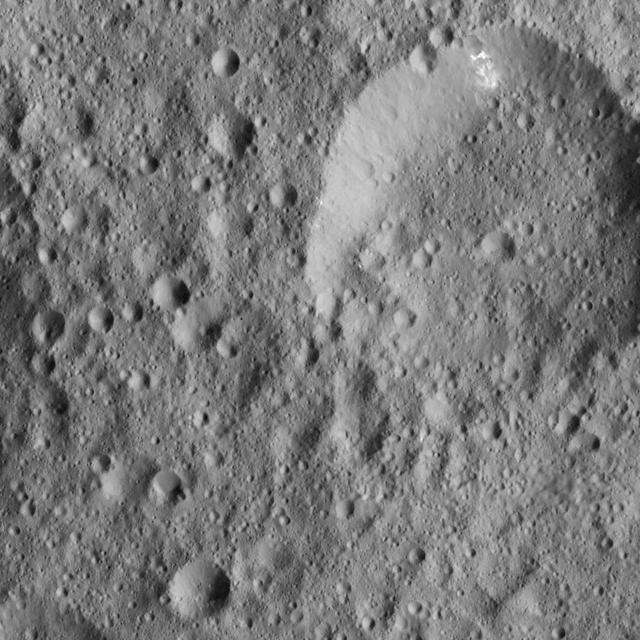
This view from NASA's Dawn spacecraft captures a portion of the northern hemisphere of Ceres. Bright material can be seen in the wall of the large crater at upper right. The image is centered at approximately 15 degrees north latitude, 351 degrees east longitude. Dawn captured the scene on Dec. 21, 2015 from its low-altitude mapping orbit (LAMO), at an approximate altitude of 240 miles (385 kilometers) above Ceres. The image resolution is 120 feet (35 meters) per pixel. http://photojournal.jpl.nasa.gov/catalog/PIA20302
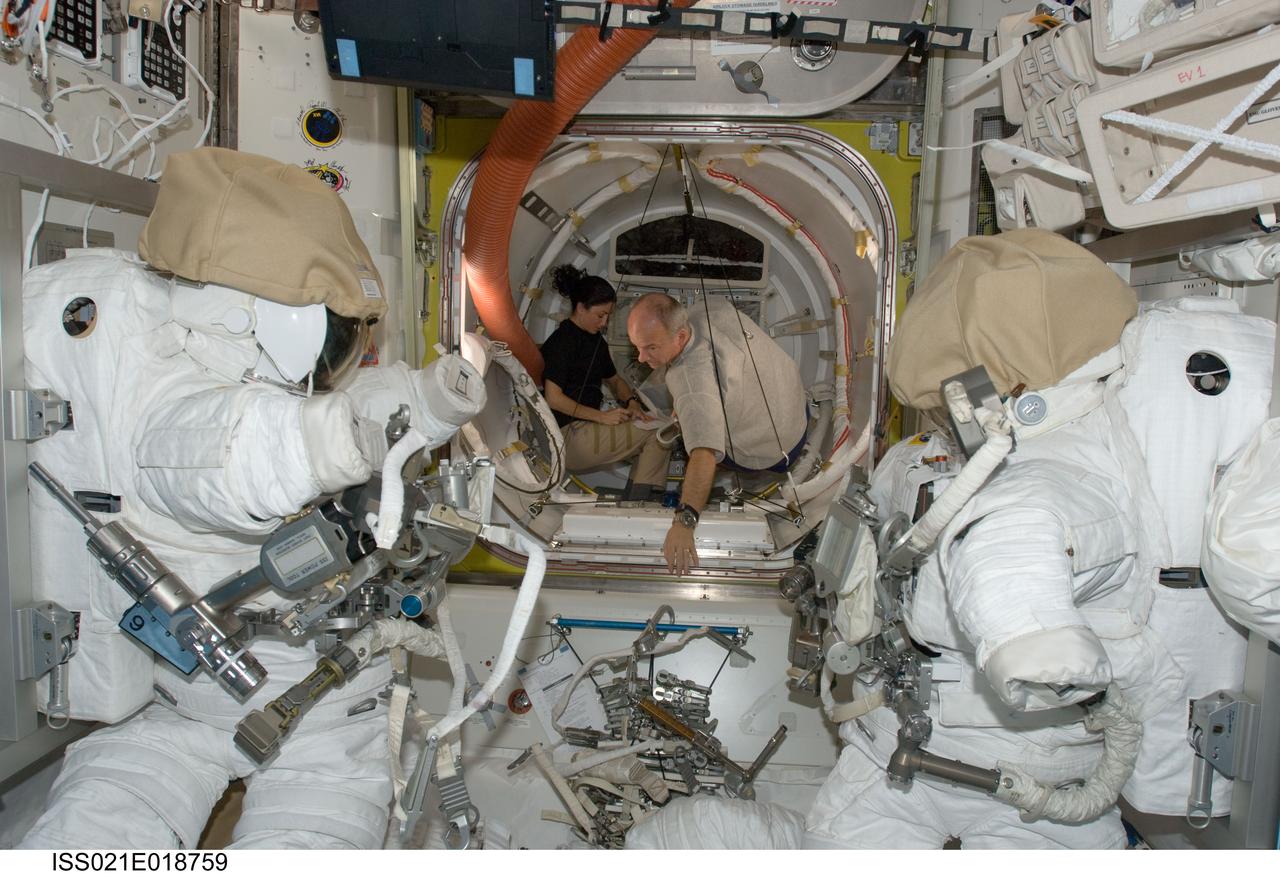
ISS021-E-018759 (2 Nov. 2009) --- NASA astronauts Nicole Stott and Jeffrey Williams, both Expedition 21 flight engineers, work in the Quest airlock of the International Space Station. Two Extravehicular Mobility Unit (EMU) spacesuits are visible in the foreground.
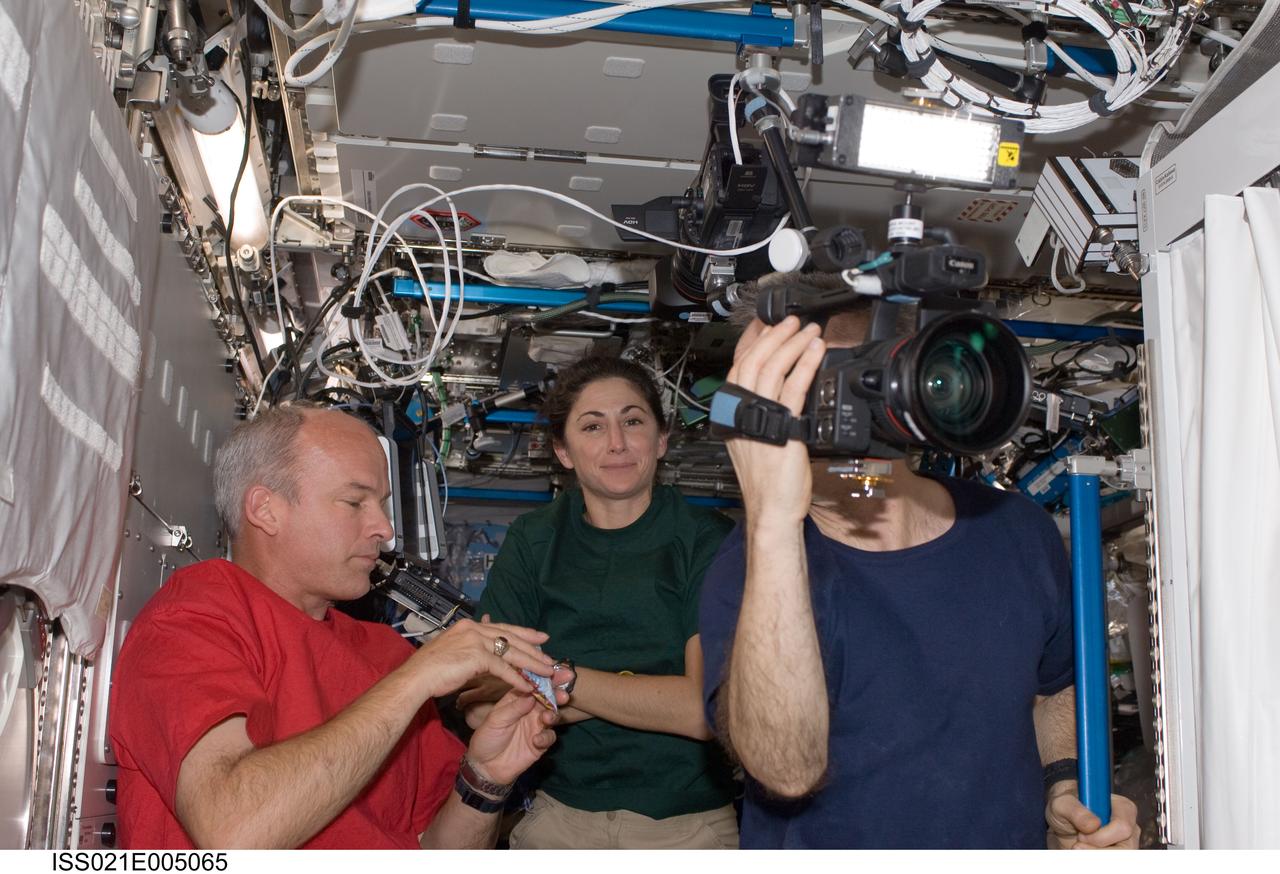
ISS021-E-005065 (11 Oct. 2009) --- Canadian Space Agency astronaut Robert Thirsk, Expedition 21 flight engineer, uses a High Definition Video (HDV) camera in the Destiny laboratory of the International Space Station. NASA astronauts Jeffrey Williams and Nicole Stott, both Expedition 21 flight engineers, are also pictured.

S65-48759 (21 Aug. 1965) --- View of astronaut Charles Conrad Jr. through the window as he sits in the Gemini-5 spacecraft during preflight activities.
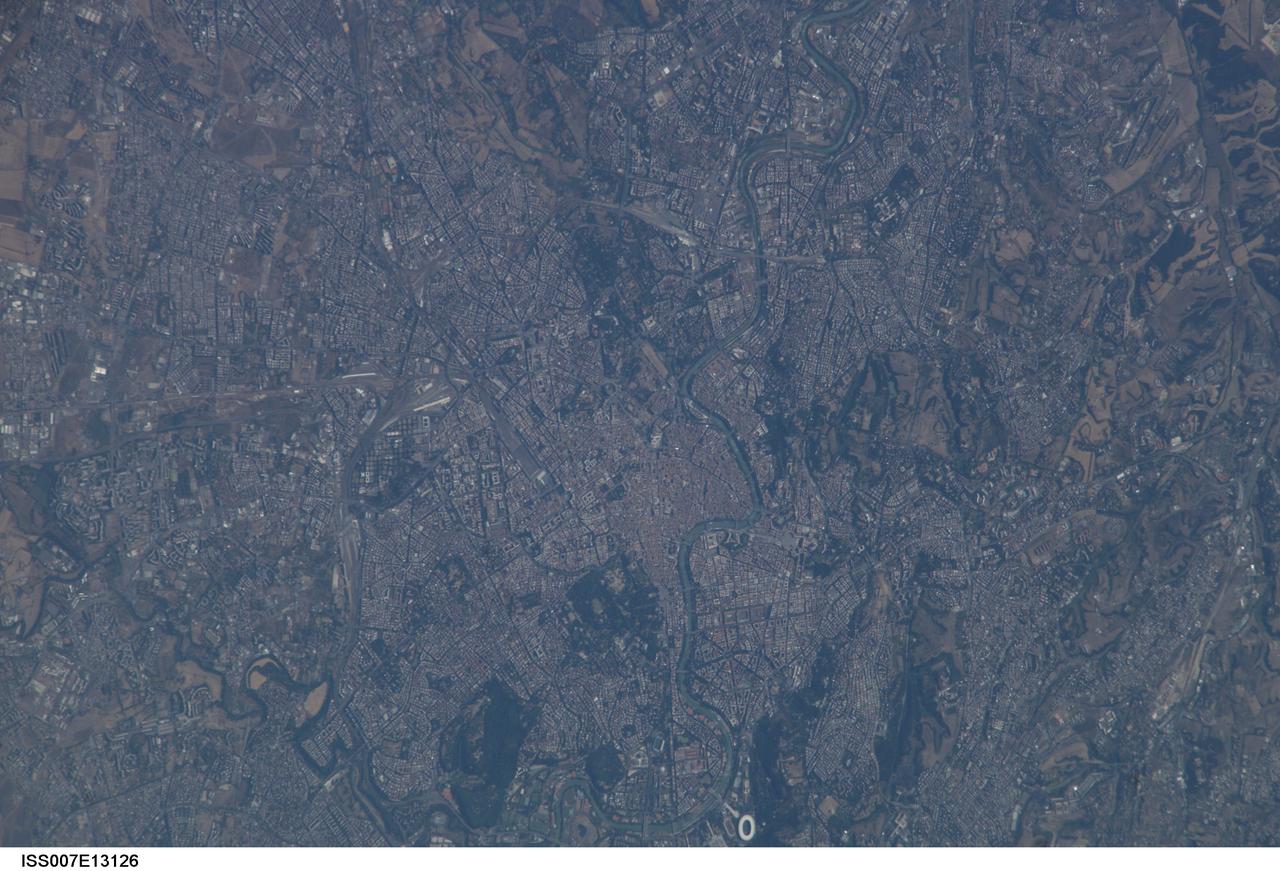
ISS007-E-13126 (21 August 2003) --- This view of Rome, Italy was taken by one of the Expedition 7 crewmembers onboard the International Space Station (ISS).
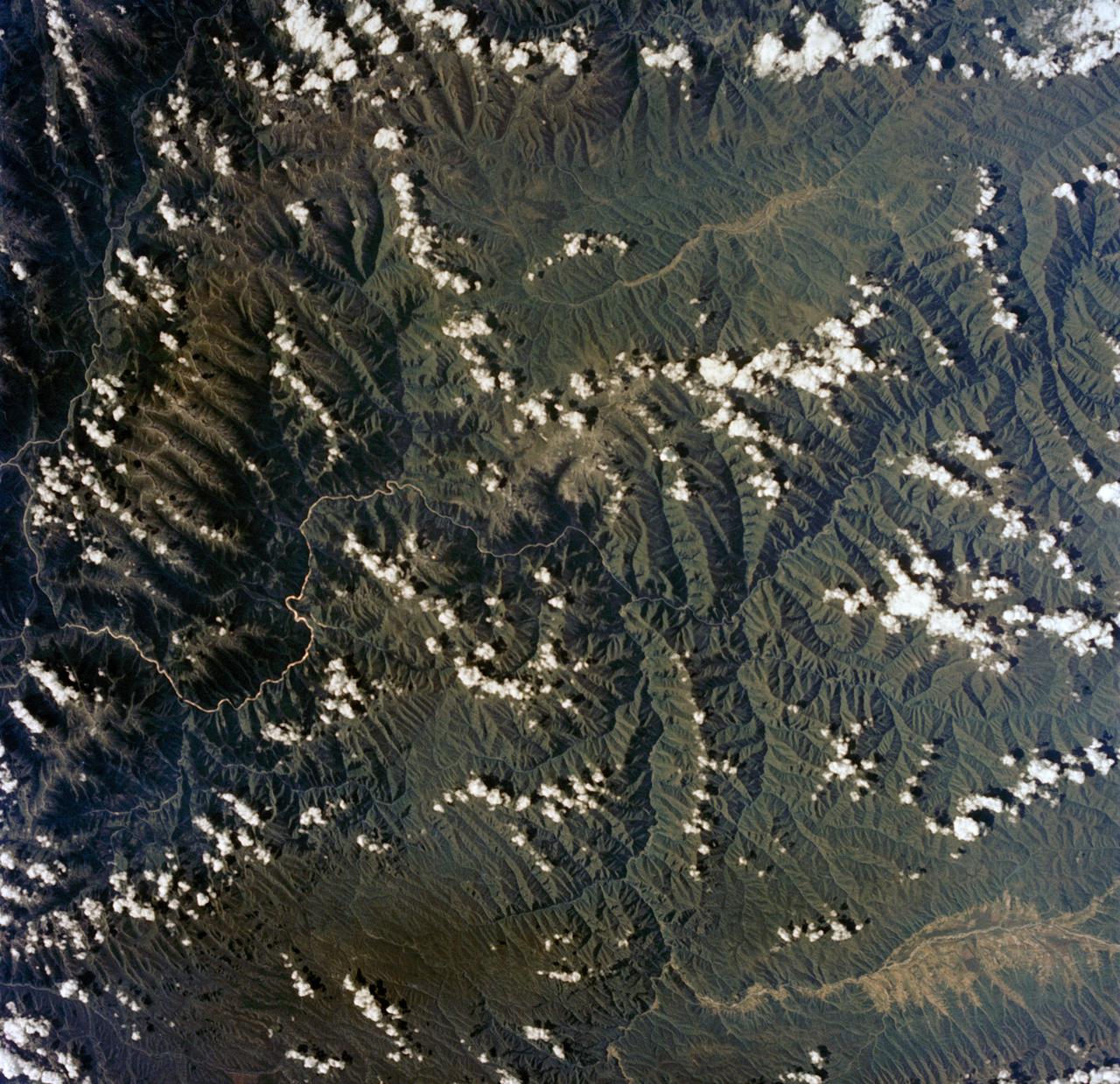
S65-45717 (21-29 Aug. 1965) --- View of the Himalayas and Northern India photographed from the Gemini-5 spacecraft in orbit over Earth.
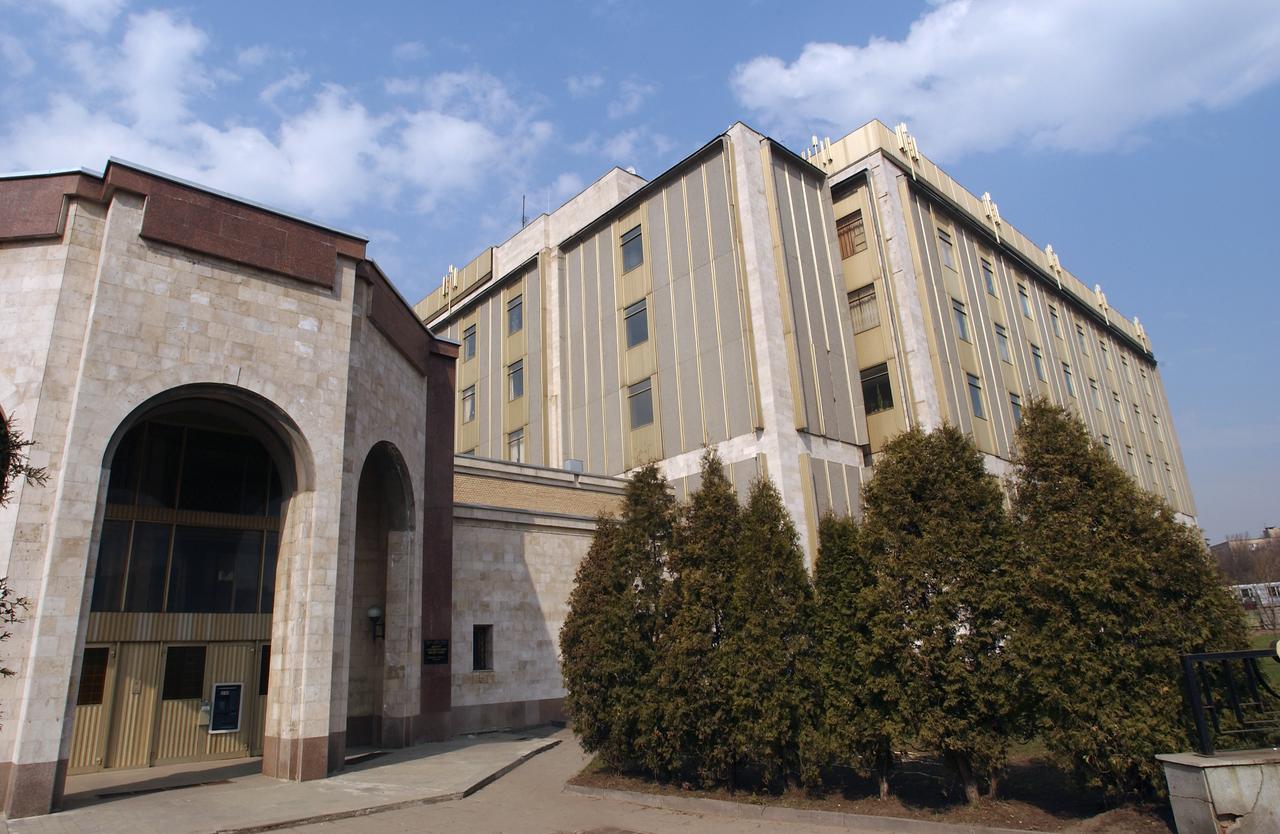
A view of the outside of the Russian Mission Control Center in Korolev, Russia, located on the outskirts of Moscow, Wednesday, April 21, 2004. Photo Credit: (NASA/Bill Ingalls)
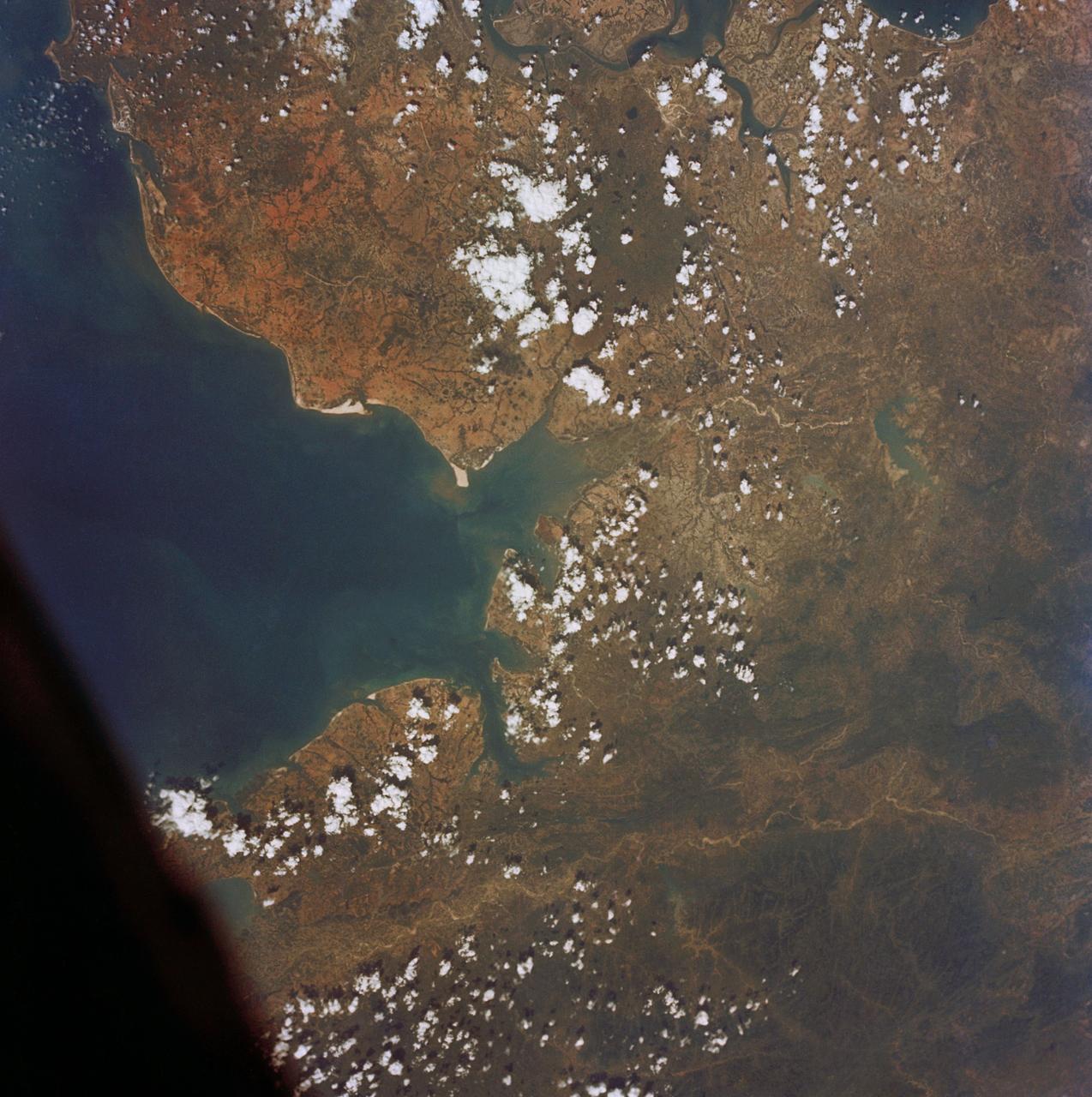
S65-45731 (21-29 Aug. 1965) --- View of the Gulf of Tonkin, China and the Luichow Peninsula photographed from the Gemini-5 spacecraft in orbit over Earth.
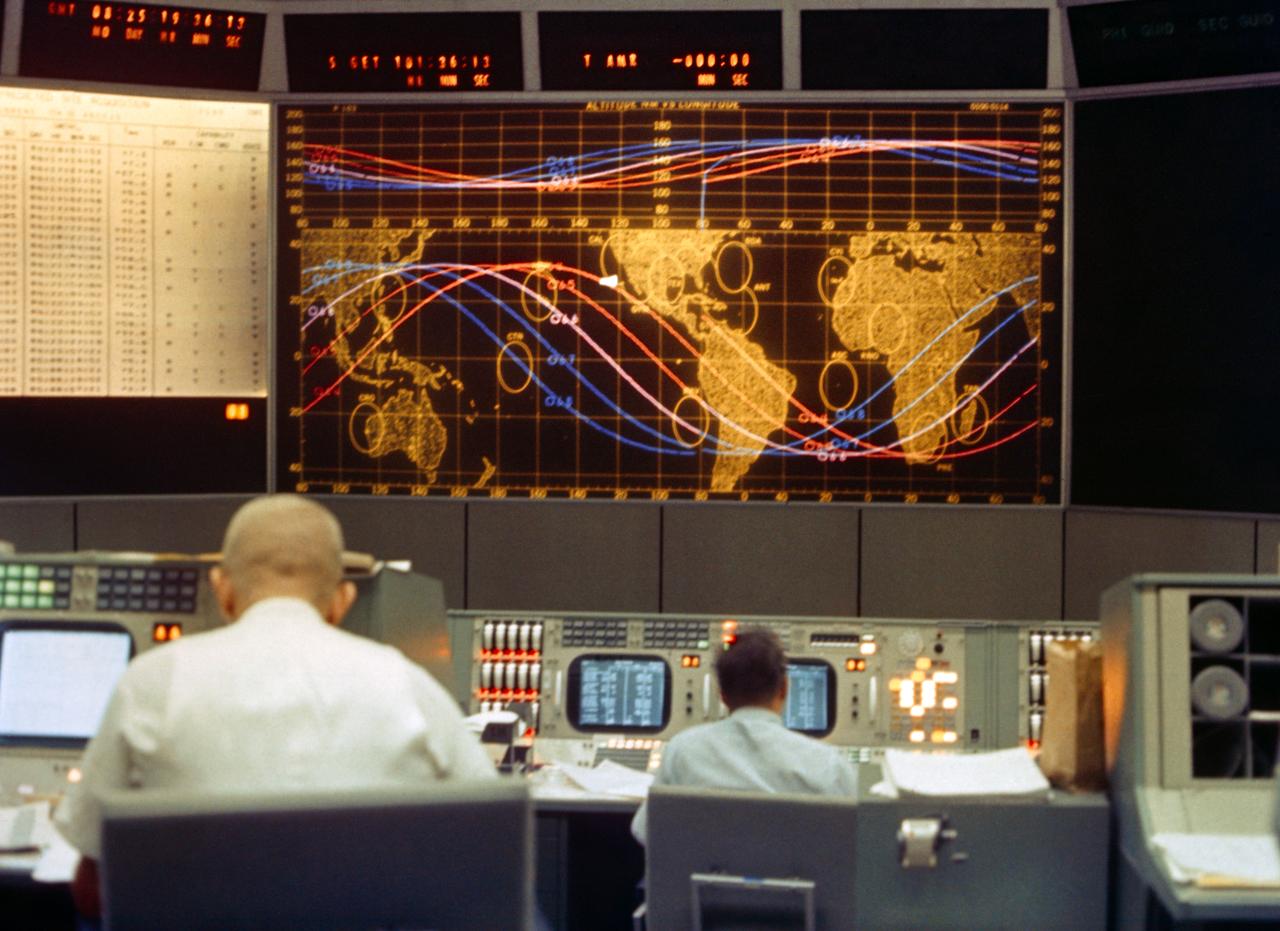
S65-45083 (21-29 Aug. 1965) --- View of the tracking screen at the front of the Mission Control Center during the Gemini-5 spaceflight.
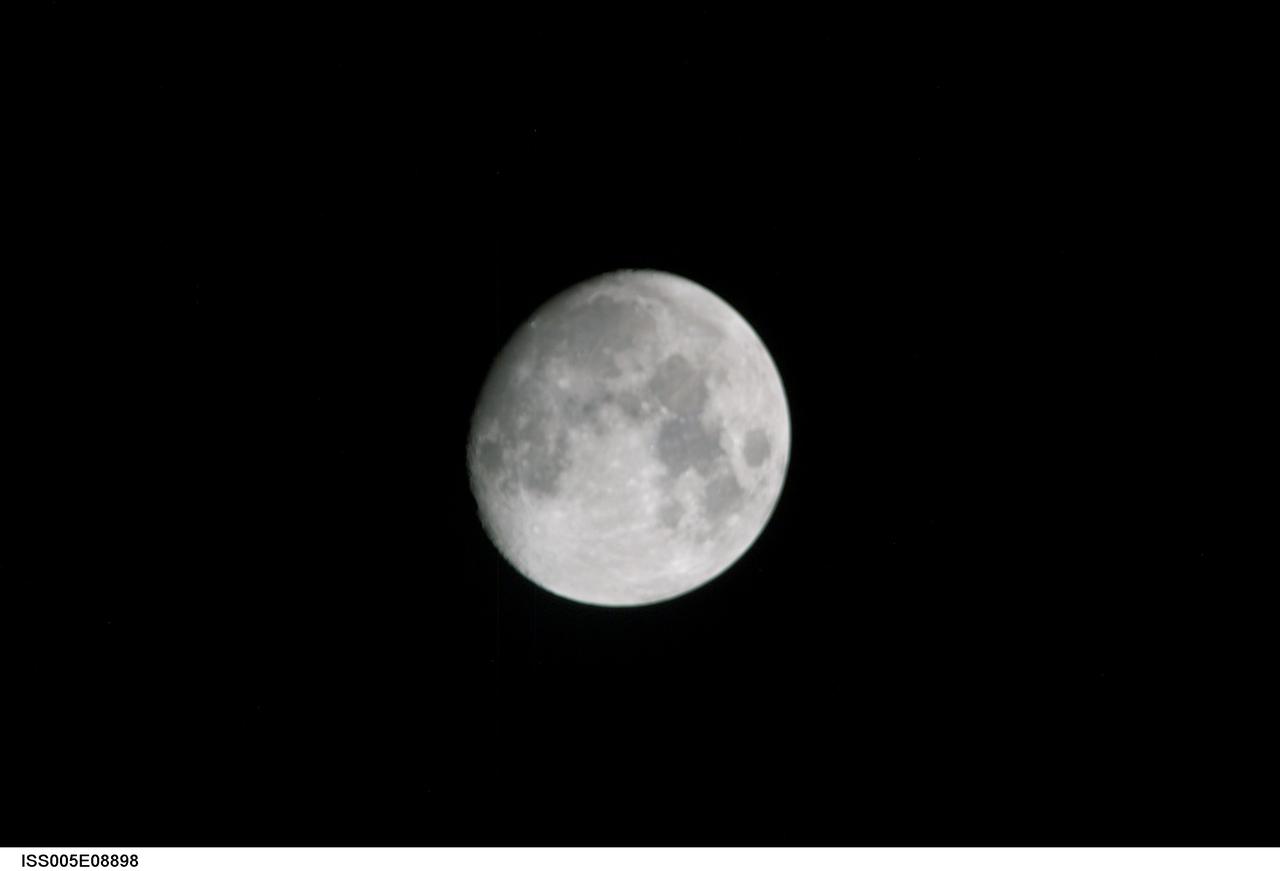
ISS005-E-08898 (21 July 2002) --- View of a gibbous Moon photographed by one of the crewmembers aboard the International Space Station (ISS) for Expedition Five.
S103-E-5201 (21 Dec. 1999) --- Astronaut John M. Grunsfeld, uses a pair of binoculars to view the distant Hubble Space Telescope (HST) several hours prior to its capture by the Space Shuttle Discovery. The photo was taken with an electronic still camera (ESC) at 12:45.19 GMT, Dec. 21, 1999.
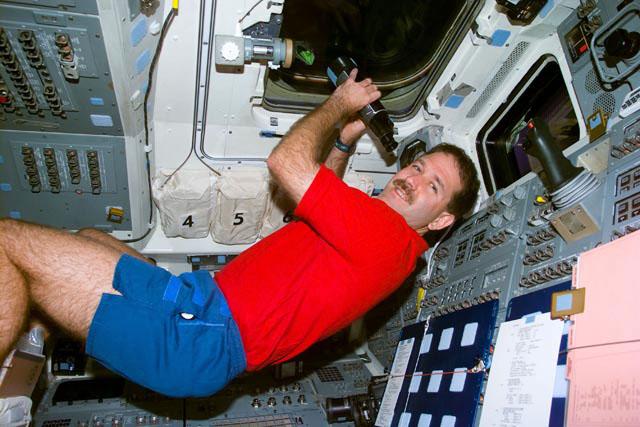
S103-E-5202 (21 Dec. 1999) --- Astronaut John M. Grunsfeld, uses a pair of binoculars to view the distant Hubble Space Telescope (HST) several hours prior to its capture by the Space Shuttle Discovery. The photo was taken with an electronic still camera (ESC) at 12:45.30 GMT, Dec. 21, 1999.

Taking a break from his duties at the Ames Vertical Gun Range to look up at the eclipse over Ames Research Center in Mountain View Adam Parrish not only views but wears, on his forehead, the image of the 2017 Solar eclipse at 09:20:56 on August 21, 2017.
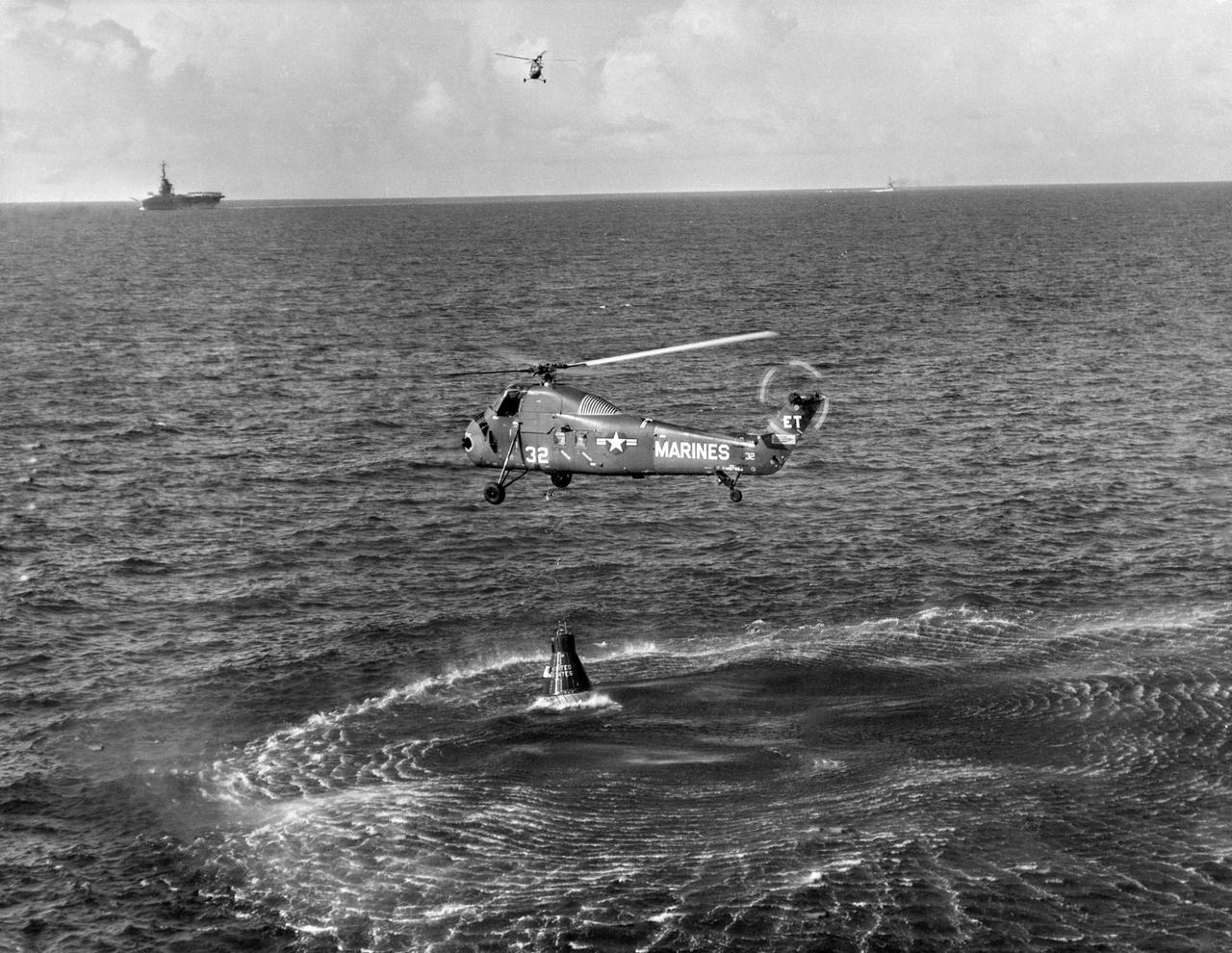
S61-02821 (21 July 1961) --- Attempted recovery of Mercury spacecraft at end of the Mercury-Redstone 4 (MR-4) mission. View shows the Marine helicopter dropping a recovery line to the capsule. In the upper left corner of the view, the recovery ship and another helicopter can be seen. Photo credit: NASA
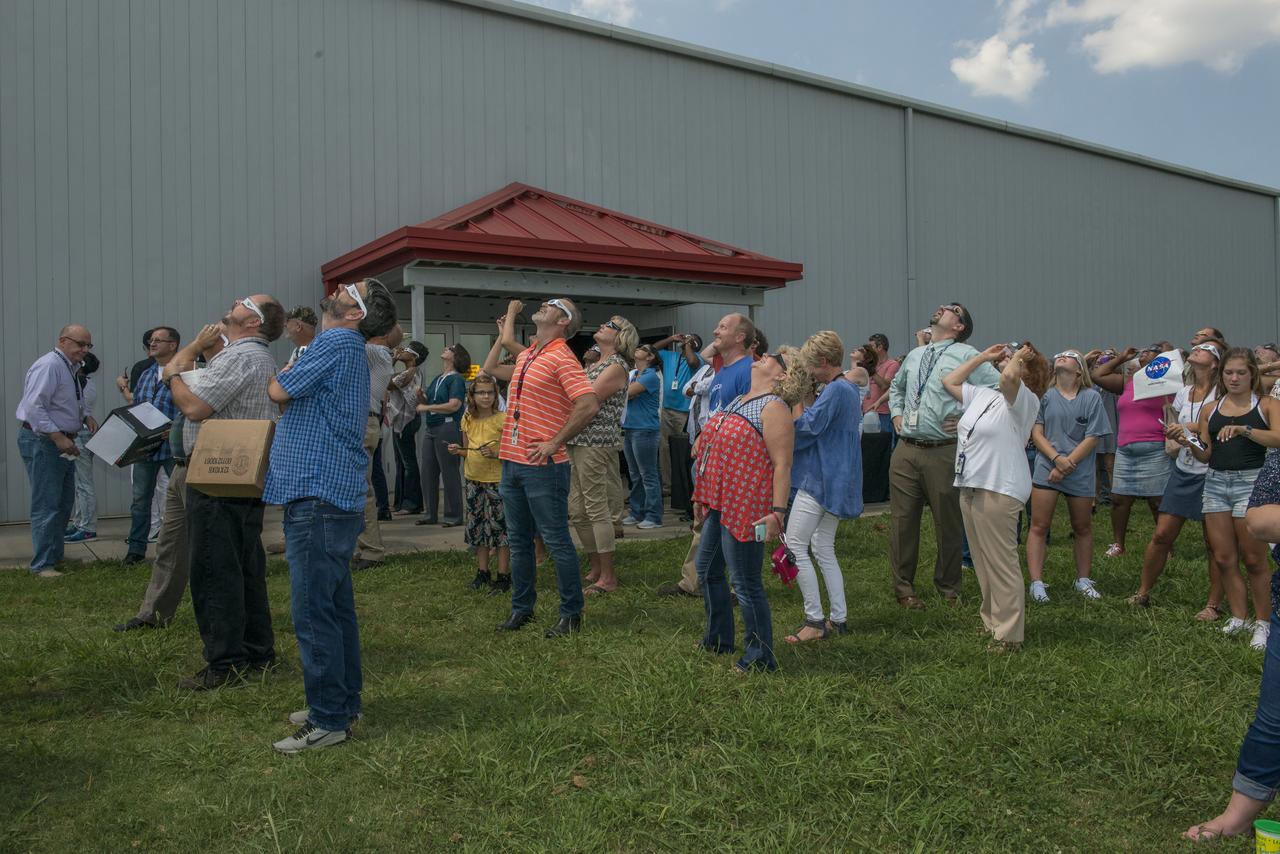
Marshall Space Flight Center employees view the August 21, 2017 solar eclipse at the center’s activities building. The Huntsville area experienced 97 percent occultation, nearly a complete blocking out of the sun by the orbit of Earth's moon. The next opportunity to view a solar eclipse in the eastern and central United States will occur in April 2024.
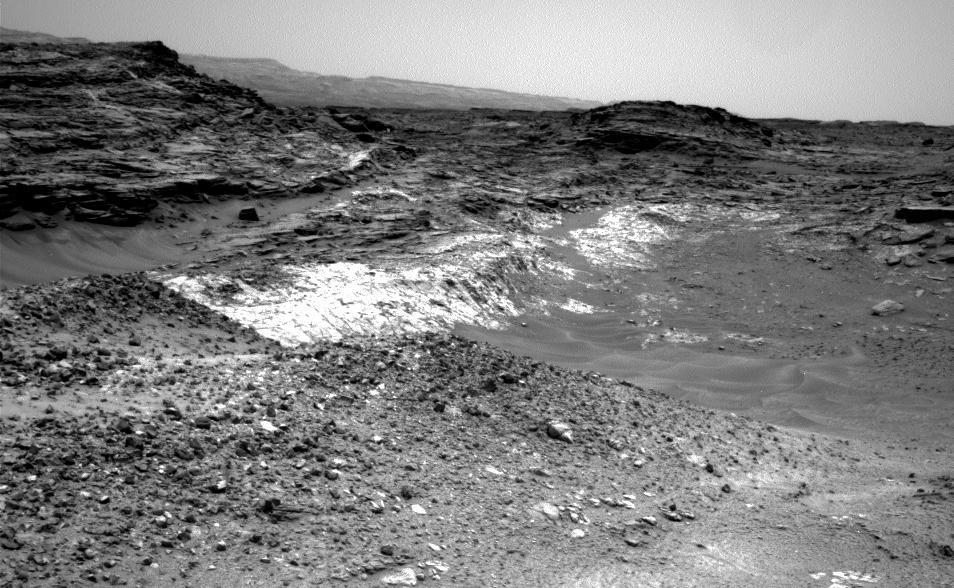
The Martian outcrop where pale rock meets darker overlying rock near the middle of this view is an example of a geological contact. Such contacts can reveal clues about how the environmental conditions that produced one type of rock were related to the conditions that produced the other. NASA's Curiosity Mars rover took this image with its Navigation Camera (Navcam) just after finishing an uphill drive of about 72 feet (22 meters) on the 991st Martian day, or sol of the rover's work on Mars (May 21, 2015). http://photojournal.jpl.nasa.gov/catalog/PIA19663
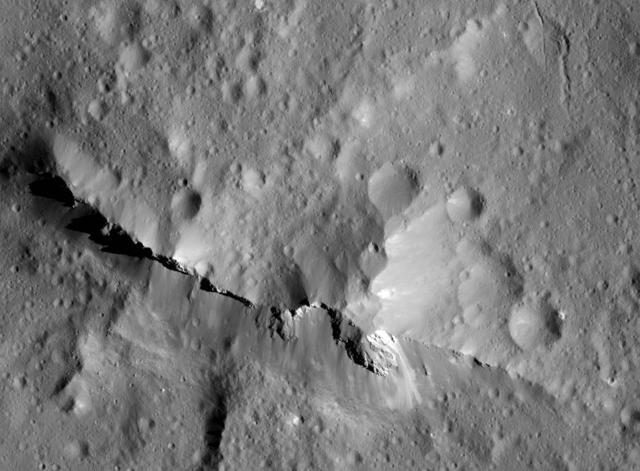
NASA's Dawn spacecraft captured this close-up view of the central peak of the 99-mile-wide (160-kilometer-wide) Urvara impact crater on Ceres. The 6,500-foot (1980-meter) central ridge rises above the nearby terrain. The image was captured by Dawn's Framing Camera, during XM2, on June 21, 2018 from an altitude of about 83 miles (134 kilometers). NASA announced the conclusion of Dawn's mission operations was Oct. 31, 2018, when the spacecraft depleted its hydrazine. https://photojournal.jpl.nasa.gov/catalog/PIA22771
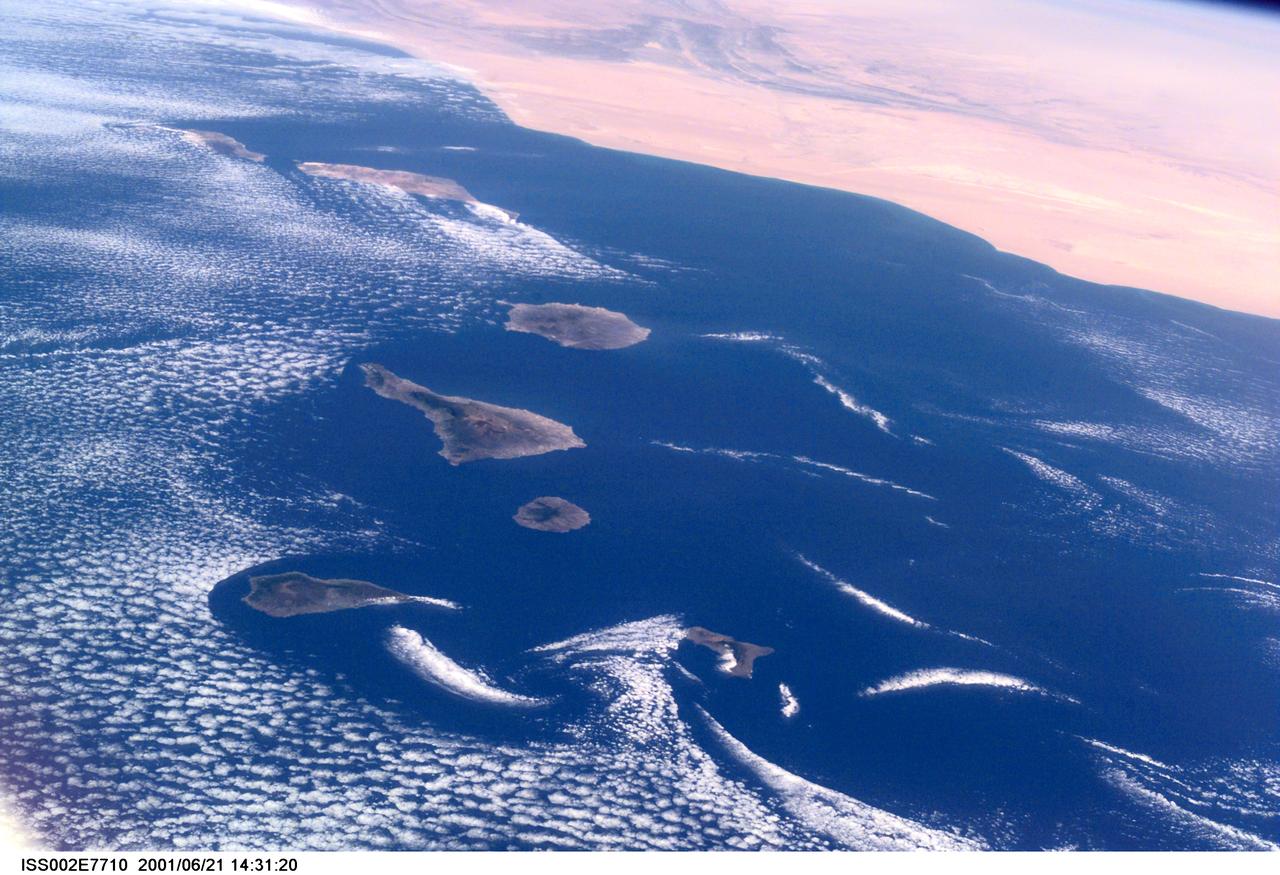
ISS002-E-7710 (21 June 2001) --- Commonly visible cloud vortices hover in the area of the Canary Islands off the coast of Morocco in this Expedition Two digital still camera's view from the International Space Station (ISS).
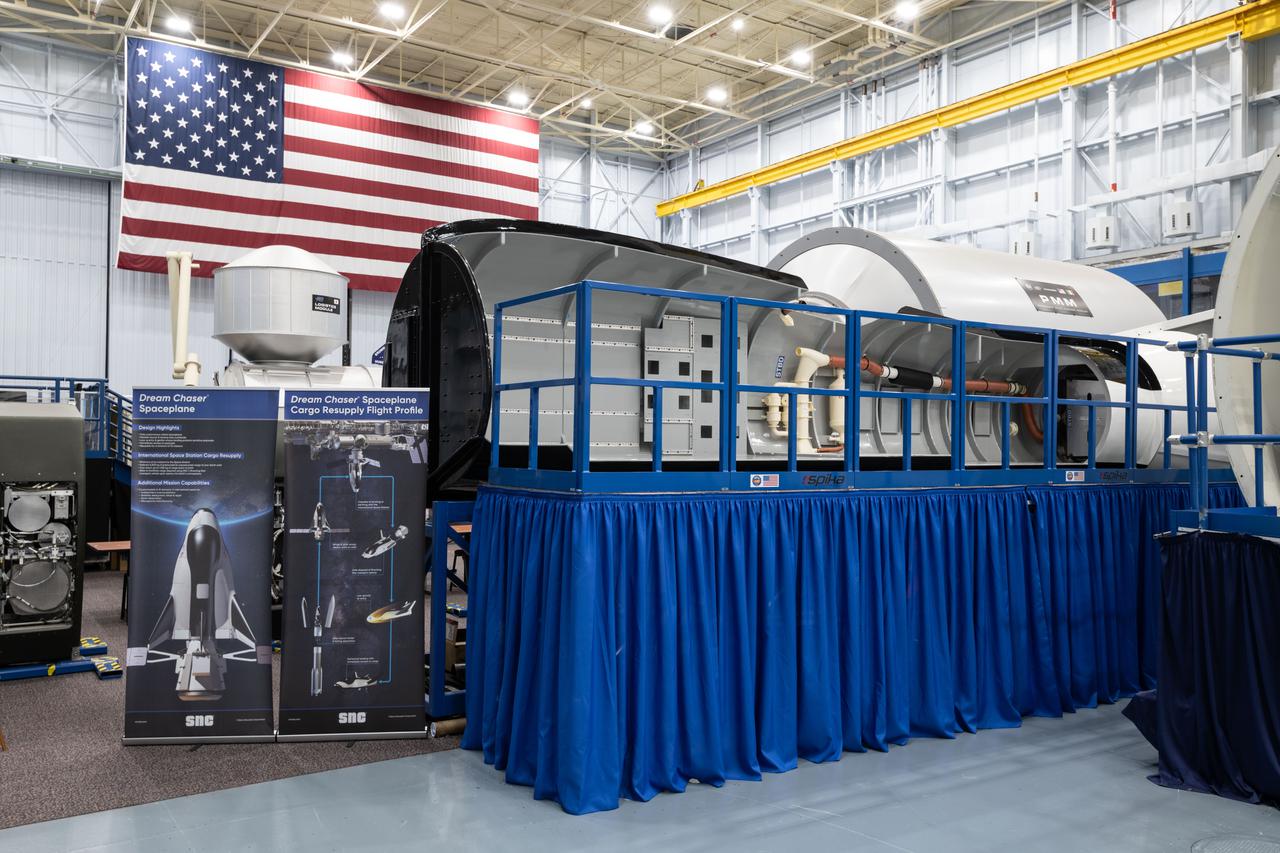
jsc2021e004389 (Jan. 21, 2021) --- External view of the Sierra Nevada Dream Chaser mockup located in Building 9N, Space Vehicle Mockup Facility (SVMF) at the NASA Johnson Space Center.
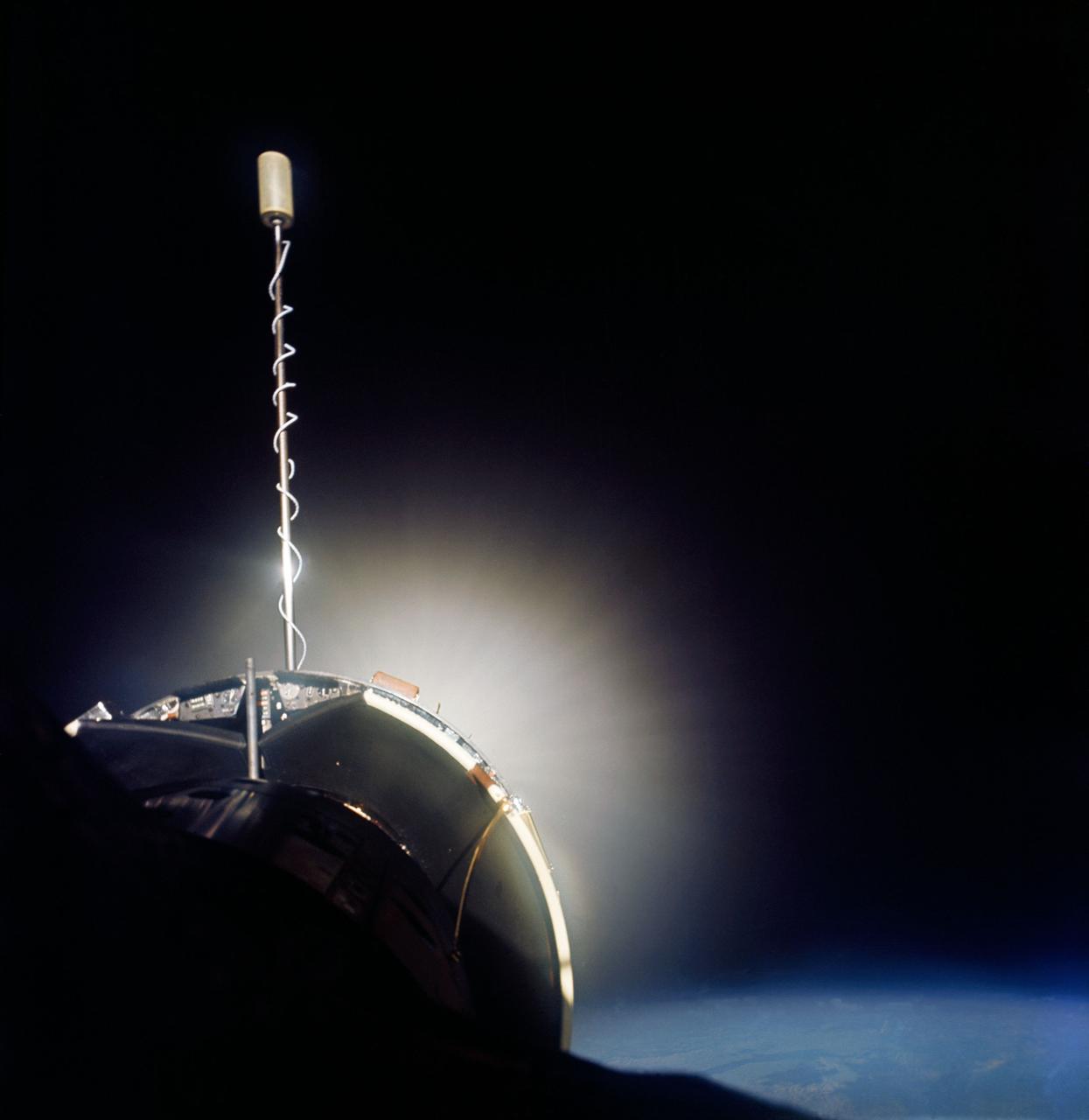
S66-46249 (18-21 July 1966) --- Agena Target Docking Vehicle docked to Gemini-10 spacecraft. Excellent view of Agena display panel. Glow from Agena's primary propulsion system. Photo credit: NASA
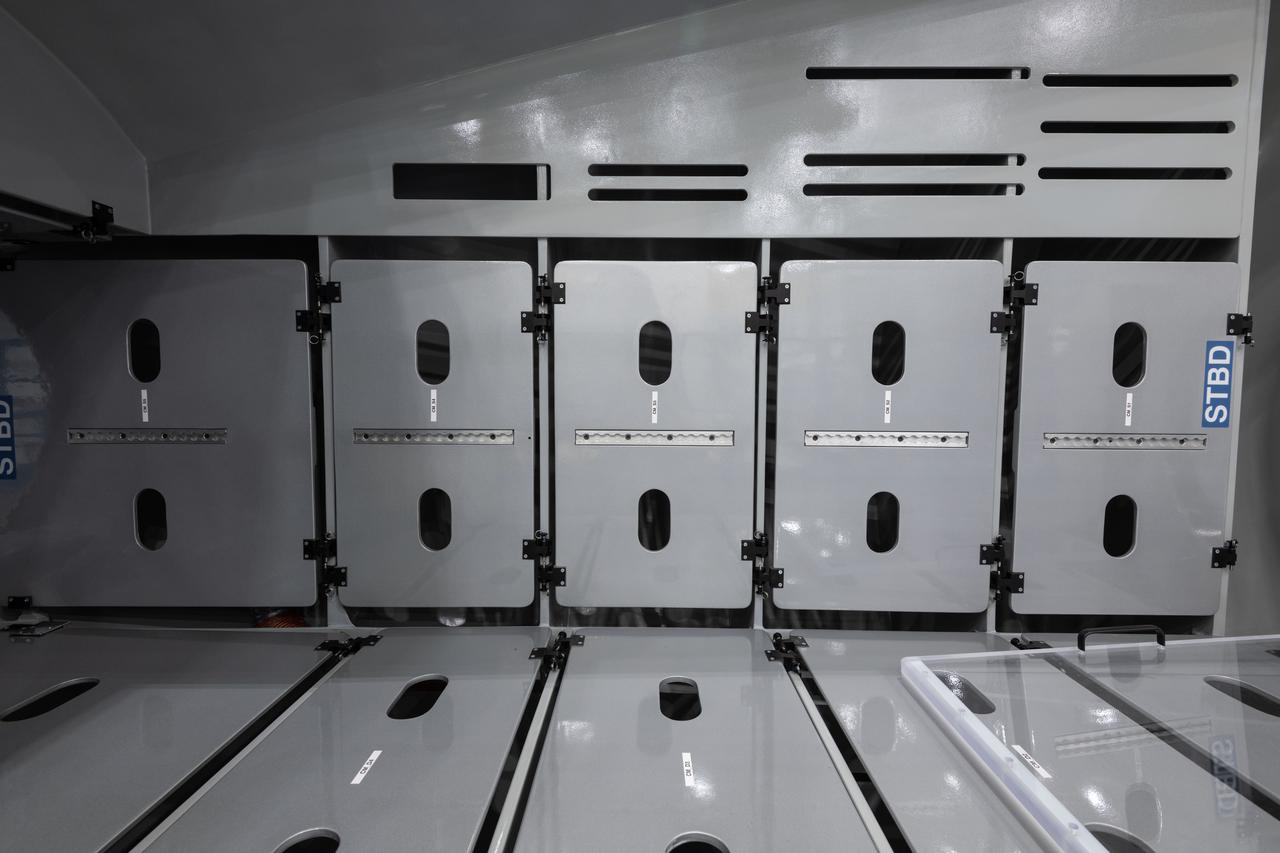
jsc2021e004396 (Jan. 21, 2021) --- Internal view of the Sierra Nevada Dream Chaser mockup located in Building 9N, Space Vehicle Mockup Facility (SVMF) at the NASA Johnson Space Center.

iss067e286515 (Aug. 21, 2022) --- This oblique view of Turkey and the island nation of Cyprus is pictured from the International Space Station as it orbited 257 miles above the Nile Delta in Egypt.
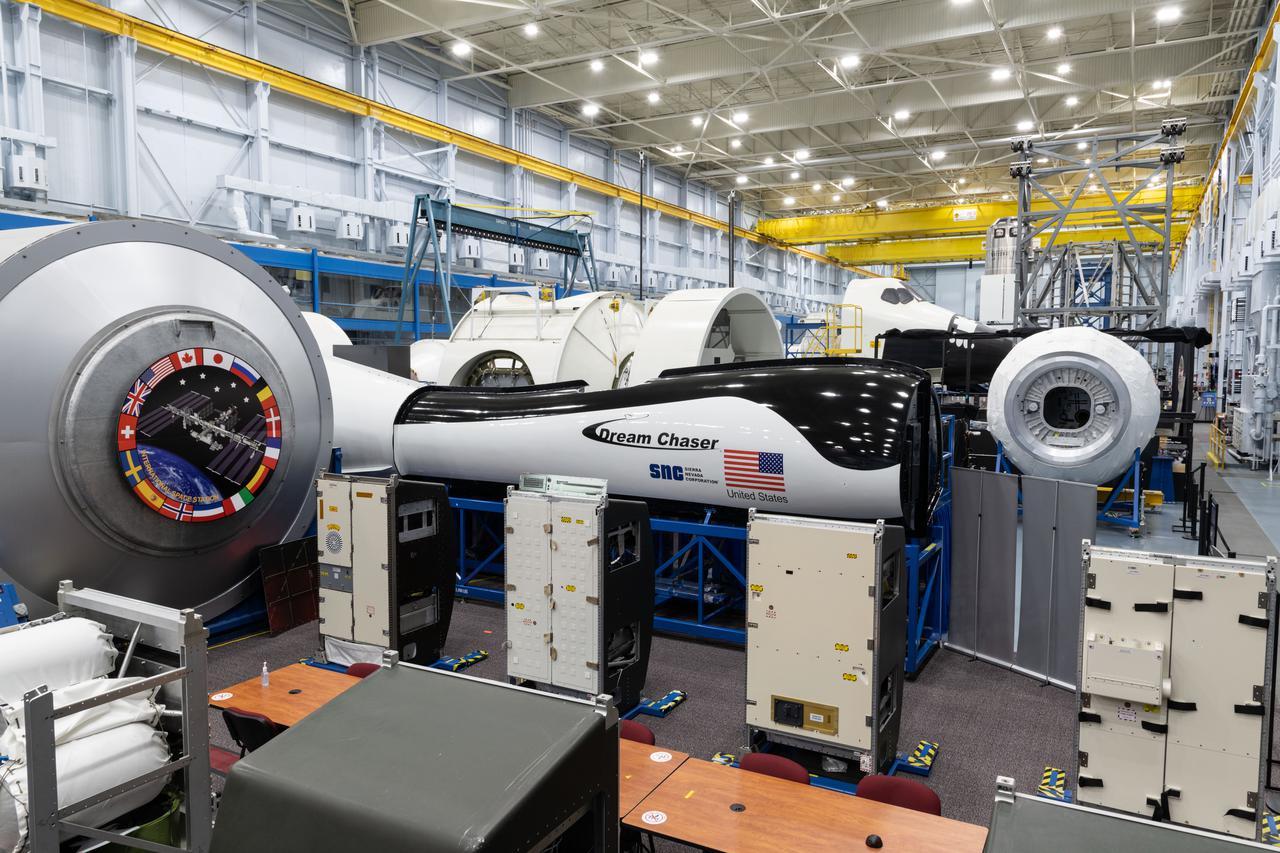
jsc2021e004391 (Jan. 21, 2021) --- External view of the Sierra Nevada Dream Chaser mockup located in Building 9N, Space Vehicle Mockup Facility (SVMF) at the NASA Johnson Space Center.
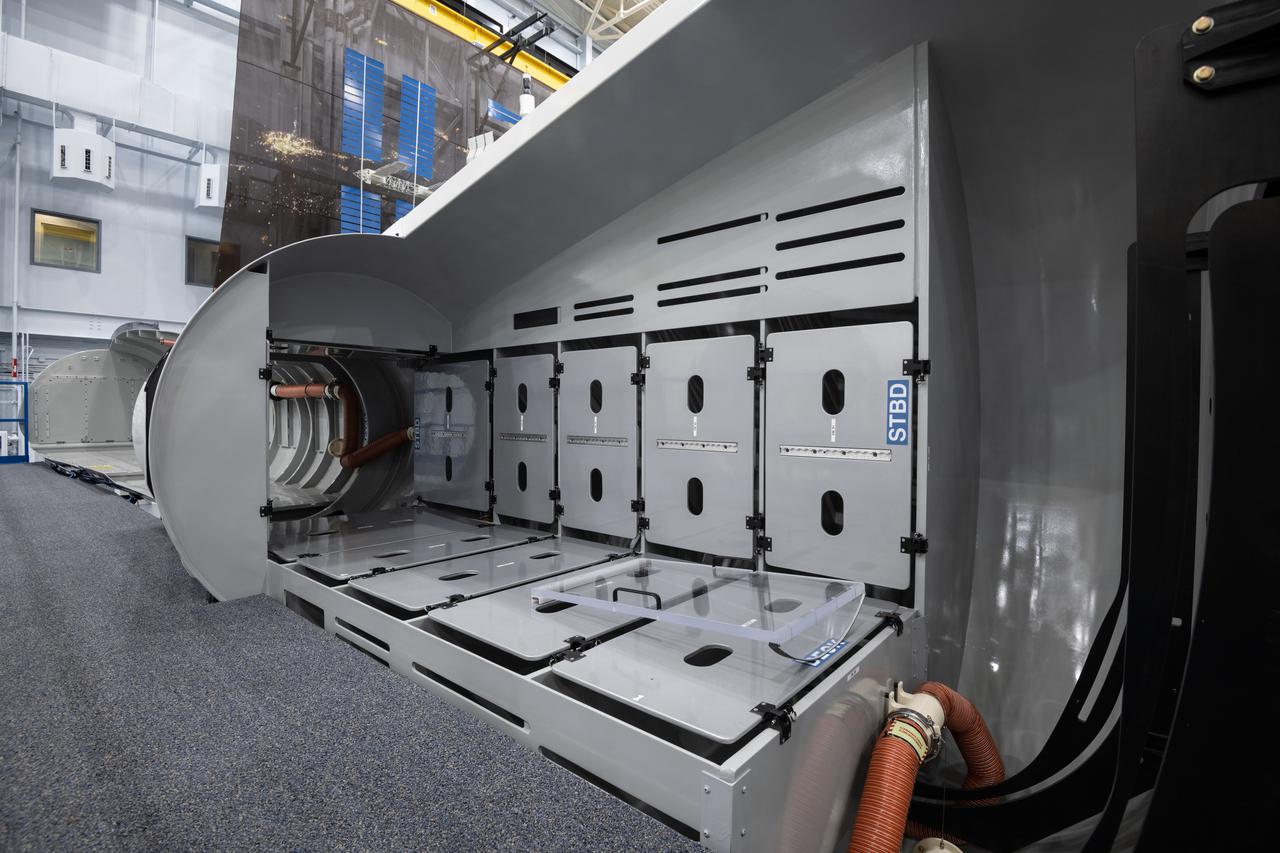
jsc2021e004395 (Jan. 21, 2021) --- Internal view of the Sierra Nevada Dream Chaser mockup located in Building 9N, Space Vehicle Mockup Facility (SVMF) at the NASA Johnson Space Center.

jsc2021e004394 (Jan. 21, 2021) --- Internal view of the Sierra Nevada Dream Chaser mockup located in Building 9N, Space Vehicle Mockup Facility (SVMF) at the NASA Johnson Space Center.
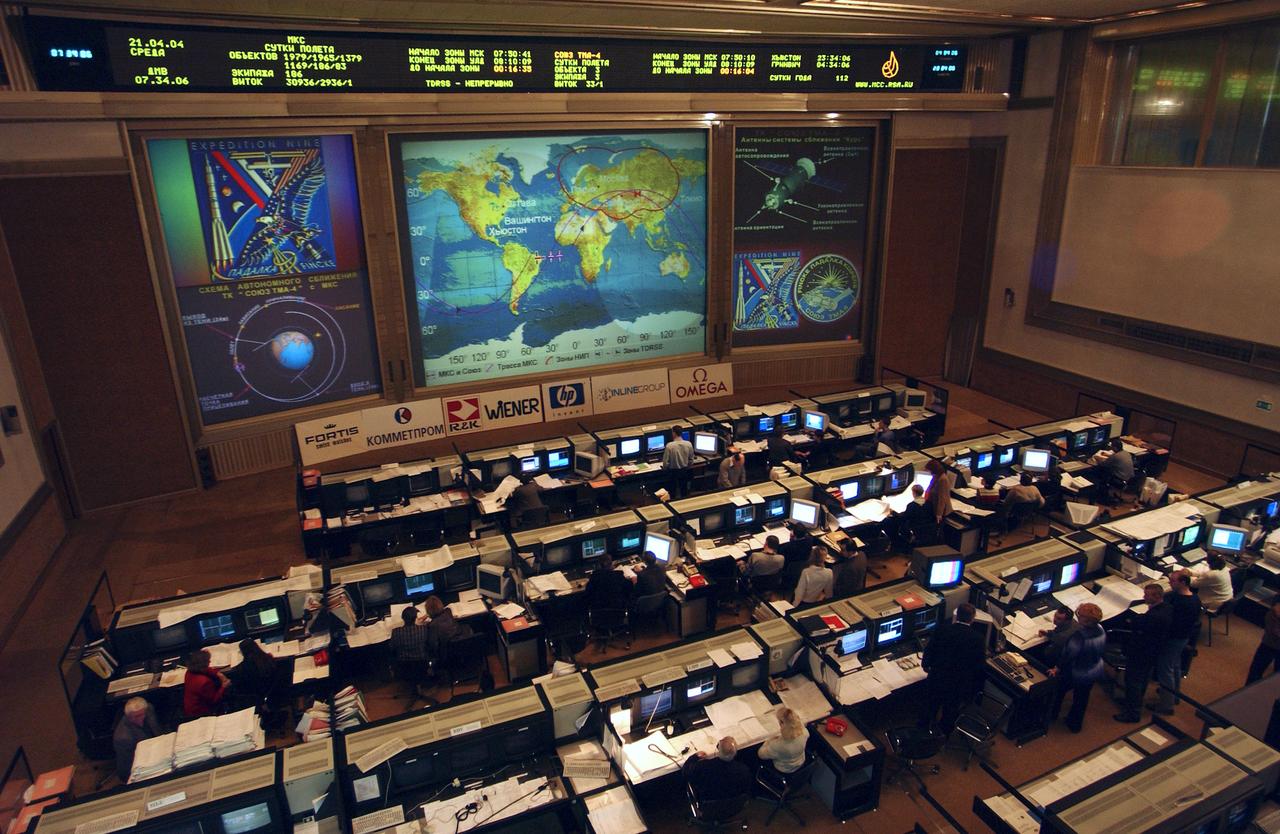
View of the Flight Control Room at the Russian Mission Control Center in Korolev, Russia, located on the outskirts of Moscow, Wednesday, April 21, 2004. Photo Credit: (NASA/Bill Ingalls)

jsc2021e004388 (Jan. 21, 2021) --- External view of the Sierra Nevada Dream Chaser mockup located in Building 9N, Space Vehicle Mockup Facility (SVMF) at the NASA Johnson Space Center.
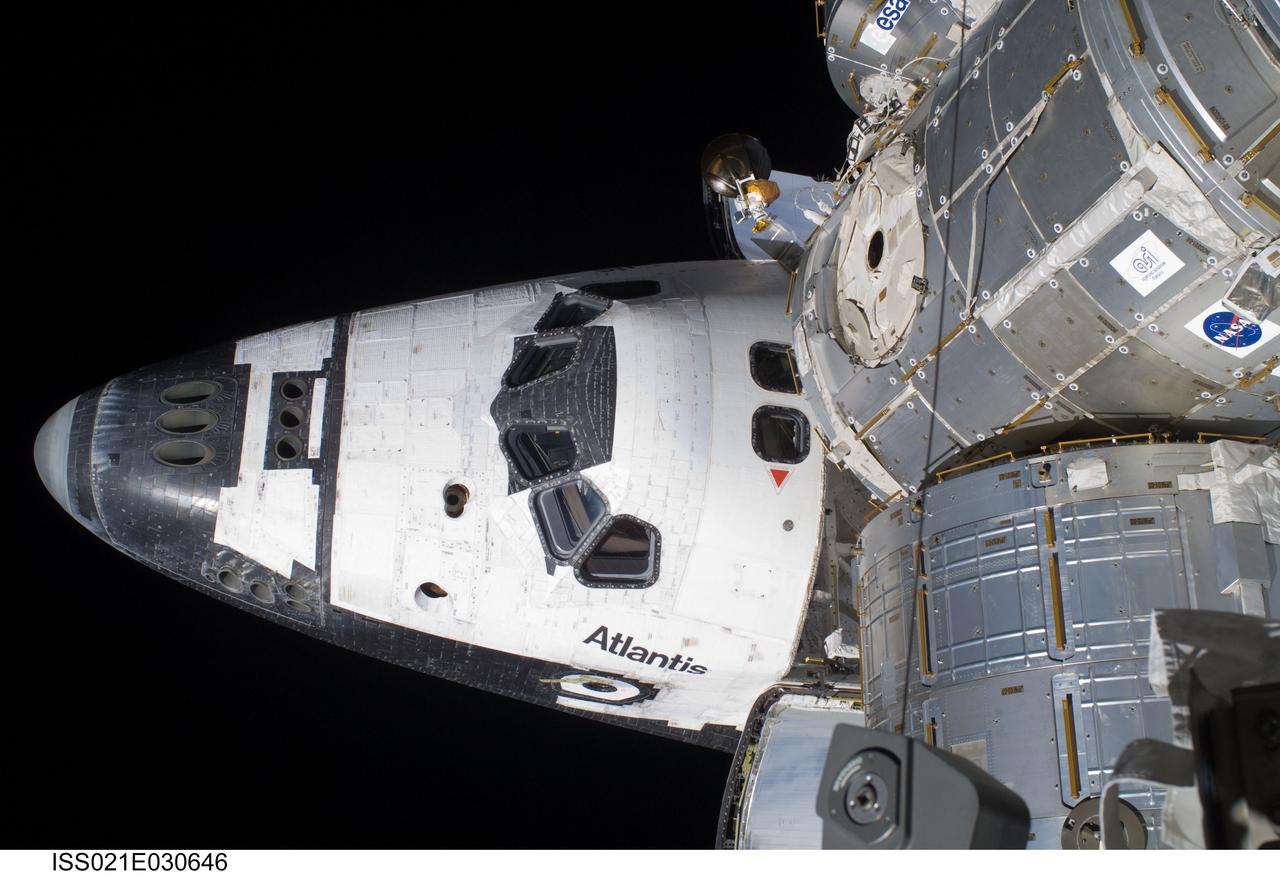
ISS021-E-30646 (21 Nov. 2009) --- This is a high-angle view of the crew cabin of the space shuttle Atlantis during the second space walk of Atlantis' visit to the International Space Station.
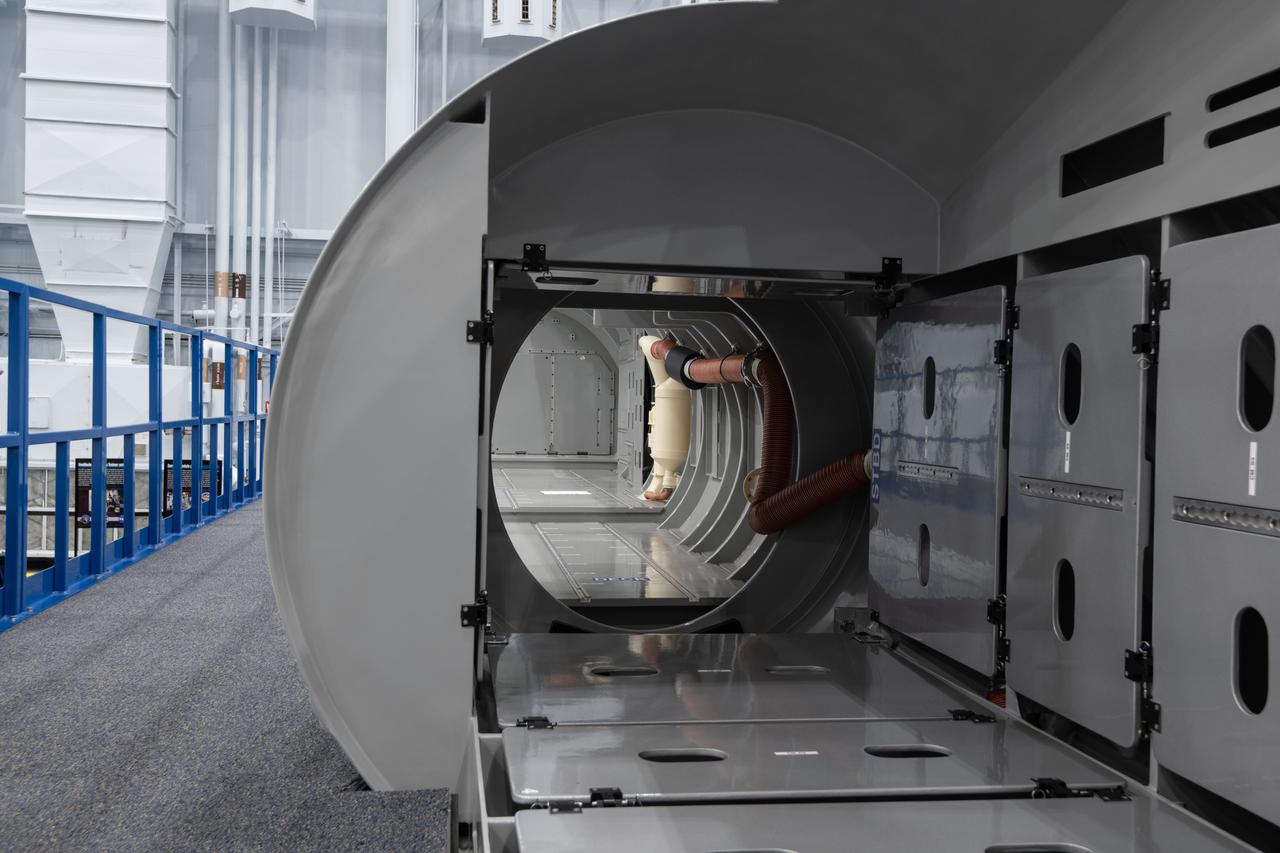
jsc2021e004397 (Jan. 21, 2021) --- Internal view of the Sierra Nevada Dream Chaser mockup located in Building 9N, Space Vehicle Mockup Facility (SVMF) at the NASA Johnson Space Center.
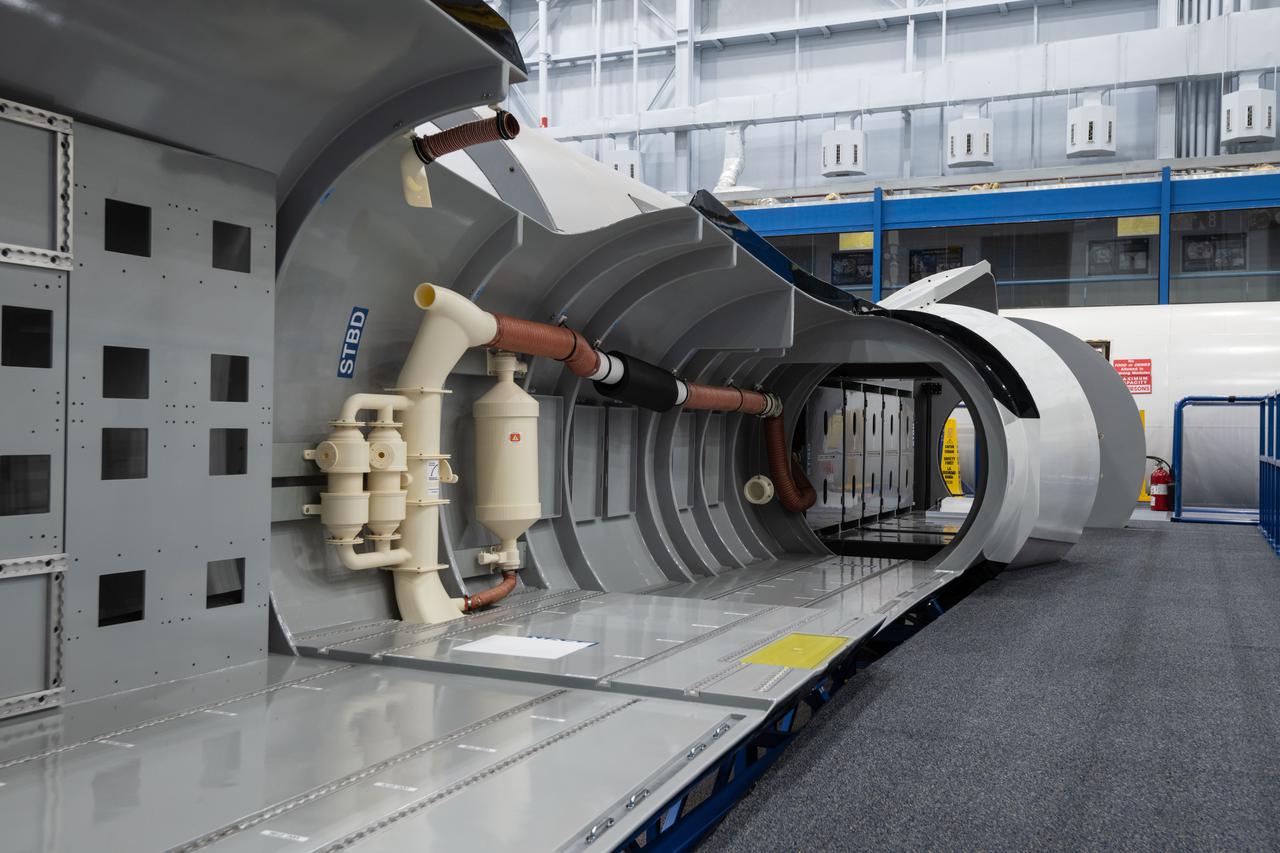
jsc2021e004398 (Jan. 21, 2021) --- Internal view of the Sierra Nevada Dream Chaser mockup located in Building 9N, Space Vehicle Mockup Facility (SVMF) at the NASA Johnson Space Center.
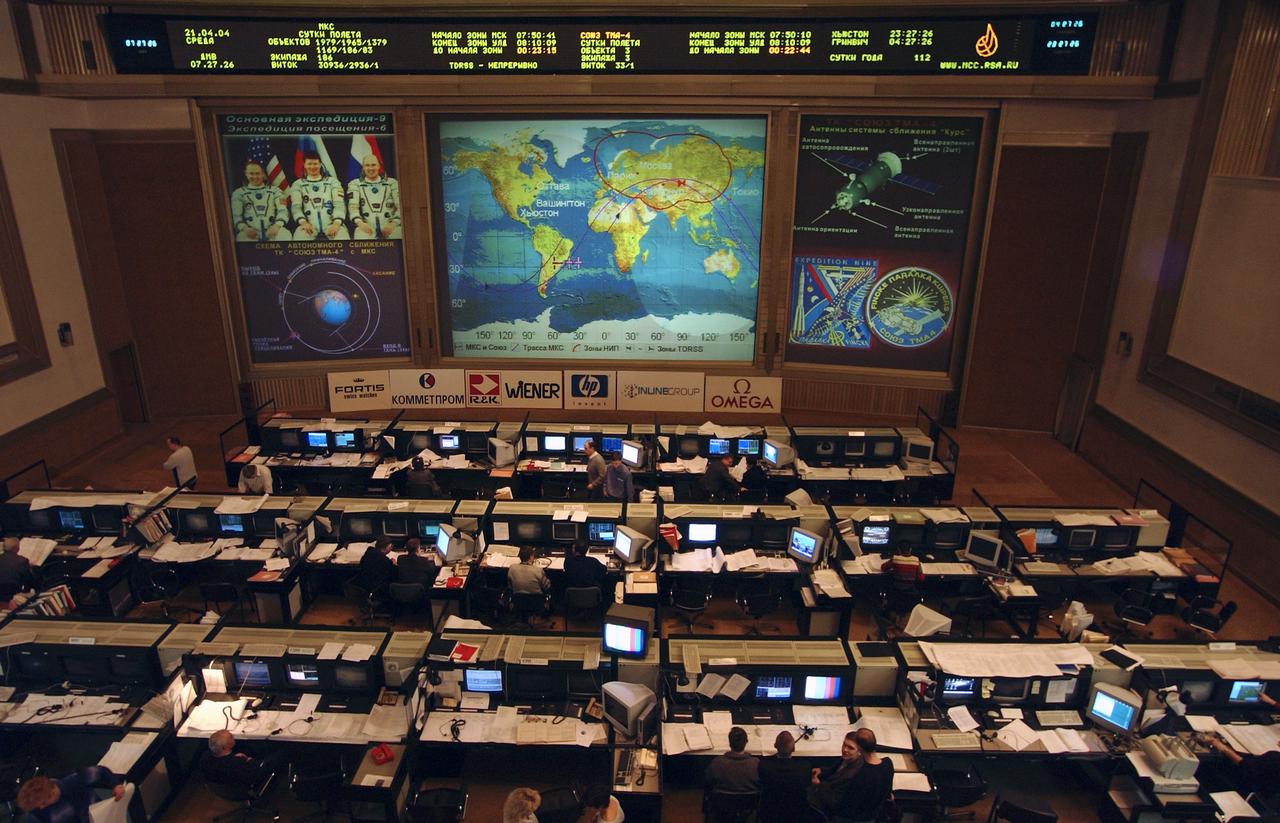
View of the Flight Control Room at the Russian Mission Control Center in Korolev, Russia, located on the outskirts of Moscow, Wednesday, April 21, 2004. Photo Credit: (NASA/Bill Ingalls)

View of the Flight Control Room at the Russian Mission Control Center in Korolev, Russia, located on the outskirts of Moscow, Wednesday, April 21, 2004. Photo Credit: (NASA/Bill Ingalls)
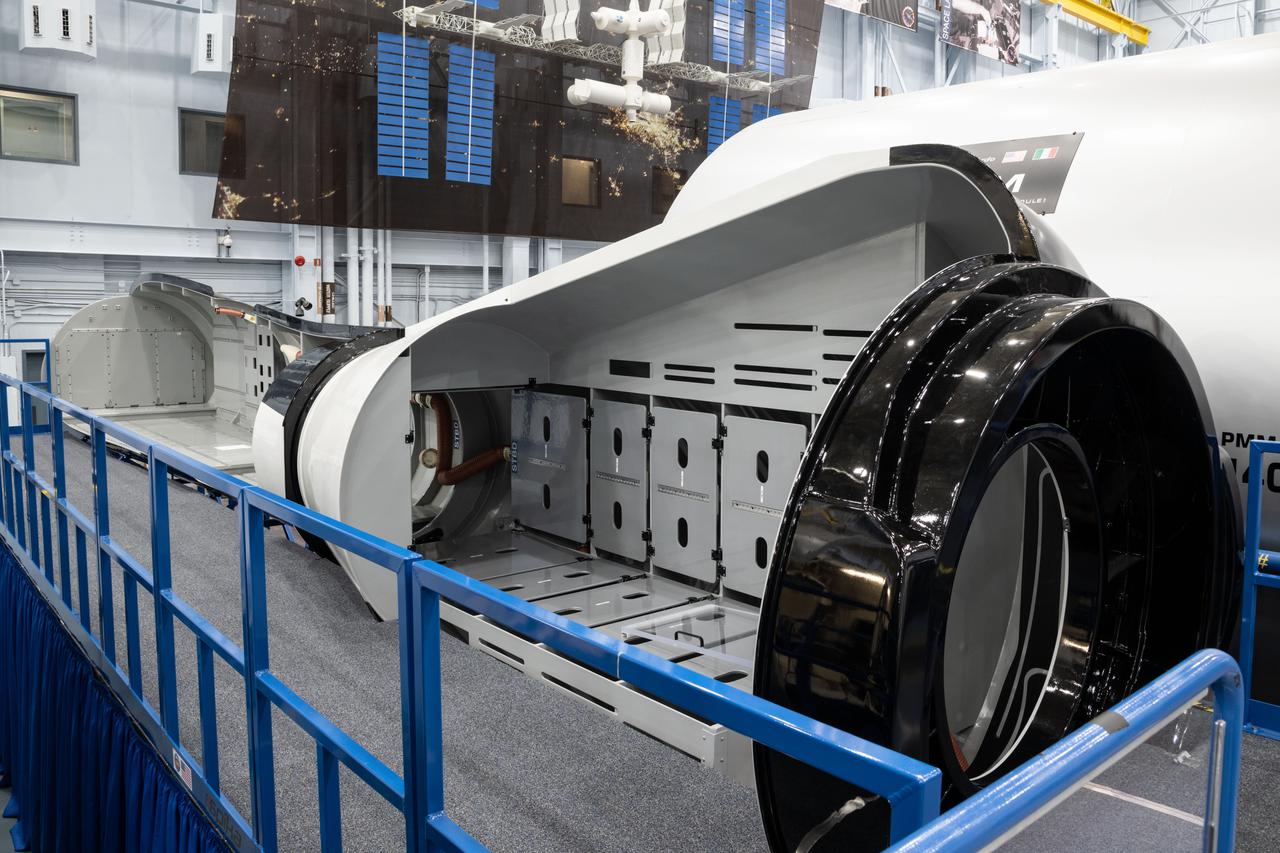
jsc2021e004392 (Jan. 21, 2021) --- Internal view of the Sierra Nevada Dream Chaser mockup located in Building 9N, Space Vehicle Mockup Facility (SVMF) at the NASA Johnson Space Center.

S61-02921 (21 July 1961) --- Attempted recovery of Mercury spacecraft at end of the Mercury-Redstone 4 (MR-4) mission. View shows the top of the capsule before it sinks beneath the waves. Photo credit: NASA
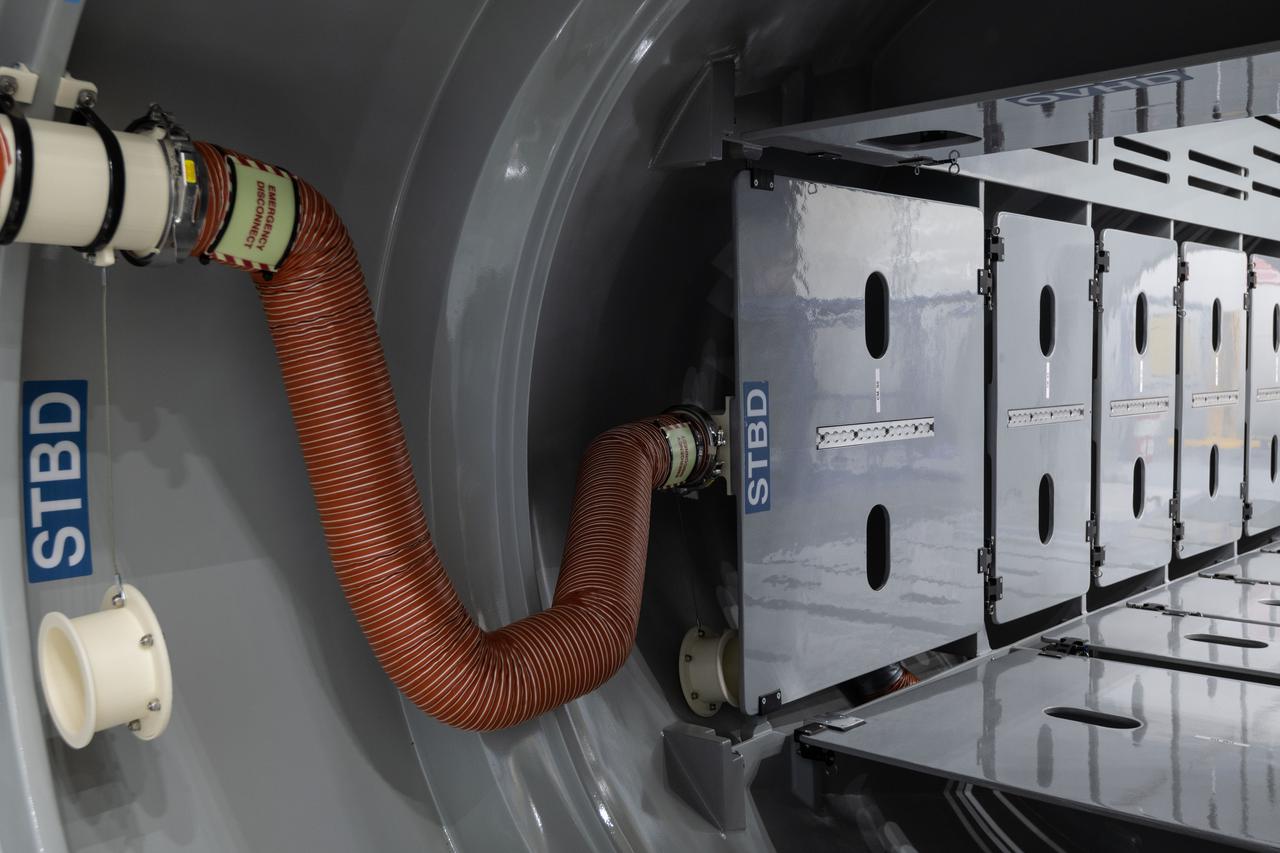
jsc2021e00439 (Jan. 21, 2021) --- Internal view of the Sierra Nevada Dream Chaser mockup located in Building 9N, Space Vehicle Mockup Facility (SVMF) at the NASA Johnson Space Center.
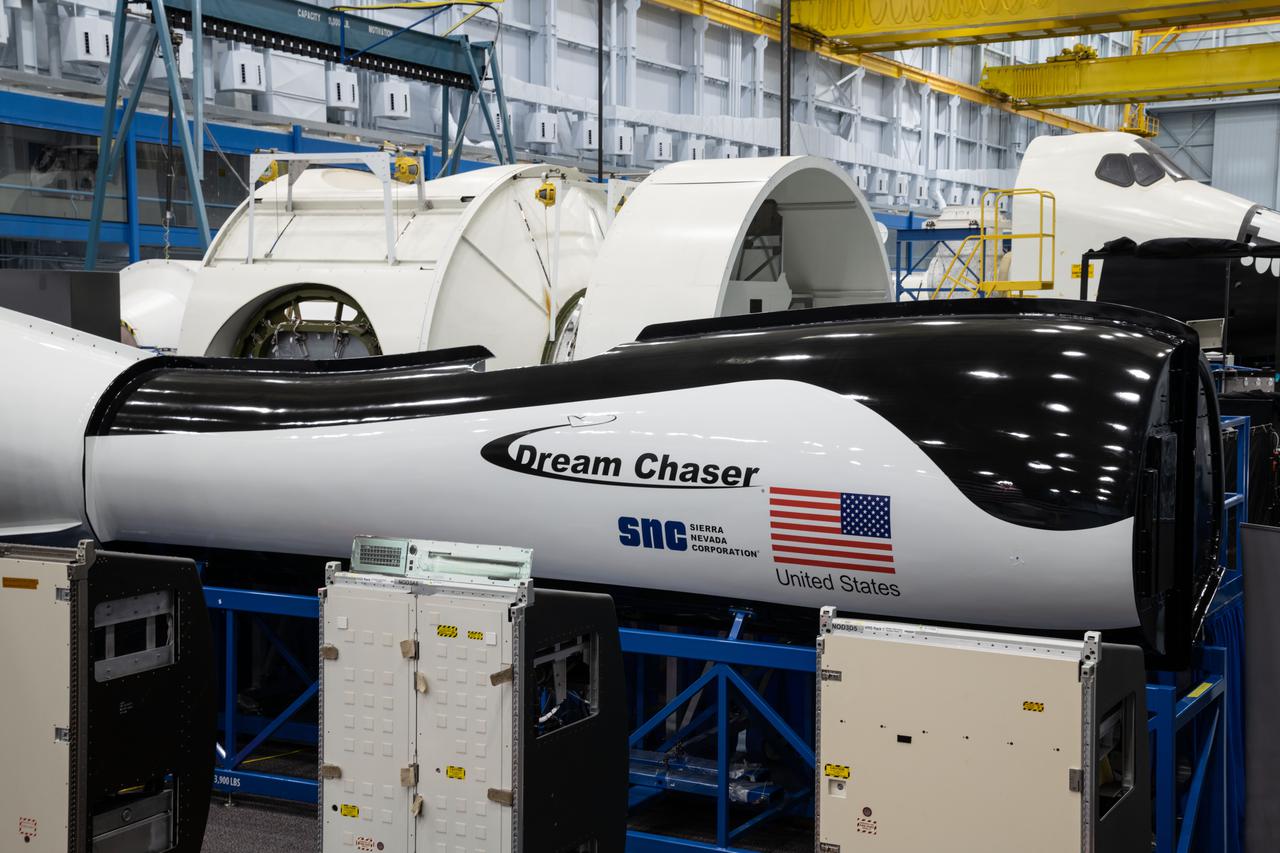
jsc2021e004390 (Jan. 21, 2021) --- External view of the Sierra Nevada Dream Chaser mockup located in Building 9N, Space Vehicle Mockup Facility (SVMF) at the NASA Johnson Space Center.
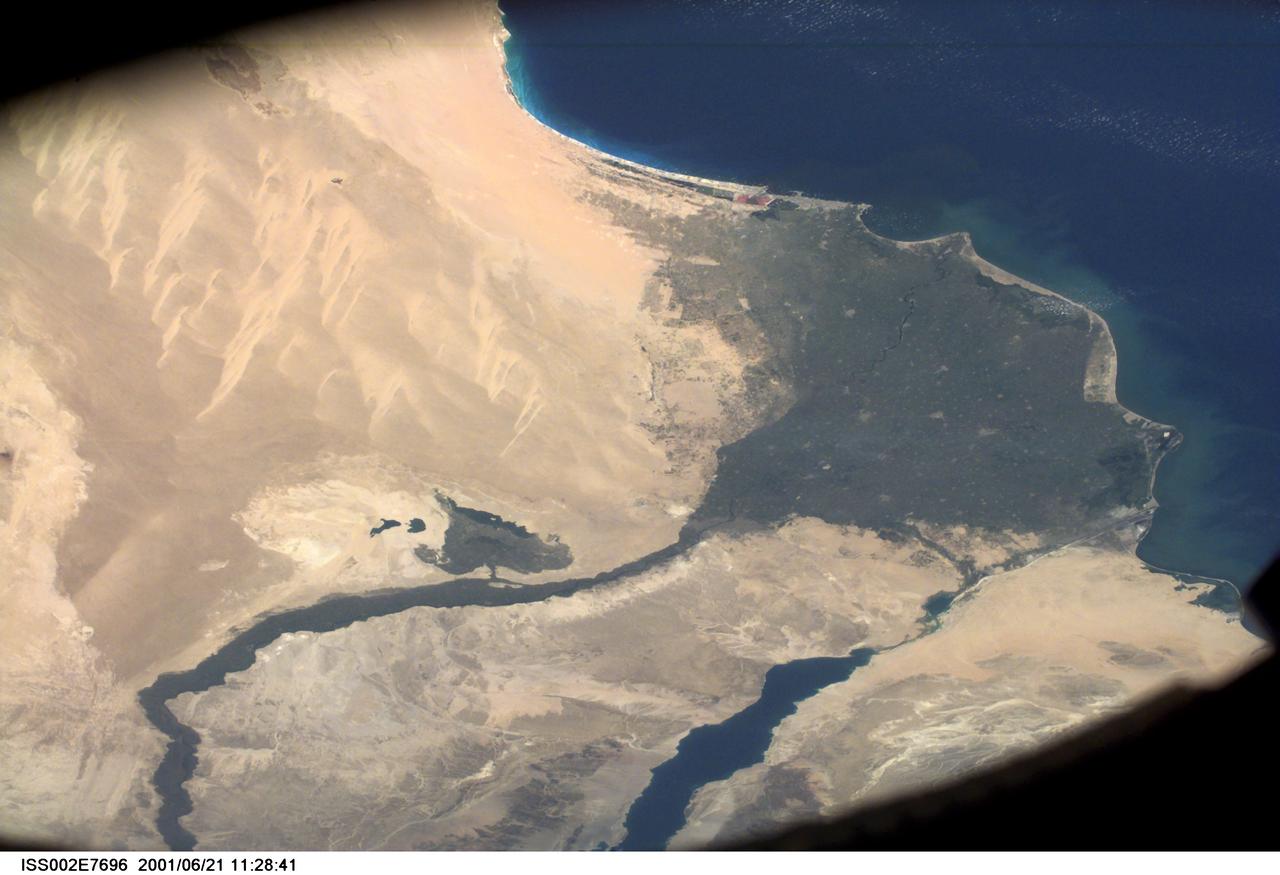
SS002-E-7696 (21 June 2001) --- Wide view of the Nile River and Suez Canal, Egypt, as photographed with a digital still camera aboard the International Space Station (ISS).
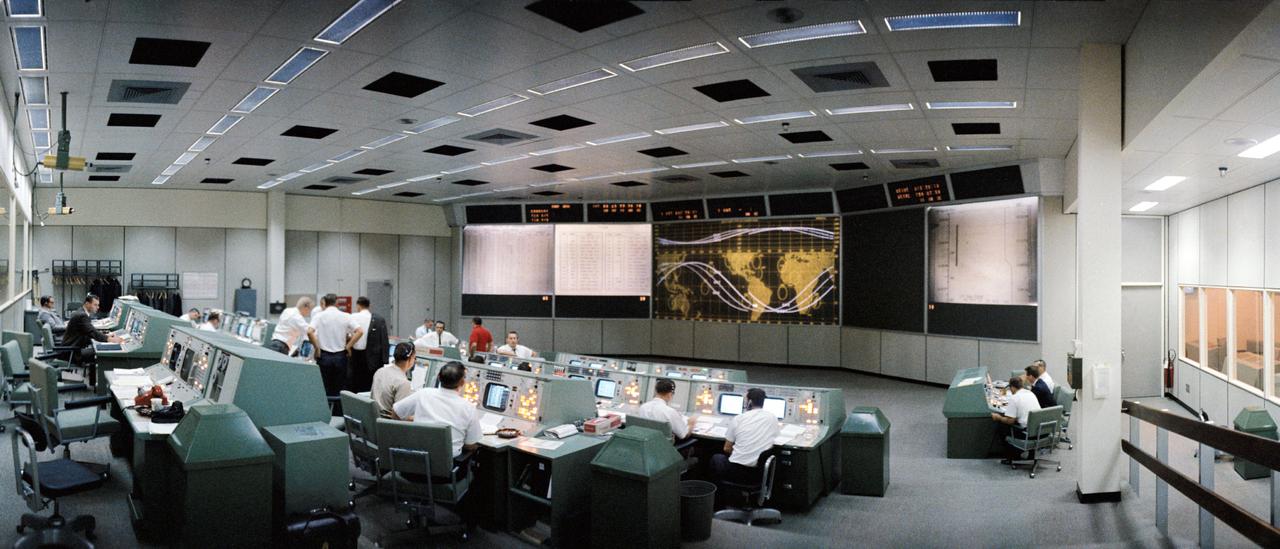
S65-45280 (21-29 Aug. 1965) --- Overall view of the Mission Control Center (MCC), Houston, Texas, during the Gemini-5 flight. Note the screen at the front of the MCC which is used to track the progress of the Gemini spacecraft.
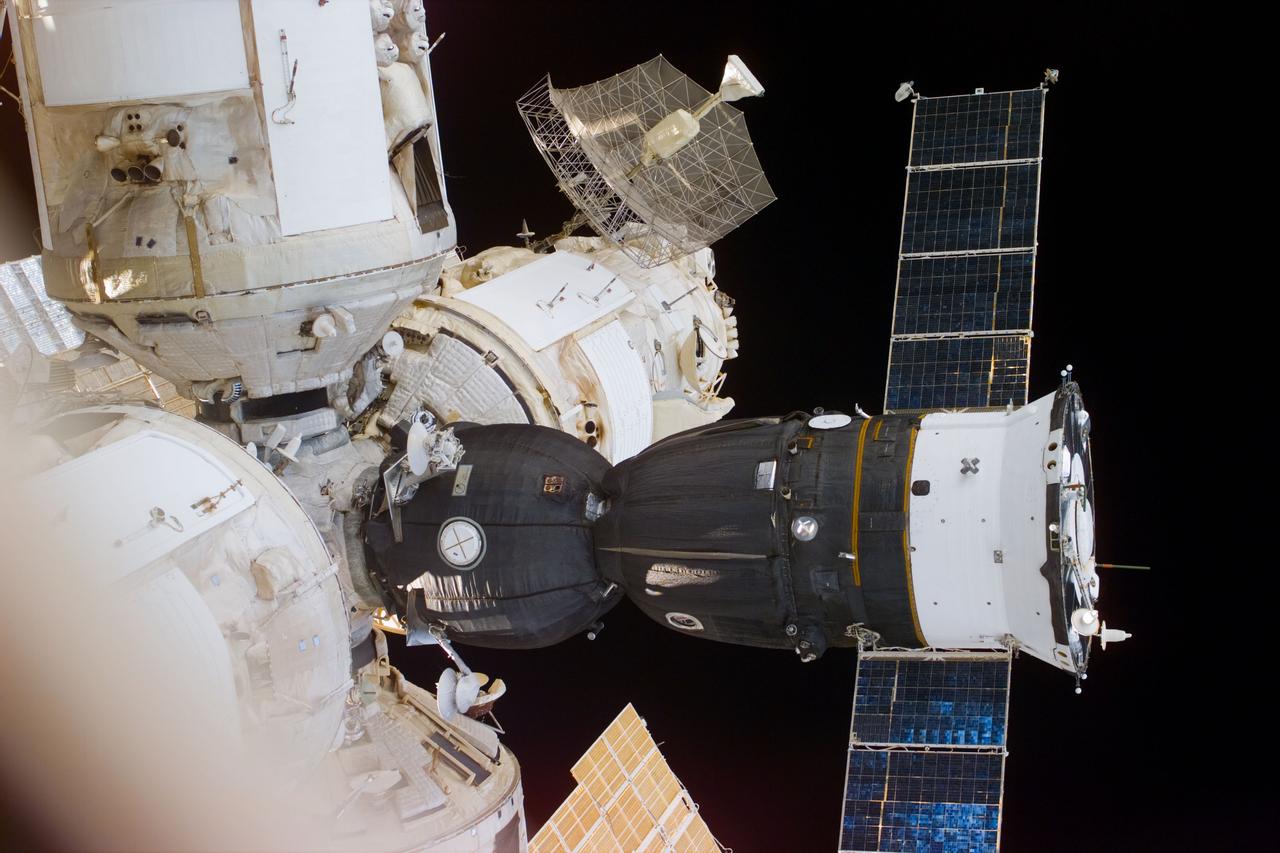
STS79-E-5216 (21 September 1996) --- A Space Shuttle Atlantis out-the-window view showing a Soyuz spacecraft docked with Russia's Mir Space Station, during Flight Day 6.
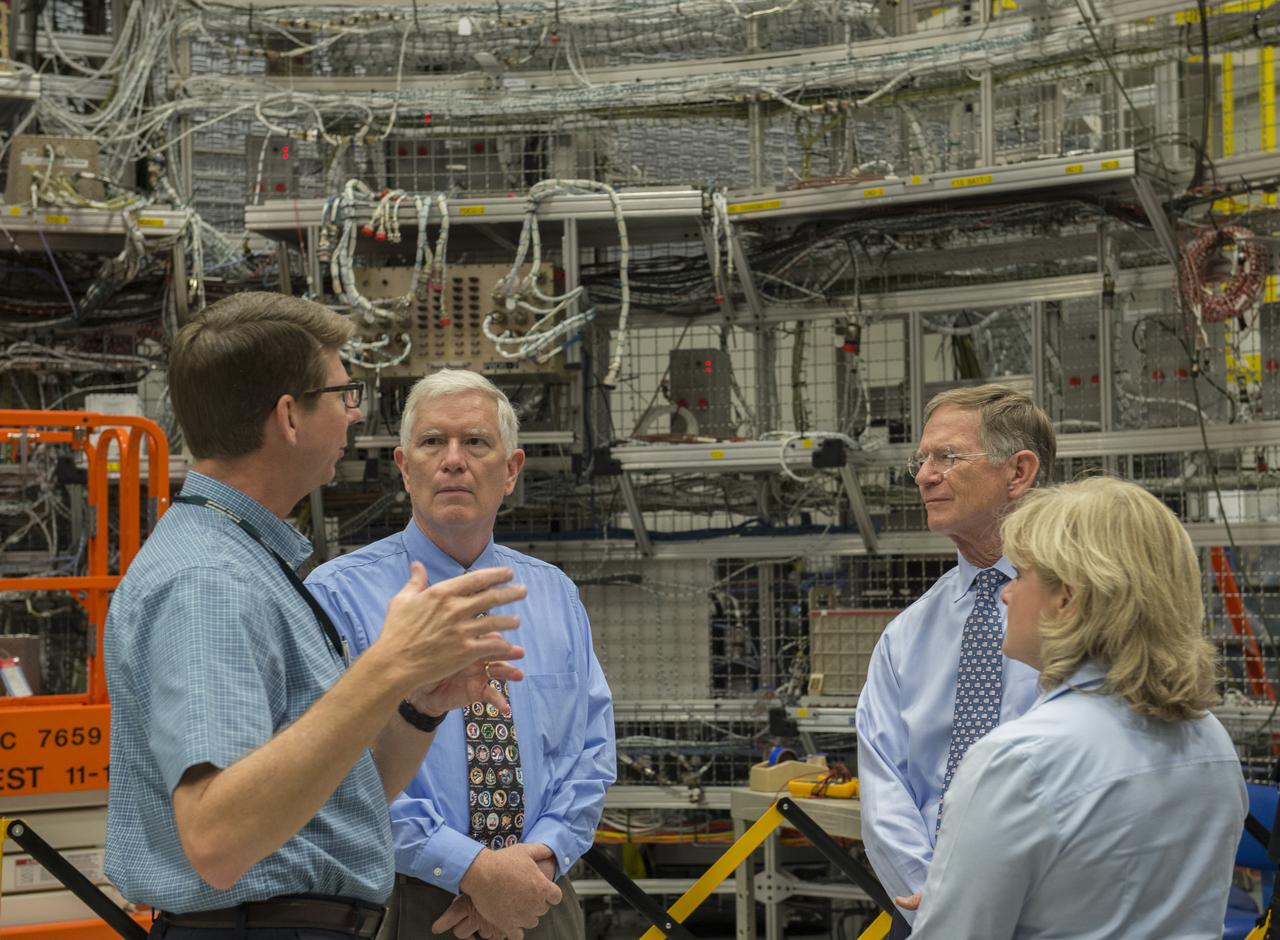
U.S. Rep. Mo Brooks, (L), and U.S. Rep. Lamar Smith, view progress on NASA's Space Launch System July 21, during a tour of NASA's Marshall Space Flight Center.
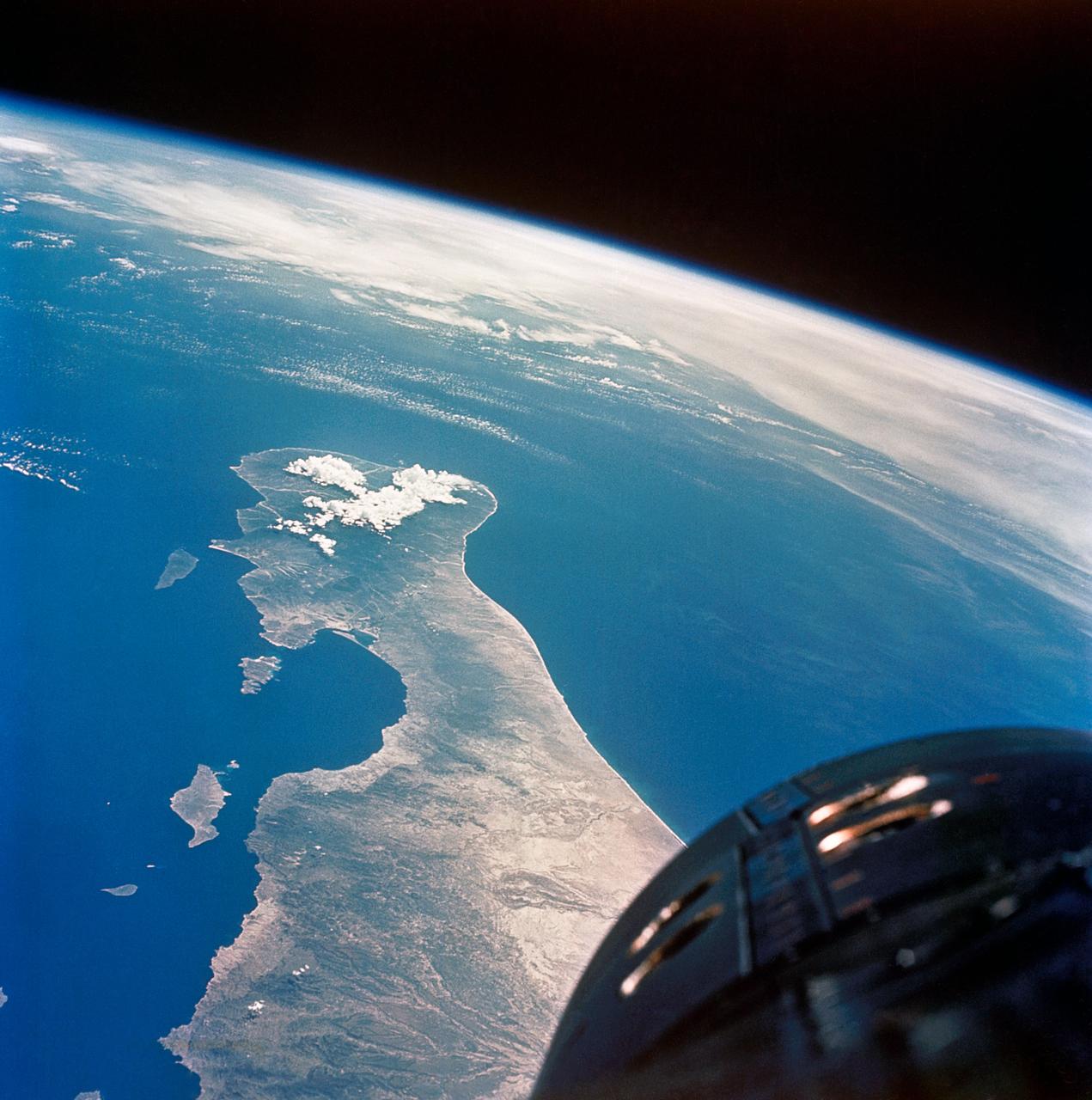
S65-45763 (21-29 Aug. 1965) --- View of the lower tip of Baja, California and Bahia de la Paz taken from the Gemini-5 spacecraft in orbit over Earth.
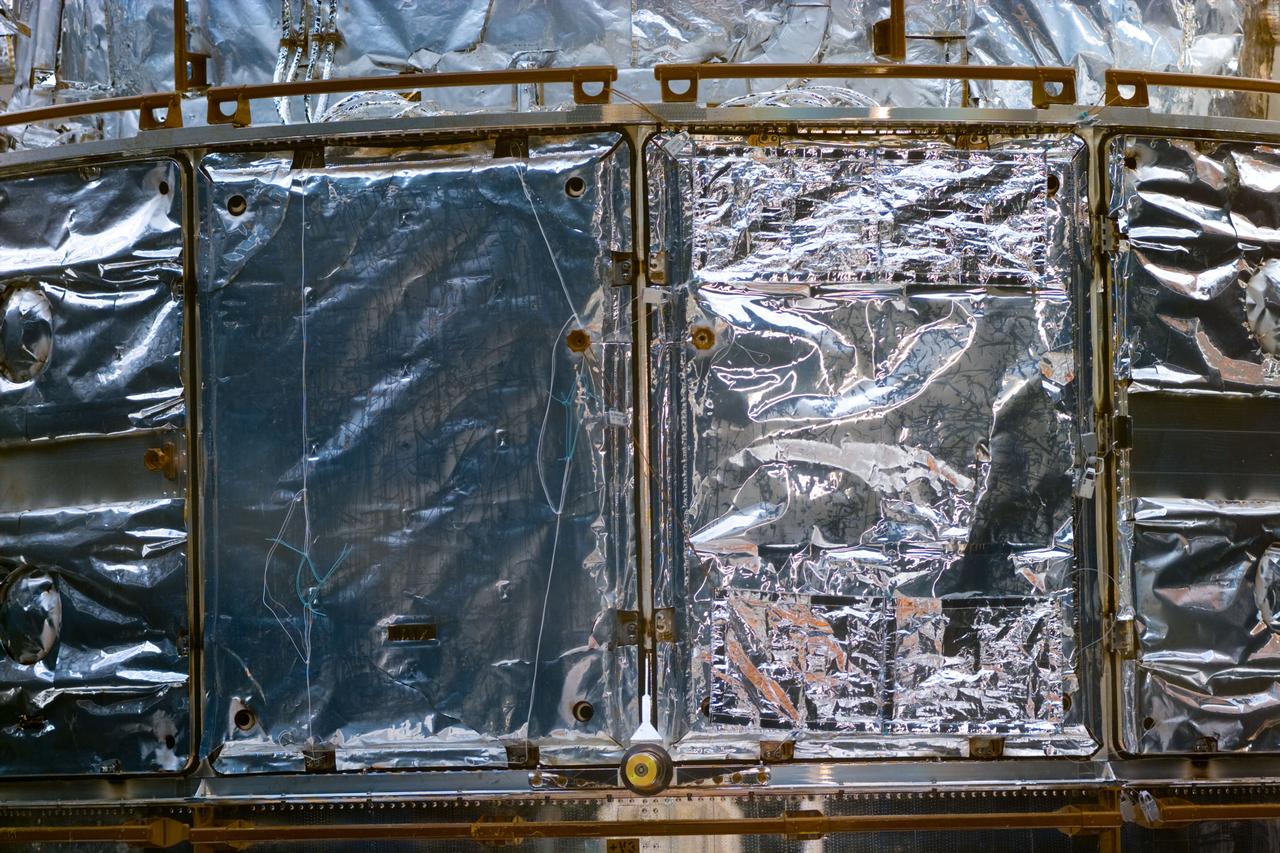
S82-E-5891 (11-21 Feb. 1997) --- Several patchwork pieces on bay doors accomplished on fifth Extravehicular Activity (EVA). This view was taken with an Electronic Still Camera (ESC).
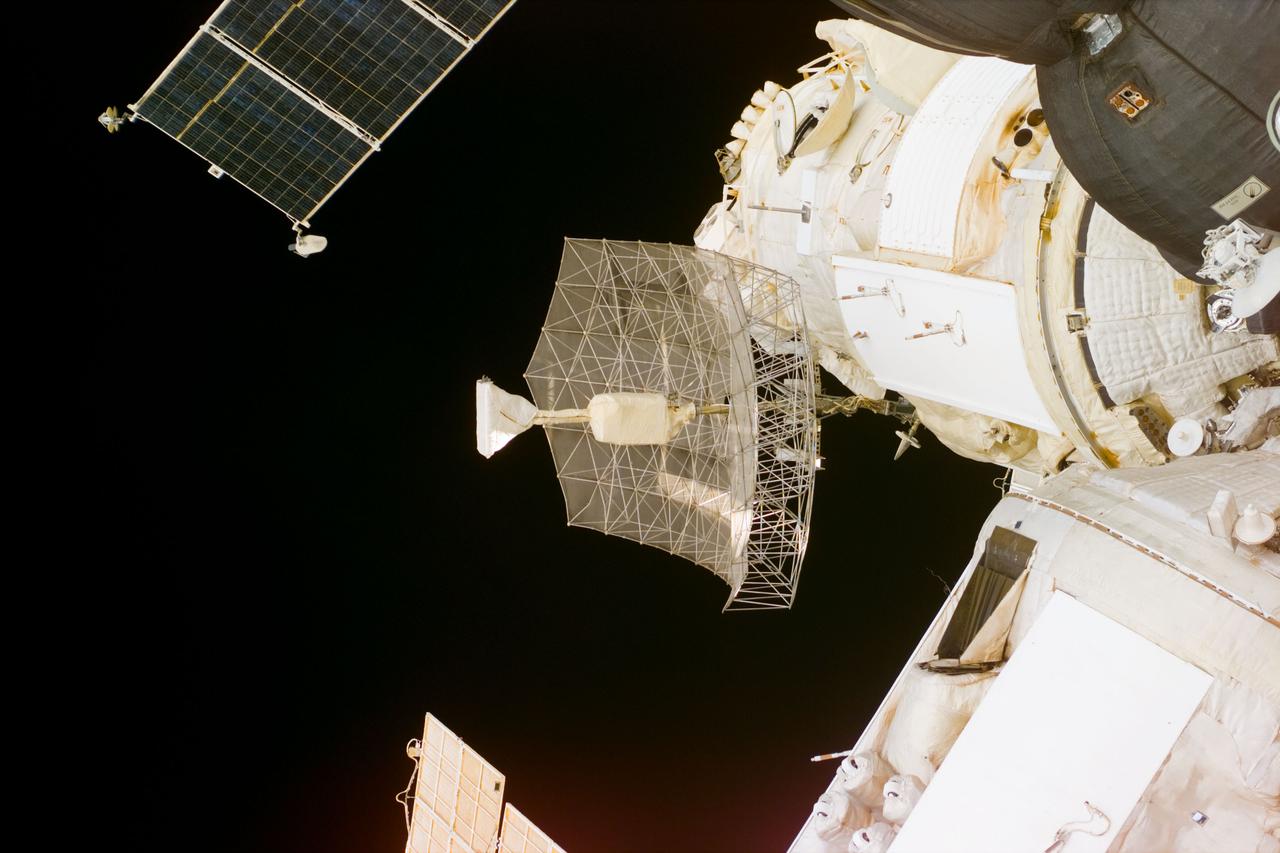
STS79-E-5219 (21 September 1996) --- This view shows the Radar antenna on Russia's Mir Space Station which was deployed earlier this year during cosmonaut Extravehicular Activity (EVA), during Flight Day 6.
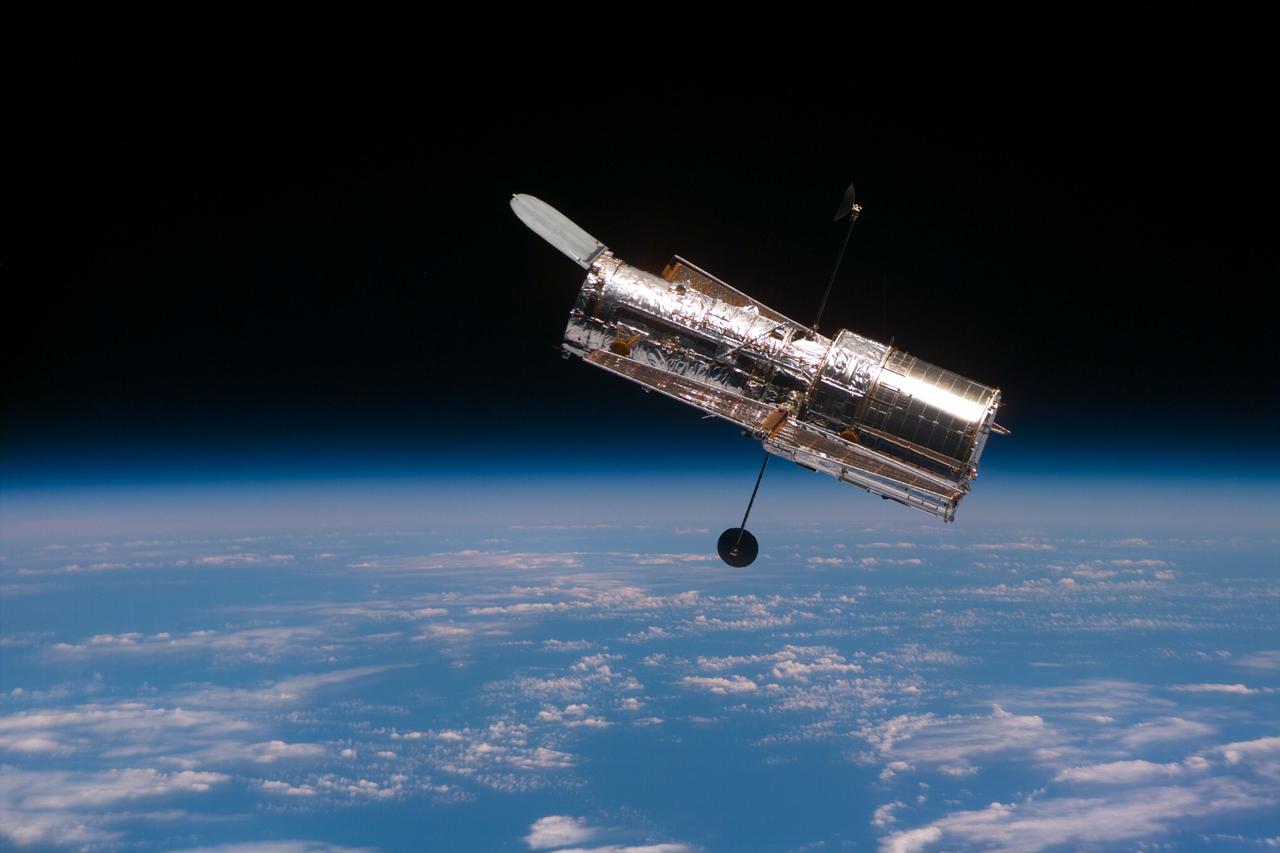
S82-E-5937 (11-21 Feb. 1997) --- The Hubble Space Telescope (HST) begins its separation from the Space Shuttle Discovery following its release. This view was taken with an Electronic Still Camera (ESC).
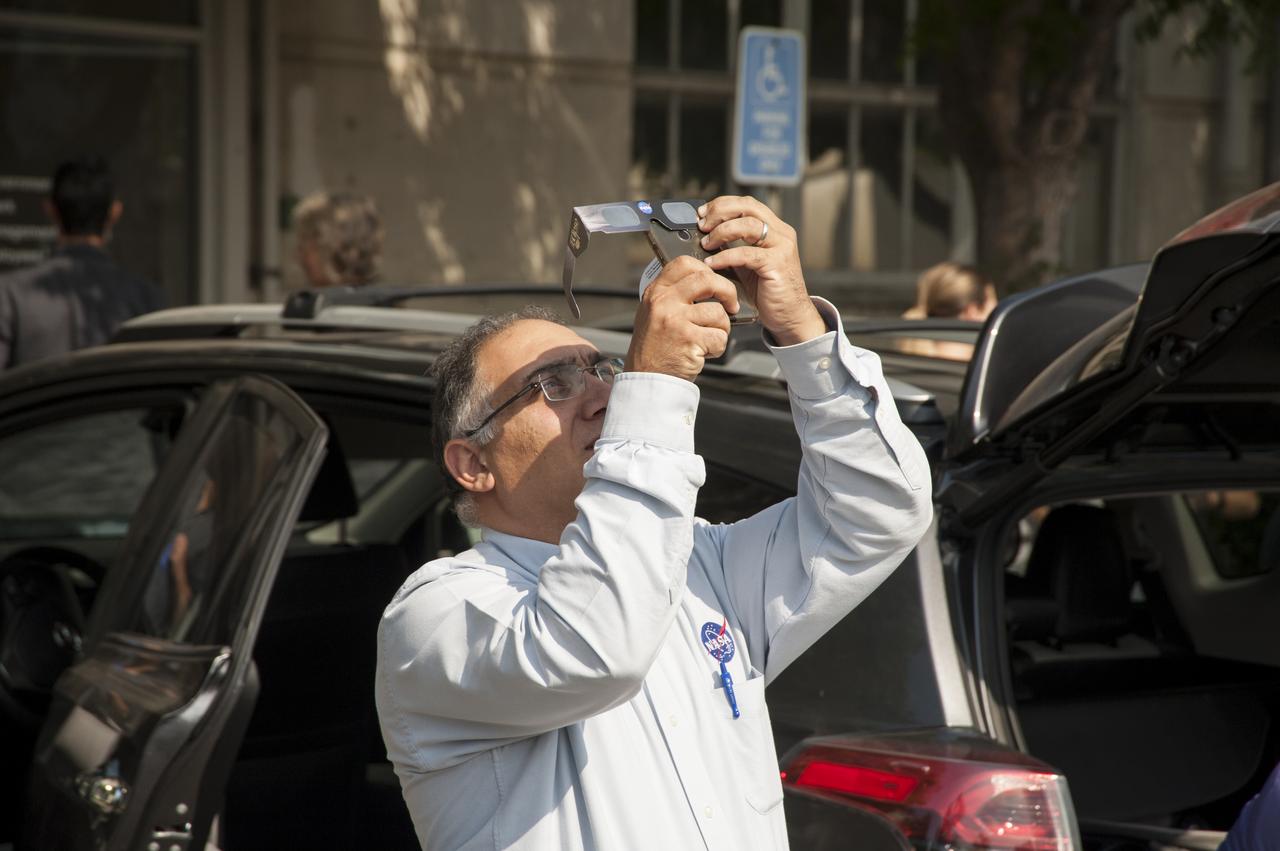
Taking a break from his duties at Ames Research Center Jacob Cohen, Ames Chief Scientist grabs his own view of the 2017 Solar Eclipse with his cellphone at 09:16:11 on August 21, 2017.
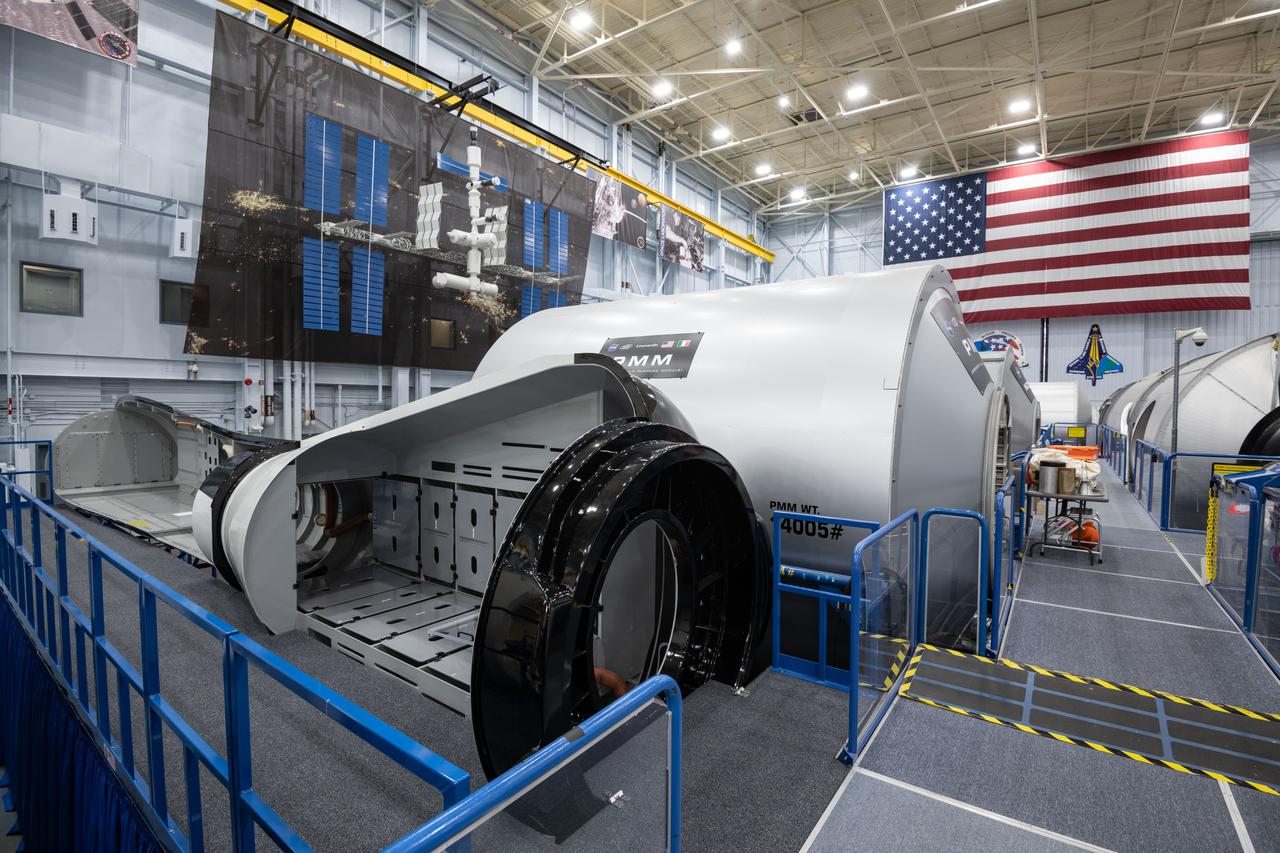
jsc2021e004393 (Jan. 21, 2021) --- Internal view of the Sierra Nevada Dream Chaser mockup located in Building 9N, Space Vehicle Mockup Facility (SVMF) at the NASA Johnson Space Center.
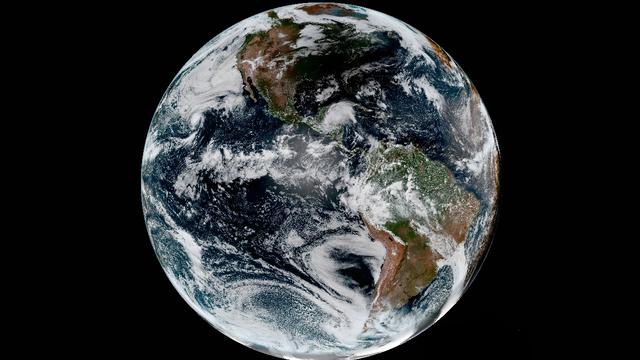
On August 21, 2017, the first total solar eclipse to move across the United States in 99 years occurred. GOES-16 captured the eclipse with the Advanced Baseline Imager (ABI) which had a clear view of the moon’s shadow as it traveled diagonally across the path of totality of the Continental United States from the Pacific Northwest through South Carolina. In this full disk geocolor image from GOES-16 on August 21, 2017, the center of the moon's shadow is now east of the Mississippi River. Credit: CIRA View more eclipse imagery at <a href="http://www.nesdis.noaa.gov/content/multimedia" rel="nofollow">www.nesdis.noaa.gov/content/multimedia</a>
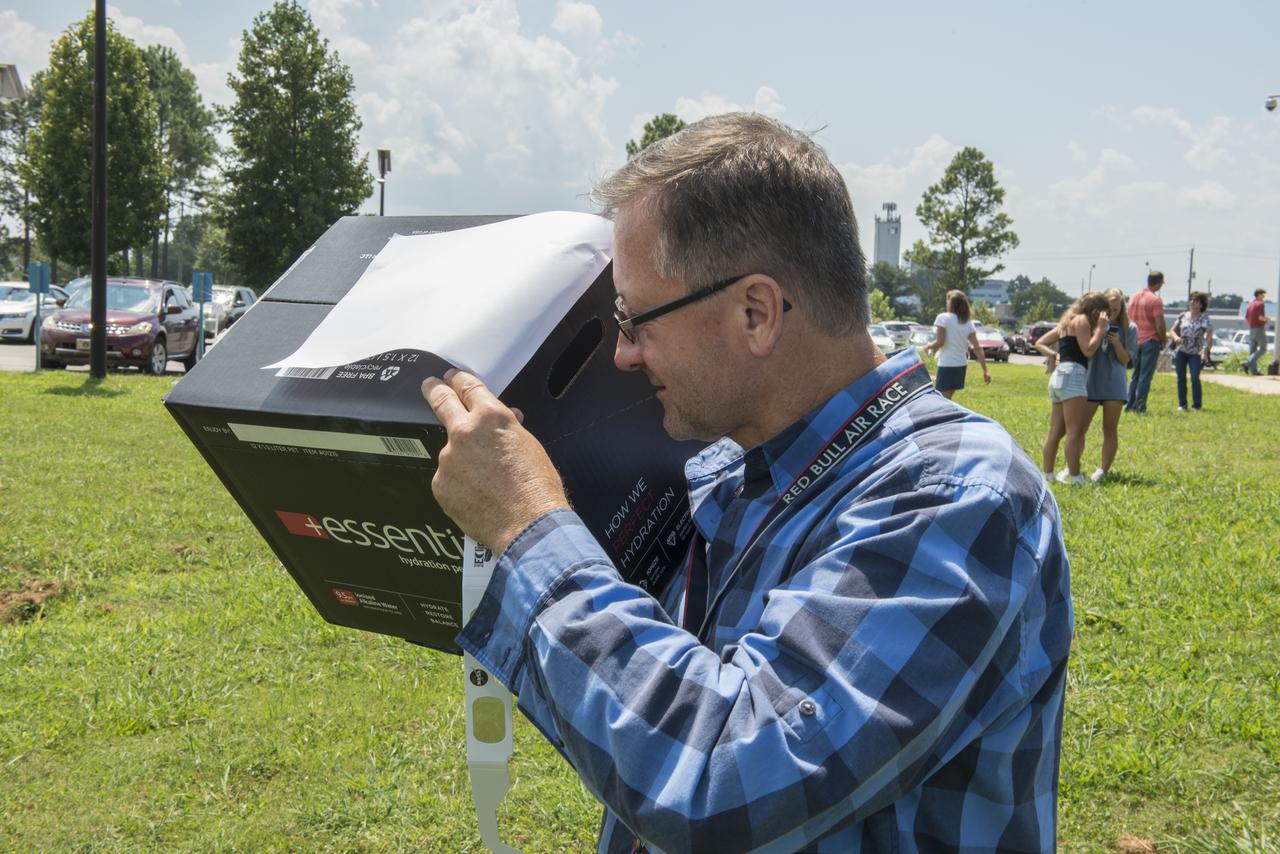
Marshall Space Flight Center employee, Phillip Domen, safely views the August 21, 2017 solar eclipse with his homemade viewing box. The Huntsville area experienced 97 percent occultation, nearly a complete blocking out of the sun by the orbit of Earth's moon. The next opportunity to view a solar eclipse in the eastern and central United States will occur in April 2024.
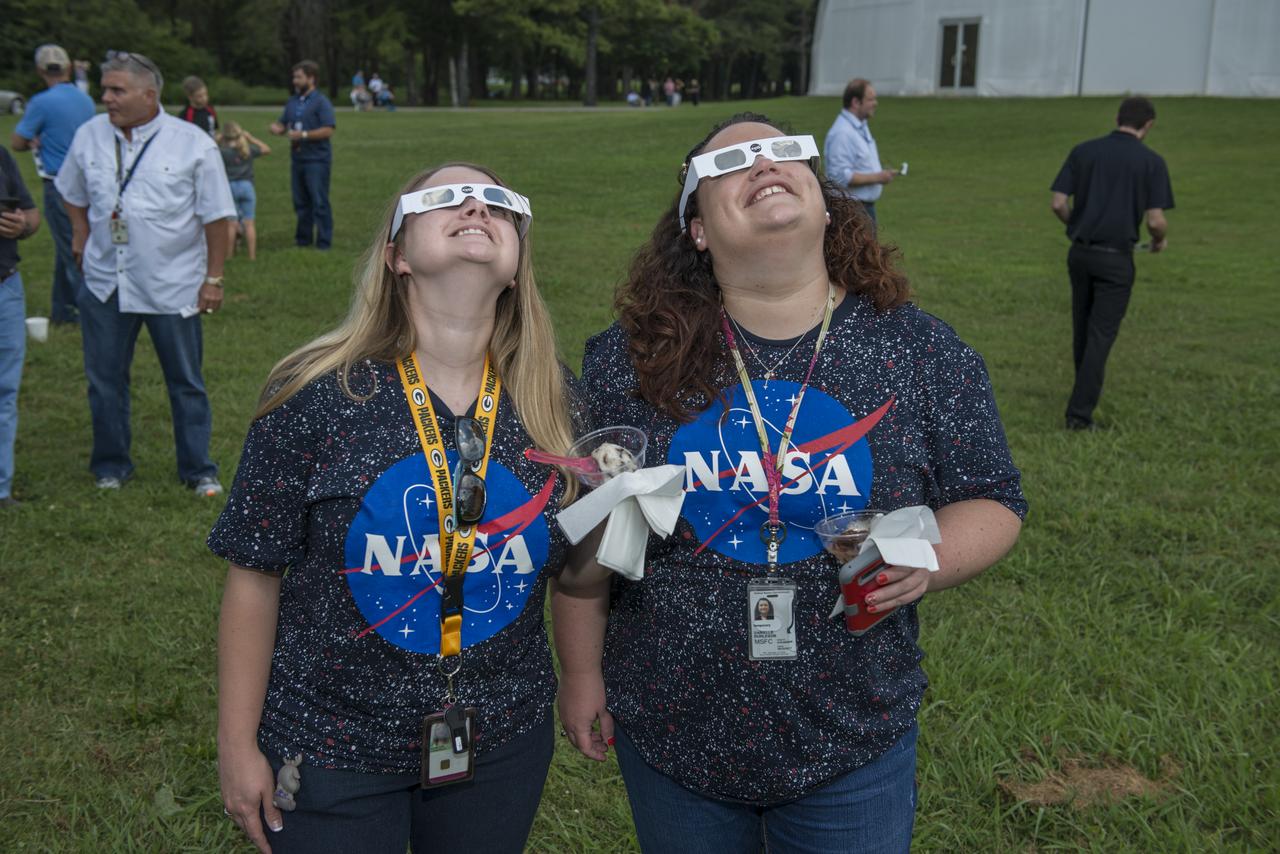
Krisdon Manecke and Danielle Burleson of the Office of the Chief Information Officer (OCIO) view the August 21, 2017 solar eclipse at the Marshall Space Flight Center’s viewing opportunity at the activities building. The Huntsville area experienced 97 percent occultation, nearly a complete blocking out of the sun by the orbit of Earth's moon. The next opportunity to view a solar eclipse in the eastern and central United States will occur in April 2024.
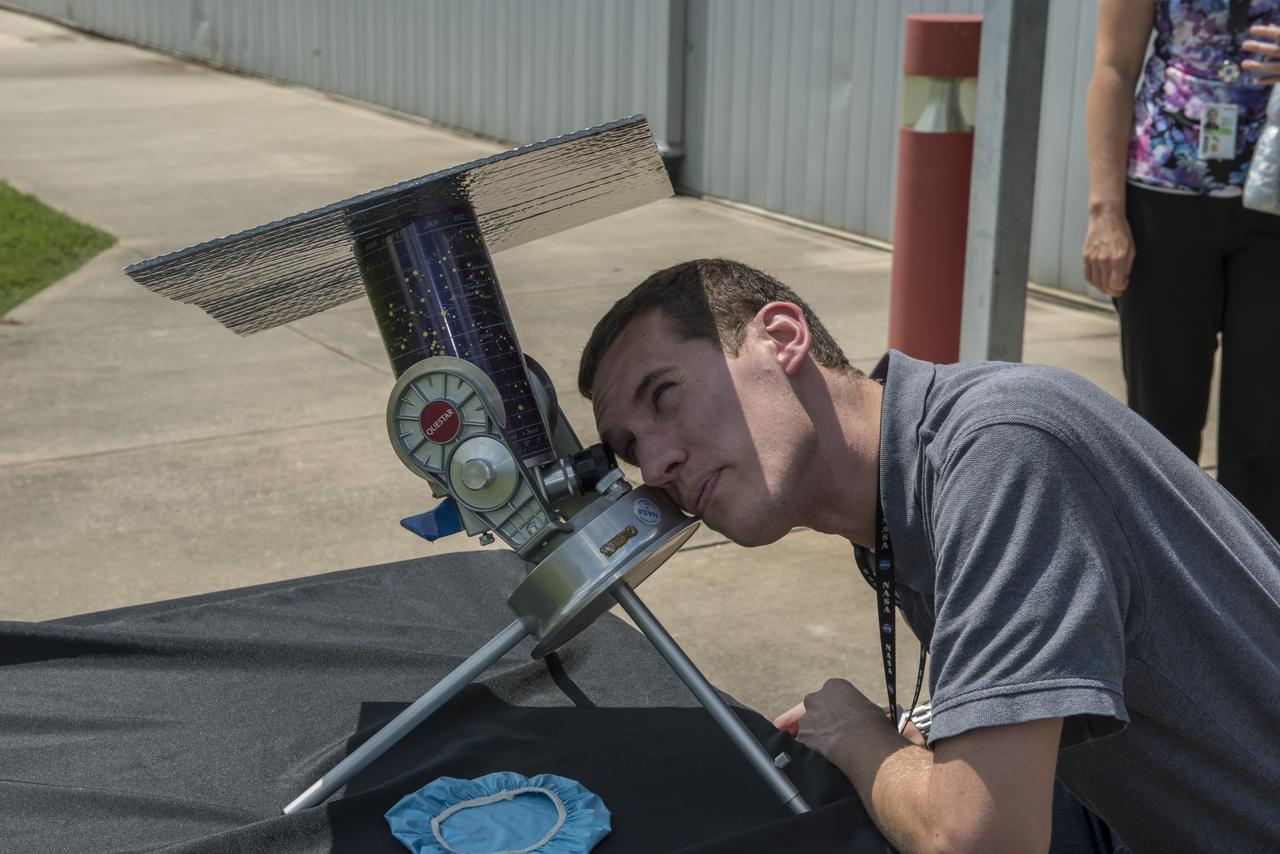
Brad Addona views the beginning of the August 21, 2017 at a viewing event for Marshall Space Flight Center’s activities building for Marshall employees. The Huntsville area experienced 97 percent occultation, nearly a complete blocking out of the sun by the orbit of Earth's moon. The next opportunity to view a solar eclipse in the eastern and central United States will occur in April 2024.
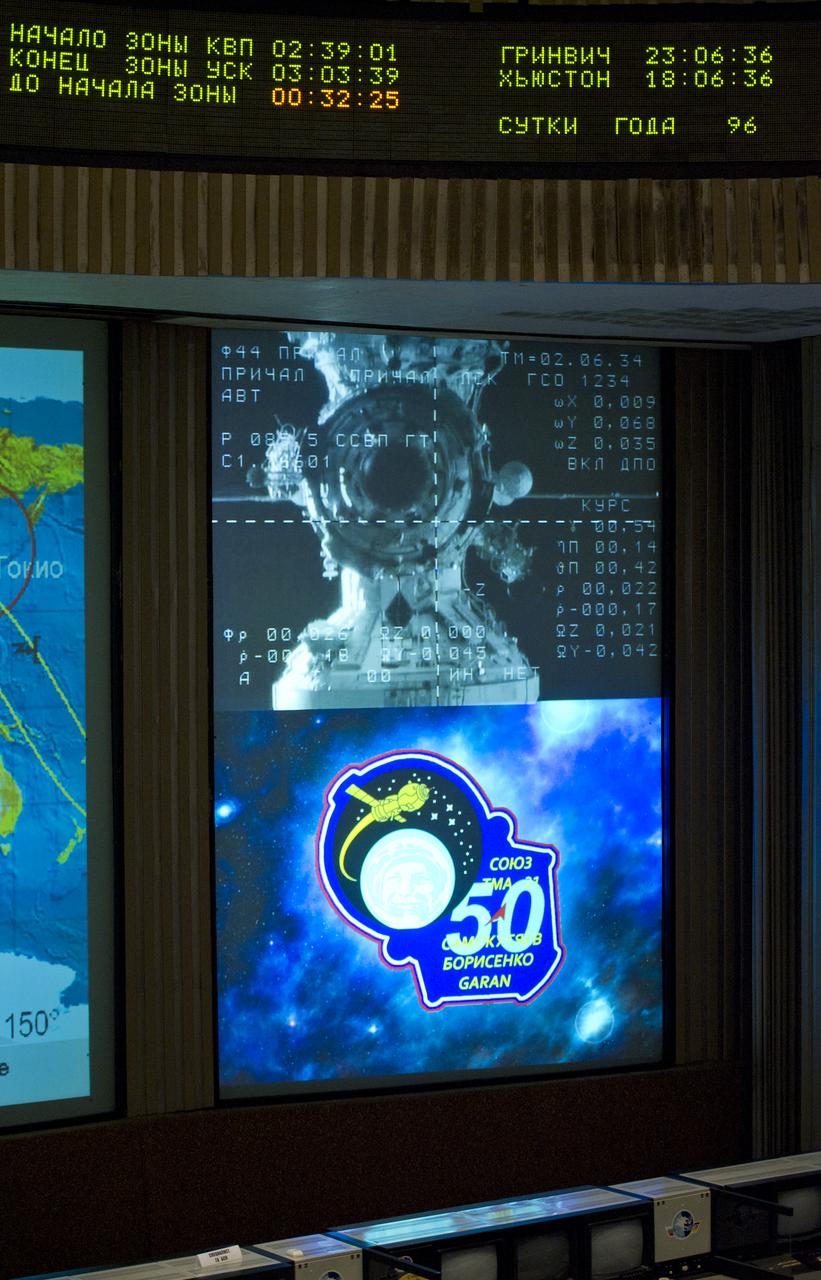
View from the balcony of the Russian Mission Control Center in Korolev, Russia as the Soyuz TMA-21 nears the International Space Station on Thursday, April 7, 2011. The Soyuz TMA-21 docked to the International Space Station carrying Expedition 27 Soyuz Commander Alexander Samokutyaev, NASA Flight Engineer Ron Garan and Russian Flight Engineer Andrey Borisenko. Photo Credit: (NASA/Carla Cioffi)
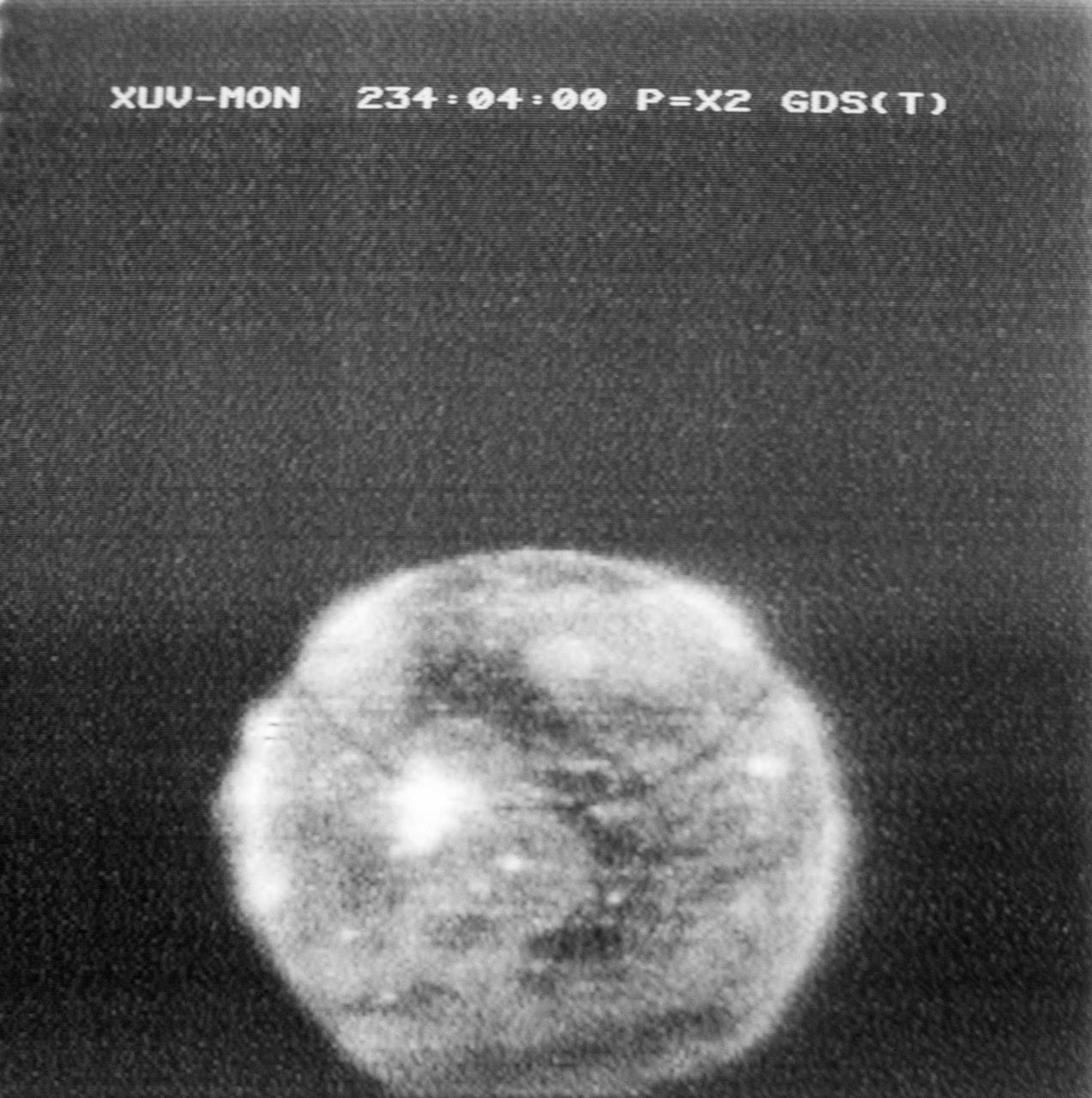
S73-32867 (21 Aug. 1973) --- The solar sphere viewed through the Skylab solar physics experiment (S082) Extreme Ultraviolet Spectroheliographis seen in this photographic reproduction taken from a color television transmission made by a TV camera aboard the Skylab space station in Earth orbit. The solar chromosphere and lower corona are much hotter than the surface of the sun characterized by the white light emissions. This image was recorded during the huge solar prominence which occurred on Aug. 21, 1973. Photo credit: NASA
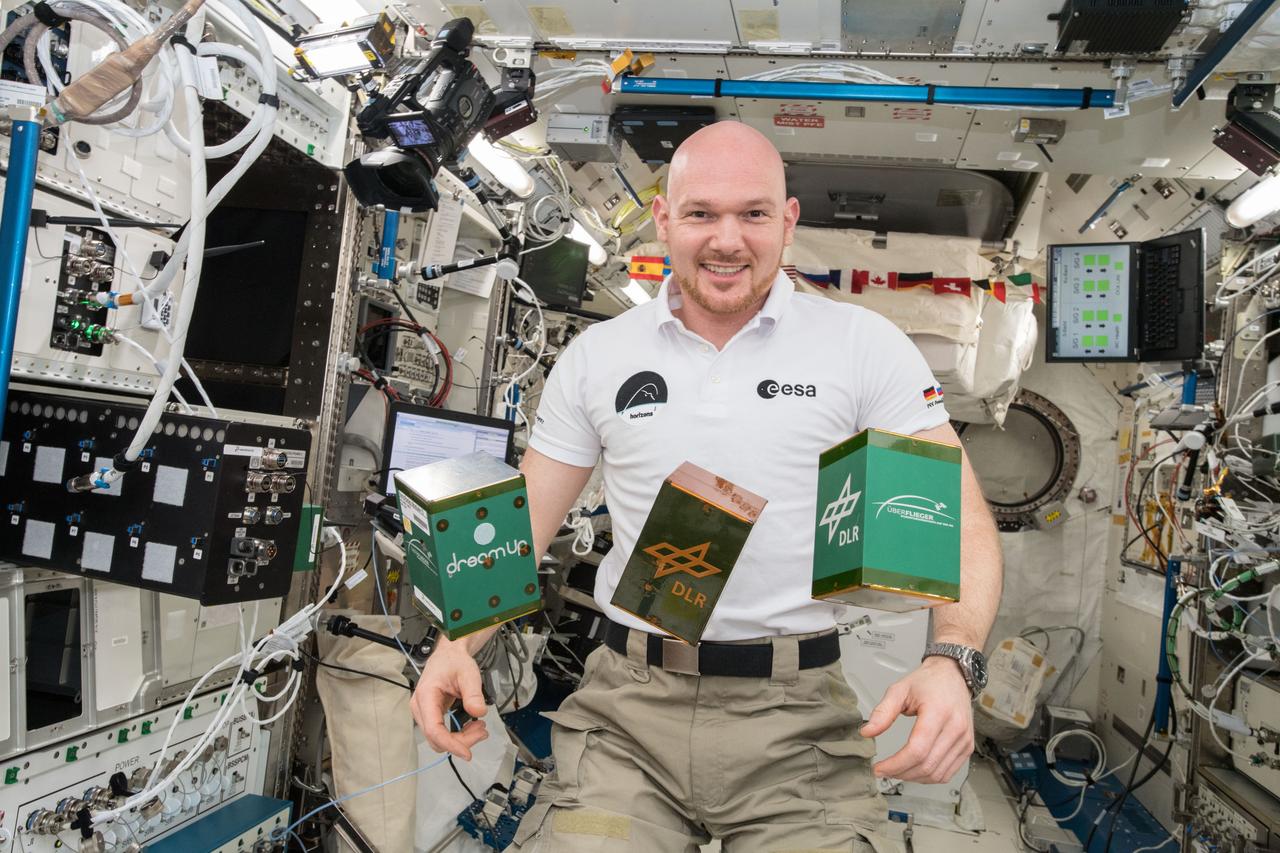
iss057e105672 (11/21/2018) --- (11/21/2018) --- A view of European Space Agency (ESA) astronaut Alexander Gerst with the (ARISE) - NanoRacks Module-75, the Pump Application using Pulsed Electromagnets for Liquid reLocation (PAPELL) - NanoRacks Module-76 and the Experimental Chondrule Formation at the International Space Station (EXCISS) - NanoRacks Module-77 experiments shown in the Japanese Experiment Module (Kibo).
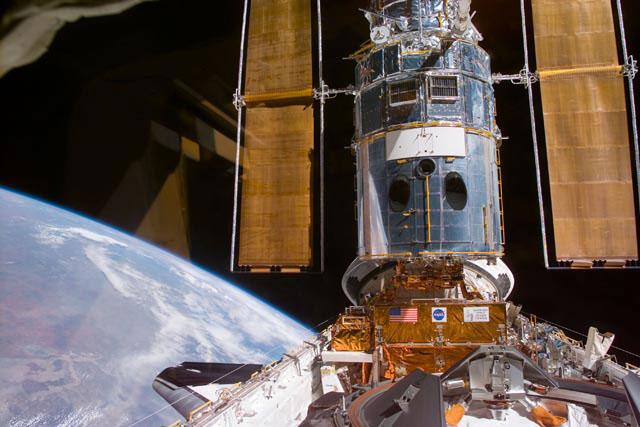
S103-E-5159 (21 December 1999) --- This electronic still camera's view and others in this series showing the Hubble Space Telescope (HST) being berthed in Discovery's bay were recorded during and soon after capture; and they were downlinked at the completion of the mission's first space walk on the following day by the busy STS-103 astronauts. The image was recorded at 19:47:02 GMT, Dec. 21, 1999.
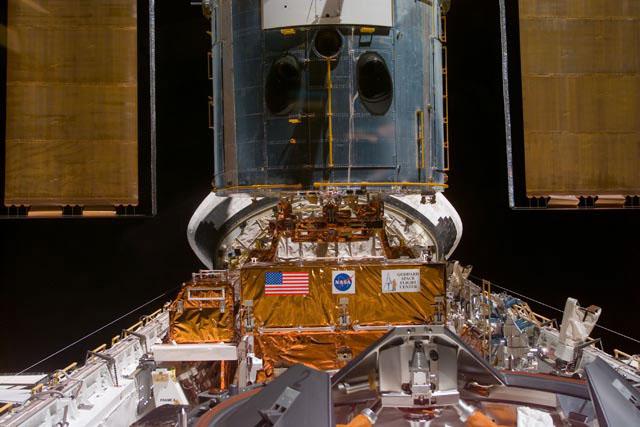
S103-E-5169 (21 December 1999) --- This electronic still camera's view and others in this series showing the Hubble Space Telescope (HST) berthed in Discovery's bay were recorded during capture and downlinked at the completion of the mission's first space walk on the following day by the busy STS-103 astronauts. The image was recorded at 19:49:22 GMT, Dec. 21, 1999.
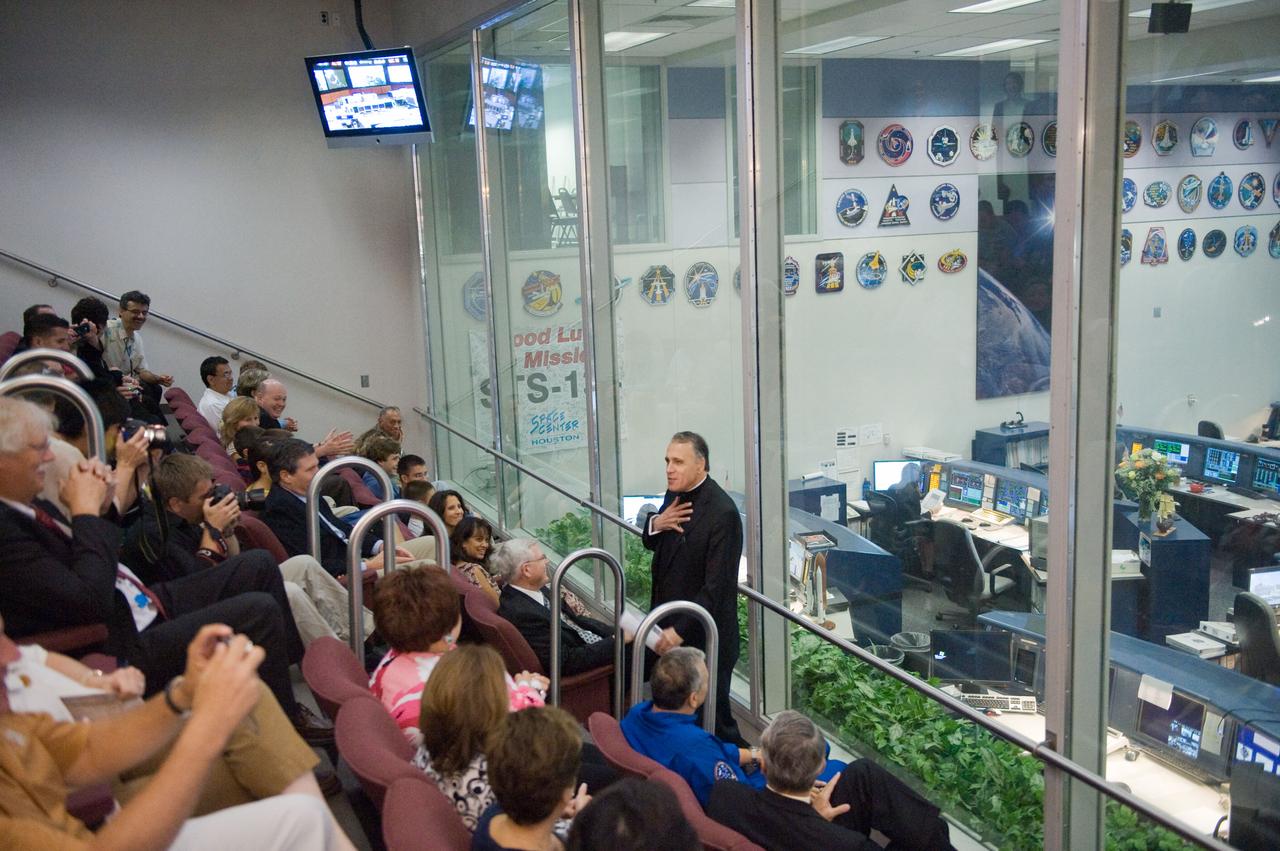
JSC2011-E-046605 (21 May 2011) --- His Eminence Daniel Cardinal DiNardo, Archbishop of Galveston-Houston, speaks to a group of guests in the viewing room of the Mission Control Center at NASA?s Johnson Space Center following a special call from Pope Benedict XVI to the STS-134 and Expedition 27 crews on the International Space Station. The event was conducted from The Vatican at 6:11 a.m. (CDT) on May 21, 2011, and aired live on NASA television. Photo credit: NASA
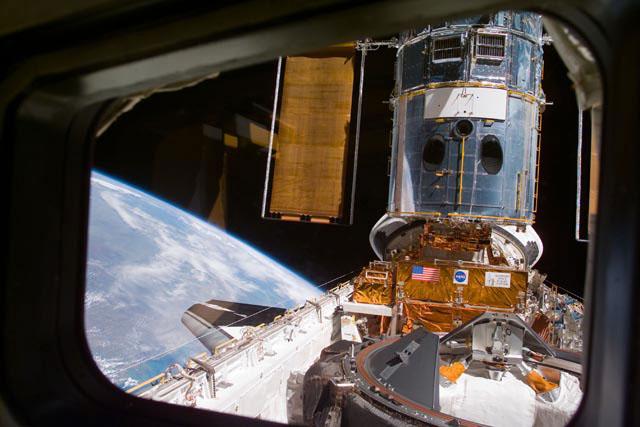
S103-E-5163 (21 December 1999) --- This electronic still camera's view and others in this series showing the Hubble Space Telescope (HST) being berthed in Discovery's bay were recorded during and soon after capture and downlinked at the completion of the mission's first space walk on the following day by the busy STS-103 astronauts. The image was recorded at 19:47:37 GMT, Dec. 21, 1999.
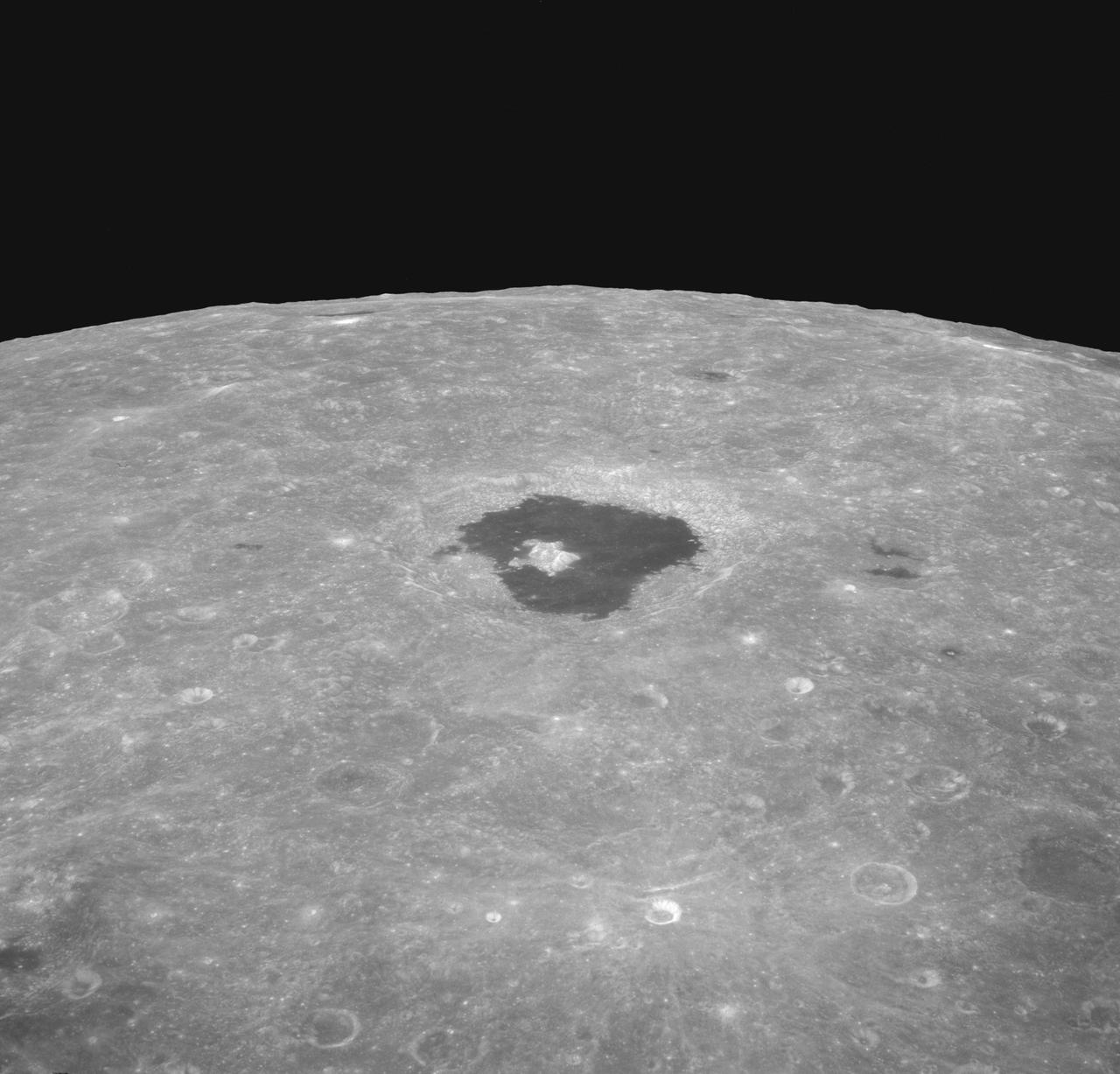
AS08-12-2196 (21-27 Dec. 1968) --- An oblique view from the Apollo 8 spacecraft looking eastward across the lunar surface from about 115 degrees east longitude to the horizon near 180 degrees east longitude. The crater Tsiolkovsky in the center of the picture is 150 kilometers wide and is located at 129 degrees east longitude and 21 degrees south latitude. While in lunar orbit, Apollo 8 moved toward the camera position over the terrain along the left (north) side of this photograph.
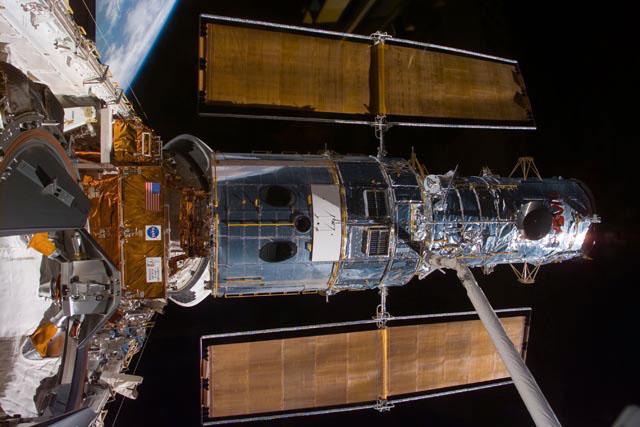
S103-E-5162 (21 December 1999) --- This electronic still camera's view and others in this series showing the Hubble Space Telescope (HST)being berthed in Discovery's bay were recorded during and soon after capture; and they were downlinked at the completion of the mission's first space walk on the following day by the busy STS-103 astronauts. The image was recorded at 19:47:22 GMT, Dec. 21, 1999.

PHOTO DATE: 7-21-11 LOCATION:Bldg 1 - Flag Pole Area SUBJECT: Viewing of STS-135 Landing on Jumbotron as well as flag ceremony and mini events in Front of Houston JSC Bldg. 1. Speakers include Astronaut Mike Massimino and JSC Center Director Michael Coats. WORK ORDER: 02027-DCB-LH_Wheel Stop_Bldg. 1_7-21-11 PHOTOGRAPHER: Devin Boldt

JSC2011-E-046602 (21 May 2011) --- A group of guests in the viewing room of the Mission Control Center at NASA?s Johnson Space Center are pictured during a special call from Pope Benedict XVI (visible on the monitors) to the STS-134 and Expedition 27 crews on the International Space Station. The event was conducted from The Vatican at 6:11 a.m. (CDT) on May 21, 2011, and aired live on NASA television. Photo credit: NASA
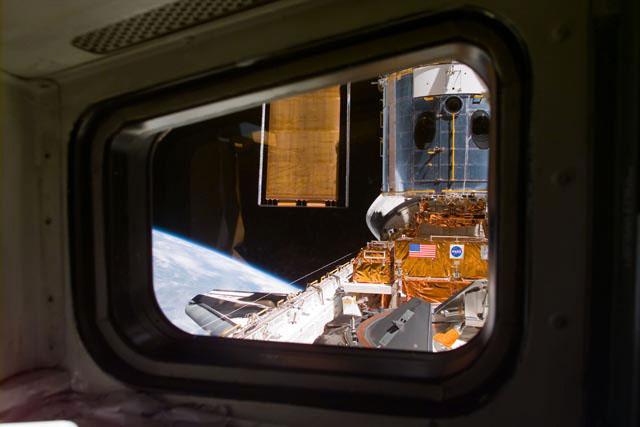
S103-E-5166 (21 December 1999) --- This electronic still camera's view and others in this series showing the Hubble Space Telescope (HST) berthed in Discovery's bay were recorded soon after capture and downlinked at the completion of the mission's first space walk on the following day by the busy STS-103 astronauts. The image was recorded through Discovery's starboard side aft flight deck window at 19:48:24 GMT, Dec. 21, 1999.
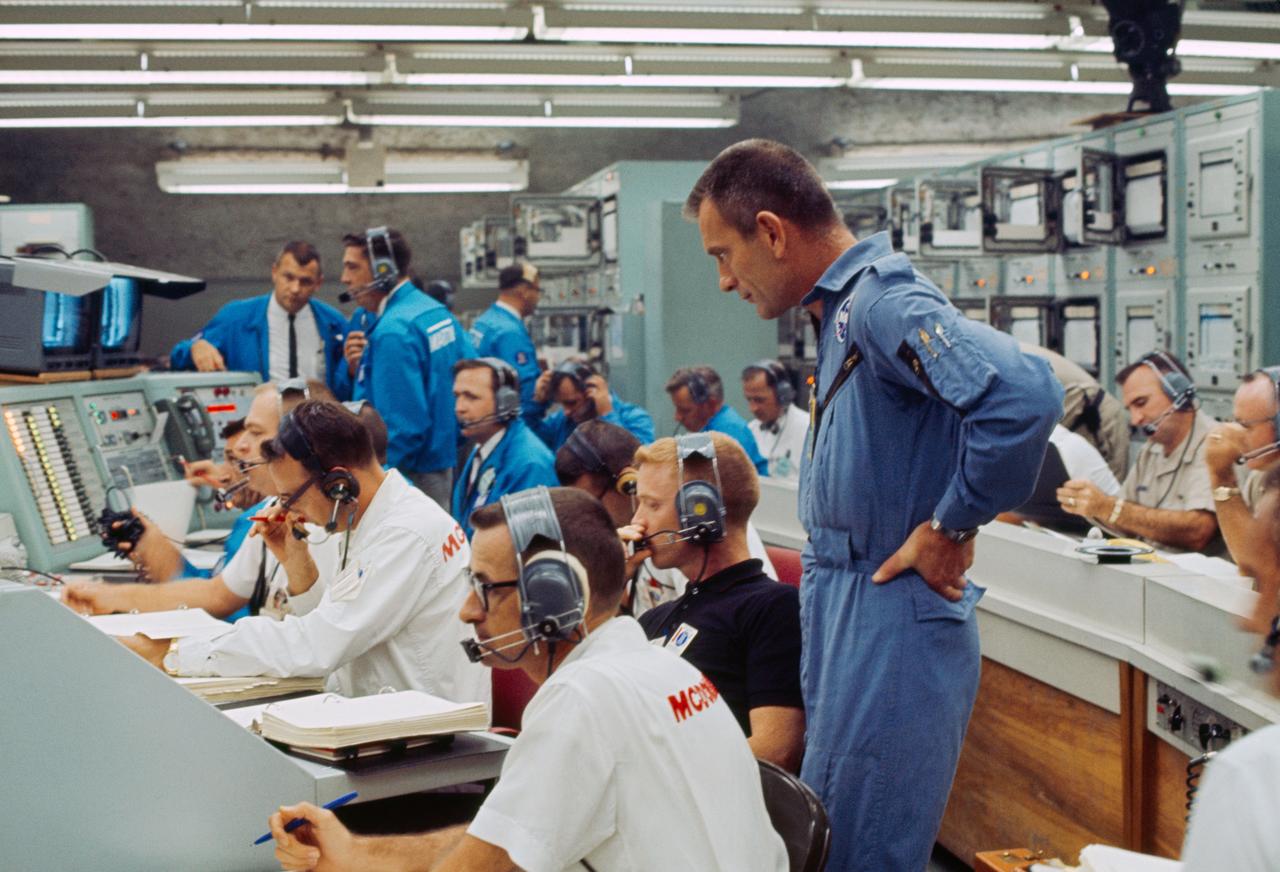
S65-28742 (21 Aug. 1965) --- View of Mission Control Center at Cape Kennedy, Florida, moments after the Gemini-5 spacecraft was launched from Pad 19 on Aug. 21, 1965. Standing at right is astronaut Donald K. Slayton, assistant director for Flight Crew Operations, Manned Spacecraft Center. Seated (wearing dark shirt) is astronaut Russell L. Schweickart. Other NASA and McDonnell Aircraft Col. personnel also monitor the progress of the flight.
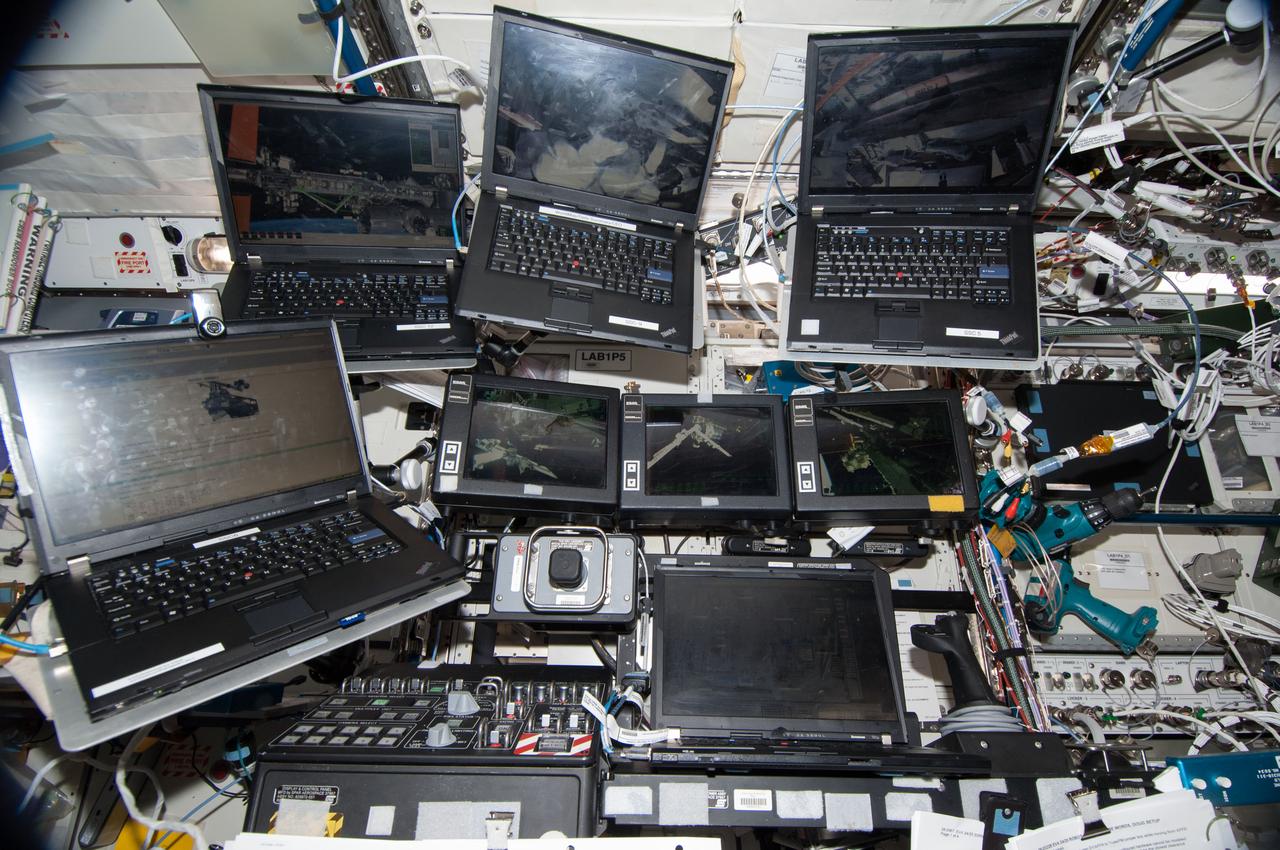
ISS038-E-019276 (21 Dec. 2013) --- Inside the U.S. lab Destiny, this photograph provides an overall view of the robotic workstation for controlling the International Space Station's remote manipulator system or Canadarm2. Astronaut Koichi Wakata, who represents the Japan Aerospace Exploration Agency, spent most of the work day supporting the Dec. 21 spacewalk of NASA astronauts Rick Mastracchio and Mike Hopkins. It was the first of two spacewalks designed to change out a faulty water pump on the orbital outpost.
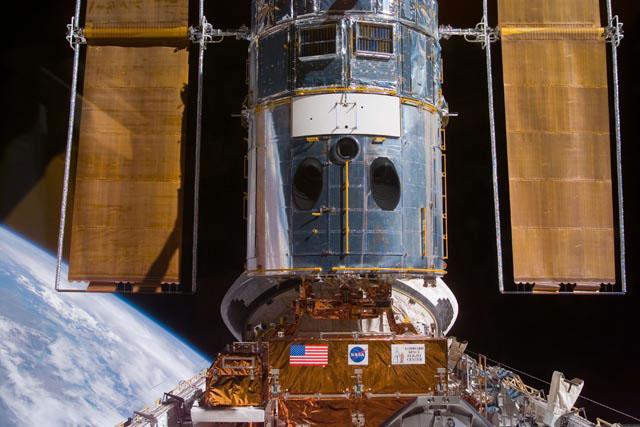
S103-E-5156 (21 December 1999) --- This electronic still camera's view and others in this series showing the Hubble Space Telescope (HST) being berthed in Discovery's bay were recorded during and soon after capture; and they were downlinked at the completion of the mission's first space walk on the following day by the busy STS-103 astronauts. The image was recorded at 19:46:15 GMT, Dec. 21, 1999.
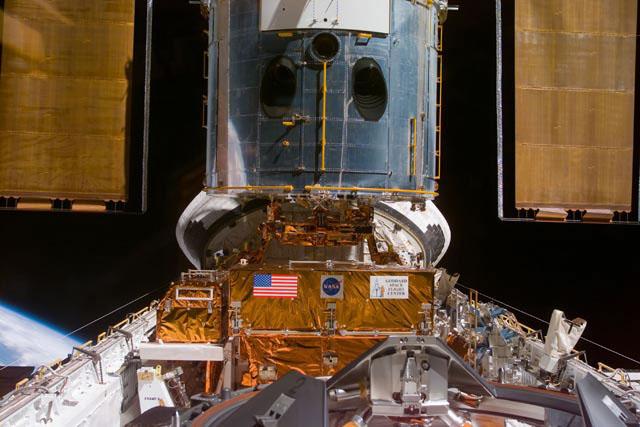
S103-E-5165 (21 December 1999) --- This electronic still camera's view and others in this series showing the Hubble Space Telescope (HST) berthed in Discovery's bay were recorded soon after capture and downlinked at the completion of the mission's first space walk on the following day by the busy STS-103 astronauts. The image was recorded at 19:47:57 GMT, Dec. 21, 1999.
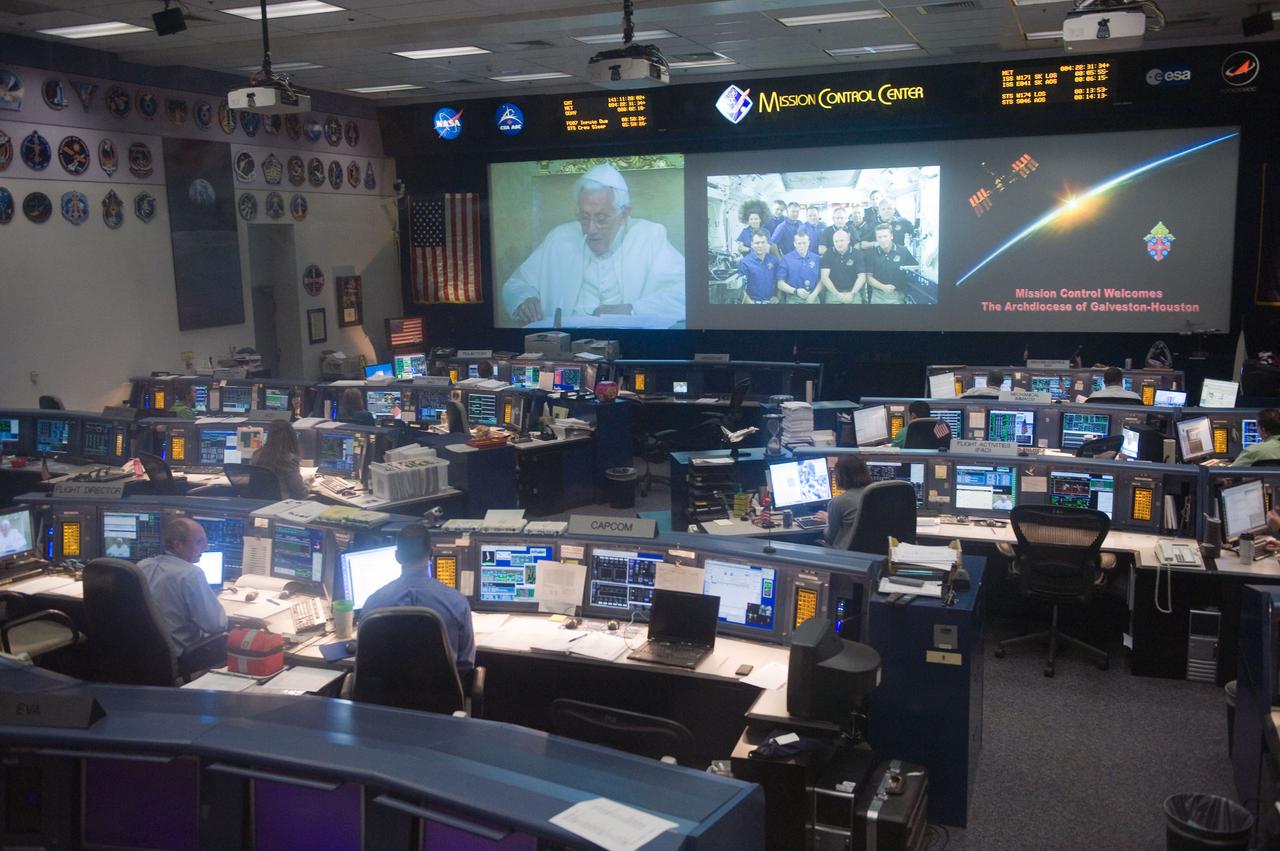
JSC2011-E-046603 (21 May 2011) --- This overall view of the space shuttle flight control room in the Mission Control Center at NASA's Johnson Space Center was taken during a special call from Pope Benedict XVI to the STS-134 and Expedition 27 crews on the International Space Station. The event was conducted from The Vatican at 6:11 a.m. (CDT) on May 21, 2011, and aired live on NASA television. Photo credit: NASA
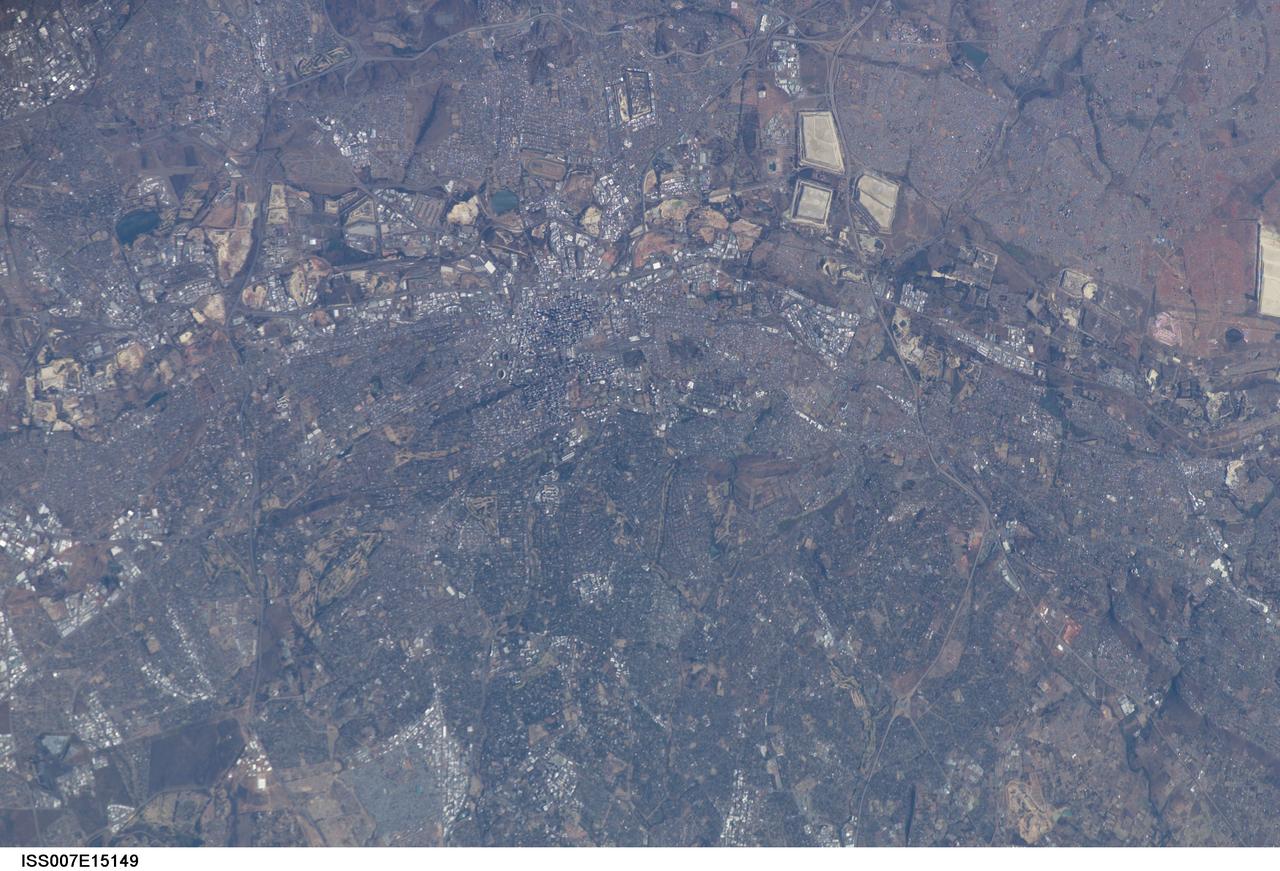
ISS007-E-15149 (21 September 2003) --- This image, photographed by an Expedition 7 crewmember onboard the International Space Station (ISS), was merged with images ISS007-E-15148 and ISS007-E-15150 to create a mosaic of Johannesburg, South Africa. The mosaic can be viewed on http://eol.jsc.nasa.gov
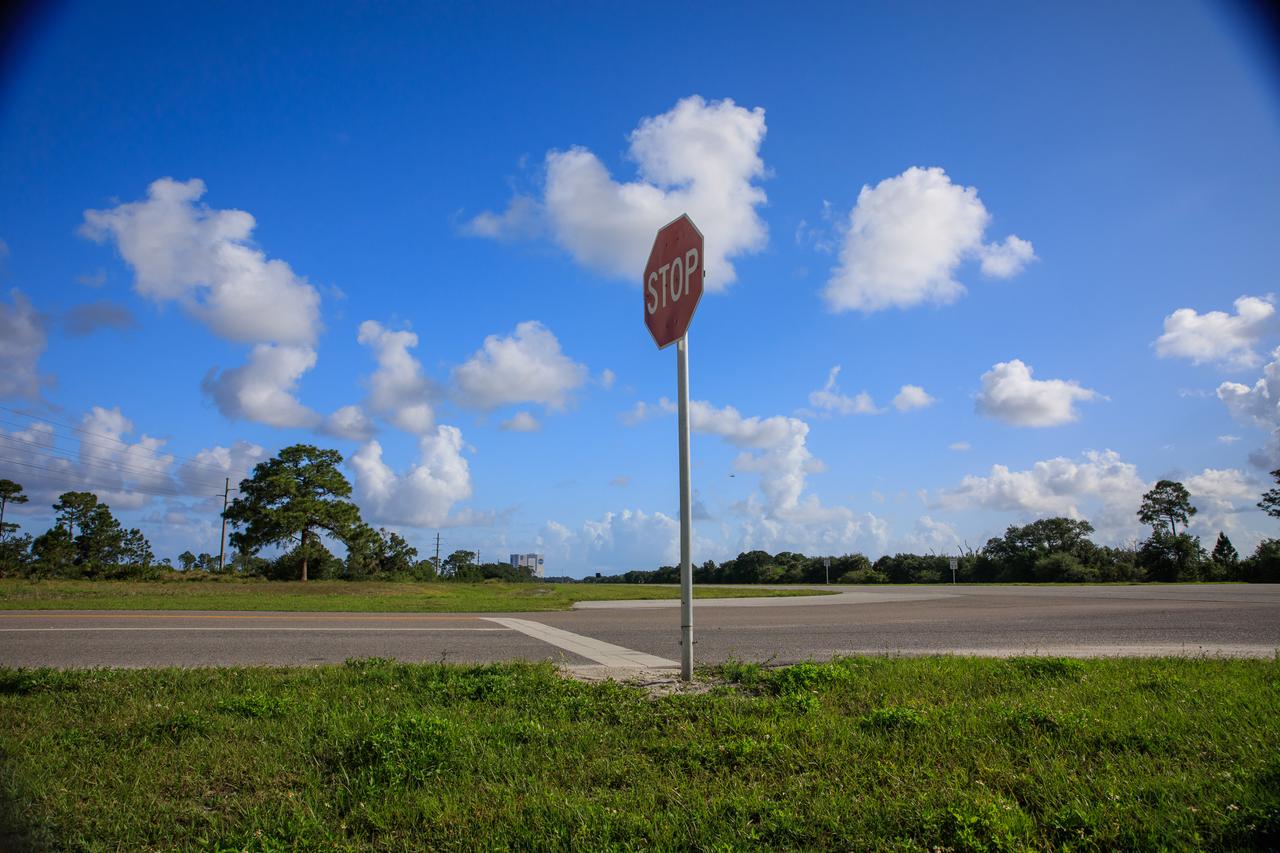
A view of the entrance to SpaceX’s Roberts Road off of State Road 3 at NASA’s Kennedy Space Center in Florida on April 21, 2023. The company wishes to extend the road to allow for expansion of its current facilities. An environmental impact study is underway to investigate the feasibility of the campus expansion.
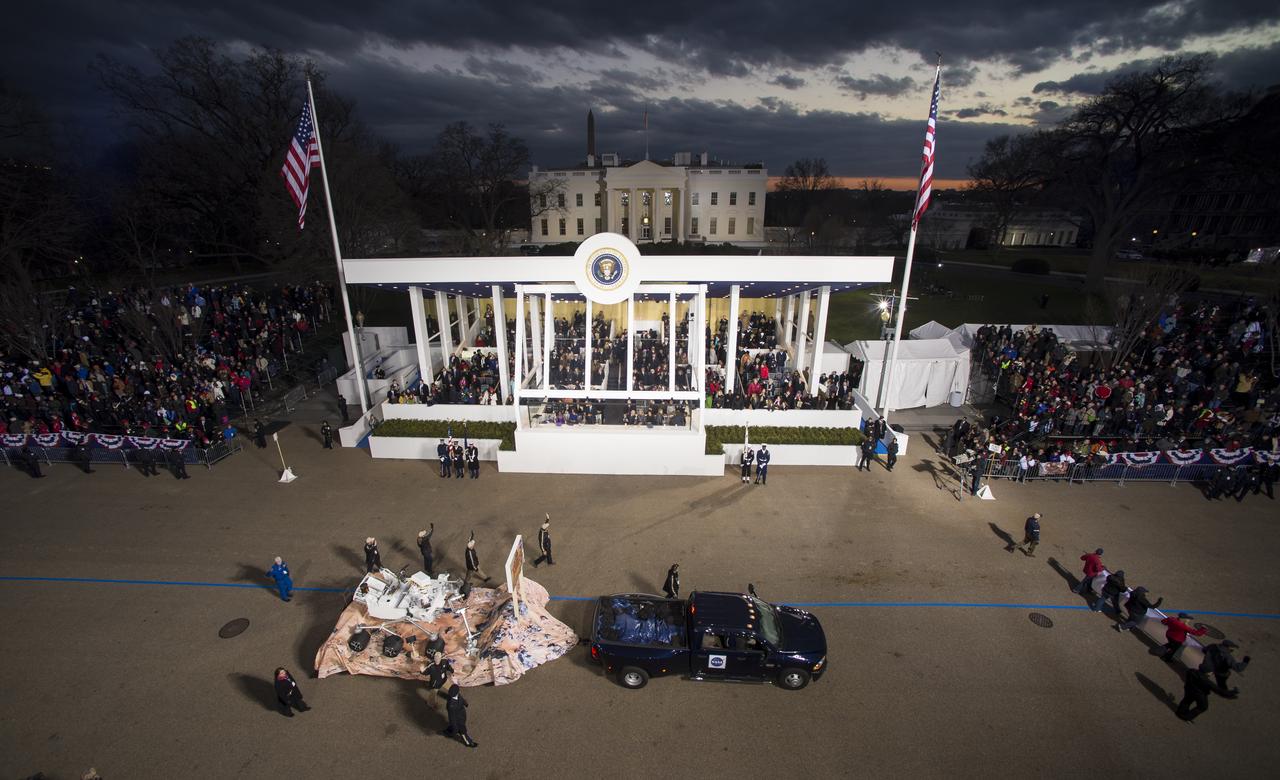
A replica of NASA's Curiosity Rover and members of the Mars Science Laboratory (MSL) science team pass the Presidential viewing stand and President Barack Obama during the inaugural parade honoring Obama, Monday Jan. 21, 2013, in Washington. Obama was sworn-in as the nation's 44th President earlier in the day. Photo Credit: (NASA/Bill Ingalls)
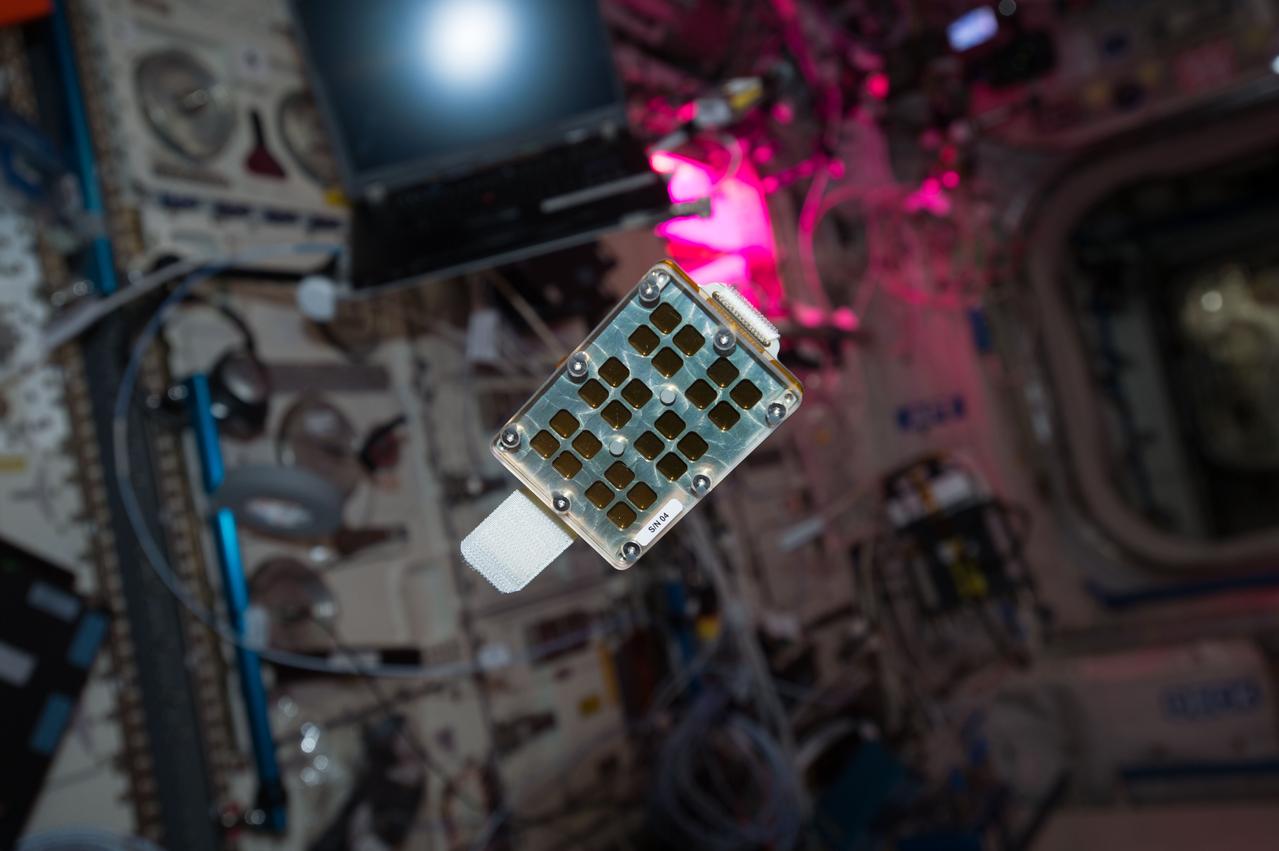
iss050e010908 911/21/2016) --- A view of Matiss floating in the Columbus Module. The Microbial Aerosol Tethering on Innovative Surfaces in the International Space Station (MATISS) experiment investigates the antibacterial properties of materials in space to see if future spacecraft could be made easier to clean. The experiment aims to understand the mechanisms of attachment of biofilms in microgravity conditions.

A view of the entrance to SpaceX’s Roberts Road off of State Road 3 at NASA’s Kennedy Space Center in Florida on April 21, 2023. The company wishes to extend the road to allow for expansion of its current facilities. An environmental impact study is underway to investigate the feasibility of the campus expansion.
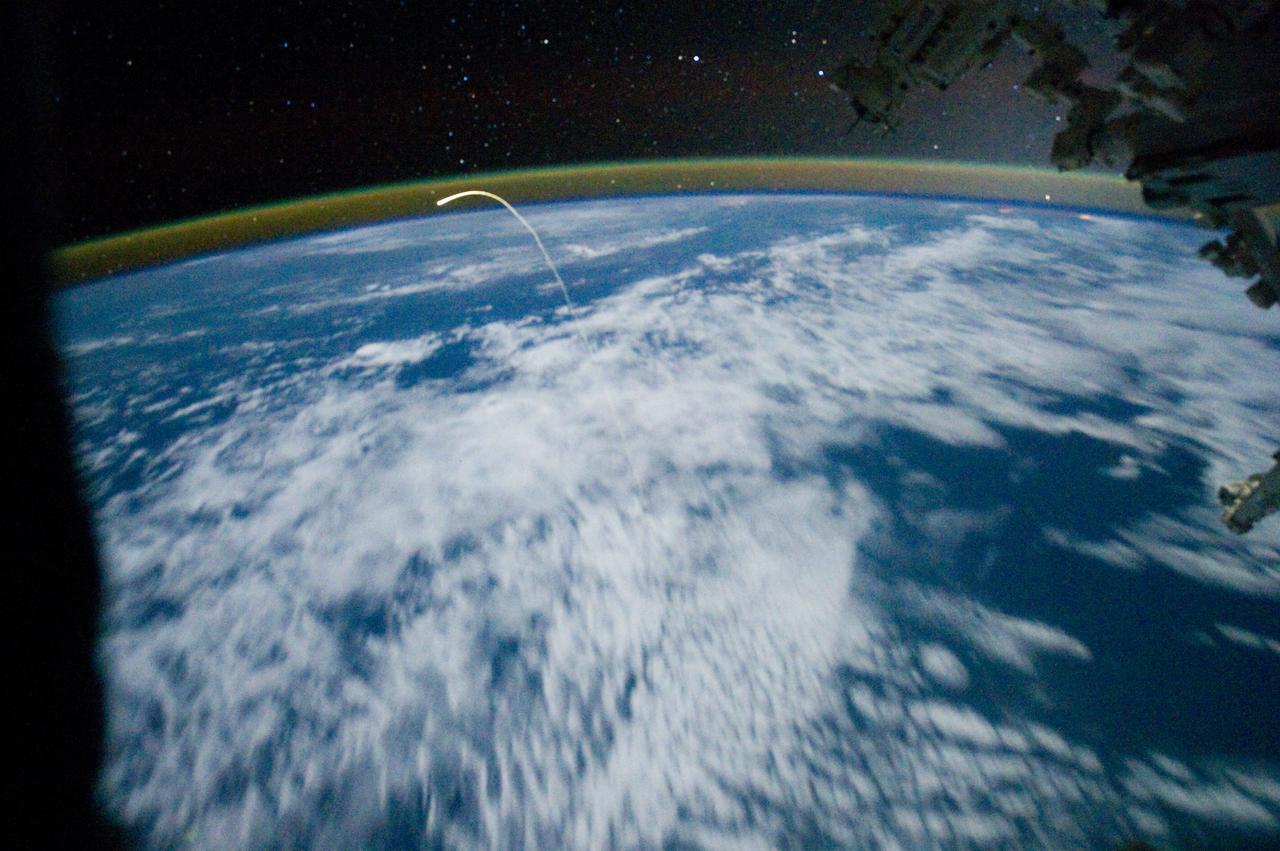
ISS028-E-018218 (21 July 2011) --- This unprecedented view of the space shuttle Atlantis, appearing like a bean sprout against clouds and city lights, on its way home, was photographed by the Expedition 28 crew of the International Space Station. Airglow over Earth can be seen in the background.
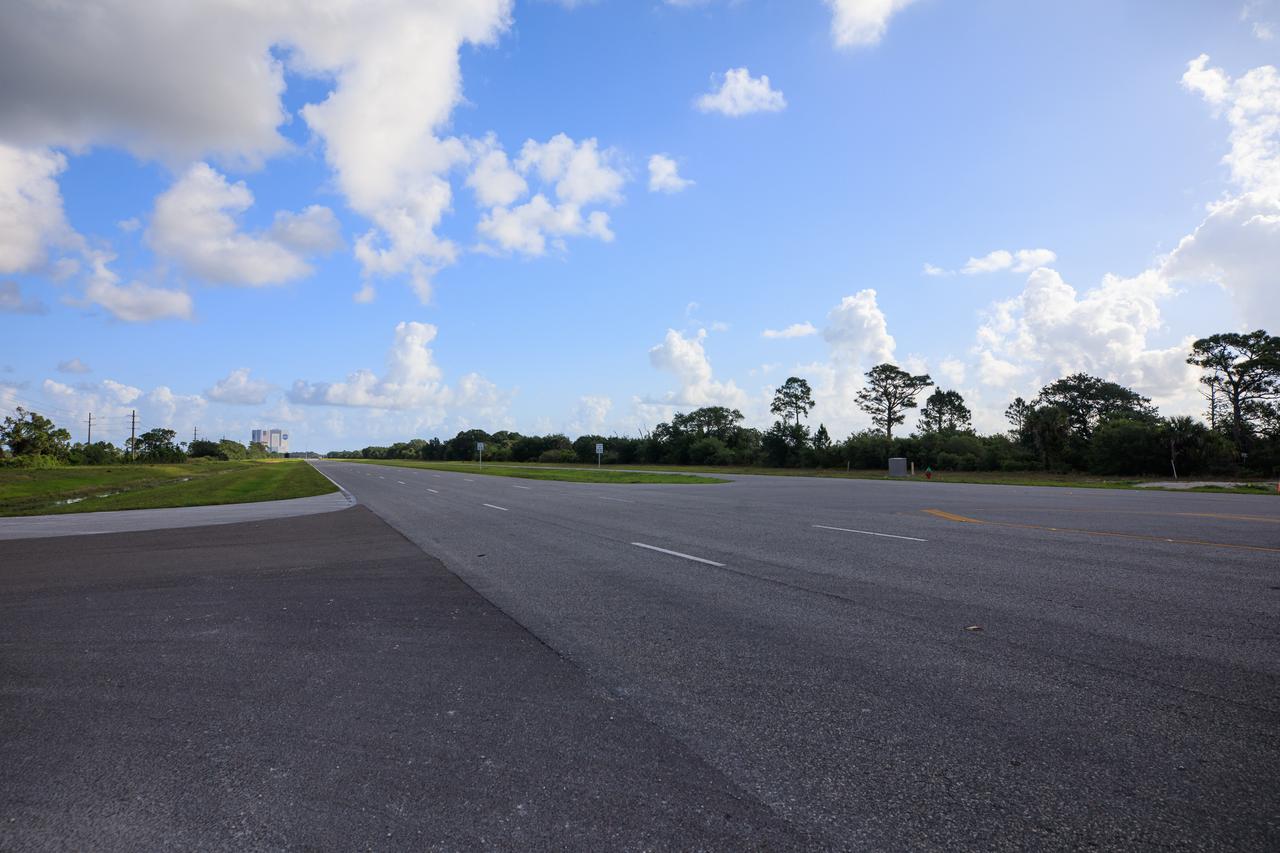
A view of the entrance to SpaceX’s Roberts Road off of State Road 3 at NASA’s Kennedy Space Center in Florida on April 21, 2023. The company wishes to extend the road to allow for expansion of its current facilities. An environmental impact study is underway to investigate the feasibility of the campus expansion.
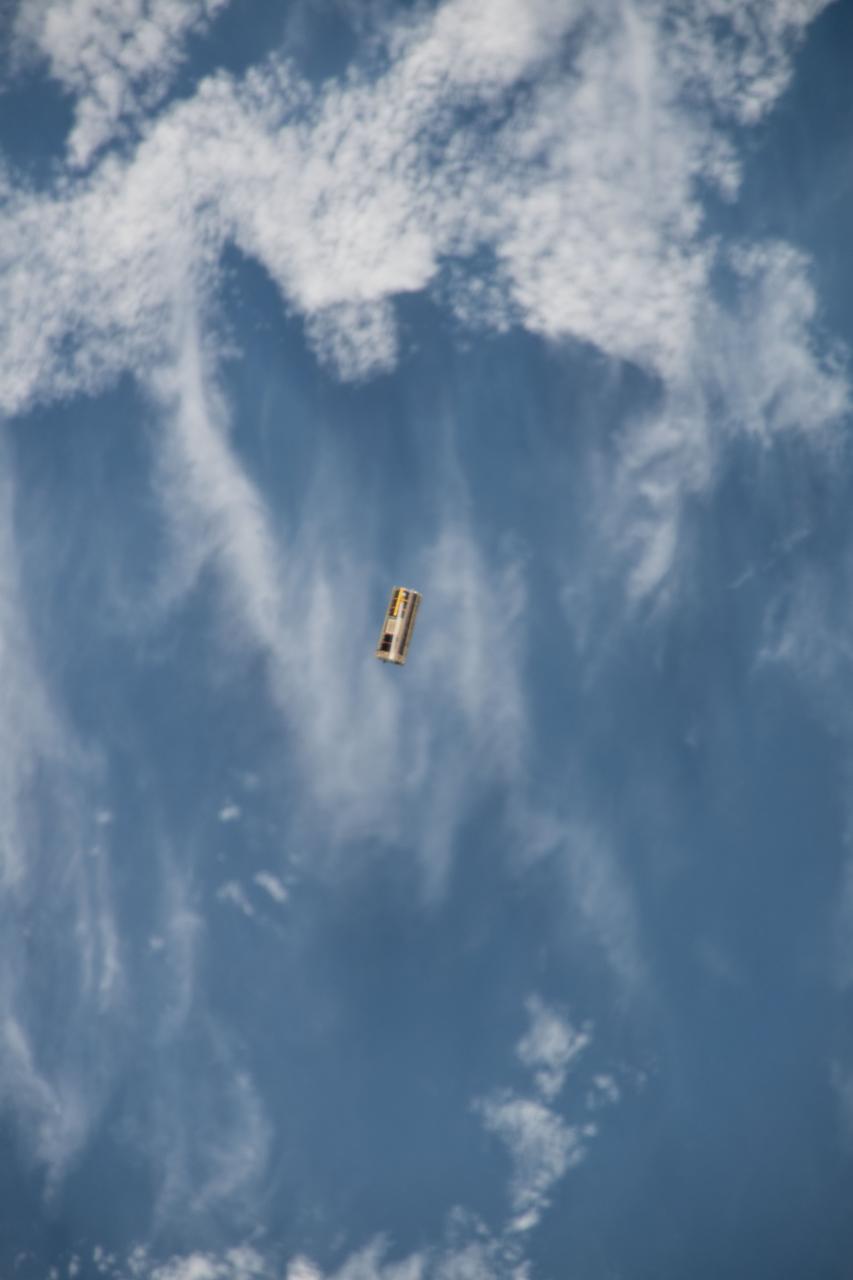
iss053e234625 (11/21/2017) --- A view of OSIRIS-3U Satellite Deployer Number 8 after deployment from the NanoRacks CubeSat Deployer Number 13. OSIRIS-3U is an integrated CubeSat that conducts measurements of the Earth’s ionosphere, in coordination with a ground-based astronomy observatory.
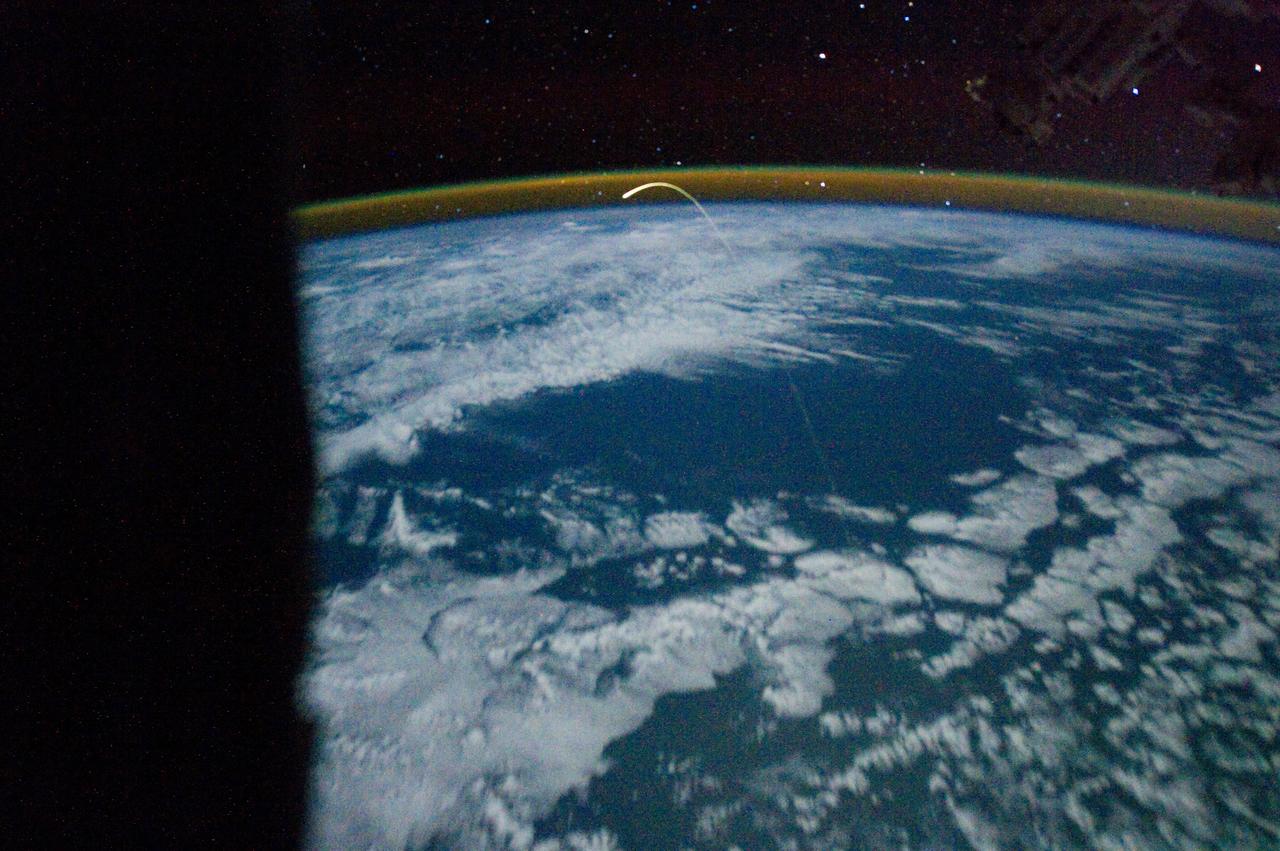
ISS028-E-018200 (21 July 2011) --- This unprecedented view of the space shuttle Atlantis, appearing like a bean sprout against clouds and city lights, on its way home, was photographed by the Expedition 28 crew of the International Space Station. Airglow over Earth can be seen in the background.