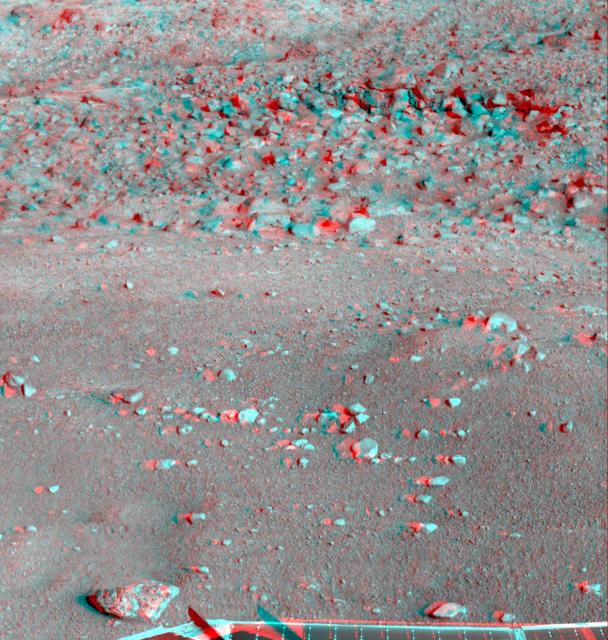
This anaglyph, acquired by NASA Phoenix Lander on Jun. 23, 2008, shows a stereoscopic 3D view of the Martian surface near the lander. 3D glasses are necessary to view this image.
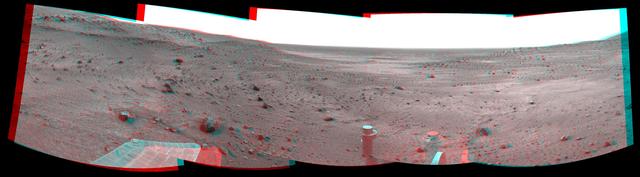
NASA Mars Exploration Rover Spirit took these images that have been combined into this stereo, 180-degree view of the rover surroundings on March 23, 2009. 3D glasses are necessary to view this image.
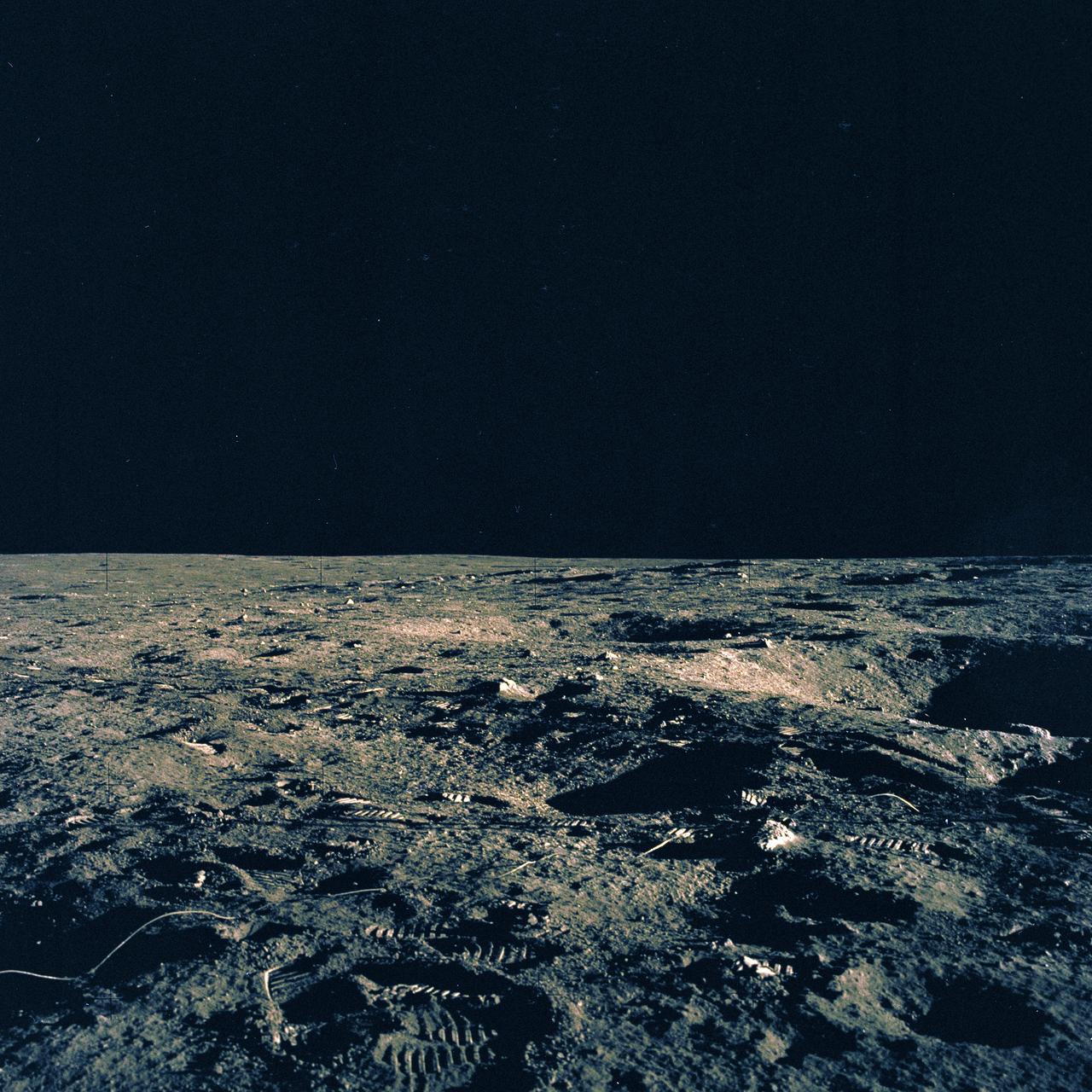
The second manned lunar landing mission, Apollo 12, launched from launch pad 39-A at Kennedy Space Center in Florida on November 14, 1969 via a Saturn V launch vehicle. The Saturn V vehicle was developed by the Marshall Space Flight Center (MSFC) under the direction of Dr. Wernher von Braun. Aboard Apollo 12 was a crew of three astronauts: Alan L. Bean, pilot of the Lunar Module (LM), Intrepid; Richard Gordon, pilot of the Command Module (CM), Yankee Clipper; and Spacecraft Commander Charles Conrad. The LM, Intrepid, landed astronauts Conrad and Bean on the lunar surface in what’s known as the Ocean of Storms while astronaut Richard Gordon piloted the CM, Yankee Clipper, in a parking orbit around the Moon. Lunar soil activities included the deployment of the Apollo Lunar Surface Experiments Package (ALSEP), finding the unmanned Surveyor 3 that landed on the Moon on April 19, 1967, and collecting 75 pounds (34 kilograms) of rock samples. This is the twenty-third of 25 images captured by the crew in attempt to provide a 360 degree Lunar surface scene. Apollo 12 safely returned to Earth on November 24, 1969.
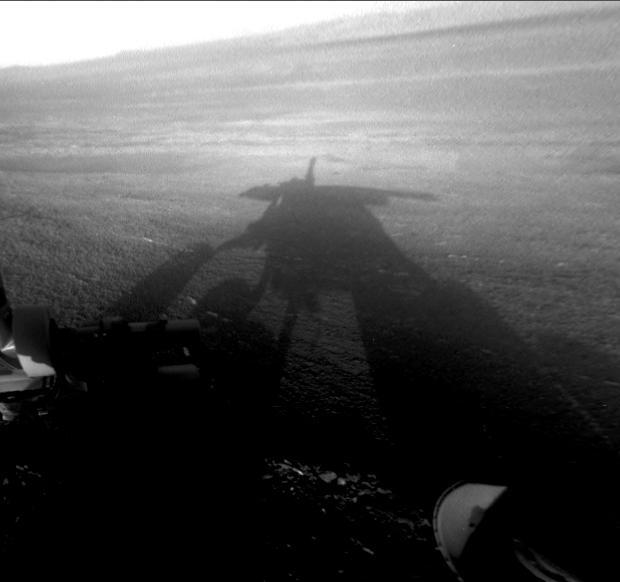
NASA Mars Exploration Rover Opportunity captured this view of its afternoon shadow stretching into Endeavour Crater during the 3,051st Martian day, or sol, of Opportunity work on Mars Aug. 23, 2012.
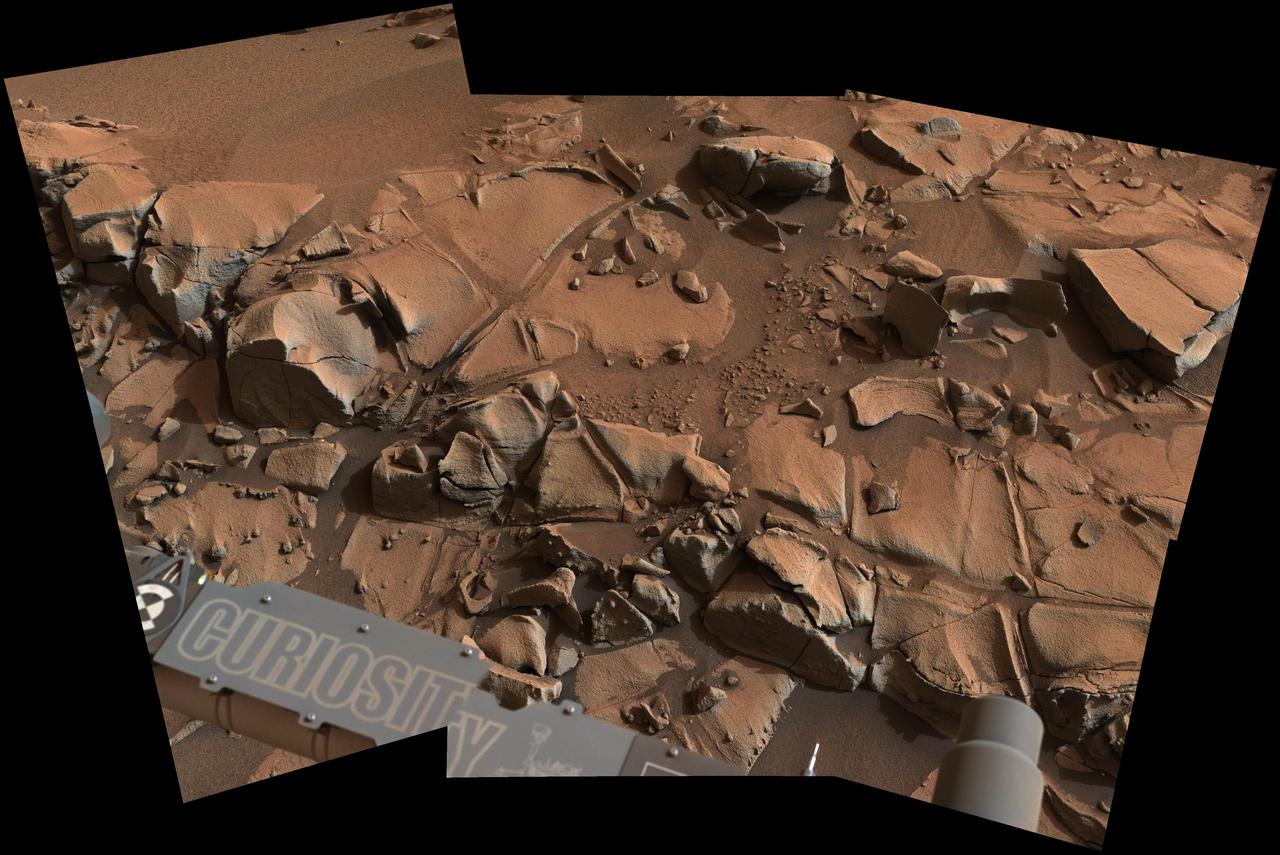
This view from ASA Curiosity Mars rover shows a swath of bedrock called Alexander Hills, which the rover approached for close-up inspection of selected targets. It is a mosaic of six frames taken on Nov. 23, 2014.
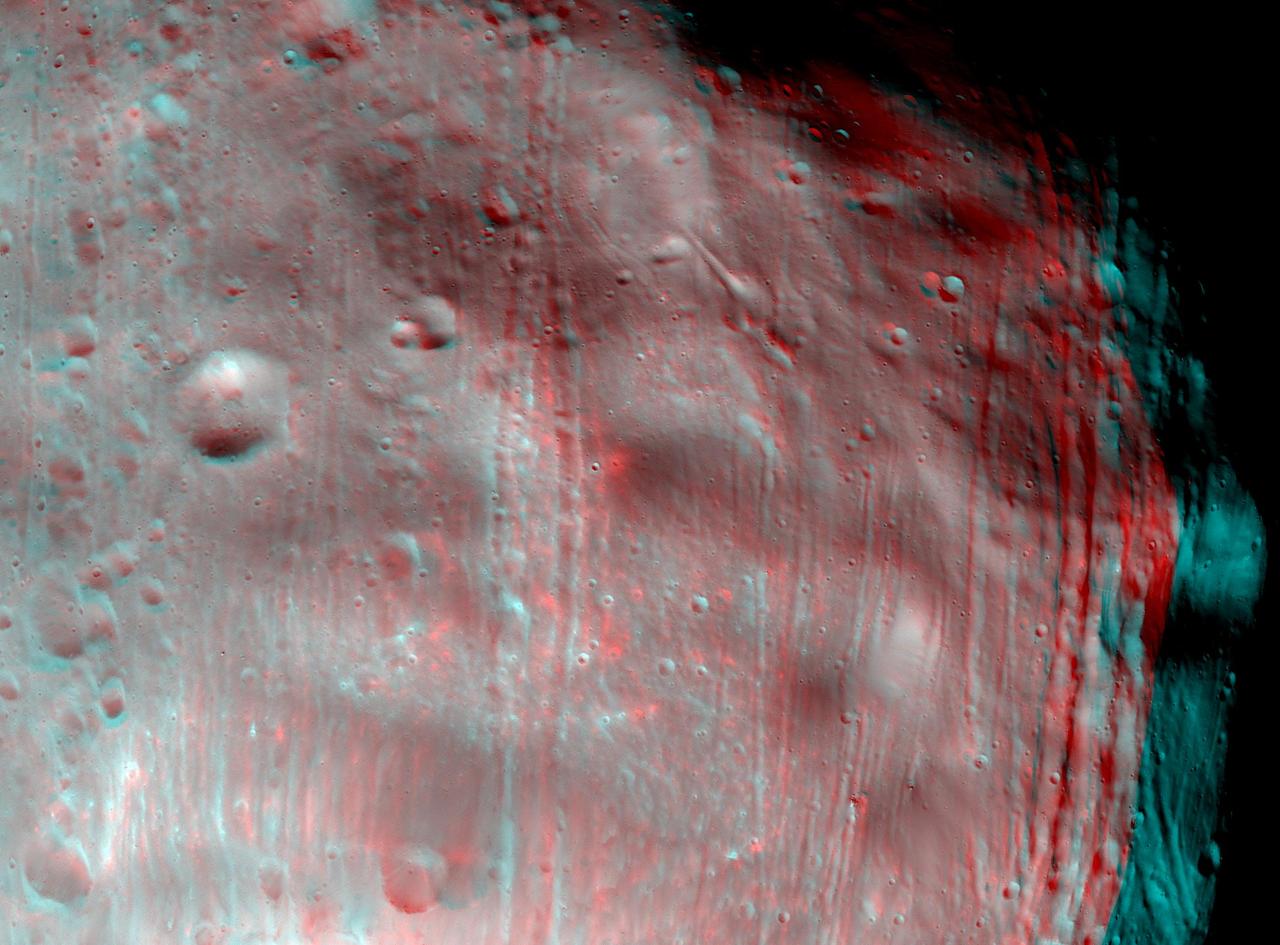
NASA Mars Reconnaissance Orbiter took two images of the larger of Mars two moons, Phobos, within 10 minutes of each other on March 23, 2008. 3D glasses are necessary to view this image.
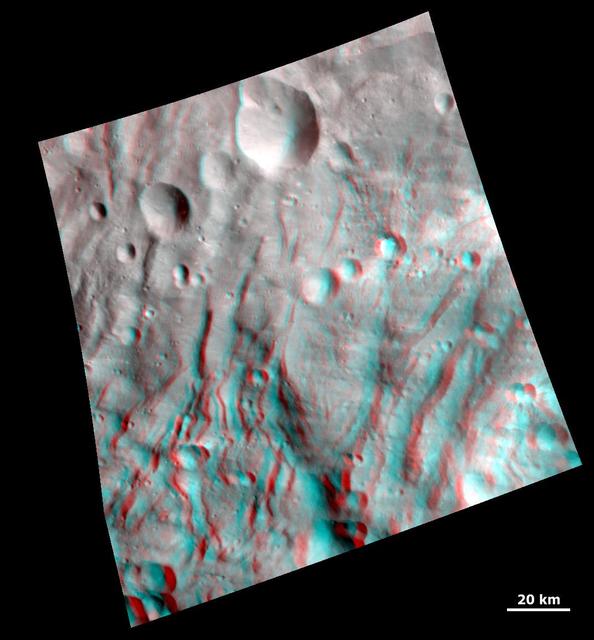
NASA Dawn spacecraft obtained this 3-D image of asteroid Vesta with its framing camera on Aug. 23 and 28, 2011 at a distance of 1,700 miles 2,740 kilometers. You will need 3D glasses to view this image.
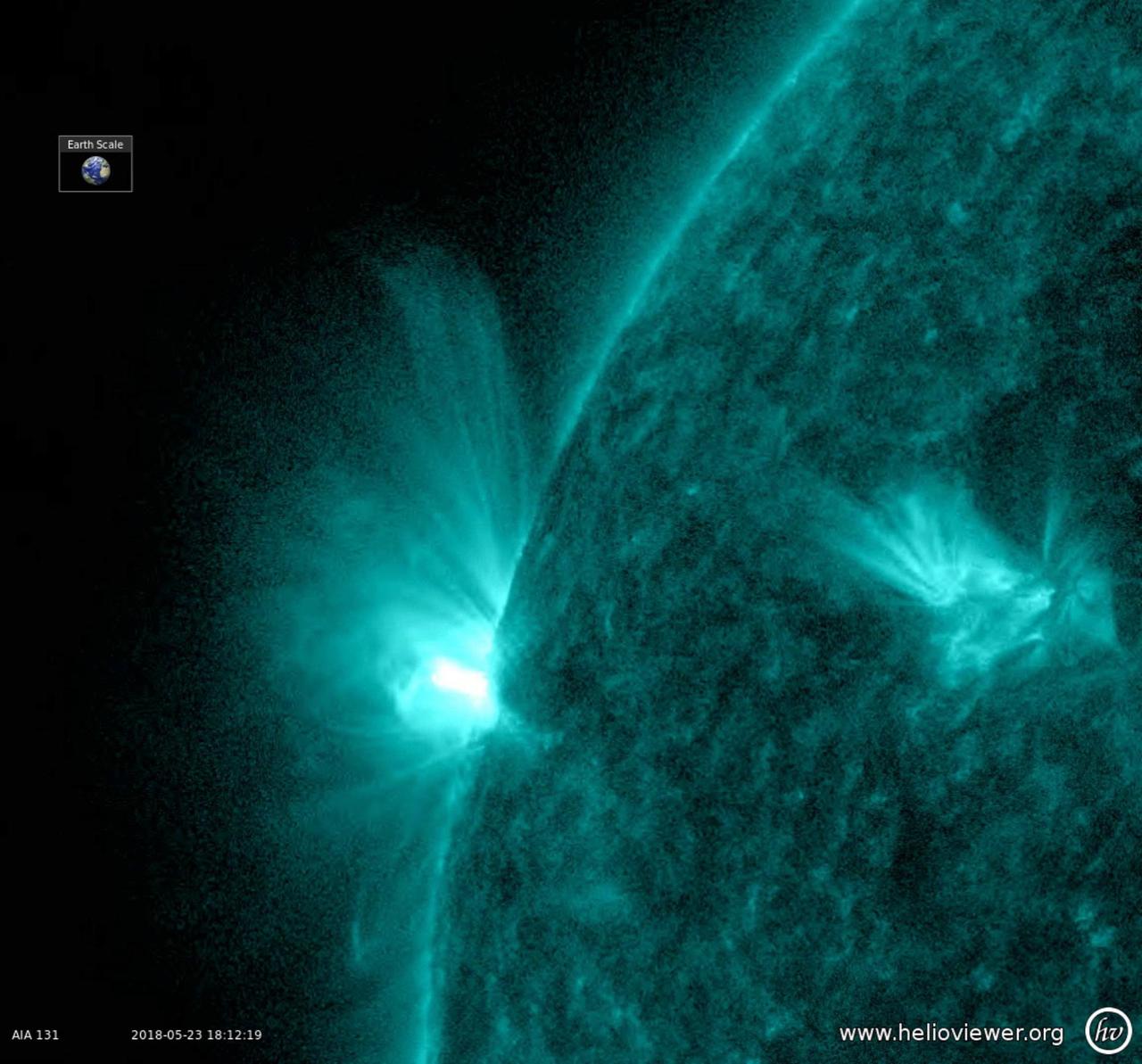
An active region rotated into view and sputtered with numerous small flares and towering magnetic field lines that stretched out many times the diameter of Earth (May 23-25, 2018). Active regions are areas of intense magnetic energy. The field lines are illuminated by charged particles spiraling along them and easiest to discern when viewed in profile. The colorized images were taken in a wavelength of extreme ultraviolet light. Movies are available at https://photojournal.jpl.nasa.gov/catalog/PIA22461
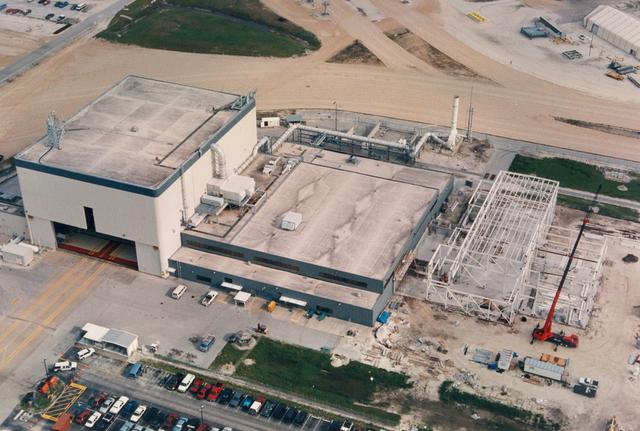
Detail view of SSMEPF construction, May 23, 1997

Detail view of SSMEPF construction, May 23, 1997

This 3D image shows the topography of craters and grooves of asteroid Vesta south polar region obtained by the framing camera instrument aboard NASA Dawn spacecraft on Aug. 23 and 28, 2011. You need 3D glasses to view this image.
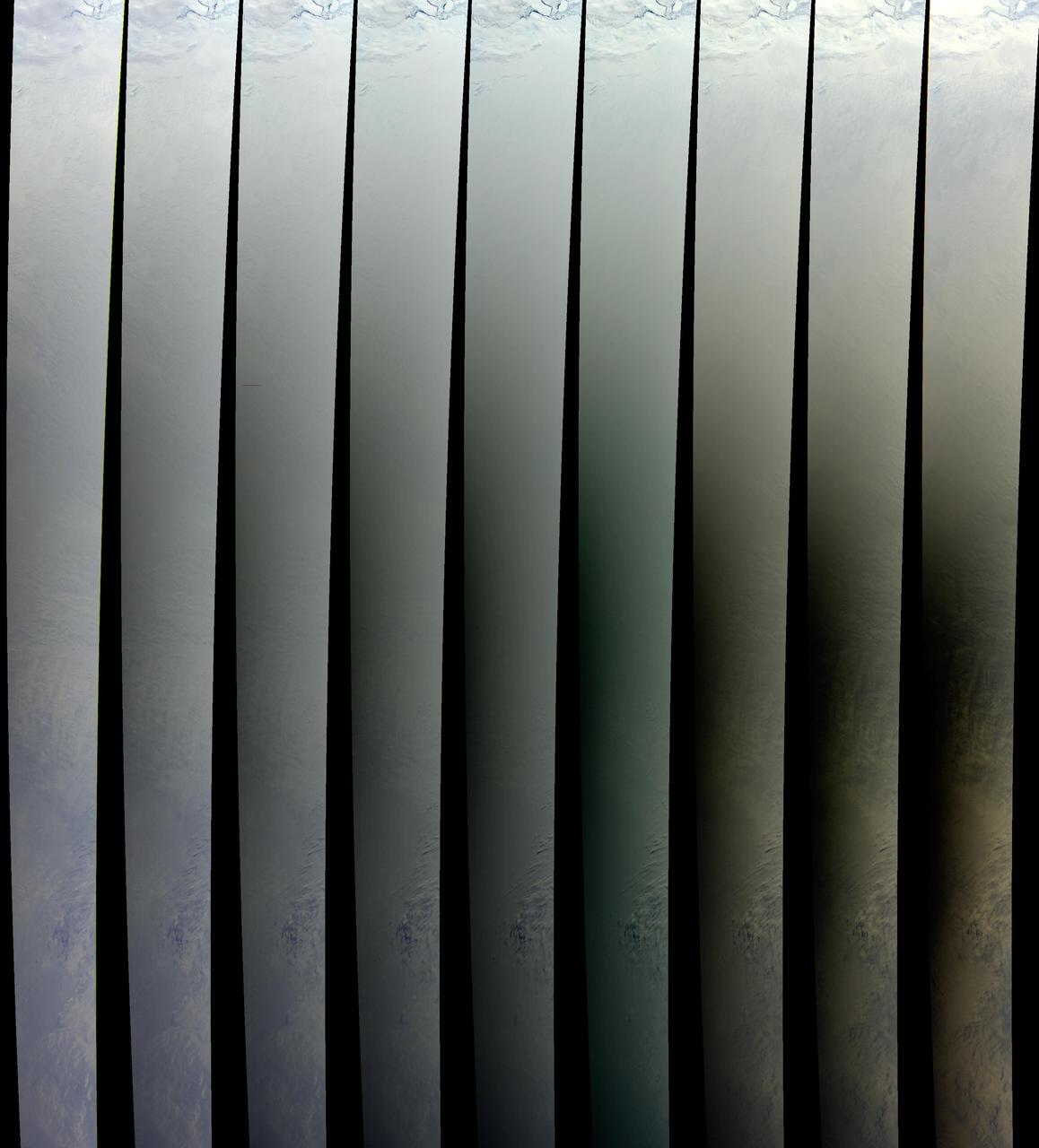
Within that narrow window during a solar eclipse where one on Earth can watch the Moon shadow obscure more than 90% of the Sun, NASA Terra spacecraft captured these views of the Antarctic surface during the total solar eclipse of November 23, 2003.
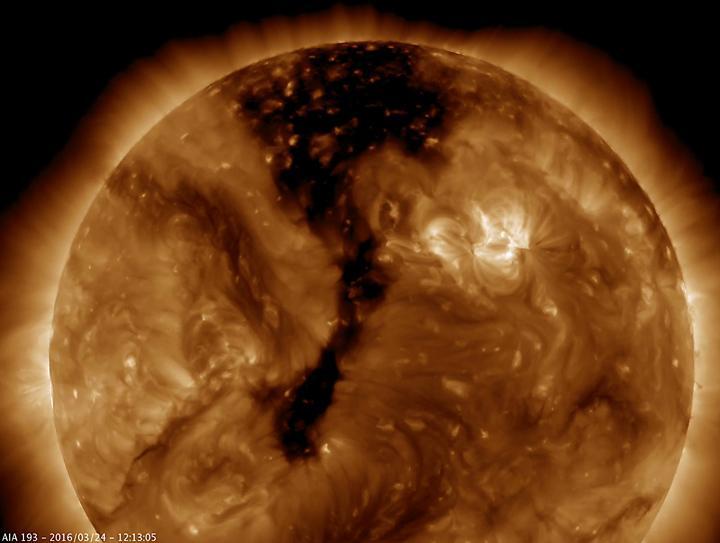
NASA Solar Dynamics Observatory shows a long coronal hole has rotated so that was temporarily facing right towards Earth Mar. 23-25, 2016. Coronal holes appear dark when viewed in some wavelengths of extreme ultraviolet light.
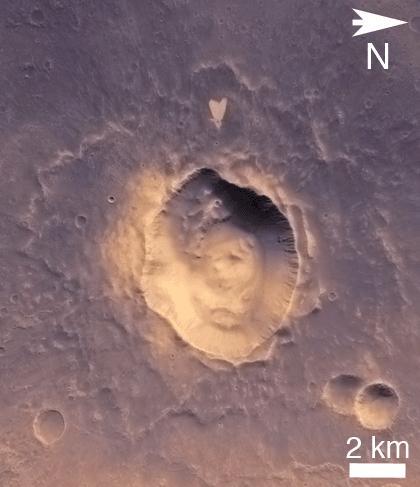
This wide-view picture of a heart-shaped feature in Arabia Terra on Mars was taken on May 23, 2010, by NASA Mars Reconnaissance Orbiter. A small impact crater near the tip of the heart is responsible for the formation of the bright, heart-shaped feature
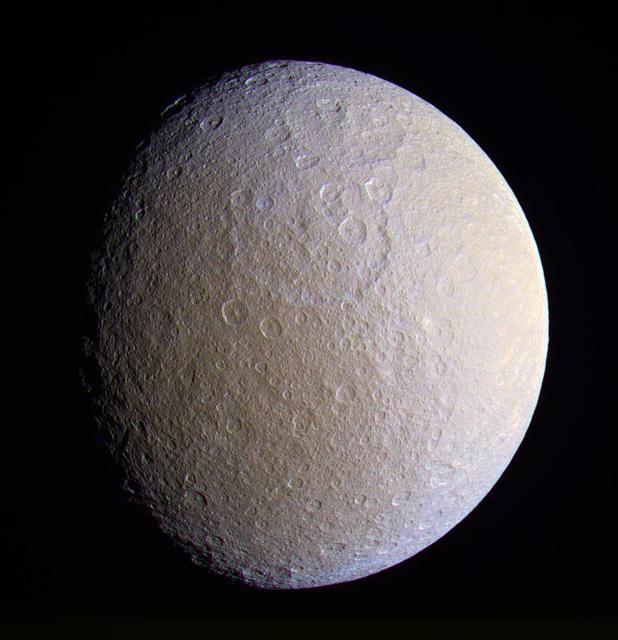
This close view of Rhea prominently shows two large impact basins on the ancient and battered moon. The great age of these basins is suggested by the large number of smaller craters that are overprinted within them. Terrain visible in this view is on the side of Rhea (1,528 kilometers, or 949 miles across) that faces away from Saturn. North on Rhea is up and tilted 30 degrees to the left. This enhanced color view was created by combining images taken using filters sensitive to ultraviolet, visible green and infrared light. The images were taken with the Cassini spacecraft narrow-angle camera on Dec. 23, 2005, at a distance of approximately 341,000 kilometers (212,000 miles) from Saturn and at a Sun-Saturn-spacecraft, or phase, angle of 42 degrees. The image scale is 2 kilometers (1 mile) per pixel. http://photojournal.jpl.nasa.gov/catalog/PIA07686
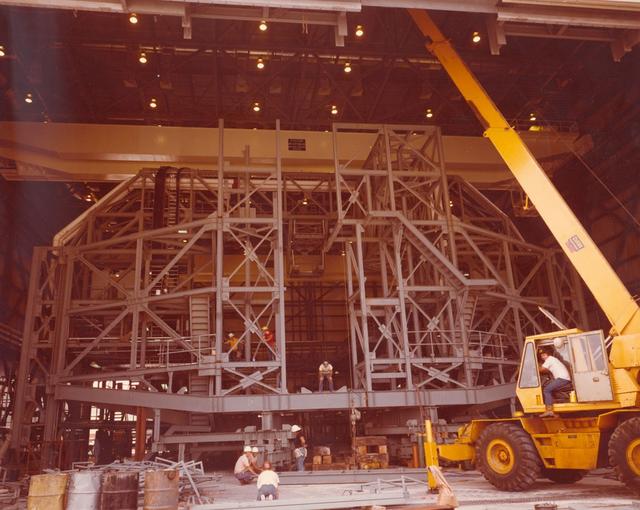
View of OPF High Bay No. 1, 513 workstand installation, August 23, 1977
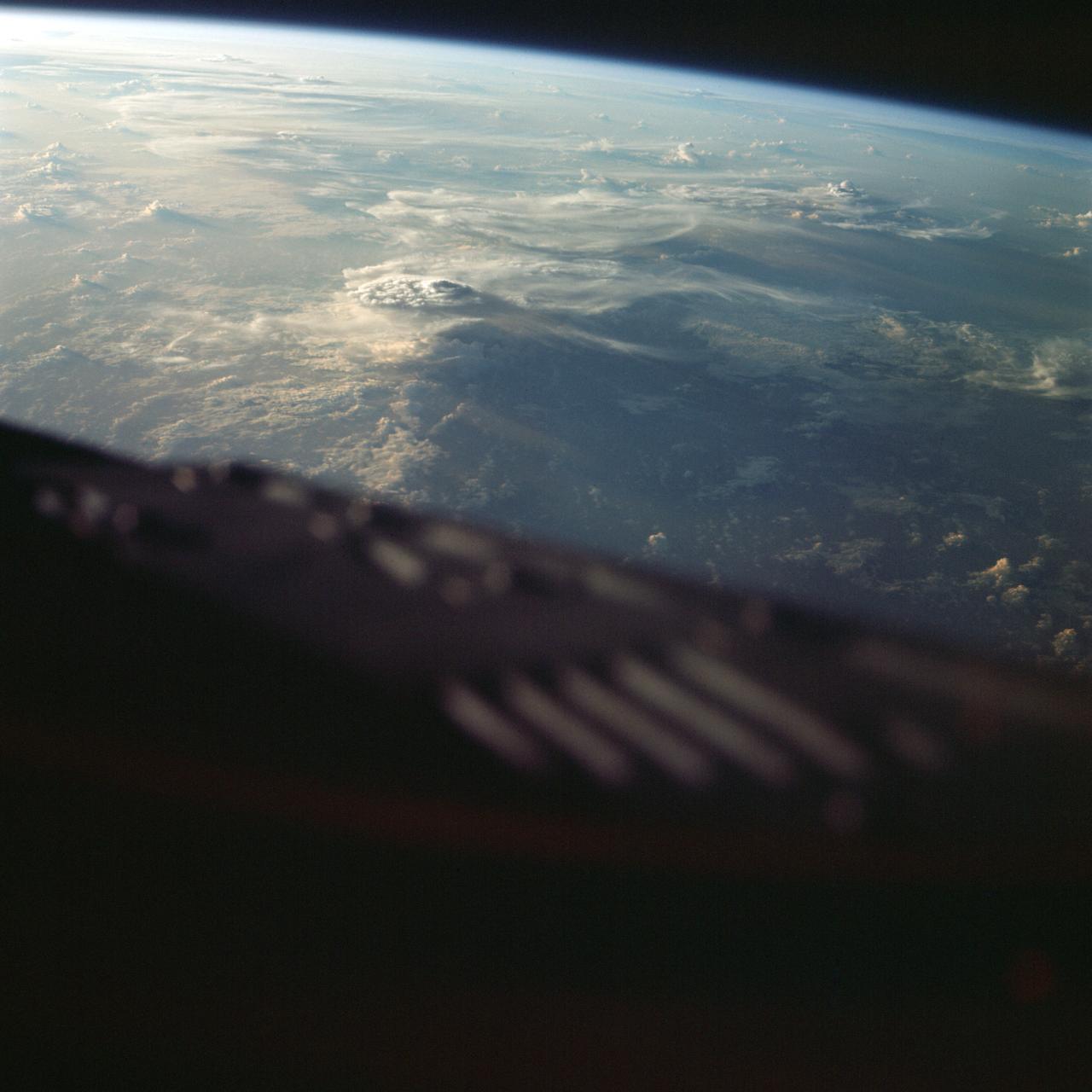
S65-18752 (23 March 1965) --- View of a cloudy part of Earth as seen from the Gemini-3 spacecraft while in orbit.

Views of Flight Director John Cox with the Flyswatter. 1. STS-23/51D - Press Conference
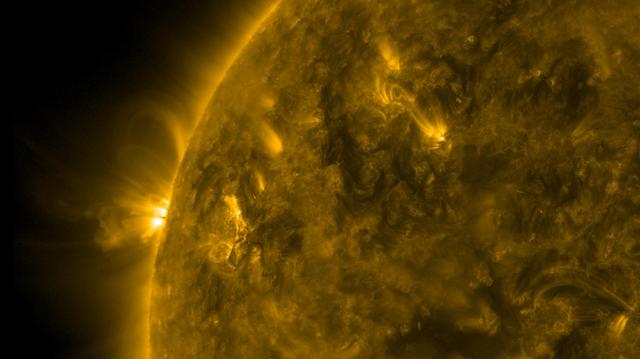
As an active region rotated into view, NASA Solar Dynamics Observatory was able to observe well-defined magnetic loops gyrating above the sun between Mar, 23-24, 2017. These loops appear because charged particles spinning along the magnetic field lines above this active region are made visible in this wavelength of extreme ultraviolet light. The video clip covers about a day and a half of activity. Movies are available at https://photojournal.jpl.nasa.gov/catalog/PIA21583
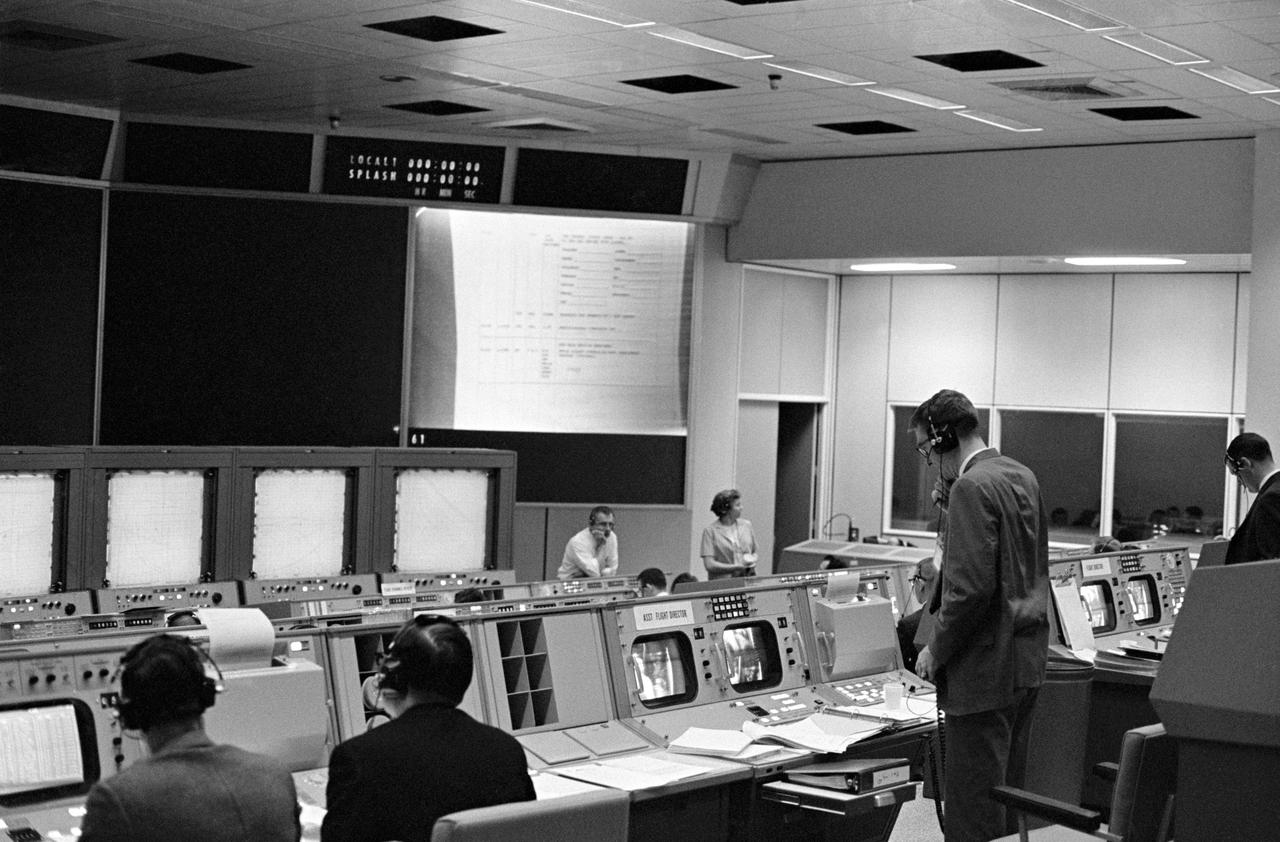
S65-18200 (23 March 1965) --- Overall view of the Mission Control Center at the Manned Spacecraft Center in Houston, Texas during the Gemini-Titan 3 flight.
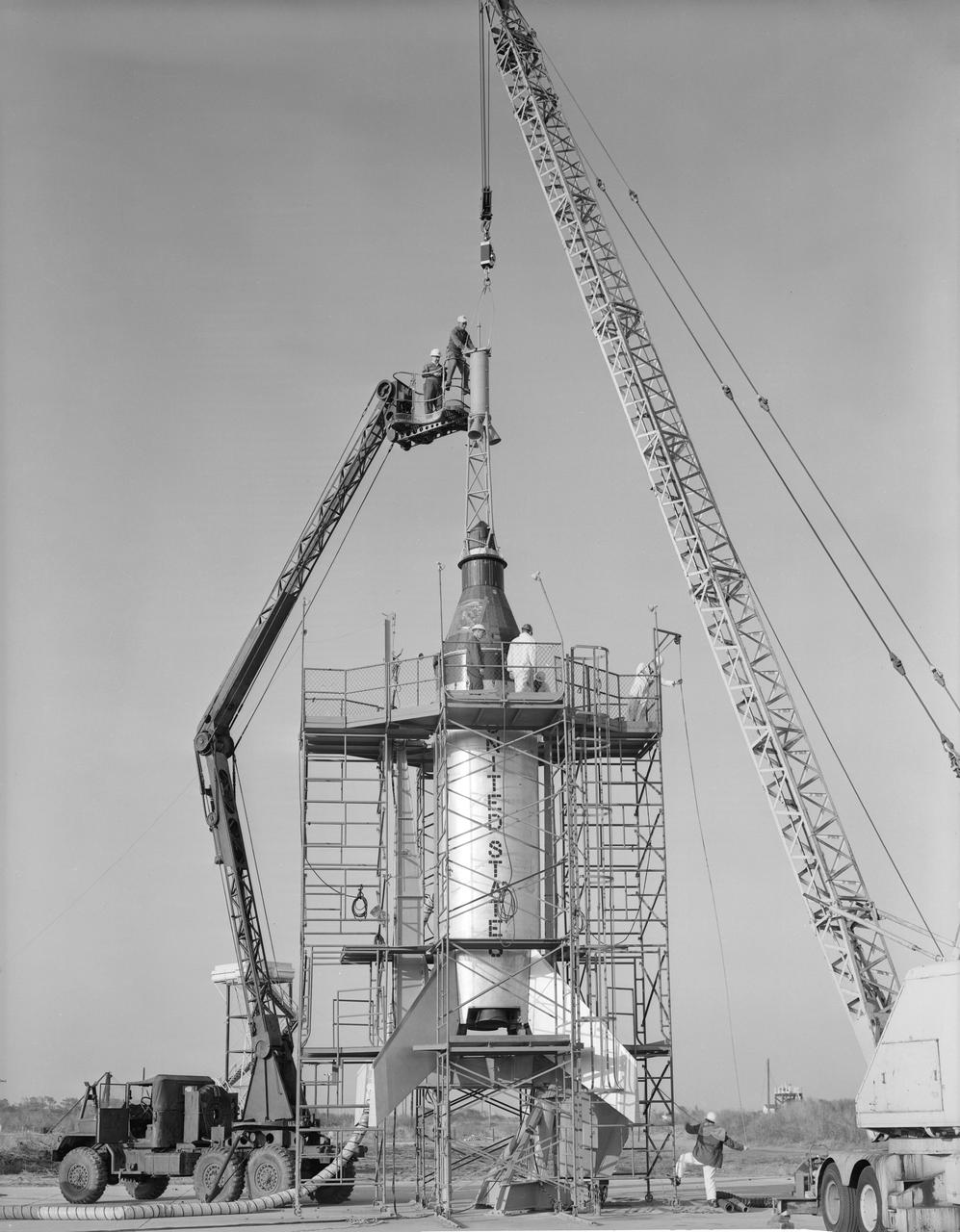
S61-01663 (23 April 1961) --- View of the mating of Little Joe-5B launch vehicle with Mercury capsule #14. Photo credit: NASA
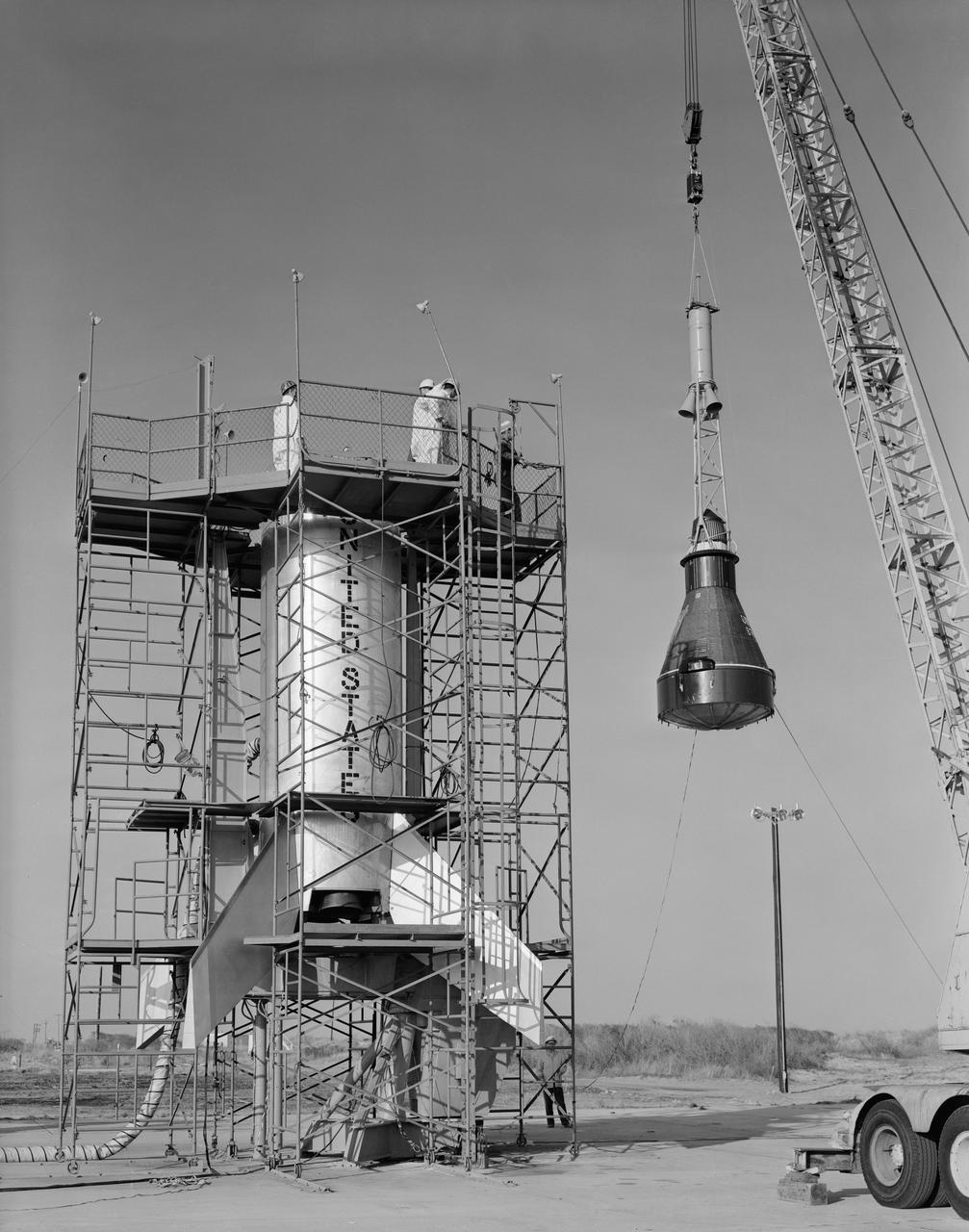
S61-01673 (23 April 1961) --- View of the mating of Little Joe-5B launch vehicle with Mercury capsule #14. Photo credit: NASA
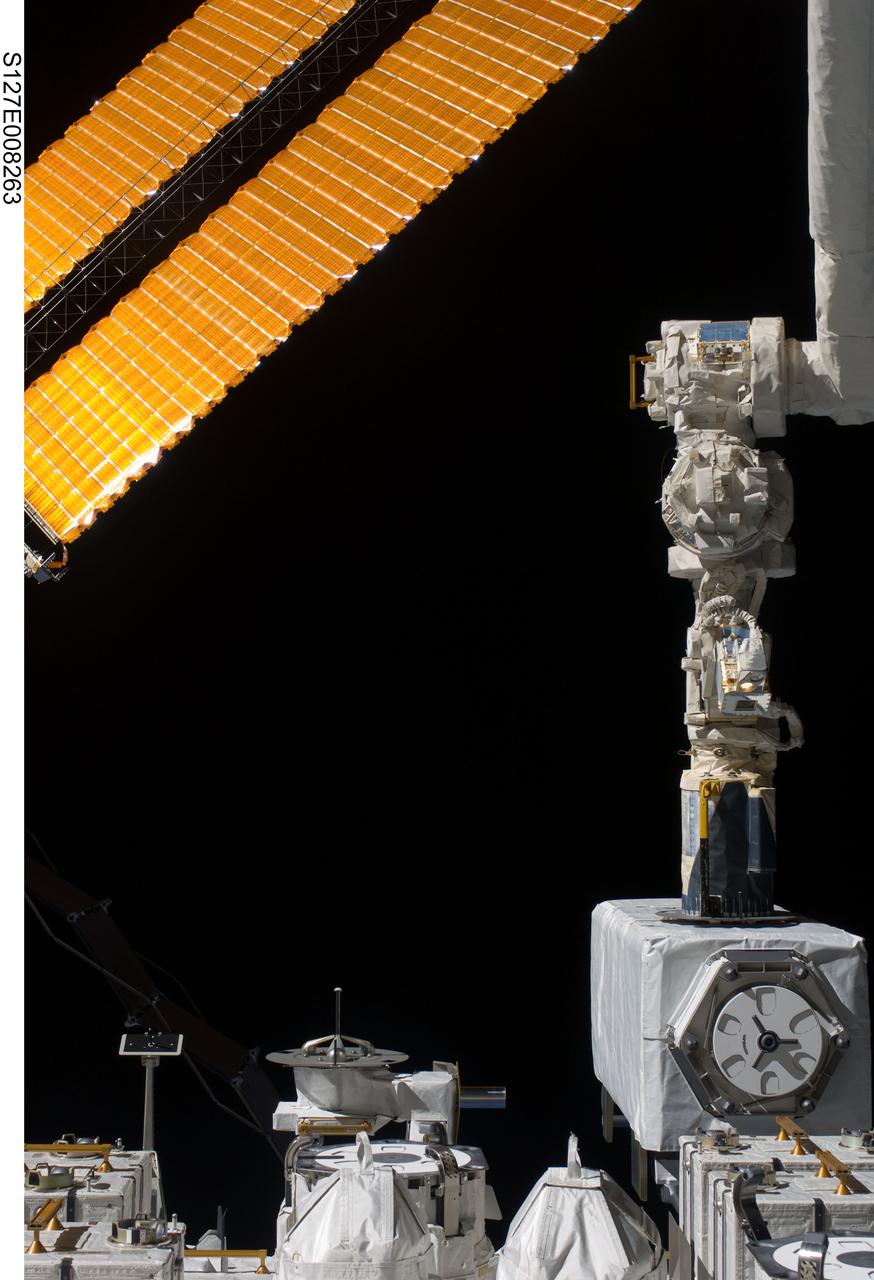
S127-E-008263 (23 July 2009) --- This is a July 23 (flight day 9) view of the robotic arm for the Japanese Experiment Module or Kibo as it assists in the deployment of the JAXA Space Environment Data Acquisition Attached Payload (SEDA-AP) onto the Japanese Exposed Facility Unit (EFU).
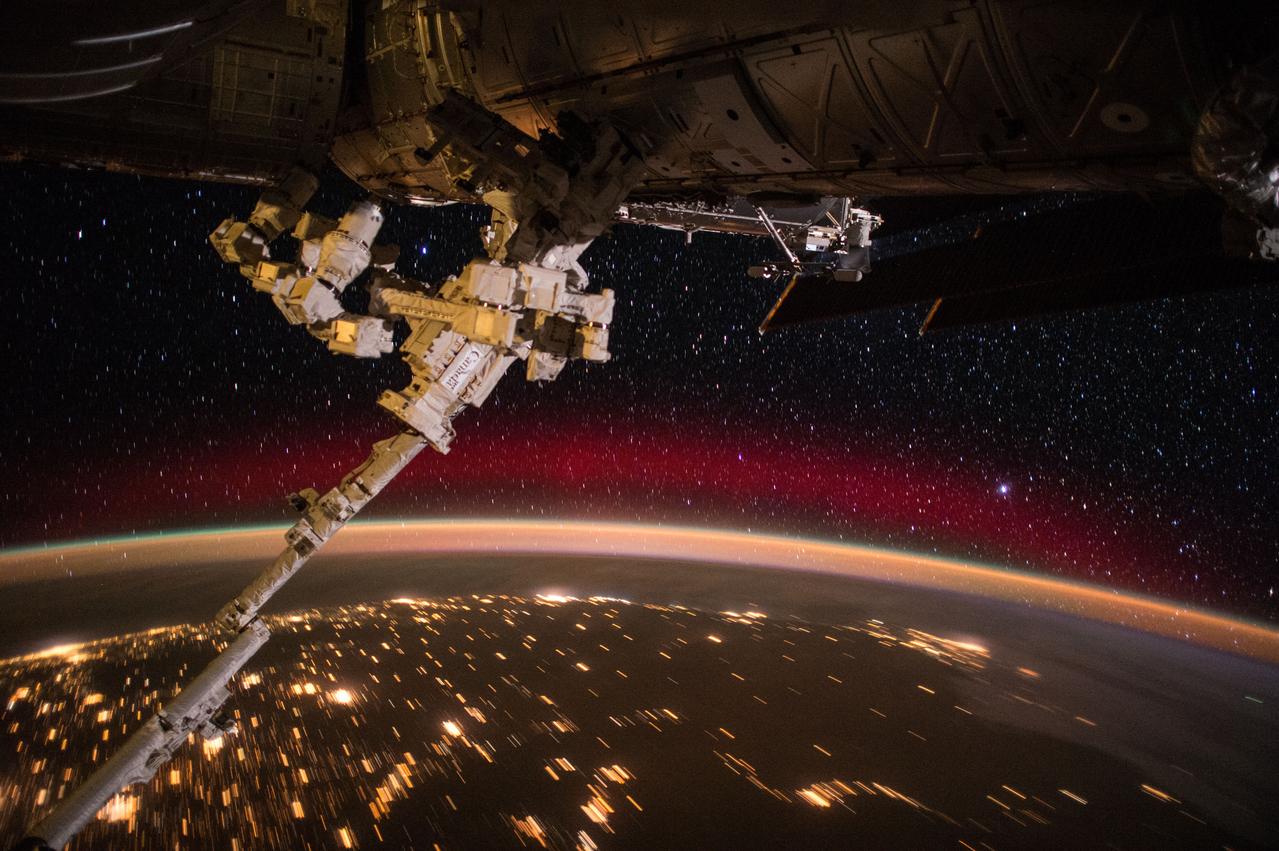
ISS044E002699 (06/23/2015) --- This spectacular view of the Earth with colorful aurora, sparkling city lights, and a rising sun over a background of diamond twinkling stars was taken by members of Expedition 44 on the International Space Station on June 23, 2015.
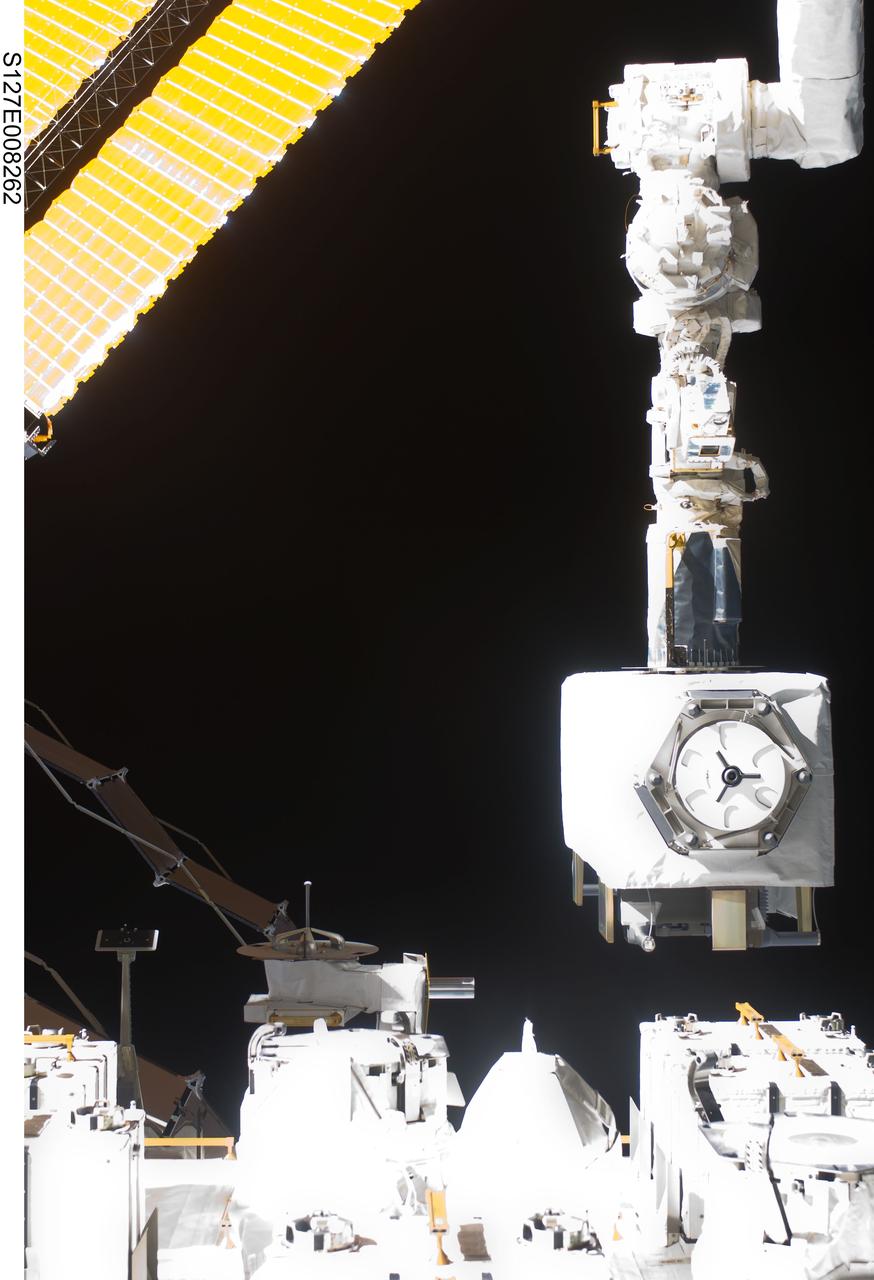
S127-E-008262 (23 July 2009) --- This is a July 23 (flight day 9) view of the robotic arm for the Japanese Experiment Module or Kibo as it assists in the deployment of the JAXA Space Environment Data Acquisition Attached Payload (SEDA-AP) onto the Japanese Exposed Facility Unit (EFU).
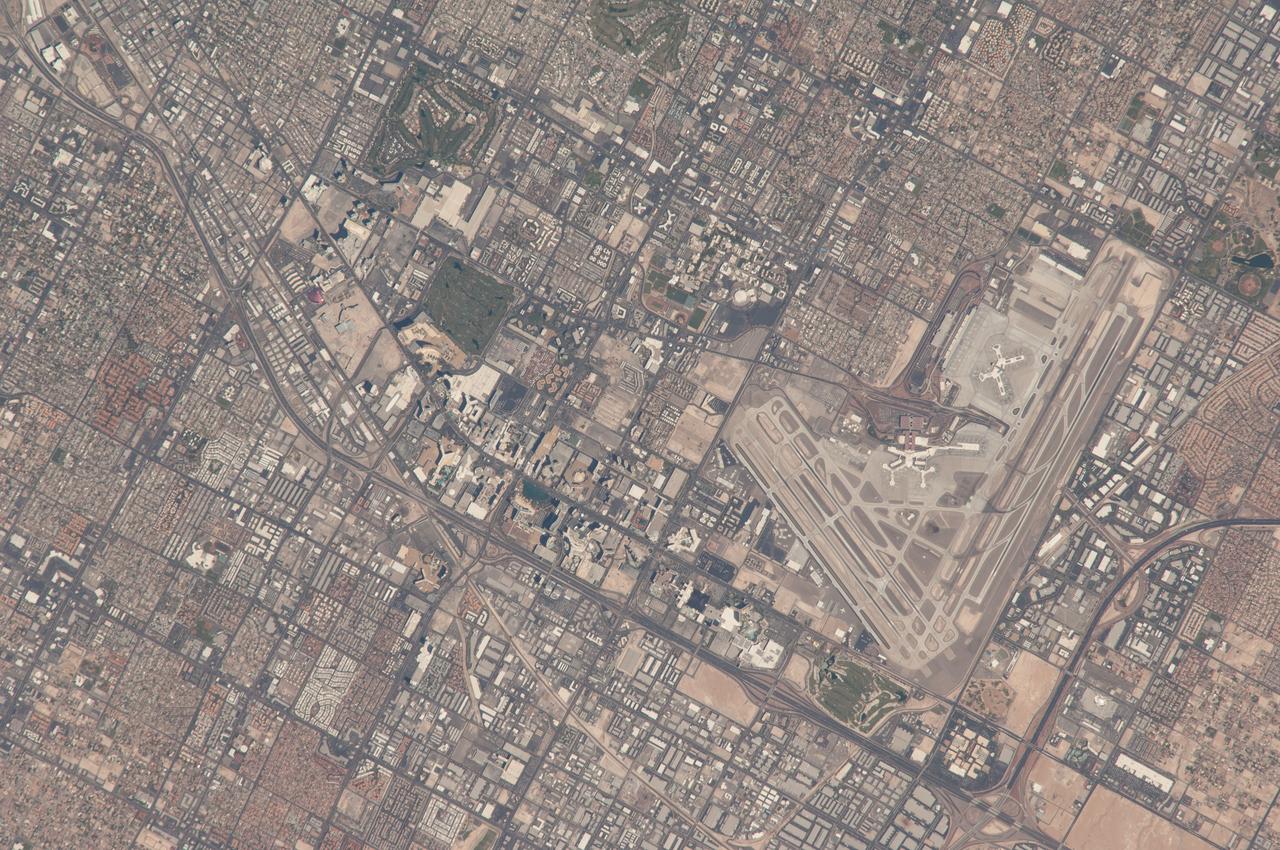
ISS040-E-104966 (23 Aug. 2014) --- One of the Expedition 40 crew members aboard the International Space Station used an 800mm focal length to photograph this detailed image featuring a nadir view of the Las Vegas "Strip" and McCarron International Airport on Aug. 23, 2014.

S65-10461 (23 March 1965) --- Overall view of the Gemini-Titan 3 on Launch Pad 19, with erector lowered. The GT-3 liftoff was at 9:24 a.m. (EST) March 23, 1965. Photograph was taken from across a pond.
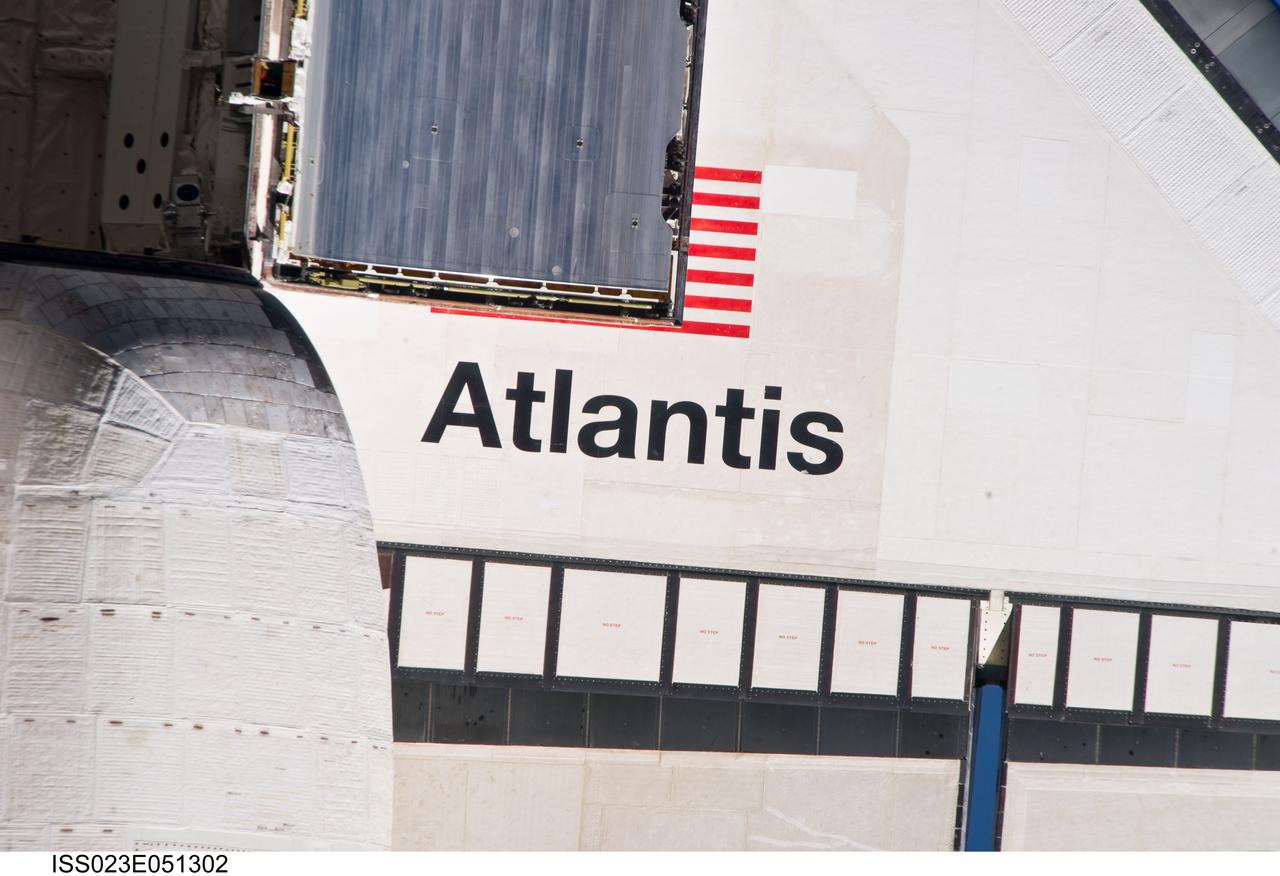
ISS023-E-051302 (23 May 2010) --- This partial view of the starboard wing of the space shuttle Atlantis was provided by an Expedition 23 crew member on the International Space Station soon after the shuttle and station began their post-undocking relative separation. Undocking of the two spacecraft occurred at 10:22 a.m. (CDT) on May 23, 2010, ending a seven-day stay that saw the addition of a new station module, replacement of batteries and resupply of the orbiting outpost.
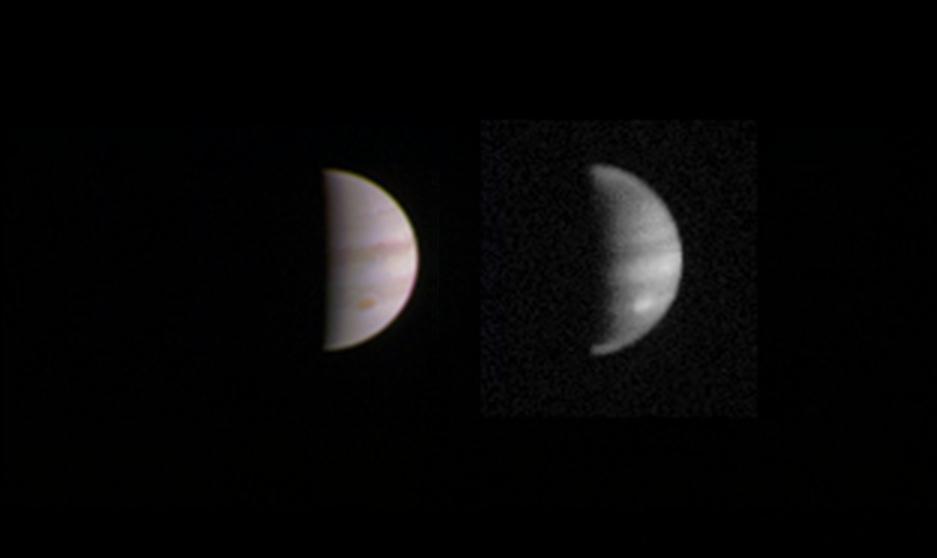
This dual view of Jupiter was taken on August 23, when NASA's Juno spacecraft was 2.8 million miles (4.4 million kilometers) from the gas giant planet on the inbound leg of its initial 53.5-day capture orbit. The image on the left is a color composite taken with Junocam's visible red, green, and blue filters. The image on the right was also taken by JunoCam, but uses the camera's infrared filter, which is sensitive to the abundance of methane in the atmosphere. Bright features like the planet's Great Red Spot are higher in the atmosphere, and so have less of their light absorbed by the methane. http://photojournal.jpl.nasa.gov/catalog/PIA20884
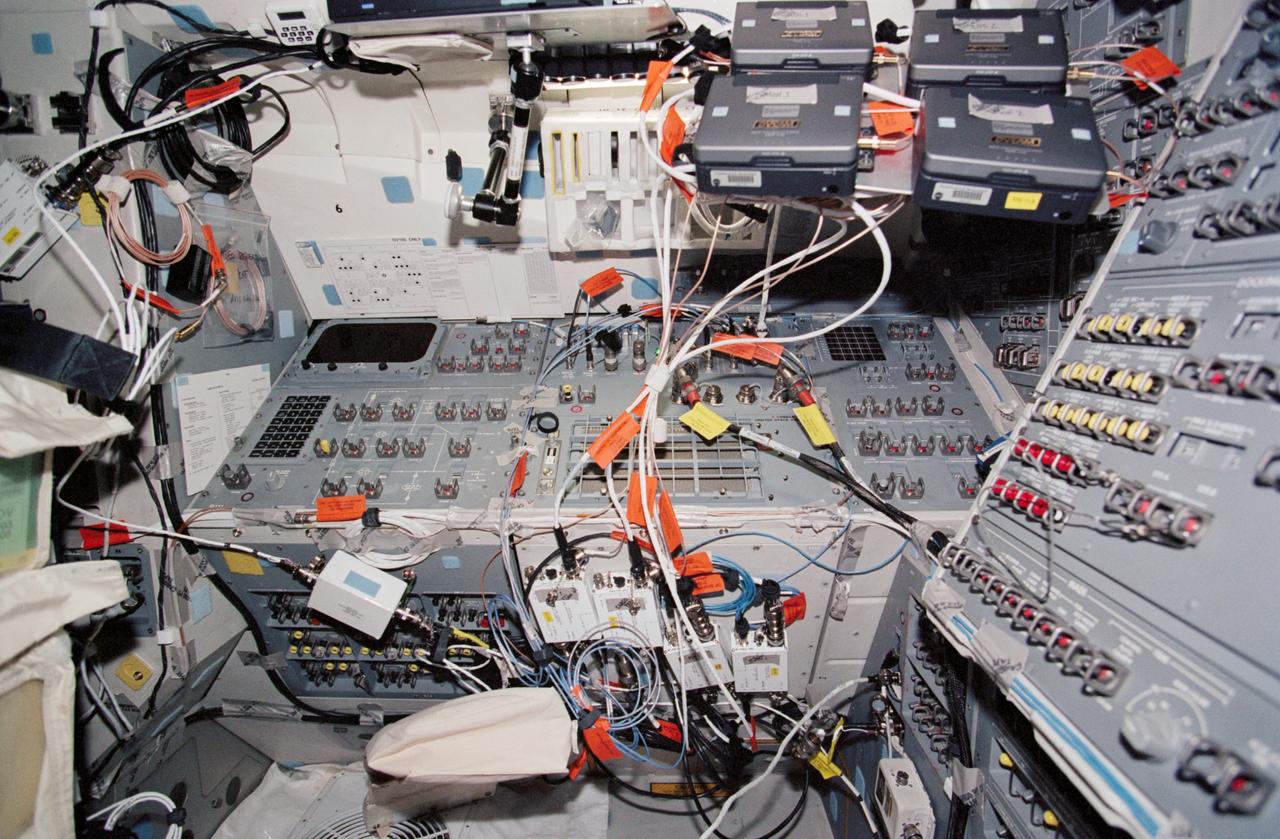
STS113-343-029 (23 November – 7 December 2002) --- View of the aft flight deck of the Space Shuttle Endeavour during the STS-113 mission to the International Space Station (ISS).
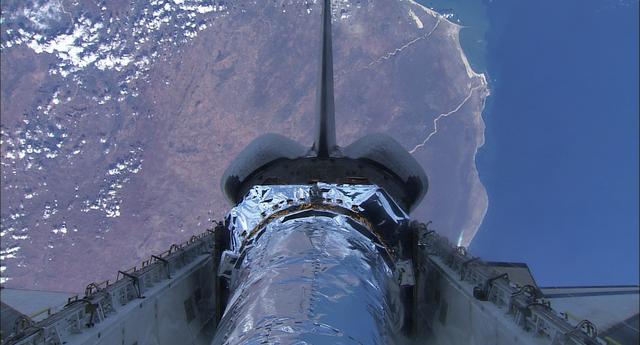
99-E-10024 (23 July 1999) --- This pre-deployment view of the Chandra X-Ray observatory backdropped against part of Namibia was recorded with the HDTV Camcorder from inside Columbia's crew cabin.
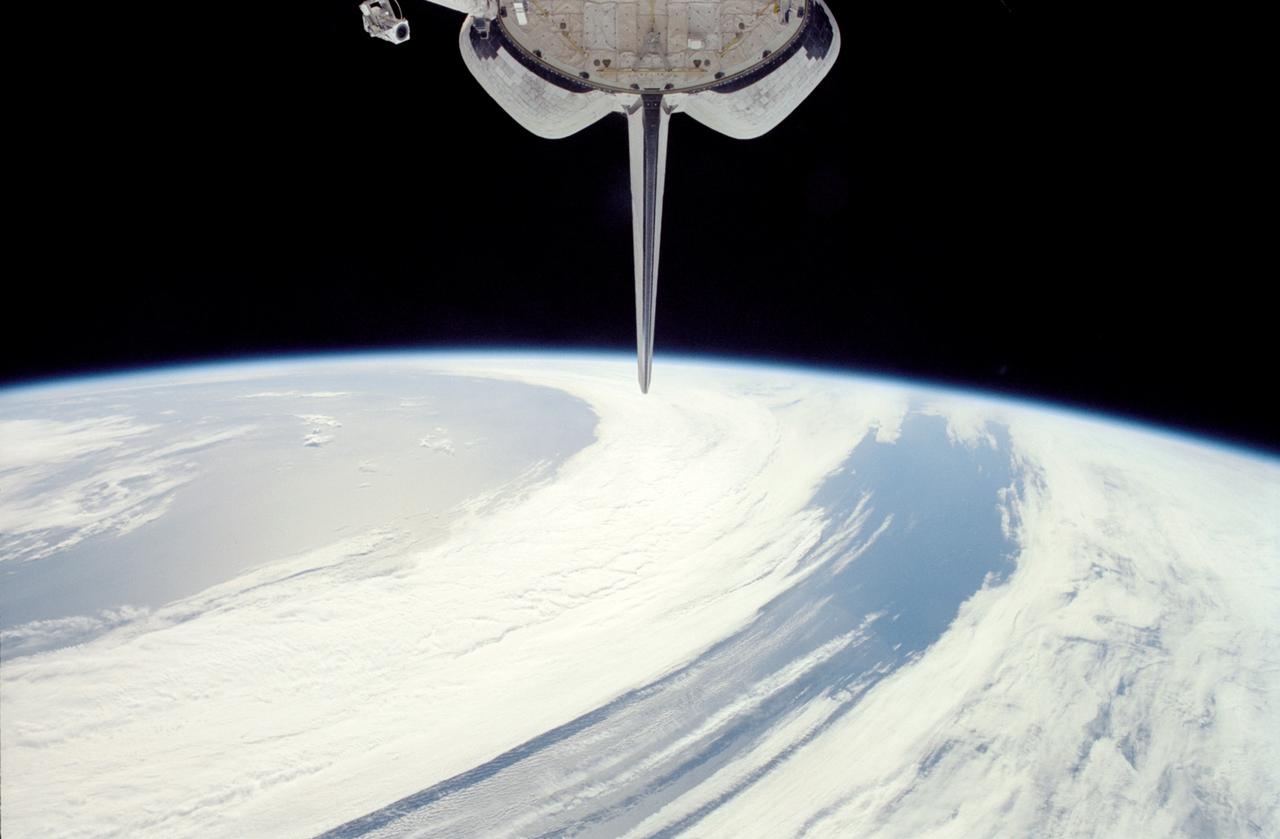
STS113-348-001 (23 November – 7 December 2002) --- The horizon of a blue and white Earth and the blackness of space form the backdrop for this view of Space Shuttle Endeavour’s vertical stabilizer.

S66-45613 (23 Sept. 1966) --- Astronauts Charles Conrad Jr. (with pipe) and Richard F. Gordon Jr. (background) view negatives from their Gemini-11 mission. Photo credit: NASA
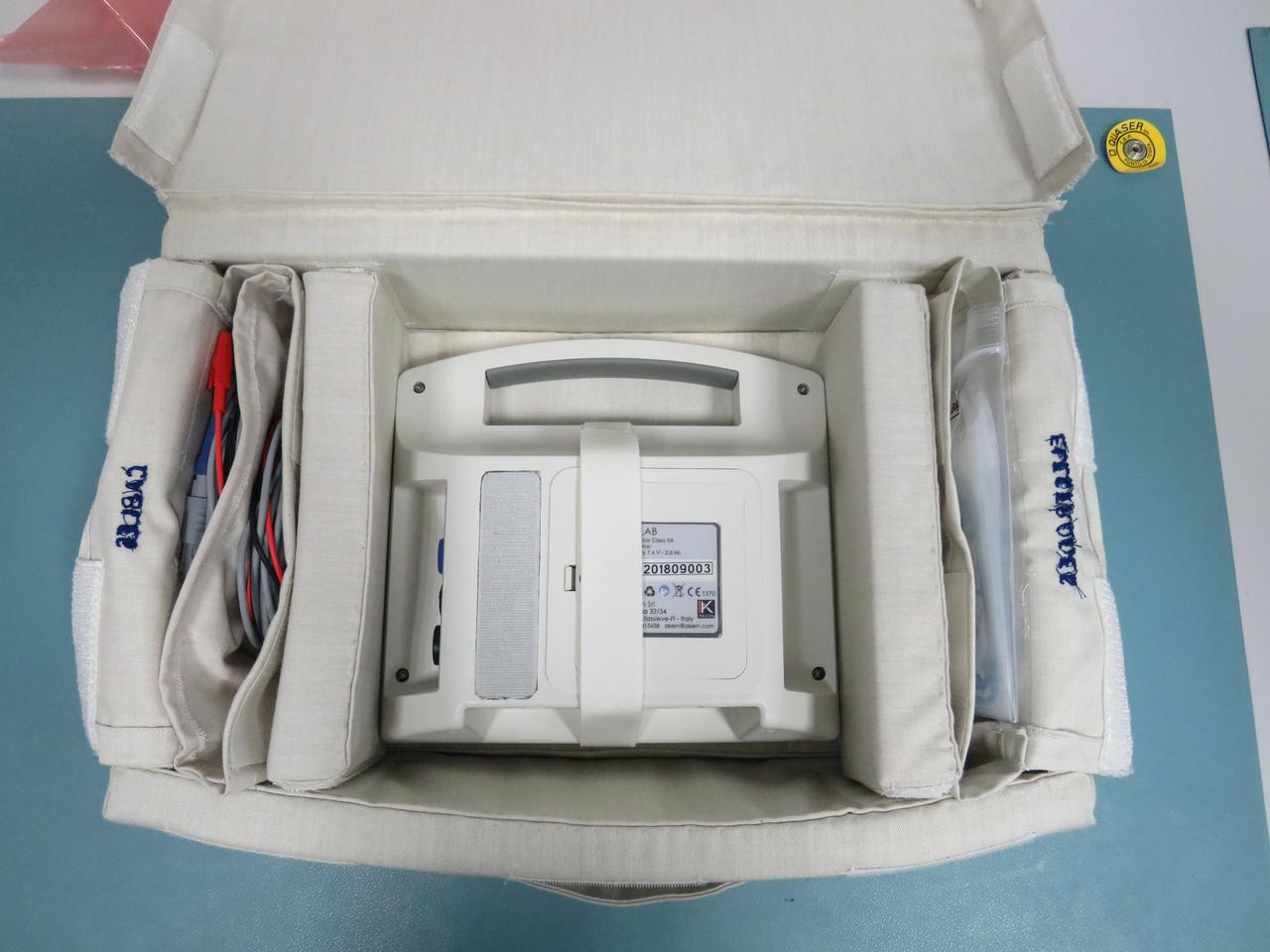
jsc2021e009427 (1/23/2019) --- A preflight view of Nutrition Monitoring for the International Space Station (NutrISS) inside its pouch. Image courtesy of the Italian Space Agency (ASI).
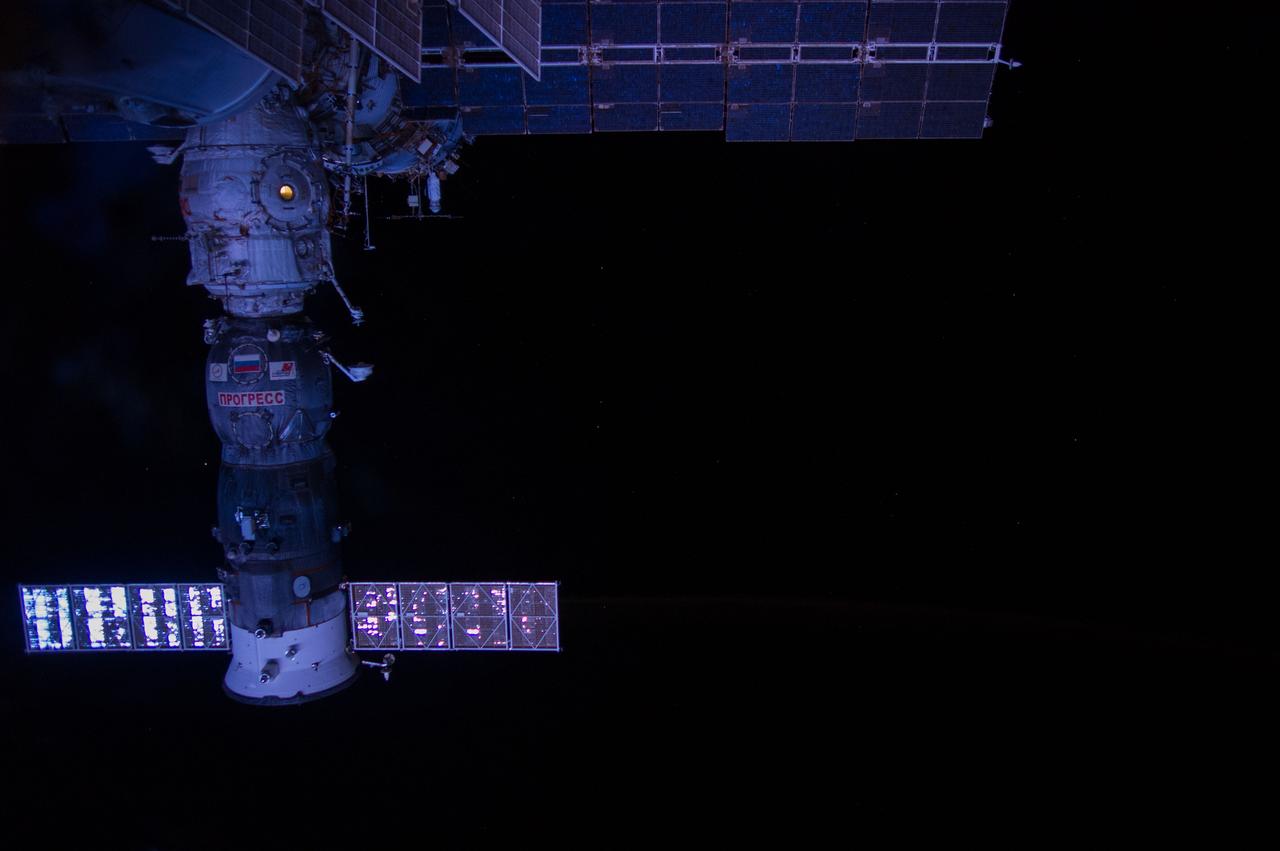
ISS040-E-017086 (23 June 2014) --- This nighttime view, featuring the ISS Progress 55 resupply vehicle docked to the Pirs Docking Compartment, was photographed by an Expedition 40 crew member on the International Space Station.
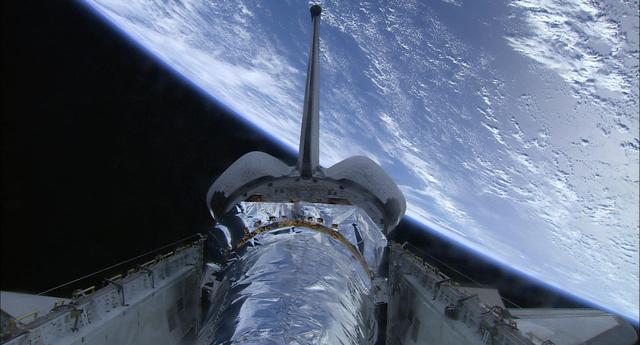
99-E-10025 (23 July 1999) --- This pre-deployment view of the Chandra X-Ray observatory was recorded with the HDTV Camcorder from inside Columbia's crew cabin.

S66-45614 (23 Sept. 1966) --- Astronauts Charles Conrad Jr. (with pipe) and Richard F. Gordon Jr. (background) view negatives from their Gemini-11 mission. Photo credit: NASA
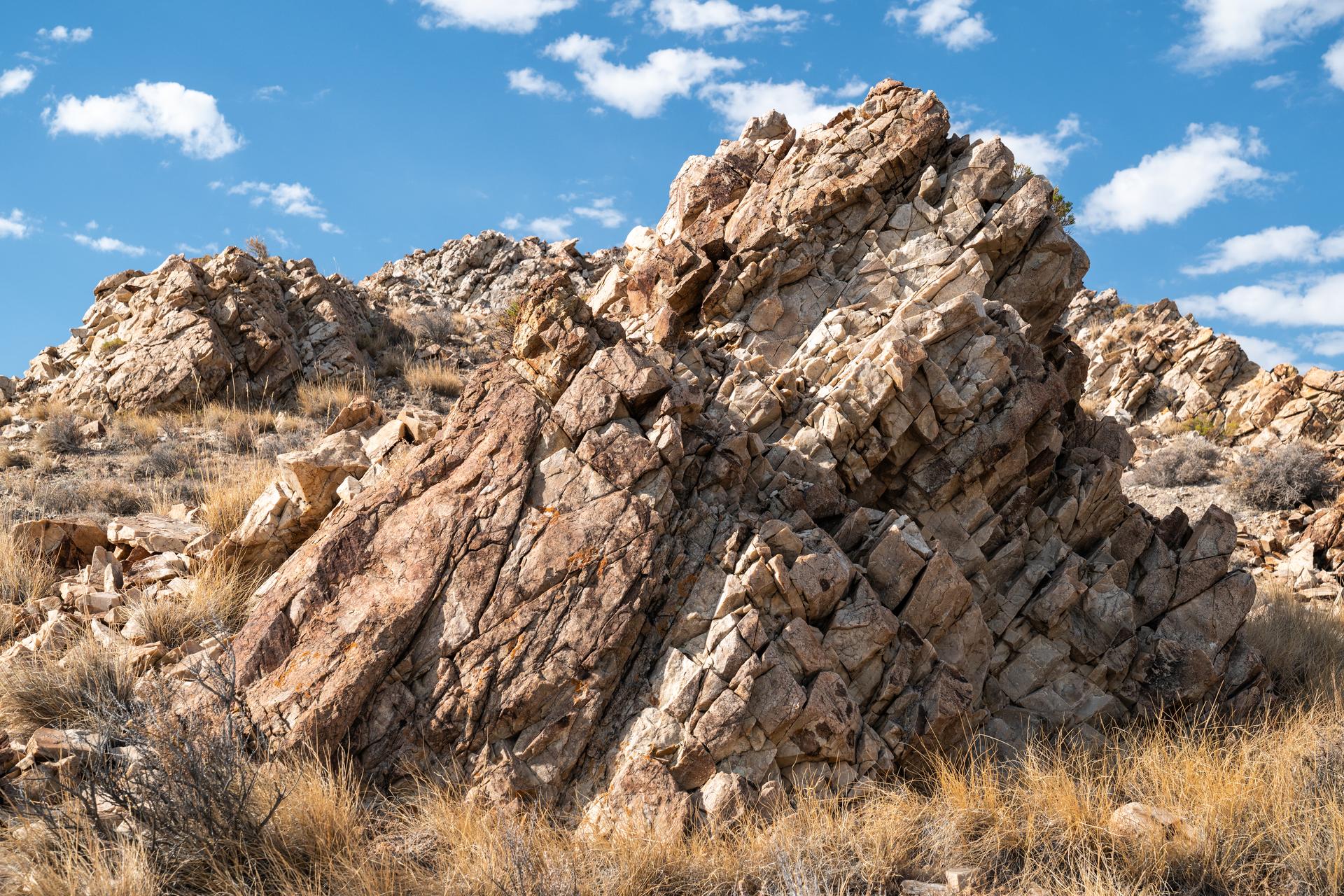
Detailed view of a granite outcrop at Crater Island, Utah on June 23, 2026. This outcropping was one of the points of interest to NASA's DAVINCI VADIX Mission for its distinct geologic properties. NASA/Mike Guinto
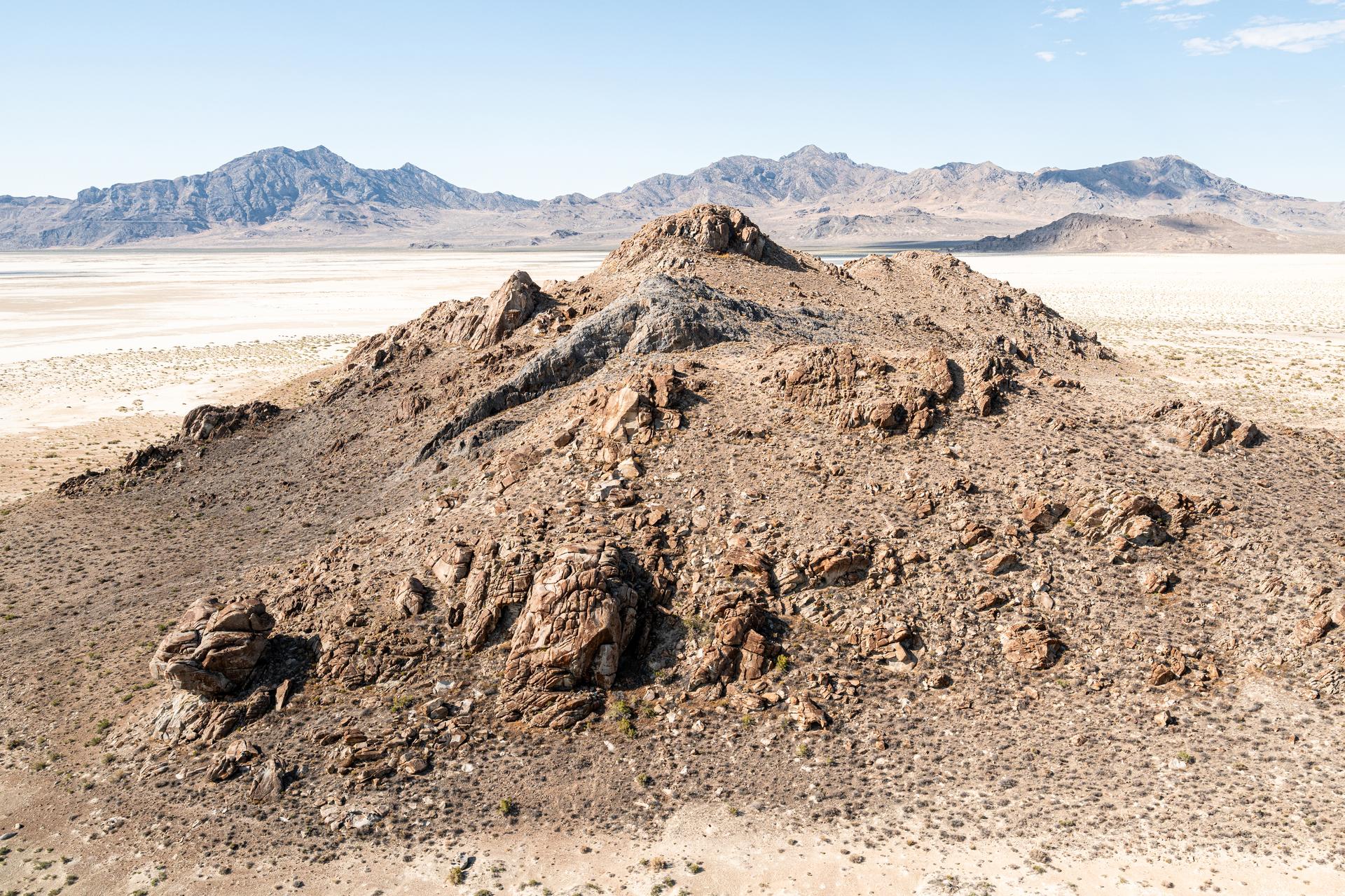
Detailed view of a rock outcrop at Crater Island, Utah on June 23, 2026. This outcropping was one of the points of interest to NASA's DAVINCI VADIX Mission for its distinct geologic properties. NASA/Mike Guinto
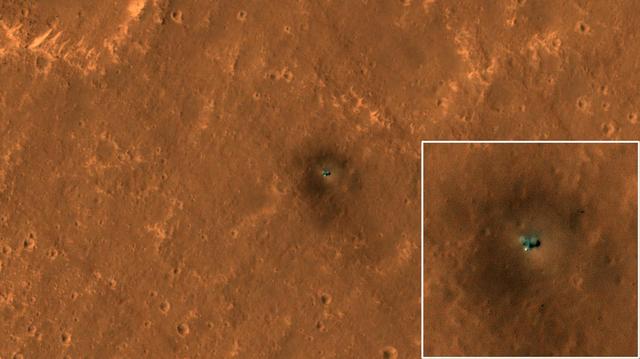
The HiRISE camera on NASA's Mars Reconnaissance Orbiter got its best view yet of the agency's InSight lander on Sept. 23, 2019. HiRISE has been monitoring InSight's landing site on the Red Planet for changes such as dust-devil tracks (the slightly dark diagonals streaks crisscrossing the surface). This new image clearly shows the two circular solar panels on either side of the lander body. From end to end, the panels span 20 feet (6 meters); the image was taken from an elevation of 169 miles (272 kilometers) above the surface. The bright spot on the lower side of the spacecraft is the dome-shaped protective cover over InSight's seismometer. Surrounding the spacecraft is a dark halo created by retrorocket thrusters scouring the surface during landing. Dark streaks seen crossing diagonally across the surface are dust-devil tracks. Several factors make this image crisper than past images. For one thing, there's less dust in the air this time of year compared to before. And shadows are offset from the lander because this is an oblique view looking west. Moreover, the lighting was better for avoiding the bright reflections from the lander or its solar panels that have obscured surrounding pixels in other images. The seismometer cover to the south of the lander is still bright because its dome shape always produces a mirror-like reflection over some small area. https://photojournal.jpl.nasa.gov/catalog/PIA23376

ISS034-E-044575 (10 Feb. 2013) --- One of the Expedition 34 crew members aboard the International Space Station, flying at an altitude of approximately 240 miles, took this night view of Cleveland, Ohio on Feb. 10, 2013. STS034-E-054502 (23 Feb. 2013) --- This view of a northern hemisphere mid-Atlantic low pressure system was photographed by one of the Expedition 34 crew members aboard the International Space Station flying approximately 240 miles above Earth on Feb. 23, 2013. The nadir of the space station when the image was taken was 49.9 degrees north latitude and 29.6 degrees west longitude.
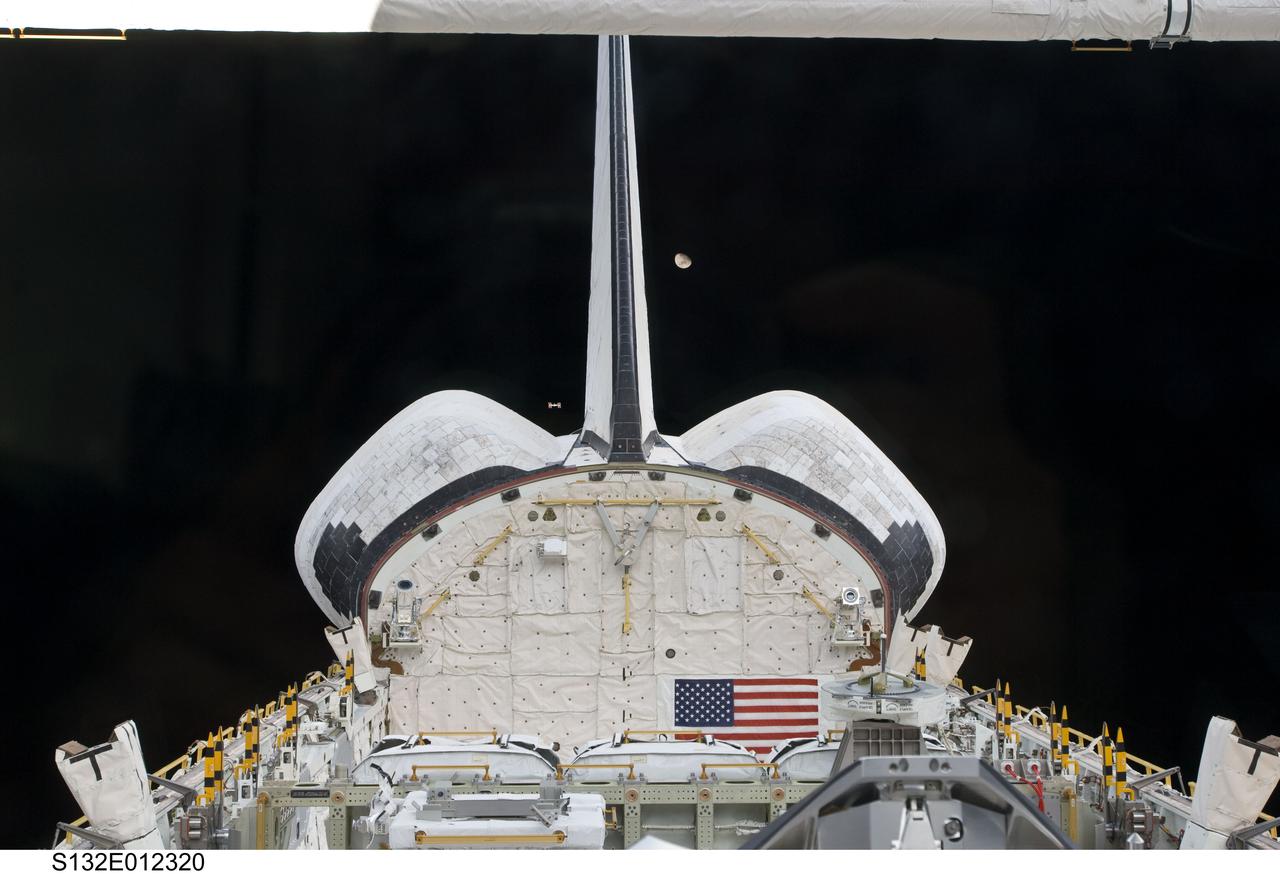
S132-E-012320 (23 May 2010) --- Space shuttle Atlantis? vertical stabilizer, orbital maneuvering system (OMS) pods and payload bay; along with the distant International Space Station and moon are featured in this image photographed by an STS-132 crew member onboard the shuttle. The space station appears very small from the point of view of the Atlantis as the two spacecraft carry out their relative separation. Undocking of the two spacecraft occurred at 10:22 a.m. (CDT) on May 23, 2010.
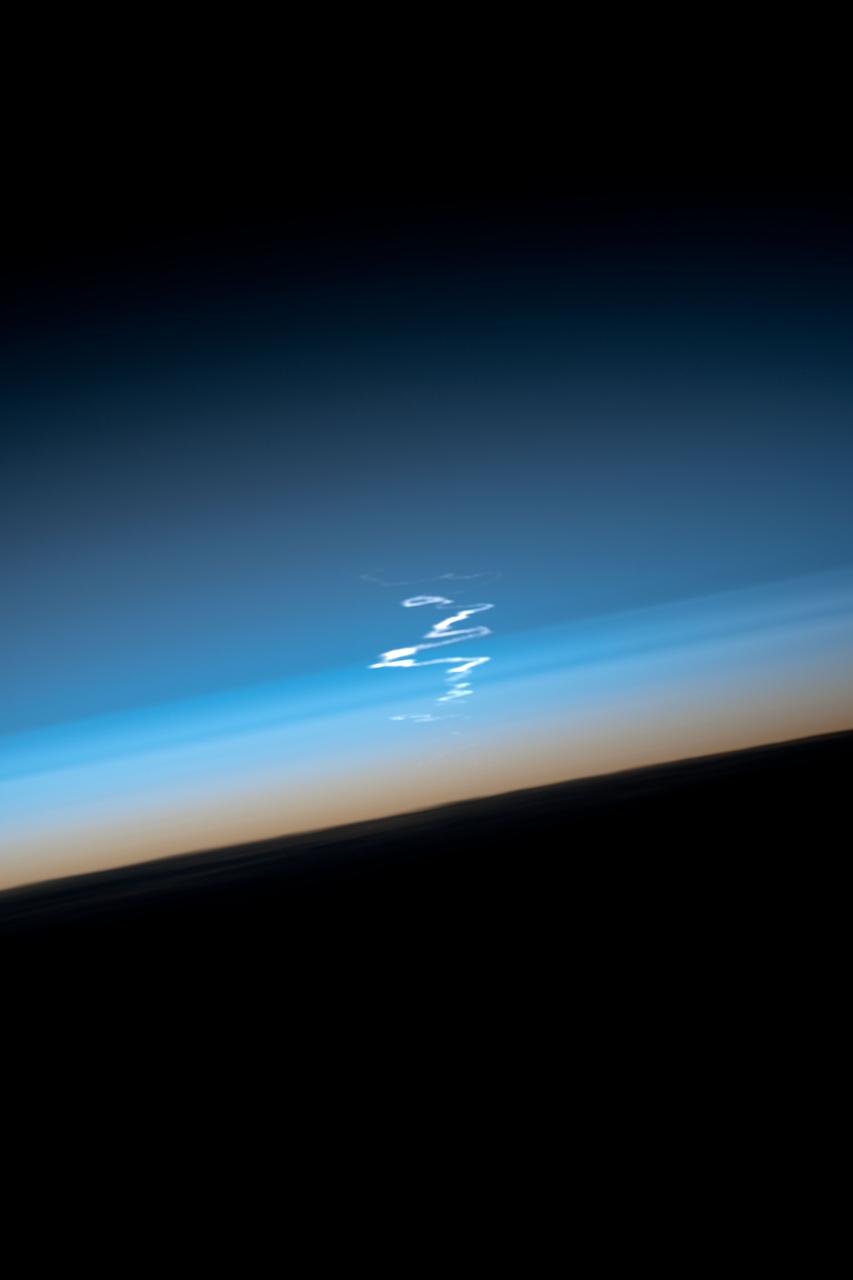
ISS033-E-015386 (23 Oct. 2012) --- This view of Earth’s horizon, shows smoke trails from the launch of the Soyuz TMA-06M spacecraft, was photographed by an Expedition 33 crew member on the International Space Station. The Soyuz, with Expedition 33 crew members Soyuz Commander Oleg Novitskiy, Flight Engineer Kevin Ford of NASA, and Flight Engineer Evgeny Tarelkin of Roscosmos onboard, launched at 4:51 p.m. Kazakhstan time (5:51 a.m. CDT) on Oct. 23, 2012, from Baikonur, Kazakhstan.
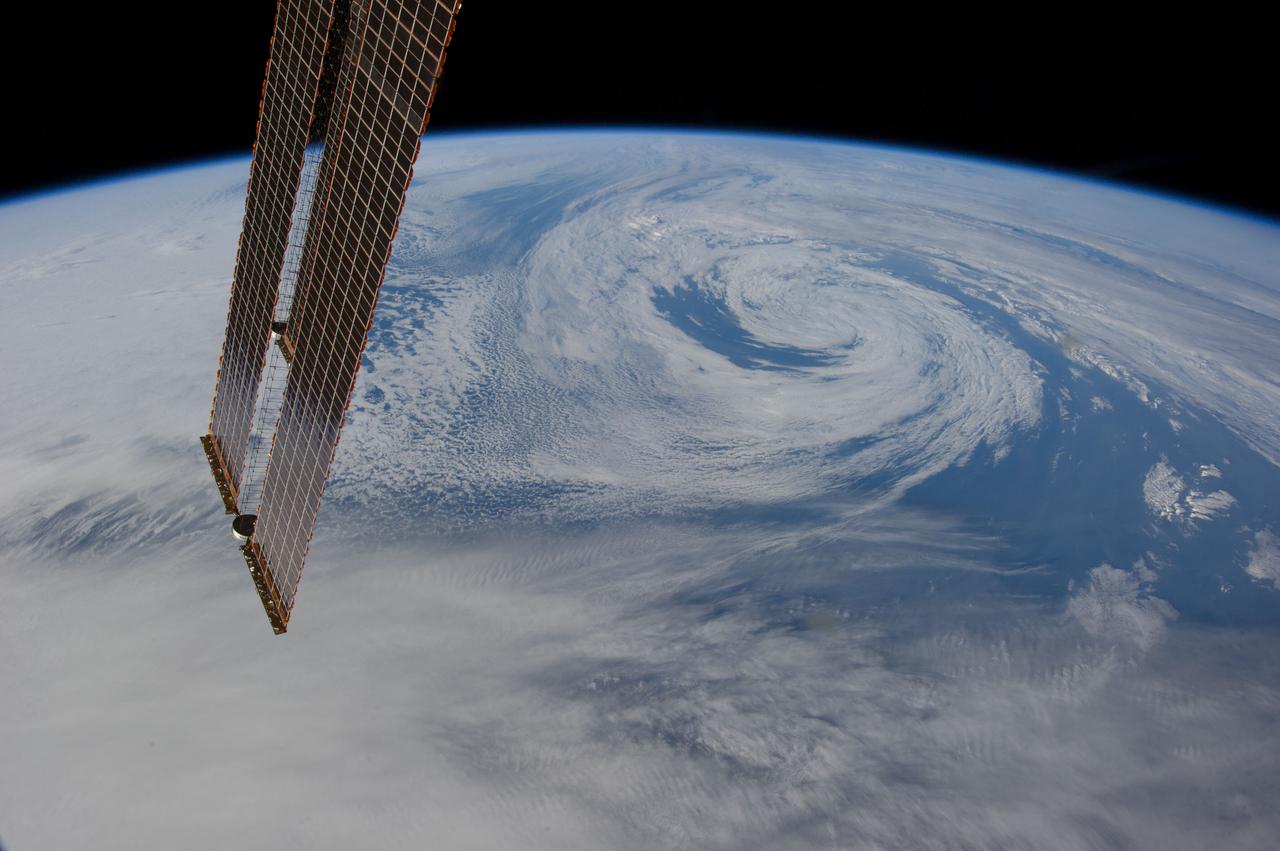
STS034-E-054502 (23 Feb. 2013) --- This view of a northern hemisphere mid-Atlantic low pressure system was photographed by one of the Expedition 34 crew members aboard the International Space Station flying approximately 240 miles above Earth on Feb. 23, 2013. The nadir of the space station when the image was taken was 49.9 degrees north latitude and 29.6 degrees west longitude.
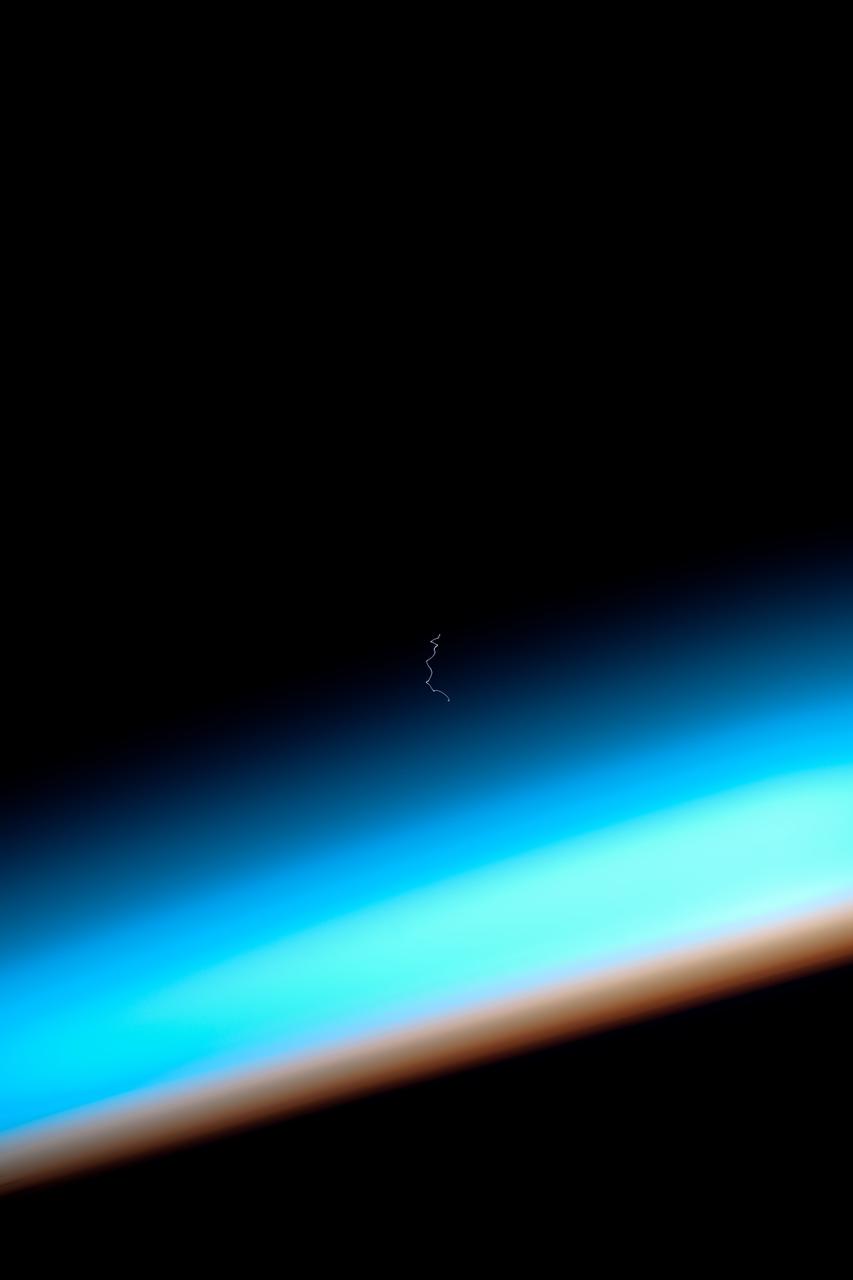
ISS033-E-015399 (23 Oct. 2012) --- This view of Earth’s horizon, shows smoke trails from the launch of the Soyuz TMA-06M spacecraft, was photographed by an Expedition 33 crew member on the International Space Station. The Soyuz, with Expedition 33 crew members Soyuz Commander Oleg Novitskiy, Flight Engineer Kevin Ford of NASA, and Flight Engineer Evgeny Tarelkin of Roscosmos onboard, launched at 4:51 p.m. Kazakhstan time (5:51 a.m. CDT) on Oct. 23, 2012, from Baikonur, Kazakhstan.
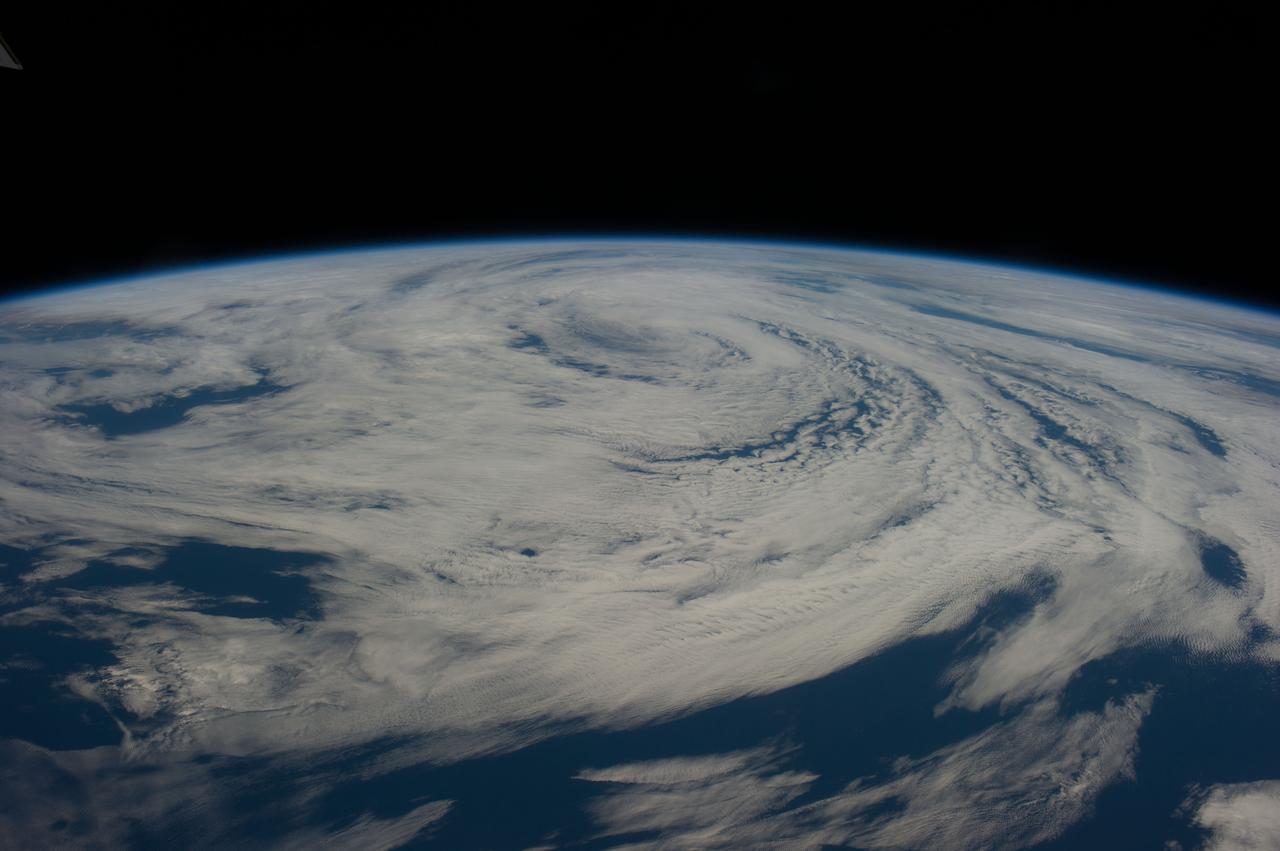
ISS040-E-017316 (23 June 2014) --- As the International Space Station was passing over the North Atlantic Ocean, just east of Newfoundland, on June 23, 2014, one of the Expedition 40 crew members on the orbital outpost recorded this panoramic view of the swirling bands of a mature, not dangerous non-tropical, cyclone. Such cyclonic activity is not unusual for this time of year in that area.
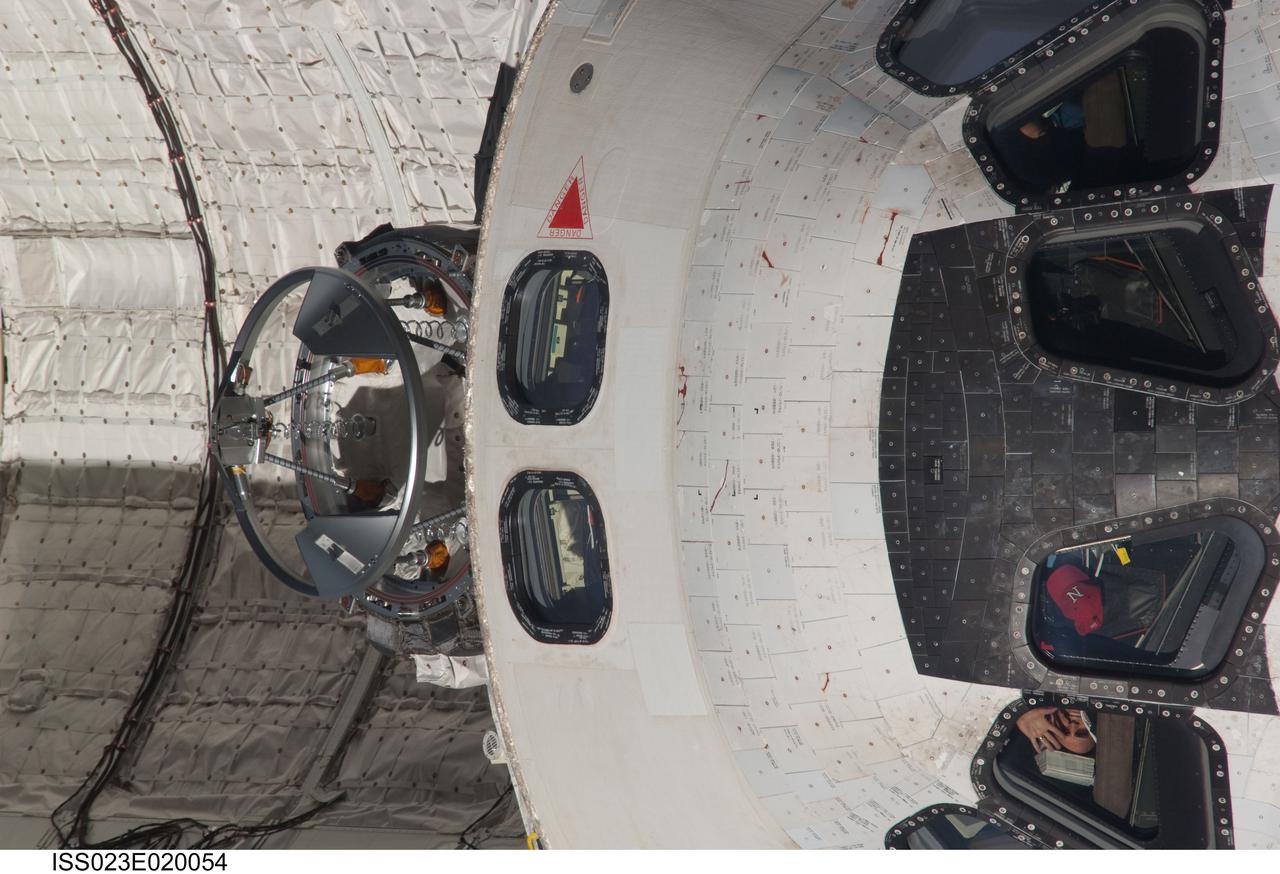
ISS023-E-020054 (7 April 2010) --- This front-on, 800mm view of the top part of Discovery's cabin was provided by one of the Expedition 23 crew members onboard the International Space Station. The shuttle was in the midst of a back-flip, performed to enable the station's cameras to survey it for possible damage. The rendezvous and subsequent docking occurred early on April 7. Once the Discovery crew joins the Expedition 23 crew aboard the orbital complex, nine men and four women will begin several days of joint activities, including three spacewalks.
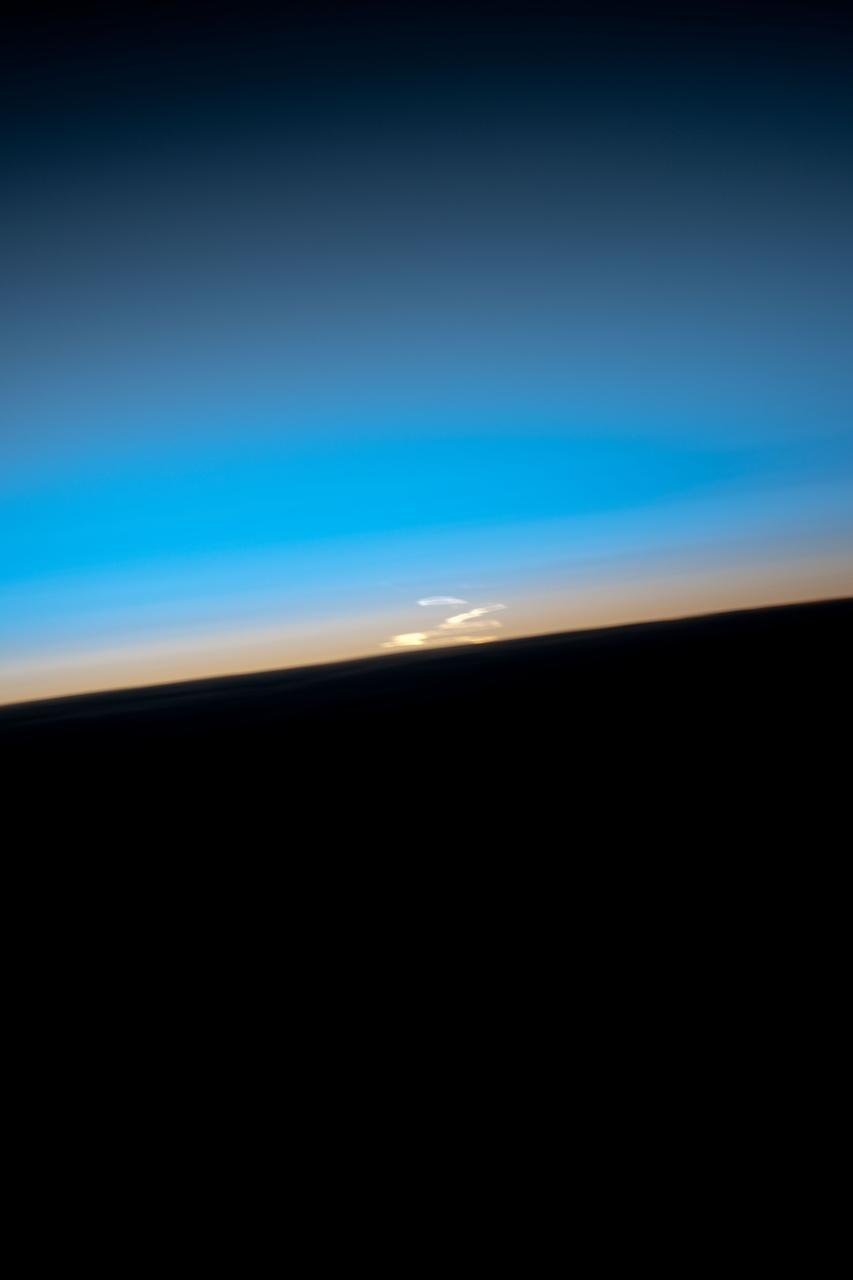
ISS033-E-015394 (23 Oct. 2012) --- This view of Earth’s horizon, shows smoke trails from the launch of the Soyuz TMA-06M spacecraft, was photographed by an Expedition 33 crew member on the International Space Station. The Soyuz, with Expedition 33 crew members Soyuz Commander Oleg Novitskiy, Flight Engineer Kevin Ford of NASA, and Flight Engineer Evgeny Tarelkin of Roscosmos onboard, launched at 4:51 p.m. Kazakhstan time (5:51 a.m. CDT) on Oct. 23, 2012, from Baikonur, Kazakhstan.
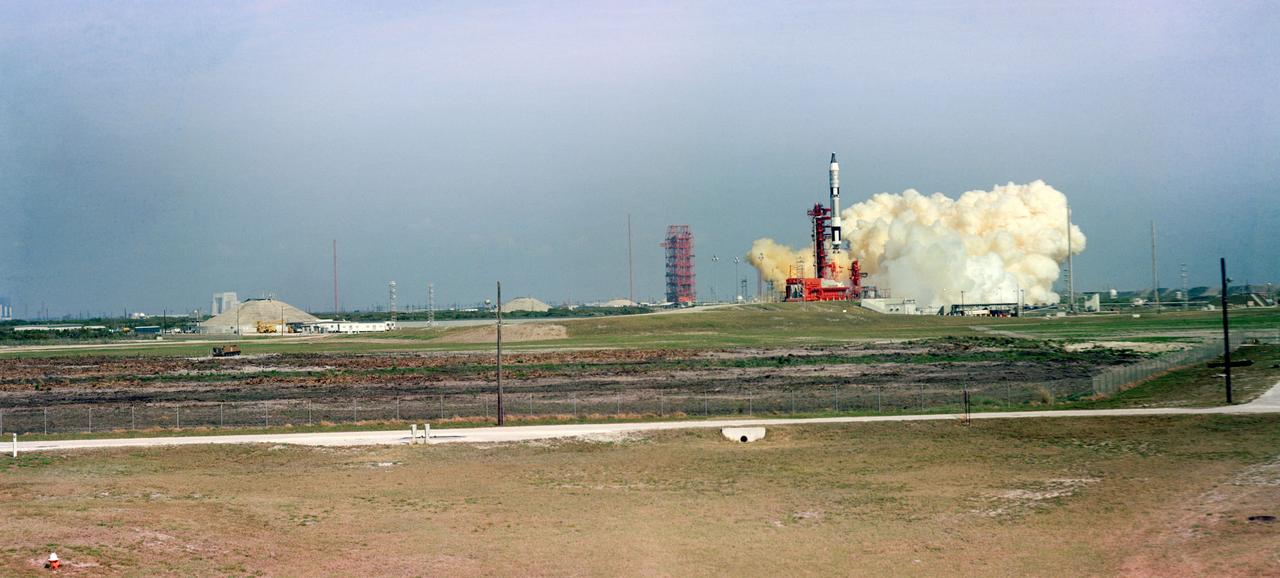
S65-21520 (23 March 1965) --- Distant view showing the successful launching of the first manned Gemini flight. The Gemini-Titan 3 (GT-3) lifted off Pad 19, at the Kennedy Space Center (KSC) at 9:24 a.m. (EST), March 23, 1965. The Gemini-3 spacecraft "Molly Brown" carried astronauts Virgil I. Grissom, command pilot, and John W. Young, pilot, on three successful orbits of Earth.
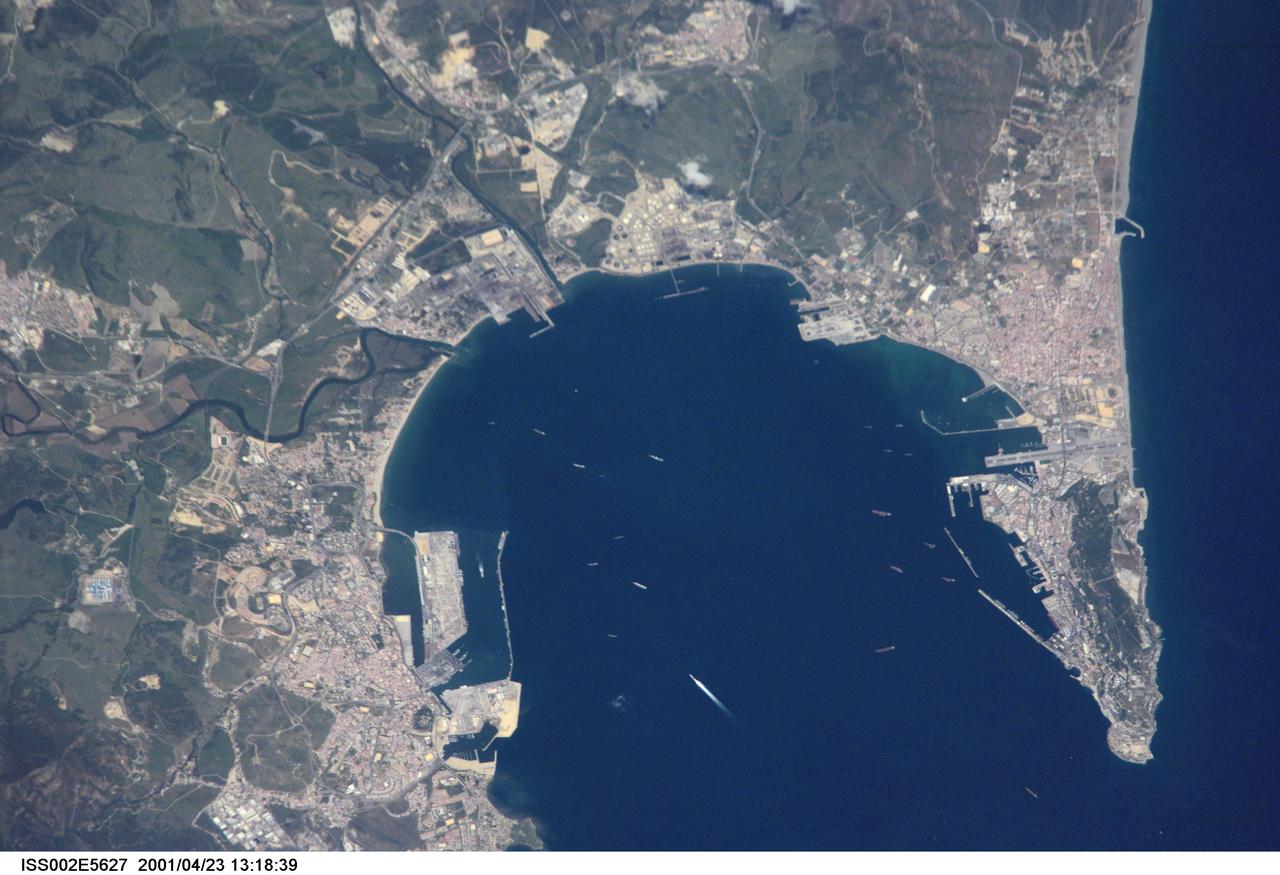
ISS002-E-5627 (23 April 2001) --- Algecira (left), the Bay of Gibraltar (Bahia de Algecira) and "The Rock of Gibraltar" (right) are featured in this detailed vertical view on the European side of the Strait of Gibraltar. Ship traffic in the Bay and Gibraltar Dock Yard can easily be seen. This digital still camera's image is part of a series of pictures centering on the Strait of Gibraltar area which was recorded by the ISS Expedition Two crew on April 23, 2001.
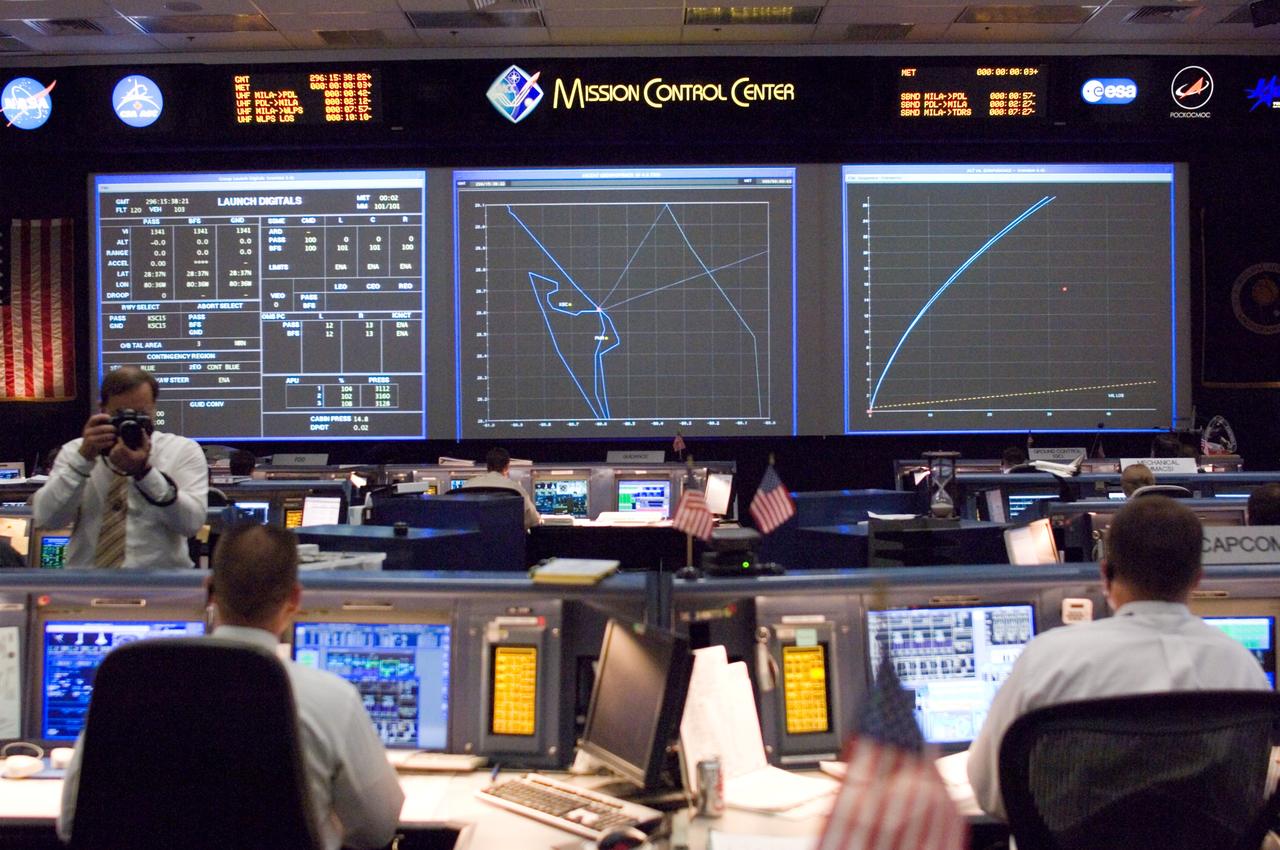
JSC2007-E-053912 (23 Oct. 2007) --- Overall view of the space shuttle flight control room of Johnson Space Center's Mission Control Center (MCC) following the launch of Space Shuttle Discovery for the STS-120 mission. Liftoff occurred at 11:38 a.m. (EDT) on Oct. 23, 2007 from launch pad 39A at Kennedy Space Center.
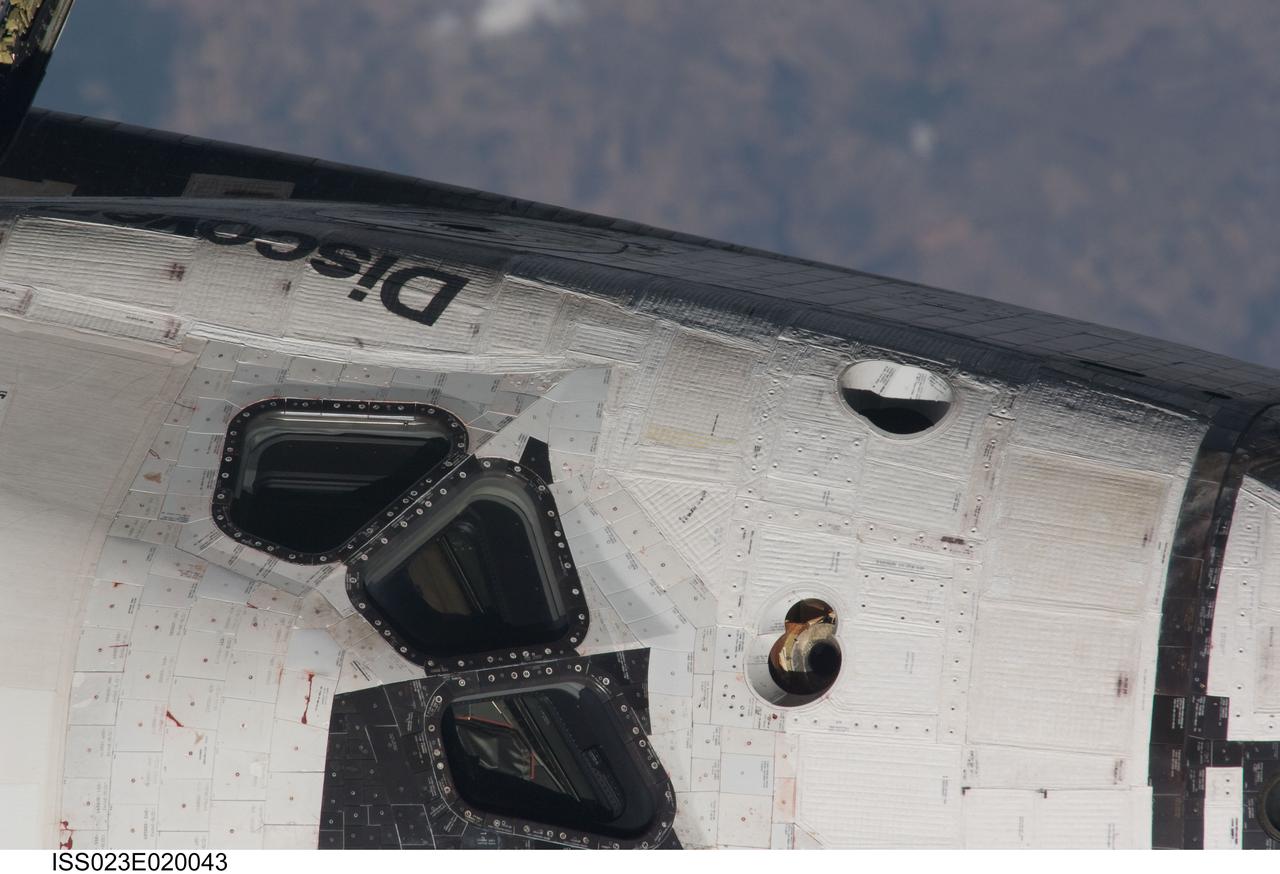
ISS023-E-020043 (7 April 2010) --- This nadir, 800mm view of the portside top part of Discovery's cabin was provided by one of the Expedition 23 crew members onboard the International Space Station. The shuttle was in the midst of a back-flip, performed to enable the station's cameras to survey it for possible damage. The rendezvous and subsequent docking occurred early on April 7. Once the Discovery crew joins the Expedition 23 crew aboard the orbital complex, nine men and four women will begin several days of joint activities, including three spacewalks.
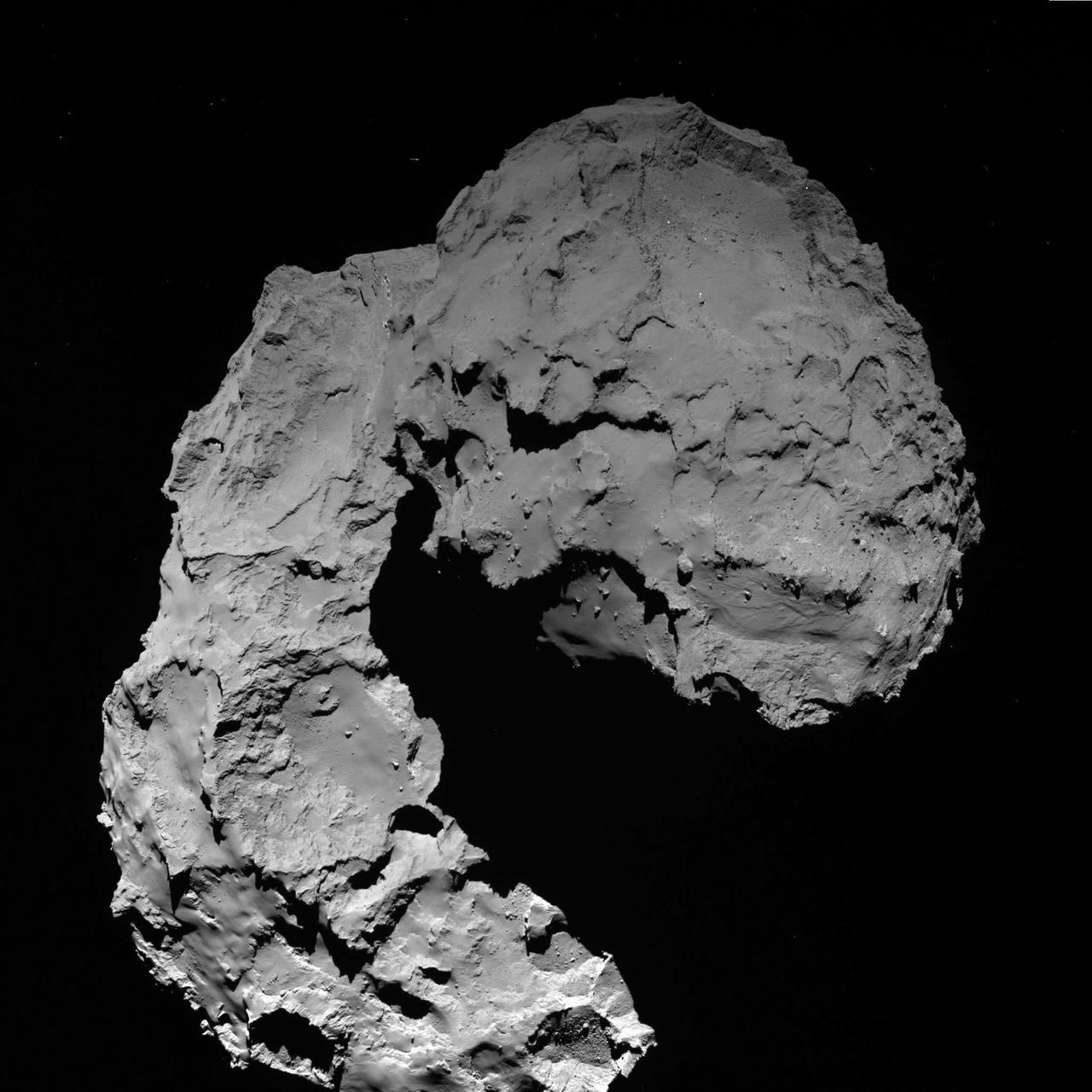
This view shows Comet 67P/Churyumov-Gerasimenko as seen by the OSIRIS wide-angle camera on ESA's Rosetta spacecraft on September 29, 2016, when Rosetta was at an altitude of 14 miles (23 kilometers). The European Space Agency's (ESA) Rosetta mission will come to a dramatic end on Friday, Sept. 30, with a controlled touchdown of the spacecraft on a region of comet 67P/Churyumov-Gerasimenko known for active pits that spew comet dust into space. Confirmation of the end of mission is expected at about 4:20 a.m. PDT (7:20 a.m. EDT). ESA is ending the mission due to the spacecraft's ever-increasing distance from the sun, which has resulted in significantly reduced solar power with which to operate the vehicle and its instruments. http://photojournal.jpl.nasa.gov/catalog/PIA21068
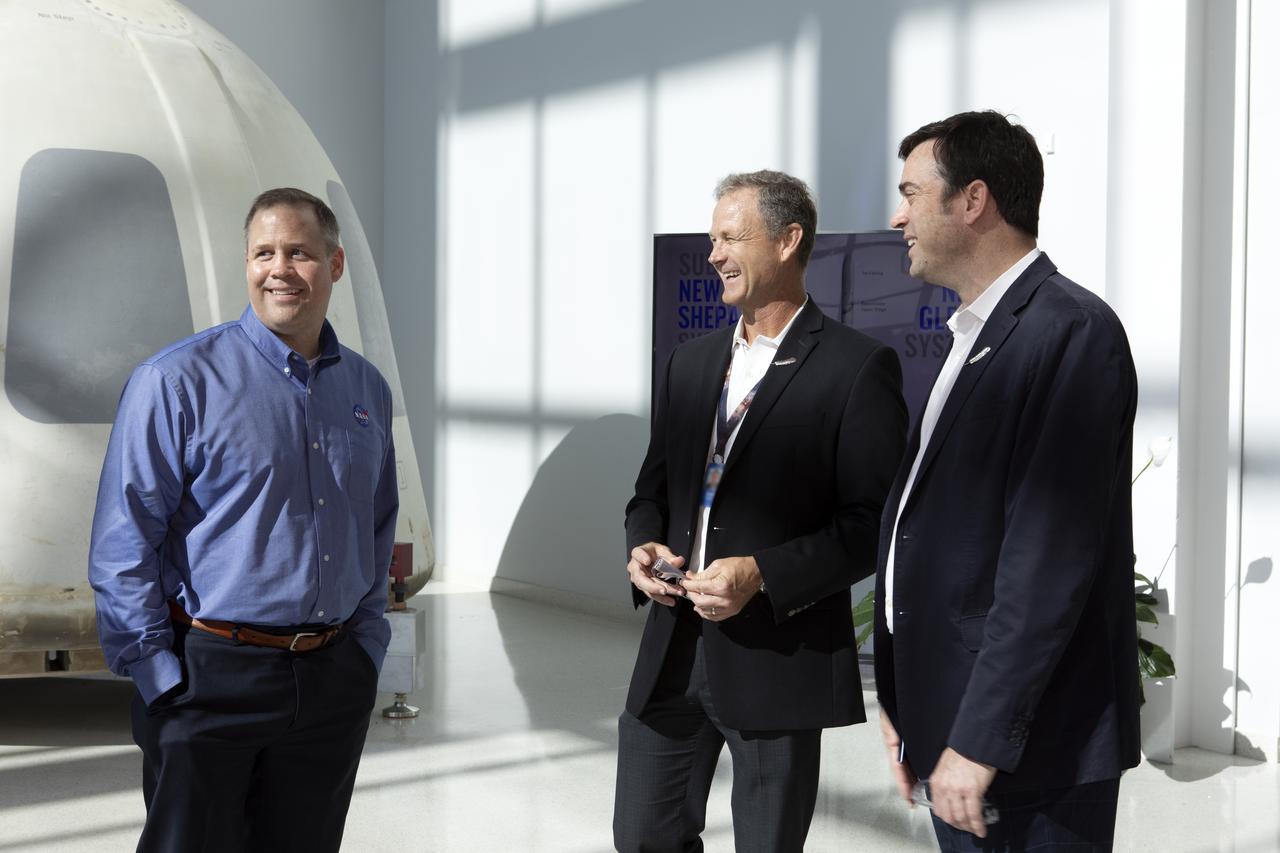
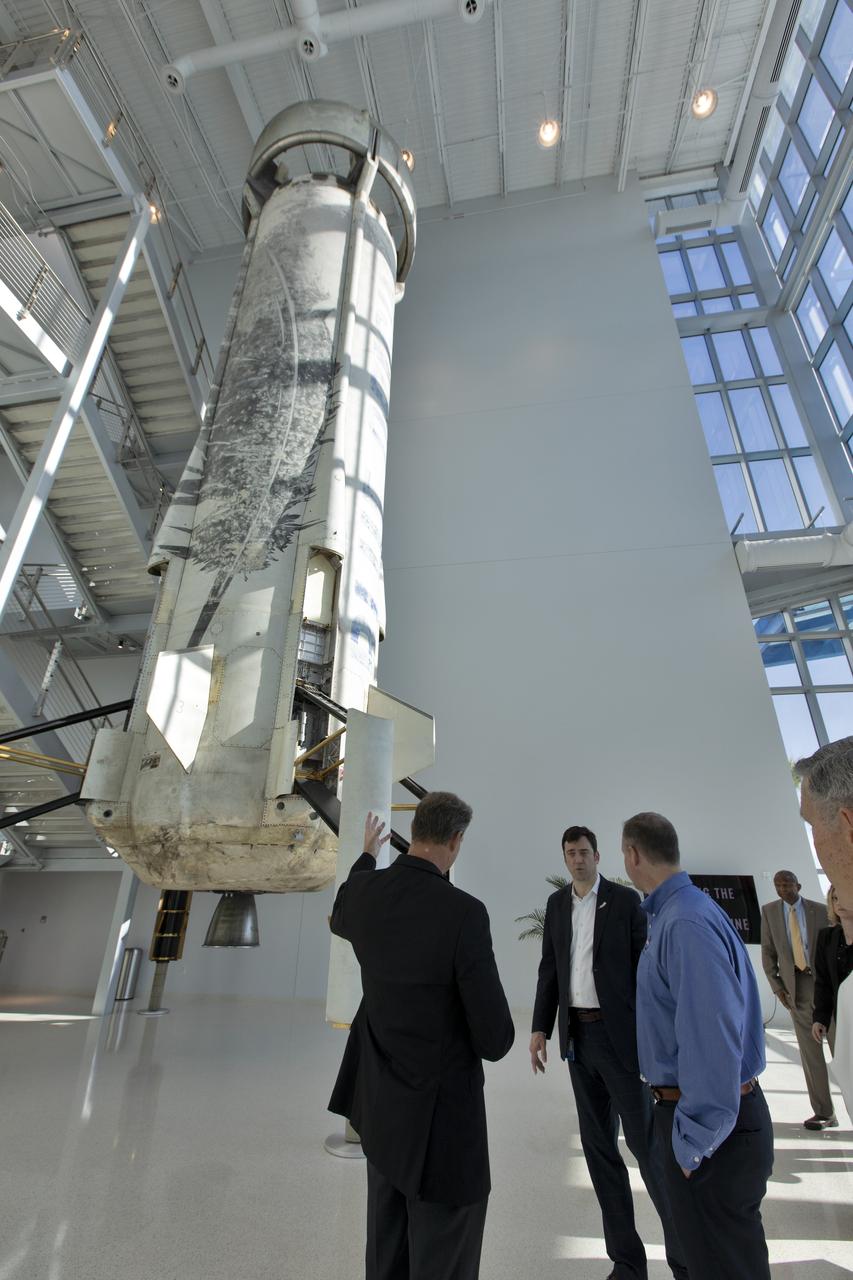
NASA Administrator Jim Bridenstine, at left, tours the Blue Origin facilities near the agency’s Kennedy Space Center in Florida on May 23, 2019. Bridenstine viewed the New Shepard booster and crew capsule that flew to space and back five times.
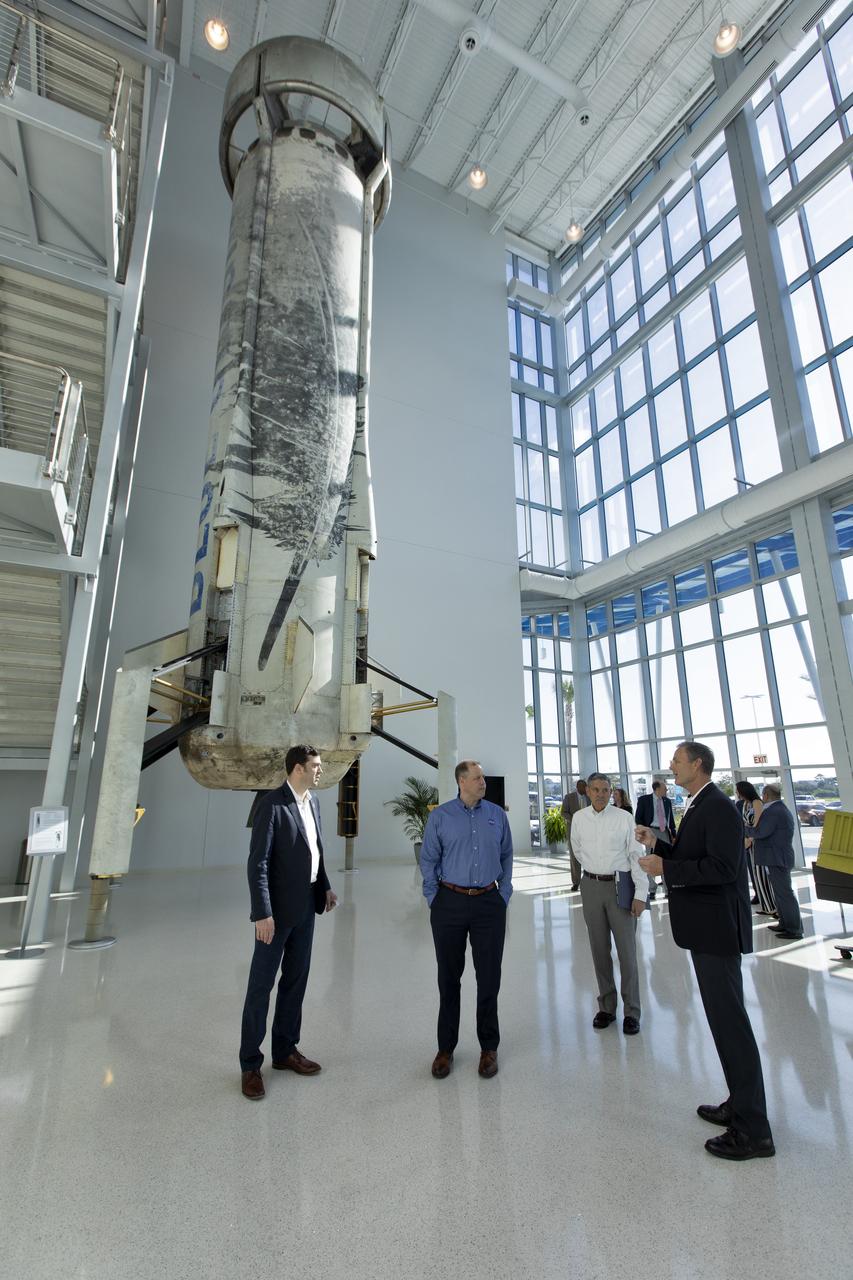
NASA Administrator Jim Bridenstine, second from left, tours the Blue Origin facilities near the agency’s Kennedy Space Center in Florida on May 23, 2019. Third from left is Kennedy Space Center Director Bob Cabana. They viewed the New Shepard booster and crew capsule that few to space and back five times.
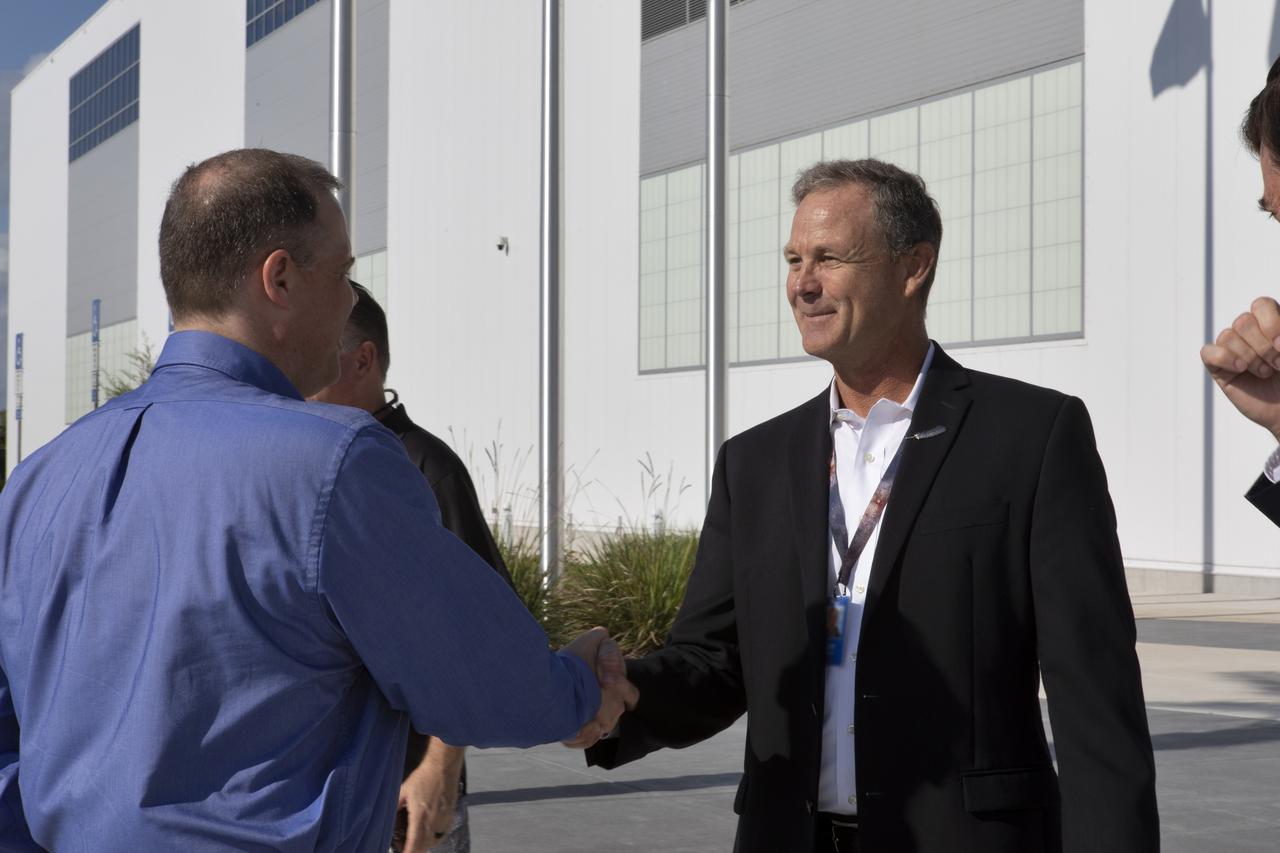
NASA Administrator Jim Bridenstine shakes hands with Scott Henderson, Blue Origin Orbital Launch director, at the Blue Origin facilities near the agency’s Kennedy Space Center in Florida on May 23, 2019. Bridenstine toured the facilities and viewed the New Shepard booster and crew capsule that flew to space and back five times.
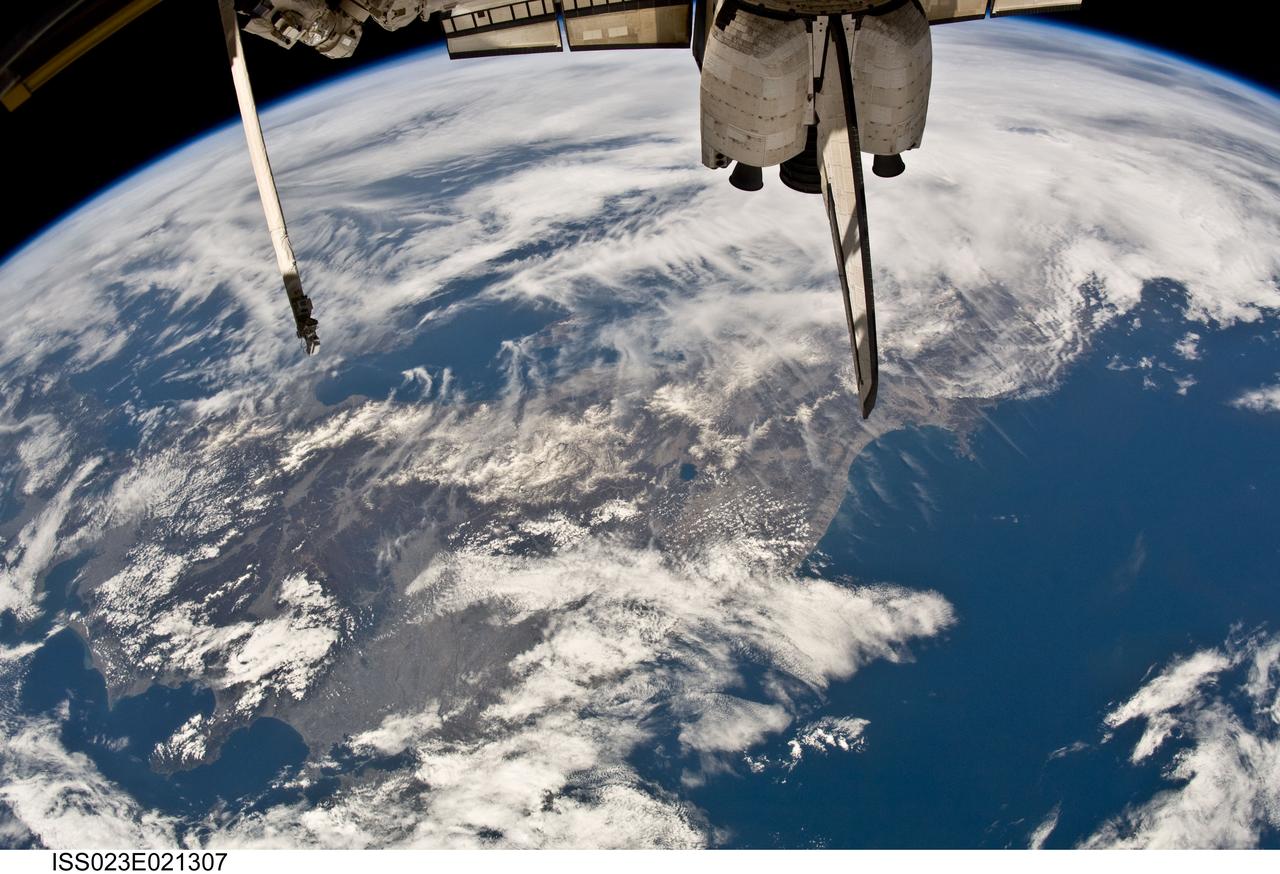
ISS023-E-021307 (10 April 2010) --- Photographed by one of the Expedition 23 crew members onboard the International Space Station 220 miles above Earth, this is a broad area view of Sendai, Japan. The end of the shuttle vertical stabilizer points to Sendai.
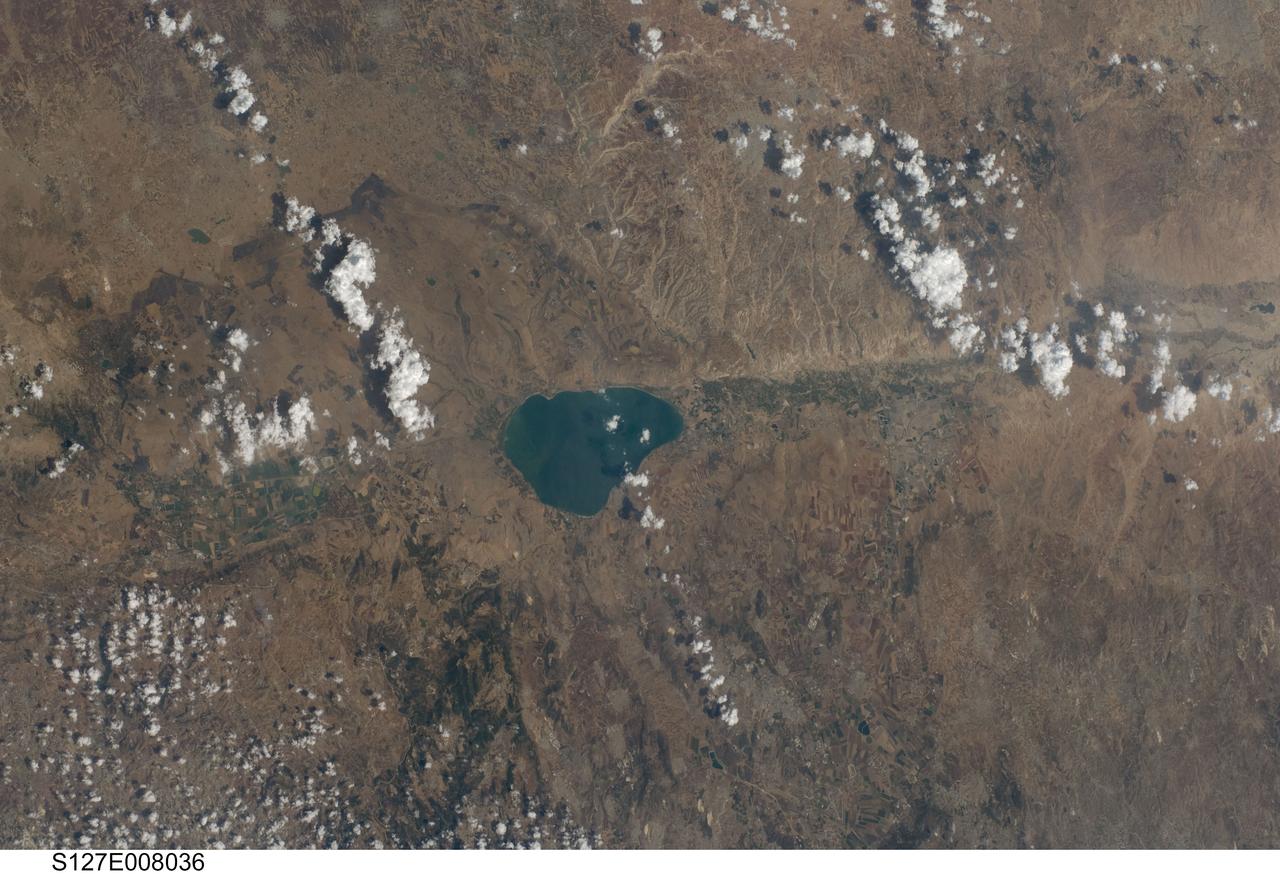
S127-E-008036 (23 July 2009) -- This is a view of the Sea of Galilee as photographed from the shuttle-station tandem 220 miles above Earth. An internatioal crew of astronauts and cosmonauts is spending more than a week together to continue work on the orbital outpost.
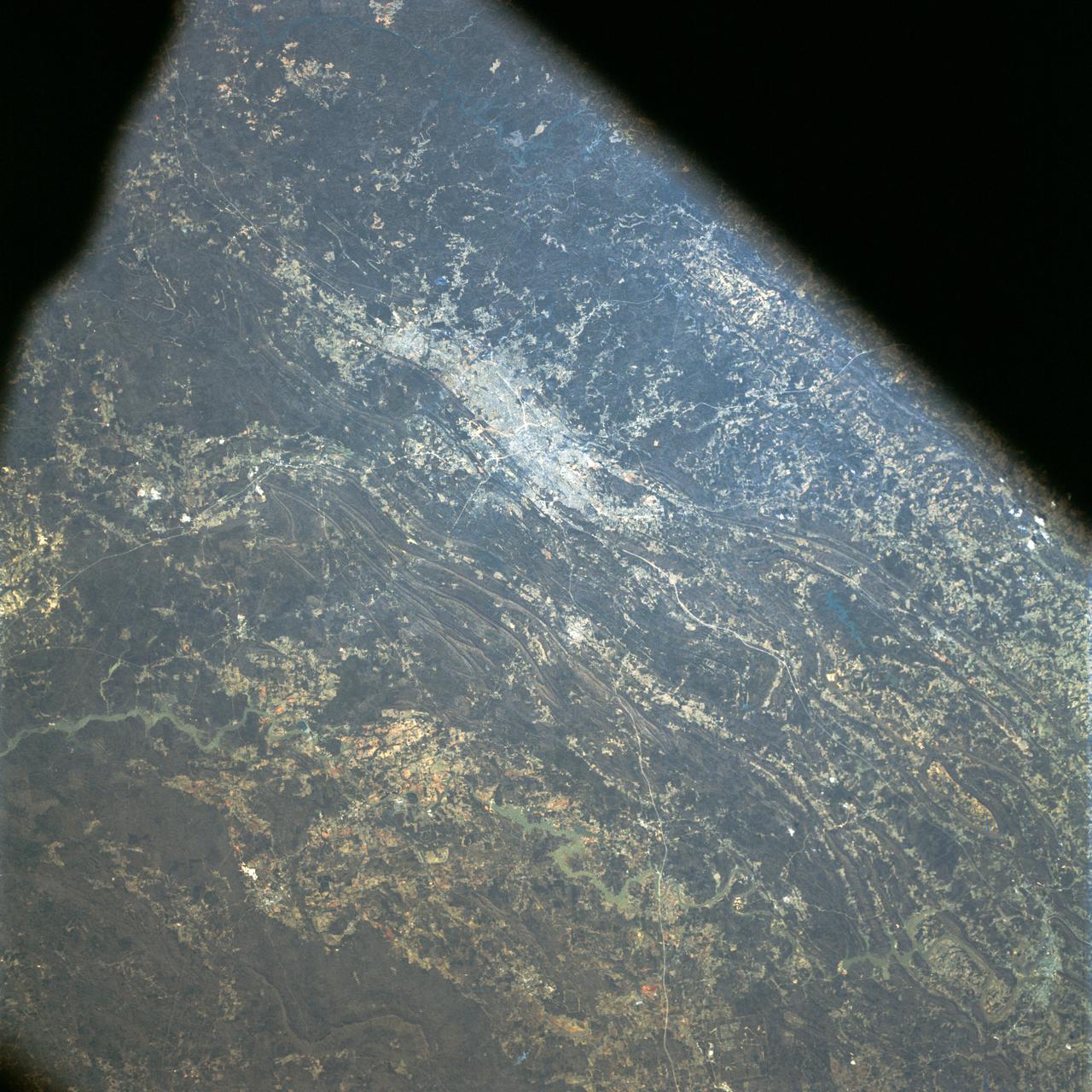
AS09-23-3566 (3-13 March 1969) --- Near vertical view of the Birmingham, Alabama area extending to Gadeden, as photographed from the Apollo 9 spacecraft during its Earth-orbital mission. The city spreads out between ridges of the folded southern Appalachian Mountains. The major stream in the picture is the Coosa River.
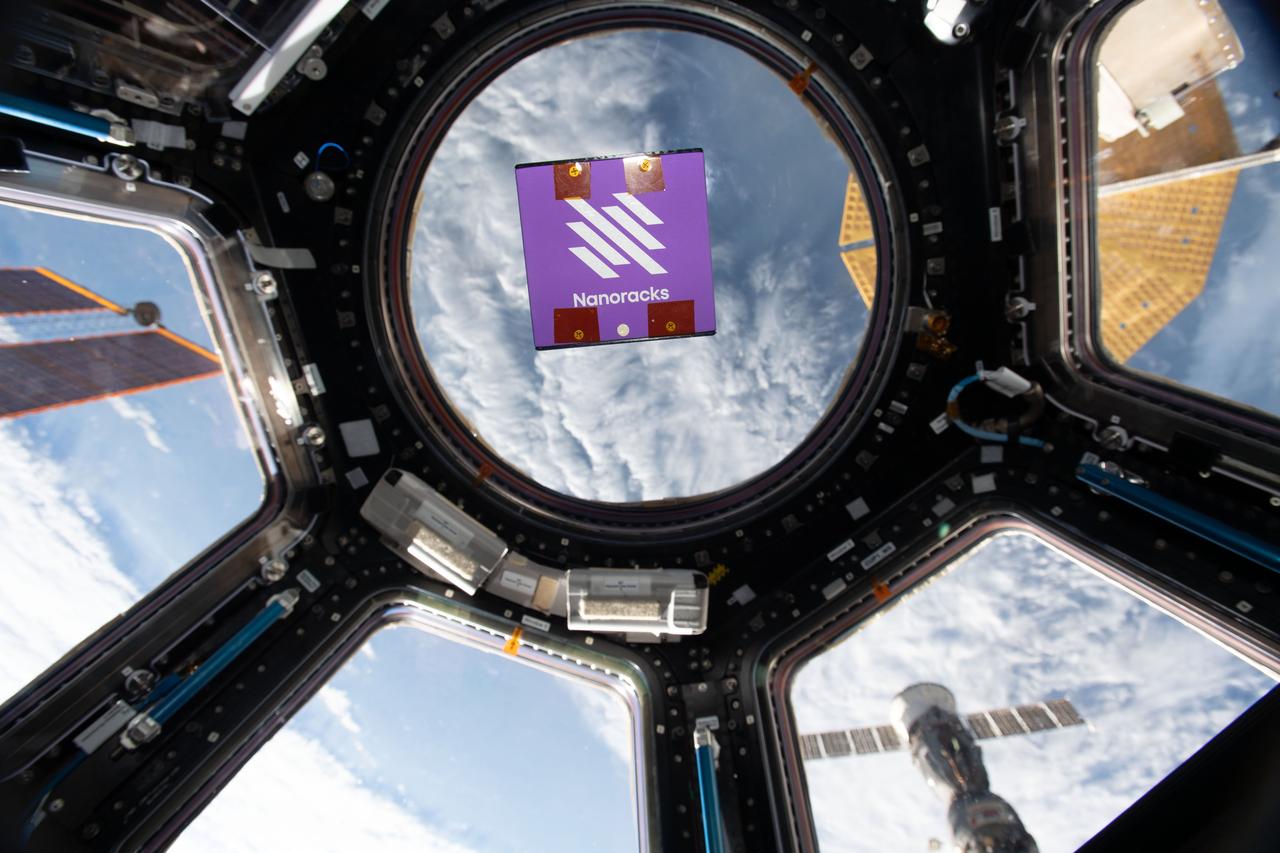
iss067e066371 (5/23/2022) --- A view of the RadPC-AI investigation shown in the cupola module aboard the International Space Station (ISS). This investigation tests how well RadPC executes the AI algorithms in addition to how well the AI algorithms run on this type of computer technology.
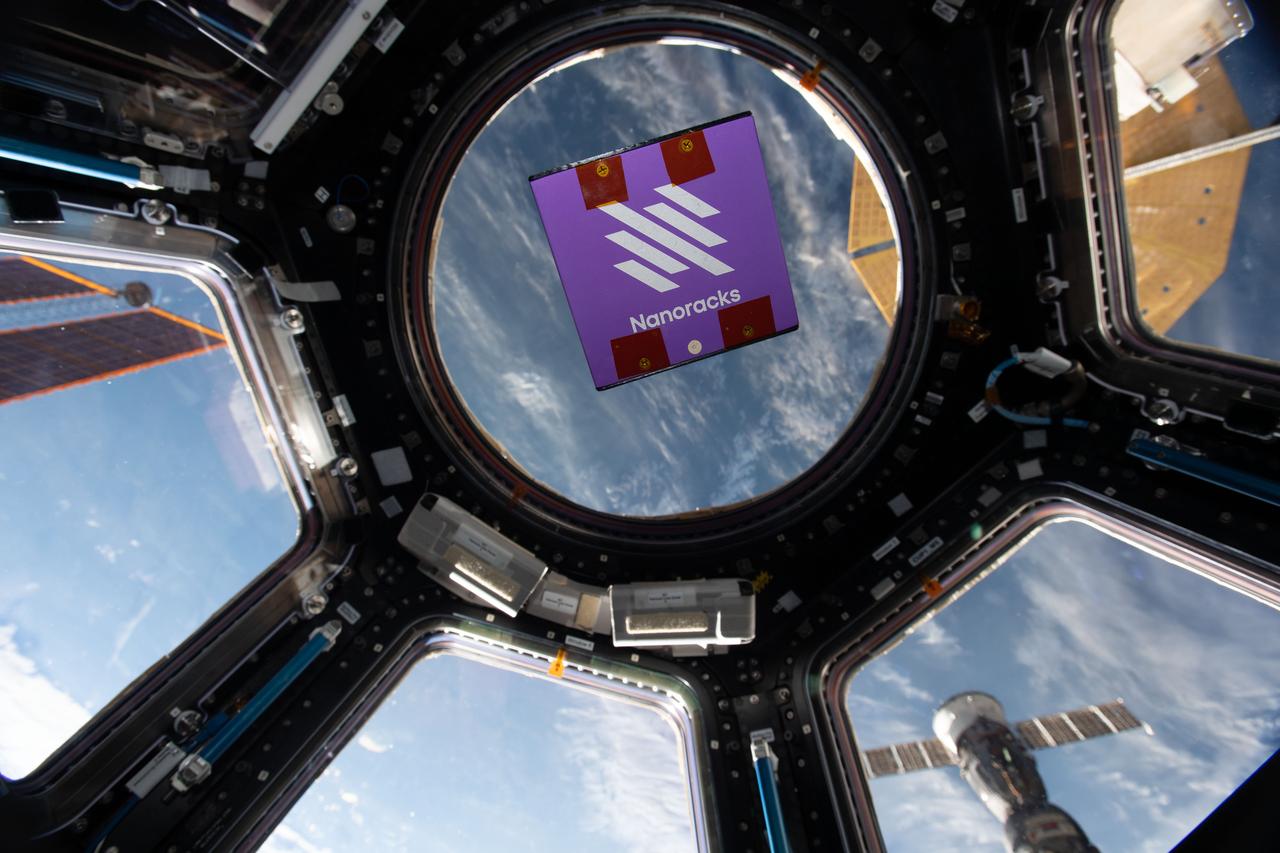
iss067e066375 (5/23/2022) --- A view of the SpaceChain 2.0 investigation in the cupola module aboard the International space Station (ISS). The SpaceChain 2.0 investigation verifies the hardware and software required to extend robust blockchain capabilities into the developing space economy.
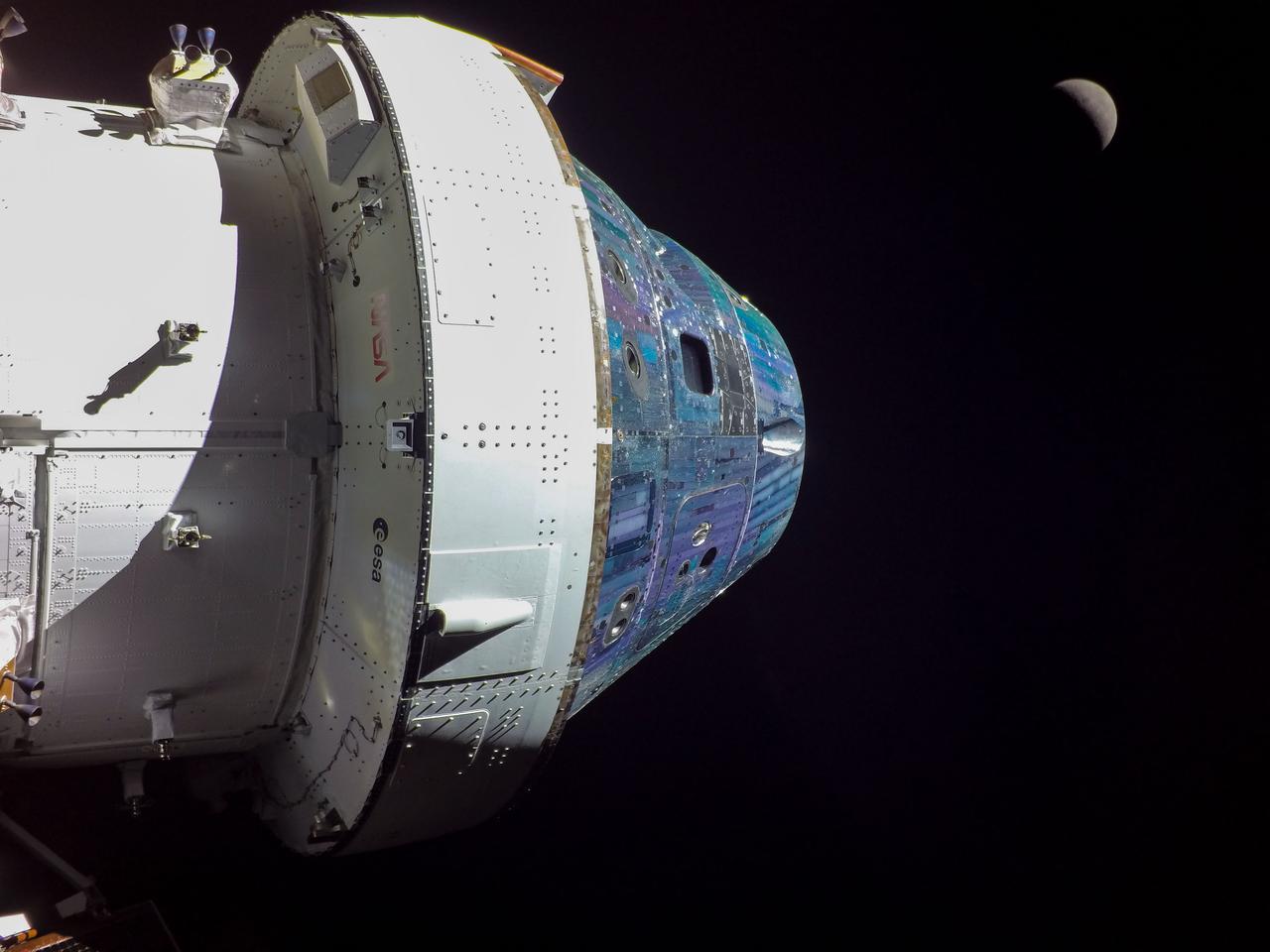
art001e000415 (Nov. 23, 2022) – On Flight Day 8, NASA’s Orion spacecraft remains two days away from reaching its distant retrograde orbit. The Moon is in view as Orion snaps a selfie using a camera mounted on one of its solar array at 10:57 p.m. EST.
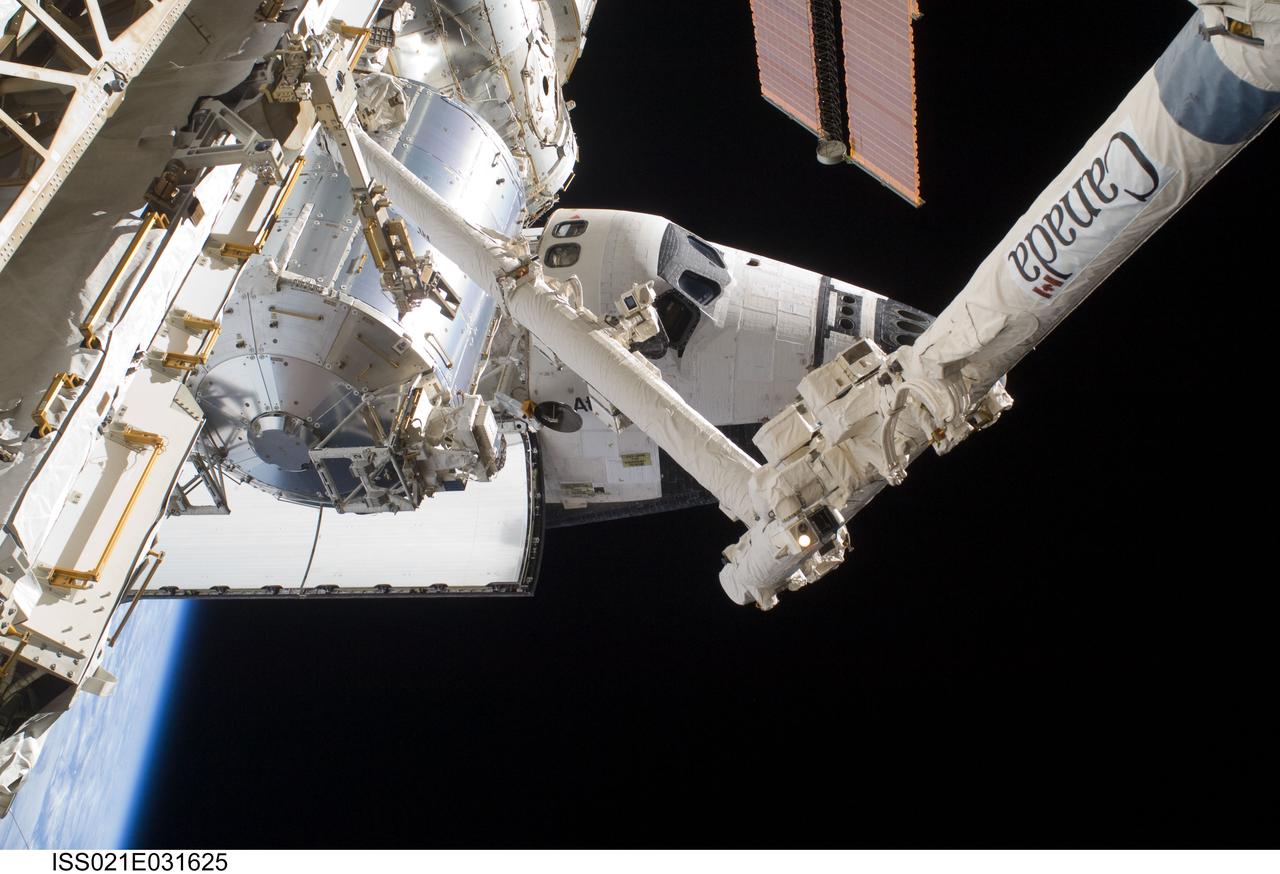
ISS021-E-031625 (23 Nov. 2009) --- A partial view of the space shuttle Atlantis (STS-129), docked to the International Space Station, along with the station’s Canadarm2, the Columbus laboratory and Harmony node are featured in this image photographed by a space-walking astronaut during the mission’s third and final spacewalk.
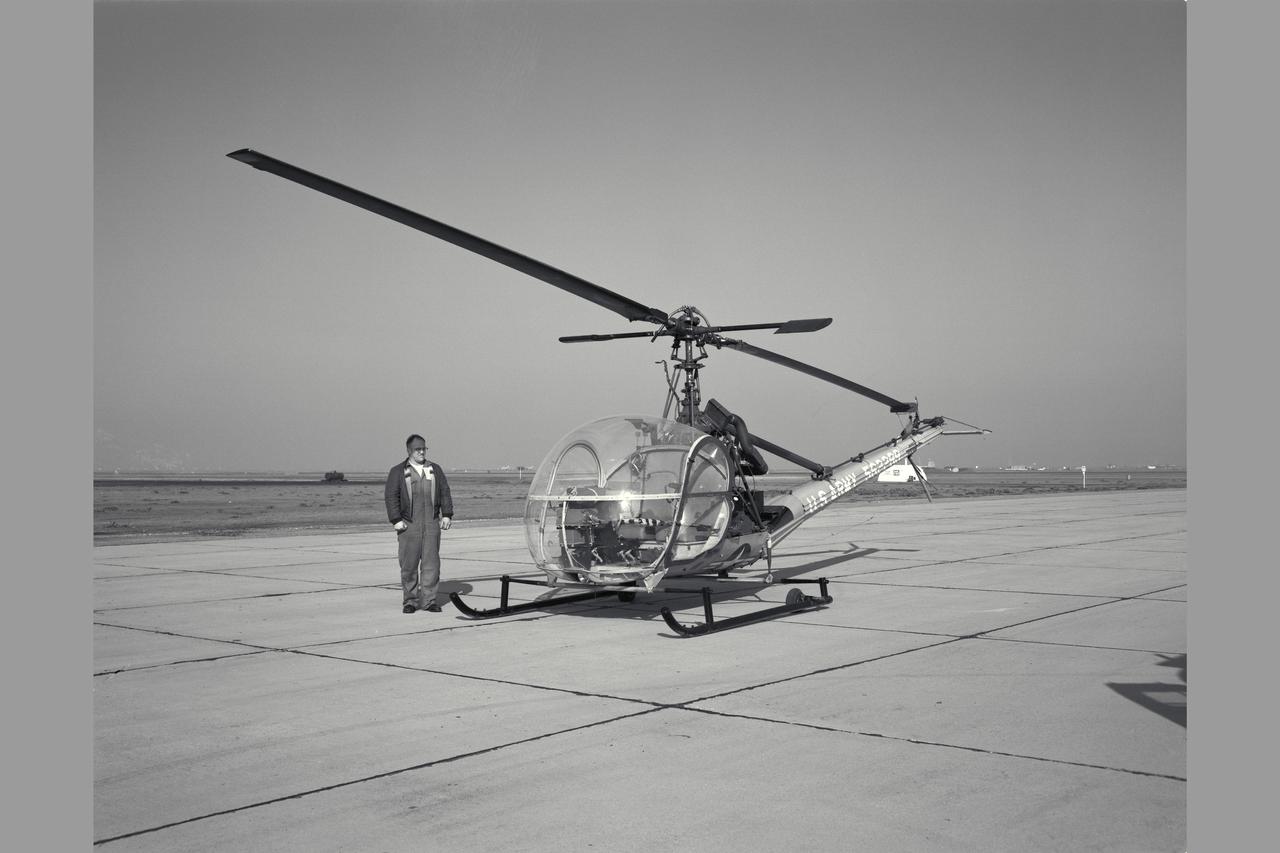
3/4 FRONT VIEW OF HILLER H-23C (USA 56-2288). USE OF THE HILLER H-23 HELICOPTER AS AN AID IN ESTABLISHING SATISFACTORY FLYING QUALITIES & REQUIREMENTS FOR VTOL AIRCRAFT. Rotocraft Research. NASA SP Flight Research at Ames: 57 Years of Development and Validation of Aeronautical Technology
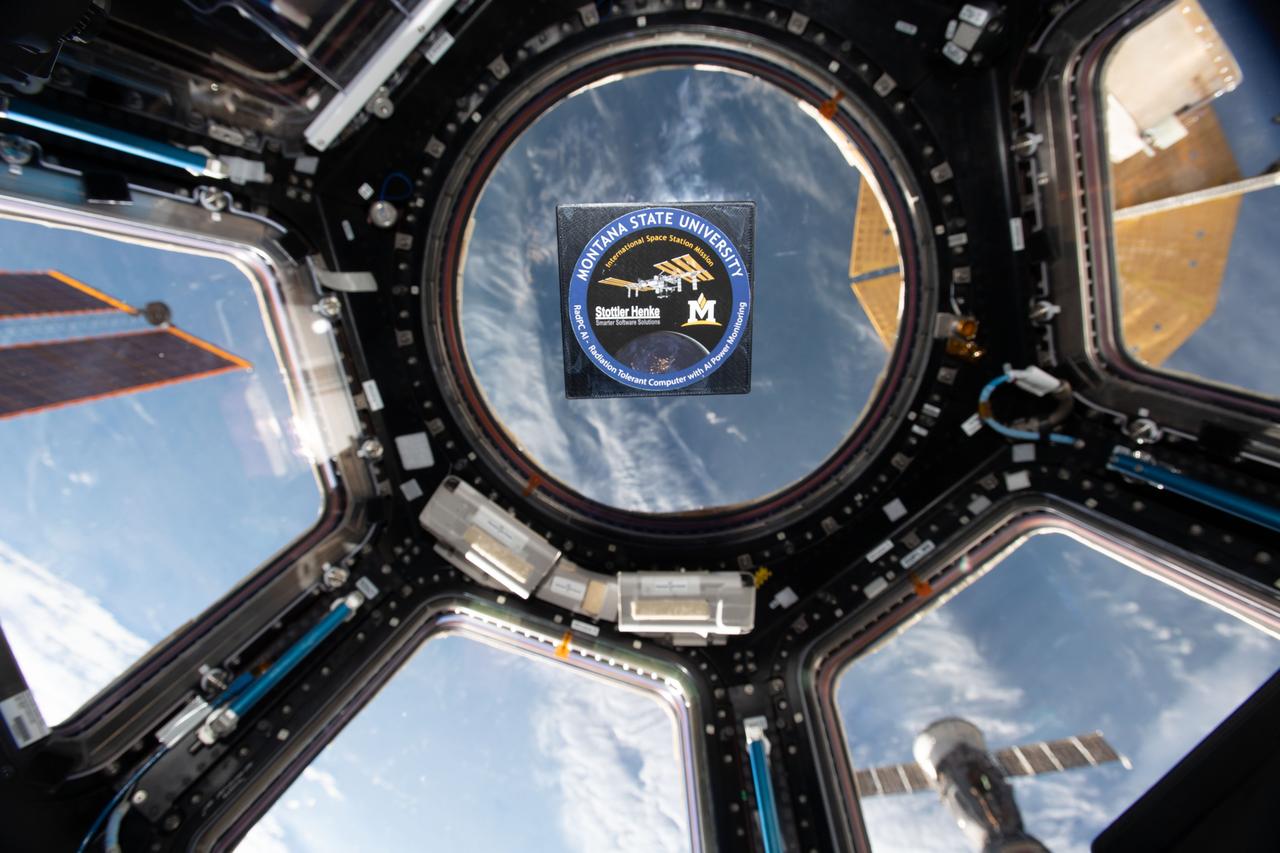
iss067e066374 (5/23/2022) --- A view of the RadPC-AI investigation shown in the cupola module aboard the International Space Station (ISS). This investigation tests how well RadPC executes the AI algorithms in addition to how well the AI algorithms run on this type of computer technology.
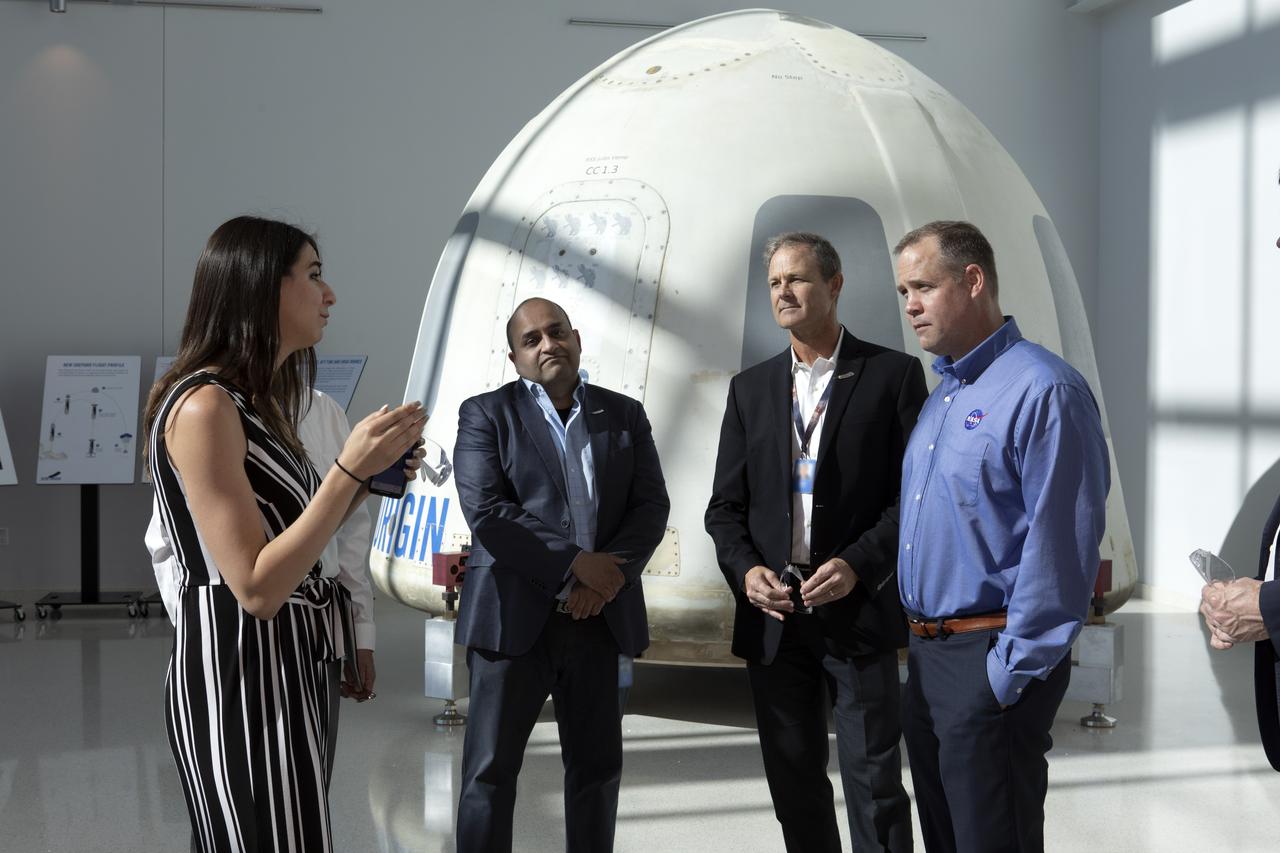
NASA Administrator Jim Bridenstine, far right, tours the Blue Origin facilities near the agency’s Kennedy Space Center in Florida on May 23, 2019. Bridenstine viewed the New Shepard booster and crew capsule that flew to space and back five times.
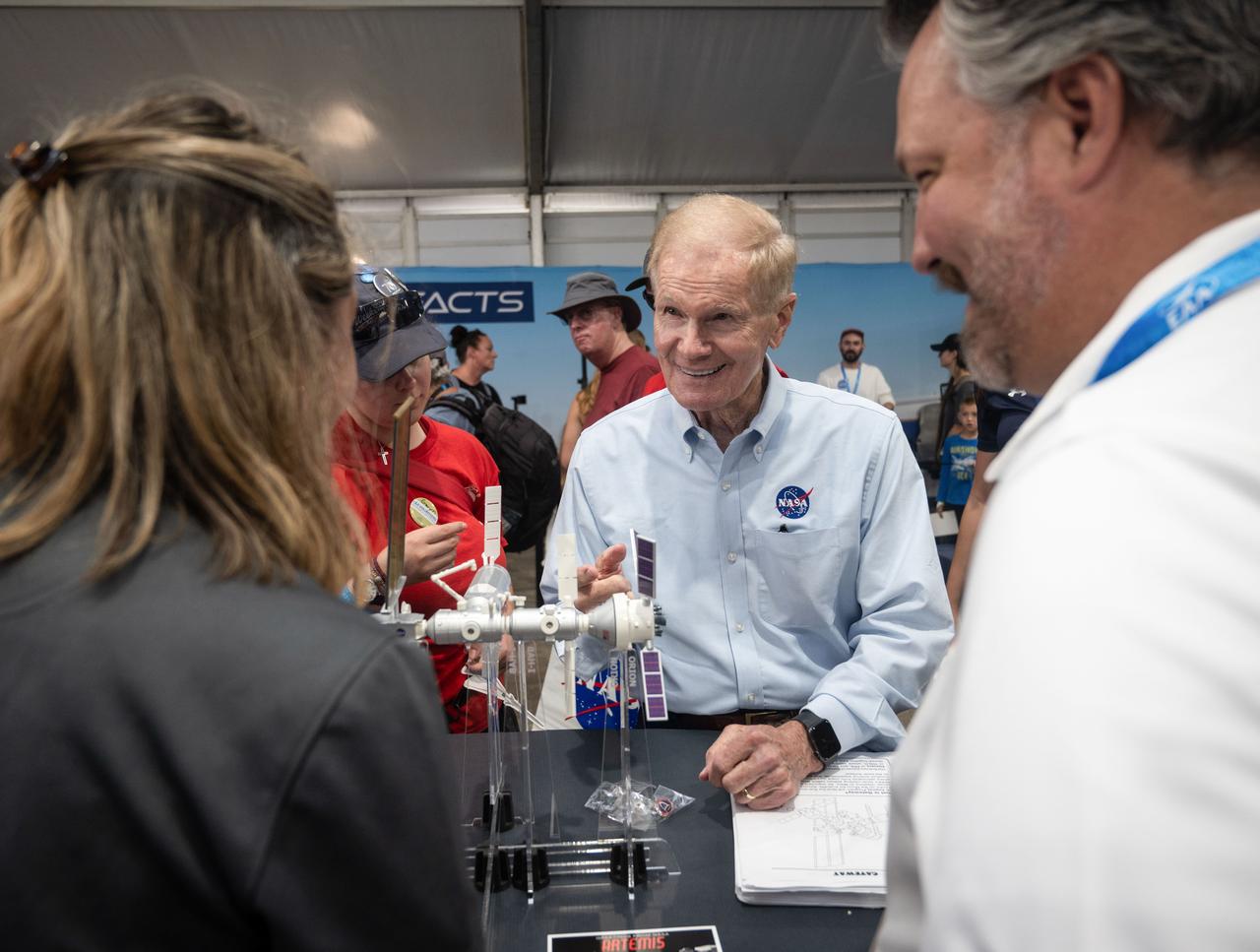
jsc2024e055759 (July 23, 2024) -- NASA Administrator Bill Nelson views of model of Gateway during EAA AirVenture Oshkosh 2024. The Gateway lunar space station will play a crucial role in NASA's Artemis missions. Photo Credit: NASA/Andrew Carlsen
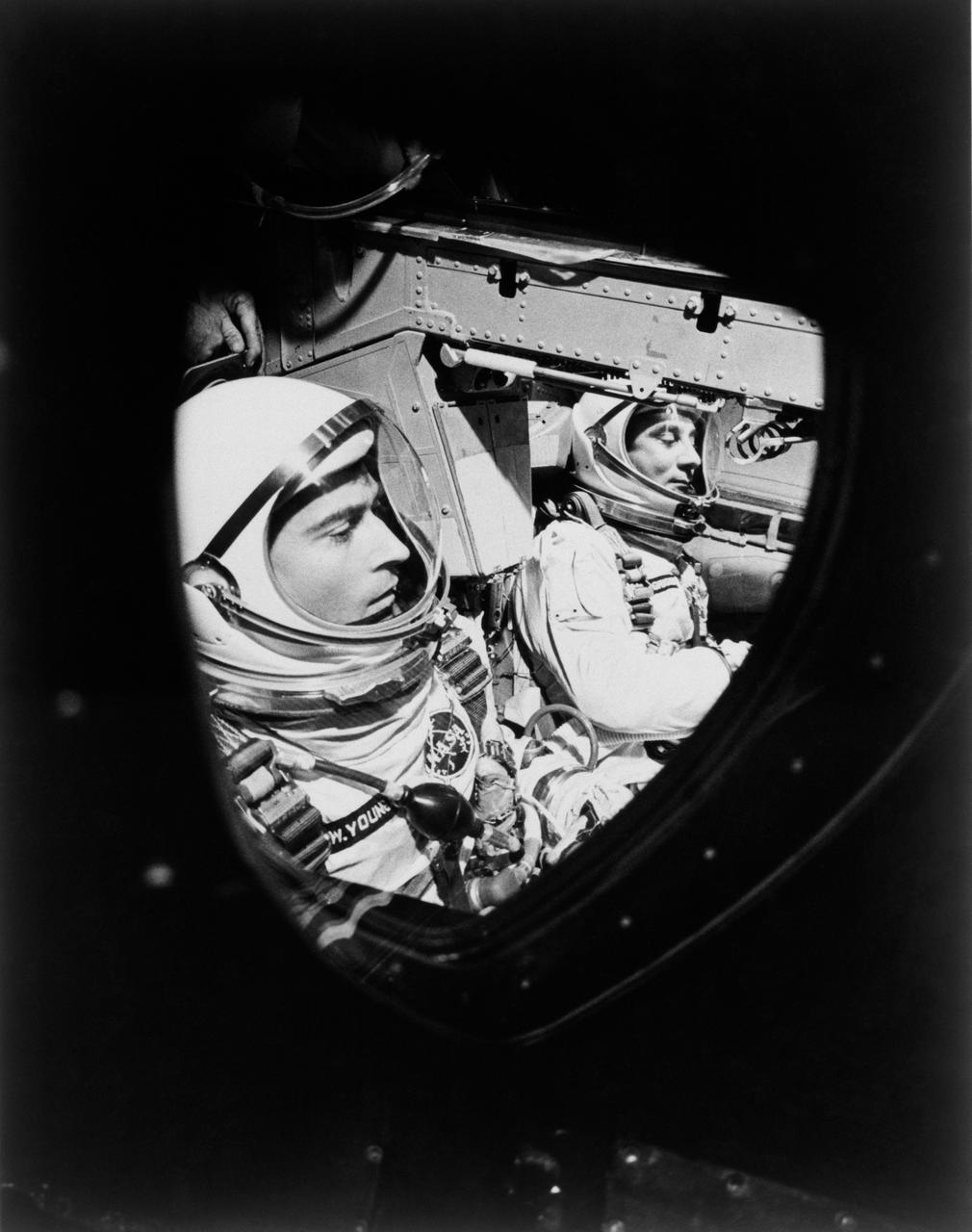
S65-19225 (23 March 1965) --- This view of astronauts John W. Young (left), pilot, and Virgil I. Grissom, command pilot, was taken through the window of the open hatch on Young's side of the Gemini-Titan 3 spacecraft just before the hatches were closed in readiness for their three-orbit flight.
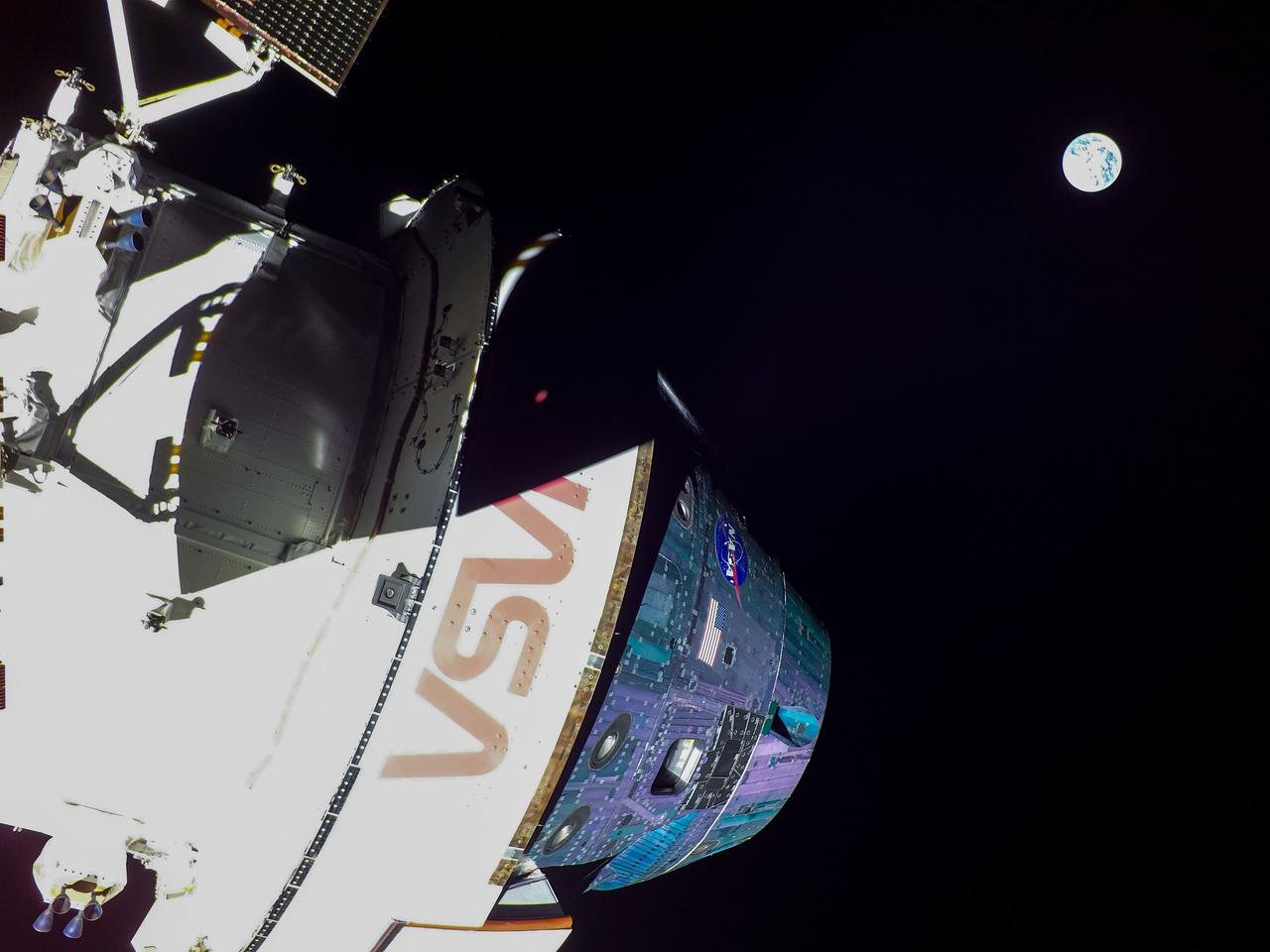
art001e000414 (Nov. 23, 2022) – On Flight Day 8, NASA’s Orion spacecraft remains two days away from reaching its distant retrograde orbit. The Earth is in view as Orion snaps a selfie using a camera mounted on one of its solar array at 10:56 p.m. EST.
NASA Administrator Jim Bridenstine, second from right in the blue shirt, tours the Blue Origin facilities near the agency’s Kennedy Space Center in Florida on May 23, 2019. He viewed the New Shepard booster and crew capsule that flew to space and back five times.

NASA Administrator Jim Bridenstine, fourth from left, tours the Blue Origin facilities near the agency’s Kennedy Space Center in Florida on May 23, 2019. Second from left is Kennedy Space Center Director Bob Cabana. They viewed the New Shepard booster and crew capsule that flew to space and back five times.
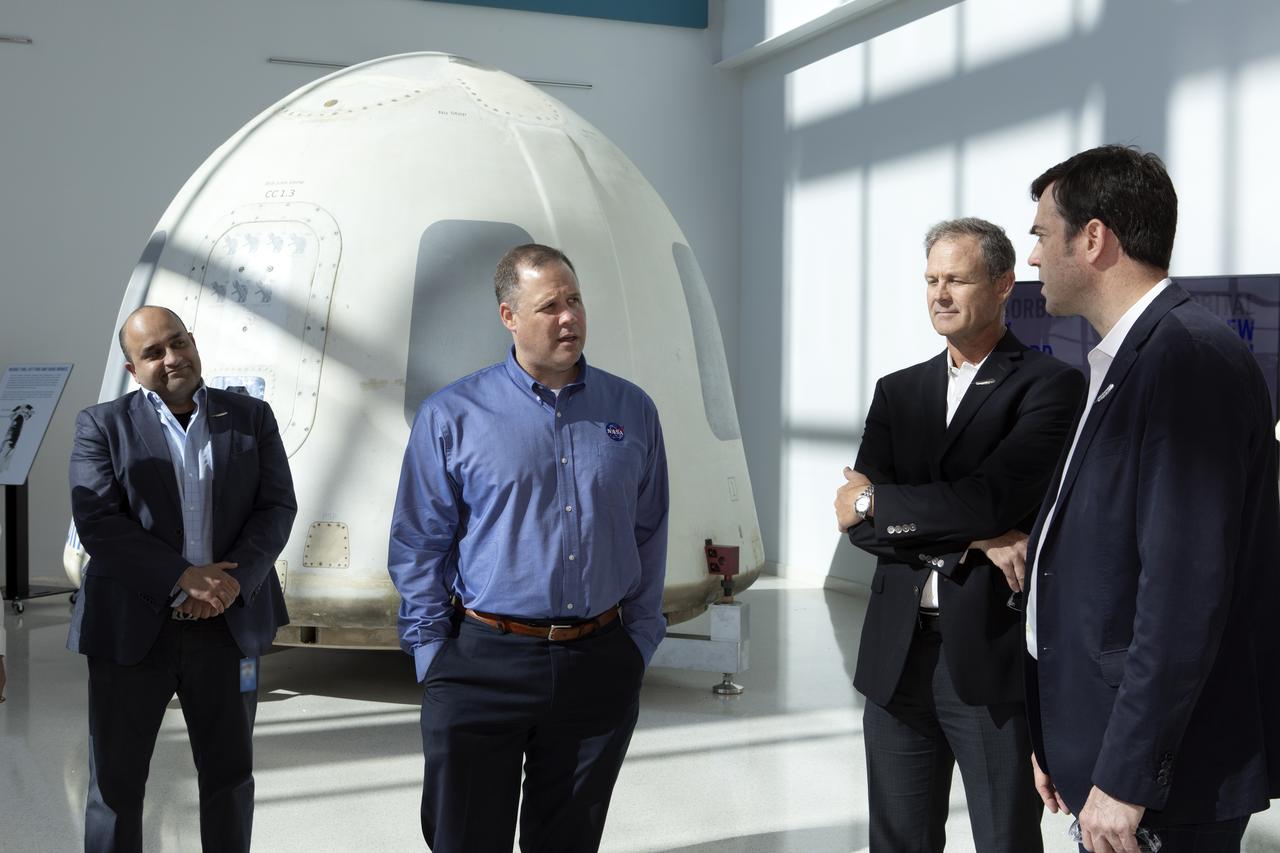
NASA Administrator Jim Bridenstine, second from left, tours the Blue Origin facilities near the agency’s Kennedy Space Center in Florida on May 23, 2019. Bridenstine viewed the New Shepard booster and crew capsule that flew to space and back five times.
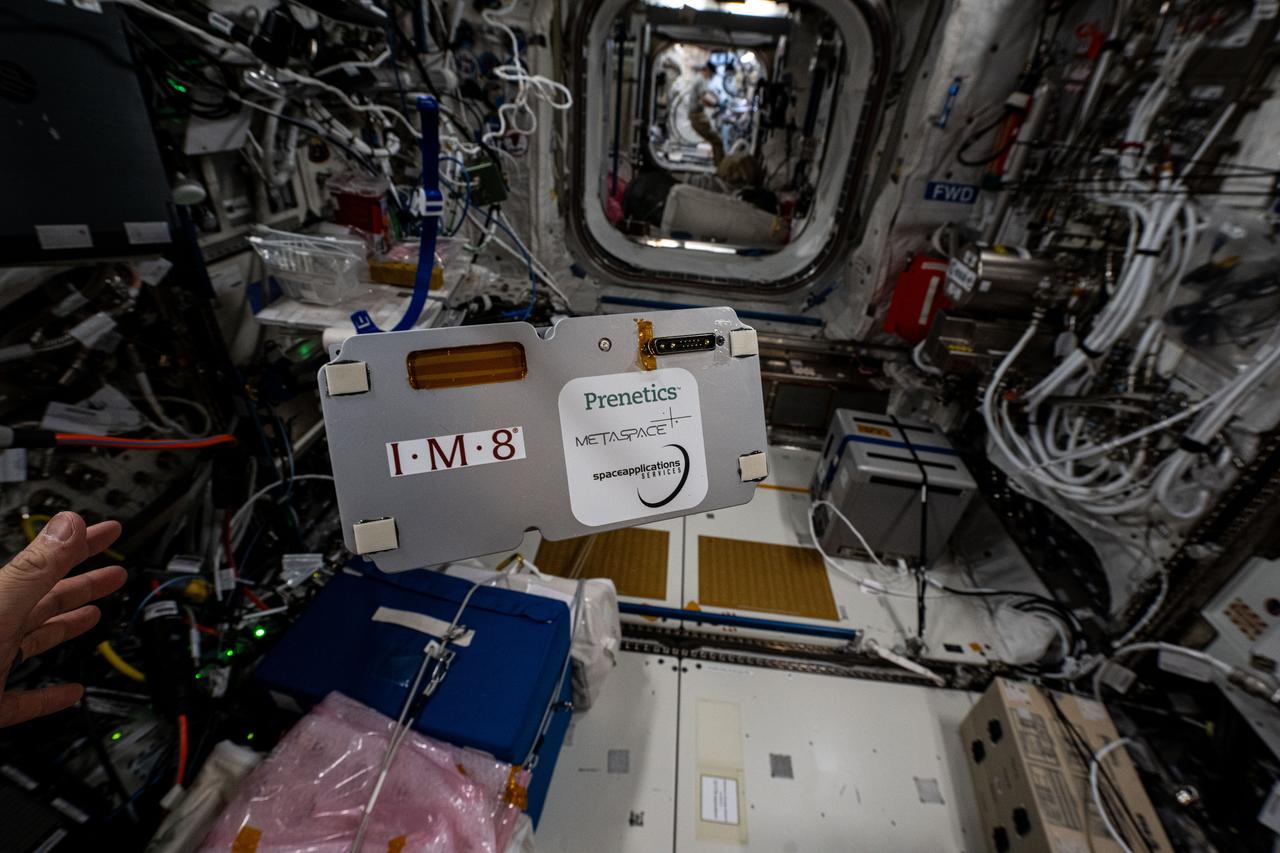
iss073e0001012 (4/23/2025) --- Another view of the ICE Cubes Experiment Cube #9 that hosts the Aging in Microgravity investigation. Aging in Microgravity aims to bridge the gap between aging research and space exploration by investigating common pathways between aging and spaceflight exposure.
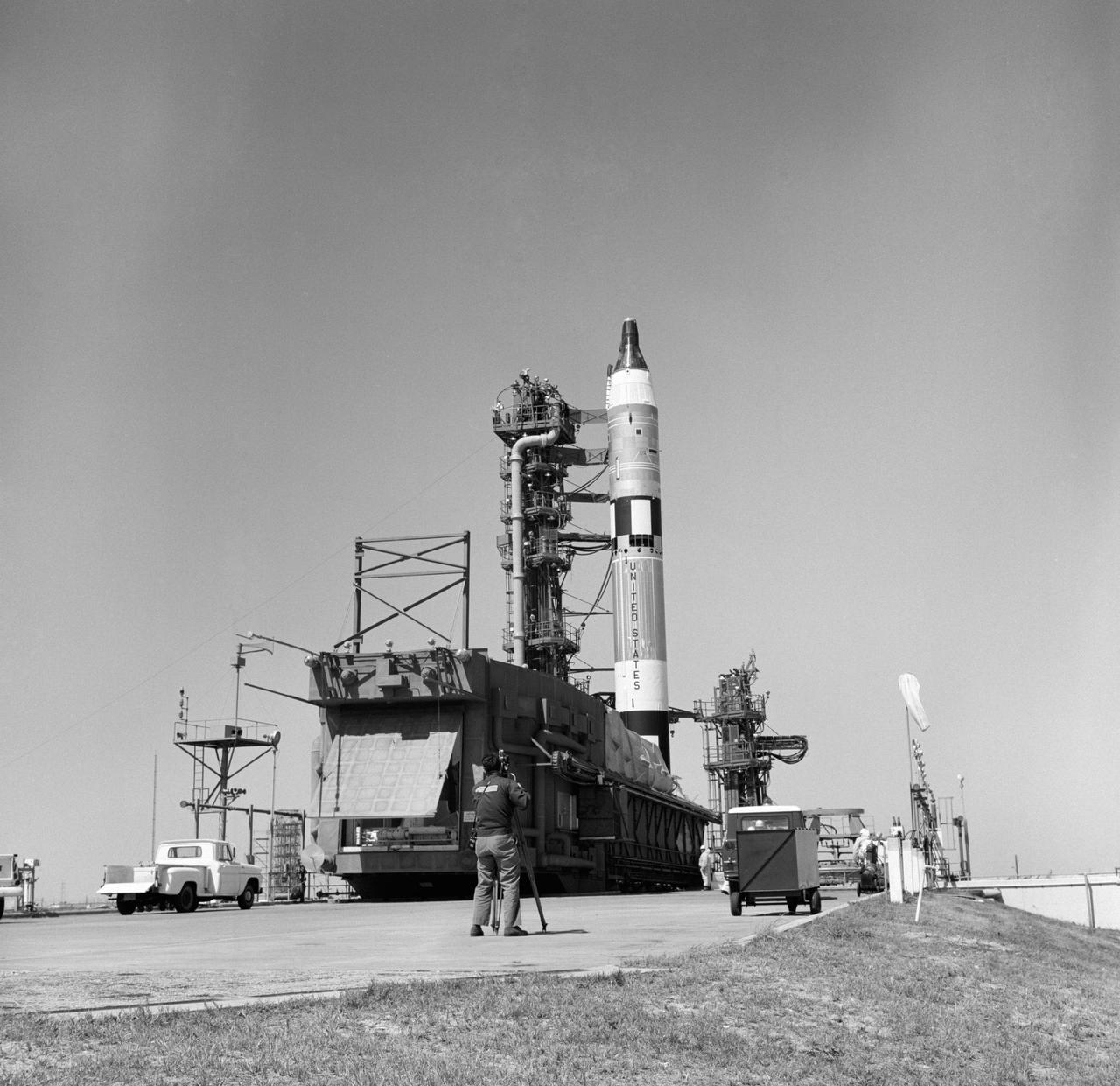
S65-21881 (1965) --- Overall view of the Gemini-Titan 3 on Launch Pad 19, with erector lowered. The GT-3 liftoff was at 9:24 a.m. (EST) on March 23, 1965. A photographer stands at bottom of launch pad with a movie camera.
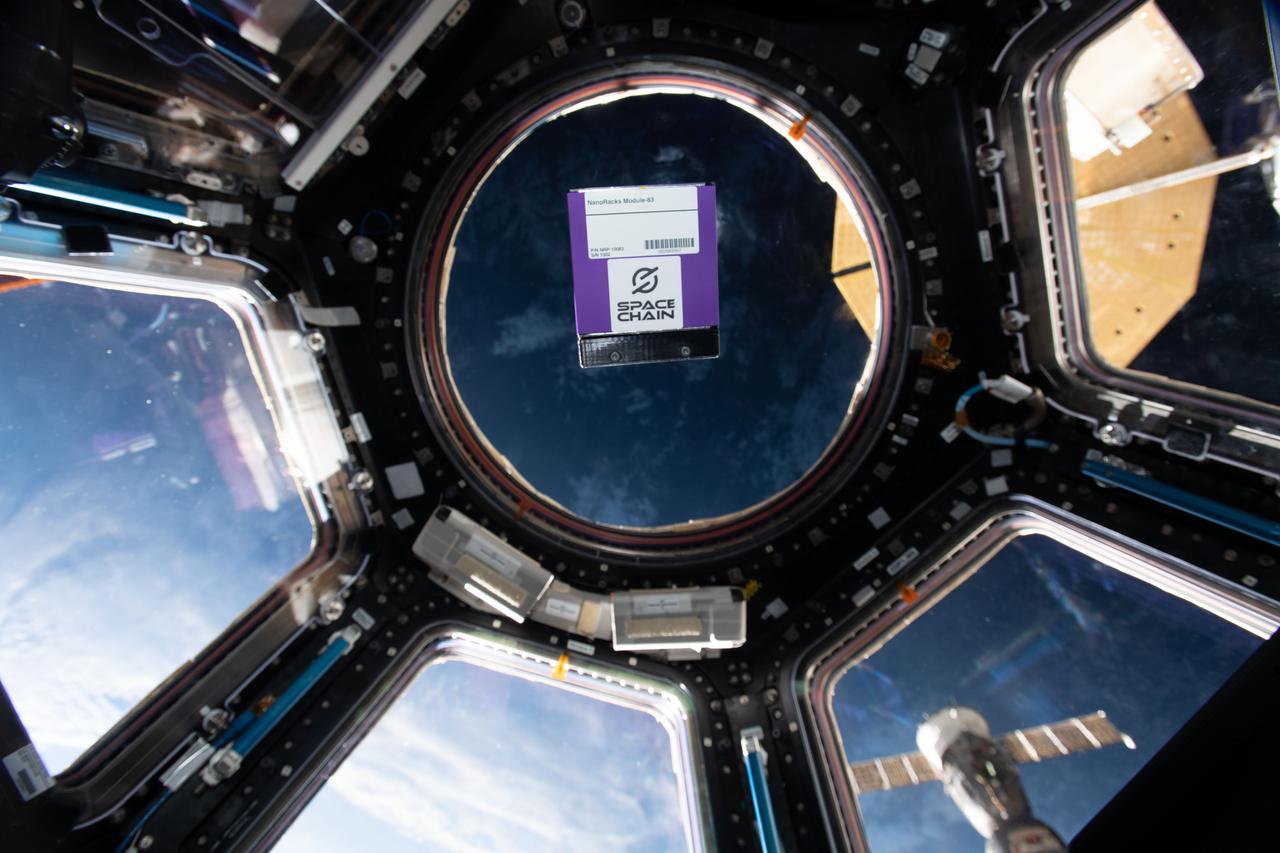
iss067e066379 (5/23/2022) --- A view of the SpaceChain 2.0 investigation in the cupola module aboard the International space Station (ISS). The SpaceChain 2.0 investigation verifies the hardware and software required to extend robust blockchain capabilities into the developing space economy.
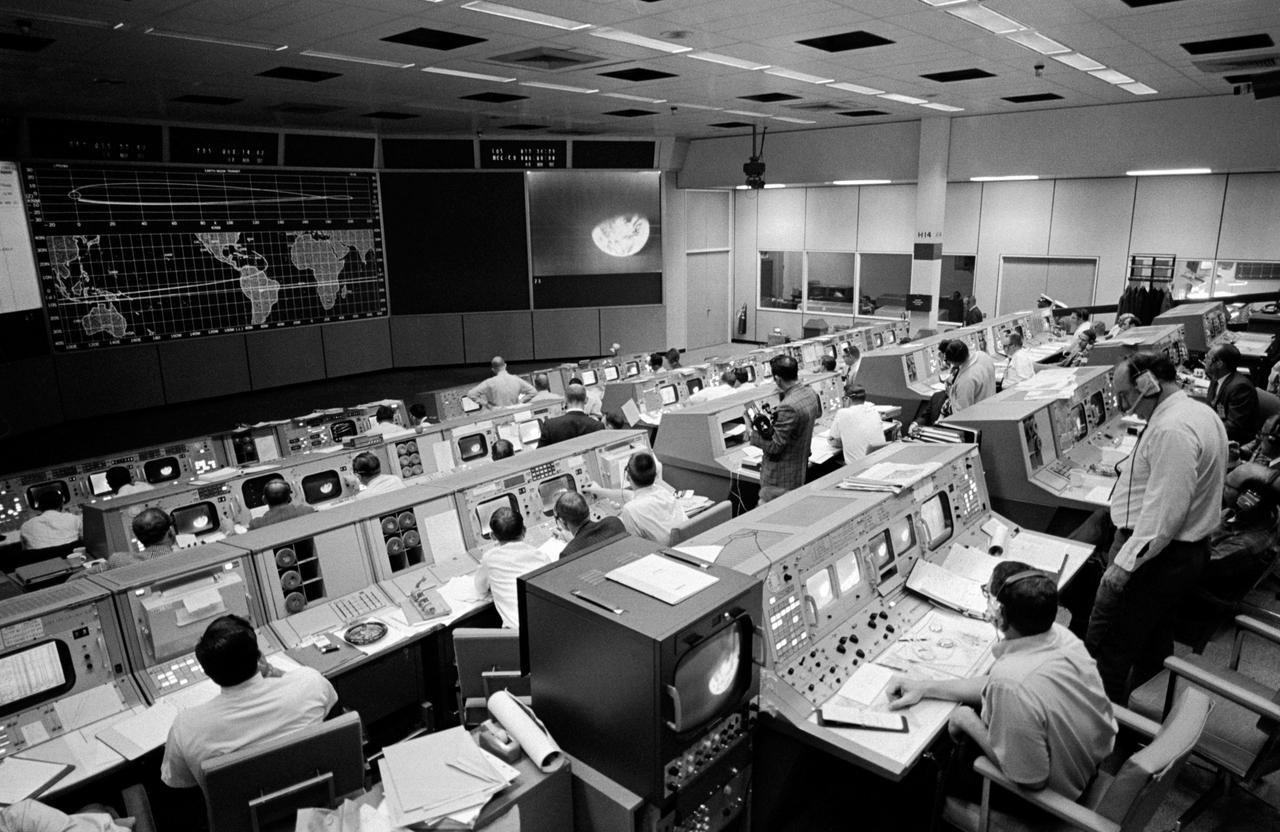
S68-56007 (23 Dec. 1968) --- Overall view of the Mission Operations Control Room in the Mission Control Center, Building 30, on the third day of the Apollo 8 lunar orbit mission. Seen on the television monitor is a picture of Earth which was telecast from the Apollo 8 spacecraft 176,000 miles away.
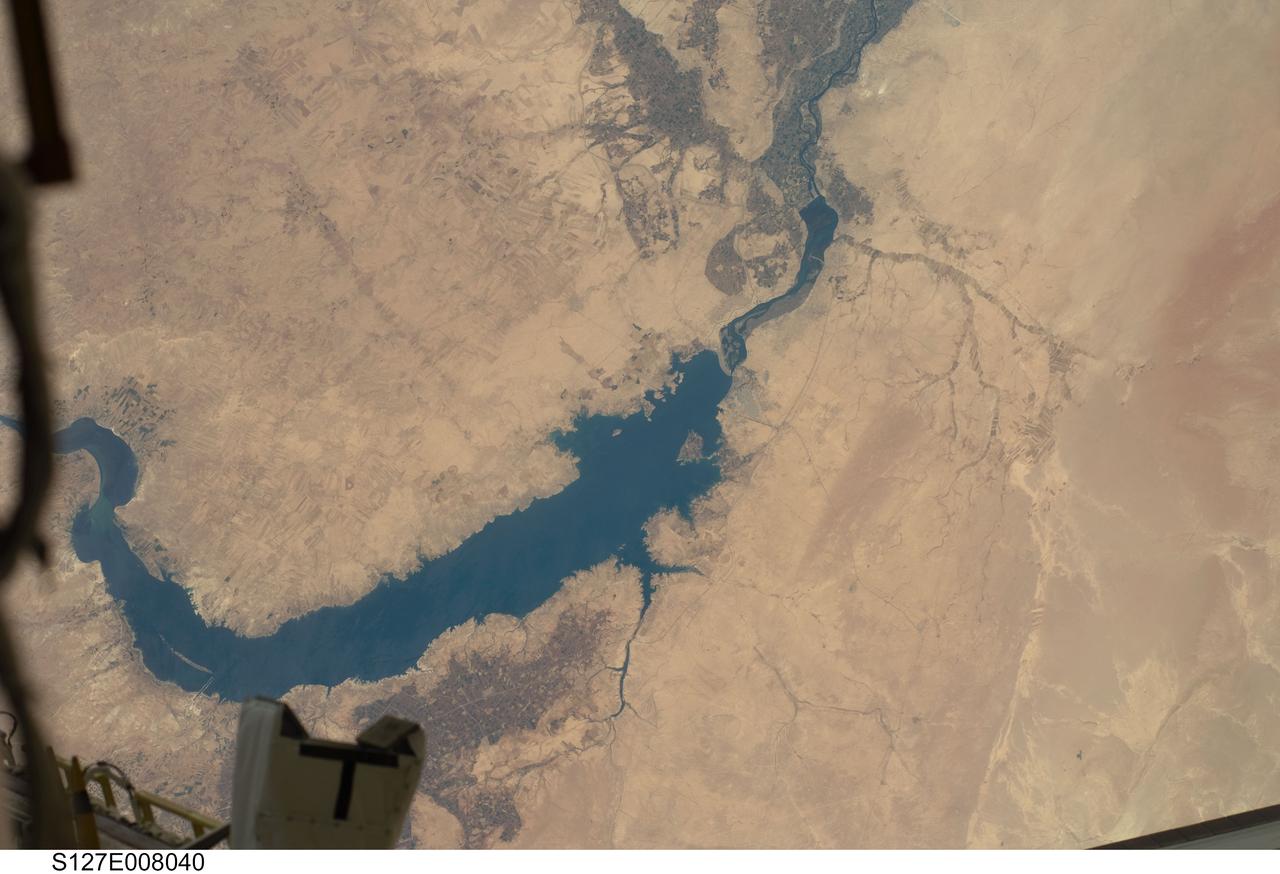
S127-E-008040 (23 July 2009) --- This is a view of Egypt's Lake Nasser from the shuttle-station tandem currently flying 220 miles above Earth. An international crew of thirteen astronauts and cosmonaut are working together to continue work on the orbital outpost
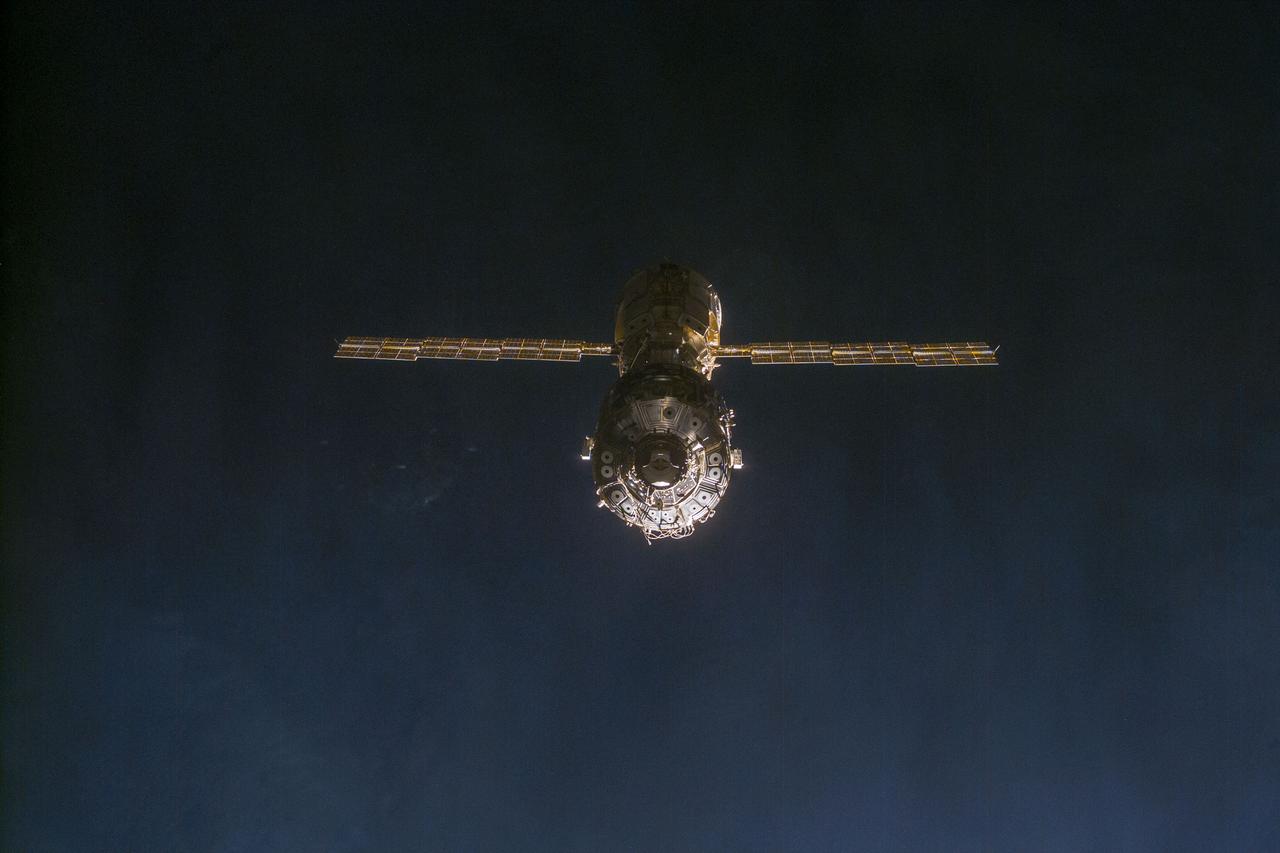
S96-E-5036 (29 May 1999) --- The International Space Station (ISS) is only moments away from its docking with the Space Shuttle Discovery in this electronic still camera's view from Discovery's flight deck. The image was photographed at 03:34:23 GMT, May 29, 1999.
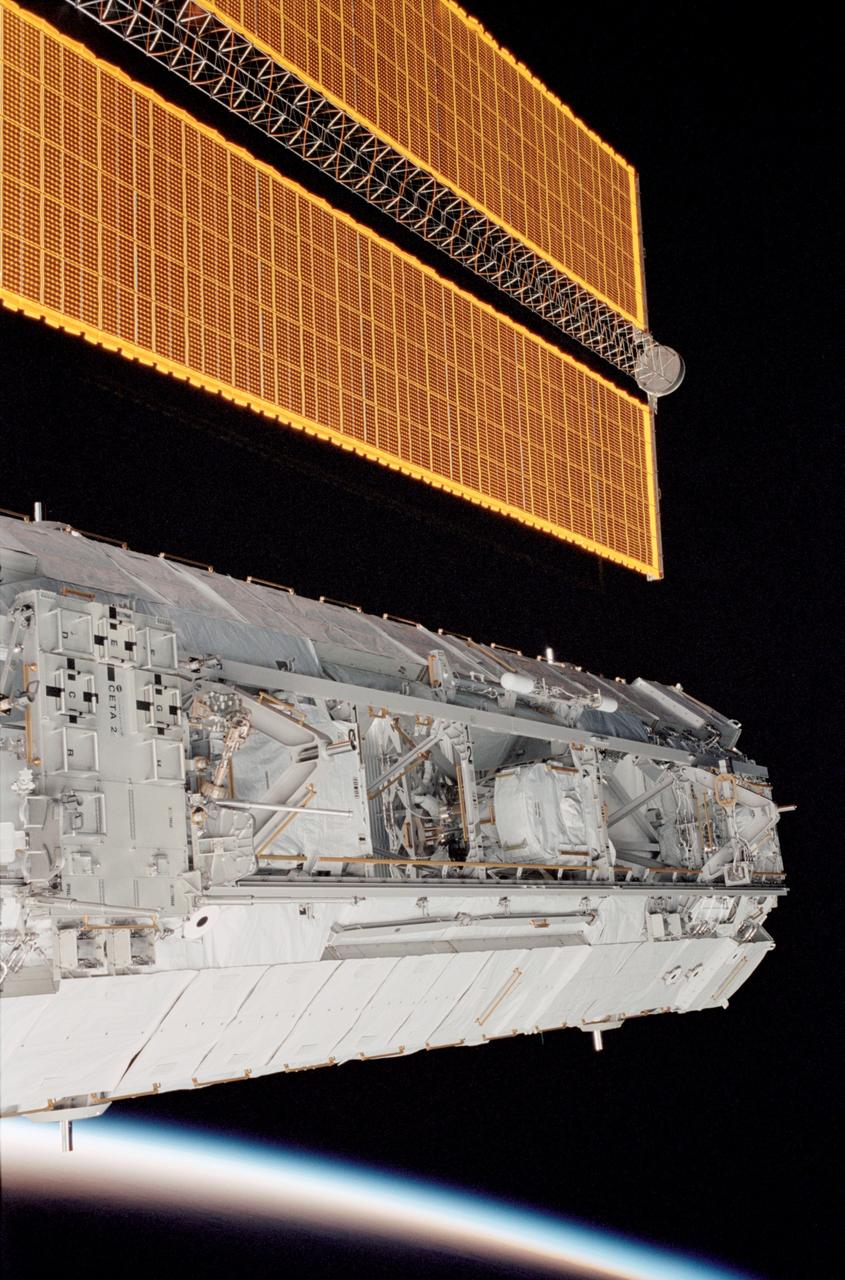
STS113-344-007 (23 November – 7 December 2002) --- View of the newly installed Port One (P1) truss on the International Space Station (ISS). One of the station’s main solar arrays is in top frame and Earth’s horizon is in bottom frame.

ISS049e008889 (09/23/2016) --- Night view of the Earth from the International Space Station by the crew of Expedition 49. The land mass northwest is South Korea and south of Korea is Japan. The small dotted lights east of South Korea and north of Japan are fishing boats in the Sea of Japan.
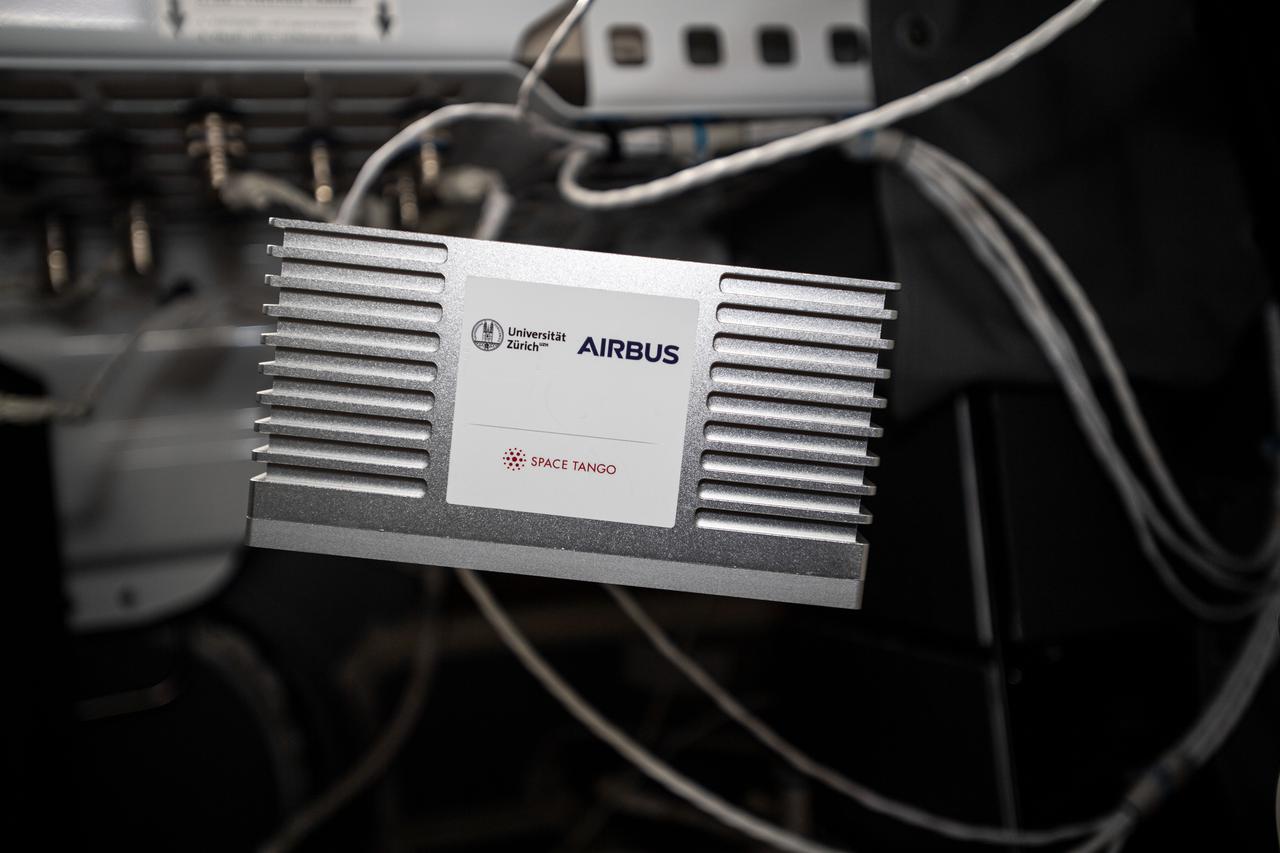
iss065e358557 (9/7/2021) --- A view of the TangoLab Mission-23 double Cube with the Organoid Formation from Human Stem Cells investigation. The investigation tests the potential of human stem cells to develop and differentiate into organ-like structures in microgravity under different cultivation conditions.
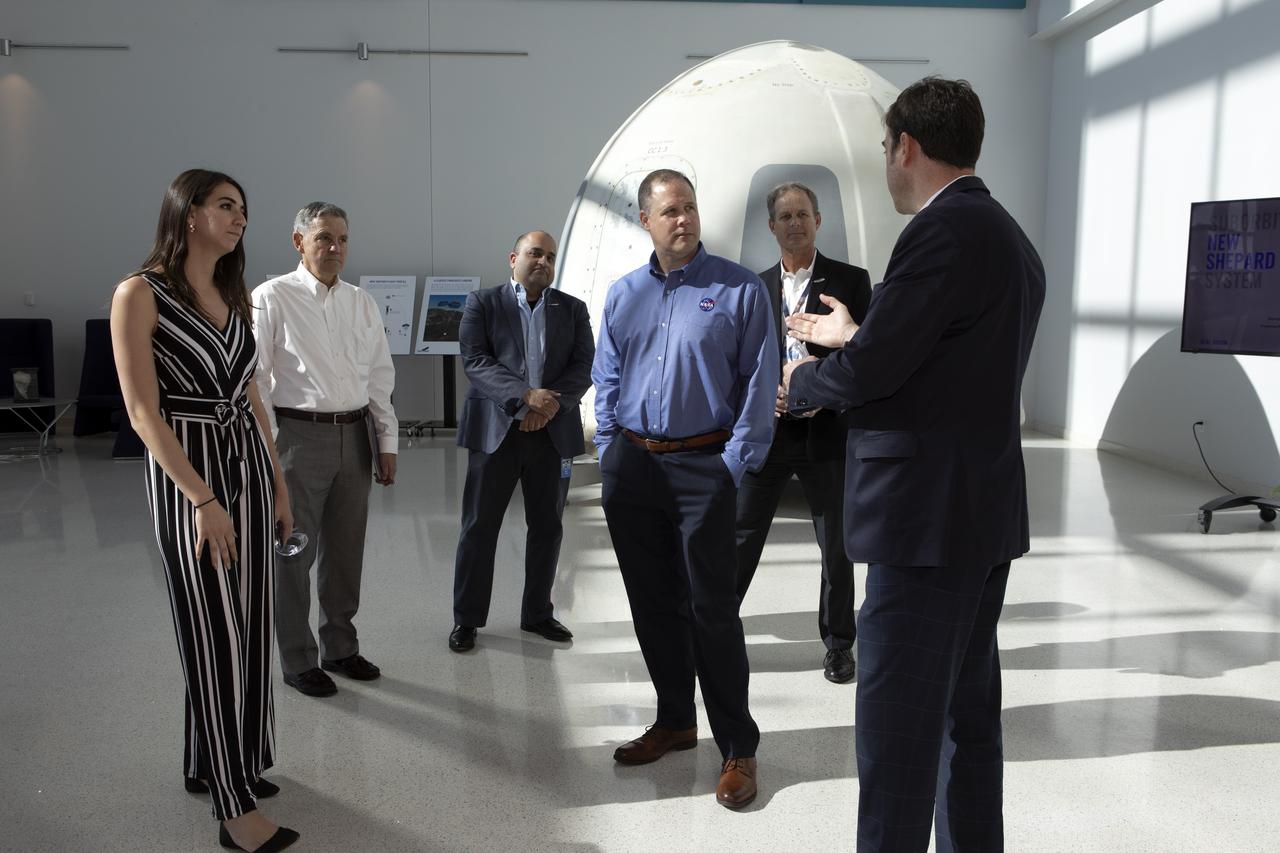
NASA Administrator Jim Bridenstine, second from right, in the blue shirt, tours the Blue Origin facilities near the agency’s Kennedy Space Center in Florida on May 23, 2019. Bridenstine viewed the New Shepard booster and crew capsule that flew to space and back five times.

iss070e098464 (Feb., 23, 2024) --- This nighttime, near overhead view shows Washington, D.C. (center) and Baltimore, Maryland (upper right) on Chesapeake Bay. Expedition 70 Flight Engineer Loral O'Hara of NASA photographed the area as the International Space Station orbited 261 miles above.
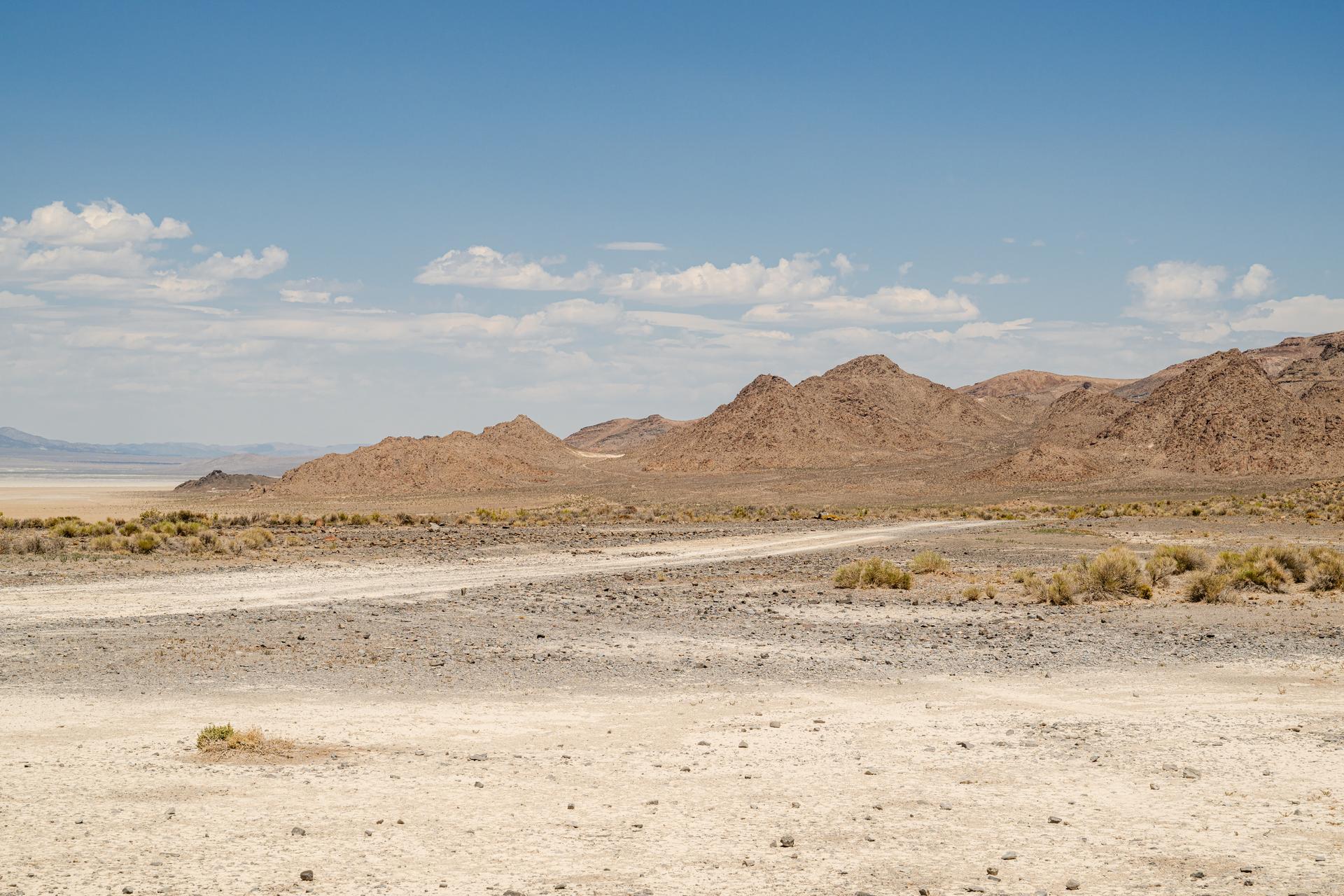
A view of Crater Island from the VADIX Basecamp, Crater Island, Utah June 24, 2026. This area was the site of a series of tests (June 23-25, 2026) of the camera system that will one day fly aboard NASA’s DAVINCI mission to Venus. NASA/Mike Guinto
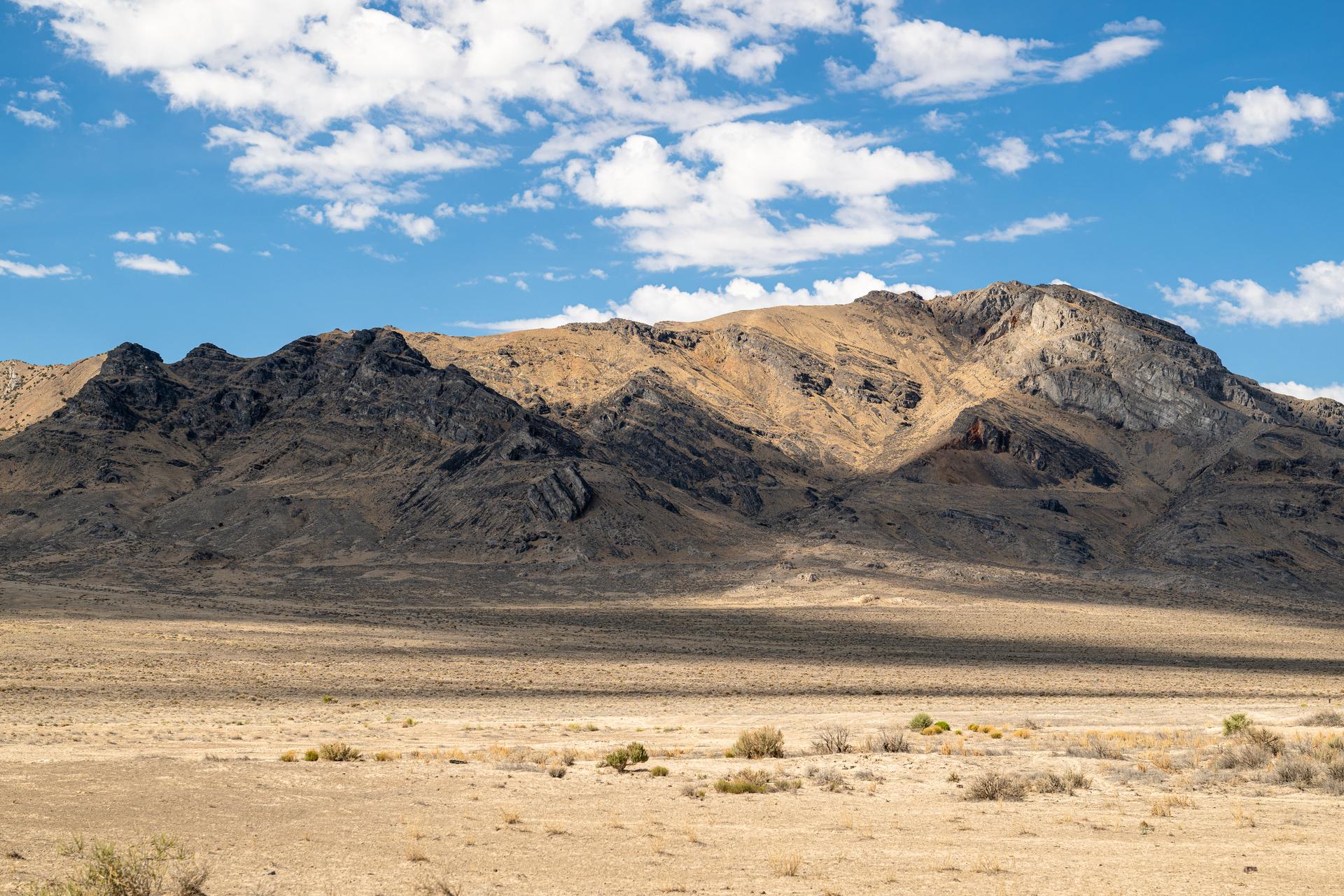
A view from the DAVINCI VADIX Basecamp near Crater Island, Utah, June 25, 2026. This area was the site of a series of tests (June 23-25, 2026) of the camera system that will one day fly aboard NASA’s DAVINCI mission to Venus. NASA/Mike Guinto
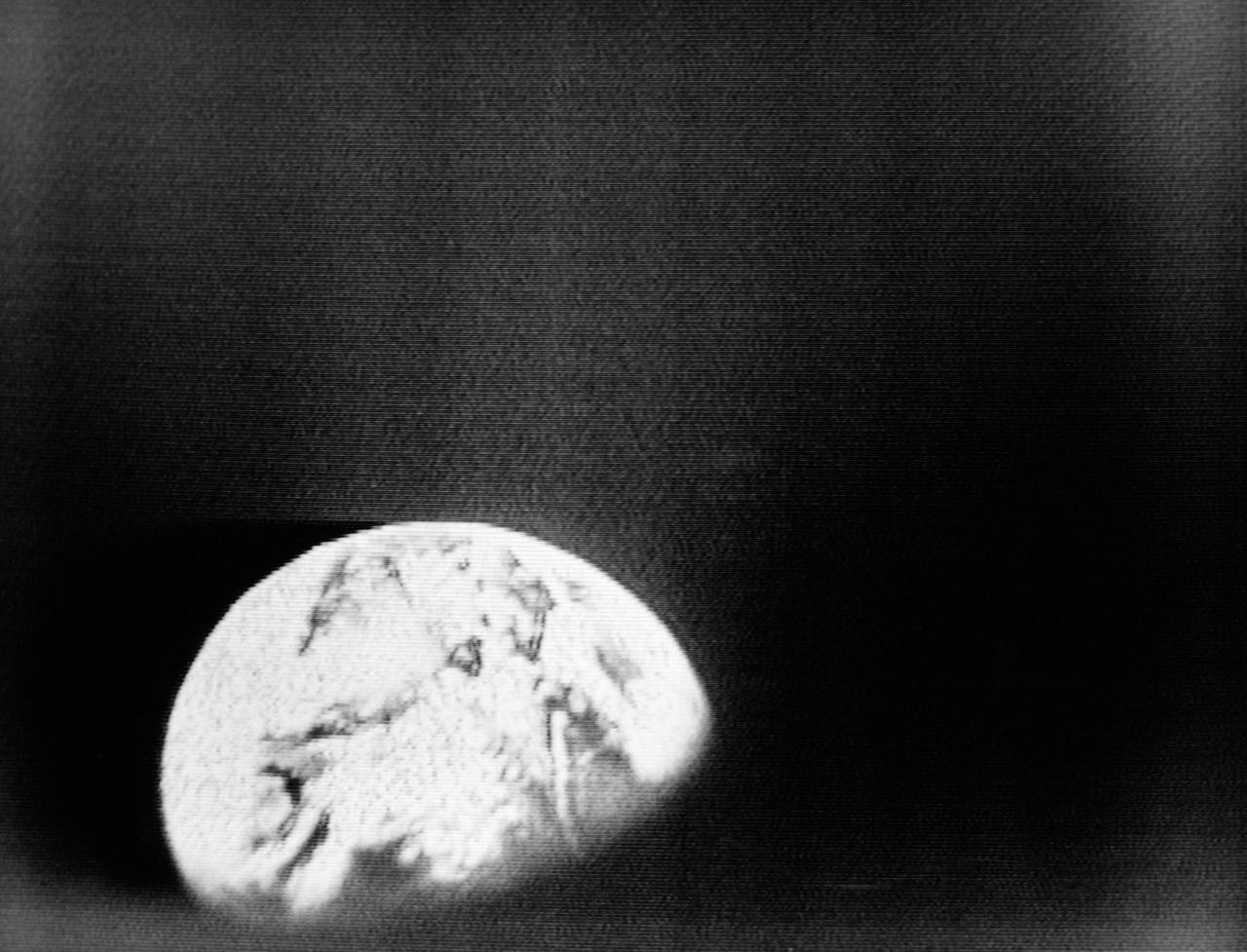
S68-55808 (23 Dec. 1968) --- This spectacular view of Earth was transmitted back from space during the second live television transmission from the Apollo 8 spacecraft on the third day of its journey toward the moon. This view is looking through a spacecraft window. At the time of this TV transmission (at 2 p.m. CST), Apollo 8 was traveling on its trans-lunar course at about 3,254 feet per second, and was some 176,533 miles from Earth.
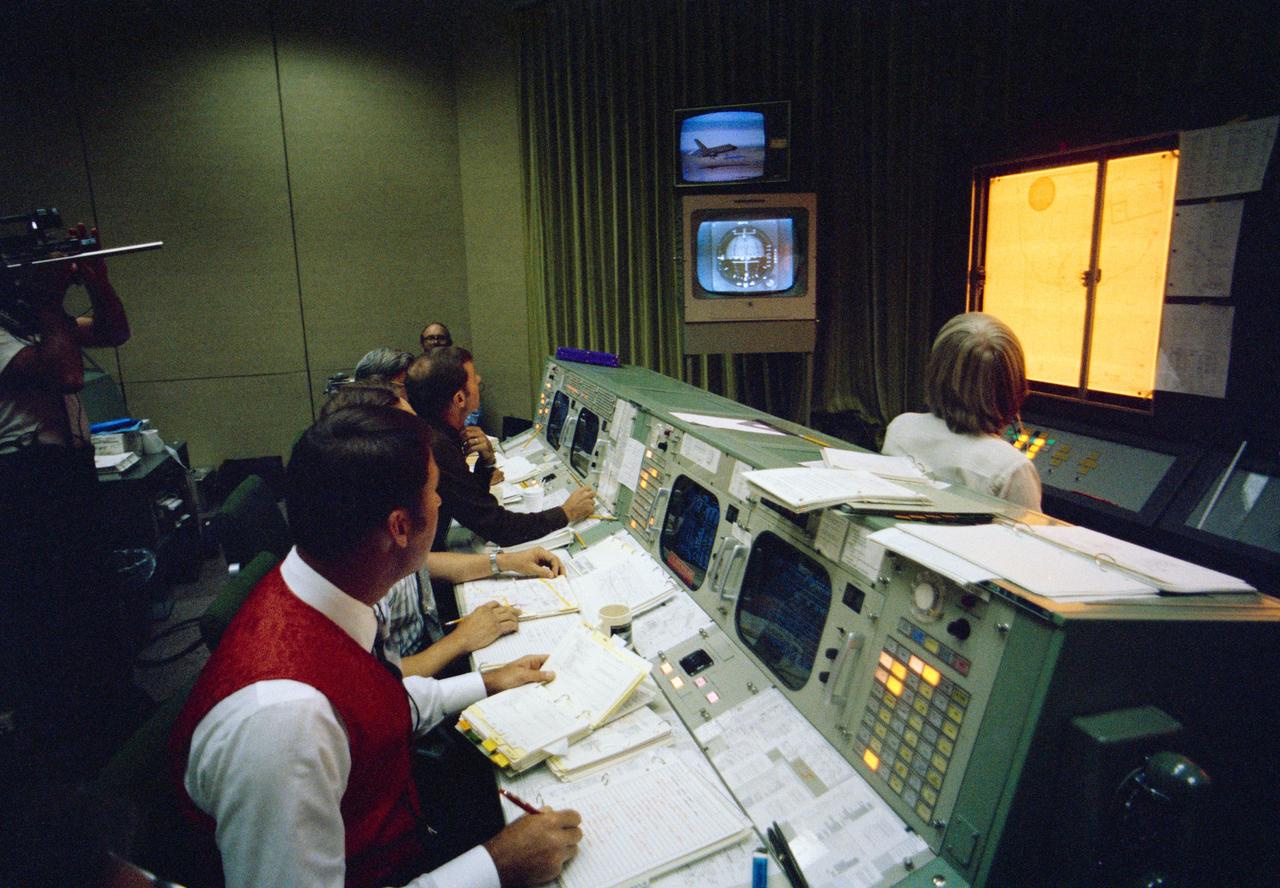
S77-27546 (12 Aug 1977) --- An overall view of Mission Control Operations in the Mission Control Center, bldg 30, at JSC, during the first free flight of the Shuttle Approach and Landing Tests (ALTs) conducted on August 12, 1977 at the Dryden Flight Research Center in Southern California. This view is looking across the console of flight director Donald R. Puddy. The television monitor in the background shows the Orbiter 101 "Enterprise" landing following its five minute 23-second unpowered free flight.
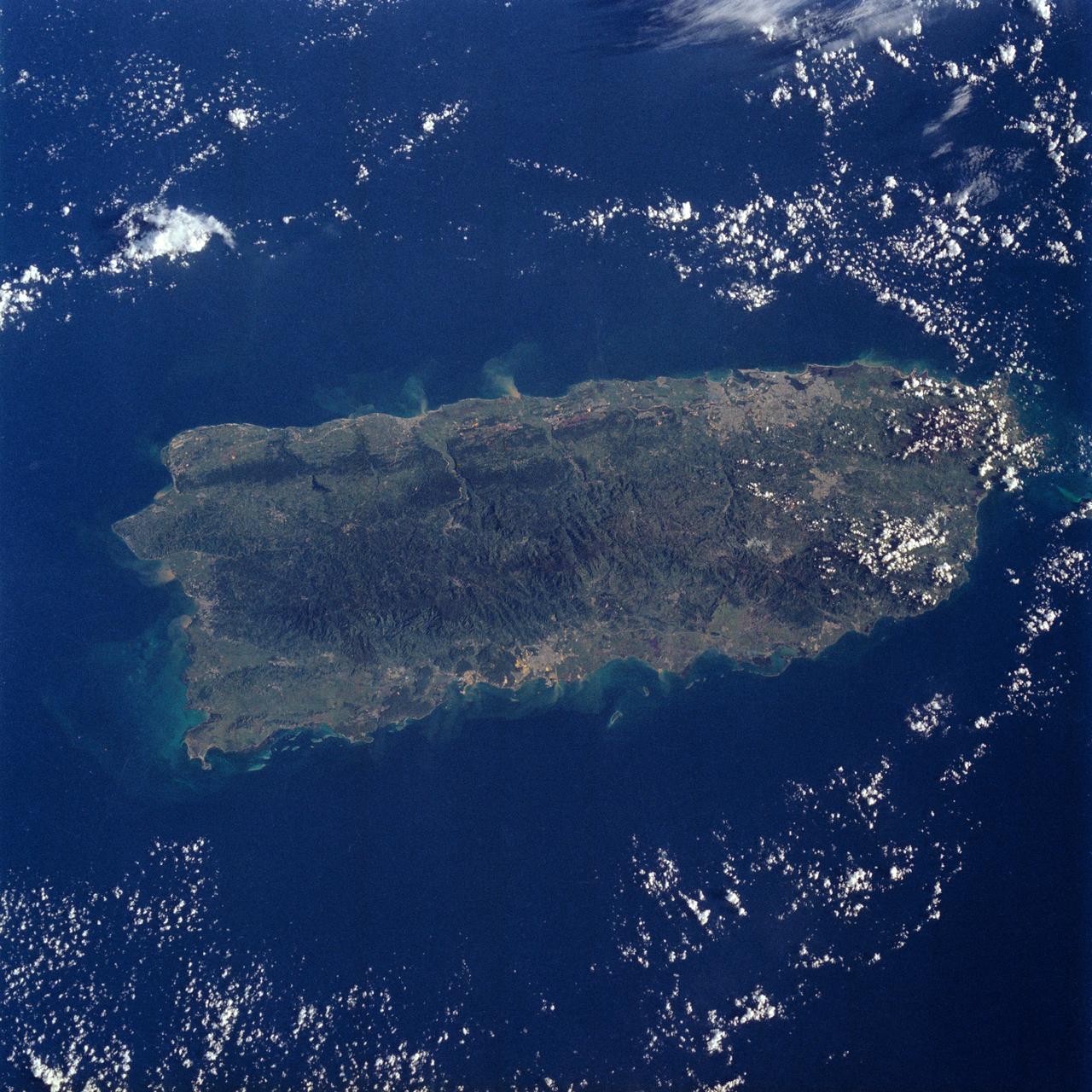
STS034-76-088 (18-23 Oct. 1989) --- A nearly vertical view over the island of Puerto Rico. NASA photo experts believe this to be an excellent view of Puerto Rico, because it has no cloud cover and the island is captured in its entirety. A 70mm handheld aimed through the space shuttle Atlantis' aft windows was used to expose the frame. Center point of the frame is 18.0 degrees north latitude and 66.5 degrees west longitude.

NASA Solar TErrestrial RElations Observatory STEREO satellites have provided the first three-dimensional images of the Sun. The structure of the corona shows well in this image.

This radar image, obtained by Cassini radar instrument during a near-polar flyby on Sept. 23, 2006, is the second scene that shows clear shorelines reminiscent of terrestrial lakes
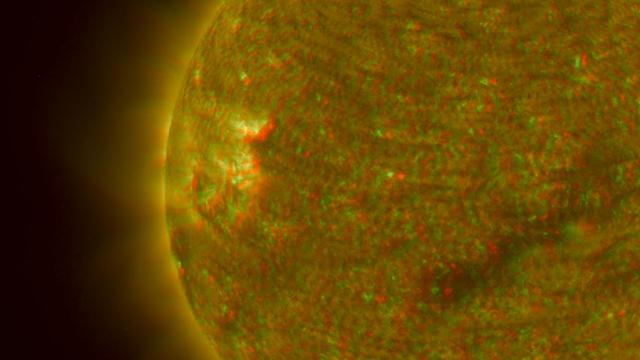
NASA Solar TErrestrial RElations Observatory satellites have provided the first 3-dimensional images of the Sun. This view will aid scientists ability to understand solar physics to improve space weather forecasting. 3D glasses are necessary.
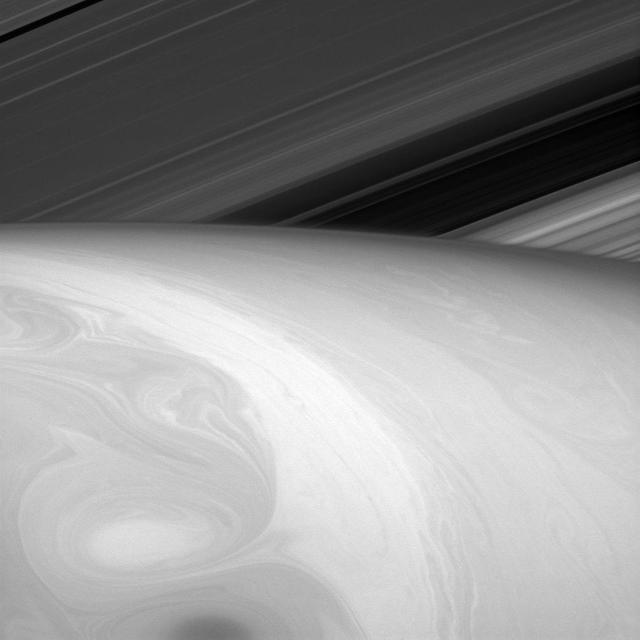
Nature is an artist, and this time she seems to have let her paints swirl together a bit. What the viewer might perceive to be Saturn's surface is really just the tops of its uppermost cloud layers. Everything we see is the result of fluid dynamics. Astronomers study Saturn's cloud dynamics in part to test and improve our understanding of fluid flows. Hopefully, what we learn will be useful for understanding our own atmosphere and that of other planetary bodies. This view looks toward the sunlit side of the rings from about 25 degrees above the ringplane. The image was taken in red light with the Cassini spacecraft narrow-angle camera on Aug. 23, 2014. The view was obtained at a distance of approximately 1.1 million miles (1.7 million kilometers) from Saturn and at a Sun-Saturn-spacecraft, or phase, angle of 23 degrees. Image scale is 63 miles (102 kilometers) per pixel. http://photojournal.jpl.nasa.gov/catalog/PIA18290
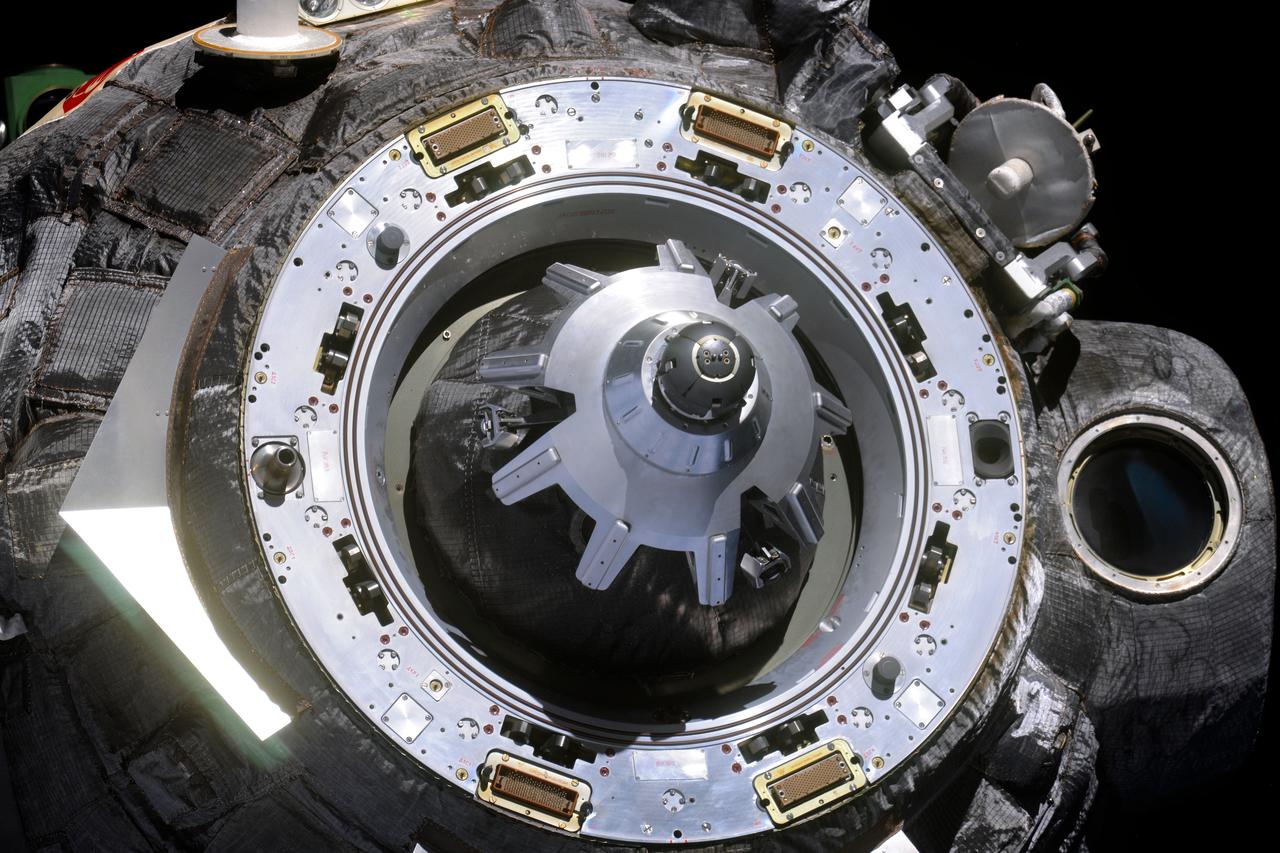
ISS028-E-005002 (23 May 2011) --- A close-up view of the Soyuz TMA-20 spacecraft as it departs from the International Space Station on May 23, 2011. Onboard are three members of Expedition 27 -- Russian cosmonaut Dmitry Kondratyev, Expedition 27 and Soyuz commander; NASA astronaut Cady Coleman and European Space Agency astronaut Paolo Nespoli, both flight engineers. Kondratyev was at the controls of the spacecraft as it undocked at 5:35 p.m. (EDT) from the station's Rassvet module. The crew landed safely at 10:27 p.m. southeast of the town of Dzhezkazgan, Kazakhstan.
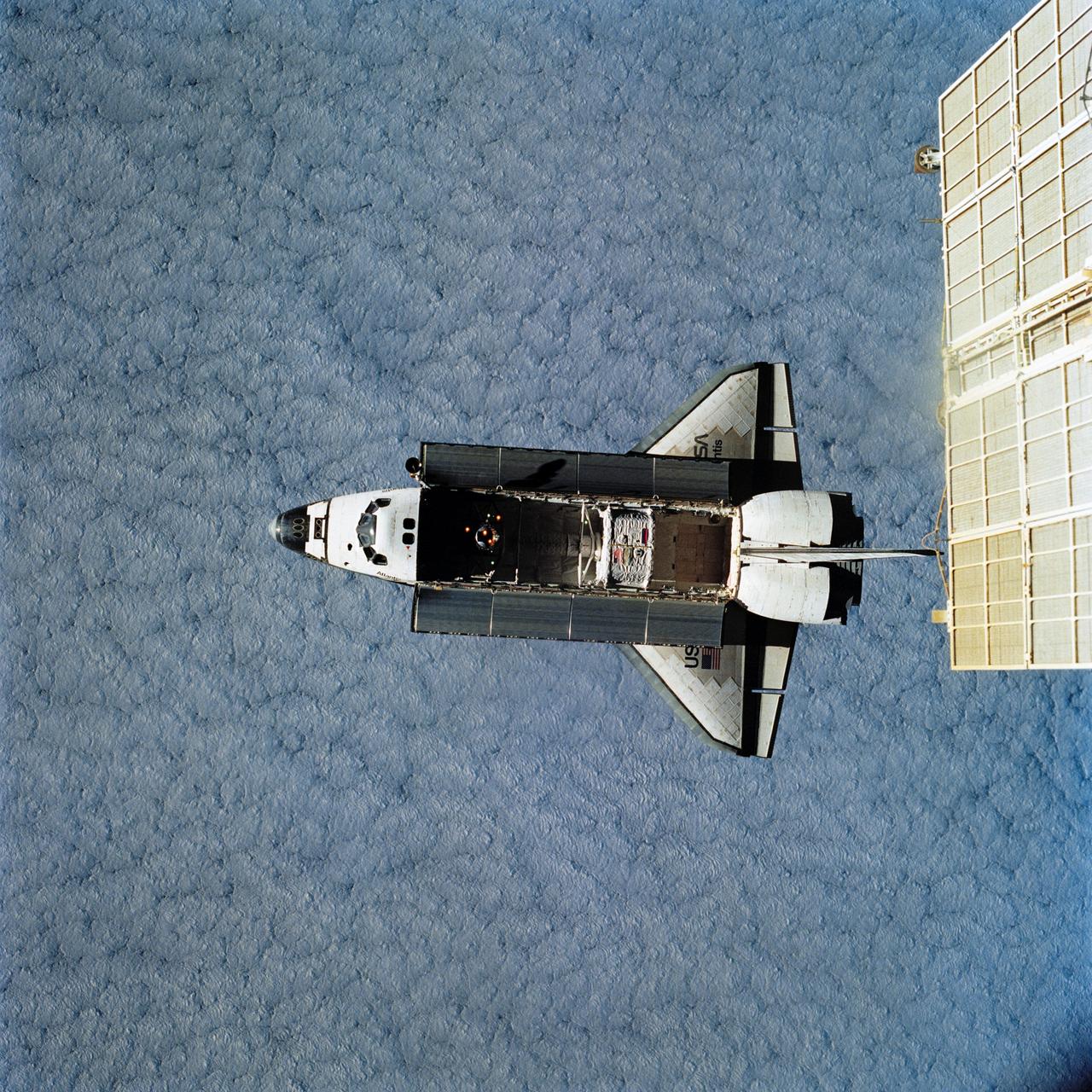
NM21-724-042 (23 March 1996) --- Backdropped against a "floor" of clouds, this view of the Space Shuttle Atlantis was taken by the two Mir-21 cosmonaut crew members onboard Russia's Mir Space Station, during rendezvous and docking operations on March 23, 1996. Part of a solar array panel connected to the Mir is seen in the foreground. The Orbiter Docking System (ODS), the connective tunnel and the Spacehab Module can be seen in Atlantis' cargo bay. With the subsequent delivery of astronaut Shannon W. Lucid to the Mir, the Mir-21 crew grew to three, as the mission specialist quickly becomes a cosmonaut guest researcher. She will spend approximately 140 days on Mir before returning to Earth.
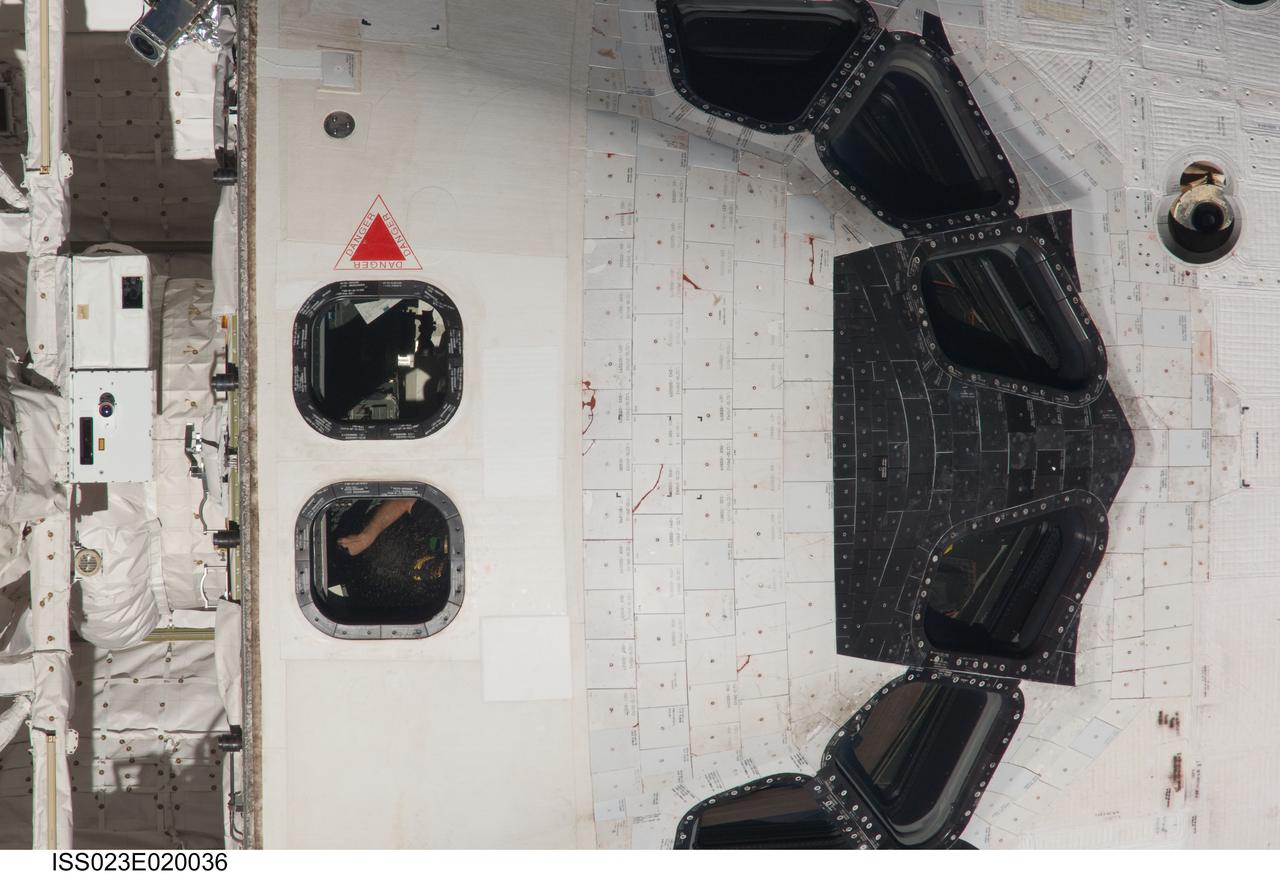
ISS023-E-020036 (7 April 2010) --- This nadir 800mm view of the top part of Discovery's cabin was provided by one of the Expedition 23 crew members onboard the International Space Station. NASA astronaut Clayton Anderson, STS-131 mission specialist, waves at his awaiting hosts through the starboard side upper window. The shuttle was in the midst of a back-flip, performed to enable the station's cameras to survey it for possible damage. The rendezvous and subsequent docking occurred early on April 7. Once the Discovery crew joins the Expedition 23 crew aboard the orbital complex, nine men and four women will begin several days of joint activities, including three spacewalks.
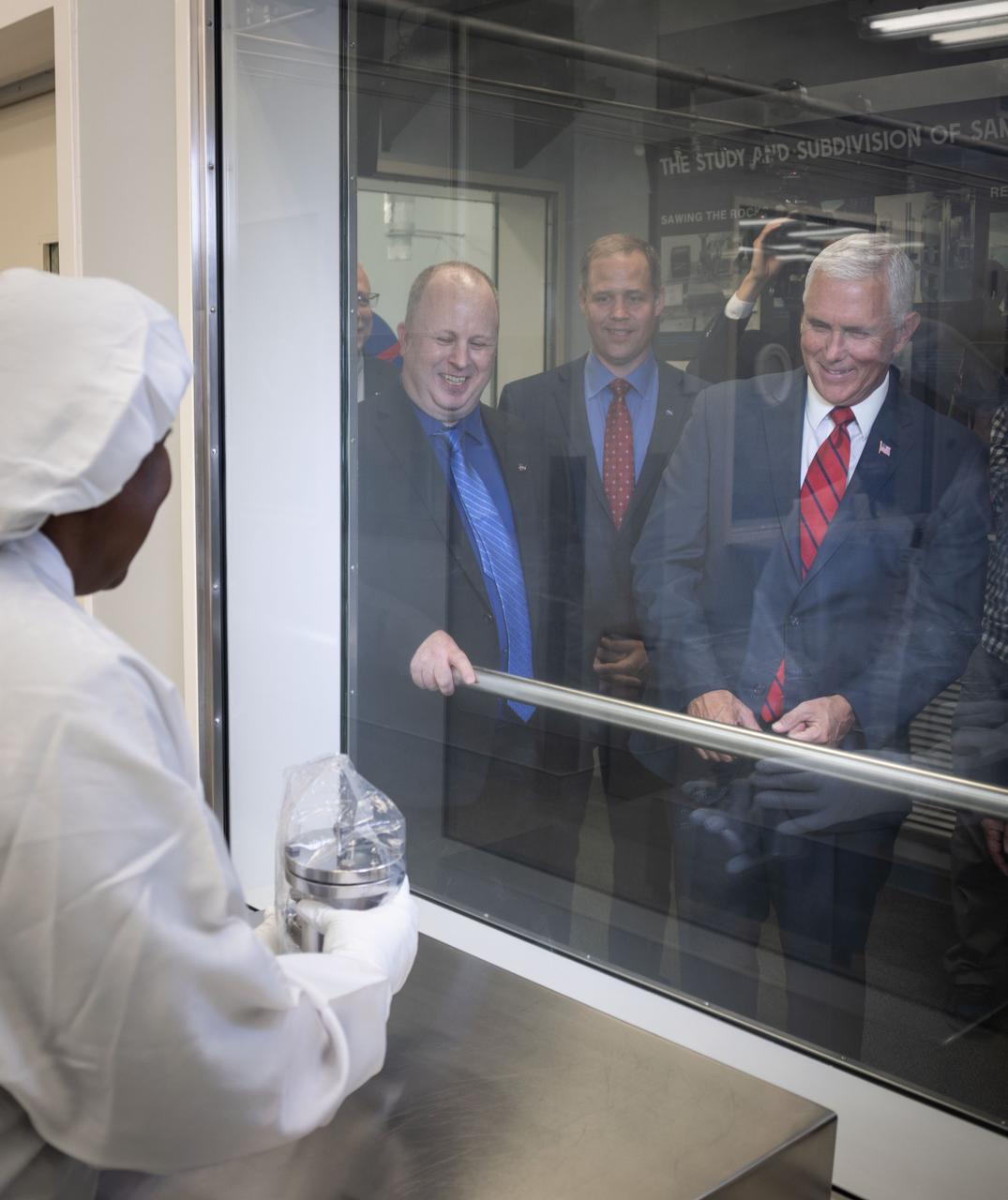
jsc2018e076655 (Aug. 23, 2018) --- Vice President Mike Pence visited NASA’s Johnson Space Center in Houston on Aug. 23, 2018, to discuss the future of space exploration and other elements of human spaceflight. During his trip to the Johnson Space Center, the Vice President also toured the laboratory housing the moon rocks retrieved during the Apollo program’s lunar missions and extraterrestrial samples from other uncrewed sample return missions. Apollo Lunar Sample Principle Scientist Andrea Mosie held a lunar sample up for inspection by the Vice President, who was joined in the viewing room behind protective glass by Apollo Lunar Sample Curator Ryan Ziegler.

NM21-727-030 (23 March 1996) --- This view of the Space Shuttle Atlantis was taken by the two Mir-21 cosmonaut crew members onboard Russia's Mir Space Station, during rendezvous and docking operations on March 23, 1996. The Orbiter Docking System (ODS), the connective tunnel and the Spacehab Module can be seen in Atlantis' cargo bay. With the subsequent delivery of astronaut Shannon W. Lucid to the Mir, the Mir-21 crew grew to three, as the mission specialist quickly become a cosmonaut guest researcher. She will spend approximately 140 days on Mir before returning to Earth.
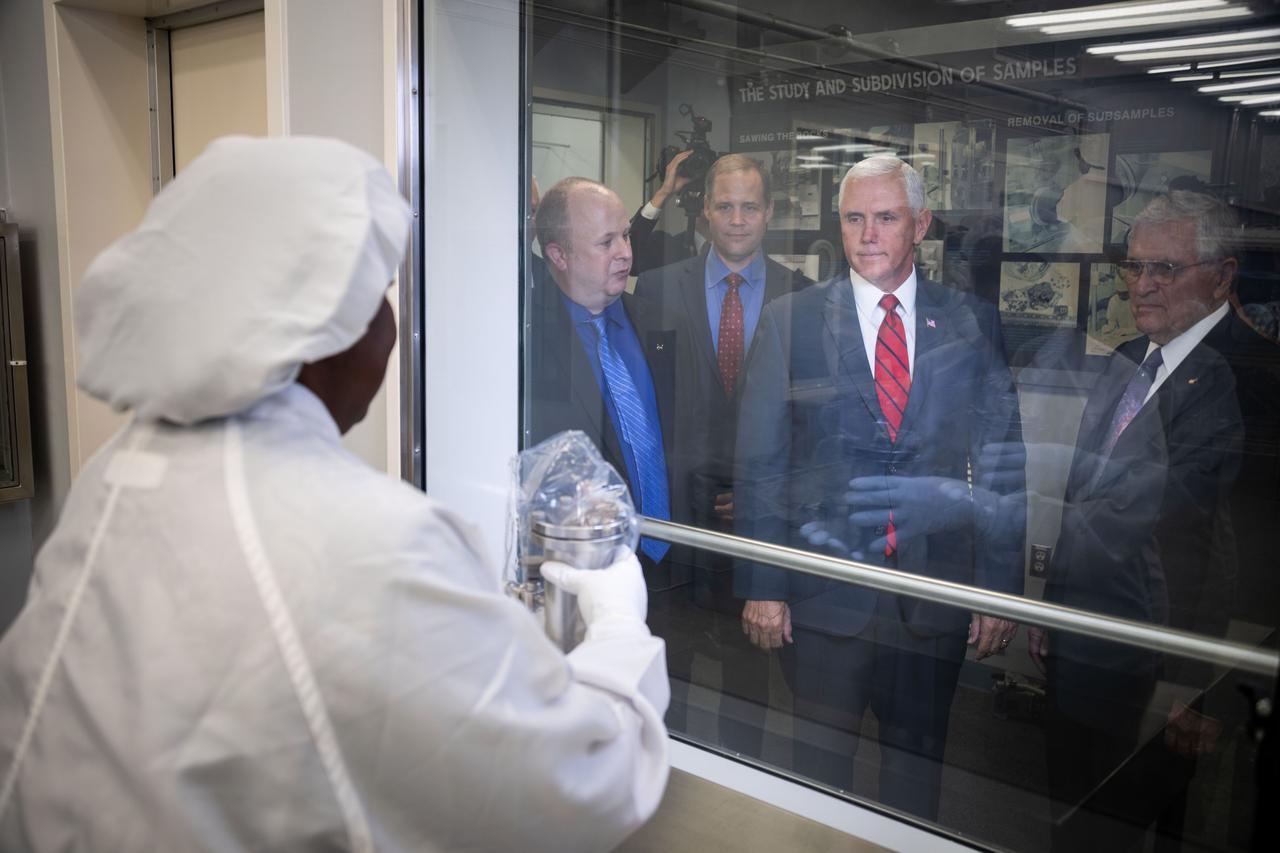
jsc2018e076652 (Aug. 23, 2018) --- Vice President Mike Pence visited NASA’s Johnson Space Center in Houston on Aug. 23, 2018, to discuss the future of space exploration and other elements of human spaceflight. During his trip to the Johnson Space Center, the Vice President also toured the laboratory housing the moon rocks retrieved during the Apollo program’s lunar missions and extraterrestrial samples from other uncrewed sample return missions. Apollo Lunar Sample Principle Scientist Andrea Mosie held a lunar sample up for inspection by the Vice President, who was joined in the viewing room behind protective glass by Apollo Lunar Sample Curator Ryan Ziegler.
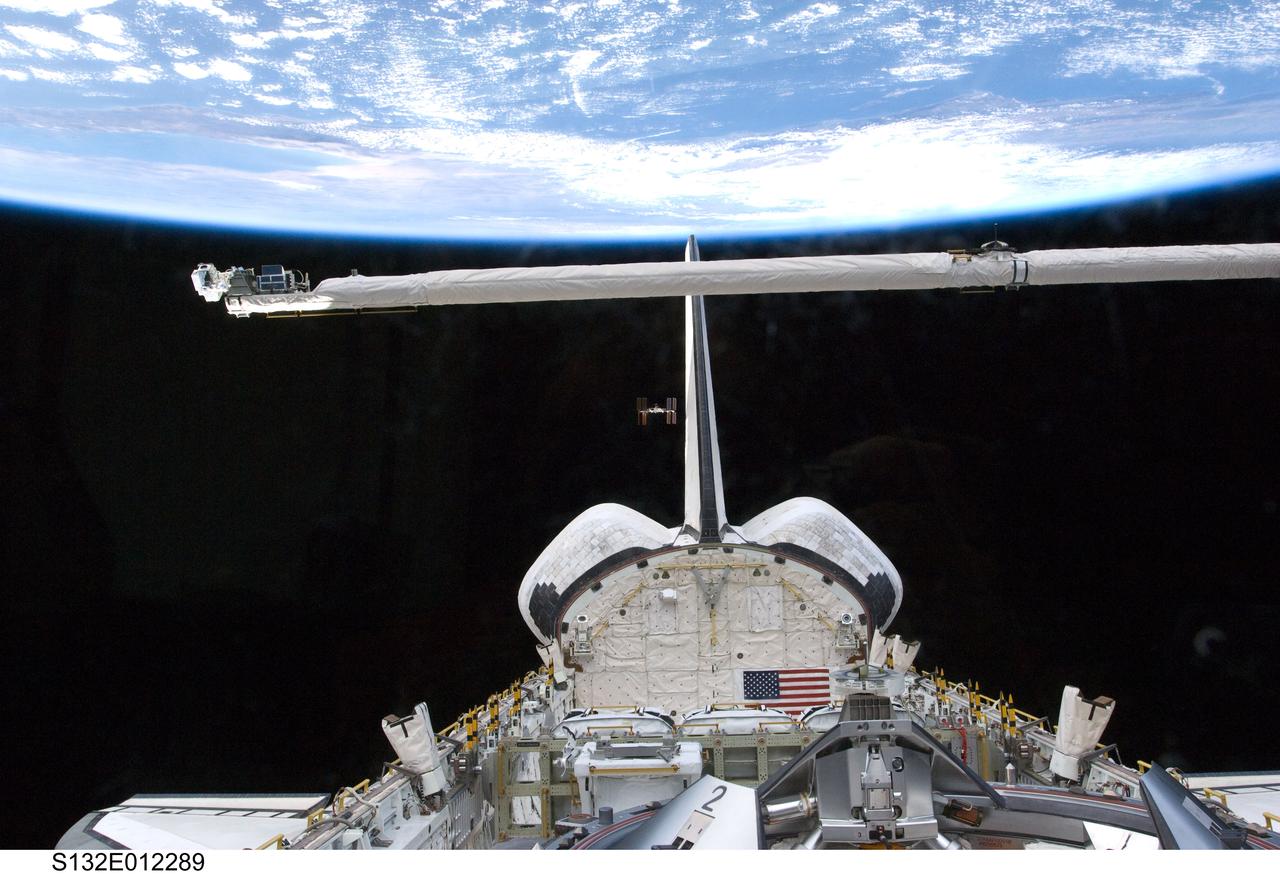
S132-E-012289 (23 May 2010) --- The International Space Station (center) appears very small from the point of view of the space shuttle Atlantis as the two spacecraft carry out their relative separation. Atlantis? vertical stabilizer, orbital maneuvering system (OMS) pods, remote manipulator system/orbiter boom sensor system (RMS/OBSS) and payload bay are also pictured in this image photographed by an STS-132 crew member onboard the shuttle. Earlier the STS-132 and Expedition 23 crews concluded seven days of cooperative work onboard the shuttle and station. Undocking of the two spacecraft occurred at 10:22 a.m. (CDT) on May 23, 2010. Earth?s horizon and the blackness of space provide the backdrop for the scene.
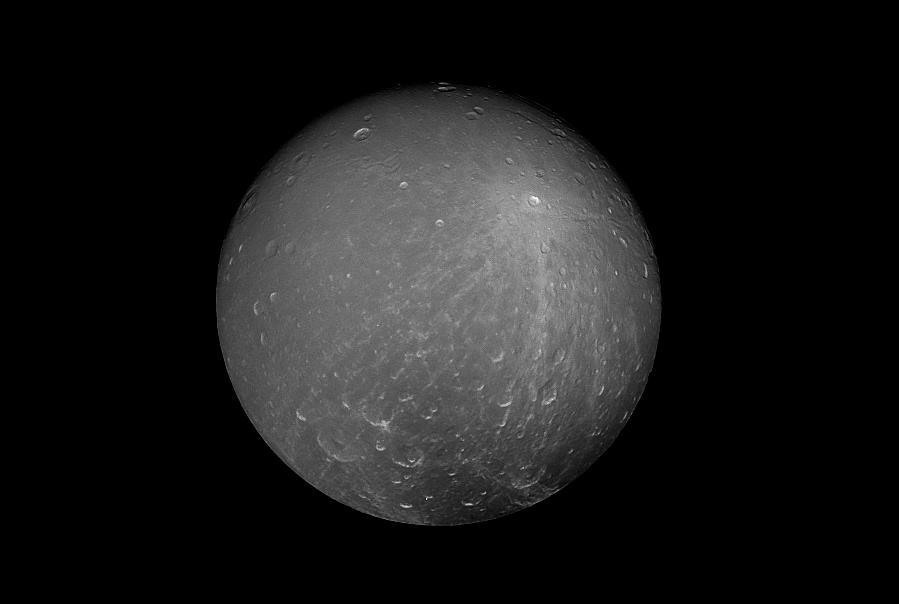
Cassini captured this striking view of Saturn's moon Dione on July 23, 2012. Dione is about 698 miles (1,123 kilometers) across. Its density suggests that about a third of the moon is made up of a dense core (probably silicate rock) with the remainder of its material being water ice. At Dione's average temperature of -304 degrees Fahrenheit (-186 degrees Celsius), ice is so hard it behaves like rock. The image was taken with Cassini's narrow-angle camera at a distance of approximately 260,000 miles (418,000 kilometers) from Dione, through a polarized filter and a spectral filter sensitive to green light. The Cassini spacecraft ended its mission on Sept. 15, 2017. https://photojournal.jpl.nasa.gov/catalog/PIA17197