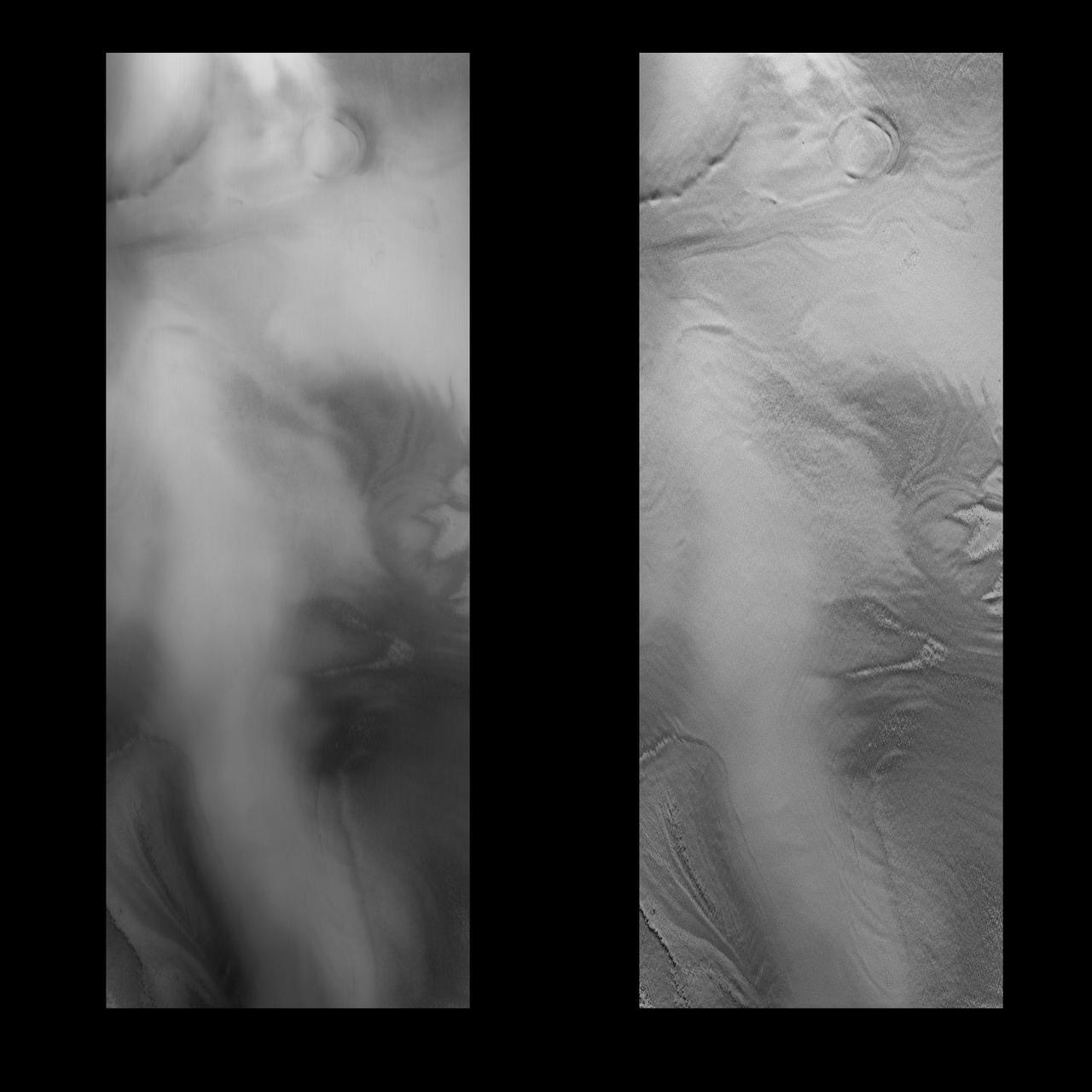
MOC View of Mars98 Landing Zone - 12/24/97
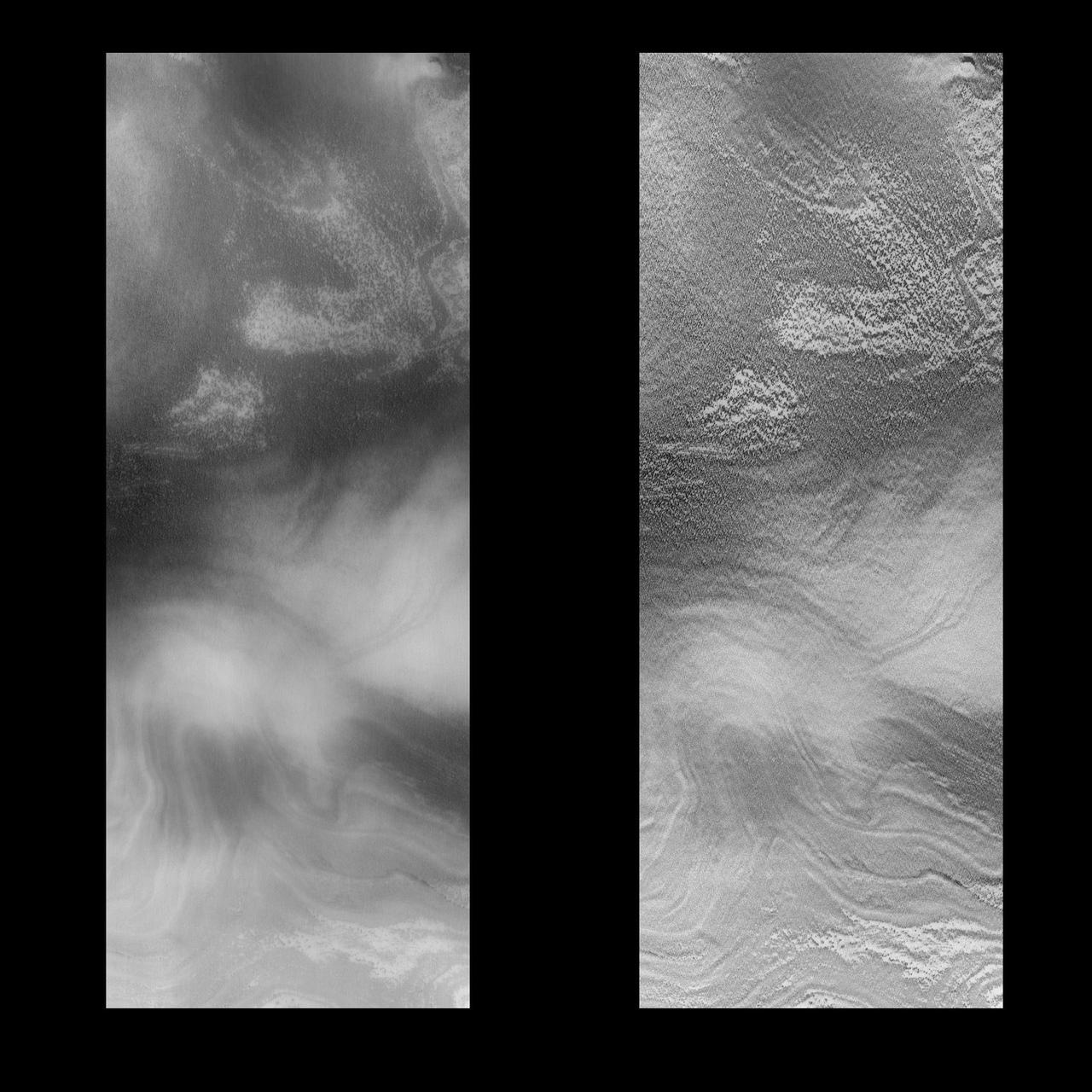
MOC View of Mars98 Landing Zone - 12/24/97
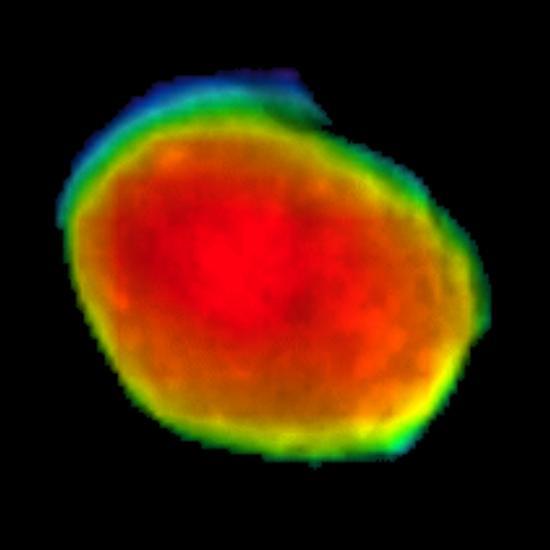
Taken on April 24, 2019, this rainbow-colored image shows the Martian moon Phobos, as viewed by NASA's 2001 Mars Odyssey orbiter using its infrared camera, Thermal Emission Imaging System (THEMIS). Each color represents a different temperature range, with the warmest in the center and coolest on the outer edge. This was the first time THEMIS was used to observe Phobos while in a full moon phase, which offers scientists a much better view for studying the composition of the Martian moon. Previous half-moon views, which can be seen here, were better for studying surface textures. https://photojournal.jpl.nasa.gov/catalog/PIA23204

This movie shows the Martian moon Phobos as viewed in visible light by NASA's 2001 Mars Odyssey orbiter on April 24, 2019. It was put together from 19 images taken 1 second apart by Odyssey's infrared camera, Thermal Emission Imaging System (THEMIS). The apparent motion is due to progression of the camera's pointing during the observation. This was the third observation of Phobos by Mars Odyssey. While displayed here in visible-wavelength light, THEMIS also recorded thermal-infrared imagery in the same scan. The distance to Phobos from Odyssey during the observation was about 5,692 miles (9,160 kilometers). Movie available at https://photojournal.jpl.nasa.gov/catalog/PIA23207
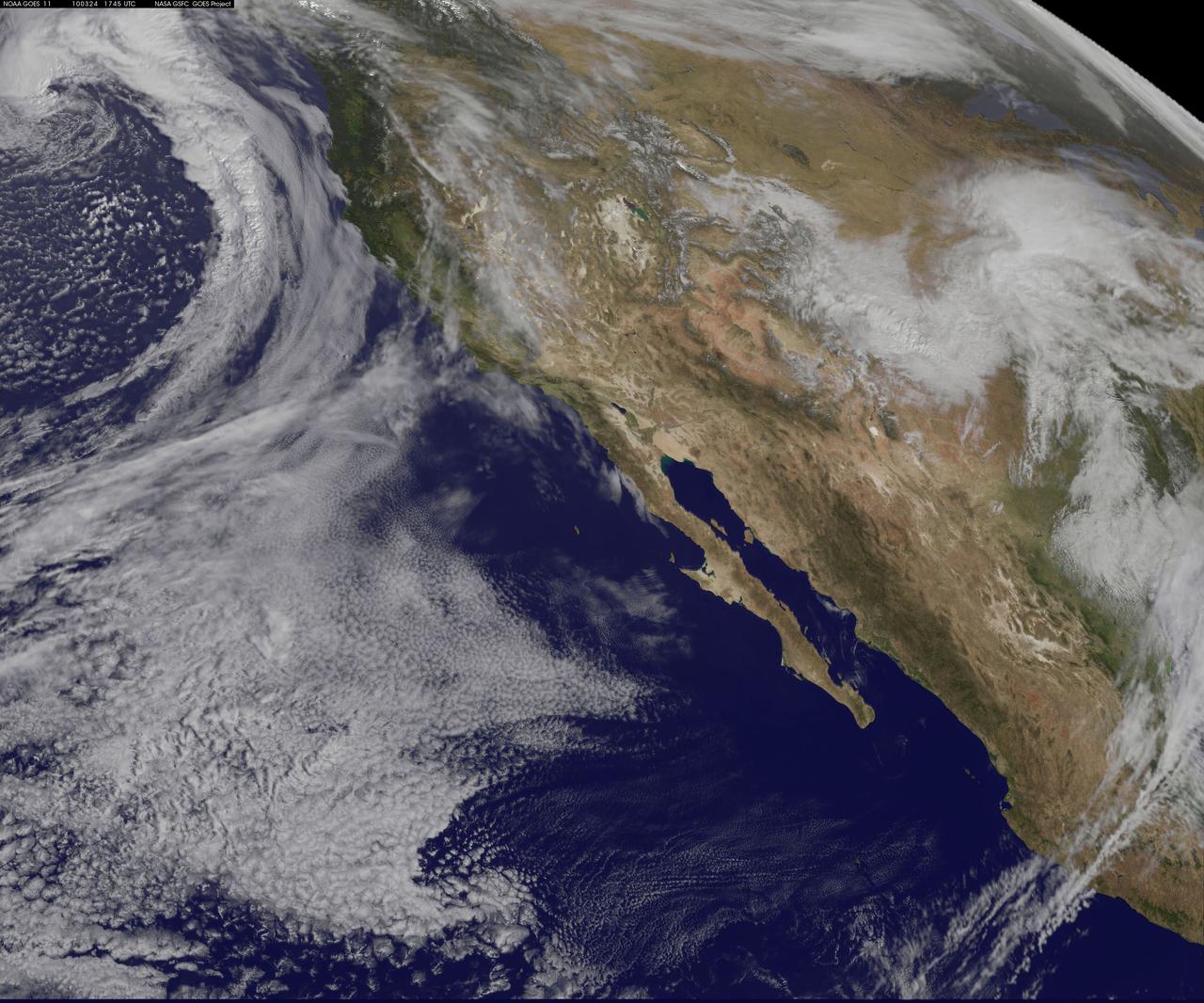
NASA GOES-11 satellite image showing the US west coast on March 24, 2010 1:45 PM EDT. <b><a href="http://goes.gsfc.nasa.gov/" rel="nofollow">Credit: NOAA/NASA GOES Project</a><b> <b><a href="http://www.nasa.gov/centers/goddard/home/index.html" rel="nofollow">NASA Goddard Space Flight Center</a></b> is home to the nation's largest organization of combined scientists, engineers and technologists that build spacecraft, instruments and new technology to study the Earth, the sun, our solar system, and the universe. <b>Follow us on <a href="http://twitter.com/NASA_GoddardPix" rel="nofollow">Twitter</a></b> <b>Join us on <a href="http://www.facebook.com/pages/Greenbelt-MD/NASA-Goddard/395013845897?ref=tsd" rel="nofollow">Facebook</a></b></b></b>

This crescent view of Jupiter was taken by NASA Voyager 1 on Mar. 24, 1979.
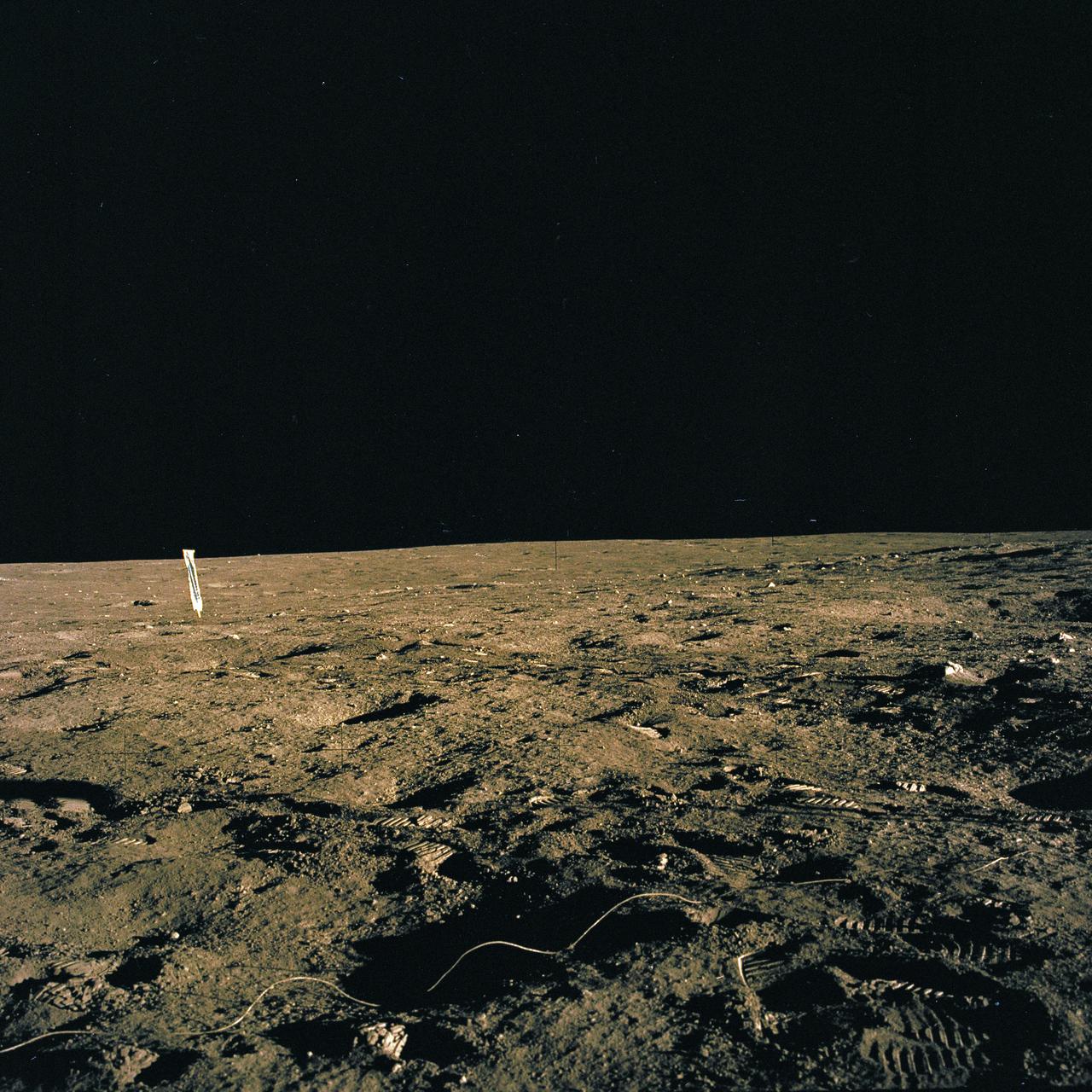
The second manned lunar landing mission, Apollo 12, launched from launch pad 39-A at Kennedy Space Center in Florida on November 14, 1969 via a Saturn V launch vehicle. The Saturn V vehicle was developed by the Marshall Space Flight Center (MSFC) under the direction of Dr. Wernher von Braun. Aboard Apollo 12 was a crew of three astronauts: Alan L. Bean, pilot of the Lunar Module (LM), Intrepid; Richard Gordon, pilot of the Command Module (CM), Yankee Clipper; and Spacecraft Commander Charles Conrad. The LM, Intrepid, landed astronauts Conrad and Bean on the lunar surface in what’s known as the Ocean of Storms while astronaut Richard Gordon piloted the CM, Yankee Clipper, in a parking orbit around the Moon. Lunar soil activities included the deployment of the Apollo Lunar Surface Experiments Package (ALSEP), finding the unmanned Surveyor 3 that landed on the Moon on April 19, 1967, and collecting 75 pounds (34 kilograms) of rock samples. This is the twenty-fourth of 25 images captured by the crew in attempt to provide a 360 degree Lunar surface scene. Apollo 12 safely returned to Earth on November 24, 1969.

A large storm roils Saturn atmosphere on the left of this NASA Cassini spacecraft image. This view looks toward a region centered at 24 degrees south of the planet equator.
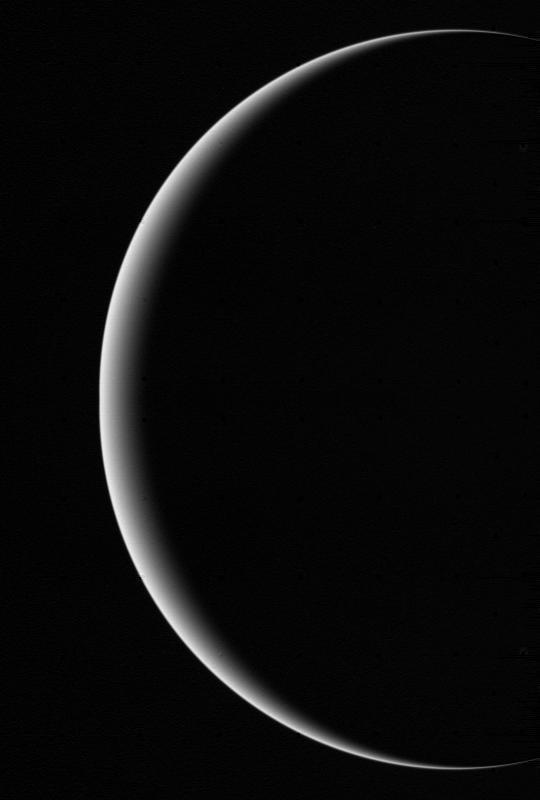
This image shows a crescent Uranus, a view that Earthlings never witnessed until Voyager 2 flew near and then beyond Uranus on Jan 24, 1986. http://photojournal.jpl.nasa.gov/catalog/PIA00346
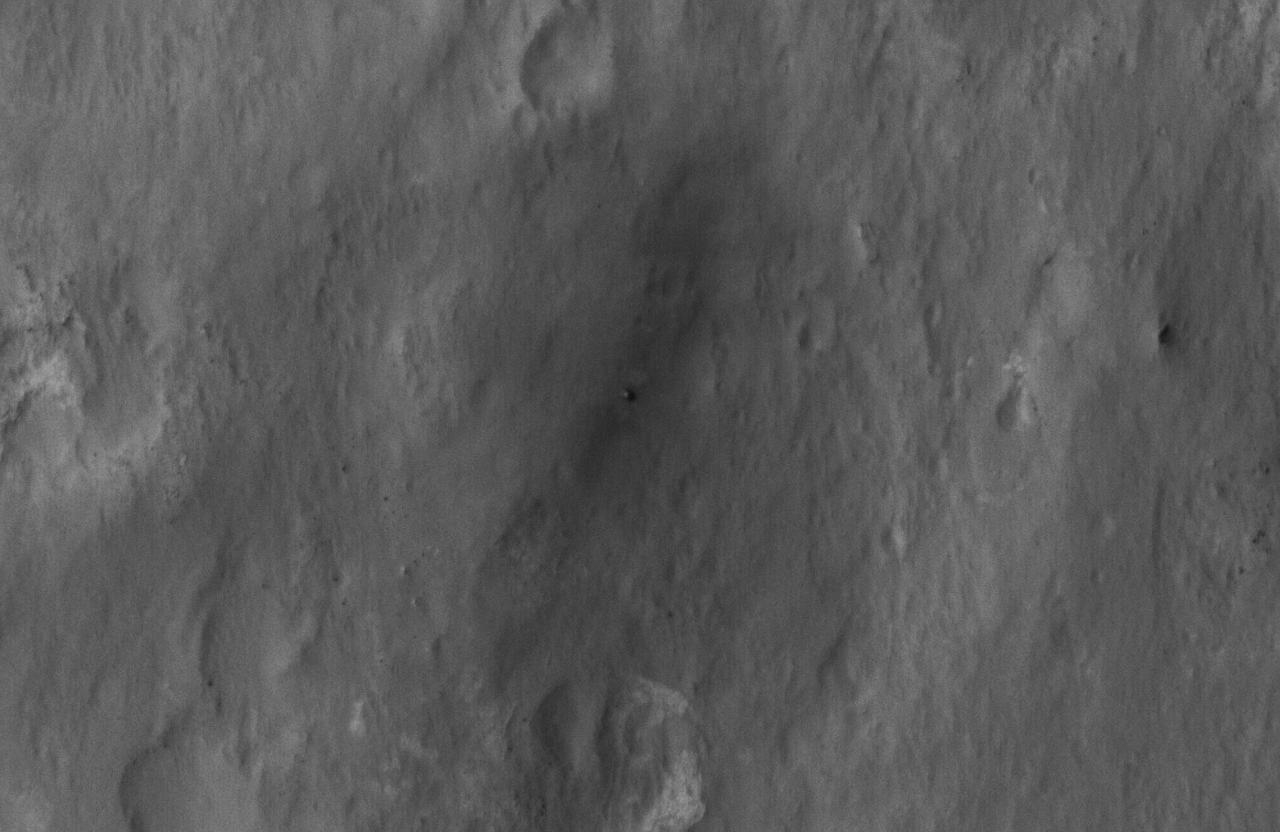
This close-up view shows NASA Curiosity rover on the surface of Mars. The image was captured by the NASA Mars Reconnaissance Orbiter about 24 hours after the rover made its grand appearance on Mars.
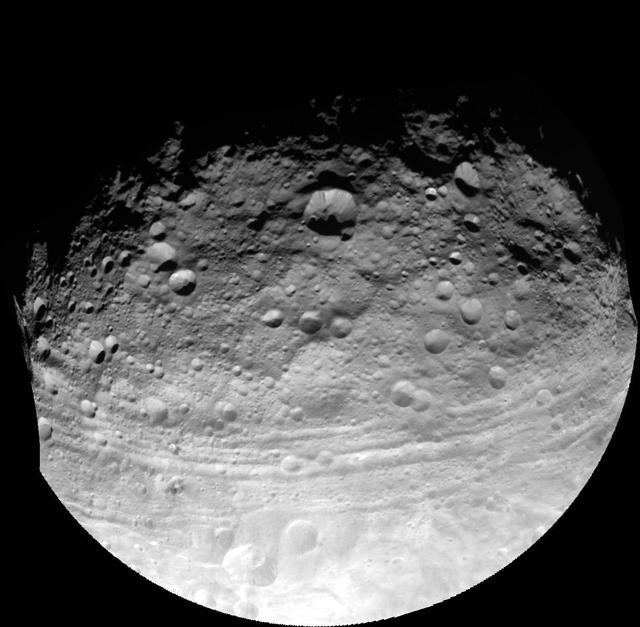
This full view of the giant asteroid Vesta was taken by NASA Dawn spacecraft, as part of a rotation characterization sequence on July 24, 2011, at a distance of 3,200 miles and shows impact craters of various sizes and grooves parallel to the equator.

On Feb. 24, 2005, NASA Mars Exploration Rover Opportunity had driven about 73 meters 240 feet and reached the eastern edge of a small crater dubbed Naturaliste, 3D glasses are necessary to view this image.
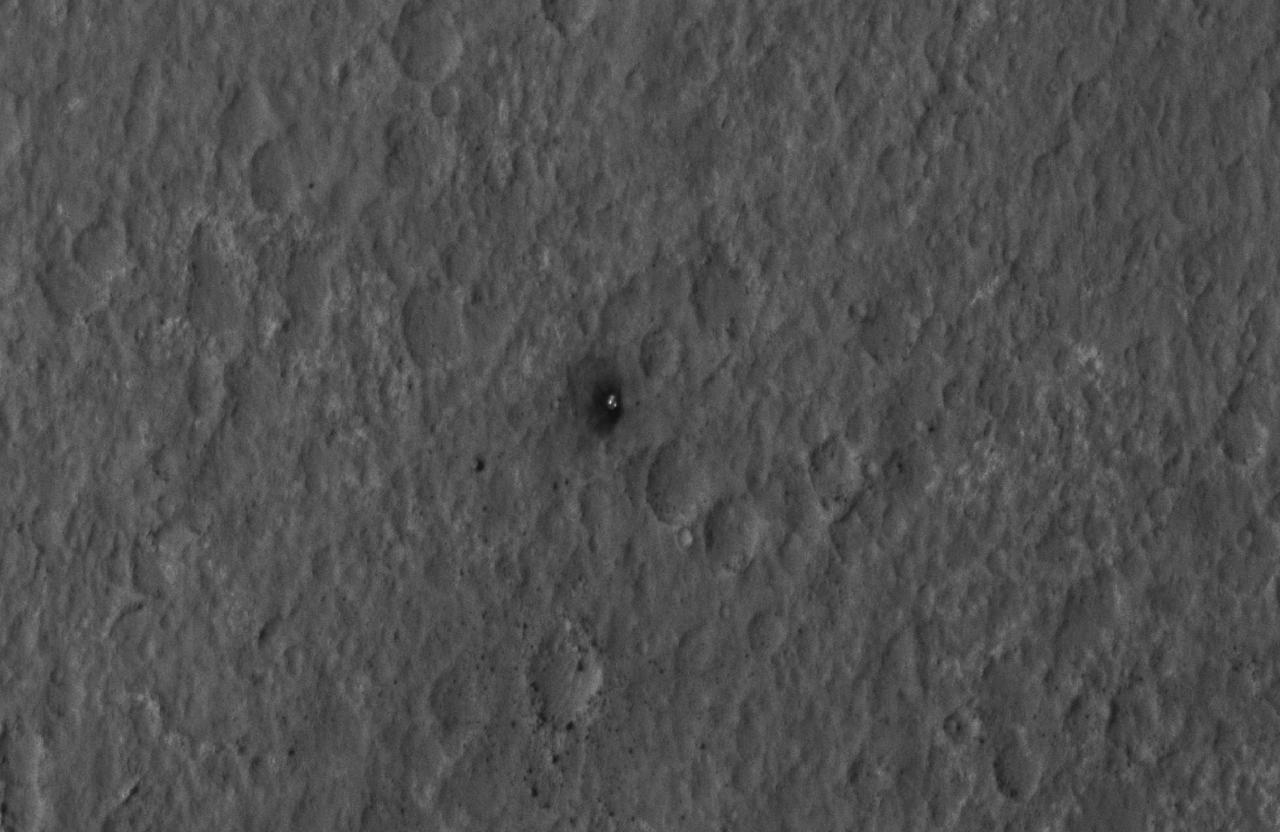
This close-up view shows Curiosity heat shield, which helped the rover survive the harrowing journey through the Martian atmosphere, on the surface of Mars. NASA Mars Reconnaissance Orbiter about 24 hours after landing.
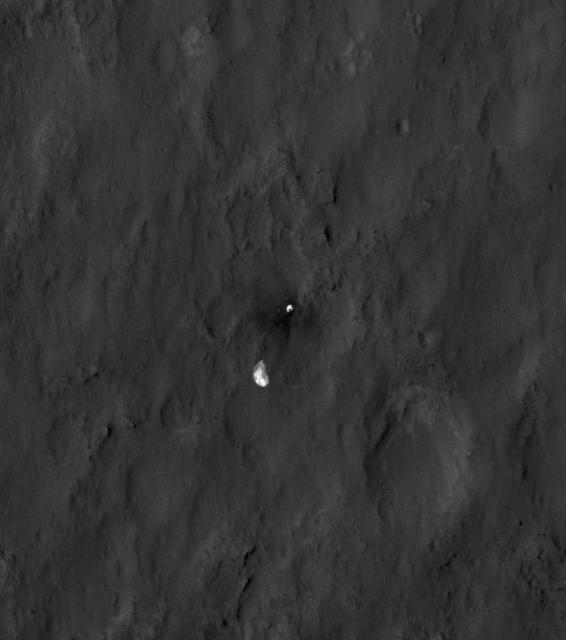
This close-up view shows the rover Curiosity parachute and back shell strewn across the surface of Mars. The image was captured by NASA Mars Reconnaissance Orbiter about 24 hours after the parachute helped guide the rover to the surface.
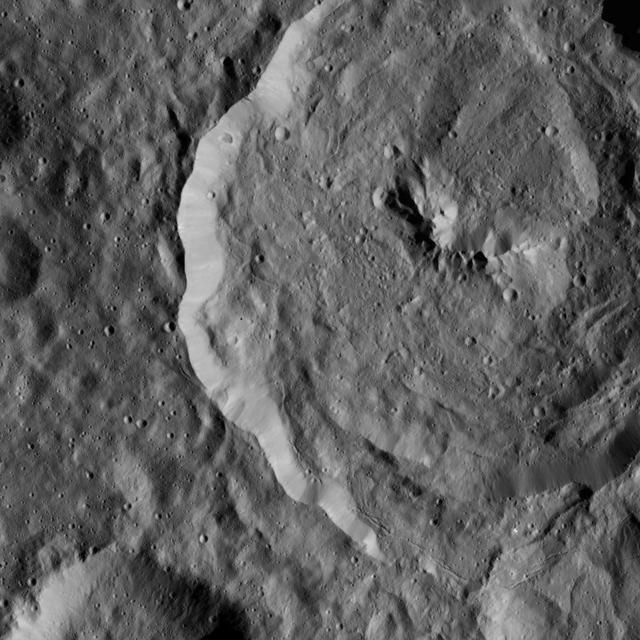
Tupo Crater on Ceres is seen in this view from NASA Dawn spacecraft. This crater, located in the southern hemisphere of Ceres, was named for the Polynesian god of turmeric. Dawn captured the scene on Dec. 24, 2015.
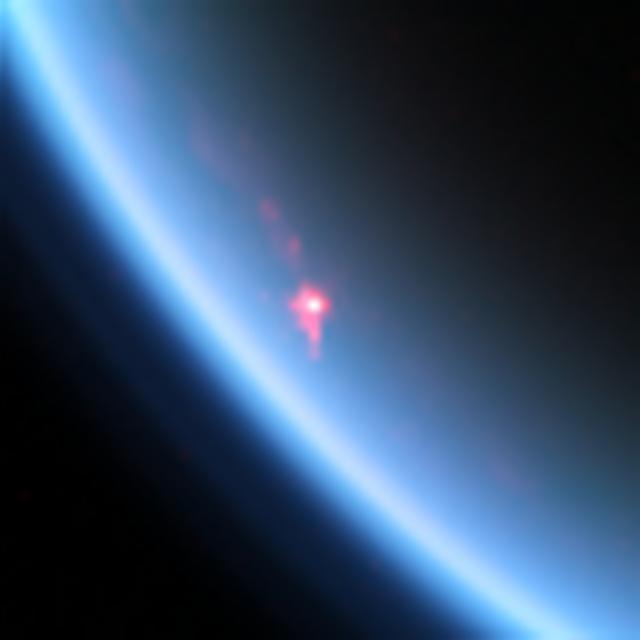
The view was obtained during NASA Cassini orbiter flyby on July 24, 2012, also called the T85 flyby by the Cassini team. This was the most intense specular reflection that Cassini had seen to date.
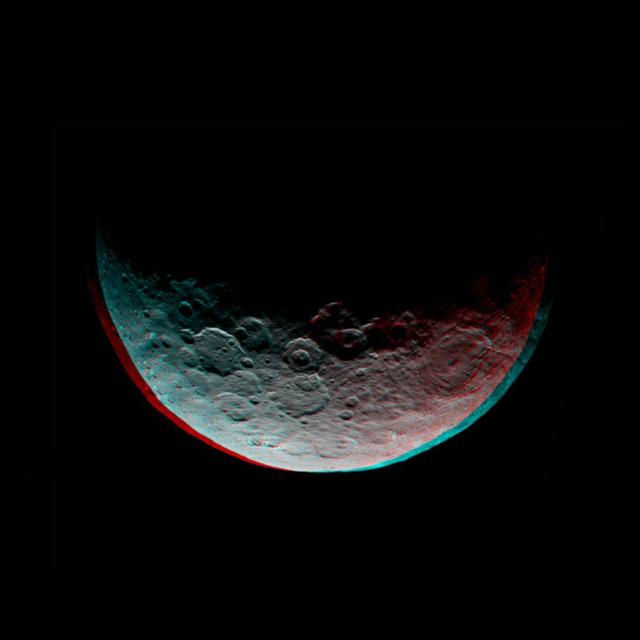
This anaglyph of Ceres is part of a sequence of images taken by NASA Dawn spacecraft April 24 to 26, 2015, from a distance of 8,500 miles 13,500 kilometers. 3-D glasses are needed to view this image. http://photojournal.jpl.nasa.gov/catalog/PIA19320
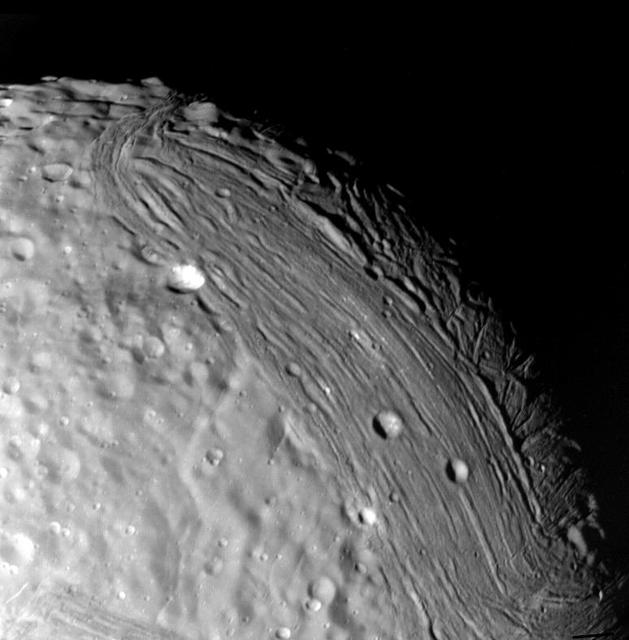
Miranda reveals a complex geologic history in this view, acquired by NASA's Voyager 2 on Jan. 24, 1986, around its close approach to the Uranian moon. At least three terrain types of different age and geologic style are evident. http://photojournal.jpl.nasa.gov/catalog/PIA00141
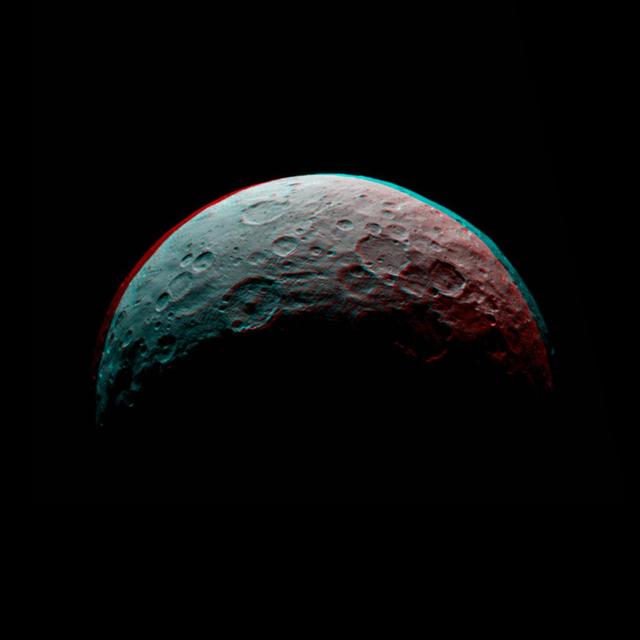
This image of Ceres is part of a sequence taken by NASA Dawn spacecraft April 24 to 26, 2015, from a distance of 8,500 miles 13,500 kilometers. You need 3-D glasses to view this image. http://photojournal.jpl.nasa.gov/catalog/PIA19537
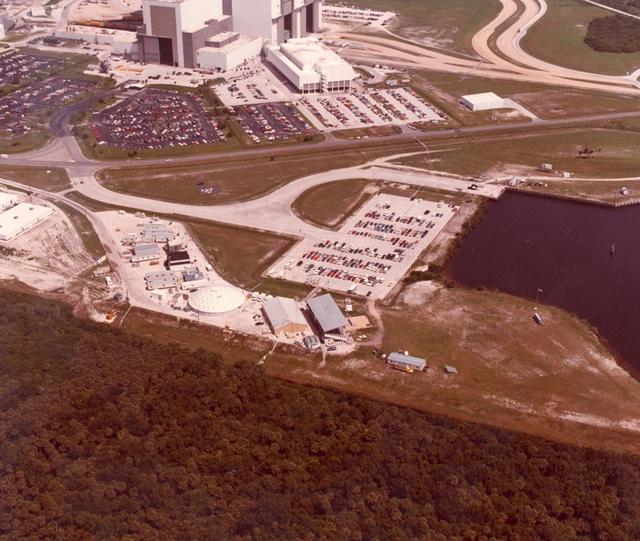
Aerial view of Press Site, June 24, 1982
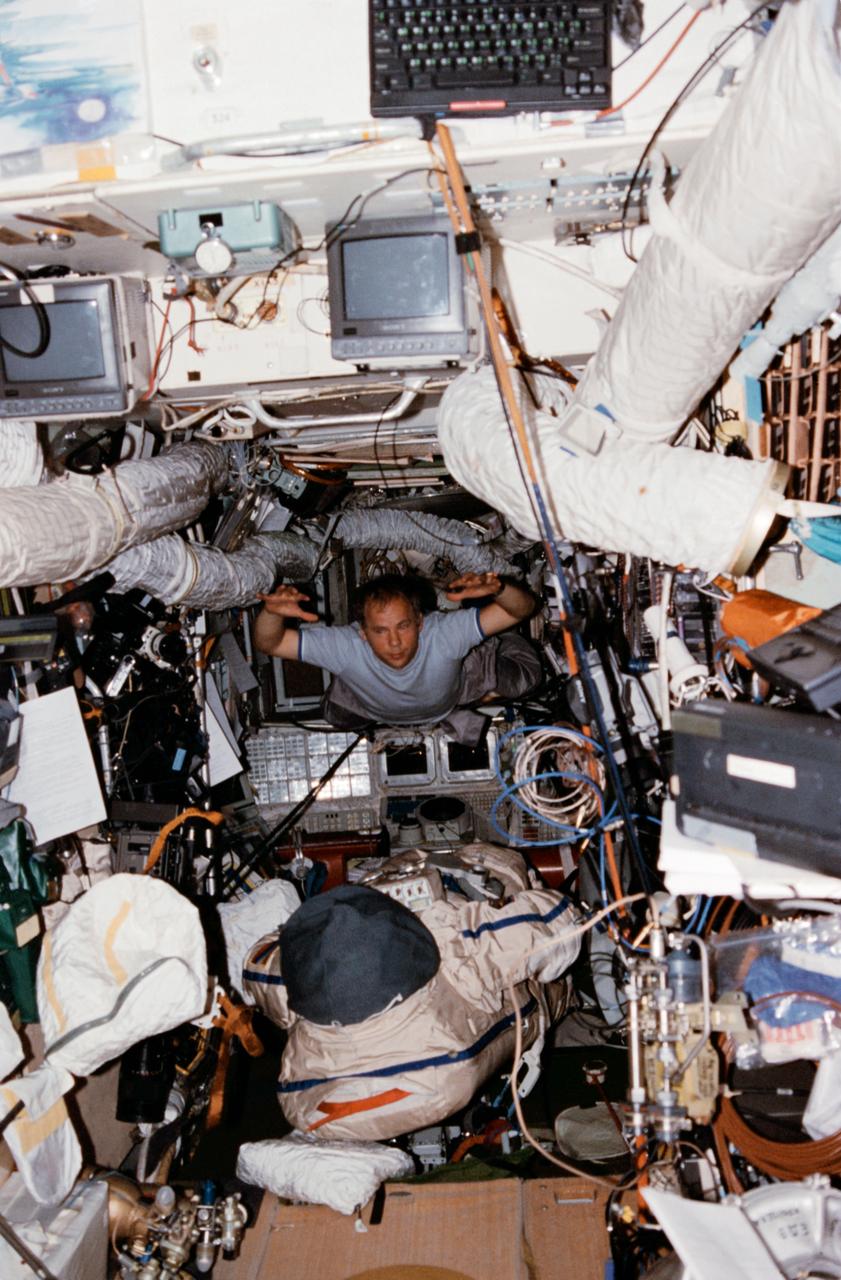
Various views of activities surrounding the Mir 24 crew's preparation for an intravehicular activity (IVA) in the Mir space station. Views include: Mir 24 crew in the Orlan suits in the Soyuz spacecraft (012-3,016). Commander Anatoly Solovyev climbs out of his suit in the Soyuz (014-5). Solovyev floats into the Base Block module (017). Underexposed views of Solovyev (left) and flight engineer Pavel Vinogradov in the Soyuz (018-20). Interior views of the airlock with IVA hardware (oxygen for suits) in view (021-2). Mir 24 crewmember climbing into his suit with his back to the camera (023). View 024 is blank. View 025 is of a Mir viewing portal. Portrait of Vinogradov in his suit, wearing his helmet (026). Guest researcher Michael Foale in the Soyuz, wearing his pressure suit (027-8). Interior views of the Soyuz (029-32). Solovyev and Vinogradov in the Base Block (033).
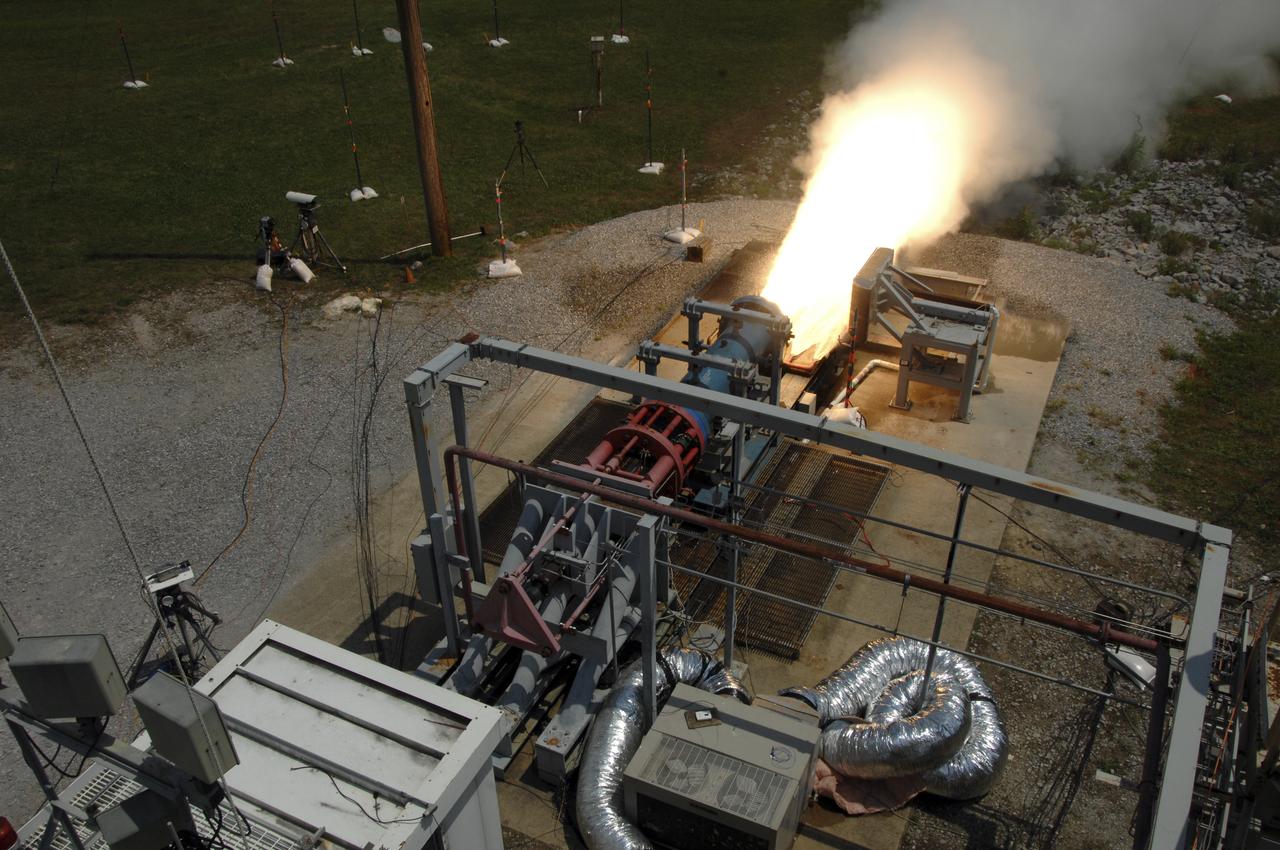
P9038-SRTMV-N1 24" HOT FIRING VIEW FROM CAMERA 2
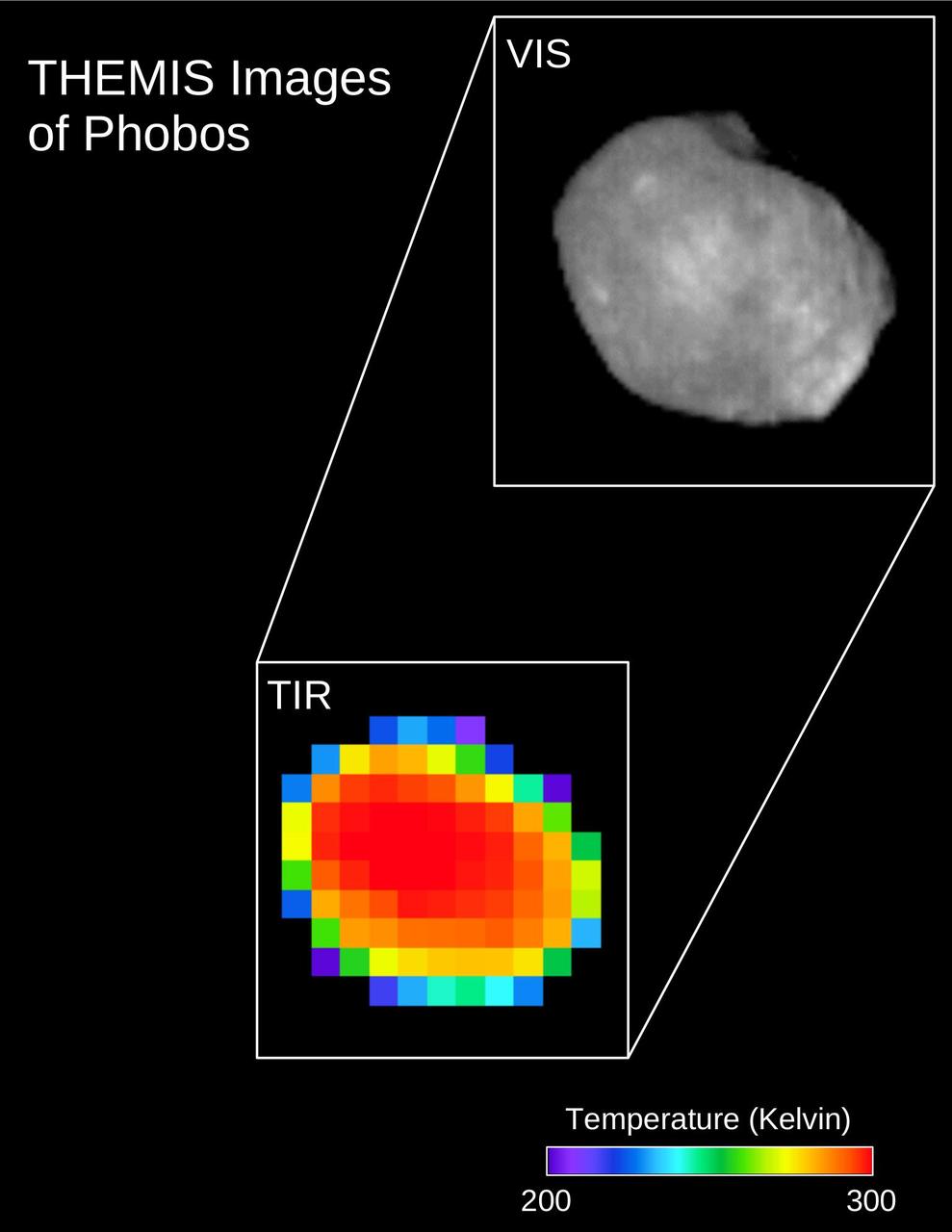
These are two views of the same observation of the Martian moon Phobos taken in both infrared and visible light by NASA's 2001 Mars Odyssey orbiter using its infrared camera, Thermal Emission Imaging System (THEMIS). The image was taken on April 24, 2019. The top view is what Phobos looked like in the visible light spectrum, as viewed by THEMIS. The bottom view is what it looks like in infrared, which reveals temperature differences. The warmest temperatures are in the center, and the coolest are on the outer edge. A scale bar is provided to reflect the temperatures, which range from 200 to 300 degrees Kelvin, or -100 degrees Fahrenheit (-73 Celsius) to 80 degrees Fahrenheit (27 Celsius). https://photojournal.jpl.nasa.gov/catalog/PIA23206
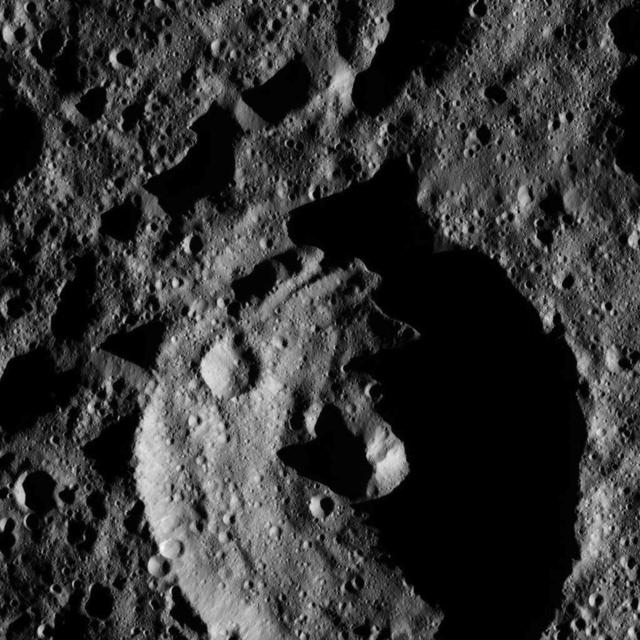
This view from NASA Dawn spacecraft shows a crater in the southern hemisphere of Ceres with a prominent central peak. The image is centered at approximately 63 degrees south latitude, 143 degrees east longitude. Dawn captured the scene on Dec. 24, 2015.
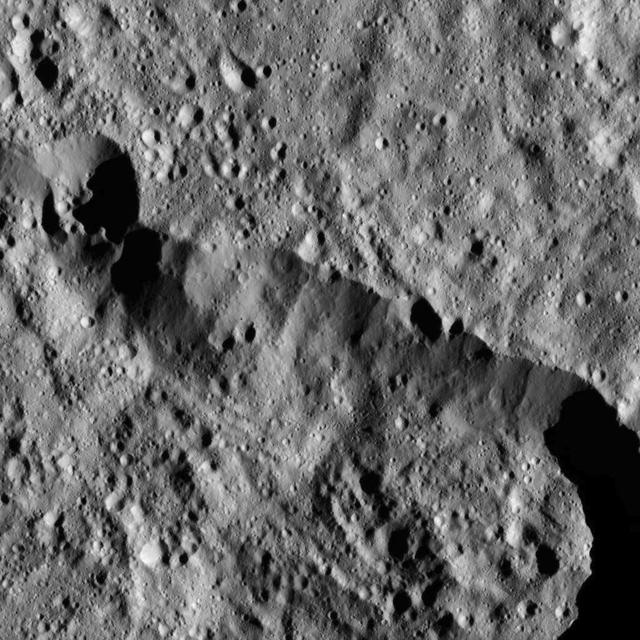
This view from NASA Dawn spacecraft captures the northern rim of Toharu Crater on Ceres. Dawn captured the scene on Dec. 24, 2015 from its low-altitude mapping orbit LAMO, at an approximate altitude of 240 miles 385 kilometers above Ceres.
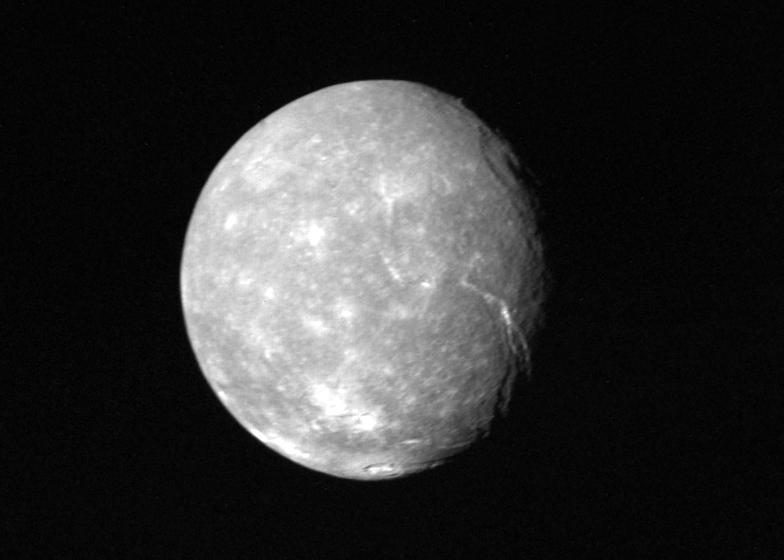
Voyager 2 obtained this full-disk view of Uranus moon Titania in the early morning hours of Jan. 24, 1986, from a distance of about 500,000 kilometers 300,000 miles. Many circular depressions, probably impact craters, are visible in this clear-filter.

This full-frame view of asteroid Vesta was obtained by NASA Dawn spacecraft with its framing camera on July, 24 2011. This image was taken through the camera clear filter. The image has a resolution of about 485 meters per pixel.

Venus Cloud Tops Viewed by Hubble. This is a NASA Hubble Space Telescope ultraviolet-light image of the planet Venus, taken on January 24 1995, when Venus was at a distance of 70.6 million miles 113.6 million kilometers from Earth.

This bulls-eye view of Neptune small dark spot D2 was obtained by NASA s Voyager 2 narrow-angle camera on Aug. 24, 1989, when Voyager 2 was within 1.1 million km 680,000 miles of the planet. http://photojournal.jpl.nasa.gov/catalog/PIA00064
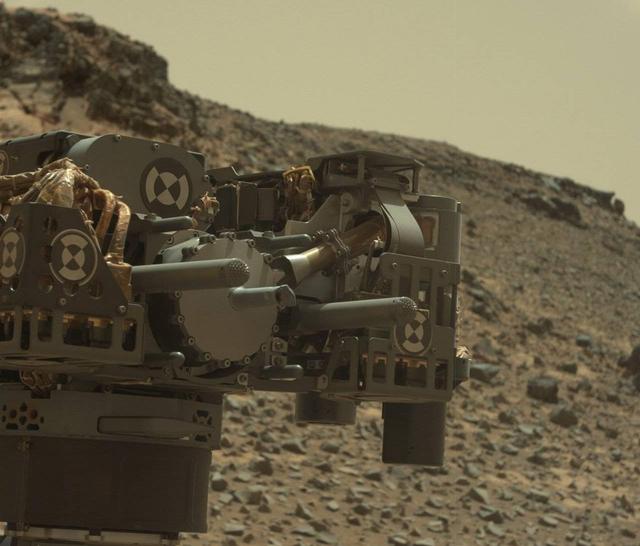
This view from the Mast Camera (Mastcam) on NASA's Curiosity Mars rover shows the rover's drill just after finishing a drilling operation at a target rock called "Telegraph Peak" on Feb. 24, 2015, the 908th Martian day, or sol, of the rover's work on Mars. Three sols later, a fault-protection action by the rover halted a process of transferring sample powder that was collected during this drilling. The image is in raw color, as recorded directly by the camera, and has not been white-balanced. The fault-protection event, triggered by an irregularity in electrical current, led to engineering tests in subsequent days to diagnose the underlying cause. http://photojournal.jpl.nasa.gov/catalog/PIA19145
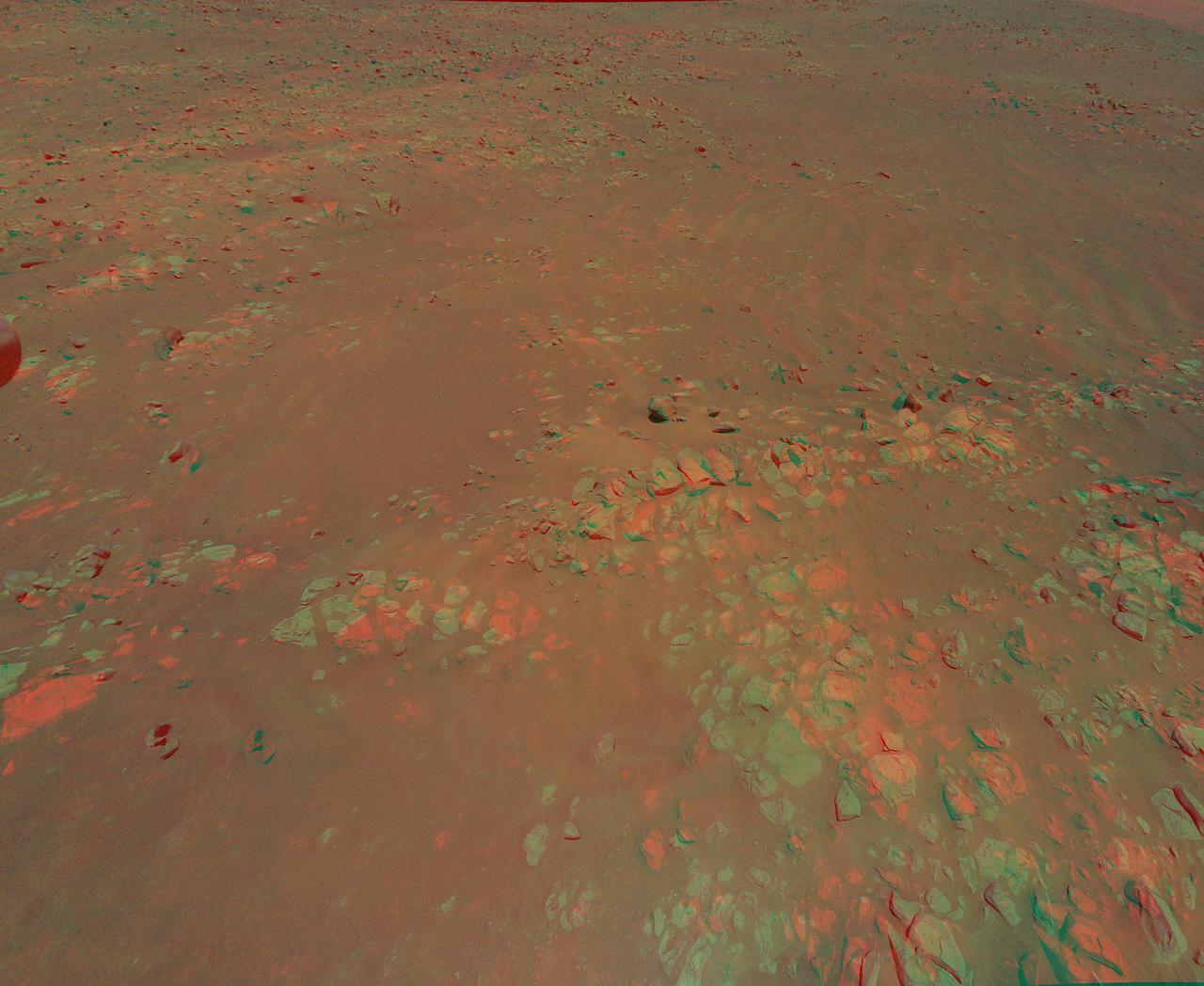
This 3D view of an area the Mars Perseverance rover team calls "Raised Ridges" was created from data collected by NASA's Ingenuity Mars Helicopter during its 10th flight at Mars on July 24, 2021. The stereo images of the geologic feature were taken at the request of the Mars Perseverance rover science team, which was considering visiting the ridges during the first science campaign. On Earth, similar fractures in desert environments might be a clue to past liquid water activity and thus past habitability. The 3D view (or anaglyph) is best viewed with red-blue glasses. It was created by combining data from two images taken meters apart by the RTE camera aboard Ingenuity. At the time the two images were taken, Ingenuity was at an altitude of 40 feet (12 meters). https://photojournal.jpl.nasa.gov/catalog/PIA24688
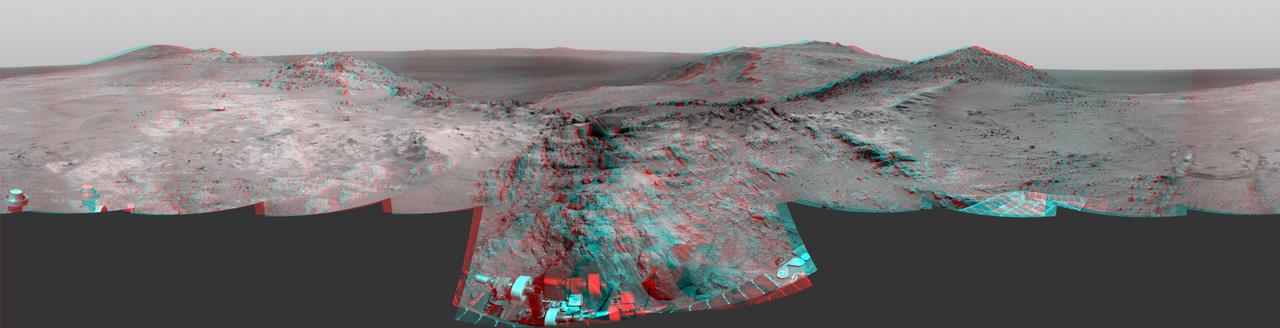
Cumulative driving by NASA's Mars Exploration Rover Opportunity surpassed marathon distance on March 24, 2015, as the rover neared a destination called "Marathon Valley," which is middle ground of this stereo view from early March. The scene appears three-dimensional when viewed through blue-red glasses with the red lens on the left. Olympic marathon distance is 26.219 miles (42.195 kilometers). The left-eye and right-eye cameras of Opportunity's navigation camera collected the component images of this scene during the 3,948th and 3,949th Martian days, or sols, of the rover's work on Mars (March 3 and 4, 2015). The view is centered toward the east-southeast, from a location on Endeavour Crater's western rim overlooking Marathon Valley, with the floor of Endeavour beyond, and the eastern rim in the distance. In the foreground at center, Opportunity's robotic arm is positioned for examination of a blocky rock called "Sergeant Charles Floyd." http://photojournal.jpl.nasa.gov/catalog/PIA19156
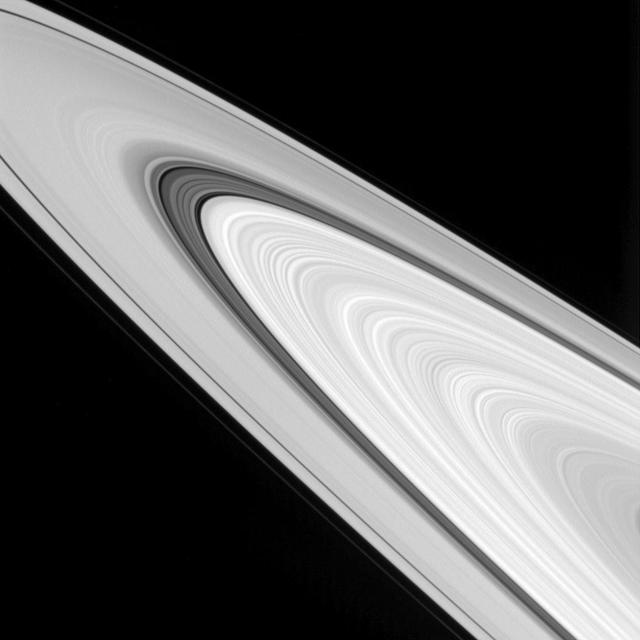
This view from NASA's Cassini spacecraft showcases some of the amazingly detailed structure of Saturn's rings. The rings are made up of many smaller ringlets that blur together when seen from a distance. But when imaged up close, the rings' structures display quite a bit of variation. Ring scientists are debating the nature of these features -- whether they have always appeared this way or if their appearance has evolved over time. This view looks toward the sunlit side of the rings from about 4 degrees above the ring plane. The image was taken in visible light with the Cassini spacecraft wide-angle camera on Sept. 24, 2016. The view was acquired at a distance of approximately 283,000 miles (456,000 kilometers) from Saturn and at a Sun-Saturn-spacecraft, or phase, angle of 32 degrees. Image scale is 17 miles (27 kilometers) per pixel. http://photojournal.jpl.nasa.gov/catalog/PIA20506
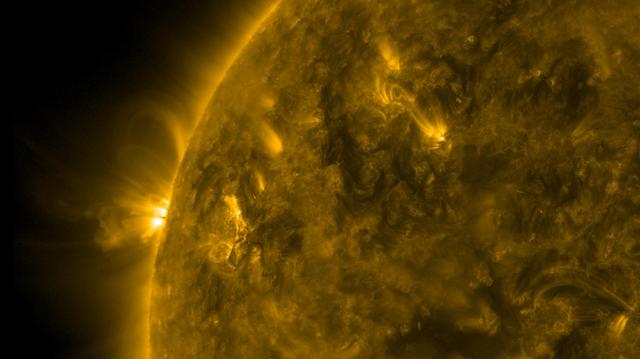
As an active region rotated into view, NASA Solar Dynamics Observatory was able to observe well-defined magnetic loops gyrating above the sun between Mar, 23-24, 2017. These loops appear because charged particles spinning along the magnetic field lines above this active region are made visible in this wavelength of extreme ultraviolet light. The video clip covers about a day and a half of activity. Movies are available at https://photojournal.jpl.nasa.gov/catalog/PIA21583
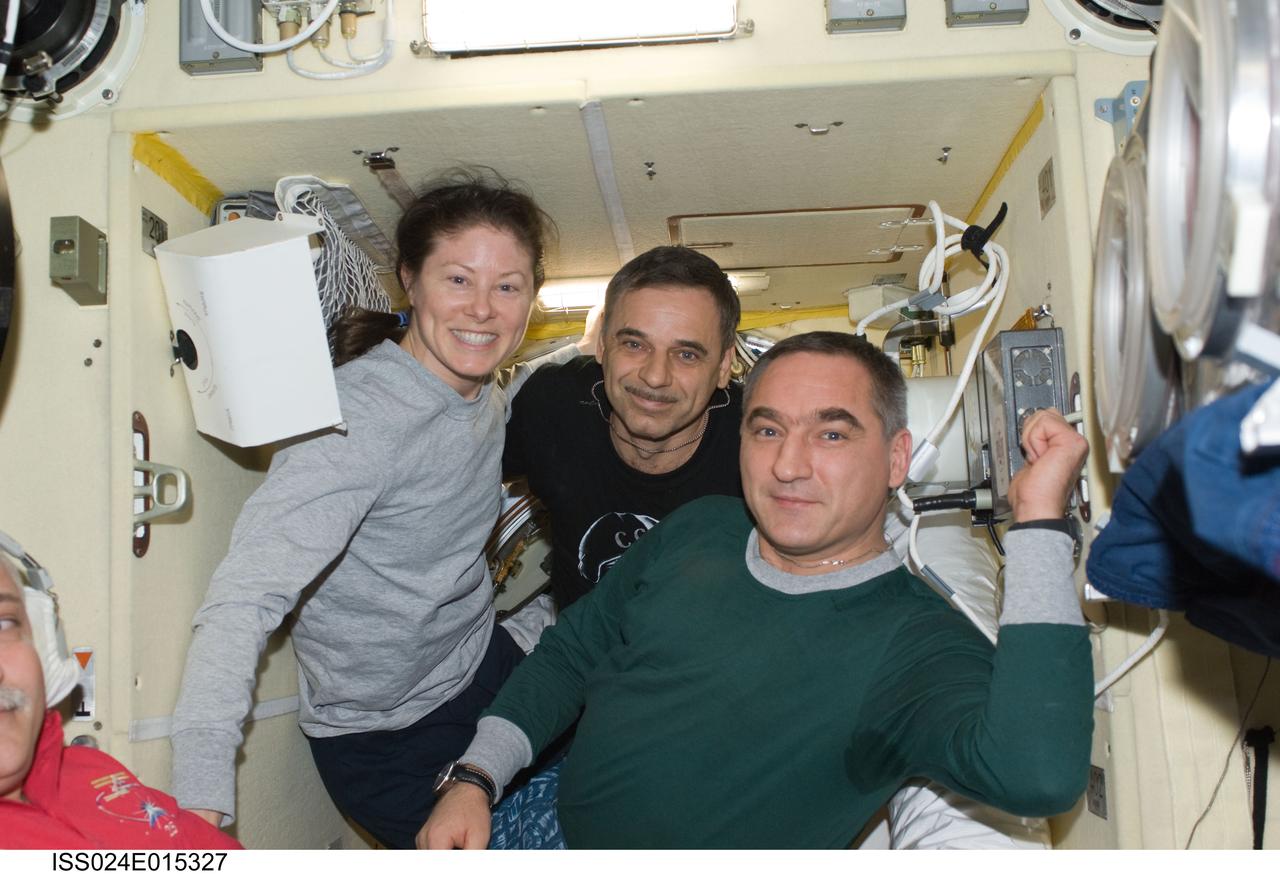
ISS024-E-015327 (24 Sept. 2010) --- Russian cosmonaut Alexander Skvortsov (right), Expedition 24 commander; NASA astronaut Tracy Caldwell Dyson and Russian cosmonaut Mikhail Kornienko, both flight engineers, pose for a photo during final preparations for their departure in the Soyuz TMA-18 docked to the Poisk Mini-Research Module 2 (MRM2) of the International Space Station. Originally scheduled for Sept. 23, the Soyuz undocked a day later due to a Poisk-side hatch sensor problem, which prevented hooks on the Poisk side of the docking interface from opening. The Soyuz undocked at 10:02 p.m. (EDT) on Sept. 24, 2010.
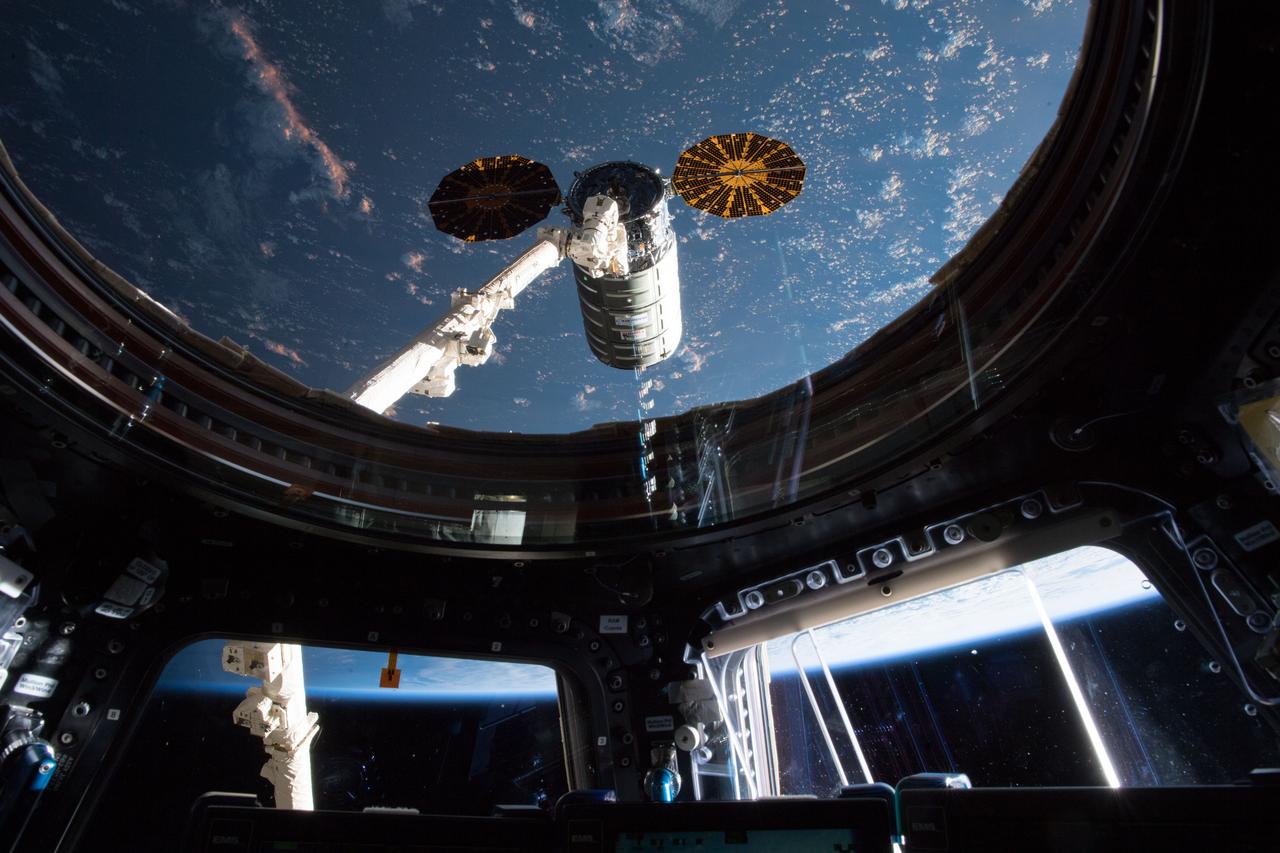
iss055e074781 (May 24, 2018) --- This view taken from inside the Cupola shows the Orbital ATK space freighter moments before it was grappled with the Canadarm2 robotic arm.
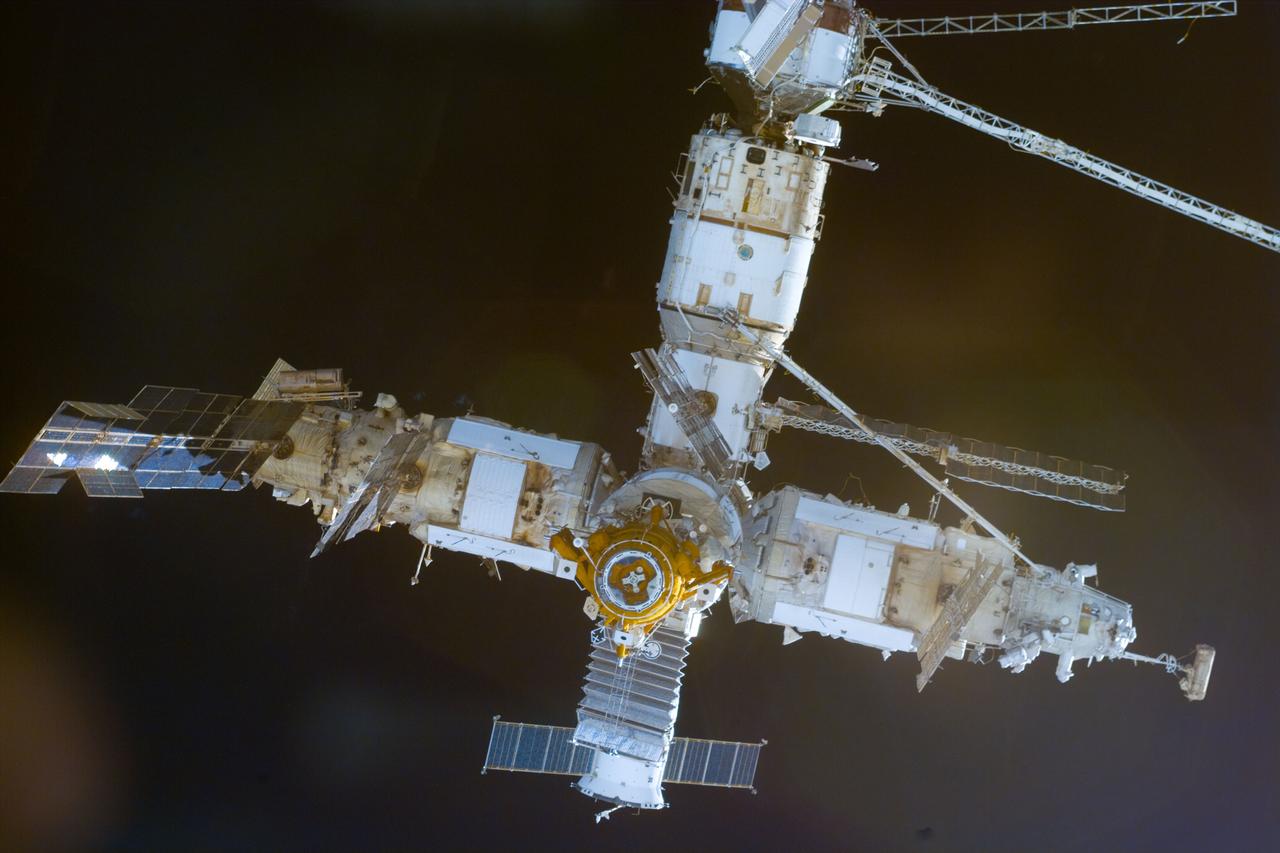
S89-E-5165 (24 Jan 1998) --- From the point of view of the Space Shuttle Endeavour, the Mir Space Station rapidly approaches as the two spacecraft prepare to make the eighth of nine NASA-Mir link-ups. The image was photographed with an Electronic Still Camera (ESC) at 19:48:07 GMT, January 24, 1998.
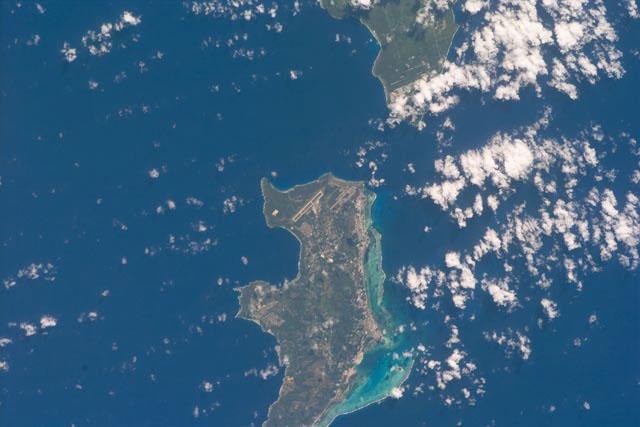
S103-E-5361 (24 December 1999) --- This vertical view from the Space Shuttle Discovery shows two small islands of the Marianas Islands (Saipan and Tinian) in Micronesia in the Pacific Ocean. The STS-103 crew recorded this electronic still image at 28:05:53 GMT, December 24, 1999.
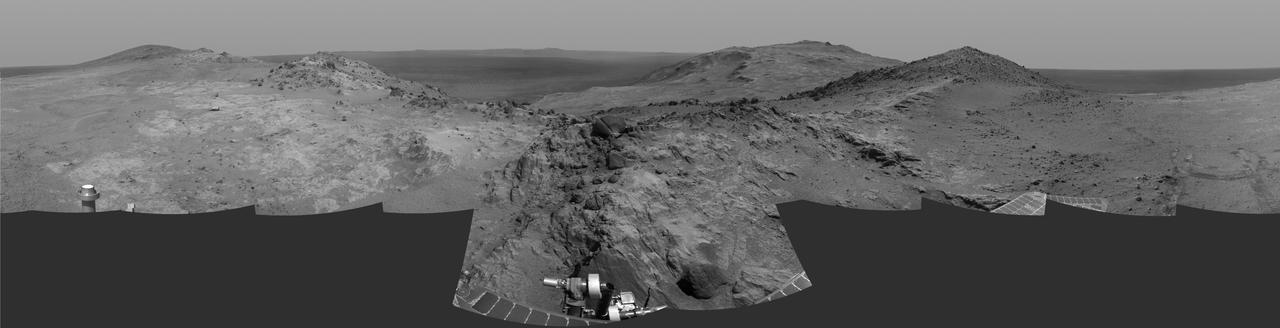
Cumulative driving by NASA's Mars Exploration Rover Opportunity surpassed marathon distance on March 24, 2015, as the rover neared a destination called "Marathon Valley," which is middle ground of this dramatic view from early March. Olympic marathon distance is 26.219 miles (42.195 kilometers). Opportunity's navigation camera collected the component images of this scene during the 3,948th and 3,949th Martian days, or sols, of the rover's work on Mars (March 3 and 4, 2015). The view is centered toward the east-southeast, from a location on Endeavour Crater's western rim overlooking Marathon Valley, with the floor of Endeavour beyond, and the eastern rim in the distance. In the foreground at center, Opportunity's robotic arm is positioned for examination of a blocky rock called "Sergeant Charles Floyd." http://photojournal.jpl.nasa.gov/catalog/PIA19155
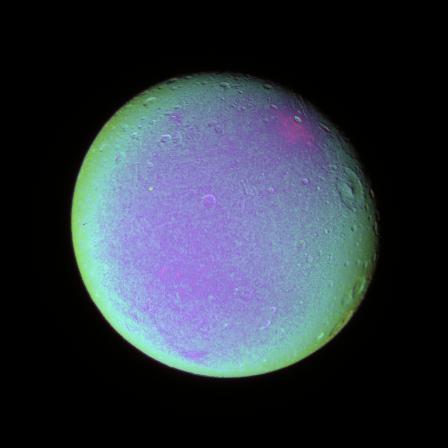
The leading hemisphere of Dione displays subtle variations in color across its surface in this false color view. To create this view, ultraviolet, green and infrared images were combined into a single black and white picture that isolates and maps regional color differences. This "color map" was then superposed over a clear-filter image. The origin of the color differences is not yet understood, but may be caused by subtle differences in the surface composition or the sizes of grains making up the icy soil. Terrain visible here is on the moon's leading hemisphere. North on Dione (1,126 kilometers, or 700 miles across) is up and rotated 17 degrees to the right. All images were acquired with the Cassini spacecraft narrow-angle camera on Dec. 24, 2005 at a distance of approximately 597,000 kilometers (371,000 miles) from Dione and at a Sun-Dione-spacecraft, or phase, angle of 21 degrees. Image scale is 4 kilometers (2 miles) per pixel. http://photojournal.jpl.nasa.gov/catalog/PIA07688
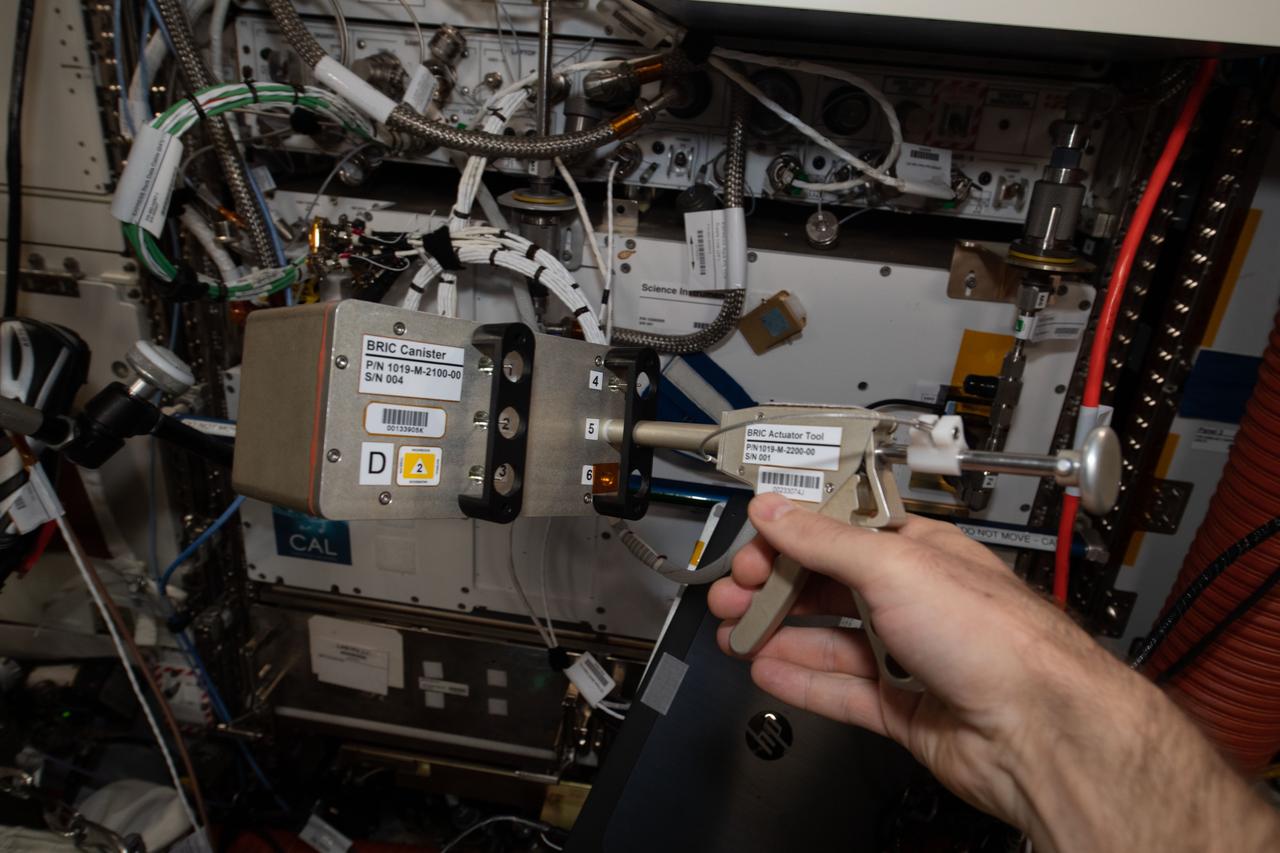
iss065e094066 (6/9/2021) --- A close-up view of the a BRIC-24 Canister and actuator tool. Biological Research In Canisters-24 (BRIC-24) tests how space affects organelle contacts and vacuole fusion in plants, systems that may be important for plant gravity sensing and response. Vacuoles are organelles in plant cells that have important functions.
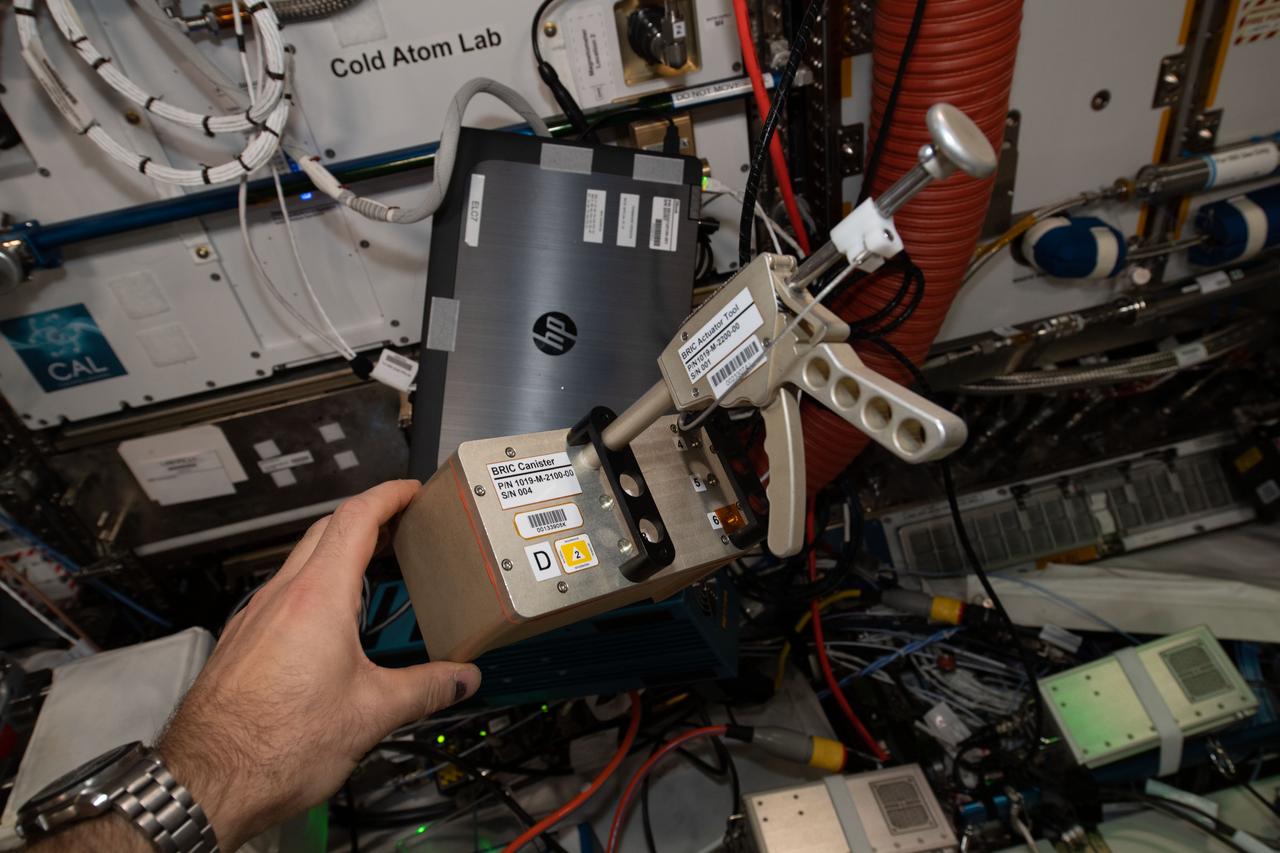
iss065e094062 (6/9/2021) --- A close-up view of the a BRIC-24 Canister and actuator tool. Biological Research In Canisters-24 (BRIC-24) tests how space affects organelle contacts and vacuole fusion in plants, systems that may be important for plant gravity sensing and response. Vacuoles are organelles in plant cells that have important functions.
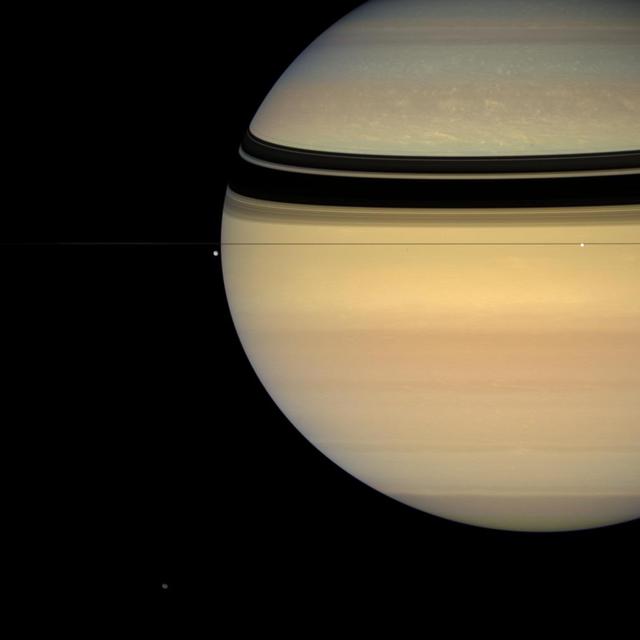
This colorful view, taken from edge-on with the ringplane, contains four of Saturn's attendant moons. Tethys (1,071 kilometers, 665 miles across) is seen against the black sky to the left of the gas giant's limb. Brilliant Enceladus (505 kilometers, 314 miles across) sits against the planet near right. Irregular Hyperion (280 kilometers, 174 miles across) is at the bottom of the image, near left. Much smaller Epimetheus (116 kilometers, 72 miles across) is a speck below the rings directly between Tethys and Enceladus. Epimetheus casts an equally tiny shadow onto the blue northern hemisphere, just above the thin shadow of the F ring. Images taken using red, green and blue spectral filters were combined to create this natural color view. The images were acquired with the Cassini spacecraft wide-angle camera on July 24, 2007 at a distance of approximately 2 million kilometers (1.2 million miles) from Saturn. Image scale is 116 kilometers (72 miles) per pixel on Saturn. http://photojournal.jpl.nasa.gov/catalog/PIA08394
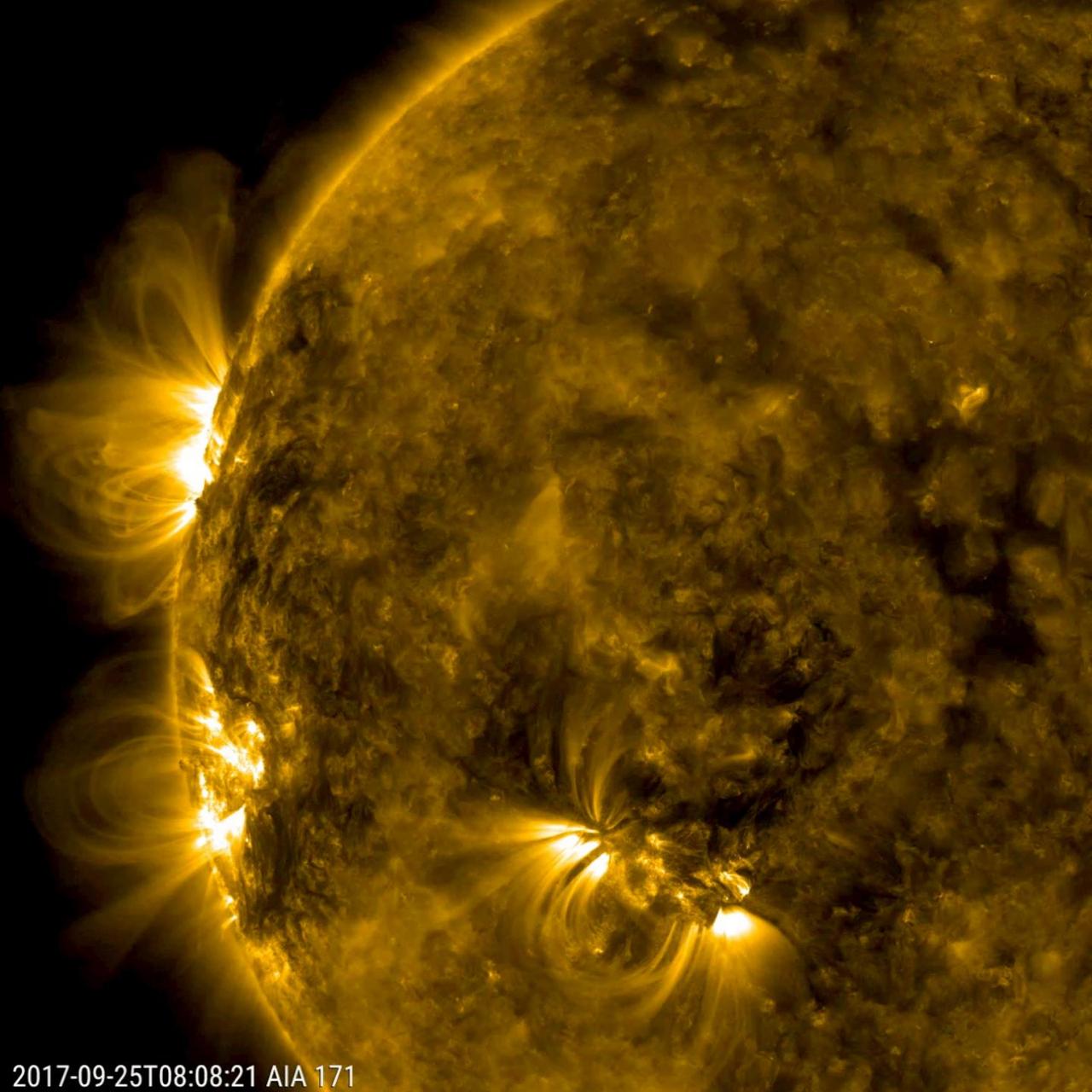
Three distinct active regions with towering arches above them rotated into view over a three-day period (Sept. 24-26, 2017). In extreme ultraviolet light, charged particles that are spinning along the ever-changing magnetic field lines above the active regions make the lines visible. To give some sense of scale, the largest arches rose up many times the size of Earth. Movies are available at https://photojournal.jpl.nasa.gov/catalog/PIA22038
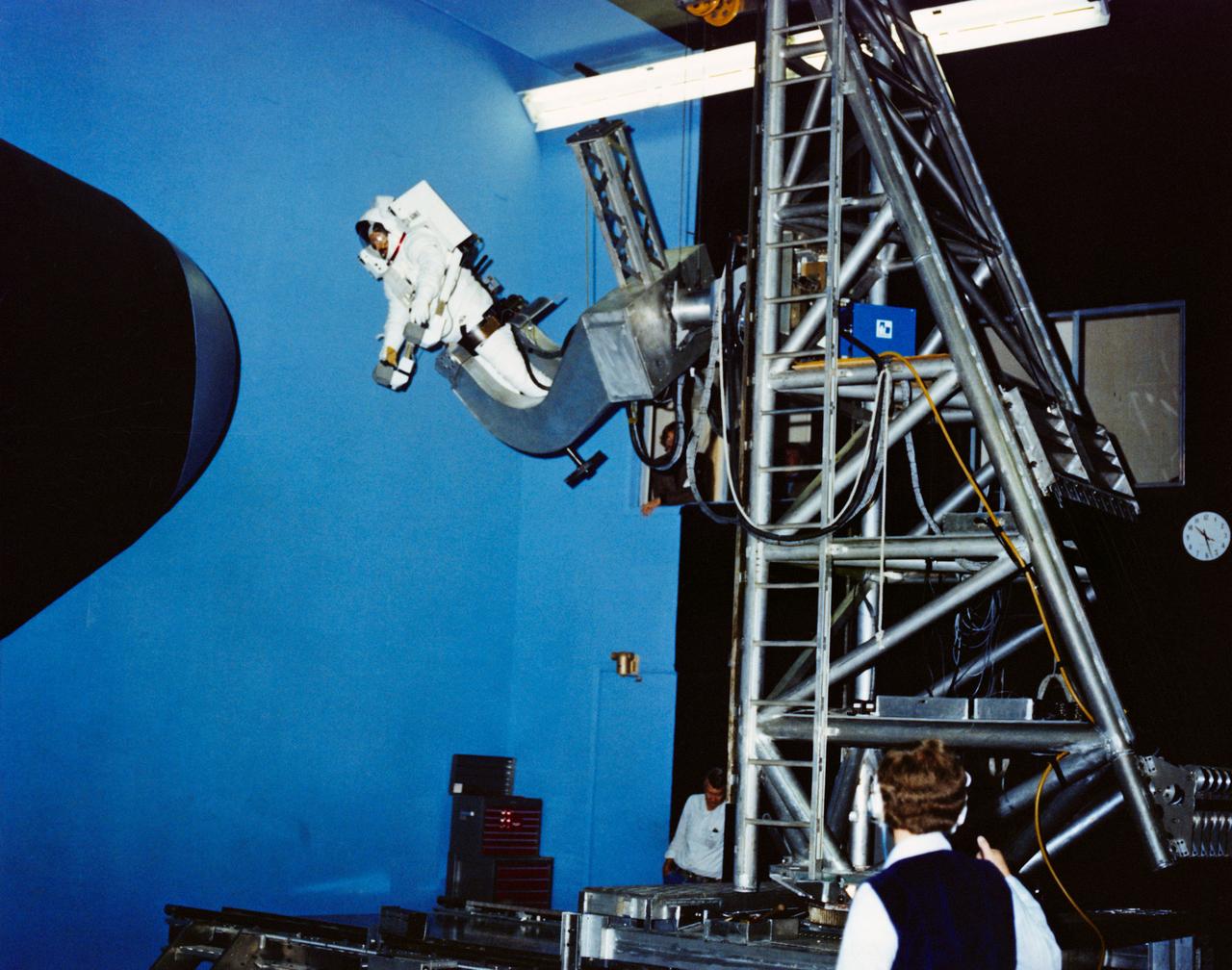
S80-36848 (24 July 1980) --- Photo of the Manned Maneuvering Unit (MMU) simulator at the Martin Marietta plant in Denver, Colorado. View of simulator with test subject strapped in to it.

ISS030-E-033294 (24 Dec. 2011) --- European Space Agency astronaut Andre Kuipers, Expedition 30 flight engineer, enjoys the view of Earth from the windows in the Cupola of the International Space Station.
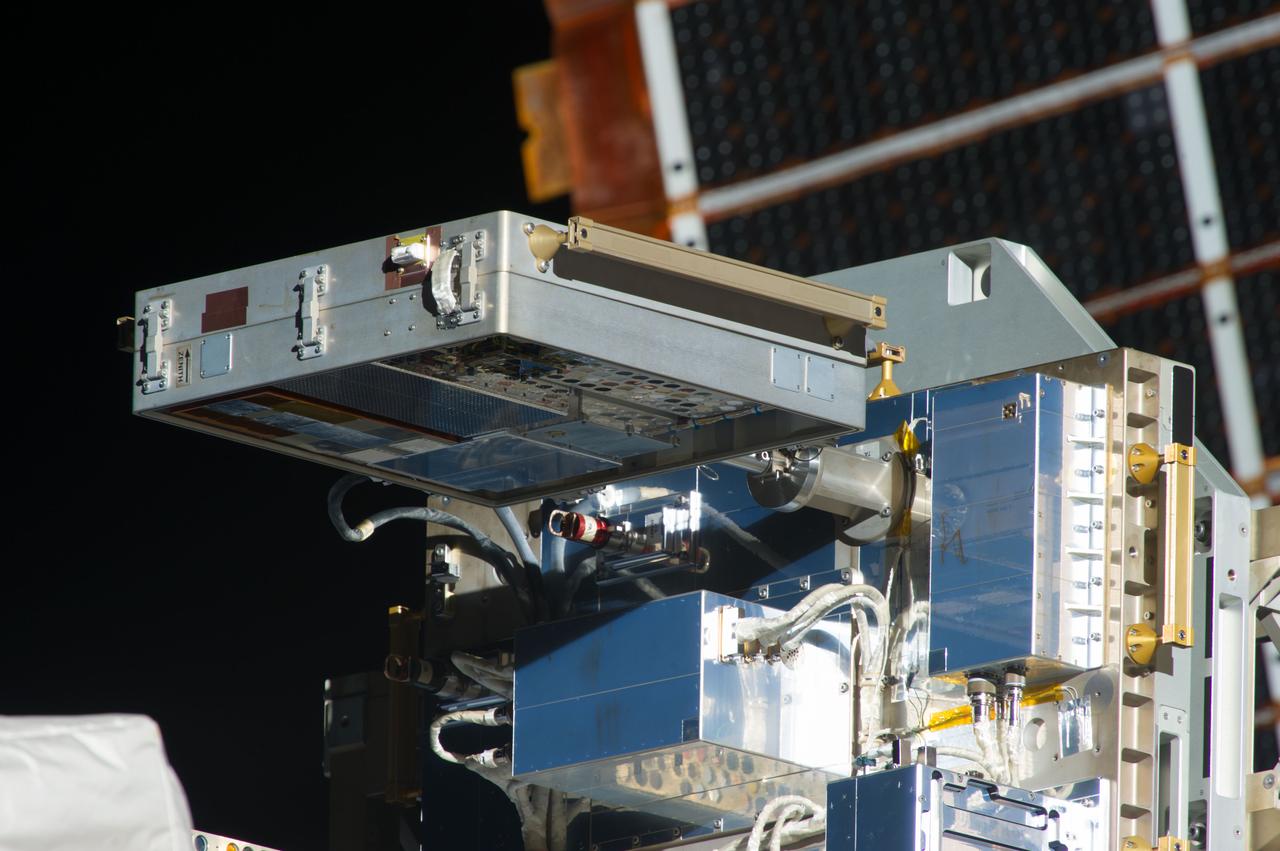
iss036e004042 (5/24/2013) --- View of Materials on International Space Station Experiment - 8 (MISSE-8) which is installed on the ExPRESS Logistics Carrier 2 (ELC-2),located on the S3 Truss Outboard Zenith site.
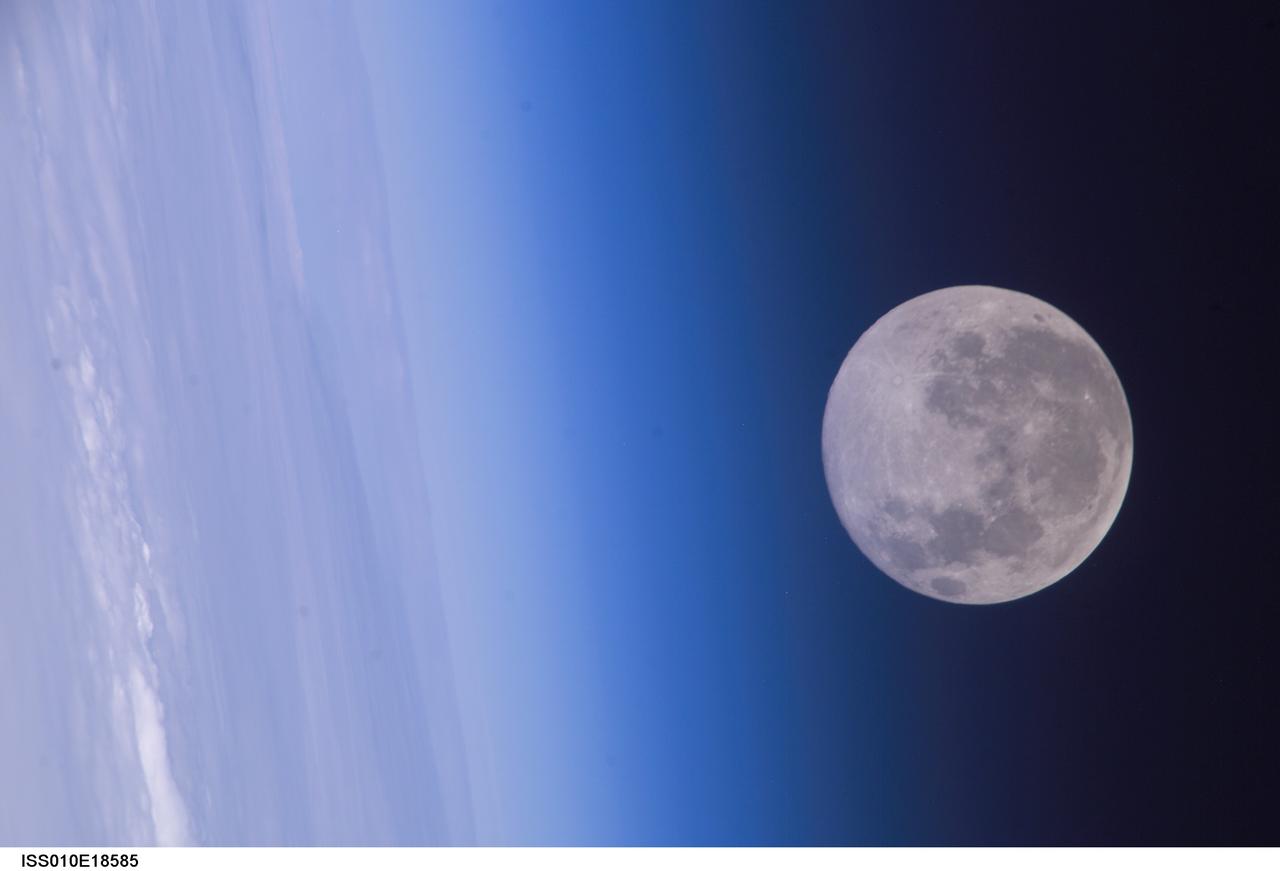
ISS010-E-18585 (24 February 2005) --- A full moon is visible in this view above Earth’s horizon and airglow, photographed by an Expedition 10 crewmember on the International Space Station (ISS).
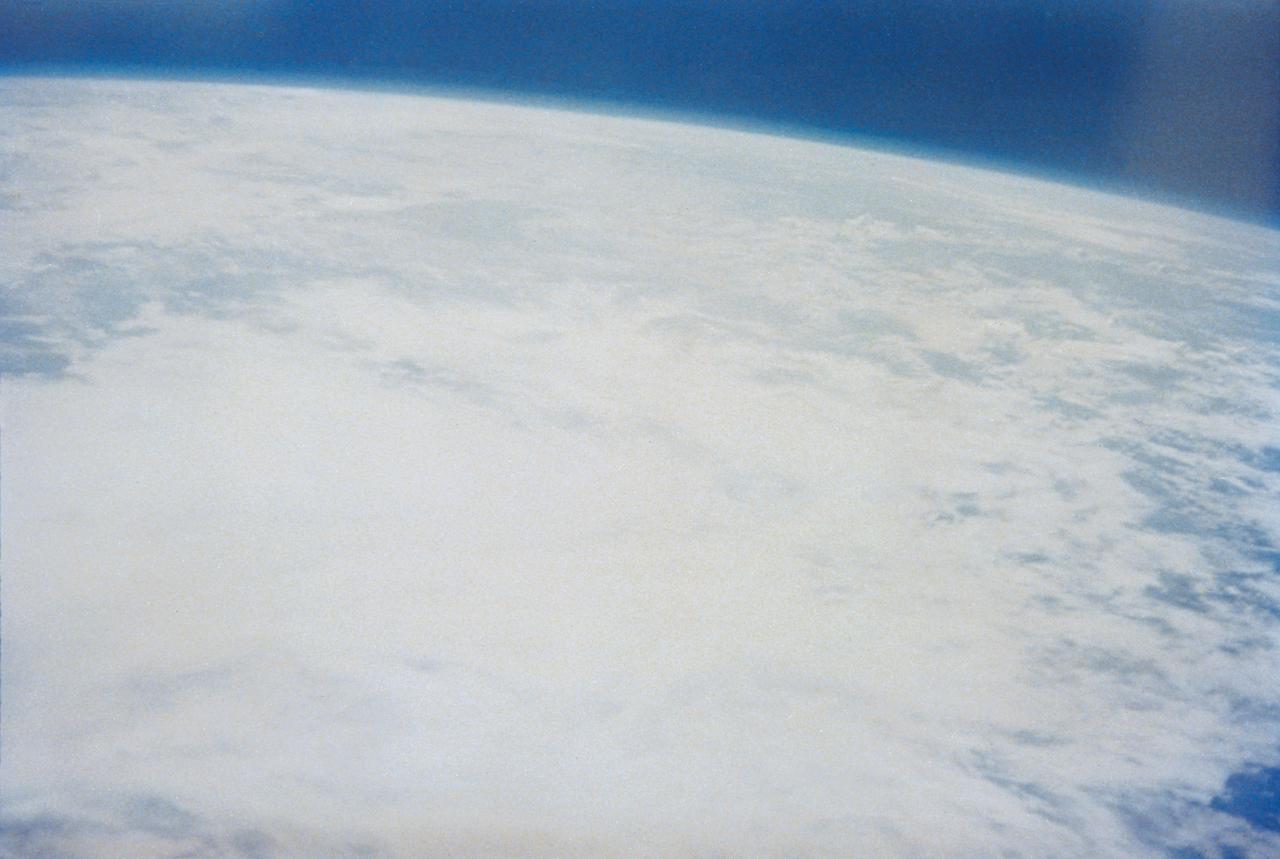
S62-03257 (24 May 1962) --- Earth and sky views taken with hand-held camera by astronaut M. Scott Carpenter during Mercury-Atlas 7 (MA-7) mission. Photo credit: NASA
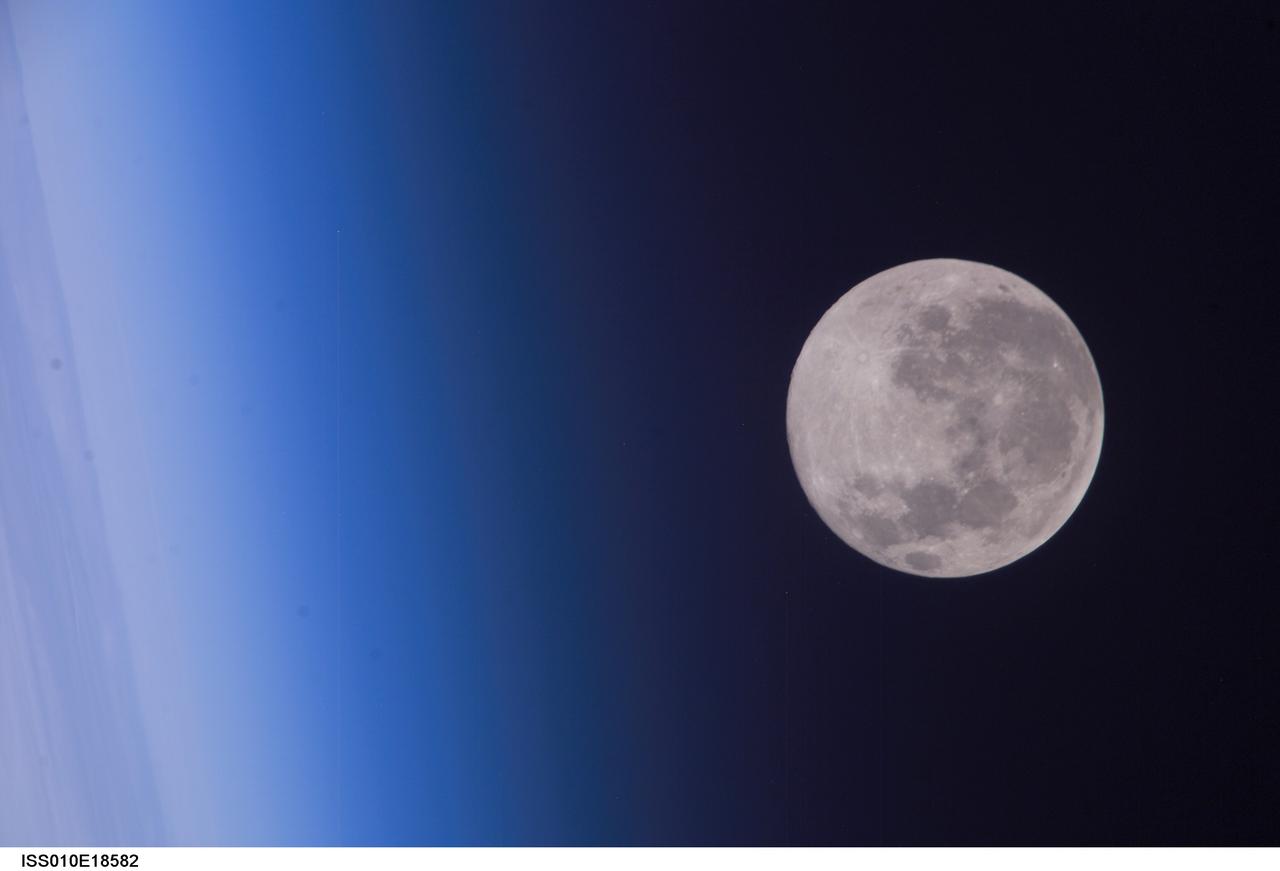
ISS010-E-18582 (24 February 2005) --- A full moon is visible in this view above Earth’s horizon and airglow, photographed by an Expedition 10 crewmember on the International Space Station (ISS).

S62-03270 (24 May 1962) --- Earth and sky views taken with hand-held camera by astronaut M. Scott Carpenter during Mercury-Atlas 7 (MA-7) mission. Photo credit: NASA
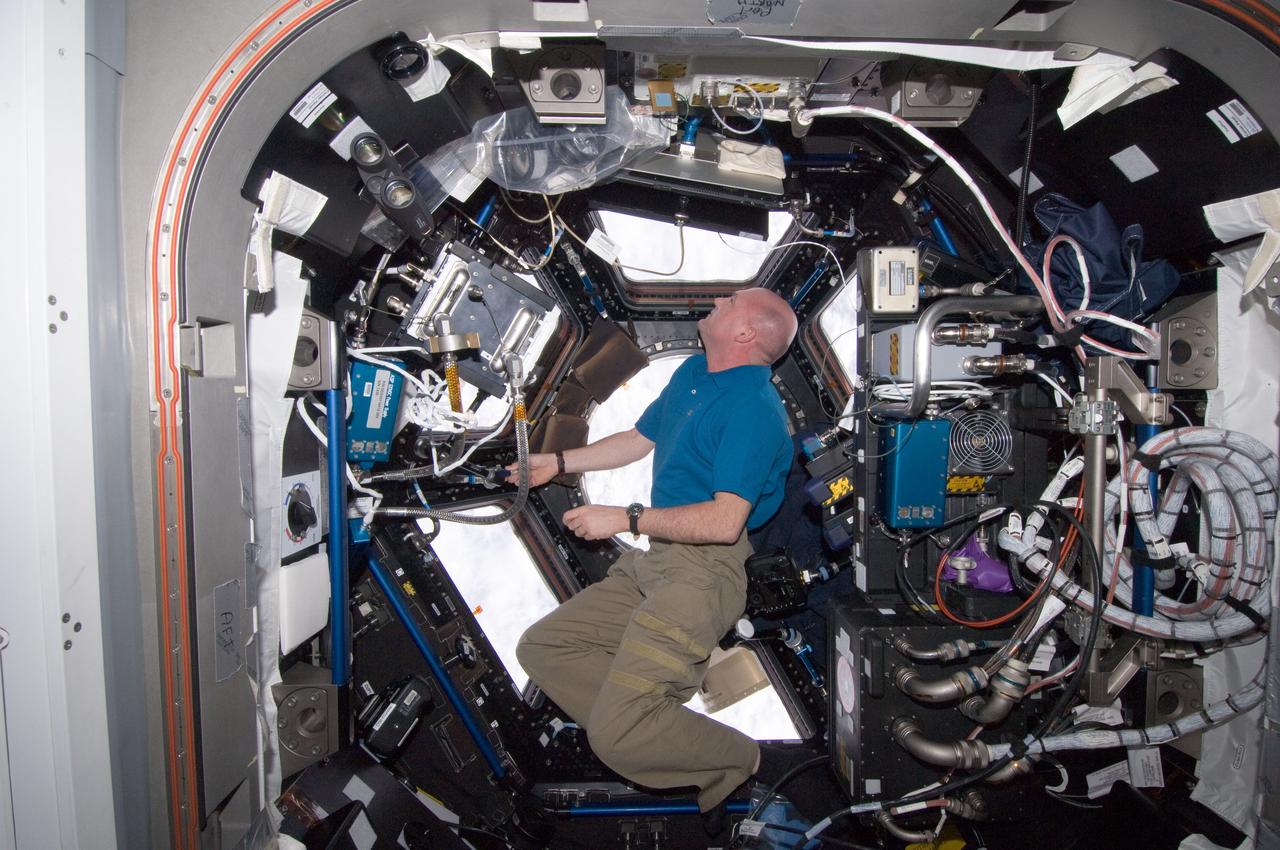
ISS030-E-033295 (24 Dec. 2011) --- European Space Agency astronaut Andre Kuipers, Expedition 30 flight engineer, enjoys the view of Earth from the windows in the Cupola of the International Space Station.
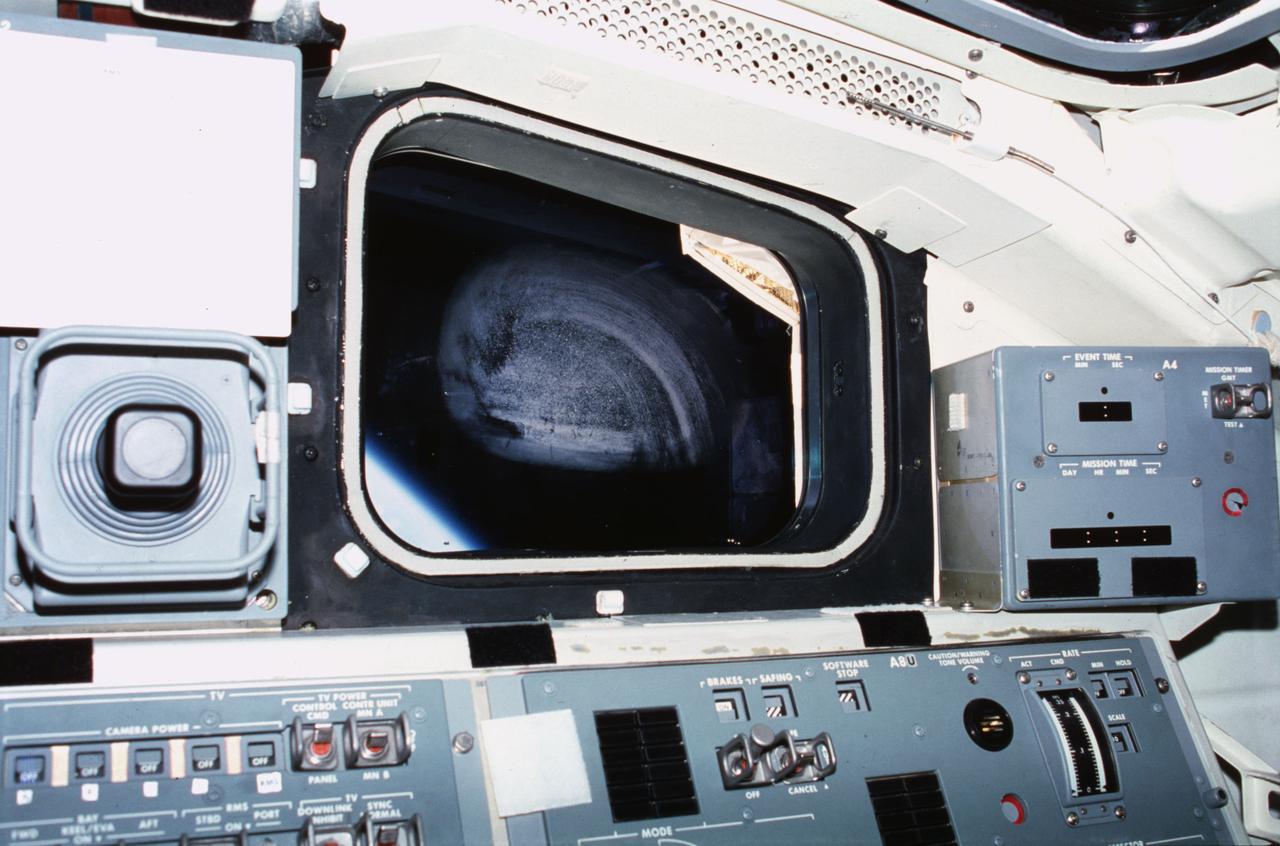
STS003-24-211 (22-30 March 1982) --- Crew compartment aft flight deck viewing window W10 fogged with condensation. The condensation is a result of the spacecraft's position in relation to the sun. Photo credit: NASA
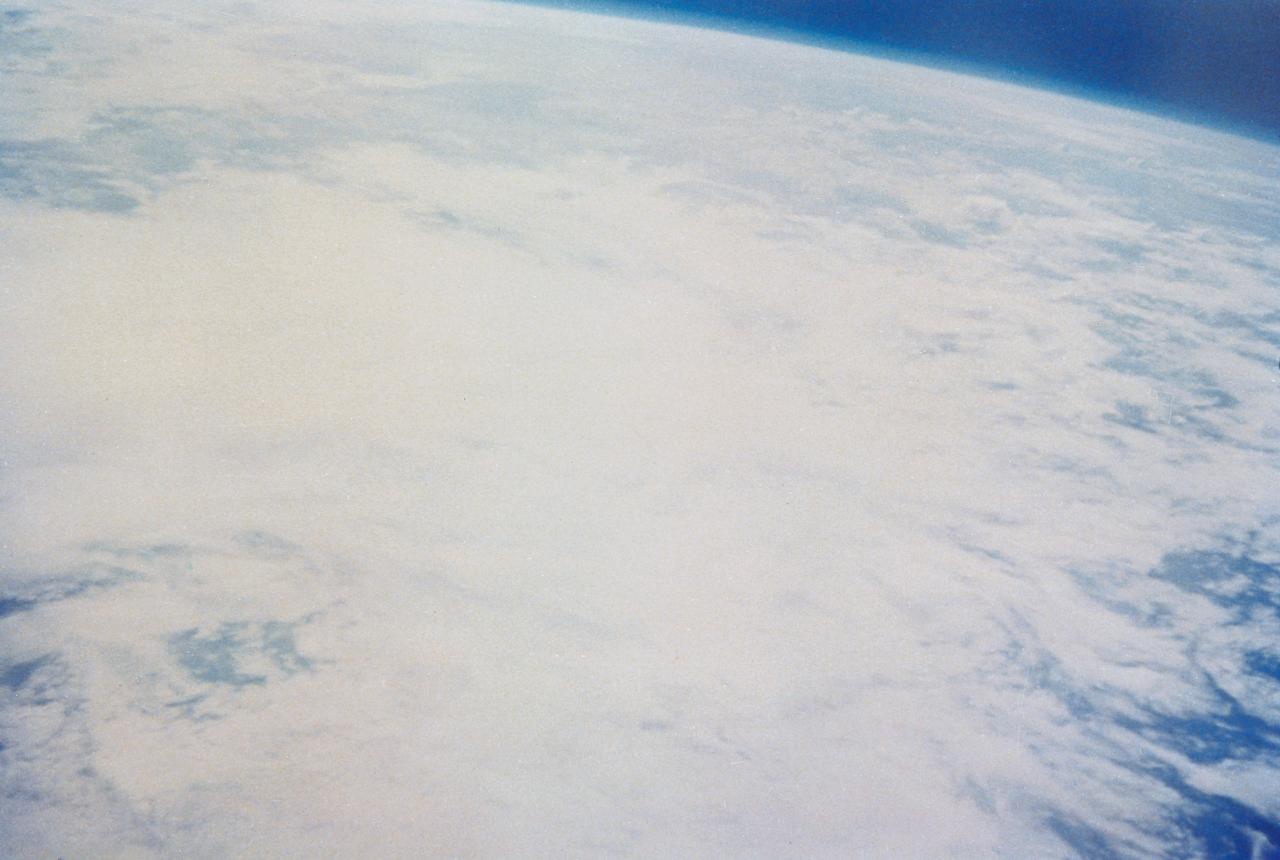
S62-03250 (24 May 1962) --- Earth and sky views taken with hand-held camera by astronaut M. Scott Carpenter during Mercury-Atlas 7 (MA-7) mission. Photo credit: NASA
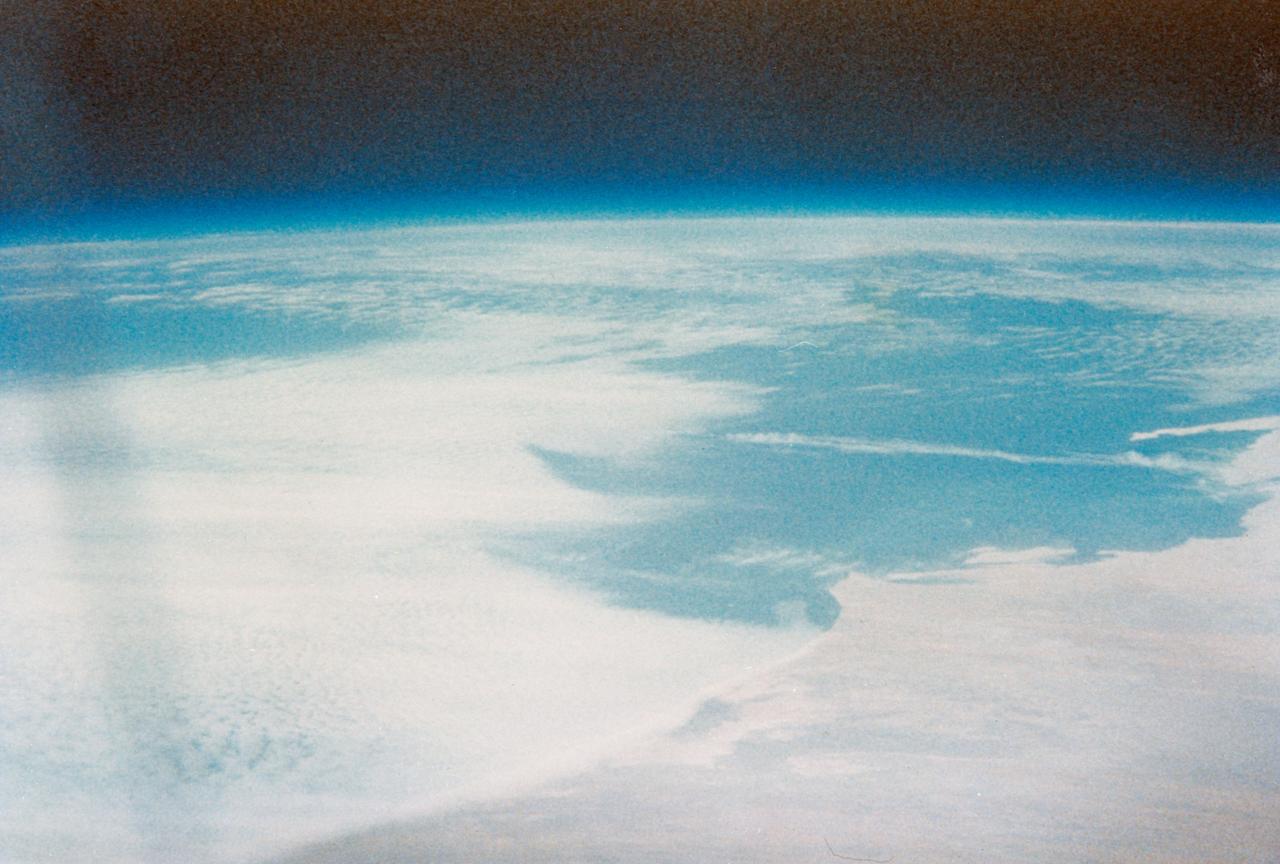
S62-03266 (24 May 1962) --- Earth and sky views taken with hand-held camera by astronaut M. Scott Carpenter during Mercury-Atlas 7 (MA-7) mission. Photo credit: NASA
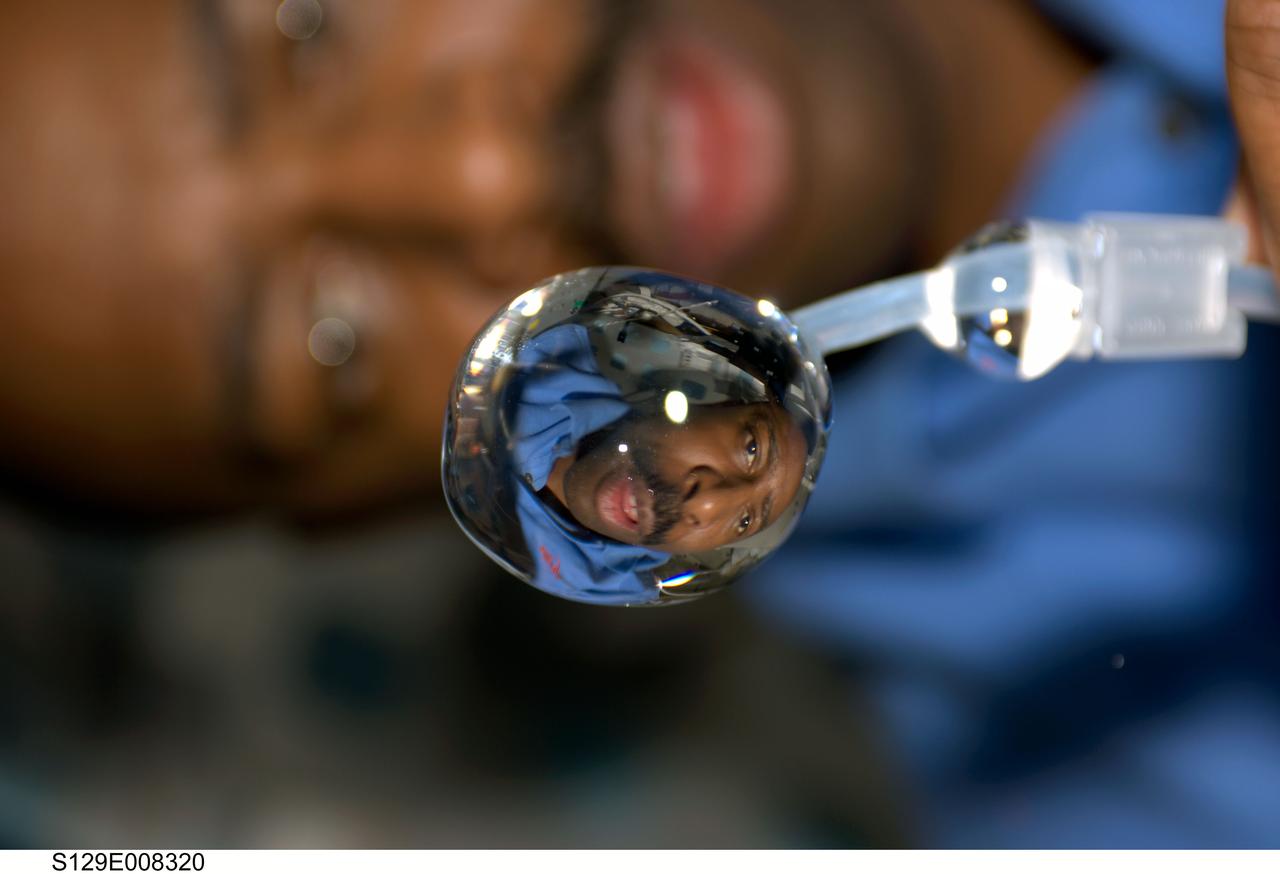
S129-E-008320 (24 Nov. 2009) --- This close-up view of a water bubble floating freely on the middeck of space shuttle Atlantis shows a refracted image of astronaut Leland Melvin, STS-129 mission specialist.
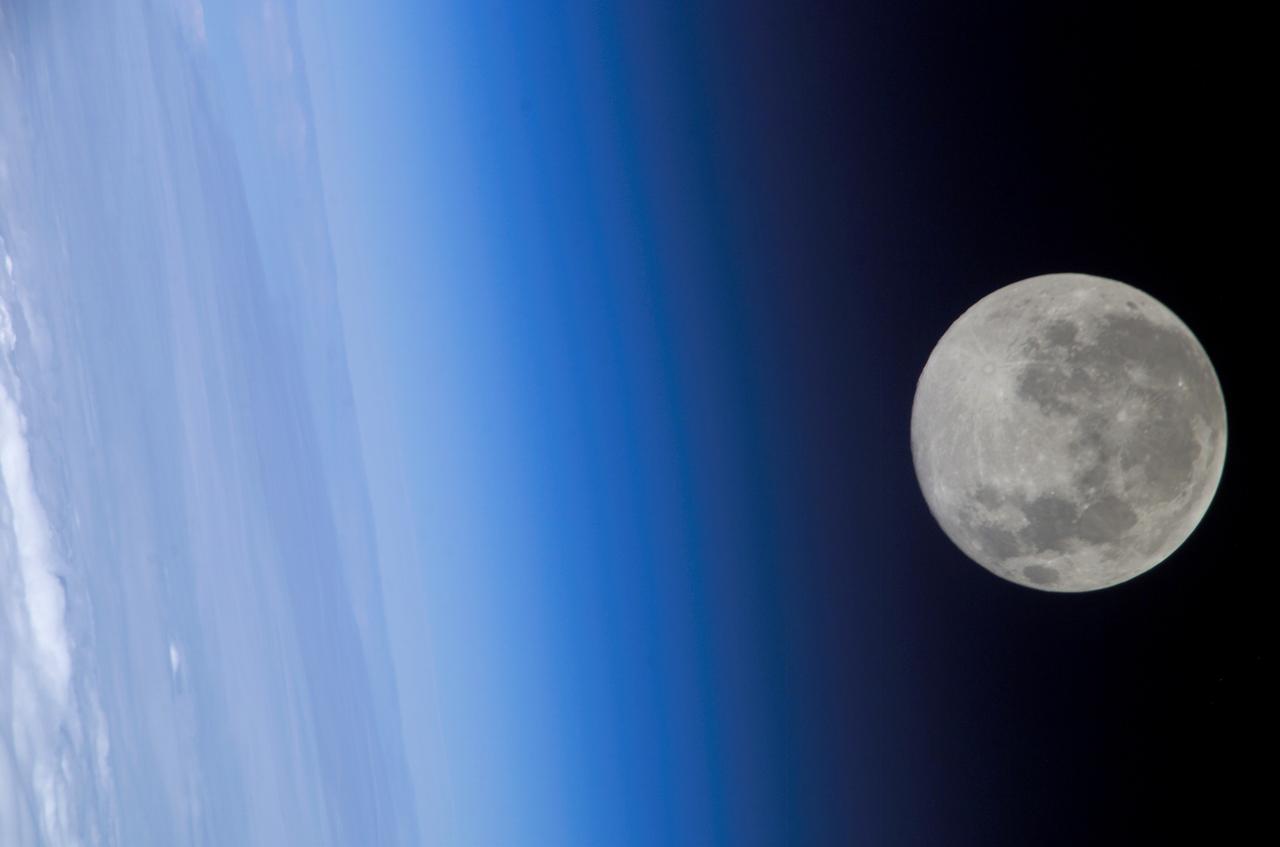
ISS010-E-18583 (24 February 2005) --- A full moon is visible in this view above Earth’s horizon and airglow, photographed by an Expedition 10 crewmember on the International Space Station.
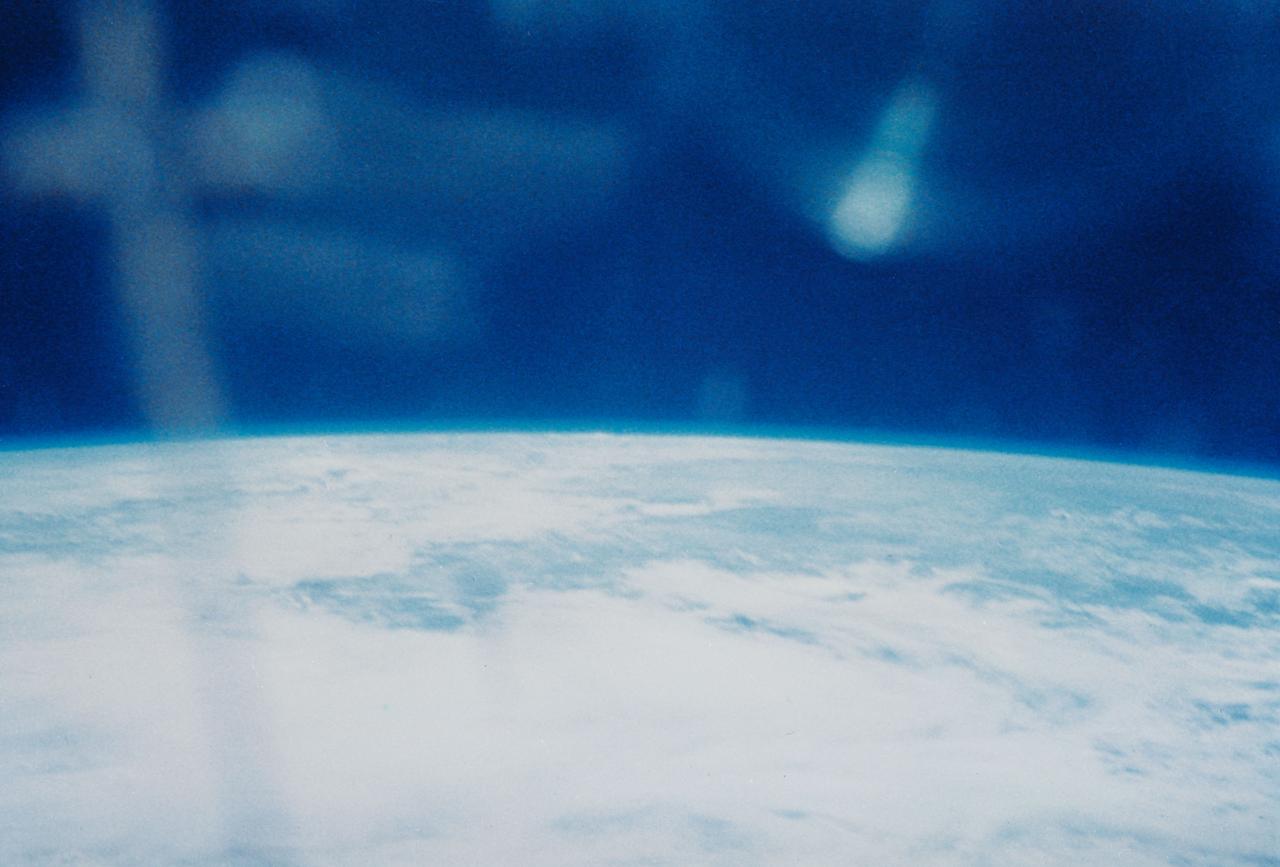
S62-03248 (24 May 1962) --- Earth and sky views taken with hand-held camera by astronaut M. Scott Carpenter during Mercury-Atlas 7 (MA-7) mission. Photo credit: NASA
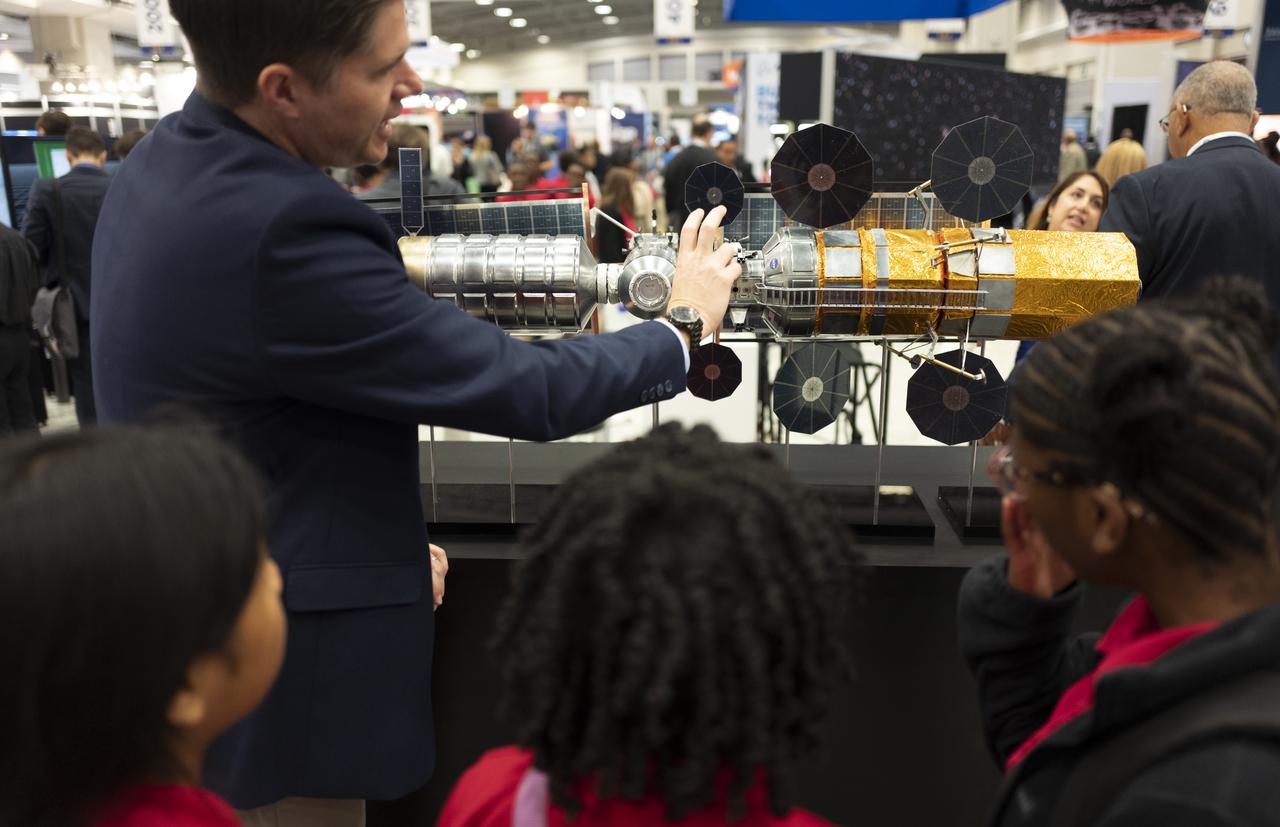
Local students view a model of NASA’s Gateway spacecraft while visiting the NASA exhibit at the 70th International Astronautical Congress, Thursday, Oct. 24, 2019, in Washington. Photo Credit: (NASA/Joel Kowsky)
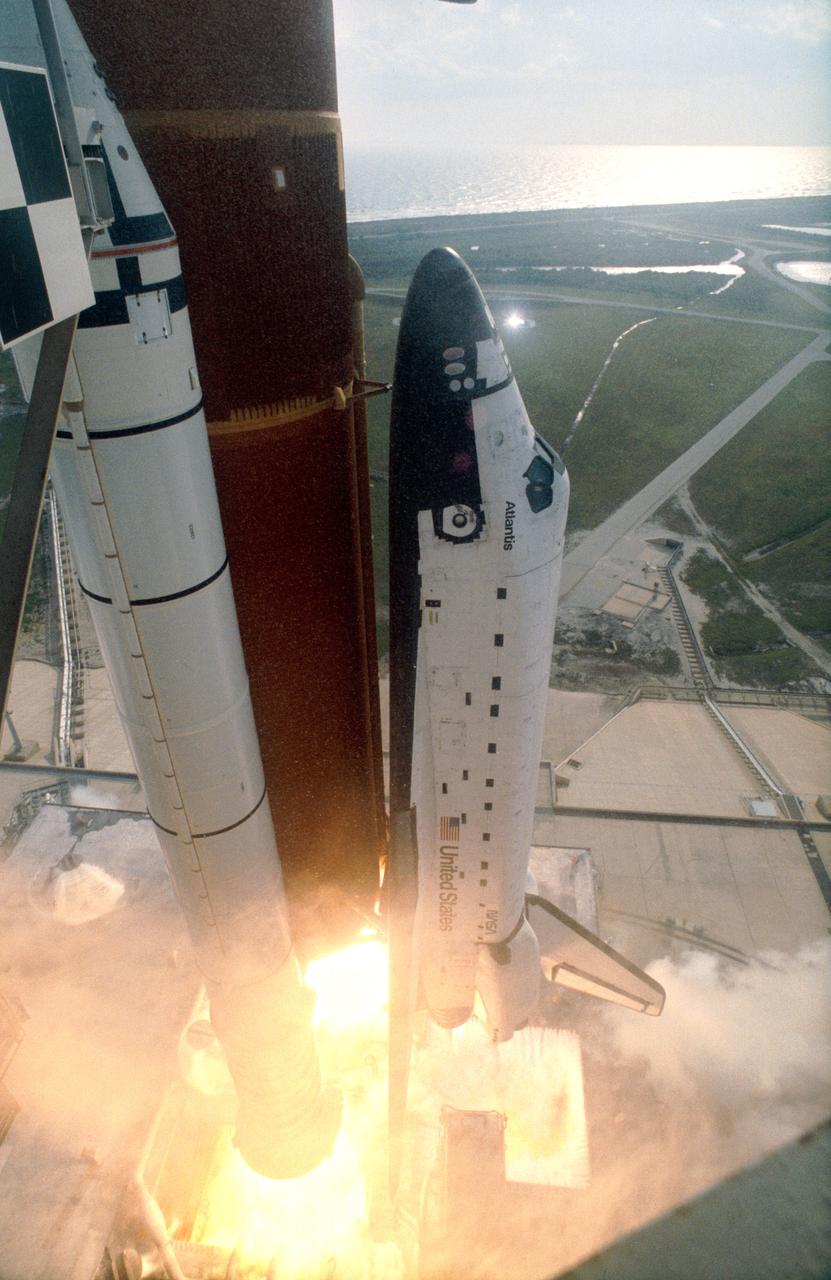
STS045-S-054 (24 March 1992) --- A profile view of the Space Shuttle Atlantis as it soars off the launch pad and heads toward Earth orbit with a crew of seven and the Atmospheric Laboratory for Applications and Science (ATLAS) aboard. Launch occurred at 8:13:40:048 a.m. (EST), March 24, 1992. Onboard were Charles F. Bolden, mission commander; Brian Duffy, pilot; Kathryn D. Sullivan, payload commander; David C. Leestma and C. Michael Foale, mission specialists; and Dirk Frimout of the European Space Agency and Byron K. Lichtenberg, payload specialists. The view was provided by an automatic camera on the launch service structure.

AS08-14-2383 (24 Dec. 1968) --- The rising Earth is about five degrees above the lunar horizon in this telephoto view taken from the Apollo 8 spacecraft near 110 degrees east longitude. The horizon, about 570 kilometers (350 statute miles) from the spacecraft, is near the eastern limb of the moon as viewed from Earth. Width of the view at the horizon is about 150 kilometers (95 statute miles). On Earth 240,000 statute miles away the sunset terminator crosses Africa. The crew took the photo around 10:40 a.m. Houston time on the morning of Dec. 24, and that would make it 15:40 GMT on the same day. The South Pole is in the white area near the left end of the terminator. North and South America are under the clouds.
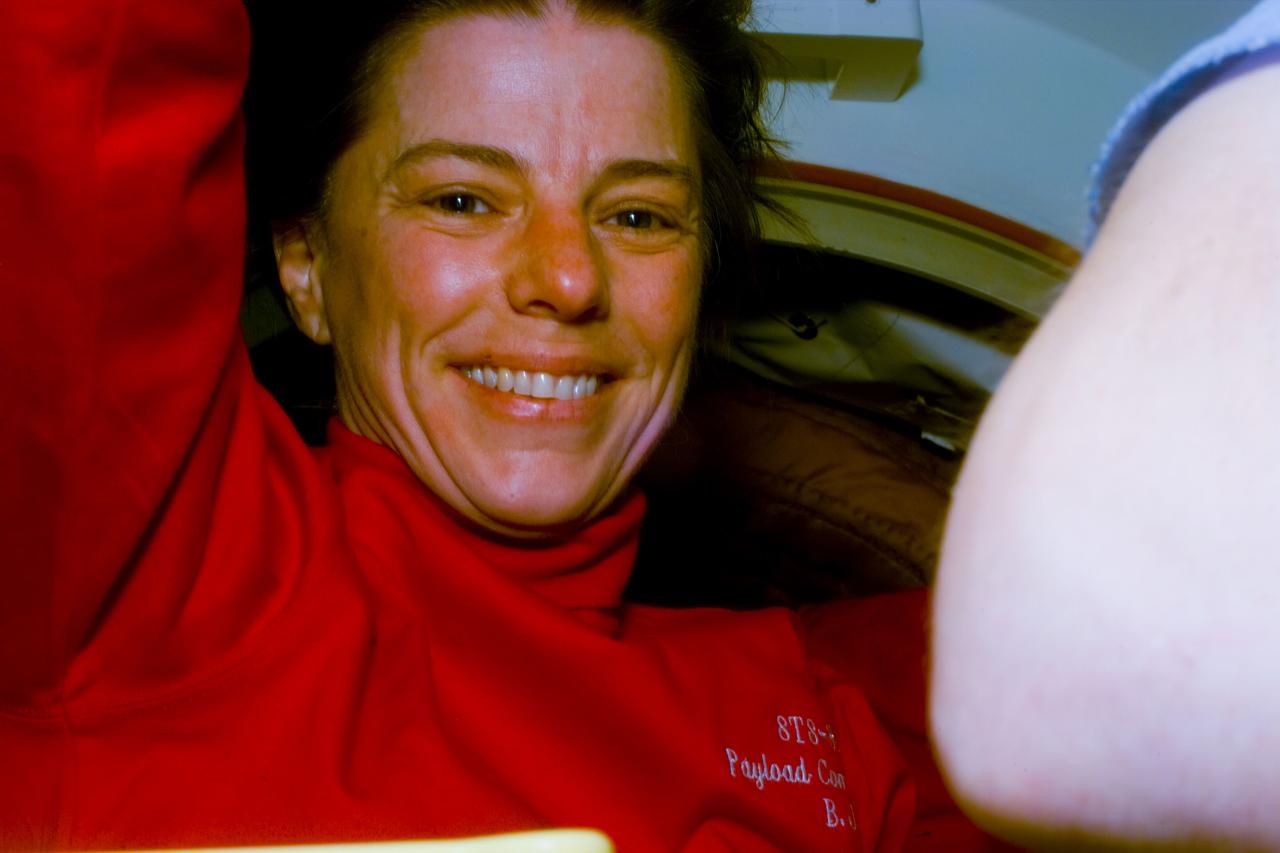
S89-E-5175 (24 Jan 1998) --- This Electronic Still Camera (ESC) image shows astronaut Bonnie J. Dunbar, payload commander, shortly after Shuttle/Mir docking activities began. "Deja-vu" may have come to the mind of Dunbar as she boarded Russia's Mir Space Station. Dunbar was a member of the STS-71 crew -- the first United States aggregation to visit Mir -- along with cosmonaut Anatoliy Y. Solovyev, Mir-24 commander. The ESC view was taken at 22:37:23 GMT, on January 24, 1998.
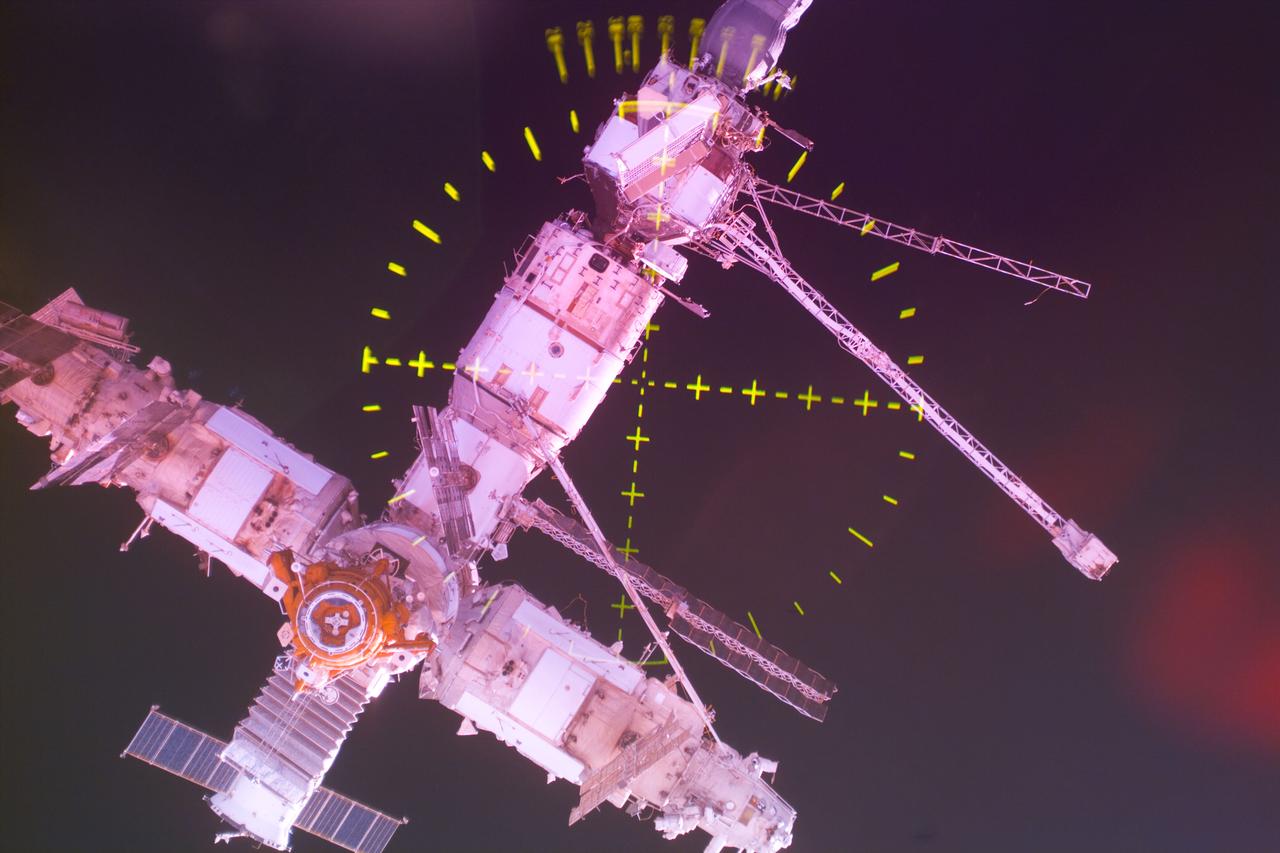
S89-E-5166 (24 Jan 1998) --- This Electronic Still Camera (ESC) image shows the black space forming the backdrop for this view of Russia's Mir Space Station, inside 500 feet and closing. Astronaut Terrence W. (Terry) Wilcutt was at the controls of the Space Shuttle Endeavour during this event -- the eighth of nine planned Shuttle/Mir link-ups. The markings in the frame are those of the Crew Optical Alignment System (COAS). The ESC image was exposed at 19:48:14 GMT, January 24, 1998.
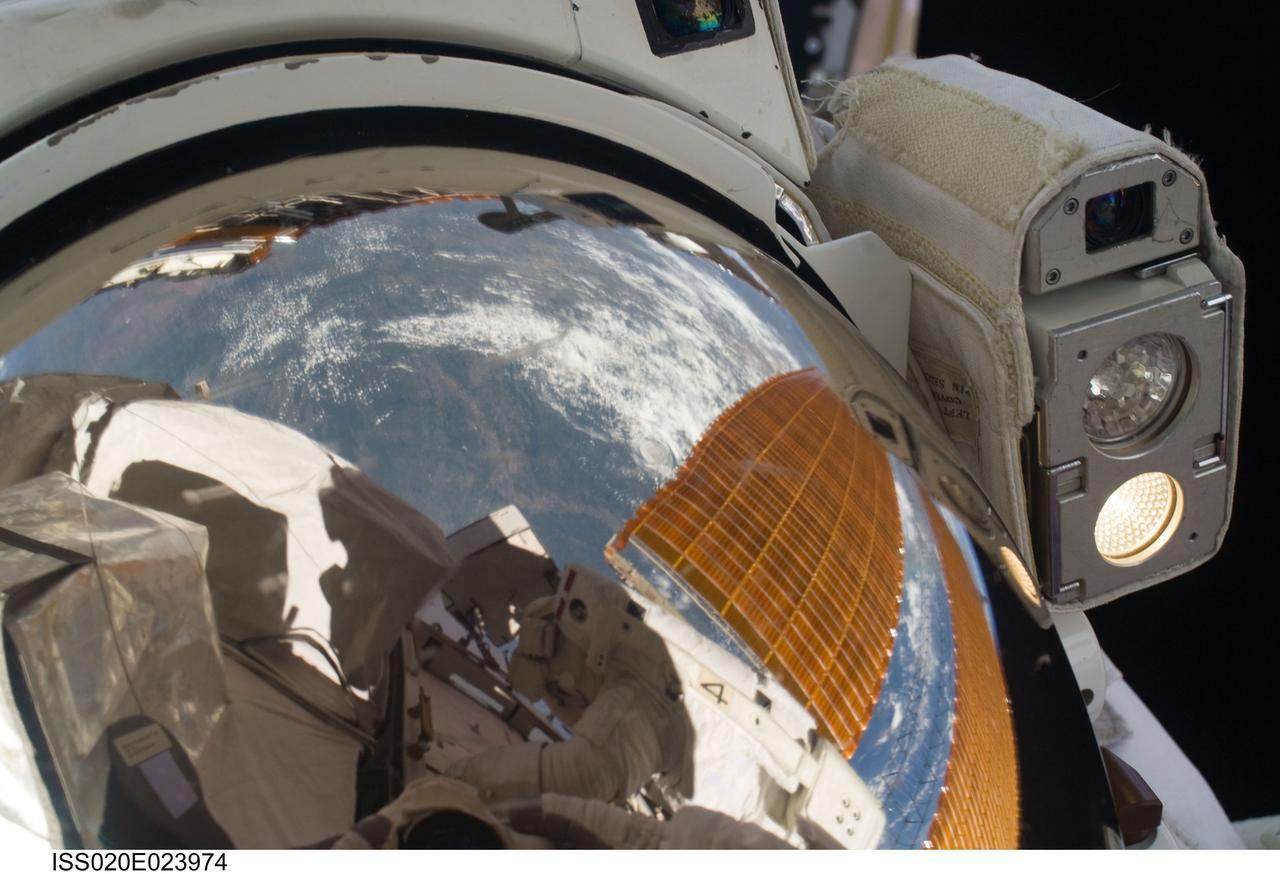
ISS020-E-023974 (24 July 2009) --- This is a close-up view of the helmet visor of astronaut Christopher Cassidy during his second spacewalk on July 24. Seen mirrored in the visor is astronaut Tom Marshburn, with whom Cassidy will team again on July 27 for the STS-127 crew's fifth and final session of extravehicular activity. Eleven astronauts and cosmonauts remained inside the International Space Station and the shuttle to which it was docked, while the two suited astronauts continued work on the orbital outpost.

ISS036-E-035677 (24 Aug. 2013) --- One of the Expedition 36 crew members aboard the International Space Station used a 50mm lens to record this high oblique view of the massive drought-aided Rim Fire in and around California's Yosemite National Park and the Stanislaus National Forest on Aug. 24. Editor's Note: The fire began on Aug. 17 and, as of Aug. 26, continues to burn. More than 224 square miles have been affected.
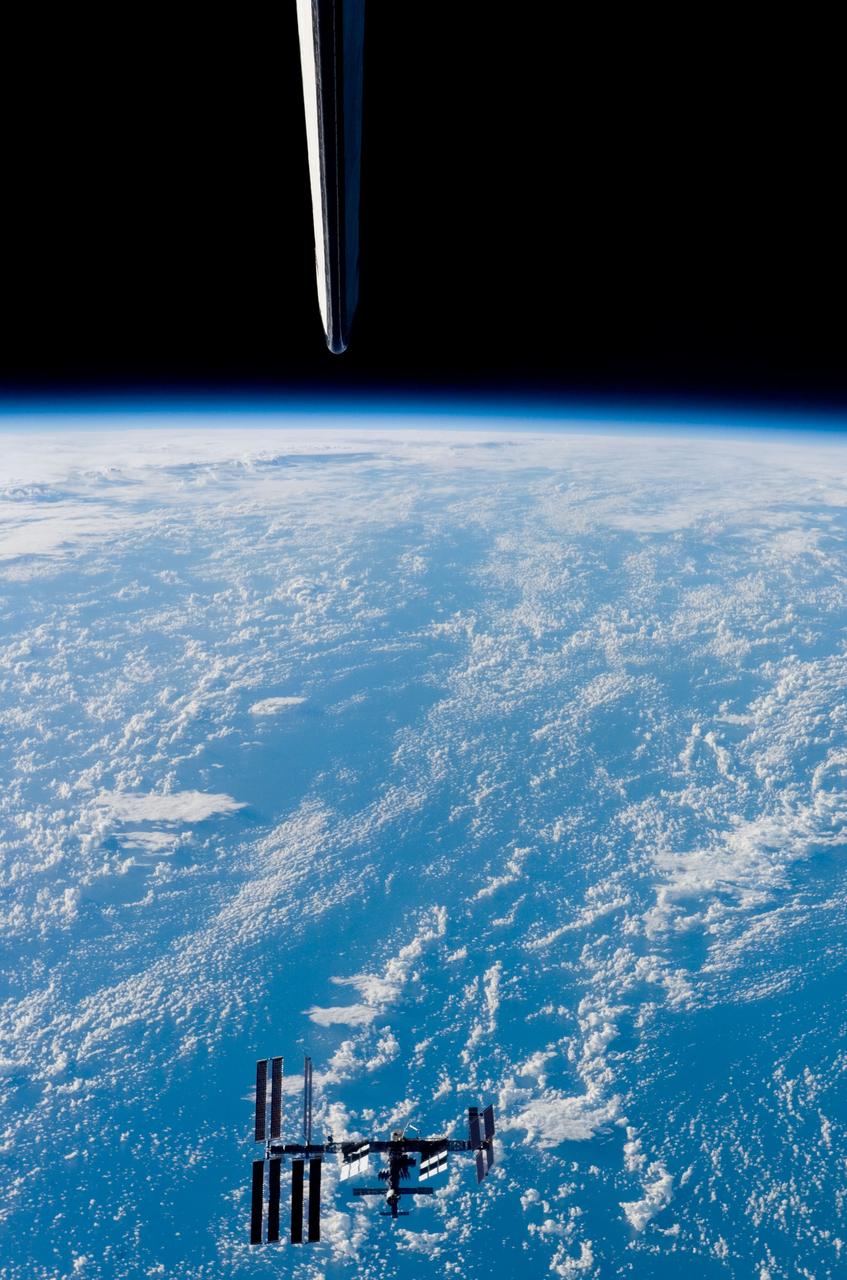
S123-E-009202 (24 March 2008) --- Backdropped by Earth's horizon and the blackness of space, the International Space Station appears small from the point of view of the Space Shuttle Endeavour as the two spacecraft carry out their relative separation. Endeavour's vertical stabilizer is seen in this image photographed by a STS-123 crewmember onboard the shuttle. Earlier the STS-123 and Expedition 16 crews concluded 12 days of cooperative work onboard the shuttle and station. Undocking of the two spacecraft occurred at 7:25 p.m. (CDT) on March 24, 2008.
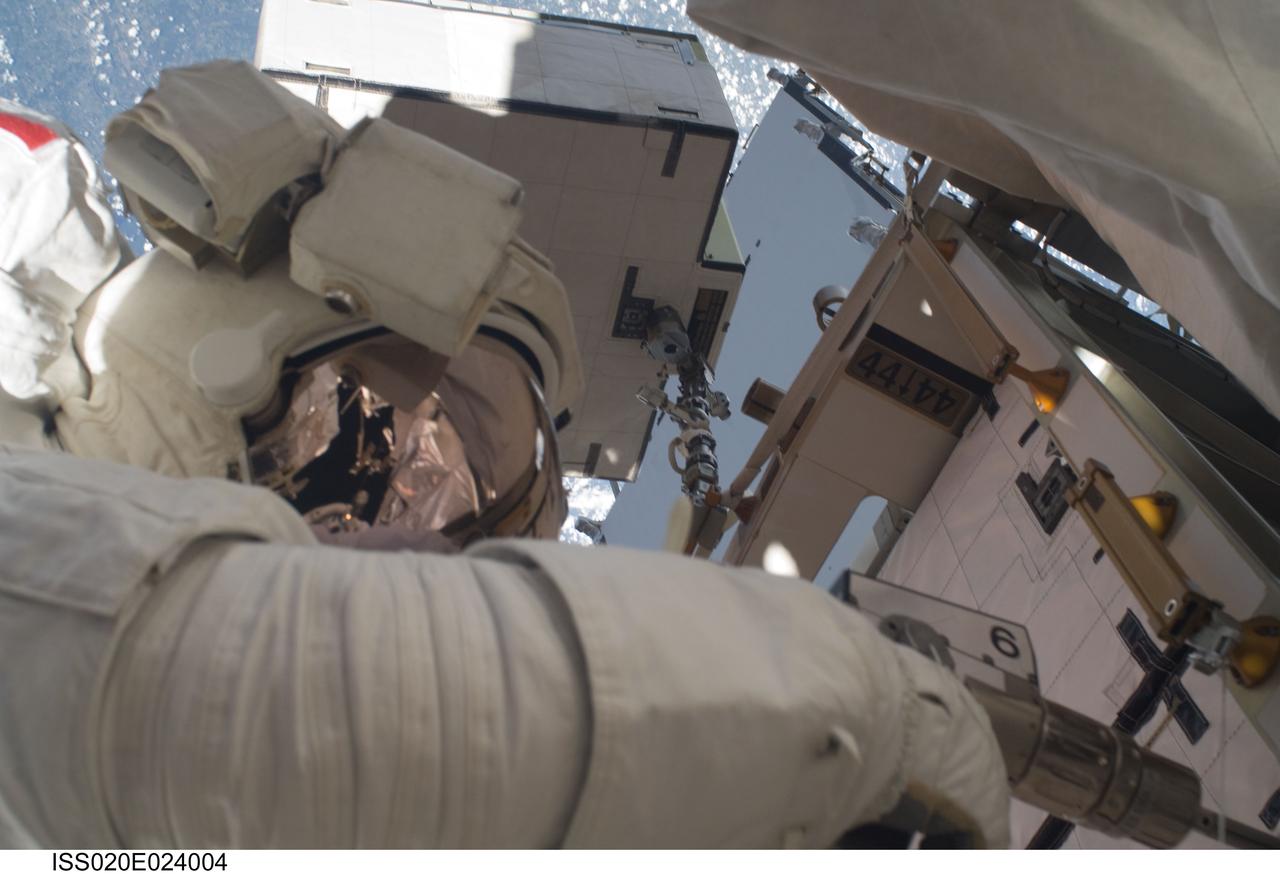
ISS020-E-024004 (24 July 2009) --- This is a close-up view of astronaut Tom Marshburn using a power tool during his second spacewalk on July 24. Out of frame is astronaut Christopher Cassidy with whom he'll team again on July 27 for the STS-127 crew's fifth and final session of extravehicular activity. Eleven astronauts and cosmonauts remained inside the International Space Station and the shuttle to which it was docked, while the two suited astronauts continued work on the orbital outpost.

NASA's Voyager 2 acquired this black and white image of Triton, Neptune's largest satellite, during the night of Aug. 24-25, 1989. Triton's limb cuts obliquely across the middle of the image. The field of view is about 1,000 km (600 miles) across. Three irregular dark areas, surrounded by brighter material, dominate the image. Low-lying material with intermediate albedo occupies the central area, and fresh craters occur along the right margin. Sub-parallel alignment of linear patches of dark material shown in the lower and left part of the image suggests that the patches are structurally controlled. http://photojournal.jpl.nasa.gov/catalog/PIA00056
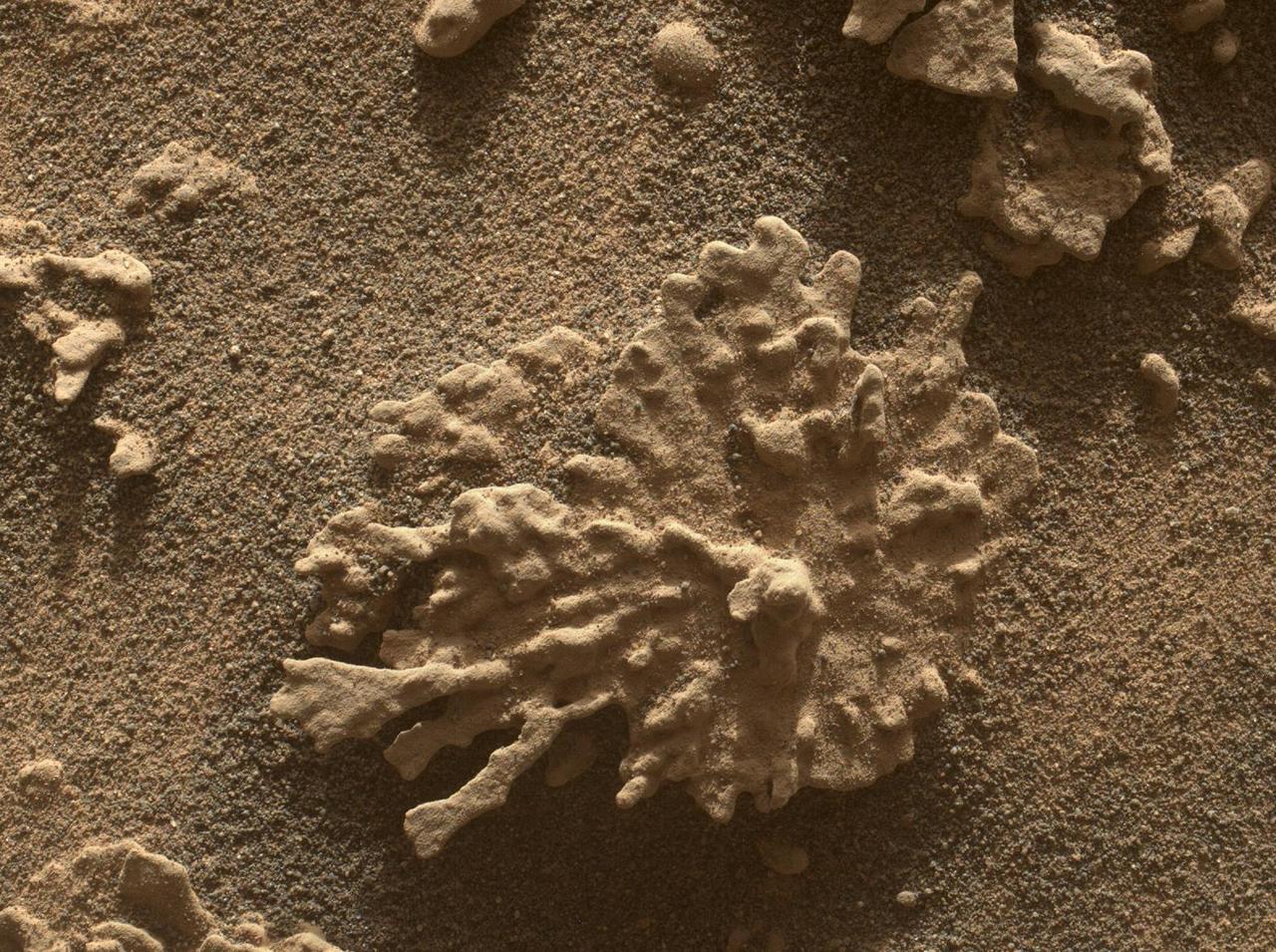
NASA's Curiosity Mars rover used its Mars Hand Lens Imager (MAHLI), a camera on the end of its robotic arm, to view this wind-eroded rock shaped like a piece of coral on July 24, 2025, the 4,608th Martian day, or sol, of the mission. Nicknamed "Paposo" by the rover's science team, the rock was about 2 inches (5 centimeters) from the MAHLI camera when this was taken. Curiosity has found many small features like this one, which formed billions of years ago when liquid water still existed on Mars. Water carried dissolved minerals into rock cracks and later dried, leaving the hardened minerals behind. Eons of sandblasting by the wind wore away the surrounding rock, producing unique shapes. This common process is seen extensively on Earth and has produced fantastic shapes on Mars, as well, including a flower-shaped rock. https://photojournal.jpl.nasa.gov/catalog/PIA26633
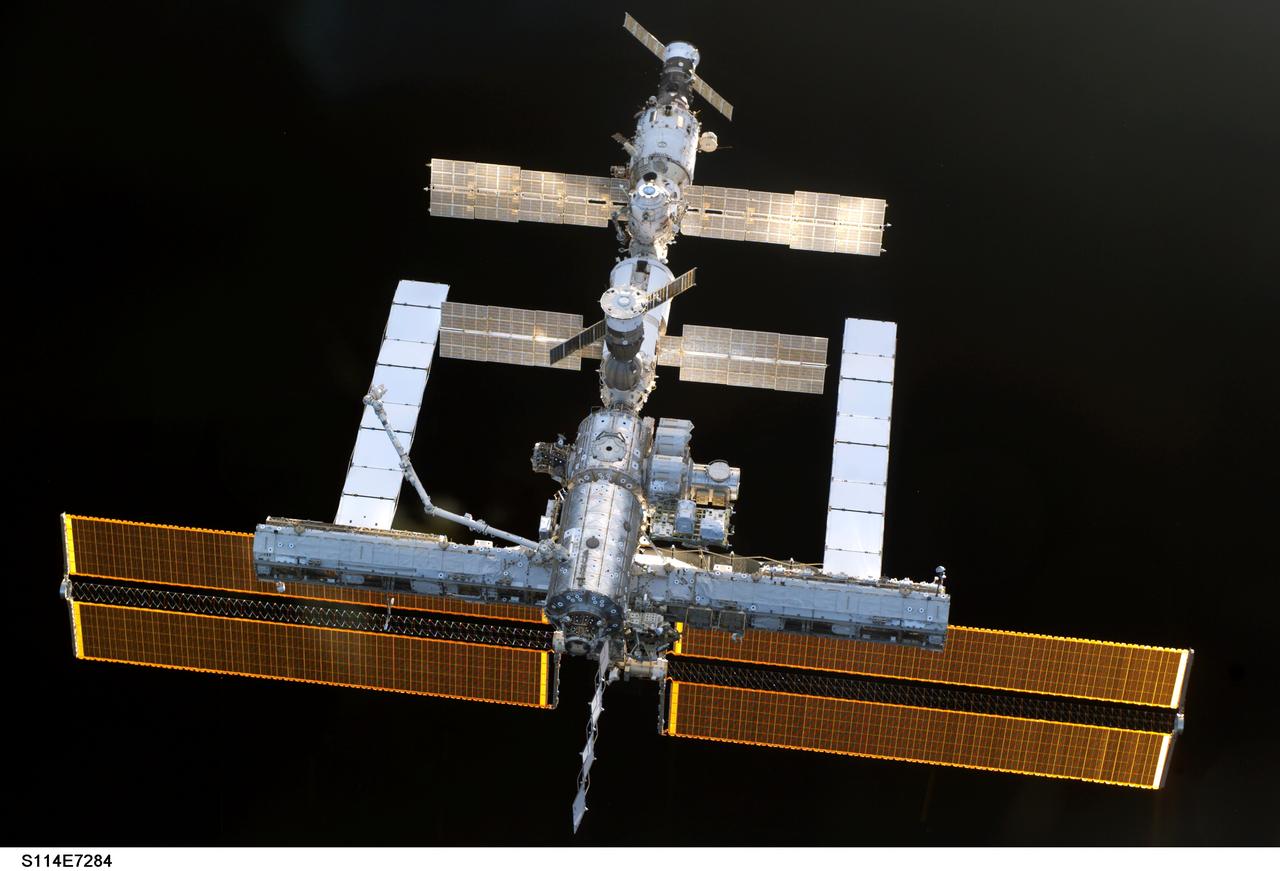
S114-E-7284 (6 August 2005) --- Backdropped by the blackness of space, this full view of the International Space Station was photographed by a crewmember onboard the Space Shuttle Discovery following the undocking of the two spacecraft. Discovery pulled away from the complex at 2:24 a.m. (CDT) on August 6, 2005.
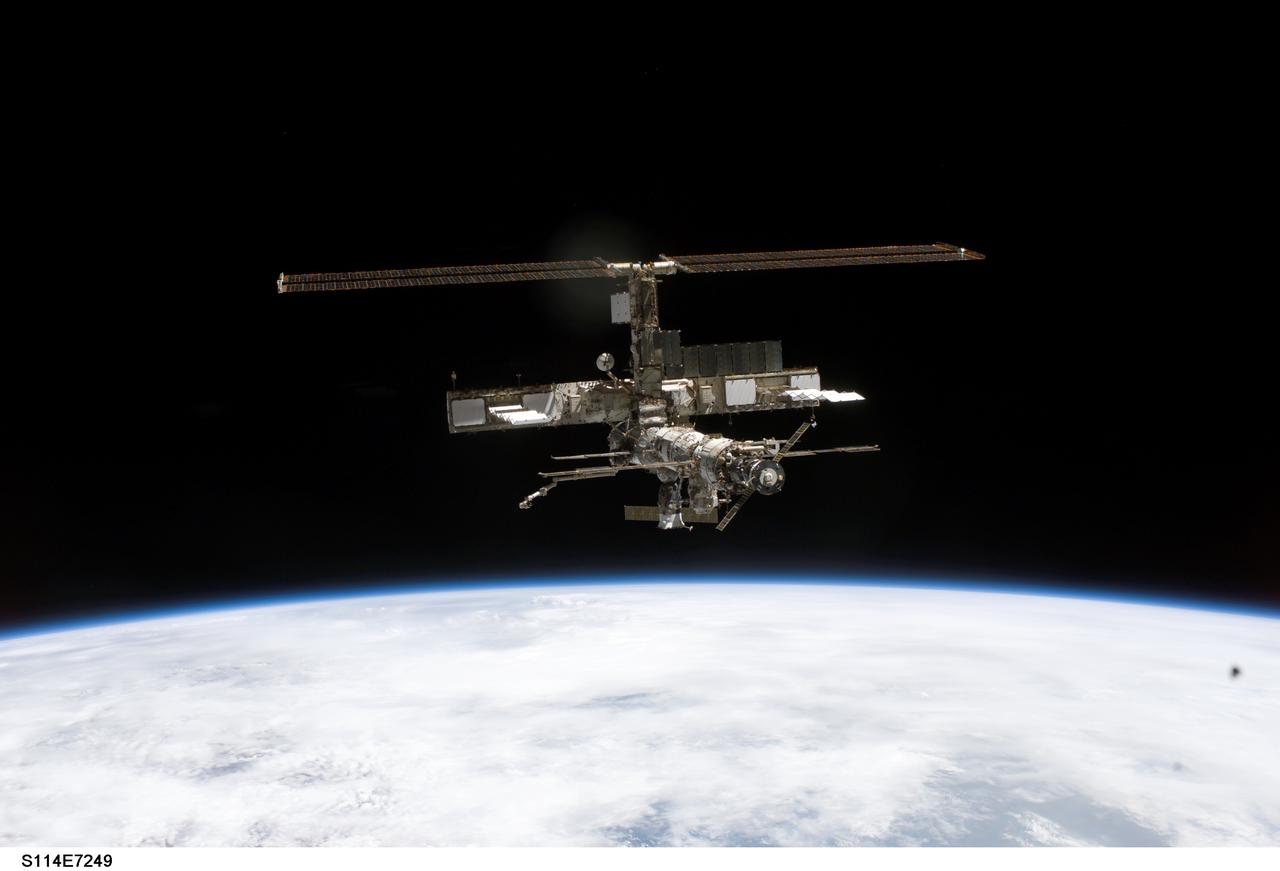
S114-E-7249 (6 August 2005) --- Backdropped by the blackness of space and Earth’s horizon, this view of the International Space Station was photographed by a crewmember onboard the Space Shuttle Discovery following the undocking of the two spacecraft. Discovery pulled away from the complex at 2:24 a.m. (CDT) on August 6, 2005.

Views of the STS-31/61B Crew during Emergency Egress Training, Bldg. 9A, 10/28/1985; and, the Crew Preflight Press Conference, Bldg. 2, 10/24/1985. 1. STS-31/61B - CREW TRAINING (EMERGENCY EGRESS) JSC, HOUSTON, TX
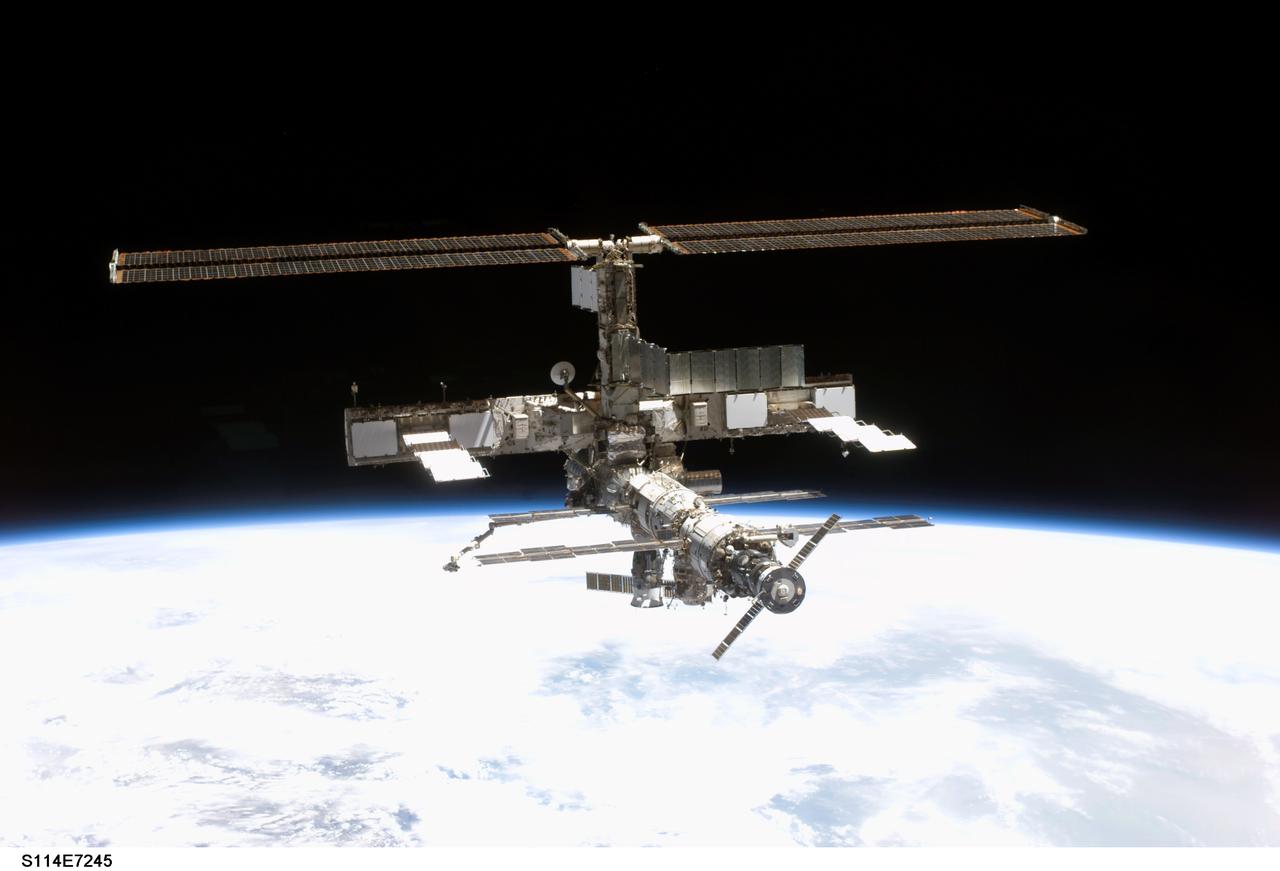
S114-E-7245 (6 August 2005) --- Backdropped by the blackness of space and Earth’s horizon, this full view of the International Space Station was photographed by a crewmember onboard the Space Shuttle Discovery following the undocking of the two spacecraft. Discovery pulled away from the complex at 2:24 a.m. (CDT) on August 6, 2005.
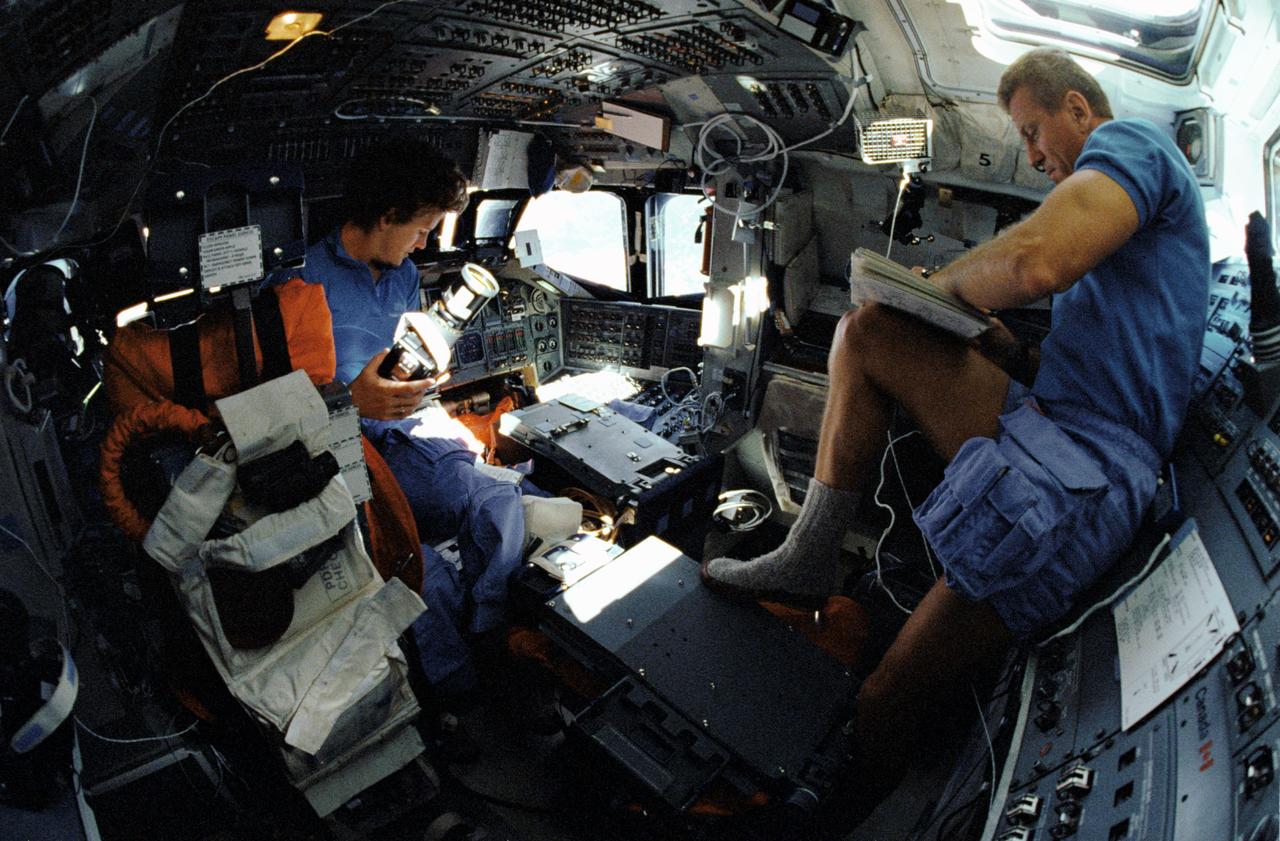
STS031-101-053 (24-29 April 199) --- A 35mm camera equipped with a "fish-eye" lens captured this view on Discovery's flight deck featuring astronaut Kathryn D. Sullivan with a Hasselblad camera on forward flight deck and astronaut Loren J. Shriver, pen in hand, amending flight data on aft flight deck.
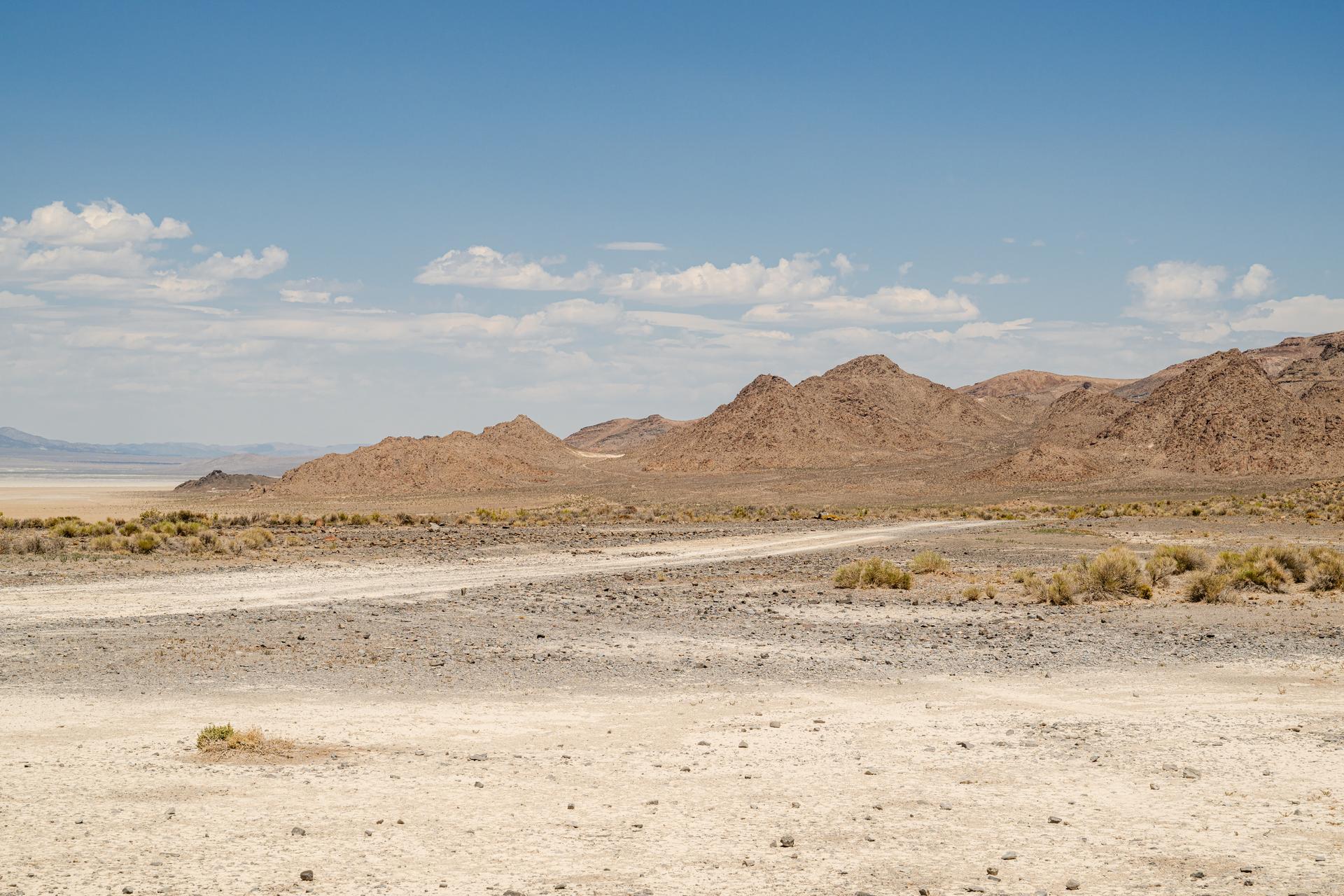
A view of Crater Island from the VADIX Basecamp, Crater Island, Utah June 24, 2026. This area was the site of a series of tests (June 23-25, 2026) of the camera system that will one day fly aboard NASA’s DAVINCI mission to Venus. NASA/Mike Guinto
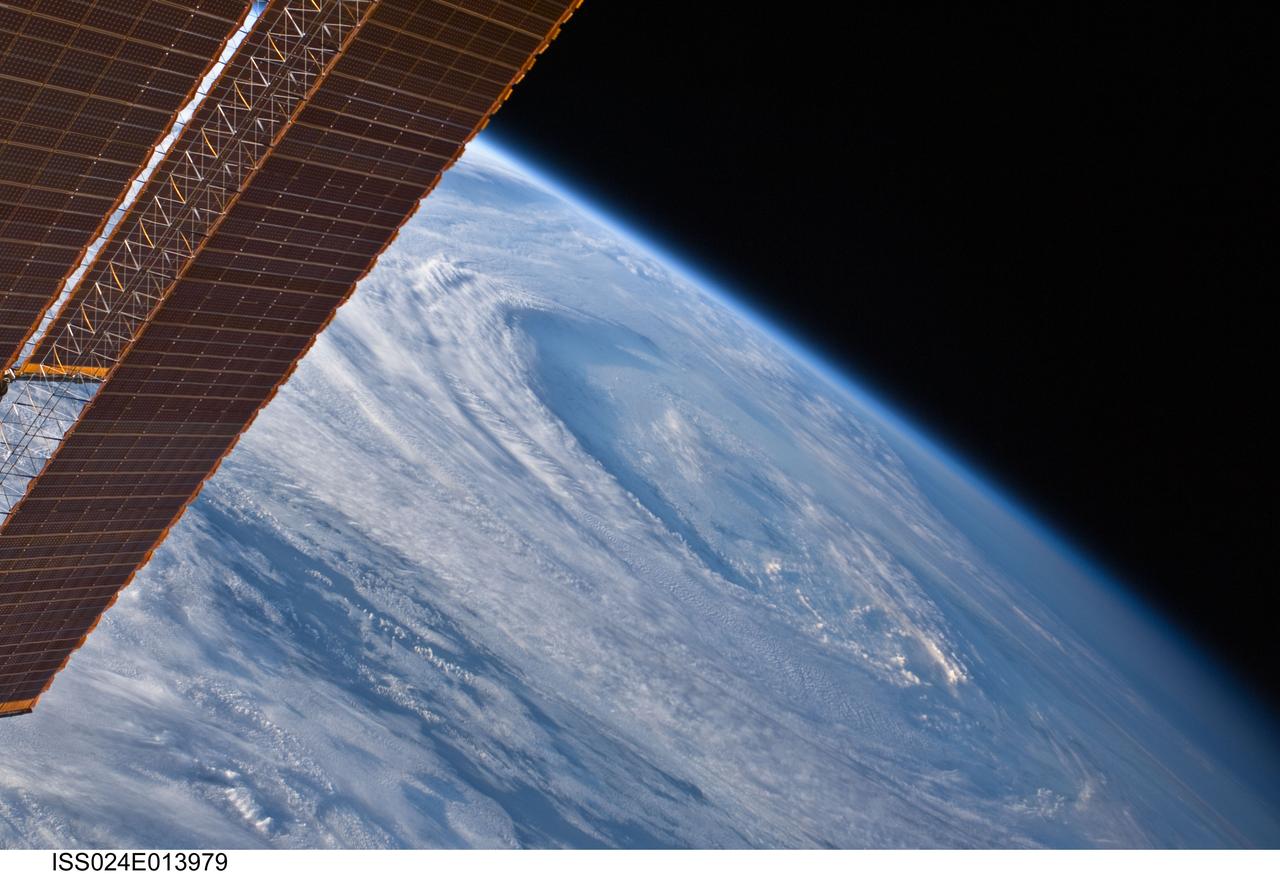
ISS024-E-013979 (7 Sept. 2010) --- A high-oblique view of the extra-tropical unnamed cyclone that merged with Hurricane Earl is featured in this image photographed by an Expedition 24 crew member on the International Space Station. At the time the photo was taken, the ISS was over the Labrador Sea, southwest of Greenland.
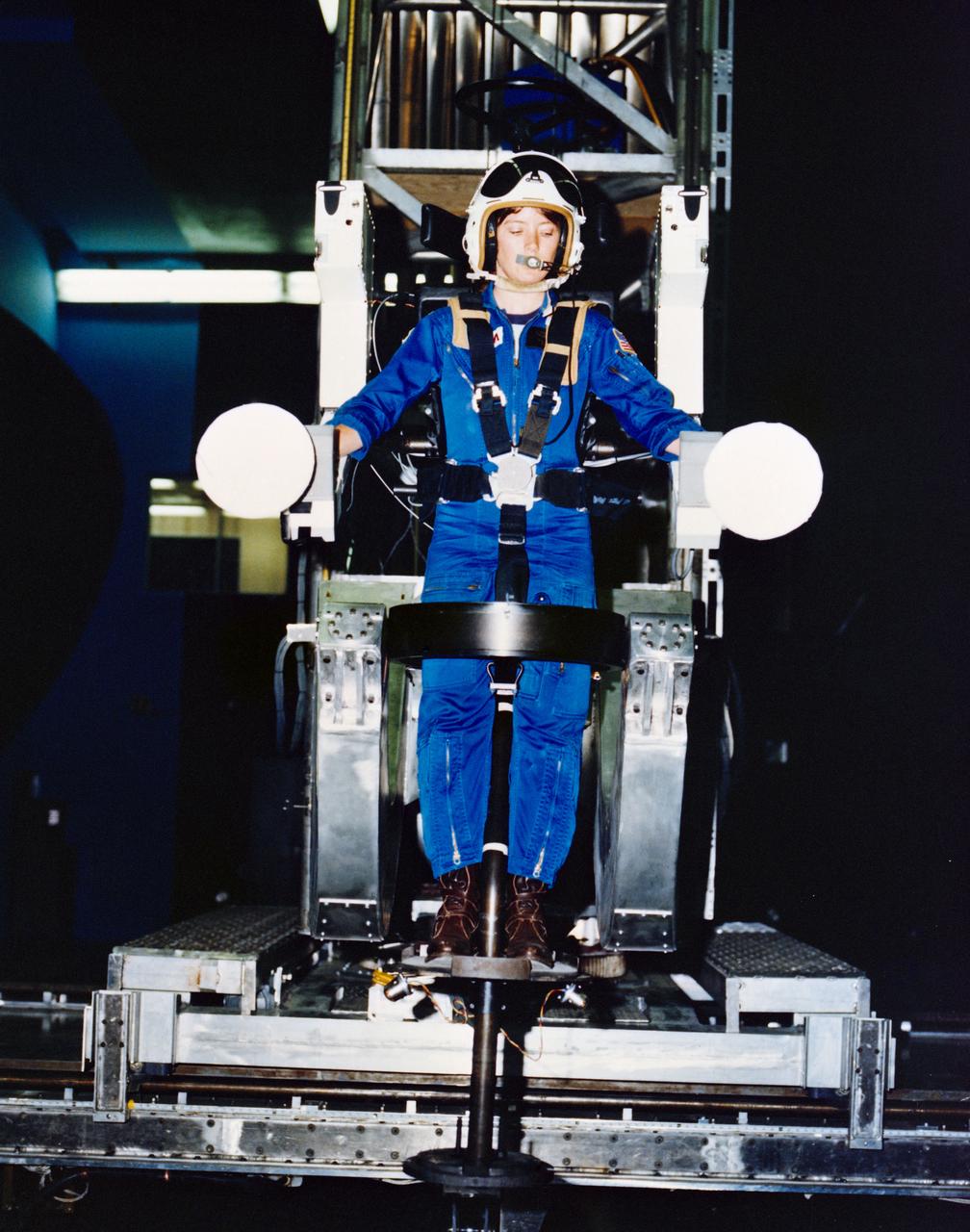
S80-36844 (24 July 1980) --- Manned Maneuvering Unit (MMU) development at the Martin Marietta plant in Denver, Colorado. View shows MMU prototype with astronaut AnnaL. Fisher serving as test subject strapped in to it. Photo credit: NASA
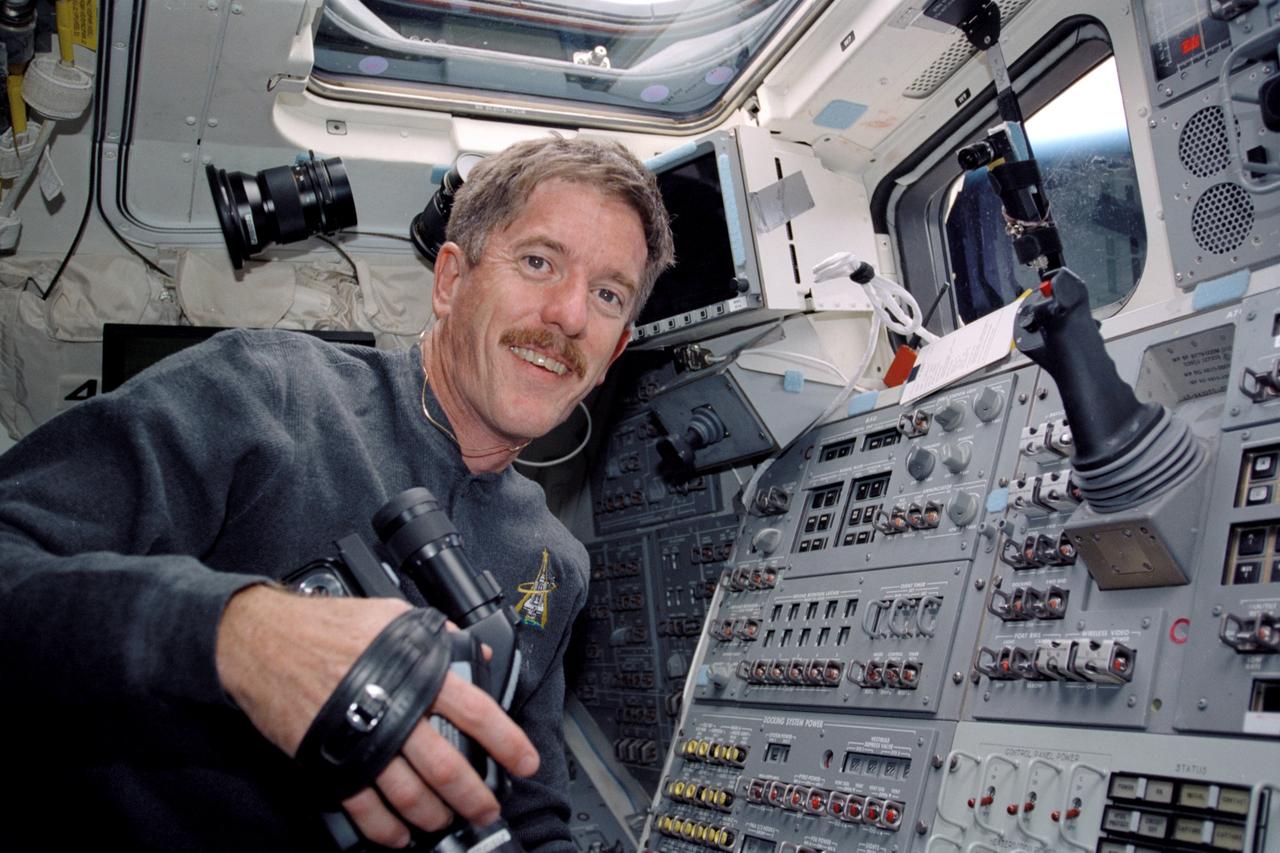
STS104-309-003 (12-24 July 2001) --- Astronaut James F. Reilly, STS-104 mission specialist, moves toward aft flight deck windows on the Space Shuttle Atlantis for a viewing opportunity. Reilly is one of five NASA astronauts aboard the Atlantis who will be participating in work on the International Space Station (ISS).
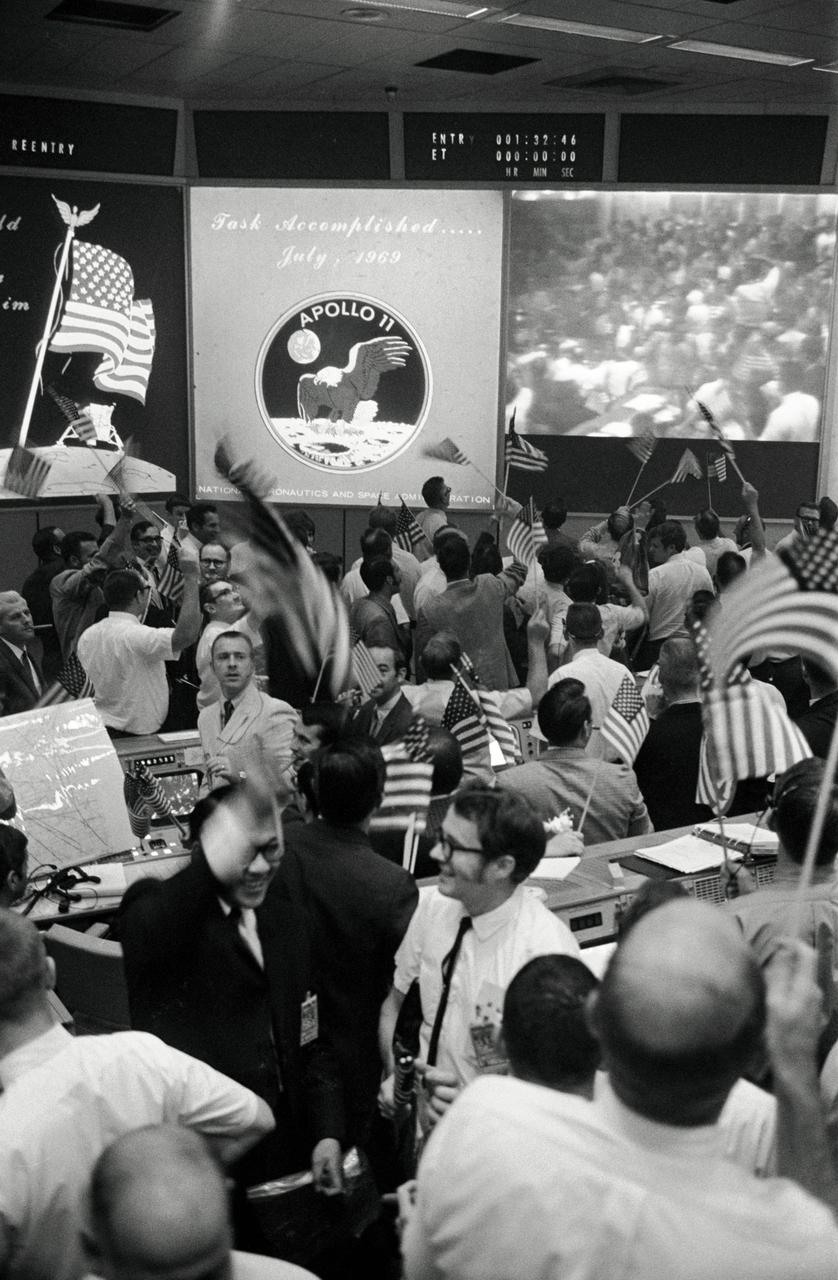
S69-40023 (24 July 1969) --- Overall view of the Mission Operations Control Room (MOCR) in the Mission Control Center (MCC), Building 30, Manned Spacecraft Center (MSC), showing the flight controllers celebrating the successful conclusion of the Apollo 11 lunar landing mission.
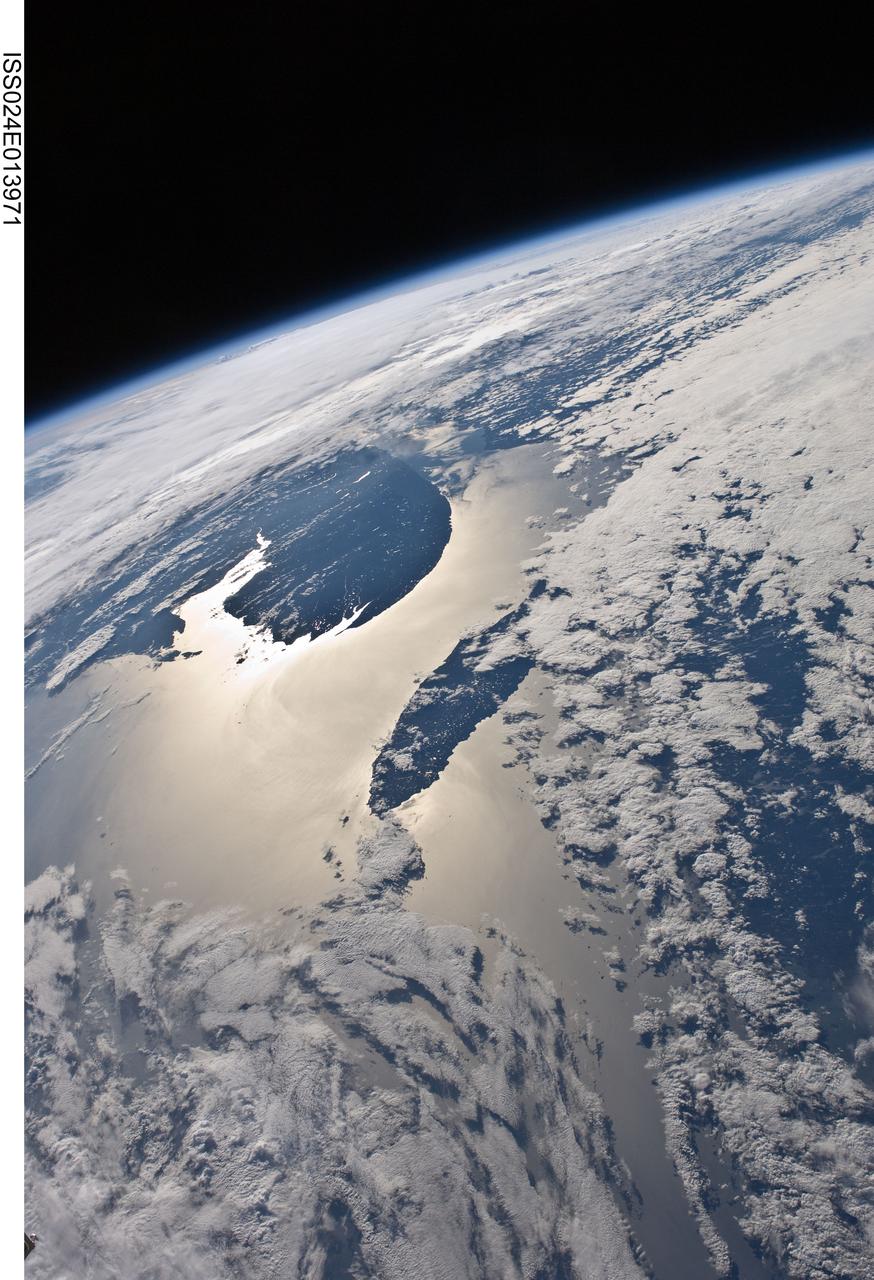
ISS024-E-013971 (7 Sept. 2010) --- This high-oblique view of the Gaspe Peninsula and Anticosti Island with sun glint on the Gulf of St. Lawrence and Chaleur Bay, Canada, was photographed by an Expedition 24 crew member on the International Space Station.
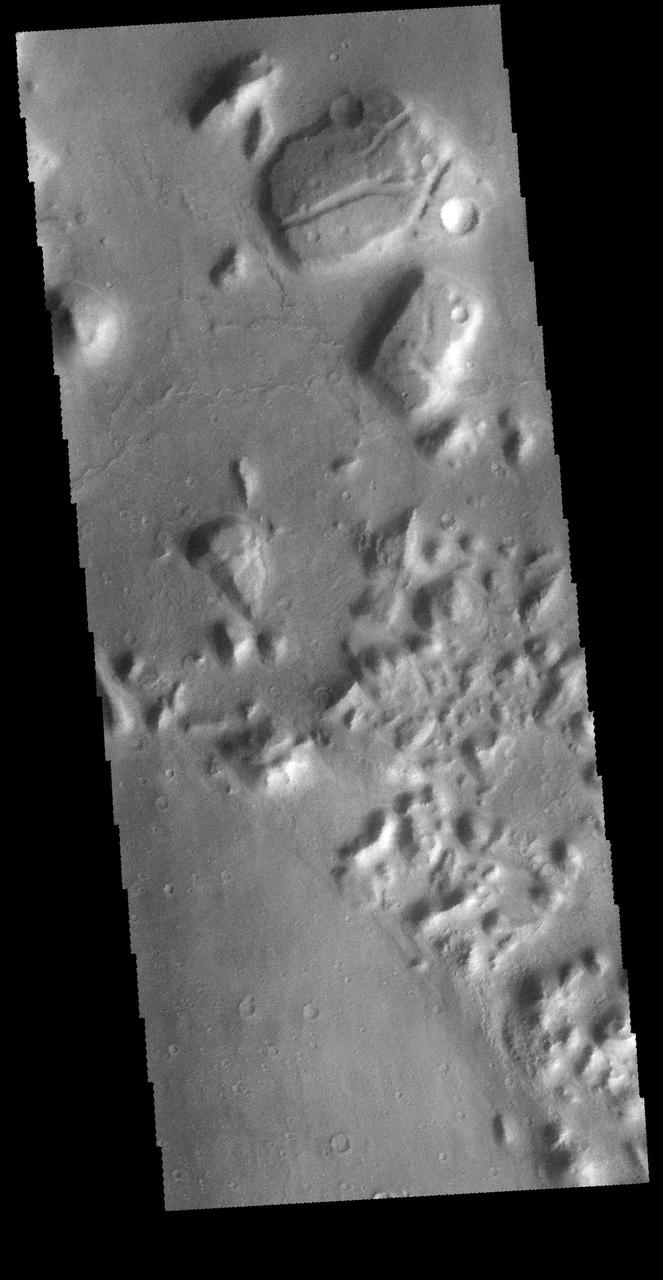
This view captured by NASA's 2001 Mars Odyssey spacecraft looks like a dinosaur head at the top of the image. Orbit Number: 65488 Latitude: 4.92808 Longitude: 126.933 Instrument: VIS Captured: 2016-09-18 03:24 https://photojournal.jpl.nasa.gov/catalog/PIA21698
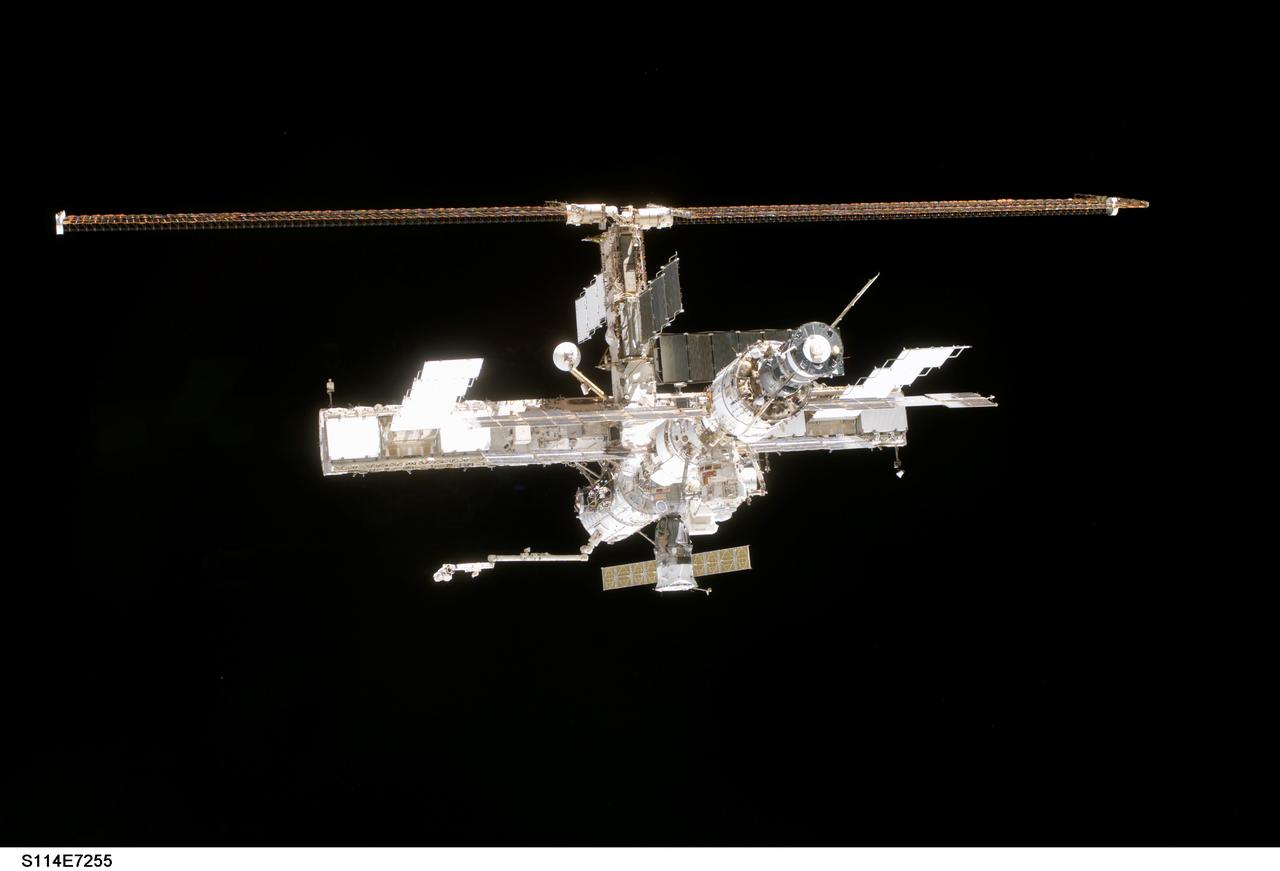
S114-E-7255 (6 August 2005) --- Backdropped by the blackness of space, this view of the International Space Station was photographed by a crewmember onboard the Space Shuttle Discovery following the undocking of the two spacecraft. Discovery pulled away from the complex at 2:24 a.m. (CDT) on August 6, 2005.
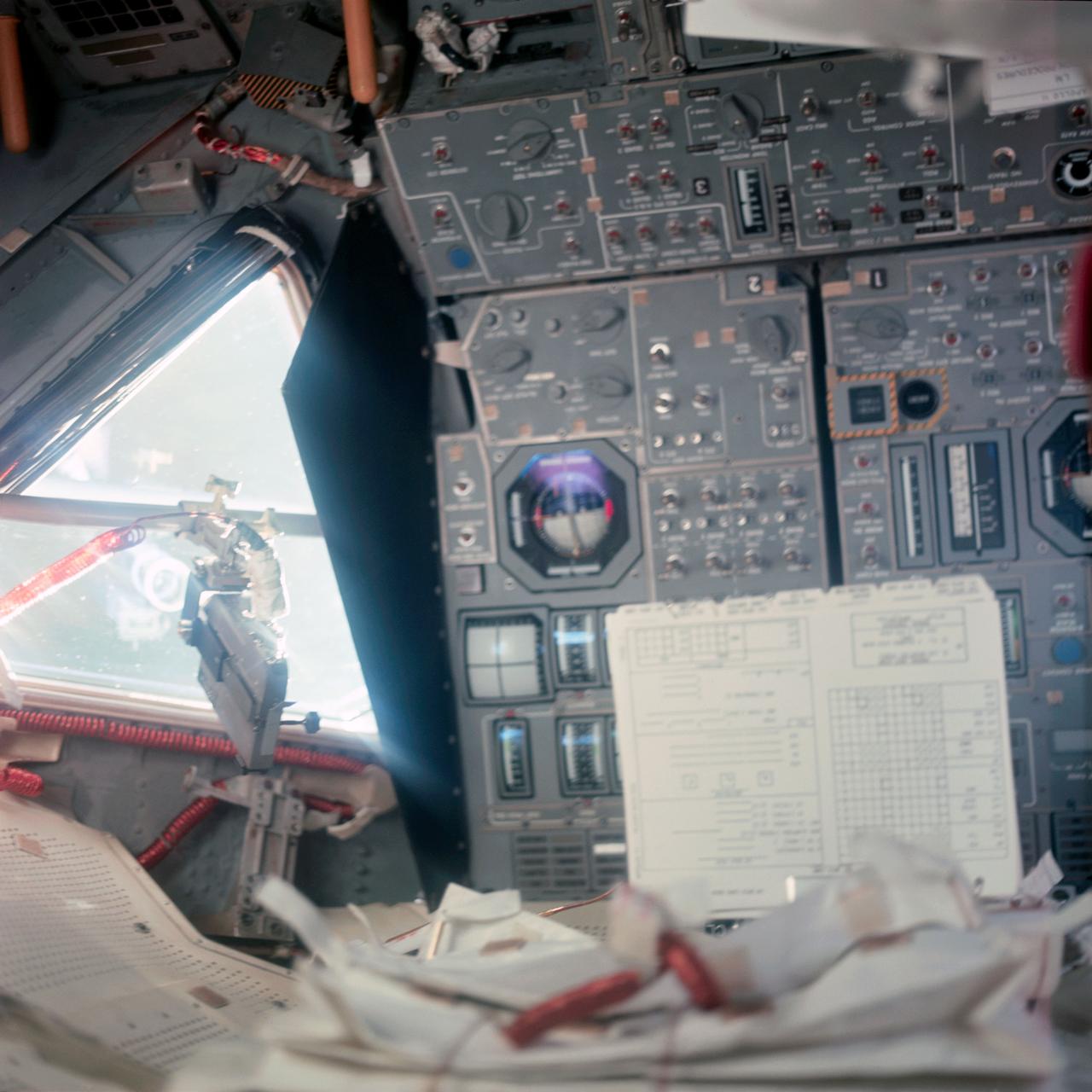
AS11-36-5389 (July 1969) --- An interior view of the Apollo 11 Lunar Module showing some of the displays and controls. Mounted in the Lunar Module window is a 16mm data acquisition camera which has a variable frame speed of 1, 6, 12 and 24 frames per second. Photo credit: NASA
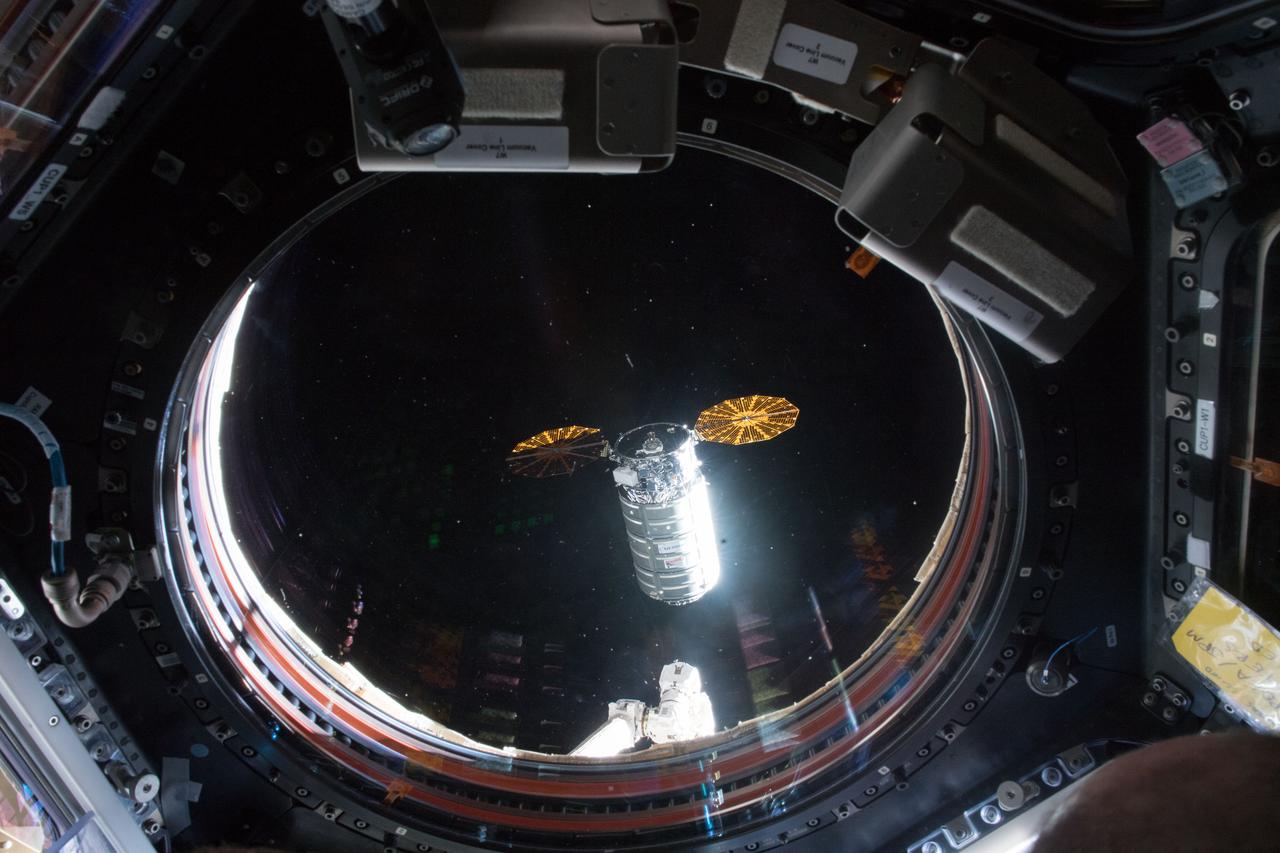
iss055e074760 (May 24, 2018) --- This view taken from inside the Cupola shows the Orbital ATK space freighter approaching its capture point about 10 meters from the International Space Station where it was grappled with the Canadarm2 robotic arm.
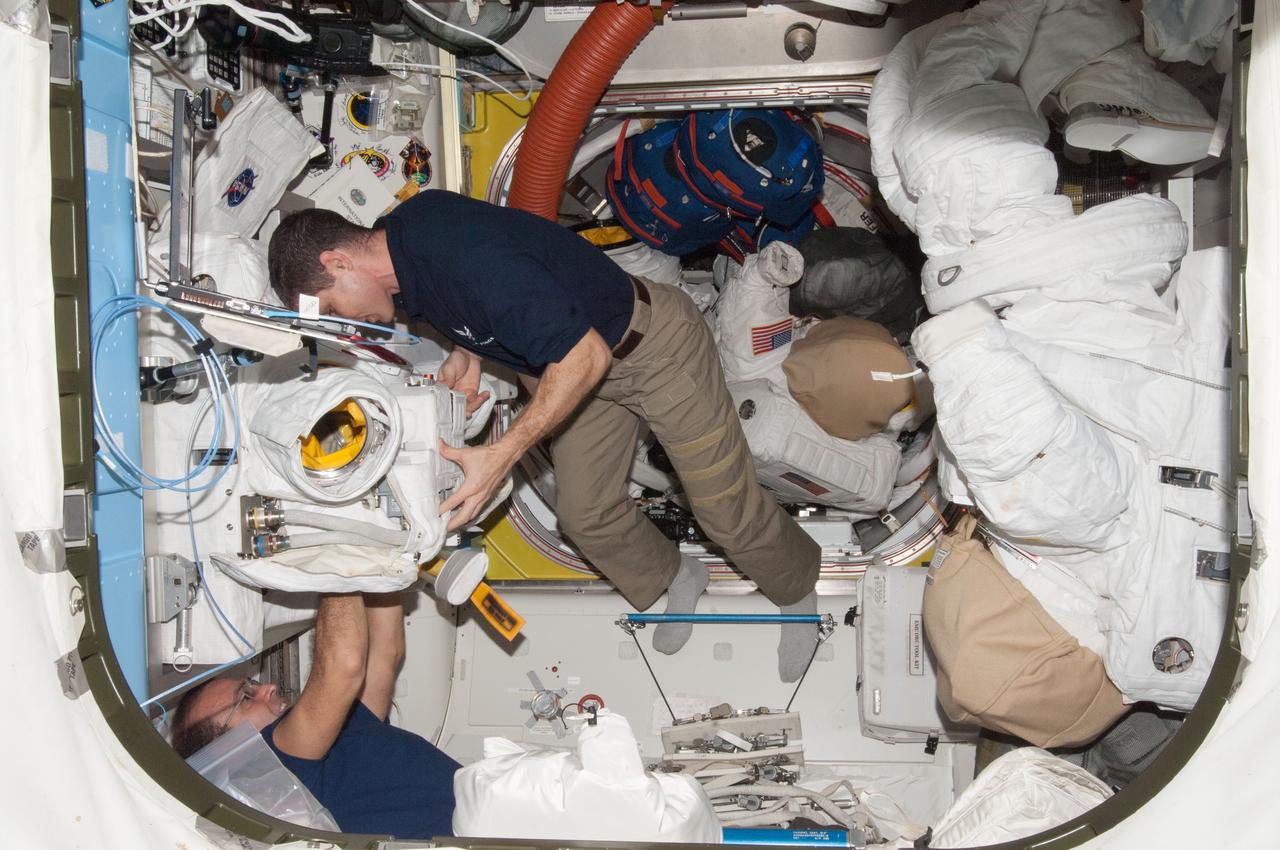
View of Mike Hopkins, Expedition 38 Flight Engineer (FE), during remove and replace (R&R) of Hard Upper Torso (HUT) of Extravehicular Mobility Unit (EMU), in the airlock (A/L) during preparation for EVA-24. Photo was taken during Expedition 38. Image was released by astronaut on Twitter.
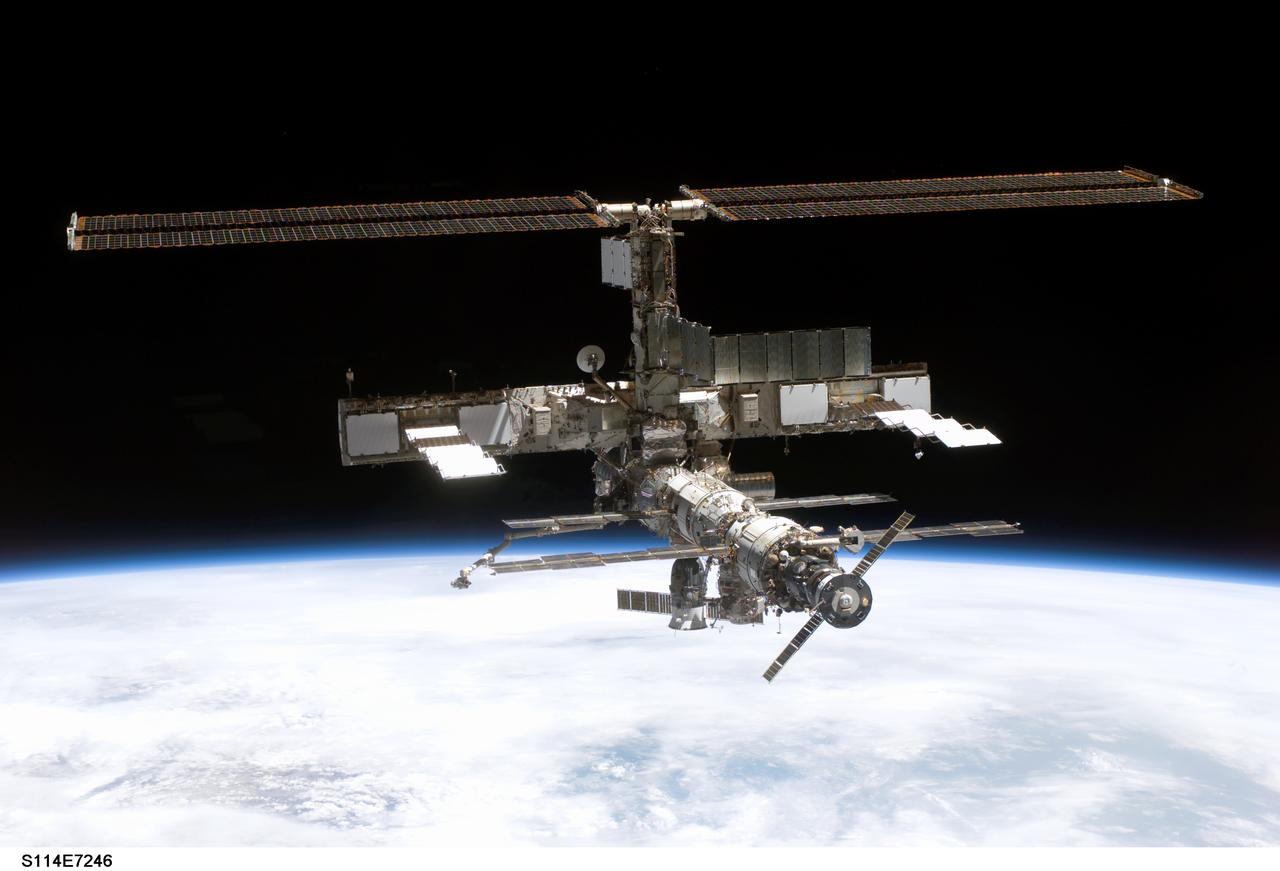
S114-E-7246 (6 August 2005) --- Backdropped by the blackness of space and Earth’s horizon, this full view of the International Space Station was photographed by a crewmember onboard the Space Shuttle Discovery following the undocking of the two spacecraft. Discovery pulled away from the complex at 2:24 a.m. (CDT) on August 6, 2005.
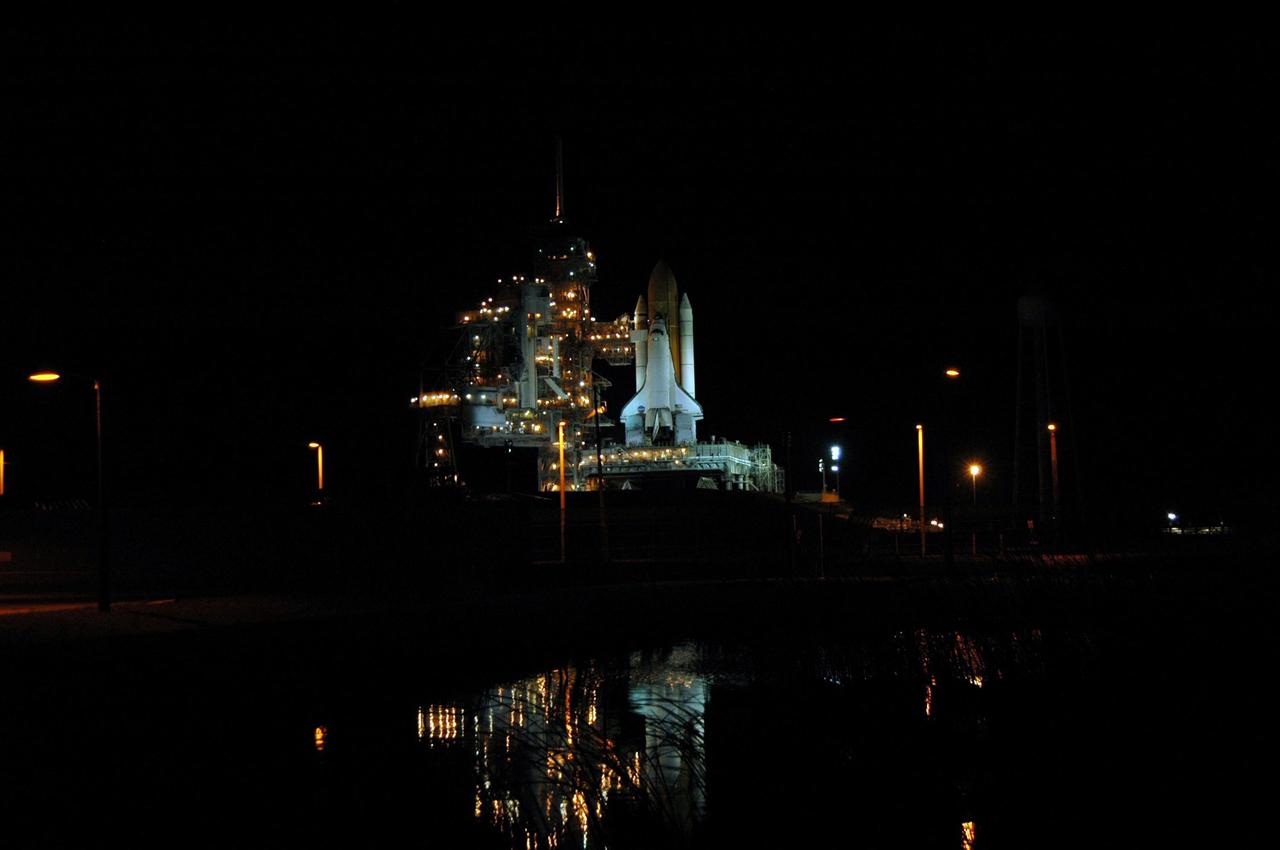
KENNEDY SPACE CENTER, FLA. - Viewed from across the pond next to Launch Pad 39B, Space Shuttle Discovery is spotlighted under dark skies after the scrub of the launch attempt on mission STS-121. The launch was scrubbed due to weather concerns and postponed 24 hours. Photo credit: NASA/Ken Thornsley
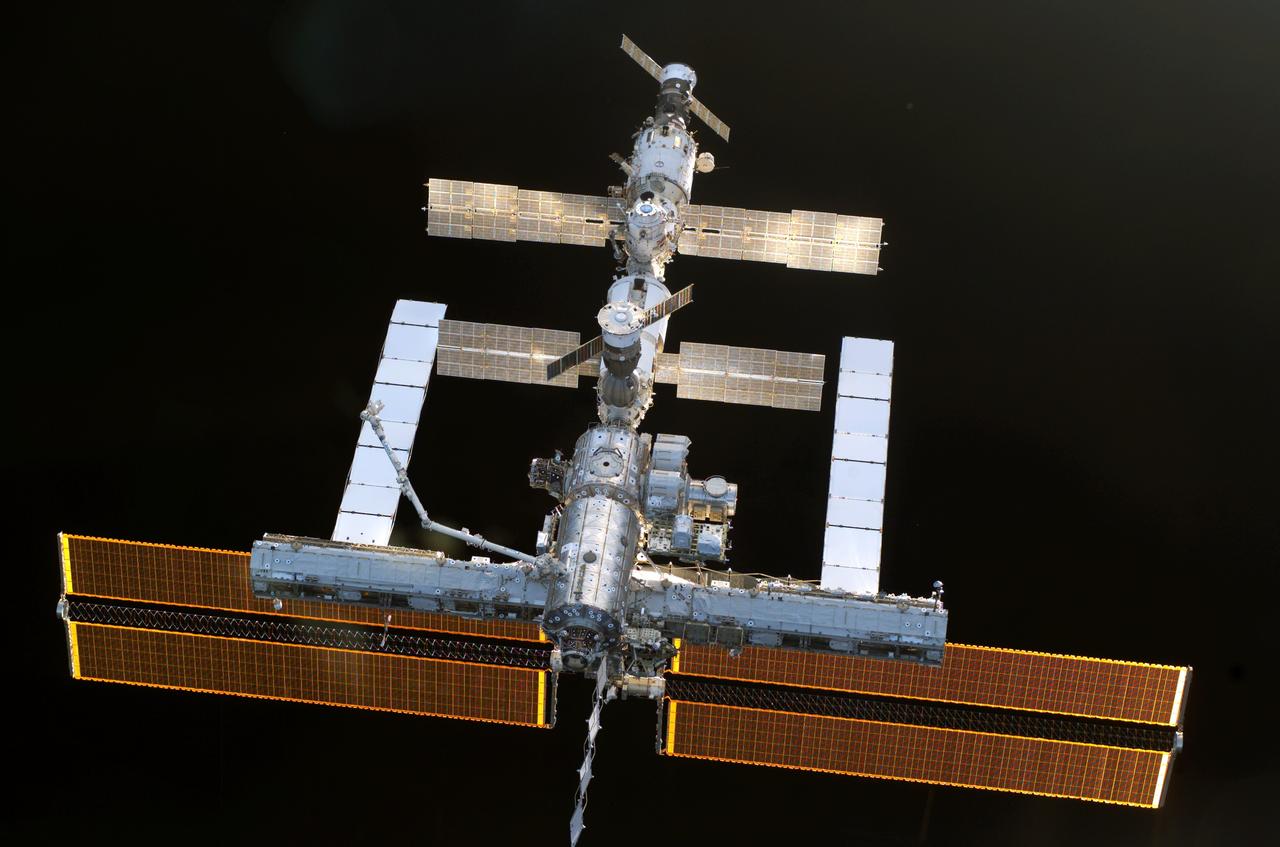
S114-E-7285 (6 August 2005) --- Backdropped by the blackness of space, this full view of the international space station was photographed by an STS-114 crewmember onboard the Space Shuttle Discovery following the undocking of the two spacecraft. Discovery pulled away from the complex at 2:24 a.m. (CDT) on Aug. 6, 2005.

ISS007-E-13392 (24 August 2003) --- This view of Webster, New York was taken by one of the Expedition 7 crewmembers onboard the International Space Station (ISS). Webster is the hometown of astronaut Edward T. Lu, NASA ISS science officer and flight engineer.

S65-10461 (23 March 1965) --- Overall view of the Gemini-Titan 3 on Launch Pad 19, with erector lowered. The GT-3 liftoff was at 9:24 a.m. (EST) March 23, 1965. Photograph was taken from across a pond.
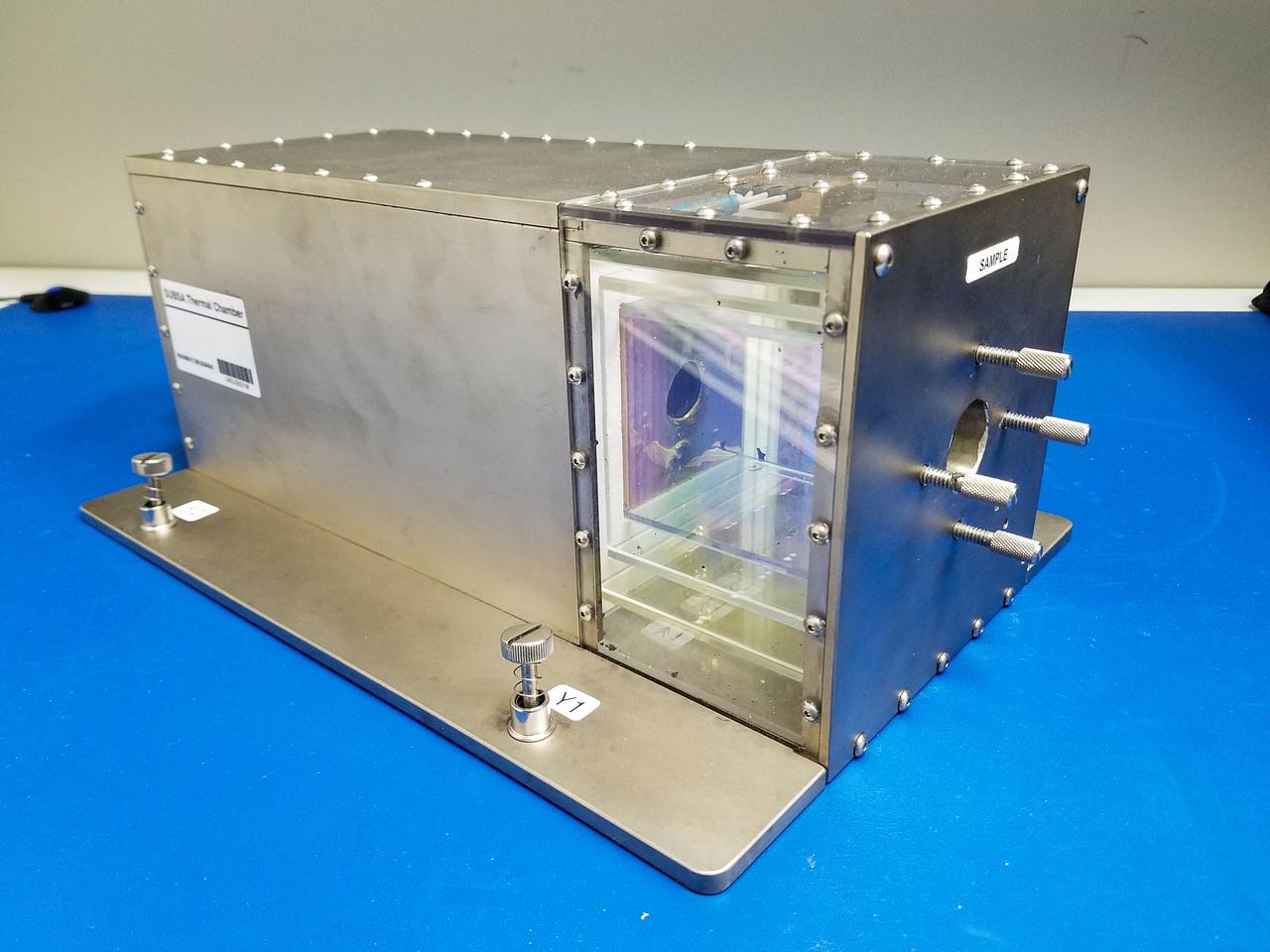
jsc2020e016982 (7/24/2019) --- A preflight view of the SUBSA Thermal Chamber. SUBSA is a high-temperature furnace that can be used to study how microgravity affects the synthesis of semiconductor and scintillator crystals. Image courtesy of: Kenneth Barton, Techshot, Inc.
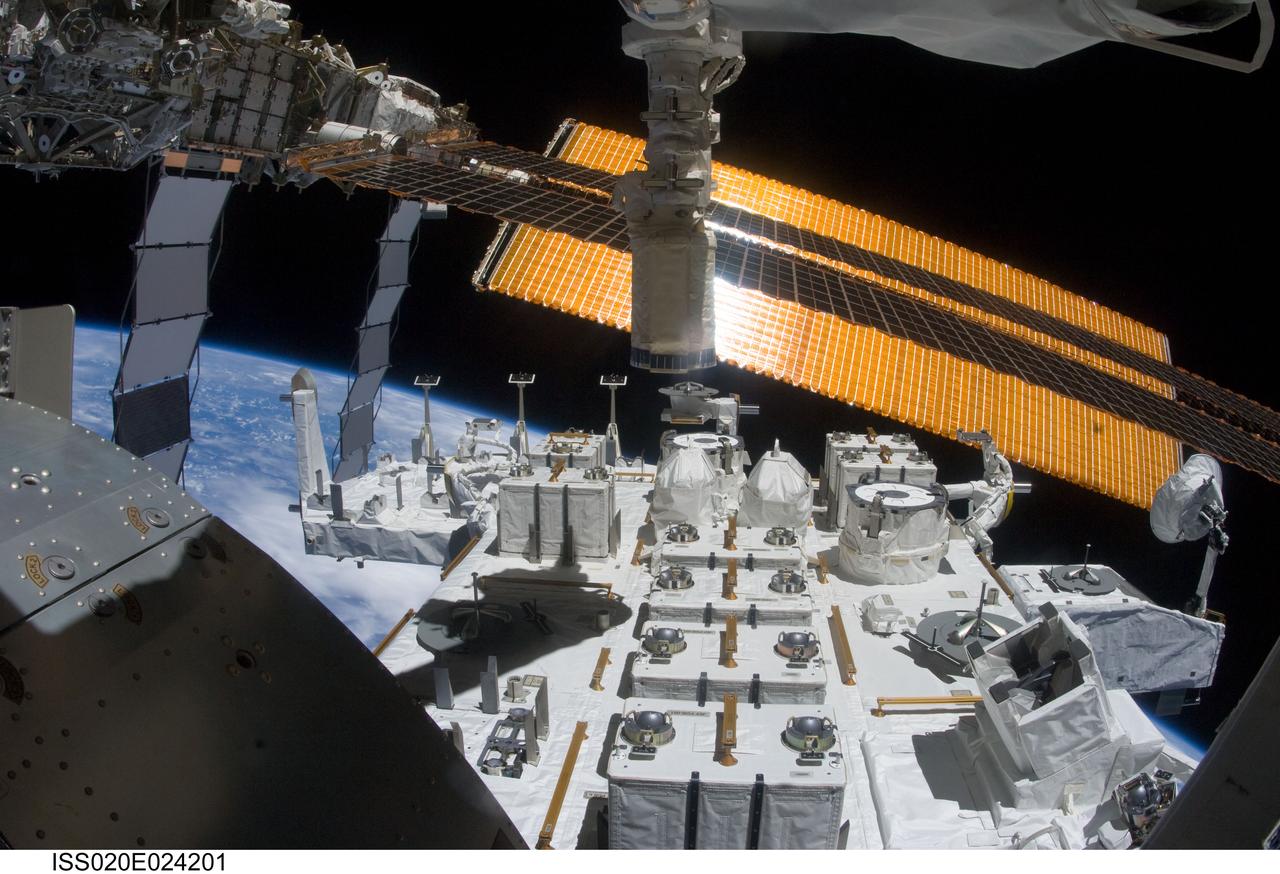
ISS020-E-024201 (24 July 2009) --- This view of the Japanese Experiment Module - Exposed Facility (JEF), was photographed through a window on the port side of the JEM by one of the Expedition 20 crew members. This was an important part of the activity of flight day 10 for the STS-127 Endeavour crew and its hosts onboard the International Space Station.
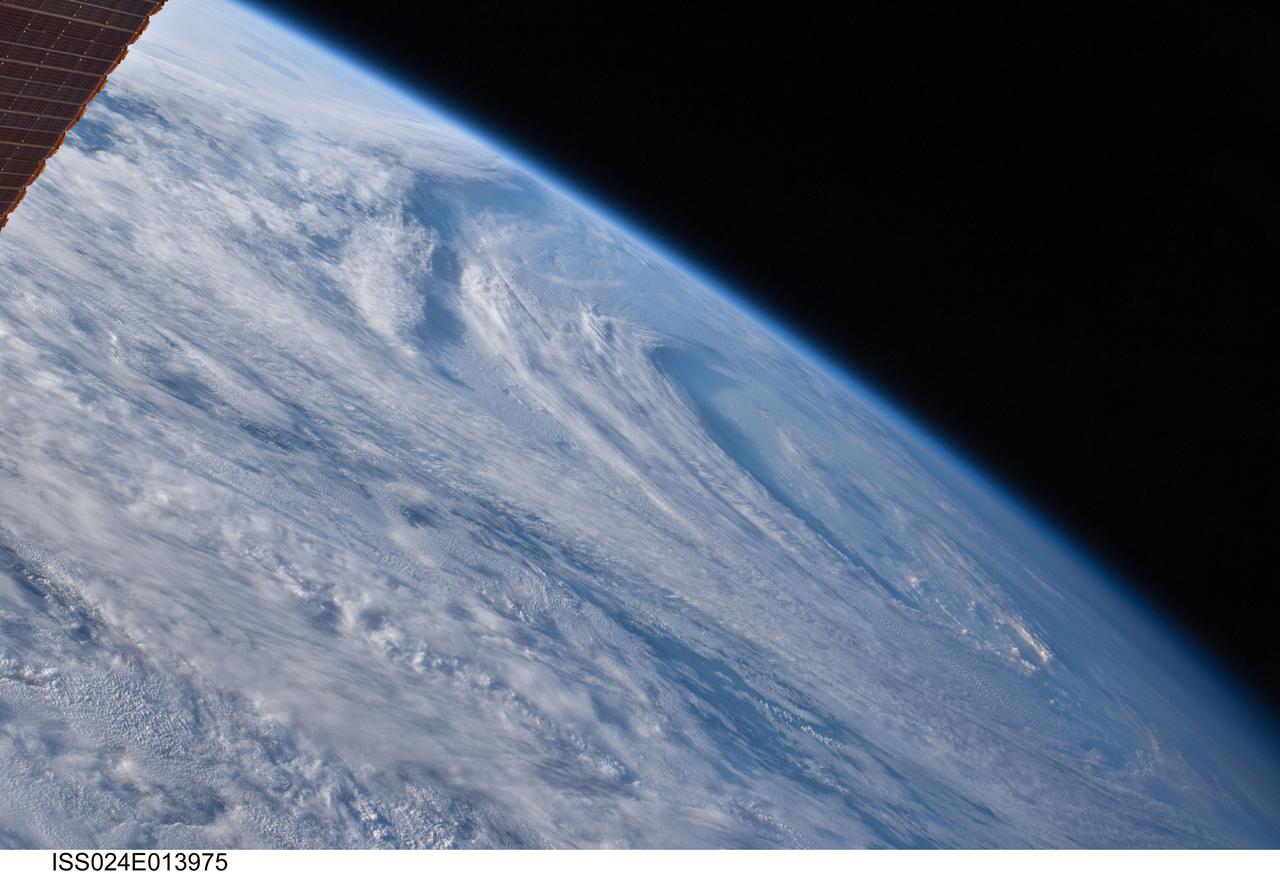
ISS024-E-013975 (7 Sept. 2010) --- A high-oblique view of the extra-tropical unnamed cyclone that merged with Hurricane Earl is featured in this image photographed by an Expedition 24 crew member on the International Space Station. At the time the photo was taken, the ISS was over the Labrador Sea, southwest of Greenland.
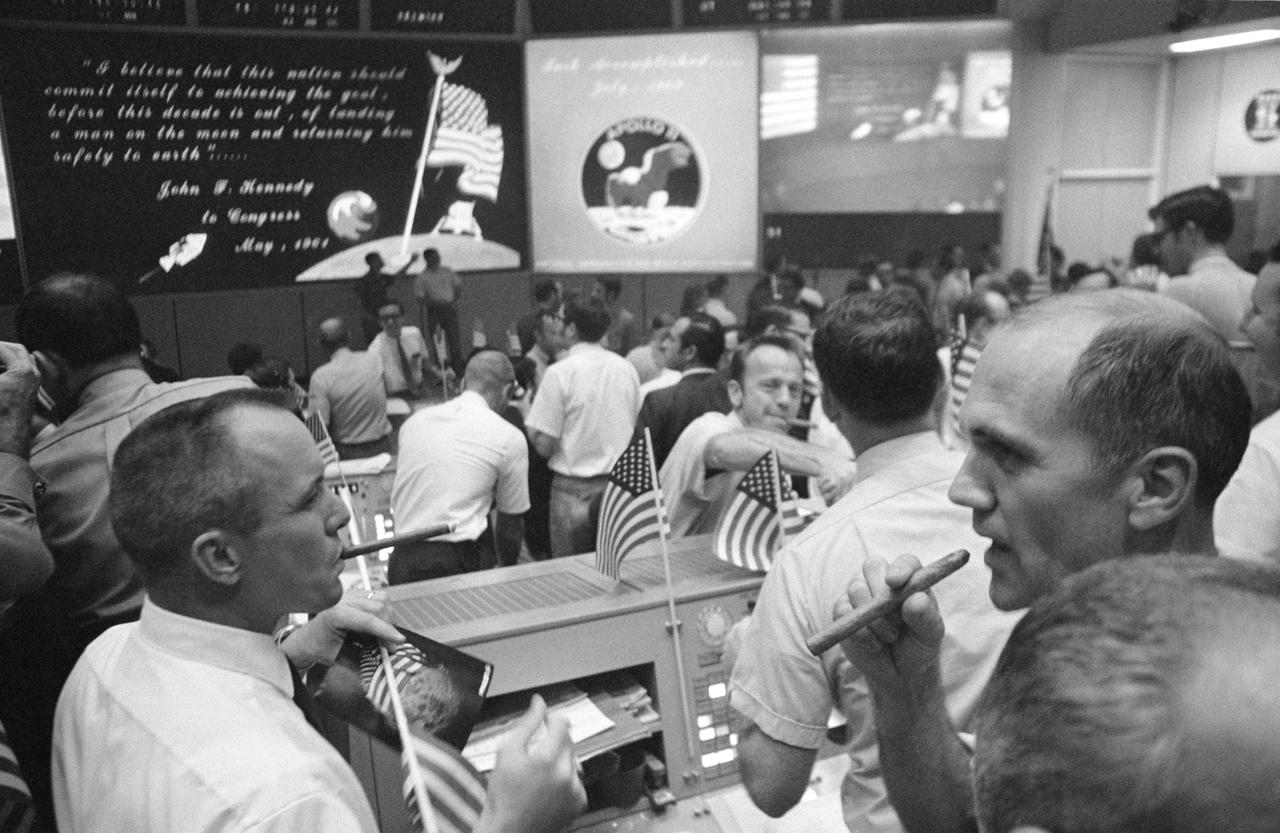
S69-40025 (24 July 1969) --- Overall view of the Mission Operations Control Room (MOCR) in the Mission Control Center (MCC), Building 30, Manned Spacecraft Center (MSC), showing the flight controllers celebrating the successful conclusion of the Apollo 11 lunar landing mission.
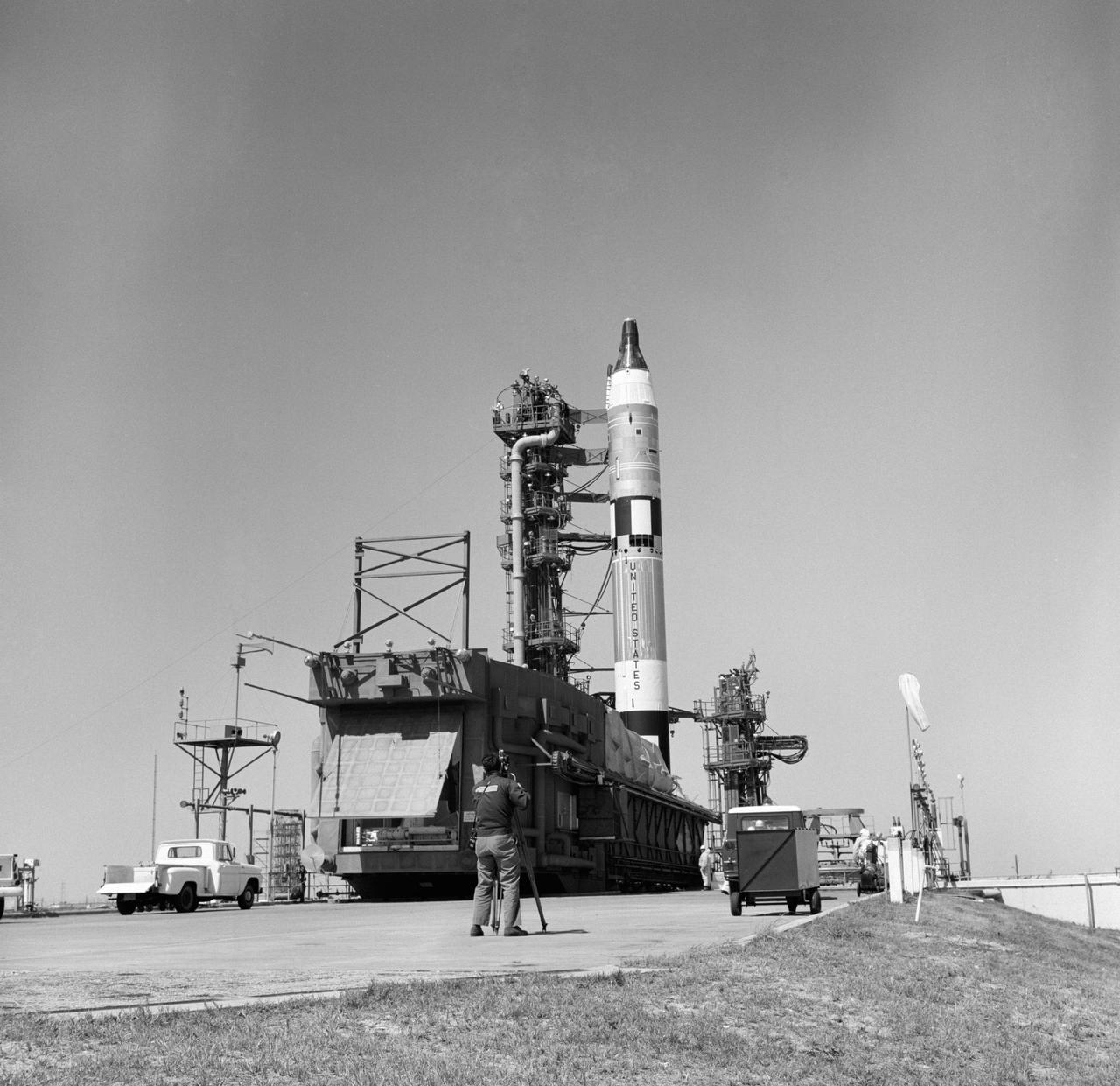
S65-21881 (1965) --- Overall view of the Gemini-Titan 3 on Launch Pad 19, with erector lowered. The GT-3 liftoff was at 9:24 a.m. (EST) on March 23, 1965. A photographer stands at bottom of launch pad with a movie camera.
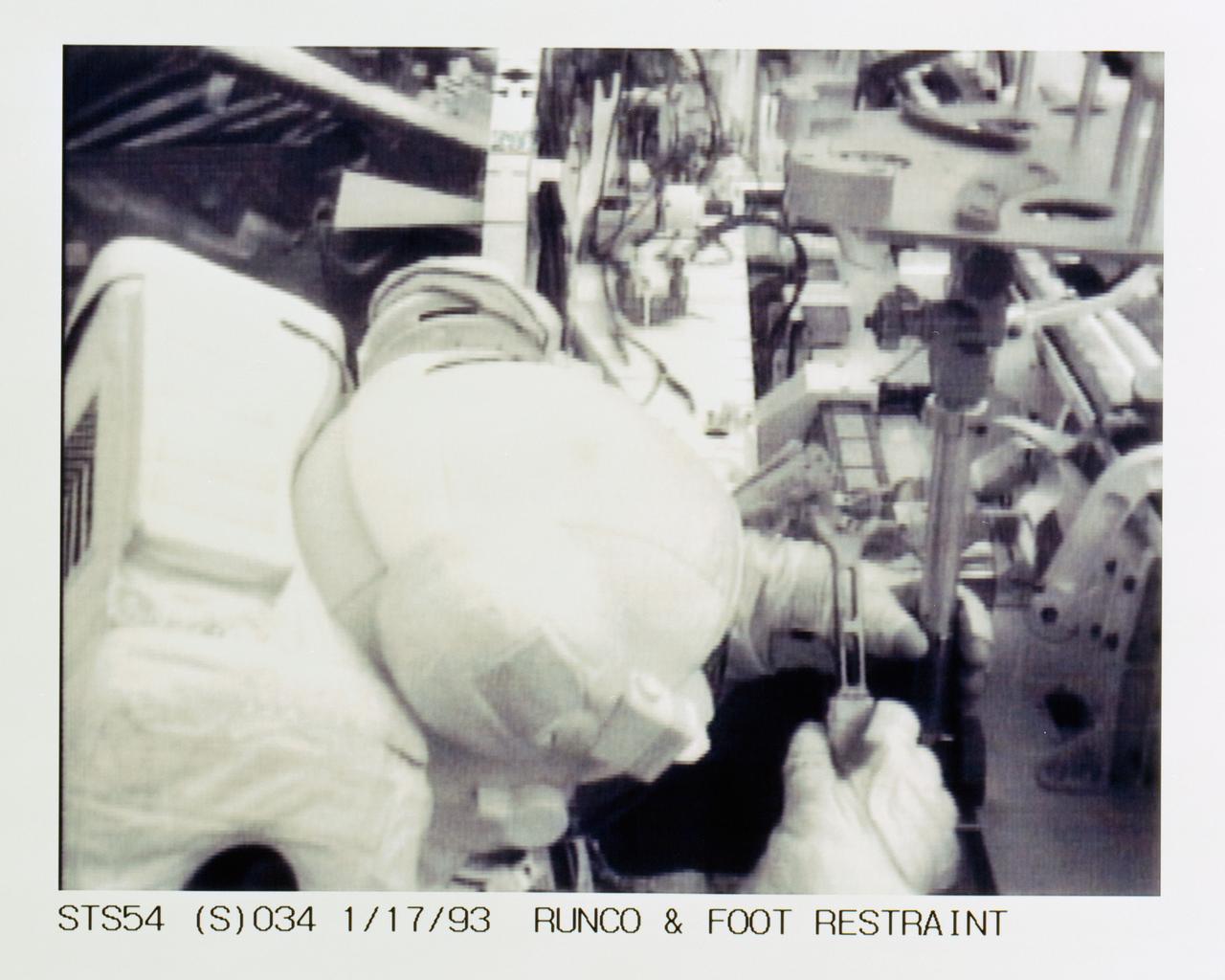
STS054-S-034 (17 Jan 1993) --- Closeup view of Runco as he works to install a mobile foot restraint during extravehicular activity (EVA) in Endeavour's cargo bay. The scene was downlinked at 11:55:07:24 GMT, Jan. 17, 1993.
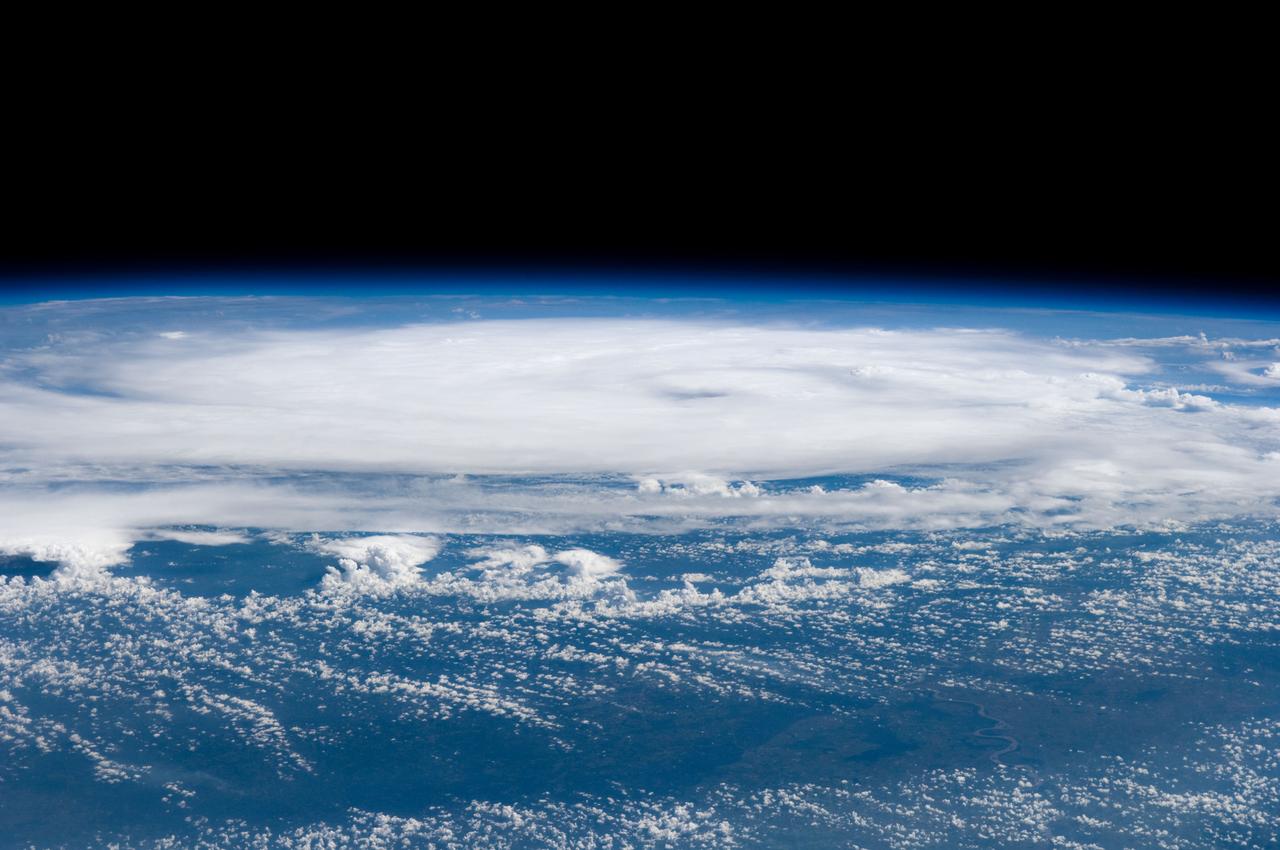
ISS017-E-012569 (4 Aug. 2008) --- A low oblique view of Tropical Storm Edouard, as it was seen from the International Space Station from a vantage point of 220 statute miles above Earth, stirs in the Gulf of Mexico roughly 24 hours prior to landfall at a point east of Galveston, Texas.

ISS012-E-15387 (24 Jan. 2006) --- A view of pea plants growing in the Lada greenhouse as a part of the Russian BIO-5 Rasteniya-2/Lada-2 (Plants-2) plant growth experiment located in the Zvezda Service Module photographed by an Expedition 12 crewmember on the International Space Station.

Mechanical engineering and integration technician, Lucas Keim, stands inside the Acoustics chamber at Goddard Space Flight Center, Greenbelt Md., Aug 24, 2023. This photo has been reviewed by OSAM1 project management and the Export Control Office and is released for public view. NASA/Mike Guinto

S69-40022 (24 July 1969) --- Overall view of the Mission Operations Control Room (MOCR) in the Mission Control Center (MCC), Building 30, Manned Spacecraft Center (MSC), showing the flight controllers celebrating the successful conclusion of the Apollo 11 lunar landing mission.