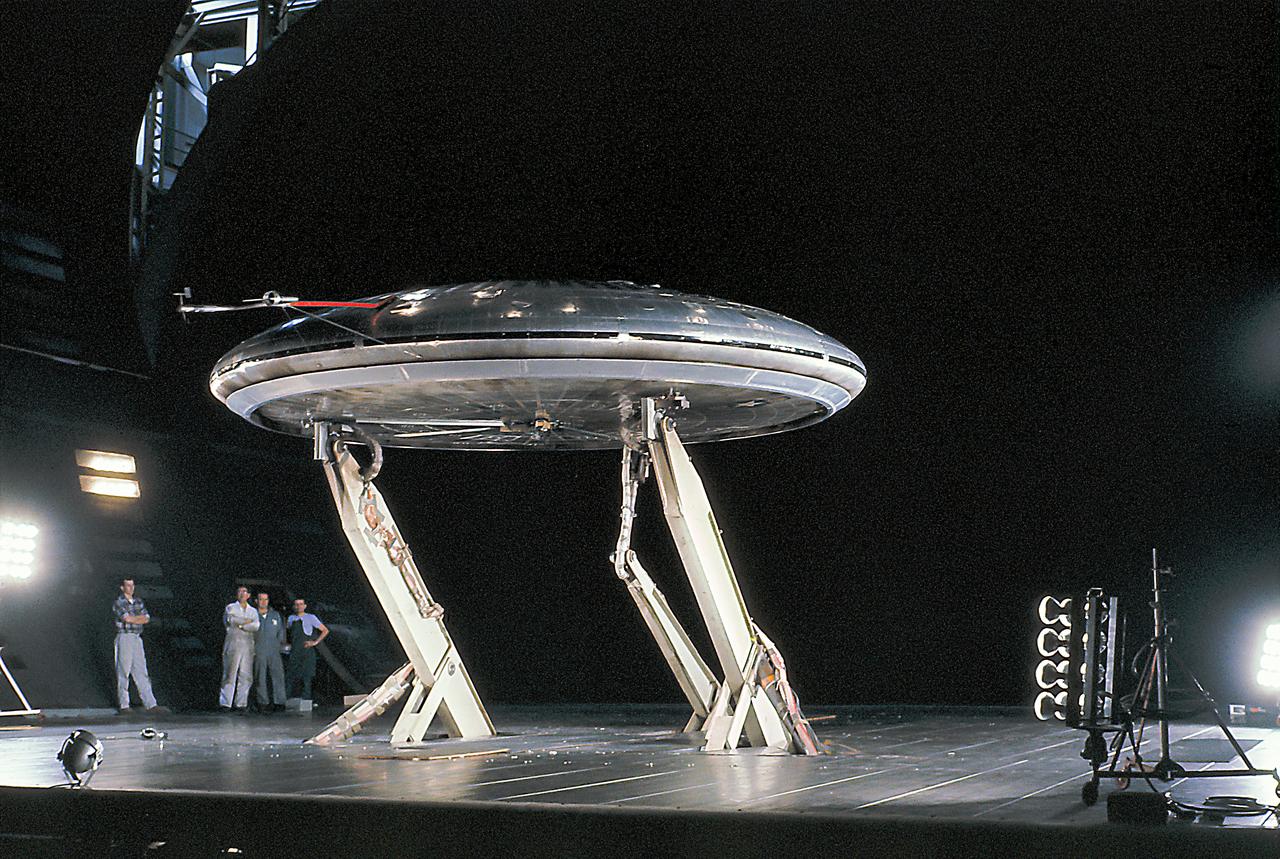
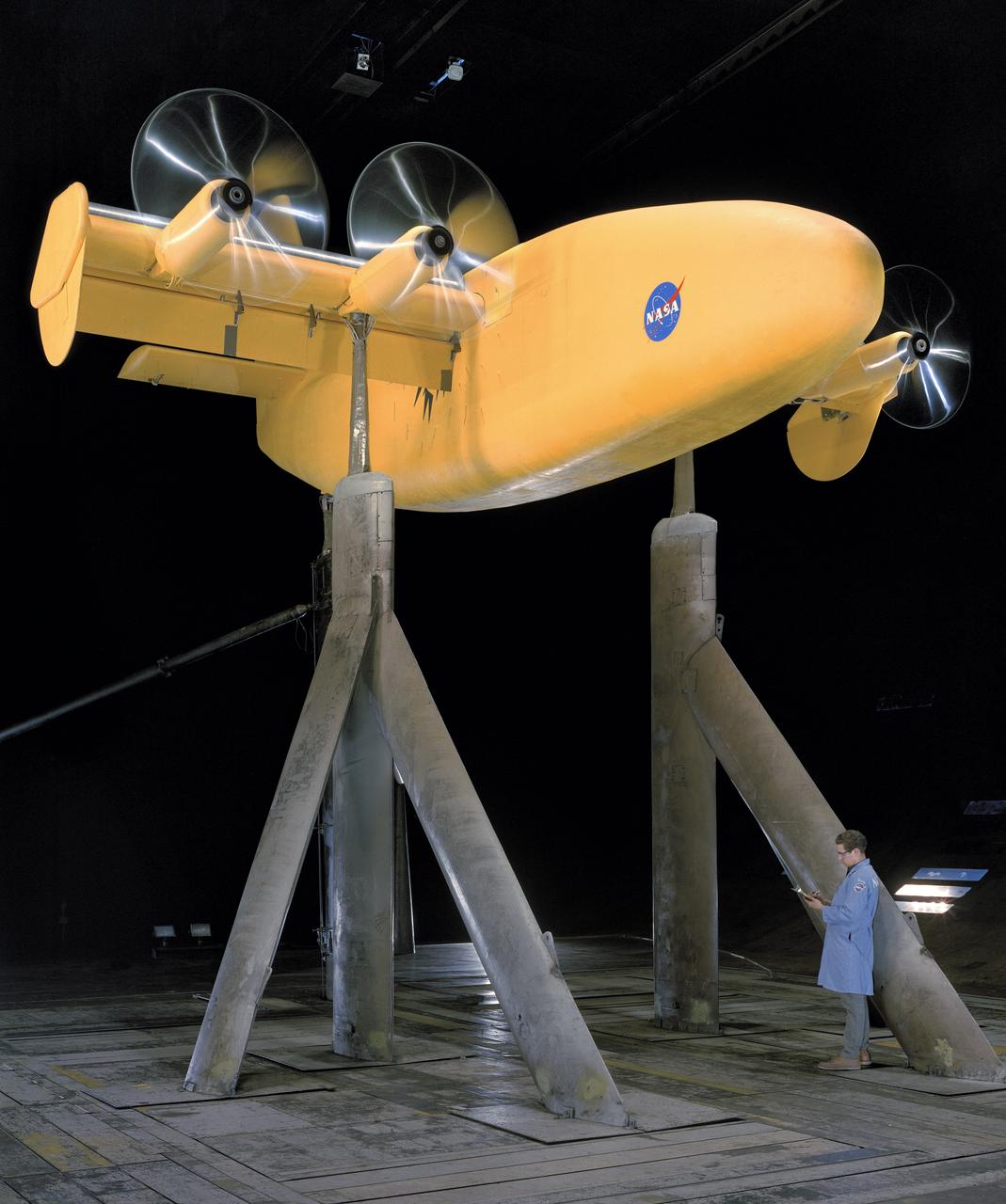
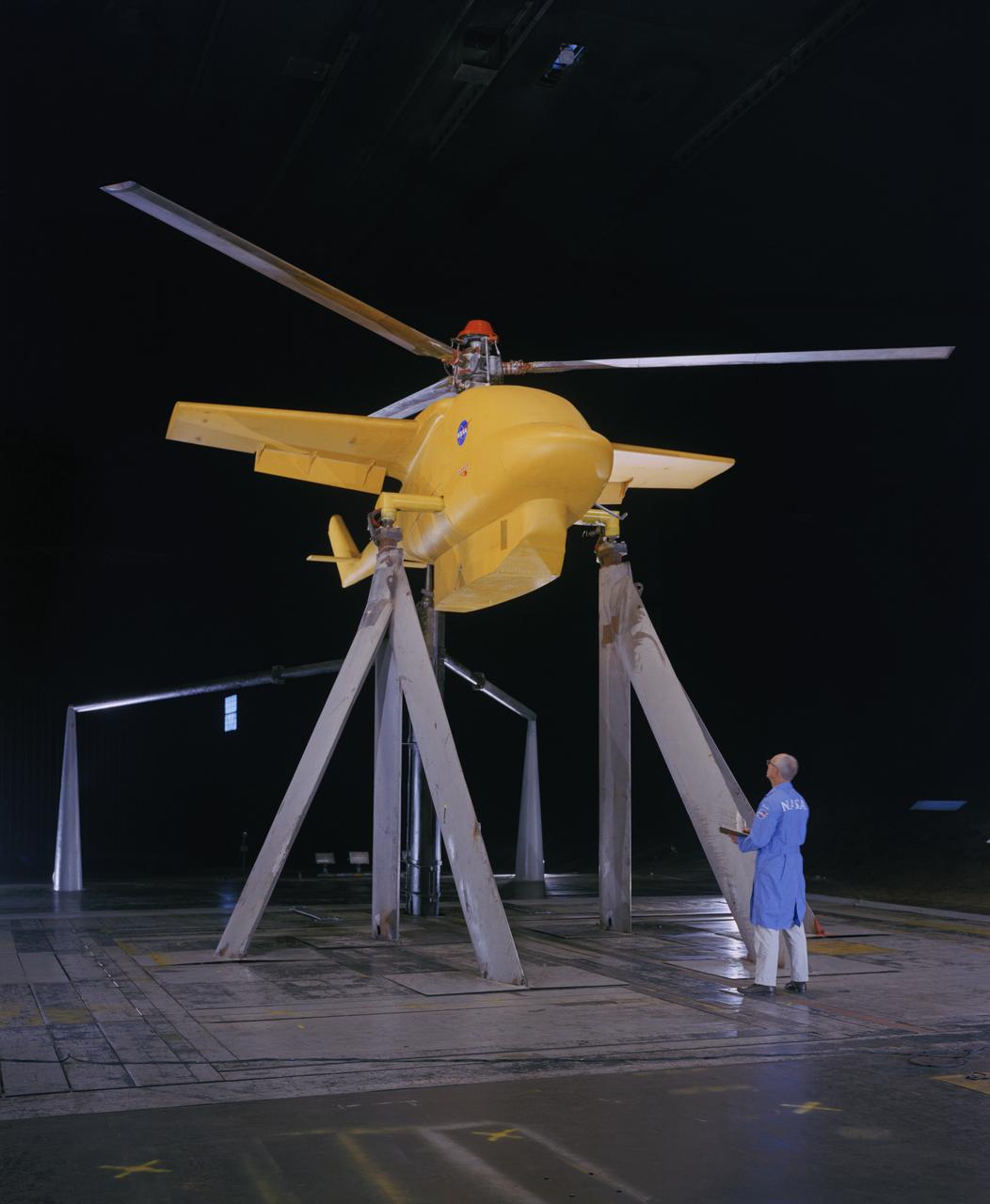
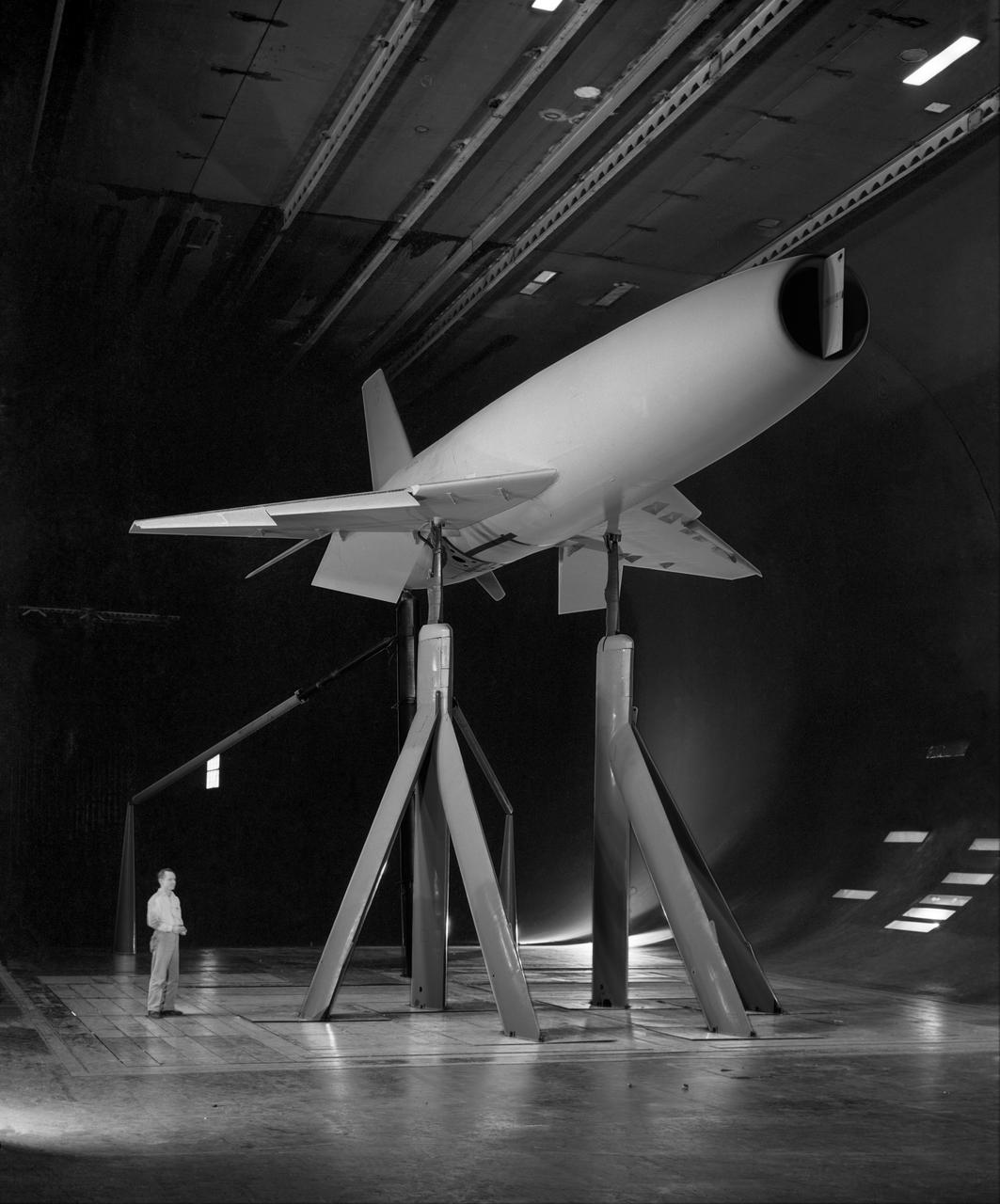
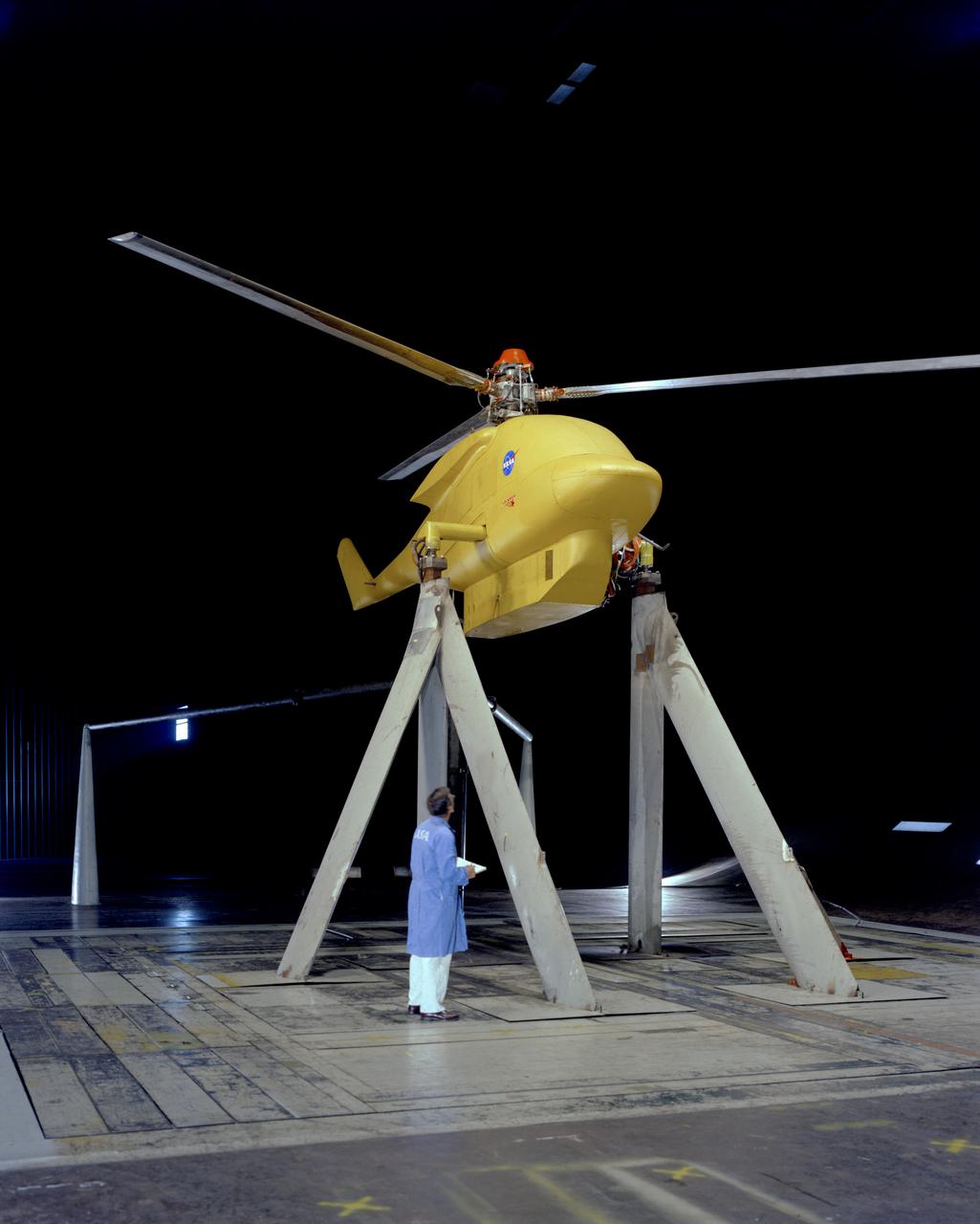
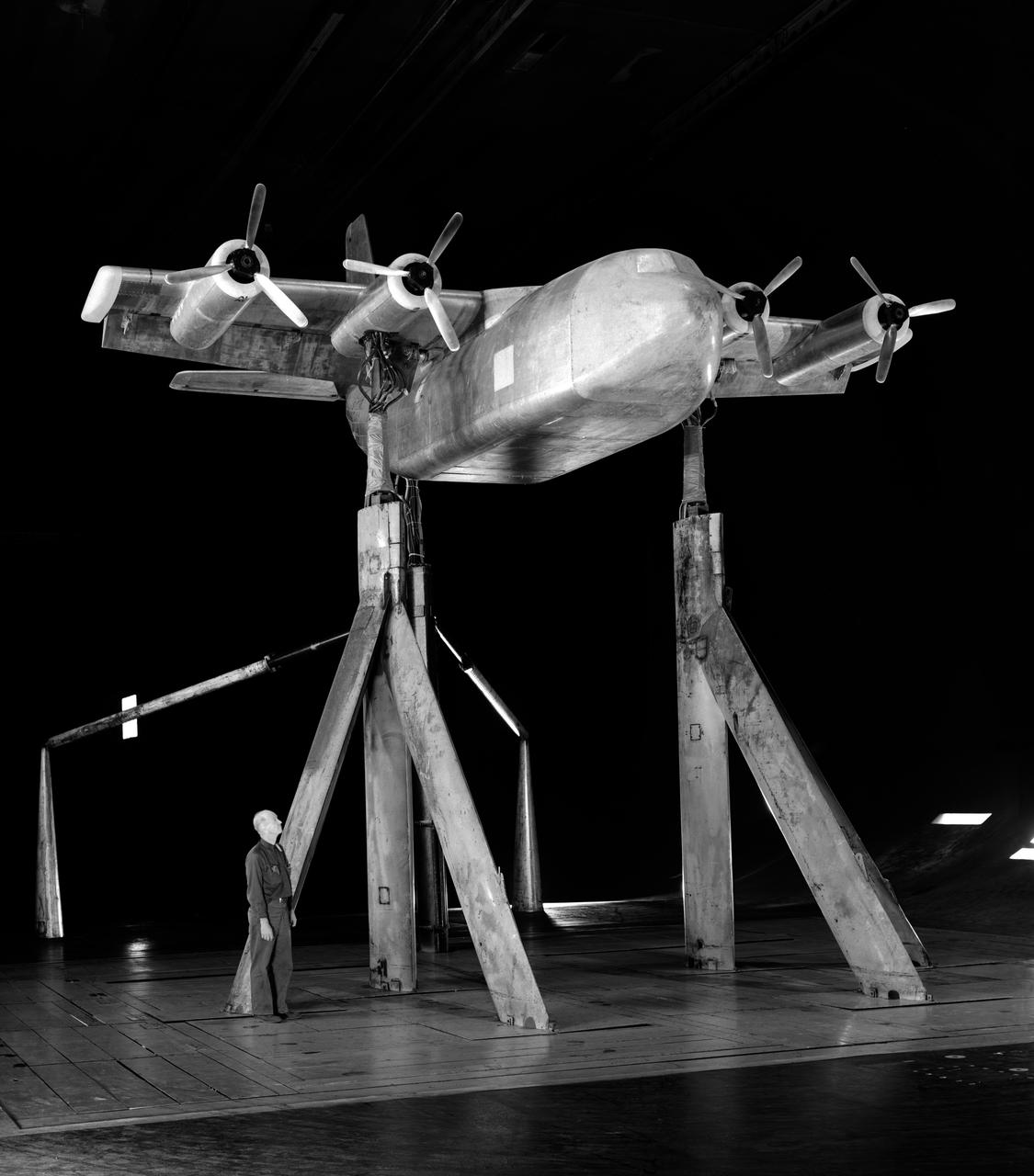
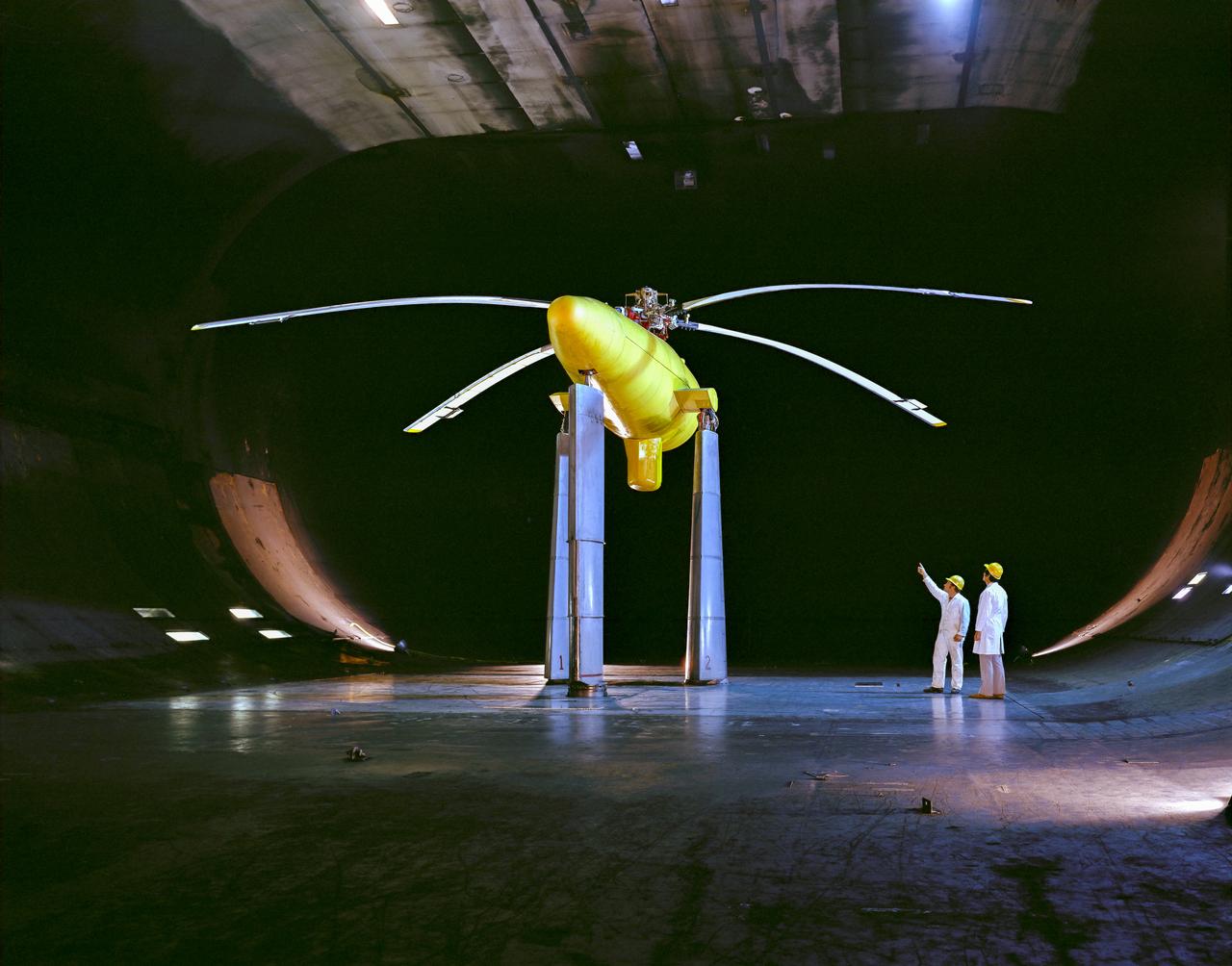
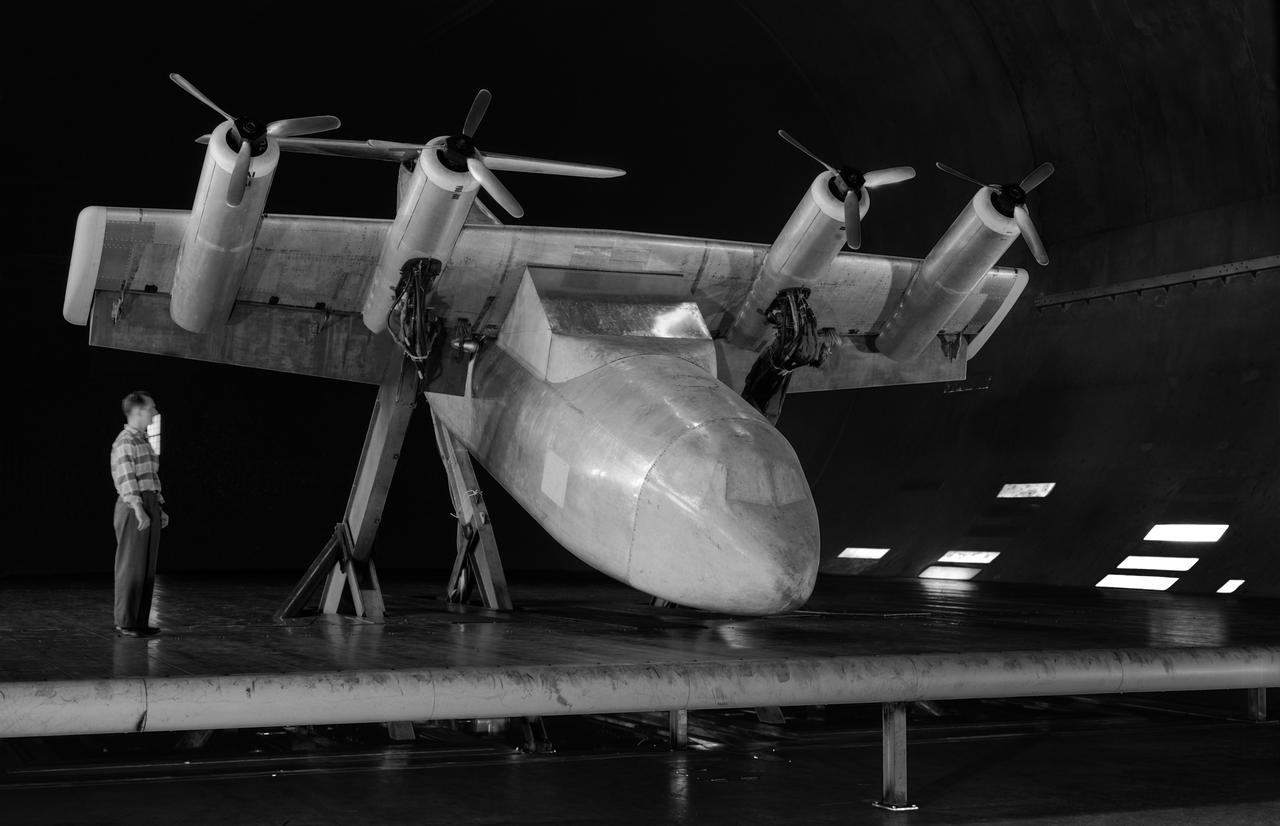
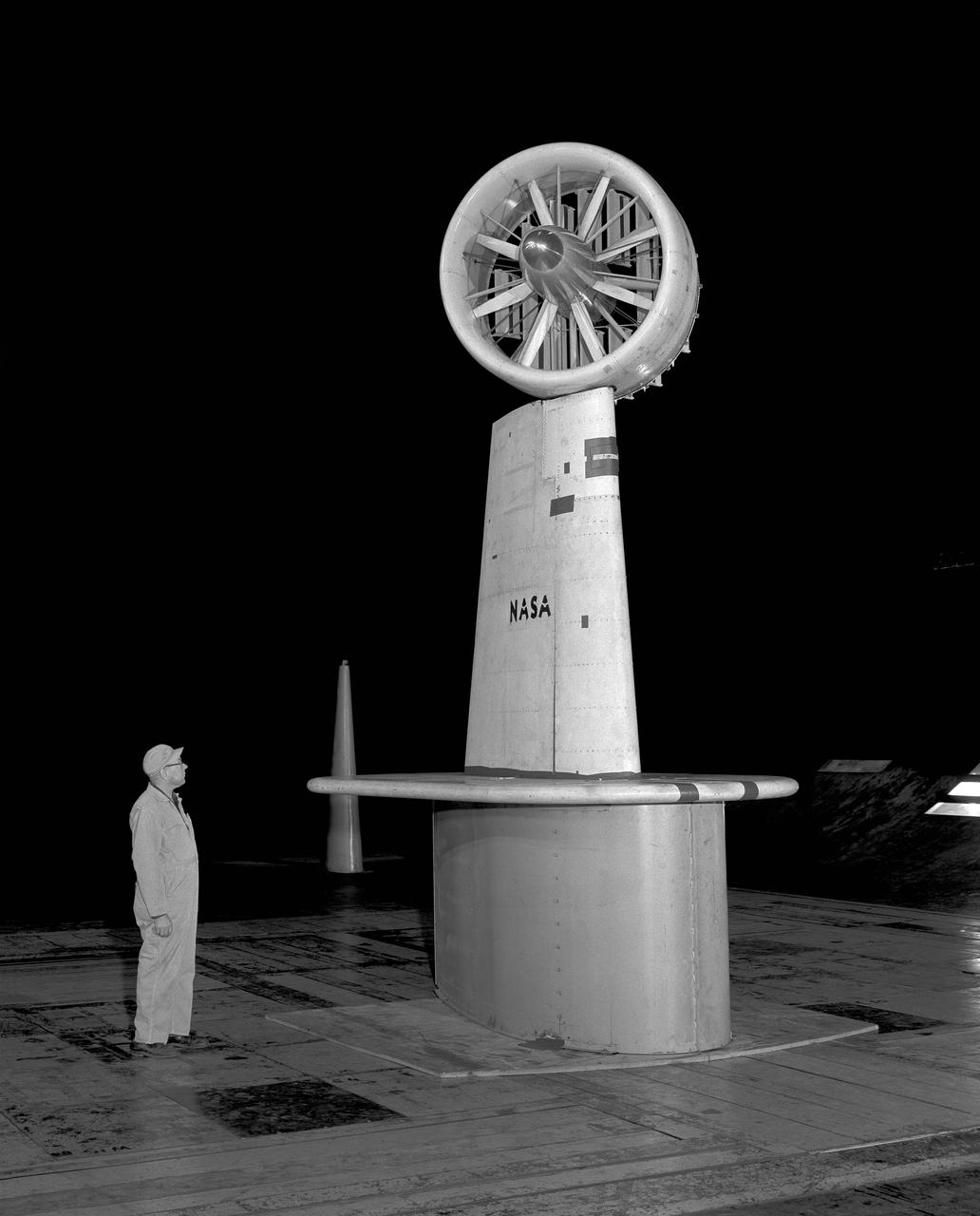
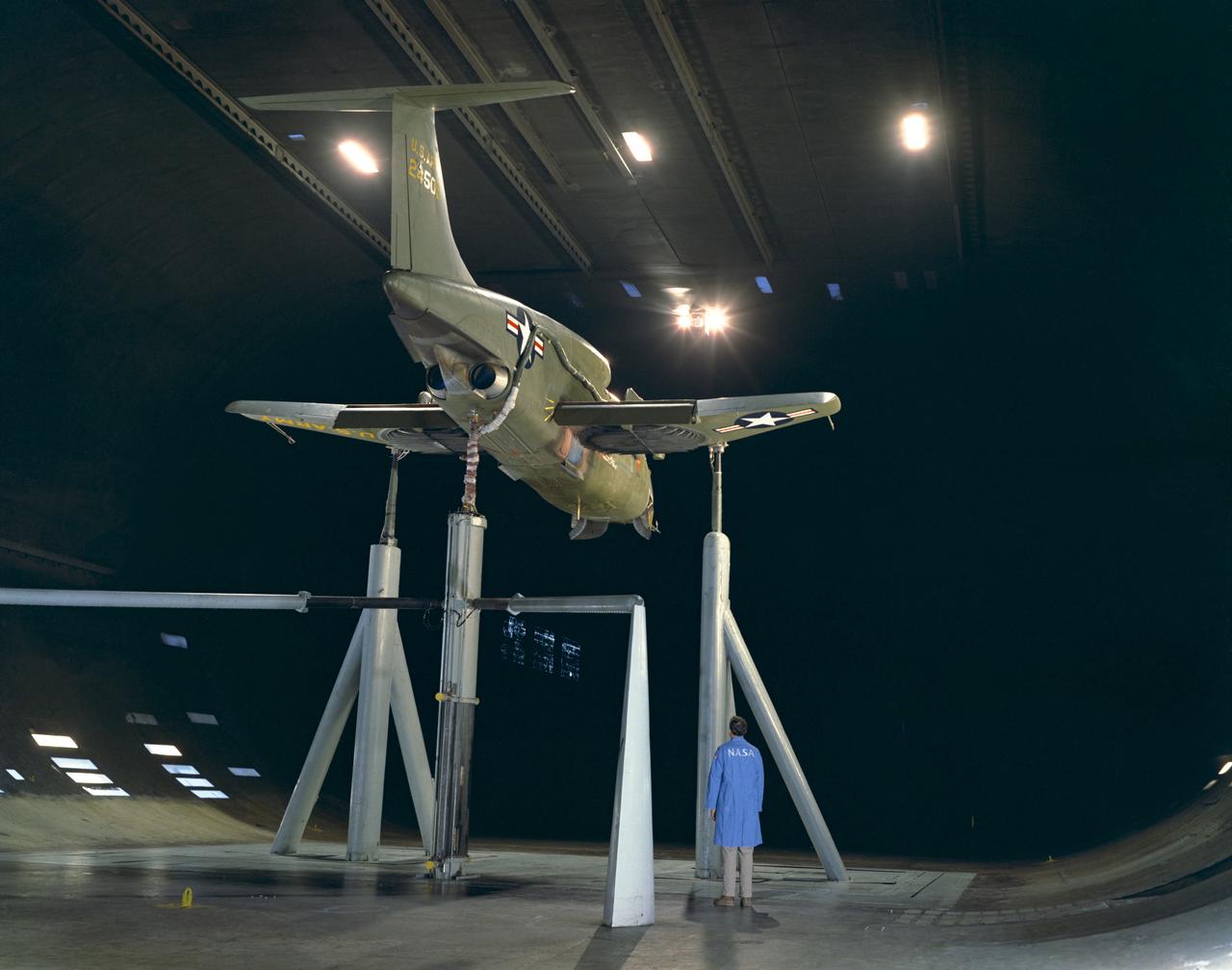
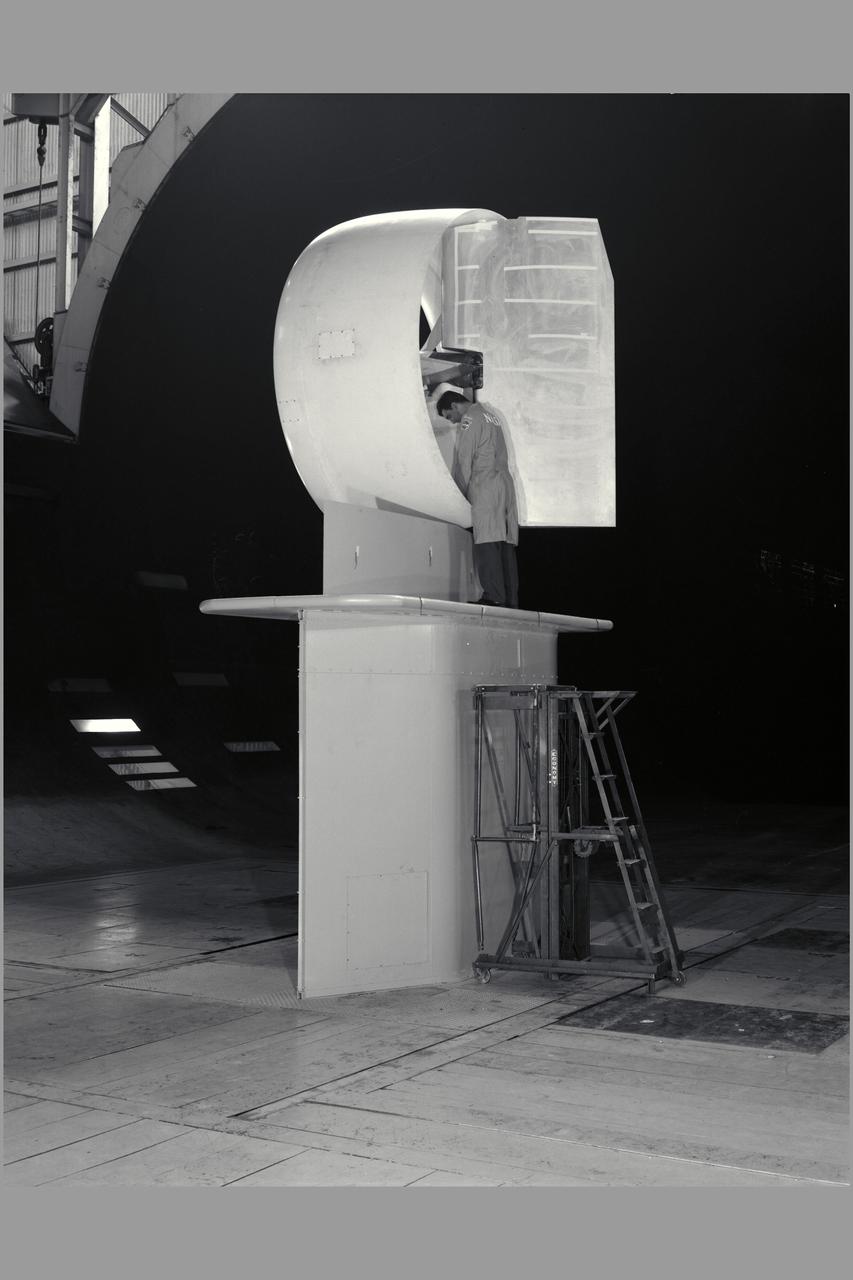
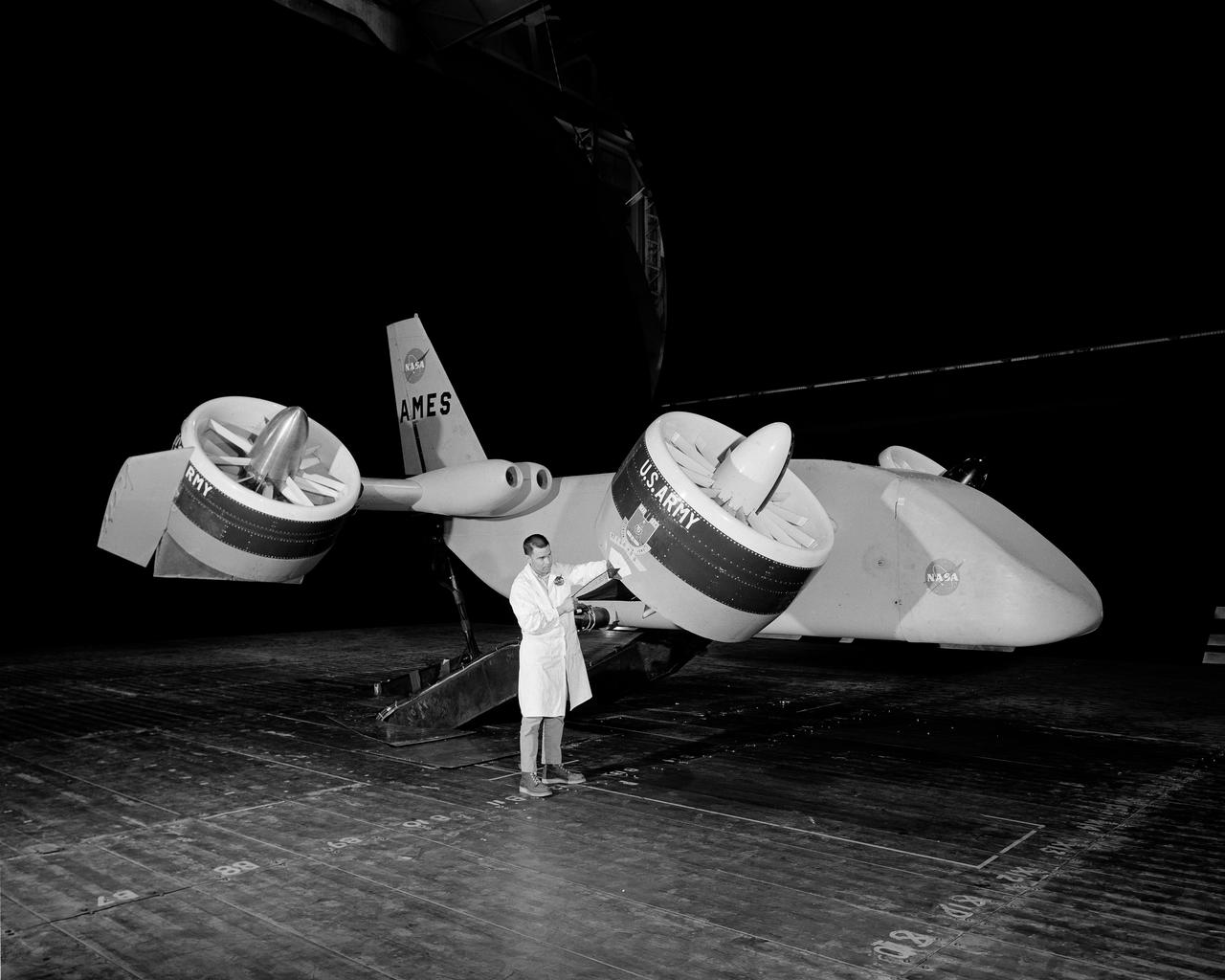
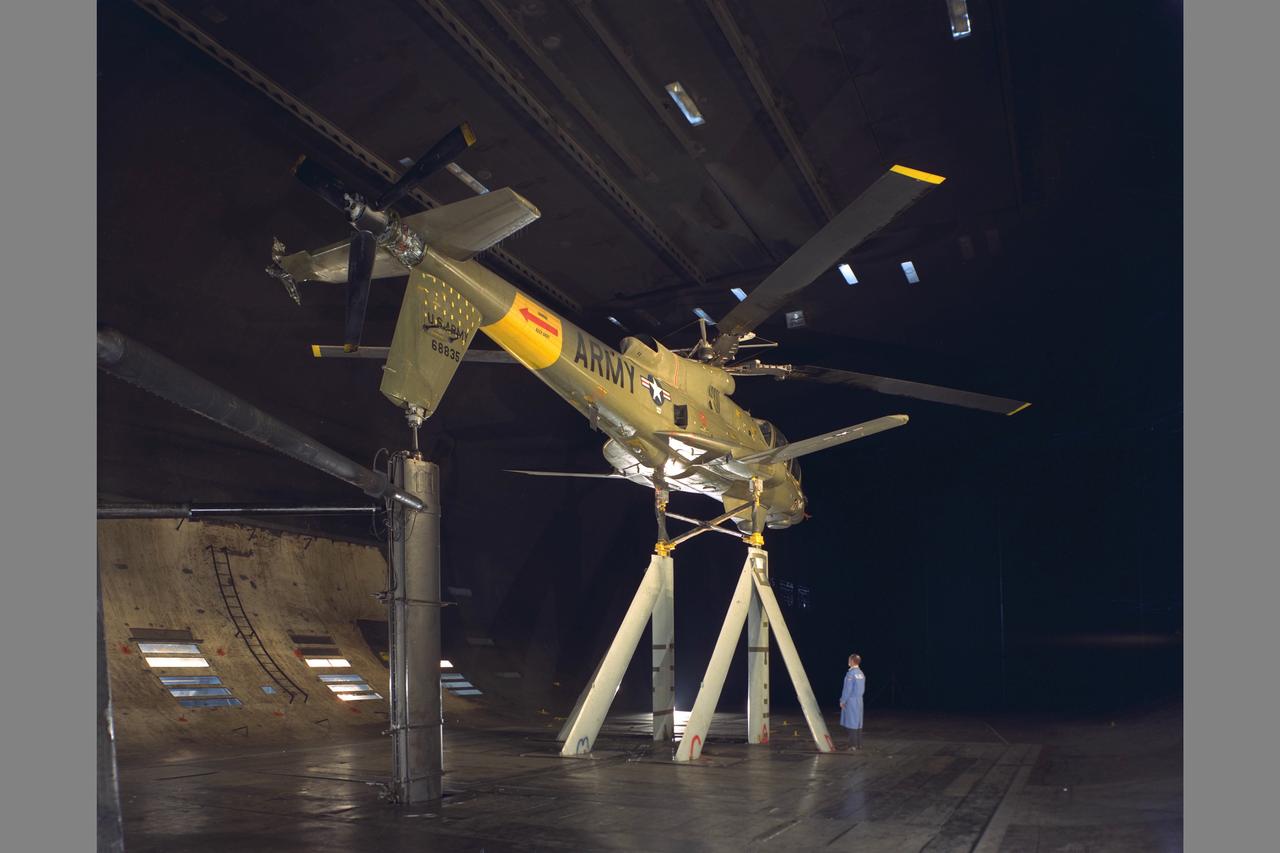
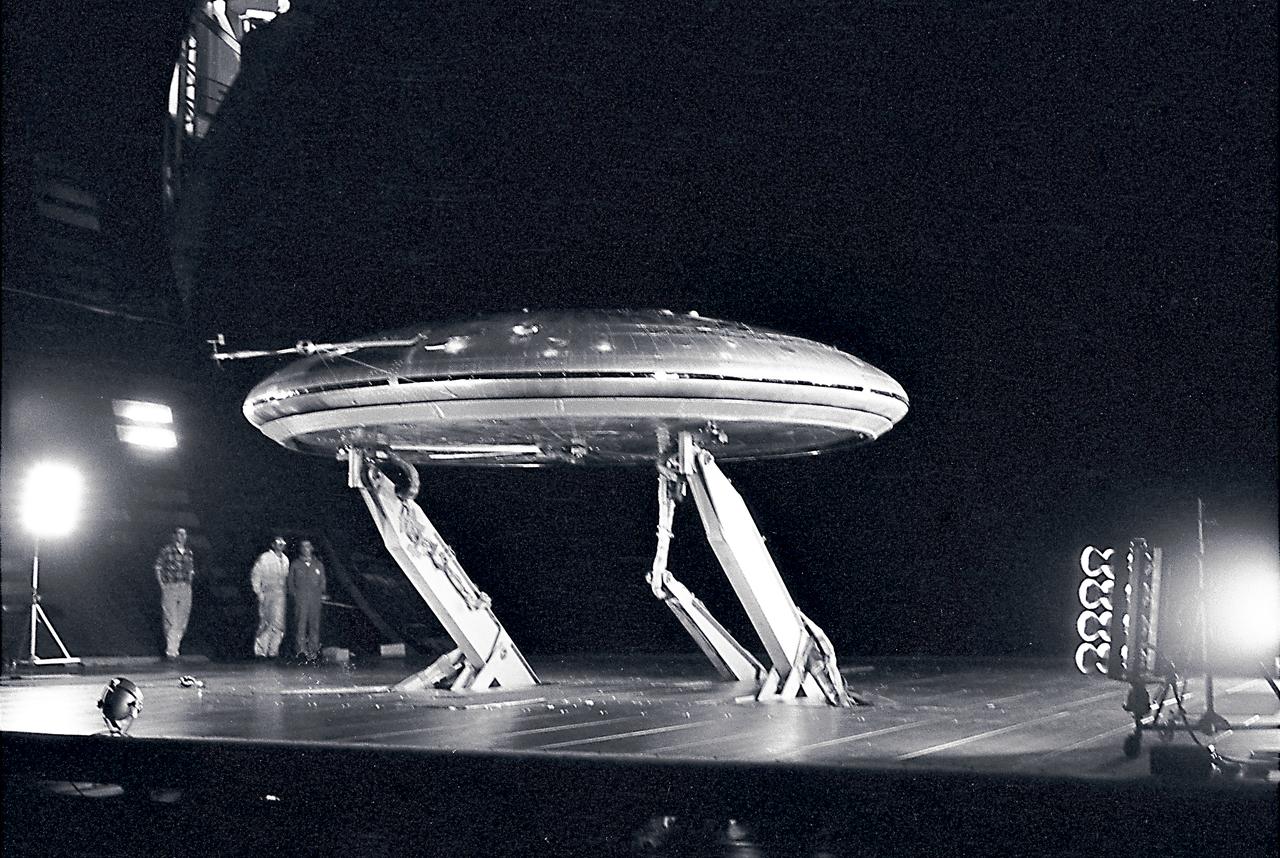
Front 3/4 view of the Avrocar mounted on variable height struts in the Ames 40x80 foot wind tunnel, without tail.
Front 3/4 view of the Avrocar.
Front 3/4 view of the Avrocar mounted on  variable height struts in the Ames 40x80 foot wind tunnel, without tail.
Front 3/4 view of the Avrocar.
A Closer Hubble Encounter With Mars - 4 Views
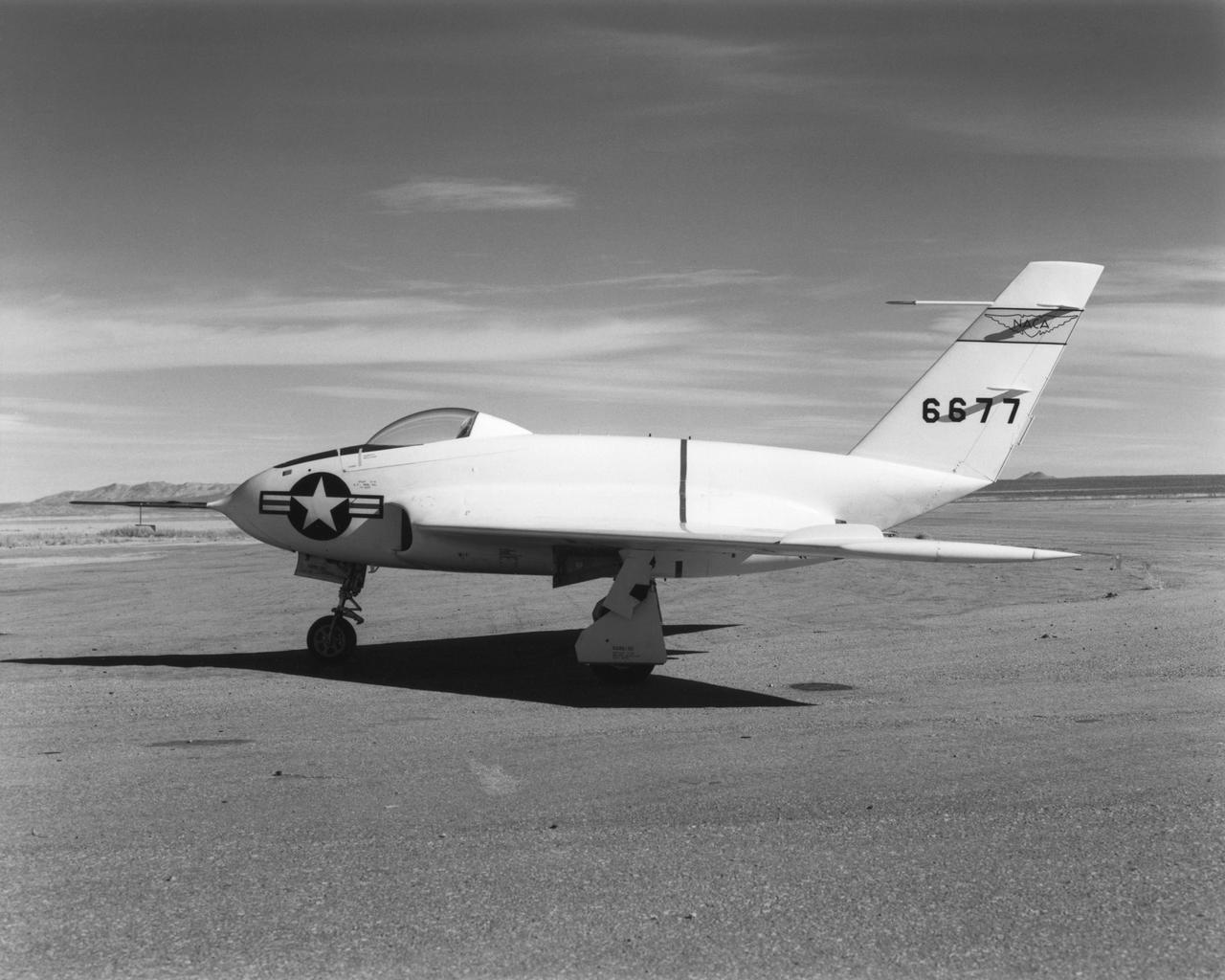
In this 1950 view of the left side of the NACA High-Speed Flight Research Station's X-4 research aircraft, the low swept wing and horizontal taillest design are seen. The X-4 Bantam, a single-place, low swept-wing, semi-tailless aircraft, was designed and built by Northrop Aircraft, Inc. It had no horizontal tail surfaces and its mission was to obtain in-flight data on the stability and control of semi-tailless aircraft at high subsonic speeds.
Side view of Northrop X-4 ship 2
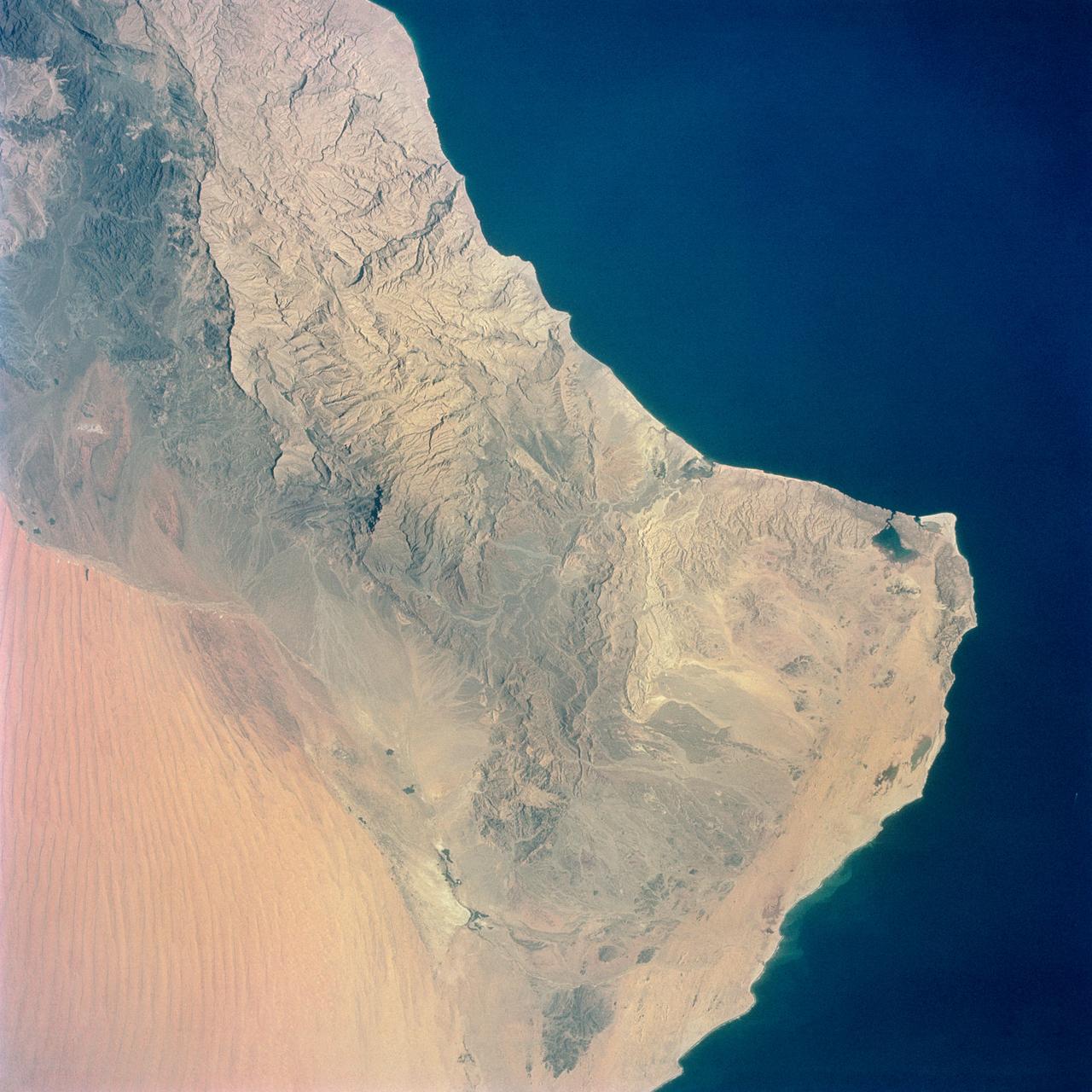
S65-34661 (3-7 June 1965) --- Among the photographs of Earth's terrain taken from the Gemini-4 spacecraft during its orbital mission was this view of the southeastern tip of the Arabian Peninsula with the Gulf of Oman at upper right. Seif dunes (sand) at lower left. This picture was taken with a modified 70mm Hasselblad camera, using Eastman color film, ASA 64 at a setting of 250th of a second at f/11. Dr. Paul Lowman Jr., NASA geologist, was in charge of the Synoptic Terrain Photography.
GEMINI-TITAN (GT)-4 - EARTH-SKY VIEW
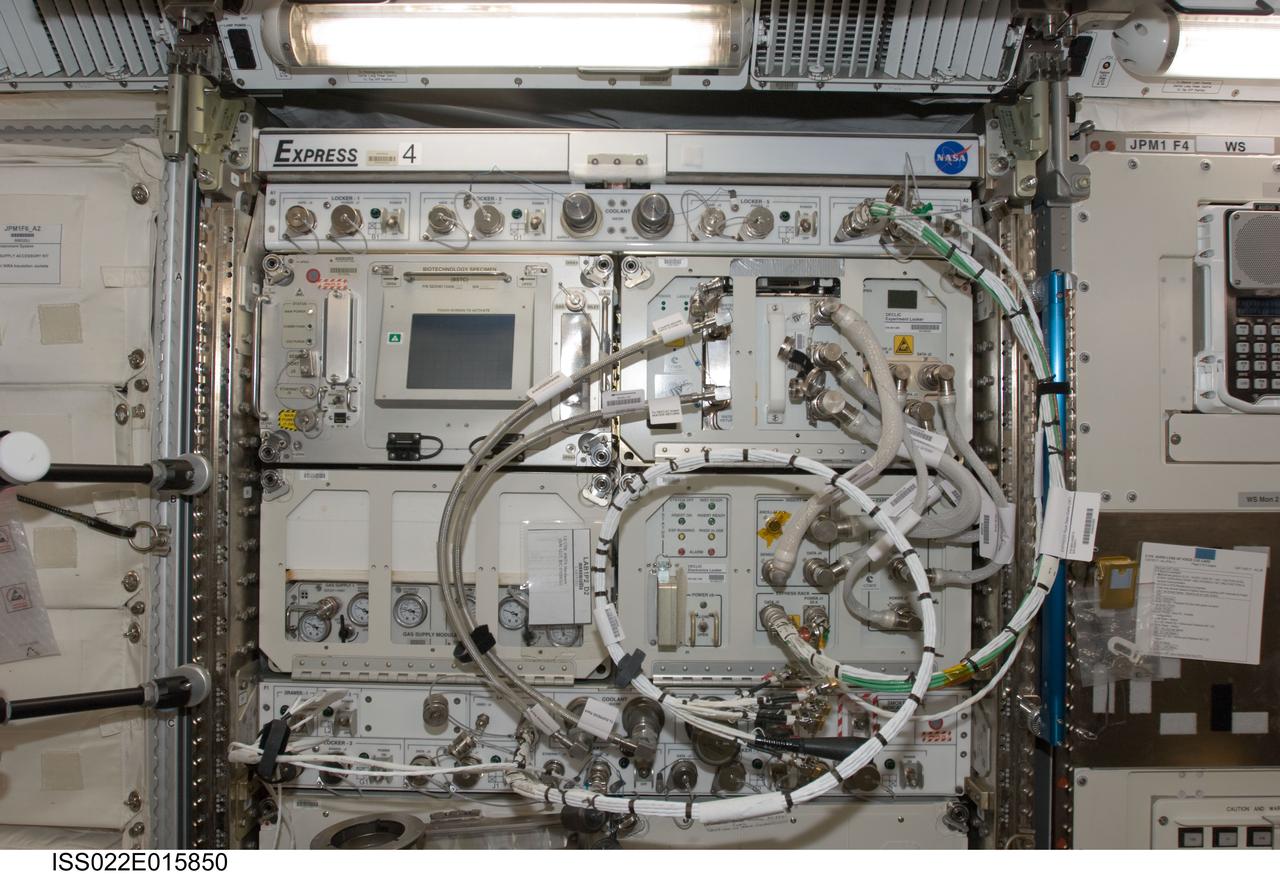
iss022e015850 (12/30/2009) --- The image shows a front view of EXpedite the PRocessing of Experiments to Space Station EXPRESS Rack 4 (Rack 4,JPM/1F5) in the Japanese Experiment Module (JEM) Japanese Pressurized Module (JPM). Equipment visible in the EXPRESS Rack includes the Biotechnology Specimen Temperature Controller (BSTC) and the Gas Supply Module (GSM) support hardware for the CBOSS (Cellular Biotechnology Operations Support Systems) investigations, and the Device for the Study of Critical Liquids and Crystallization (DECLIC).
Survey view of EXPRESS Rack 4 in the JPM during Expedition 22
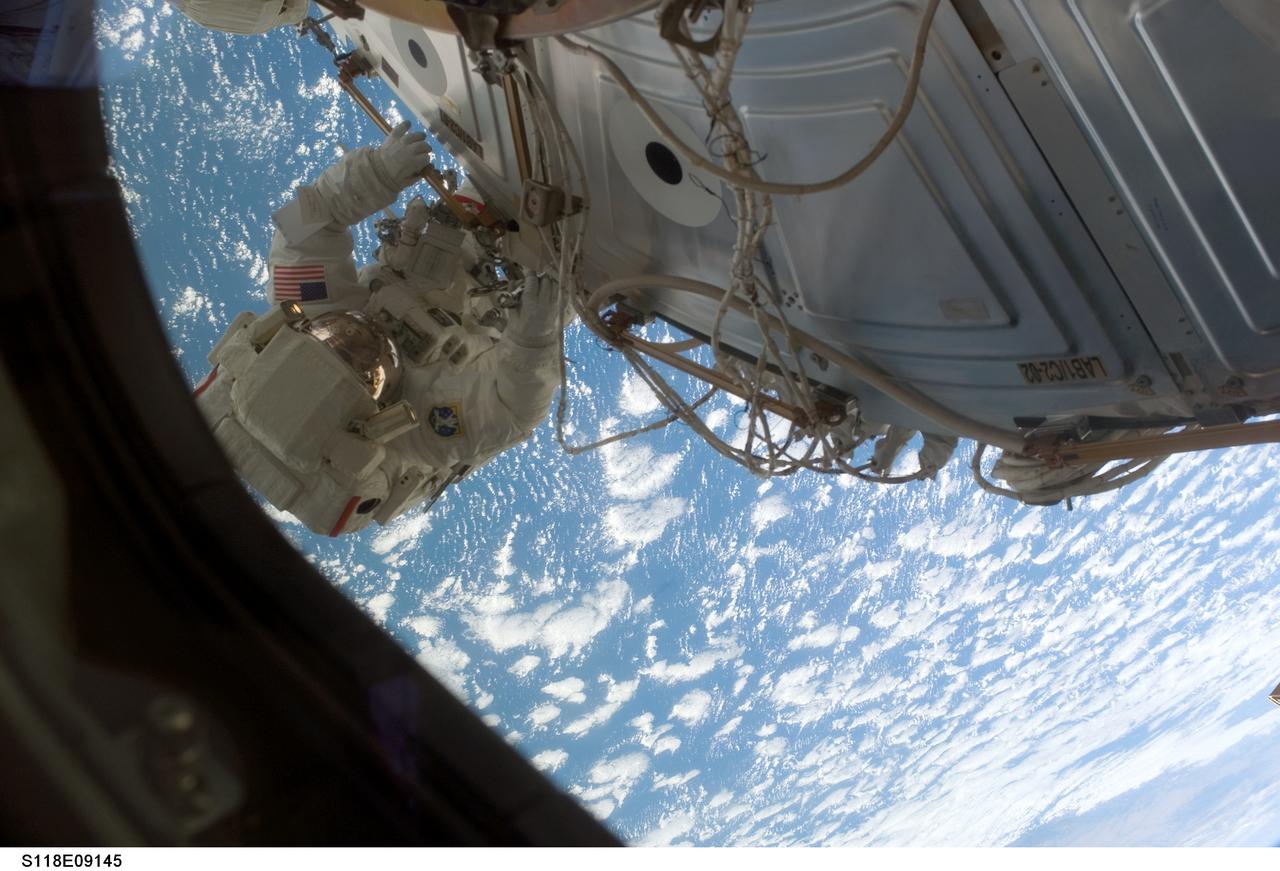
View of Expedition 15 Flight Engineer (FE-2), Clayton Anderson, working to install External Wireless Instrumentation System (EWIS) antennas on the exterior of the U.S. Laboratory/Destiny.  Photo taken during the fourth session of Extravehicular Activity (EVA 4) for STS-118 / Expedition 15 joint operations.
View of FE Anderson during STS-118/Expedition 15 EVA 4
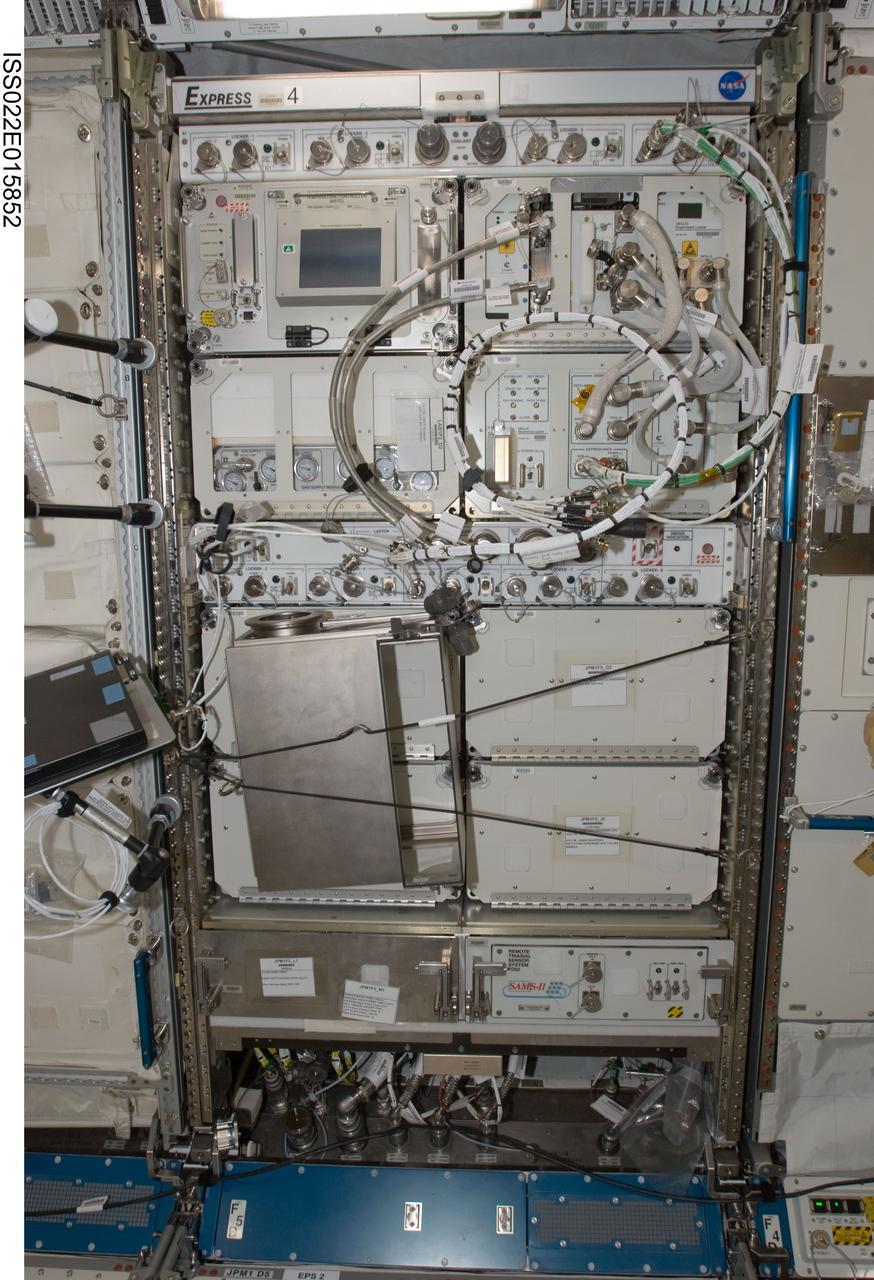
iss022e015852 (12/30/2009) --- The image shows a front view of EXpedite the PRocessing of Experiments to Space Station EXPRESS Rack 4 (Rack 4,JPM/1F5) in the Japanese Experiment Module (JEM) Japanese Pressurized Module (JPM). Equipment visible in the EXPRESS Rack includes the Biotechnology Specimen Temperature Controller (BSTC) and the Gas Supply Module (GSM) support hardware for the CBOSS (Cellular Biotechnology Operations Support Systems) investigations, and the Device for the Study of Critical Liquids and Crystallization (DECLIC). Also visible is the Space Acceleration Measurement System (SAMS) II.
Survey view of EXPRESS Rack 4 in the JPM during Expedition 22
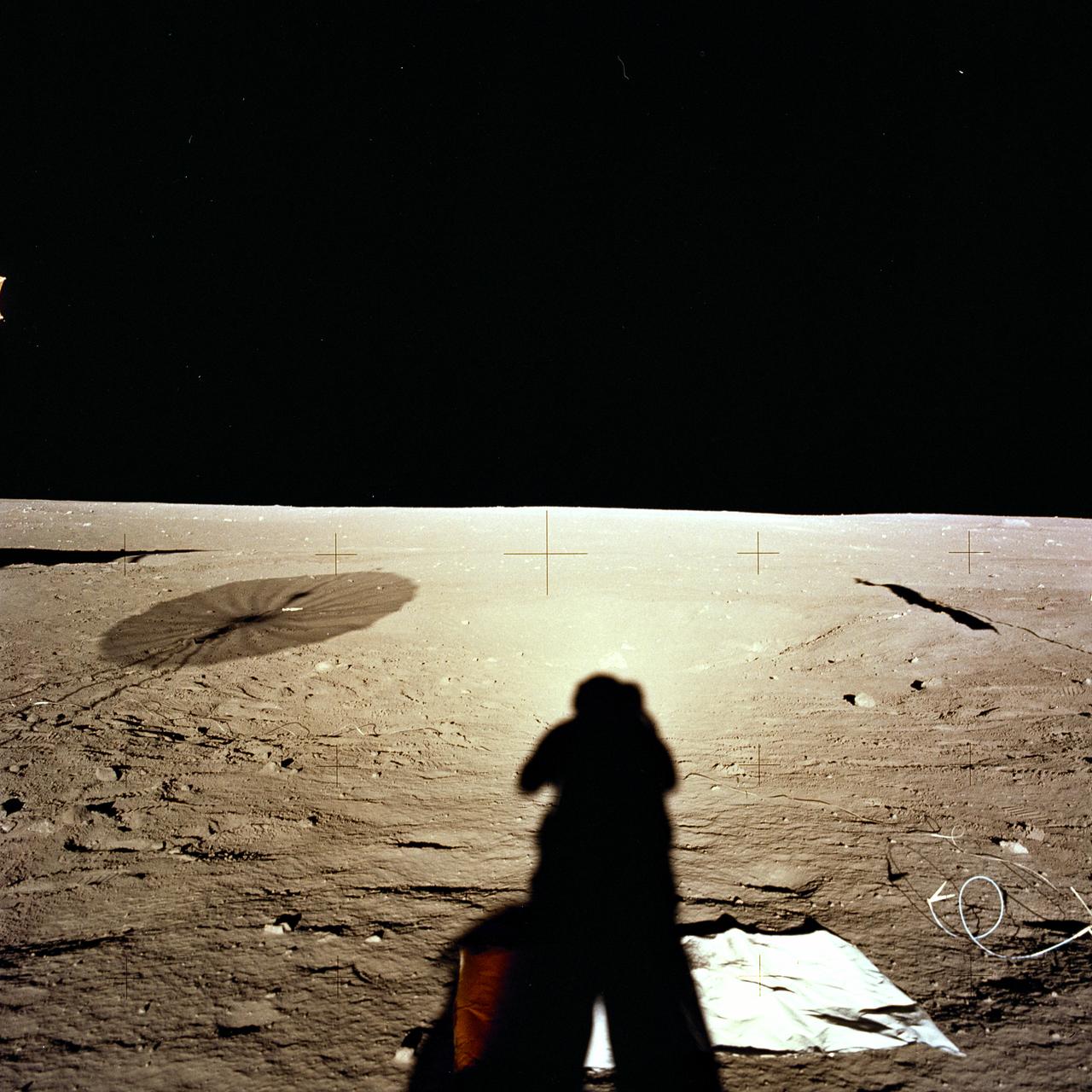
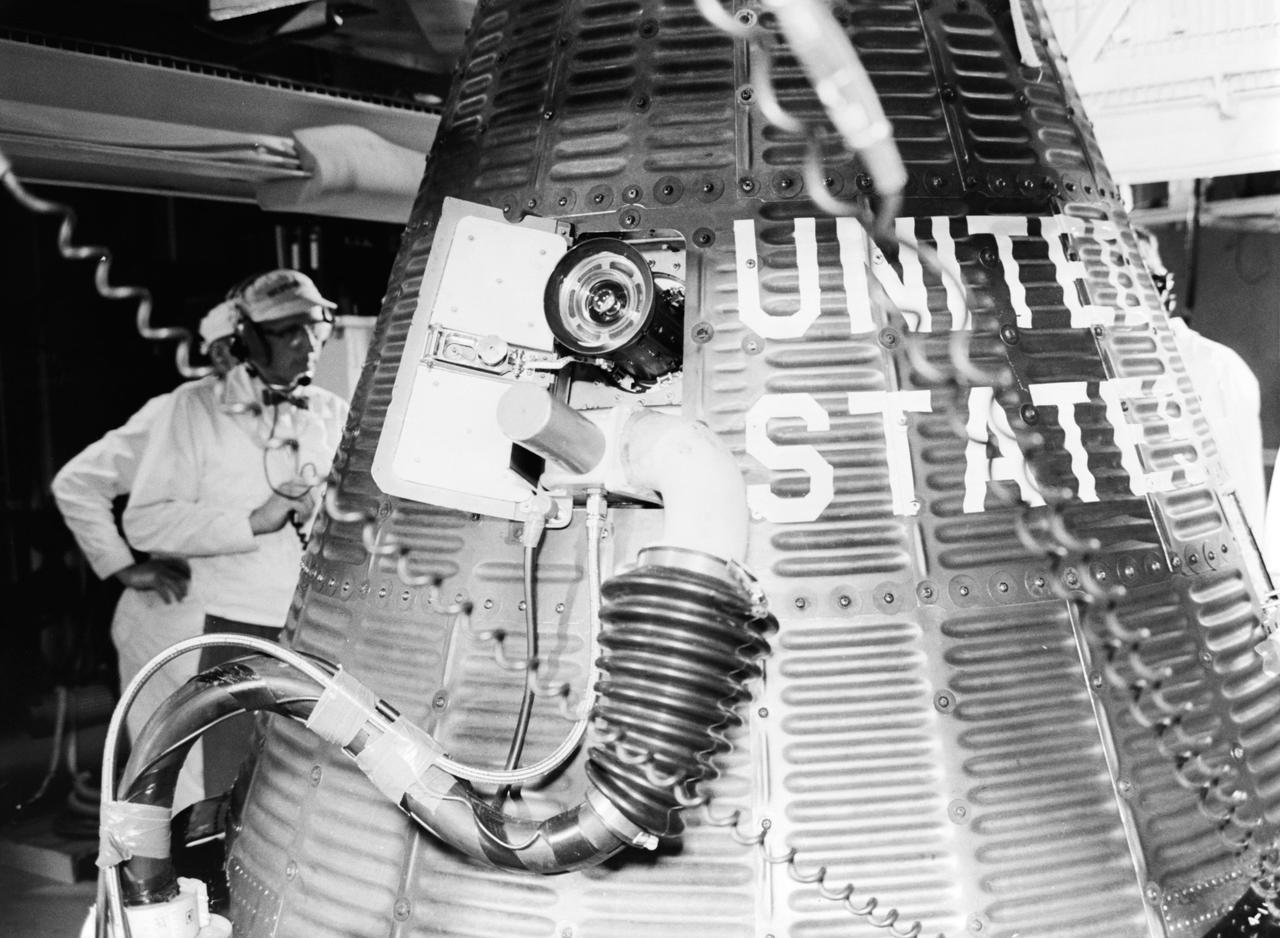
The second manned lunar landing mission, Apollo 12 launched from launch pad 39-A at Kennedy Space Center in Florida on November 14, 1969 via a Saturn V launch vehicle. The Saturn V vehicle was developed by the Marshall Space Flight Center (MSFC) under the direction of Dr. Wernher von Braun. Aboard Apollo 12 was a crew of three astronauts: Alan L. Bean, pilot of the Lunar Module (LM), Intrepid; Richard Gordon, pilot of the Command Module (CM), Yankee Clipper; and Spacecraft Commander Charles Conrad. The LM, Intrepid, landed astronauts Conrad and Bean on the lunar surface in what’s known as the Ocean of Storms while astronaut Richard Gordon piloted the CM, Yankee Clipper, in a parking orbit around the Moon. Lunar soil activities included the deployment of the Apollo Lunar Surface Experiments Package (ALSEP), finding the unmanned Surveyor 3 that landed on the Moon on April 19, 1967, and collecting 75 pounds (34 kilograms) of rock samples. This is the fourth of 25 images captured by the crew in attempt to provide a 360 degree Lunar surface scene. Apollo 12 safely returned to Earth on November 24, 1969.
Saturn Apollo Program
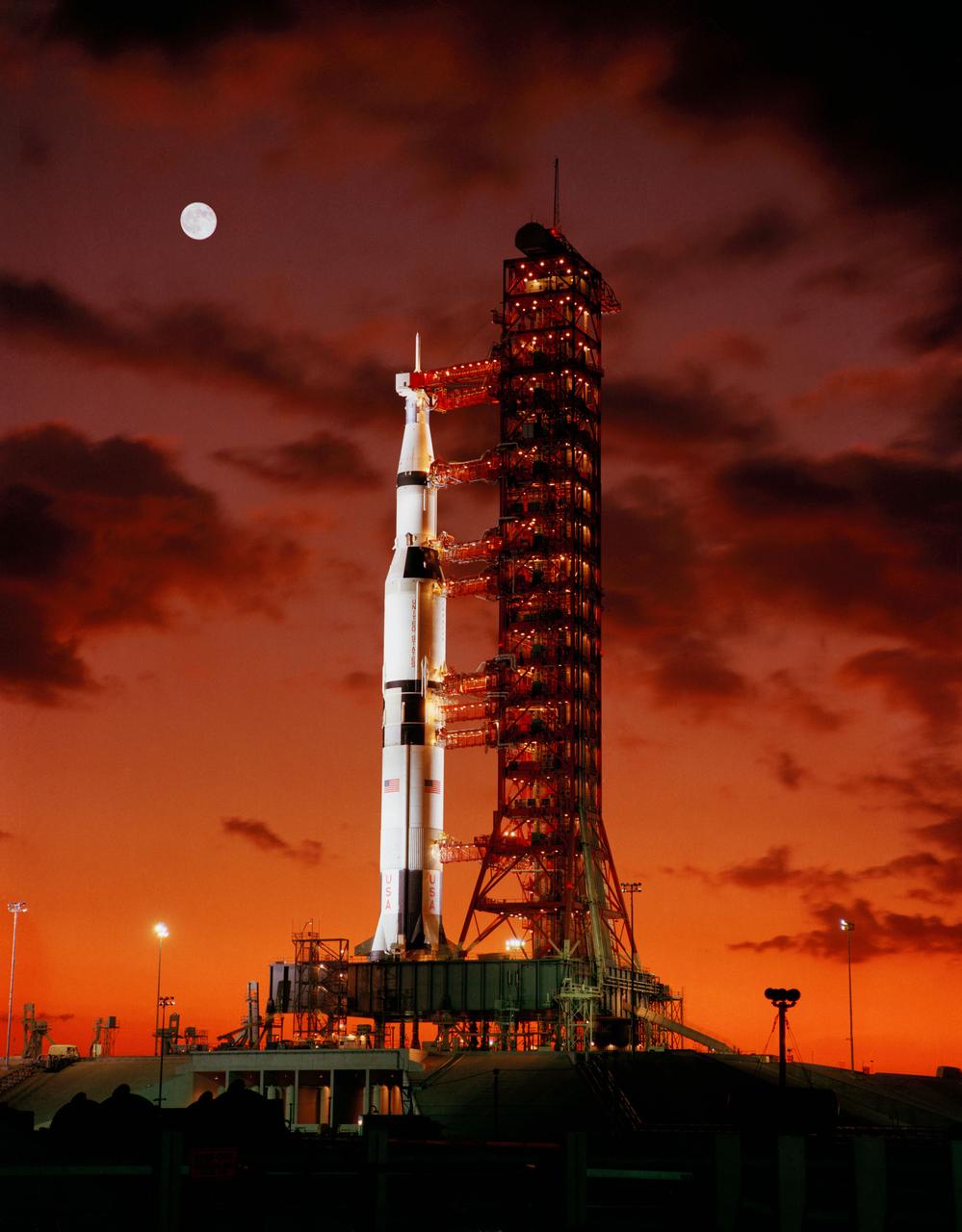
Early morning view of Pad A, Launch Complex 39, Kennedy Space Center, showing Apollo 4 (Spacecraft 017/Saturn 501) unmanned, earth-orbital space mission ready for launch, with a full moon in the upper left part of the image. The 363-foot tall Apollo/Saturn V space vehicle was launched at 7:00:01 AM (EST), November 9, 1967.
Early morning view of Apollo 4 unmanned spacecraft on launch pad
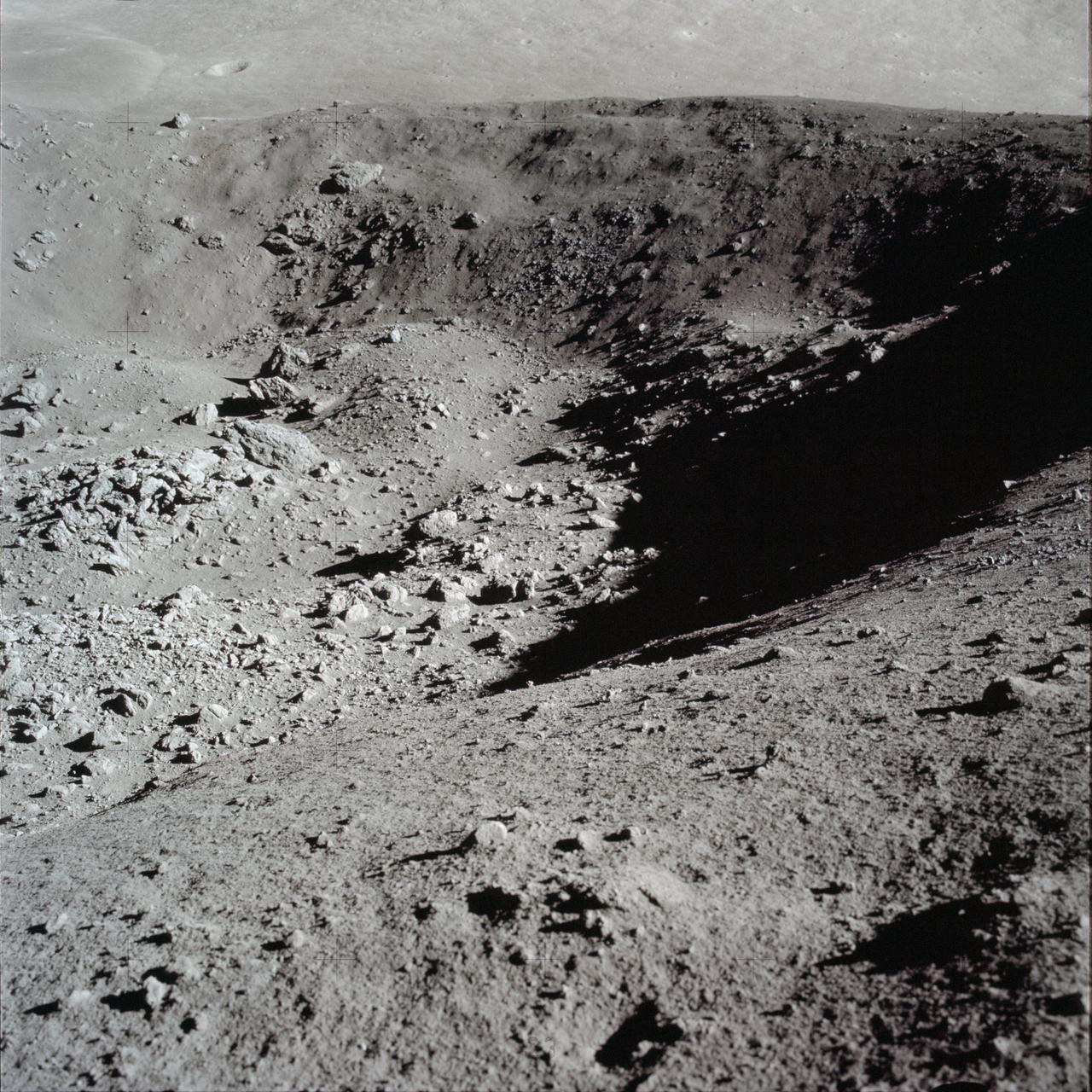
AS17-137-20992 (12 Dec. 1972) --- A view looking into Shorty Crater, taken at Station 4, showing the orange soil. Astronaut Harrison H. Schmitt found the orange soil on the moon during the second Apollo 17 extravehicular activity (EVA) at the Taurus-Littrow landing site. While astronauts Eugene A. Cernan, commander, and Schmitt, lunar module pilot, descended in the Lunar Module (LM) "Challenger" to explore the Taurus-Littrow region of the moon, astronaut Ronald E. Evans, command module pilot, remained with the Command and Service Modules (CSM) "America" in lunar orbit.
Wide-angle view of Station 4 during Apollo 17 second EVA
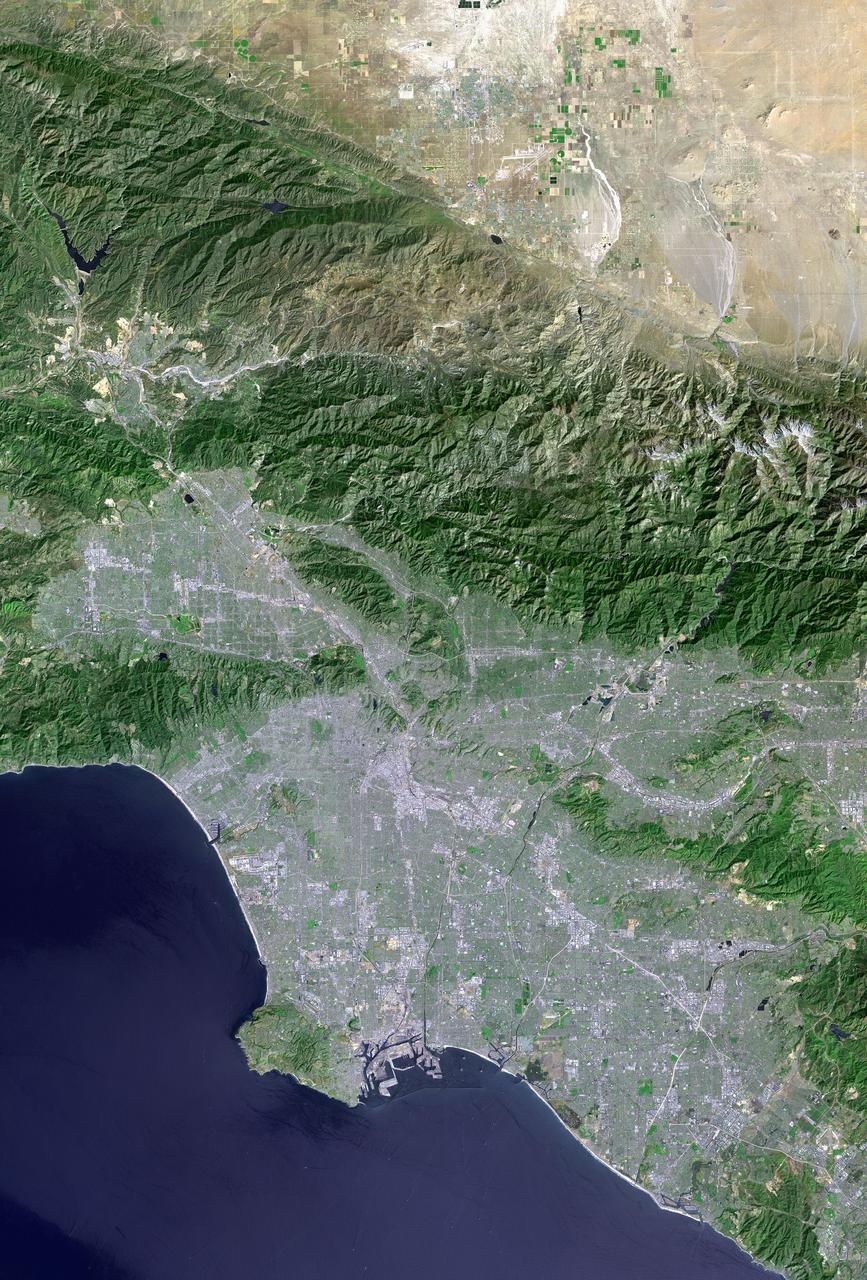
Los Angeles and vicinity seen from space, as viewed by NASA Landsat 7 satellite from an altitude of 437 miles on May 4, 2001.
Landsat with SRTM Shaded Relief, Los Angeles and Vicinity from Space
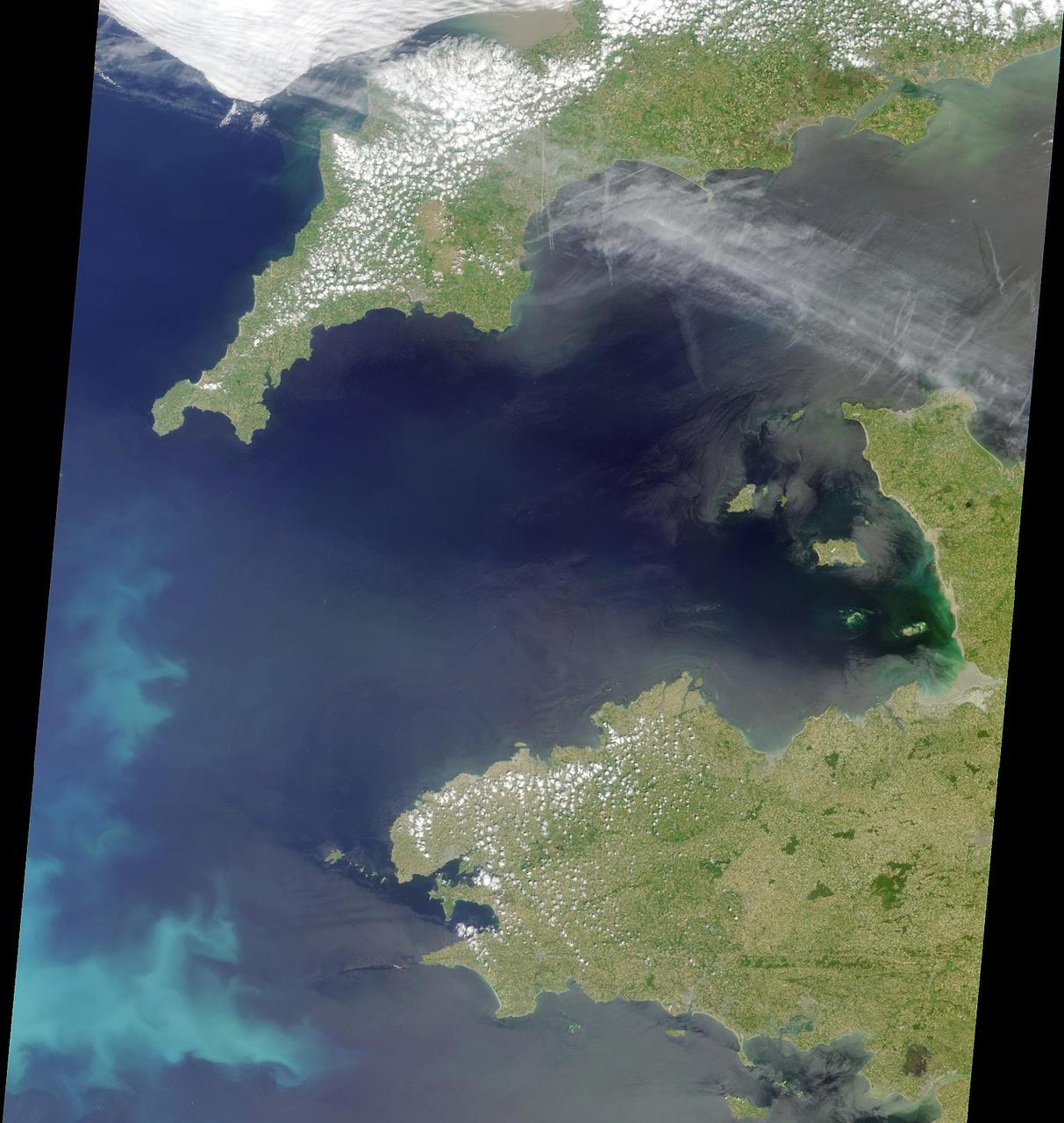
This image is a natural-color view of the Celtic Sea and English Channel regions, and was acquired by NASA Terra satellite on June 4, 2001 during Terra orbit 7778.
Coccoliths in the Celtic Sea
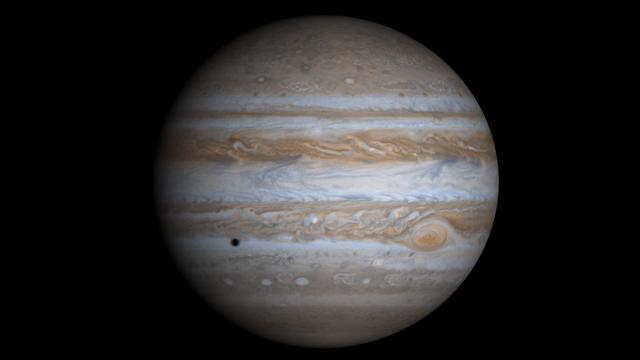
This true-color simulated view of Jupiter is composed of 4 images taken by NASA's Cassini spacecraft on December 7, 2000. To illustrate what Jupiter would have looked like if the cameras had a field-of-view large enough to capture the entire planet, the cylindrical map was projected onto a globe. The resolution is about 144 kilometers (89 miles) per pixel. Jupiter's moon Europa is casting the shadow on the planet.  https://photojournal.jpl.nasa.gov/catalog/PIA02873
High Resolution Globe of Jupiter
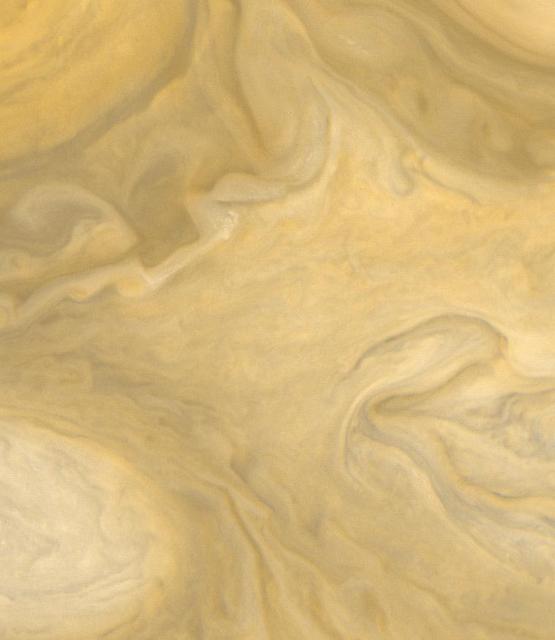
This color view of the region just to the East of the Great Red Spot was taken by NASA Voyager 1 on March 4, 1979 at a distance of 1,000,000 miles 1,800,000 km.  http://photojournal.jpl.nasa.gov/catalog/PIA00019
Cloud Layers East of the Great Red Spot
This view of the region just to the Southeast of the Great Red Spot was taken by NASA Voyager 1 on March 4, 1979 at a distance of 1,100,000 miles 1,800,000 km.  http://photojournal.jpl.nasa.gov/catalog/PIA00017
Cloud Layers Southeast of the Great Red Spot
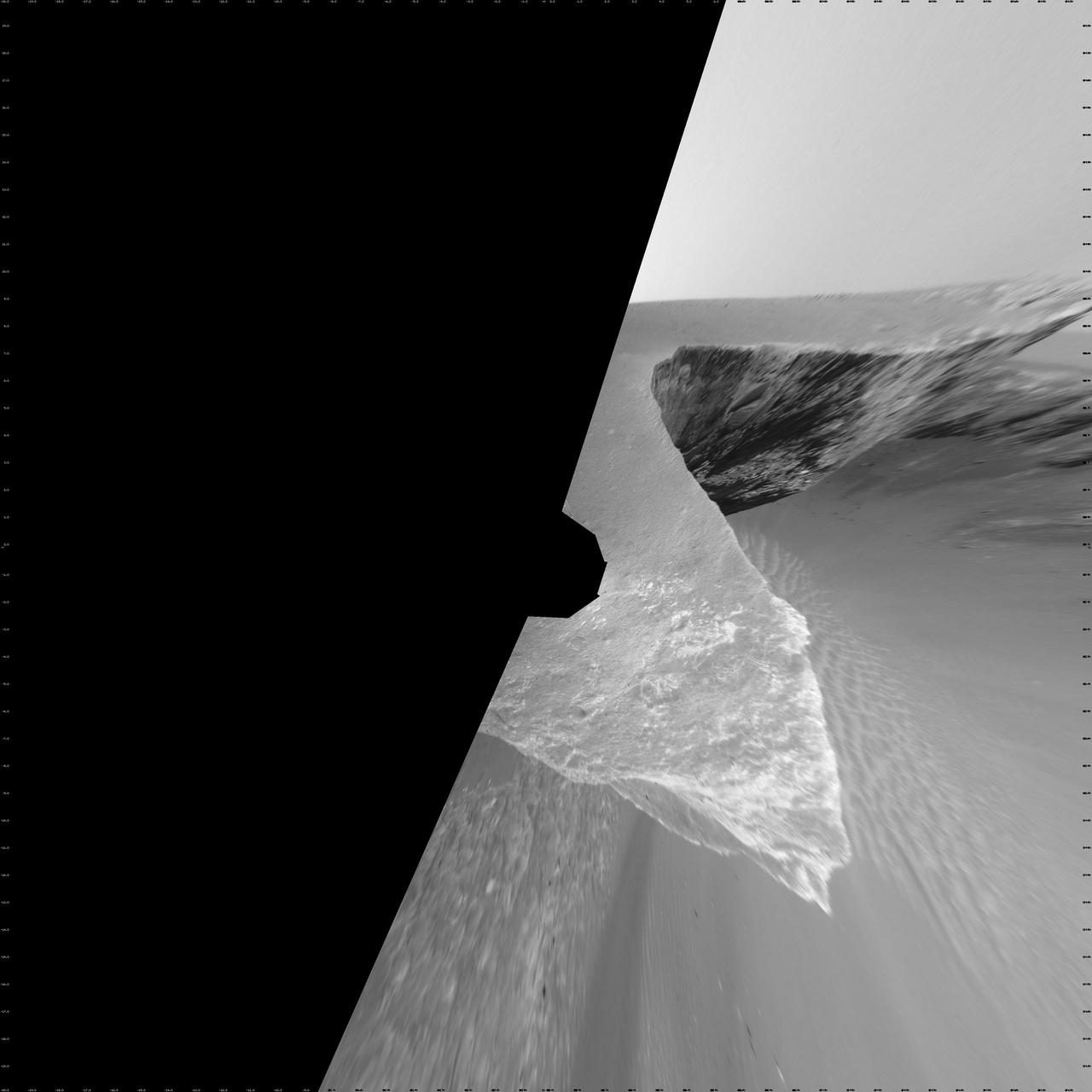
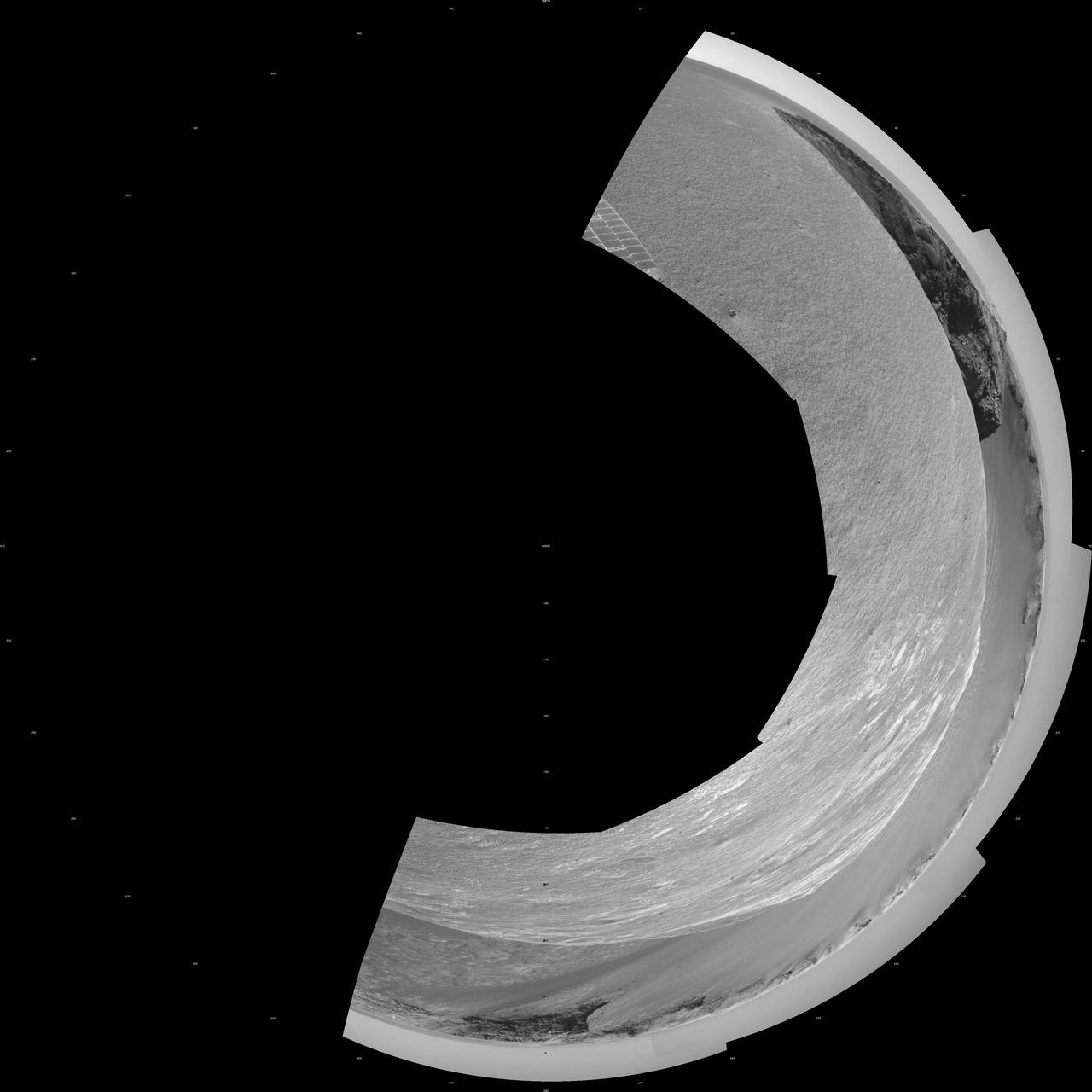
NASA Mars Exploration Rover Opportunity used its navigation camera to take the images combined into this stereo view of the rover surroundings on the 958th sol, or Martian day, of its surface mission Oct. 4, 2006
Opportunity View, Sol 958 Polar
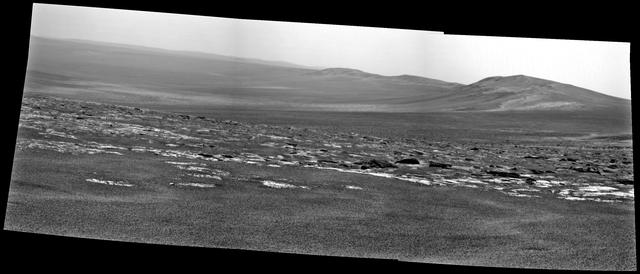
NASA Mars Exploration Rover Opportunity captured this view of a portion of Endeavour crater rim after a drive on Aug. 4, 2011 to reach Spirit Point, the chosen arrival site.
Opportunity View Approaching Rim of Endeavour
NASA Mars Exploration Rover Opportunity used its navigation camera to take the images combined into this stereo view of the rover surroundings on the 958th sol, or Martian day, of its surface mission Oct. 4, 2006
Opportunity View, Sol 958
On Feb. 4, 2005, NASA Mars Exploration Rover Spirit had driven about 13 meters 43 feet uphill toward Cumberland Ridge. 3D glasses are necessary to view this image.
Spirit 360-Degree View, Sol 388 3-D
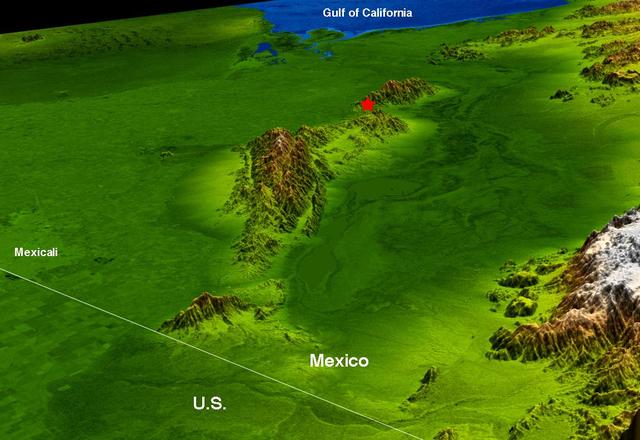
The topography surrounding the Laguna Salada Fault in the Mexican state of Baja, California, is shown in this perspective view with data from NASA Shuttle Radar Topography Mission where a 7.2 earthquake struck on April 4, 2010.
Baja Earthquake, Radar Image and Colored Height
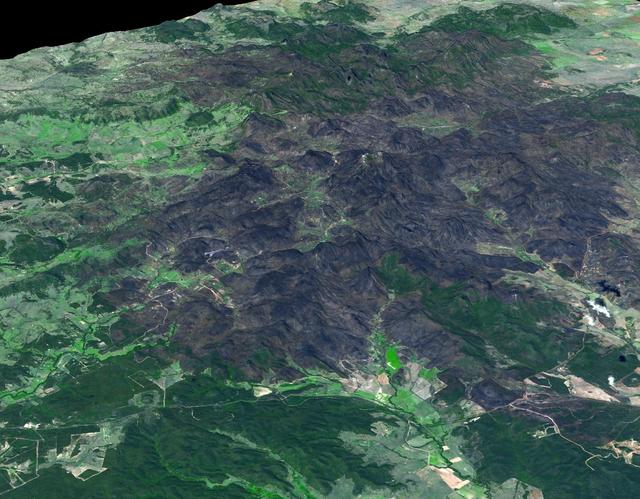
This 3-D view was created from data acquired Feb. 4, 2013 by NASA Terra spacecraft showing a massive wildfire which damaged Australia largest optical astronomy facility, the Siding Spring Observatory.
NASA Spacecraft Captures 3-D View of Massive Australian Wildfire
NASA Mars Exploration Rover Opportunity used its navigation camera to take the images combined into this stereo view of the rover surroundings on the 958th sol, or Martian day, of its surface mission Oct. 4, 2006
Opportunity View, Sol 958 Vertical
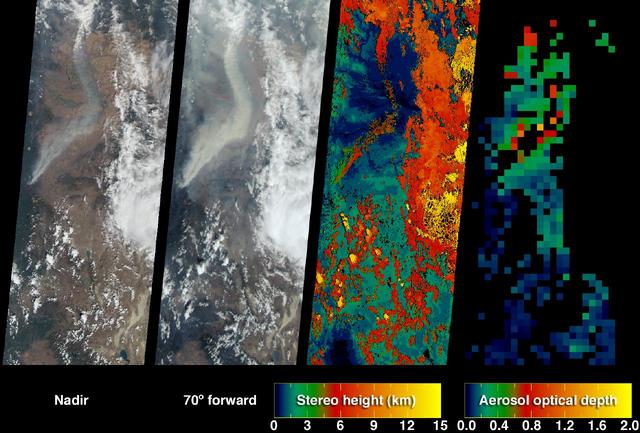
The extent, height, and amount of smoke originating from the B&B Complex Fires in central Oregon are captured in these September 4, 2003 views from NASA Terra spacecraft.
Smoke Plumes from the B&B Complex Fires, Oregon
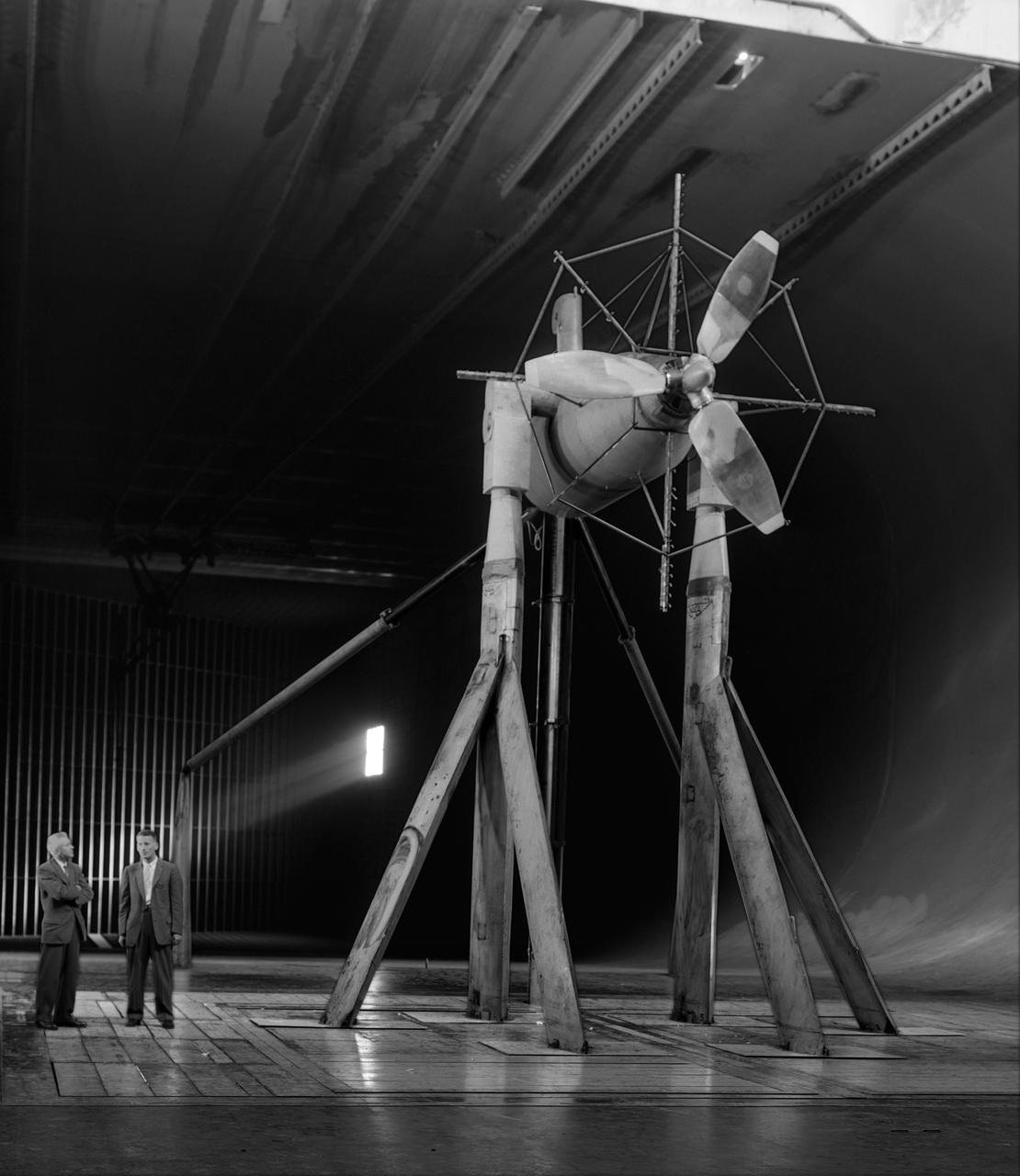
4 propeller model with rotating cylinder flap.  Propellers running.  3/4 front view. DAVE JONES (PROPS TURNING)
Rotating Cylinder Applied To Flaps In 40X80 Foot Wind Tunnel.
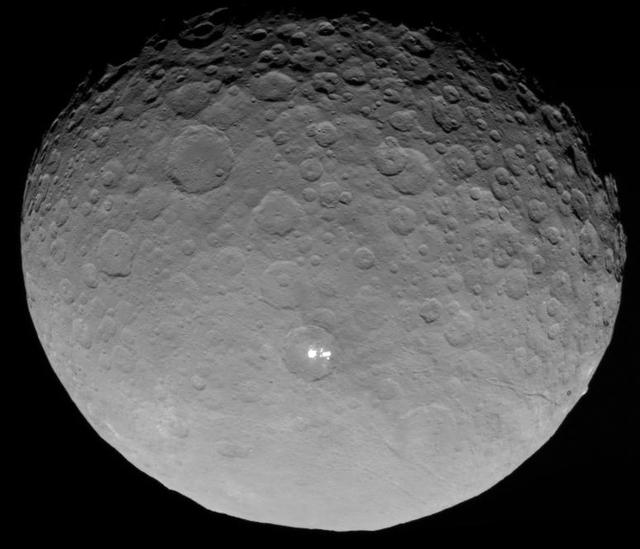
In this closest-yet view of Ceres, the brightest spots within a crater in the northern hemisphere are revealed to be composed of many smaller spots. This frame is from an animation of sequences taken by NASA Dawn spacecraft on May 4, 2015.  http://photojournal.jpl.nasa.gov/catalog/PIA19547
Ceres RC3 Animation
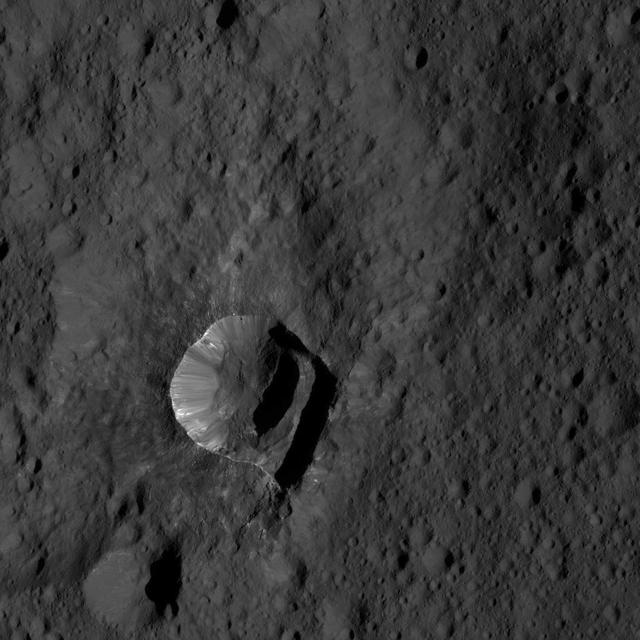
NASA's Dawn spacecraft views Oxo Crater (6 miles, 10 kilometers wide) in this view from Ceres.  Dawn took this image on June 4, 2016, from its low-altitude mapping orbit, at a distance of about 240 miles (385 kilometers) above the surface. The image resolution is 120 feet (35 meters) per pixel.  http://photojournal.jpl.nasa.gov/catalog/PIA20950
Dawn LAMO Image 188
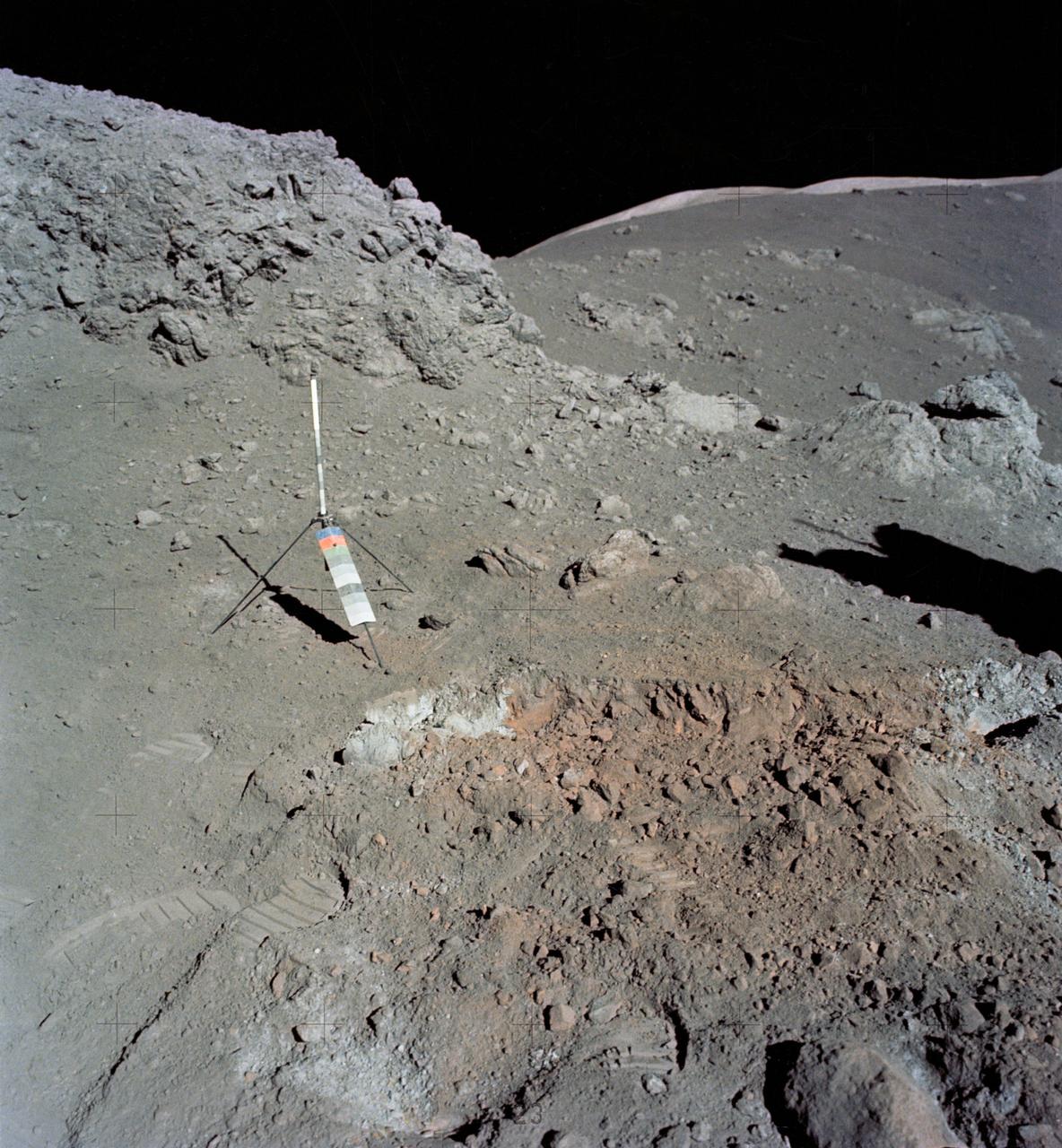
AS17-137-20990 (12 Dec. 1972) --- A view of the area at Station 4 (Shorty Crater) showing the now highly-publicized orange soil which the Apollo 17 crew members found on the moon during the second Apollo 17 extravehicular activity (EVA) at the Taurus-Littrow landing site. The tripod-like object is the gnomon and photometric chart assembly which is used as a photographic reference to establish local vertical sun angle, scale and lunar color. The gnomon is one of the Apollo lunar geology hand tools. While astronauts Eugene A. Cernan, commander, and Harrison H. Schmitt, lunar module pilot, descended in the Lunar Module (LM) "Challenger" to explore the Taurus-Littrow region of the moon, astronaut Ronald E. Evans, command module pilot, remained with the Command and Service Modules (CSM) "America" in lunar orbit. Schmitt was the crew man who first spotted the orange soil.
View of the orange soil which Apollo 17 crewmen found at Station 4 during EVA
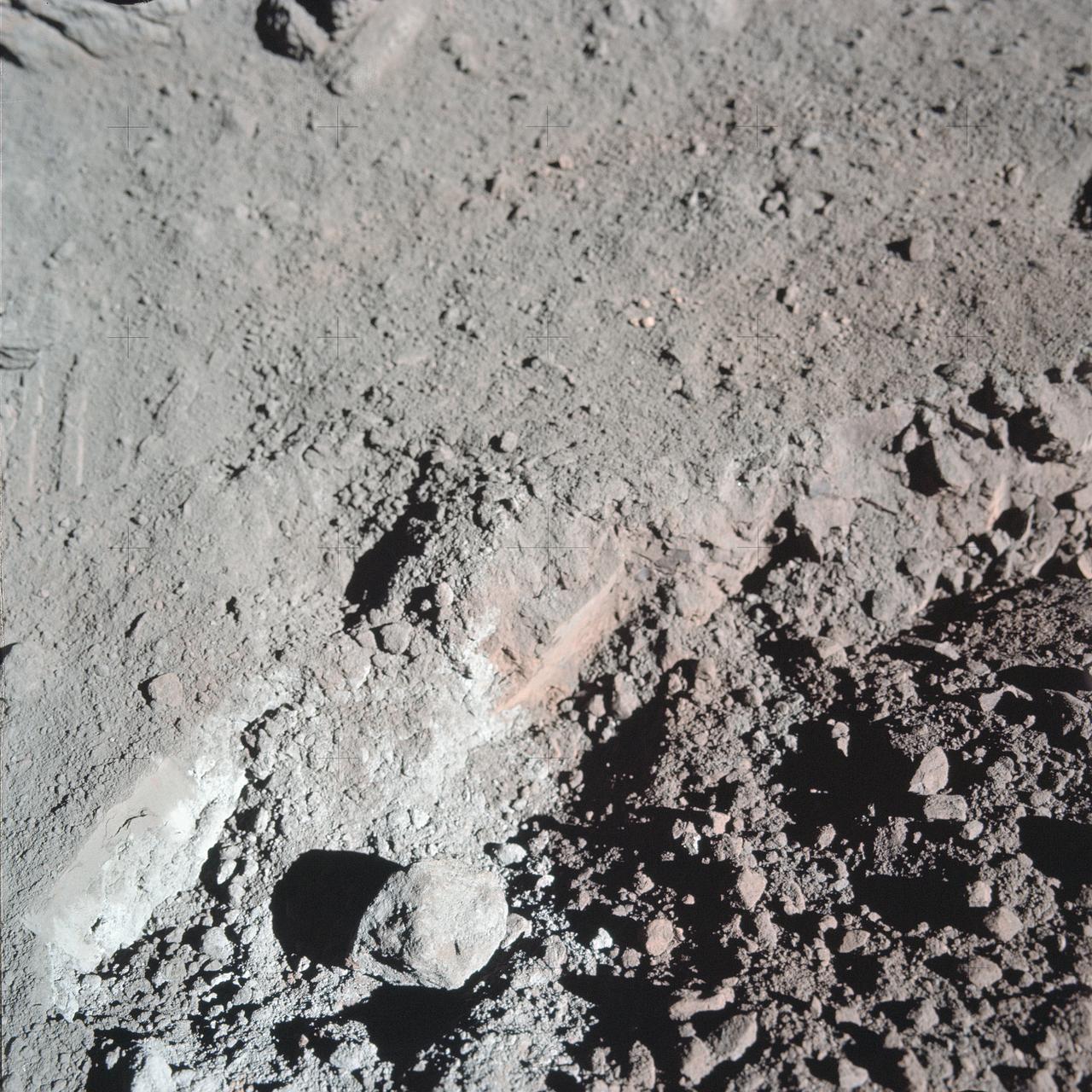
AS17-137-20989 (12 Dec. 1972) --- A close-up view of the much-publicized orange soil which the Apollo 17 crewmen found at Station 4 (Shorty Crater) during the second Apollo 17 extravehicular activity (EVA) at the Taurus-Littrow landing site. The orange soil was first spotted by scientist-astronaut Harrison H. Schmitt. While astronauts Schmitt and Eugene A. Cernan descended in the Lunar Module (LM) "Challenger" to explore the lunar surface, astronaut Ronald E. Evans remained with the Apollo 17 Command and Service Modules (CSM) in lunar orbit. The orange soil was never seen by the crewmen of the other lunar landing missions - Apollo 11 (Sea of Tranquility); Apollo 12 (Ocean of Storms); Apollo 14 (Fra Mauro); Apollo 15 (Hadley-Apennines); and Apollo 16 (Descartes).
View of the orange soil which Apollo 17 crewmen found at Station 4 during EVA
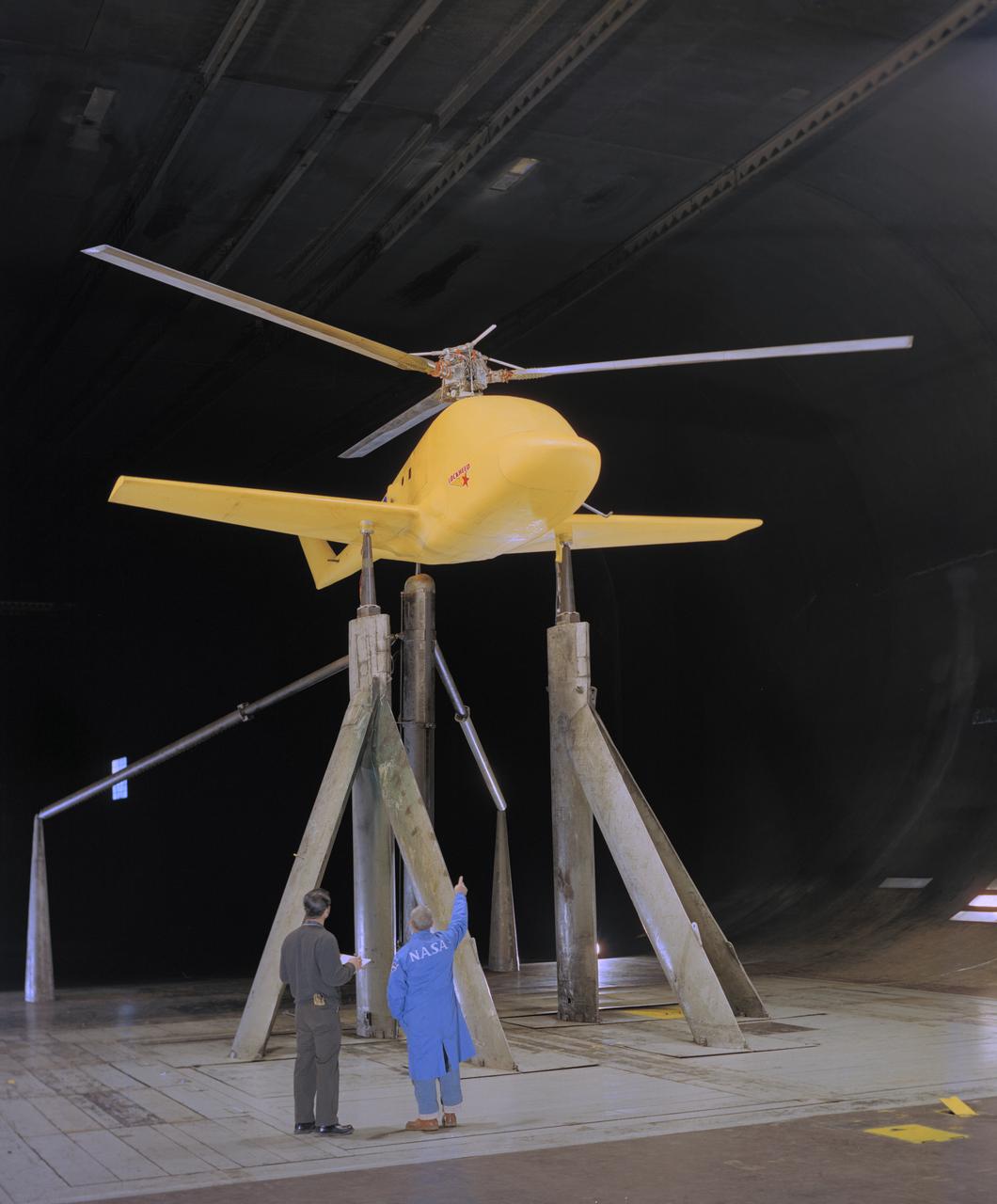
3/4 front view of Lockheed Stopped Rotor.
Lockheed Stopped Rotor.
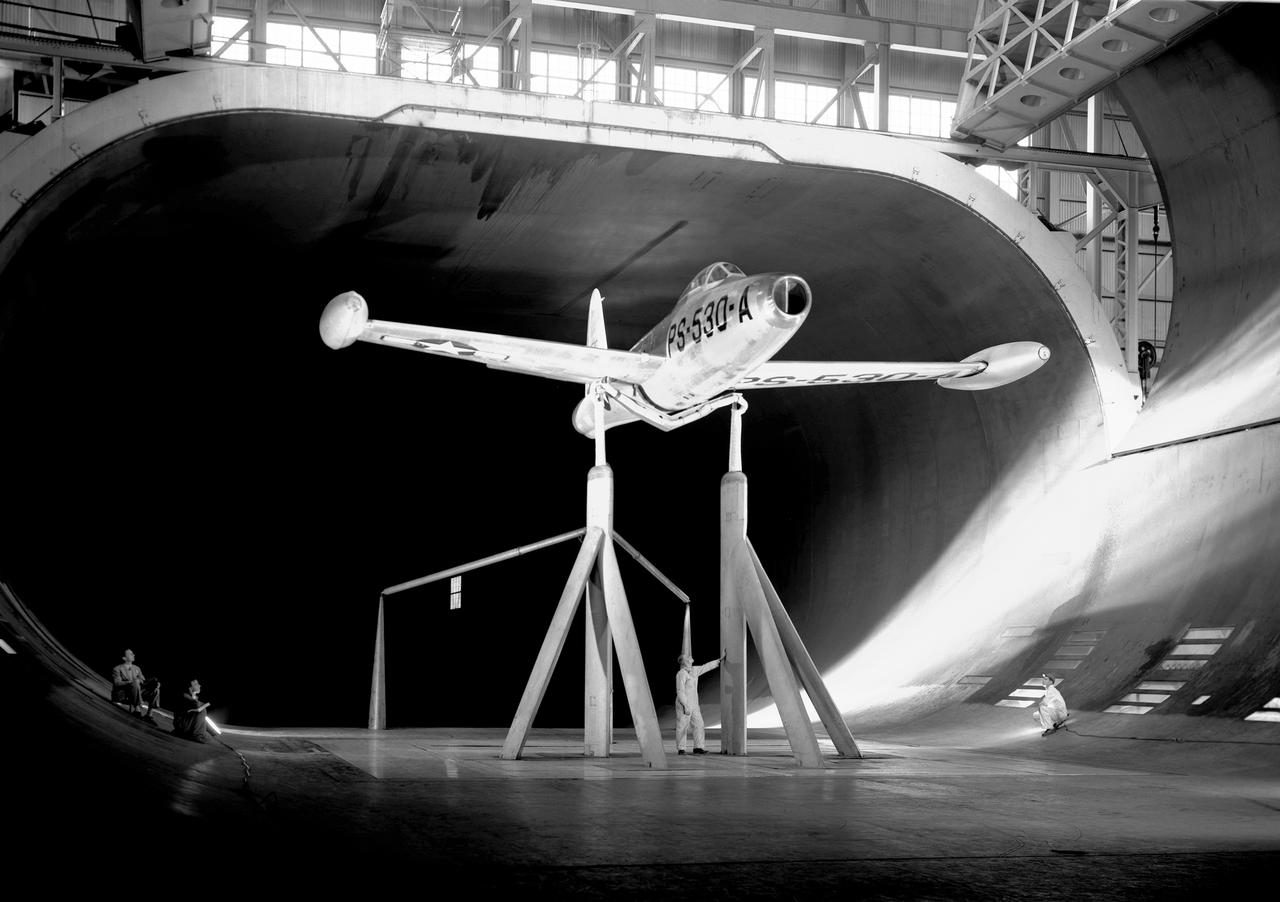
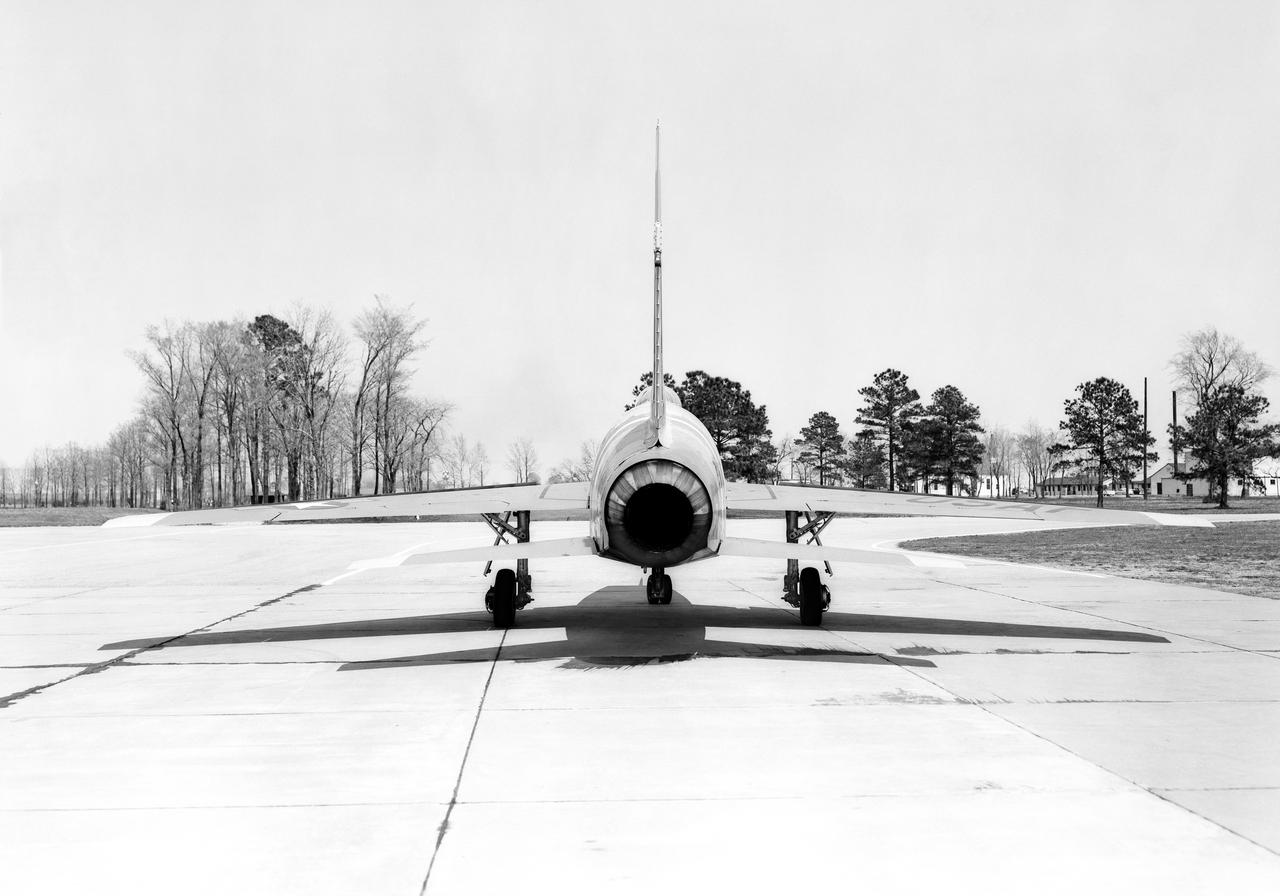
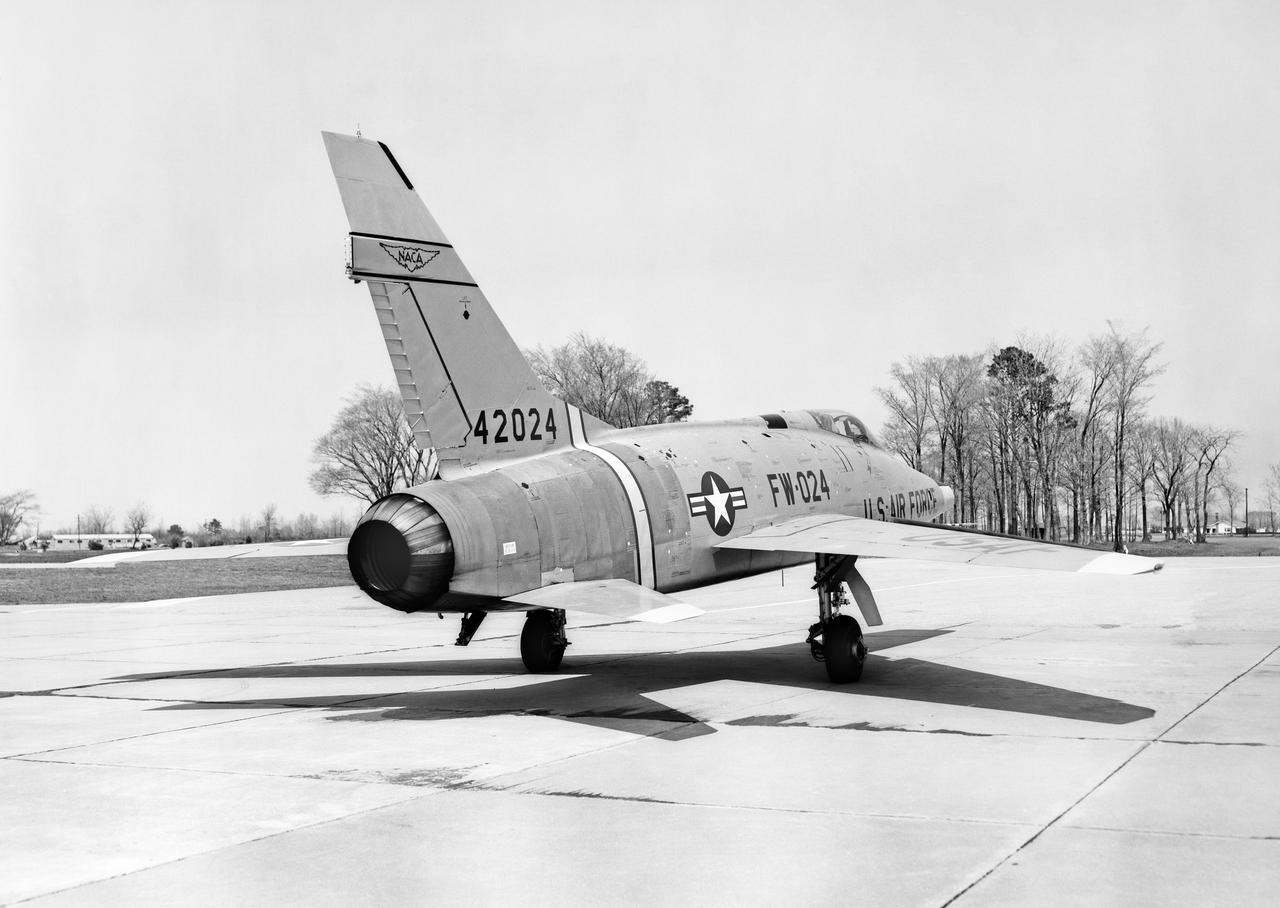
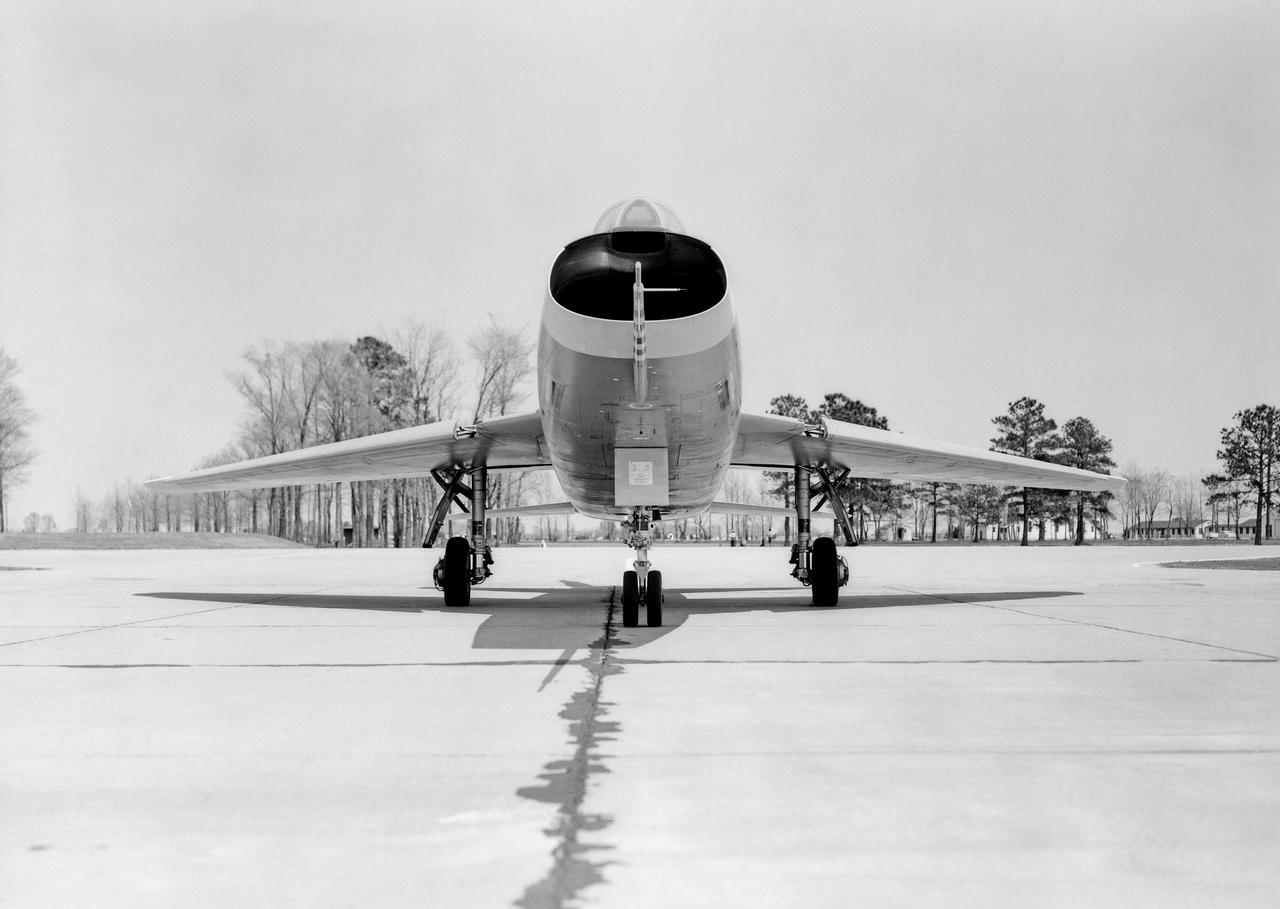
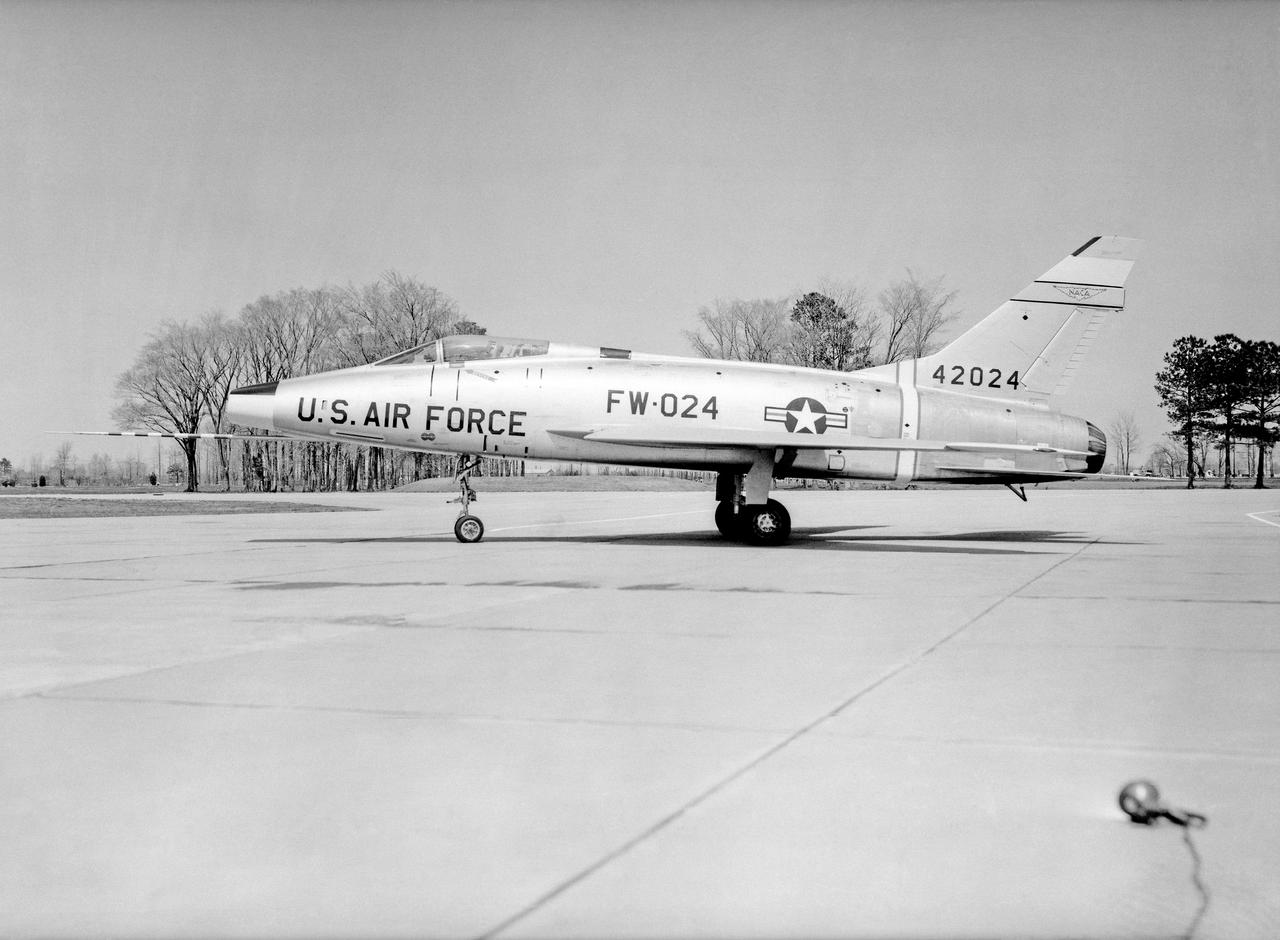
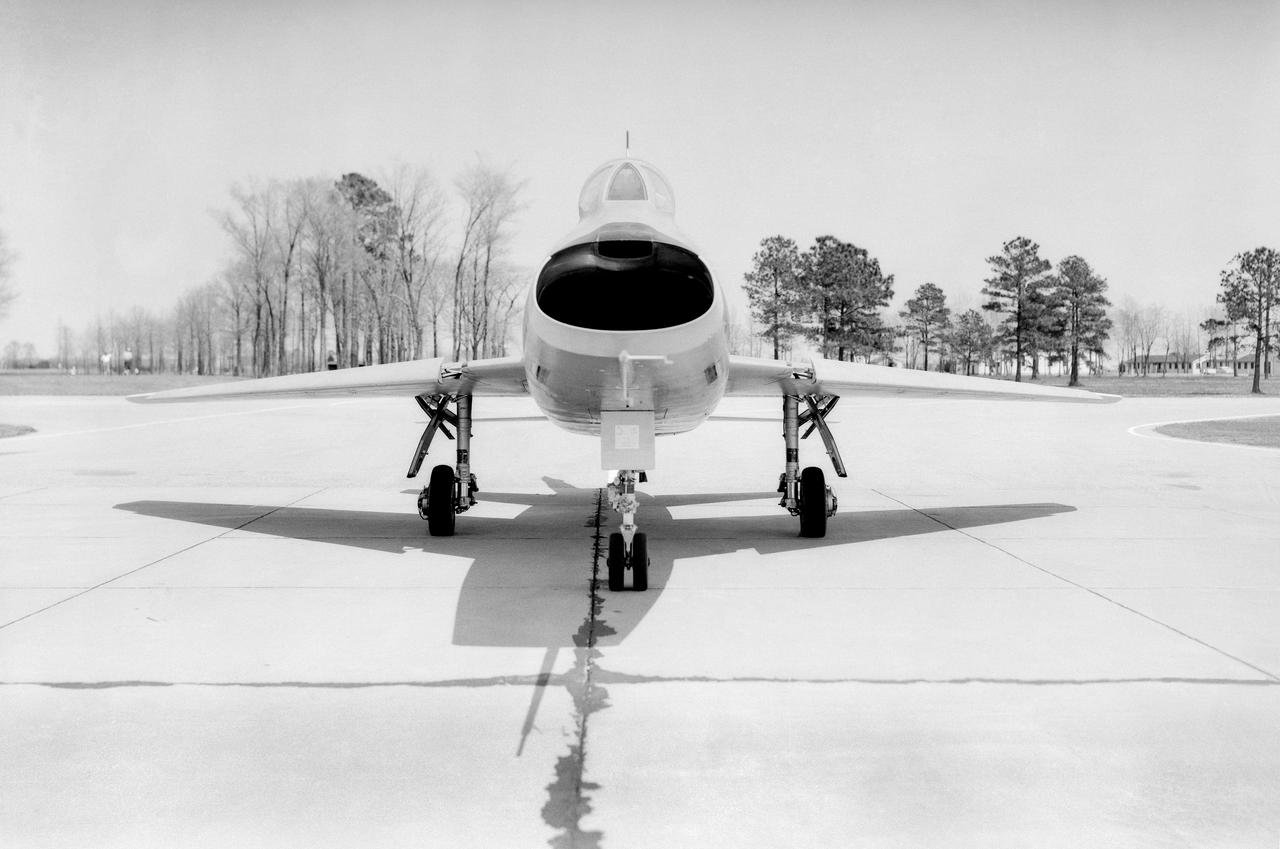
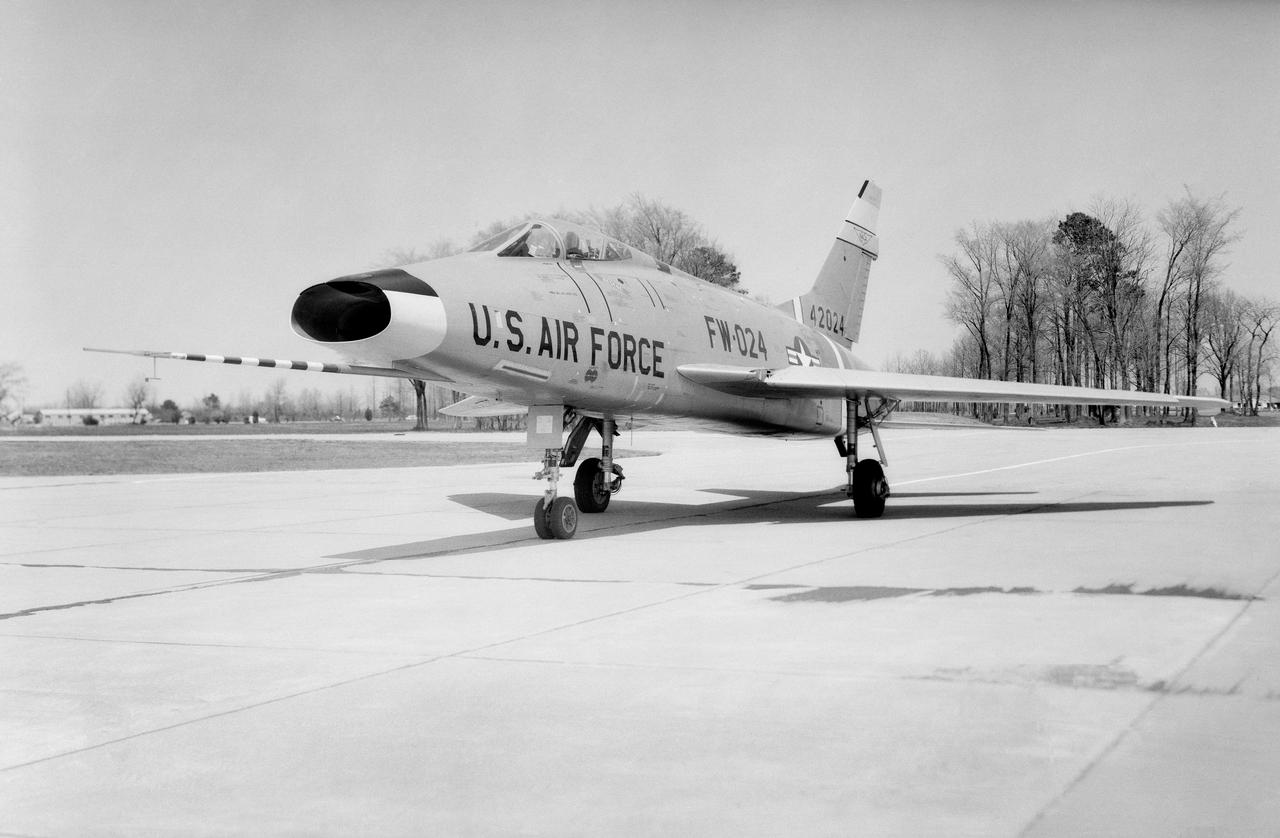
 North American F-100 C airplane used in sonic boom investigation at Wallops, October 7, 1958.  Photograph published in: A New Dimension  Wallops Island Flight Test Range: The First Fifteen Years by Joseph Shortal. A NASA publication. Page 672. -- Aircraft number: NACA 42024. Side view, 3/4 view from front, 3/4 view from rear, rear view, and two front views.
North American F-100 C
 North American F-100 C airplane used in sonic boom investigation at Wallops, October 7, 1958.  Photograph published in: A New Dimension  Wallops Island Flight Test Range: The First Fifteen Years by Joseph Shortal. A NASA publication. Page 672. -- Aircraft number: NACA 42024. Side view, 3/4 view from front, 3/4 view from rear, rear view, and two front views.
North American F-100 C
 North American F-100 C airplane used in sonic boom investigation at Wallops, October 7, 1958.  Photograph published in: A New Dimension  Wallops Island Flight Test Range: The First Fifteen Years by Joseph Shortal. A NASA publication. Page 672. -- Aircraft number: NACA 42024. Side view, 3/4 view from front, 3/4 view from rear, rear view, and two front views.
North American F-100 C
 North American F-100 C airplane used in sonic boom investigation at Wallops, October 7, 1958.  Photograph published in: A New Dimension  Wallops Island Flight Test Range: The First Fifteen Years by Joseph Shortal. A NASA publication. Page 672. -- Aircraft number: NACA 42024. Side view, 3/4 view from front, 3/4 view from rear, rear view, and two front views.
North American F-100 C
 North American F-100 C airplane used in sonic boom investigation at Wallops, October 7, 1958.  Photograph published in: A New Dimension  Wallops Island Flight Test Range: The First Fifteen Years by Joseph Shortal. A NASA publication. Page 672. -- Aircraft number: NACA 42024. Side view, 3/4 view from front, 3/4 view from rear, rear view, and two front views.
North American F-100 C
 North American F-100 C airplane used in sonic boom investigation at Wallops, October 7, 1958.  Photograph published in: A New Dimension  Wallops Island Flight Test Range: The First Fifteen Years by Joseph Shortal. A NASA publication. Page 672. -- Aircraft number: NACA 42024. Side view, 3/4 view from front, 3/4 view from rear, rear view, and two front views.
North American F-100 C
S61-03705 (1961) --- Close-up view of the fueling of the Liberty Bell 7 for the Mercury-Redstone 4 (MR-4) mission. Photo credit: NASA
GRISSOM
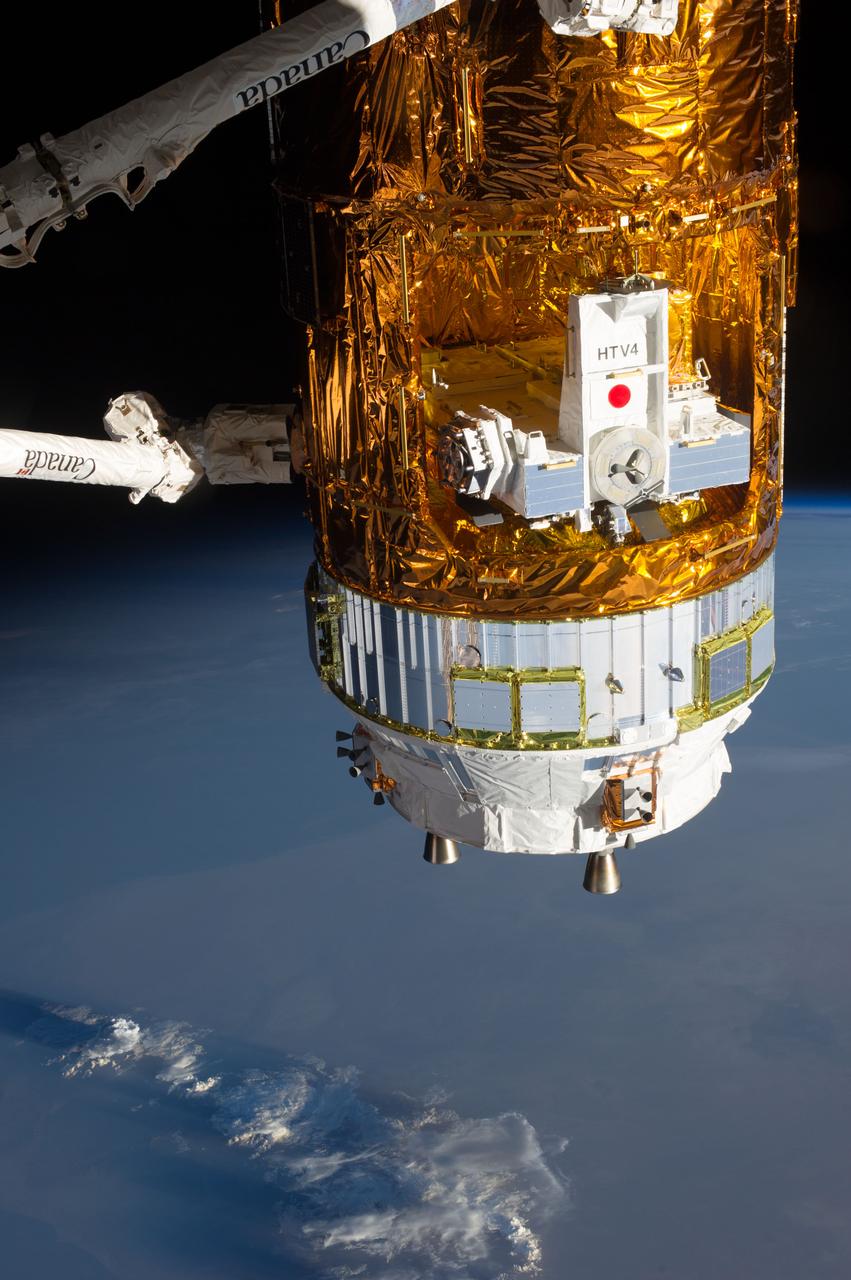
View of Japanese Kounotori H2 Transfer Vehicle-4 (HTV-4) docked to the International Space Station's Harmony Node 2 module. Sent as Twitter message.
HTV-4
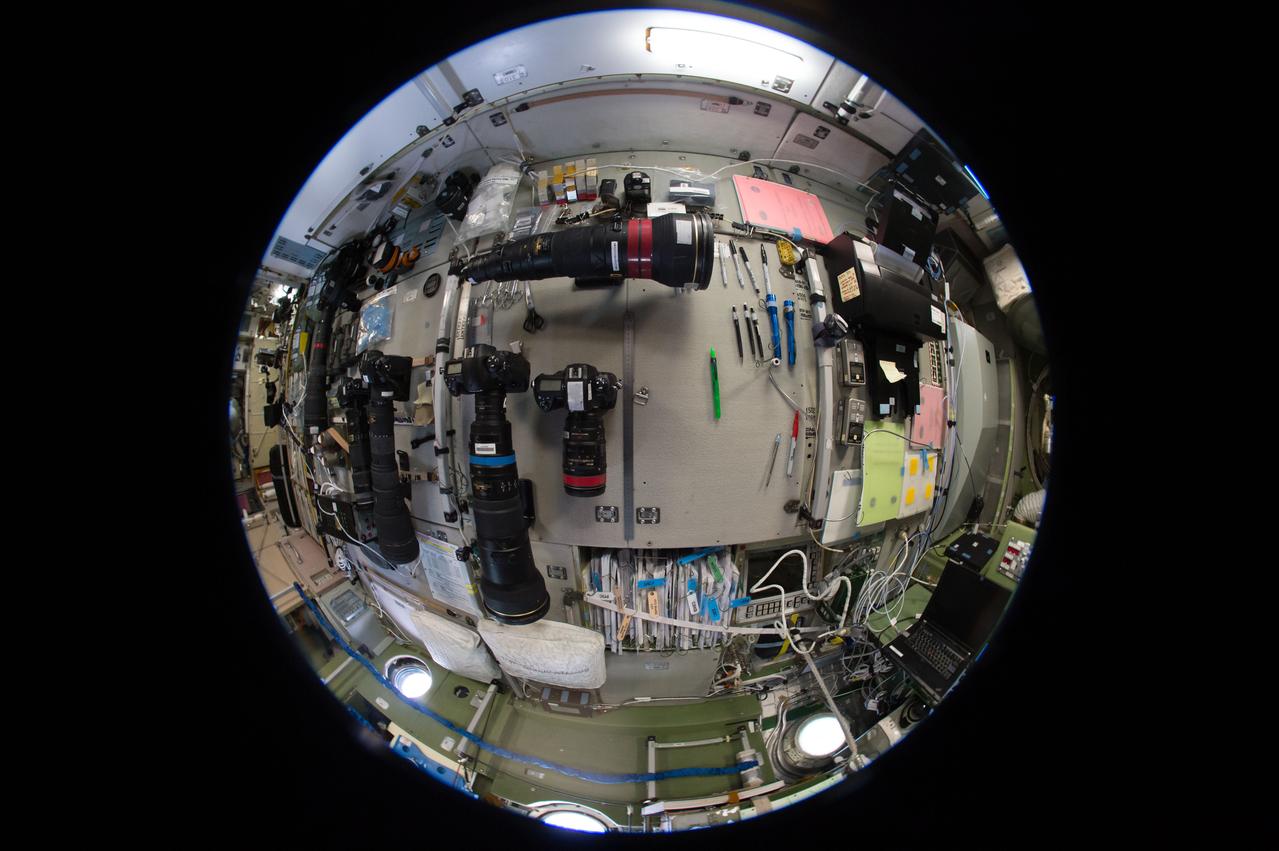
iss051e018869 (4/18/2017) --- A fish-eye view looking port in the Zvezda Service Module (SM), taken for a Google Street View of the ISS.
Google Street View Image in the SM
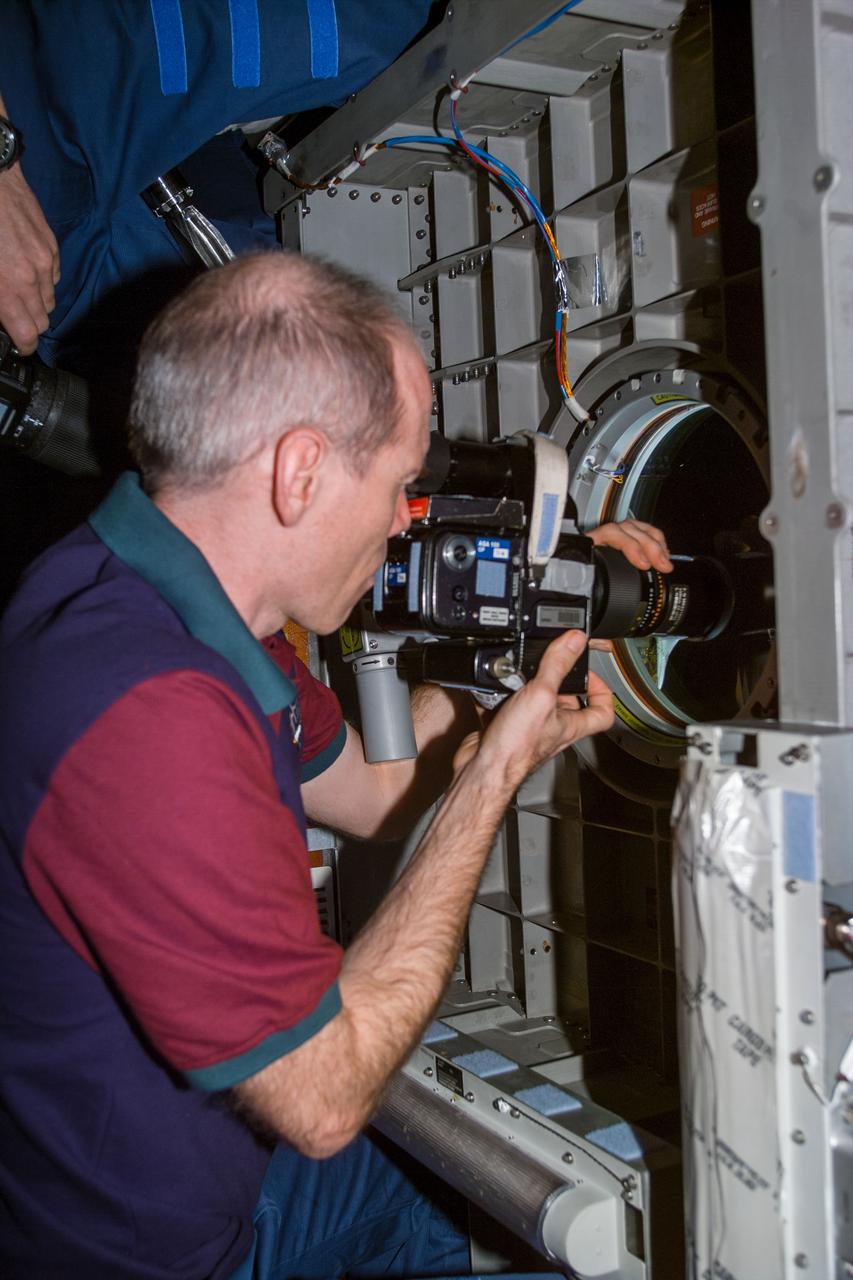
S96-E-5134 (4 June 1999) --- Astronaut Daniel T. Barry uses a viewing port on SpaceHab to take out-the-window views aboard the Earth-orbiting Space Shuttle Discovery. The photo was taken with an electronic still camera (ESC) at 00:50:53, June 4, 1999.
Daniel Barry in Spacehab module with camera
Application of blowing type boundry-layer control to the leading and trailing edge flaps of a 52 deg swept wing.  3/4 view of Aspect Ratio 2.8, taper ratio .17, 45 deg swept back wing model -3/4 front view
McDonnell F4H Model in Ames 40X80 foot Wind Tunnel.
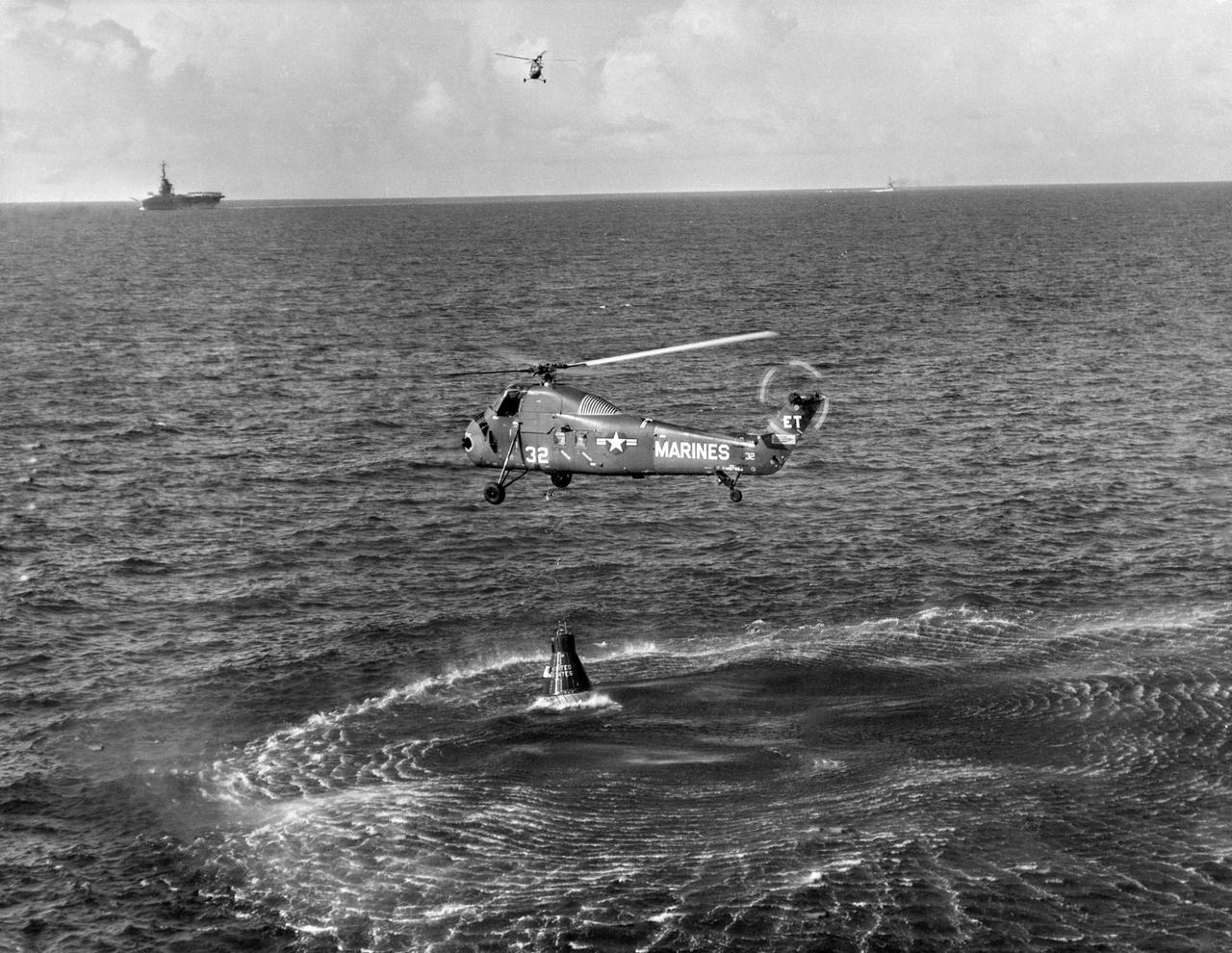
S61-02821 (21 July 1961) --- Attempted recovery of Mercury spacecraft at end of the Mercury-Redstone 4 (MR-4) mission. View shows the Marine helicopter dropping a recovery line to the capsule. In the upper left corner of the view, the recovery ship and another helicopter can be seen. Photo credit: NASA
Attempted Recovery - Mercury Spacecraft - End - Mercury-Redstone (MR)-4 Mission
3/4 front view of model in Ames 40x80 foot wind tunnel.
Wind Tunnel Test of Stoppable Rotors in Ames 40x80ft Wind Tunnel.
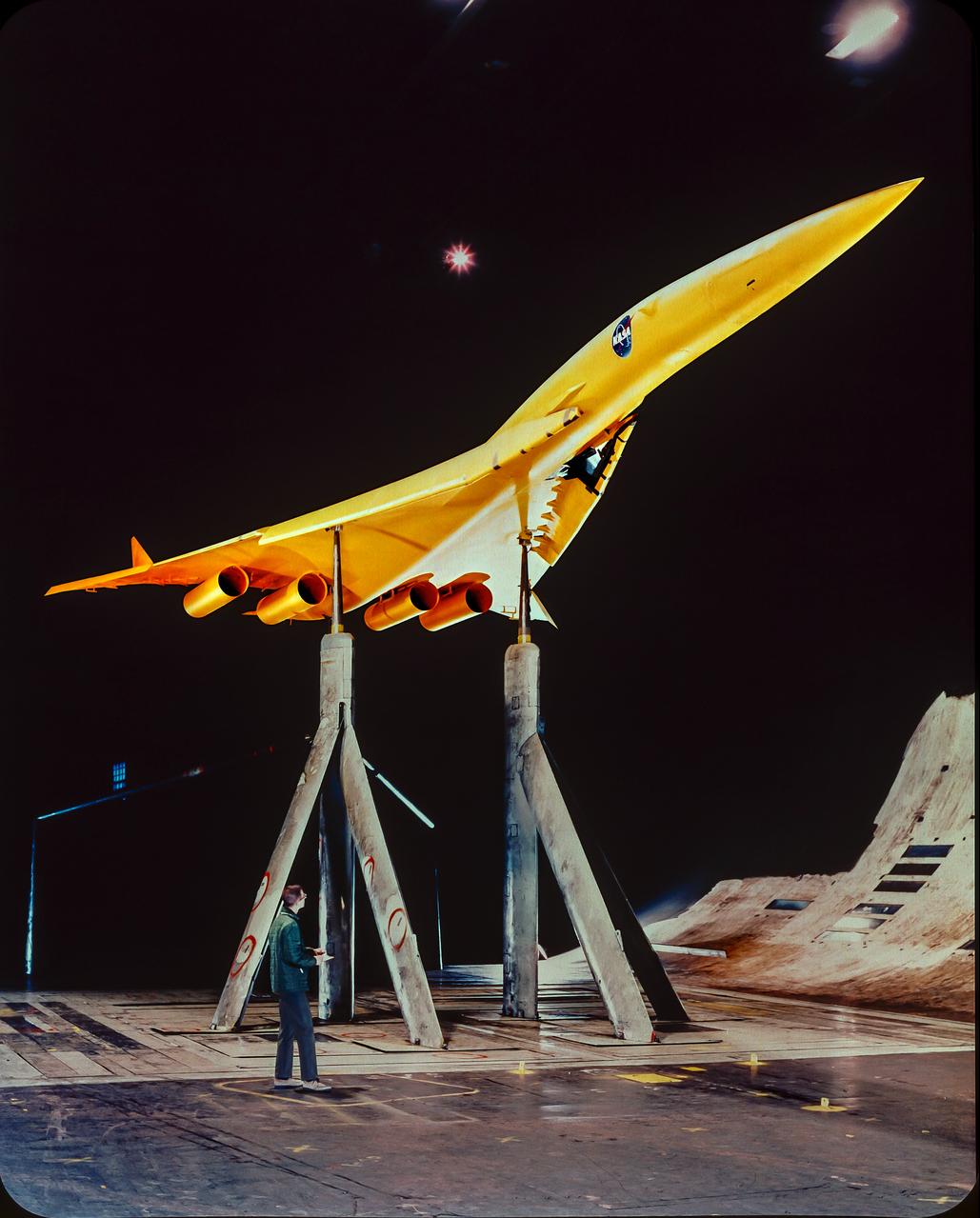
SCAT-15F supersonic transport model, lower 3/4 front view.
Supersonic Transport Model mounted in the Ames 40x80 Foot Wind Tunnel.
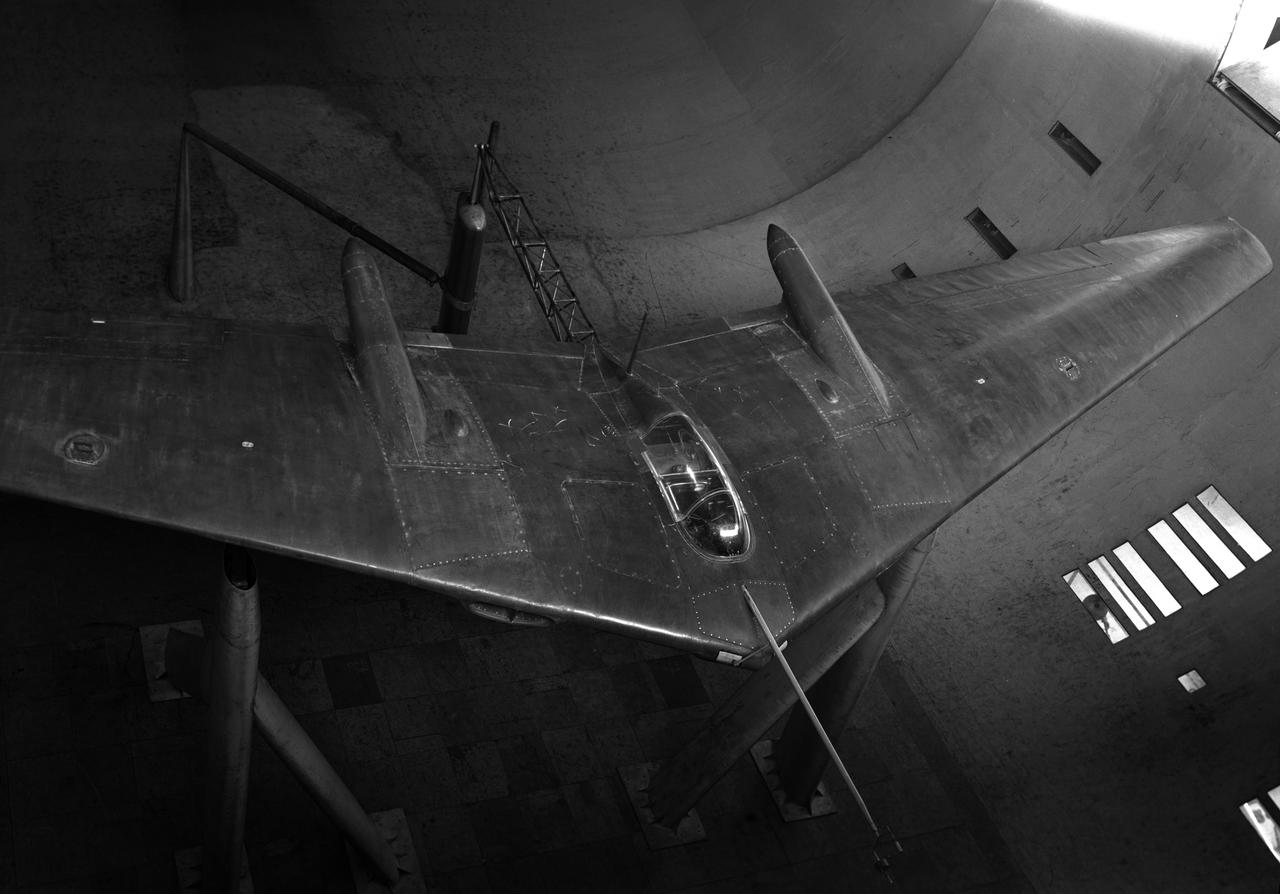
Northrop N9M-2 airplane; 3/4 front view from above.
Northrop N9M-2 Airplane.
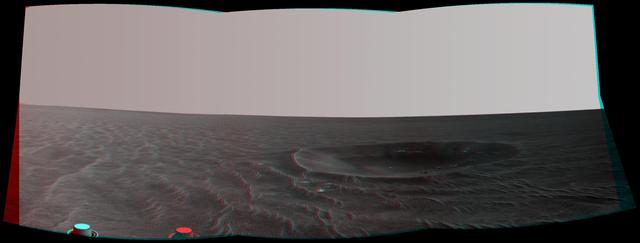
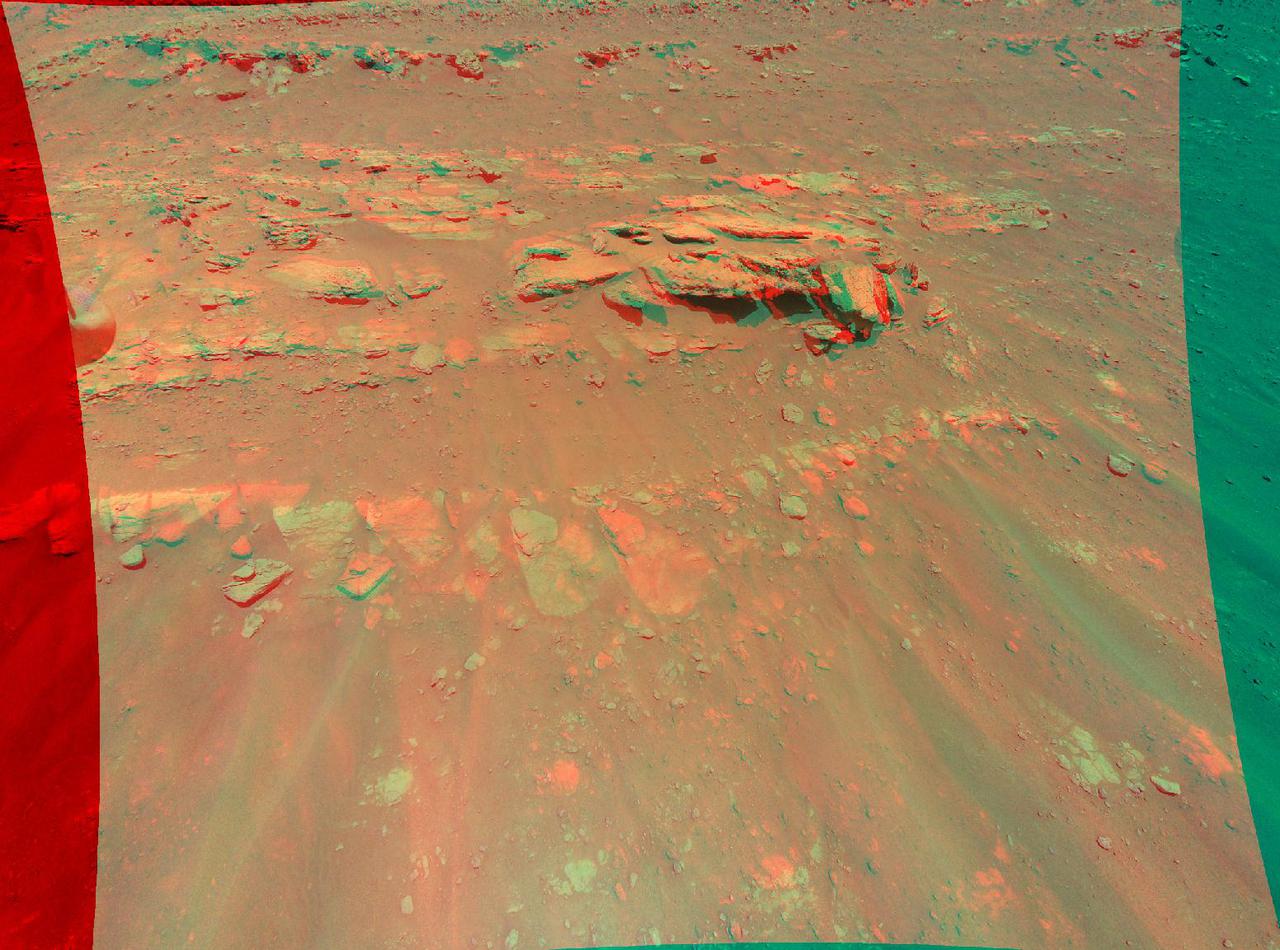
Yankee Clipper crater on Mars carries the name of the command and service module of NASA 1969 Apollo 12 mission to the moon. NASA Mars Exploration Rover Opportunity recorded this stereo view on Nov. 4, 2010. 3D glasses are necessary.
Yankee Clipper Crater on Mars Stereo
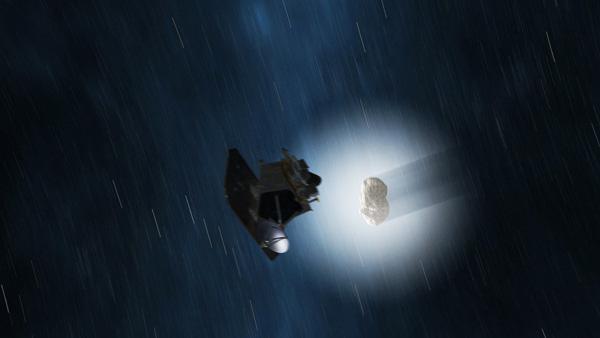
This artist concept shows a view of NASA EPOXI mission spacecraft during its Nov. 4, 2010 flyby of comet Hartley 2. The fluffy shell around the comet, called a coma, is made up of gas and dust that blew off the comet core, or nucleus.
Comet Hartley 2 Gets a Visitor Artist Concept
The topography surrounding the Laguna Salada Fault in the Mexican state of Baja, California, is shown in this combined radar image and topographic view with data from NASA Shuttle Radar Topography Mission where a 7.2 earthquake struck on April 4, 2010.
Baja Earthquake Perspective View
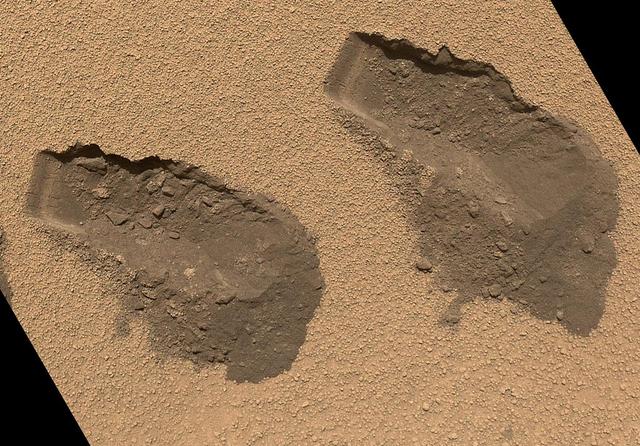
This is a view of the third left and fourth right trenches made by the 1.6-inch-wide 4-centimeter-wide scoop on NASA Mars rover Curiosity in October 2012 and shows some of the details regarding the properties of the Rocknest wind drift sand.
Scoop Marks in the Sand at Rocknest
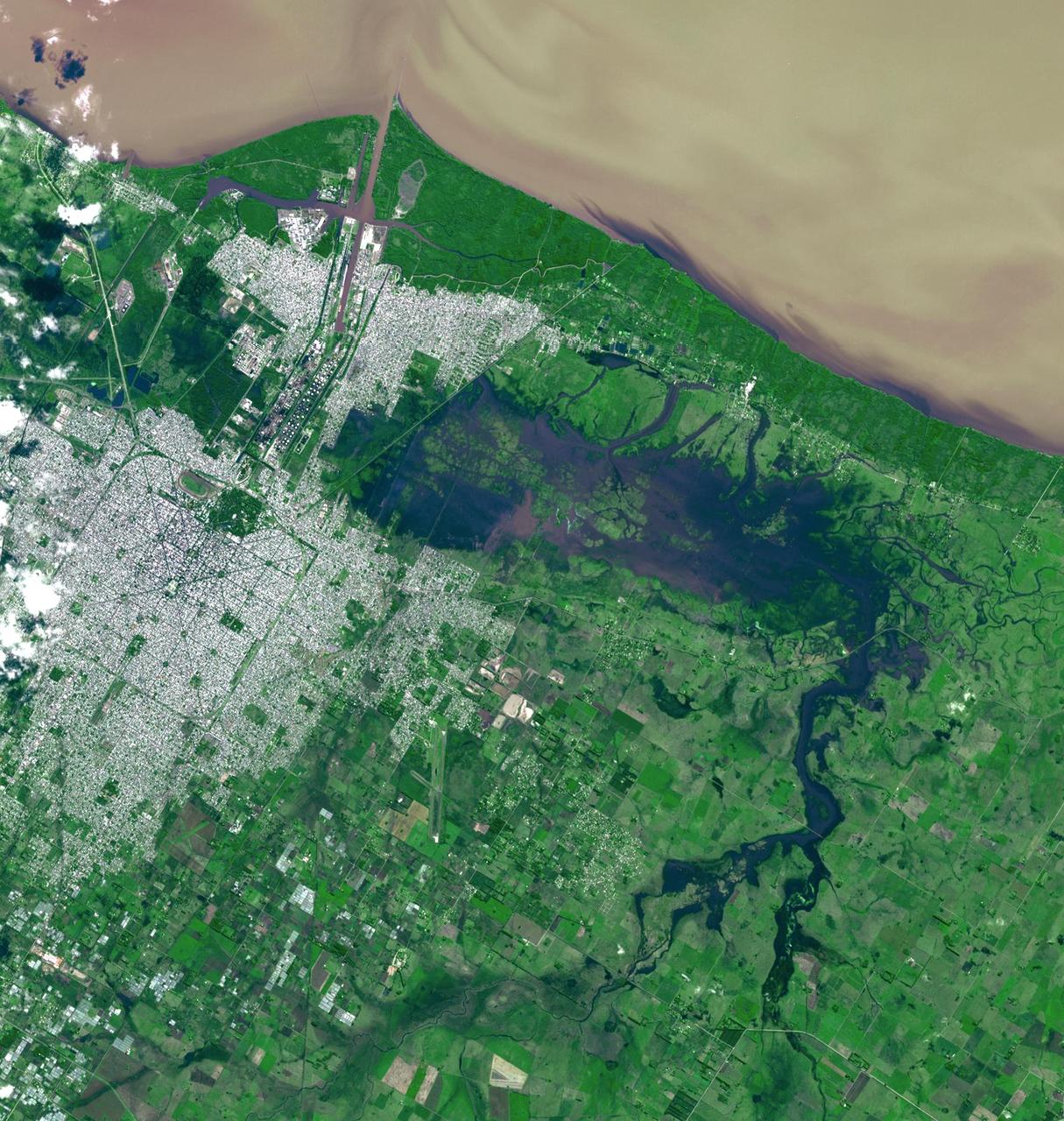
NASA Terra spacecraft captured this view of severe flooding in La Plata, Argentina, on April 4, 2013. Torrential rains and record flash flooding has killed more than 50 and left thousands homeless, according to news reports.
NASA Spacecraft Eyes Severe Flooding in Argentina
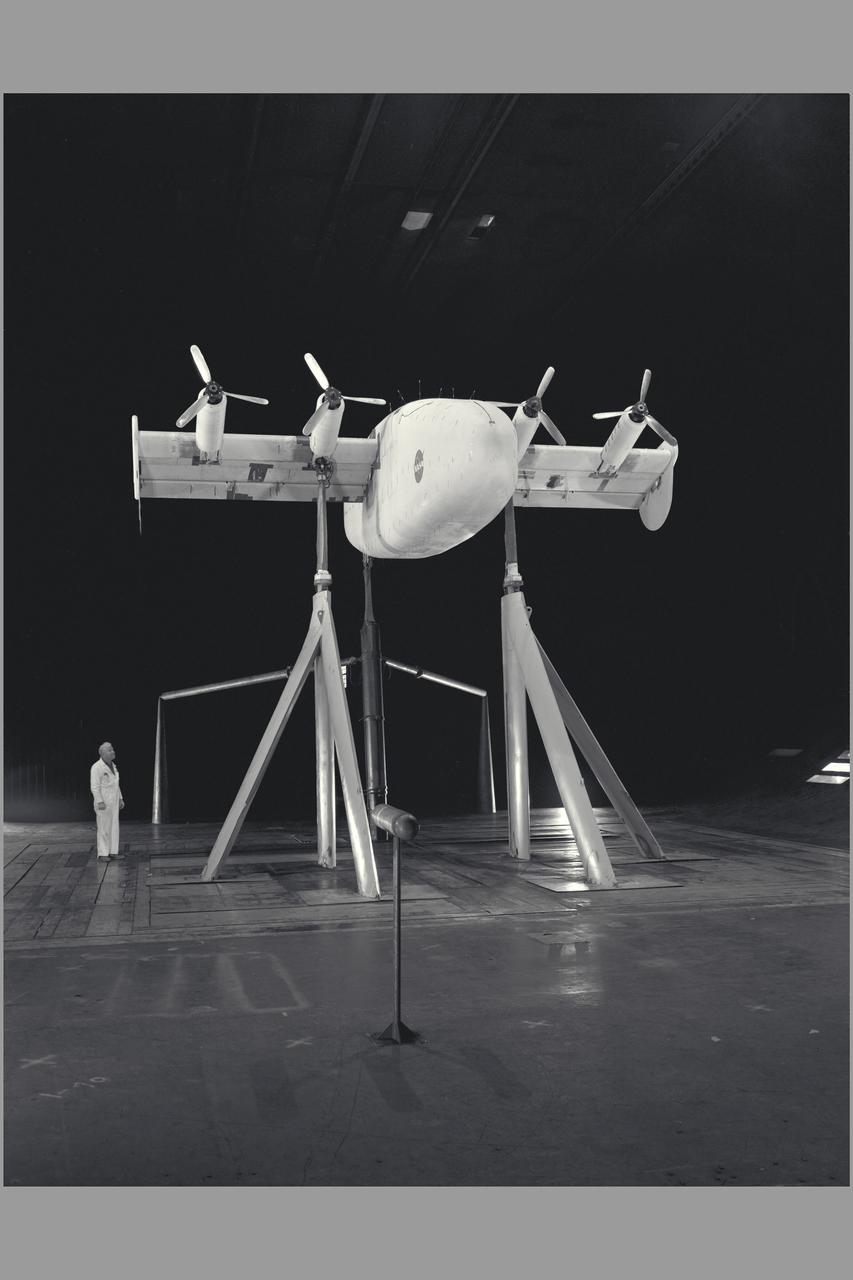
Tilt wing propeller model. 3/4 front view. 4 prop tilt wing nose down variable struts on ground board.  Leo Holl, NASA Ames Engineer.
Tilt Wing Propeller Model Tested in the Ames 40x80 Foot Wind Tunnel.
S61-03567 (13 Sept. 1961) --- View of the launch of Mercury-Atlas 4 (MA-4) spacecraft from Cape Canaveral, Florida on Sept. 13, 1961. Photo credit: NASA
LIFTOFF - MERCURY-ATLAS (MA)-4 - CAPSULE 8A - CAPE
S61-03249 (13 Sept. 1961) --- View of the launch of the Mercury-Atlas 4 (MA-4) spacecraft from Cape Canaveral, Florida on Sept. 13, 1961. Photo credit: NASA
LIFTOFF - MERCURY-ATLAS (MA)-4 - CAPE
3/4 lower rear view of Controllable Twist Rotor (CTR) test of 4 blade helicopter model. Pictures with Ben Mandwyler Andy Lemnios, in 40x80 foot wind tunnel. Small flaps on rotor blades.
Controllable Twist Rotor in 40x80 Foot Wind Tunnel at Ames.
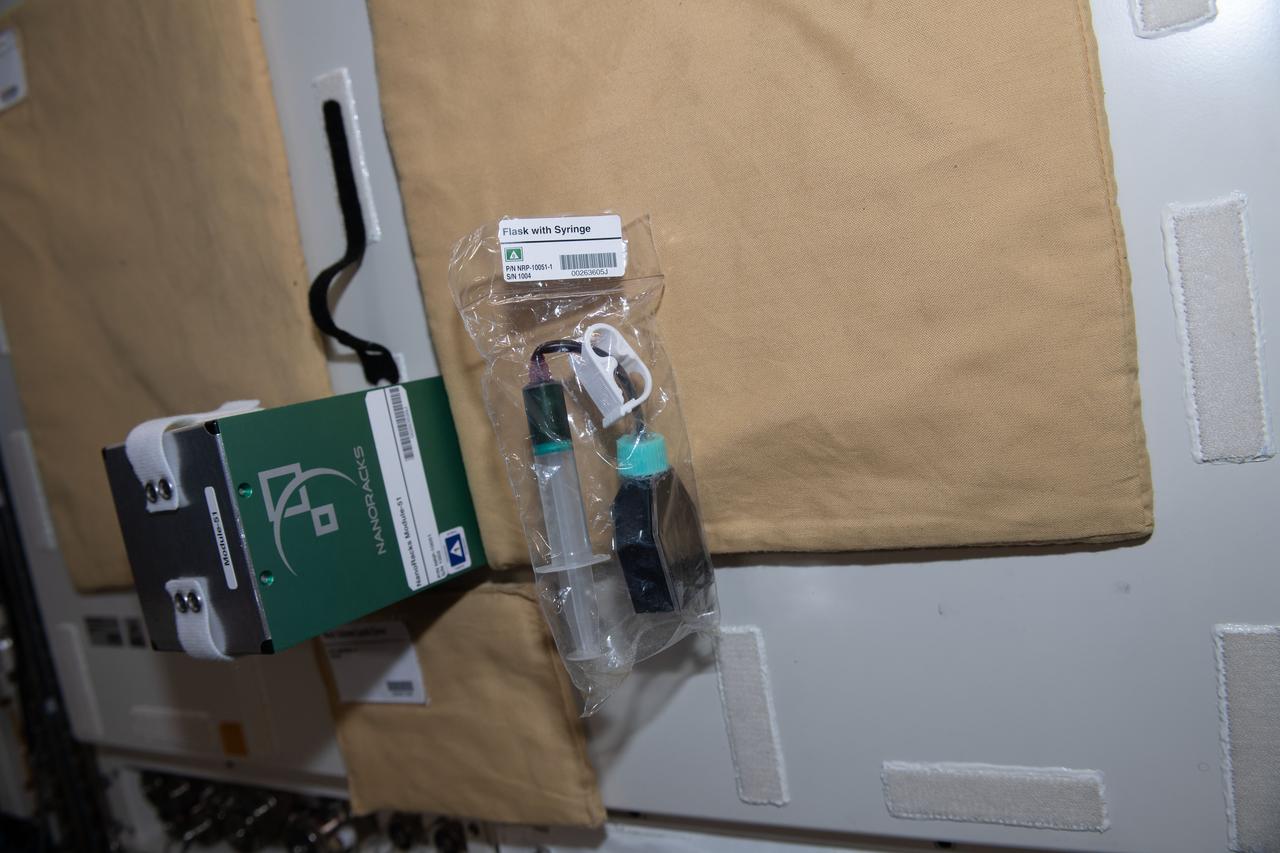
iss062e118759 (4/1/2020) --- A View of the ISSET-Nanoracks-Mission Discovery 4 investigation aboard the International Space Station (ISS).  The Degradation of vitamin C in microgravity sub-investigation studies the effects of microgravity on the breakdown of Vitamin C.
iss062e118759
S61-02921 (21 July 1961) --- Attempted recovery of Mercury spacecraft at end of the Mercury-Redstone 4 (MR-4) mission. View shows the top of the capsule before it sinks beneath the waves. Photo credit: NASA
Attempted Recovery of Mercury spacecraft at end of MR-4 mission
Investigation of a tilt-wing/propeller model with blowing flaps. 3/4 front view, tilt wing model, wing position = 0deg. C-123 fuselage, conventional struts, 4 props
Testing Tilt Wing Propeller Model in Ames 40x80 Foot Wind Tunnel.
S61-03255 (13 Sept. 1961) --- View of the recovery of the Mercury-Atlas 4 (MA-4) spacecraft which was launched from Cape Canaveral, Florida on Sept. 13, 1961. Photo credit: NASA
Recovery of the Mercury-Atlas 4
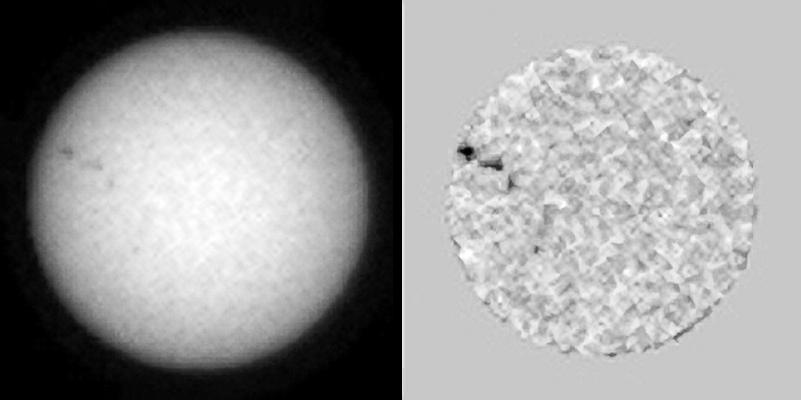
This single frame from a sequence of six images of an animation shows sunspots as viewed by NASA Curiosity Mars rover from April 4 to April 15, 2015. From Mars, the rover was in position to see the opposite side of the sun.  The images were taken by the right-eye camera of Curiosity's Mast Camera (Mastcam), which has a 100-millimeter telephoto lens. The view on the left of each pair in this sequence has little processing other than calibration and putting north toward the top of each frame. The view on the right of each pair has been enhanced to make sunspots more visible. The apparent granularity throughout these enhanced images is an artifact of this processing.  These sunspots seen in this sequence eventually produced two solar eruptions, one of which affected Earth.  http://photojournal.jpl.nasa.gov/catalog/PIA19802
Tracking Sunspots from Mars, April 2015 Animation
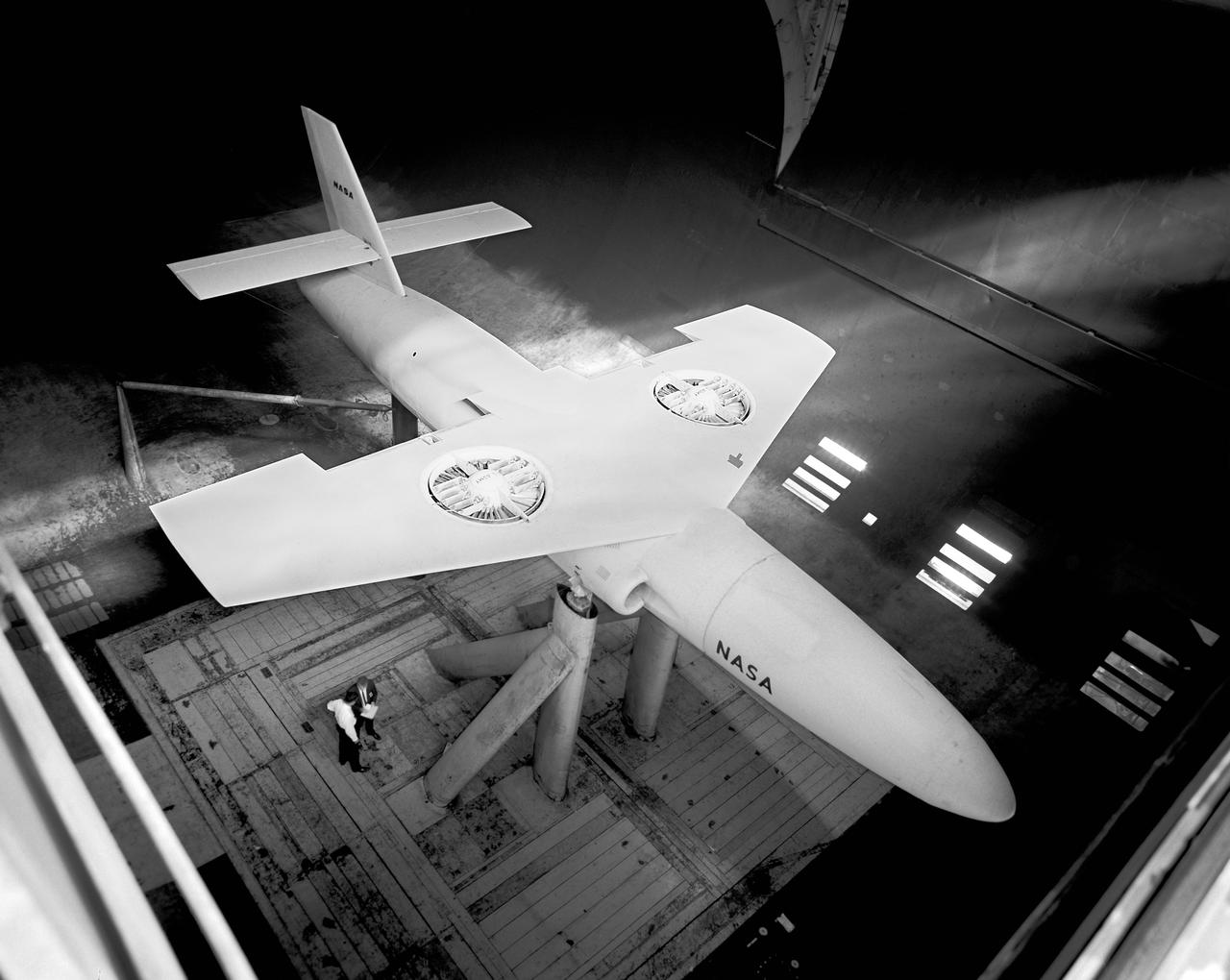
Top view if GE fan model, 3/4 top view. Straight wing. 1 fan per wing, conventional struts. Woody Kook, Branch Chief.
A-28399. GE Fan in Wing in Ames 40x80 foot wind tunnel.
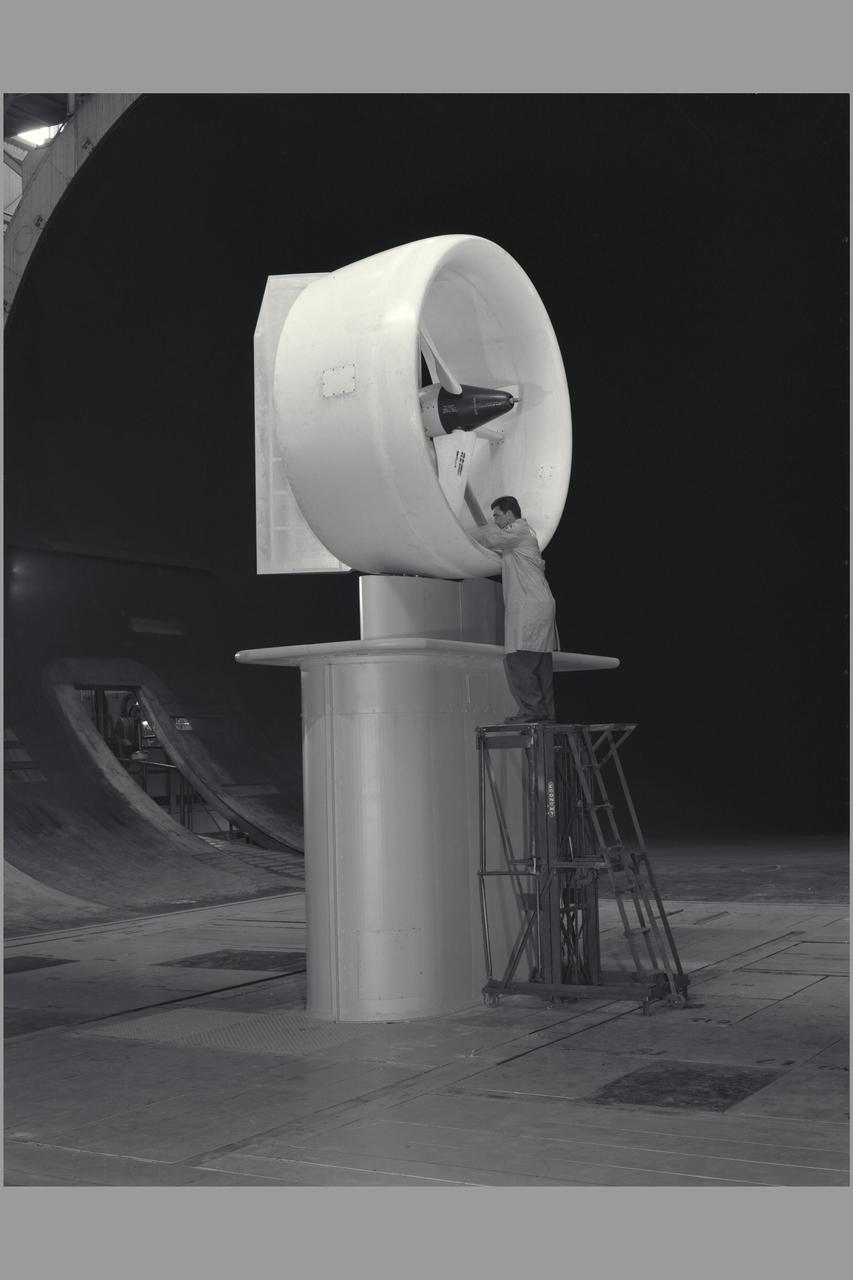
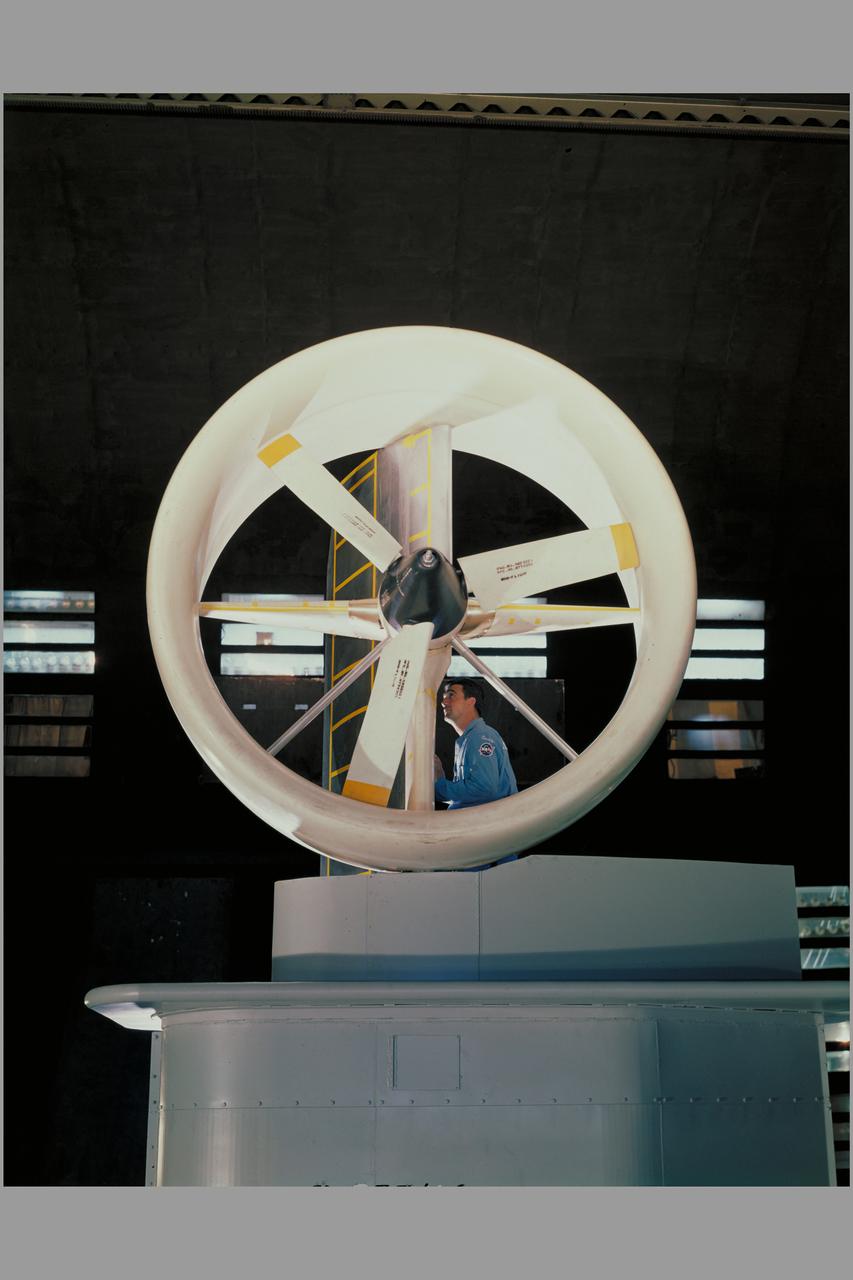
3/4 front view with cascade exit vane in Ames 40x80 foot wind tunnel, with Tom Seymore, mechanic for Ames.
Ducted Fan Model with A 0 deg Exit Cascade.
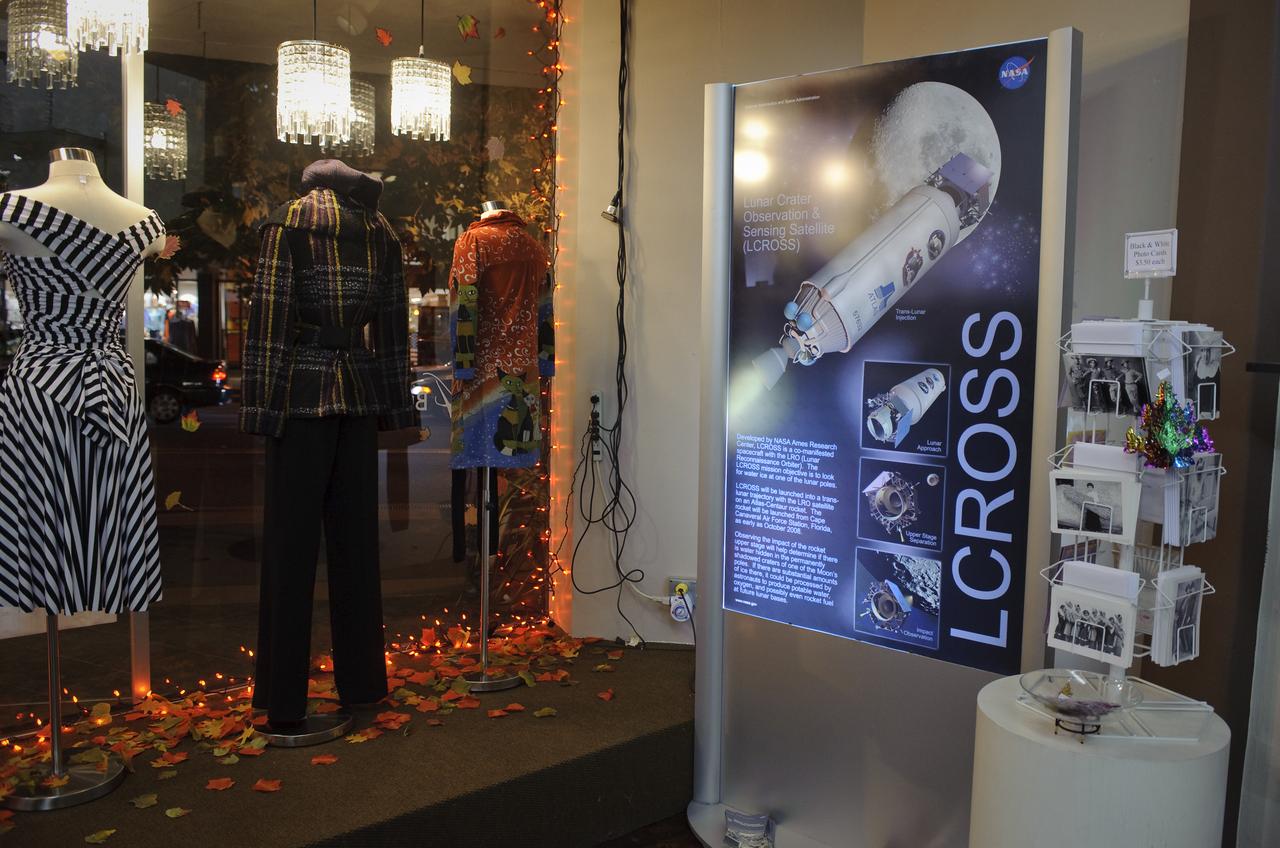
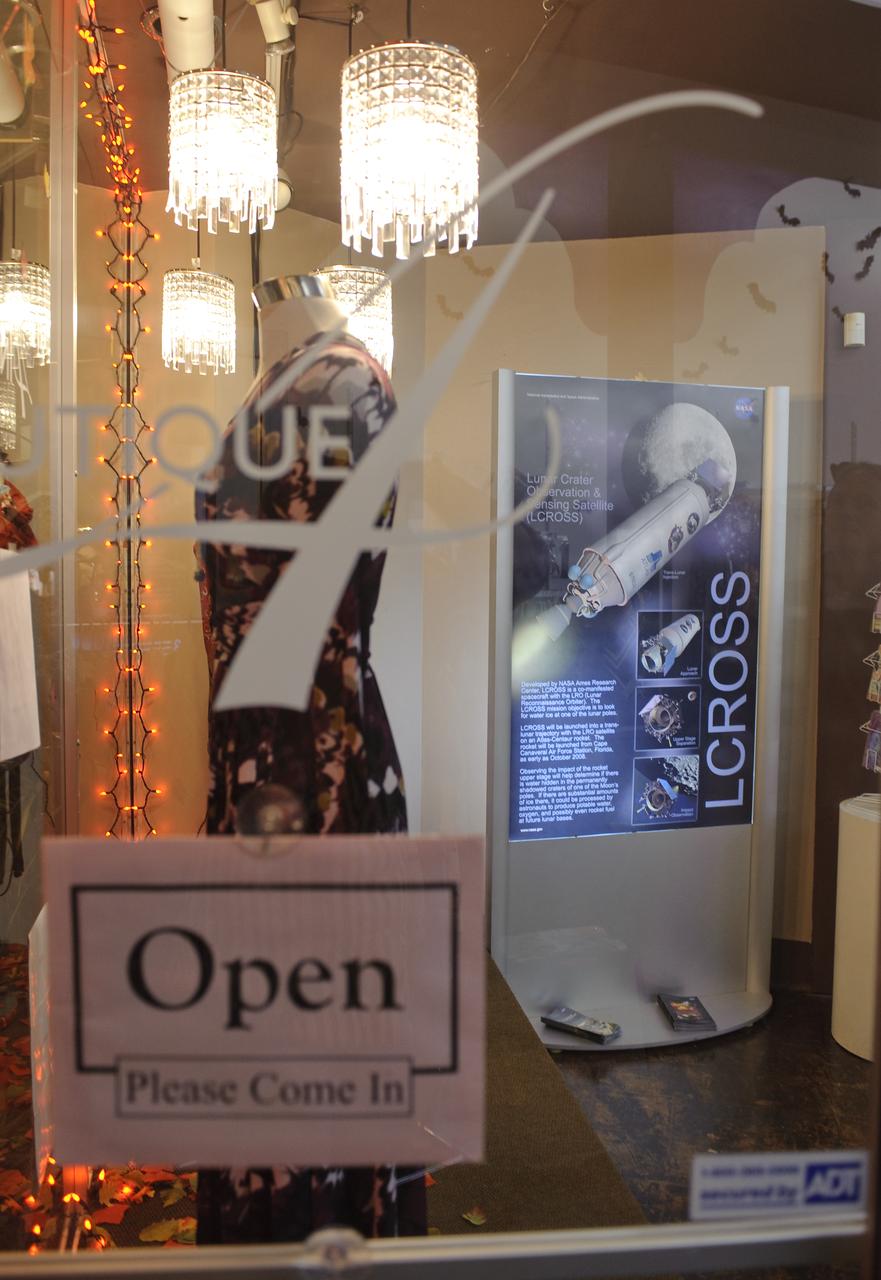
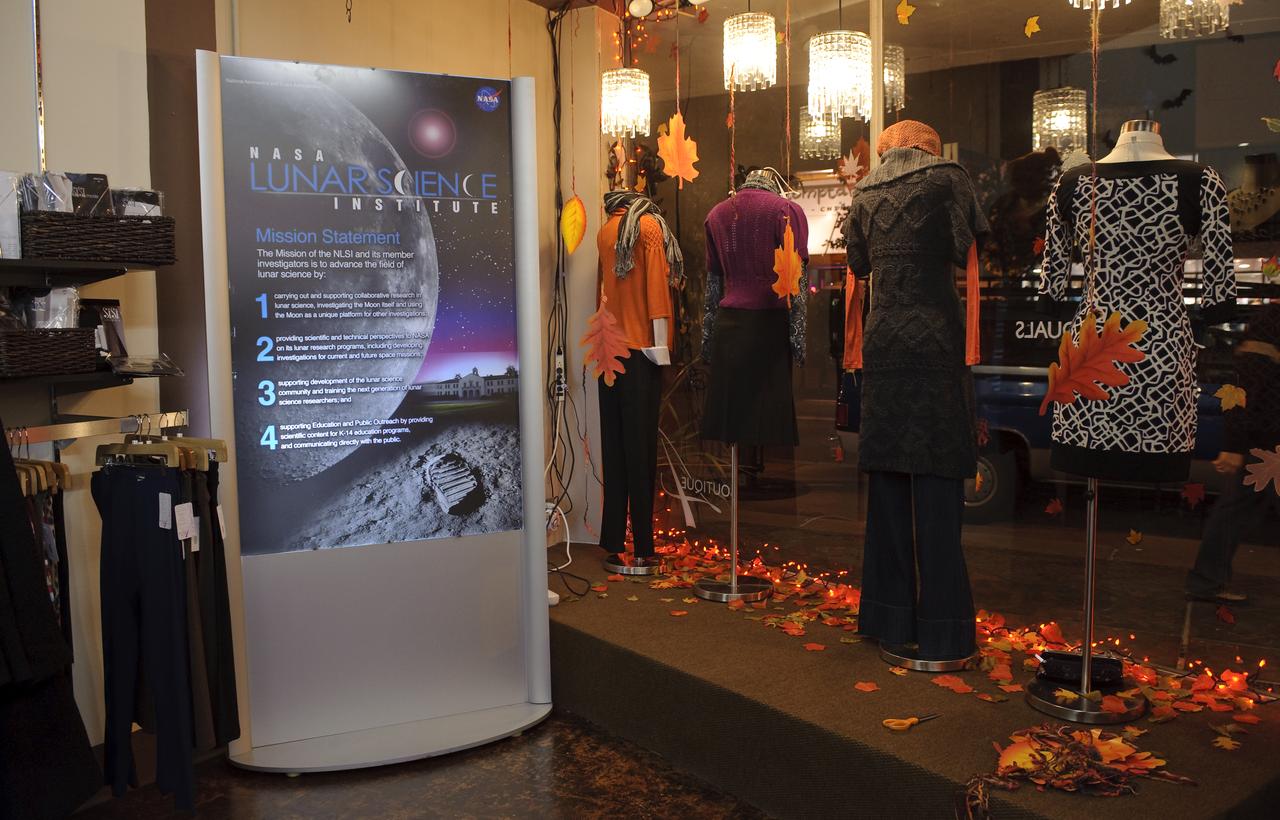
Ames 70 Year Anniversary Exhibit in downtown Mountain View, California. Exhibits at The Boutique 4.
ARC-2009-ACD09-0242-030
3/4 front view of Ducted fan model with 40 deg. exit vane cascade, semi span model.
Ducted fan model with 40 deg Exit Cascade.
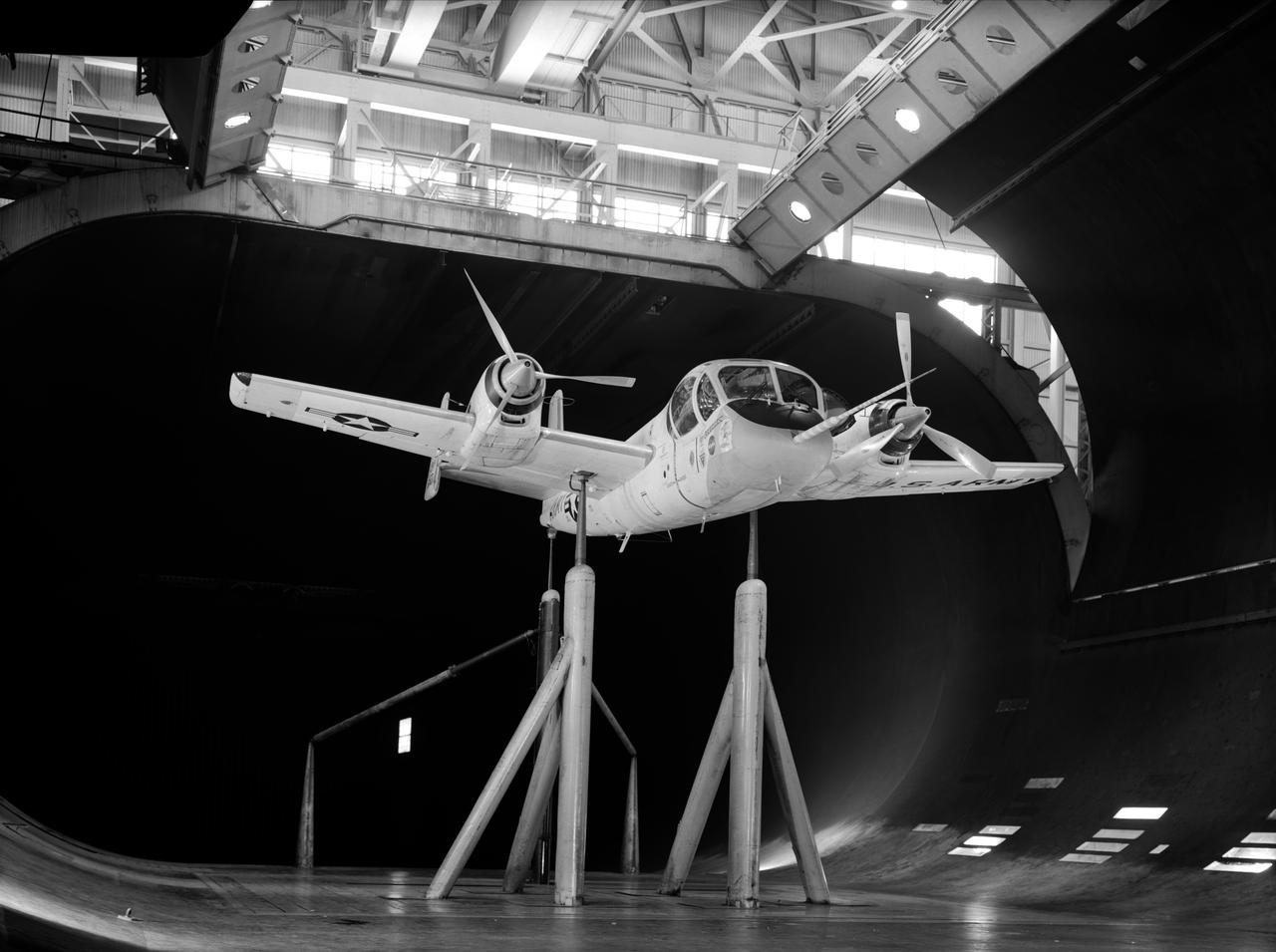
Drag studies for Full Scale wind tunnel test of Grumman YAO-1 airplane, 3/4 front view with propellers on
Grumman YAO-1 airplane mounted in the 40x80 foot wind tunnel at Ames.
3/4 front view Ryan XV-5A lift-fan VSTOL airplane.  Pictured with Tom Wills.
XV-5A Lift-Fan VSTOL Airplane installed in Ames 40x80 foot Wind Tunnel.
3/4 front view offull scale X-22A ducted fan model.  Chuck Greco
ARC-1964-AC-32846
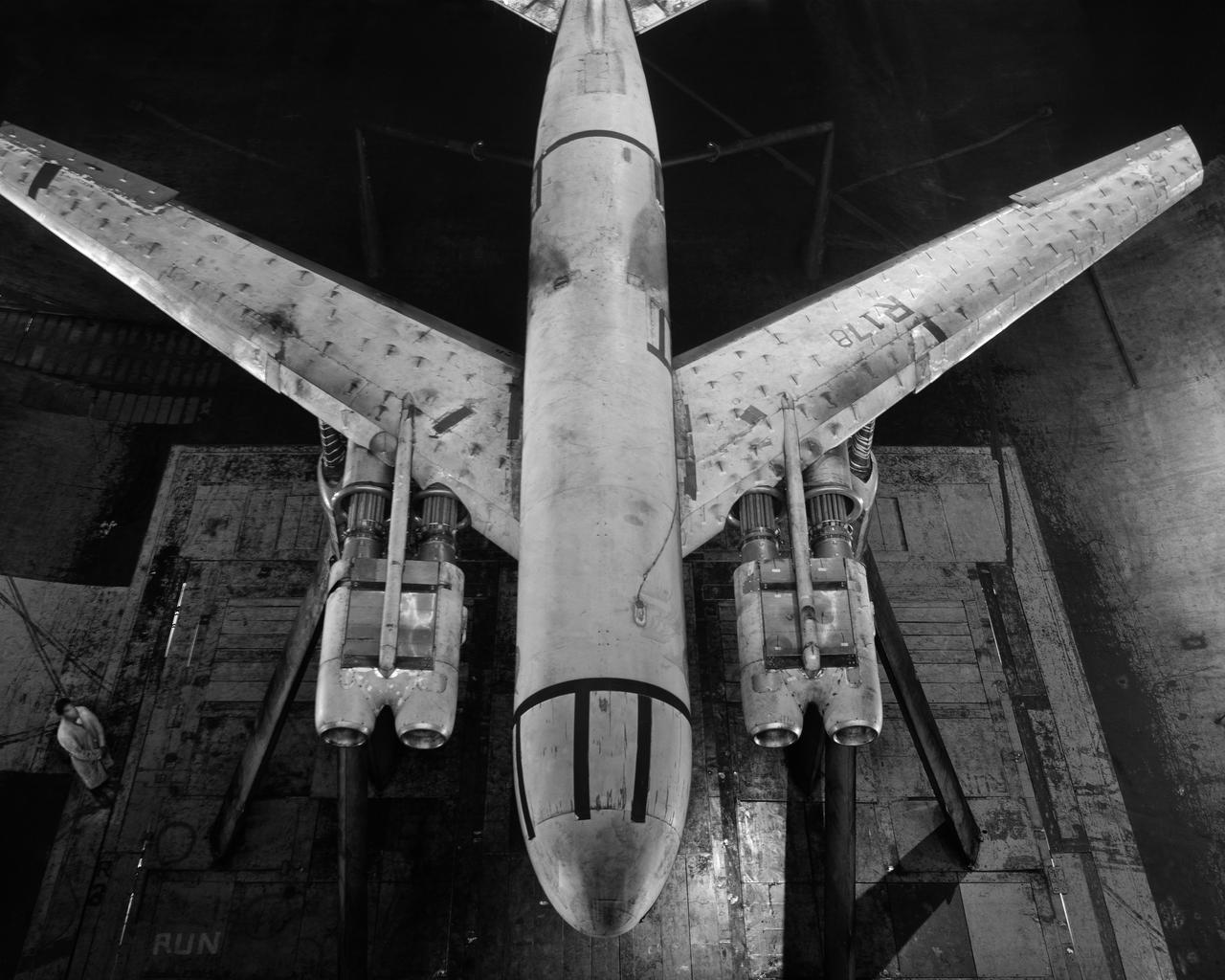
Forward overhead view of 4 jet model with external flow of jet augmented triple slotted flap. John Bouldt
Jet Augmented Flap, Triple-Slotted.
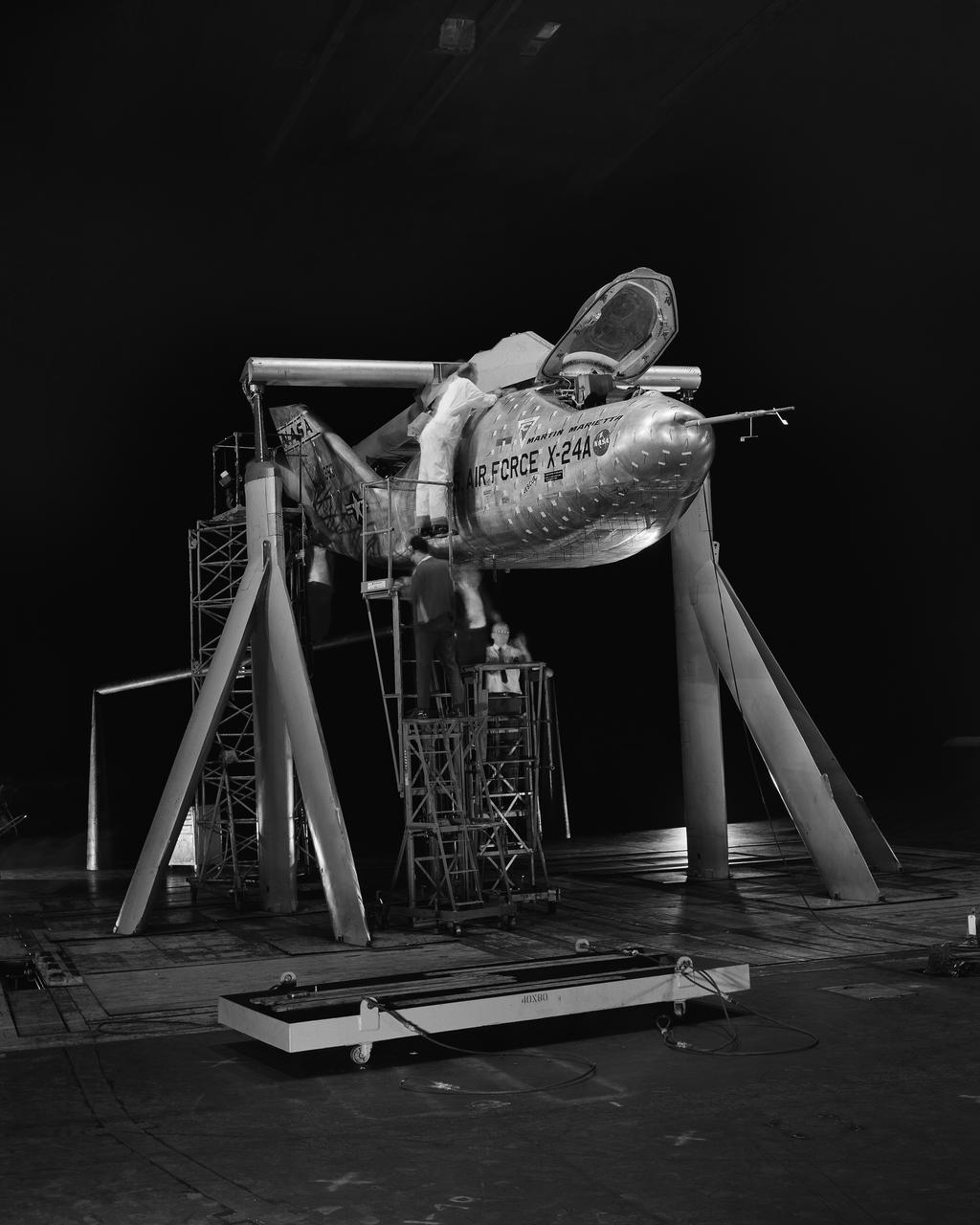
3/4 front view of Martin X-24A lifting body, mounted on B-52 mount.
X-24 (SV-5) Lifting Body In 40x80 foot Wind Tunnel.
3/4 front view with wing tilted and flaps 0 degrees.  Coin Airplane:  Rotating cylinder flap applied.
ARC-1968-A-40375
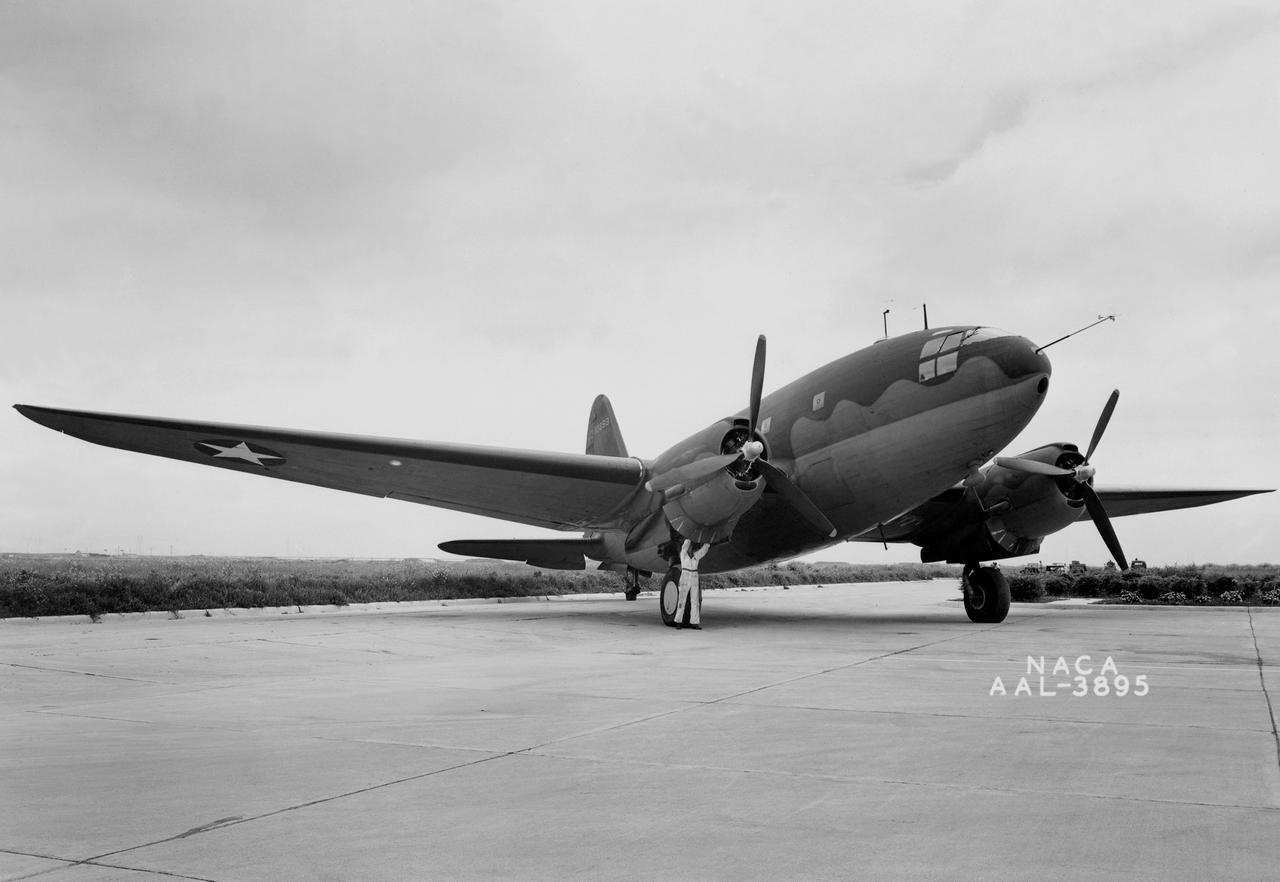
NACA Photographer 3/4 front view Curtiss C-46 airplane in which the thermal ice-prevention equipment was installed
ARC-1943-AAL-3895
Ames 70 Year Anniversary Exhibit in downtown Mountain View, California. Exhibits at The Boutique 4.
ARC-2009-ACD09-0242-031
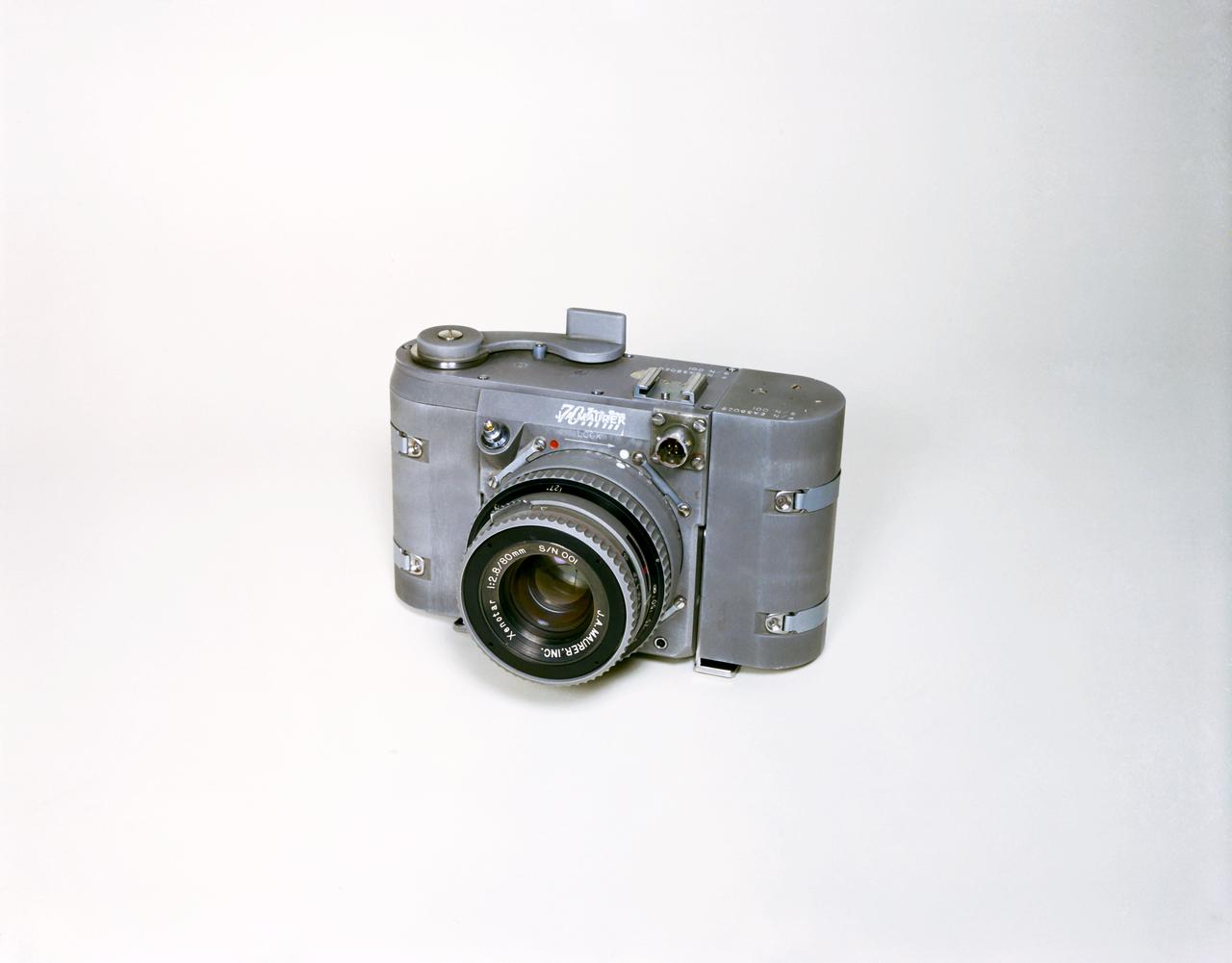
S65-23639 (28 April 1965) --- A bench view of a 70mm camera expected to be used by the Gemini-4 astronauts.
Handheld camera for use on Gemini 4 mission
Lockheed AH-56 Helicopter; Cheyenne, 40 x 80 ft. Wind Tunnel. (3/4 rear view)
ARC-1969-AC-42561-2
Investigation of cambered propeller design for VTOL/STOL airplane. 3/4 front view of Curtis VTOL propeller.
Cambered Propeller Design for VTOL/STOL Airplane.
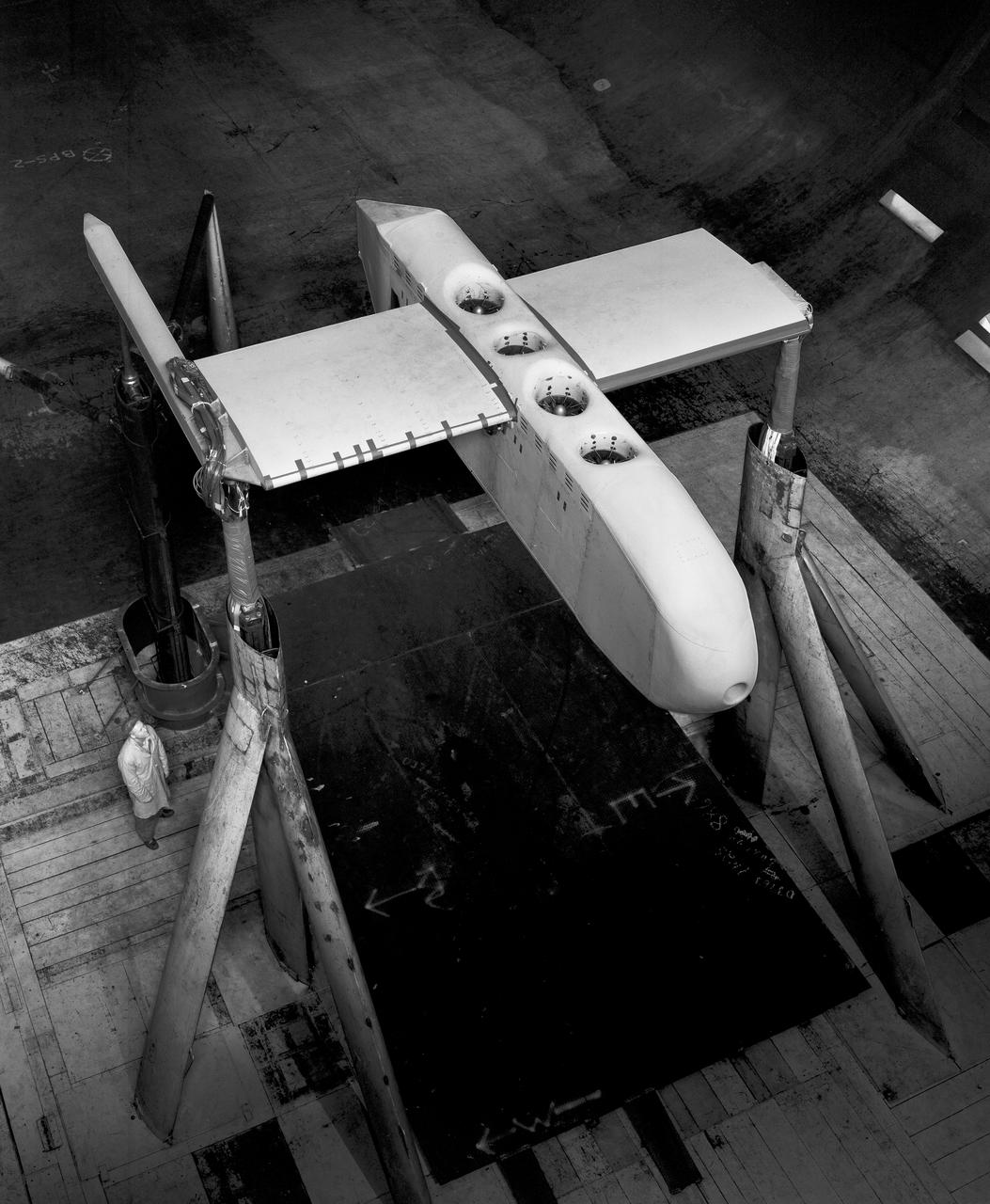
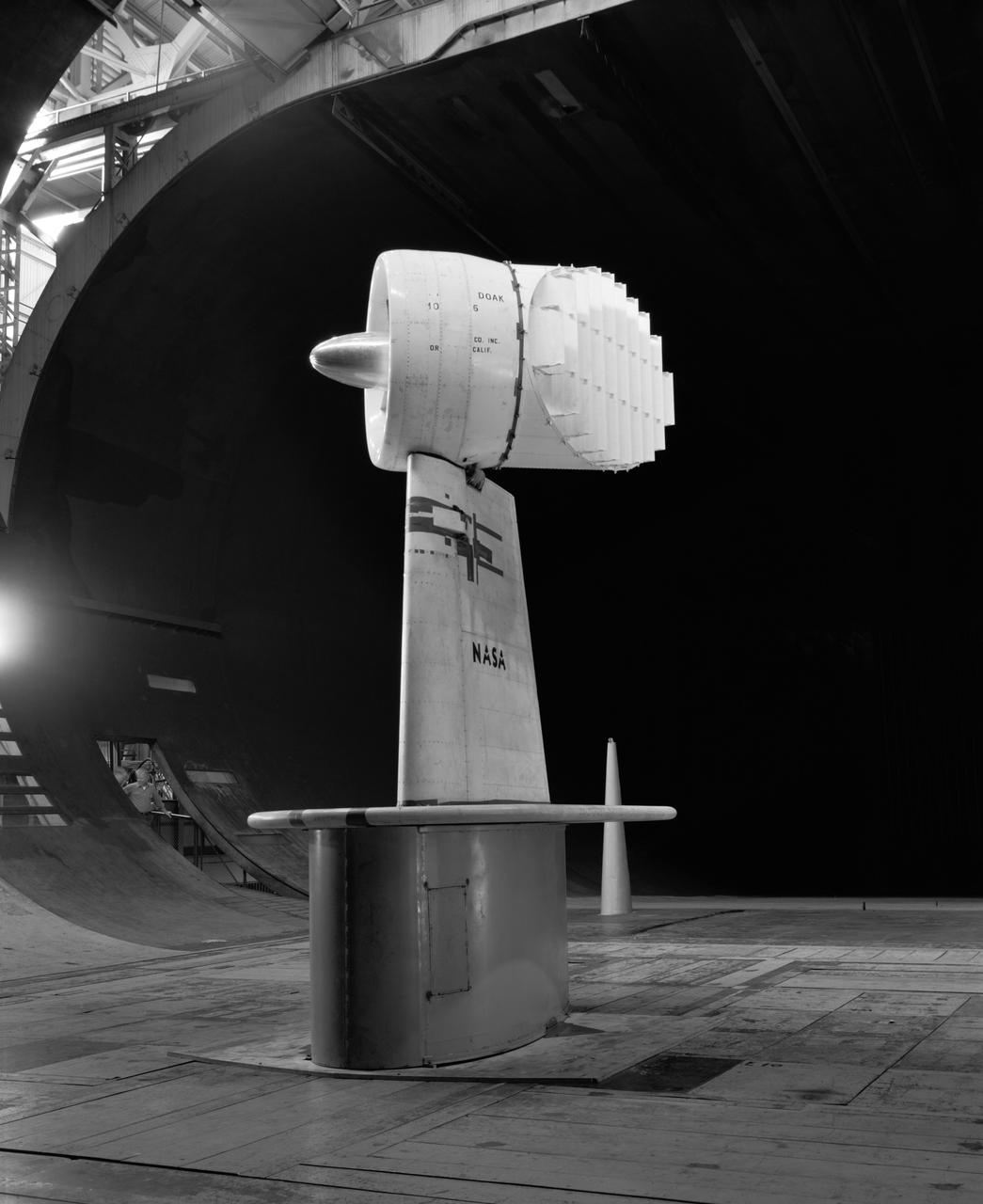
3/4 front, top view of Noriar Lift Engine Pod installation in Ames 40x80 foot wind tunnel
Lift Engine Pod Model
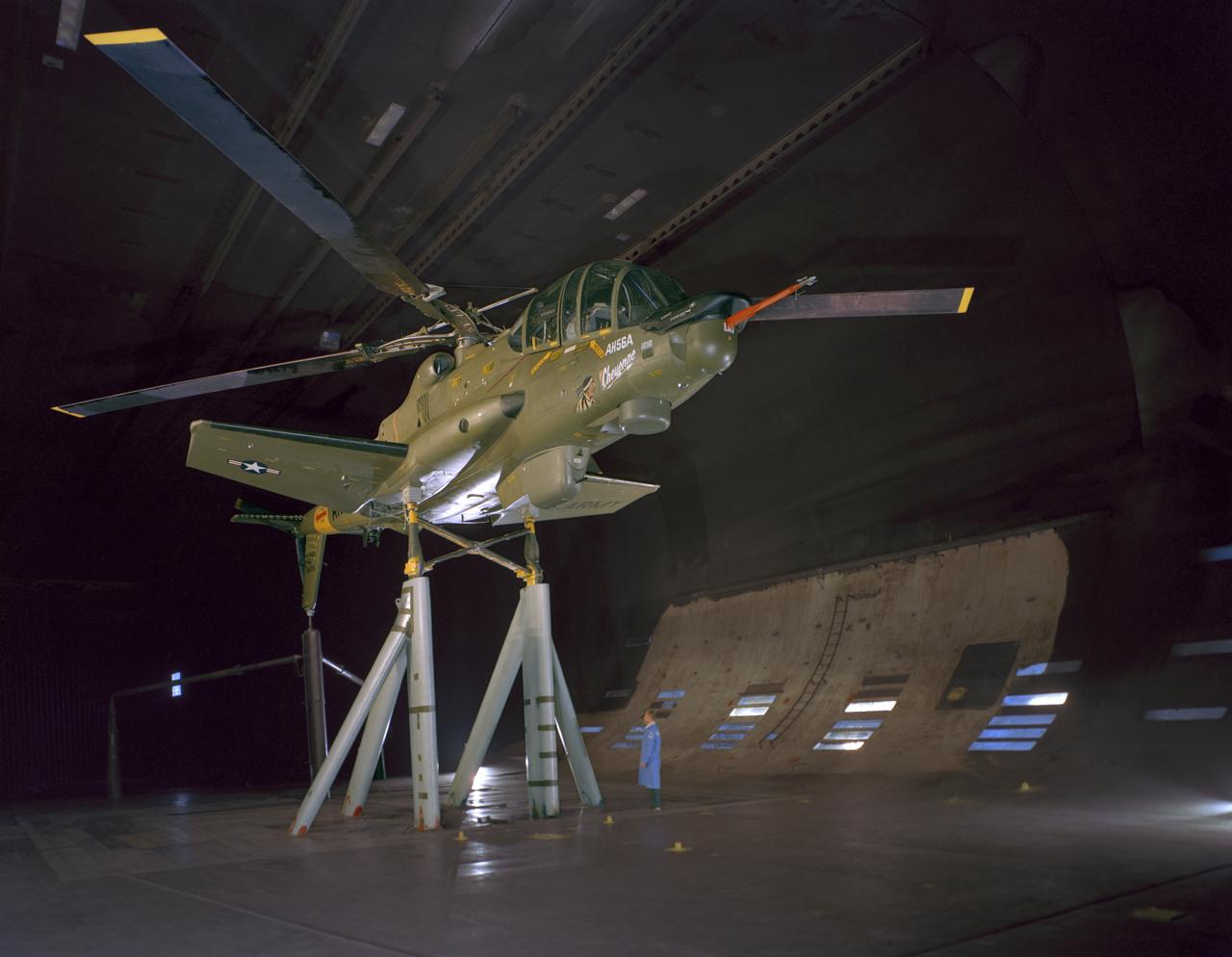
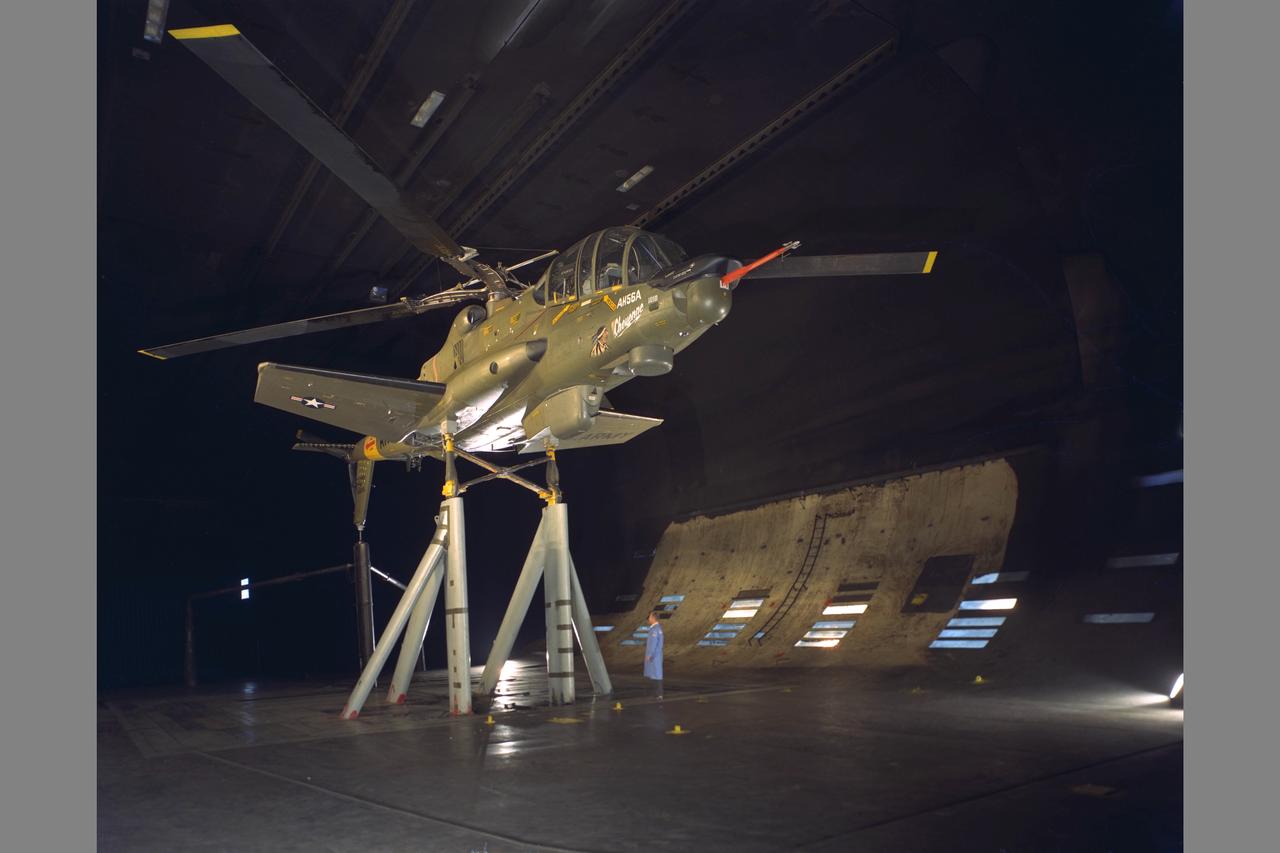
3/4 front view of Lockheed AH-56A (Cheyenne) Helicopter in Ames 40x80 Foot Wind Tunnel
Lockheed AH-56A (Cheyenne) Helicopter in Ames 40x80 Foot Wind Tunnel
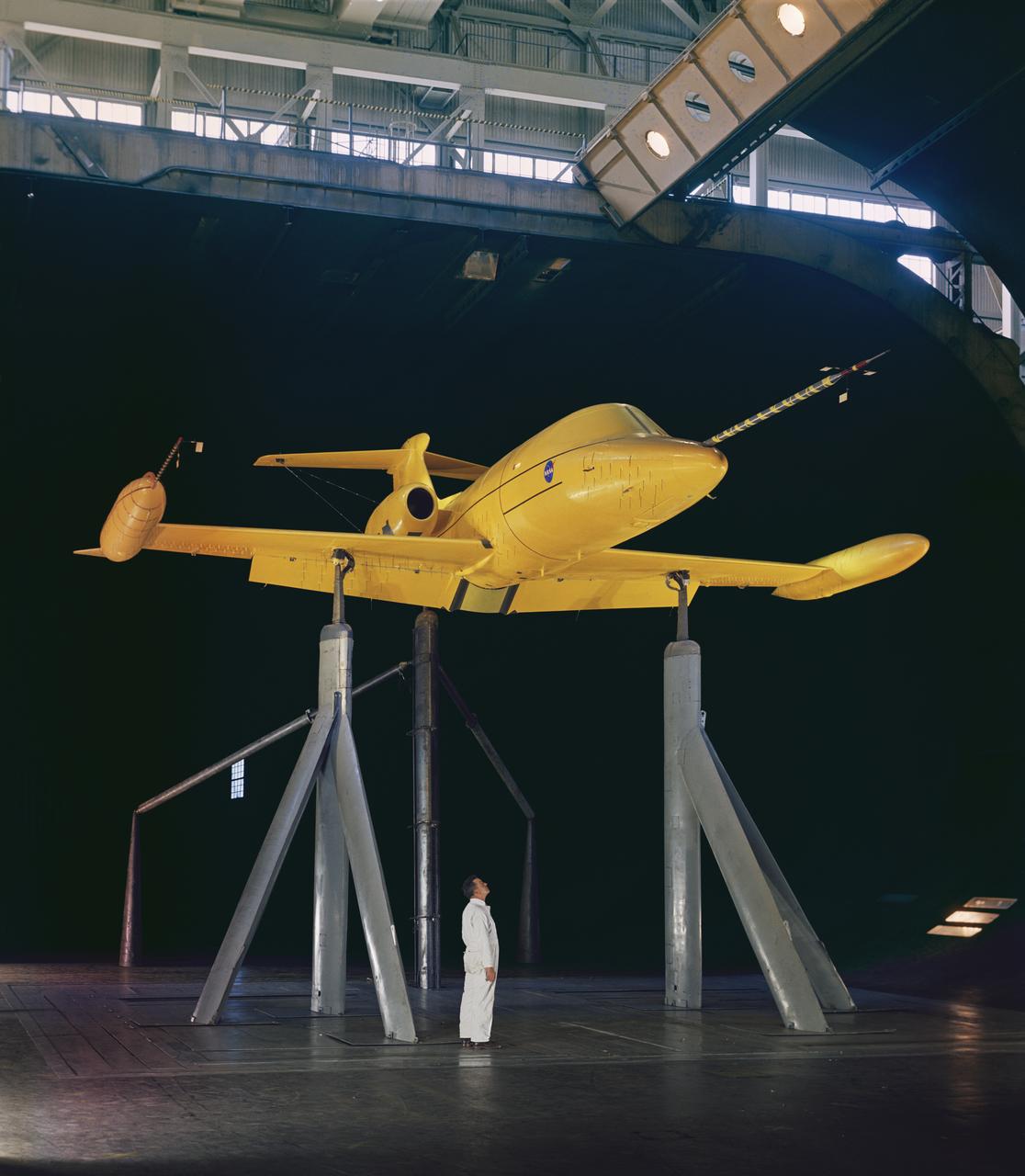
3/4 front view of Lear Jet with Boom installed at 0 degree of attack. Ed Varrette in Photo.
Lear Jet Test in Ames 40x80 Foot Wind Tunnel.
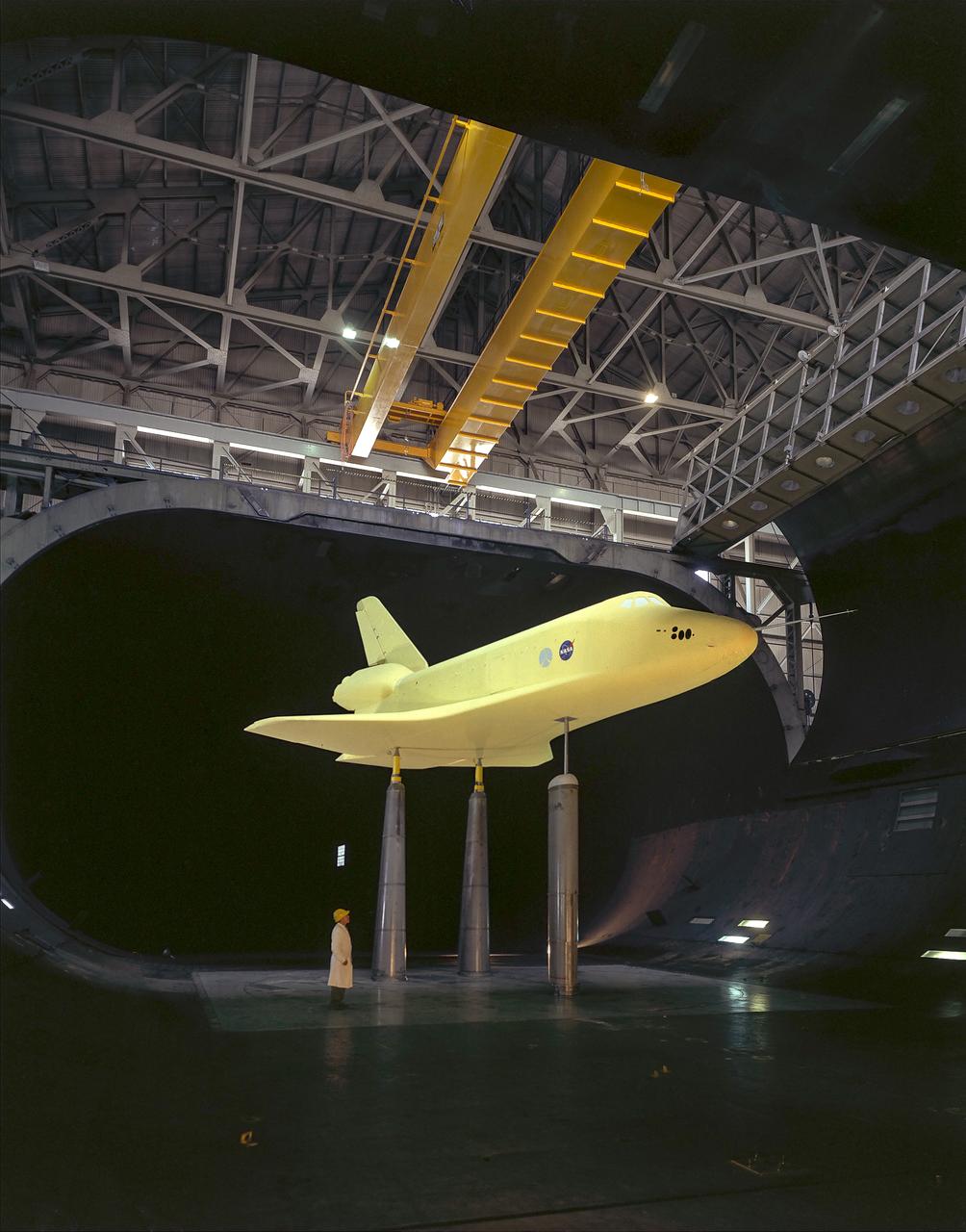
1/3 scale model of space shuttle, 3/4 lower front view, test section overhead doors open.
Space Shuttle SSV Orbiter Model In 40x80 Foot Wind Tunnel.
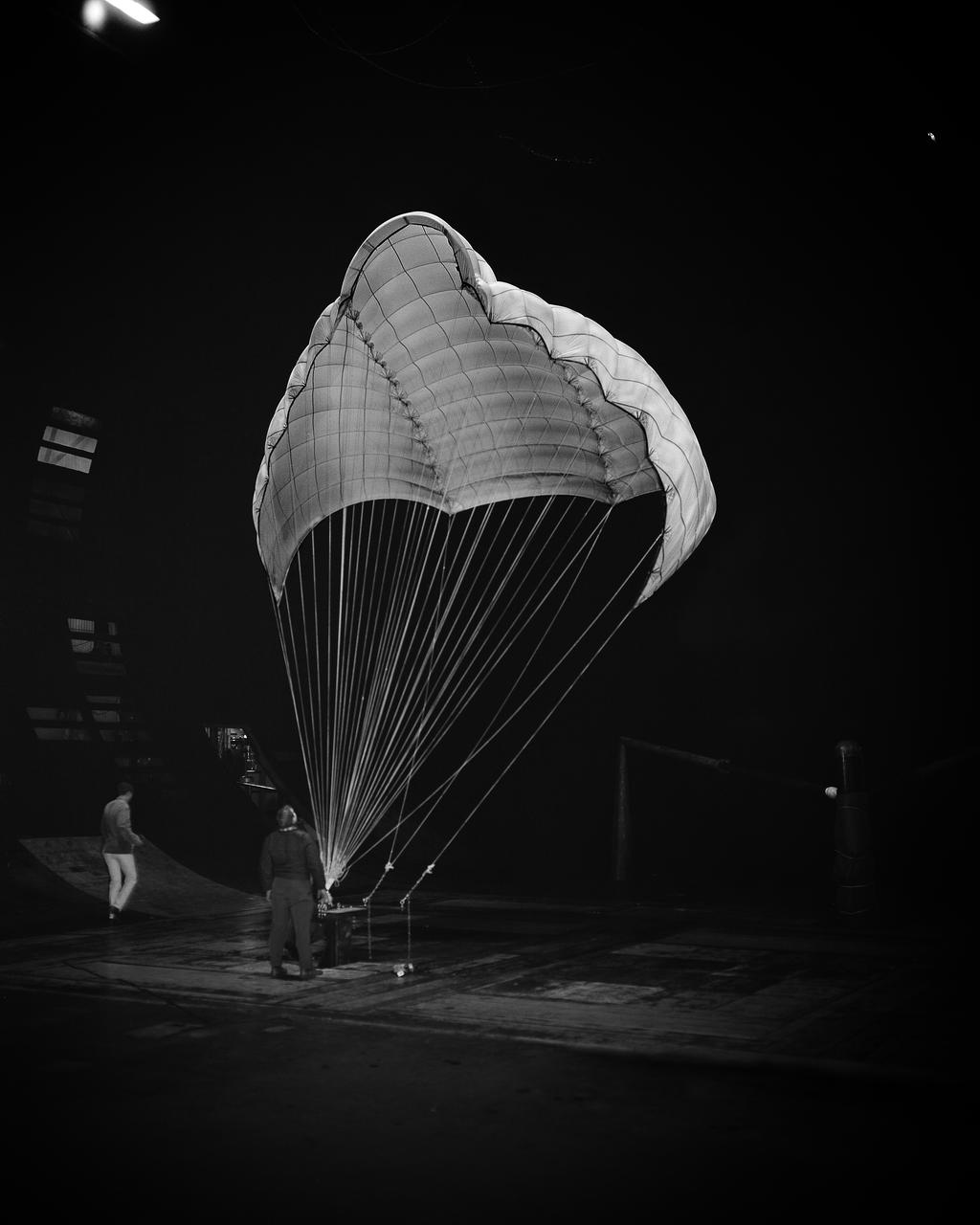
Langley Parawing 3/4 front view flying vertically in 40 x 80 wind tunnel.
Langley Parawing Flying Vertically in 40x80 Foot Wind Tunnel.
3/4 front view of Lockheed Rigid Rotor model in Ames 40x80 foot wind Tunnel.
Lockheed Rigid Rotor Model in Ames 40x80 Foot Wind Tunnel.
3/4 rear view Ryan XV-5A lift-fan VSTOL airplane.  Pictured with Tom Wills.
Ryan XV-5A Lift-Fan VSTOL Airplane in Ames 40x80 foot Wind Tunnel.
3/4 front view of the Lockheed Stopped Rotor with blades unfolded. Charles Greco and Ed Verrette in photo.
Lockheed Stopped Rotor in the Ames 40x80 Foot Wind Tunnel.
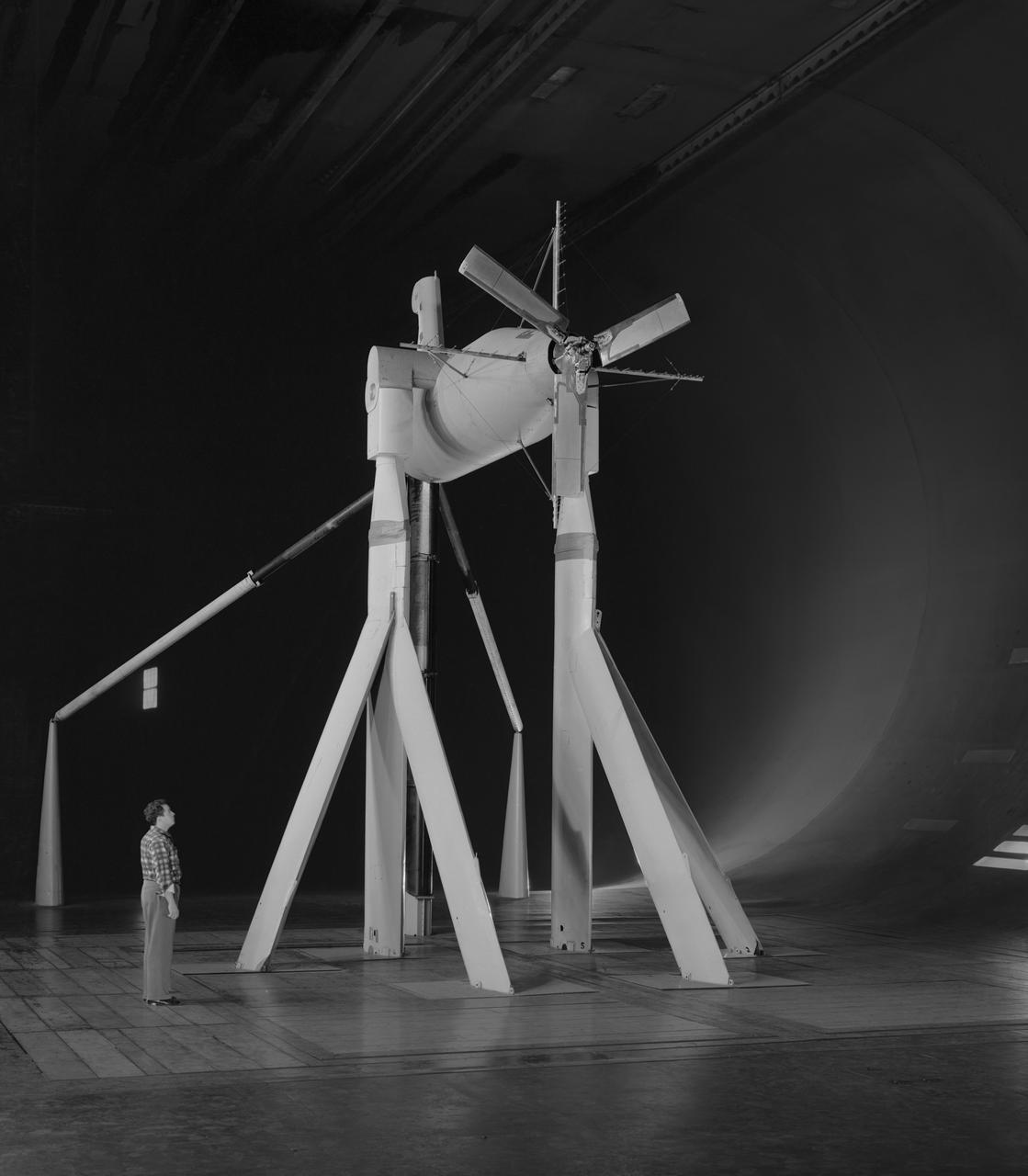
Tandem dual ducted fan mounted on ground plane on varriable height struts, 3/4 front view
Tandem Dual Ducted Fan.
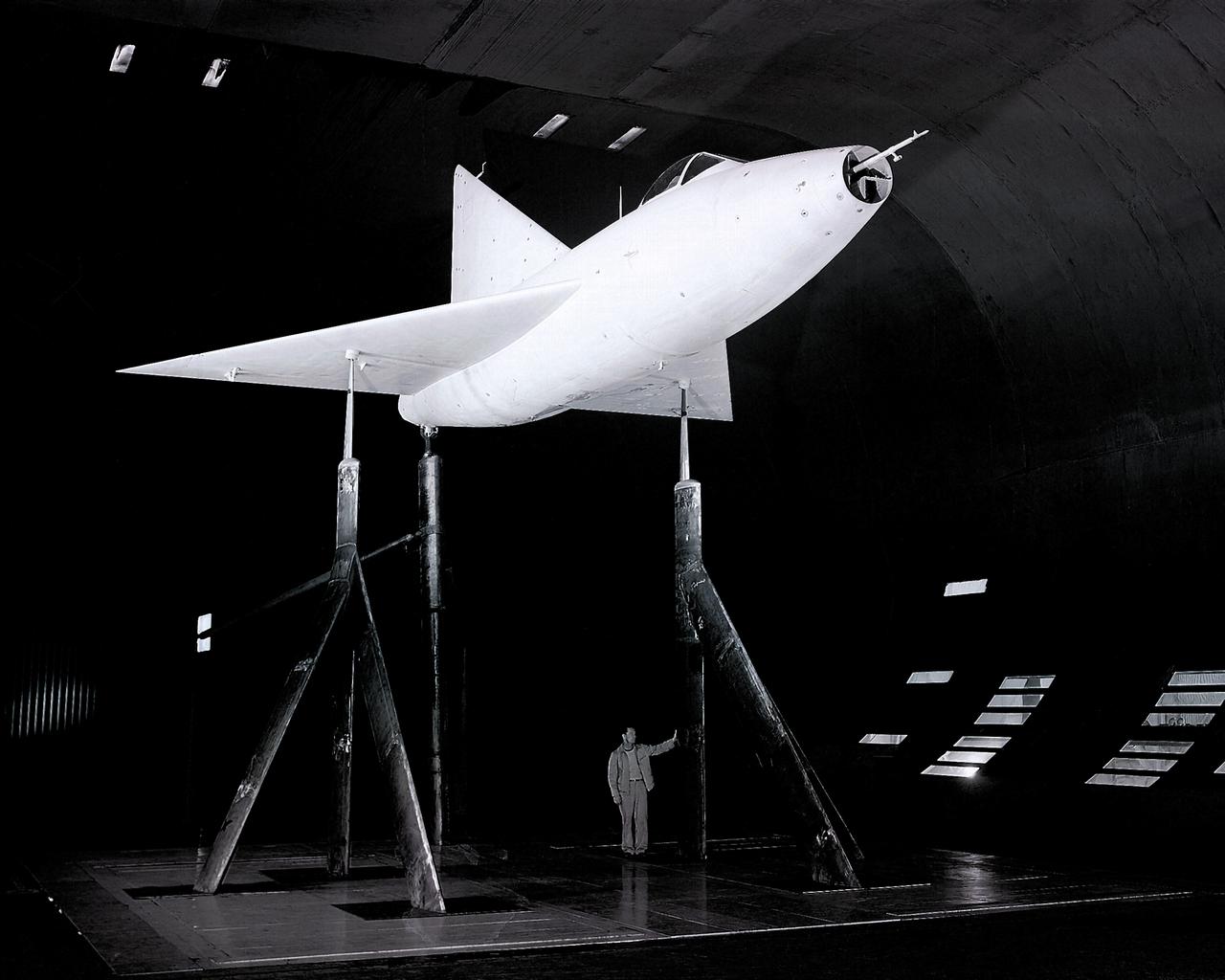
3/4 front view from below of Delta wing Model with Nose Inlet in Ames 40x80 foot wind tunnel.
Delta Wing Test Model in Ames 40x80 Foot Wind Tunnel.
3/4 front view of full scale X-22A ducted fan model.  Chuck Greco
ARC-1964-A-32844
Ames 70 Year Anniversary Exhibit in downtown Mountain View, California. Exhibits at The Boutique 4.
ARC-2009-ACD09-0242-032
Investigation of cambered propeller design for VTOL/STOL airplane. 3/4 front view of complete configuration, 0 deg.
Cambered Propeller Design for VTOL/STOL Airplane.
3/4 front view of full scale X-22A ducted fan model.  Chuck Greco
ARC-1964-A-32845
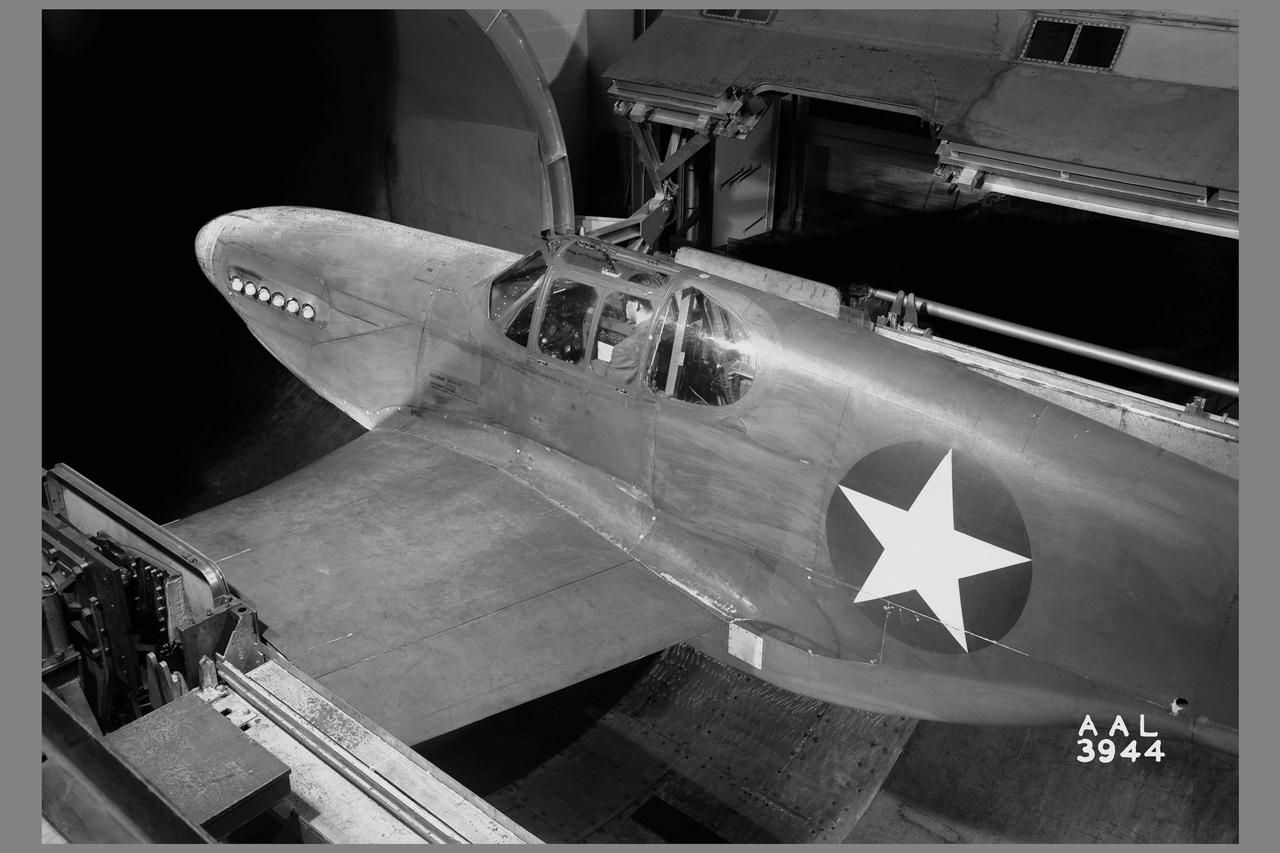
3/4 rear view of a XP-51B airplane mounted  in the 16ft w.t.  (Ames contribution to the solution of the duct-rumble problem)
ARC-1943-AAL-3944
Lockheed AH-56 Helicopter; Cheyenne, 40 x 80 ft. Wind Tunnel. (3/4 front view)
ARC-1969-AC-42561-1
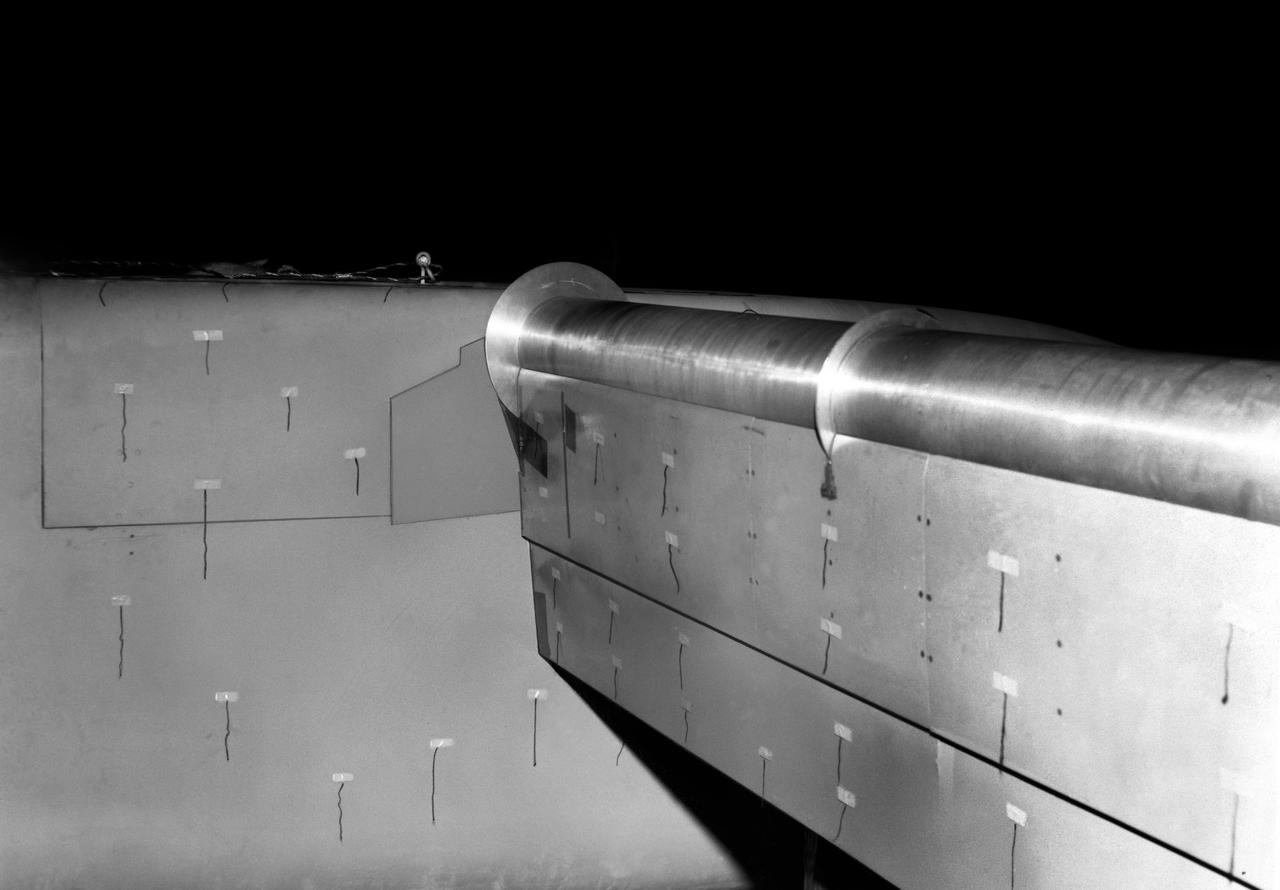
Detail view of 4 propeller model rotating cylinder flap at 90 degrees with yarn tufts attached.
Detail View of Rotating Cylinder Flap in 40x80 Foot Wind Tunnel at NASA Ames.
G.E fan-in-fuselage model (lifting) 3/4 front view of fan at low G.P. position
General Electric Fan-In-Fuselage Model in the 40x80 Foot Wind Tunnel at NASA Ames.
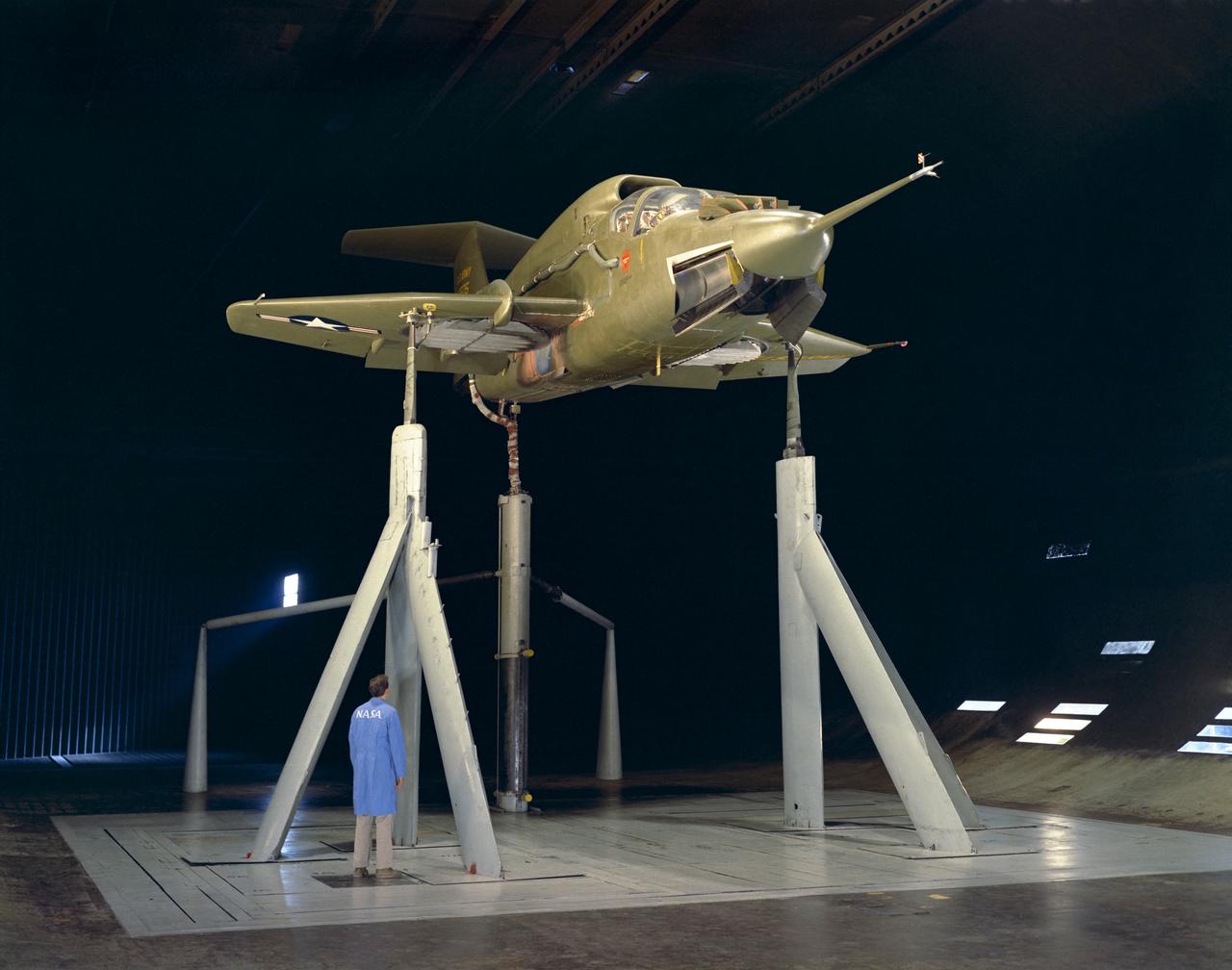
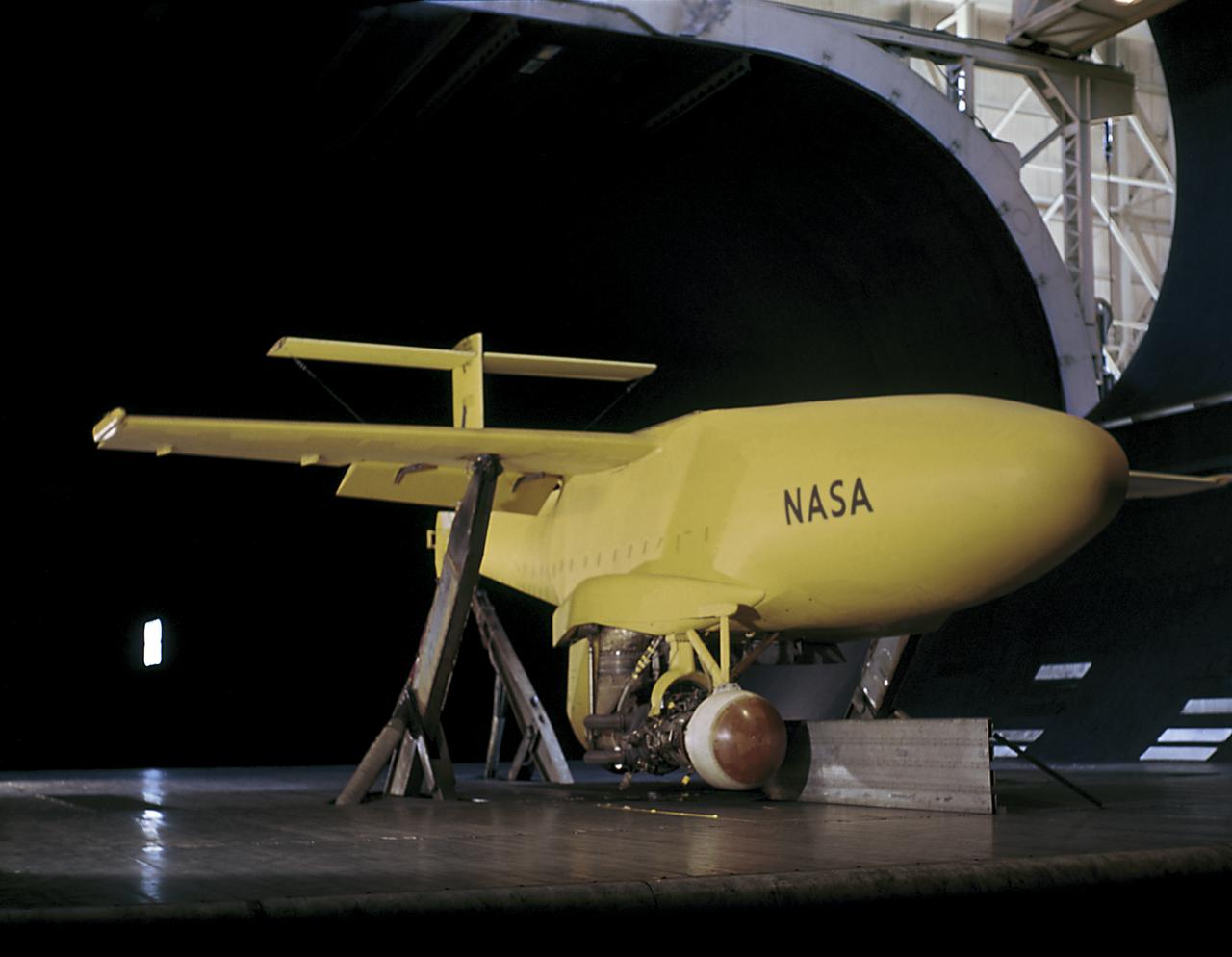
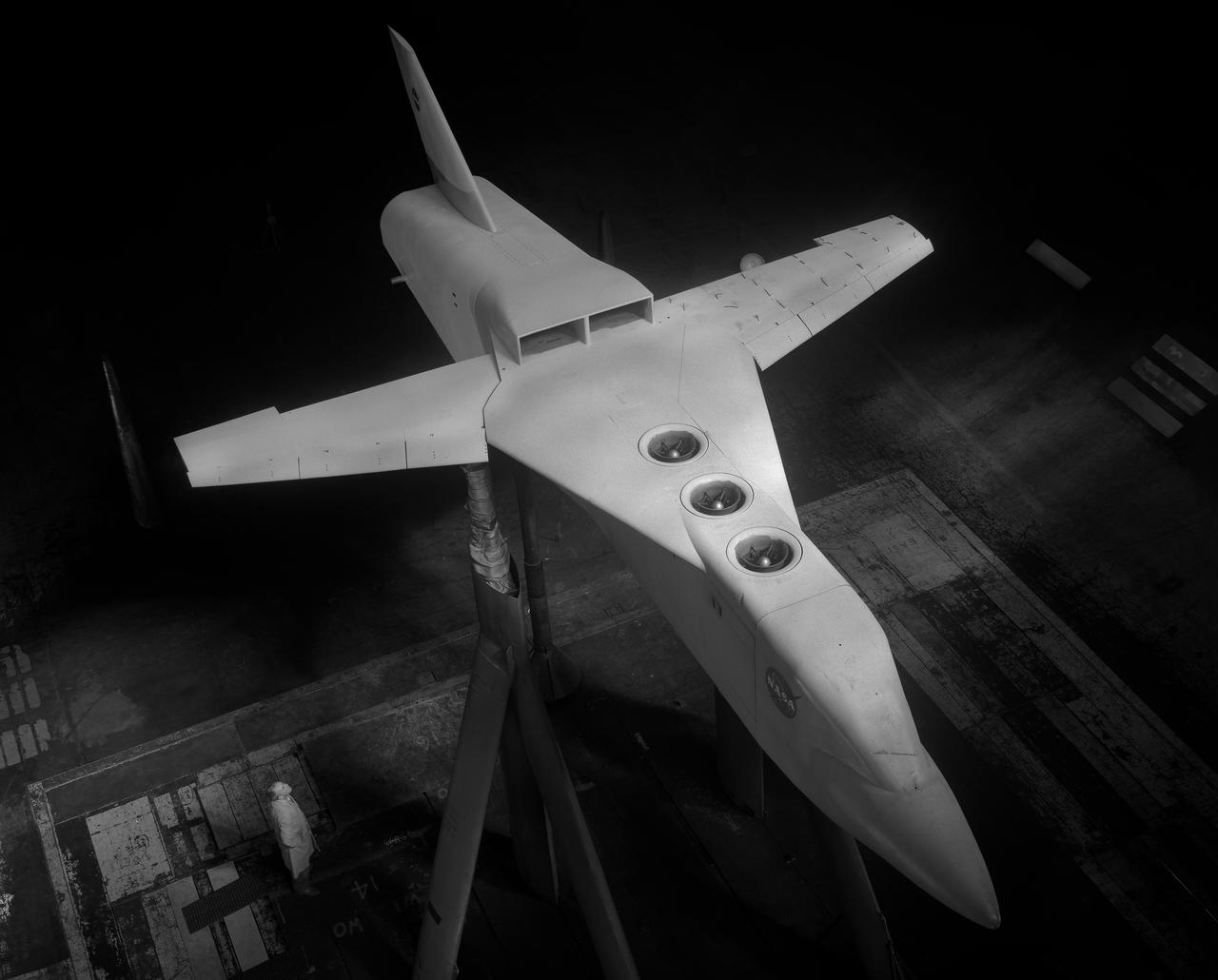
A-38524. Lift engine VSTOL fighter model, 3/4 top front view with jet engines. Edward Varerre, in picture.
Lift engine VSTOL fighter model, with jet engines.
Launch views of the Columbia from Pad 39A starting the STS-4 Mission, 06/27/1982.       KSC, FL
LAUNCH - STS-4 - KSC
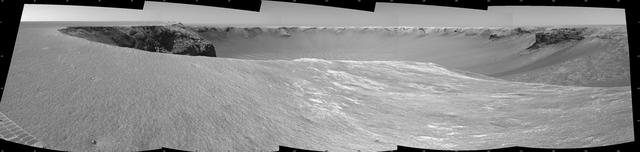
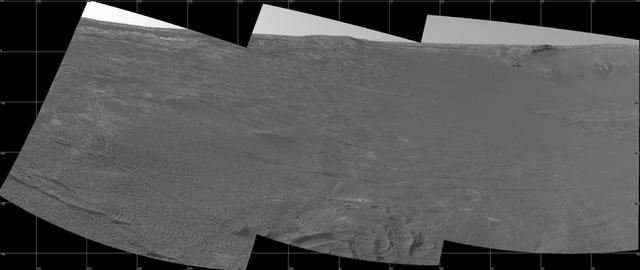
his view of the interior slope and rim of "Endurance Crater" comes from the navigation camera on NASA's Mars Exploration Rover Opportunity with an assist from the European Space Agency's Mars Express orbiter. Opportunity took the three frames that make up this image on the rover's 188th martian day (Aug. 4, 2004), before transmitting this and other data to Mars Express. The orbiter then relayed the data to Earth. Rover wheel tracks are visible in the foreground.  http://photojournal.jpl.nasa.gov/catalog/PIA06758
New Look at "Endurance" via Mars Express
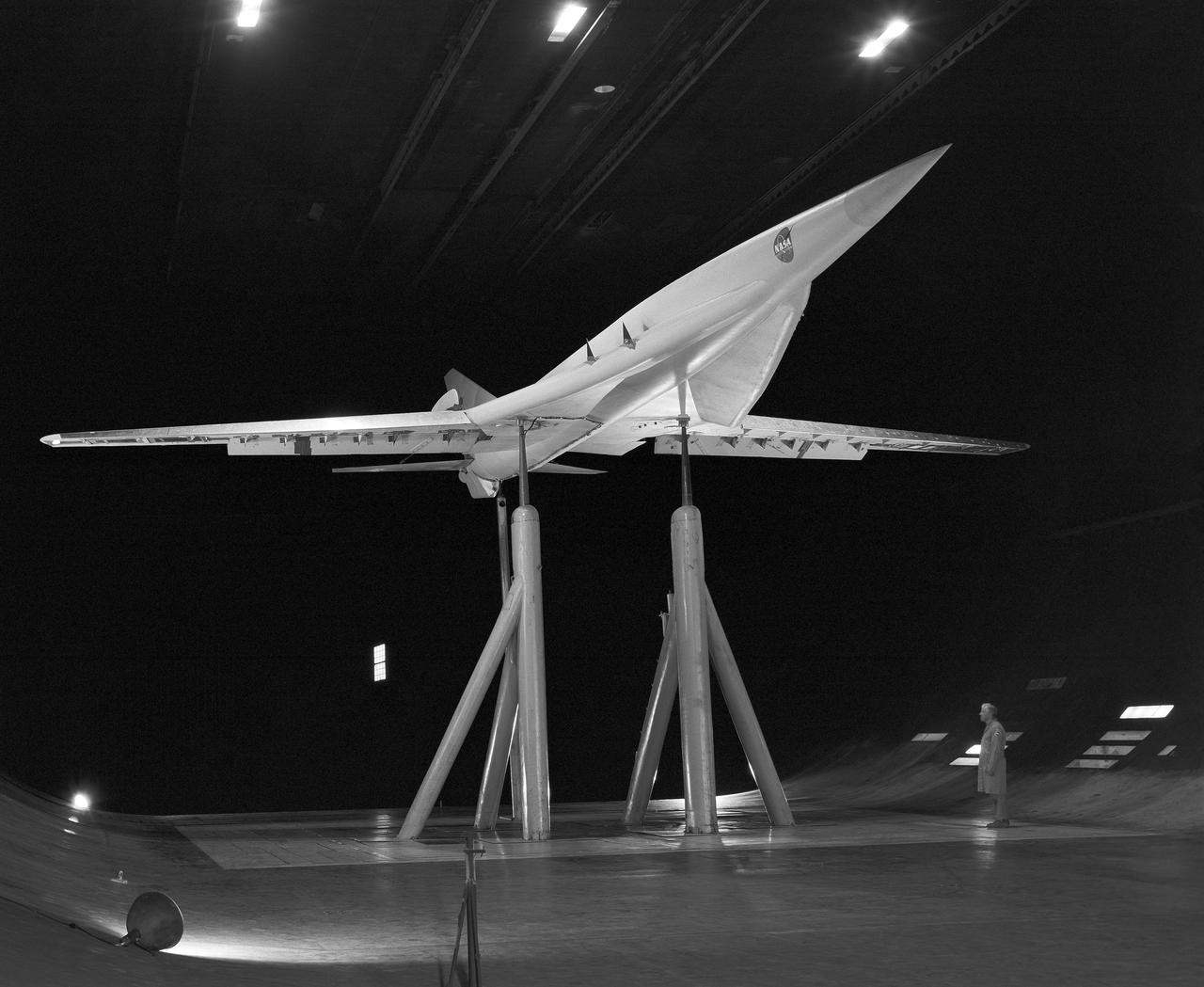
3/4 rear view of SCAT-17 supersonic transport with thrust reverser installed and trailing edge flaps deflected at 30 deg.
SCAT-17 Supersonic Transport in the 40x80 foot wind tunnel at NASA Ames.
Test of Lockheed YC-130 Turbo-Propeller Installation in Ames 40x80 Foot Wind Tunnel. 3/4 front view from below.
Tests of Lockheed YC-130 Turbo-Propeller Installation in Ames 40x80 Foot Wind Tunnel.