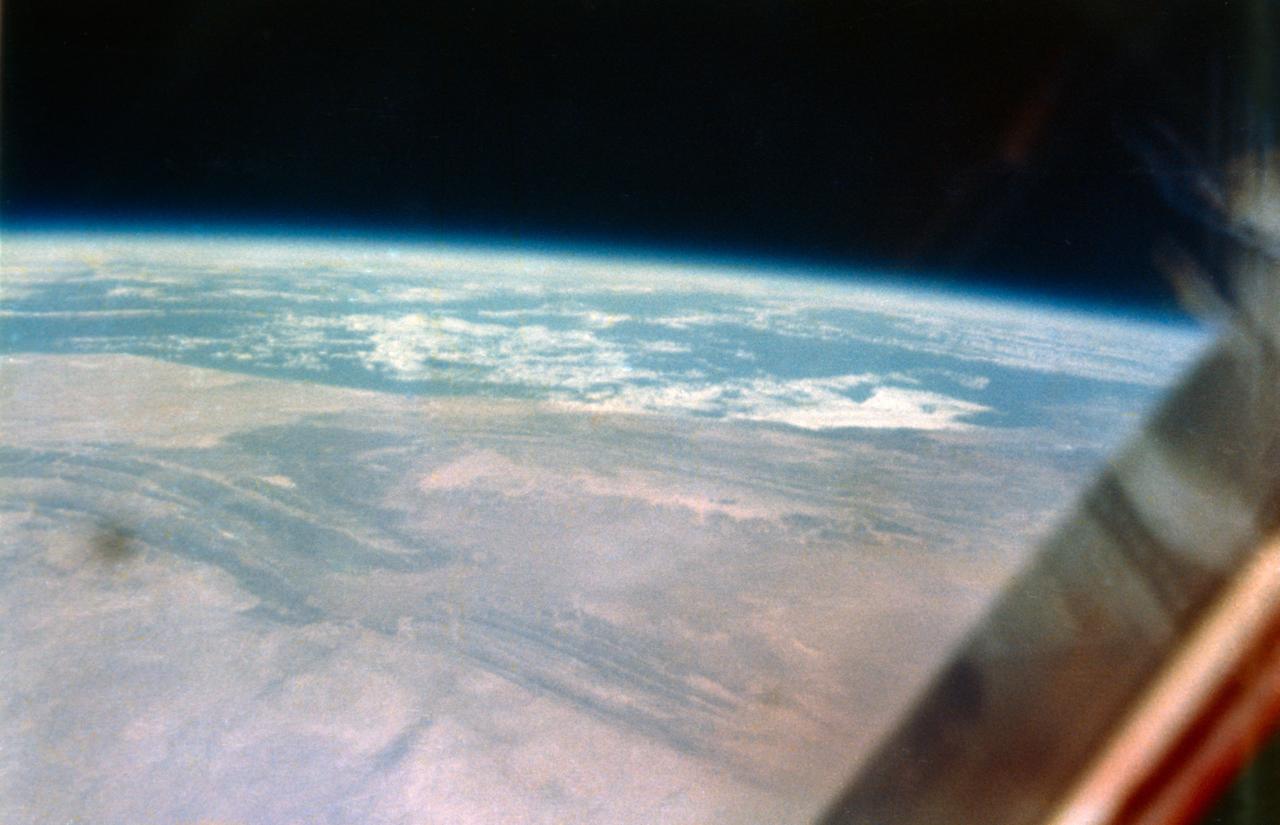
S62-06014 (20 Feb. 1962) --- View of Earth taken by astronaut John H. Glenn Jr. during his Mercury Atlas 6 (MA-6) spaceflight. Photo credit: NASA
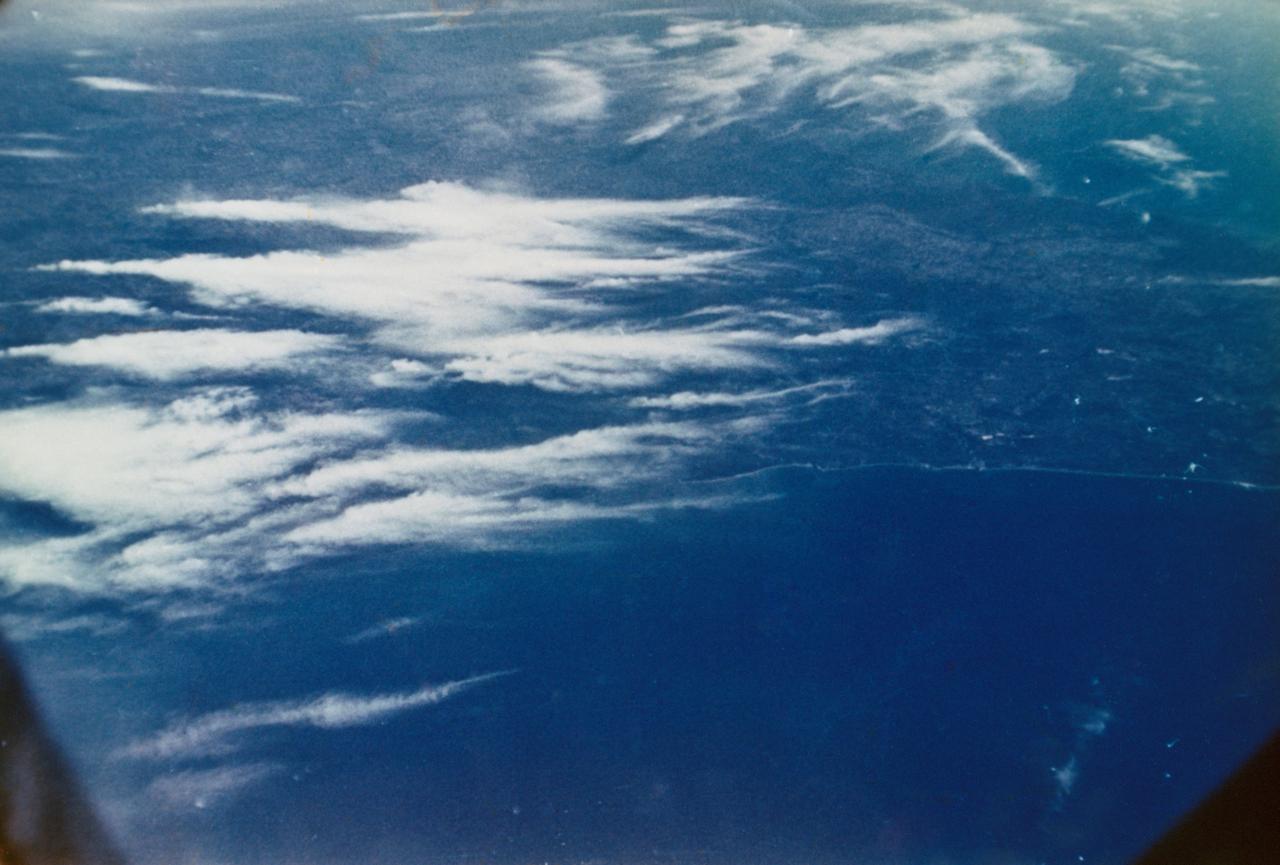
S88-50997 (20 Feb. 1962) --- View of Earth taken by astronaut John H. Glenn Jr. during his Mercury Atlas 6 (MA-6) spaceflight. Photo credit: NASA
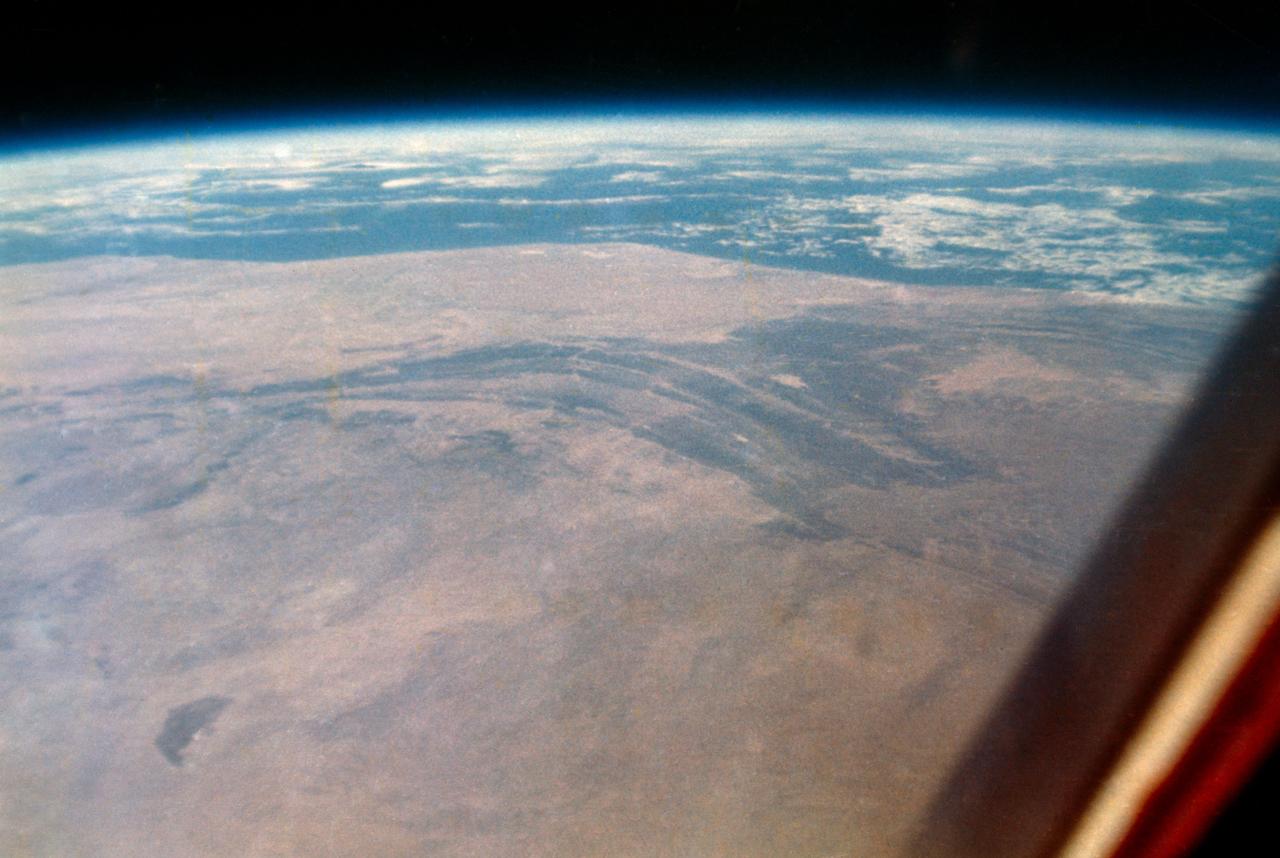
S62-06018 (20 Feb. 1962) --- View of Earth taken by astronaut John H. Glenn Jr. during his Mercury Atlas 6 (MA-6) spaceflight. Photo credit: NASA
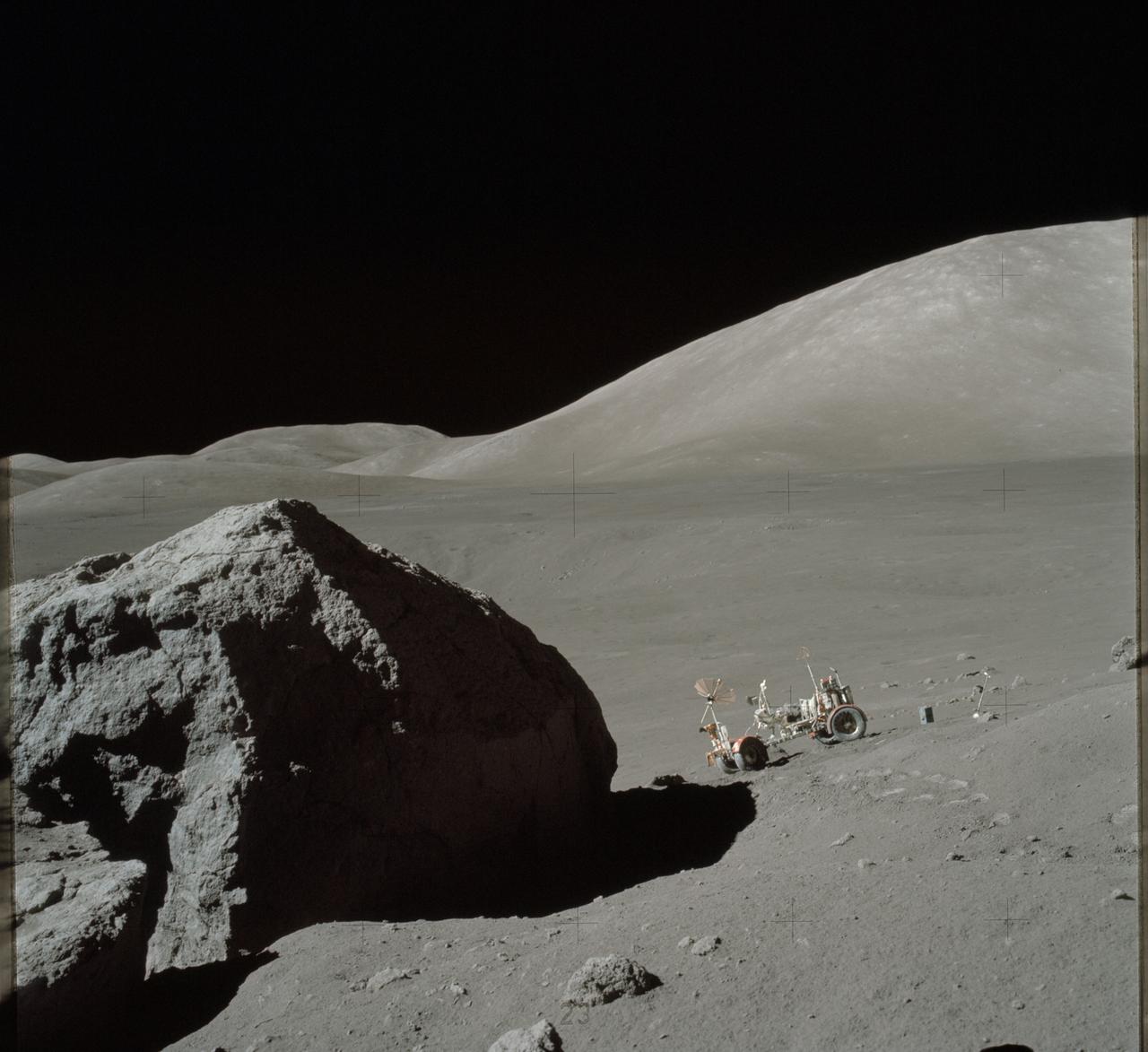
AS17-140-21494 (13 Dec. 1972) --- This view shows the Lunar Roving Vehicle (LRV) parked by an outcrop of rocks by astronauts Eugene A. Cernan and Harrison H. (Jack) Schmitt during their visit to extravehicular activity Station 6 (Henry Crater).
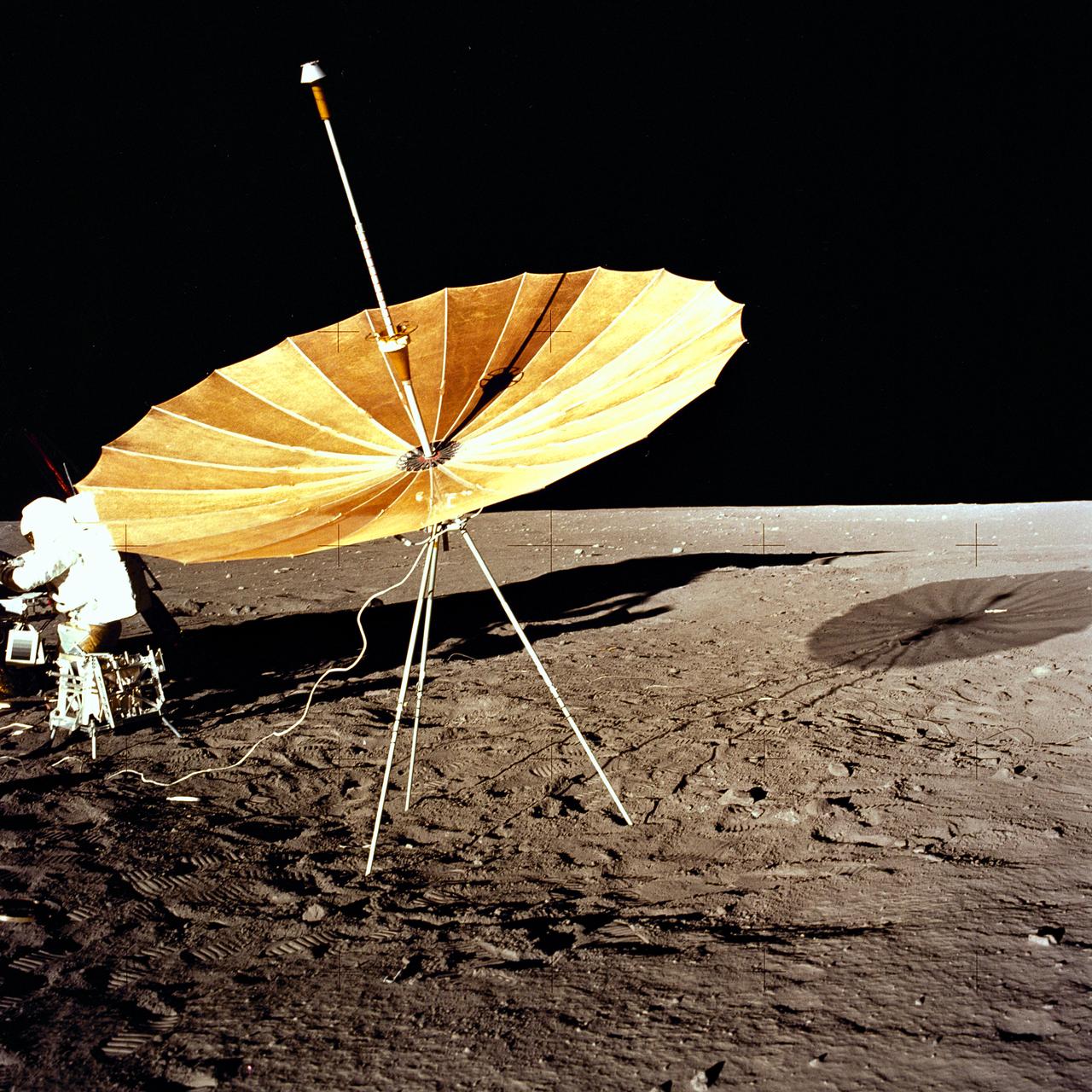
The second manned lunar landing mission, Apollo 12 launched from launch pad 39-A at Kennedy Space Center in Florida on November 14, 1969 via a Saturn V launch vehicle. The Saturn V vehicle was developed by the Marshall Space Flight Center (MSFC) under the direction of Dr. Wernher von Braun. Aboard Apollo 12 was a crew of three astronauts: Alan L. Bean, pilot of the Lunar Module (LM), Intrepid; Richard Gordon, pilot of the Command Module (CM), Yankee Clipper; and Spacecraft Commander Charles Conrad. The LM, Intrepid, landed astronauts Conrad and Bean on the lunar surface in what’s known as the Ocean of Storms while astronaut Richard Gordon piloted the CM, Yankee Clipper, in a parking orbit around the Moon. Lunar soil activities included the deployment of the Apollo Lunar Surface Experiments Package (ALSEP), finding the unmanned Surveyor 3 that landed on the Moon on April 19, 1967, and collecting 75 pounds (34 kilograms) of rock samples. This is the sixth of 25 images captured by the crew in attempt to provide a 360 degree Lunar surface scene. Apollo 12 safely returned to Earth on November 24, 1969.
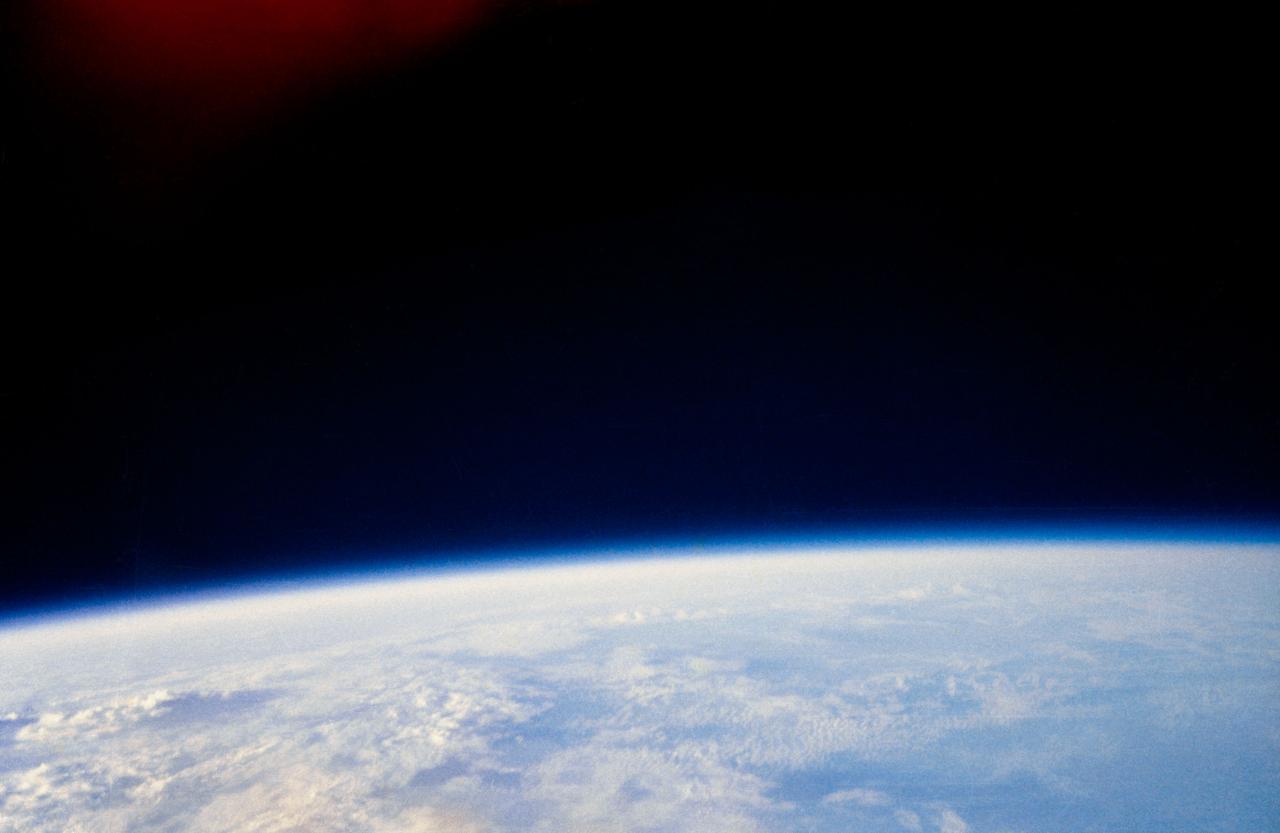
S62-06021 (20 Feb. 1962) --- A view of clouds over the Indian Ocean as photographed by astronaut John H. Glenn Jr. aboard the "Friendship 7" spacecraft during his Mercury Atlas 6 (MA-6) spaceflight on Feb. 20, 1962. The cloud panorama illustrates the visibility of different cloud types and weather patterns. Shadows produced by the rising sun aid in the determination of relative cloud heights. Photo credit: NASA
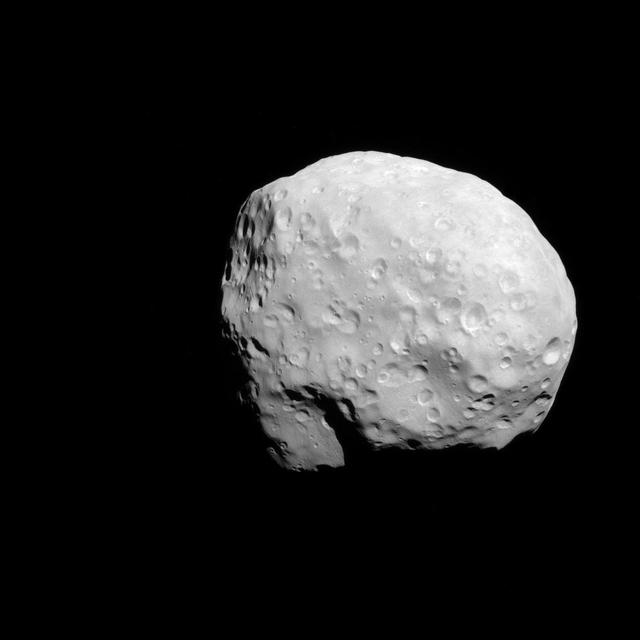
NASA Cassini spacecraft captured this view of Saturn moon Epimetheus 116 kilometers, or 72 miles across during a moderately close flyby on Dec. 6, 2015. This is one of Cassini highest resolution views of the small moon.
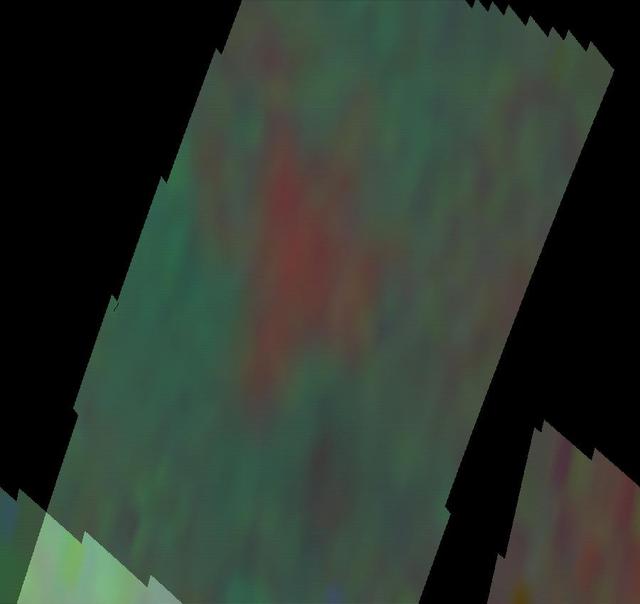
These views of Callisto southern hemisphere were taken by NASA Galileo spacecraft on May 6, 1997. The upper left view contains Buri, a crater with a diameter of about 60 km.
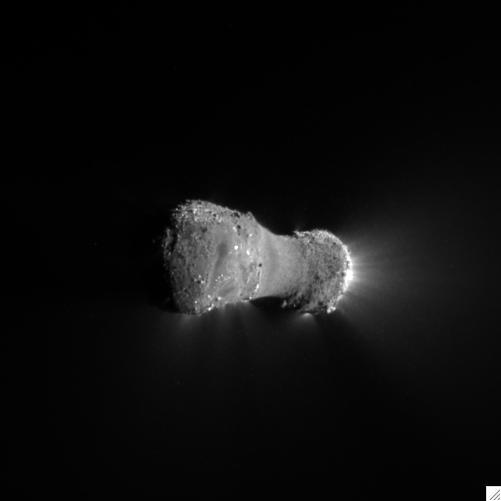
This close-up view of comet Hartley 2 was taken as NASA EPOXI mission approached the comet at 6:59 a.m. PDT 9:59 a.m. EDT.
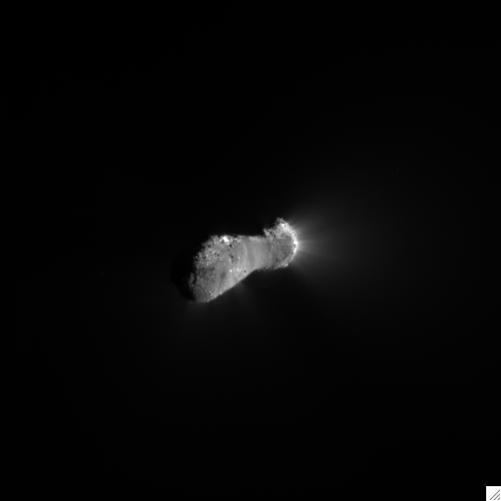
This close-up view of comet Hartley 2 was taken as NASA EPOXI mission approached the comet at 6:58 a.m. PDT 9:58 a.m. EDT.
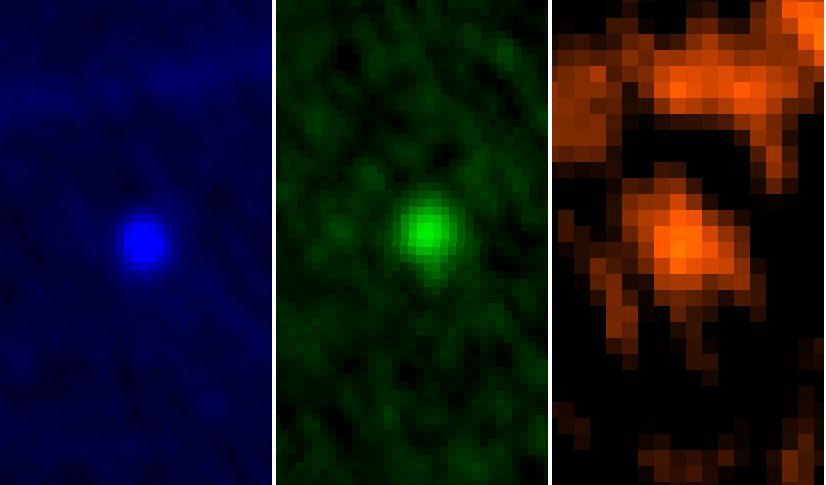
ESA Herschel Space Observatory captured asteroid Apophis in its field of view during the approach to Earth on Jan. 5 and 6, 2013.
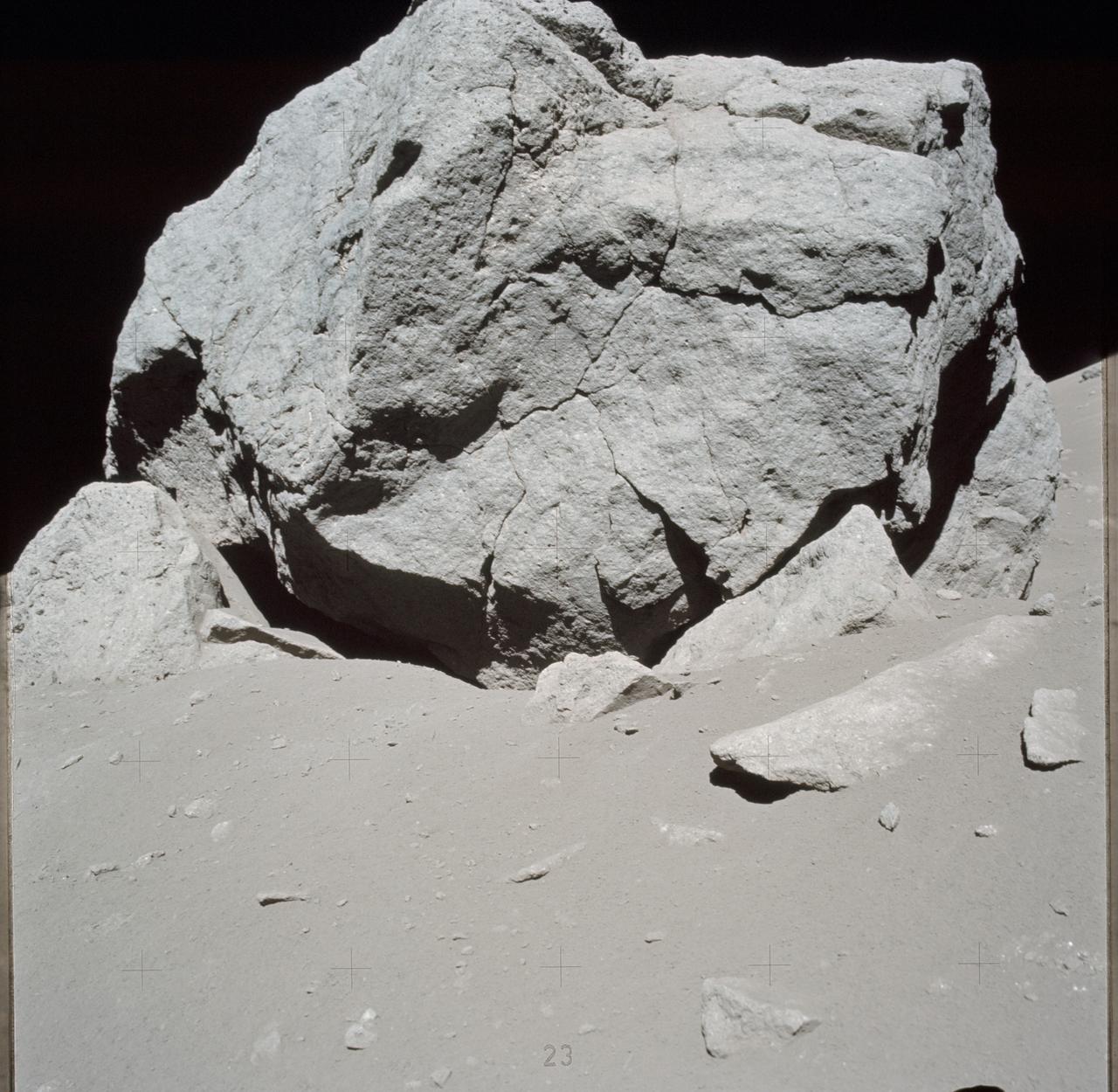
AS17-140-21438 (7-19 Dec. 1972) --- This 70mm frame features a close-up view of a large multi-cracked boulder discovered by astronauts Eugene A. Cernan, commander, and Harrison H. (Jack) Schmitt, lunar module pilot, during their visit to extravehicular activity (EVA) Station 6. This boulder, referred to as number two, provided several samples for the crew members' record-setting volume of rock collections. While astronauts Cernan and Schmitt descended in the Lunar Module (LM) "Challenger" to explore the Taurus-Littrow region of the moon, astronaut Ronald E. Evans, command module pilot, remained with the Command and Service Modules (CSM) "America" in lunar orbit. Cernan and Schmitt were the last crew members to explore the moon in the Apollo Program.
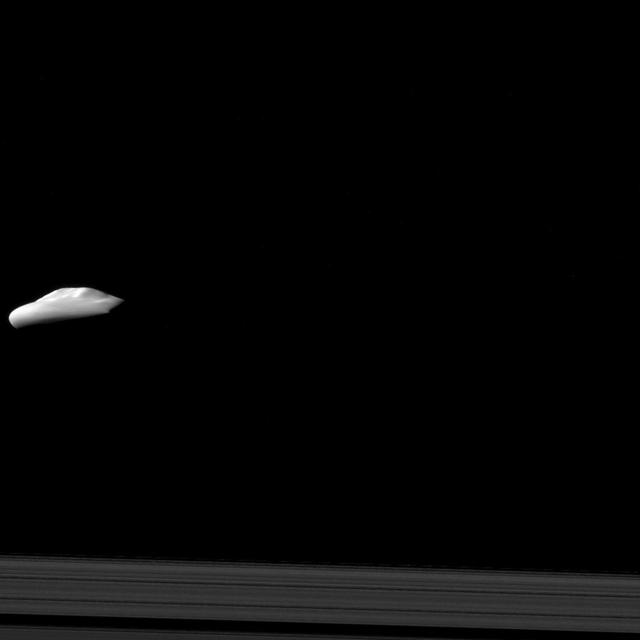
NASA Cassini spacecraft captured this view of Saturn moon Atlas 30 kilometers, or 19 miles across, with its smooth equatorial ridge, during a moderately close flyby on Dec. 6, 2015. The view offers one of Cassini best glimpses of Atlas.
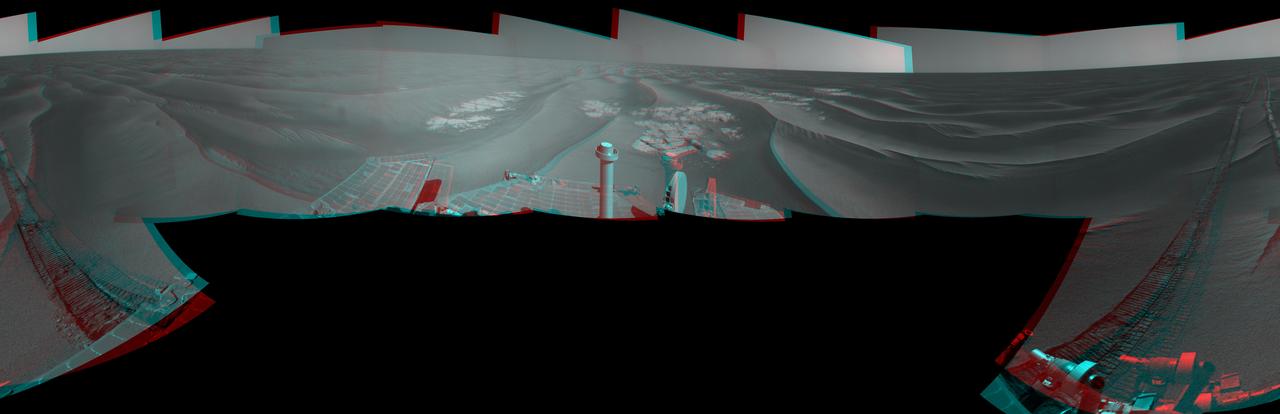
NASA Mars Exploration Rover Opportunity combined images into this stereo, 360-degree view on April 22, 2010. This site is about 6 kilometers 3.7 miles south-southwest of Victoria Crater. 3D glasses are necessary to view this image.

This stereo view from NASA Opportunity rover shows Lunokhod 2 Crater, which lies south of Solander Point on the west rim of Endeavour Crater. Lunokhod 2 Crater is approximately 20 feet 6 meters in diameter.
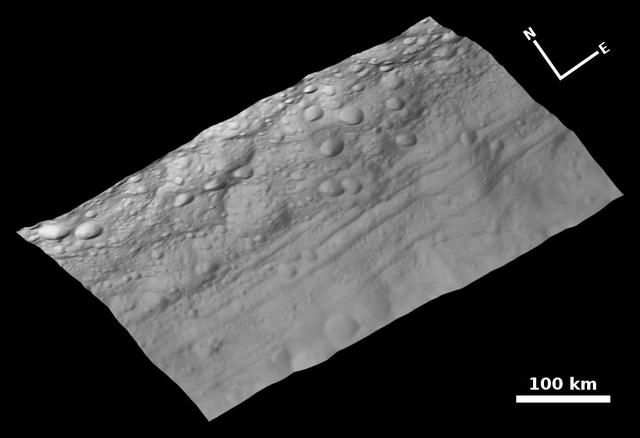
This view of the topography of asteroid Vesta surface is composed of several images obtained with the clear filter in the framing camera on NASA Dawn spacecraft on August 6, 2011. The image has a resolution of about 260 meters per pixel.

This vertical profile view from the Tropospheric Emission Spectrometer TES instrument on NASA Aura satellite depicts the distribution of water vapor molecules over Earth tropics across one transect of the satellite orbit on January 6, 2006.
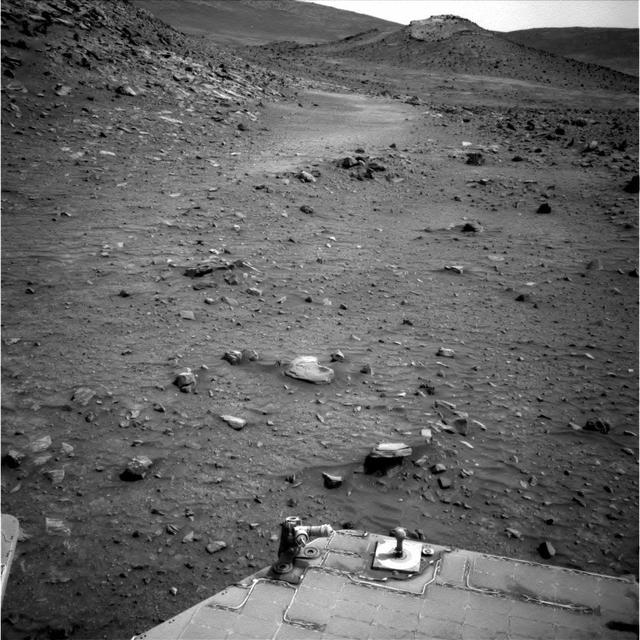
NASA Mars Exploration Rover Spirit used its rear hazard avoidance camera to take this view toward the south during the 1,899th Martian day, or sol, of Spirit mission on Mars May 6, 2009.
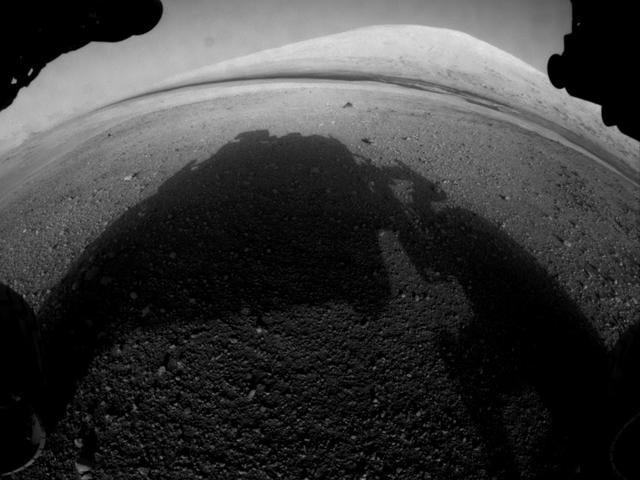
This full-resolution image shows one of the first views from NASA Curiosity rover, which landed on Mars the evening of Aug. 5 PDT early morning hours Aug. 6 EDT.
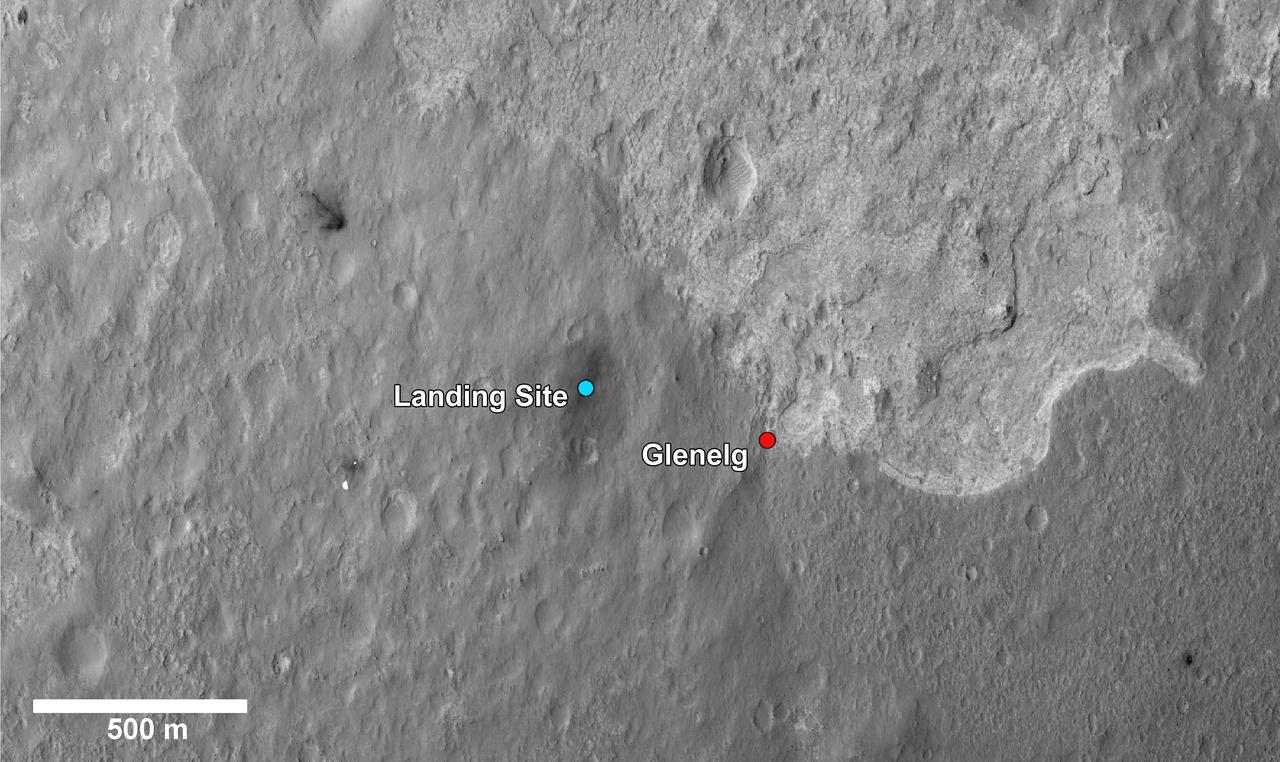
This image shows a closer view of the landing site of NASA Curiosity rover and a destination nearby known as Glenelg. Curiosity landed inside Gale Crater on Mars on Aug. 5 PDT Aug. 6 EDT at the blue dot.
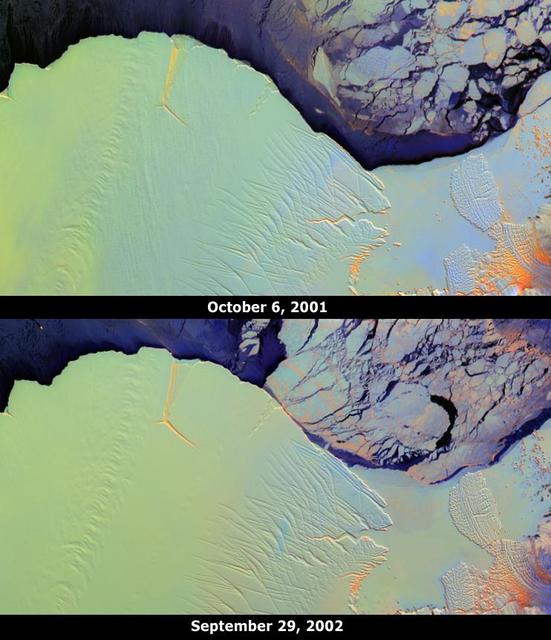
These images from NASA Terra satellite portray the Amery Ice Shelf front on October 6, 2001 top and September 29, 2002 bottom, and illustrate changes that took place over the year elapsed between the two views.
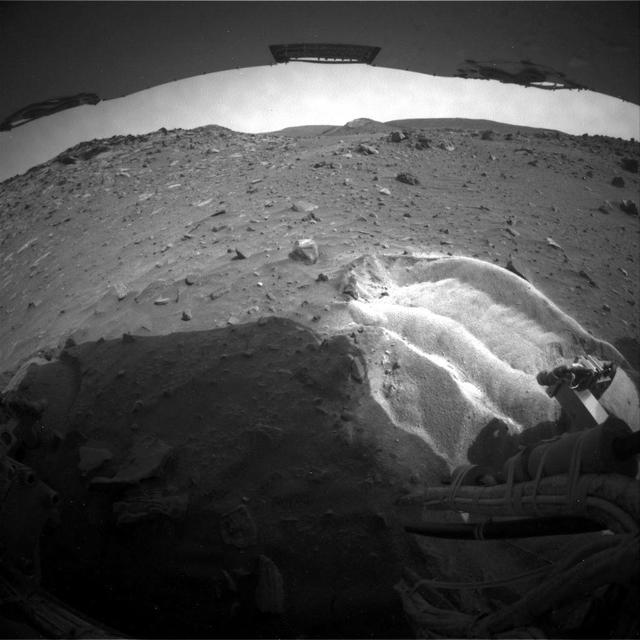
NASA Mars Exploration Rover Spirit used its rear hazard avoidance camera to take this view toward the south during the 1,899th Martian day, or sol, of Spirit mission on Mars May 6, 2009.
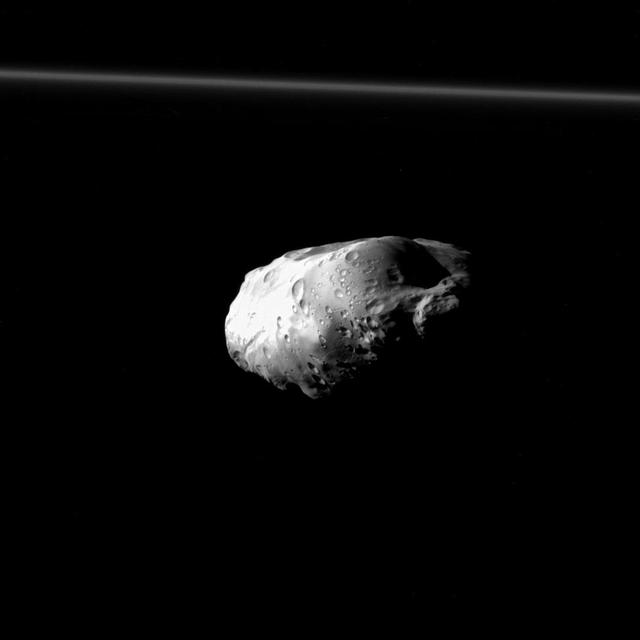
NASA Cassini spacecraft spied details on the pockmarked surface of Saturn moon Prometheus 86 kilometers, or 53 miles across during a moderately close flyby on Dec. 6, 2015. This is one of Cassini highest resolution views of Prometheus.
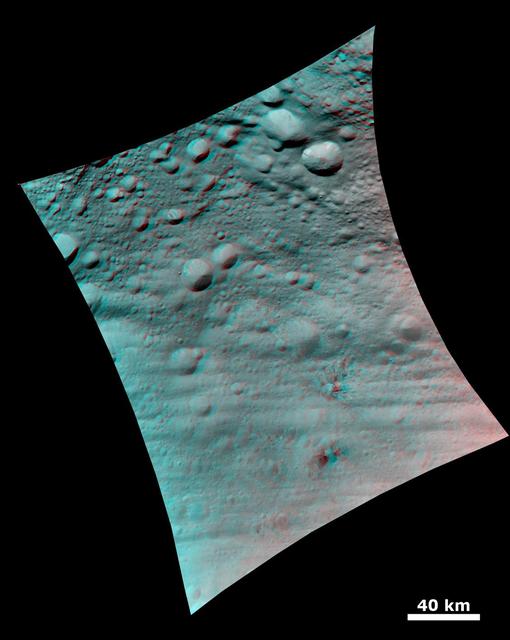
This 3D image shows the topography of Vesta densely cratered terrain obtained by the framing camera instrument aboard NASA Dawn spacecraft on August 6, 2011. You need 3D glasses to view this image.

This dramatic view of the crescents of Neptune and Triton was acquired by Voyager 2 approximately 3 days, 6 and one-half hours after its closest approach to Neptune north is to the right.
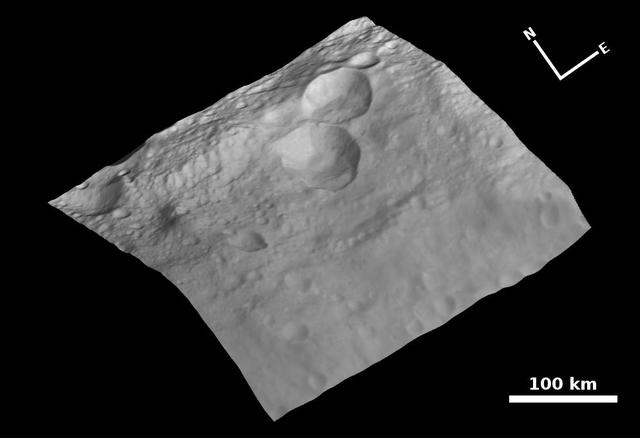
This view of the topography of asteroid Vesta surface is composed of several images obtained with the framing camera on NASA Dawn spacecraft on August 6, 2011. The image mosaic is shown superimposed on a digital terrain model.

At the center of this view of an area of mid-latitude northern Mars, a fresh crater about 6 meters 20 feet in diameter holds an exposure of bright material, blue in this false-color image observed by NASA Mars Reconnaissance Orbiter.
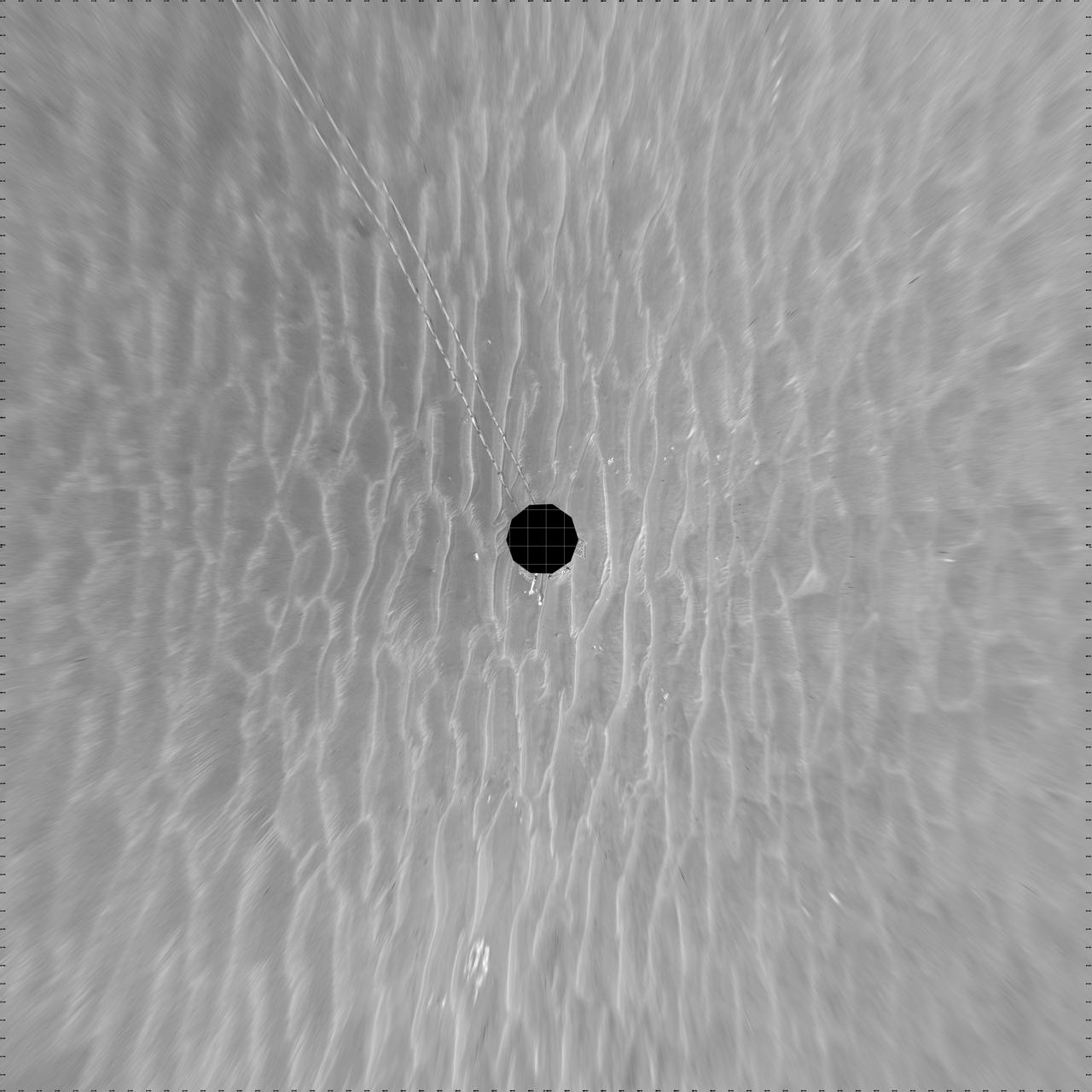
NASA's Mars Exploration Rover Opportunity used its navigation camera to take the images combined into this 360-degree view of the rover's surroundings on the 397th martian day, or sol, of its surface mission (March 6, 2005). Opportunity had completed a drive of 124 meters (407 feet) across the rippled flatland of the Meridiani Planum region on the previous sol, but did not drive on this sol. This location is catalogued as Opportunity's site 48. The view is presented here as a vertical projection with geometric and brightness seam correction. http://photojournal.jpl.nasa.gov/catalog/PIA07463
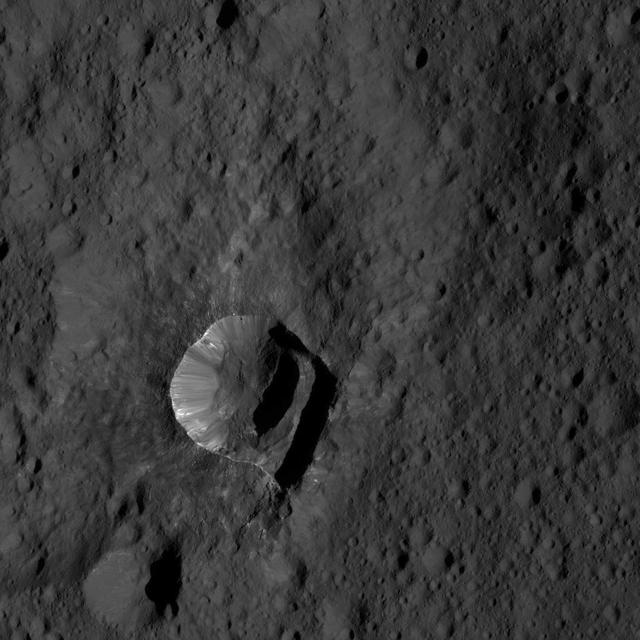
NASA's Dawn spacecraft views Oxo Crater (6 miles, 10 kilometers wide) in this view from Ceres. Dawn took this image on June 4, 2016, from its low-altitude mapping orbit, at a distance of about 240 miles (385 kilometers) above the surface. The image resolution is 120 feet (35 meters) per pixel. http://photojournal.jpl.nasa.gov/catalog/PIA20950
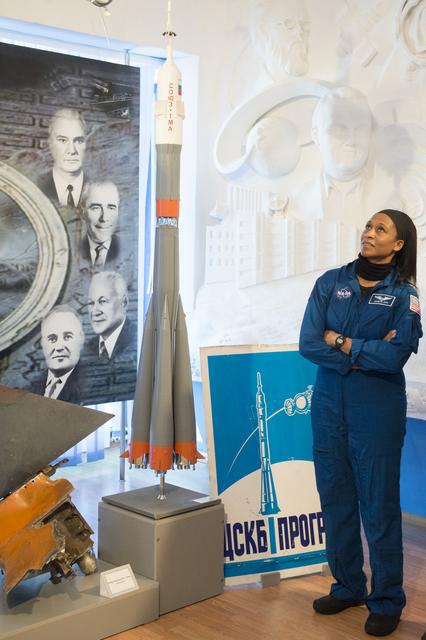
jsc2017e136937 - At the Baikonur Museum in Baikonur, Kazakhstan, Expedition 54-55 backup crewmember Jeanette Epps of NASA views a model of a Soyuz rocket Dec. 6 during a traditional pre-launch visit to the facility. Epps, Sergey Prokopyev of the Russian Fe

This view from a NASA Dryden F-18 chase aircraft shows Dryden's highly modified F-15B, tail number 837, which resumed Intelligent Flight Control System (IFCS) project flights on Dec. 6, 2002.
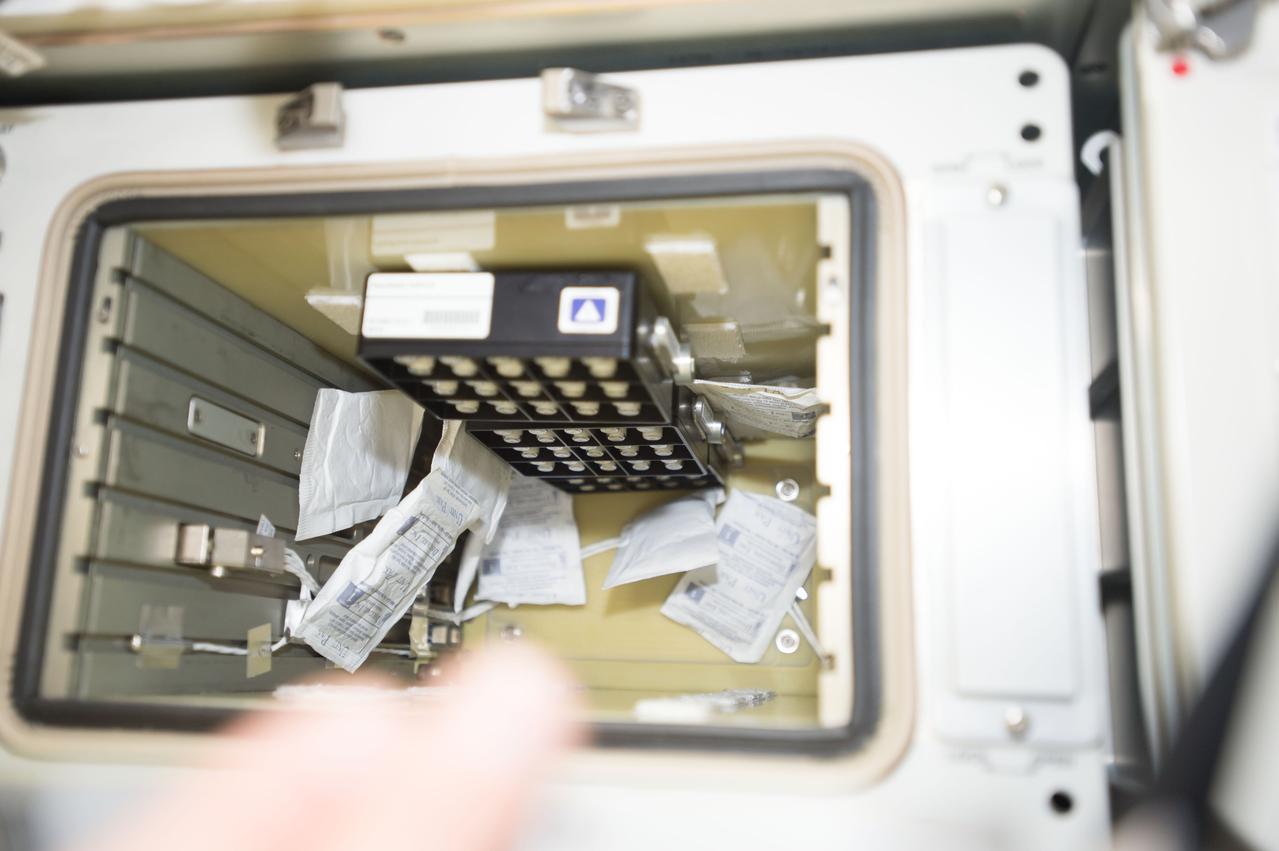
iss052e000516 (6/6/2017) --- View of the Neutron Crystallographic Studies of Human Acetylcholinesterase for the Design of Accelerated Reactivators (CASIS PCG 6) experiment in the Japanese Experiment Module (JEM).
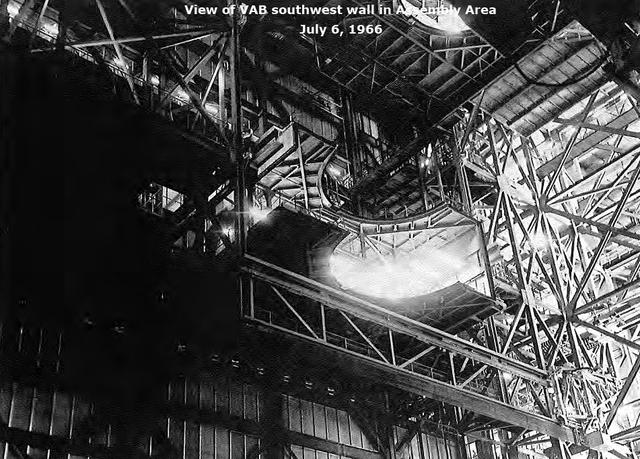
View of VAB southwest wall in Assembly Area, July 6, 1966
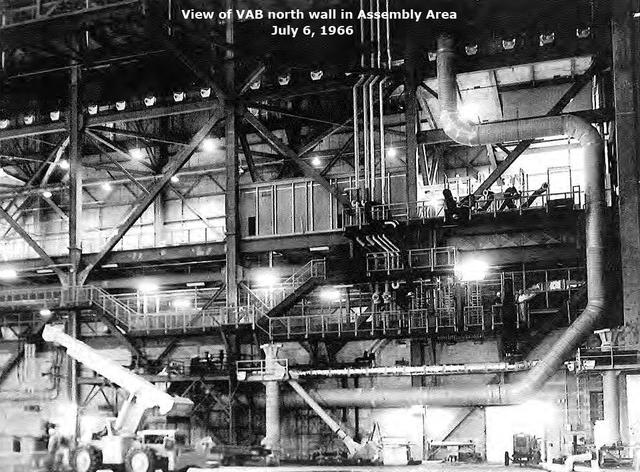
View of VAB north wall in Assembly Area, July 6, 1966
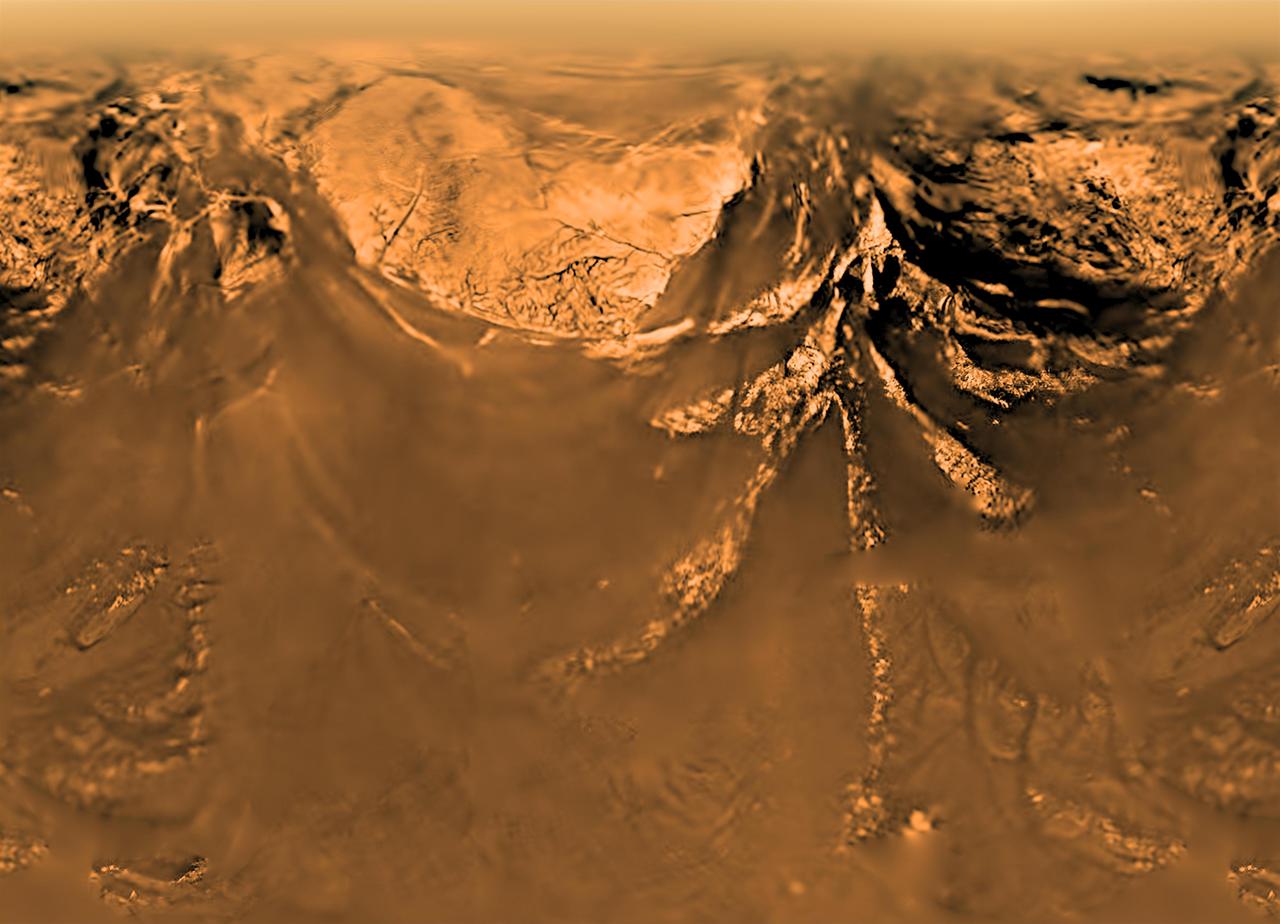
This poster shows a flattened (Mercator) projection of the Huygens probe's view from 10 kilometers altitude (6 miles). The images that make up this view were taken on Jan. 14, 2005, with the descent imager/spectral radiometer onboard the European Space Agency's Huygens probe. The Huygens probe was delivered to Saturn's moon Titan by the Cassini spacecraft, which is managed by NASA's Jet Propulsion Laboratory, Pasadena, Calif. NASA supplied two instruments on the probe, the descent imager/spectral radiometer and the gas chromatograph mass spectrometer. http://photojournal.jpl.nasa.gov/catalog/PIA08113

On May 19th, 2005, NASA Mars Exploration Rover Spirit captured this stunning view as the Sun sank below the rim of Gusev crater on Mars. This Panoramic Camera Pancam mosaic was taken around 6:07 in the evening of the rover 489th martian day.
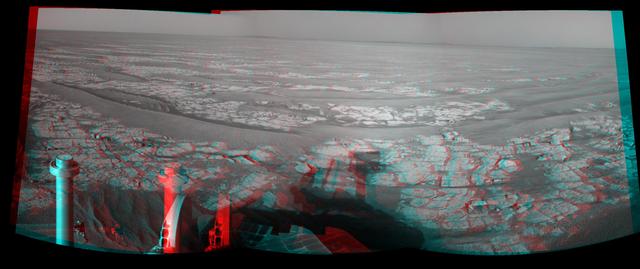
This stereo mosaic of images from NASA Mars Exploration Rover Opportunity shows surroundings of the rover location following an 93.3-meter 306-foot drive east-northeastward on Oct. 6, 2010. 3D glasses are necessary to view this image.
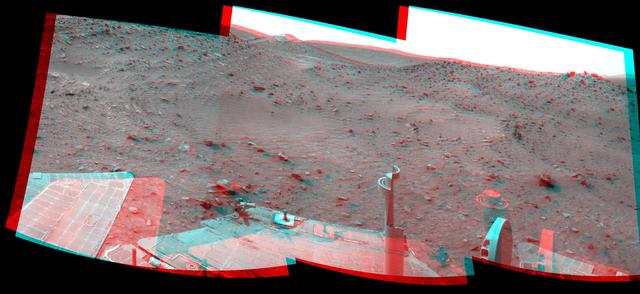
This stereo scene combines frames taken by the navigation camera on NASA Mars Exploration Rover Spirit during the 1,869th Martian day, or sol, of Spirit mission on Mars April 6, 2009. You will need 3-D glasses to view this image.
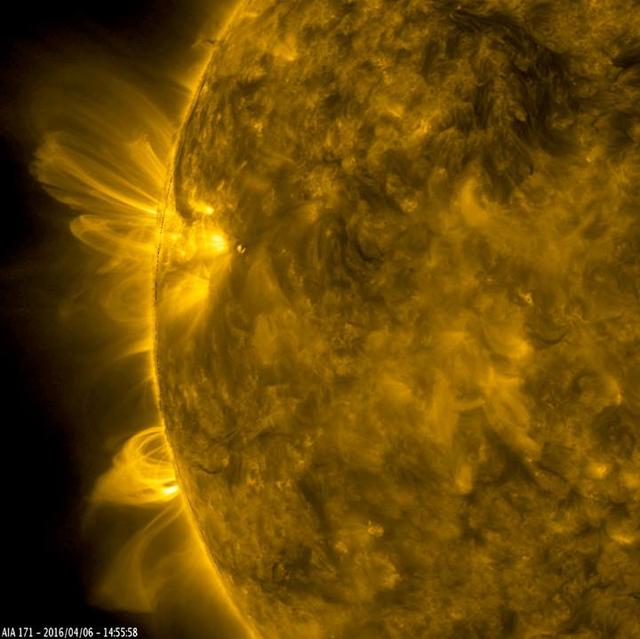
This still image from an animation from NASA GSFC Solar Dynamics Observatory shows arches of magnetic field lines towered over the edge of the Sun as a pair of active regions began to rotate into view Apr. 5-6, 2016.

The foreground area is a portion of an area called Botany Bay between two ridges forming part of the western rim of Endeavour crater. NASA Mars Exploration Rover Opportunity recorded this mosaic view centered toward the southeast on Aug. 6, 2011.
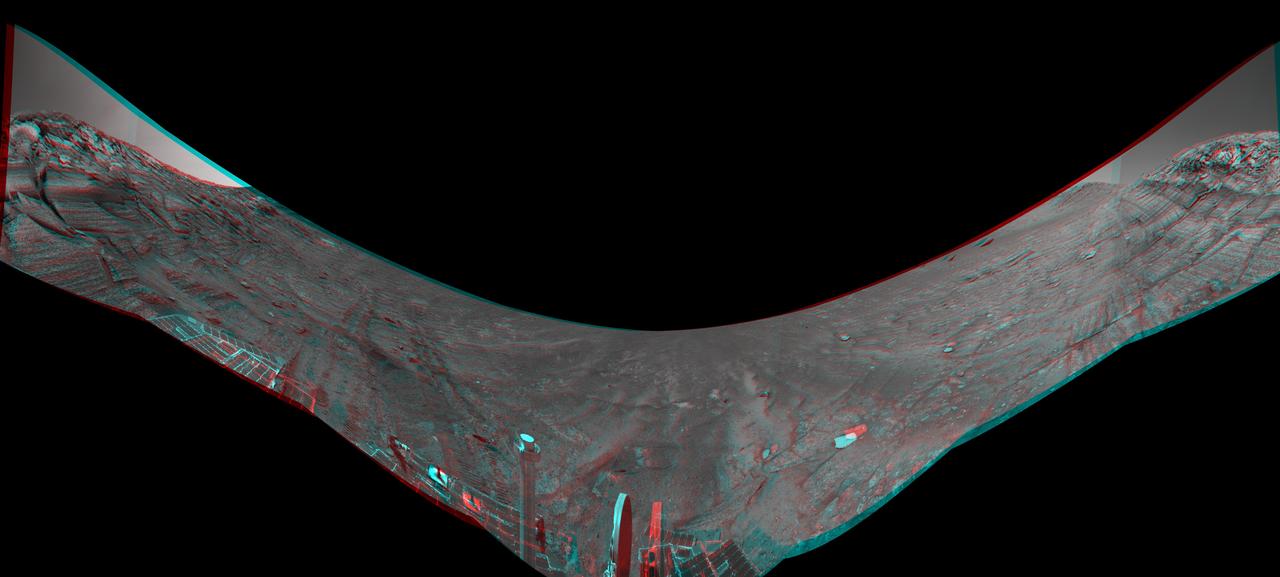
This anaglyph from the base of Burns Cliff in the inner wall of Endurance Crater combines several frames taken by Opportunity navigation camera during the NASA rover 280th martian day Nov. 6, 2004. 3D glasses are necessary to view this image.
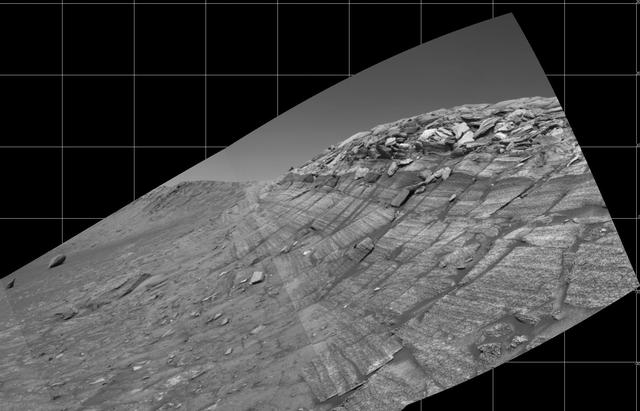
NASA's Mars Exploration Rover Opportunity captured this view from the base of "Burns Cliff" during the rover's 280th martian day (Nov. 6, 2004). This cliff in the inner wall of "Endurance Crater" displays multiple layers of bedrock for the rover to examine with its panoramic camera and miniature thermal emission spectrometer. The rover team has decided that the farthest Opportunity can safely advance along the base of the cliff is close to the squarish white rock near the center of this image. After examining the site for a few days from that position, the the rover will turn around and head out of the crater. The view is a mosaic of frames taken by Opportunity's navigation camera. The rover was on ground with a slope of about 30 degrees when the pictures were taken, and the view is presented here in a way that corrects for that tilt of the camera. http://photojournal.jpl.nasa.gov/catalog/PIA07039
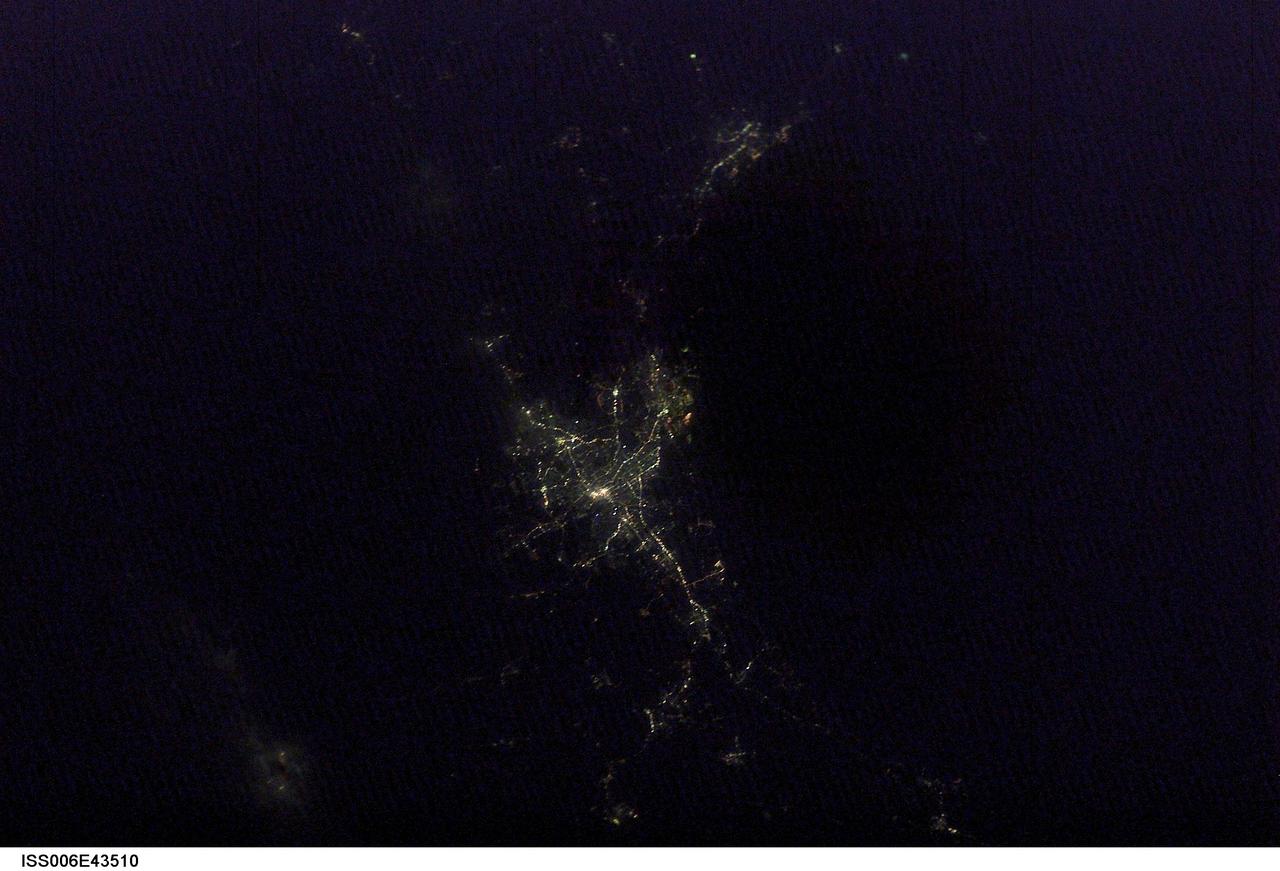
ISS006-E-43510 (6 April 2003) --- Photographed by one of the Expedition 6 crew members onboard the International Space Station 220 miles above Earth, this night view is of the city lights of Sendai, Japan.
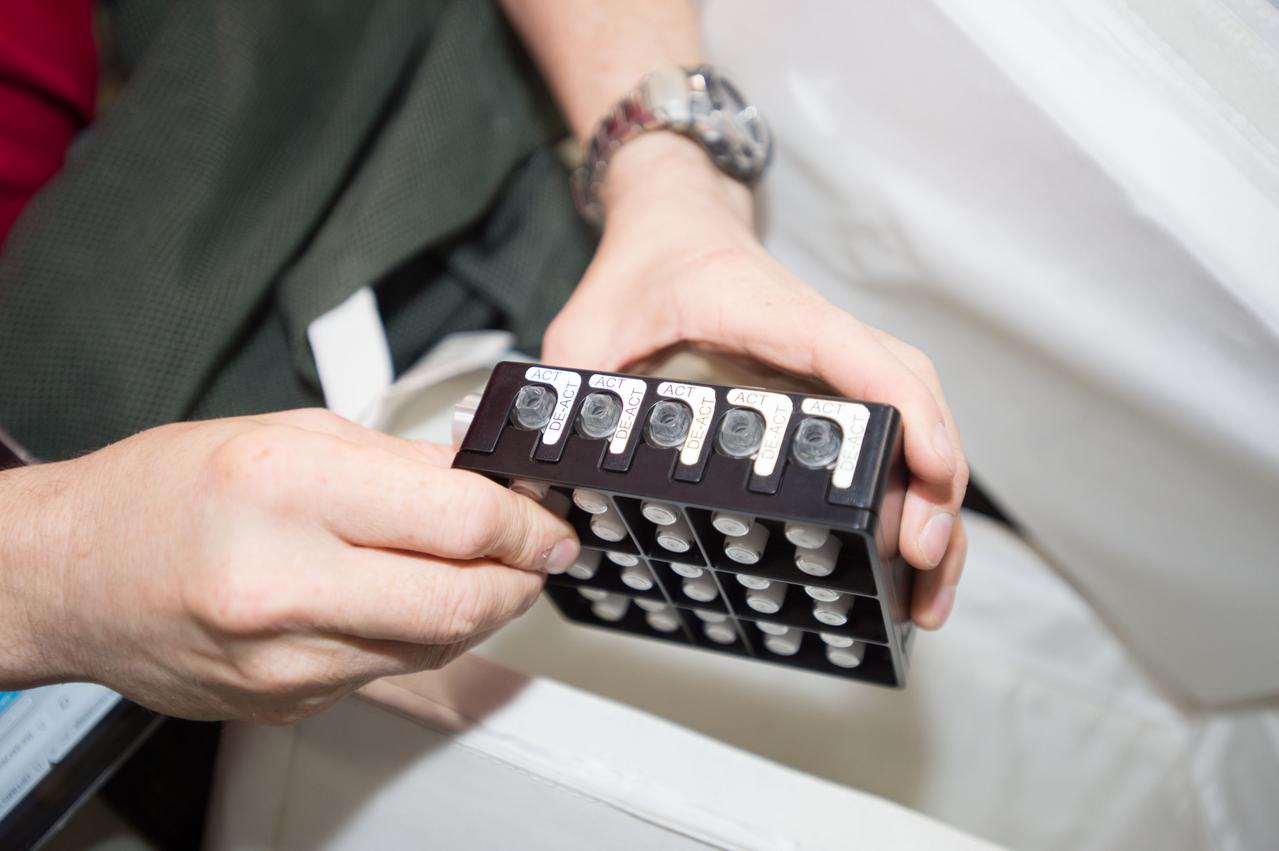
iss052e000504 (June 6, 2017) --- View of astronaut Jack Fischer working with the Neutron Crystallographic Studies of Human Acetylcholinesterase for the Design of Accelerated Reactivators (CASIS PCG 6) experiment in the Japanese Experiment Module.
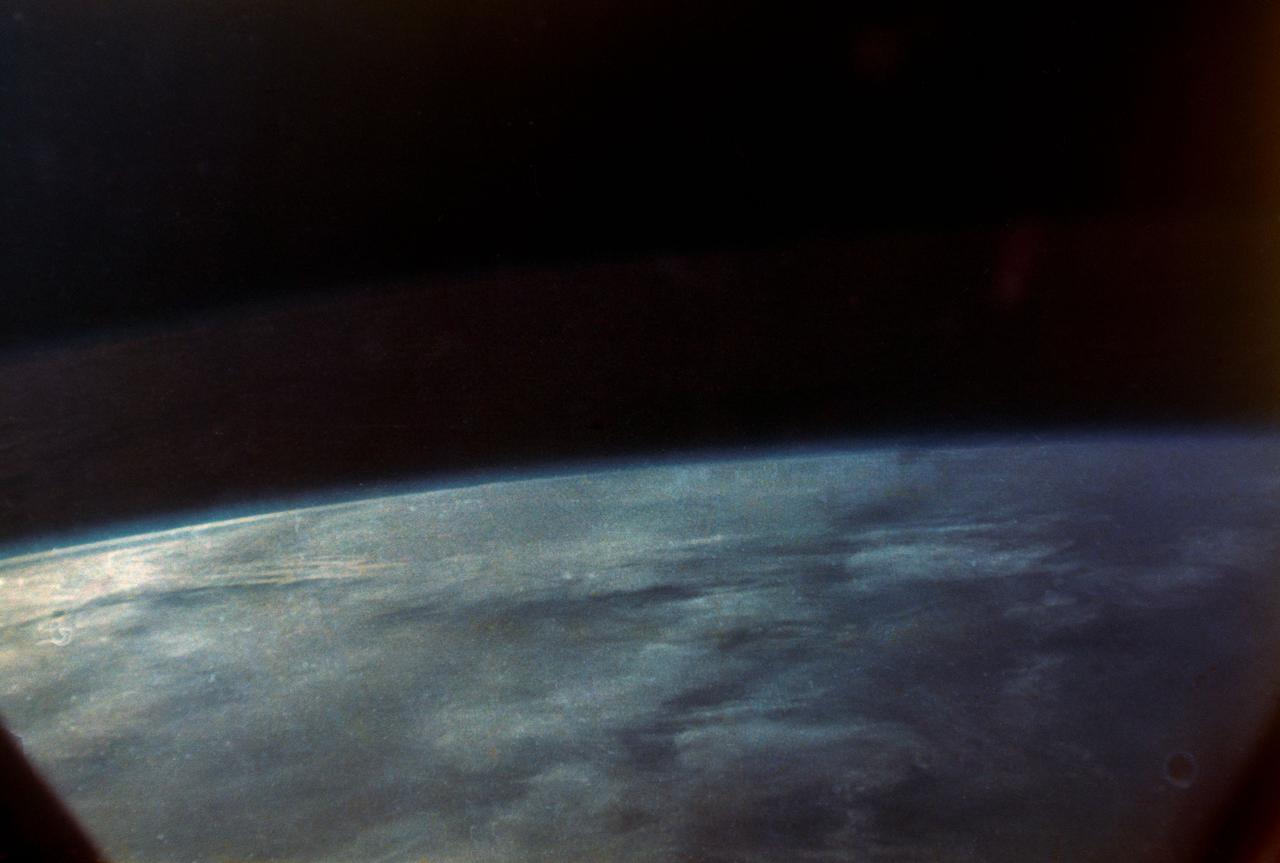
S62-06026 (20 Feb. 1962) --- View of Earth taken by astronaut John H. Glenn Jr. during his Mercury Atlas 6 (MA-6) spaceflight. Photo credit: NASA
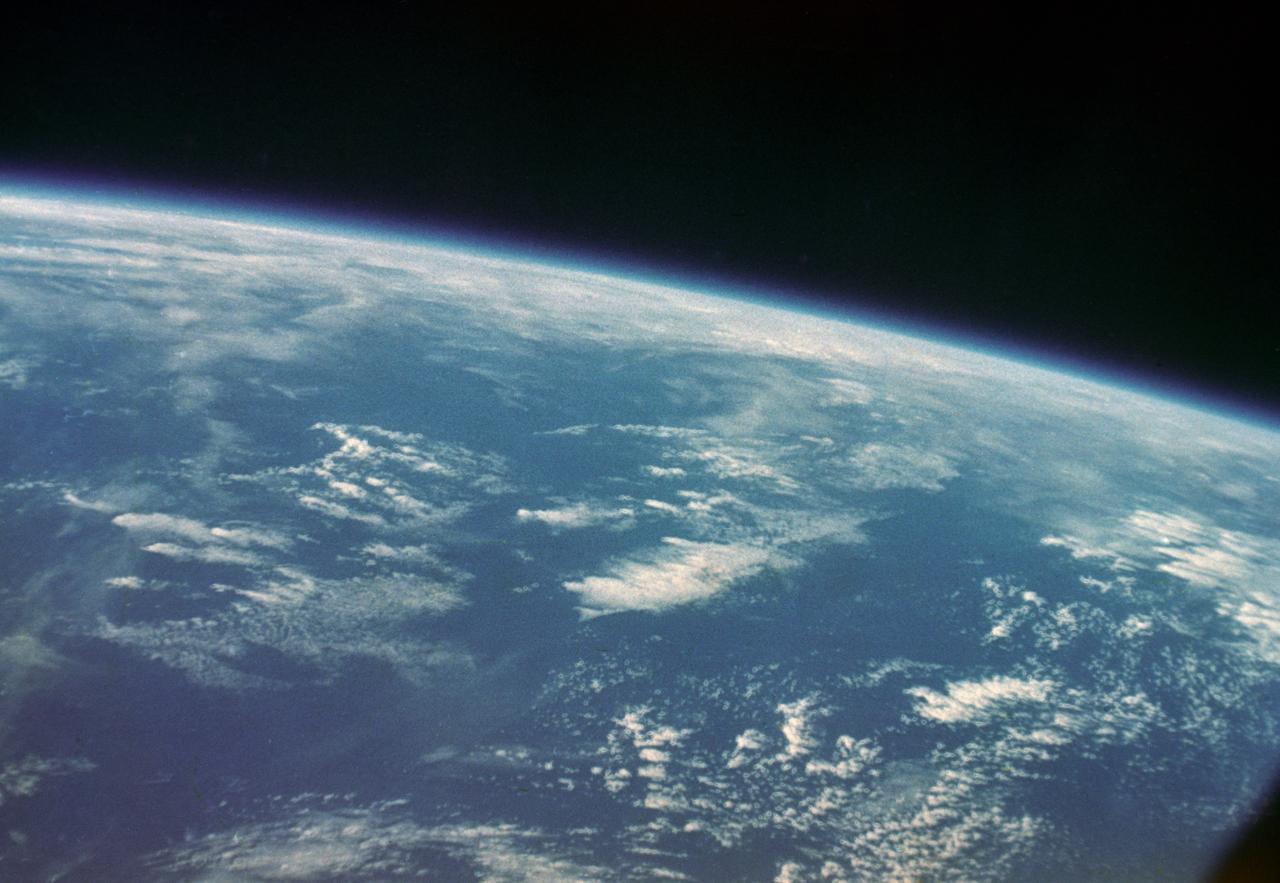
S62-06029 (20 Feb. 1962) --- View of Earth taken by astronaut John H. Glenn Jr. during his Mercury Atlas 6 (MA-6) spaceflight. Photo credit: NASA
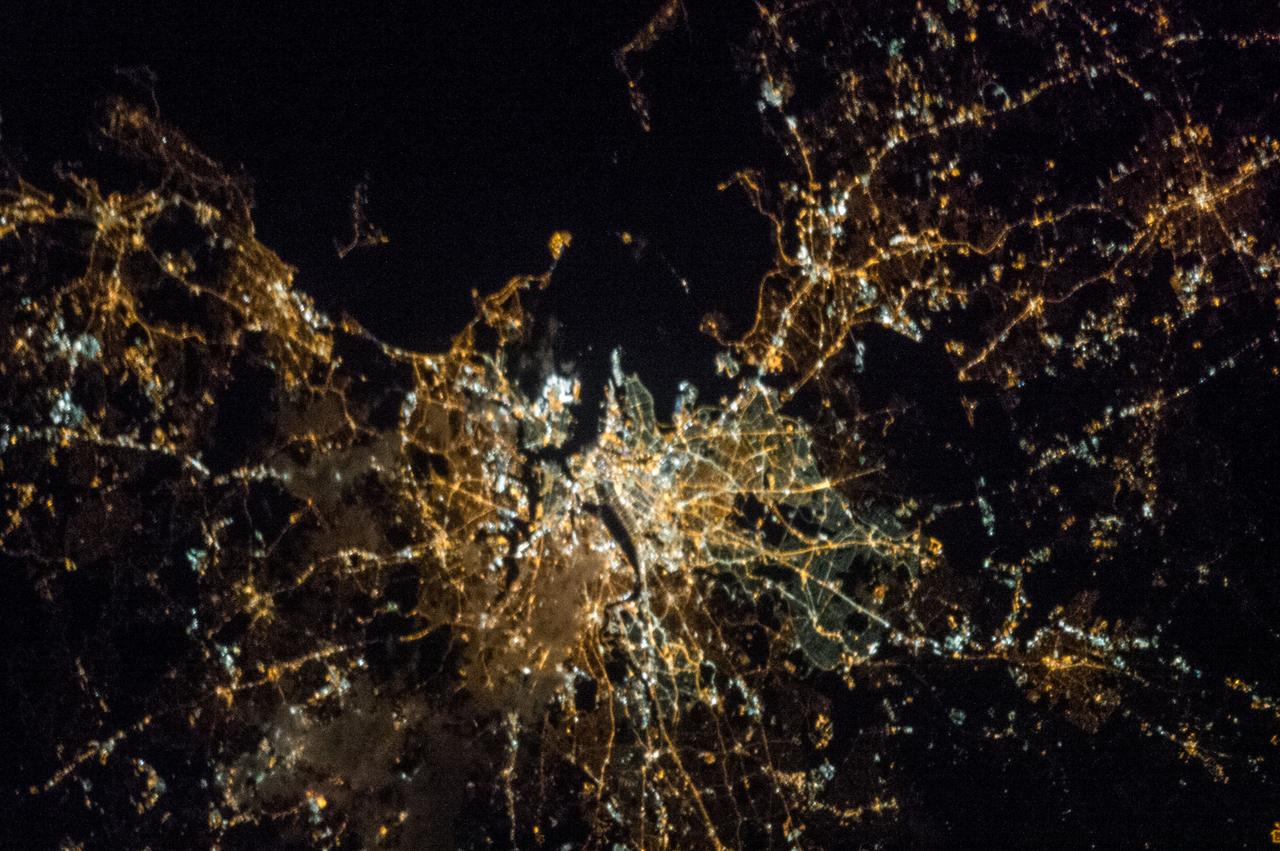
ISS035-E-017112 (6 April 2013) --- One of the crew members aboard the International Space Station recorded this almost vertical nocturnal view of the Boston metropolitan area on April 6, 2013.
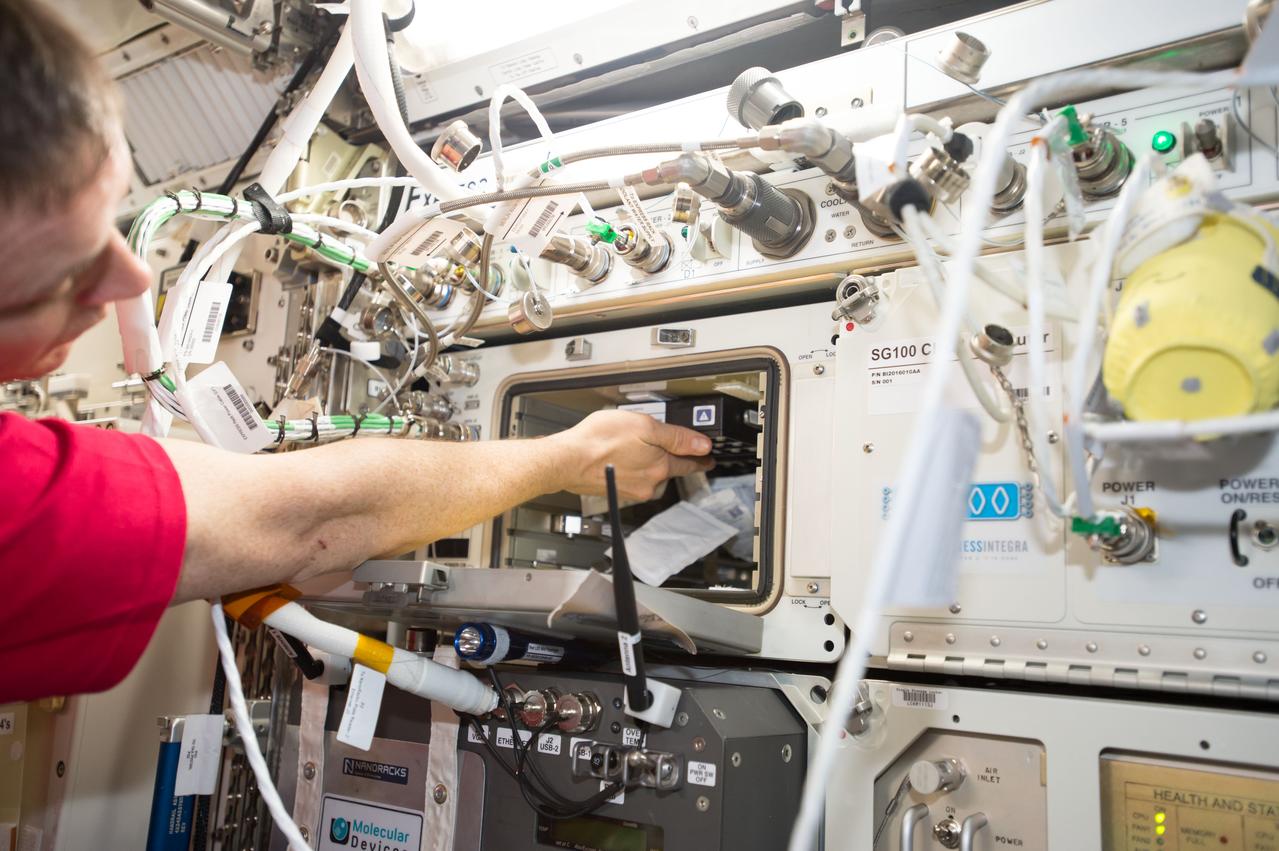
iss052e000515 (June 6, 2017) --- View of astronaut Jack Fischer working with the Neutron Crystallographic Studies of Human Acetylcholinesterase for the Design of Accelerated Reactivators (CASIS PCG 6) experiment in the Japanese Experiment Module.
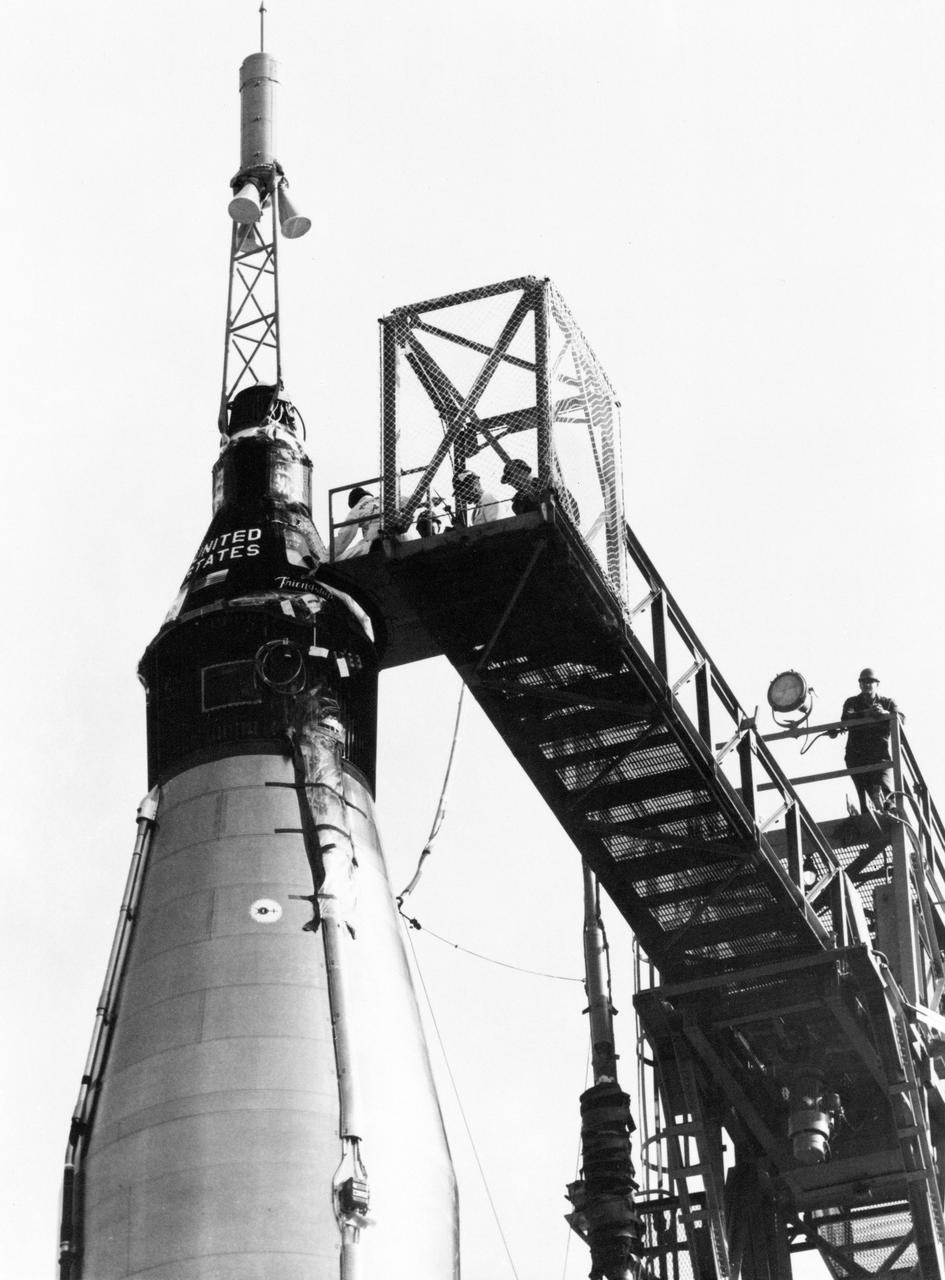
S62-00380 (20 Feb. 1962) --- Close-up view of the Mercury Atlas 6 (MA-6) Friendship 7 capsule on top of its booster rocket with catwalk still attached. Photo credit: NASA
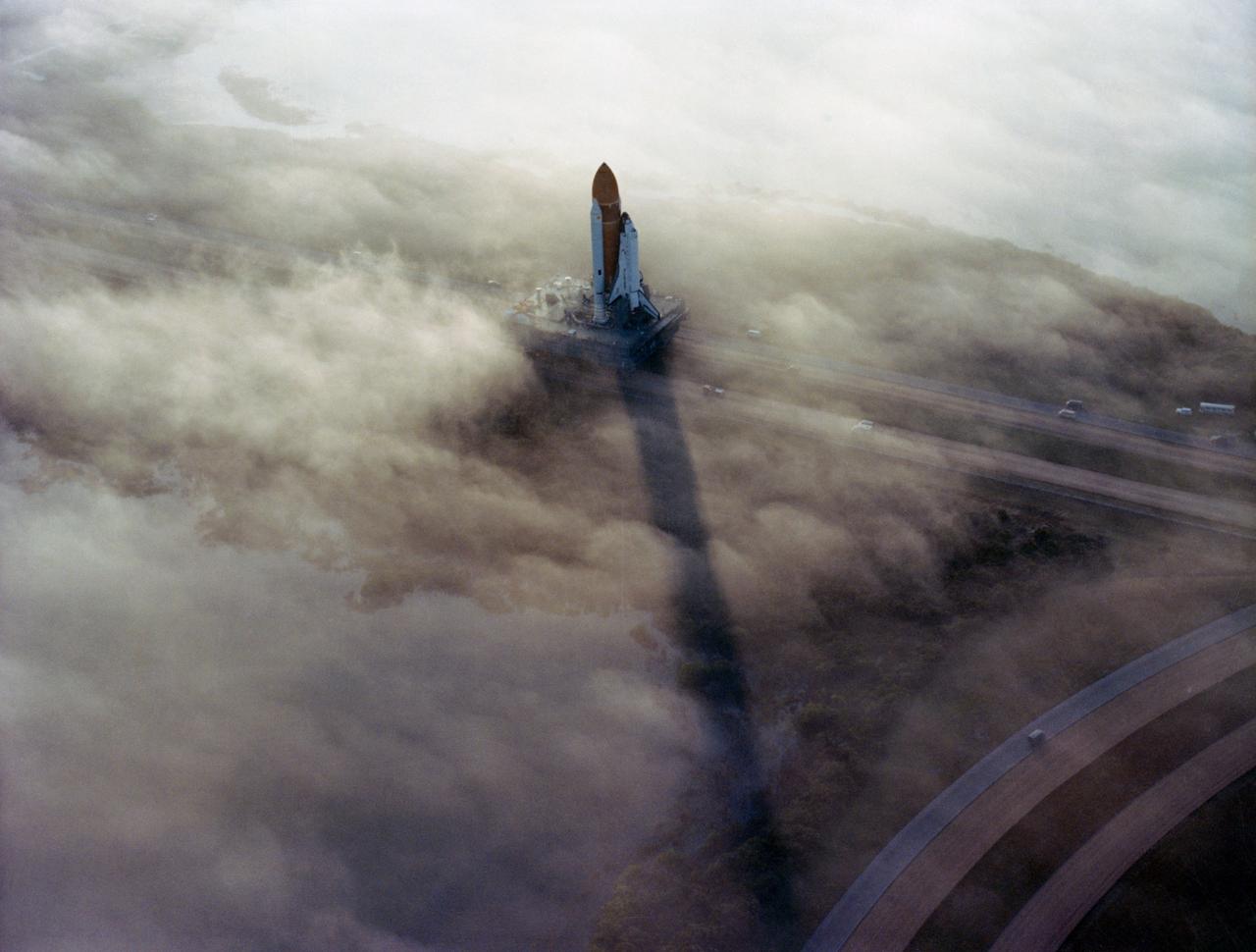
Two (2) views of the "Challenger" - STS-6 - being Rolled Out to Pad 39A in the morning fog, 11/30/1982. 1. KSC - STS-6 PREFLIGHT KSC, FL
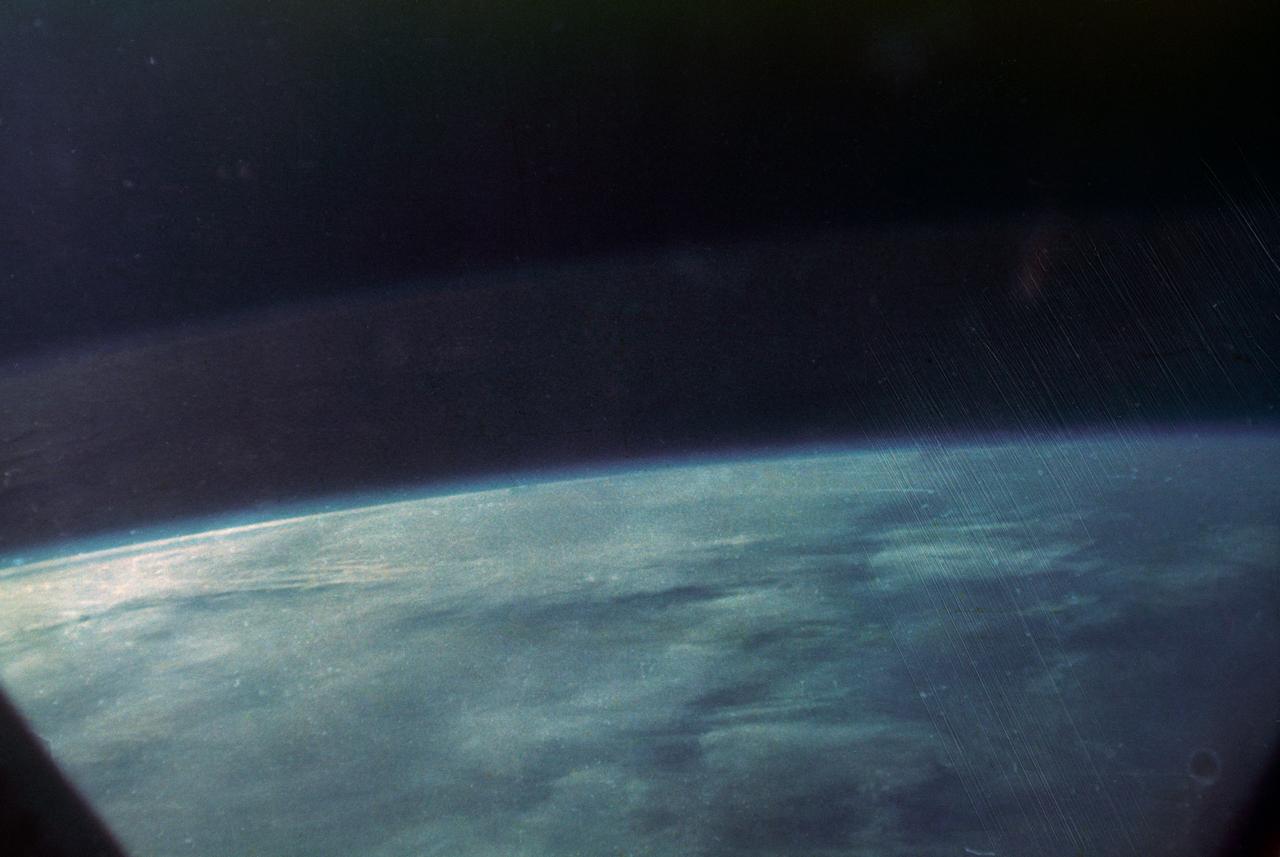
S62-06019 (20 Feb. 1962) --- View of Earth taken by astronaut John H. Glenn Jr. during his Mercury Atlas 6 (MA-6) spaceflight. Photo credit: NASA
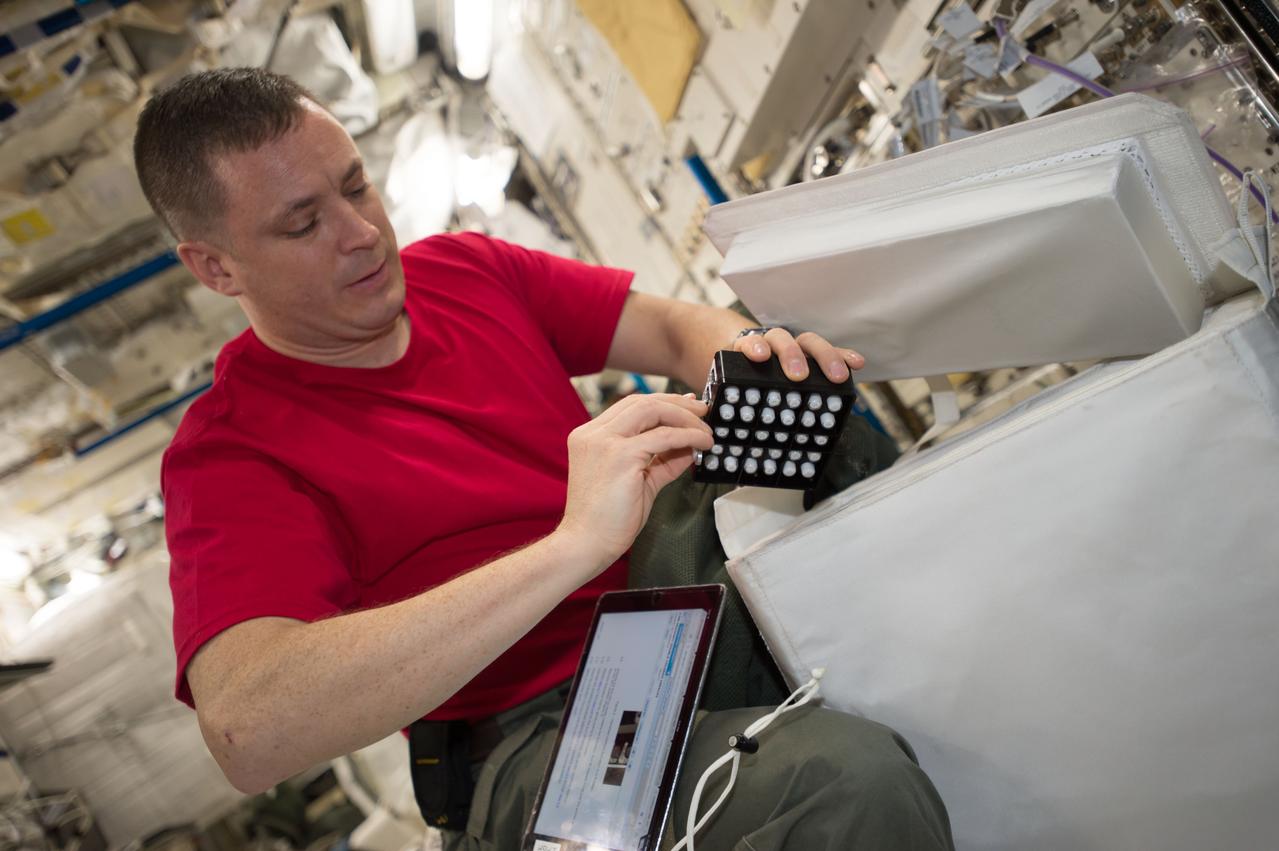
iss052e000508 (June 6, 2017) --- View of astronaut Jack Fischer working with the Neutron Crystallographic Studies of Human Acetylcholinesterase for the Design of Accelerated Reactivators (CASIS PCG 6) experiment in the Japanese Experiment Module
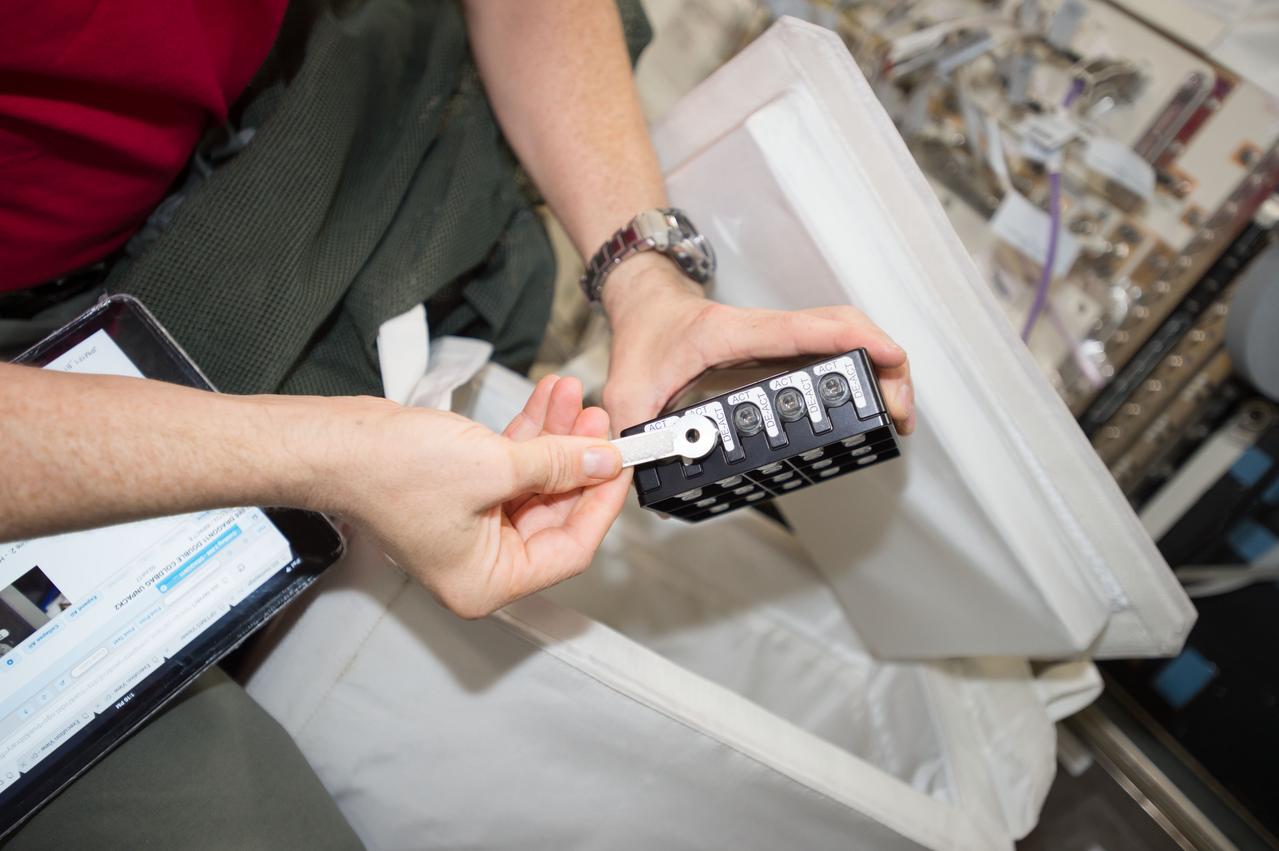
iss052e000503 (June 6, 2017) --- View of astronaut Jack Fischer working with the Neutron Crystallographic Studies of Human Acetylcholinesterase for the Design of Accelerated Reactivators (CASIS PCG 6) experiment in the Japanese Experiment Module.
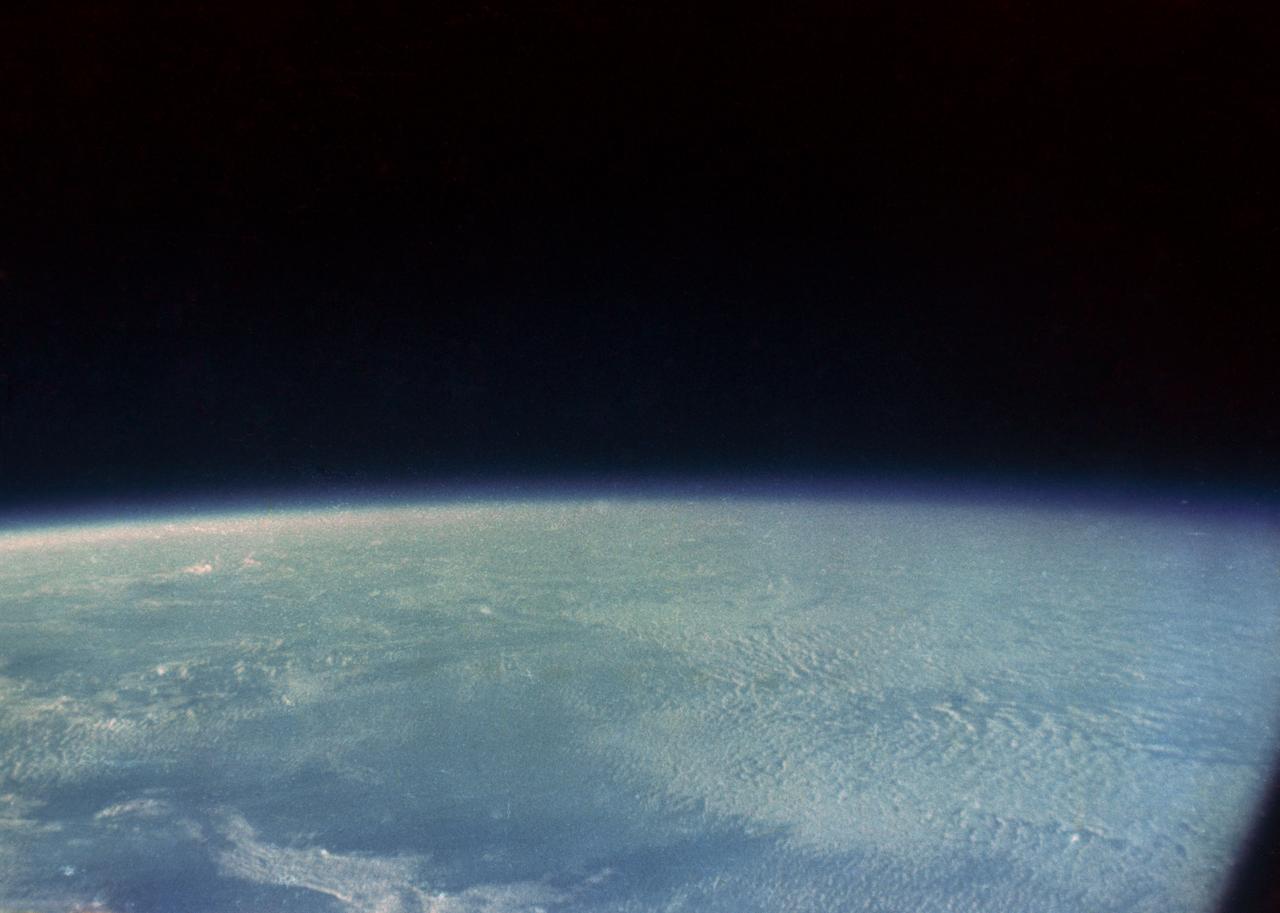
S62-06020 (20 Feb. 1962) --- View of Earth taken by astronaut John H. Glenn Jr. during his Mercury Atlas 6 (MA-6) spaceflight. Photo credit: NASA
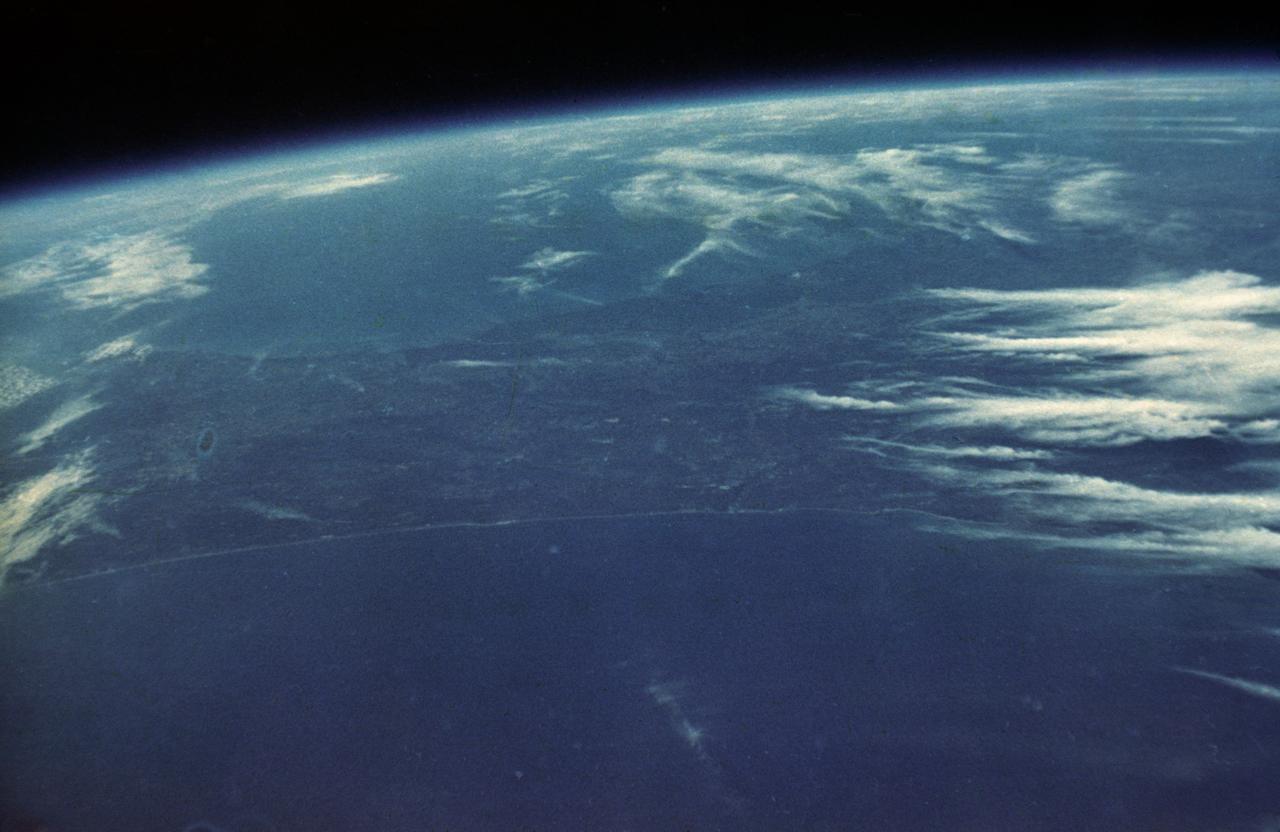
S62-06009 (20 Feb. 1962) --- View of Earth taken by astronaut John H. Glenn Jr. during his Mercury Atlas 6 (MA-6) spaceflight. Photo credit: NASA
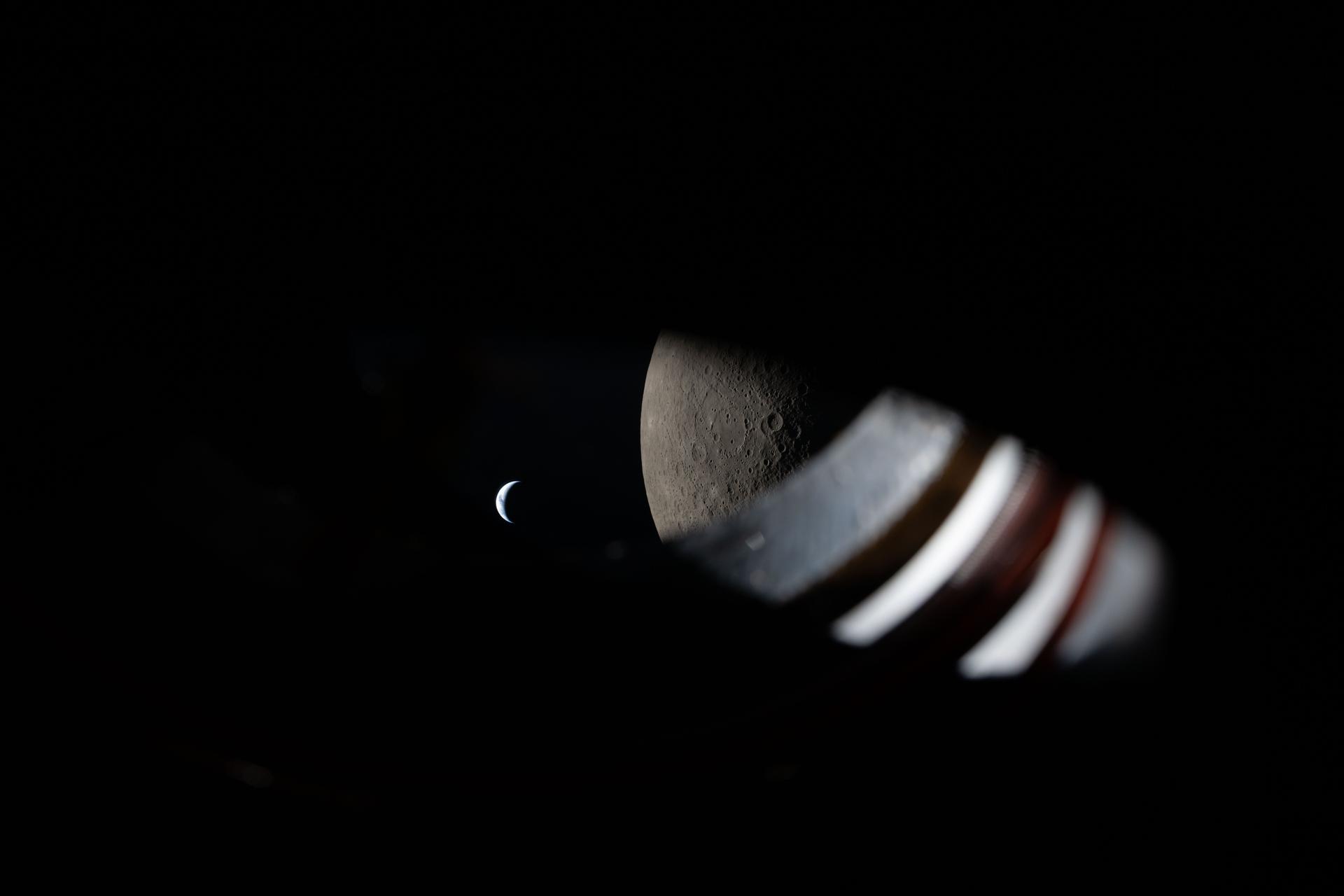
art002e012279 (April 6, 2026) - A view from the window of the Orion spacecraft approximately 9 minutes before Earthset during the Artemis II lunar flyby on April 6, 2026.
![Aerial view of Press Site, August 6, 1998.(Note the replacement of the geodesic dome with a permanent facility [just right of center].)](https://images-assets.nasa.gov/image/KSC-20120209-PH-UK_pressSite_FigureA-8/KSC-20120209-PH-UK_pressSite_FigureA-8~thumb.jpg)
Aerial view of Press Site, August 6, 1998.(Note the replacement of the geodesic dome with a permanent facility [just right of center].)
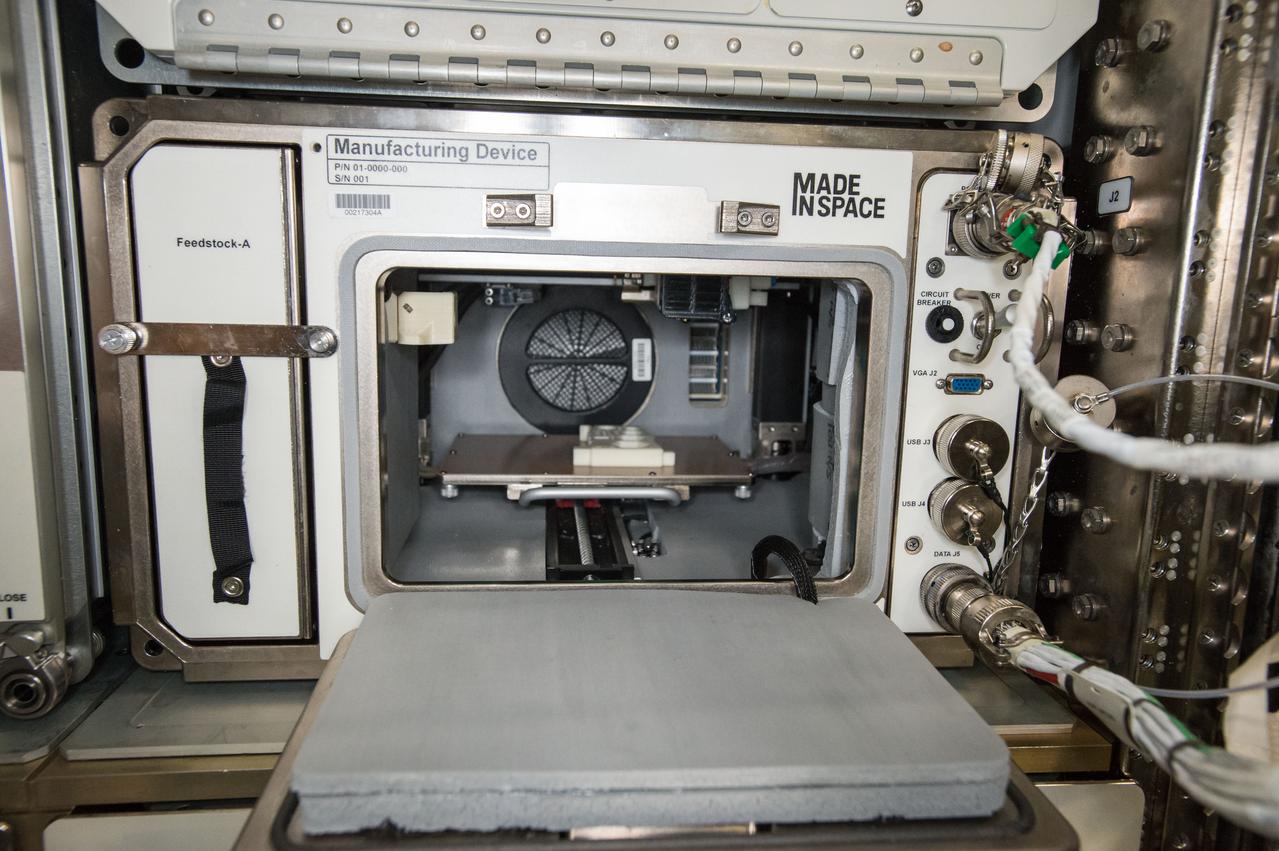
iss047e152500 (6/14/2016) --- A view of the Additive Manufacturing Facility (AMF) aboard the International Space Station (ISS).

S65-61887 (16 Dec. 1965) --- A water level view of Navy divers with the Gemini 6 spacecraft.
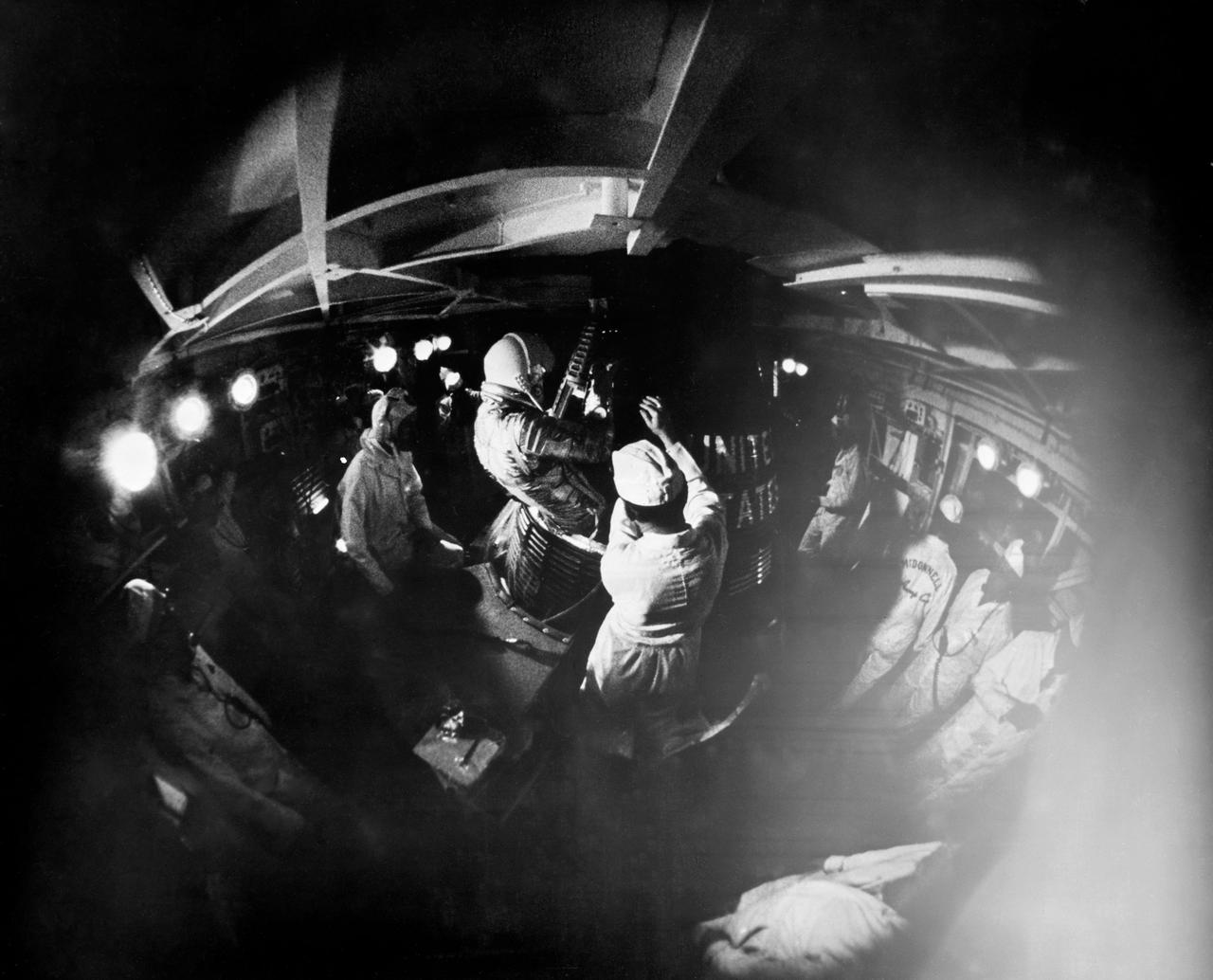
S62-00955 (February 1962) --- This is a view of John H. Glenn Jr. ingressing the Mercury-Atlas 6 spacecraft. Photo credit: NASA
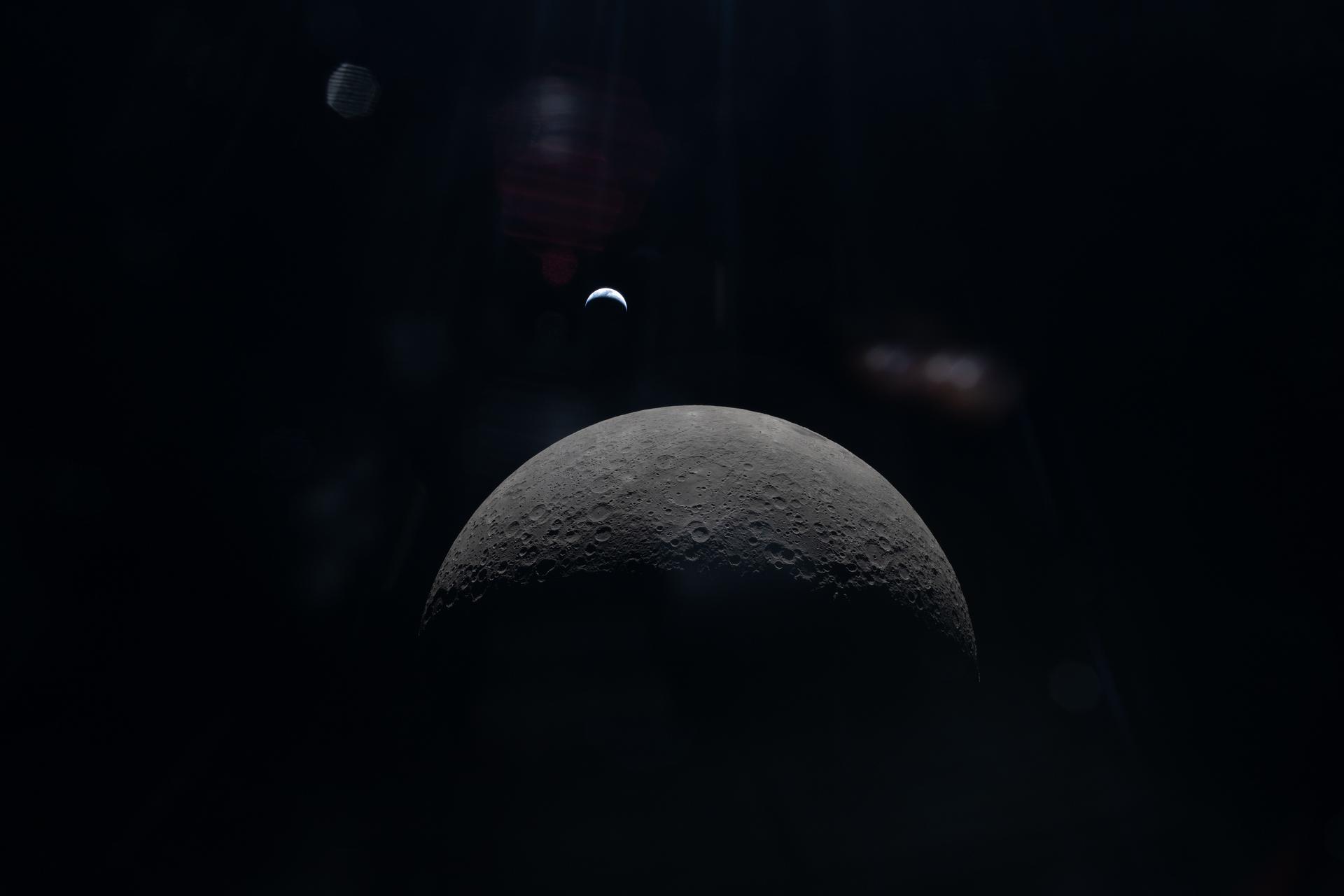
art002e015231 (April 6, 2026) – The Artemis II crew captures a faint view of a crescent Earth above the horizon on the Moon’s far side.
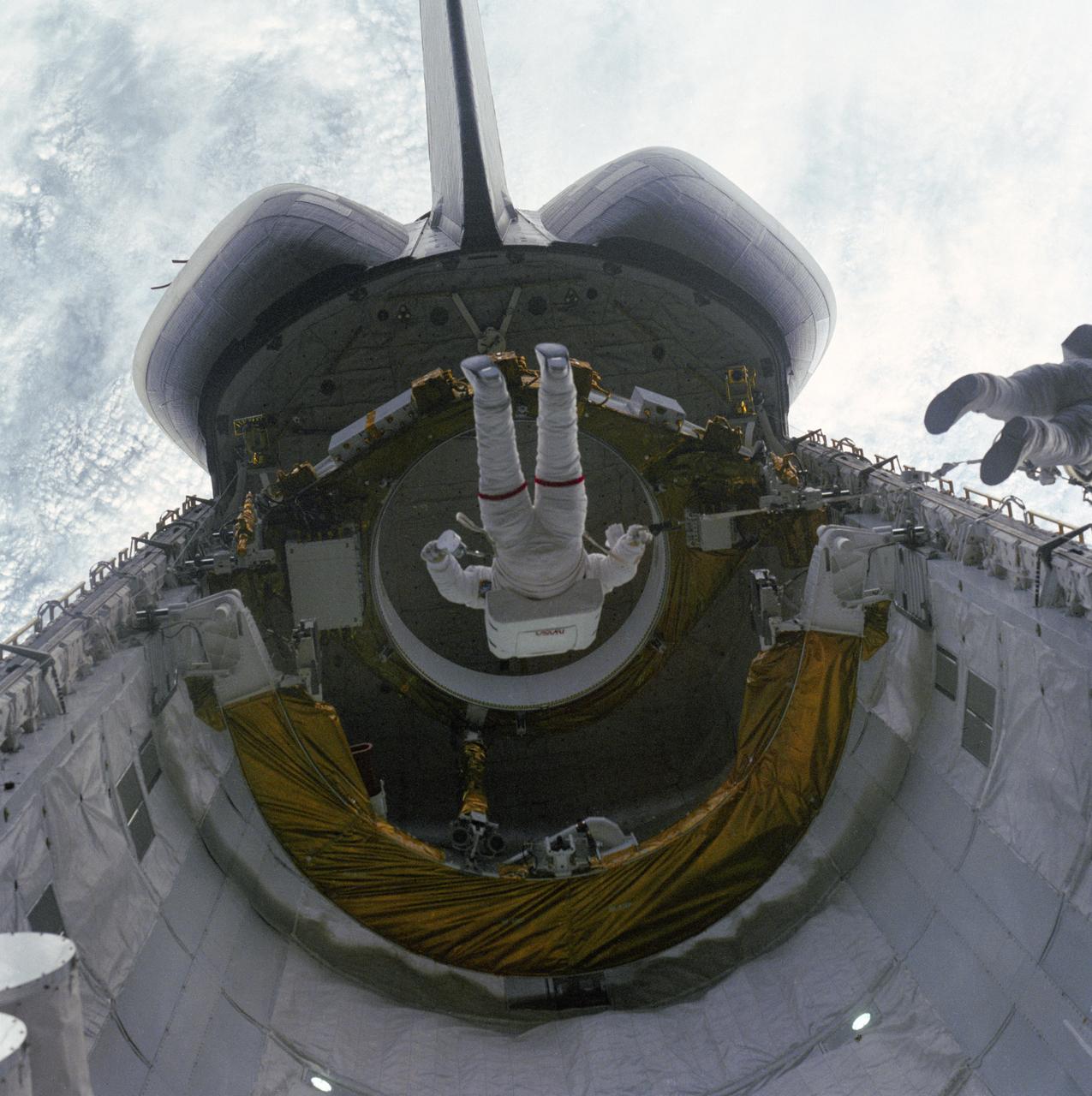
S83-30214 (7 April 1983) --- Astronaut F. Story Musgrave, STS-6 mission specialist, suspends himself midway between the starboard and port slide wire systems to evaluate the pull strength of the reel-in safety tether while astronaut Donald H. Peterson, the flight?s other mission specialist, busies himself along the port side at right edge of frame. This photograph was taken by astronaut Karol J. Bobko, pilot, from the aft window of the Earth-orbiting Challenger?s flight deck. The successful EVA occurred on April 7, 1983, on day four of the five-day flight. The gold-foil protected object is the airborne support equipment (ASE) for the now vacated inertial upper stage (IUS) which aided in the deployment of the tracking and data relay satellite (TDRS) on the first day of the mission. Astronaut Paul J. Weitz, crew commander, was in charge of the Challenger during these operations. The white background is made up mostly of clouds over Earth. Photo credit: NASA

STS006-44-582 (5 April 1983) --- A 70mm camera through the aft windows of the Earth-orbiting space shuttle Challenger’s cabin centered on the starboard orbital maneuvering system (OMS) pod of the reusable spacecraft. Two pieces of thermal protection system tile appear to have loosened. The view also shows one of the cargo bay television cameras, part of the EVA slide wire system, three handrails and other features on the aft bulkhead. Part of the airborne support equipment (ASE) for the now vacated inertial upper stage (IUS)/tracking and data relay satellite (TDRS) tandem is in lower right foreground. Photo credit: NASA

S65-63171 (15 Dec. 1965) --- The Gemini-7 spacecraft as seen from the Gemini-6 spacecraft during their rendezvous mission in space. Photo credit: NASA or National Aeronautics and Space Administration
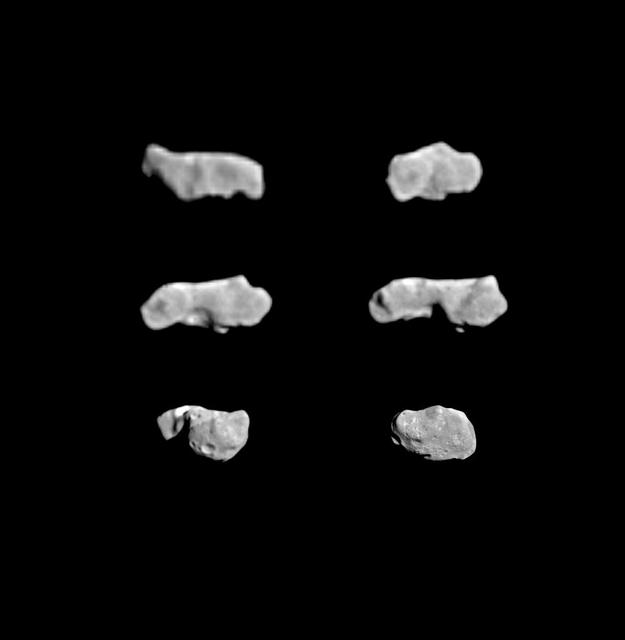
This composite image shows the asteroid 243 Ida as seen from NASA's Galileo spacecraft during its approach on August 28, 1993. http://photojournal.jpl.nasa.gov/catalog/PIA00137

S65-63198 (15 Dec. 1965) --- The Gemini-7 spacecraft as seen from the Gemini-6 spacecraft during their rendezvous mission in space. They are approximately 39 feet apart. Photo credit: NASA or National Aeronautics and Space Administration

S65-63113 (15 Dec. 1965) --- This photograph of the Gemini-7 spacecraft was taken from the hatch window of the Gemini-6 spacecraft during rendezvous and station keeping maneuvers at an altitude of approximately 160 miles on Dec. 15, 1965. Photo credit: NASA or National Aeronautics and Space Administration

S65-63220 (15 Dec. 1965) --- This photograph of the Gemini-Titan 7 (GT-7) spacecraft was taken from the Gemini-Titan 6 (GT-6) spacecraft during the historic rendezvous of the two spacecraft on Dec. 15, 1965. The two spacecraft are some 37 feet apart here. Earth can be seen below. Astronauts Walter M. Schirra Jr., command pilot; and Thomas P. Stafford, pilot, were inside the GT-6 spacecraft, while crewmen for the GT-7 mission were astronauts Frank Borman, command pilot, and James A. Lovell Jr., pilot. Photo credit: NASA or National Aeronautics and Space Administration
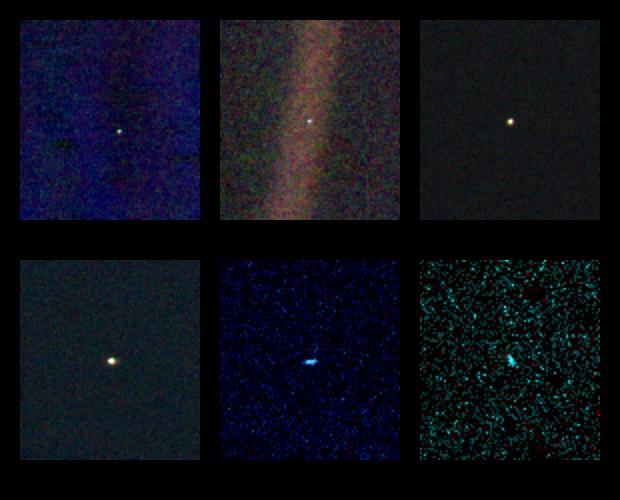
These six narrow-angle color images were made from the first ever portrait of the solar system taken by NASA’s Voyager 1, which was more than 4 billion miles from Earth and about 32 degrees above the ecliptic. The spacecraft acquired a total of 60 frames for a mosaic of the solar system which shows six of the planets. Mercury is too close to the sun to be seen. Mars was not detectable by the Voyager cameras due to scattered sunlight in the optics, and Pluto was not included in the mosaic because of its small size and distance from the sun. These blown-up images, left to right and top to bottom are Venus, Earth, Jupiter, and Saturn, Uranus, Neptune. The background features in the images are artifacts resulting from the magnification. The images were taken through three color filters -- violet, blue and green -- and recombined to produce the color images. Jupiter and Saturn were resolved by the camera but Uranus and Neptune appear larger than they really are because of image smear due to spacecraft motion during the long (15 second) exposure times. Earth appears to be in a band of light because it coincidentally lies right in the center of the scattered light rays resulting from taking the image so close to the sun. Earth was a crescent only 0.12 pixels in size. Venus was 0.11 pixel in diameter. The planetary images were taken with the narrow-angle camera (1500 mm focal length). http://photojournal.jpl.nasa.gov/catalog/PIA00453
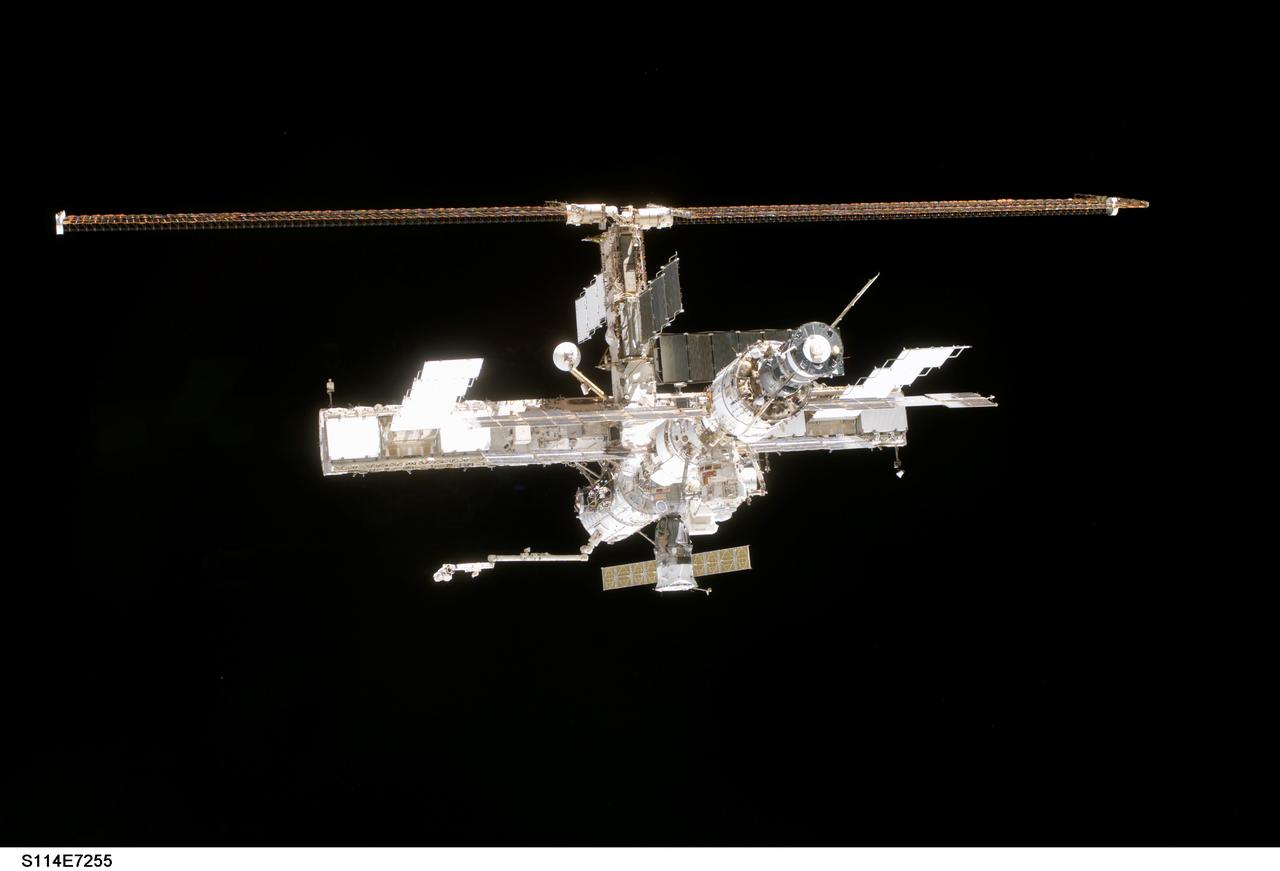
S114-E-7255 (6 August 2005) --- Backdropped by the blackness of space, this view of the International Space Station was photographed by a crewmember onboard the Space Shuttle Discovery following the undocking of the two spacecraft. Discovery pulled away from the complex at 2:24 a.m. (CDT) on August 6, 2005.
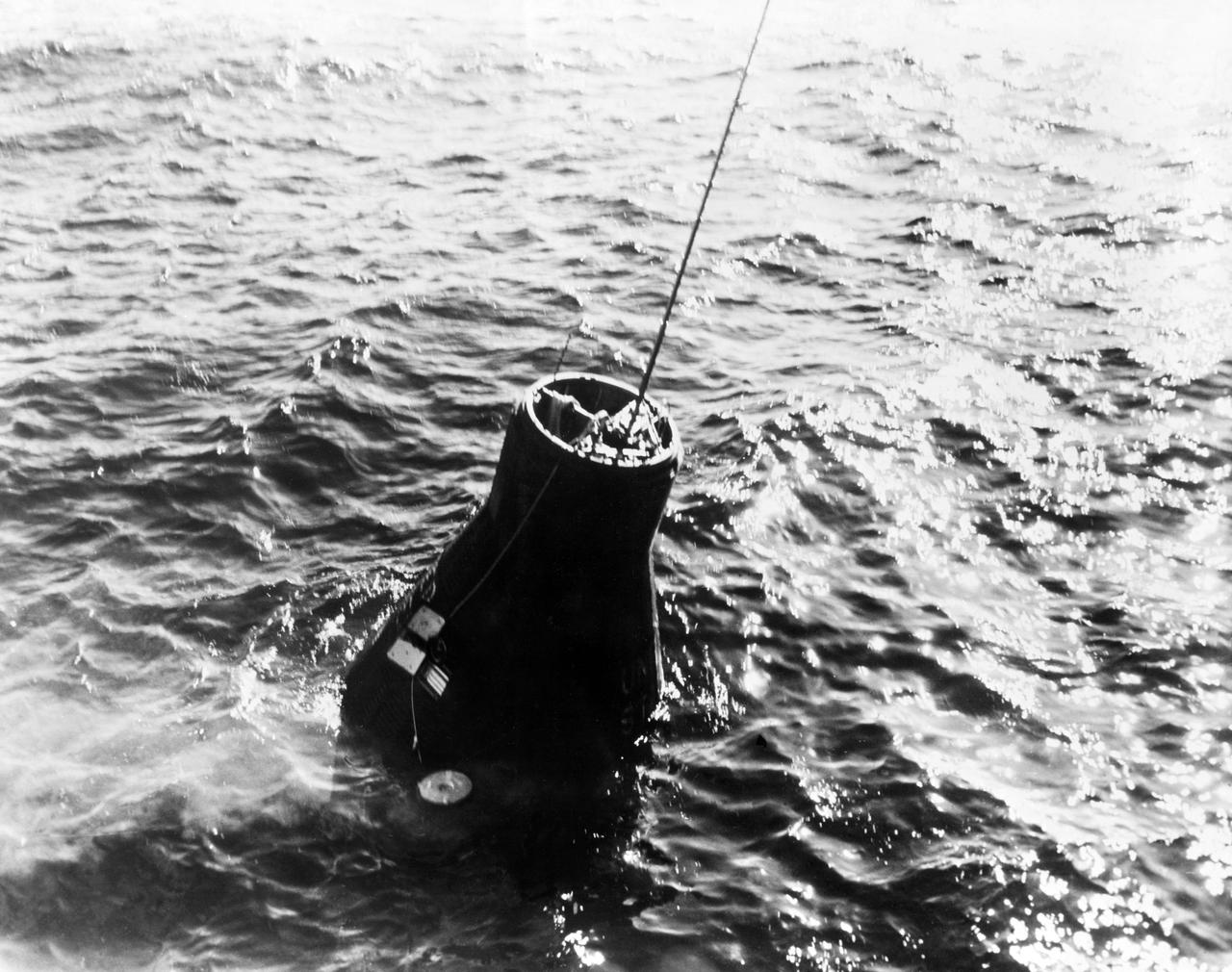
S62-00941 (20 Feb. 1962) --- The Mercury-Atlas 6 (MA-6) "Friendship 7" spacecraft is retrieved from the Atlantic Ocean following astronaut John H. Glenn Jr.'s three-orbit space mission. In this view, the capsule is still in the water, with retrieval cable connected to it. Photo credit: NASA
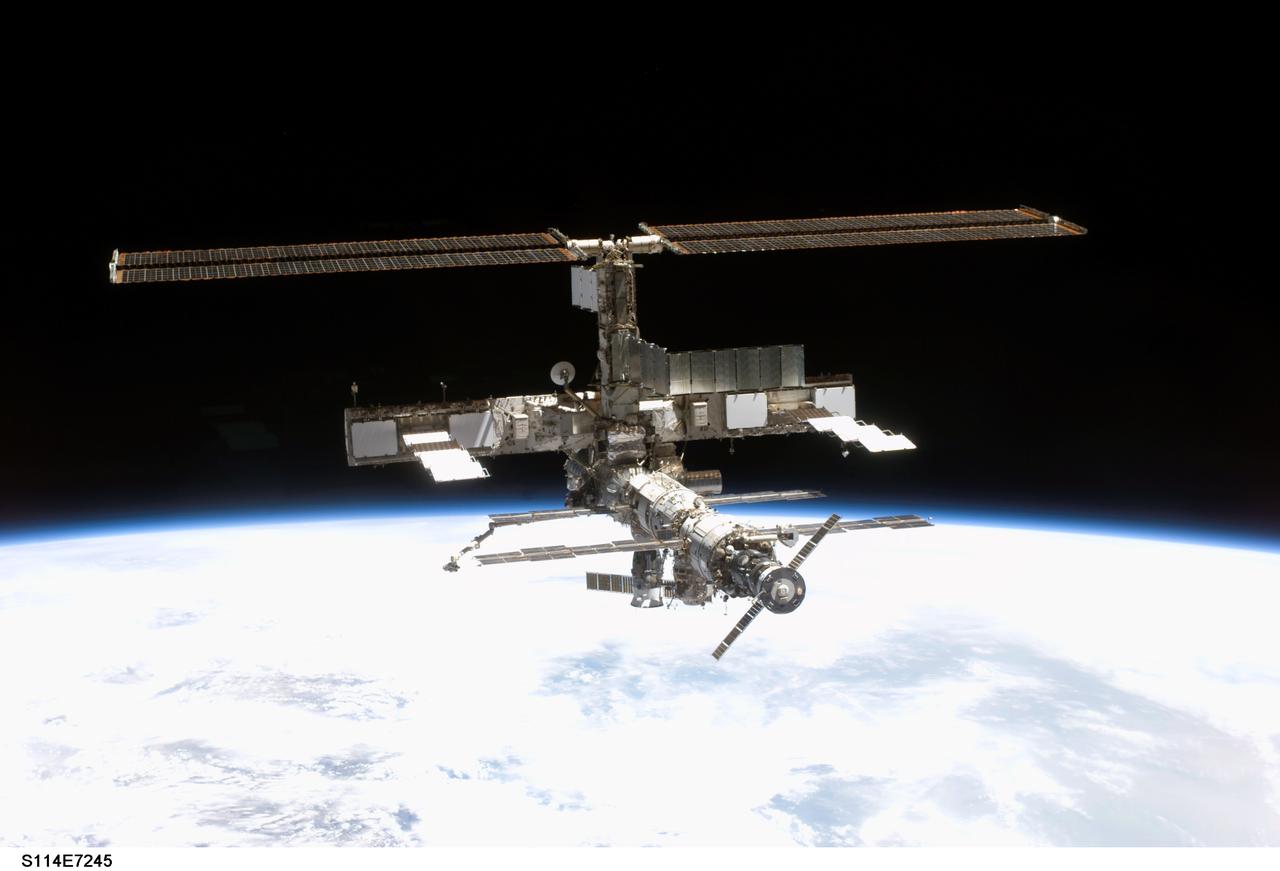
S114-E-7245 (6 August 2005) --- Backdropped by the blackness of space and Earth’s horizon, this full view of the International Space Station was photographed by a crewmember onboard the Space Shuttle Discovery following the undocking of the two spacecraft. Discovery pulled away from the complex at 2:24 a.m. (CDT) on August 6, 2005.
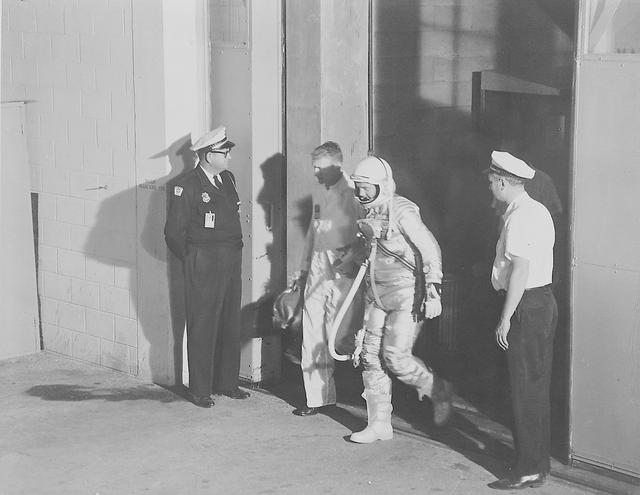
S62-00222 (20 Feb. 1962) --- View of astronaut John H. Glenn Jr. and equipment specialist Joe Schmitt leaving crew quarters prior to Mercury-Atlas 6 (MA-6) mission. Glenn is in his pressure suit and is carrying the portable ventilation unit. Photo credit: NASA
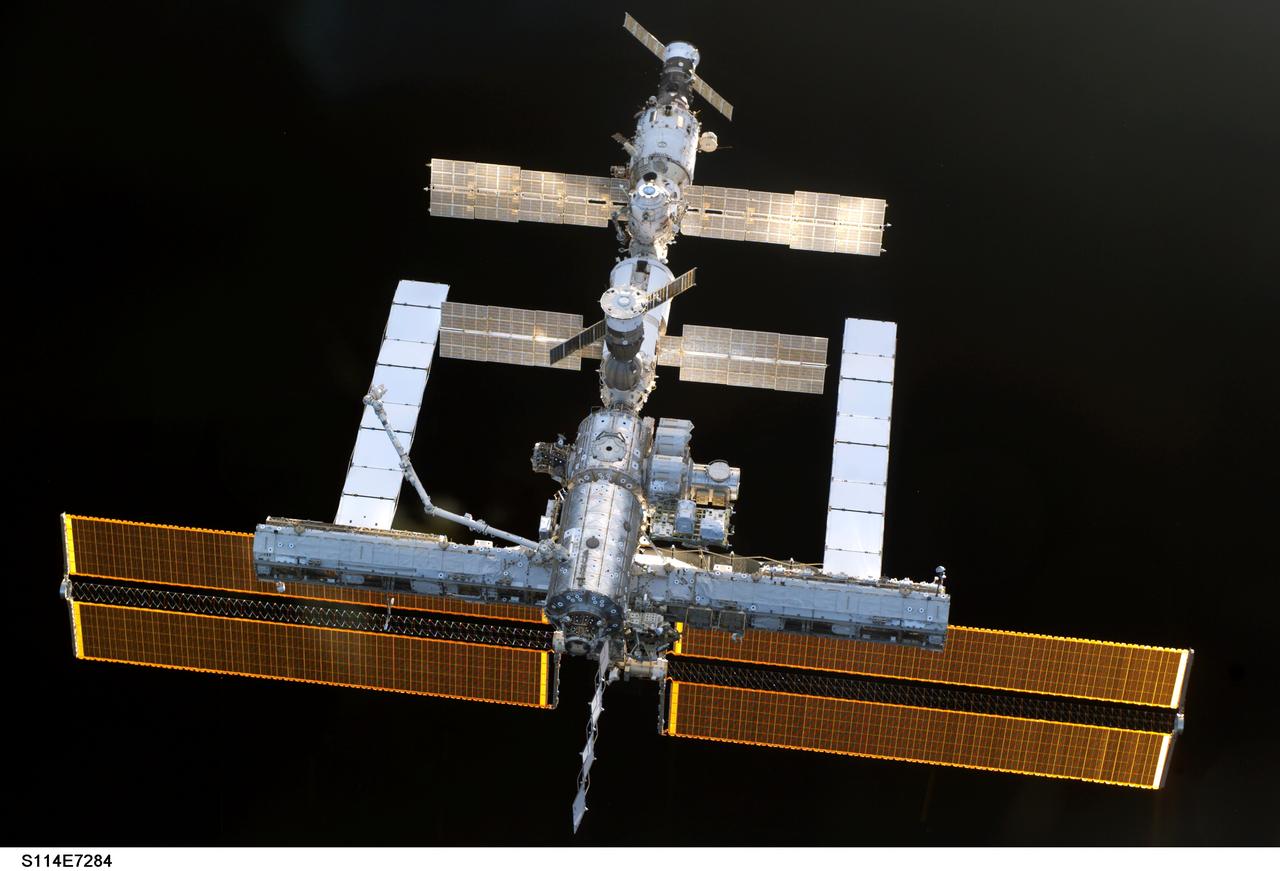
S114-E-7284 (6 August 2005) --- Backdropped by the blackness of space, this full view of the International Space Station was photographed by a crewmember onboard the Space Shuttle Discovery following the undocking of the two spacecraft. Discovery pulled away from the complex at 2:24 a.m. (CDT) on August 6, 2005.
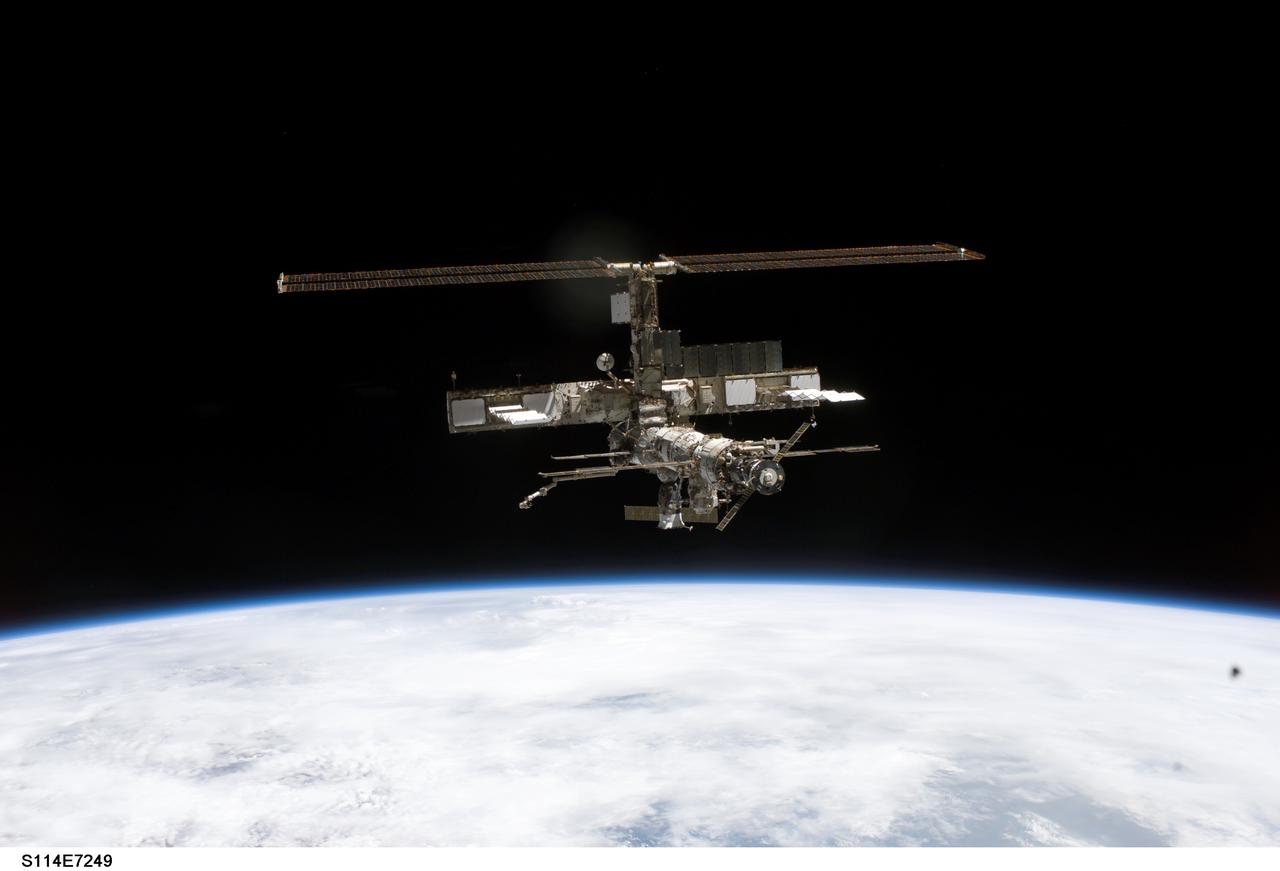
S114-E-7249 (6 August 2005) --- Backdropped by the blackness of space and Earth’s horizon, this view of the International Space Station was photographed by a crewmember onboard the Space Shuttle Discovery following the undocking of the two spacecraft. Discovery pulled away from the complex at 2:24 a.m. (CDT) on August 6, 2005.
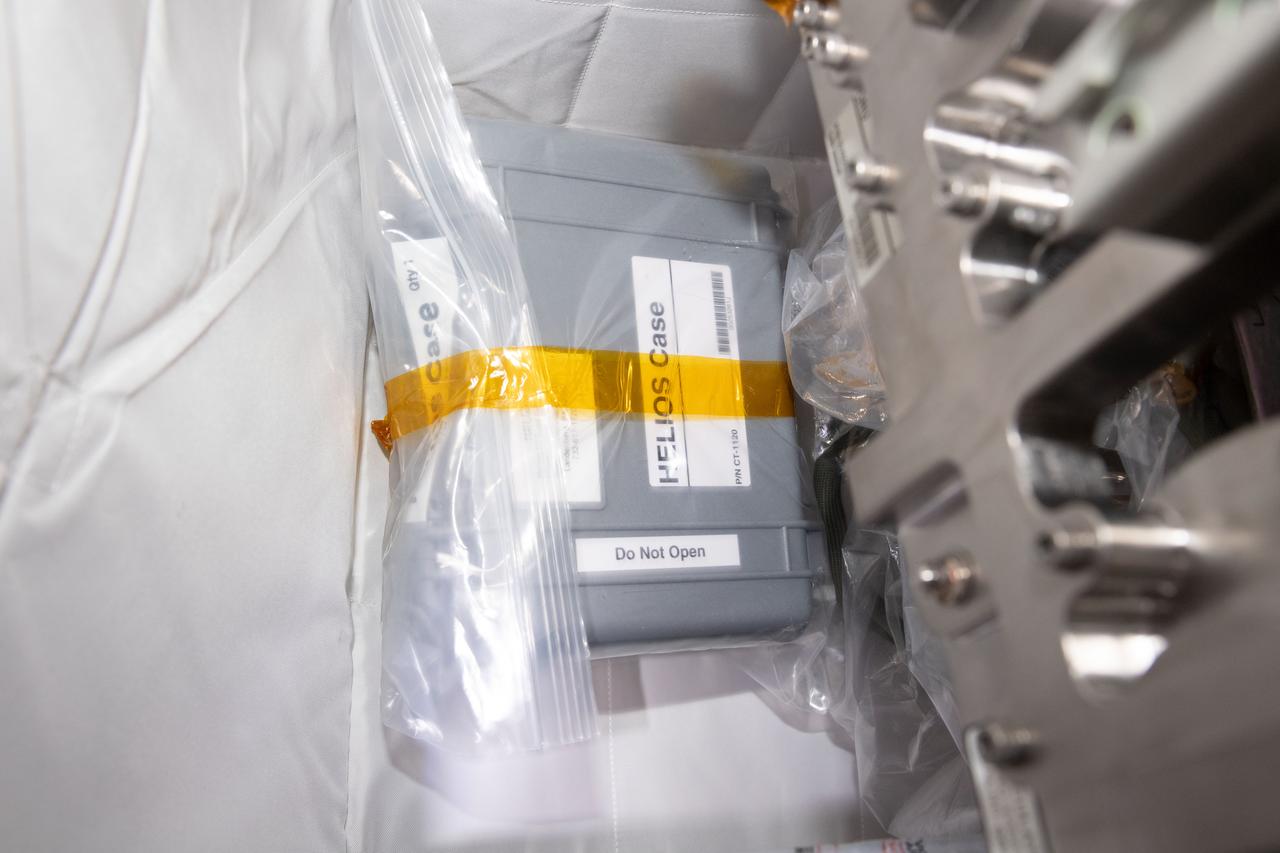
iss059e092346 (6/6/2019) --- A view of the Hardened Extremely Long-life Information in Optical Storage (HELIOS) case aboard the International Space Station (ISS). Hardened Extremely Long-life Information in Optical Storage (HELIOS) tests whether a data storage medium is resistant to space radiation.
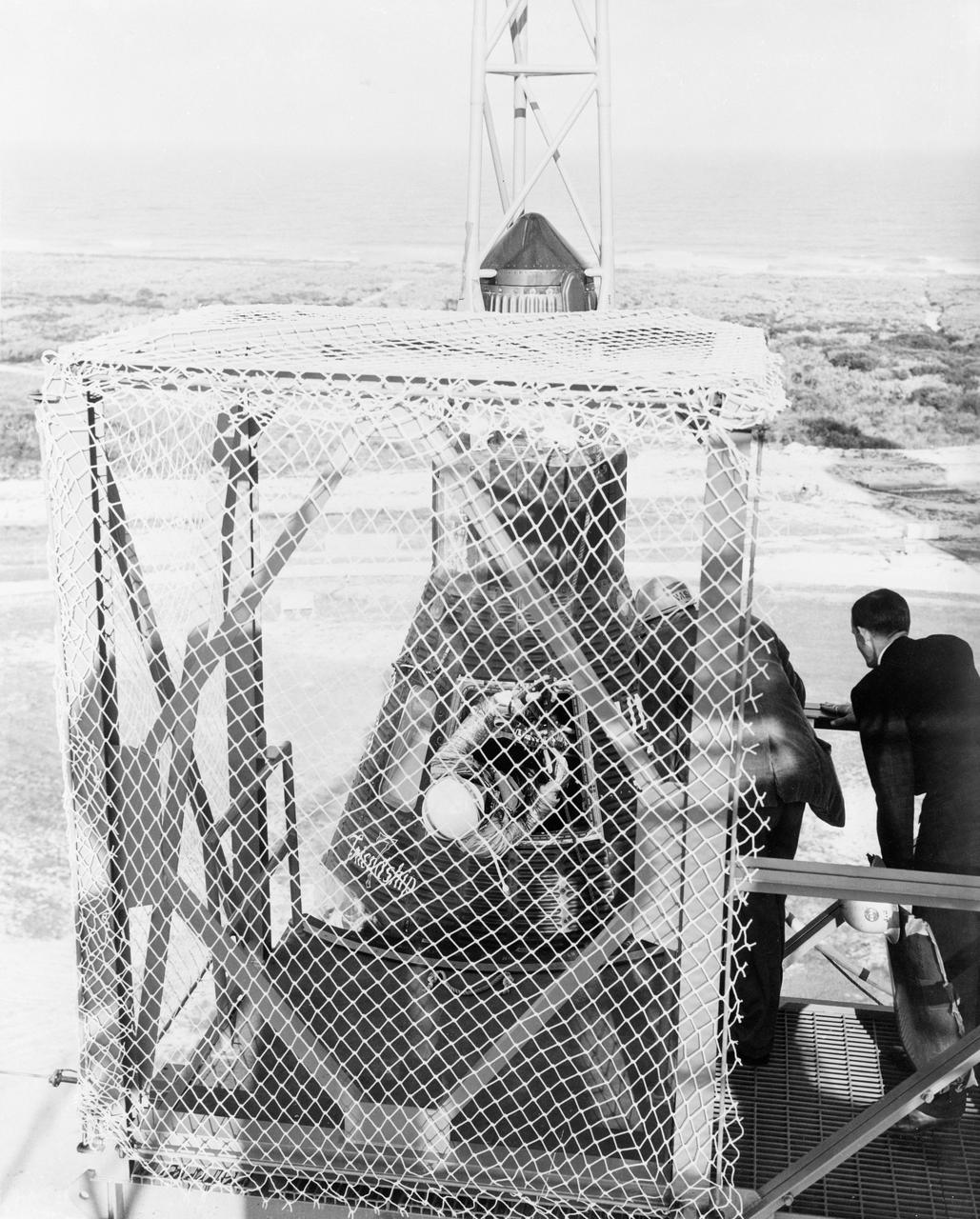
S62-00490 (20 Feb. 1962) --- View of Mercury Atlas 6 (MA-6) Friendship 7 capsule on top of its booster rocket with astronaut John H. Glenn Jr. just visible in the open hatch. Photo credit: NASA
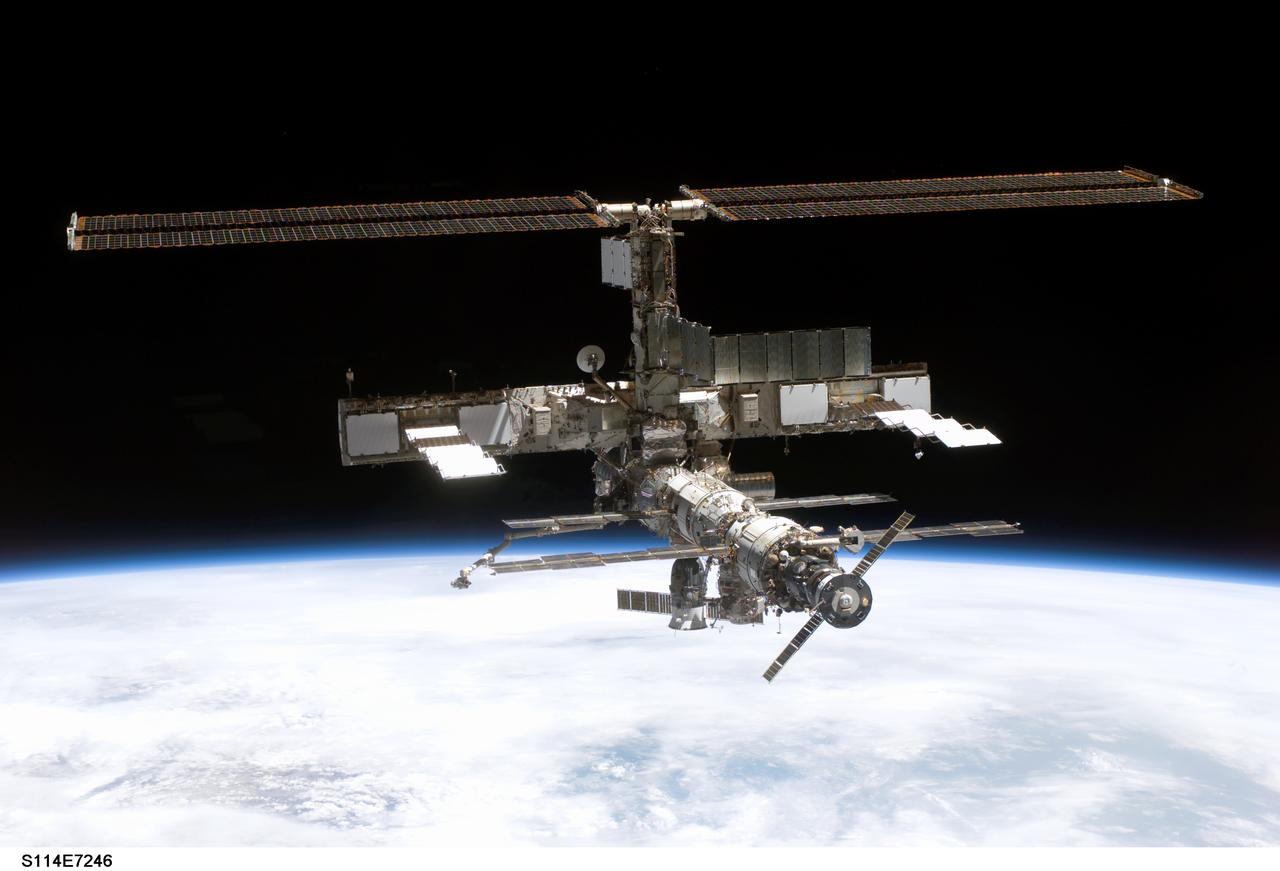
S114-E-7246 (6 August 2005) --- Backdropped by the blackness of space and Earth’s horizon, this full view of the International Space Station was photographed by a crewmember onboard the Space Shuttle Discovery following the undocking of the two spacecraft. Discovery pulled away from the complex at 2:24 a.m. (CDT) on August 6, 2005.
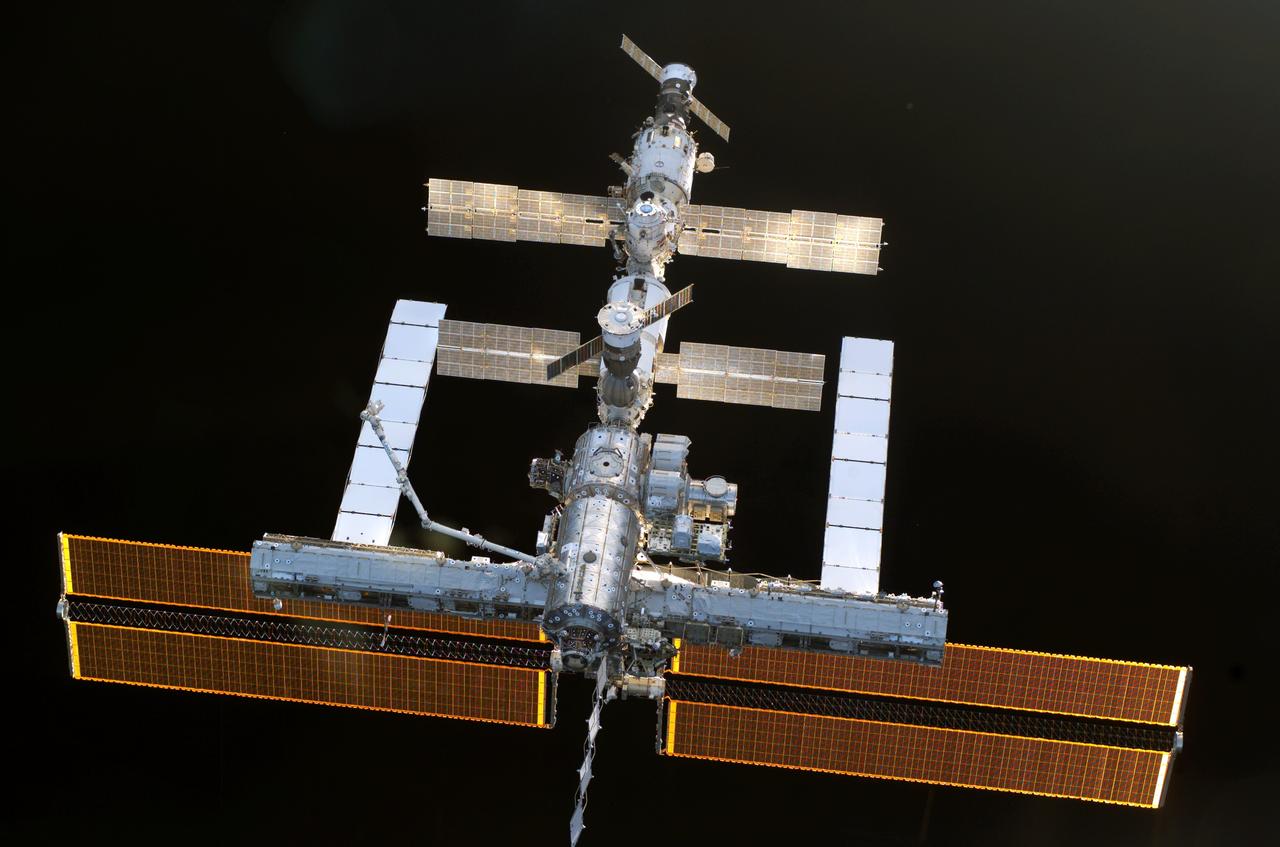
S114-E-7285 (6 August 2005) --- Backdropped by the blackness of space, this full view of the international space station was photographed by an STS-114 crewmember onboard the Space Shuttle Discovery following the undocking of the two spacecraft. Discovery pulled away from the complex at 2:24 a.m. (CDT) on Aug. 6, 2005.

The SDO spacecraft is in another eclipse season as of Feb. 6, 2019. This begins a several week period when the Earth briefly blocks SDO's view of the Sun each day. In fact, because SDO orbits above the Mountain Time zone, the Earth passes between SDO and the Sun at about 7:20 UT (12:20 am MT) each orbit. Eclipses are due to SDO's circular geosynchronous orbit some 22,000 miles above Earth. At the speed we are showing the frames, the eclipse is only a flicker. The still image shows that the edge of Earth, here about halfway across the Sun, looks quite rough due to the absorption of the 304 Å EUV light by our atmosphere. Movies available at https://photojournal.jpl.nasa.gov/catalog/PIA21213
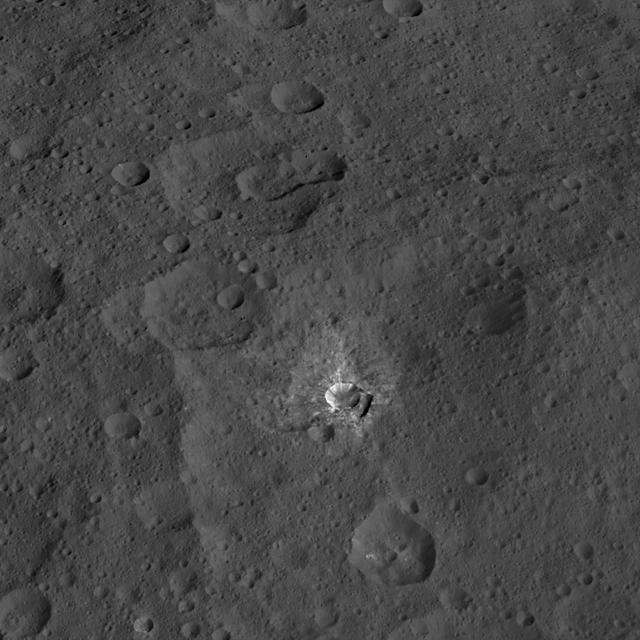
This view from NASA Dawn spacecraft features a crater named Oxo, which is about 6 miles 9 kilometers in diameter. A short, linear slump, where a mass of material has dropped below the surface, is seen to the left of Oxo crater rim. Dawn took this image on Oct. 17, 2015, from an altitude of 915 miles (1,470 kilometers). It has a resolution of 450 feet (140 meters) per pixel. http://photojournal.jpl.nasa.gov/catalog/PIA20136
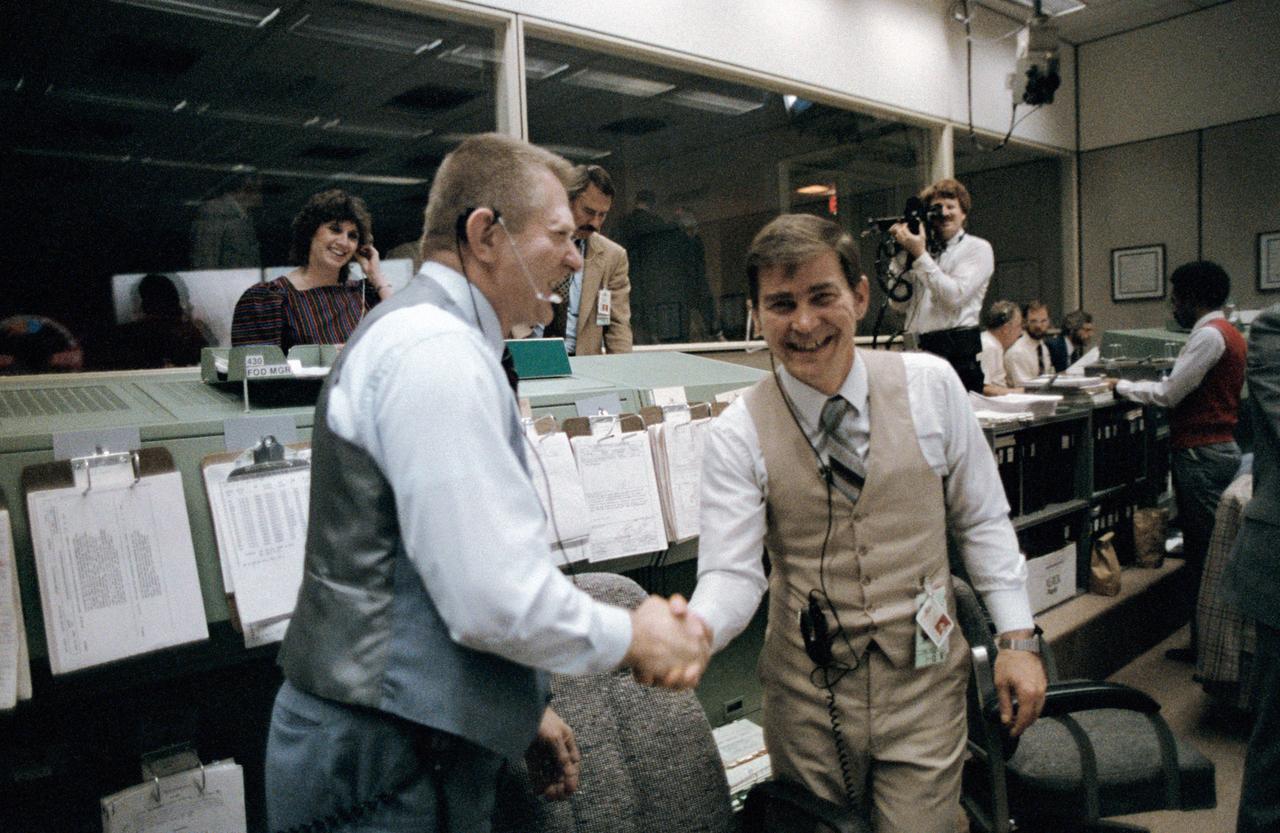
Various views of STS-6 MOCR activities during Day-5 with Vice-Pres. George Bush, Cap Communicator Bridges, JSC Director Gerald Griffin, Eugene F. Kranz, NASA Admin. James M. Beggs, Cap Com Astronaut O'Connor, Flight Directors Jay H. Greene, Gary E. Coen, and Harold Draughon. 1. BUSH, GEORGE, VICE-PRES. - STS-6 MOCR 2. DIR. GRIFFIN, GERALD D. - STS-6 MOCR 3. ADMIN. BEGGS, JAMES M. - STS-6 MOCR 4. FLT. DIRECTORS - STS-6 JSC, HOUSTON, TX Also available in 35 CN
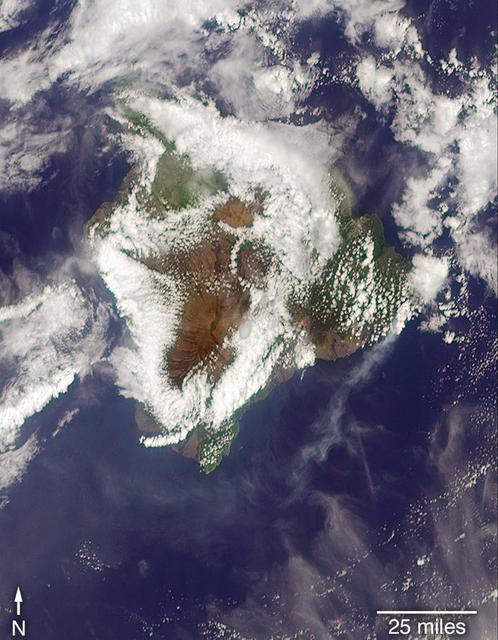
On May 3, 2018, a new eruption began at a fissure of the Kilauea volcano on the Island of Hawaii. Kilauea is the most active volcano in the world, having erupted almost continuously since 1983. Advancing lava and dangerous sulfur dioxide gas have forced thousands of residents in the neighborhood of Leilani Estates to evacuate. A number of homes have been destroyed, and no one can say how soon the eruption will abate and evacuees can return home. On May 6, 2018, at approximately 11 a.m. local time, the Multi-angle Imaging SpectroRadiometer (MISR) instrument on NASA's Terra satellite captured this view of the island as it passed overhead. Much of the island was shrouded by clouds, including the fissure on its eastern point. However, an eruption plume is visible streaming southwest over the ocean. The MISR instrument is unique in that it has nine cameras that view Earth at different angles: one pointing downward, four at various angles in the forward direction, and four in the backward direction. This image shows the view from one of MISR's forward-pointing cameras (60 degrees), which shows the plume more distinctly than the near-vertical views. The information from the images acquired at different view angles is used to calculate the height of the plume, results of which are superimposed on the right-hand image. The top of the plume near the fissure is at approximately 6,500 feet (2,000 meters) altitude, and the height of the plume decreases as it travels south and west. These relatively low altitudes mean that the ash and sulfur dioxide remained near the ground, which can cause health issues for people on the island downwind of the eruption. The "Ocean View" air quality monitor operated by the Clean Air Branch of the State of Hawaii Department of Health recorded a concentration of 18 μg/m3 of airborne particles less than 2.5 micrometers in diameter at 11 a.m. local time. This amount corresponds to an air quality rating of "moderate" and supports the MISR results indicating that ash was most likely present at ground level on this side of the island. These data were acquired during Terra orbit 97780. An annotated version is available at https://photojournal.jpl.nasa.gov/catalog/PIA22451
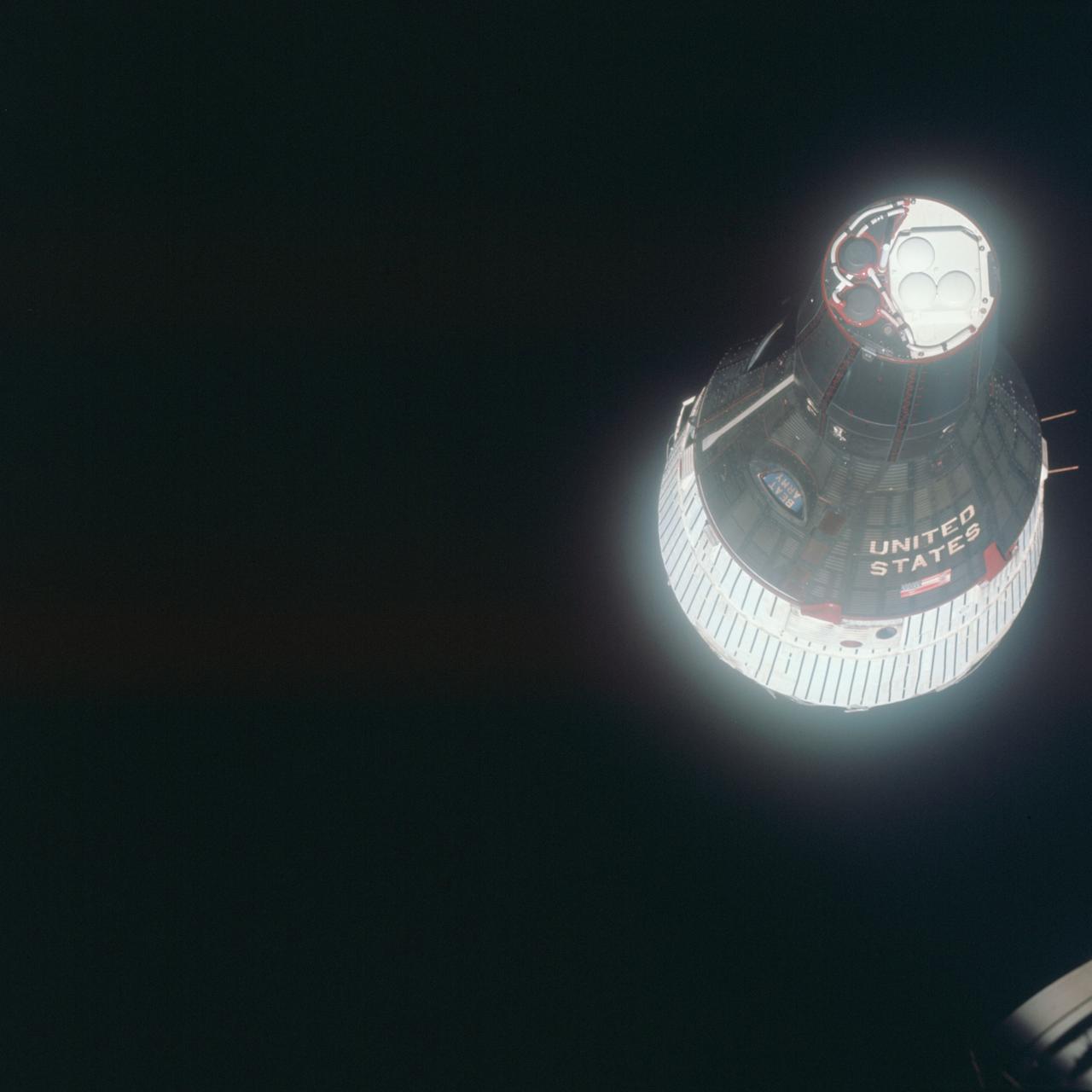
S65-64040 (15 Dec. 1965) --- Nose-on view of the Gemini-6 spacecraft against the blackness of space as seen from Gemini-7 spacecraft. The two spacecraft were approximately 38 feet apart. Astronauts Walter M. Schirra and Thomas P. Stafford were onboard the Gemini-6 spacecraft. Astronauts Frank Borman and James A. Lovell Jr. were aboard the Gemini-7 spacecraft. A "Beat Army" sign can be seen in the Gemini-6 window. Photo credit: NASA
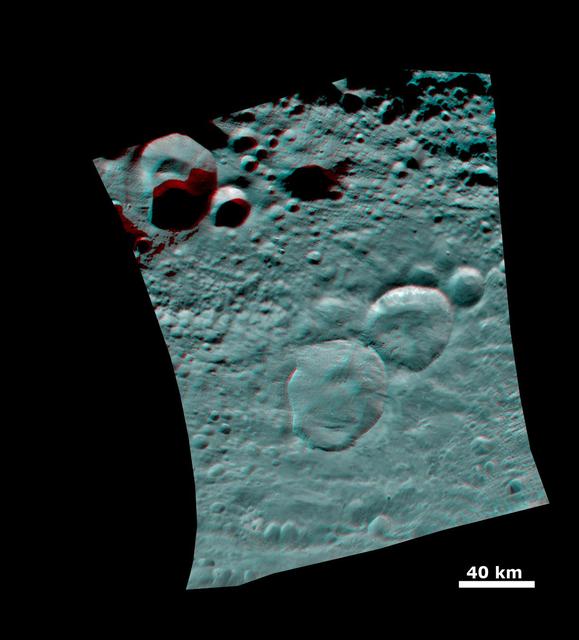
This 3D image shows the topography of Vesta three craters, informally named the Snowman, obtained by the framing camera instrument aboard NASA Dawn spacecraft on August 6, 2011. You need 3D glasses to view this image.
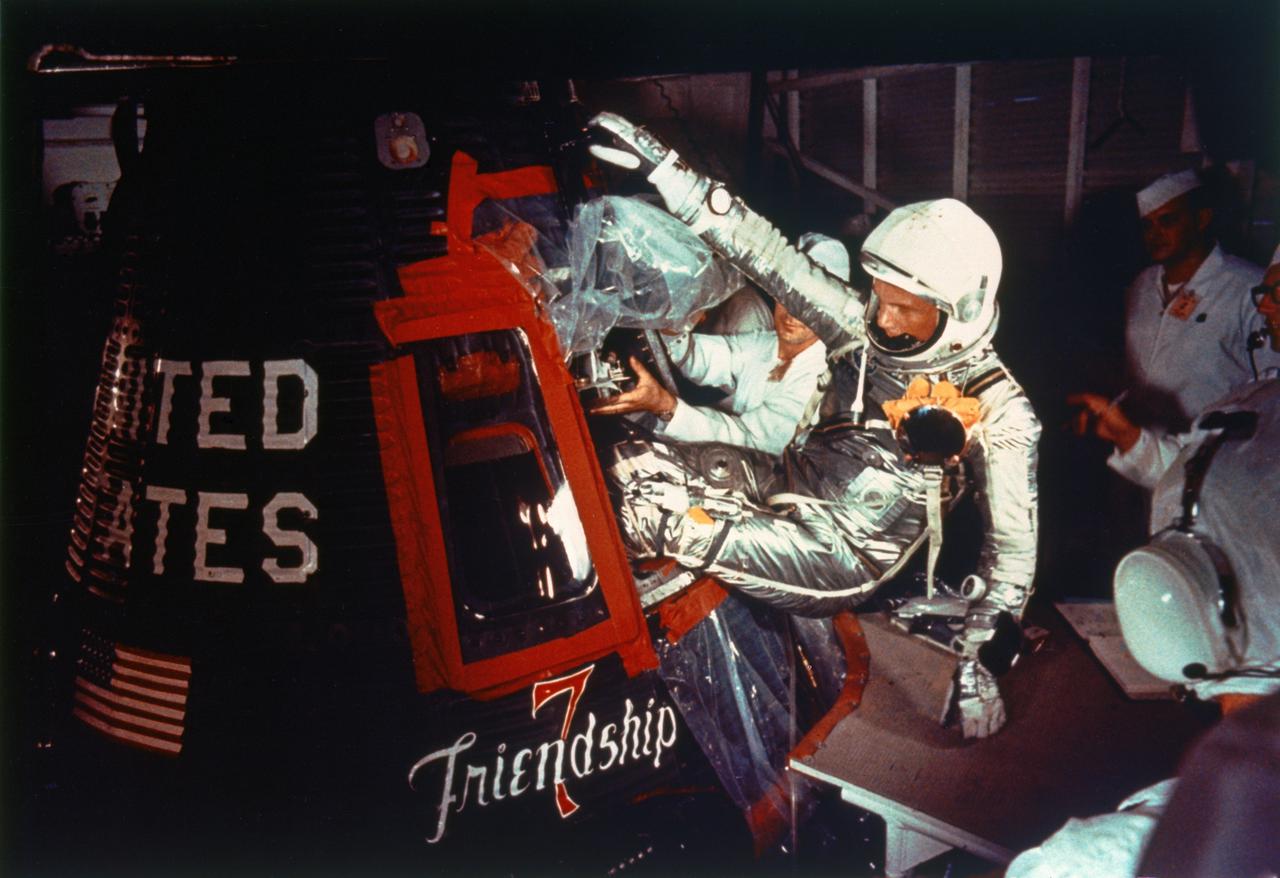
CAPE CANAVERAL, Fla. -- Overall view of astronaut John H. Glenn Jr. as he commences entrance into spacecraft Friendship 7 prior to MA-6 launch operations. Photo credit: NASA
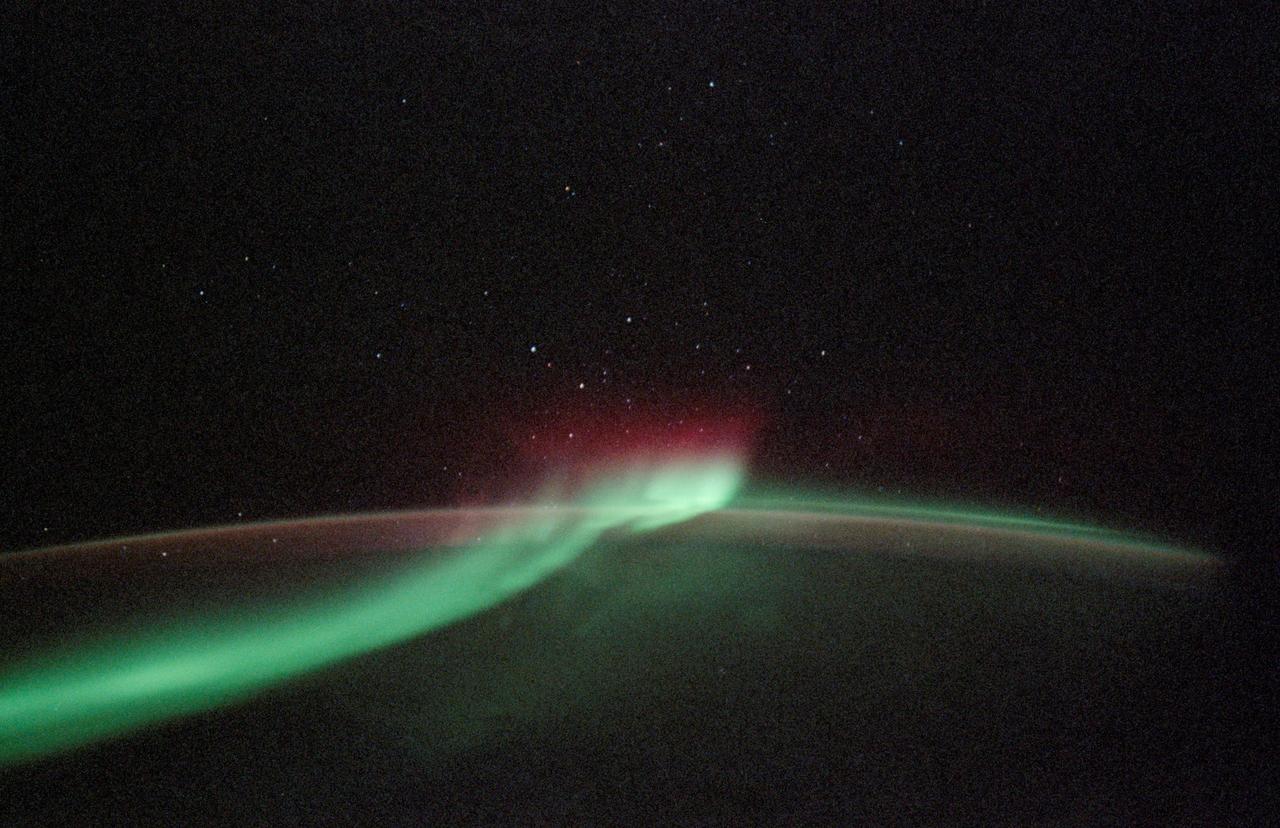
STS114-332-027 (6 August 2005) --- This view featuring the Aurora Australis or ;southern lights; was photographed by a crewmember aboard the Space Shuttle Discovery during the STS-114 mission.
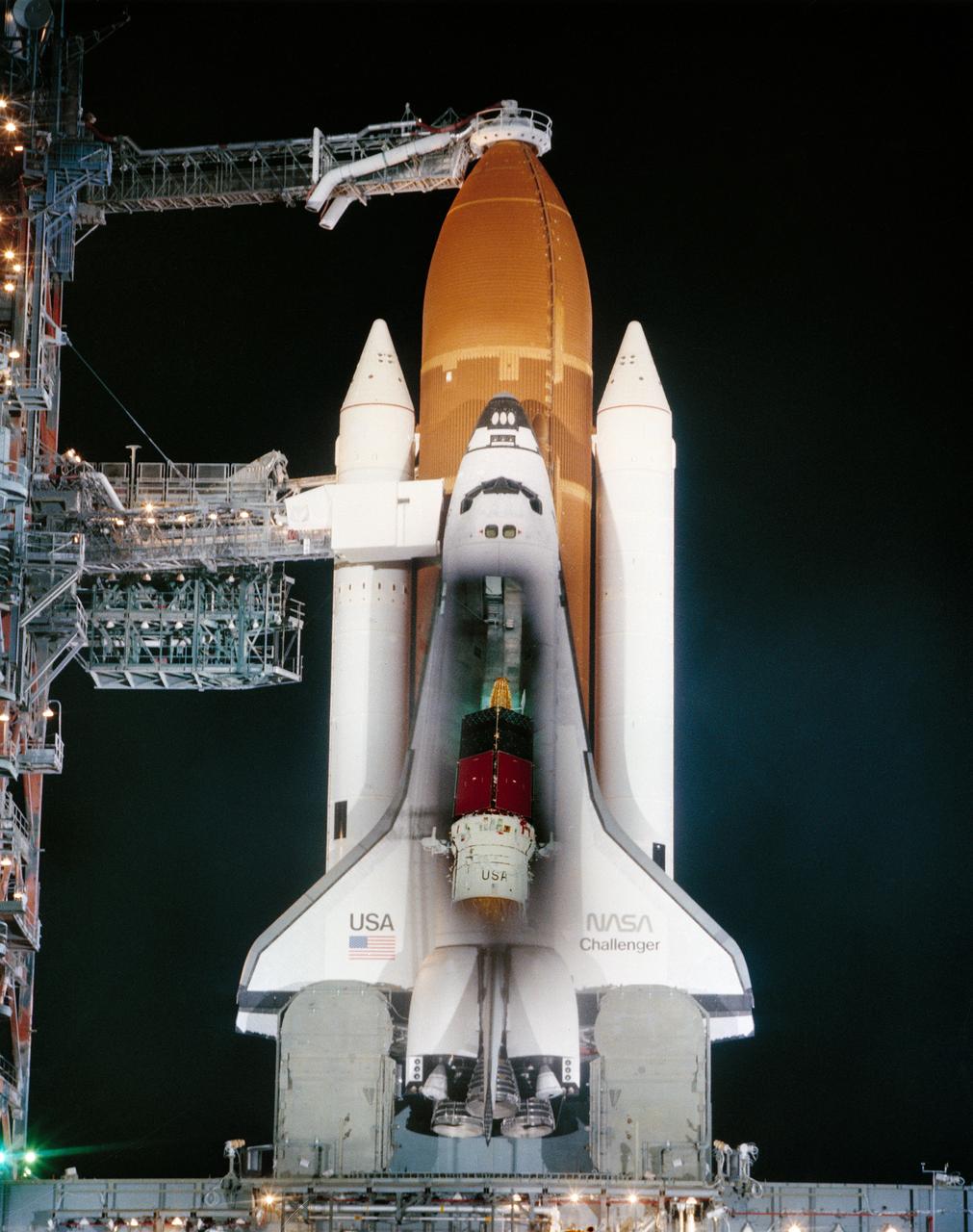
Composite view of the TDRS superimposed into Challenger Cargo Bay while on Pad 39A. 1. STS-6 - PREFLIGHT KSC, FL Also available in 4x5 B&W
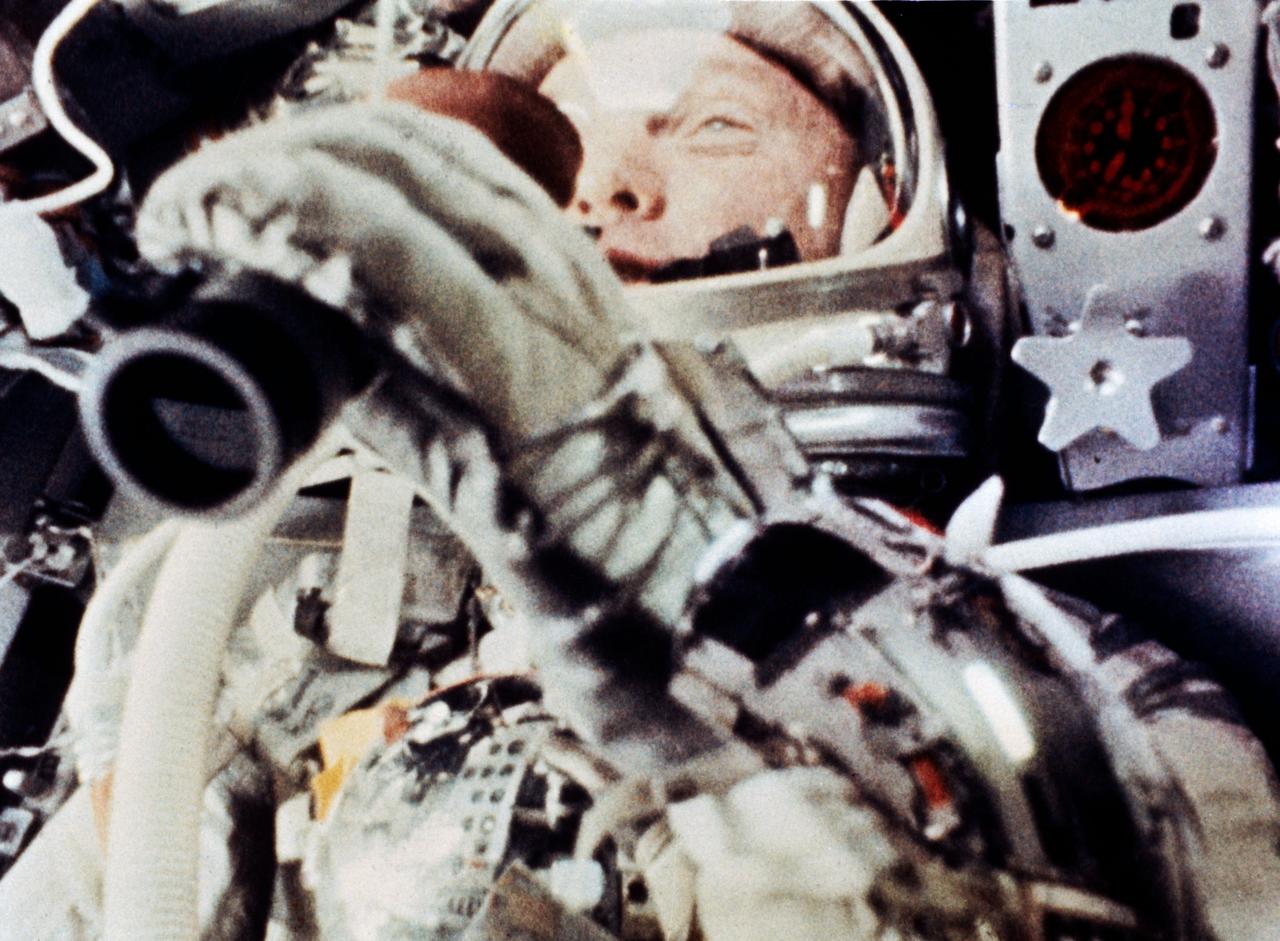
Astronaut John H. Glenn Jr. uses binoculars to view the Earth through the window of the Mercury-Atlas (MA-6) Friendship 7 capsule during the U.S.'s initial orbital flight.
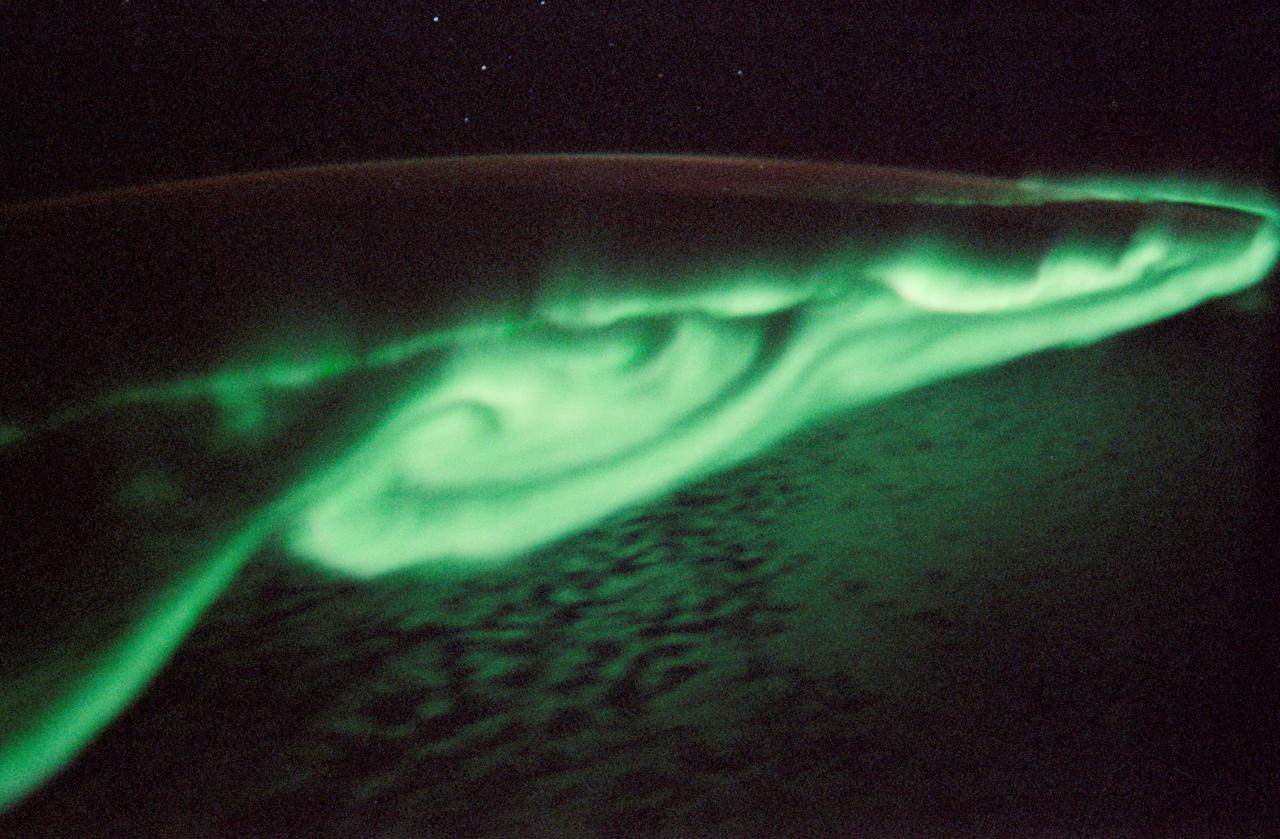
STS114-332-031 (6 August 2005) --- This view featuring the Aurora Australis or “southern lights” was recorded on 35mm film by a crewmember aboard the Space Shuttle Discovery during the STS-114 mission.
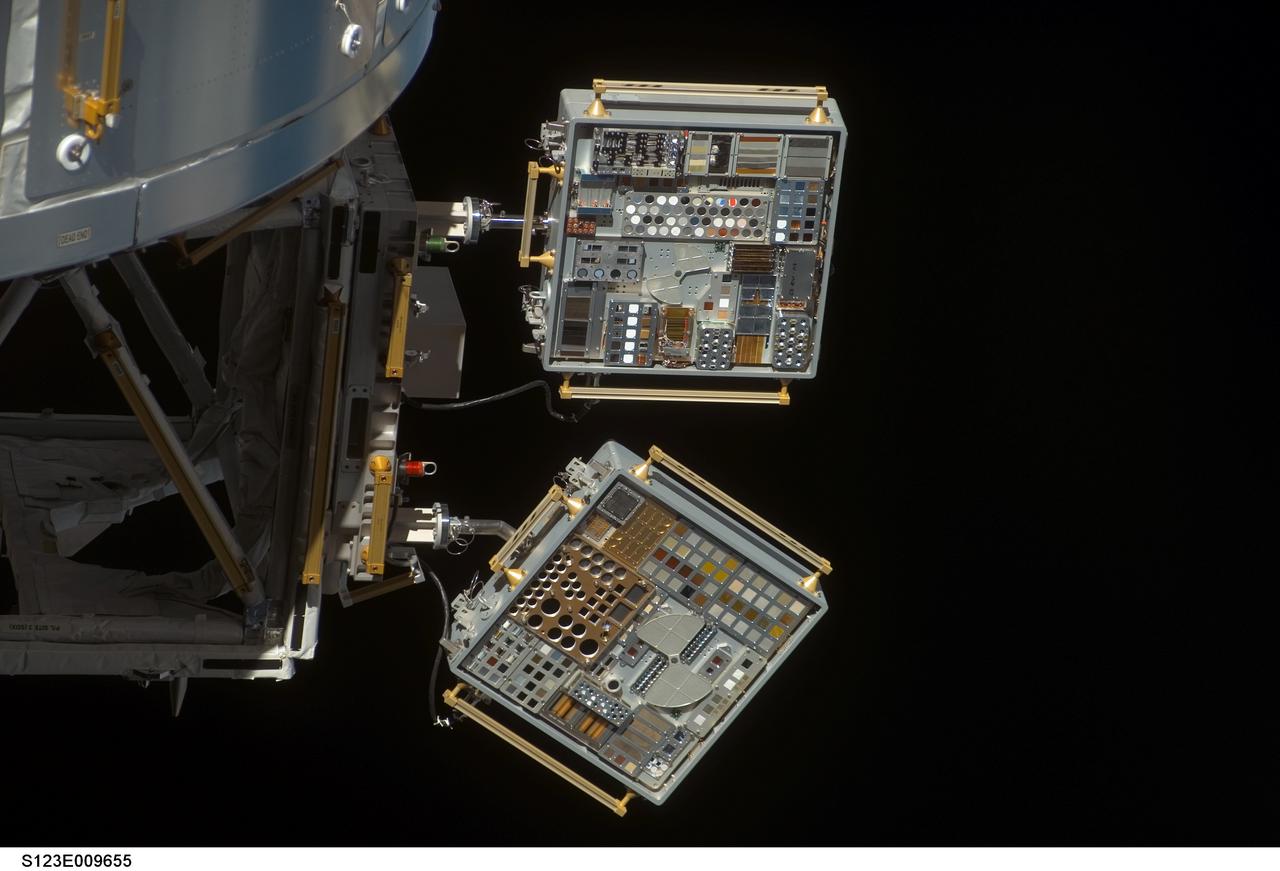
s123e009655 (3/25/2008) --- View of Materials International Space Station Experiment (MISSE) 6 Passive Experiment Container (PEC) on European Laboratory/Columbus. Photo was taken during flyaround of STS-123 Space Shuttle Endeavor.
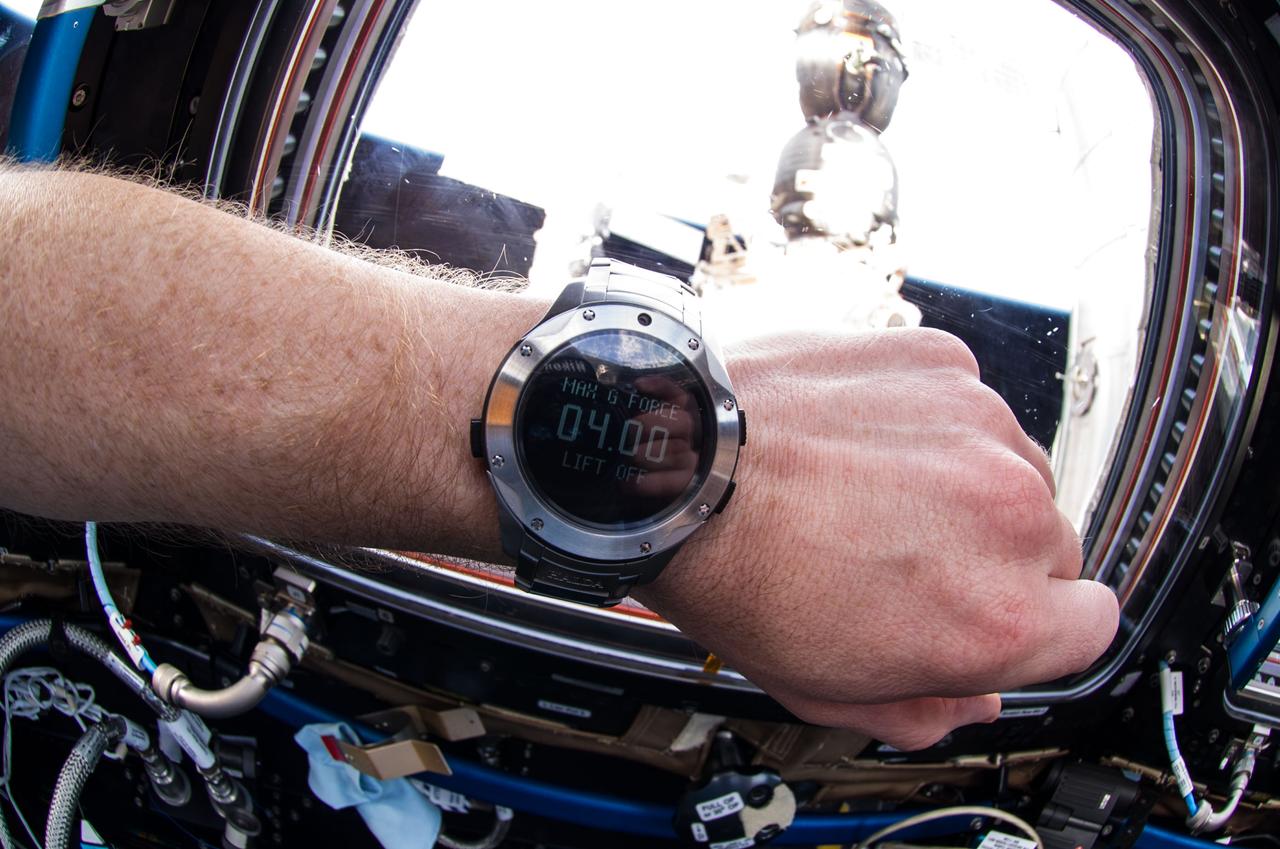
View of docked Soyuz 39 (TMA-13M) on Mini-Research Module 1 (MRM1) (Rassvet). A wrist watch is visible in the frame with the terms "Max 6 Force 04:00" on its face.
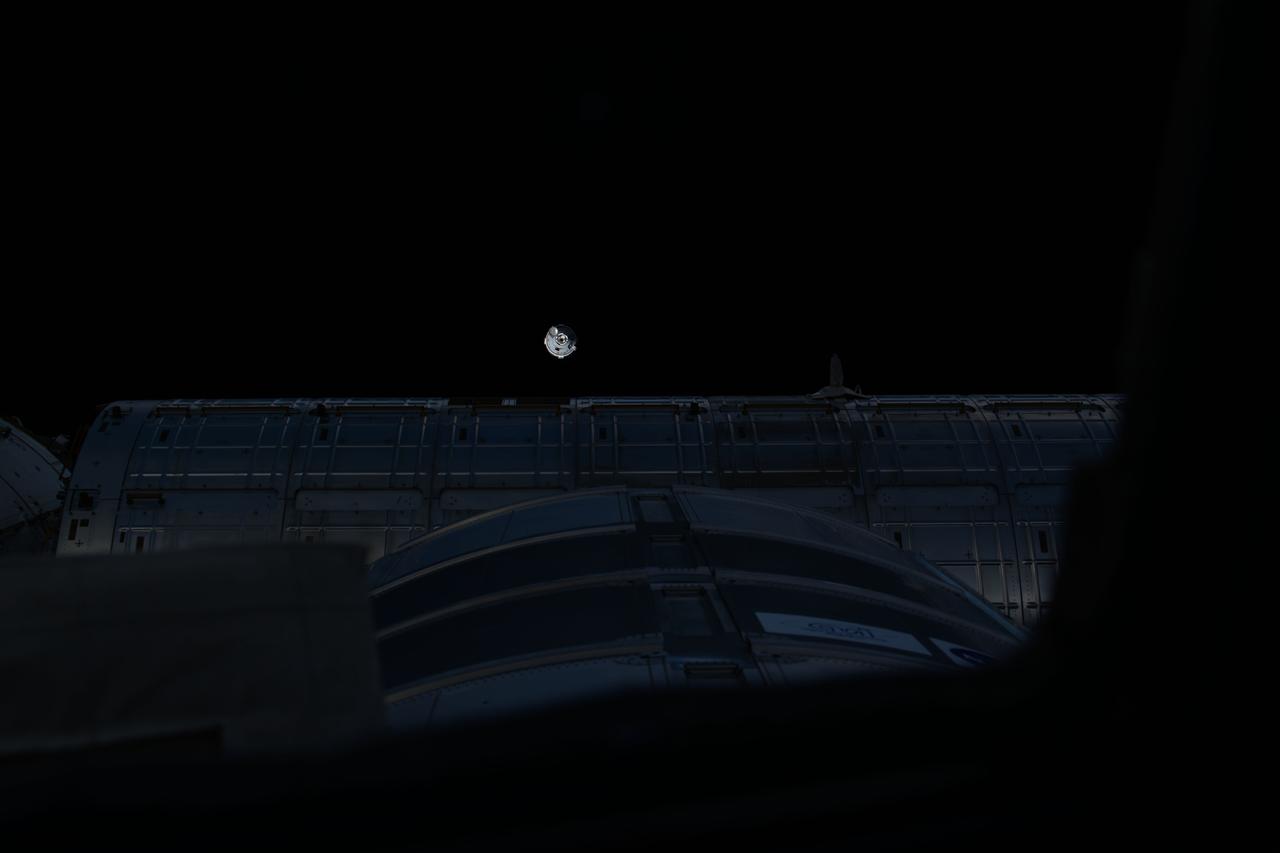
Distant view of the Orbital Sciences Cygnus cargo craft approaching the International Space Station, photographed by an Expedition 40 crew member. The two spacecraft converged at 6:36 a.m. (EDT) on July 16, 2014.
iss071e178813 (June 6, 2024) --- This view from a window on the cupola overlooks the Kibo laboratory module as Boeing's Starliner spacecraft carrying NASA astronauts Butch Wilmore and Suni WIlliams approaches the International Space Station.
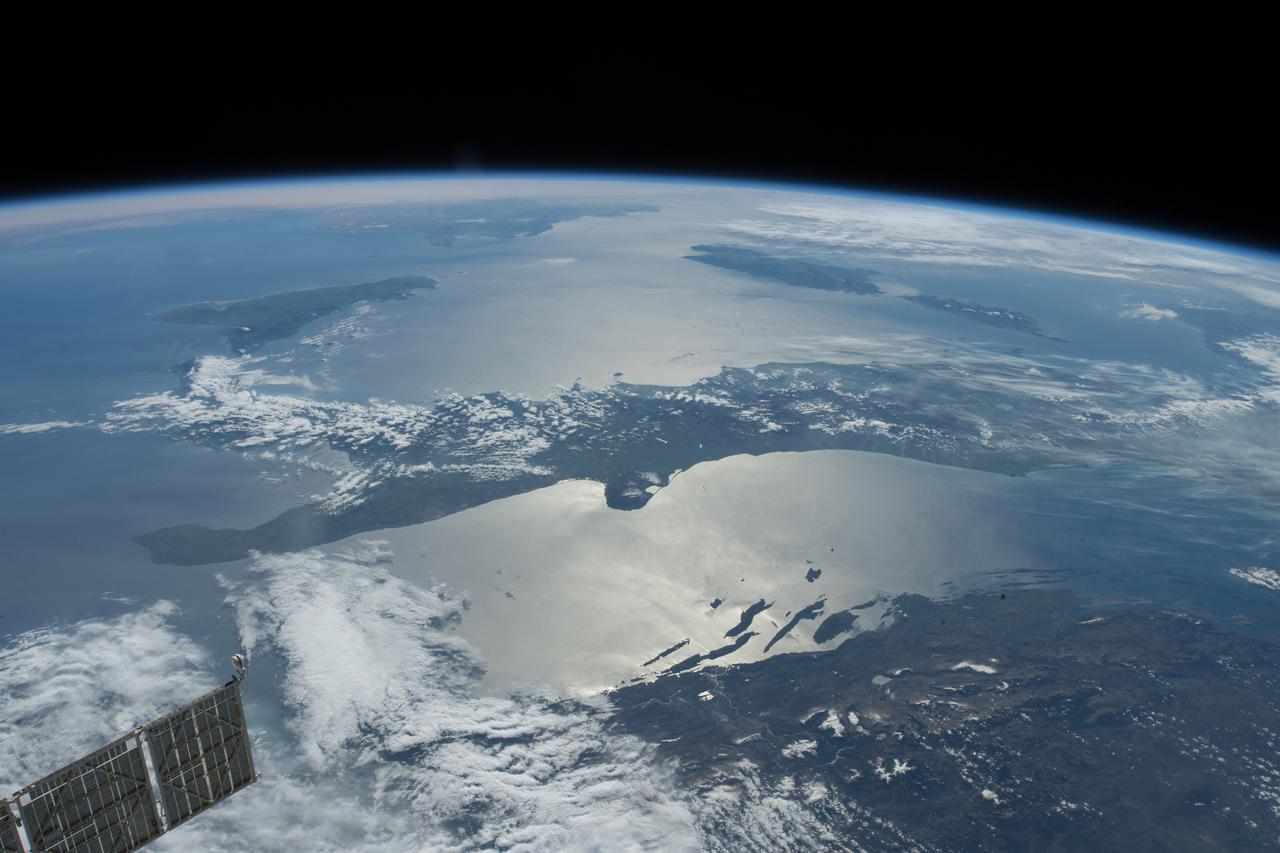
iss055e012690 (April 6, 2018) --- This Earth view taken by an Expedition 55 crew member aboard the International Space Station looks over southeastern Europe, across Italy and into the Mediterranean Sea toward France and Spain.
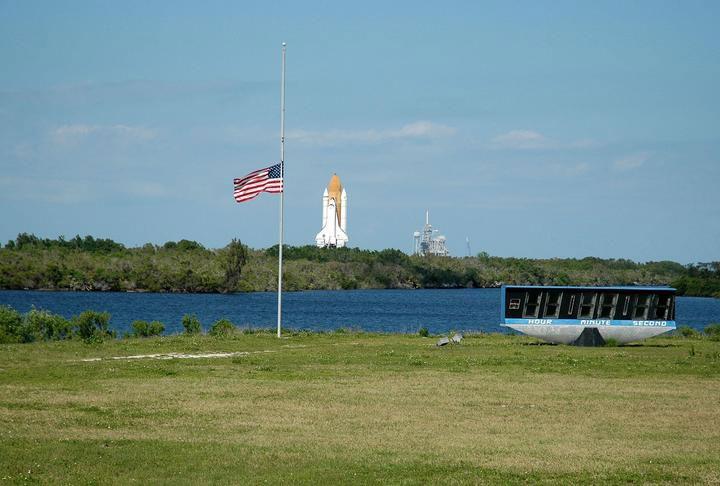
View of Space Shuttle Discovery, framed by Flag Pole and Clock, on its way to LC39B for the second Return to Flight, April 6, 2005. (The flag is at half-mast in remembrance of Pope John Paul II.)
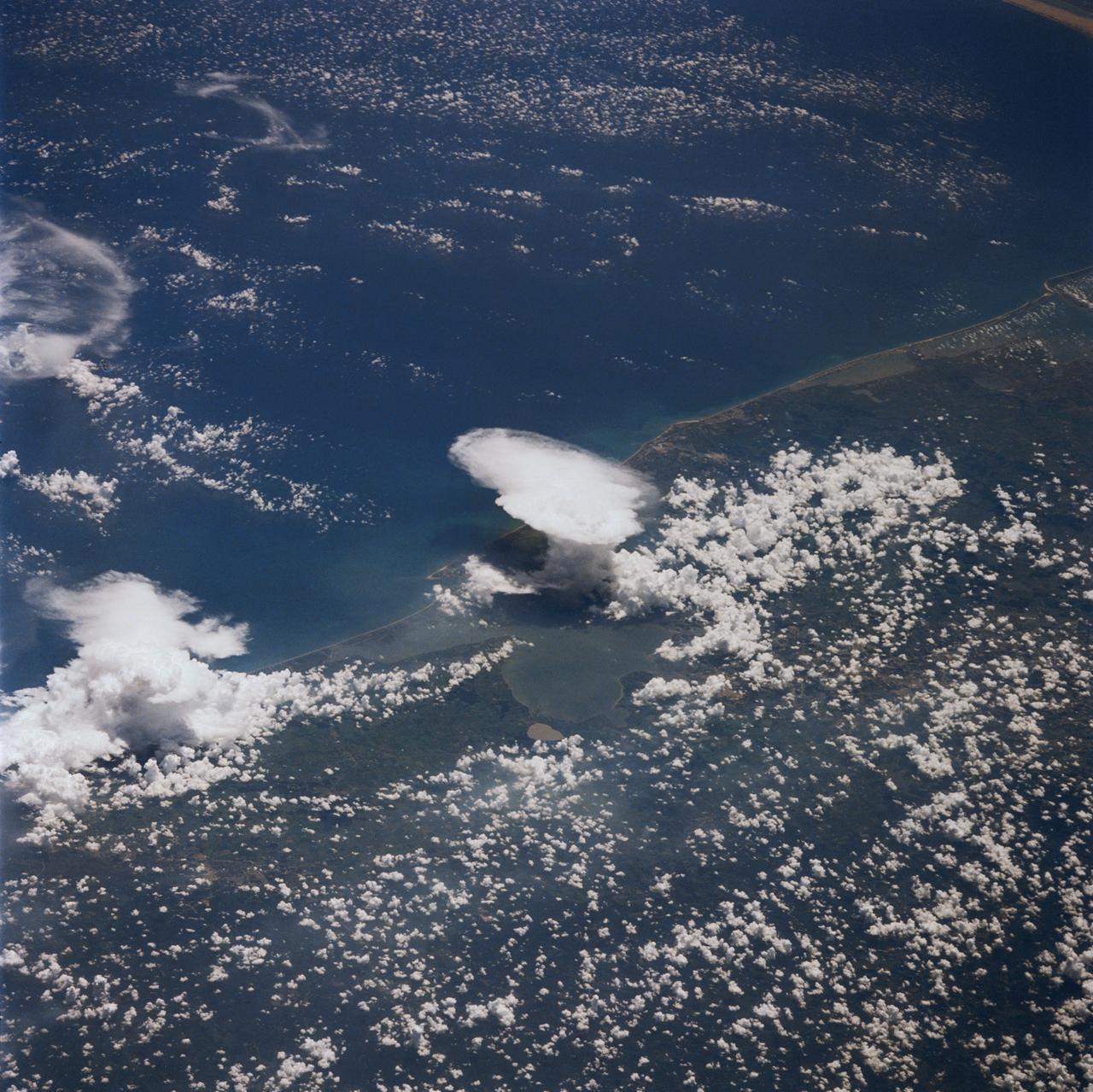
51F-37-076 (29 July-6 Aug 1985) --- The Houston, Texas, area is seen in a southlooking view. Galveston Bay is at the center. A very large cumulonimbus cloud is over the Texas City area.
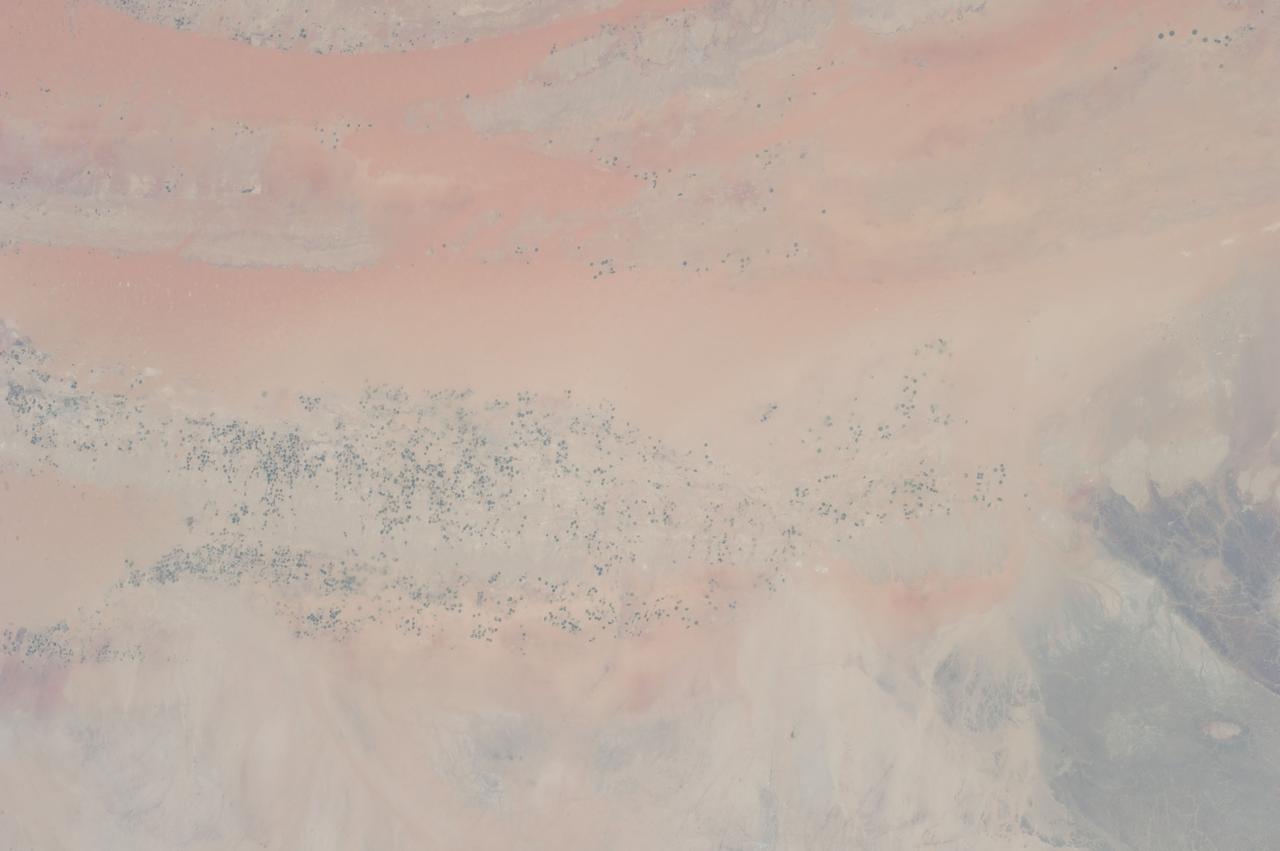
Distant view of the Orbital Sciences Cygnus cargo craft approaching the International Space Station, photographed by an Expedition 40 crew member. The two spacecraft converged at 6:36 a.m. (EDT) on July 16, 2014.
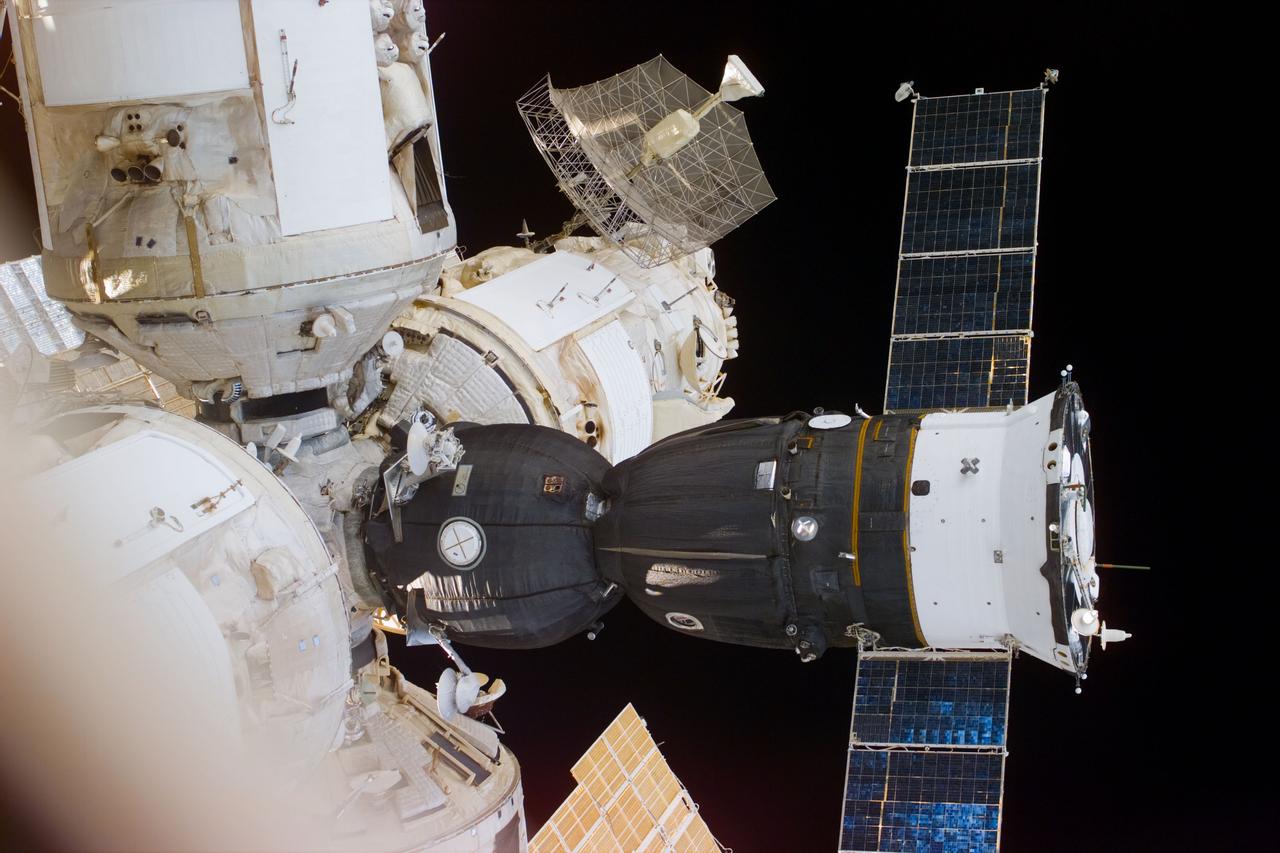
STS79-E-5216 (21 September 1996) --- A Space Shuttle Atlantis out-the-window view showing a Soyuz spacecraft docked with Russia's Mir Space Station, during Flight Day 6.
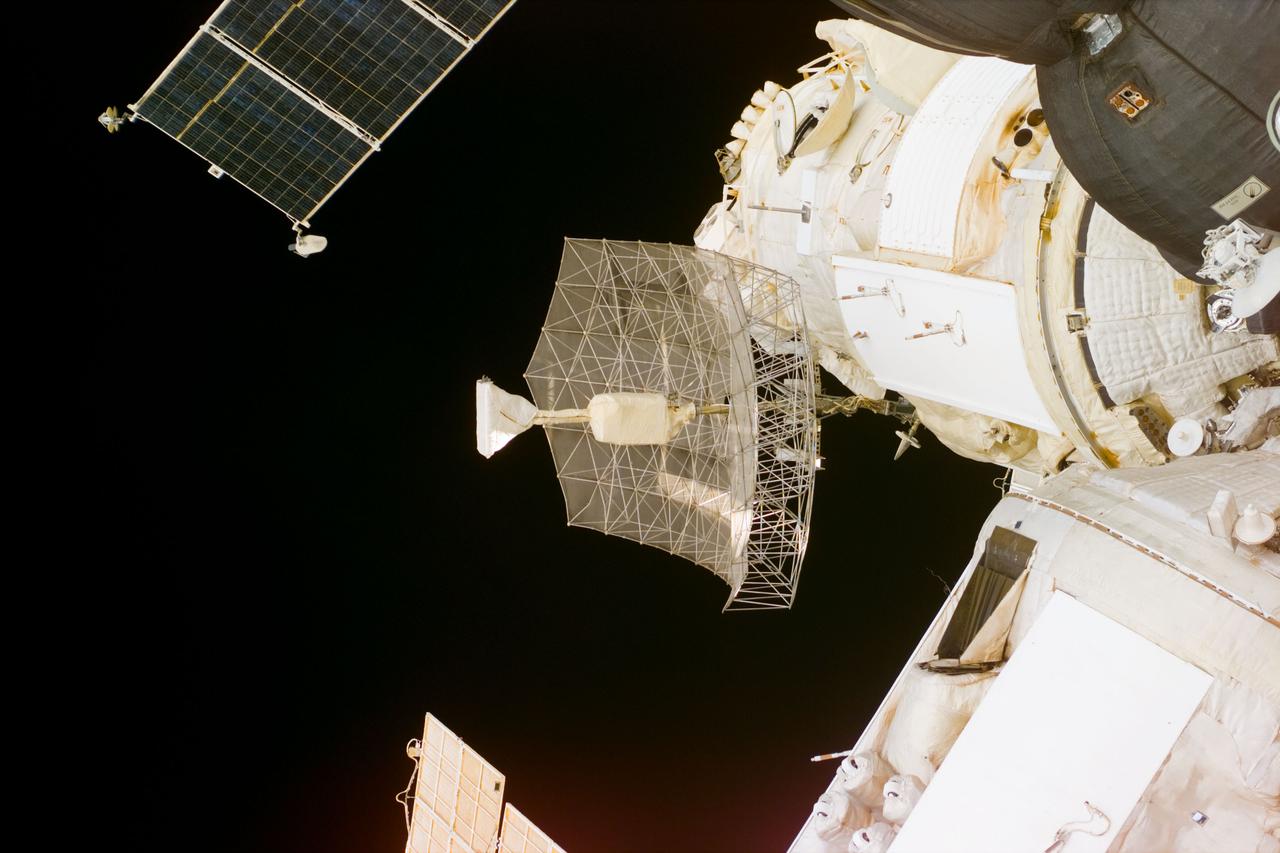
STS79-E-5219 (21 September 1996) --- This view shows the Radar antenna on Russia's Mir Space Station which was deployed earlier this year during cosmonaut Extravehicular Activity (EVA), during Flight Day 6.