Channel Vision
A Captivating Vision

Everest Panorama; 20-20 Vision
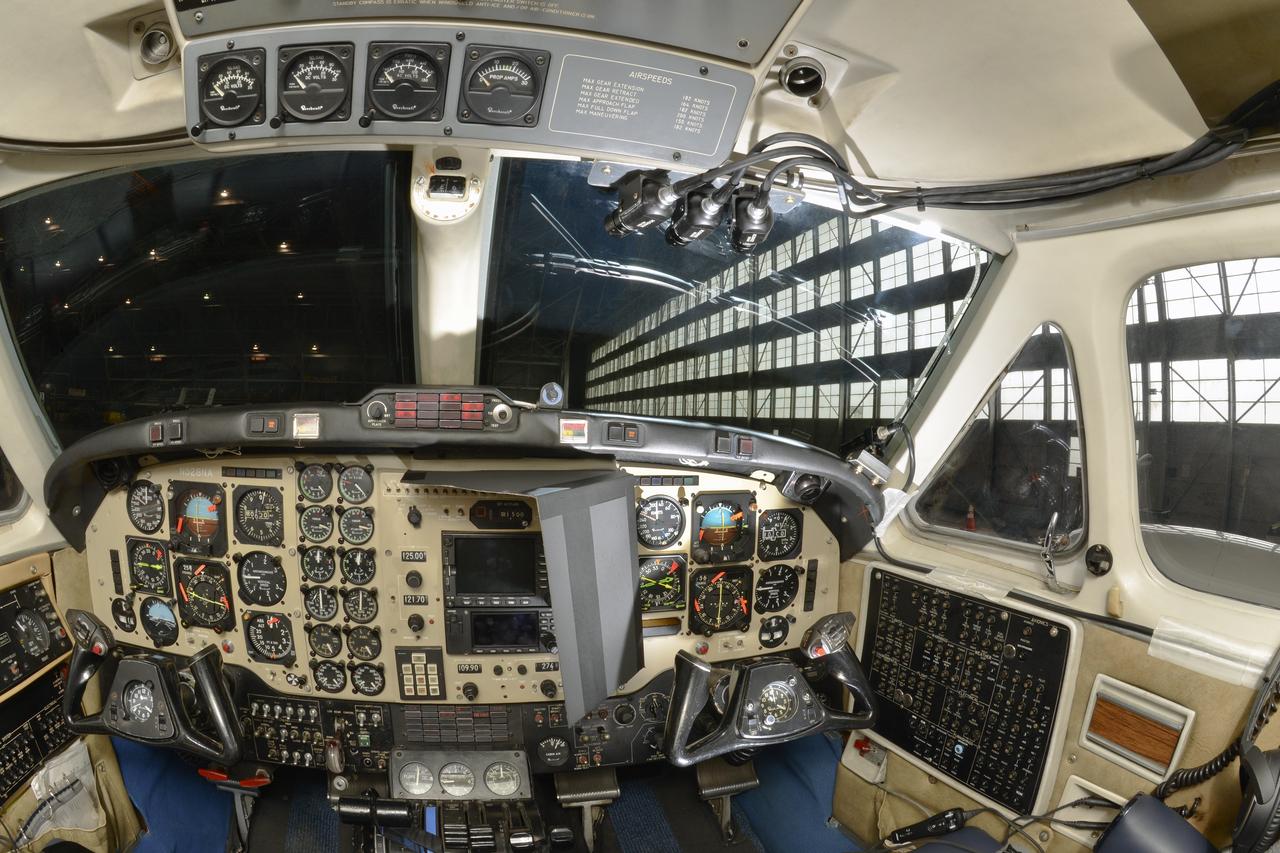
External Vision System on NASA UC-12B Aircraft

Spirit Switches on Its X-ray Vision

Testing of the External Vision System (EVS) Software on the B200 King Air
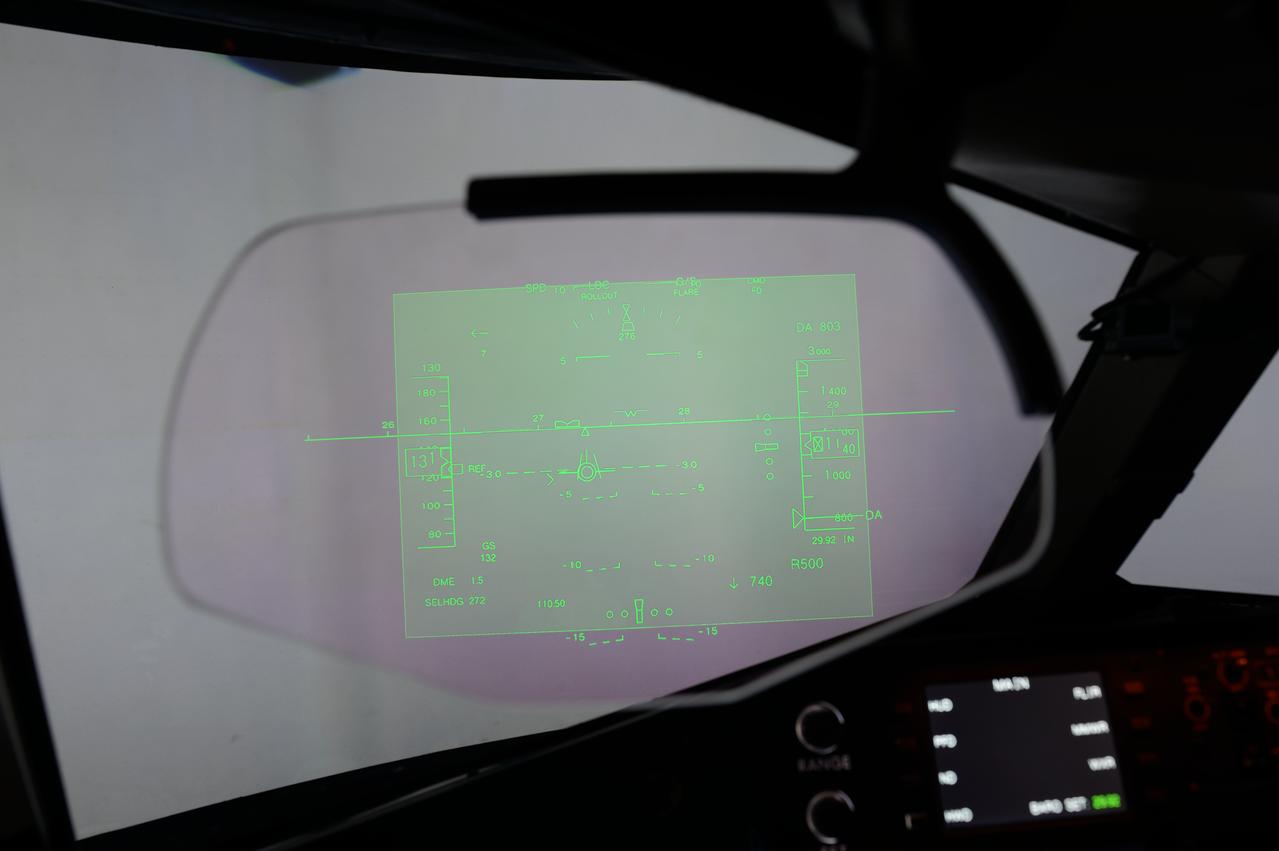
NextSafe 2.5 Motion Simulation Experiment Crew evaluation of vision system technologies
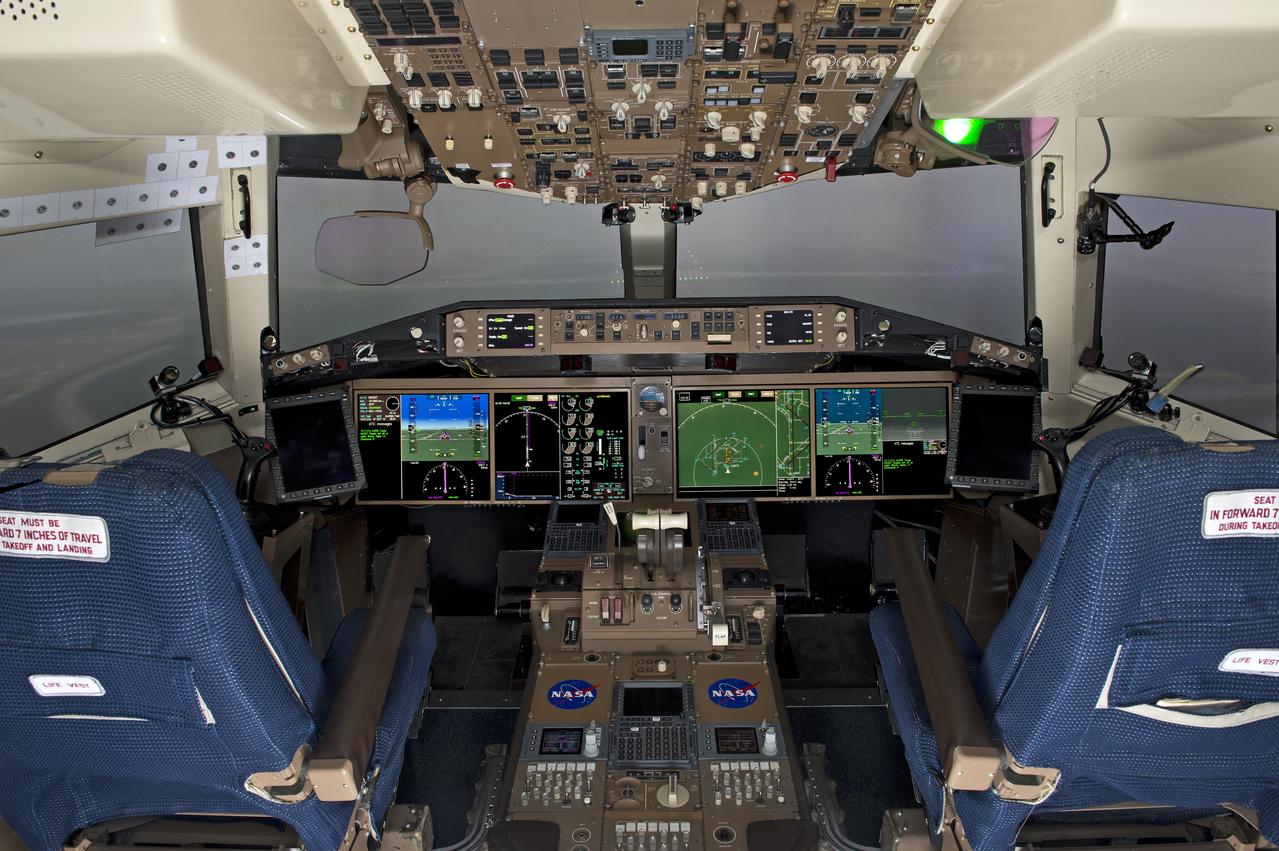
NextSafe 2.5 Motion Simulation Experiment Crew evaluation of vision system technologies
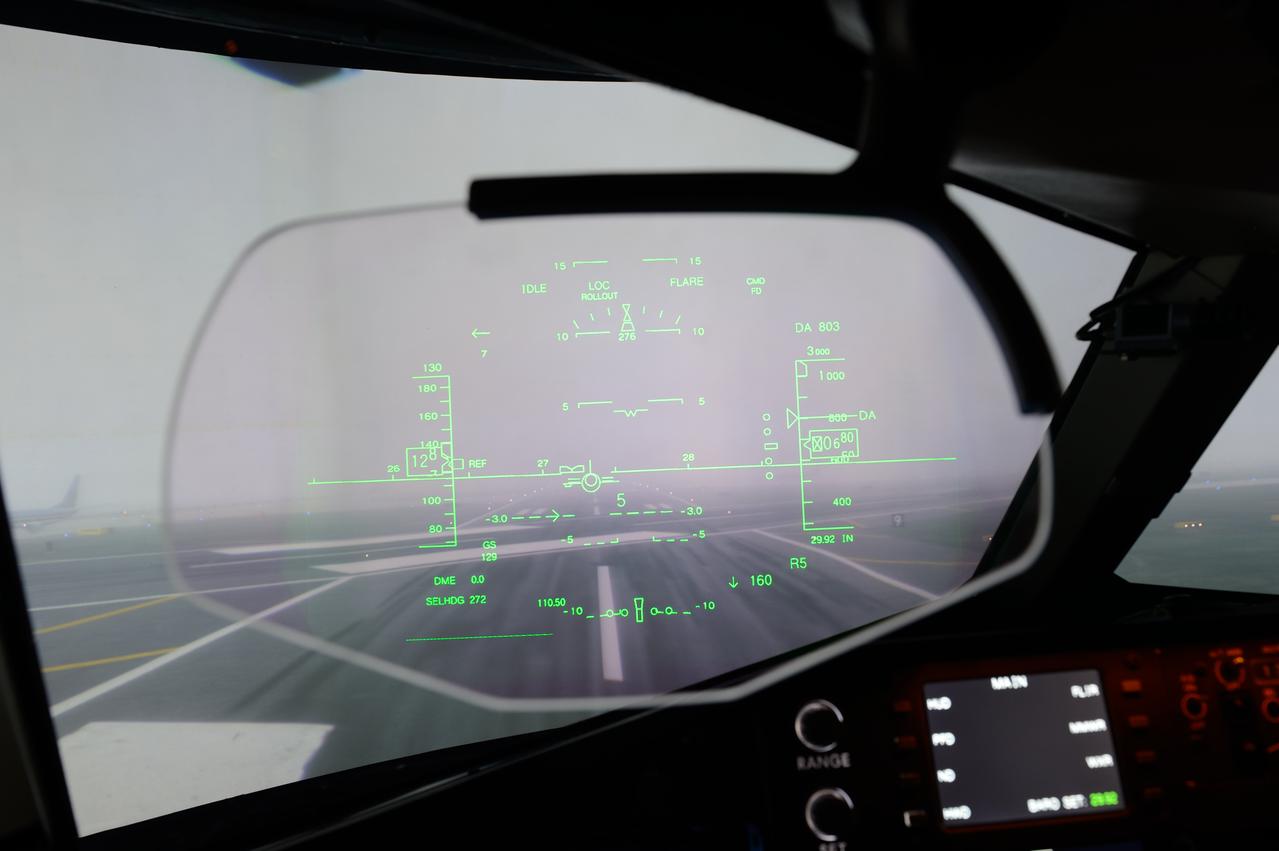
NextSafe 2.5 Motion Simulation Experiment Crew evaluation of vision system technologies
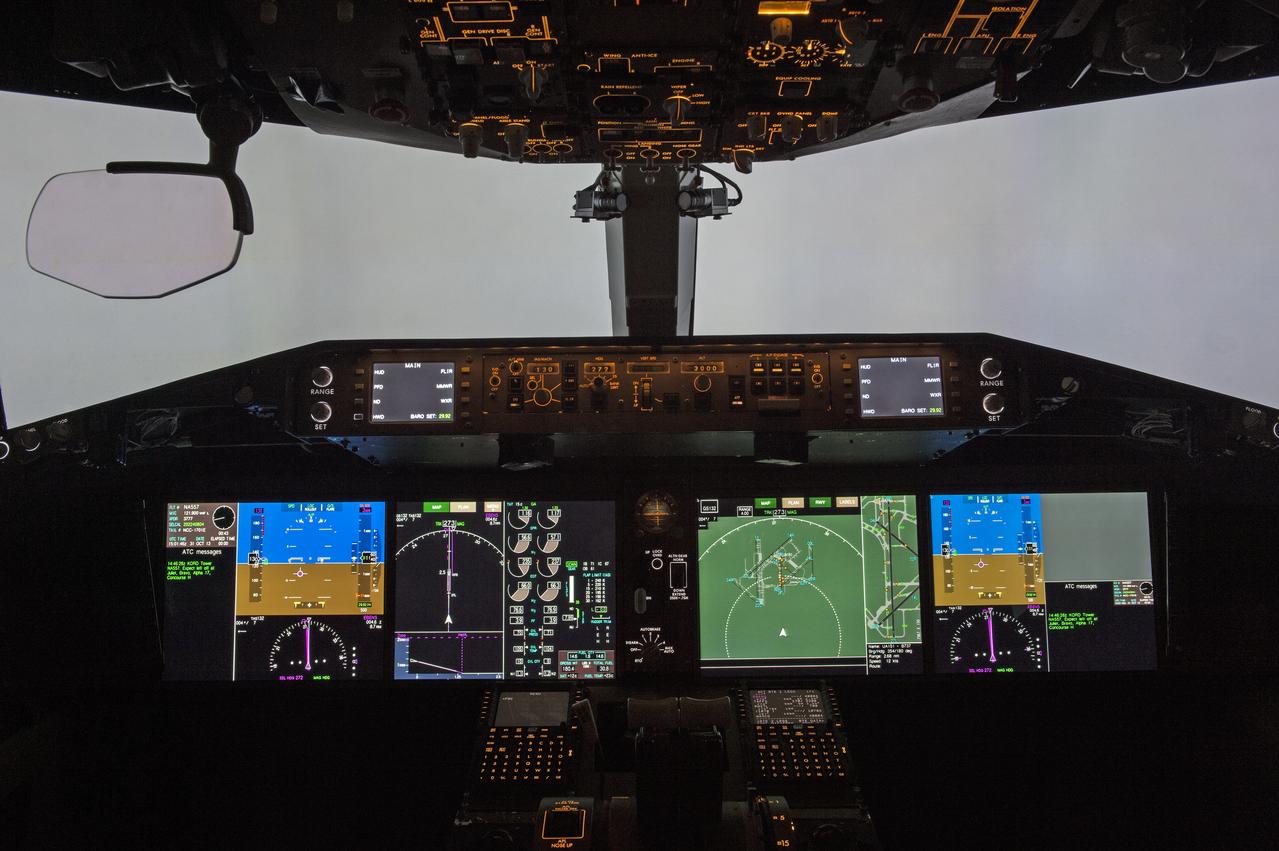
NextSafe 2.5 Motion Simulation Experiment Crew evaluation of vision system technologies

NextSafe 2.5 Motion Simulation Experiment Crew evaluation of vision system technologies

NextSafe 2.5 Motion Simulation Experiment Crew evaluation of vision system technologies

NextSafe 2.5 Motion Simulation Experiment Crew evaluation of vision system technologies

NextSafe 2.5 Motion Simulation Experiment Crew evaluation of vision system technologies
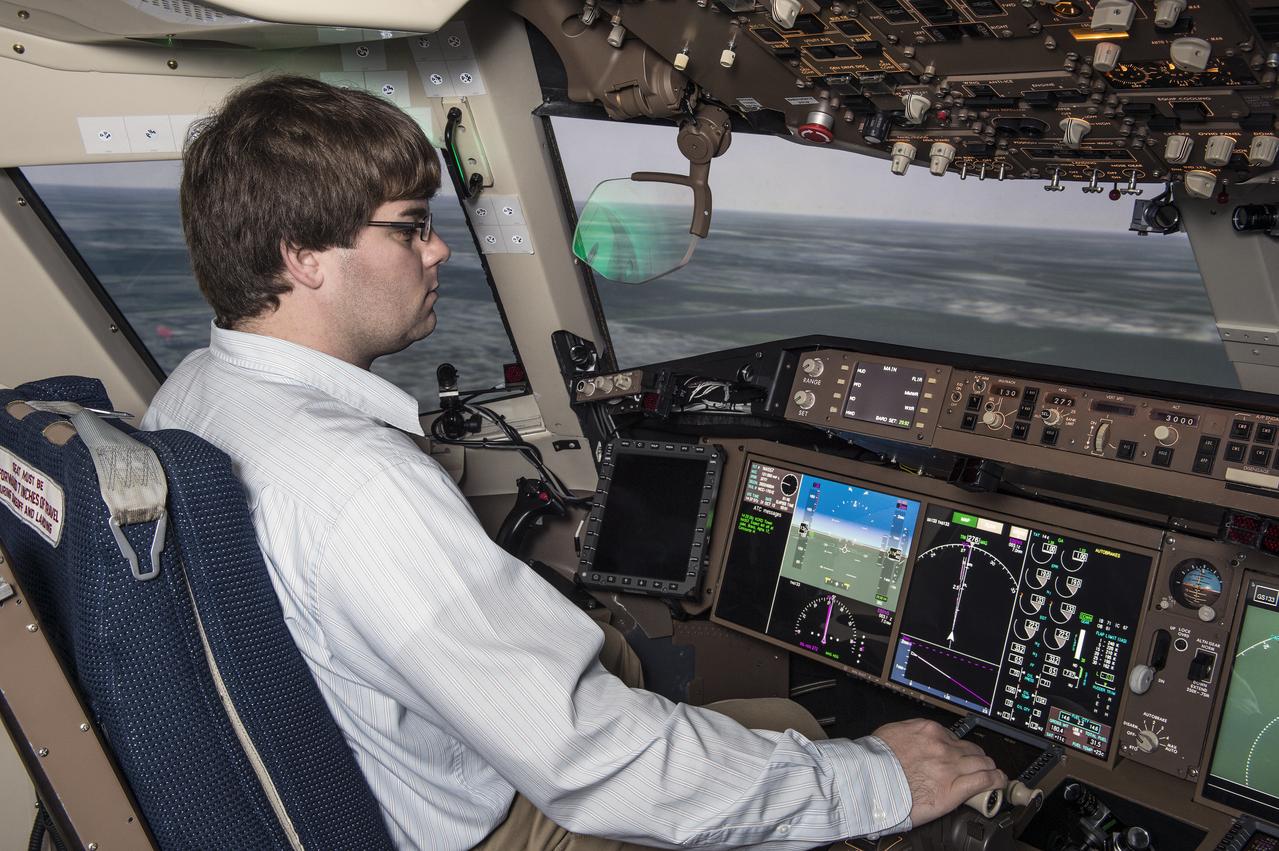
NextSafe 2.5 Motion Simulation Experiment Crew evaluation of vision system technologies
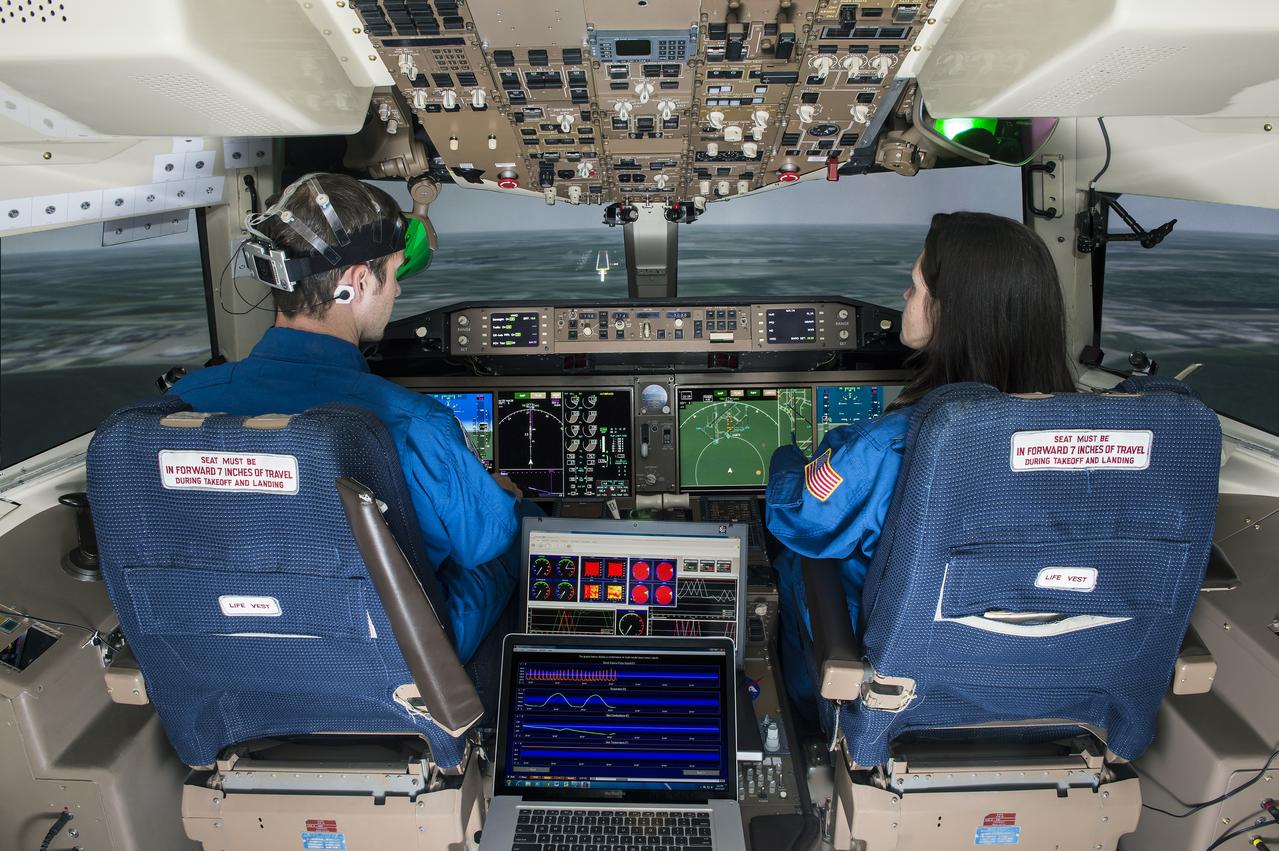
NextSafe 2.5 Motion Simulation Experiment Crew evaluation of vision system technologies
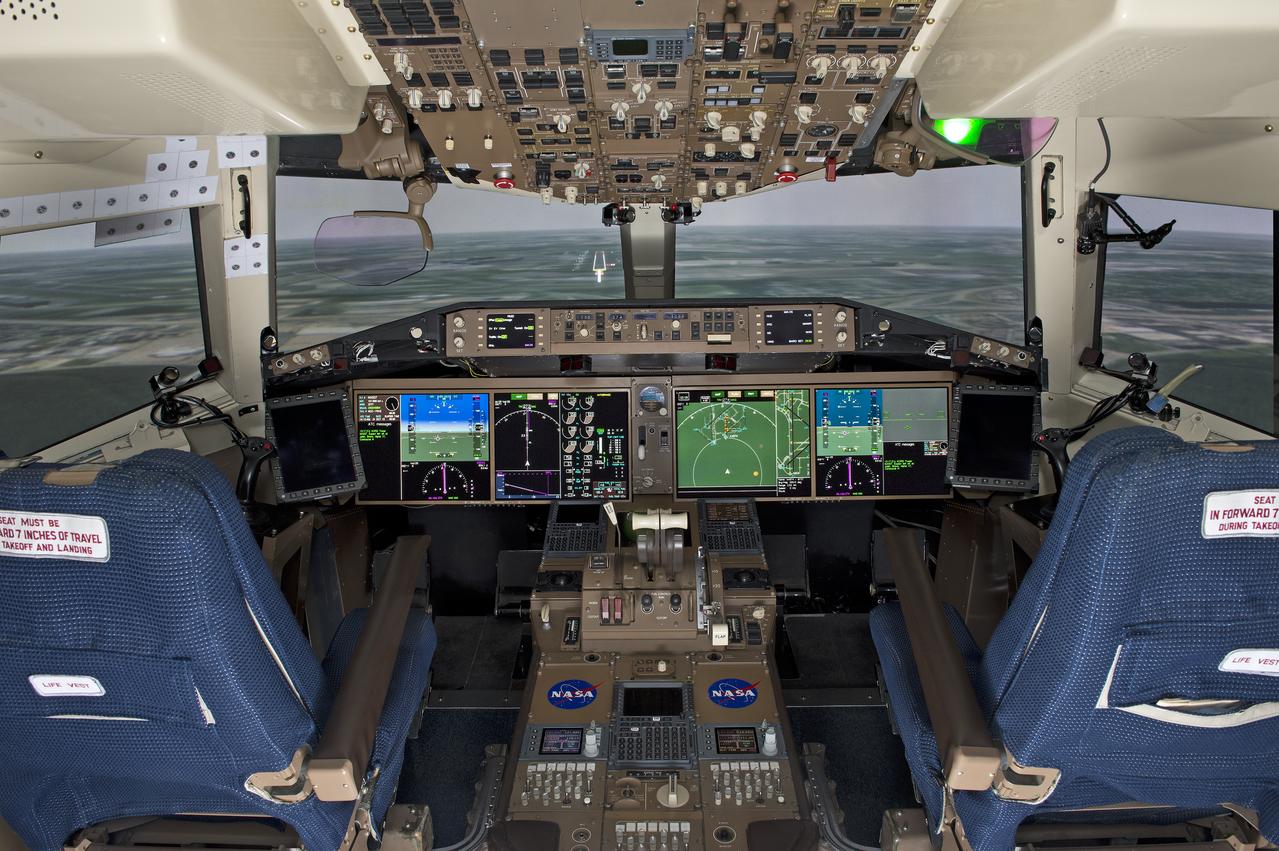
NextSafe 2.5 Motion Simulation Experiment Crew evaluation of vision system technologies
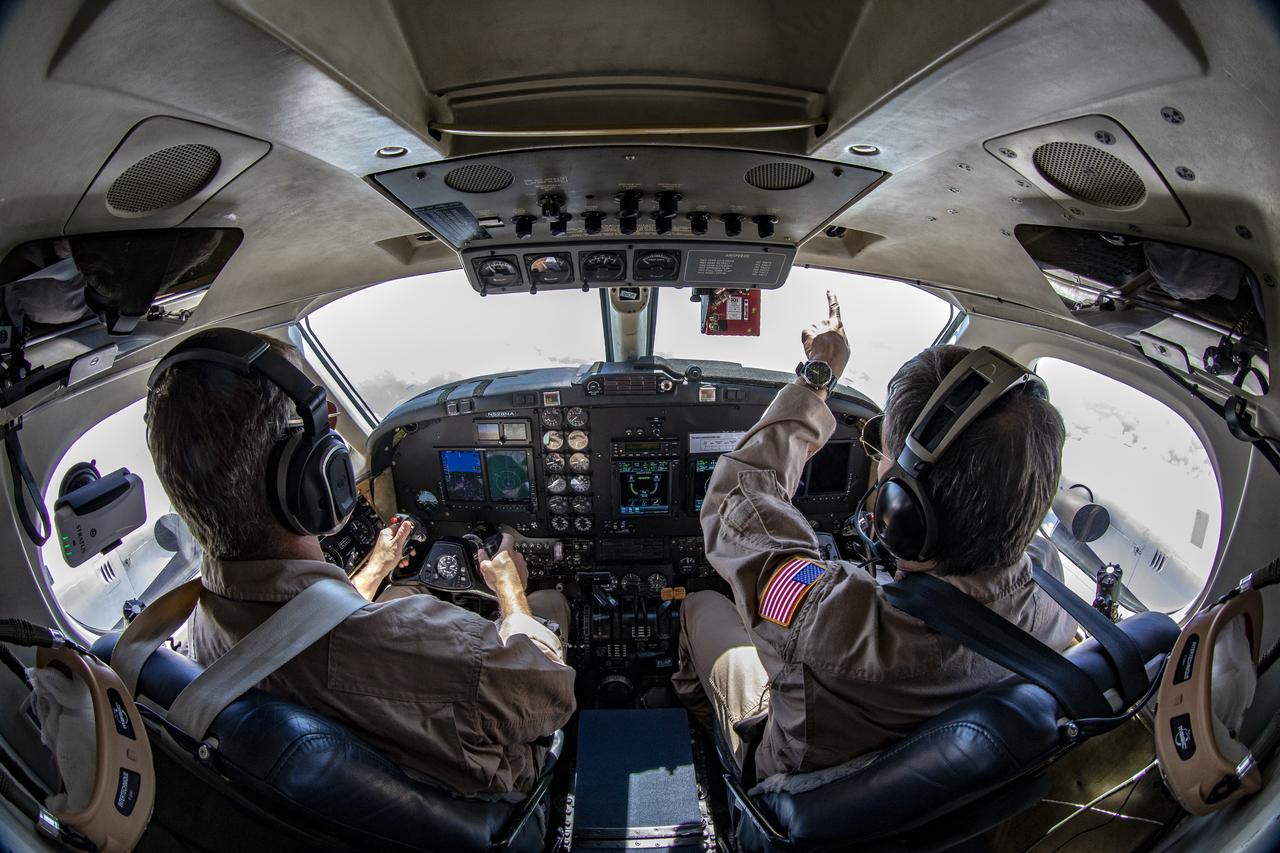
Testing the External Vision System (XVS) software on the B200 King Air. Pilots, Peter Coen and Wayne Ringelberg attempt to spot an incoming aircraft on the XVS monitor.
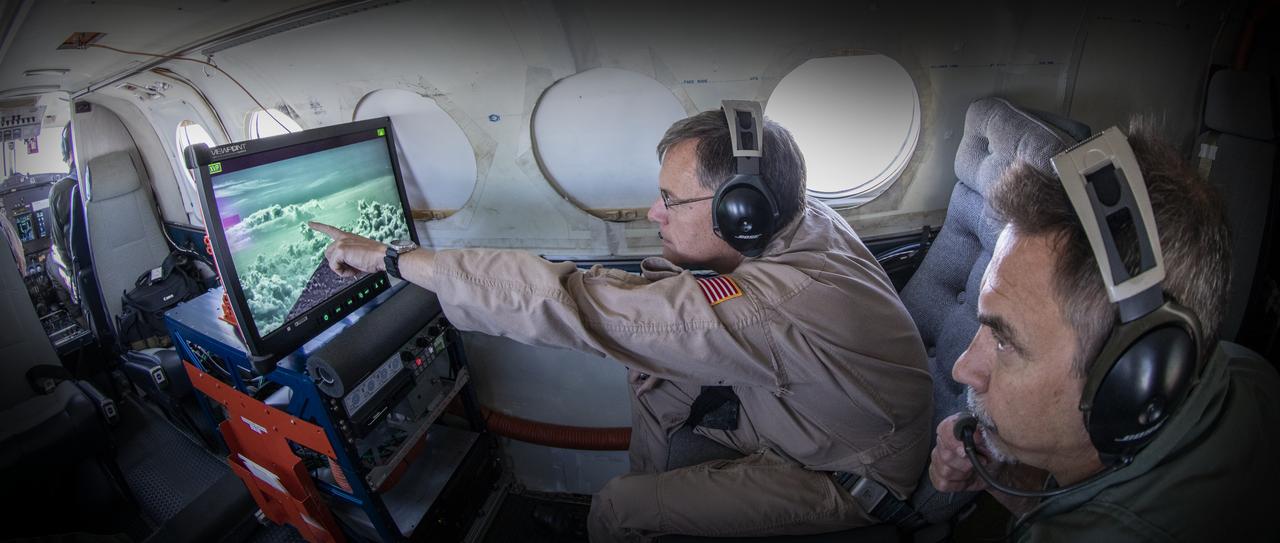
Testing the External Vision System (XVS) software on the B200 King Air. Pilots, Peter Coen and Wayne Ringelberg attempt to spot an incoming aircraft on the XVS monitor.
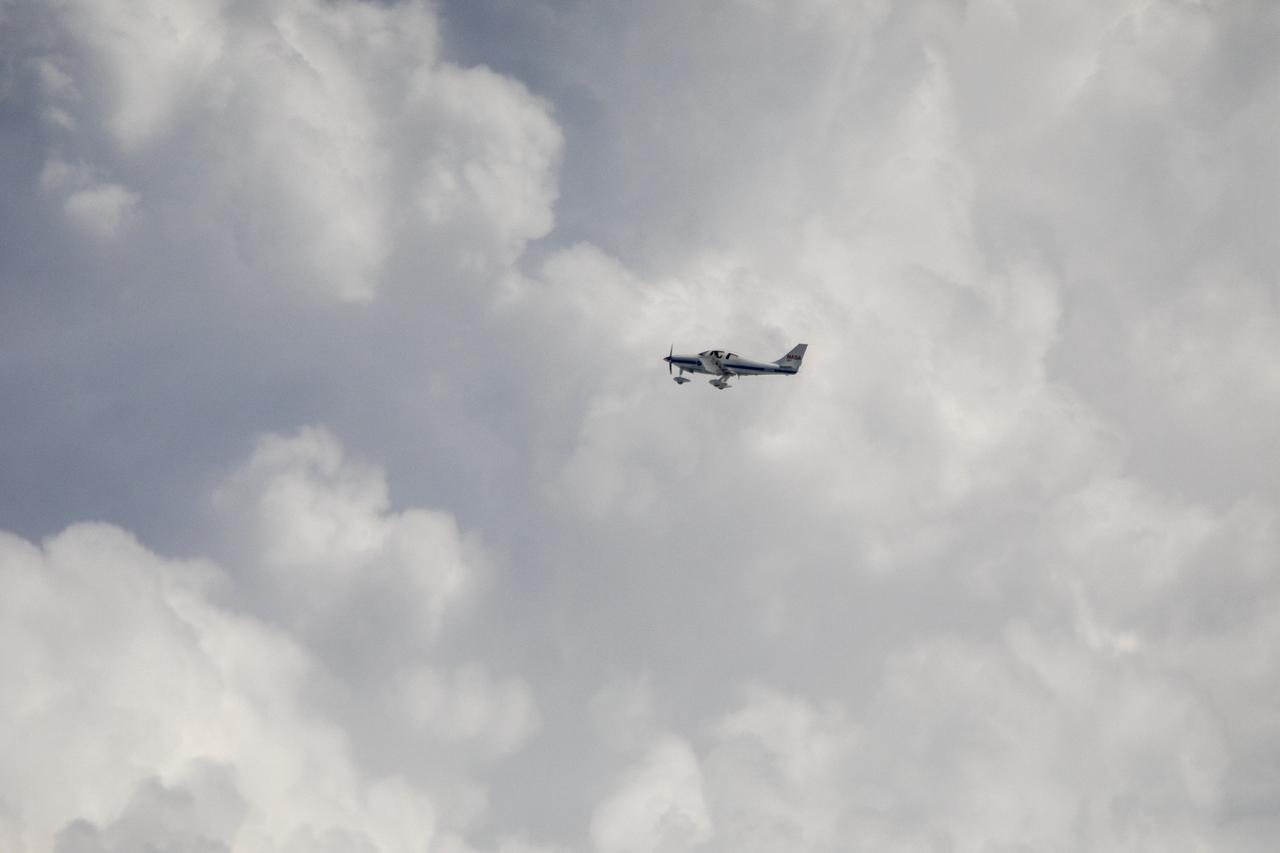
Testing the External Vision System (XVS) software on the B200 King Air. Pilots, Peter Coen and Wayne Ringelberg attempt to spot an incoming aircraft on the XVS monitor.
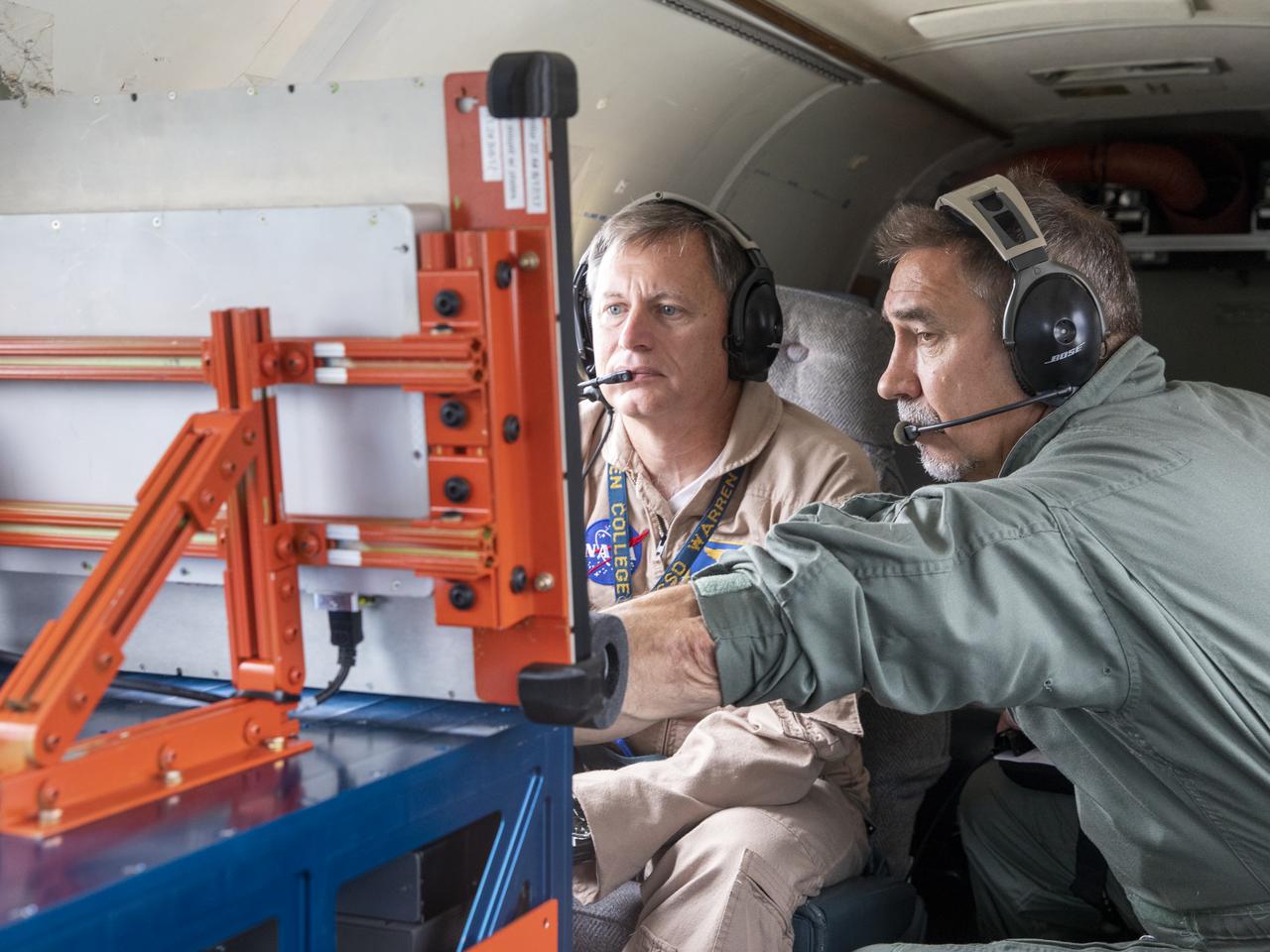
Testing the External Vision System (XVS) software on the B200 King Air. Pilots, Peter Coen and Wayne Ringelberg attempt to spot an incoming aircraft on the XVS monitor.
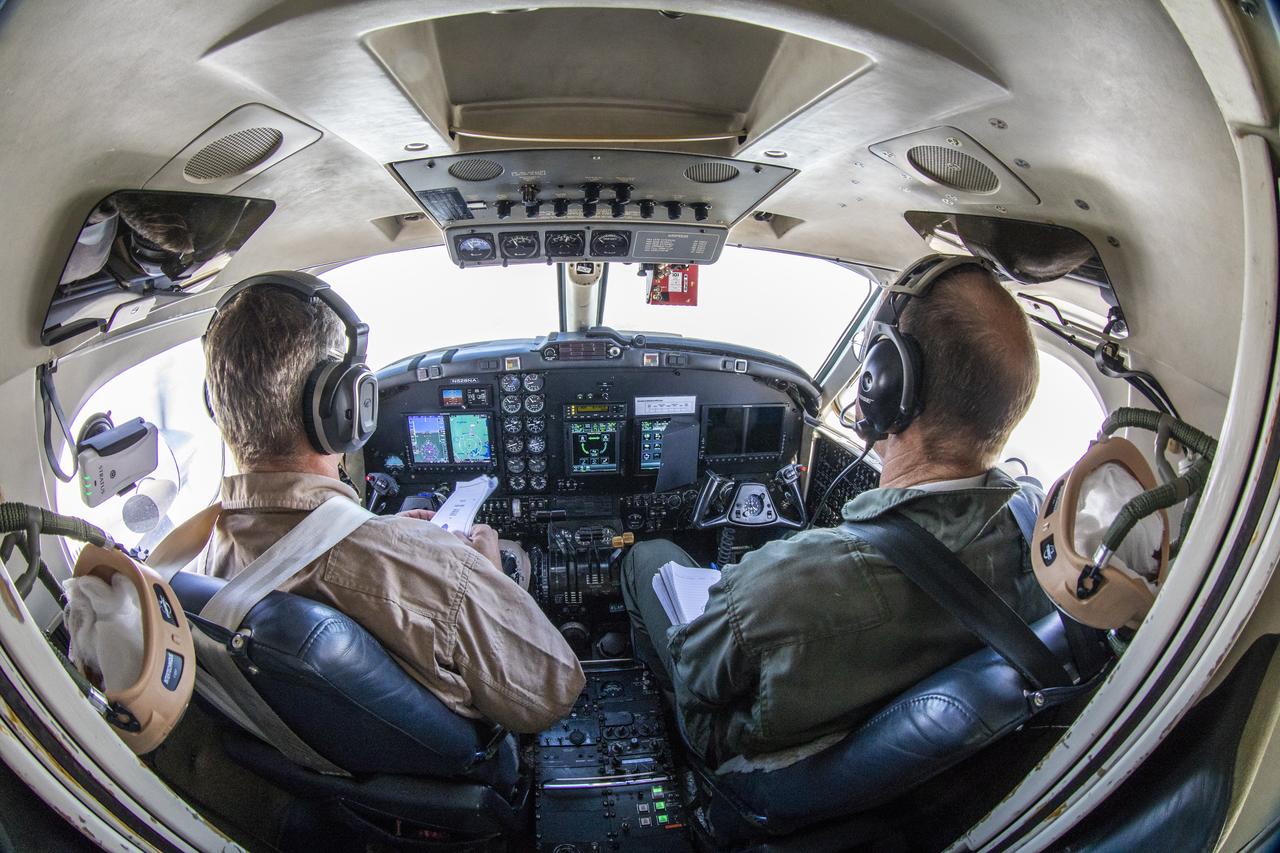
Testing the External Vision System (XVS) software on the B200 King Air. Pilots, Peter Coen and Wayne Ringelberg attempt to spot an incoming aircraft on the XVS monitor.

Testing the External Vision System (XVS) software on the B200 King Air. Pilots, Peter Coen and Wayne Ringelberg attempt to spot an incoming aircraft on the XVS monitor.
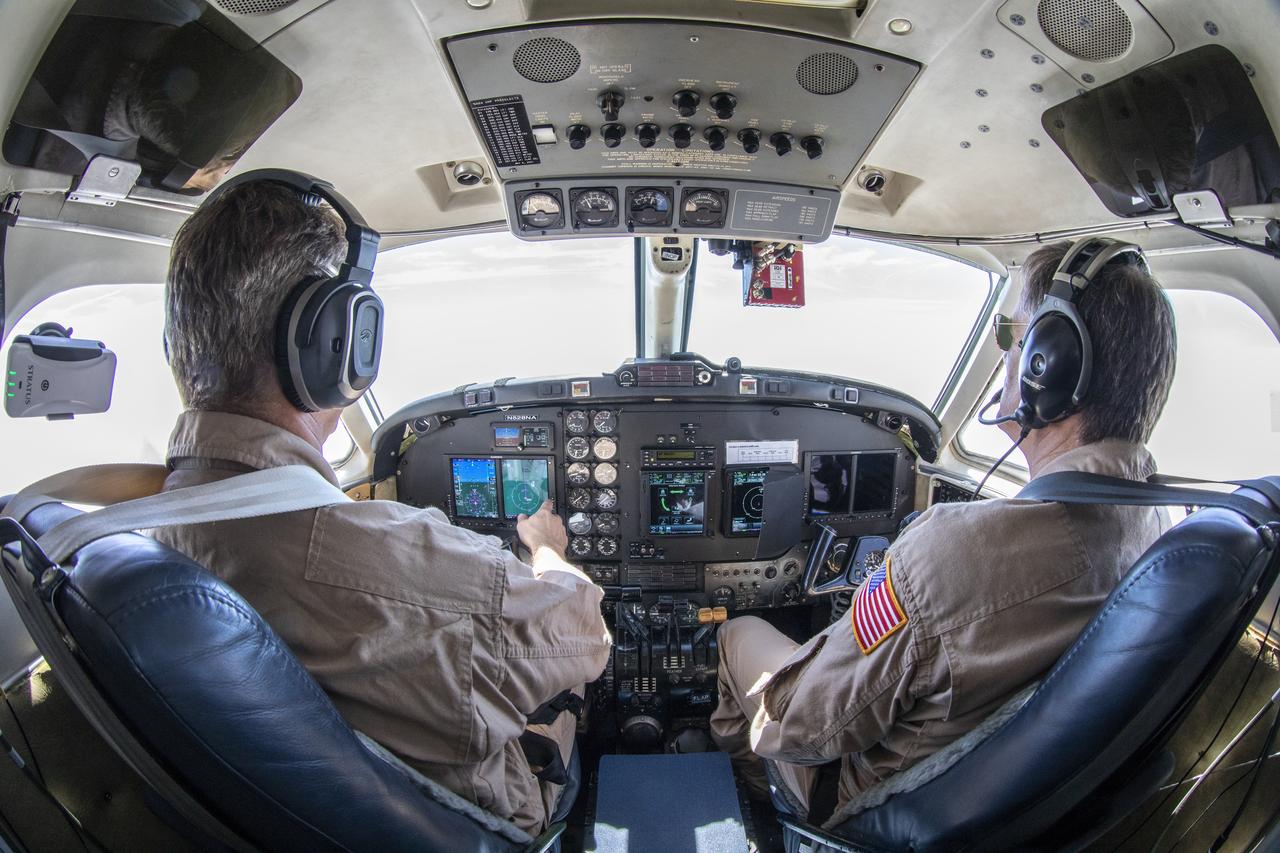
Testing the External Vision System (XVS) software on the B200 King Air. Pilots, Peter Coen and Wayne Ringelberg attempt to spot an incoming aircraft on the XVS monitor.

Testing the External Vision System (XVS) software on the B200 King Air. Pilots, Peter Coen and Wayne Ringelberg attempt to spot an incoming aircraft on the XVS monitor.
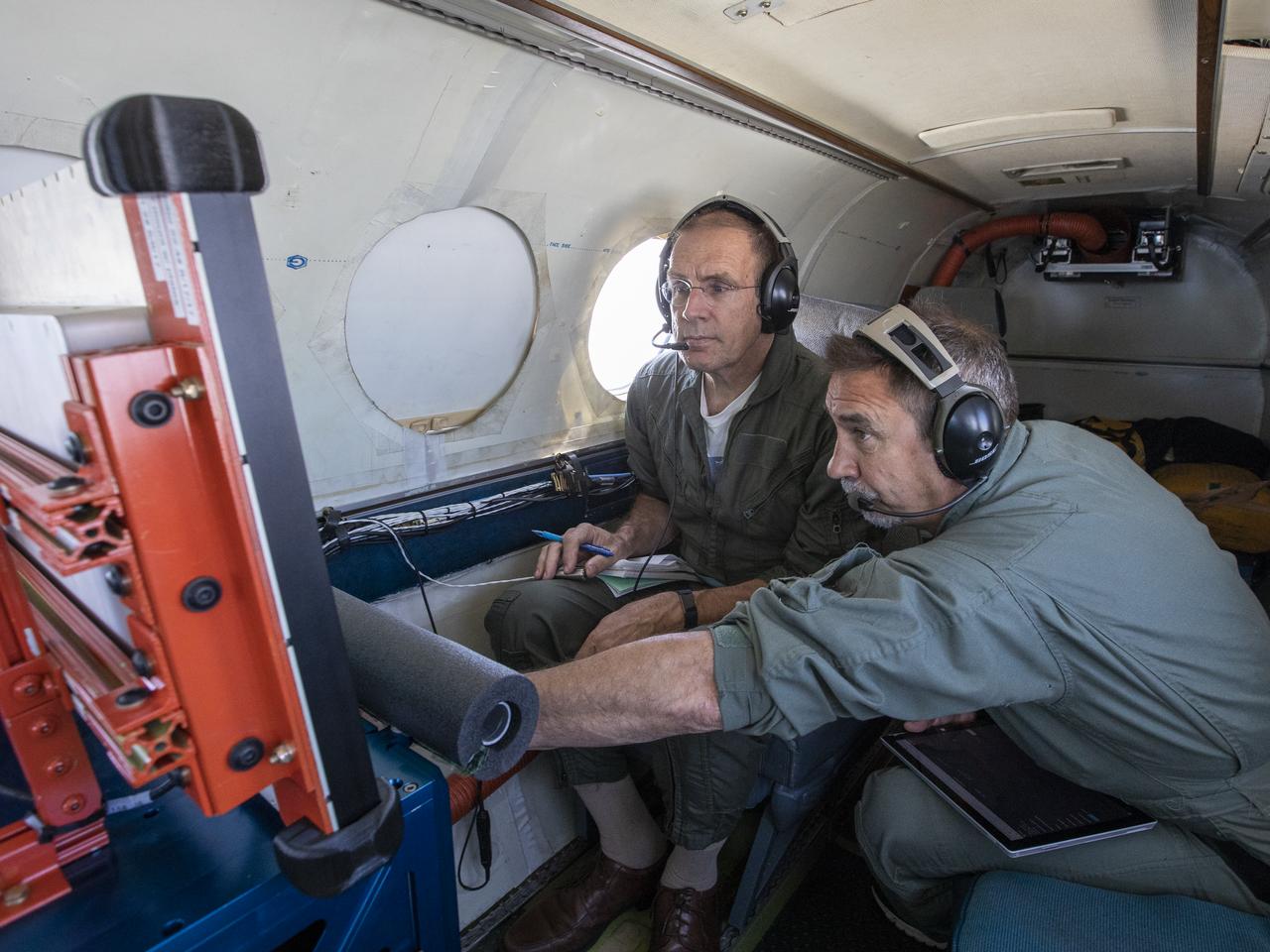
Testing the External Vision System (XVS) software on the B200 King Air. Pilots, Peter Coen and Wayne Ringelberg attempt to spot an incoming aircraft on the XVS monitor.
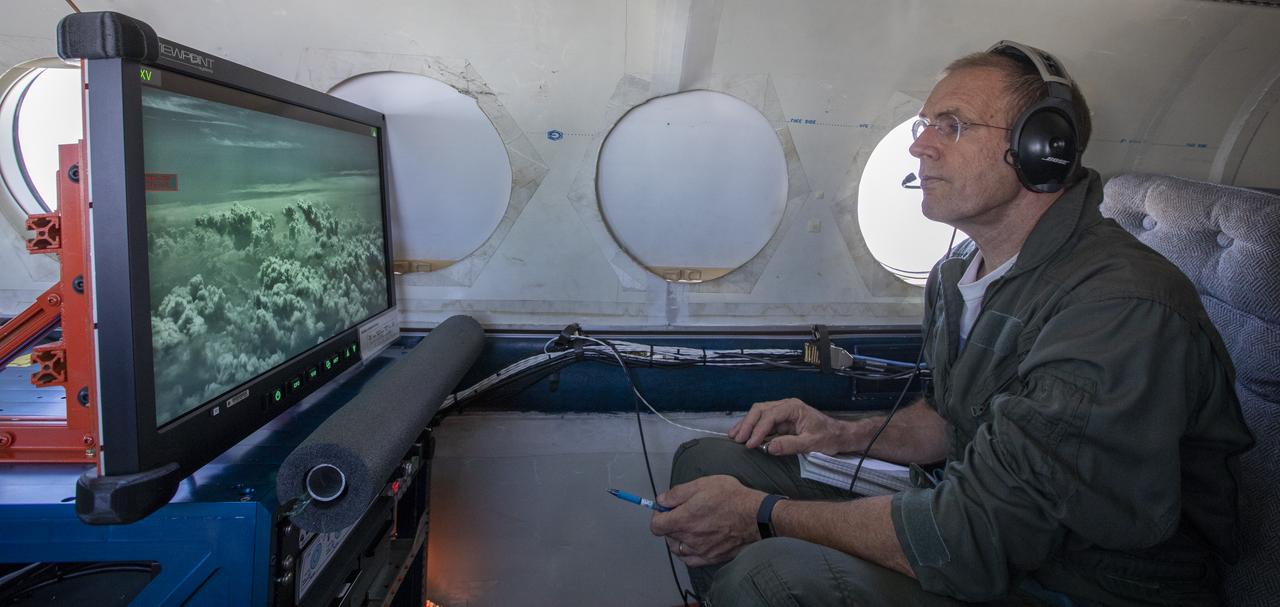
Testing the External Vision System (XVS) software on the B200 King Air. Pilots, Peter Coen and Wayne Ringelberg attempt to spot an incoming aircraft on the XVS monitor.
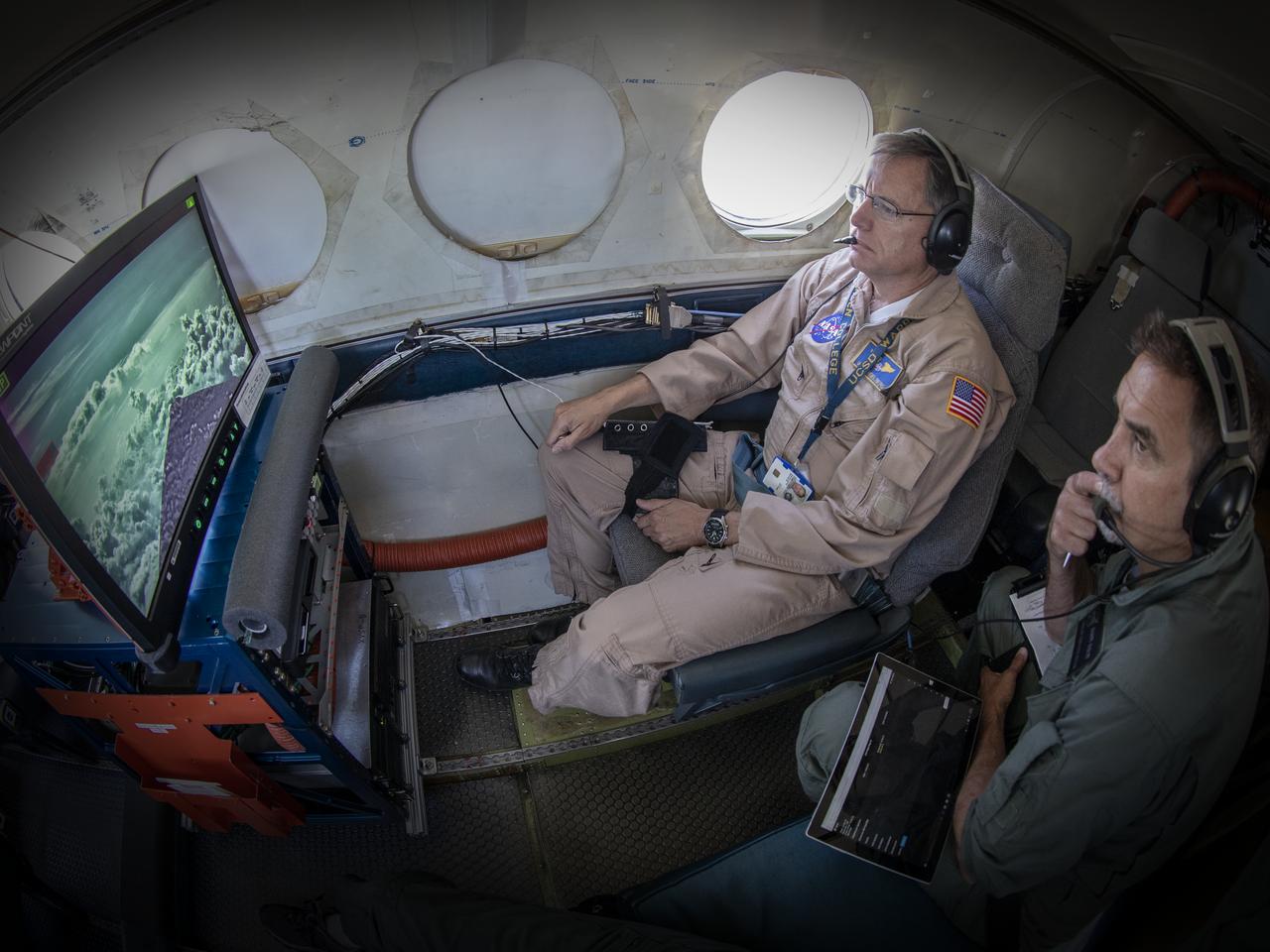
Testing the External Vision System (XVS) software on the B200 King Air. Pilots, Peter Coen and Wayne Ringelberg attempt to spot an incoming aircraft on the XVS monitor.
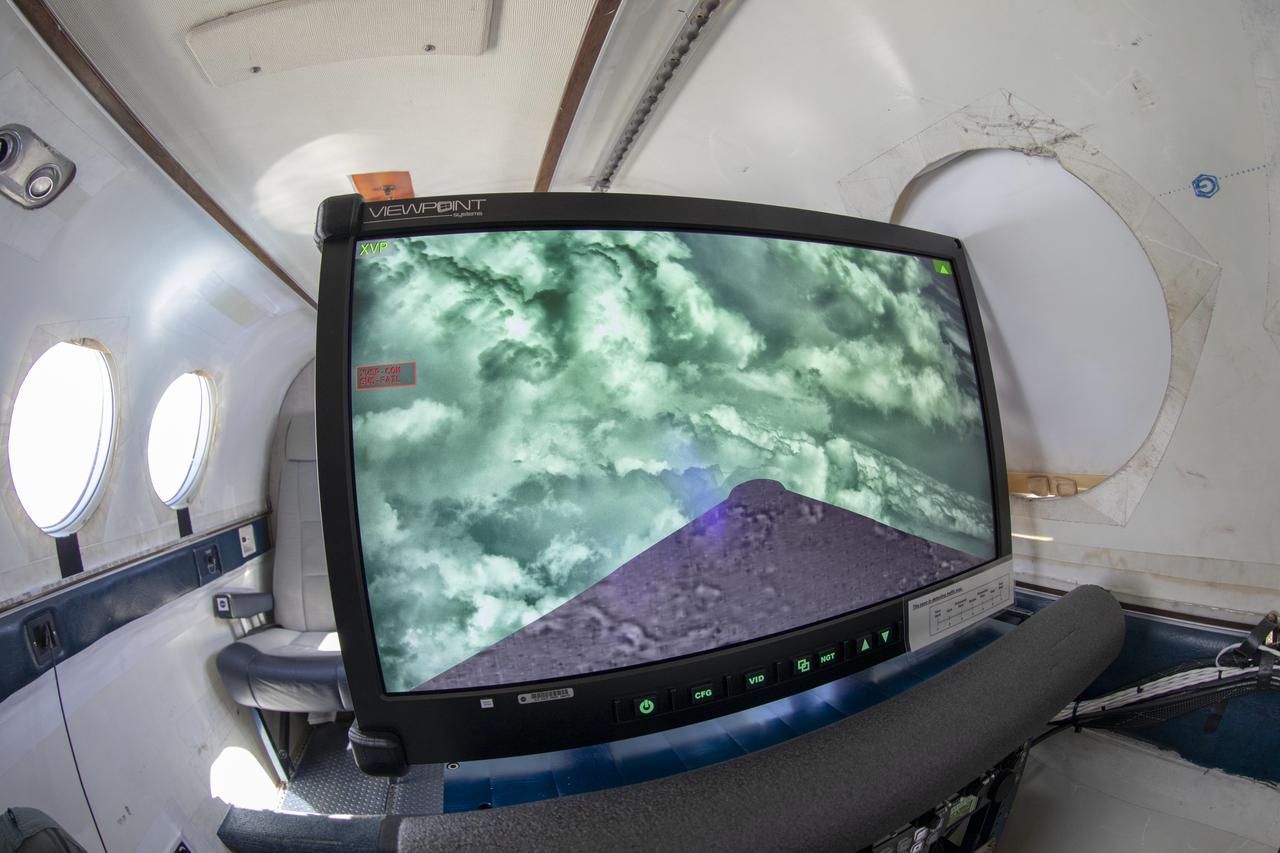
Testing the External Vision System (XVS) software on the B200 King Air. Pilots, Peter Coen and Wayne Ringelberg attempt to spot an incoming aircraft on the XVS monitor.
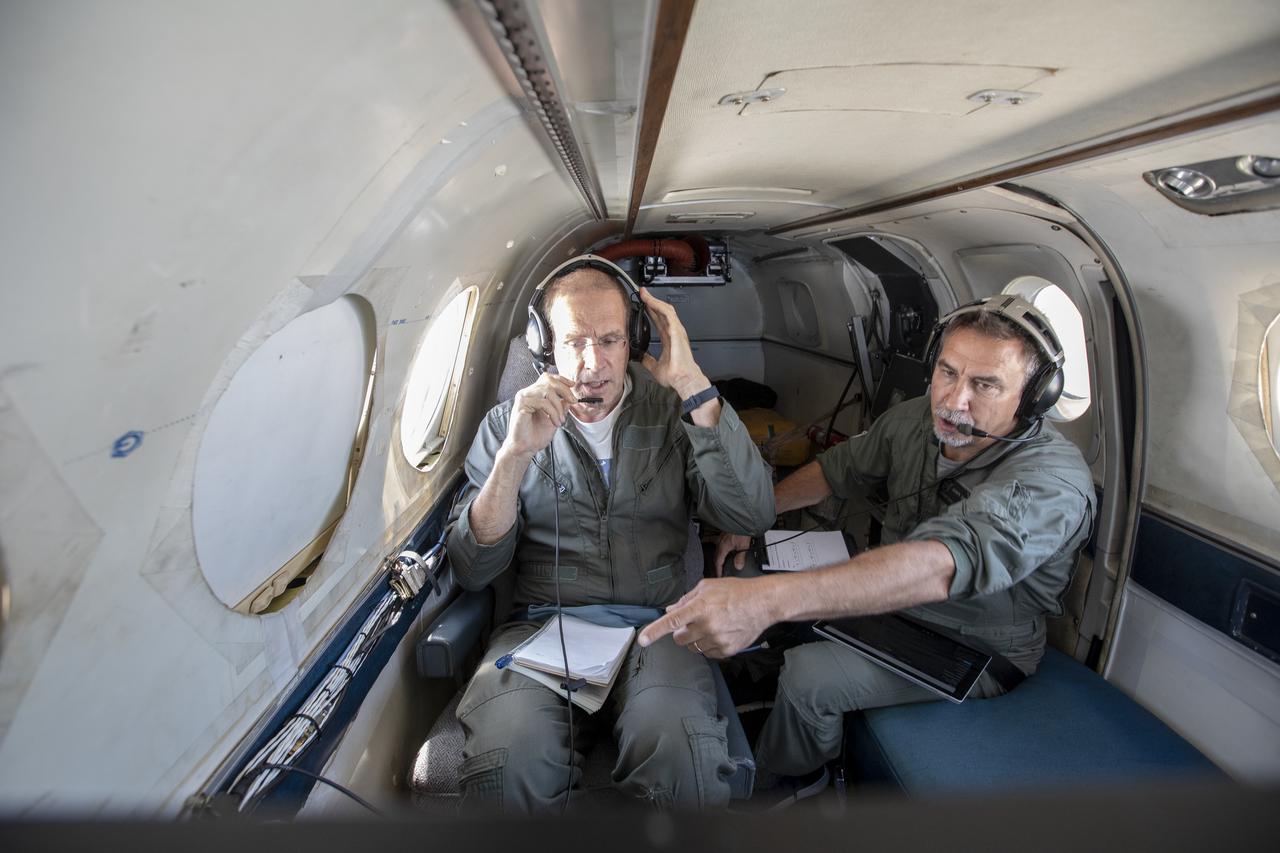
Testing the External Vision System (XVS) software on the B200 King Air. Pilots, Peter Coen and Wayne Ringelberg attempt to spot an incoming aircraft on the XVS monitor.
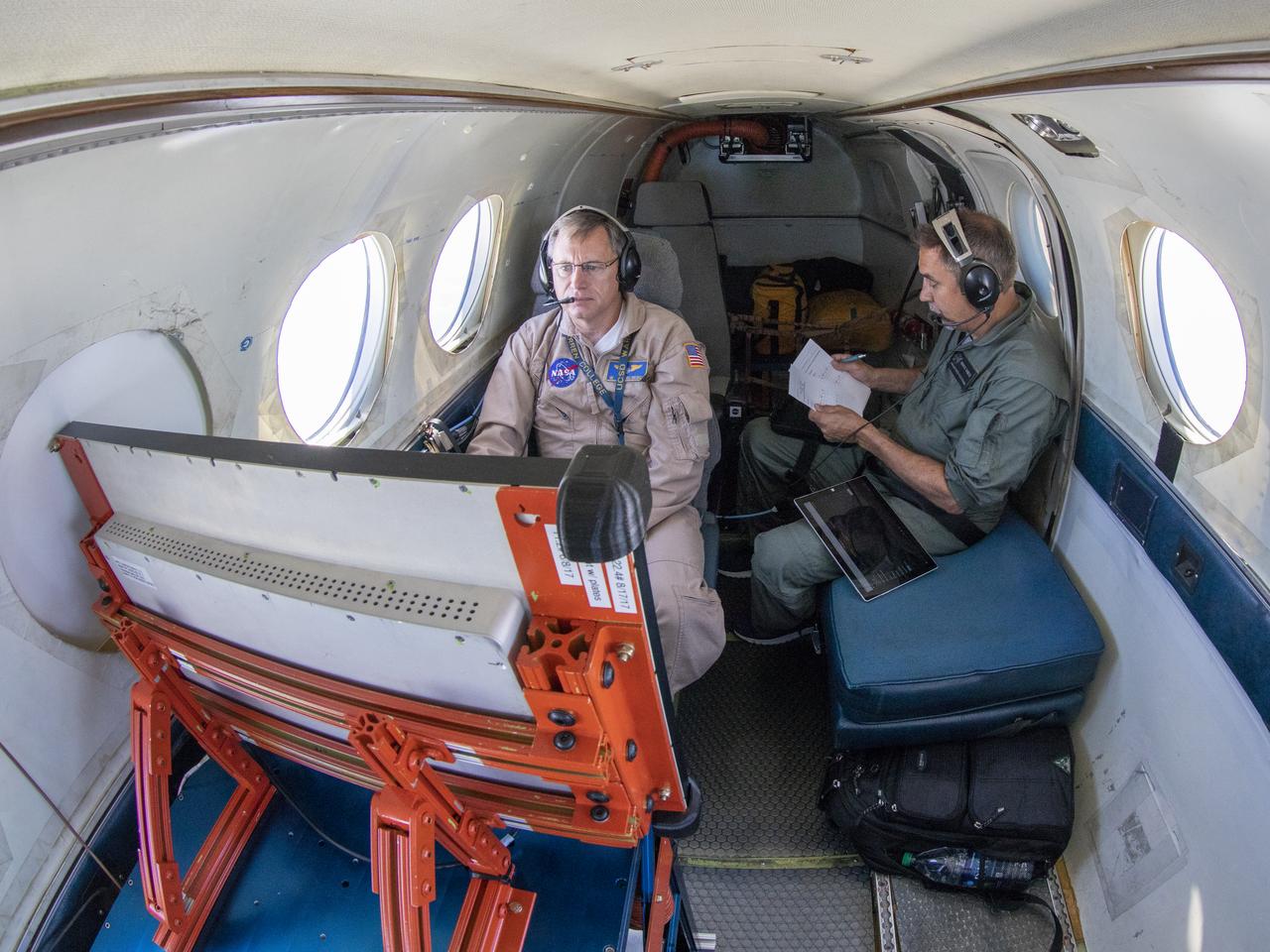
Testing the External Vision System (XVS) software on the B200 King Air. Pilots, Peter Coen and Wayne Ringelberg attempt to spot an incoming aircraft on the XVS monitor.
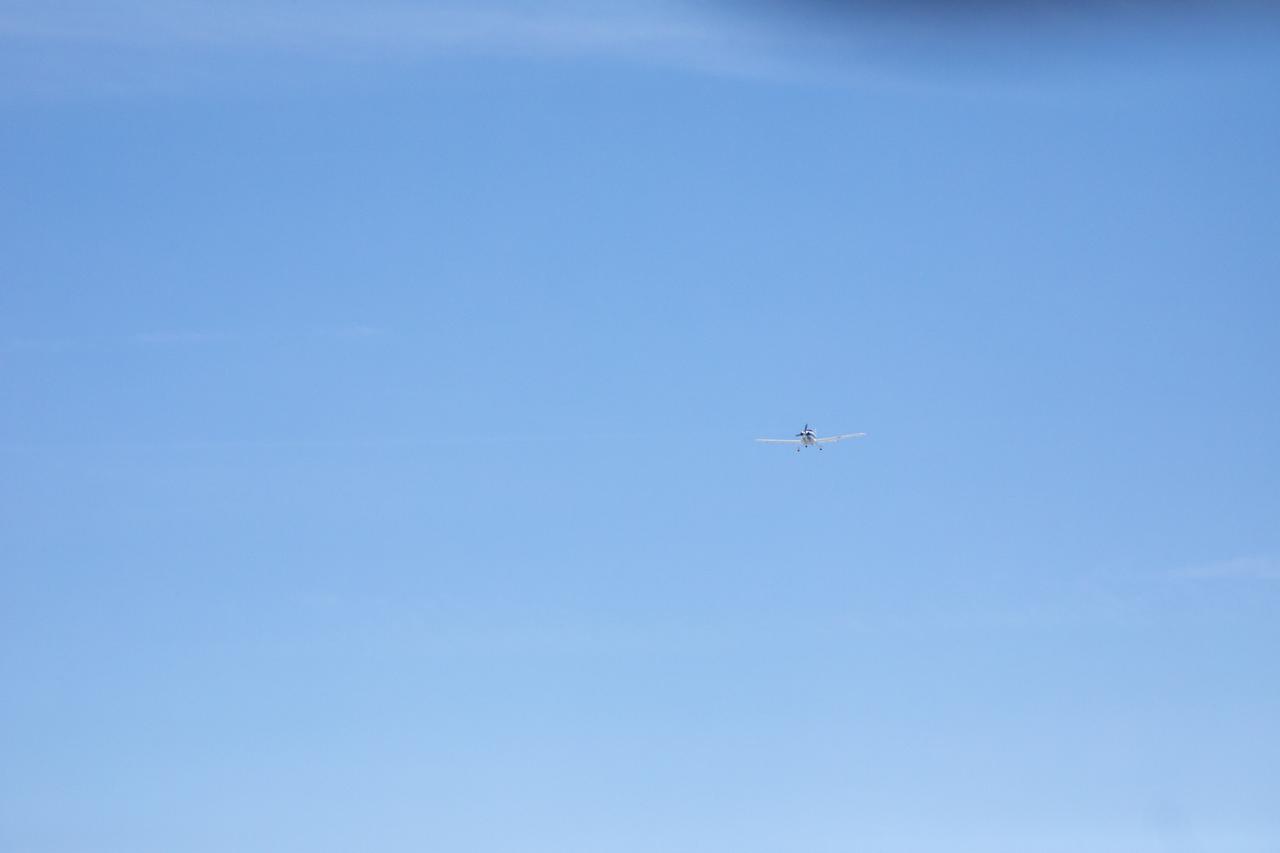
Testing the External Vision System (XVS) software on the B200 King Air. Pilots, Peter Coen and Wayne Ringelberg attempt to spot an incoming aircraft on the XVS monitor.

Testing the External Vision System (XVS) software on the B200 King Air. Pilots, Peter Coen and Wayne Ringelberg attempt to spot an incoming aircraft on the XVS monitor.
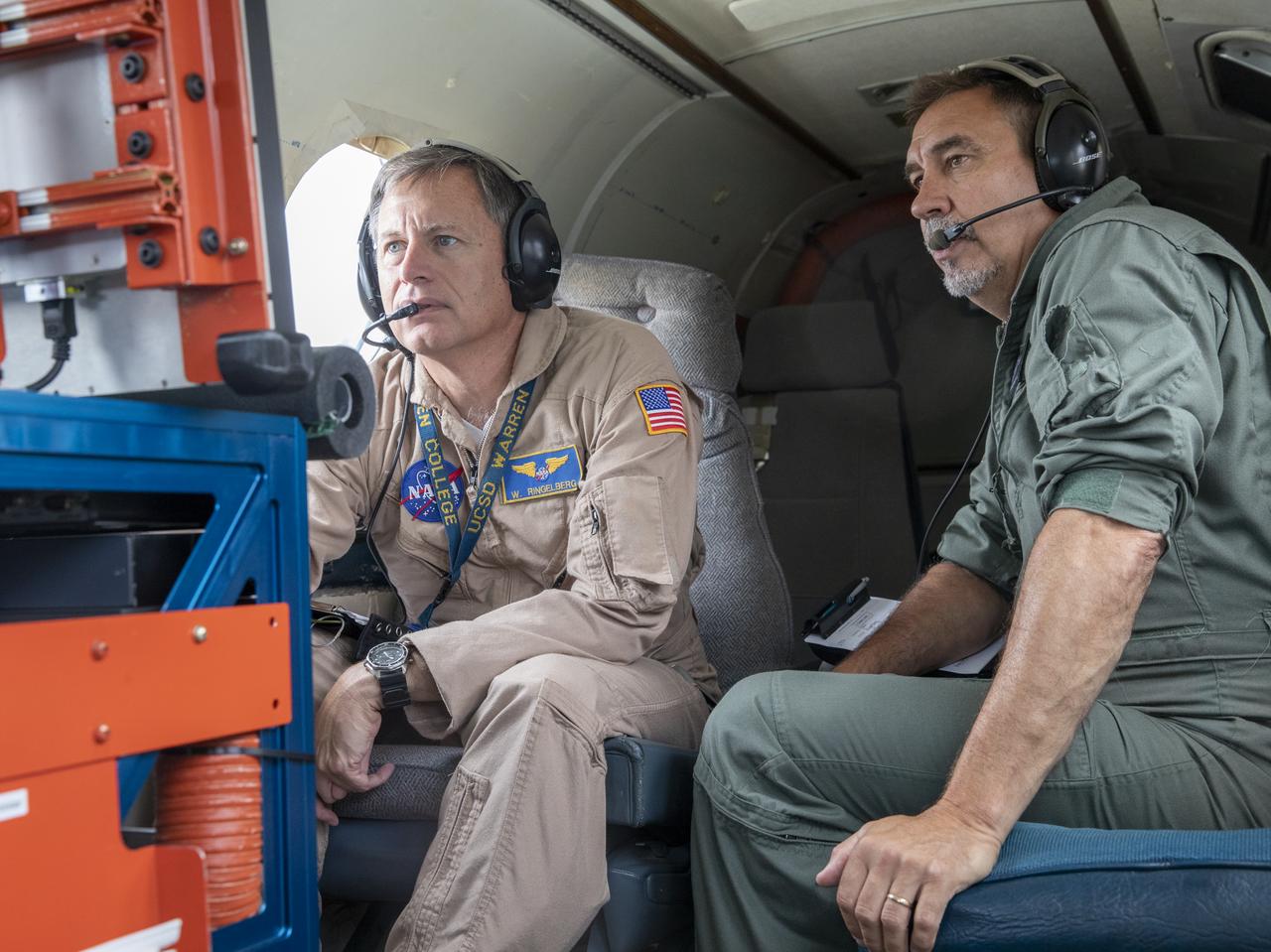
Testing the External Vision System (XVS) software on the B200 King Air. Pilots, Peter Coen and Wayne Ringelberg attempt to spot an incoming aircraft on the XVS monitor.

NIGHT VISION GOGGLES (TWO OPTICS) WITH LAWRENCE HINTZ. (SZOBOSZLAY FOR HELICOPTER NOE FLIGH)
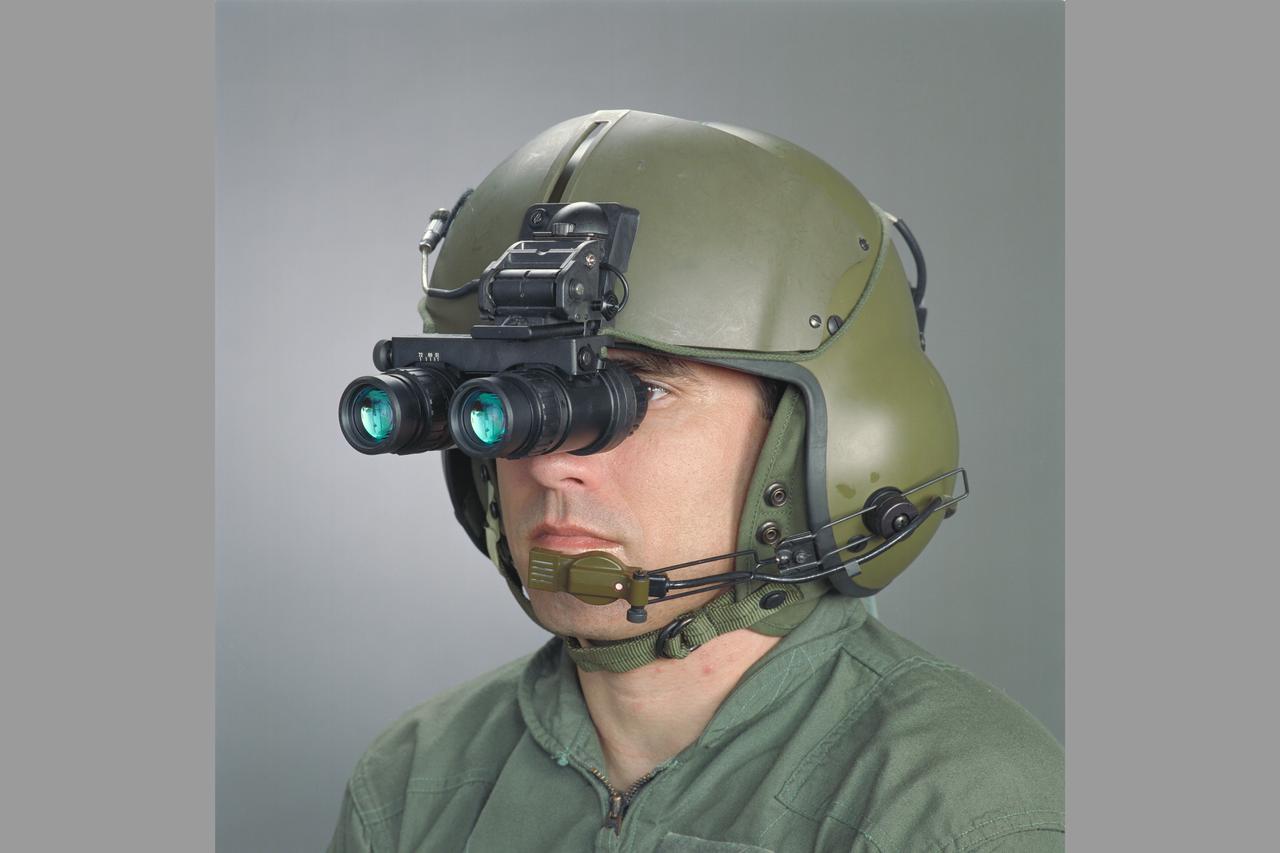
Night Vision Goggles (two optics) with Lawrence Hintz. (Szoboszlay) for helicopter NOE flight
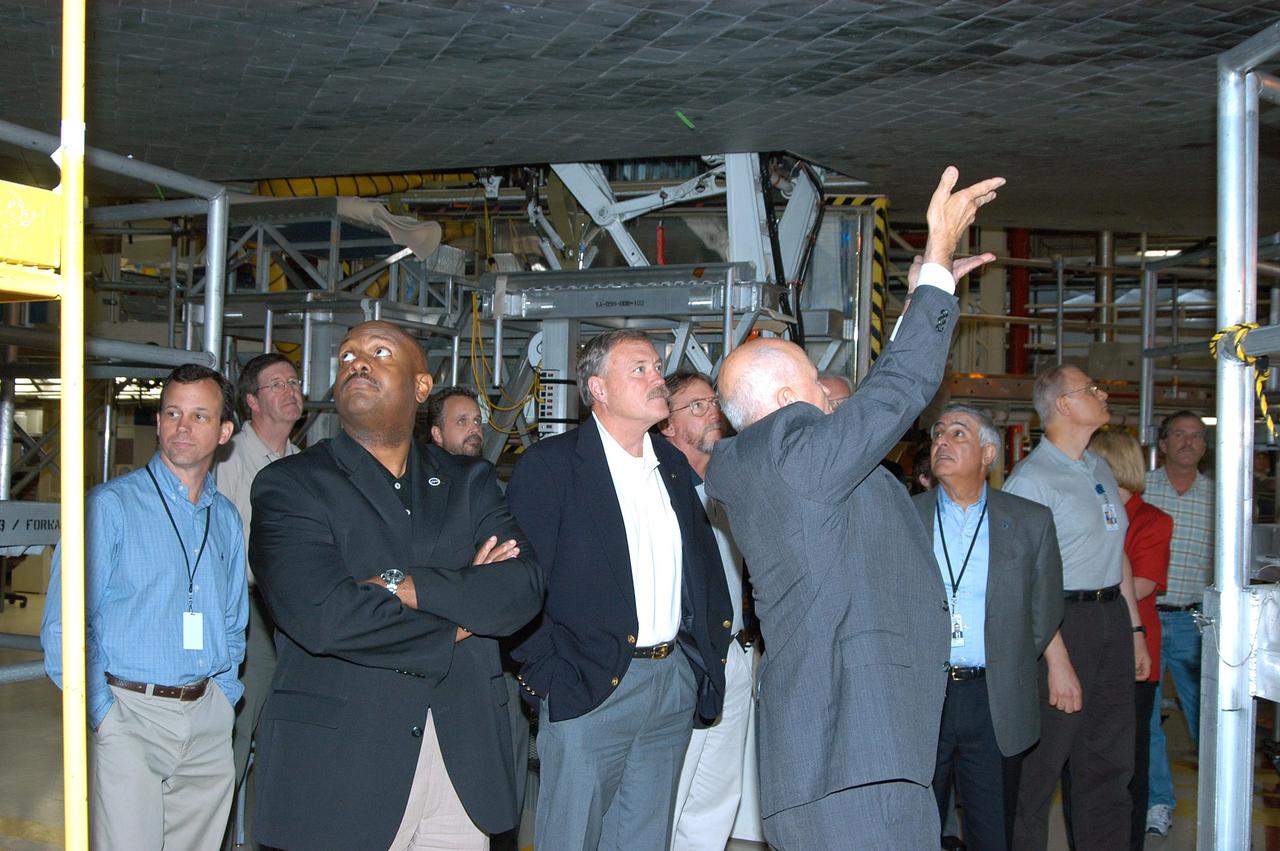
KENNEDY SPACE CENTER, FLA. -- Adm. Craig E. Steidle (center), NASA’s associate administrator, Office of Exploration Systems, tours the Orbiter Processing Facility on a visit to KSC. At right (hands up) is Conrad Nagel, chief of the Shuttle Project Office. They are standing under the orbiter Discovery. The Office of Exploration Systems was established to set priorities and direct the identification, development and validation of exploration systems and related technologies to support the future space vision for America. Steidle’s visit included a tour of KSC to review the facilities and capabilities to be used to support the vision.
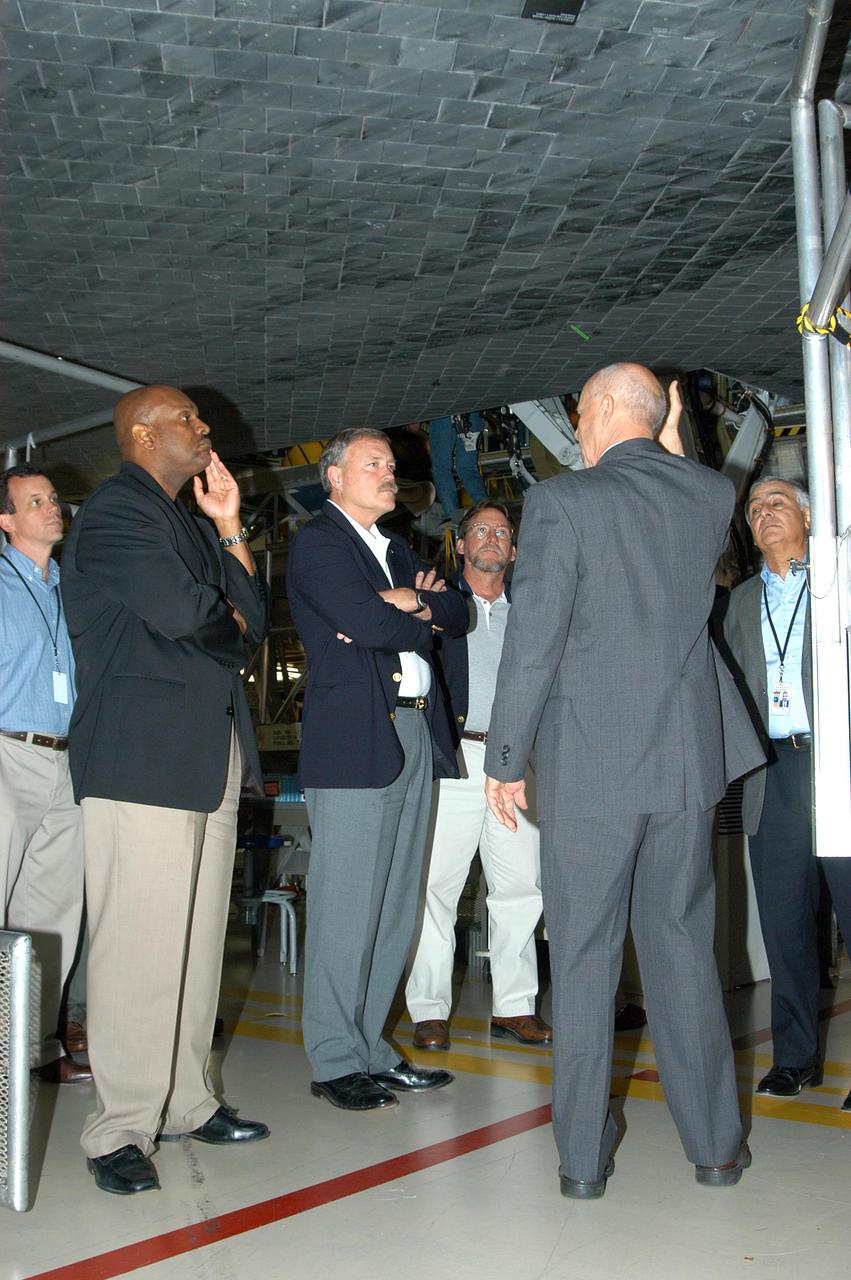
KENNEDY SPACE CENTER, FLA. -- Adm. Craig E. Steidle (center), NASA’s associate administrator, Office of Exploration Systems, listens to Conrad Nagel, chief of the Shuttle Project Office (right), during a tour of the Orbiter Processing Facility on a visit to KSC. They are standing under the orbiter Discovery. The Office of Exploration Systems was established to set priorities and direct the identification, development and validation of exploration systems and related technologies to support the future space vision for America. Steidle’s visit included a tour of KSC to review the facilities and capabilities to be used to support the vision.
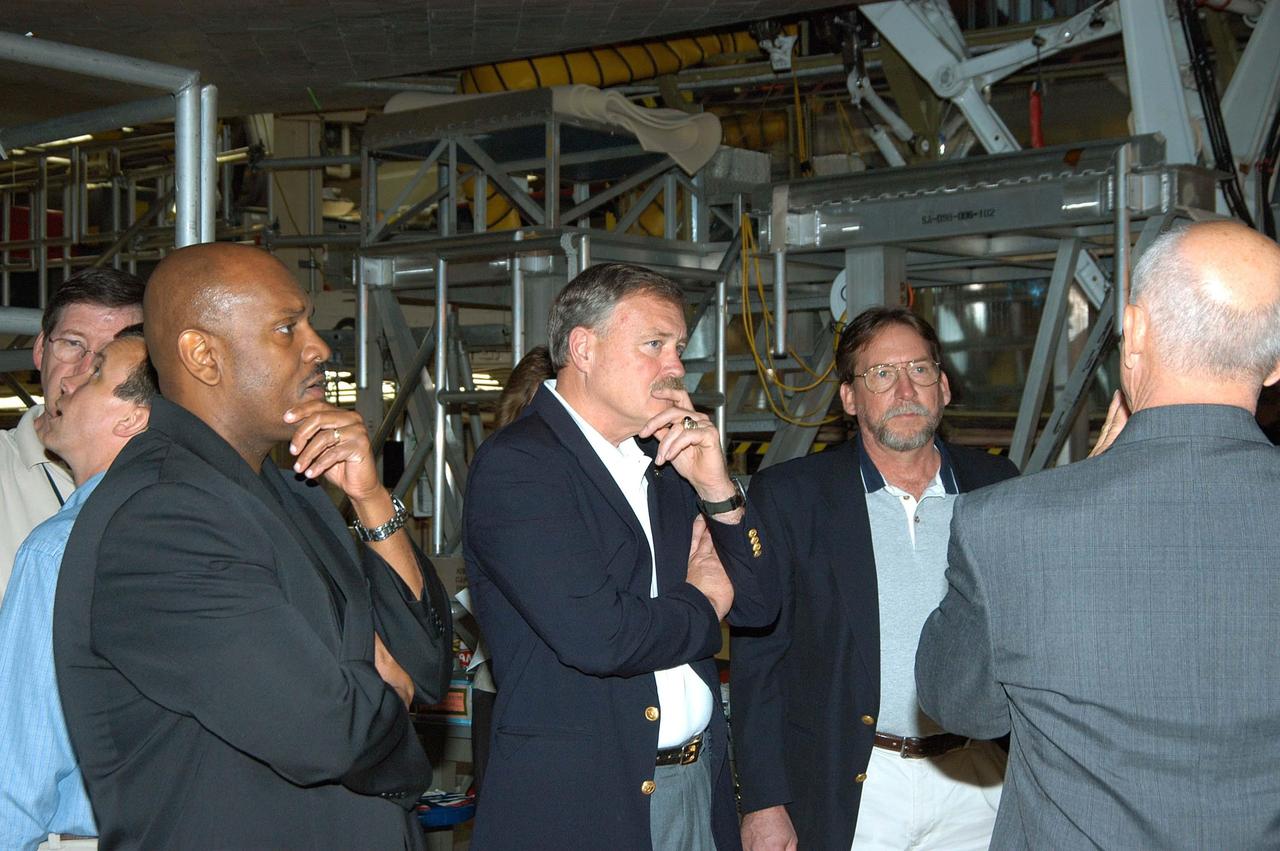
KENNEDY SPACE CENTER, FLA. -- Adm. Craig E. Steidle (center), NASA’s associate administrator, Office of Exploration Systems, listens to Conrad Nagel, chief of the Shuttle Project Office (right), during a tour of the Orbiter Processing Facility on a visit to KSC. They are standing under the orbiter Discovery. The Office of Exploration Systems was established to set priorities and direct the identification, development and validation of exploration systems and related technologies to support the future space vision for America. Steidle’s visit included a tour of KSC to review the facilities and capabilities to be used to support the vision.
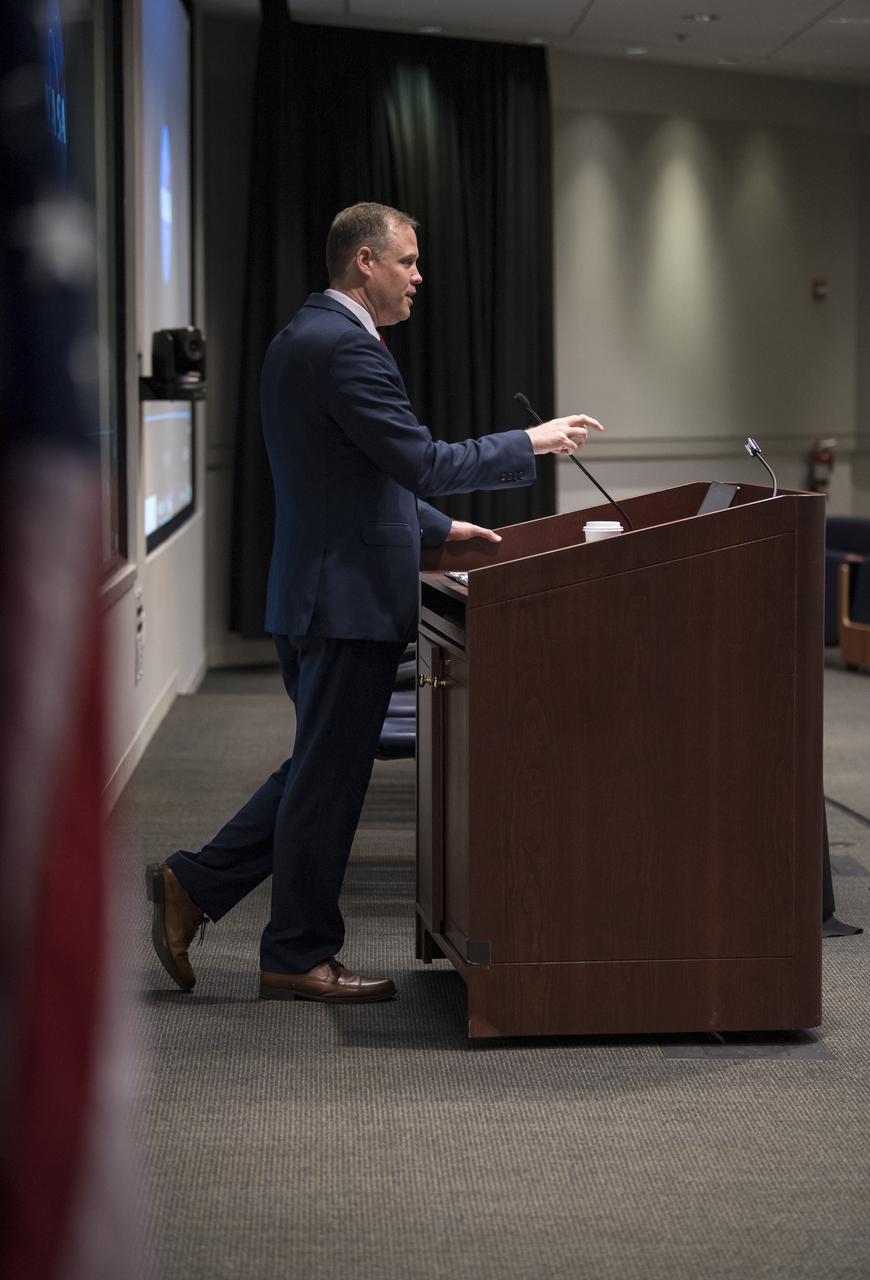
NASA Administrator Jim Bridenstine gives keynote remarks at the Challenger Center Annual Conference, Wednesday, August 14, 2019 at the Lockheed Martin Global Vision Center in Arlington, VA. Photo Credit: (NASA/Aubrey Gemignani)
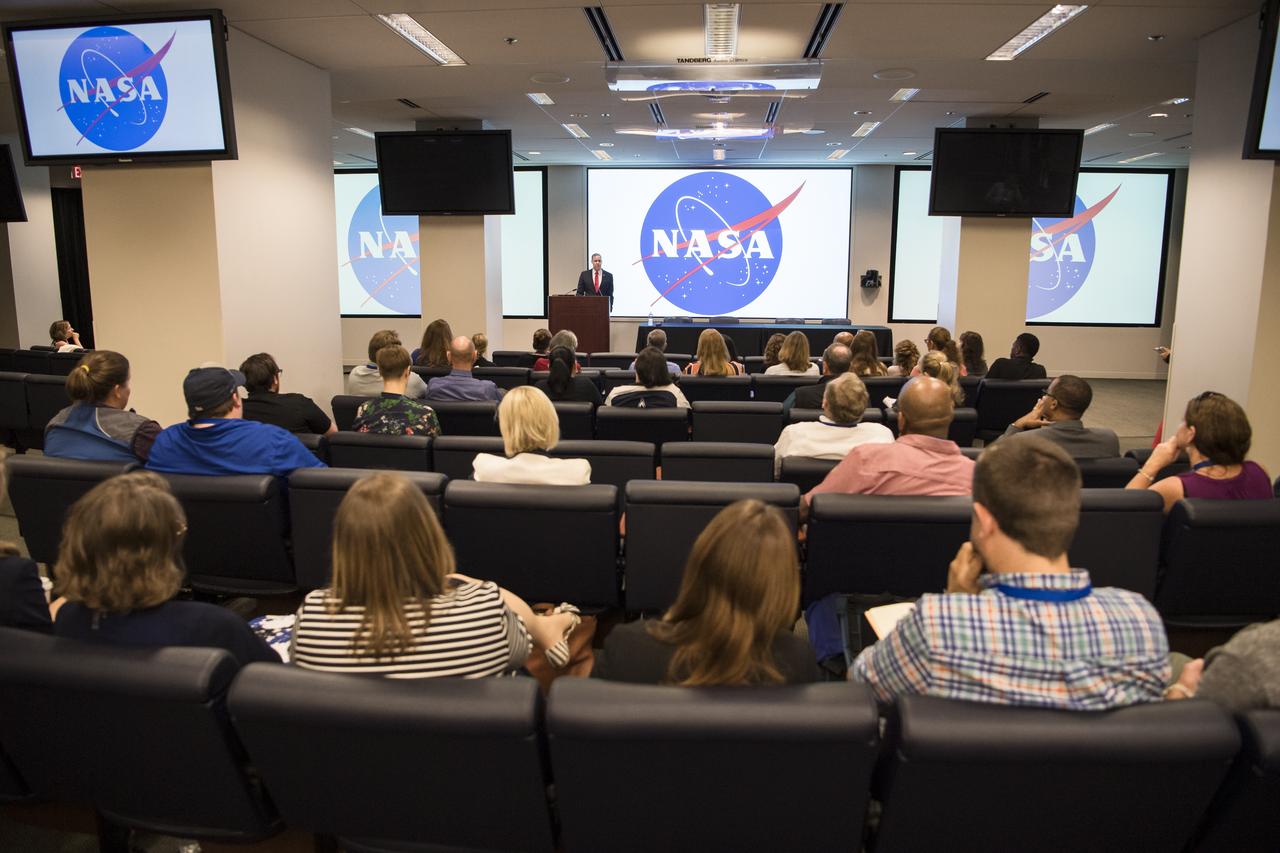
NASA Administrator Jim Bridenstine gives keynote remarks at the Challenger Center Annual Conference, Wednesday, August 14, 2019 at the Lockheed Martin Global Vision Center in Arlington, VA. Photo Credit: (NASA/Aubrey Gemignani)
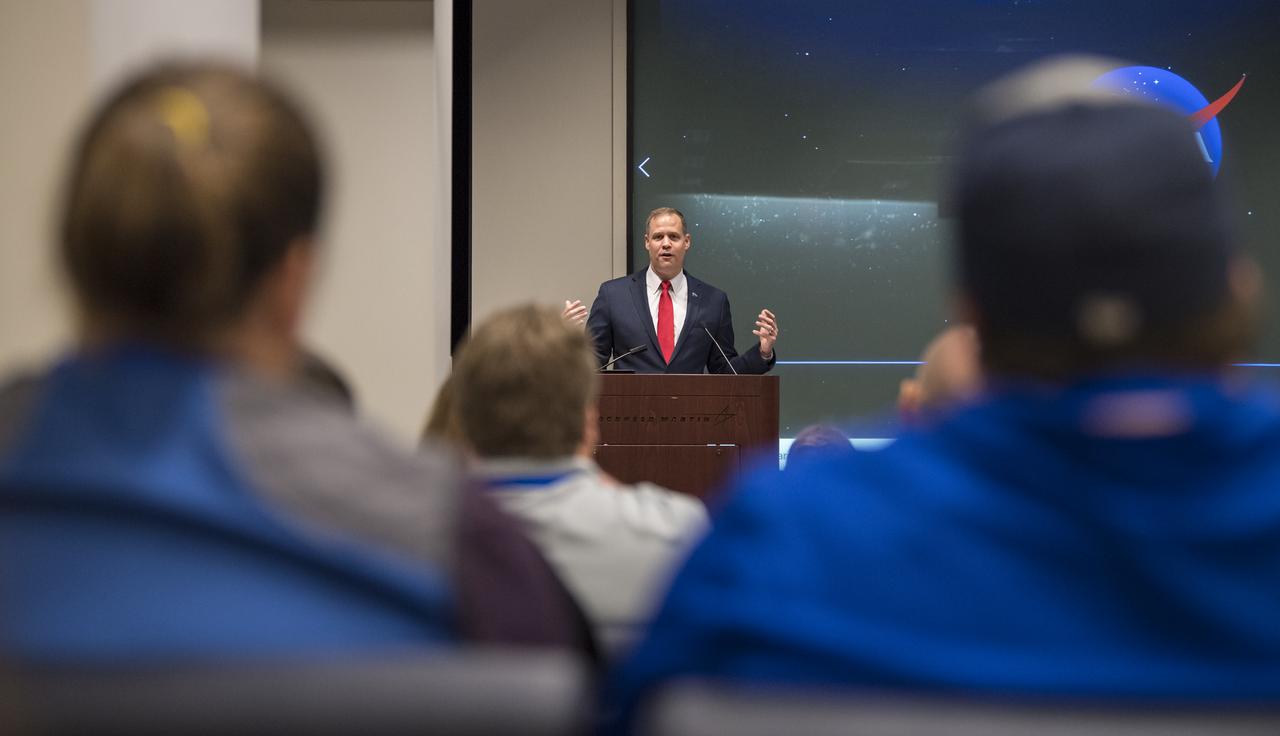
NASA Administrator Jim Bridenstine gives keynote remarks at the Challenger Center Annual Conference, Wednesday, August 14, 2019 at the Lockheed Martin Global Vision Center in Arlington, VA. Photo Credit: (NASA/Aubrey Gemignani)
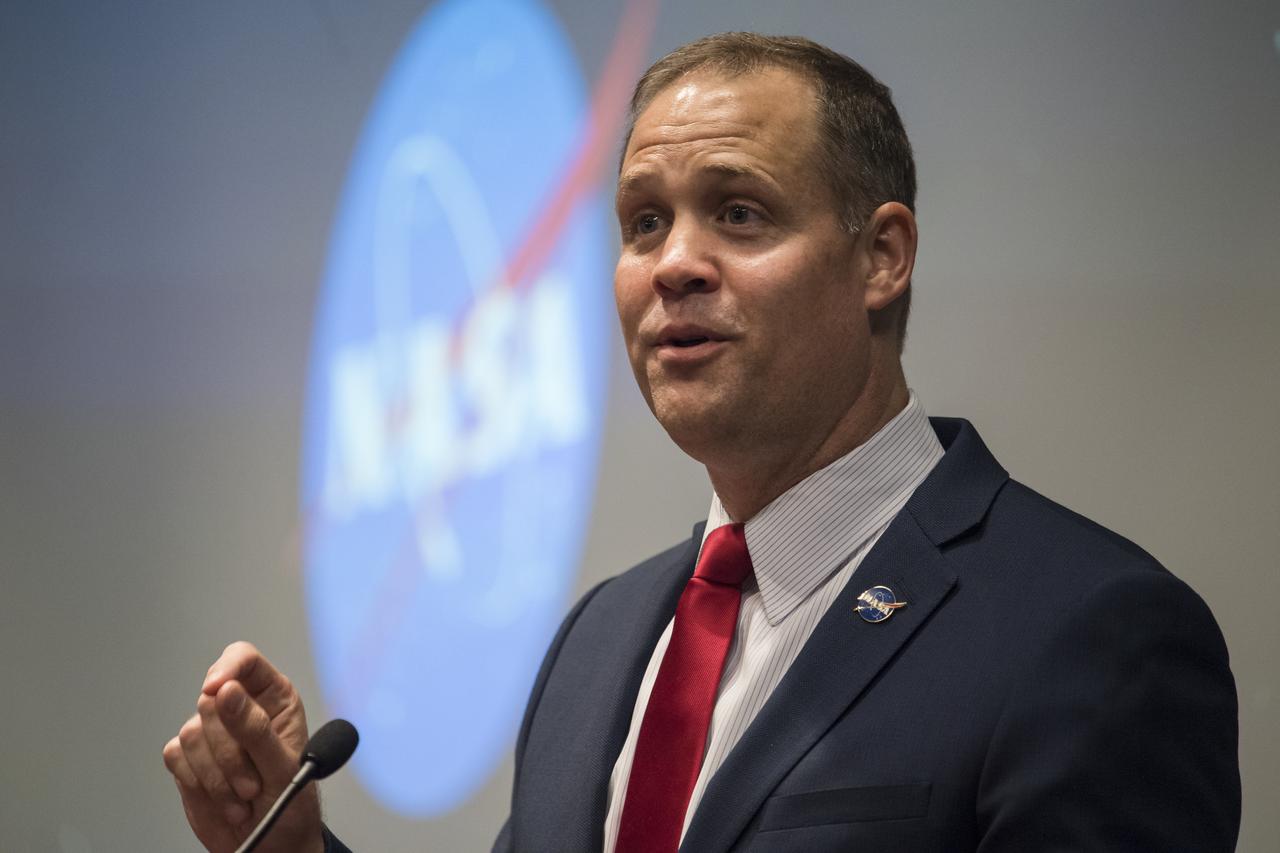
NASA Administrator Jim Bridenstine gives keynote remarks at the Challenger Center Annual Conference, Wednesday, August 14, 2019 at the Lockheed Martin Global Vision Center in Arlington, VA. Photo Credit: (NASA/Aubrey Gemignani)
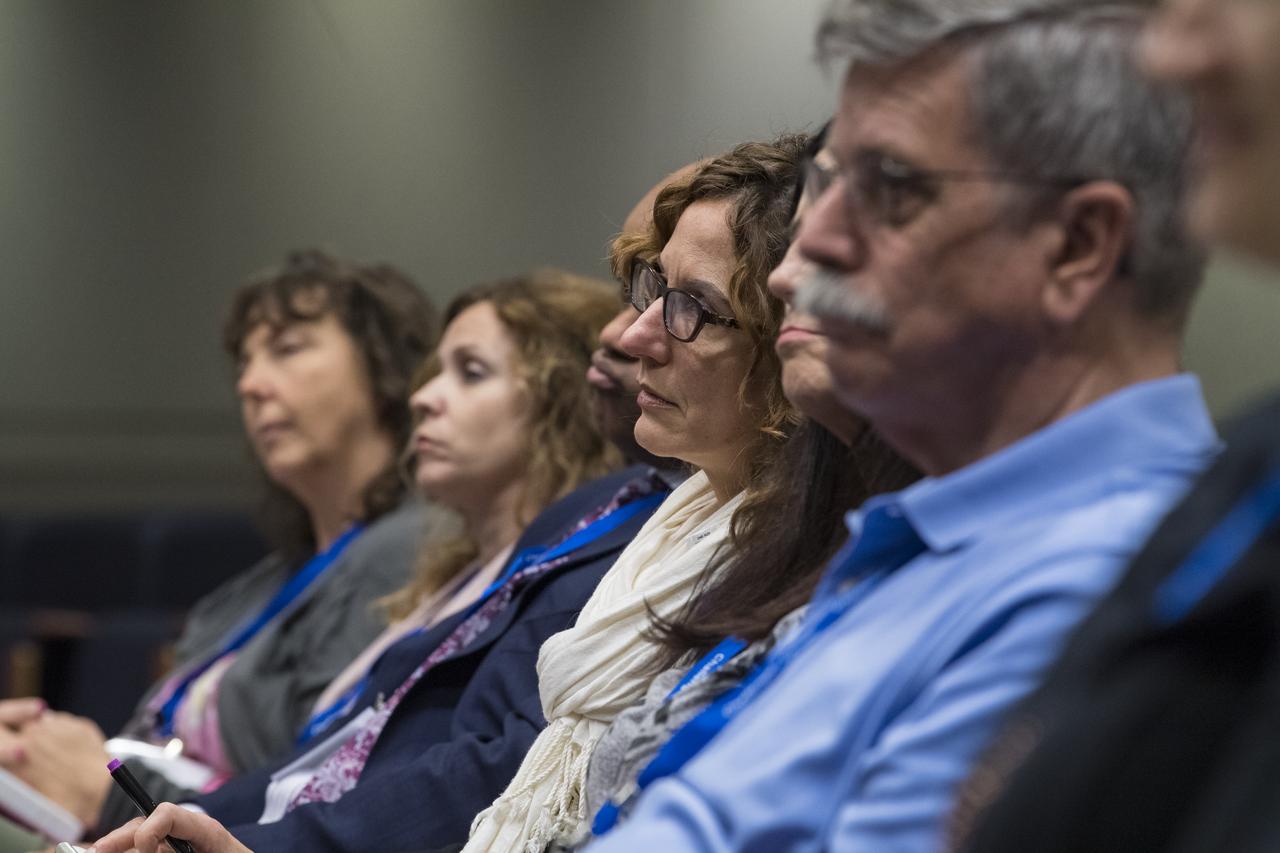
NASA Administrator Jim Bridenstine gives keynote remarks at the Challenger Center Annual Conference, Wednesday, August 14, 2019 at the Lockheed Martin Global Vision Center in Arlington, VA. Photo Credit: (NASA/Aubrey Gemignani)
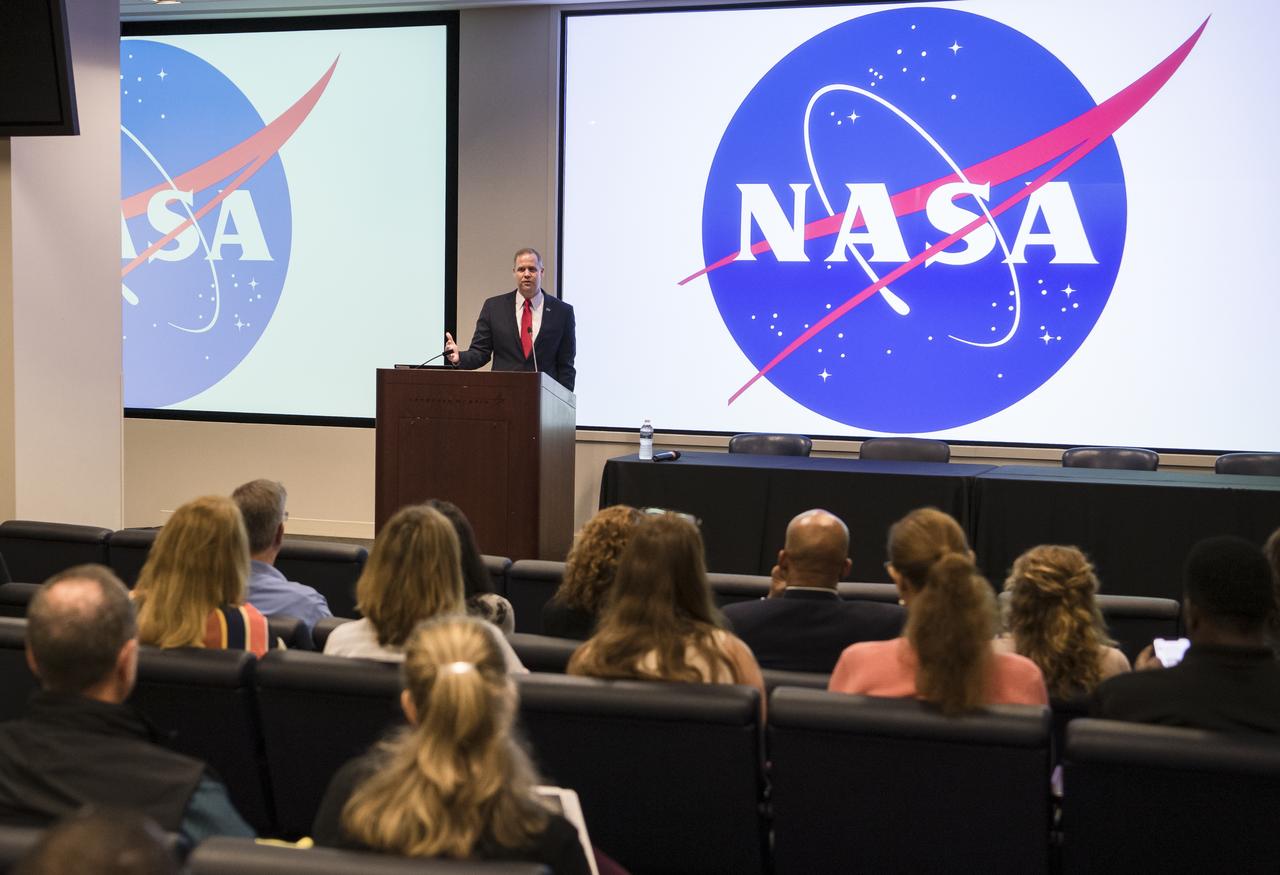
NASA Administrator Jim Bridenstine gives keynote remarks at the Challenger Center Annual Conference, Wednesday, August 14, 2019 at the Lockheed Martin Global Vision Center in Arlington, VA. Photo Credit: (NASA/Aubrey Gemignani)
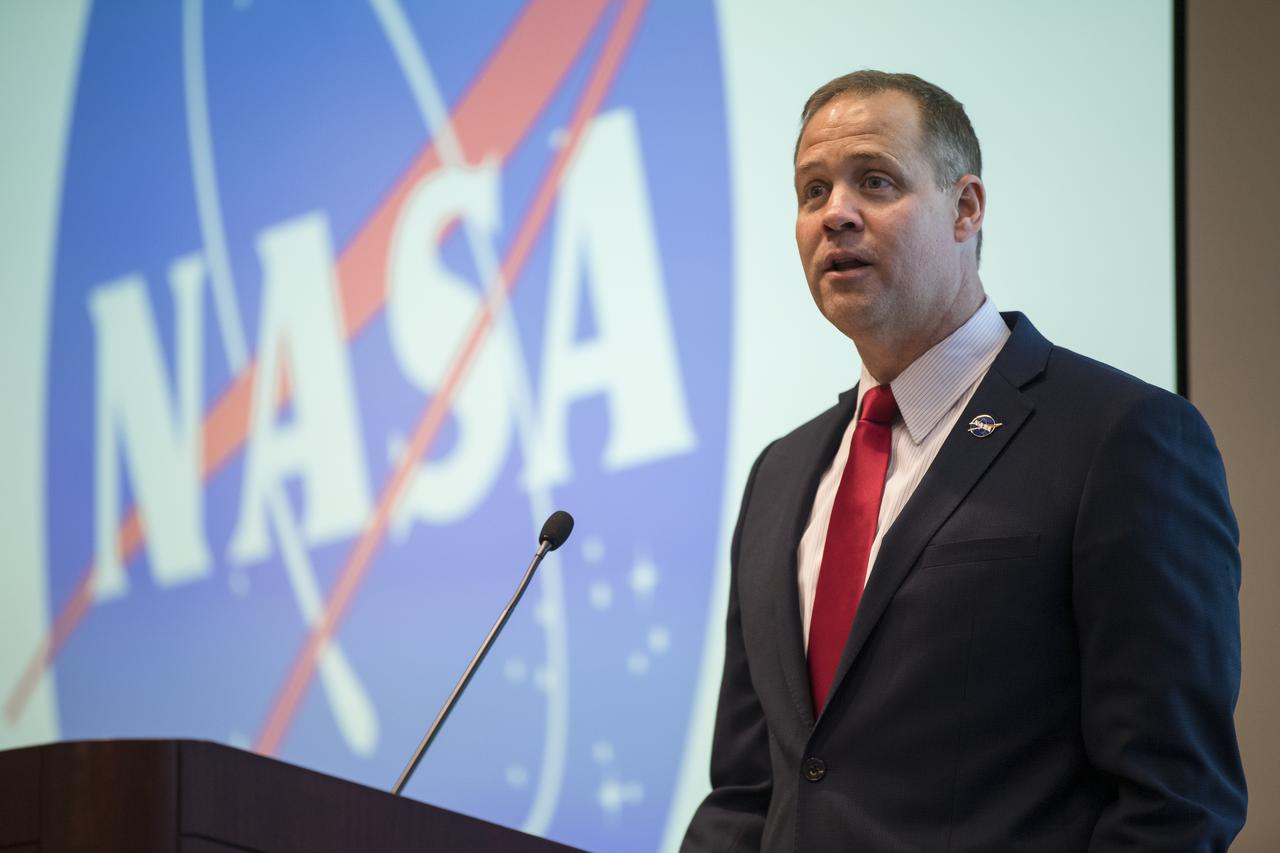
NASA Administrator Jim Bridenstine gives keynote remarks at the Challenger Center Annual Conference, Wednesday, August 14, 2019 at the Lockheed Martin Global Vision Center in Arlington, VA. Photo Credit: (NASA/Aubrey Gemignani)
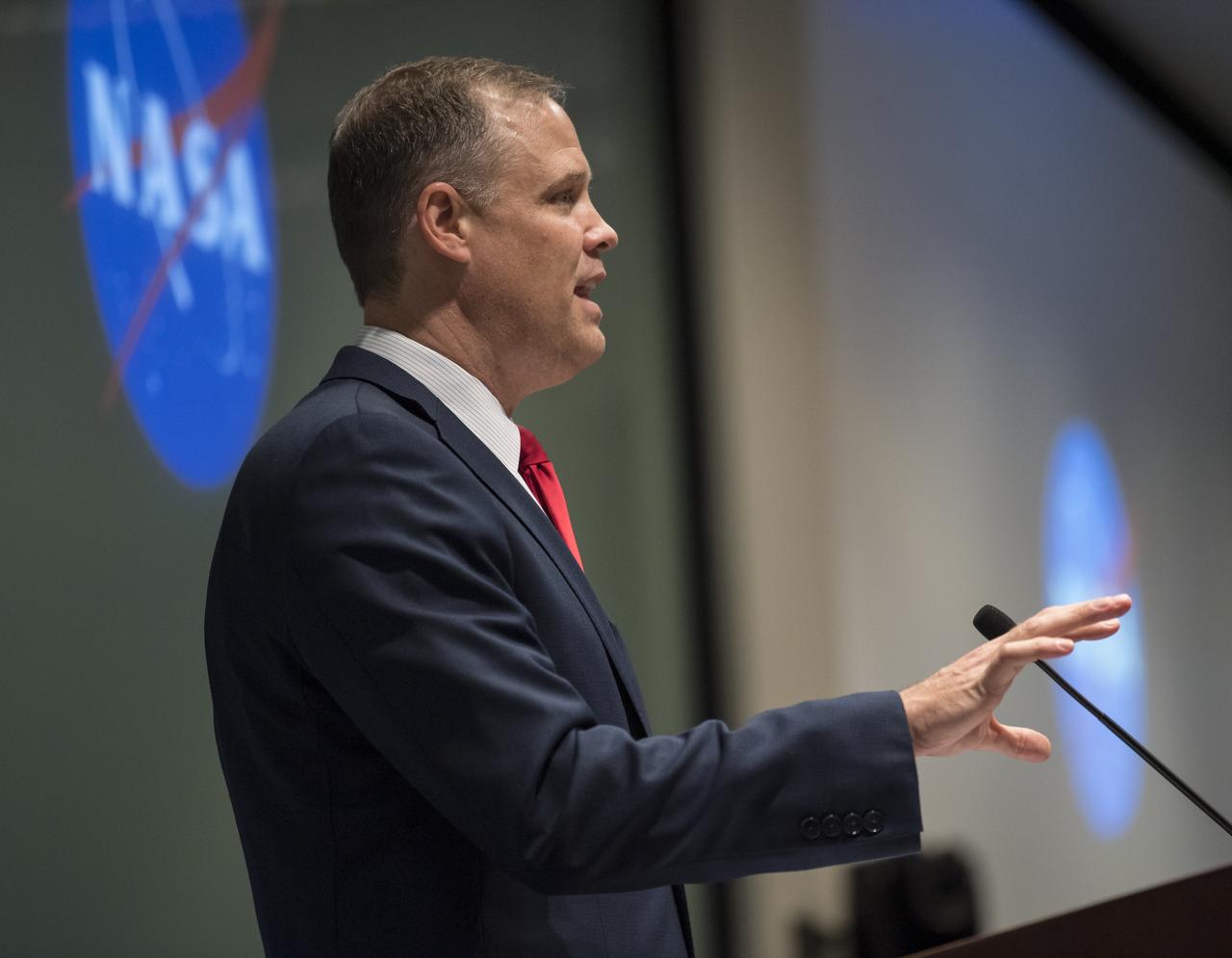
NASA Administrator Jim Bridenstine gives keynote remarks at the Challenger Center Annual Conference, Wednesday, August 14, 2019 at the Lockheed Martin Global Vision Center in Arlington, VA. Photo Credit: (NASA/Aubrey Gemignani)
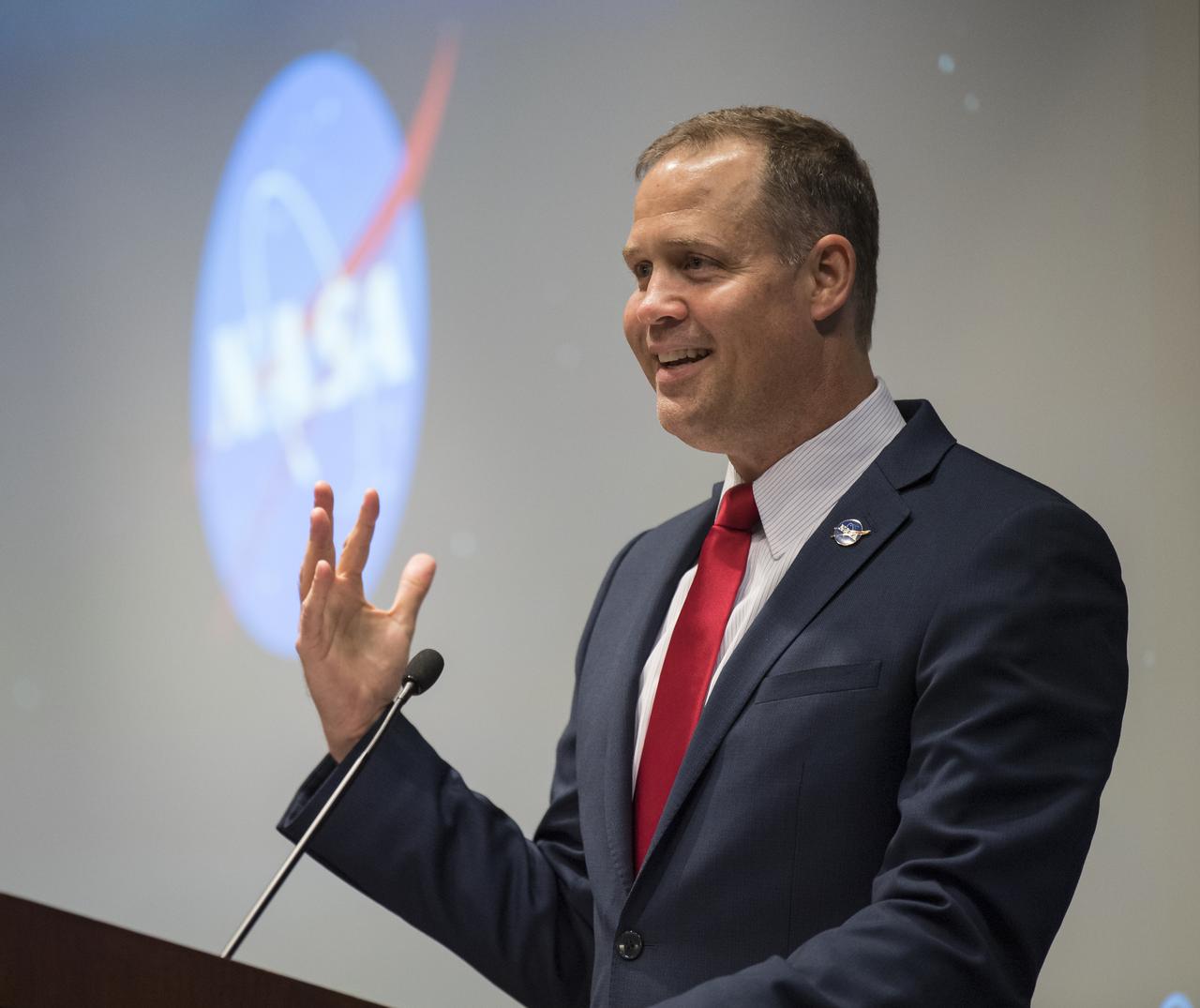
NASA Administrator Jim Bridenstine gives keynote remarks at the Challenger Center Annual Conference, Wednesday, August 14, 2019 at the Lockheed Martin Global Vision Center in Arlington, VA. Photo Credit: (NASA/Aubrey Gemignani)
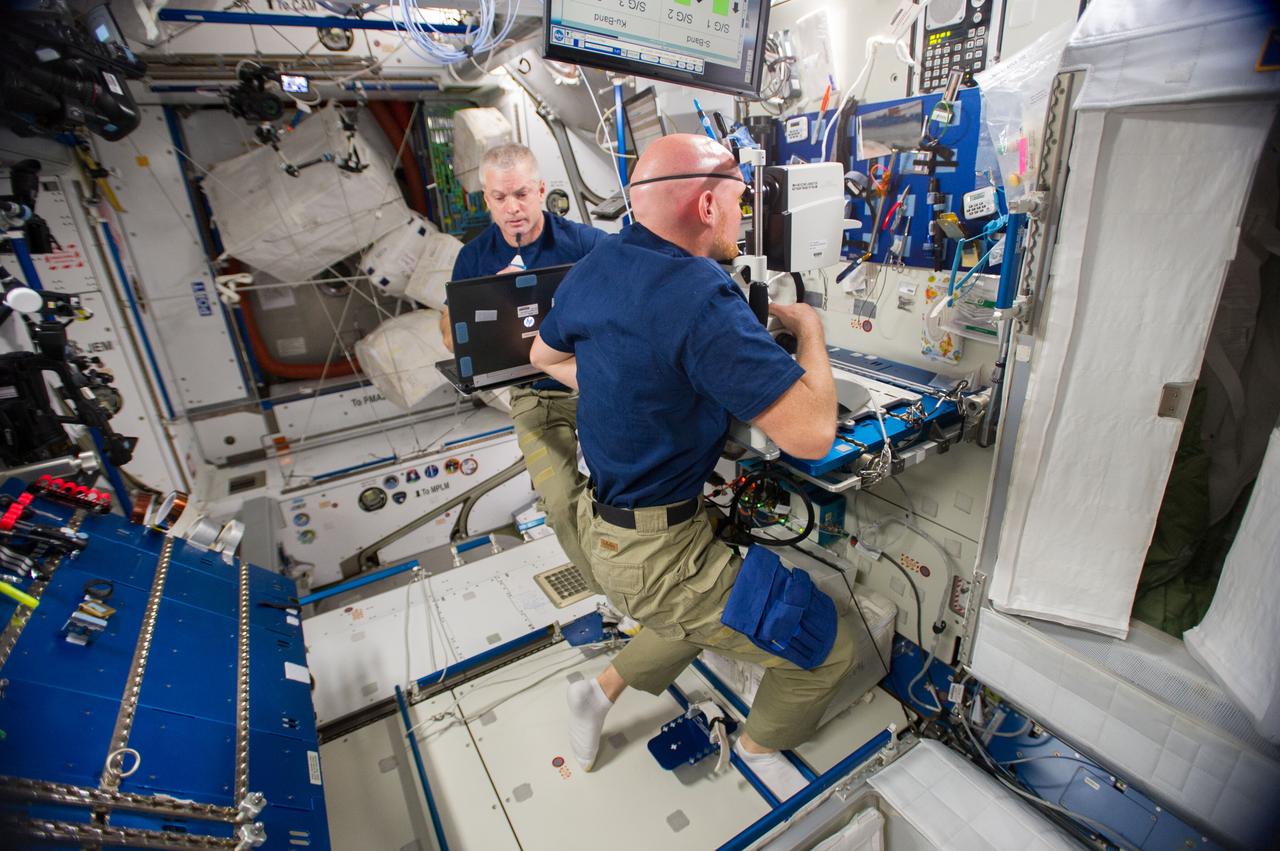
ISS040-E-006739 (3 June 2014) --- European Space Agency astronaut Alexander Gerst, Expedition 40 flight engineer, uses the Optical Coherence Tomography (OCT) camera during an Ocular Health (OH) vision test in the Harmony node of the International Space Station. The OH experiment observes and seeks to understand vision changes during long-term space missions. NASA astronaut Steve Swanson (left), Expedition 40 commander, assists Gerst.
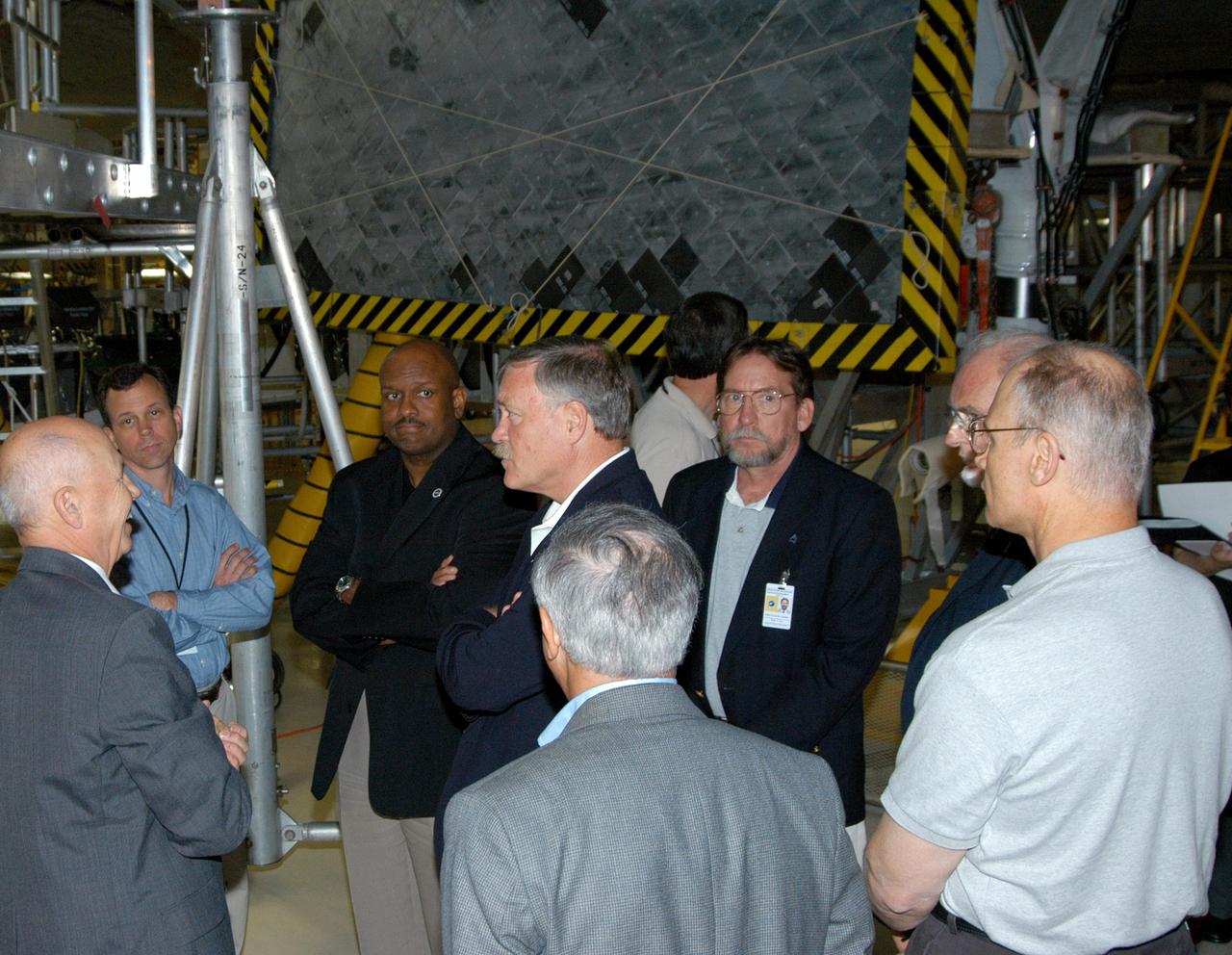
KENNEDY SPACE CENTER, FLA. -- Adm. Craig E. Steidle (center), NASA’s associate administrator, Office of Exploration Systems, tours the Orbiter Processing Facility on a visit to KSC. At left is Conrad Nagel, chief of the Shuttle Project Office. They are standing under the left wing and wheel well of the orbiter Discovery. The Office of Exploration Systems was established to set priorities and direct the identification, development and validation of exploration systems and related technologies to support the future space vision for America. Steidle’s visit included a tour of KSC to review the facilities and capabilities to be used to support the vision.
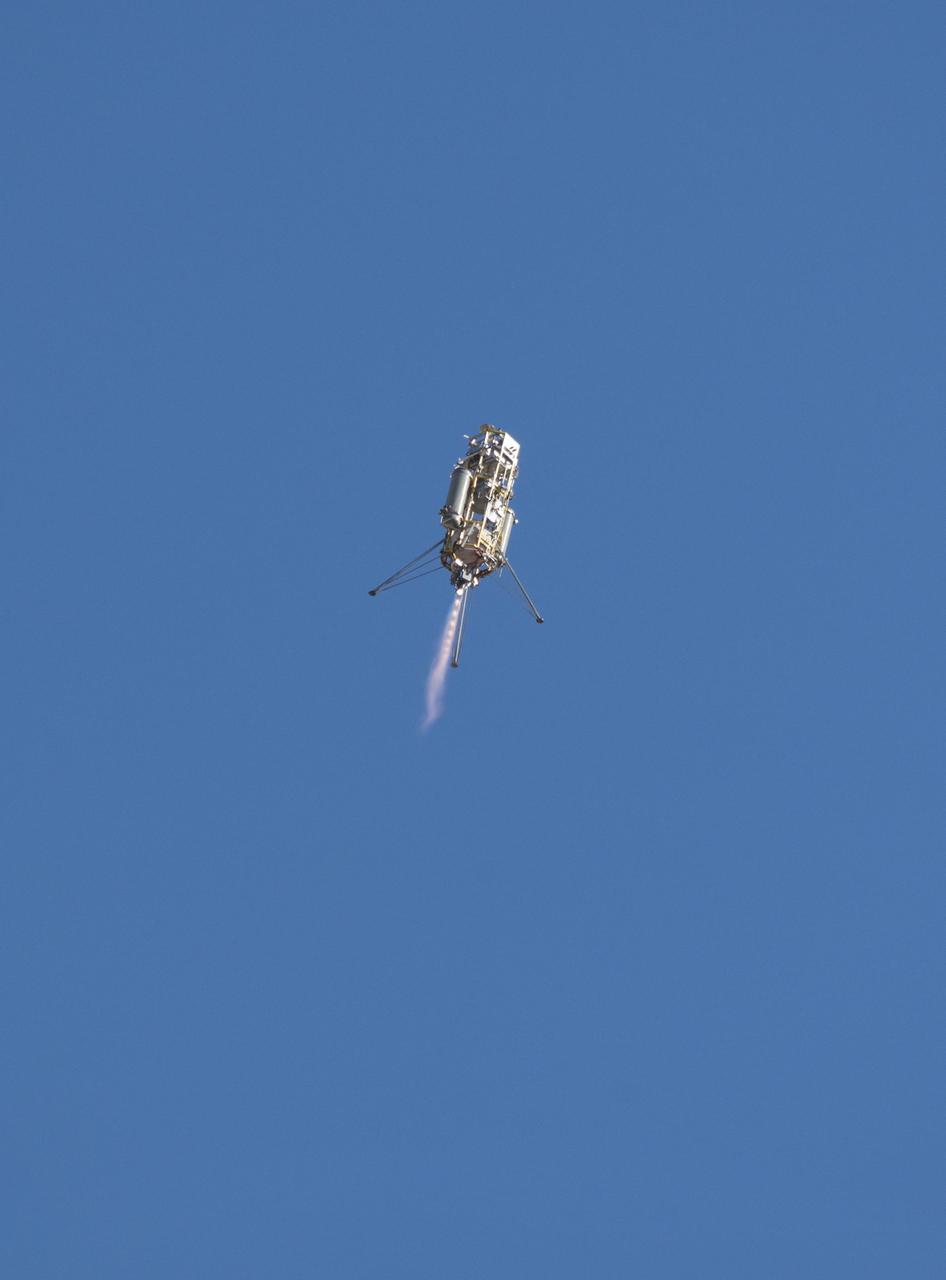
A prototype of the Lander Vision System for NASA Mars 2020 mission was tested in this Dec. 9, 2014, flight of a Masten Space Systems Xombie vehicle at Mojave Air and Space Port in California. http://photojournal.jpl.nasa.gov/catalog/PIA20848
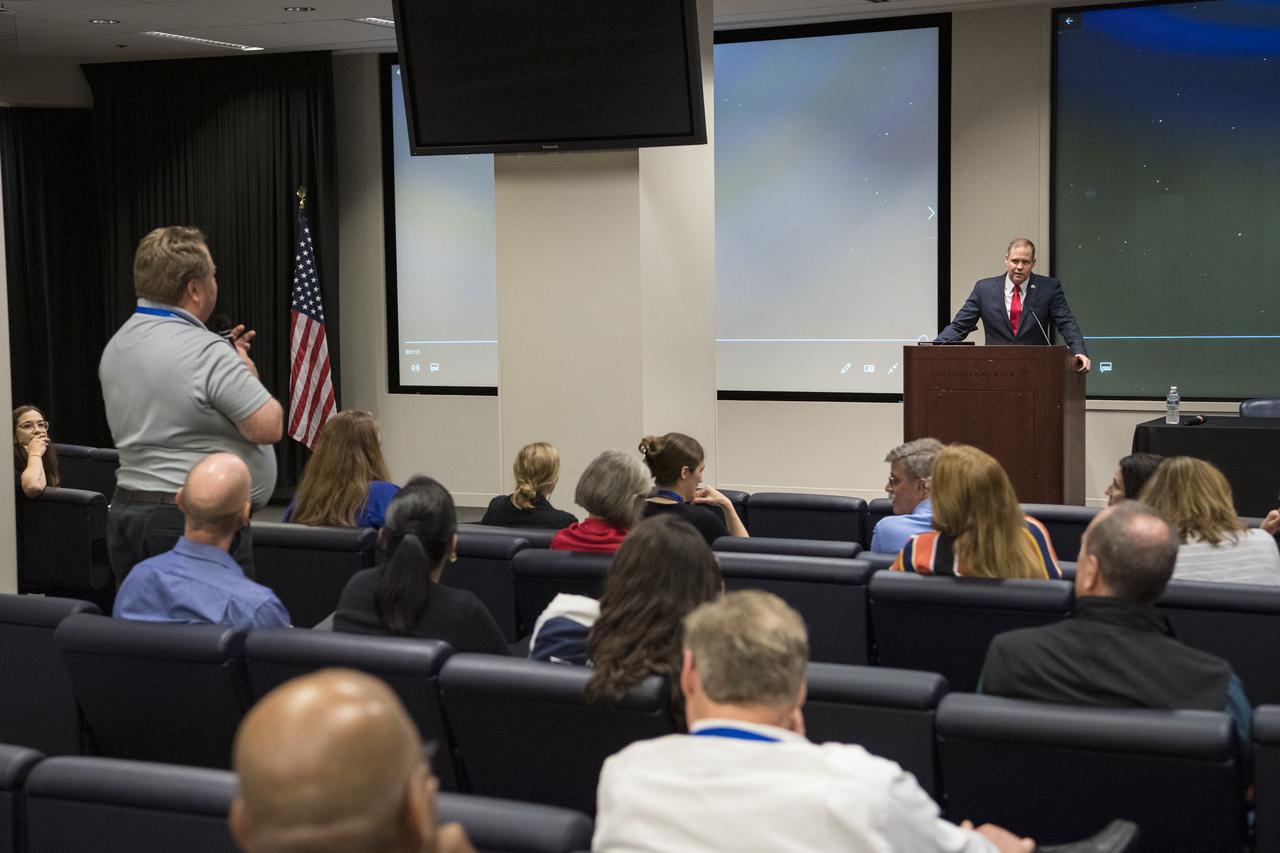
NASA Administrator Jim Bridenstine answers a question from a member of the audience at the Challenger Center Annual Conference, Wednesday, August 14, 2019 at the Lockheed Martin Global Vision Center in Arlington, VA. Photo Credit: (NASA/Aubrey Gemignani)
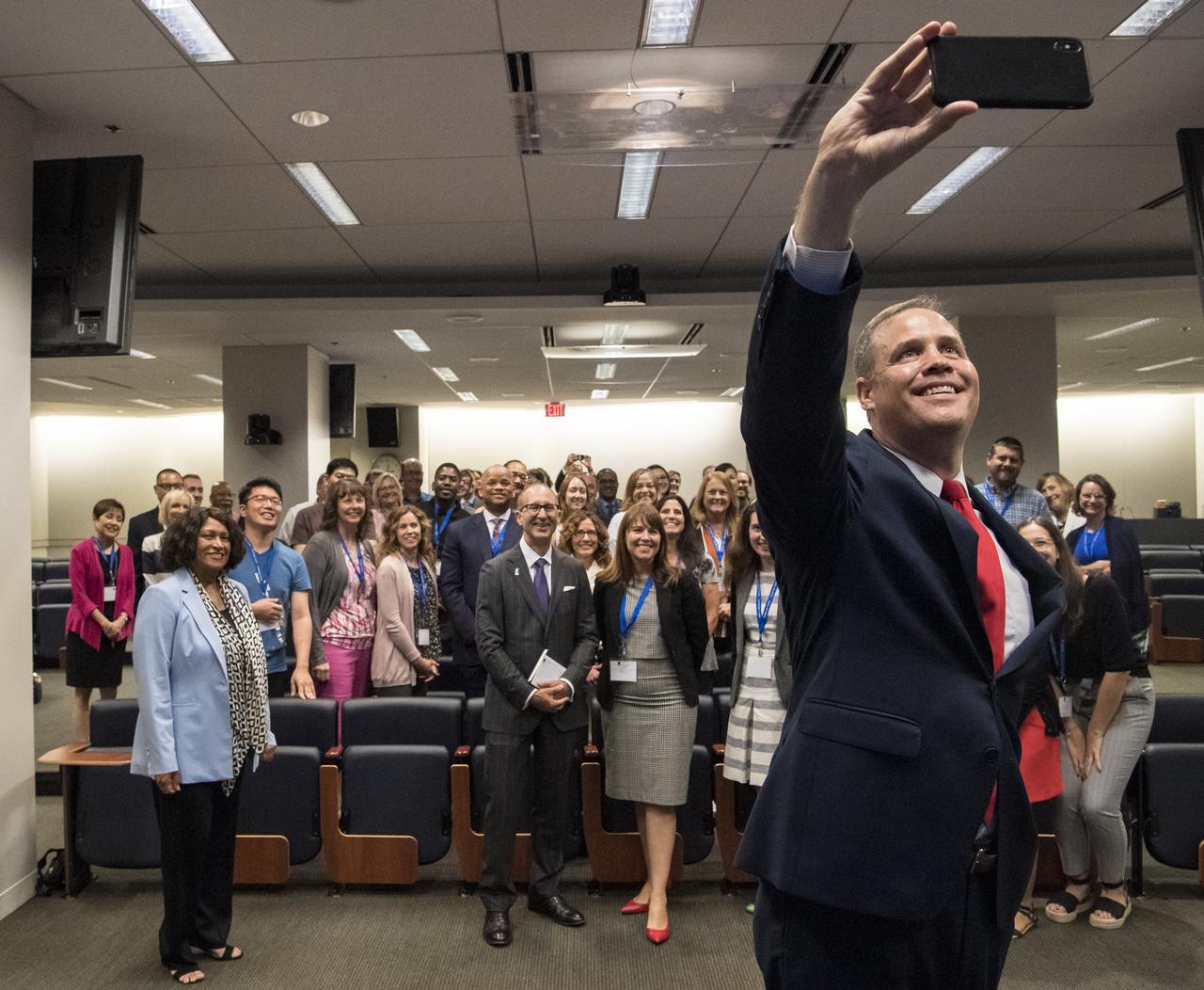
NASA Administrator Jim Bridenstine takes a selfie with the audience at the Challenger Center Annual Conference, Wednesday, August 14, 2019 at the Lockheed Martin Global Vision Center in Arlington, VA. Photo Credit: (NASA/Aubrey Gemignani)
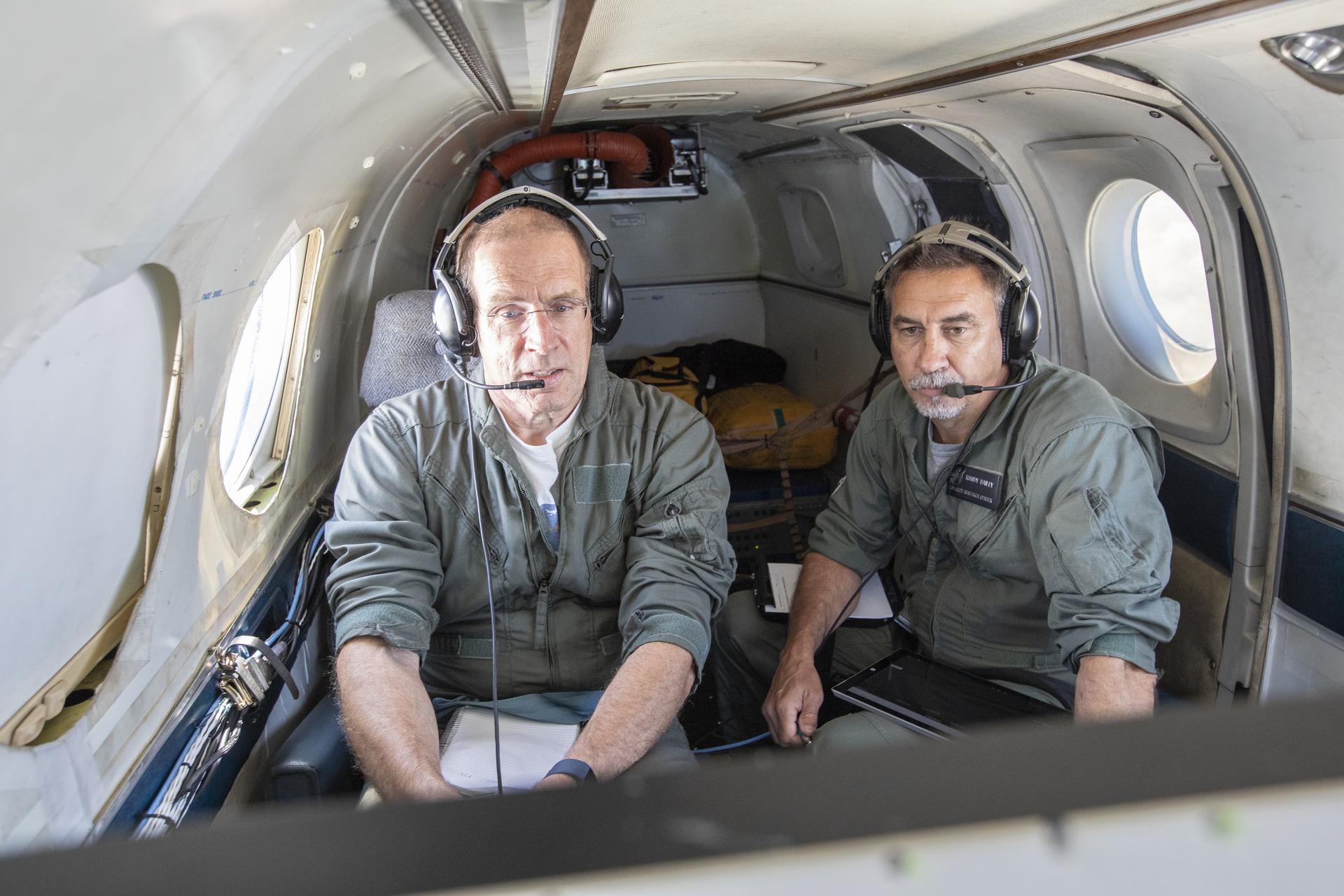
Aerospace Engineers, “from left to right” Peter Coen and Randy Bailey attempt to spot an incoming aircraft on the monitor while performing tests on the External Vision System (XVS) Software. The software testing is being conducted on the B200 King Air Beechcraft airplane.
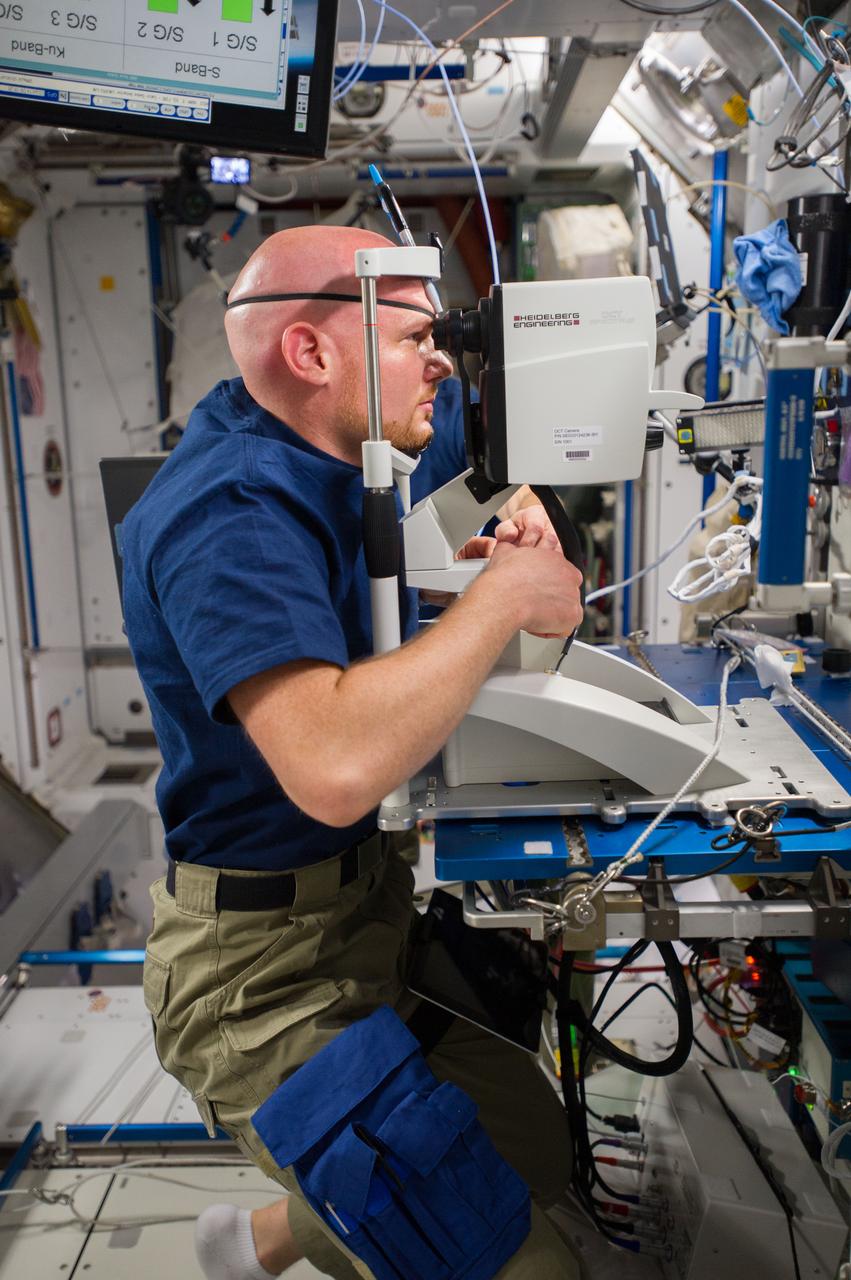
ISS040-E-006738 (3 June 2014) --- In the International Space Station's Harmony node, European Space Agency astronaut Alexander Gerst, Expedition 40 flight engineer, performs an eye exam for the Ocular Health experiment which observes and seeks to understand vision changes during long-term space missions.
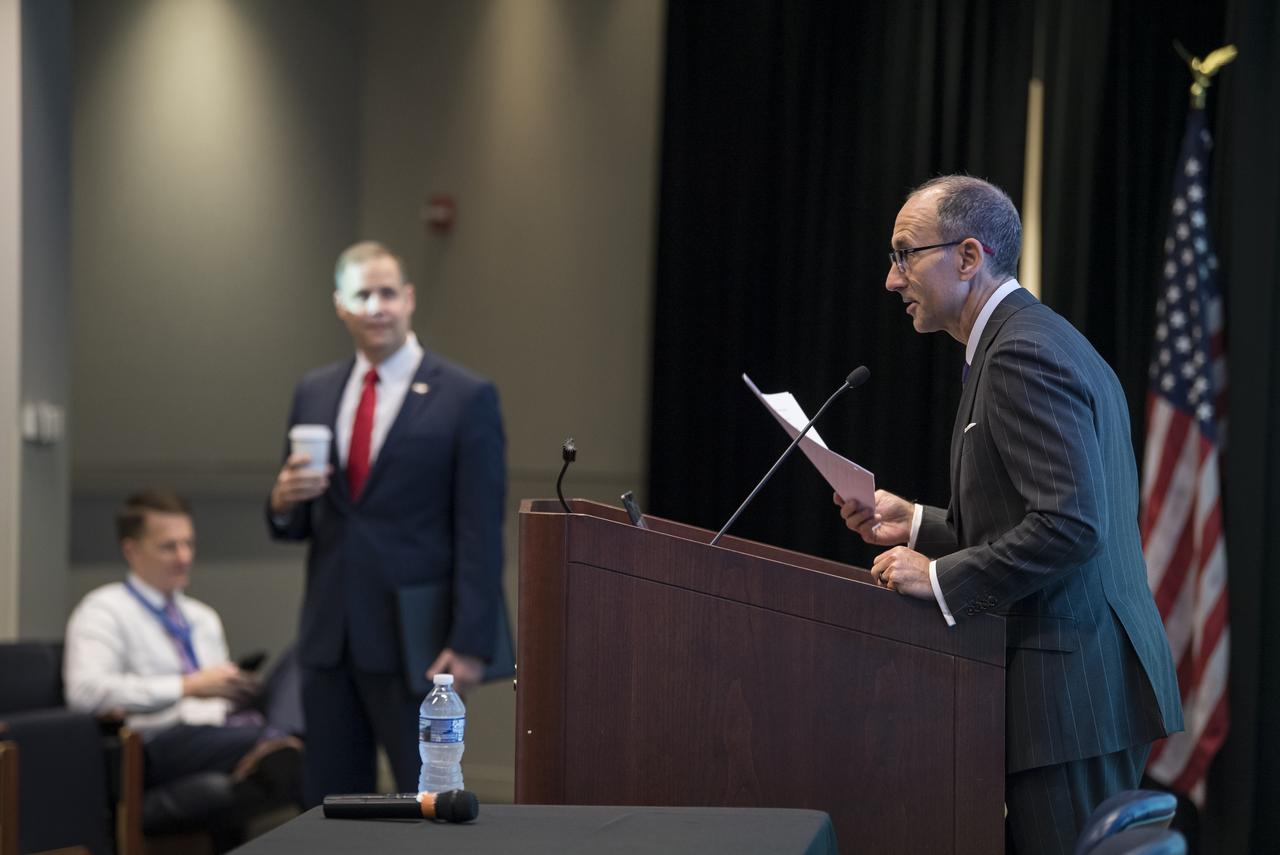
NASA Administrator Jim Bridenstine, standing left, is introduced by President and CEO of the Challenger Center, Lance Bush, just before giving keynote remarks at the Challenger Center Annual Conference, Wednesday, August 14, 2019 at the Lockheed Martin Global Vision Center in Arlington, VA. Photo Credit: (NASA/Aubrey Gemignani)
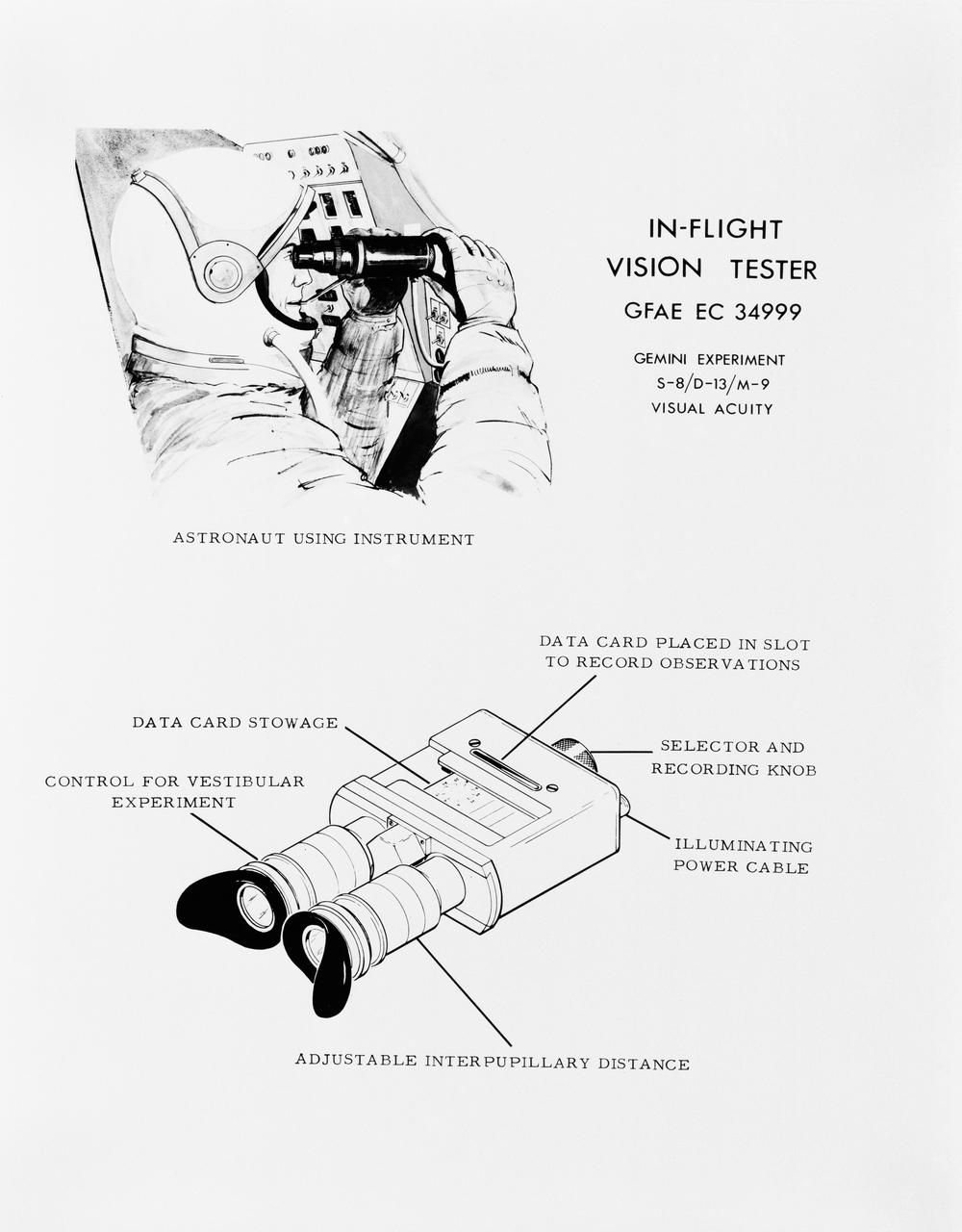
S65-28642 (June 1965) --- Drawing illustrating Gemini experiment In-Flight Vision Tester.
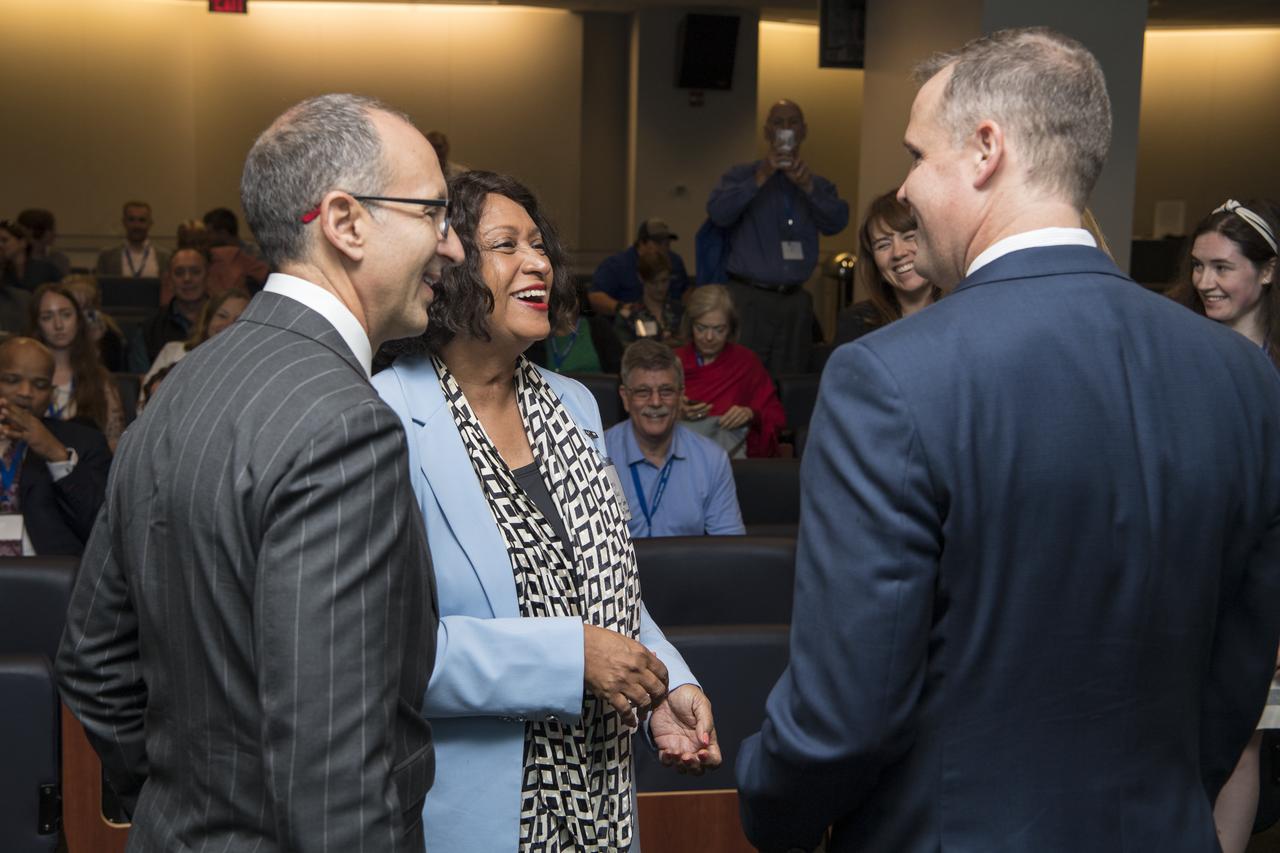
NASA Administrator Jim Bridenstine, right, speaks with President and CEO of the Challenger Center, Lance Bush, left, and Cheryl McNair, the widow of Challenger astronaut Ron McNair, after giving keynote remarks at the Challenger Center Annual Conference, Wednesday, August 14, 2019 at the Lockheed Martin Global Vision Center in Arlington, VA. Photo Credit: (NASA/Aubrey Gemignani)
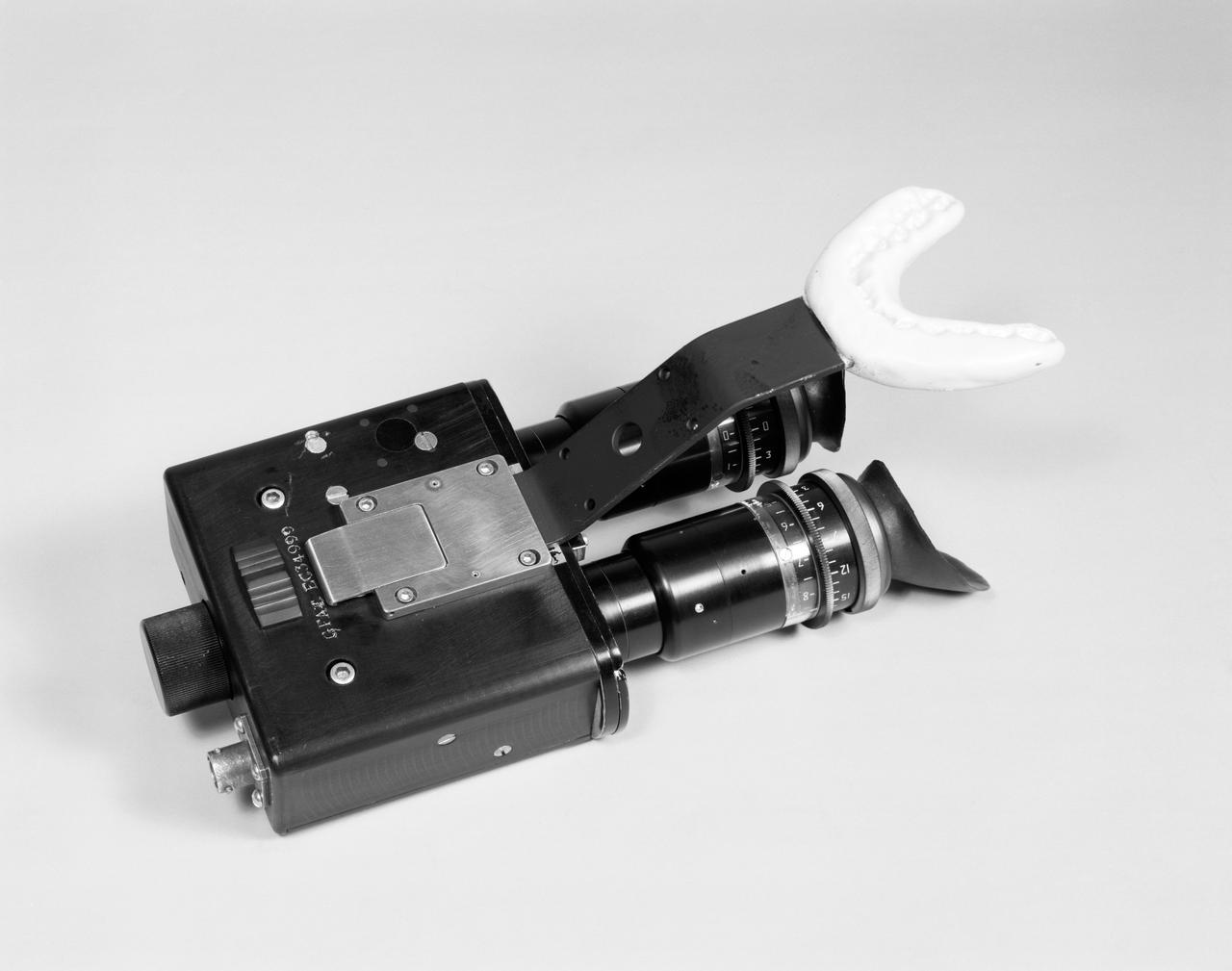
GT-4 Experimental Vision Tester. MSC, HOUSTON, TX
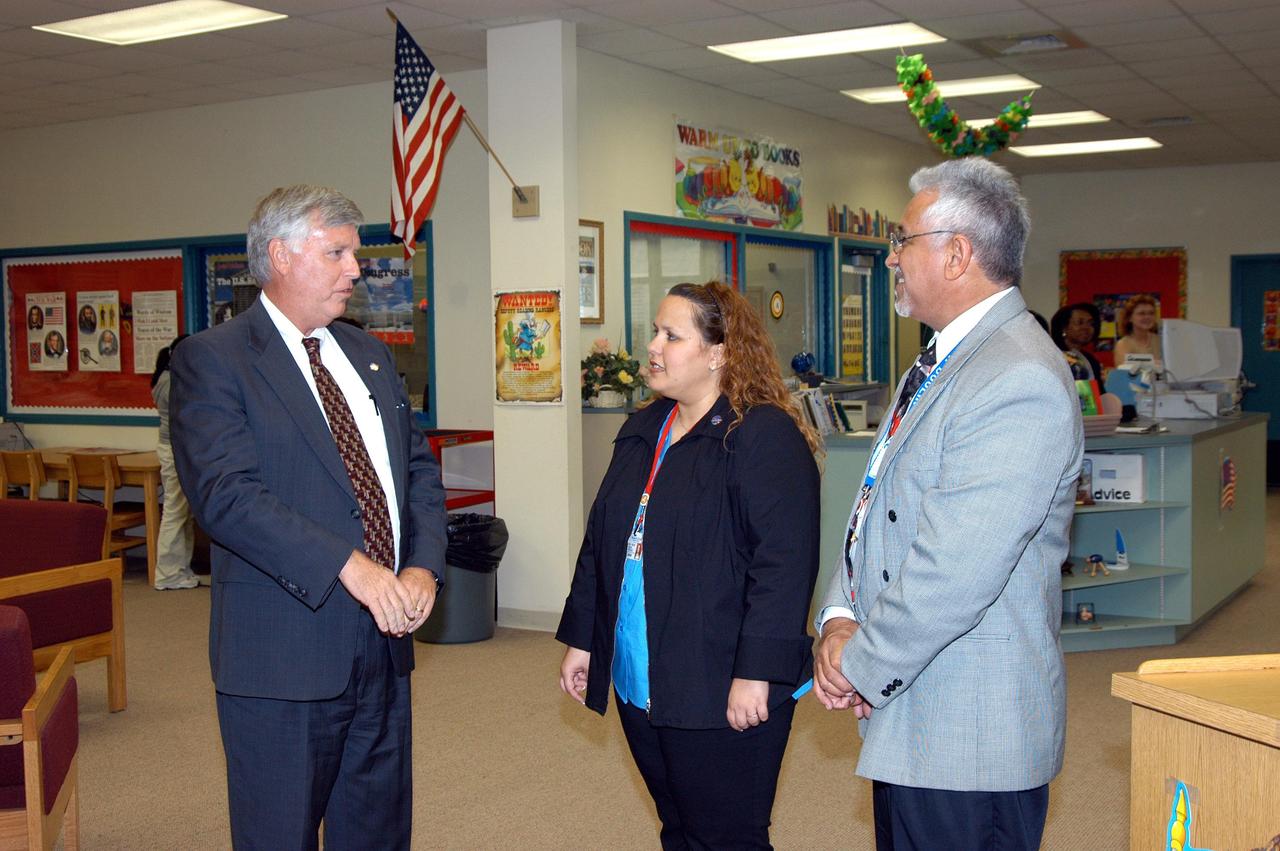
KENNEDY SPACE CENTER, FLA. -- Center Director Jim Kennedy (left) talks to Eduardo Tillet (right), principal of Howard A. Doolin Middle School, Miami, Fla., on his visit to share America’s new vision for space exploration with the next generation of explorers. Kennedy, joined by astronaut David Wolf, is talking with students about our destiny as explorers, NASA’s stepping stone approach to exploring Earth, the Moon, Mars and beyond, how space impacts our lives, and how people and machines rely on each other in space.
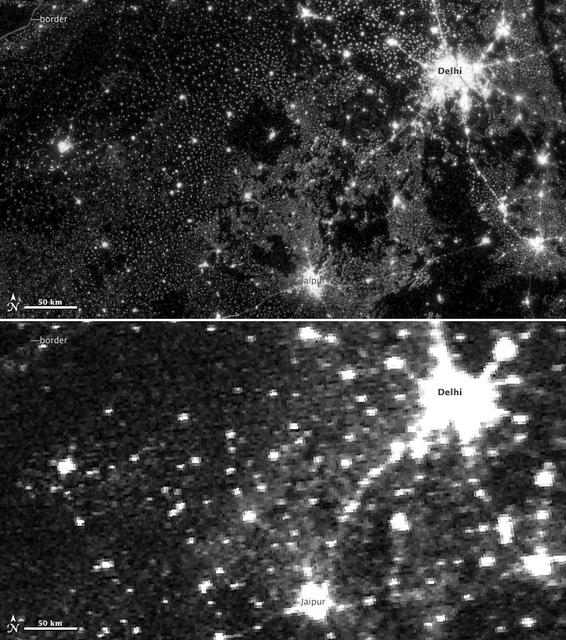
NASA image acquired November 11-12, 2012. On November 12, 2012, the Visible Infrared Imaging Radiometer Suite (VIIRS) on the Suomi NPP satellite captured the top nighttime image of city, village, and highway lights near Delhi, India. For comparison, the lower image shows the same area one night earlier, as observed by the Operational Line Scan (OLS) system on a Defense Meteorological Satellite Program (DMSP) spacecraft. Since the 1960s, the U.S. Air Force has operated DMSP in order to observe clouds and other weather variables in key wavelengths of infrared and visible light. Since 1972, the DMSP satellites have included the Operational Linescan System (OLS), which gives weather forecasters some ability to see in the dark. It has been a highly successful sensor, but it is dependent on older technology with lower resolution than most scientists would like. And for many years, DMSP data were classified. Through improved optics and “smart” sensing technology, the VIIRS “day-night band,” is ten to fifteen times better than the OLS system at resolving the relatively dim lights of human settlements and reflected moonlight. Each VIIRS pixel shows roughly 740 meters (0.46 miles) across, compared to the 3-kilometer footprint (1.86 miles) of DMSP. Beyond the resolution, the new sensor can detect dimmer light sources. And since the VIIRS measurements are fully calibrated (unlike DMSP), scientists now have the precision required to make quantitative measurements of clouds and other features. “In contrast to the Operational Line Scan system, the imagery from the new day-night band is almost like a nearsighted person putting on glasses for the first time and looking at the Earth anew,” says Steve Miller, an atmospheric scientist at Colorado State University. “VIIRS has allowed us to bring this coarse, blurry view of night lights into clearer focus. Now we can see things in such great detail and at such high precision that we’re really talking about a new kind of measurement.” Unlike a film camera that captures a photograph in one exposure, VIIRS produces an image by repeatedly scanning a scene and resolving it as millions of individual picture elements, or pixels. The day-night band goes a step further, determining on-the-fly whether to use its low, medium, or high-gain mode. If a pixel is very bright, a low-gain mode on the sensor prevents the pixel from over-saturating. If the pixel is dark, the signal will be amplified. “On a hand-held camera, there’s a nighttime setting where the shutter will stay open much longer than it would under daylight imaging conditions,” says Chris Elvidge, who leads the Earth Observation Group at NOAA’s National Geophysical Data Center. “The day-night band is similar. It increases the exposure time—the amount of time that it’s collecting photons for pixels.” NASA Earth Observatory image by Jesse Allen and Robert Simmon, using Suomi NPP VIIRS and DMSP OLS data provided courtesy of Chris Elvidge (NOAA National Geophysical Data Center). Suomi NPP is the result of a partnership between NASA, NOAA, and the Department of Defense. Caption by Mike Carlowicz. Instrument: Suomi NPP - VIIRS Credit: <b><a href="http://www.earthobservatory.nasa.gov/" rel="nofollow"> NASA Earth Observatory</a></b> <b>Click here to view all of the <a href="http://earthobservatory.nasa.gov/Features/NightLights/" rel="nofollow"> Earth at Night 2012 images </a></b> <b>Click here to <a href="http://earthobservatory.nasa.gov/NaturalHazards/view.php?id=79846" rel="nofollow"> read more </a> about this image </b> <b><a href="http://www.nasa.gov/audience/formedia/features/MP_Photo_Guidelines.html" rel="nofollow">NASA image use policy.</a></b> <b><a href="http://www.nasa.gov/centers/goddard/home/index.html" rel="nofollow">NASA Goddard Space Flight Center</a></b> enables NASA’s mission through four scientific endeavors: Earth Science, Heliophysics, Solar System Exploration, and Astrophysics. Goddard plays a leading role in NASA’s accomplishments by contributing compelling scientific
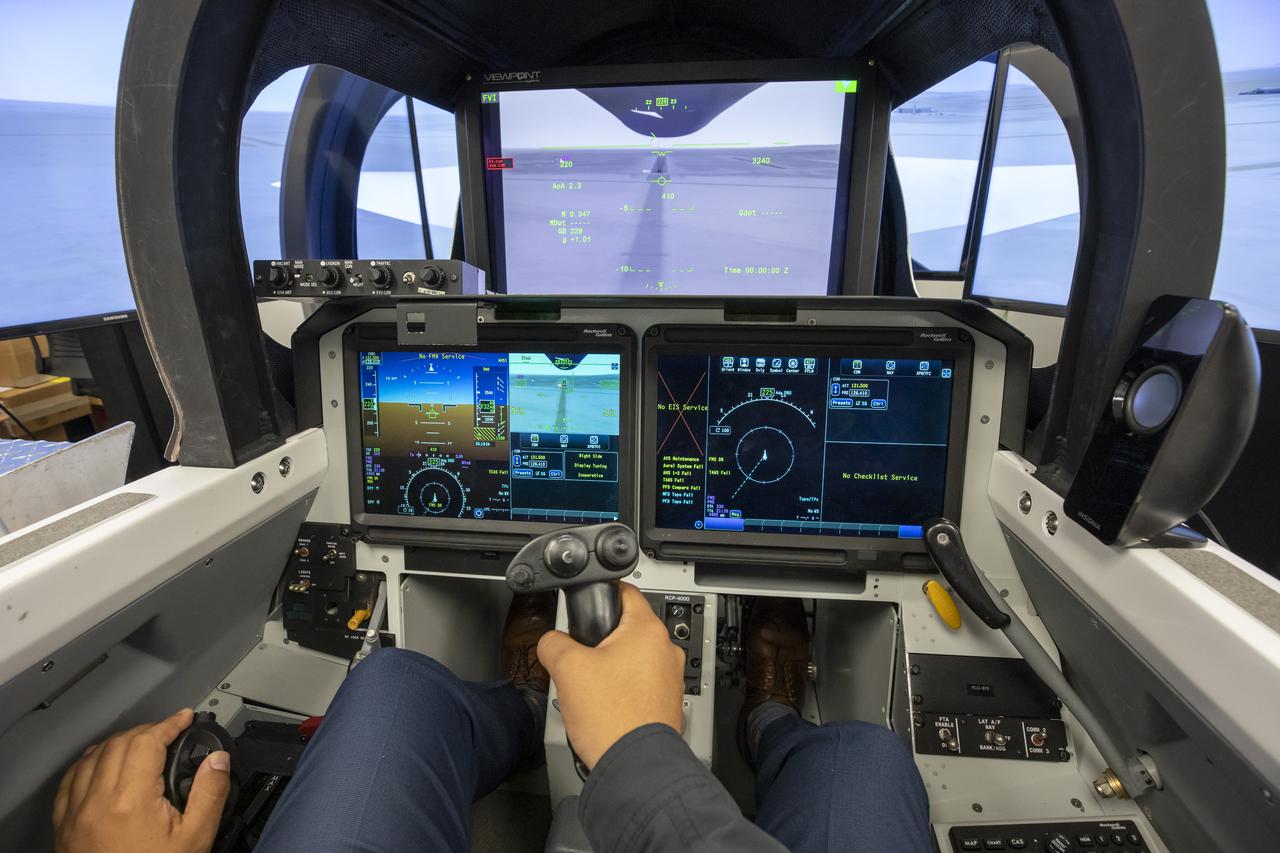
This image shows a close up of the cockpit view of the eXternal Vision System that will be placed in the X-59. Instead of a front facing window, the pilot will use these monitors for forward facing visibility. Lockheed Martin Photography By Garry Tice 1011 Lockheed Way, Palmdale, Ca. 93599 Event: X-59 SIL Round 2 Date: 6/10/2021
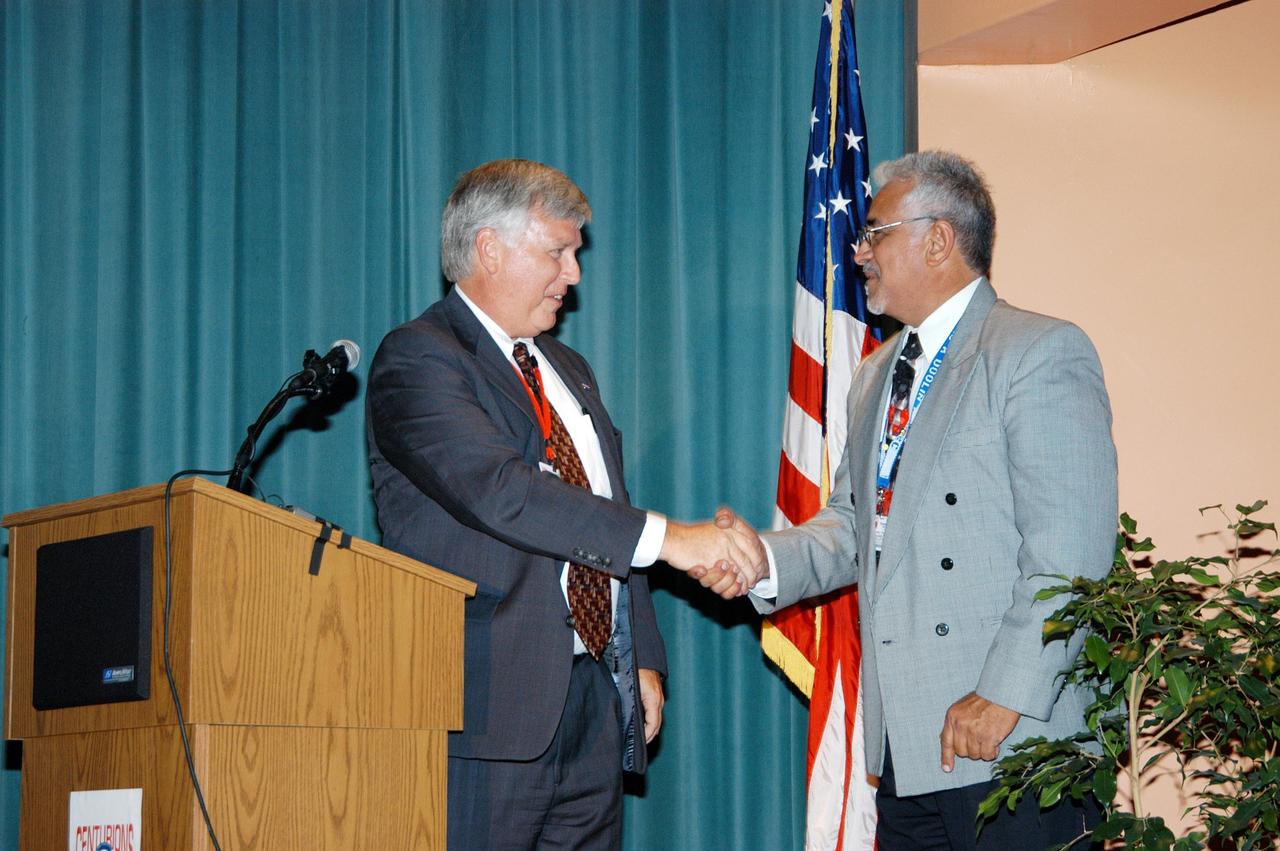
KENNEDY SPACE CENTER, FLA. -- Center Director Jim Kennedy (left) is thanked by Principal Eduardo Tillet for his presentation to the faculty and students of Howard A. Doolin Middle School, Miami, Fla. The school is one of 100 taking part in the NASA Explorer Schools (NES) program. The purpose of Kennedy’s visit is to share America’s new vision for space exploration with the next generation of explorers. He is talking with students in Florida and Georgia Explorer Schools about our destiny as explorers, NASA’s stepping stone approach to exploring Earth, the Moon, Mars and beyond, how space impacts our lives, and how people and machines rely on each other in space.
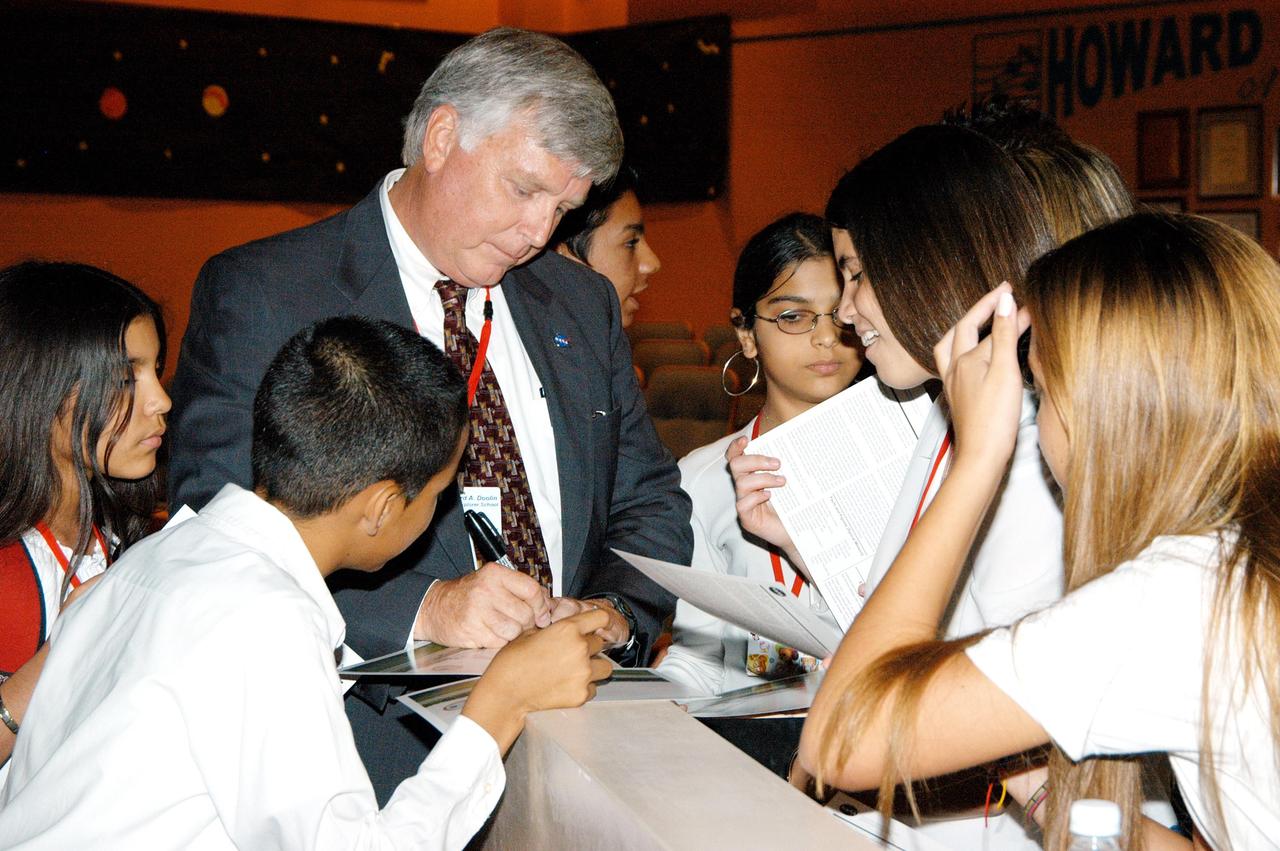
KENNEDY SPACE CENTER, FLA. -- After his presentation, students at Howard A. Doolin Middle School, Miami, Fla., gather around Center Director Jim Kennedy as he signs a memento for a student. The school is one of 100 taking part in the NASA Explorer Schools (NES) program. Kennedy visited the school to share America’s new vision for space exploration with the next generation of explorers. He is talking with students in Florida and Georgia Explorer Schools about our destiny as explorers, NASA’s stepping stone approach to exploring Earth, the Moon, Mars and beyond, how space impacts our lives, and how people and machines rely on each other in space.
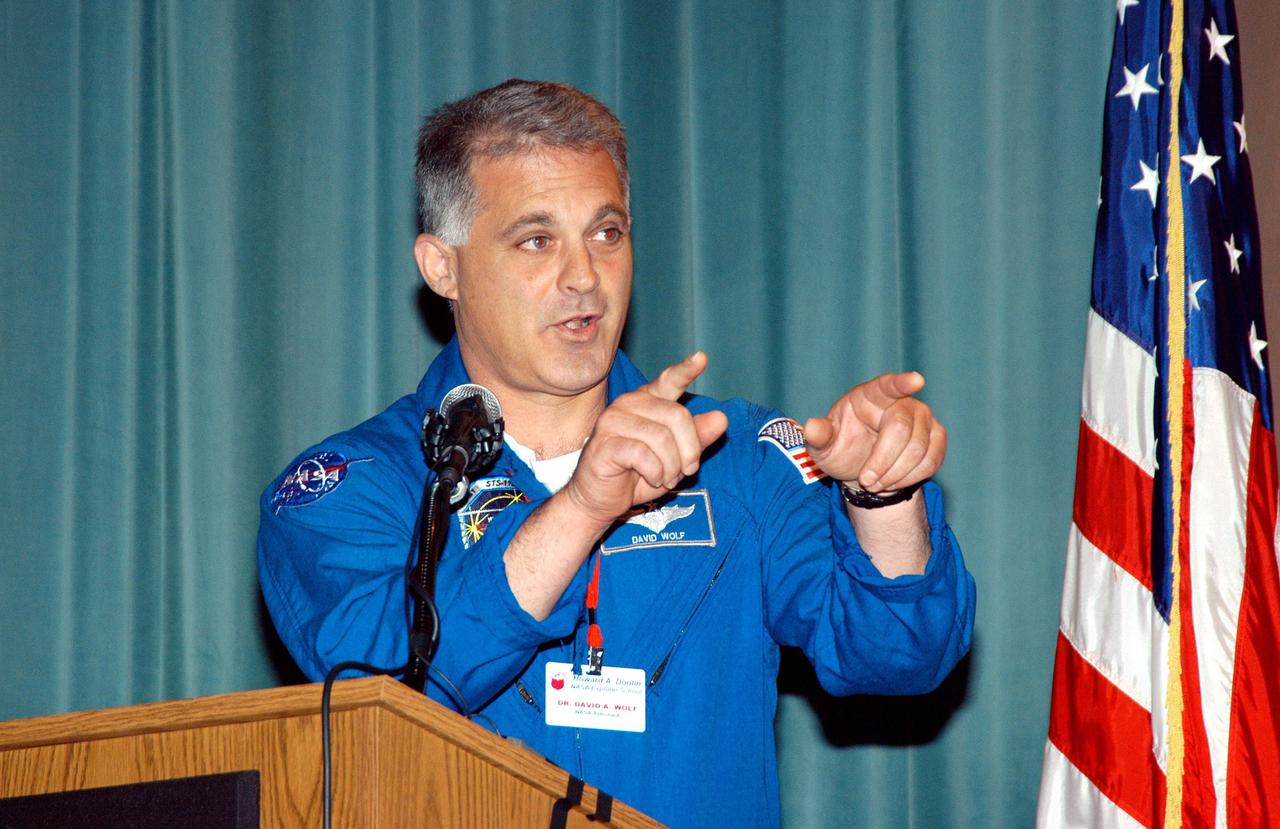
KENNEDY SPACE CENTER, FLA. -- Astronaut David Wolf addresses students and faculty of Howard A. Doolin Middle School, Miami, Fla., about his experiences in space. Doolin Middle School is one of 100 to take part in the NASA Explorer Schools (NES) program. Wolf joins Center Director Jim Kennedy on his visit to share America’s new vision for space exploration with the next generation of explorers. He is talking with students in Florida and Georgia Explorer Schools about our destiny as explorers, NASA’s stepping stone approach to exploring Earth, the Moon, Mars and beyond, how space impacts our lives, and how people and machines rely on each other in space.
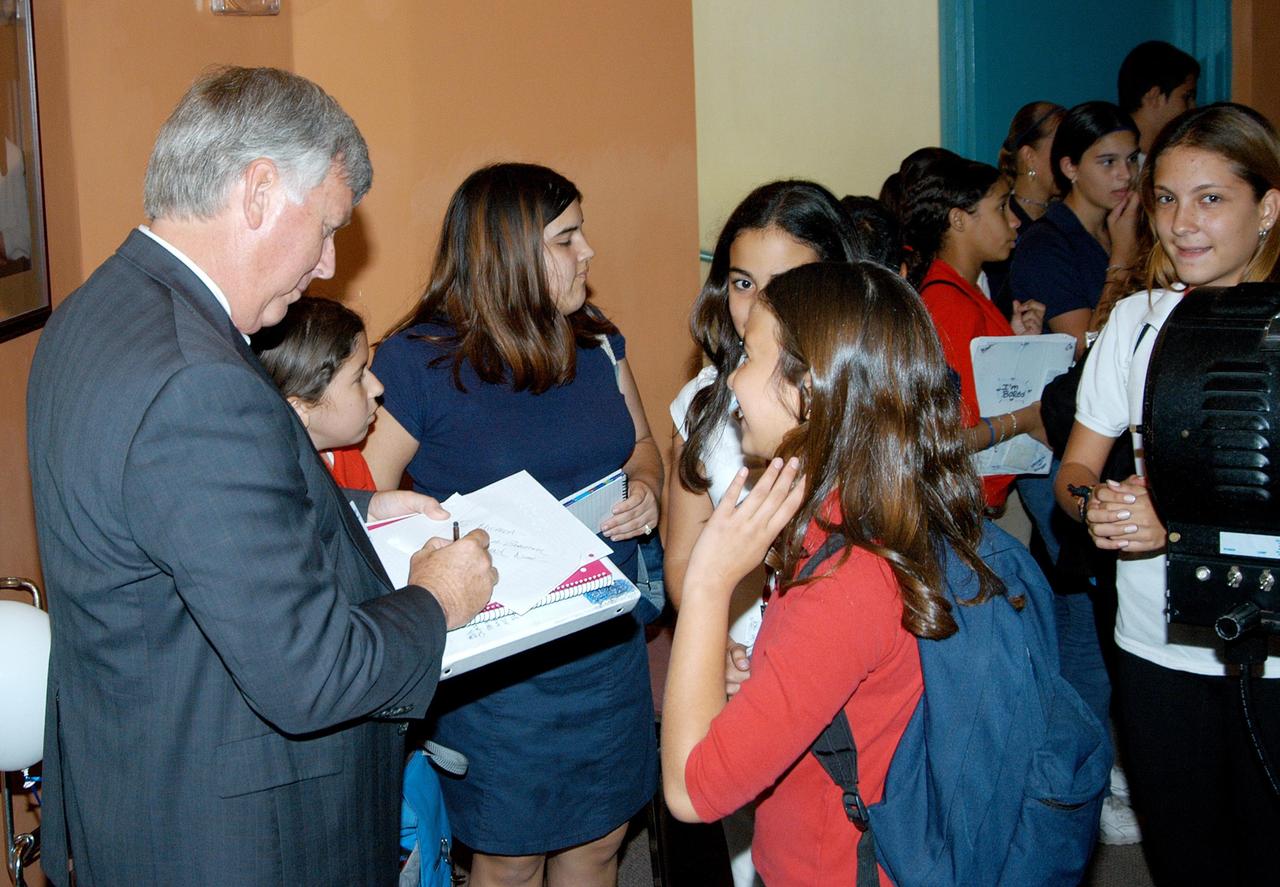
KENNEDY SPACE CENTER, FLA. -- After his presentation, Center Director Jim Kennedy signs a memento for a student at Howard A. Doolin Middle School, Miami, Fla. The school is one of 100 taking part in the NASA Explorer Schools (NES) program. Kennedy visited the school to share America’s new vision for space exploration with the next generation of explorers. He is talking with students in Florida and Georgia Explorer Schools about our destiny as explorers, NASA’s stepping stone approach to exploring Earth, the Moon, Mars and beyond, how space impacts our lives, and how people and machines rely on each other in space.
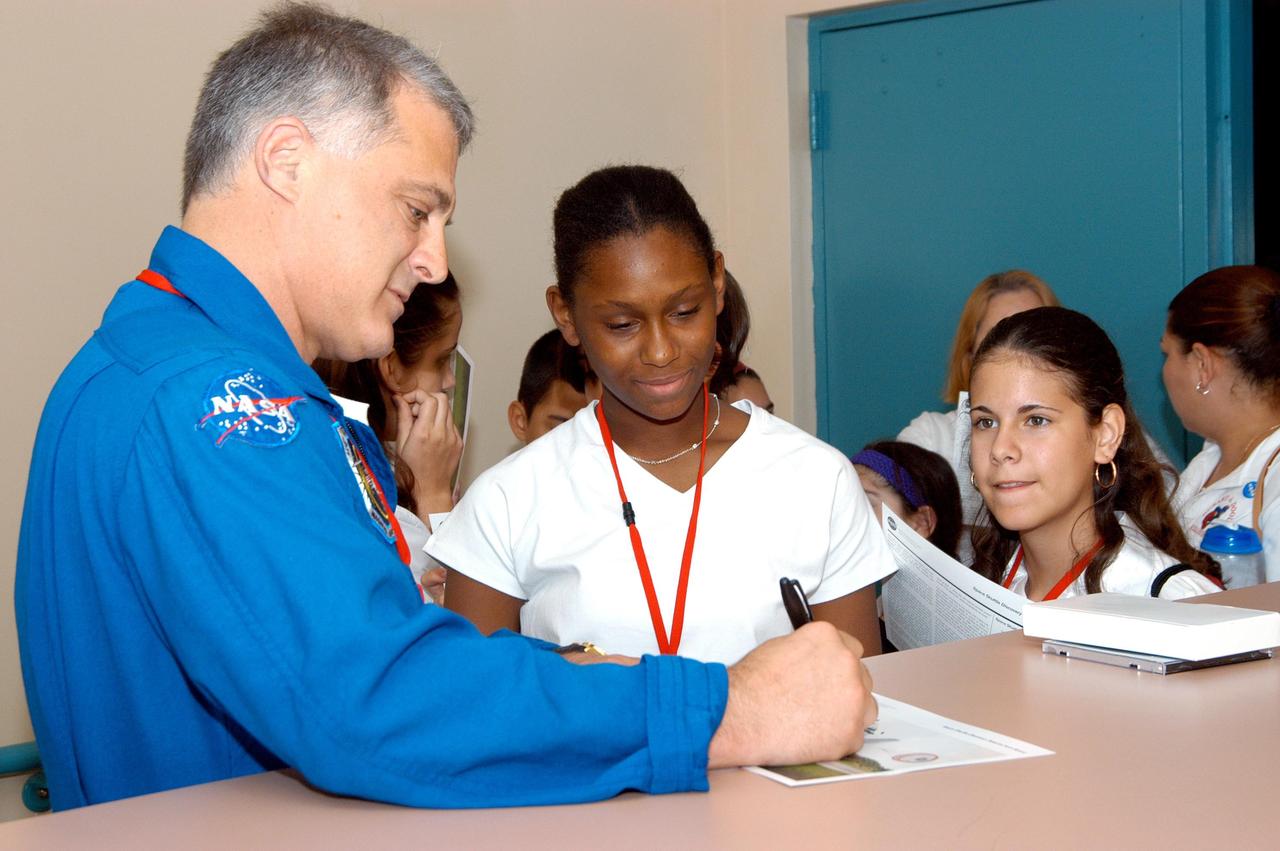
KENNEDY SPACE CENTER, FLA. -- After his presentation at Howard A. Doolin Middle School, Miami, Fla., astronaut David Wolf signs a memento for a student. The school is one of 100 taking part in the NASA Explorer Schools (NES) program. Center Director Jim Kennedy and Wolf visited the school to share America’s new vision for space exploration with the next generation of explorers. They talked with students about our destiny as explorers, NASA’s stepping stone approach to exploring Earth, the Moon, Mars and beyond, how space impacts our lives, and how people and machines rely on each other in space.
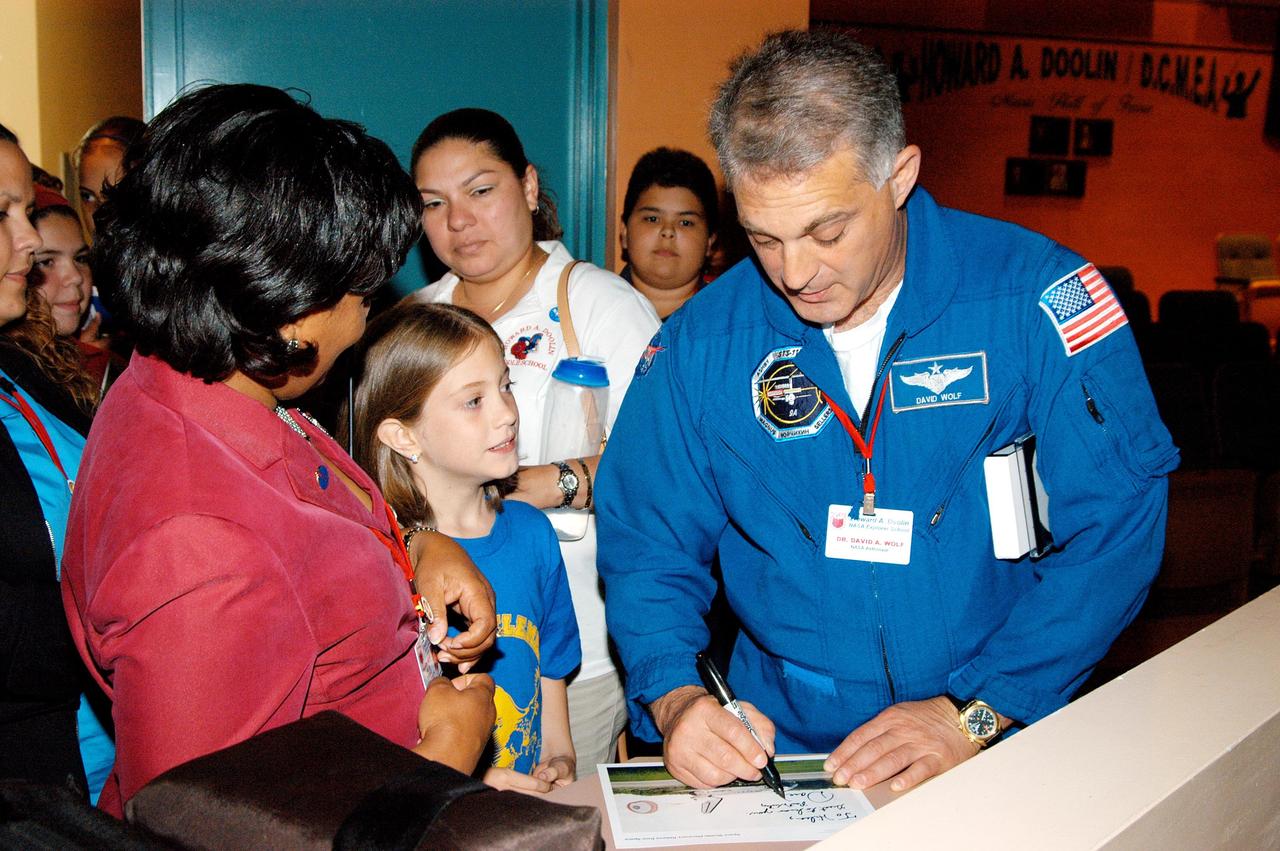
KENNEDY SPACE CENTER, FLA. -- After his presentation, astronaut David Wolf signs a memento for a student at Howard A. Doolin Middle School, Miami, Fla. The school is one of 100 taking part in the NASA Explorer Schools (NES) program. Center Director Jim Kennedy and Wolf visited the school to share America’s new vision for space exploration with the next generation of explorers. They talked with students about our destiny as explorers, NASA’s stepping stone approach to exploring Earth, the Moon, Mars and beyond, how space impacts our lives, and how people and machines rely on each other in space.
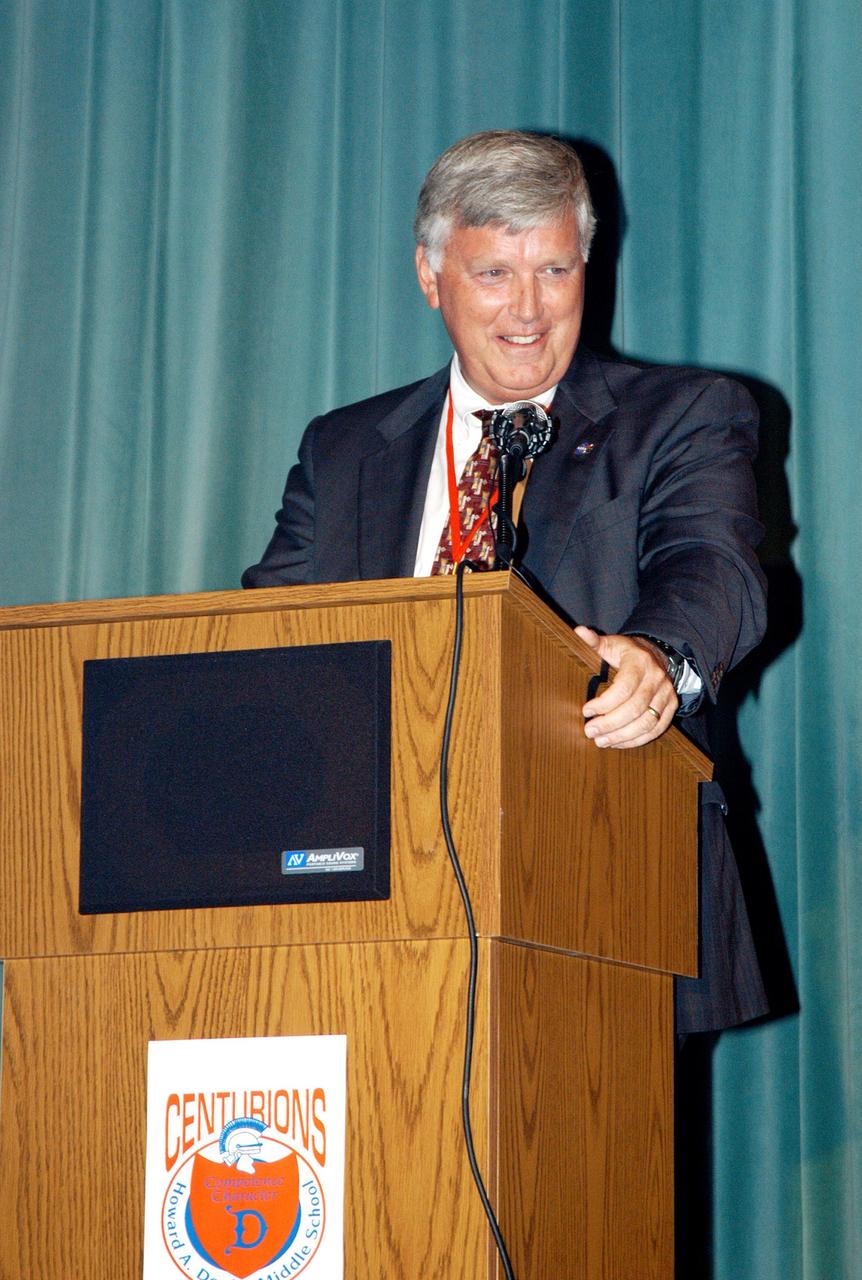
KENNEDY SPACE CENTER, FLA. -- Center Director Jim Kennedy addresses students and faculty of Howard A. Doolin Middle School, Miami, Fla. Doolin Middle School is one of 100 to take part in the NASA Explorer Schools (NES) program. Kennedy is visiting NES schools in Florida and Georgia to share America’s new vision for space exploration with the next generation of explorers. He is talking with students, about our destiny as explorers, NASA’s stepping stone approach to exploring Earth, the Moon, Mars and beyond, how space impacts our lives, and how people and machines rely on each other in space.
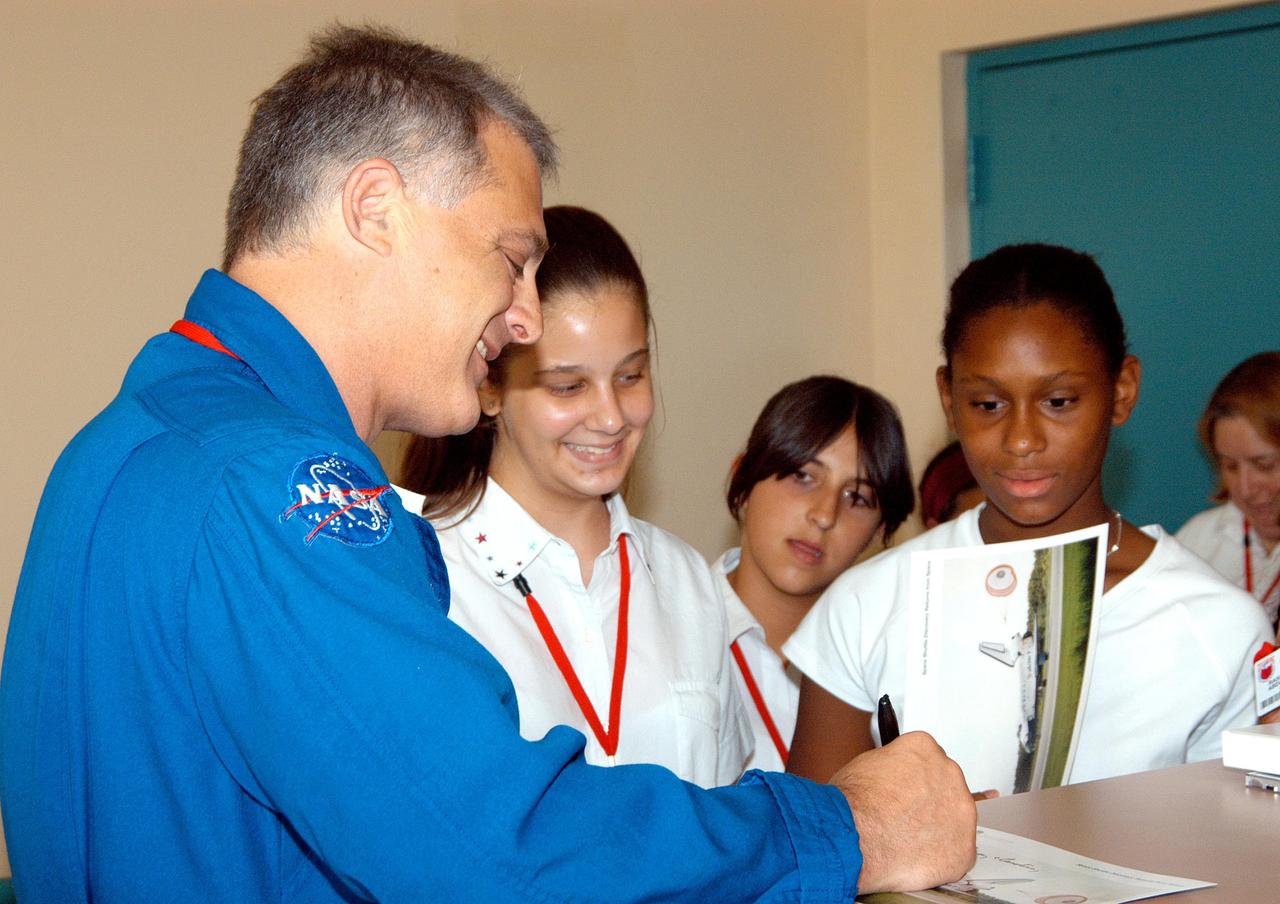
KENNEDY SPACE CENTER, FLA. -- After his presentation at Howard A. Doolin Middle School, Miami, Fla., astronaut David Wolf signs a memento for a student. The school is one of 100 taking part in the NASA Explorer Schools (NES) program. Center Director Jim Kennedy and Wolf visited the school to share America’s new vision for space exploration with the next generation of explorers. They talked with students about our destiny as explorers, NASA’s stepping stone approach to exploring Earth, the Moon, Mars and beyond, how space impacts our lives, and how people and machines rely on each other in space.
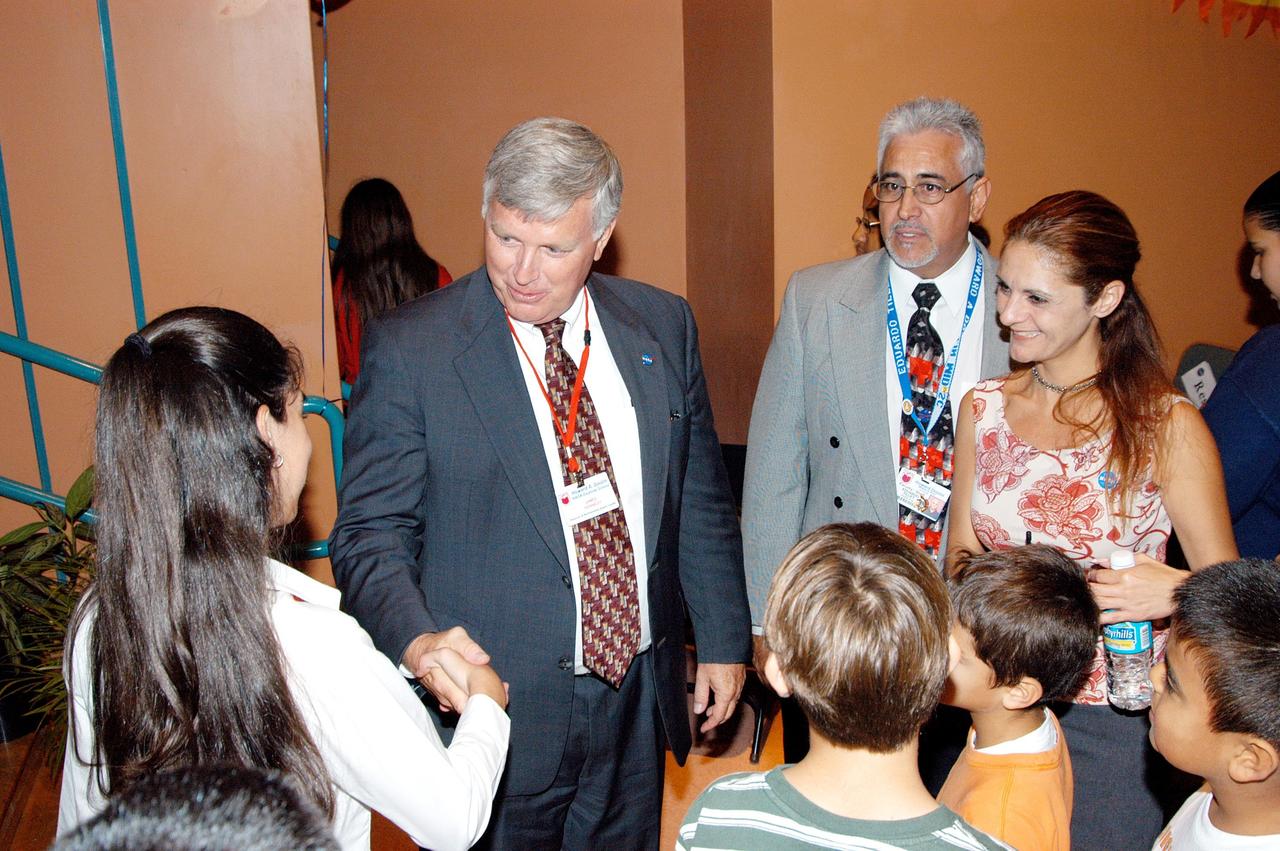
KENNEDY SPACE CENTER, FLA. -- Center Director Jim Kennedy (center) greets a student after his presentation at Howard A. Doolin Middle School, Miami, Fla. The school is one of 100 taking part in the NASA Explorer Schools (NES) program. The purpose of Kennedy’s visit is to share America’s new vision for space exploration with the next generation of explorers. He is talking with students in Florida and Georgia Explorer Schools about our destiny as explorers, NASA’s stepping stone approach to exploring Earth, the Moon, Mars and beyond, how space impacts our lives, and how people and machines rely on each other in space.
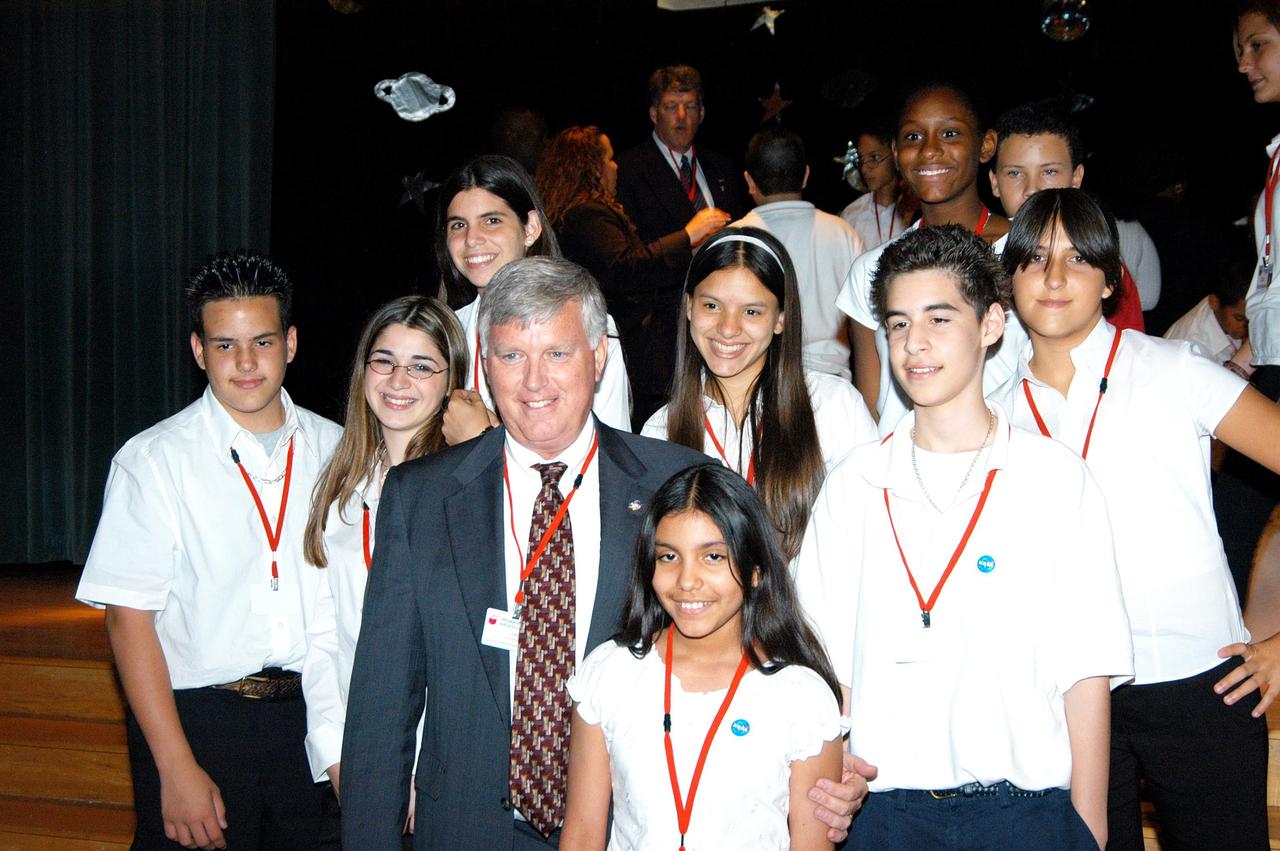
KENNEDY SPACE CENTER, FLA. -- Center Director Jim Kennedy poses for a photo with students at Howard A. Doolin Middle School, Miami, Fla. The school is one of 100 taking part in the NASA Explorer Schools (NES) program. The purpose of Kennedy’s visit is to share America’s new vision for space exploration with the next generation of explorers. He is talking with students in Florida and Georgia Explorer Schools about our destiny as explorers, NASA’s stepping stone approach to exploring Earth, the Moon, Mars and beyond, how space impacts our lives, and how people and machines rely on each other in space.
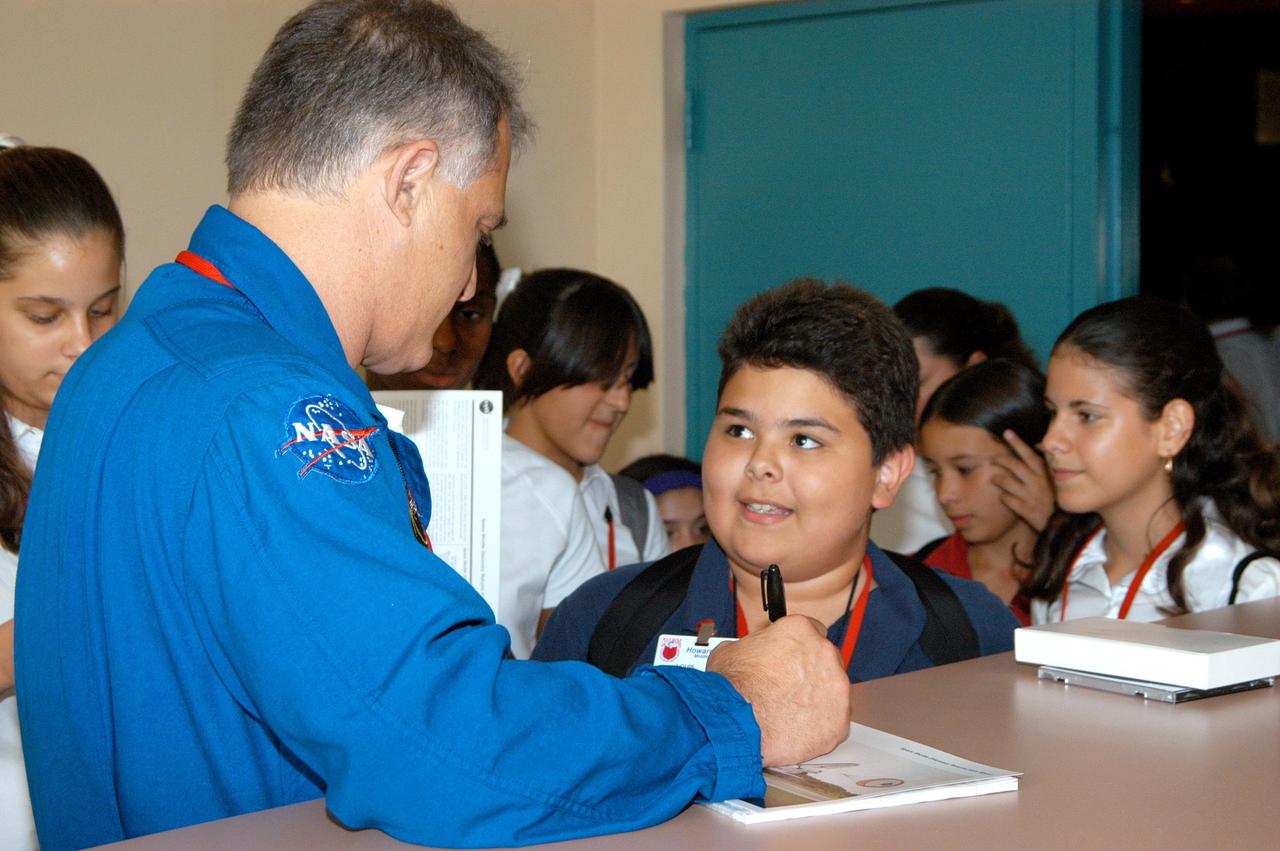
KENNEDY SPACE CENTER, FLA. -- After his presentation at Howard A. Doolin Middle School, Miami, Fla., astronaut David Wolf signs a memento for a student. The school is one of 100 taking part in the NASA Explorer Schools (NES) program. Center Director Jim Kennedy and Wolf visited the school to share America’s new vision for space exploration with the next generation of explorers. They talked with students about our destiny as explorers, NASA’s stepping stone approach to exploring Earth, the Moon, Mars and beyond, how space impacts our lives, and how people and machines rely on each other in space.
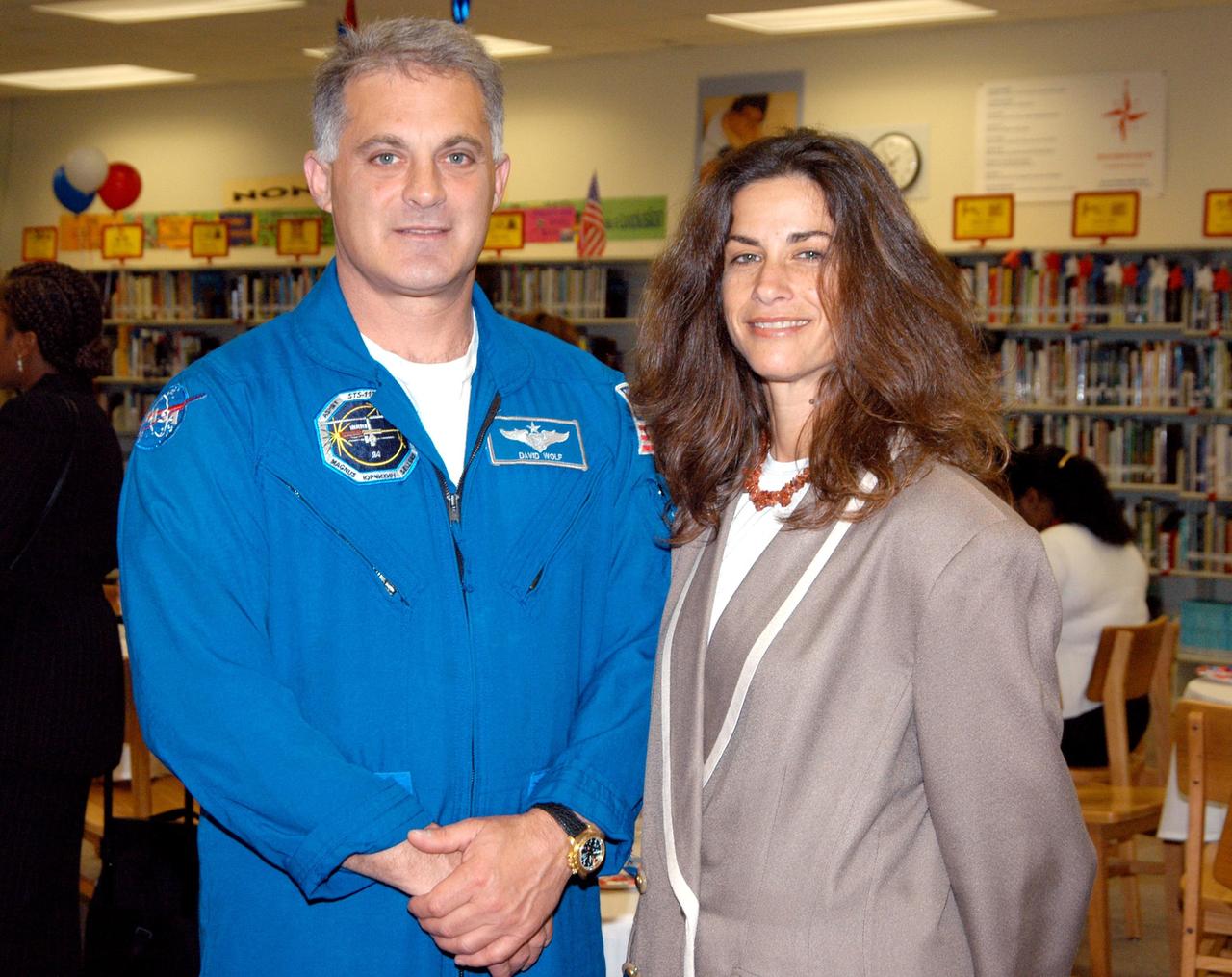
KENNEDY SPACE CENTER, FLA. -- During lunch in the library at Howard A. Doolin Middle School, Miami, Fla., astronaut David Wolf pauses for a photo with a member of the school board. Doolin Middle School is one of 100 to take part in the NASA Explorer Schools program. Wolf joined Center Director Jim Kennedy to share America’s new vision for space exploration with the next generation of explorers. Kennedy is talking with students about our destiny as explorers, NASA’s stepping stone approach to exploring Earth, the Moon, Mars and beyond, how space impacts our lives, and how people and machines rely on each other in space.
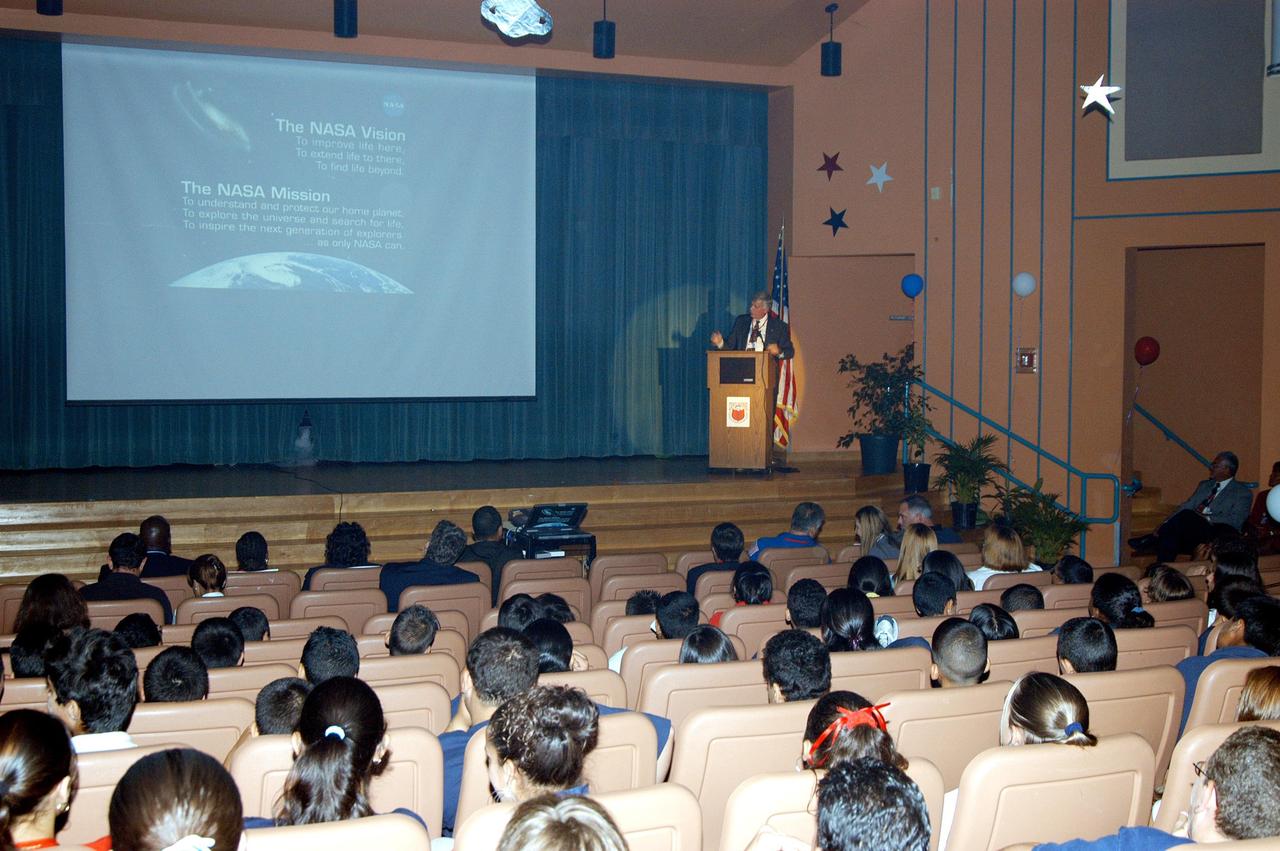
KENNEDY SPACE CENTER, FLA. -- Center Director Jim Kennedy addresses students and faculty of Howard A. Doolin Middle School, Miami, Fla. Doolin Middle School is one of 100 to take part in the NASA Explorer Schools (NES) program. Kennedy is visiting Explorer Schools in Florida and Georgia to share America’s new vision for space exploration with the next generation of explorers. He is talking with students, about our destiny as explorers, NASA’s stepping stone approach to exploring Earth, the Moon, Mars and beyond, how space impacts our lives, and how people and machines rely on each other in space.
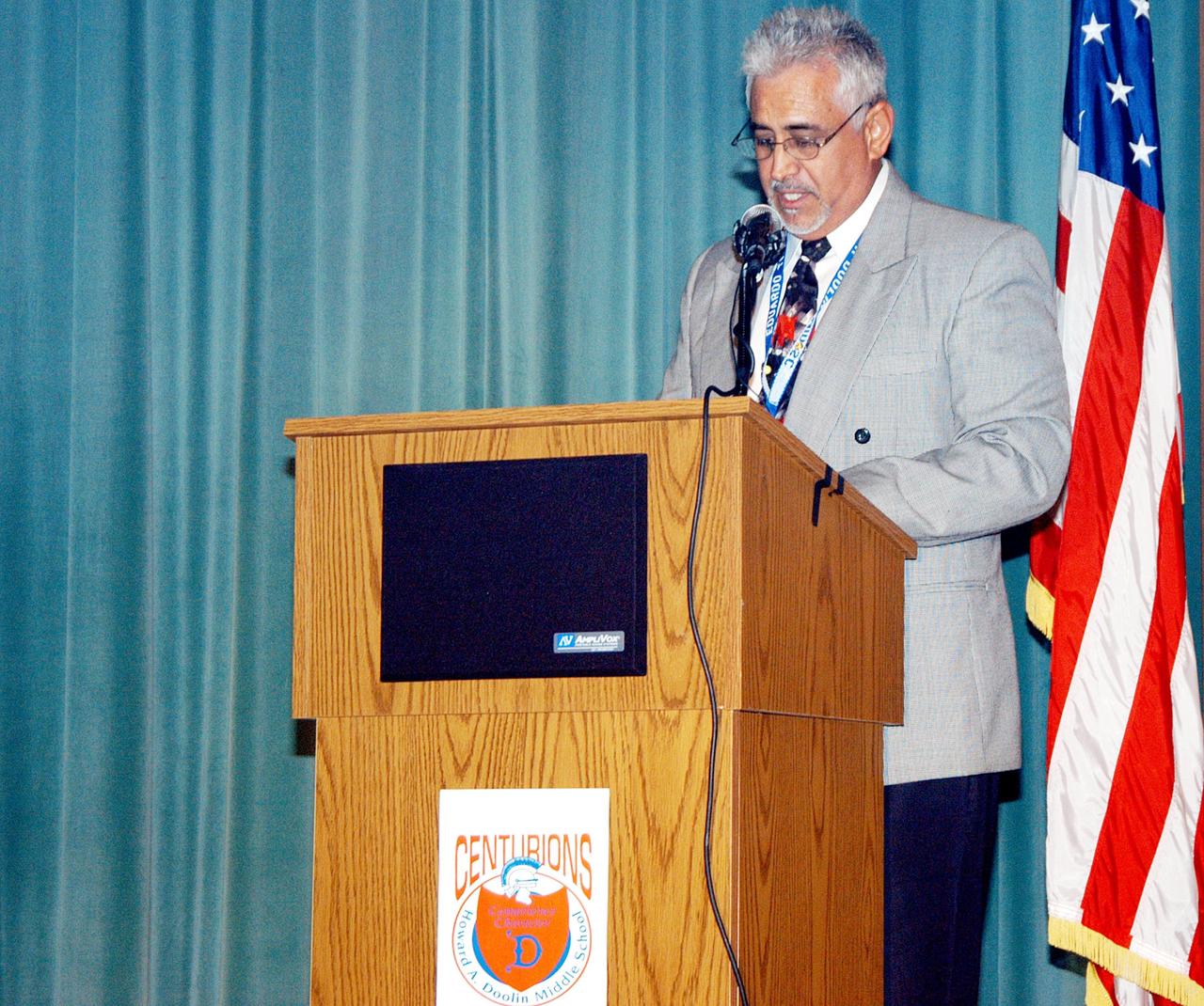
KENNEDY SPACE CENTER, FLA. -- Eduardo Tillet, principal of Howard A. Doolin Middle School, Miami, Fla., welcomes Center Director Jim Kennedy, plus NASA and KSC representatives, to the school. Doolin Middle School is one of 100 to take part in the NASA Explorer Schools (NES) program. Kennedy is talking with students, about our destiny as explorers, NASA’s stepping stone approach to exploring Earth, the Moon, Mars and beyond, how space impacts our lives, and how people and machines rely on each other in space. He is visiting NES schools in Florida and Georgia to share America’s new vision for space exploration with the next generation of explorers.
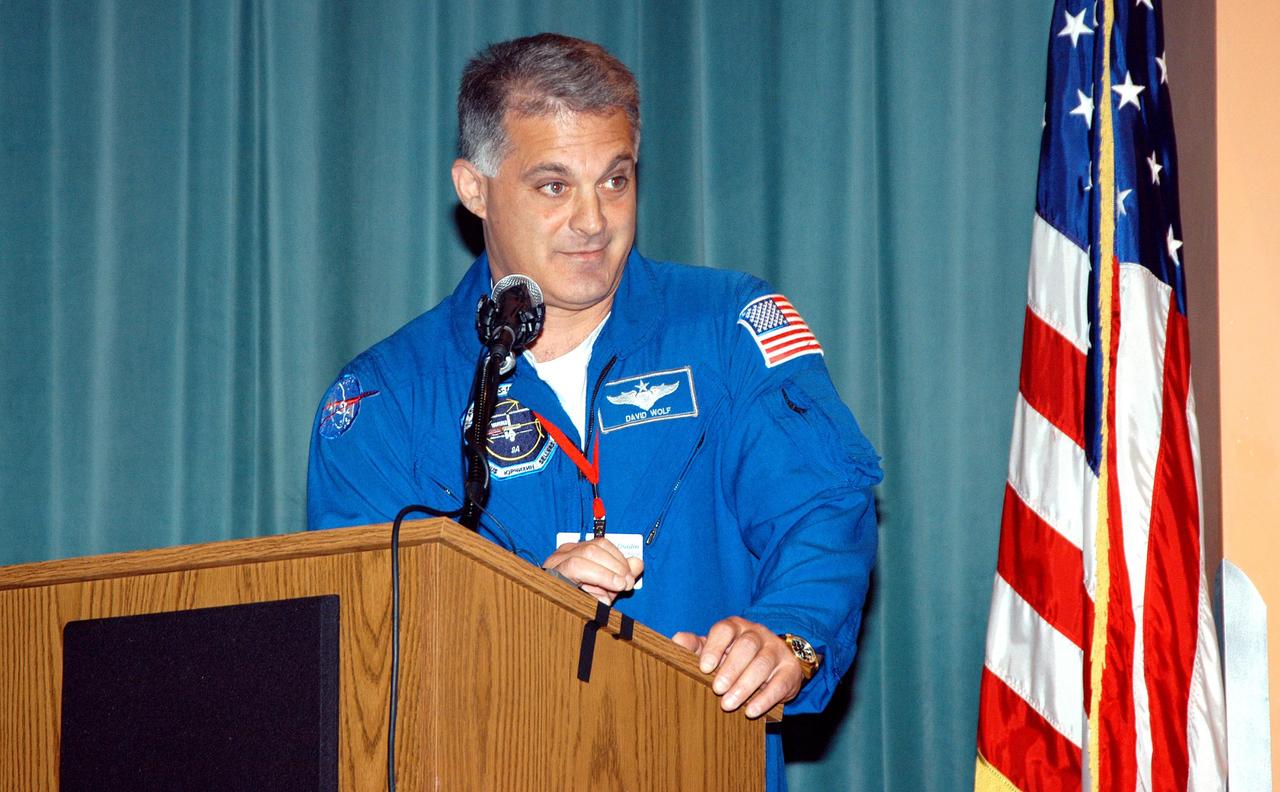
KENNEDY SPACE CENTER, FLA. -- Astronaut David Wolf addresses students and faculty of Howard A. Doolin Middle School, Miami, Fla., about his experiences in space. Doolin Middle School is one of 100 to take part in the NASA Explorer Schools (NES) program. Wolf joins Center Director Jim Kennedy on his visit to share America’s new vision for space exploration with the next generation of explorers. He is talking with students in Florida and Georgia Explorer Schools about our destiny as explorers, NASA’s stepping stone approach to exploring Earth, the Moon, Mars and beyond, how space impacts our lives, and how people and machines rely on each other in space.
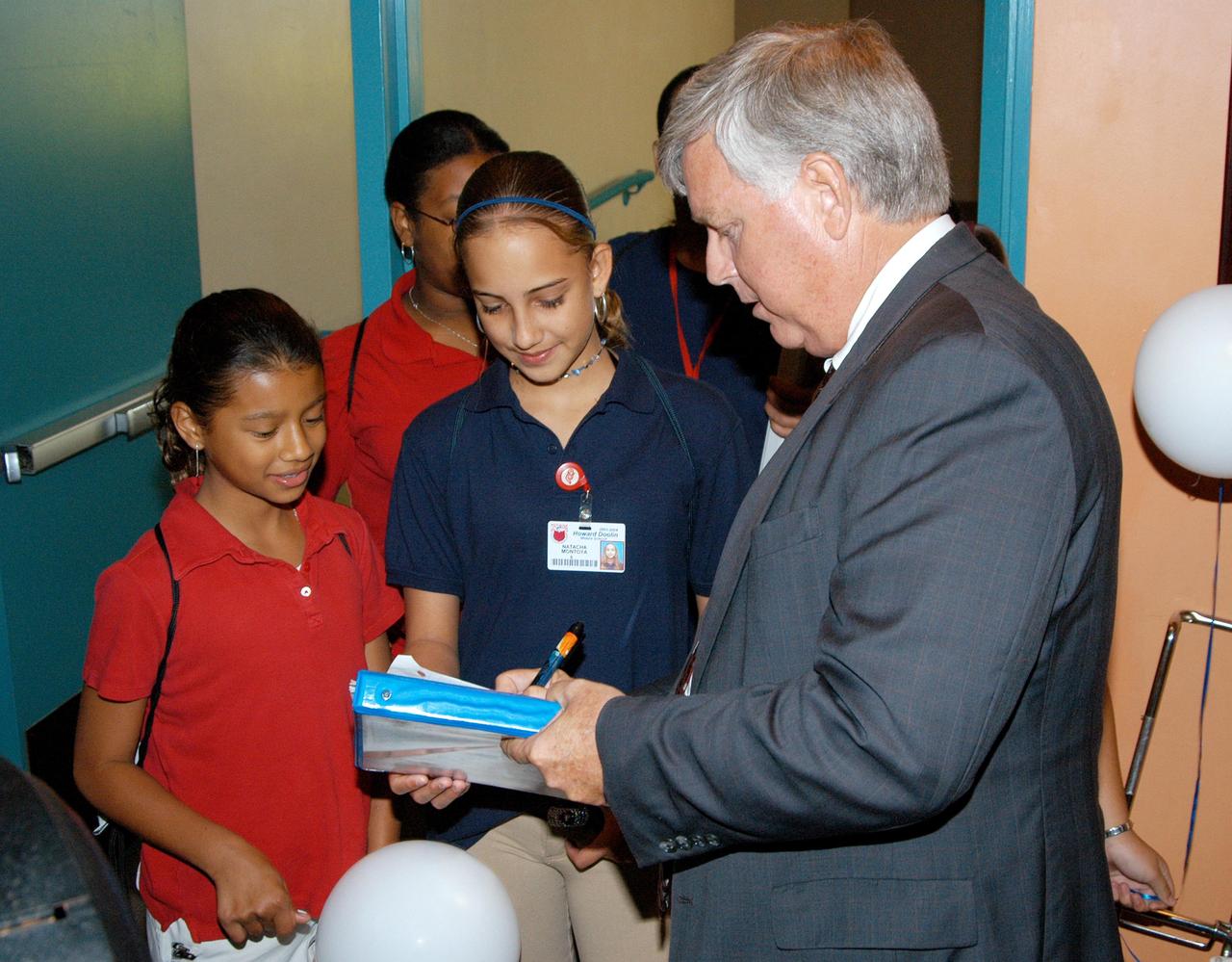
KENNEDY SPACE CENTER, FLA. -- After his presentation, Center Director Jim Kennedy signs a memento for a student at Howard A. Doolin Middle School, Miami, Fla. The school is one of 100 taking part in the NASA Explorer Schools (NES) program. Kennedy visited the school to share America’s new vision for space exploration with the next generation of explorers. He is talking with students in Florida and Georgia Explorer Schools about our destiny as explorers, NASA’s stepping stone approach to exploring Earth, the Moon, Mars and beyond, how space impacts our lives, and how people and machines rely on each other in space.
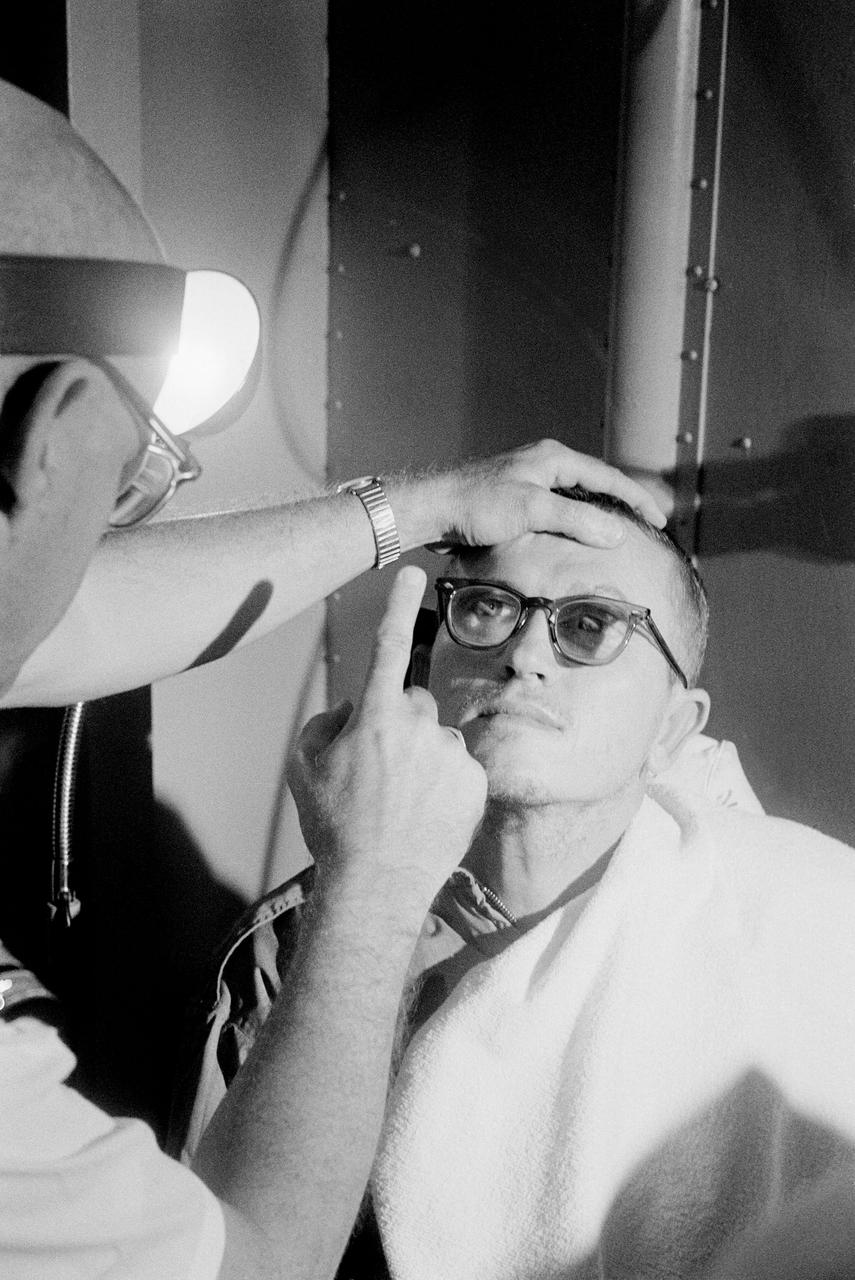
S66-17442 (19 Jan. 1966) --- Astronaut Frank Borman, command pilot for the Gemini-7 mission, has his vision checked during a postflight medical exam. Photo credit: NASA
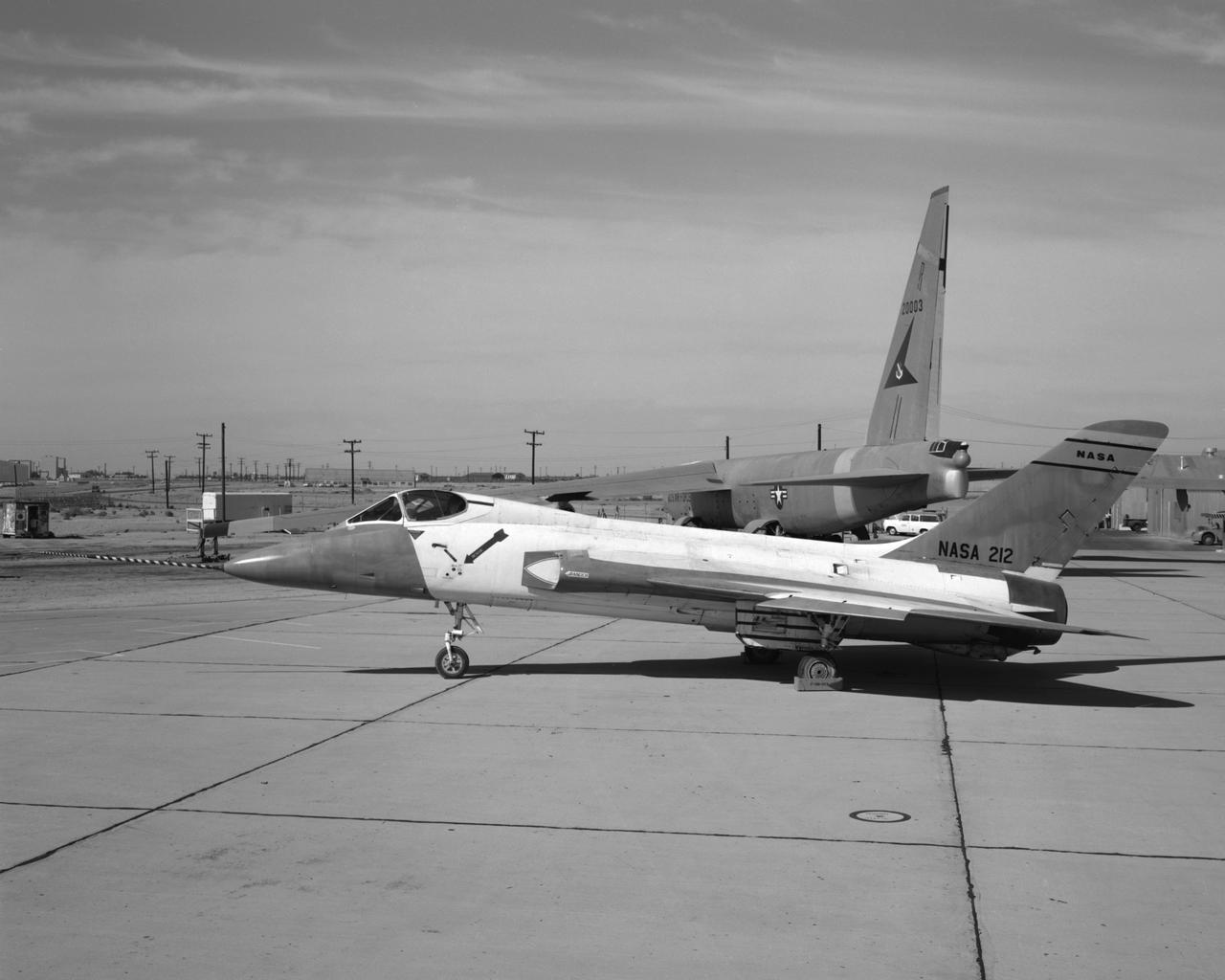
F5D Skylancer NASA 212 modified as the X-20 Dyna-Soar vision field simulator.
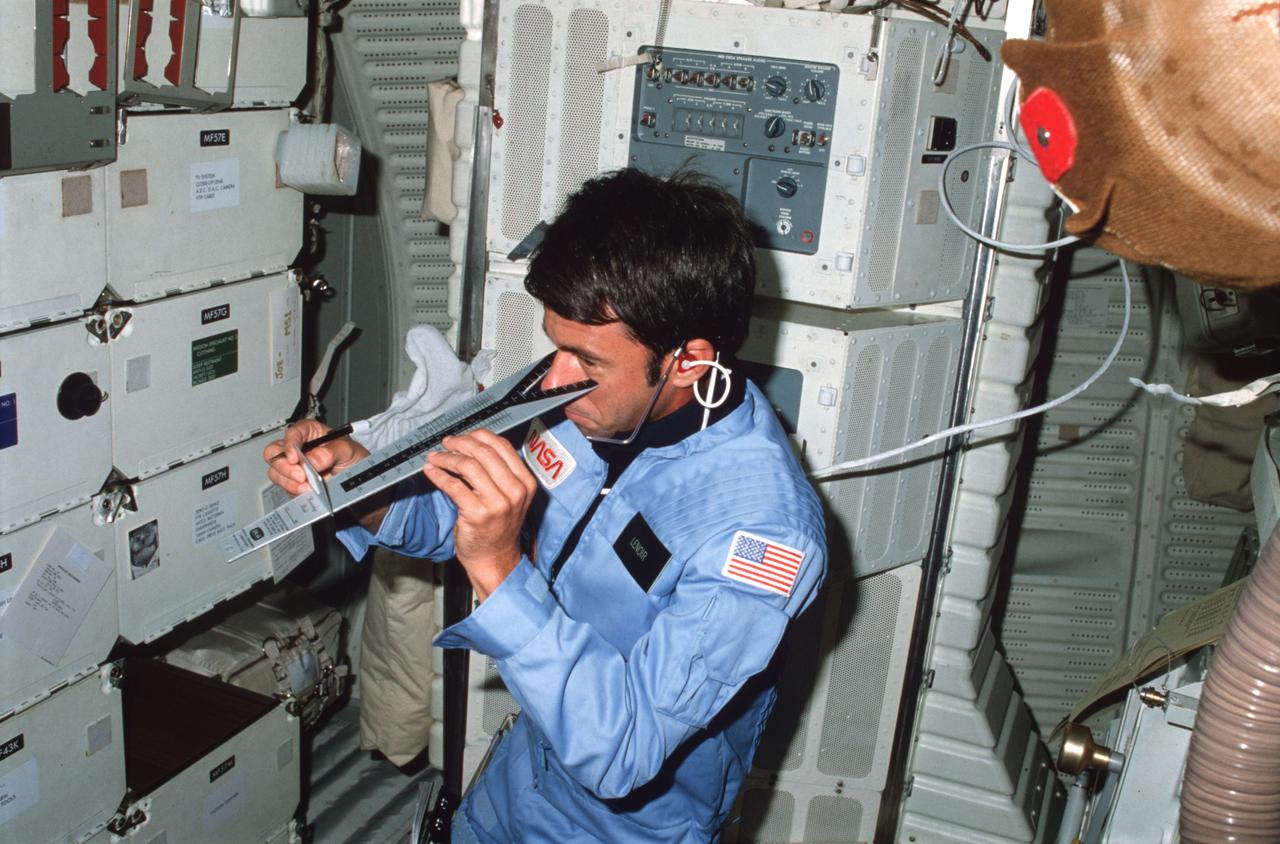
STS005-04-146 (11-16 Nov. 1982) --- Astronaut William B. Lenoir, STS-5 mission specialists, checks his vision using DIOPTER measuring device on middeck in front of Development Flight Instrument (DFI) unit. Photo credit: NASA
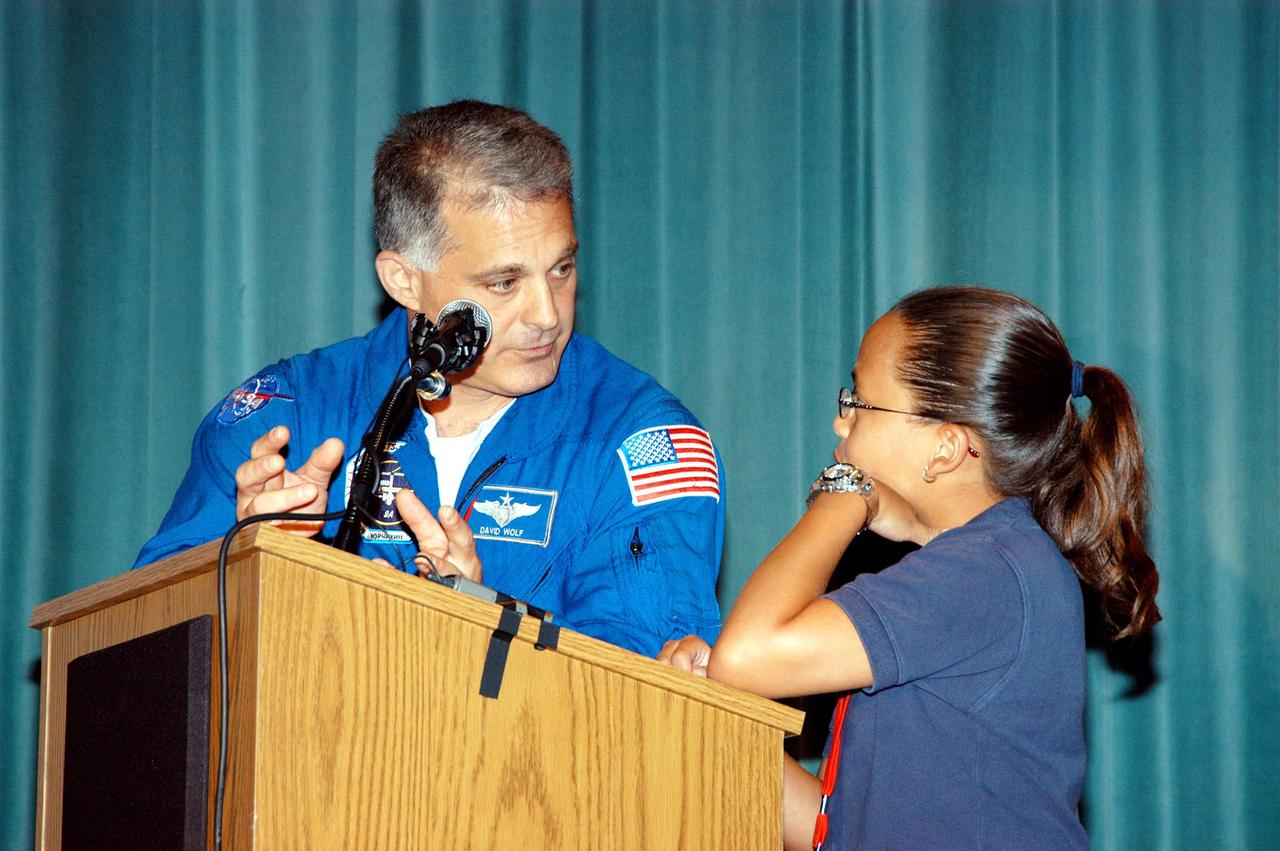
KENNEDY SPACE CENTER, FLA. -- Astronaut David Wolf answers questions from a student on stage at Howard A. Doolin Middle School, Miami, Fla., during his talk about his experiences in space. Doolin Middle School is one of 100 to take part in the NASA Explorer Schools (NES) program. Wolf joins Center Director Jim Kennedy (seated at lower left) on his visit to share America’s new vision for space exploration with the next generation of explorers. He is talking with students in Florida and Georgia Explorer Schools about our destiny as explorers, NASA’s stepping stone approach to exploring Earth, the Moon, Mars and beyond, how space impacts our lives, and how people and machines rely on each other in space.
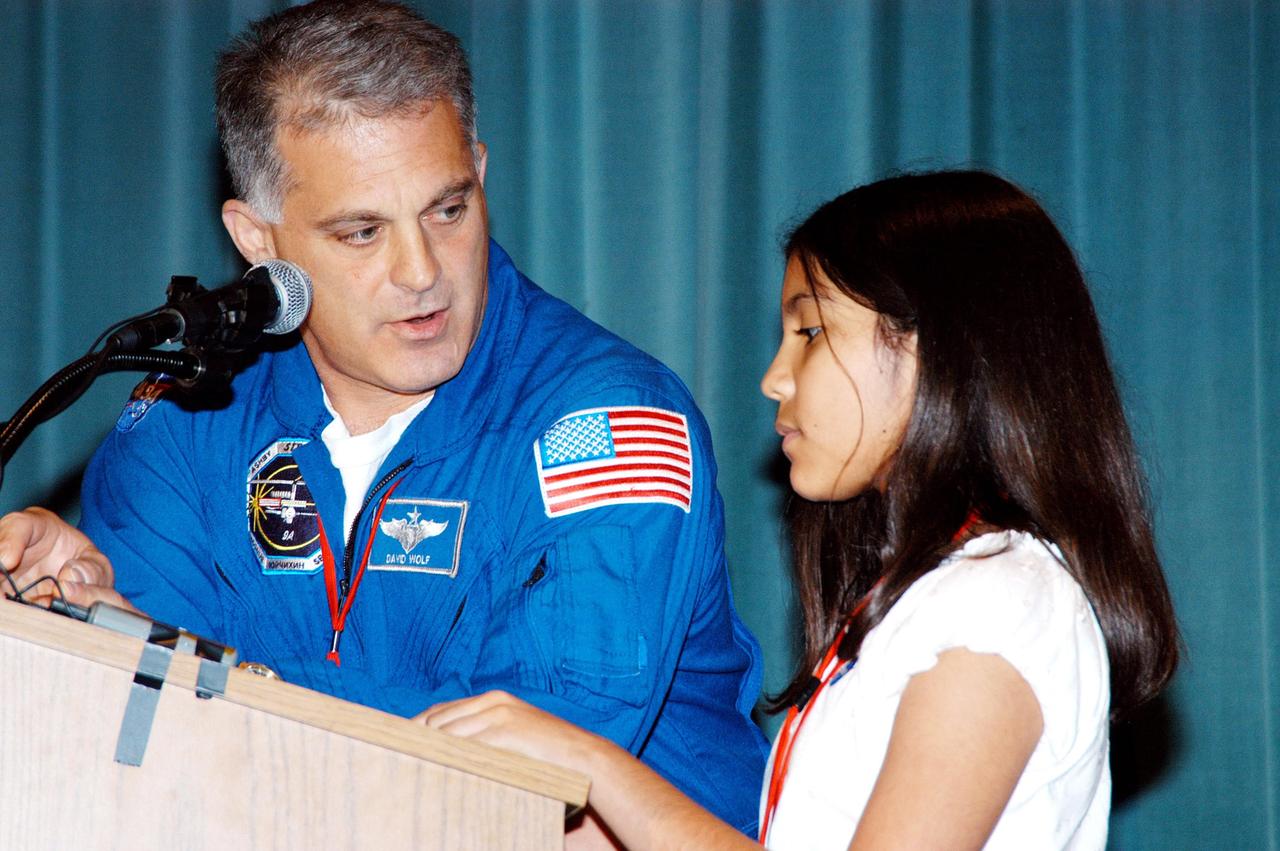
KENNEDY SPACE CENTER, FLA. -- Astronaut David Wolf answers questions from a student on stage at Howard A. Doolin Middle School, Miami, Fla., during his talk about his experiences in space. Doolin Middle School is one of 100 to take part in the NASA Explorer Schools (NES) program. Wolf joins Center Director Jim Kennedy (seated at lower left) on his visit to share America’s new vision for space exploration with the next generation of explorers. He is talking with students in Florida and Georgia Explorer Schools about our destiny as explorers, NASA’s stepping stone approach to exploring Earth, the Moon, Mars and beyond, how space impacts our lives, and how people and machines rely on each other in space.
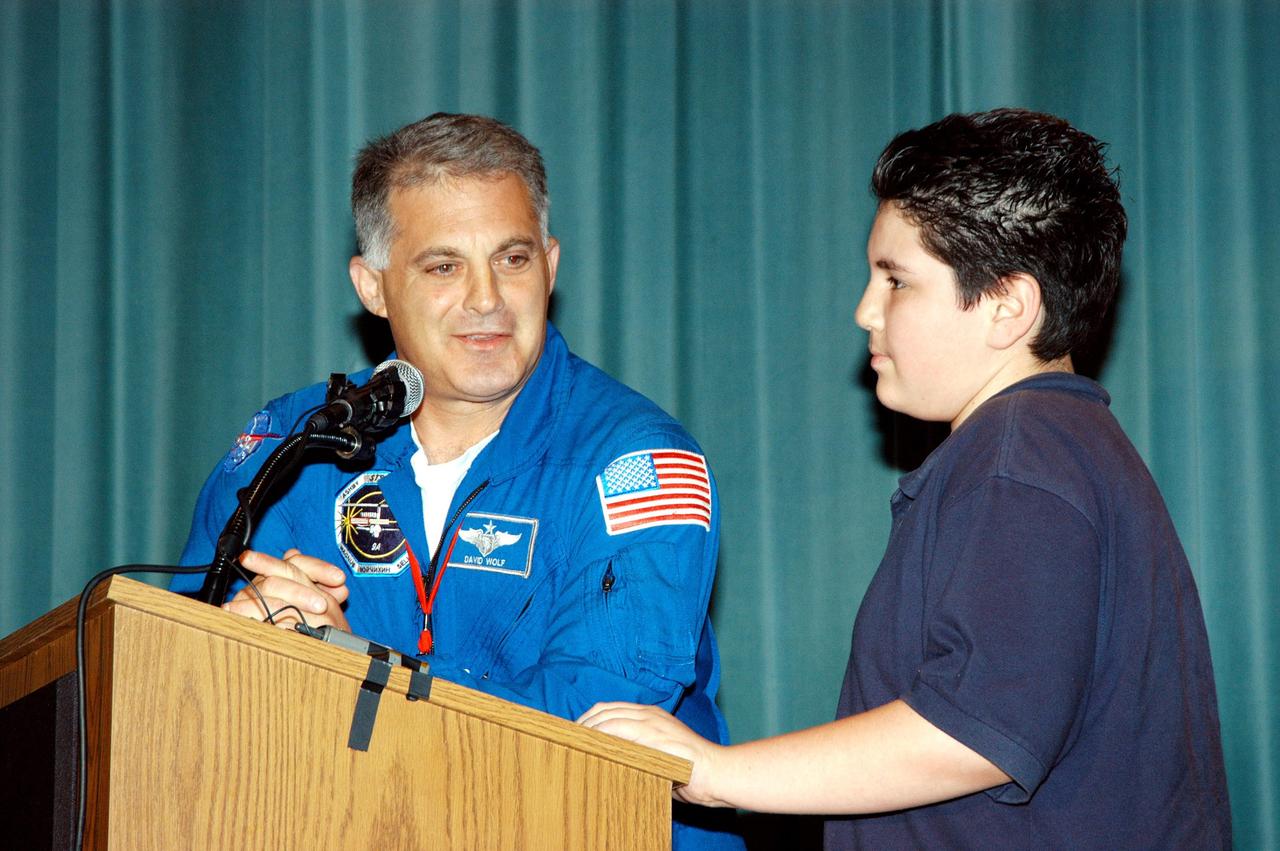
KENNEDY SPACE CENTER, FLA. -- Astronaut David Wolf answers questions from a student on stage at Howard A. Doolin Middle School, Miami, Fla., during his talk about his experiences in space. Doolin Middle School is one of 100 to take part in the NASA Explorer Schools (NES) program. Wolf joins Center Director Jim Kennedy (seated at lower left) on his visit to share America’s new vision for space exploration with the next generation of explorers. He is talking with students in Florida and Georgia Explorer Schools about our destiny as explorers, NASA’s stepping stone approach to exploring Earth, the Moon, Mars and beyond, how space impacts our lives, and how people and machines rely on each other in space.
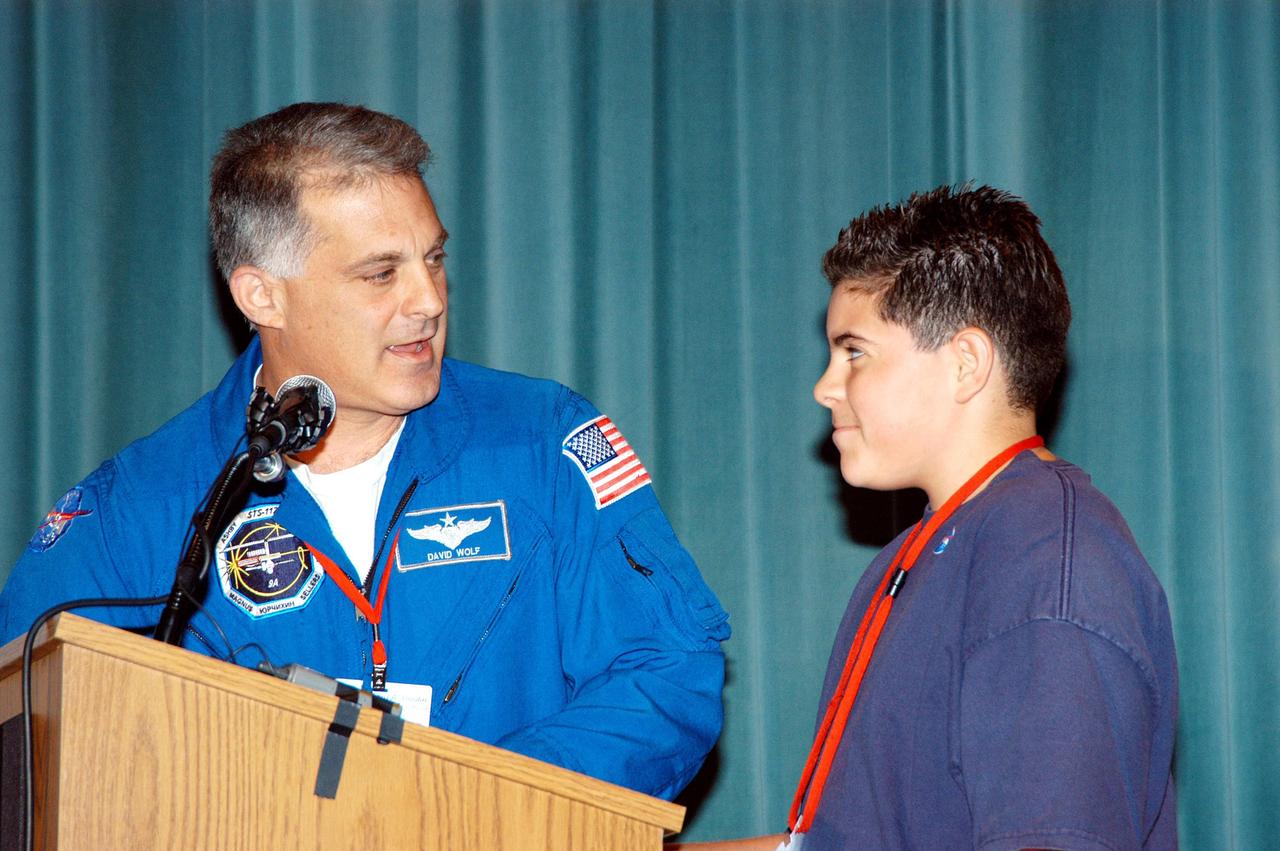
KENNEDY SPACE CENTER, FLA. -- Astronaut David Wolf answers questions from a student on stage at Howard A. Doolin Middle School, Miami, Fla., during his talk about his experiences in space. Doolin Middle School is one of 100 to take part in the NASA Explorer Schools (NES) program. Wolf joins Center Director Jim Kennedy (seated at lower left) on his visit to share America’s new vision for space exploration with the next generation of explorers. He is talking with students in Florida and Georgia Explorer Schools about our destiny as explorers, NASA’s stepping stone approach to exploring Earth, the Moon, Mars and beyond, how space impacts our lives, and how people and machines rely on each other in space.
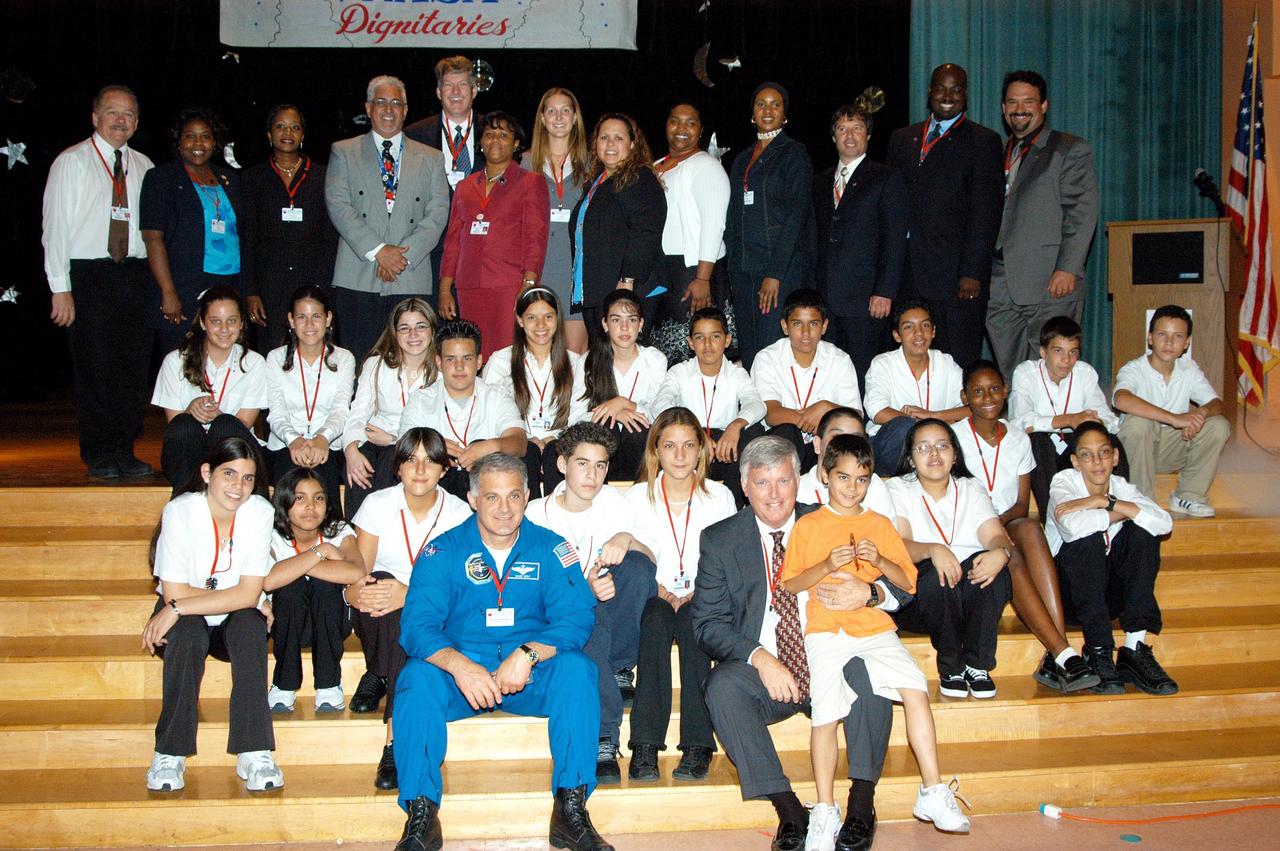
KENNEDY SPACE CENTER, FLA. -- Astronaut David Wolf (left) and Center Director Jim Kennedy (right, with boy) pose for a photo with students and faculty in Howard A. Doolin Middle School, Miami, Fla., plus other NASA and KSC representatives (rear). The school is one of 100 taking part in the NASA Explorer Schools (NES) program. The purpose of Kennedy’s visit is to share America’s new vision for space exploration with the next generation of explorers. He is talking with students in Florida and Georgia Explorer Schools about our destiny as explorers, NASA’s stepping stone approach to exploring Earth, the Moon, Mars and beyond, how space impacts our lives, and how people and machines rely on each other in space.
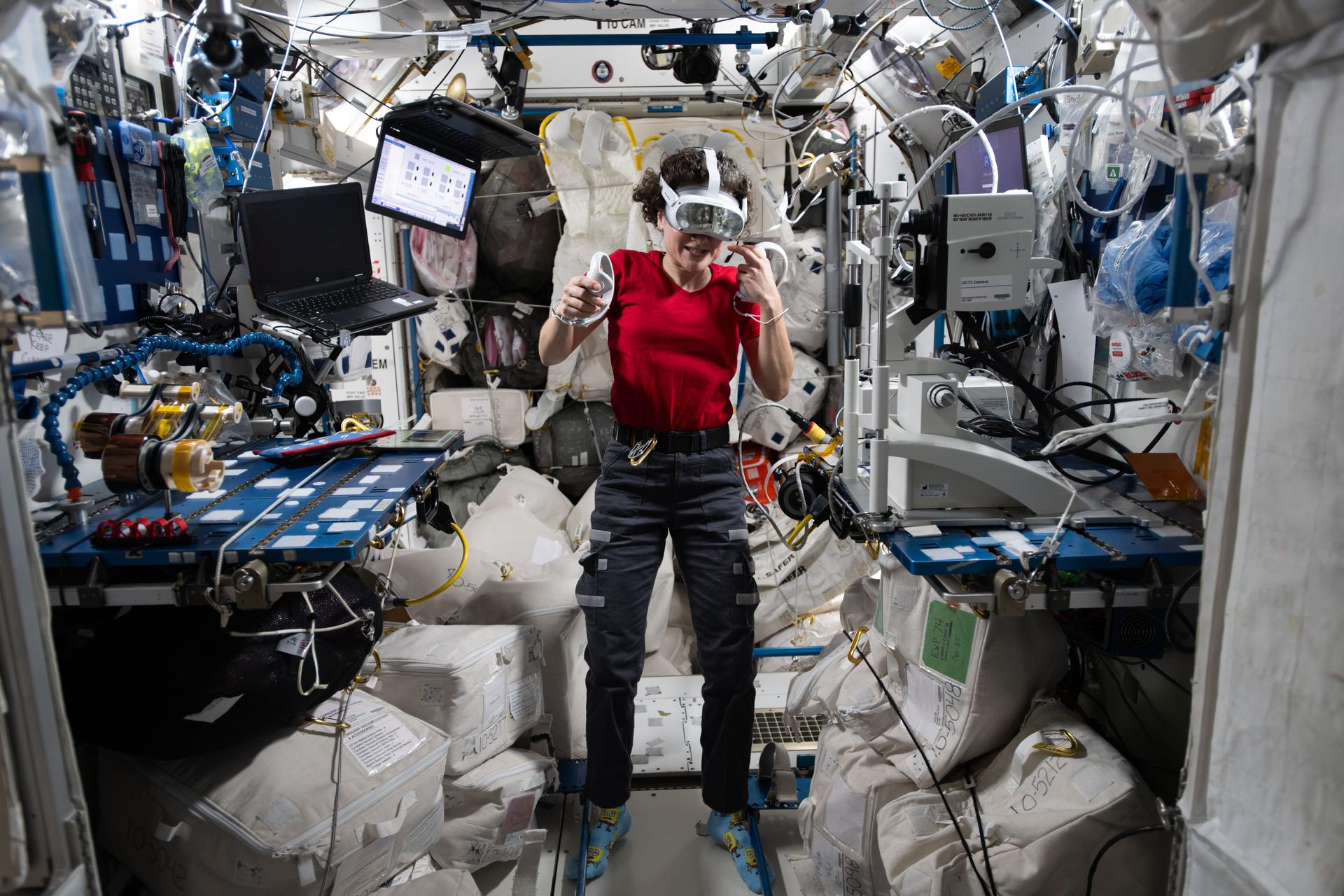
iss075e0000108 (July 29, 2026) --- NASA astronaut and Expedition 75 commander Jessica Meir wears a set of virtual reality goggles, also called the Nevada Screening Vision System, for a test that measures visual function using a series of vision screening apps testing visual acuity, contrast sensitivity, and more. Credit: NASA/Jack Hathaway
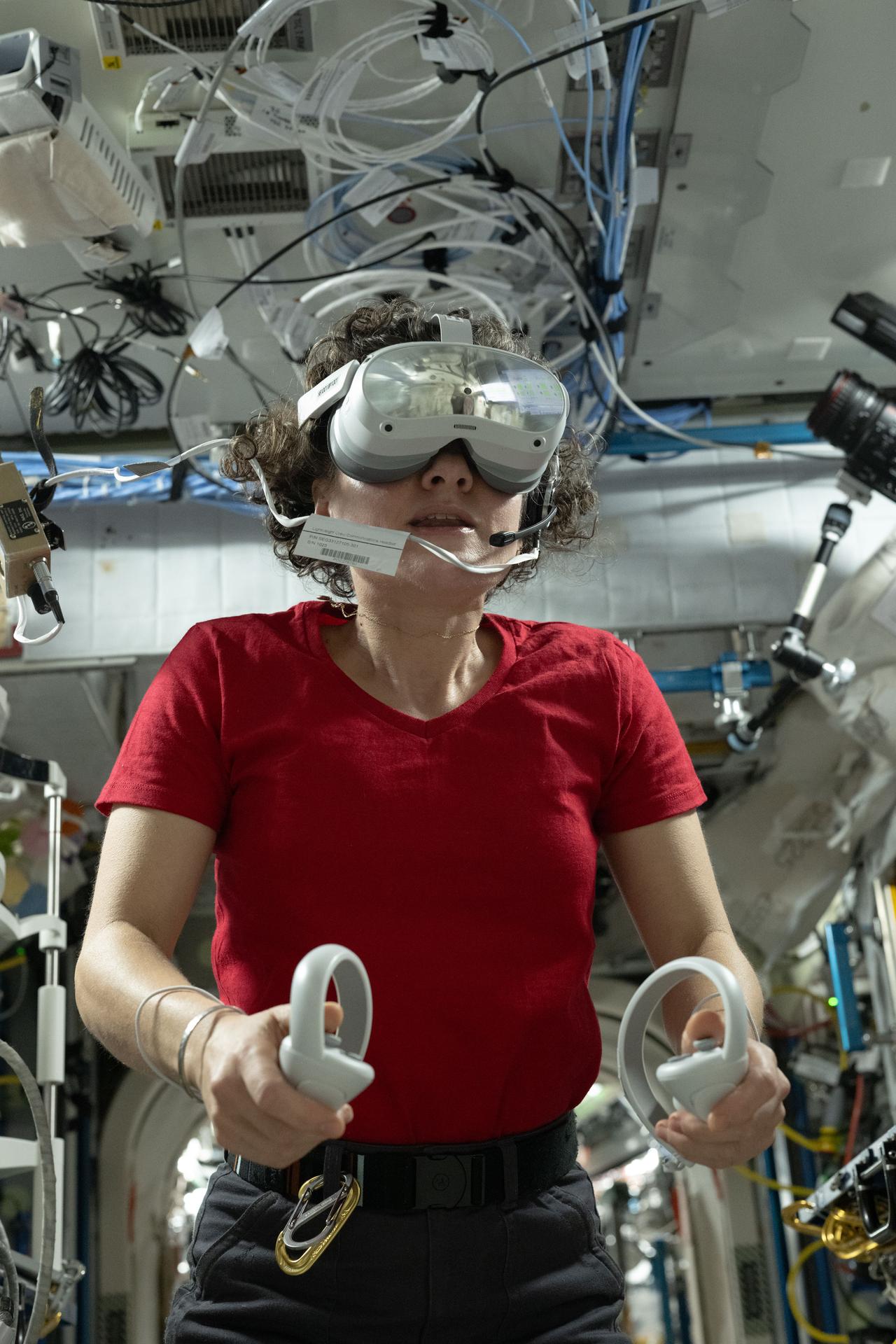
iss075e0000191 (July 29, 2026) --- NASA astronaut and Expedition 75 commander Jessica Meir wears a set of virtual reality goggles, also called the Nevada Screening Vision System, for a test that measures visual function using a series of vision screening apps testing visual acuity, contrast sensitivity, and more. Credit: NASA/Anil Menon
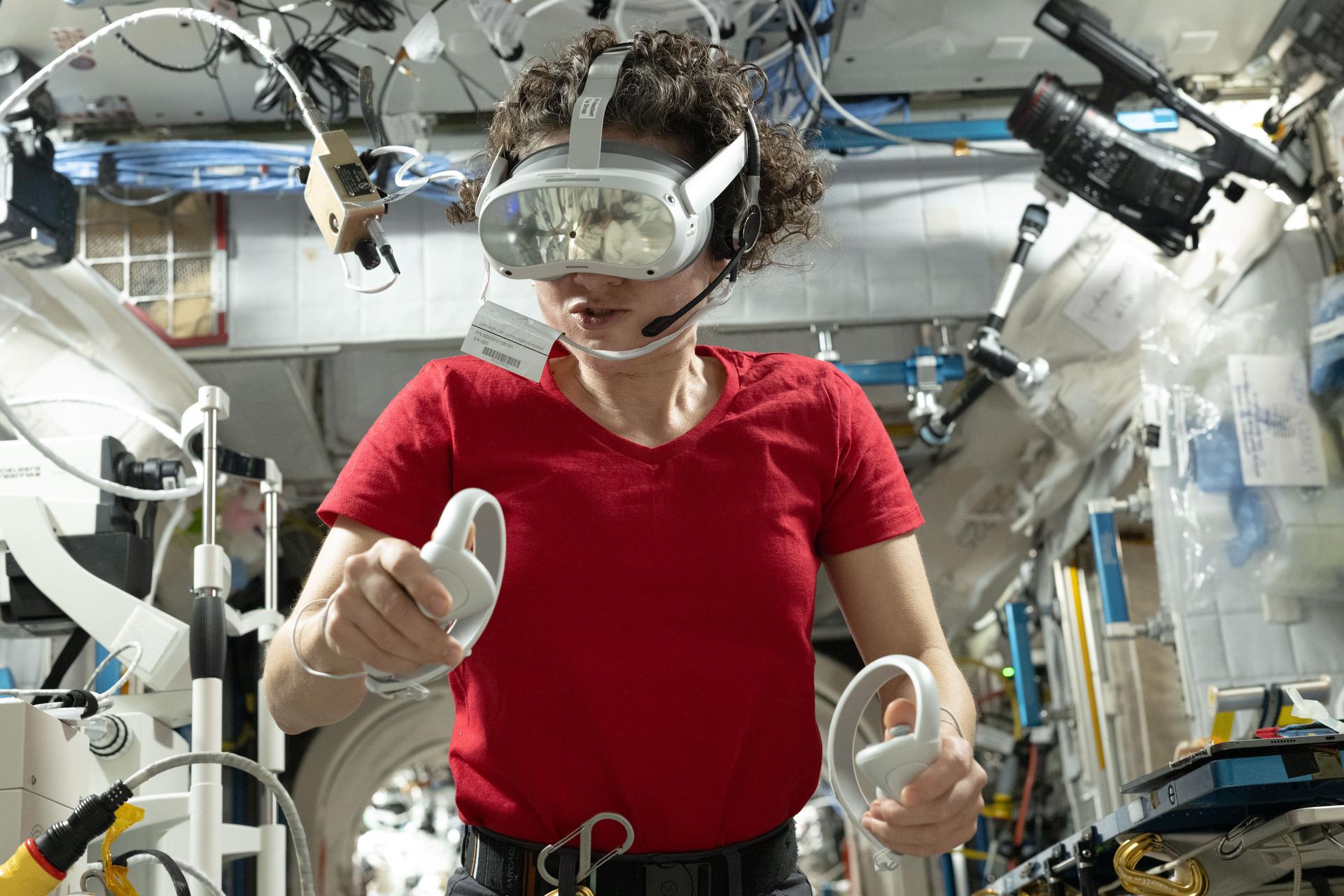
iss075e0000195 (July 29, 2026) --- NASA astronaut and Expedition 75 commander Jessica Meir wears a set of virtual reality goggles, also called the Nevada Screening Vision System, for a test that measures visual function using a series of vision screening apps testing visual acuity, contrast sensitivity, and more. Credit: NASA/Anil Menon
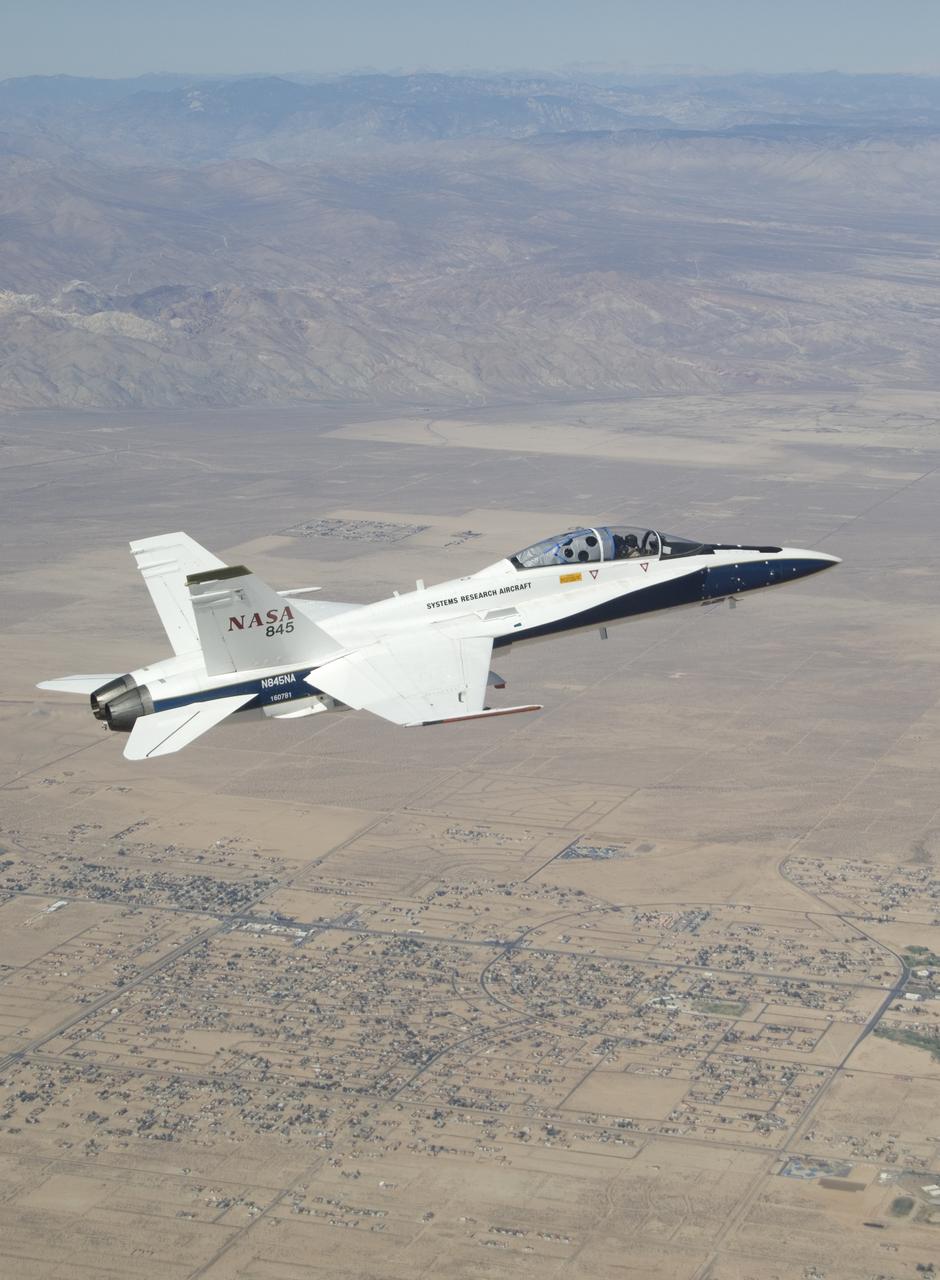
NASA Dryden Flight Research Center's F-18B Systems Research Aircraft on an External Vision System project flight.
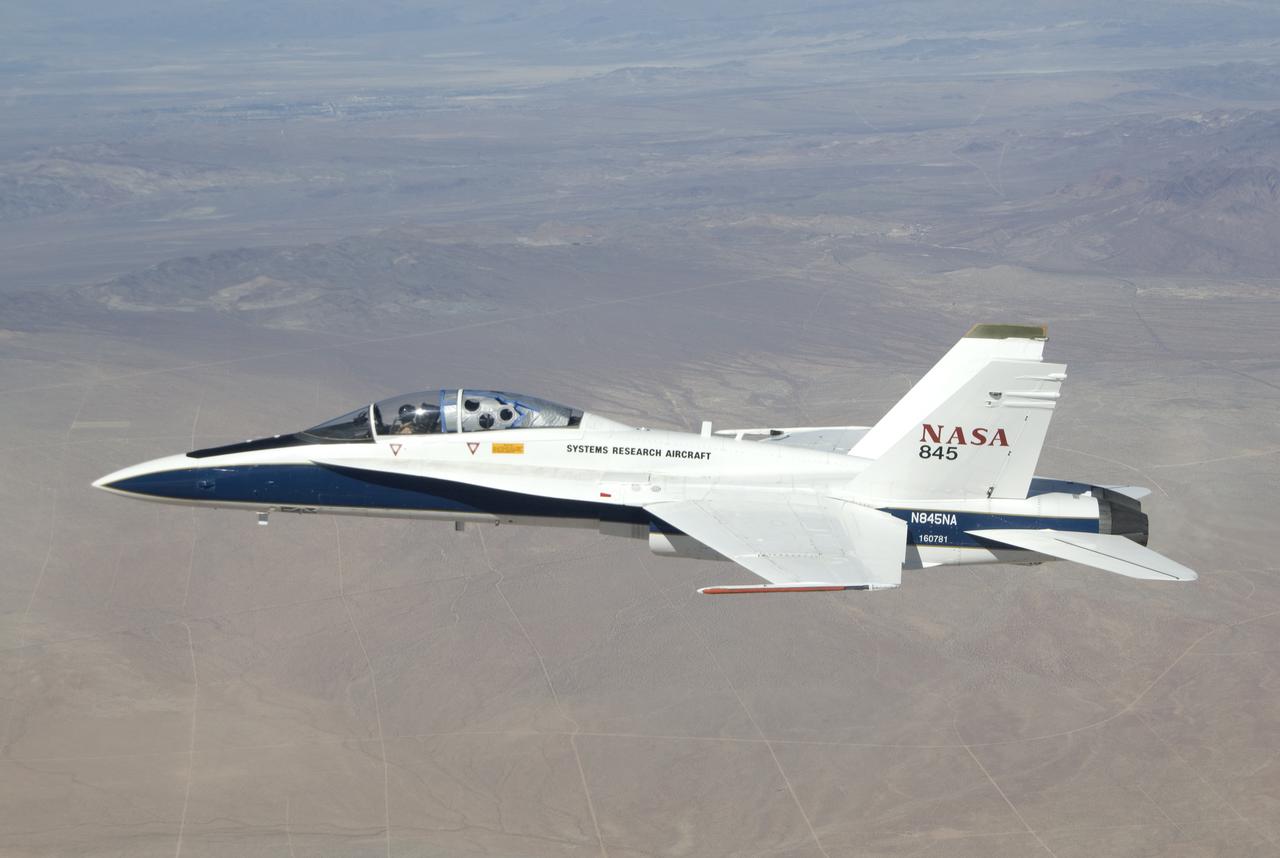
NASA Dryden Flight Research Center's F-18B Systems Research Aircraft on an External Vision System project flight.
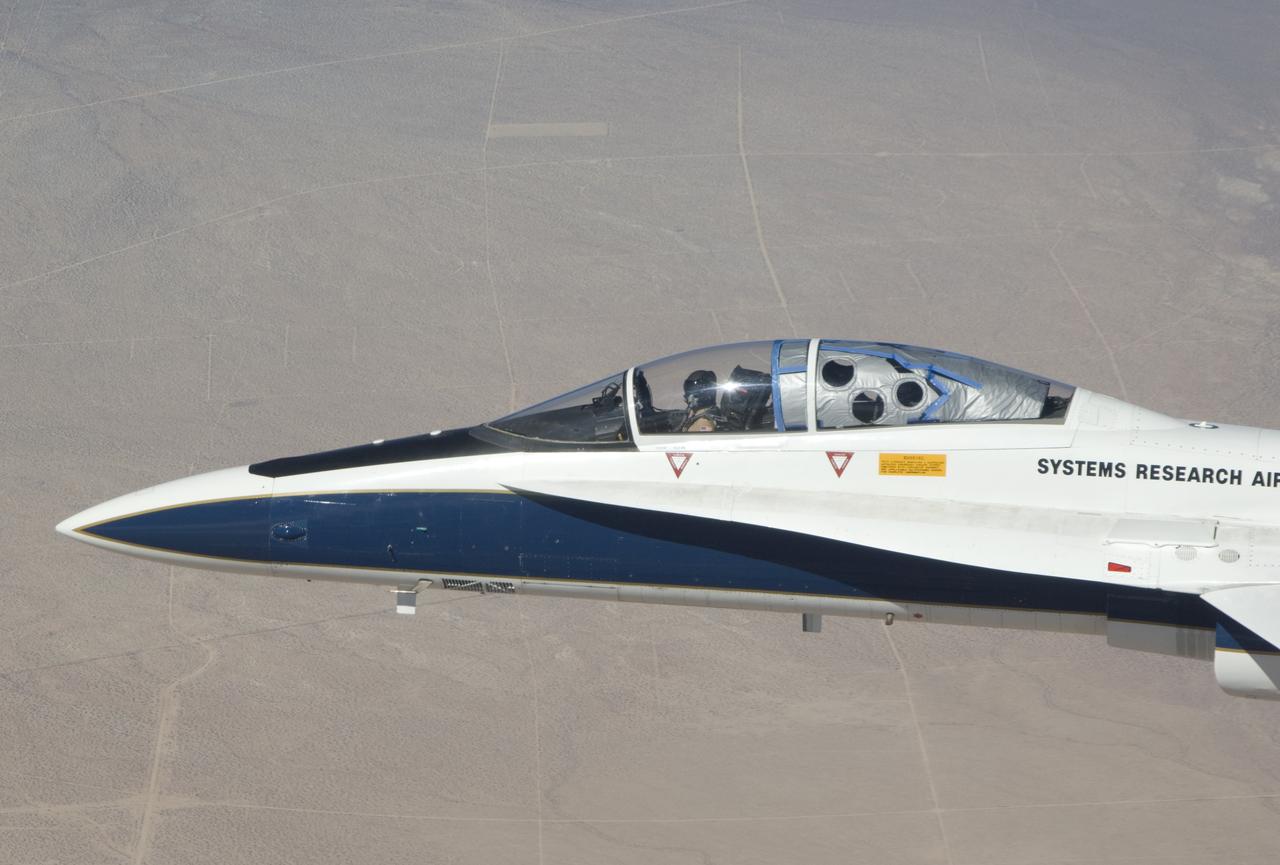
NASA Dryden Flight Research Center's F-18B Systems Research Aircraft on an External Vision System project flight.
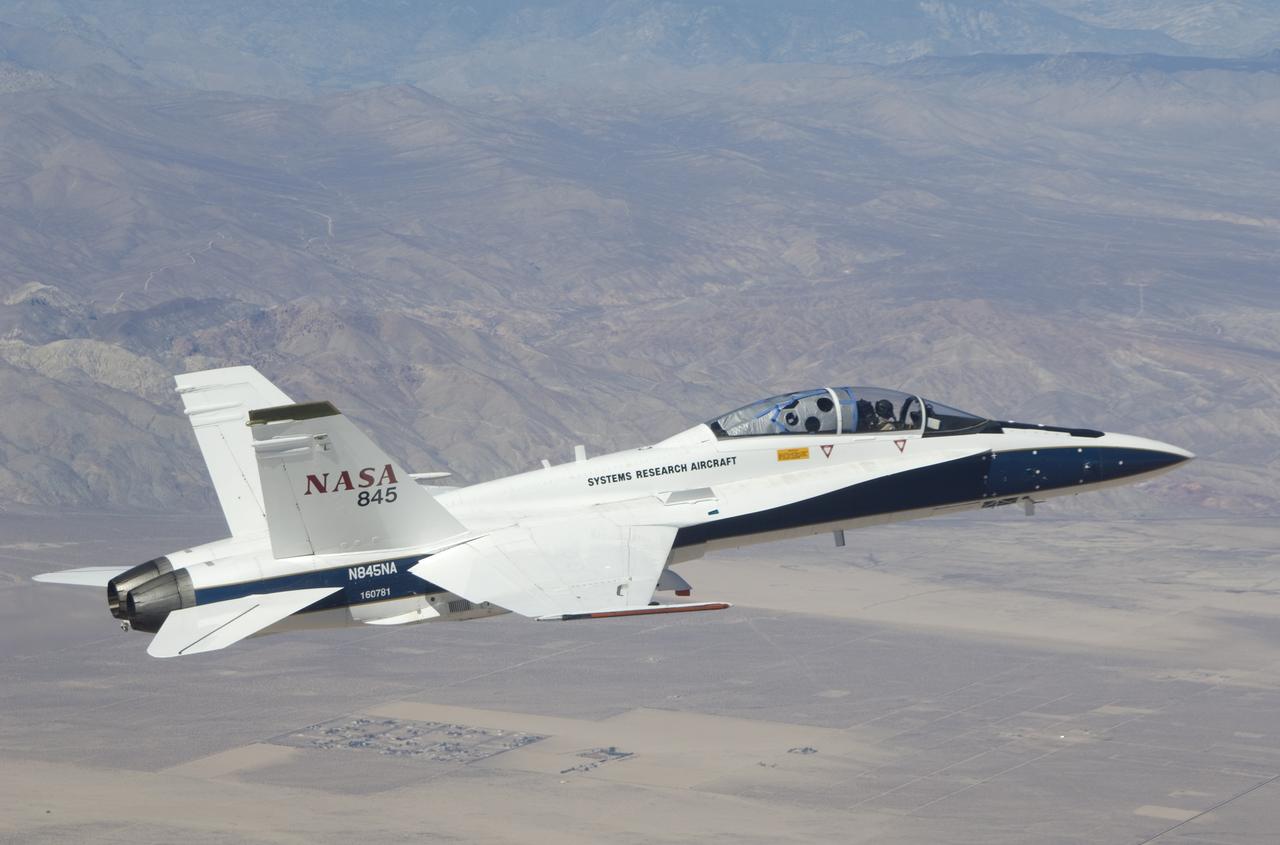
NASA Dryden Flight Research Center's F-18B Systems Research Aircraft on an External Vision System project flight.
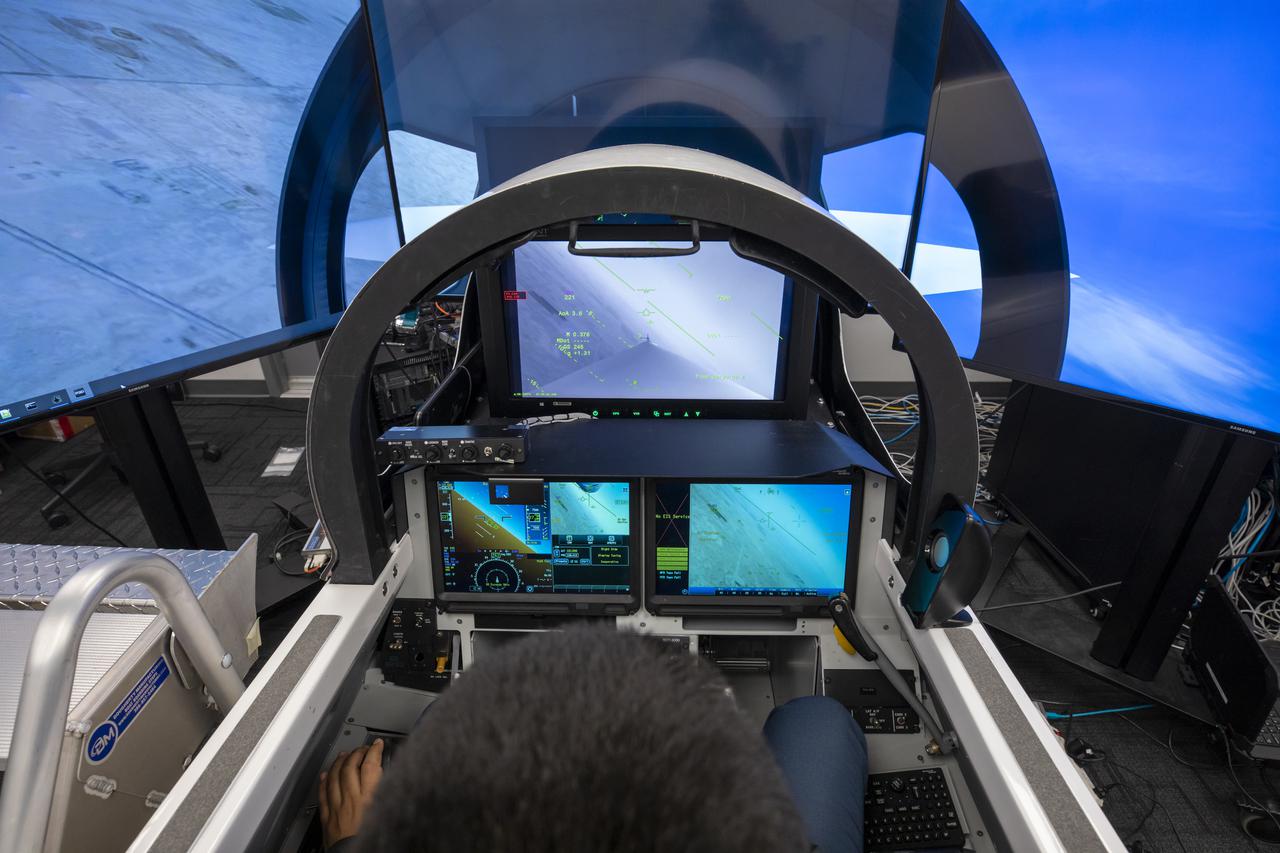
This image shows a close up of the cockpit view of the eXternal Vision System that will be placed in the X-59. Instead of a front facing window, the pilot will use these monitors for forward facing visibility. Lockheed Martin Photography By Garry Tice 1011 Lockheed Way, Palmdale, Ca. 93599 Event: X-59 SIL Round 2 Date: 6/10/2021
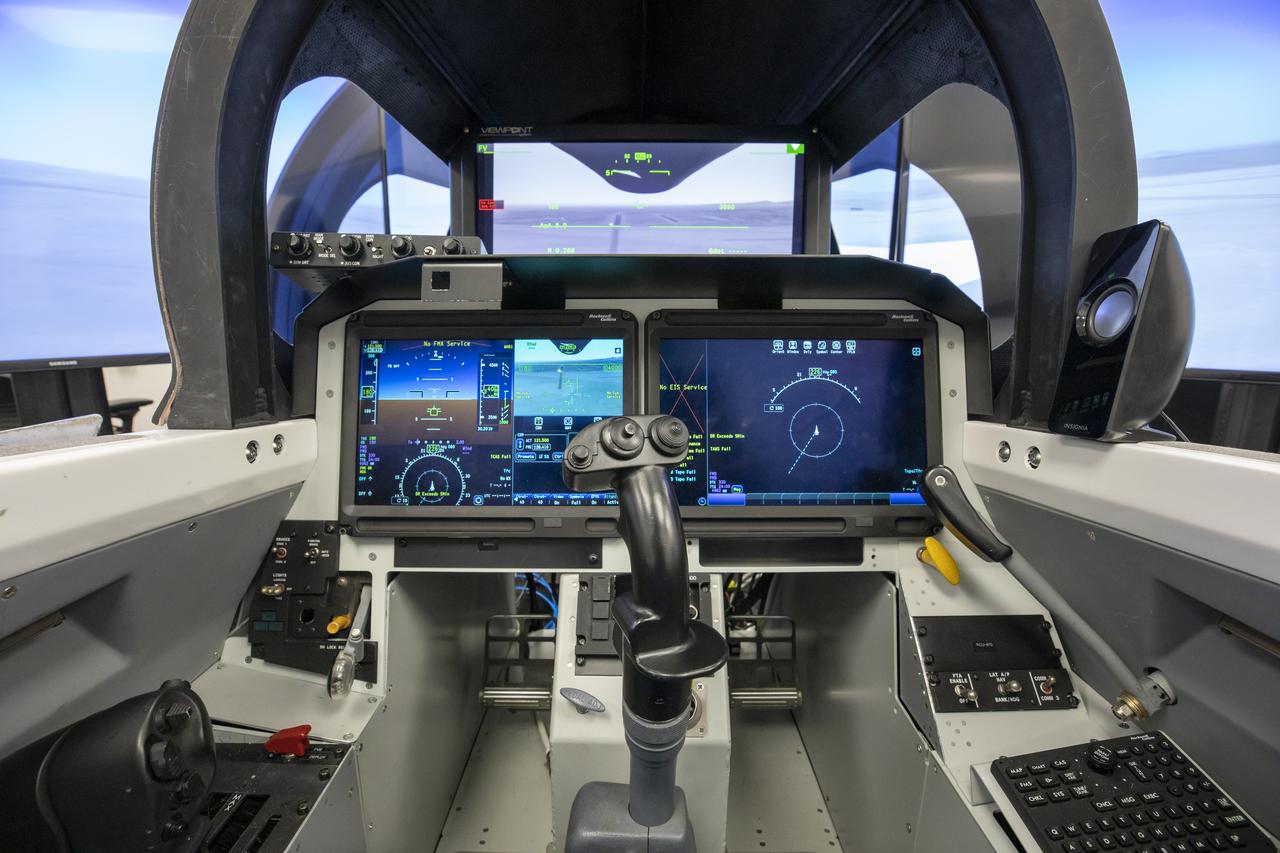
This image shows a close up of the cockpit view of the eXternal Vision System that will be placed in the X-59. Instead of a front facing window, the pilot will use these monitors for forward facing visibility. Lockheed Martin Photography By Garry Tice 1011 Lockheed Way, Palmdale, Ca. 93599 Event: X-59 SIL Round 2 Date: 6/10/2021
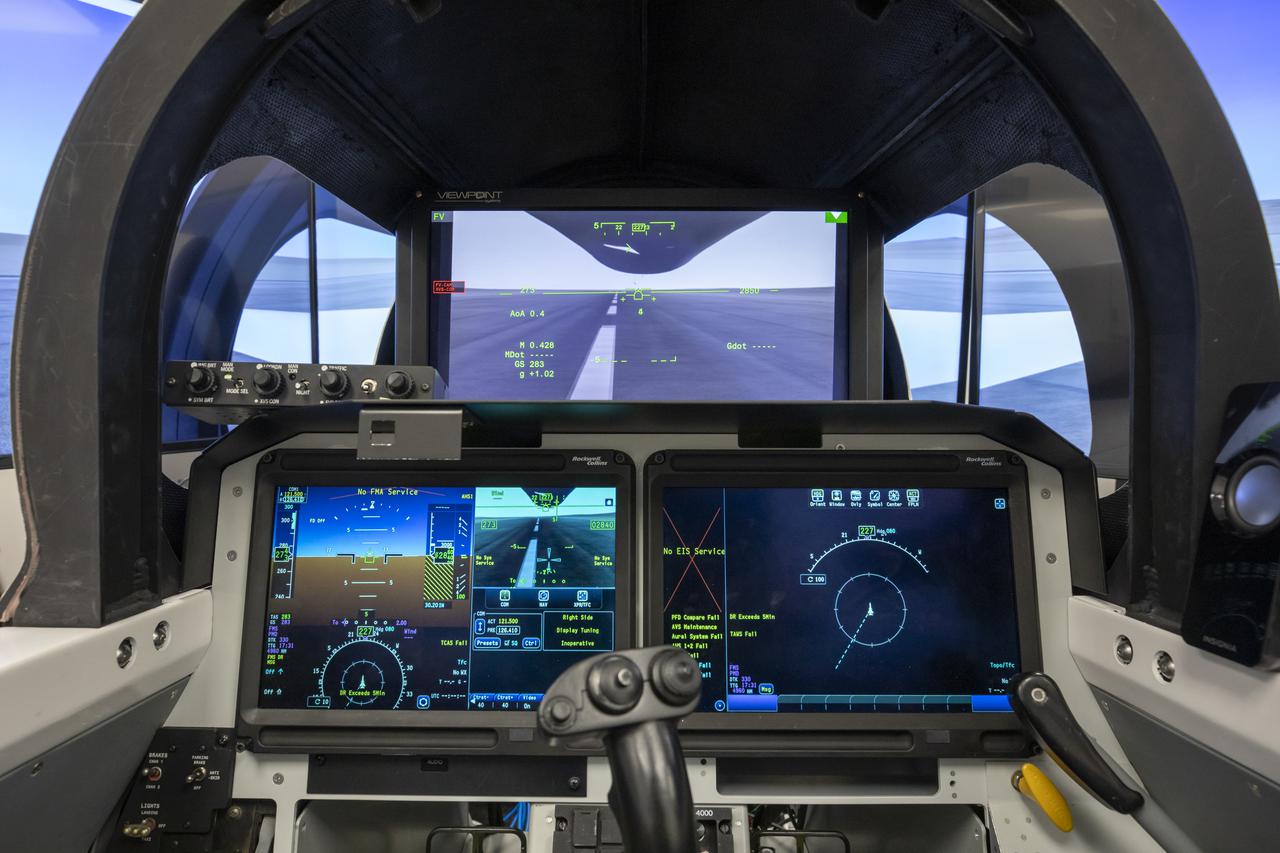
This image shows a close up of the cockpit view of the eXternal Vision System that will be placed in the X-59. Instead of a front facing window, the pilot will use these monitors for forward facing visibility. Lockheed Martin Photography By Garry Tice 1011 Lockheed Way, Palmdale, Ca. 93599 Event: X-59 SIL Round 2 Date: 6/10/2021
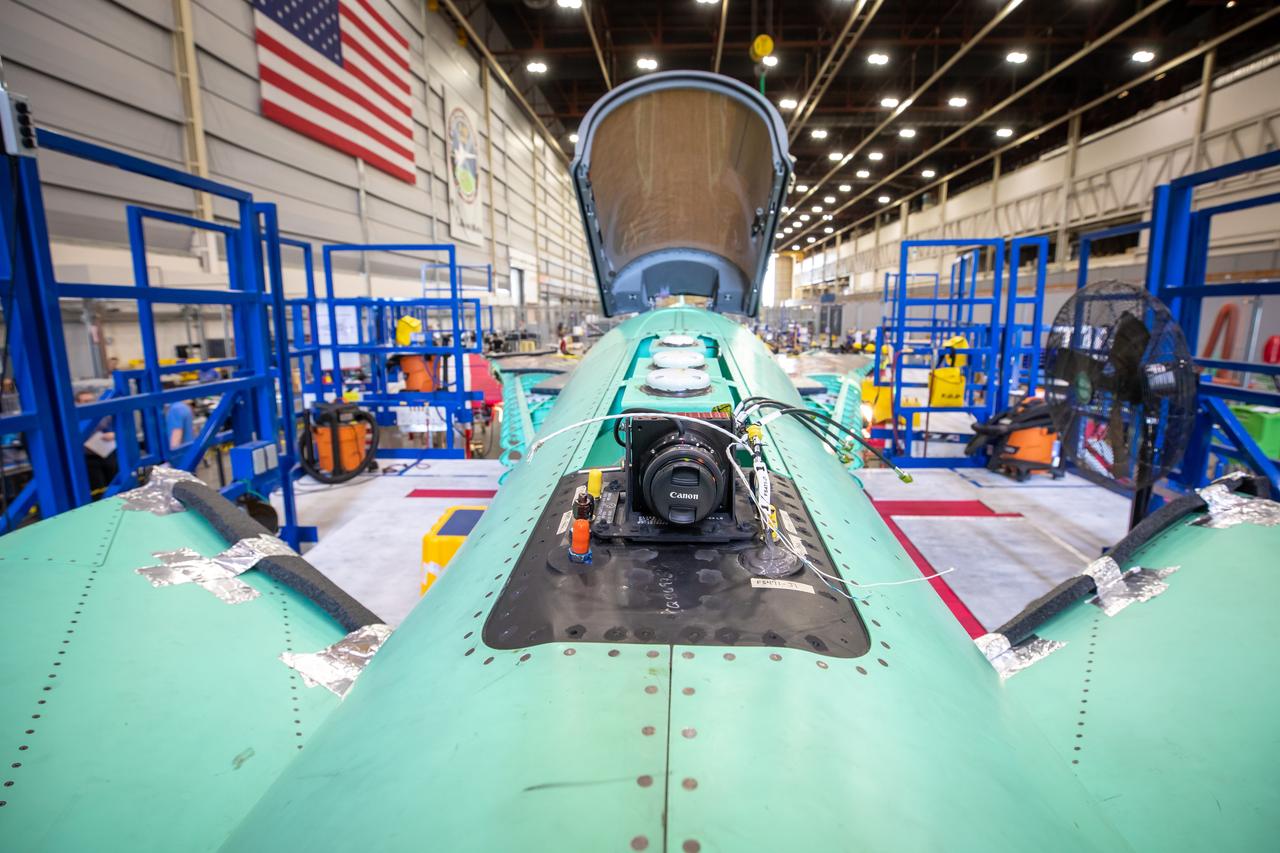
Event: Horizontal Stabilator Install A close up of the camera from the X-59’s eXternal Vision System. This camera is on the top of the X-59, but there will also be one on the belly of the aircraft. This visuals from this camera will be displayed on a 4K monitor for the pilot. As part of the supersonic shaping technology, the X-plane will not have a forward-facing window in the cockpit.
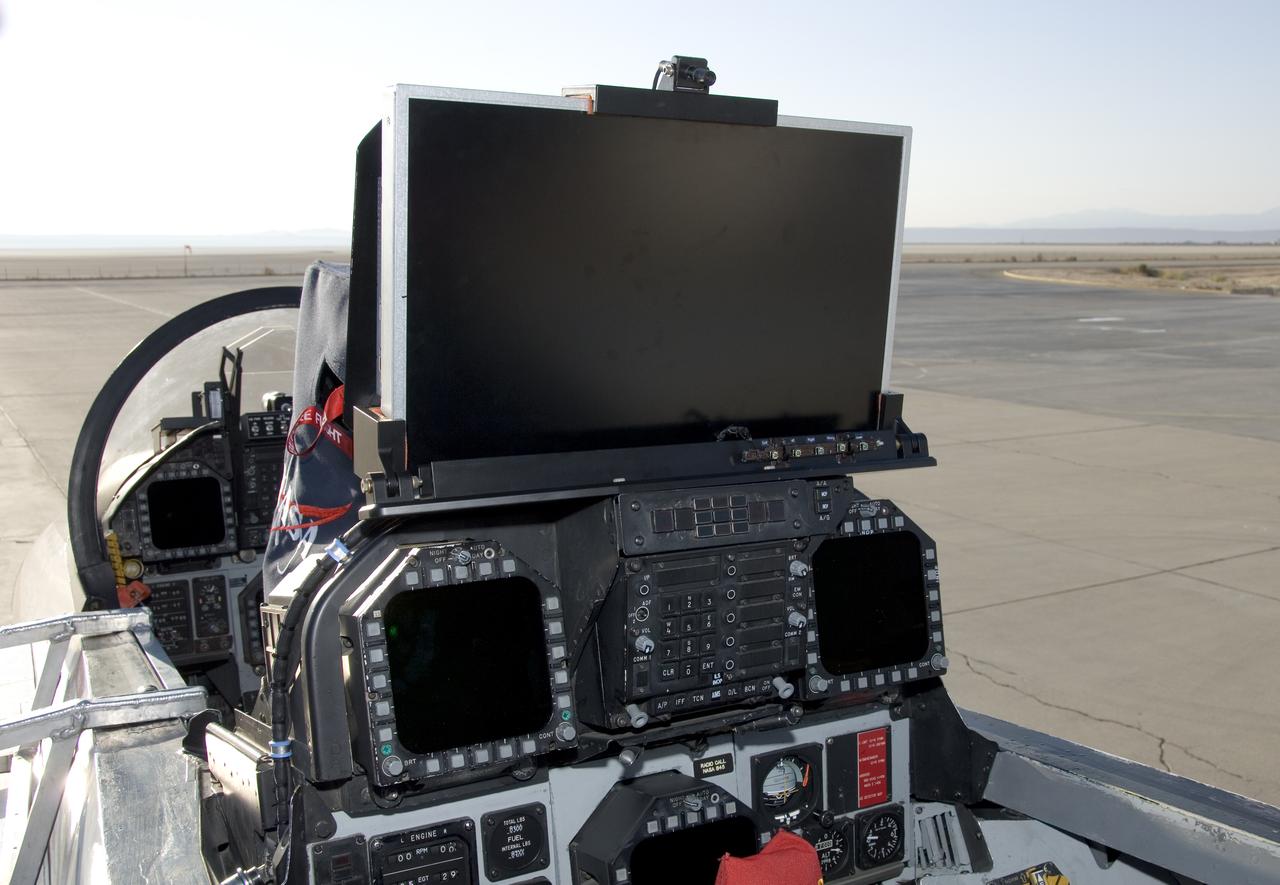
An HD display is mounted on top of the rear instrument panel in NASA's F-18 SRA aircraft, as NASA is partnering with Gulfstream on the External Vision System project.
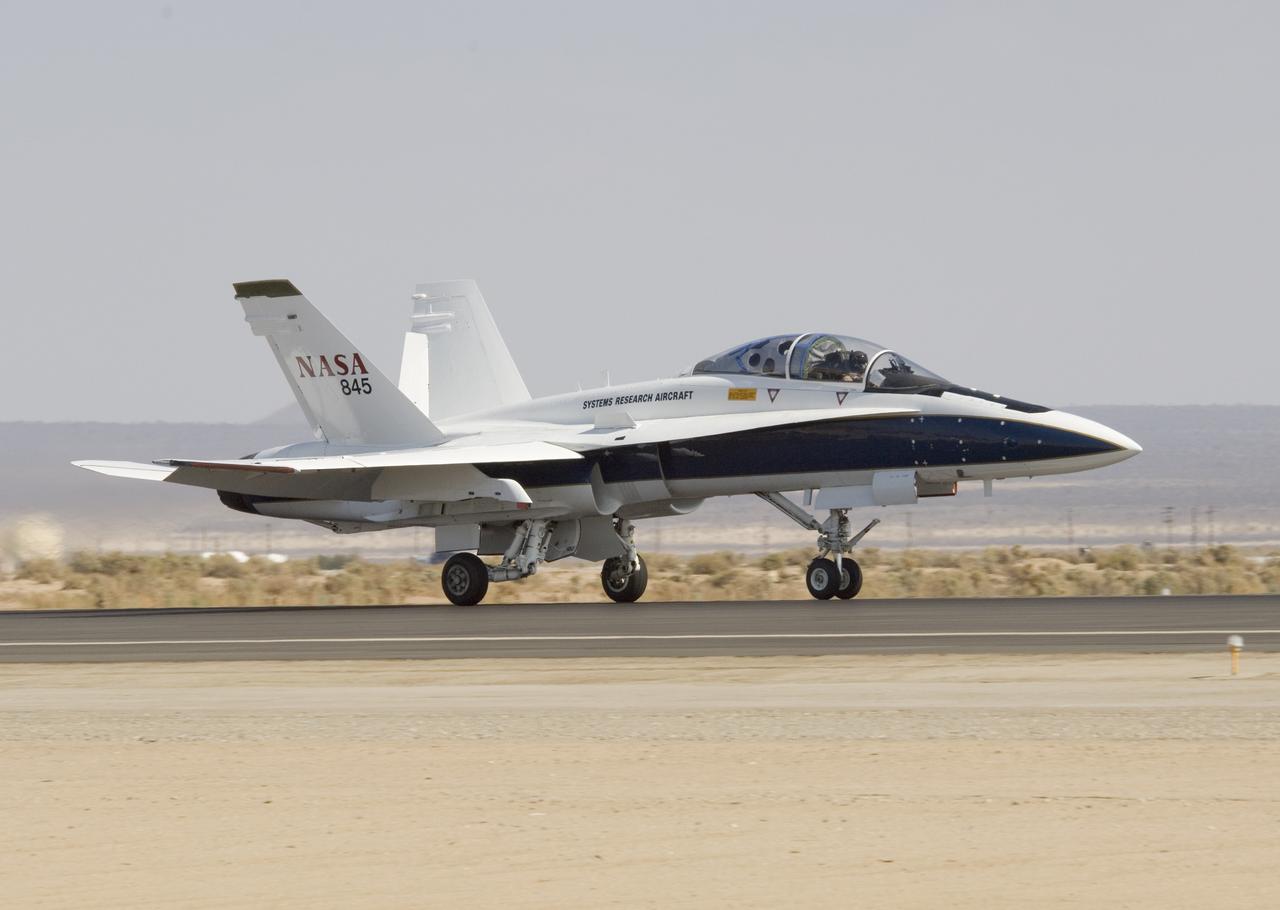
NASA research pilot Jim Smolka prepares to take off in NASA's F-18 Systems Research Aircraft for an External Vision System project flight.

An HD camera is mounted behind the head-up display of NASA's F-18 SRA aircraft. NASA is partnering with Gulfstream on the External Vision System project.