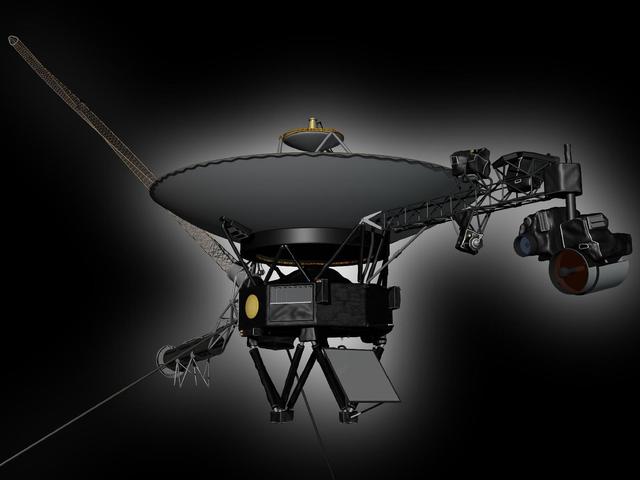
This artist rendering shows NASA Voyager spacecraft. Voyager 2 was launched on Aug. 20, 1977. Voyager 1 was launched on Sept. 5, 1977.
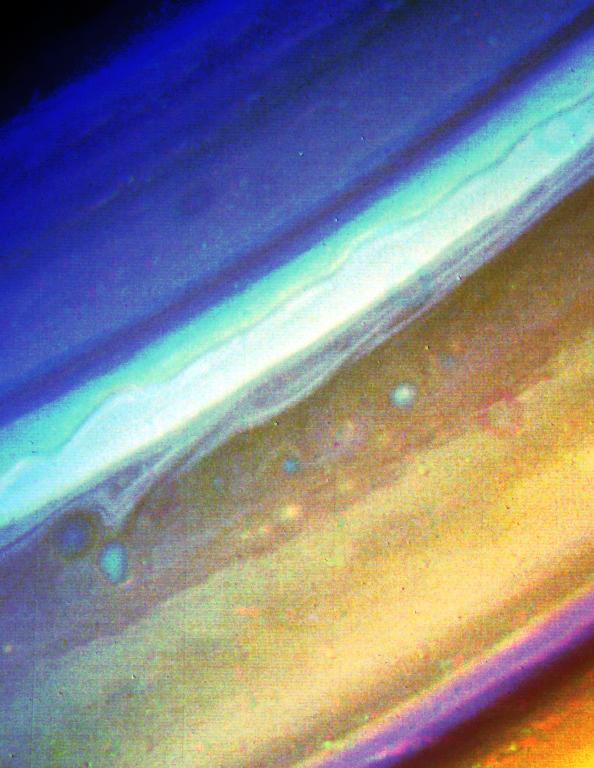
Voyager 2 Image of Saturn

Jupiter from Voyager 2
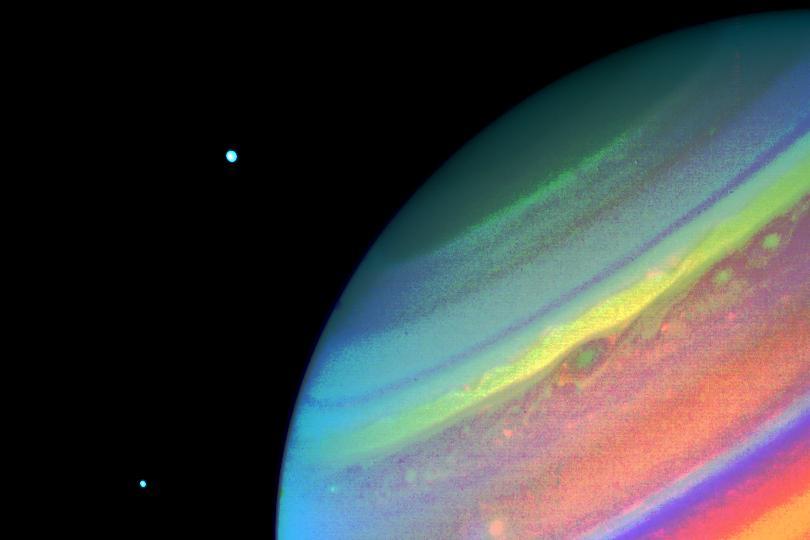
Voyager 2 Image of Saturn
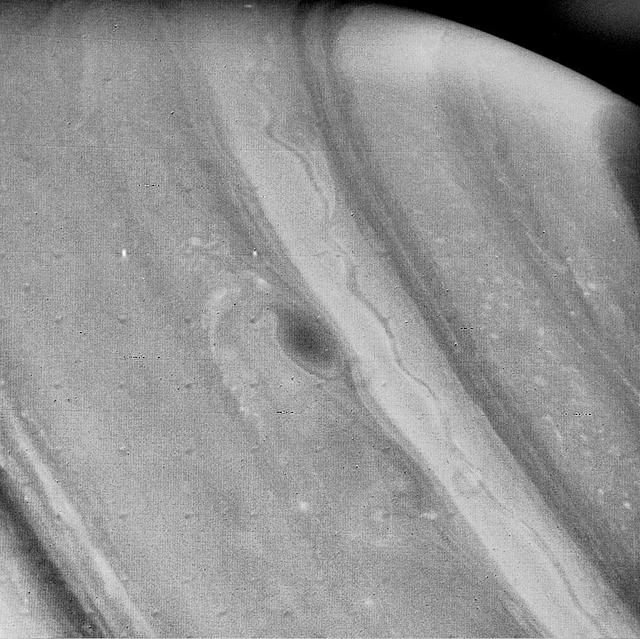
Voyager 2 Image of Saturn
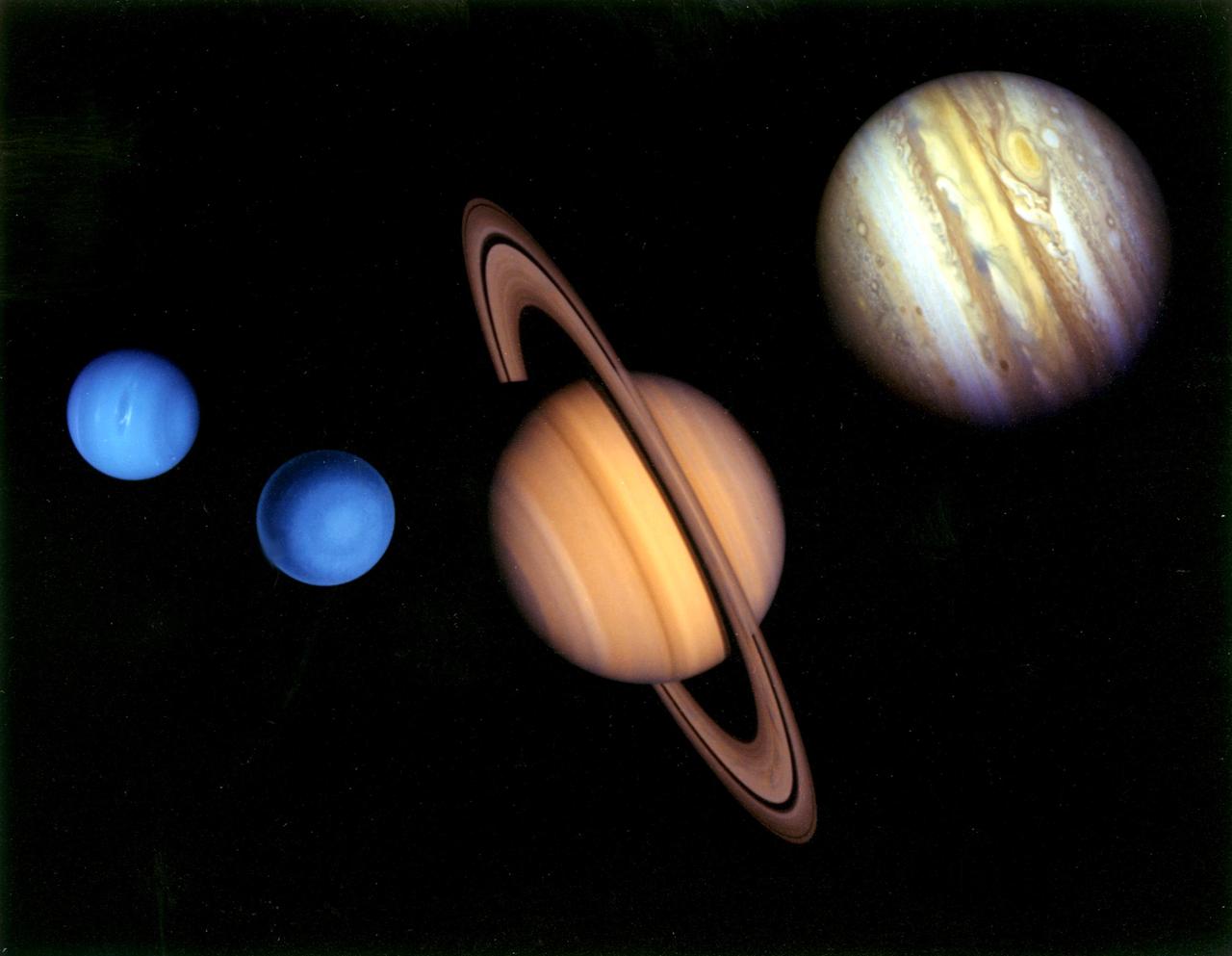
This montage of images of the planets visited by NASA's Voyager 2 was prepared from an assemblage of images taken by the 2 Voyager spacecraft. https://photojournal.jpl.nasa.gov/catalog/PIA01483
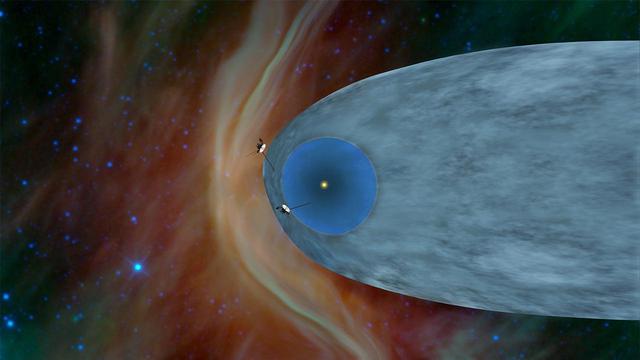
This artist concept shows the general locations of NASA two Voyager spacecraft. Voyager 1 top has sailed beyond our solar bubble into interstellar space. Voyager 2 bottom is still exploring the outer layer of the solar bubble.
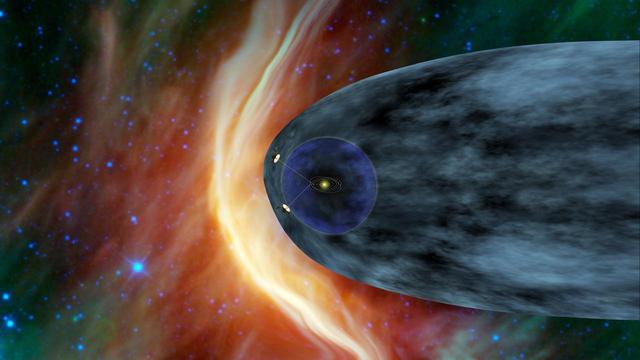
This artist concept shows NASA two Voyager spacecraft exploring a turbulent region of space known as the heliosheath, the outer shell of the bubble of charged particles around our sun. The Voyagers have been in space 33 years.
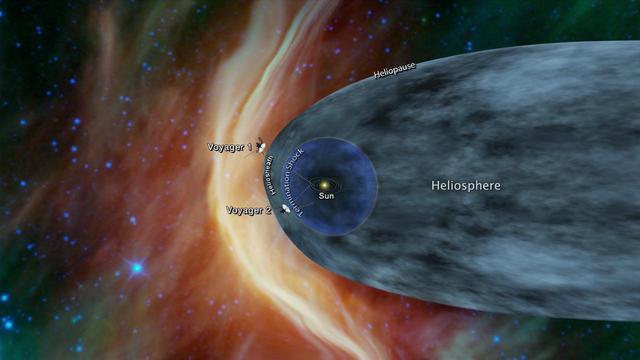
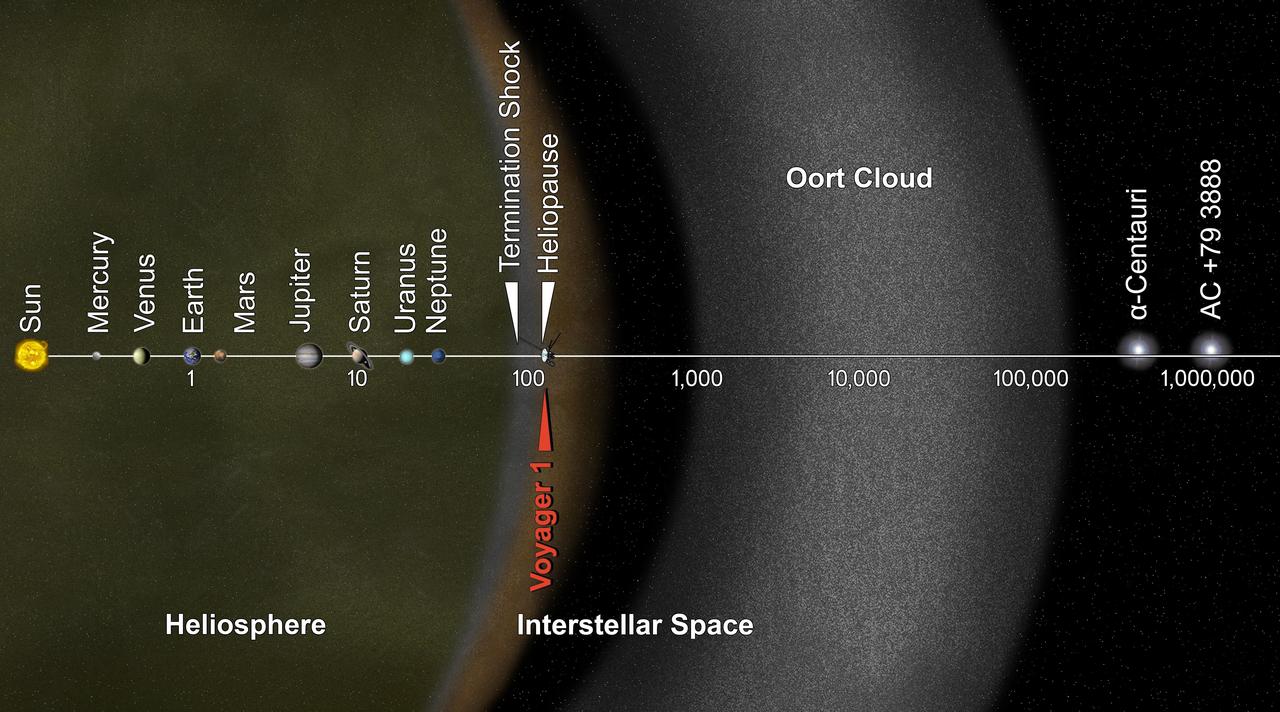
This graphic shows the position of the Voyager 1 and Voyager 2 probes, relative to the heliosphere, a protective bubble created by the Sun that extends well past the orbit of Pluto. Voyager 1 crossed the heliopause, or the edge of the heliosphere, in 2012. Voyager 2 is still in the heliosheath, or the outermost part of the heliosphere. https://photojournal.jpl.nasa.gov/catalog/PIA22566
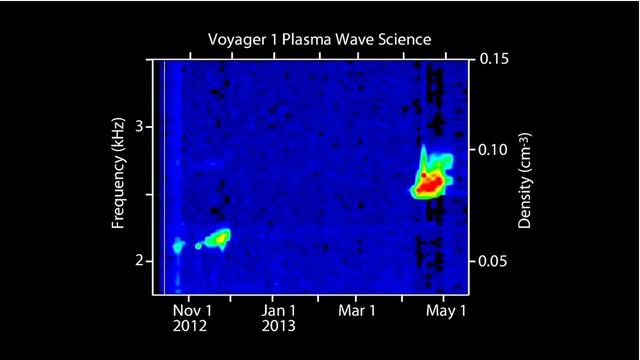
This visual represents sounds captured of interstellar space by NASA Voyager 1 spacecraft. Voyager 1 plasma wave instrument detected the vibrations of dense interstellar plasma.
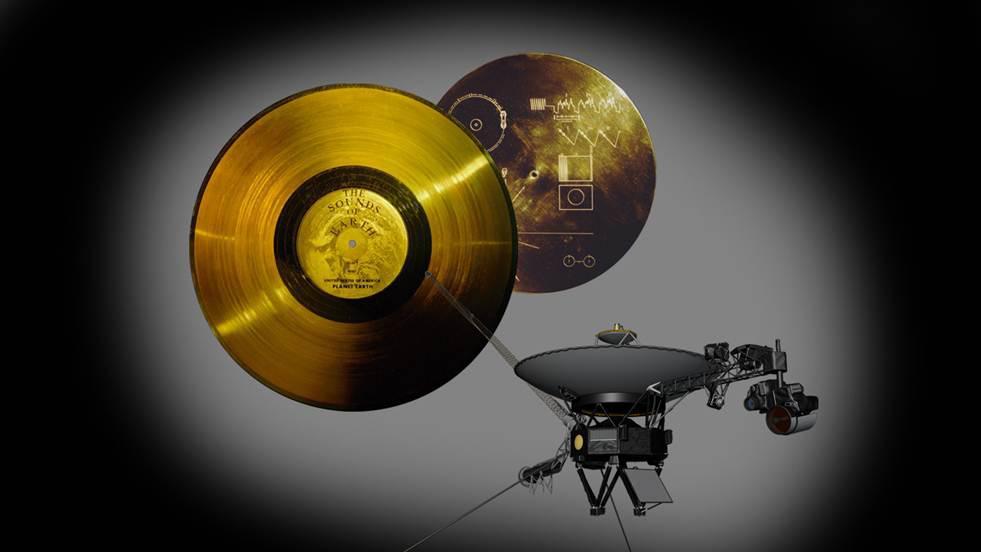
This image highlights the special cargo onboard NASA Voyager spacecraft: the Golden Record. Each of the two Voyager spacecraft launched in 1977 carry a 12-inch gold-plated phonograph record with images and sounds from Earth.
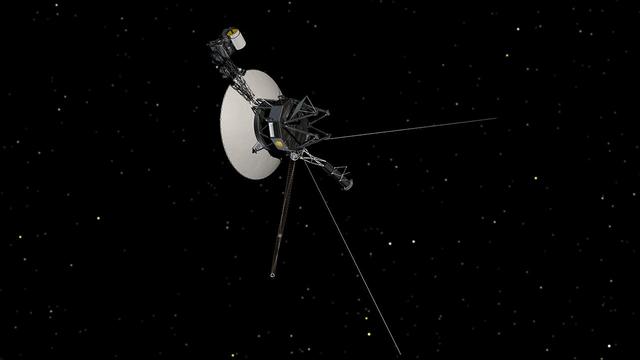
This artist concept shows NASA Voyager spacecraft against a backdrop of stars.
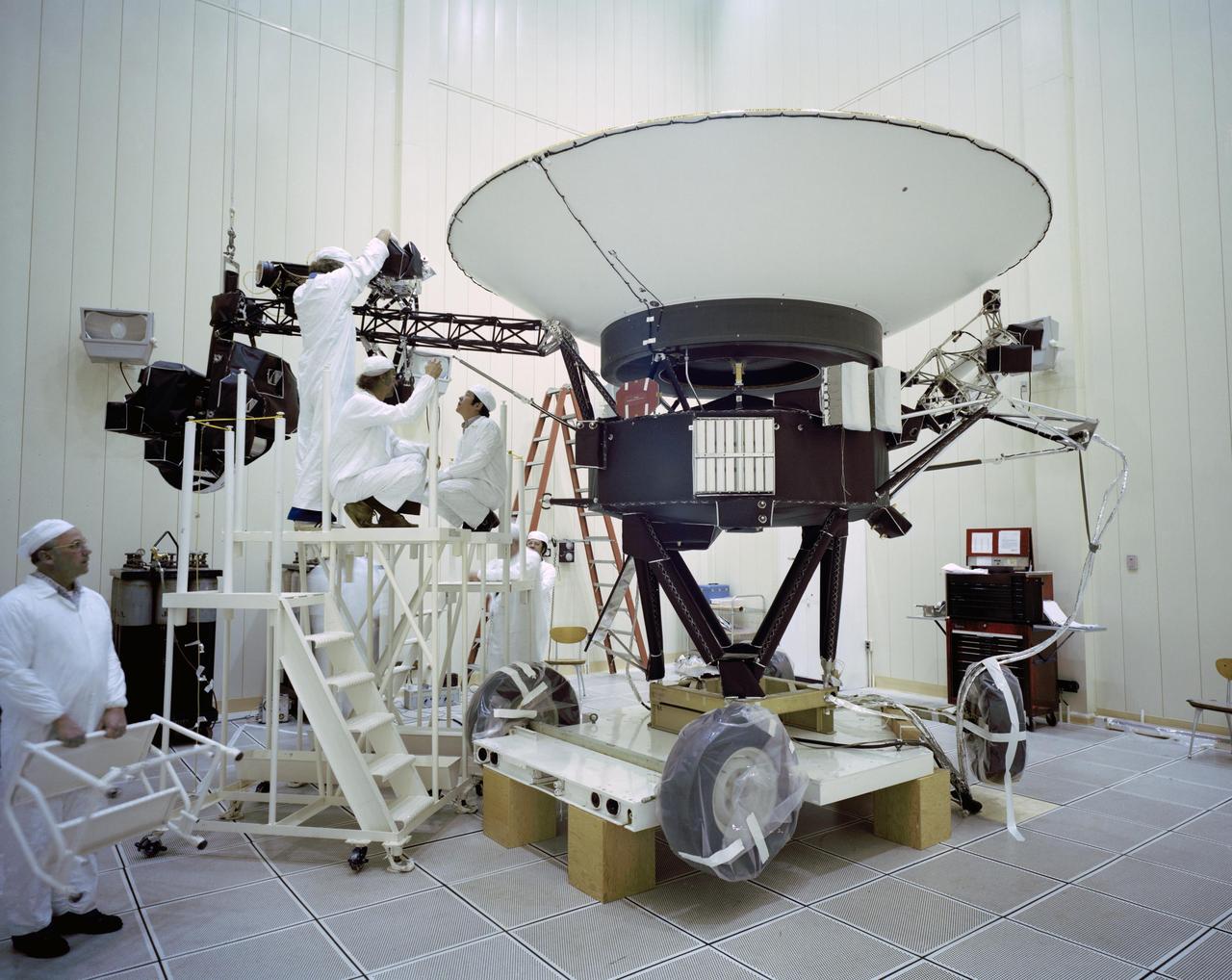
This archival photo shows engineers working on NASA's Voyager 2 spacecraft on March 23, 1977. https://photojournal.jpl.nasa.gov/catalog/PIA21736
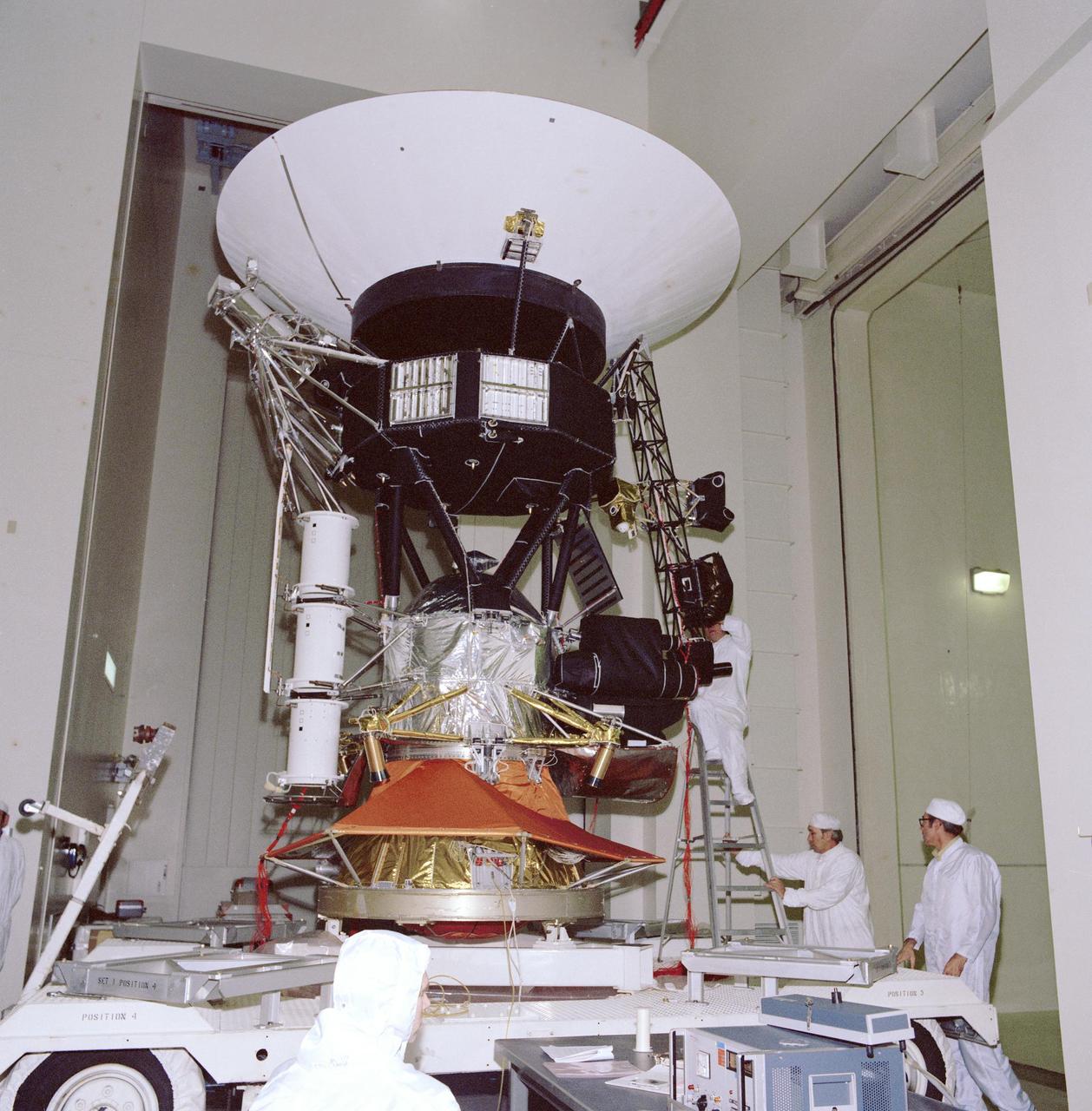
This archival photo shows engineers working on vibration acoustics and pyro shock testing of NASA's Voyager on November 18, 1976. https://photojournal.jpl.nasa.gov/catalog/PIA21732
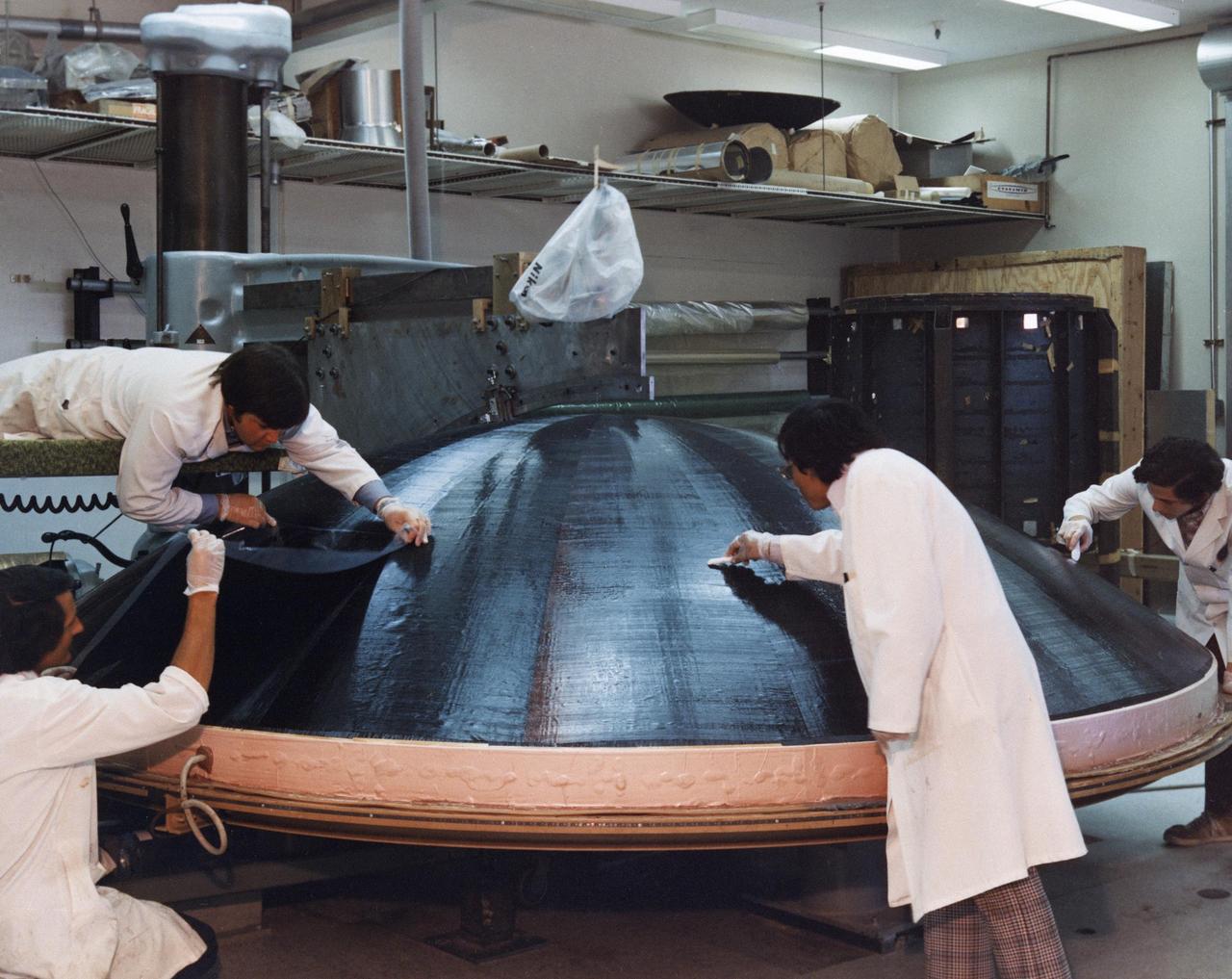
Engineers are engaged in the construction of a high gain antenna for one of the Voyager spacecraft in This archival photo taken on October 29, 1975. https://photojournal.jpl.nasa.gov/catalog/PIA21479
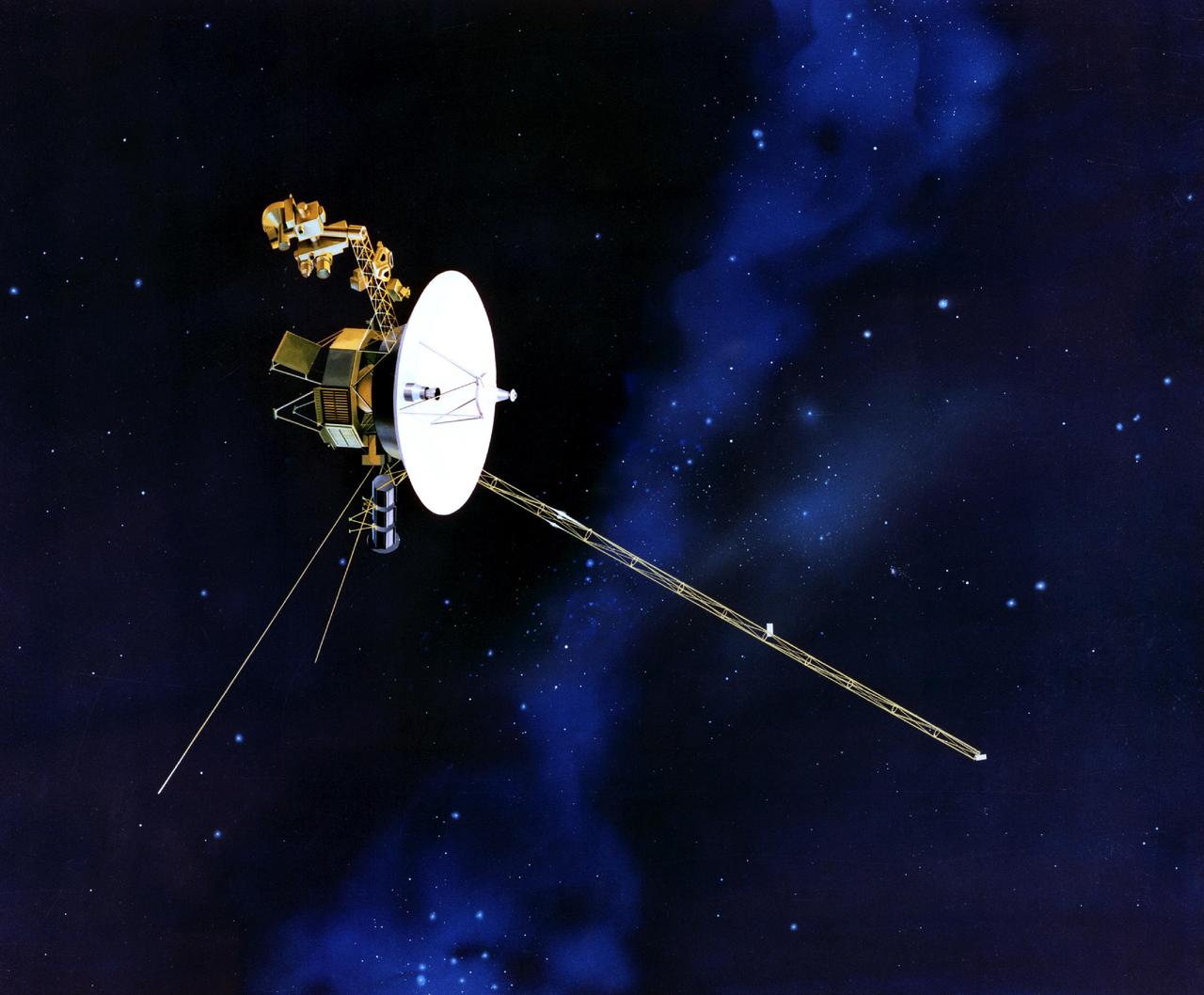
This artist concept of NASA Voyager spacecraft with its antennapointing to Earth.

This is an image of the planet Uranus taken by the spacecraft Voyager 2 in 1986.
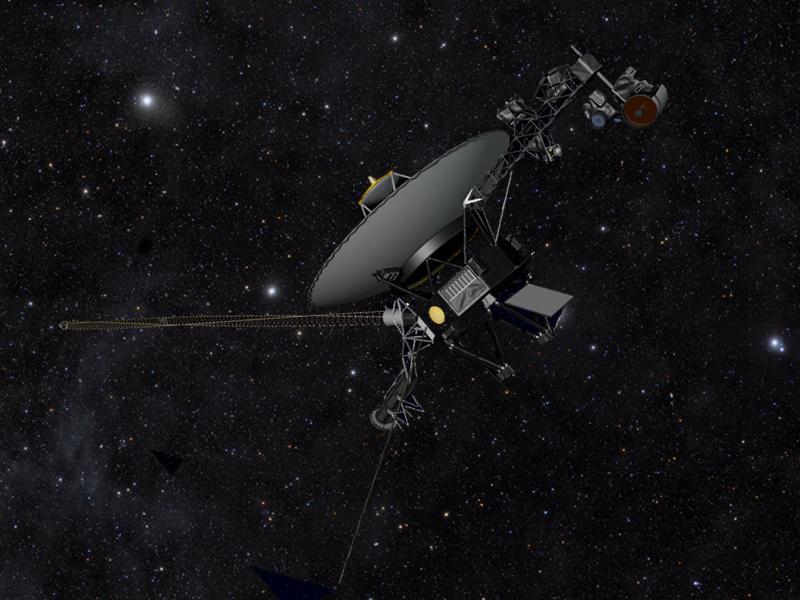
This artist concept shows NASA Voyager spacecraft against a field of stars in the darkness of space as they travel farther away from Earth, on a journey to interstellar space, and will eventually circle around the center of the Milky Way galaxy.
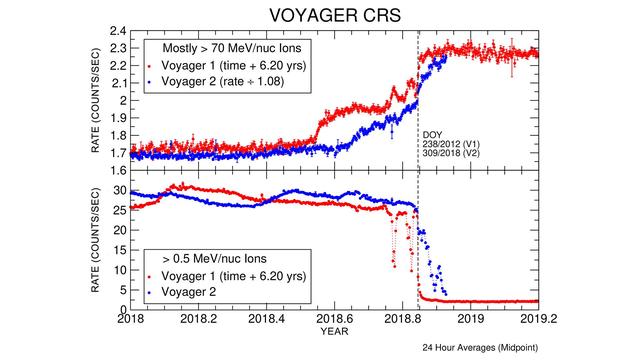
These graphs compare data from identical instruments onboard NASA's Voyager 1 and Voyager 2 spacecraft as they each exited the heliosphere. Voyager 1 exited in 2012, and Voyager 2 exited in 2018. The cosmic ray subsystem (CRS) measures the rate of energetic particles hitting the radiation detector on the instrument. The top graph shows high energy particles (called cosmic rays) that originate outside the heliosphere. The CRS instruments on both spacecraft observed similar, but not identical, increases in the cosmic ray rate as they both crossed the heliopause (the outer edge of the heliosphere). The lower graph shows slightly lower energy particles that originate inside the heliosphere. Both spacecraft detected a similar but not identical decrease in these lower energy particles when they crossed the heliopause and immediately after. https://photojournal.jpl.nasa.gov/catalog/PIA22916
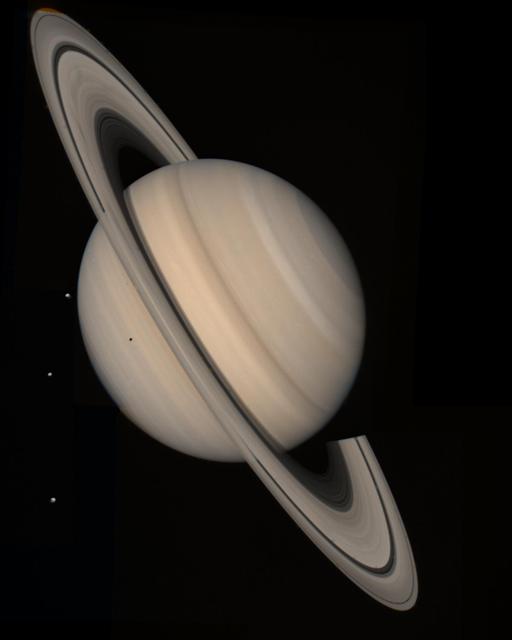
Saturn storms observed by NASA Voyager, Aug. 5, 2004. Voyager 1 and 2 observed radio signals from lightning which were interpreted as being from a persistent, low-latitude storm system.
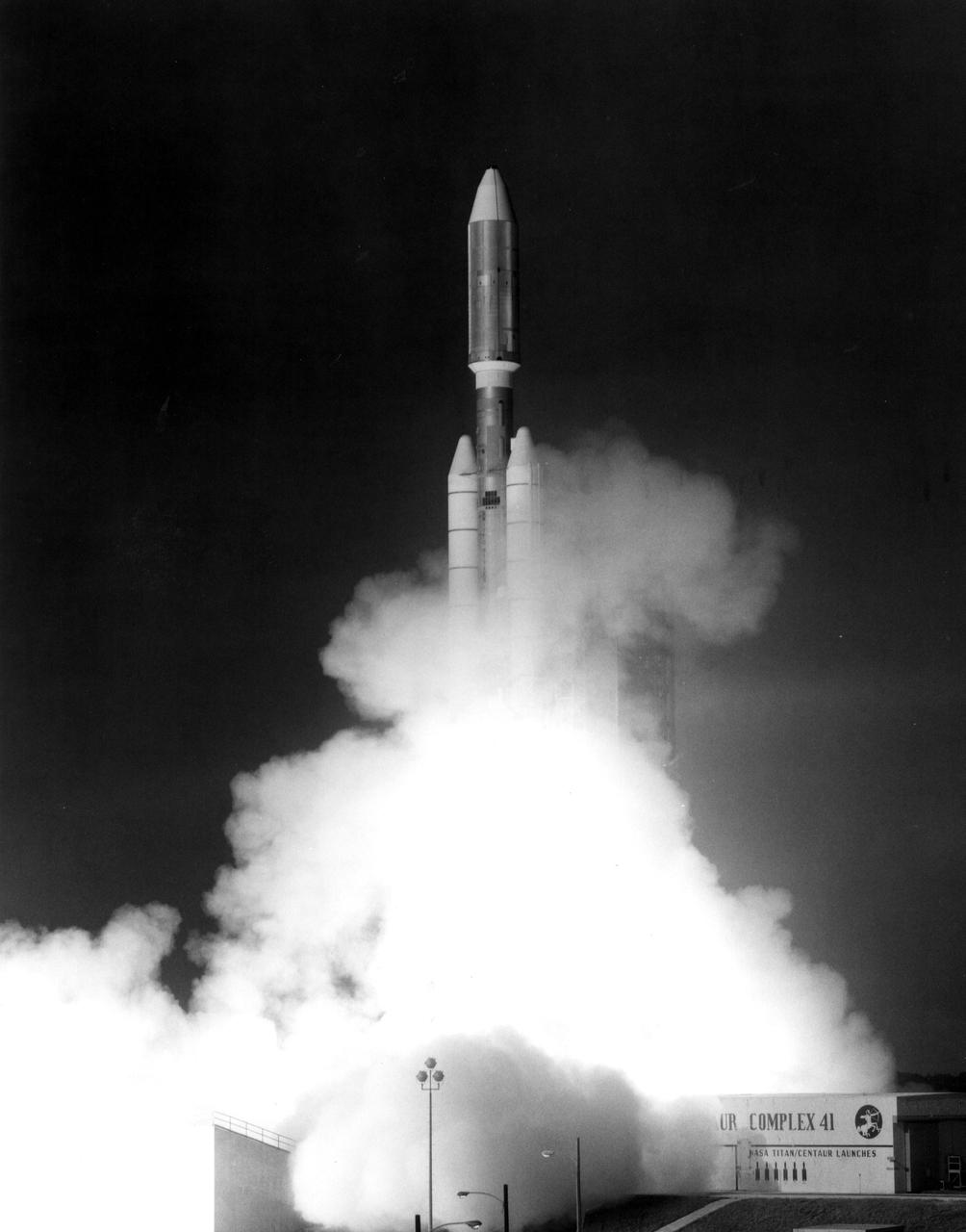
This photograph from Sept. 5, 1977, shows the launch of NASA Voyager 1 spacecraft from NASA Kennedy Space Center at Cape Canaveral, Fla.
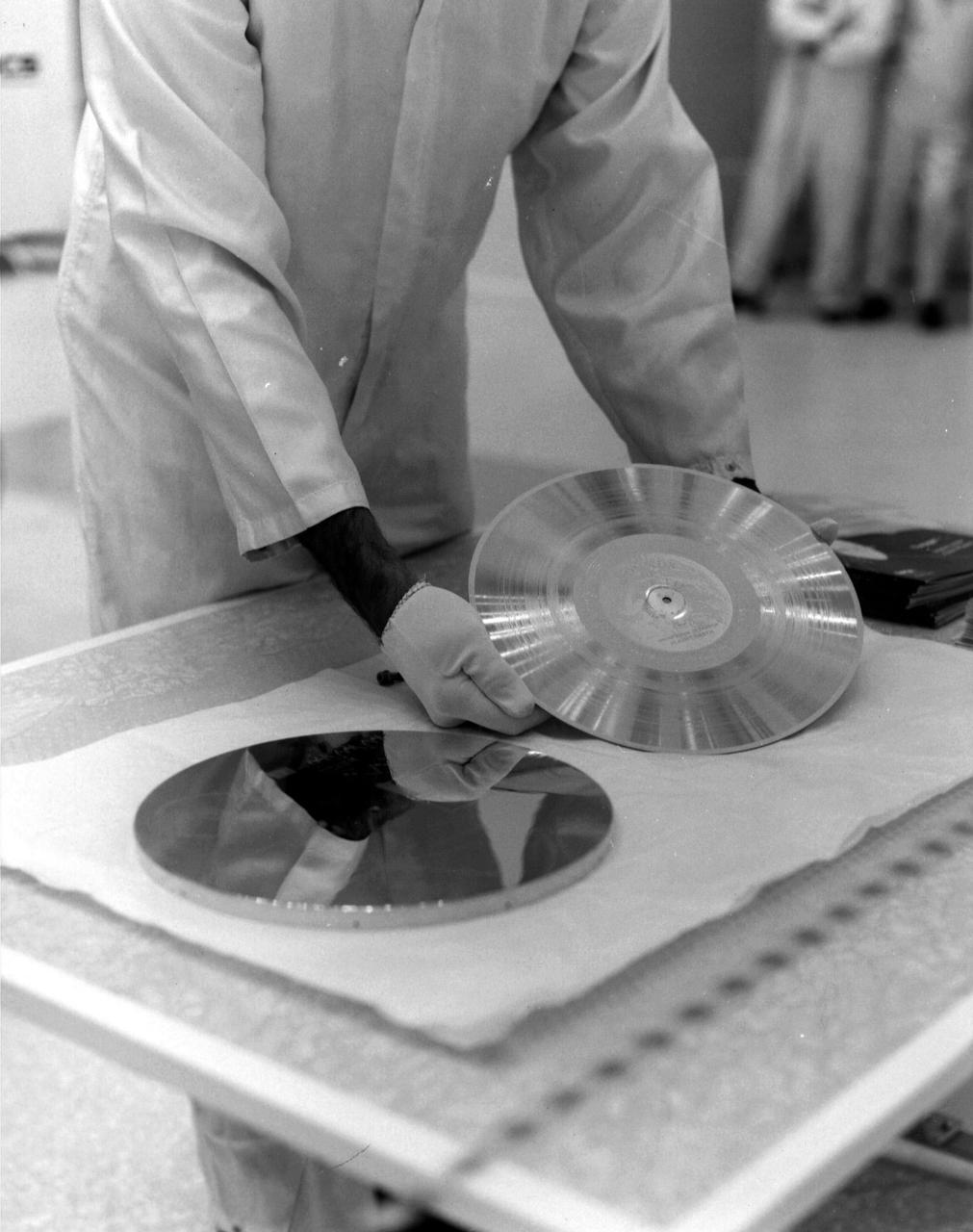
The Voyager 1 Golden Record is prepared for installation on the spacecraft in this archival image from 1977. https://photojournal.jpl.nasa.gov/catalog/PIA21741
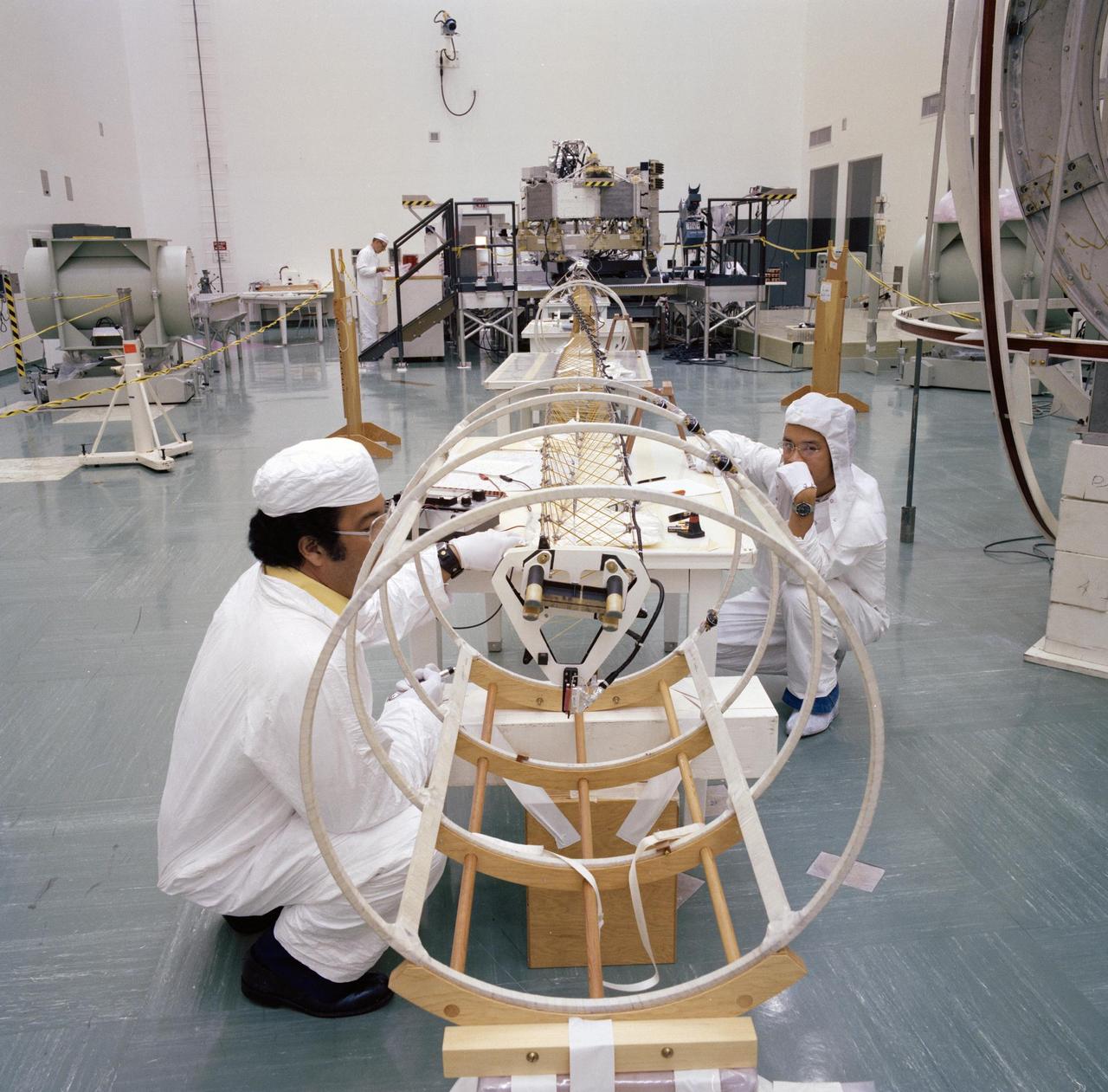
This archival photo shows engineers working with the deployed magnetometer boom of one of NASA's Voyager spacecraft in Florida on June 17, 1977. https://photojournal.jpl.nasa.gov/catalog/PIA21738
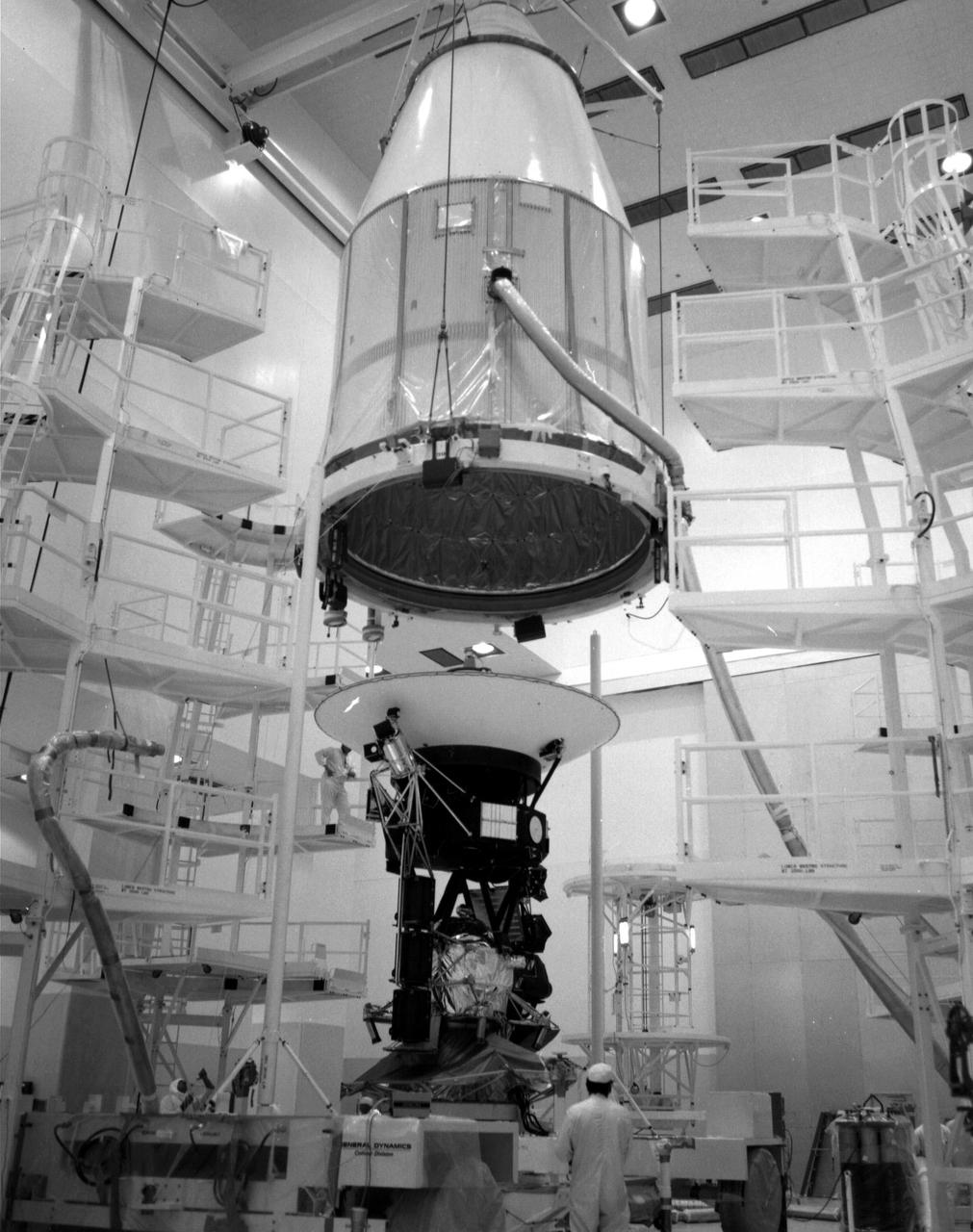
The Voyager 2 spacecraft, which was the first of the two Voyagers to launch, is seen at the Spacecraft Assembly and Encapsulation Facility-1 at NASA's Kennedy Space Center in Cape Canaveral, Florida. This archival photo is from August 1977. The spacecraft was put into this shroud on August 2, 1977, to protect it during flight through the atmosphere. https://photojournal.jpl.nasa.gov/catalog/PIA21743
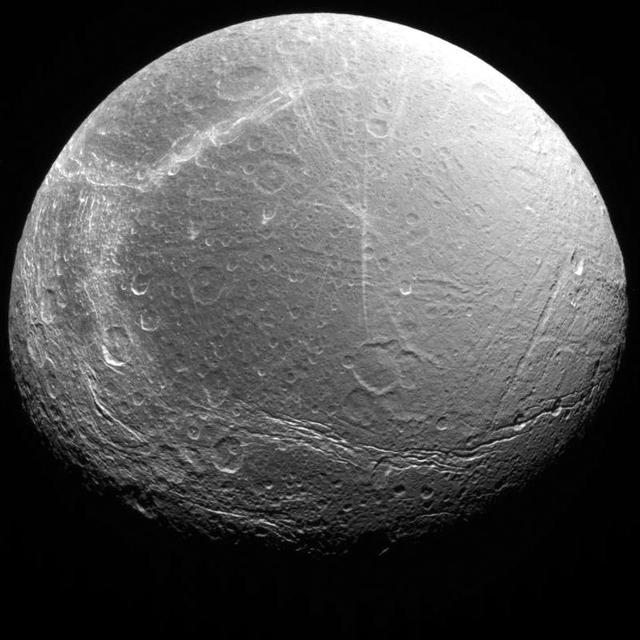
Cracks, canyons, craters, and streaks are seen in this image of Saturn icy moon, Dione, taken from Voyager 2 on August 3, 2005.
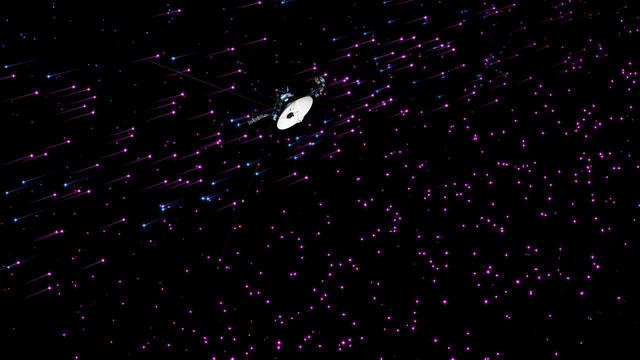
This image from a set of animations show NASA Voyager 1 spacecraft exploring a new region in our solar system called the magnetic highway.
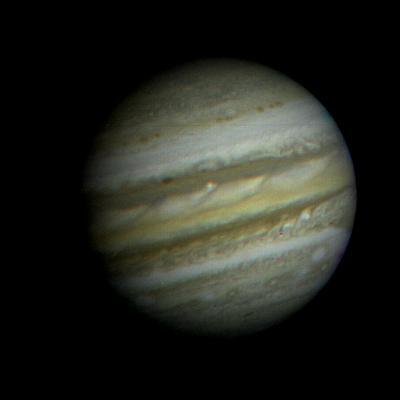
NASA Voyager 1 took this picture of the planet Jupiter on Jan. 6, 1979, the first in its three-month-long, close-up investigation of the largest planet.

This archival photo shows Voyager 2 at the Spacecraft Assembly and Encapsulation Facility at NASA's Kennedy Space Center in Cape Canaveral, Florida. https://photojournal.jpl.nasa.gov/catalog/PIA21728
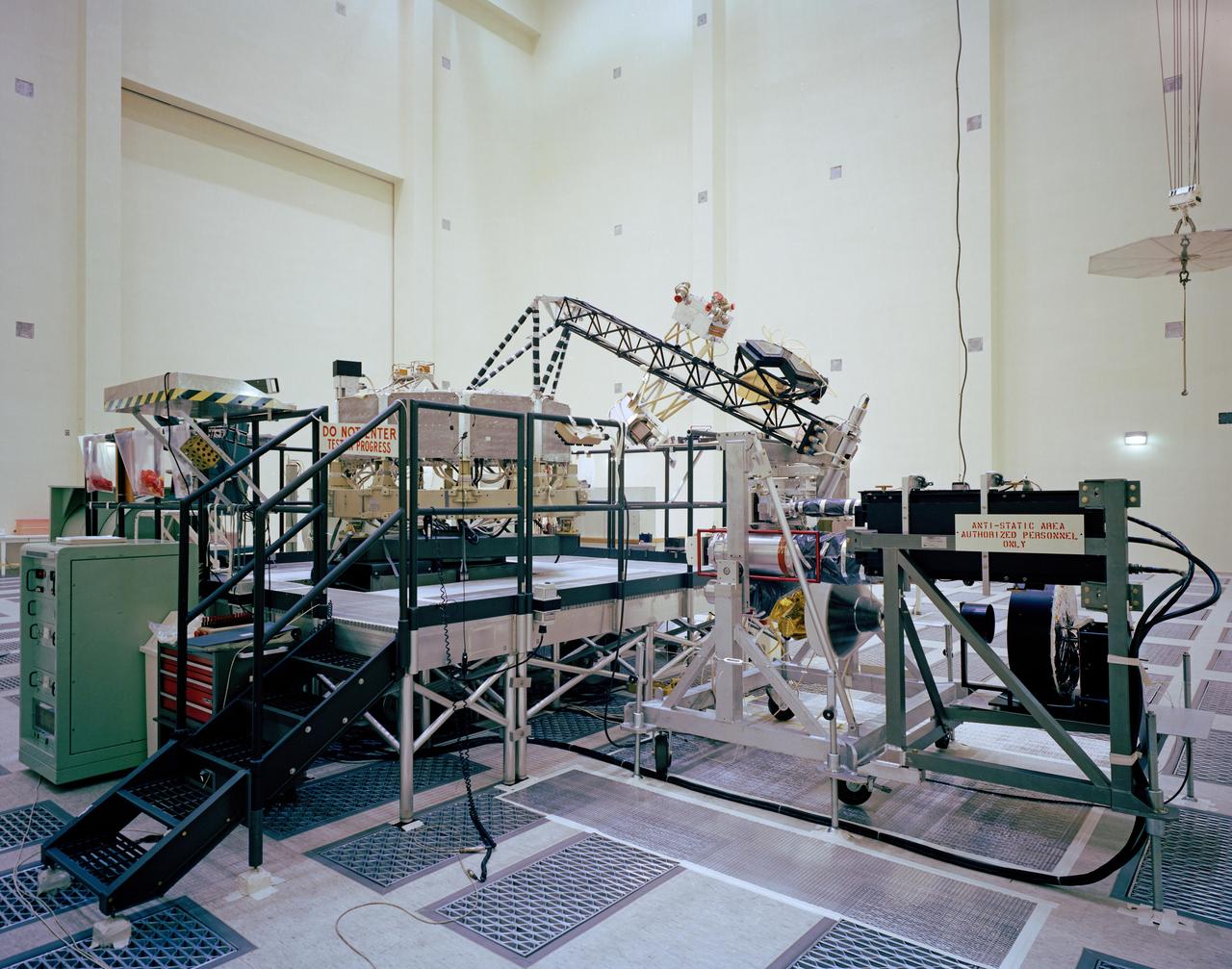
This archival photo shows the system test configuration for Voyager on October 1, 1976. The spacecraft's 10-sided bus is visible behind the catwalk railing in the foreground. The boom that holds several of the spacecraft's science instruments arches above the railing. https://photojournal.jpl.nasa.gov/catalog/PIA21729
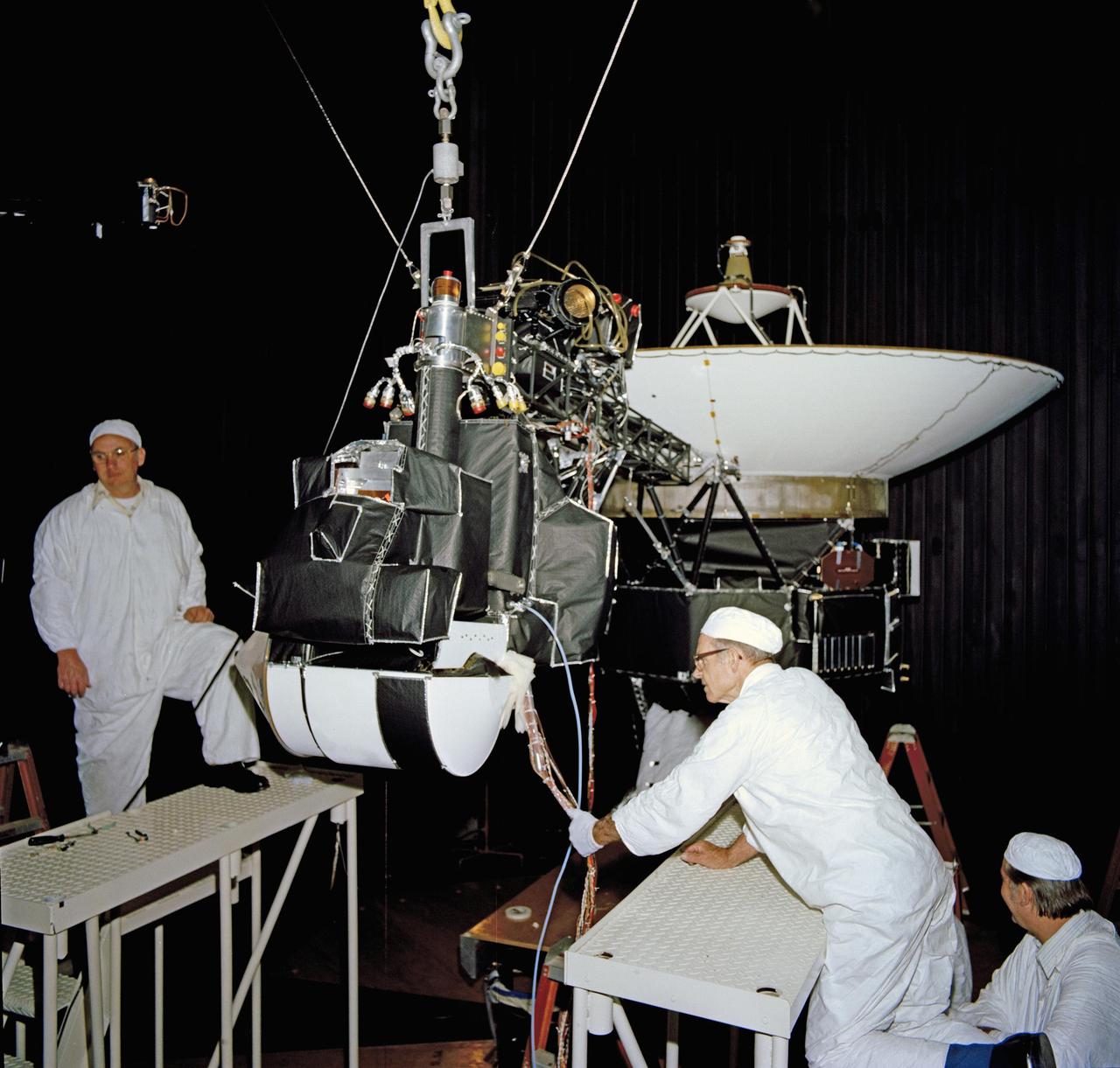
This image shows one of the Voyagers in the 25-foot space simulator chamber at NASA's Jet Propulsion Laboratory, Pasadena, California. The photo is dated April 27, 1977. https://photojournal.jpl.nasa.gov/catalog/PIA21737

NASA Voyager 2 obtained this parting shot of Triton, Neptune largest satellite, shortly after closest approach to the moon and passage through its shadow on the morning of Aug. 25, 1989.
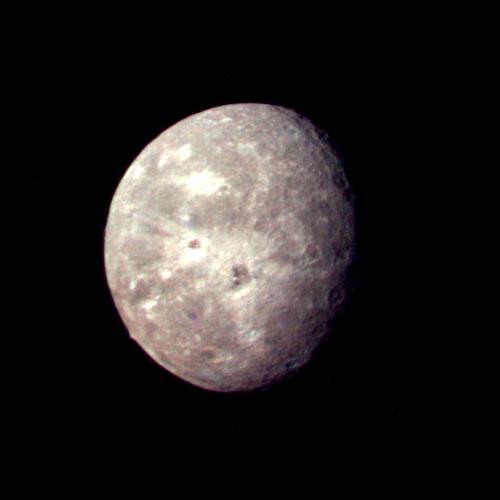
This image of Oberon, Uranus outermost moon, was captured by NASA Voyager 2 on Jan. 24, 1986. Clearly visible are several large impact craters in Oberon icy surface surrounded by bright rays. http://photojournal.jpl.nasa.gov/catalog/PIA00034
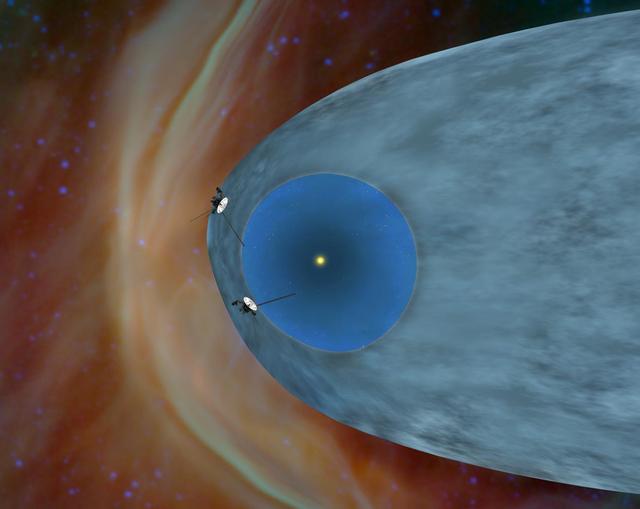
This artist concept shows NASA two Voyager spacecraft exploring a turbulent region of space known as the heliosheath, the outer shell of the bubble of charged particles around our sun.
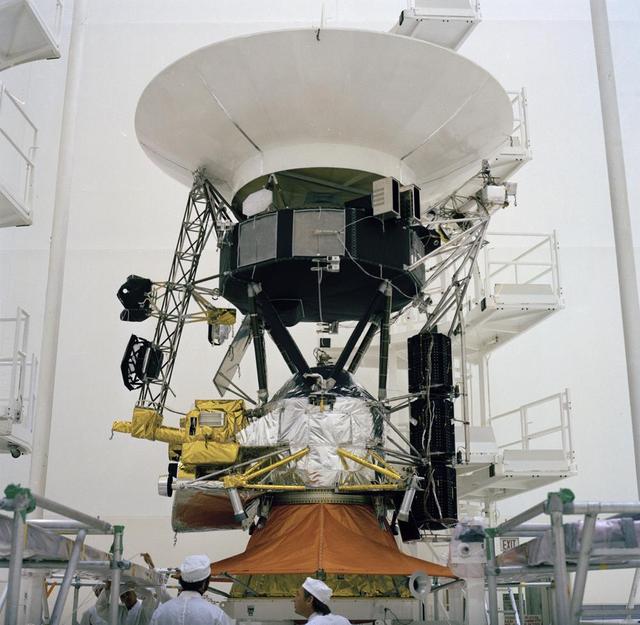
This archival photo shows the encapsulation of the Voyager Development Test Model at NASA's Kennedy Space Center's Eastern Test Range. The picture was taken on October 8, 1976. https://photojournal.jpl.nasa.gov/catalog/PIA21731
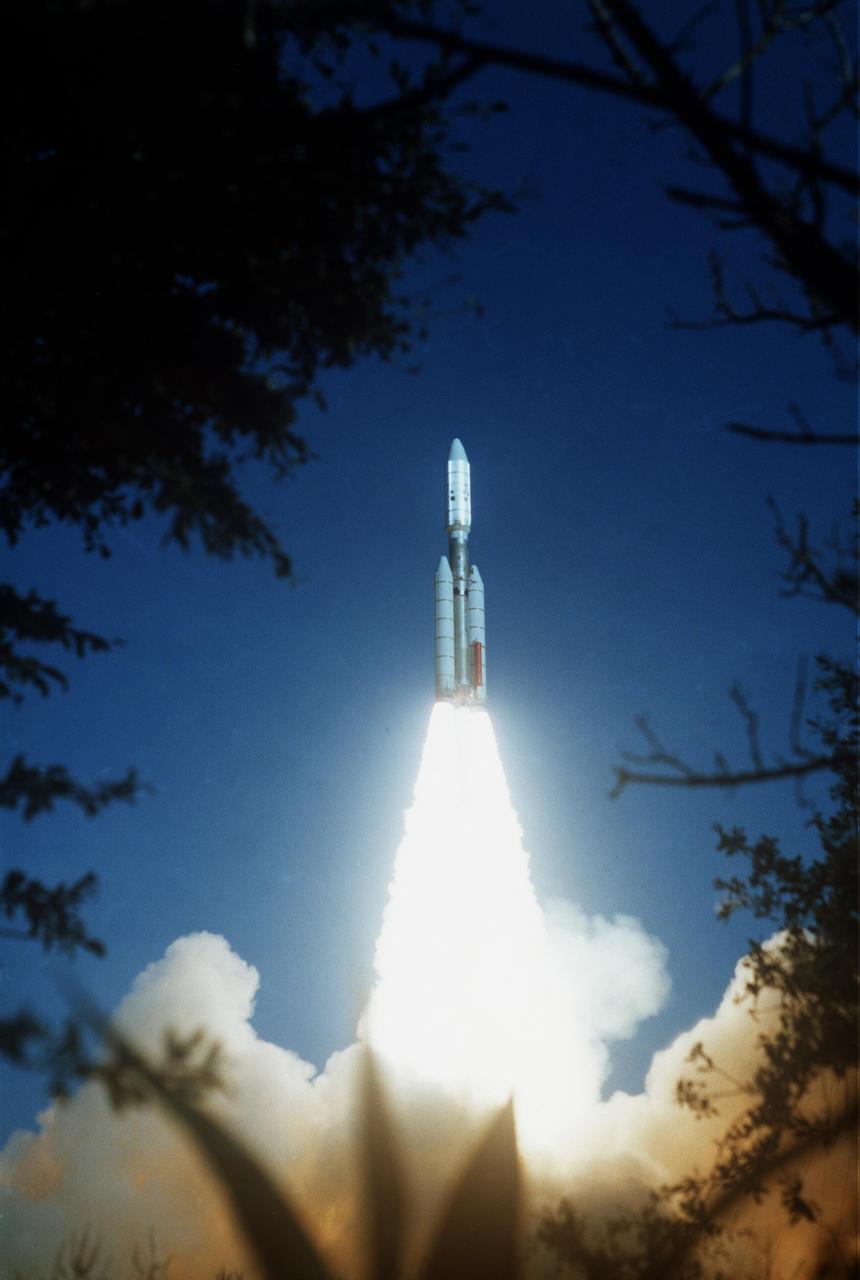
NASA Voyager 2 was launched on Aug. 20, 1977 from the NASA Kennedy Space Center at Cape Canaveral in Florida where it was propelled into space on a Titan/Centaur rocket.
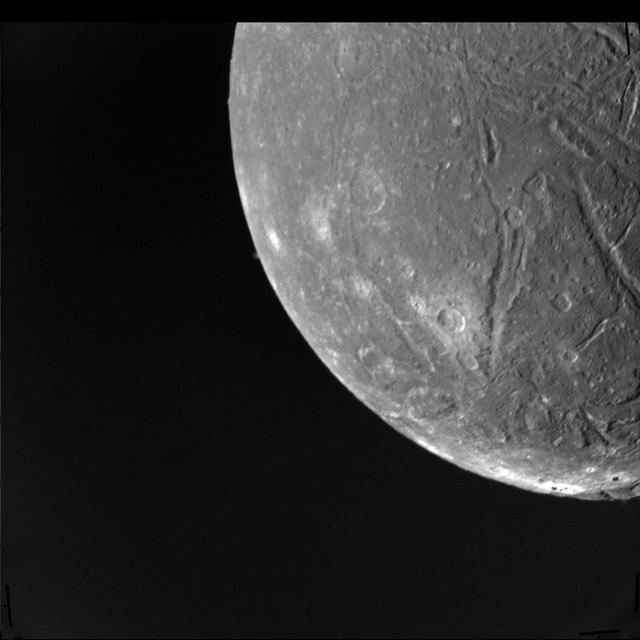
This picture is part of NASA Voyager 2 imaging sequence of Ariel, a moon of Uranus taken on January 24, 1986. The complexity of Ariel surface indicates that a variety of geologic processes have occurred. http://photojournal.jpl.nasa.gov/catalog/PIA00037
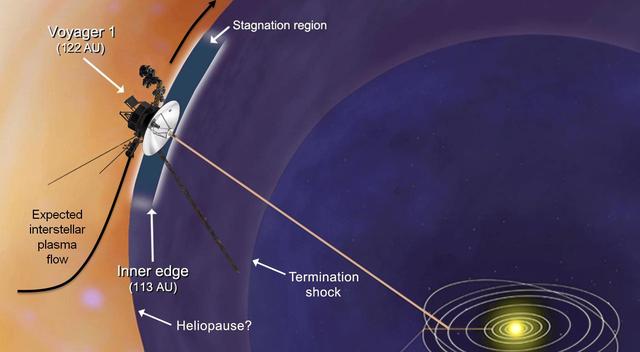
This artist concept shows plasma flows around NASA Voyager 1 spacecraft as it approaches interstellar space. Voyager 1 low-energy charged particle instrument detects the speed of the wind of plasma, or hot ionized gas, streaming off the sun.
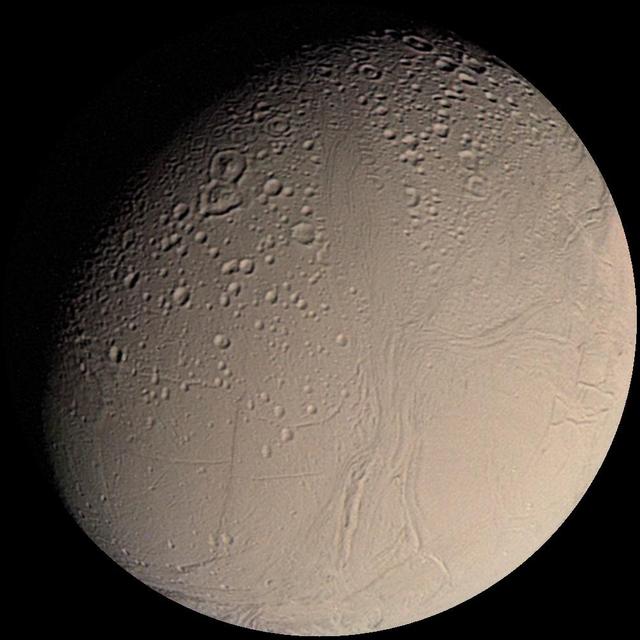
Voyager 2 Color Image of Enceladus, Almost Full Disk http://photojournal.jpl.nasa.gov/catalog/PIA00347
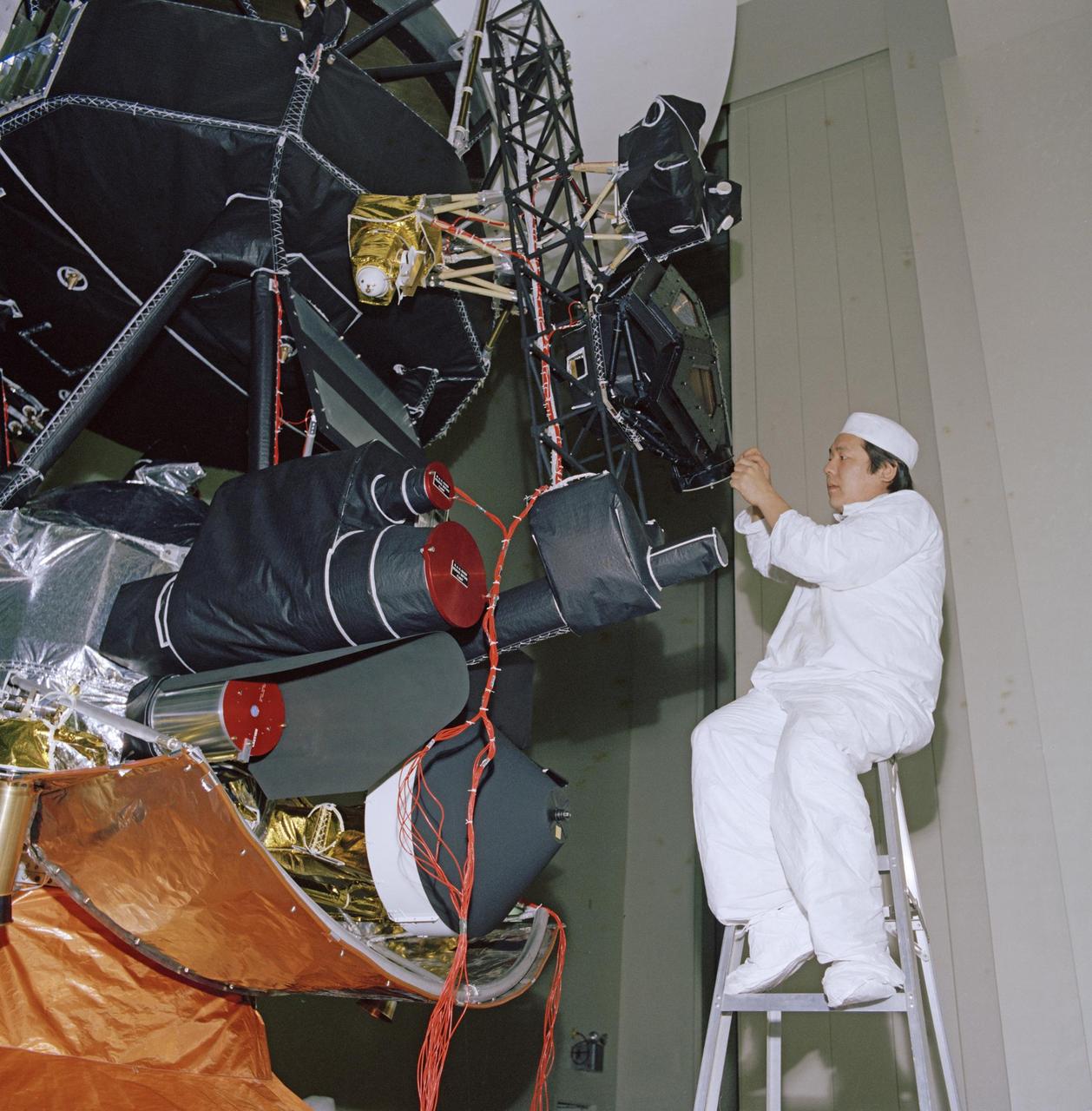
An engineer works on vibration acoustics and pyro shock testing for one of NASA's Voyager spacecraft on November 18, 1976. Several of the spacecraft's science instruments are visible at left. https://photojournal.jpl.nasa.gov/catalog/PIA21733
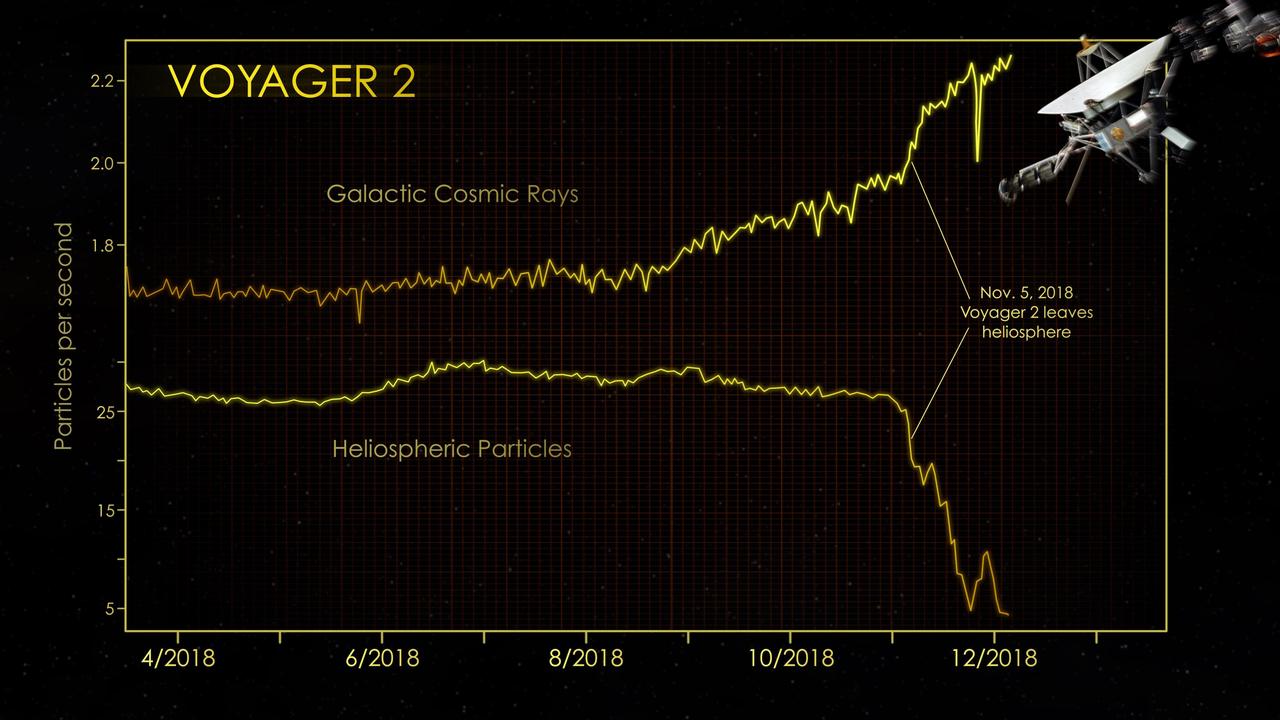
At the end of 2018, the cosmic ray subsystem (CRS) aboard NASA's Voyager 2 spacecraft provided evidence that Voyager 2 had left the heliosphere (the plasma bubble the Sun blows around itself). There were steep drops in the rate at which particles that originate inside the heliosphere hit the instrument's radiation detector. At the same time, there were significant increases in the rate at which particles that originate outside our heliosphere (also known as galactic cosmic rays) hit the detector. The graphs show data from Voyager 2's CRS, which averages the number of particle hits over a six-hour block of time. CRS detects both lower-energy particles that originate inside the heliosphere (greater than 0.5 MeV) and higher-energy particles that originate farther out in the galaxy (greater than 70 MeV). https://photojournal.jpl.nasa.gov/catalog/PIA22924
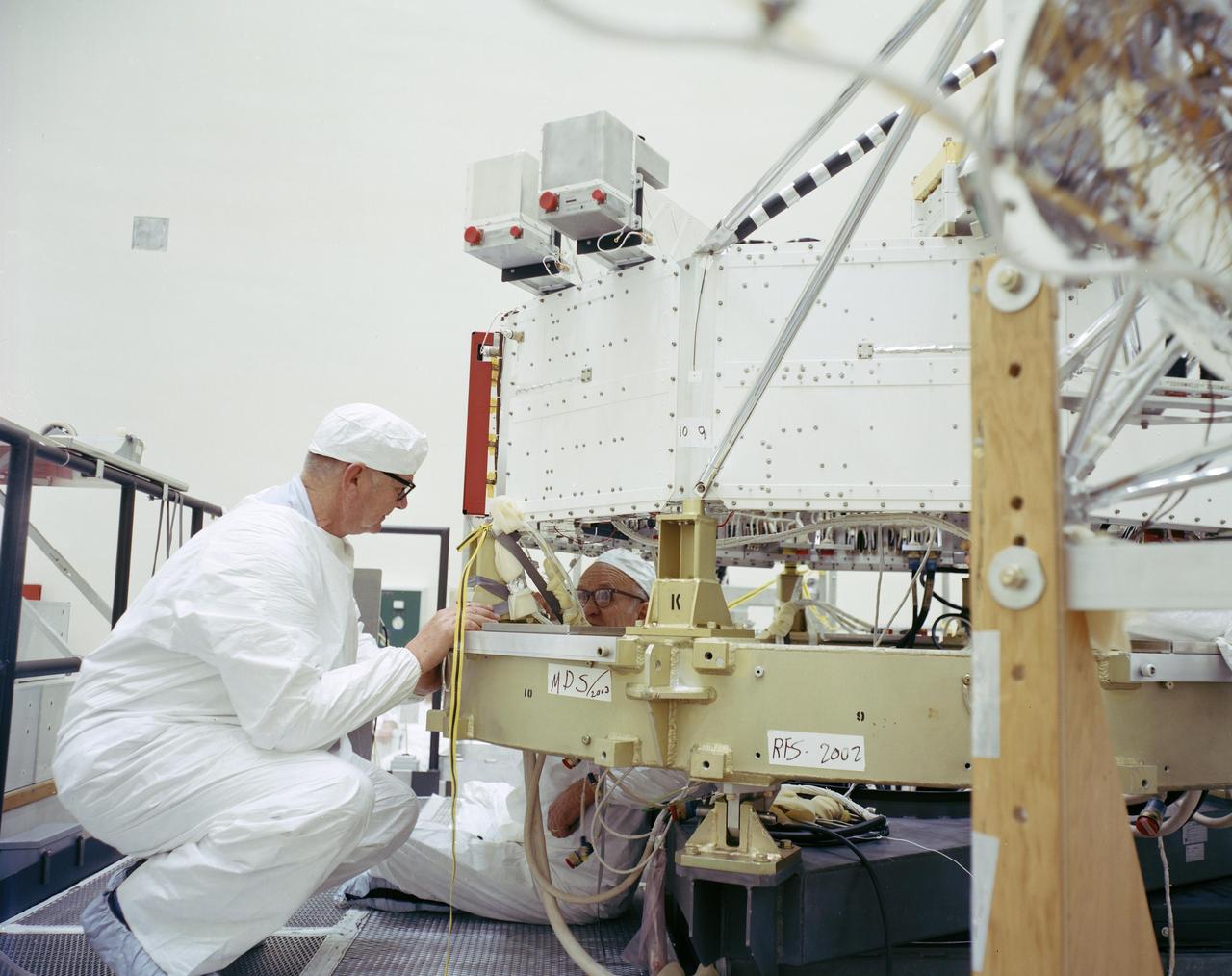
This archival photo shows engineers at NASA's Jet Propulsion Laboratory working on the 10-sided central structure, or "bus," of the Voyager 2 spacecraft on February 24,1977. https://photojournal.jpl.nasa.gov/catalog/PIA21478
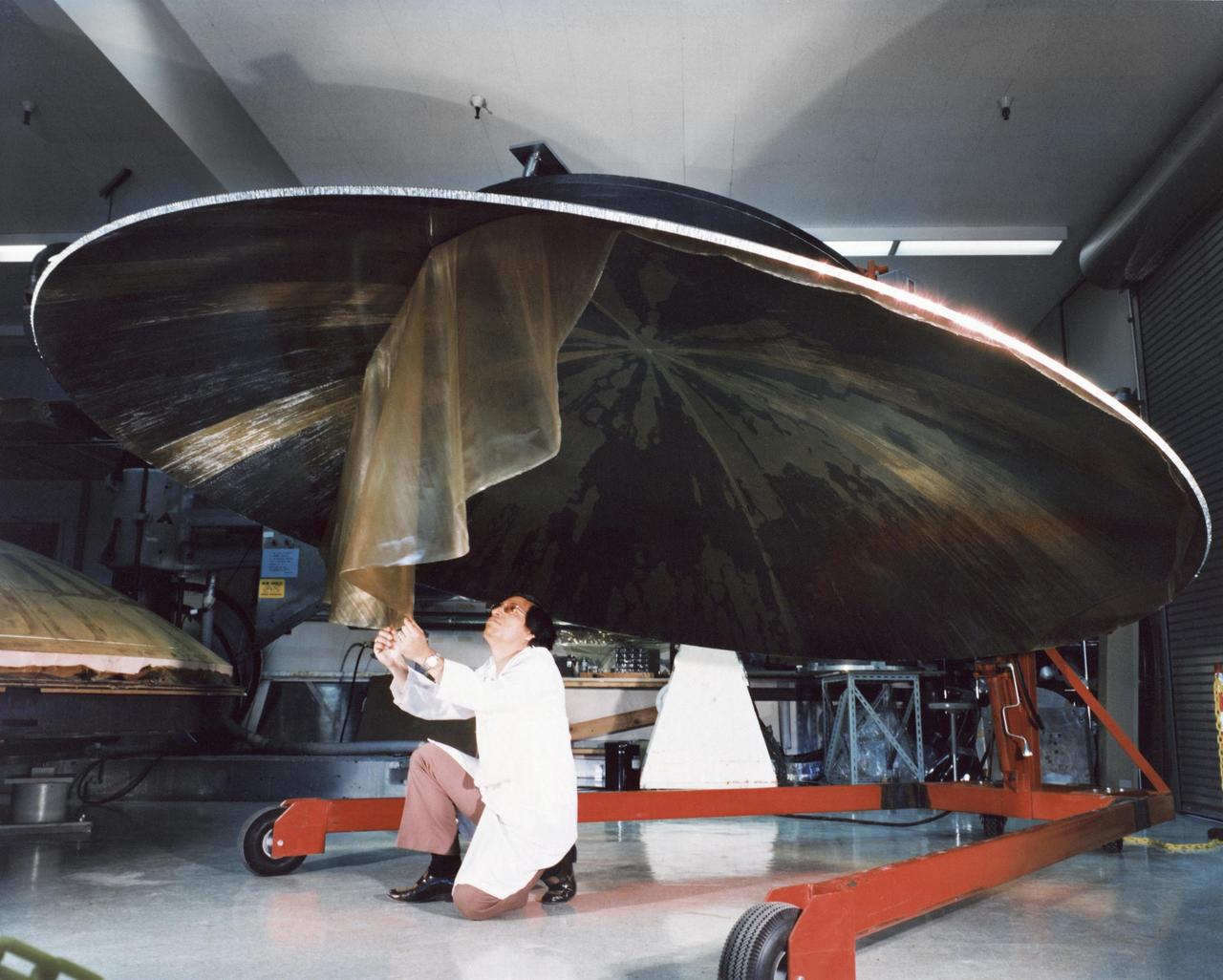
This archival photo shows an engineer working on the construction of a large, dish-shaped Voyager high-gain antenna. The picture was taken on July 9, 1976. https://photojournal.jpl.nasa.gov/catalog/PIA21480
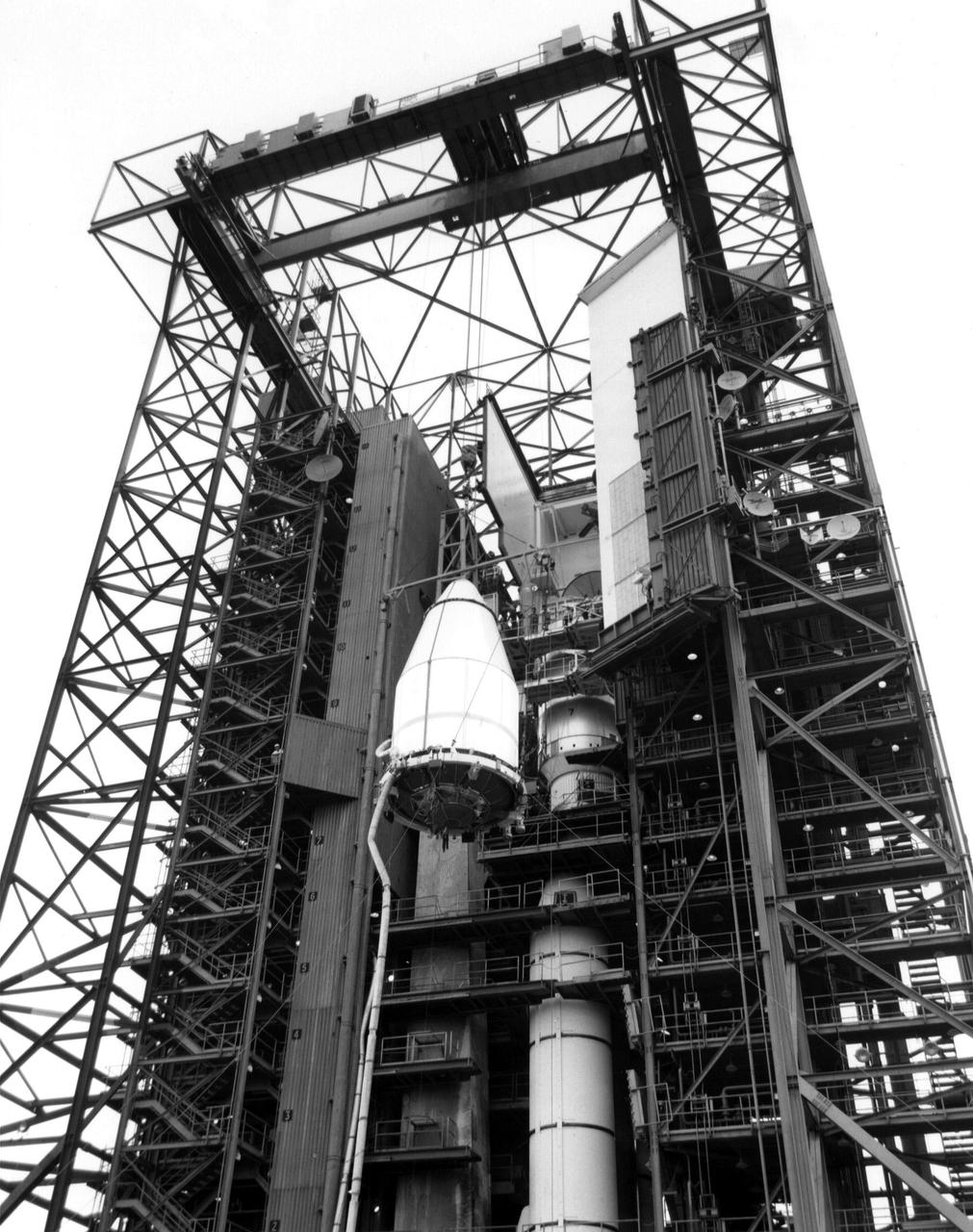
NASA's Voyager 2 spacecraft, encapsulated within its payload fairing, is seen on August 5, 1977. It launched atop the Titan/Centaur-7 launch vehicle from Cape Canaveral Air Force Station in Florida on August 20, 1977, at 10:29 a.m. local time. https://photojournal.jpl.nasa.gov/catalog/PIA21742
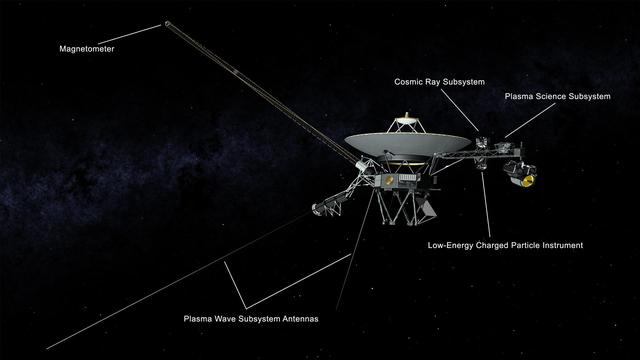
This illustration of NASA's Voyager 2 spacecraft shows the location of the onboard science instruments that are still operating: the magnetometer, the cosmic ray subsystem, the plasma science experiment, the low-energy charged particle instrument and the antennas used by the plasma wave subsystem. https://photojournal.jpl.nasa.gov/catalog/PIA22915
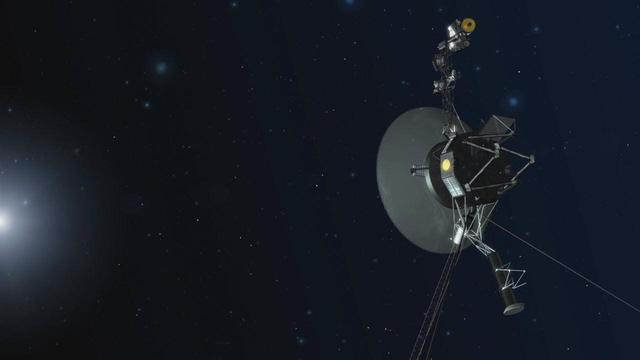
An artist concept depicting one of NASA's twin Voyager spacecraft. Humanity's farthest and longest-lived spacecraft are celebrating 40 years in August and September 2017. https://photojournal.jpl.nasa.gov/catalog/PIA21839
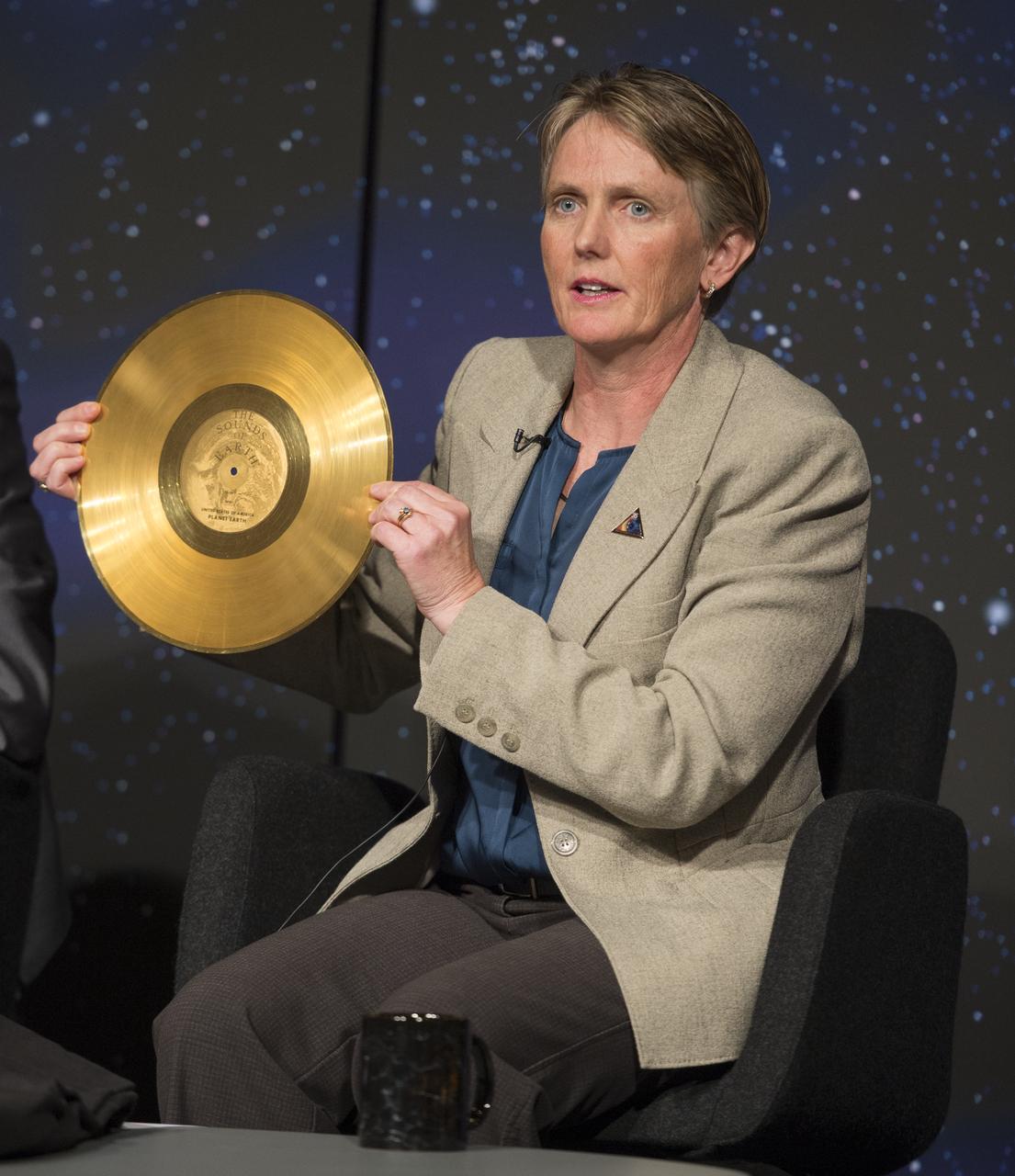
Suzanne Dodd, Voyager project manager, NASA's Jet Propulsion Lab (JPL) holds a replica of the golden record carried on Voyager at a news conference on NASA's Voyager 1 spacecraft, Thursday, Sept. 12, 2013 at NASA Headquarters in Washington. The Golden Record was intended to communicate a story of our world to extraterrestrials. NASA's Voyager 1 spacecraft officially is the first human-made object to venture into interstellar space. The 36-year-old probe is about 12 billion miles (19 billion kilometers) from our sun. New and unexpected data indicate Voyager 1 has been traveling for about one year through plasma, or ionized gas, present in the space between stars. A report on the analysis of this new data is published in Thursday's edition of the journal Science. Photo Credit: (NASA/Carla Cioffi)
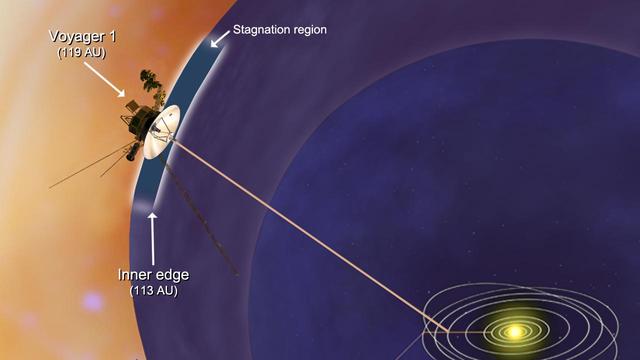
NASA Voyager 1 spacecraft has entered a new region between our solar system and interstellar space, which scientists are calling the stagnation region as depicted in this artist rendering.
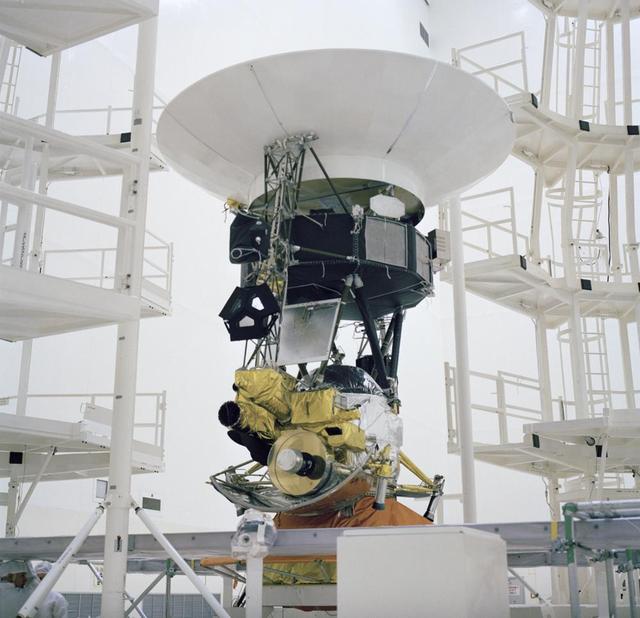
This archival photo shows the encapsulation of the Voyager Development Test Model at NASA's Kennedy Space Center's Eastern Test Range. The picture was taken on October 8, 1976. https://photojournal.jpl.nasa.gov/catalog/PIA21730
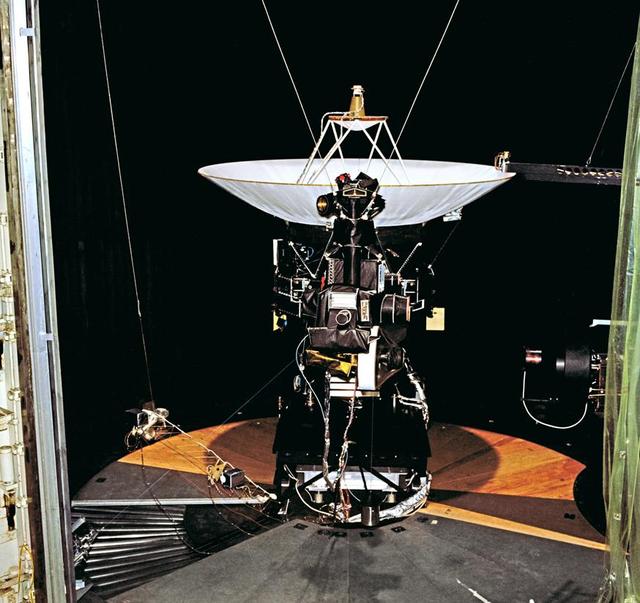
This archival photo shows the Voyager proof test model, which did not fly in space, in the 25-foot space simulator chamber at NASA's Jet Propulsion Laboratory, Pasadena, California. https://photojournal.jpl.nasa.gov/catalog/PIA21726

This archival photo shows the Voyager proof test model, which did not fly in space, in the 25-foot space simulator chamber at NASA's Jet Propulsion Laboratory on December 3, 1976. https://photojournal.jpl.nasa.gov/catalog/PIA21735
Voyager 1 has entered interstellar space. NASA spacecraft, which rose from Earth on a September morning 36 years ago, has traveled farther than anyone, or anything, in history.

Features as small as 100 km 62 miles across can be seen in this color image of Neptune satellite Triton, photographed by NASA Voyager 2 on Aug. 20, 1989, while it was still 5.4 million km 3.3 million miles from Neptune.
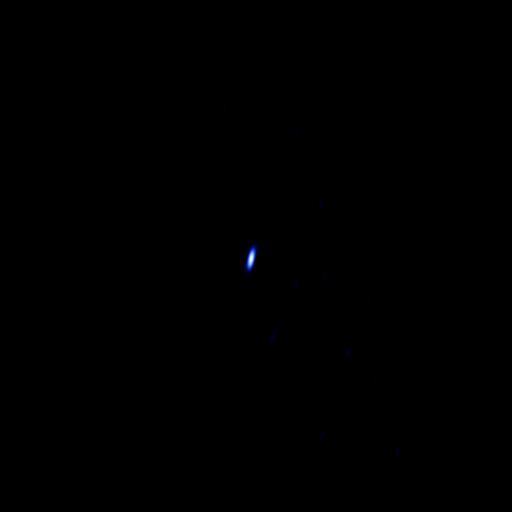
Radio telescopes cannot see Voyager 1 in visible light, but rather see the spacecraft signal in radio light. This image of Voyager 1 signal on Feb. 21, 2013. At the time, Voyager 1 was 11.5 billion miles 18.5 billion kilometers away.
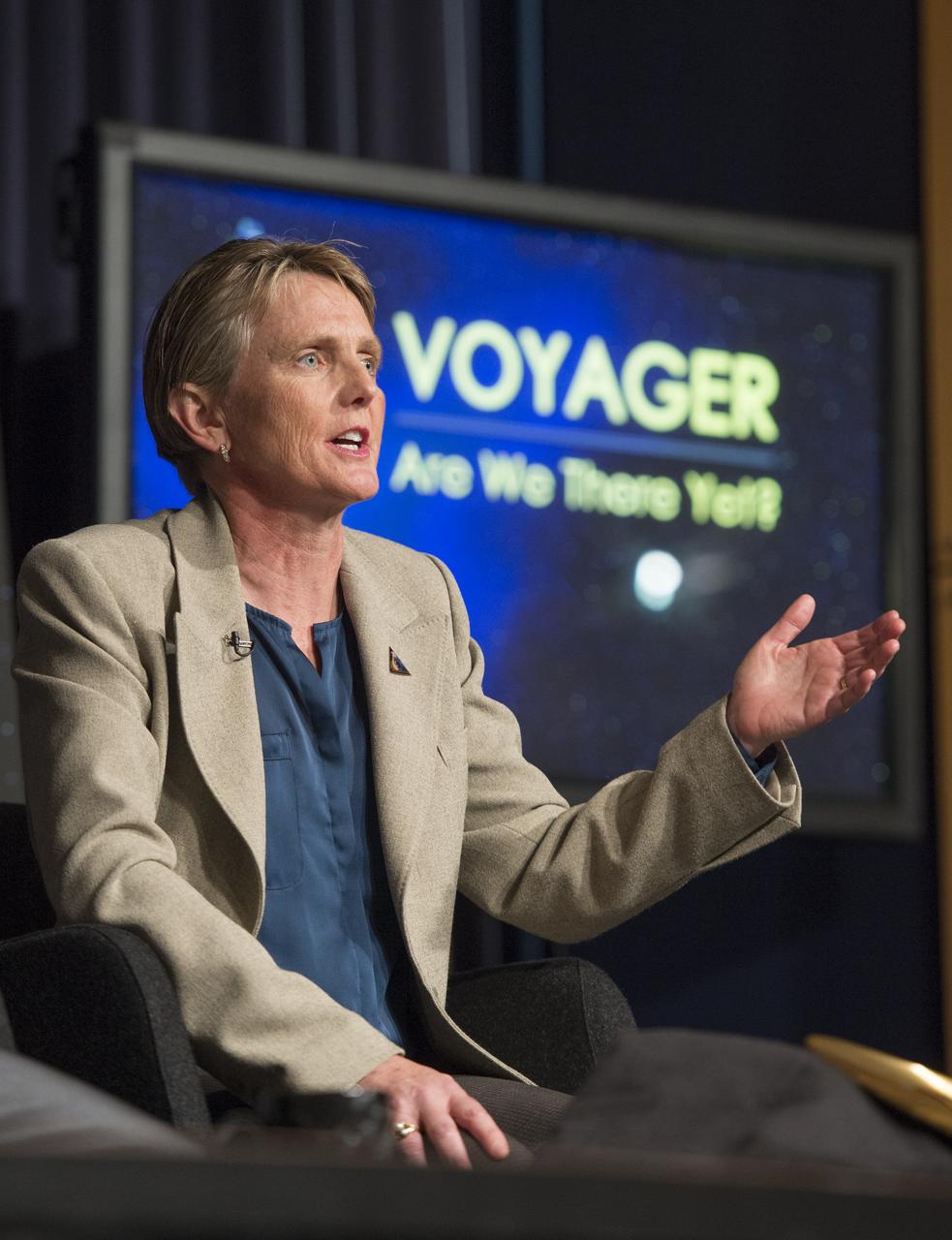
Suzanne Dodd, Voyager project manager, NASA's Jet Propulsion Lab (JPL) speaks at a news conference on NASA's Voyager 1 spacecraft, Thursday, Sept. 12, 2013 at NASA Headquarters in Washington. NASA's Voyager 1 spacecraft officially is the first human-made object to venture into interstellar space. The 36-year-old probe is about 12 billion miles (19 billion kilometers) from our sun. New and unexpected data indicate Voyager 1 has been traveling for about one year through plasma, or ionized gas, present in the space between stars. A report on the analysis of this new data is published in Thursday's edition of the journal Science. Photo Credit: (NASA/Carla Cioffi)
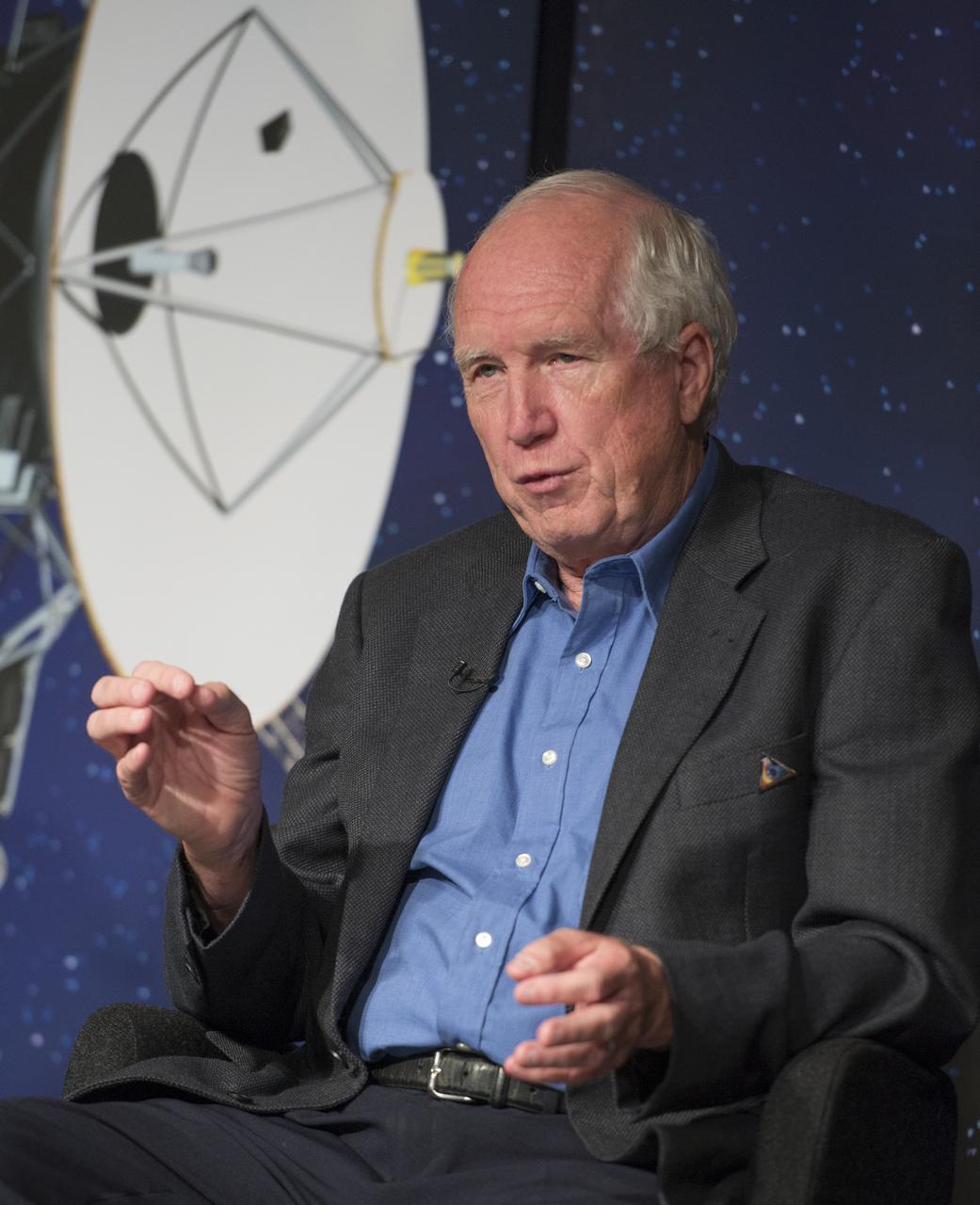
Don Gurnett, Voyager plasma wave investigation principal investigator, University of Iowa, speaks at a news conference on NASA's Voyager 1 spacecraft, Thursday, Sept. 12, 2013 at NASA Headquarters in Washington. NASA's Voyager 1 spacecraft officially is the first human-made object to venture into interstellar space. The 36-year-old probe is about 12 billion miles (19 billion kilometers) from our sun. New and unexpected data indicate Voyager 1 has been traveling for about one year through plasma, or ionized gas, present in the space between stars. A report on the analysis of this new data is published in Thursday's edition of the journal Science. Photo Credit: (NASA/Carla Cioffi)
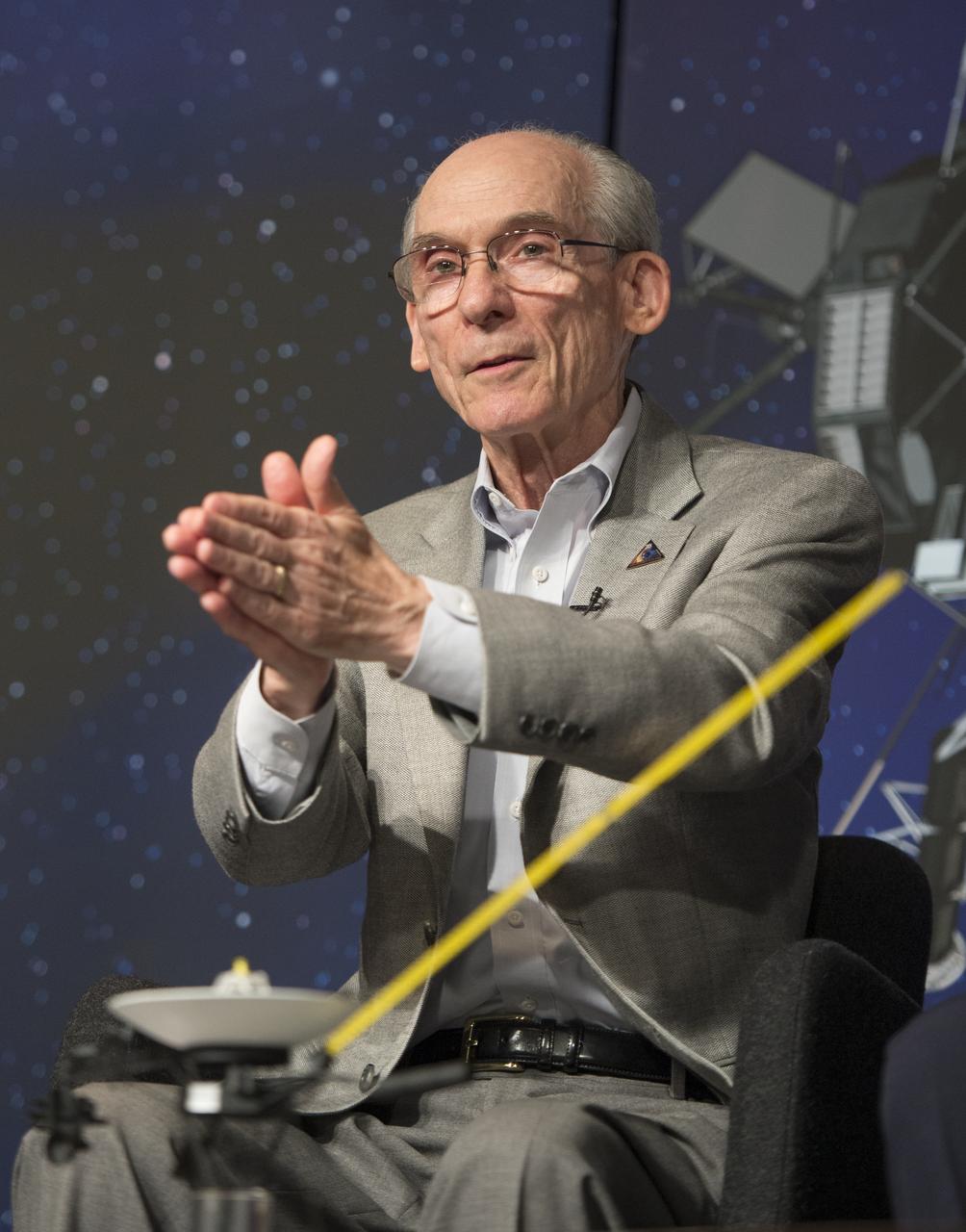
Ed Stone, Voyager project scientist, California Institute of Technology, is seen as he speaks at a news conference on NASA's Voyager 1 spacecraft, Thursday, Sept. 12, 2013 at NASA Headquarters in Washington. NASA's Voyager 1 spacecraft officially is the first human-made object to venture into interstellar space. The 36-year-old probe is about 12 billion miles (19 billion kilometers) from our sun. New and unexpected data indicate Voyager 1 has been traveling for about one year through plasma, or ionized gas, present in the space between stars. A report on the analysis of this new data is published in Thursday's edition of the journal Science. Photo Credit: (NASA/Carla Cioffi)

This artist's concept puts solar system distances -- and the travels of NASA's Voyager 2 spacecraft -- in perspective. The scale bar is in astronomical units, with each set distance beyond 1 AU representing 10 times the previous distance. One AU is the distance from the Sun to Earth, which is about 93 million miles, or 150 million kilometers. Neptune, the most distant planet from the Sun, is about 30 AU. Much of the solar system is actually in interstellar space. Informally, the term "solar system" is often used to mean the space out to the last planet. Scientific consensus, however, says the solar system goes out to the Oort Cloud, the source of the comets that swing by our sun on long time scales. Beyond the outer edge of the Oort Cloud, the gravity of other stars begins to dominate that of the Sun. The inner edge of the main part of the Oort Cloud could be as close as 1,000 AU from our Sun. The outer edge is estimated to be around 100,000 AU. Voyager 2, the second farthest human-made object after Voyager 1, is around 119 AU from the Sun. Indications from the scientific instruments suggest Voyager 2 passed beyond our heliosphere (the bubble of plasma the Sun blows around itself) and into interstellar space (the space between stars) in November 2018. The heliosphere has a turbulent outer boundary known as the heliosheath. The termination shock is the inner boundary of the heliosheath and the heliopause is the outer boundary, beyond which lies interstellar space. Voyager 2 crossed the termination shock at 84 AU in August 2007. It will take about 300 years for Voyager 2 to reach the inner edge of the Oort Cloud and possibly about 30,000 years to fly beyond it. Voyager 2 is heading away from the Sun about 36 degrees out of the ecliptic plane (plane of the planets) to the south, toward the constellations of Sagittarius and Pavo. In about 40,000 years, Voyager 2 will be closer to another star than our own Sun, coming within about 1.7 light years of a star called Ross 248, a small star in the constellation of Andromeda. https://photojournal.jpl.nasa.gov/catalog/PIA22921
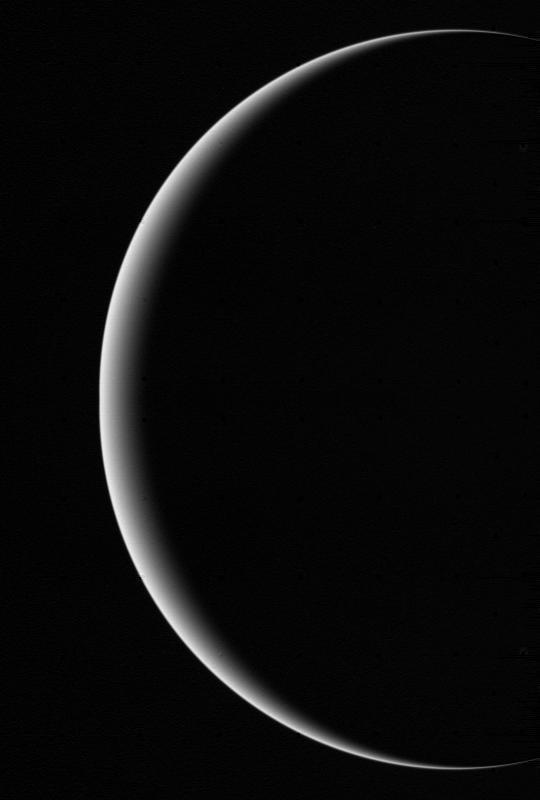
This image shows a crescent Uranus, a view that Earthlings never witnessed until Voyager 2 flew near and then beyond Uranus on Jan 24, 1986. http://photojournal.jpl.nasa.gov/catalog/PIA00346

The Voyager 2 spacecraft, encapsulated within its payload fairing, is seen in August 1977, as it was being hoisted upward for attachment to its launch vehicle at NASA's Kennedy Space Center in Cape Canaveral, Florida. https://photojournal.jpl.nasa.gov/catalog/PIA21727
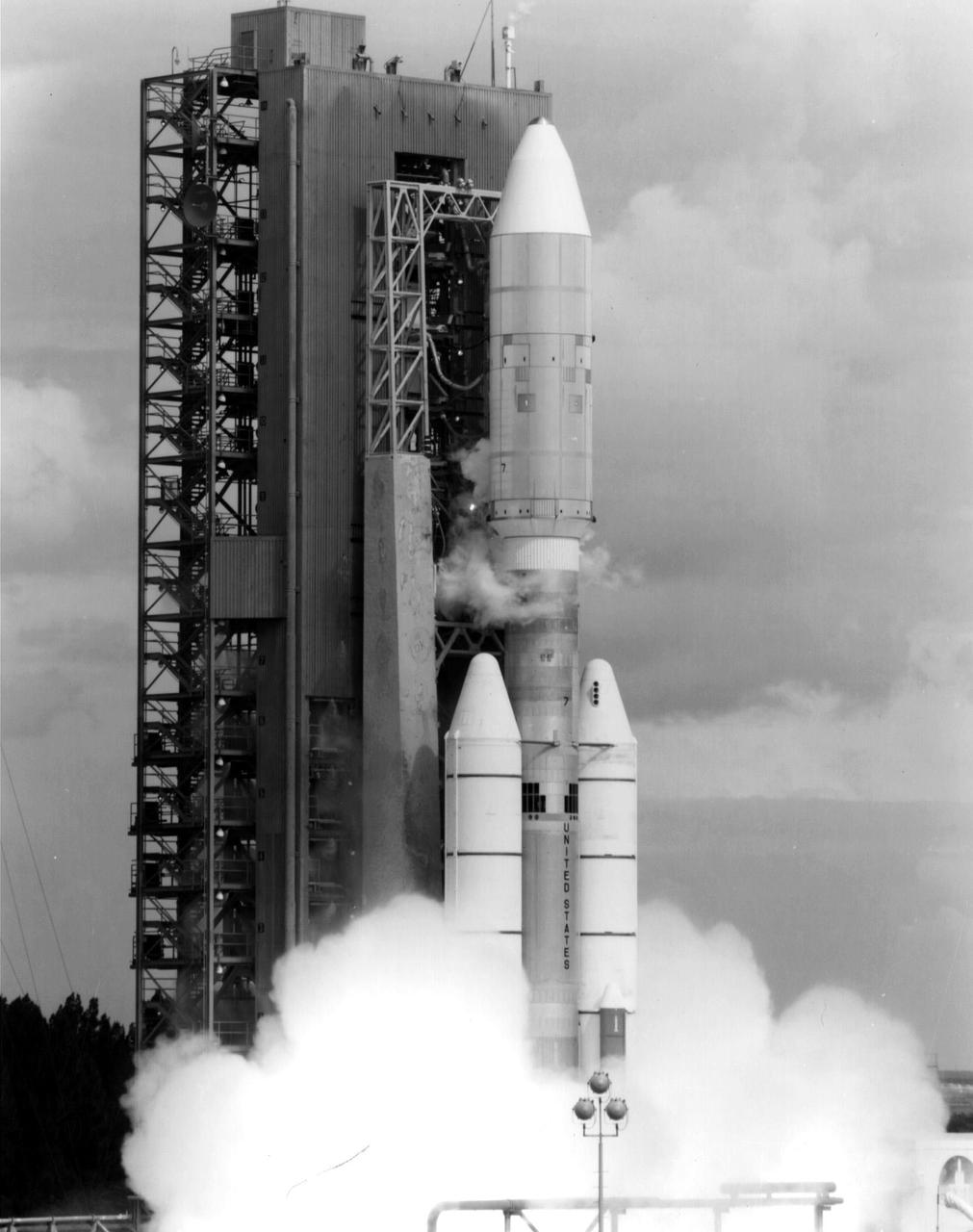
NASA's Voyager 2 spacecraft launched atop its Titan/Centaur-7 launch vehicle from Cape Canaveral Air Force Station in Florida on August 20, 1977, at 10:29 a.m. local time. https://photojournal.jpl.nasa.gov/catalog/PIA21745
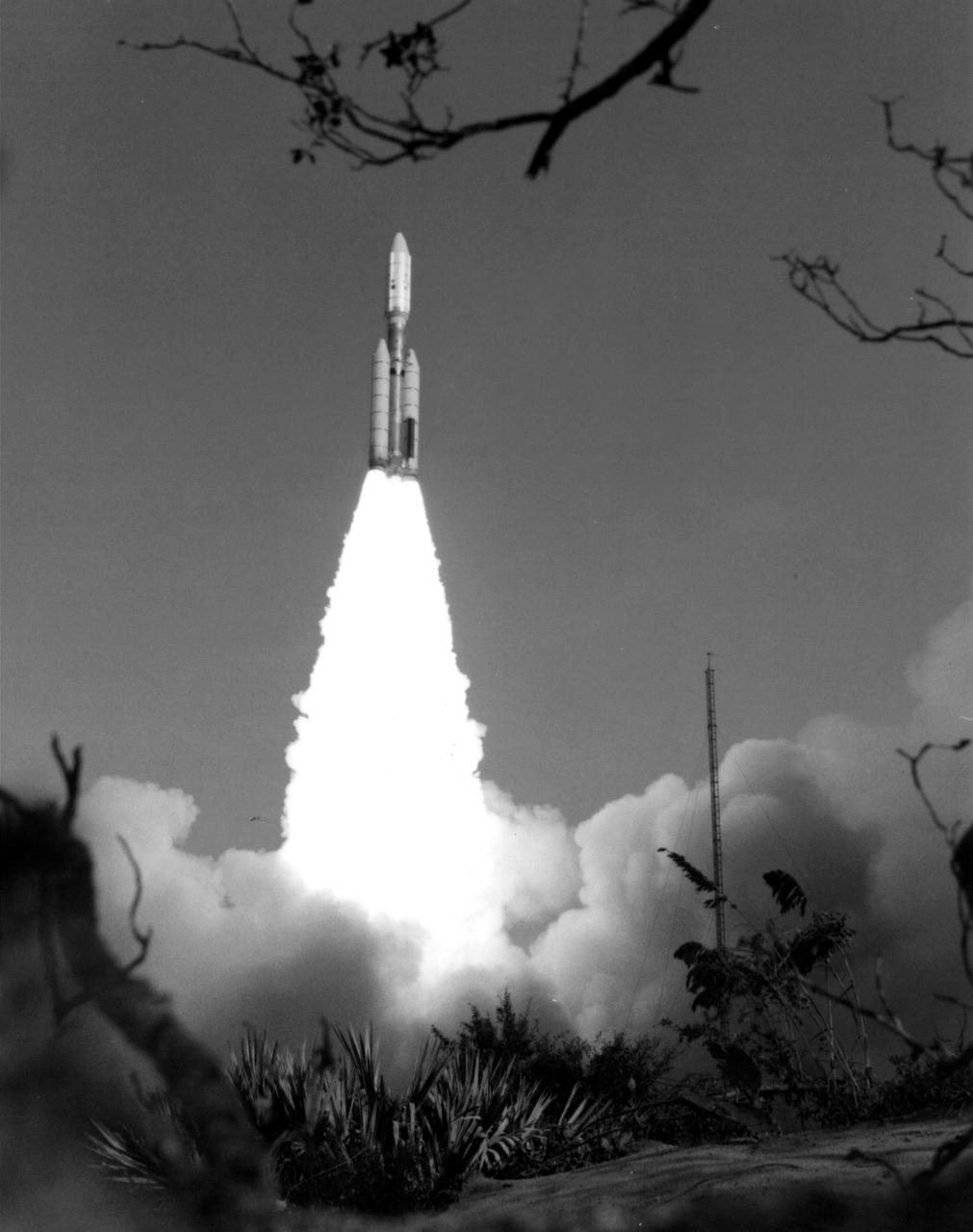
NASA's Voyager 1 spacecraft launched atop its Titan/Centaur-6 launch vehicle from the Kennedy Space Center Launch Complex in Florida on September 5, 1977, at 8:56 a.m. local time. https://photojournal.jpl.nasa.gov/catalog/PIA21746
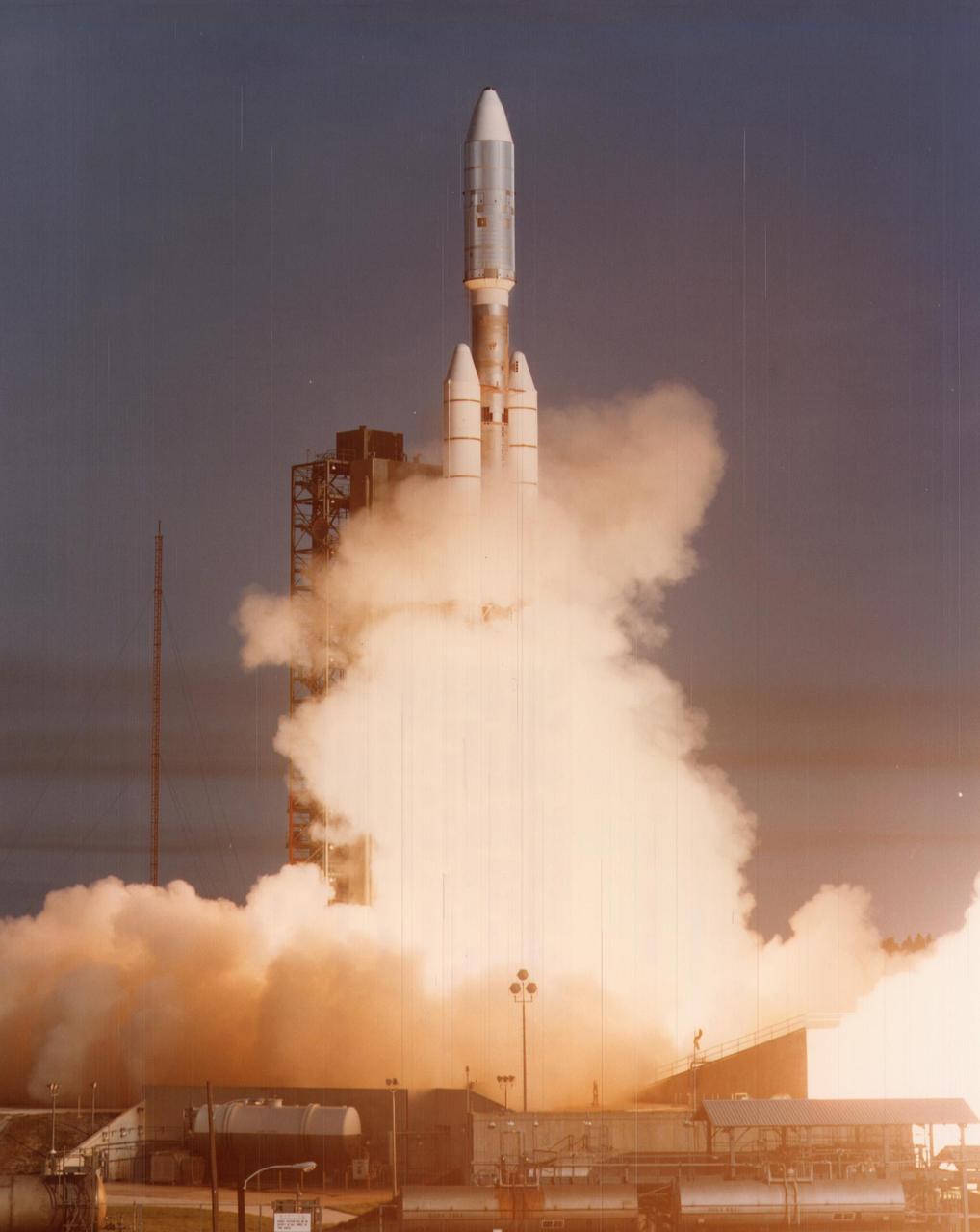
NASA's Voyager 1 spacecraft launched atop its Titan/Centaur-6 launch vehicle from the Kennedy Space Center Launch Complex in Florida on September 5, 1977, at 8:56 a.m. local time. https://photojournal.jpl.nasa.gov/catalog/PIA21747

NASA's Voyager 2 spacecraft launched atop its Titan/Centaur-7 launch vehicle from Cape Canaveral Air Force Station in Florida on August 20, 1977, at 10:29 a.m. local time. https://photojournal.jpl.nasa.gov/catalog/PIA21744

This picture of Neptune was produced from the last whole planet images taken through the green and orange filters on NASA's Voyager 2 narrow angle camera. The images were taken at a range of 4.4 million miles from the planet, 4 days and 20 hours before closest approach. The picture shows the Great Dark Spot and its companion bright smudge; on the west limb the fast moving bright feature called Scooter and the little dark spot are visible. These clouds were seen to persist for as long as Voyager's cameras could resolve them. North of these, a bright cloud band similar to the south polar streak may be seen. http://photojournal.jpl.nasa.gov/catalog/PIA01492
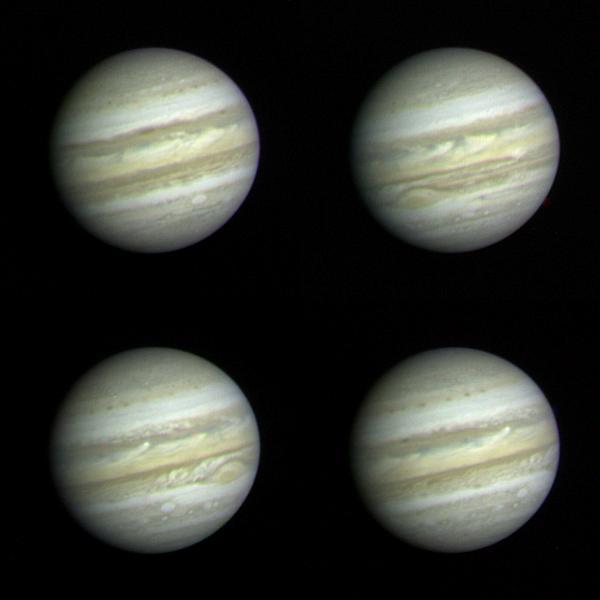
These Jupiter photographs are part of a set taken by NASA Voyager 1 on December 10 and 11, 1978 from a distance of 83 million km 52 million miles or more than half the distance from the Earth to the sun. At this range, Voyager 1 is able to record more detail on the giant planet than the very best ground-based telescopes. The highest resolution ever obtained on the Jovian disk was recorded by Pioneer 11 four years ago. Voyager, however, has longer focal-length optics than Pioneer, and while nearly three months from encounter (~ March 1979) was able to achieve higher resolution than that obtained by Pioneer only 24 hours from its encounter on 3 December 1974. Jupiter's colorful and turbulent atmosphere is evident in these photographs. The entire visible surface of the planet is made up of multiple layers of clouds, composed primarily of ammonia ice crystals colored by small amounts of materials of unknown composition. The Great Red Spot, seen to the lower left of 2 and lower right of 3, is now recovering from a period of relative inconspicuousness. An atmospheric system larger than the Earth and more than 100 years old, the Great Red Spot remains a mystery and a challenge to Voyager instruments. A bright convective cloud (center of and right of center in 4) displays a plume which has been swept westward (to the left) by local currents in the planet's equatorial wind system. Below and to the left and right of the Great Red Spot are a pair of white oval clouds; a third can be seen in 1. All three were formed almost 40 years ago and are the second oldest class of discrete features identified in the Jovian atmosphere. Each of the pictures was produced from blue, green, and orange originals in JPL's Image Processing Laboratory. http://photojournal.jpl.nasa.gov/catalog/PIA00454
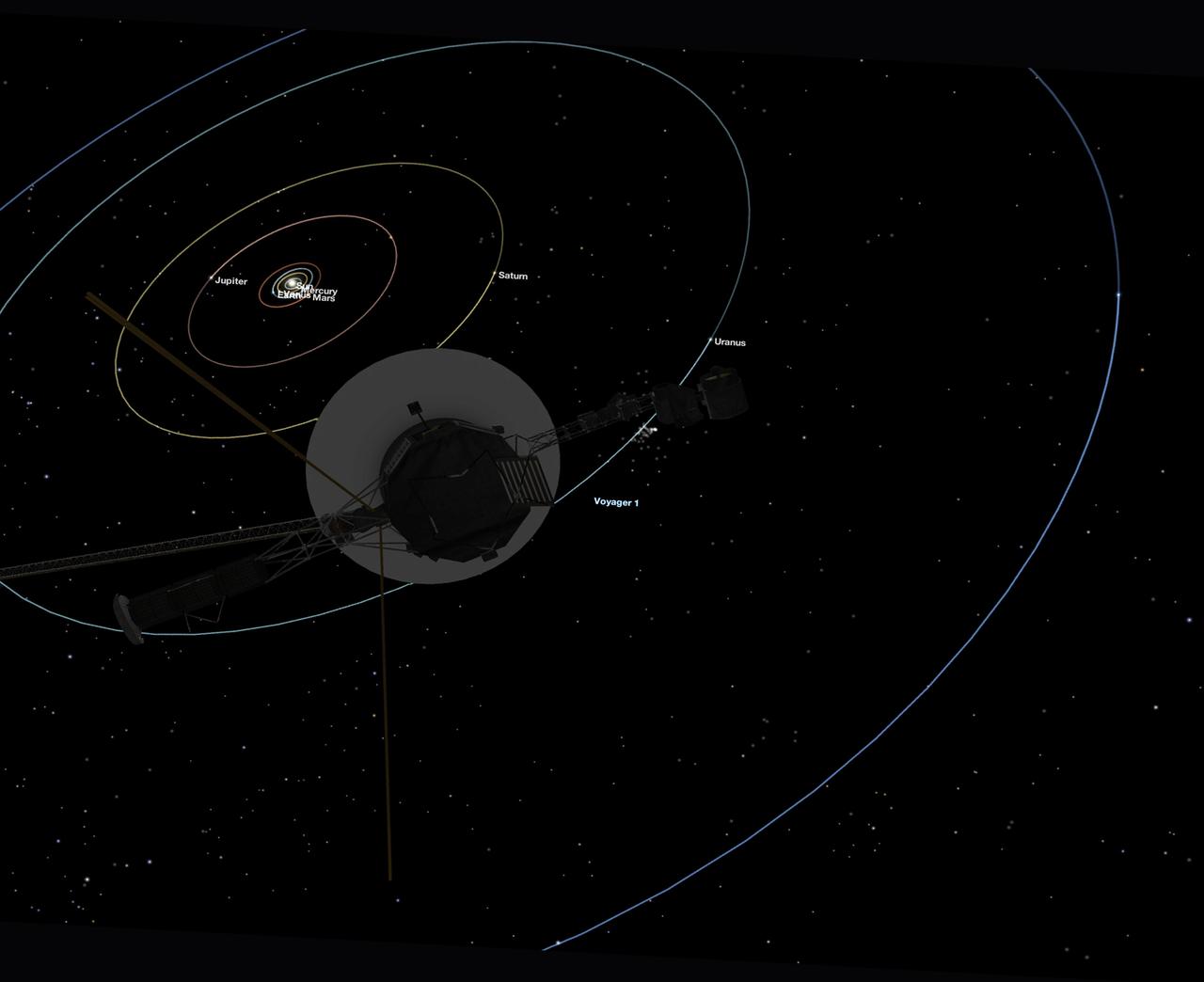
This simulated view, made using NASA's Eyes on the Solar System app, approximates Voyager 1's perspective when it took its final series of images known as the "Family Portrait of the Solar System," including the "Pale Blue Dot" image. https://photojournal.jpl.nasa.gov/catalog/PIA23681

This artist concept depicts NASA Voyager 1 spacecraft entering interstellar space. Interstellar space is dominated by the plasma, or ionized gas, that was ejected by the death of nearby giant stars millions of years ago.
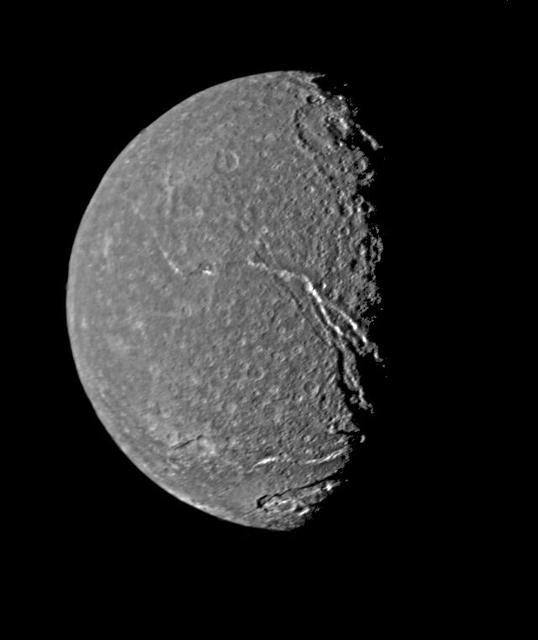
On Jan. 24, 1986, NASA Voyager 2 returned the highest-resolution picture of Titania, Uranus largest satellite. Abundant impact craters of many sizes pockmark the ancient surface; most prominent features are fault valleys that stretch across Titania. http://photojournal.jpl.nasa.gov/catalog/PIA00039
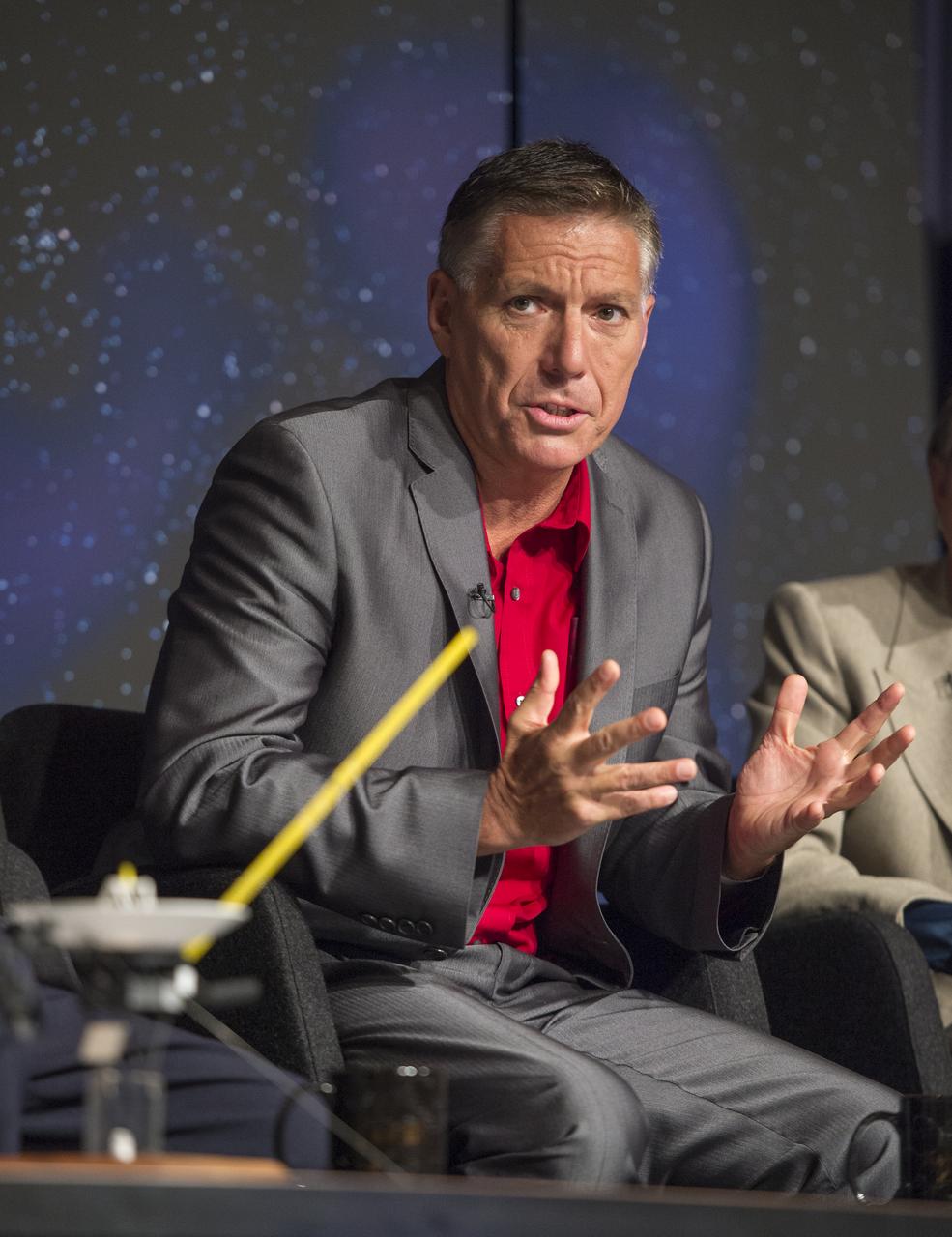
Gary Zank, Department of Space Sciences, Center for Space Plasma and Aeronomics Research (CSPAR), University of Alabama in Huntsville, speaks at a news conference on NASA's Voyager 1 spacecraft, Thursday, Sept. 12, 2013 at NASA Headquarters in Washington. NASA's Voyager 1 spacecraft officially is the first human-made object to venture into interstellar space. The 36-year-old probe is about 12 billion miles (19 billion kilometers) from our sun. New and unexpected data indicate Voyager 1 has been traveling for about one year through plasma, or ionized gas, present in the space between stars. A report on the analysis of this new data is published in Thursday's edition of the journal Science. Photo Credit: (NASA/Carla Cioffi)
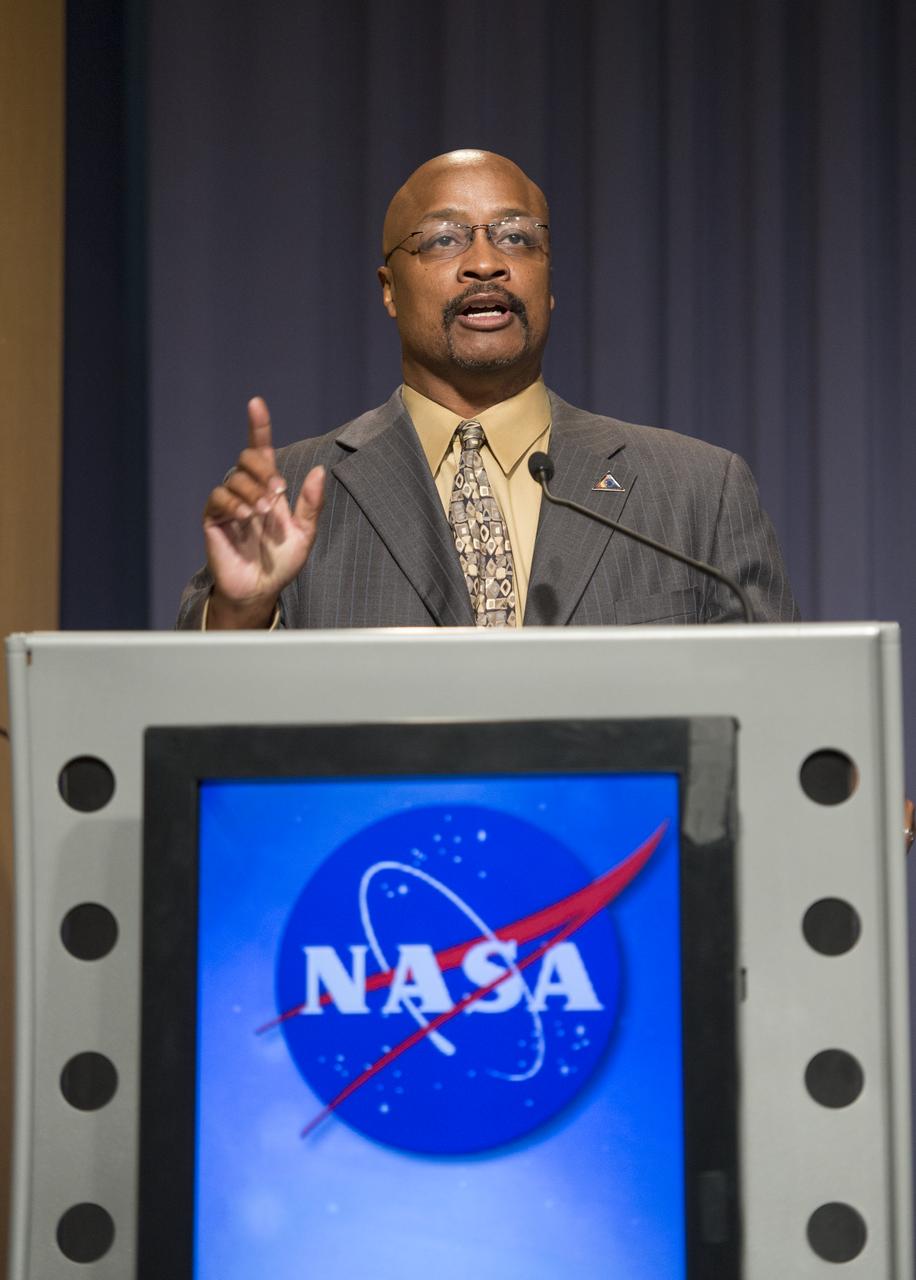
Dwayne Brown, Senior Public Affairs Officer, NASA Science Mission Directorate at NASA Headquarters, kicks off a news conference on NASA's Voyager 1 spacecraft, Thursday, Sept. 12, 2013 in Washington. NASA's Voyager 1 spacecraft officially is the first human-made object to venture into interstellar space. The 36-year-old probe is about 12 billion miles (19 billion kilometers) from our sun. New and unexpected data indicate Voyager 1 has been traveling for about one year through plasma, or ionized gas, present in the space between stars. A report on the analysis of this new data is published in Thursday's edition of the journal Science. Photo Credit: (NASA/Carla Cioffi)
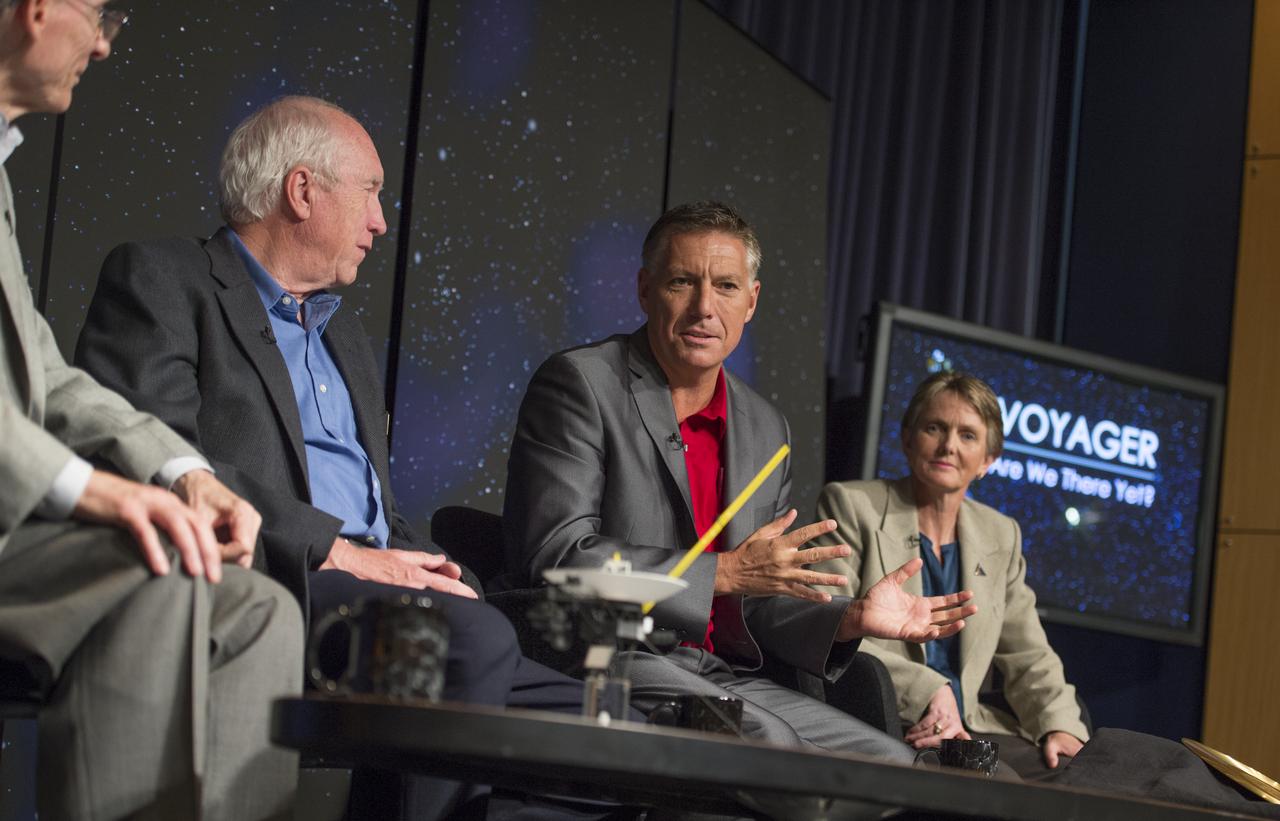
Gary Zank, (second from right) Department of Space Sciences, Center for Space Plasma and Aeronomics Research (CSPAR), University of Alabama in Huntsville, speaks at a news conference on NASA's Voyager 1 spacecraft, Thursday, Sept. 12, 2013 at NASA Headquarters in Washington. NASA's Voyager 1 spacecraft officially is the first human-made object to venture into interstellar space. The 36-year-old probe is about 12 billion miles (19 billion kilometers) from our sun. New and unexpected data indicate Voyager 1 has been traveling for about one year through plasma, or ionized gas, present in the space between stars. A report on the analysis of this new data is published in Thursday's edition of the journal Science. Photo Credit: (NASA/Carla Cioffi)
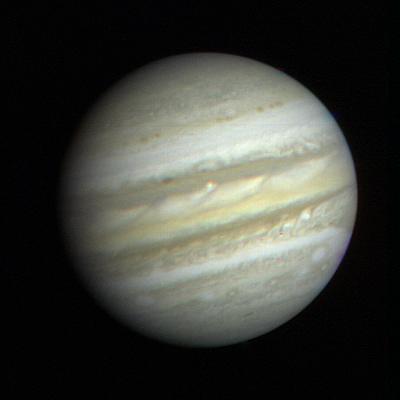
NASAS Voyager 1 took this picture of the planet Jupiter on Jan. 6, 1979, the first in its three-month-long, close-up investigation of the largest planet.

This archival photo shows the Voyager Proof Test Model (in the foreground right of center) undergoing a mechanical preparation and weight center of gravity test at NASA's Jet Propulsion Laboratory, Pasadena, California, on January 12, 1977. https://photojournal.jpl.nasa.gov/catalog/PIA21476
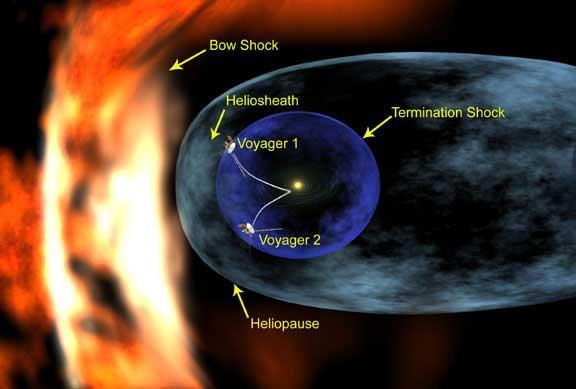
An artist's concept illustrates the positions of the Voyager spacecraft in relation to structures formed around our Sun by the solar wind. Also illustrated is the termination shock, a violent region the spacecraft must pass through before reaching the outer limits of the solar system. At the termination shock, the supersonic solar wind abruptly slows from an average speed of 400 kilometers per second to less than 100 kilometer per second (900,000 to less than 225,000 miles per hour). Beyond the termination shock is the solar system's final frontier, the heliosheath, a vast region where the turbulent and hot solar wind is compressed as it presses outward against the interstellar wind that is beyond the heliopause. A bow shock likely forms as the interstellar wind approaches and is deflected around the heliosphere, forcing it into a teardrop-shaped structure with a long, comet-like tail. The exact location of the termination shock is unknown, and it originally was thought to be closer to the Sun than Voyager 1 currently is. As Voyager 1 cruised ever farther from the Sun, it confirmed that all the planets are inside an immense bubble blown by the solar wind and the termination shock was much more distant. http://photojournal.jpl.nasa.gov/catalog/PIA04927

This archival photo shows the Voyager Proof Test Model undergoing a mechanical preparation and weight center of gravity test at NASA's Jet Propulsion Laboratory, Pasadena, California, on January 12, 1977. The stack of three white cylinders seen near center is a stand-in for the spacecraft's power generators (called RTGs). Above that, a silvery canister holds the spacecraft's magnetometer in its stowed configuration. https://photojournal.jpl.nasa.gov/catalog/PIA21477
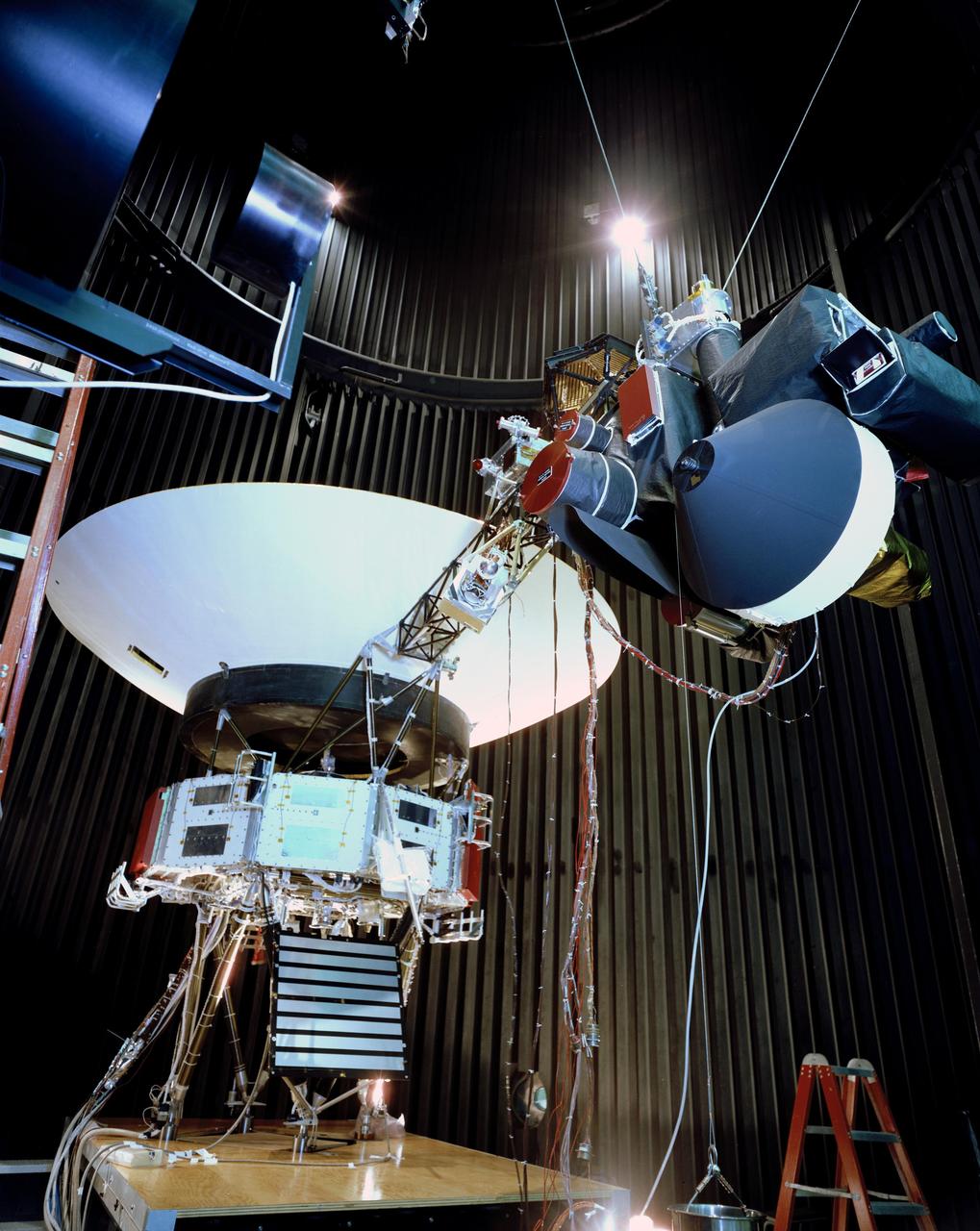
This archival photo shows the Voyager proof test model, which did not fly in space, in the 25-foot space simulator chamber at NASA's Jet Propulsion Laboratory, Pasadena, California, on December 3, 1976. The spacecraft is seen here with its scan platform, which holds several of its science instruments, in the deployed position. https://photojournal.jpl.nasa.gov/catalog/PIA21734
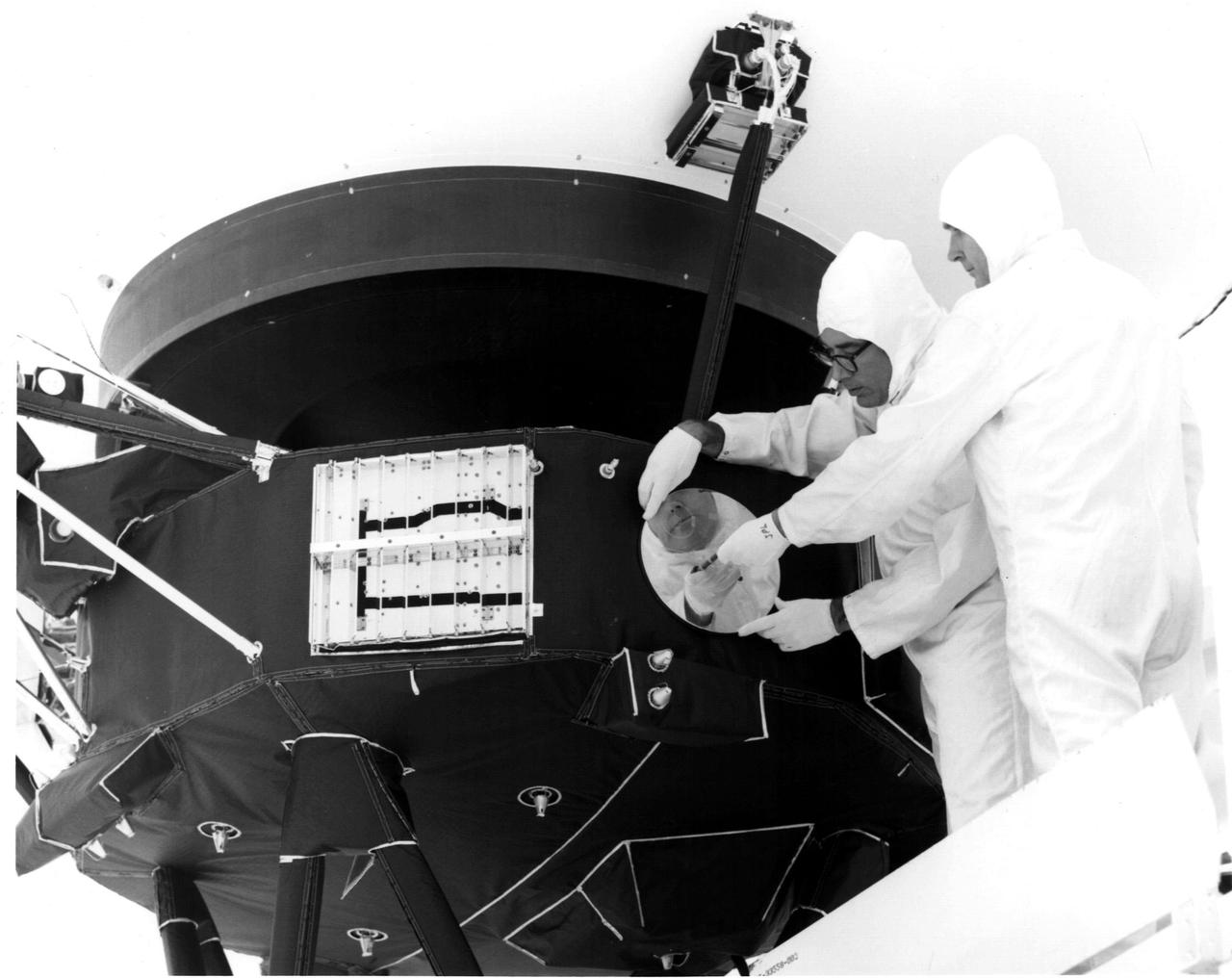
Engineers secure the cover over the Voyager 1 Golden Record in this archival image from 1977. https://photojournal.jpl.nasa.gov/catalog/PIA21740

Ann Druyan, writer/producer and golden record visionary, speaks on a panel at an event to celebrate the 40th Anniversary of the launch of the Voyager 1 and 2 missions, Tuesday, September 5, 2017 at National Geographic Society Headquarters in Washington. Voyager 1 was launched September 5, 1977, with a mission to study Jupiter and Saturn, but now the twin Voyager spacecrafts are on a journey into interstellar space to search for the heliopause, a region never reached by any other spacecraft. Photo Credit: (NASA/Aubrey Gemignani)

Thomas Zurbuchen, NASA associate administrator, Science Mission Directorate, speaks on a panel at an event to celebrate the 40th Anniversary of the launch of the Voyager 1 and 2 missions, Tuesday, September 5, 2017 at National Geographic Society Headquarters in Washington. Voyager 1 was launched September 5, 1977, with a mission to study Jupiter and Saturn, but now the twin Voyager spacecrafts are on a journey into interstellar space to search for the heliopause, a region never reached by any other spacecraft. Photo Credit: (NASA/Aubrey Gemignani)

Thomas Zurbuchen, NASA associate administrator, Science Mission Directorate, is interviewed prior to serving on a panel at an event to celebrate the 40th Anniversary of the launch of the Voyager 1 and 2 missions, Tuesday, September 5, 2017 at National Geographic Society Headquarters in Washington. Voyager 1 was launched September 5, 1977, with a mission to study Jupiter and Saturn, but now the twin Voyager spacecrafts are on a journey into interstellar space to search for the heliopause, a region never reached by any other spacecraft. Photo Credit: (NASA/Aubrey Gemignani)

Gary Knell, President and CEO of National Geographic Society, gives opening remarks at an event to celebrate the 40th Anniversary of the launch of the Voyager 1 and 2 missions, Tuesday, September 5, 2017 at National Geographic Society Headquarters in Washington. Voyager 1 was launched September 5, 1977, with a mission to study Jupiter and Saturn, but now the twin Voyager spacecrafts are on a journey into interstellar space to search for the heliopause, a region never reached by any other spacecraft. Photo Credit: (NASA/Aubrey Gemignani)
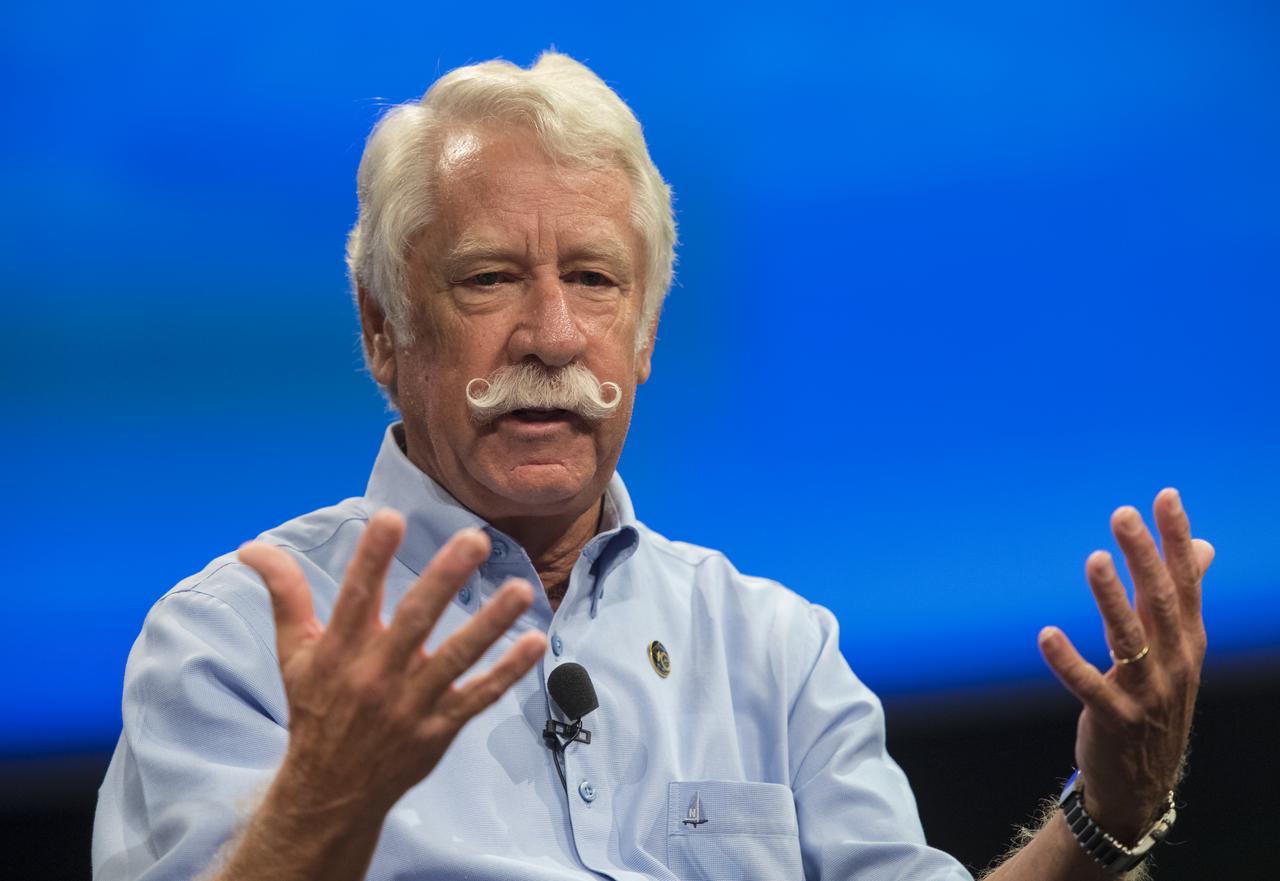
Alan Cummings, Voyager researcher, Caltech, speaks at an event to celebrate the 40th Anniversary of the launch of the Voyager 1 and 2 missions, Tuesday, September 5, 2017 at Smithsonian's National Air and Space Museum in Washington. Voyager 1 was launched September 5, 1977, with a mission to study Jupiter and Saturn, but now the twin Voyager spacecrafts are on a journey into interstellar space to search for the heliopause, a region never reached by any other spacecraft. Photo Credit: (NASA/Aubrey Gemignani)

Ed Stone, Voyager project scientist, speaks at an event to celebrate the 40th Anniversary of the launch of the Voyager 1 and 2 missions, Tuesday, September 5, 2017 at Smithsonian's National Air and Space Museum in Washington. Voyager 1 was launched September 5, 1977, with a mission to study Jupiter and Saturn, but now the twin Voyager spacecrafts are on a journey into interstellar space to search for the heliopause, a region never reached by any other spacecraft. Photo Credit: (NASA/Aubrey Gemignani)
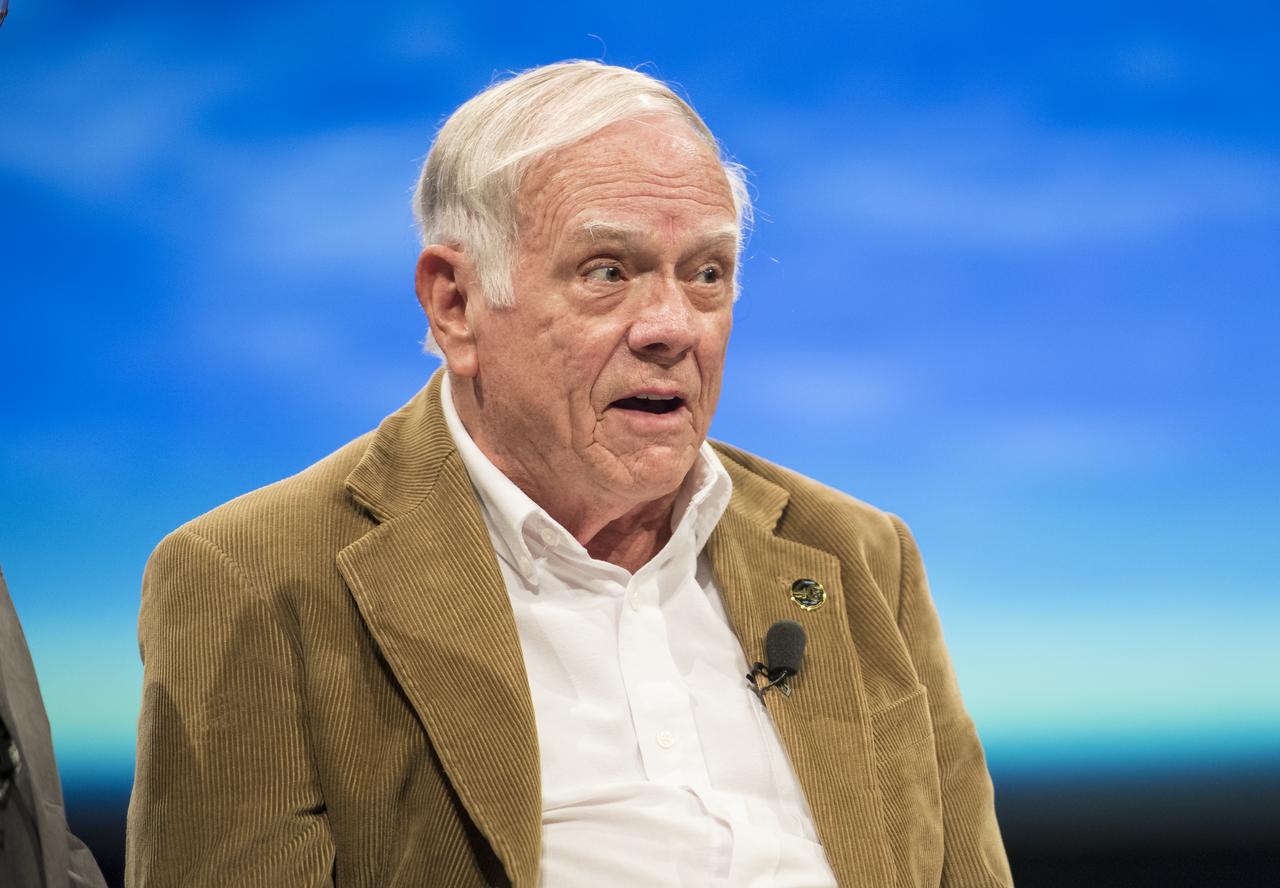
Gary Flandro, Voyager mission grand tour creator, speaks at an event to celebrate the 40th Anniversary of the launch of the Voyager 1 and 2 missions, Tuesday, September 5, 2017 at Smithsonian's National Air and Space Museum in Washington. Voyager 1 was launched September 5, 1977, with a mission to study Jupiter and Saturn, but now the twin Voyager spacecrafts are on a journey into interstellar space to search for the heliopause, a region never reached by any other spacecraft. Photo Credit: (NASA/Aubrey
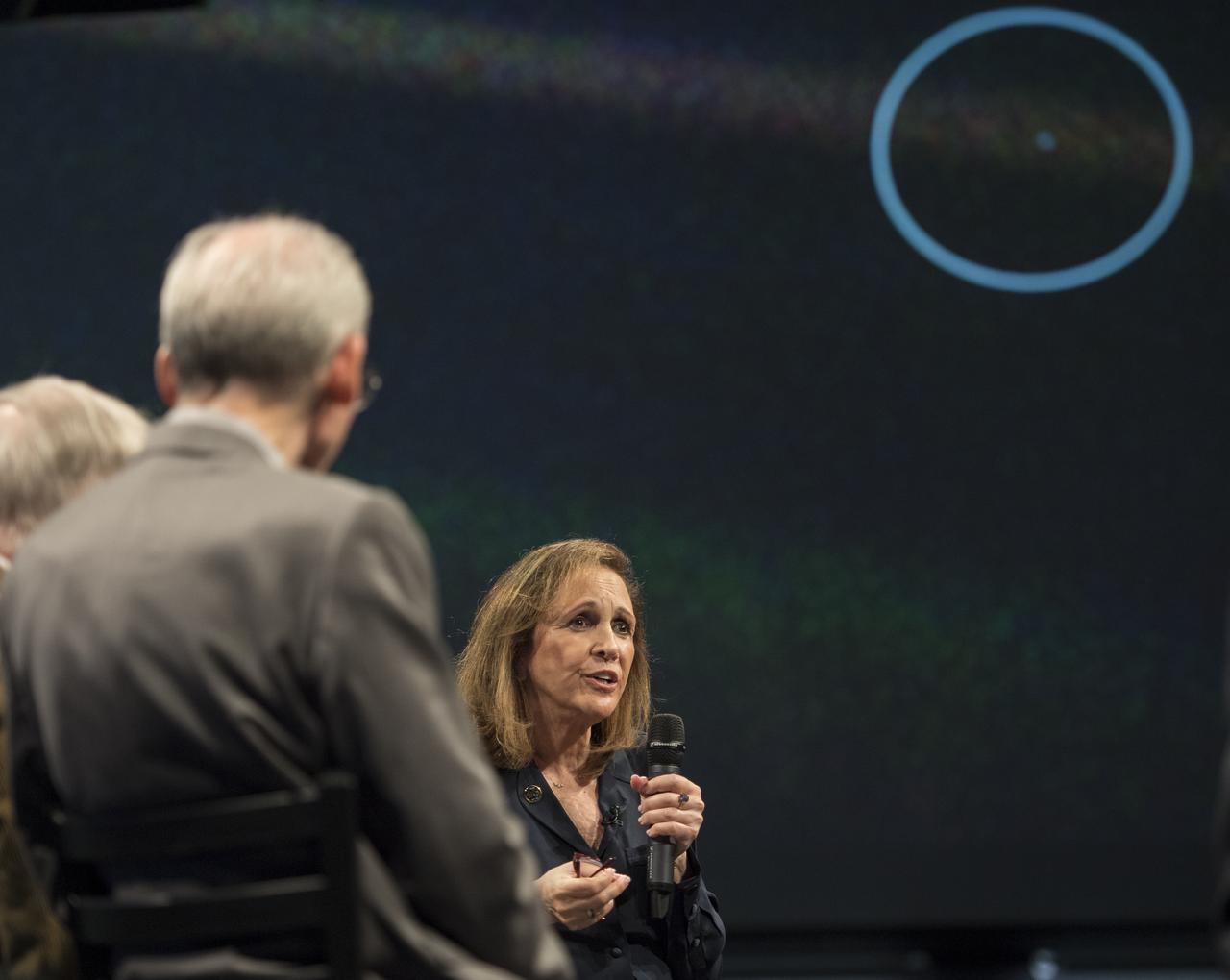
Ann Druyan, writer/producer and golden record visionary, speaks about the last image of Earth from the Voyager spacecraft, at an event to celebrate the 40th Anniversary of the launch of the Voyager 1 and 2 missions, Tuesday, September 5, 2017 at Smithsonian's National Air and Space Museum in Washington. Voyager 1 was launched September 5, 1977, with a mission to study Jupiter and Saturn, but now the twin Voyager spacecrafts are on a journey into interstellar space to search for the heliopause, a region never reached by any other spacecraft. Photo Credit: (NASA/Aubrey

Suzy Dodd, Voyager project manager, NASA's Jet Propulsion Laboratory, speaks at an event to celebrate the 40th Anniversary of the launch of the Voyager 1 and 2 missions, Tuesday, September 5, 2017 at Smithsonian's National Air and Space Museum in Washington. Voyager 1 was launched September 5, 1977, with a mission to study Jupiter and Saturn, but now the twin Voyager spacecrafts are on a journey into interstellar space to search for the heliopause, a region never reached by any other spacecraft. Photo Credit: (NASA/Aubrey Gemignani)
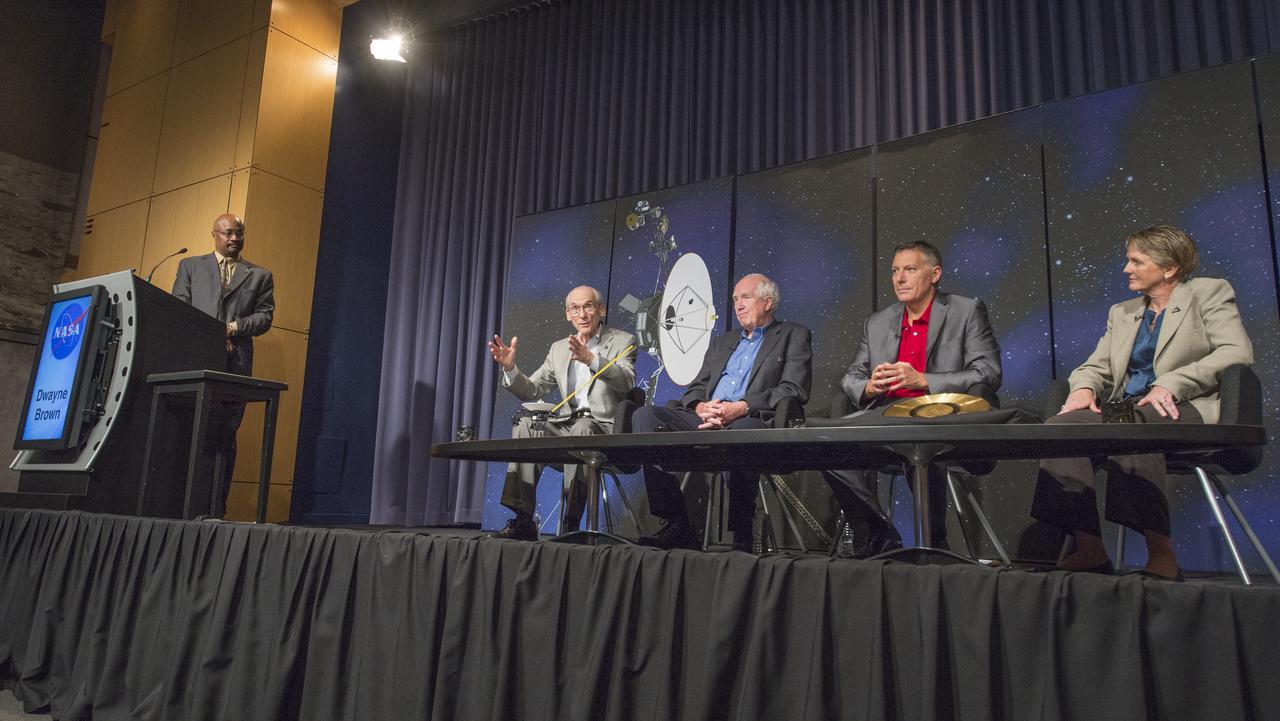
Ed Stone, Voyager project scientist, California Institute of Technology, is seen as he speaks at a news conference on NASA's Voyager 1 spacecraft, Thursday, Sept. 12, 2013 at NASA Headquarters in Washington. NASA's Voyager 1 spacecraft officially is the first human-made object to venture into interstellar space. The 36-year-old probe is about 12 billion miles (19 billion kilometers) from our sun. New and unexpected data indicate Voyager 1 has been traveling for about one year through plasma, or ionized gas, present in the space between stars. A report on the analysis of this new data is published in Thursday's edition of the journal Science. Photo Credit: (NASA/Carla Cioffi)

Ed Stone, Voyager project scientist, right, speaks on a panel with Thomas Zurbuchen, NASA associate administrator, Science Mission Directorate, left, at an event to celebrate the 40th Anniversary of the launch of the Voyager 1 and 2 missions, Tuesday, September 5, 2017 at National Geographic Society Headquarters in Washington. Voyager 1 was launched September 5, 1977, with a mission to study Jupiter and Saturn, but now the twin Voyager spacecrafts are on a journey into interstellar space to search for the heliopause, a region never reached by any other spacecraft. Photo Credit: (NASA/Aubrey Gemignani)

Ann Druyan, writer/producer and golden record visionary, speaks on a panel with moderator Victoria Jaggard, National Geographic Magazine science editor, left, Thomas Zurbuchen, associate administrator for NASA's Science Mission Directorate, right; and Ed Stone, Voyager project scientist, not pictured, at an event to celebrate the 40th Anniversary of the launch of the Voyager 1 and 2 missions, Tuesday, September 5, 2017 at National Geographic Society Headquarters in Washington. Voyager 1 was launched September 5, 1977, with a mission to study Jupiter and Saturn, but now the twin Voyager spacecrafts are on a journey into interstellar space to search for the heliopause, a region never reached by any other spacecraft. Photo Credit: (NASA/Aubrey Gemignani)
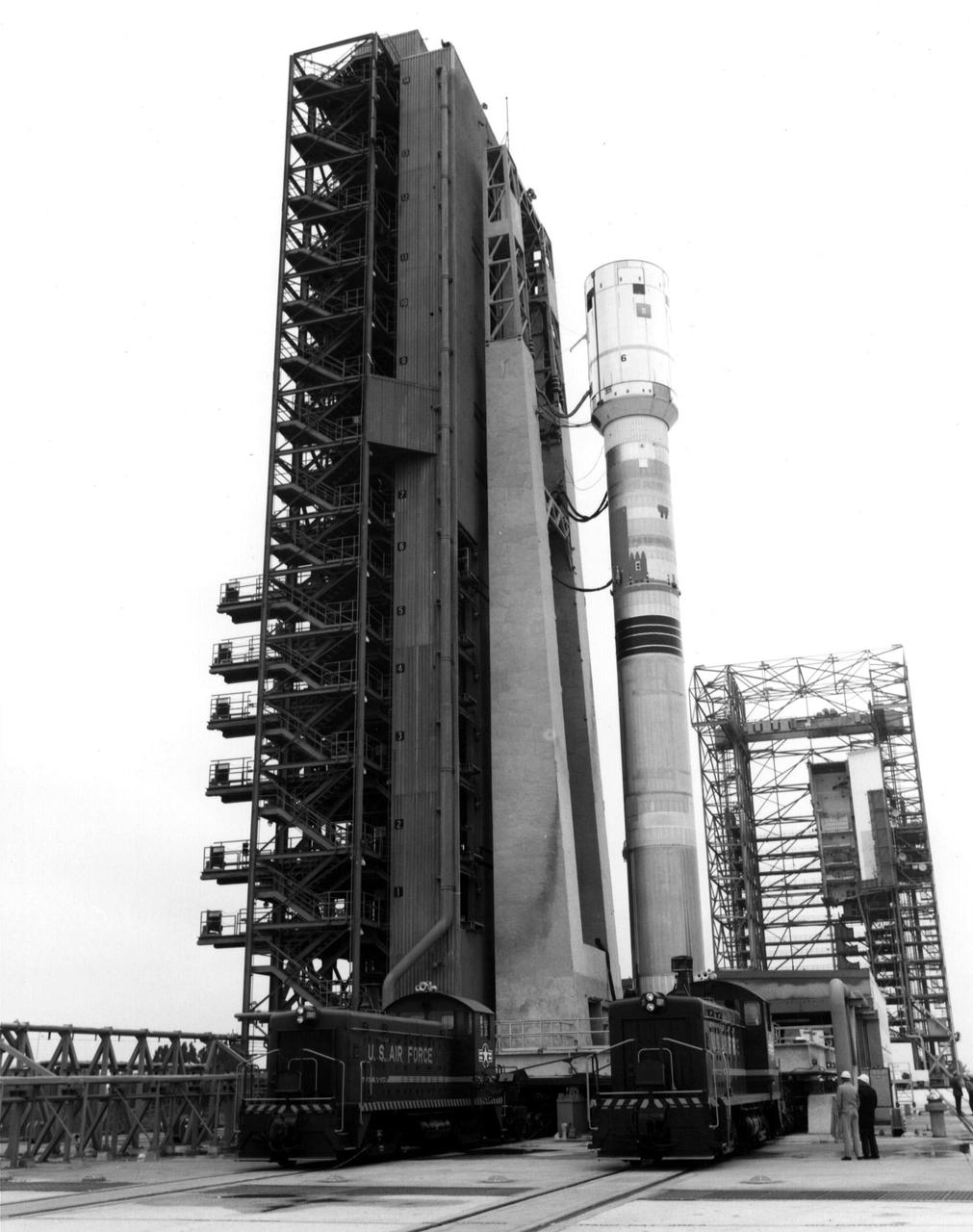
The Titan/Centaur-6 launch vehicle was moved to Launch Complex 41 at Kennedy Space Center in Florida to complete checkout procedures in preparation for launch. The photo is dated January 1977. This launch vehicle carried Voyager 1 into space on September 5, 1977. https://photojournal.jpl.nasa.gov/catalog/PIA21739
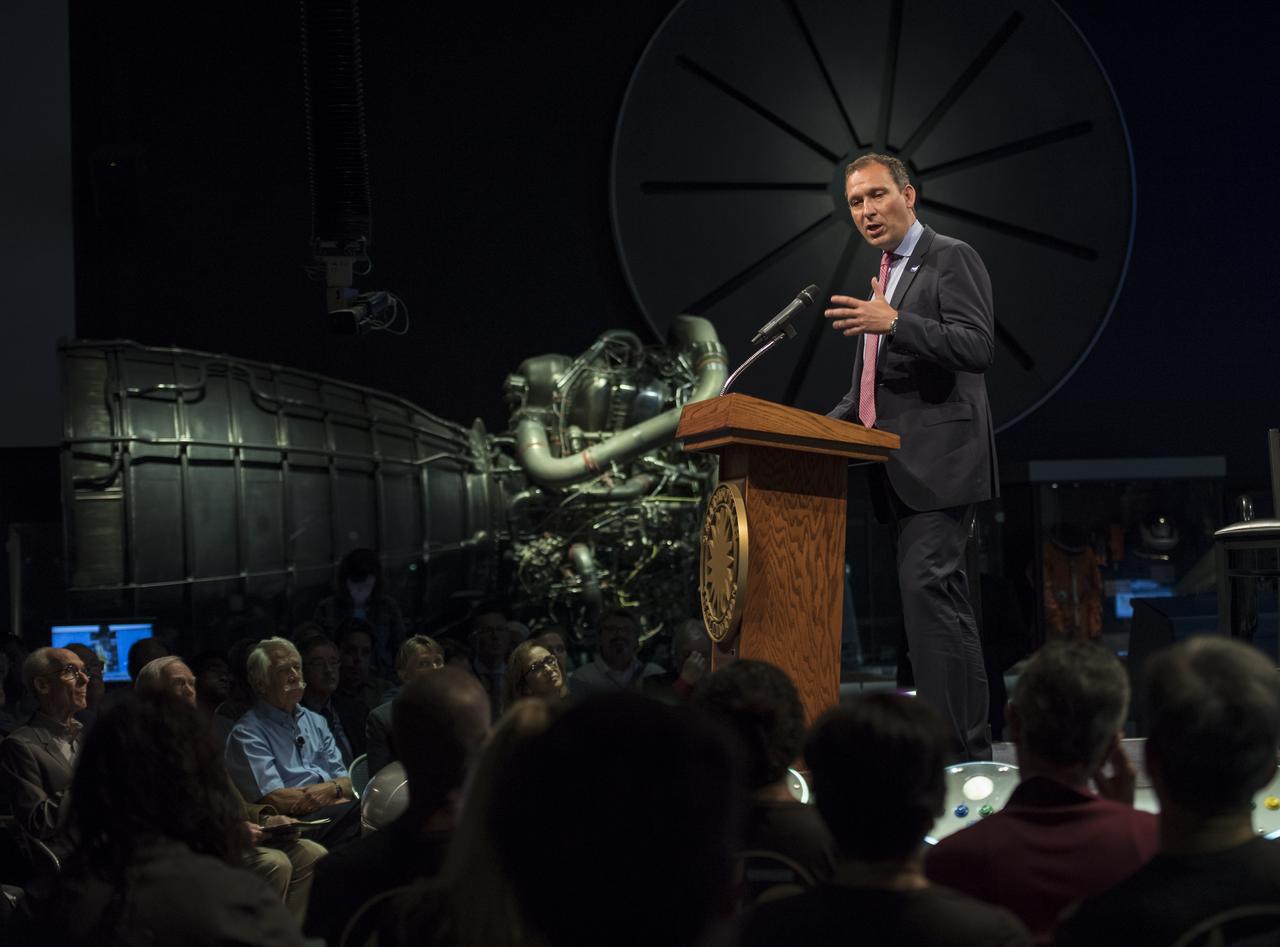
Thomas Zurbuchen, NASA associate administrator, Science Mission Directorate, gives opening remarks at an event to celebrate the 40th Anniversary of the launch of the Voyager 1 and 2 missions, Tuesday, September 5, 2017 at Smithsonian's National Air and Space Museum in Washington. Voyager 1 was launched September 5, 1977, with a mission to study Jupiter and Saturn, but now the twin Voyager spacecrafts are on a journey into interstellar space to search for the heliopause, a region never reached by any other spacecraft. Photo Credit: (NASA/Aubrey Gemignani)
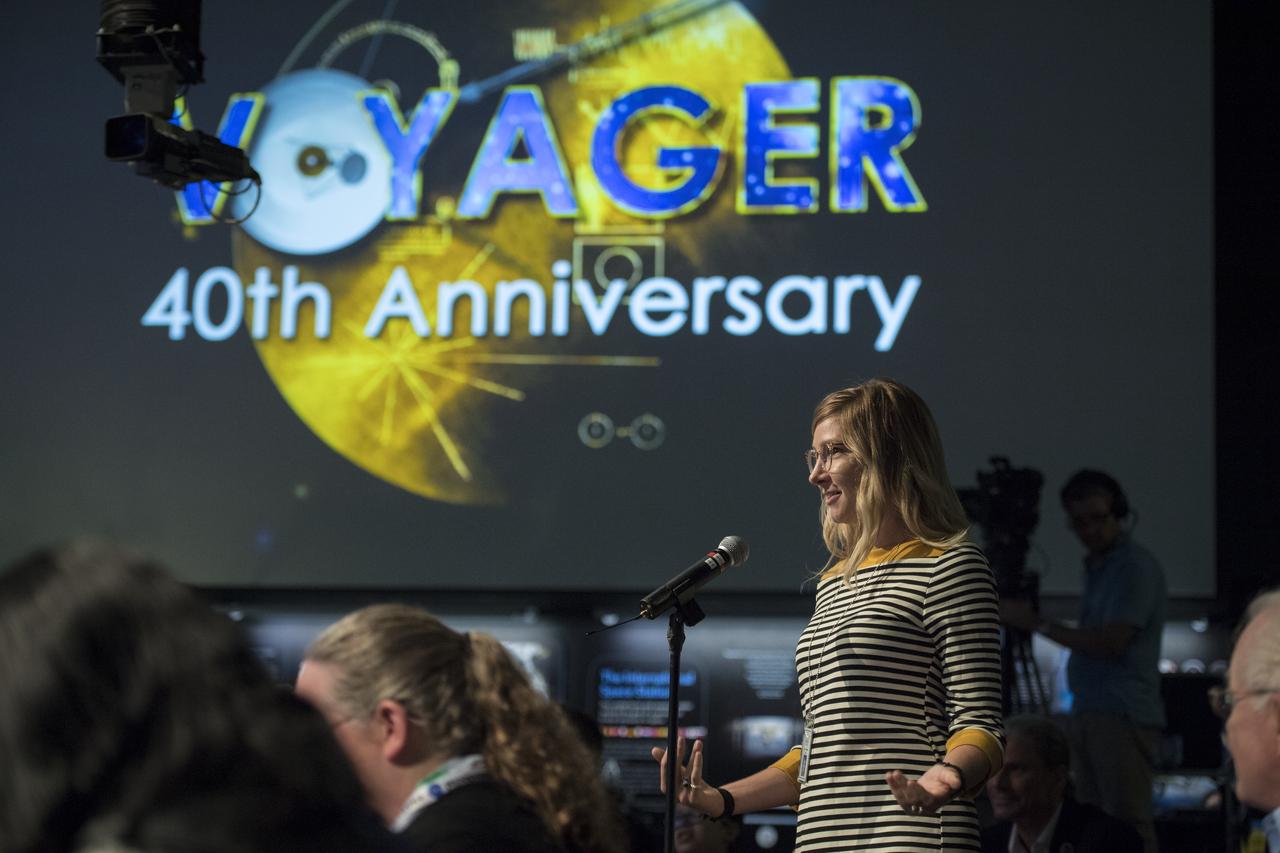
An audience member asks a question at an event to celebrate the 40th Anniversary of the launch of the Voyager 1 and 2 missions, Tuesday, September 5, 2017 at Smithsonian's National Air and Space Museum in Washington. Voyager 1 was launched September 5, 1977, with a mission to study Jupiter and Saturn, but now the twin Voyager spacecrafts are on a journey into interstellar space to search for the heliopause, a region never reached by any other spacecraft. Photo Credit: (NASA/Aubrey

Ann Druyan, writer/producer and golden record visionary, speaks at an event to celebrate the 40th Anniversary of the launch of the Voyager 1 and 2 missions, Tuesday, September 5, 2017 at Smithsonian's National Air and Space Museum in Washington. Voyager 1 was launched September 5, 1977, with a mission to study Jupiter and Saturn, but now the twin Voyager spacecrafts are on a journey into interstellar space to search for the heliopause, a region never reached by any other spacecraft. Photo Credit: (NASA/Aubrey
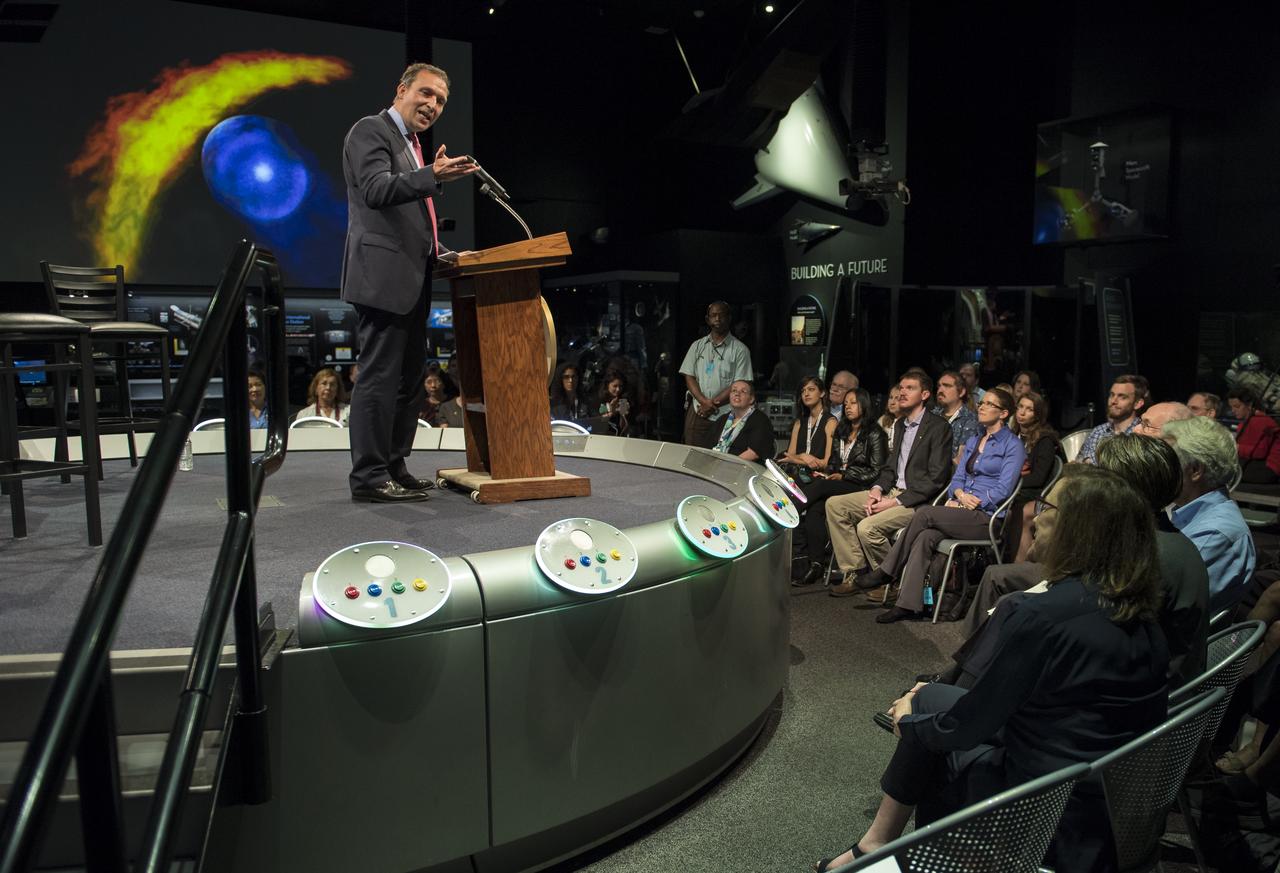
Thomas Zurbuchen, NASA associate administrator, Science Mission Directorate, gives opening remarks at an event to celebrate the 40th Anniversary of the launch of the Voyager 1 and 2 missions, Tuesday, September 5, 2017 at Smithsonian's National Air and Space Museum in Washington. Voyager 1 was launched September 5, 1977, with a mission to study Jupiter and Saturn, but now the twin Voyager spacecrafts are on a journey into interstellar space to search for the heliopause, a region never reached by any other spacecraft. Photo Credit: (NASA/Aubrey Gemignani)

Eric Zirnstein, researcher, Princeton University, speaks at an event to celebrate the 40th Anniversary of the launch of the Voyager 1 and 2 missions, Tuesday, September 5, 2017 at Smithsonian's National Air and Space Museum in Washington. Voyager 1 was launched September 5, 1977, with a mission to study Jupiter and Saturn, but now the twin Voyager spacecrafts are on a journey into interstellar space to search for the heliopause, a region never reached by any other spacecraft. Photo Credit: (NASA/Aubrey

Ann Druyan, writer/producer and golden record visionary, speaks at an event to celebrate the 40th Anniversary of the launch of the Voyager 1 and 2 missions, Tuesday, September 5, 2017 at Smithsonian's National Air and Space Museum in Washington. Voyager 1 was launched September 5, 1977, with a mission to study Jupiter and Saturn, but now the twin Voyager spacecrafts are on a journey into interstellar space to search for the heliopause, a region never reached by any other spacecraft. Photo Credit: (NASA/Aubrey

Thomas Zurbuchen, NASA associate administrator, Science Mission Directorate, gives opening remarks at an event to celebrate the 40th Anniversary of the launch of the Voyager 1 and 2 missions, Tuesday, September 5, 2017 at Smithsonian's National Air and Space Museum in Washington. Voyager 1 was launched September 5, 1977, with a mission to study Jupiter and Saturn, but now the twin Voyager spacecrafts are on a journey into interstellar space to search for the heliopause, a region never reached by any other spacecraft. Photo Credit: (NASA/Aubrey Gemignani)
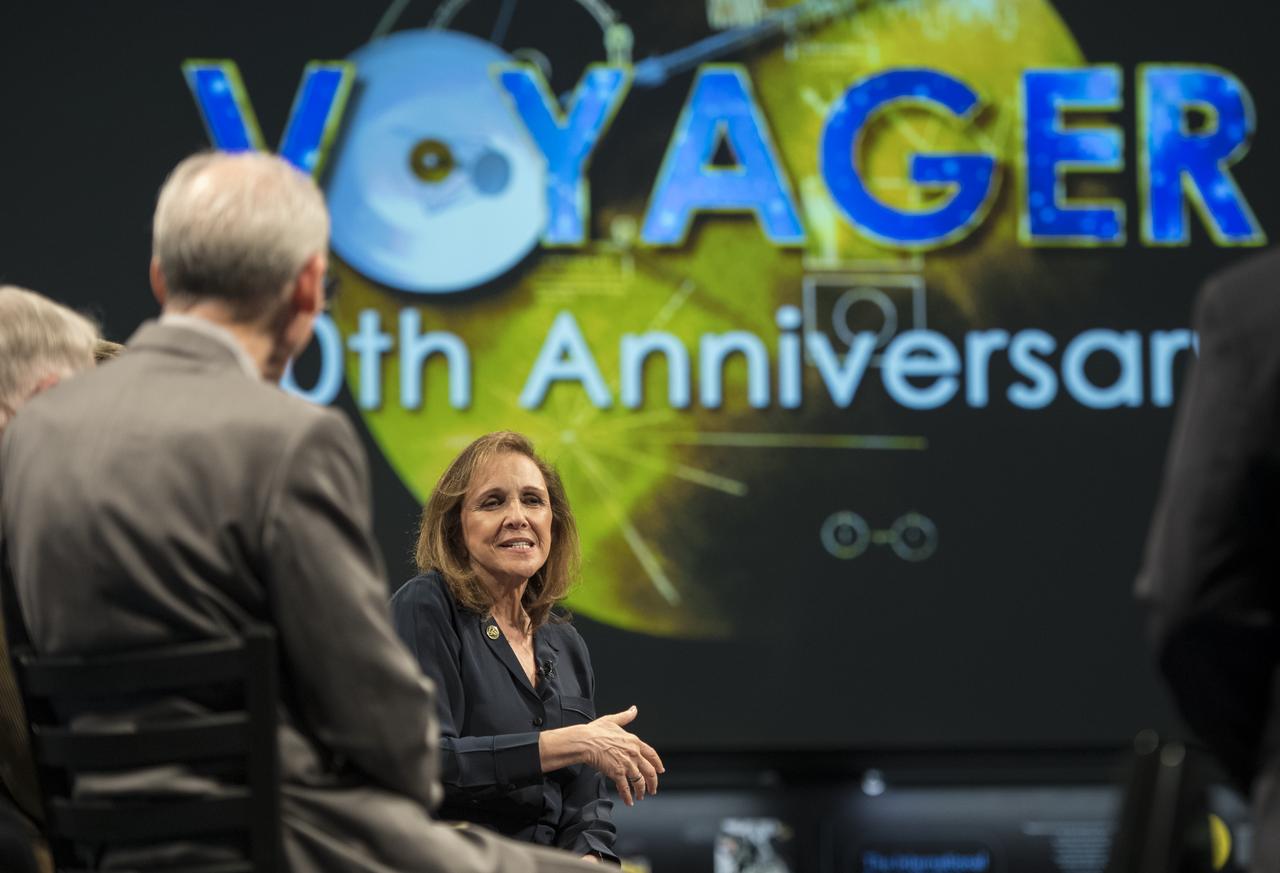
Ann Druyan, writer/producer and golden record visionary, speaks at an event to celebrate the 40th Anniversary of the launch of the Voyager 1 and 2 missions, Tuesday, September 5, 2017 at Smithsonian's National Air and Space Museum in Washington. Voyager 1 was launched September 5, 1977, with a mission to study Jupiter and Saturn, but now the twin Voyager spacecrafts are on a journey into interstellar space to search for the heliopause, a region never reached by any other spacecraft. Photo Credit: (NASA/Aubrey
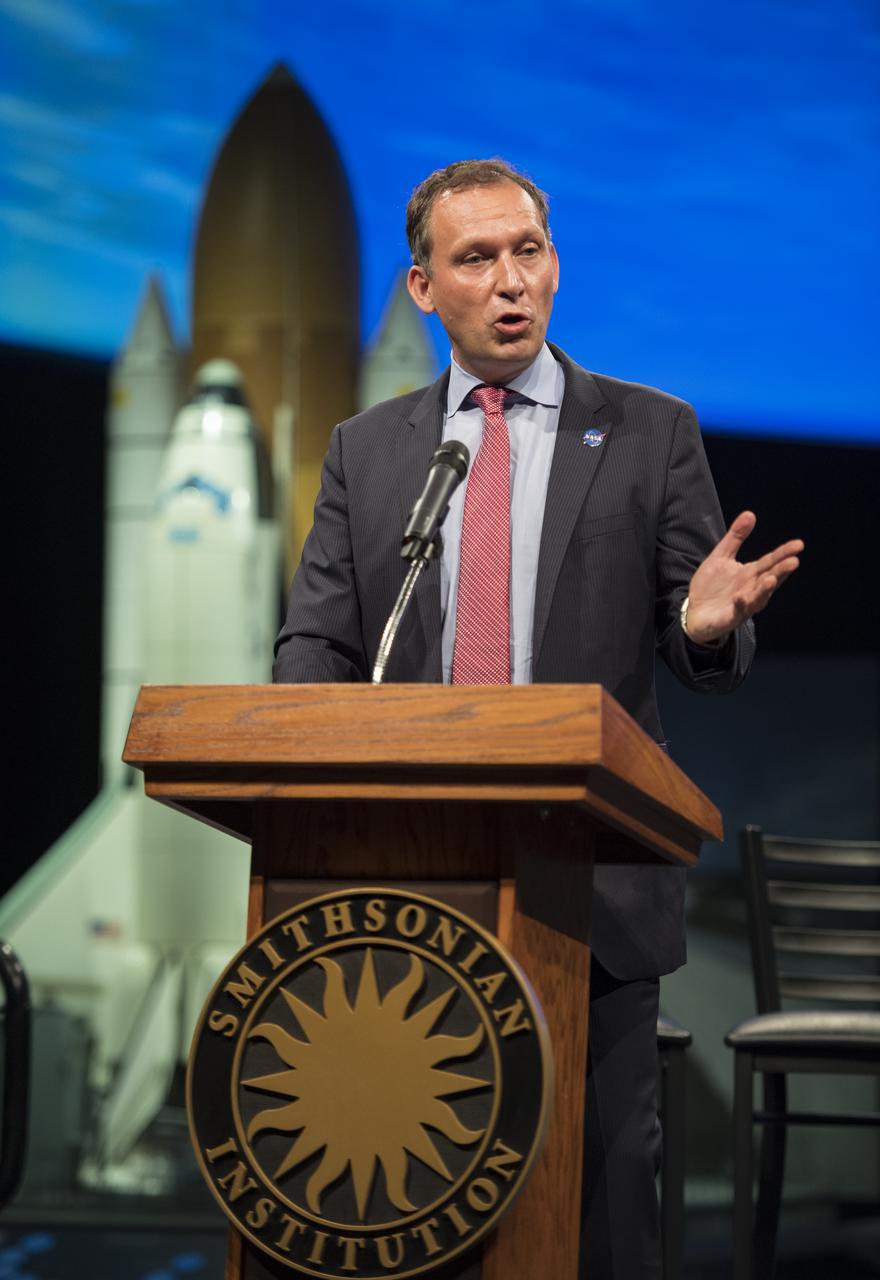
Thomas Zurbuchen, NASA associate administrator, Science Mission Directorate, gives opening remarks at an event to celebrate the 40th Anniversary of the launch of the Voyager 1 and 2 missions, Tuesday, September 5, 2017 at Smithsonian's National Air and Space Museum in Washington. Voyager 1 was launched September 5, 1977, with a mission to study Jupiter and Saturn, but now the twin Voyager spacecrafts are on a journey into interstellar space to search for the heliopause, a region never reached by any other spacecraft. Photo Credit: (NASA/Aubrey Gemignani)

Morgan Cable, researcher, NASA's Jet Propulsion Laboratory, speaks at an event to celebrate the 40th Anniversary of the launch of the Voyager 1 and 2 missions, Tuesday, September 5, 2017 at Smithsonian's National Air and Space Museum in Washington. Voyager 1 was launched September 5, 1977, with a mission to study Jupiter and Saturn, but now the twin Voyager spacecrafts are on a journey into interstellar space to search for the heliopause, a region never reached by any other spacecraft. Photo Credit: (NASA/Aubrey