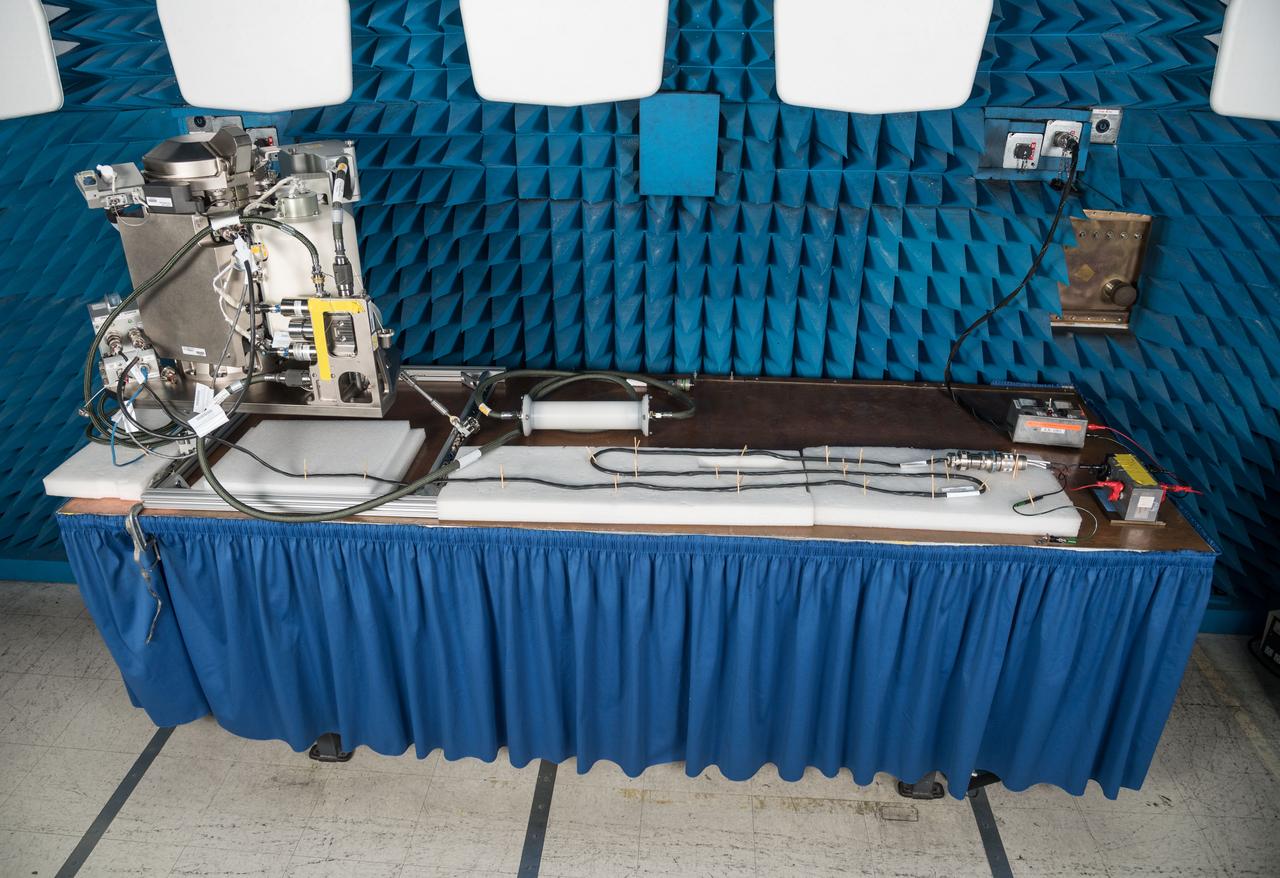
jsc2019e070457 (12/13/2019) --- A preflight view taken of the ISS Universal Waste Management System, Unit 1 during EMI/EMC Testing. This technology provides additional waste disposal points to the International Space Station (ISS) and aids in planning for future exploration missions including Deep Space Gateway (DSG). A smaller, more comfortable and more reliable waste-disposal method allows the crew to focus on other activities and enables further exploration in space.
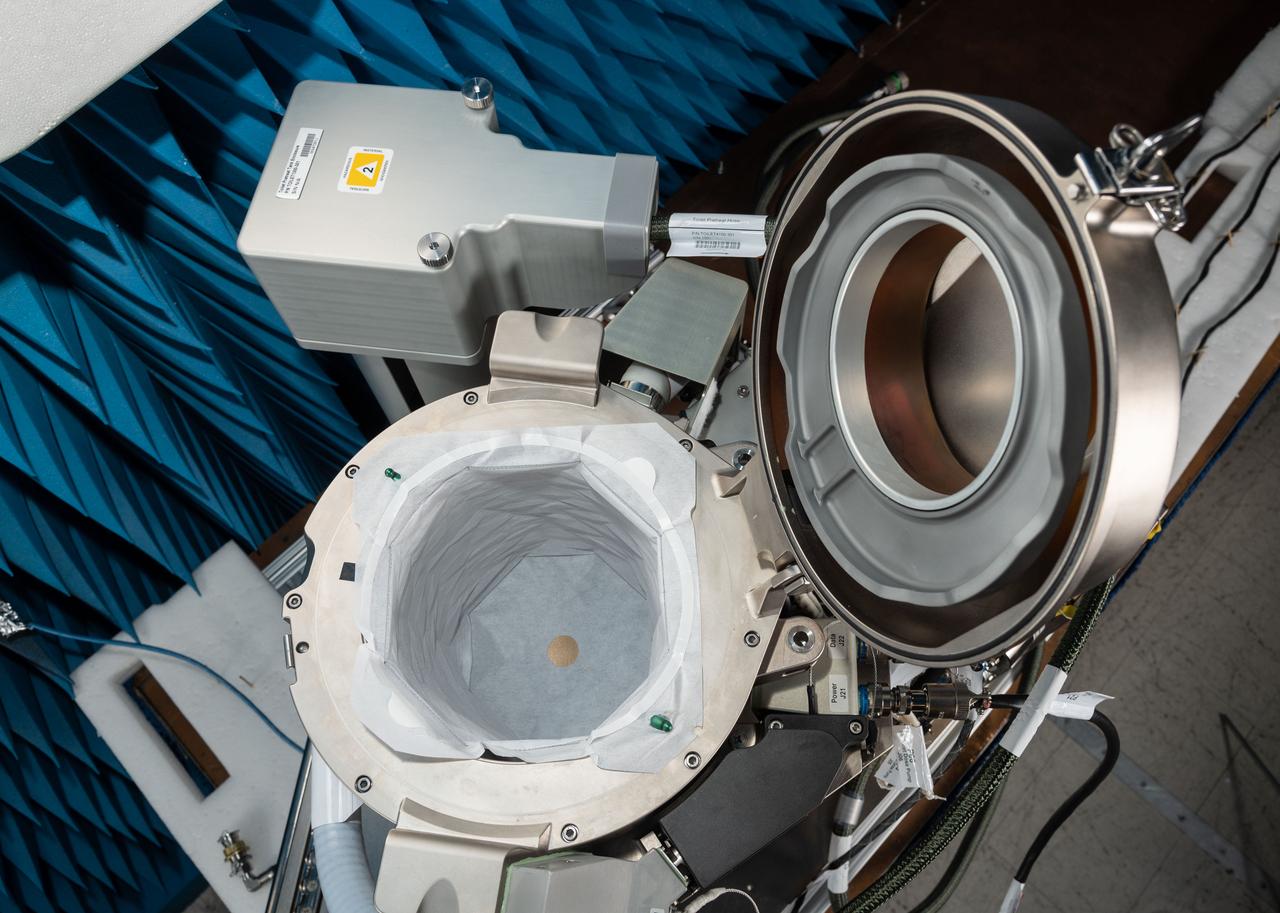
jsc2019e070462 (12/13/2019) --- A preflight view taken of the ISS Universal Waste Management System, Unit 1 during EMI/EMC Testing. This technology provides additional waste disposal points to the International Space Station (ISS) and aids in planning for future exploration missions including Deep Space Gateway (DSG). A smaller, more comfortable and more reliable waste-disposal method allows the crew to focus on other activities and enables further exploration in space.
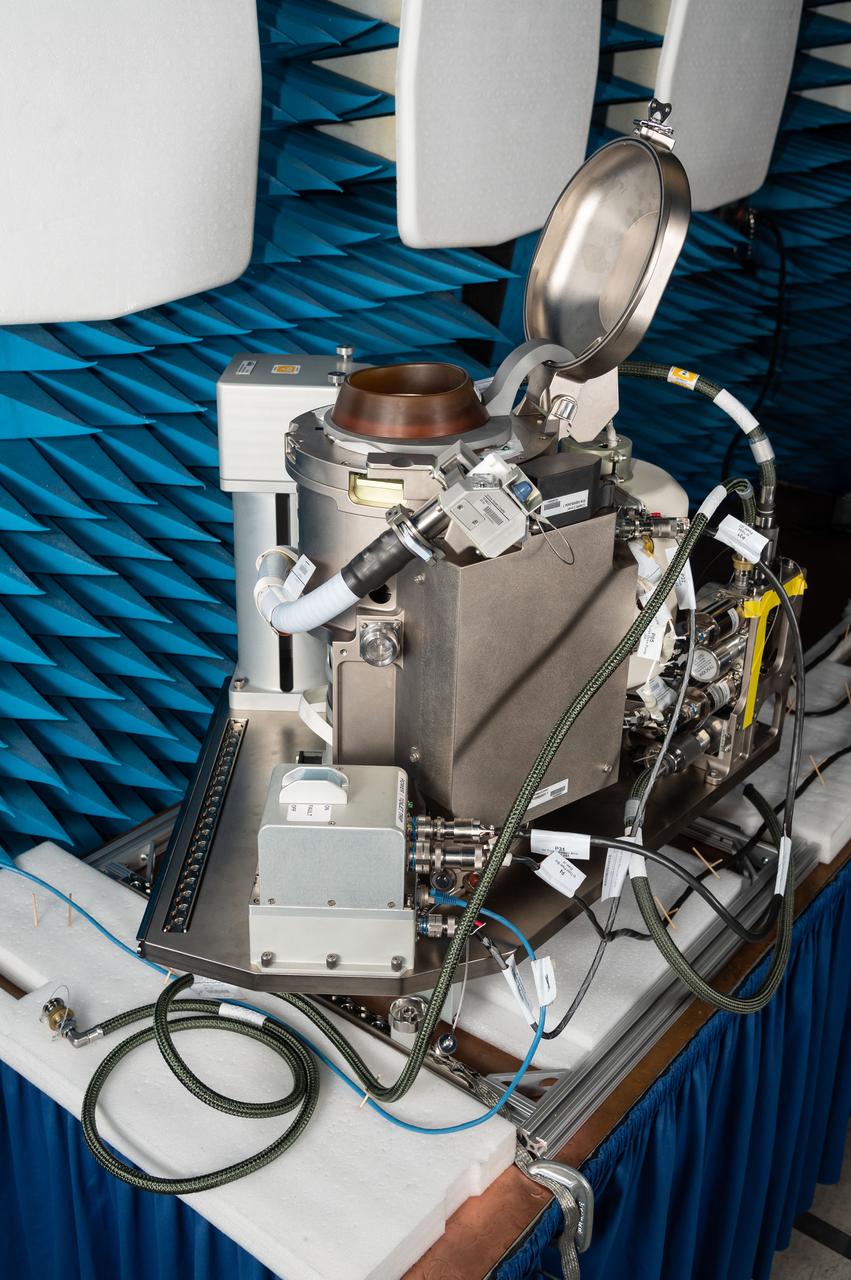
jsc2019e070459 (12/13/2019) --- A preflight view taken of the ISS Universal Waste Management System, Unit 1 during EMI/EMC Testing. This technology provides additional waste disposal points to the International Space Station (ISS) and aids in planning for future exploration missions including Deep Space Gateway (DSG). A smaller, more comfortable and more reliable waste-disposal method allows the crew to focus on other activities and enables further exploration in space.
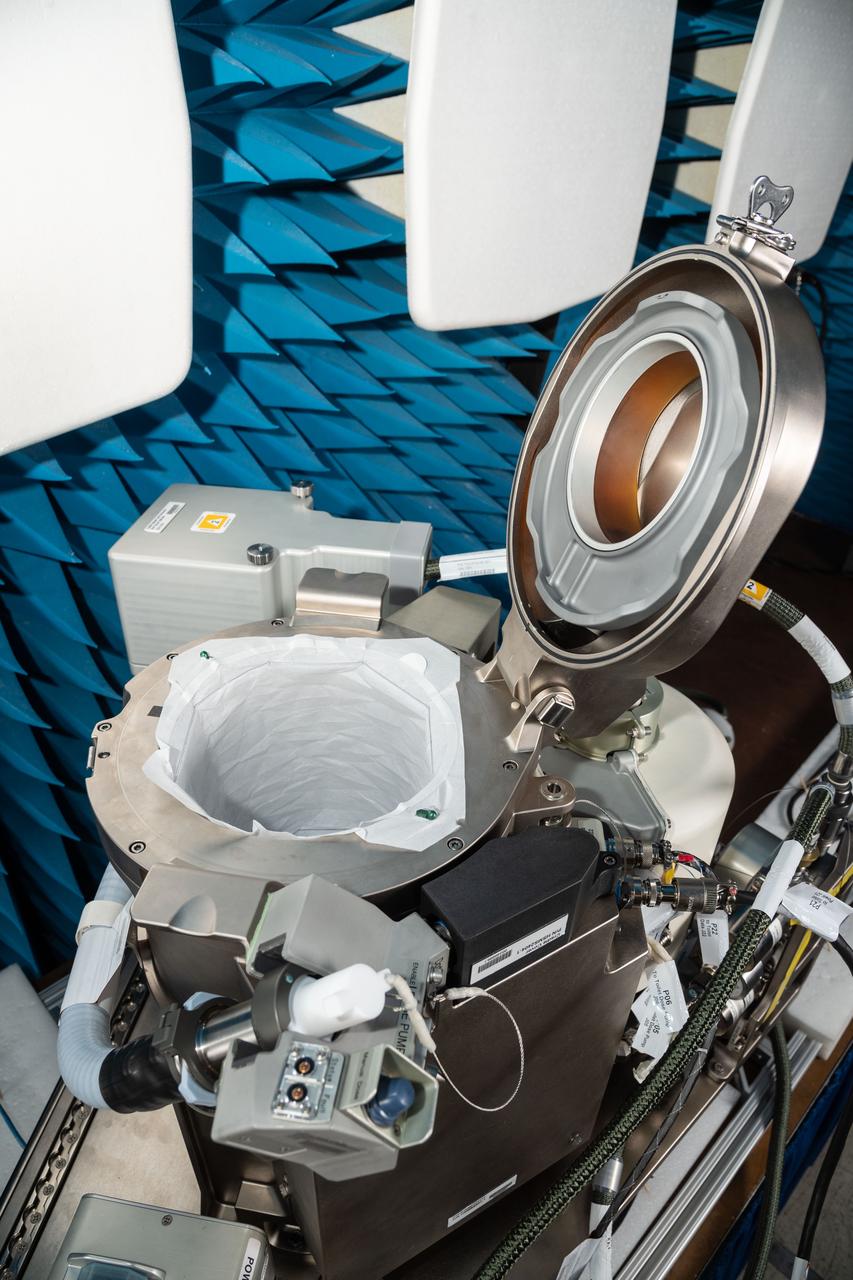
jsc2019e070461 (12/13/2019) --- A preflight view taken of the ISS Universal Waste Management System, Unit 1 during EMI/EMC Testing. This technology provides additional waste disposal points to the International Space Station (ISS) and aids in planning for future exploration missions including Deep Space Gateway (DSG). A smaller, more comfortable and more reliable waste-disposal method allows the crew to focus on other activities and enables further exploration in space.
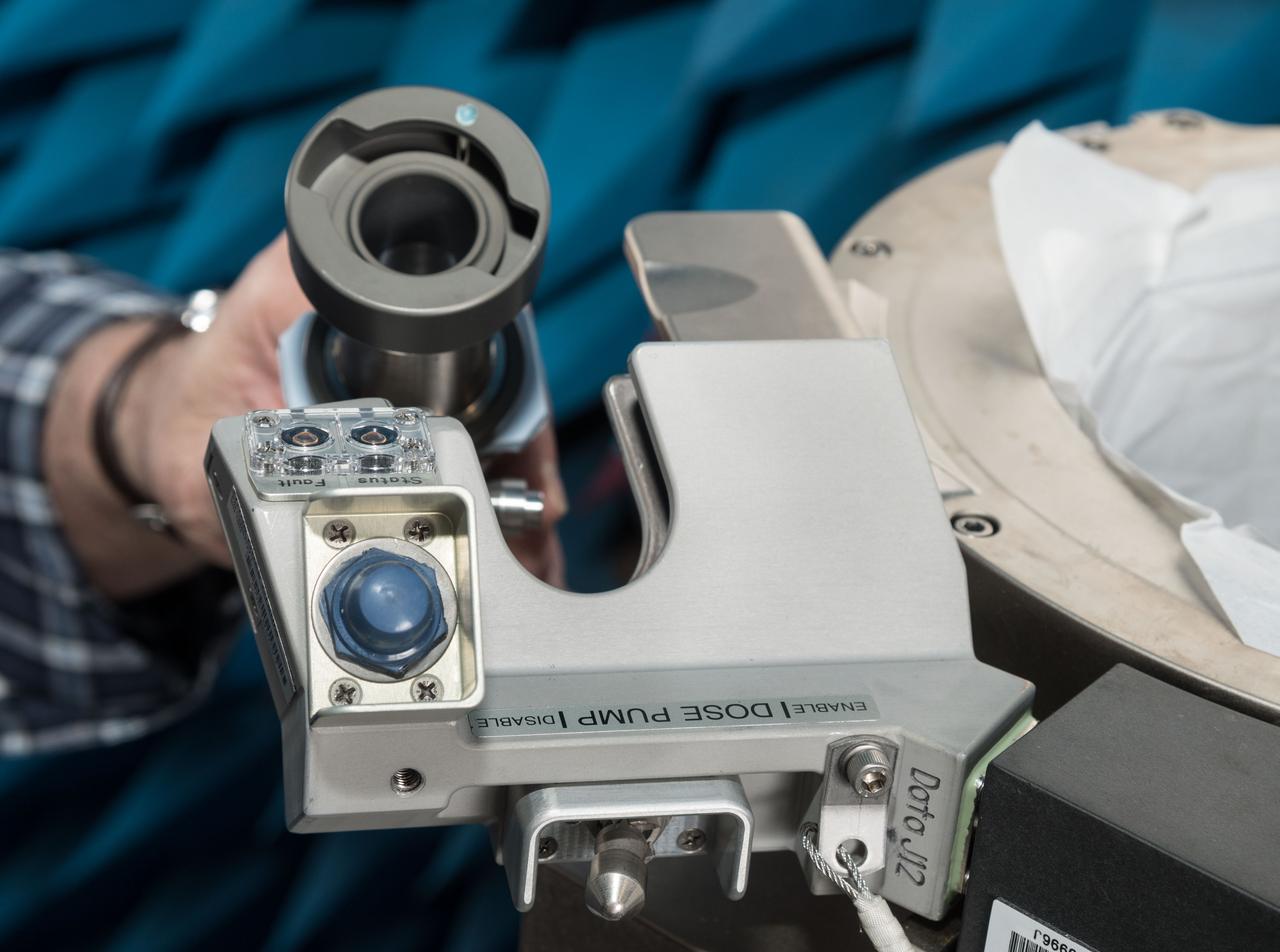
jsc2019e070463 (12/13/2019) --- A preflight view taken of the ISS Universal Waste Management System, Unit 1 during EMI/EMC Testing. This technology provides additional waste disposal points to the International Space Station (ISS) and aids in planning for future exploration missions including Deep Space Gateway (DSG). A smaller, more comfortable and more reliable waste-disposal method allows the crew to focus on other activities and enables further exploration in space.
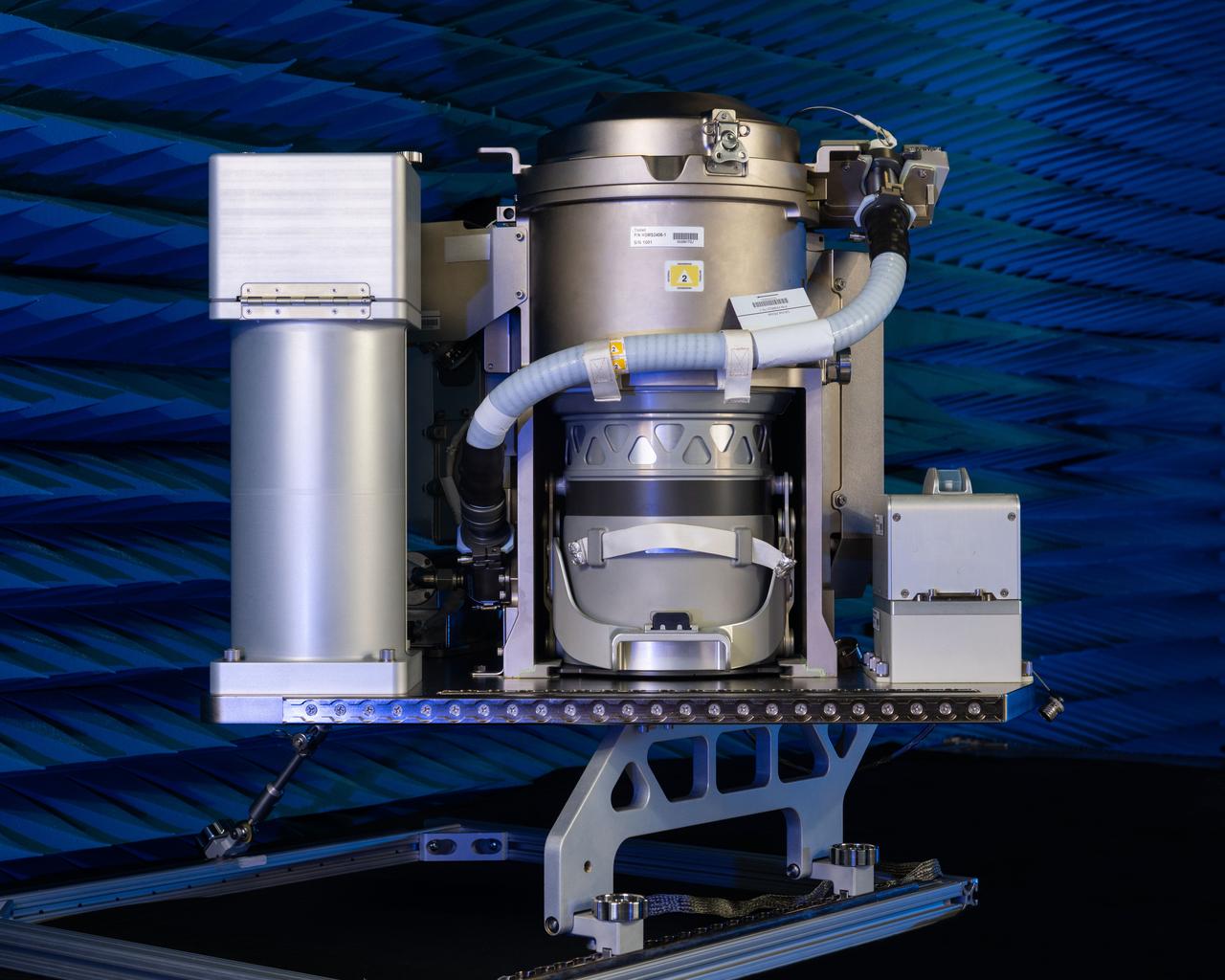
jsc2019e070684_alt (12/16/2019) --- A preflight view taken of the ISS Universal Waste Management System, Unit 1 during EMI/EMC Testing. This technology provides additional waste disposal points to the International Space Station (ISS) and aids in planning for future exploration missions including Deep Space Gateway (DSG). A smaller, more comfortable and more reliable waste-disposal method allows the crew to focus on other activities and enables further exploration in space.
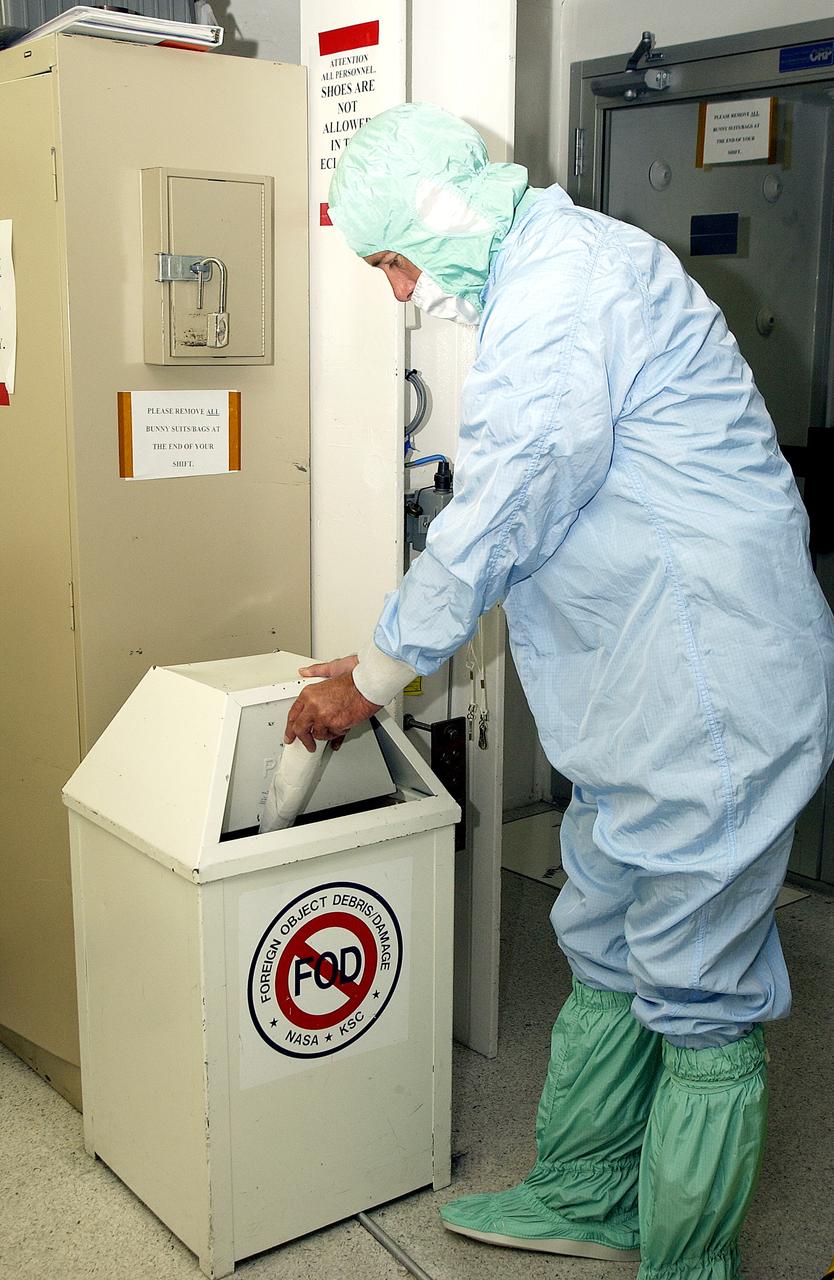
KENNEDY SPACE CENTER, FLA. - A KSC employee dressed in a "bunny suit," standard clean room apparel, disposes of some waste material into a container designated for the purpose. The apparel is designed to cover the hair, clothing and shoes of employees entering a clean room to prevent particulate matter from contaminating the space flight hardware being stored or processed in the room. The suit and container are both part of KSC's Foreign Object Debris (FOD) control program, an important safety initiative.
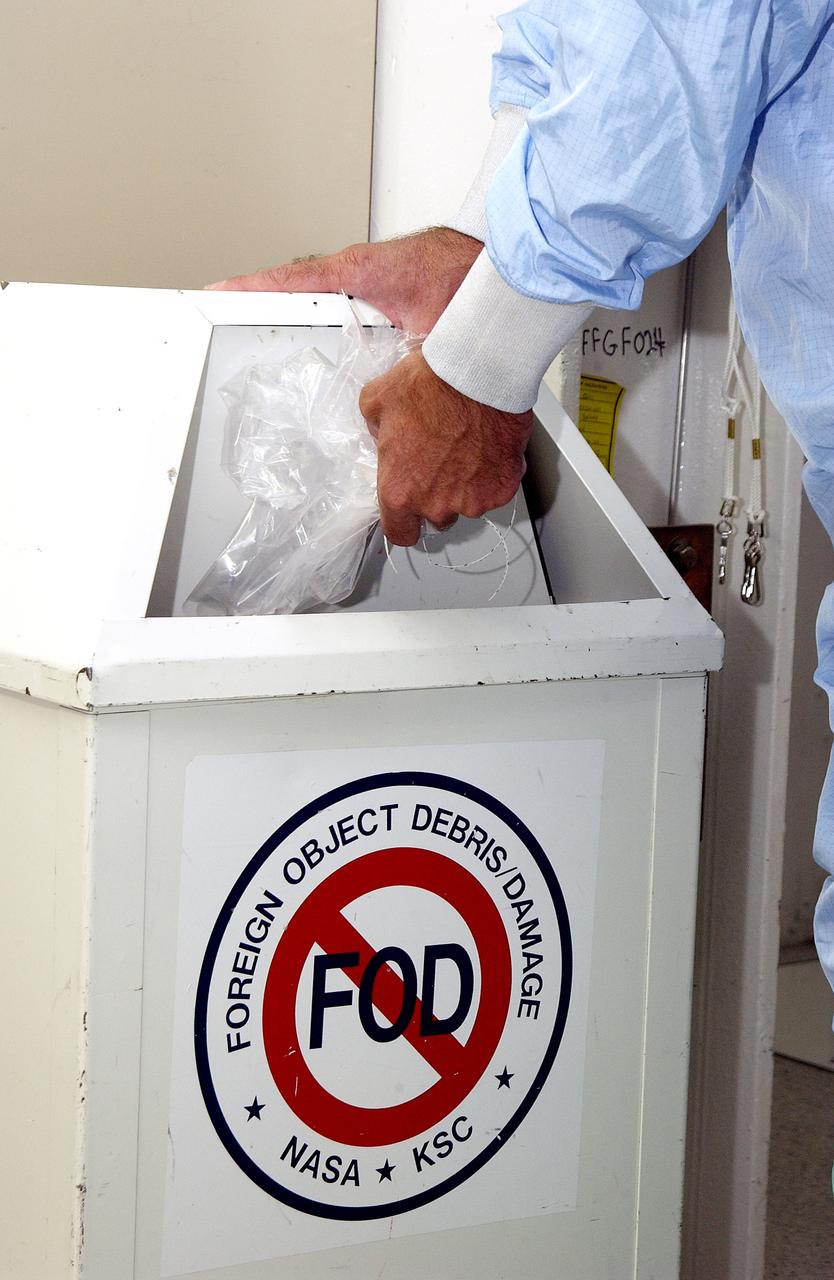
KENNEDY SPACE CENTER, FLA. - A KSC employee dressed in a "bunny suit," standard clean room apparel, disposes of some waste material into a container designated for the purpose. The apparel is designed to cover the hair, clothing and shoes of employees entering a clean room to prevent particulate matter from contaminating the space flight hardware being stored or processed in the room. The suit and container are both part of KSC's Foreign Object Debris (FOD) control program, an important safety initiative.
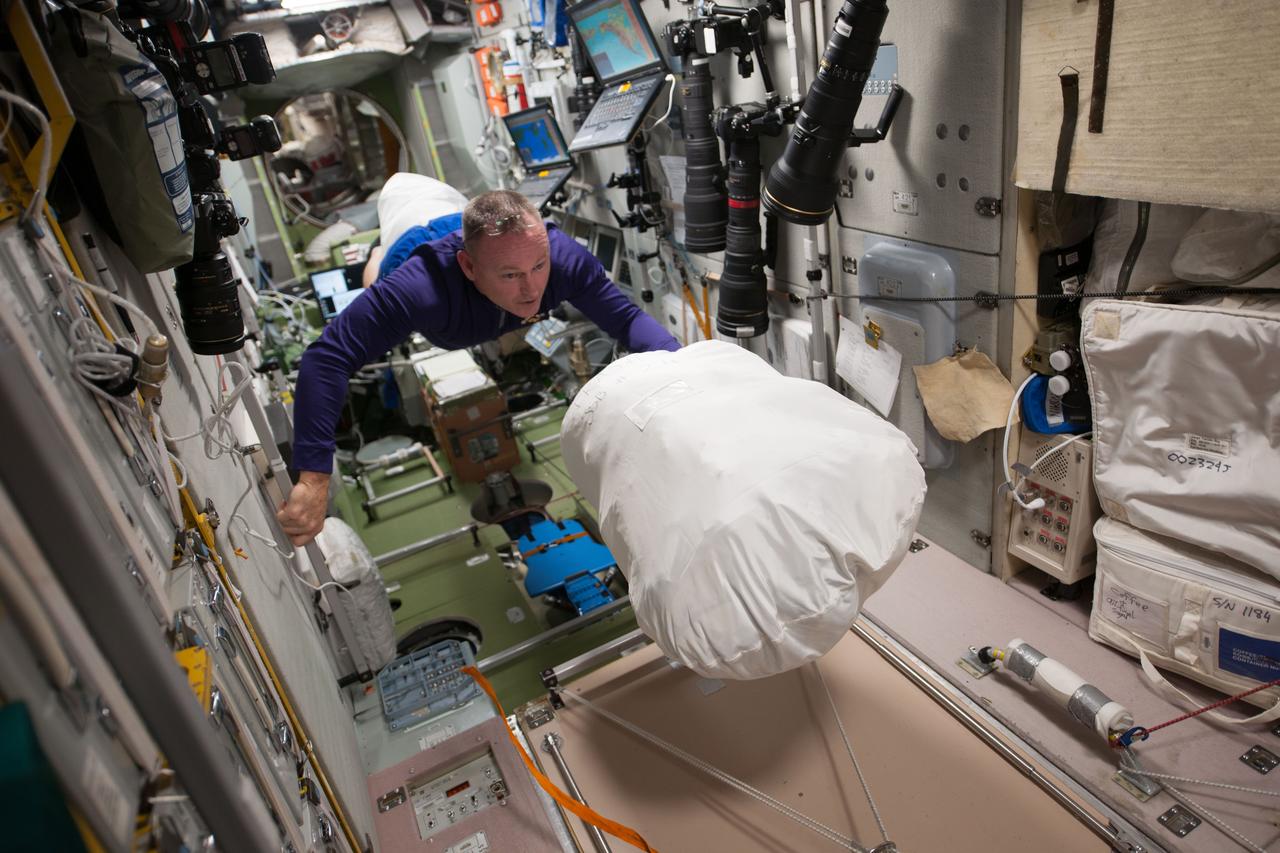
Commander Barry Wilmore floats through the Zvezda Service Module (SM) with a full Jettison Stowage Bag. Image was released by astronaut on Instagram.
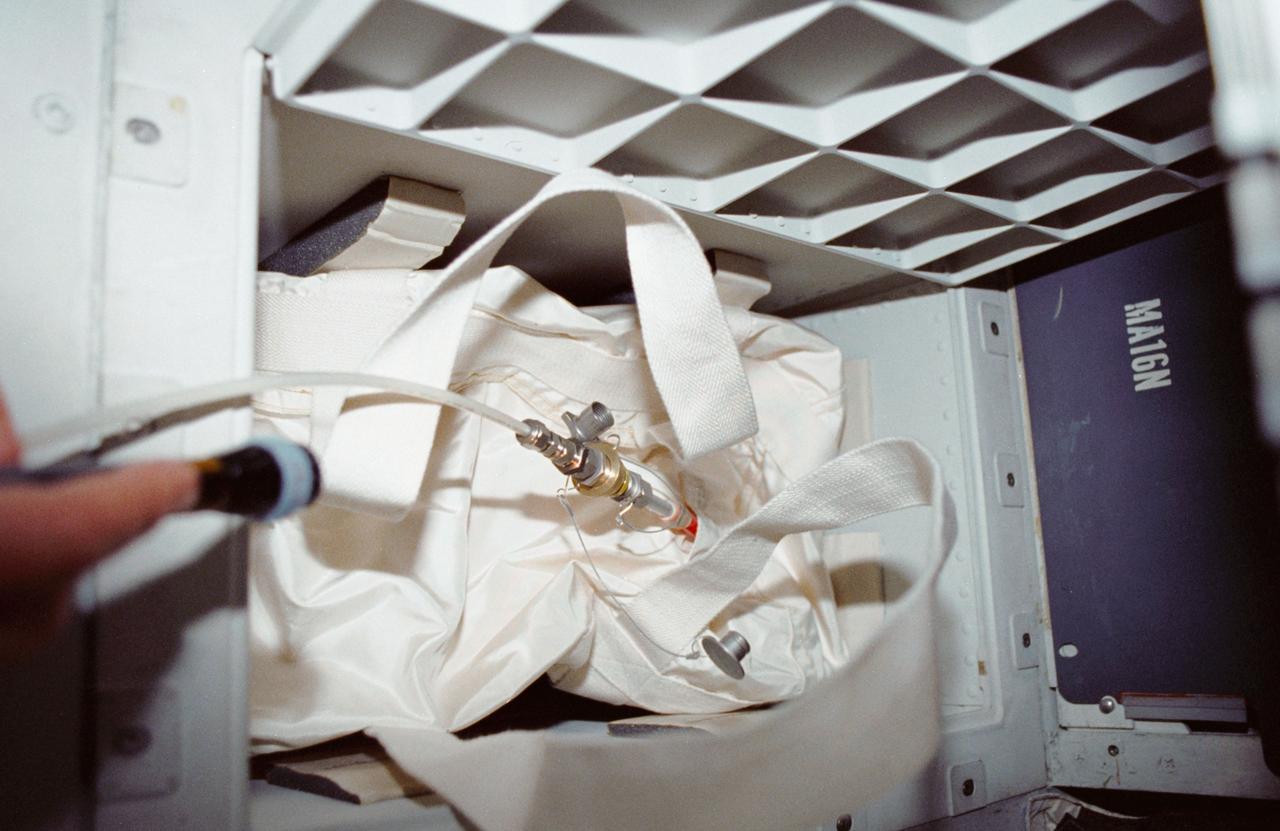
STS035-12-005 (2-10 Dec 1990) --- During STS-35, middeck stowage volume G and a contingency water container (CWC) were utilized to remedy a problem onboard Columbia, Orbiter Vehicle (OV) 102. A hose connecting OV-102's waste water system to the CWC was used in order to bypass a suspected clog in the line from the waste water tank to the exit nozzle. On flight day seven, Pilot Guy S. Gardner carried out an inflight maintenance (IFM) procedure by connecting a spare hose from the line to the container. The CWC is a rubber-lined duffle bag that holds about 95 pounds of water and is used in situations where water cannot be dumped overboard normally.
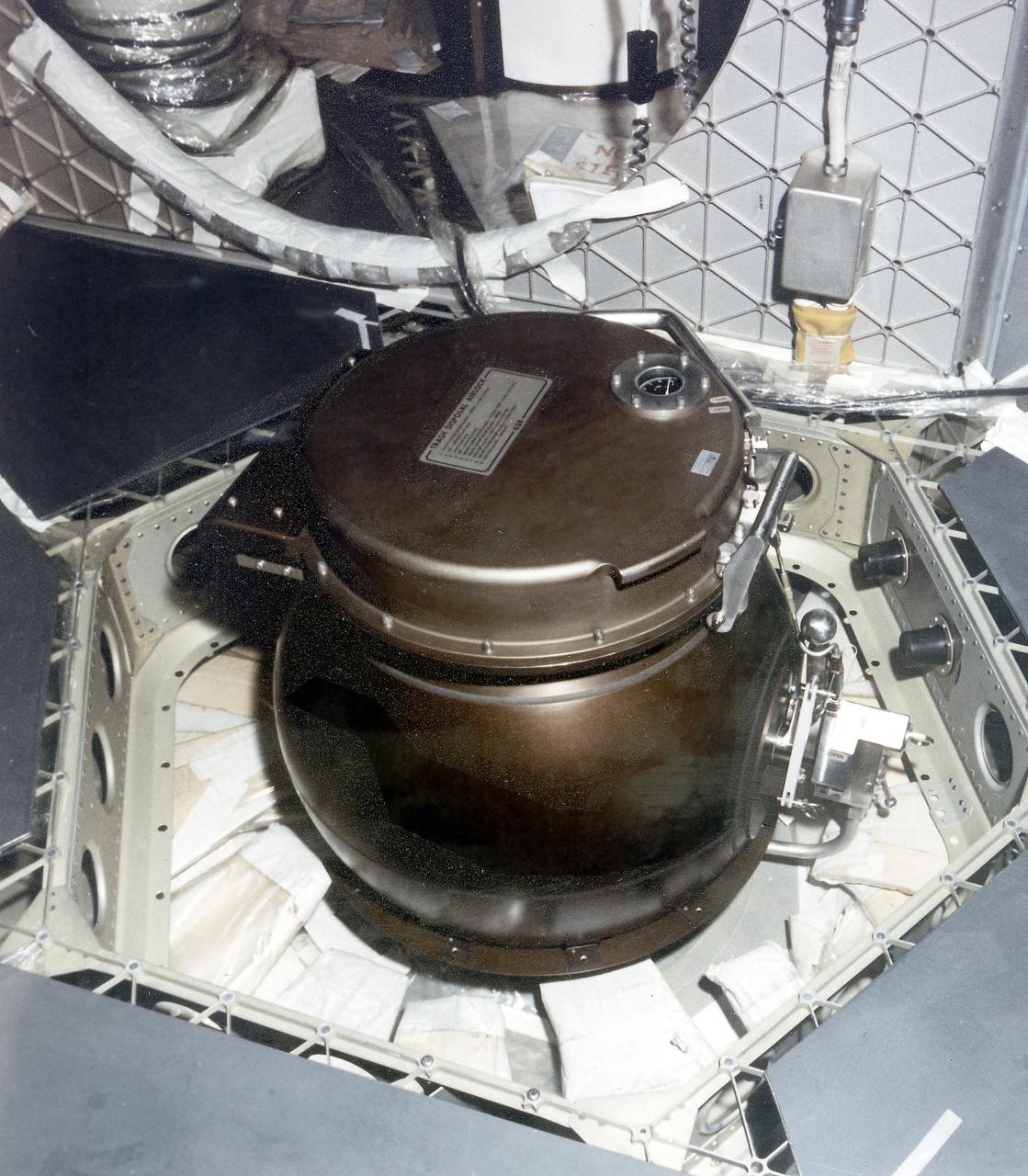
This is a close-up photograph of the Orbital Workshop (OWS) trash disposal airlock located on the floor of the lower level of the OWS. It provided a means of passing trash from the pressurized habitable area into the unpressurized waste tank. The crewman opened a valve which brought the airlock to the same pressure as that within the workshop. He then opened the lid, placed the bagged trash inside, closed the lid and locked it. By turning the valve handle, he reduced the pressure within the airlock until it reached the vacuum of the waste tank. The crewman then operated an ejector handle that caused a scissors-type mechanism to push the bagged trash from the airlock into the tank.
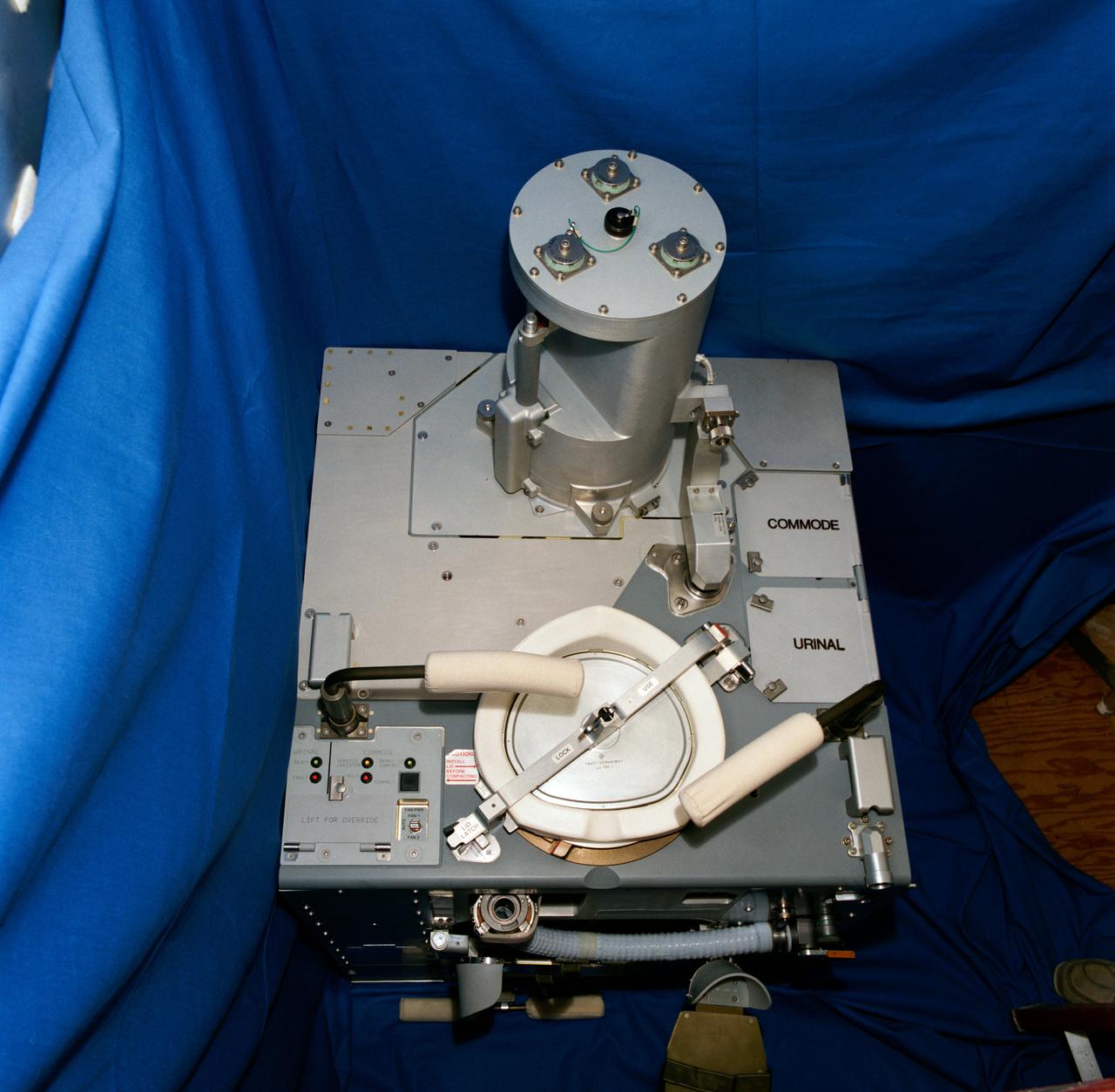
S92-46726 (November 1992) --- A high angle view of the Improved Waste Collection System (IWCS) scheduled to fly aboard NASA's Space Shuttle Endeavour for the STS-54 mission. Among the advantages the new IWCS is hoped to have over the current WCS are greater dependability, better hygiene, virtually unlimited capacity and more efficient preparation between Shuttle missions. Unlike the previous WCS, the improved version will not have to be removed from the spacecraft to be readied for the next flight.
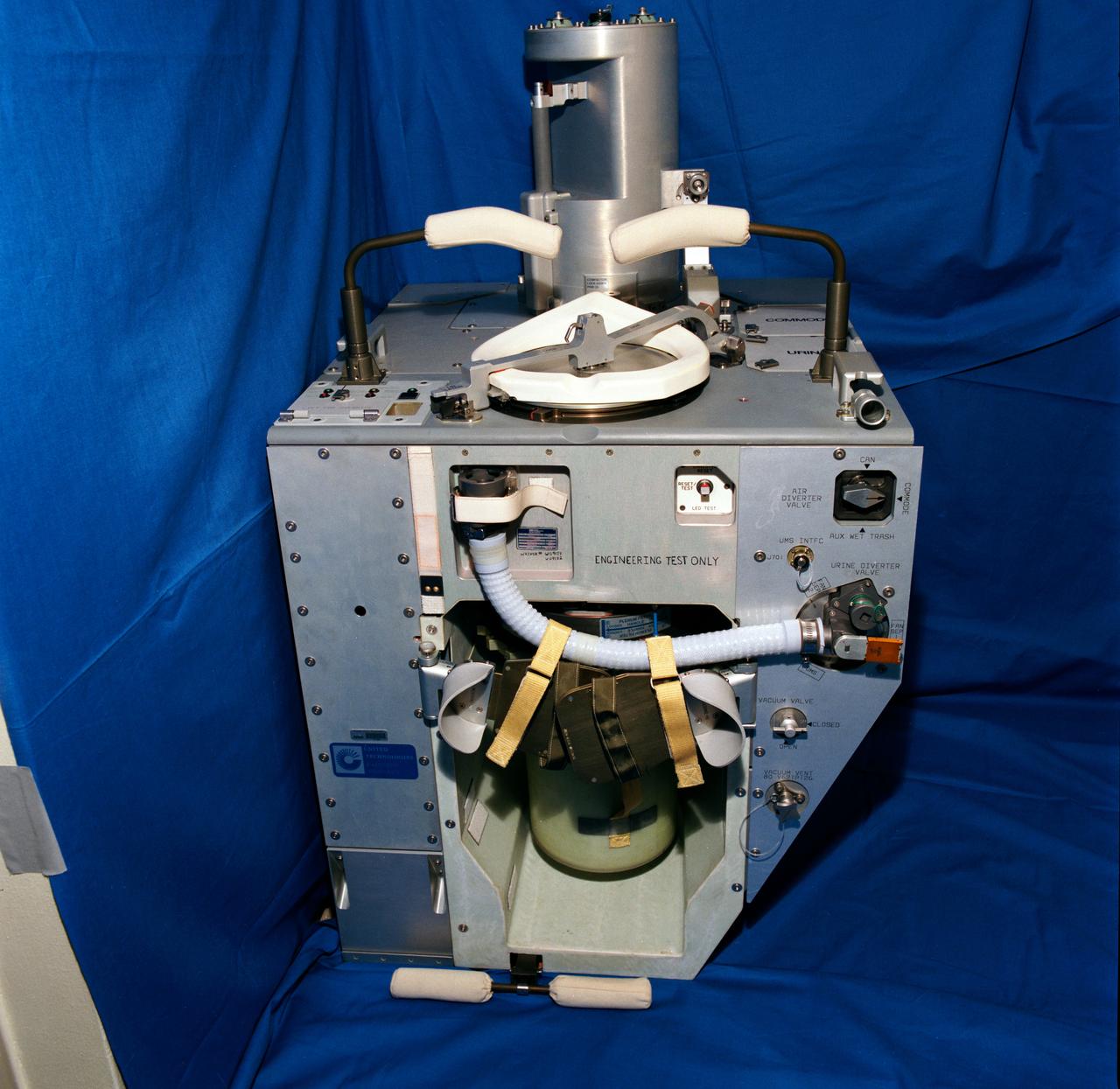
S92-46717 (November 1992) --- A front view of the improved waste collection system (IWCS) scheduled to fly aboard NASA's Space Shuttle Endeavour for the STS-54 mission. Among the advantages the new IWCS is hoped to have over the current WCS are greater dependability, better hygiene, virtually unlimited capacity and more efficient preparation between Shuttle missions. Unlike the previous WCS, the improved version will not have to be removed from the spacecraft to be readied for the next flight.
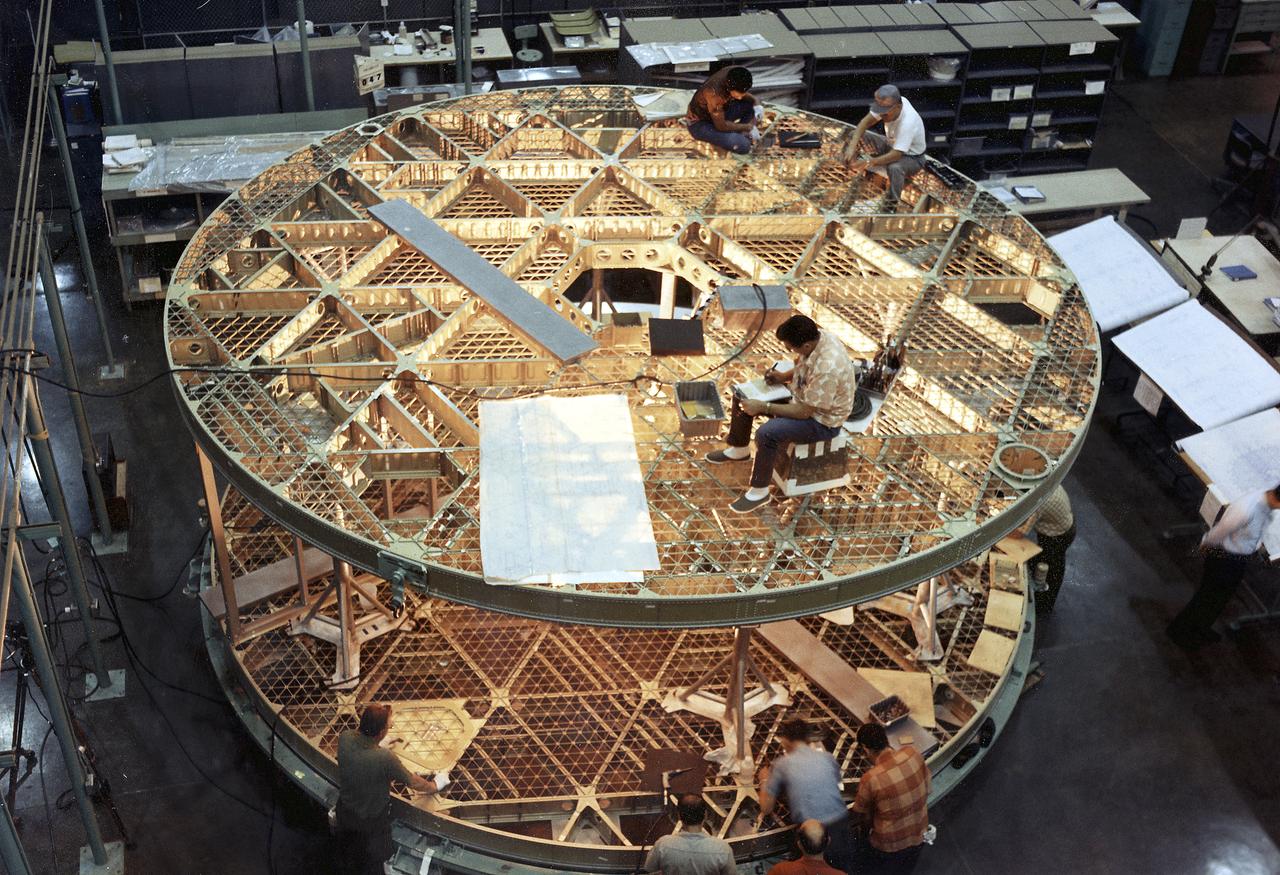
This photograph was taken during assembly of the bottom and upper floors of the Skylab Orbital Workshop (OWS). The OWS was divided into two major compartments. The lower level provided crew accommodations for sleeping, food preparation and consumption, hygiene, waste processing and disposal, and performance of certain experiments. The upper level consisted of a large work area and housed water storage tanks, a food freezer, storage vaults for film, scientific airlocks, mobility and stability experiment equipment, and other experimental equipment.
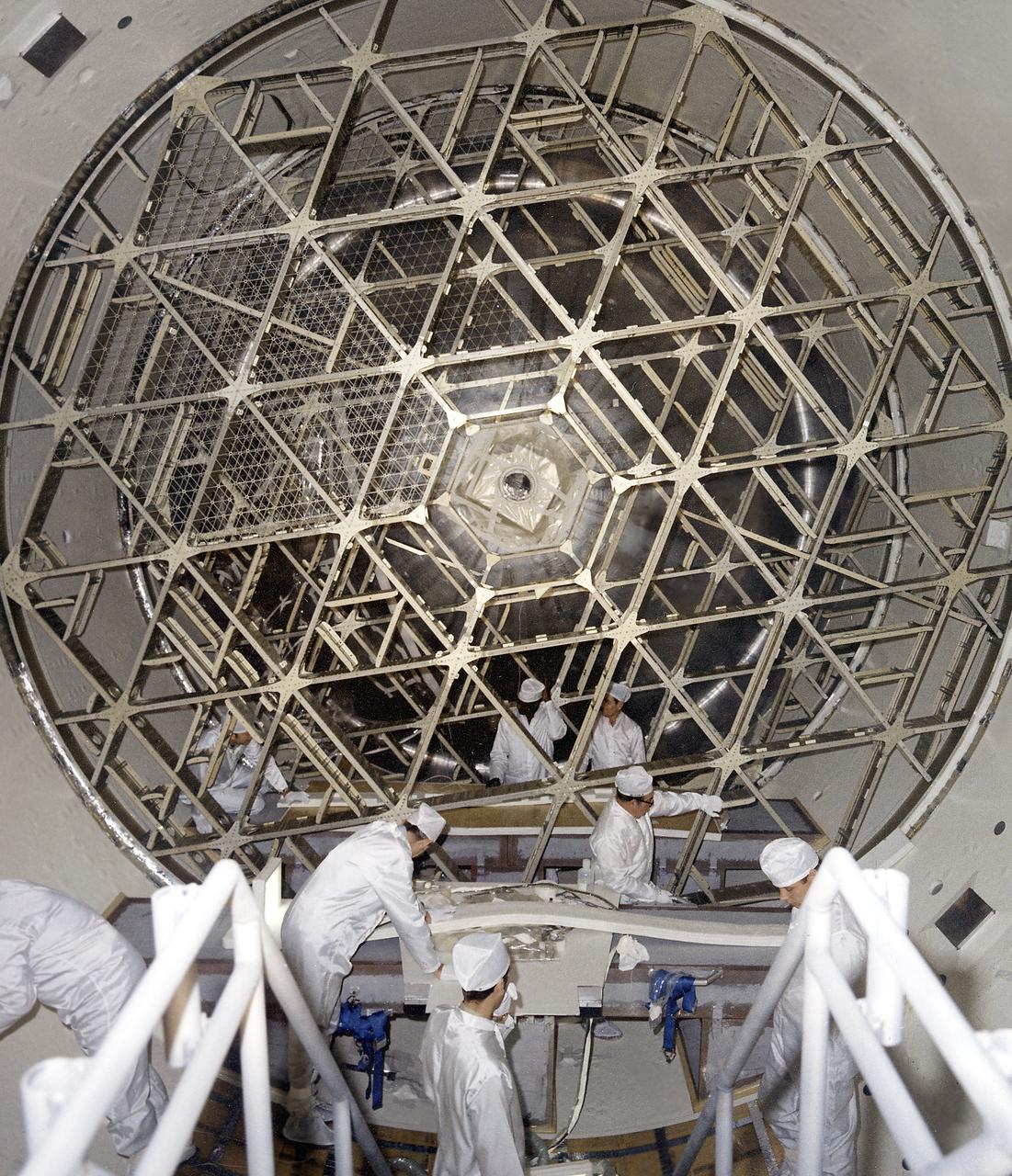
This photograph was taken during installation of floor grids on the upper and lower floors inside the Skylab Orbital Workshop at the McDornell Douglas plant at Huntington Beach, California. The OWS was divided into two major compartments. The lower level provided crew accommodations for sleeping, food preparation and consumption, hygiene, waste processing and disposal, and performance of certain experiments. The upper level consisted of a large work area and housed water storage tanks, a food freezer, storage vaults for film, scientific airlocks, mobility and stability experiment equipment, and other experimental equipment.
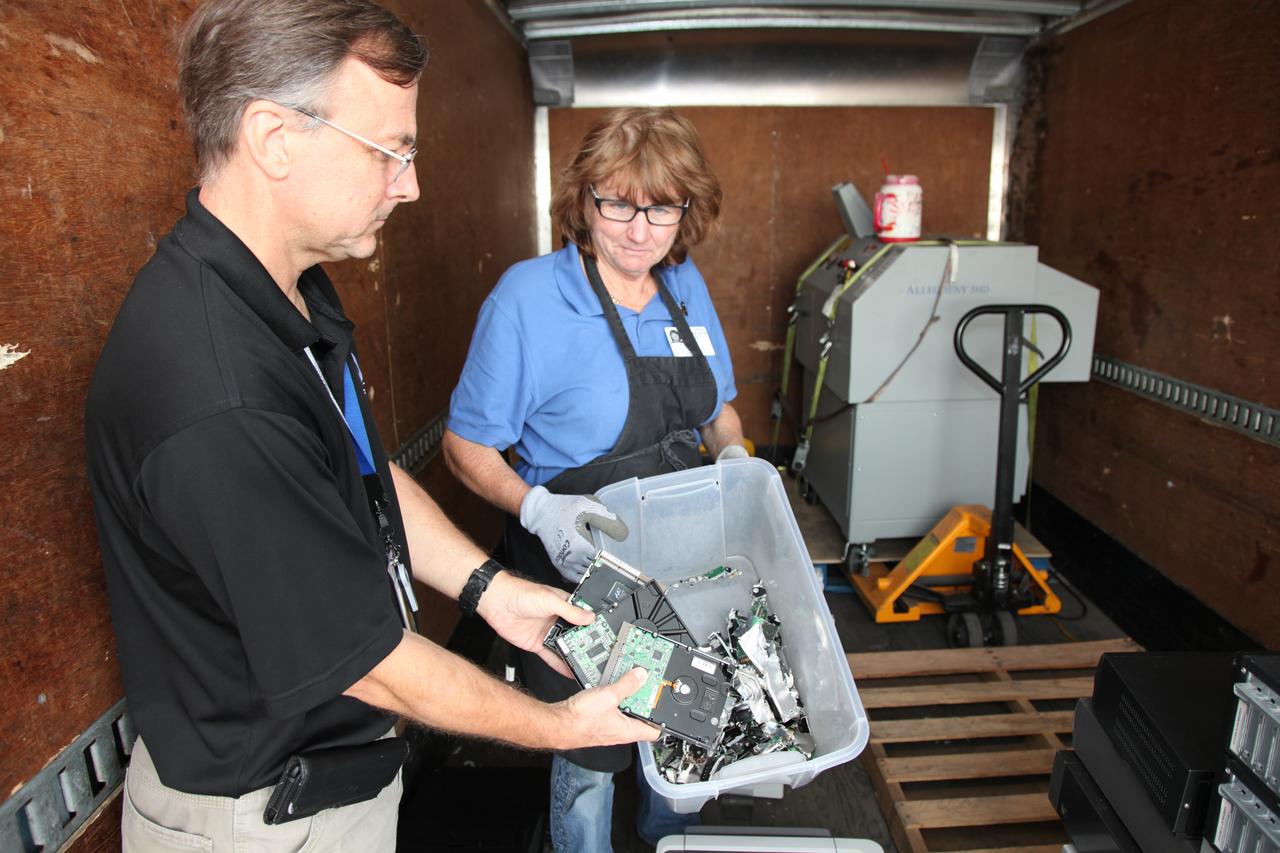
Members of the Sustainability team at NASA's Kennedy Space Center in Florida take a bin of disposed hard drives to be shredded in conjunction with America Recycles Day. America Recycles Day is a nationally recognized initiative dedicated to promoting recycling in the United States. Kennedy partnered with several organizations in order to donate as many of the items as possible to those who could use them the most in the Space Coast community. Space center personnel brought in electronic waste, gently used household goods, clothing and more.
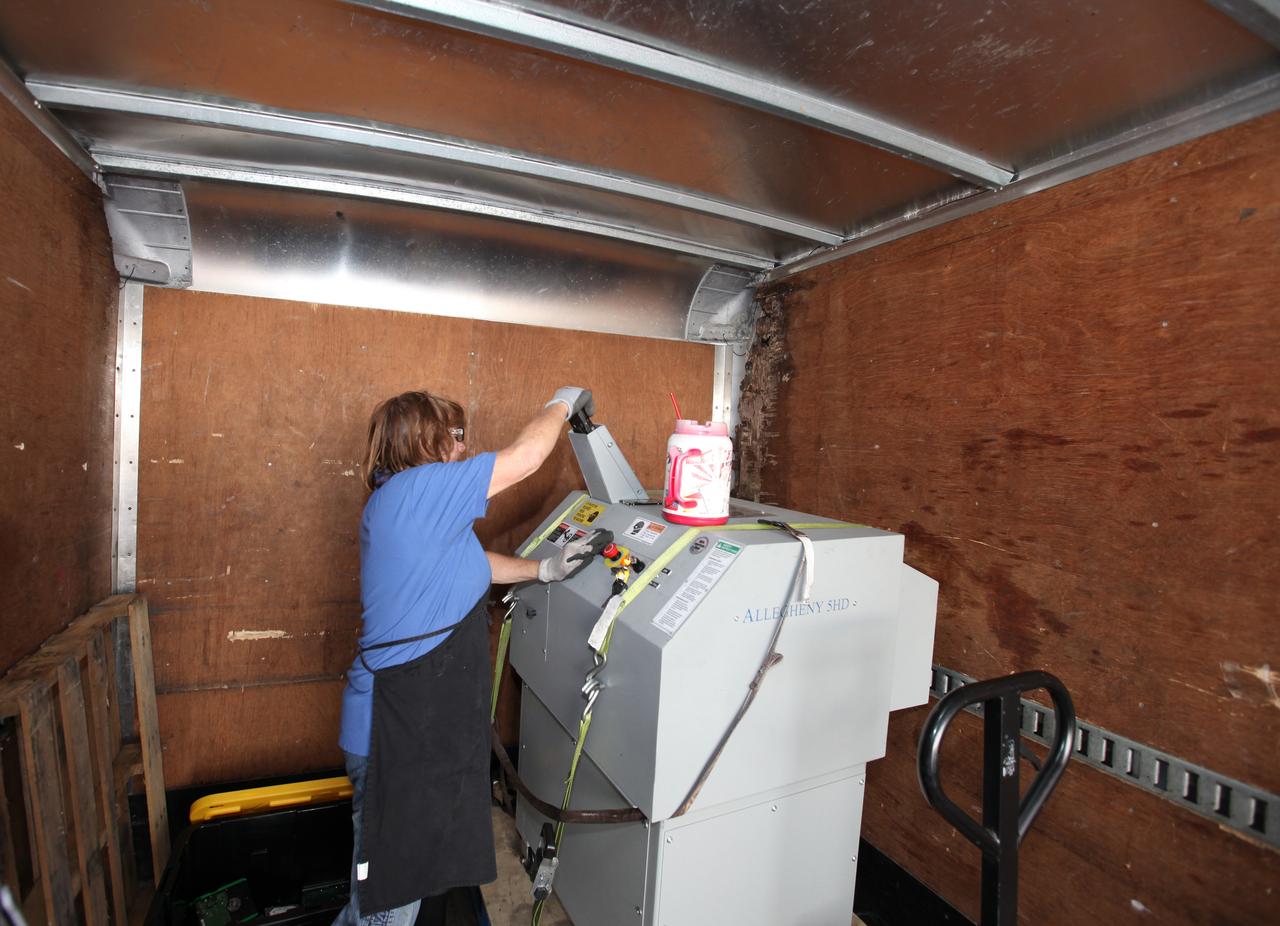
Members of the Sustainability team at NASA's Kennedy Space Center in Florida shred a disposed hard drive in conjunction with America Recycles Day. America Recycles Day is a nationally recognized initiative dedicated to promoting recycling in the United States. Kennedy partnered with several organizations in order to donate as many of the items as possible to those who could use them the most in the Space Coast community. Space center personnel brought in electronic waste, gently used household goods, clothing and more.
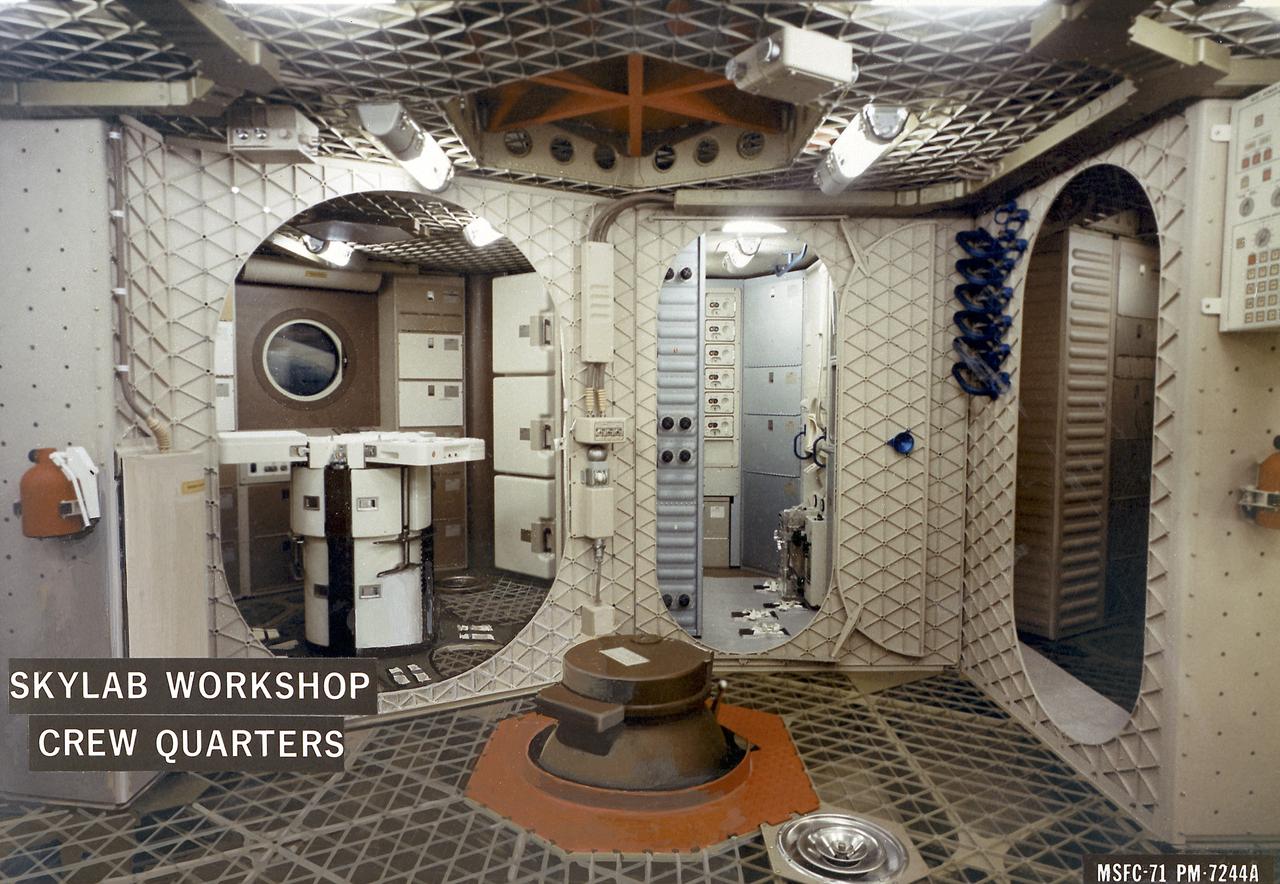
The wardroom deck of the Orbital Workshop, showing the living quarters arrangement, is seen here in good detail. From left to right is the dining area, waste management, and sleeping quarters. Portable restraints are on the wall beside the sleeping quarters. The ergometer for the vectorcardiograph (Experiment - M093) and lower-body Negative Pressure (Experiment M092) unit, used in some of the medical experiments, are in the foreground. The round brown object in the center of the room is the trash disposal airlock.

S66-54590 (13 Sept. 1966) --- Astronaut Richard F. Gordon Jr., Gemini-11 pilot, prepares to open spacecraft hatch to jettison used equipment. Photo credit: NASA
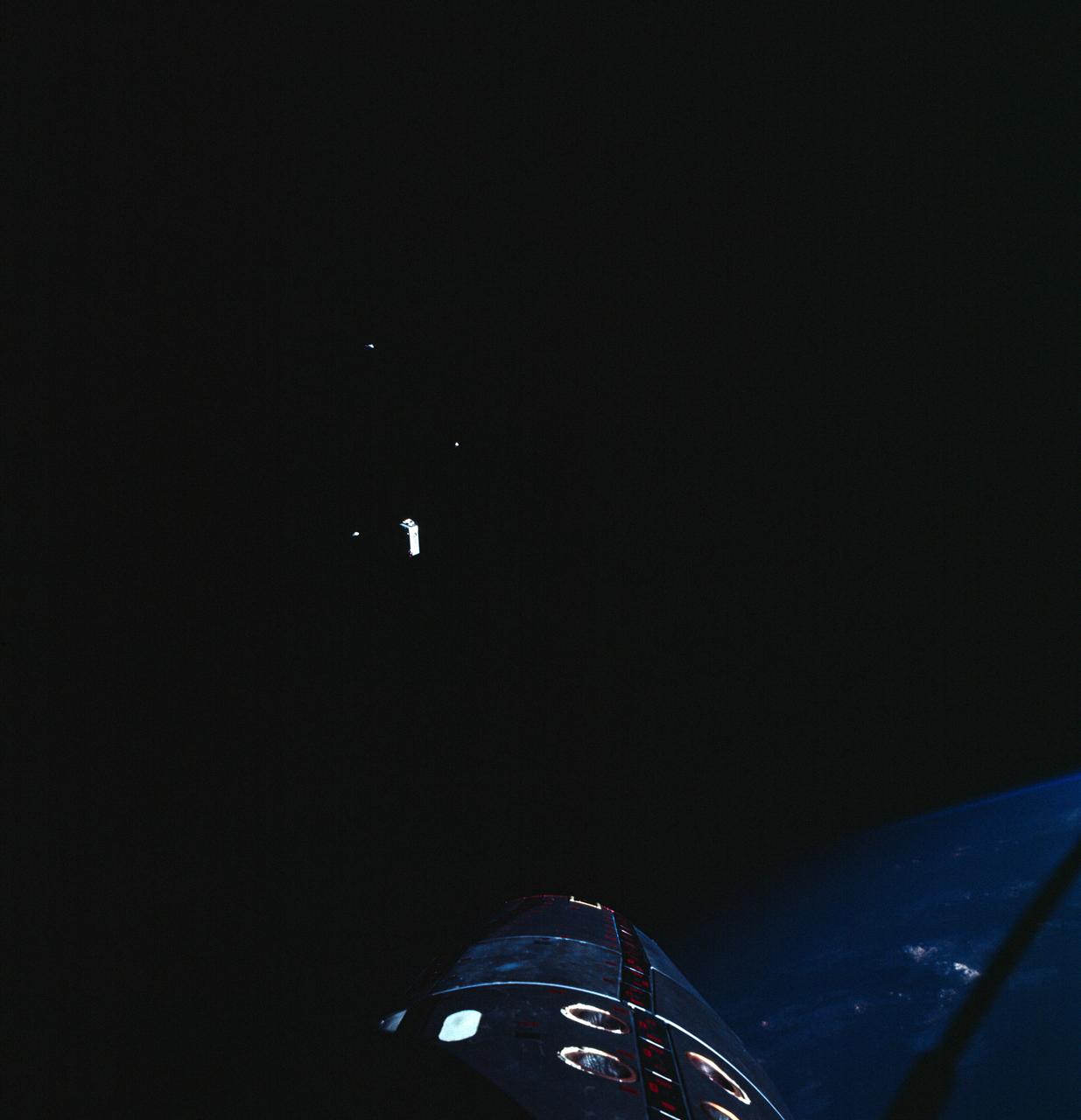
S66-62999 (13 Nov. 1966) --- Jettison of the extravehicular life support system (ELSS) and other equipment from the Gemini-12 spacecraft during its rendezvous mission in space. The nose of the Gemini-12 spacecraft is clearly visible at right edge of photo. Photo credit: NASA
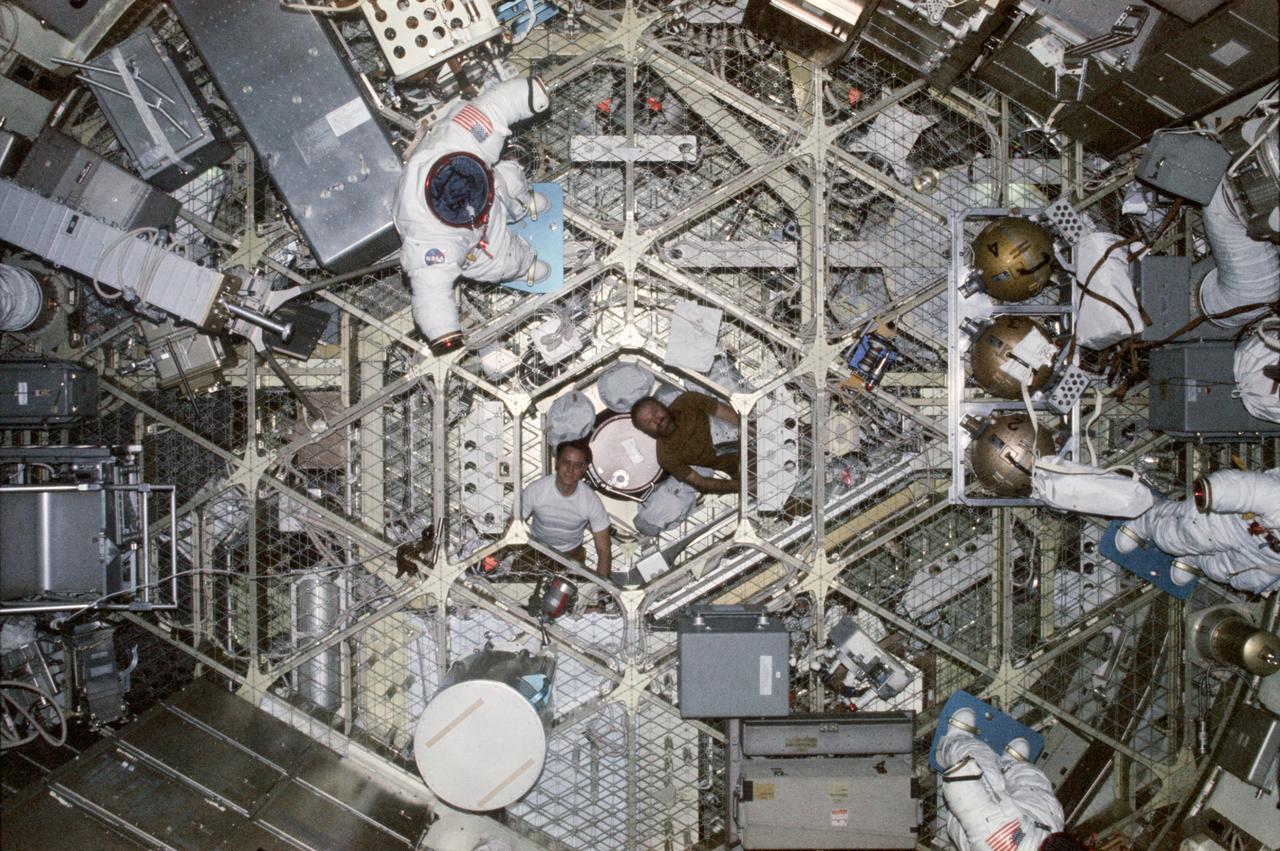
SL4-150-5062 (January 1974) --- A 35mm camera, operated by astronaut William R. Pogue, Skylab 4 pilot, recorded this wide scene of his Skylab 4 crewmates on the other end of the orbital workshop. Astronauts Jerry P. Carr (right), commander, and Edward G. Gibson, science pilot, pose for the snapshot. Also in the frame are parts of three Extravehicular Mobility Unit (EMU) spacesuits, used on several EVA sessions during the third manning of the Skylab space station. Photo credit: NASA
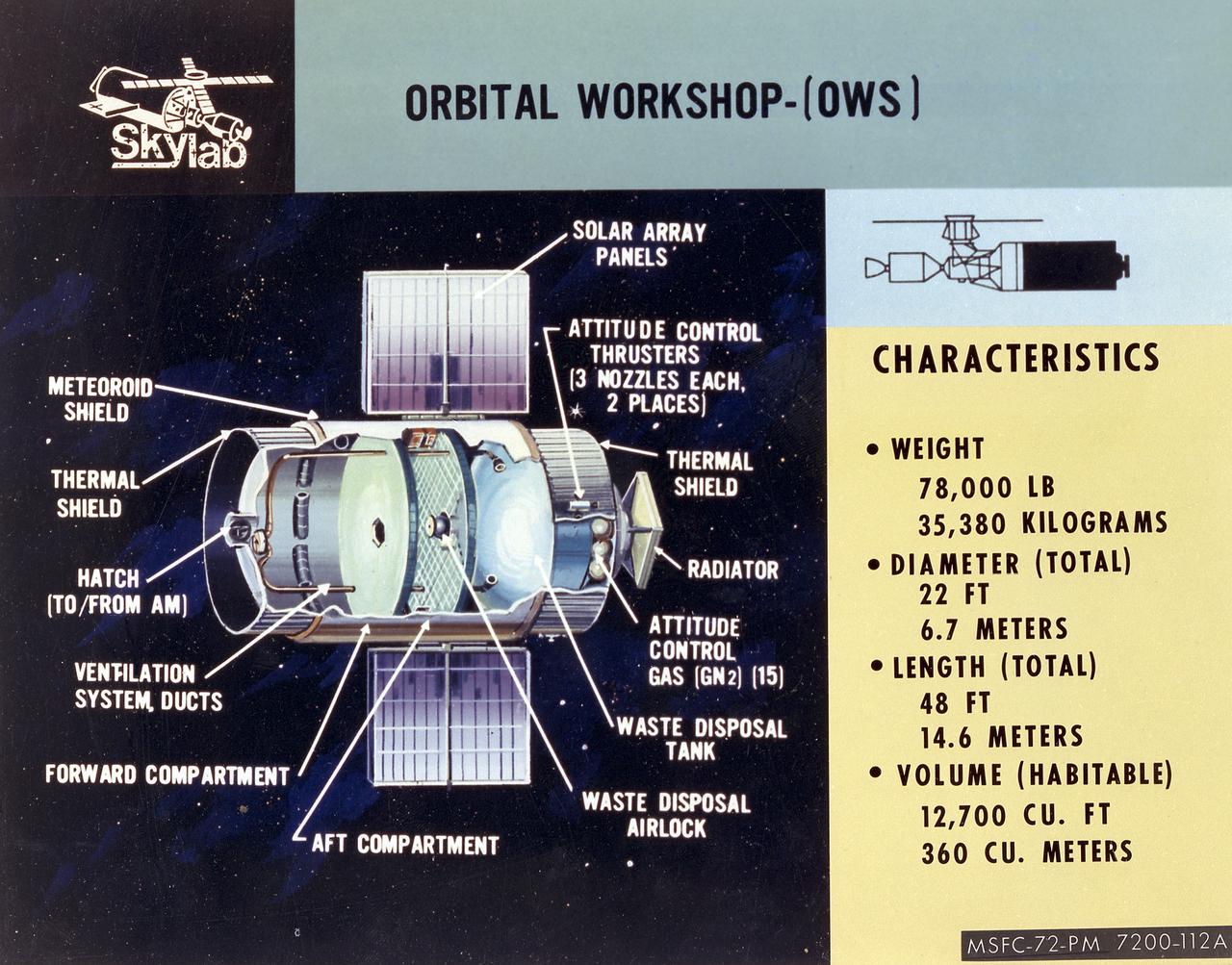
This cutaway illustration shows the characteristics and basic elements of the Skylab Orbiter Workshop (OWS). The OWS was divided into two major compartments. The lower level provided crew accommodations for sleeping, food preparation and consumption, hygiene, waste processing and disposal, and performance of certain experiments. The upper level consisted of a large work area and housed water storage tanks, a food freezer, storage vaults for film, scientific airlocks, mobility and stability experiment equipment, and other experimental equipment. The compartment below the crew quarters was a container for liquid and solid waste and trash accumulated throughout the mission. A solar array, consisting of two wings covered on one side with solar cells, was mounted outside the workshop to generate electrical power to augment the power generated by another solar array mounted on the solar observatory. Thrusters were provided at one end of the workshop for short-term control of the attitude of the space station.
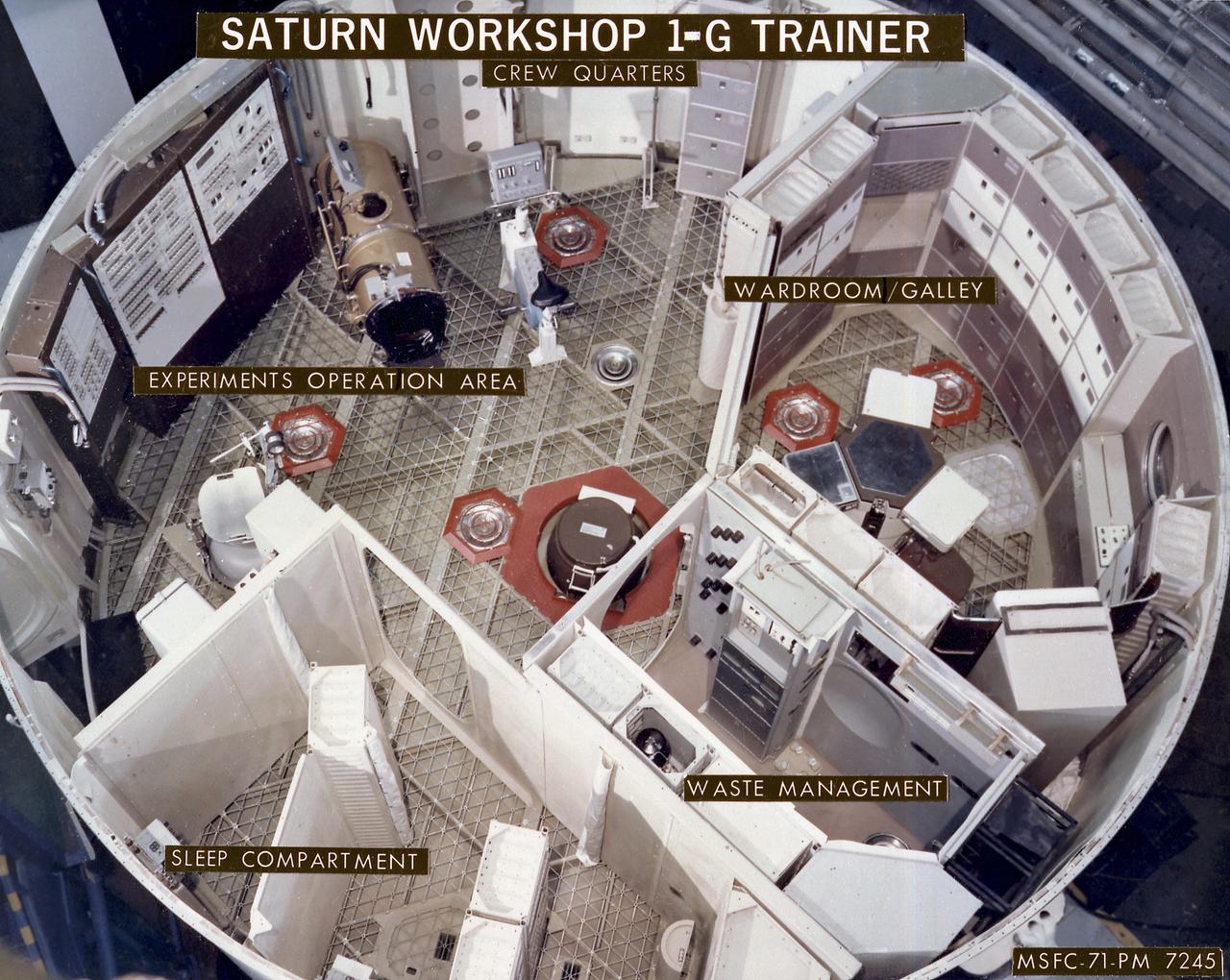
This image depicts a layout of the Skylab workshop 1-G trainer crew quarters. At left, in the sleep compartment, astronauts slept strapped to the walls of cubicles and showered at the center. Next right was the waste management area where wastes were processed and disposed. Upper right was the wardroom where astronauts prepared their meals and foods were stored. In the experiment operation area, upper left, against the far wall, was the lower-body negative-pressure device (Skylab Experiment M092) and the Ergometer for the vectorcardiogram experiment (Skylab Experiment M063). The trainers and mockups were useful in the developmental phase, while engineers and astronauts were still working out optimum designs. They provided much data applicable to the manufacture of the flight articles.
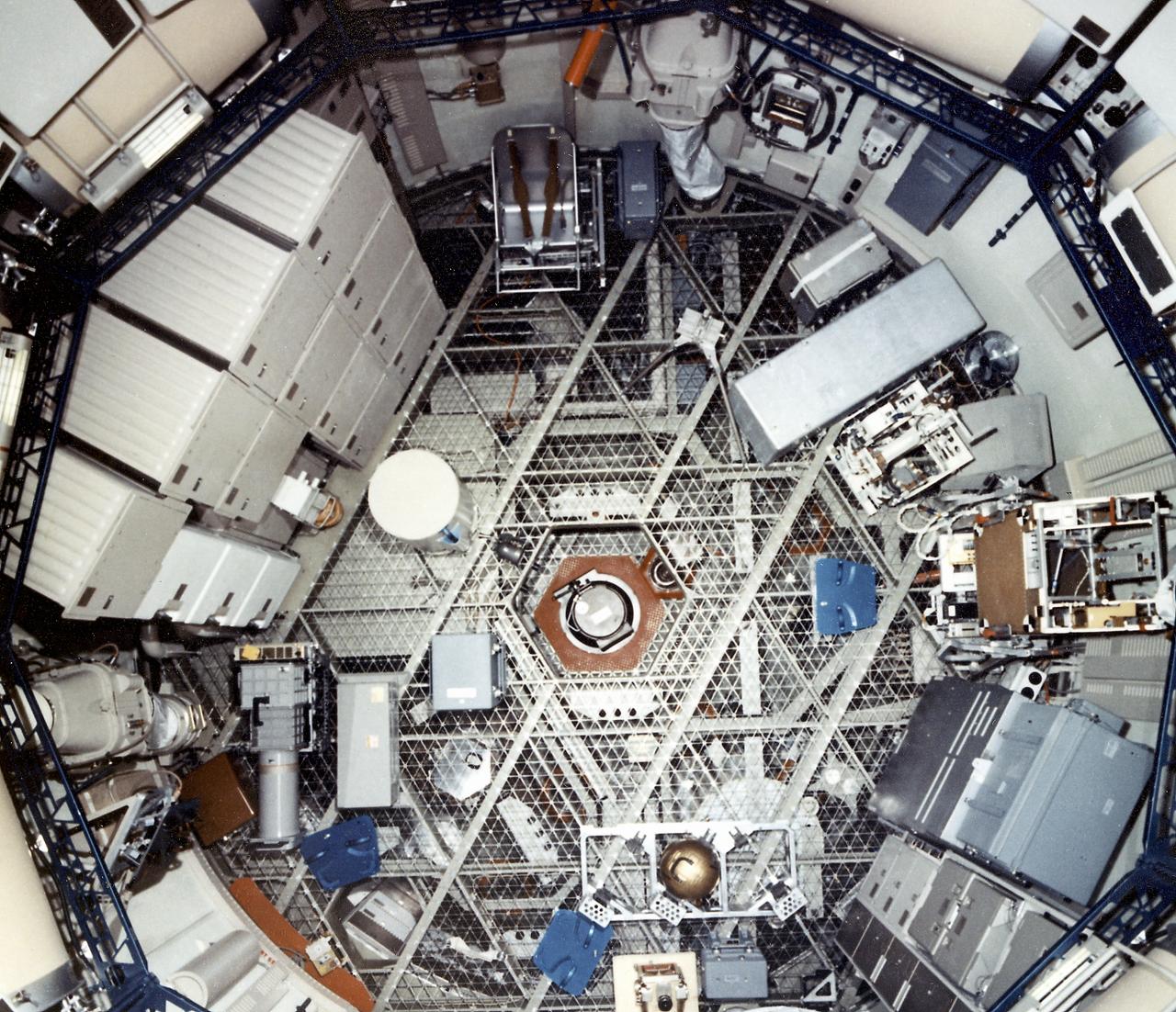
This photograph is an interior view of the Orbital Workshop (OWS) upper level looking from the airlock hatch, showing the octagonal opening that separated the workshop's two levels. The trash airlock can be seen at center. The lower level of the OWS provided crew accommodations for sleeping, food preparation and consumption, hygiene, waste processing and disposal, and performance of certain experiments. The upper level consisted of a large work area and housed water storage tanks, a food freezer, storage vaults for film, scientific airlocks, mobility and stability experiment equipment, and other experimental equipment.
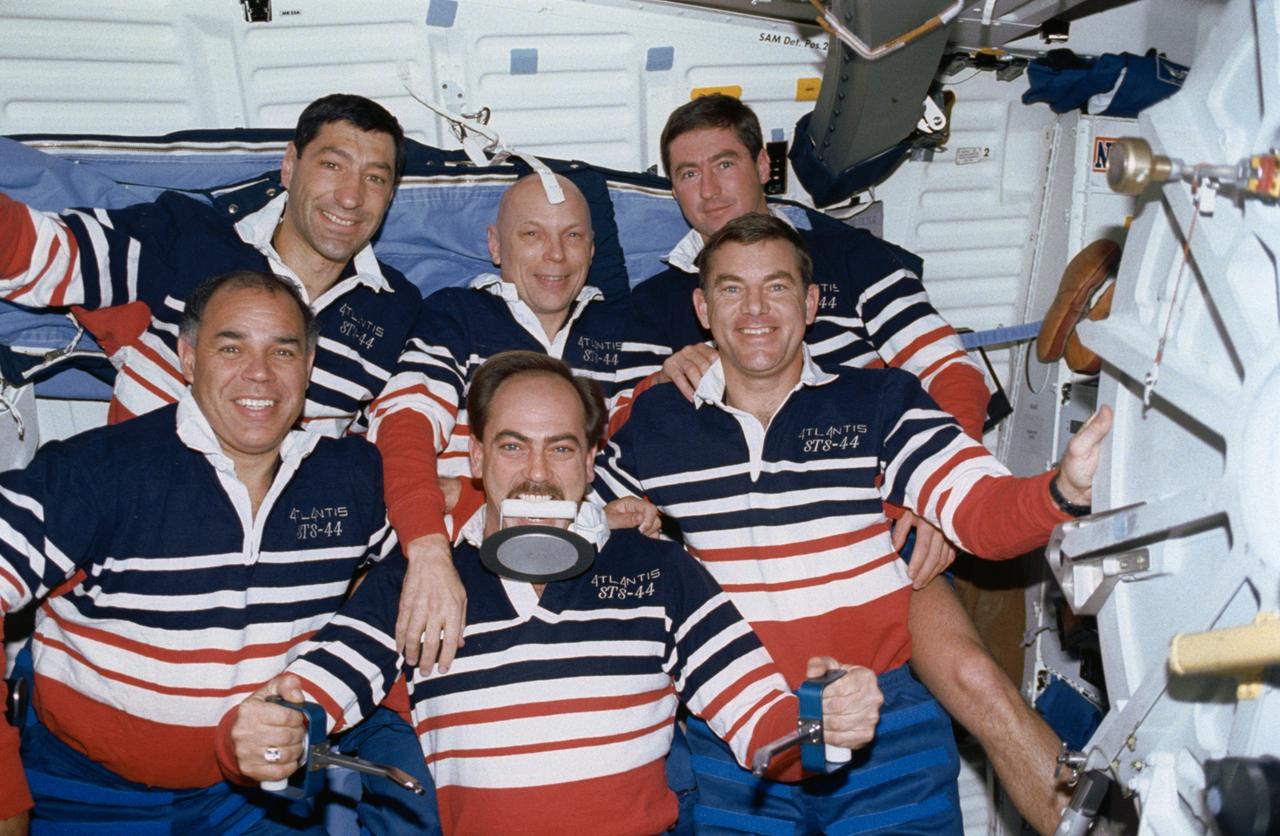
STS044-17-030 (24 Nov-1 Dec 1991) --- The six crewmembers for STS-44 pose for a second crew portrait on Atlantis' flight deck. This portrait was intended to focus on Payload Specialist Thomas J. Hennen (front center), who earned the nickname, "Trash Man" during the flight. It was Hennen who "starred" in a brief onboard video production about the disposal of trash and waste. Others in the picture are (front row) Astronauts Frederick D. Gregory (left), Mission Commander; and James S. Voss, Mission Specialist; and (back row, left to right) Astronauts Mario Runco Jr. and F. Story Musgrave, both Mission Specialists; and Terence T. (Tom) Henricks, Pilot.
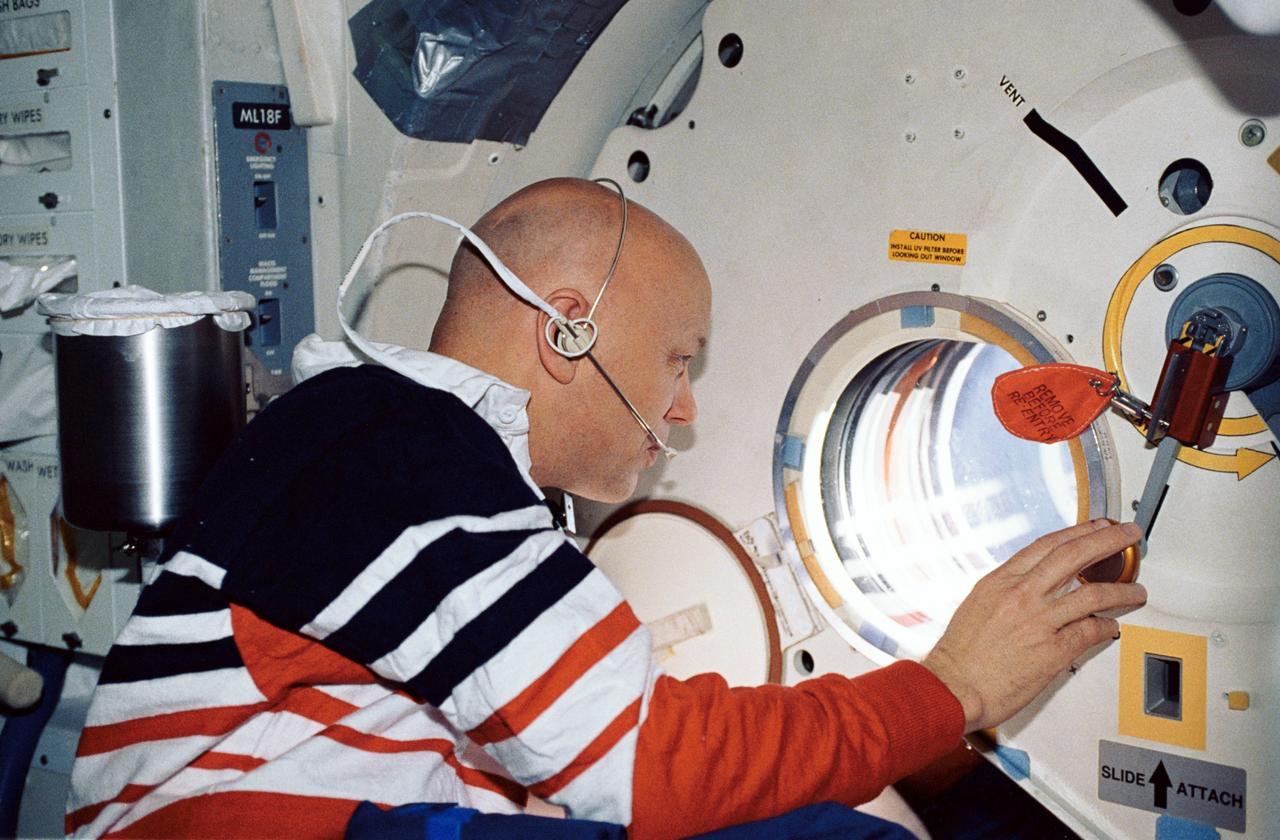
STS044-32-003 (24 Nov.-1 Dec. 1991) --- Astronaut F. Story Musgrave, STS-44 mission specialist, makes visual observations through Atlantis' hatch window. This photograph was among the first released by NASA following the eight day mission, dedicated to the Department of Defense.
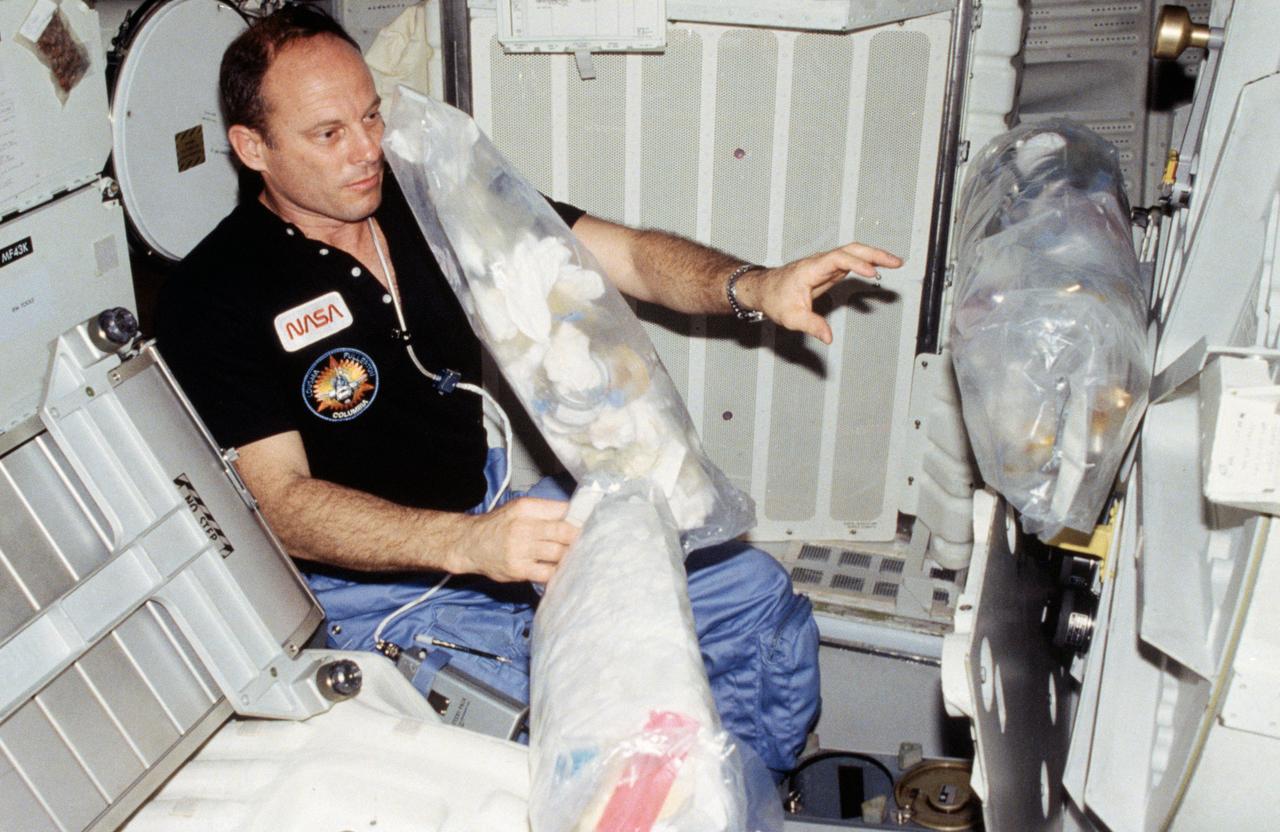
STS003-25-231 (22-30 March 1982) --- Astronaut Jack R. Lousma, STS-3 commander, wearing communication kit assembly mini headset, gathers three freefloating plastic trash bags filled with empty containers, paper towels, straws, etc. Lousma will stow them in a designated stowage volume. Photo credit: NASA
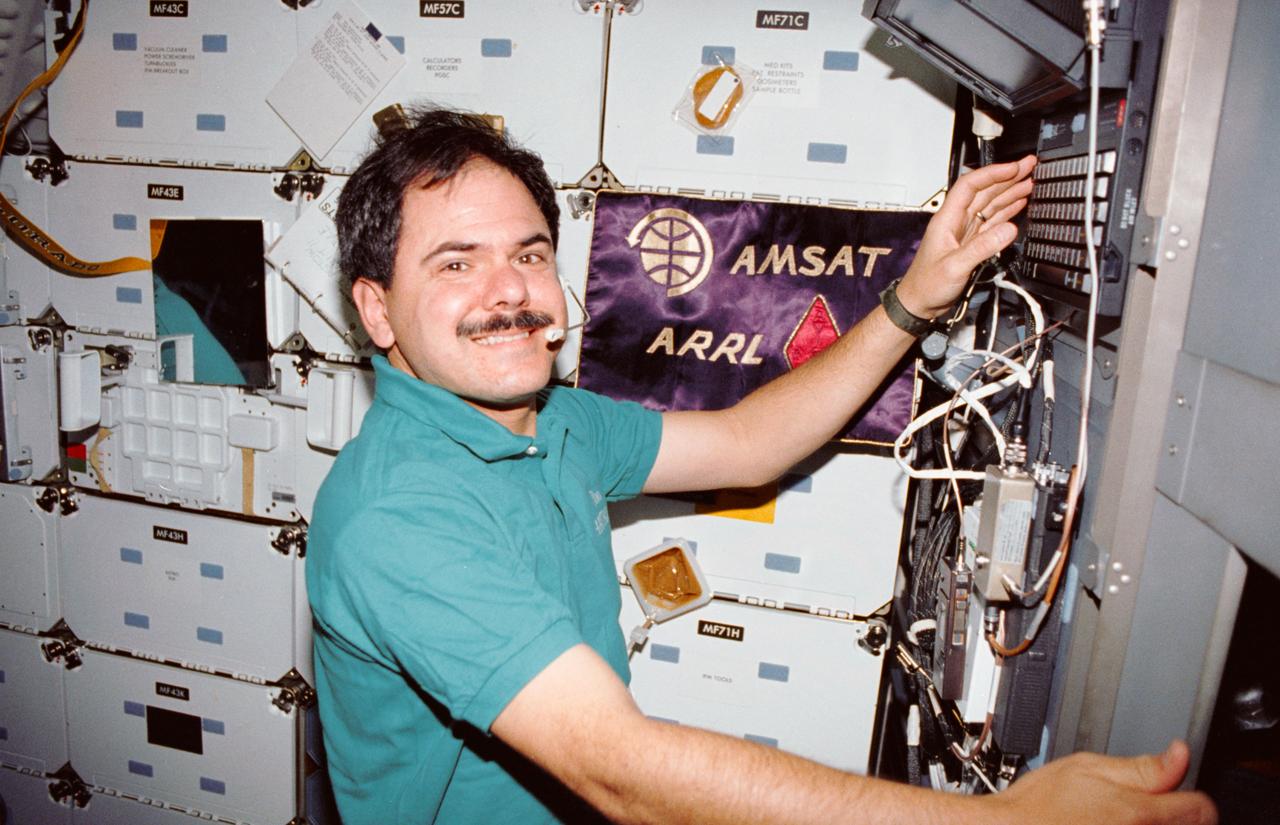
STS-35 Payload Specialist Ronald A. Parise enters data into the payload and general support computer (PGSC) in preparation for Earth communication via the Shuttle Amateur Radio Experiment (SAREX) aboard Columbia, Orbiter Vehicle (OV) 102. The SAREX equipment is secured to the middeck starboard sleep station. SAREX provided radio transmissions between ground based amateur radio operators around the world and Parise, a licensed amateur radio operator. The experiment enabled students to communicate with an astronaut in space, as Parise (call-sign WA4SIR) devoted some of his off-duty time to that purpose. Displayed on the forward lockers beside Parise is a AMSAT (Amateur Radio Satellite Corporation) / ARRL (American Radio Relay League) banner. Food items and checklists are attached to the lockers. In locker position MF43G, the Development Test Objective (DTO) Trash Compaction and Retention System Demonstration extended duration orbiter (EDO) compactor is visible.

ISS012-E-16633 (28 Jan. 2006) --- Savannah River Site, South Carolina is featured in this image photographed by an Expedition 12 crew member on the International Space Station. Situated between the South Carolina piedmont and the Atlantic Ocean, the Savannah River Site is an important part of the US Department of Energy’s nuclear program. Construction of the site – originally called the Savannah River Plant – began in 1951 for the purpose of generating radioactive materials, primarily the hydrogen isotope tritium and plutonium-239, necessary for nuclear weapons production during the Cold War. A total of five nuclear reactors occupy the central portion of the site and operated throughout 1953-1992. Following the end of the Cold War in 1991 activities at the Savannah River Site are now focused on disposal of nuclear wastes, environmental cleanup of the site itself, and development of advanced remediation technologies. The Savannah River Site is located in the Sand Hills region of South Carolina and includes an area of 800 square kilometers (300 square miles). The southern half of the Site (building clusters with reflective white rooftops) is shown. The nearby Savannah River and its tributary creeks provided a ready source of water for the nuclear reactors; to this end, two artificial lakes (“L” Lake and Par Pond) were constructed. The meandering channel of the River and its floodplain, characterized by grey-brown sediments, extends from northwest to southeast across the left portion of the image. The proximity of the River, and the permeable nature of the geological materials under laying the site (sand, clay, gravel, and carbonate rocks), necessitate extensive and ongoing environmental monitoring and cleanup efforts to reduce potential contamination of local water sources. According to NASA scientists, final remediation of wastes posing threats to surface and groundwater is scheduled to occur by 2025.