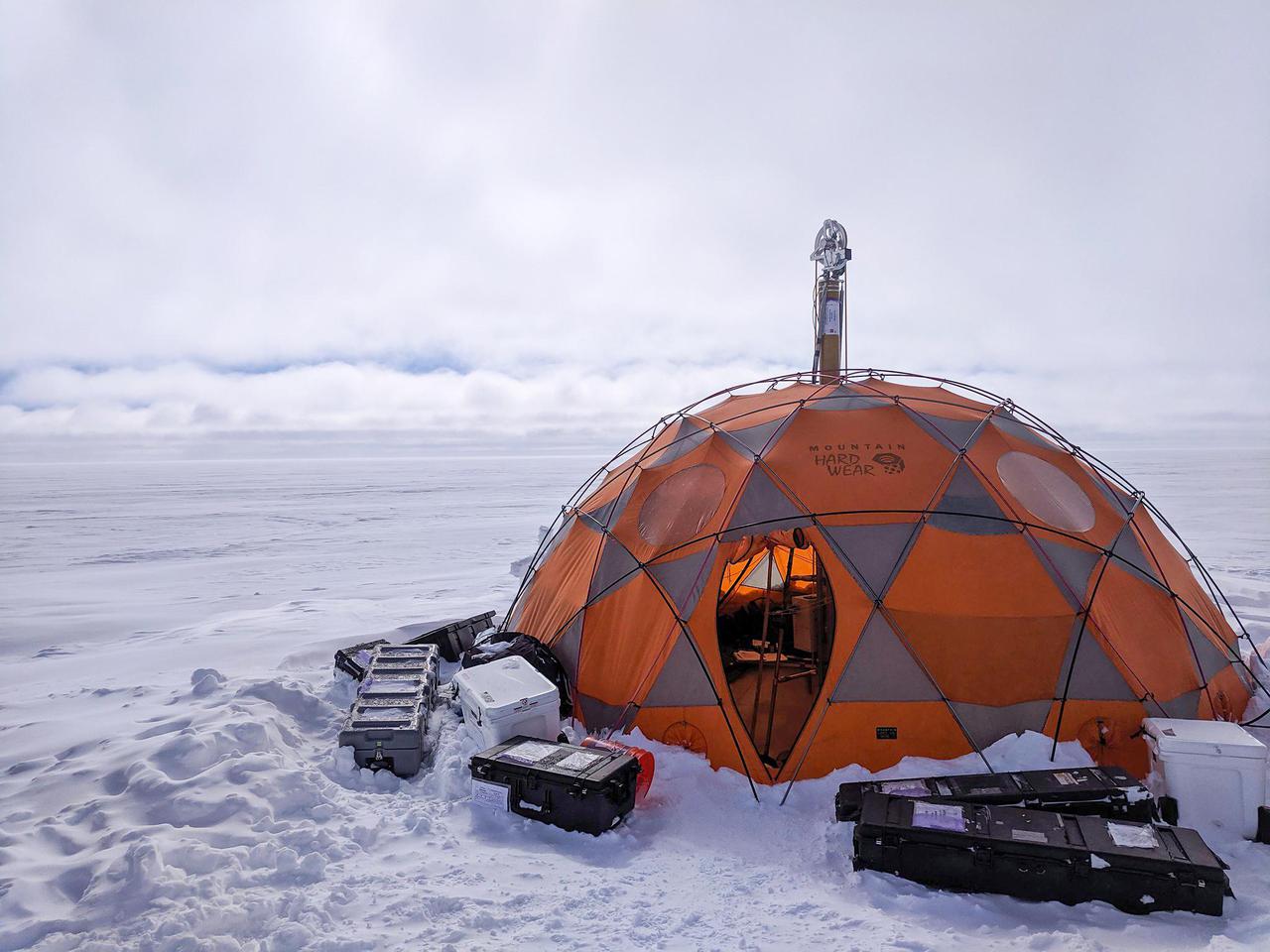
During 2019 field tests near Greenland's Summit Station, a high-elevation remote observing station, the WATSON (Wireline Analysis Tool for the Subsurface Observation of Northern ice sheets) instrument is put through its paces to seek out signs of life, or biosignatures, 360 feet (110 meters) down a borehole. In this photograph, the winch that holds the drill pokes out the top of the drill tent. WATSON could one day be launched aboard a robotic mission to seek out biosignatures on the ocean moons of Enceladus, Europa, or even Titan. The WATSON team hopes to test the instrument in a variety of cold locations on Earth to see how the distribution and variety of biosignatures change depending on where they are. By testing WATSON in different Earth analogs — areas on Earth that can stand in for those on other worlds — scientists would be able to better understand the chemical fingerprints of any biosignatures detected on other worlds. https://photojournal.jpl.nasa.gov/catalog/PIA24169
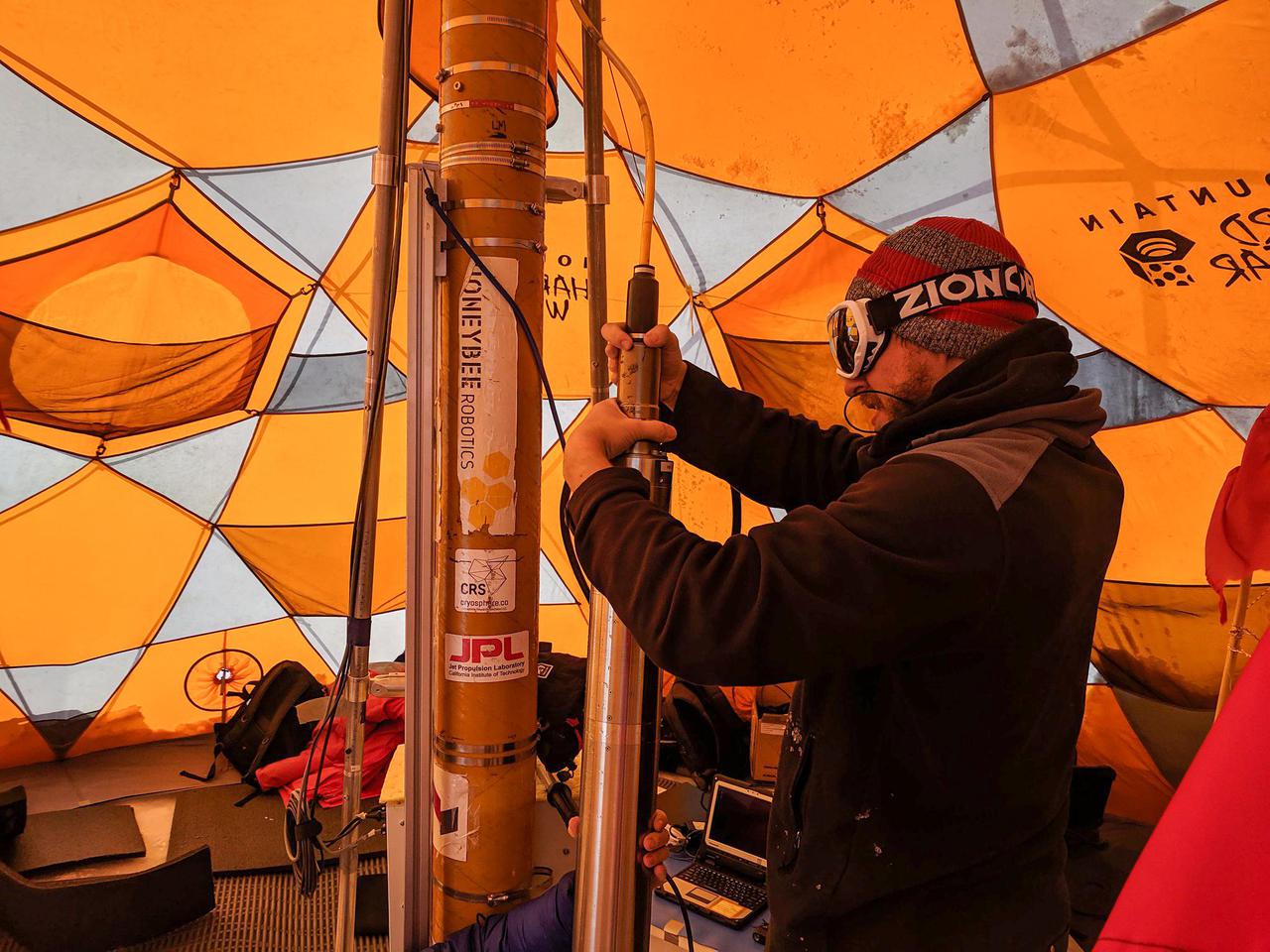
During 2019 field tests near Greenland's Summit Station, a high-elevation remote observing station, the WATSON (Wireline Analysis Tool for the Subsurface Observation of Northern ice sheets) instrument is put through its paces to seek out signs of life, or biosignatures, 360 feet (110 meters) down a borehole. In this photograph, a WATSON team member secures the tether to the top of the tube-like instrument and drill before lowering it into the ice. The tether also acts as the power cable and data feed. Care must be taken to ensure a tight connection between the tether and instrument, else the instrument could be lost in the ice. WATSON could one day be launched aboard a robotic mission to seek out biosignatures on the ocean moons of Enceladus, Europa, or even Titan. The WATSON team hopes to test the instrument in a variety of cold locations on Earth to see how the distribution and variety of biosignatures change depending on where they are. By testing WATSON in different Earth analogs — areas on Earth that can stand in for those on other worlds — scientists would be able to better understand the chemical fingerprints of any biosignatures detected on other worlds. https://photojournal.jpl.nasa.gov/catalog/PIA24170
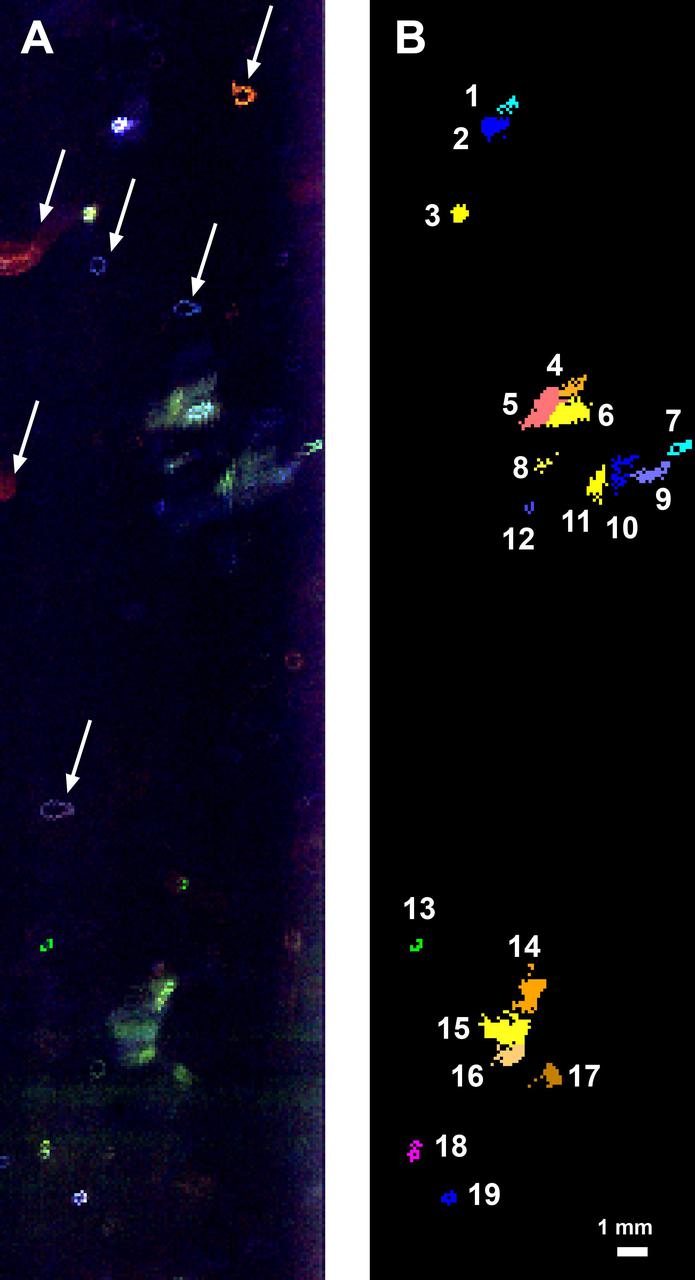
This fluorescence map of the inside wall of an ice borehole near Greenland's Summit Station was produced at a depth of 307.7 feet (93.8 meters) into the ice sheet by the WATSON (Wireline Analysis Tool for the Subsurface Observation of Northern ice sheets) instrument. Recorded during a 2019 field test of the WATSON instrument, the left panel shows the variety of biosignatures that were detected in the ice — different colors represent different organic molecules, some of which are likely microbes. The arrows highlight artifacts on the instrument's optical window, not biosignatures in the ice. In the right panel, the biosignature detections have been colorized to indicate the different features detected. Blotches that are the same color are likely made of the same chemicals. The numbers list the different and distinct features that WATSON detected at that depth in the ice. WATSON could one day be launched aboard a robotic mission to seek out biosignatures on the ocean moons of Enceladus, Europa, or even Titan. The WATSON team hopes to test the instrument in a variety of cold locations on Earth to see how the distribution and variety of biosignatures change depending on where they are. By testing WATSON in different "Earth analogs," scientists would be able to better understand the chemical fingerprints of any biosignatures detected on other worlds. https://photojournal.jpl.nasa.gov/catalog/PIA24140
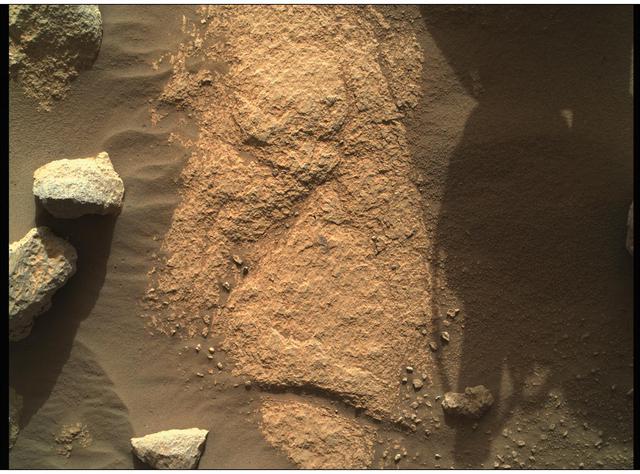
NASA's Perseverance Mars rover used the WATSON camera on the end of its robotic arm to conduct a focus test on May 9, 2021, the 78th Martian day, or sol, of the mission. WATSON (Wide Angle Topographic Sensor for Operations and eNgineering) is located on the SHERLOC (Scanning Habitable Environments with Raman and Luminescence for Organics and Chemicals) instrument, located at the end of Perseverance's long robotic arm. NASA's Jet Propulsion Laboratory built and manages operations of Perseverance and Ingenuity for the agency. Caltech in Pasadena, California, manages JPL for NASA. WATSON was built by Malin Space Science Systems (MSSS) in San Diego and is operated jointly by MSSS and JPL. A key objective for Perseverance's mission on Mars is astrobiology, including the search for signs of ancient microbial life. The rover will characterize the planet's geology and past climate, pave the way for human exploration of the Red Planet, and be the first mission to collect and cache Martian rock and regolith (broken rock and dust). Subsequent NASA missions, in cooperation with ESA (European Space Agency), would send spacecraft to Mars to collect these sealed samples from the surface and return them to Earth for in-depth analysis. The Mars 2020 Perseverance mission is part of NASA's Moon to Mars exploration approach, which includes Artemis missions to the Moon that will help prepare for human exploration of the Red Planet. Movie available at https://photojournal.jpl.nasa.gov/catalog/PIA24641
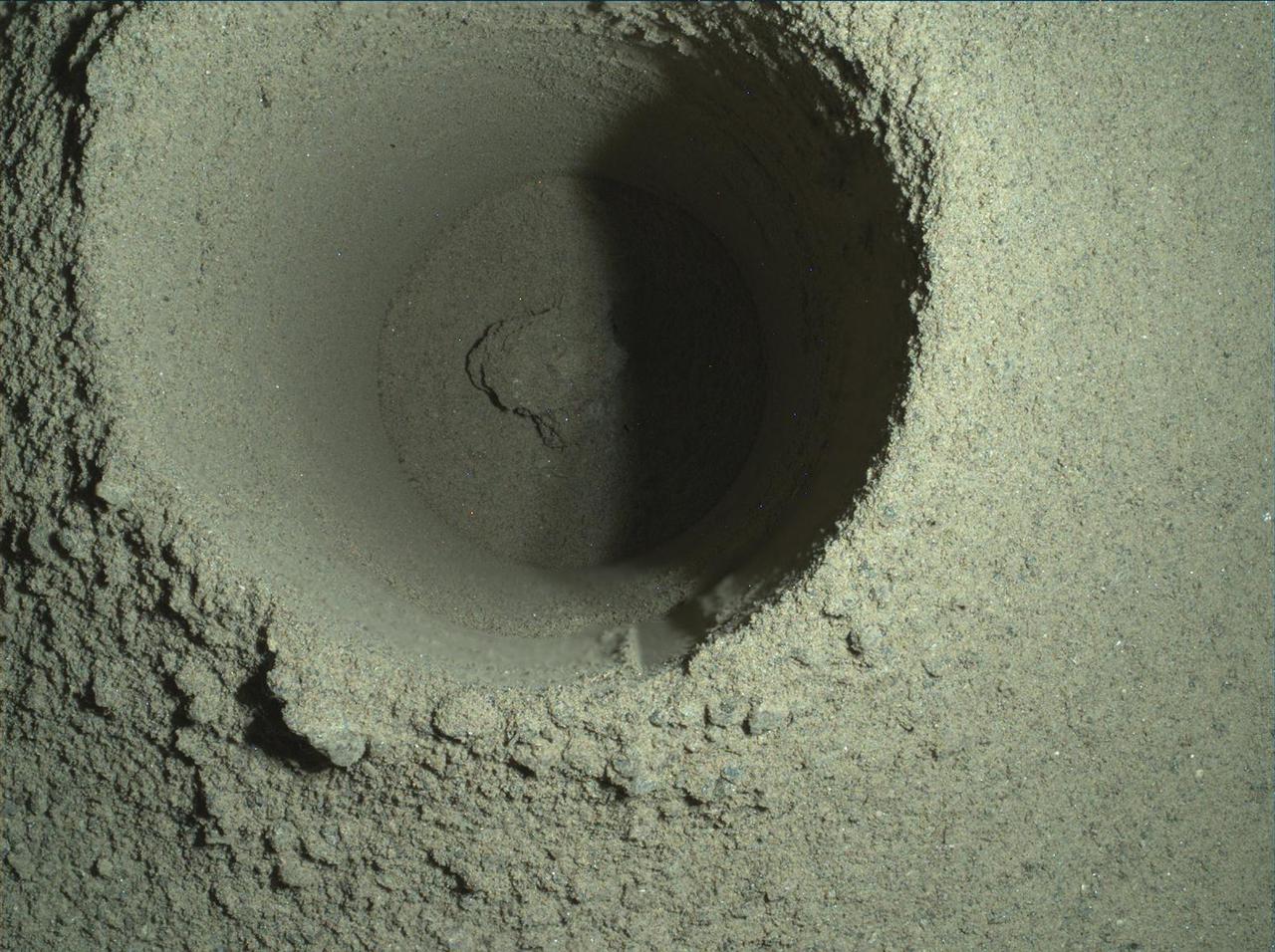
This composite image of the first borehole drilled by NASA's Perseverance rover on Mars was generated using multiple images taken by the rover's WATSON (Wide Angle Topographic Sensor for Operations and eNgineering) imager. The borehole is 1.06 inches (2.7 centimeters) in diameter. A subsystem of the SHERLOC (Scanning Habitable Environments with Raman & Luminescence for Organics & Chemicals) instrument, WATSON can document the structure and texture within a drilled target, and its data can be used to derive depth measurements. The image was taken on the mission's 165th Martian day, or sol, at night in order to reduce self-shadowing within the borehole that can occur during daylight imaging. Some of WATSON's white LEDs illuminated the borehole. NASA's Jet Propulsion Laboratory built and manages operations of Perseverance and Ingenuity for the agency. Caltech in Pasadena, California, manages JPL for NASA. WATSON was built by Malin Space Science Systems (MSSS) in San Diego and is operated jointly by MSSS and JPL. A key objective for Perseverance's mission on Mars is astrobiology, including the search for signs of ancient microbial life. The rover will characterize the planet's geology and past climate, pave the way for human exploration of the Red Planet, and be the first mission to collect and cache Martian rock and regolith (broken rock and dust). Subsequent NASA missions, in cooperation with ESA (European Space Agency), would send spacecraft to Mars to collect these sealed samples from the surface and return them to Earth for in-depth analysis. The Mars 2020 Perseverance mission is part of NASA's Moon to Mars exploration approach, which includes Artemis missions to the Moon that will help prepare for human exploration of the Red Planet. https://photojournal.jpl.nasa.gov/catalog/PIA24796
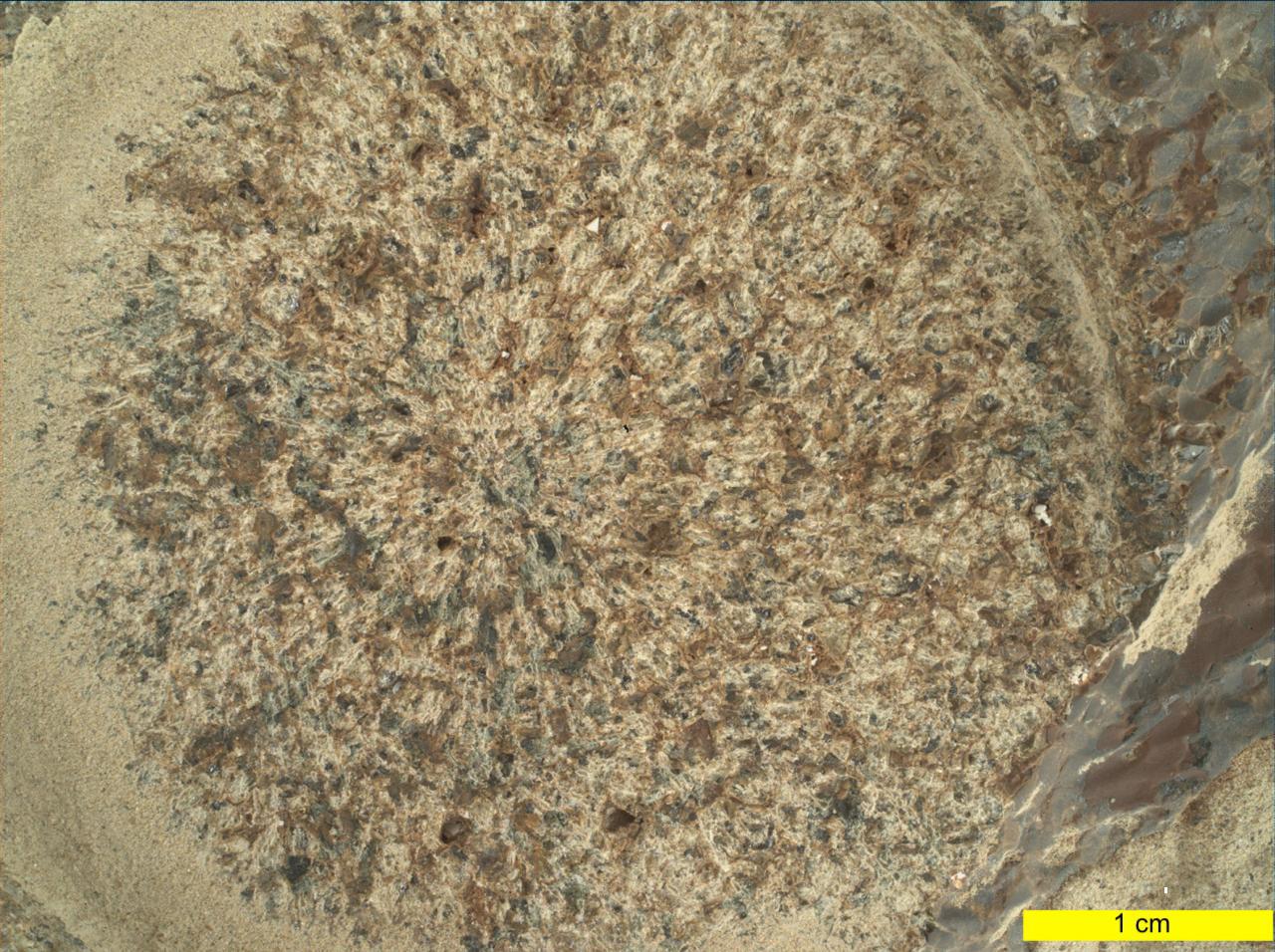
This close-up view of a rock target named "Dourbes" was provided by the WATSON (Wide Angle Topographic Sensor for Operations and eNgineering) camera on the end of the robotic arm aboard NASA's Perseverance Mars rover. WATSON took a series of eight fully-shadowed images on Nov. 5, 2021, the 253rd Martian day, or sol, of the mission, and the images were subsequently merged to create this view. Before drilling rocks, the rover abrades the rock surface using a tool on its robotic arm to clear away dust and weathering rinds, allowing other instruments to study the rocks in detail. The abraded patch is 2 inches (5 centimeters) in diameter. Perseverance subsequently acquired two rock core samples from this outcrop, called "Brac," which forms part of the "South Séítah" geologic unit of Jezero Crater. The WATSON image shows that the abrasion patch is dominated by discrete areas of light-toned material, with subordinate brown, dark-toned interstitial areas. The chemistry and mineralogy of the abrasion patch was analysed by a series of co-registered observations using the SuperCam, Mastcam-Z, PIXL (Planetary Instrument for X-ray Lithochemistry), and SHERLOC (Scanning Habitable Environments with Raman & Luminescence for Organics & Chemicals) instruments. A subsystem of an instrument called SHERLOC (Scanning Habitable Environments with Raman & Luminescence for Organics & Chemicals), WATSON can document the structure and texture within a drilled or abraded target, and its data can be used to derive depth measurements. WATSON was built by Malin Space Science Systems (MSSS) in San Diego and is operated jointly by MSSS and JPL. A key objective for Perseverance's mission on Mars is astrobiology, including the search for signs of ancient microbial life. The rover will characterize the planet's geology and past climate, pave the way for human exploration of the Red Planet, and be the first mission to collect and cache Martian rock and regolith (broken rock and dust). Subsequent NASA missions, in cooperation with ESA (European Space Agency), would send spacecraft to Mars to collect these sealed samples from the surface and return them to Earth for in-depth analysis. The Mars 2020 Perseverance mission is part of NASA's Moon to Mars exploration approach, which includes Artemis missions to the Moon that will help prepare for human exploration of the Red Planet. https://photojournal.jpl.nasa.gov/catalog/PIA24940
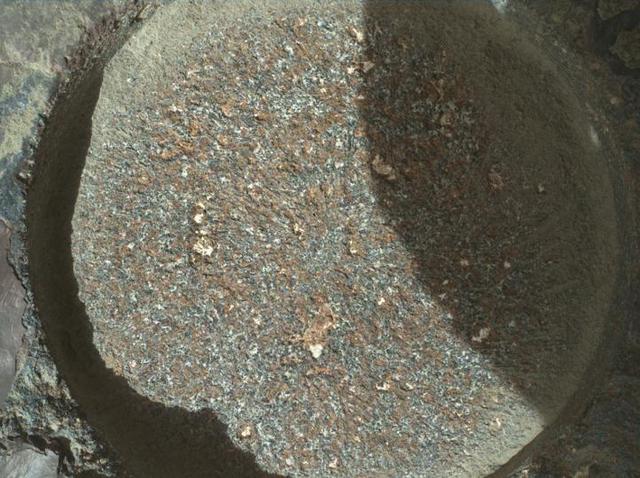
NASA's Perseverance Mars rover used its WATSON (Wide Angle Topographic Sensor for Operations and eNgineering) camera to take eight images – combined here into the single composite image – of a rock abraded by a tool on the rover's robotic arm. The images were taken on Aug. 27, 2021 (the 185th Martian day, or sol, of the mission). Nicknamed "Bellegarde," the abraded target is 0.4 inches (5 centimeters) in diameter. A subsystem of SHERLOC, WATSON can document the structure and texture within a drilled or abraded target, and its data can be used to derive depth measurements. The area within the blue box is roughly 6.5 millimeters squared. NASA's Jet Propulsion Laboratory built and manages operations of Perseverance and Ingenuity for the agency. Caltech in Pasadena, California, manages JPL for NASA. WATSON was built by Malin Space Science Systems (MSSS) in San Diego and is operated jointly by MSSS and JPL. A key objective for Perseverance's mission on Mars is astrobiology, including the search for signs of ancient microbial life. The rover will characterize the planet's geology and past climate, pave the way for human exploration of the Red Planet, and be the first mission to collect and cache Martian rock and regolith (broken rock and dust). Subsequent NASA missions, in cooperation with ESA (European Space Agency), would send spacecraft to Mars to collect these sealed samples from the surface and return them to Earth for in-depth analysis. The Mars 2020 Perseverance mission is part of NASA's Moon to Mars exploration approach, which includes Artemis missions to the Moon that will help prepare for human exploration of the Red Planet. https://photojournal.jpl.nasa.gov/catalog/PIA24770
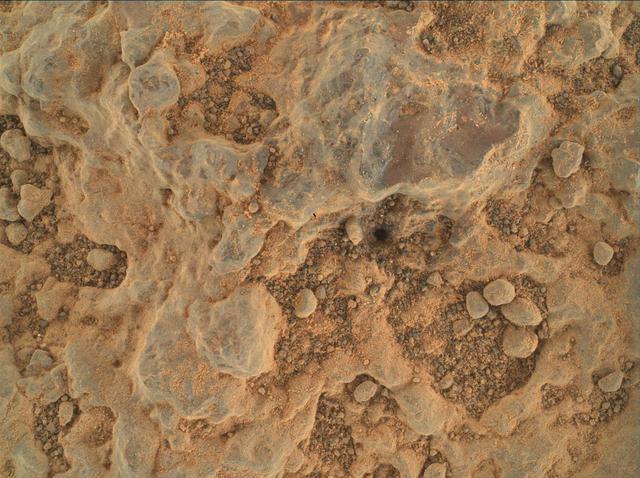
NASA's Perseverance Mars rover took this close-up of a rock target nicknamed "Foux" using its WATSON (Wide Angle Topographic Sensor for Operations and eNgineering) camera, part of the SHERLOC instrument on the end of the rover's robotic arm. The image was taken July 11, 2021, the 139th Martian day, or sol, of the mission. The area within the camera is roughly 1.4 by 1 inches (3.5 centimeters by 2.6 centimeters). NASA's Jet Propulsion Laboratory built and manages operations of Perseverance and Ingenuity for the agency. Caltech in Pasadena, California, manages JPL for NASA. WATSON was built by Malin Space Science Systems (MSSS) in San Diego and is operated jointly by MSSS and JPL. A key objective for Perseverance's mission on Mars is astrobiology, including the search for signs of ancient microbial life. The rover will characterize the planet's geology and past climate, pave the way for human exploration of the Red Planet, and be the first mission to collect and cache Martian rock and regolith (broken rock and dust). Subsequent NASA missions, in cooperation with ESA (European Space Agency), would send spacecraft to Mars to collect these sealed samples from the surface and return them to Earth for in-depth analysis. The Mars 2020 Perseverance mission is part of NASA's Moon to Mars exploration approach, which includes Artemis missions to the Moon that will help prepare for human exploration of the Red Planet. https://photojournal.jpl.nasa.gov/catalog/PIA24728

Marshall Center Director Patrick Scheuermann and Dr. Lisa Watson-Morgan talk to news media at the April 17 Marshall 2014 Update. Watson-Morgan, the first woman to be named the center's chief engineer, answered questions about progress on the Space Launch System and other projects, and spoke about the importance of attracting young people to science, technology, engineering and mathematics education to maintain a "pipeline" of future engineers.
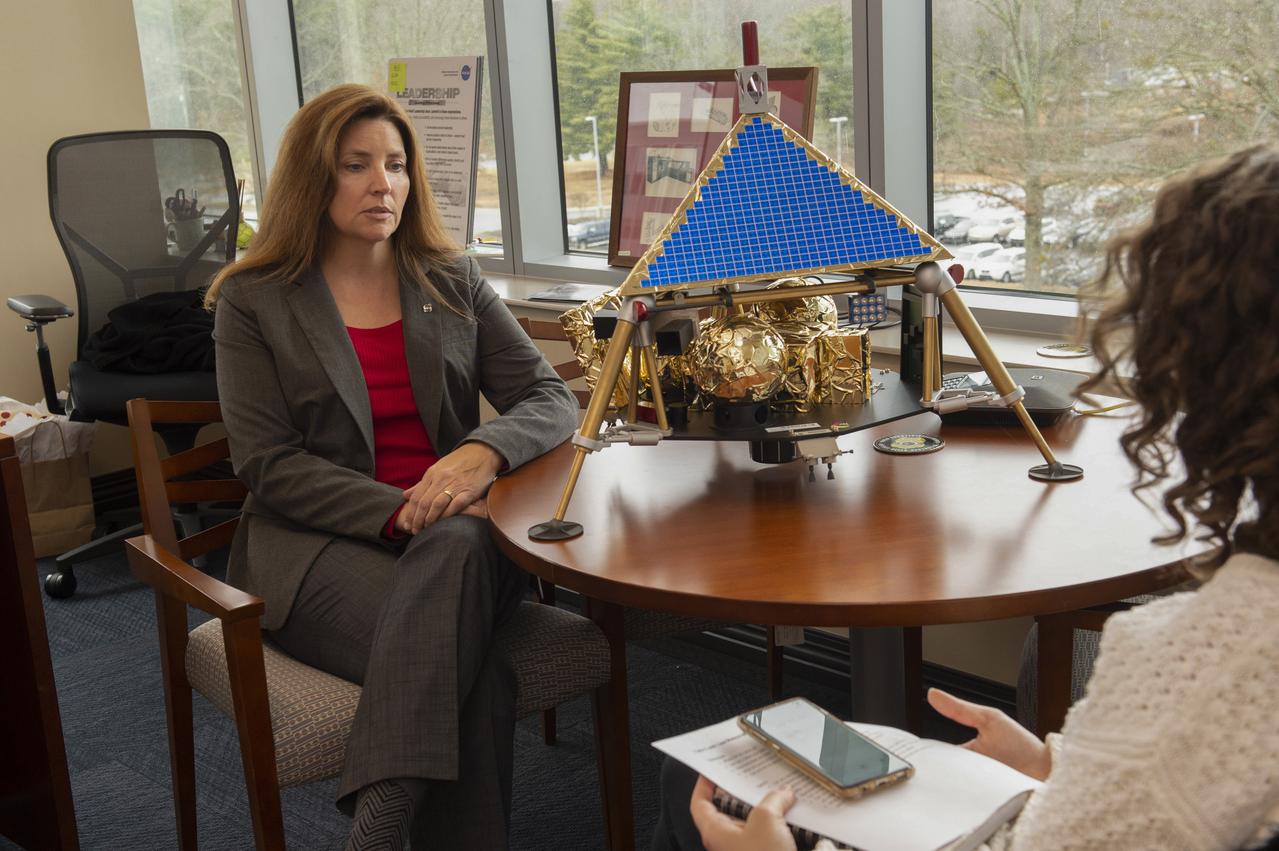
Lisa Watson-Morgan is interviewed for “TAKE FIVE†column in Marshall Star newspaper
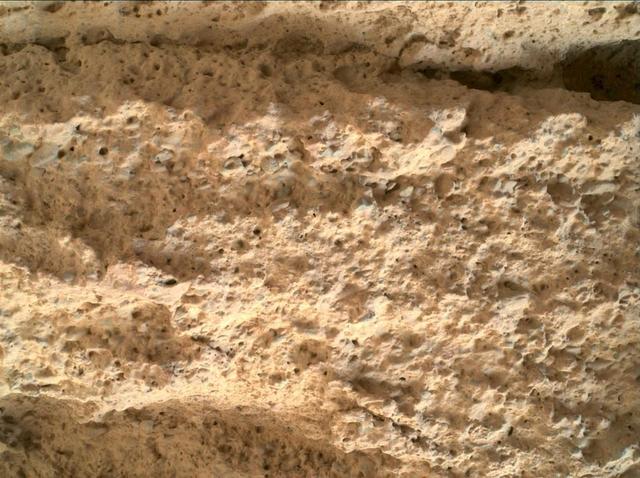
NASA's Perseverance Mars rover used its WATSON camera, located on the end of its robotic arm, to view the texture of a rock nicknamed "Bettys Rock" on June 22, 2022, the 476th Martian day, or sol, of the mission. The rock is named after Bettys Rock in Shenandoah National Park. A key objective for Perseverance's mission on Mars is astrobiology, including the search for signs of ancient microbial life. The rover will characterize the planet's geology and past climate, pave the way for human exploration of the Red Planet, and be the first mission to collect and cache Martian rock and regolith (broken rock and dust). Subsequent NASA missions, in cooperation with ESA (European Space Agency), would send spacecraft to Mars to collect these sealed samples from the surface and return them to Earth for in-depth analysis. The Mars 2020 Perseverance mission is part of NASA's Moon to Mars exploration approach, which includes Artemis missions to the Moon that will help prepare for human exploration of the Red Planet. Movie available at https://photojournal.jpl.nasa.gov/catalog/PIA25659

NASA's Ingenuity Mars Helicopter can be seen on the belly of the Perseverance rover, ready to be dropped off at the helicopter's deployment location. This image was taken on March 25, 2021, the 35th Martian day, or sol, of the mission, by the WATSON (Wide Angle Topographic Sensor for Operations and eNgineering) camera on the SHERLOC (Scanning Habitable Environments with Raman and Luminescence for Organics and Chemicals) instrument, located at the end of the rover's long robotic arm. https://photojournal.jpl.nasa.gov/catalog/PIA24424
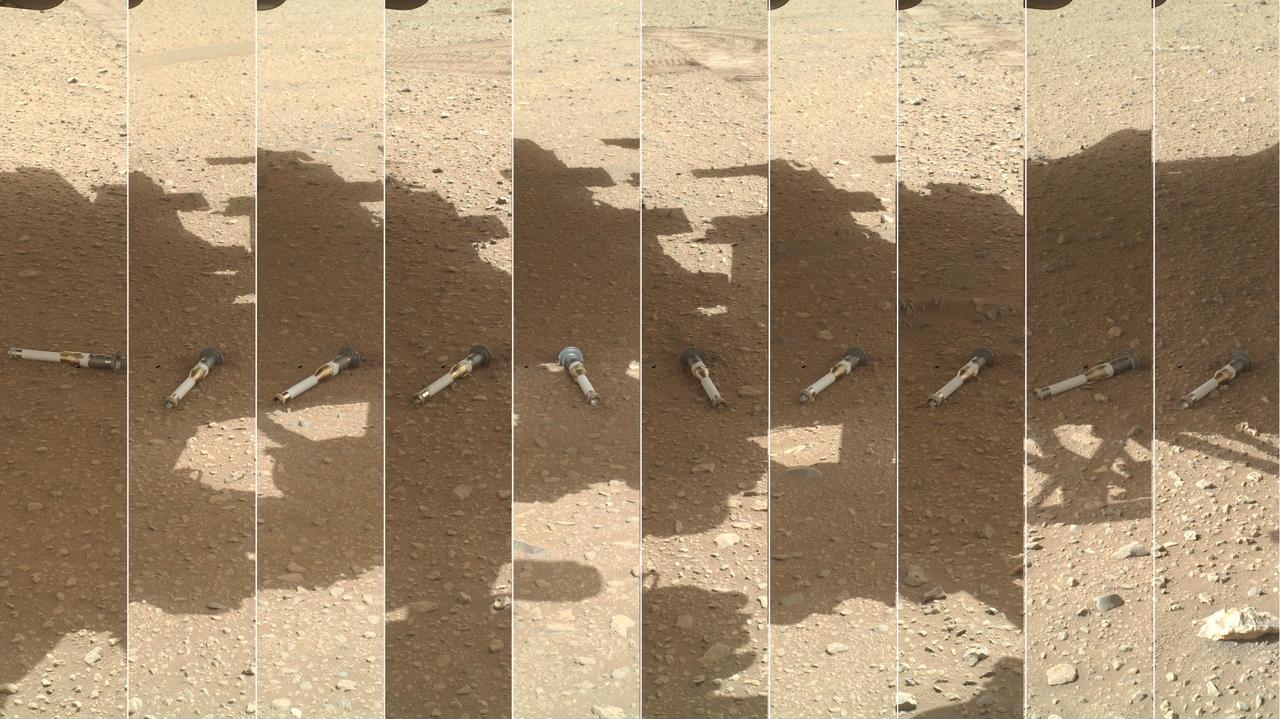
This photomontage shows each of the sample tubes shortly after they were deposited onto the surface by NASA's Perseverance Mars rover, as viewed by the WATSON (Wide Angle Topographic Sensor for Operations and eNgineering) camera on the end of the rover's 7-foot-long (2-meter-long) robotic arm. Shown, from left, are "Malay," "Mageik," "Crosswind Lake," "Roubion," "Coulettes," "Montdenier," "Bearwallow," "Skyland," "Atsah," and "Amalik." Deposited from Dec. 21, 2022, to Jan. 28, 2023, these samples make up the sample depot Perseverance built at "Three Forks," a location within Mars' Jezero Crater. Perseverance's sample depot is a collection of 10 sample tubes left on the Martian surface in a zig-zag pattern. These tubes represent a backup collection of rock cores and regolith (broken rock and dust) that could be recovered in the future by the NASA-ESA (European Space Agency) Mars Sample Return campaign, which aims to bring Mars samples to Earth for closer study. Perseverance will be collecting more samples on its journey that will be considered the primary samples for return, but the mission team wants to make sure backups are available in case anything happens to the rover. A key objective for Perseverance's mission on Mars is astrobiology, including the search for signs of ancient microbial life. The rover will characterize the planet's geology and past climate, pave the way for human exploration of the Red Planet, and be the first mission to collect and cache Martian rock and regolith (broken rock and dust). Subsequent NASA missions, in cooperation with ESA (European Space Agency), would send spacecraft to Mars to collect these sealed samples from the surface and return them to Earth for in-depth analysis. The Mars 2020 Perseverance mission is part of NASA's Moon to Mars exploration approach, which includes Artemis missions to the Moon that will help prepare for human exploration of the Red Planet. https://photojournal.jpl.nasa.gov/catalog/PIA25738

Human Landing System Program Manager Lisa Watson-Morgan gives remarks during an event announcing Blue Origin as the company selected to develop a sustainable human landing system for the Artemis V Moon mission, Friday, May 19, 2023 at the Mary W. Jackson NASA Headquarters building in Washington. The human landing system will take astronauts to and from Gateway in lunar orbit to the surface and back to the lunar space station as part of NASA’s return to the Moon for science, exploration, and inspiration. Photo Credit: (NASA/Aubrey Gemignani)
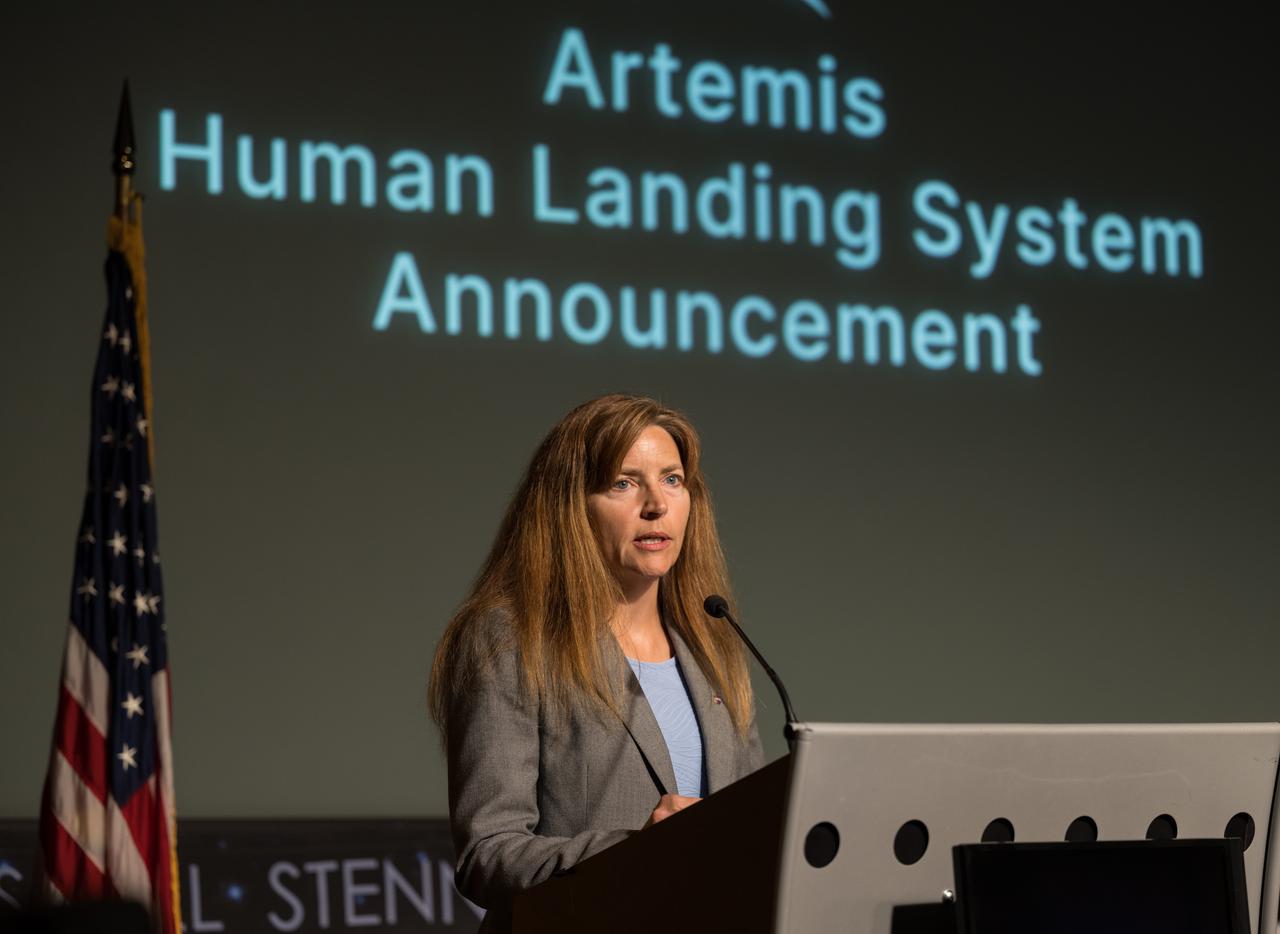
Human Landing System Program Manager Lisa Watson-Morgan gives remarks during an event announcing Blue Origin as the company selected to develop a sustainable human landing system for the Artemis V Moon mission, Friday, May 19, 2023 at the Mary W. Jackson NASA Headquarters building in Washington. The human landing system will take astronauts to and from Gateway in lunar orbit to the surface and back to the lunar space station as part of NASA’s return to the Moon for science, exploration, and inspiration. Photo Credit: (NASA/Aubrey Gemignani)
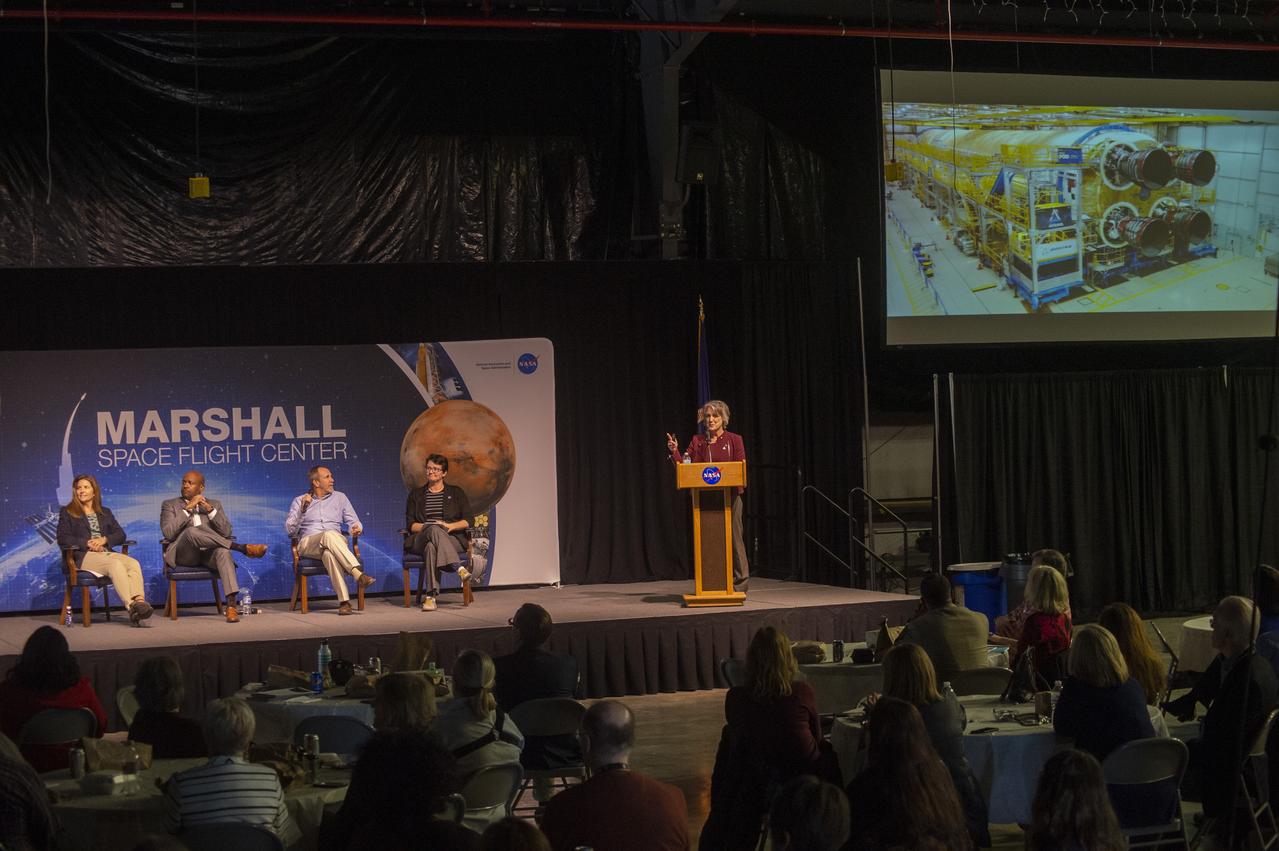
MARCIA LINDSTROM, AT PODIUM, FACILITATES ARTEMIS PROGRAM PANEL DISCUSSION AT NOVEMBER MARSHALL ASSOCIATION LUNCHEON. (L TO R), LISA WATSON-MORGAN, PROGRAM MANAGER, HUMAN LANDING SYSTEM; BOBBY WATKINS, DIRECTOR HUMAN EXPLORATION DEVELOPMENT & OPERATIONS OFFICE; DAVID BEAMAN, MANAGER, SYSTEMS ENGINEERING & INTEGRATION OFFICE, RENEE WEBER, ACTING CENTER CHIEF SCIENTIST
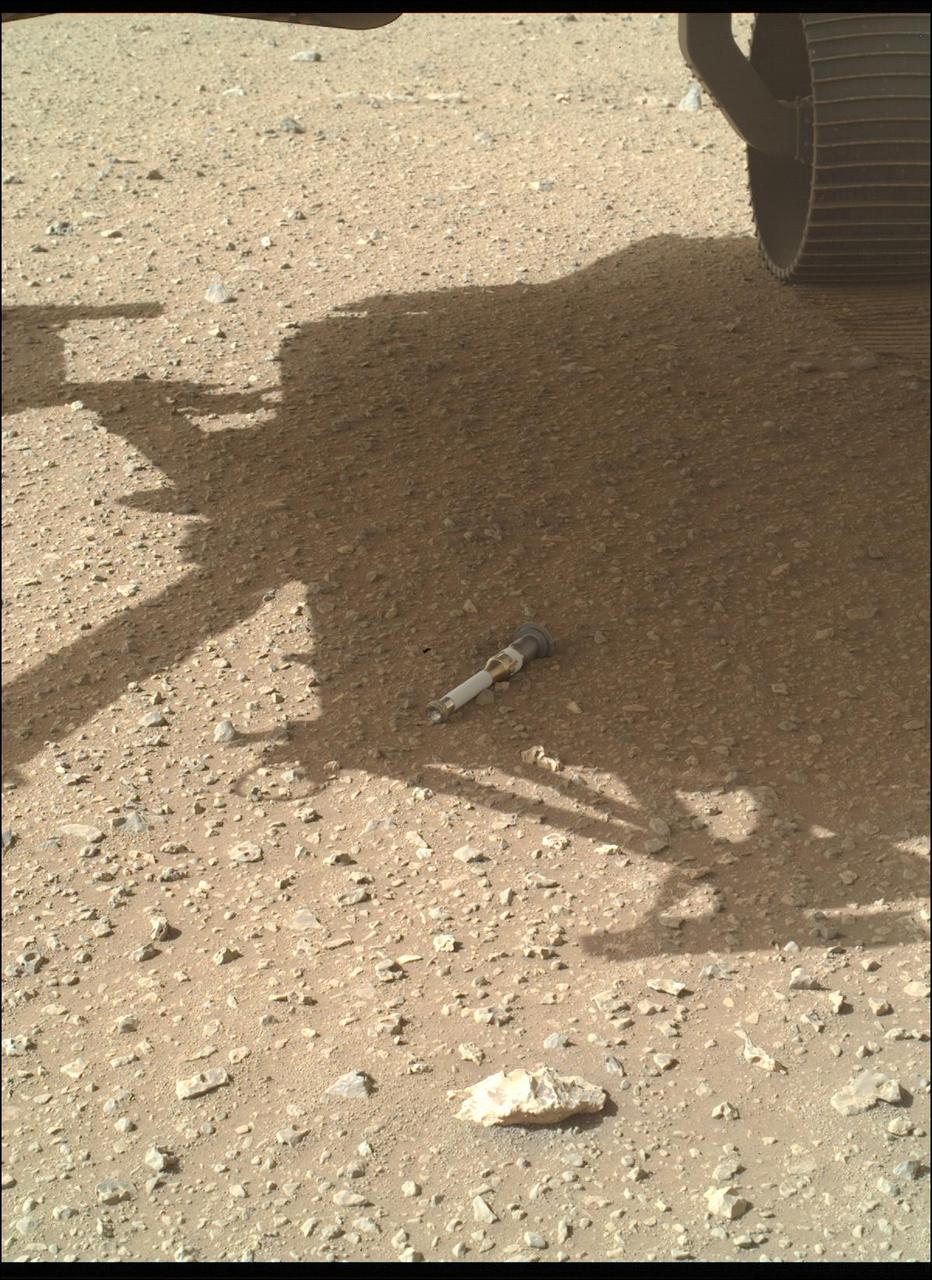
NASA's Perseverance Mars rover dropped the last of 10 tubes at the "Three Forks" sample depot on Jan. 28, 2023, the 690th Martian day, or sol, of the mission. This image of the 10th tube was taken by the WATSON (Wide Angle Topographic Sensor for Operations and eNgineering) camera on the end of the rover's 7-foot-long (2-meter-long) robotic arm. This final sample is what's called a "witness" tube – one of three collected by the rover so far and the only one deposited at the depot. Witness tubes are similar to the sample tubes that hold Martian rock and sediment, except they have been preloaded with a variety of materials that can capture molecular and particulate contaminants. They are opened on the Martian surface to "witness" the ambient environment near sample collection sites. With samples returned to Earth in the future, the witness tubes would be used to determine if samples being collected might be contaminated with materials that traveled with the rover from Earth. The Three Forks depot, the first sample depot on another world, is a crucial milestone in the NASA-ESA (European Space Agency) Mars Sample Return campaign, which aims to bring Mars samples to Earth for closer study. The Perseverance rover will be the primary means to convey the collected samples to a future robotic lander as part of the campaign. The lander would, in turn, use a robotic arm to place the samples in a containment capsule aboard a small rocket that would blast off to Mars orbit, where another spacecraft would capture the sample container and return it safely to Earth. Hosting the duplicate set, the Three Forks depot will serve as a backup if Perseverance can't deliver its samples. A key objective for Perseverance's mission on Mars is astrobiology, including the search for signs of ancient microbial life. The rover will characterize the planet's geology and past climate, pave the way for human exploration of the Red Planet, and be the first mission to collect and cache Martian rock and regolith (broken rock and dust). Subsequent NASA missions, in cooperation with ESA (European Space Agency), would send spacecraft to Mars to collect these sealed samples from the surface and return them to Earth for in-depth analysis. The Mars 2020 Perseverance mission is part of NASA's Moon to Mars exploration approach, which includes Artemis missions to the Moon that will help prepare for human exploration of the Red Planet. https://photojournal.jpl.nasa.gov/catalog/PIA25340

Human Landing System Program Manager Lisa Watson-Morgan gives remarks during an event announcing Blue Origin as the company selected to develop a sustainable human landing system for the Artemis V Moon mission, Friday, May 19, 2023 at the Mary W. Jackson NASA Headquarters building in Washington. The human landing system will take astronauts to and from Gateway in lunar orbit to the surface and back to the lunar space station as part of NASA’s return to the Moon for science, exploration, and inspiration. Photo Credit: (NASA/Aubrey Gemignani)
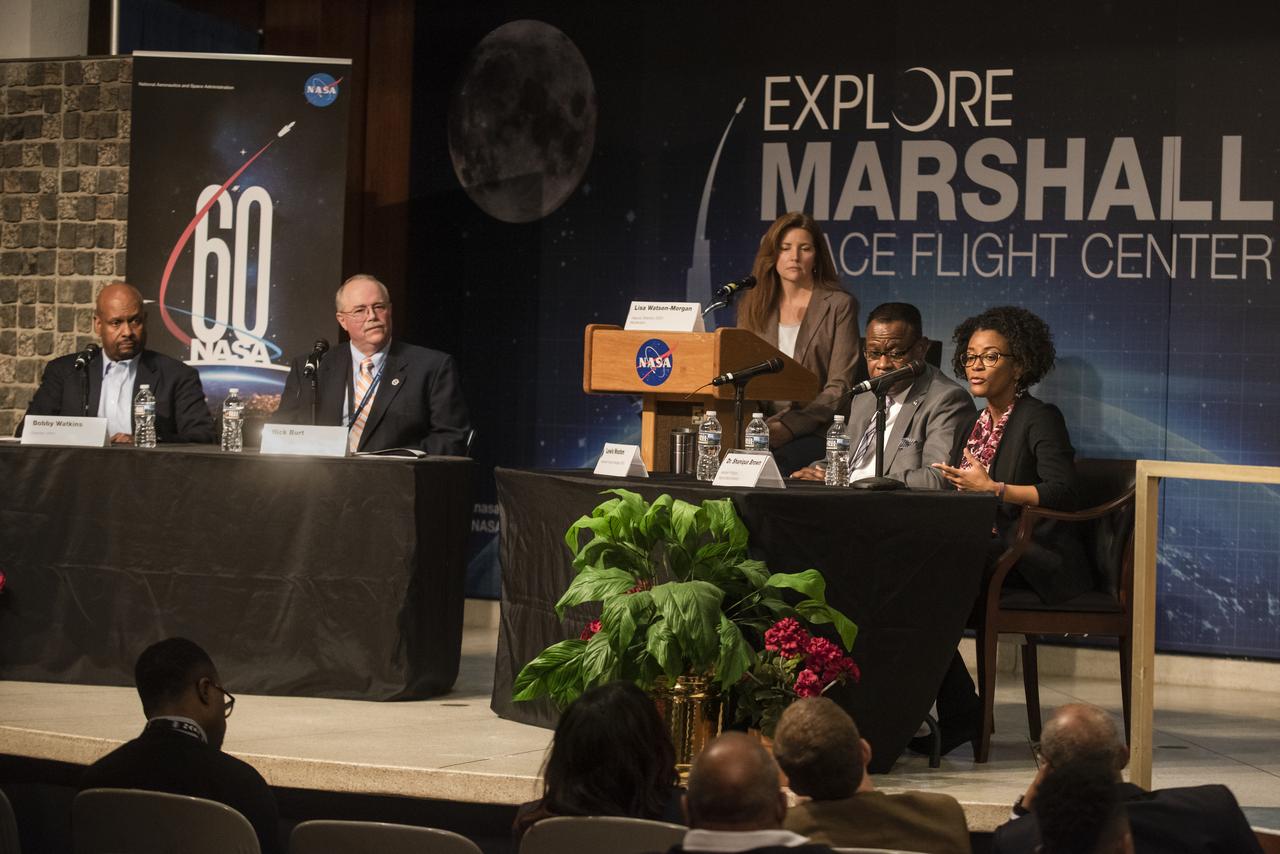
Wayne State University professor Shanique Brown, far right, takes part in a panel discussion on diversity and building strong, inclusive teams. She was joined by, from right, Lewis Wooten, associate program manager for the Space Launch System Program Office at Marshall; moderator Lisa Watson-Morgan, deputy director of Marshall's Engineering Directorate; Rick Burt, director of Marshall's Safety & Mission Assurance Directorate; and Bobby Watkins, director of the Human Exploration Development and Operations Office.

NASA's Perseverance rover deposited the first of several sample tubes onto the Martian surface on Dec. 21, 2022, the 653rd Martian day, or sol, of the mission. This composite image of the tube, filled with a sample of igneous rock, is made up of a series of stitched-together images taken by a camera called WATSON (Wide Angle Topographic Sensor for Operations and eNgineering) on the end of the rover's 7-foot-long (2-meter-long) robotic arm. Perseverance has been taking duplicate samples from each rock target the mission selects. After having dropped its first sample on the surface, the rover now has 17 samples in its belly, including one atmospheric sample. Based on the architecture of the Mars Sample Return campaign, the rover would deliver samples to a robotic lander carrying a small rocket that would blast them off to space. The depot will serve as a backup if Perseverance can't deliver its samples. In that case, a pair of Sample Recovery Helicopters would be called upon to pick up the sample tubes and deliver them to the lander. A key objective for Perseverance's mission on Mars is astrobiology, including the search for signs of ancient microbial life. The rover will characterize the planet's geology and past climate, pave the way for human exploration of the Red Planet, and be the first mission to collect and cache Martian rock and regolith (broken rock and dust). Subsequent NASA missions, in cooperation with ESA (European Space Agency), would send spacecraft to Mars to collect these sealed samples from the surface and return them to Earth for in-depth analysis. The Mars 2020 Perseverance mission is part of NASA's Moon to Mars exploration approach, which includes Artemis missions to the Moon that will help prepare for human exploration of the Red Planet. https://photojournal.jpl.nasa.gov/catalog/PIA25663
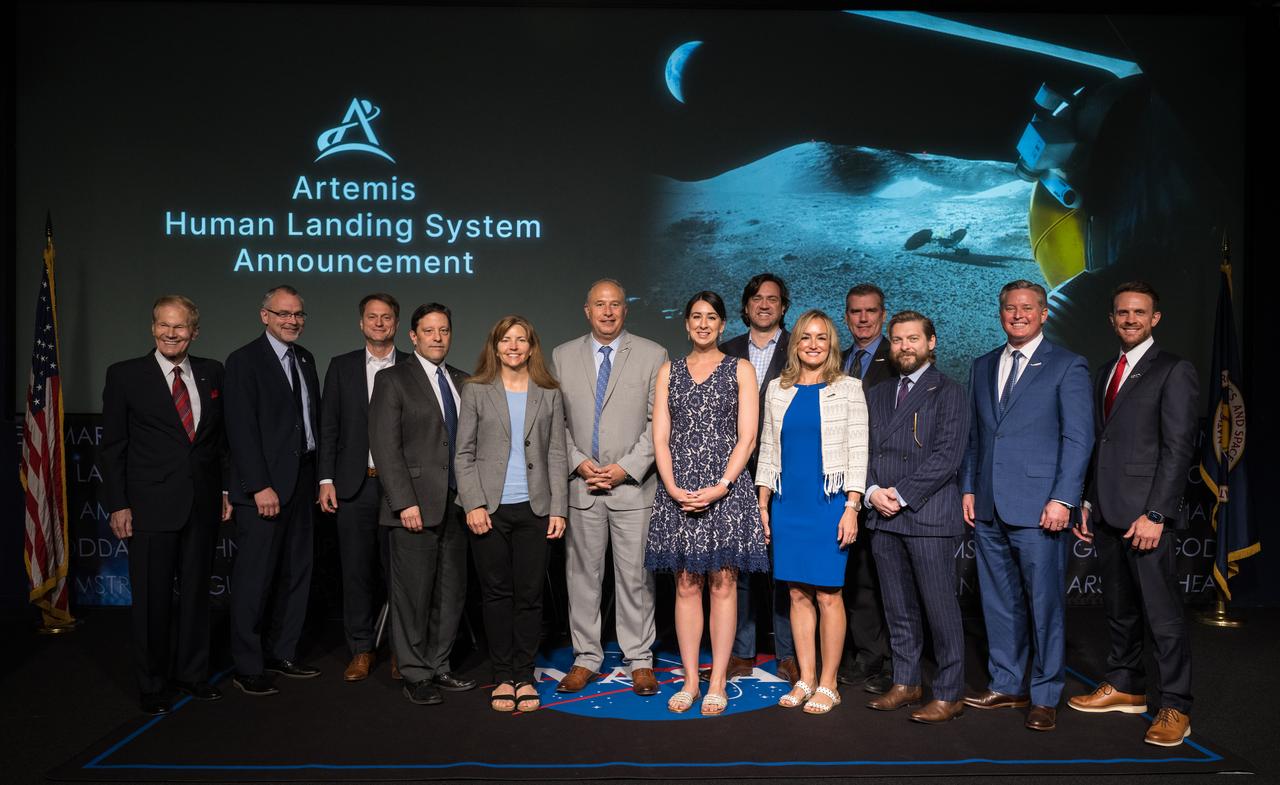
NASA Administrator Bill Nelson, NASA Associate Administrator for the Exploration Systems Development Mission Directorate Jim Free, Human Landing System Program Manager Lisa Watson-Morgan, members of Blue Origin’s team, and others pose for a photo at the conclusion of an event announcing Blue Origin as the company selected to develop a sustainable human landing system for the Artemis V Moon mission, Friday, May 19, 2023 at the Mary W. Jackson NASA Headquarters building in Washington. The human landing system will take astronauts to and from Gateway in lunar orbit to the surface and back to the lunar space station as part of NASA’s return to the Moon for science, exploration, and inspiration. Photo Credit: (NASA/Aubrey Gemignani)
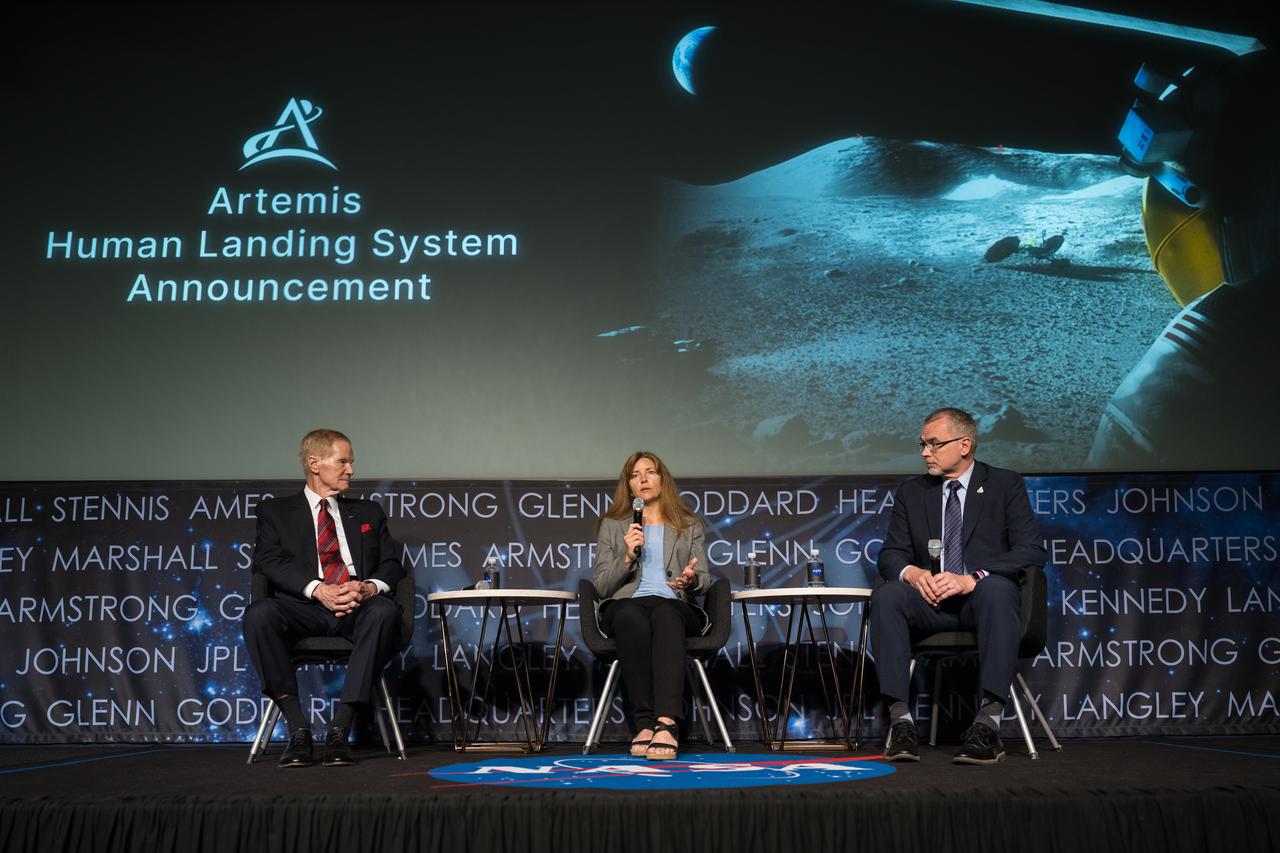
Human Landing System Program Manager Lisa Watson-Morgan gives remarks as NASA Administrator Bill Nelson, left, and NASA Associate Administrator for the Exploration Systems Development Mission Directorate Jim Free, right, look on during an event announcing Blue Origin as the company selected to develop a sustainable human landing system for the Artemis V Moon mission, Friday, May 19, 2023 at the Mary W. Jackson NASA Headquarters building in Washington. The human landing system will take astronauts to and from Gateway in lunar orbit to the surface and back to the lunar space station as part of NASA’s return to the Moon for science, exploration, and inspiration. Photo Credit: (NASA/Aubrey Gemignani)

Dr Hans Mark, Ames Director in his office with his secretary Edie Watson

Dr Hans Mark, Ames Director in his office with his secretary Edie Watson

Dr Hans Mark, Ames Director in his office with his secretary Edie Watson
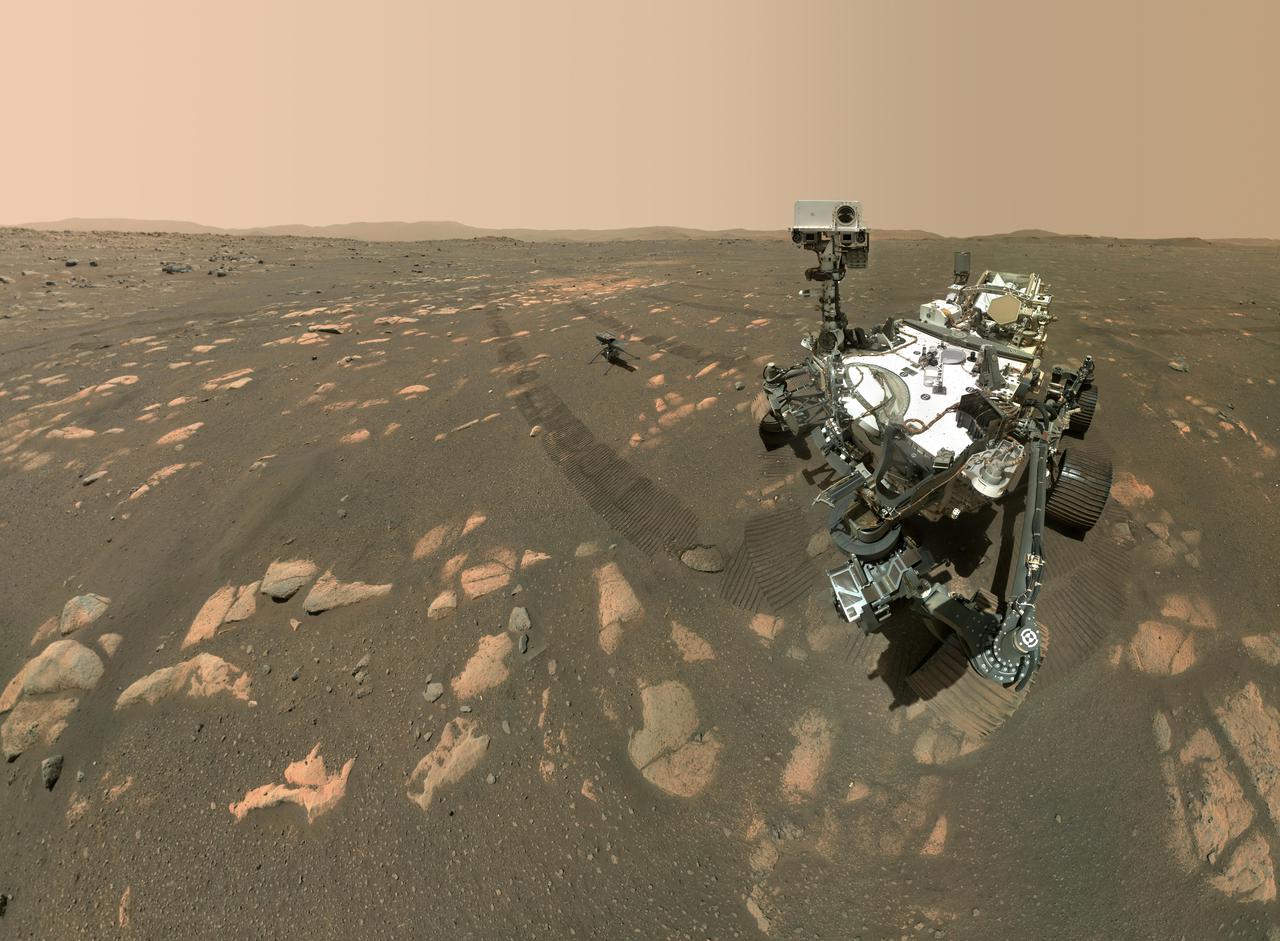
NASA's Perseverance Mars rover took a selfie with the Ingenuity helicopter, seen here about 13 feet (3.9 meters) from the rover in this image taken April 6, 2021, the 46th Martian day, or sol, of the mission by the WATSON (Wide Angle Topographic Sensor for Operations and eNgineering) camera on the SHERLOC (Scanning Habitable Environments with Raman and Luminescence for Organics and Chemicals) instrument, located at the end of the rover's long robotic arm. Perseverance's selfie with Ingenuity is made up of 62 individual images stitched together once they are sent back to Earth; they were taken in sequence while the rover was looking at the helicopter, then again while it was looking at the WATSON camera. The Curiosity rover takes similar selfies using a camera on its robotic arm. Movie available at https://photojournal.jpl.nasa.gov/catalog/PIA24542
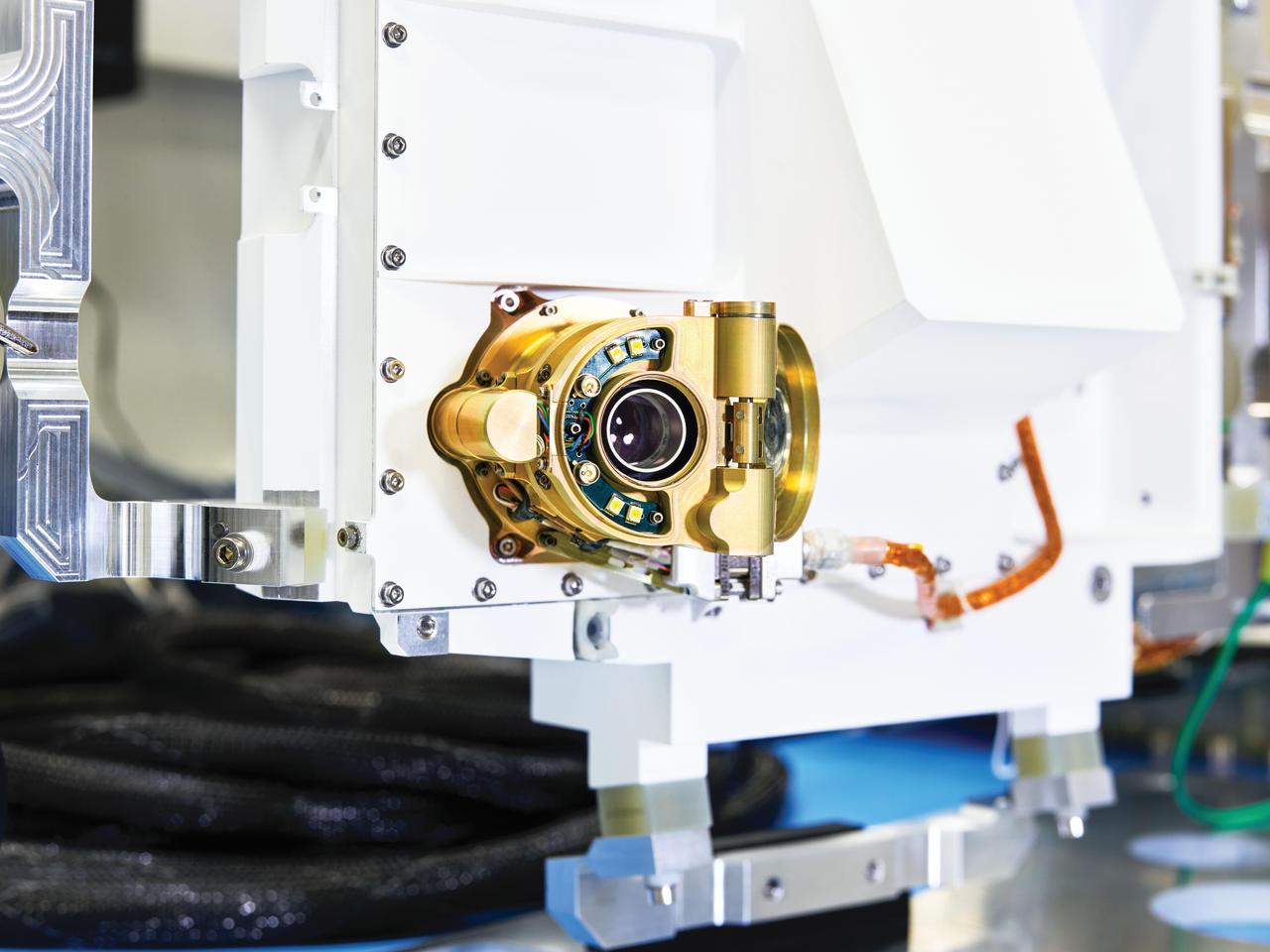
A close-up view of an engineering model of SHERLOC (Scanning Habitable Environments with Raman & Luminescence for Organics & Chemicals), one the instruments aboard NASA's Perseverance Mars rover. Located on the end of the rover's robotic arm, this instrument features an auto-focusing camera (pictured) that shoots black-and-white images used by SHERLOC's color camera, called WATSON (Wide Angle Topographic Sensor for Operations and eNgineering), to zero in on rock textures. SHERLOC also has a laser, which aims for the dead center of rock surfaces depicted in WATSON's images. The laser uses a technique called Raman spectroscopy to detect minerals in microscopic rock features; that data is then superimposed on WATSON's images. These mineral maps help scientists determine which rock samples Perseverance should drill so that they can be sealed in metal tubes and left on the Martian surface for a future mission to return to Earth. https://photojournal.jpl.nasa.gov/catalog/PIA23894

Shawn Quinn, manager of Exploration Ground Systems at NASA’s Kennedy Space Center, second from left, speaks during an Artemis Program progress update panel at the 2024 Artemis Suppliers Conference, Tuesday, Feb. 27, 2024, at the Grand Hyatt Hotel in Washington. Also participating in the panel was, from left, Amit Kshatriya, deputy associate administrator for the Moon to Mars Program in NASA’s Explorations Systems Development Mission Directorate; John Honeycutt, manager of the Space Launch System Program at NASA’s Marshall Space Flight Center; Howard Hu, manager of the Orion Program at NASA’s Johnson Space Center; Lisa Watson-Morgan, manager of the Human Landing System Program at NASA’s Marshall Space Flight Center; Jon B. Olansen, manager of the Gateway Program at NASA’s Johnson Space Center; and Lara Kearney, manager of Extravehicular Activity and Human Surface Mobility Program at NASA’s Johnson Space Center. Photo Credit: (NASA/Joel Kowsky)

Howard Hu, manager of the Orion Program at NASA’s Johnson Space Center, center, speaks during an Artemis Program progress update panel at the 2024 Artemis Suppliers Conference, Tuesday, Feb. 27, 2024, at the Grand Hyatt Hotel in Washington. Also participating in the panel was, from left, Amit Kshatriya, deputy associate administrator for the Moon to Mars Program in NASA’s Explorations Systems Development Mission Directorate; Shawn Quinn, manager of Exploration Ground Systems at NASA’s Kennedy Space Center; John Honeycutt, manager of the Space Launch System Program at NASA’s Marshall Space Flight Center; Lisa Watson-Morgan, manager of the Human Landing System Program at NASA’s Marshall Space Flight Center; Jon B. Olansen, manager of the Gateway Program at NASA’s Johnson Space Center; and Lara Kearney, manager of Extravehicular Activity and Human Surface Mobility Program at NASA’s Johnson Space Center. Photo Credit: (NASA/Joel Kowsky)

Howard Hu, manager of the Orion Program at NASA’s Johnson Space Center, center, speaks during an Artemis Program progress update panel at the 2024 Artemis Suppliers Conference, Tuesday, Feb. 27, 2024, at the Grand Hyatt Hotel in Washington. Also participating in the panel was, from left, Amit Kshatriya, deputy associate administrator for the Moon to Mars Program in NASA’s Explorations Systems Development Mission Directorate; Shawn Quinn, manager of Exploration Ground Systems at NASA’s Kennedy Space Center; John Honeycutt, manager of the Space Launch System Program at NASA’s Marshall Space Flight Center; Lisa Watson-Morgan, manager of the Human Landing System Program at NASA’s Marshall Space Flight Center; Jon B. Olansen, manager of the Gateway Program at NASA’s Johnson Space Center; and Lara Kearney, manager of Extravehicular Activity and Human Surface Mobility Program at NASA’s Johnson Space Center. Photo Credit: (NASA/Joel Kowsky)
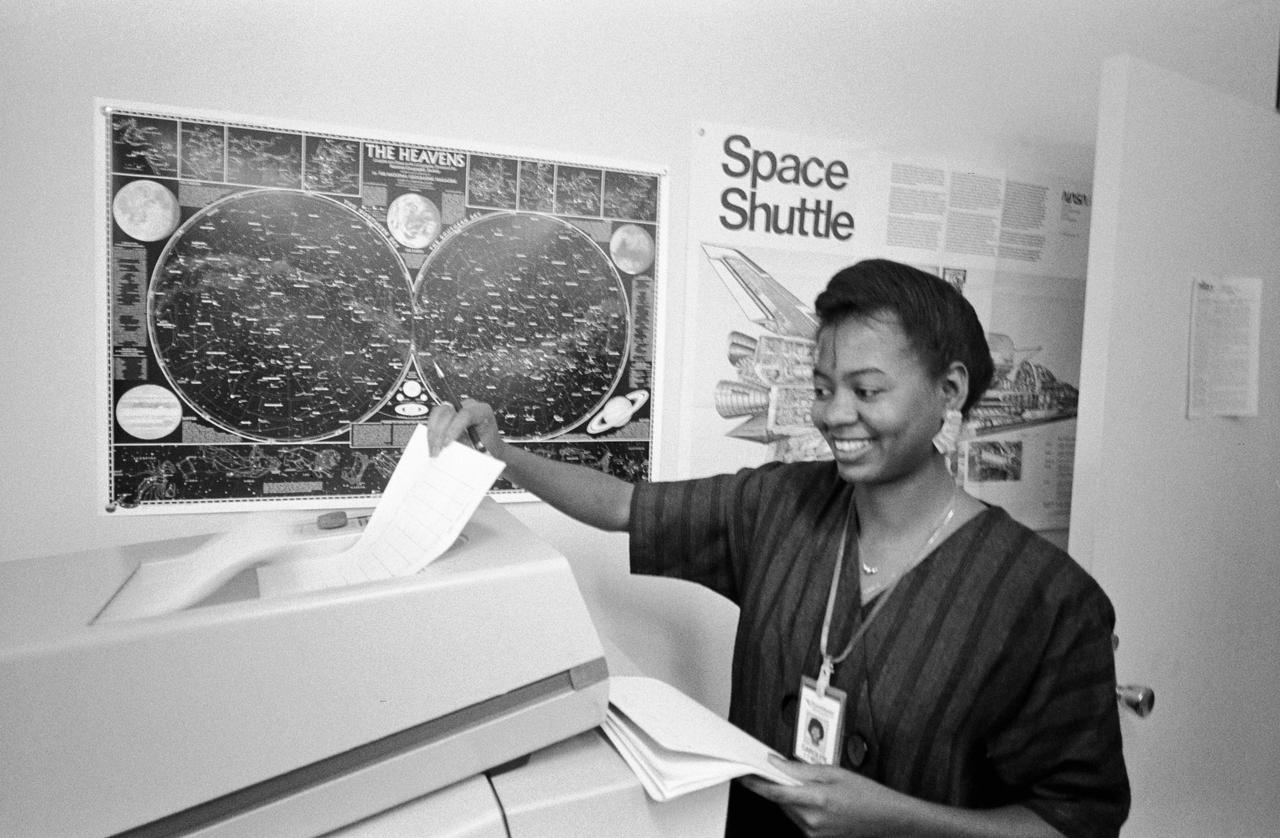
S86-30338 (4 April 1986) --- Carolyn Watson of Lockheed recieves a hard copy print-out of data from the MADS recorder as it is being sent form the termainal in JSC's central data office
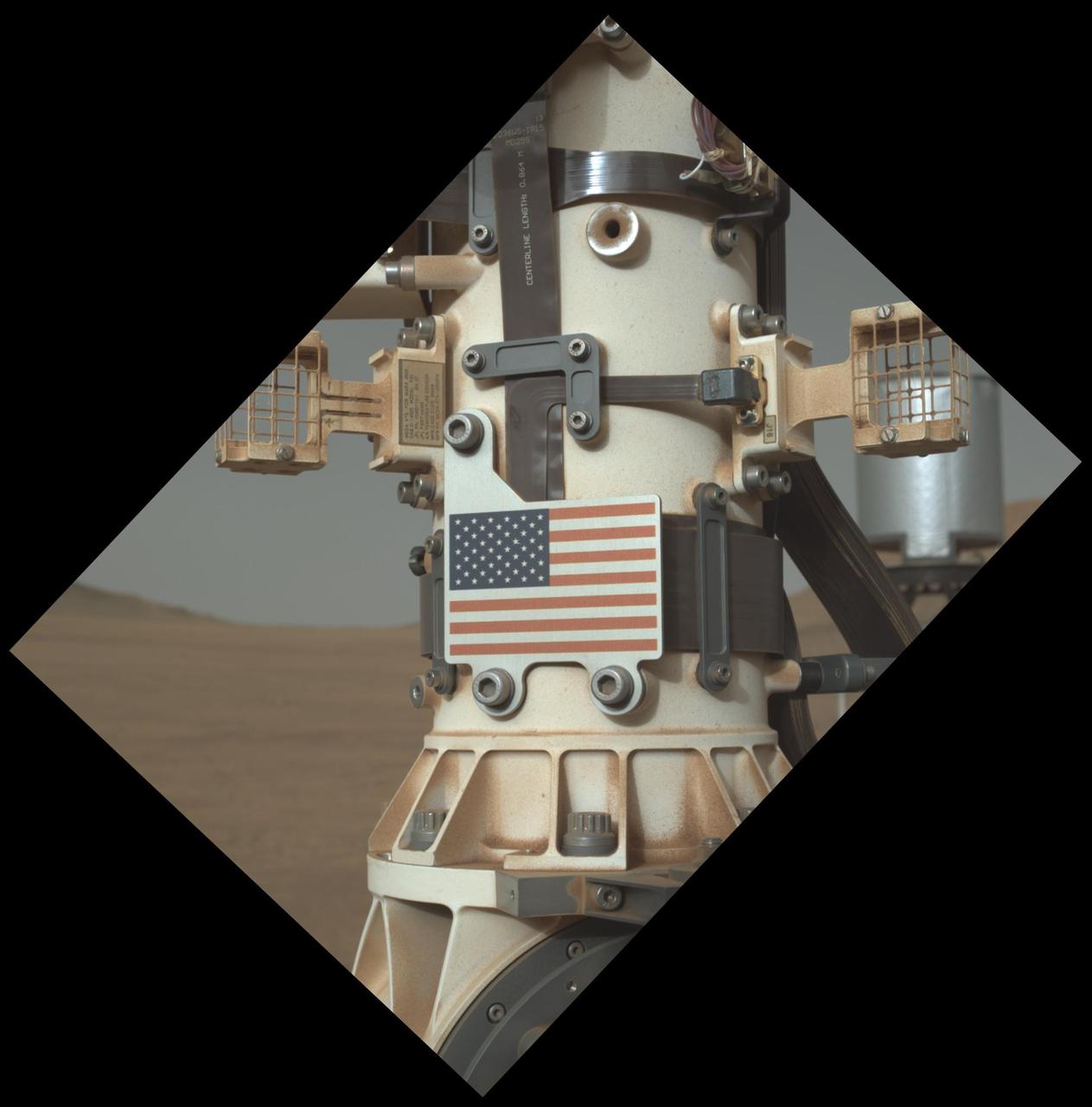
This close-up view of the United States flag plate on NASA's Perseverance was acquired on June 28, 2025 (the 1,548th day, or sol, of its mission to Mars), by the WATSON (Wide Angle Topographic Sensor for Operations and eNgineering) imager on the turret at the end of the rover's Mars robotic arm. This flag artwork is located on an aluminum plate mounted on the base of Perseverance's remote sensing mast. https://photojournal.jpl.nasa.gov/catalog/PIA26579

Lisa-Watson Morgan, NASA’s Human Landing System program manager, provides an overview of the program to Kennedy Space Center employees in the Florida spaceport’s Training Auditorium on Nov. 19, 2019. Watson-Morgan’s presentation was part of the center’s Innovation Days, one of several events throughout the year aimed at fostering and encouraging an innovative culture at Kennedy. In addition to the presentation, Kennedy employees had the opportunity to attend an innovation showcase, where nearly 50 exhibitors demonstrated new technologies and innovations. Showcase participants included individuals from multiple directorates, programs and organizations throughout Kennedy.

Lisa-Watson Morgan, NASA’s Human Landing System program manager, provides an overview of the program to Kennedy Space Center employees in the Florida spaceport’s Training Auditorium on Nov. 19, 2019. Watson-Morgan’s presentation was part of the center’s Innovation Days, one of several events throughout the year aimed at fostering and encouraging an innovative culture at Kennedy. In addition to the presentation, Kennedy employees had the opportunity to attend an innovation showcase, where nearly 50 exhibitors demonstrated new technologies and innovations. Showcase participants included individuals from multiple directorates, programs and organizations throughout Kennedy.

Lisa-Watson Morgan, NASA’s Human Landing System program manager, provides an overview of the program to Kennedy Space Center employees in the Florida spaceport’s Training Auditorium on Nov. 19, 2019. Watson-Morgan’s presentation was part of the center’s Innovation Days, one of several events throughout the year aimed at fostering and encouraging an innovative culture at Kennedy. In addition to the presentation, Kennedy employees had the opportunity to attend an innovation showcase, where nearly 50 exhibitors demonstrated new technologies and innovations. Showcase participants included individuals from multiple directorates, programs and organizations throughout Kennedy.
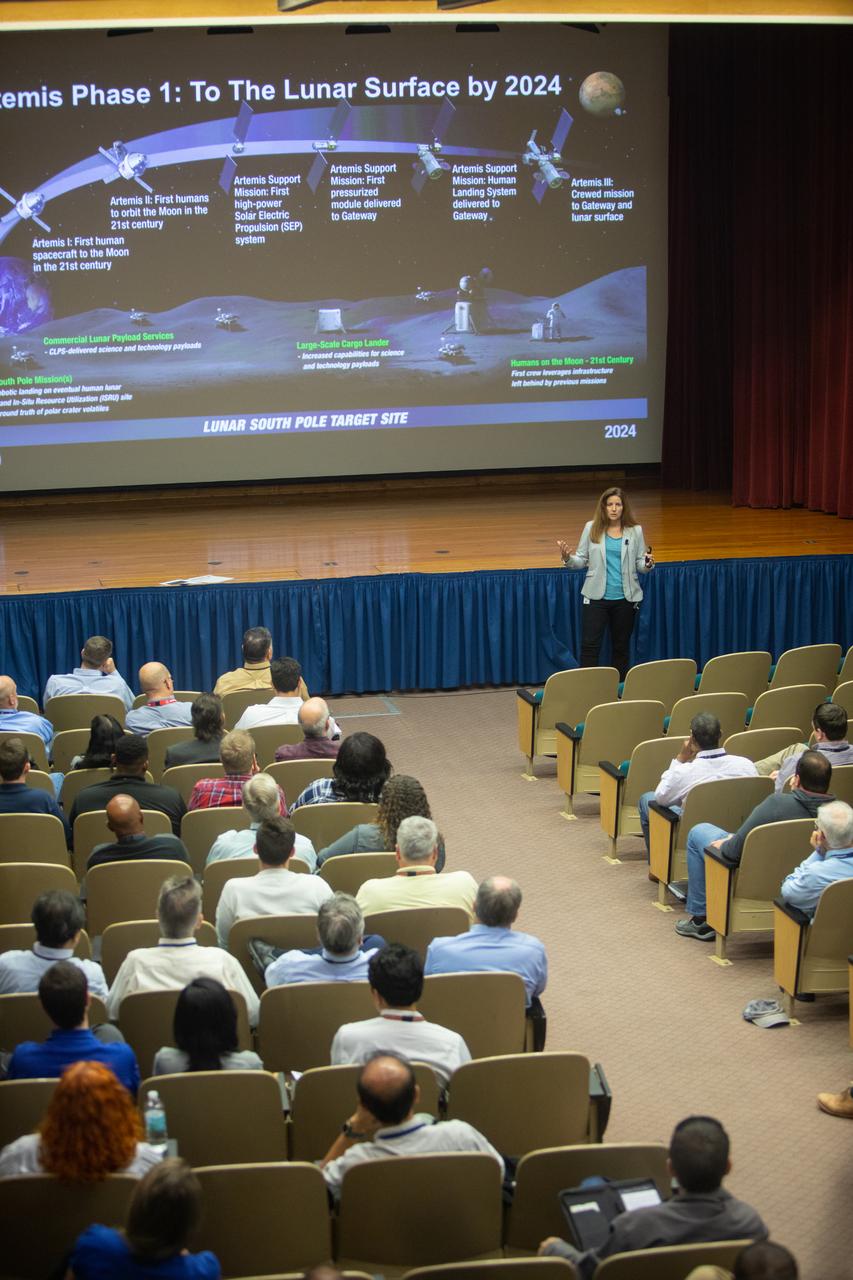
Lisa-Watson Morgan, NASA’s Human Landing System program manager, provides an overview of the program to Kennedy Space Center employees in the Florida spaceport’s Training Auditorium on Nov. 19, 2019. Watson-Morgan’s presentation was part of the center’s Innovation Days, one of several events throughout the year aimed at fostering and encouraging an innovative culture at Kennedy. In addition to the presentation, Kennedy employees had the opportunity to attend an innovation showcase, where nearly 50 exhibitors demonstrated new technologies and innovations. Showcase participants included individuals from multiple directorates, programs and organizations throughout Kennedy.
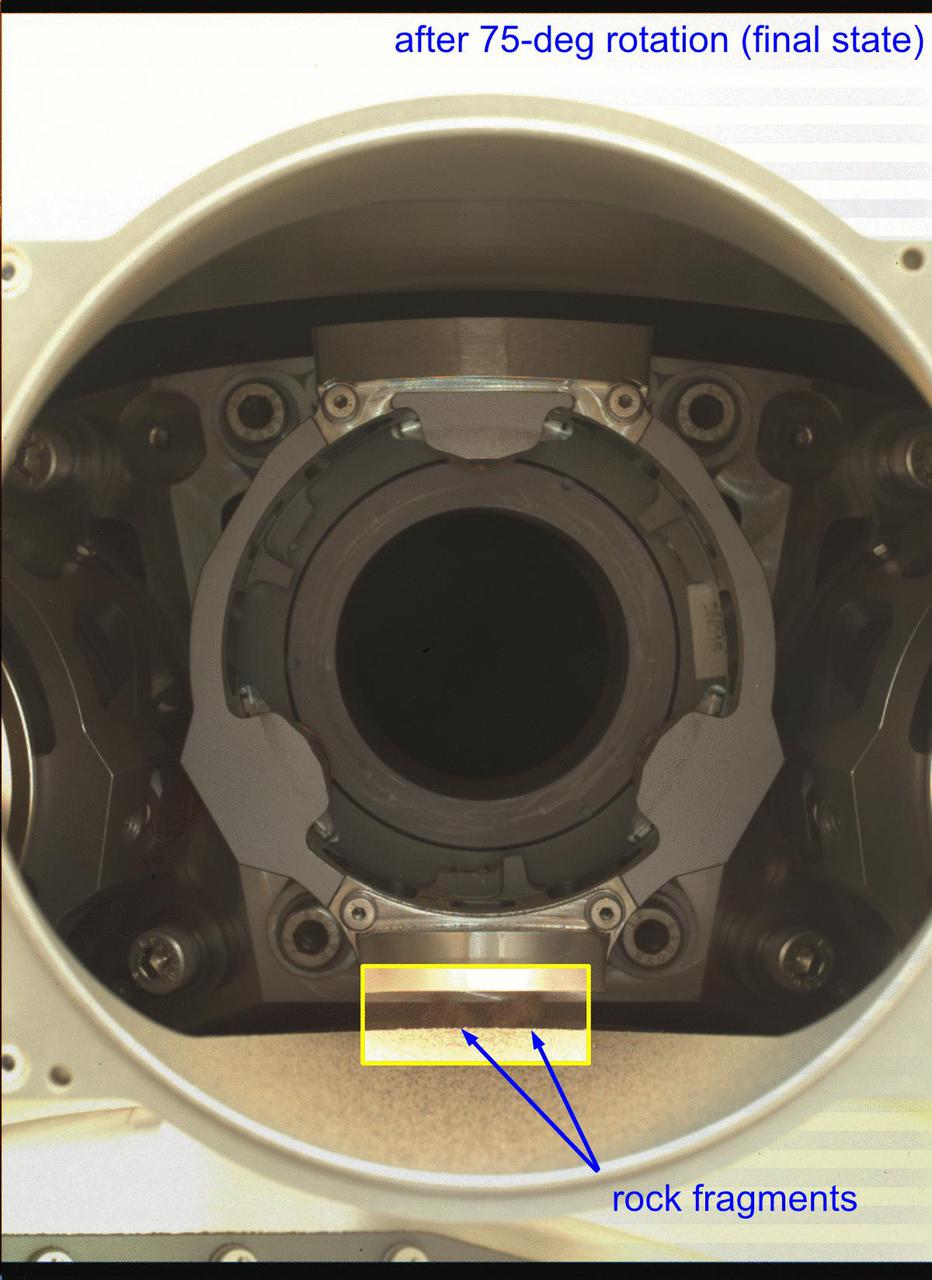
In this annotated animated GIF, the bit carousel on NASA's Perseverance Mars rover can be seen rotating during a test of the component on Jan. 17, 2022, the 325th Martian day, or sol, of the mission. The carousel was rotated about 75 degrees during the test, then was returned back to its original position. The five images that compose this animated GIF were captured to determine the status – after the test – of four fragments of the cored rock that fell out of the sample tube during Perseverance sampling activity on Dec. 29, 2021. After completion of the test, the upper two rock fragments (seen in the first image) have disappeared, having been ejected during the rotation. However, the lower two rock fragments, located below the bit carousel housing, remain. The five images that make up the GIF were obtained by the WATSON (Wide Angle Topographic Sensor for Operations and eNgineering) camera. Located in the turret at the end of the rover's robotic arm, WATSON can document the structure and texture within a drilled or abraded target, and its data can be used to derive depth measurements. The camera is a subsystem of the SHERLOC (Scanning Habitable Environments with Raman & Luminescence for Organics & Chemicals) instrument. NASA's Jet Propulsion Laboratory built and manages operations of Perseverance and Ingenuity for the agency. Caltech in Pasadena, California, manages JPL for NASA. WATSON was built by Malin Space Science Systems (MSSS) in San Diego and is operated jointly by MSSS and JPL. A key objective for Perseverance's mission on Mars is astrobiology, including the search for signs of ancient microbial life. The rover will characterize the planet's geology and past climate, pave the way for human exploration of the Red Planet, and be the first mission to collect and cache Martian rock and regolith (broken rock and dust). Subsequent NASA missions, in cooperation with ESA (European Space Agency), would send spacecraft to Mars to collect these sealed samples from the surface and return them to Earth for in-depth analysis. The Mars 2020 Perseverance mission is part of NASA's Moon to Mars exploration approach, which includes Artemis missions to the Moon that will help prepare for human exploration of the Red Planet. Animation available at https://photojournal.jpl.nasa.gov/catalog/PIA25071
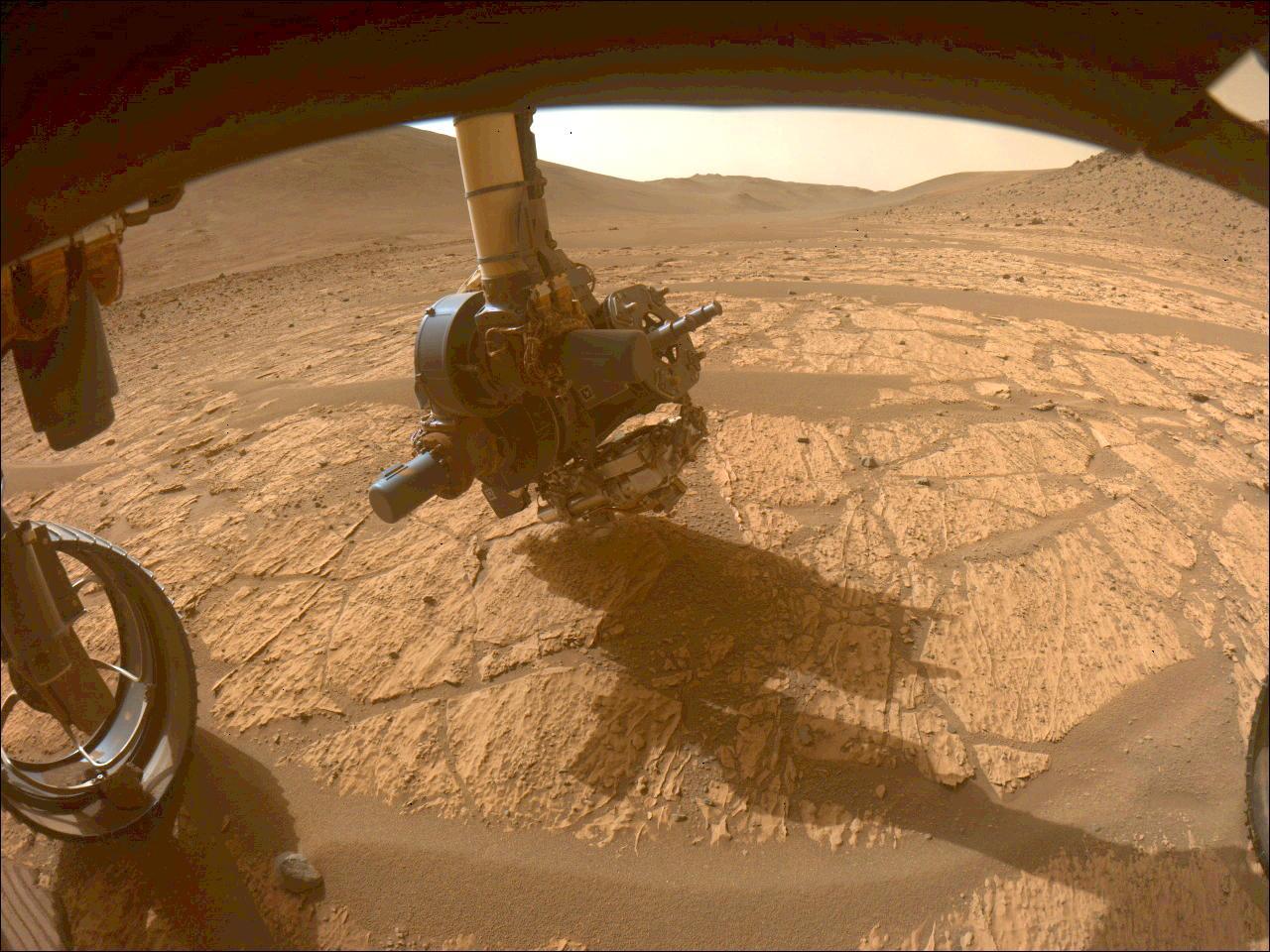
This image shows the WATSON camera aboard NASA's Perseverance Mars rover gathering data on the "Walhalla Glades" abrasion patch. It was taken in the "Bright Angel" region of Jezero Crater by one of the rover's front hazard avoidance cameras on June 14, 2024, the 1,180th Martian day, or sol, of the mission. WATSON (Wide Angle Topographic Sensor for Operations and eNgineering) is located on the SHERLOC (Scanning Habitable Environments with Raman and Luminescence for Organics and Chemicals) instrument at the end of Perseverance's long robotic arm. In this image, SHERLOC is at the bottom of the turret. The WATSON camera head is closest to the surface, and SHERLOC's Autofocus and Context Imager (another camera) is to the right, closer to the drill. A key objective for Perseverance's mission on Mars is astrobiology, including the search for signs of ancient microbial life. The rover is also characterizing the planet's geology and past climate, which paves the way for human exploration of the Red Planet. JPL, which is managed for NASA by Caltech in Pasadena, California, built and manages operations of the Perseverance rover. https://photojournal.jpl.nasa.gov/catalog/PIA26320
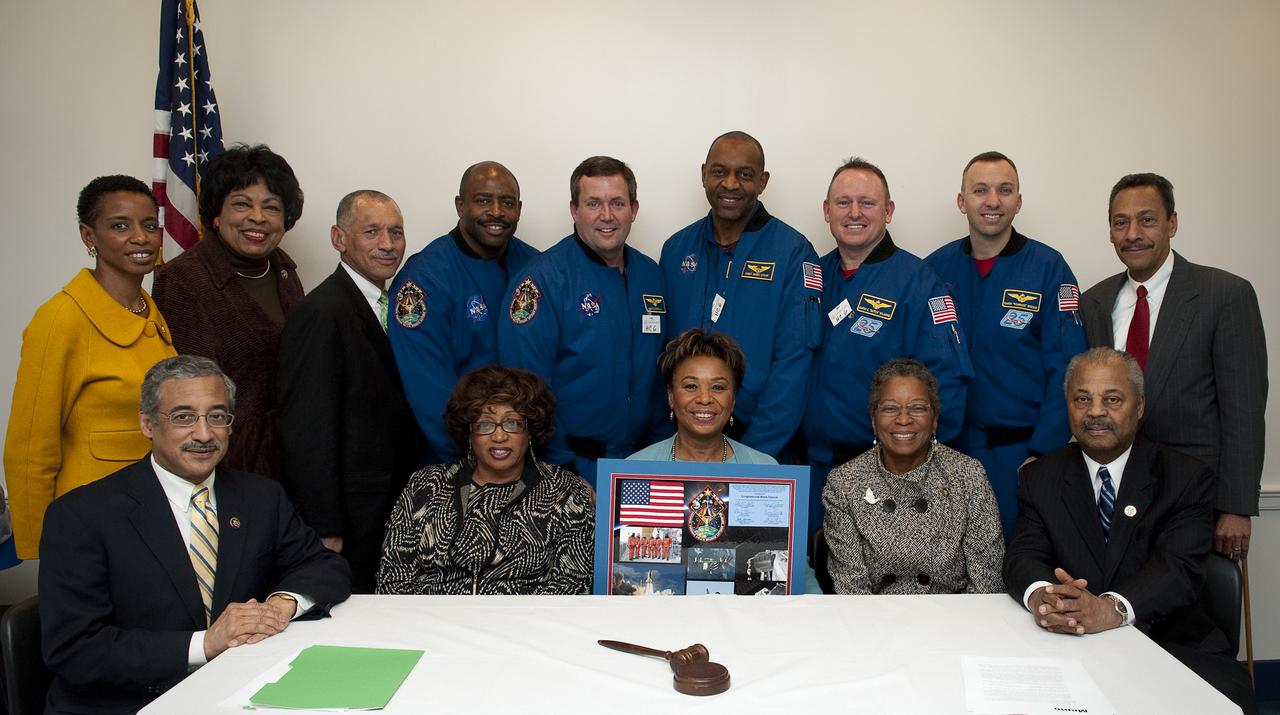
NASA Administrator Charles Bolden, space shuttle crew STS-129 and members of the Congressional Black Caucus pose for a group photo at the Capitol Building, Wednesday, Jan. 13, 2010, in Washington. Back row from left to right: U.S. Rep Donna Edwards (D-MD), U.S. Rep Diane Watson (D-CA), NASA Administrator Charles Bolden, astronauts Leland Melvin, Mike Foreman, Robert Satcher, Barry Wilmore, Randy Breznik, and U.S. Rep Mel Watt (D-NC). Front row from left to right: U.S. Rep Robert Scott (D-VA), U.S. Rep. Corrine Brown (D-Fla), U.S. Rep. Barbara Lee (D-CA), U.S. Rep. Donna Christensen (D-VI) and U.S. Rep. Donald Payne (D-NJ). The crew of STS-129 presented the CBC with a montage commemorating their mission. Photo Credit: (NASA/Paul E. Alers)

Bret Greenstein, IBM Global Vice President of Watson and IOT Offerings, speaks to members of the media during a briefing in the Kennedy Space Center’s Press Site auditorium. The briefing focused on research planned for launch to the International Space Station. The scientific materials and supplies will be aboard a SpaceX Dragon spacecraft scheduled for liftoff from Cape Canaveral Air Force Station's Space Launch Complex 40. The SpaceX Falcon 9 rocket will launch the company's 15th Commercial Resupply Services mission to the space station.
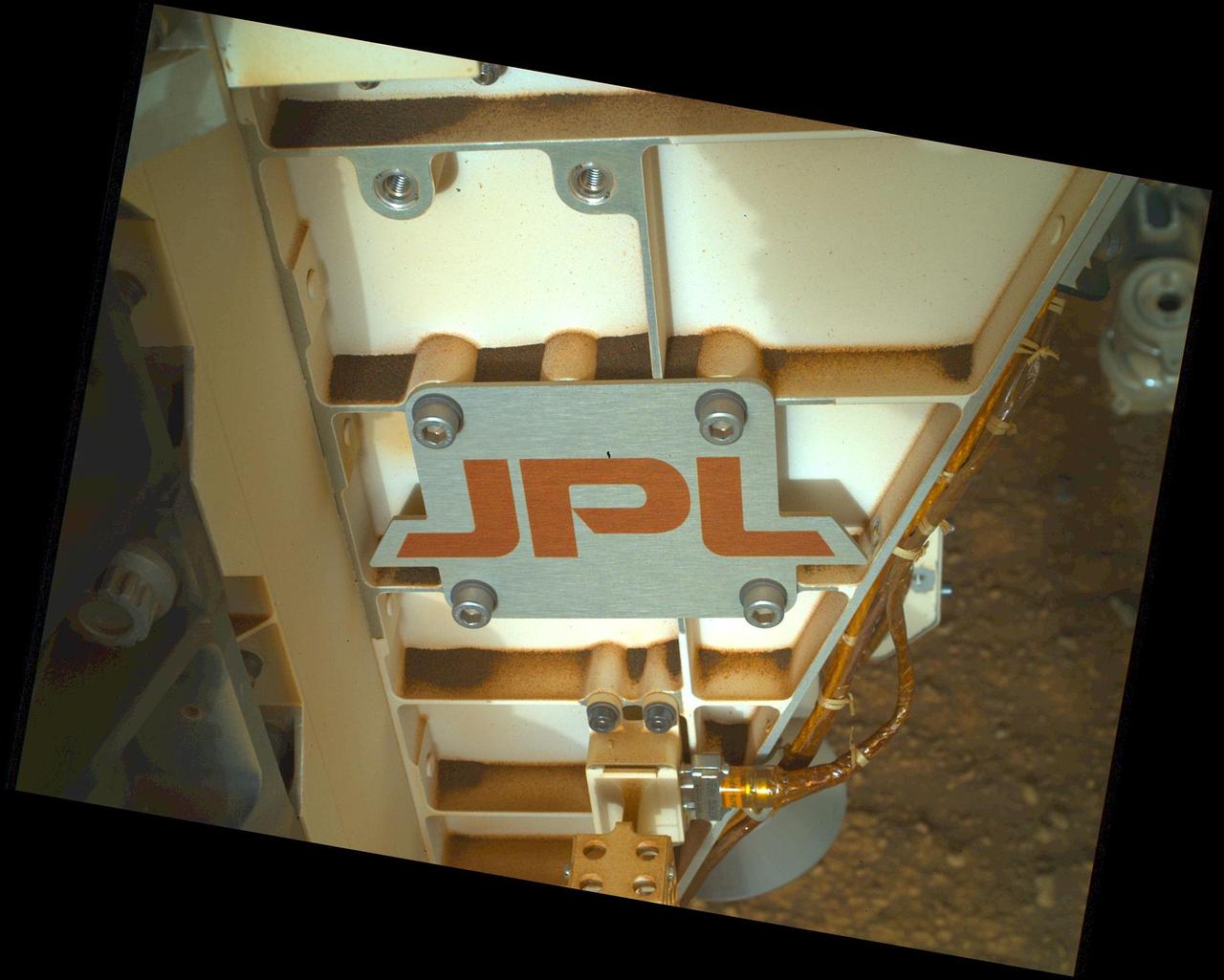
The logo of NASA's Jet Propulsion Laboratory has roamed Mars since the September 1997 landing of very first rover, Sojourner, part of the Mars Pathfinder mission. This close-up view of the JPL logo – bolted to the chassis of NASA's Perseverance – was acquired on June 28, 2025 (the 1,548th day, or sol, of its mission to Mars), by the rover's WATSON (Wide Angle Topographic Sensor for Operations and eNgineering) imager. https://photojournal.jpl.nasa.gov/catalog/PIA26580

NASA's Ingenuity Mars Helicopter extends vertically into place after being rotated outward from its horizontal position on the belly of the Perseverance rover on March 29, 2021, the 38th Martian day, or sol, of the mission. This image was taken by the WATSON (Wide Angle Topographic Sensor for Operations and eNgineering) camera on the SHERLOC (Scanning Habitable Environments with Raman and Luminescence for Organics and Chemicals) instrument, located at the end of the rover's long robotic arm. https://photojournal.jpl.nasa.gov/catalog/PIA24443
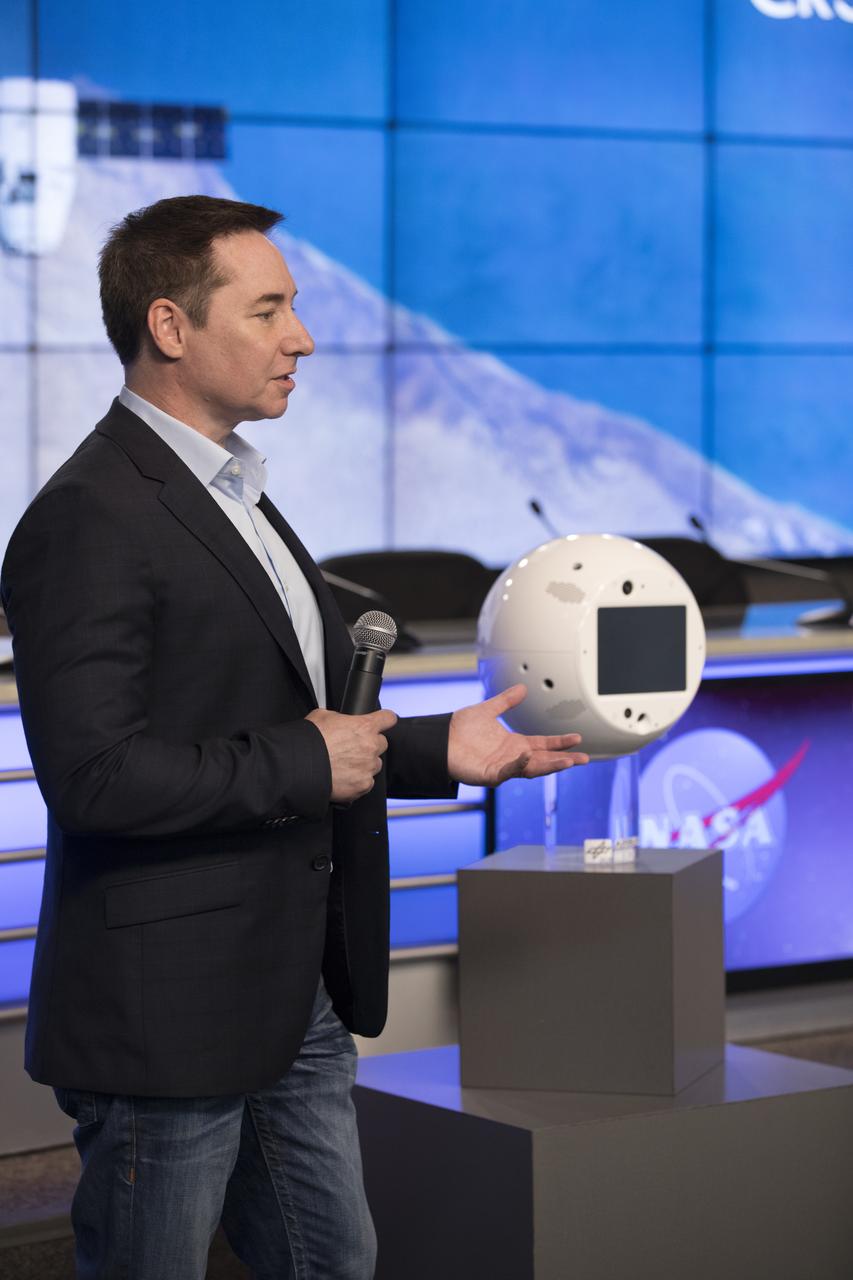
Bret Greenstein, IBM Global Vice President of Watson and IOT Offerings, speaks to members of the media in the Kennedy Space Center’s Press Site auditorium. The briefing focused on research planned for launch to the International Space Station. The scientific materials and supplies will be aboard a SpaceX Dragon spacecraft scheduled for liftoff from Cape Canaveral Air Force Station's Space Launch Complex 40. The SpaceX Falcon 9 rocket will launch the company's 15th Commercial Resupply Services mission to the space station.
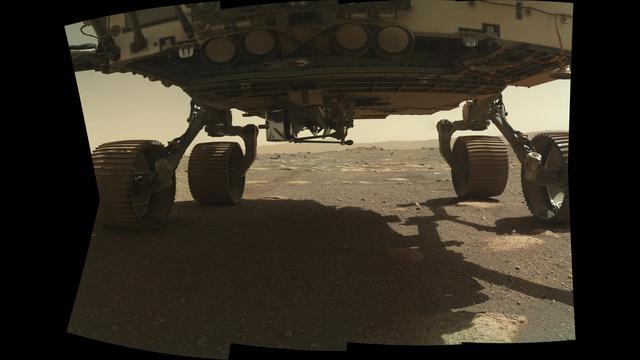
NASA's Ingenuity Mars Helicopter can be seen on the belly of the Perseverance rover on March 26, 2021, the 36th Martian day, or sol, of the mission. The helicopter's launch lock, which holds it in place on the rover, has been released. This image was taken by the WATSON (Wide Angle Topographic Sensor for Operations and eNgineering) camera on the SHERLOC (Scanning Habitable Environments with Raman and Luminescence for Organics and Chemicals) instrument, located at the end of the rover's long robotic arm. Animations available at https://photojournal.jpl.nasa.gov/catalog/PIA24441

Rich Delgado, commanding officer of the Fleet Survey Team located at NASA's John C. Stennis Space Center, visits with Kertrina Watson Lewis, executive director of the HandsOn volunteer organization in New Orleans, during Day of Service activities Jan. 12. The Day of Service was part of the annual Martin Luther King Jr. Day observance at Stennis. During the day, Mississippi and Louisiana organizations visited the center to encourage employees to register and serve as volunteers for various community activities.

NASA's Ingenuity Mars Helicopter swings down, with two of its four legs extended, from the belly of the Perseverance rover on March 28, 2021, the 37th Martian day, or sol, of the mission. This image was taken by the WATSON (Wide Angle Topographic Sensor for Operations and eNgineering) camera on the SHERLOC (Scanning Habitable Environments with Raman and Luminescence for Organics and Chemicals) instrument, located at the end of the rover's long robotic arm. Animation available at https://photojournal.jpl.nasa.gov/catalog/PIA24442

Mississippi Rep. Percy Watson (left) talks with first-graders Savannah Jones and Levi Meyers, and Astronaut Lee Morin on Sept. 8 during the NASA Explorer School kickoff event at the Lillie Burney Elementary School in Hattiesburg, Miss. NASA Explorer Schools help promote student achievement in mathematics and science through activities using the excitement of NASA research, discoveries and missions.
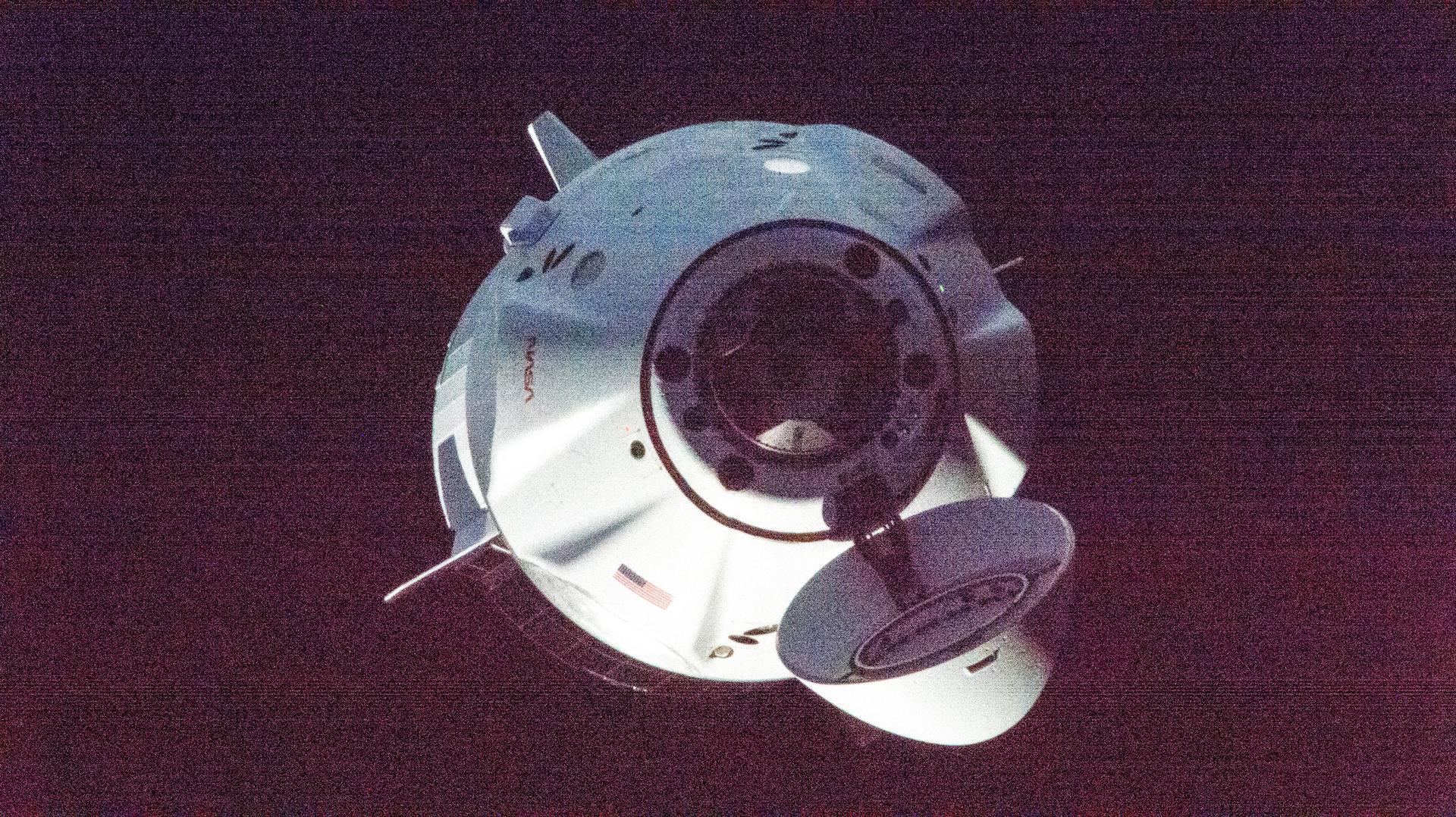
iss075e0157531 (Oct. 1, 2026) --- A SpaceX Dragon spacecraft carrying four members of NASA’s SpaceX Crew-13 mission approaches the International Space Station for a docking to the Harmony module’s forward port. Aboard Dragon were NASA astronauts Jessica Watson and Luke Delaney, CSA (Canadian Space Agency) astronaut Joshua Kutryk, and Roscosmos cosmonaut Sergey Teteryatnikov. Credit: NASA
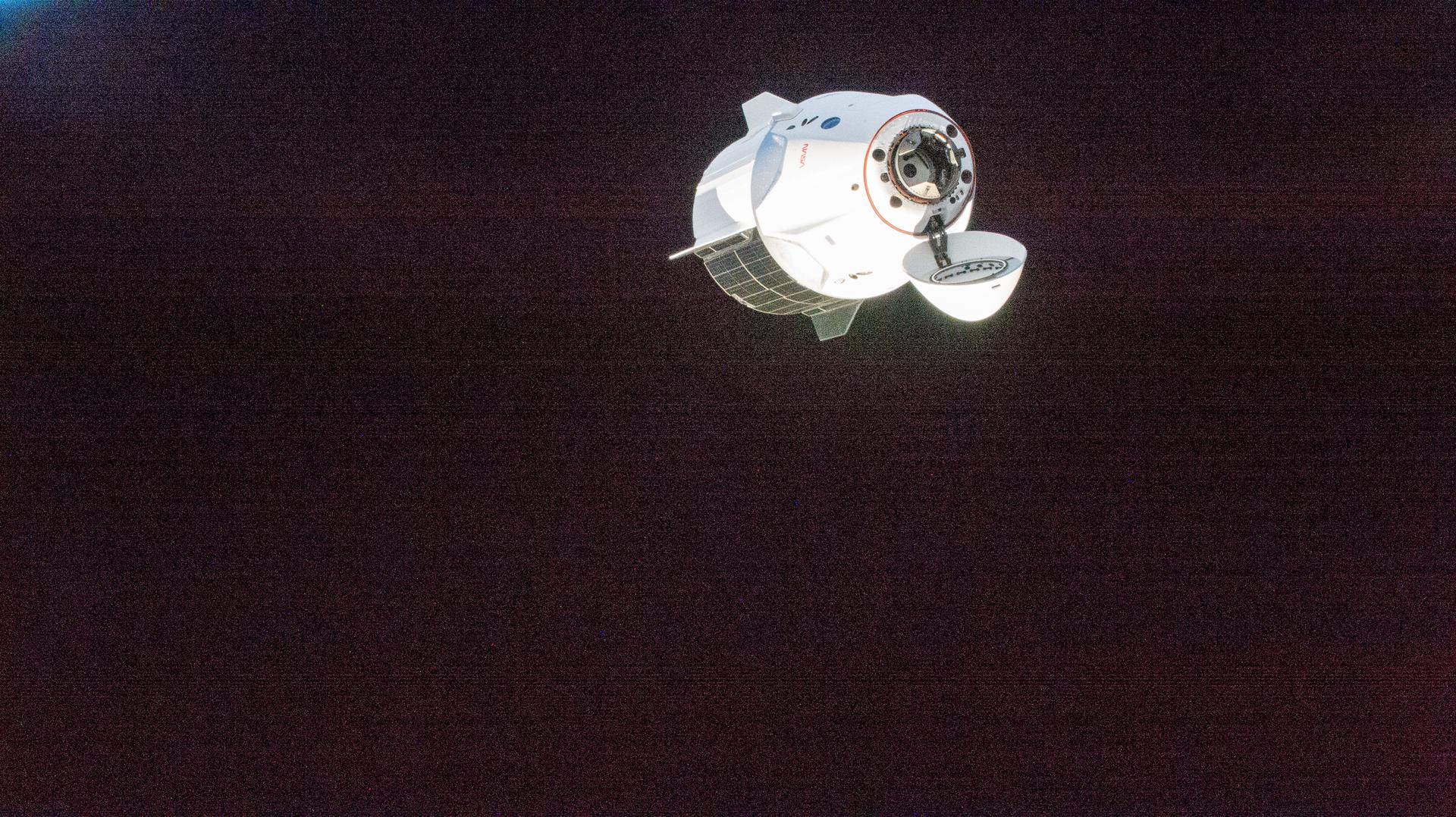
iss075e0157532 (Oct. 1, 2026) --- A SpaceX Dragon spacecraft carrying four members of NASA’s SpaceX Crew-13 mission approaches the International Space Station for a docking to the Harmony module’s forward port. Aboard Dragon were NASA astronauts Jessica Watson and Luke Delaney, CSA (Canadian Space Agency) astronaut Joshua Kutryk, and Roscosmos cosmonaut Sergey Teteryatnikov. Credit: NASA
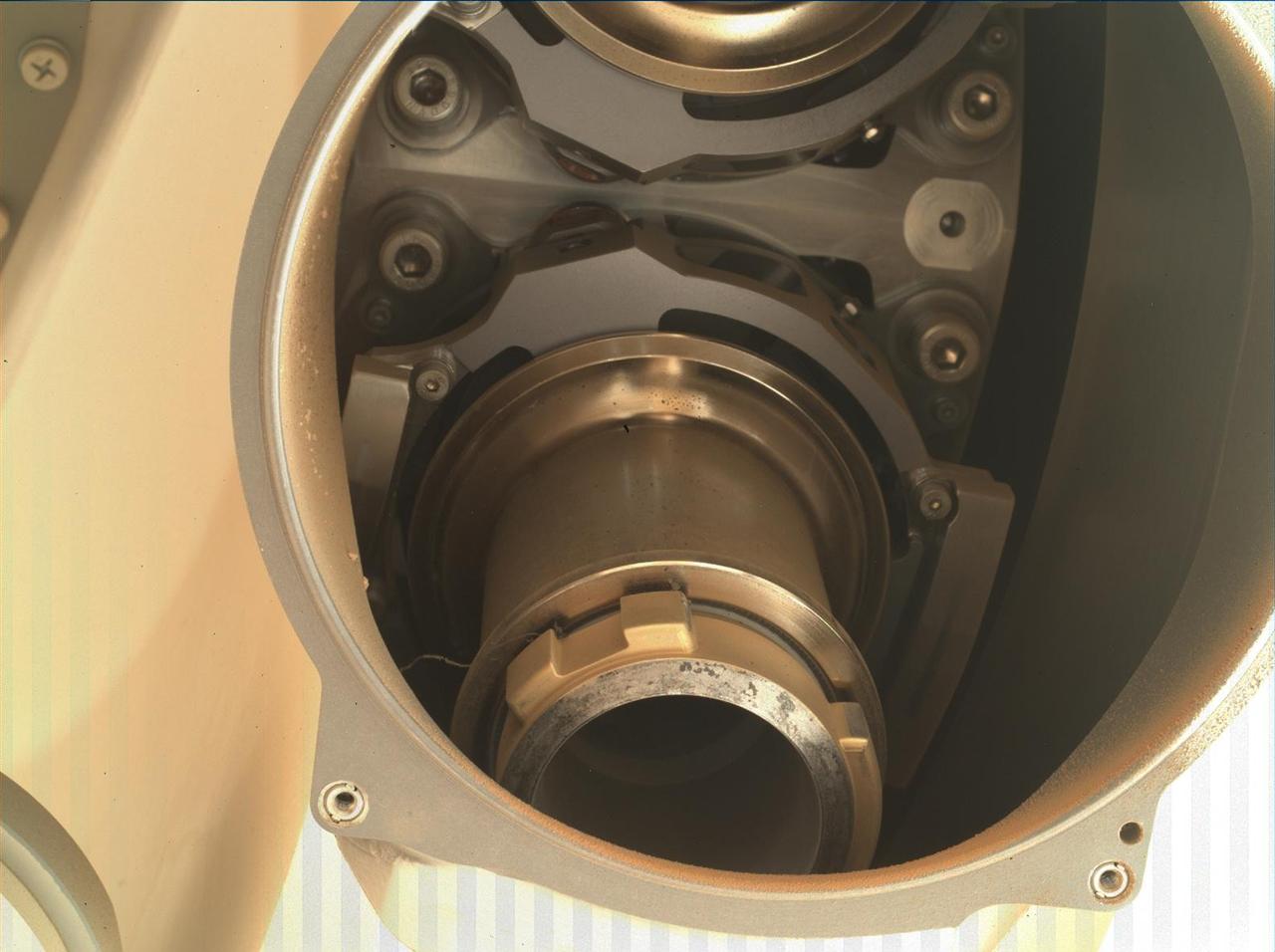
This image shows the back of Coring Bit 2 in the bit carousel of NASA's Perseverance Mars rover. A wavy, stringlike piece of foreign object debris (FOD) can be seen on the left side of the bit (the lower center of image). Coring Bit 2 was recently used to sample the sedimentary rock at "Wildcat Ridge." The image was obtained by the WATSON (Wide Angle Topographic Sensor for Operations and eNgineering) camera on Aug. 17, 2022, the 531st Martian day, or sol, of the mission. Located in the turret at the end of the rover's robotic arm, WATSON can document the structure and texture within a natural (intact), drilled, or abraded target, and its data can be used to derive depth measurements. The camera is a subsystem of the SHERLOC (Scanning Habitable Environments with Raman & Luminescence for Organics & Chemicals) instrument. NASA's Jet Propulsion Laboratory built and manages operations of Perseverance and Ingenuity for the agency. Caltech in Pasadena, California, manages JPL for NASA. WATSON was built by Malin Space Science Systems (MSSS) in San Diego and is operated jointly by MSSS and JPL. A key objective for Perseverance's mission on Mars is astrobiology, including the search for signs of ancient microbial life. The rover will characterize the planet's geology and past climate, pave the way for human exploration of the Red Planet, and be the first mission to collect and cache Martian rock and regolith (broken rock and dust). Subsequent NASA missions, in cooperation with ESA (European Space Agency), would send spacecraft to Mars to collect these sealed samples from the surface and return them to Earth for in-depth analysis. The Mars 2020 Perseverance mission is part of NASA's Moon to Mars exploration approach, which includes Artemis missions to the Moon that will help prepare for human exploration of the Red Planet. https://photojournal.jpl.nasa.gov/catalog/PIA25327
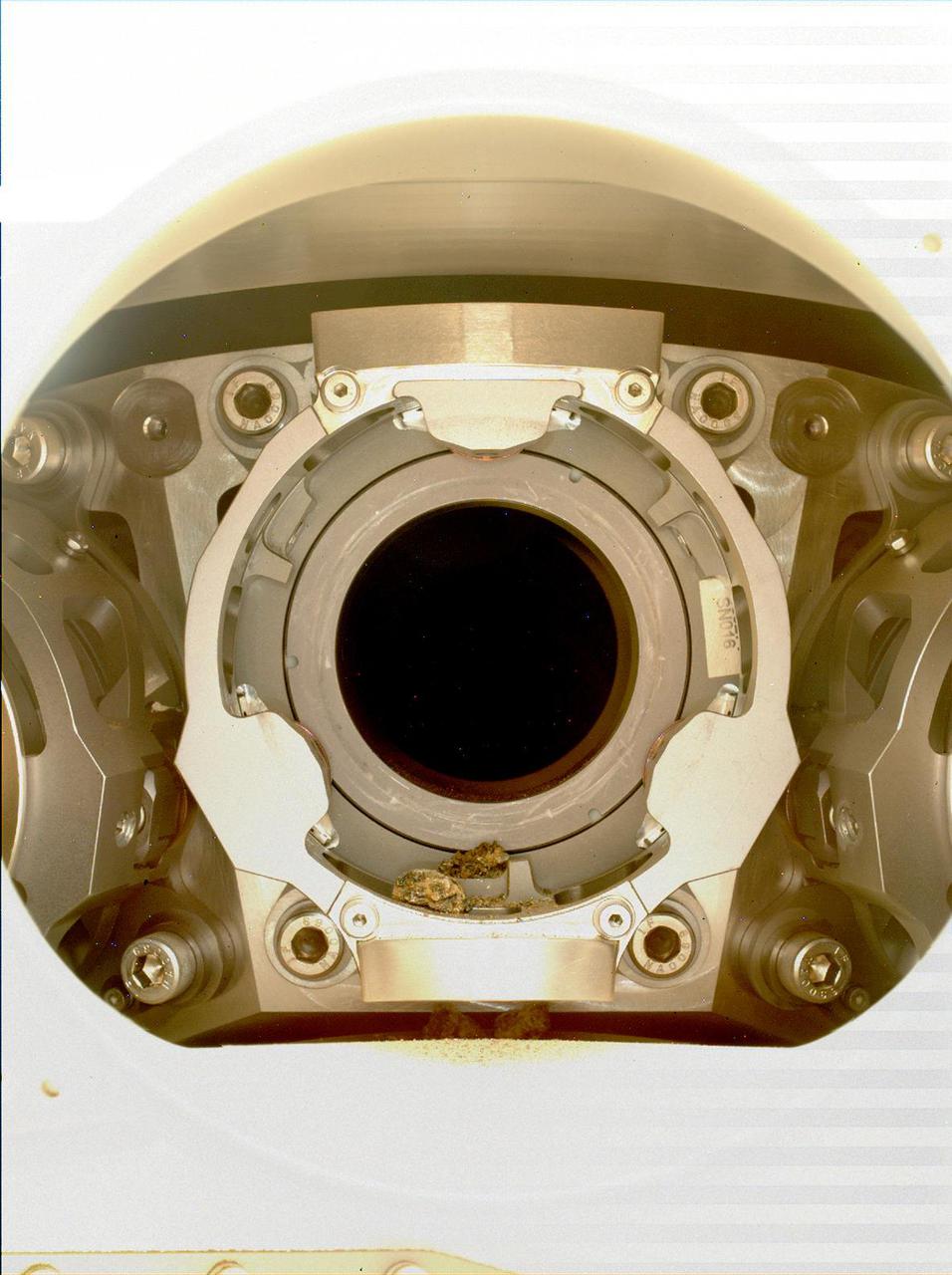
This image of pebble-sized debris in the bit carousel on NASA's Perseverance Mars rover was acquired on Jan. 7, 2022, by the WATSON camera. The image was taken to assist the Perseverance team in diagnosing an anomaly that occurred during a rock sampling on Dec. 29, 2021. A subsystem of the SHERLOC (Scanning Habitable Environments with Raman & Luminescence for Organics & Chemicals) instrument, WATSON can document the structure and texture within a drilled or abraded target, and its data can be used to derive depth measurements. NASA's Jet Propulsion Laboratory built and manages operations of Perseverance and Ingenuity for the agency. Caltech in Pasadena, California, manages JPL for NASA. WATSON was built by Malin Space Science Systems (MSSS) in San Diego and is operated jointly by MSSS and JPL. A key objective for Perseverance's mission on Mars is astrobiology, including the search for signs of ancient microbial life. The rover will characterize the planet's geology and past climate, pave the way for human exploration of the Red Planet, and be the first mission to collect and cache Martian rock and regolith (broken rock and dust). Subsequent NASA missions, in cooperation with ESA (European Space Agency), would send spacecraft to Mars to collect these sealed samples from the surface and return them to Earth for in-depth analysis. The Mars 2020 Perseverance mission is part of NASA's Moon to Mars exploration approach, which includes Artemis missions to the Moon that will help prepare for human exploration of the Red Planet. https://photojournal.jpl.nasa.gov/catalog/PIA25066
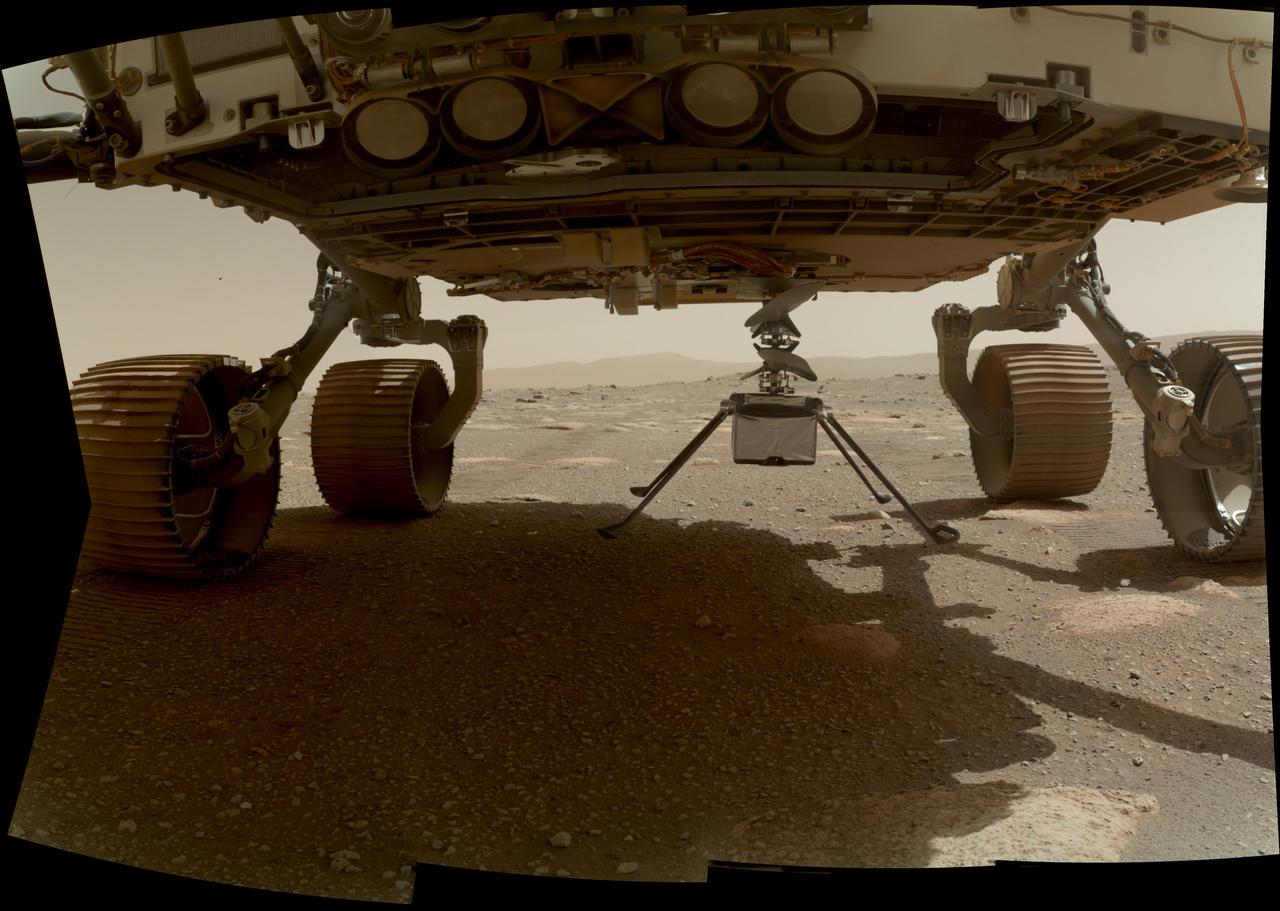
NASA's Ingenuity helicopter can be seen here with all four of its legs deployed before dropping from the belly of the Perseverance rover on March 30, 2021, the 39th Martian day, or sol, of the mission. This image was taken by the WATSON (Wide Angle Topographic Sensor for Operations and eNgineering) camera on the SHERLOC (Scanning Habitable Environments with Raman and Luminescence for Organics and Chemicals) instrument, located at the end of the rover's long robotic arm. NASA's Jet Propulsion Laboratory built and manages operations of Perseverance and Ingenuity for the agency. Caltech in Pasadena, California, manages JPL for NASA. WATSON was built by Malin Space Science Systems (MSSS) in San Diego and is operated jointly by MSSS and JPL. The Mars helicopter technology demonstration activity is supported by NASA's Science Mission Directorate, the NASA Aeronautics Research Mission Directorate, and the NASA Space Technology Mission Directorate. A key objective for Perseverance's mission on Mars is astrobiology, including the search for signs of ancient microbial life. The rover will characterize the planet's geology and past climate, pave the way for human exploration of the Red Planet, and be the first mission to collect and cache Martian rock and regolith (broken rock and dust). Subsequent NASA missions, in cooperation with ESA (European Space Agency), would send spacecraft to Mars to collect these sealed samples from the surface and return them to Earth for in-depth analysis. https://photojournal.jpl.nasa.gov/catalog/PIA24449
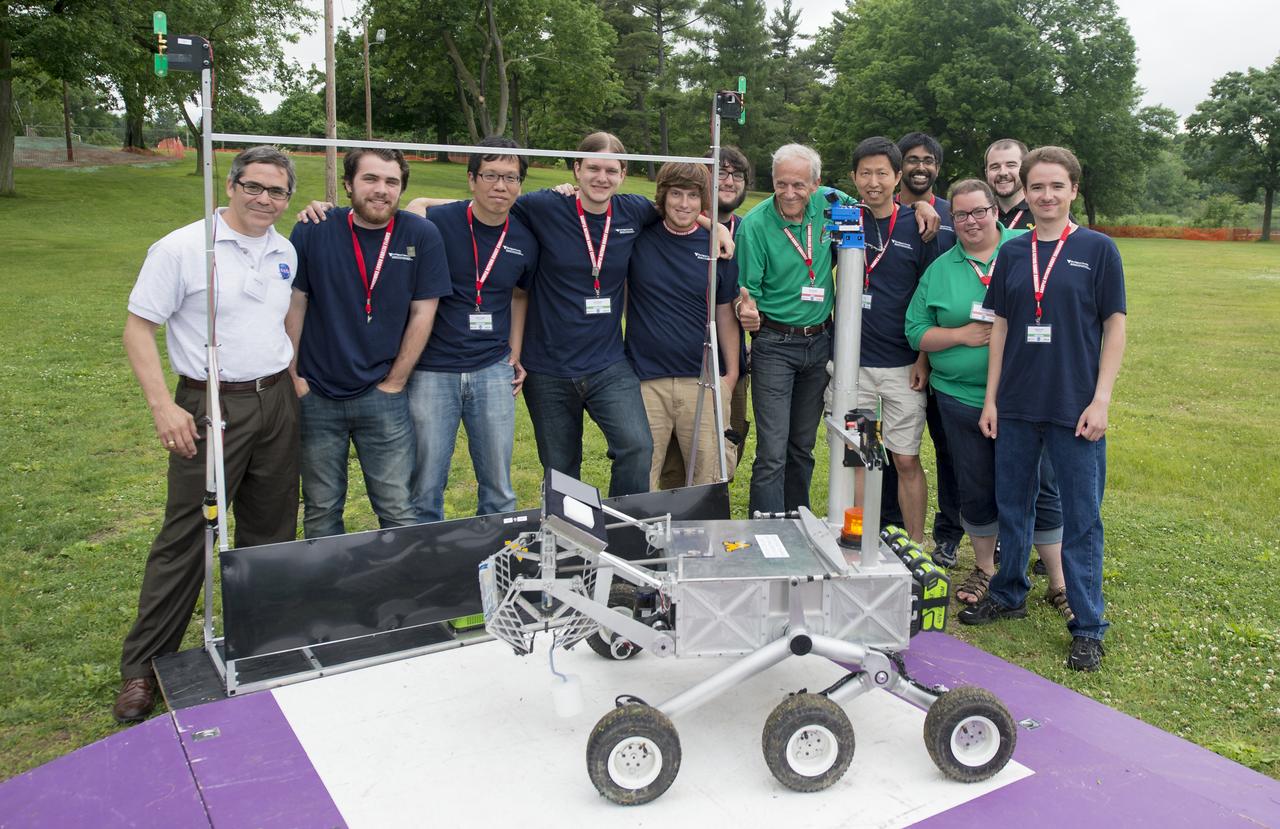
Members of team Mountaineers pose with officials from the 2014 NASA Centennial Challenges Sample Return Robot Challenge on Saturday, June 14, 2014 at Worcester Polytechnic Institute (WPI) in Worcester, Mass. Team Mountaineer was the only team to complete the level one challenge this year. Team Mountaineer members, from left (in blue shirts) are: Ryan Watson, Marvin Cheng, Scott Harper, Jarred Strader, Lucas Behrens, Yu Gu, Tanmay Mandal, Alexander Hypes, and Nick Ohi Challenge judges and competition staff (in white and green polo shirts) from left are: Sam Ortega, NASA Centennial Challenge program manager; Ken Stafford, challenge technical advisor, WPI; Colleen Shaver, challenge event manager, WPI. During the competition, teams were required to demonstrate autonomous robots that can locate and collect samples from a wide and varied terrain, operating without human control. The objective of this NASA-WPI Centennial Challenge was to encourage innovations in autonomous navigation and robotics technologies. Innovations stemming from the challenge may improve NASA's capability to explore a variety of destinations in space, as well as enhance the nation's robotic technology for use in industries and applications on Earth. Photo Credit: (NASA/Joel Kowsky)
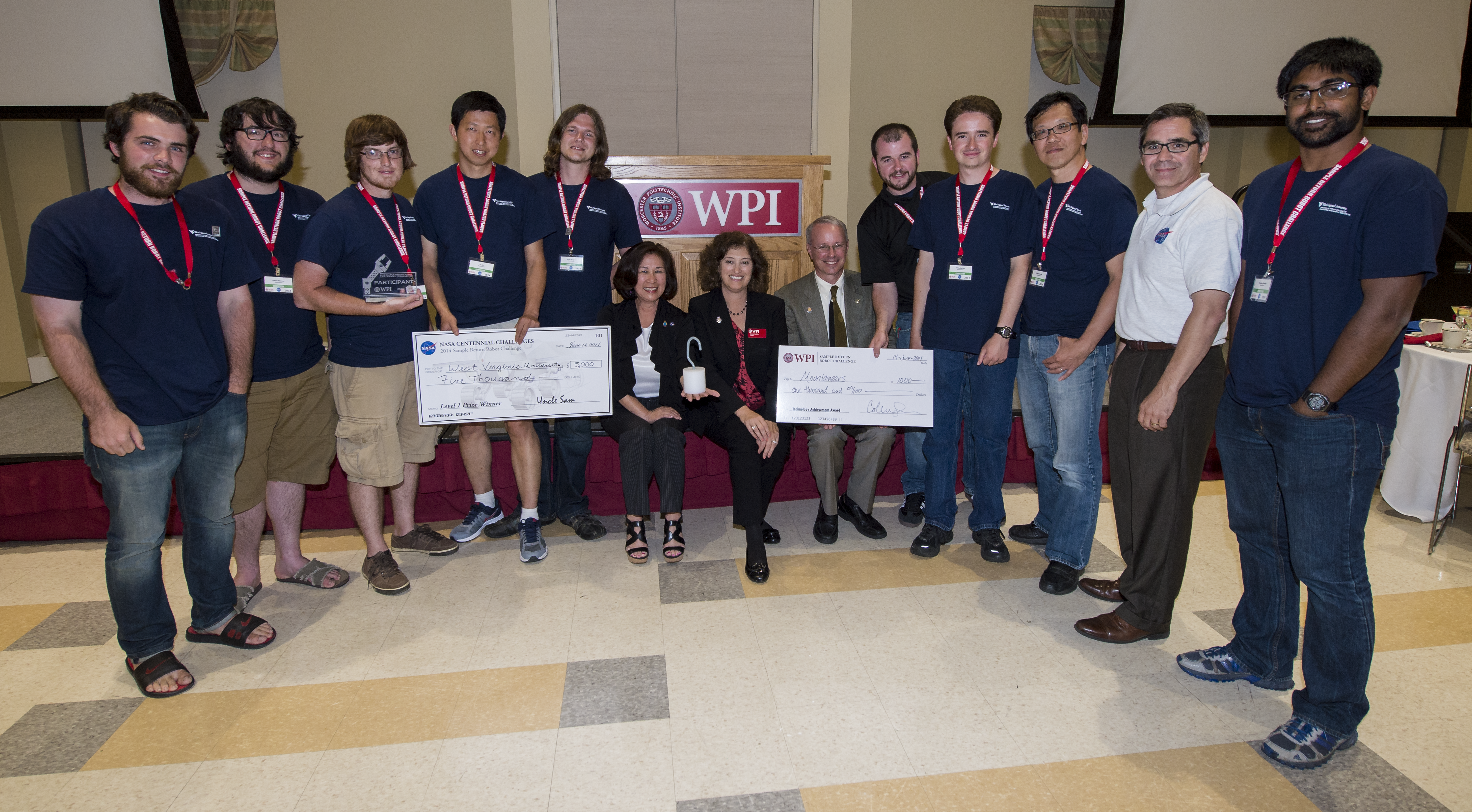
The NASA Centennial Challenges prize, level one, is presented to team Mountaineers for successfully completing level one of the NASA 2014 Sample Return Robot Challenge, from left, Ryan Watson, Team Mountaineers; Lucas Behrens, Team Mountaineers; Jarred Strader, Team Mountaineers; Yu Gu, Team Mountaineers; Scott Harper, Team Mountaineers; Dorothy Rasco, NASA Deputy Associate Administrator for the Space Technology Mission Directorate; Laurie Leshin, Worcester Polytechnic Institute (WPI) President; David Miller, NASA Chief Technologist; Alexander Hypes, Team Mountaineers; Nick Ohi,Team Mountaineers; Marvin Cheng, Team Mountaineers; Sam Ortega, NASA Program Manager for Centennial Challenges; and Tanmay Mandal, Team Mountaineers;, Saturday, June 14, 2014, at Worcester Polytechnic Institute (WPI) in Worcester, Mass. Team Mountaineers was the only team to complete the level one challenge. During the competition, teams were required to demonstrate autonomous robots that can locate and collect samples from a wide and varied terrain, operating without human control. The objective of this NASA-WPI Centennial Challenge was to encourage innovations in autonomous navigation and robotics technologies. Innovations stemming from the challenge may improve NASA's capability to explore a variety of destinations in space, as well as enhance the nation's robotic technology for use in industries and applications on Earth. Photo Credit: (NASA/Joel Kowsky)
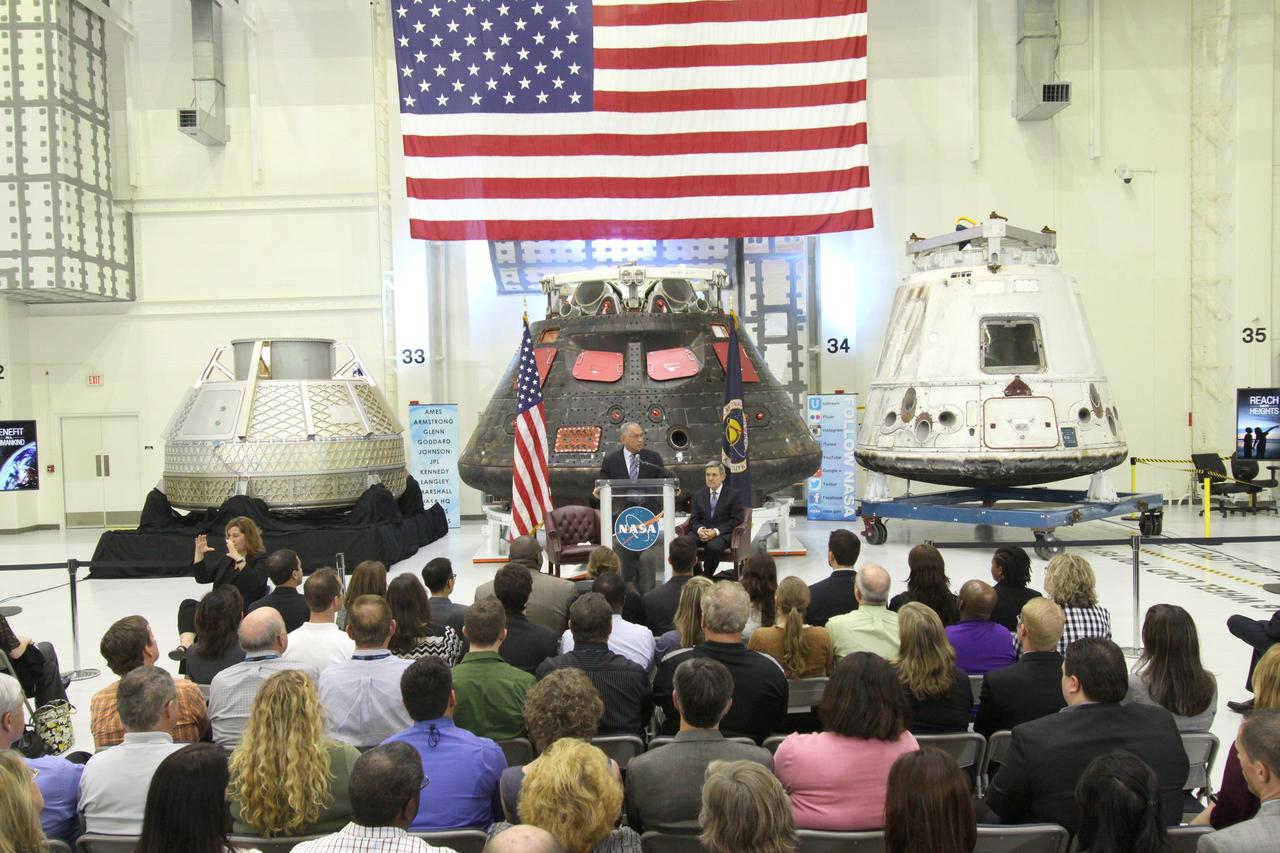
CAPE CANAVERAL, Fla. – In the Neil Armstrong Operations and Checkout Building high bay at NASA's Kennedy Space Center in Florida, NASA Administrator Charlie Bolden delivers a “state of the agency” address at NASA's televised fiscal year 2016 budget rollout event. Kennedy Space Center Director Bob Cabana, seated, made the opening remarks. Representatives from the Kennedy workforce, news media and social media were in attendance. NASA's Orion, SpaceX Dragon and Boeing CST-100 spacecraft, all destined to play a role in NASA’s overall exploration objectives, were on display. For information on NASA's budget, visit http://www.nasa.gov/budget. Photo credit: NASA/Amber Watson
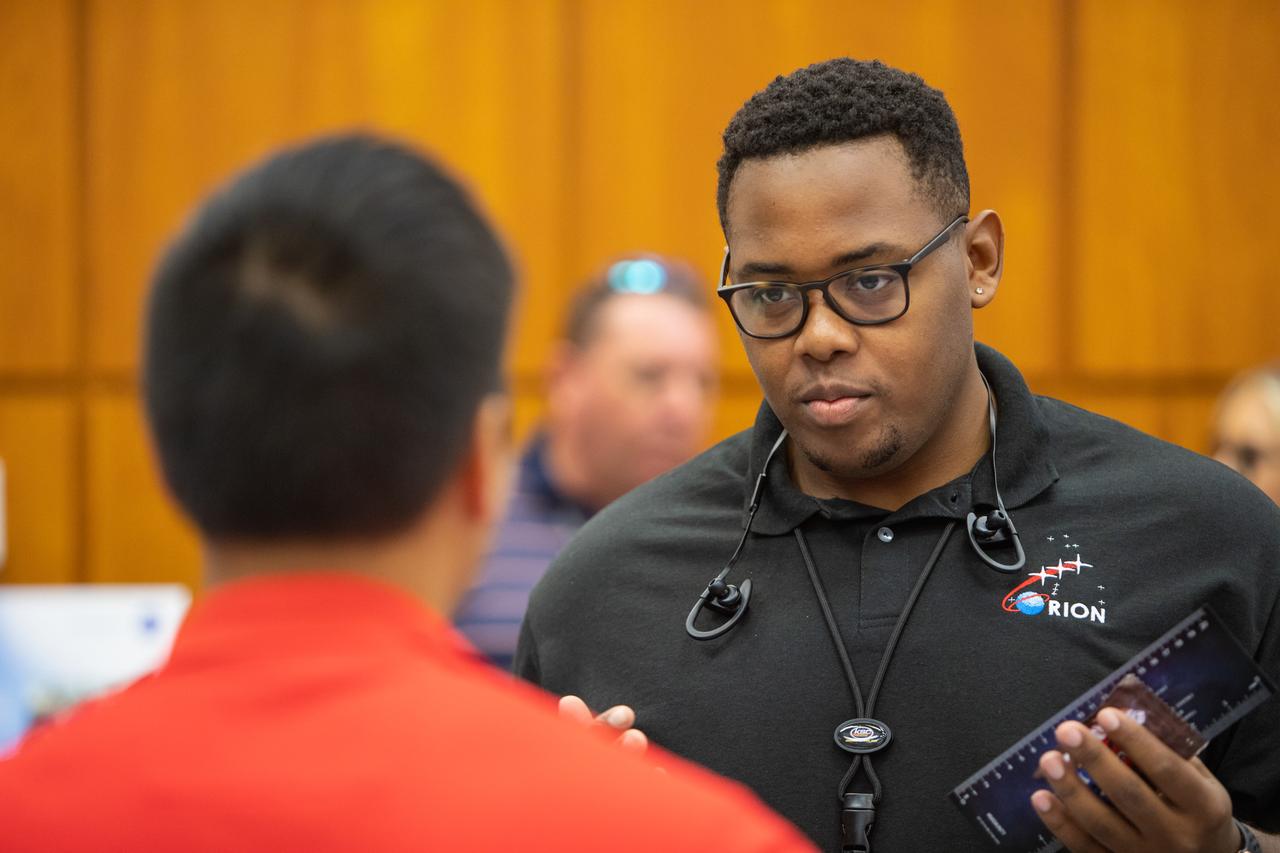
A Kennedy Space Center employee demonstrates a new technology during an innovation showcase on Nov. 19, 2019, in the Florida spaceport’s Neil Armstrong Operations and Checkout Building’s Mission Briefing Room. Nearly 50 exhibitors gathered to participate in the center’s Innovation Days – one of several events throughout the year aimed at fostering and encouraging an innovative culture at Kennedy. Showcase participants included individuals from multiple directorates, programs and organizations throughout Kennedy. In addition to the showcase, employees had the opportunity to attend an overview presentation on NASA’s Human Landing System (HLS), hosted by HLS Program Manager Lisa Watson-Morgan.
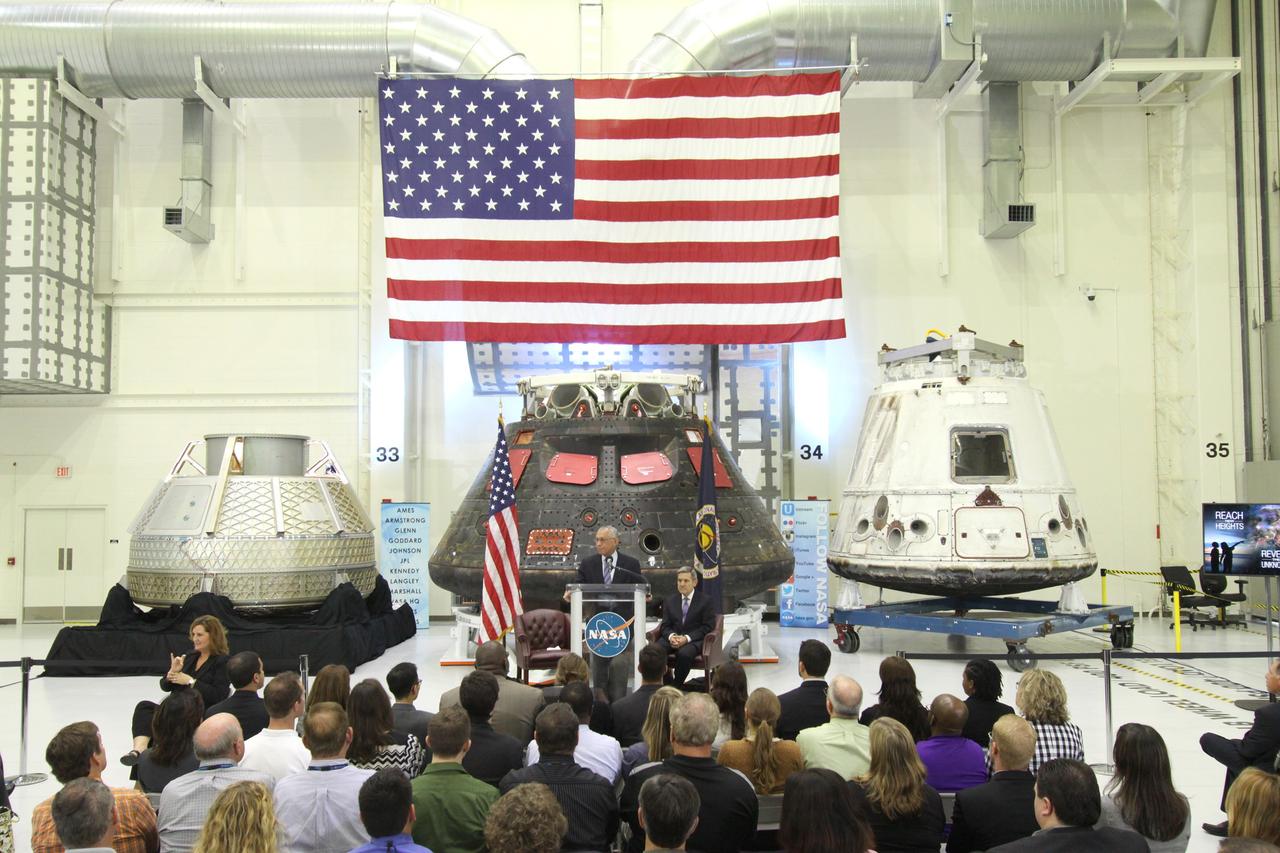
CAPE CANAVERAL, Fla. – In the Neil Armstrong Operations and Checkout Building high bay at NASA's Kennedy Space Center in Florida, NASA Administrator Charlie Bolden delivers a “state of the agency” address at NASA's televised fiscal year 2016 budget rollout event. Kennedy Space Center Director Bob Cabana, seated, made the opening remarks. Representatives from the Kennedy workforce, news media and social media were in attendance. NASA's Orion, SpaceX Dragon and Boeing CST-100 spacecraft, all destined to play a role in NASA’s overall exploration objectives, were on display. For information on NASA's budget, visit http://www.nasa.gov/budget. Photo credit: NASA/Amber Watson
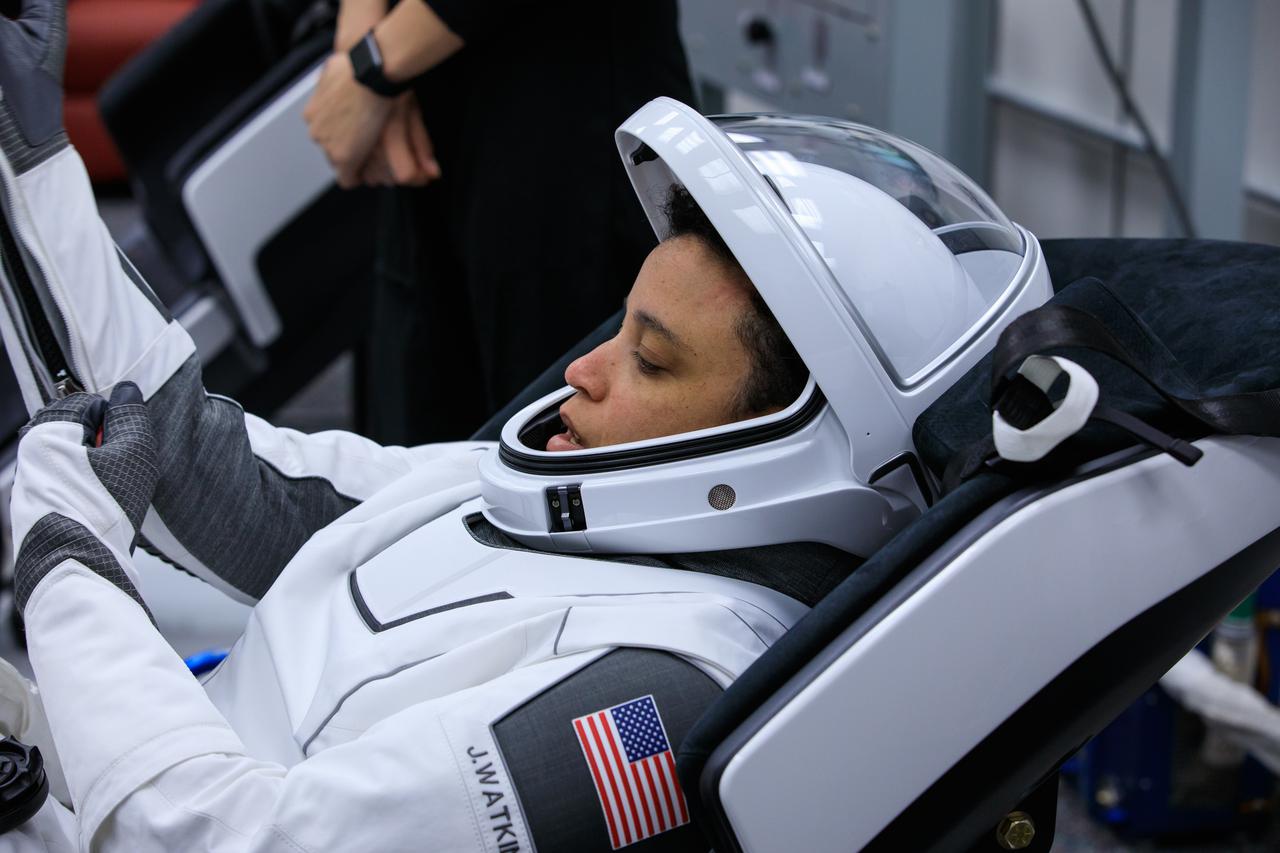
NASA astronaut Jessica Watkins checks her spacesuit in the suit room inside Kennedy Space Center’s Neil A. Armstrong Operations and Checkout Building during NASA’s SpaceX Crew-4 dry dress rehearsal on April 20, 2022. Watson, along with fellow Crew-4 astronauts Kjell Lindgren, Bob Hines, and Samantha Cristoforetti, is scheduled to lift off from Kennedy’s Launch Complex 39A at 5:26 a.m. EDT on April 23, 2022. SpaceX’s Falcon 9 rocket and Crew Dragon, named Freedom by the Crew-4 crew, will launch the astronauts to the International Space Station as part of NASA’s Commercial Crew Program.

Plants utilized for ground experiments at NASA’s Kennedy Space Center in Florida that complement plant research on the International Space Station are photographed at an innovation showcase on Nov. 19, 2019. Nearly 50 exhibitors gathered in the Neil Armstrong Operations and Checkout Building’s Mission Briefing Room to participate in the center’s Innovation Days – one of several events throughout the year aimed at fostering an encouraging an innovative culture at Kennedy. Showcase participants included individuals from multiple directorates, programs and organizations throughout Kennedy. In addition to the showcase, employees had the opportunity to attend an overview presentation on NASA’s Human Landing System (HLS), hosted by HLS Program Manager Lisa Watson-Morgan.
Kennedy Space Center employees participate in an innovation showcase on Nov. 19, 2019, in the Florida spaceport’s Neil Armstrong Operations and Checkout Building’s Mission Briefing Room. Nearly 50 exhibitors gathered to demonstrate new technologies and innovations during the center’s Innovation Days – one of several events throughout the year aimed at fostering and encouraging an innovative culture at Kennedy. Showcase participants included individuals from multiple directorates, programs and organizations throughout Kennedy. In addition to the showcase, employees had the opportunity to attend an overview presentation on NASA’s Human Landing System (HLS), hosted by HLS Program Manager Lisa Watson-Morgan.

Kennedy Space Center Director Bob Cabana speaks to employees during an innovation showcase on Nov. 19, 2019, in the Florida spaceport’s Neil Armstrong Operations and Checkout Building’s Mission Briefing Room. Nearly 50 exhibitors gathered to participate in the center’s Innovation Days – one of several events throughout the year aimed at fostering and encouraging an innovative culture at Kennedy. Showcase participants included individuals from multiple directorates, programs and organizations throughout Kennedy. In addition to the showcase, employees had the opportunity to attend an overview presentation on NASA’s Human Landing System (HLS), hosted by HLS Program Manager Lisa Watson-Morgan.

Kennedy Space Center Associate Director, Technical, Kelvin Manning tries out a virtual reality headset during an innovation showcase on Nov. 19, 2019, in the Florida spaceport’s Neil Armstrong Operations and Checkout Building’s Mission Briefing Room. Nearly 50 exhibitors gathered to demonstrate new technologies and innovations during the center’s Innovation Days – one of several events throughout the year aimed at fostering and encouraging an innovative culture at Kennedy. Showcase participants included individuals from multiple directorates, programs and organizations throughout Kennedy. In addition to the showcase, employees had the opportunity to attend an overview presentation on NASA’s Human Landing System (HLS), hosted by HLS Program Manager Lisa Watson-Morgan.
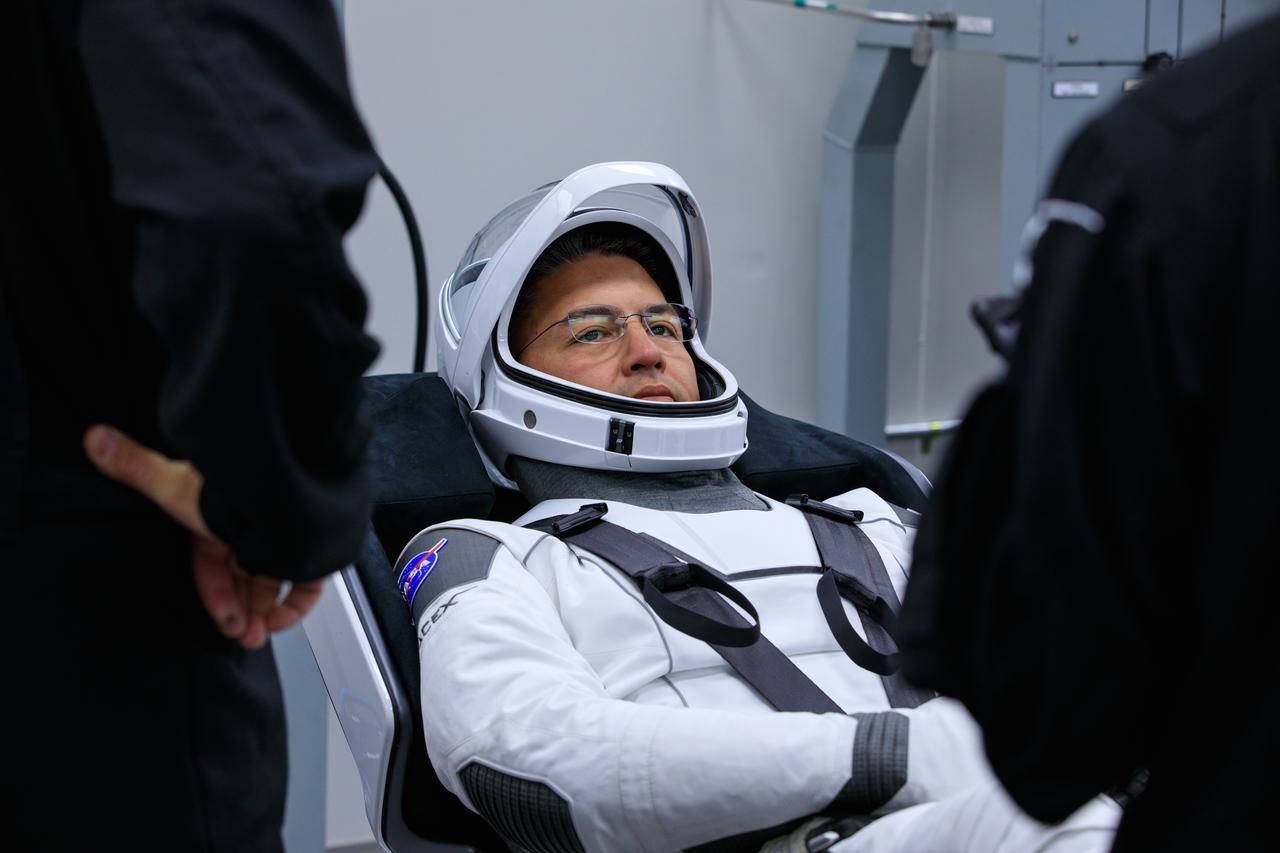
NASA astronaut Kjell Lindgren gets assistance in the suit room inside Kennedy Space Center’s Neil A. Armstrong Operations and Checkout Building during NASA’s SpaceX Crew-4 dry dress rehearsal on April 20, 2022. Watson, along with fellow Crew-4 astronauts Jessica Watkins, Bob Hines, and Samantha Cristoforetti, is scheduled to lift off from Kennedy’s Launch Complex 39A at 5:26 a.m. EDT on April 23, 2022. SpaceX’s Falcon 9 rocket and Crew Dragon, named Freedom by the Crew-4 crew, will launch the astronauts to the International Space Station as part of NASA’s Commercial Crew Program.
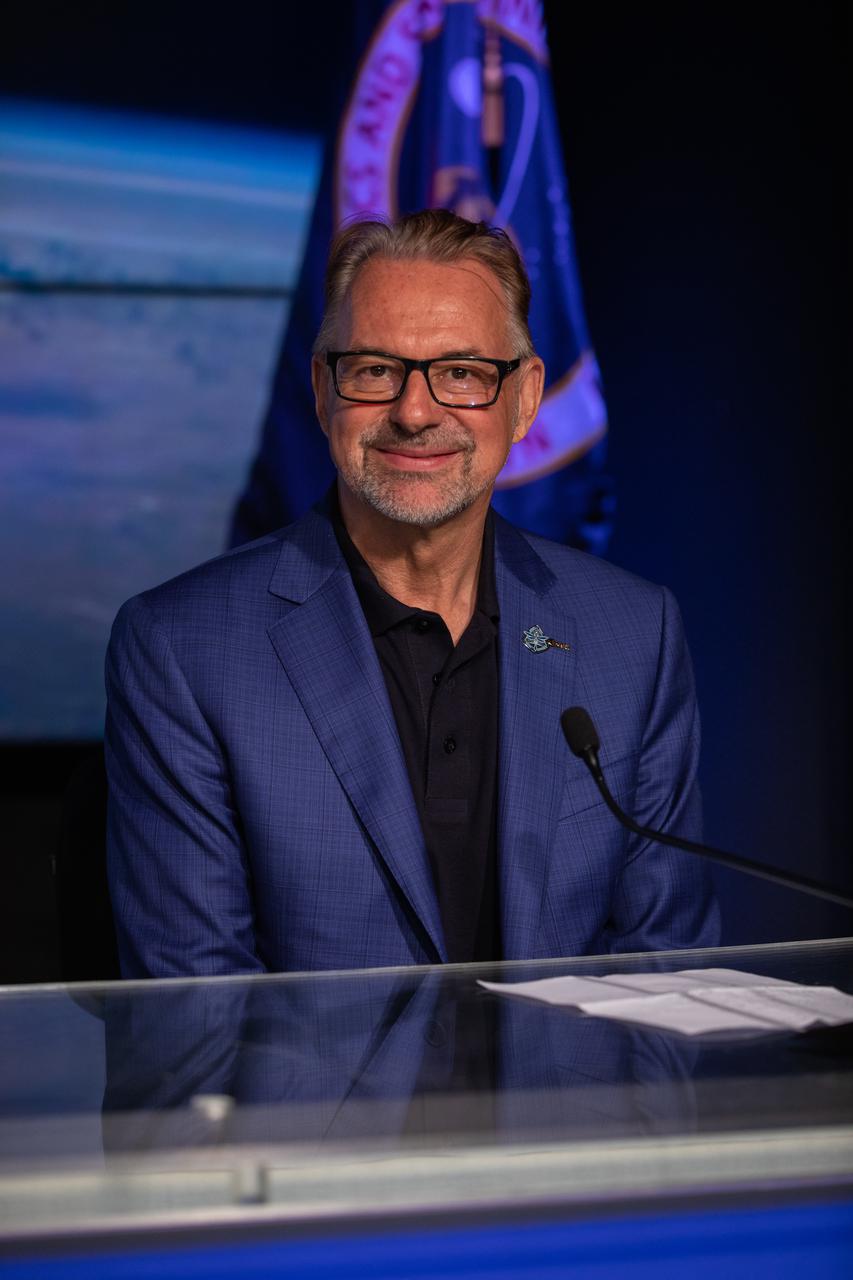
Josef Aschbacher, director general, ESA (European Space Agency), participates in a Crew-4 postlaunch news conference April 27, 2022, at NASA’s Kennedy Space Center in Florida. The SpaceX Crew Dragon spacecraft, powered by the company’s Falcon 9 rocket, lifted off from Kennedy’s Launch Complex 39A at 3:52 a.m. EDT on April 27. Named Freedom by mission astronauts Kjell Lindgren, Bob Hines, Jessica Watson, and Samantha Cristoforetti, Dragon is scheduled to dock to the space station today at 8:15 p.m. EDT.
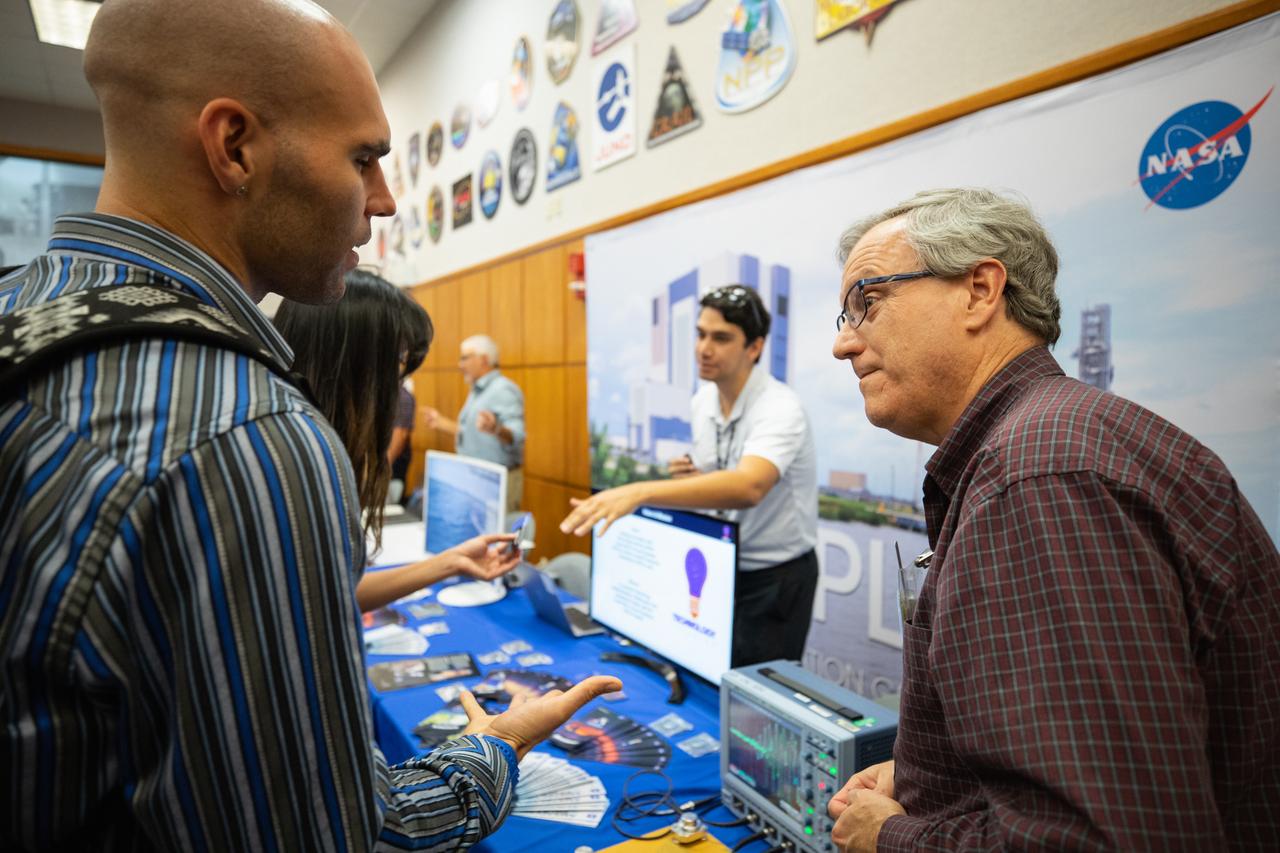
Two Kennedy Space Center employees engage in conversation during an innovation showcase on Nov. 19, 2019, in the Florida spaceport’s Neil Armstrong Operations and Checkout Building’s Mission Briefing Room. Nearly 50 exhibitors gathered to demonstrate new technologies and innovations during the center’s Innovation Days – one of several events throughout the year aimed at fostering and encouraging an innovative culture at Kennedy. Showcase participants included individuals from multiple directorates, programs and organizations throughout Kennedy. In addition to the showcase, employees had the opportunity to attend an overview presentation on NASA’s Human Landing System (HLS), hosted by HLS Program Manager Lisa Watson-Morgan.
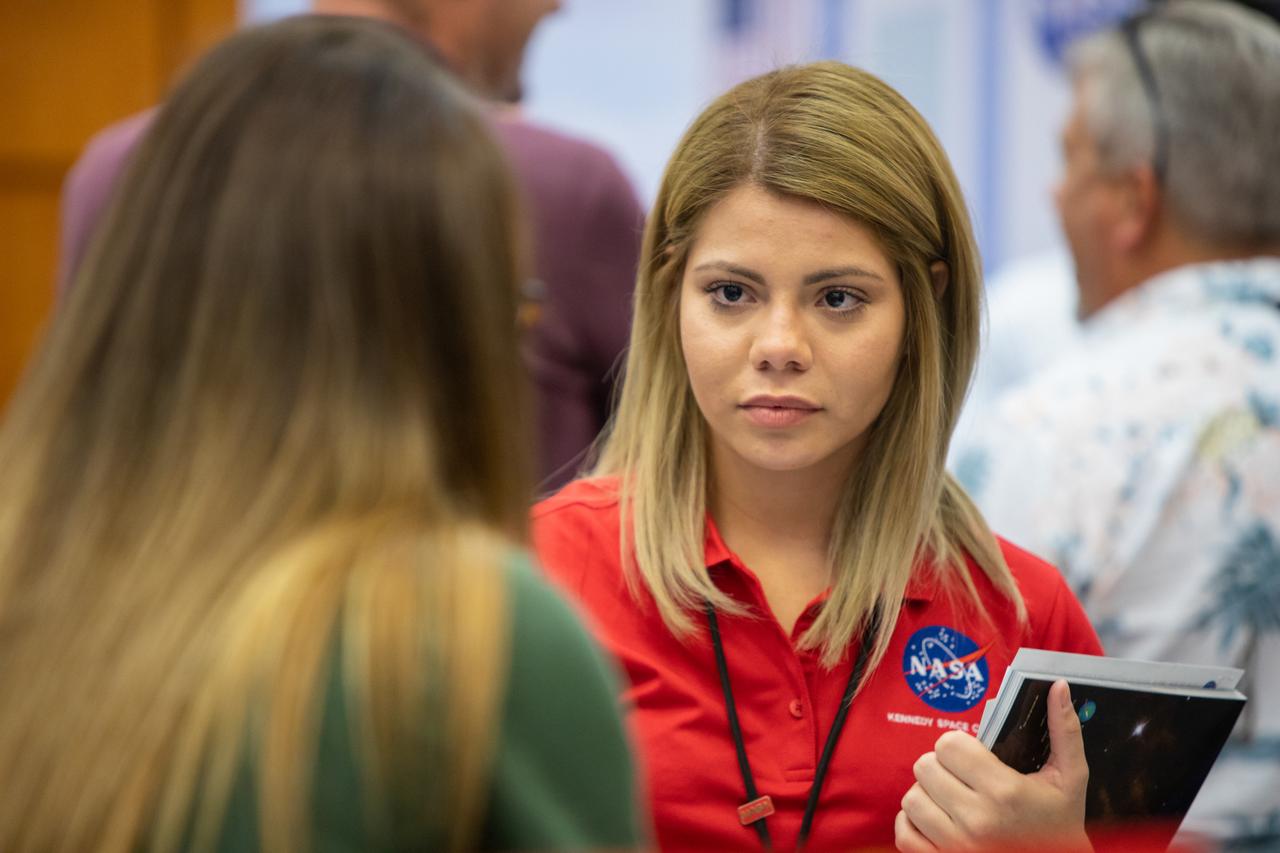
A Kennedy Space Center employee participates in an innovation showcase on Nov. 19, 2019, in the Florida spaceport’s Neil Armstrong Operations and Checkout Building’s Mission Briefing Room. Nearly 50 exhibitors gathered to demonstrate new technologies and innovations during the center’s Innovation Days – one of several events throughout the year aimed at fostering and encouraging an innovative culture at Kennedy. Showcase participants included individuals from multiple directorates, programs and organizations throughout Kennedy. In addition to the showcase, employees had the opportunity to attend an overview presentation on NASA’s Human Landing System (HLS), hosted by HLS Program Manager Lisa Watson-Morgan.
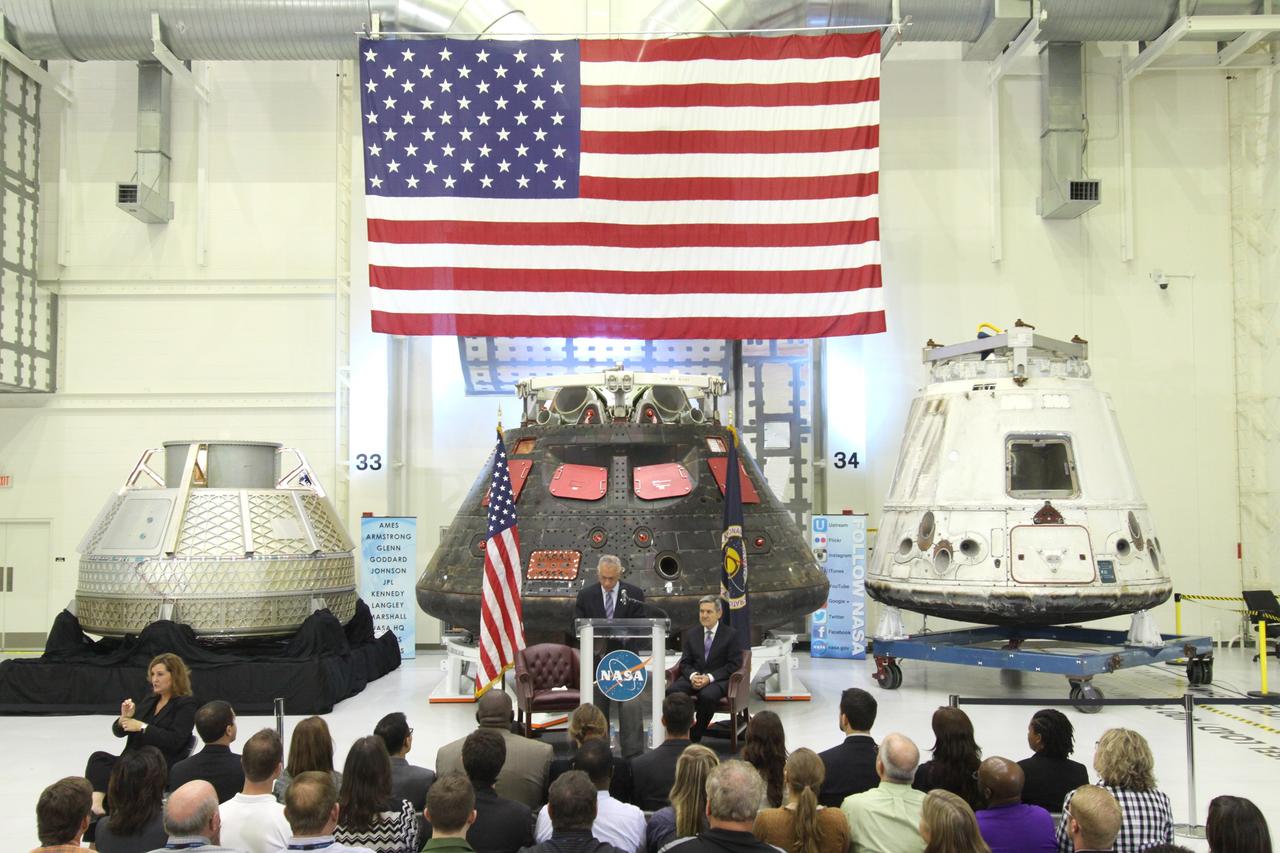
CAPE CANAVERAL, Fla. – In the Neil Armstrong Operations and Checkout Building high bay at NASA's Kennedy Space Center in Florida, NASA Administrator Charlie Bolden delivers a “state of the agency” address at NASA's televised fiscal year 2016 budget rollout event with Kennedy Space Center Director Bob Cabana looking on, at right. Representatives from the Kennedy workforce, news media and social media were in attendance. NASA's Orion, SpaceX Dragon and Boeing CST-100 spacecraft, all destined to play a role in NASA’s overall exploration objectives, were on display. For information on NASA's budget, visit http://www.nasa.gov/budget. Photo credit: NASA/Amber Watson
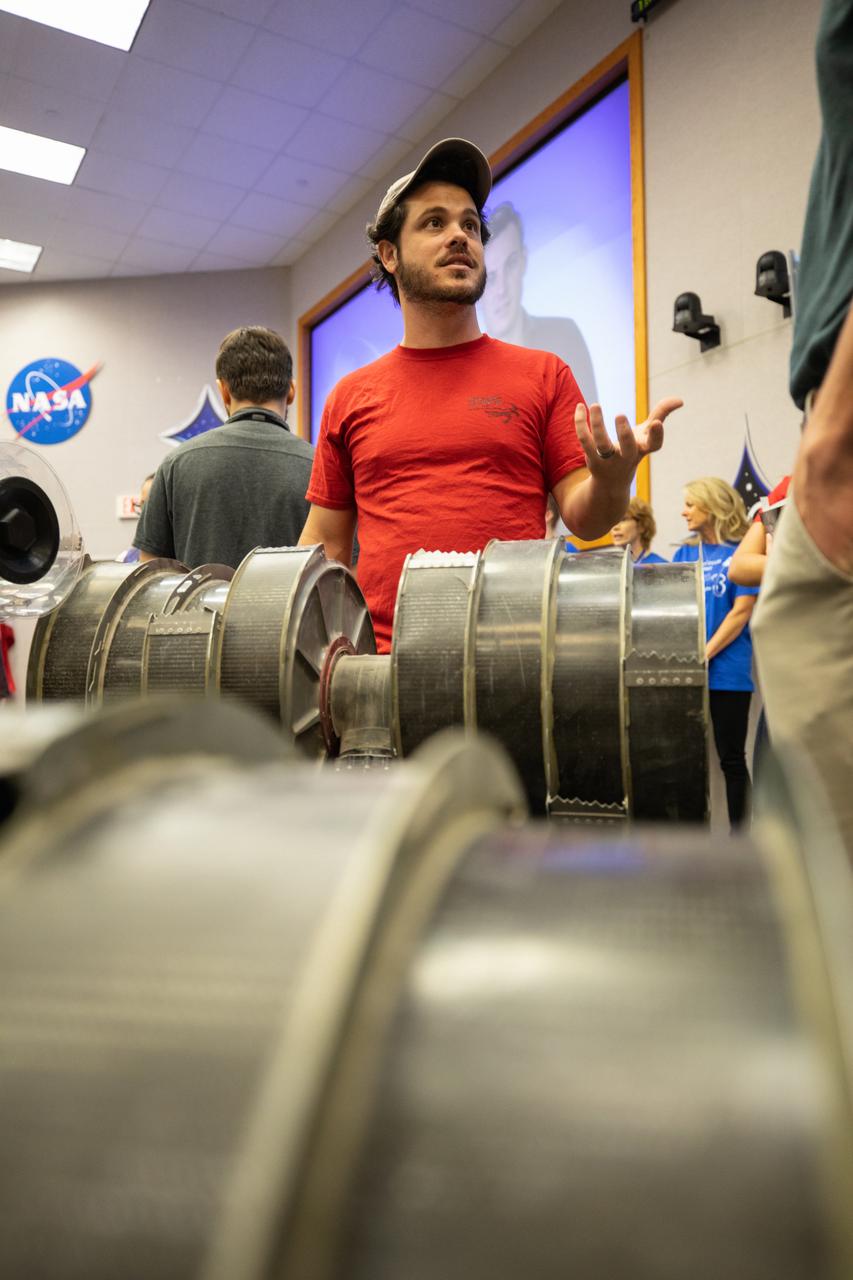
A Kennedy Space Center employee attends an innovation showcase on Nov. 19, 2019, in the Florida spaceport’s Neil Armstrong Operations and Checkout Building’s Mission Briefing Room. Nearly 50 exhibitors gathered to demonstrate new technologies and innovations during the center’s Innovation Days – one of several events throughout the year aimed at fostering and encouraging an innovative culture at Kennedy. Showcase participants included individuals from multiple directorates, programs and organizations throughout Kennedy. In addition to the showcase, employees had the opportunity to attend an overview presentation on NASA’s Human Landing System (HLS), hosted by HLS Program Manager Lisa Watson-Morgan.

Kennedy Space Center employees participate in an innovation showcase on Nov. 19, 2019, in the Florida spaceport’s Neil Armstrong Operations and Checkout Building’s Mission Briefing Room. Nearly 50 exhibitors gathered to demonstrate new technologies and innovations during the center’s Innovation Days – one of several events throughout the year aimed at fostering and encouraging an innovative culture at Kennedy. Showcase participants included individuals from multiple directorates, programs and organizations throughout Kennedy. In addition to the showcase, employees had the opportunity to attend an overview presentation on NASA’s Human Landing System (HLS), hosted by HLS Program Manager Lisa Watson-Morgan.

NASA astronaut Jessica Watkins smiles in the suit room inside Kennedy Space Center’s Neil A. Armstrong Operations and Checkout Building during NASA’s SpaceX Crew-4 dry dress rehearsal on April 20, 2022. Watson, along with fellow Crew-4 astronauts Kjell Lindgren, Bob Hines, and Samantha Cristoforetti, is scheduled to lift off from Kennedy’s Launch Complex 39A at 5:26 a.m. EDT on April 23, 2022. SpaceX’s Falcon 9 rocket and Crew Dragon, named Freedom by the Crew-4 crew, will launch the astronauts to the space station as part of NASA’s Commercial Crew Program.
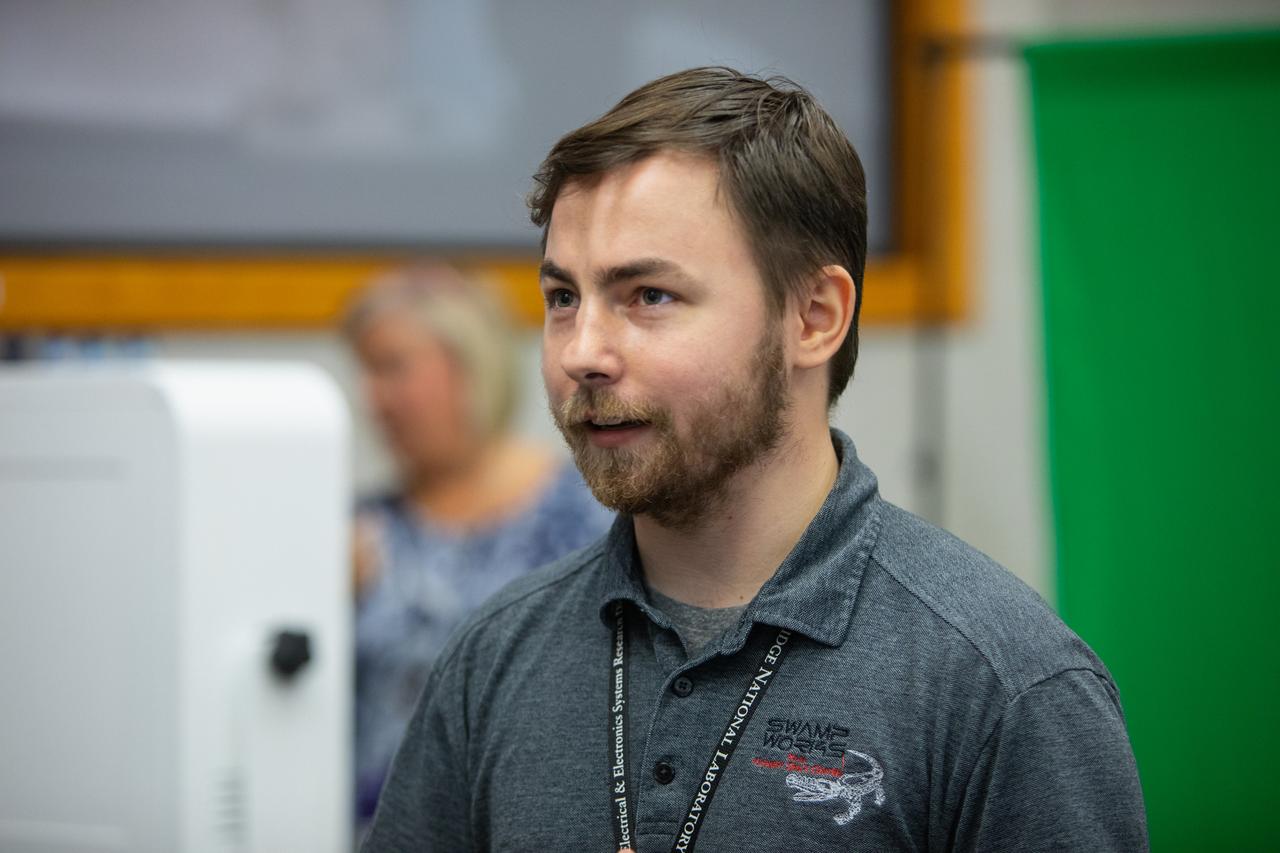
A Kennedy Space Center employee participates in an innovation showcase on Nov. 19, 2019, in the Florida spaceport’s Neil Armstrong Operations and Checkout Building’s Mission Briefing Room. Nearly 50 exhibitors gathered to demonstrate new technologies and innovations during the center’s Innovation Days – one of several events throughout the year aimed at fostering and encouraging an innovative culture at Kennedy. Showcase participants included individuals from multiple directorates, programs and organizations throughout Kennedy. In addition to the showcase, employees had the opportunity to attend an overview presentation on NASA’s Human Landing System (HLS), hosted by HLS Program Manager Lisa Watson-Morgan.
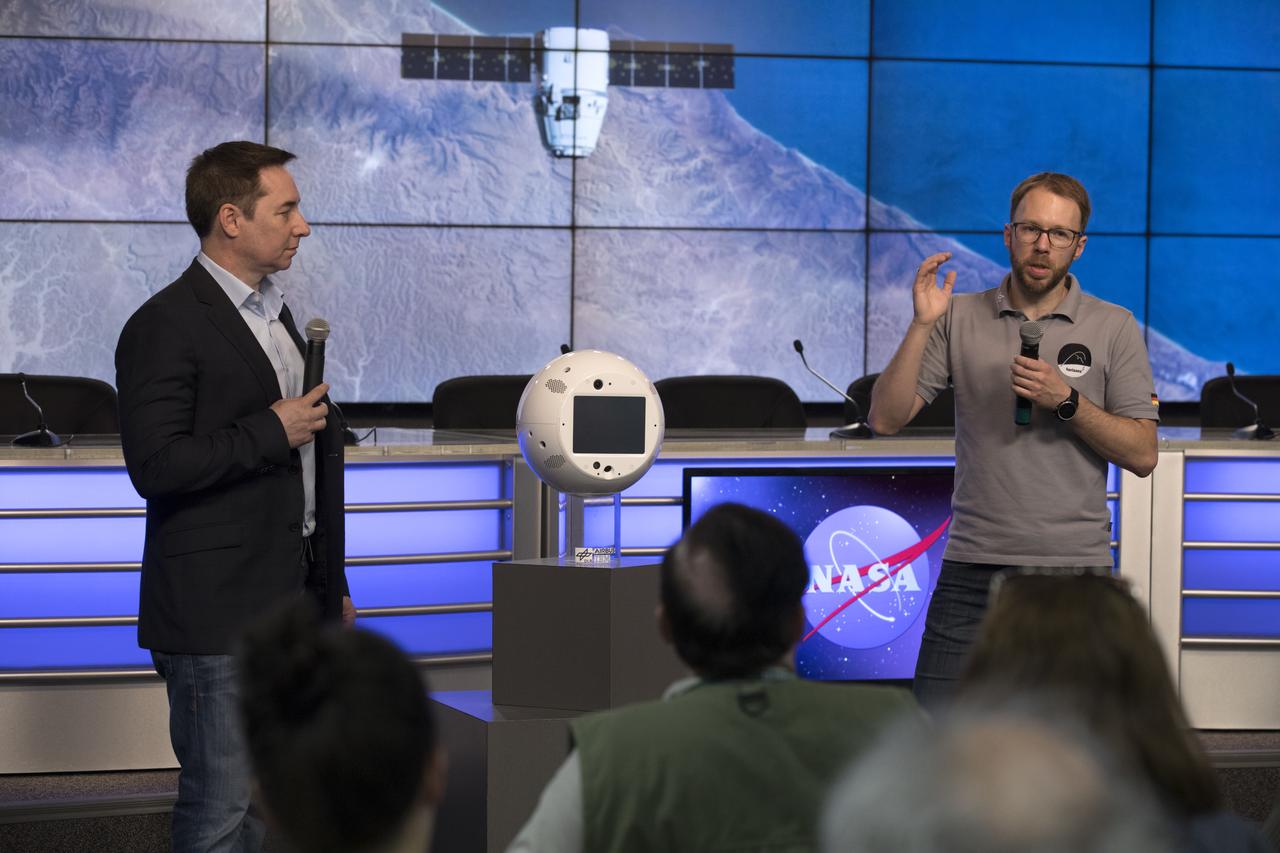
Members of the media are shown CIMON, an artificial intelligence system which will assist astronauts on the International Space Station, during a briefing in the Kennedy Space Center’s Press Site auditorium. From left are Bret Greenstein, IBM Global Vice President of Watson and IOT Offerings, and Christian Karrasch, German Space Agency project lead of CIMON. The briefing focused on research planned for launch to the space station. The scientific materials and supplies will be aboard a SpaceX Dragon spacecraft scheduled for liftoff from Cape Canaveral Air Force Station's Space Launch Complex 40. The SpaceX Falcon 9 rocket will launch the company's 15th Commercial Resupply Services mission to the space station.
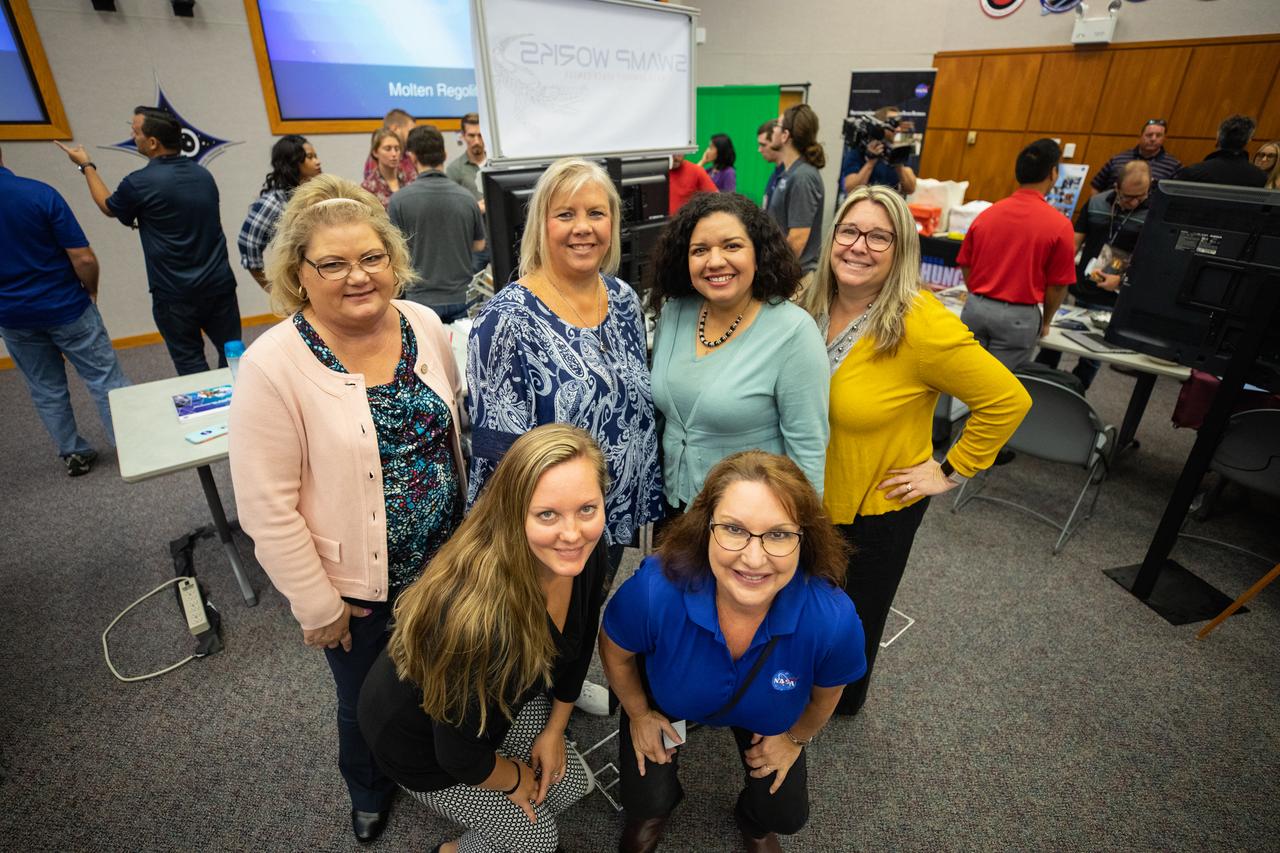
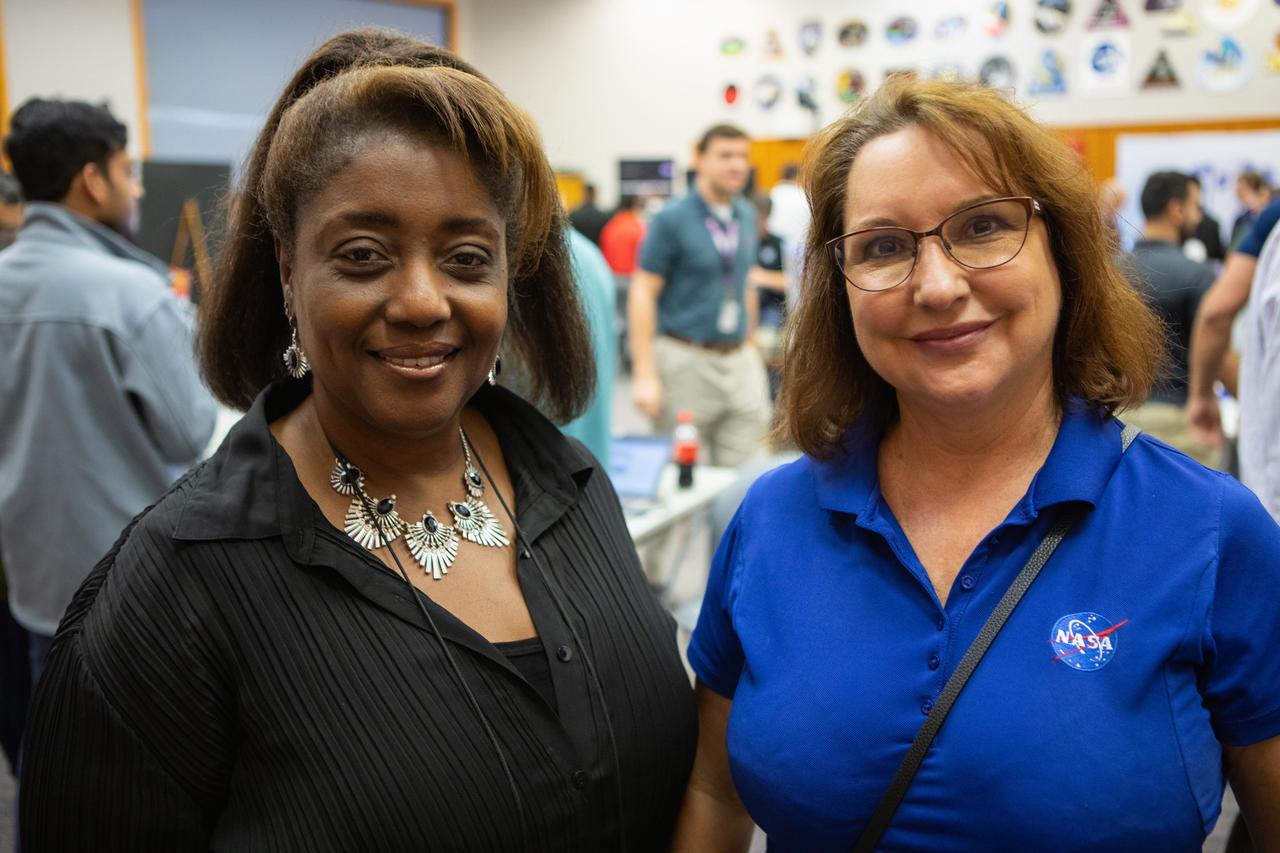
Kennedy Space Center employees are photographed at an innovation showcase, hosted by the Office of the Chief Technologist, on Nov. 19, 2019, in the Florida spaceport’s Neil Armstrong Operations and Checkout Building’s Mission Briefing Room. On the bottom right is Kathy Loftin, deputy chief technologist at Kennedy. Nearly 50 exhibitors gathered to participate in the center’s Innovation Days – one of several events throughout the year aimed at fostering and encouraging an innovative culture at Kennedy. Showcase participants included individuals from multiple directorates, programs and organizations throughout Kennedy. In addition to the showcase, employees had the opportunity to attend an overview presentation on NASA’s Human Landing System (HLS), hosted by HLS Program Manager Lisa Watson-Morgan.
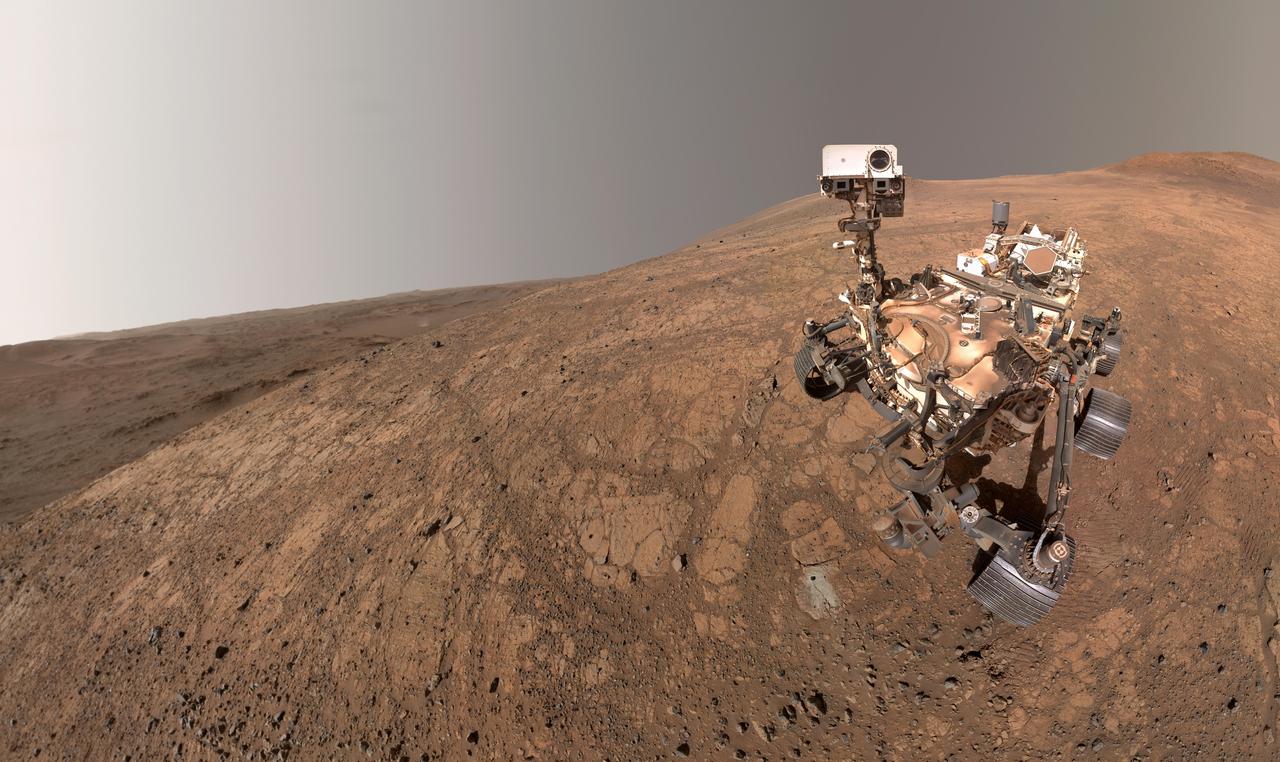
NASA's Perseverance rover took this selfie on May 10, 2025, marking its 1,500th Martian day, or sol, exploring the Red Planet. A dust devil twirls in the background, about 3 miles (5 kilometers) away, to the left of the rover. The small dark hole in the rock in front of the rover is the borehole made when Perseverance collected a sample dubbed "Bell Island." The selfie is composed of 59 images taken by the WATSON (Wide Angle Topographic Sensor for Operations and eNgineering) camera on the end of the rover's robotic arm. The images were stitched together after being sent back to Earth. The selfie was further processed to improve visual contrast and accentuate color differences. https://photojournal.jpl.nasa.gov/catalog/PIA26574
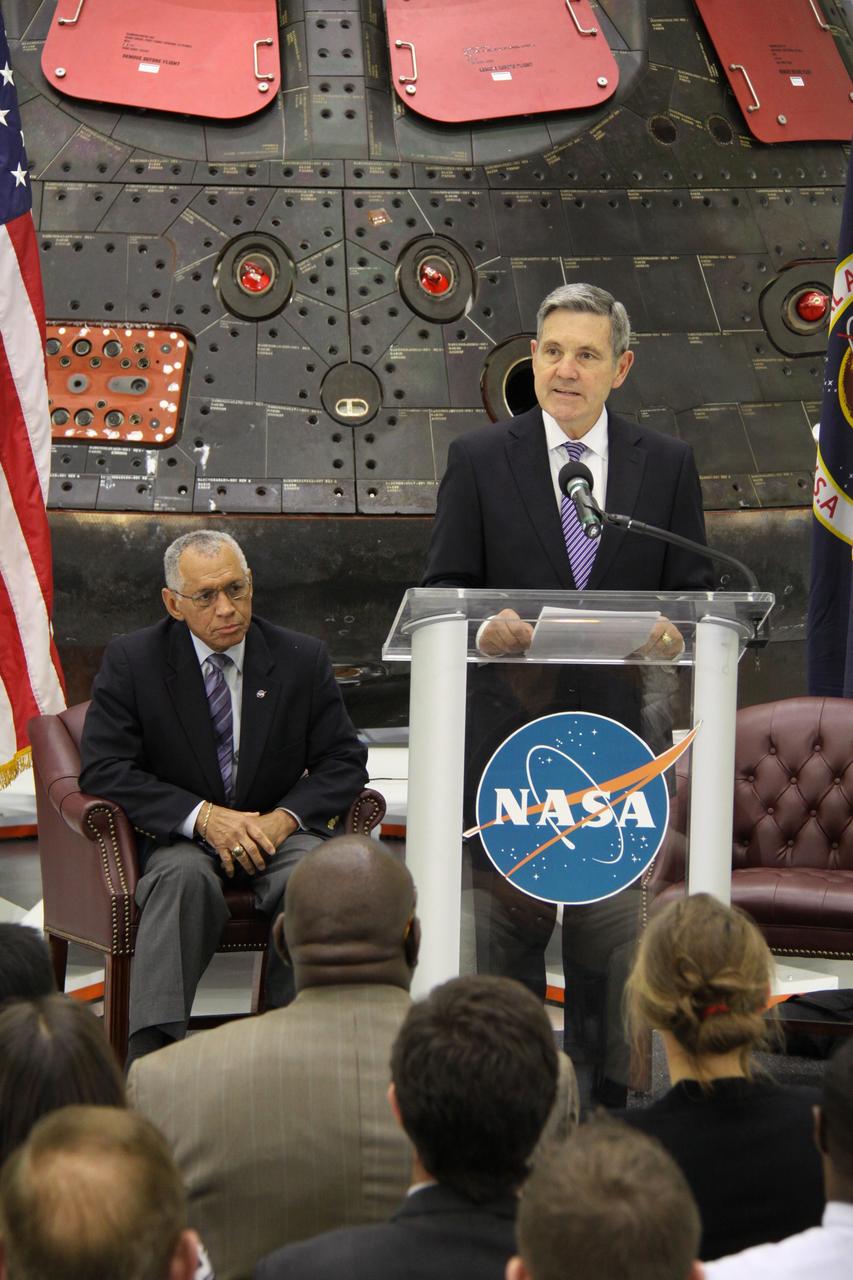
CAPE CANAVERAL, Fla. – In the Neil Armstrong Operations and Checkout Building high bay at NASA's Kennedy Space Center in Florida, Kennedy Space Center Director Bob Cabana introduces NASA Administrator Charlie Bolden, at left, who will deliver a “state of the agency” address at NASA's televised fiscal year 2016 budget rollout event. Representatives from the Kennedy workforce, news media and social media were in attendance. NASA's Orion, SpaceX Dragon and Boeing CST-100 spacecraft, all destined to play a role in NASA’s overall exploration objectives, were on display. For information on NASA's budget, visit http://www.nasa.gov/budget. Photo credit: NASA/Amber Watson

CAPE CANAVERAL, Fla. – In the Neil Armstrong Operations and Checkout Building high bay at NASA's Kennedy Space Center in Florida, NASA Administrator Charlie Bolden, left, and Kennedy Space Center Director Bob Cabana answer questions from the news media during NASA's televised fiscal year 2016 budget rollout event. NASA's Orion, SpaceX Dragon and Boeing CST-100 spacecraft, all destined to play a role in NASA’s overall exploration objectives, were on display. For information on NASA's budget, visit http://www.nasa.gov/budget. Photo credit: NASA/Amber Watson
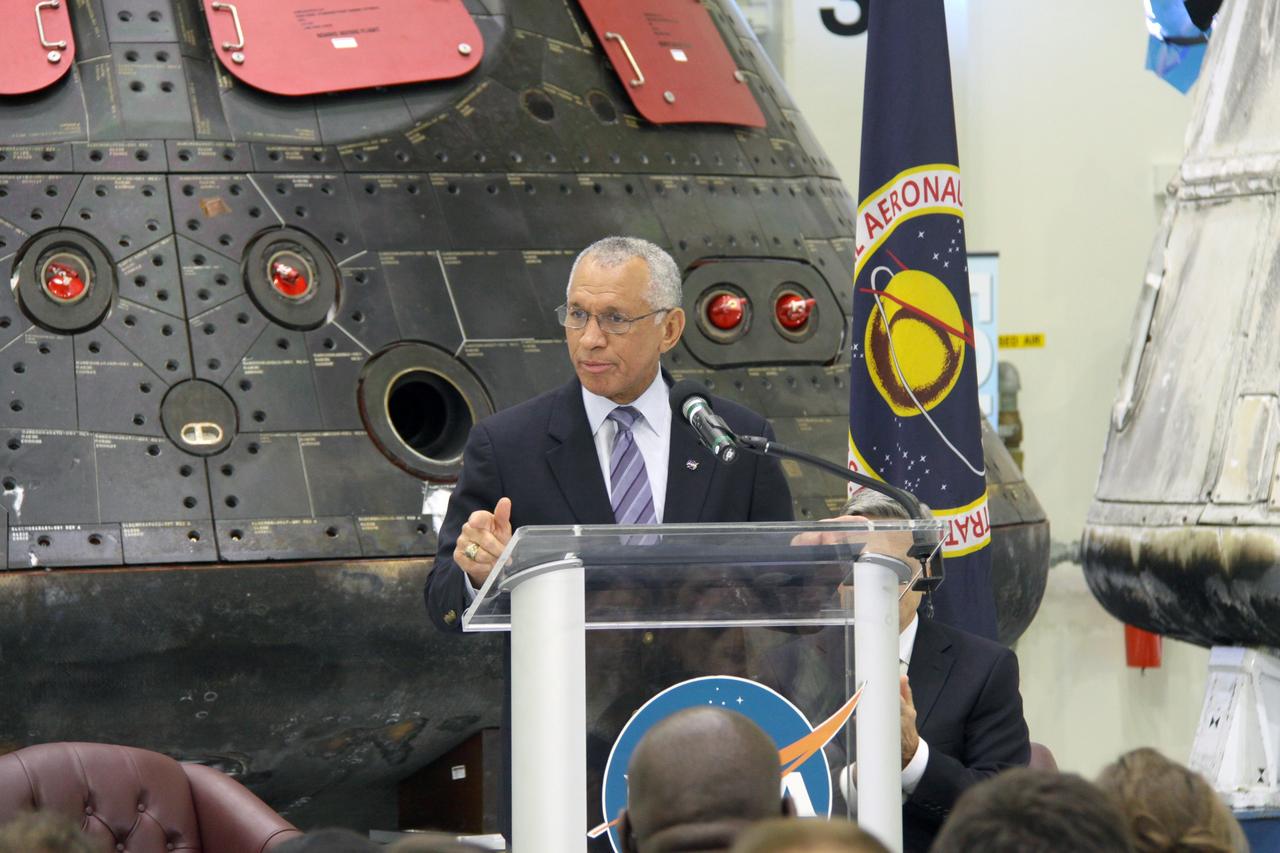
CAPE CANAVERAL, Fla. – In the Neil Armstrong Operations and Checkout Building high bay at NASA's Kennedy Space Center in Florida, NASA Administrator Charlie Bolden delivers a “state of the agency” address at NASA's televised fiscal year 2016 budget rollout event. Representatives from the Kennedy workforce, news media and social media were in attendance. NASA's Orion, SpaceX Dragon and Boeing CST-100 spacecraft, all destined to play a role in NASA’s overall exploration objectives, were on display. For information on NASA's budget, visit http://www.nasa.gov/budget. Photo credit: NASA/Amber Watson

QSRA (NASA 715) 400TH FLIGHT PARTICIPANTS. L-R: front row: Jim Ahlman, Bob Innis, Del Watson, Jim Lesko, Lee Mountz, Mike Herschel, Tom Kaisersatt, Jack Stephenson, Back row: Dennis Riddle, Neis Watz, Jack Franklin, Gordon Hardy, Bob Hinds, Charlie Hynes, Richard Young, Jim Martin, Joe Eppel, John White, Bob America, Hien Tran, Bill Bjorkman. Note: Used in publication in Flight Research at Ames; 57 Years of Development and Validation of Aeronautical Technology NASA SP-1998-3300 fig. 112
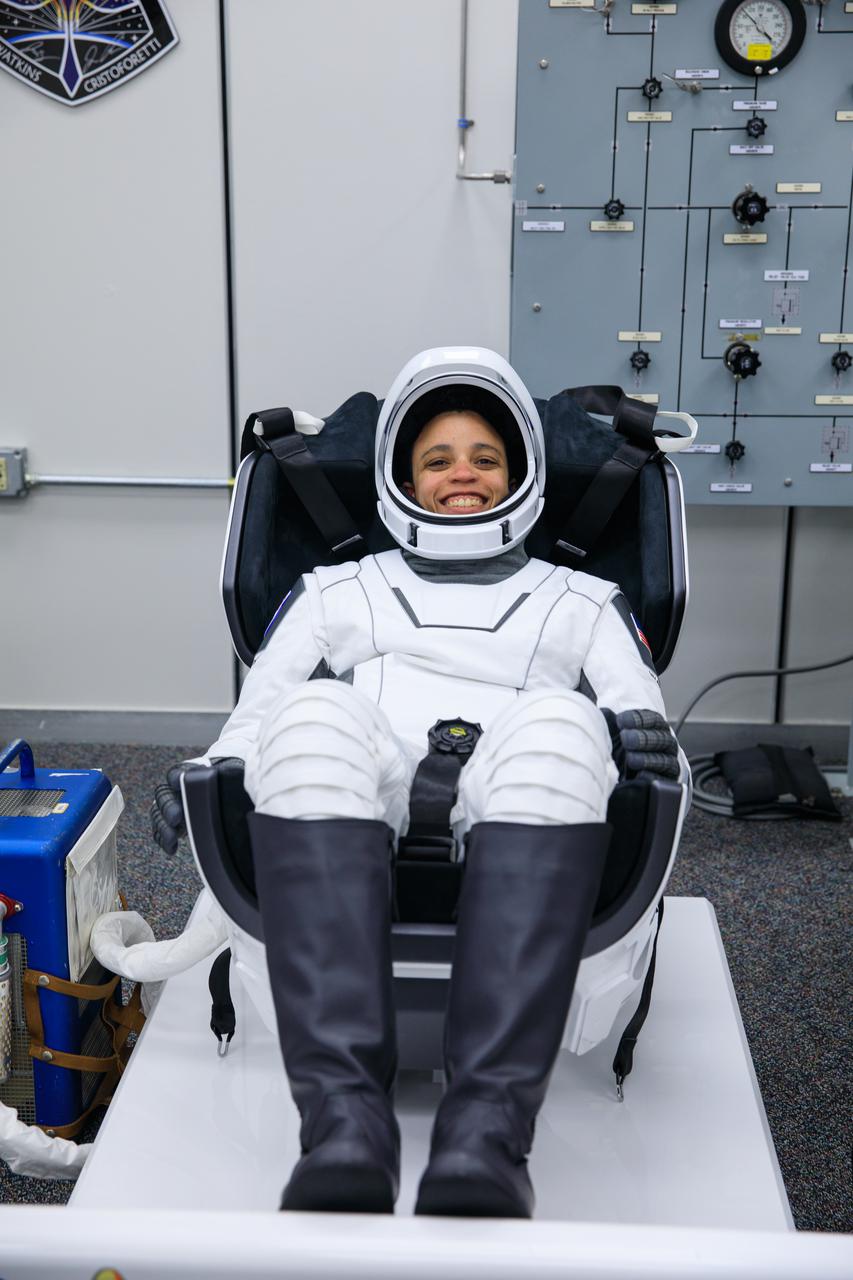
NASA astronaut Jessica Watkins smiles in the suit room inside Kennedy Space Center’s Neil A. Armstrong Operations and Checkout Building during NASA’s SpaceX Crew-4 dry dress rehearsal on April 20, 2022. Watson, along with fellow Crew-4 astronauts Kjell Lindgren, Bob Hines, and Samantha Cristoforetti, is scheduled to lift off from Kennedy’s Launch Complex 39A at 5:26 a.m. EDT on April 23, 2022. SpaceX’s Falcon 9 rocket and Crew Dragon, named Freedom by the Crew-4 crew, will launch the astronauts to the space station as part of NASA’s Commercial Crew Program.
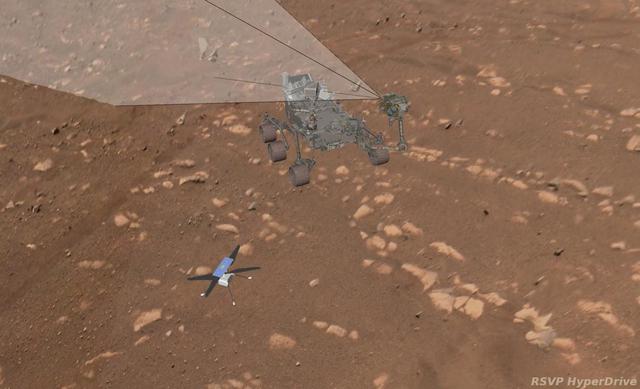
This animation shows a computer simulation of NASA's Perseverance Mars rover taking its first selfie. The point of view of the rover's WATSON (Wide Angle Topographic Sensor for Operations and eNgineering) camera is included to show how each of the 62 images were taken, which were later sent to Earth and stitched together into the selfie. The selfie was taken on April 6, 2021. A key objective for Perseverance's mission on Mars is astrobiology, including the search for signs of ancient microbial life. The rover will characterize the planet's geology and past climate, pave the way for human exploration of the Red Planet, and be the first mission to collect and cache Martian rock and regolith (broken rock and dust). Subsequent NASA missions, in cooperation with ESA (European Space Agency), would send spacecraft to Mars to collect these sealed samples from the surface and return them to Earth for in-depth analysis. The Mars 2020 Perseverance mission is part of NASA's Moon to Mars exploration approach, which includes Artemis missions to the Moon that will help prepare for human exploration of the Red Planet. Movie available at https://photojournal.jpl.nasa.gov/catalog/PIA24669
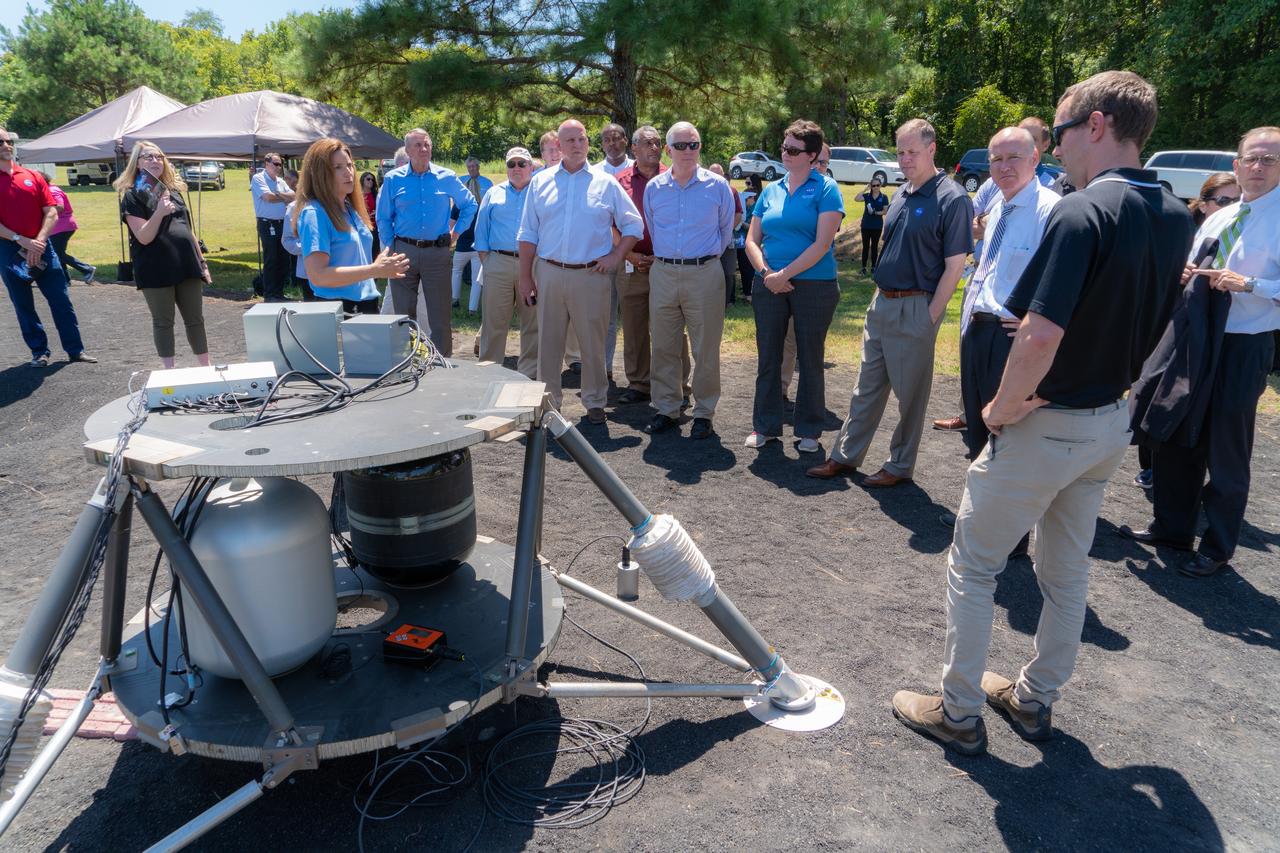
Lisa Watson-Morgan, center left, program manager of NASA’s Human Landing System Program at NASA’s Marshall Space Flight Center in Huntsville, Alabama, shows NASA Administrator Jim Bridenstine equipment used to test seismic sensors on a lunar lander platform on a simulated lunar surface at the center Aug. 16, 2019. Bridenstine was joined by Representatives Mo Brooks and Robert Aderholt of Alabama and Representative Scott DesJarlais of Tennessee. Planetary scientists performed the experiment to learn how these waves travel through simulated regolith, which is material similar to the Moon’s surface. The experiment will help guide instrument deployment scenarios for NASA’s Commercial Lunar Payload Service (CLPS) Program, delivering small science and technology payloads for Artemis. That same day, Bridenstine announced Marshall will lead the agency’s Human Landing System Program. (NASA/Fred Deaton) For more information: https://www.nasa.gov/artemis-1
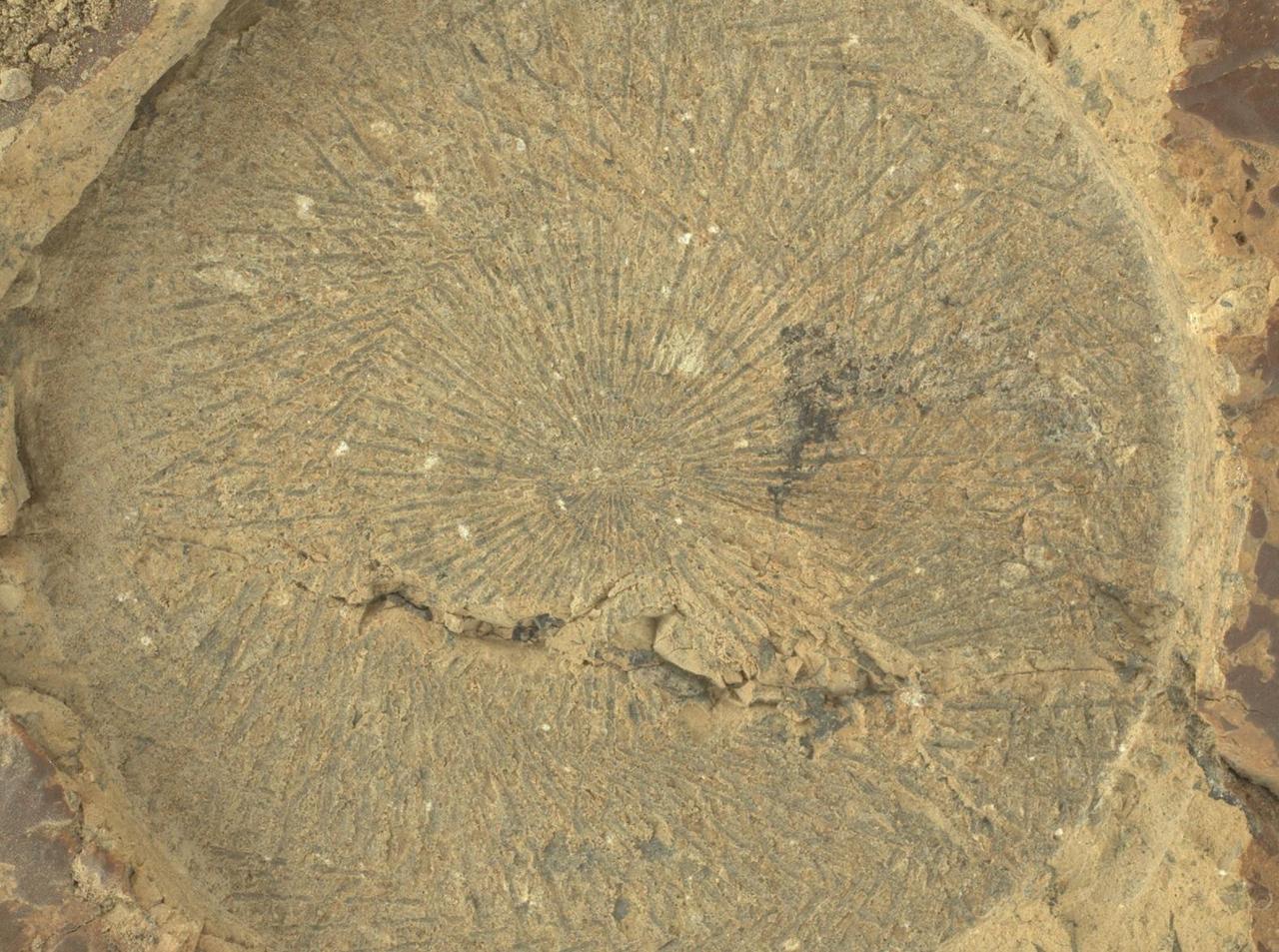
This close-up view of an abrasion made by NASA's Perseverance rover on June 5, 2025 (the 1,526th day, or sol, of its mission to Mars), shows distinctive "tool marks" formed as the abrasion bit interacted with the rock. These radiating patterns of lines tend to indicate that the rock is relatively hard. The image was taken from approximately 2.76 inches (7 centimeters) away by the rover's WATSON (Wide Angle Topographic Sensor for Operations and eNgineering) imager. A maroon-brown rock coating can be seen at the far edges and corners of the image. This coating was chipped off and removed within the area of the patch by the abrasion process. Most of the distinctive white, millimeter-sized grains set within a finer-grained gray matrix contain feldspar (an aluminum silicate mineral). The irregularly shaped dark patches in the upper right quadrant as well as those within the fracture that cuts through the lower half of the abrasion are composed chiefly of manganese and nickel. https://photojournal.jpl.nasa.gov/catalog/PIA26576

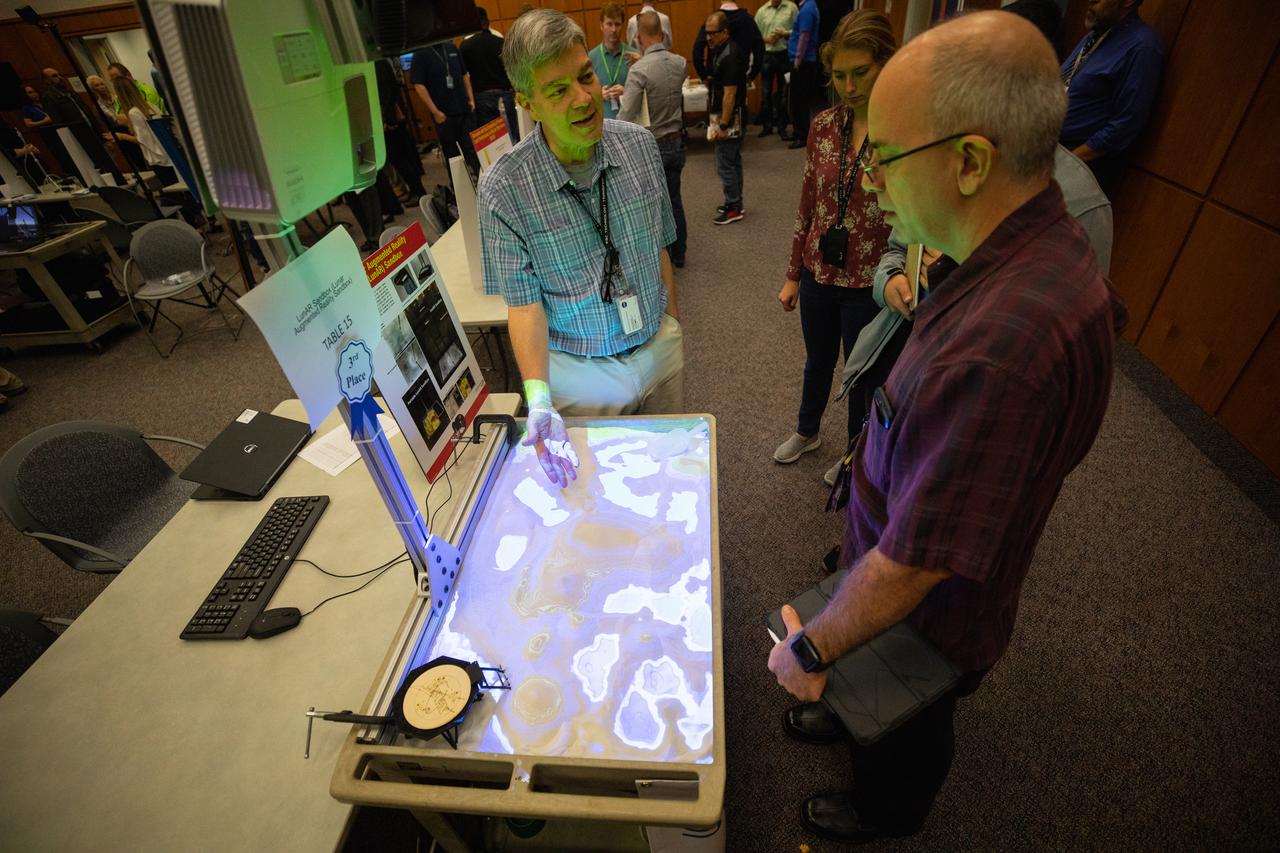
An interactive augmented reality sandbox, used by Swamp Works personnel to visually demonstrate the work being done in the Granular Mechanics and Regolith Operations laboratory at the Kennedy Space Center to produce high-fidelity models of rocket plume impingement on the lunar surface, is photographed during an innovation showcase on Nov. 19, 2019. Nearly 50 exhibitors gathered in the Florida spaceport’s Neil Armstrong Operations and Checkout Building’s Mission Briefing Room to participate in the center’s Innovation Days – one of several events throughout the year aimed at fostering an encouraging an innovative culture at Kennedy. Showcase participants included individuals from multiple directorates, programs and organizations throughout Kennedy. In addition to the showcase, employees had the opportunity to attend an overview presentation on NASA’s Human Landing System (HLS), hosted by HLS Program Manager Lisa Watson-Morgan.
Kennedy Space Center Chief Technologist Barbara Brown, left, and Deputy Chief Technologist Kathy Loftin are photographed during an innovation showcase on Nov. 19, 2019, in the Florida spaceport’s Neil Armstrong Operations and Checkout Building’s Mission Briefing Room. Nearly 50 exhibitors gathered to demonstrate new technologies and innovations during the center’s Innovation Days – one of several events throughout the year aimed at fostering and encouraging an innovative culture at Kennedy. Showcase participants included individuals from multiple directorates, programs and organizations throughout Kennedy. In addition to the showcase, employees had the opportunity to attend an overview presentation on NASA’s Human Landing System (HLS), hosted by HLS Program Manager Lisa Watson-Morgan.
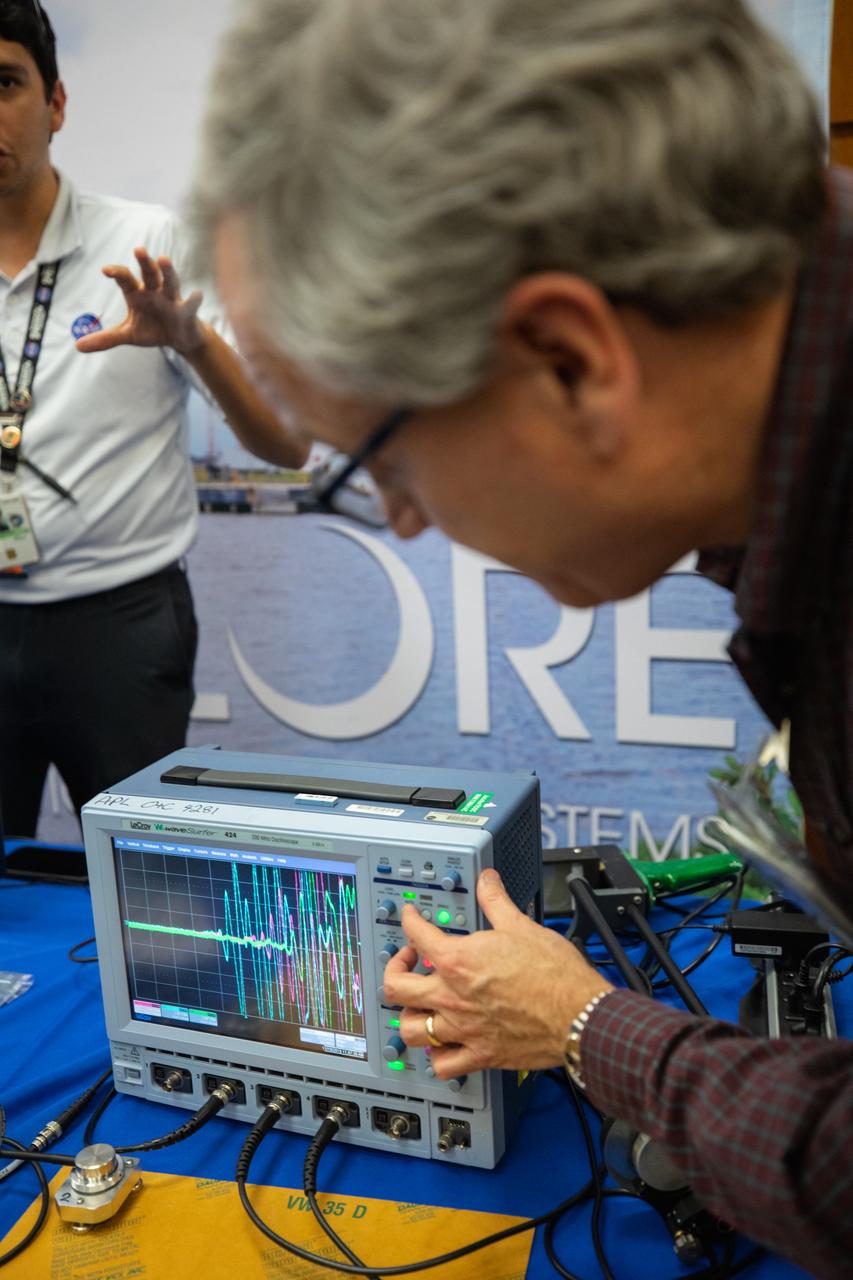
Applied Physics Laboratory Lead Physicist Dr. Bob Youngquist demonstrates technology recently used to resolve a technical challenge at Kennedy Space Center during an innovation showcase on Nov. 19, 2019, in the Florida spaceport’s Neil Armstrong Operations and Checkout Building’s Mission Briefing Room. Nearly 50 exhibitors gathered to participate in the center’s Innovation Days – one of several events throughout the year aimed at fostering and encouraging an innovative culture at Kennedy. Showcase participants included individuals from multiple directorates, programs and organizations throughout Kennedy. In addition to the showcase, employees had the opportunity to attend an overview presentation on NASA’s Human Landing System (HLS), hosted by HLS Program Manager Lisa Watson-Morgan.
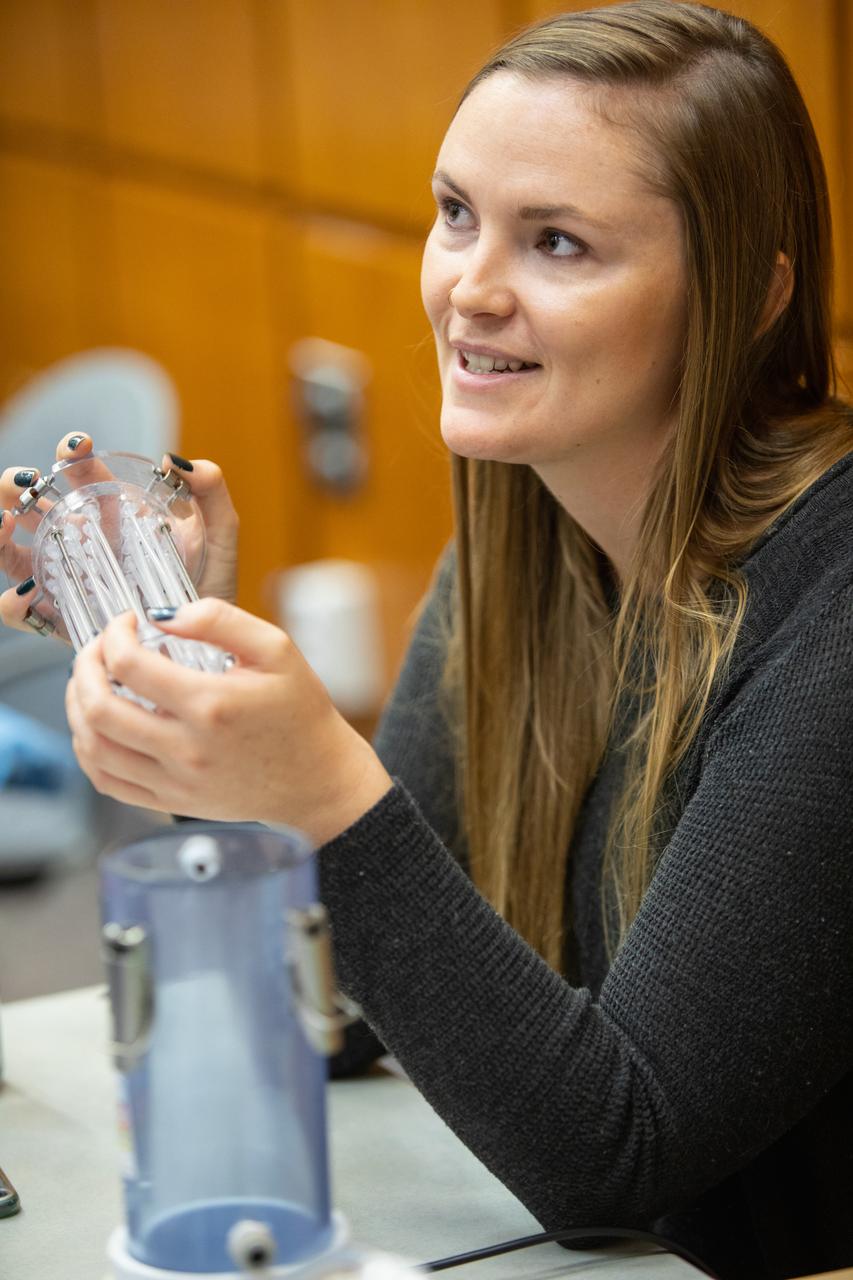
Melanie Pickett, a post-doctorate researcher at NASA’s Kennedy Space Center in Florida, participates in an innovation showcase on Nov. 19, 2019, in the Neil Armstrong Operations and Checkout Building’s Mission Briefing Room. A first-time participant, Pickett presented information on an Algae Membrane Photobioreactor she and others are developing that would eliminate the need for sending water treated with toxic chemicals – currently used to break down urine – to the International Space Station. Nearly 50 exhibitors gathered to demonstrate new technologies and innovations during the center’s Innovation Days – one of several events throughout the year aimed at fostering and encouraging an innovative culture at Kennedy. Showcase participants included individuals from multiple directorates, programs and organizations throughout Kennedy. In addition to the showcase, employees had the opportunity to attend an overview presentation on NASA’s Human Landing System (HLS), hosted by HLS Program Manager Lisa Watson-Morgan.

MANNED SPACECRAFT SIMULATION BRANCH PERSONNEL - Top row, L-R: Henry C. Lessing, Dallas G. Denery, Richard Acken, Robert E. Coate. Secon row, L-R: Frederick W. Boltz, Kenneth C. White, Gordon H. Hardy, Donald W. Smith. Third row, L-R: Rodney C. Wingrove, Bedford A. Lampkin, Armando E. Lopez, DeLamar W. Watson. Bottom row, L-R: Richard L. Kurkowski, Michele H. Hilliard, Brent Y. Creer, Grace M. Webster, Frederick G. Edwards. Note: Used in publication in Flight Research at Ames; 57 Years of Development and Validation of Aeronautical Technology NASA SP-1998-3300 fig 90
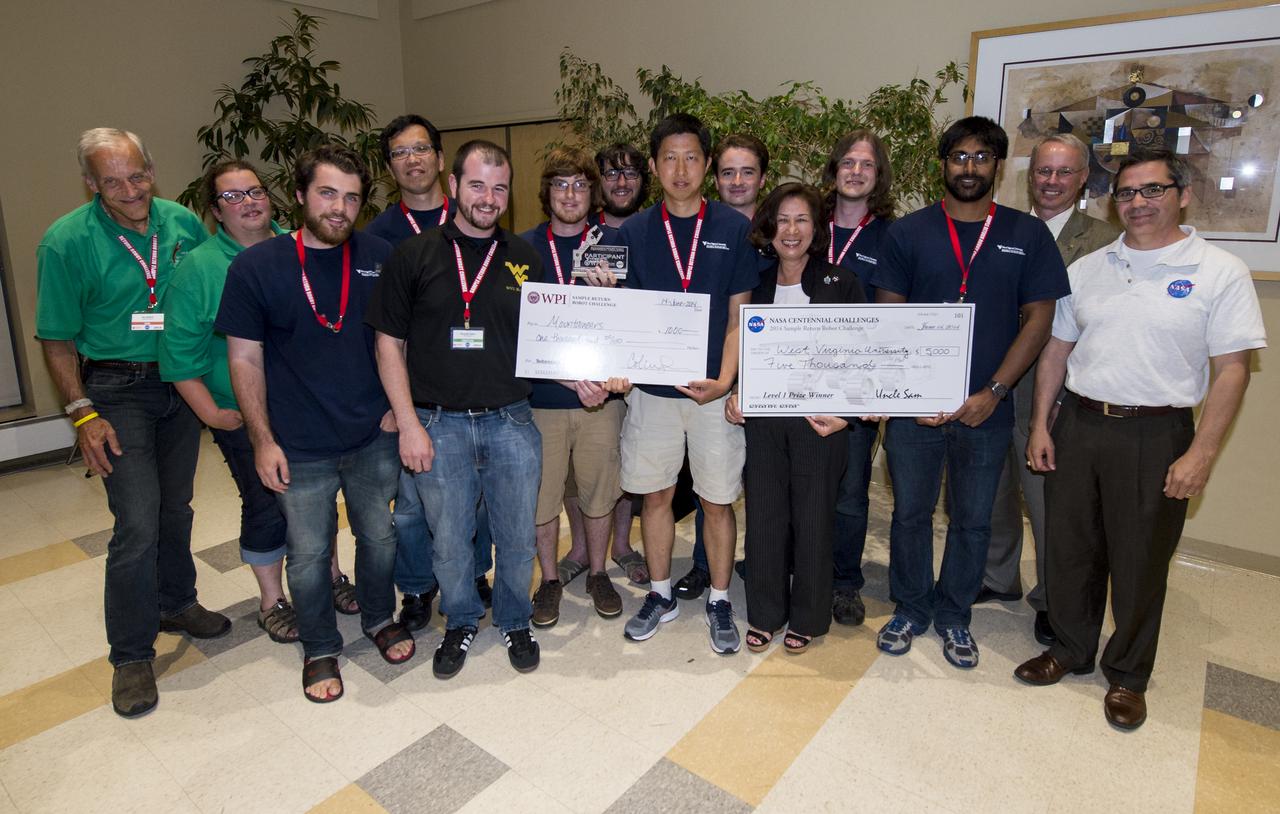
The NASA Centennial Challenges prize, level one, is presented to team Mountaineers for successfully completing level one of the NASA 2014 Sample Return Robot Challenge, from left, Ken Stafford, WPI Challenge technical advisor; Colleen Shaver, WPI Challenge Manager; Ryan Watson, Team Mountaineers; Marvin Cheng, Team Mountaineers; Alexander Hypes, Team Mountaineers; Jarred Strader, Team Mountaineers; Lucas Behrens, Team Mountaineers; Yu Gu, Team Mountaineers; Nick Ohi, Team Mountaineers; Dorothy Rasco, NASA Deputy Associate Administrator for the Space Technology Mission Directorate; Scott Harper, Team Mountaineers; Tanmay Mandal, Team Mountaineers; David Miller, NASA Chief Technologist; Sam Ortega, NASA Program Manager for Centennial Challenges, Saturday, June 14, 2014, at Worcester Polytechnic Institute (WPI) in Worcester, Mass. Team Mountaineers was the only team to complete the level one challenge. During the competition, teams were required to demonstrate autonomous robots that can locate and collect samples from a wide and varied terrain, operating without human control. The objective of this NASA-WPI Centennial Challenge was to encourage innovations in autonomous navigation and robotics technologies. Innovations stemming from the challenge may improve NASA's capability to explore a variety of destinations in space, as well as enhance the nation's robotic technology for use in industries and applications on Earth. Photo Credit: (NASA/Joel Kowsky)
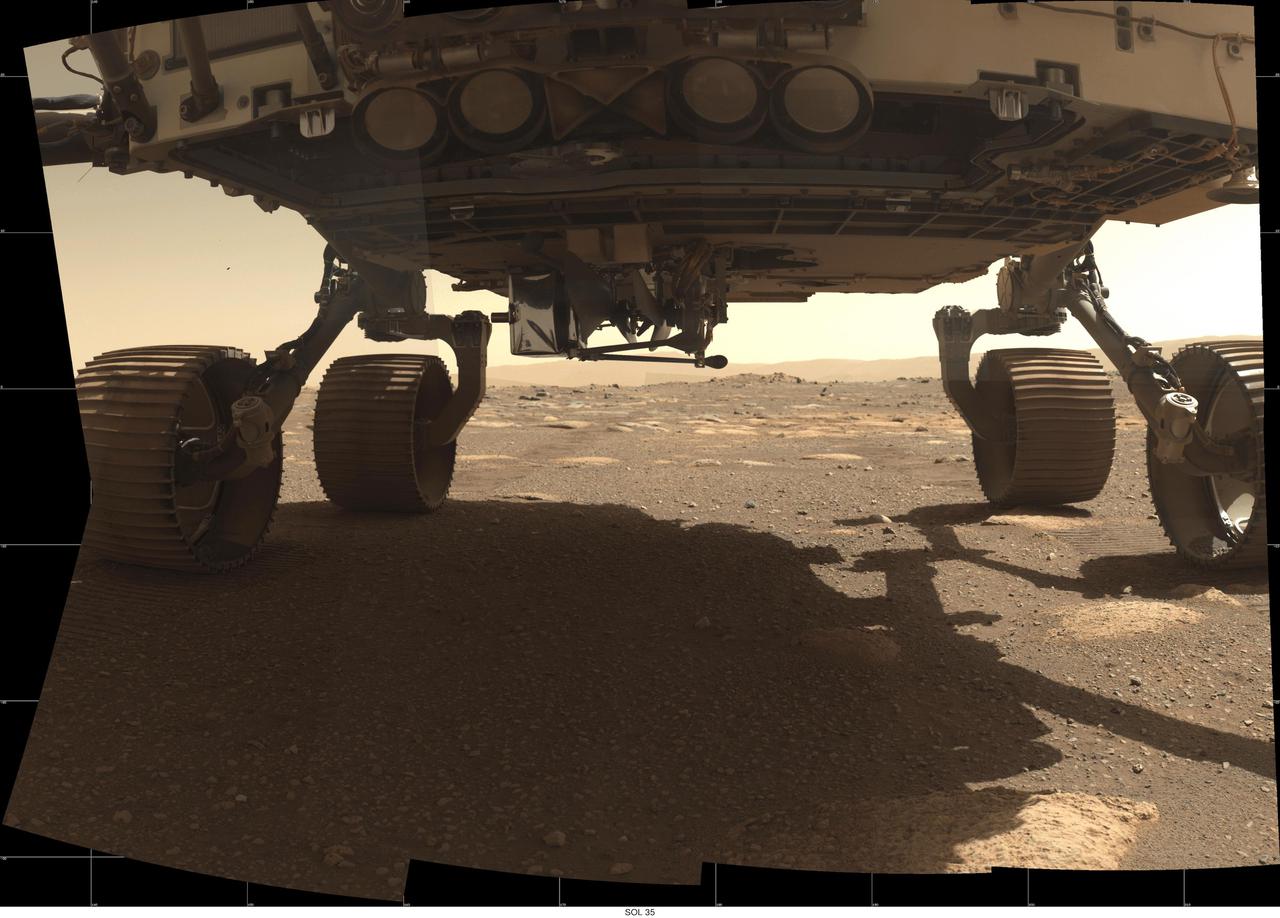
This animation shows each step of the Ingenuity helicopter deploying from the belly of NASA's Perseverance Mars rover from March 26 to April 3, 2021. The final image shows the helicopter on the ground after the rover drove about 13 feet (4 meters) away. These images were taken by the WATSON (Wide Angle Topographic Sensor for Operations and eNgineering) camera on the SHERLOC (Scanning Habitable Environments with Raman and Luminescence for Organics and Chemicals) instrument, located at the end of the rover's long robotic arm. NASA's Jet Propulsion Laboratory built and manages operations of Perseverance and Ingenuity for the agency. Caltech in Pasadena, California, manages JPL for NASA. WATSON was built by Malin Space Science Systems (MSSS) in San Diego and is operated jointly by MSSS and JPL. The Mars helicopter technology demonstration activity is supported by NASA's Science Mission Directorate, the NASA Aeronautics Research Mission Directorate, and the NASA Space Technology Mission Directorate. A key objective for Perseverance's mission on Mars is astrobiology, including the search for signs of ancient microbial life. The rover will characterize the planet's geology and past climate, pave the way for human exploration of the Red Planet, and be the first mission to collect and cache Martian rock and regolith (broken rock and dust). Subsequent NASA missions, in cooperation with ESA (European Space Agency), would send spacecraft to Mars to collect these sealed samples from the surface and return them to Earth for in-depth analysis. The Mars 2020 Perseverance mission is part of NASA's Moon to Mars exploration approach, which includes Artemis missions to the Moon that will help prepare for human exploration of the Red Planet. Animation available at https://photojournal.jpl.nasa.gov/catalog/PIA24548
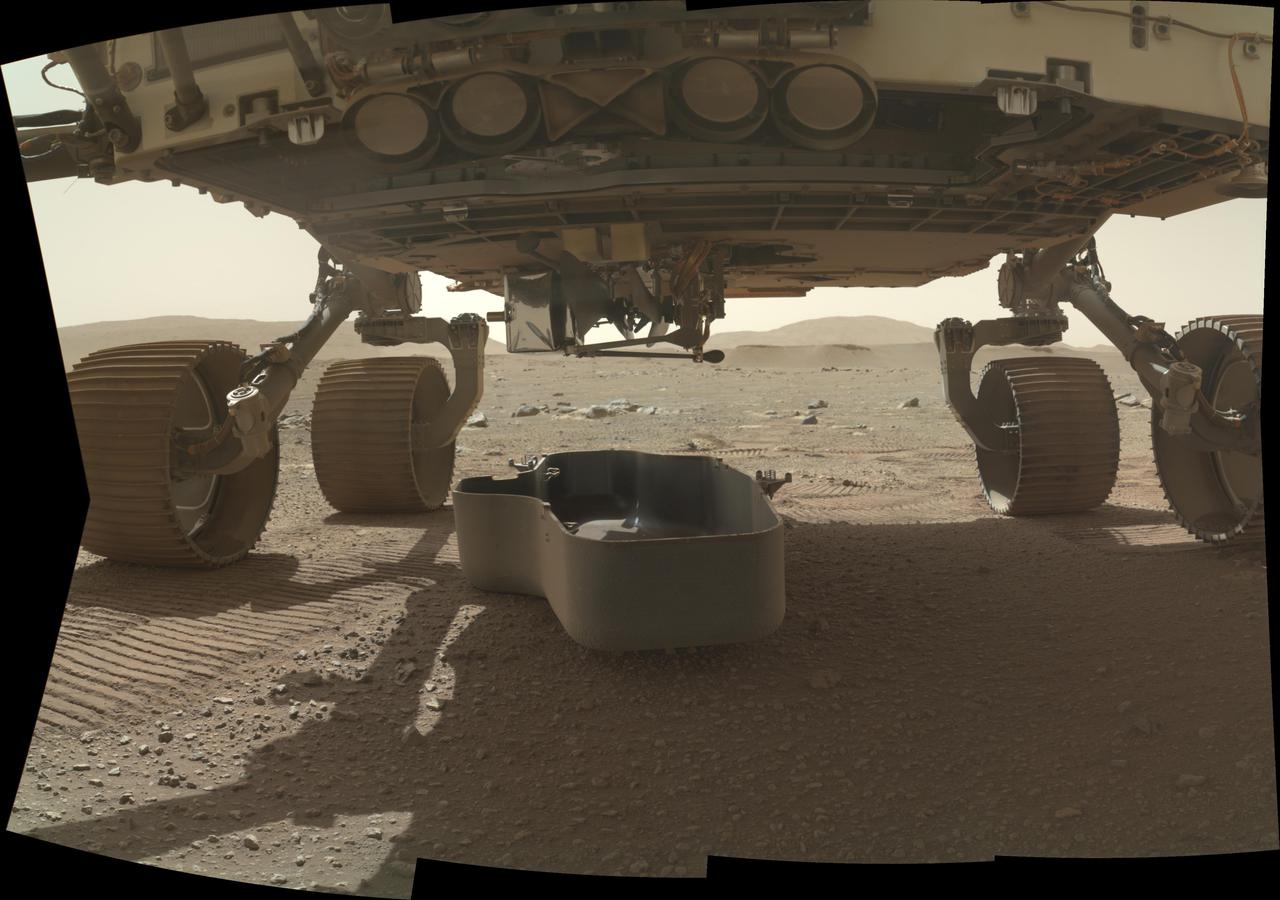
The debris shield, a protective covering on the bottom of NASA's Perseverance rover, was released on March 21, 2021, the 30th Martian day, or sol, of the mission. The debris shield protects the agency's Ingenuity helicopter during landing; releasing it allows the helicopter to rotate down out of the rover's belly. This image was taken by the WATSON (Wide Angle Topographic Sensor for Operations and eNgineering) camera on the SHERLOC (Scanning Habitable Environments with Raman and Luminescence for Organics and Chemicals) instrument, located at the end of the rover's long robotic arm. NASA's Jet Propulsion Laboratory built and manages operations of Perseverance and Ingenuity for the agency. Caltech in Pasadena, California, manages JPL for NASA. WATSON was built by Malin Space Science Systems in San Diego, and is operated jointly by MSSS and JPL. The Mars helicopter technology demonstration activity is supported by NASA's Science Mission Directorate, the NASA Aeronautics Research Mission Directorate, and the NASA Space Technology Mission Directorate. A key objective for Perseverance's mission on Mars is astrobiology, including the search for signs of ancient microbial life. The rover will characterize the planet's geology and past climate, pave the way for human exploration of the Red Planet, and be the first mission to collect and cache Martian rock and regolith (broken rock and dust). Subsequent NASA missions, in cooperation with ESA (European Space Agency), would send spacecraft to Mars to collect these sealed samples from the surface and return them to Earth for in-depth analysis. The Mars 2020 Perseverance mission is part of NASA's Moon to Mars exploration approach, which includes Artemis missions to the Moon that will help prepare for human exploration of the Red Planet. Animation available at https://photojournal.jpl.nasa.gov/catalog/PIA24448
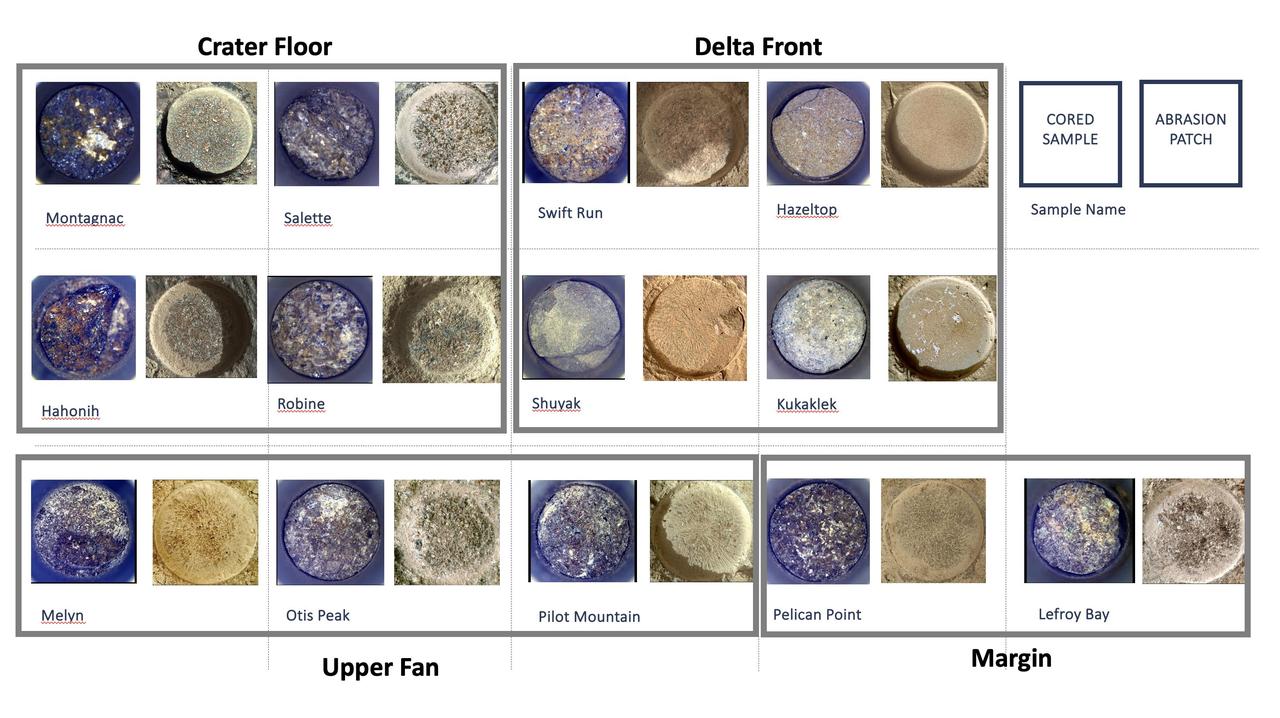
Shown here is an annotated representation of the 13 sample tubes containing rock-core samples that are being carried aboard NASA's Perseverance rover as of Dec. 12, 2023, when the mission was marking its 1,000th Martian day, or sol, on the Red Planet. To the right of each sample is the associated abrasion patch that was created at the same location where the core was extracted. The images of the samples and patches are grouped into gray boxes labeled with the name of the four rover science campaigns during which they were collected, from initial campaign to current: Crater Floor, Delta Front, Upper Fan, and Margin. The images of the cored samples were collected by the Sampling and Caching System Camera (known as CacheCam). Directly below each image of a cored sample is its name, as chosen by the Perseverance science team. The images of the abrasion patches were collected by the WATSON (Wide Angle Topographic Sensor for Operations and eNgineering) camera on the SHERLOC (Scanning Habitable Environments with Raman & Luminescence for Organics & Chemicals) instrument. WATSON is located at the end of Perseverance's robotic arm, and takes images from about 3 inches (7 centimeters) away from each rock surface. Perseverance abrades rocks using a tool on the robotic arm in order to clear away dust and any surface weathering or coatings. Then other instruments analyze the abraded patch to determine if scientists want to collect a sample from the rock. Each abraded patch is 2 inches (5 centimeters) in diameter. A key objective for Perseverance's mission on Mars is astrobiology, including the search for signs of ancient microbial life. The rover will characterize the planet's geology and past climate, pave the way for human exploration of the Red Planet, and be the first mission to collect and cache Martian rock and regolith (broken rock and dust). Subsequent NASA missions, in cooperation with ESA (European Space Agency), would send spacecraft to Mars to collect these sealed samples from the surface and return them to Earth for in-depth analysis. The Mars 2020 Perseverance mission is part of NASA's Moon to Mars exploration approach, which includes Artemis missions to the Moon that will help prepare for human exploration of the Red Planet. https://photojournal.jpl.nasa.gov/catalog/PIA26232
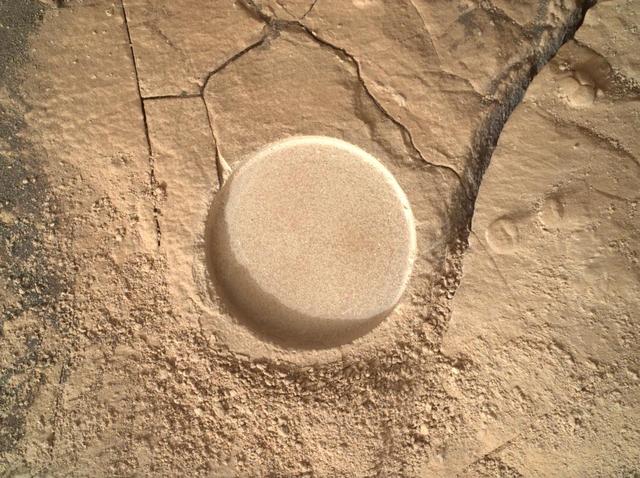
This video from NASA's Perseverance rover shows increasingly close views of an abraded rock at "Wildcat Ridge" in Mars' Jezero Crater, an area scientists consider one of the best places to search for signs of ancient microbial life. The images were taken by the cameras on the SHERLOC (Scanning Habitable Environments with Raman and Luminescence for Organics and Minerals) instrument at the end of Perseverance's robotic arm. The clip is a collection of six images taken on July 21 and 22, 2022, the 504th and 505th Martian day, or sol, of the mission. The first five images were taken by the Wide Angle Topographic Sensor for Operations and eNgineering (WATSON) camera. The final image, which is colorized, was created by combining images from WATSON and the Autofocus and Context Imager (ACI) camera. The team uses the SHERLOC instrument to see how light interacts with the rock surface, revealing different components in the rock, including chemicals, minerals, and organic matter. By putting together the image and spectral information the instrument collects, SHERLOC can help scientists understand where organics and minerals are in the rock, and select samples for return to Earth. The verification of ancient life on Mars carries an enormous burden of proof. A key objective for Perseverance's mission on Mars is astrobiology, including the search for signs of ancient microbial life. The rover will characterize the planet's geology and past climate, pave the way for human exploration of the Red Planet, and be the first mission to collect and cache Martian rock and regolith (broken rock and dust). Subsequent NASA missions, in cooperation with ESA (European Space Agency), would send spacecraft to Mars to collect these sealed samples from the surface and return them to Earth for in-depth analysis. The Mars 2020 Perseverance mission is part of NASA's Moon to Mars exploration approach, which includes Artemis missions to the Moon that will help prepare for human exploration of the Red Planet. Movie available at https://photojournal.jpl.nasa.gov/catalog/PIA25246
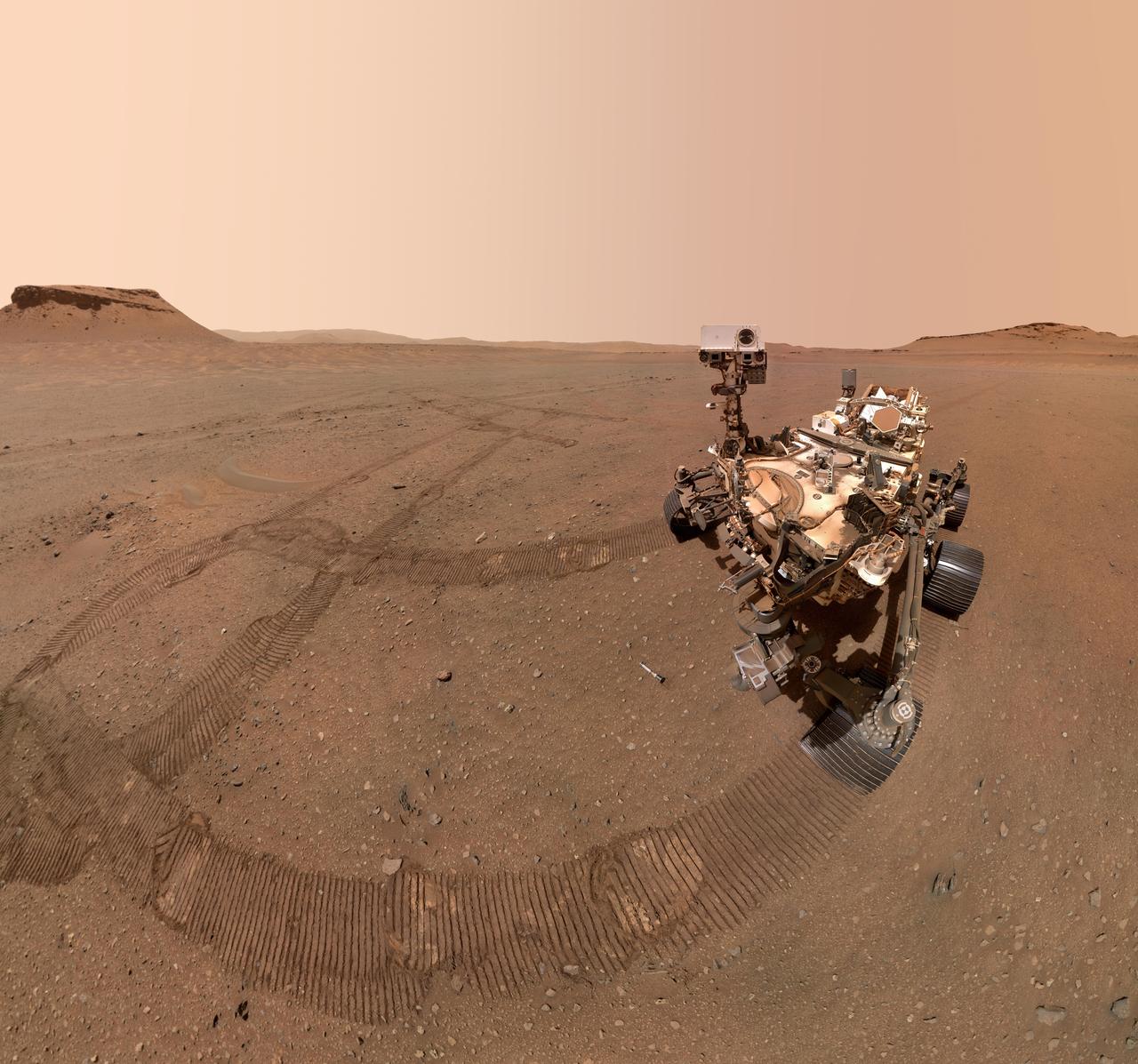
NASA's Perseverance Mars rover took a selfie with several of the 10 sample tubes it deposited at a sample depot it is creating within an area of Jezero Crater nicknamed "Three Forks." The image was taken by the WATSON (Wide Angle Topographic Sensor for Operations and eNgineering) camera on the end of the rover's robotic arm on Jan. 22, 2023, the 684th Martian day, or sol, of the mission. The ninth tube dropped during the construction of the depot, containing the sample the science team refers to as "Atsah," can be seen in front of the rover. Other sample tubes are visible in the background. In an animated GIF, the rover looks down at the "Atsah" sample then back at the camera. The selfie is composed of 59 individual WATSON images that were stitched together once they were sent back to Earth. The Curiosity rover takes similar selfies using a camera on its robotic arm; videos explaining how the rovers take their selfies can be found here. The depot marks a crucial milestone in the NASA-ESA (European Space Agency) Mars Sample Return campaign that aims to bring Mars samples to Earth for closer study. The depot will serve as a backup if Perseverance can't deliver its samples to a future robotic lander. A key objective for Perseverance's mission on Mars is astrobiology, including the search for signs of ancient microbial life. The rover will characterize the planet's geology and past climate, pave the way for human exploration of the Red Planet, and be the first mission to collect and cache Martian rock and regolith (broken rock and dust). Subsequent NASA missions, in cooperation with ESA (European Space Agency), would send spacecraft to Mars to collect these sealed samples from the surface and return them to Earth for in-depth analysis. The Mars 2020 Perseverance mission is part of NASA's Moon to Mars exploration approach, which includes Artemis missions to the Moon that will help prepare for human exploration of the Red Planet. Animation available at https://photojournal.jpl.nasa.gov/catalog/PIA25681
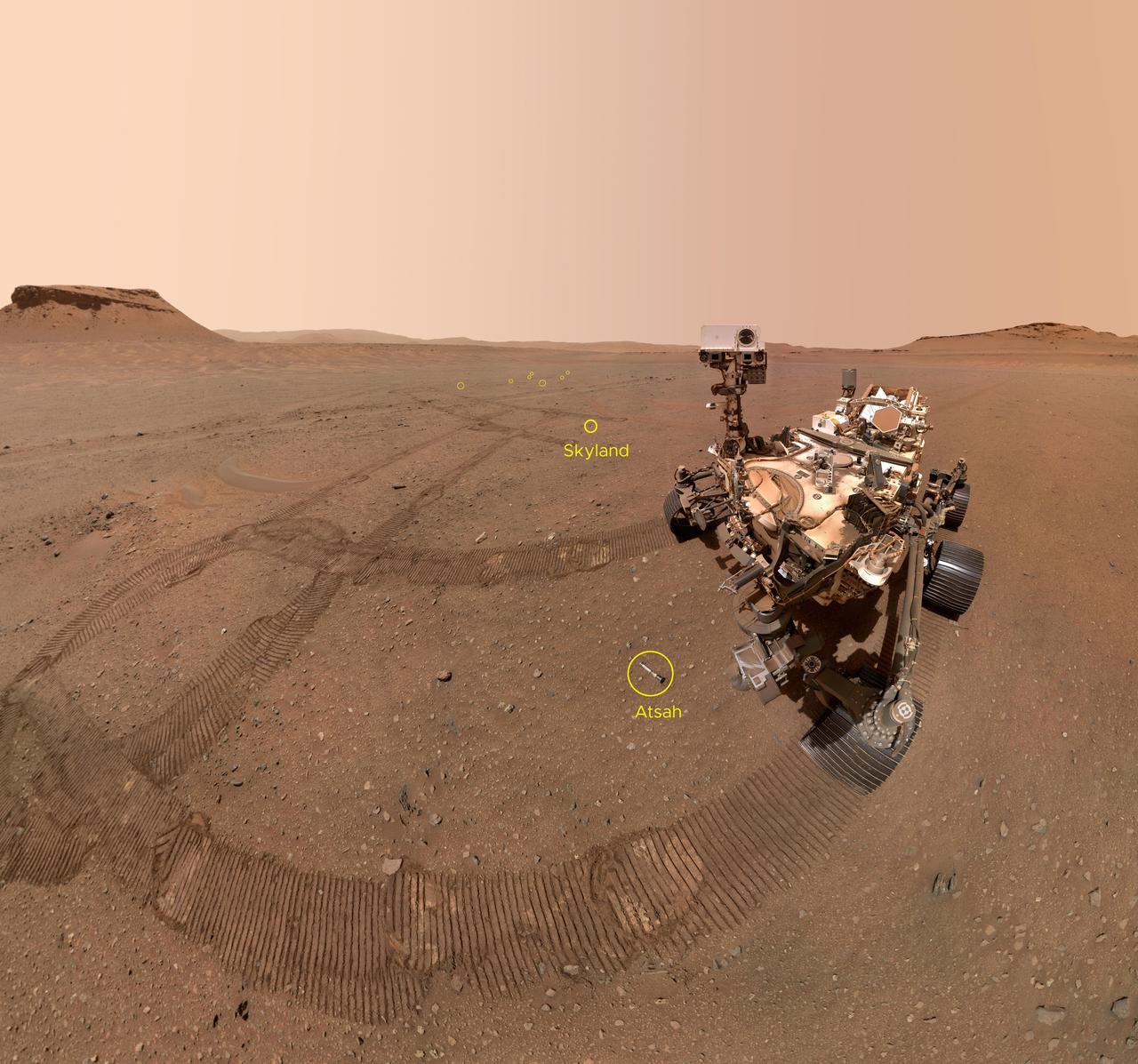
NASA's Perseverance Mars rover took a selfie with nine of the 10 sample tubes it deposited at a sample depot created within an area of Jezero Crater nicknamed "Three Forks." This annotated version of the selfie points out the estimated locations of those nine tubes. The ninth tube dropped during the construction of the depot, containing the sample the science team refers to as "Atsah," can be seen in front of the rover. Other sample tubes are visible in the background, including "Skyland," which is labeled. The image was taken by the WATSON (Wide Angle Topographic Sensor for Operations and eNgineering) camera on the end of the rover's robotic arm on Jan. 22, 2023, the 684th Martian day, or sol, of the mission. The selfie is composed of 59 individual WATSON images that were stitched together once they were sent back to Earth. The Curiosity rover takes similar selfies using a camera on its robotic arm; videos explaining how the rovers take their selfies can be found here. The depot marks a crucial milestone in the NASA-ESA (European Space Agency) Mars Sample Return campaign that aims to bring Mars samples to Earth for closer study. The depot – completed when the 10th tube was dropped on Jan. 29, 2023 – will serve as a backup if Perseverance can't deliver its samples to a future robotic lander. A key objective for Perseverance's mission on Mars is astrobiology, including the search for signs of ancient microbial life. The rover will characterize the planet's geology and past climate, pave the way for human exploration of the Red Planet, and be the first mission to collect and cache Martian rock and regolith (broken rock and dust). Subsequent NASA missions, in cooperation with ESA (European Space Agency), would send spacecraft to Mars to collect these sealed samples from the surface and return them to Earth for in-depth analysis. The Mars 2020 Perseverance mission is part of NASA's Moon to Mars exploration approach, which includes Artemis missions to the Moon that will help prepare for human exploration of the Red Planet. https://photojournal.jpl.nasa.gov/catalog/PIA25735
Melanie Pickett, right, a post-doctorate researcher at NASA’s Kennedy Space Center in Florida, speaks to Center Director Bob Cabana about an Algae Membrane Photobioreactor she and others are working on developing during an innovation showcase on Nov. 19, 2019, in the Neil Armstrong Operations and Checkout Building’s Mission Briefing Room. The bioreactor device would eliminate the need for sending pre-treated water – currently used to break down urine – to the International Space Station, reducing the amount of human exposure to toxic chemicals. Nearly 50 exhibitors gathered to demonstrate new technologies and innovations during the center’s Innovation Days – one of several events throughout the year aimed at fostering and encouraging an innovative culture at Kennedy. Showcase participants included individuals from multiple directorates, programs and organizations throughout Kennedy. In addition to the showcase, employees had the opportunity to attend an overview presentation on NASA’s Human Landing System (HLS), hosted by HLS Program Manager Lisa Watson-Morgan.
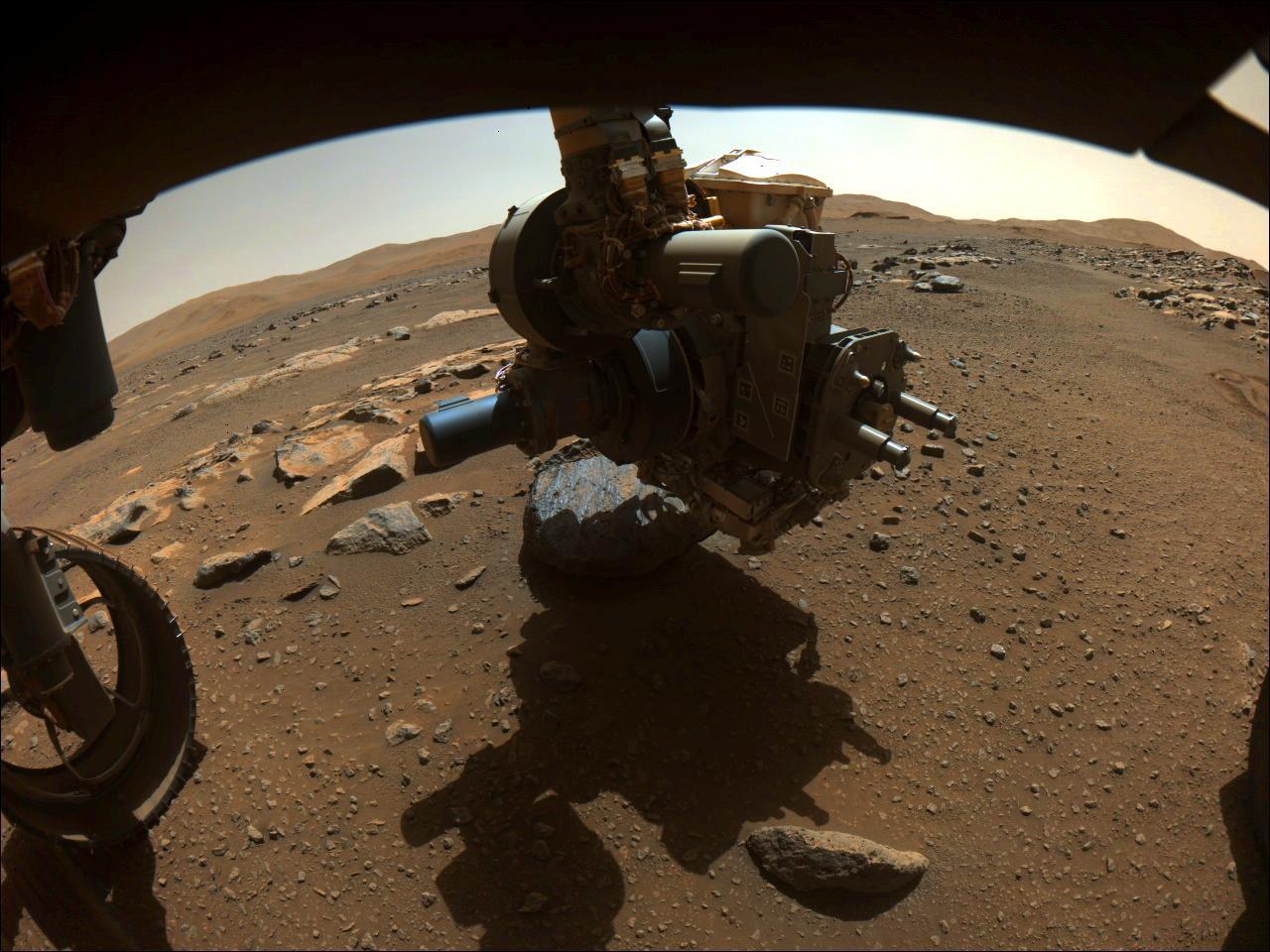
On Aug. 27, 2021, NASA's Perseverance rover captured this image of the science-instrument-laden turret at the end of its robotic arm getting close to the rock nicknamed "Rochette." Perseverance had just abraded a circular patch, nicknamed "Bellegarde," of the rock. This image was taken when the SHERLOC (Scanning Habitable Environments with Raman and Luminescence for Organics and Chemicals) instrument on the turret was using its WATSON (Wide Angle Topographic Sensor for Operations and eNgineering) camera to take a close-up image of Bellegarde on the 185th sol (Martian day) of Perseverance's mission. This image, taken by one of Perseverance's Hazard Avoidance Cameras, has been processed to enhance contrast. A key objective for Perseverance's mission on Mars is astrobiology, including the search for signs of ancient microbial life. The rover will characterize the planet's geology and past climate, pave the way for human exploration of the Red Planet, and be the first mission to collect and cache Martian rock and regolith. The Mars 2020 Perseverance mission is part of NASA's Moon to Mars exploration approach, which includes Artemis missions to the Moon that will help prepare for human exploration of the Red Planet. Subsequent NASA missions, in cooperation with ESA (European Space Agency), would send spacecraft to Mars to collect these sealed samples from the surface and return them to Earth for in-depth analysis. https://photojournal.jpl.nasa.gov/catalog/PIA24831
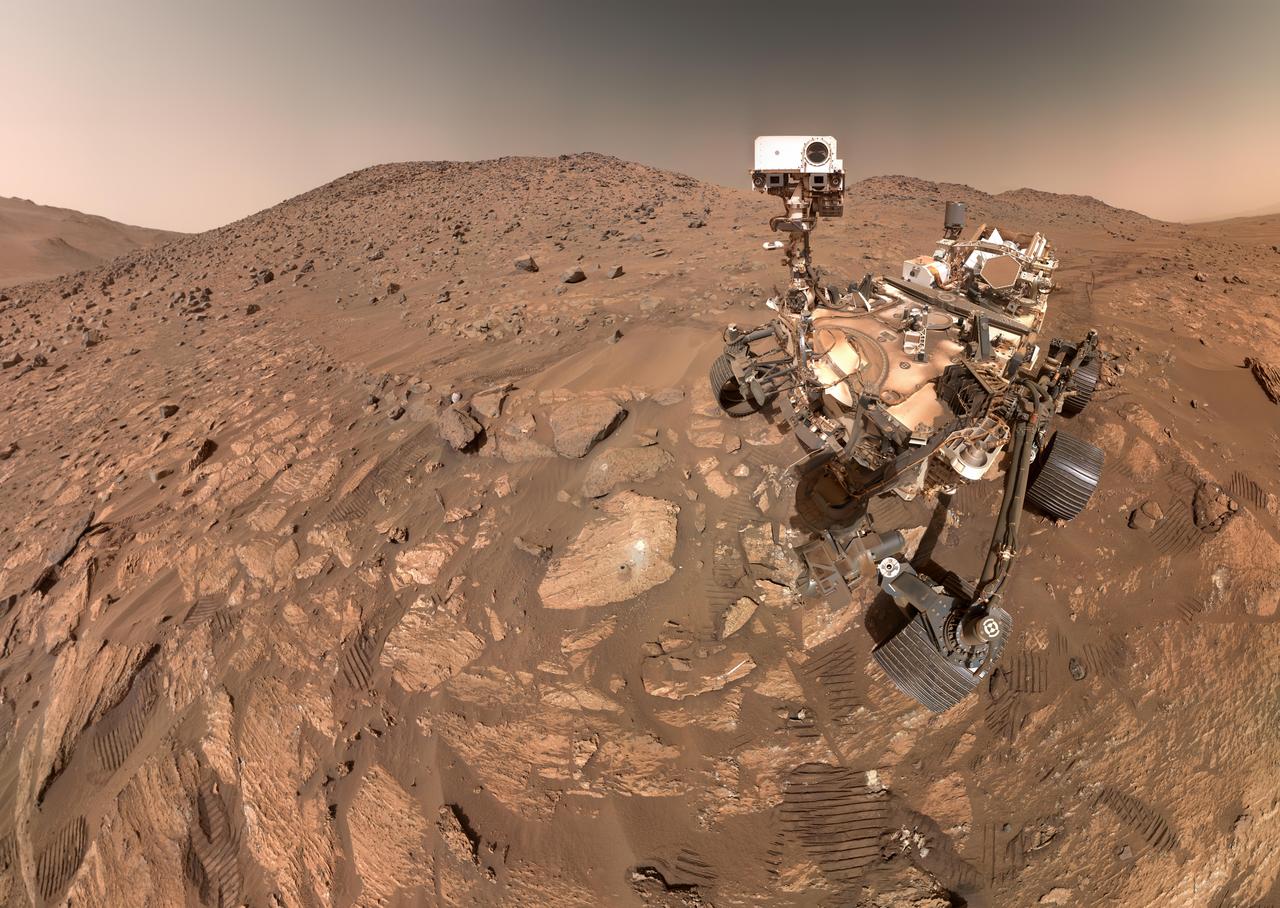
NASA's Perseverance Mars rover took this selfie on July 23, 2024, the 1,218th Martian day, or sol, of the mission. To the left of the rover near the center of the image is the arrowhead-shaped rock nicknamed "Cheyava Falls," which has features that may bear on the question of whether Mars was home to microscopic life in the distant past. The small dark hole in the rock is where Perseverance took a core sample, which is now in a sample tube stored in the rover's belly. The white patch to the right of the hole is where the rover used an abrasion tool to clear away the top surface, allowing science instruments to study the rock's composition. Measuring 3.2 feet by 2 feet (1 meter by 0.6 meters) and named after a Grand Canyon waterfall, Cheyava Falls lies at the northern edge of Neretva Vallis, an ancient river valley measuring a quarter-mile (400 meters) wide that was carved by water rushing into Jezero Crater long ago. The selfie is composed of 62 images taken by the WATSON (Wide Angle Topographic Sensor for Operations and eNgineering) camera on the end of the rover's robotic arm. The images were stitched together after being sent back to Earth. Animation available at https://photojournal.jpl.nasa.gov/catalog/PIA26344
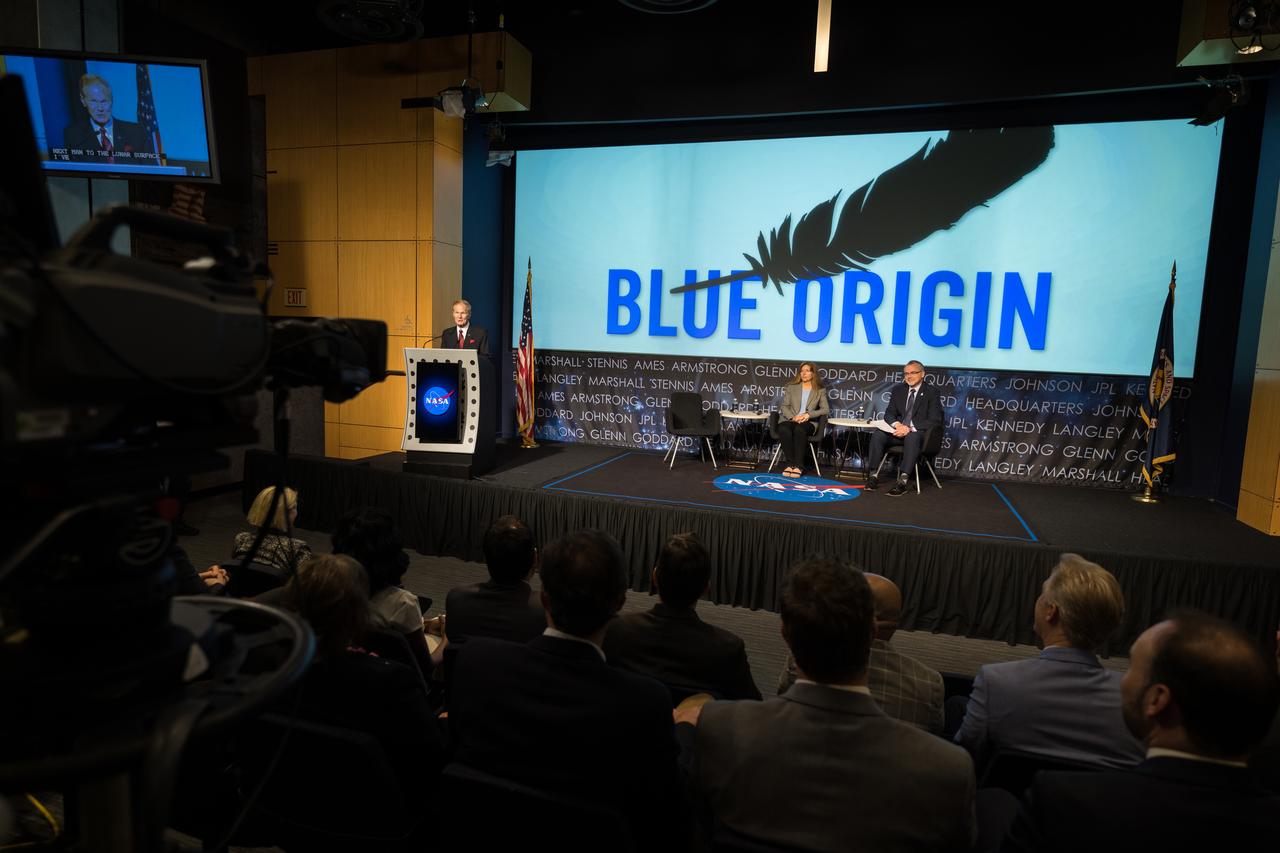
NASA Administrator Bill Nelson announces Blue Origin as the company selected to develop a sustainable human landing system for the Artemis V Moon mission, Friday, May 19, 2023 at the Mary W. Jackson NASA Headquarters building in Washington. The human landing system will take astronauts to and from Gateway in lunar orbit to the surface and back to the lunar space station as part of NASA’s return to the Moon for science, exploration, and inspiration. Photo Credit: (NASA/Aubrey Gemignani)
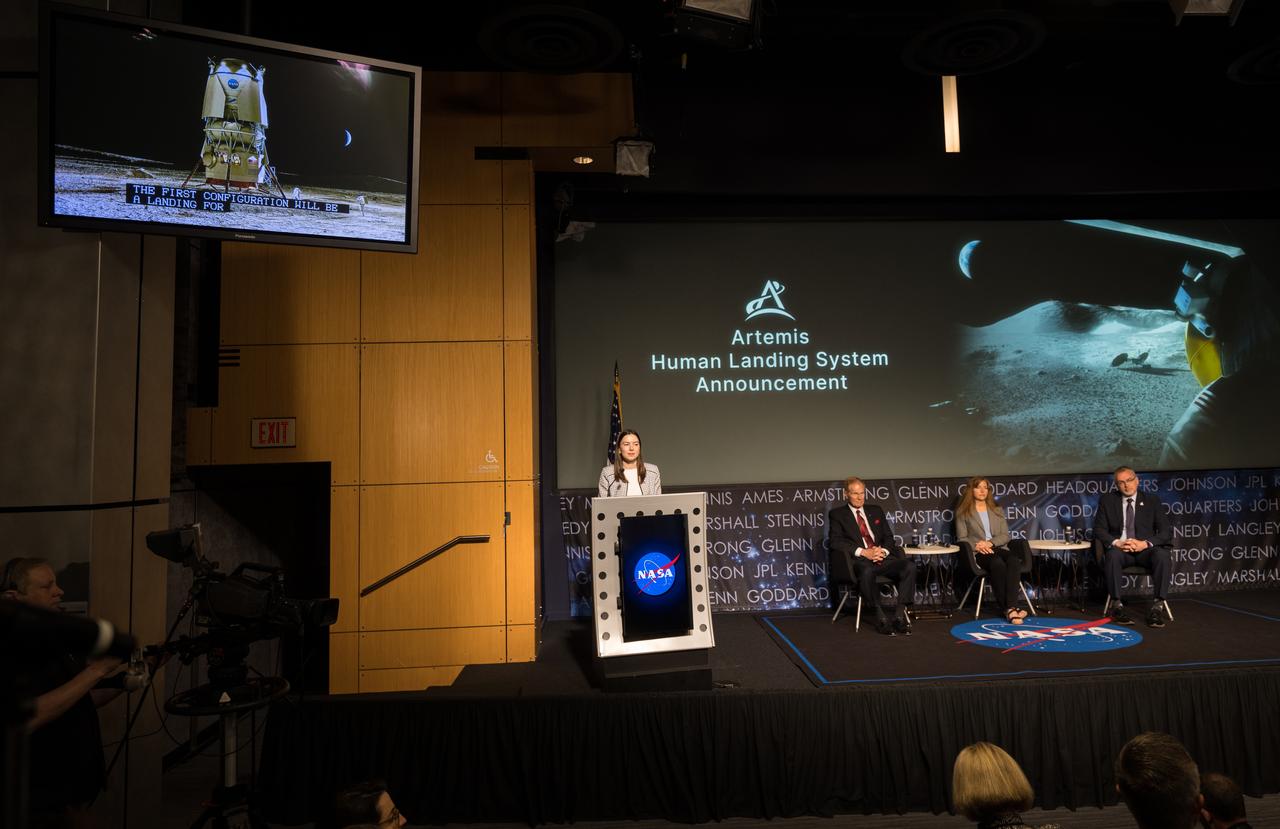
A view of the human landing system is seen on the monitor during an event announcing Blue Origin as the company selected to develop a sustainable human landing system for the Artemis V Moon mission, Friday, May 19, 2023 at the Mary W. Jackson NASA Headquarters building in Washington. The human landing system will take astronauts to and from Gateway in lunar orbit to the surface and back to the lunar space station as part of NASA’s return to the Moon for science, exploration, and inspiration. Photo Credit: (NASA/Aubrey Gemignani)
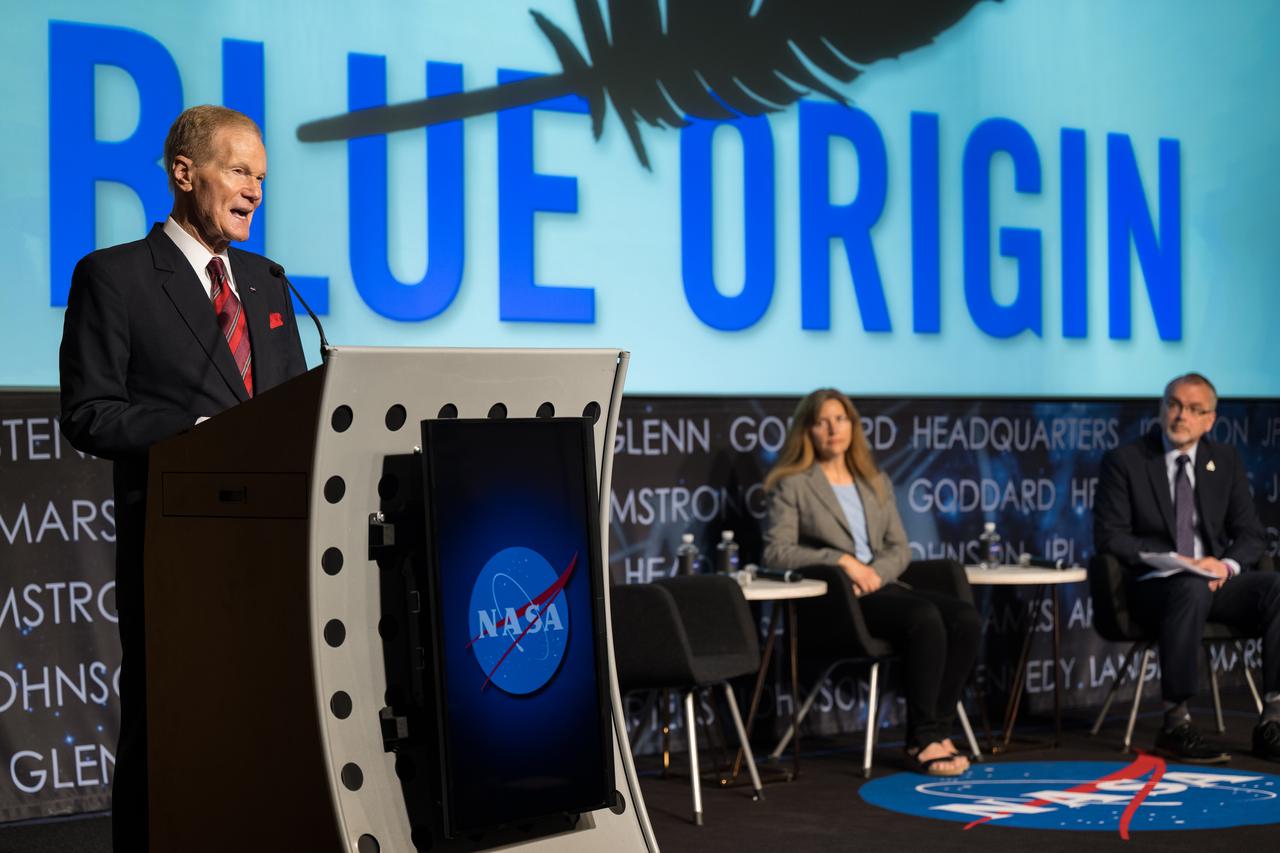
NASA Administrator Bill Nelson announces Blue Origin as the company selected to develop a sustainable human landing system for the Artemis V Moon mission, Friday, May 19, 2023 at the Mary W. Jackson NASA Headquarters building in Washington. The human landing system will take astronauts to and from Gateway in lunar orbit to the surface and back to the lunar space station as part of NASA’s return to the Moon for science, exploration, and inspiration. Photo Credit: (NASA/Aubrey Gemignani)