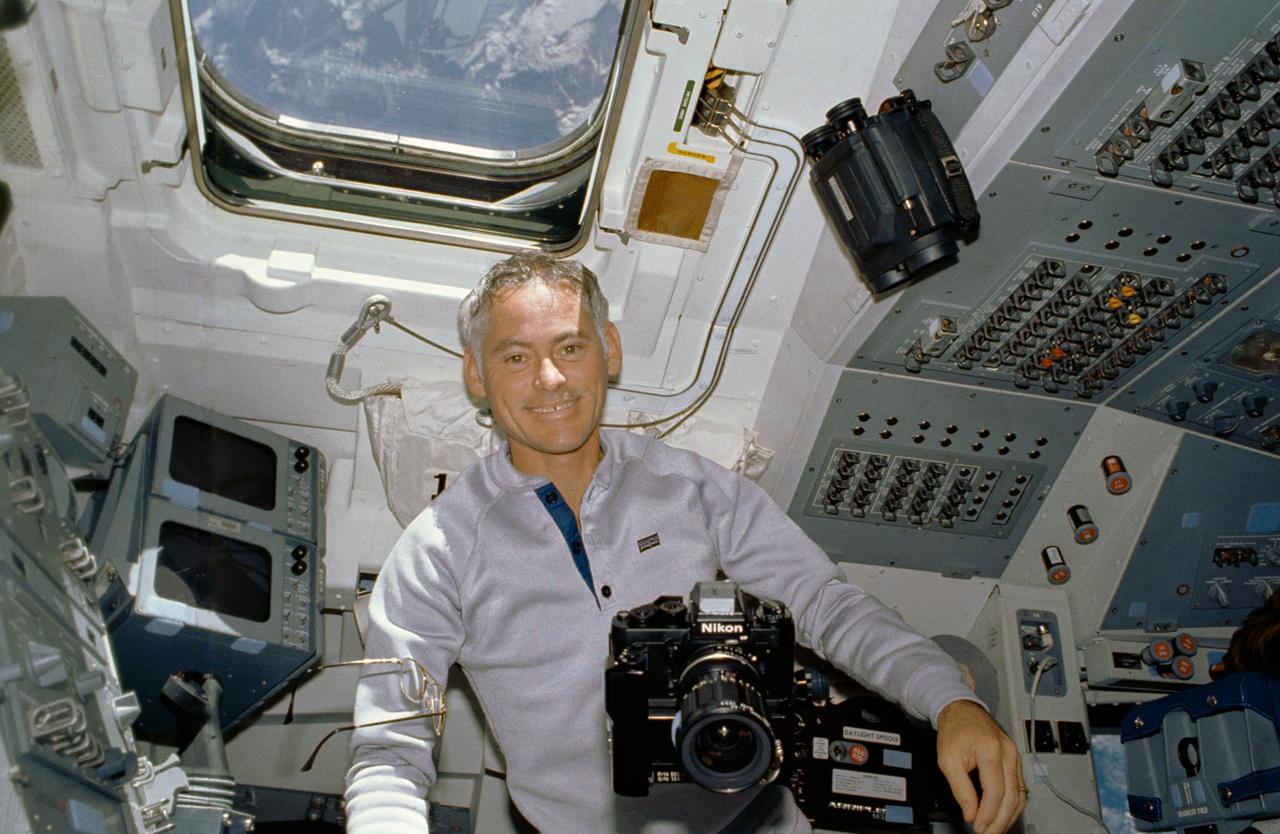
STS027-10-021 (2-6 Dec. 1988) --- Astronaut Richard M. (Mike) Mullane, STS-27 mission specialist, is able to handle a number of cameras with the aid of the microgravity in the shirt sleeve environment of the Earth-orbiting space shuttle Atlantis. Photo credit: NASA
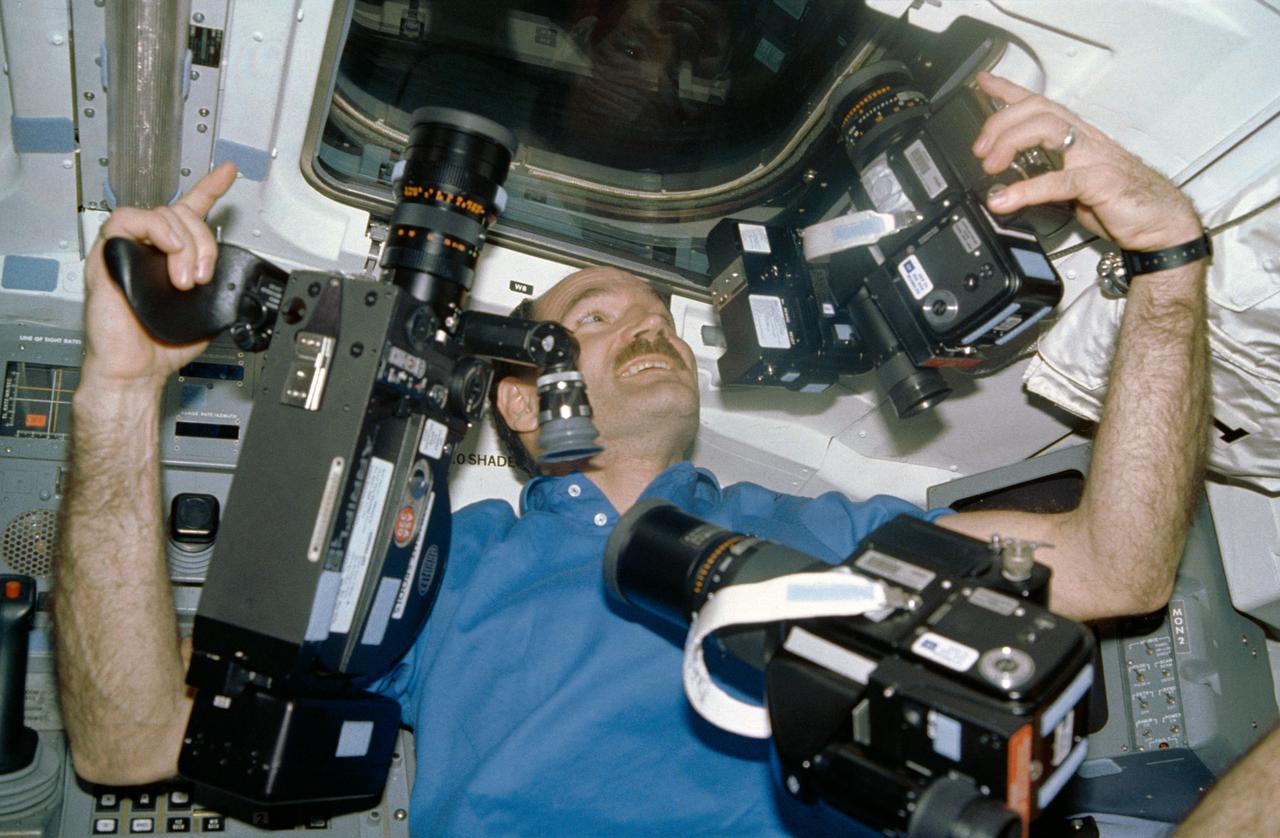
STS027-14-021 (2-6 Dec. 1988) --- Astronaut Guy S. Gardner, STS-27 pilot, appears to have enough cameras as he prepares to take photographs onboard the Earth-orbiting space shuttle Atlantis. Photo credit: NASA
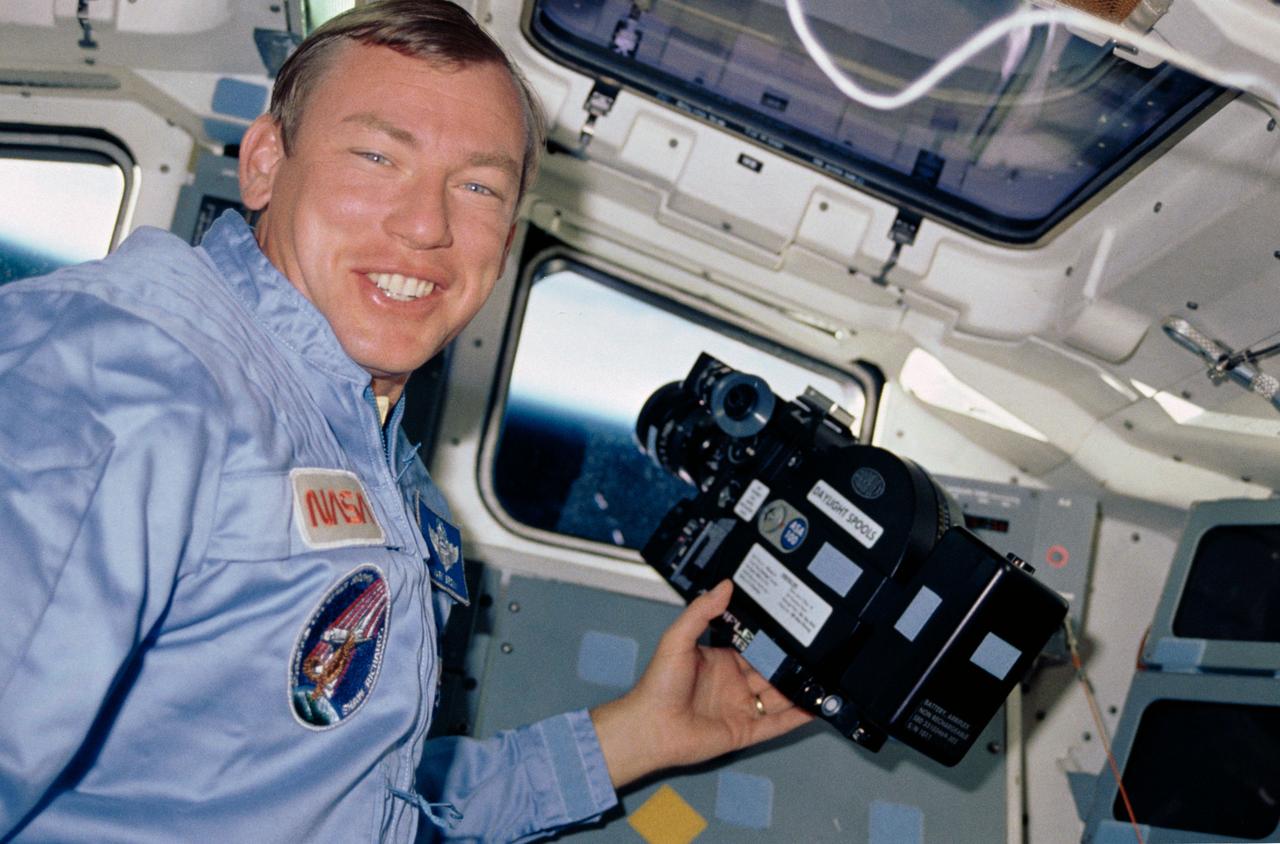
STS028-17-033 (August 1989) --- Astronaut Mark N. Brown, STS-28 mission specialist, pauses from a session of motion-picture photography conducted through one of the aft windows on the flight deck of the Earth-orbiting Space Shuttle Columbia. He is using an Arriflex camera. The horizon of the blue and white appearing Earth and its airglow are visible in the background.
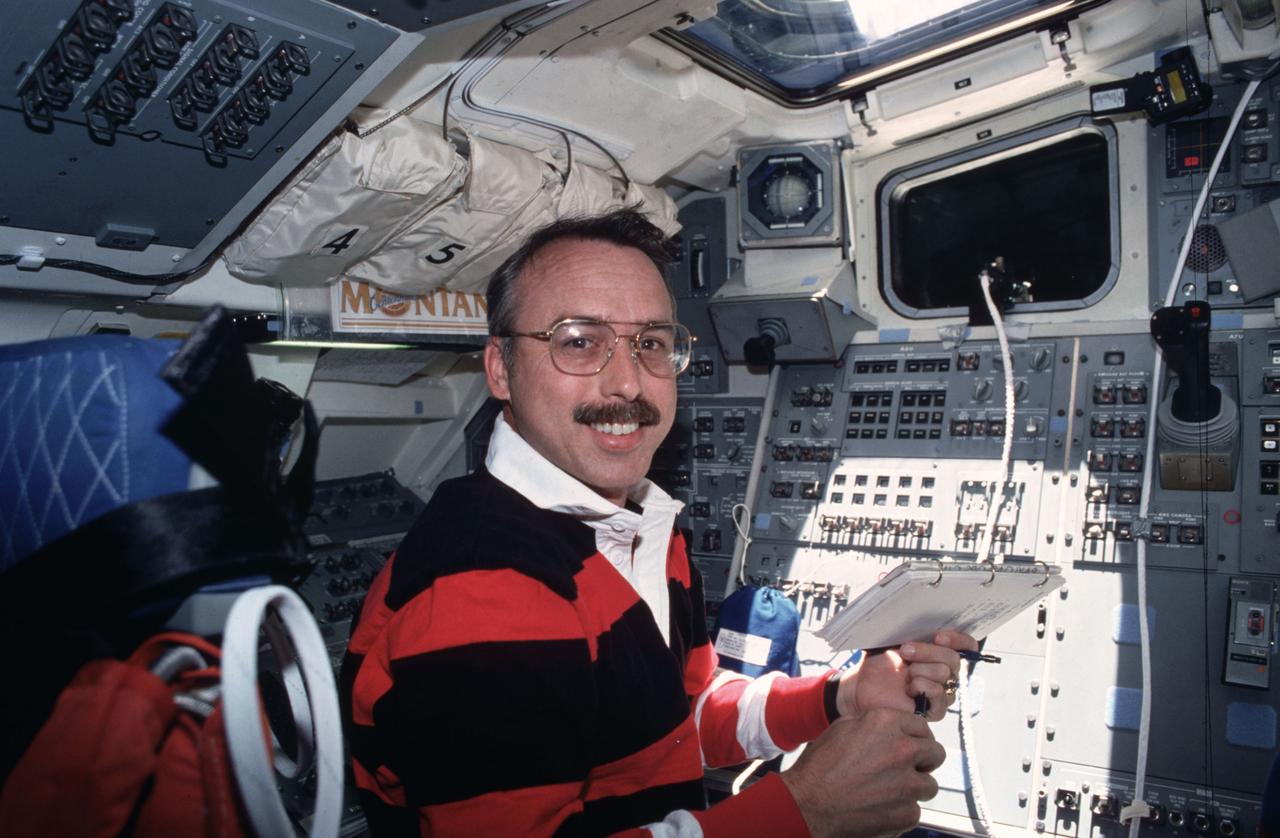
STS043-04-038 (2-11 Aug 1991) --- Astronaut James C. Adamson, STS-43 mission specialist, checks on an experiment on Atlantis? flight deck. Part of the experiment, Optical Communications Through the Shuttle Window (OCTW), can be seen mounted in upper right. The OCTW system consists of two modules, one inside the orbiter crew cabin (as pictured here) and one in the payload bay. The crew compartment version houses an optoelectronic transmitter/receiver pair for video and digital subsystems, test circuitry and interface circuitry. The payload bay module serves as a repeater station. During operation a signal is transmitted through the shuttle window to a bundle of optical fiber cables mounted in the payload bay near an aft window. The cables carry optical signals from the crew compartment equipment to the OCTW payload bay module. The signals are returned via optical fiber cable to the aft flight deck window, retransmitted through the window, and received by the crew compartment equipment.
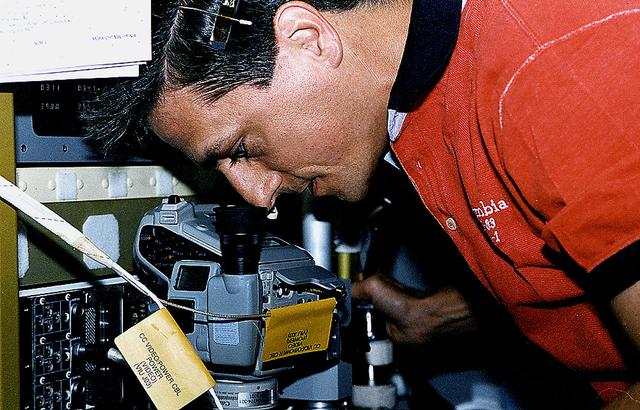
Onboard Space Shuttle Columbia (STS-94) Mission Specialist Donald A. Thomas observes an experiment in the glovebox aboard the Spacelab Science Module. Thomas is looking through an eye-piece of a camcorder and recording his observations on tape for post-flight analysis. Other cameras inside the glovebox are also recording other angles of the experiment or downlinking video to the experiment teams on the ground. The glovebox is thought of as a safety cabinet with closed front and negative pressure differential to prevent spillage and contamination and allow for manipulation of the experiment sample when its containment has to be opened for observation, microscopy and photography. Although not visible in this view, the glovebox is equipped with windows on the top and each side for these observations.
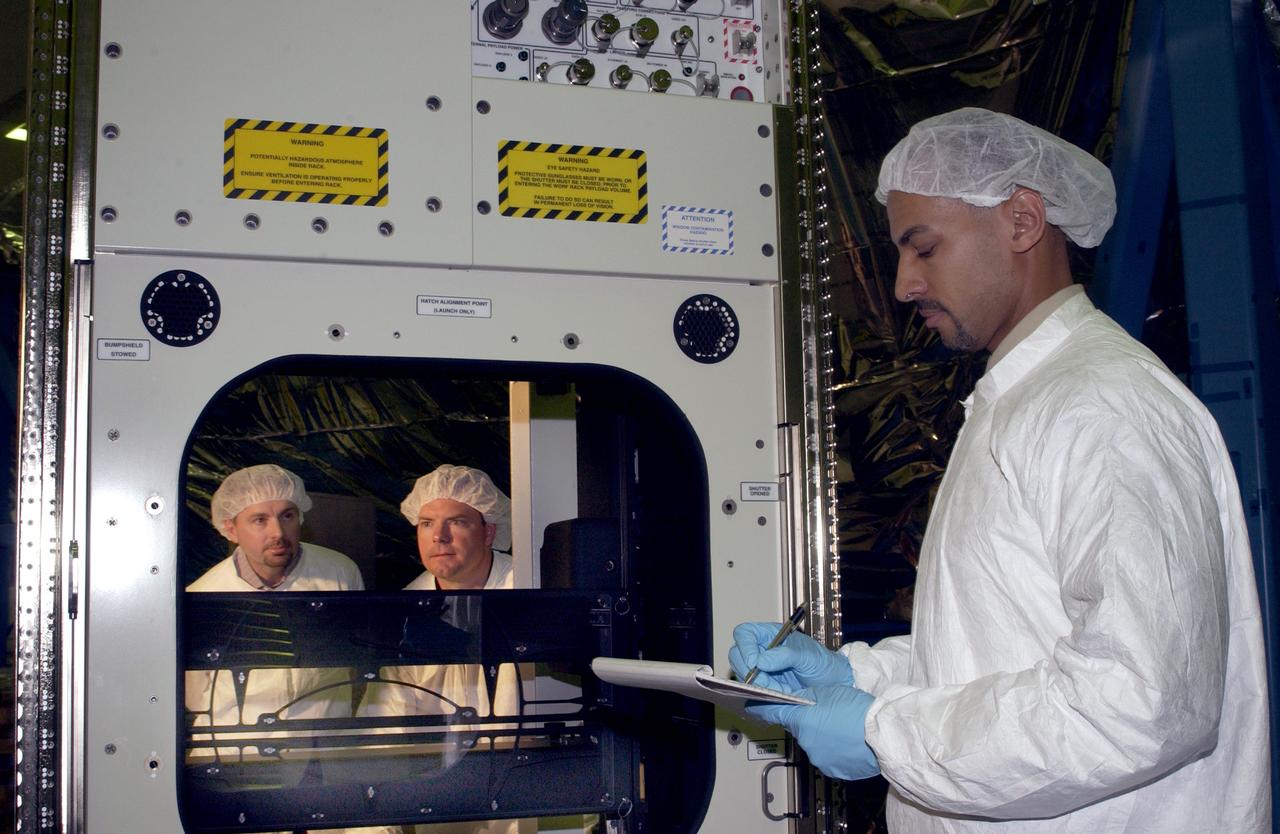
Developed by Boeing, at the Marshall Space Flight Center (MSFC) Space Station Manufacturing building, the Window Observational Rack Facility (WORF) will help Space Station crews take some of the best photographs ever snapped from an orbiting spacecraft by eliminating glare and allowing researchers to control their cameras and other equipment from the ground. The WORF is designed to make the best possible use of the high-quality research window in the Space Station's U.S. Destiny laboratory module. Engineers at the MSFC proposed a derivative of the EXPRESS (Expedite the Processing of Experiments to the Space Station) Rack already used on the Space Station and were given the go-ahead. The EXPRESS rack can hold a wide variety of experiments and provide them with power, communications, data, cooling, fluids, and other utilities - all the things that Earth-observing experiment instruments would need. WORF will supply payloads with power, data, cooling, video downlink, and stable, standardized interfaces for mounting imaging instruments. Similar to specialized orbital observatories, the interior of the rack is sealed against light and coated with a special low-reflectant black paint, so payloads will be able to observe low-light-level subjects such as the faint glow of auroras. Cameras and remote sensing instruments in the WORF can be preprogrammed, controlled from the ground, or operated by a Station crewmember by using a flexible shroud designed to cinch tightly around the crewmember's waist. The WORF is scheduled to be launched aboard the STS-114 Space Shuttle mission in the year 2003.