
This graphic shows the relative size of the Sun, upper left, compared to the two stars in the binary system known as Wolf-Rayet 140, or WR 140. The O-type star is roughly 30 times the mass of the Sun, while its companion is about 10 times the mass of the Sun. O-type stars are some of the biggest and brightest stars in the universe. They use up their fuel quickly and live relatively short lives – no more than about 10 million years, as opposed to stars like our Sun, which live for about 10 billion years. Wolf-Rayet stars were once O-type stars that are now nearing the end of their lives. They release huge amounts of mass into space via stellar winds, exposing their hot, inner layers. The Wolf-Rayet star in WR 140 may have shed more than half its original mass. It has an estimated temperature of 60,000 Kelvin (about 110,000 degrees Fahrenheit, or about 60,000 degrees Celsius) – more than 10 times the temperature of our Sun. The temperature of the O-type star is about 35,000 Kelvin (about 63,000 F, or about 35,000 C). https://photojournal.jpl.nasa.gov/catalog/PIA25431
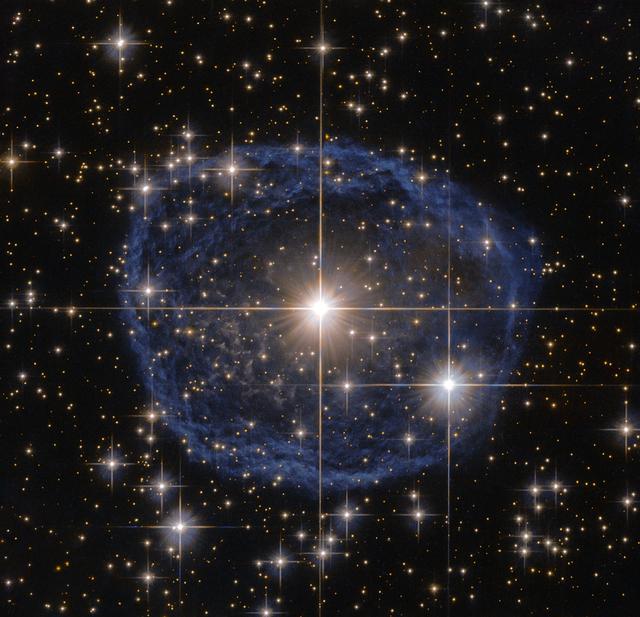
Sparkling at the centre of this beautiful NASA/ESA Hubble Space Telescope image is a Wolf–Rayet star known as WR 31a, located about 30 000 light-years away in the constellation of Carina (The Keel). The distinctive blue bubble appearing to encircle WR 31a, and its uncatalogued stellar sidekick, is a Wolf–Rayet nebula — an interstellar cloud of dust, hydrogen, helium and other gases. Created when speedy stellar winds interact with the outer layers of hydrogen ejected by Wolf–Rayet stars, these nebulae are frequently ring-shaped or spherical. The bubble — estimated to have formed around 20 000 years ago — is expanding at a rate of around 220 000 kilometres per hour! Unfortunately, the lifecycle of a Wolf–Rayet star is only a few hundred thousand years — the blink of an eye in cosmic terms. Despite beginning life with a mass at least 20 times that of the Sun, Wolf–Rayet stars typically lose half their mass in less than 100 000 years. And WR 31a is no exception to this case. It will, therefore, eventually end its life as a spectacular supernova, and the stellar material expelled from its explosion will later nourish a new generation of stars and planets.
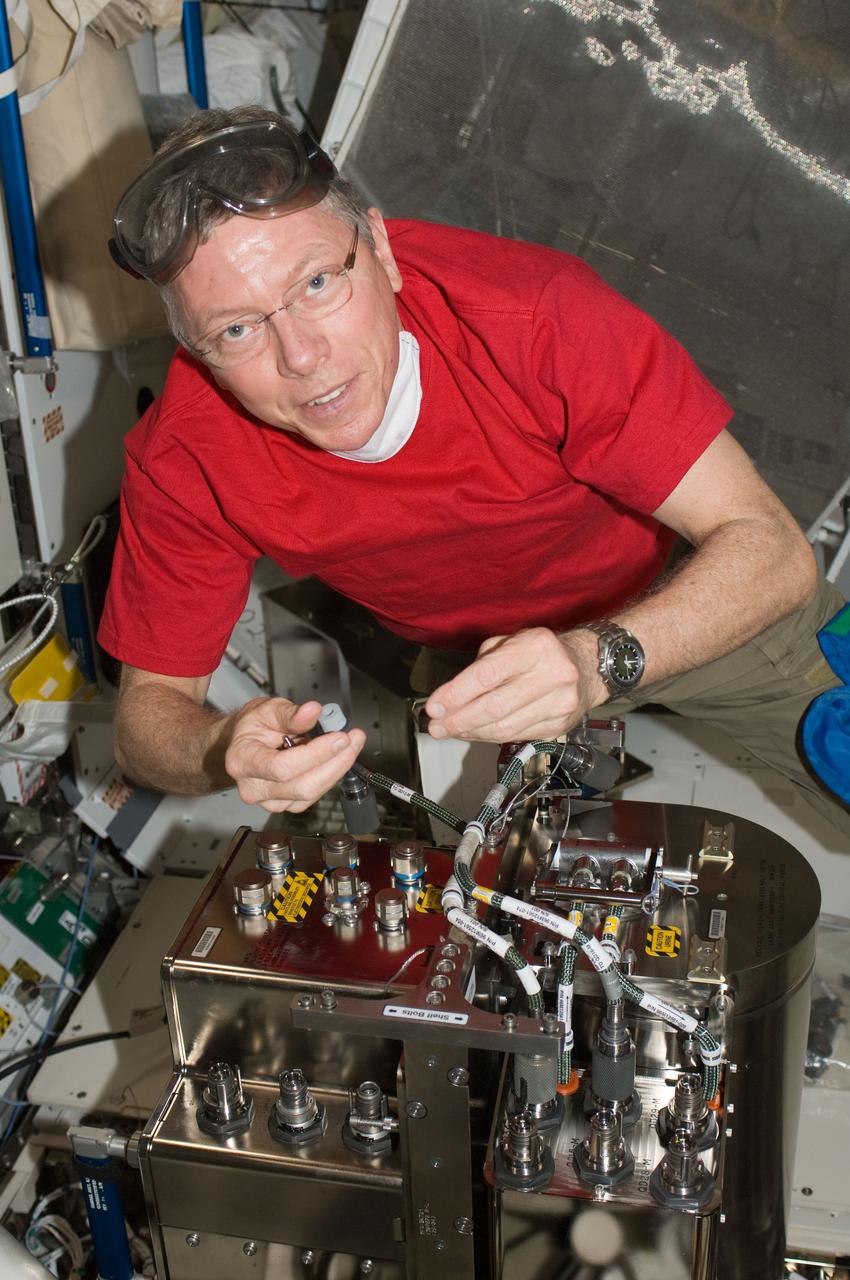
ISS029-E-007893 (23 Sept. 2011) --- NASA astronaut Mike Fossum, Expedition 29 commander, works with the Water Recovery System (WRS) Fluids Control and Pump Assembly (FCPA) in the Destiny laboratory of the International Space Station.
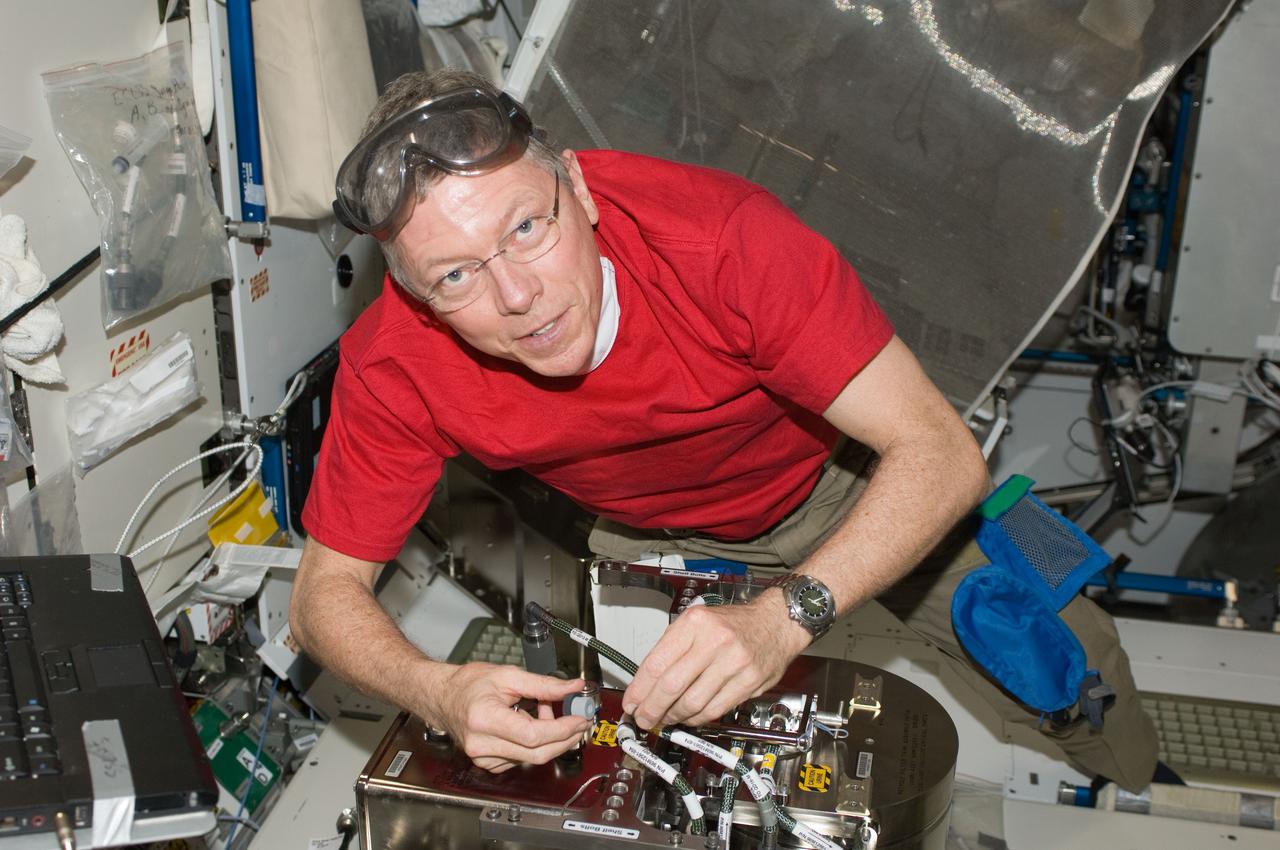
ISS029-E-007892 (23 Sept. 2011) --- NASA astronaut Mike Fossum, Expedition 29 commander, works with the Water Recovery System (WRS) Fluids Control and Pump Assembly (FCPA) in the Destiny laboratory of the International Space Station.

jsc2024e043917 (7/10/2024) --- Packed Bed Reactor Experiment-Water Recovery (PBRE-WR) examines flow rates of gas and liquid through a filtering substrate in the space station water processor, replacing oxygen with nitrogen. This preflight image shows the PBRE-WR test section with alumina packed bed material loaded. Scientists aim to learn more about how reduced gravity affects the performance and reliability of various filtration systems

jsc2024e043916 (3/29/2024) ---The Packed Bed Reactor Experiment – Water Recovery (PBRE-WR) completed a series of tests in the Microgravity Science Glovebox on the International Space Station. Image of PBRE-WR during low flow conditions. Bubbles and voids (darker spots) are captured using a high-speed video camera at 10 fps. They are measured to determine gas holdup during various test conditions. In this image, the liquid flow was 20 kg/hr and the gas flow was 100 gr/hr. Scientists aim to learn more about how reduced gravity affects the performance and reliability of various filtration systems.
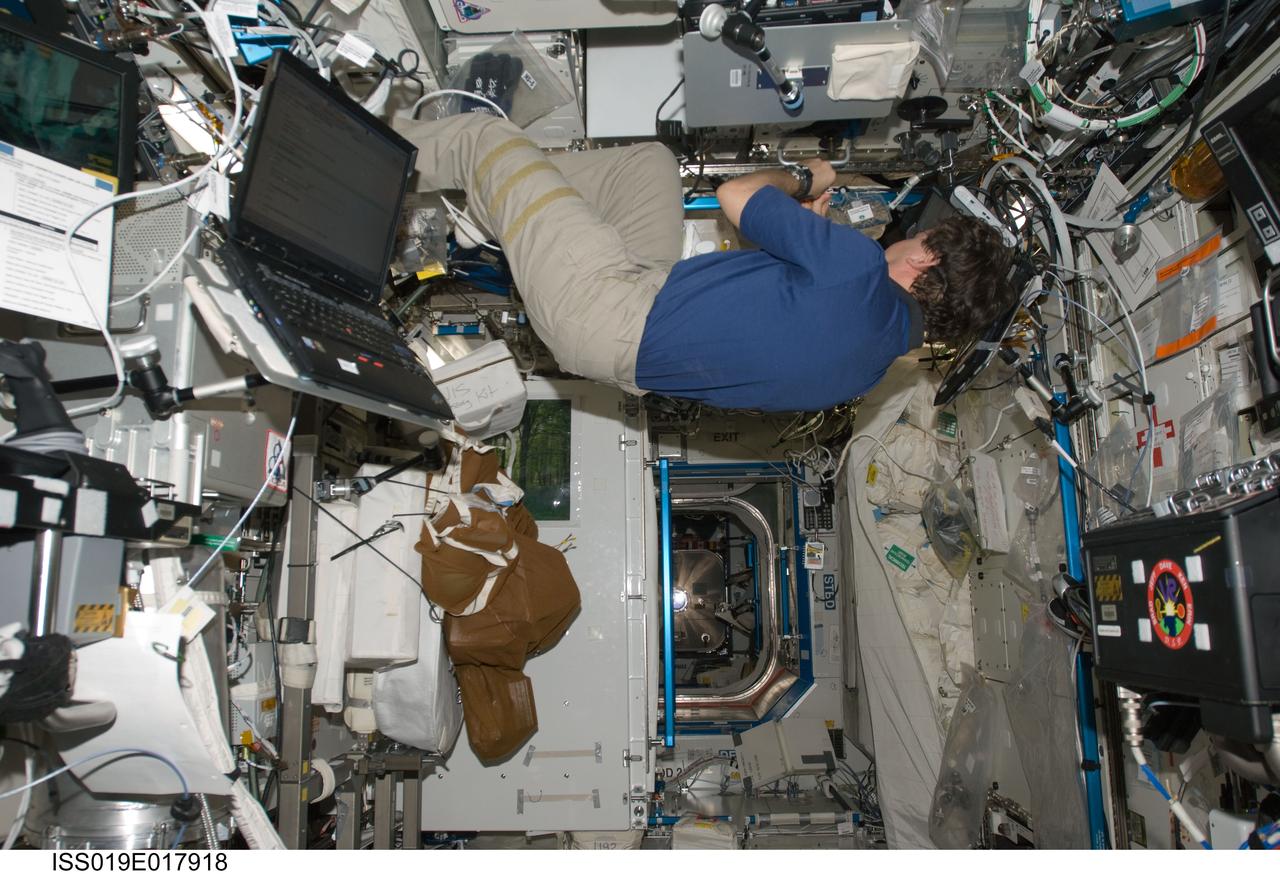
ISS019-E-017918 (19 May 2009) --- Astronaut Michael Barratt, Expedition 19/20 flight engineer, collects a sample from the Water Recovery System (WRS) in the Destiny laboratory of the International Space Station.

Here we see the spectacular cosmic pairing of the star Hen 2-427 — more commonly known as WR 124 — and the nebula M1-67 which surrounds it. Both objects, captured here by the NASA/ESA Hubble Space Telescope are found in the constellation of Sagittarius and lie 15 000 light-years away. The star Hen 2-427 shines brightly at the very centre of this explosive image and around the hot clumps of gas are ejected into space at over 150 000 kilometres per hour. Hen 2-427 is a Wolf–Rayet star, named after the astronomers Charles Wolf and Georges Rayet. Wolf–Rayet are super-hot stars characterised by a fierce ejection of mass. The nebula M1-67 is estimated to be no more than 10 000 years old — just a baby in astronomical terms — but what a beautiful and magnificent sight it makes. A version of this image was released in 1998, but has now been re-reduced with the latest software.
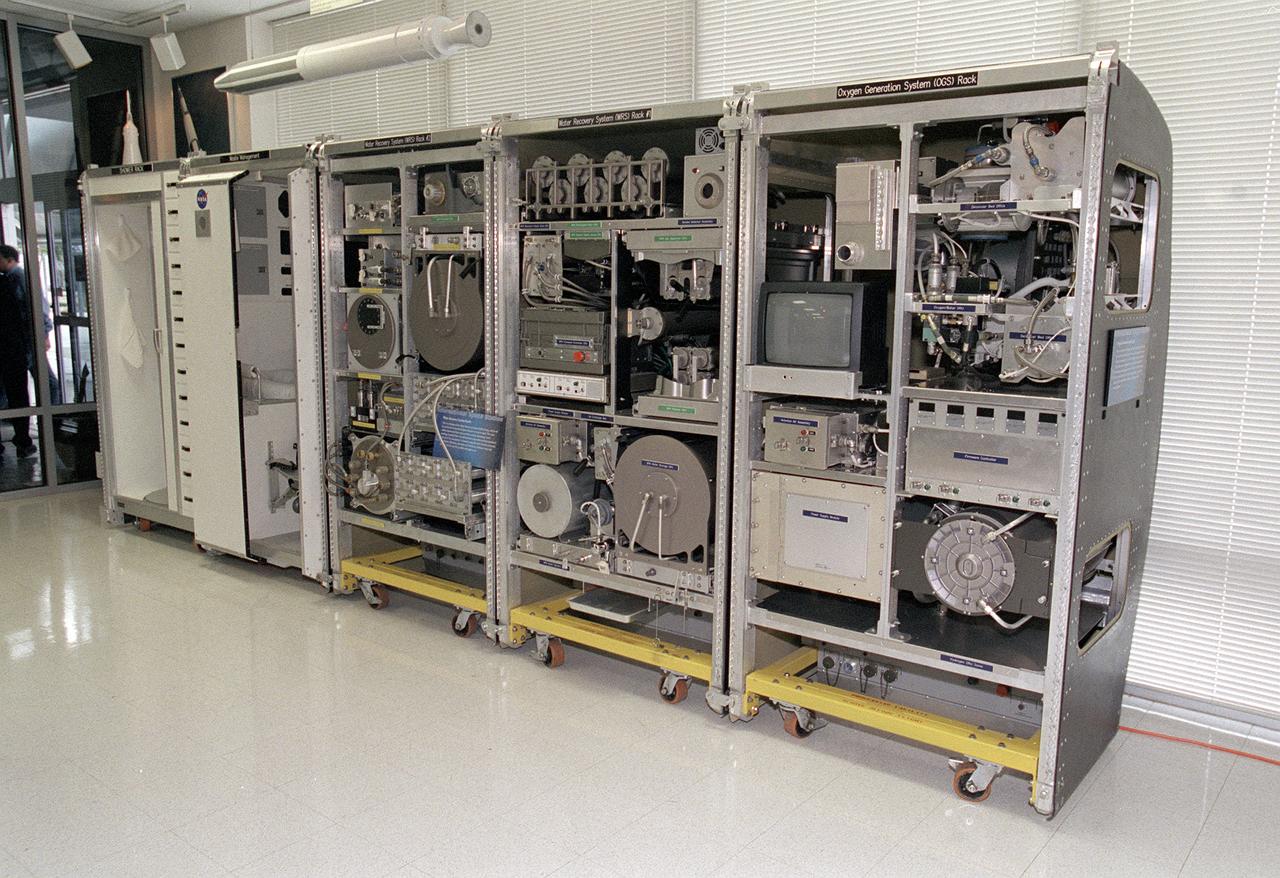
The Environmental Control and Life Support System (ECLSS) Group of the Flight Projects Directorate at the Marshall Space Flight Center in Huntsville, Alabama, is responsible for designing and building the life support systems that will provide the crew of the International Space Station (ISS) a comfortable environment in which to live and work. This photograph shows the mockup of the the ECLSS to be installed in the Node 3 module of the ISS. From left to right, shower rack, waste management rack, Water Recovery System (WRS) Rack #2, WRS Rack #1, and Oxygen Generation System (OGS) rack are shown. The WRS provides clean water through the reclamation of wastewaters and is comprised of a Urine Processor Assembly (UPA) and a Water Processor Assembly (WPA). The UPA accepts and processes pretreated crewmember urine to allow it to be processed along with other wastewaters in the WPA. The WPA removes free gas, organic, and nonorganic constituents before the water goes through a series of multifiltration beds for further purification. The OGS produces oxygen for breathing air for the crew and laboratory animals, as well as for replacing oxygen loss. The OGS is comprised of a cell stack, which electrolyzes (breaks apart the hydrogen and oxygen molecules) some of the clean water provided by the WRS, and the separators that remove the gases from the water after electrolysis.

ISS030-E-051116 (28 Jan. 2012) --- NASA astronaut Dan Burbank, Expedition 30 commander, performs in-flight maintenance on the Water Recovery System 2 (WRS-2) in the Tranquility node of the International Space Station.
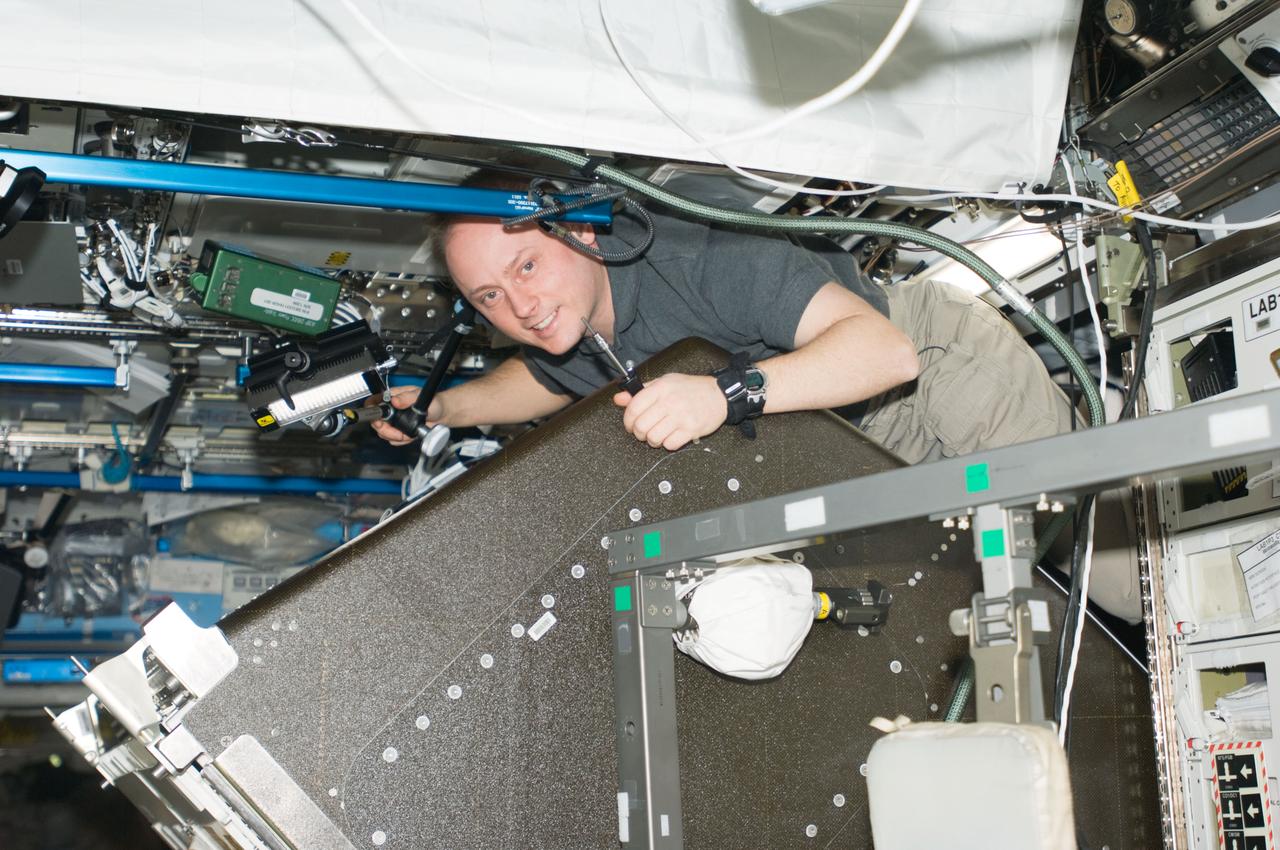
ISS018-E-011530 (8 Dec. 2008) --- Astronaut Michael Fincke, Expedition 18 commander, performs a leak check on the Water Recovery System (WRS) in the Destiny laboratory of the International Space Station.
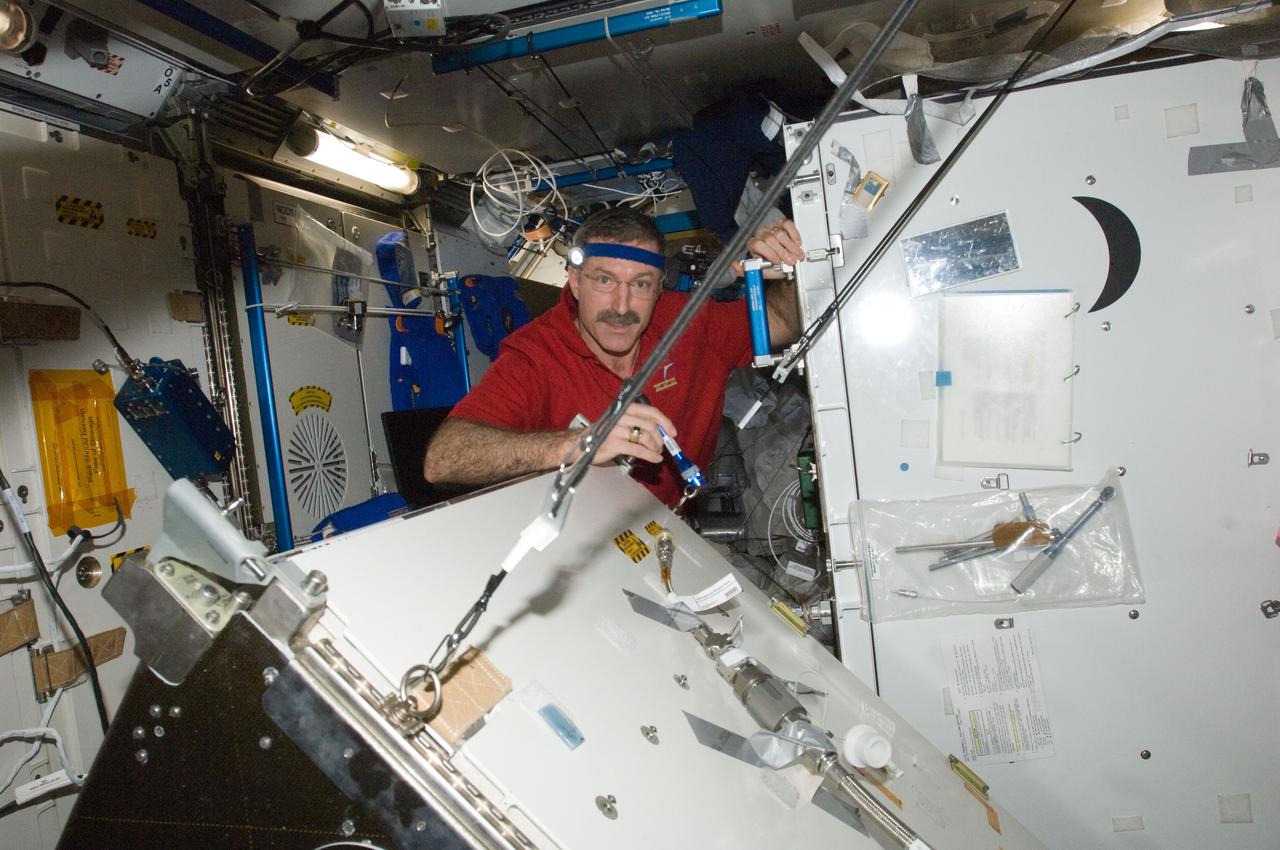
ISS030-E-128752 (8 March 2012) --- NASA astronaut Dan Burbank, Expedition 30 commander, performs part one of the Water Recovery System-1 (WRS-1) repair in the Tranquility node of the International Space Station. Burbank removed and replaced the failed Catalytic Reactor (CR), and installed a temporary filter kit between the new CR and the Microbial Check Valve (MCV) to support a system flush of the new Orbital Replacement Unit (ORU).
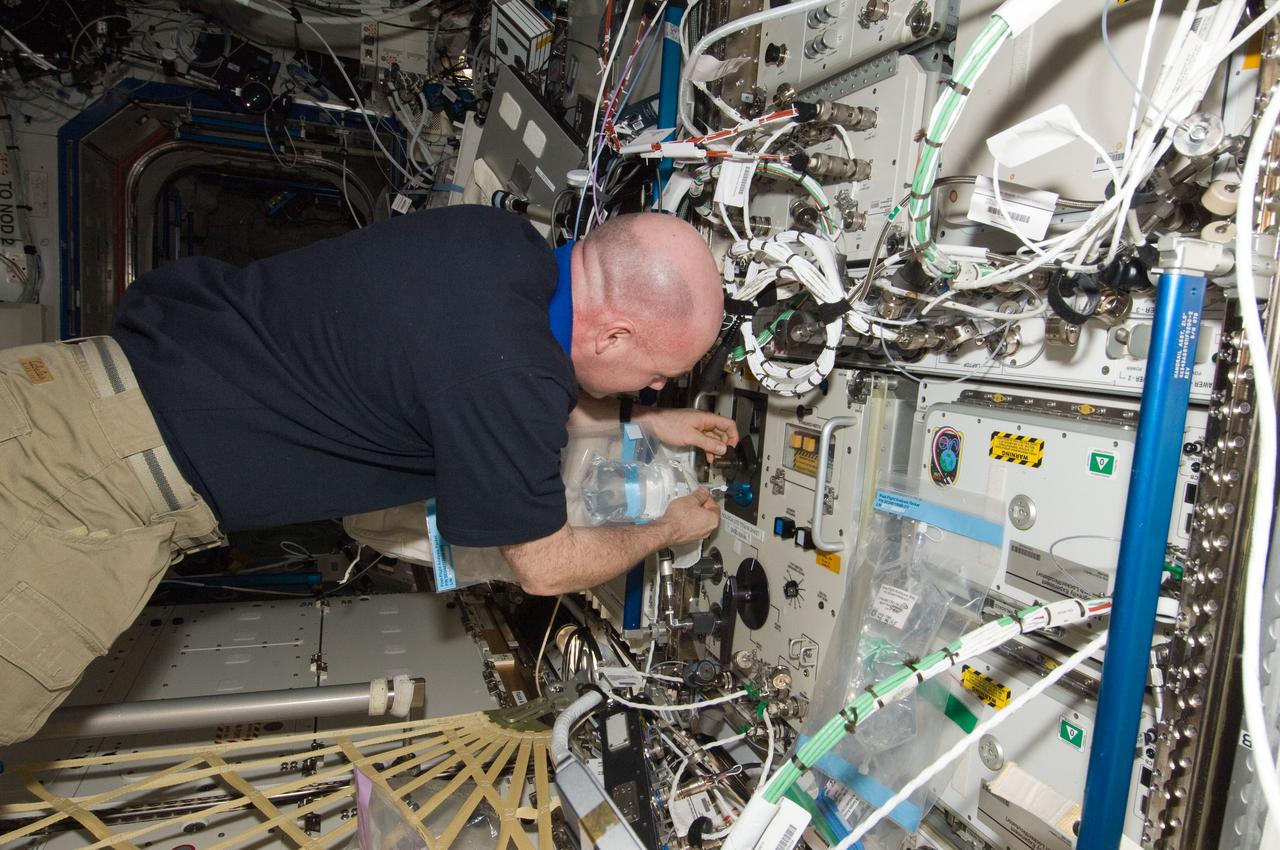
ISS031-E-079015 (15 May 2012) --- European Space Agency astronaut Andre Kuipers, Expedition 31 flight engineer, collects a sample from the Water Recovery System (WRS) in the Destiny laboratory of the International Space Station.
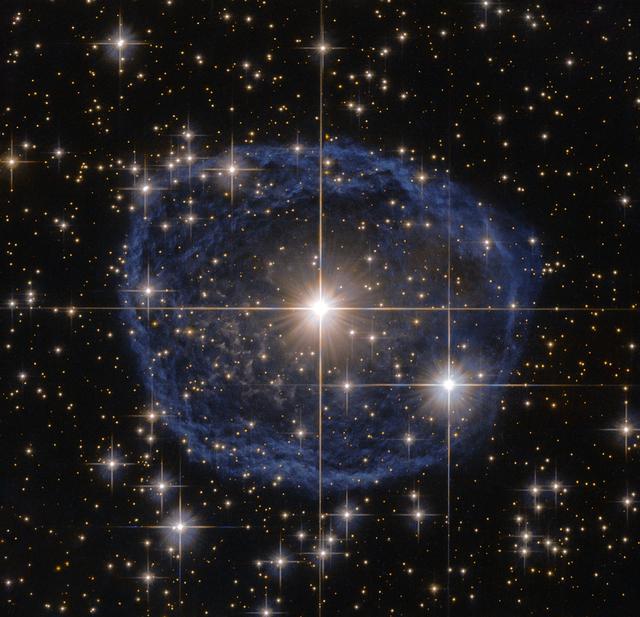
A large blue bubble with a bright star in the center on a black background filled with stars Sparkling at the center of this beautiful NASA/ESA Hubble Space Telescope image is a Wolf–Rayet star known as WR 31a, located about 30,000 light-years away in the constellation of Carina (The Keel). The distinctive blue bubble appearing to encircle WR 31a is a Wolf–Rayet nebula — an interstellar cloud of dust, hydrogen, helium and other gases. Created when speedy stellar winds interact with the outer layers of hydrogen ejected by Wolf–Rayet stars, these nebulae are frequently ring-shaped or spherical. The bubble — estimated to have formed around 20,000 years ago — is expanding at a rate of around 220,000 kilometers (136,700 miles) per hour! Unfortunately, the lifecycle of a Wolf–Rayet star is only a few hundred thousand years — the blink of an eye in cosmic terms. Despite beginning life with a mass at least 20 times that of the sun, Wolf–Rayet stars typically lose half their mass in less than 100,000 years. And WR 31a is no exception to this case. It will, therefore, eventually end its life as a spectacular supernova, and the stellar material expelled from its explosion will later nourish a new generation of stars and planets. Image credi: ESA/Hubble & NASA, Acknowledgement: Judy Schmidt
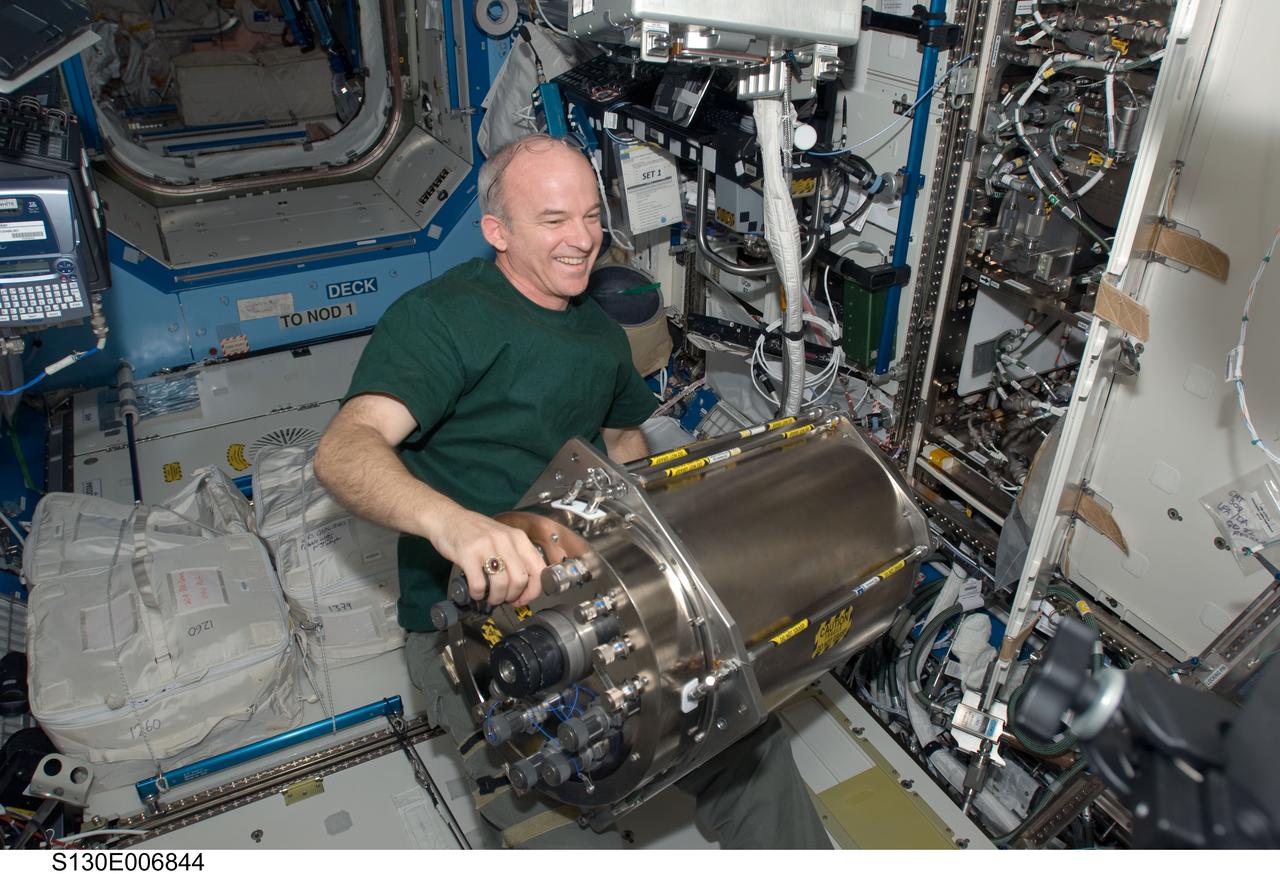
S130-E-006844 (10 Feb. 2010) --- NASA astronaut Jeffrey Williams, Expedition 22 commander, installs a Urine Processor Assembly / Distillation Assembly (UPA DA) in the Water Recovery System (WRS) rack in the Destiny laboratory of the International Space Station while space shuttle Endeavour (STS-130) remains docked with the station.
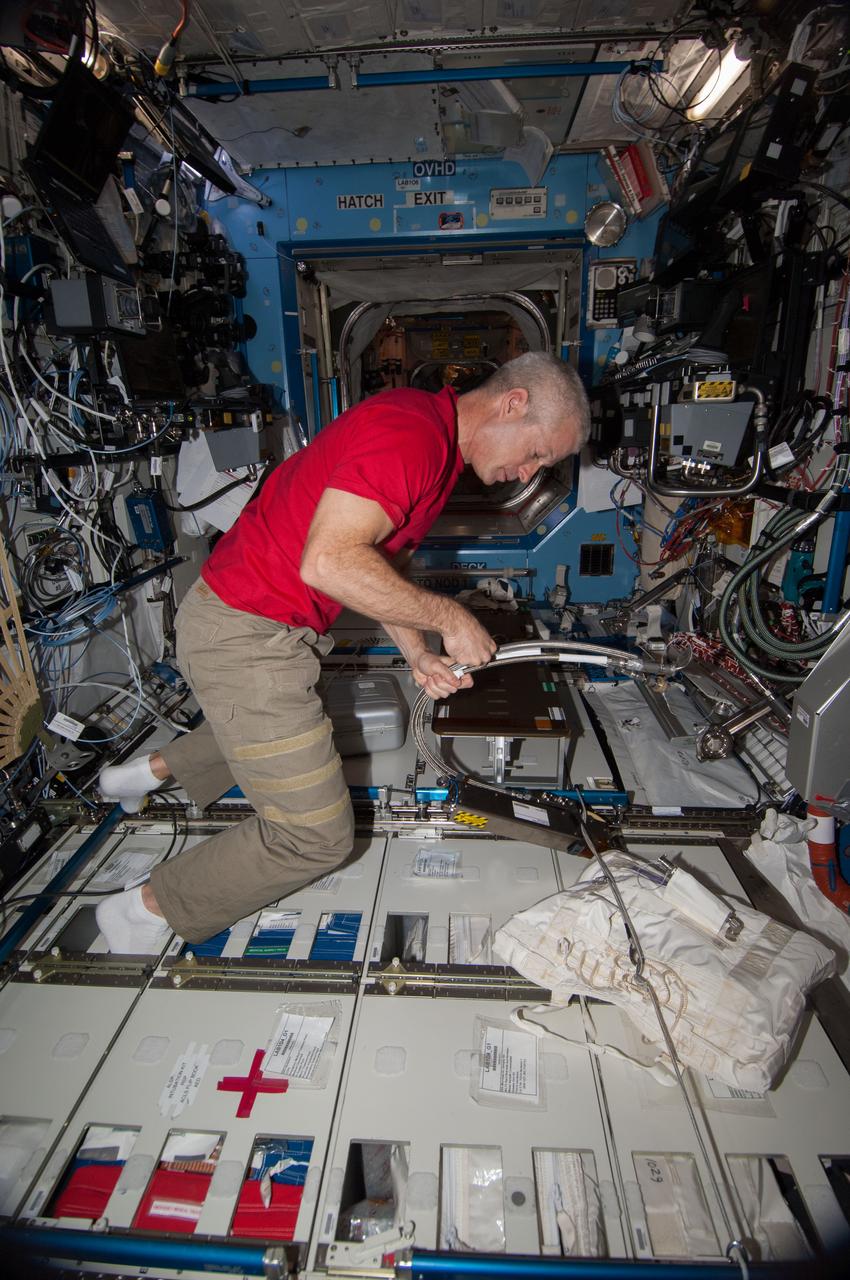
ISS039-E-013158 (18 April 2014) --- In the U.S. lab Destiny on the Earth-orbiting International Space Station, Expedition 39 Flight Engineer Steve Swanson of NASA works on WRS condensate pumping, using the high flow water transfer pump.
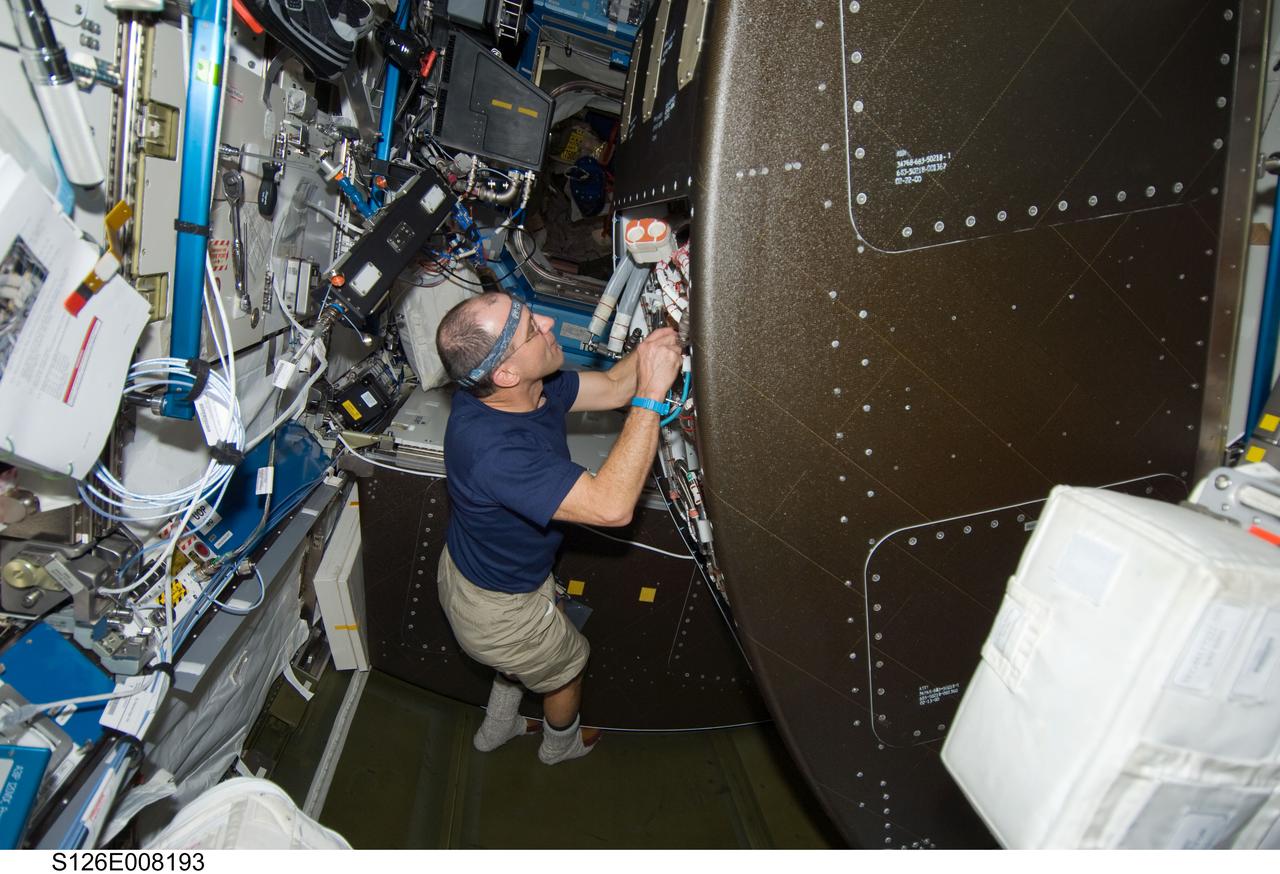
S126-E-008193 (19 Nov. 2008) --- Astronaut Donald Pettit, STS-126 mission specialist, configures the Water Recovery System (WRS) rack in the Destiny laboratory of the International Space Station while Space Shuttle Endeavour is docked with the station.
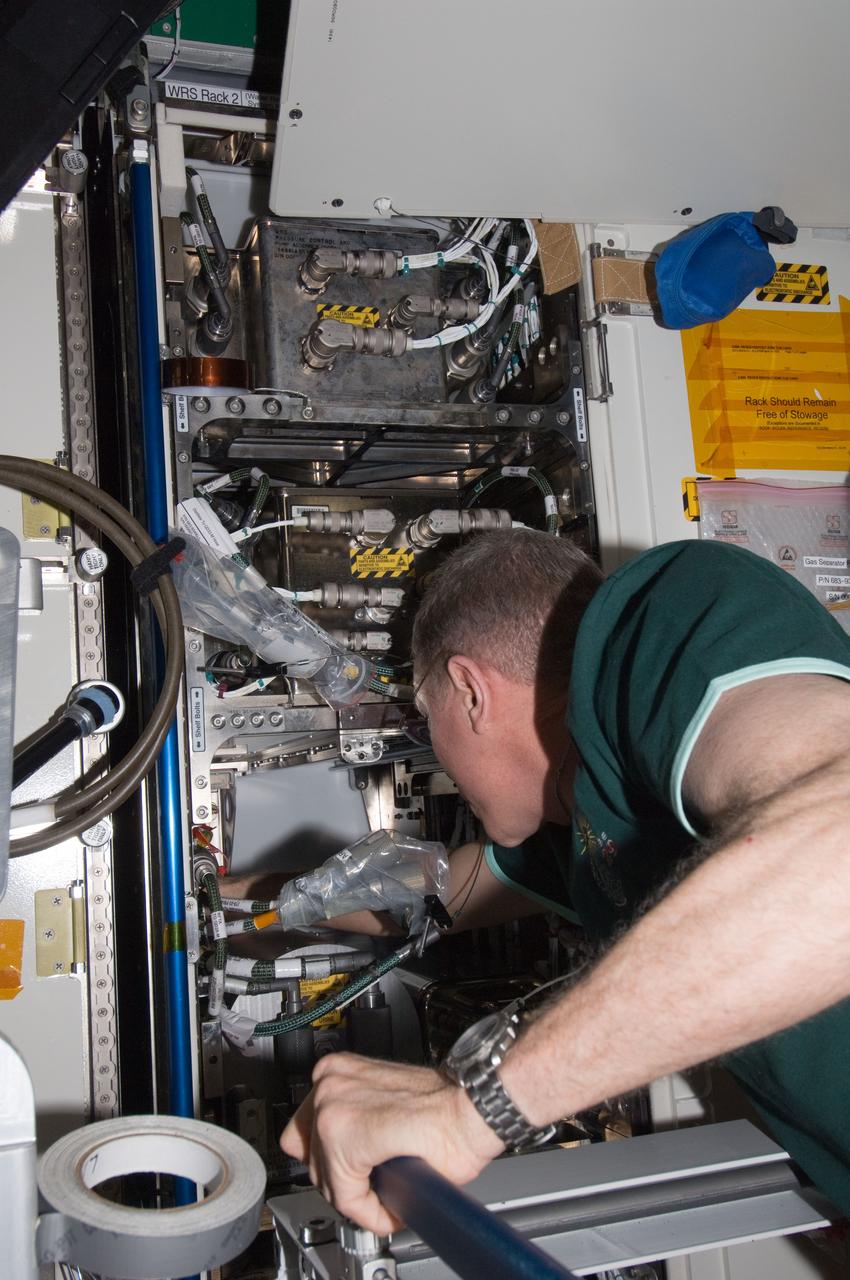
ISS029-E-021648 (10 Oct. 2011) --- NASA astronaut Mike Fossum, Expedition 29 commander, installs the Advanced Recycle Filter Tank Assembly (ARFTA) at the Urine Processor Assembly / Water Recovery System (UPA WRS) in the Destiny laboratory of the International Space Station.
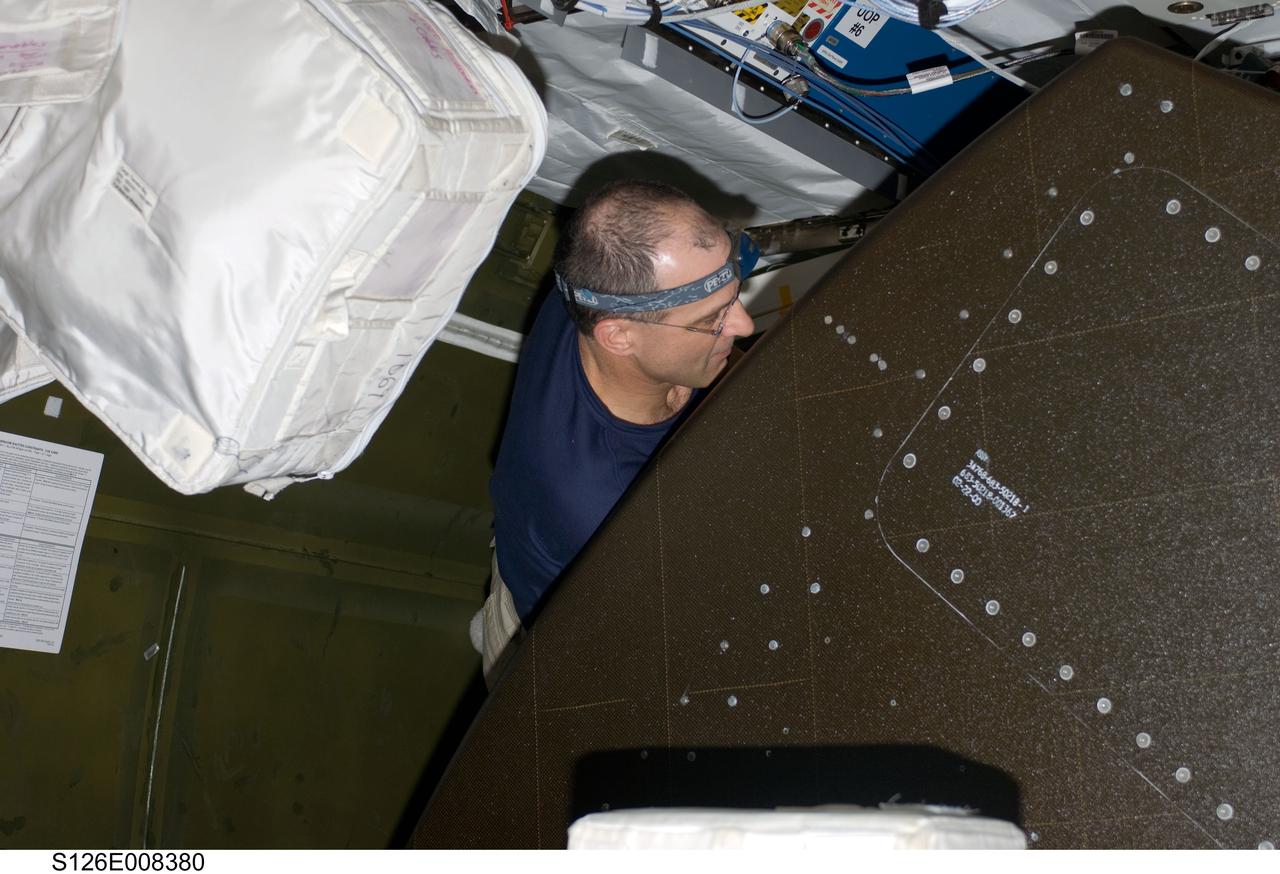
S126-E-008380 (19 Nov. 2008) --- Astronaut Donald Pettit, STS-126 mission specialist, configures the Water Recovery System (WRS) rack in the Destiny laboratory of the International Space Station while Space Shuttle Endeavour remains docked with the station.
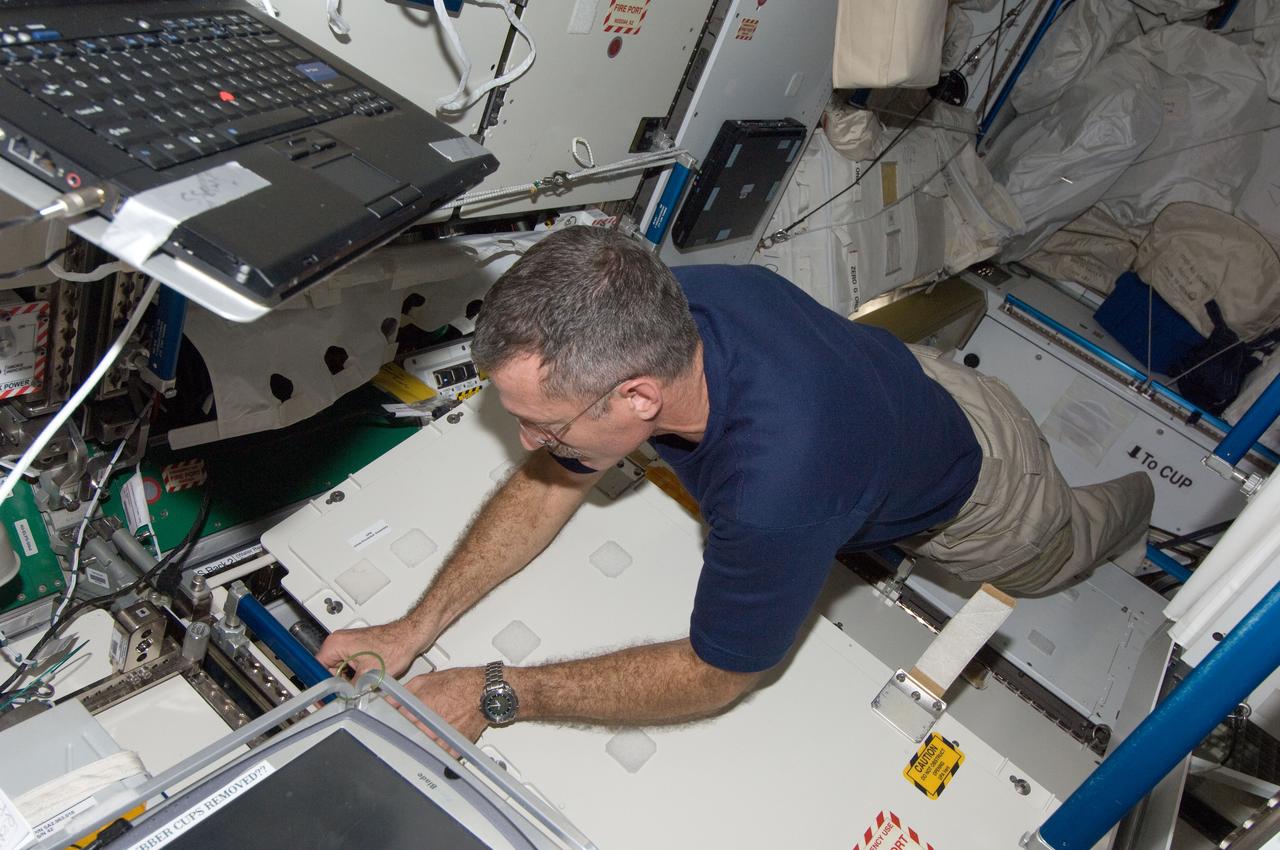
ISS029-E-043447 (19 Nov. 2011) --- NASA astronaut Dan Burbank, Expedition 29 flight engineer, works with the Urine Processor Assembly (UPA) in the Tranquility node of the International Space Station.
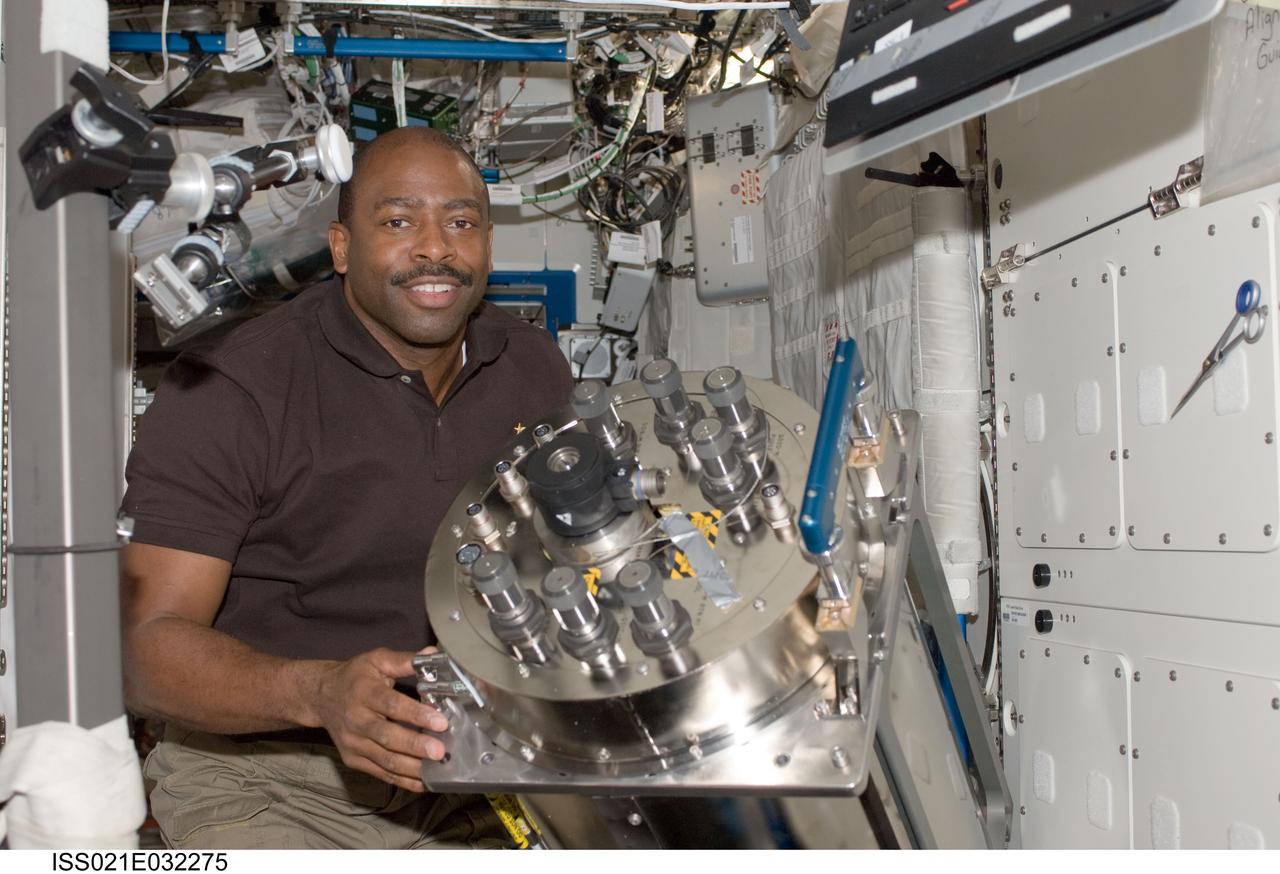
ISS021-E-032275 (23 Nov. 2009) --- NASA astronaut Leland Melvin, STS-129 mission specialist, holds the failed Urine Processor Assembly / Distillation Assembly (UPA DA) in the Destiny laboratory of the International Space Station while space shuttle Atlantis remains docked with the station. Melvin and European Space Agency astronaut Frank De Winne (out of frame), Expedition 21 commander, removed and packed the UPA DA, then transferred it from the Water Recovery System 2 (WRS-2) rack to Atlantis for stowage on the middeck.

Image taken 7/27/2000: The Lena River, some 2,800 miles (4,400 km) long, is one of the largest rivers in the world. The Lena Delta Reserve is the most extensive protected wilderness area in Russia. It is an important refuge and breeding grounds for many species of Siberian wildlife. The Lena Delta can be found on Landsat 7 WRS Path 131 Row 8/9, center: 72.21, 126.15. To learn more about the Landsat satellite go to: <a href="http://landsat.gsfc.nasa.gov/" rel="nofollow">landsat.gsfc.nasa.gov/</a>
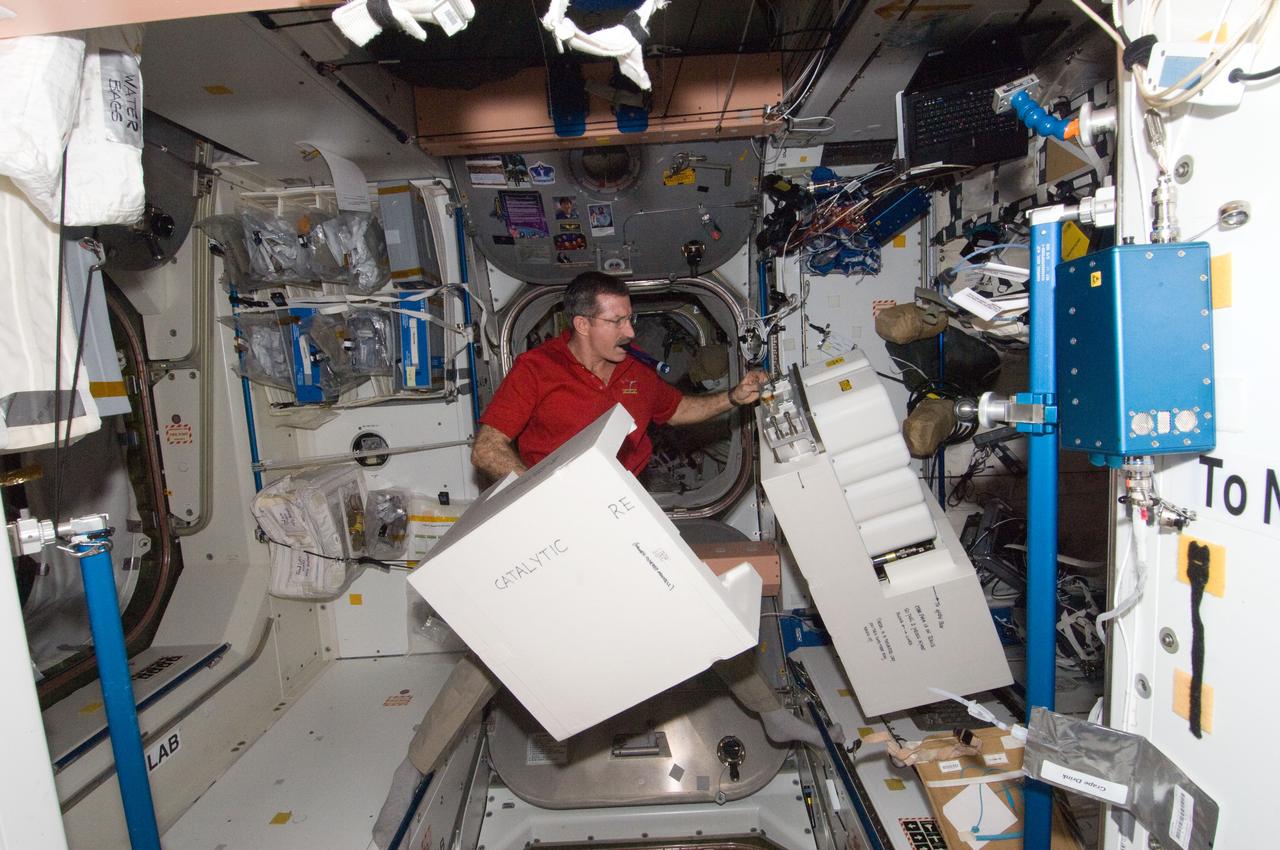
ISS030-E-128841 (8 March 2012) --- NASA astronaut Dan Burbank, Expedition 30 commander, works with Catalytic Reactor hardware in the Unity node of the International Space Station.
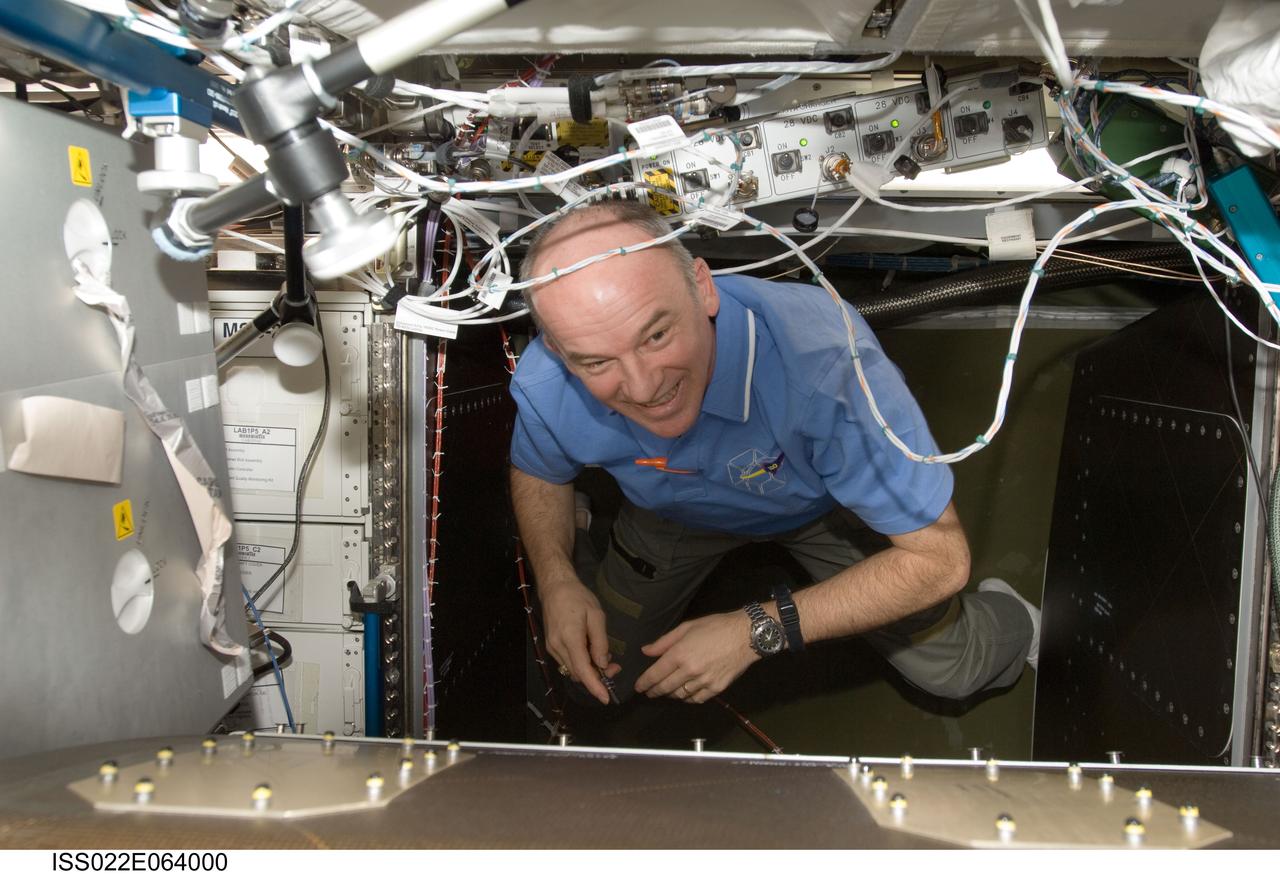
ISS022-E-064000 (11 Feb. 2010) --- NASA astronaut Jeffrey Williams, commander of the Expedition 22 crew aboard the International Space Station, displays a smiling countenance following the arrival of the space shuttle Endeavour and its six STS-130 crewmembers (all out of frame) a day earlier. The two crews, totaling eleven cosmonauts and astronauts, will be sharing duties for more than a week and are scheduled to team up for three spacewalks in the coming days. Astronauts Robert Behnken and Nicholas Patrick of the STS-130 crew (not pictured) are scheduled for the outside portion of all three spacewalks.
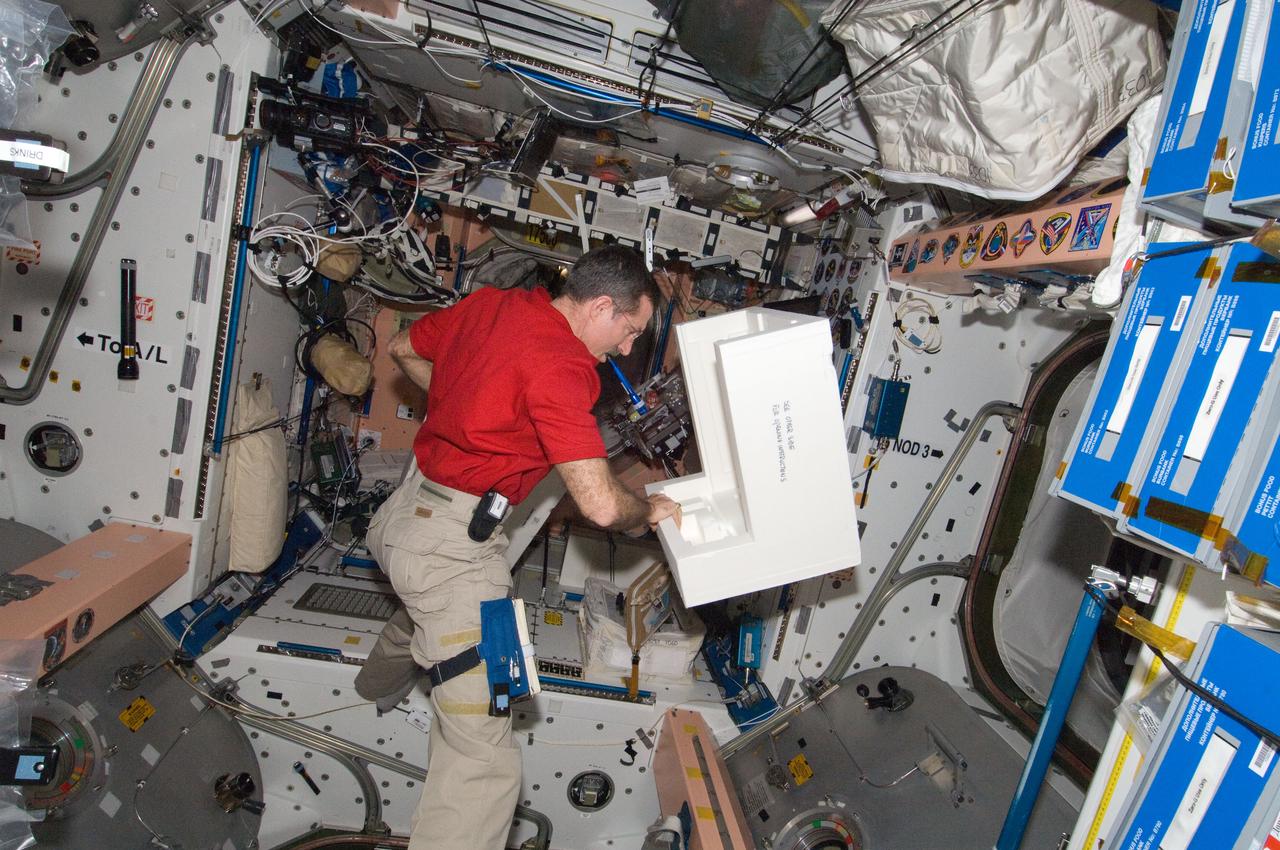
ISS030-E-128838 (8 March 2012) --- NASA astronaut Dan Burbank, Expedition 30 commander, works with Catalytic Reactor hardware in the Unity node of the International Space Station.

Image taken 12/2/2000: The Lambert Glacier in Antarctica, is the world's largest glacier. The focal point of this image is an icefall that feeds into the Lambert glacier from the vast ice sheet covering the polar plateau. Ice flows like water, albeit much more slowly. Cracks can be seen in this icefall as it bends and twists on its slow-motion descent 1300 feet (400 meters) to the glacier below. This Icefall can be found on Landsat 7 WRS Path 42 Row 133/134/135, center: -70.92, 69.15. To learn more about the Landsat satellite go to: <a href="http://landsat.gsfc.nasa.gov/" rel="nofollow">landsat.gsfc.nasa.gov/</a>
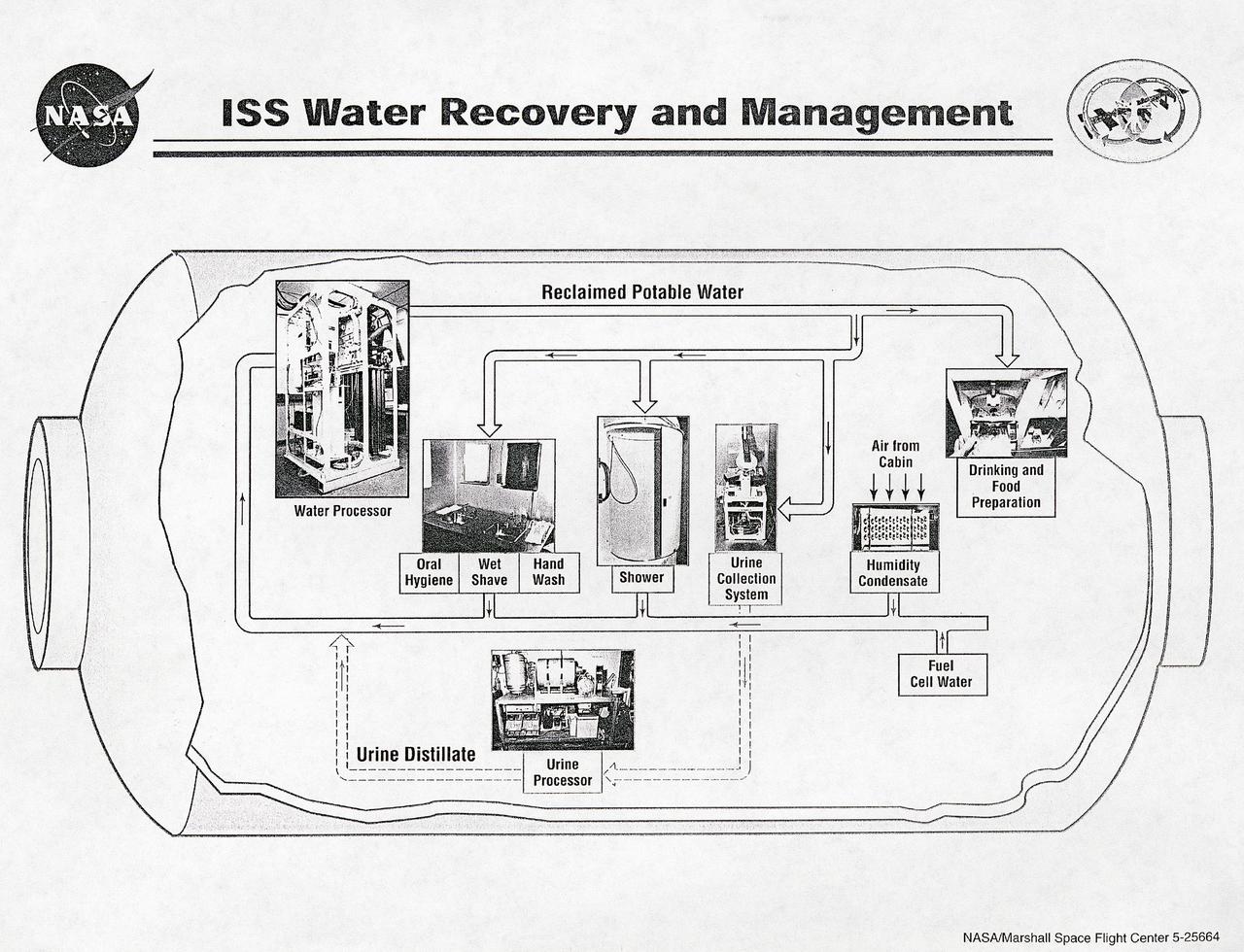
This diagram shows the flow of water recovery and management in the International Space Station (ISS). The Environmental Control and Life Support System (ECLSS) Group of the Flight Projects Directorate at the Marshall Space Flight Center is responsible for the regenerative ECLSS hardware, as well as providing technical support for the rest of the system. The regenerative ECLSS, whose main components are the Water Recovery System (WRS), and the Oxygen Generation System (OGS), reclaims and recycles water oxygen. The ECLSS maintains a pressurized habitation environment, provides water recovery and storage, maintains and provides fire detection/ suppression, and provides breathable air and a comfortable atmosphere in which to live and work within the ISS. The ECLSS hardware will be located in the Node 3 module of the ISS.
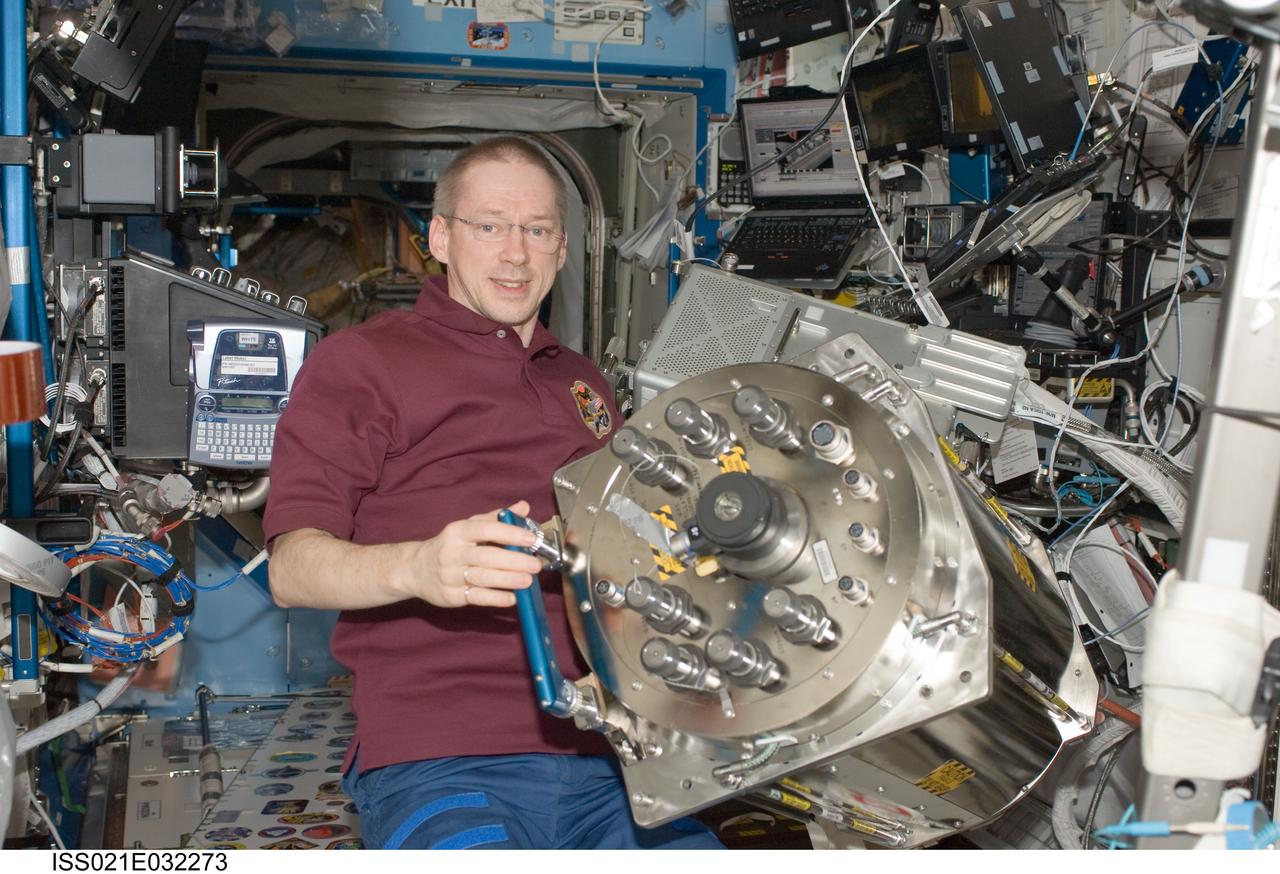
ISS021-E-032273 (23 Nov. 2009) --- European Space Agency astronaut Frank De Winne, Expedition 21 commander, holds the failed Urine Processor Assembly / Distillation Assembly (UPA DA) in the Destiny laboratory of the International Space Station while space shuttle Atlantis remains docked with the station. De Winne and NASA astronaut Leland Melvin (out of frame), STS-129 mission specialist, removed and packed the UPA DA, then transferred it from the Water Recovery System 2 (WRS-2) rack to Atlantis for stowage on the middeck.
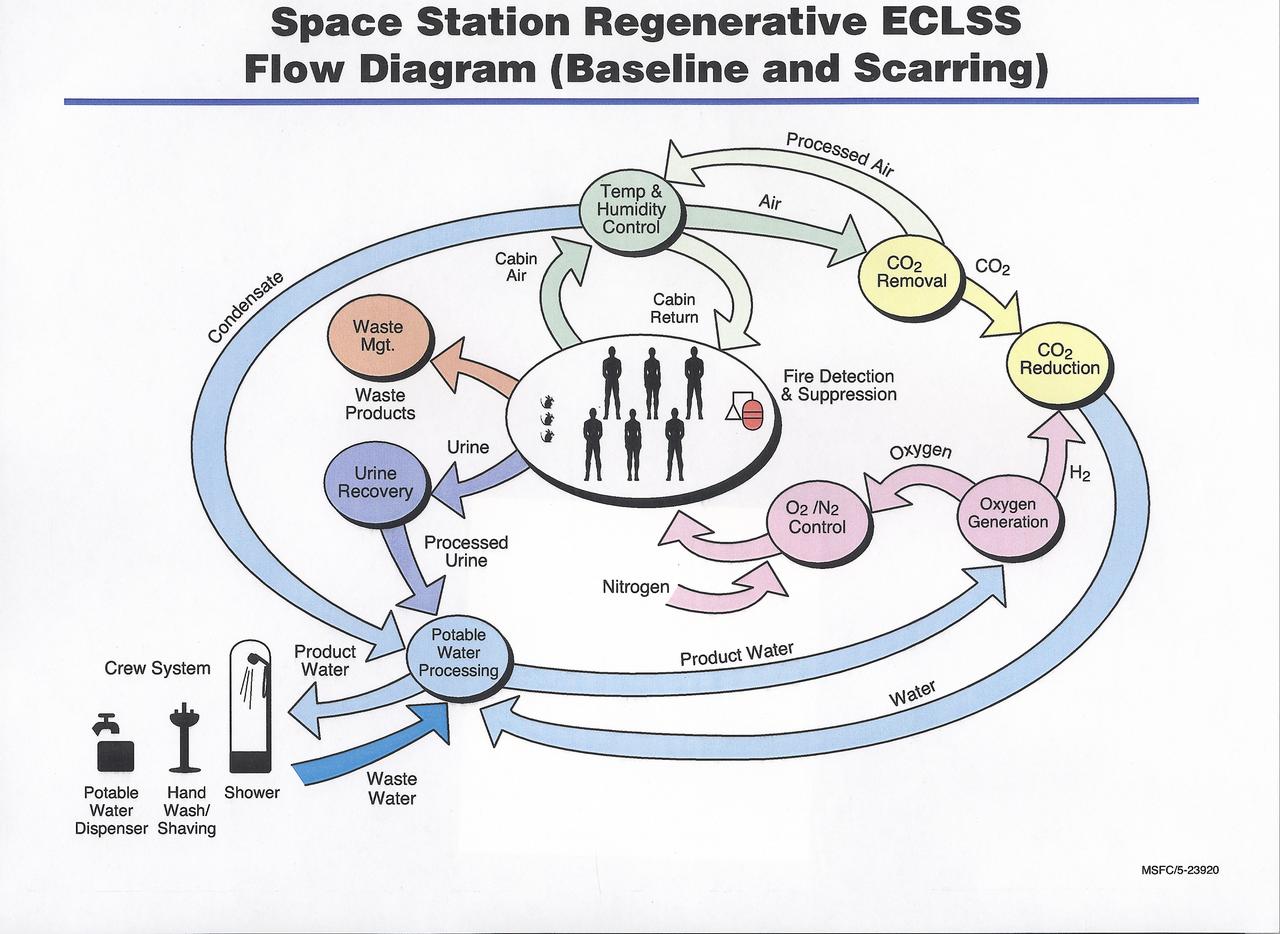
This diagram shows the flow of recyclable resources in the International Space Station (ISS). The Environmental Control and Life Support System (ECLSS) Group of the Flight Projects Directorate at the Marshall Space Flight Center is responsible for the regenerative ECLSS hardware, as well as providing technical support for the rest of the system. The regenerative ECLSS, whose main components are the Water Recovery System (WRS), and the Oxygen Generation System (OGS), reclaims and recycles water and oxygen. The ECLSS maintains a pressurized habitation environment, provides water recovery and storage, maintains and provides fire detection / suppression, and provides breathable air and a comfortable atmosphere in which to live and work within the ISS. The ECLSS hardware will be located in the Node 3 module of the ISS.

Image taken 1/11/2001: The so-called Richat Structure is a geological formation in the Maur Adrar Desert in the African country of Mauritania. Although it resembles an impact crater, the Richat Structure formed when a volcanic dome hardened and gradually eroded, exposing the onion-like layers of rock. The Richat Structure can be found on Landsat 7 WRS Path 203 Row 45, center: 21.68, -11.94. To learn more about the Landsat satellite go to: <a href="http://landsat.gsfc.nasa.gov/" rel="nofollow">landsat.gsfc.nasa.gov/</a> Credit: NASA/GSFC/Landsat 7/USGS
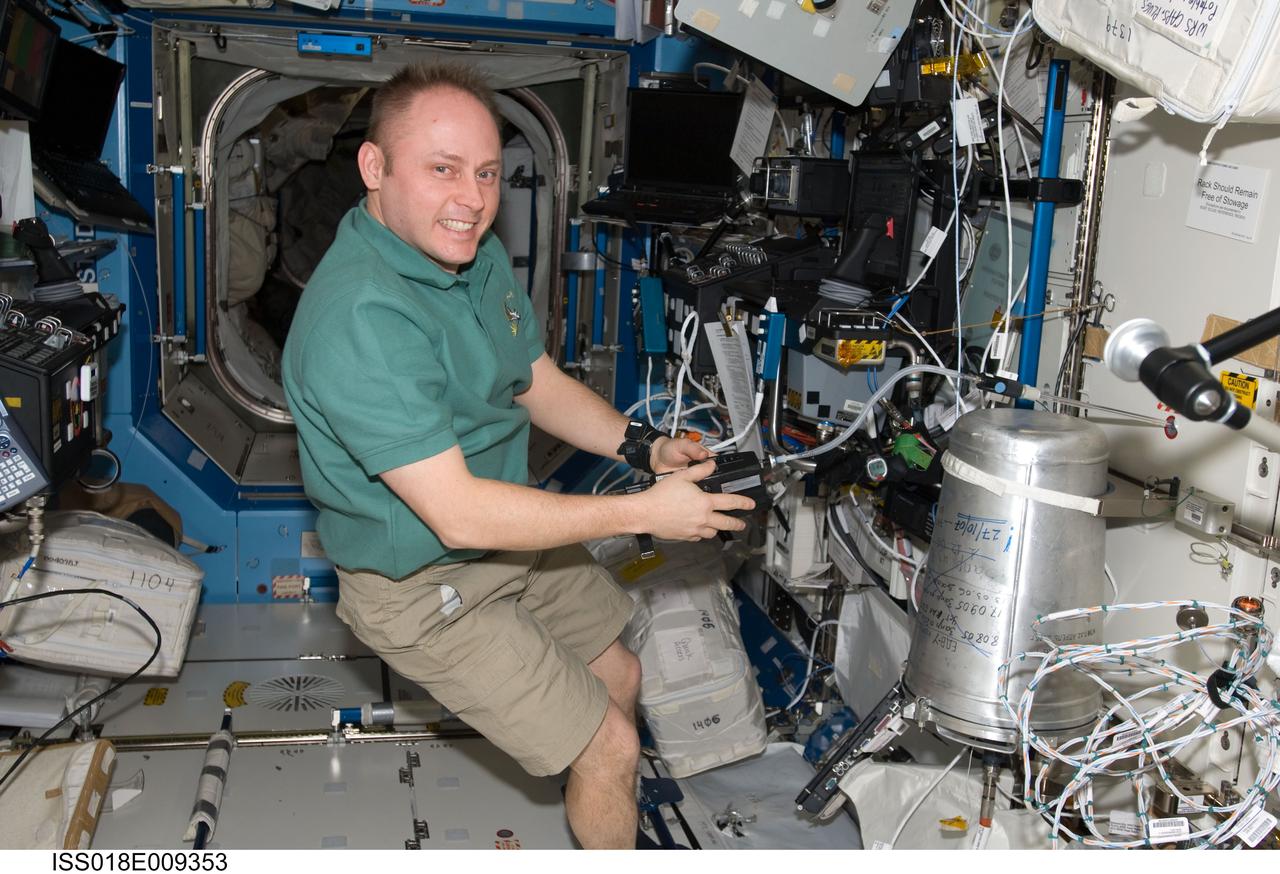
ISS018-E-009353 (20 Nov. 2008) --- Astronaut Michael Fincke, Expedition 18 commander, works in the Destiny laboratory of the International Space Station while Space Shuttle Endeavour (STS-126) remains docked with the station.
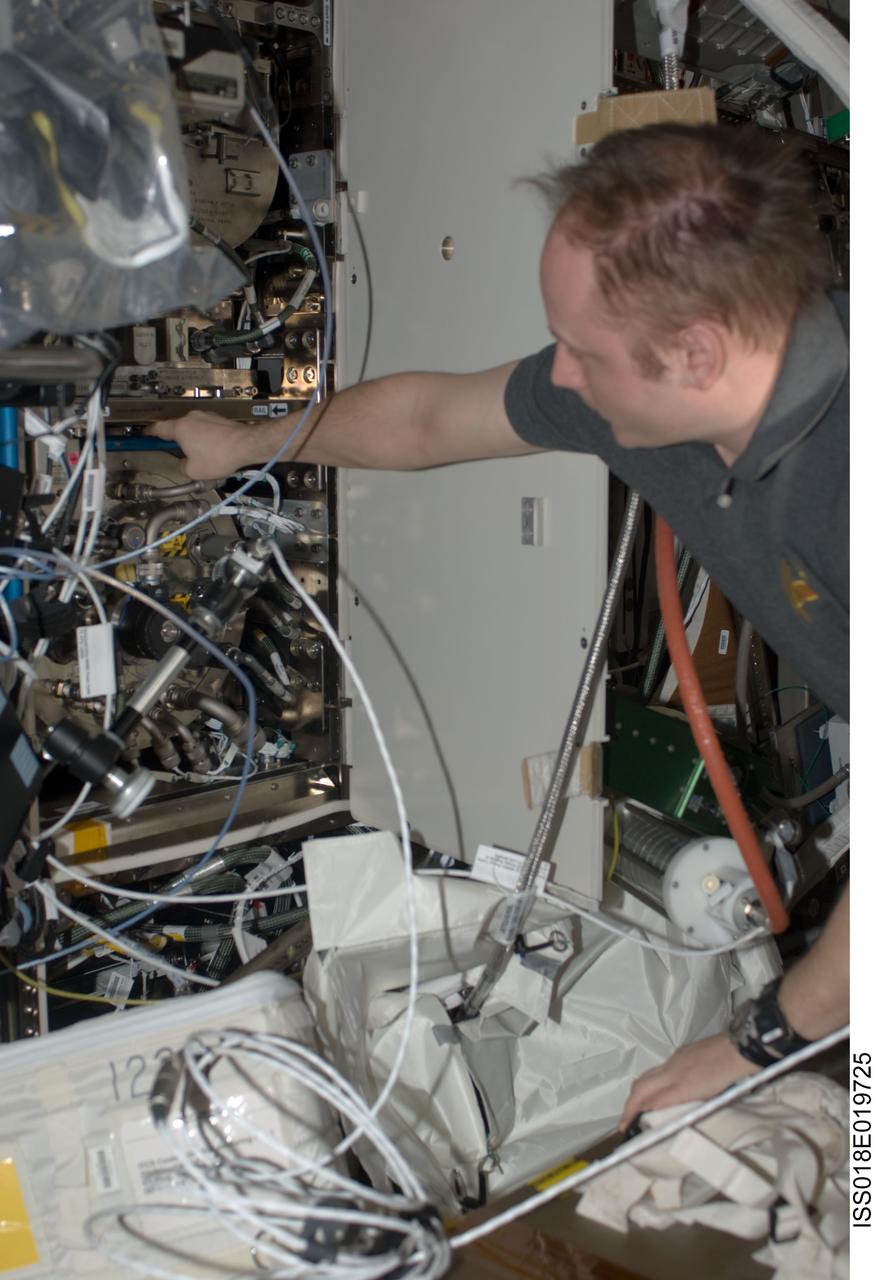
ISS018-E-019725 (9 Jan. 2009) --- Astronaut Michael Fincke, Expedition 18 commander, works on hardware in the Destiny laboratory of the International Space Station.
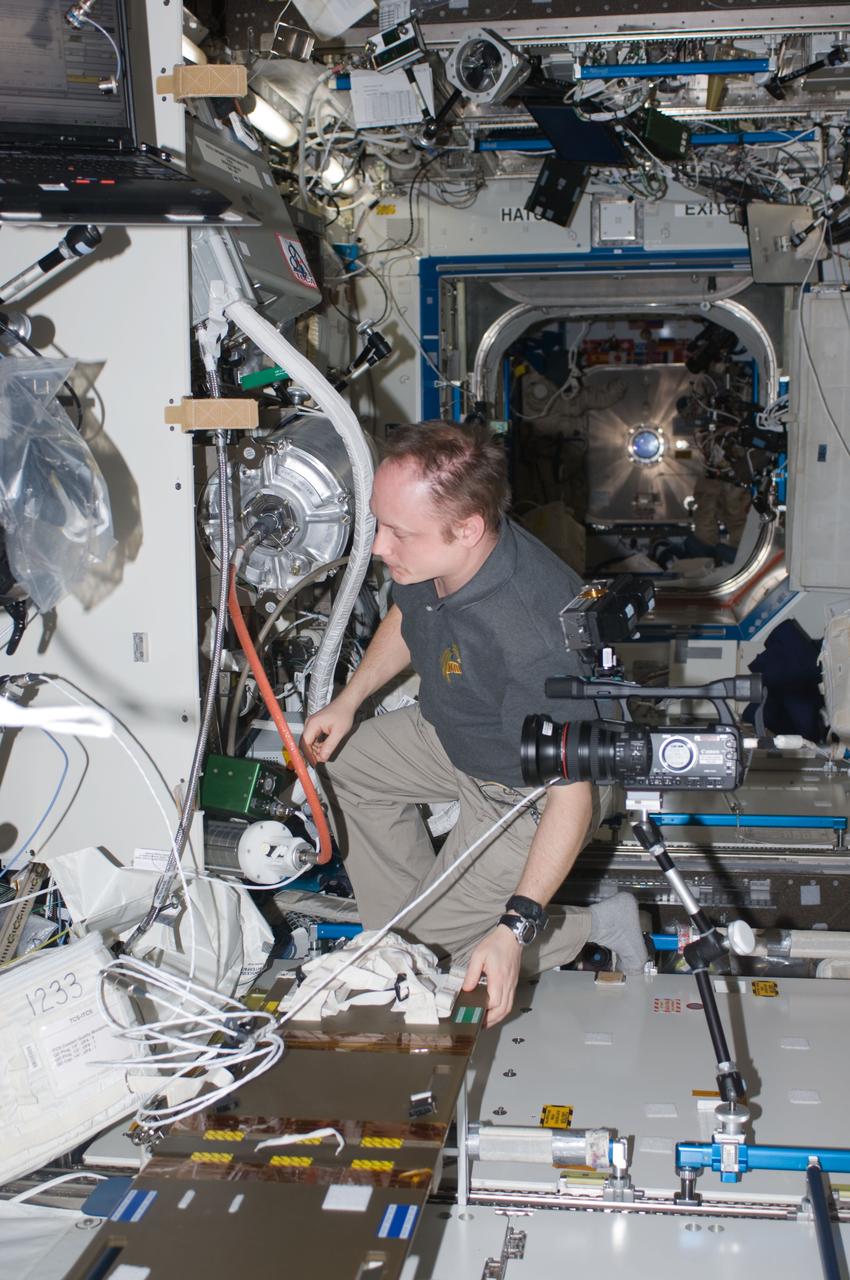
ISS018-E-019723 (9 Jan. 2009) --- Astronaut Michael Fincke, Expedition 18 commander, works on hardware in the Destiny laboratory of the International Space Station.

This image from NASA's James Webb Space Telescope reveals at least 17 concentric dust rings emanating from a pair of stars orbiting one another. Located just over 5,000 light-years from Earth, the system is known as Wolf-Rayet 140 because one of the stars is a Wolf-Rayet star. The other is an O-type star, one of the most massive star types known. Each ring was created when the two stars came close together and their stellar winds (streams of gas they blow into space) collided, compressing the gas and forming dust. A ring is produced once per orbit, every 7.93 years. A Wolf-Rayet star is an O-type star born with at least 25 times more mass than our Sun that is nearing the end of its life, when it will likely collapse directly to black hole, or explode as a supernova. These delays between periods of dust production create the unique ring pattern. Some Wolf-Rayet binaries in which the stars are close enough together and have circular orbits produce dust continuously, often forming a pinwheel pattern. WR 140's rings are also referred to as shells because they are not perfectly circular and are thicker and wider than they appear in the image. The rings appear brighter in some areas but are almost invisible in others, rather than forming a perfect "bullseye" pattern. That's because production of dust is variable as the stars get close to one another, and because Webb views the system at an angle and is not looking directly at the orbital plane of the stars. One of the densest regions of dust production creates the bright feature appearing at 2 o'clock. The image was taken by the Mid-Infrared Instrument (MIRI), now managed by the agency's Goddard Space Flight Center. MIRI was developed through a 50-50 partnership between NASA and ESA (European Space Agency). The Jet Propulsion Laboratory in Southern California led the effort for NASA, and a multinational consortium of European astronomical institutes contributed for ESA. Webb's science instruments detect infrared light, a range of wavelengths emitted by warm objects and invisible to the human eye. MIRI detects the longest infrared wavelengths, which means it can often see cooler objects – including these dust rings – than the other three Webb instruments can. The filters used to take this image were the F770W (7.7 micrometers, shown as blue), F1500W (15 micrometers, shown as green), and F2100W (21 micrometers, shown as red). The observations were done under Webb's early release observation (ERO) program number 1349. The most common element found in stars, hydrogen, can't form dust on its own. But Wolf-Rayet stars in their later stages have blown away all of their hydrogen, so they eject elements typically found deep in a star's interior, like carbon, which can form dust. Data from MIRI's Medium Resolution Spectrometer (MRS) shows that the dust made by WR 140 is likely made of a class of molecules called polycyclic aromatic hydrocarbons (PAHs), which are a type of organic carbon-rich compounds that are thought to enrich the carbon content throughout the Universe. Initial processing of the Webb WR 140 data included eight bright "spikes" of light emanating from the center of the image. These are not features of the system, but so-called artifacts of the telescope itself. They were removed from the image, in order to give viewers an unobscured view of the source object. https://photojournal.jpl.nasa.gov/catalog/PIA25432
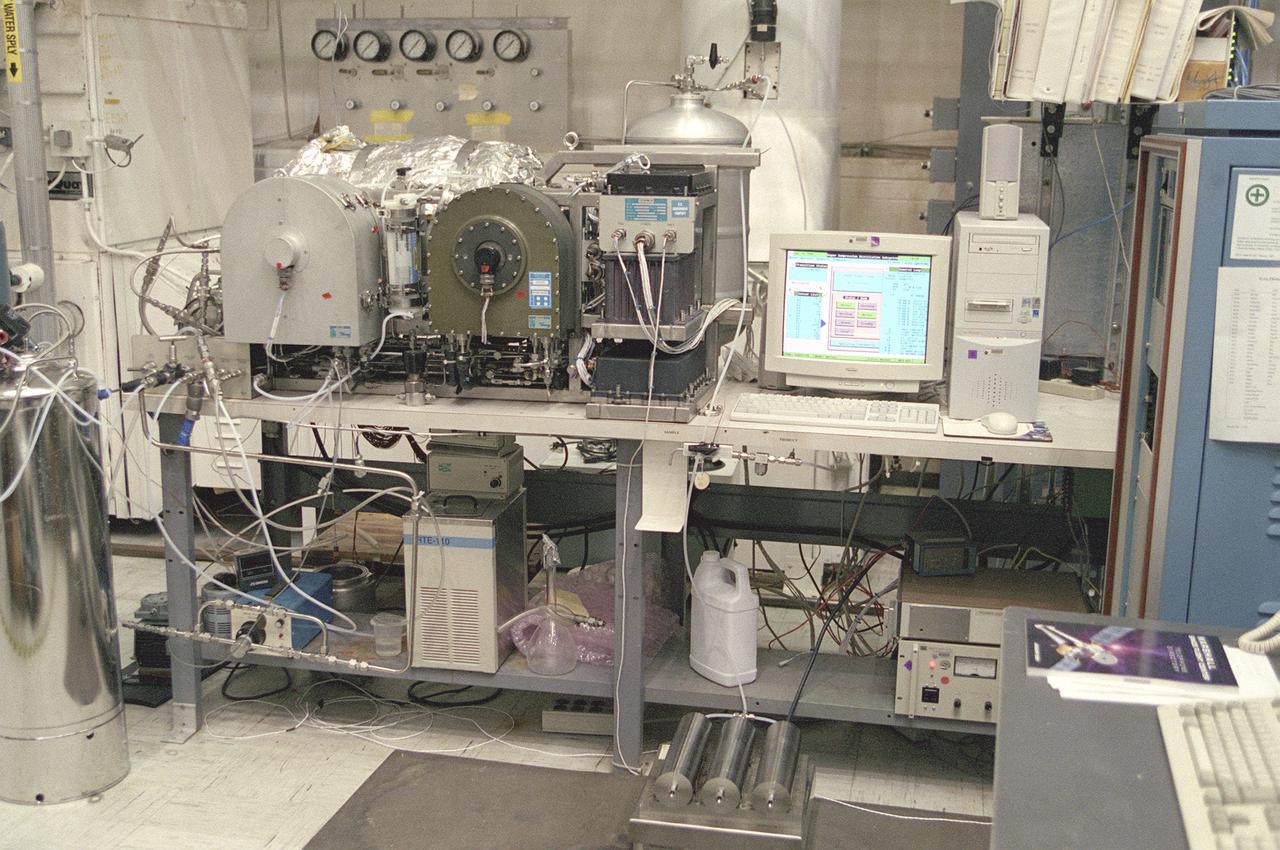
The Marshall Space Flight Center (MSFC) is responsible for designing and building the life support systems that will provide the crew of the International Space Station (ISS) a comfortable environment in which to live and work. Scientists and engineers at the MSFC are working together to provide the ISS with systems that are safe, efficient, and cost-effective. These compact and powerful systems are collectively called the Environmental Control and Life Support Systems, or simply, ECLSS. This photograph shows the fifth generation Urine Processor Development Hardware. The Urine Processor Assembly (UPA) is a part of the Water Recovery System (WRS) on the ISS. It uses a chase change process called vapor compression distillation technology to remove contaminants from urine. The UPA accepts and processes pretreated crewmember urine to allow it to be processed along with other wastewaters in the Water Processor Assembly (WPA). The WPA removes free gas, organic, and nonorganic constituents before the water goes through a series of multifiltration beds for further purification. Product water quality is monitored primarily through conductivity measurements. Unacceptable water is sent back through the WPA for reprocessing. Clean water is sent to a storage tank.
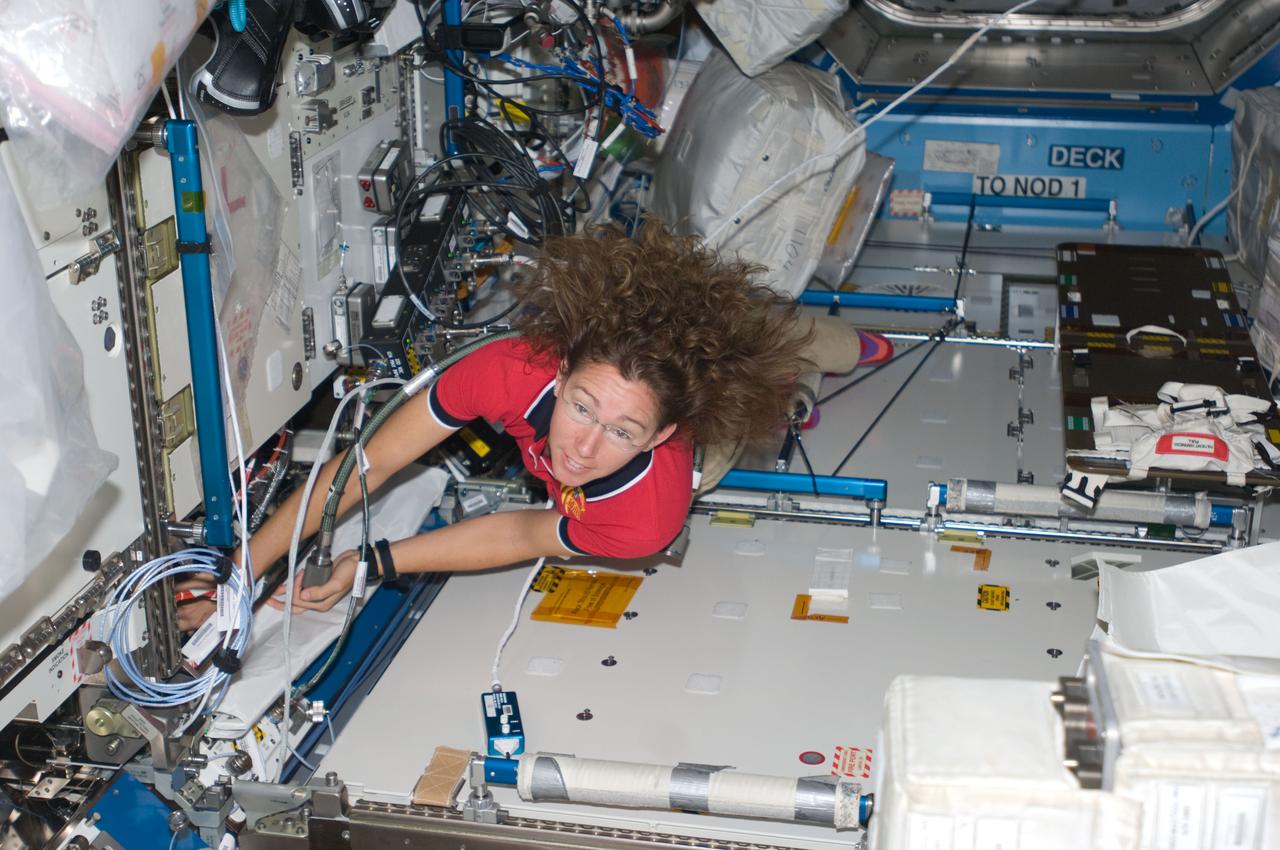
ISS018-E-011541 (8 Dec. 2008) --- Astronaut Sandra Magnus, Expedition 18 flight engineer, works in the Destiny laboratory of the International Space Station.

Here we see the spectacular cosmic pairing of the star Hen 2-427 — more commonly known as WR 124 — and the nebula M1-67 which surrounds it. Both objects, captured here by the NASA/ESA Hubble Space Telescope are found in the constellation of Sagittarius and lie 15,000 light-years away. The star Hen 2-427 shines brightly at the very center of this explosive image and around the hot clumps of surrounding gas that are being ejected into space at over 93,210 miles (150,000 km) per hour. Hen 2-427 is a Wolf–Rayet star, named after the astronomers Charles Wolf and Georges Rayet. Wolf–Rayet are super-hot stars characterized by a fierce ejection of mass. The nebula M1-67 is estimated to be no more than 10,000 years old — just a baby in astronomical terms — but what a beautiful and magnificent sight it makes. Image credit: ESA/Hubble & NASA, Acknowledgement: Judy Schmidt <b><a href="http://www.nasa.gov/audience/formedia/features/MP_Photo_Guidelines.html" rel="nofollow">NASA image use policy.</a></b> <b><a href="http://www.nasa.gov/centers/goddard/home/index.html" rel="nofollow">NASA Goddard Space Flight Center</a></b> enables NASA’s mission through four scientific endeavors: Earth Science, Heliophysics, Solar System Exploration, and Astrophysics. Goddard plays a leading role in NASA’s accomplishments by contributing compelling scientific knowledge to advance the Agency’s mission. <b>Follow us on <a href="http://twitter.com/NASAGoddardPix" rel="nofollow">Twitter</a></b> <b>Like us on <a href="http://www.facebook.com/pages/Greenbelt-MD/NASA-Goddard/395013845897?ref=tsd" rel="nofollow">Facebook</a></b> <b>Find us on <a href="http://instagrid.me/nasagoddard/?vm=grid" rel="nofollow">Instagram</a></b>