
Official portrait, Waleed Abdalati, NASA Chief Scientist, NASA Headquarters, Thursday Jan. 6, 2011 in Washington. Photo Credit: (NASA/Bill Ingalls)
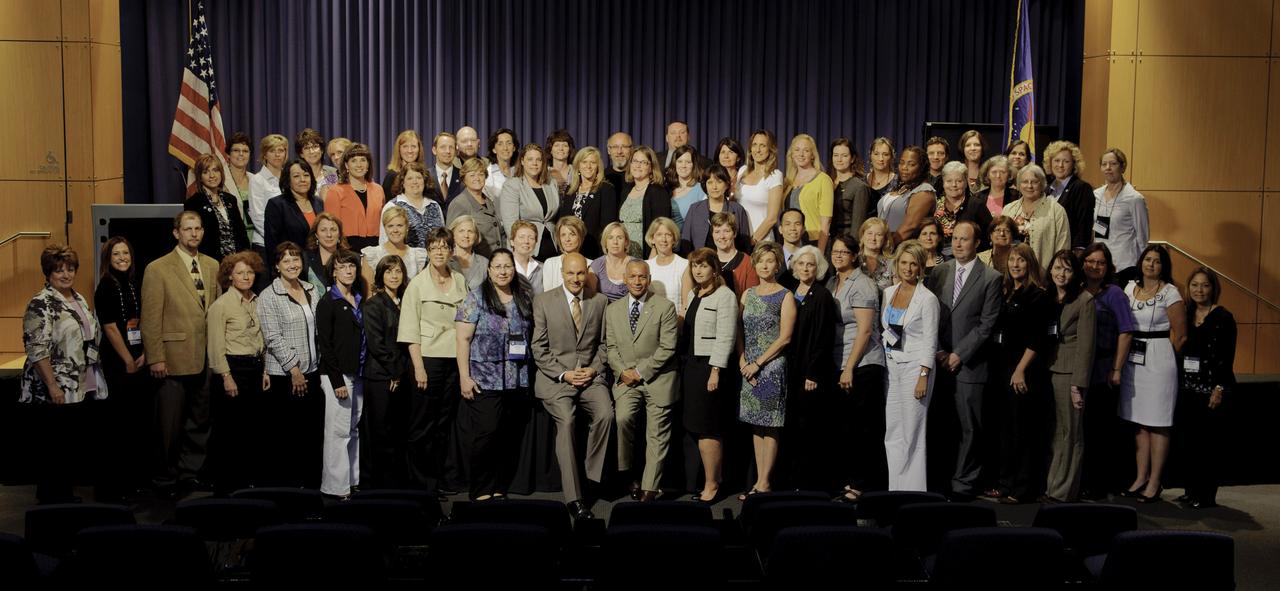
Recipients of the Presidential Award for Excellence in Mathematics and Science Teaching stand together with NASA Administrator Charles Bolden and chief scientist Waleed Abdalati, center, at NASA Headquarters in Washington on Wednesday, May 19, 2011. Photo Credit: (NASA/Paul E. Alers)
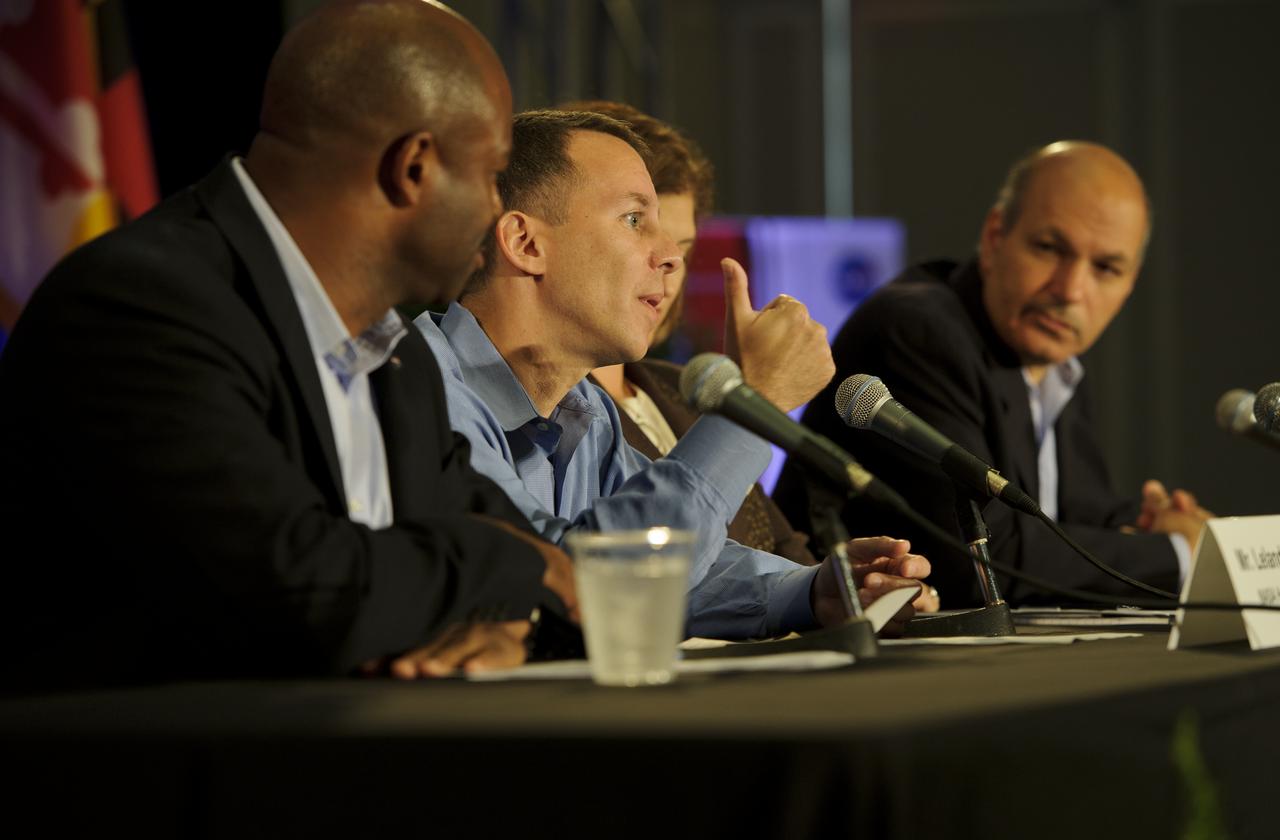
Dr. Robert Braun, NASA Chief Technologist, second from left, makes a point, as panelists Leland Melvin, Assoicate Administrator for NASA Education, left, Dr. Laurie Leshin, NASA Deputy Associate Administrator Exploration Systems Mission Directortorate, and Dr. Waleed Abdalati, NASA Chief Scientist, right, look on during a panel discussion at the NASA Future Forum held at the Riggs Alumni Center on the campus of the University of Maryland, Thursday, Aug. 11, 2011 in College Park, Md. Photo Credit: (NASA/Paul E. Alers)
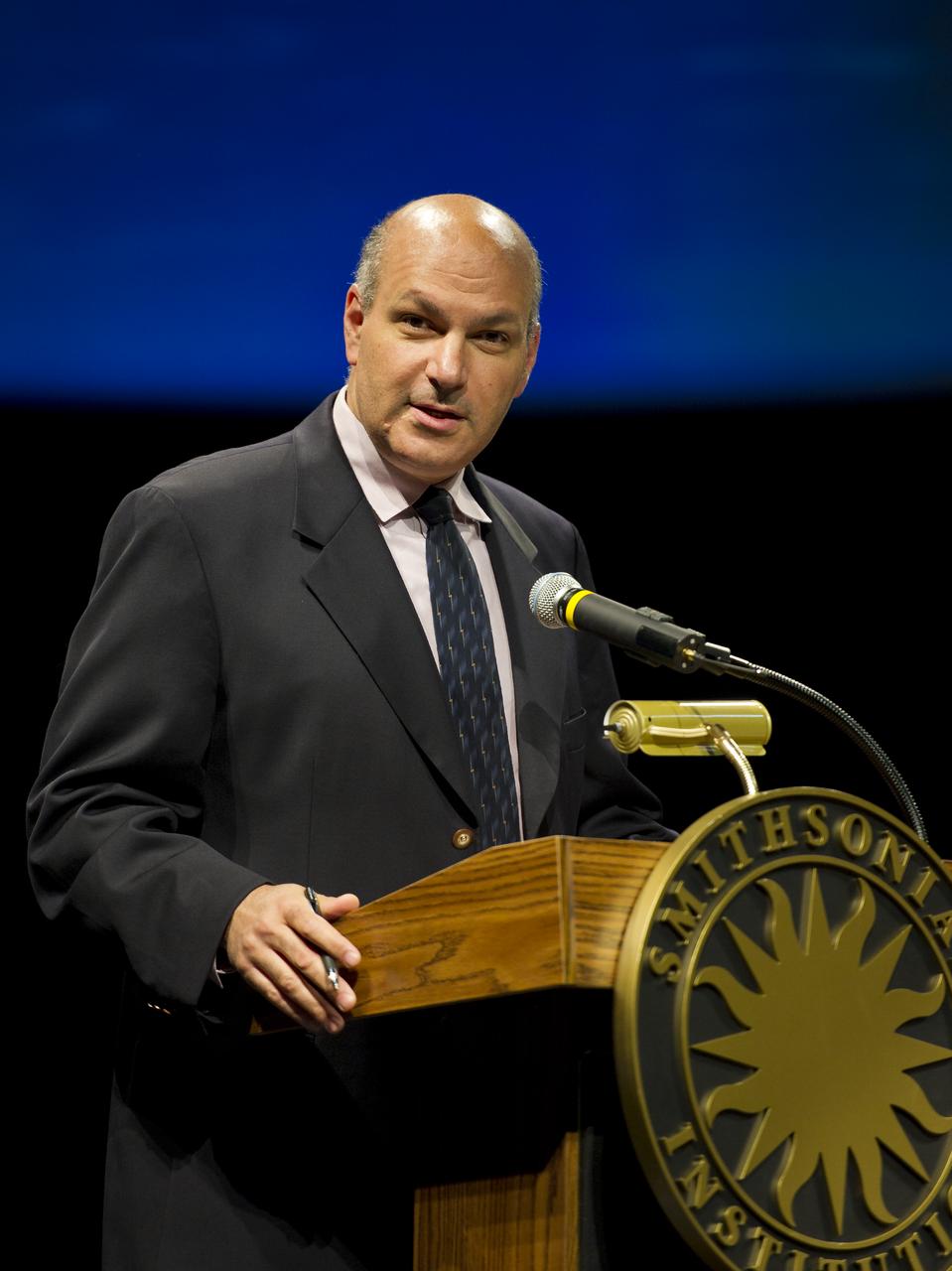
NASA chief scientist, Dr. Waleed Abdalati, speaks at a Mars Science Laboratory (MSL) press conference at the Smithsonian's National Air and Space Museum on Friday, July 22, 2011 in Washington. The Mars Science Laboratory (MSL), or Curiosity, is scheduled to launch late this year from NASA's Kennedy Space Center in Florida and land in August 2012. Curiosity is twice as long and more than five times as heavy as previous Mars rovers. The rover will study whether the landing region at Gale crater had favorable environmental conditions for supporting microbial life and for preserving clues about whether life ever existed. Photo Credit: (NASA/Carla Cioffi)
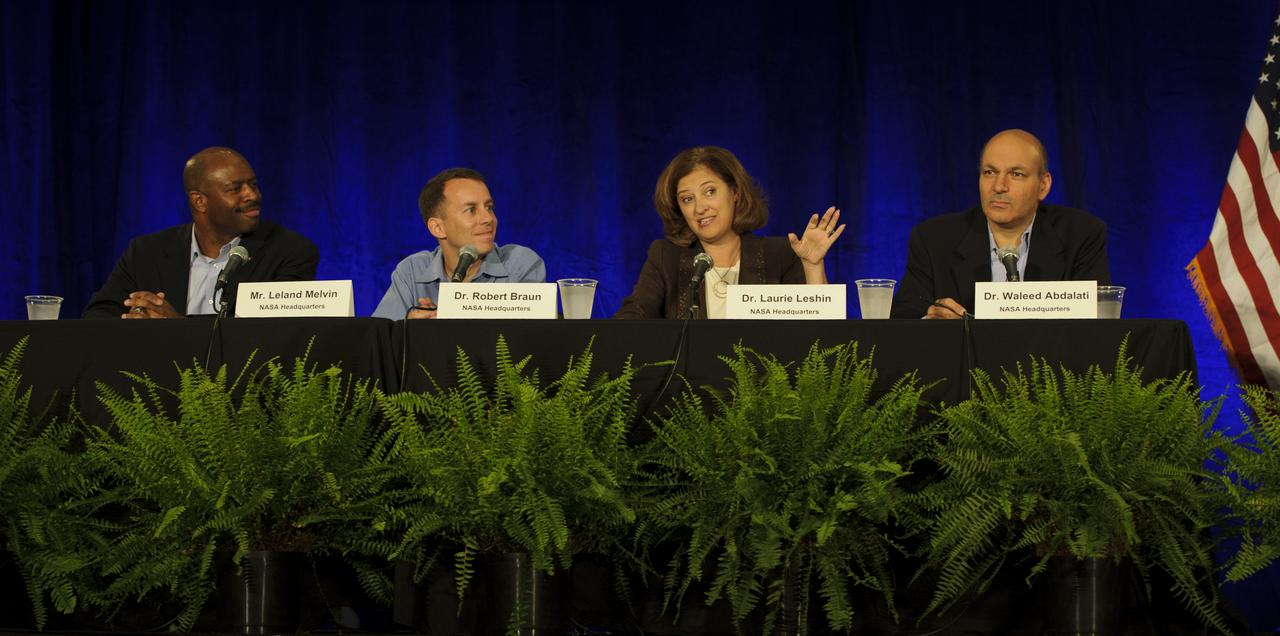
Dr. Laurie Leshin, NASA Deputy Associate Administrator Exploration Systems Mission Directortorate, second from right, speaks as Dr. Waleed Abdalati, NASA Chief Scientist, right, Dr. Robert Braun, NASA Chief Technologist, and Leland Melvin, Assoicate Administrator for NASA Education, far left, at the NASA Future Forum held at the Riggs Alumni Center on the campus of the University of Maryland, Thursday, Aug. 11, 2011 in College Park, Md. Photo Credit: (NASA/Paul E. Alers)
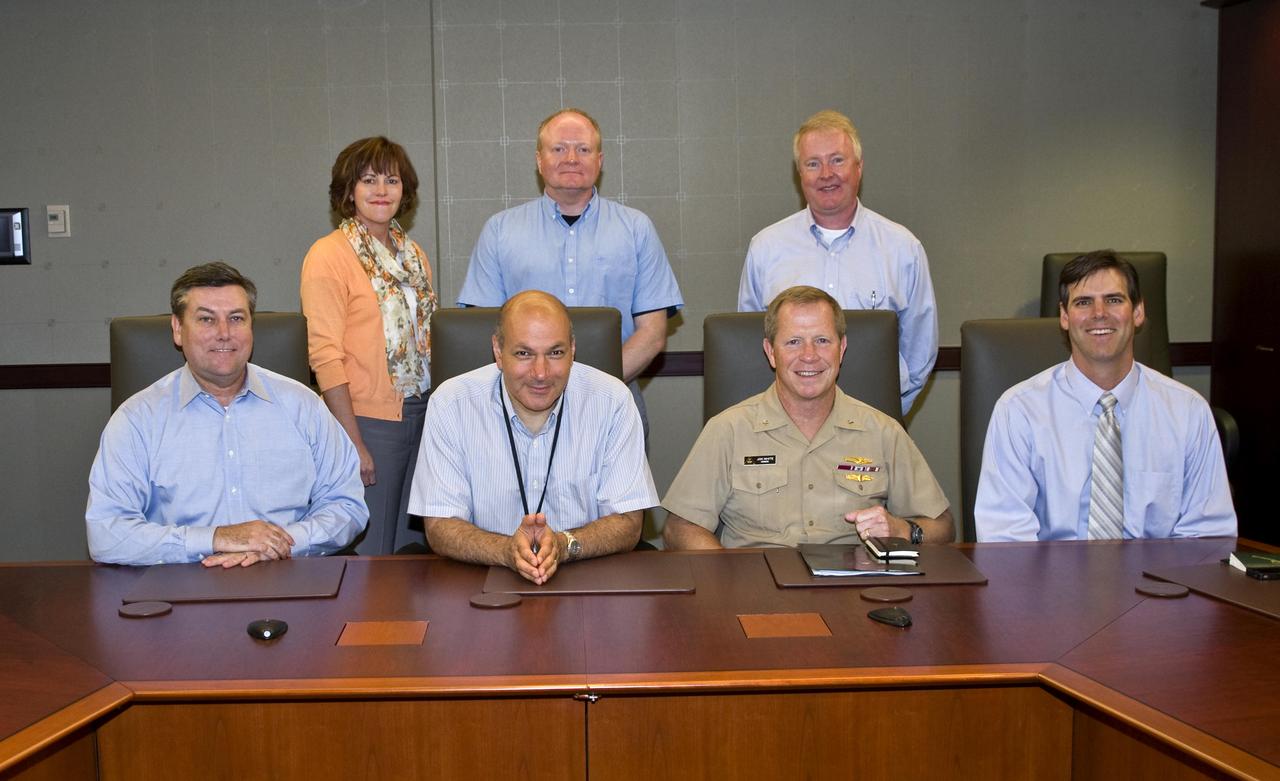
NASA Chief Scientist Dr. Waleed Abdalati visited Stennis Space Center on July 19, to learn about the extensive science capabilities onsite. Shown at right are: (seated, l to r), Stennis Center Director Patrick Scheuermann; Dr. Abdalati; U.S. Navy Rear Adm. Jonathan White; NOAA National Data Buoy Center Program Manager Shannon McArthur; (standing, l to r) Stennis Project Directorate Assistant Director Anne Peek; Stennis Applied Science & Technology Project Office Chief Duane Armstrong; and Stennis Project Directorate Director Keith Brock.
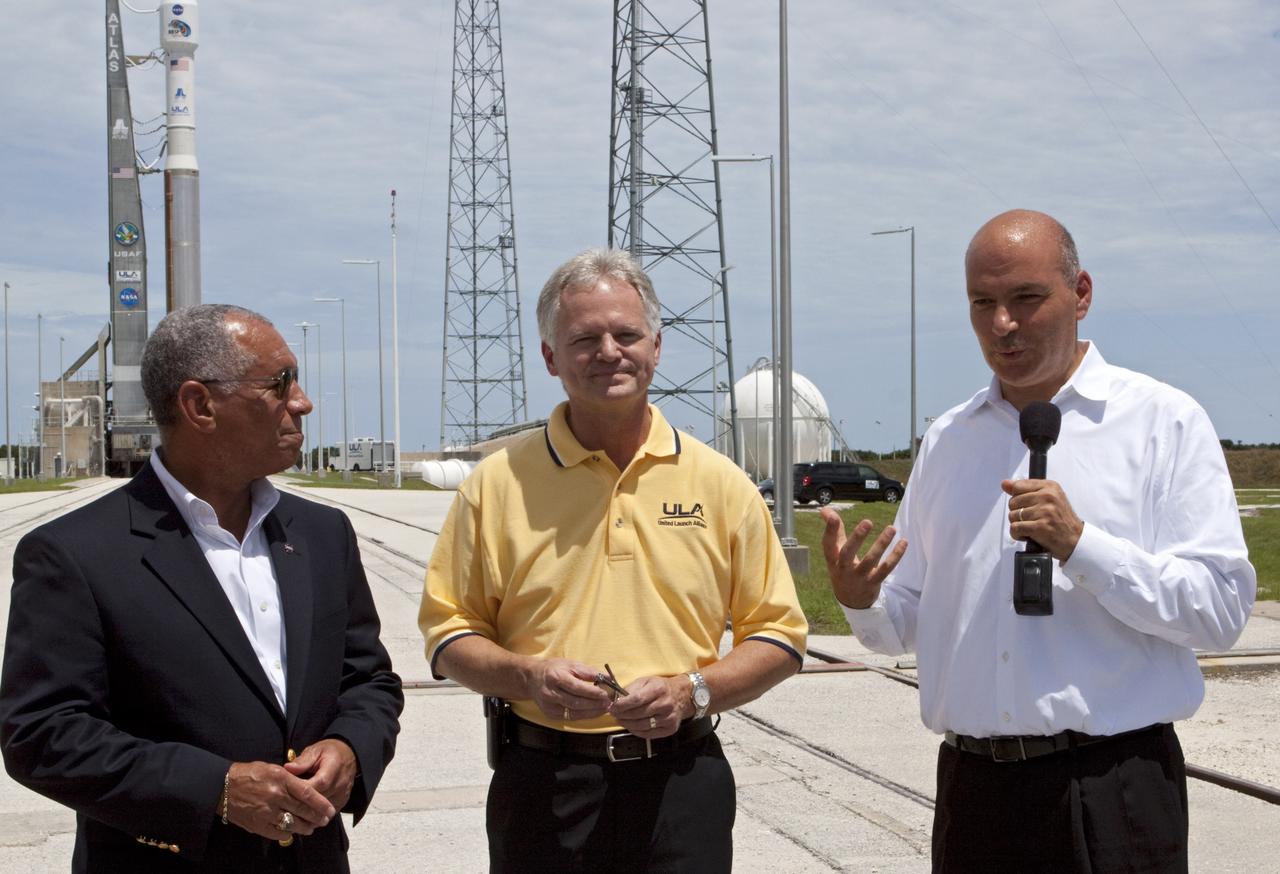
CAPE CANAVERAL, Fla. - NASA Chief Scientist Waleed Abdalati addresses news media in Space Launch Complex-41 at Cape Canaveral Air Force Station in Florida. At the pad, a United Launch Alliance, or ULA, Atlas V rocket is being prepared for launch of the Radiation Belt Storm Probes, or RBSP, satellites. Speaking to members of the media are, from the left, NASA Administrator Charles Bolden, James Sponnick, ULA vice president of Mission Operations and Abdalati. Bolden took a few dozen members of the news media on a tour of the space agency's Kennedy Space Center and adjacent Cape Canaveral Air Force Station on Aug. 23, 2012 to show the progress being made for future government and commercial space endeavors that will begin from Florida's Space Coast. For more information, visit: http://www.nasa.gov/centers/kennedy/news/kennedy-bolden-tour.html Photo credit: NASA/Kim Shiflett
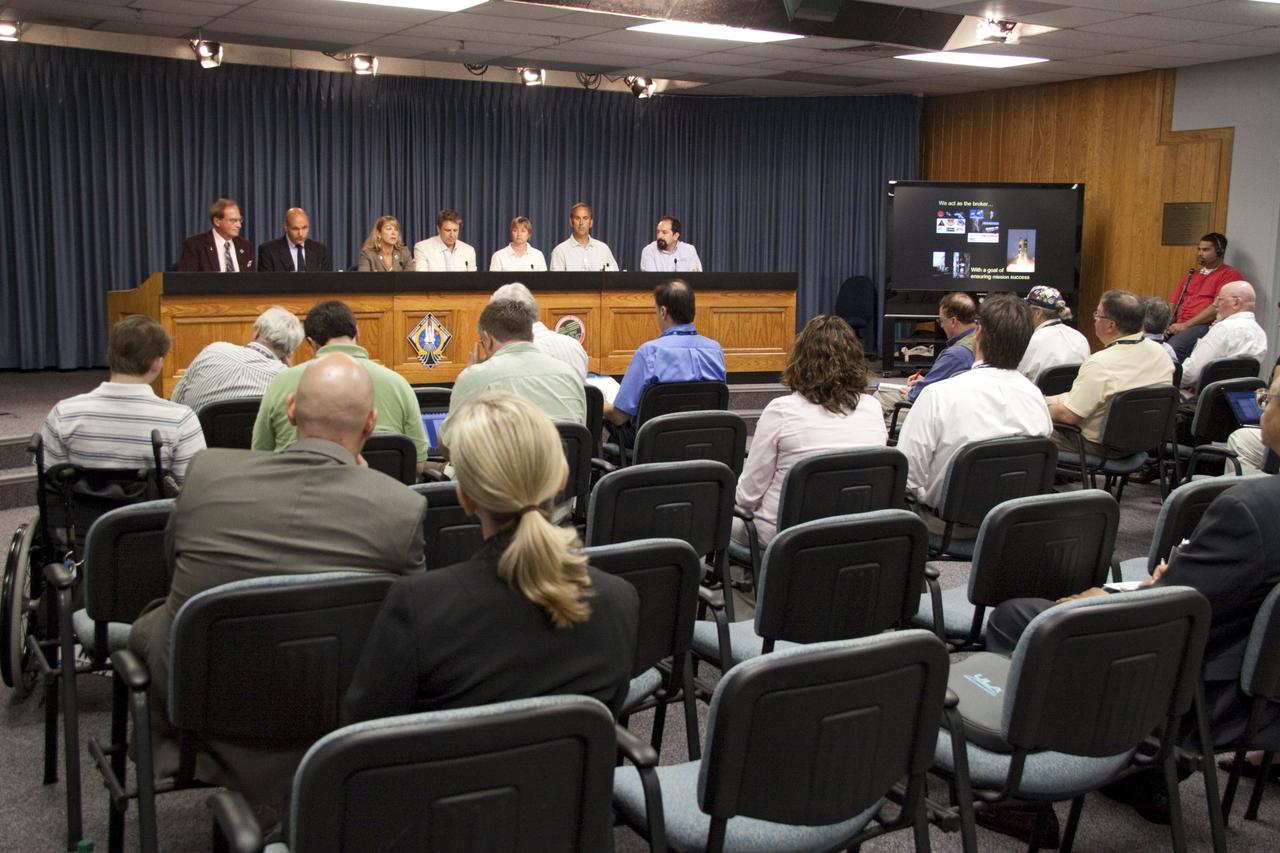
CAPE CANAVERAL, Fla. -- In the Press Site auditorium at NASA's Kennedy Space Center in Florida, media were briefed about NASA's future science missions. Seen here are NASA Public Affairs Officer George Diller (left); Waleed Abdalati, NASA chief scientist; Amanda Mitskevich, NASA Launch Services Program manager; Scott Bolton, Juno principal investigator with the Southwest Research Institute, San Antonio; Maria Zuber, GRAIL principal investigator with the Massachusetts Institute of Technology; John Grotzinger, Mars Science Lab project scientist with the California Institute of Technology and Daniel Stern, NuStar project scientist with NASA's Jet Propulsion Laboratory in Calif. Photo credit: NASA/Jack Pfaller
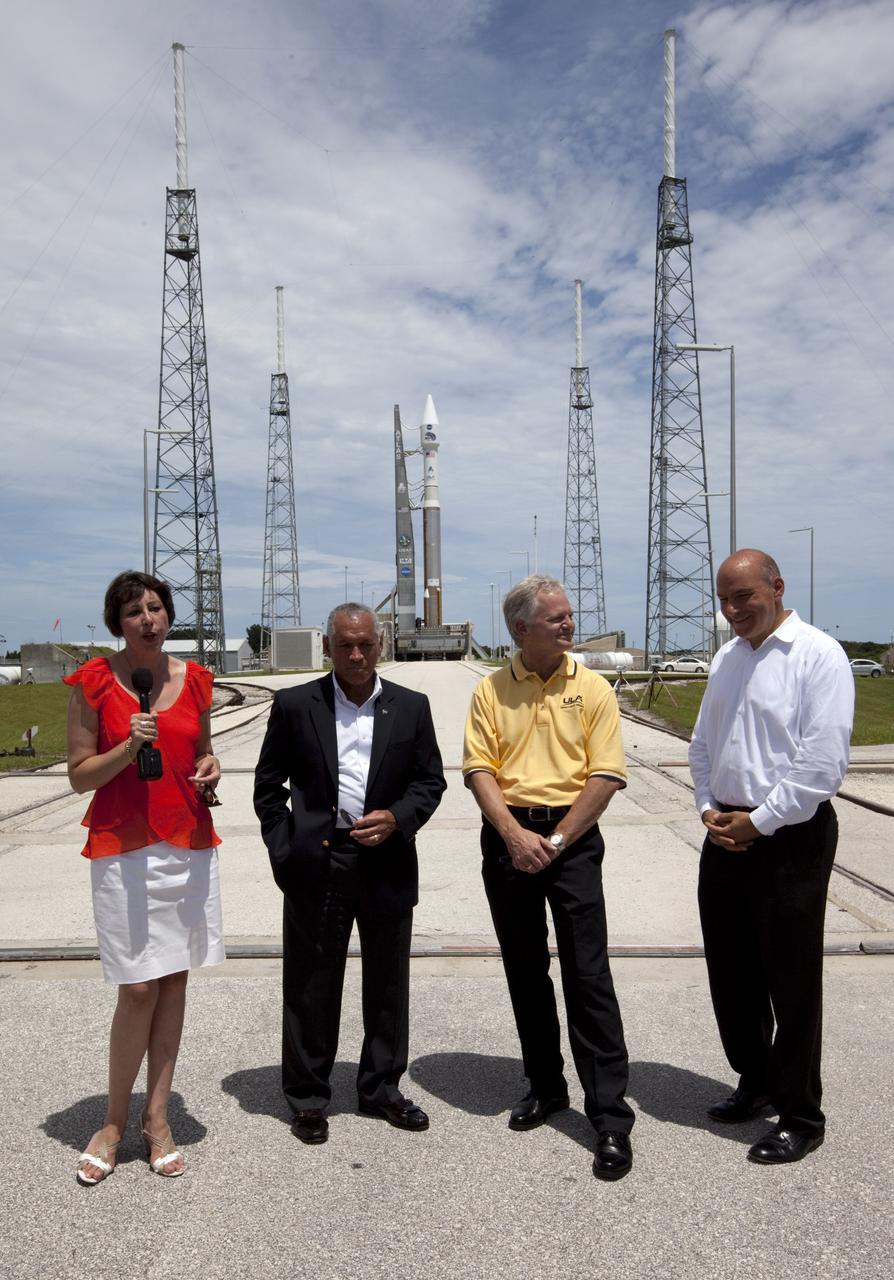
CAPE CANAVERAL, Fla. - Dr. Nicky Fox, deputy RBSP project scientist for the Applied Physics Laboratory at Johns Hopkins University, addresses news media at Space Launch Complex-41 at Cape Canaveral Air Force Station in Florida. At the pad, a United Launch Alliance, or ULA, Atlas V rocket is being prepared for launch of the Radiation Belt Storm Probes, or RBSP, satellites. Speaking to members of the media are, from the left, Fox, NASA Administrator Charles Bolden, James Sponnick, ULA vice president of Mission Operations and NASA Chief Scientist Waleed Abdalati. Bolden took a few dozen members of the news media on a tour of the space agency's Kennedy Space Center and adjacent Cape Canaveral Air Force Station on Aug. 23, 2012 to show the progress being made for future government and commercial space endeavors that will begin from Florida's Space Coast. For more information, visit: http://www.nasa.gov/centers/kennedy/news/kennedy-bolden-tour.html Photo credit: NASA/Kim Shiflett
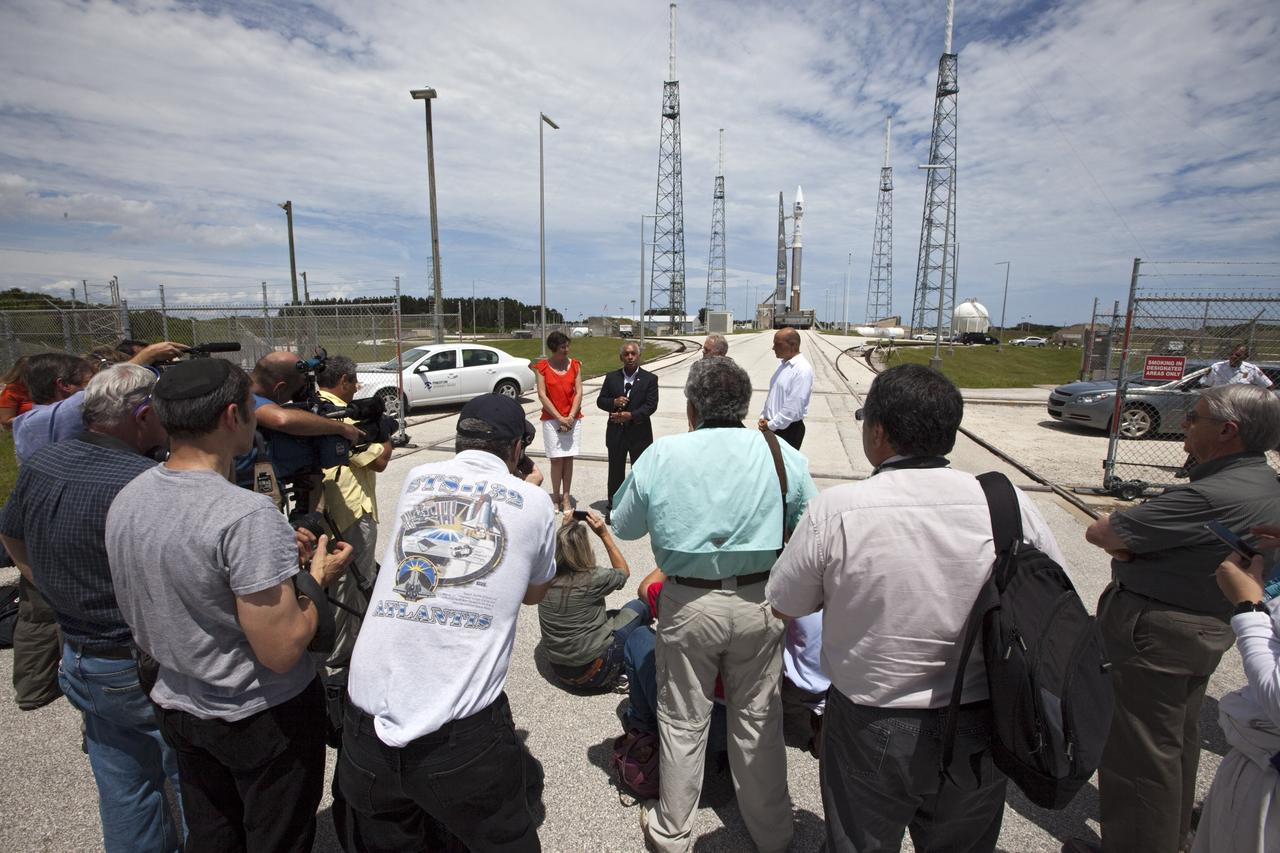
CAPE CANAVERAL, Fla. - NASA Administrator Charles Bolden, second from the left, addresses news media at Space Launch Complex-41 at Cape Canaveral Air Force Station in Florida. At the pad, a United Launch Alliance, or ULA, Atlas V rocket is being prepared for launch of the Radiation Belt Storm Probes, or RBSP, satellites. Speaking to members of the media are, from the left, Dr. Nicky Fox, deputy RBSP project scientist for the Applied Physics Laboratory at Johns Hopkins University, Bolden, James Sponnick, ULA vice president of Mission Operations and NASA Chief Scientist Waleed Abdalati. Bolden took a few dozen members of the news media on a tour of the space agency's Kennedy Space Center and adjacent Cape Canaveral Air Force Station on Aug. 23, 2012 to show the progress being made for future government and commercial space endeavors that will begin from Florida's Space Coast. For more information, visit: http://www.nasa.gov/centers/kennedy/news/kennedy-bolden-tour.html Photo credit: NASA/Kim Shiflett
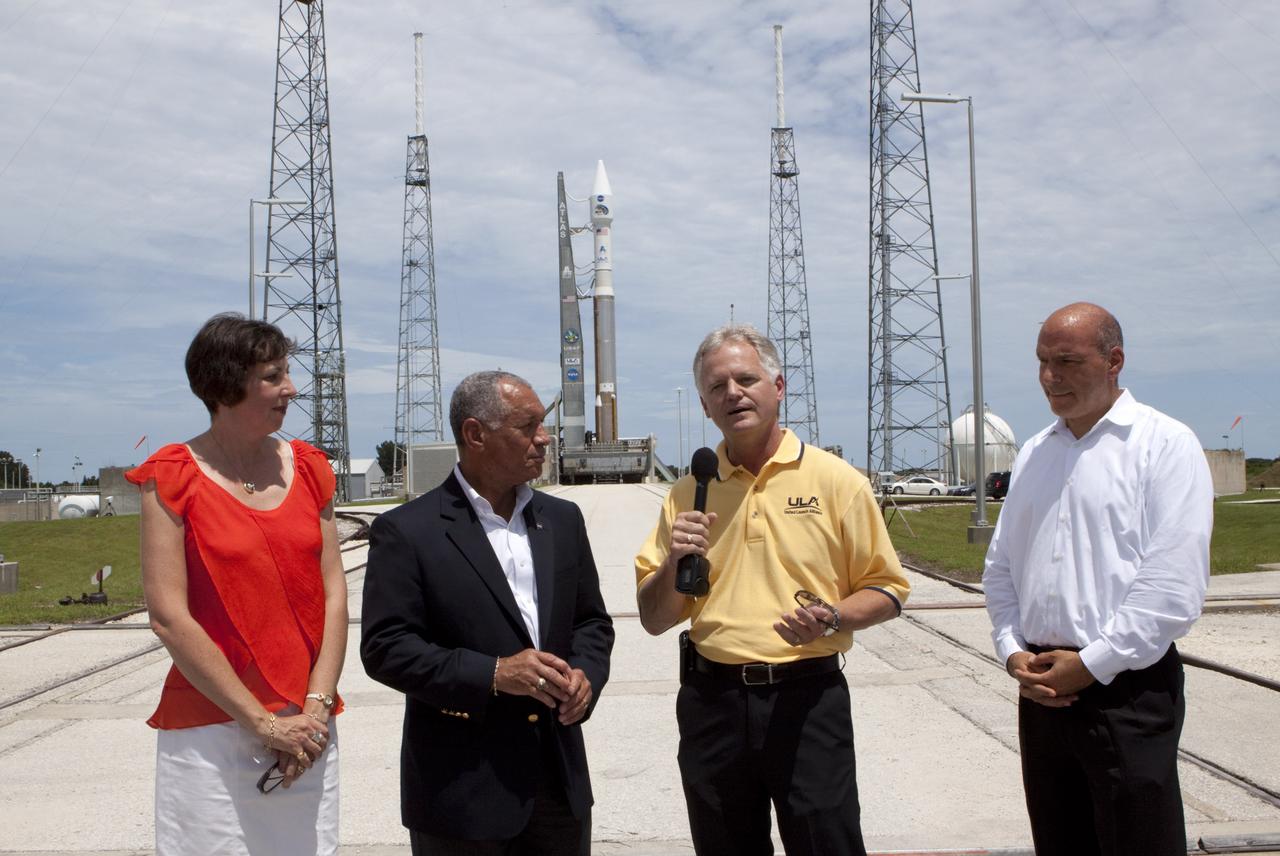
CAPE CANAVERAL, Fla. - United Launch Alliance, or ULA, Vice President of Mission Operations James Sponnick addresses news media at Space Launch Complex-41 at Cape Canaveral Air Force Station in Florida. At the pad, a ULA Atlas V rocket is being prepared for launch of the Radiation Belt Storm Probes, or RBSP, satellites. Speaking to members of the media are, from the left, Dr. Nicky Fox, deputy RBSP project scientist for the Applied Physics Laboratory at Johns Hopkins University, NASA Administrator Charles Bolden, Sponnick and NASA Chief Scientist Waleed Abdalati. Bolden took a few dozen members of the news media on a tour of the space agency's Kennedy Space Center and adjacent Cape Canaveral Air Force Station on Aug. 23, 2012 to show the progress being made for future government and commercial space endeavors that will begin from Florida's Space Coast. For more information, visit: http://www.nasa.gov/centers/kennedy/news/kennedy-bolden-tour.html Photo credit: NASA/Kim Shiflett

CAPE CANAVERAL, Fla. – At NASA’s Kennedy Space Center in Florida, NASA Chief Scientist Waleed Abdalati speaks to about 150 followers of the agency’s Twitter account during Juno Tweetup activities inside a tent at the Press Site. The tweeters are at the center for two days of prelaunch activities. Juno is NASA’s mission to Jupiter to study the giant planet and improve our understanding of the planet’s formation and evolution. The tweeters will share their experiences with followers through the social networking site Twitter. Attendees represent 28 states, the District of Columbia and five other countries: Canada, Finland, Norway, Spain and the United Kingdom. This is the first time NASA has invited Twitter followers to experience the launch of a planetary spacecraft. The Juno spacecraft is scheduled to launch on an Atlas V rocket from Space Launch Complex 41 at Cape Canaveral Air Force Station in Florida, Aug. 5, at 11:34 a.m. EDT. For more information, visit http://www.nasa.gov/juno. Photo credit: NASA/Gianni M. Woods

CAPE CANAVERAL, Fla. – Panelists conduct a question and answer session with news media after NASA awards a cooperative agreement with the Center for the Advancement of Science in Space (CASIS) to manage the portion of the International Space Station that operates as a U.S. national laboratory. From left are: Waleed Abdalati, NASA chief scientist; Mark Uhran, NASA assistant associate administrator for the International Space Station; and Jeanne Becker, CASIS executive director. CASIS will be located at the Space Life Sciences Laboratory at NASA’s Kennedy Space Center in Florida. The organization will increase station use to maximize the public’s return on its investment by managing its diversified research and development portfolio based on needs for basic and applied research in a variety of fields. CASIS will identify opportunities for non-NASA uses linking scientific review and economic value, and will match potential research and development opportunities with funding sources. The organization also will increase awareness among schools and students about using the station as a learning platform. Photo credit: NASA/Kim Shiflett