
SpaceX Crew-11 Walkout of the O&C
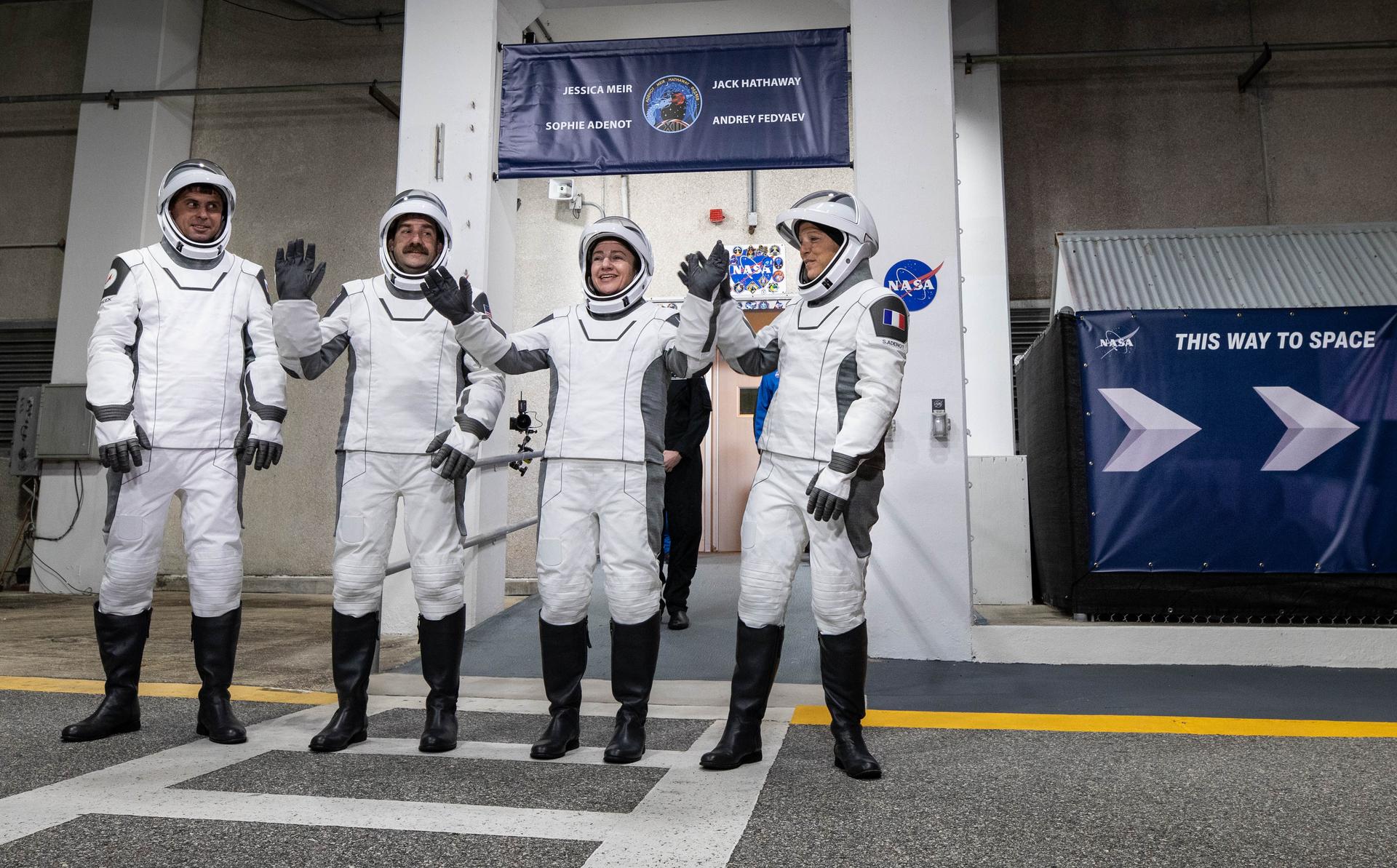
NASA’s SpaceX Crew-12 crew members wave to family and friends as they depart the Neil A. Armstrong Operations and Checkout Building at the agency’s Kennedy Space Center in Florida for Space Launch Complex 40 at Cape Canaveral Space Force Station ahead of launch on Friday, Feb. 13, 2026. From left, Roscosmos cosmonaut Andrey Fedyaev, NASA astronauts Jack Hathaway and Jessica Meir, and ESA (European Space Agency) astronaut Sophie Adenot are scheduled to lift off aboard SpaceX’s Dragon spacecraft and Falcon 9 rocket to the International Space Station at 5:15 a.m. EST.
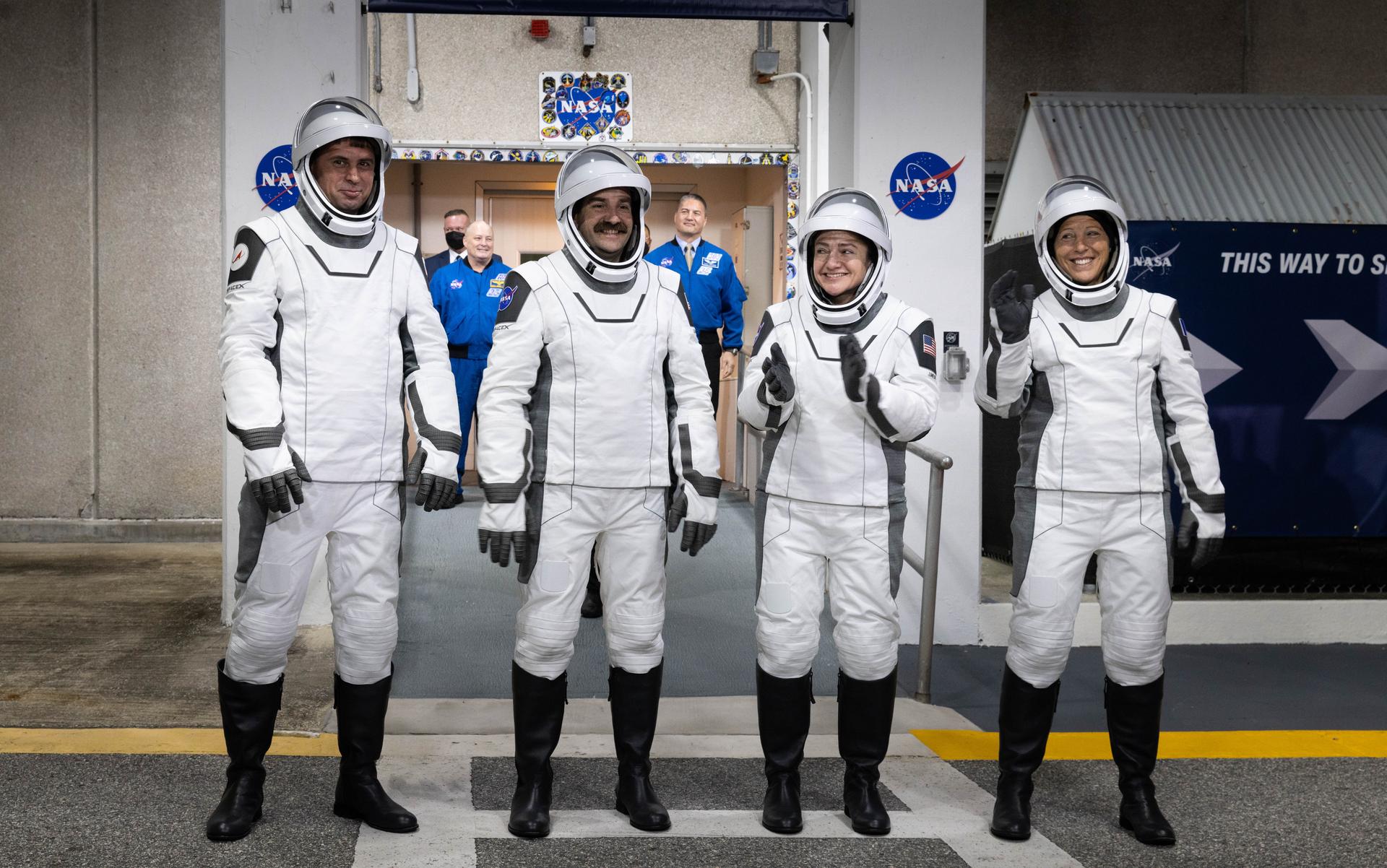
NASA’s SpaceX Crew-12 crew members wave to family and friends as they depart the Neil A. Armstrong Operations and Checkout Building at the agency’s Kennedy Space Center in Florida for Space Launch Complex 40 at Cape Canaveral Space Force Station ahead of launch on Friday, Feb. 13, 2026. From left, Roscosmos cosmonaut Andrey Fedyaev, NASA astronauts Jack Hathaway and Jessica Meir, and ESA (European Space Agency) astronaut Sophie Adenot are scheduled to lift off aboard SpaceX’s Dragon spacecraft and Falcon 9 rocket to the International Space Station at 5:15 a.m. EST.
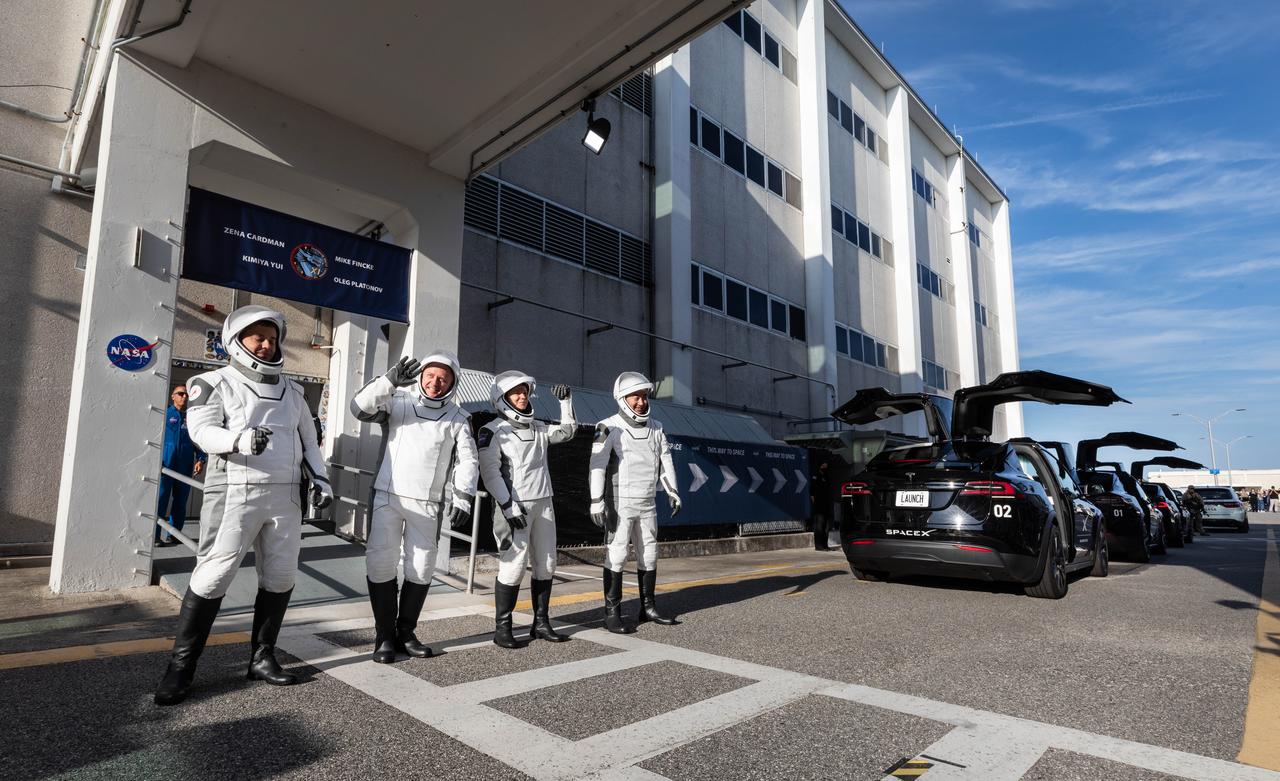
From right to left, JAXA (Japan Aerospace Exploration Agency) astronaut Kimiya Yui, NASA astronauts Zena Cardman and Mike Fincke, along with and Roscosmos cosmonaut Oleg Platonov wave to family and friends as they walk out of the Neil A. Armstrong Operations and Checkout Building at the agency’s Kennedy Space Center in Florida during the second launch attempt of NASA’s SpaceX Crew-11 mission to the International Space Station on Friday, Aug. 1, 2025. Crew-11 is scheduled to lift off aboard SpaceX’s Dragon spacecraft and Falcon 9 rocket at 11:43 a.m. EDT, from Launch Complex 39A at NASA Kennedy.
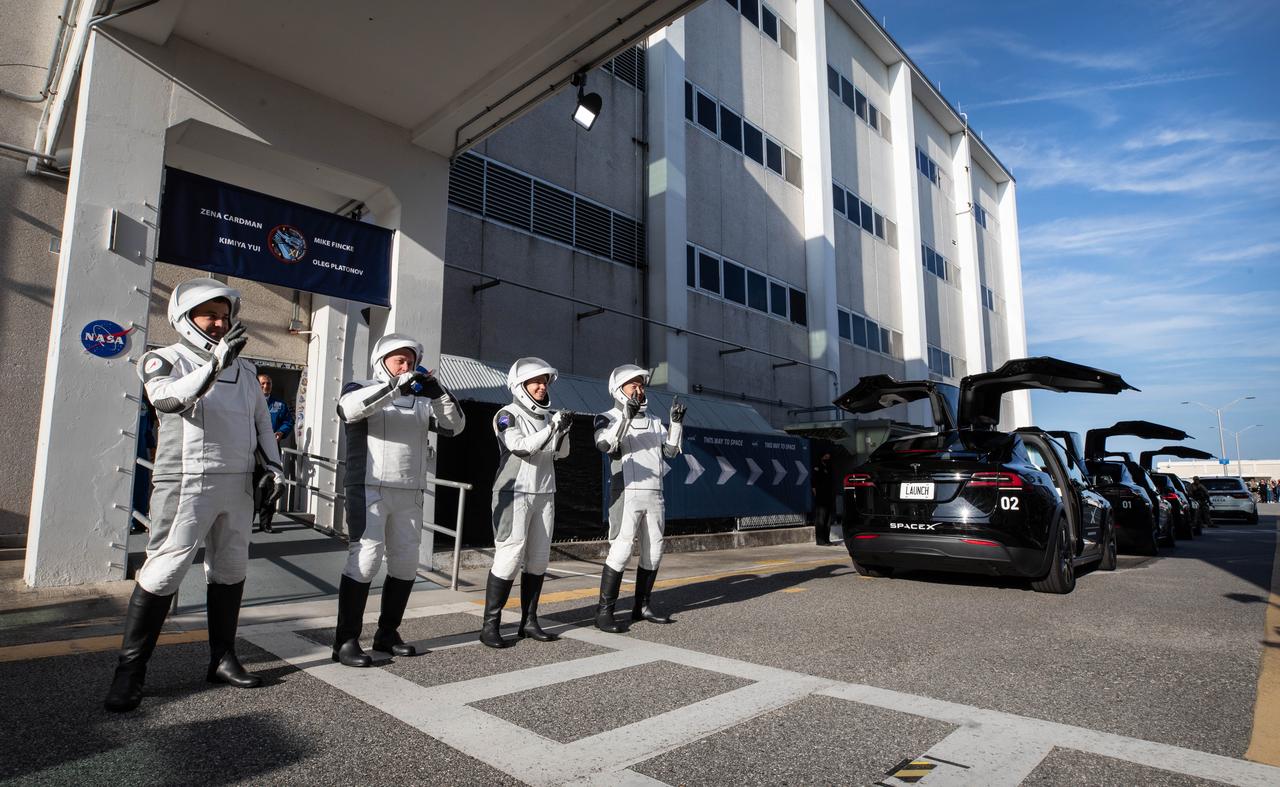
From right to left, JAXA (Japan Aerospace Exploration Agency) astronaut Kimiya Yui, NASA astronauts Zena Cardman and Mike Fincke, along with and Roscosmos cosmonaut Oleg Platonov wave to family and friends as they walk out of the Neil A. Armstrong Operations and Checkout Building at the agency’s Kennedy Space Center in Florida during the second launch attempt of NASA’s SpaceX Crew-11 mission to the International Space Station on Friday, Aug. 1, 2025. Crew-11 is scheduled to lift off aboard SpaceX’s Dragon spacecraft and Falcon 9 rocket at 11:43 a.m. EDT, from Launch Complex 39A at NASA Kennedy.
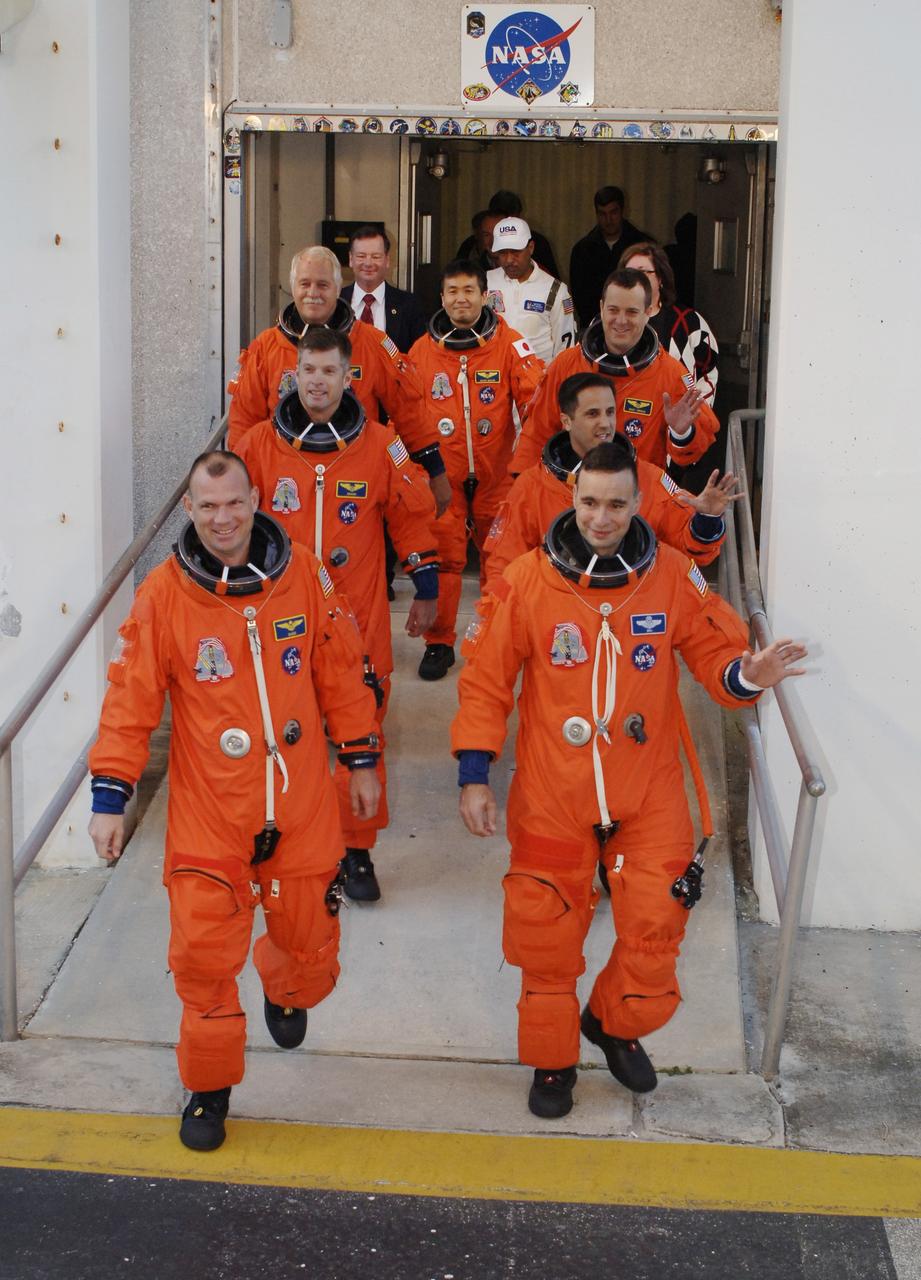
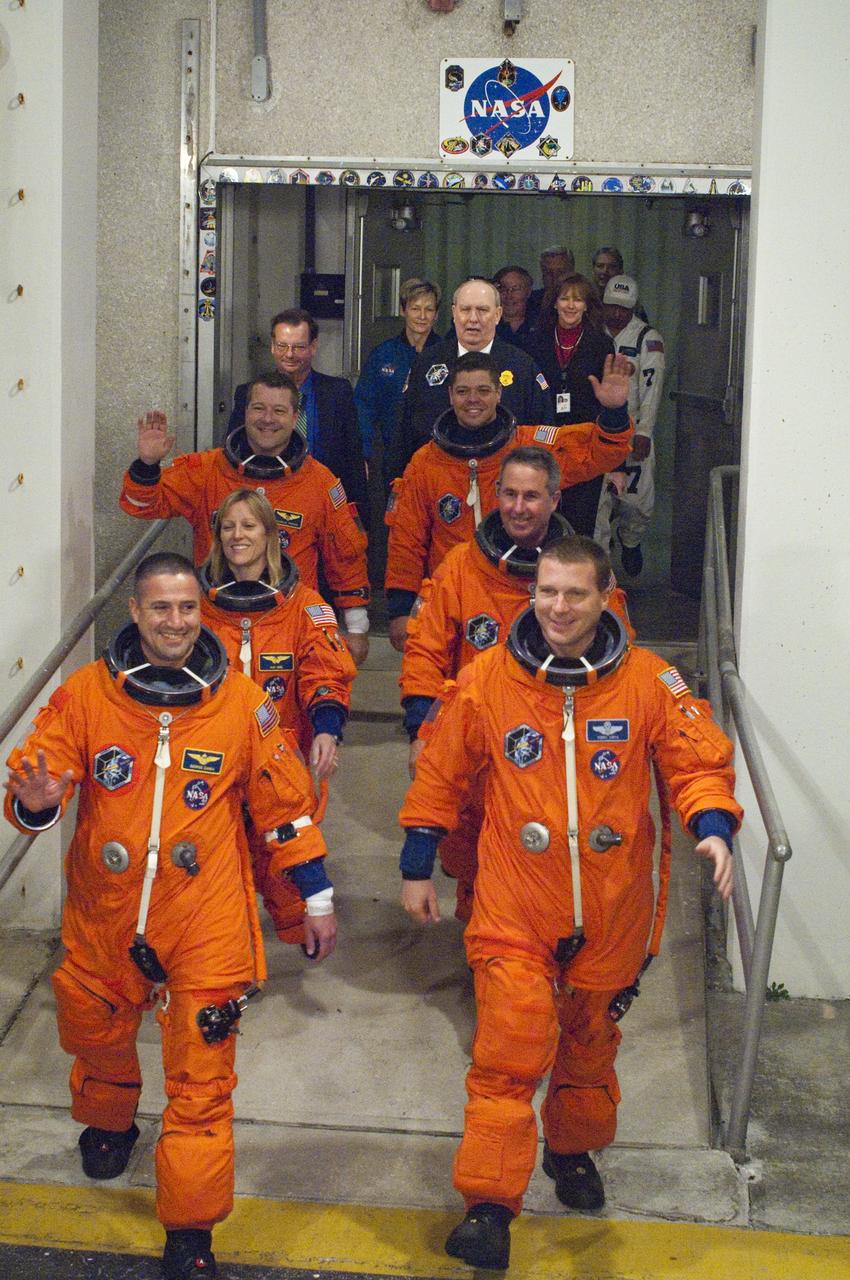
CAPE CANAVERAL, Fla. – Wearing their launch-and-entry suits, the STS-119 crew members leave the Operations and Checkout Building at NASA's Kennedy Space Center in Florida to head for Launch Pad 39A and a simulated launch countdown. Clockwise from left are Pilot Tony Antonelli, Mission Specialists Steve Swanson, John Phillips, Koichi Wakata, Richard Arnold and Joseph Acaba, and Commander Lee Archambault. The astronauts are at Kennedy to prepare for launch through Terminal Countdown Demonstration Test activities. The TCDT includes equipment familiarization and emergency egress training. The crew is targeted to launch on the STS-119 mission Feb. 12 on space shuttle Discovery. During the 14-day mission, the crew will install the S6 truss segment and solar arrays to the starboard side of the International Space Station, completing the station's truss, or backbone. Photo credit: NASA/Kim Shiflett
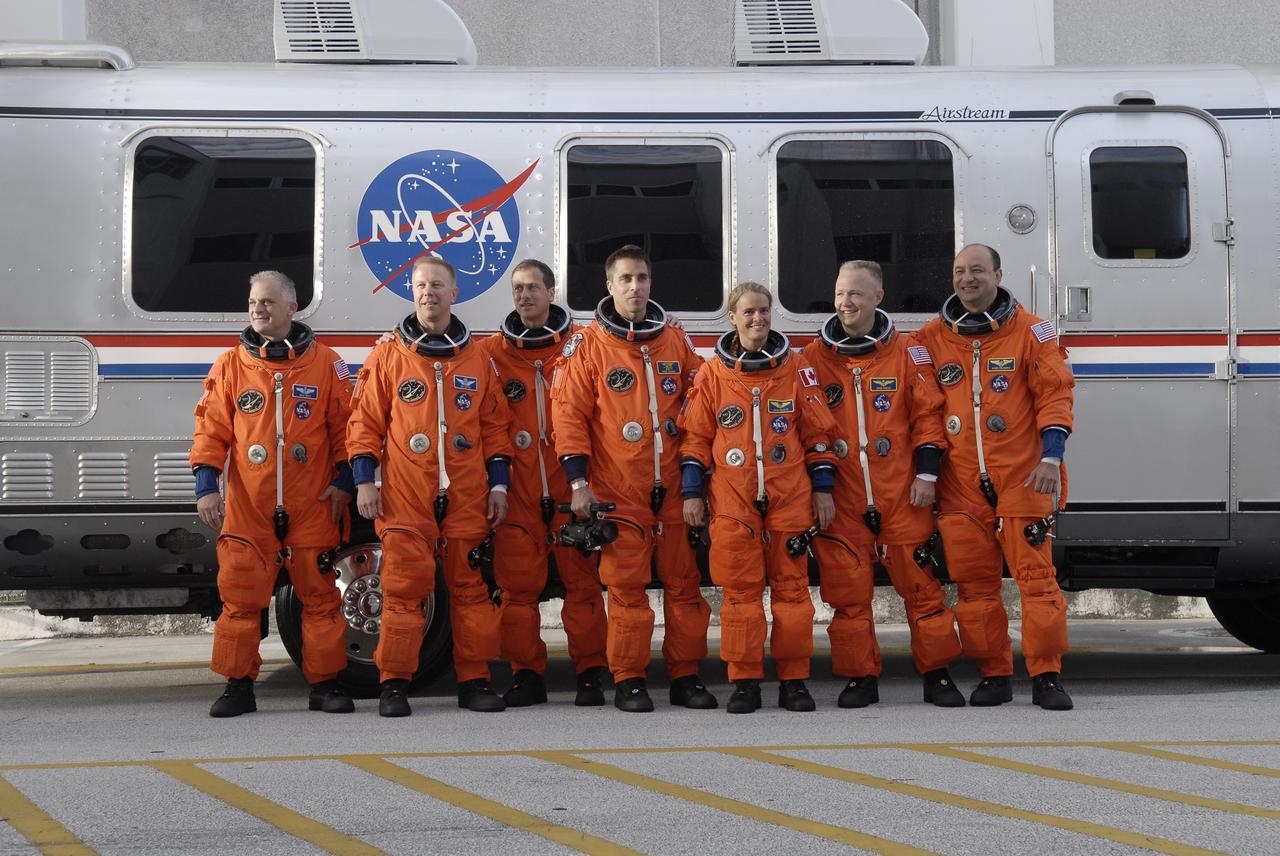
CAPE CANAVERAL, Fla. – At NASA's Kennedy Space Center in Florida, STS-127 crew members wait in front of the Astrovan for a final photograph before heading to Launch Pad 39A for a simulated launch countdown. From left are Mission Specialists Dave Wolf, Tim Kopra, Tom Marshburn, Christopher Cassidy and Julie Payette, Pilot Doug Hurley and Commander Mark Polansky. The crew is at Kennedy for a launch dress rehearsal called the terminal countdown demonstration test, or TCDT, which includes emergency exit training and equipment familiarization. Endeavour's STS-127 mission is the final of three flights dedicated to the assembly of the Japanese Kibo laboratory complex on the International Space Station. Endeavour's launch is scheduled for June 13 at 7:17 a.m. EDT. Photo credit: NASA/Kim Shiflett
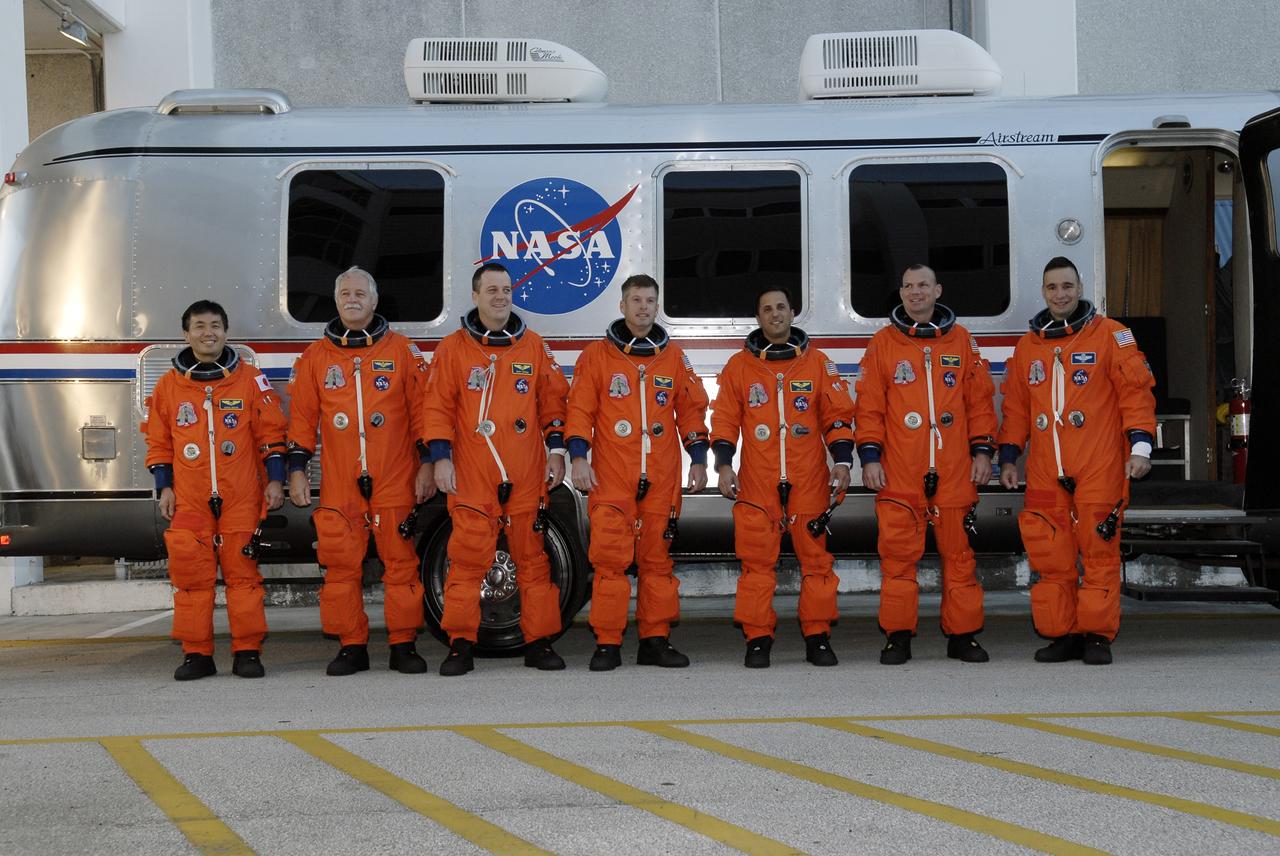
CAPE CANAVERAL, Fla. – At NASA's Kennedy Space Center in Florida, the STS-119 crew members pause in front of the Astrovan before boarding it to head to Launch Pad 39A for a simulated launch countdown. From left are Mission Specialists Koichi Wakata, John Phillips, Richard Arnold, Steve Swanson and Joseph Acaba, Pilot Tony Antonelli and Commander Lee Archambault. The astronauts are at Kennedy to prepare for launch through Terminal Countdown Demonstration Test activities. The TCDT includes equipment familiarization and emergency egress training. The crew is targeted to launch on the STS-119 mission Feb. 12 on space shuttle Discovery. During the 14-day mission, the crew will install the S6 truss segment and solar arrays to the starboard side of the International Space Station, completing the station's truss, or backbone. Photo credit: NASA/Kim Shiflett
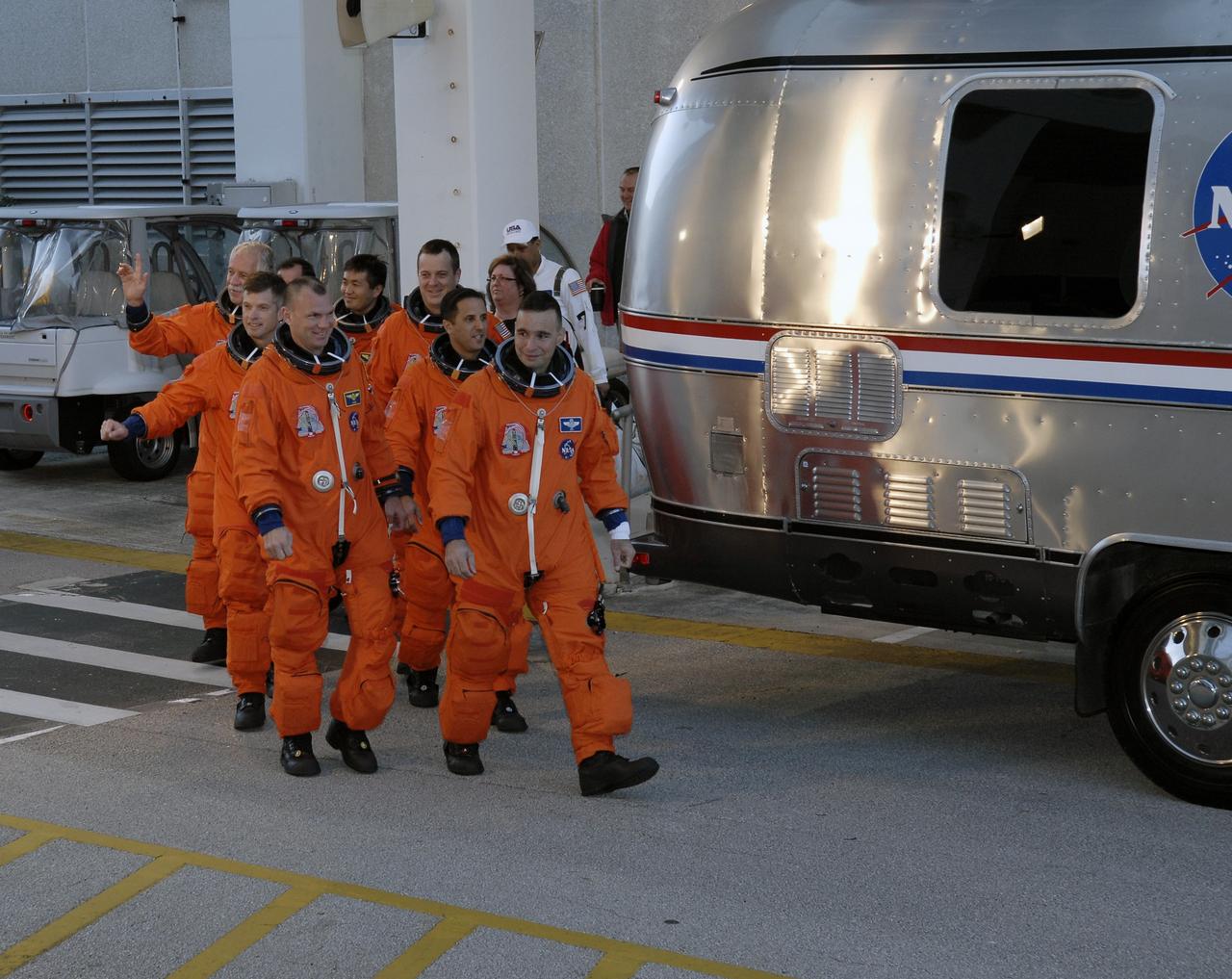
CAPE CANAVERAL, Fla. – At NASA's Kennedy Space Center in Florida, the STS-119 crew members head for the Astrovan and a ride to Launch Pad 39A for a simulated launch countdown. Commander Lee Archambault leads the way; seen behind him, on the left, are Mission Specialists John Phillips and Steve Swanson and Pilot Tony Antonelli. In the back, from center, are Mission Specialists Koichi Wakata, Richard Arnold and Joseph Acaba. The astronauts are at Kennedy to prepare for launch through Terminal Countdown Demonstration Test activities. The TCDT includes equipment familiarization and emergency egress training. The crew is targeted to launch on the STS-119 mission Feb. 12 on space shuttle Discovery. During the 14-day mission, the crew will install the S6 truss segment and solar arrays to the starboard side of the International Space Station, completing the station's truss, or backbone. Photo credit: NASA/Kim Shiflett
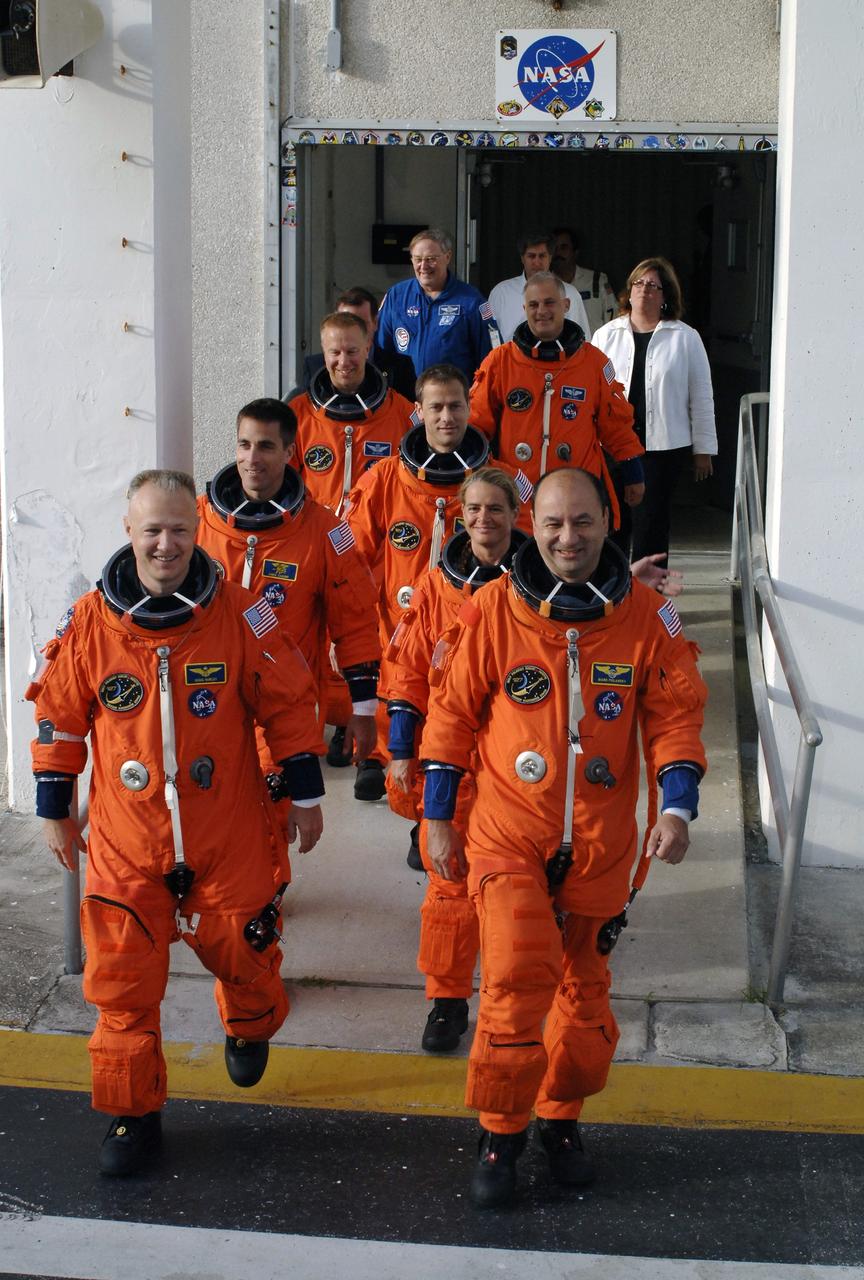
CAPE CANAVERAL, Fla. – STS-127 crew members exit the Operations and Checkout Building on their way to Launch Pad 39A at NASA's Kennedy Space Center in Florida for a simulated launch countdown. Leading the way, at right, is Commander Mark Polansky. From left, clockwise, are Pilot Doug Hurley and Mission Specialists Christopher Cassidy, Tim Kopra, Dave Wolf, Tom Marshburn and Julie Payette, who represents the Canadian Space Agency. The crew is at Kennedy for a launch dress rehearsal called the terminal countdown demonstration test, or TCDT, which includes emergency exit training and equipment familiarization. Endeavour's STS-127 mission is the final of three flights dedicated to the assembly of the Japanese Kibo laboratory complex on the International Space Station. Endeavour's launch is scheduled for June 13 at 7:17 a.m. EDT. Photo credit: NASA/Kim Shiflett
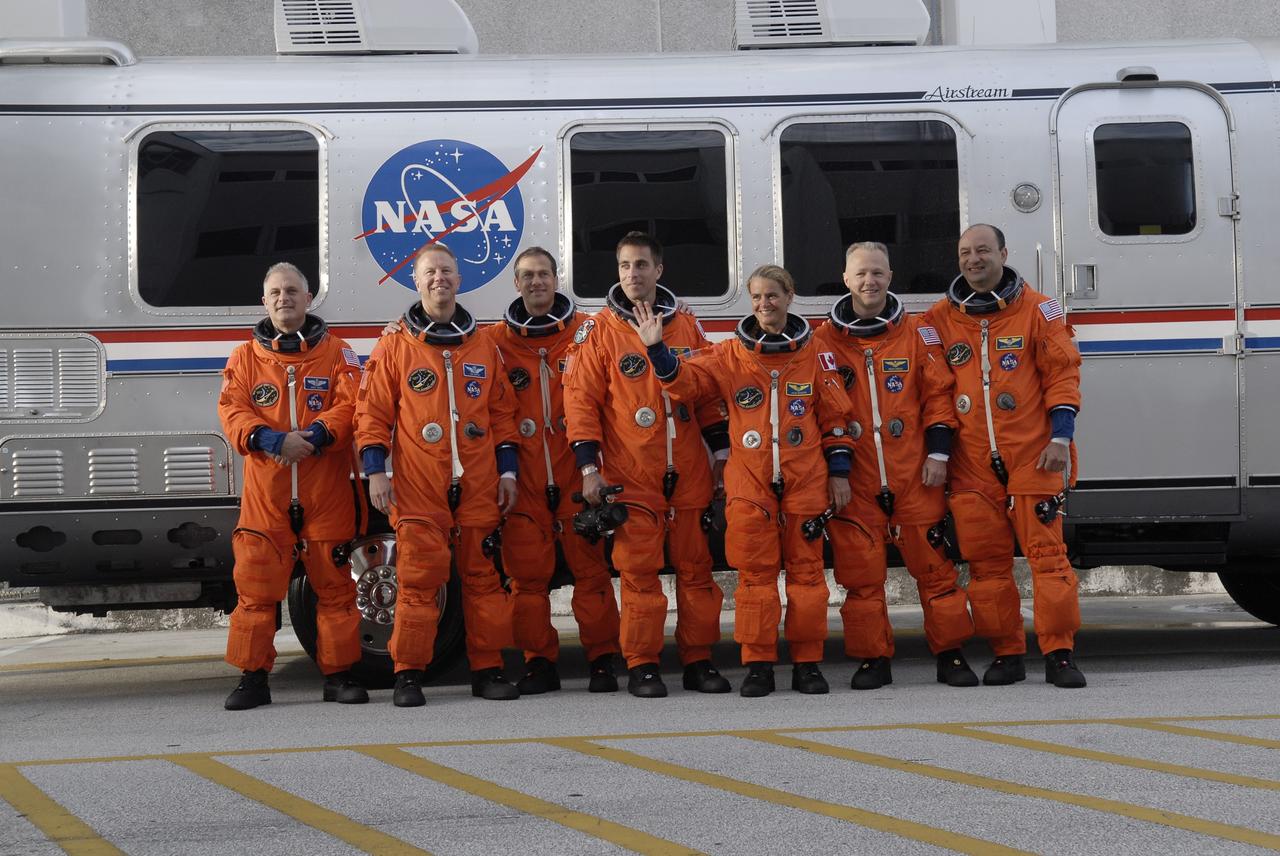
CAPE CANAVERAL, Fla. – At NASA's Kennedy Space Center in Florida, STS-127 crew members stop in front of the Astrovan to acknowledge the spectators who have gathered to see them leave for Launch Pad 39A for a simulated launch countdown. From left are Mission Specialists Dave Wolf, Tim Kopra, Tom Marshburn, Christopher Cassidy and Julie Payette, Pilot Doug Hurley and Commander Mark Polansky. The crew is at Kennedy for a launch dress rehearsal called the terminal countdown demonstration test, or TCDT, which includes emergency exit training and equipment familiarization. Endeavour's STS-127 mission is the final of three flights dedicated to the assembly of the Japanese Kibo laboratory complex on the International Space Station. Endeavour's launch is scheduled for June 13 at 7:17 a.m. EDT. Photo credit: NASA/Kim Shiflett
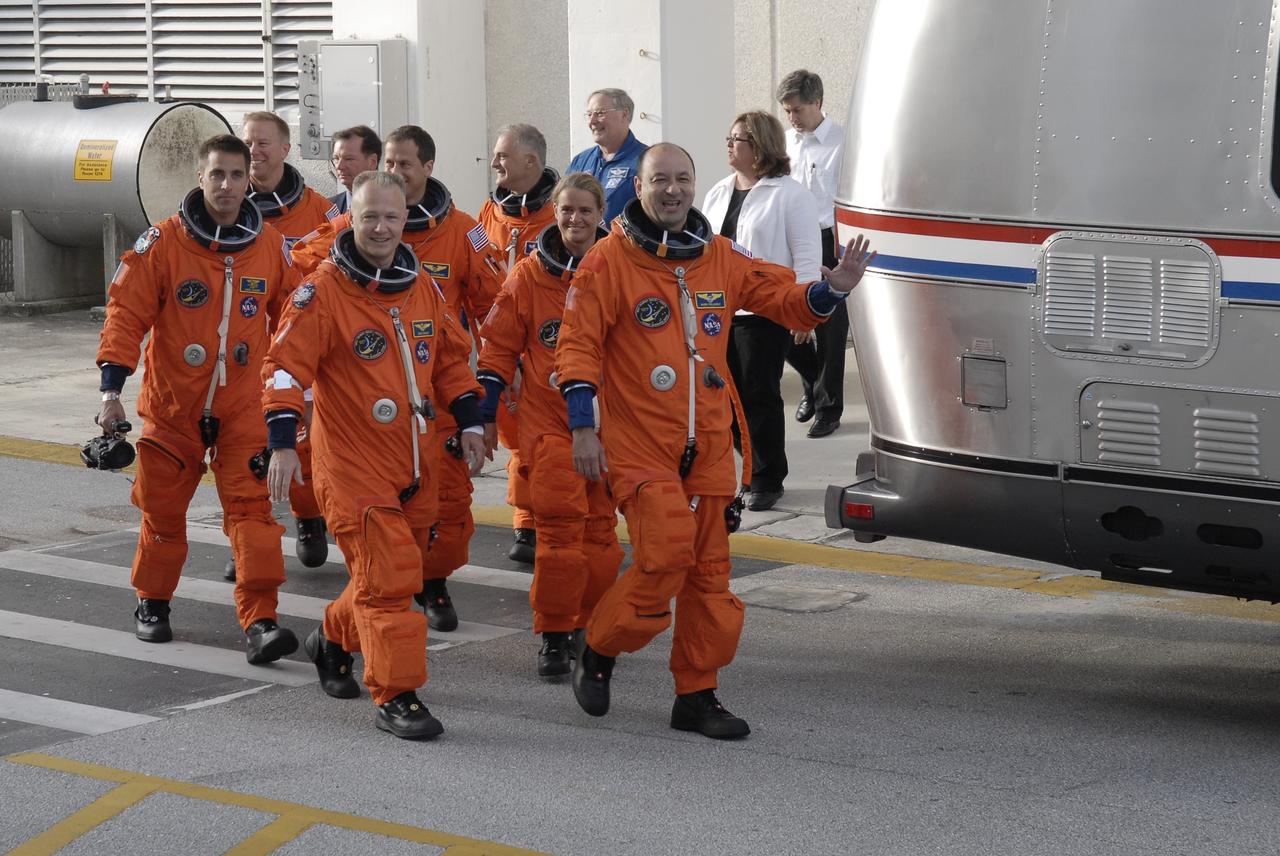
CAPE CANAVERAL, Fla. – STS-127 crew members walk toward the Astrovan that will taken them to Launch Pad 39A at NASA's Kennedy Space Center in Florida for a simulated launch countdown. In the foreground are Pilot Doug Hurley (left) and Commander Mark Polansky. Behind them are Mission Specialists Christopher Cassidy, Tim Kopra, Tom Marshburn, Dave Wolf and Julie Payette, who represents the Canadian Space Agency. The crew is at Kennedy for a launch dress rehearsal called the terminal countdown demonstration test, or TCDT, which includes emergency exit training and equipment familiarization. Endeavour's STS-127 mission is the final of three flights dedicated to the assembly of the Japanese Kibo laboratory complex on the International Space Station. Endeavour's launch is scheduled for June 13 at 7:17 a.m. EDT. Photo credit: NASA/Kim Shiflett
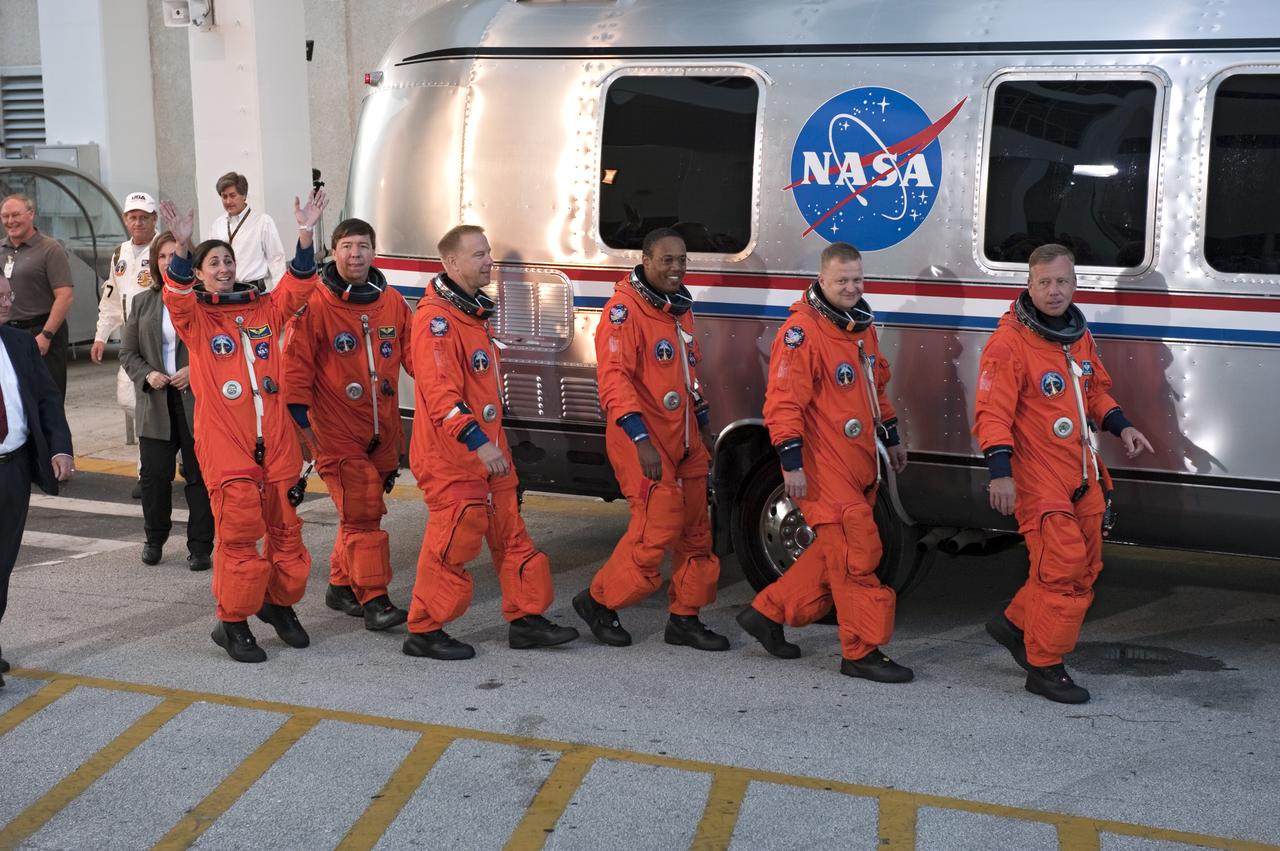
STS-133 TCDT - MANUAL WALKOUT
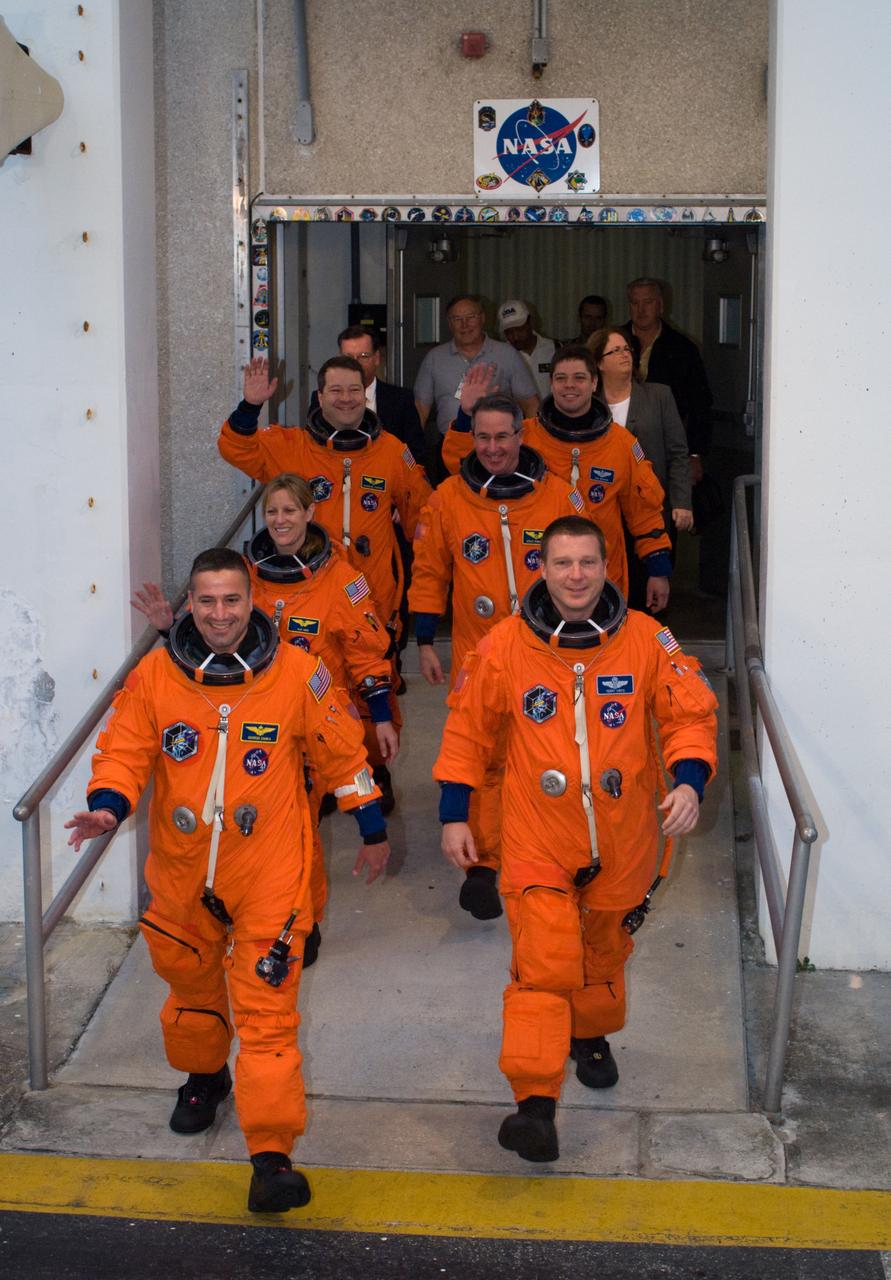
STS-130 TCDT - REMOTE WALKOUT
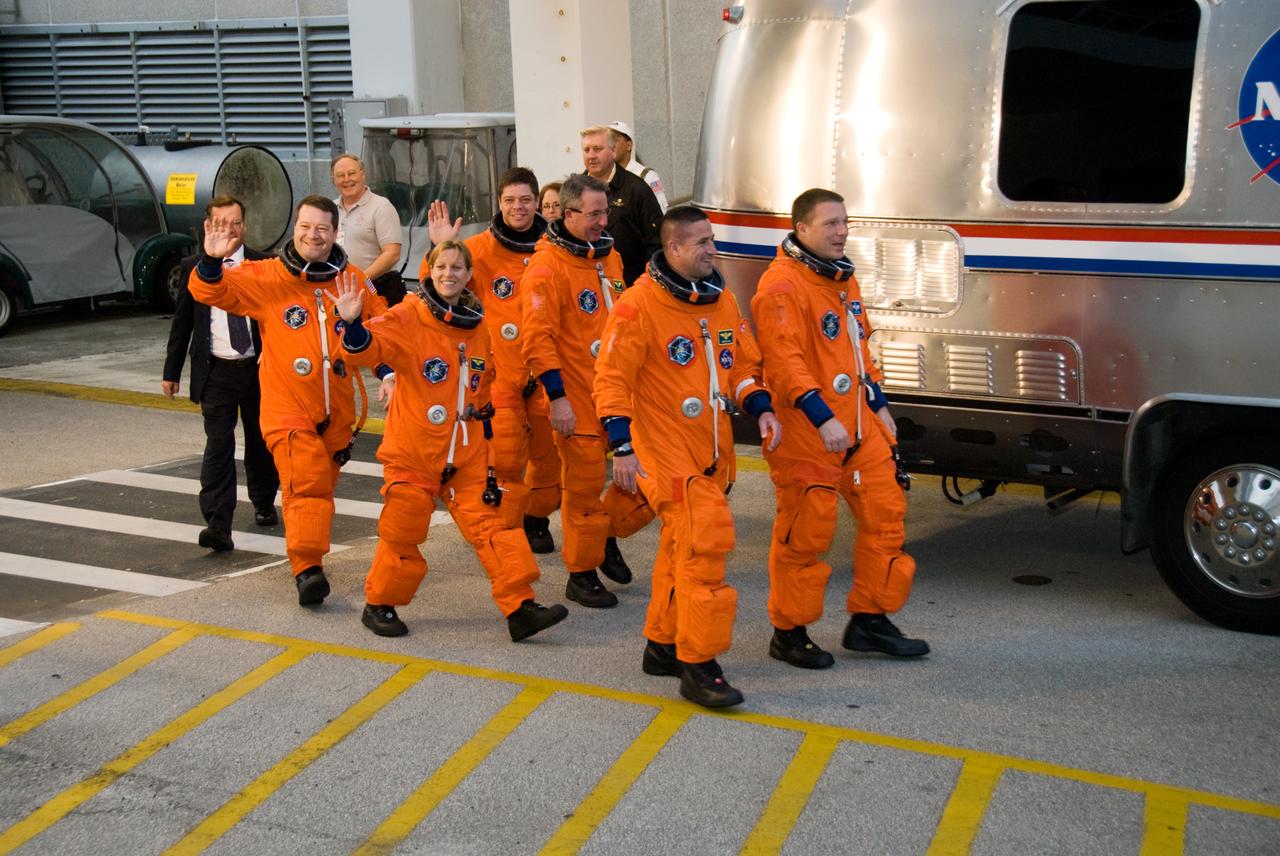
STS-130 TCDT - MANUAL WALKOUT
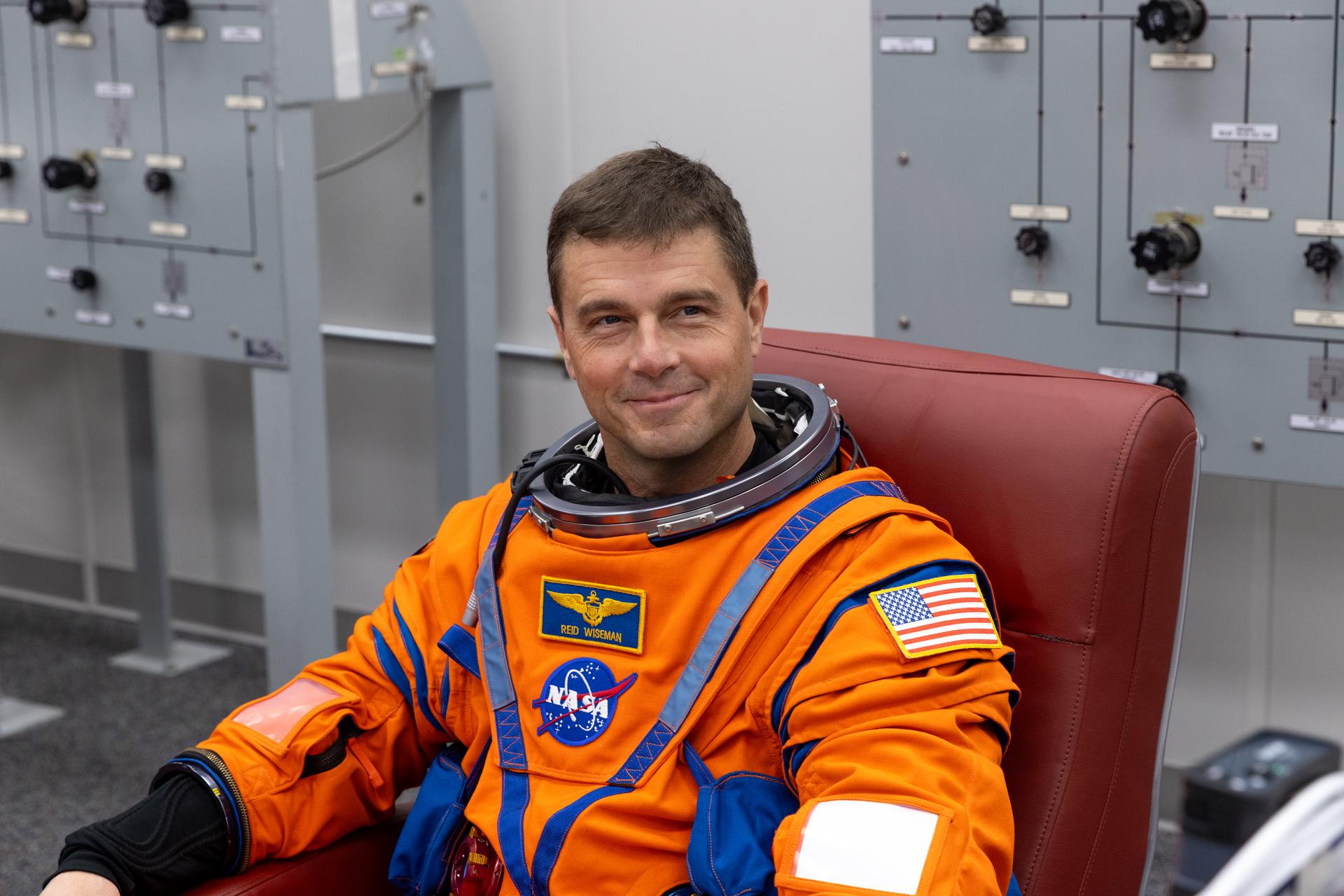
NASA astronaut Reid Wiseman, Artemis II commander, undergoes spacesuit checks inside the crew quarters suit-up room in the Neil A. Armstrong Operations and Checkout Building part of the Artemis II Countdown Demonstration Test at the agency’s Kennedy Space Center on Saturday, Dec. 20, 2025. For this operation, the Artemis II crew and launch team are simulating the launch day timeline including suit-up, walkout, and climbing in and out of the spacecraft. Through the Artemis campaign, NASA will send astronauts to explore the Moon for scientific discovery, economic benefits, and to build the foundation for the first crewed missions to Mars, for the benefit of all.
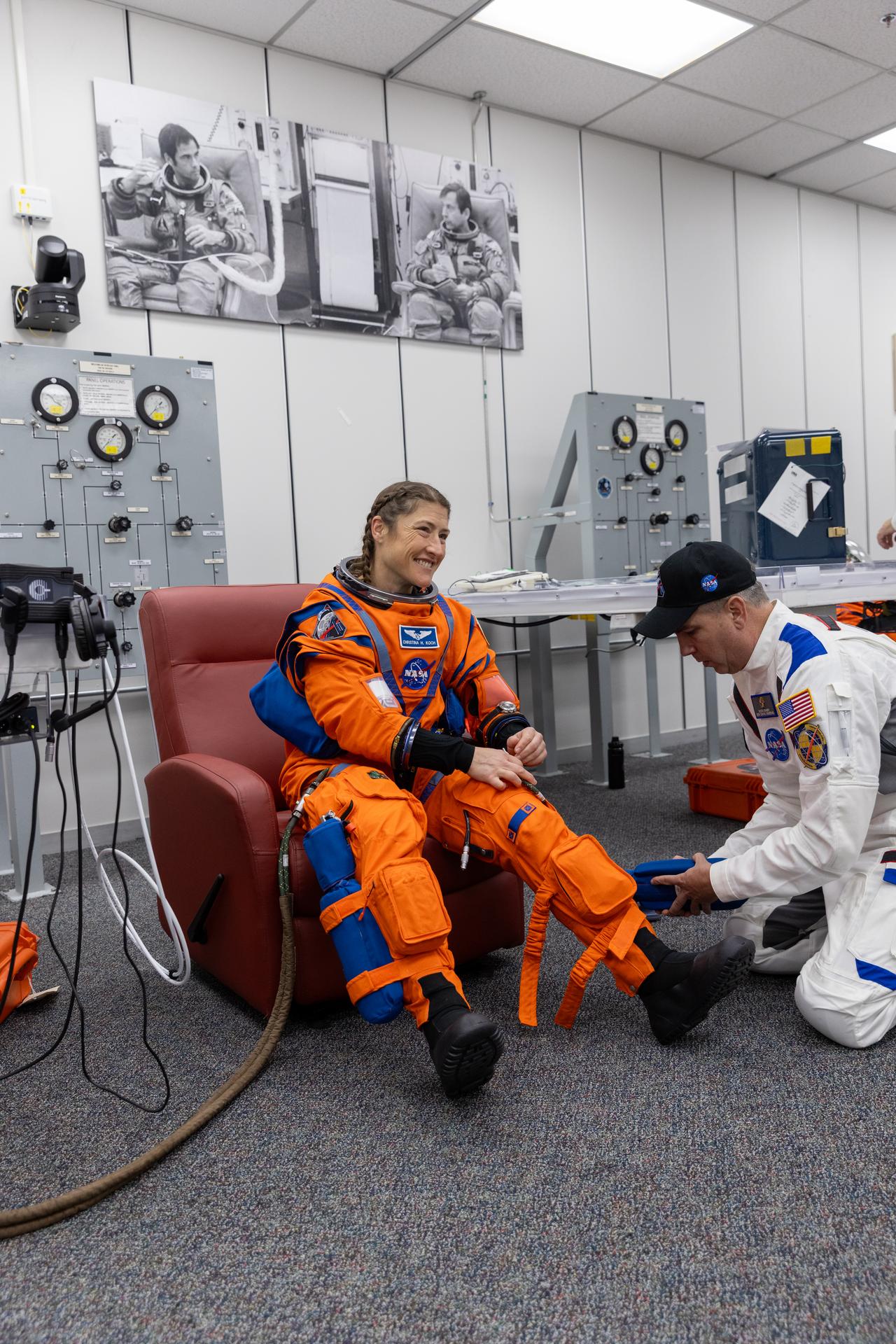
NASA astronaut, Christina Koch, Artemis II mission specialist, undergoes spacesuit checks inside the crew quarters suit-up room in the Neil A. Armstrong Operations and Checkout Building part of the Artemis II Countdown Demonstration Test at the agency’s Kennedy Space Center on Saturday, Dec. 20, 2025. For this operation, the Artemis II crew and launch team are simulating the launch day timeline including suit-up, walkout, and climbing in and out of the spacecraft. Through the Artemis campaign, NASA will send astronauts to explore the Moon for scientific discovery, economic benefits, and to build the foundation for the first crewed missions to Mars, for the benefit of all.
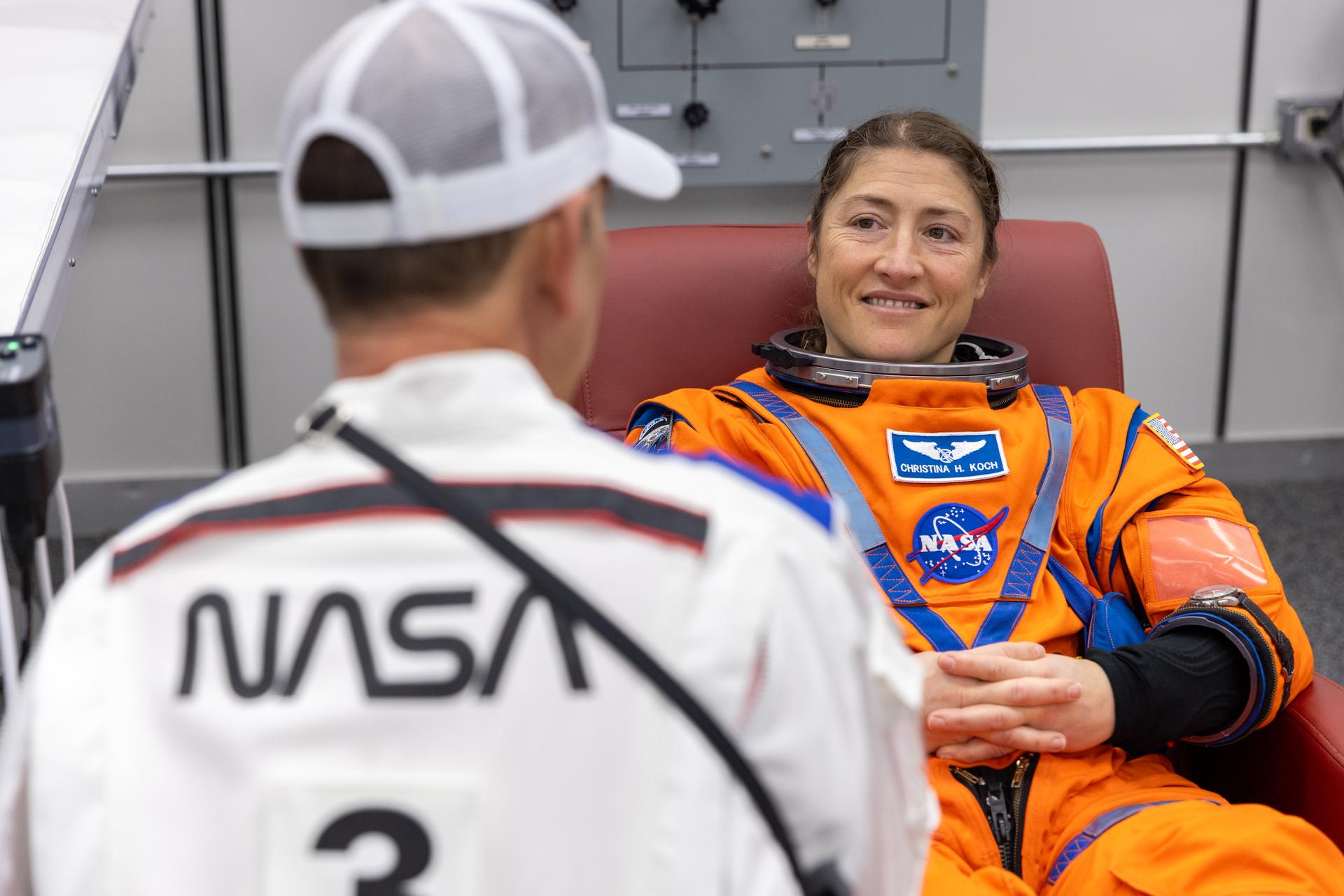
NASA astronaut, Christina Koch, Artemis II mission specialist, undergoes spacesuit checks inside the crew quarters suit-up room in the Neil A. Armstrong Operations and Checkout Building part of the Artemis II Countdown Demonstration Test at the agency’s Kennedy Space Center on Saturday, Dec. 20, 2025. For this operation, the Artemis II crew and launch team are simulating the launch day timeline including suit-up, walkout, and climbing in and out of the spacecraft. Through the Artemis campaign, NASA will send astronauts to explore the Moon for scientific discovery, economic benefits, and to build the foundation for the first crewed missions to Mars, for the benefit of all.
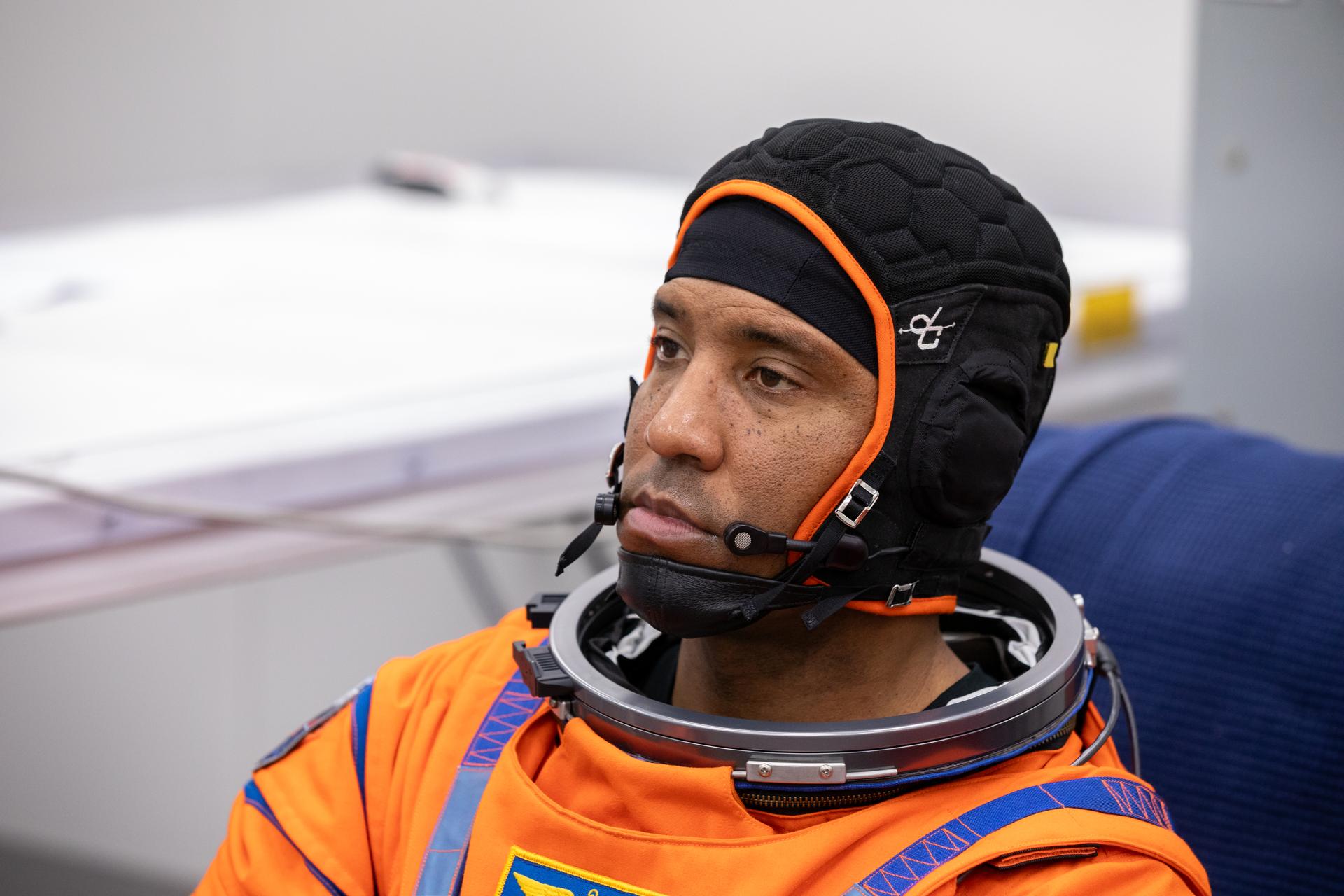
NASA astronaut Victor Glover, Artemis II pilot, undergoes spacesuit checks inside the crew quarters suit-up room in the Neil A. Armstrong Operations and Checkout Building part of the Artemis II Countdown Demonstration Test at the agency’s Kennedy Space Center on Saturday, Dec. 20, 2025. For this operation, the Artemis II crew and launch team are simulating the launch day timeline including suit-up, walkout, and climbing in and out of the spacecraft. Through the Artemis campaign, NASA will send astronauts to explore the Moon for scientific discovery, economic benefits, and to build the foundation for the first crewed missions to Mars, for the benefit of all.
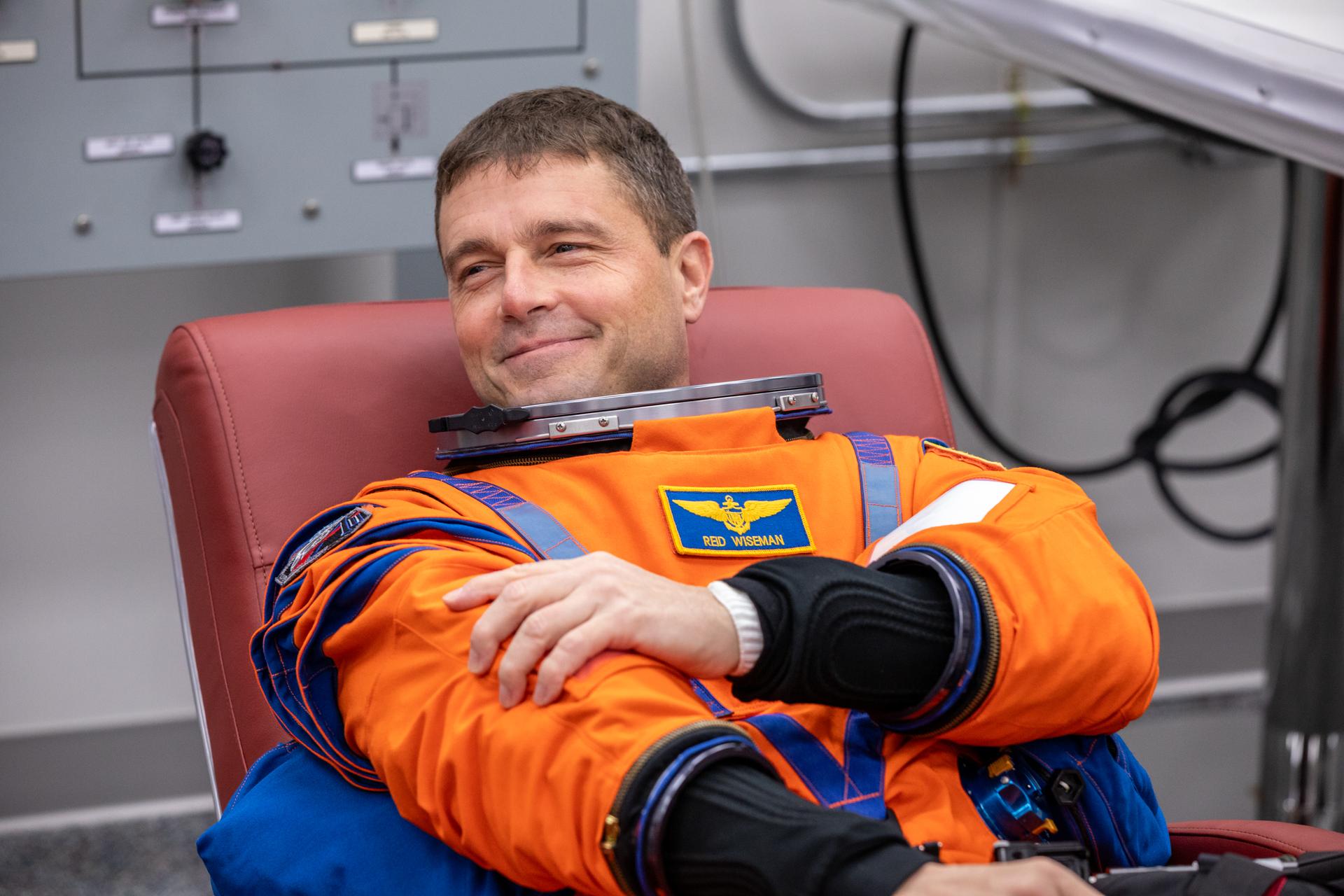
NASA astronaut Reid Wiseman, Artemis II commander, undergoes spacesuit checks inside the crew quarters suit-up room in the Neil A. Armstrong Operations and Checkout Building part of the Artemis II Countdown Demonstration Test at the agency’s Kennedy Space Center on Saturday, Dec. 20, 2025. For this operation, the Artemis II crew and launch team are simulating the launch day timeline including suit-up, walkout, and climbing in and out of the spacecraft. Through the Artemis campaign, NASA will send astronauts to explore the Moon for scientific discovery, economic benefits, and to build the foundation for the first crewed missions to Mars, for the benefit of all.
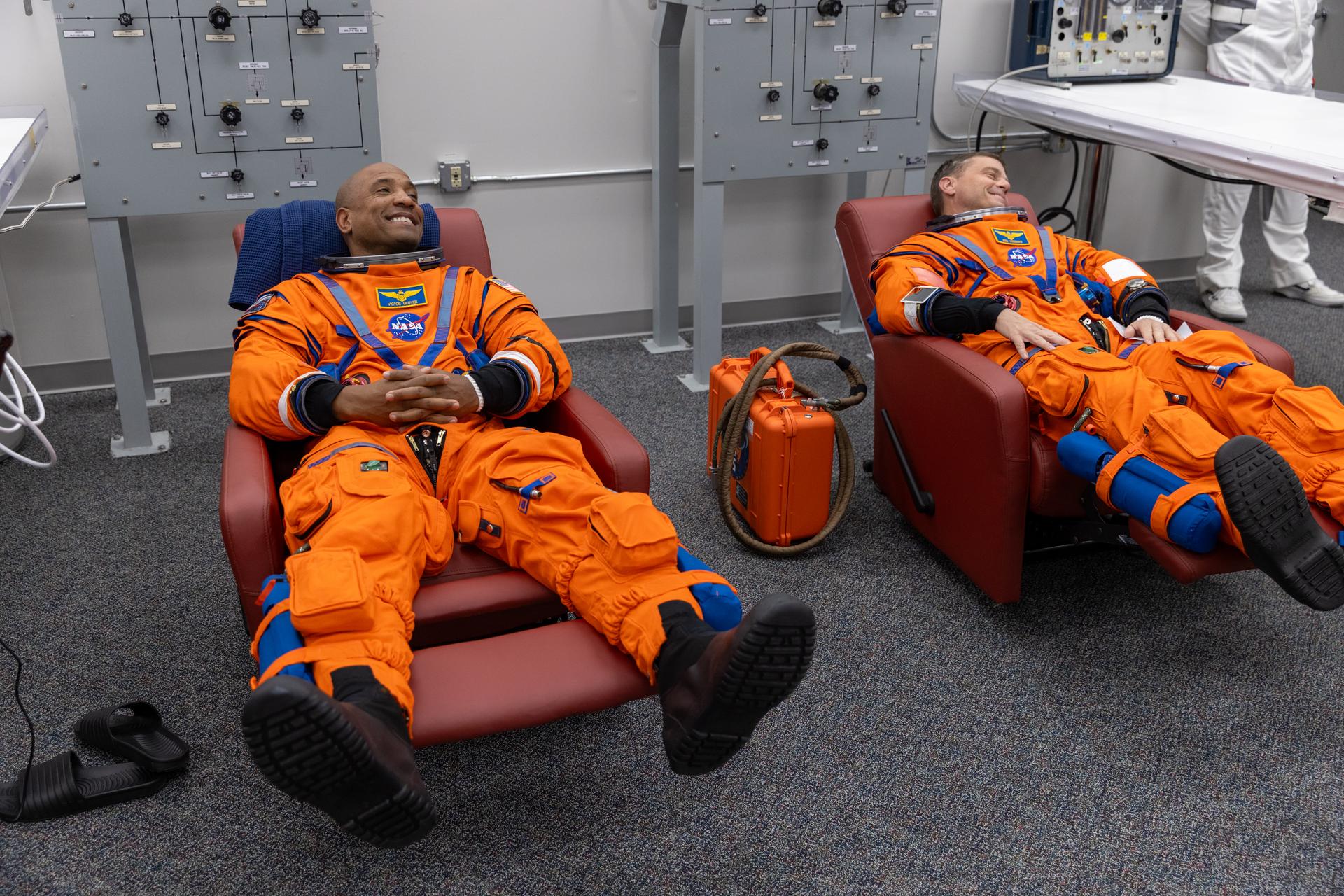
From left, NASA astronauts Victor Glover, Artemis II pilot, and Reid Wiseman, Artemis II commander, undergo spacesuit checks inside the crew quarters suit-up room in the Neil A. Armstrong Operations and Checkout Building part of the Artemis II Countdown Demonstration Test at the agency’s Kennedy Space Center on Saturday, Dec. 20, 2025. For this operation, the Artemis II crew and launch team are simulating the launch day timeline including suit-up, walkout, and climbing in and out of the spacecraft. Through the Artemis campaign, NASA will send astronauts to explore the Moon for scientific discovery, economic benefits, and to build the foundation for the first crewed missions to Mars, for the benefit of all.
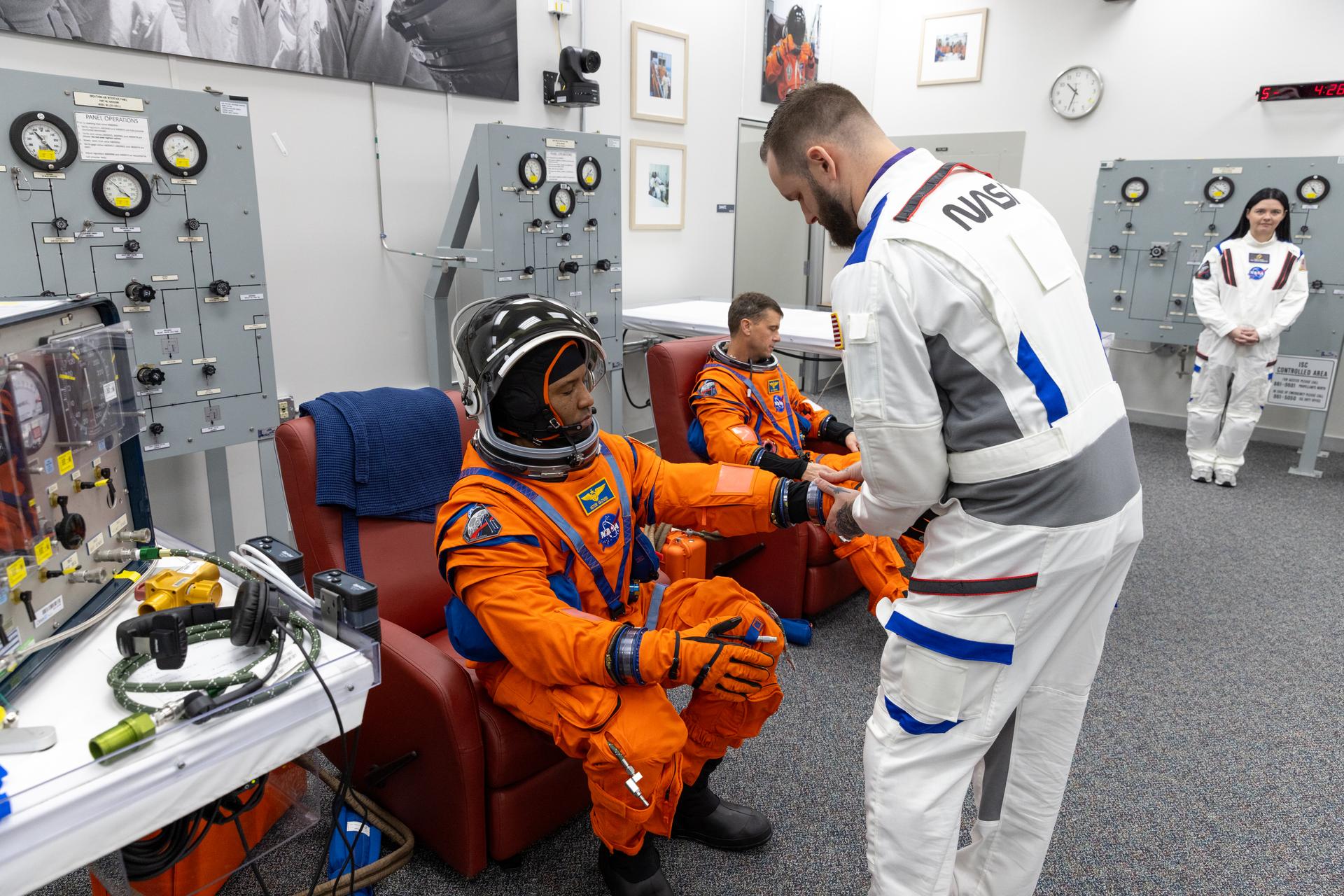
From left, NASA astronauts Victor Glover, Artemis II pilot, and Reid Wiseman, Artemis II commander, undergo spacesuit checks inside the crew quarters suit-up room in the Neil A. Armstrong Operations and Checkout Building part of the Artemis II Countdown Demonstration Test at the agency’s Kennedy Space Center on Saturday, Dec. 20, 2025. For this operation, the Artemis II crew and launch team are simulating the launch day timeline including suit-up, walkout, and climbing in and out of the spacecraft. Through the Artemis campaign, NASA will send astronauts to explore the Moon for scientific discovery, economic benefits, and to build the foundation for the first crewed missions to Mars, for the benefit of all.
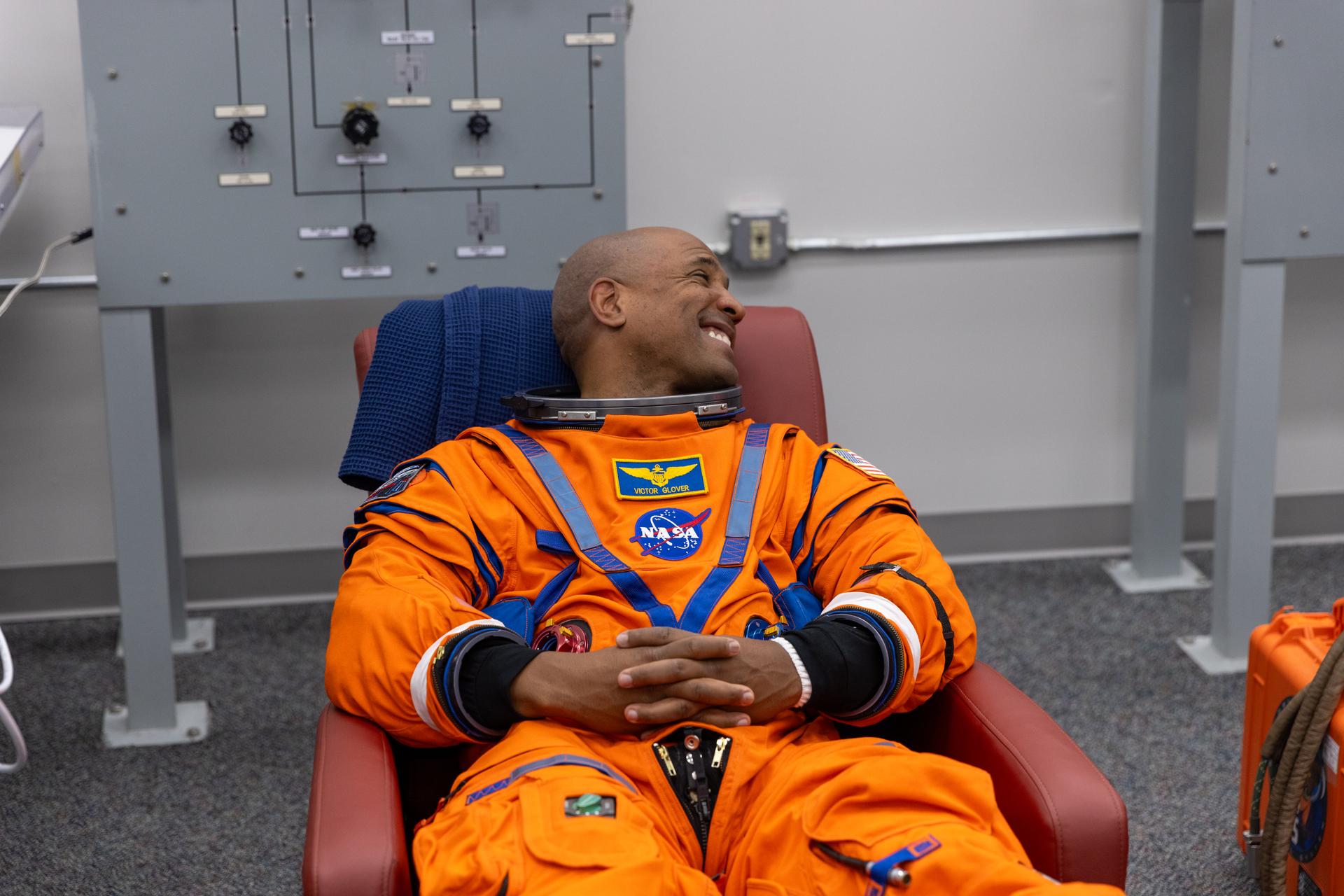
NASA astronaut Victor Glover, Artemis II pilot, undergoes spacesuit checks inside the crew quarters suit-up room in the Neil A. Armstrong Operations and Checkout Building part of the Artemis II Countdown Demonstration Test at the agency’s Kennedy Space Center on Saturday, Dec. 20, 2025. For this operation, the Artemis II crew and launch team are simulating the launch day timeline including suit-up, walkout, and climbing in and out of the spacecraft. Through the Artemis campaign, NASA will send astronauts to explore the Moon for scientific discovery, economic benefits, and to build the foundation for the first crewed missions to Mars, for the benefit of all.
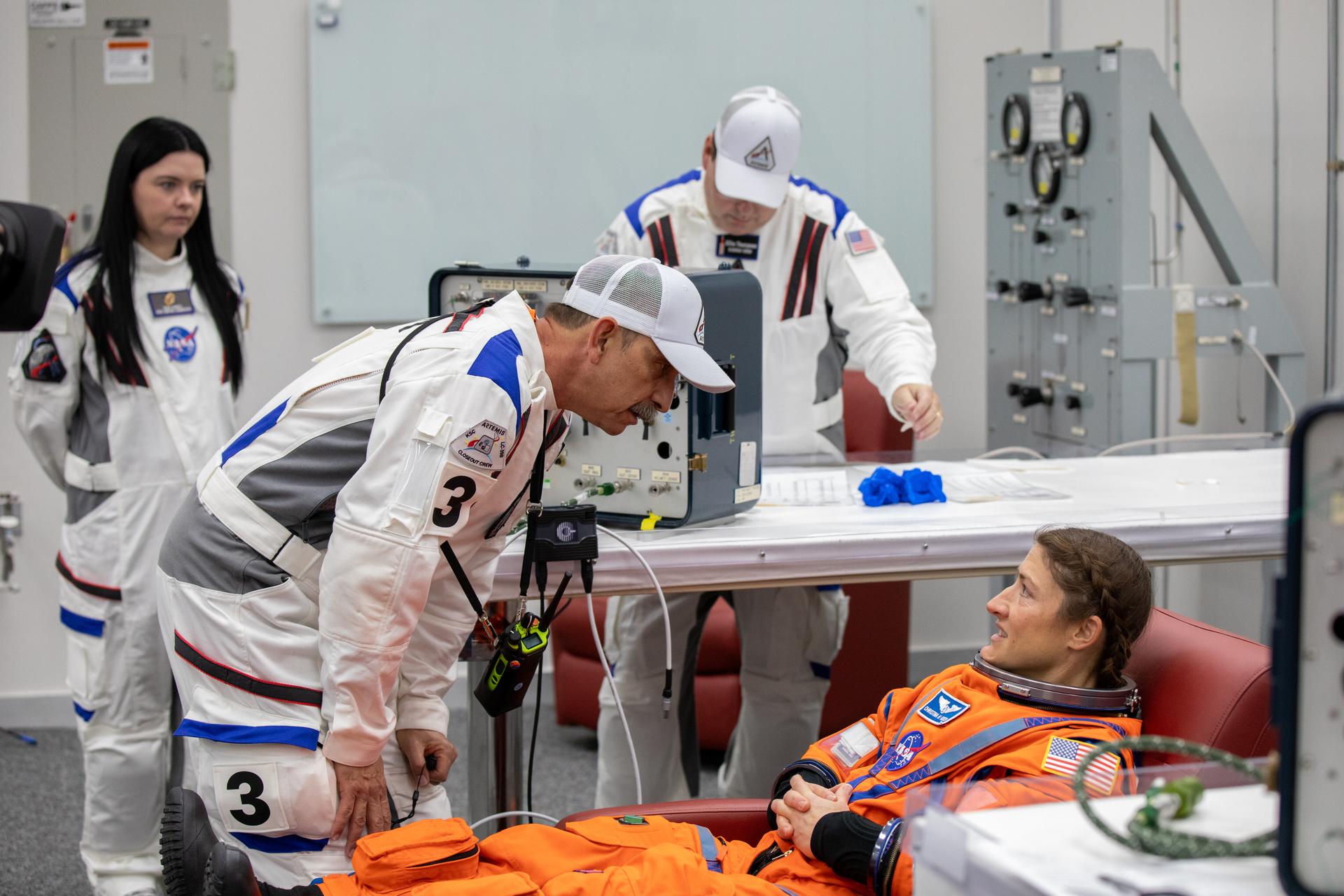
NASA astronaut, Christina Koch, Artemis II mission specialist, undergoes spacesuit checks inside the crew quarters suit-up room in the Neil A. Armstrong Operations and Checkout Building part of the Artemis II Countdown Demonstration Test at the agency’s Kennedy Space Center on Saturday, Dec. 20, 2025. For this operation, the Artemis II crew and launch team are simulating the launch day timeline including suit-up, walkout, and climbing in and out of the spacecraft. Through the Artemis campaign, NASA will send astronauts to explore the Moon for scientific discovery, economic benefits, and to build the foundation for the first crewed missions to Mars, for the benefit of all.
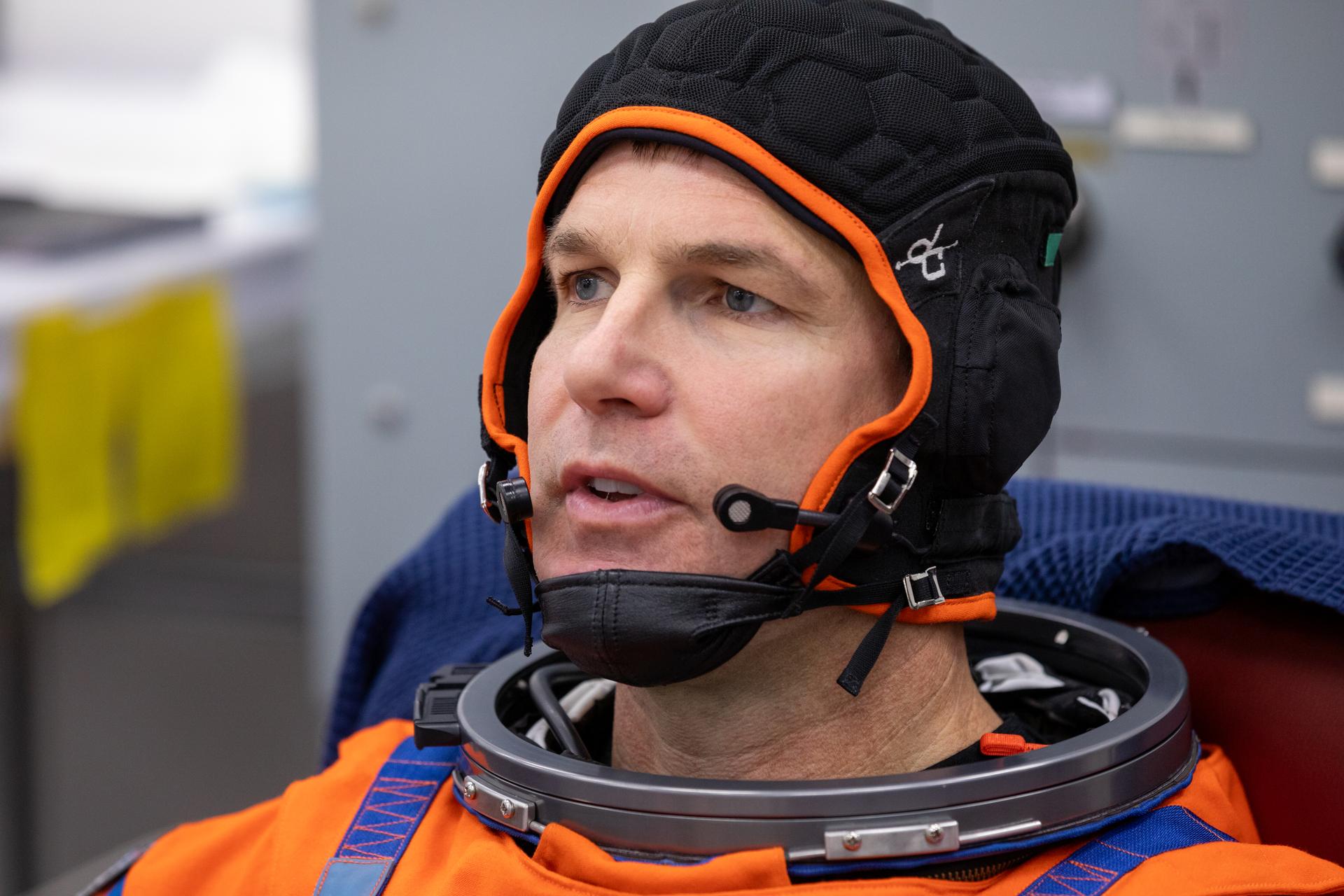
CSA (Canadian Space Agency) astronaut Jeremy Hansen, Artemis II mission specialist, undergoes spacesuit checks inside the crew quarters suit-up room in the Neil A. Armstrong Operations and Checkout Building part of the Artemis II Countdown Demonstration Test at the agency’s Kennedy Space Center on Saturday, Dec. 20, 2025. For this operation, the Artemis II crew and launch team are simulating the launch day timeline including suit-up, walkout, and climbing in and out of the spacecraft. Through the Artemis campaign, NASA will send astronauts to explore the Moon for scientific discovery, economic benefits, and to build the foundation for the first crewed missions to Mars, for the benefit of all.
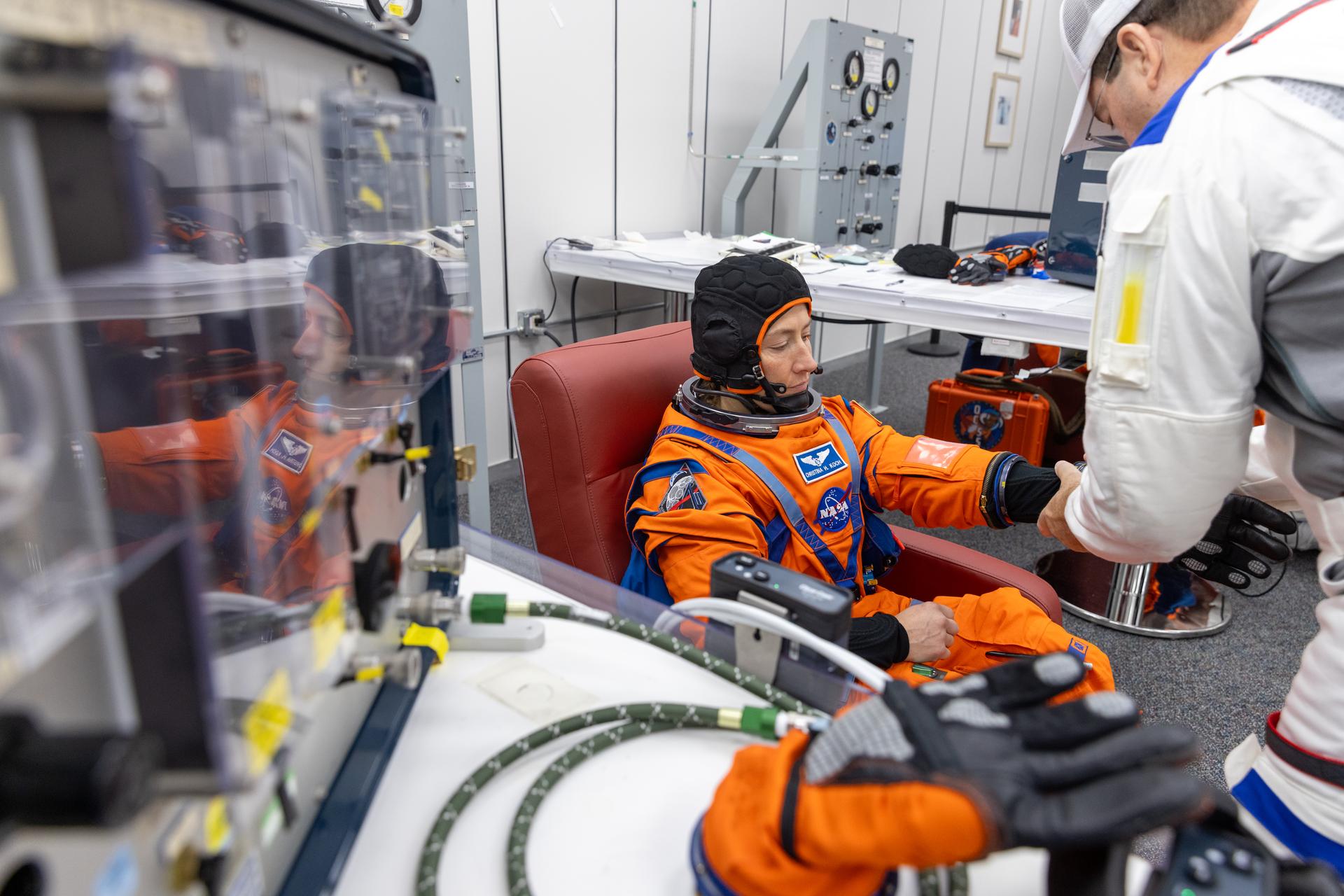
NASA astronaut, Christina Koch, Artemis II mission specialist, undergoes spacesuit checks inside the crew quarters suit-up room in the Neil A. Armstrong Operations and Checkout Building part of the Artemis II Countdown Demonstration Test at the agency’s Kennedy Space Center on Saturday, Dec. 20, 2025. For this operation, the Artemis II crew and launch team are simulating the launch day timeline including suit-up, walkout, and climbing in and out of the spacecraft. Through the Artemis campaign, NASA will send astronauts to explore the Moon for scientific discovery, economic benefits, and to build the foundation for the first crewed missions to Mars, for the benefit of all.
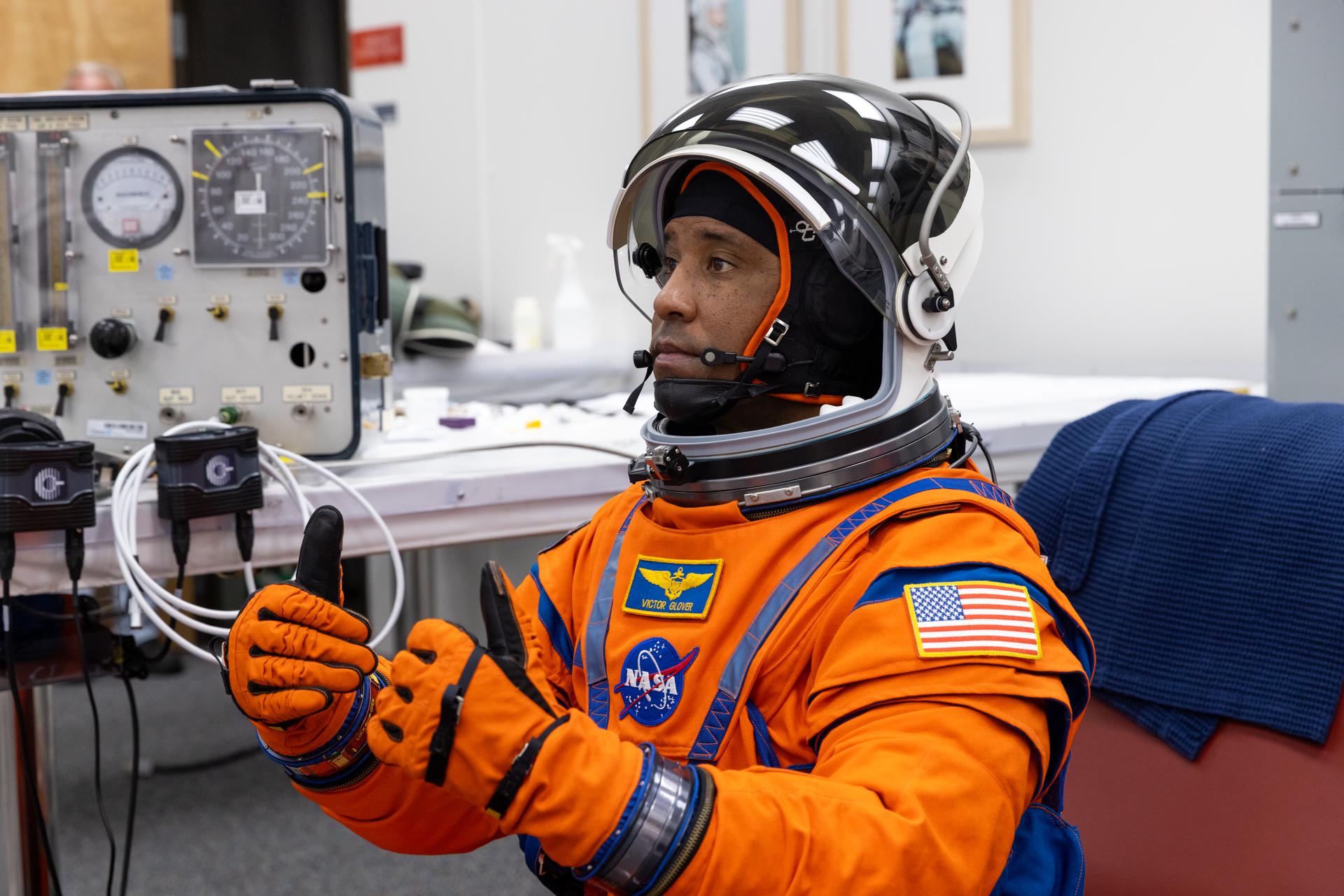
NASA astronaut Victor Glover, Artemis II pilot, undergoes spacesuit checks inside the crew quarters suit-up room in the Neil A. Armstrong Operations and Checkout Building part of the Artemis II Countdown Demonstration Test at the agency’s Kennedy Space Center on Saturday, Dec. 20, 2025. For this operation, the Artemis II crew and launch team are simulating the launch day timeline including suit-up, walkout, and climbing in and out of the spacecraft. Through the Artemis campaign, NASA will send astronauts to explore the Moon for scientific discovery, economic benefits, and to build the foundation for the first crewed missions to Mars, for the benefit of all.
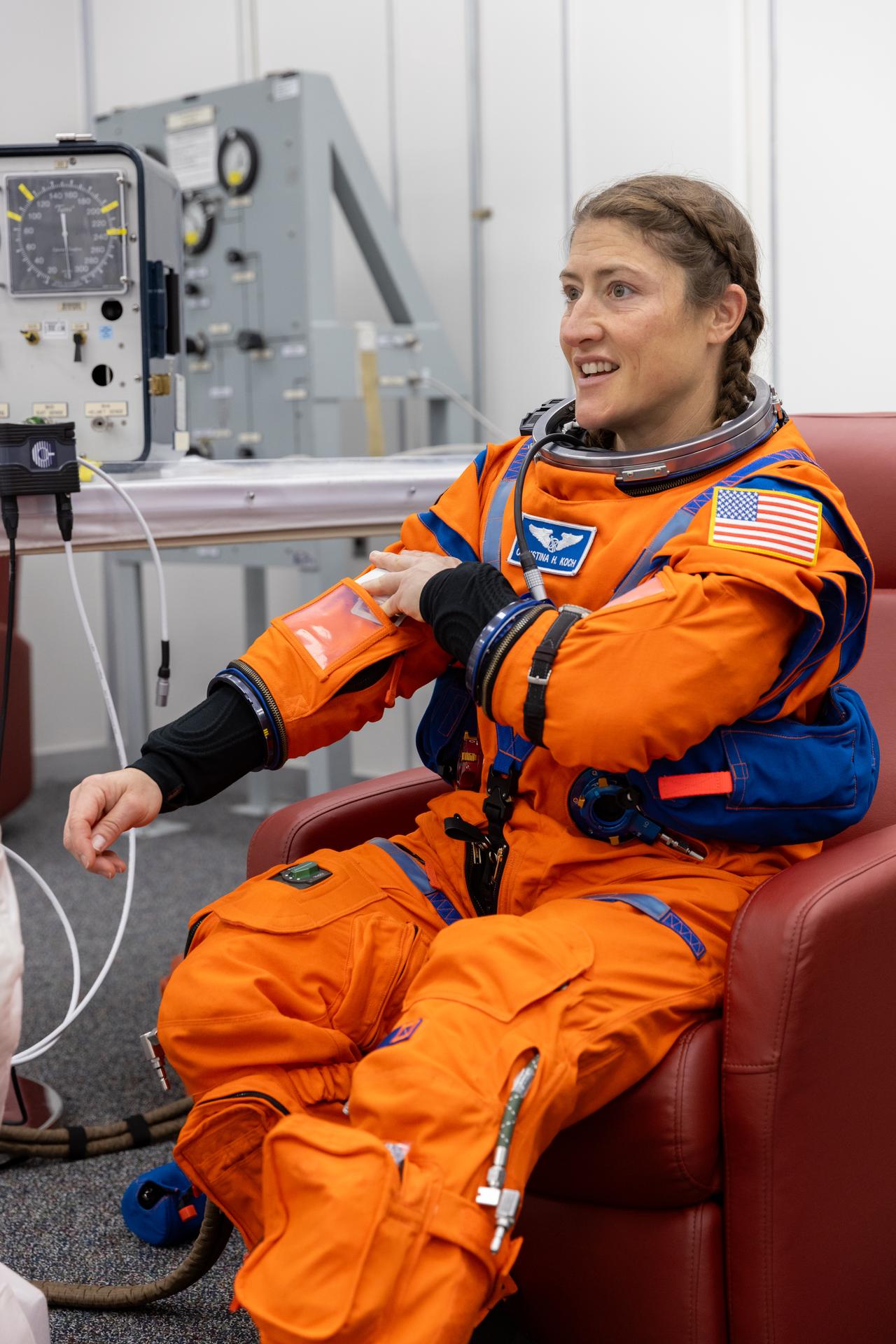
NASA astronaut, Christina Koch, Artemis II mission specialist, undergoes spacesuit checks inside the crew quarters suit-up room in the Neil A. Armstrong Operations and Checkout Building part of the Artemis II Countdown Demonstration Test at the agency’s Kennedy Space Center on Saturday, Dec. 20, 2025. For this operation, the Artemis II crew and launch team are simulating the launch day timeline including suit-up, walkout, and climbing in and out of the spacecraft. Through the Artemis campaign, NASA will send astronauts to explore the Moon for scientific discovery, economic benefits, and to build the foundation for the first crewed missions to Mars, for the benefit of all.
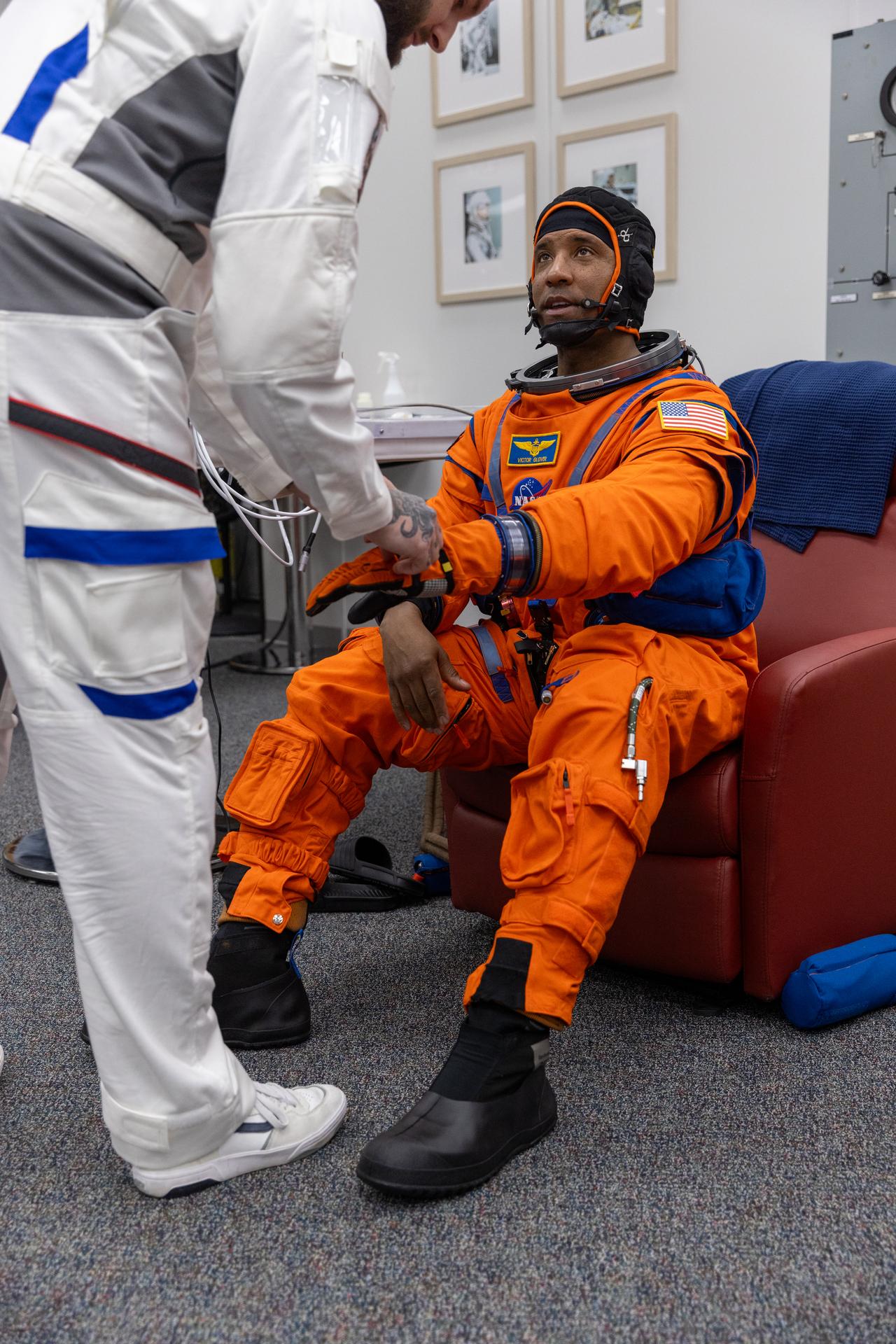
NASA astronaut Victor Glover, Artemis II pilot, undergoes spacesuit checks inside the crew quarters suit-up room in the Neil A. Armstrong Operations and Checkout Building part of the Artemis II Countdown Demonstration Test at the agency’s Kennedy Space Center on Saturday, Dec. 20, 2025. For this operation, the Artemis II crew and launch team are simulating the launch day timeline including suit-up, walkout, and climbing in and out of the spacecraft. Through the Artemis campaign, NASA will send astronauts to explore the Moon for scientific discovery, economic benefits, and to build the foundation for the first crewed missions to Mars, for the benefit of all.
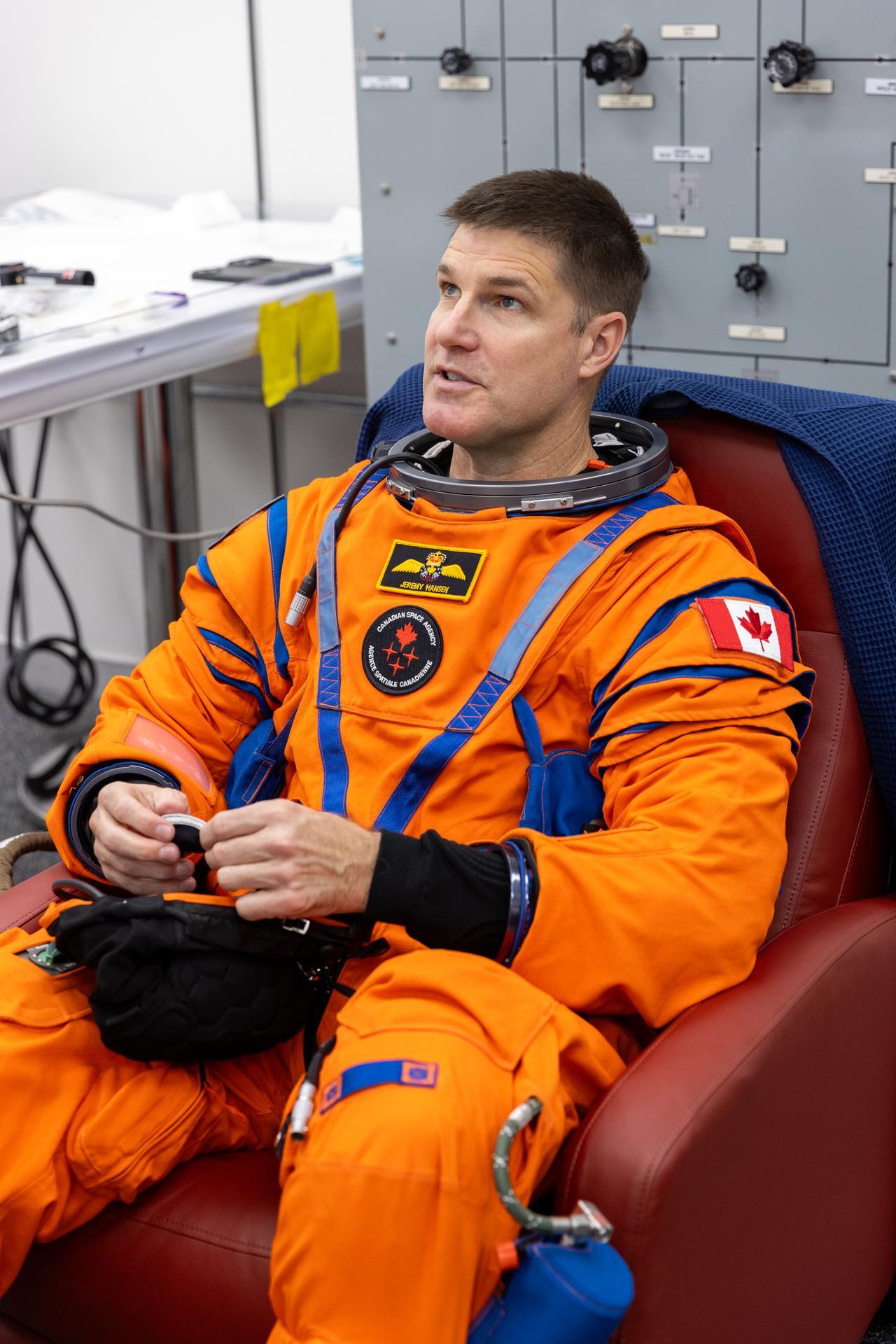
CSA (Canadian Space Agency) astronaut Jeremy Hansen, Artemis II mission specialist, undergoes spacesuit checks inside the crew quarters suit-up room in the Neil A. Armstrong Operations and Checkout Building part of the Artemis II Countdown Demonstration Test at the agency’s Kennedy Space Center on Saturday, Dec. 20, 2025. For this operation, the Artemis II crew and launch team are simulating the launch day timeline including suit-up, walkout, and climbing in and out of the spacecraft. Through the Artemis campaign, NASA will send astronauts to explore the Moon for scientific discovery, economic benefits, and to build the foundation for the first crewed missions to Mars, for the benefit of all.
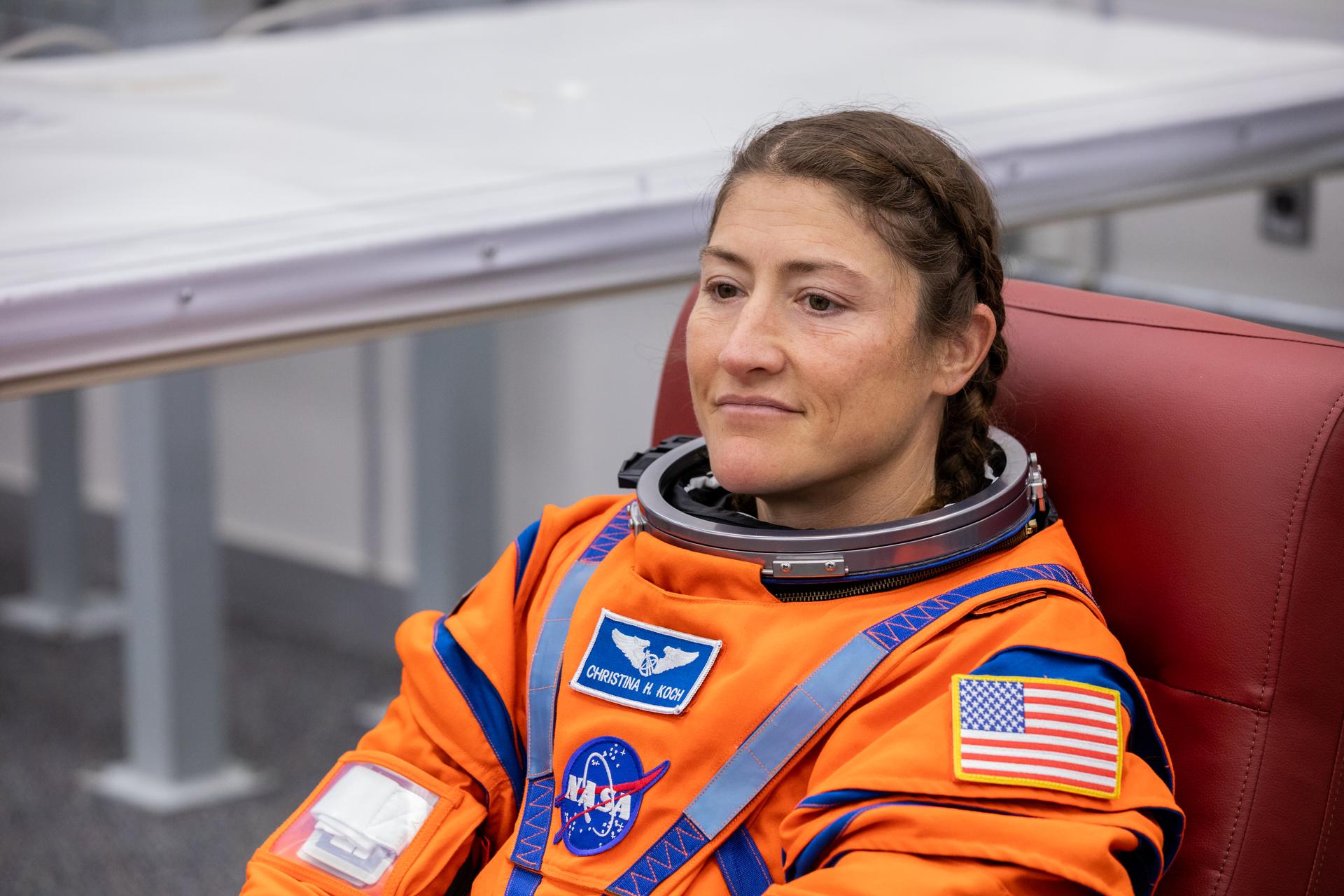
NASA astronaut, Christina Koch, Artemis II mission specialist, undergoes spacesuit checks inside the crew quarters suit-up room in the Neil A. Armstrong Operations and Checkout Building part of the Artemis II Countdown Demonstration Test at the agency’s Kennedy Space Center on Saturday, Dec. 20, 2025. For this operation, the Artemis II crew and launch team are simulating the launch day timeline including suit-up, walkout, and climbing in and out of the spacecraft. Through the Artemis campaign, NASA will send astronauts to explore the Moon for scientific discovery, economic benefits, and to build the foundation for the first crewed missions to Mars, for the benefit of all.
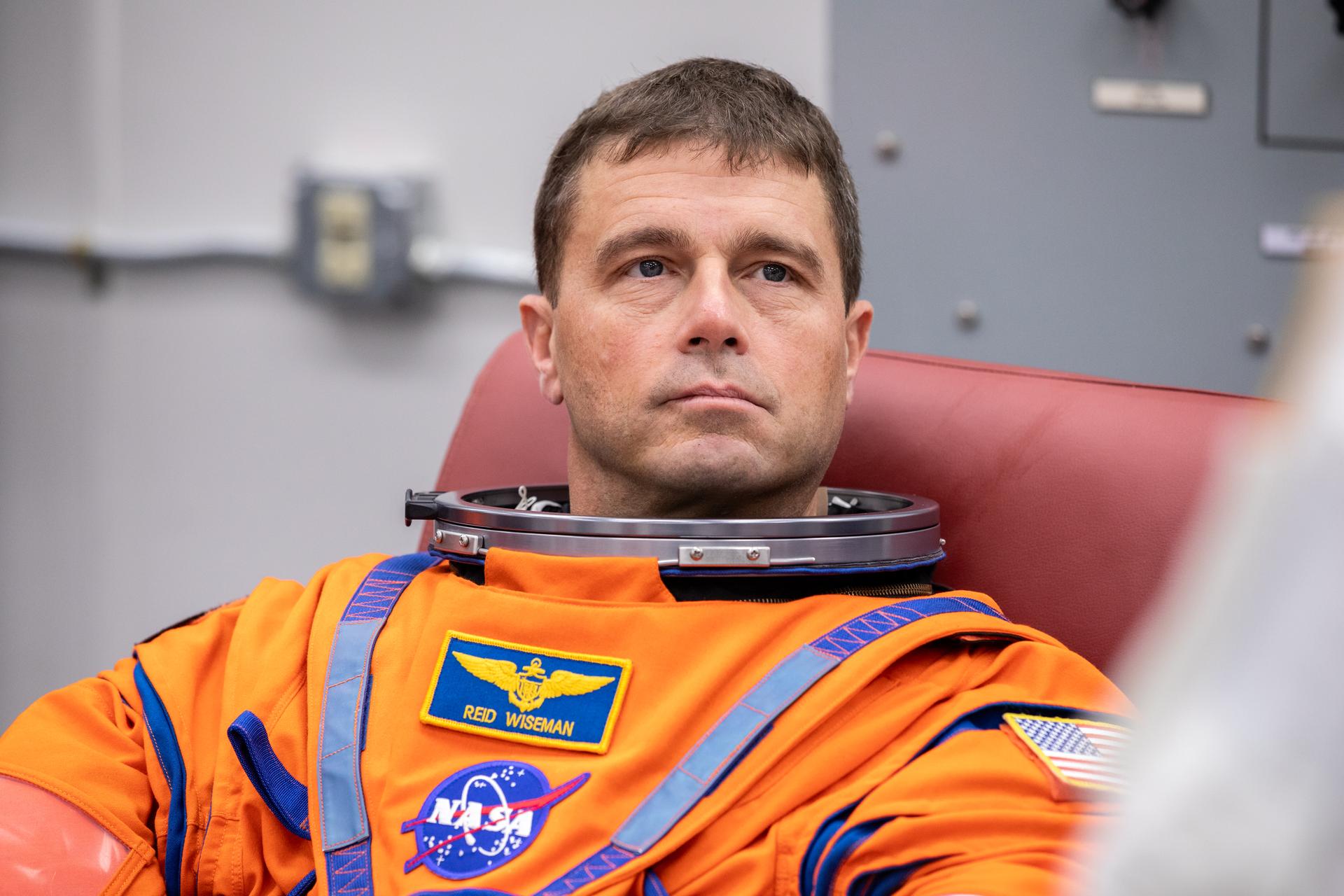
NASA astronaut Reid Wiseman, Artemis II commander, undergoes spacesuit checks inside the crew quarters suit-up room in the Neil A. Armstrong Operations and Checkout Building part of the Artemis II Countdown Demonstration Test at the agency’s Kennedy Space Center on Saturday, Dec. 20, 2025. For this operation, the Artemis II crew and launch team are simulating the launch day timeline including suit-up, walkout, and climbing in and out of the spacecraft. Through the Artemis campaign, NASA will send astronauts to explore the Moon for scientific discovery, economic benefits, and to build the foundation for the first crewed missions to Mars, for the benefit of all.
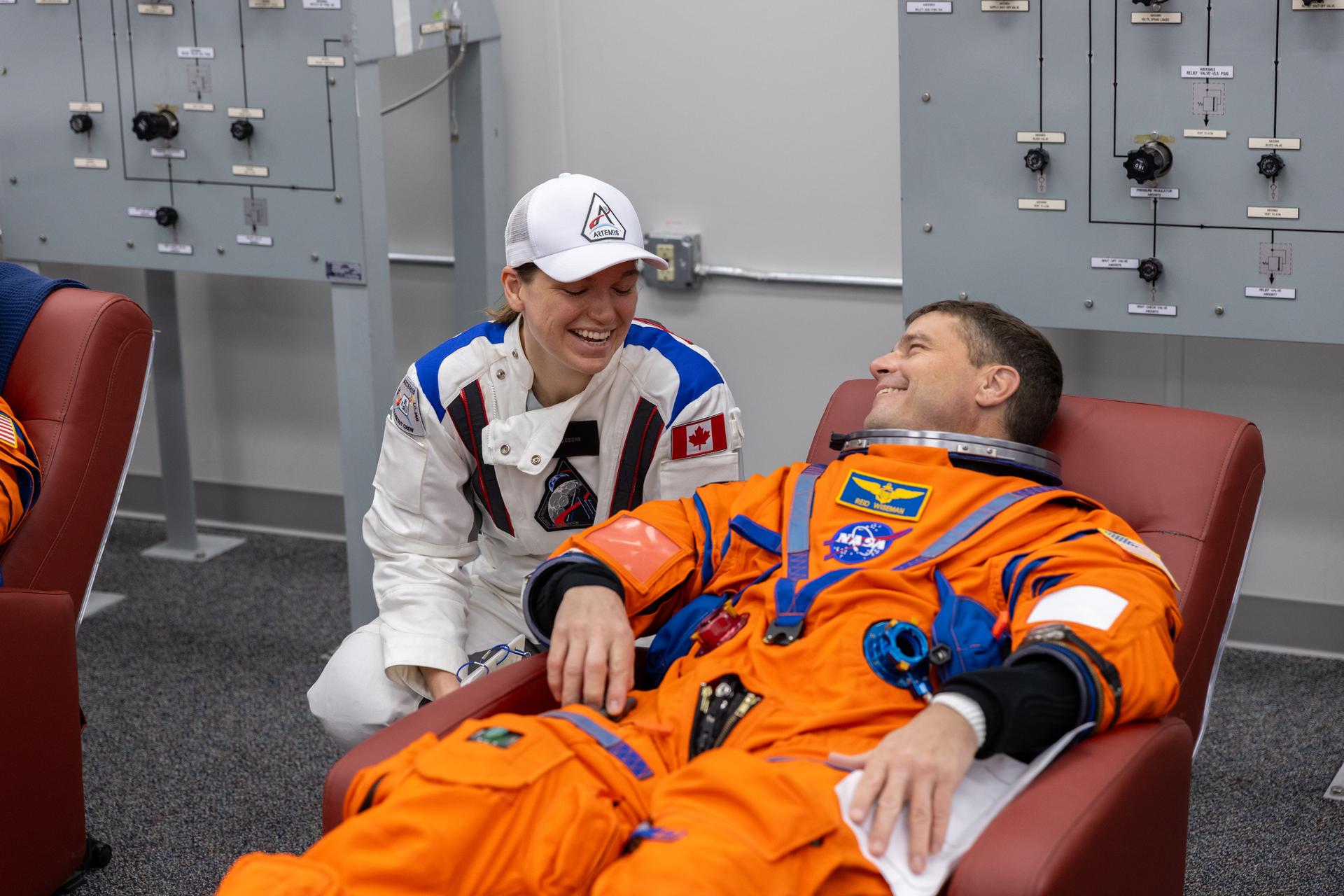
NASA astronaut Reid Wiseman, Artemis II commander, undergoes spacesuit checks inside the crew quarters suit-up room in the Neil A. Armstrong Operations and Checkout Building part of the Artemis II Countdown Demonstration Test at the agency’s Kennedy Space Center on Saturday, Dec. 20, 2025. For this operation, the Artemis II crew and launch team are simulating the launch day timeline including suit-up, walkout, and climbing in and out of the spacecraft. Through the Artemis campaign, NASA will send astronauts to explore the Moon for scientific discovery, economic benefits, and to build the foundation for the first crewed missions to Mars, for the benefit of all.
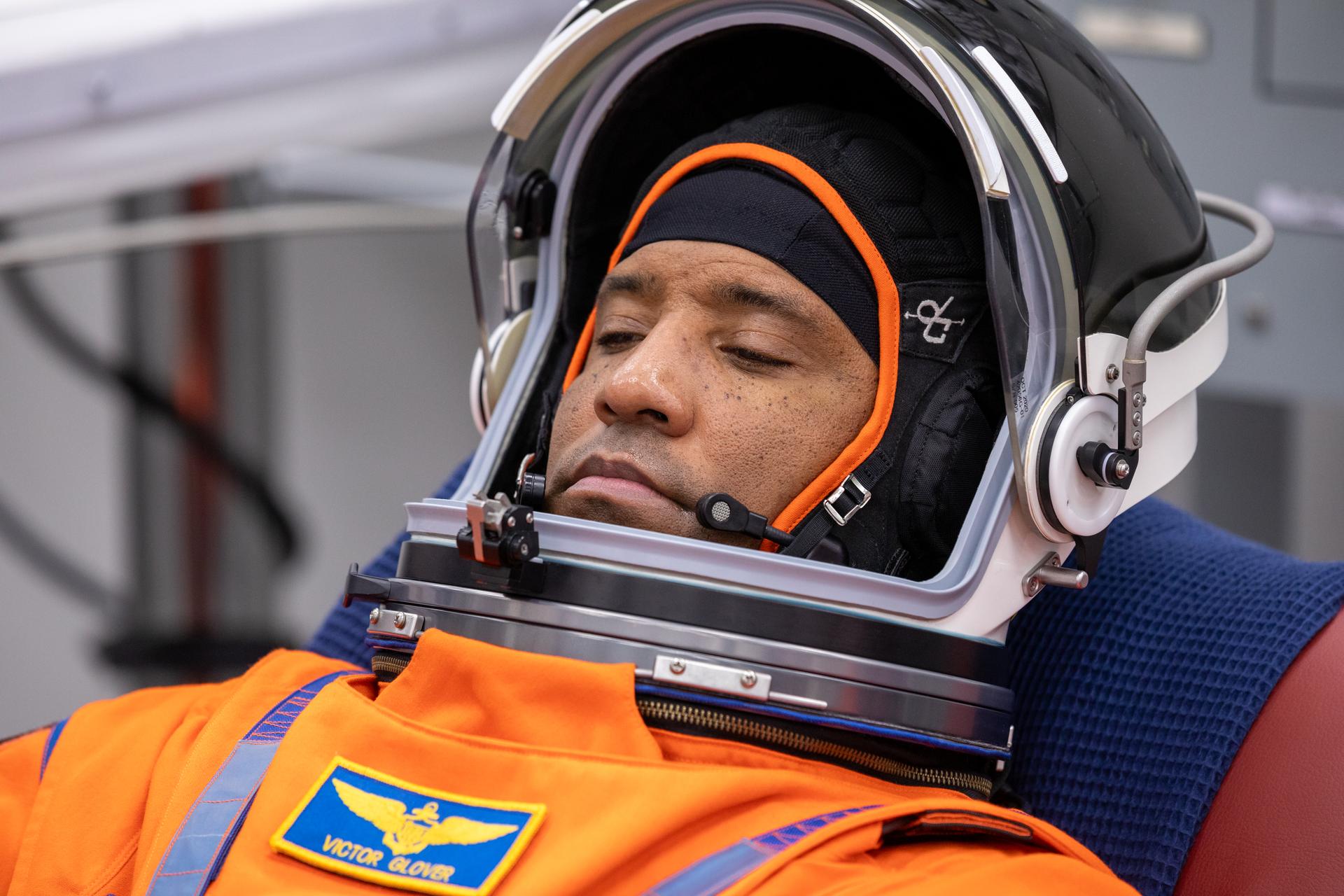
NASA astronaut Victor Glover, Artemis II pilot, undergoes spacesuit checks inside the crew quarters suit-up room in the Neil A. Armstrong Operations and Checkout Building part of the Artemis II Countdown Demonstration Test at the agency’s Kennedy Space Center on Saturday, Dec. 20, 2025. For this operation, the Artemis II crew and launch team are simulating the launch day timeline including suit-up, walkout, and climbing in and out of the spacecraft. Through the Artemis campaign, NASA will send astronauts to explore the Moon for scientific discovery, economic benefits, and to build the foundation for the first crewed missions to Mars, for the benefit of all.
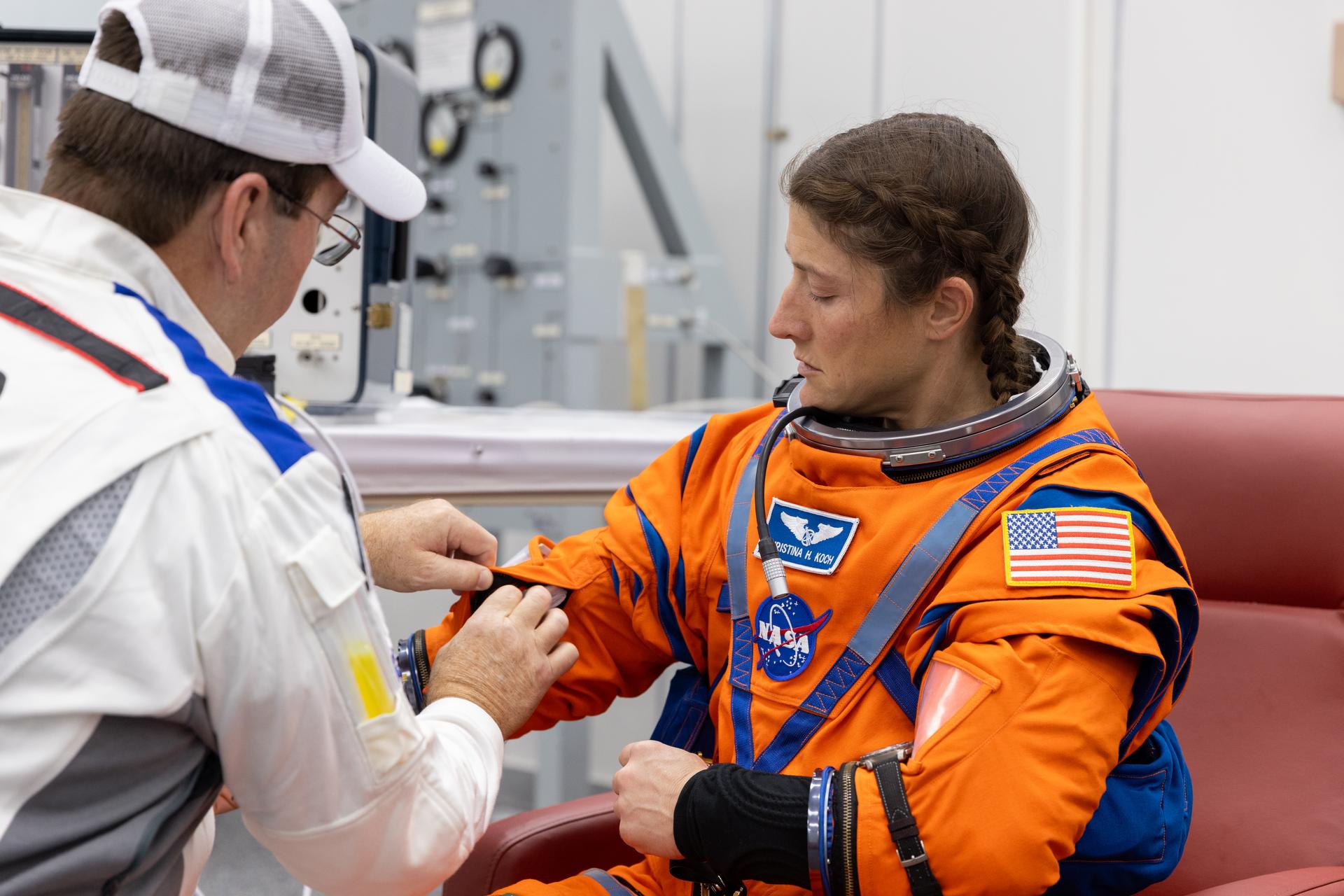
NASA astronaut, Christina Koch, Artemis II mission specialist, undergoes spacesuit checks inside the crew quarters suit-up room in the Neil A. Armstrong Operations and Checkout Building part of the Artemis II Countdown Demonstration Test at the agency’s Kennedy Space Center on Saturday, Dec. 20, 2025. For this operation, the Artemis II crew and launch team are simulating the launch day timeline including suit-up, walkout, and climbing in and out of the spacecraft. Through the Artemis campaign, NASA will send astronauts to explore the Moon for scientific discovery, economic benefits, and to build the foundation for the first crewed missions to Mars, for the benefit of all.
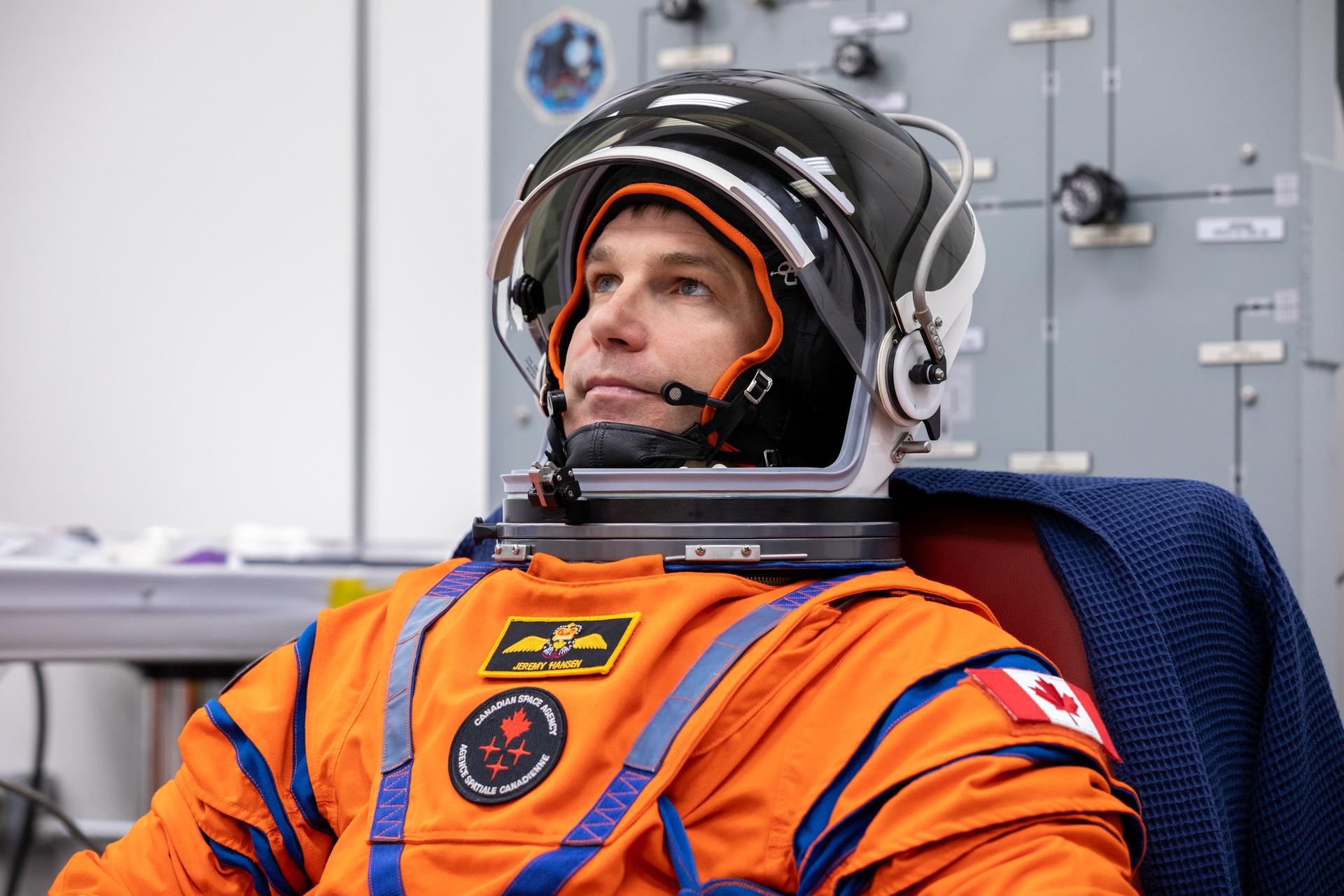
CSA (Canadian Space Agency) astronaut Jeremy Hansen, Artemis II mission specialist, undergoes spacesuit checks inside the crew quarters suit-up room in the Neil A. Armstrong Operations and Checkout Building part of the Artemis II Countdown Demonstration Test at the agency’s Kennedy Space Center on Saturday, Dec. 20, 2025. For this operation, the Artemis II crew and launch team are simulating the launch day timeline including suit-up, walkout, and climbing in and out of the spacecraft. Through the Artemis campaign, NASA will send astronauts to explore the Moon for scientific discovery, economic benefits, and to build the foundation for the first crewed missions to Mars, for the benefit of all.
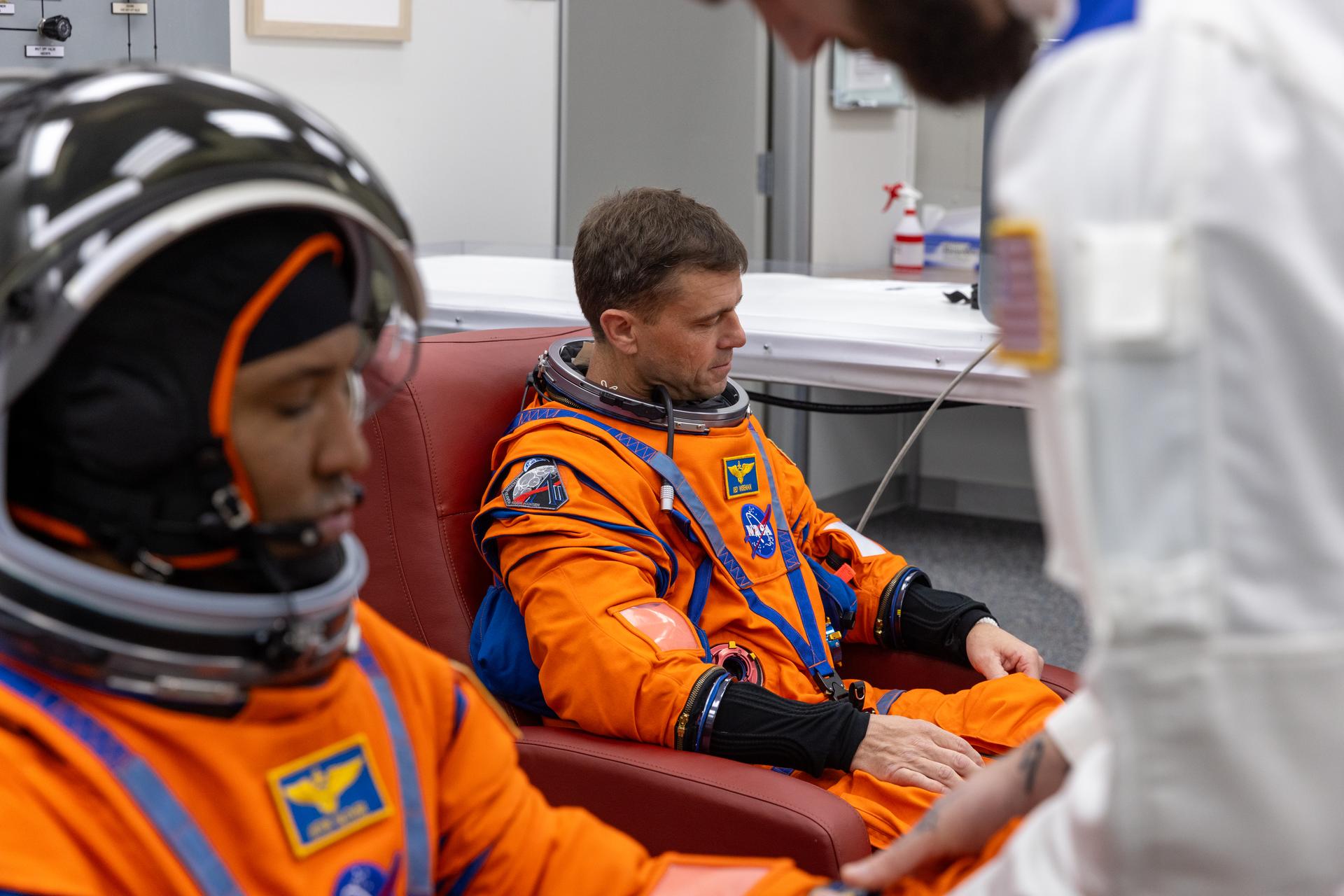
From left, NASA astronauts Victor Glover, Artemis II pilot, and Reid Wiseman, Artemis II commander, undergo spacesuit checks inside the crew quarters suit-up room in the Neil A. Armstrong Operations and Checkout Building part of the Artemis II Countdown Demonstration Test at the agency’s Kennedy Space Center on Saturday, Dec. 20, 2025. For this operation, the Artemis II crew and launch team are simulating the launch day timeline including suit-up, walkout, and climbing in and out of the spacecraft. Through the Artemis campaign, NASA will send astronauts to explore the Moon for scientific discovery, economic benefits, and to build the foundation for the first crewed missions to Mars, for the benefit of all.
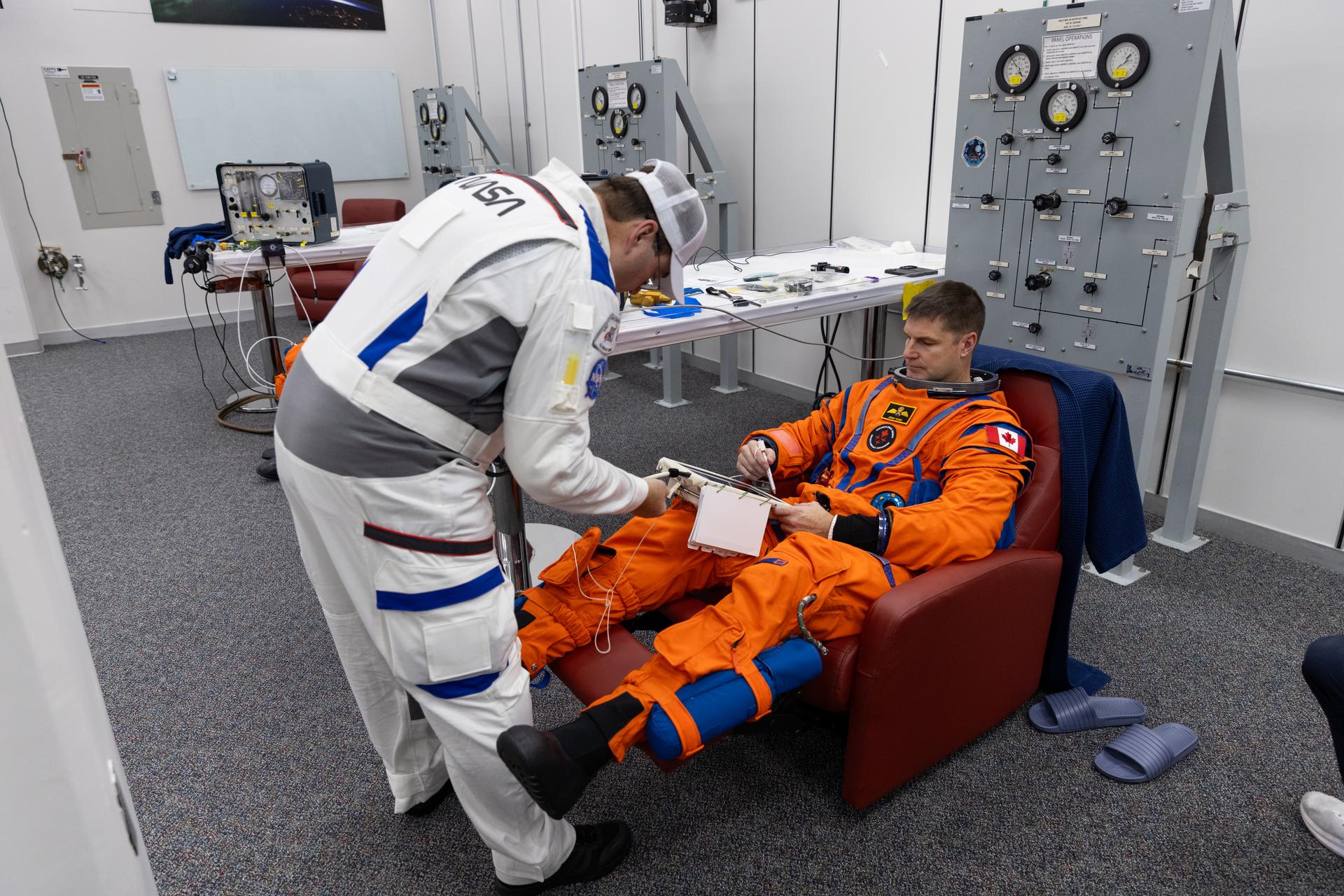
CSA (Canadian Space Agency) astronaut Jeremy Hansen, Artemis II mission specialist, undergoes spacesuit checks inside the crew quarters suit-up room in the Neil A. Armstrong Operations and Checkout Building part of the Artemis II Countdown Demonstration Test at the agency’s Kennedy Space Center on Saturday, Dec. 20, 2025. For this operation, the Artemis II crew and launch team are simulating the launch day timeline including suit-up, walkout, and climbing in and out of the spacecraft. Through the Artemis campaign, NASA will send astronauts to explore the Moon for scientific discovery, economic benefits, and to build the foundation for the first crewed missions to Mars, for the benefit of all.

NASA astronauts Shannon Walker, left, Victor Glover, second from left, Mike Hopkins, second from right, and Japan Aerospace Exploration Agency (JAXA) astronaut Soichi Noguchi, right, wearing SpaceX spacesuits, wave as they walkout of the Neil A. Armstrong Operations and Checkout Building to depart for Launch Complex 39A to board the SpaceX Crew Dragon spacecraft for the Crew-1 mission launch, Sunday, Nov. 15, 2020, at NASA’s Kennedy Space Center in Florida. NASA’s SpaceX Crew-1 mission is the first crew rotation mission of the SpaceX Crew Dragon spacecraft and Falcon 9 rocket to the International Space Station as part of the agency’s Commercial Crew Program. Hopkins, Glover, Walker, and Noguchi are scheduled to launch at 7:27 p.m. EST, from Launch Complex 39A at the Kennedy Space Center. Photo Credit: (NASA/Joel Kowsky)
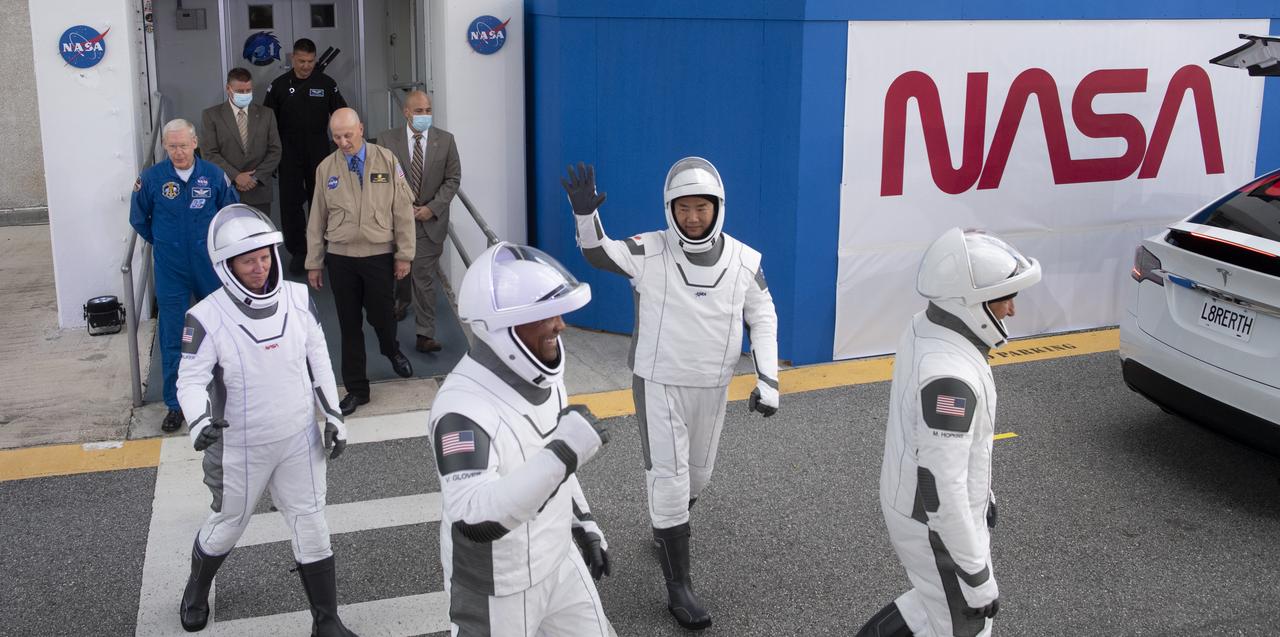
NASA astronauts Shannon Walker, left, Victor Glover, second from left, Japan Aerospace Exploration Agency (JAXA) astronaut Soichi Noguchi, second from right, and NASA astronaut Mike Hopkins, right, wearing SpaceX spacesuits, wave as they walkout of the Neil A. Armstrong Operations and Checkout Building to depart for Launch Complex 39A to board the SpaceX Crew Dragon spacecraft for the Crew-1 mission launch, Sunday, Nov. 15, 2020, at NASA’s Kennedy Space Center in Florida. NASA’s SpaceX Crew-1 mission is the first crew rotation mission of the SpaceX Crew Dragon spacecraft and Falcon 9 rocket to the International Space Station as part of the agency’s Commercial Crew Program. Hopkins, Glover, Walker, and Noguchi launched at 7:27 p.m. EST on Sunday, Nov. 15, from Launch Complex 39A at the Kennedy Space Center. Photo Credit: (NASA/Joel Kowsky)
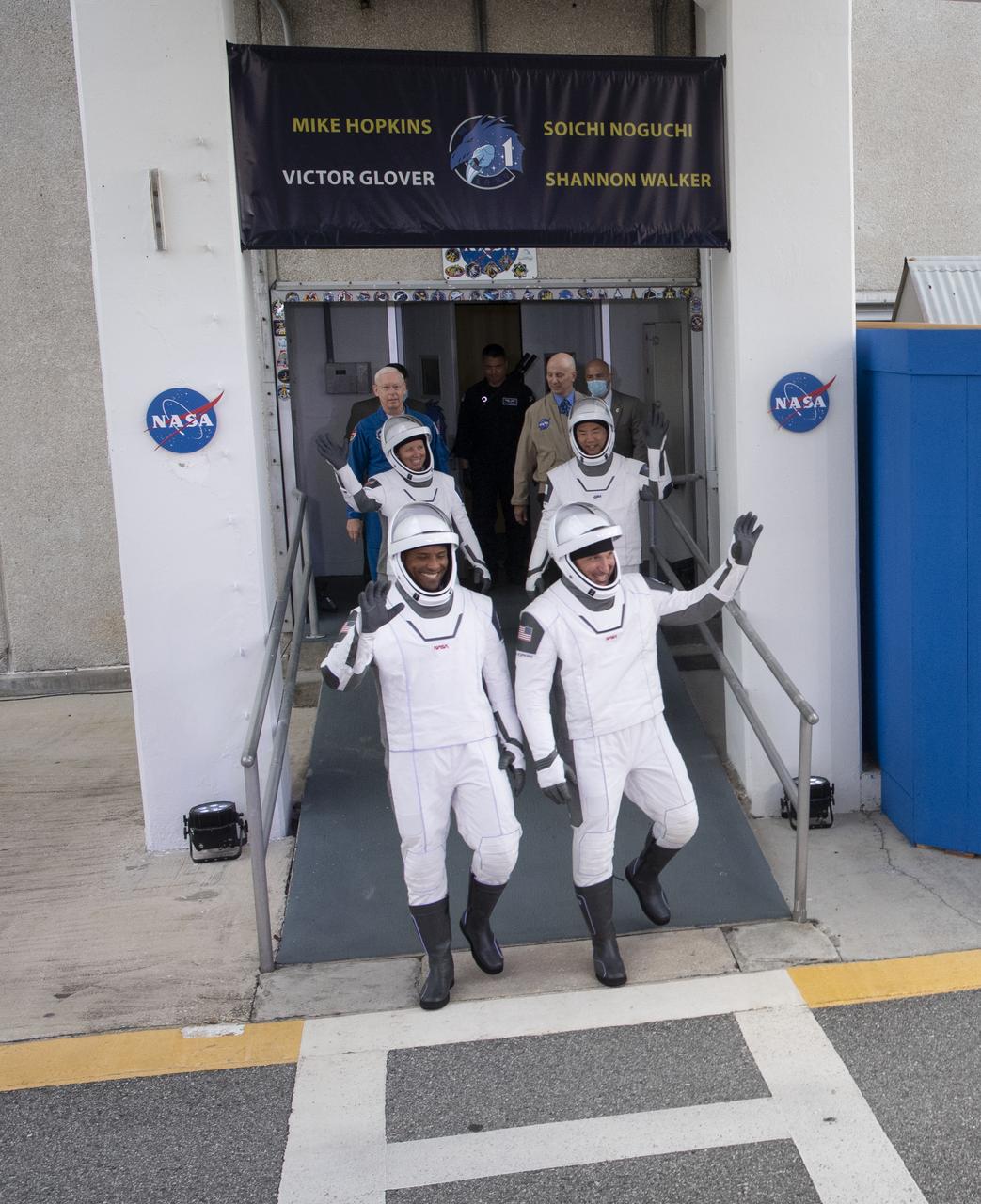
NASA astronauts Victor Glover, front left, Mike Hopkins, front right, Shannon Walker, back left, and Japan Aerospace Exploration Agency (JAXA) astronaut Soichi Noguchi, back right, wearing SpaceX spacesuits, are seen as they walkout of the Neil A. Armstrong Operations and Checkout Building to depart for Launch Complex 39A to board the SpaceX Crew Dragon spacecraft for the Crew-1 mission launch, Sunday, Nov. 15, 2020, at NASA’s Kennedy Space Center in Florida. NASA’s SpaceX Crew-1 mission is the first crew rotation mission of the SpaceX Crew Dragon spacecraft and Falcon 9 rocket to the International Space Station as part of the agency’s Commercial Crew Program. Hopkins, Glover, Walker, and Noguchi are scheduled to launch at 7:27 p.m. EST, from Launch Complex 39A at the Kennedy Space Center. Photo Credit: (NASA/Joel Kowsky)
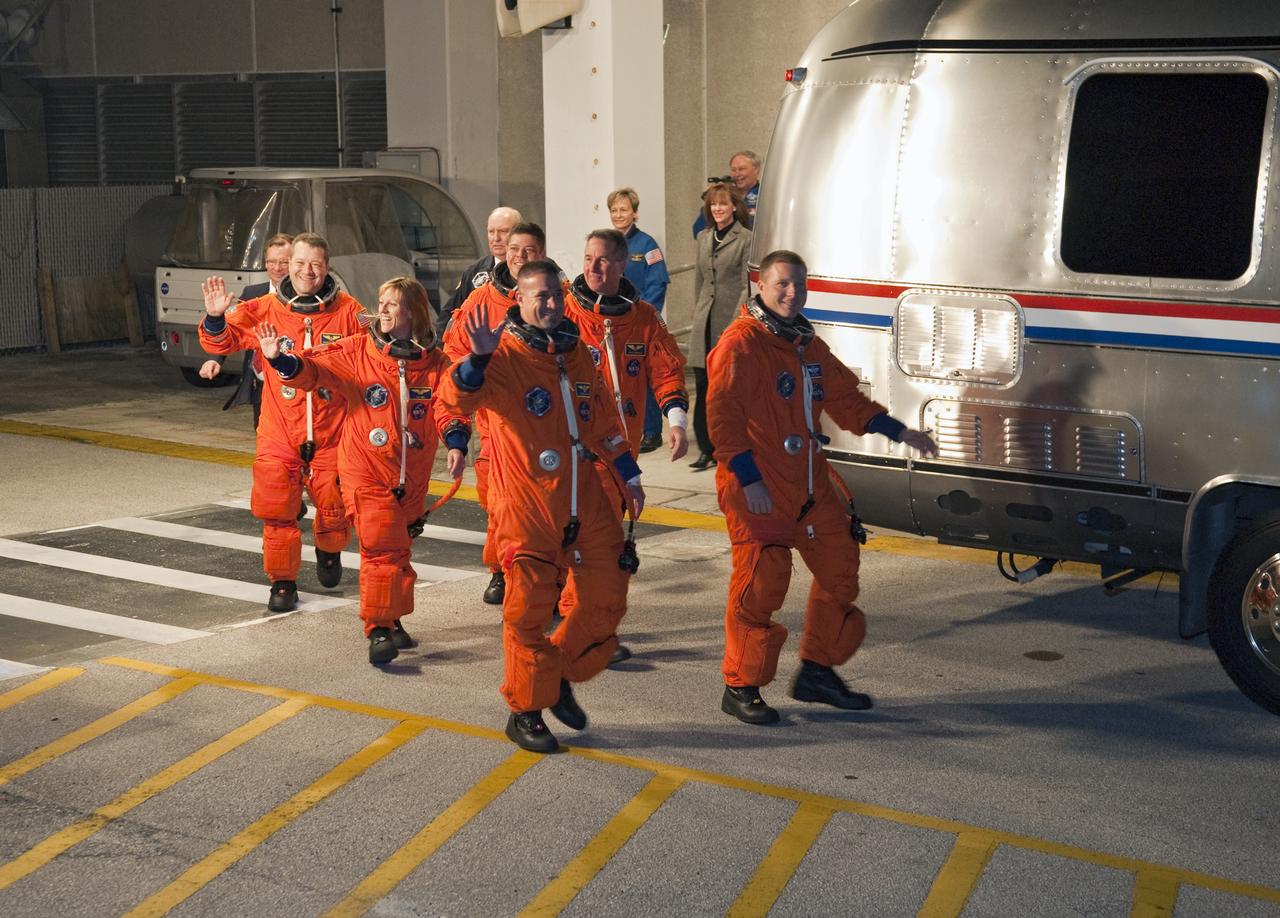
STS-130 LAUNCH L-0 MANUAL WALKOUT
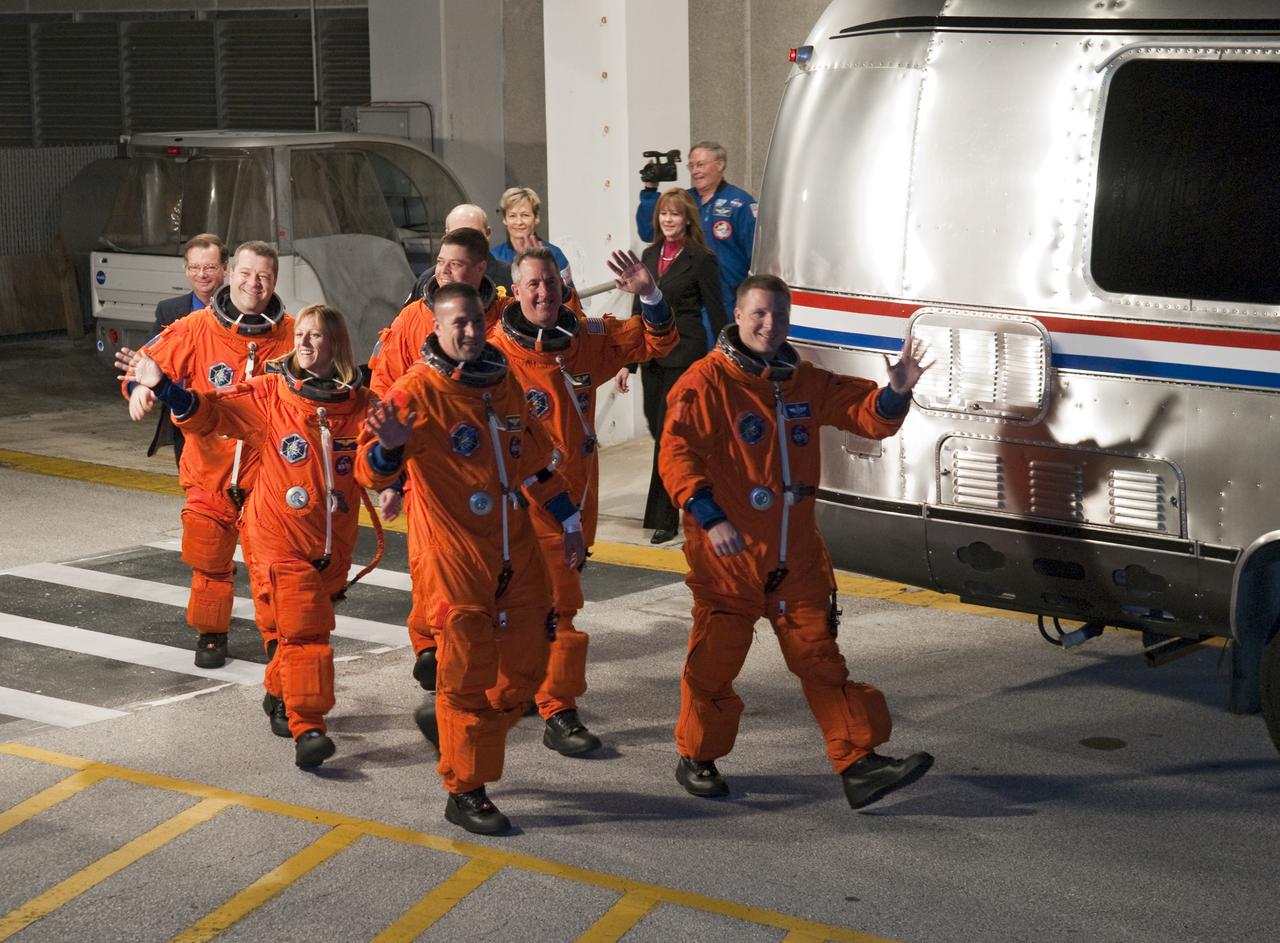
STS-130 LAUNCH L-0 MANUAL WALKOUT
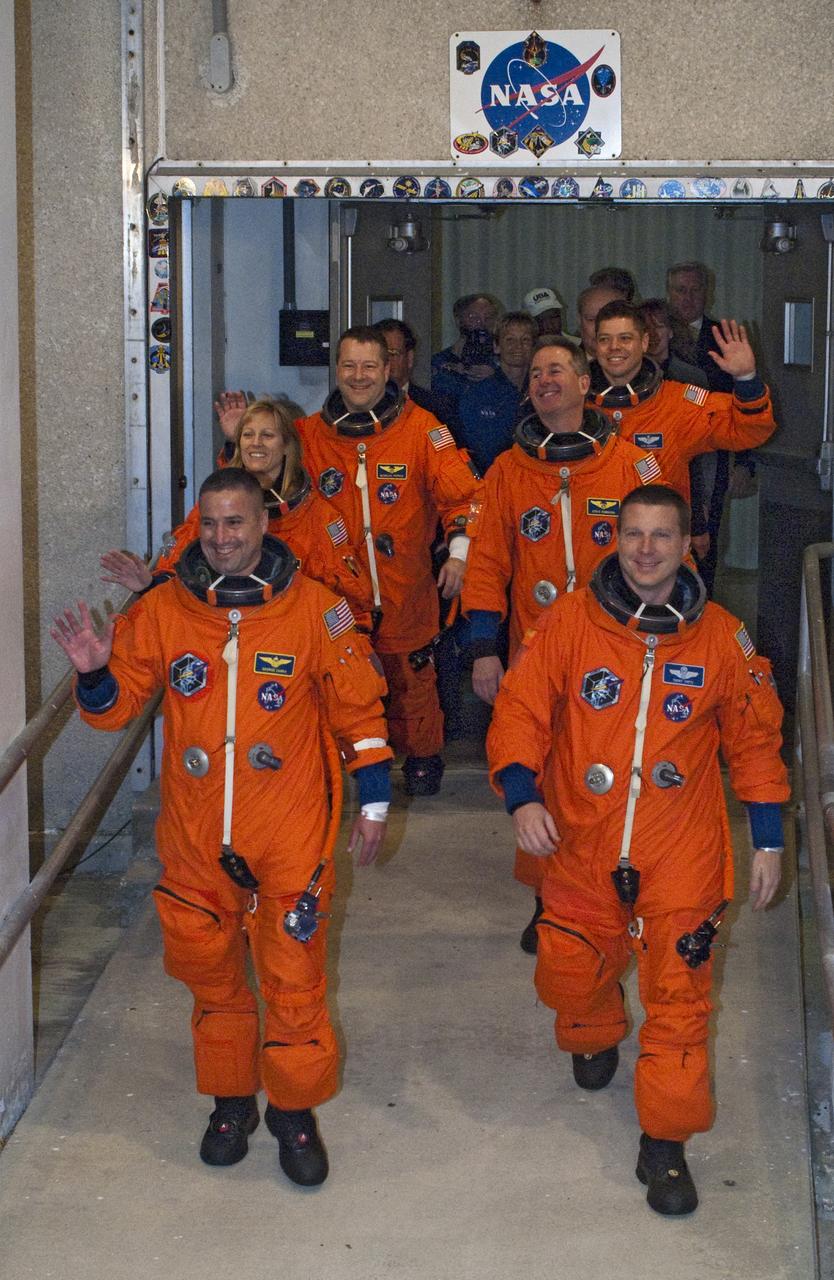
STS-130 LAUNCH L-0 REMOTE WALKOUT
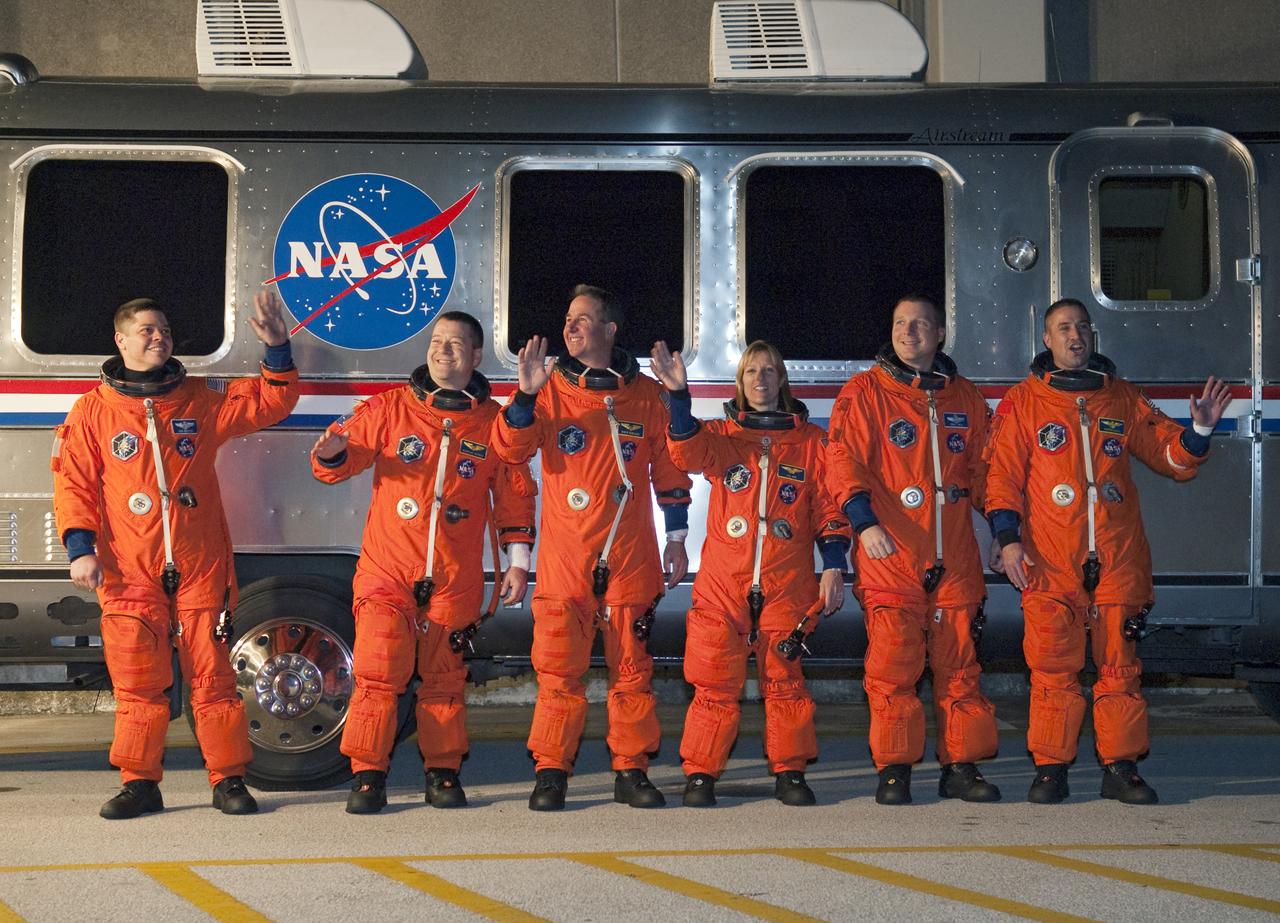
STS-130 LAUNCH L-0 MANUAL WALKOUT
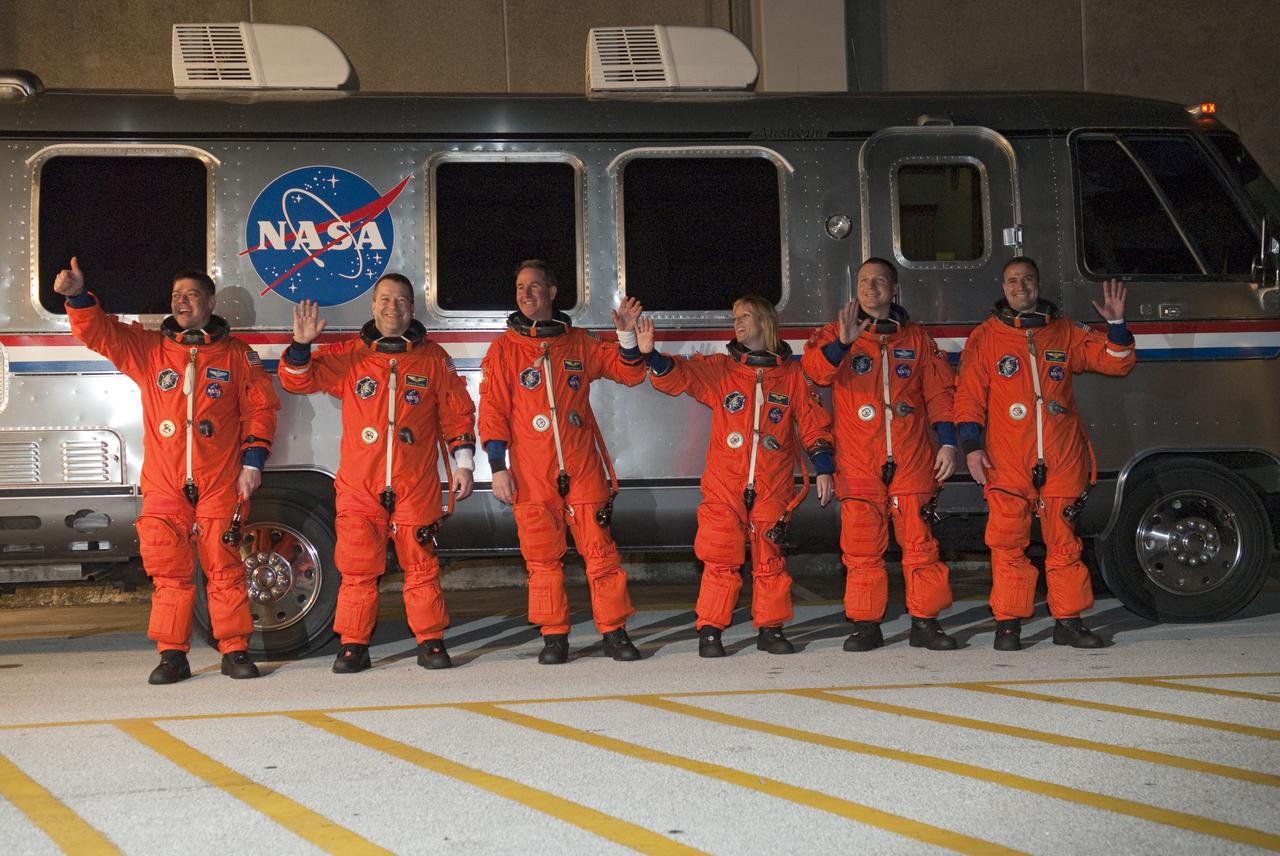
STS-130 LAUNCH L-0 MANUAL WALKOUT
STS-130 LAUNCH L-0 REMOTE WALKOUT
NASA astronauts Reid Wiseman, Artemis II commander, Victor Glover, Artemis II pilot, Christina Koch, Artemis II mission specialist and CSA (Canadian Space Agency) astronaut Jeremy Hansen, Artemis II mission specialist, depart the Neil A. Armstrong Operations and Checkout Building to travel to the Vehicle Assembly Building to board their Orion spacecraft atop NASA’s SLS (Space Launch System) rocket as part of the Artemis II Countdown Demonstration Test on Saturday, Dec. 20, 2025 at NASA’s Kennedy Space Center in Florida. For this operation, the Artemis II crew and launch team are simulating the launch day timeline including suit-up, walkout, and climbing in and out of the spacecraft. Through the Artemis campaign, NASA will send astronauts to explore the Moon for scientific discovery, economic benefits, and to build the foundation for the first crewed missions to Mars, for the benefit of all.
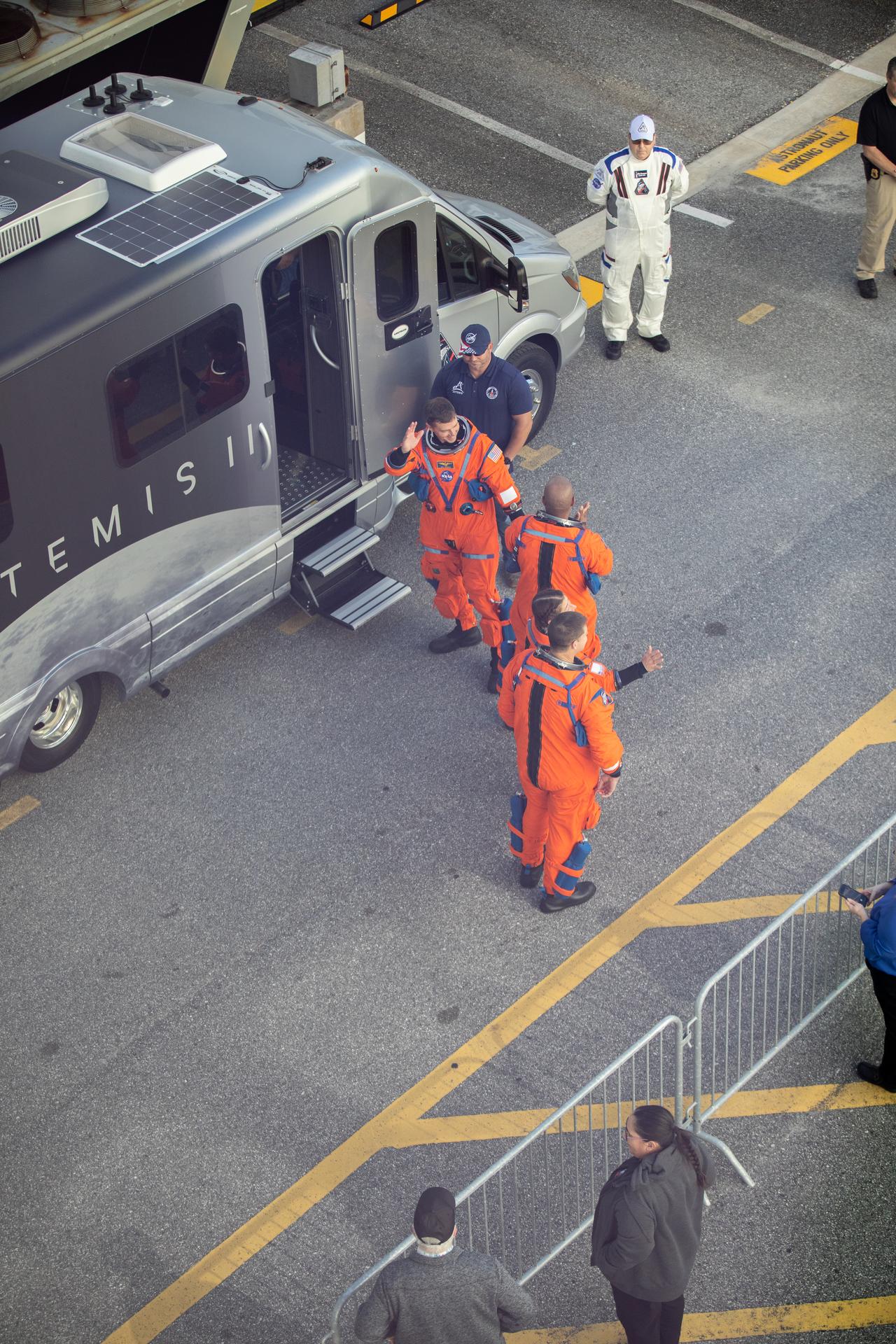
From left, NASA astronauts Reid Wiseman, Artemis II commander, Victor Glover, Artemis II pilot, Christina Koch, Artemis II mission specialist and CSA (Canadian Space Agency) astronaut Jeremy Hansen, Artemis II mission specialist, depart the Neil A. Armstrong Operations and Checkout Building to travel to the Vehicle Assembly Building to board their Orion spacecraft atop NASA’s SLS (Space Launch System) rocket as part of the Artemis II Countdown Demonstration Test on Saturday, Dec. 20, 2025 at NASA’s Kennedy Space Center in Florida. For this operation, the Artemis II crew and launch team are simulating the launch day timeline including suit-up, walkout, and climbing in and out of the spacecraft. Through the Artemis campaign, NASA will send astronauts to explore the Moon for scientific discovery, economic benefits, and to build the foundation for the first crewed missions to Mars, for the benefit of all.
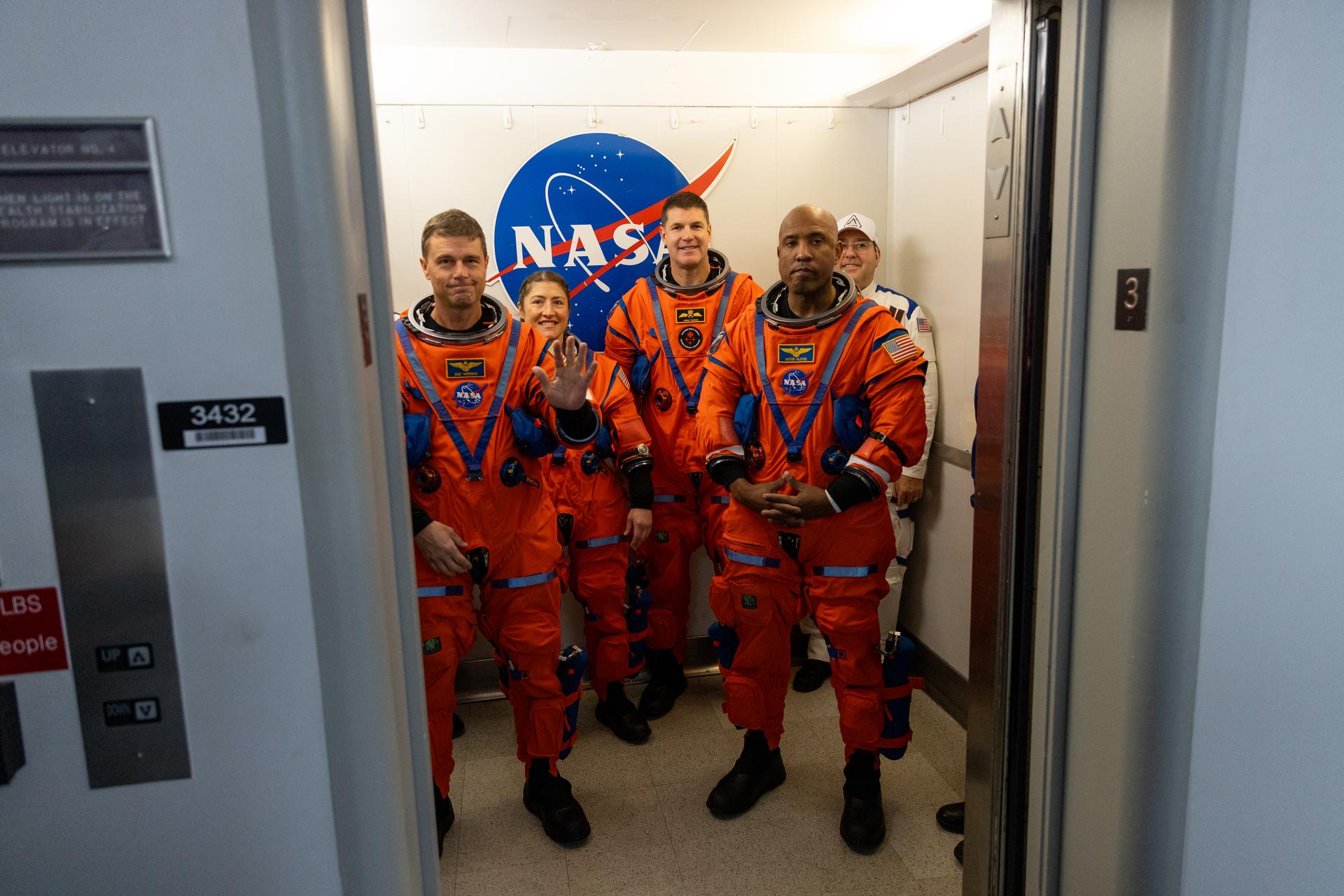
From left, NASA astronauts Reid Wiseman, Artemis II commander, Christina Koch, Artemis II mission specialist, CSA (Canadian Space Agency) astronaut Jeremy Hansen, Artemis II mission specialist, and NASA astronaut Victor Glover, Artemis II pilot, depart the Neil A. Armstrong Operations and Checkout Building to travel to the Vehicle Assembly Building to board their Orion spacecraft atop NASA’s SLS (Space Launch System) rocket as part of the Artemis II Countdown Demonstration Test on Saturday, Dec. 20, 2025 at NASA’s Kennedy Space Center in Florida. For this operation, the Artemis II crew and launch team are simulating the launch day timeline including suit-up, walkout, and climbing in and out of the spacecraft. Through the Artemis campaign, NASA will send astronauts to explore the Moon for scientific discovery, economic benefits, and to build the foundation for the first crewed missions to Mars, for the benefit of all.
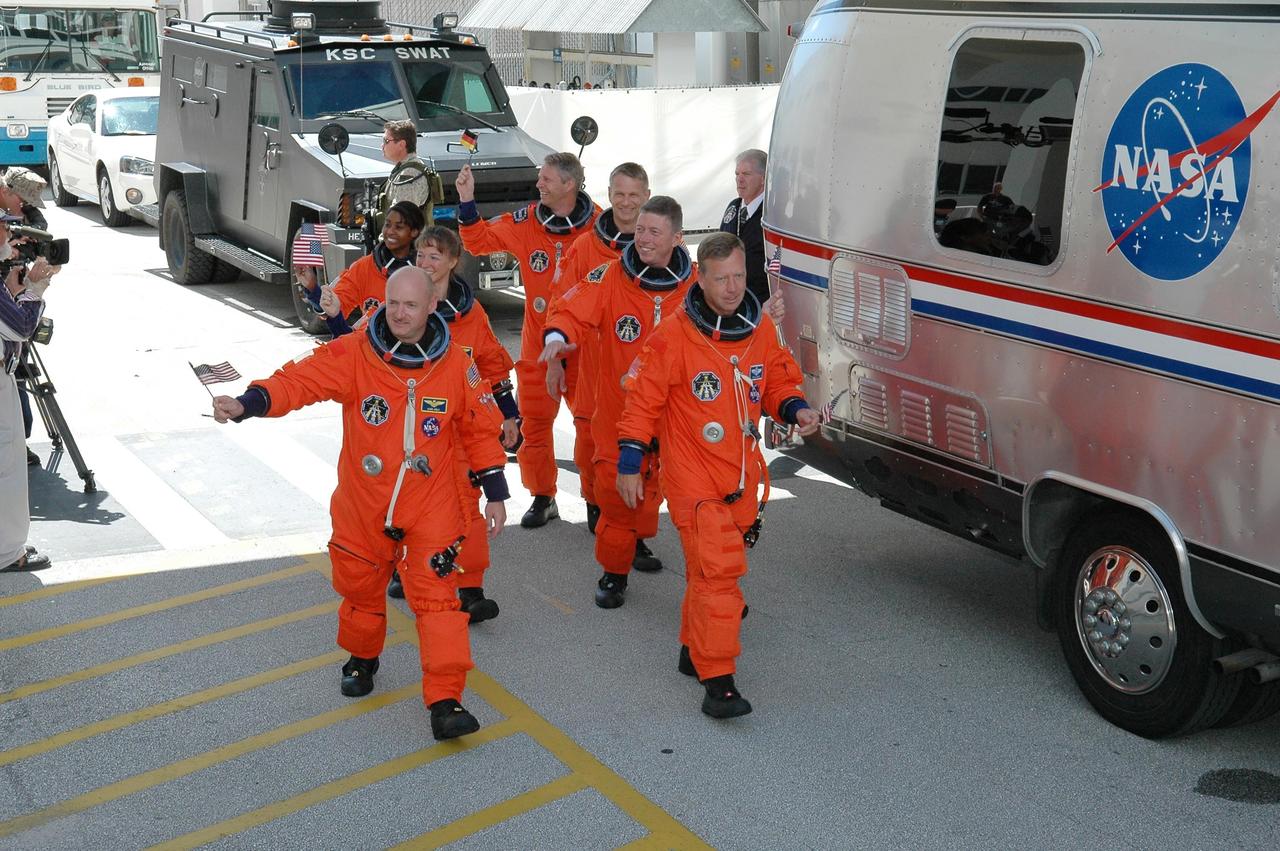
KENNEDY SPACE CENTER, FLA. - Waving flags for the Fourth of July, the STS-121 crew heads for the Astrovan and the ride to Launch Pad 39B for a third launch attempt. Leading the way are Pilot Mark Kelly (left) and Commander Steven Lindsey (right). Behind them are, left and right, Mission Specialists (second row) Lisa Nowak and Michael Fossum; (third row) Stephanie Wilson and Piers Sellers; and (at the rear) Thomas Reiter, who represents the European Space Agency. The July 2 launch attempt was scrubbed due to the presence of showers and thunderstorms within the surrounding area of the launch site. The launch of Space Shuttle Discovery on mission STS-121 is the 115th shuttle flight and the 18th U.S. flight to the International Space Station. During the 12-day mission, the STS-121 crew will test new equipment and procedures to improve shuttle safety, as well as deliver supplies and make repairs to the International Space Station. Photo credit: NASA/Kim Shiflett
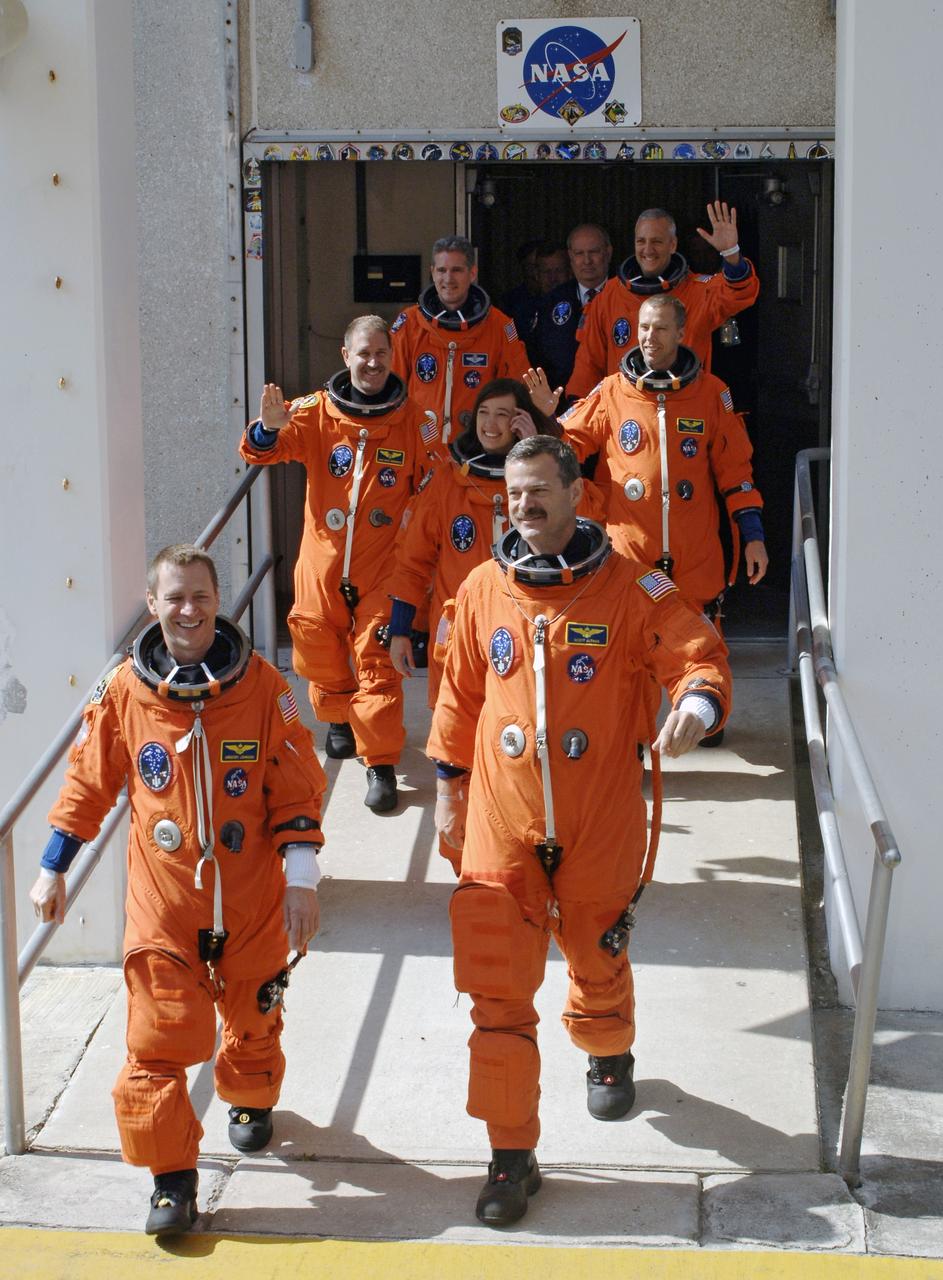
CAPE CANAVERAL, Fla. – STS-125 crew members eagerly stride from the Operations and Checkout Building at NASA's Kennedy Space Center in Florida to make the trip to Launch Pad 39A for liftoff of space shuttle Atlantis on the STS-125 mission to service NASA's Hubble Space Telescope. On the left, front to back, are Pilot Gregory C. Johnson and Mission Specialists John Grunsfeld and Michael Good. On the right, front to back, are Commander Scott Altman and Mission Specialists Megan McArthur, Andrew Feustel and Mike Massimino. Atlantis' 11-day flight will include five spacewalks to refurbish and upgrade the telescope with state-of-the-art science instruments that will expand Hubble's capabilities and extend its operational lifespan through at least 2014. The payload includes a Wide Field Camera 3, fine guidance sensor and the Cosmic Origins Spectrograph. Launch of Atlantis is scheduled for 2:01 p.m. May 11 EDT. Photo credit: NASA/Kim Shiflett
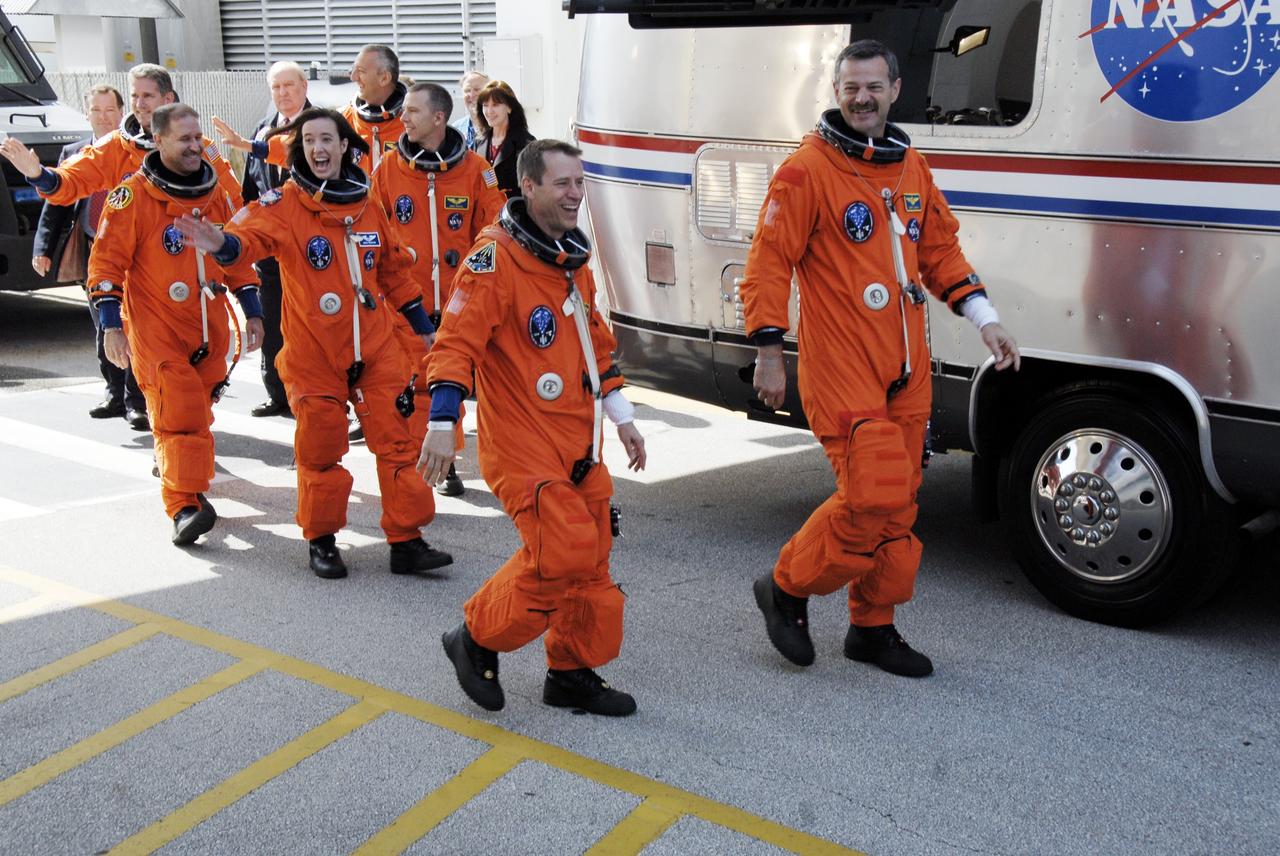
CAPE CANAVERAL, Fla. – STS-125 crew members head for the Astrovan outside the Operations and Checkout Building at NASA's Kennedy Space Center in Florida. The Astrovan will take them to Launch Pad 39A for liftoff of space shuttle Atlantis on the STS-125 mission to service NASA's Hubble Space Telescope. From left are Mission Specialists Michael Good, John Grunsfeld, Megan McArthur, Mike Massimino and Andrew Feustel, Pilot Gregory C. Johnson and Commander Scott Altman. Atlantis' 11-day flight will include five spacewalks to refurbish and upgrade the telescope with state-of-the-art science instruments that will expand Hubble's capabilities and extend its operational lifespan through at least 2014. The payload includes a Wide Field Camera 3, fine guidance sensor and the Cosmic Origins Spectrograph. Launch of Atlantis is scheduled for 2:01 p.m. May 11 EDT. Photo credit: NASA/Kim Shiflett
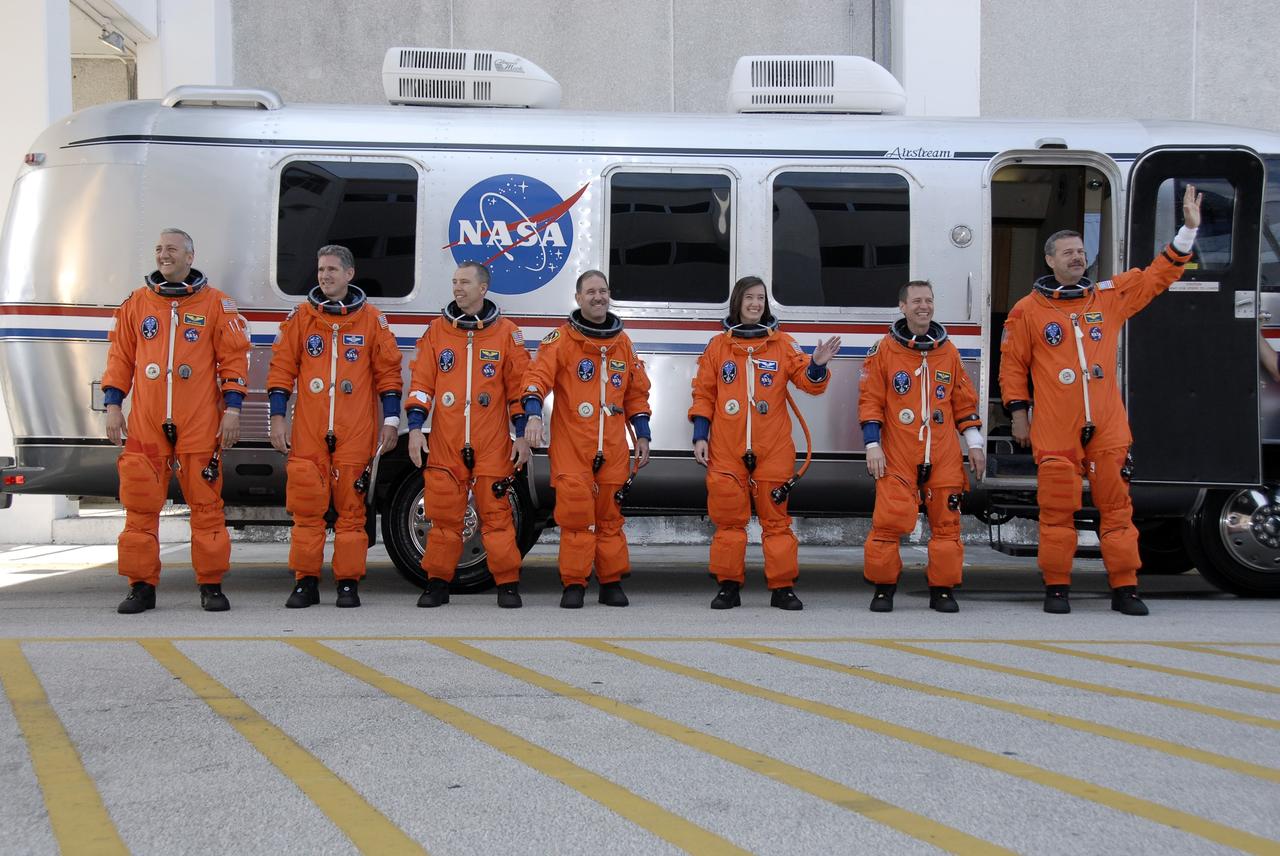
CAPE CANAVERAL, Fla. – STS-125 crew members acknowledge the spectators who have gathered to wish them well on their mission aboard space shuttle Atlantis to service NASA's Hubble Space Telescope. From left are Mission Specialists Mike Massimino, Michael Good, Andrew Feustel, John Grunsfeld and Megan McArthur, Pilot Gregory C. Johnson and Commander Scott Altman. Atlantis' 11-day flight will include five spacewalks to refurbish and upgrade the telescope with state-of-the-art science instruments that will expand Hubble's capabilities and extend its operational lifespan through at least 2014. The payload includes a Wide Field Camera 3, fine guidance sensor and the Cosmic Origins Spectrograph. Launch of Atlantis is scheduled for 2:01 p.m. May 11 EDT. Photo credit: NASA/Kim Shiflett
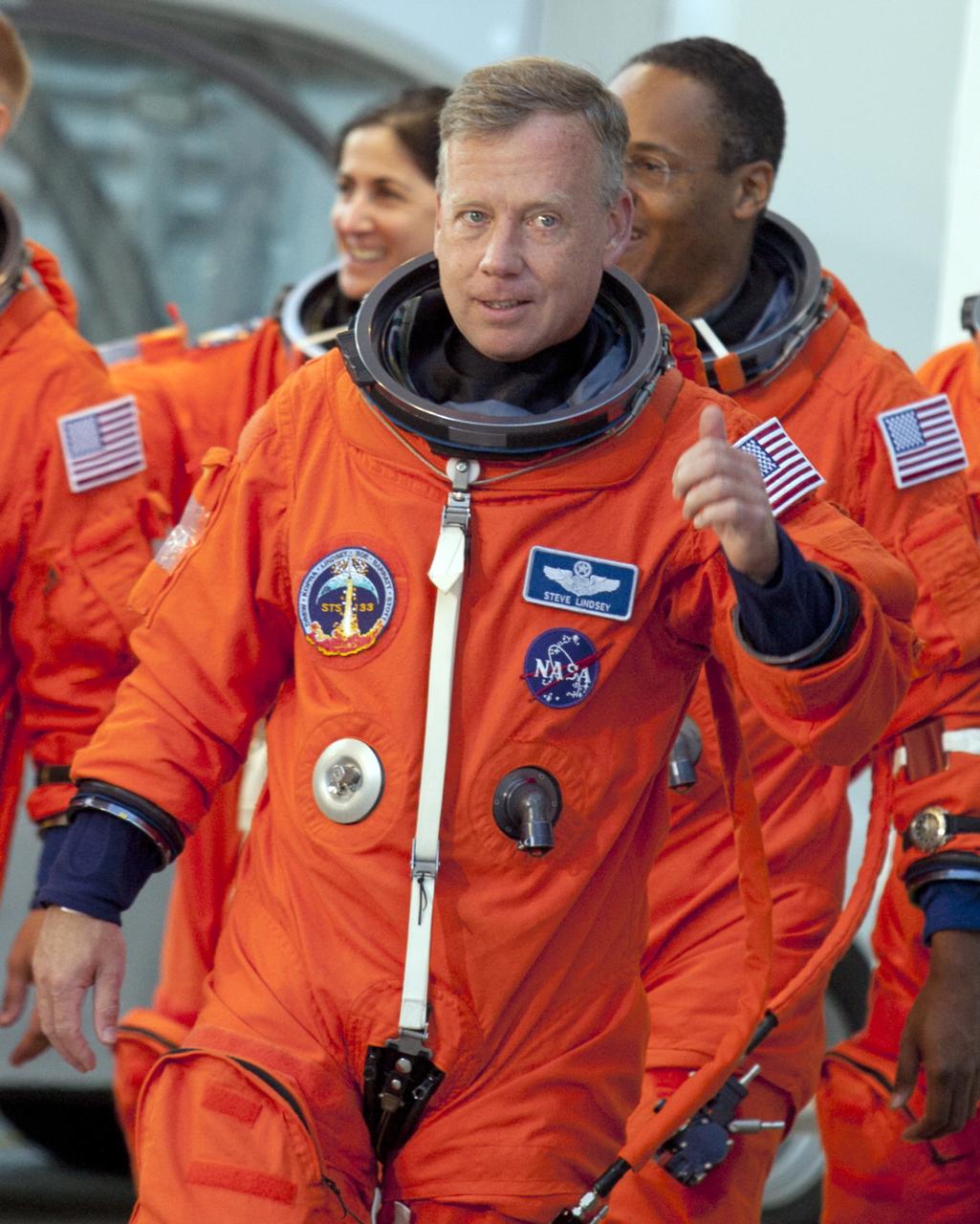
Shuttle Discovery STS-133 Mission Commander Steve Lindsey gives a thumbs up during a practice crew walkout at Kennedy Space Center, Cape Canaveral, Florida, USA 15 October 2010. The crew of six is headed to launch pad 39A for a mock countdown that completes the three day Terminal Countdown Demonstration Test. Shuttle Discovery is being prepared for what is to be it's final mission to the International Space Station, with launch scheduled for no earlier than 01 November 2010.
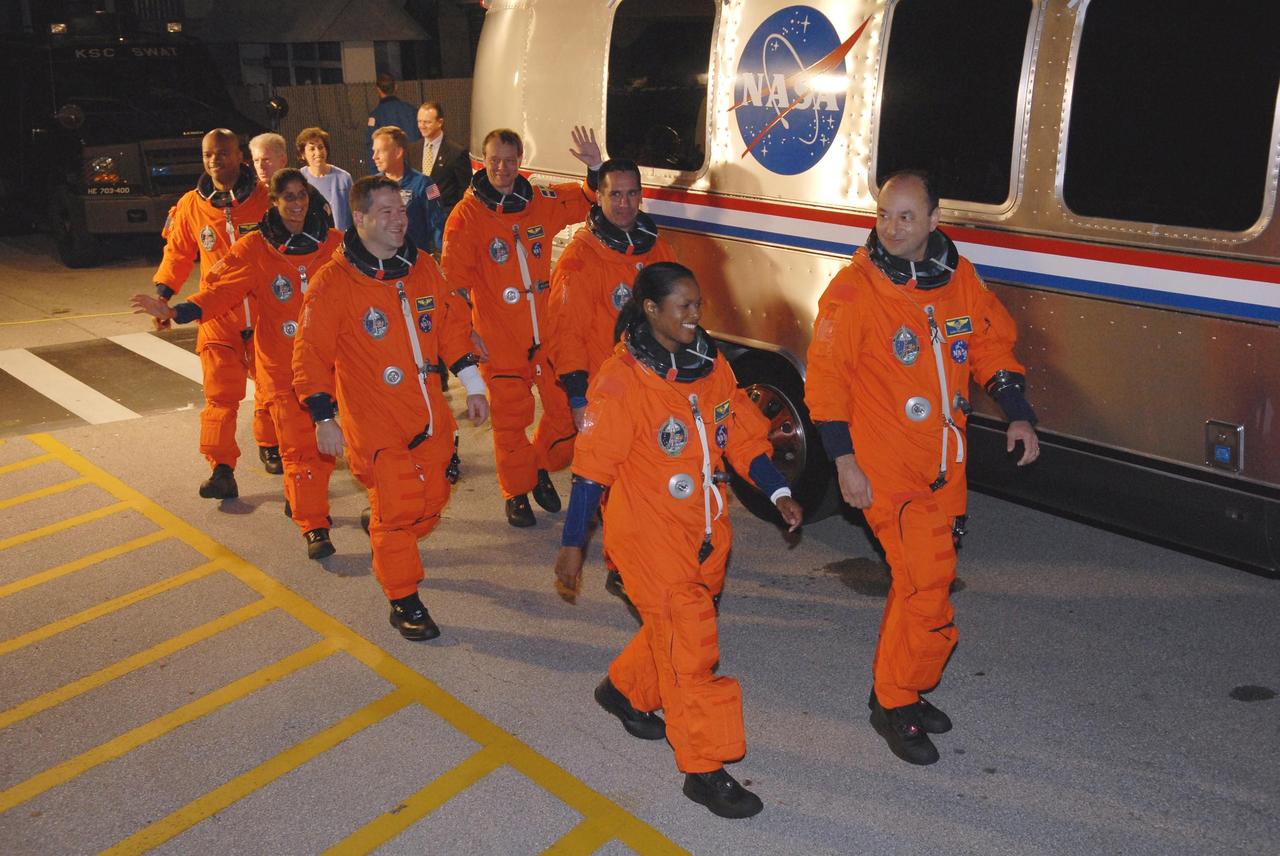
KENNEDY SPACE CENTER, FLA. -- The STS-116 crew walks to the Astrovan for the drive to Launch Pad 39B. From left are Mission Specialists Robert Curbeam, Sunita Williams, Nicholas Patrick and Christer Fuglesang; Pilot William Oefelein; Mission Specialist Joan Higginbotham; and Commander Mark Polansky. Fuglesang represents the European Space Agency. Williams will replace Expedition 14 crew member Thomas Reiter, who will return to Earth aboard Discovery in her place. This is Discovery's 33rd mission and the first night launch since 2002. The 20th shuttle mission to the International Space Station, STS-116 carries another truss segment, P5. It will serve as a spacer, mated to the P4 truss that was attached in September. After installing the P5, the crew will reconfigure and redistribute the power generated by two pairs of U.S. solar arrays. Landing is expected Dec. 19 at KSC. Photo credit: NASA/Kim Shiflett
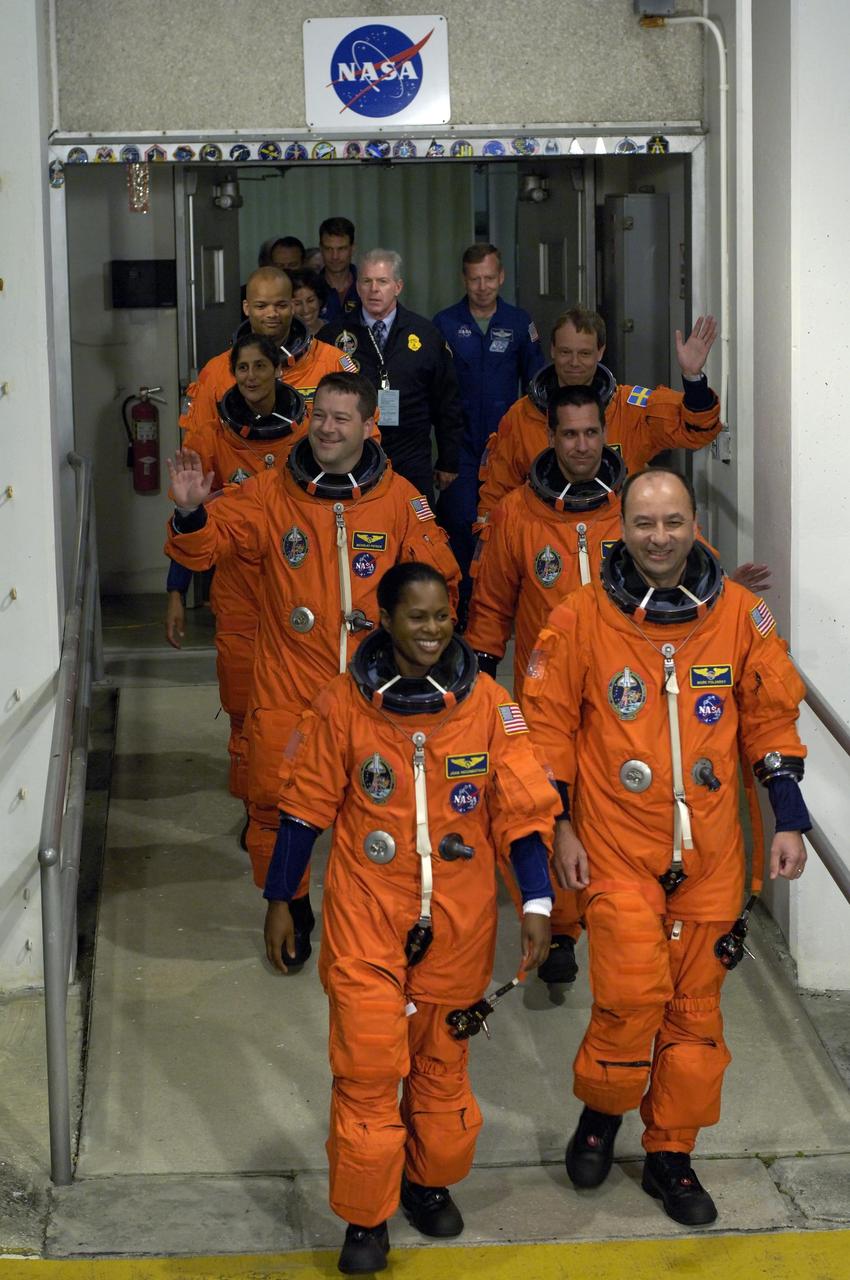
KENNEDY SPACE CENTER, FLA. -- The STS-116 crew members show their eagerness for launch as they exit the Operations and Checkout Building. From the back are Mission Specialists Robert Curbeam, Sunita Williams, Christer Fuglesang and Nicholas Patrick; Pilot William Oefelein; Mission Specialist Joan Higginbotham; and Commander Mark Polansky. Fuglesang represents the European Space Agency. Williams will replace Expedition 14 crew member Thomas Reiter, who will return to Earth aboard Discovery in her place. This is Discovery's 33rd mission and the first night launch since 2002. The 20th shuttle mission to the International Space Station, STS-116 carries another truss segment, P5. It will serve as a spacer, mated to the P4 truss that was attached in September. After installing the P5, the crew will reconfigure and redistribute the power generated by two pairs of U.S. solar arrays. Landing is expected Dec. 19 at KSC. Photo courtesy of Nikon/Scott Andrews
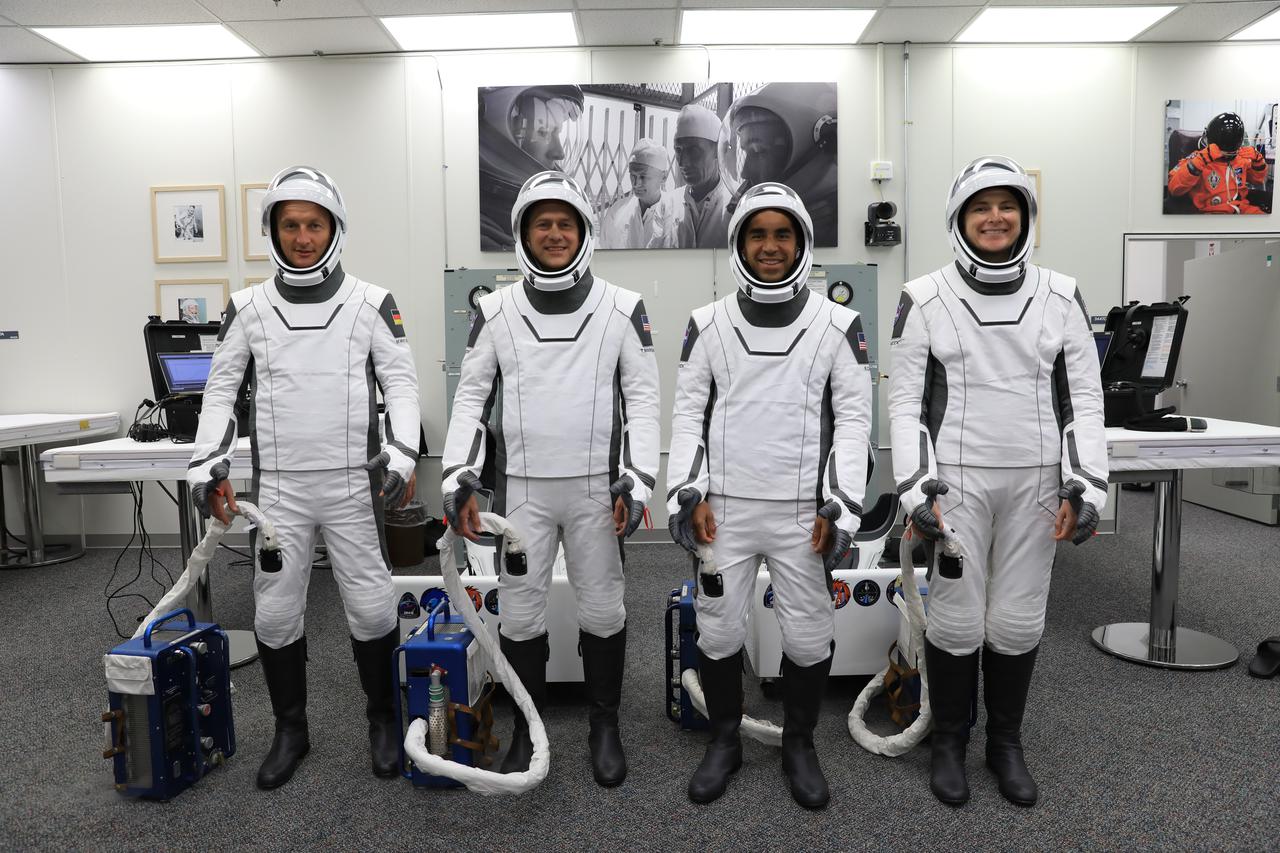
NASA’s SpaceX Crew-3 astronauts participate in a countdown dress rehearsal at the agency’s Kennedy Space Center in Florida on Oct. 28, 2021, to prepare for the upcoming Crew-3 launch. In their SpaceX spacesuits are, from left, Matthias Maurer, with the European Space Agency and mission specialist; and NASA astronauts Tom Marshburn, pilot; Raja Chari, commander; and Kayla Barron, mission specialist. The four-person crew will launch aboard the Crew Dragon atop the Falcon 9 to the International Space Station. Launch is targeted for no earlier than Nov. 6 at 11:36 p.m. EDT from Launch Complex 39A. Crew-3 is the third crew rotation flight to the space station for NASA’s Commercial Crew Program, and the first flight of a new Crew Dragon spacecraft.
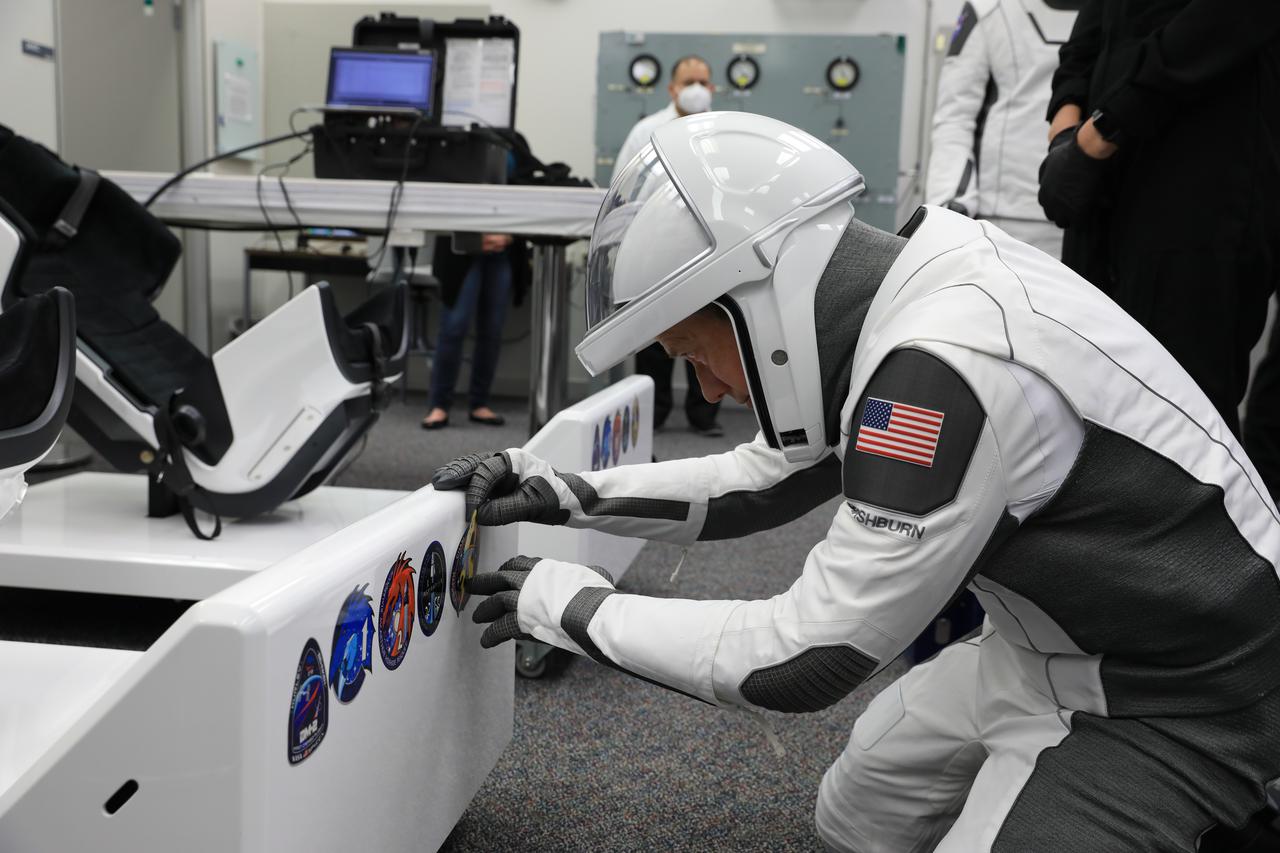
NASA’s SpaceX Crew-3 astronauts participate in a countdown dress rehearsal at the agency’s Kennedy Space Center in Florida on Oct. 28, 2021, to prepare for the upcoming Crew-3 launch. The astronauts are in the crew suitup room inside the Neil A. Armstrong Operations and Checkout Building completing suit checkouts. NASA astronauts Raja Chari, commander, Tom Marshburn, pilot, Kayla Barron, mission specialist, and European Space Agency astronaut Matthias Maurer, also a mission specialist, will launch aboard the Crew Dragon atop the Falcon 9 to the International Space Station. Launch is targeted for no earlier than Nov. 6, at 11:36 p.m. EDT from Launch Complex 39A. Crew-3 is the third crew rotation flight to the space station for NASA’s Commercial Crew Program, and the first flight of a new Crew Dragon spacecraft.
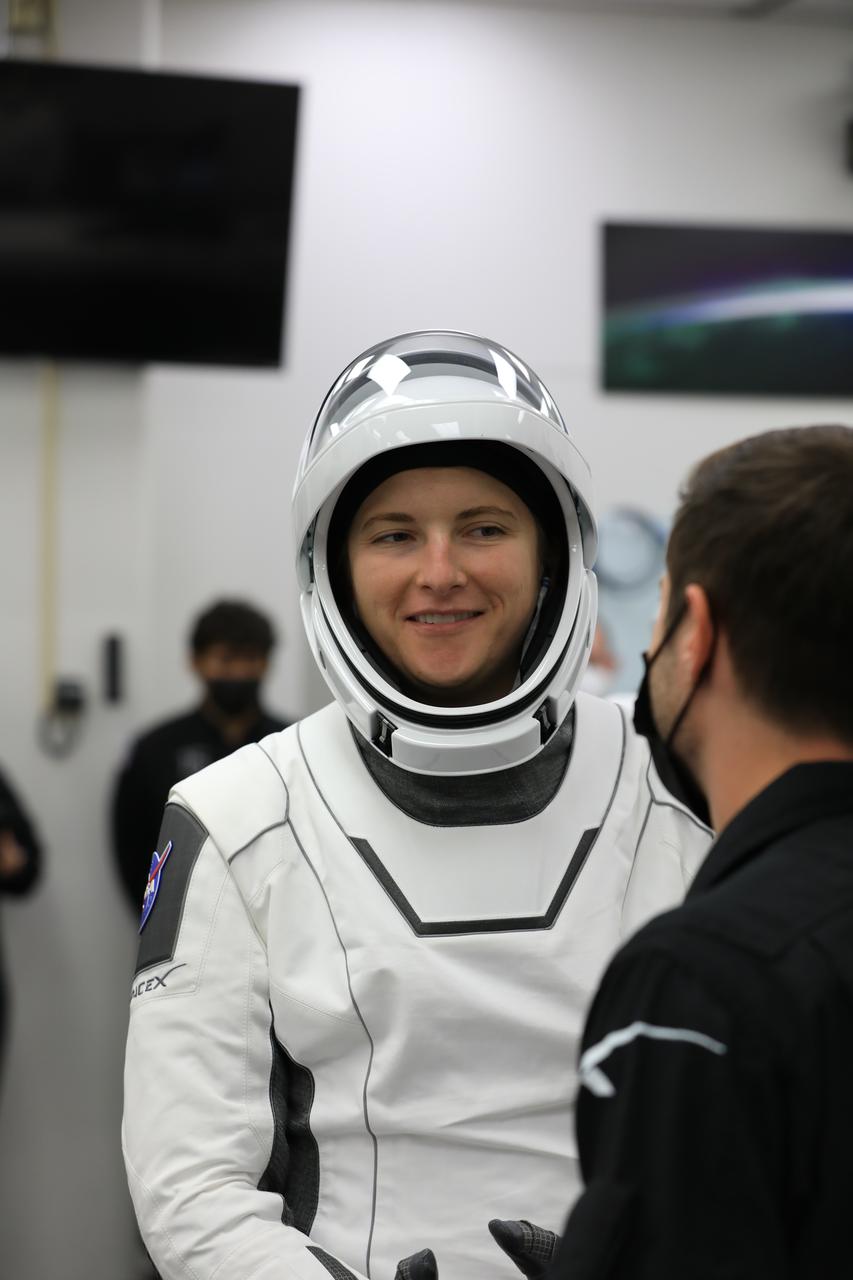
NASA’s SpaceX Crew-3 astronauts participate in a countdown dress rehearsal at the agency’s Kennedy Space Center in Florida on Oct. 28, 2021, to prepare for the upcoming Crew-3 launch. Kayla Barron, mission specialist, runs through checkouts of her SpaceX spacesuit inside the crew suitup room in the Neil A. Armstrong Operations and Checkout Building. Barron, along with Raja Chari, commander, Tom Marshburn, pilot, and Matthias Maurer, with the European Space Agency, and also a mission specialist, will launch aboard the Crew Dragon atop the Falcon 9 to the International Space Station. Launch is targeted for no earlier than Nov. 6 at 11:36 p.m. EDT from Launch Complex 39A. Crew-3 is the third crew rotation flight to the space station for NASA’s Commercial Crew Program, and the first flight of a new Crew Dragon spacecraft.

NASA’s SpaceX Crew-3 astronauts participate in a countdown dress rehearsal at the agency’s Kennedy Space Center in Florida on Oct. 28, 2021, to prepare for the upcoming Crew-3 launch. Raja Chari, commander, runs through checkouts of his SpaceX spacesuit inside the crew suitup room in the Neil A. Armstrong Operations and Checkout Building. Chari, along with NASA astronauts Tom Marshburn, pilot, Kayla Barron, mission specialist, and European Space Agency astronaut Matthias Maurer, also a mission specialist, will launch aboard the Crew Dragon atop the Falcon 9 to the International Space Station. Launch is targeted for no earlier than Nov. 6 at 11:36 p.m. EDT from Launch Complex 39A. Crew-3 is the third crew rotation flight to the space station for NASA’s Commercial Crew Program, and the first flight of a new Crew Dragon spacecraft.
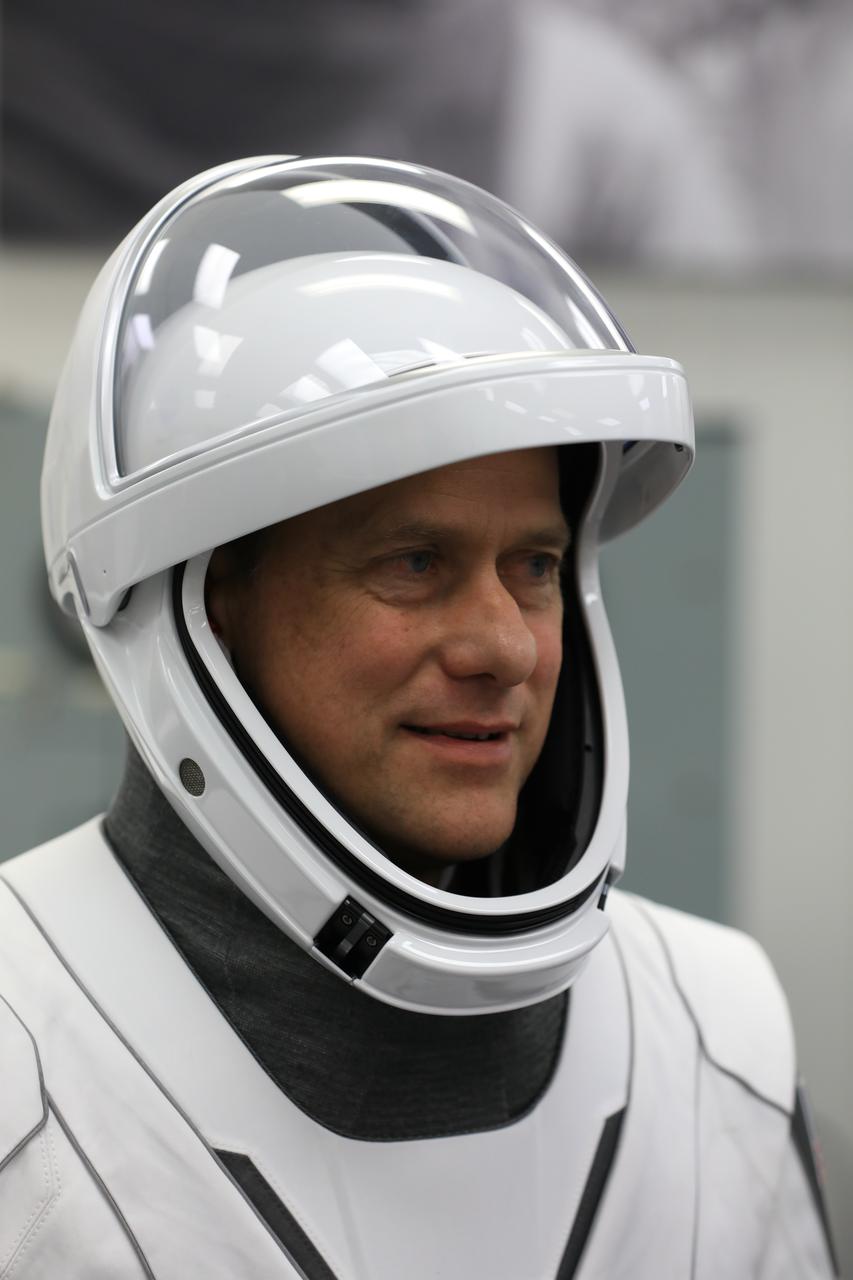
NASA’s SpaceX Crew-3 astronauts participate in a countdown dress rehearsal at the agency’s Kennedy Space Center in Florida on Oct. 28, 2021, to prepare for the upcoming Crew-3 launch. Tom Marshburn, pilot, runs through checkouts of his SpaceX spacesuit inside the crew suitup room in the Neil A. Armstrong Operations and Checkout Building. Marshburn, along with Raja Chari, pilot, Kayla Barron, mission specialist, and Matthias Maurer, with the European Space Agency, and also a mission specialist, will launch aboard the Crew Dragon atop the Falcon 9 to the International Space Station. Launch is targeted for no earlier than Nov. 6 at 11:36 p.m. EDT from Launch Complex 39A. Crew-3 is the third crew rotation flight to the space station for NASA’s Commercial Crew Program, and the first flight of a new Crew Dragon spacecraft.
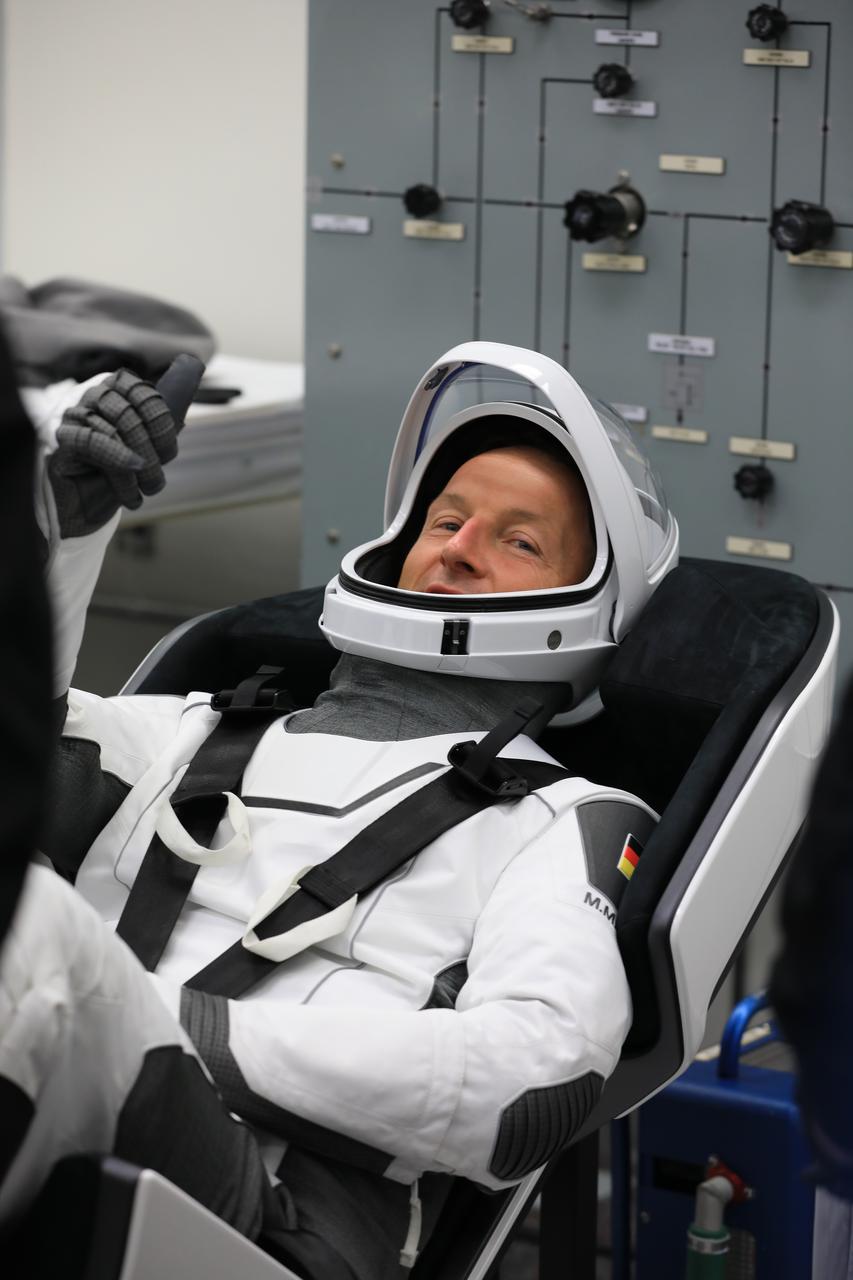
SpaceX Crew-3 astronaut Matthias Maurer, with the European Space Agency and mission specialist, participates in a countdown dress rehearsal at the agency’s Kennedy Space Center in Florida on Oct. 28, 2021, to prepare for the upcoming Crew-3 launch. Maurer runs through checkouts of his SpaceX spacesuit inside the crew suit-up room in the Neil A. Armstrong Operations and Checkout Building. Maurer, along with NASA crew members Raja Chari, commander, Kayla Barron, mission specialist, and Tom Marshburn, pilot, will launch aboard the Crew Dragon atop the Falcon 9 to the International Space Station. Launch is targeted for no earlier than Nov. 6 at 11:36 p.m. EDT from Launch Complex 39A. Crew-3 is the third crew rotation flight to the space station for NASA’s Commercial Crew Program, and the first flight of a new Crew Dragon spacecraft.
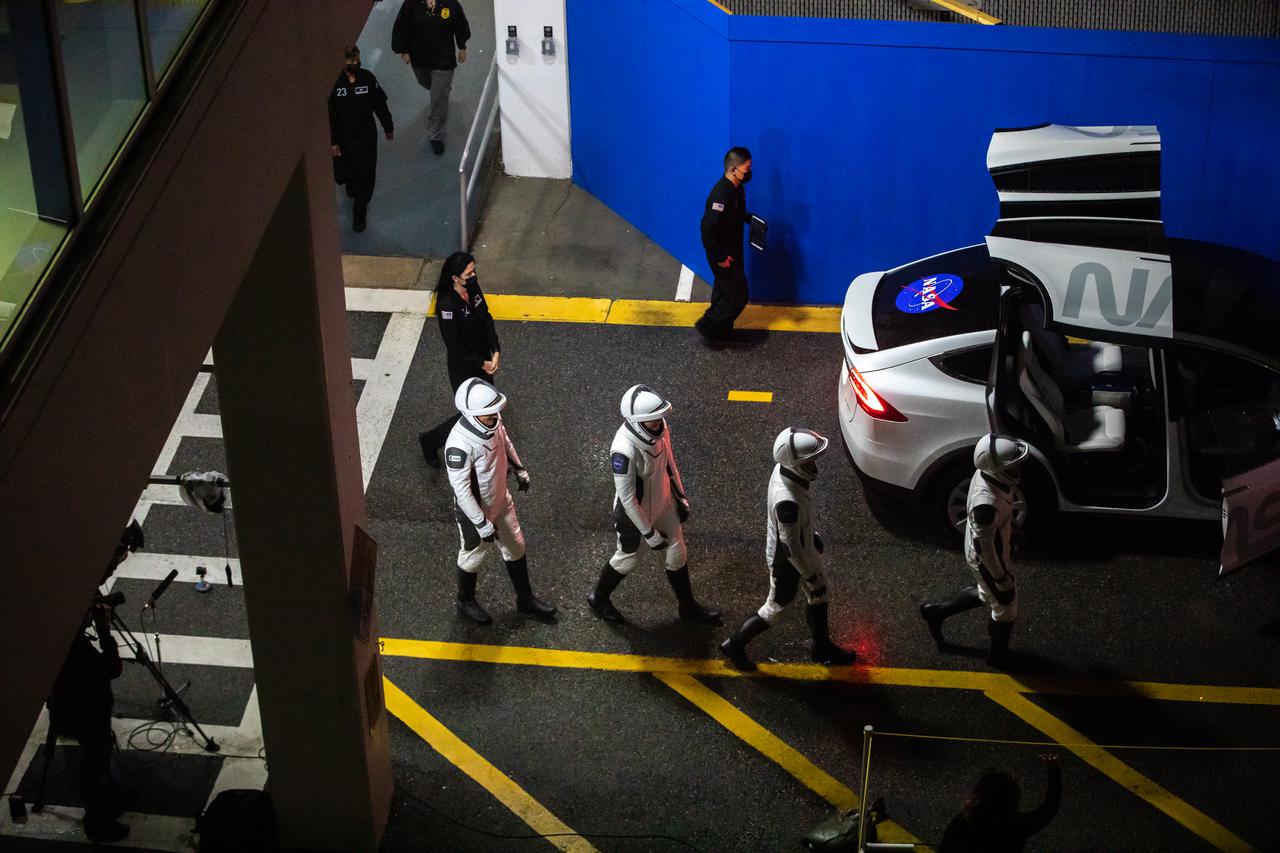
During a countdown dress rehearsal for NASA’s SpaceX Crew-3 mission, the astronauts exit the Neil A. Armstrong Operations and Checkout Building and work their way to the Tesla vehicles for the trip to Launch Complex 39A at the agency’s Kennedy Space Center in Florida on Oct. 28, 2021. NASA astronauts Raja Chari, commander; Tom Marshburn, pilot; and Kayla Barron, mission specialist, along with Matthias Maurer, with the European Space Agency, and also a mission specialist, will launch aboard the Crew Dragon atop the Falcon 9 to the International Space Station. Launch is targeted for no earlier than Nov. 6 at 11:36 p.m. EDT from Launch Complex 39A. Crew-3 is the third crew rotation flight to the space station for NASA’s Commercial Crew Program, and the first flight of a new Crew Dragon spacecraft.
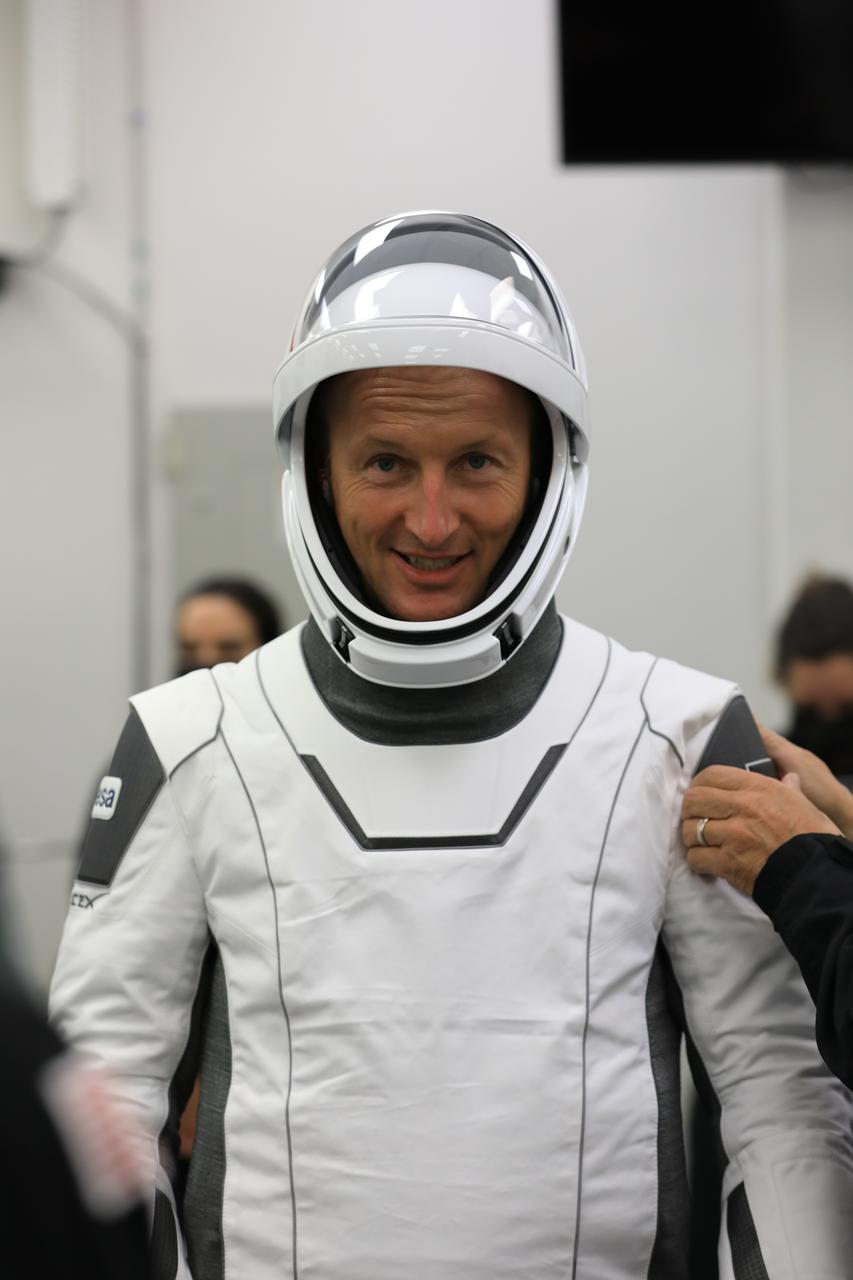
NASA’s SpaceX Crew-3 astronauts participate in a countdown dress rehearsal at the agency’s Kennedy Space Center in Florida on Oct. 28, 2021, to prepare for the upcoming Crew-3 launch. NASA astronaut Tom Marshburn, pilot, runs through checkouts of his SpaceX spacesuit inside the crew suitup room in the Neil A. Armstrong Operations and Checkout Building. Marshburn, along with Raja Chari, commander, Kayla Barron, mission specialist, and European Space Agency astronaut Matthias Maurer, also a mission specialist, will launch aboard the Crew Dragon atop the Falcon 9 to the International Space Station. Launch is targeted for no earlier than Nov. 6 at 11:36 p.m. EDT from Launch Complex 39A. Crew-3 is the third crew rotation flight to the space station for NASA’s Commercial Crew Program, and the first flight of a new Crew Dragon spacecraft.
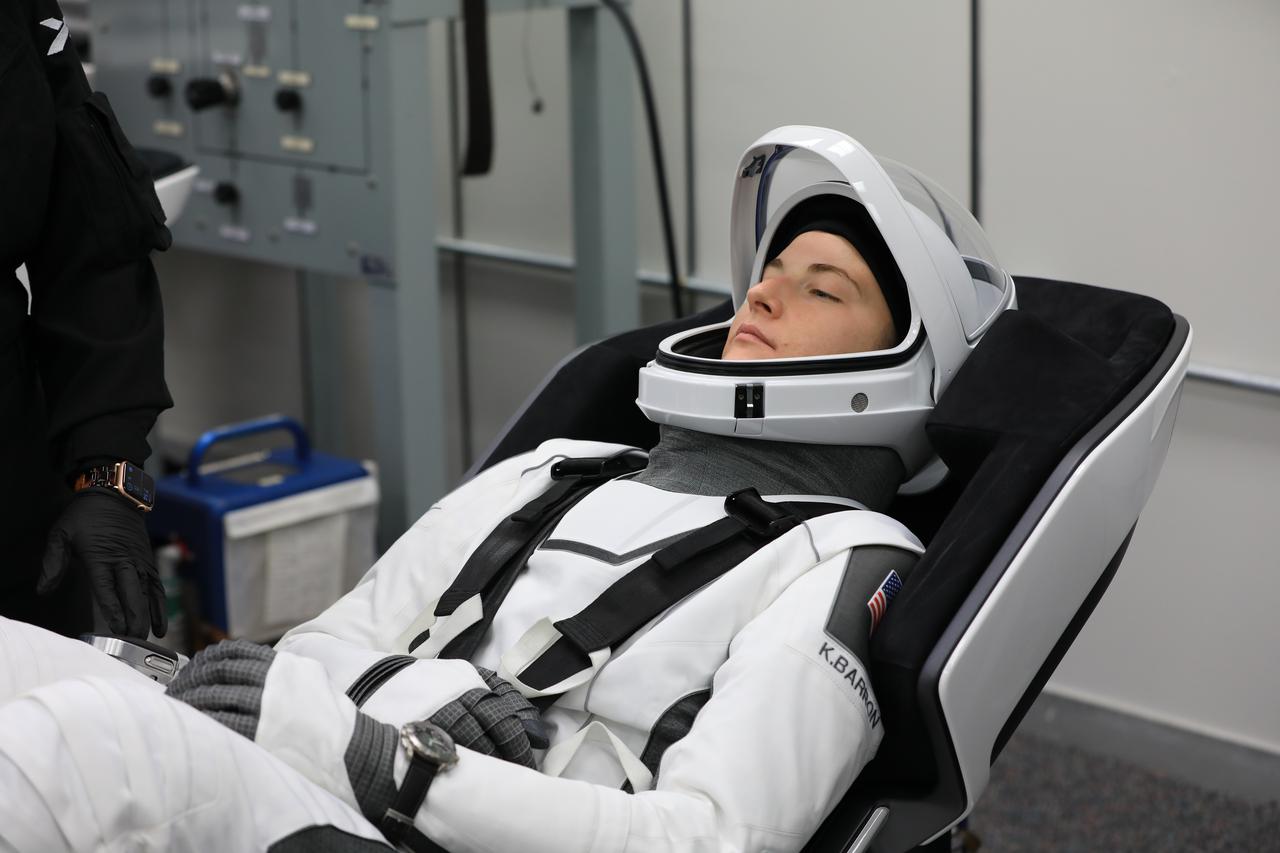
NASA’s SpaceX Crew-3 astronauts participate in a countdown dress rehearsal at the agency’s Kennedy Space Center in Florida on Oct. 28, 2021, to prepare for the upcoming Crew-3 launch. Kayla Barron, mission specialist, runs through checkouts of her SpaceX spacesuit inside the crew suitup room in the Neil A. Armstrong Operations and Checkout Building. Barron, along with Raja Chari, commander, Tom Marshburn, pilot, and Matthias Maurer, mission specialist with the European Space Agency, will launch aboard the Crew Dragon atop the Falcon 9 to the International Space Station. Launch is targeted for no earlier than Nov. 6 at 11:36 p.m. EDT from Launch Complex 39A. Crew-3 is the third crew rotation flight to the space station for NASA’s Commercial Crew Program, and the first flight of a new Crew Dragon spacecraft.
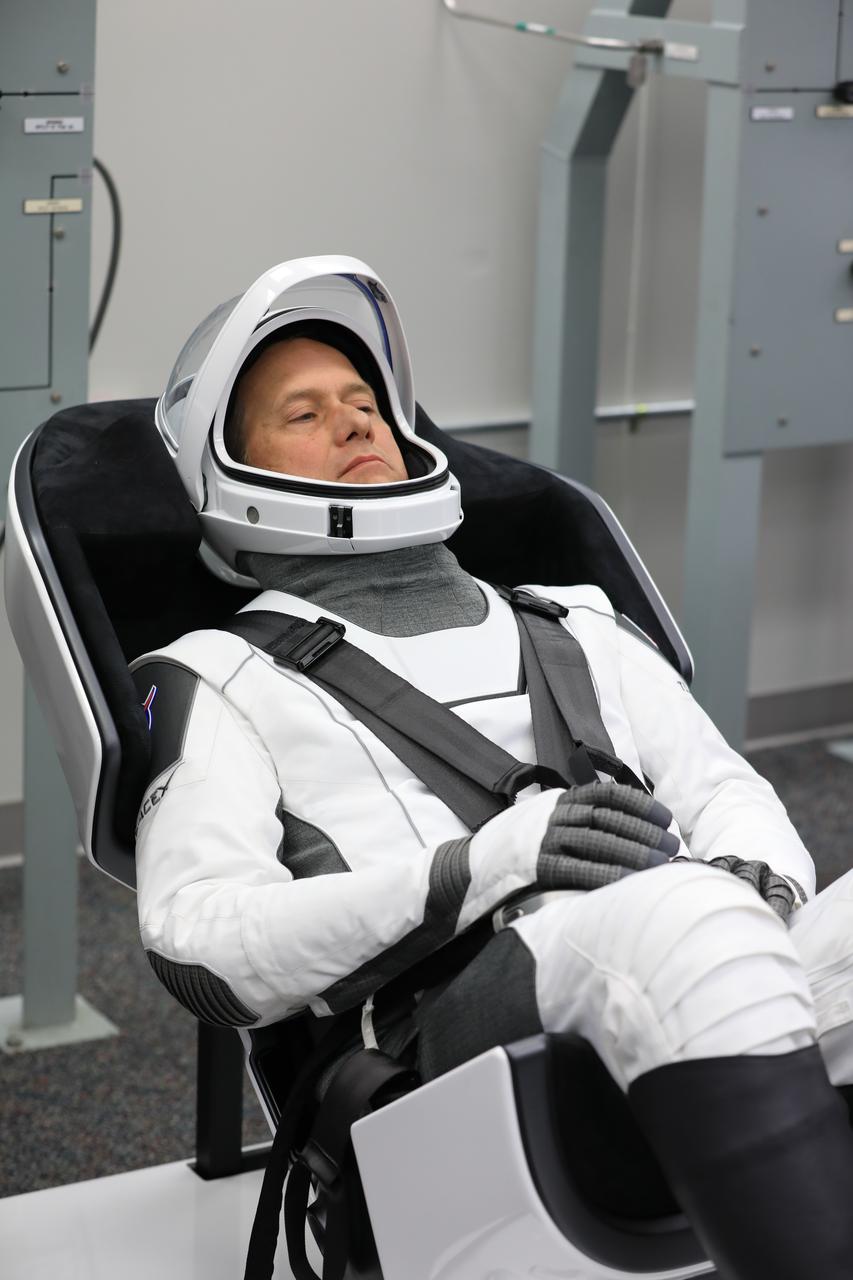
NASA’s SpaceX Crew-3 astronaut Tom Marshburn, pilot, participates in a countdown dress rehearsal at the agency’s Kennedy Space Center in Florida on Oct. 28, 2021, to prepare for the upcoming Crew-3 launch. Marshburn runs through checkouts of his SpaceX spacesuit inside the crew suit-up room in the Neil A. Armstrong Operations and Checkout Building. Marshburn, along with crew members Raja Chari, commander, Kayla Barron, mission specialist, and European Space Agency astronaut Matthias Maurer, also a mission specialist, will launch aboard the Crew Dragon atop the Falcon 9 to the International Space Station. Launch is targeted for no earlier than Nov. 6 at 11:36 p.m. EDT from Launch Complex 39A. Crew-3 is the third crew rotation flight to the space station for NASA’s Commercial Crew Program, and the first flight of a new Crew Dragon spacecraft.
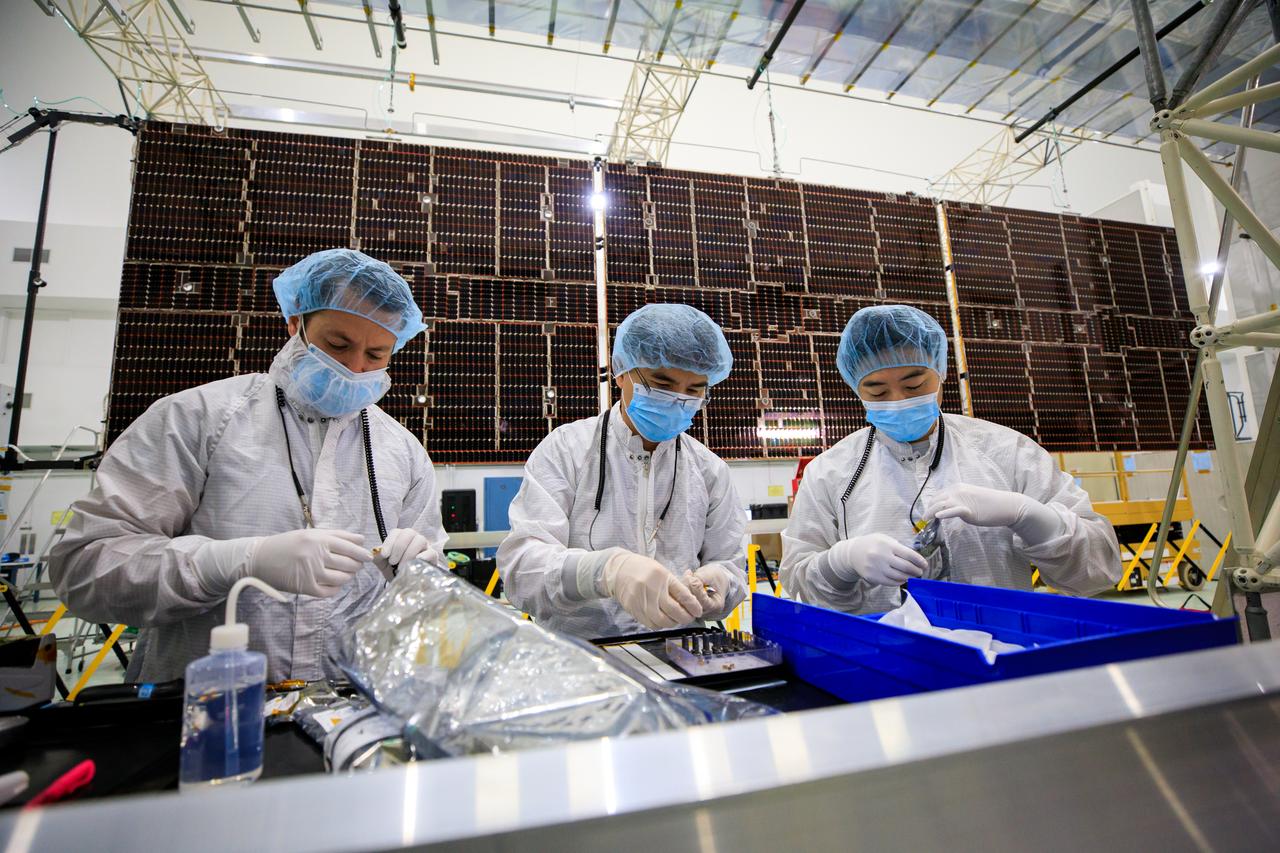
Team members prepare to integrate one of two solar arrays to the agency’s Psyche spacecraft inside the Astrotech Space Operations Facility near the agency’s Kennedy Space Center in Florida on July 24, 2023. The solar arrays were shipped from Maxar Technologies, in San Jose, California. They are part of the solar electric propulsion system, provided by Maxar, that will power the spacecraft on its journey to explore a metal-rich asteroid. Psyche will launch atop a SpaceX Falcon Heavy rocket from Launch Complex 39A at Kennedy. Launch is targeted for Oct. 5, 2023. Riding with Psyche is a pioneering technology demonstration, NASA’s Deep Space Optical Communications (DSOC) experiment.
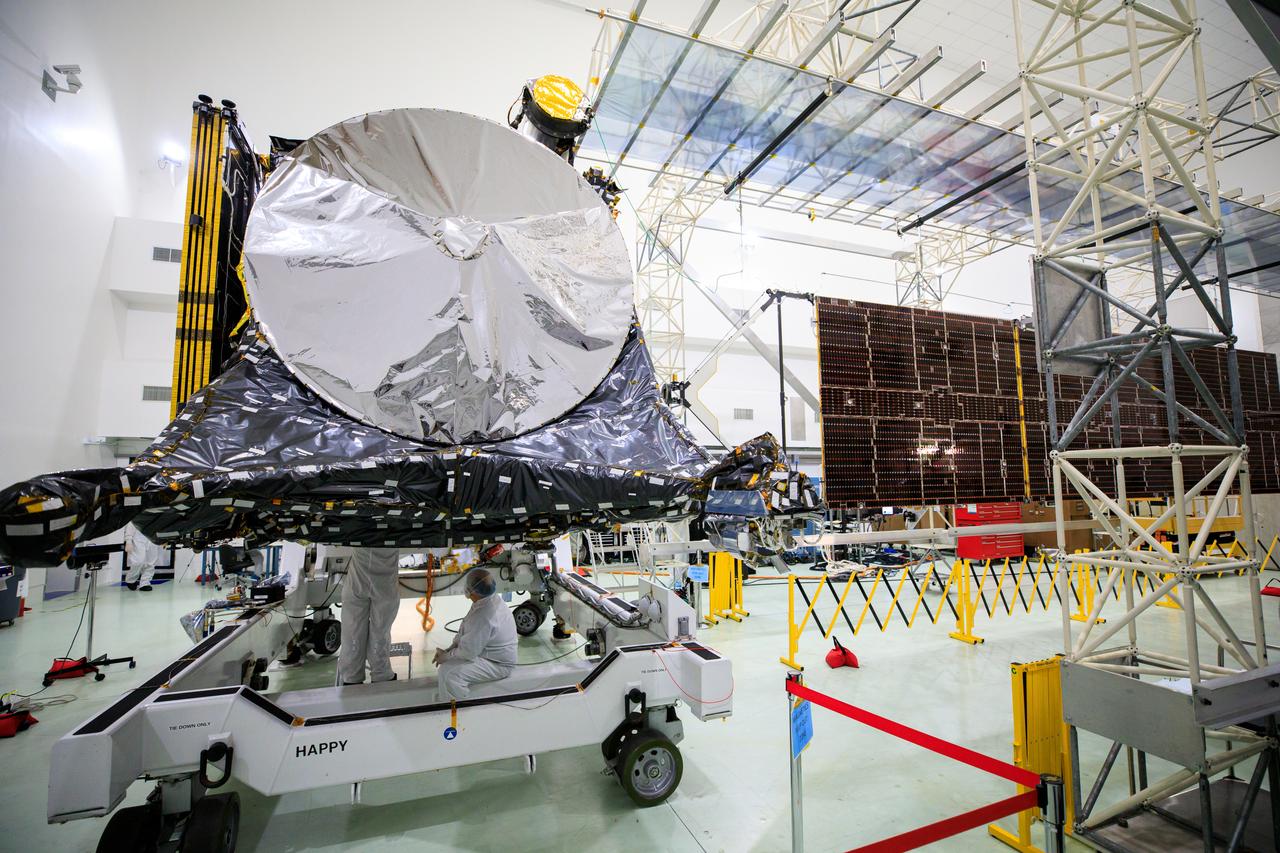
Team members prepare the agency’s Psyche spacecraft for integration with the second of two solar arrays inside the Astrotech Space Operations Facility near the agency’s Kennedy Space Center in Florida on July 24, 2023. The solar arrays were shipped from Maxar Technologies, in San Jose, California. They are part of the solar electric propulsion system, provided by Maxar, that will power the spacecraft on its journey to explore a metal-rich asteroid. Psyche will launch atop a SpaceX Falcon Heavy rocket from Launch Complex 39A at Kennedy. Launch is targeted for Oct. 5, 2023. Riding with Psyche is a pioneering technology demonstration, NASA’s Deep Space Optical Communications (DSOC) experiment.
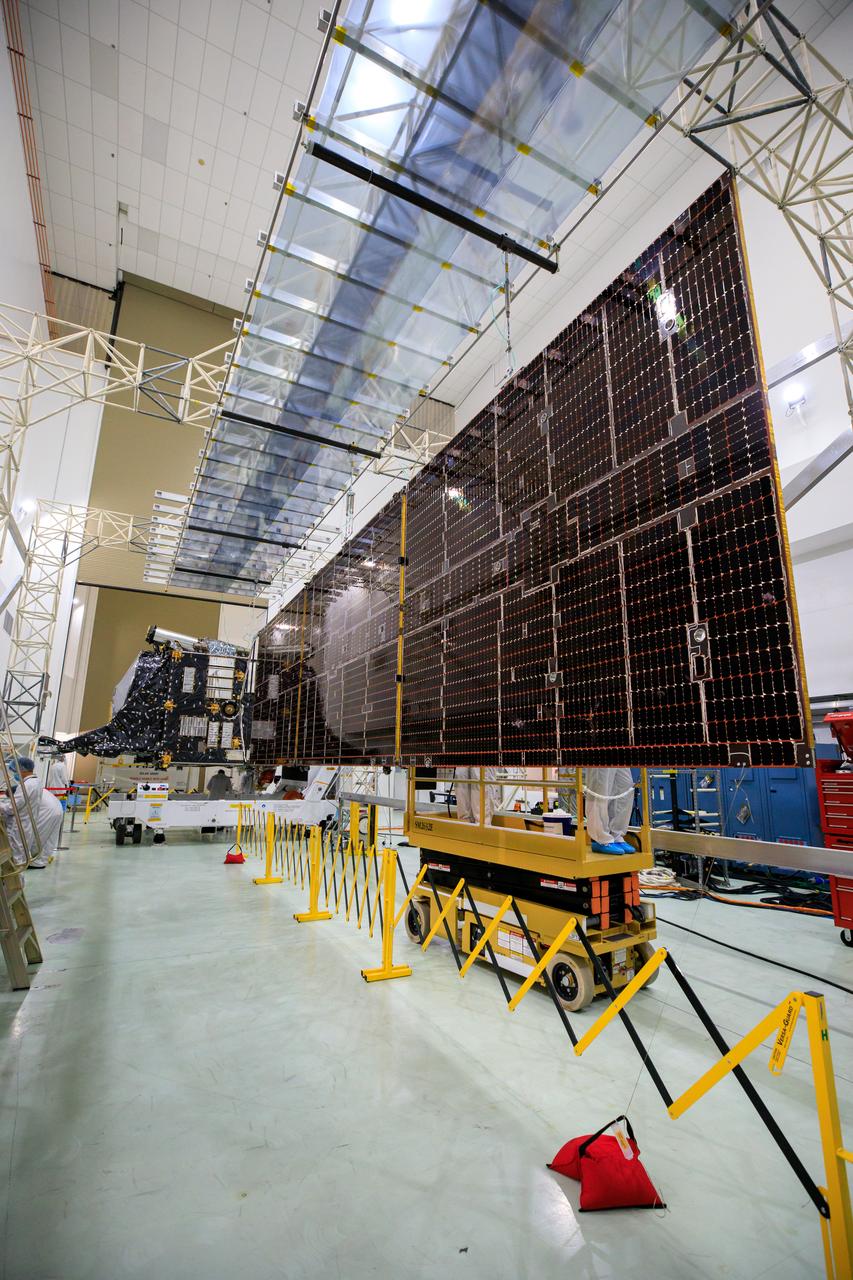
Technicians are preparing to integrate one of two solar arrays to NASA’s Psyche spacecraft inside the Astrotech Space Operations Facility near the agency’s Kennedy Space Center in Florida on July 24, 2023. The solar arrays were shipped from Maxar Technologies, in San Jose, California. They are part of the solar electric propulsion system, provided by Maxar, that will power the spacecraft on its journey to explore a metal-rich asteroid. Psyche will launch atop a SpaceX Falcon Heavy rocket from Launch Complex 39A at Kennedy. Launch is targeted for Oct. 5, 2023. Riding with Psyche is a pioneering technology demonstration, NASA’s Deep Space Optical Communications (DSOC) experiment.
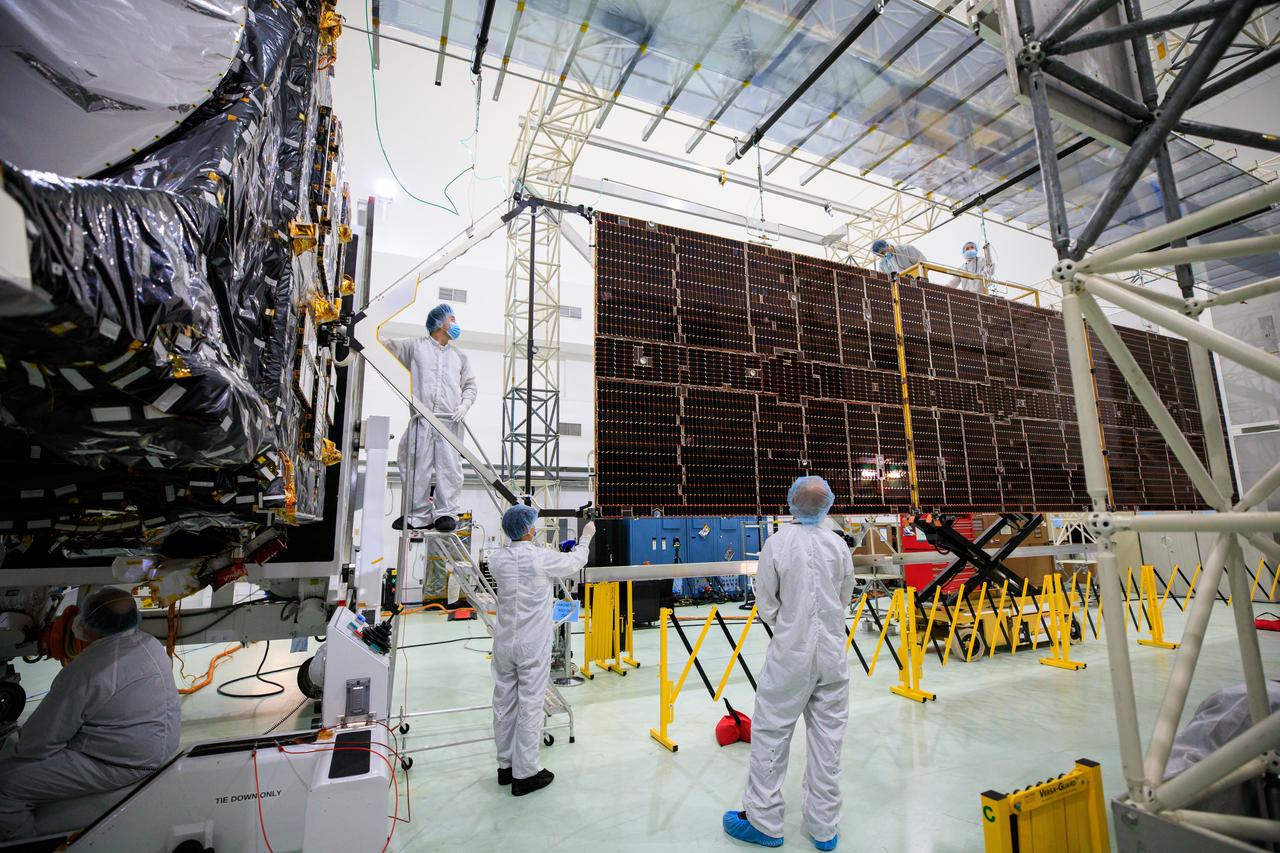
Team members prepare to integrate the second of two solar arrays with the agency’s Psyche spacecraft inside the Astrotech Space Operations Facility near the agency’s Kennedy Space Center in Florida on July 24, 2023. The solar arrays were shipped from Maxar Technologies, in San Jose, California. They are part of the solar electric propulsion system, provided by Maxar, that will power the spacecraft on its journey to explore a metal-rich asteroid. Psyche will launch atop a SpaceX Falcon Heavy rocket from Launch Complex 39A at Kennedy. Launch is targeted for Oct. 5, 2023. Riding with Psyche is a pioneering technology demonstration, NASA’s Deep Space Optical Communications (DSOC) experiment.
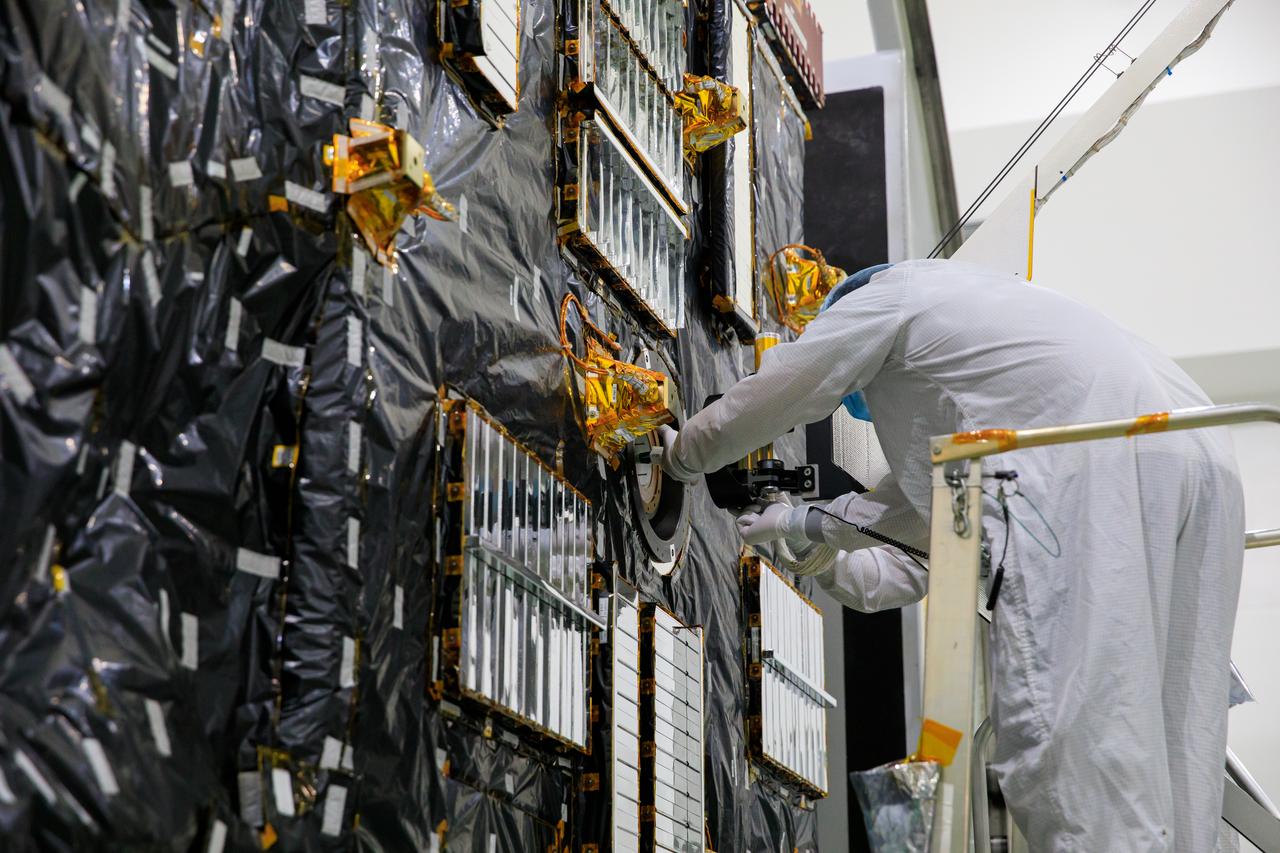
Team members prepare the agency’s Psyche spacecraft for integration with the second of two solar arrays inside the Astrotech Space Operations Facility near the agency’s Kennedy Space Center in Florida on July 24, 2023. The solar arrays were shipped from Maxar Technologies, in San Jose, California. They are part of the solar electric propulsion system, provided by Maxar, that will power the spacecraft on its journey to explore a metal-rich asteroid. Psyche will launch atop a SpaceX Falcon Heavy rocket from Launch Complex 39A at Kennedy. Launch is targeted for Oct. 5, 2023. Riding with Psyche is a pioneering technology demonstration, NASA’s Deep Space Optical Communications (DSOC) experiment.
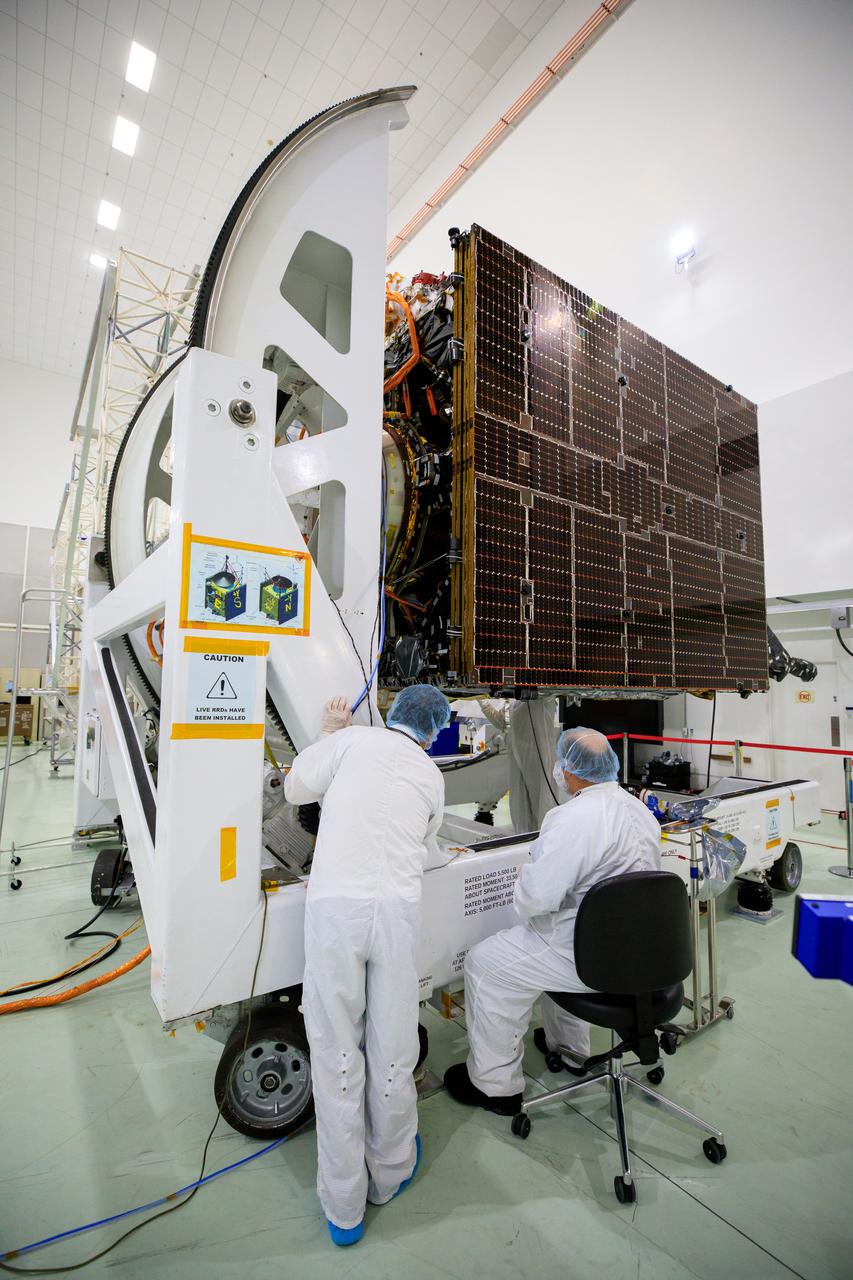
Team members prepare to integrate one of two solar arrays with NASA’s Psyche spacecraft inside the Astrotech Space Operations Facility near the agency’s Kennedy Space Center in Florida on July 24, 2023. The solar arrays were shipped from Maxar Technologies, in San Jose, California. They are part of the solar electric propulsion system, provided by Maxar, that will power the spacecraft on its journey to explore a metal-rich asteroid. Psyche will launch atop a SpaceX Falcon Heavy rocket from Launch Complex 39A at Kennedy. Launch is targeted for Oct. 5, 2023. Riding with Psyche is a pioneering technology demonstration, NASA’s Deep Space Optical Communications (DSOC) experiment.
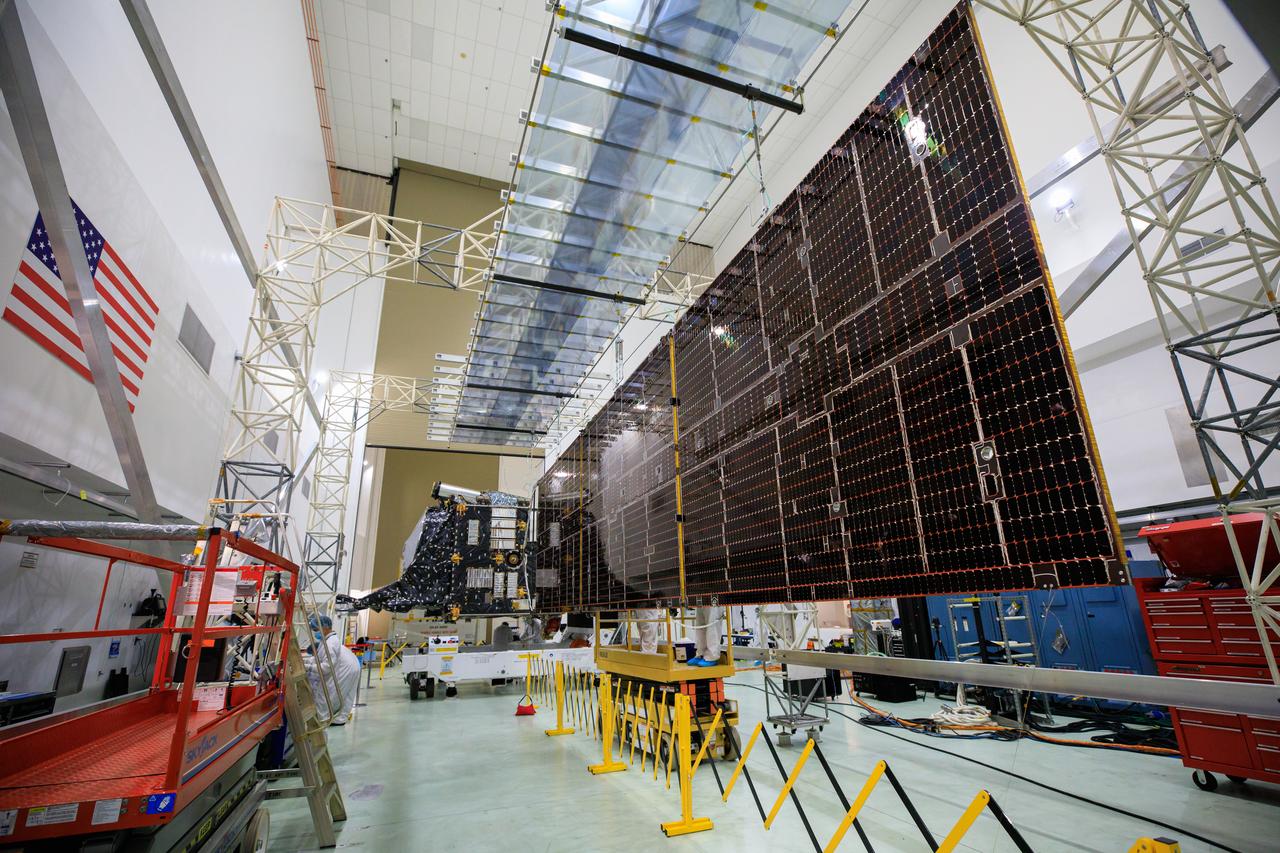
Technicians are preparing to integrate one of two solar arrays to NASA’s Psyche spacecraft inside the Astrotech Space Operations Facility near the agency’s Kennedy Space Center in Florida on July 24, 2023. The solar arrays were shipped from Maxar Technologies, in San Jose, California. They are part of the solar electric propulsion system, provided by Maxar, that will power the spacecraft on its journey to explore a metal-rich asteroid. Psyche will launch atop a SpaceX Falcon Heavy rocket from Launch Complex 39A at Kennedy. Launch is targeted for Oct. 5, 2023. Riding with Psyche is a pioneering technology demonstration, NASA’s Deep Space Optical Communications (DSOC) experiment.
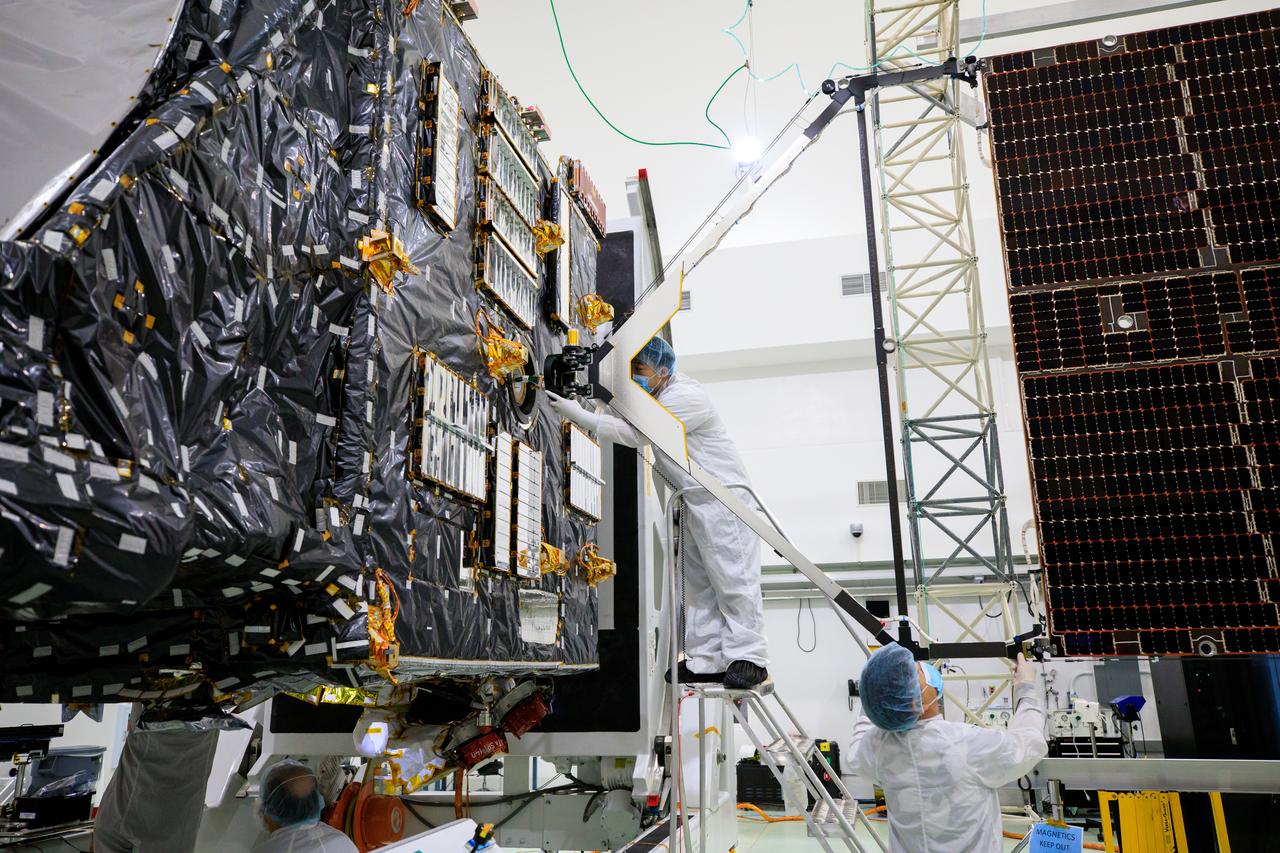
Team members prepare to integrate the second of two solar arrays with the agency’s Psyche spacecraft inside the Astrotech Space Operations Facility near the agency’s Kennedy Space Center in Florida on July 24, 2023. The solar arrays were shipped from Maxar Technologies, in San Jose, California. They are part of the solar electric propulsion system, provided by Maxar, that will power the spacecraft on its journey to explore a metal-rich asteroid. Psyche will launch atop a SpaceX Falcon Heavy rocket from Launch Complex 39A at Kennedy. Launch is targeted for Oct. 5, 2023. Riding with Psyche is a pioneering technology demonstration, NASA’s Deep Space Optical Communications (DSOC) experiment
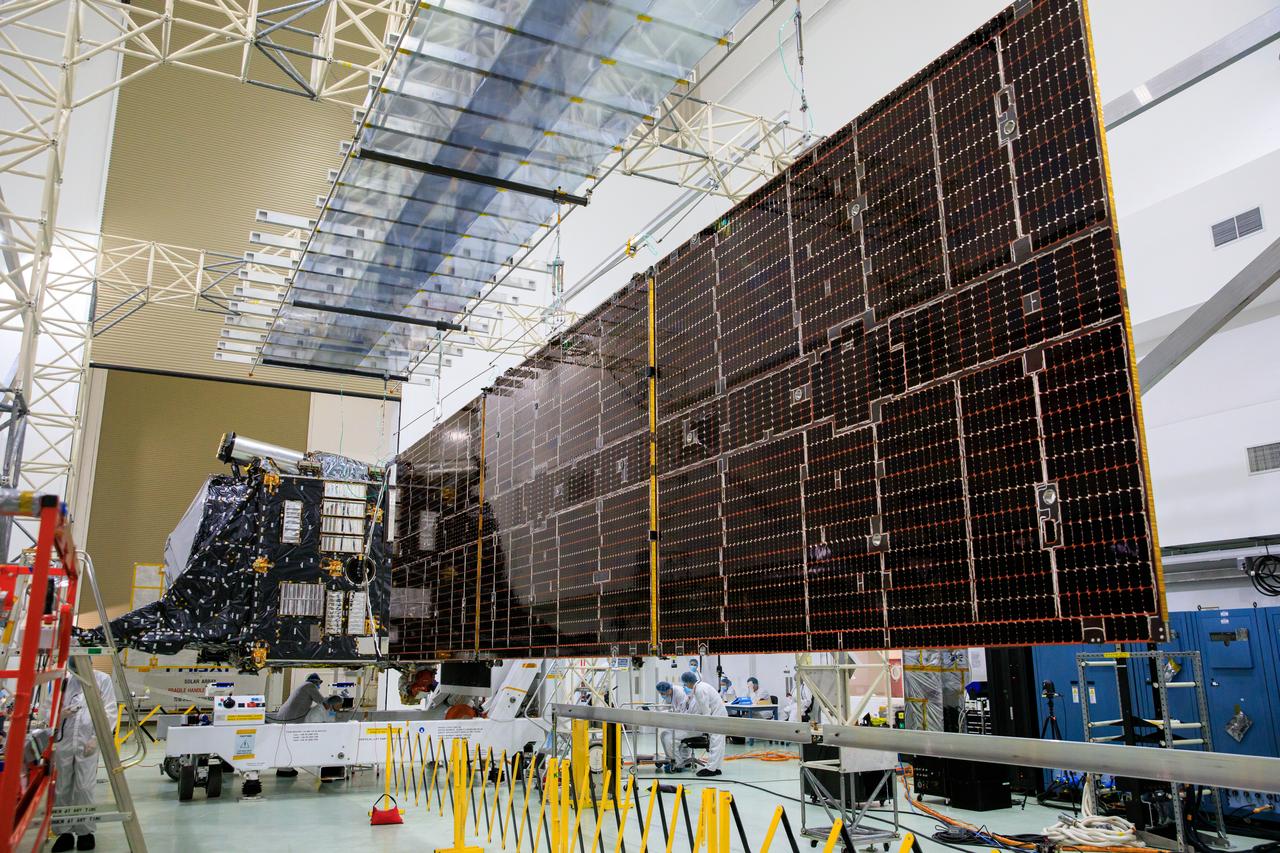
Team members prepare the agency’s Psyche spacecraft for integration with the second of two solar arrays inside the Astrotech Space Operations Facility near the agency’s Kennedy Space Center in Florida on July 24, 2023. The solar arrays were shipped from Maxar Technologies, in San Jose, California. They are part of the solar electric propulsion system, provided by Maxar, that will power the spacecraft on its journey to explore a metal-rich asteroid. Psyche will launch atop a SpaceX Falcon Heavy rocket from Launch Complex 39A at Kennedy. Launch is targeted for Oct. 5, 2023. Riding with Psyche is a pioneering technology demonstration, NASA’s Deep Space Optical Communications (DSOC) experiment.

Team members prepare to integrate the second of two solar arrays with the agency’s Psyche spacecraft inside the Astrotech Space Operations Facility near the agency’s Kennedy Space Center in Florida on July 24, 2023. The solar arrays were shipped from Maxar Technologies, in San Jose, California. They are part of the solar electric propulsion system, provided by Maxar, that will power the spacecraft on its journey to explore a metal-rich asteroid. Psyche will launch atop a SpaceX Falcon Heavy rocket from Launch Complex 39A at Kennedy. Launch is targeted for Oct. 5, 2023. Riding with Psyche is a pioneering technology demonstration, NASA’s Deep Space Optical Communications (DSOC) experiment.
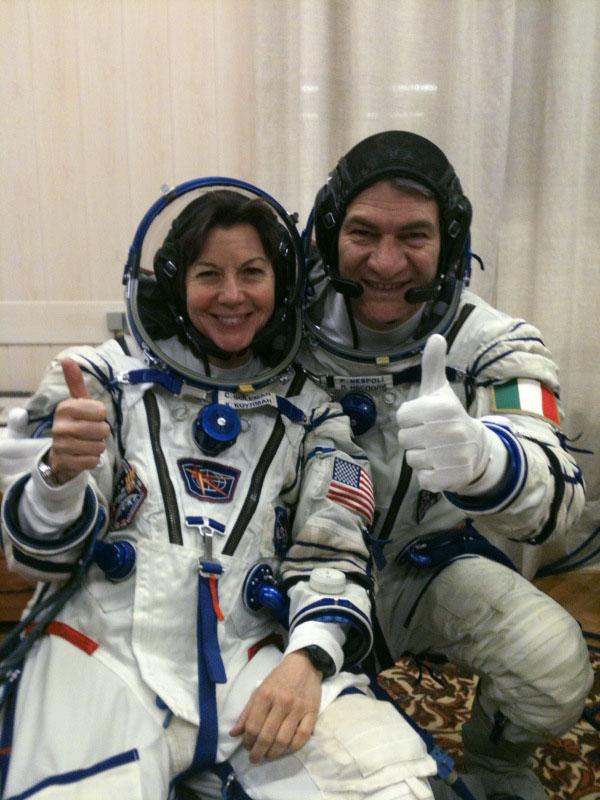
(16 Dec. 2010) --- At the Baikonur Cosmodrome in Kazakhstan, NASA astronaut Catherine (CadY) Coleman and European Space Agency astronaut Paolo Nespoli, both Expedition 26 flight engineers, give a thumbs up signal just prior to walkout leading up to today's (Dec. 16 Kazakhstan time) launch aboard the Soyuz TMA 20. Soyuz commander Dmitry Kondratyev of Roscosmos is out of frame. Photo credit: NASA
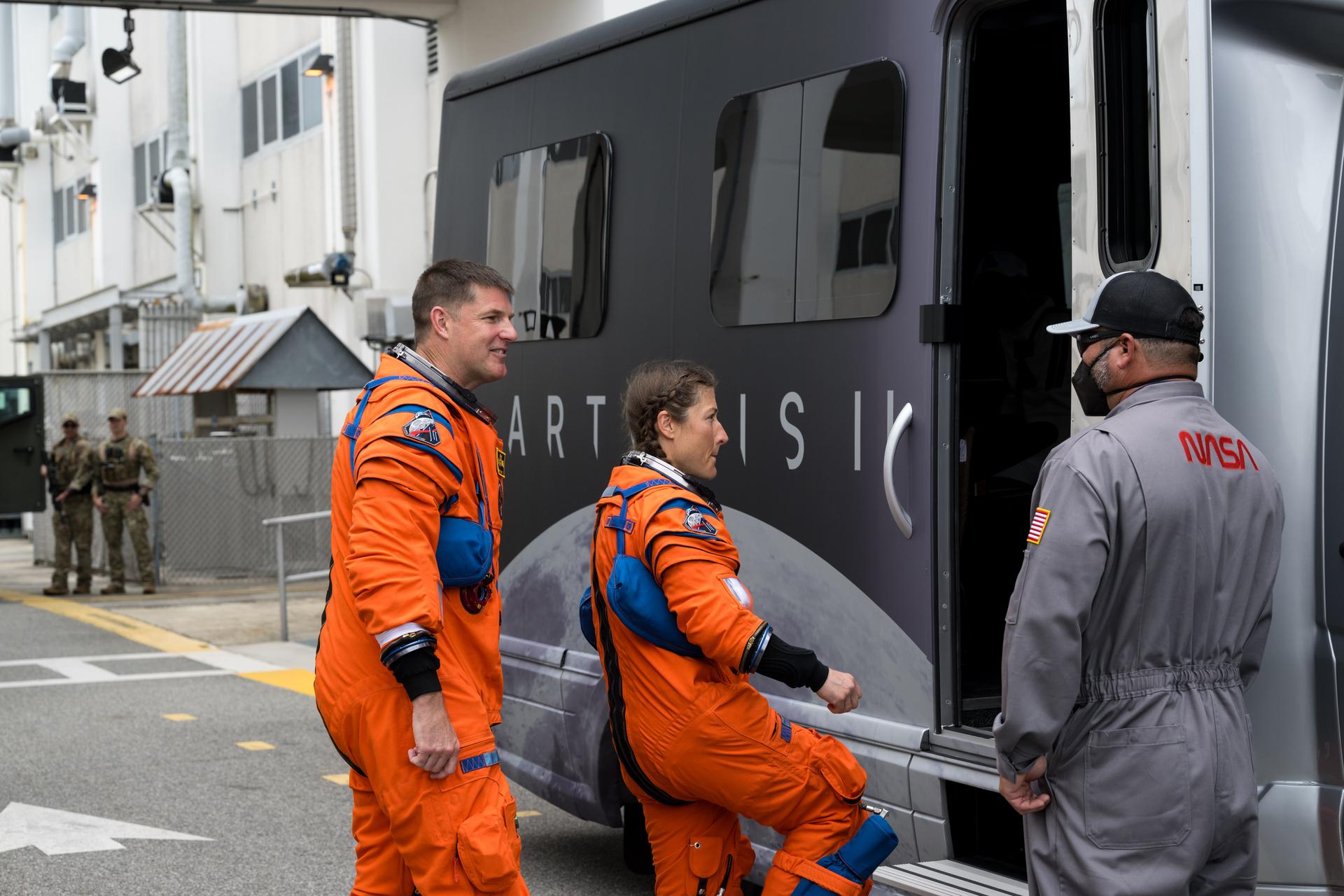
NASA astronauts Reid Wiseman, commander, (not pictured); Victor Glover, pilot (not pictured); Christina Koch, mission specialist; and CSA (Canadian Space Agency) astronaut Jeremy Hansen, mission specialist are seen as they depart the Neil A. Armstrong Operations and Checkout Building to board their Orion spacecraft atop NASA’s Space Launch System (SLS) rocket at Launch Complex 39B, Wednesday, April 1, 2026, at NASA’s Kennedy Space Center in Florida. NASA’s Artemis II mission will take Wiseman, Glover, Koch, and Hansen on a 10-day journey around the Moon and back aboard their Orion spacecraft from Launch Complex 39B, with a two hour launch window opening at 6:24pm. Photo Credit: (NASA/Aubrey Gemignani)
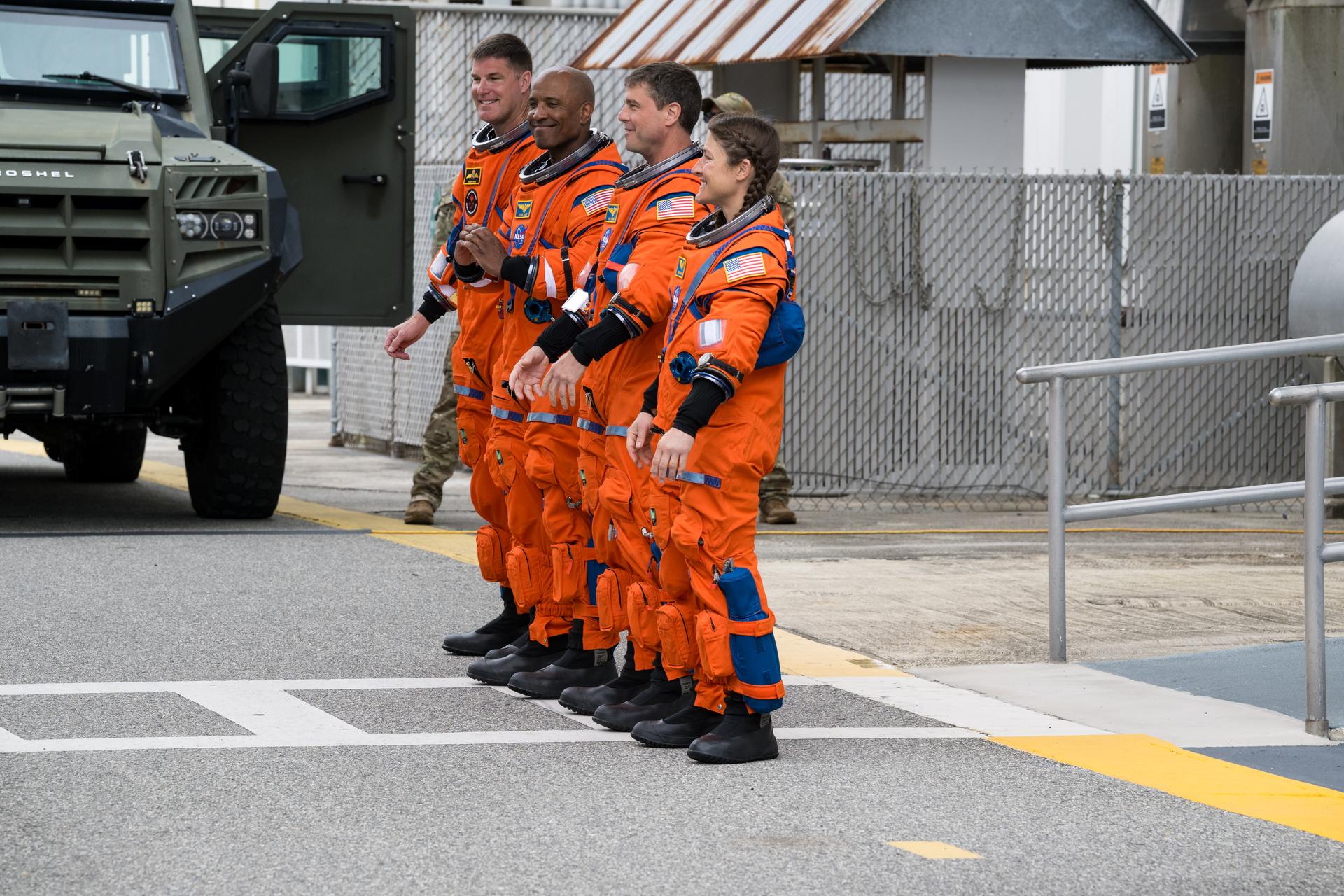
From right to left, NASA astronauts Christina Koch, mission specialist; Reid Wiseman, commander; Victor Glover, pilot; and CSA (Canadian Space Agency) astronaut Jeremy Hansen, mission specialist are seen as they depart the Neil A. Armstrong Operations and Checkout Building to board their Orion spacecraft atop NASA’s Space Launch System (SLS) rocket at Launch Complex 39B, Wednesday, April 1, 2026, at NASA’s Kennedy Space Center in Florida. NASA’s Artemis II mission will take Wiseman, Glover, Koch, and Hansen on a 10-day journey around the Moon and back aboard their Orion spacecraft from Launch Complex 39B, with a two hour launch window opening at 6:24pm. Photo Credit: (NASA/Aubrey Gemignani)
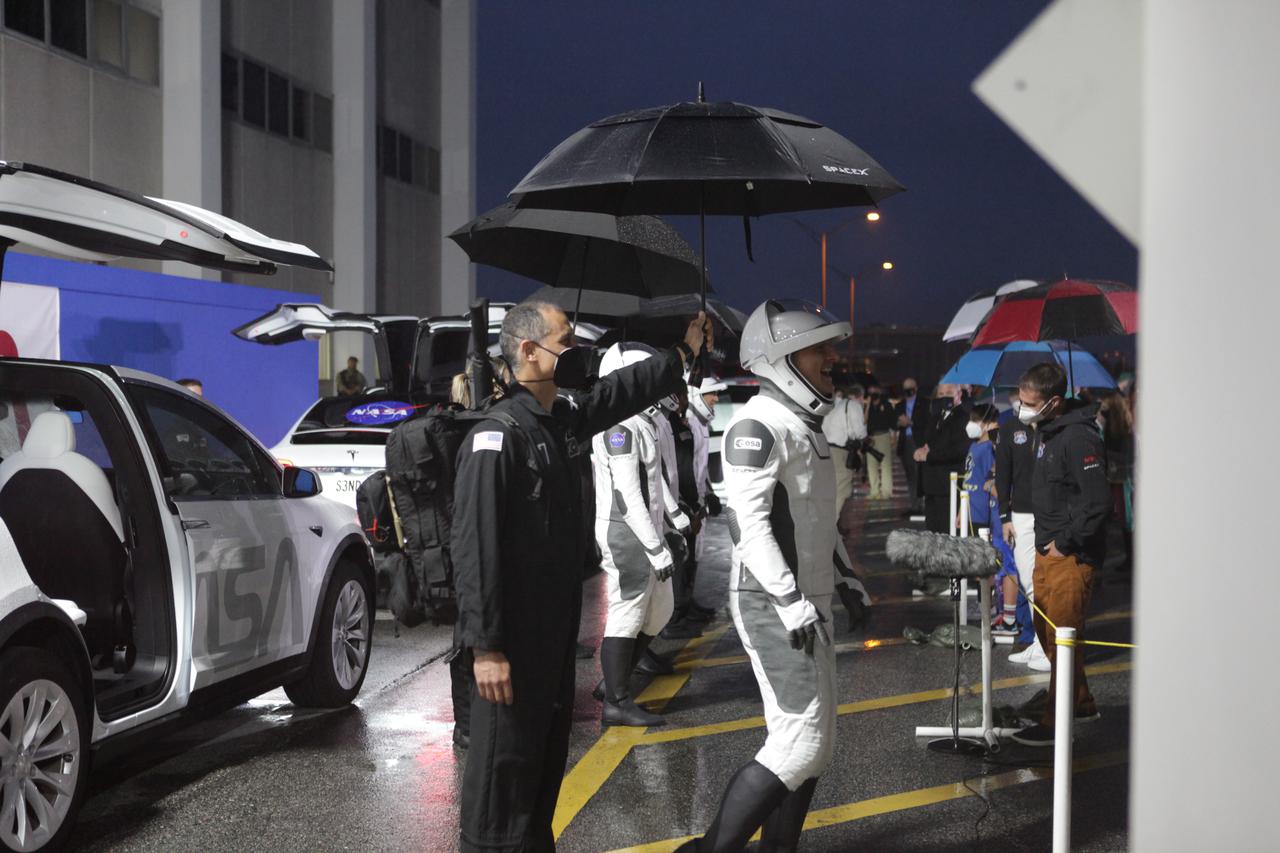
SpaceX Crew-3 astronauts visit with their families after exiting the Neil A. Armstrong Building’s Astronaut Crew Quarters at NASA’s Kennedy Space Center in Florida on launch day, Nov. 10, 2021. NASA astronauts Raja Chari, commander; Tom Marshburn, pilot; and Kayla Barron, mission specialist; along with Matthias Maurer, ESA (European Space Agency) astronaut and mission specialist, will launch in the Crew Dragon Endurance atop the SpaceX Falcon 9 rocket to the International Space Station for NASA’s Commercial Crew Program. Crew-3 is scheduled to launch at 9:03 p.m. EST from Launch Complex 39A at Kennedy.

From right to left, NASA astronauts Reid Wiseman, commander; Christina Koch, mission specialist; Victor Glover, pilot; and CSA (Canadian Space Agency) astronaut Jeremy Hansen, mission specialist wave to family and friends as they prepare to depart the Neil A. Armstrong Operations and Checkout Building to board their Orion spacecraft atop NASA’s Space Launch System (SLS) rocket at Launch Complex 39B, Wednesday, April 1, 2026, at NASA’s Kennedy Space Center in Florida. NASA’s Artemis II mission will take Wiseman, Glover, Koch, and Hansen on a 10-day journey around the Moon and back aboard their Orion spacecraft from Launch Complex 39B, with a two hour launch window opening at 6:24pm. Photo Credit: (NASA/Aubrey Gemignani)
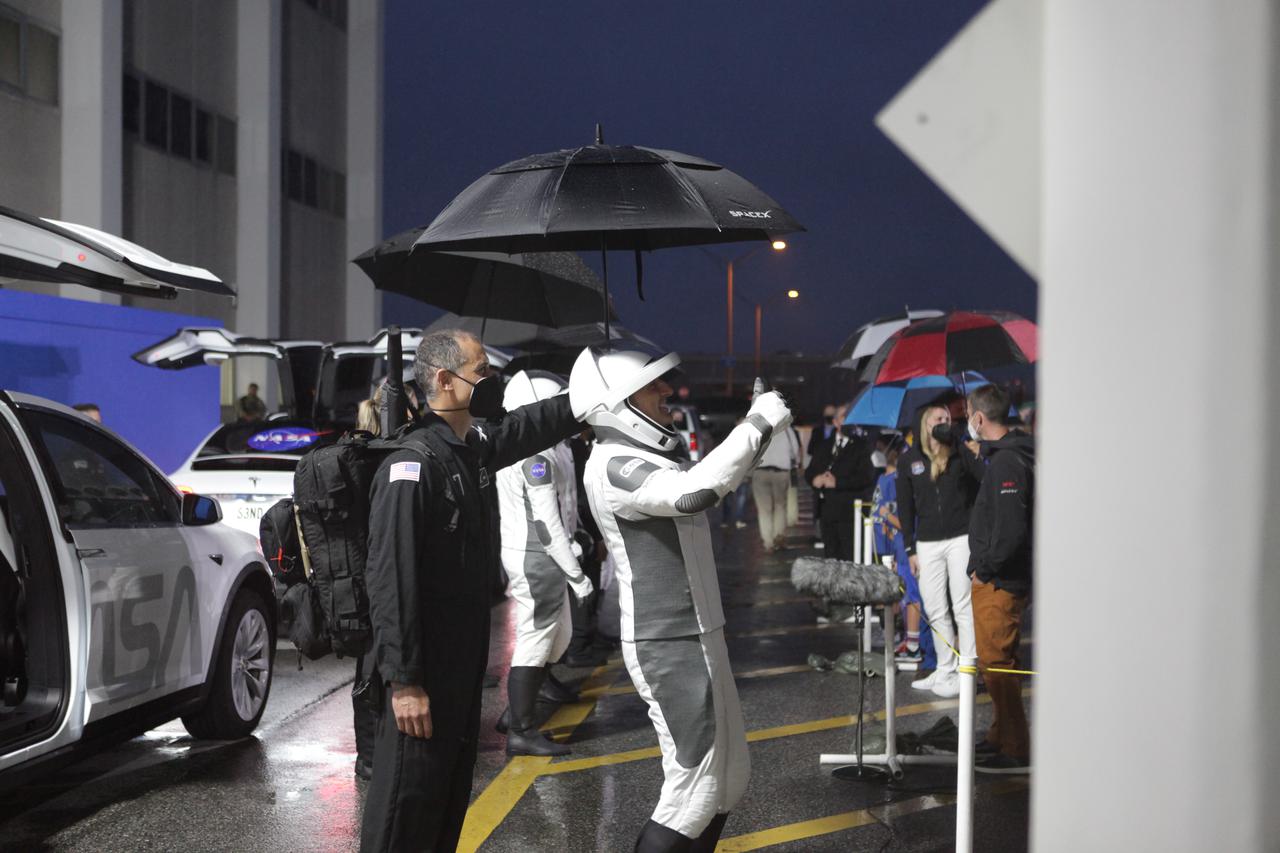
SpaceX Crew-3 astronauts visit with their families after exiting the Neil A. Armstrong Building’s Astronaut Crew Quarters at NASA’s Kennedy Space Center in Florida on launch day, Nov. 10, 2021. NASA astronauts Raja Chari, commander; Tom Marshburn, pilot; and Kayla Barron, mission specialist; along with Matthias Maurer, ESA (European Space Agency) astronaut and mission specialist, will launch in the Crew Dragon Endurance atop the SpaceX Falcon 9 rocket to the International Space Station for NASA’s Commercial Crew Program. Crew-3 is scheduled to launch at 9:03 p.m. EST from Launch Complex 39A at Kennedy.
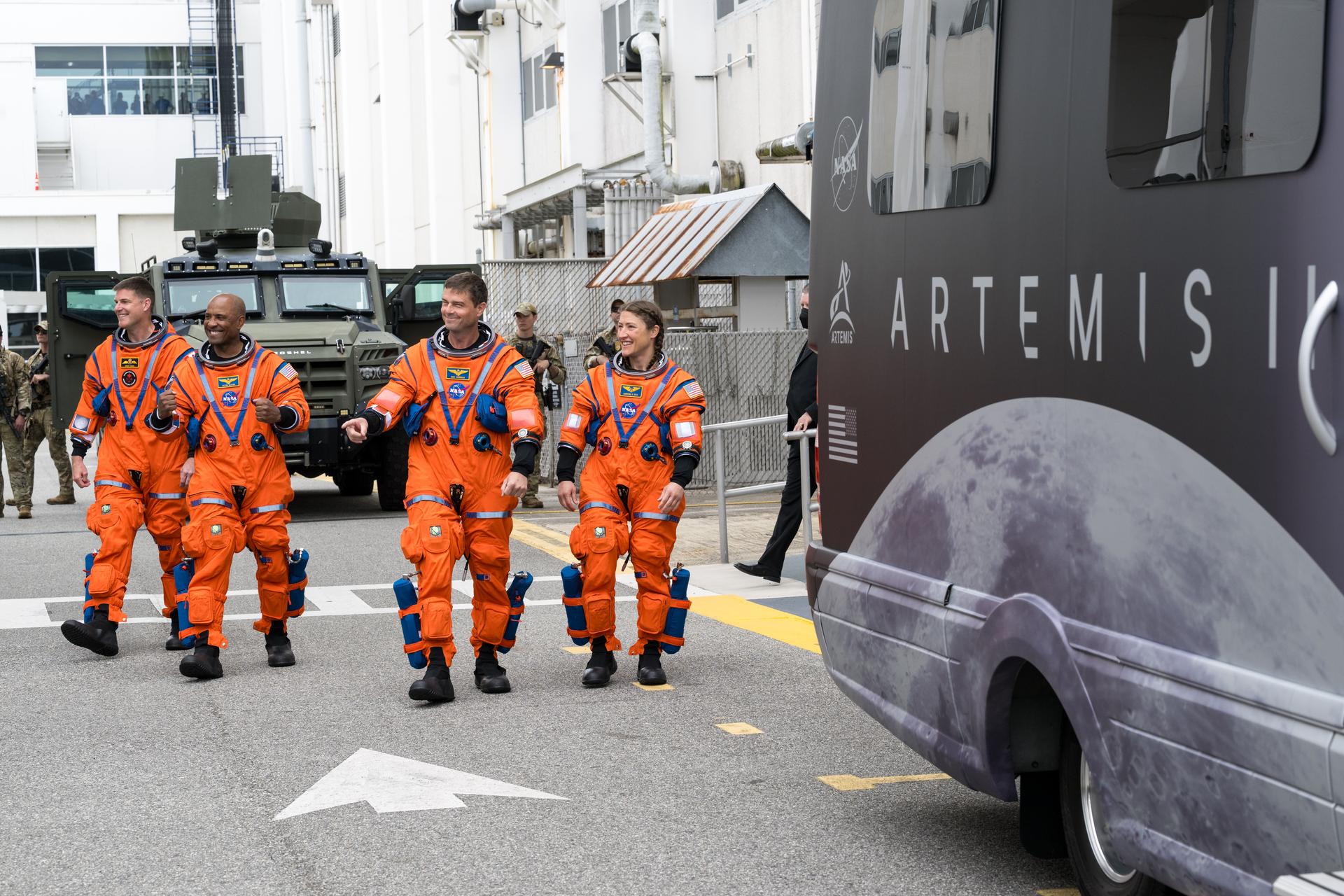
From right to left, NASA astronauts Christina Koch, mission specialist; Reid Wiseman, commander; Victor Glover, pilot; and CSA (Canadian Space Agency) astronaut Jeremy Hansen, mission specialist are seen as they depart the Neil A. Armstrong Operations and Checkout Building to board their Orion spacecraft atop NASA’s Space Launch System (SLS) rocket at Launch Complex 39B, Wednesday, April 1, 2026, at NASA’s Kennedy Space Center in Florida. NASA’s Artemis II mission will take Wiseman, Glover, Koch, and Hansen on a 10-day journey around the Moon and back aboard their Orion spacecraft from Launch Complex 39B, with a two hour launch window opening at 6:24pm. Photo Credit: (NASA/Aubrey Gemignani)
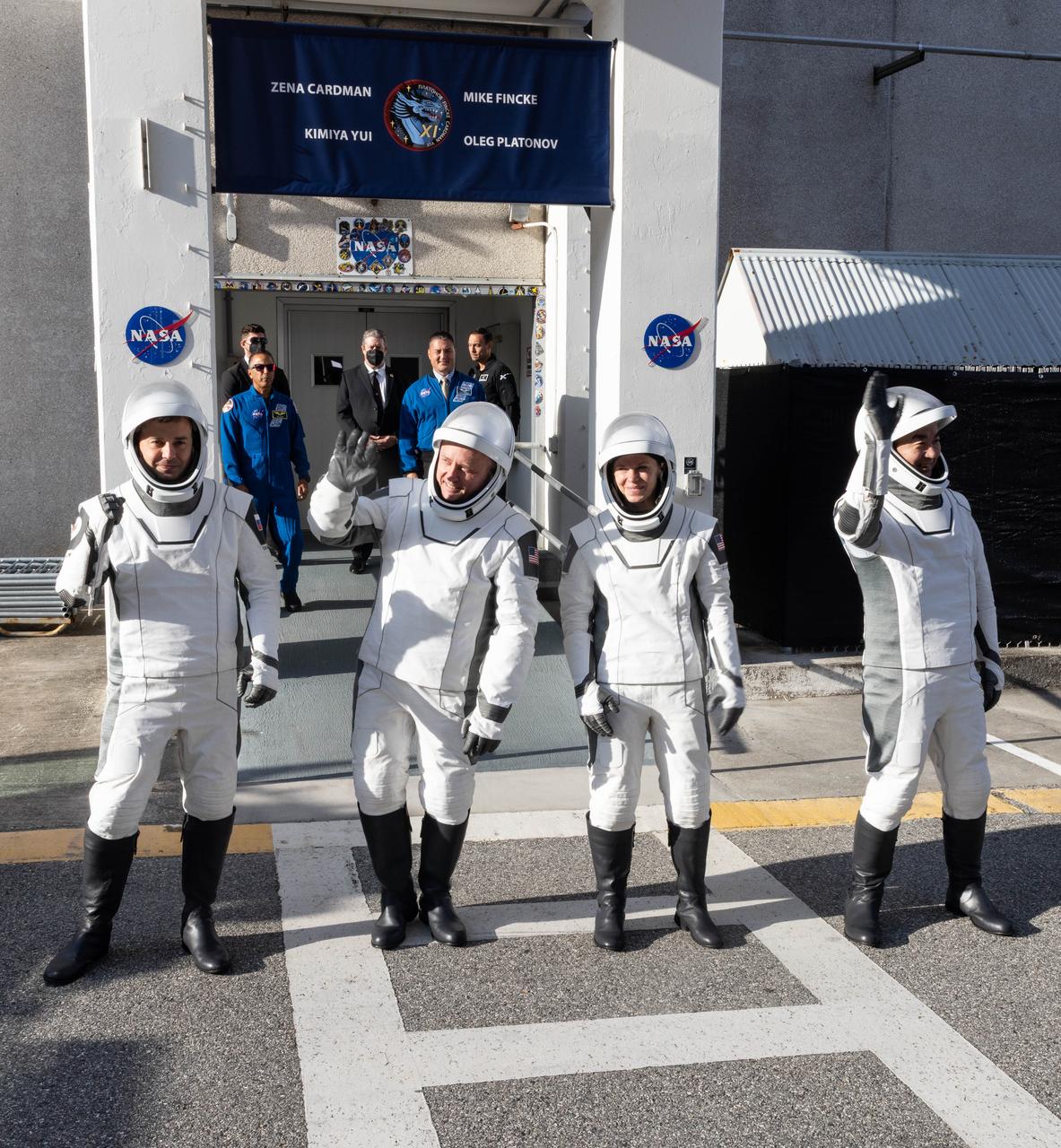
From right to left, JAXA (Japan Aerospace Exploration Agency) astronaut Kimiya Yui, NASA astronauts Zena Cardman and Mike Fincke, along with and Roscosmos cosmonaut Oleg Platonov wave to family and friends as they walk out of the Neil A. Armstrong Operations and Checkout Building at the agency’s Kennedy Space Center in Florida during the second launch attempt of NASA’s SpaceX Crew-11 mission to the International Space Station on Friday, Aug. 1, 2025. Crew-11 is scheduled to lift off aboard SpaceX’s Dragon spacecraft and Falcon 9 rocket at 11:43 a.m. EDT, from Launch Complex 39A at NASA Kennedy.
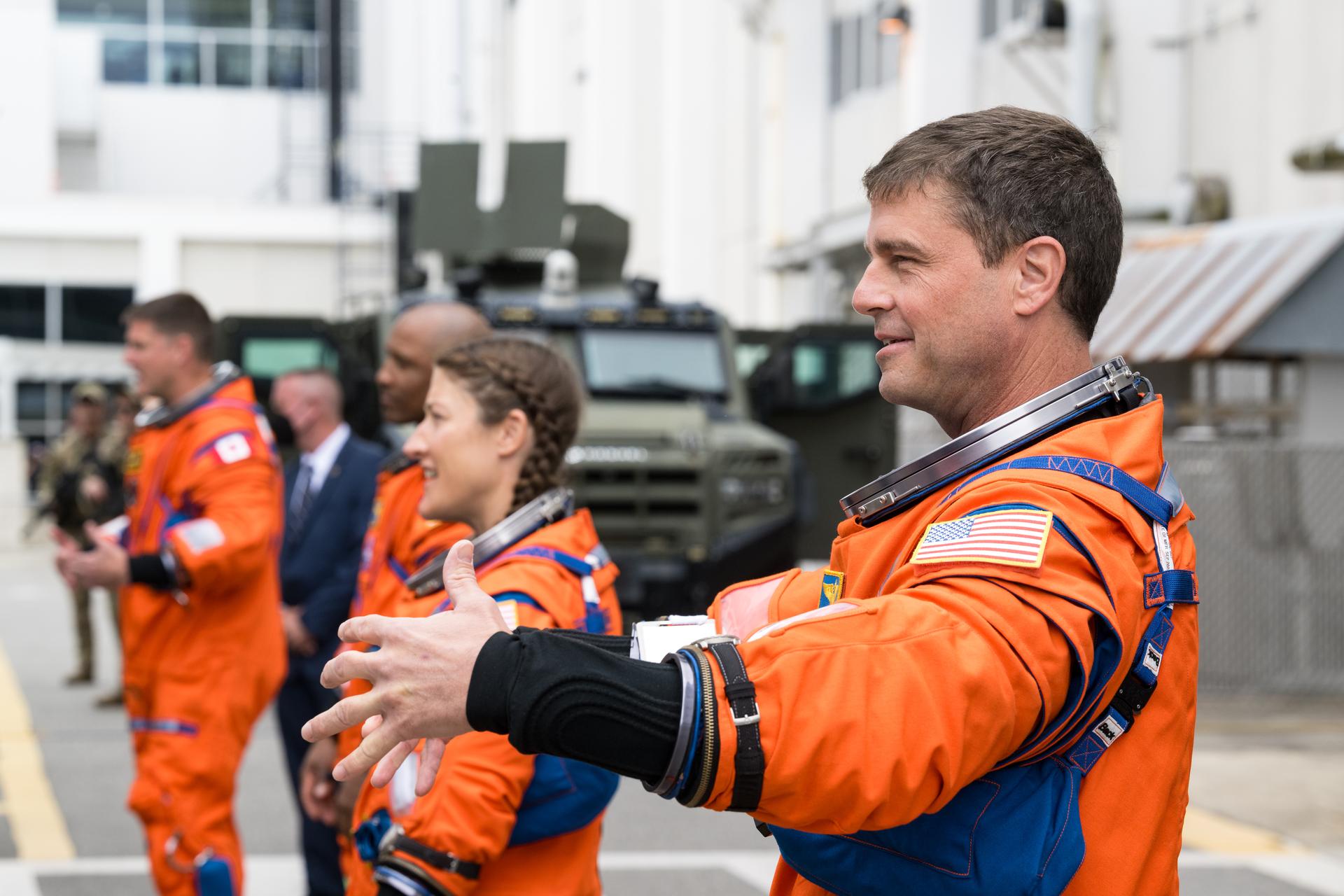
From right to left, NASA astronauts Reid Wiseman, commander; Christina Koch, mission specialist; Victor Glover, pilot; and CSA (Canadian Space Agency) astronaut Jeremy Hansen, mission specialist are seen as they depart the Neil A. Armstrong Operations and Checkout Building to board their Orion spacecraft atop NASA’s Space Launch System (SLS) rocket at Launch Complex 39B, Wednesday, April 1, 2026, at NASA’s Kennedy Space Center in Florida. NASA’s Artemis II mission will take Wiseman, Glover, Koch, and Hansen on a 10-day journey around the Moon and back aboard their Orion spacecraft from Launch Complex 39B, with a two hour launch window opening at 6:24pm. Photo Credit: (NASA/Aubrey Gemignani)
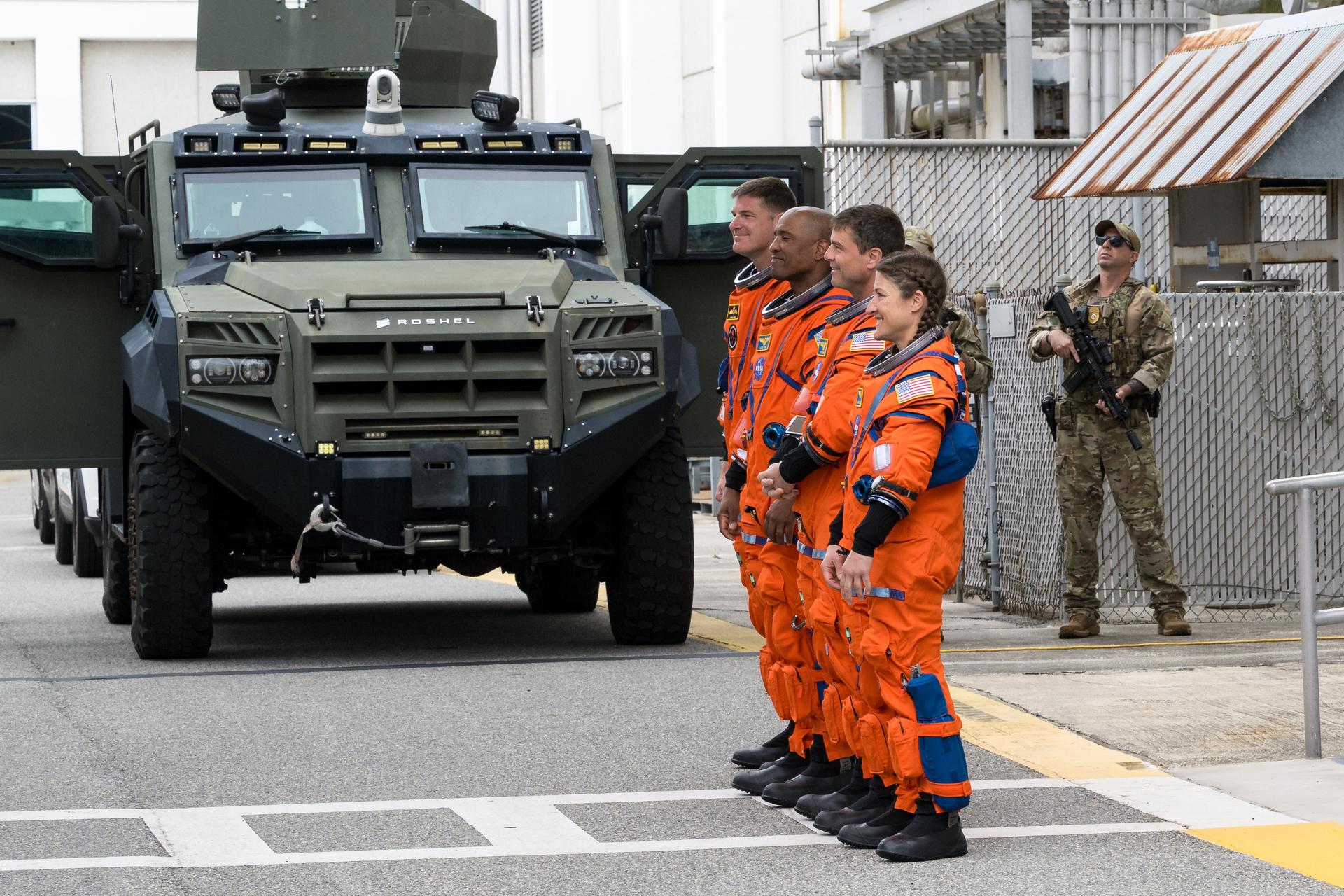
From right to left, NASA astronauts Christina Koch, mission specialist; Reid Wiseman, commander; Victor Glover, pilot; and CSA (Canadian Space Agency) astronaut Jeremy Hansen, mission specialist are seen as they depart the Neil A. Armstrong Operations and Checkout Building to board their Orion spacecraft atop NASA’s Space Launch System (SLS) rocket at Launch Complex 39B, Wednesday, April 1, 2026, at NASA’s Kennedy Space Center in Florida. NASA’s Artemis II mission will take Wiseman, Glover, Koch, and Hansen on a 10-day journey around the Moon and back aboard their Orion spacecraft from Launch Complex 39B, with a two hour launch window opening at 6:24pm. Photo Credit: (NASA/Aubrey Gemignani)
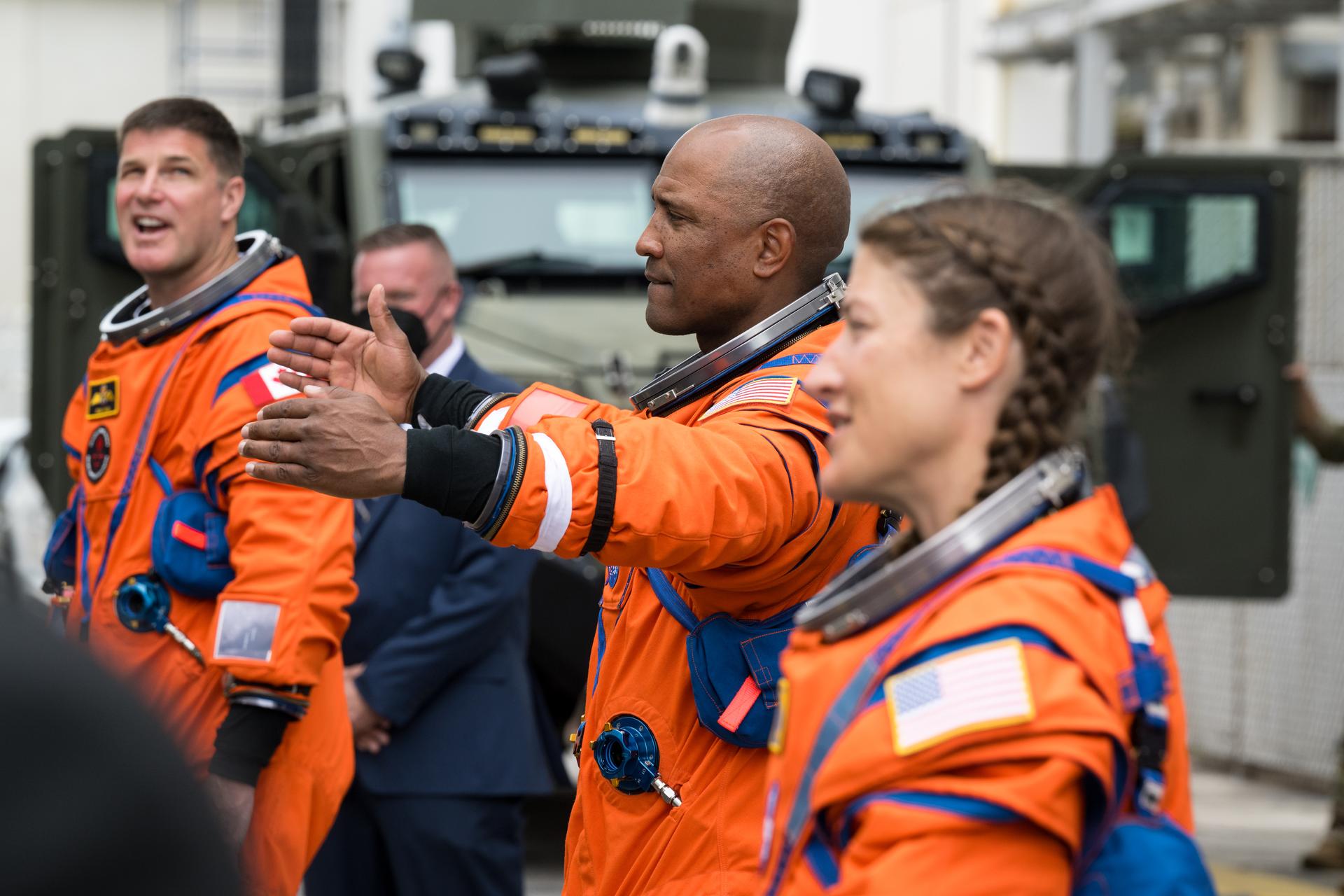
From right to left, NASA astronauts Reid Wiseman, commander (not pictured); Christina Koch, mission specialist; Victor Glover, pilot; and CSA (Canadian Space Agency) astronaut Jeremy Hansen, mission specialist are seen as they depart the Neil A. Armstrong Operations and Checkout Building to board their Orion spacecraft atop NASA’s Space Launch System (SLS) rocket at Launch Complex 39B, Wednesday, April 1, 2026, at NASA’s Kennedy Space Center in Florida. NASA’s Artemis II mission will take Wiseman, Glover, Koch, and Hansen on a 10-day journey around the Moon and back aboard their Orion spacecraft from Launch Complex 39B, with a two hour launch window opening at 6:24pm. Photo Credit: (NASA/Aubrey Gemignani)
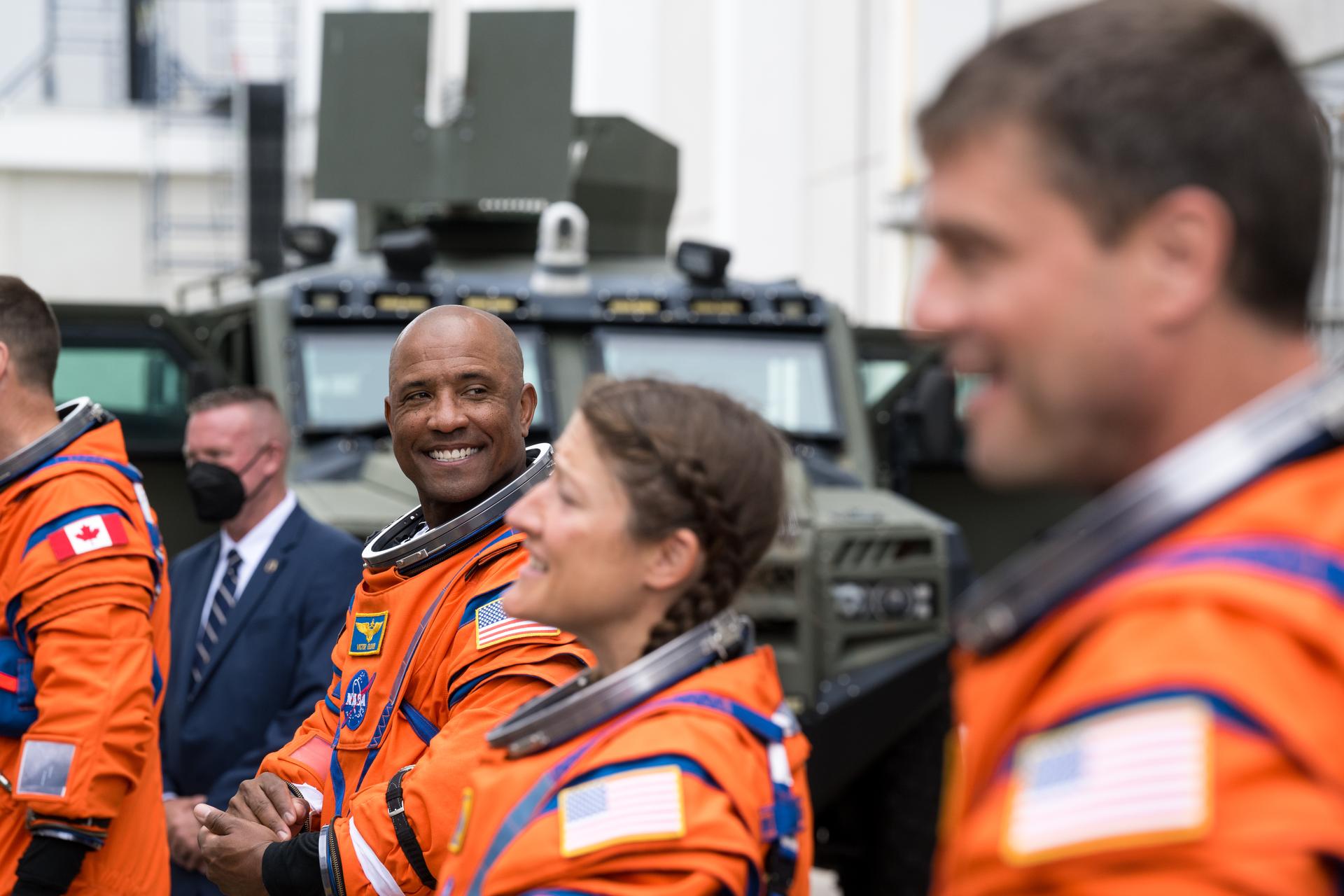
From right to left, NASA astronauts Reid Wiseman, commander; Christina Koch, mission specialist; Victor Glover, pilot; and CSA (Canadian Space Agency) astronaut Jeremy Hansen, mission specialist (not pictured) are seen as they depart the Neil A. Armstrong Operations and Checkout Building to board their Orion spacecraft atop NASA’s Space Launch System (SLS) rocket at Launch Complex 39B, Wednesday, April 1, 2026, at NASA’s Kennedy Space Center in Florida. NASA’s Artemis II mission will take Wiseman, Glover, Koch, and Hansen on a 10-day journey around the Moon and back aboard their Orion spacecraft from Launch Complex 39B, with a two hour launch window opening at 6:24pm. Photo Credit: (NASA/Aubrey Gemignani)
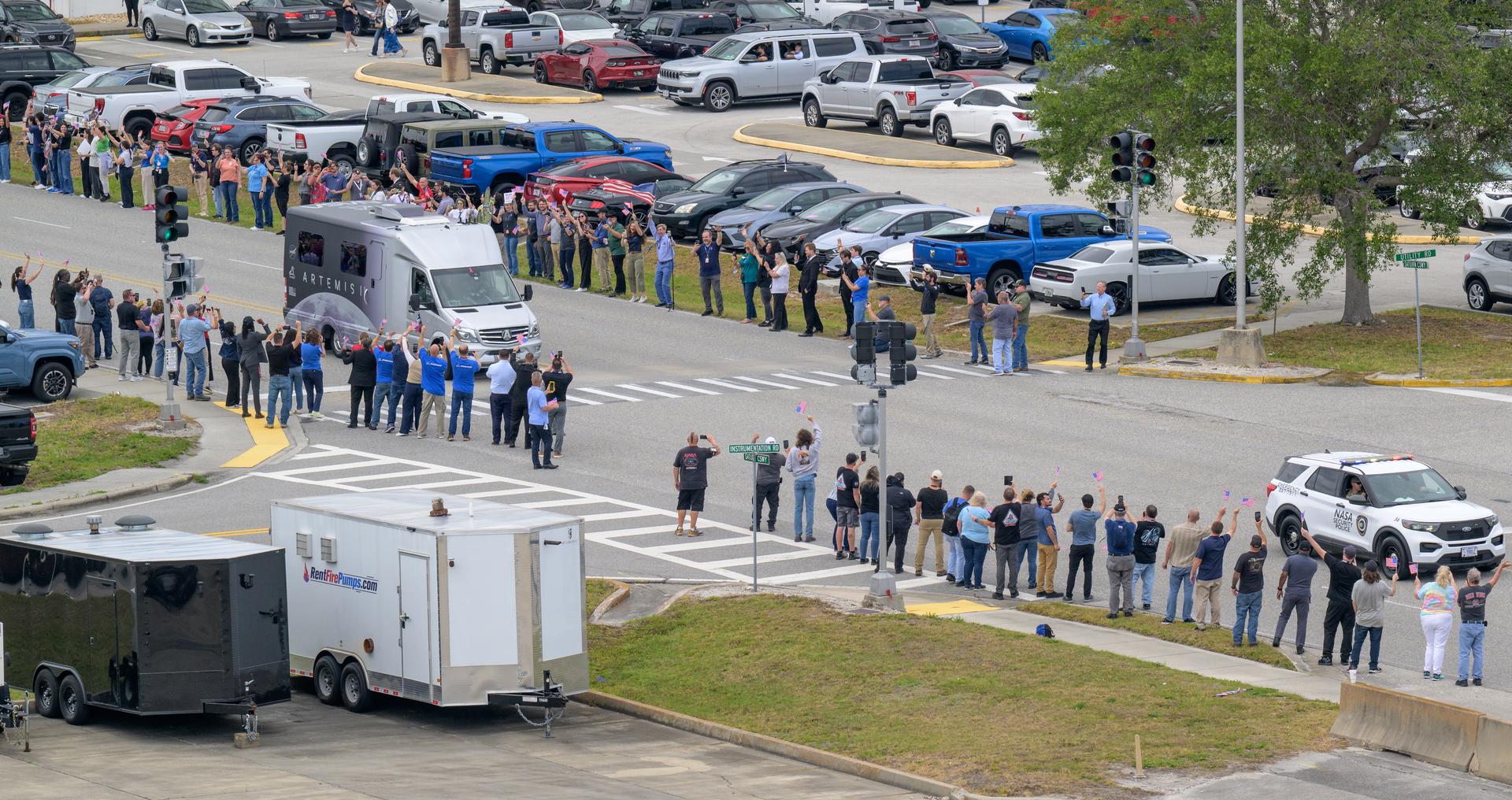
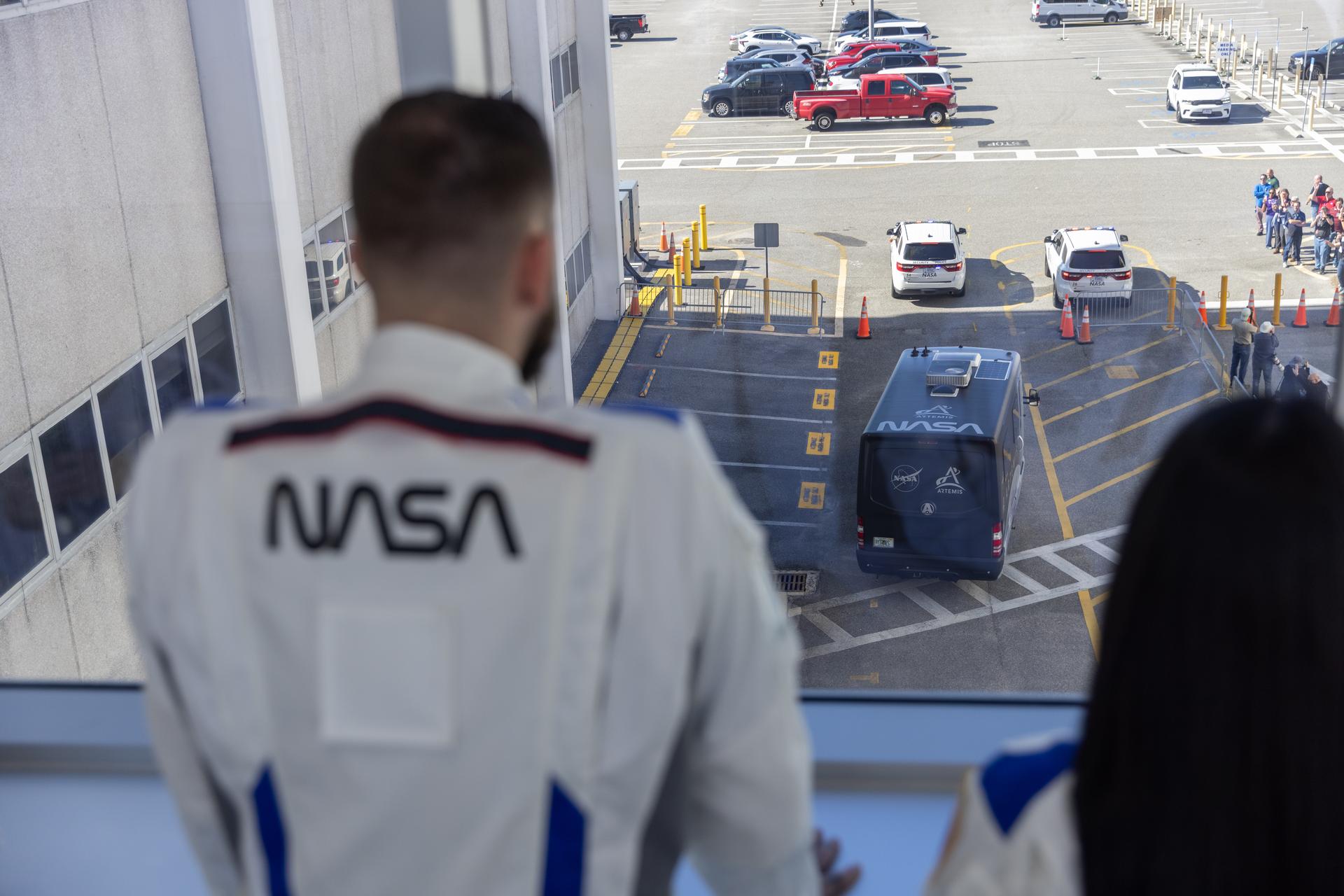
The astrovan with NASA astronauts Reid Wiseman, commander; Victor Glover, pilot; Christina Koch, mission specialist; and CSA (Canadian Space Agency) astronaut Jeremy Hansen, mission specialist drives by NASA employees on the way to the launch pad ahead of the crew boarding their Orion spacecraft atop NASA’s Space Launch System (SLS) rocket at Launch Complex 39B, Wednesday, April 1, 2026, at NASA’s Kennedy Space Center in Florida. NASA’s Artemis II mission will take Wiseman, Glover, Koch, and Hansen on a 10-day journey around the Moon and back aboard their Orion spacecraft from Launch Complex 39B, with a two hour launch window opening at 6:24pm EDT. Photo Credit: (NASA/Bill Ingalls)
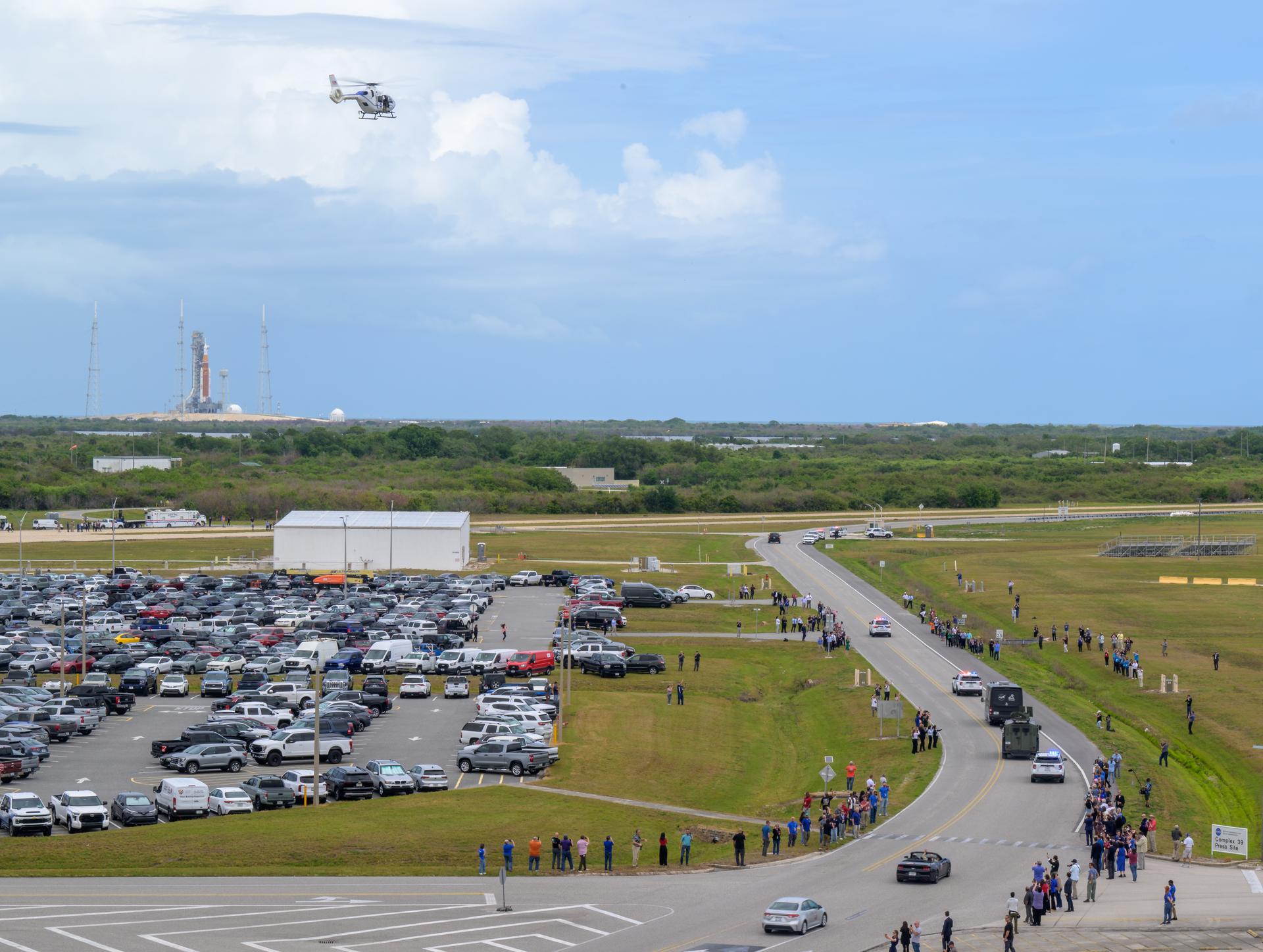
The astrovan with NASA astronauts Reid Wiseman, commander; Victor Glover, pilot; Christina Koch, mission specialist; and CSA (Canadian Space Agency) astronaut Jeremy Hansen, mission specialist drives to the launch pad ahead of the crew boarding their Orion spacecraft atop NASA’s Space Launch System (SLS) rocket at Launch Complex 39B, Wednesday, April 1, 2026, at NASA’s Kennedy Space Center in Florida. NASA’s Artemis II mission will take Wiseman, Glover, Koch, and Hansen on a 10-day journey around the Moon and back aboard their Orion spacecraft from Launch Complex 39B, with a two hour launch window opening at 6:24pm EDT. Photo Credit: (NASA/Bill Ingalls)
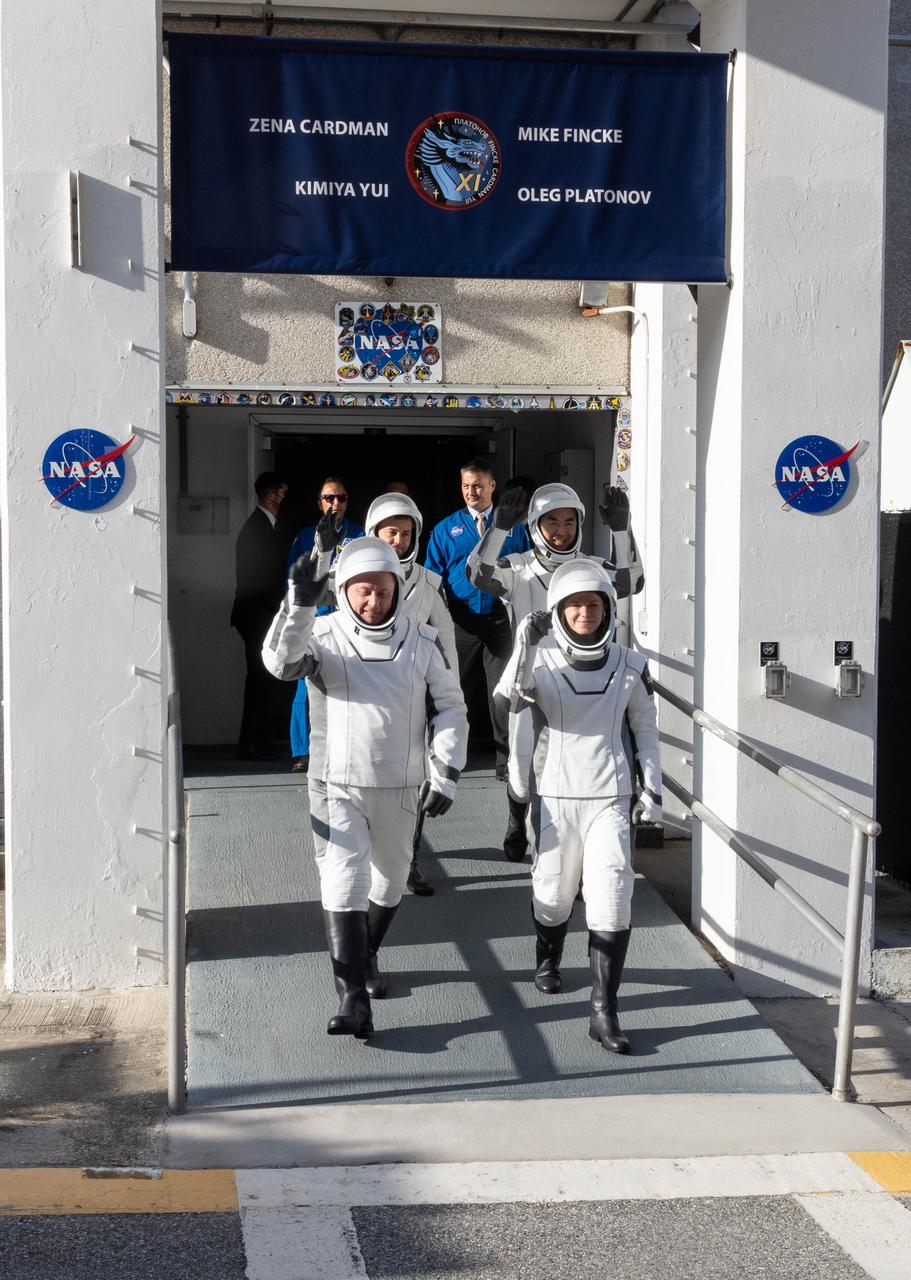
From top left NASA astronauts Mike Fincke and Zena Cardman, along with JAXA (Japan Aerospace Exploration Agency) astronaut Kimiya Yui and Roscosmos cosmonaut Oleg Platonov wave to family and friends as they walk out of the Neil A. Armstrong Operations and Checkout Building at the agency’s Kennedy Space Center in Florida during the second launch attempt of NASA’s SpaceX Crew-11 mission to the International Space Station on Friday, Aug. 1, 2025. Crew-11 is scheduled to lift off aboard SpaceX’s Dragon spacecraft and Falcon 9 rocket at 11:43 a.m. EDT, from Launch Complex 39A at NASA Kennedy.
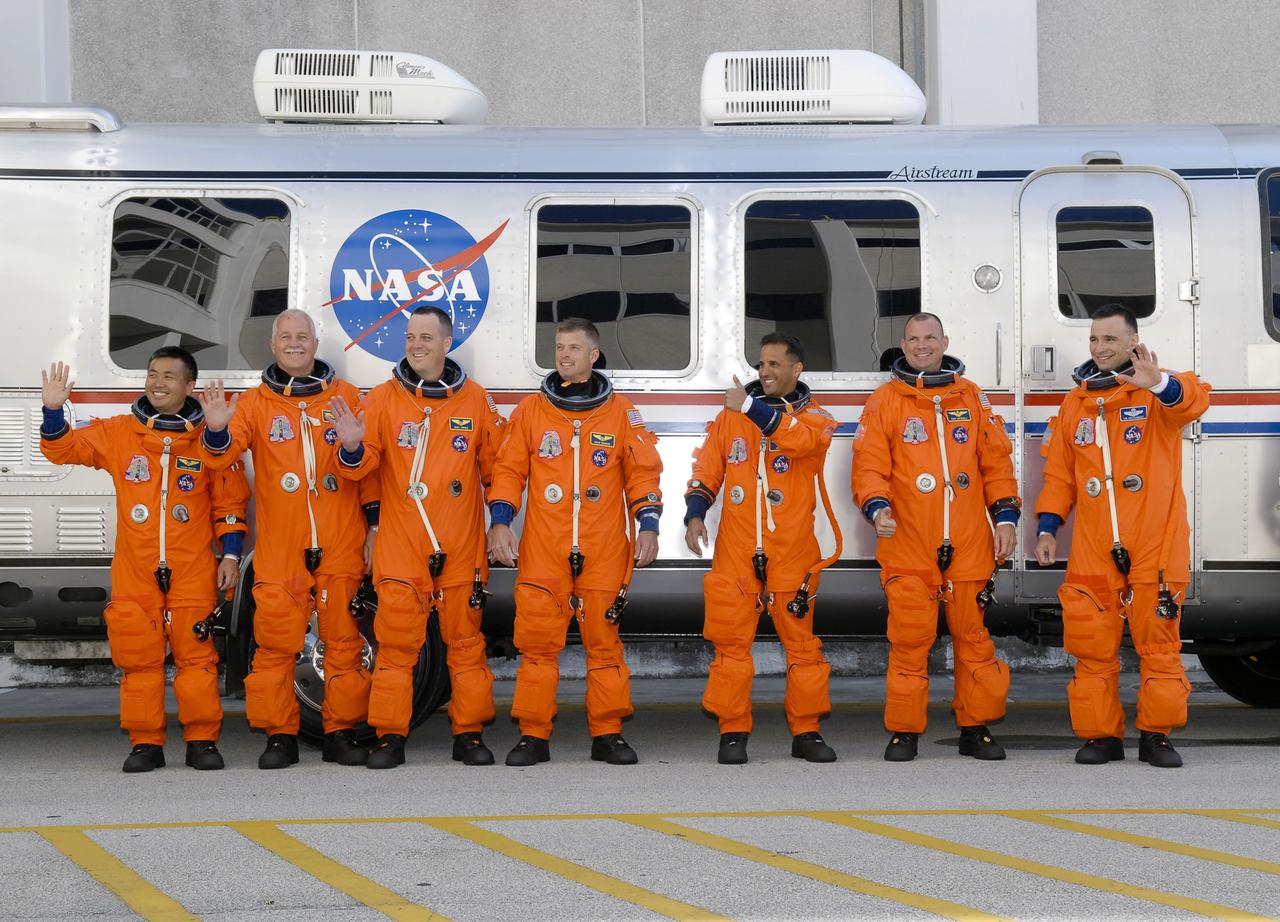
STS119-S-008 (15 March 2009) --- After suiting up, the STS-119 crewmembers pause alongside the Astrovan to wave farewell to onlookers before heading for launch pad 39A for the launch of Space Shuttle Discovery on the STS-119 mission. From the right are astronauts Lee Archambault, commander; Tony Antonelli, pilot; Joseph Acaba, Steve Swanson, Richard Arnold, John Phillips and Japan Aerospace Exploration Agency’s Koichi Wakata, all mission specialists. Wakata will join Expedition 18 in progress to serve as a flight engineer aboard the International Space Station. Discovery will deliver the final pair of power-generating solar array wings and the S6 truss segment. Installation of S6 will signal the station's readiness to house a six-member crew for conducting increased science.
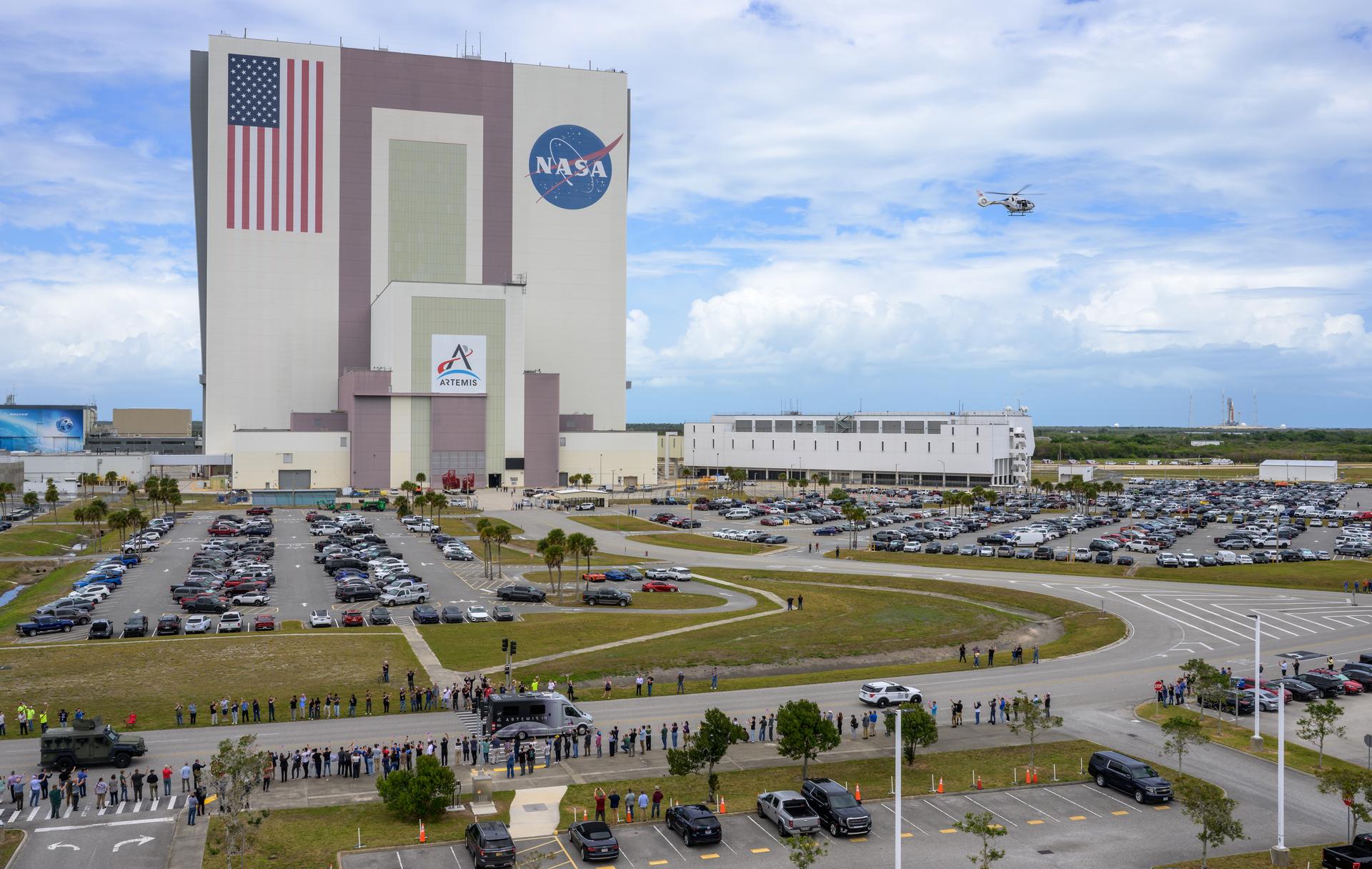
The astrovan with NASA astronauts Reid Wiseman, commander; Victor Glover, pilot; Christina Koch, mission specialist; and CSA (Canadian Space Agency) astronaut Jeremy Hansen, mission specialist drives by the Vehicle Assembly Building (VAB) to the launch pad ahead of the crew boarding their Orion spacecraft atop NASA’s Space Launch System (SLS) rocket at Launch Complex 39B, Wednesday, April 1, 2026, at NASA’s Kennedy Space Center in Florida. NASA’s Artemis II mission will take Wiseman, Glover, Koch, and Hansen on a 10-day journey around the Moon and back aboard their Orion spacecraft from Launch Complex 39B, with a two hour launch window opening at 6:24pm EDT. Photo Credit: (NASA/Bill Ingalls)
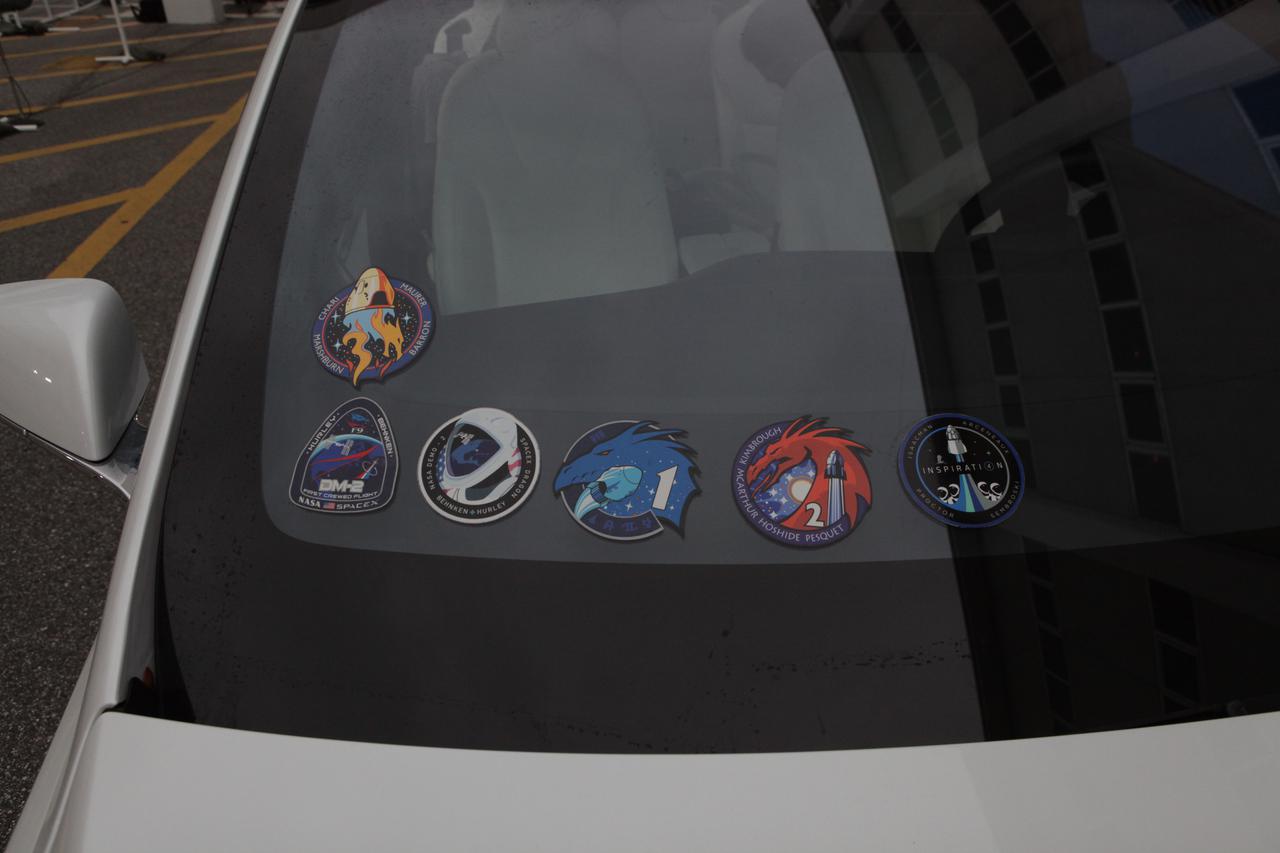
The SpaceX Crew-3 mission insignia is in view in the upper left on the windshield of a SpaceX Tesla Model X car outside the Neil Armstrong Operations and Checkout Building at NASA’s Kennedy Space Center in Florida on launch day, Nov. 10, 2021. NASA astronauts Raja Chari, commander; Tom Marshburn, pilot; Kayla Barron, mission specialist; and Matthias Maurer, ESA (European Space Agency) astronaut and mission specialist, will launch in Crew Dragon Endurance atop the SpaceX Falcon 9 rocket to the International Space Station for NASA’s Commercial Crew Program. Crew-3 is scheduled to launch at 9:03 p.m. EST from Launch Complex 39A at Kennedy.

NASA astronauts Reid Wiseman, commander, (not pictured); Victor Glover, pilot; Christina Koch, mission specialist; and CSA (Canadian Space Agency) astronaut Jeremy Hansen, mission specialist are seen as they depart the Neil A. Armstrong Operations and Checkout Building to board their Orion spacecraft atop NASA’s Space Launch System (SLS) rocket at Launch Complex 39B, Wednesday, April 1, 2026, at NASA’s Kennedy Space Center in Florida. NASA’s Artemis II mission will take Wiseman, Glover, Koch, and Hansen on a 10-day journey around the Moon and back aboard their Orion spacecraft from Launch Complex 39B, with a two hour launch window opening at 6:24pm. Photo Credit: (NASA/Aubrey Gemignani)
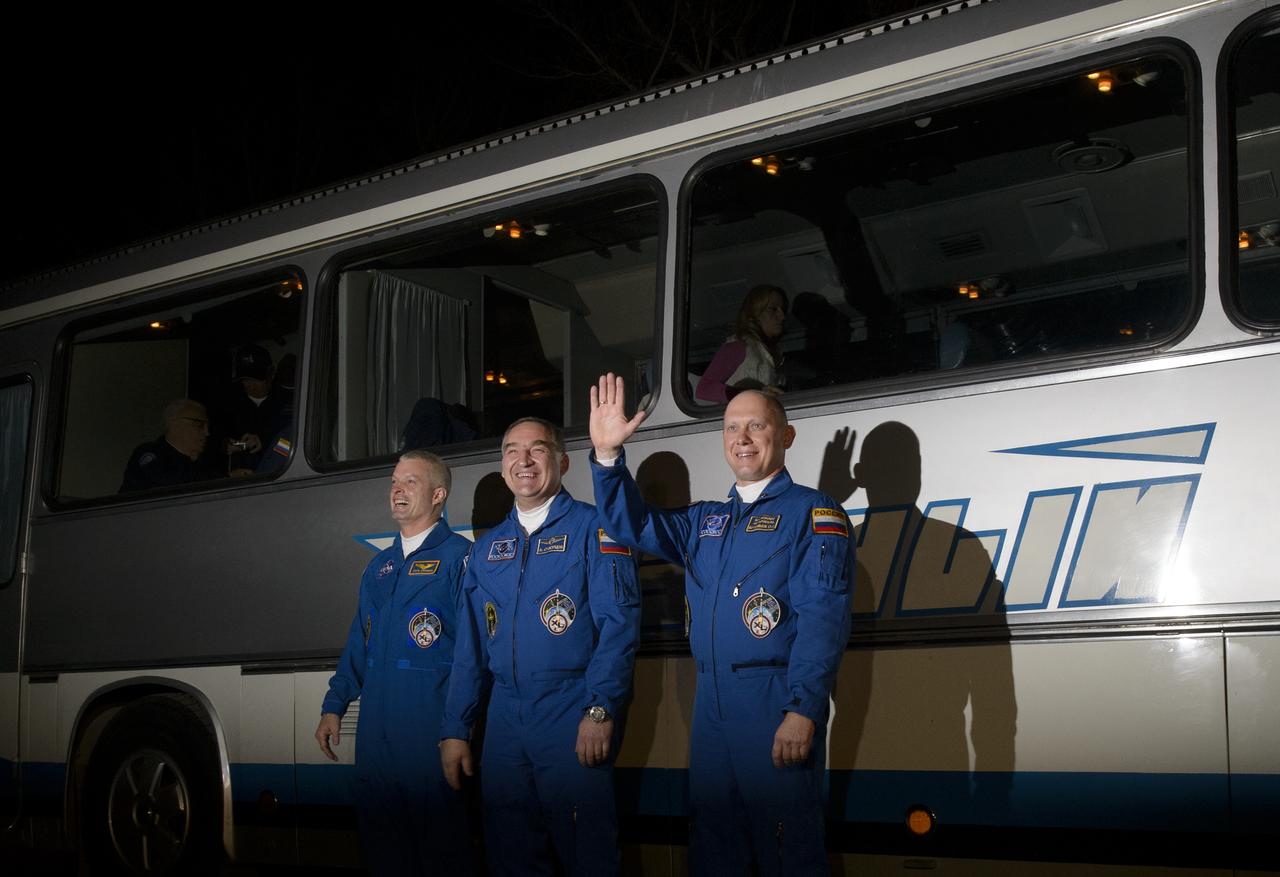
Expedition 39 Flight Engineer Steve Swanson of NASA, left, Soyuz Commander Alexander Skvortsov the Russian Federal Space Agency, Roscosmos, center, and Flight Engineer Oleg Artemyev of Roscosmos, right, are seen as they depart the Cosmonaut Hotel, Tuesday, March 25, 2014, in Baikonur, Kazakhstan. The trio is set to launch on a six month mission to the International Space Station onboard the Soyuz TMA-12M spacecraft at 3:17 a.m. Kazakhstan time on Wednesday, March 26. Photo Credit: (NASA/Joel Kowsky)
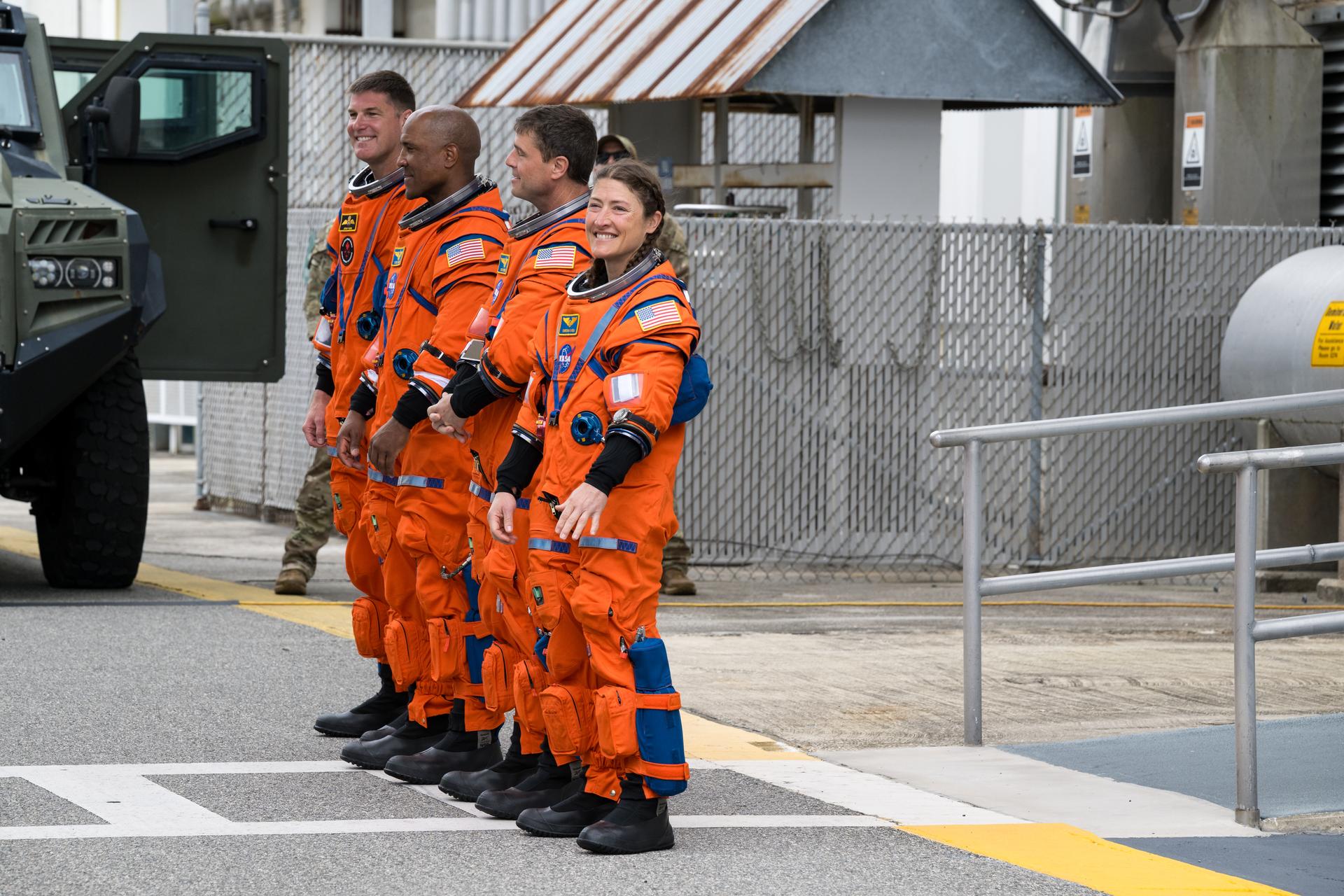
From right to left, NASA astronauts Christina Koch, mission specialist; Reid Wiseman, commander; Victor Glover, pilot; and CSA (Canadian Space Agency) astronaut Jeremy Hansen, mission specialist are seen as they depart the Neil A. Armstrong Operations and Checkout Building to board their Orion spacecraft atop NASA’s Space Launch System (SLS) rocket at Launch Complex 39B, Wednesday, April 1, 2026, at NASA’s Kennedy Space Center in Florida. NASA’s Artemis II mission will take Wiseman, Glover, Koch, and Hansen on a 10-day journey around the Moon and back aboard their Orion spacecraft from Launch Complex 39B, with a two hour launch window opening at 6:24pm. Photo Credit: (NASA/Aubrey Gemignani)
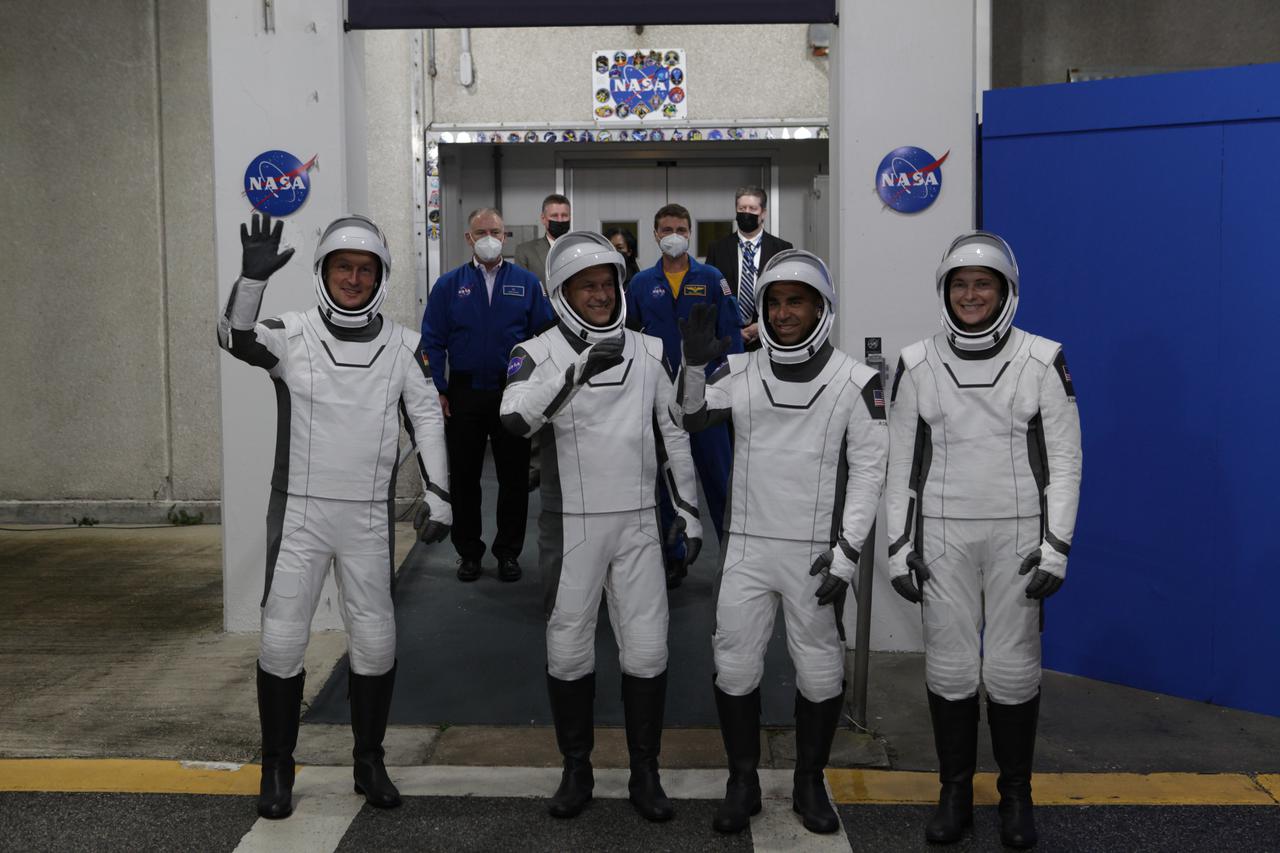
The SpaceX Crew-3 astronauts wave to family and friends after walking out through the double doors below the Neil A. Armstrong Building’s Astronaut Crew Quarters at NASA’s Kennedy Space Center in Florida on launch day, Nov. 10, 2021. They will make their way to the customized Tesla Model X cars that will take them to their spacecraft at Launch Complex 39A. From left are Matthias Maurer, ESA (European Space Agency) astronaut and mission specialist, and NASA astronauts Tom Marshburn; pilot; Raja Chari, commander; and Kayla Barron, mission specialist. The Falcon 9 rocket with Crew Dragon Endurance will launch the four-person crew to the International Space Station for NASA’s Commercial Crew Program. Crew-3 is scheduled to launch at 9:03 p.m. EST from Launch Complex 39A at Kennedy.
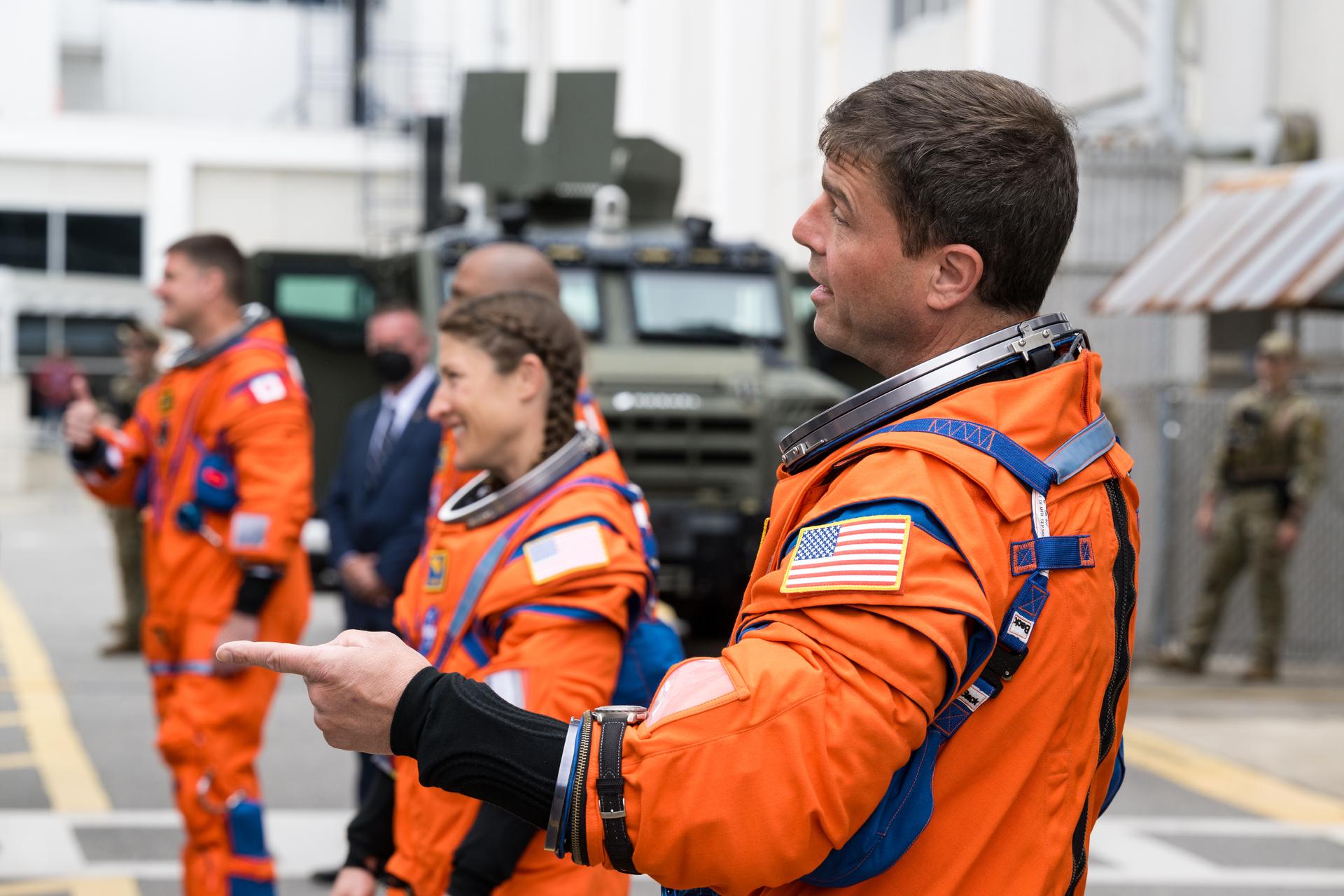
From right to left, NASA astronauts Reid Wiseman, commander; Christina Koch, mission specialist; Victor Glover, pilot; and CSA (Canadian Space Agency) astronaut Jeremy Hansen, mission specialist (not pictured) are seen as they depart the Neil A. Armstrong Operations and Checkout Building to board their Orion spacecraft atop NASA’s Space Launch System (SLS) rocket at Launch Complex 39B, Wednesday, April 1, 2026, at NASA’s Kennedy Space Center in Florida. NASA’s Artemis II mission will take Wiseman, Glover, Koch, and Hansen on a 10-day journey around the Moon and back aboard their Orion spacecraft from Launch Complex 39B, with a two hour launch window opening at 6:24pm. Photo Credit: (NASA/Aubrey Gemignani)