
Little Joe on launcher at Wallops Island.

Technicians prepare a full-scale capsule which would be used for the first rocket-launching on March 11, 1959. The purpose of the test would be to simulate a ground-level or beach abort. Joseph Shortal wrote (vol. 3, p. 27): It was a test of the ability of the escape system to rescue the astronaut in case of a malfunction of the launch vehicle prior to flight. This test was carried out by PARD under the direction of W.S. Blanchard, Jr., and was part of the program designated F57 at PARD. For these tests capsule shape C was used. -- Published in Joseph A. Shortal, History of Wallops Station: Origins and Activities Through 1949, (Wallops Island, VA: National Aeronautics and Space Administration, Wallops Station, nd), Comment Edition.

Aside from native flora, fauna and the Langley rocket-research complex, there was not much on Wallops Island. Pictured is a 1960 photo of Launch area Number Three, used principally for Scout rocket firings. -- Photograph published in Winds of Change, 75th Anniversary NASA publication (page 73), by James Schultz.

Air Force Javelin Rocket on Launcher (USAF JV-1) Wallops Model D4-78 L59-5144 First AFSWC Javelin sounding rocket ready for flight test, July 7, 1959. Photograph published in A New Dimension Wallops Island Flight Test Range: The First Fifteen Years by Joseph Shortal. A NASA publication. Page 704.

Air Force Javelin Rocket on Launcher (USAF JV-1) Wallops Model D4-78 L59-5144 First AFSWC Javelin sounding rocket ready for flight test, July 7, 1959. Photograph published in A New Dimension Wallops Island Flight Test Range: The First Fifteen Years by Joseph Shortal. A NASA publication. Page 704.

Air Force Javelin Rocket on Launcher (USAF JV-1) Wallops Model D4-78 L59-5144 First AFSWC Javelin sounding rocket ready for flight test, July 7, 1959. Photograph published in A New Dimension Wallops Island Flight Test Range: The First Fifteen Years by Joseph Shortal. A NASA publication. Page 704.

Air Force Javelin Rocket on Launcher (USAF JV-1) Wallops Model D4-78 L59-5144 First AFSWC Javelin sounding rocket ready for flight test, July 7, 1959. Photograph published in A New Dimension Wallops Island Flight Test Range: The First Fifteen Years by Joseph Shortal. A NASA publication. Page 704.

Air Force Javelin Rocket on Launcher (USAF JV-1) Wallops Model D4-78 L59-5144 First AFSWC Javelin sounding rocket ready for flight test, July 7, 1959. Photograph published in A New Dimension Wallops Island Flight Test Range: The First Fifteen Years by Joseph Shortal. A NASA publication. Page 704.
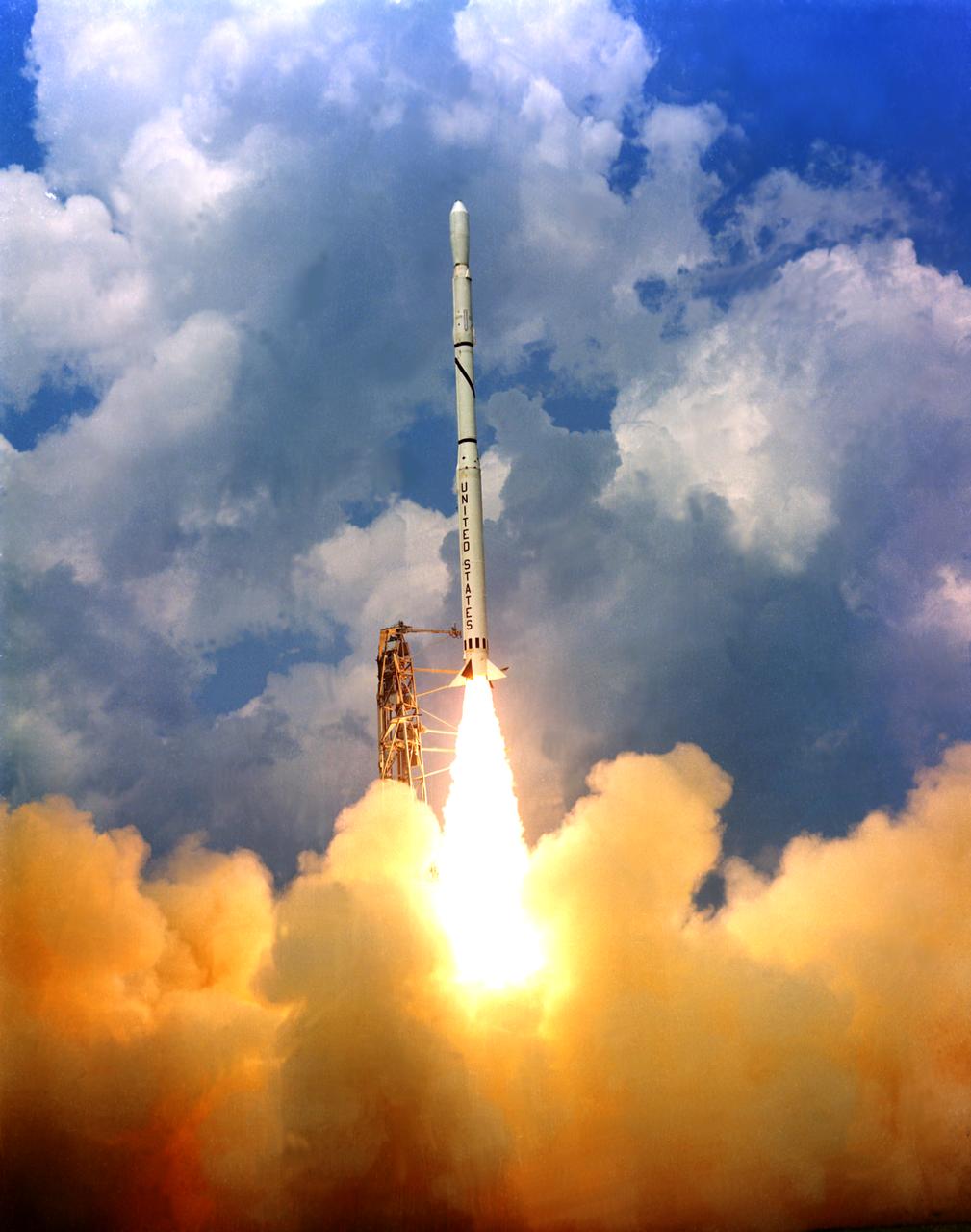
Scout launch vehicle lift off on Wallops Island in 1965. The Scout launch vehicle was used for unmanned small satellite missions, high altitude probes, and reentry experiments. Scout, the smallest of the basic launch vehicles, is the only United States launch vehicle fueled exclusively with solid propellants. Published in the book " A Century at Langley" by Joseph Chambers pg. 92

Wallops Island camera equipment installed on board the Ames CV-990 (NASA 711) Galileo Airborne platform for the 1971 Barium Ion Cloud Airborne expedition (experimenters racks)

Launch Phase of ARCAS E1-239 Image taken at Wallops Island

ARCAS Rocket #E1-235 Image taken at Wallops Island

Caption: Off the pad abort shot at Wallops using Langley PARD designed full scale capsule with Recruit rocket and extended skirt main parachute. Shows sequential images of launch and capsule splashdown.

L1-422 Nike Smoke Rocket and Launcher in Firing Position. Image taken at Wallops Island.

L59-3802 Nike-Cajun sounding rocket with University of Iowa payload on launcher at Wallops for flight test, May 20, 1959. Photograph published in A New Dimension Wallops Island Flight Test Range: The First Fifteen Years by Joseph Shortal. A NASA publication. Page 698.

L59-7932 First University of Michigan Strongarm sounding rocket on launcher at Wallops for test, November 10, 1959. Photograph published in A New Dimension Wallops Island Flight Test Range: The First Fifteen Years by Joseph Shortal. A NASA publication. Page 701.E5-188 Shop and Launcher Pictures

L59-3802 Nike-Cajun sounding rocket with University of Iowa payload on launcher at Wallops for flight test, May 20, 1959. Photograph published in A New Dimension Wallops Island Flight Test Range: The First Fifteen Years by Joseph Shortal. A NASA publication. Page 698.

L59-7932 First University of Michigan Strongarm sounding rocket on launcher at Wallops for test, November 10, 1959. Photograph published in A New Dimension Wallops Island Flight Test Range: The First Fifteen Years by Joseph Shortal. A NASA publication. Page 701.E5-188 Shop and Launcher Pictures

L59-7932 First University of Michigan Strongarm sounding rocket on launcher at Wallops for test, November 10, 1959. Photograph published in A New Dimension Wallops Island Flight Test Range: The First Fifteen Years by Joseph Shortal. A NASA publication. Page 701.E5-188 Shop and Launcher Pictures

L59-7932 First University of Michigan Strongarm sounding rocket on launcher at Wallops for test, November 10, 1959. Photograph published in A New Dimension Wallops Island Flight Test Range: The First Fifteen Years by Joseph Shortal. A NASA publication. Page 701.E5-188 Shop and Launcher Pictures
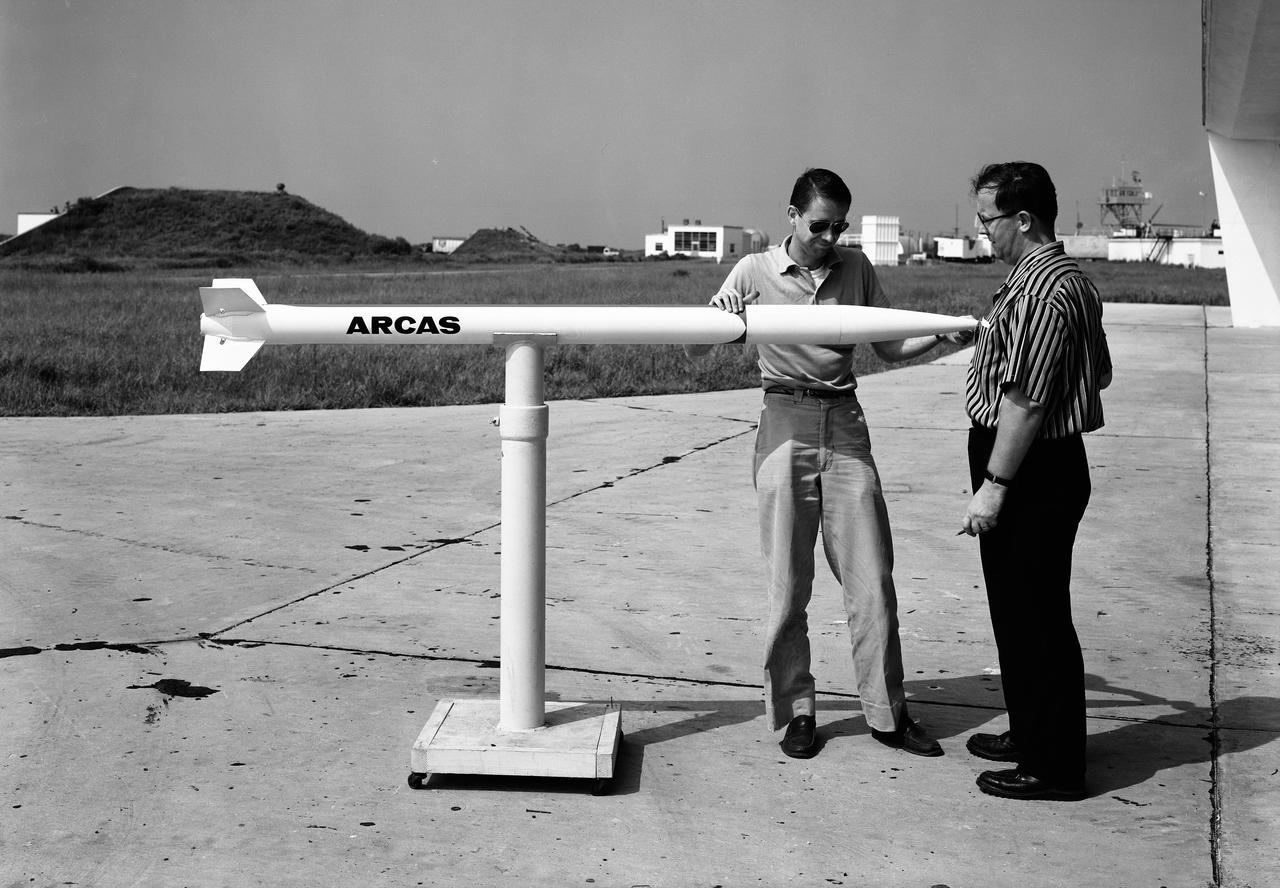
First Arcas meteorological rocket, shown at Wallops prior to flight test, July 31, 1959. Photograph published in A New Dimension Wallops Island Flight Test Range: The First Fifteen Years by Joseph Shortal. A NASA publication. Page 696.

L59-7932 First University of Michigan Strongarm sounding rocket on launcher at Wallops for test, November 10, 1959. Photograph published in A New Dimension Wallops Island Flight Test Range: The First Fifteen Years by Joseph Shortal. A NASA publication. Page 701.E5-188 Shop and Launcher Pictures

L59-7932 First University of Michigan Strongarm sounding rocket on launcher at Wallops for test, November 10, 1959. Photograph published in A New Dimension Wallops Island Flight Test Range: The First Fifteen Years by Joseph Shortal. A NASA publication. Page 701.E5-188 Shop and Launcher Pictures

The first Scout prepared for launch at Wallops Island July 1, 1960, and launched the evening of the same day. -- Photograph published in Winds of Change, 75th Anniversary NASA publication (page 73), by James Schultz.

A participant at a NASA Social on the Lunar Atmosphere and Dust Environment Explorer (LADEE) mission asks a question, Thursday, Sept. 5, 2013 on Wallops Island, VA. Fifty of NASA's social media followers are attending a two-day event in support of the LADEE launch. Data from LADEE will provide unprecedented information about the environment around the moon and give scientists a better understanding of other planetary bodies in our solar system and beyond. LADEE is scheduled to launch at 11:27 p.m. Friday, Sept. 6, from NASA's Wallops Flight Facility. Photo Credit: (NASA/Carla Cioffi)

Arcas Rocket with Special Tubular Launcher: Lt. Commander W. Houston checks elevation adjustment of special tubular launcher for Arcas rocket, July 31, 1959. Photograph published in A New Dimension Wallops Island Flight Test Range: The First Fifteen Years by Joseph Shortal. A NASA publication. Page 697.

NASA Lunar Atmosphere and Dust Environment Explorer (LADEE) Program Scientist Sarah Noble talks during a NASA Social about the LADEE mission at NASA Wallops Flight Facility, Thursday, Sept. 5, 2013 on Wallops Island, VA. Fifty of NASA's social media followers are attending a two-day event in support of the LADEE launch. Data from LADEE will provide unprecedented information about the environment around the moon and give scientists a better understanding of other planetary bodies in our solar system and beyond. LADEE is scheduled to launch at 11:27 p.m. Friday, Sept. 6, from NASA's Wallops Flight Facility. Photo Credit: (NASA/Carla Cioffi)

Jason Townsend, NASA's Deputy Social Media Manager, kicks off the Lunar Atmosphere and Dust Environment Explorer (LADEE) NASA Social at Wallops Flight Facility, Thursday, Sept. 5, 2013 on Wallops Island, VA. Fifty of NASA's social media followers are attending a two-day event in support of the LADEE launch. Data from LADEE will provide unprecedented information about the environment around the moon and give scientists a better understanding of other planetary bodies in our solar system and beyond. LADEE is scheduled to launch at 11:27 p.m. Friday, Sept. 6, from NASA's Wallops Flight Facility. Photo Credit: (NASA/Carla Cioffi)

NASA Associate Administrator for the Science Mission Directorate John Grunsfeld talks during a NASA Social about the Lunar Atmosphere and Dust Environment Explorer (LADEE) mission at the NASA Wallops Flight Facility, Thursday, Sept. 5, 2013 on Wallops Island, VA. Fifty of NASA's social media followers are attending a two-day event in support of the LADEE launch. Data from LADEE will provide unprecedented information about the environment around the moon and give scientists a better understanding of other planetary bodies in our solar system and beyond. LADEE is scheduled to launch at 11:27 p.m. Friday, Sept. 6, from NASA's Wallops Flight Facility. Photo Credit: (NASA/Carla Cioffi)

B60-00364 (4 Nov. 1959) --- Launch of Little Joe-2 from Wallops Island carrying Mercury spacecraft test article. The suborbital test flight of the Mercury capsule was to test the escape system. Vehicle functioned perfectly, but escape rocket ignited several seconds too late. Photo credit: NASA

Launching of the LJ6 Little Joe on Oct. 4, 1959 took place at Wallops Island, Va. This was the first attempt to launch an instrumented capsule with a Little Joe booster. Only the LJ1A and the LJ6 used the space metal chevron plates as heat reflector shields, as they kept shattering. Caption title ...and ascending skyward on a plume of exhaust. Photograph published in Winds of Change, 75th Anniversary NASA publication, page 77, by James Schultz

A participant at a NASA Social on the Lunar Atmosphere and Dust Environment Explorer (LADEE) mission asks NASA Associate Administrator for the Science Mission Directorate John Grunsfeld a question, Thursday, Sept. 5, 2013 on Wallops Island, VA. Fifty of NASA's social media followers are attending a two-day event in support of the LADEE launch. Data from LADEE will provide unprecedented information about the environment around the moon and give scientists a better understanding of other planetary bodies in our solar system and beyond. LADEE is scheduled to launch at 11:27 p.m. Friday, Sept. 6, from NASA's Wallops Flight Facility. Photo Credit: (NASA/Carla Cioffi)

NASA Associate Administrator for the Science Mission Directorate John Grunsfeld is seen in a video monitor during a NASA Social about the Lunar Atmosphere and Dust Environment Explorer (LADEE) mission at the NASA Wallops Flight Facility, Thursday, Sept. 5, 2013 on Wallops Island, VA. Fifty of NASA's social media followers are attending a two-day event in support of the LADEE launch. Data from LADEE will provide unprecedented information about the environment around the moon and give scientists a better understanding of other planetary bodies in our solar system and beyond. LADEE is scheduled to launch at 11:27 p.m. Friday, Sept. 6, from NASA's Wallops Flight Facility. Photo Credit: (NASA/Carla Cioffi)
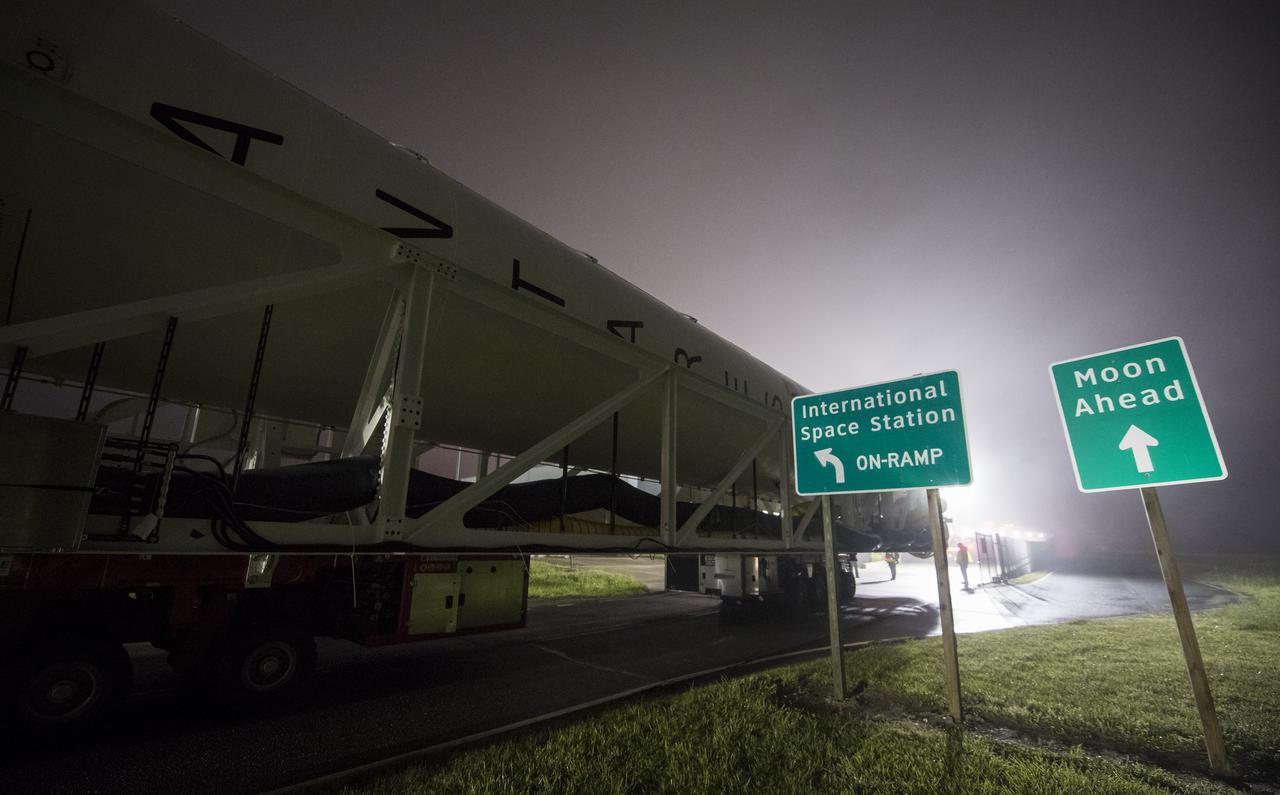
An Orbital ATK rocket is seen as it is rolled out to launch Pad-0A at Wallops Flight Facility Thursday, May 17, 2018 at Wallops Island, VA. The Antares will launch a Cygnus spacecraft on a cargo resupply mission to the International Space Station. The mission is Orbital ATK’s ninth contracted cargo delivery flight to the space station for NASA. Included in the 7,400 pounds of cargo onboard Cygnus, are science experiments, crew supplies, and vehicle hardware. Photo Credit: (NASA/Aubrey Gemignani)
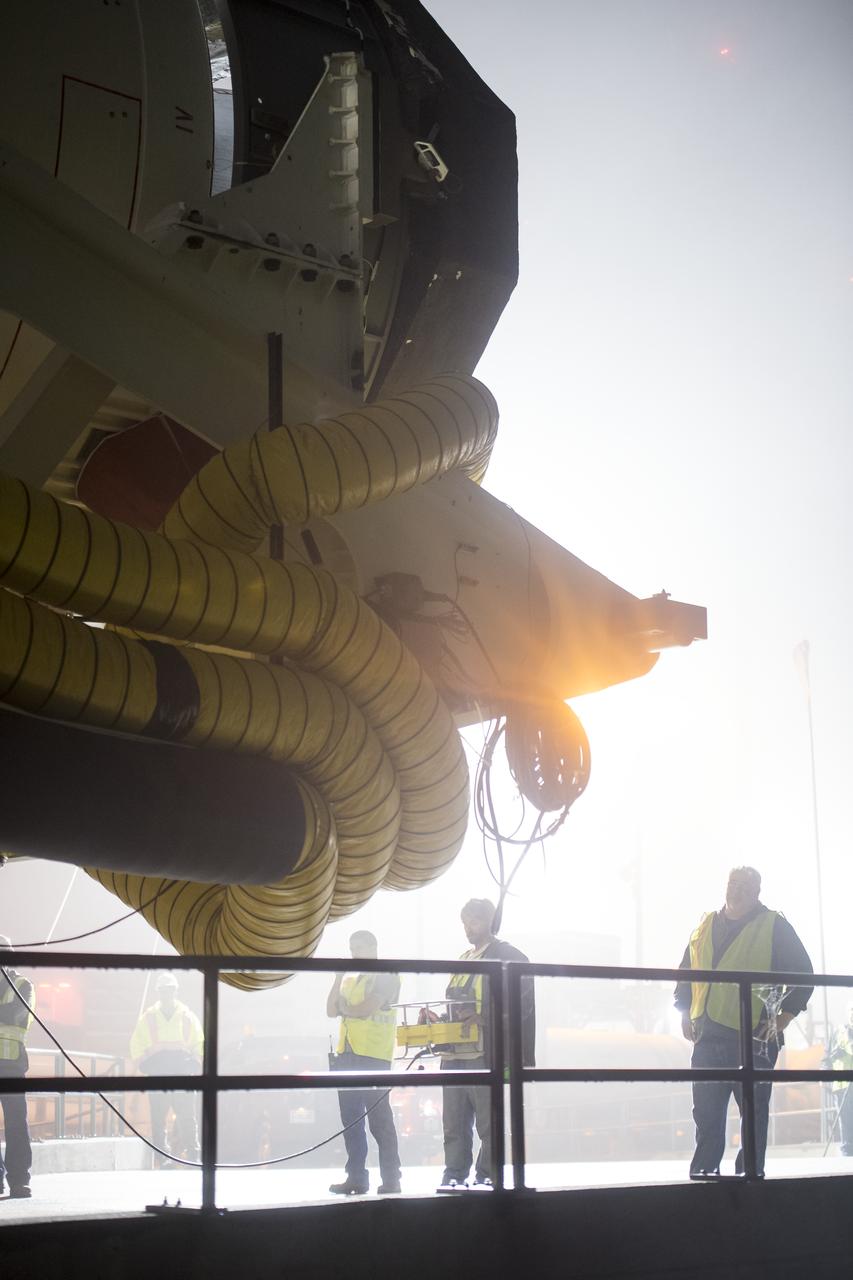
An Orbital ATK rocket is seen as it is rolled out to launch Pad-0A at Wallops Flight Facility Thursday, May 17, 2018 at Wallops Island, VA. The Antares will launch a Cygnus spacecraft on a cargo resupply mission to the International Space Station. The mission is Orbital ATK’s ninth contracted cargo delivery flight to the space station for NASA. Included in the 7,400 pounds of cargo onboard Cygnus, are science experiments, crew supplies, and vehicle hardware. Photo Credit: (NASA/Aubrey Gemignani)
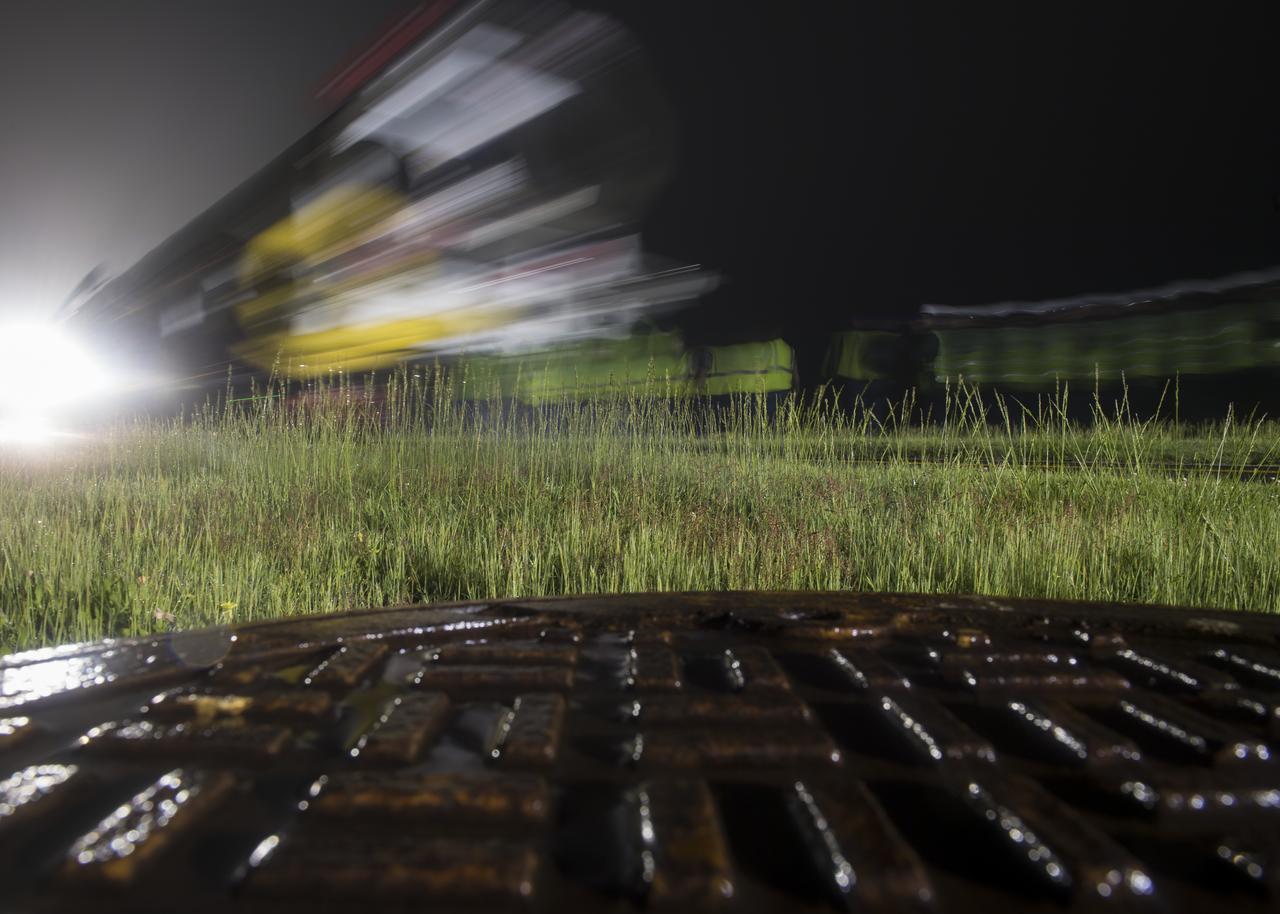
An Orbital ATK rocket is seen in this long exposure as it is rolled out to launch Pad-0A at Wallops Flight Facility Thursday, May 17, 2018 at Wallops Island, VA. The Antares will launch a Cygnus spacecraft on a cargo resupply mission to the International Space Station. The mission is Orbital ATK’s ninth contracted cargo delivery flight to the space station for NASA. Included in the 7,400 pounds of cargo onboard Cygnus, are science experiments, crew supplies, and vehicle hardware. Photo Credit: (NASA/Aubrey Gemignani)
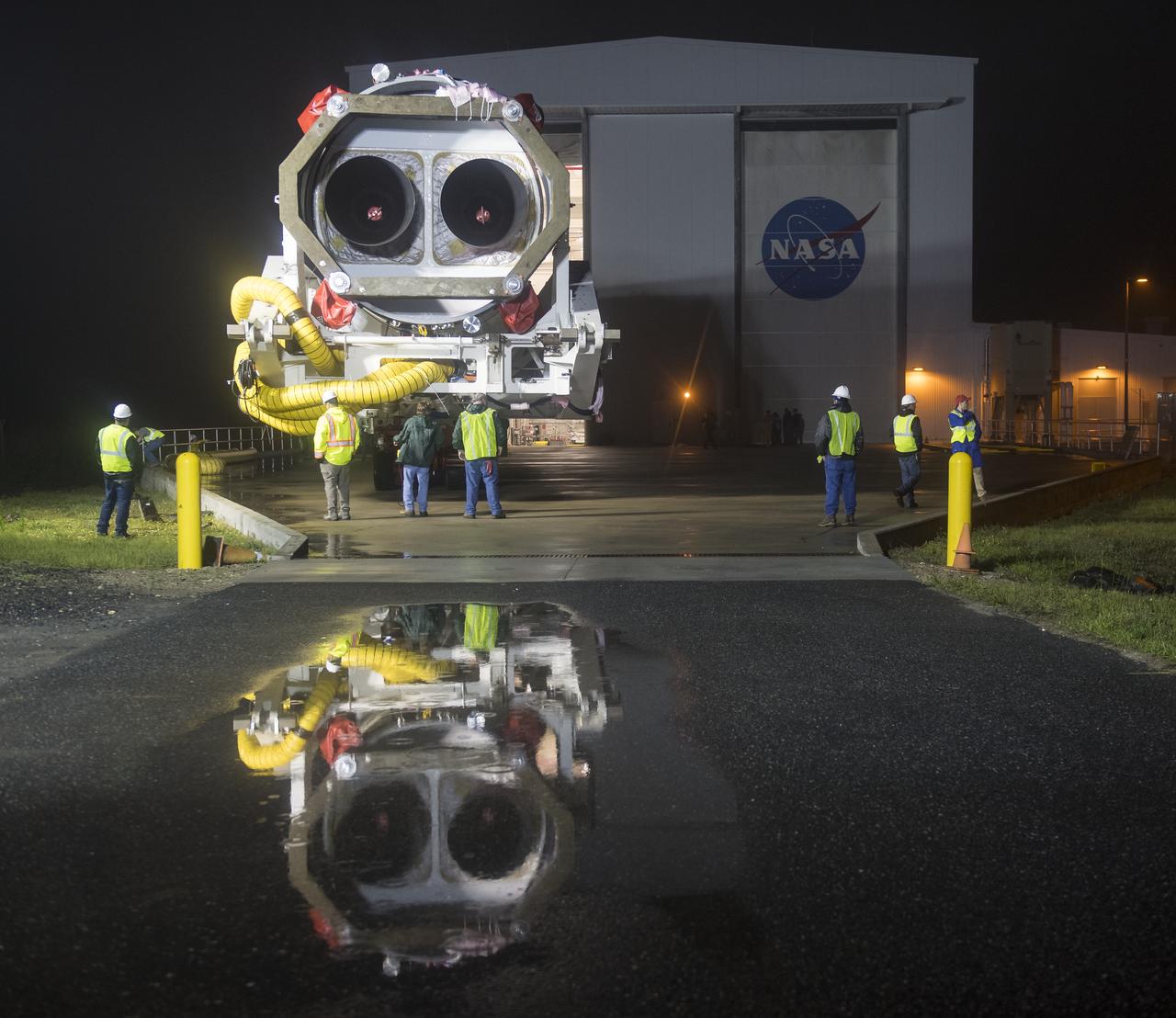
An Orbital ATK rocket is seen as it is rolled out to launch Pad-0A at Wallops Flight Facility Thursday, May 17, 2018 at Wallops Island, VA. The Antares will launch a Cygnus spacecraft on a cargo resupply mission to the International Space Station. The mission is Orbital ATK’s ninth contracted cargo delivery flight to the space station for NASA. Included in the 7,400 pounds of cargo onboard Cygnus, are science experiments, crew supplies, and vehicle hardware. Photo Credit: (NASA/Aubrey Gemignani)
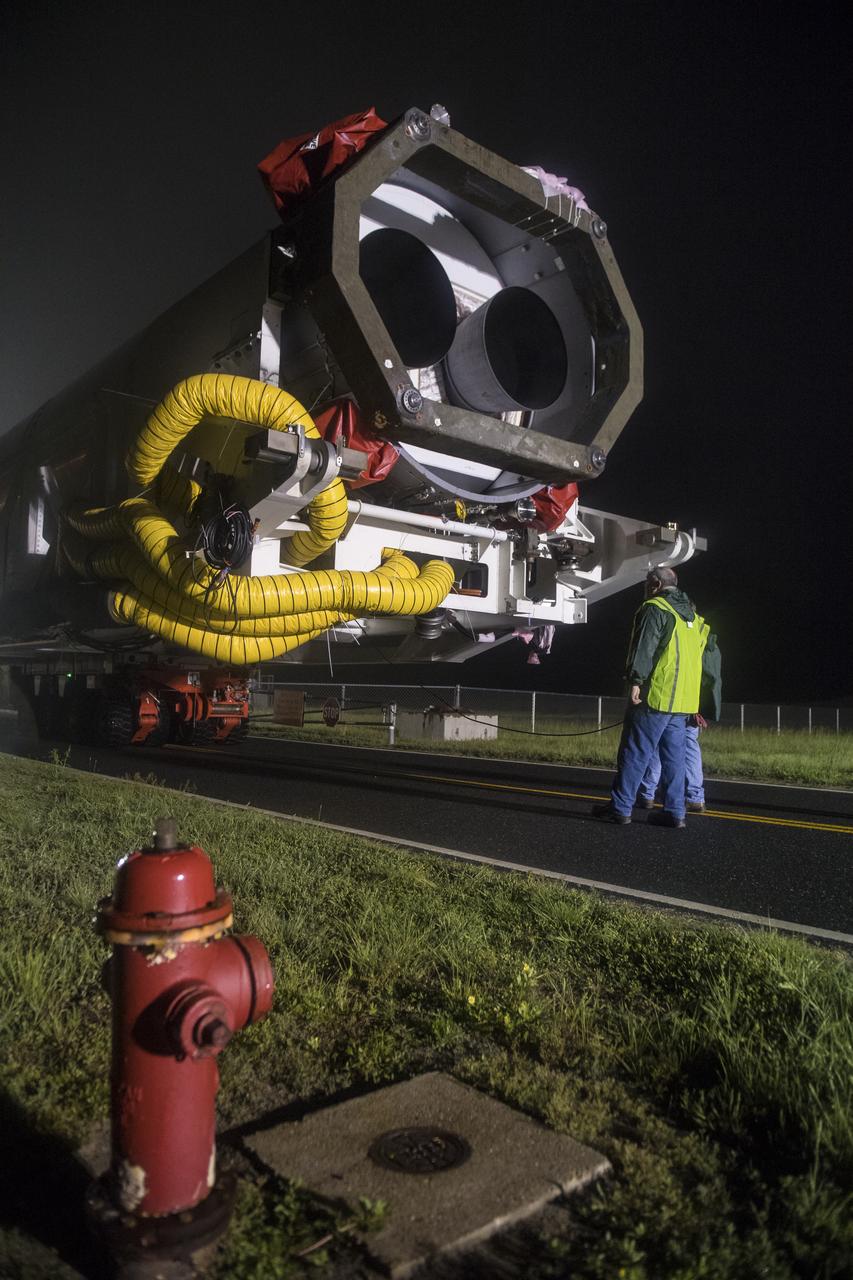
An Orbital ATK rocket is seen as it is rolled out to launch Pad-0A at Wallops Flight Facility Thursday, May 17, 2018 at Wallops Island, VA. The Antares will launch a Cygnus spacecraft on a cargo resupply mission to the International Space Station. The mission is Orbital ATK’s ninth contracted cargo delivery flight to the space station for NASA. Included in the 7,400 pounds of cargo onboard Cygnus, are science experiments, crew supplies, and vehicle hardware. Photo Credit: (NASA/Aubrey Gemignani)
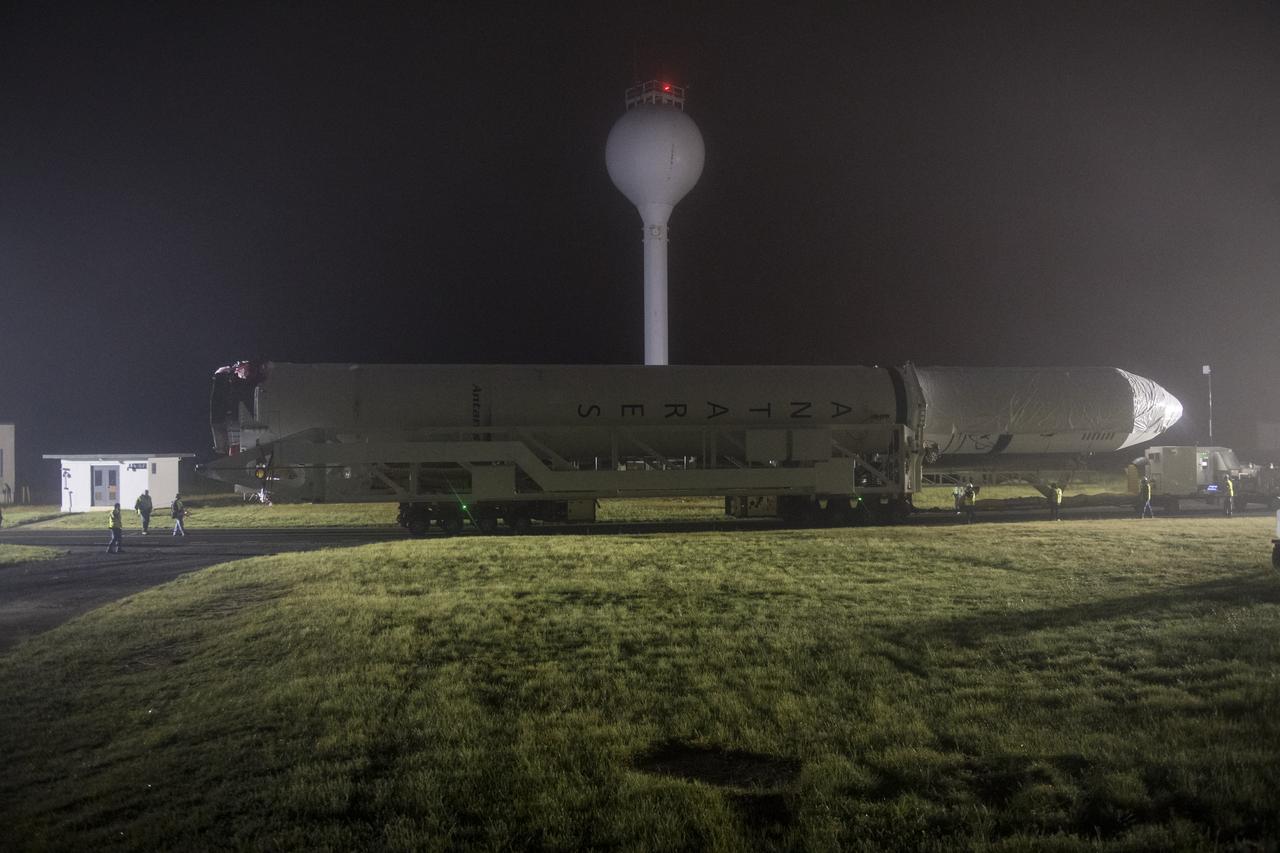
An Orbital ATK rocket is seen as it is rolled out to launch Pad-0A at Wallops Flight Facility Thursday, May 17, 2018 at Wallops Island, VA. The Antares will launch a Cygnus spacecraft on a cargo resupply mission to the International Space Station. The mission is Orbital ATK’s ninth contracted cargo delivery flight to the space station for NASA. Included in the 7,400 pounds of cargo onboard Cygnus, are science experiments, crew supplies, and vehicle hardware. Photo Credit: (NASA/Aubrey Gemignani)
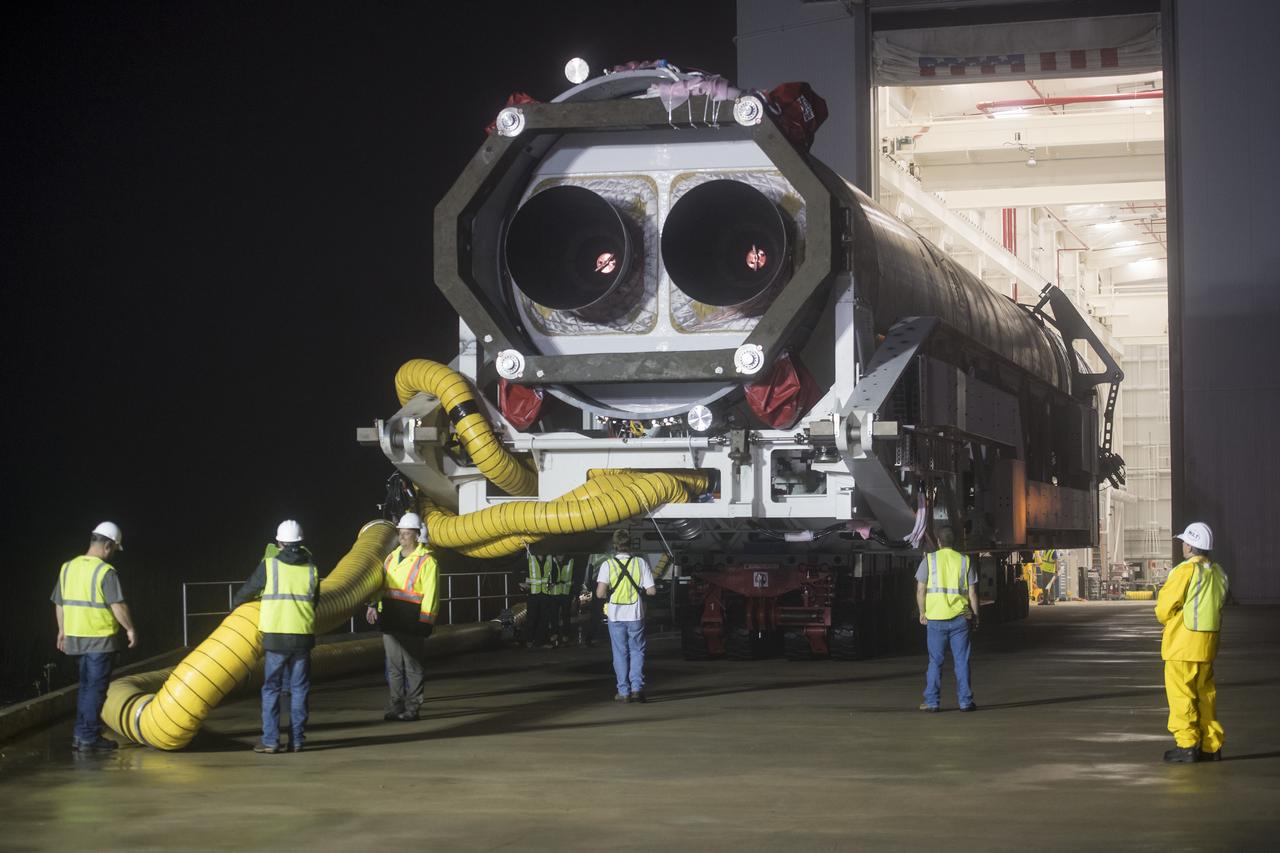
An Orbital ATK rocket is seen as it is rolled out to launch Pad-0A at Wallops Flight Facility Thursday, May 17, 2018 at Wallops Island, VA. The Antares will launch a Cygnus spacecraft on a cargo resupply mission to the International Space Station. The mission is Orbital ATK’s ninth contracted cargo delivery flight to the space station for NASA. Included in the 7,400 pounds of cargo onboard Cygnus, are science experiments, crew supplies, and vehicle hardware. Photo Credit: (NASA/Aubrey Gemignani)
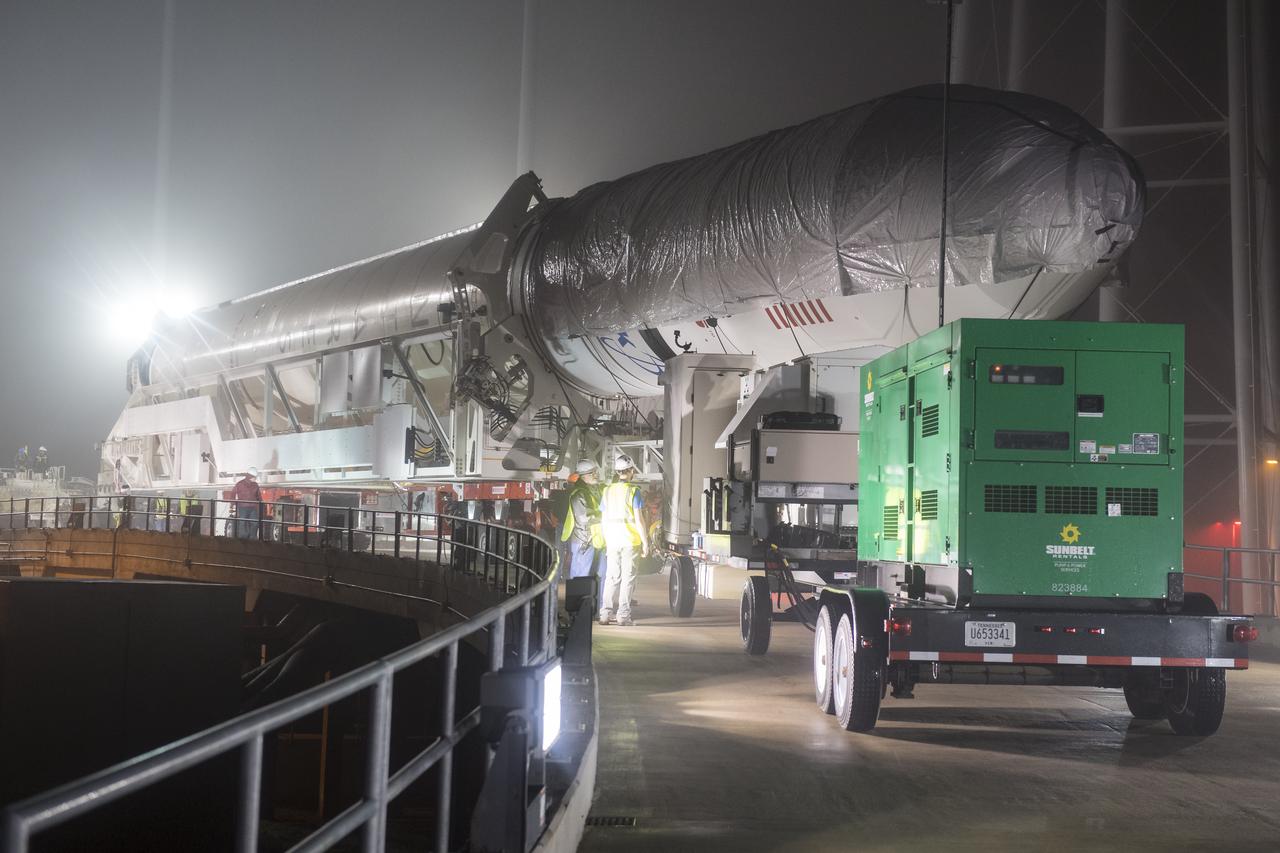
An Orbital ATK rocket is seen as it makes its final approach to launch Pad-0A at Wallops Flight Facility Thursday, May 17, 2018 at Wallops Island, VA. The Antares will launch a Cygnus spacecraft on a cargo resupply mission to the International Space Station. The mission is Orbital ATK’s ninth contracted cargo delivery flight to the space station for NASA. Included in the 7,400 pounds of cargo onboard Cygnus, are science experiments, crew supplies, and vehicle hardware. Photo Credit: (NASA/Aubrey Gemignani)
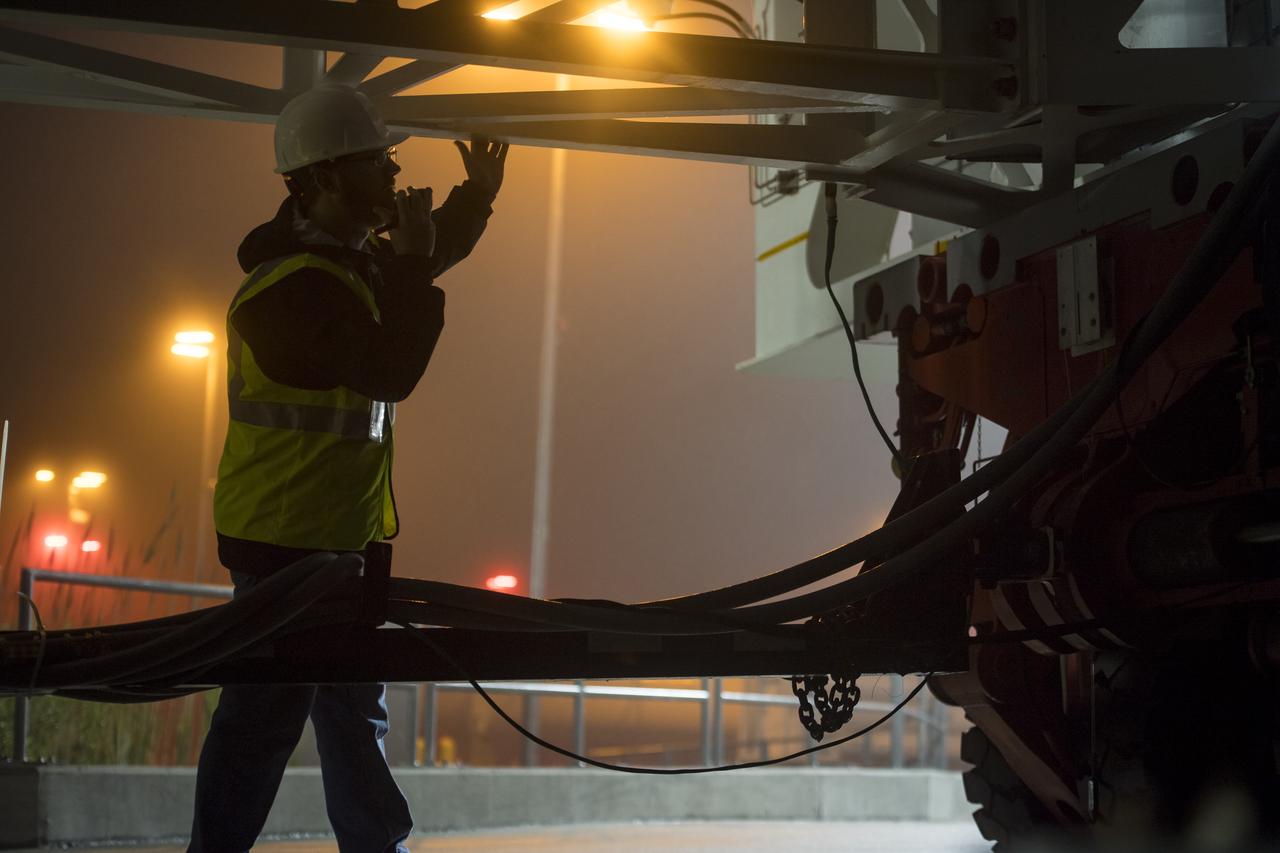
A worker watches the Orbital ATK rocket closely just before it makes its final approach to launch Pad-0A at Wallops Flight Facility Thursday, May 17, 2018 at Wallops Island, VA. The Antares will launch a Cygnus spacecraft on a cargo resupply mission to the International Space Station. The mission is Orbital ATK’s ninth contracted cargo delivery flight to the space station for NASA. Included in the 7,400 pounds of cargo onboard Cygnus, are science experiments, crew supplies, and vehicle hardware. Photo Credit: (NASA/Aubrey Gemignani)
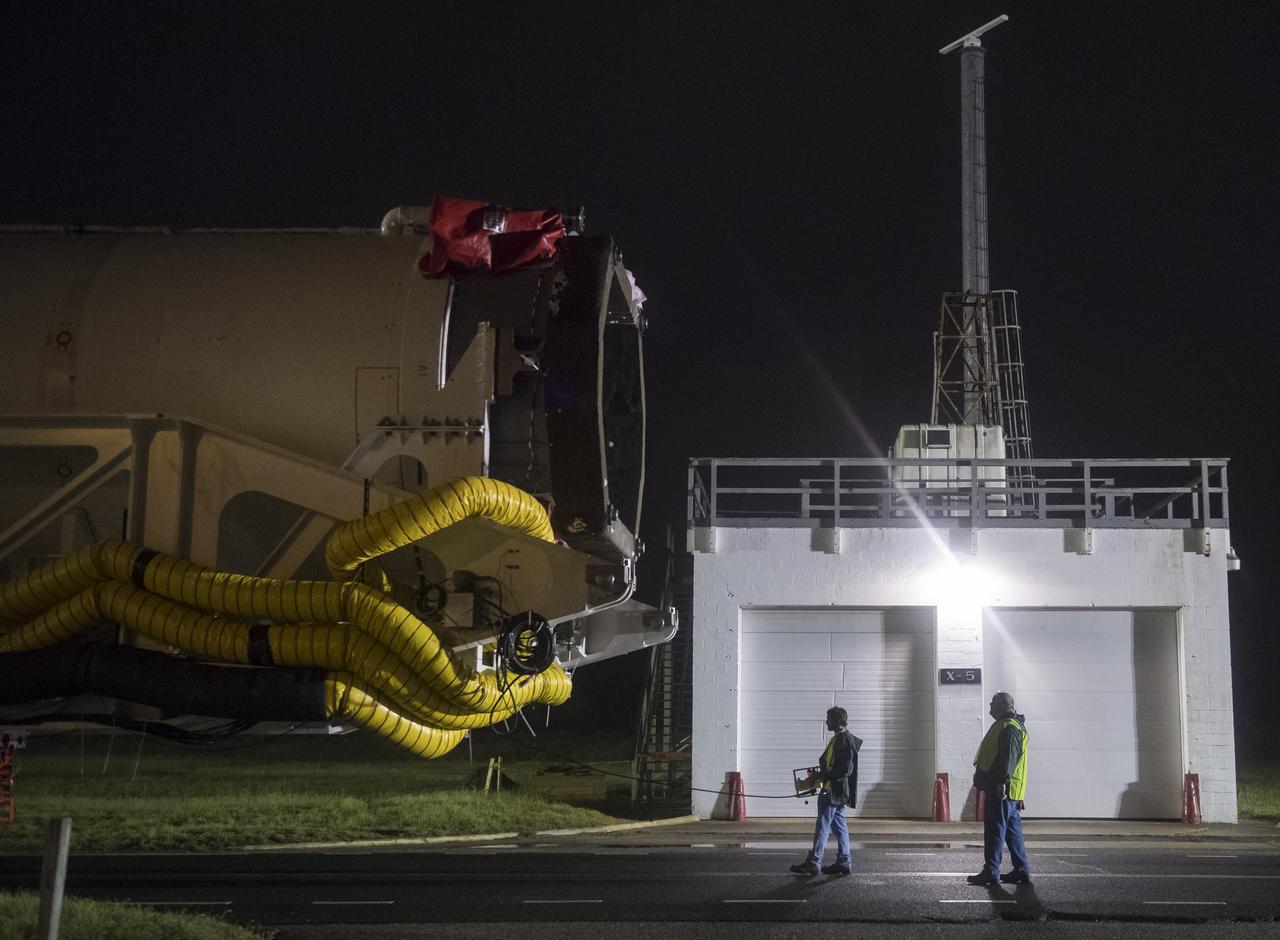
An Orbital ATK rocket is seen as it is rolled out to launch Pad-0A at Wallops Flight Facility Thursday, May 17, 2018 at Wallops Island, VA. The Antares will launch a Cygnus spacecraft on a cargo resupply mission to the International Space Station. The mission is Orbital ATK’s ninth contracted cargo delivery flight to the space station for NASA. Included in the 7,400 pounds of cargo onboard Cygnus, are science experiments, crew supplies, and vehicle hardware. Photo Credit: (NASA/Aubrey Gemignani)
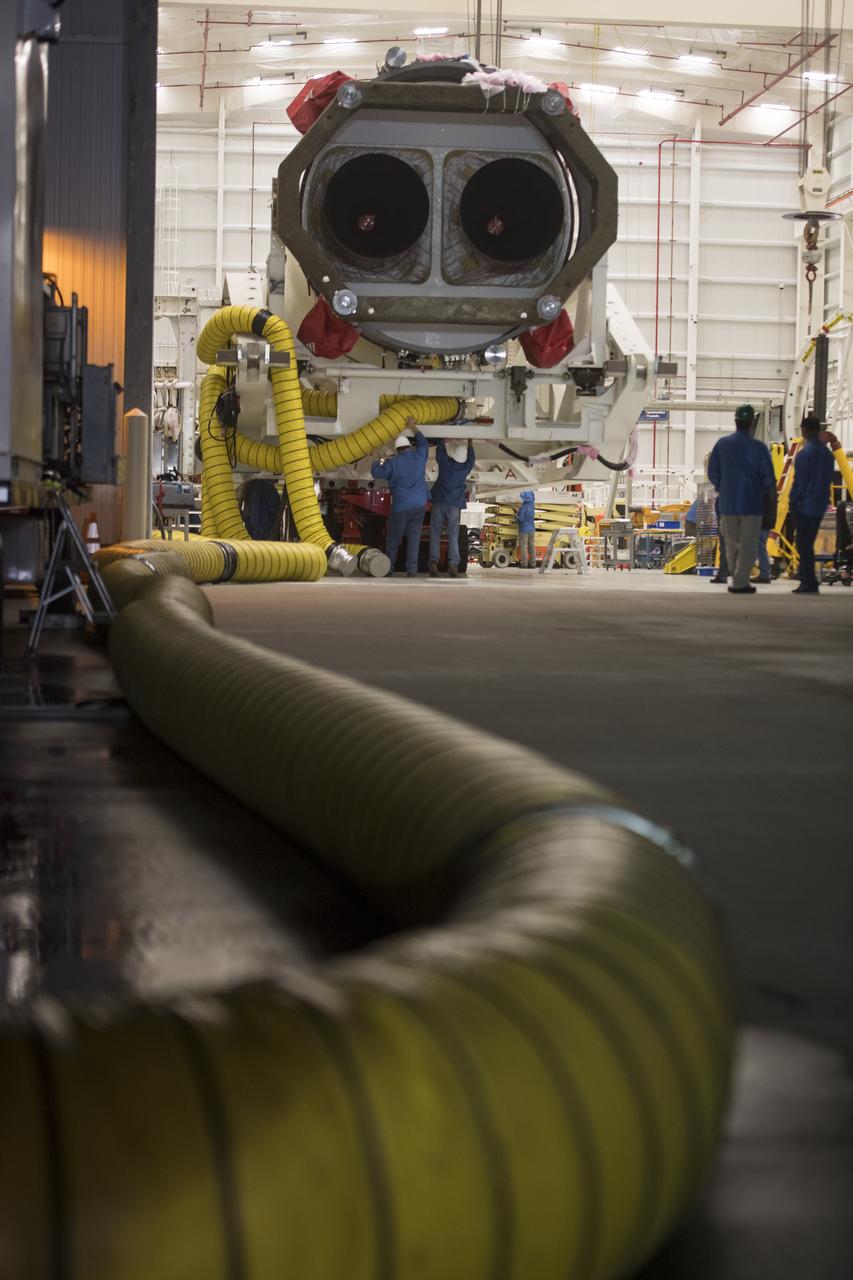
An Orbital ATK rocket is seen just before it is rolled out to launch Pad-0A at Wallops Flight Facility Thursday, May 17, 2018 at Wallops Island, VA. The Antares will launch a Cygnus spacecraft on a cargo resupply mission to the International Space Station. The mission is Orbital ATK’s ninth contracted cargo delivery flight to the space station for NASA. Included in the 7,400 pounds of cargo onboard Cygnus, are science experiments, crew supplies, and vehicle hardware. Photo Credit: (NASA/Aubrey Gemignani)
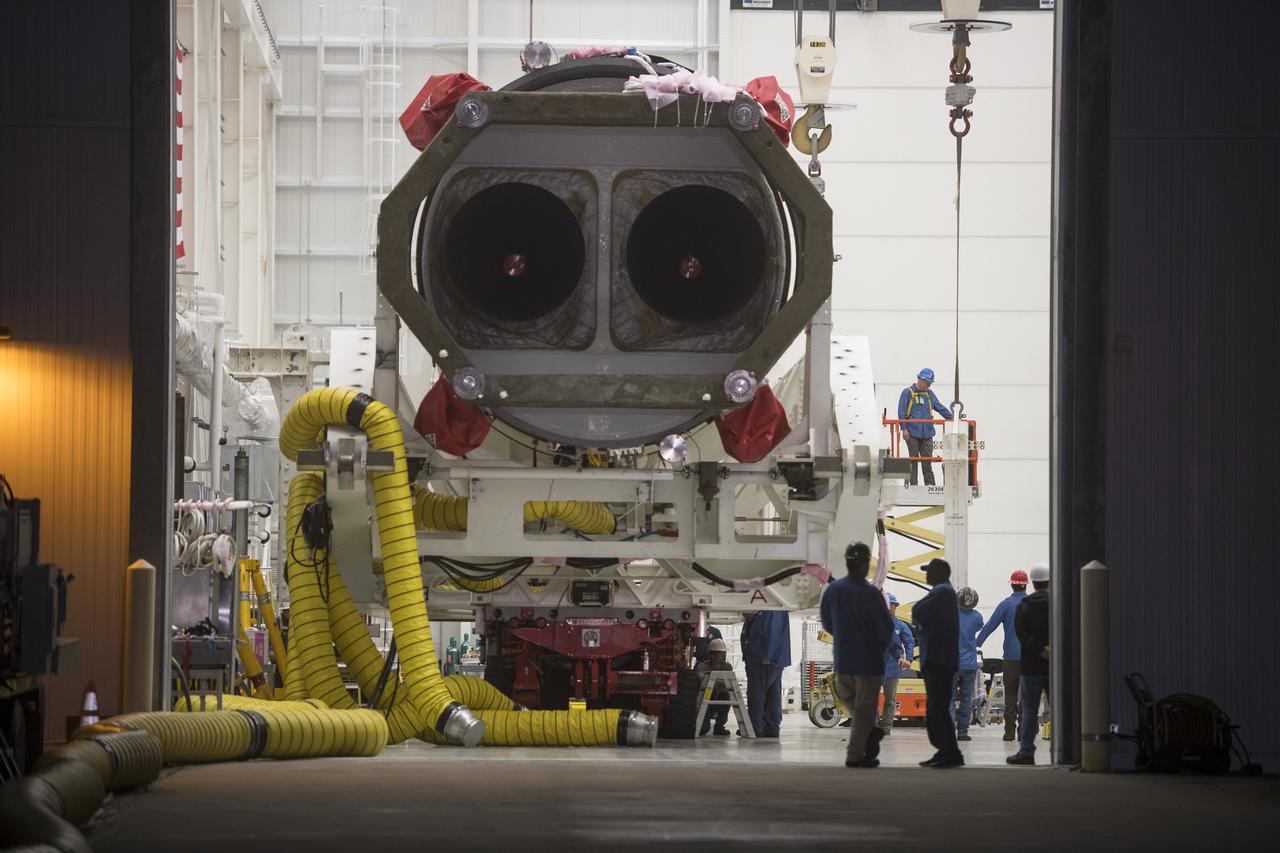
An Orbital ATK rocket is seen just before it is rolled out to launch Pad-0A at Wallops Flight Facility Thursday, May 17, 2018 at Wallops Island, VA. The Antares will launch a Cygnus spacecraft on a cargo resupply mission to the International Space Station. The mission is Orbital ATK’s ninth contracted cargo delivery flight to the space station for NASA. Included in the 7,400 pounds of cargo onboard Cygnus, are science experiments, crew supplies, and vehicle hardware. Photo Credit: (NASA/Aubrey Gemignani)
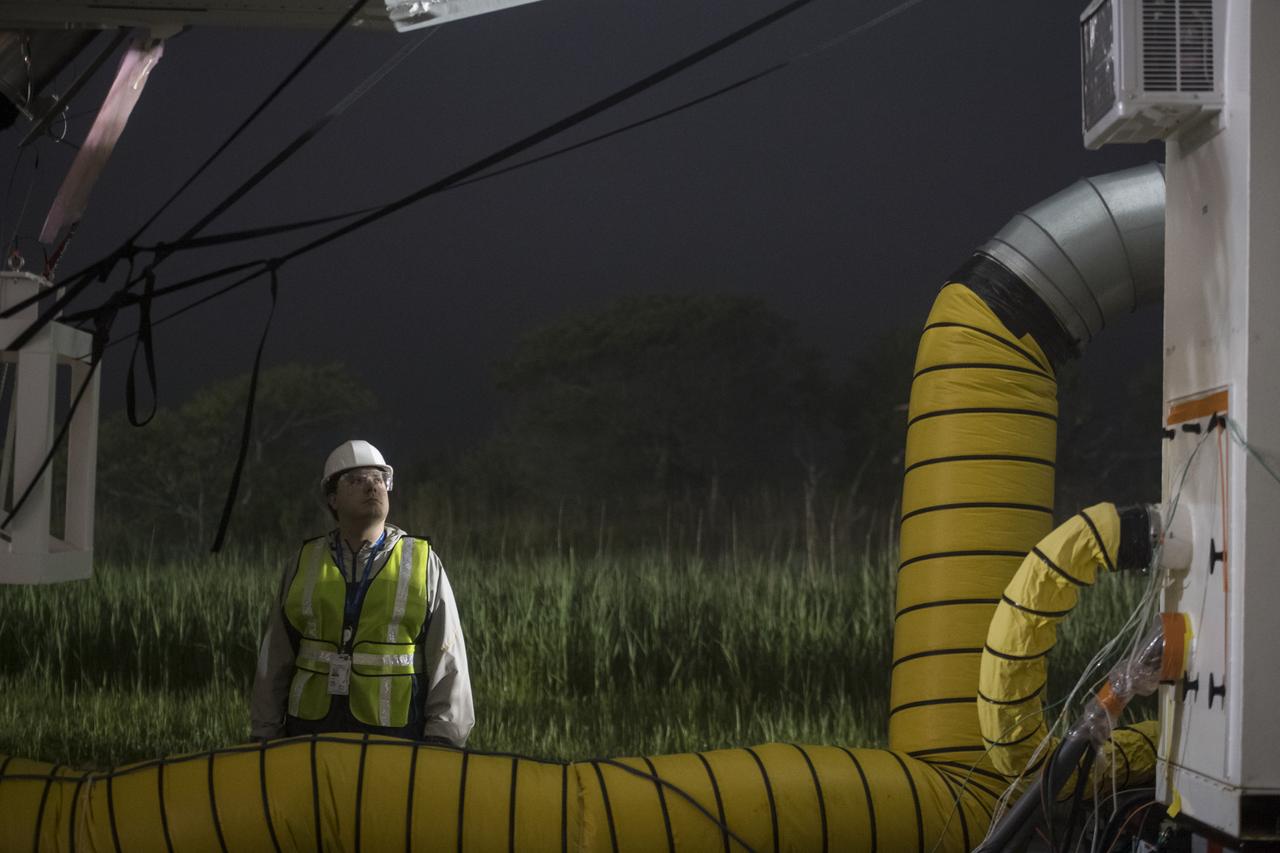
Workers survey the Orbital ATK rocket just before it makes its final approach to launch Pad-0A at Wallops Flight Facility Thursday, May 17, 2018 at Wallops Island, VA. The Antares will launch a Cygnus spacecraft on a cargo resupply mission to the International Space Station. The mission is Orbital ATK’s ninth contracted cargo delivery flight to the space station for NASA. Included in the 7,400 pounds of cargo onboard Cygnus, are science experiments, crew supplies, and vehicle hardware. Photo Credit: (NASA/Aubrey Gemignani)
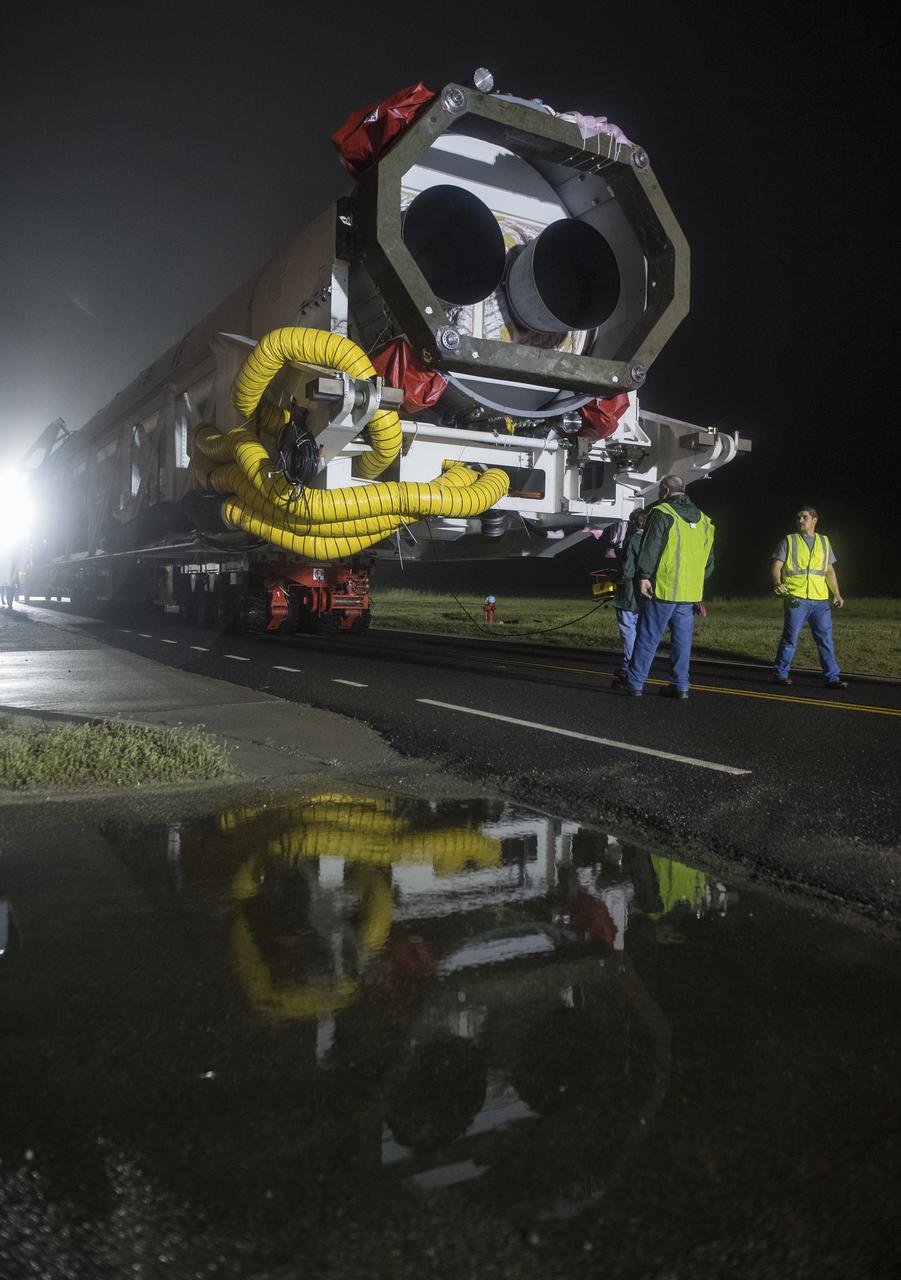
An Orbital ATK rocket is seen as it is rolled out to launch Pad-0A at Wallops Flight Facility Thursday, May 17, 2018 at Wallops Island, VA. The Antares will launch a Cygnus spacecraft on a cargo resupply mission to the International Space Station. The mission is Orbital ATK’s ninth contracted cargo delivery flight to the space station for NASA. Included in the 7,400 pounds of cargo onboard Cygnus, are science experiments, crew supplies, and vehicle hardware. Photo Credit: (NASA/Aubrey Gemignani)
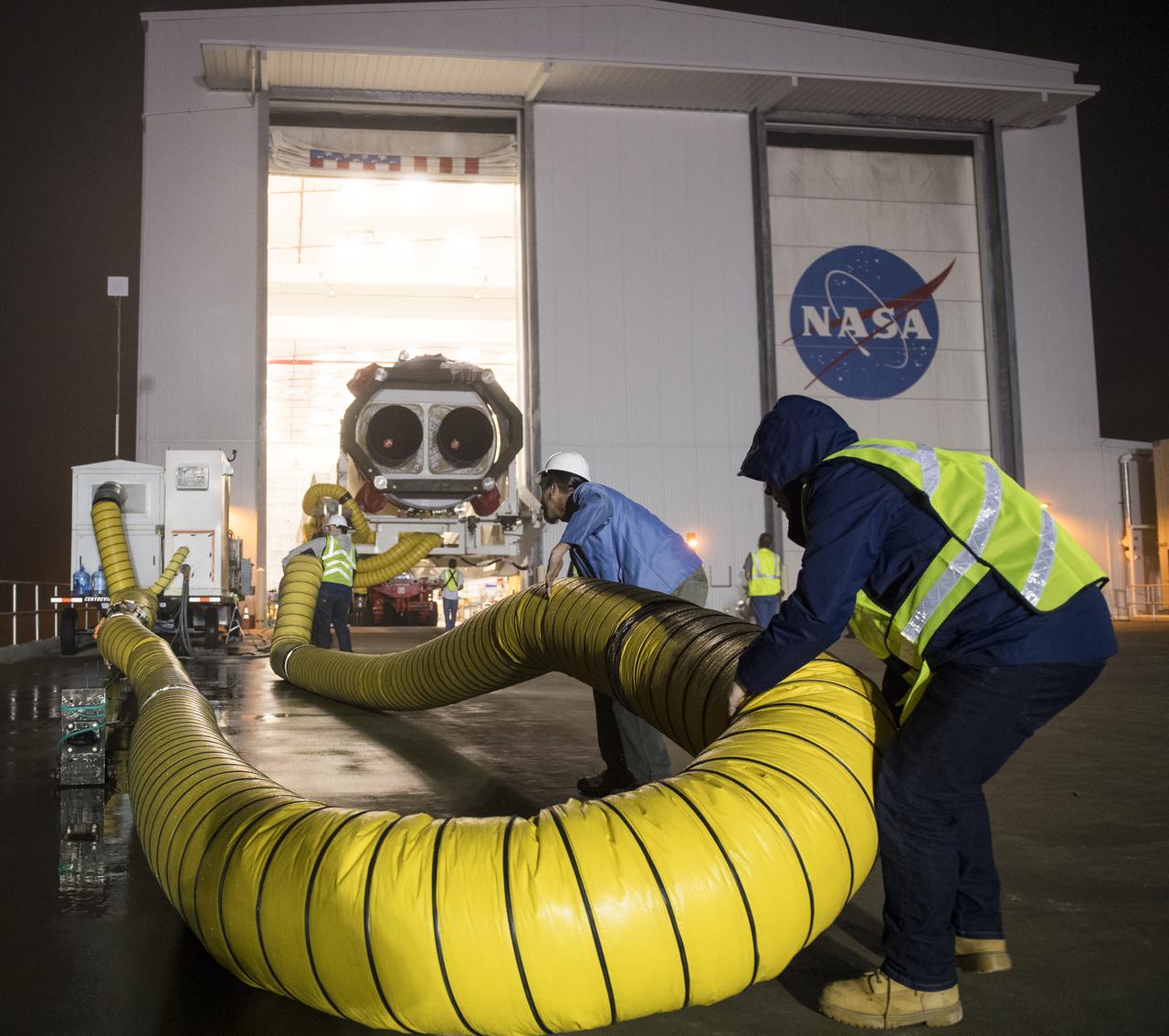
An Orbital ATK rocket is seen as it is rolled out to launch Pad-0A at Wallops Flight Facility Thursday, May 17, 2018 at Wallops Island, VA. The Antares will launch a Cygnus spacecraft on a cargo resupply mission to the International Space Station. The mission is Orbital ATK’s ninth contracted cargo delivery flight to the space station for NASA. Included in the 7,400 pounds of cargo onboard Cygnus, are science experiments, crew supplies, and vehicle hardware. Photo Credit: (NASA/Aubrey Gemignani)

An Orbital ATK rocket is seen as it is rolled out to launch Pad-0A at Wallops Flight Facility Thursday, May 17, 2018 at Wallops Island, VA. The Antares will launch a Cygnus spacecraft on a cargo resupply mission to the International Space Station. The mission is Orbital ATK’s ninth contracted cargo delivery flight to the space station for NASA. Included in the 7,400 pounds of cargo onboard Cygnus, are science experiments, crew supplies, and vehicle hardware. Photo Credit: (NASA/Aubrey Gemignani)
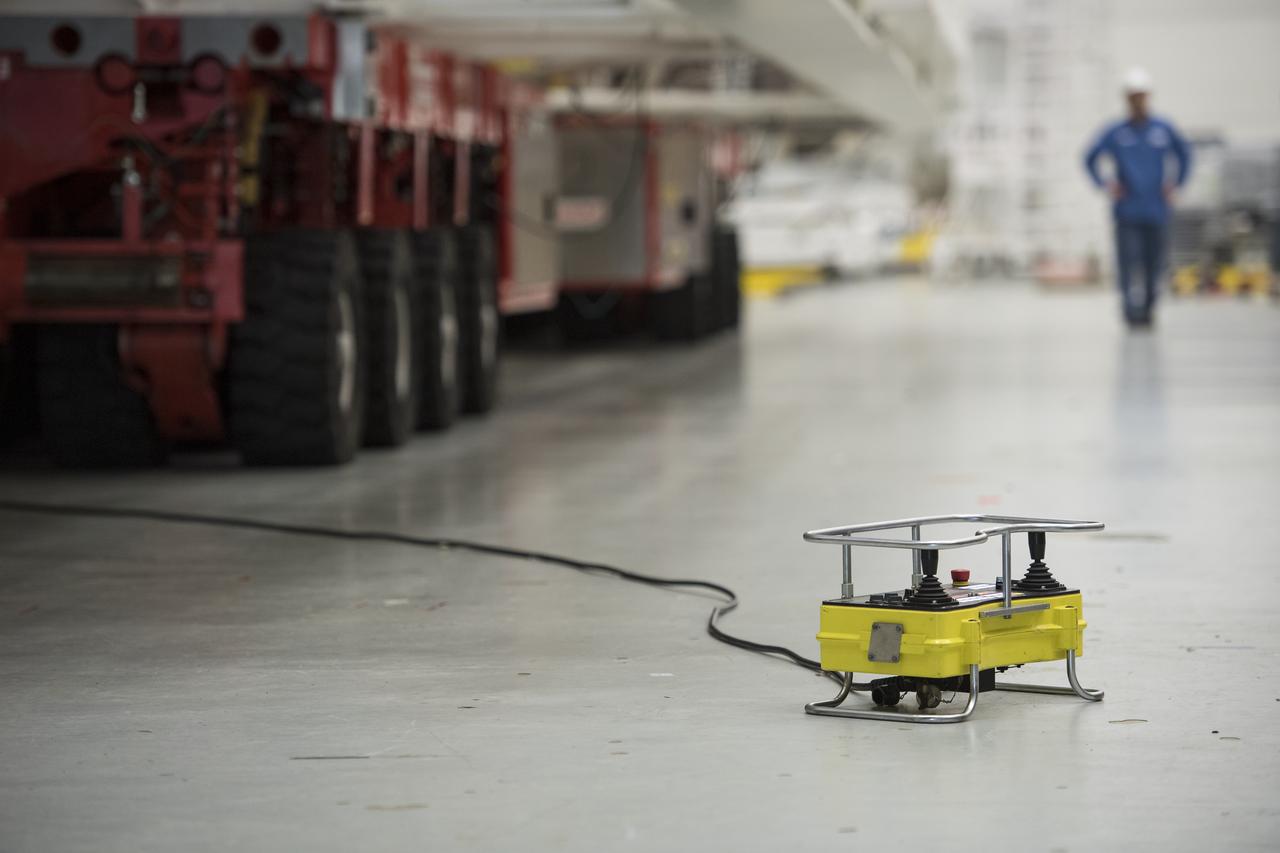
The controller for an Orbital ATK rocket is seen just before it is rolled out to launch Pad-0A at Wallops Flight Facility Thursday, May 17, 2018 at Wallops Island, VA. The Antares will launch a Cygnus spacecraft on a cargo resupply mission to the International Space Station. The mission is Orbital ATK’s ninth contracted cargo delivery flight to the space station for NASA. Included in the 7,400 pounds of cargo onboard Cygnus, are science experiments, crew supplies, and vehicle hardware. Photo Credit: (NASA/Aubrey Gemignani)
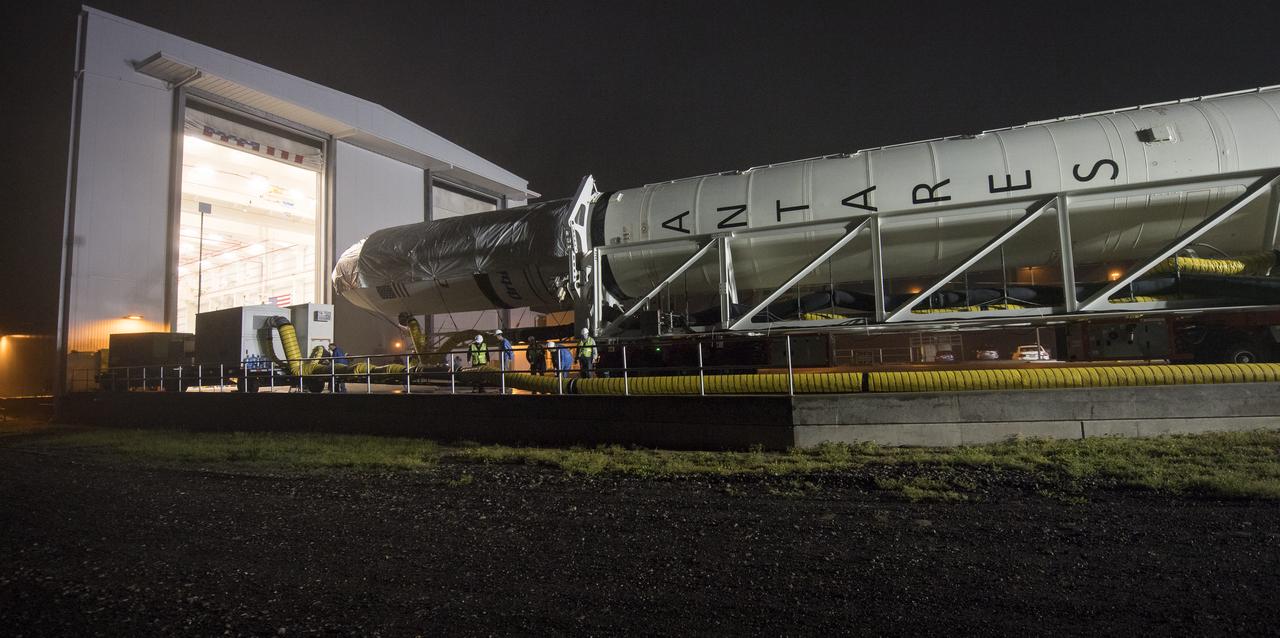
An Orbital ATK rocket is seen as it is rolled out to launch Pad-0A at Wallops Flight Facility Thursday, May 17, 2018 at Wallops Island, VA. The Antares will launch a Cygnus spacecraft on a cargo resupply mission to the International Space Station. The mission is Orbital ATK’s ninth contracted cargo delivery flight to the space station for NASA. Included in the 7,400 pounds of cargo onboard Cygnus, are science experiments, crew supplies, and vehicle hardware. Photo Credit: (NASA/Aubrey Gemignani)
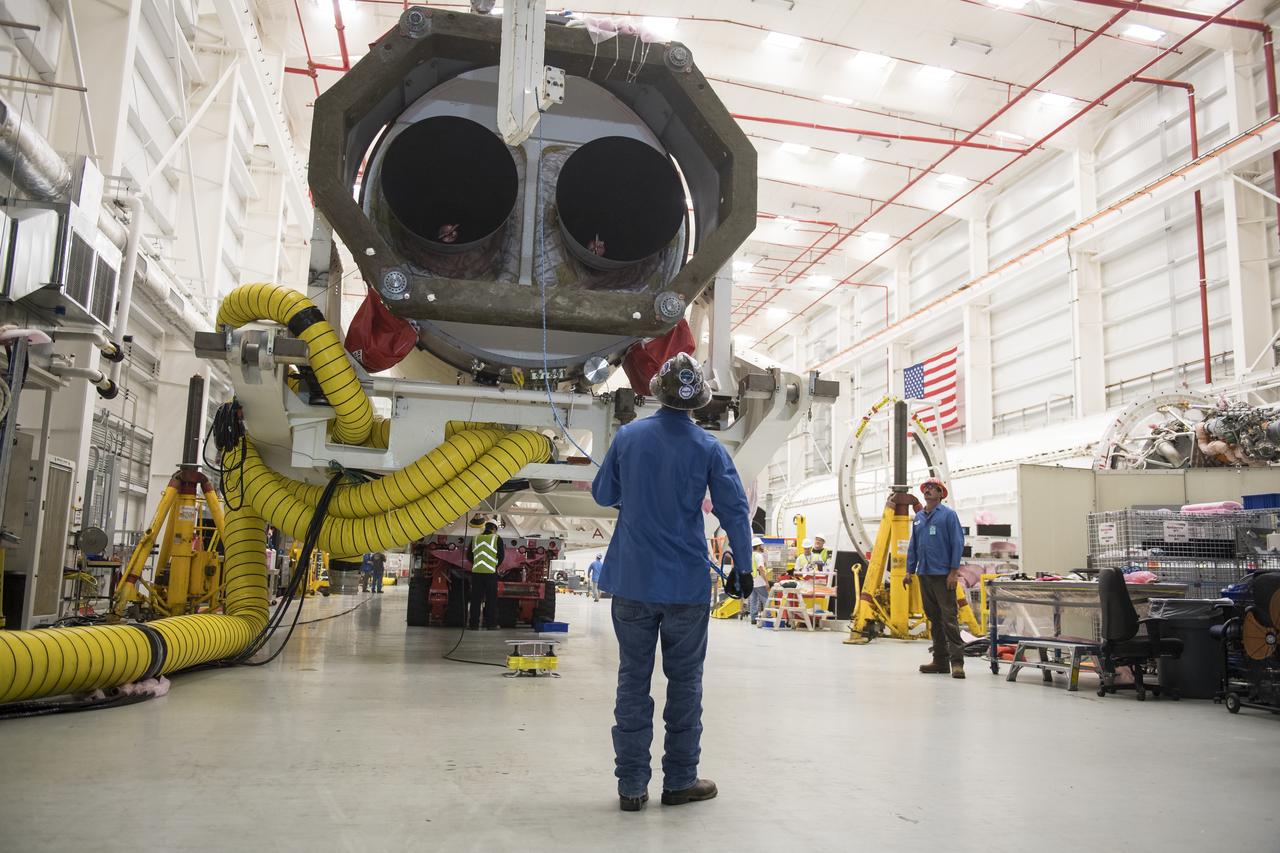
An Orbital ATK rocket is seen just before it is rolled out to launch Pad-0A at Wallops Flight Facility Thursday, May 17, 2018 at Wallops Island, VA. The Antares will launch a Cygnus spacecraft on a cargo resupply mission to the International Space Station. The mission is Orbital ATK’s ninth contracted cargo delivery flight to the space station for NASA. Included in the 7,400 pounds of cargo onboard Cygnus, are science experiments, crew supplies, and vehicle hardware. Photo Credit: (NASA/Aubrey Gemignani)
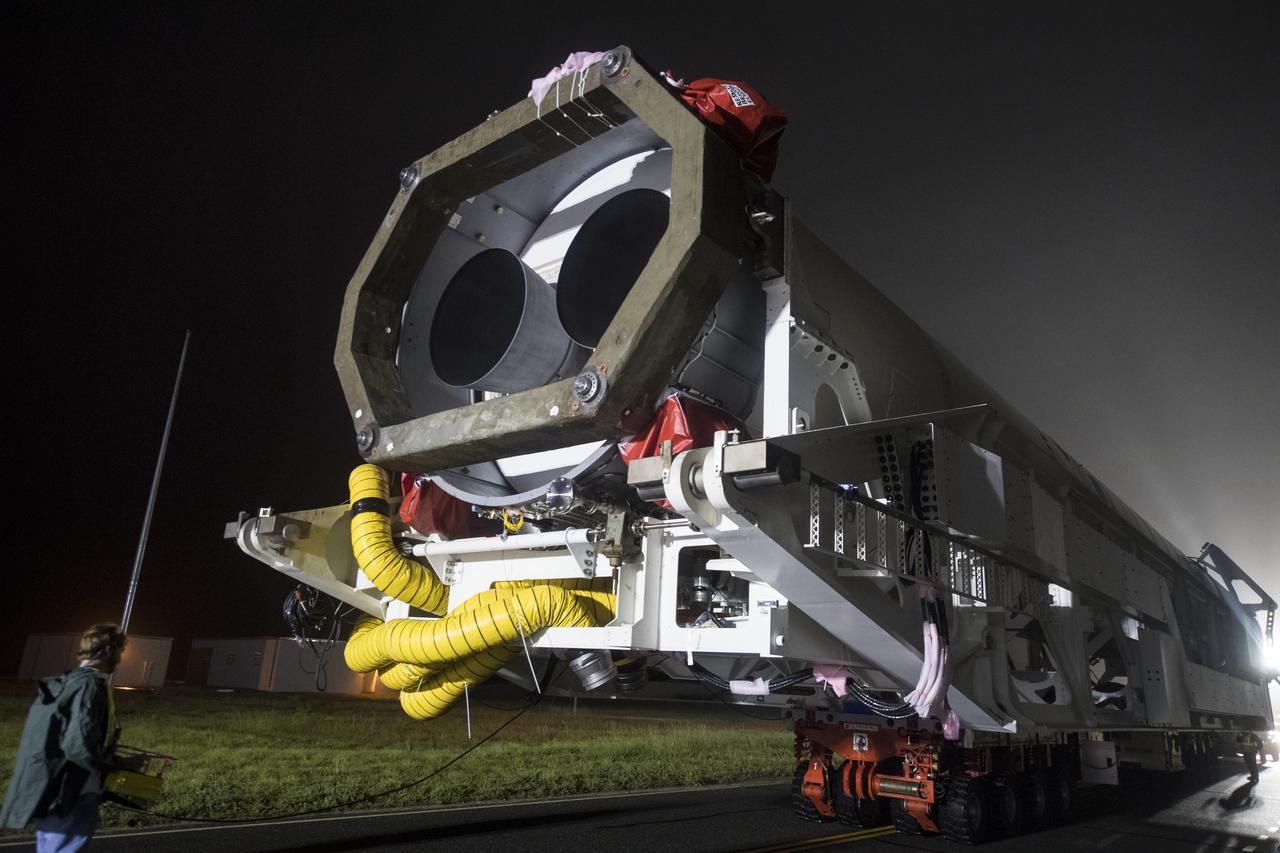
An Orbital ATK rocket is seen as it is rolled out to launch Pad-0A at Wallops Flight Facility Thursday, May 17, 2018 at Wallops Island, VA. The Antares will launch a Cygnus spacecraft on a cargo resupply mission to the International Space Station. The mission is Orbital ATK’s ninth contracted cargo delivery flight to the space station for NASA. Included in the 7,400 pounds of cargo onboard Cygnus, are science experiments, crew supplies, and vehicle hardware. Photo Credit: (NASA/Aubrey Gemignani)
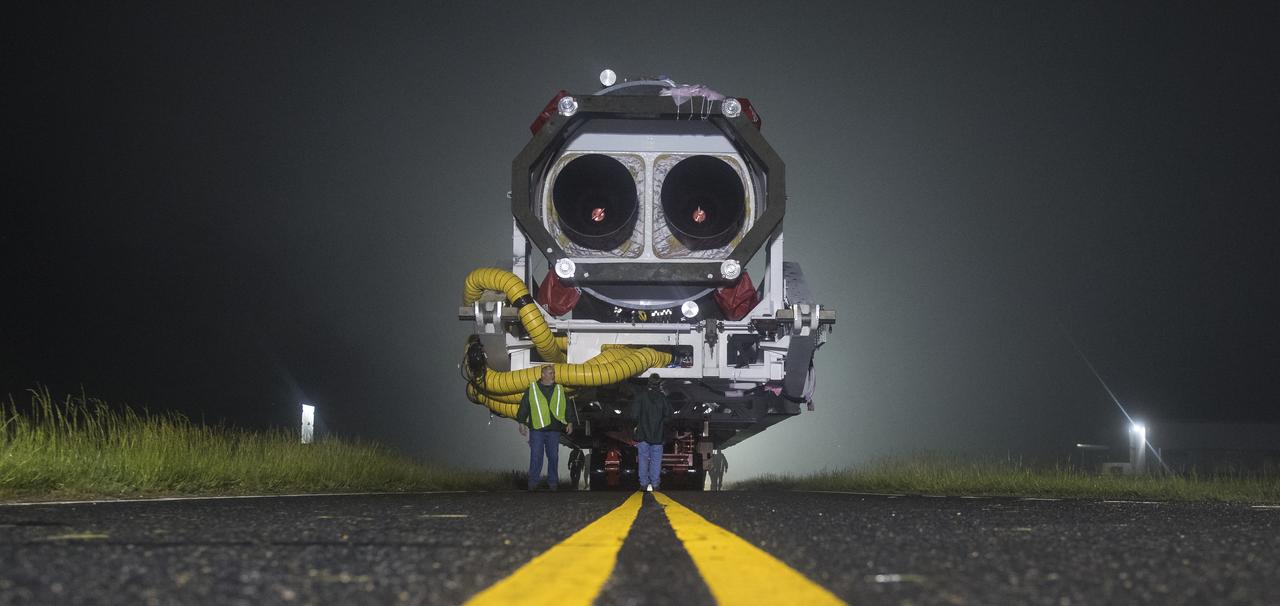
An Orbital ATK rocket is seen as it is rolled out to launch Pad-0A at Wallops Flight Facility Thursday, May 17, 2018 at Wallops Island, VA. The Antares will launch a Cygnus spacecraft on a cargo resupply mission to the International Space Station. The mission is Orbital ATK’s ninth contracted cargo delivery flight to the space station for NASA. Included in the 7,400 pounds of cargo onboard Cygnus, are science experiments, crew supplies, and vehicle hardware. Photo Credit: (NASA/Aubrey Gemignani)
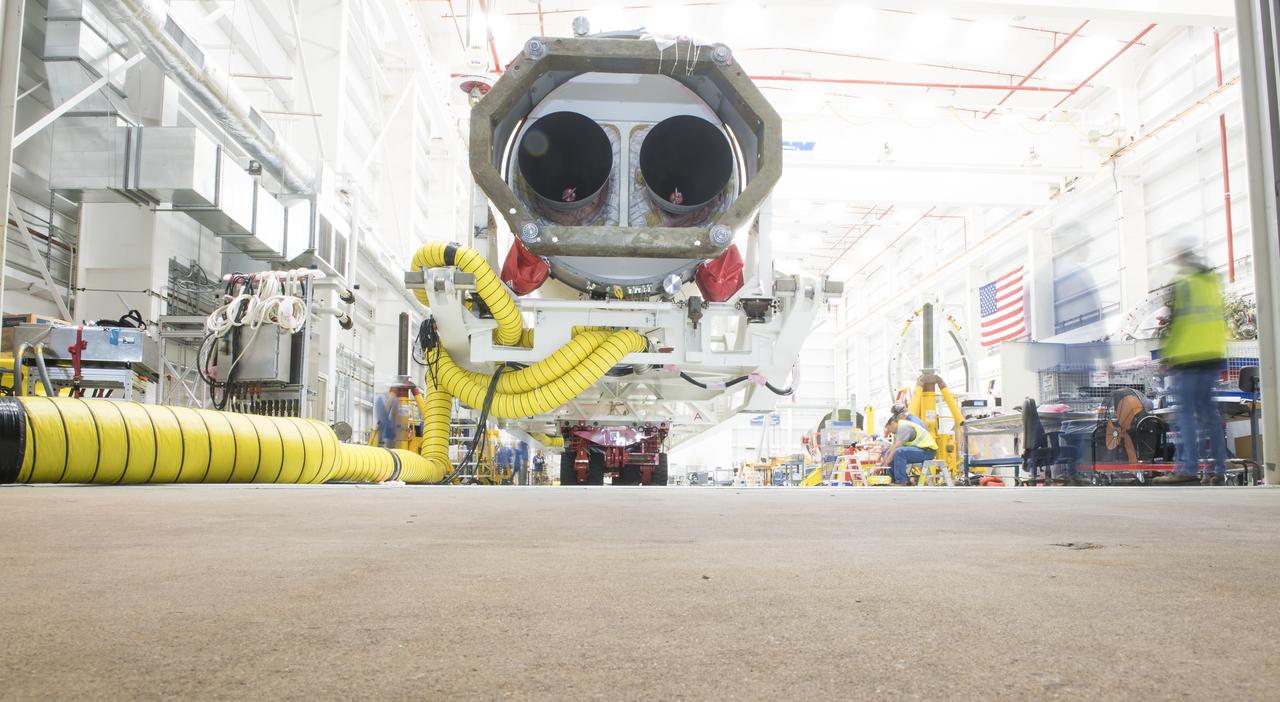
An Orbital ATK rocket is seen in this long exposure, as workers prepare to roll it out to launch Pad-0A at Wallops Flight Facility Thursday, May 17, 2018 at Wallops Island, VA. The Antares will launch a Cygnus spacecraft on a cargo resupply mission to the International Space Station. The mission is Orbital ATK’s ninth contracted cargo delivery flight to the space station for NASA. Included in the 7,400 pounds of cargo onboard Cygnus, are science experiments, crew supplies, and vehicle hardware. Photo Credit: (NASA/Aubrey Gemignani)
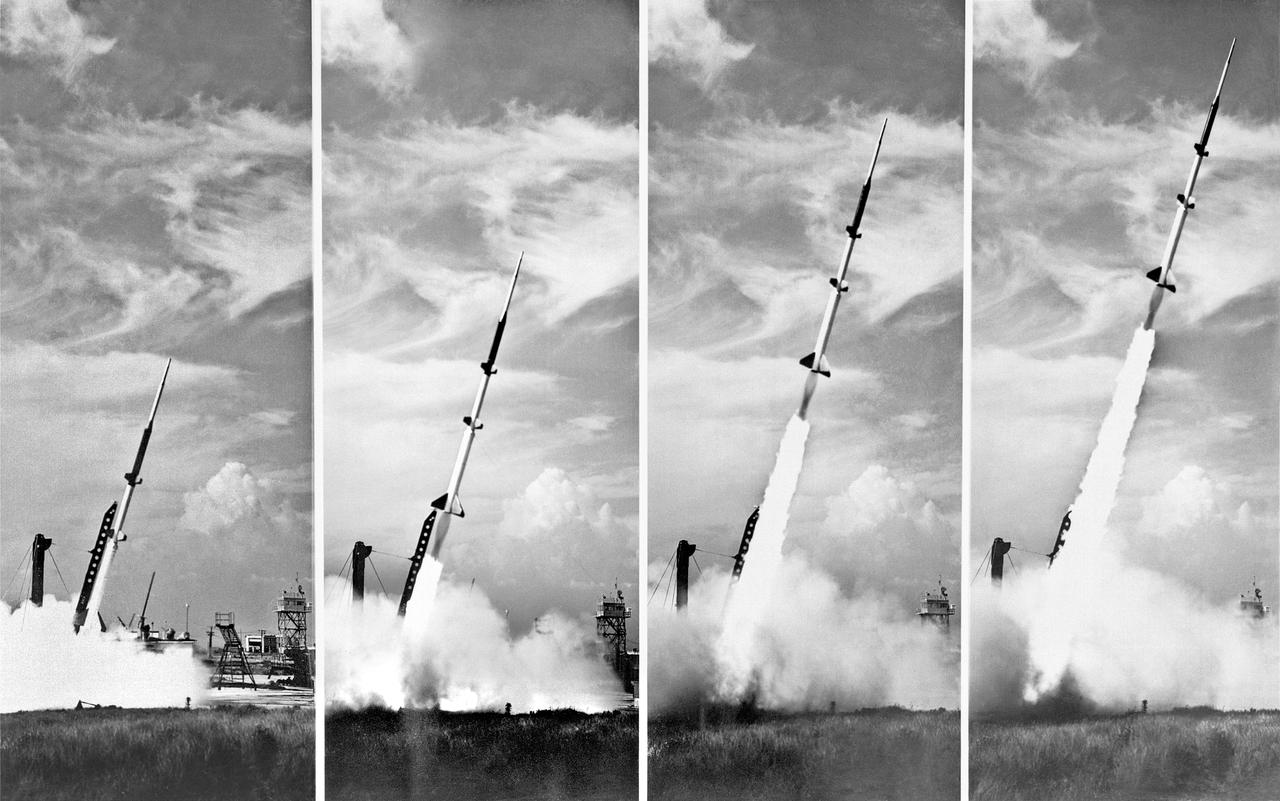
**Note also copied and numbered as L90-3749. -- L57-4827 caption: Take off of a five-stage missile research rocket from Wallops Island in 1957. The first two stages propelled the model to about 100,000 feet the last three stages were fired on a descending path to simulate the reentry conditions of ballistic missiles. -- Photograph published in Winds of Change, 75th Anniversary NASA publication (page 72), by James Schultz. -- Photograph also published in Engineer in Charge: A History of the Langley Aeronautical Laboratory, 1917-1958 by James R. Hansen (page 380).
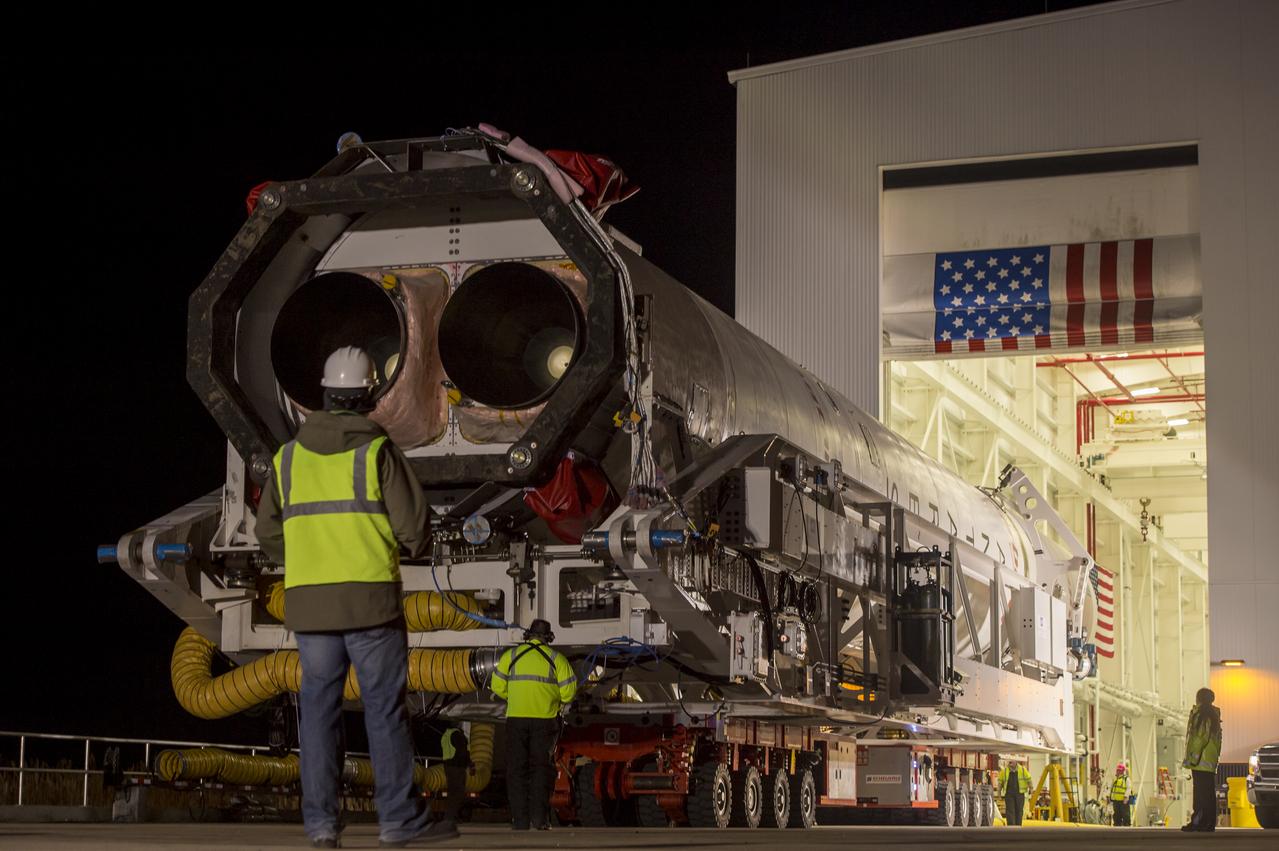
An Orbital Science Corporation Antares rocket is seen as it is rolled out to launch Pad-0A at NASA's Wallops Flight Facility Tuesday, December 17, 2013 in advance of a Thursday launch, Wallops Island, VA. The Antares will launch a Cygnus spacecraft on a cargo resupply mission to the International Space Station. The Orbital-1 mission is Orbital Sciences' first contracted cargo delivery flight to the space station for NASA. Among the cargo aboard Cygnus set to launch to the space station are science experiments, crew provisions, spare parts and other hardware. Launch is scheduled for 9:19 p.m. EST on Thursday, Dec. 19. Weather permitting, it may be widely visible along the east coast of the United States. Photo Credit: (NASA/Bill Ingalls)
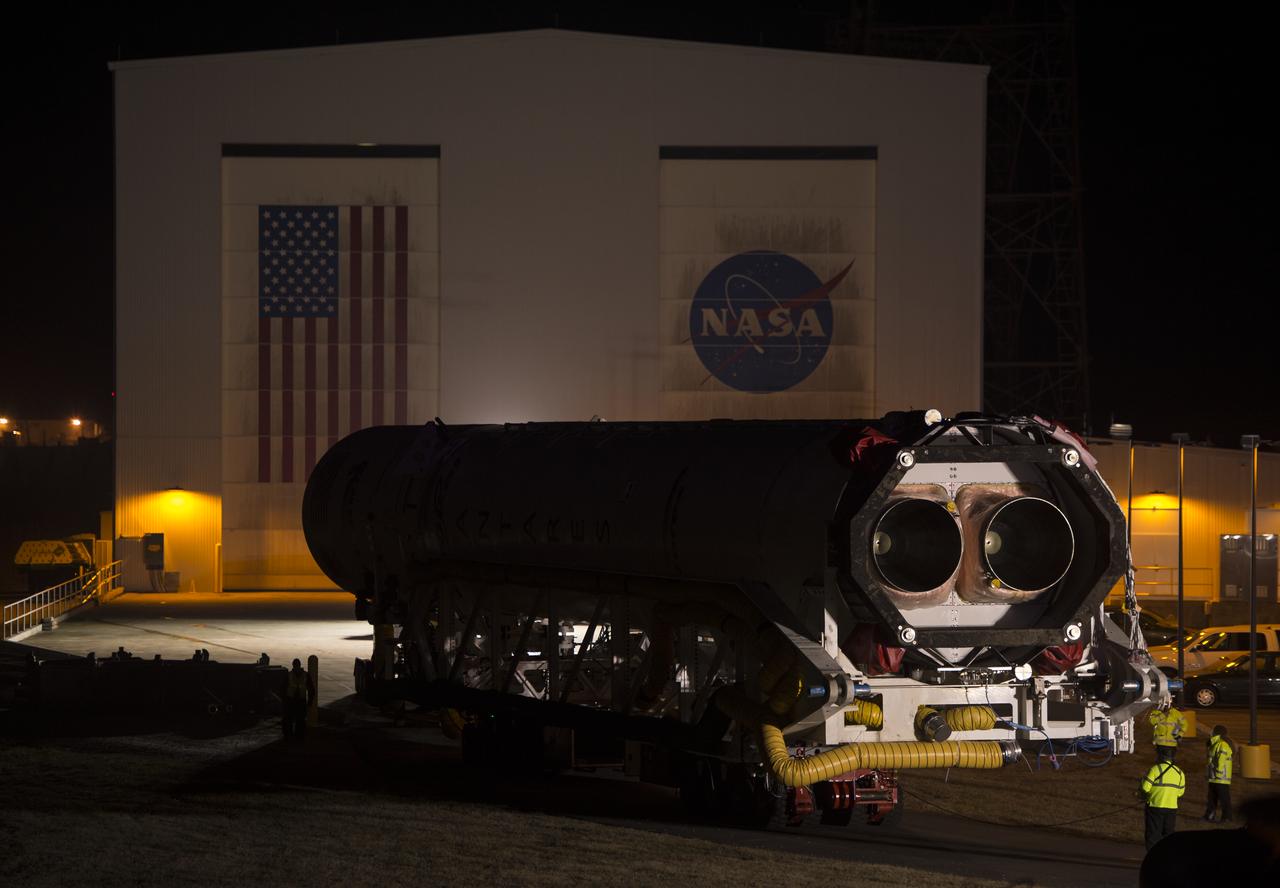
An Orbital Science Corporation Antares rocket is seen as it is rolled out to launch Pad-0A at NASA's Wallops Flight Facility Tuesday, December 17, 2013 in advance of a Thursday launch, Wallops Island, VA. The Antares will launch a Cygnus spacecraft on a cargo resupply mission to the International Space Station. The Orbital-1 mission is Orbital Sciences' first contracted cargo delivery flight to the space station for NASA. Among the cargo aboard Cygnus set to launch to the space station are science experiments, crew provisions, spare parts and other hardware. Launch is scheduled for 9:19 p.m. EST on Thursday, Dec. 19. Weather permitting, it may be widely visible along the east coast of the United States. Photo Credit: (NASA/Bill Ingalls)
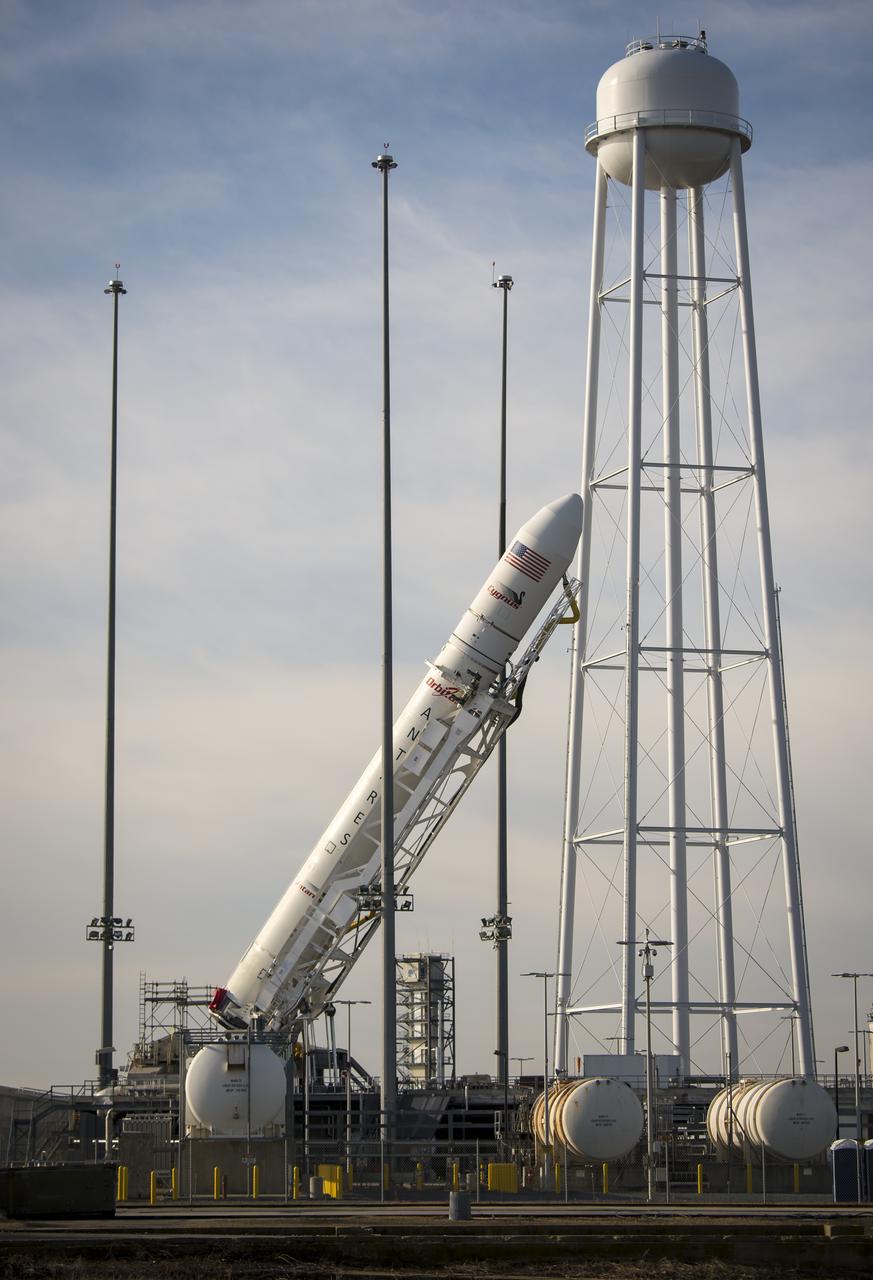
The Orbital Science Corporation Antares rocket is seen as it is raised into position at launch Pad-0A, Tuesday, December 17, 2013, at NASA's Wallops Flight Facility, Wallops Island, VA. The Antares will launch a Cygnus spacecraft on a cargo resupply mission to the International Space Station. The Orbital-1 mission is Orbital Sciences' first contracted cargo delivery flight to the space station for NASA. Among the cargo aboard Cygnus set to launch to the space station are science experiments, crew provisions, spare parts and other hardware. Launch is scheduled for 9:19 p.m. EST on Thursday, Dec. 19. Weather permitting, it may be widely visible along the east coast of the United States. Photo Credit: (NASA/Bill Ingalls)
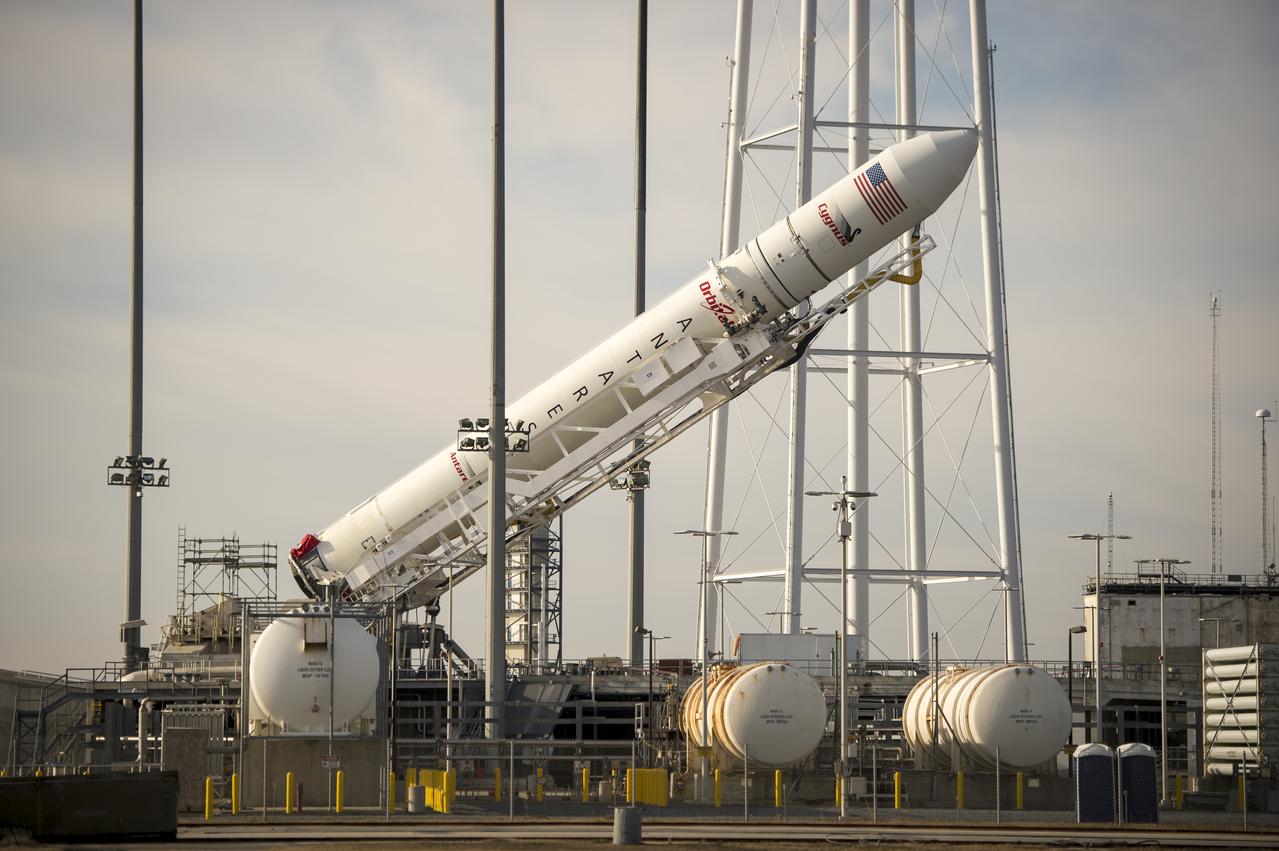
The Orbital Science Corporation Antares rocket is seen as it is raised into position at launch Pad-0A, Tuesday, December 17, 2013, at NASA's Wallops Flight Facility, Wallops Island, VA. The Antares will launch a Cygnus spacecraft on a cargo resupply mission to the International Space Station. The Orbital-1 mission is Orbital Sciences' first contracted cargo delivery flight to the space station for NASA. Among the cargo aboard Cygnus set to launch to the space station are science experiments, crew provisions, spare parts and other hardware. Launch is scheduled for 9:19 p.m. EST on Thursday, Dec. 19. Weather permitting, it may be widely visible along the east coast of the United States. Photo Credit: (NASA/Bill Ingalls)
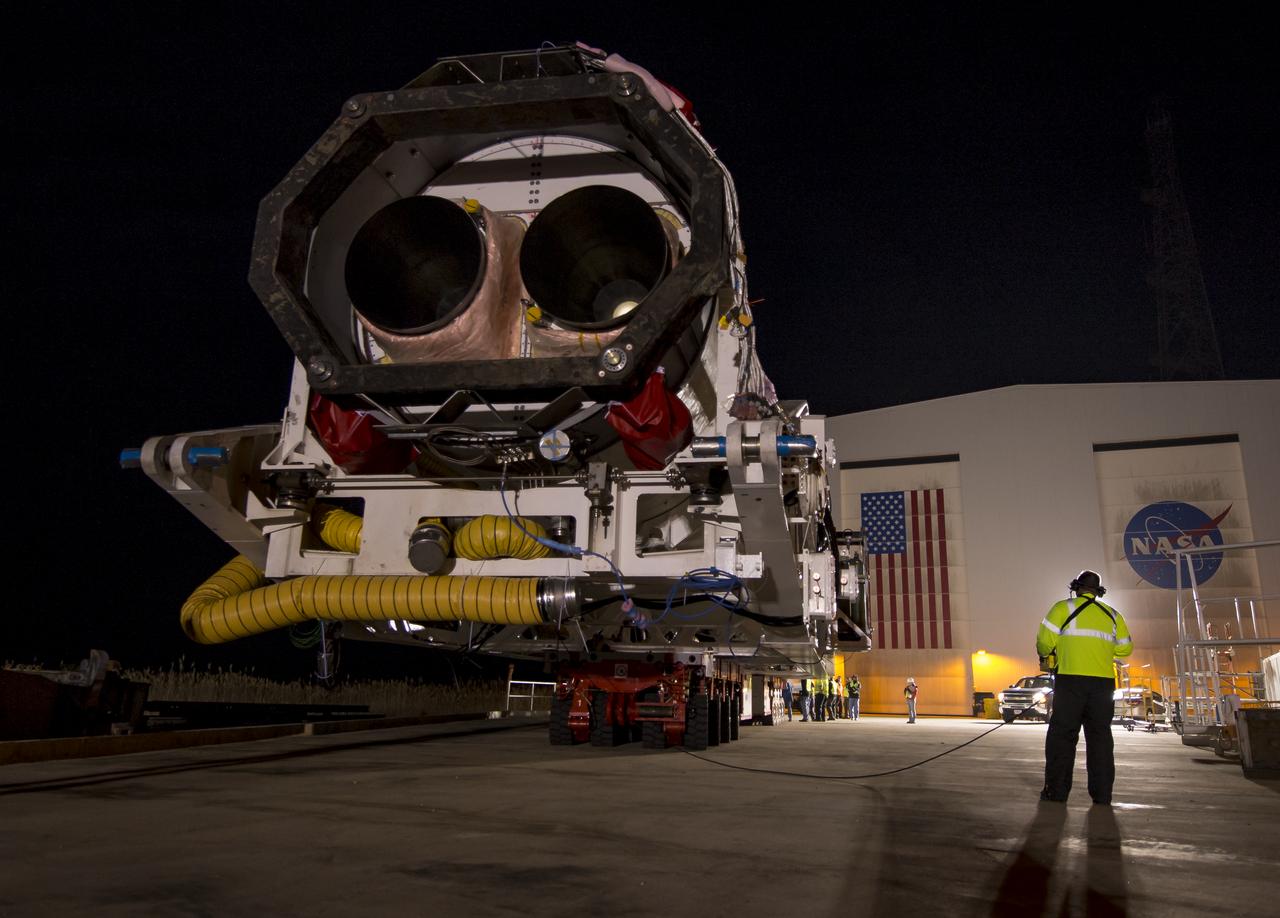
An Orbital Science Corporation Antares rocket is seen as it is rolled out to launch Pad-0A at NASA's Wallops Flight Facility Tuesday, December 17, 2013 in advance of a Thursday launch, Wallops Island, VA. The Antares will launch a Cygnus spacecraft on a cargo resupply mission to the International Space Station. The Orbital-1 mission is Orbital Sciences' first contracted cargo delivery flight to the space station for NASA. Among the cargo aboard Cygnus set to launch to the space station are science experiments, crew provisions, spare parts and other hardware. Launch is scheduled for 9:19 p.m. EST on Thursday, Dec. 19. Weather permitting, it may be widely visible along the east coast of the United States. Photo Credit: (NASA/Bill Ingalls)
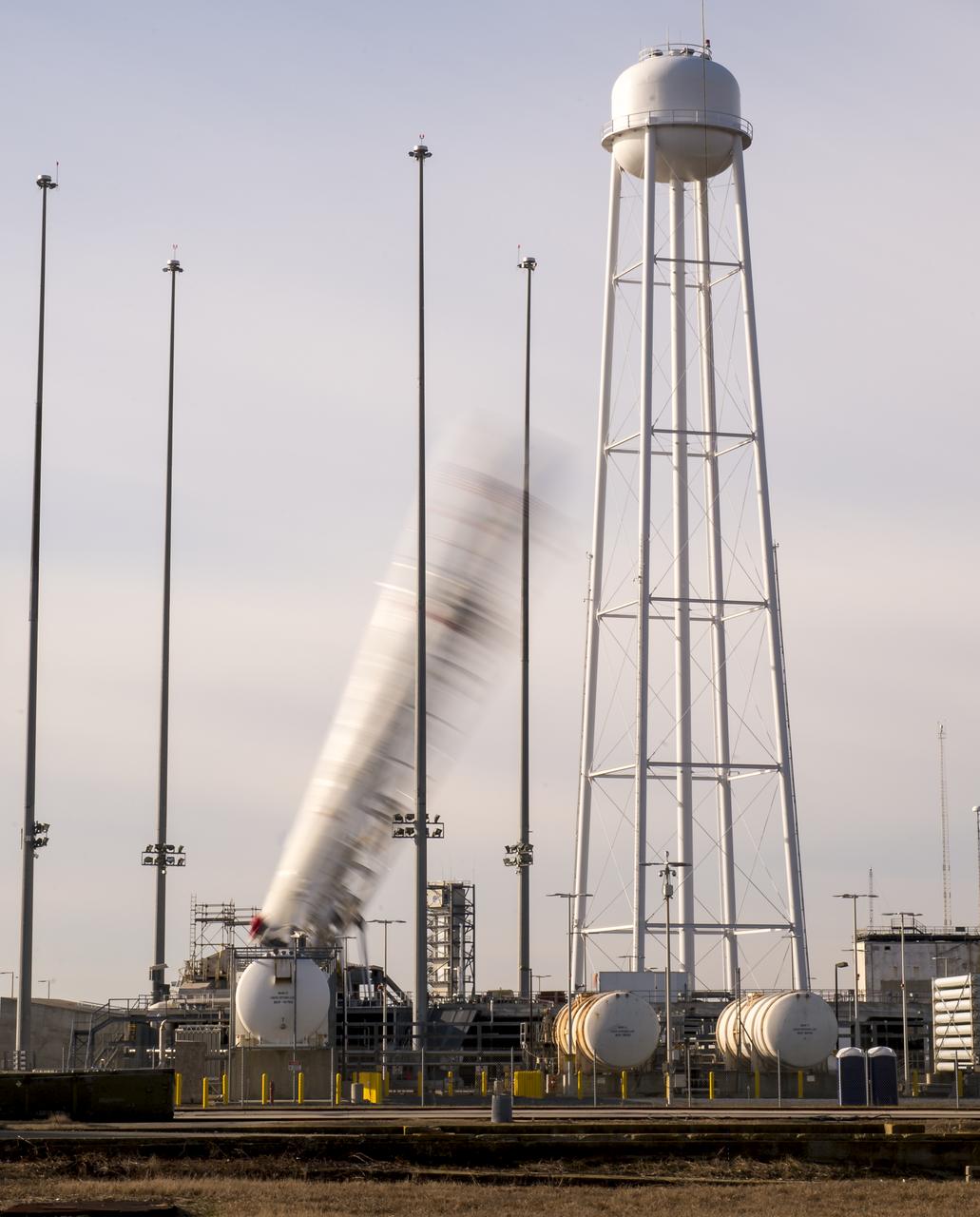
The Orbital Science Corporation Antares rocket is seen in this four minute exposure as it is raised into position at launch Pad-0A, Tuesday, December 17, 2013, at NASA's Wallops Flight Facility, Wallops Island, VA. The Antares will launch a Cygnus spacecraft on a cargo resupply mission to the International Space Station. The Orbital-1 mission is Orbital Sciences' first contracted cargo delivery flight to the space station for NASA. Among the cargo aboard Cygnus set to launch to the space station are science experiments, crew provisions, spare parts and other hardware. Launch is scheduled for 9:19 p.m. EST on Thursday, Dec. 19. Weather permitting, it may be widely visible along the east coast of the United States. Photo Credit: (NASA/Bill Ingalls)
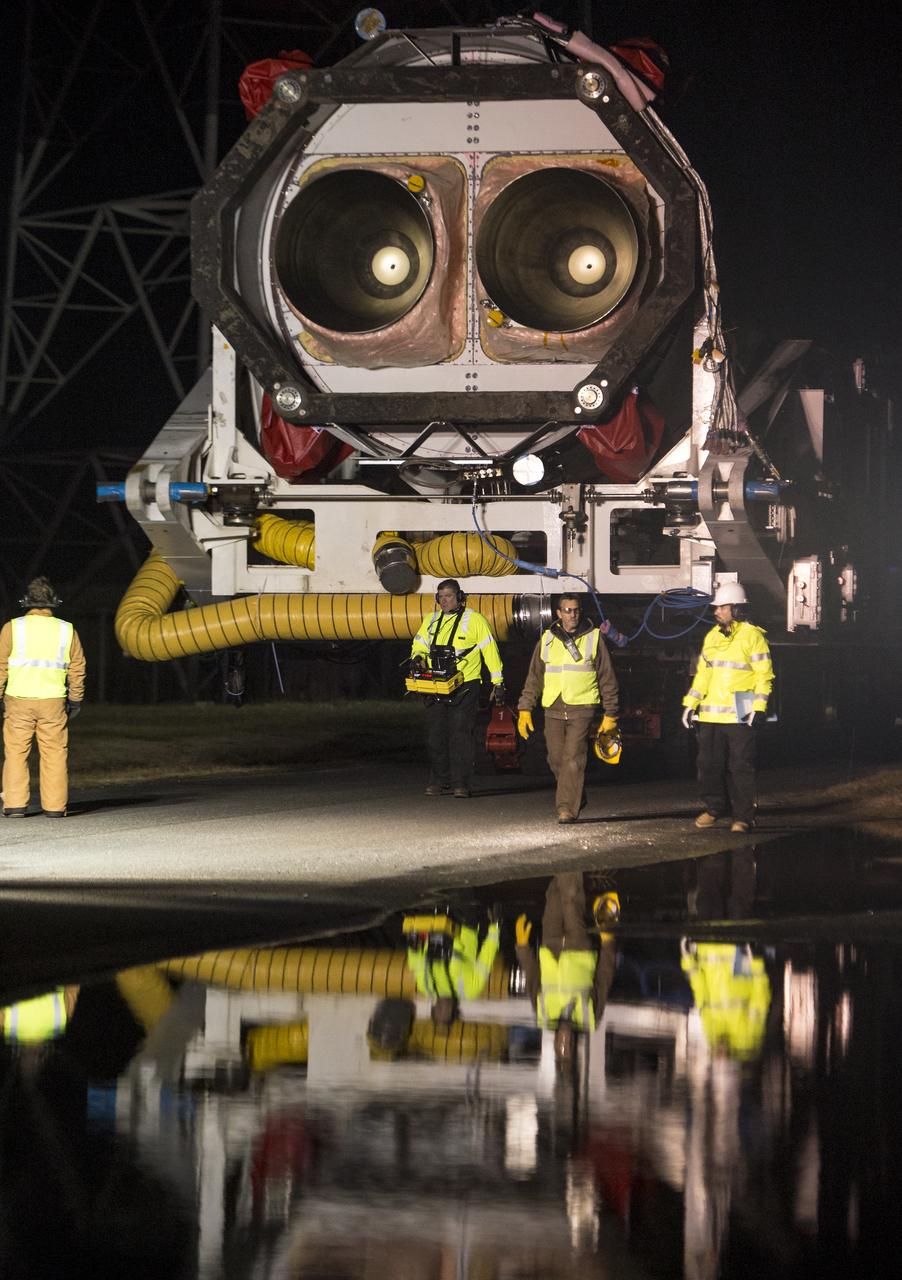
An Orbital Science Corporation Antares rocket is seen as it is rolled out to launch Pad-0A at NASA's Wallops Flight Facility Tuesday, December 17, 2013 in advance of a Thursday launch, Wallops Island, VA. The Antares will launch a Cygnus spacecraft on a cargo resupply mission to the International Space Station. The Orbital-1 mission is Orbital Sciences' first contracted cargo delivery flight to the space station for NASA. Among the cargo aboard Cygnus set to launch to the space station are science experiments, crew provisions, spare parts and other hardware. Launch is scheduled for 9:19 p.m. EST on Thursday, Dec. 19. Weather permitting, it may be widely visible along the east coast of the United States. Photo Credit: (NASA/Bill Ingalls)
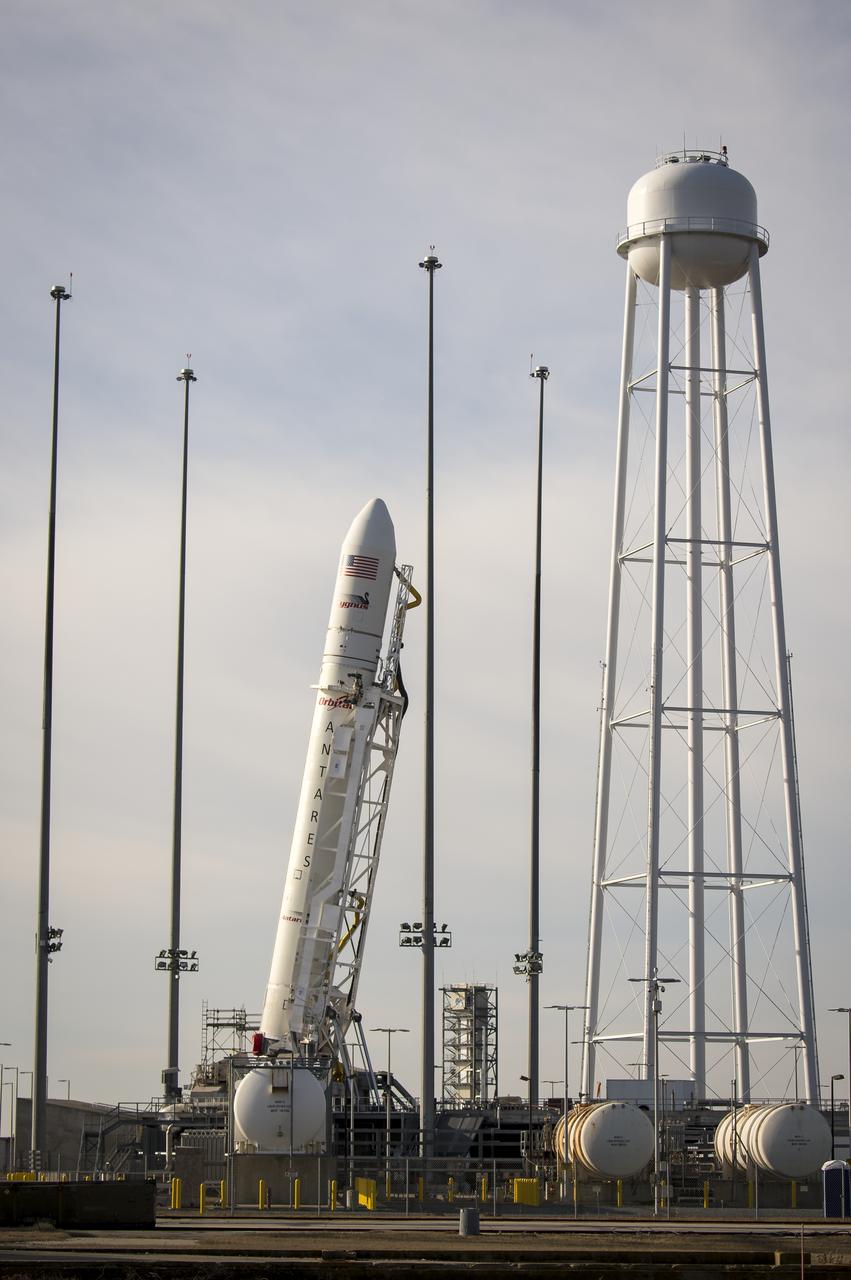
The Orbital Science Corporation Antares rocket is seen as it is raised into position at launch Pad-0A, Tuesday, December 17, 2013, at NASA's Wallops Flight Facility, Wallops Island, VA. The Antares will launch a Cygnus spacecraft on a cargo resupply mission to the International Space Station. The Orbital-1 mission is Orbital Sciences' first contracted cargo delivery flight to the space station for NASA. Among the cargo aboard Cygnus set to launch to the space station are science experiments, crew provisions, spare parts and other hardware. Launch is scheduled for 9:19 p.m. EST on Thursday, Dec. 19. Weather permitting, it may be widely visible along the east coast of the United States. Photo Credit: (NASA/Bill Ingalls)
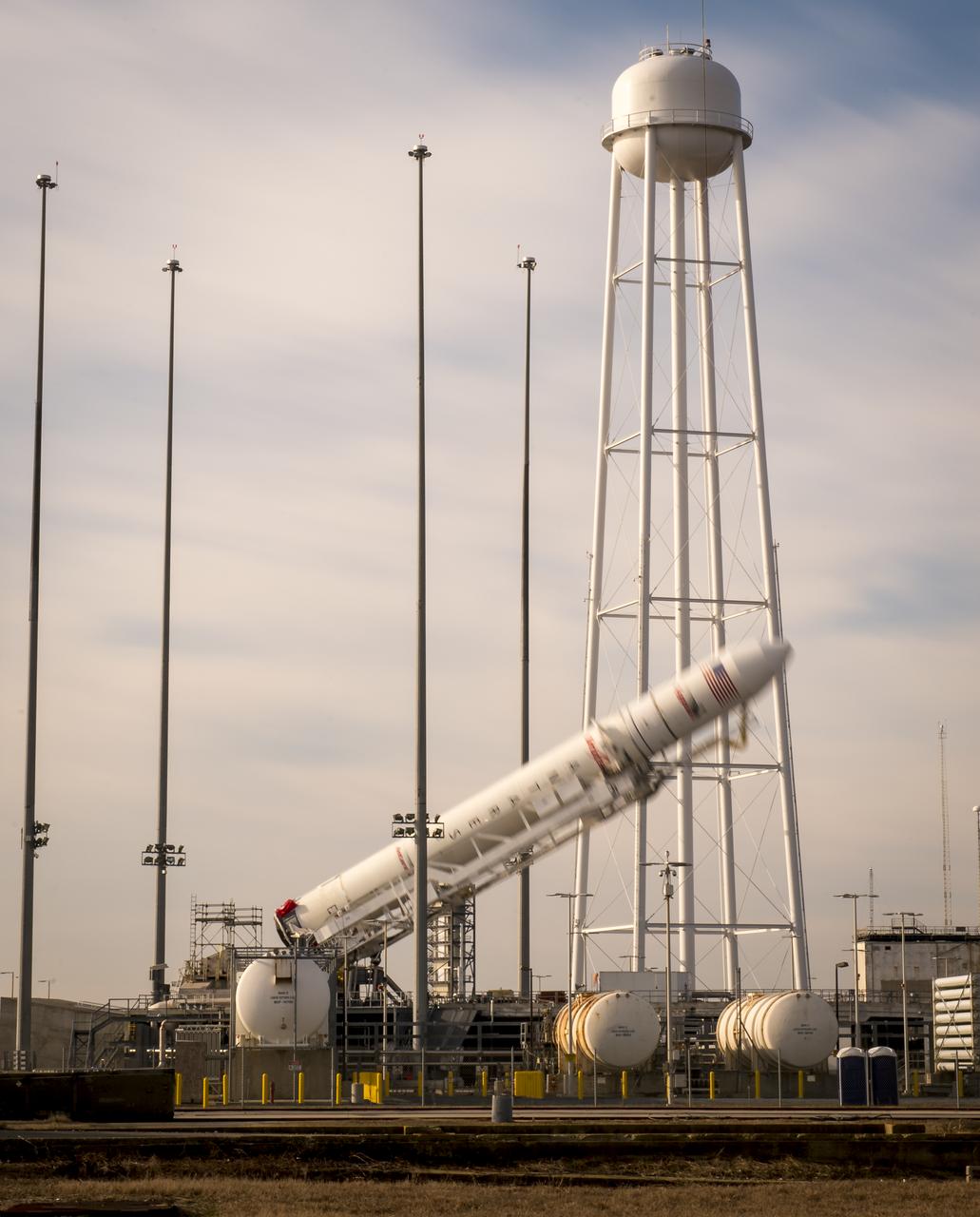
The Orbital Science Corporation Antares rocket is seen in this 30 second exposure as it is raised into position at launch Pad-0A, Tuesday, December 17, 2013, at NASA's Wallops Flight Facility, Wallops Island, VA. The Antares will launch a Cygnus spacecraft on a cargo resupply mission to the International Space Station. The Orbital-1 mission is Orbital Sciences' first contracted cargo delivery flight to the space station for NASA. Among the cargo aboard Cygnus set to launch to the space station are science experiments, crew provisions, spare parts and other hardware. Launch is scheduled for 9:19 p.m. EST on Thursday, Dec. 19. Weather permitting, it may be widely visible along the east coast of the United States. Photo Credit: (NASA/Bill Ingalls)
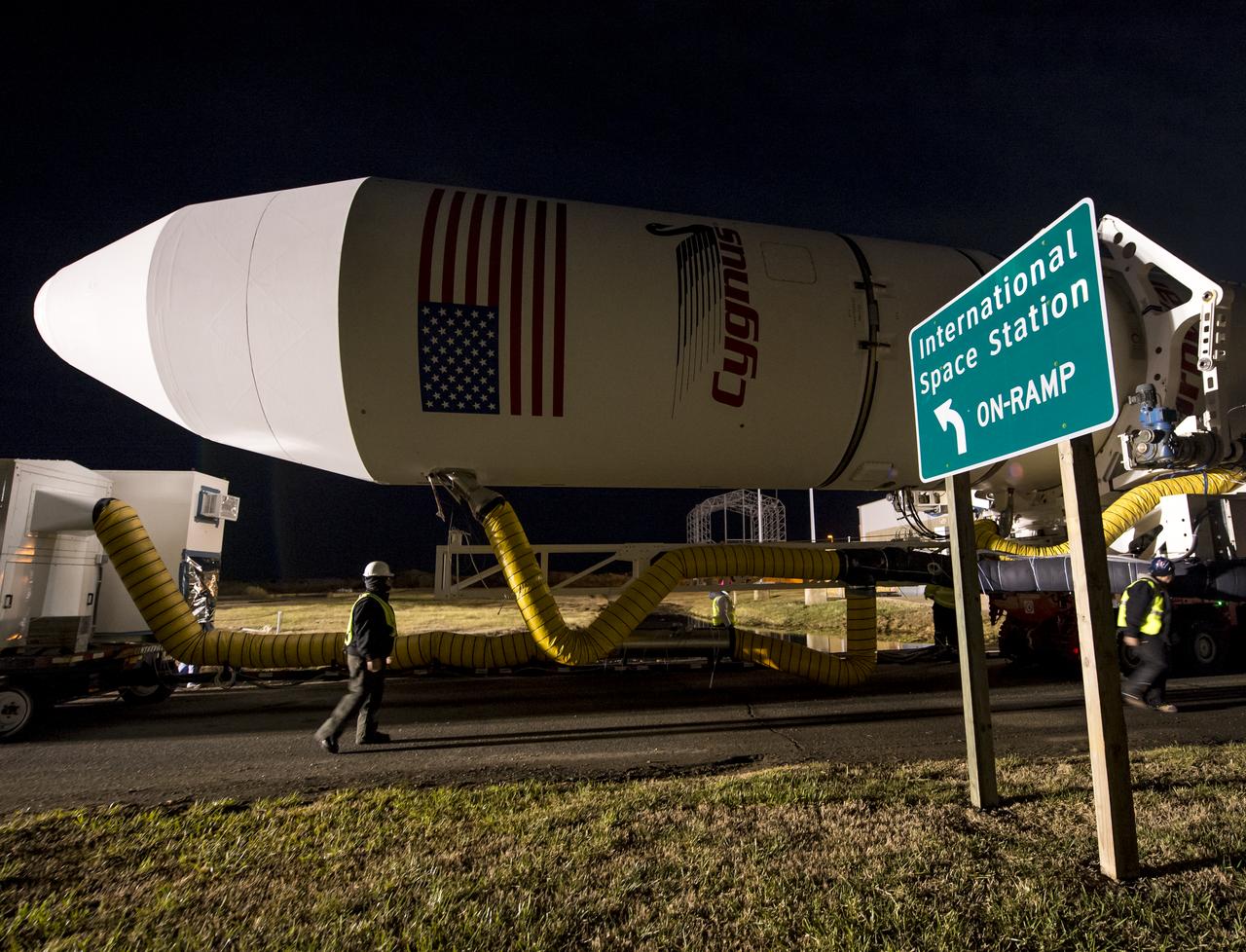
An Orbital Science Corporation Antares rocket is seen as it is rolled out to launch Pad-0A at NASA's Wallops Flight Facility Tuesday, December 17, 2013 in advance of a Thursday launch, Wallops Island, VA. The Antares will launch a Cygnus spacecraft on a cargo resupply mission to the International Space Station. The Orbital-1 mission is Orbital Sciences' first contracted cargo delivery flight to the space station for NASA. Among the cargo aboard Cygnus set to launch to the space station are science experiments, crew provisions, spare parts and other hardware. Launch is scheduled for 9:19 p.m. EST on Thursday, Dec. 19. Weather permitting, it may be widely visible along the east coast of the United States. Photo Credit: (NASA/Bill Ingalls)
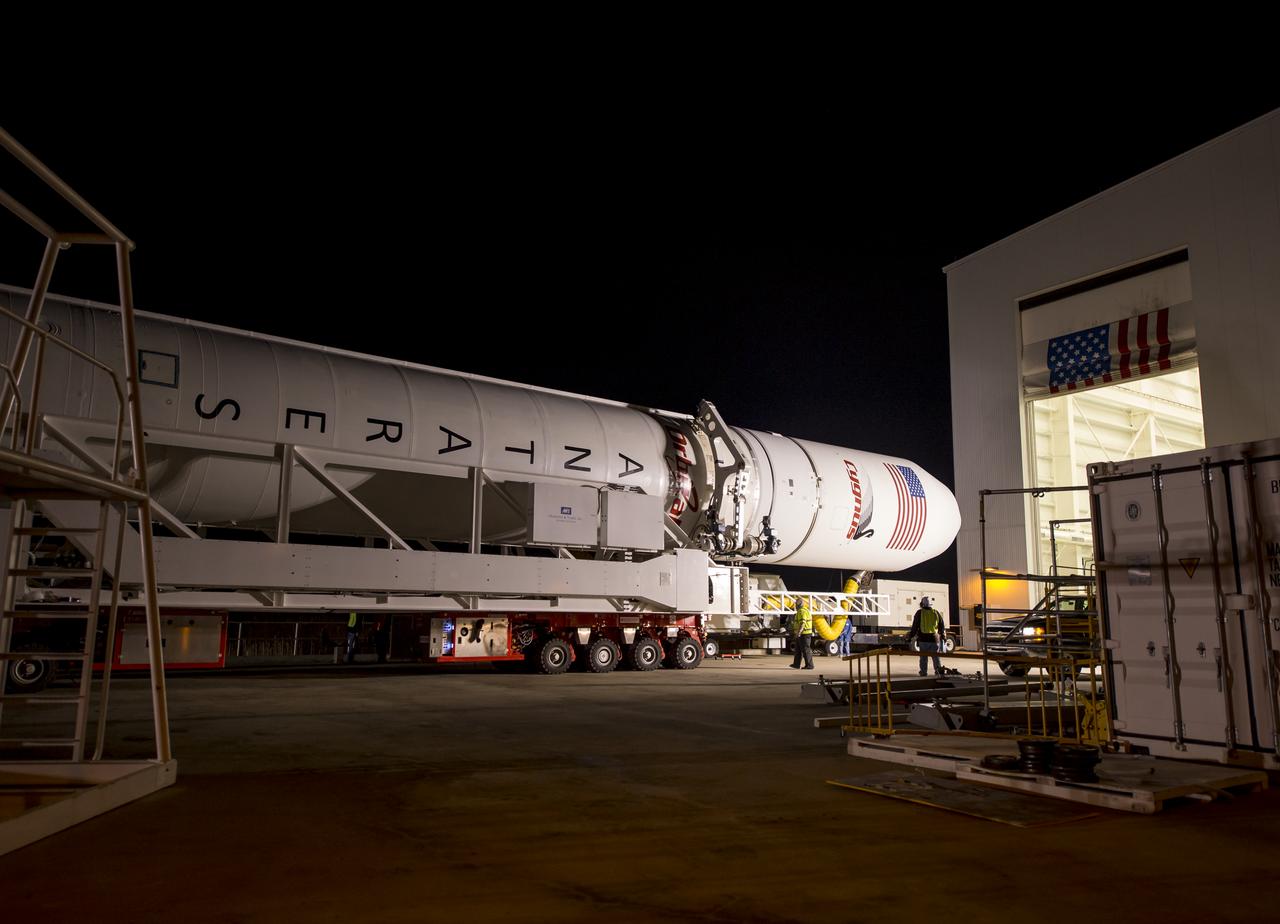
An Orbital Science Corporation Antares rocket is seen as it is rolled out to launch Pad-0A at NASA's Wallops Flight Facility Tuesday, December 17, 2013 in advance of a Thursday launch, Wallops Island, VA. The Antares will launch a Cygnus spacecraft on a cargo resupply mission to the International Space Station. The Orbital-1 mission is Orbital Sciences' first contracted cargo delivery flight to the space station for NASA. Among the cargo aboard Cygnus set to launch to the space station are science experiments, crew provisions, spare parts and other hardware. Launch is scheduled for 9:19 p.m. EST on Thursday, Dec. 19. Weather permitting, it may be widely visible along the east coast of the United States. Photo Credit: (NASA/Bill Ingalls)
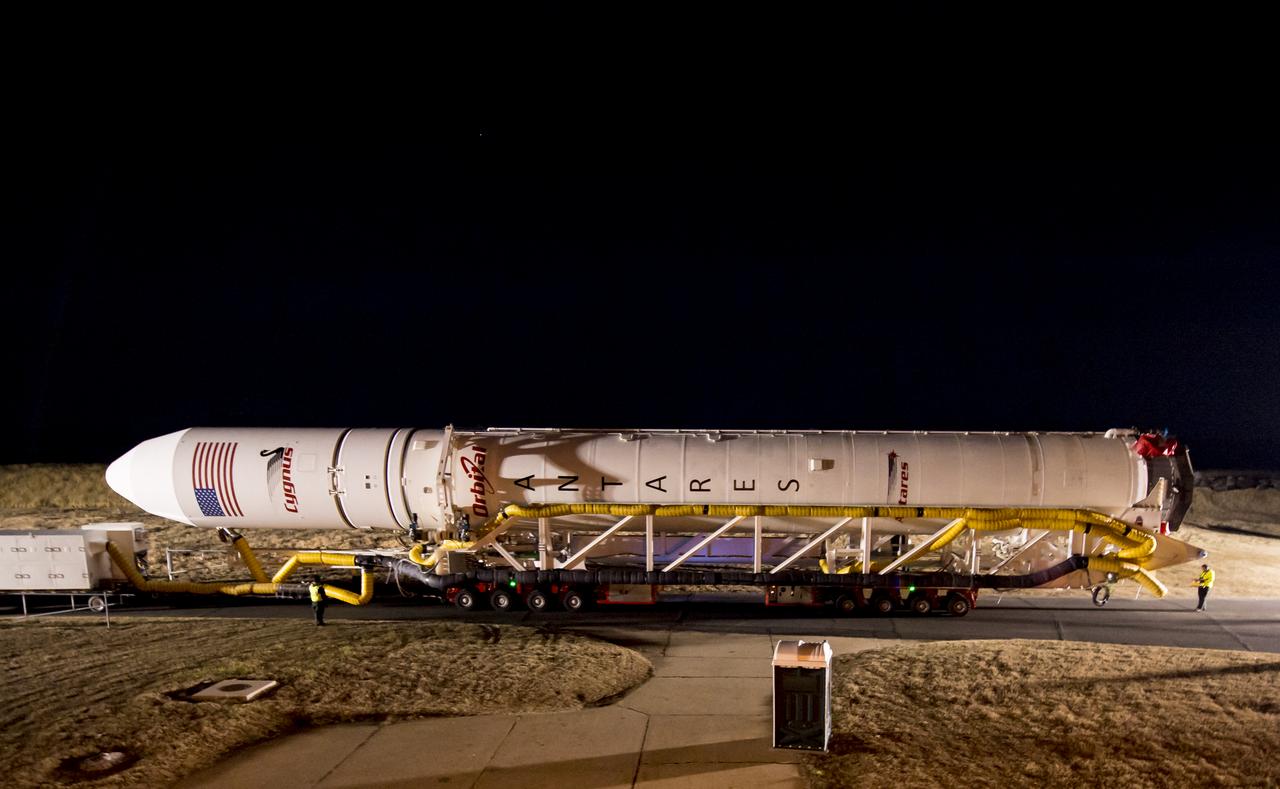
An Orbital Science Corporation Antares rocket is seen as it is rolled out to launch Pad-0A at NASA's Wallops Flight Facility Tuesday, December 17, 2013 in advance of a Thursday launch, Wallops Island, VA. The Antares will launch a Cygnus spacecraft on a cargo resupply mission to the International Space Station. The Orbital-1 mission is Orbital Sciences' first contracted cargo delivery flight to the space station for NASA. Among the cargo aboard Cygnus set to launch to the space station are science experiments, crew provisions, spare parts and other hardware. Launch is scheduled for 9:19 p.m. EST on Thursday, Dec. 19. Weather permitting, it may be widely visible along the east coast of the United States. Photo Credit: (NASA/Bill Ingalls)
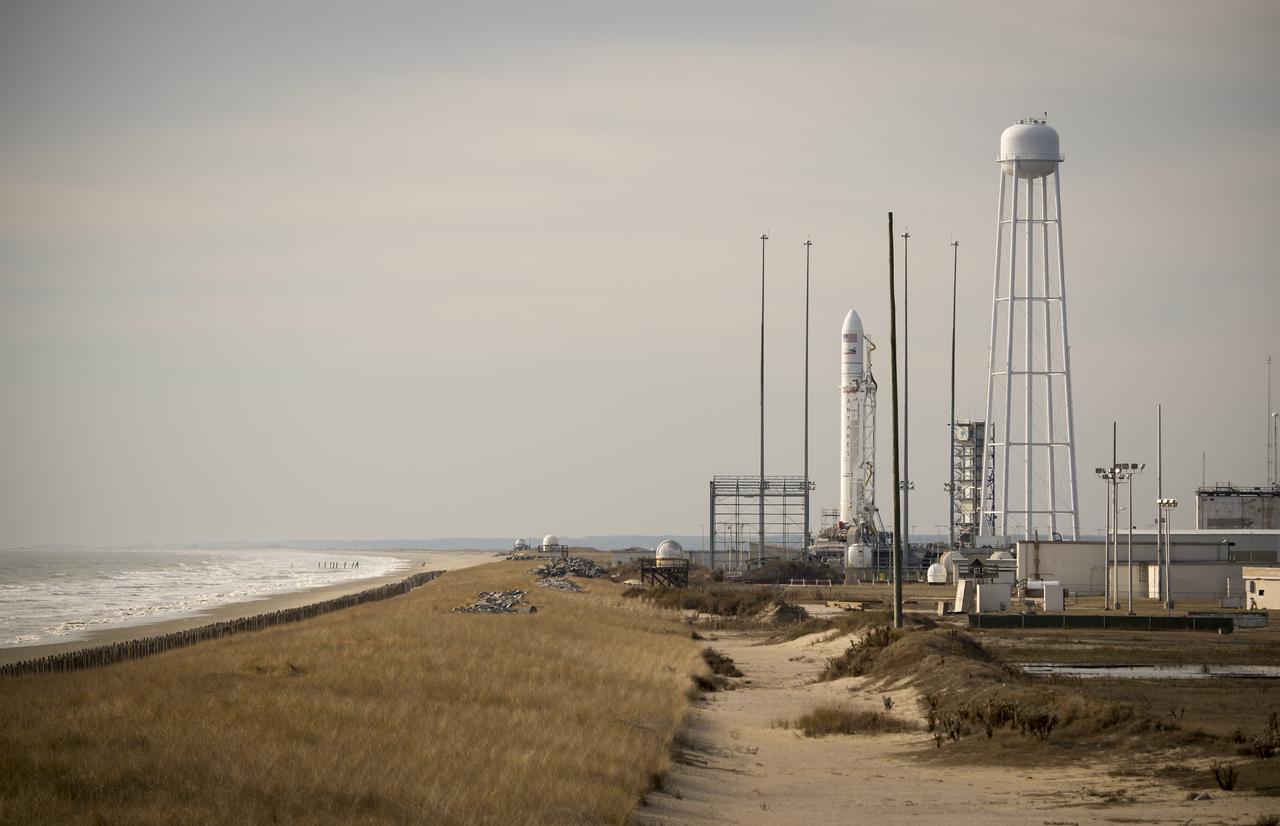
The Orbital Science Corporation Antares rocket is seen shortly after it was raised into position at launch Pad-0A, Tuesday, December 17, 2013, at NASA's Wallops Flight Facility, Wallops Island, VA. The Antares will launch a Cygnus spacecraft on a cargo resupply mission to the International Space Station. The Orbital-1 mission is Orbital Sciences' first contracted cargo delivery flight to the space station for NASA. Among the cargo aboard Cygnus set to launch to the space station are science experiments, crew provisions, spare parts and other hardware. Launch is scheduled for 9:19 p.m. EST on Thursday, Dec. 19. Weather permitting, it may be widely visible along the east coast of the United States. Photo Credit: (NASA/Bill Ingalls)
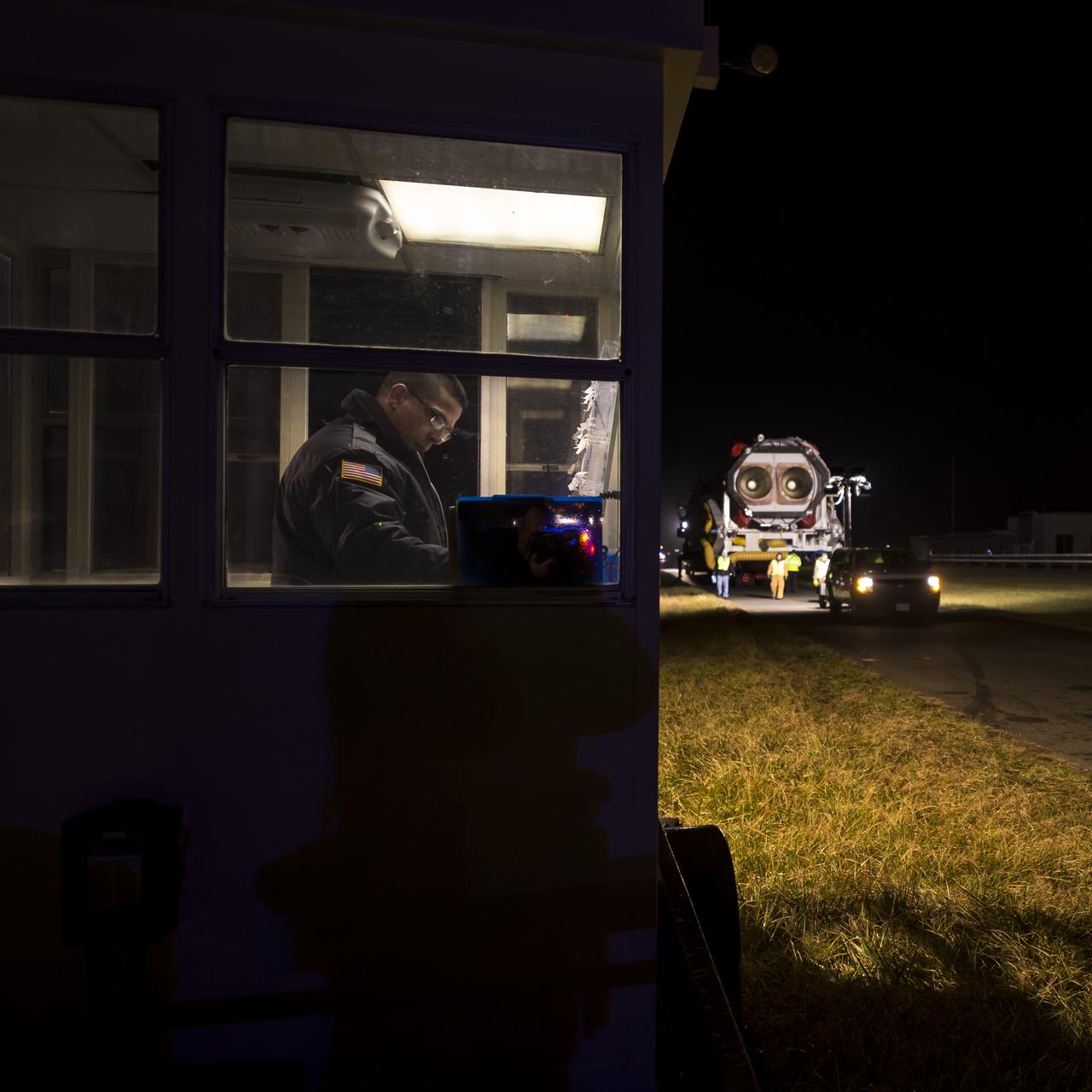
An Orbital Science Corporation Antares rocket is seen as it is rolled out to launch Pad-0A at NASA's Wallops Flight Facility Tuesday, December 17, 2013 in advance of a Thursday launch, Wallops Island, VA. The Antares will launch a Cygnus spacecraft on a cargo resupply mission to the International Space Station. The Orbital-1 mission is Orbital Sciences' first contracted cargo delivery flight to the space station for NASA. Among the cargo aboard Cygnus set to launch to the space station are science experiments, crew provisions, spare parts and other hardware. Launch is scheduled for 9:19 p.m. EST on Thursday, Dec. 19. Weather permitting, it may be widely visible along the east coast of the United States. Photo Credit: (NASA/Bill Ingalls)
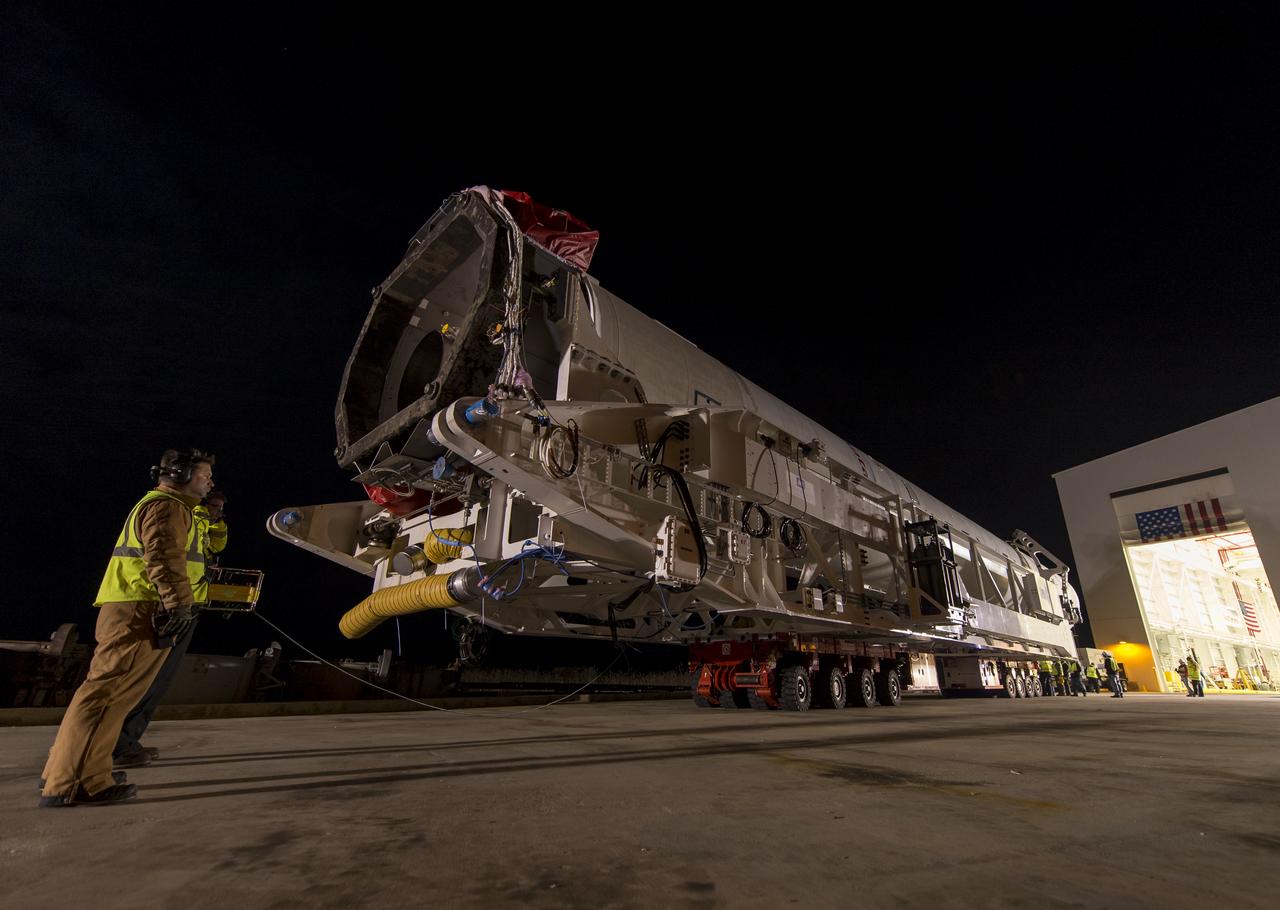
An Orbital Science Corporation Antares rocket is seen as it is rolled out to launch Pad-0A at NASA's Wallops Flight Facility Tuesday, December 17, 2013 in advance of a Thursday launch, Wallops Island, VA. The Antares will launch a Cygnus spacecraft on a cargo resupply mission to the International Space Station. The Orbital-1 mission is Orbital Sciences' first contracted cargo delivery flight to the space station for NASA. Among the cargo aboard Cygnus set to launch to the space station are science experiments, crew provisions, spare parts and other hardware. Launch is scheduled for 9:19 p.m. EST on Thursday, Dec. 19. Weather permitting, it may be widely visible along the east coast of the United States. Photo Credit: (NASA/Bill Ingalls)
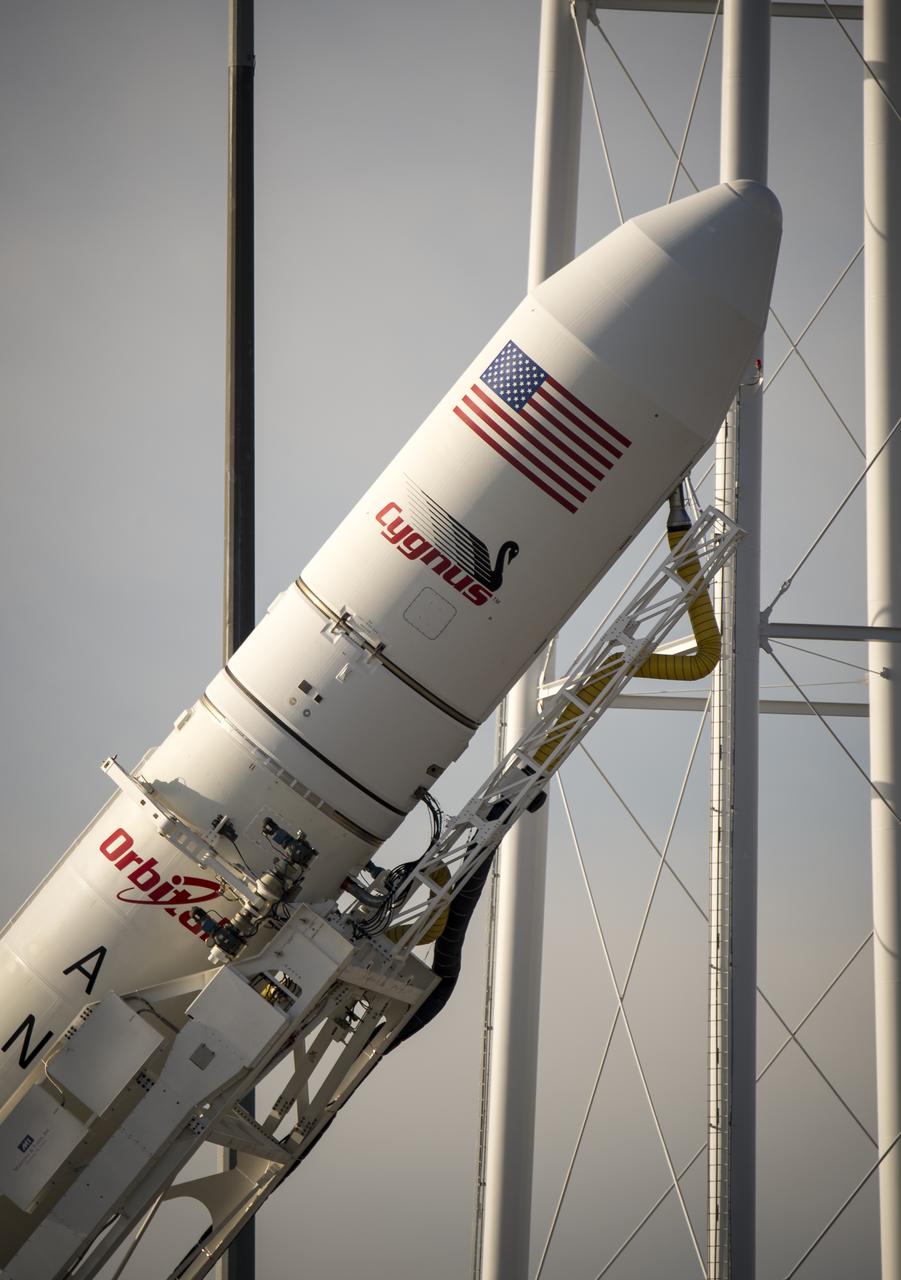
The Orbital Science Corporation Antares rocket is seen as it is raised into position at launch Pad-0A, Tuesday, December 17, 2013, at NASA's Wallops Flight Facility, Wallops Island, VA. The Antares will launch a Cygnus spacecraft on a cargo resupply mission to the International Space Station. The Orbital-1 mission is Orbital Sciences' first contracted cargo delivery flight to the space station for NASA. Among the cargo aboard Cygnus set to launch to the space station are science experiments, crew provisions, spare parts and other hardware. Launch is scheduled for 9:19 p.m. EST on Thursday, Dec. 19. Weather permitting, it may be widely visible along the east coast of the United States. Photo Credit: (NASA/Bill Ingalls)
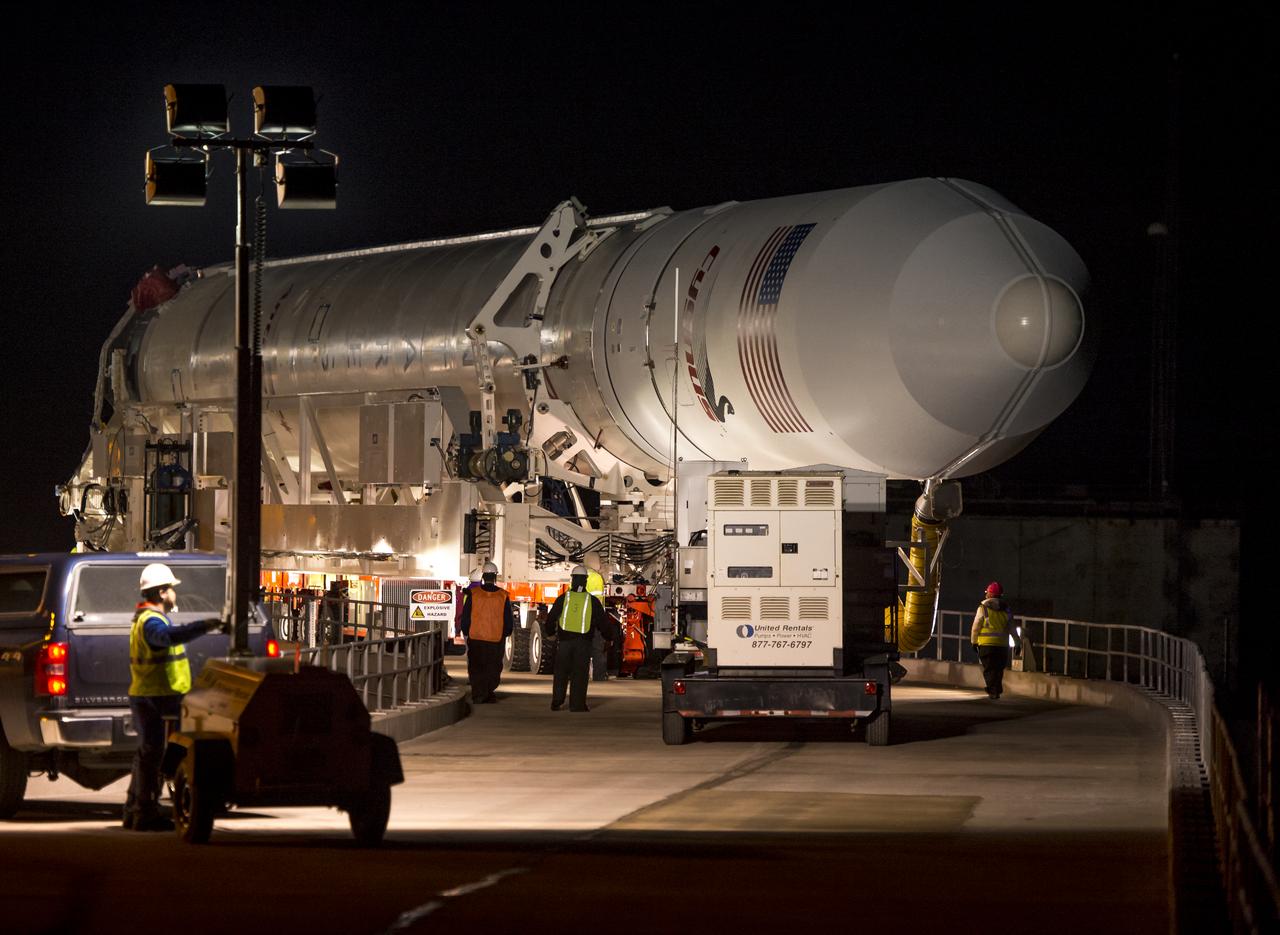
An Orbital Science Corporation Antares rocket is seen as it is rolled out to launch Pad-0A at NASA's Wallops Flight Facility Tuesday, December 17, 2013 in advance of a Thursday launch, Wallops Island, VA. The Antares will launch a Cygnus spacecraft on a cargo resupply mission to the International Space Station. The Orbital-1 mission is Orbital Sciences' first contracted cargo delivery flight to the space station for NASA. Among the cargo aboard Cygnus set to launch to the space station are science experiments, crew provisions, spare parts and other hardware. Launch is scheduled for 9:19 p.m. EST on Thursday, Dec. 19. Weather permitting, it may be widely visible along the east coast of the United States. Photo Credit: (NASA/Bill Ingalls)
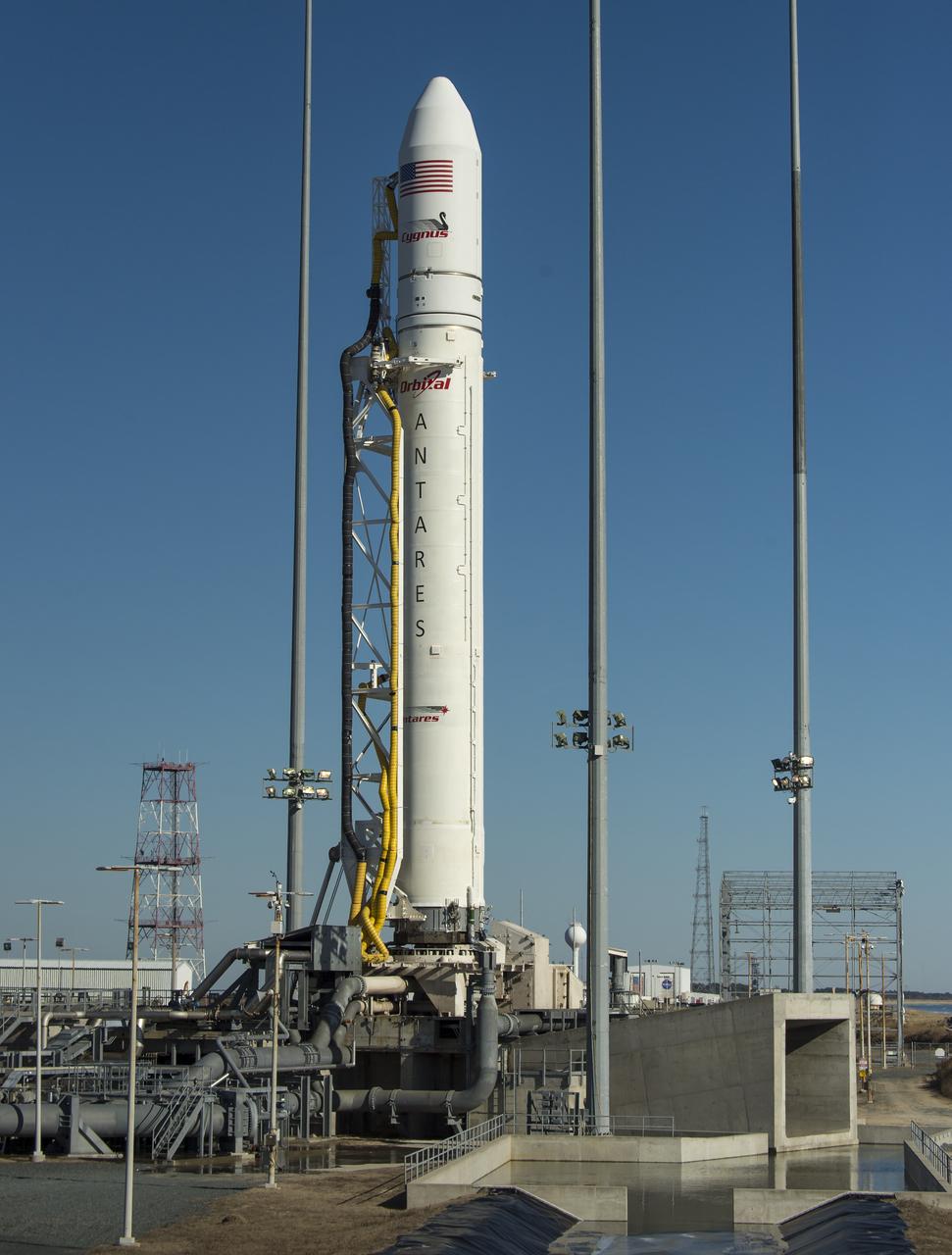
An Orbital Sciences Corporation Antares rocket is seen on launch Pad-0A during sunrise at NASA's Wallops Flight Facility, Wednesday, January 8, 2014, Wallops Island, VA. Photo Credit: (NASA/Bill Ingalls)
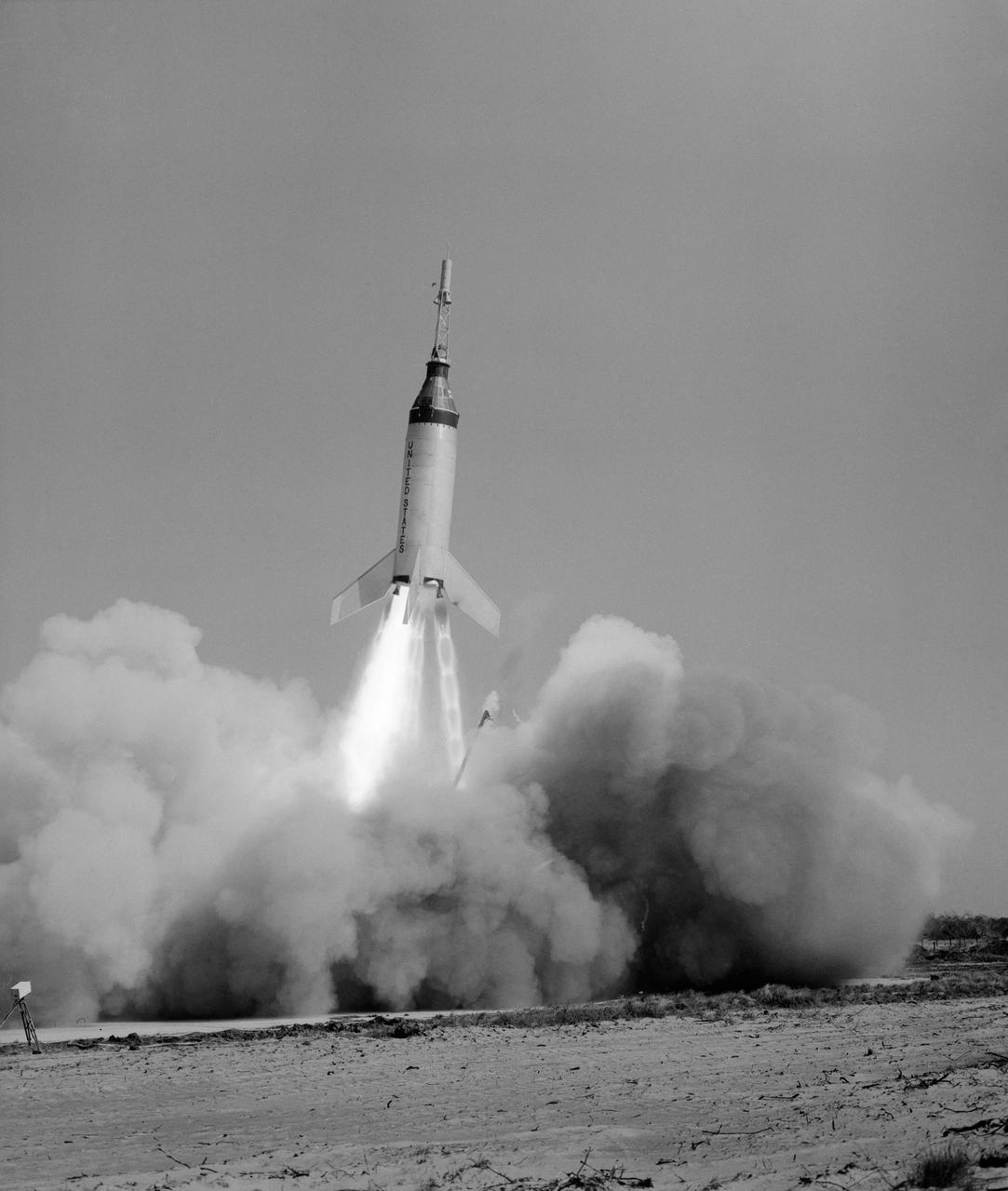
S61-01690 (28 April 1961) --- View of the launch of the Little Joe-5B spacecraft from Wallops Island on April 28, 1961. Photo credit: NASA
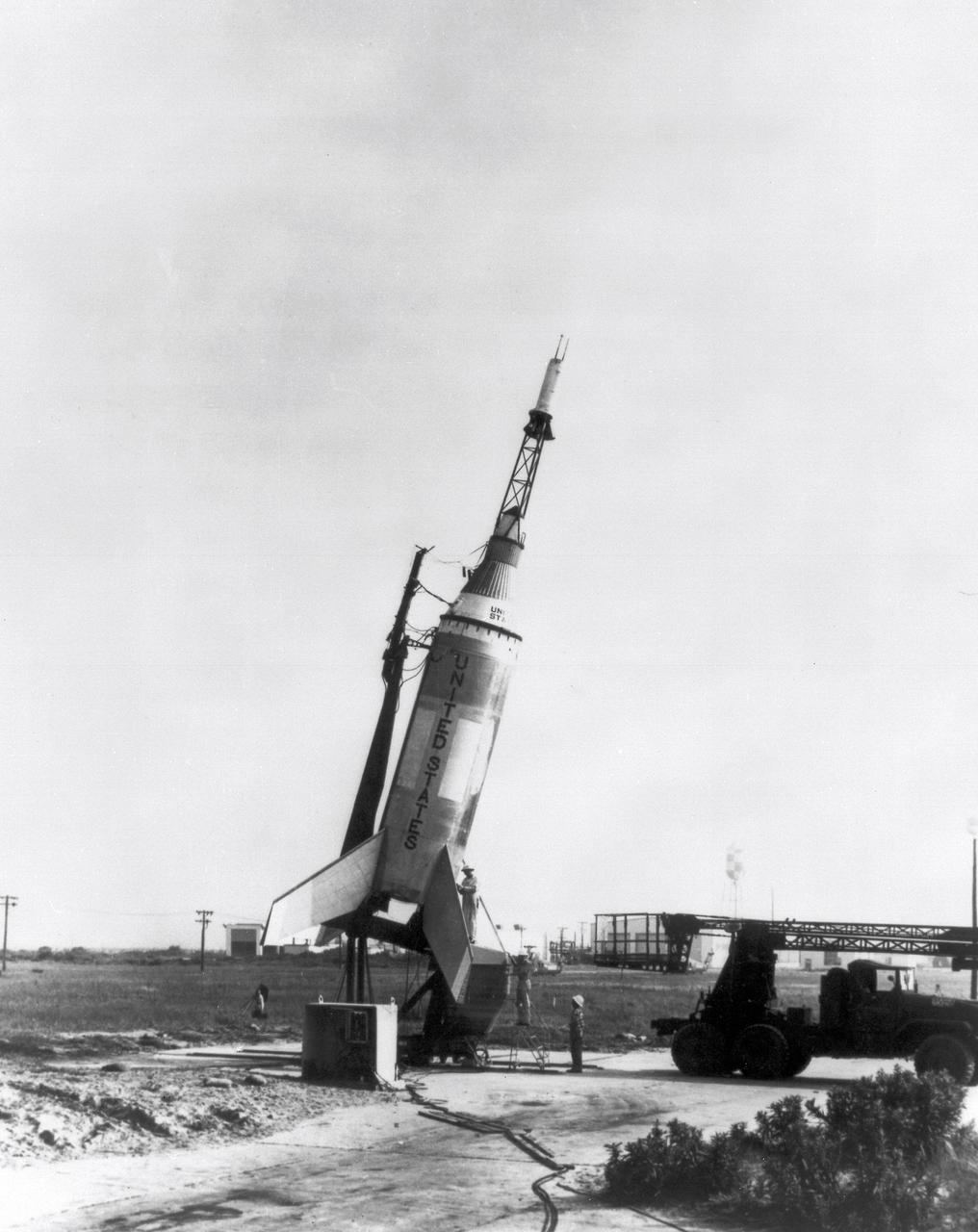
The Little Joe launch vehicle for the LJ1 mission on the launch pad at the wallops Flight Facility, Wallops Island, Virginia, on January 21, 1960. This mission achieved the suborbital Mercury cupsule test, testing of the escape system, and biomedical tests by using a monkey, named Miss Sam.
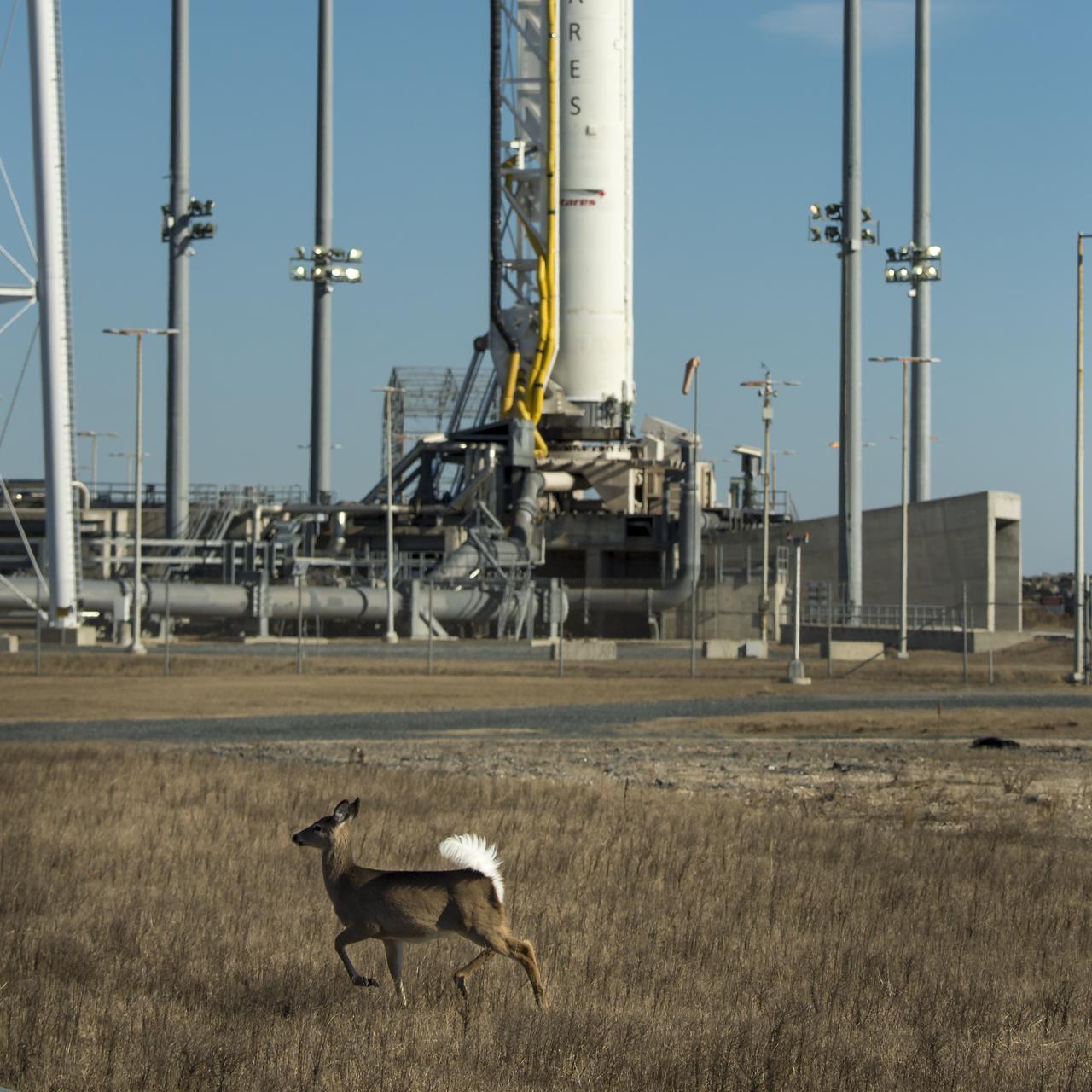
White-tailed deer graze near the Orbital Sciences Corporation Antares rocket, launch Pad-0A, at NASA's Wallops Flight Facility, Wednesday, January 8, 2014, Wallops Island, VA. Photo Credit: (NASA/Bill Ingalls)

The launch of the Little Joe booster for the LJ1B mission on the launch pad from the wallops Flight Facility, Wallops Island, Virginia, on January 21, 1960. This mission achieved the suborbital Mercury capsule test, testing of the escape system, and biomedical tests by using a monkey, named Miss Sam.
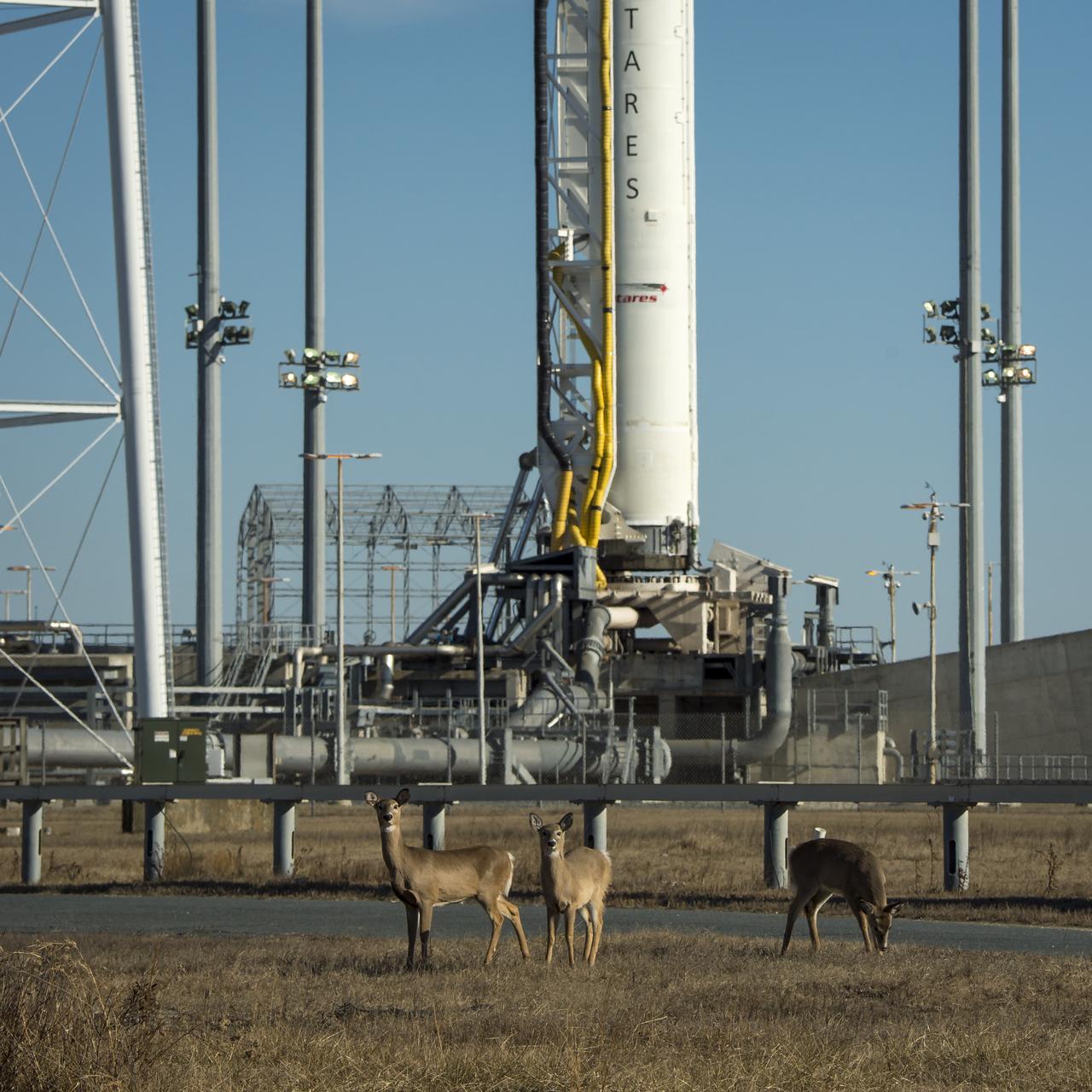
White-tailed deer graze near the Orbital Sciences Corporation Antares rocket, launch Pad-0A, at NASA's Wallops Flight Facility, Wednesday, January 8, 2014, Wallops Island, VA. Photo Credit: (NASA/Bill Ingalls)
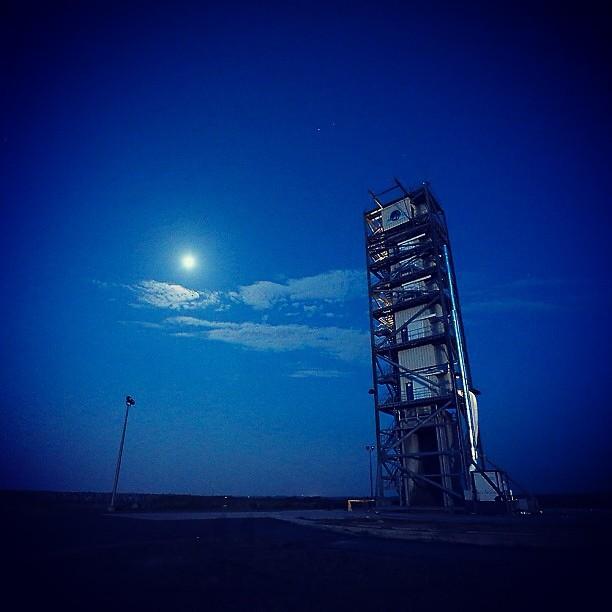
This image shows an evening view gantry at Pad 0B at the Mid-Atlantic Regional Spaceport, at NASA's Wallops Flight Facility in Wallops Island, Va., on Sept. 4, 2013. In this photograph, the gantry surrounds the Minotaur V rocket that will launch NASA LADEE. The gantry is now removed and the Minotaur is getting ready to launch LADEE at 11:27 p.m. EDT tonight. Image credit: NASA Wallops/Patrick Black
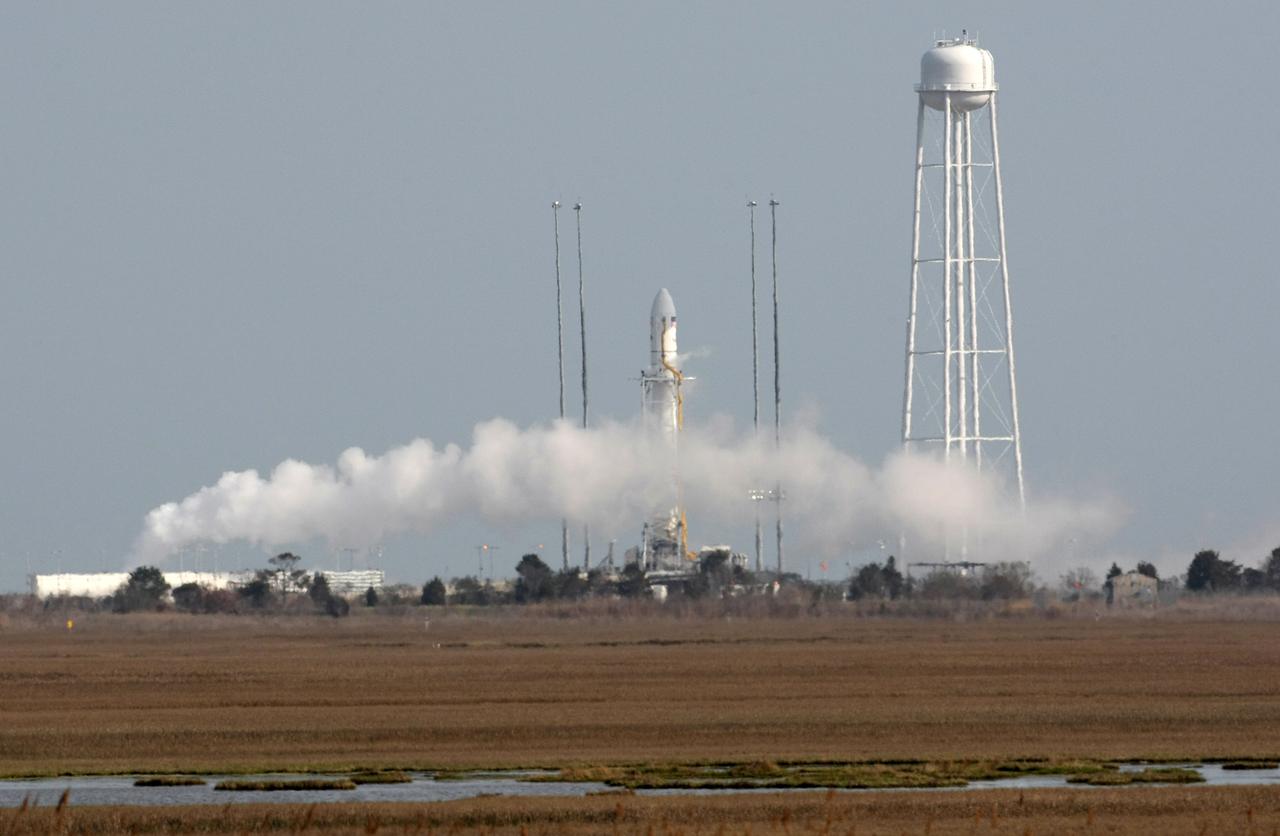
The first launch attempt for the Antares rocket was aborted.

NASA Wallops Flight Facility Public Affairs Specialist, Rebecca Hudson, Thursday, Feb. 6, 2020 at Wallops Flight Facility in Virginia. “What I really think stands out the most is when you go to a launch and you see people who have never seen one before. Some people get so emotional, they cry. It’s so energizing to see people get that excited. For me, every single time we launch a rocket —whether it be a sounding rocket or something as big as an Antares rocket or anything in between — all the hard work and long hours, all that leading up to it… you kind of forget it as soon as you see that emotion that people are experiencing. I always think about that as I drive home at night: “Do you know how many people we made happy today?” And so I think that is important — no matter what we do here, whether it’s my job or the test director’s or the administrator’s or all points in between — everybody’s got something to contribute. You ask little kids what their big dream is, and it’s not uncommon to hear “astronaut.” It’s not uncommon to hear they want to fly in a spaceship. That’s not uncommon. But we’re doing that. We’re making dreams for people.” Photo Credit: (NASA/Aubrey Gemignani)
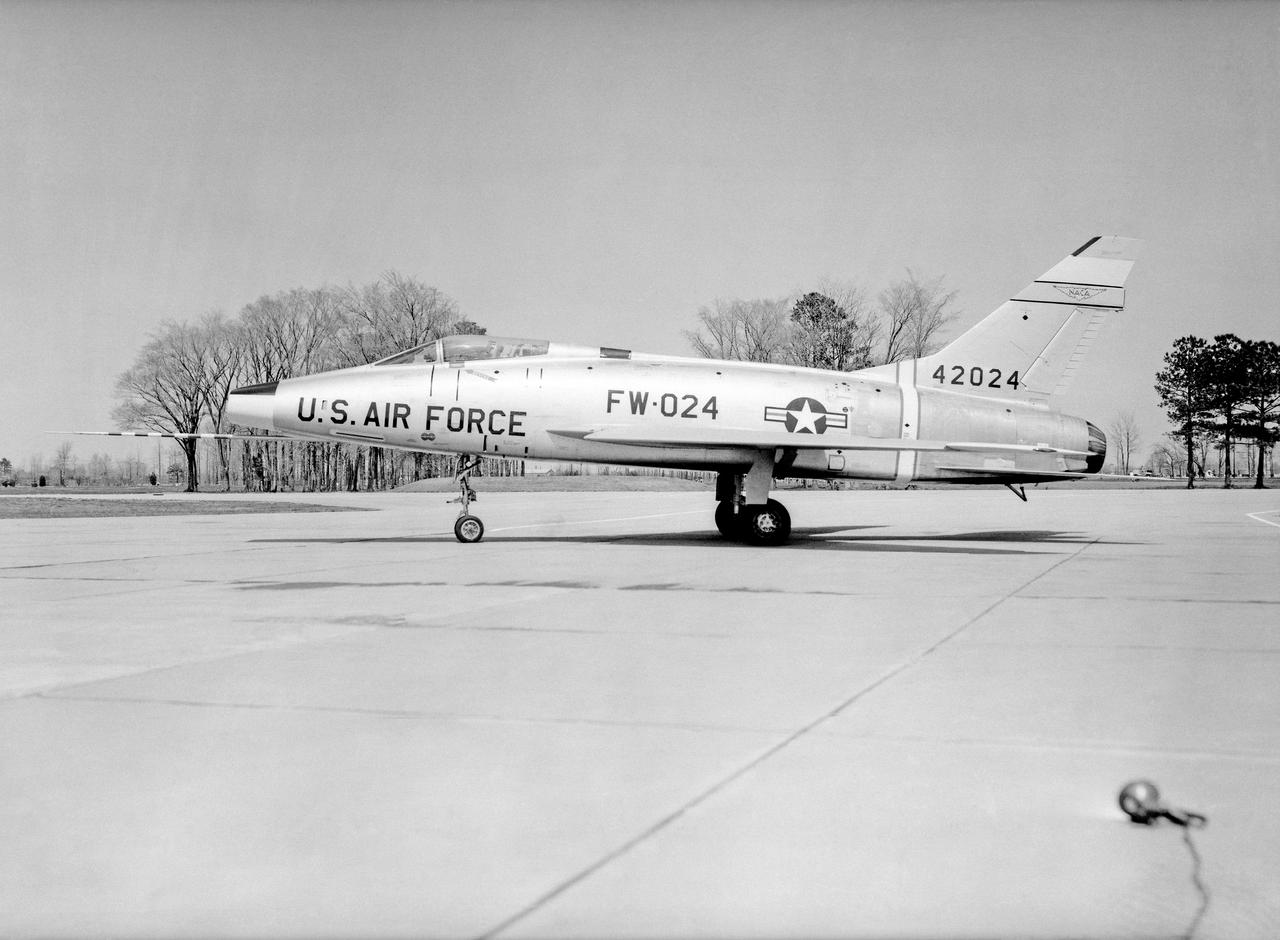
North American F-100 C airplane used in sonic boom investigation at Wallops, October 7, 1958. Photograph published in: A New Dimension Wallops Island Flight Test Range: The First Fifteen Years by Joseph Shortal. A NASA publication. Page 672. -- Aircraft number: NACA 42024. Side view, 3/4 view from front, 3/4 view from rear, rear view, and two front views.
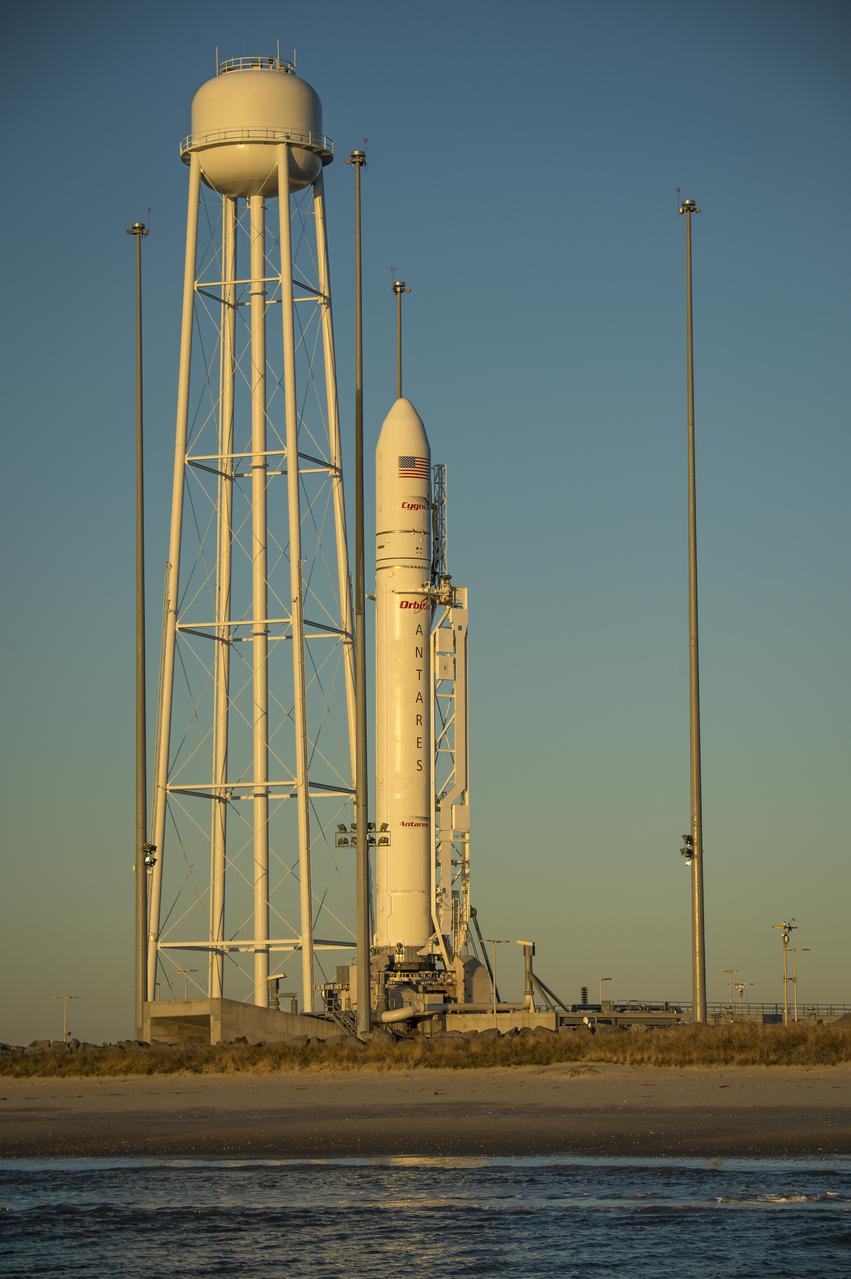
An Orbital Sciences Corporation Antares rocket is seen on launch Pad-0A during sunrise at NASA's Wallops Flight Facility, Wednesday, January 8, 2014, Wallops Island, VA. Early this morning, Orbital Sciences Corp. decided to scrub today’s launch attempt of the Antares rocket and the Cygnus cargo spacecraft on the company’s first resupply mission to the International Space Station due to an unusually high level of space radiation that exceeded constraints imposed on Antares. Photo Credit: (NASA/Bill Ingalls)
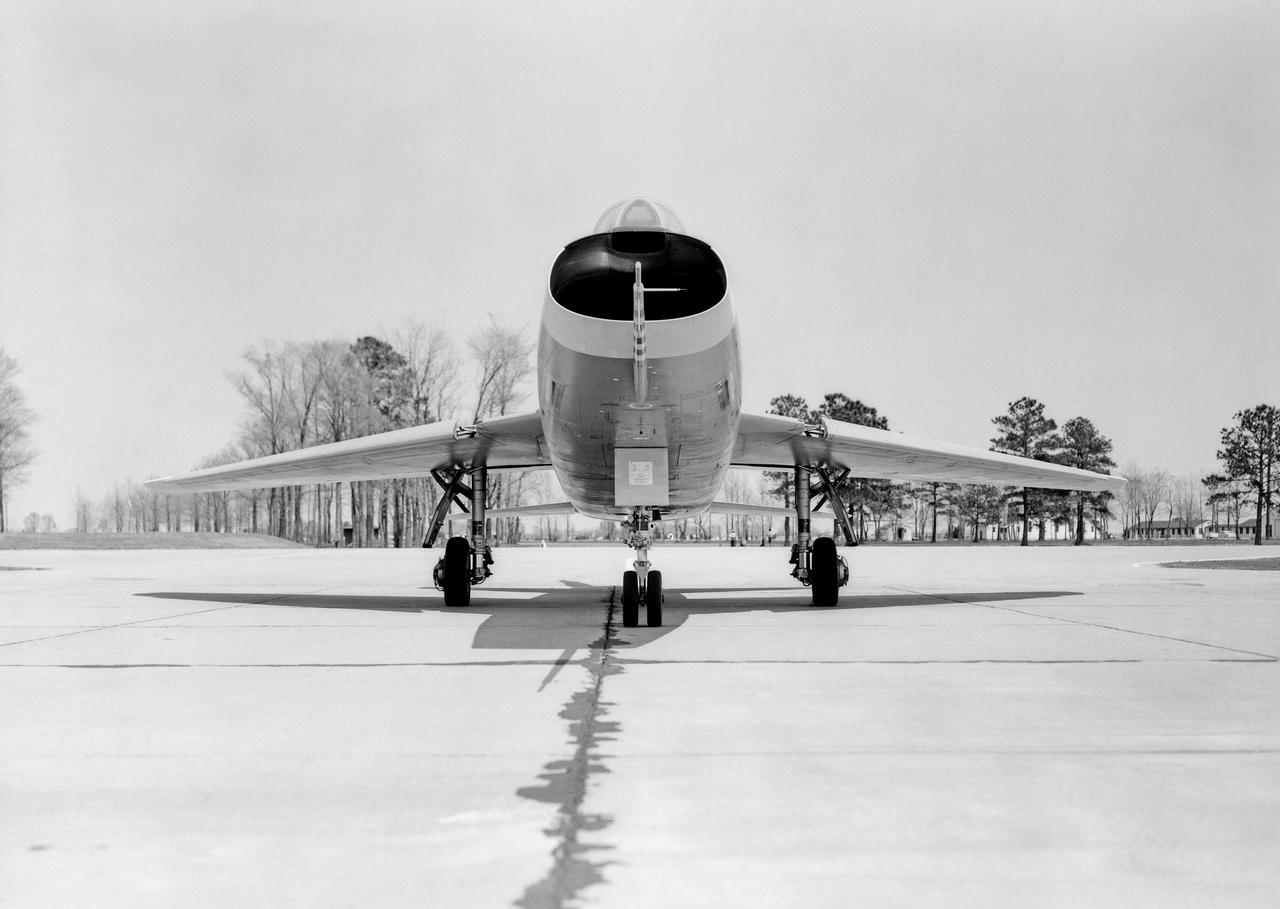
North American F-100 C airplane used in sonic boom investigation at Wallops, October 7, 1958. Photograph published in: A New Dimension Wallops Island Flight Test Range: The First Fifteen Years by Joseph Shortal. A NASA publication. Page 672. -- Aircraft number: NACA 42024. Side view, 3/4 view from front, 3/4 view from rear, rear view, and two front views.
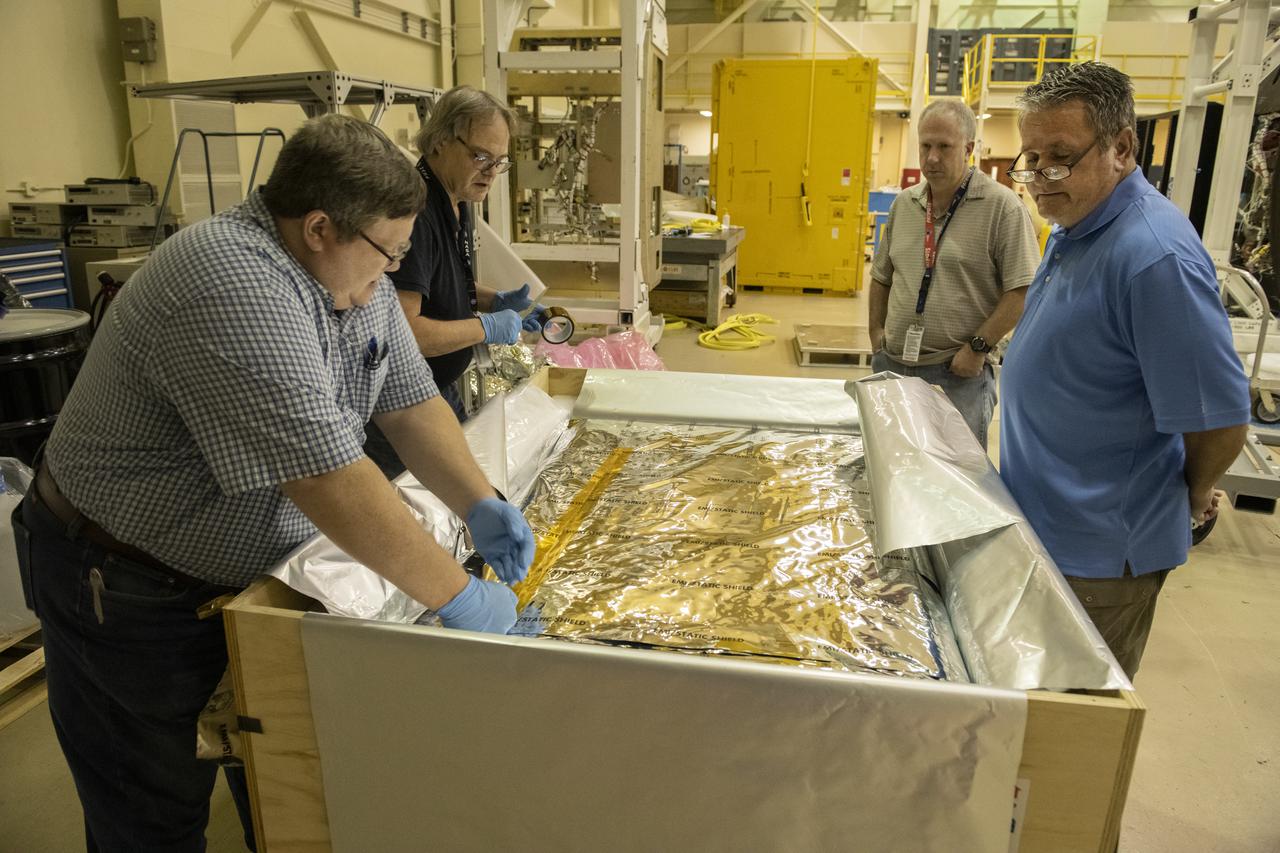
The 4-bed Carbon Dioxide Scrubber, new Environmental Control and Life Support Systems technology developed, built, tested, and integrated at NASA's Marshall Space Flight Center to be launched to the International Space Station, is readied for shipment to NASA's Wallops Flight Facility in Wallops Island, Virginia. The hardware will fly to space Aug. 1 via the Cygnus NG-16 commercial spacecraft, and will be tested aboard the space station for one year.
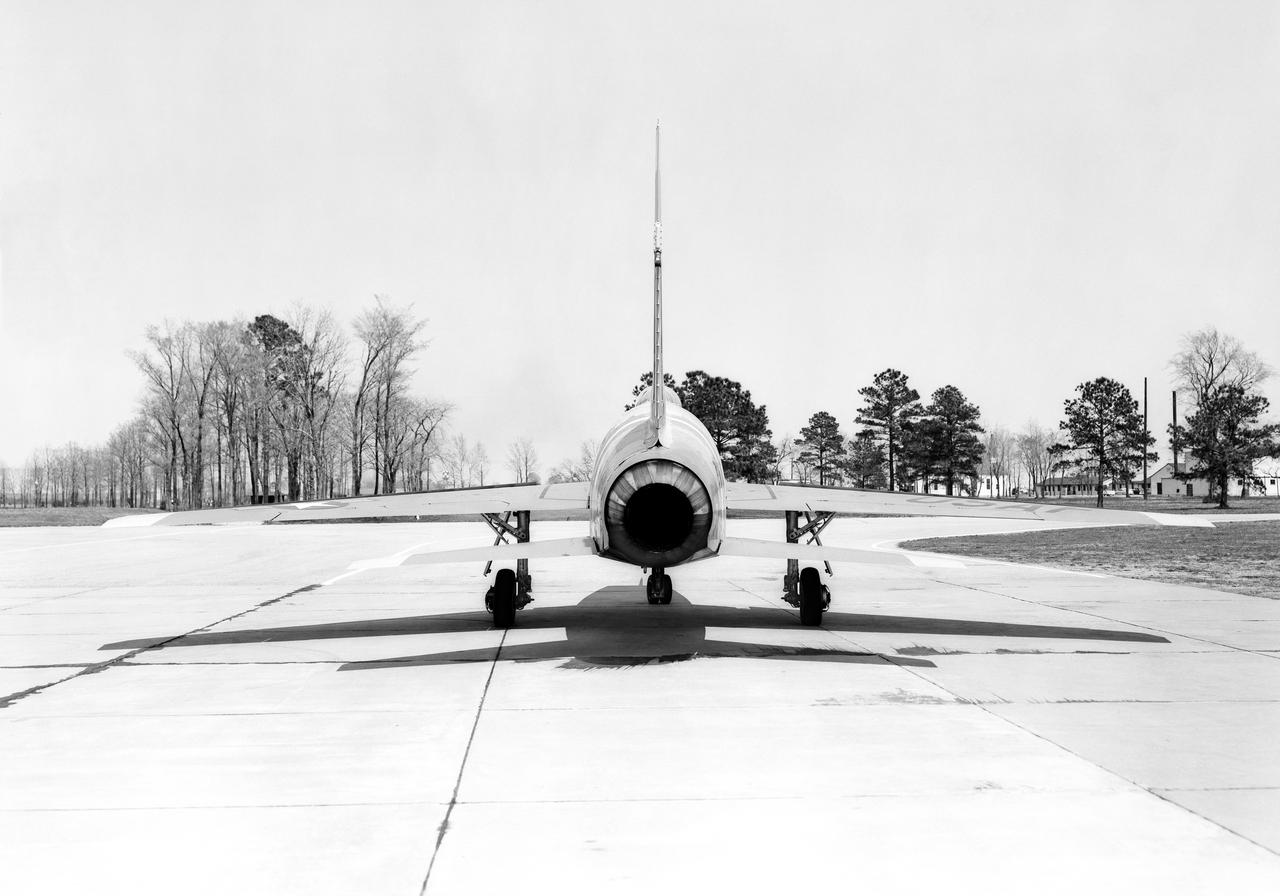
North American F-100 C airplane used in sonic boom investigation at Wallops, October 7, 1958. Photograph published in: A New Dimension Wallops Island Flight Test Range: The First Fifteen Years by Joseph Shortal. A NASA publication. Page 672. -- Aircraft number: NACA 42024. Side view, 3/4 view from front, 3/4 view from rear, rear view, and two front views.
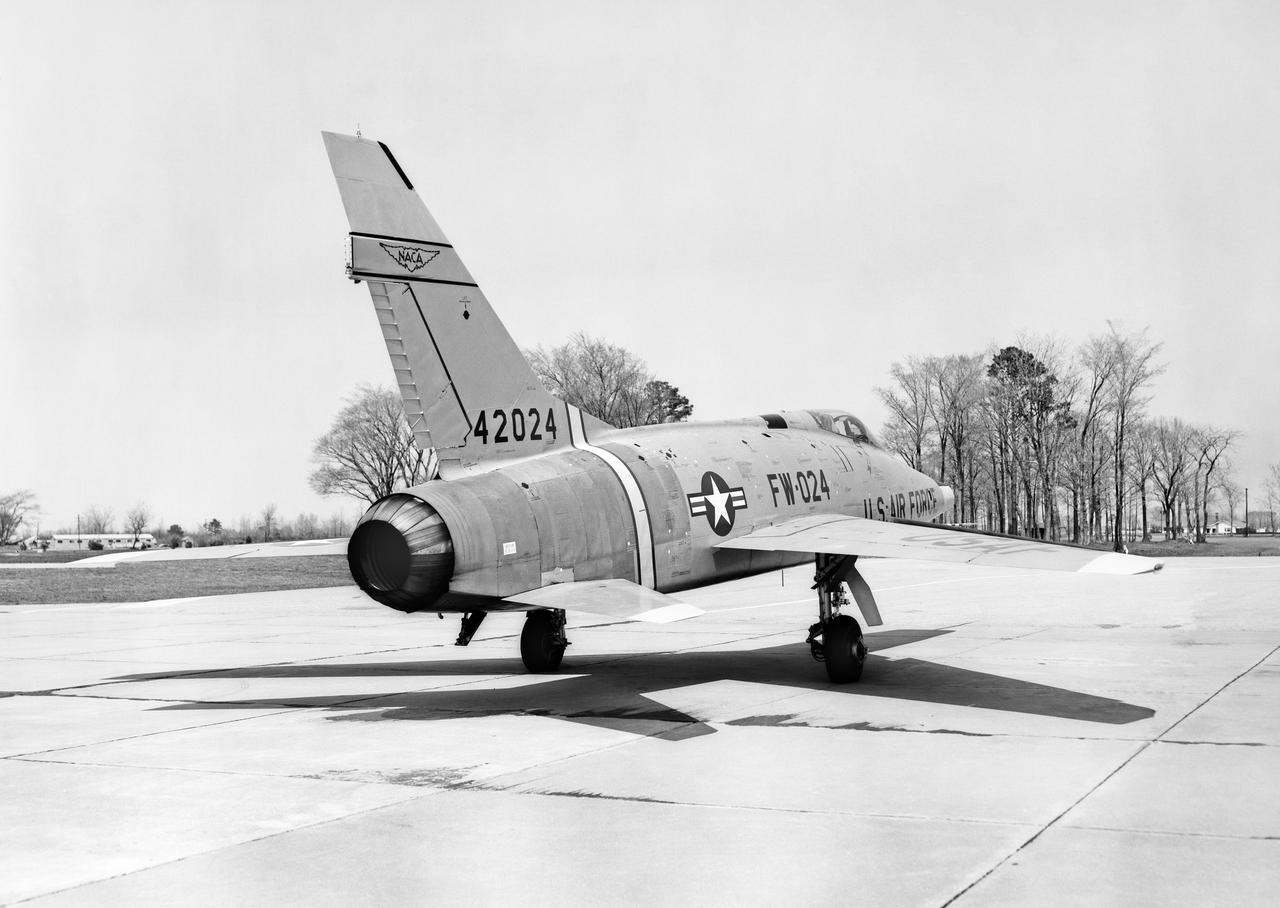
North American F-100 C airplane used in sonic boom investigation at Wallops, October 7, 1958. Photograph published in: A New Dimension Wallops Island Flight Test Range: The First Fifteen Years by Joseph Shortal. A NASA publication. Page 672. -- Aircraft number: NACA 42024. Side view, 3/4 view from front, 3/4 view from rear, rear view, and two front views.
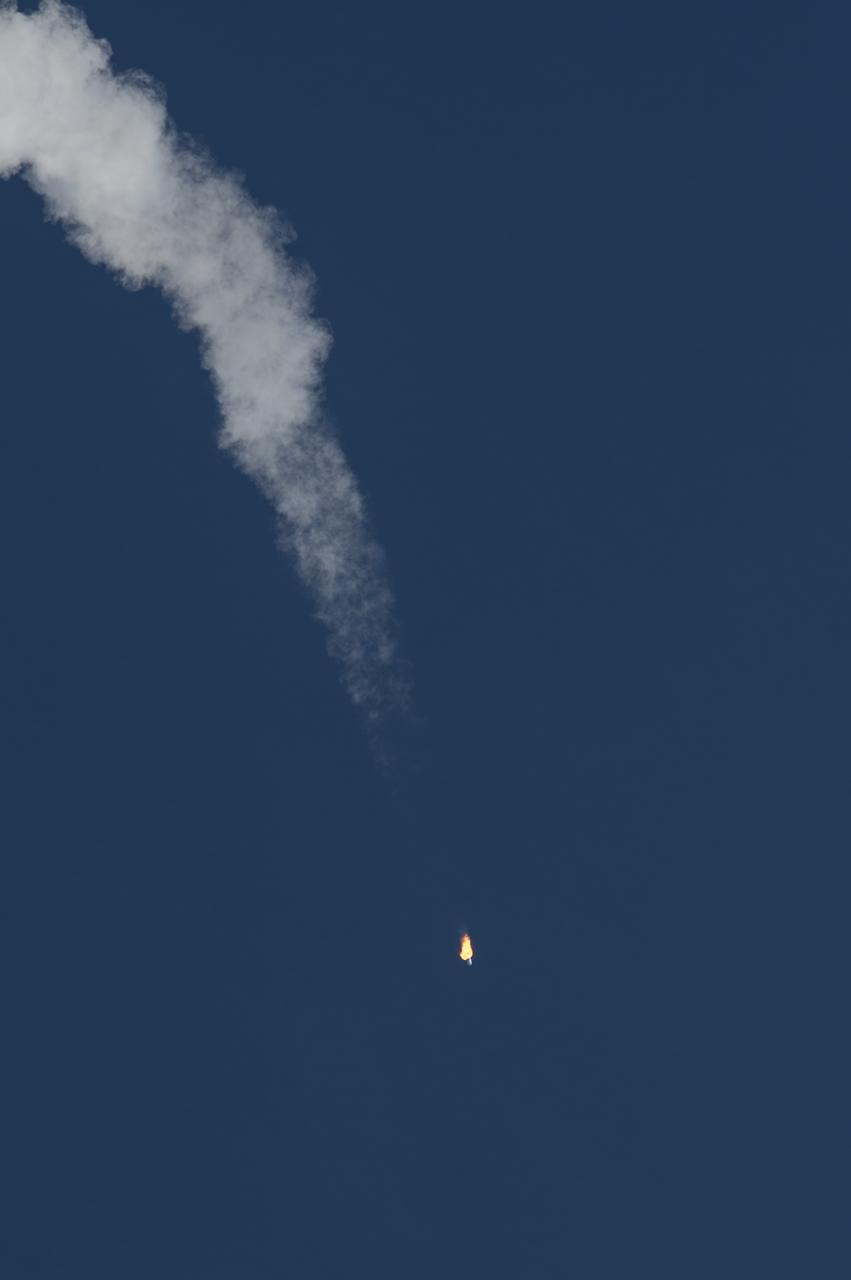
An Orbital Sciences Corporation Antares rocket is seen as it launches from Pad-0A at NASA's Wallops Flight Facility, Thursday, January 9, 2014, Wallops Island, VA. Antares is carrying the Cygnus spacecraft on a cargo resupply mission to the International Space Station. The Orbital-1 mission is Orbital Sciences' first contracted cargo delivery flight to the space station for NASA. Cygnus is carrying science experiments, crew provisions, spare parts and other hardware to the space station. Photo Credit: (NASA/Bill Ingalls)
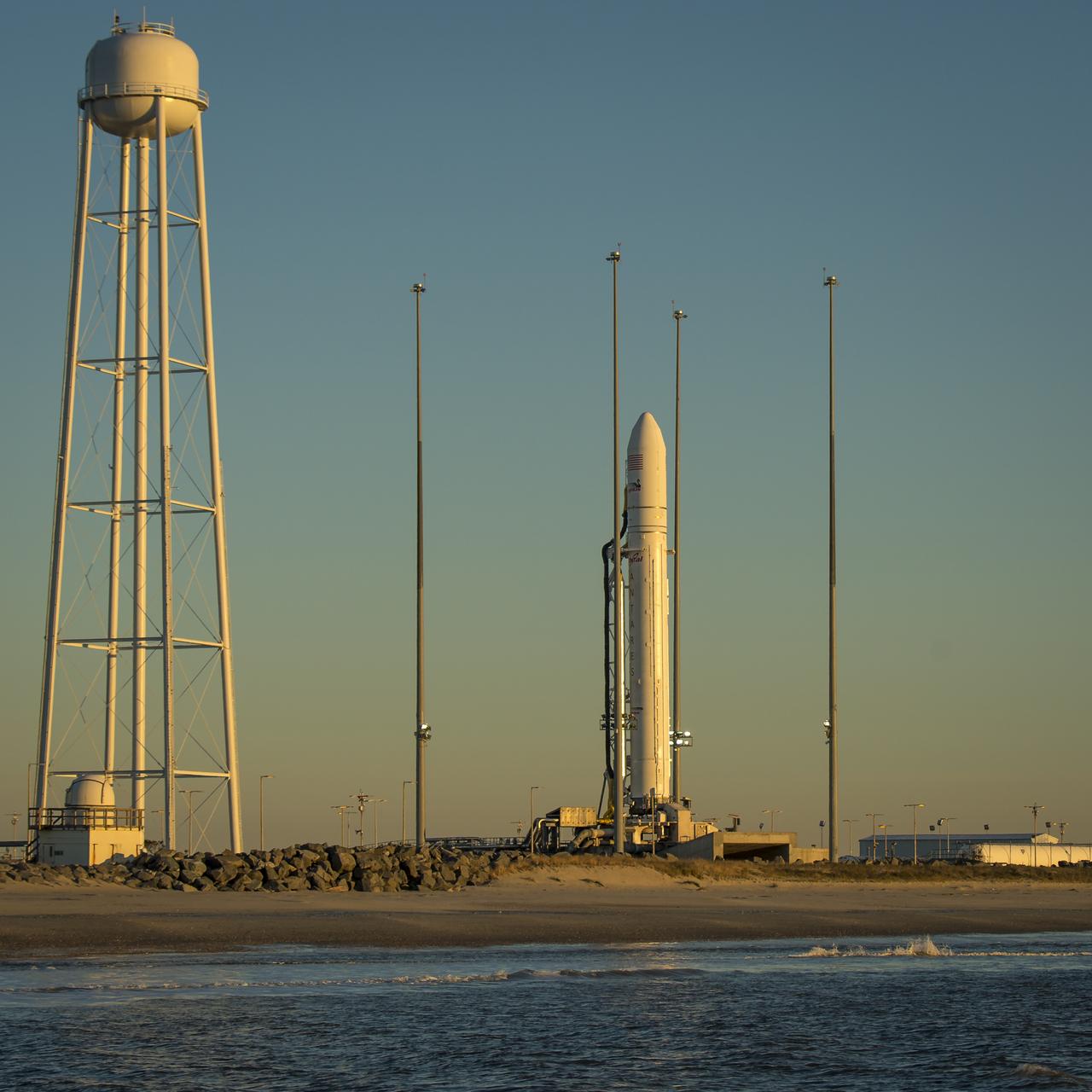
An Orbital Sciences Corporation Antares rocket is seen on launch Pad-0A during sunrise at NASA's Wallops Flight Facility, Wednesday, January 8, 2014, Wallops Island, VA. Early this morning, Orbital Sciences Corp. decided to scrub today’s launch attempt of the Antares rocket and the Cygnus cargo spacecraft on the company’s first resupply mission to the International Space Station due to an unusually high level of space radiation that exceeded constraints imposed on Antares. Photo Credit: (NASA/Bill Ingalls)
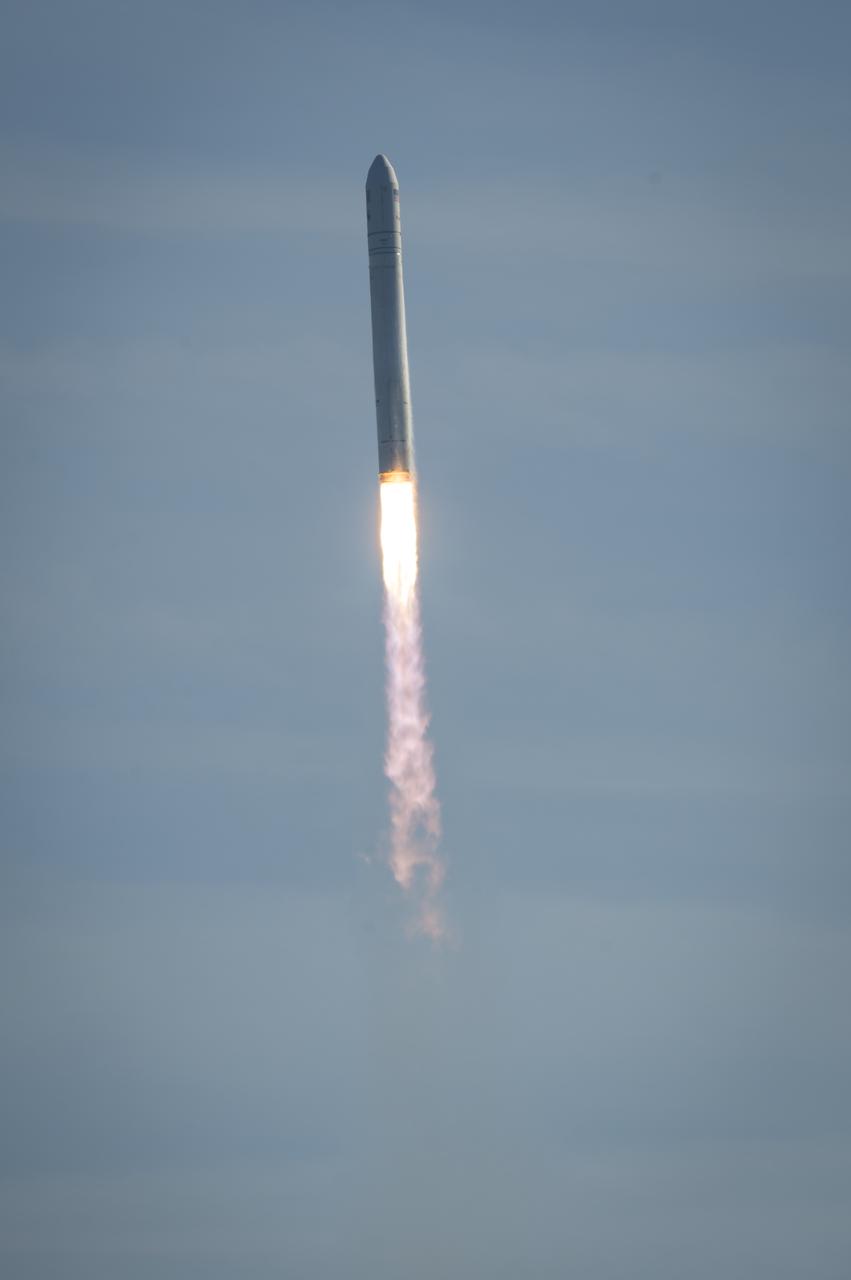
An Orbital Sciences Corporation Antares rocket is seen as it launches from Pad-0A at NASA's Wallops Flight Facility, Thursday, January 9, 2014, Wallops Island, VA. Antares is carrying the Cygnus spacecraft on a cargo resupply mission to the International Space Station. The Orbital-1 mission is Orbital Sciences' first contracted cargo delivery flight to the space station for NASA. Cygnus is carrying science experiments, crew provisions, spare parts and other hardware to the space station. Photo Credit: (NASA/Bill Ingalls)
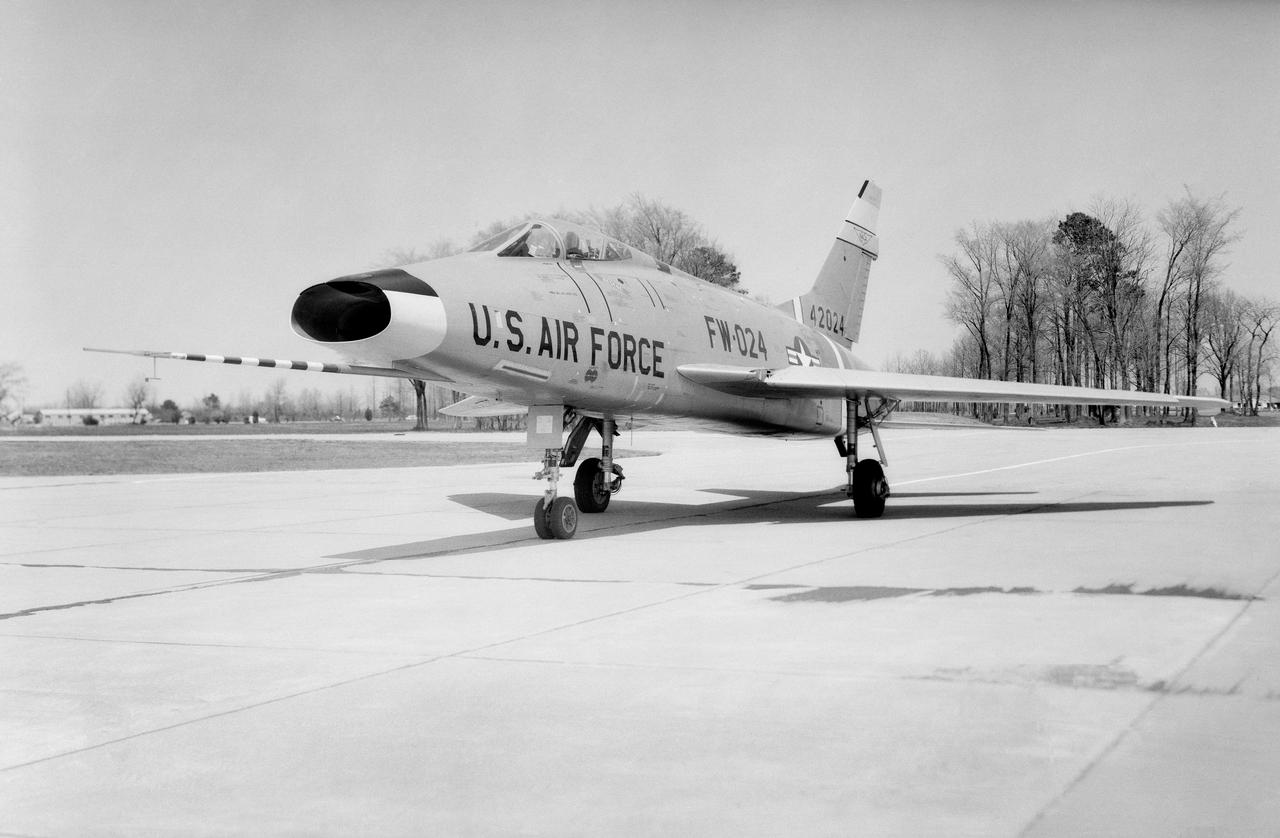
North American F-100 C airplane used in sonic boom investigation at Wallops, October 7, 1958. Photograph published in: A New Dimension Wallops Island Flight Test Range: The First Fifteen Years by Joseph Shortal. A NASA publication. Page 672. -- Aircraft number: NACA 42024. Side view, 3/4 view from front, 3/4 view from rear, rear view, and two front views.
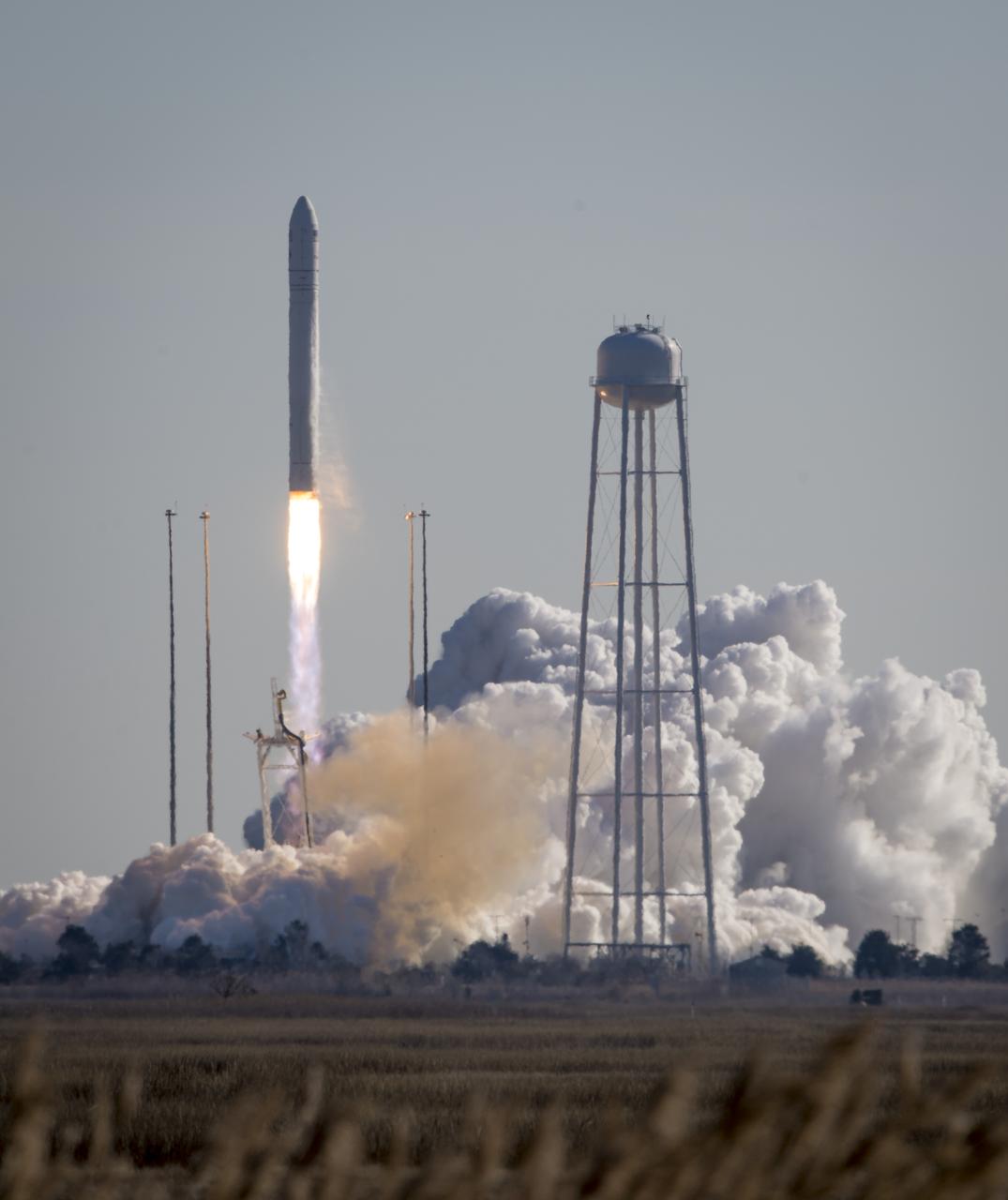
An Orbital Sciences Corporation Antares rocket is seen as it launches from Pad-0A at NASA's Wallops Flight Facility, Thursday, January 9, 2014, Wallops Island, VA. Antares is carrying the Cygnus spacecraft on a cargo resupply mission to the International Space Station. The Orbital-1 mission is Orbital Sciences' first contracted cargo delivery flight to the space station for NASA. Cygnus is carrying science experiments, crew provisions, spare parts and other hardware to the space station. Photo Credit: (NASA/Bill Ingalls)
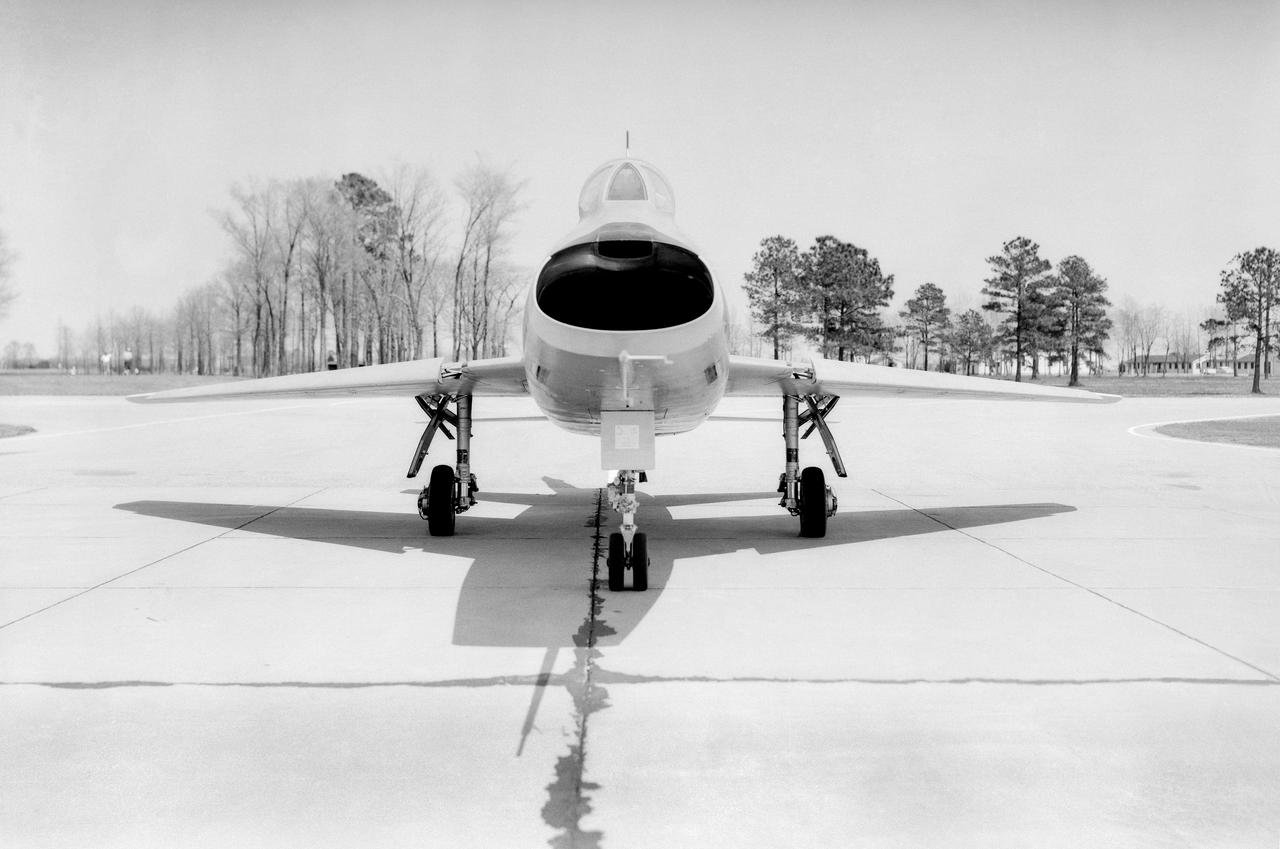
North American F-100 C airplane used in sonic boom investigation at Wallops, October 7, 1958. Photograph published in: A New Dimension Wallops Island Flight Test Range: The First Fifteen Years by Joseph Shortal. A NASA publication. Page 672. -- Aircraft number: NACA 42024. Side view, 3/4 view from front, 3/4 view from rear, rear view, and two front views.
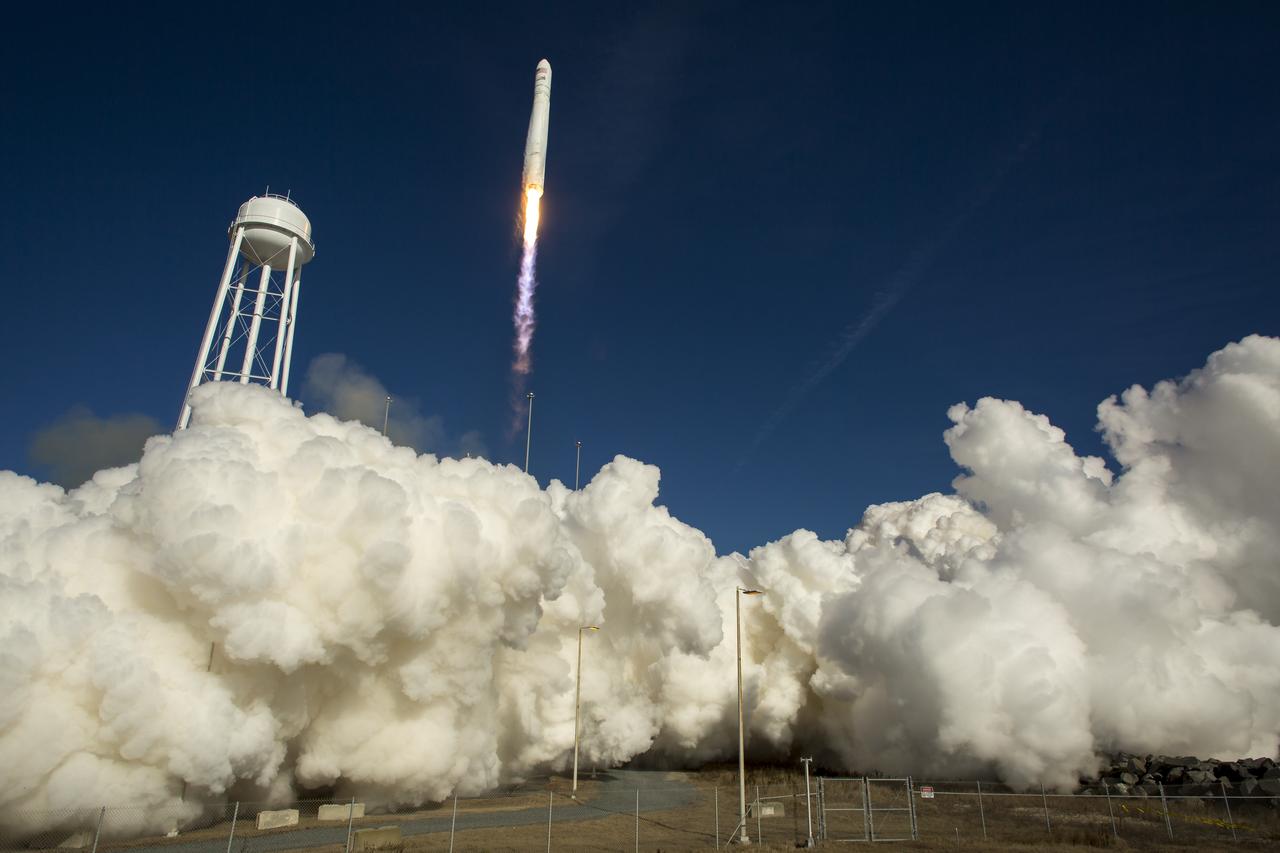
An Orbital Sciences Corporation Antares rocket is seen as it launches from Pad-0A at NASA's Wallops Flight Facility, Thursday, January 9, 2014, Wallops Island, VA. Antares is carrying the Cygnus spacecraft on a cargo resupply mission to the International Space Station. The Orbital-1 mission is Orbital Sciences' first contracted cargo delivery flight to the space station for NASA. Cygnus is carrying science experiments, crew provisions, spare parts and other hardware to the space station. Photo Credit: (NASA/Bill Ingalls)
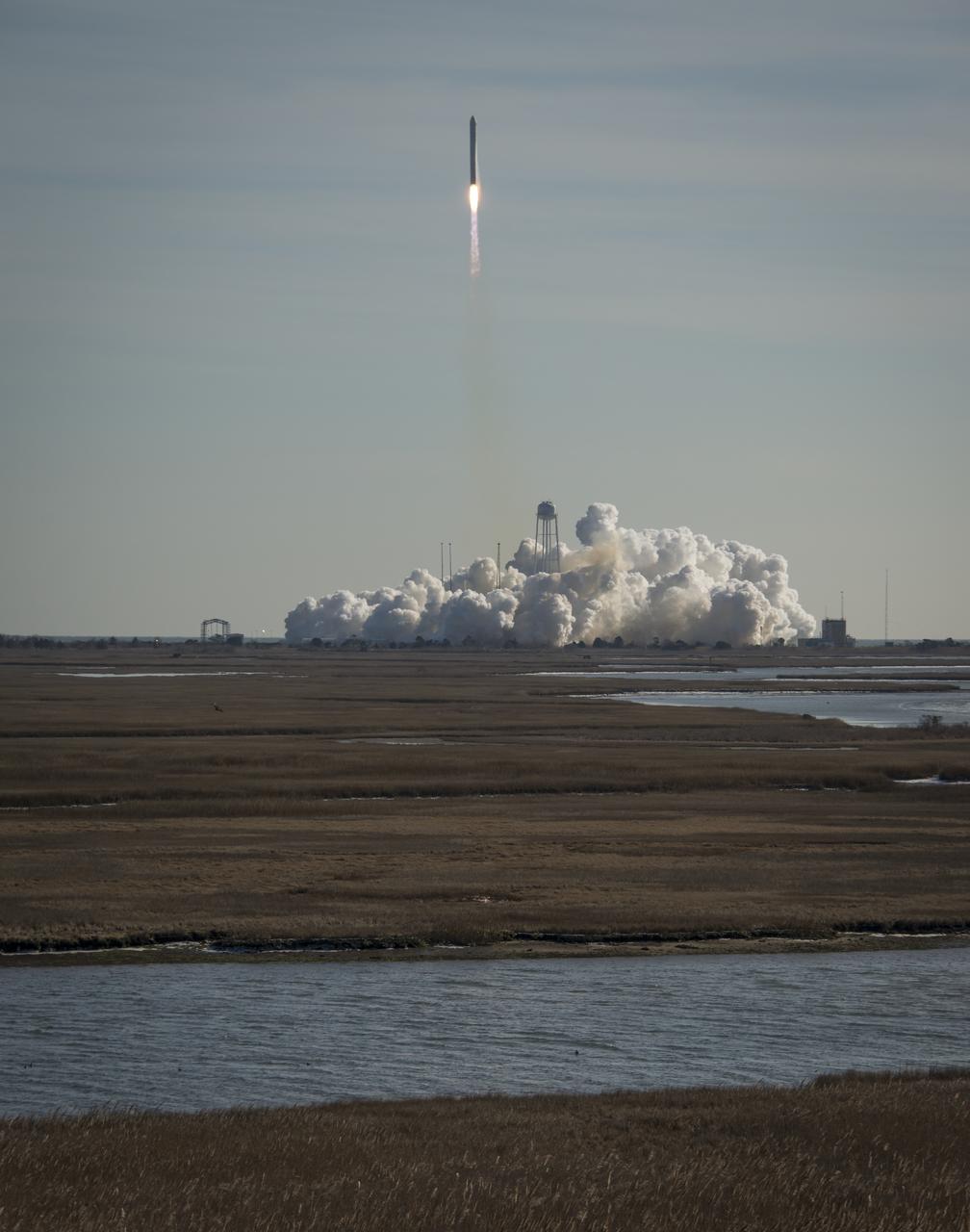
An Orbital Sciences Corporation Antares rocket is seen as it launches from Pad-0A at NASA's Wallops Flight Facility, Thursday, January 9, 2014, Wallops Island, VA. Antares is carrying the Cygnus spacecraft on a cargo resupply mission to the International Space Station. The Orbital-1 mission is Orbital Sciences' first contracted cargo delivery flight to the space station for NASA. Cygnus is carrying science experiments, crew provisions, spare parts and other hardware to the space station. Photo Credit: (NASA/Bill Ingalls)
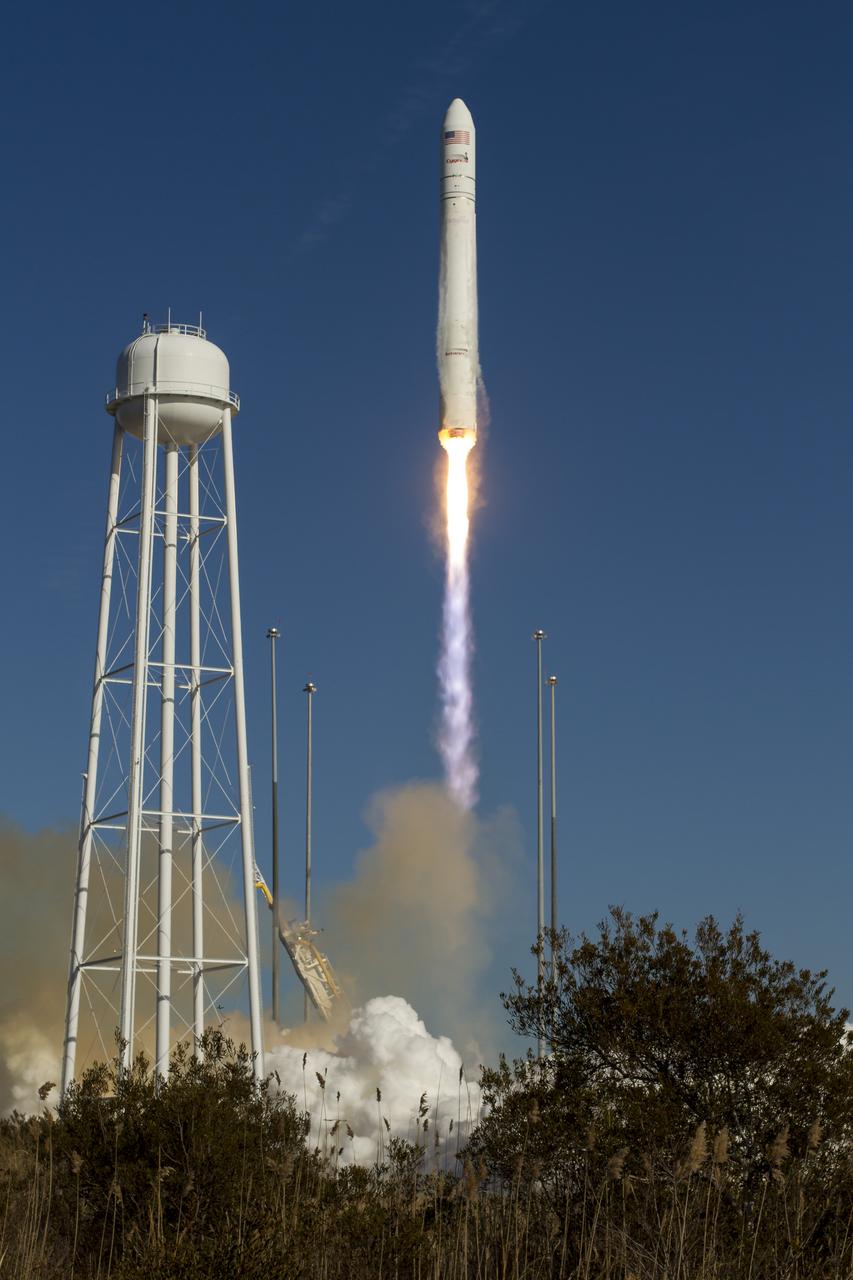
An Orbital Sciences Corporation Antares rocket is seen as it launches from Pad-0A at NASA's Wallops Flight Facility, Thursday, January 9, 2014, Wallops Island, VA. Antares is carrying the Cygnus spacecraft on a cargo resupply mission to the International Space Station. The Orbital-1 mission is Orbital Sciences' first contracted cargo delivery flight to the space station for NASA. Cygnus is carrying science experiments, crew provisions, spare parts and other hardware to the space station. Photo Credit: (NASA/Bill Ingalls)
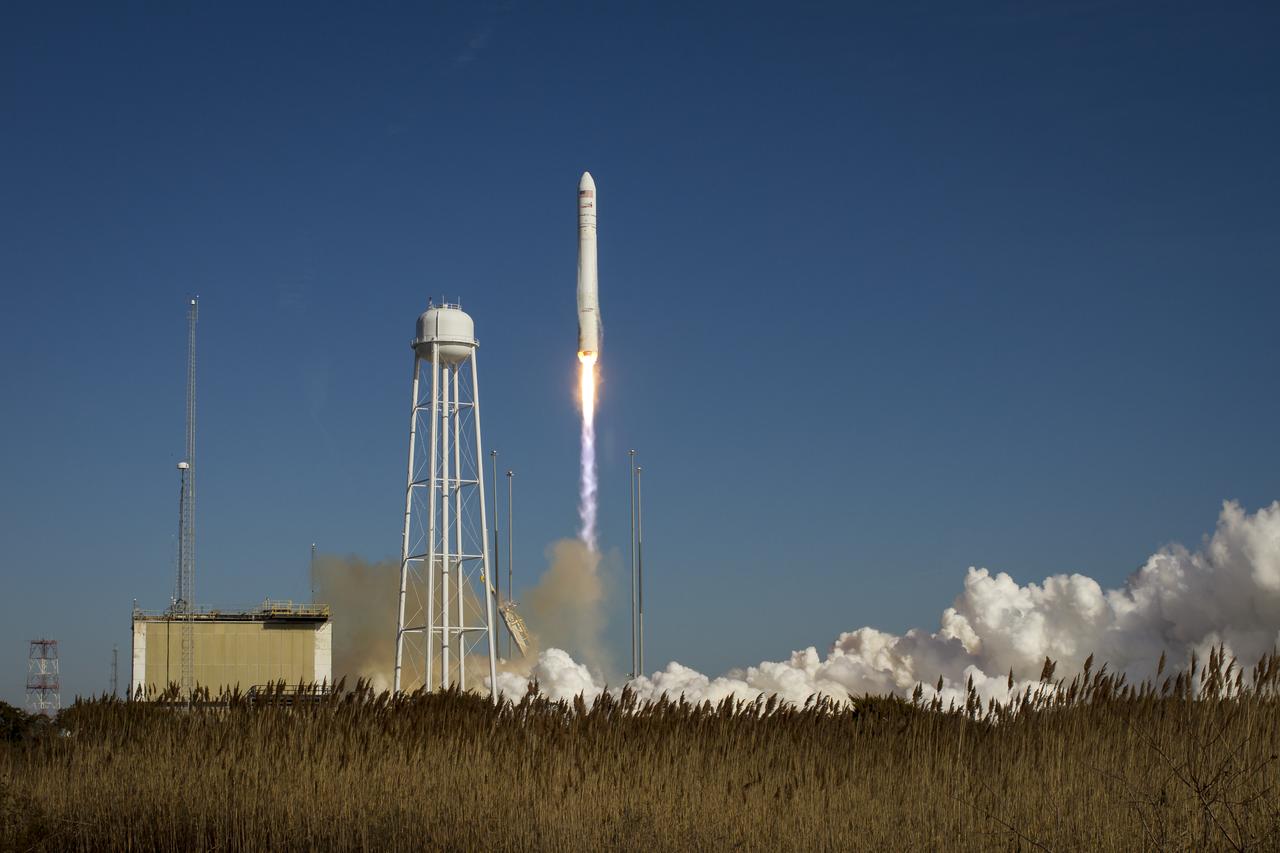
An Orbital Sciences Corporation Antares rocket is seen as it launches from Pad-0A at NASA's Wallops Flight Facility, Thursday, January 9, 2014, Wallops Island, VA. Antares is carrying the Cygnus spacecraft on a cargo resupply mission to the International Space Station. The Orbital-1 mission is Orbital Sciences' first contracted cargo delivery flight to the space station for NASA. Cygnus is carrying science experiments, crew provisions, spare parts and other hardware to the space station. Photo Credit: (NASA/Bill Ingalls)
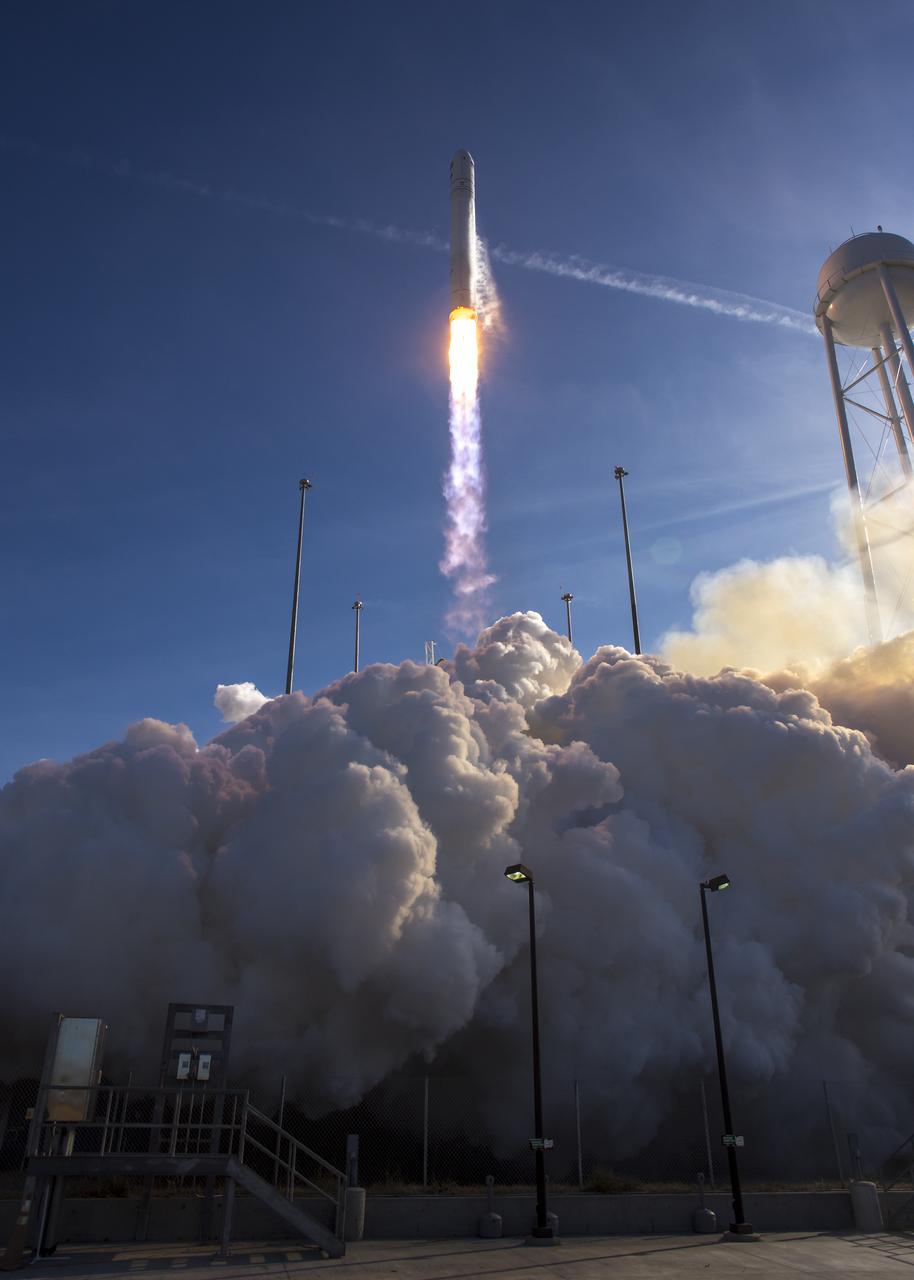
An Orbital Sciences Corporation Antares rocket is seen as it launches from Pad-0A at NASA's Wallops Flight Facility, Thursday, January 9, 2014, Wallops Island, VA. Antares is carrying the Cygnus spacecraft on a cargo resupply mission to the International Space Station. The Orbital-1 mission is Orbital Sciences' first contracted cargo delivery flight to the space station for NASA. Cygnus is carrying science experiments, crew provisions, spare parts and other hardware to the space station. Photo Credit: (NASA/Bill Ingalls)
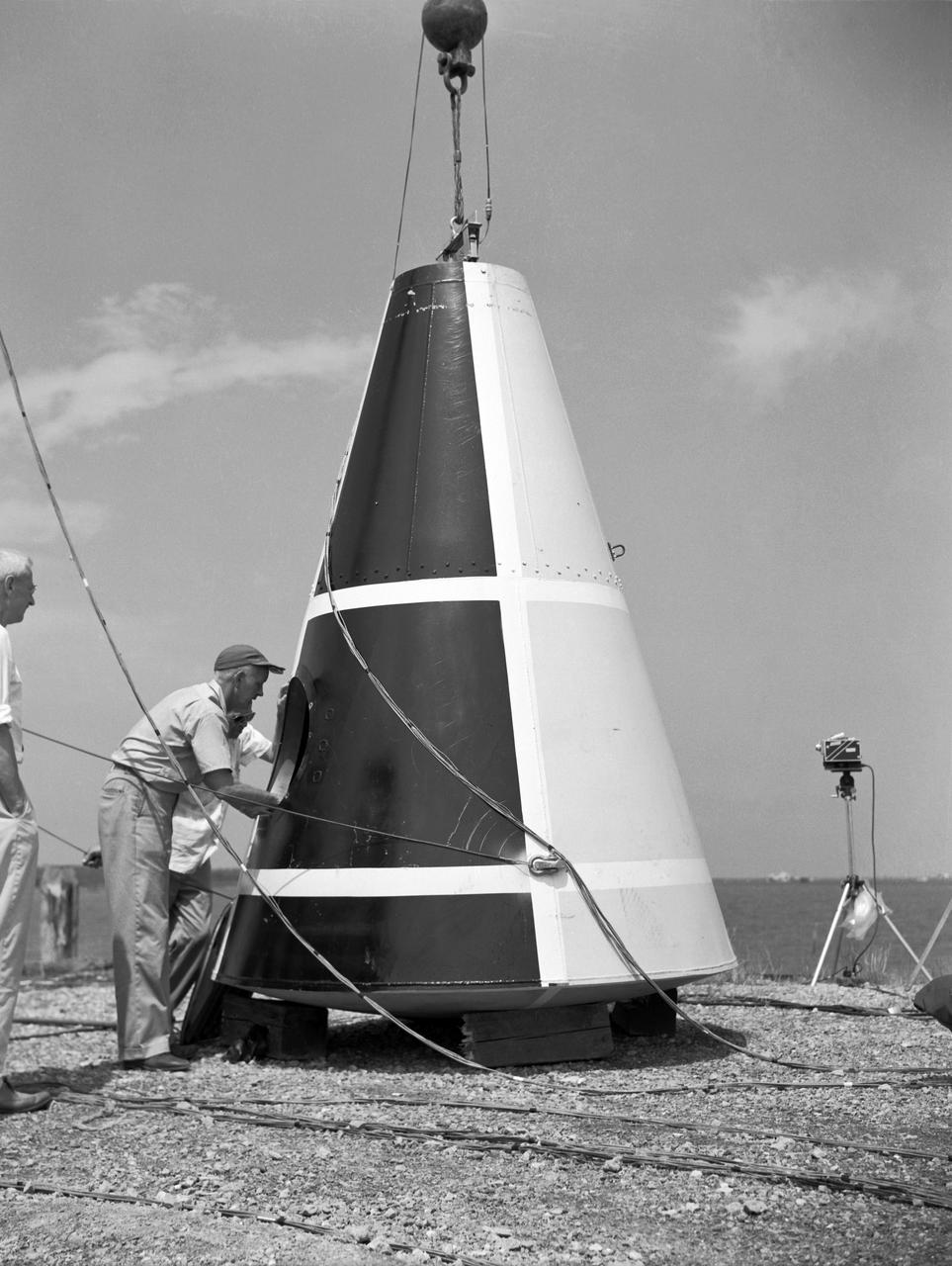
Photographed on: 08 05 1958. -- Impact test conducted by Langley's Hydrodynamics Division. The Division conducted a series of impact studies with full scale and model capsules of the original capsule shape A. Joseph Shortal wrote (Vol. 3, p. 16): The basic design of the capsule was made by M.A. Faget and his coworkers at PARD during the winter of 1957-1958. It was natural, then, that extensive use was made of the facilities at Wallops during the development of the spacecraft. The tests at Wallops consisted of 26 full-size capsules, either launched from the ground by rocket power or dropped from airplanes at high altitude and 28 scaled models, either rocket boosted or released from balloons. Emphasis in the Wallops program was on dynamic stability and aerodynamic heating of the capsule, and effectiveness of the pilot-escape and parachute-recovery systems. The biggest part of the Wallops program was the series of full-size capsules, rocket launched with the Little Joe booster, developed especially for Mercury. -- Published in Joseph A. Shortal, History of Wallops Station: Origins and Activities Through 1949, (Wallops Island, VA: National Aeronautics and Space Administration, Wallops Station, nd), Comment Edition.