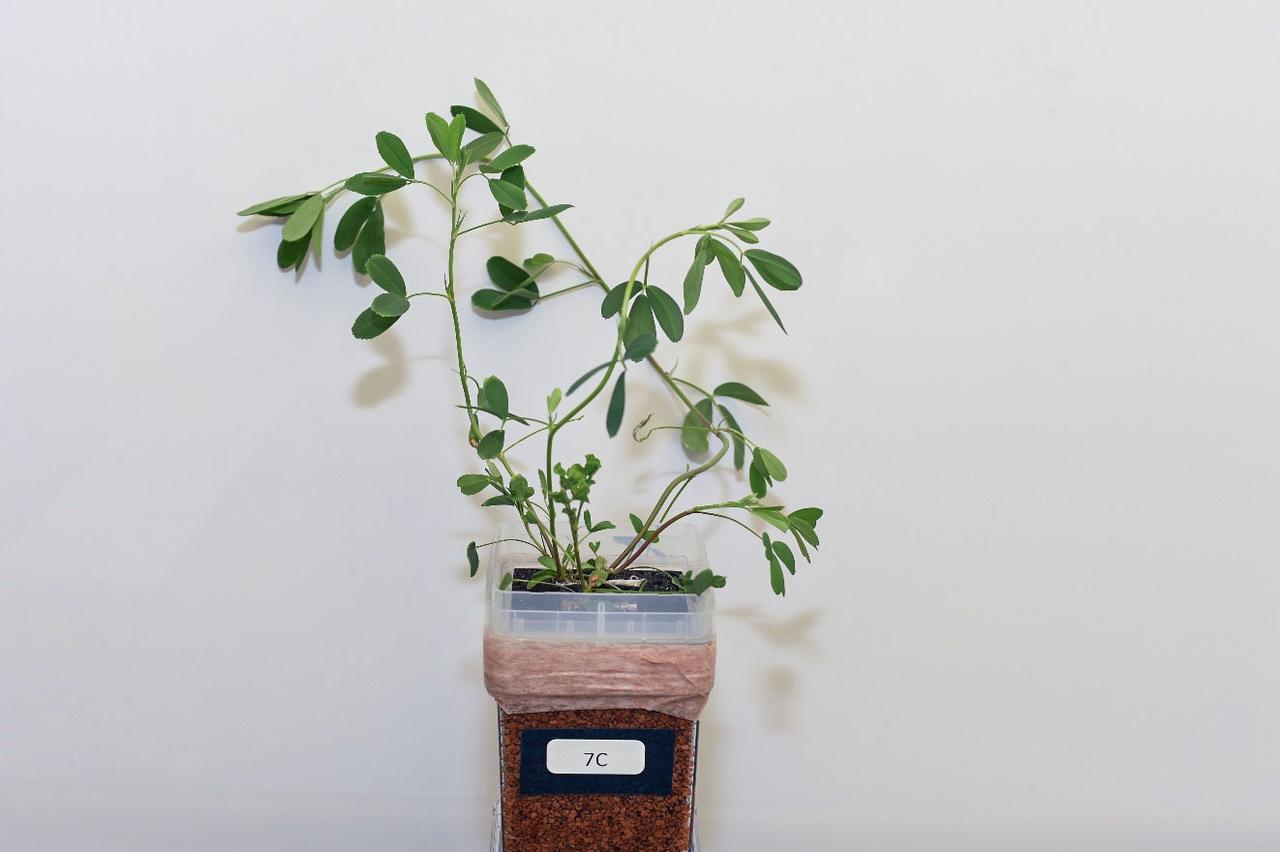
Alfalfa (Medicago sativa) grown with reduced lignin during preflight testing as part of Dissecting Beneficial Plant-Microbe Interactions and their Efficacy in the ISS Spaceflight Environment, a Model Study (Veg-06). This investigation examines spaceflight’s effects on the interactions between plants and nitrogen-fixing bacteria called rhizobia. A second part to this investigation studies the effects of reduced lignin in a space environment. Lignin is a biopolymer that reinforces plant cell walls thereby enabling plants to grow upward against the forces of gravity. Growing plants with less lignin may be feasible in environments with low gravity and may have the added benefit of biodegrading more readily, thereby facilitating the growth of future generations. Credit: Washington State University.
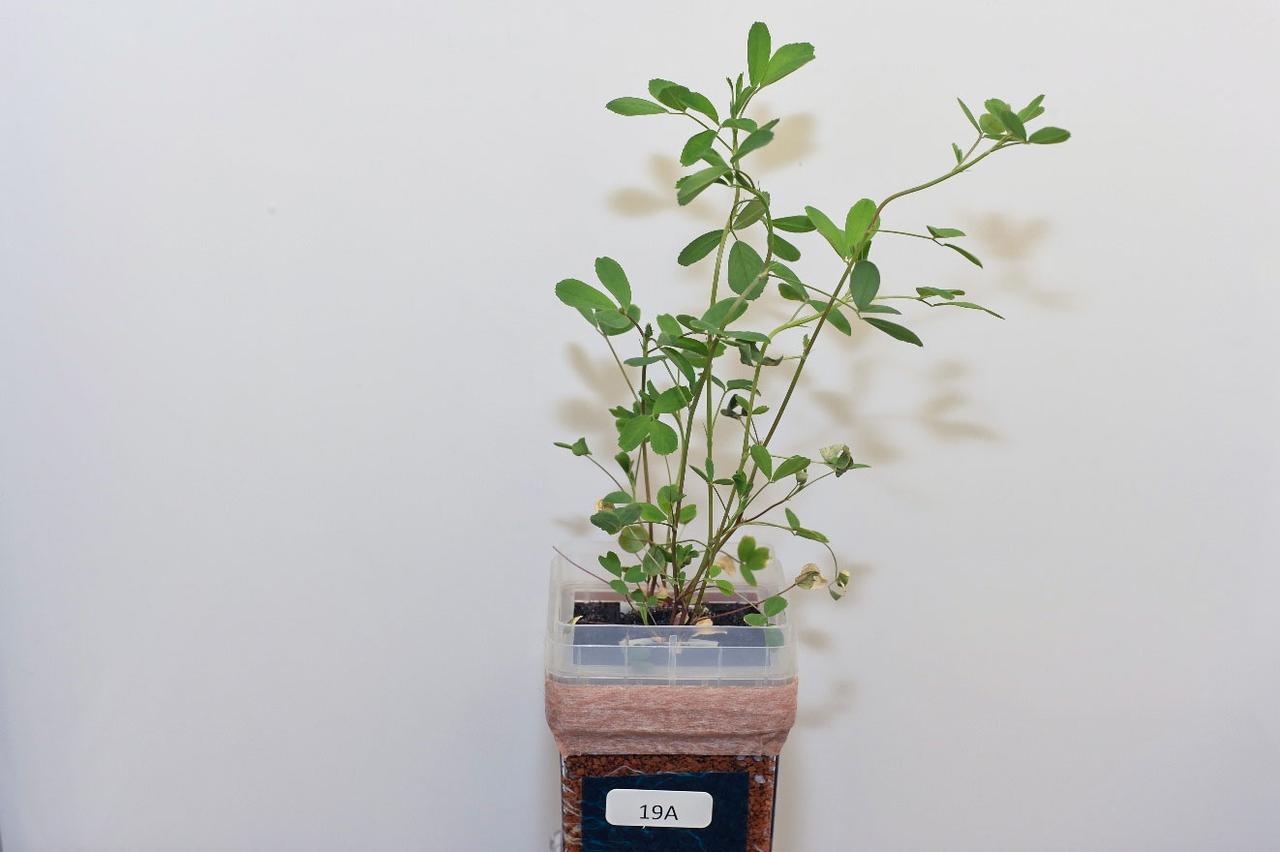
Alfalfa (Medicago sativa) grown with nitrogen during preflight testing as part of Dissecting Beneficial Plant-Microbe Interactions and their Efficacy in the ISS Spaceflight Environment, a Model Study (Veg-06). This investigation examines spaceflight’s effects on the interactions between plants and nitrogen-fixing bacteria called rhizobia. These bacteria can take up nitrogen gas from the air and convert it into ammonia, a form of nitrogen plants can use for growth. One component of the nitrogen fixation emphasis in Veg-06 will compare the growth of alfalfa with rhizobia but no nitrogen fertilizer, alfalfa with rhizobia and a source of nitrogen fertilizer, and alfalfa with neither fertilizer nor rhizobia. Results could provide a fundamental understanding of the interactions of plants and microbes for nitrogen fixation in microgravity and advance the ways to grow plants for food on future space missions. Credit: Washington State University.
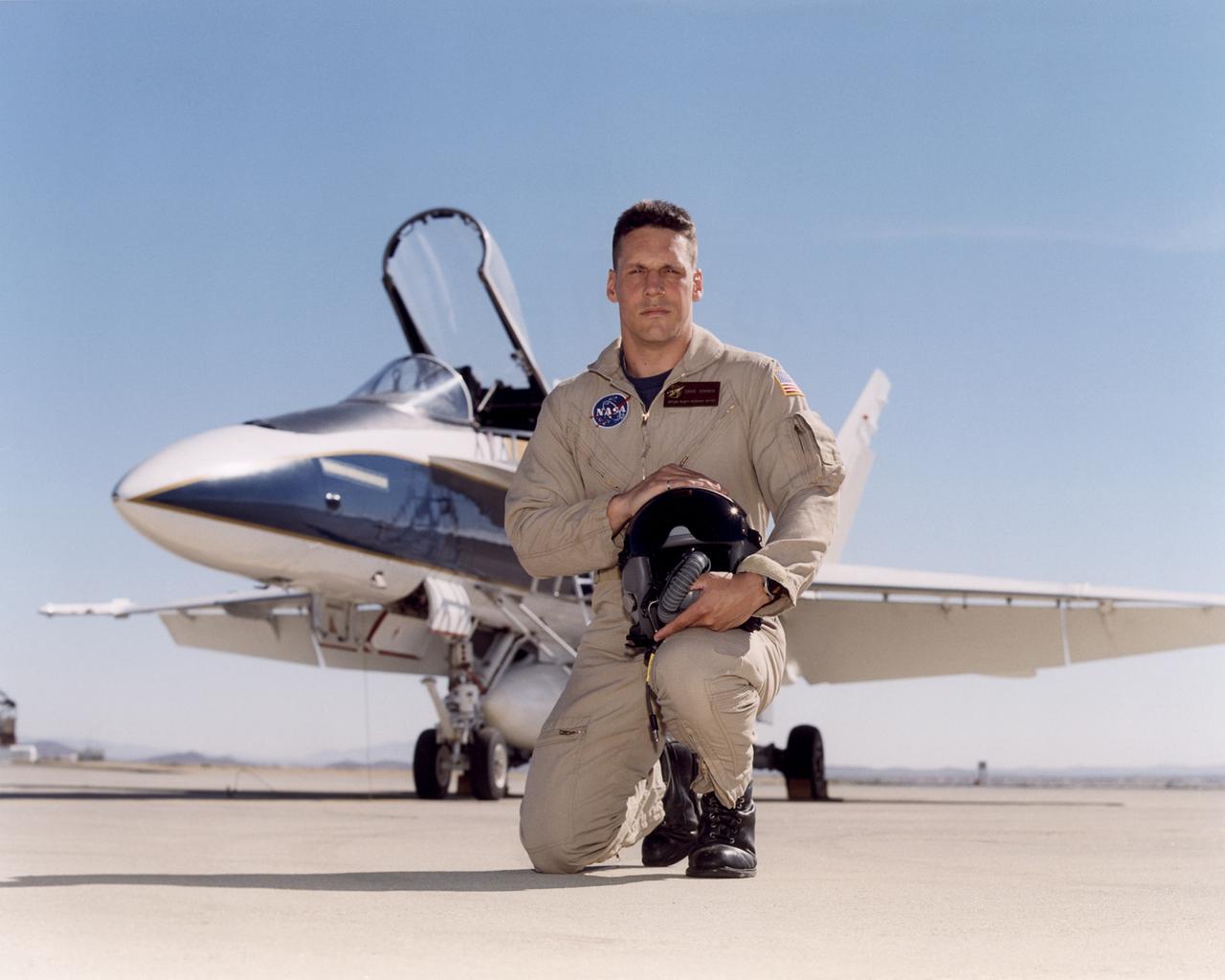
Craig R. Bomben became a pilot in the Flight Crew Branch of NASA's Dryden Flight Research Center, Edwards, Calif., in June 2001. His flying duties include a variety of research and support activities while piloting the F/A-18, DC-8, T-34C and King Air aircraft. He has more than 17 years and 3,800 hours of military and civilian flight experience in over 50 different aircraft types. Bomben came to NASA Dryden from a U.S. Navy assignment to the Personnel Exchange Program, Canada. He served as a test pilot in the Canadian Armed Forces located in Cold Lake, Alberta. He participated in numerous developmental programs to include CT-133 airborne ejection seat testing, F/A-18 weapons flutter testing and F/A-18 night vision goggles integration. Bomben performed U.S. Navy fleet service in 1995 as a strike-fighter department head. He completed two overseas deployments onboard the USS George Washington and USS Stennis. As a combat strike leader, he headed numerous multi-national missions over Iraq in support of Operation Southern Watch. Bomben graduated from the U.S. Naval Test Pilot School in 1992 and was subsequently assigned to the Naval Weapons Test Squadron at Pt. Mugu, Calif. During this tour he developed the F-14D bombsight and worked on various other F-14D and F/A-18 weapon systems developmental programs. Bomben is a 1985 graduate of Washington State University with a bachelor of science degree in electrical engineering. He graduated from naval flight training in 1987 and was recognized as a Commodore List graduate. His first assignment was to Naval Air Station Pensacola, Fla., where he was an instructor in the T-2B Buckeye. When selected to fly the F/A-18 in 1989, he joined a fleet squadron and deployed aboard the USS Forrestal. Bomben is married to the former Aissa Asuncion. They live in Lancaster, Calif., with their 3 children.
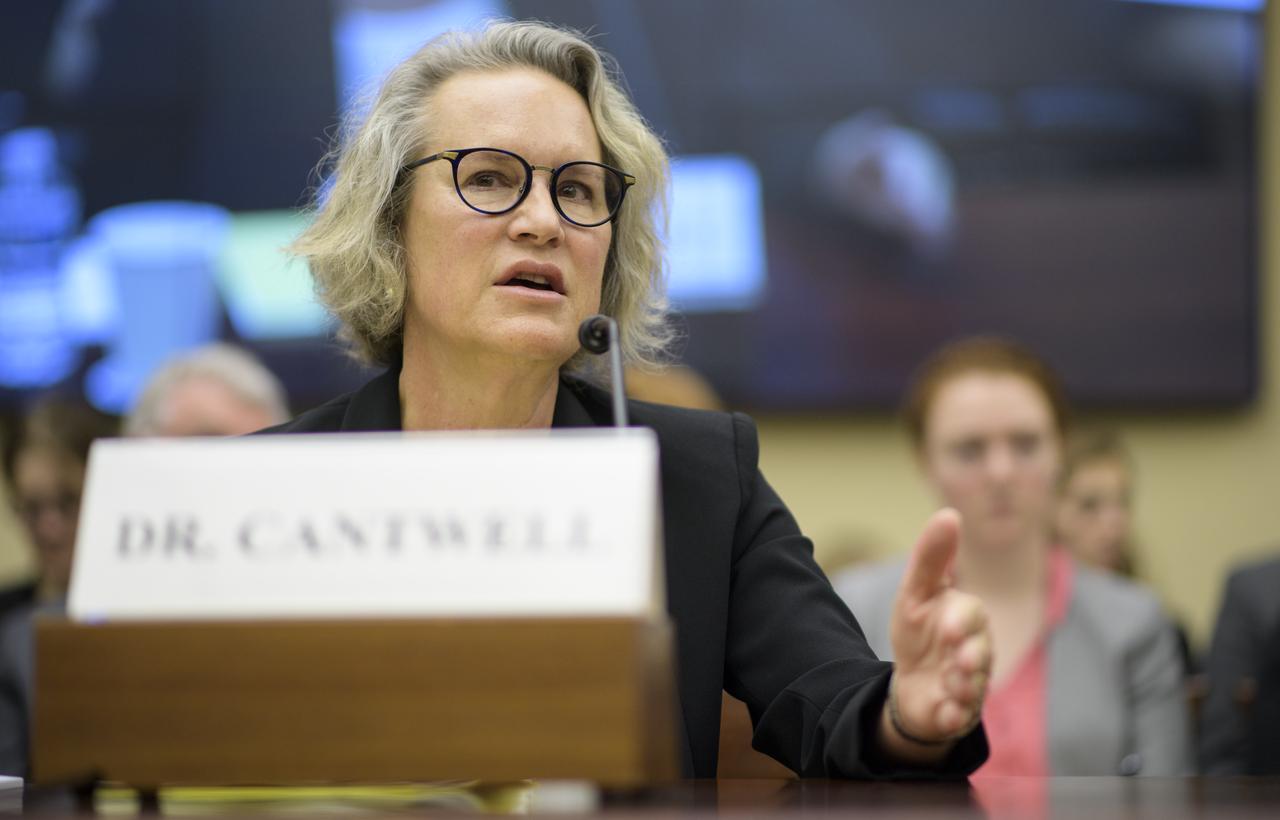
Elizabeth Cantwell, chief executive officer at the Arizona State University Research Enterprise, testifies during a House Committee on Science, Space, and Technology hearing titled "America's Human Presence in Low-Earth Orbit" on Thursday, May 17, 2018 in the Rayburn House Office Building in Washington. Photo Credit: (NASA/Joel Kowsky)

Lisa Whitehead of the United States Postal Service sings the national anthem at the first-day-of-issue event for the United States Postal Service’s new stamp celebrating NASA’s James Webb Space Telescope (JWST) on Thursday, Sept. 8, 2022, at the Smithsonian’s National Postal Museum in Washington. The stamp, which features an illustration of the observatory, honors Webb’s mission to explore the unknown in our universe – solving mysteries in our solar system, looking beyond to distant worlds around other stars, and probing the structures and origins of our universe and our place in it. Photo Credit: (NASA/Aubrey Gemignani)
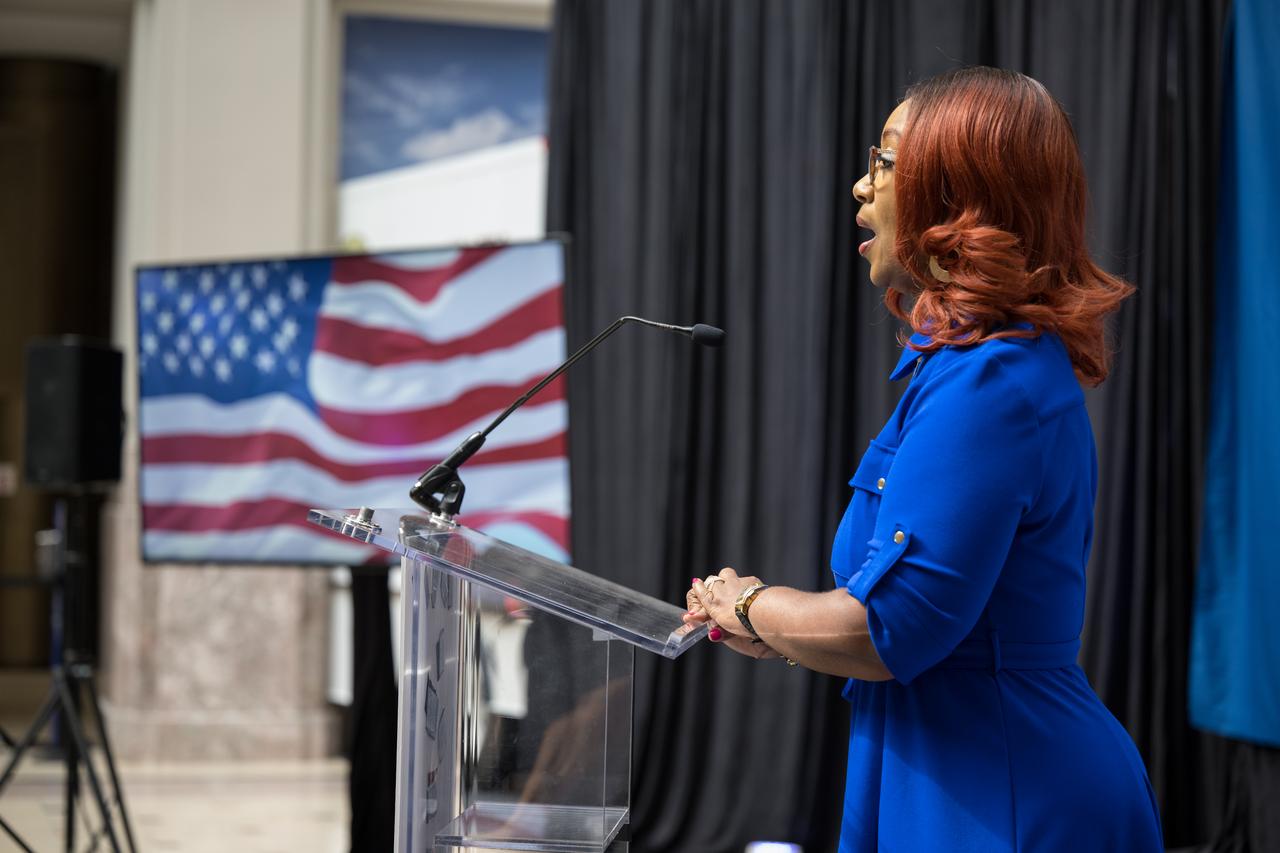
Lisa Whitehead of the United States Postal Service sings the national anthem at the first-day-of-issue event for the United States Postal Service’s new stamp celebrating NASA’s James Webb Space Telescope (JWST) on Thursday, Sept. 8, 2022, at the Smithsonian’s National Postal Museum in Washington. The stamp, which features an illustration of the observatory, honors Webb’s mission to explore the unknown in our universe – solving mysteries in our solar system, looking beyond to distant worlds around other stars, and probing the structures and origins of our universe and our place in it. Photo Credit: (NASA/Aubrey Gemignani)
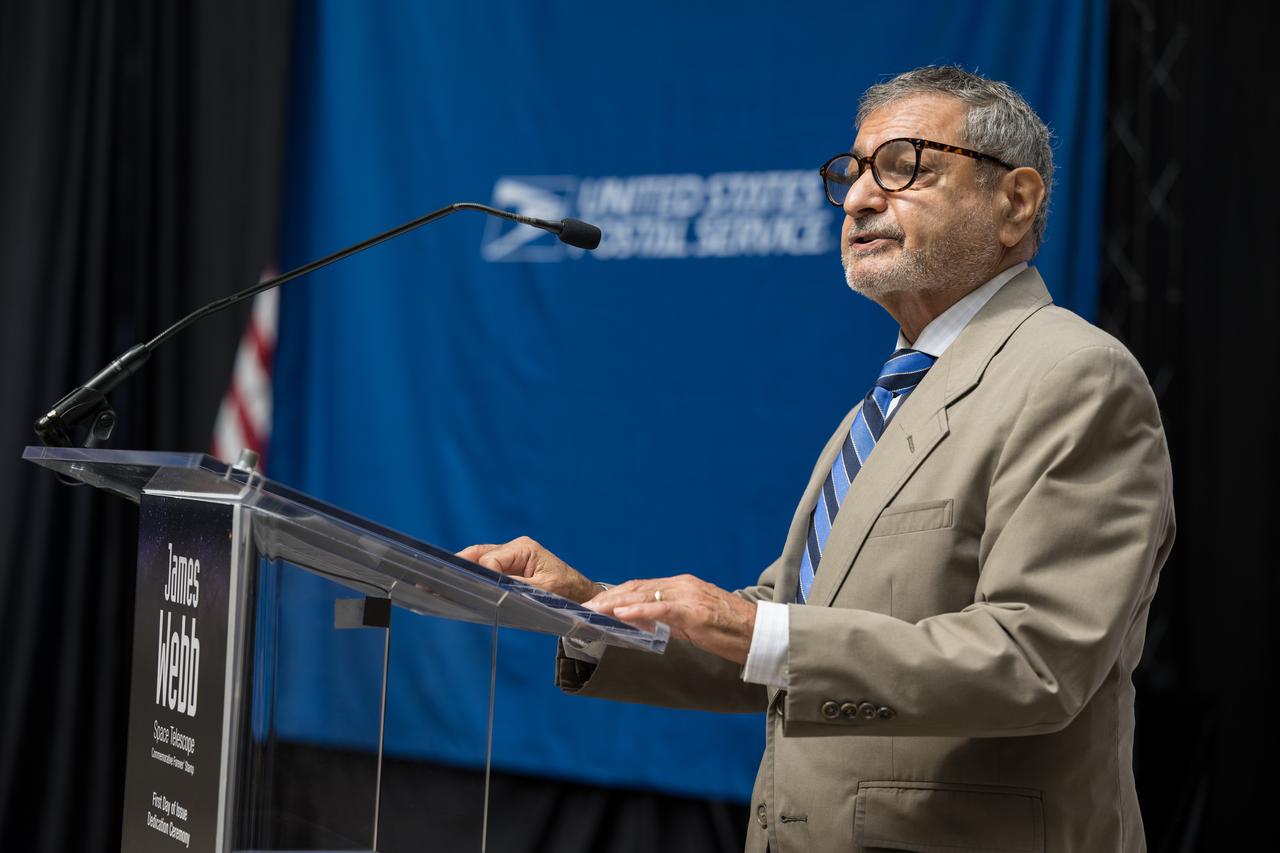
United States Postal Service Vice Chairman, Board of Governors, Anton Hajjar, provides remarks at the first-day-of-issue event for the United States Postal Service’s new stamp celebrating NASA’s James Webb Space Telescope (JWST) on Thursday, Sept. 8, 2022, at the Smithsonian’s National Postal Museum in Washington. The stamp, which features an illustration of the observatory, honors Webb’s mission to explore the unknown in our universe – solving mysteries in our solar system, looking beyond to distant worlds around other stars, and probing the structures and origins of our universe and our place in it. Photo Credit: (NASA/Aubrey Gemignani)
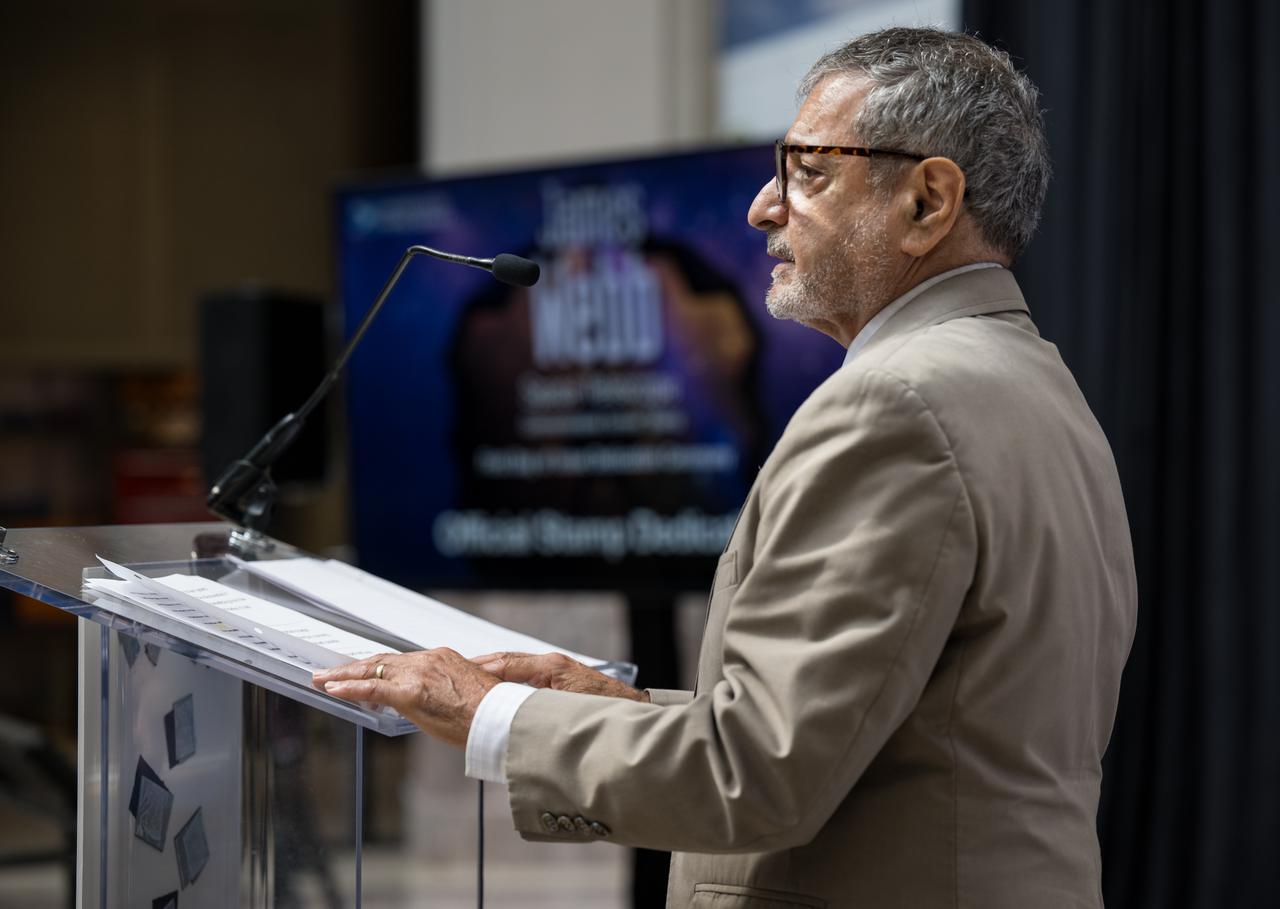
United States Postal Service Vice Chairman, Board of Governors, Anton Hajjar, provides remarks at the first-day-of-issue event for the United States Postal Service’s new stamp celebrating NASA’s James Webb Space Telescope (JWST) on Thursday, Sept. 8, 2022, at the Smithsonian’s National Postal Museum in Washington. The stamp, which features an illustration of the observatory, honors Webb’s mission to explore the unknown in our universe – solving mysteries in our solar system, looking beyond to distant worlds around other stars, and probing the structures and origins of our universe and our place in it. Photo Credit: (NASA/Aubrey Gemignani)
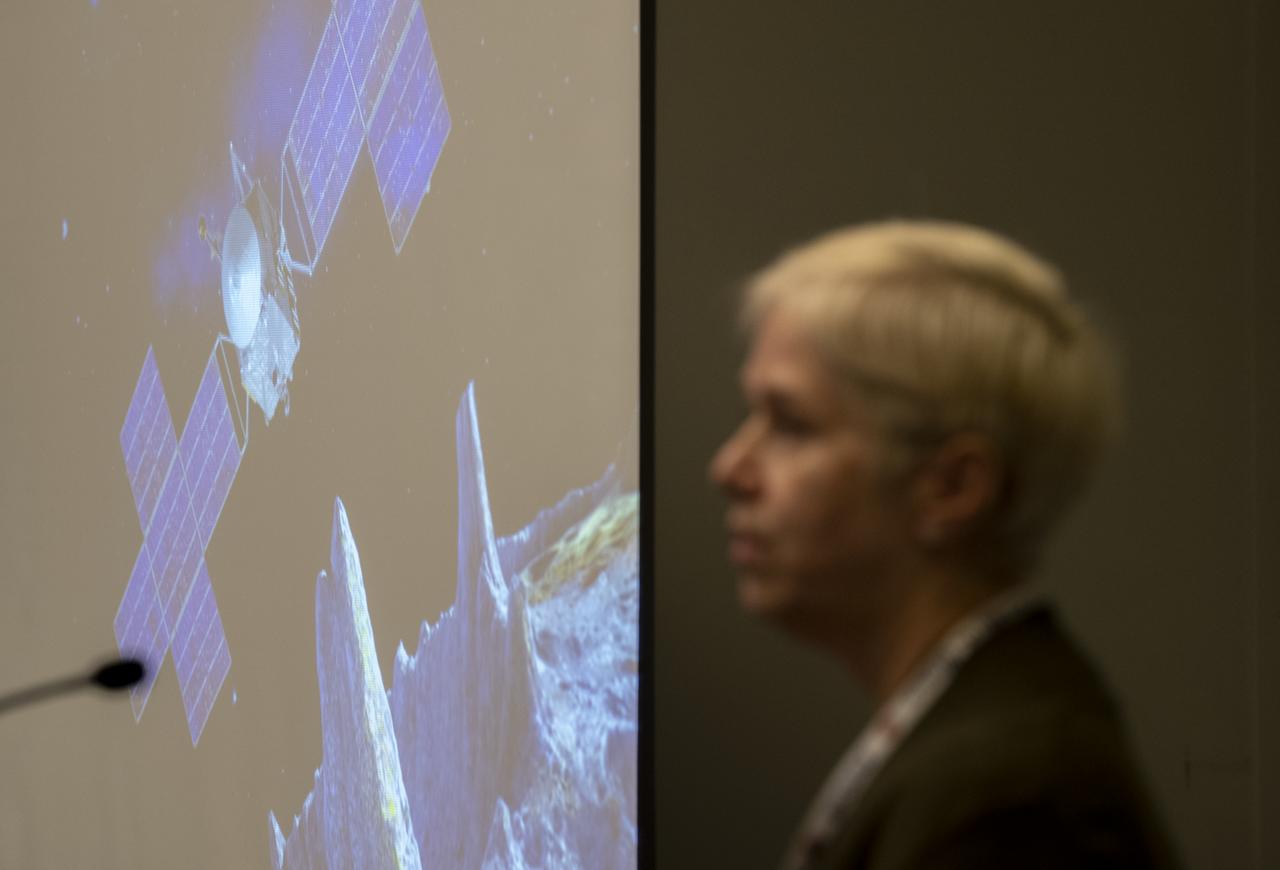
An artists rendition of the Psyche spacecraft is seen on scree as Linda Elkins-Tanton, Managing Director and Foundation Professor of Arizona State University’s School of Earth and Space Exploration, is seen during a keynote titled “The ASU Interplanetary Initiative: Advancing Society Through ” at the 70th International Astronautical Congress, Tuesday, Oct. 22, 2019 at the Walter E. Washington Convention Center in Washington. Elkins-Tanton is the principle investigator of NASA’s upcoming Psyche mission which is scheduled to launch in 2022. Photo Credit: (NASA/Joel Kowsky)
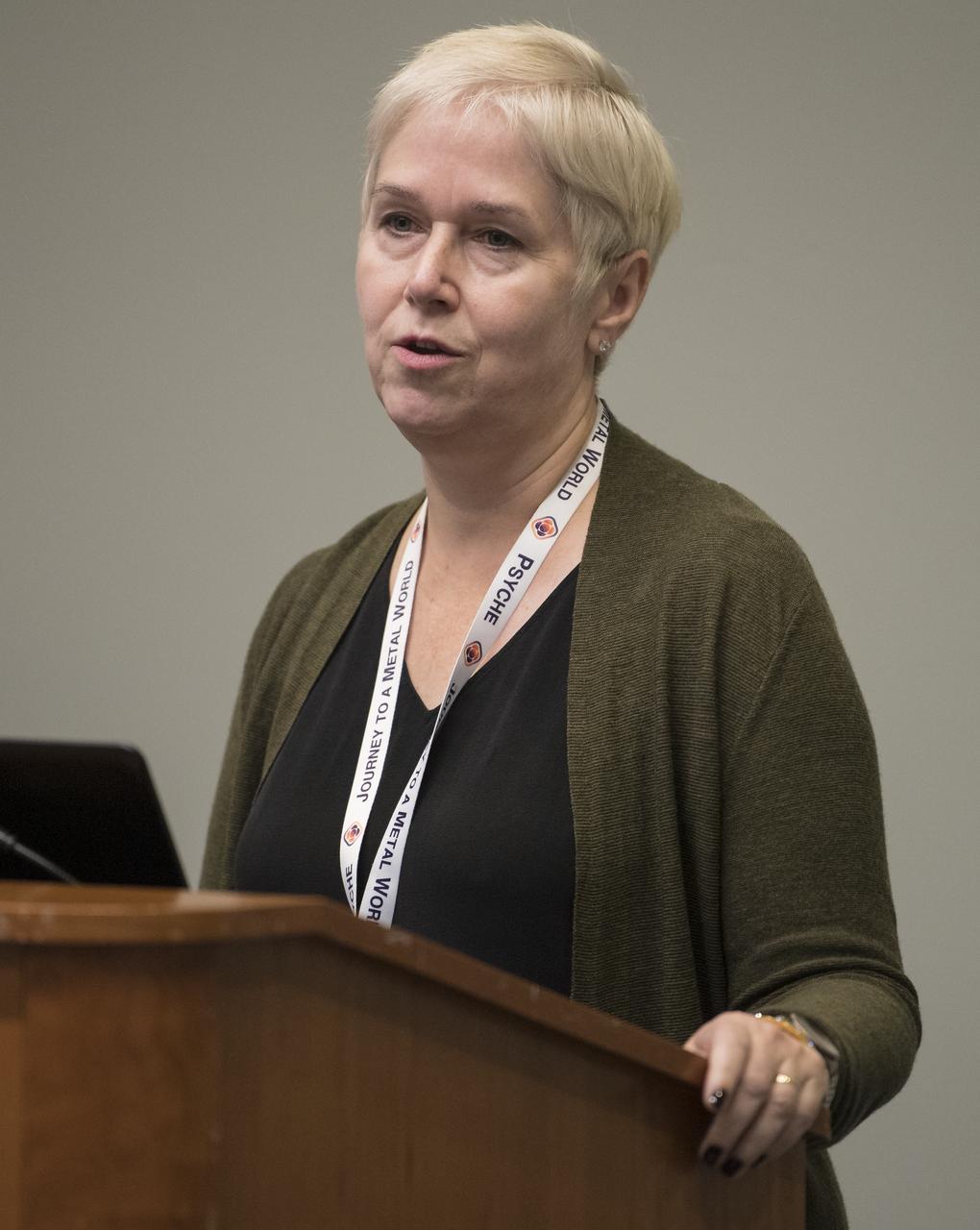
Linda Elkins-Tanton, Managing Director and Foundation Professor of Arizona State University’s School of Earth and Space Exploration, is seen during a keynote titled “The ASU Interplanetary Initiative: Advancing Society Through ” at the 70th International Astronautical Congress, Tuesday, Oct. 22, 2019 at the Walter E. Washington Convention Center in Washington. Elkins-Tanton is the principle investigator of NASA’s upcoming Psyche mission which is scheduled to launch in 2022. Photo Credit: (NASA/Joel Kowsky)

Environmentalist and third-year law student at Elon University School of Law Tyrone Davis is interviewed by TIME for Kids reporter Grace Clark ahead of the annual White House State of Science, Technology, Engineering, and Math (SoSTEM) address, Wednesday, Jan. 29, 2014, in the South Court Auditorium in the Eisenhower Executive Office Building on the White House complex in Washington. Davis sat with the First Lady at the President’s 2014 State of the Union Address. As a Fellow with the Environmental Defense Fund in 2010, he helped show Elizabeth City State University how to save more than $31,000 a year and 200 tons of carbon emissions reductions annually by using technology and efficiency solutions. Photo Credit: (NASA/Bill Ingalls)

NASA Associate Administrator and former astronaut Bob Cabana provides remarks at the first-day-of-issue event for the United States Postal Service’s new stamp celebrating NASA’s James Webb Space Telescope (JWST) on Thursday, Sept. 8, 2022, at the Smithsonian’s National Postal Museum in Washington. The stamp, which features an illustration of the observatory, honors Webb’s mission to explore the unknown in our universe – solving mysteries in our solar system, looking beyond to distant worlds around other stars, and probing the structures and origins of our universe and our place in it. Photo Credit: (NASA/Aubrey Gemignani)

NASA Associate Administrator and former astronaut Bob Cabana provides remarks at the first-day-of-issue event for the United States Postal Service’s new stamp celebrating NASA’s James Webb Space Telescope (JWST) on Thursday, Sept. 8, 2022, at the Smithsonian’s National Postal Museum in Washington. The stamp, which features an illustration of the observatory, honors Webb’s mission to explore the unknown in our universe – solving mysteries in our solar system, looking beyond to distant worlds around other stars, and probing the structures and origins of our universe and our place in it. Photo Credit: (NASA/Aubrey Gemignani)
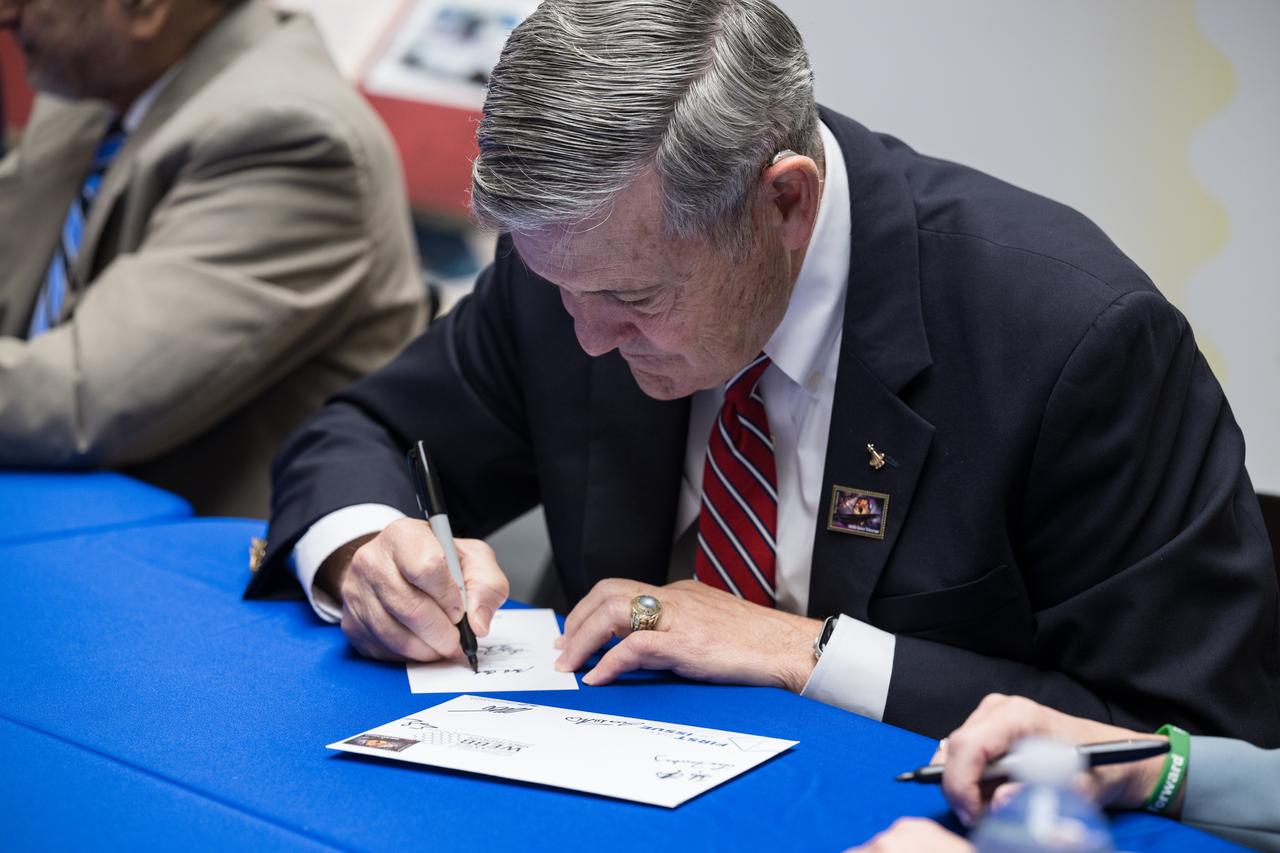
NASA Associate Administrator and former astronaut Bob Cabana, autographs a piece of mail with the United States Postal Service’s new stamp celebrating NASA’s James Webb Space Telescope (JWST) on it, at the first-day-of-issue event, Thursday, Sept. 8, 2022, at the Smithsonian’s National Postal Museum in Washington. The stamp, which features an illustration of the observatory, honors Webb’s mission to explore the unknown in our universe – solving mysteries in our solar system, looking beyond to distant worlds around other stars, and probing the structures and origins of our universe and our place in it. Photo Credit: (NASA/Aubrey Gemignani)
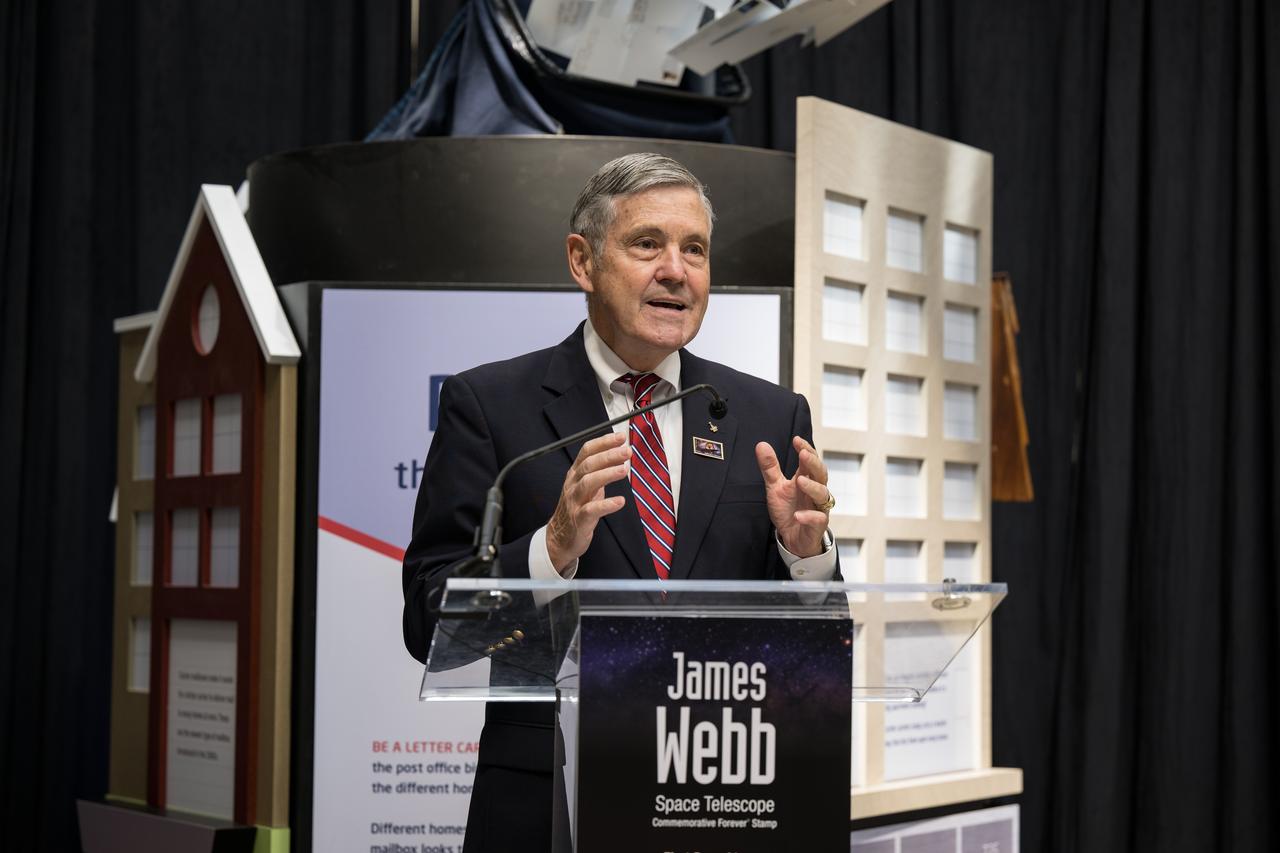
NASA Associate Administrator and former astronaut Bob Cabana provides remarks at the first-day-of-issue event for the United States Postal Service’s new stamp celebrating NASA’s James Webb Space Telescope (JWST) on Thursday, Sept. 8, 2022, at the Smithsonian’s National Postal Museum in Washington. The stamp, which features an illustration of the observatory, honors Webb’s mission to explore the unknown in our universe – solving mysteries in our solar system, looking beyond to distant worlds around other stars, and probing the structures and origins of our universe and our place in it. Photo Credit: (NASA/Aubrey Gemignani)
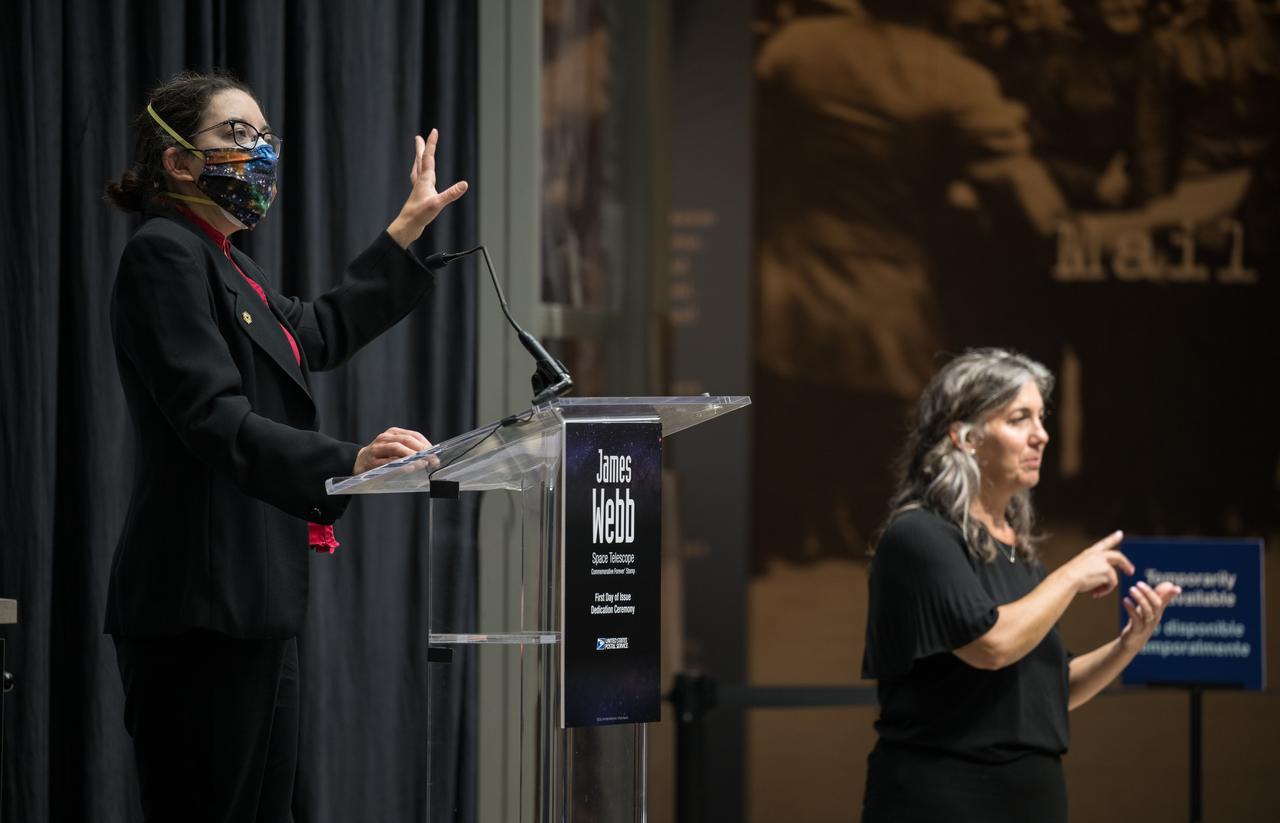
NASA’s Goddard Space Flight Center Webb Deputy Observatory Project Scientist, Erin Smith, provides remarks at the first-day-of-issue event for the United States Postal Service’s new stamp celebrating NASA’s James Webb Space Telescope (JWST) on Thursday, Sept. 8, 2022, at the Smithsonian’s National Postal Museum in Washington. The stamp, which features an illustration of the observatory, honors Webb’s mission to explore the unknown in our universe – solving mysteries in our solar system, looking beyond to distant worlds around other stars, and probing the structures and origins of our universe and our place in it. Photo Credit: (NASA/Aubrey Gemignani)
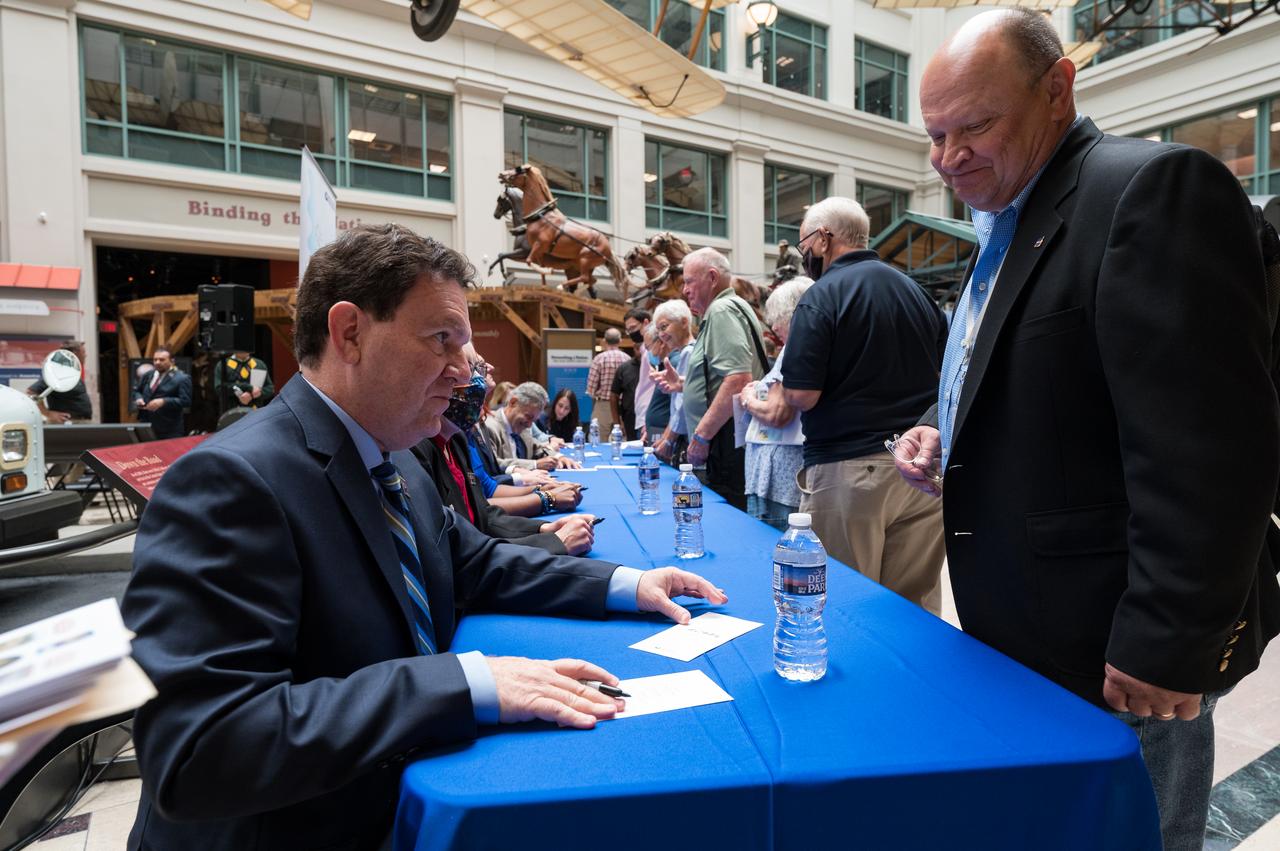
NASA’s Goddard Space Flight Center Webb Optical Telescope Element Manager, Lee Feinberg, autographs a piece of mail with the United States Postal Service’s new stamp celebrating NASA’s James Webb Space Telescope (JWST) on it, at the first-day-of-issue event, Thursday, Sept. 8, 2022, at the Smithsonian’s National Postal Museum in Washington. The stamp, which features an illustration of the observatory, honors Webb’s mission to explore the unknown in our universe – solving mysteries in our solar system, looking beyond to distant worlds around other stars, and probing the structures and origins of our universe and our place in it. Photo Credit: (NASA/Aubrey Gemignani)
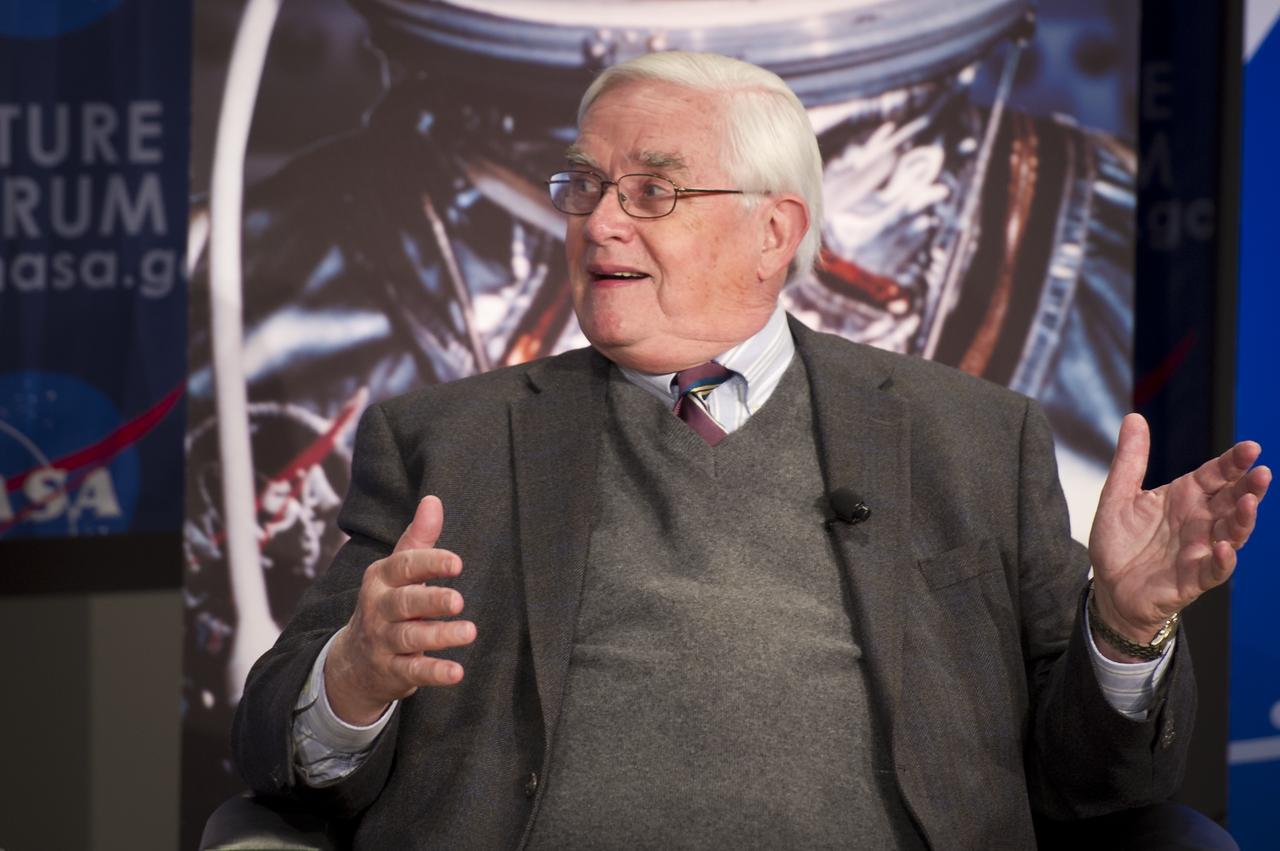
John Logsdon, professor emeritus of Political Science and International Affairs, Elliott School of International Affairs, George Washington University, talks during the NASA Future Forum panel titled "Shifting Roles for Public, Private, and International Players in Space" at The Ohio State University on Tuesday, Feb. 21, 2012 in Columbus, Ohio. The NASA Future Forum features panel discussions on the importance of education to our nation's future in space, the benefit of commercialized space technology to our economy and lives here on Earth, and the shifting roles for the public, commercial and international communities in space. Photo Credit: (NASA/Bill Ingalls)
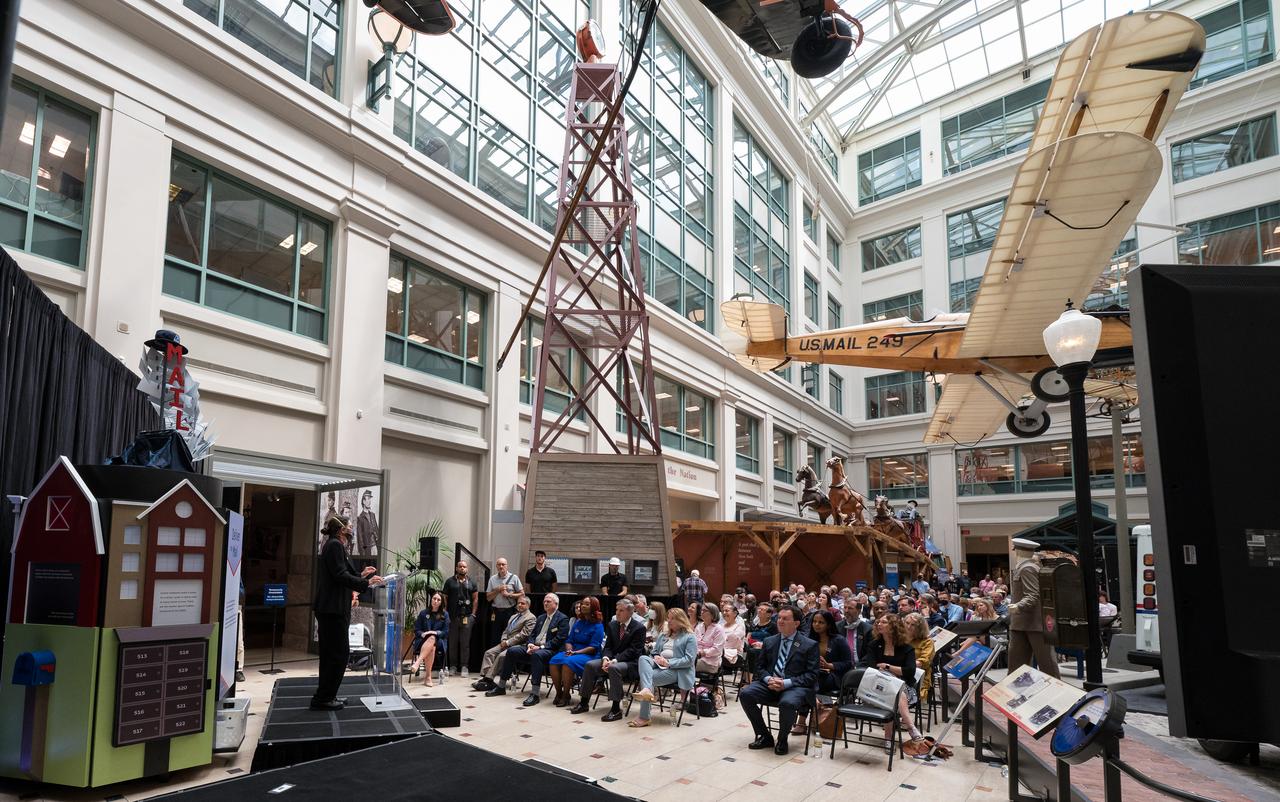
NASA’s Goddard Space Flight Center Webb Deputy Observatory Project Scientist, Erin Smith, provides remarks at the first-day-of-issue event for the United States Postal Service’s new stamp celebrating NASA’s James Webb Space Telescope (JWST) on Thursday, Sept. 8, 2022, at the Smithsonian’s National Postal Museum in Washington. The stamp, which features an illustration of the observatory, honors Webb’s mission to explore the unknown in our universe – solving mysteries in our solar system, looking beyond to distant worlds around other stars, and probing the structures and origins of our universe and our place in it. Photo Credit: (NASA/Aubrey Gemignani)
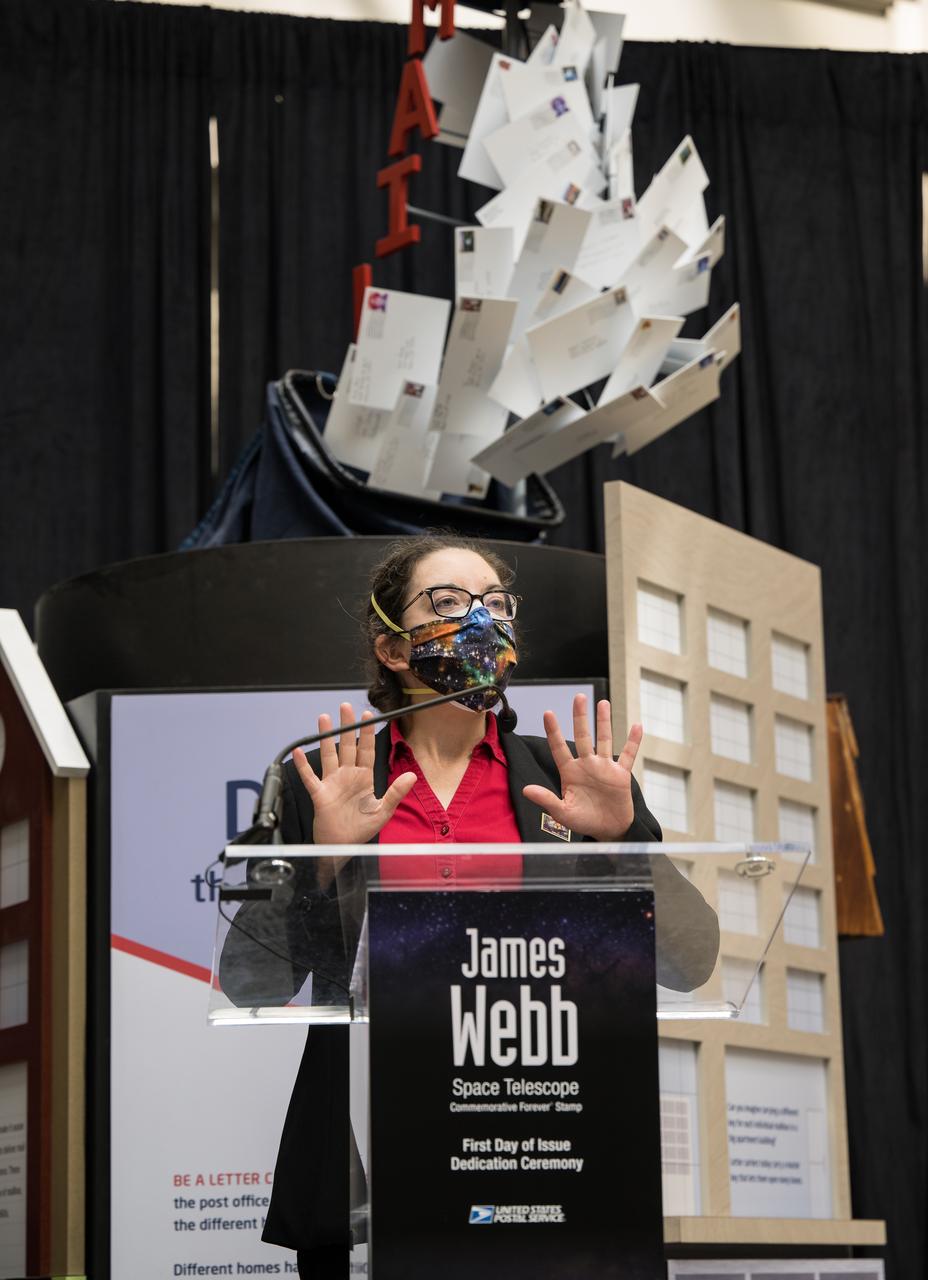
NASA’s Goddard Space Flight Center Webb Deputy Observatory Project Scientist, Erin Smith, provides remarks at the first-day-of-issue event for the United States Postal Service’s new stamp celebrating NASA’s James Webb Space Telescope (JWST) on Thursday, Sept. 8, 2022, at the Smithsonian’s National Postal Museum in Washington. The stamp, which features an illustration of the observatory, honors Webb’s mission to explore the unknown in our universe – solving mysteries in our solar system, looking beyond to distant worlds around other stars, and probing the structures and origins of our universe and our place in it. Photo Credit: (NASA/Aubrey Gemignani)
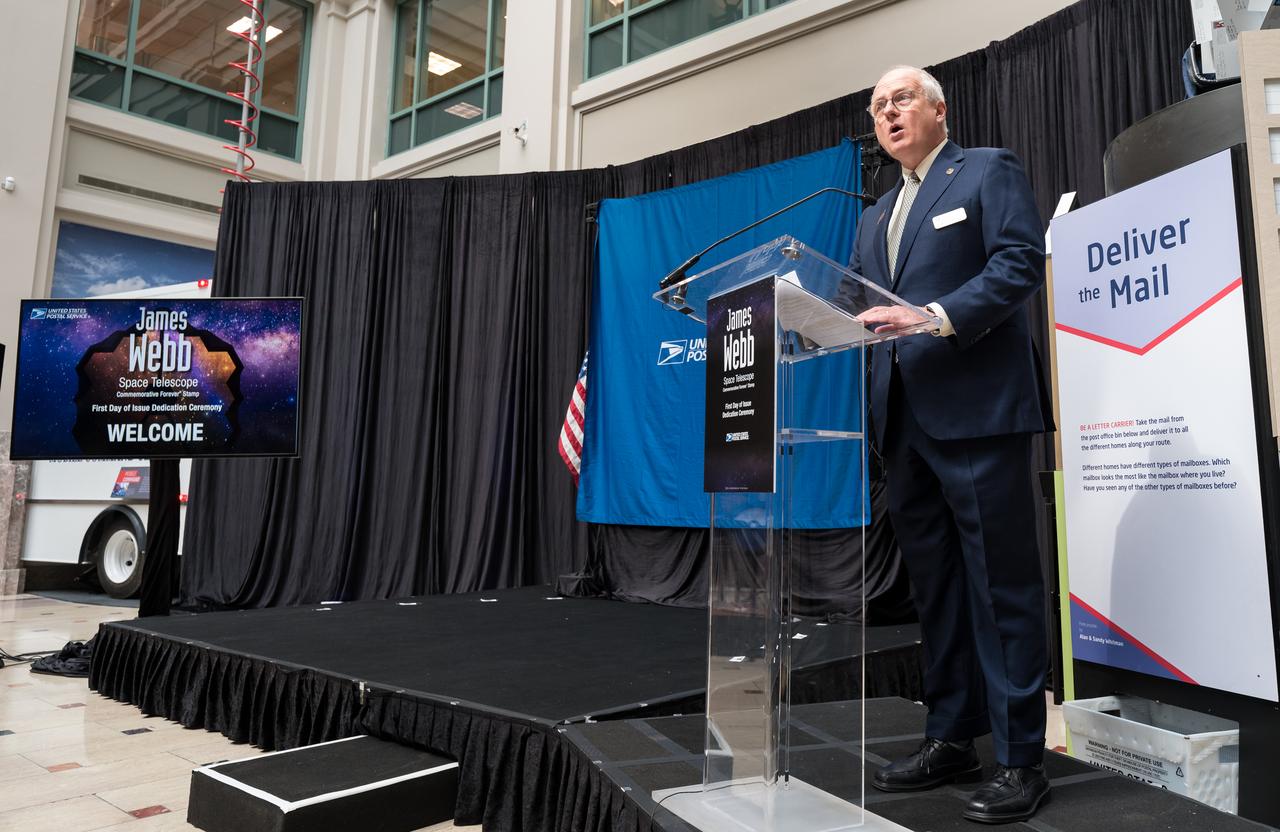
National Postal Museum Deputy Director, Toby Mensforth, provides remarks at the first-day-of-issue event for the United States Postal Service’s new stamp celebrating NASA’s James Webb Space Telescope (JWST) on Thursday, Sept. 8, 2022, at the Smithsonian’s National Postal Museum in Washington. The stamp, which features an illustration of the observatory, honors Webb’s mission to explore the unknown in our universe – solving mysteries in our solar system, looking beyond to distant worlds around other stars, and probing the structures and origins of our universe and our place in it. Photo Credit: (NASA/Aubrey Gemignani)

NASA Associate Administrator and former astronaut Bob Cabana, autographs a piece of mail with the United States Postal Service’s new stamp celebrating NASA’s James Webb Space Telescope (JWST) on it, at the first-day-of-issue event, Thursday, Sept. 8, 2022, at the Smithsonian’s National Postal Museum in Washington. The stamp, which features an illustration of the observatory, honors Webb’s mission to explore the unknown in our universe – solving mysteries in our solar system, looking beyond to distant worlds around other stars, and probing the structures and origins of our universe and our place in it. Photo Credit: (NASA/Aubrey Gemignani)
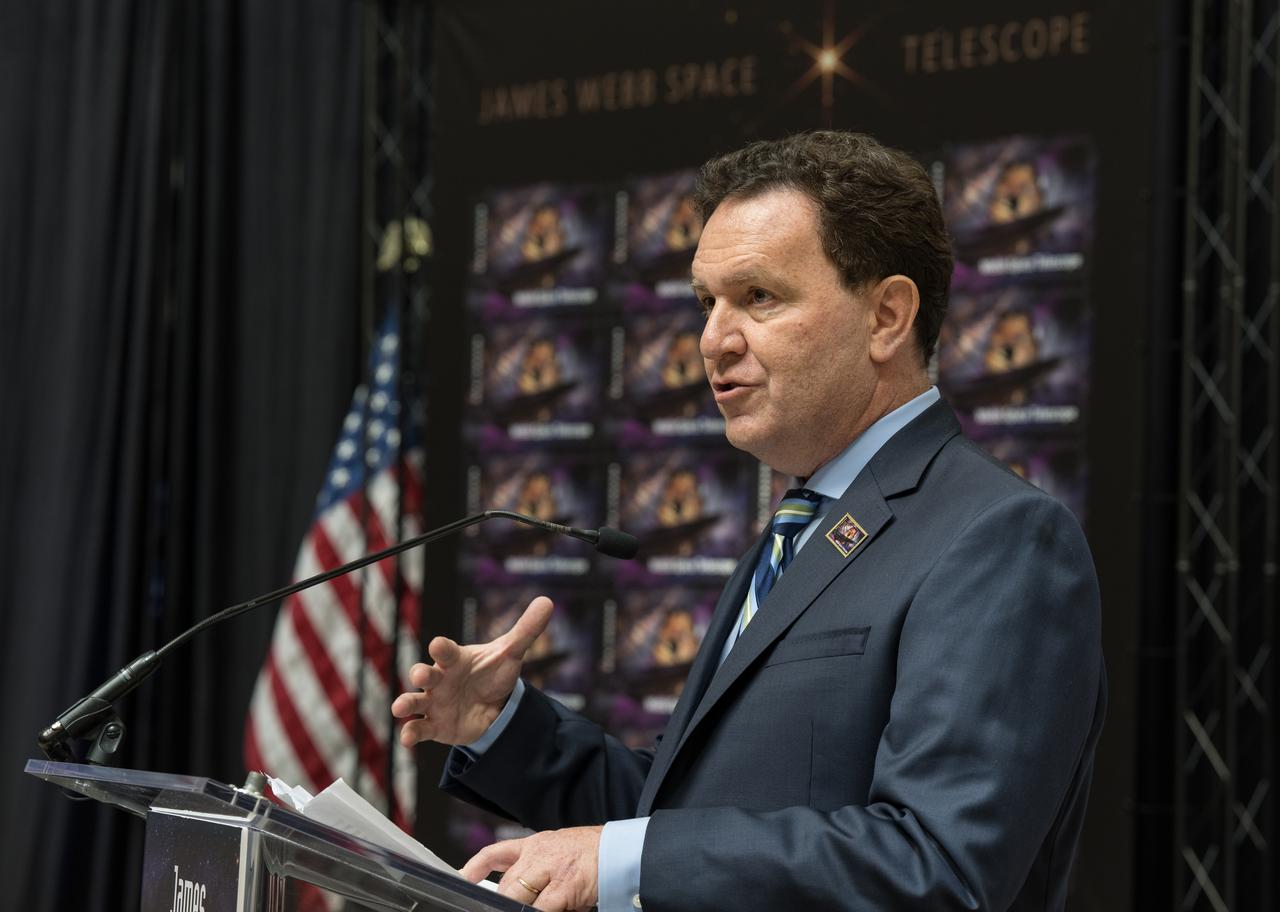
NASA’s Goddard Space Flight Center Webb Optical Telescope Element Manager, Lee Feinberg, provides remarks at the first-day-of-issue event for the United States Postal Service’s new stamp celebrating NASA’s James Webb Space Telescope (JWST) on Thursday, Sept. 8, 2022, at the Smithsonian’s National Postal Museum in Washington. The stamp, which features an illustration of the observatory, honors Webb’s mission to explore the unknown in our universe – solving mysteries in our solar system, looking beyond to distant worlds around other stars, and probing the structures and origins of our universe and our place in it. Photo Credit: (NASA/Aubrey Gemignani)

Speakers at the first-day-of-issue event for the United States Postal Service’s new stamp celebrating NASA’s James Webb Space Telescope (JWST), autograph a piece of mail with the stamp on it, Thursday, Sept. 8, 2022, at the Smithsonian’s National Postal Museum in Washington. The stamp, which features an illustration of the observatory, honors Webb’s mission to explore the unknown in our universe – solving mysteries in our solar system, looking beyond to distant worlds around other stars, and probing the structures and origins of our universe and our place in it. Photo Credit: (NASA/Aubrey Gemignani)
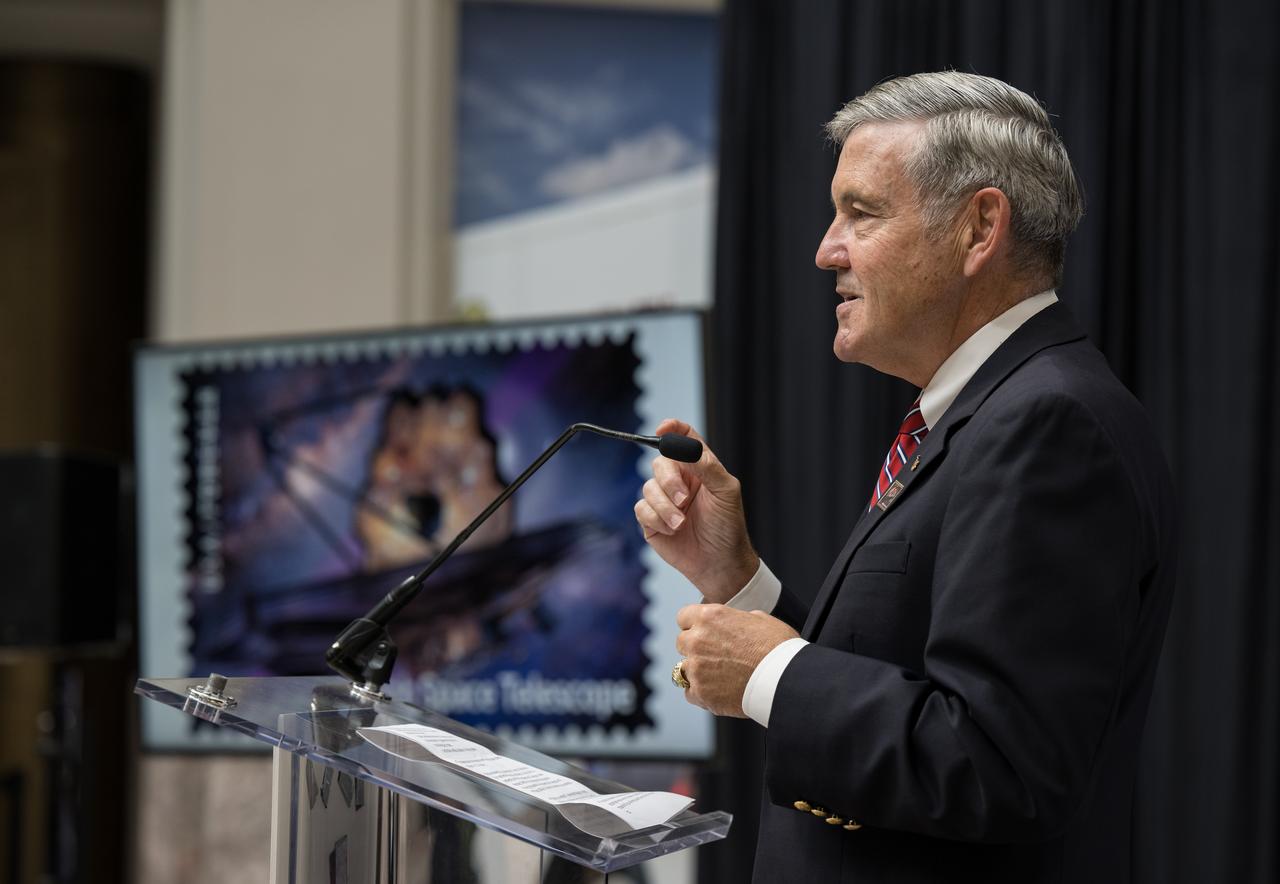
NASA Associate Administrator and former astronaut Bob Cabana provides remarks at the first-day-of-issue event for the United States Postal Service’s new stamp celebrating NASA’s James Webb Space Telescope (JWST) on Thursday, Sept. 8, 2022, at the Smithsonian’s National Postal Museum in Washington. The stamp, which features an illustration of the observatory, honors Webb’s mission to explore the unknown in our universe – solving mysteries in our solar system, looking beyond to distant worlds around other stars, and probing the structures and origins of our universe and our place in it. Photo Credit: (NASA/Aubrey Gemignani)
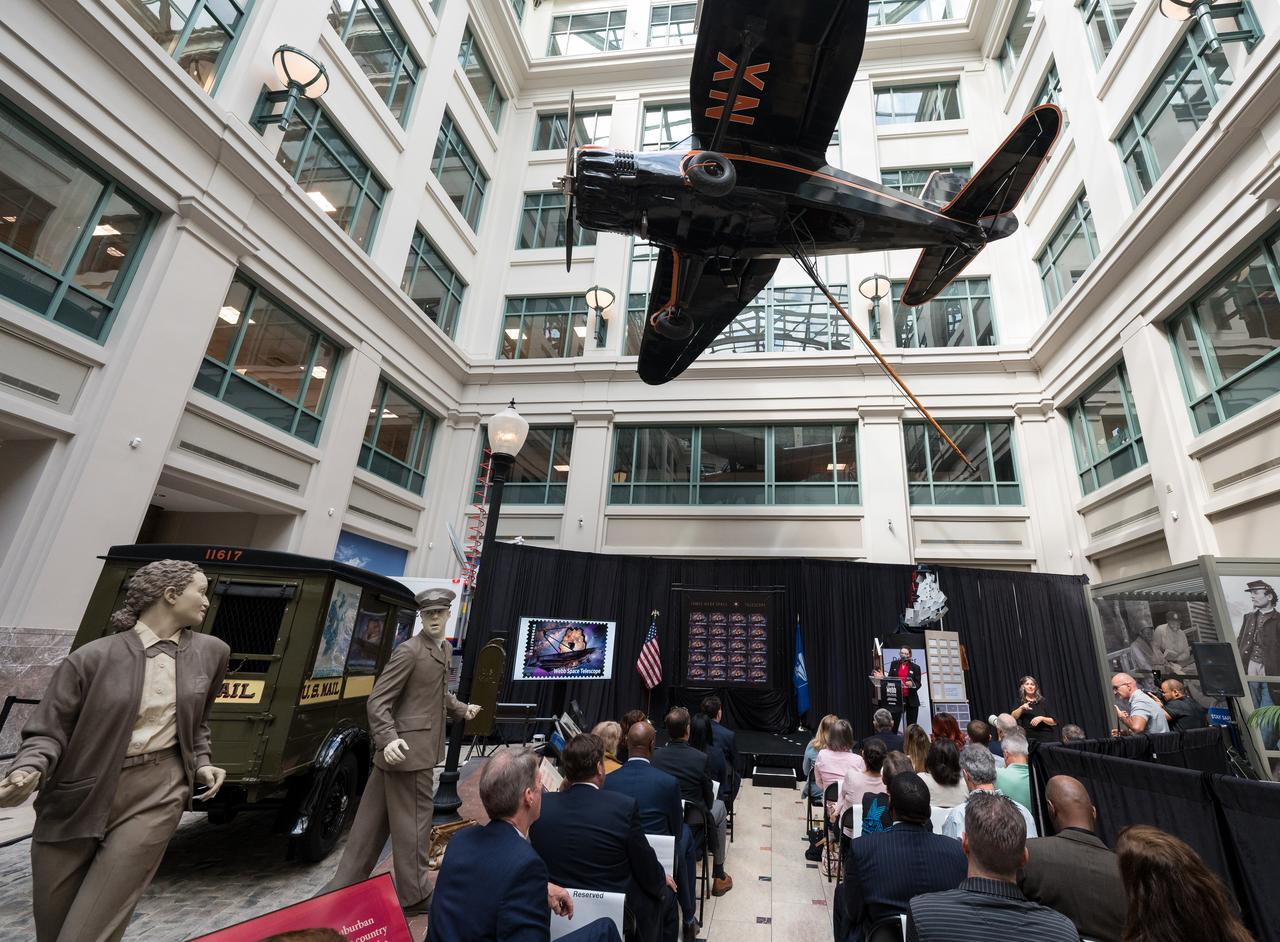
NASA’s Goddard Space Flight Center Webb Deputy Observatory Project Scientist, Erin Smith, provides remarks at the first-day-of-issue event for the United States Postal Service’s new stamp celebrating NASA’s James Webb Space Telescope (JWST) on Thursday, Sept. 8, 2022, at the Smithsonian’s National Postal Museum in Washington. The stamp, which features an illustration of the observatory, honors Webb’s mission to explore the unknown in our universe – solving mysteries in our solar system, looking beyond to distant worlds around other stars, and probing the structures and origins of our universe and our place in it. Photo Credit: (NASA/Aubrey Gemignani)

NASA’s Goddard Space Flight Center Webb Deputy Observatory Project Scientist, Erin Smith, provides remarks at the first-day-of-issue event for the United States Postal Service’s new stamp celebrating NASA’s James Webb Space Telescope (JWST) on Thursday, Sept. 8, 2022, at the Smithsonian’s National Postal Museum in Washington. The stamp, which features an illustration of the observatory, honors Webb’s mission to explore the unknown in our universe – solving mysteries in our solar system, looking beyond to distant worlds around other stars, and probing the structures and origins of our universe and our place in it. Photo Credit: (NASA/Aubrey Gemignani)
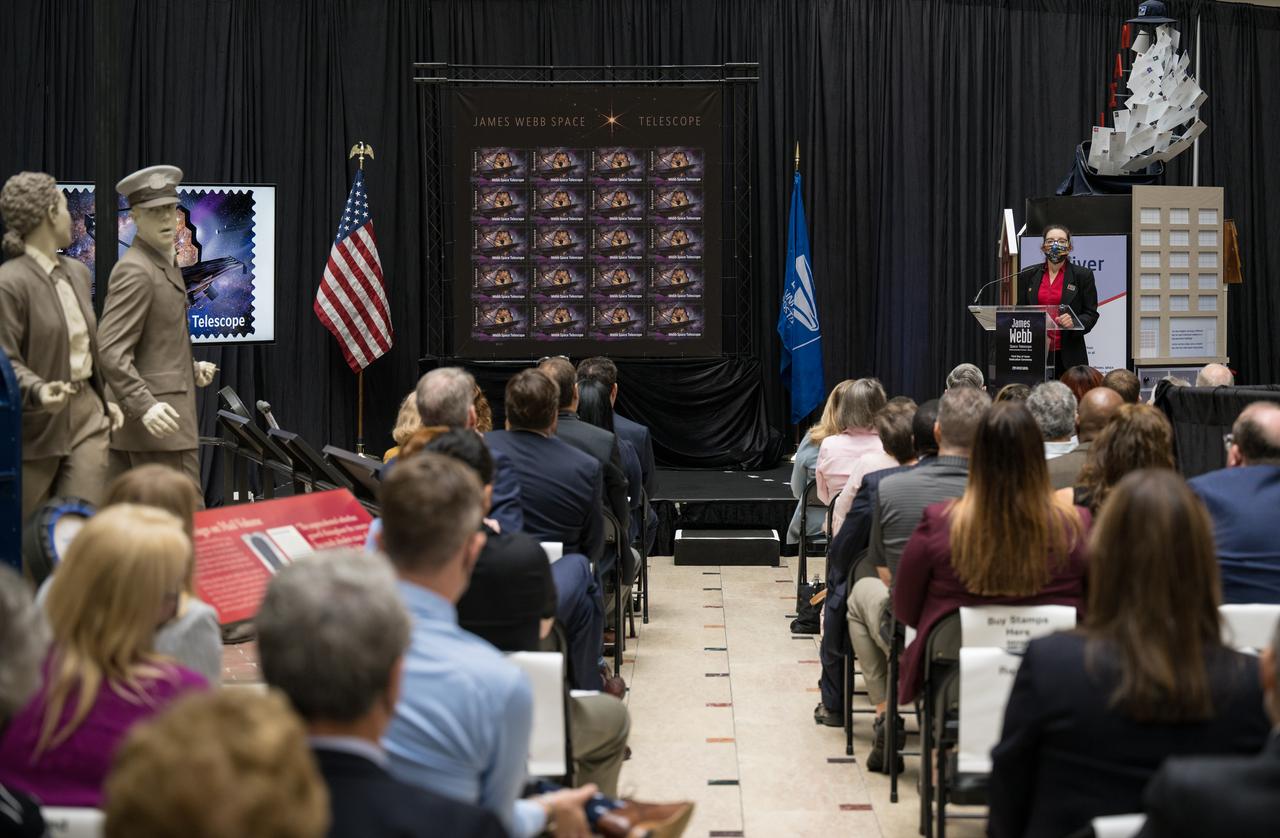
NASA’s Goddard Space Flight Center Webb Deputy Observatory Project Scientist, Erin Smith, provides remarks at the first-day-of-issue event for the United States Postal Service’s new stamp celebrating NASA’s James Webb Space Telescope (JWST) on Thursday, Sept. 8, 2022, at the Smithsonian’s National Postal Museum in Washington. The stamp, which features an illustration of the observatory, honors Webb’s mission to explore the unknown in our universe – solving mysteries in our solar system, looking beyond to distant worlds around other stars, and probing the structures and origins of our universe and our place in it. Photo Credit: (NASA/Aubrey Gemignani)
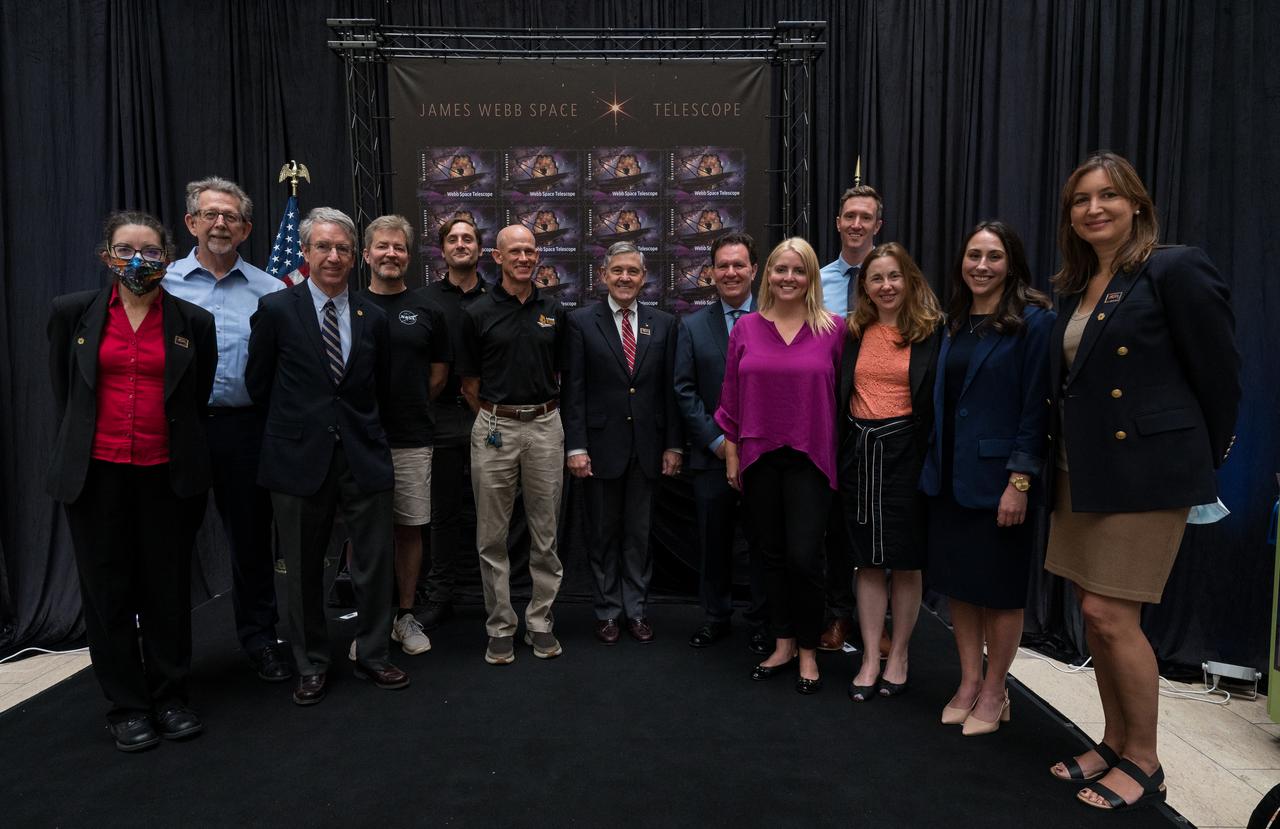
James Webb Space Telescope team members pose for a photo at the first-day-of-issue event for the United States Postal Service’s new stamp celebrating NASA’s James Webb Space Telescope (JWST) on Thursday, Sept. 8, 2022, at the Smithsonian’s National Postal Museum in Washington. The stamp, which features an illustration of the observatory, honors Webb’s mission to explore the unknown in our universe – solving mysteries in our solar system, looking beyond to distant worlds around other stars, and probing the structures and origins of our universe and our place in it. Photo Credit: (NASA/Aubrey Gemignani)
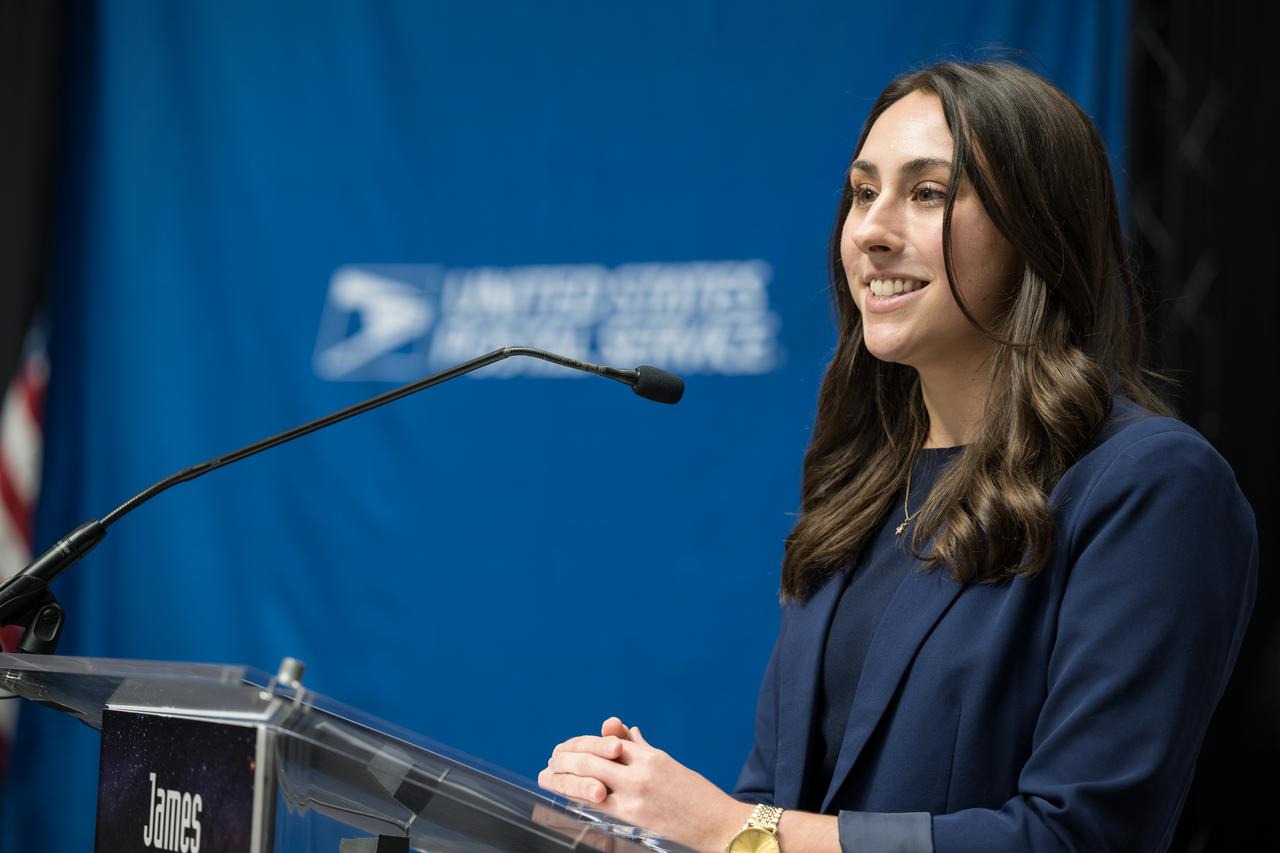
NASA public affairs specialist Alice Fisher introduces the first speaker at the first-day-of-issue event for the United States Postal Service’s new stamp celebrating NASA’s James Webb Space Telescope (JWST) on Thursday, Sept. 8, 2022, at the Smithsonian’s National Postal Museum in Washington. The stamp, which features an illustration of the observatory, honors Webb’s mission to explore the unknown in our universe – solving mysteries in our solar system, looking beyond to distant worlds around other stars, and probing the structures and origins of our universe and our place in it. Photo Credit: (NASA/Aubrey Gemignani)
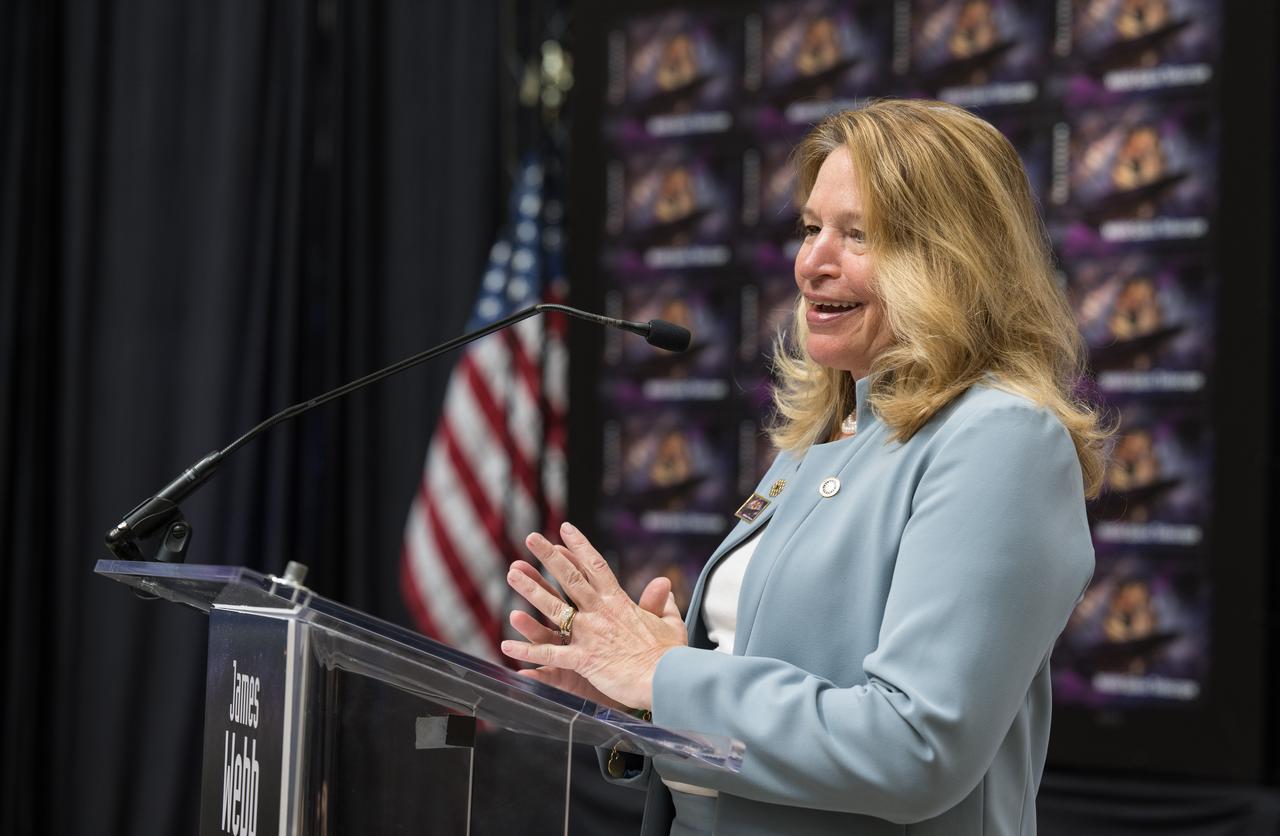
Smithsonian Institution Under Secretary for Service and Research, Ellen Stofan, provides remarks at the first-day-of-issue event for the United States Postal Service’s new stamp celebrating NASA’s James Webb Space Telescope (JWST) on Thursday, Sept. 8, 2022, at the Smithsonian’s National Postal Museum in Washington. The stamp, which features an illustration of the observatory, honors Webb’s mission to explore the unknown in our universe – solving mysteries in our solar system, looking beyond to distant worlds around other stars, and probing the structures and origins of our universe and our place in it. Photo Credit: (NASA/Aubrey Gemignani)
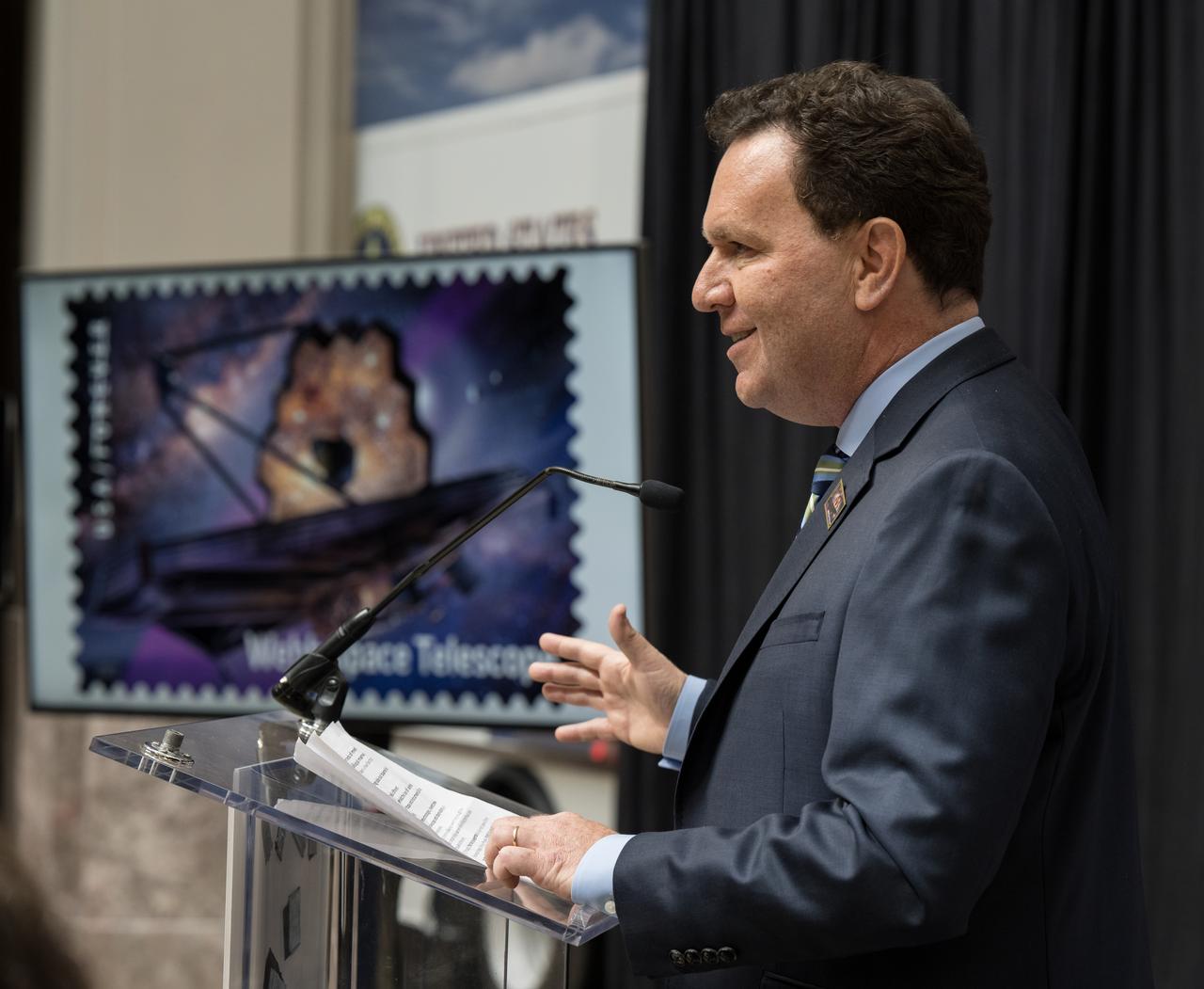
NASA’s Goddard Space Flight Center Webb Optical Telescope Element Manager, Lee Feinberg, provides remarks at the first-day-of-issue event for the United States Postal Service’s new stamp celebrating NASA’s James Webb Space Telescope (JWST) on Thursday, Sept. 8, 2022, at the Smithsonian’s National Postal Museum in Washington. The stamp, which features an illustration of the observatory, honors Webb’s mission to explore the unknown in our universe – solving mysteries in our solar system, looking beyond to distant worlds around other stars, and probing the structures and origins of our universe and our place in it. Photo Credit: (NASA/Aubrey Gemignani)
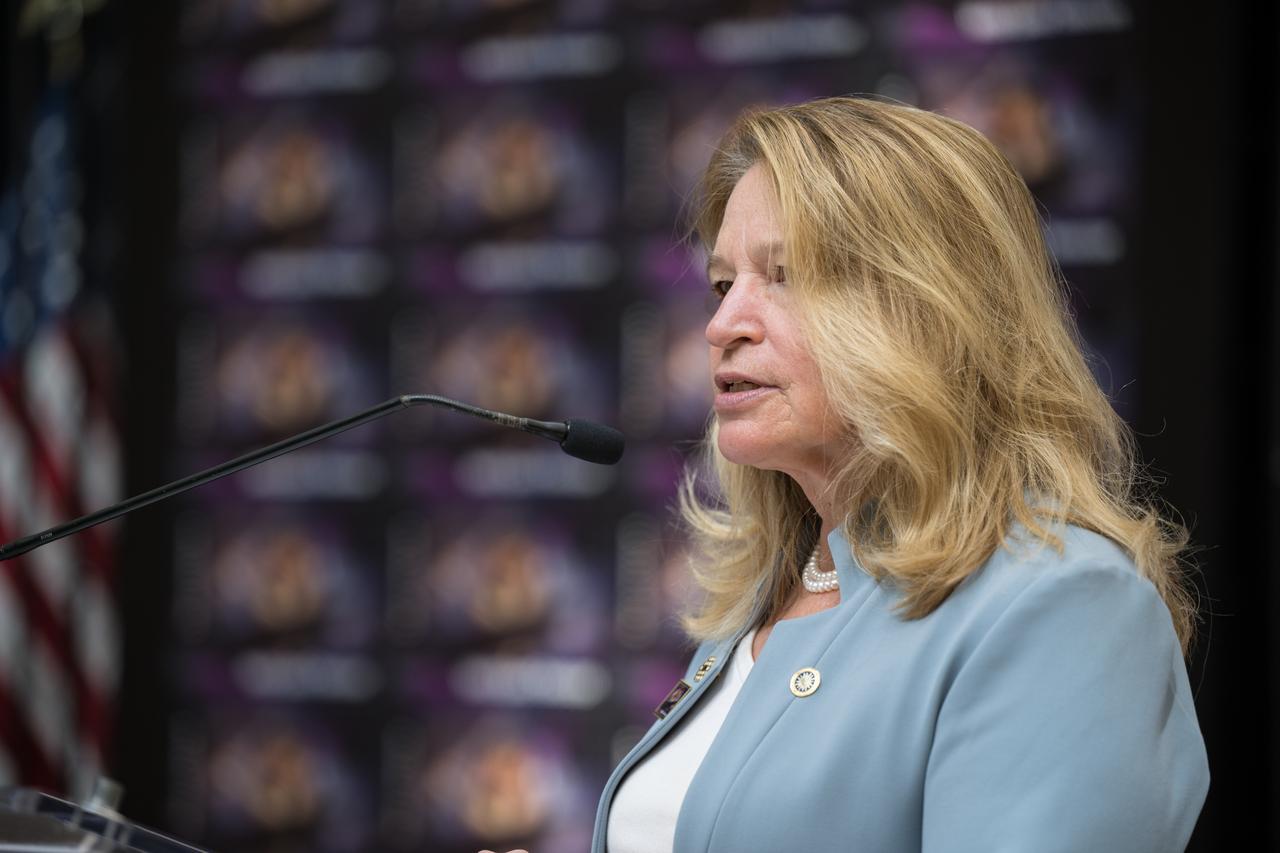
Smithsonian Institution Under Secretary for Service and Research, Ellen Stofan, provides remarks at the first-day-of-issue event for the United States Postal Service’s new stamp celebrating NASA’s James Webb Space Telescope (JWST) on Thursday, Sept. 8, 2022, at the Smithsonian’s National Postal Museum in Washington. The stamp, which features an illustration of the observatory, honors Webb’s mission to explore the unknown in our universe – solving mysteries in our solar system, looking beyond to distant worlds around other stars, and probing the structures and origins of our universe and our place in it. Photo Credit: (NASA/Aubrey Gemignani)
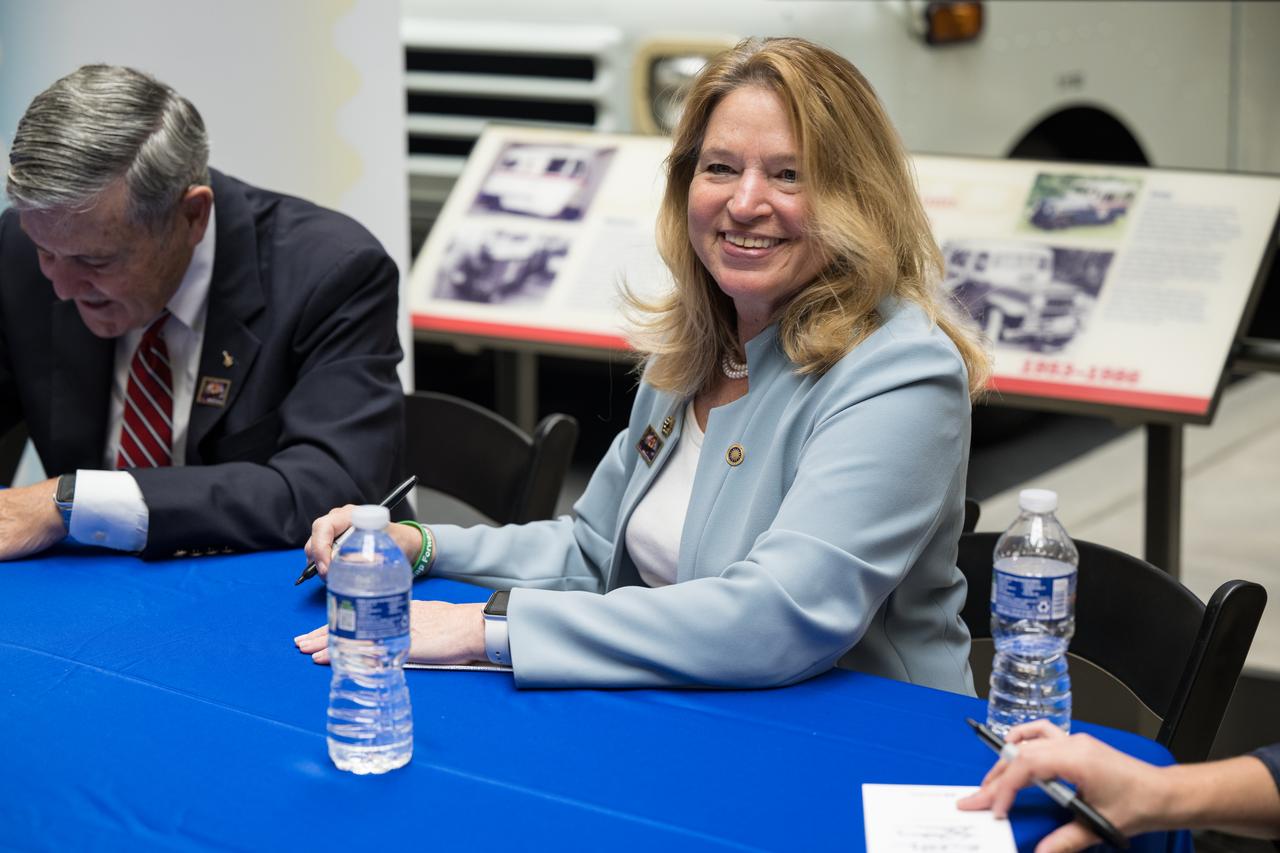
Smithsonian Institution Under Secretary for Service and Research, Ellen Stofan, autographs a piece of mail with the United States Postal Service’s new stamp celebrating NASA’s James Webb Space Telescope (JWST) on it, at the first-day-of-issue event, Thursday, Sept. 8, 2022, at the Smithsonian’s National Postal Museum in Washington. The stamp, which features an illustration of the observatory, honors Webb’s mission to explore the unknown in our universe – solving mysteries in our solar system, looking beyond to distant worlds around other stars, and probing the structures and origins of our universe and our place in it. Photo Credit: (NASA/Aubrey Gemignani)
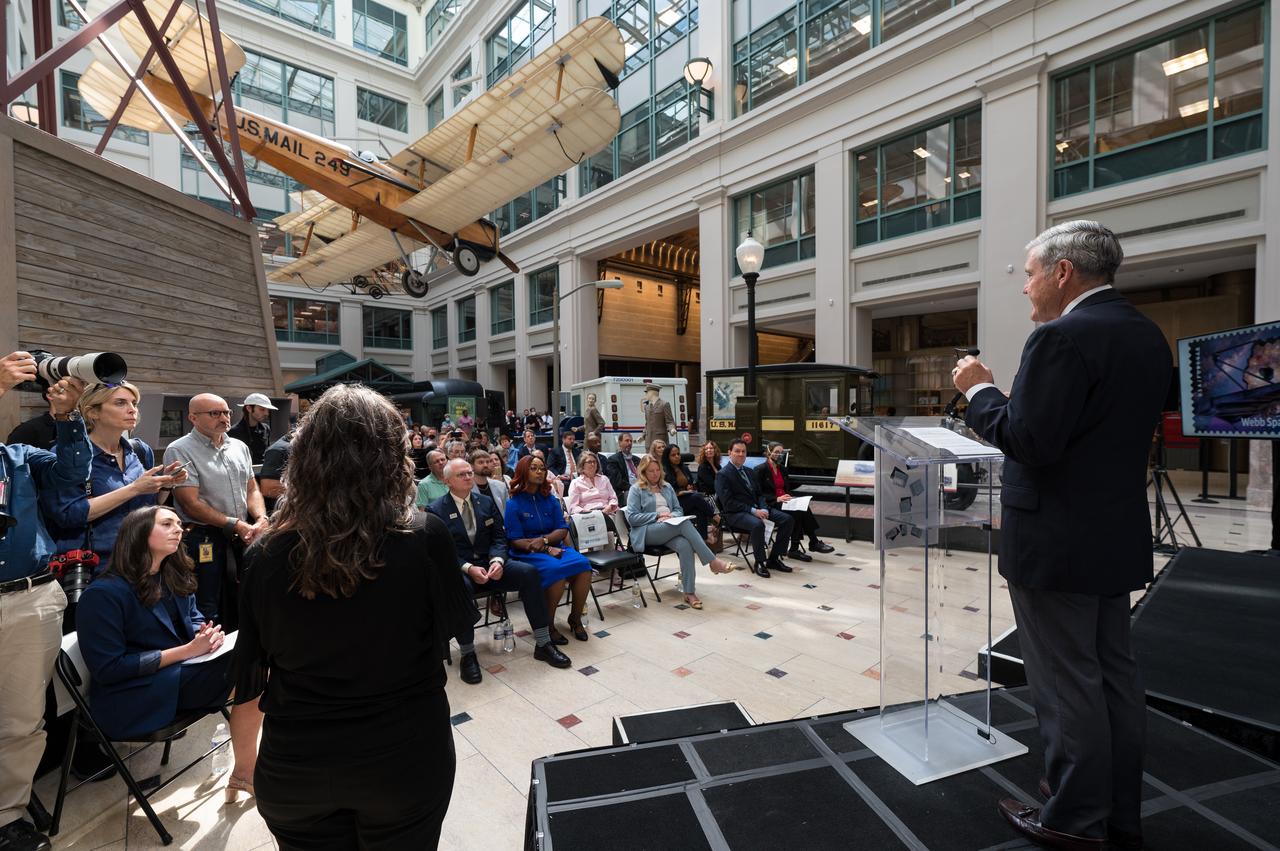
NASA Associate Administrator and former astronaut Bob Cabana provides remarks at the first-day-of-issue event for the United States Postal Service’s new stamp celebrating NASA’s James Webb Space Telescope (JWST) on Thursday, Sept. 8, 2022, at the Smithsonian’s National Postal Museum in Washington. The stamp, which features an illustration of the observatory, honors Webb’s mission to explore the unknown in our universe – solving mysteries in our solar system, looking beyond to distant worlds around other stars, and probing the structures and origins of our universe and our place in it. Photo Credit: (NASA/Aubrey Gemignani)

Former NASA astronaut Leland Melvin poses with attendees prior to the screening of the NASA produced documentary “The Color of Space” at Howard University’s Cramton Auditorium in Washington, Saturday, June 18, 2022. Premiering on Juneteenth, the federal holiday commemorating the end of slavery in the United States, “The Color of Space” is an inspirational documentary that tells the stories of NASA’s Black astronauts determined to reach the stars. Photo Credit: (NASA/Bill Ingalls)
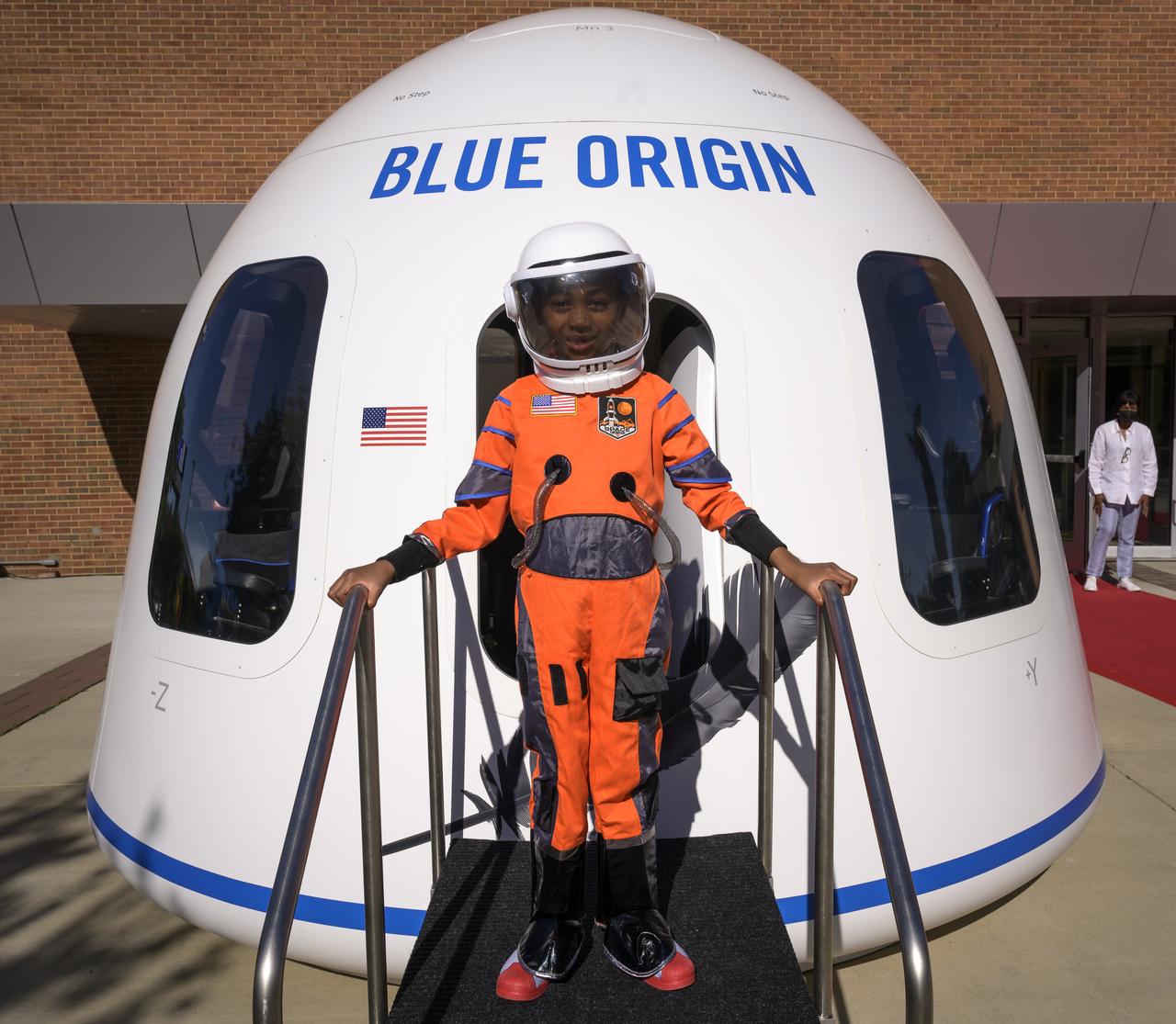
6-year old Armani Bonds poses for a photograph as he exits a Blue Origin New Shepard capsule mockup prior to the screening of the NASA produced documentary “The Color of Space” at Howard University’s Cramton Auditorium in Washington, Saturday, June 18, 2022. Premiering on Juneteenth, the federal holiday commemorating the end of slavery in the United States, “The Color of Space” is an inspirational documentary that tells the stories of NASA’s Black astronauts determined to reach the stars. Photo Credit: (NASA/Bill Ingalls)
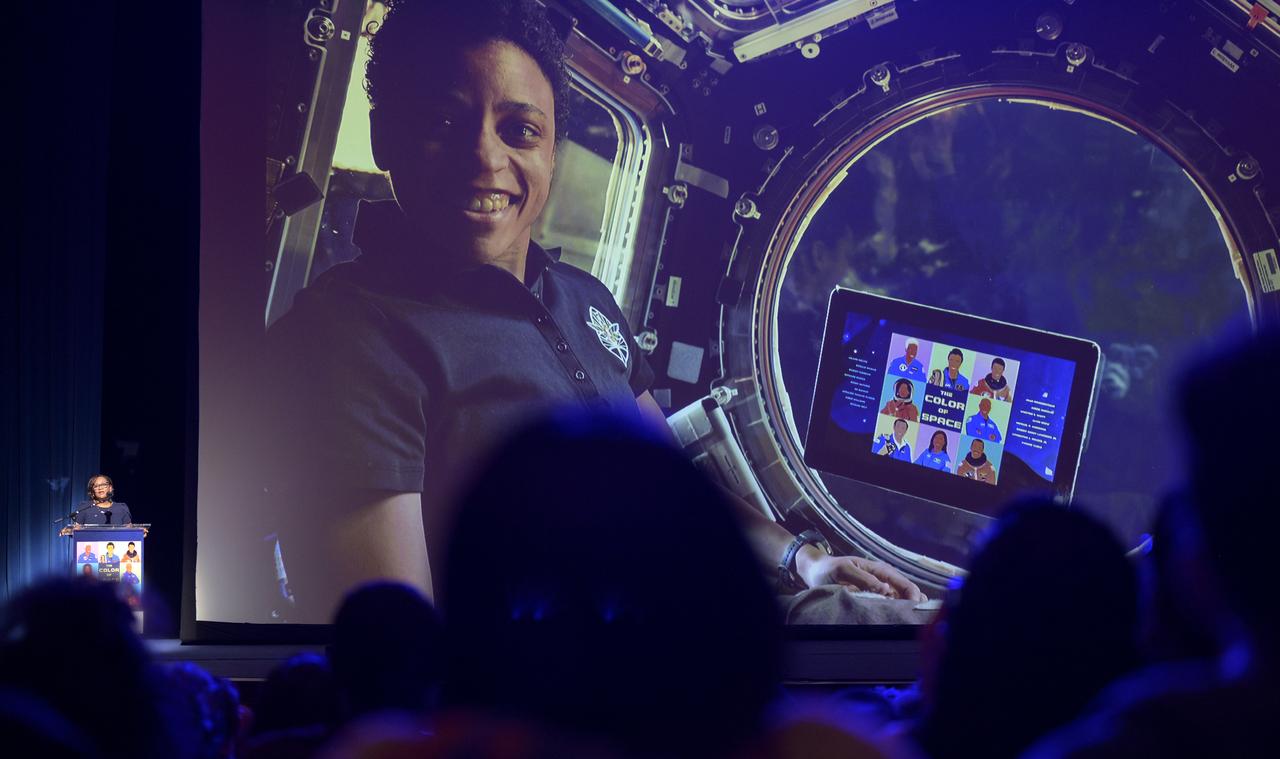
NASA Johnson Space Center Director Vanessa Wyche speaks of NASA astronaut Jessica Watkins during her remarks prior to the screening of the NASA produced documentary “The Color of Space” at Howard University’s Cramton Auditorium in Washington, Saturday, June 18, 2022. Premiering on Juneteenth, the federal holiday commemorating the end of slavery in the United States, “The Color of Space” is an inspirational documentary that tells the stories of NASA’s Black astronauts determined to reach the stars. Photo Credit: (NASA/Bill Ingalls)

NASA Johnson Space Center Director Vanessa Wyche gives remarks prior to the screening of the NASA produced documentary “The Color of Space” at Howard University’s Cramton Auditorium in Washington, Saturday, June 18, 2022. Premiering on Juneteenth, the federal holiday commemorating the end of slavery in the United States, “The Color of Space” is an inspirational documentary that tells the stories of NASA’s Black astronauts determined to reach the stars. Photo Credit: (NASA/Bill Ingalls)

Dr. Christopher House, Professor of Geosciences, Pennsylvania State University, speaks on a panel at the “Ancient Earth, Alien Earths” Event at NASA Headquarters in Washington, DC Wednesday, August 20, 2014. The event was sponsored by NASA, the National Science Foundation (NSF), and the Smithsonian Institution and was moderated by Dr. David H. Grinspoon, Senior Scientist at the Planetary Science Institute. Six scientists discussed how research on early Earth could help guide our search for habitable planets orbiting other stars. Photo Credit: (NASA/Aubrey Gemignani)

Environmentalist and third-year law student at Elon University School of Law Tyrone Davis speaks at the annual White House State of Science, Technology, Engineering, and Math (SoSTEM) address, Wednesday, Jan. 29, 2014, in the South Court Auditorium in the Eisenhower Executive Office Building on the White House complex in Washington. Photo Credit: (NASA/Bill Ingalls)

NASA TV producer of “The Color of Space” Jori Kates gives remarks prior to the screening of the documentary at Howard University’s Cramton Auditorium in Washington, Saturday, June 18, 2022. Premiering on Juneteenth, the federal holiday commemorating the end of slavery in the United States, “The Color of Space” is an inspirational documentary that tells the stories of NASA’s Black astronauts determined to reach the stars. Photo Credit: (NASA/Bill Ingalls)

NASA TV producer of “The Color of Space” Jori Kates gives remarks prior to the screening of the documentary at Howard University’s Cramton Auditorium in Washington, Saturday, June 18, 2022. Premiering on Juneteenth, the federal holiday commemorating the end of slavery in the United States, “The Color of Space” is an inspirational documentary that tells the stories of NASA’s Black astronauts determined to reach the stars. Photo Credit: (NASA/Bill Ingalls)

NASA TV producer of “The Color of Space” Jori Kates gives remarks prior to the screening of the documentary at Howard University’s Cramton Auditorium in Washington, Saturday, June 18, 2022. Premiering on Juneteenth, the federal holiday commemorating the end of slavery in the United States, “The Color of Space” is an inspirational documentary that tells the stories of NASA’s Black astronauts determined to reach the stars. Photo Credit: (NASA/Bill Ingalls)
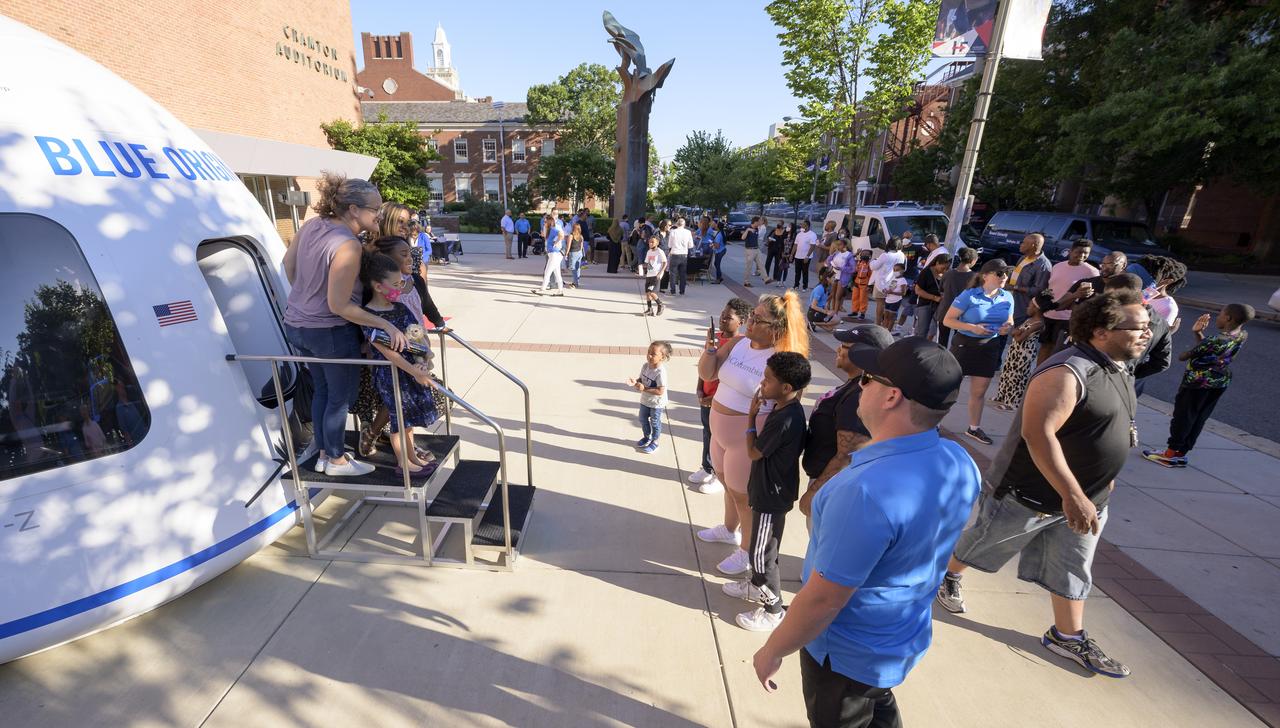
Attendees line up to go inside a Blue Origin New Shepard capsule mockup prior to the screening of the NASA produced documentary “The Color of Space” at Howard University’s Cramton Auditorium in Washington, Saturday, June 18, 2022. Premiering on Juneteenth, the federal holiday commemorating the end of slavery in the United States, “The Color of Space” is an inspirational documentary that tells the stories of NASA’s Black astronauts determined to reach the stars. Photo Credit: (NASA/Bill Ingalls)

Popcorn awaits guests prior to the screening of the NASA produced documentary “The Color of Space” at Howard University’s Cramton Auditorium in Washington, Saturday, June 18, 2022. Premiering on Juneteenth, the federal holiday commemorating the end of slavery in the United States, “The Color of Space” is an inspirational documentary that tells the stories of NASA’s Black astronauts determined to reach the stars. Photo Credit: (NASA/Bill Ingalls)

Attendees try on Oculus headsets and experience the International Space Station using virtual reality prior to the screening of the NASA produced documentary “The Color of Space” at Howard University’s Cramton Auditorium in Washington, Saturday, June 18, 2022. Premiering on Juneteenth, the federal holiday commemorating the end of slavery in the United States, “The Color of Space” is an inspirational documentary that tells the stories of NASA’s Black astronauts determined to reach the stars. Photo Credit: (NASA/Bill Ingalls)
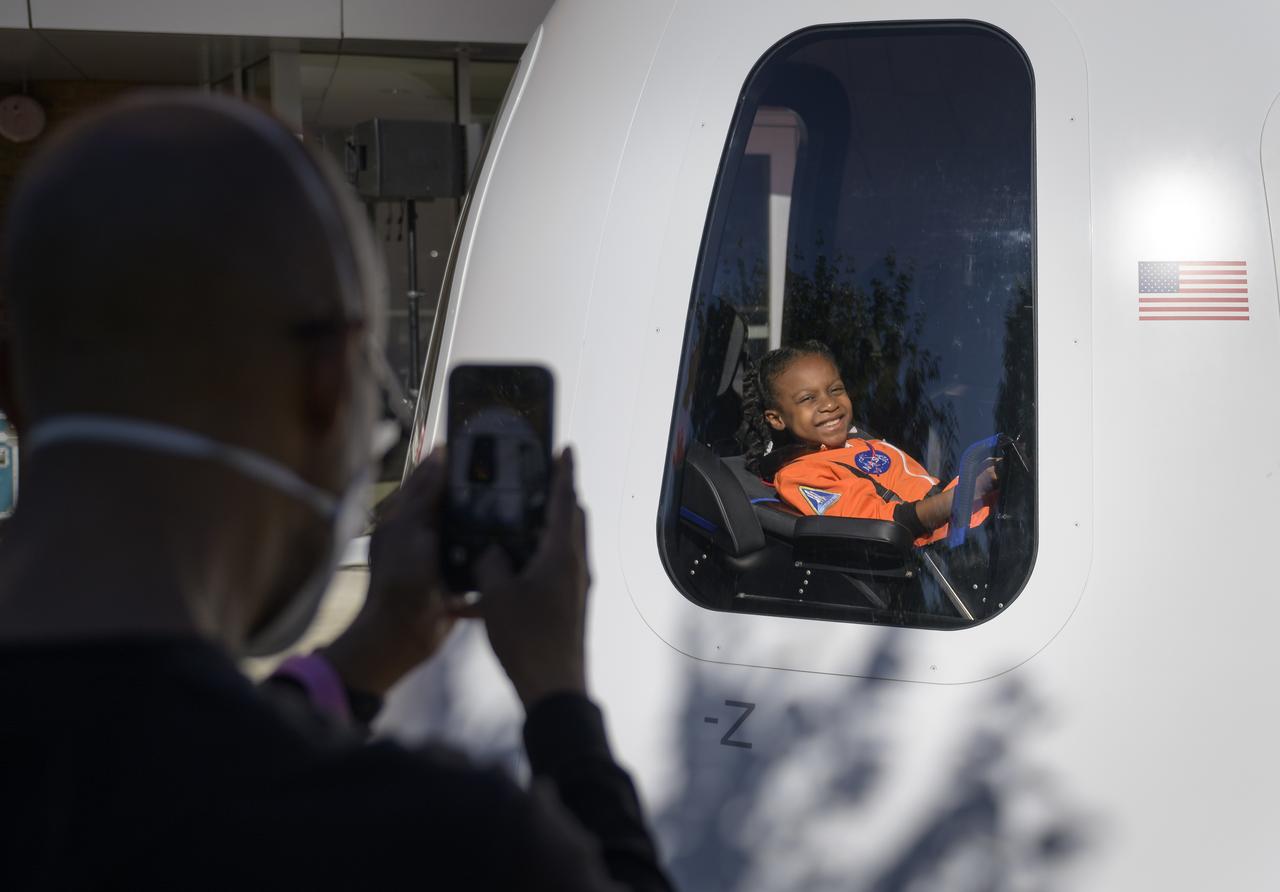
9-year old Amara Bowman smiles as her father photographs her inside a Blue Origin New Shepard capsule mockup prior to the screening of the NASA produced documentary “The Color of Space” at Howard University’s Cramton Auditorium in Washington, Saturday, June 18, 2022. Premiering on Juneteenth, the federal holiday commemorating the end of slavery in the United States, “The Color of Space” is an inspirational documentary that tells the stories of NASA’s Black astronauts determined to reach the stars. Photo Credit: (NASA/Bill Ingalls)

NASA Johnson Space Center Director Vanessa Wyche gives remarks prior to the screening of the NASA produced documentary “The Color of Space” at Howard University’s Cramton Auditorium in Washington, Saturday, June 18, 2022. Premiering on Juneteenth, the federal holiday commemorating the end of slavery in the United States, “The Color of Space” is an inspirational documentary that tells the stories of NASA’s Black astronauts determined to reach the stars. Photo Credit: (NASA/Bill Ingalls)
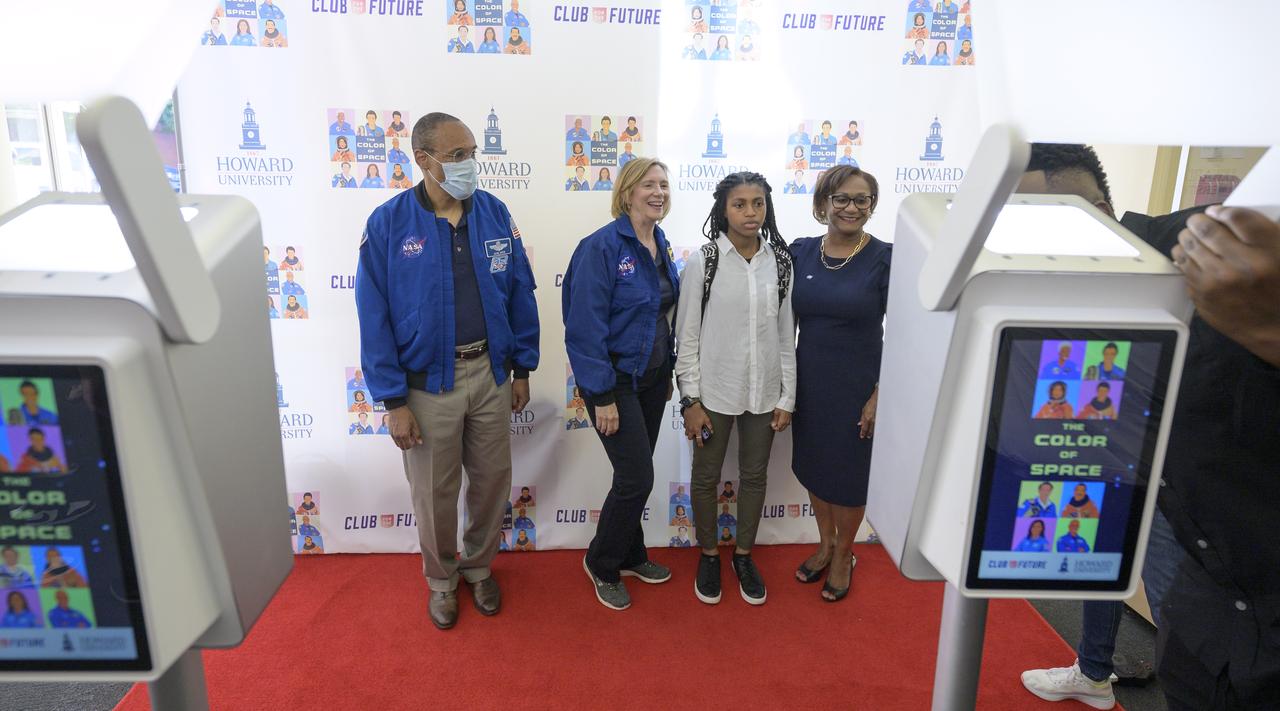
Attendees for the screening the NASA produced documentary “The Color of Space” get their photos taken with former NASA astronaut Alvin Drew, left, former astronaut Susan Kilrain, and NASA Johnson Space Center Director Vanessa Wyche, right, at Howard University’s Cramton Auditorium in Washington, Saturday, June 18, 2022. Premiering on Juneteenth, the federal holiday commemorating the end of slavery in the United States, “The Color of Space” is an inspirational documentary that tells the stories of NASA’s Black astronauts determined to reach the stars. Photo Credit: (NASA/Bill Ingalls)

Former NASA astronaut Susan Kilrain poses for a photograph with attendees prior to the screening of the NASA produced documentary “The Color of Space” at Howard University’s Cramton Auditorium in Washington, Saturday, June 18, 2022. Premiering on Juneteenth, the federal holiday commemorating the end of slavery in the United States, “The Color of Space” is an inspirational documentary that tells the stories of NASA’s Black astronauts determined to reach the stars. Photo Credit: (NASA/Bill Ingalls)
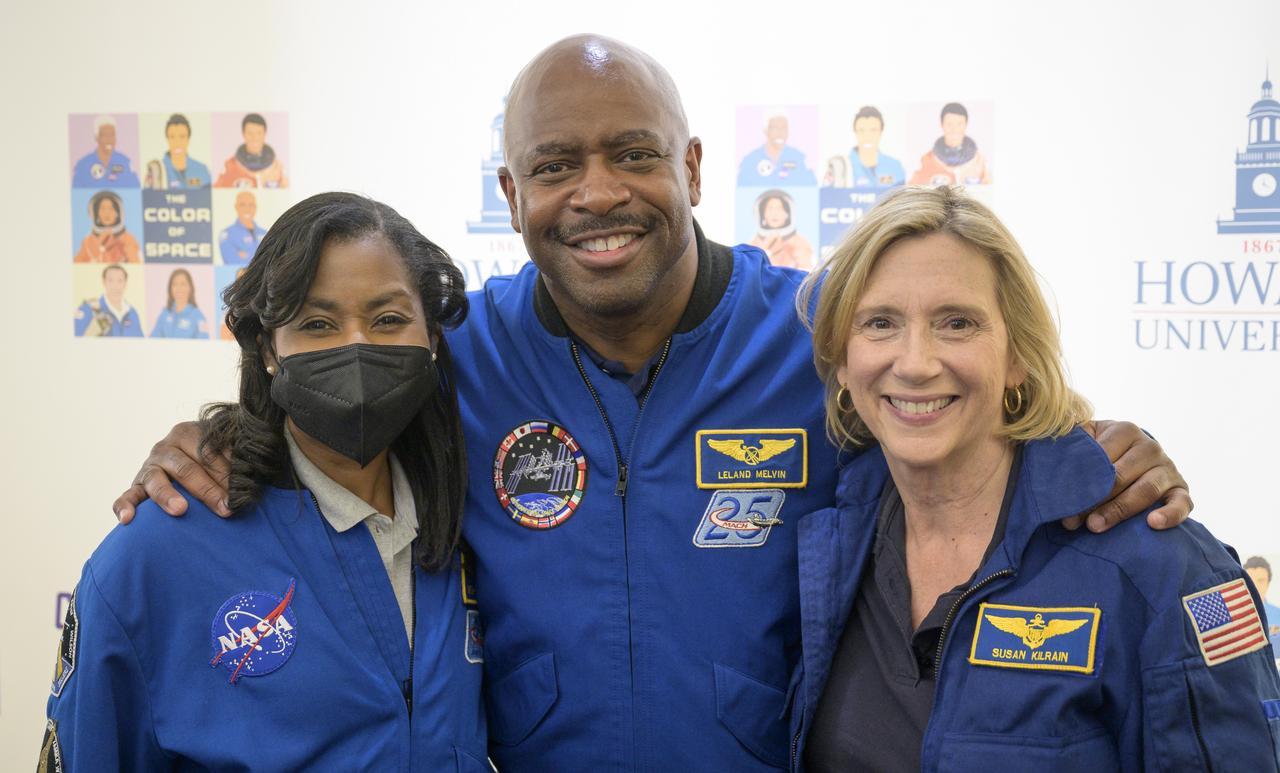
NASA astronaut Stephanie Wilson, left, and former NASA astronauts Leland Melvin and Susan Kilrain pose for a photograph prior to the screening of the NASA produced documentary “The Color of Space” at Howard University’s Cramton Auditorium in Washington, Saturday, June 18, 2022. Premiering on Juneteenth, the federal holiday commemorating the end of slavery in the United States, “The Color of Space” is an inspirational documentary that tells the stories of NASA’s Black astronauts determined to reach the stars. Photo Credit: (NASA/Bill Ingalls)
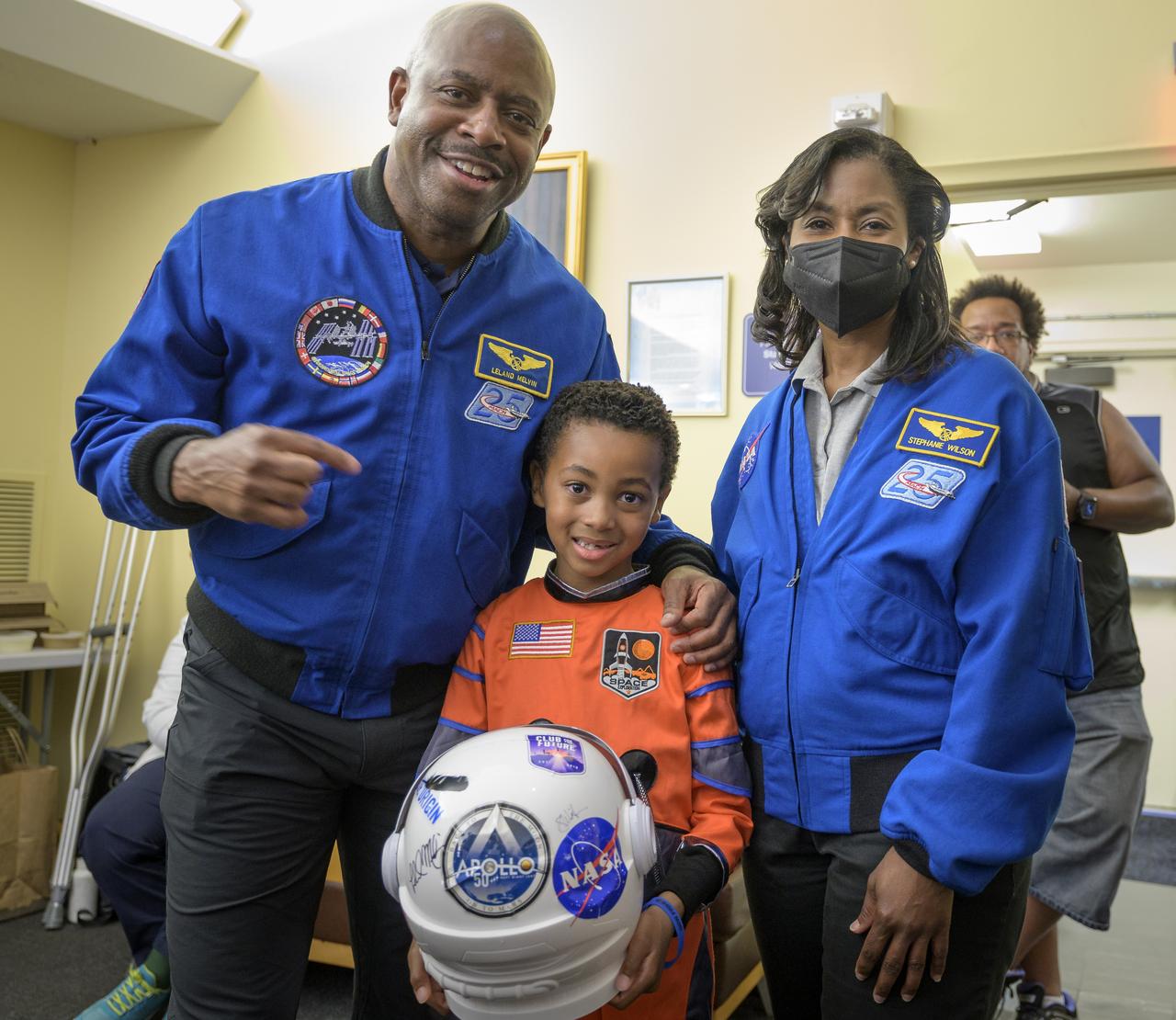
Former NASA astronaut Leland Melvin, left, and NASA astronaut Stephanie Wilson, pose for photograph with 6-year old Armani Bonds prior to the screening of the NASA produced documentary “The Color of Space” at Howard University’s Cramton Auditorium in Washington, Saturday, June 18, 2022. Premiering on Juneteenth, the federal holiday commemorating the end of slavery in the United States, “The Color of Space” is an inspirational documentary that tells the stories of NASA’s Black astronauts determined to reach the stars. Photo Credit: (NASA/Bill Ingalls)

Former NASA astronaut Leland Melvin gives remarks prior to the screening of the NASA produced documentary “The Color of Space” at Howard University’s Cramton Auditorium in Washington, Saturday, June 18, 2022. Premiering on Juneteenth, the federal holiday commemorating the end of slavery in the United States, “The Color of Space” is an inspirational documentary that tells the stories of NASA’s Black astronauts determined to reach the stars. Photo Credit: (NASA/Bill Ingalls)

Former NASA astronaut Leland Melvin shows some photographs from his previous flight experience prior to the screening of the NASA produced documentary “The Color of Space” at Howard University’s Cramton Auditorium in Washington, Saturday, June 18, 2022. Premiering on Juneteenth, the federal holiday commemorating the end of slavery in the United States, “The Color of Space” is an inspirational documentary that tells the stories of NASA’s Black astronauts determined to reach the stars. Photo Credit: (NASA/Bill Ingalls)
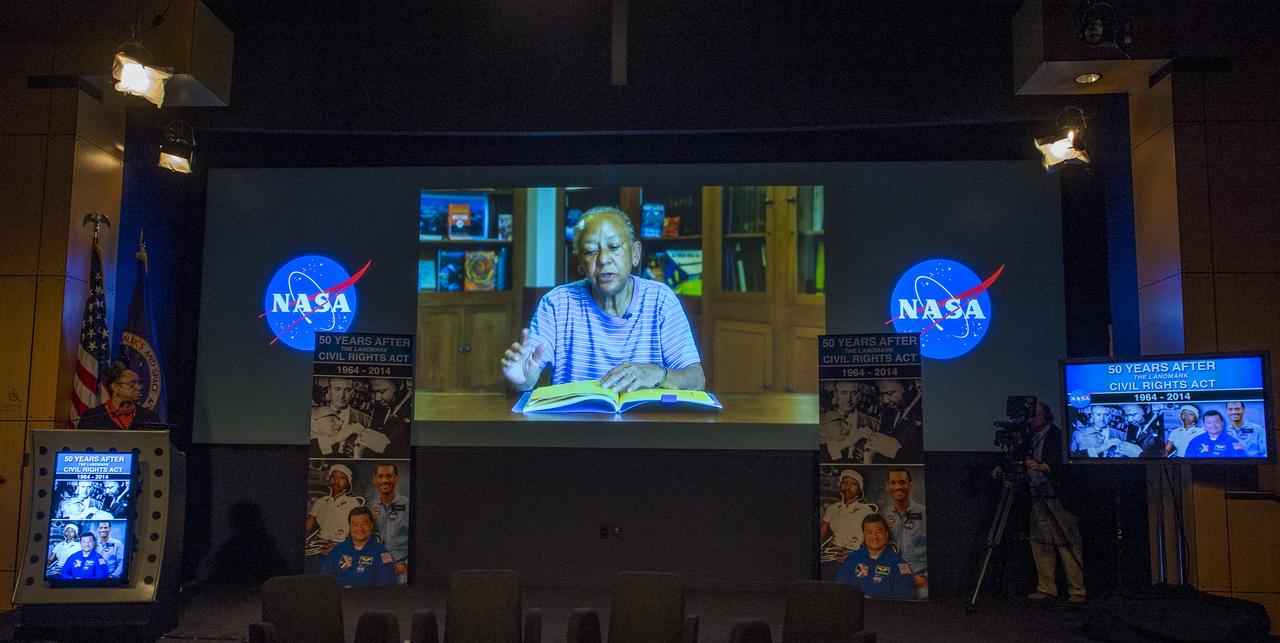
Nikki Giovanni, a poet and professor at Virginia Polytechnic and State University, reads her poem entitled "Quilting the Black-Eyed Pea (We’re Going to Mars)" via a pre-recorded video at an event celebrating the 50th Anniversary of the Civil Rights Act of 1964 on Monday, June 23, 2014 in the James E. Webb Auditorium at NASA Headquarters in Washington, DC. The event highlighted the influence of the Civil Rights Act on NASA. Photo Credit: (NASA/Joel Kowsky)
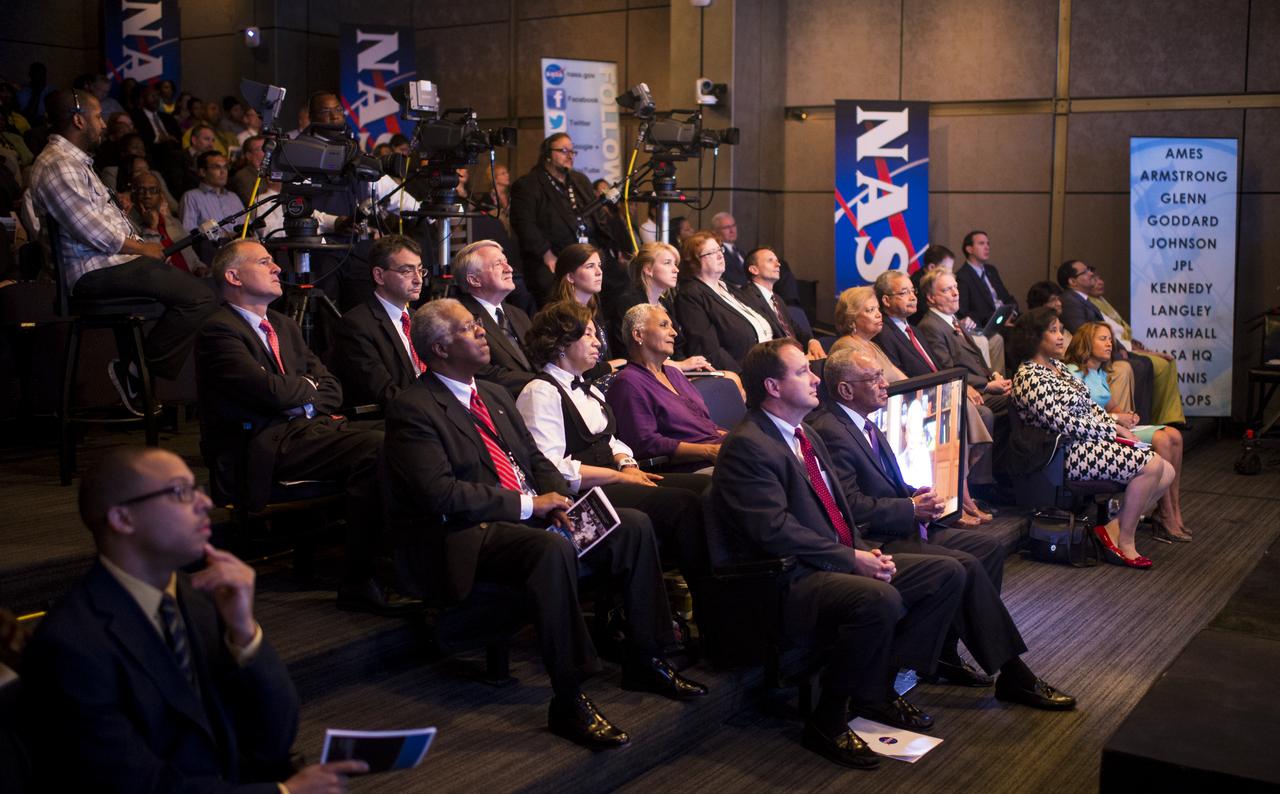
The audience watches as Nikki Giovanni, a poet and professor at Virginia Polytechnic and State University, reads her poem entitled "Quilting the Black-Eyed Pea (We’re Going to Mars)" via a pre-recorded video at at an event celebrating the 50th Anniversary of the Civil Rights Act of 1964 on Monday, June 23, 2014 in the James E. Webb Auditorium at NASA Headquarters in Washington, DC. The event highlighted the influence of the Civil Rights Act on NASA. Photo Credit: (NASA/Joel Kowsky)

Former NASA astronaut Leland Melvin gives remarks prior to the screening of the NASA produced documentary “The Color of Space” at Howard University’s Cramton Auditorium in Washington, Saturday, June 18, 2022. Premiering on Juneteenth, the federal holiday commemorating the end of slavery in the United States, “The Color of Space” is an inspirational documentary that tells the stories of NASA’s Black astronauts determined to reach the stars. Photo Credit: (NASA/Bill Ingalls)

Attendees enjoy space related activities prior to the screening of the NASA produced documentary “The Color of Space” at Howard University’s Cramton Auditorium in Washington, Saturday, June 18, 2022. Premiering on Juneteenth, the federal holiday commemorating the end of slavery in the United States, “The Color of Space” is an inspirational documentary that tells the stories of NASA’s Black astronauts determined to reach the stars. Photo Credit: (NASA/Bill Ingalls)
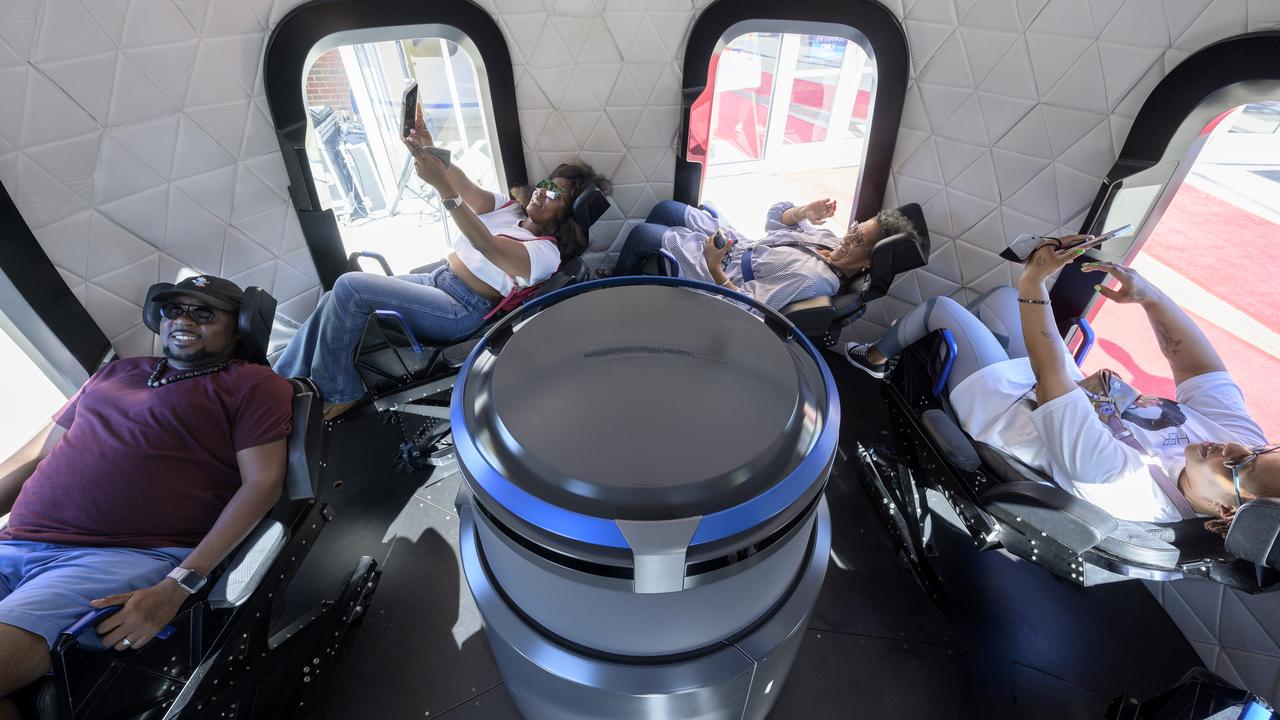
Attendees experience the inside of a Blue Origin New Shepard capsule mockup prior to the screening of the NASA produced documentary “The Color of Space” at Howard University’s Cramton Auditorium in Washington, Saturday, June 18, 2022. Premiering on Juneteenth, the federal holiday commemorating the end of slavery in the United States, “The Color of Space” is an inspirational documentary that tells the stories of NASA’s Black astronauts determined to reach the stars. Photo Credit: (NASA/Bill Ingalls)
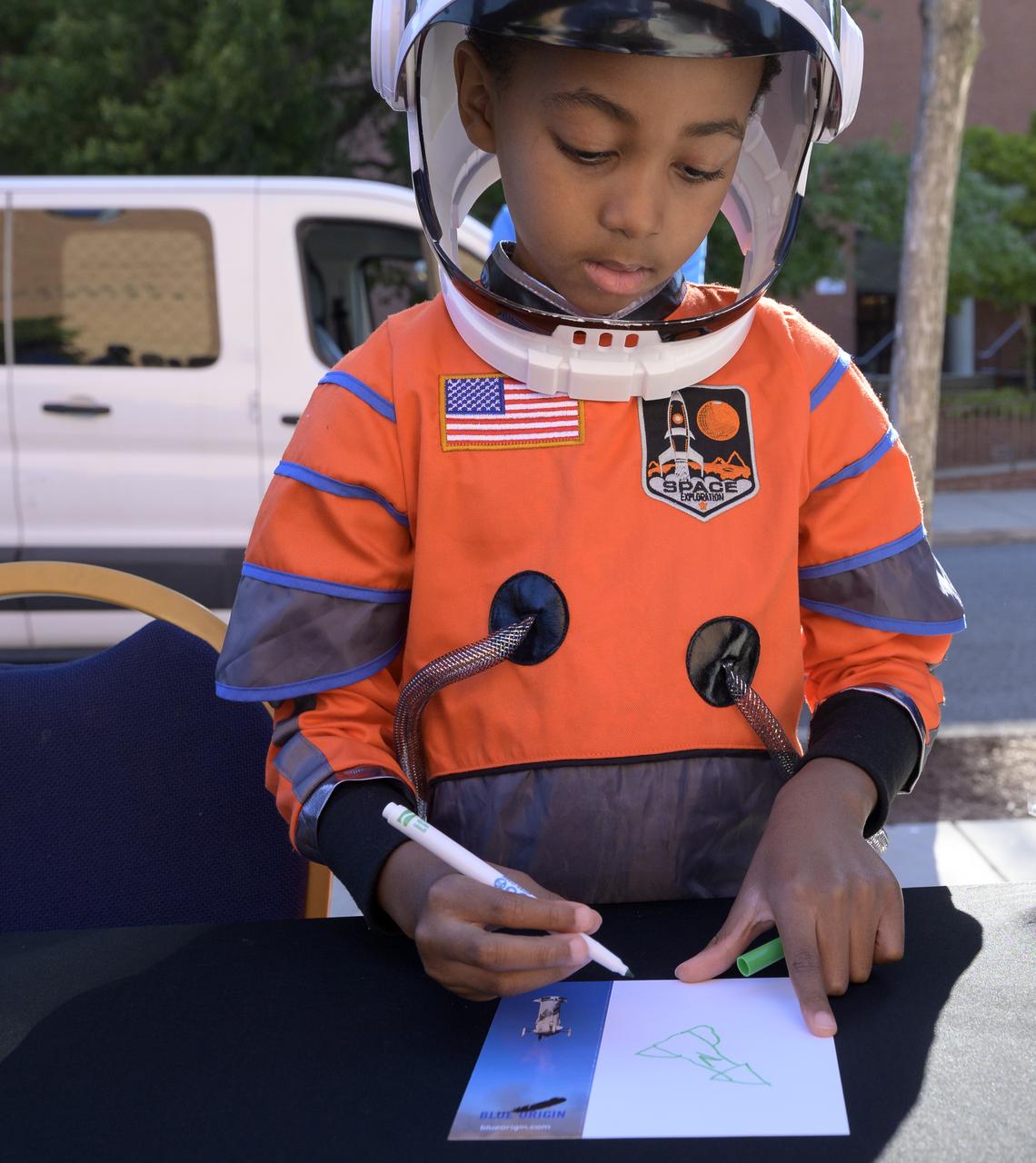
6-year old Armani Bonds draws on a postcard that will be sent to space by Club for the Future on a Blue Origin New Shepard rocket prior to he and his family screening the NASA produced documentary “The Color of Space” at Howard University’s Cramton Auditorium in Washington, Saturday, June 18, 2022. Premiering on Juneteenth, the federal holiday commemorating the end of slavery in the United States, “The Color of Space” is an inspirational documentary that tells the stories of NASA’s Black astronauts determined to reach the stars. Photo Credit: (NASA/Bill Ingalls)

NASA TV producer of “The Color of Space” Jori Kates gives remarks prior to the screening of the documentary at Howard University’s Cramton Auditorium in Washington, Saturday, June 18, 2022. Premiering on Juneteenth, the federal holiday commemorating the end of slavery in the United States, “The Color of Space” is an inspirational documentary that tells the stories of NASA’s Black astronauts determined to reach the stars. Photo Credit: (NASA/Bill Ingalls)
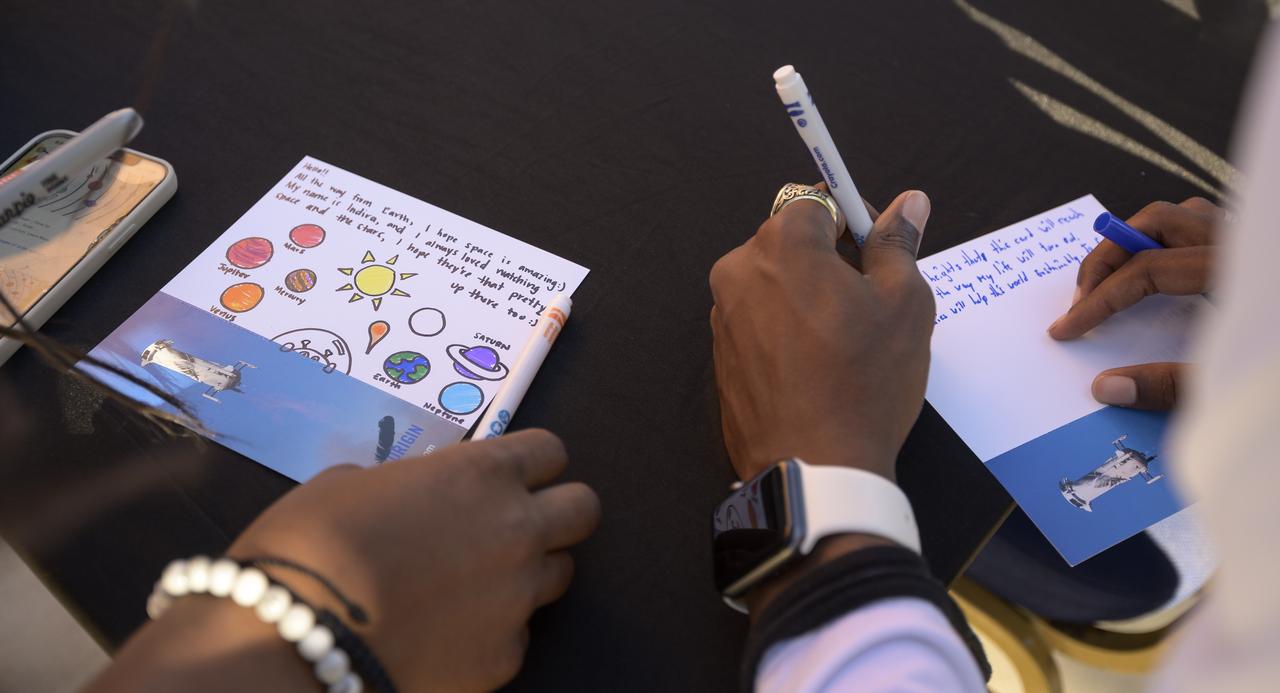
Children in attendance for the screening the NASA produced documentary “The Color of Space” draw on postcards that will be sent to space by Club for the Future on a Blue Origin New Shepard rocket at Howard University’s Cramton Auditorium in Washington, Saturday, June 18, 2022. Premiering on Juneteenth, the federal holiday commemorating the end of slavery in the United States, “The Color of Space” is an inspirational documentary that tells the stories of NASA’s Black astronauts determined to reach the stars. Photo Credit: (NASA/Bill Ingalls)

Former NASA astronaut Leland Melvin gives remarks prior to the screening of the NASA produced documentary “The Color of Space” at Howard University’s Cramton Auditorium in Washington, Saturday, June 18, 2022. Premiering on Juneteenth, the federal holiday commemorating the end of slavery in the United States, “The Color of Space” is an inspirational documentary that tells the stories of NASA’s Black astronauts determined to reach the stars. Photo Credit: (NASA/Bill Ingalls)
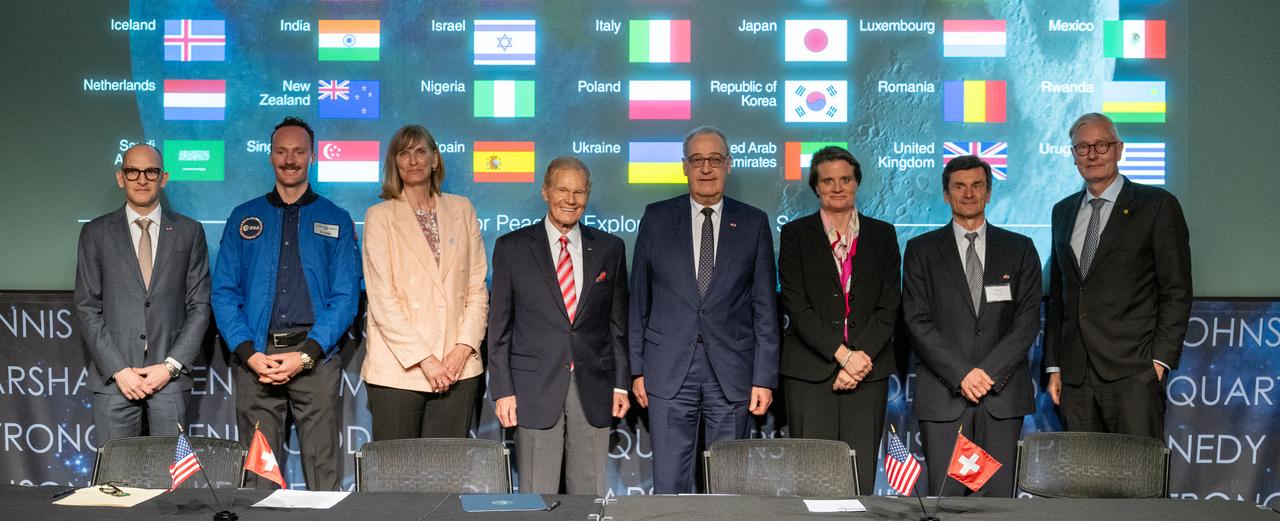
From left to right, Head of Swiss Space Office Renato Krpoun, ESA (European Space Agency) astronaut Marco Sieber, Acting Department of State Deputy Assistant Secretary Valda Vikmanis, NASA Administrator Bill Nelson, Swiss Federal Councillor Guy Parmelin, and Swiss State Secretary Martina Hirayama, University of Bern Director Space & Planetary Sciences Peter Wurz, and Swiss Ambassador to the United States Jacques Pitteloud, pose for a photo during an Artemis Accords signing ceremony, Monday, April 15, 2024, at the Mary W. Jackson NASA Headquarters building in Washington. Switzerland is the 37th country to sign the Artemis Accords, which establish a practical set of principles to guide space exploration cooperation among nations participating in NASA’s Artemis program. Photo Credit: (NASA/Keegan Barber)
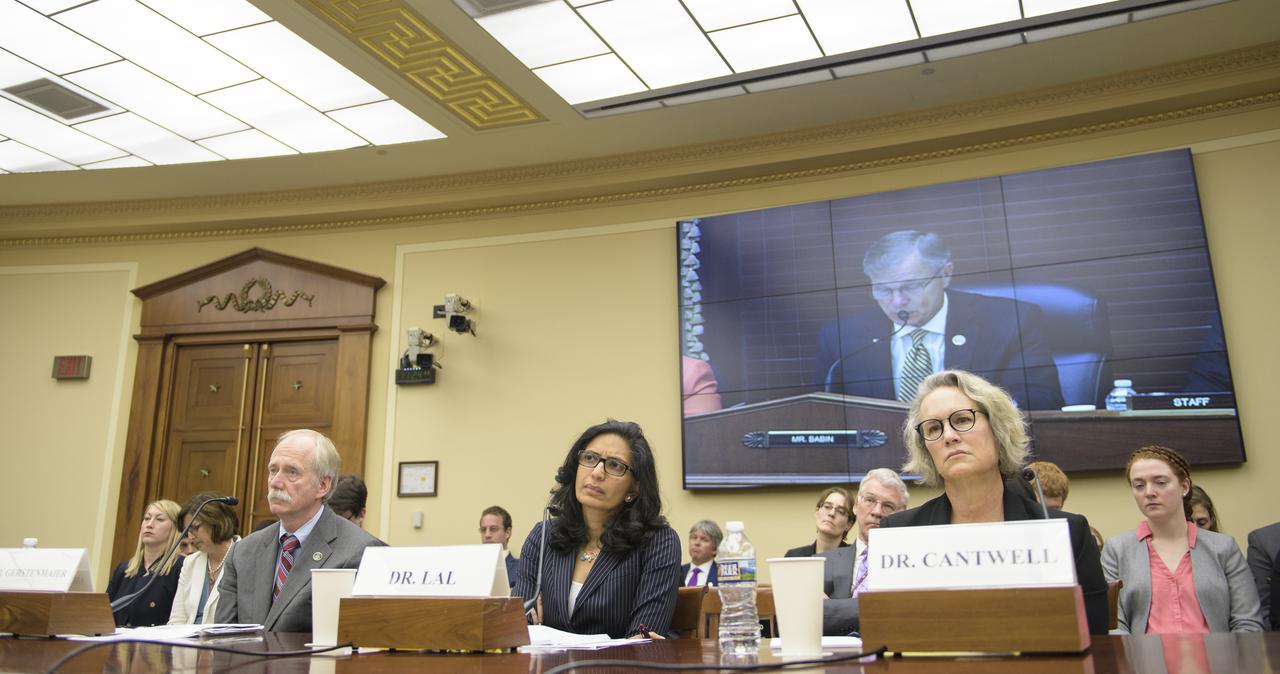
NASA Associate Administrator for the Human Exploration and Operations Mission Directorate William Gerstenmaier, left, Dr. Bhavya Lal, a researcher at the Institute for Defense Analysis's Science and Technology Policy Institute, center, and Dr. Elizabeth Cantwell, chief executive officer at the Arizona State University Research Enterprise, right, listen as Rep. Brian Babin, R-Texas, is seen on screen as he delivers an opening statement during a House Committee on Science, Space, and Technology hearing titled "America's Human Presence in Low-Earth Orbit" on Thursday, May 17, 2018 in the Rayburn House Office Building in Washington. Photo Credit: (NASA/Joel Kowsky)
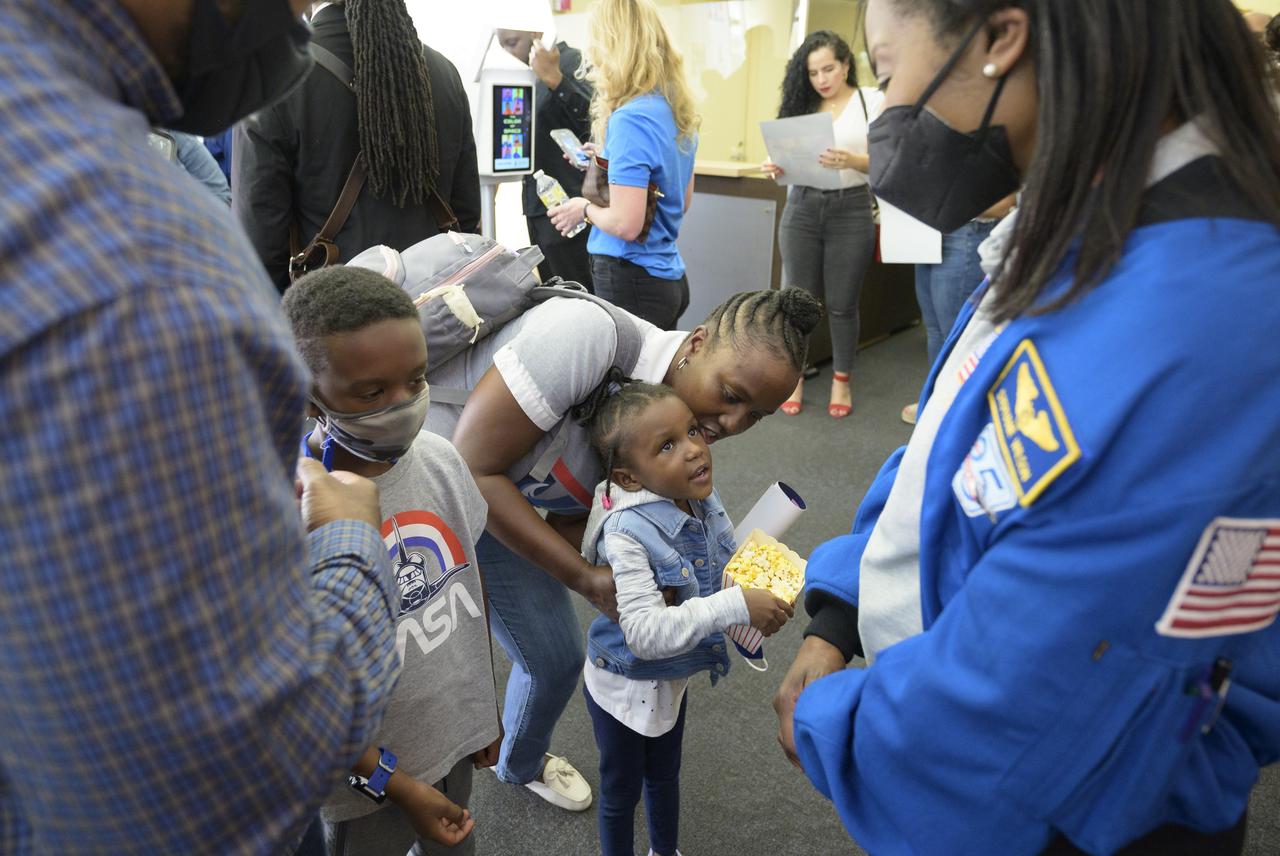
NASA astronaut Stephanie Wilson talks with 7-year old Tre Rahaman, left, and 4-year old Amira Rahaman, along with their mother Nadia Rahaman of Silver Sping, Maryland prior to the screening of the NASA produced documentary “The Color of Space” at Howard University’s Cramton Auditorium in Washington, Saturday, June 18, 2022. Premiering on Juneteenth, the federal holiday commemorating the end of slavery in the United States, “The Color of Space” is an inspirational documentary that tells the stories of NASA’s Black astronauts determined to reach the stars. Photo Credit: (NASA/Bill Ingalls)
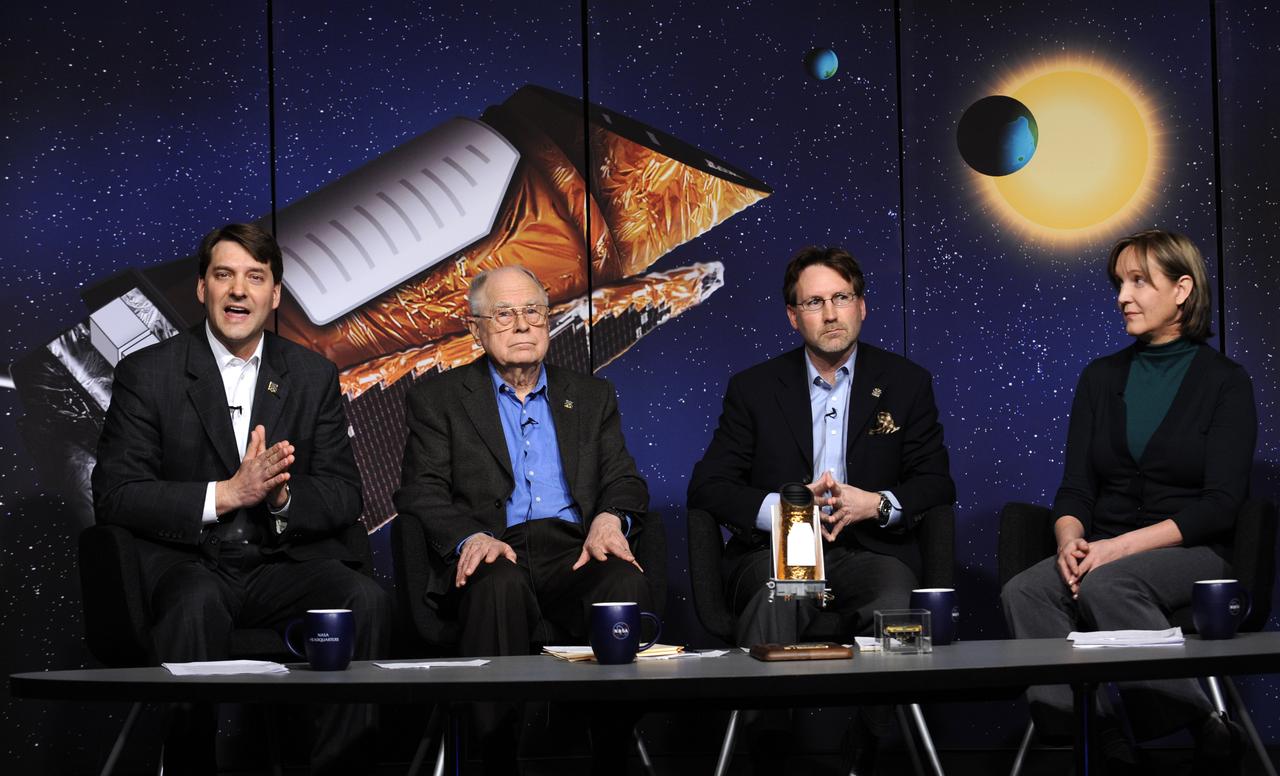
Jon Morse, Director, Astrophysics Division, at NASA Headquarters, left, talks about the Kepler mission during a media briefing, Thursday, Feb. 19, 2008, at NASA Headquarters in Washington. Morse was joined at the briefing by William Borucki, principal investigator for Kepler Science at Ames Research Center, second left, Jim Fanson, Kepler Project Manager at the Jet Propulsion Laboratory and Debra Fischer, professor of Astronomy at San Francisco State University, right. Kepler is scheduled to launch on March 5, 2009 from Cape Canaveral Air Force Station, Fla. aboard a Delta II rocket. Photo Credit: (NASA/Paul. E. Alers)
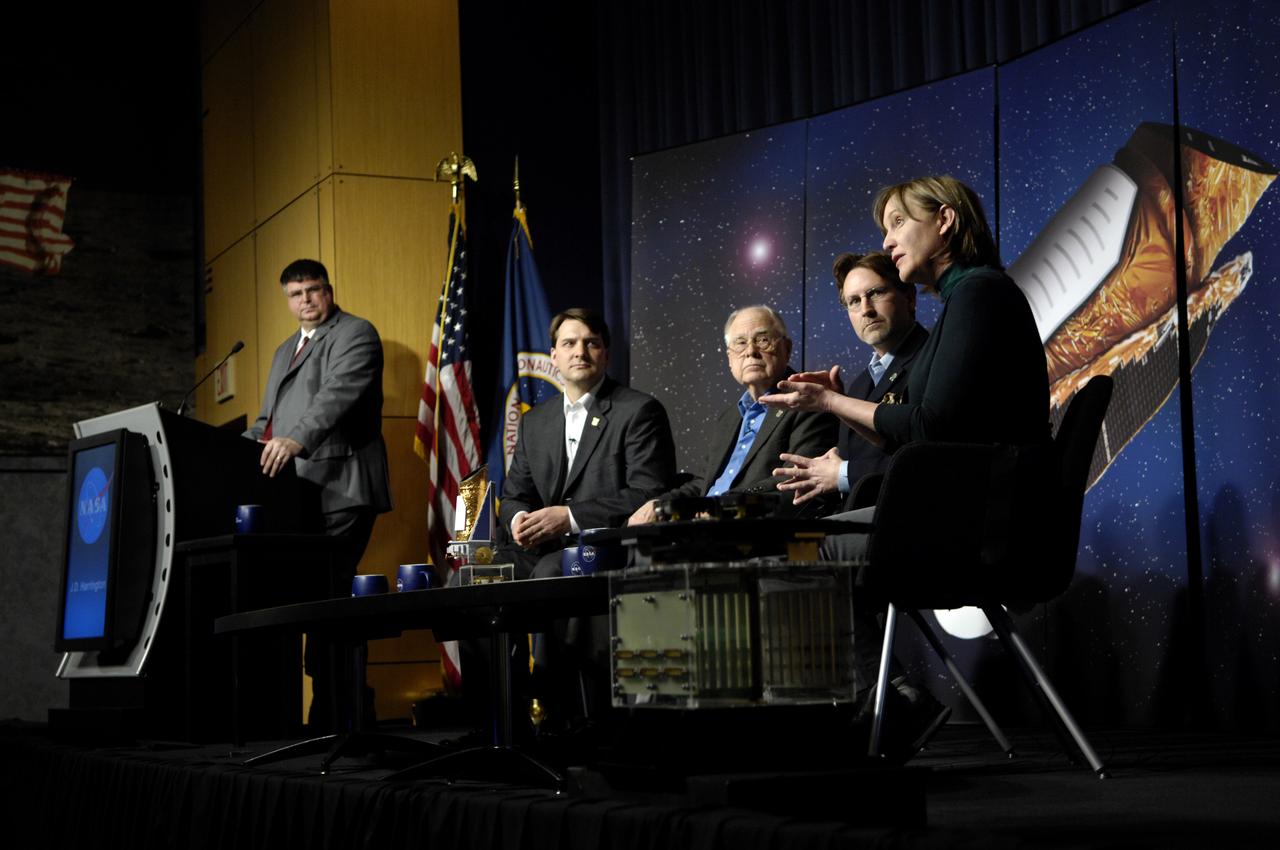
Debra Fischer, a professor of Astronomy at San Francisco State University, right, makes a comment, as Jim Fanson, William Borucki and Jon Morse, fourth from right, look on during a media briefing on the Kepler mission, Thursday, Feb. 19, 2008, at NASA Headquarters in Washington. Kepler, the first mission with the ability to find planets like earth, is scheduled to launch on March 5, 2009 from Cape Canaveral Air Force Station, Fla. aboard a Delta II rocket. At far left is J.D. Harrington. Photo Credit: (NASA/Paul. E. Alers)
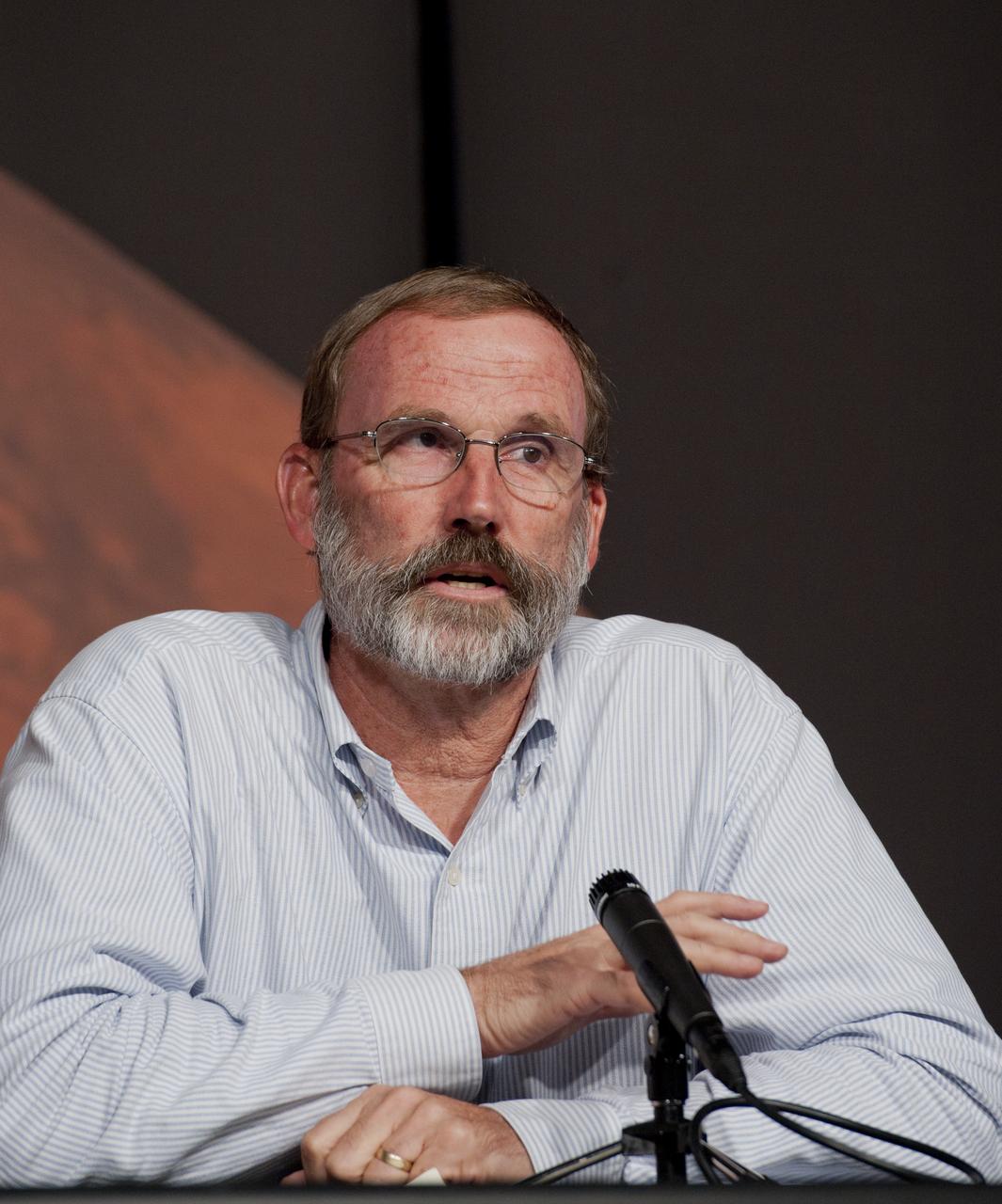
Philip Christensen, a geophysicist at Arizona State University, speaks during a briefing, Thursday, Aug. 4, 2011, at NASA Headquarters in Washington. Observations from NASA's Mars Reconnaissance Orbiter (MRO) have revealed possible flowing water during the warmest months on Mars. Dark, finger-like features appear and extend down some Martian slopes during late spring through summer, fade in winter, and return during the next spring. Repeated observations have tracked the seasonal changes in these recurring features on several steep slopes in the middle latitudes of Mars' southern hemisphere. Photo Credit: (NASA/Paul E. Alers)
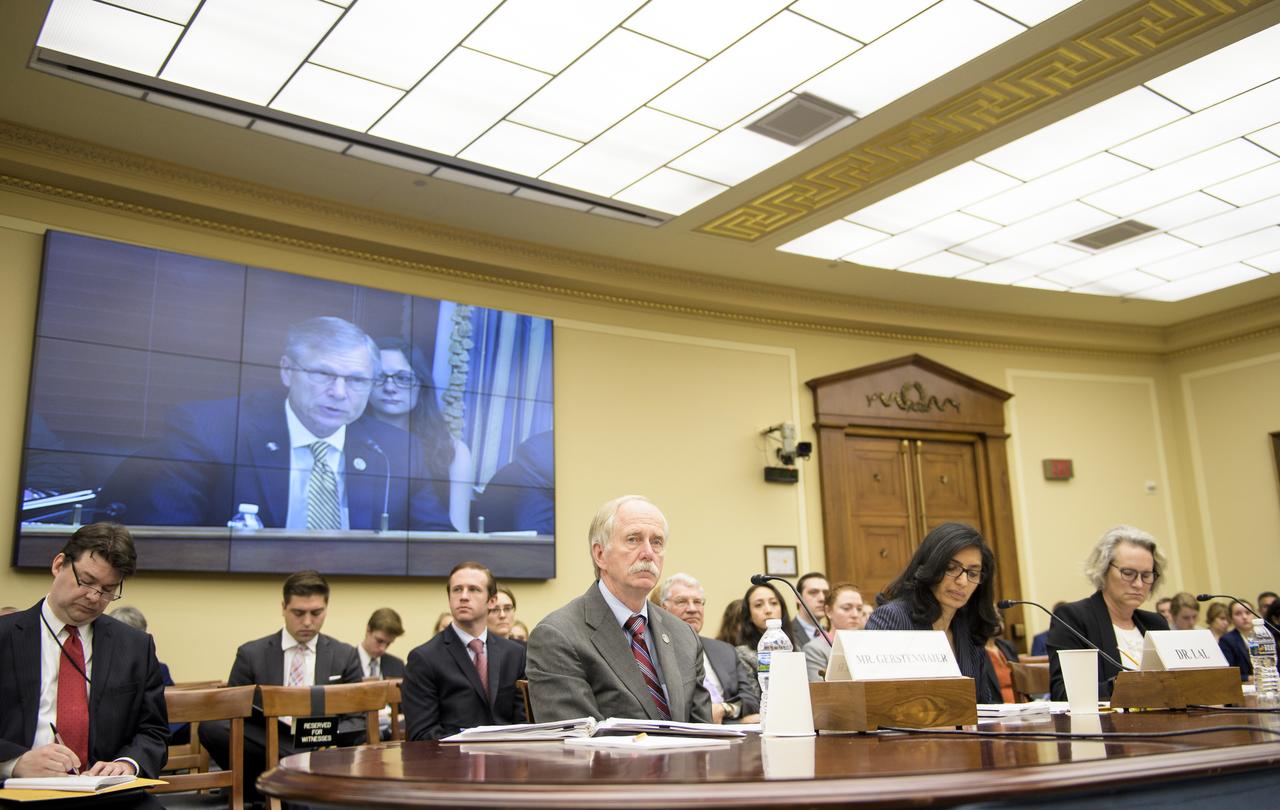
NASA Associate Administrator for the Human Exploration and Operations Mission Directorate William Gerstenmaier, left, Dr. Bhavya Lal, a researcher at the Institute for Defense Analysis's Science and Technology Policy Institute, center, and Dr. Elizabeth Cantwell, chief executive officer at the Arizona State University Research Enterprise, right, listen as Rep. Brian Babin, R-Texas, is seen on screen as he delivers an opening statement during a House Committee on Science, Space, and Technology hearing titled "America's Human Presence in Low-Earth Orbit" on Thursday, May 17, 2018 in the Rayburn House Office Building in Washington. Photo Credit: (NASA/Joel Kowsky)
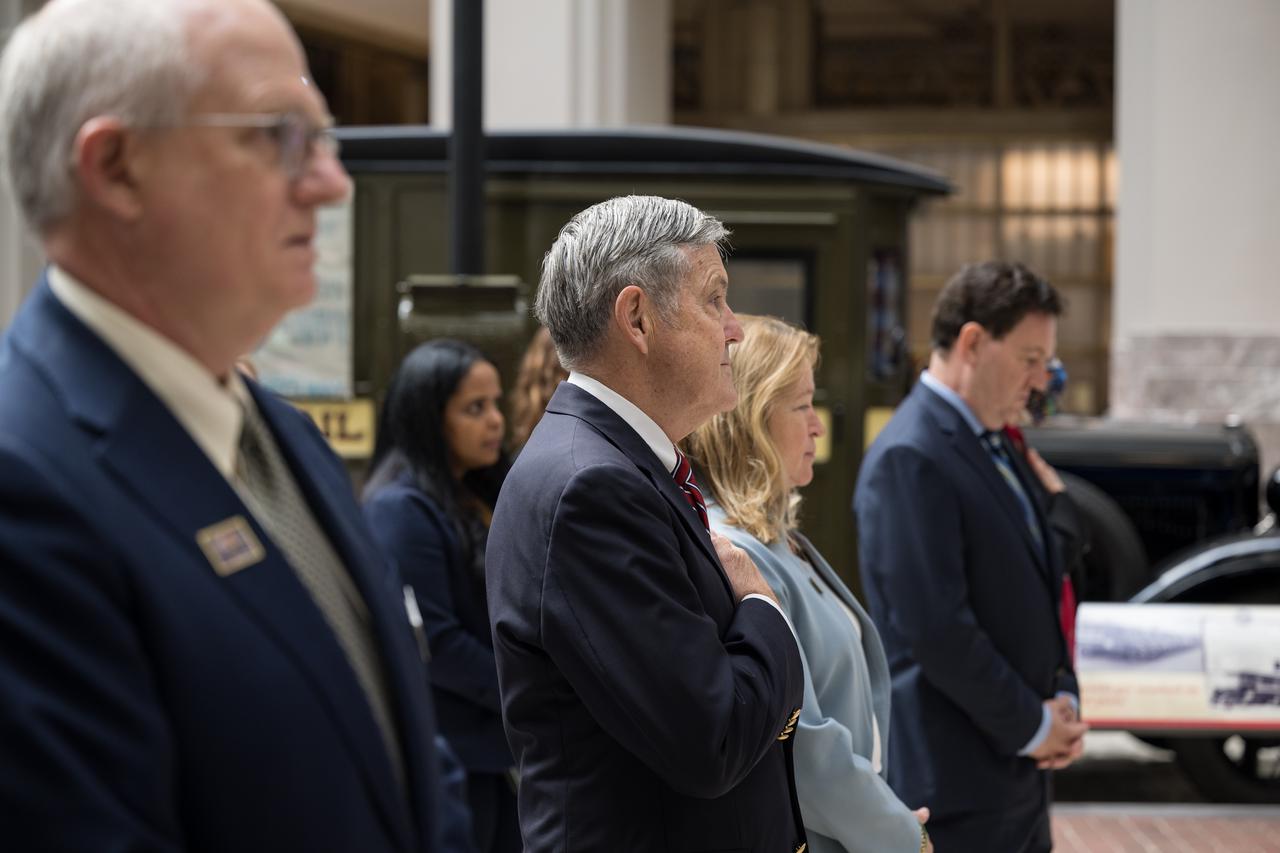
NASA Associate Administrator and former astronaut, Bob Cabana, second from left, and Smithsonian Institution Under Secretary for Service and Research, Ellen Stofan, third from left, are seen during the singing of the national anthem at the first-day-of-issue event for the United States Postal Service’s new stamp celebrating NASA’s James Webb Space Telescope (JWST) on Thursday, Sept. 8, 2022, at the Smithsonian’s National Postal Museum in Washington. The stamp, which features an illustration of the observatory, honors Webb’s mission to explore the unknown in our universe – solving mysteries in our solar system, looking beyond to distant worlds around other stars, and probing the structures and origins of our universe and our place in it. Photo Credit: (NASA/Aubrey Gemignani)
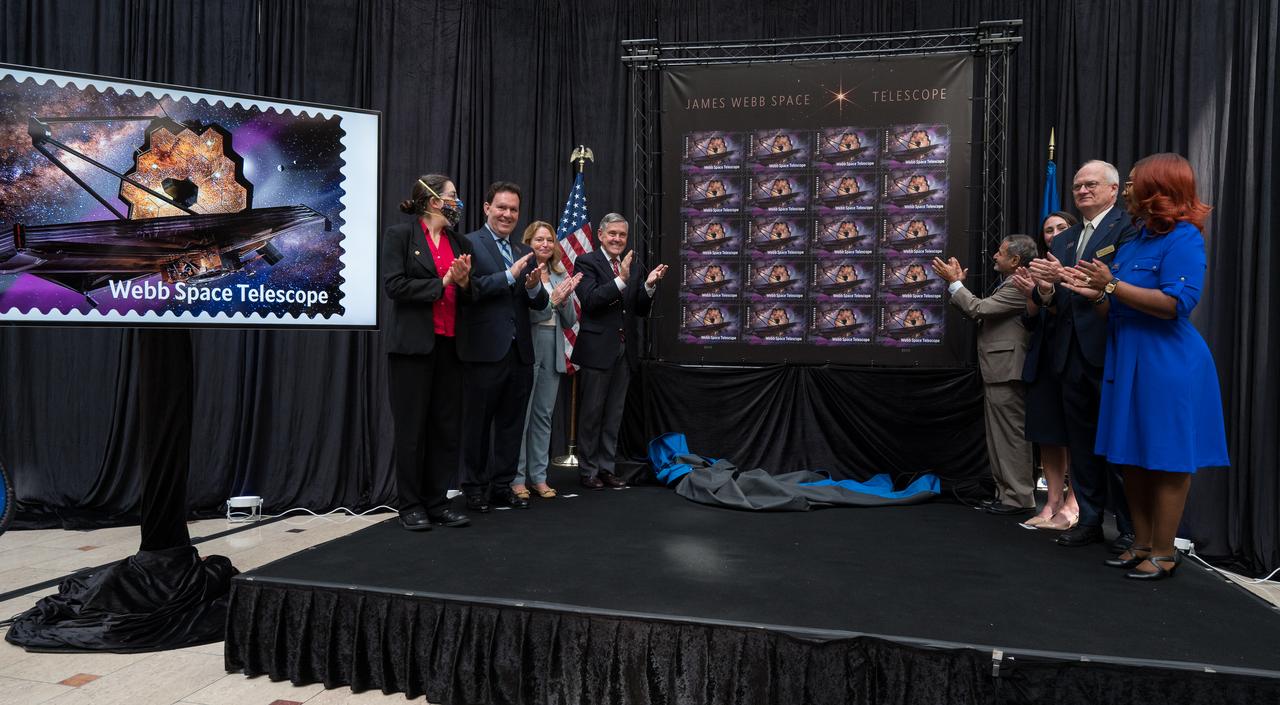
From left to right, NASA’s Goddard Space Flight Center Webb Deputy Observatory Project Scientist, Erin Smith, NASA’s Goddard Space Flight Center Webb Optical Telescope Element Manager, Lee Feinberg, Smithsonian Institution Under Secretary for Service and Research, Ellen Stofan, NASA Associate Administrator and former astronaut Bob Cabana, United States Postal Service Vice Chairman, Board of Governors, Anton Hajjar, NASA public affairs specialist Alice Fisher, National Postal Museum Deputy Director, Toby Mensforth, and Lisa Whitehead, USPS, applaud after unveiling the United States Postal Service’s new stamp celebrating NASA’s James Webb Space Telescope (JWST) at the first-day-of-issue event on Thursday, Sept. 8, 2022, at the Smithsonian’s National Postal Museum in Washington. The stamp, which features an illustration of the observatory, honors Webb’s mission to explore the unknown in our universe – solving mysteries in our solar system, looking beyond to distant worlds around other stars, and probing the structures and origins of our universe and our place in it. Photo Credit: (NASA/Aubrey Gemignani)
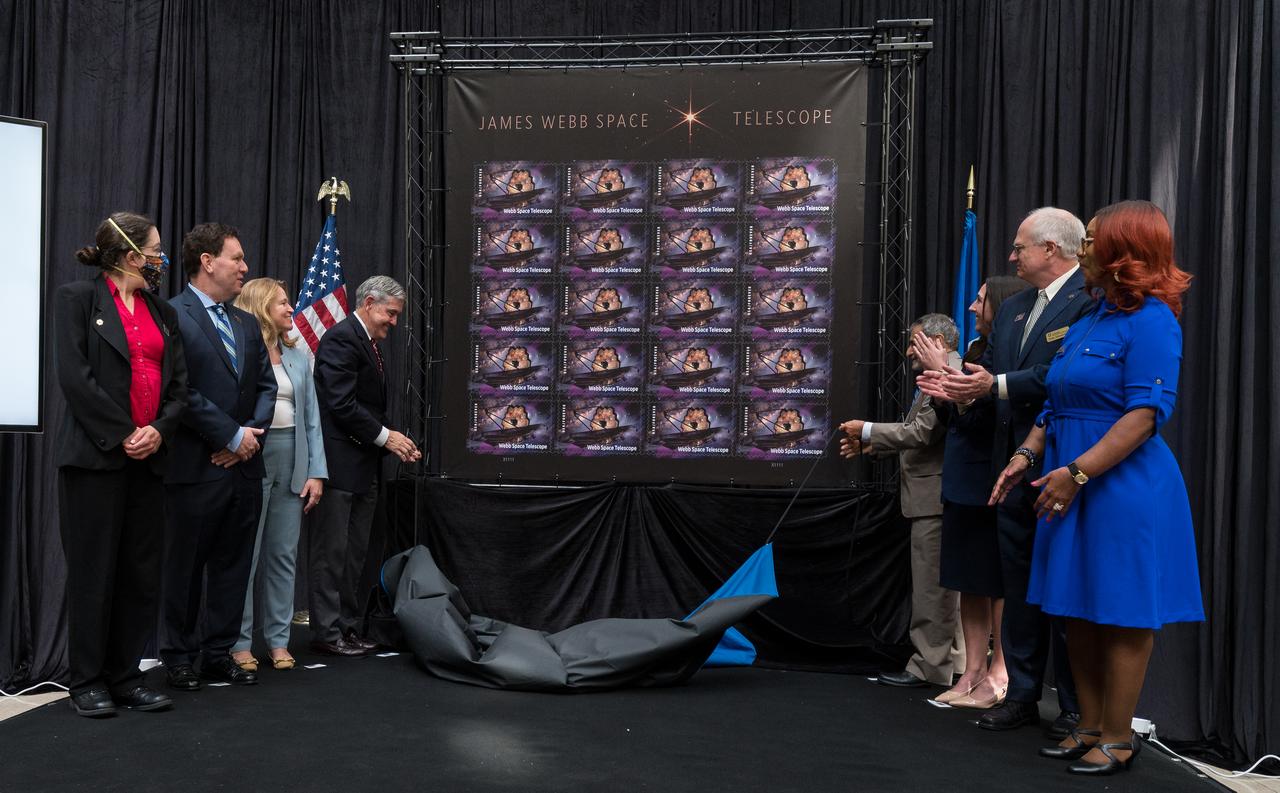
From left to right, NASA’s Goddard Space Flight Center Webb Deputy Observatory Project Scientist, Erin Smith, NASA’s Goddard Space Flight Center Webb Optical Telescope Element Manager, Lee Feinberg, Smithsonian Institution Under Secretary for Service and Research, Ellen Stofan, NASA Associate Administrator and former astronaut Bob Cabana, United States Postal Service Vice Chairman, Board of Governors, Anton Hajjar, NASA public affairs specialist Alice Fisher, National Postal Museum Deputy Director, Toby Mensforth, and Lisa Whitehead, USPS, unveil the United States Postal Service’s new stamp celebrating NASA’s James Webb Space Telescope (JWST) at the first-day-of-issue event on Thursday, Sept. 8, 2022, at the Smithsonian’s National Postal Museum in Washington. The stamp, which features an illustration of the observatory, honors Webb’s mission to explore the unknown in our universe – solving mysteries in our solar system, looking beyond to distant worlds around other stars, and probing the structures and origins of our universe and our place in it. Photo Credit: (NASA/Aubrey Gemignani)
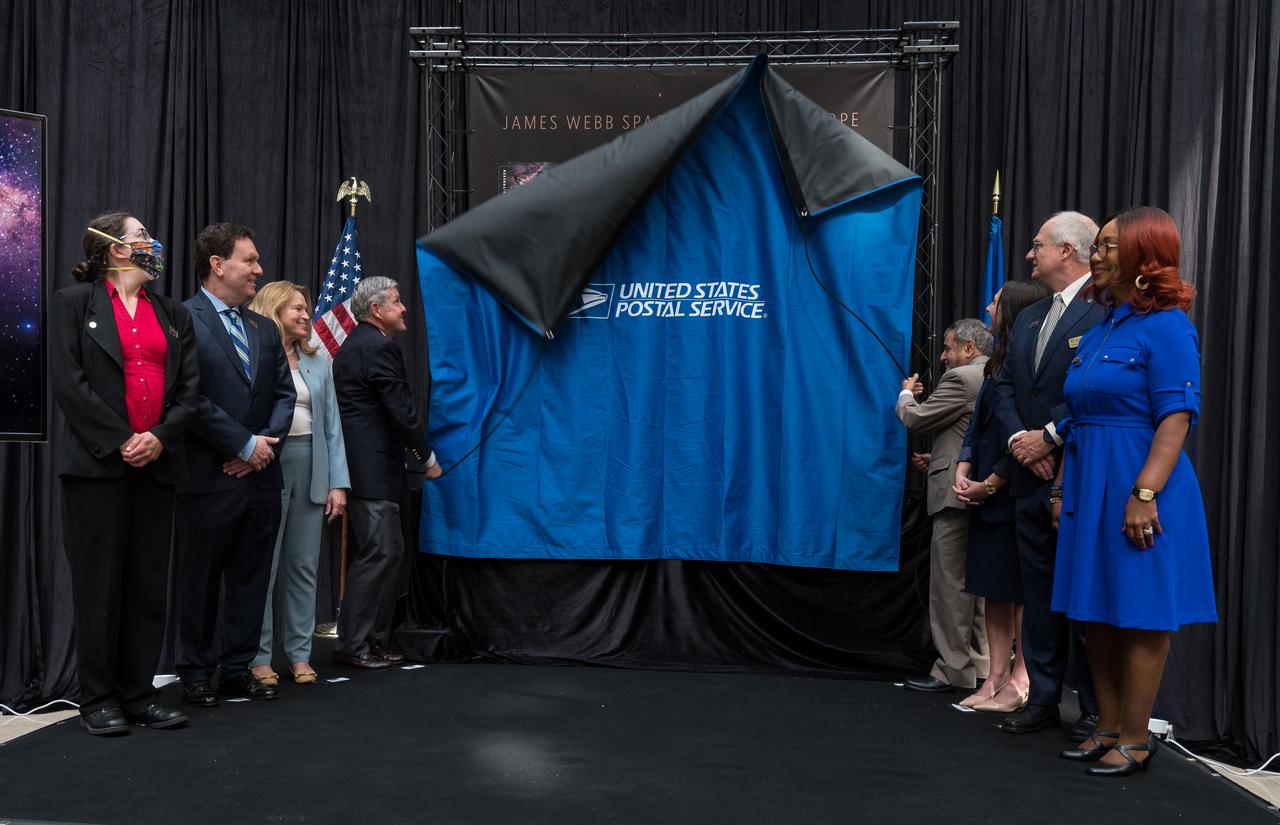
From left to right, NASA’s Goddard Space Flight Center Webb Deputy Observatory Project Scientist, Erin Smith, NASA’s Goddard Space Flight Center Webb Optical Telescope Element Manager, Lee Feinberg, Smithsonian Institution Under Secretary for Service and Research, Ellen Stofan, NASA Associate Administrator and former astronaut Bob Cabana, United States Postal Service Vice Chairman, Board of Governors, Anton Hajjar, NASA public affairs specialist Alice Fisher, National Postal Museum Deputy Director, Toby Mensforth, and Lisa Whitehead, USPS, unveil the United States Postal Service’s new stamp celebrating NASA’s James Webb Space Telescope (JWST) at the first-day-of-issue event on Thursday, Sept. 8, 2022, at the Smithsonian’s National Postal Museum in Washington. The stamp, which features an illustration of the observatory, honors Webb’s mission to explore the unknown in our universe – solving mysteries in our solar system, looking beyond to distant worlds around other stars, and probing the structures and origins of our universe and our place in it. Photo Credit: (NASA/Aubrey Gemignani)
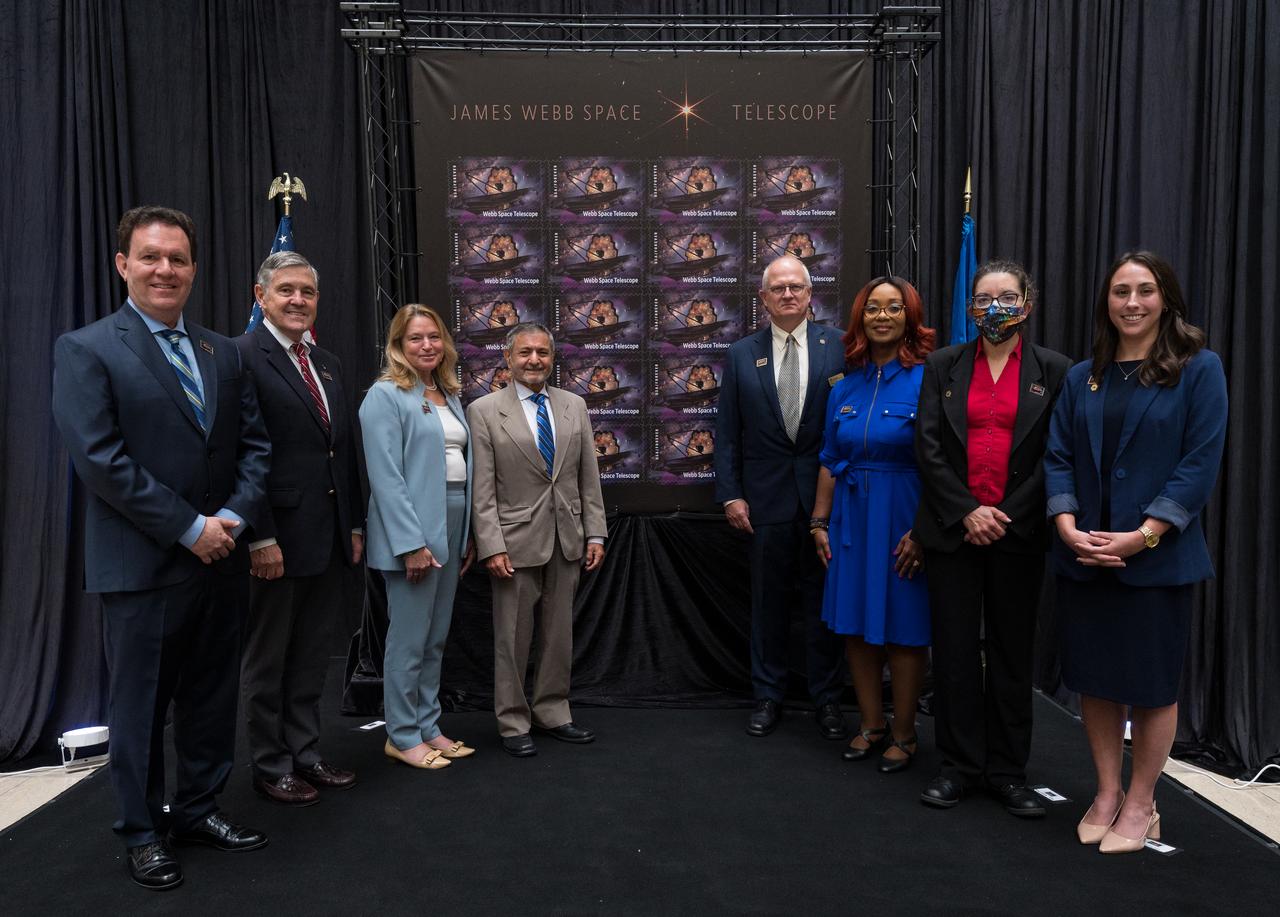
From left to right, NASA’s Goddard Space Flight Center Webb Optical Telescope Element Manager, Lee Feinberg, NASA Associate Administrator and former astronaut Bob Cabana, Smithsonian Institution Under Secretary for Service and Research, Ellen Stofan, United States Postal Service Vice Chairman, Board of Governors, Anton Hajjar, National Postal Museum Deputy Director Toby Mensforth, Lisa Whitehead, USPS, NASA’s Goddard Space Flight Center Webb Deputy Observatory Project Scientist, Erin Smith, and NASA public affairs specialist, Alice Fisher, pose for a photo at the conclusion of the first-day-of-issue event for the United States Postal Service’s new stamp celebrating NASA’s James Webb Space Telescope (JWST) on Thursday, Sept. 8, 2022, at the Smithsonian’s National Postal Museum in Washington. The stamp, which features an illustration of the observatory, honors Webb’s mission to explore the unknown in our universe – solving mysteries in our solar system, looking beyond to distant worlds around other stars, and probing the structures and origins of our universe and our place in it. Photo Credit: (NASA/Aubrey Gemignani)
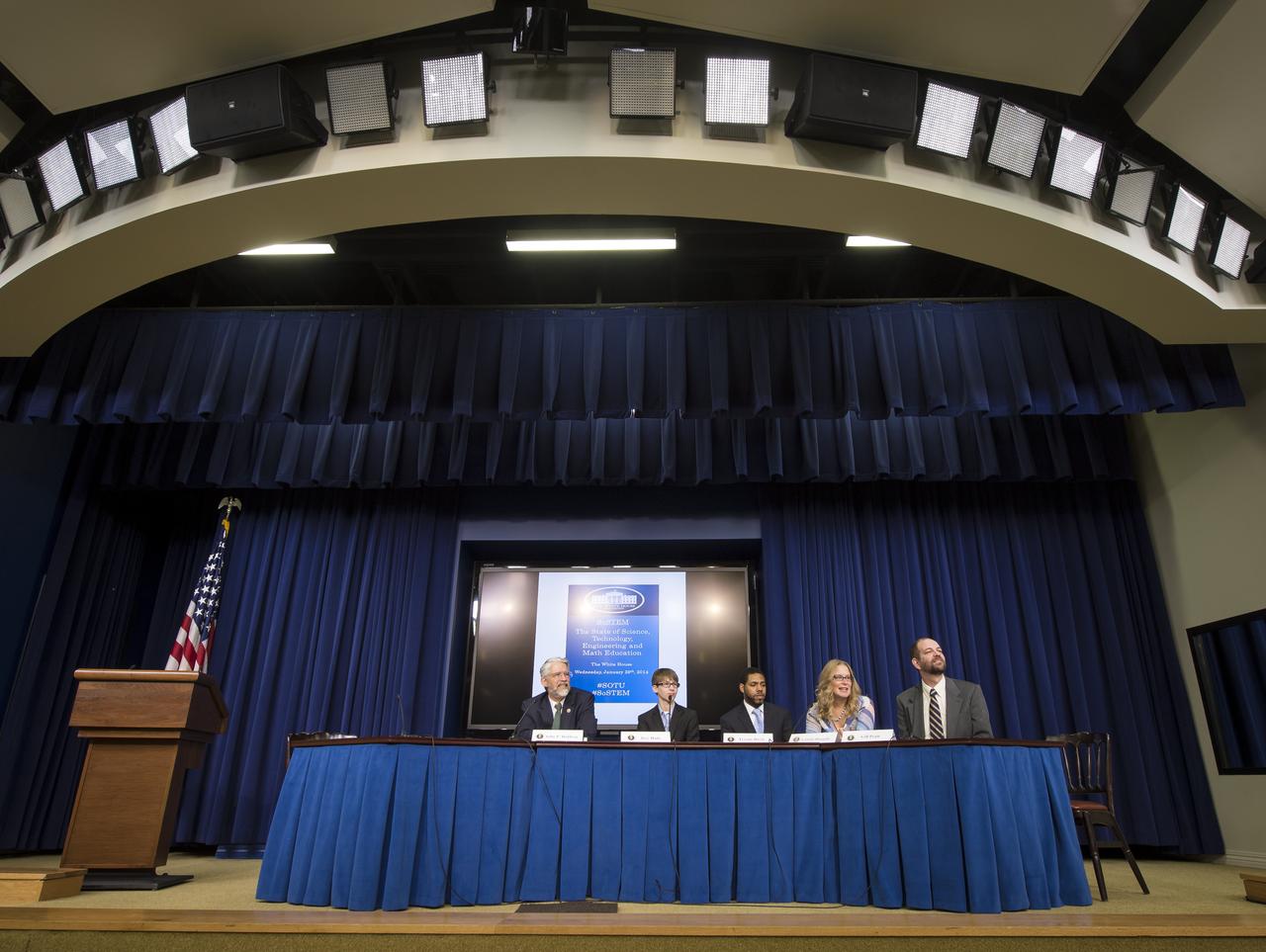
Panels participants, from left, Dr. John P. Holdren, Assistant to the President for Science and Technology and Director of the White House Office of Science & Technology Policy, former White House Science Fair participant Joey Hudy, Environmentalist and third-year law student at Elon University School of Law Tyrone Davis, White House innovation expert Cristin Dorgelo, and Defense Advanced Research Projects Agency (DARPA) Gill Pratt, take a question from the audience during the annual White House State of Science, Technology, Engineering, and Math (SoSTEM) address, Wednesday, Jan. 29, 2014, in the South Court Auditorium in the Eisenhower Executive Office Building on the White House complex in Washington. Photo Credit: (NASA/Bill Ingalls)

From left; Hon. Alan Estevez, Principle Deputy Under Secretary of Defense for Acquisition, Technology, and Logistics; General William Shelton, Commander of the United States Air Force Space Command; Robert Lightfoot, NASA Associate Administrator; Cristina Chaplain, Director of Acquisition and Sourcing Management at the Government Accountability Office; major General Howard Mitchell (USAF Ret.), Vice President for Program Assessments at The Aerospace Corporation; Daniel Dunbacher, Professor of Practice in the Department of Aeronautics and Aerospace Engineering at Purdue University; and Dr. Yool Kim, Senior Engineer at The Rand Corporation; are seen during a hearing in front of the Senate Subcommittee on Strategic Forces and Senate Committee on Commerce, Science, and Transportation on Wednesday, July 16, 2014, at the Hart Senate Office Building in Washington, DC. The Senate hearing focused on assured access to space.
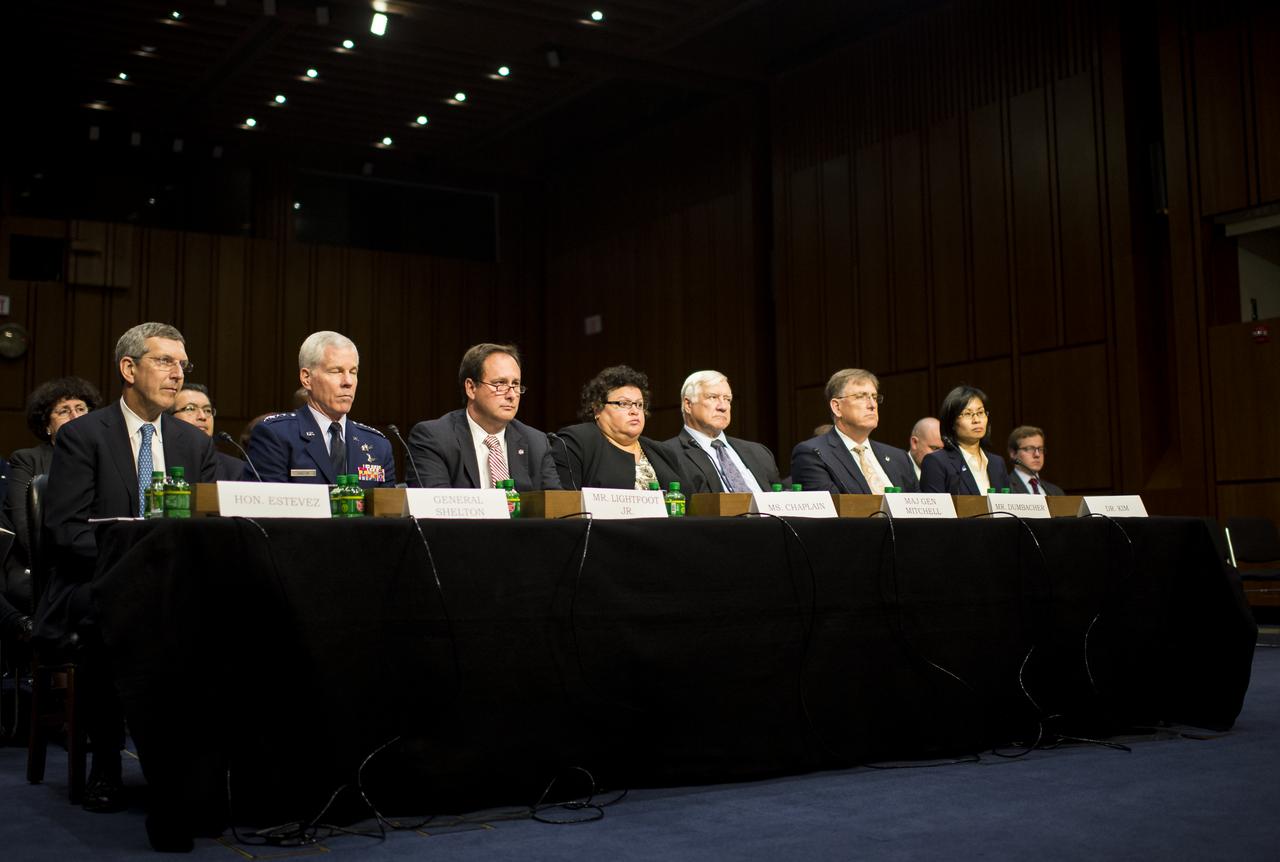
From left; Hon. Alan Estevez, Principle Deputy Under Secretary of Defense for Acquisition, Technology, and Logistics; General William Shelton, Commander of the United States Air Force Space Command; Robert Lightfoot, NASA Associate Administrator; Cristina Chaplain, Director of Acquisition and Sourcing Management at the Government Accountability Office; major General Howard Mitchell (USAF Ret.), Vice President for Program Assessments at The Aerospace Corporation; Daniel Dunbacher, Professor of Practice in the Department of Aeronautics and Aerospace Engineering at Purdue University; and Dr. Yool Kim, Senior Engineer at The Rand Corporation; are seen during a hearing in front of the Senate Subcommittee on Strategic Forces and Senate Committee on Commerce, Science, and Transportation on Wednesday, July 16, 2014, at the Hart Senate Office Building in Washington, DC. The Senate hearing focused on assured access to space.
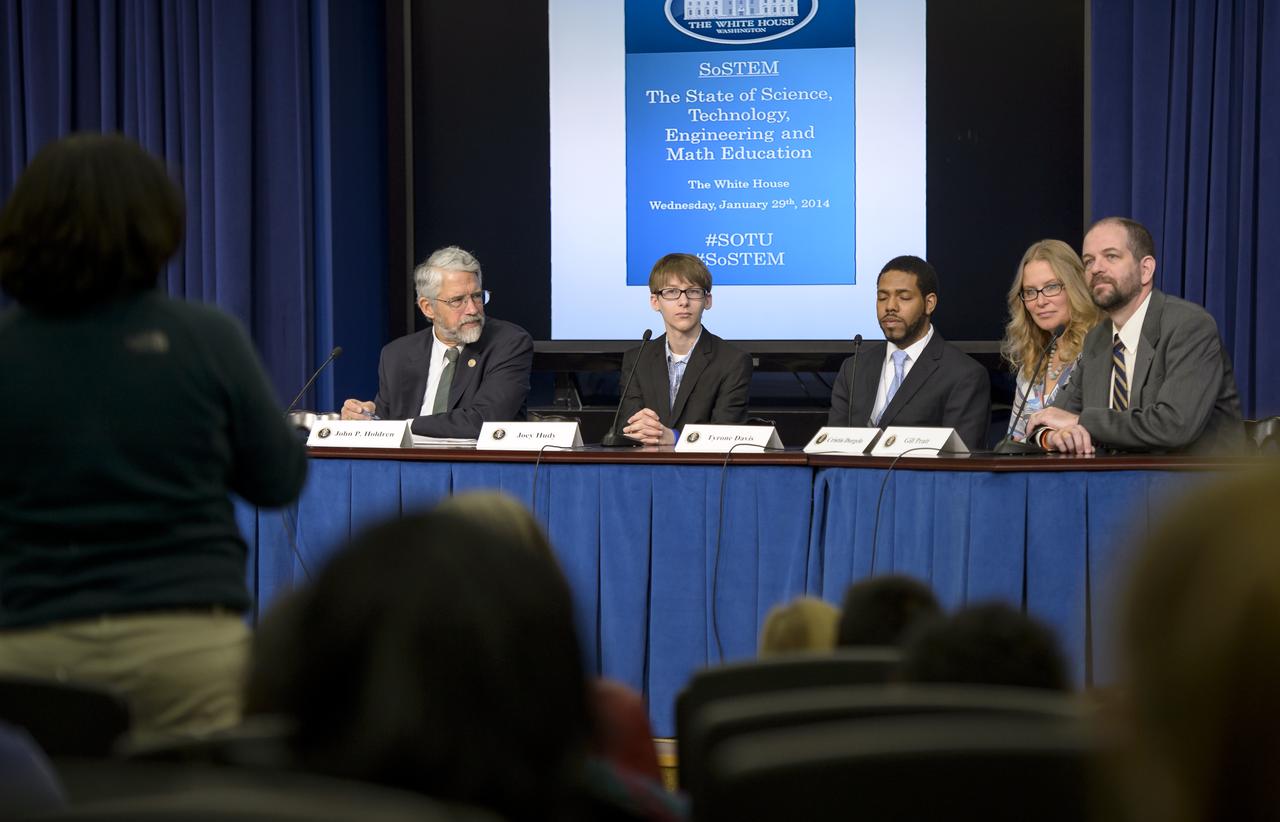
Panels participants, from left, Dr. John P. Holdren, Assistant to the President for Science and Technology and Director of the White House Office of Science & Technology Policy, former White House Science Fair participant Joey Hudy, Environmentalist and third-year law student at Elon University School of Law Tyrone Davis, White House innovation expert Cristin Dorgelo, and Defense Advanced Research Projects Agency (DARPA) Gill Pratt, take a question from the audience during the annual White House State of Science, Technology, Engineering, and Math (SoSTEM) address, Wednesday, Jan. 29, 2014, in the South Court Auditorium in the Eisenhower Executive Office Building on the White House complex in Washington. Photo Credit: (NASA/Bill Ingalls)
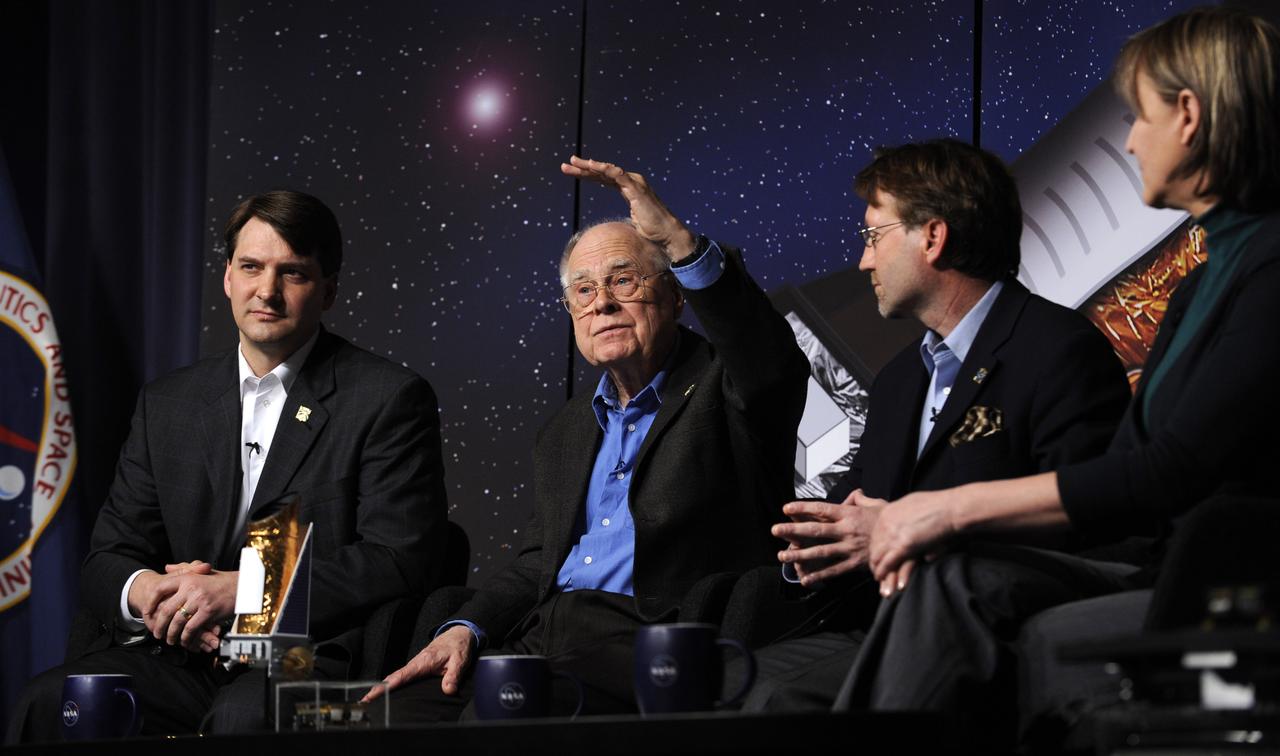
William Borucki, principal investigator for Kepler Science at Ames Research Center, Moffett Field, Calif.,, second from left, talks about the Kepler mission during a media briefing, Thursday, Feb. 19, 2008, at NASA Headquarters in Washington. Kepler, the first mission with the ability to find planets like earth, is scheduled to launch on March 5, 2009 from Cape Canaveral Air Force Station, Fla. aboard a Delta II rocket. Joining Borucki at the briefing were Jon Morse, director, Astrophysics Division, NASA Headquarters, Jim Fanson, Kepler project manager at the Jet Propulsion Laboratory and Debra Fischer, a professor of Astronomy at San Francisco State University. Photo Credit: (NASA/Paul. E. Alers)
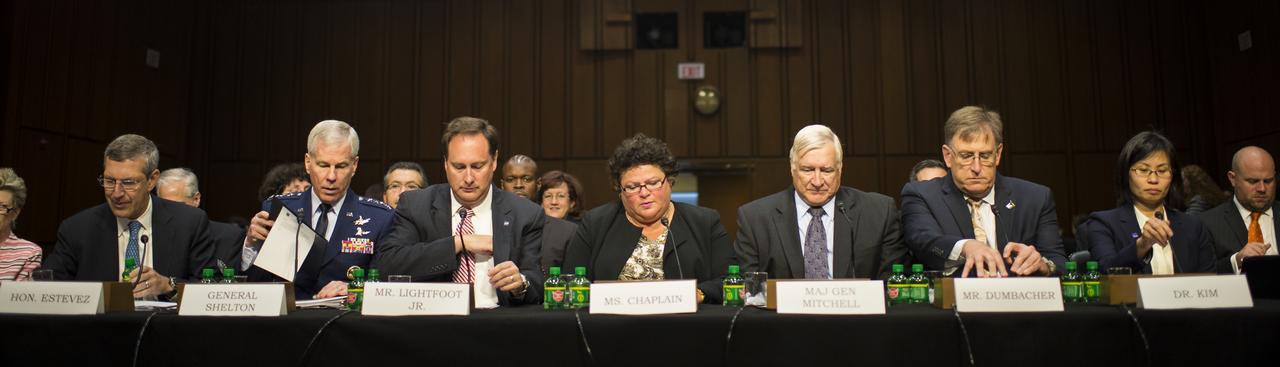
From left; Hon. Alan Estevez, Principle Deputy Under Secretary of Defense for Acquisition, Technology, and Logistics; General William Shelton, Commander of the United States Air Force Space Command; Robert Lightfoot, NASA Associate Administrator; Cristina Chaplain, Director of Acquisition and Sourcing Management at the Government Accountability Office; major General Howard Mitchell (USAF Ret.), Vice President for Program Assessments at The Aerospace Corporation; Daniel Dunbacher, Professor of Practice in the Department of Aeronautics and Aerospace Engineering at Purdue University; and Dr. Yool Kim, Senior Engineer at The Rand Corporation; are seen during a hearing in front of the Senate Subcommittee on Strategic Forces and Senate Committee on Commerce, Science, and Transportation on Wednesday, July 16, 2014, at the Hart Senate Office Building in Washington, DC. The Senate hearing focused on assured access to space.
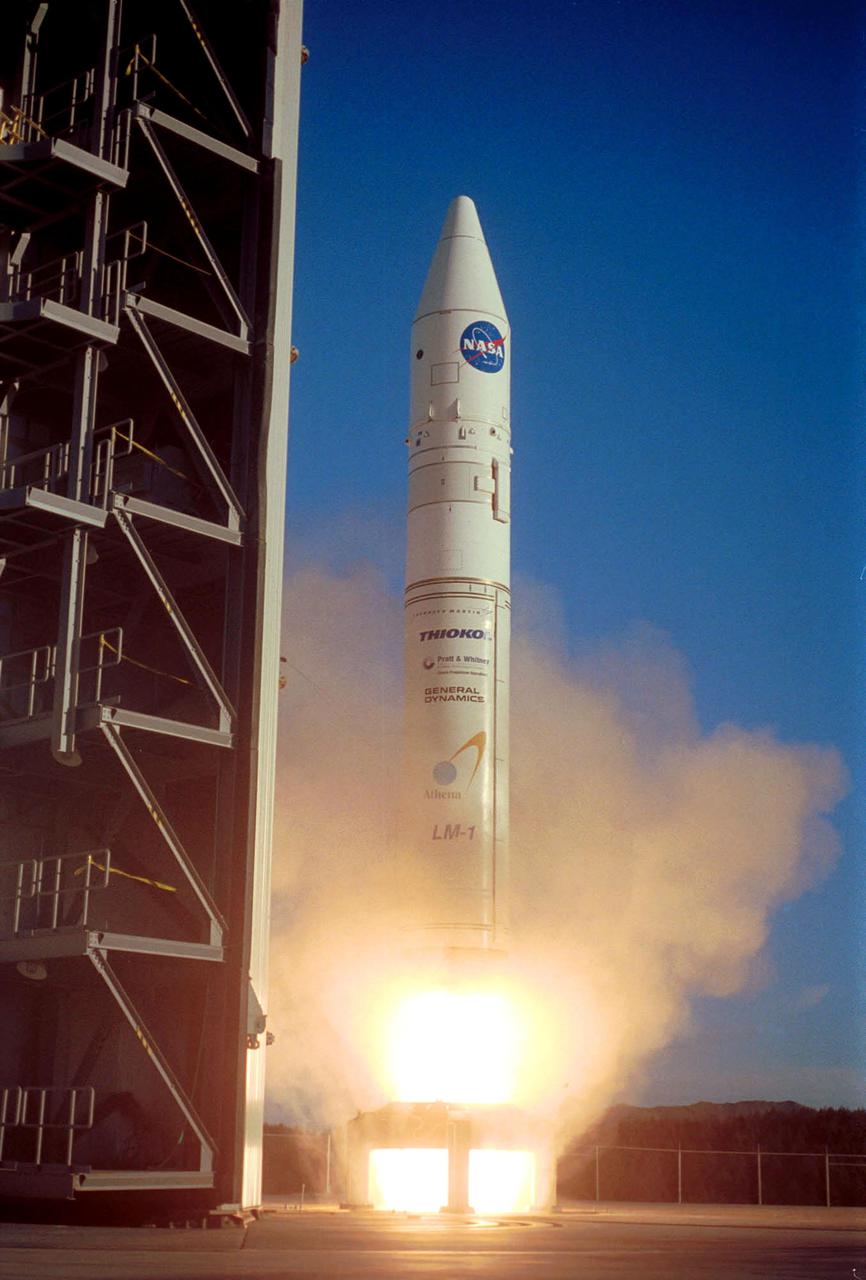
KODIAK ISLAND, Alaska -- Into a still-blue sky, a Lockheed Martin Athena I launch vehicle lifts off the launch pad at Kodiak Launch Complex (KSC) with the Kodiak Star spacecraft on board. Liftoff occurred at 10:40 p.m. EDT, Sept. 29. The Kodiak Star payload consists of four satellites: PICOSat, PCSat, Sapphire and Starshine 3. Starshine is sponsored by NASA. The 200-pound sphere will be used by students to study orbital decay. The other three satellites, also on educational missions, are sponsored by the department of defense. PICOSat is a technology demonstration satellite with four experiments on board. PCSat was designed by midshipmen at the U.S. Naval Academy, and will become part of the amateur radio community's automatic position reporting system. Sapphire is a micro-satellite built by students at Stanford University and Washington University - St. Louis to test infrared sensors for space use. KLC is the newest commercial launch complex in the United States, ideal for launch payloads requiring low-Earth polar or sun-synchronous orbits
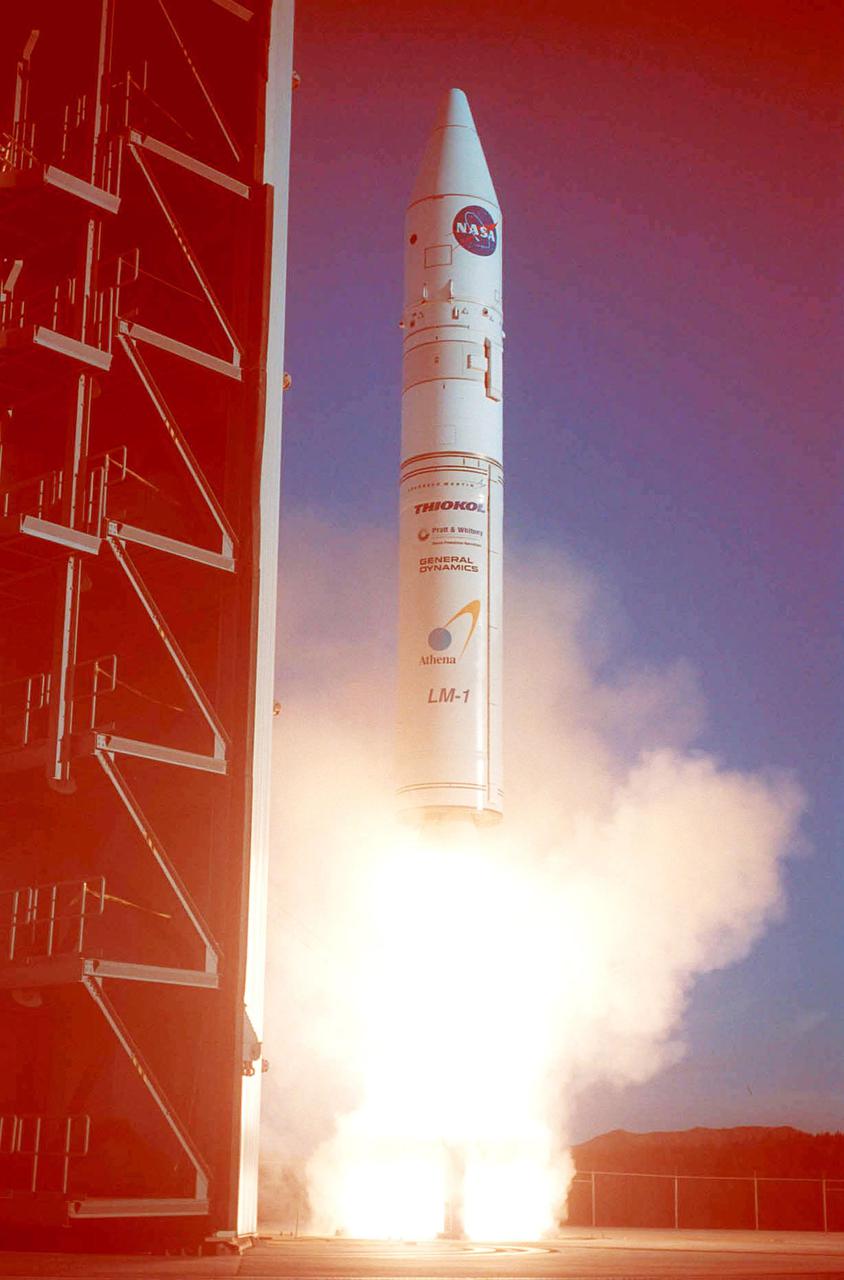
KODIAK ISLAND, Alaska -- A Lockheed Martin Athena I launch vehicle rockets off the launch pad at Kodiak Launch Complex (KSC) with the Kodiak Star spacecraft on board. Liftoff occurred at 10:40 p.m. EDT, Sept. 29. The Kodiak Star payload consists of four satellites: PICOSat, PCSat, Sapphire and Starshine 3. Starshine is sponsored by NASA. The 200-pound sphere will be used by students to study orbital decay. The other three satellites, also on educational missions, are sponsored by the department of defense. PICOSat is a technology demonstration satellite with four experiments on board. PCSat was designed by midshipmen at the U.S. Naval Academy, and will become part of the amateur radio community's automatic position reporting system. Sapphire is a micro-satellite built by students at Stanford University and Washington University - St. Louis to test infrared sensors for space use. KLC is the newest commercial launch complex in the United States, ideal for launch payloads requiring low-Earth polar or sun-synchronous orbits
KODIAK ISLAND, Alaska -- A Lockheed Martin Athena I launch vehicle rockets off the launch pad at Kodiak Launch Complex (KSC) with the Kodiak Star spacecraft on board. Liftoff occurred at 10:40 p.m. EDT, Sept. 29. The Kodiak Star payload consists of four satellites: PICOSat, PCSat, Sapphire and Starshine 3. Starshine is sponsored by NASA. The 200-pound sphere will be used by students to study orbital decay. The other three satellites, also on educational missions, are sponsored by the department of defense. PICOSat is a technology demonstration satellite with four experiments on board. PCSat was designed by midshipmen at the U.S. Naval Academy, and will become part of the amateur radio community's automatic position reporting system. Sapphire is a micro-satellite built by students at Stanford University and Washington University - St. Louis to test infrared sensors for space use. KLC is the newest commercial launch complex in the United States, ideal for launch payloads requiring low-Earth polar or sun-synchronous orbits
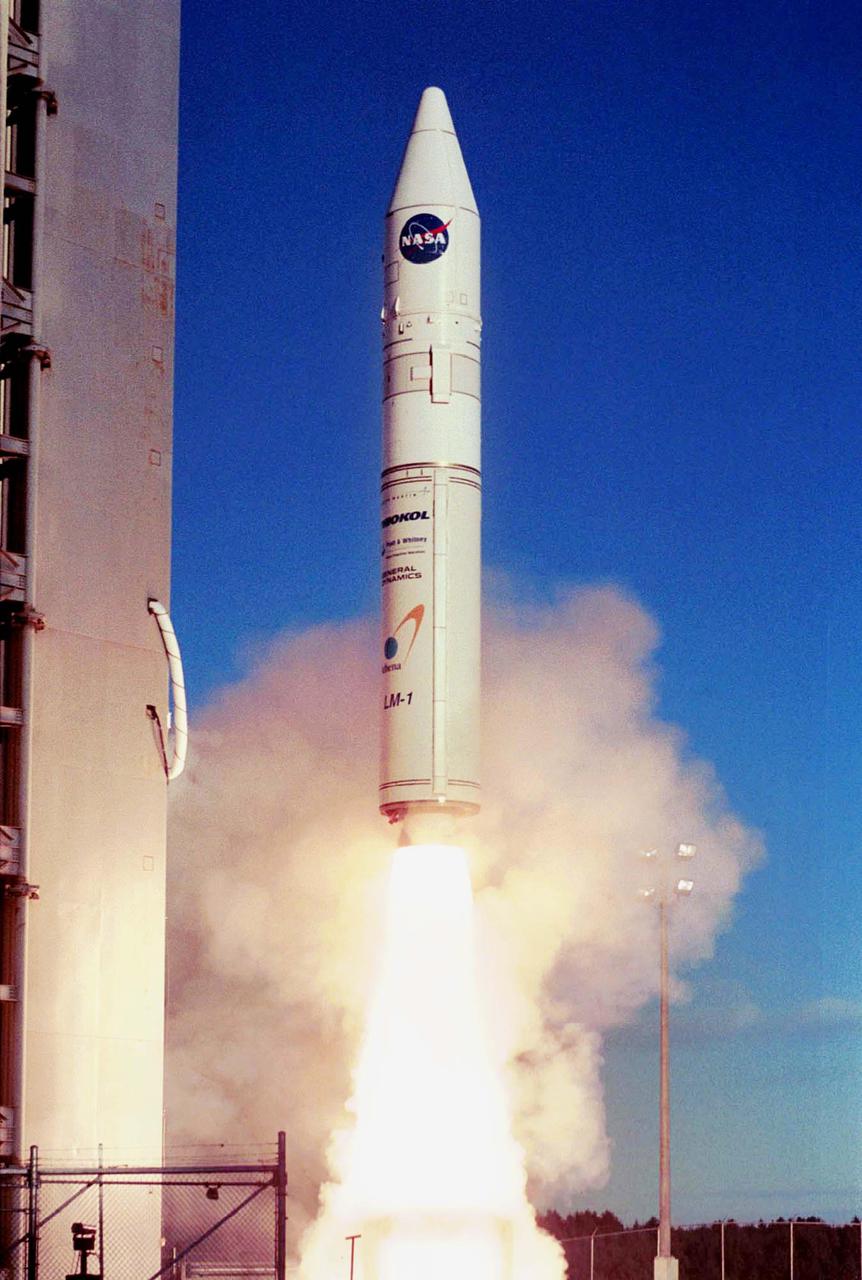
KODIAK ISLAND, Alaska -- A Lockheed Martin Athena I launch vehicle lifts off the launch pad at Kodiak Launch Complex (KSC) with the Kodiak Star spacecraft on board. Liftoff occurred at 10:40 p.m. EDT, Sept. 29. The Kodiak Star payload consists of four satellites: PICOSat, PCSat, Sapphire and Starshine 3. Starshine is sponsored by NASA. The 200-pound sphere will be used by students to study orbital decay. The other three satellites, also on educational missions, are sponsored by the department of defense. PICOSat is a technology demonstration satellite with four experiments on board. PCSat was designed by midshipmen at the U.S. Naval Academy, and will become part of the amateur radio community's automatic position reporting system. Sapphire is a micro-satellite built by students at Stanford University and Washington University - St. Louis to test infrared sensors for space use. KLC is the newest commercial launch complex in the United States, ideal for launch payloads requiring low-Earth polar or sun-synchronous orbits
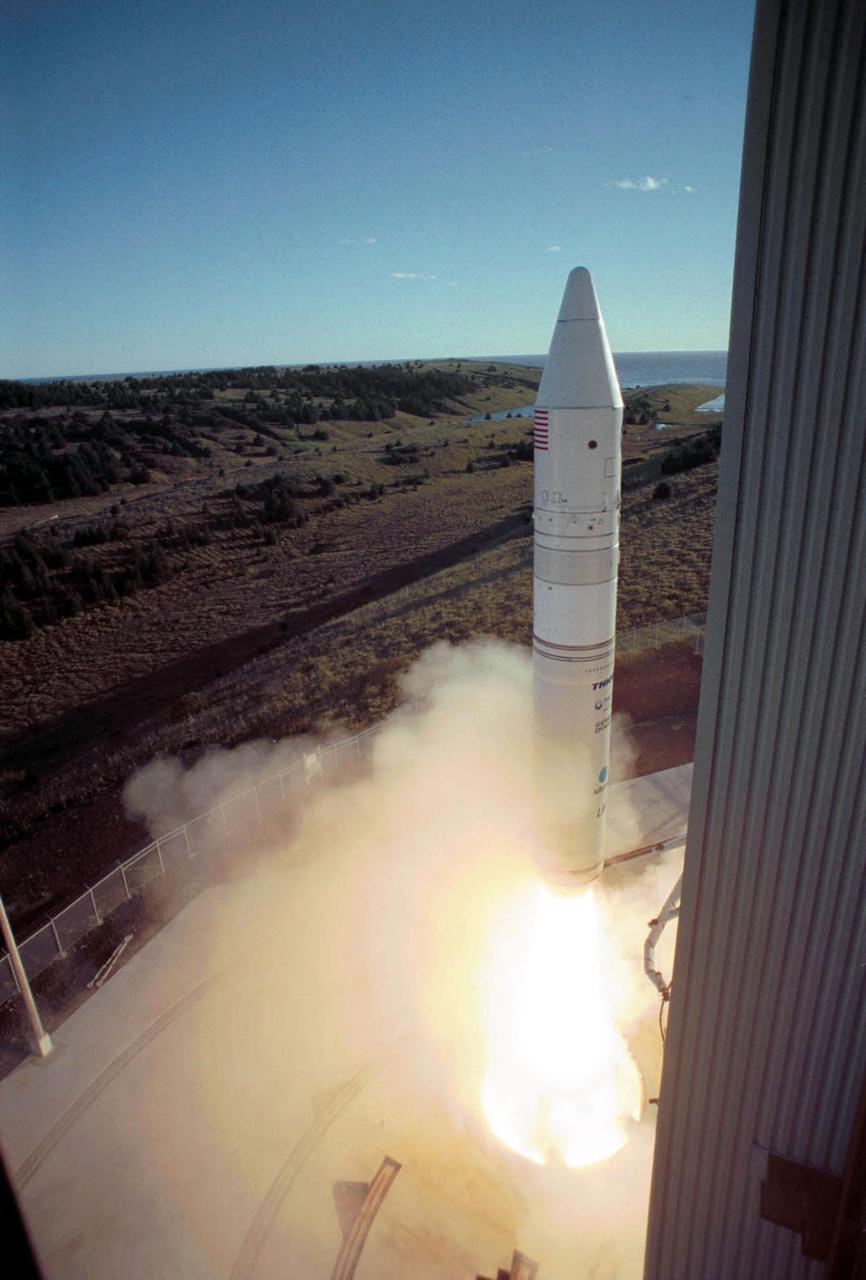
KODIAK ISLAND, Alaska. -- With light still on the horizon, a Lockheed Martin Athena I launch vehicle lifts off the launch pad at Kodiak Launch Complex (KSC) with the Kodiak Star spacecraft on board. Liftoff occurred at 10:40 p.m. EDT, Sept. 29. The Kodiak Star payload consists of four satellites: PICOSat, PCSat, Sapphire and Starshine 3. Starshine is sponsored by NASA. The 200-pound sphere will be used by students to study orbital decay. The other three satellites, also on educational missions, are sponsored by the department of defense. PICOSat is a technology demonstration satellite with four experiments on board. PCSat was designed by midshipmen at the U.S. Naval Academy, and will become part of the amateur radio community's automatic position reporting system. Sapphire is a micro-satellite built by students at Stanford University and Washington University - St. Louis to test infrared sensors for space use. KLC is the newest commercial launch complex in the United States, ideal for launch payloads requiring low-Earth polar or sun-synchronous orbits
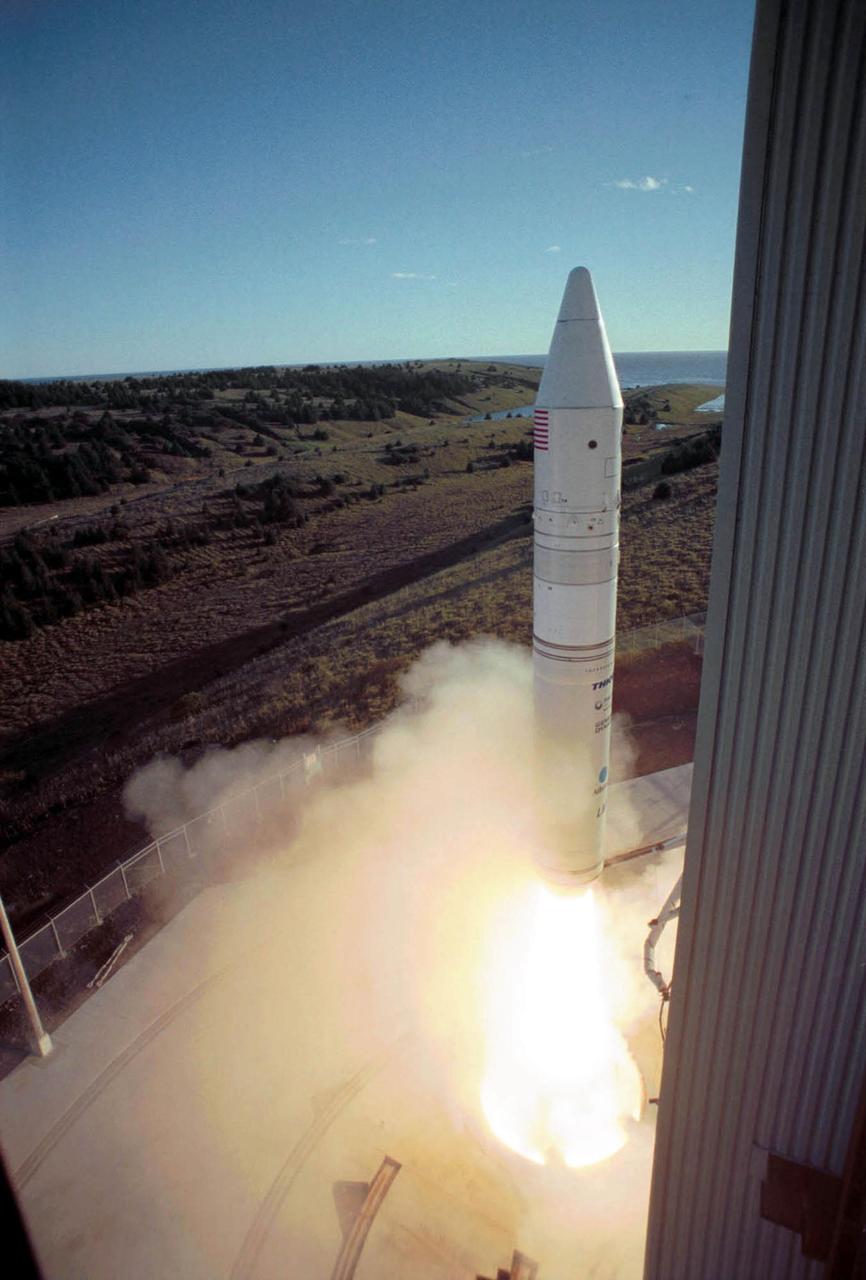
KODIAK ISLAND, Alaska. -- With light still on the horizon, a Lockheed Martin Athena I launch vehicle lifts off the launch pad at Kodiak Launch Complex (KSC) with the Kodiak Star spacecraft on board. Liftoff occurred at 10:40 p.m. EDT, Sept. 29. The Kodiak Star payload consists of four satellites: PICOSat, PCSat, Sapphire and Starshine 3. Starshine is sponsored by NASA. The 200-pound sphere will be used by students to study orbital decay. The other three satellites, also on educational missions, are sponsored by the department of defense. PICOSat is a technology demonstration satellite with four experiments on board. PCSat was designed by midshipmen at the U.S. Naval Academy, and will become part of the amateur radio community's automatic position reporting system. Sapphire is a micro-satellite built by students at Stanford University and Washington University - St. Louis to test infrared sensors for space use. KLC is the newest commercial launch complex in the United States, ideal for launch payloads requiring low-Earth polar or sun-synchronous orbits
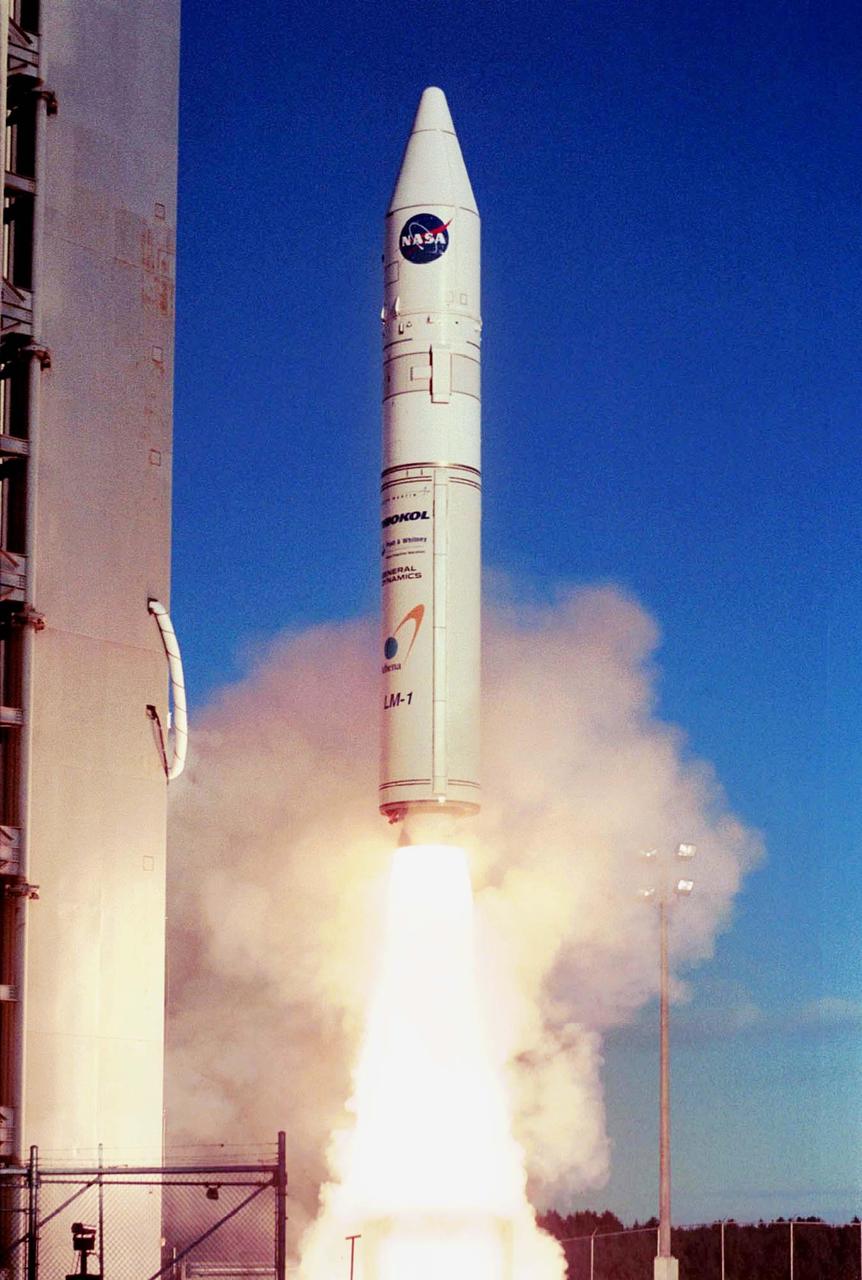
KODIAK ISLAND, Alaska -- A Lockheed Martin Athena I launch vehicle lifts off the launch pad at Kodiak Launch Complex (KSC) with the Kodiak Star spacecraft on board. Liftoff occurred at 10:40 p.m. EDT, Sept. 29. The Kodiak Star payload consists of four satellites: PICOSat, PCSat, Sapphire and Starshine 3. Starshine is sponsored by NASA. The 200-pound sphere will be used by students to study orbital decay. The other three satellites, also on educational missions, are sponsored by the department of defense. PICOSat is a technology demonstration satellite with four experiments on board. PCSat was designed by midshipmen at the U.S. Naval Academy, and will become part of the amateur radio community's automatic position reporting system. Sapphire is a micro-satellite built by students at Stanford University and Washington University - St. Louis to test infrared sensors for space use. KLC is the newest commercial launch complex in the United States, ideal for launch payloads requiring low-Earth polar or sun-synchronous orbits
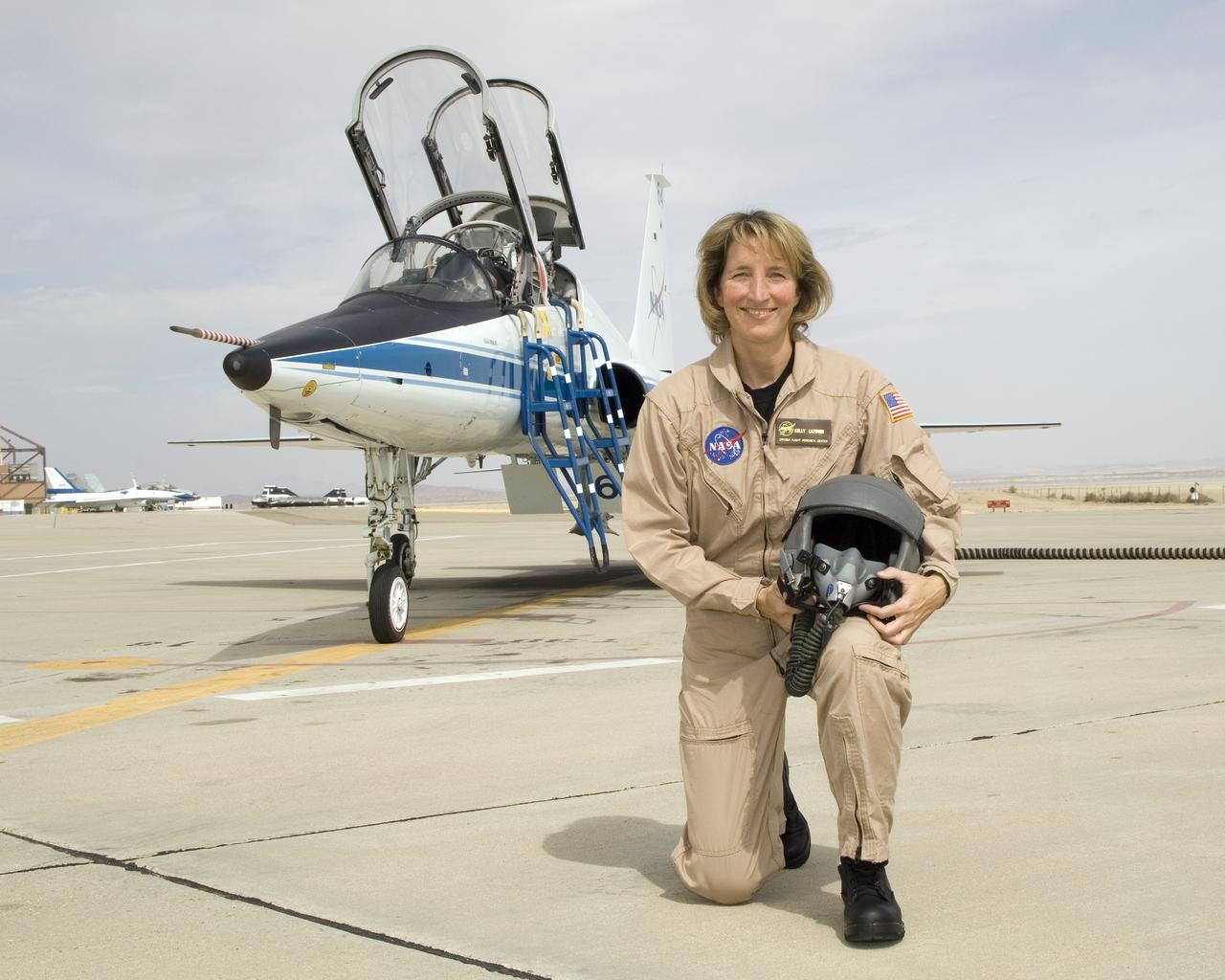
Kelly Latimer is a research pilot in the Flight Crew Branch of NASA's Dryden Flight Research Center, Edwards, Calif. Latimer joined NASA in March 2007 and will fly the T38, T-34, G-III, C-17 and the "Ikhana" Predator B. Latimer is Dryden's first female research test pilot. Prior to joining NASA, Latimer was on active duty with the U.S. Air Force. She has accumulated more than 5,000 hours of military and civilian flight experience in 30 aircraft. Latimer's first association with NASA was while attending graduate school at George Washington University, Washington, D.C. Her studies included work with the Joint Institute for the Advancement of Flight Sciences at NASA's Langley Research Center, Hampton, Va. She flew an Air Force C-17 during a 2005 NASA study to reduce aircraft noise. A team of California Polytechnic State University students and Northrop Grumman personnel were stationed on Rogers Dry Lake located at Edwards Air Force Base, Calif., to record the noise footprint of the aircraft as it made various landing approaches to Edwards' runway. Latimer completed undergraduate pilot training at Reese Air Force Base, Texas, in 1990. She remained at Reese as a T-38 instructor pilot until 1993. She was assigned as a C-141 aircraft commander at McCord Air Force Base, Tacoma, Wash., until 1996. Latimer graduated from the U.S. Air Force Test Pilot School at Edwards in Class 96B. She served as a C-17 and C-141 experimental test pilot at Edwards until 2000. She then became the chief of the Performance Branch and a T-38 instructor pilot at The Air Force Test Pilot School. She returned to McCord in 2002, where she was a C-17 aircraft commander and the operations officer for the 62nd Operations Support Squadron. In 2004, Latimer became the commander of Edwards' 418th Flight Test Squadron and director of the Global Reach Combined Test Force. Following that assignment, she deployed to Iraq as an advisor to the Iraqi Air Force. Her last active duty tour was as an instructor a
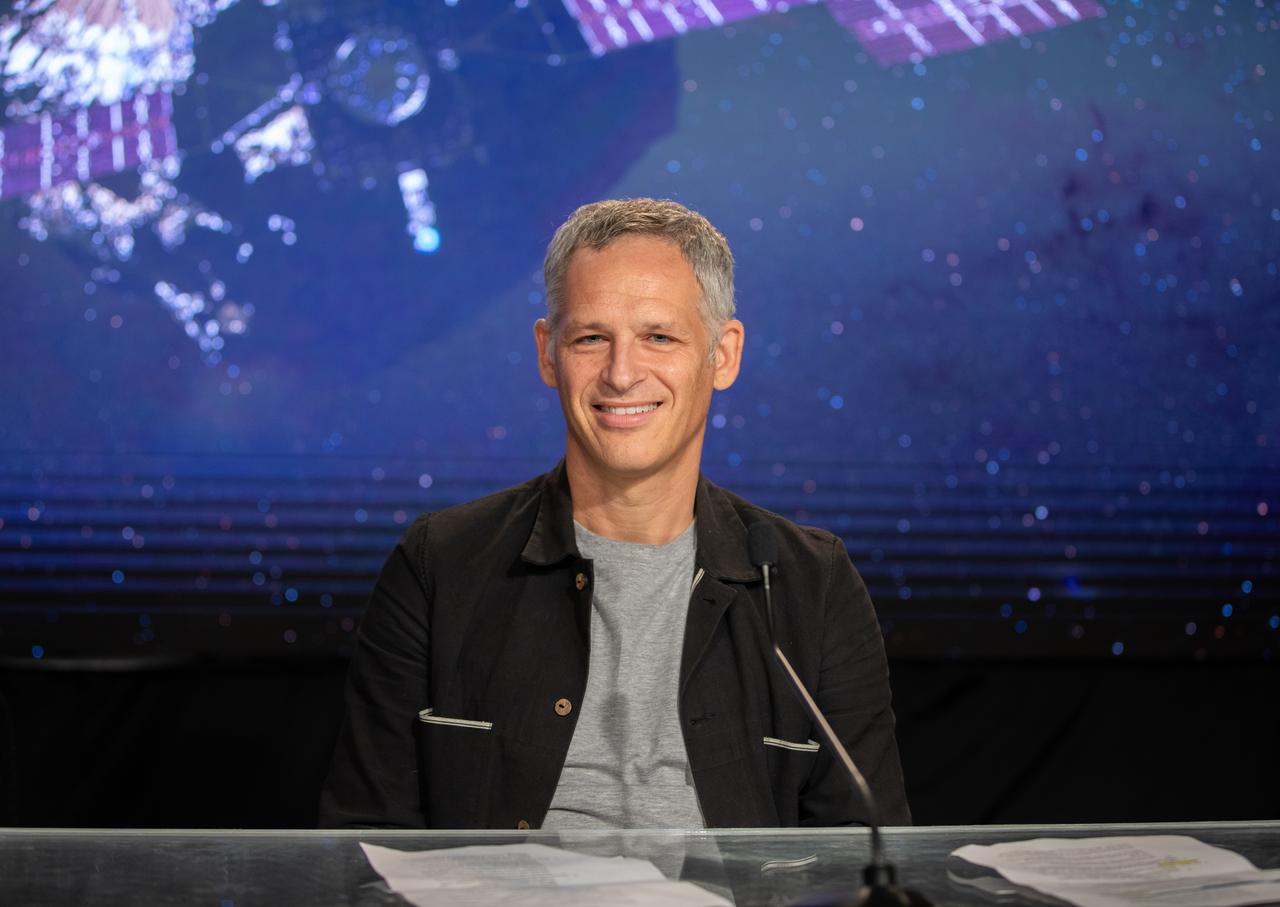
The science briefing ahead of launch for NASA’s Psyche spacecraft, a mission to a unique metal-rich asteroid. Psyche will travel nearly six years and about 2.2 billion miles (3.6 billion kilometers) – to an asteroid of the same name, which is orbiting the Sun between Mars and Jupiter. Scientists believe Psyche could be part of the core of a planetesimal, likely made of iron-nickel metal. The ore will not be mined but studied from orbit in hopes of giving researchers a better idea of what may make up Earth’s core. The Psyche spacecraft also will host a pioneering technology demonstration: NASA’s DSOC (Deep Space Optical Communications) experiment. This laser communications system will operate for the first two years of Psyche’s journey. Launch is targeted for 10:16 a.m. EDT, Thursday, Oct. 12, from Kennedy’s Launch Complex 39A. The participants include Lori Glaze, director, Planetary Sciences Division, NASA Headquarters in Washington; Lindy Elkins-Tanton, principal investigator of Psyche, Arizona State University; Ben Weiss, deputy principal investigator and magnetometer lead, Massachusetts Institute of Technology; David Oh, chief engineer for operations, NASA’s Jet Propulsion Laboratory; and Abi Biswas, project technologist for DSOC, NASA’s Jet Propulsion Laboratory.
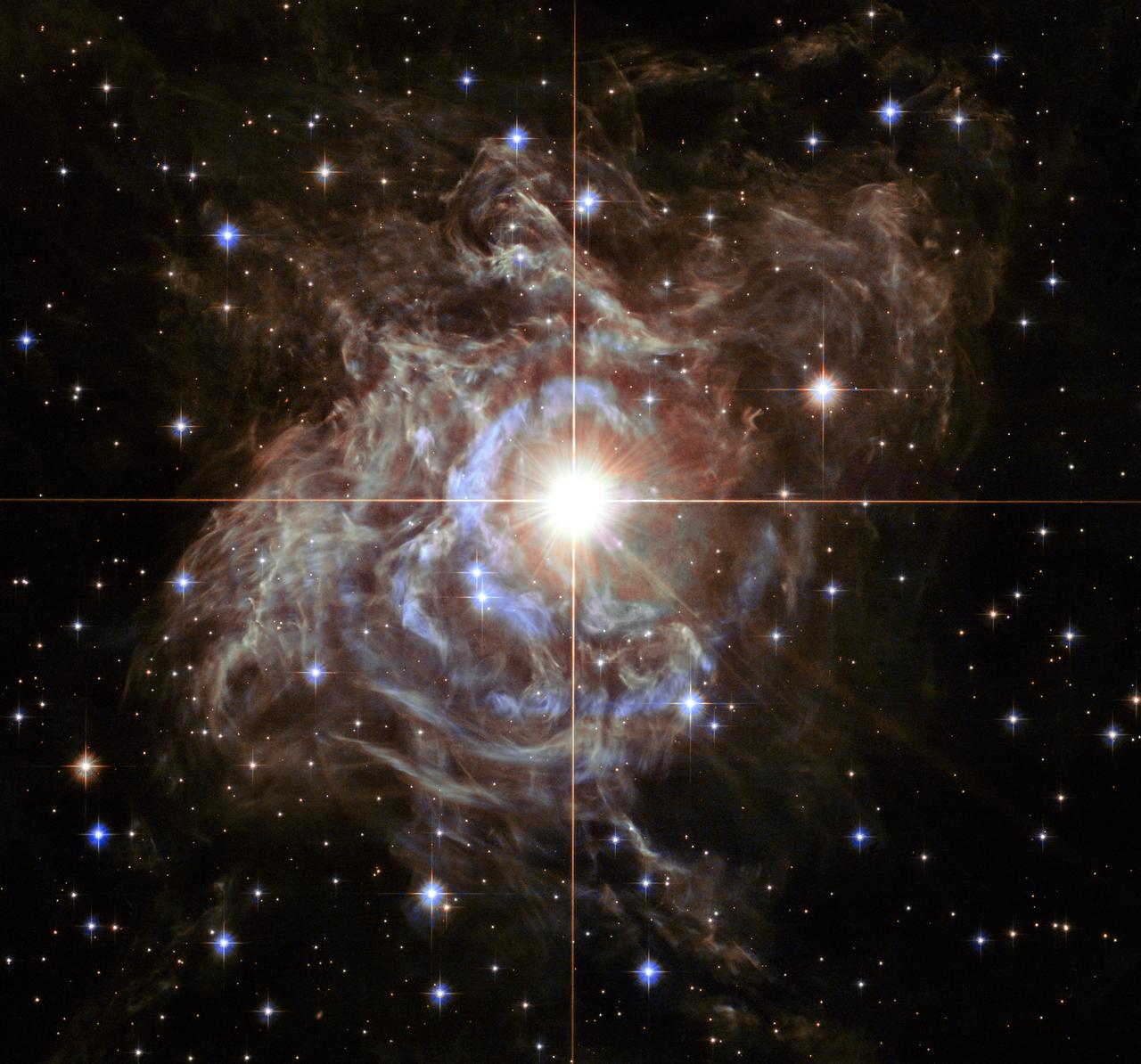
This festive NASA Hubble Space Telescope image resembles a holiday wreath made of sparkling lights. The bright southern hemisphere star RS Puppis, at the center of the image, is swaddled in a gossamer cocoon of reflective dust illuminated by the glittering star. The super star is ten times more massive than our sun and 200 times larger. RS Puppis rhythmically brightens and dims over a six-week cycle. It is one of the most luminous in the class of so-called Cepheid variable stars. Its average intrinsic brightness is 15,000 times greater than our sun’s luminosity. The nebula flickers in brightness as pulses of light from the Cepheid propagate outwards. Hubble took a series of photos of light flashes rippling across the nebula in a phenomenon known as a "light echo." Even though light travels through space fast enough to span the gap between Earth and the moon in a little over a second, the nebula is so large that reflected light can actually be photographed traversing the nebula. By observing the fluctuation of light in RS Puppis itself, as well as recording the faint reflections of light pulses moving across the nebula, astronomers are able to measure these light echoes and pin down a very accurate distance. The distance to RS Puppis has been narrowed down to 6,500 light-years (with a margin of error of only one percent). The Hubble Space Telescope is a project of international cooperation between NASA and the European Space Agency. NASA's Goddard Space Flight Center in Greenbelt, Md., manages the telescope. The Space Telescope Science Institute (STScI) in Baltimore, Md., conducts Hubble science operations. STScI is operated by the Association of Universities for Research in Astronomy, Inc., in Washington, D.C. Acknowledgment: H. Bond (STScI and Pennsylvania State University) <b><a href="http://www.nasa.gov/audience/formedia/features/MP_Photo_Guidelines.html" rel="nofollow">NASA image use policy.</a></b> <b><a href="http://www.nasa.gov/centers/goddard/home/index.html" rel="nofollow">NASA Goddard Space Flight Center</a></b> enables NASA’s mission through four scientific endeavors: Earth Science, Heliophysics, Solar System Exploration, and Astrophysics. Goddard plays a leading role in NASA’s accomplishments by contributing compelling scientific knowledge to advance the Agency’s mission. <b>Follow us on <a href="http://twitter.com/NASA_GoddardPix" rel="nofollow">Twitter</a></b> <b>Like us on <a href="http://www.facebook.com/pages/Greenbelt-MD/NASA-Goddard/395013845897?ref=tsd" rel="nofollow">Facebook</a></b> <b>Find us on <a href="http://instagram.com/nasagoddard?vm=grid" rel="nofollow">Instagram</a></b>
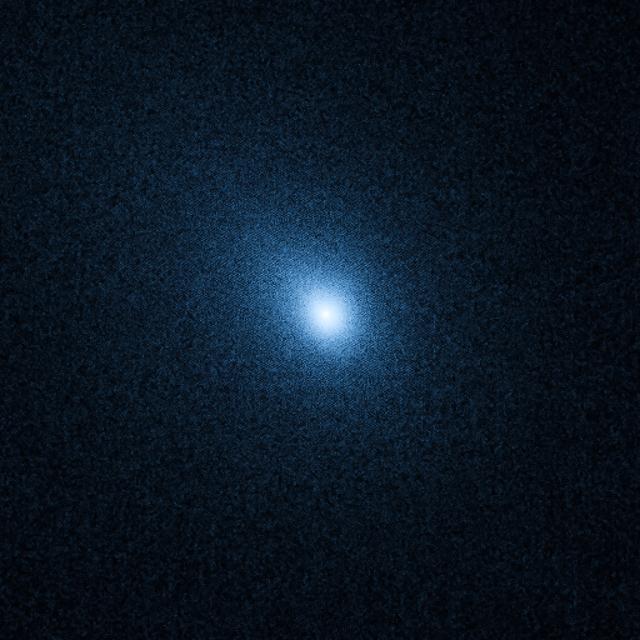
NASA image release October 5, 2010 Hubble Space Telescope observations of comet 103P/Hartley 2, taken on September 25, are helping in the planning for a November 4 flyby of the comet by NASA's Deep Impact eXtended Investigation (DIXI) spacecraft. Analysis of the new Hubble data shows that the nucleus has a diameter of approximately 0.93 miles (1.5 km), which is consistent with previous estimates. The comet is in a highly active state, as it approaches the Sun. The Hubble data show that the coma is remarkably uniform, with no evidence for the types of outgassing jets seen from most "Jupiter Family" comets, of which Hartley 2 is a member. Jets can be produced when the dust emanates from a few specific icy regions, while most of the surface is covered with relatively inert, meteoritic-like material. In stark contrast, the activity from Hartley 2's nucleus appears to be more uniformly distributed over its entire surface, perhaps indicating a relatively "young" surface that hasn't yet been crusted over. Hubble's spectrographs - the Cosmic Origins Spectrograph (COS) and the Space Telescope Imaging Spectrograph (STIS) -- are expected to provide unique information about the comet's chemical composition that might not be obtainable any other way, including measurements by DIXI. The Hubble team is specifically searching for emissions from carbon monoxide (CO) and diatomic sulfur (S2). These molecules have been seen in other comets but have not yet been detected in 103P/Hartley 2. 103P/Hartley has an orbital period of 6.46 years. It was discovered by Malcolm Hartley in 1986 at the Schmidt Telescope Unit in Siding Spring, Australia. The comet will pass within 11 million miles of Earth (about 45 times the distance to the Moon) on October 20. During that time the comet may be visible to the naked eye as a 5th magnitude "fuzzy star" in the constellation Auriga. Credit: NASA, ESA, and H. Weaver (The Johns Hopkins University/Applied Physics Lab) The Hubble Space Telescope is a project of international cooperation between NASA and the European Space Agency. NASA's Goddard Space Flight Center manages the telescope. The Space Telescope Science Institute (STScI) conducts Hubble science operations. STScI is operated for NASA by the Association of Universities for Research in Astronomy, Inc., in Washington, D.C. <b><a href="http://www.nasa.gov/centers/goddard/home/index.html" rel="nofollow">NASA Goddard Space Flight Center</a></b> enables NASA’s mission through four scientific endeavors: Earth Science, Heliophysics, Solar System Exploration, and Astrophysics. Goddard plays a leading role in NASA’s accomplishments by contributing compelling scientific knowledge to advance the Agency’s mission. <b>Follow us on <a href="http://twitter.com/NASA_GoddardPix" rel="nofollow">Twitter</a></b> <b>Join us on <a href="http://www.facebook.com/pages/Greenbelt-MD/NASA-Goddard/395013845897?ref=tsd" rel="nofollow">Facebook</a></b>

Mercury True Color is in the Eye of the Beholder
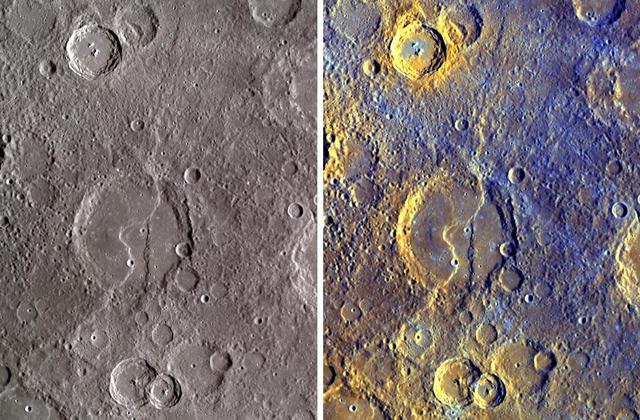
Exposing Mercury Colors
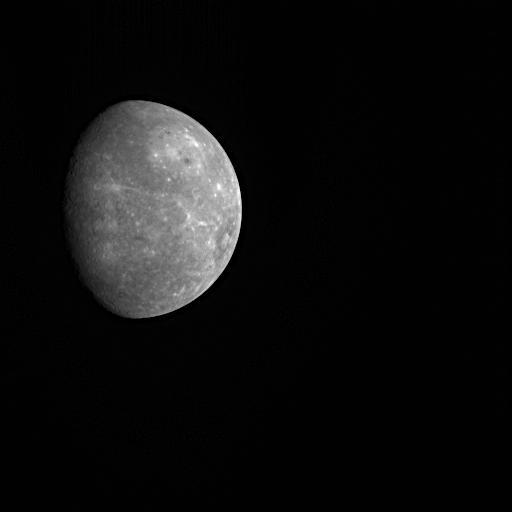
MESSENGER and Mercury - Soon to Meet Again!
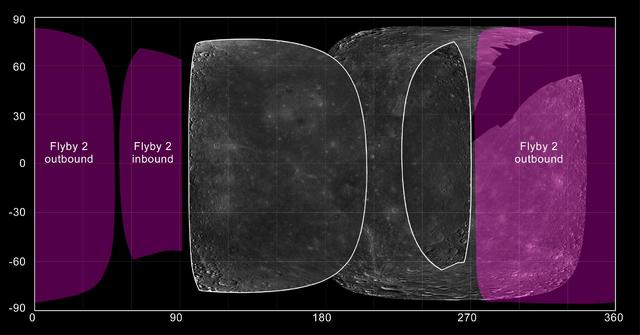
Imaging Plans for MESSENGER Second Mercury Flyby
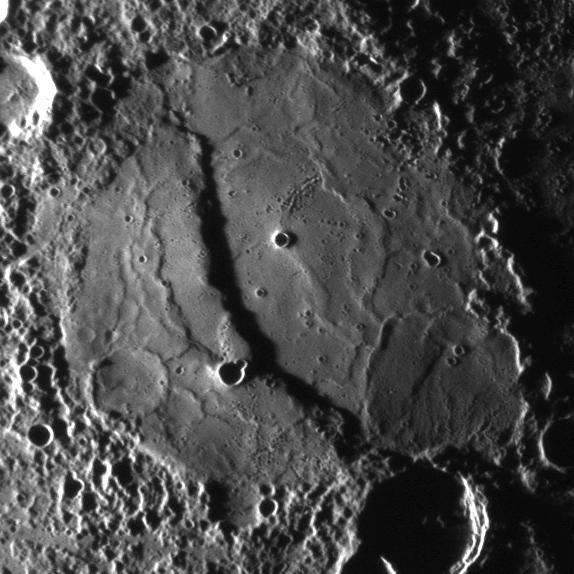
The scarp cutting through this crater was imaged as NASA MESSENGER approached the planet during the mission second Mercury flyby.
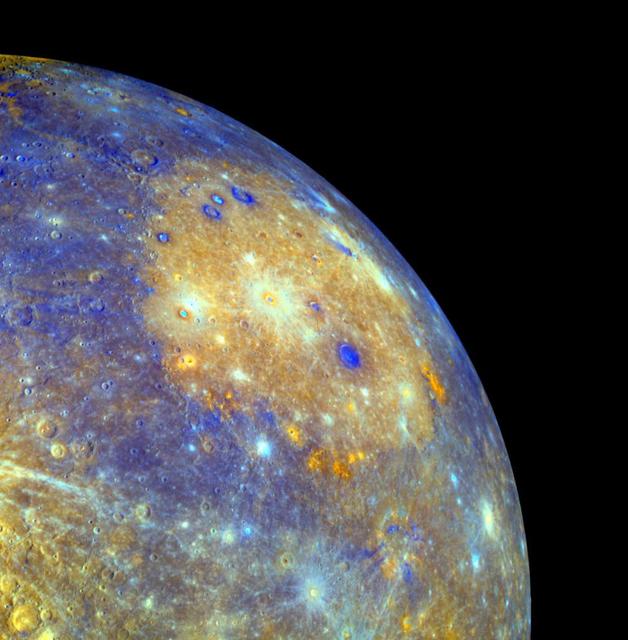
This false-color image of Mercury captured by NASA MESSENGER spacecraft shows the great Caloris impact basin, visible here as a large, circular, orange feature in the center of the picture.
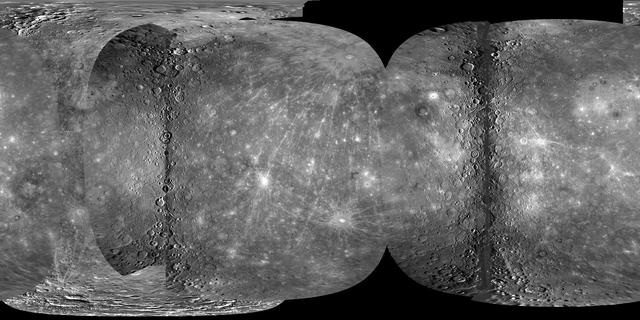
Full Global Mercury Mosaic