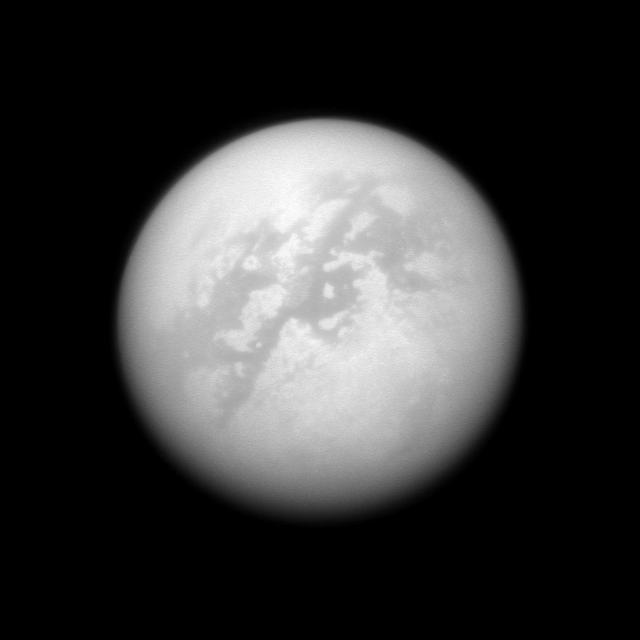
Watching for Clouds
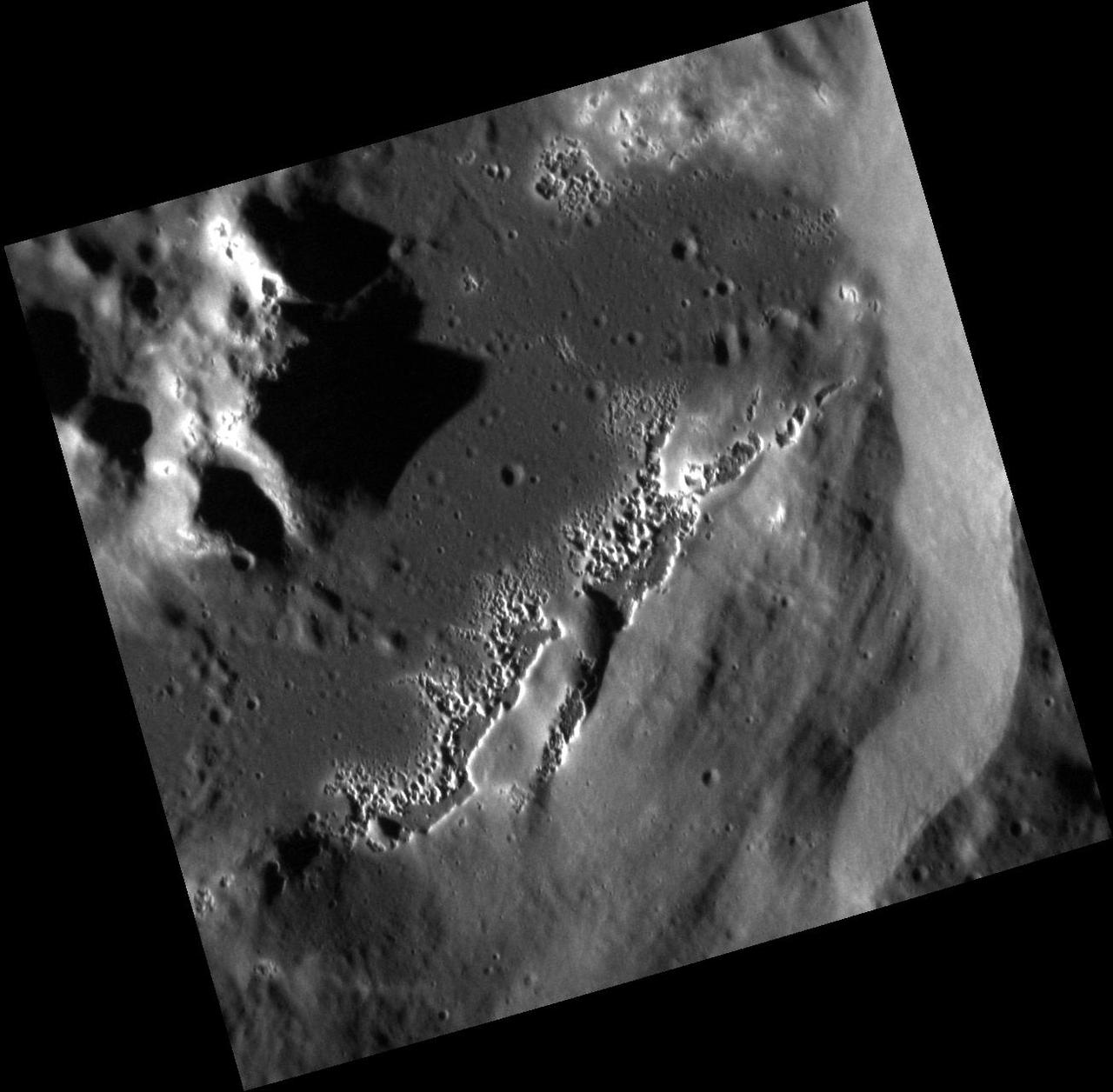
Watch Out! The Floor Hollow!
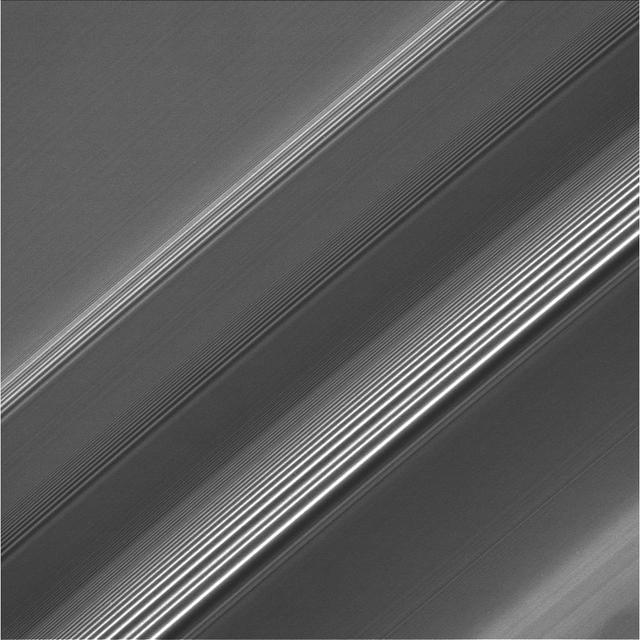
Saturn Watch Spiral

A Great Place to Watch the Weather
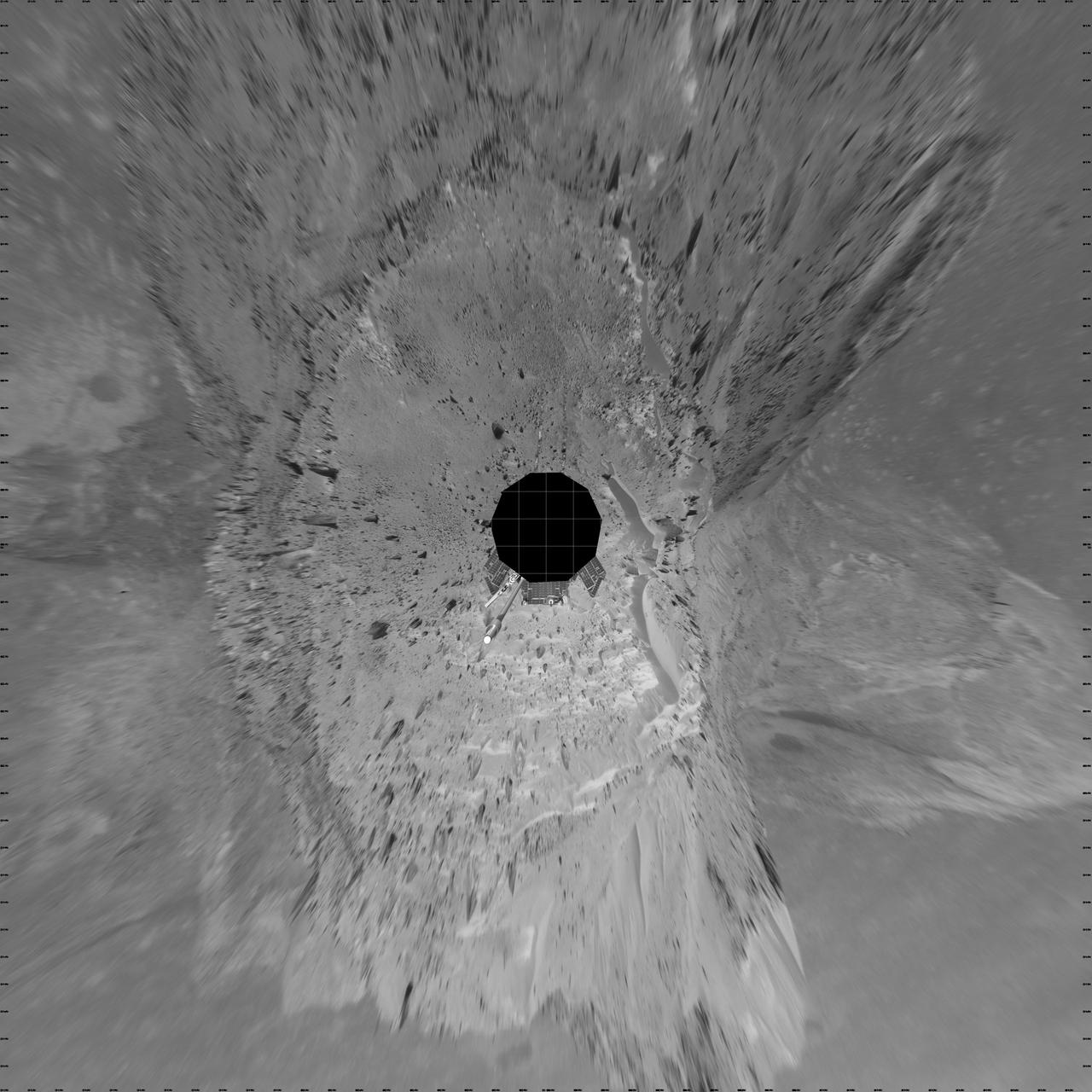
A Great Place to Watch the Weather vertical
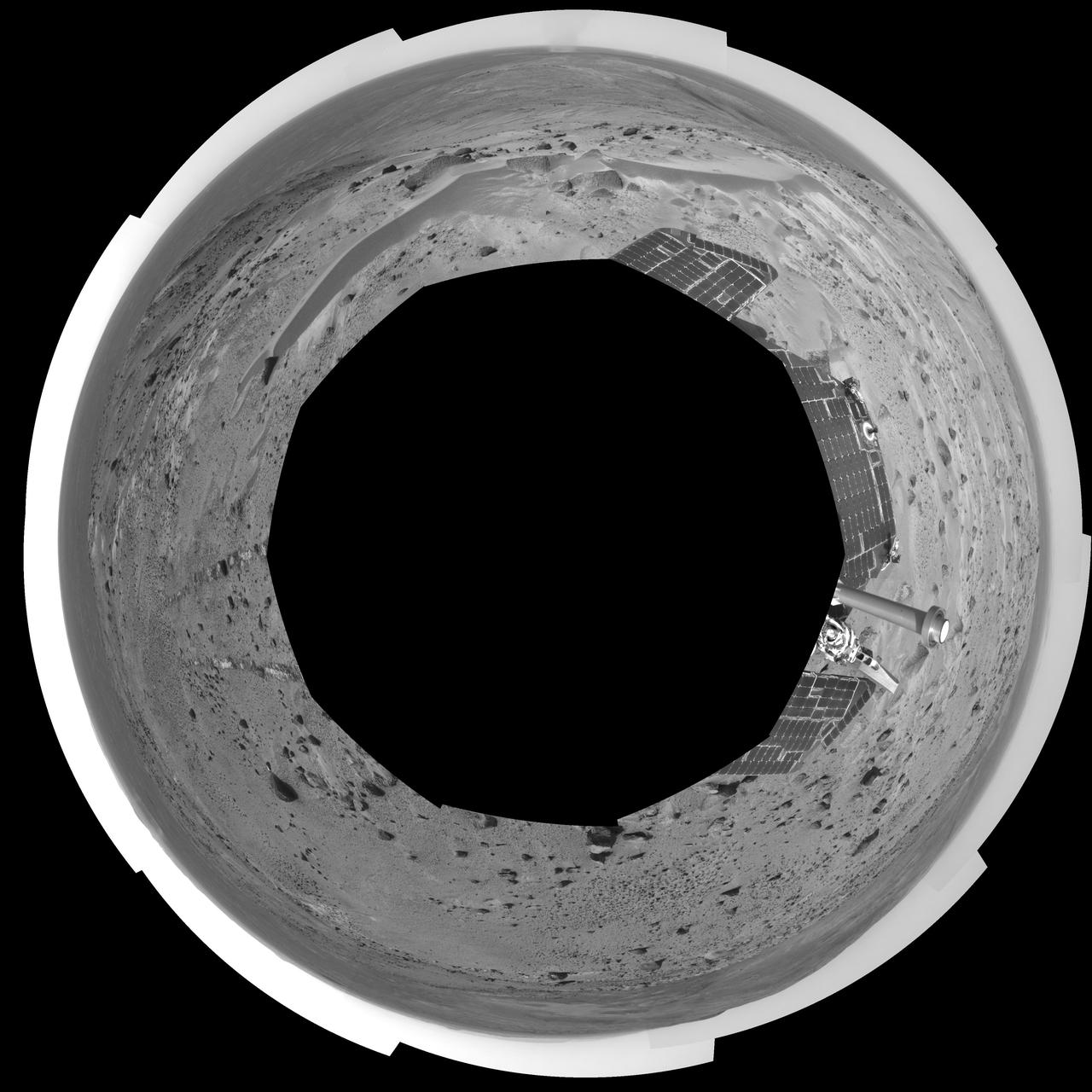
A Great Place to Watch the Weather polar
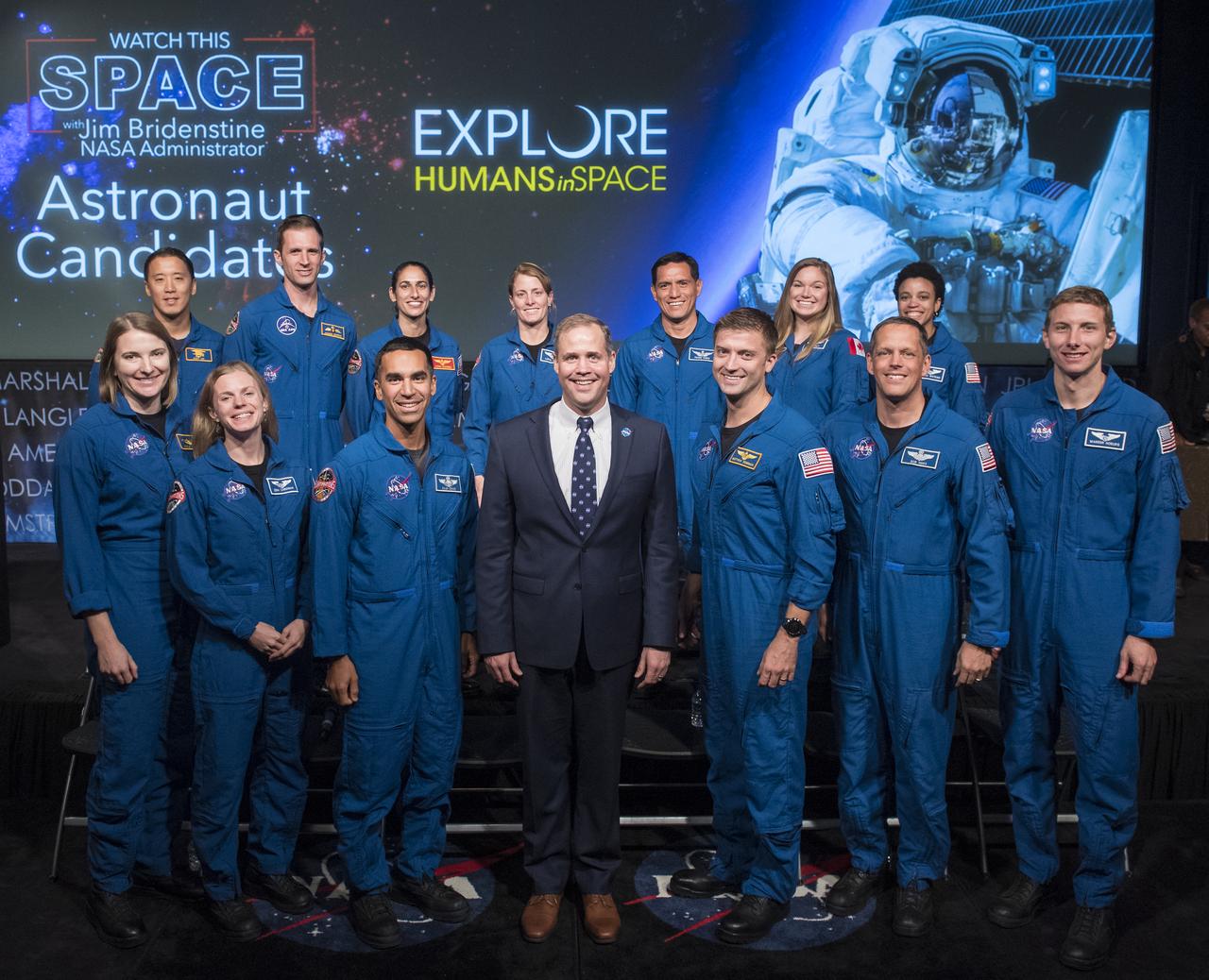
NASA Administrator Jim Bridenstine poses for a picture with the 2017 astronaut candidate class after taping a live episode of the Administrator's monthly chat show, Watch This Space, Thursday, Sept. 27, 2018 in the Webb Auditorium at NASA Headquarters in Washington. NASA astronaut candidates, back row from left, Jonny Kim, Joshua Kutryk of the Canadian Space Agency, Jasmin Moghbeli, Loral O’Hara, Frank Rubio, Jennifer Sidey-Gibbons of the Canadian Space Agency, Jessica Watkins, front row from left, Kayla Barron, Zena Cardman, Raja Chari, Matthew Dominick, Bob Hines, and Warren Hoburg. Photo Credit: (NASA/Joel Kowsky)
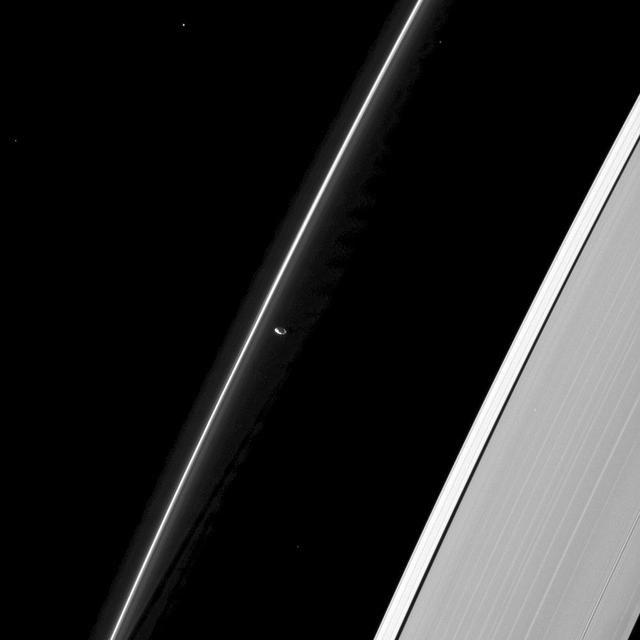
Like a shepherd guarding his sheep, Prometheus keeps a lonely watch over the F ring in this image captured by NASA Cassini spacecraft.
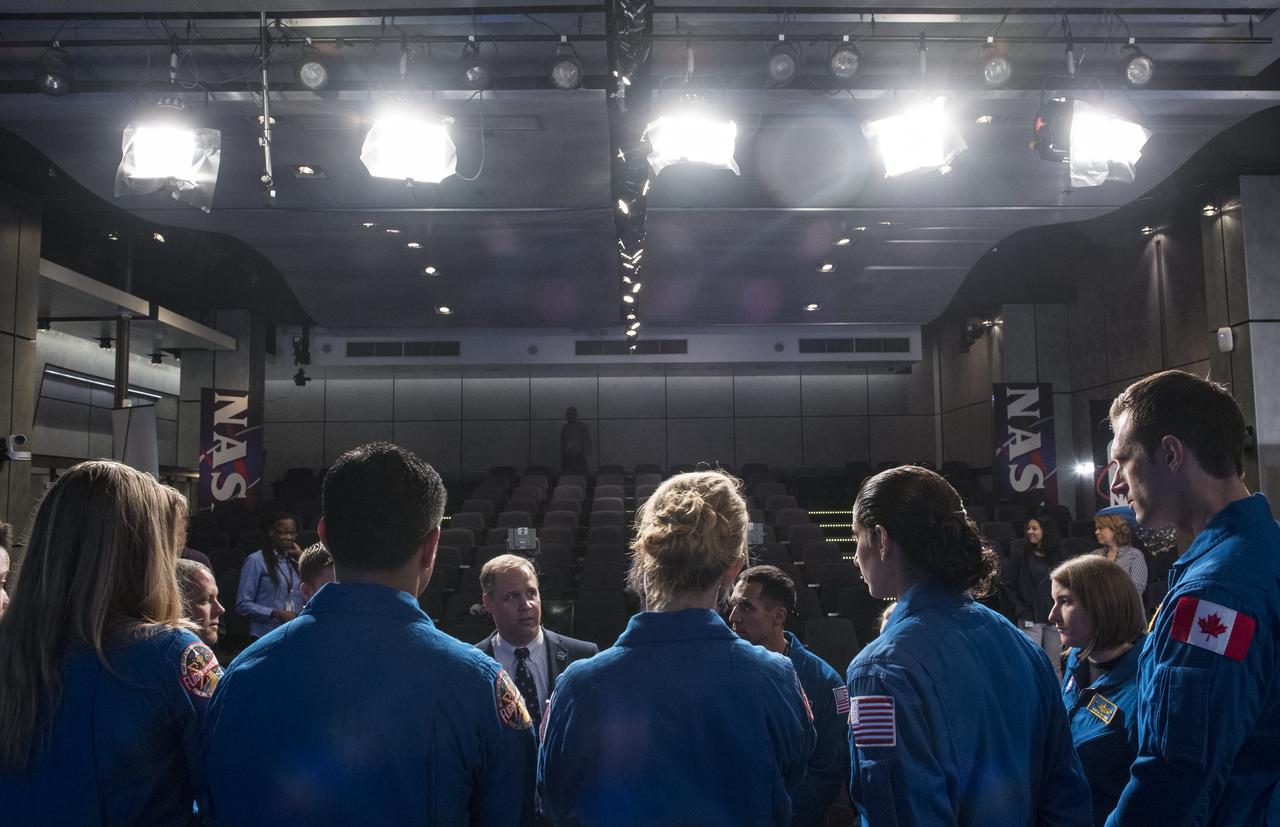
NASA Administrator Jim Bridenstine speaks with NASA and Canadian Space Agency astronaut candidates following a live episode of the Administrator's monthly chat show, Watch This Space, Thursday, Sept. 27, 2018 in the Webb Auditorium at NASA Headquarters in Washington. NASA's newest astronaut candidate class has started their two years of training, after which the new astronaut candidates could be assigned to missions performing research on the International Space Station, launching from American soil on spacecraft built by commercial companies, and launching on deep space missions on NASA’s new Orion spacecraft and Space Launch System rocket. Photo Credit: (NASA/Joel Kowsky)
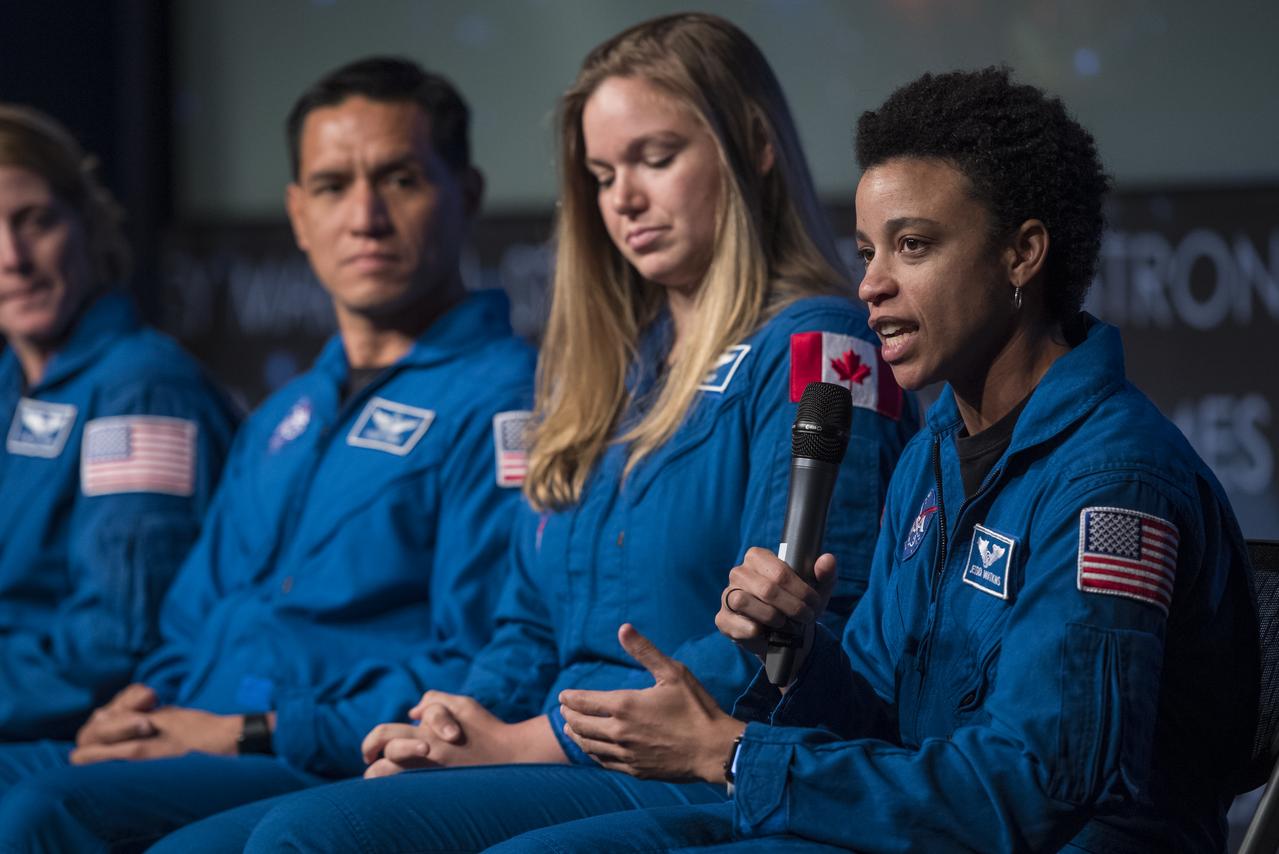
NASA astronaut candidate Jessica Watkins answers a question during a live episode of the Administrator's monthly chat show, Watch This Space, Thursday, Sept. 27, 2018 in the Webb Auditorium at NASA Headquarters in Washington. NASA's newest astronaut candidate class has started their two years of training, after which the new astronaut candidates could be assigned to missions performing research on the International Space Station, launching from American soil on spacecraft built by commercial companies, and launching on deep space missions on NASA’s new Orion spacecraft and Space Launch System rocket. Photo Credit: (NASA/Joel Kowsky)
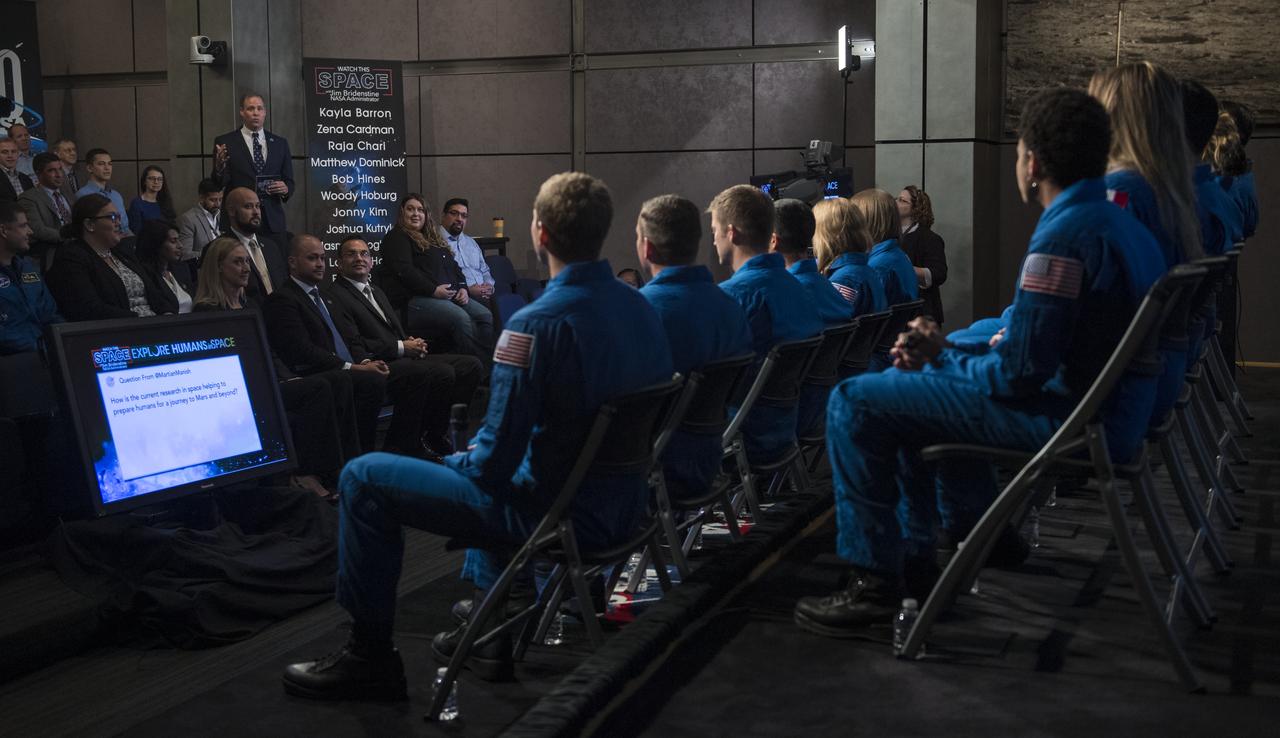
NASA Administrator Jim Bridenstine speaks with the agency's astronaut candidates during a live episode of the Administrator's monthly chat show, Watch This Space, Thursday, Sept. 27, 2018 in the Webb Auditorium at NASA Headquarters in Washington. NASA's newest astronaut candidate class has started their two years of training, after which the new astronaut candidates could be assigned to missions performing research on the International Space Station, launching from American soil on spacecraft built by commercial companies, and launching on deep space missions on NASA’s new Orion spacecraft and Space Launch System rocket. Photo Credit: (NASA/Joel Kowsky)
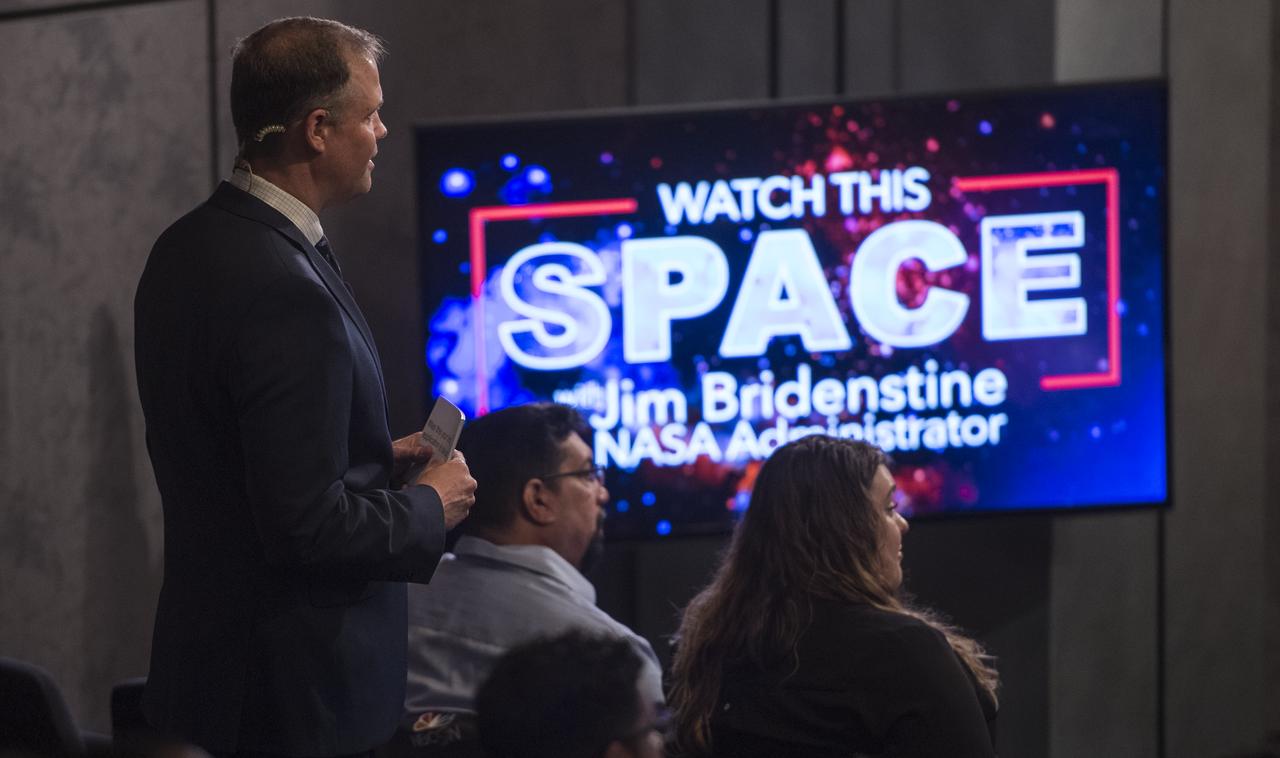
NASA Administrator Jim Bridenstine is seen during a live episode of the Administrator's monthly chat show, Watch This Space, Thursday, Sept. 27, 2018 in the Webb Auditorium at NASA Headquarters in Washington. NASA's newest astronaut candidate class has started their two years of training, after which the new astronaut candidates could be assigned to missions performing research on the International Space Station, launching from American soil on spacecraft built by commercial companies, and launching on deep space missions on NASA’s new Orion spacecraft and Space Launch System rocket. Photo Credit: (NASA/Joel Kowsky)
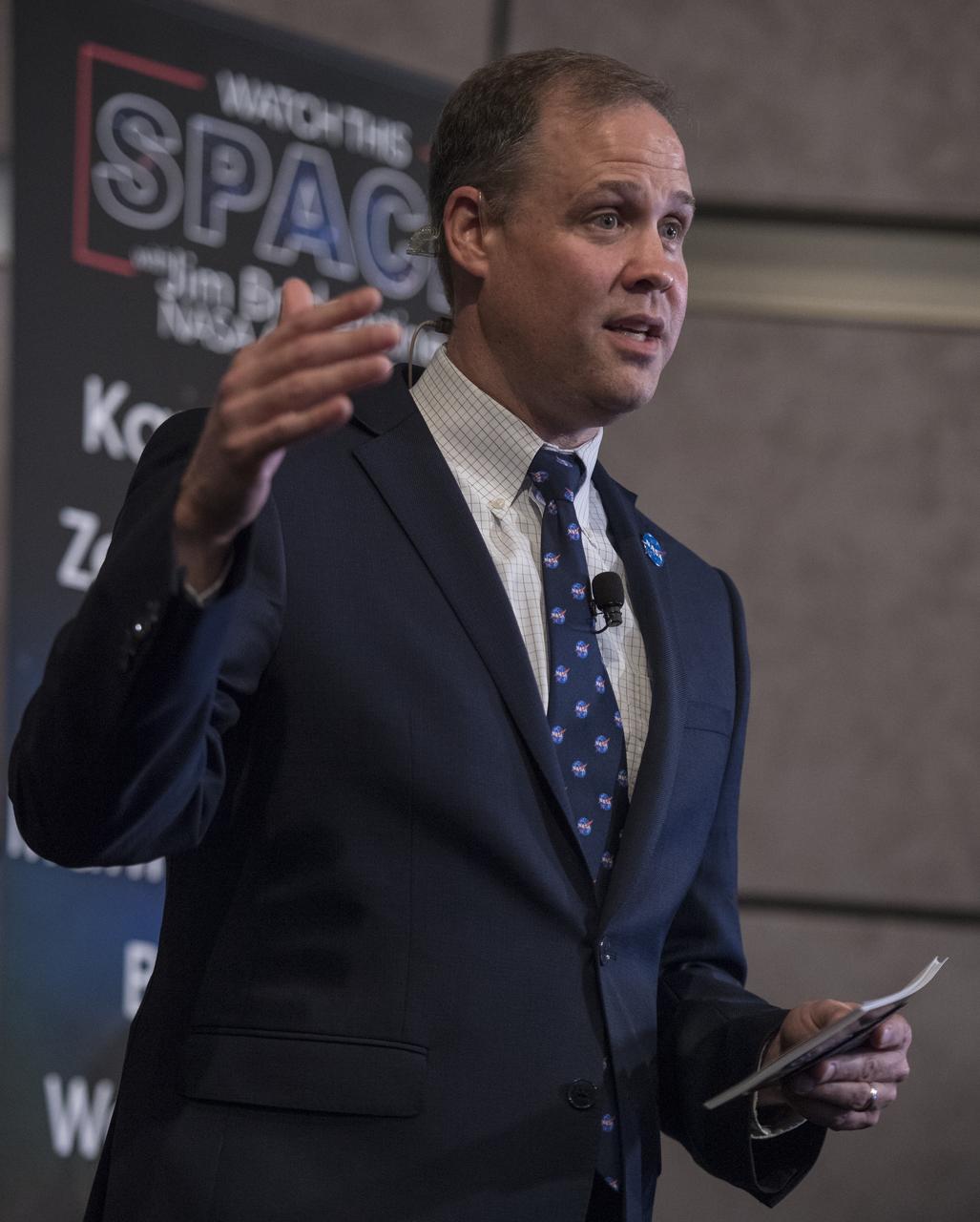
NASA Administrator Jim Bridenstine asks a question of the 2017 astronaut candidates during a live episode of the Administrator's monthly chat show, Watch This Space, Thursday, Sept. 27, 2018 in the Webb Auditorium at NASA Headquarters in Washington. NASA's newest astronaut candidate class has started their two years of training, after which the new astronaut candidates could be assigned to missions performing research on the International Space Station, launching from American soil on spacecraft built by commercial companies, and launching on deep space missions on NASA’s new Orion spacecraft and Space Launch System rocket. Photo Credit: (NASA/Joel Kowsky)
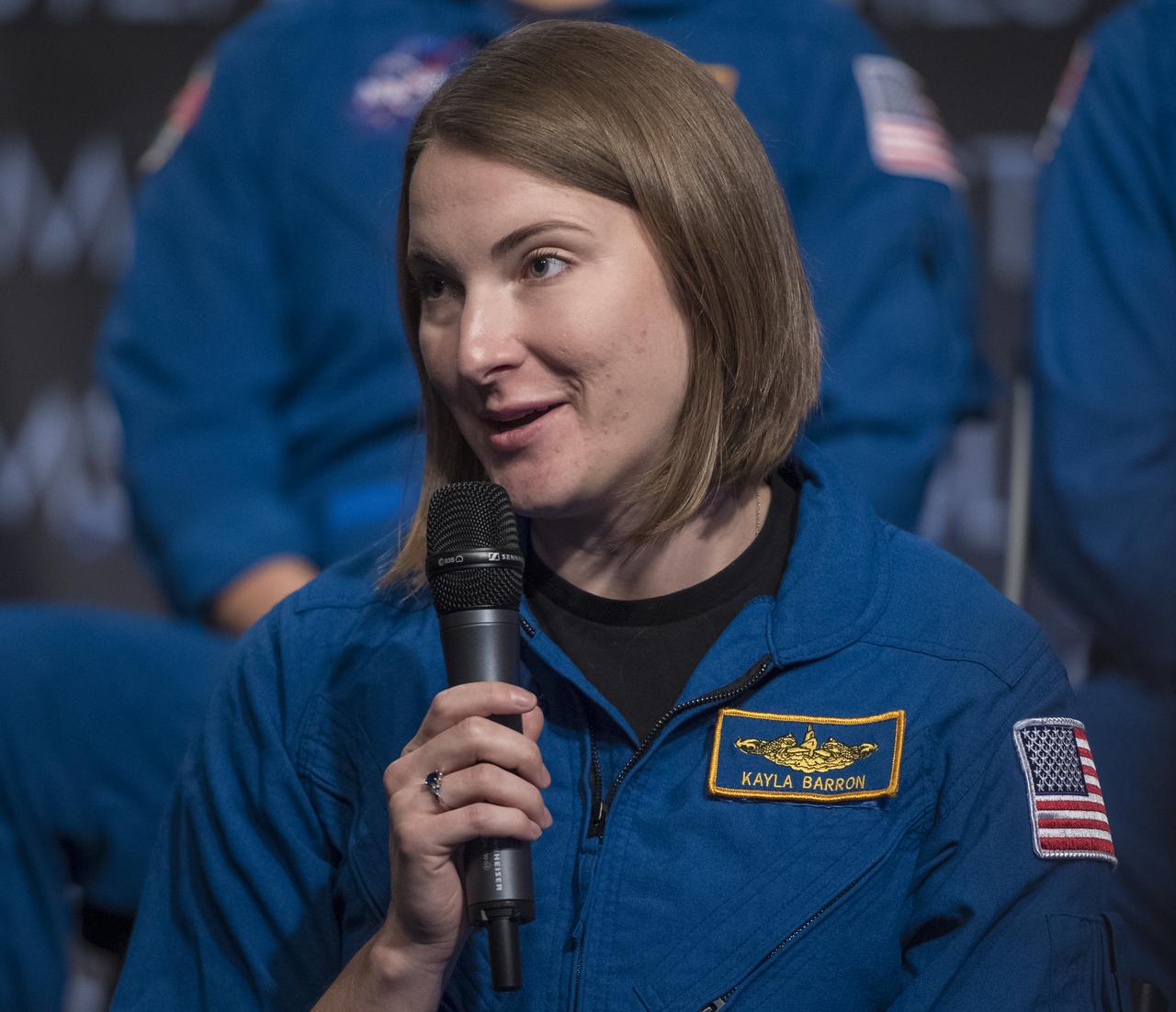
NASA astronaut candidate Kayla Barron answers a question during a live episode of the Administrator's monthly chat show, Watch This Space, Thursday, Sept. 27, 2018 in the Webb Auditorium at NASA Headquarters in Washington. NASA's newest astronaut candidate class has started their two years of training, after which the new astronaut candidates could be assigned to missions performing research on the International Space Station, launching from American soil on spacecraft built by commercial companies, and launching on deep space missions on NASA’s new Orion spacecraft and Space Launch System rocket. Photo Credit: (NASA/Joel Kowsky)
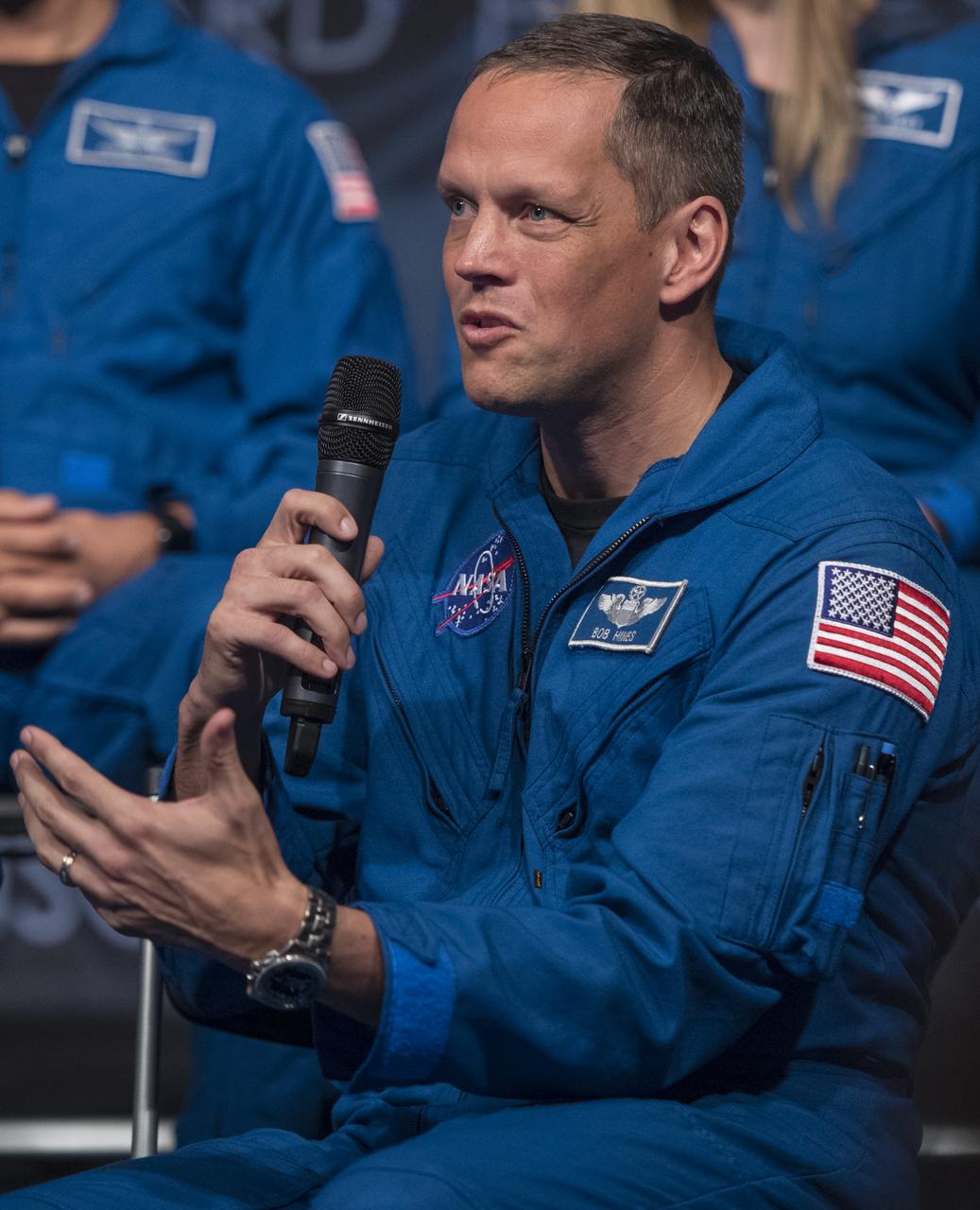
NASA astronaut candidate Bob Hines answers a question during a live episode of the Administrator's monthly chat show, Watch This Space, Thursday, Sept. 27, 2018 in the Webb Auditorium at NASA Headquarters in Washington. NASA's newest astronaut candidate class has started their two years of training, after which the new astronaut candidates could be assigned to missions performing research on the International Space Station, launching from American soil on spacecraft built by commercial companies, and launching on deep space missions on NASA’s new Orion spacecraft and Space Launch System rocket. Photo Credit: (NASA/Joel Kowsky)
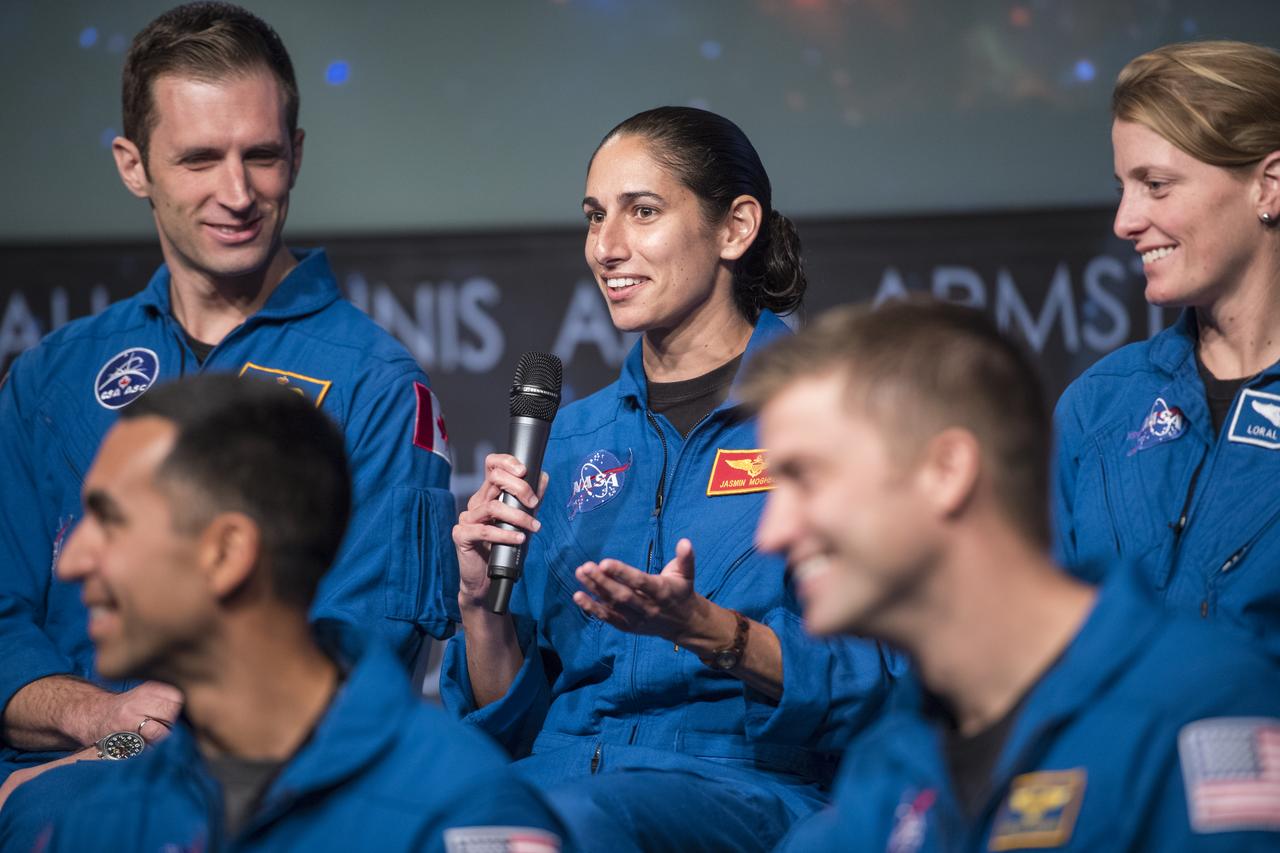
NASA astronaut candidate Jasmin Moghbeli answers a question during a live episode of the Administrator's monthly chat show, Watch This Space, Thursday, Sept. 27, 2018 in the Webb Auditorium at NASA Headquarters in Washington. NASA's newest astronaut candidate class has started their two years of training, after which the new astronaut candidates could be assigned to missions performing research on the International Space Station, launching from American soil on spacecraft built by commercial companies, and launching on deep space missions on NASA’s new Orion spacecraft and Space Launch System rocket. Photo Credit: (NASA/Joel Kowsky)
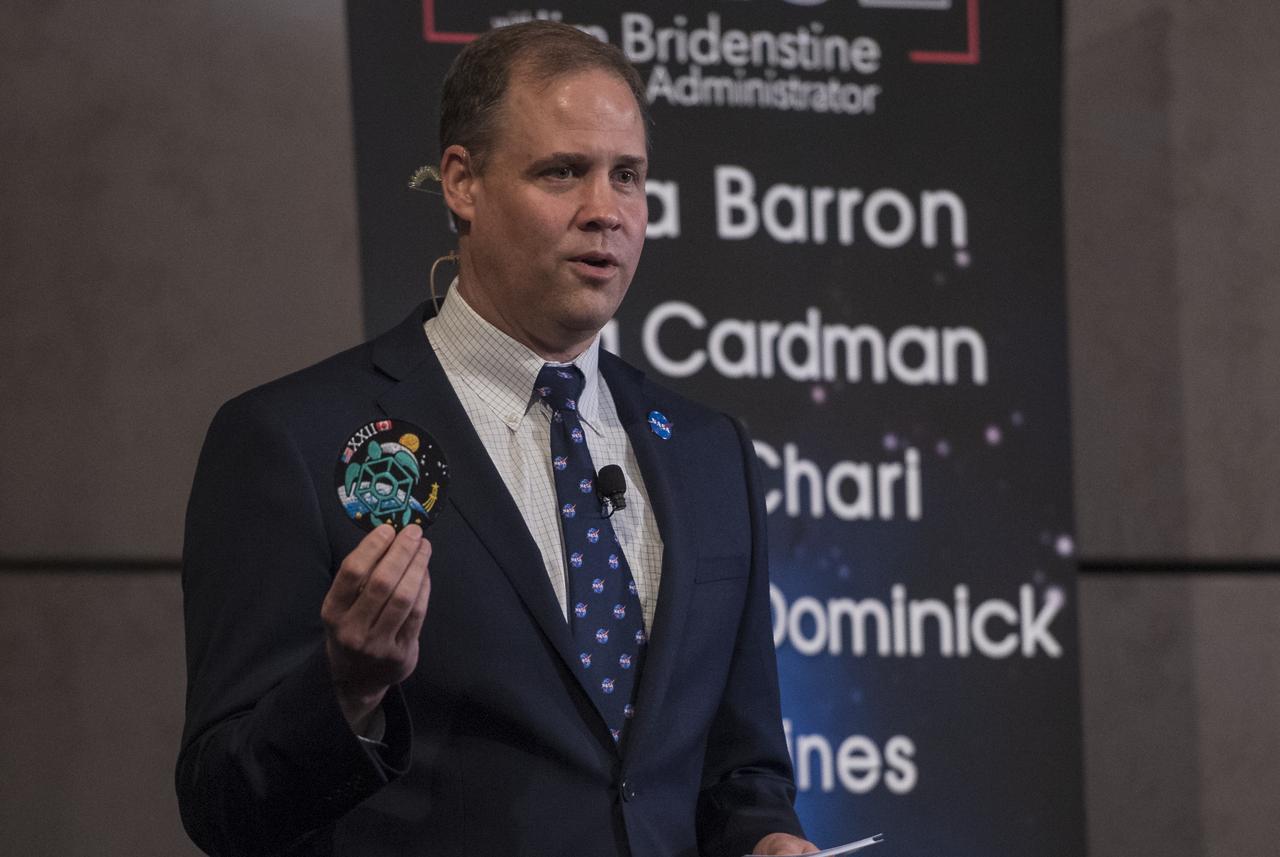
NASA Administrator Jim Bridenstine holds up the patch of the 2017 astronaut class during a live episode of the Administrator's monthly chat show, Watch This Space, Thursday, Sept. 27, 2018 in the Webb Auditorium at NASA Headquarters in Washington. NASA's newest astronaut candidate class has started their two years of training, after which the new astronaut candidates could be assigned to missions performing research on the International Space Station, launching from American soil on spacecraft built by commercial companies, and launching on deep space missions on NASA’s new Orion spacecraft and Space Launch System rocket. Photo Credit: (NASA/Joel Kowsky)
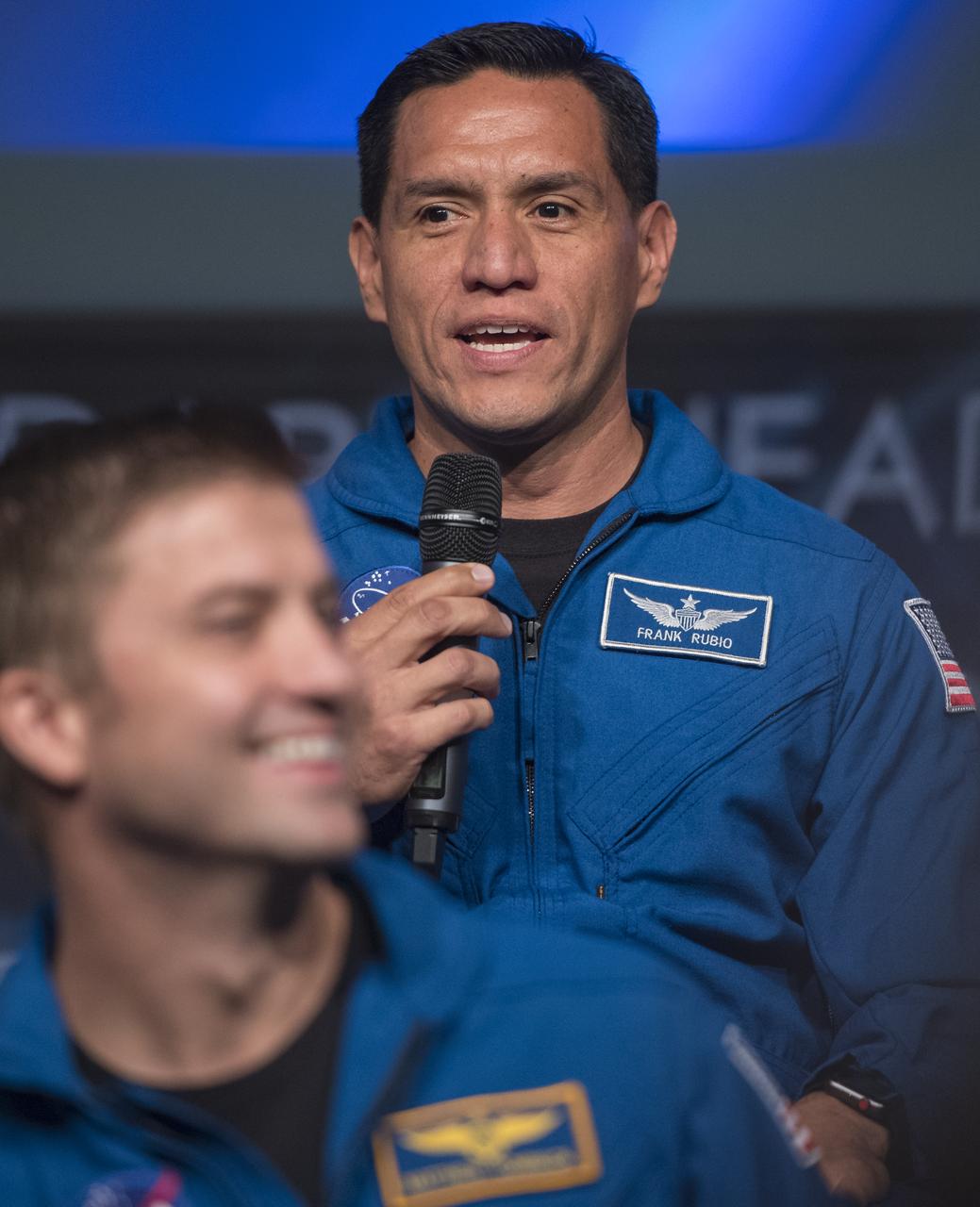
NASA Astronaut Candidate Frank Rubio answers a question during a live episode of the Administrator's monthly chat show, Watch This Space, Thursday, Sept. 27, 2018 in the Webb Auditorium at NASA Headquarters in Washington. NASA's newest astronaut candidate class has started their two years of training, after which the new astronaut candidates could be assigned to missions performing research on the International Space Station, launching from American soil on spacecraft built by commercial companies, and launching on deep space missions on NASA’s new Orion spacecraft and Space Launch System rocket. Photo Credit: (NASA/Joel Kowsky)
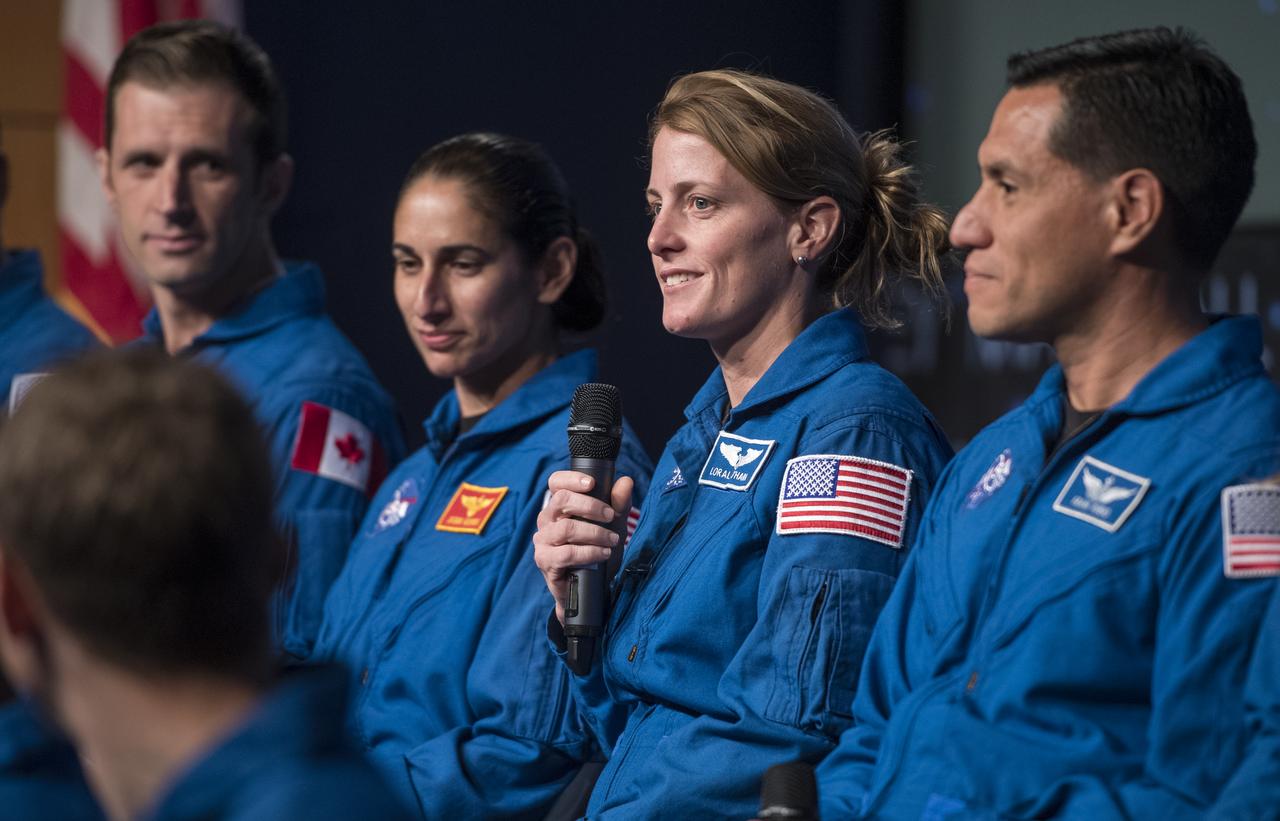
NASA astronaut candidate Loral O’Hara answers a question during a live episode of the Administrator's monthly chat show, Watch This Space, Thursday, Sept. 27, 2018 in the Webb Auditorium at NASA Headquarters in Washington. NASA's newest astronaut candidate class has started their two years of training, after which the new astronaut candidates could be assigned to missions performing research on the International Space Station, launching from American soil on spacecraft built by commercial companies, and launching on deep space missions on NASA’s new Orion spacecraft and Space Launch System rocket. Photo Credit: (NASA/Joel Kowsky)
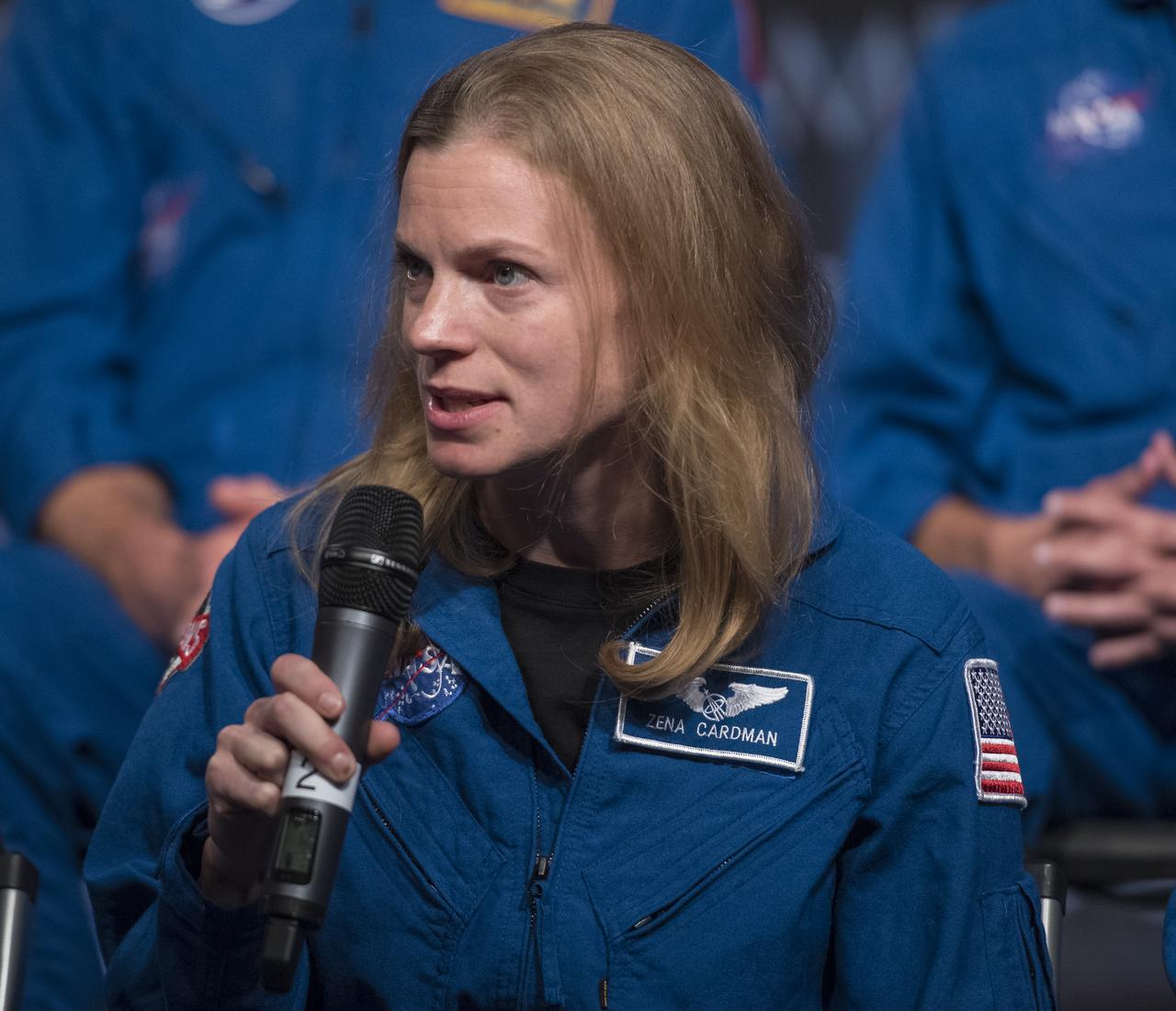
NASA astronaut candidate Zena Cardman answers a question during a live episode of the Administrator's monthly chat show, Watch This Space, Thursday, Sept. 27, 2018 in the Webb Auditorium at NASA Headquarters in Washington. NASA's newest astronaut candidate class has started their two years of training, after which the new astronaut candidates could be assigned to missions performing research on the International Space Station, launching from American soil on spacecraft built by commercial companies, and launching on deep space missions on NASA’s new Orion spacecraft and Space Launch System rocket. Photo Credit: (NASA/Joel Kowsky)

Hubble Watches the Red Planet as Mars Global Surveyor Begins Aerobraking
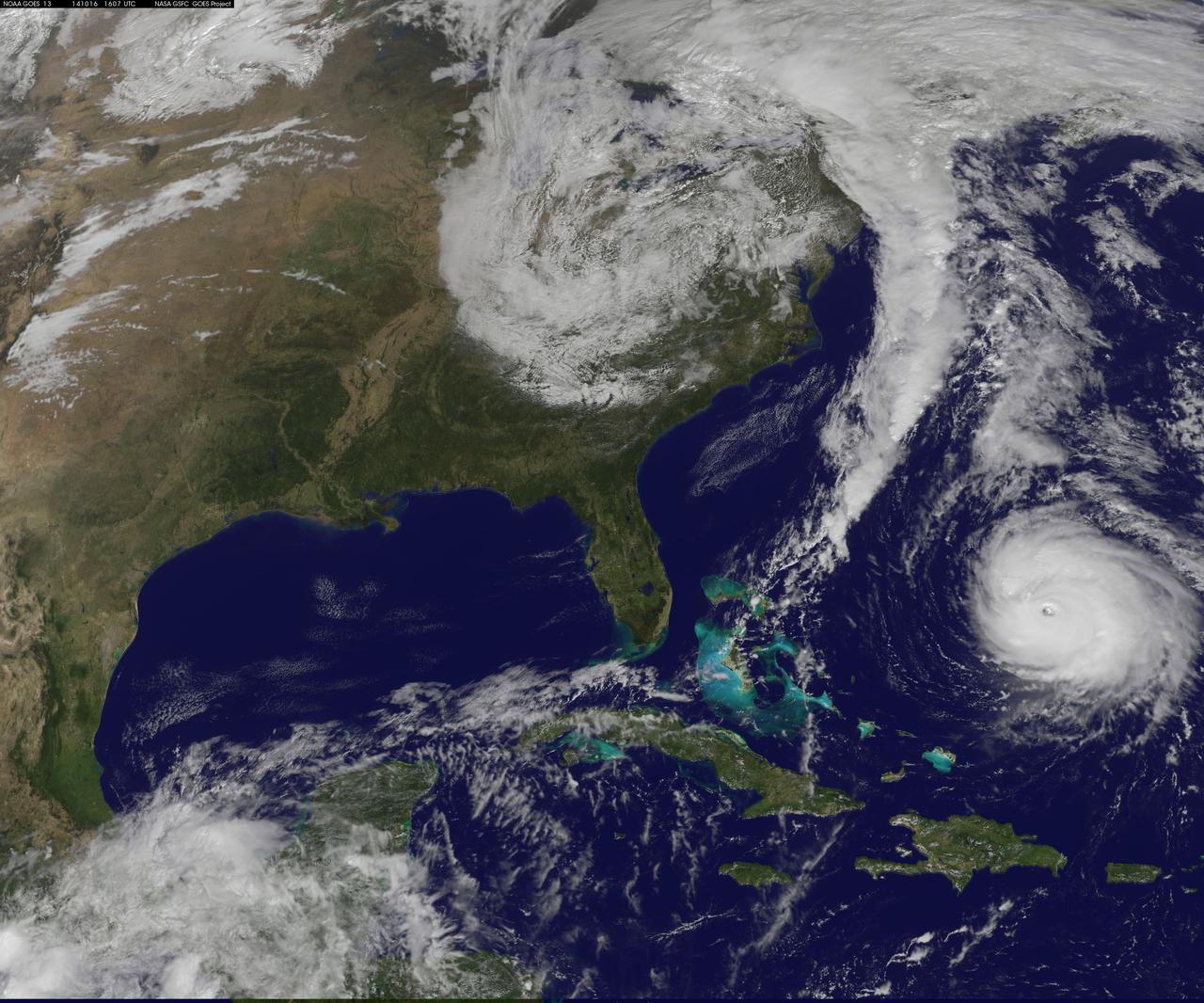
Hurricane Gonzalo is moving toward the northwest near 12 mph. A turn toward the north-northwest and then north is expected during the next day or so, followed by a north northeastward acceleration by late Thursday. Maximum sustained winds are near 130 mph making Gonzalo a Category 4 hurricane on the Saffir-Simpson Hurricane Wind Scale. Tropical storm conditions are possible on Bermuda by late Thursday night, with hurricane conditions possible on Friday. Large swells generated by Gonzalo will reach much of the U.S. east coast and Bermuda on Thursday. These swells are likely to cause life-threatening surf and rip current conditions. This image was taken by GOES 13 at 1607 UTC on October 16, 2014. Caption: NOAA Image Credit: NOAA/NASA GOES Project <b><a href="http://www.nasa.gov/audience/formedia/features/MP_Photo_Guidelines.html" rel="nofollow">NASA image use policy.</a></b> <b><a href="http://www.nasa.gov/centers/goddard/home/index.html" rel="nofollow">NASA Goddard Space Flight Center</a></b> enables NASA’s mission through four scientific endeavors: Earth Science, Heliophysics, Solar System Exploration, and Astrophysics. Goddard plays a leading role in NASA’s accomplishments by contributing compelling scientific knowledge to advance the Agency’s mission. <b>Follow us on <a href="http://twitter.com/NASAGoddardPix" rel="nofollow">Twitter</a></b> <b>Like us on <a href="http://www.facebook.com/pages/Greenbelt-MD/NASA-Goddard/395013845897?ref=tsd" rel="nofollow">Facebook</a></b> <b>Find us on <a href="http://instagram.com/nasagoddard?vm=grid" rel="nofollow">Instagram</a></b>
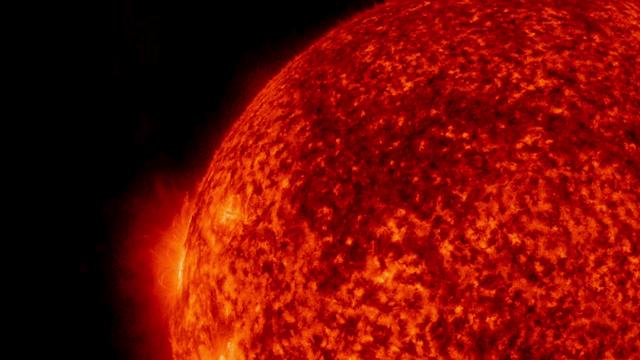
Solar material repeatedly bursts from the sun in this close-up captured on July 9-10, 2016, by NASA’s Solar Dynamics Observatory, or SDO. The sun is composed of plasma, a gas in which the negative electrons move freely around the positive ions, forming a powerful mix of charged particles. Each burst of plasma licks out from the surface only to withdraw back into the active region – a dance commanded by complex magnetic forces above the sun. SDO captured this video in wavelengths of extreme ultraviolet light, which are typically invisible to our eyes. The imagery is colorized here in red for easy viewing. Credit: NASA/SDO/Goddard Space Flight Center/Joy Ng
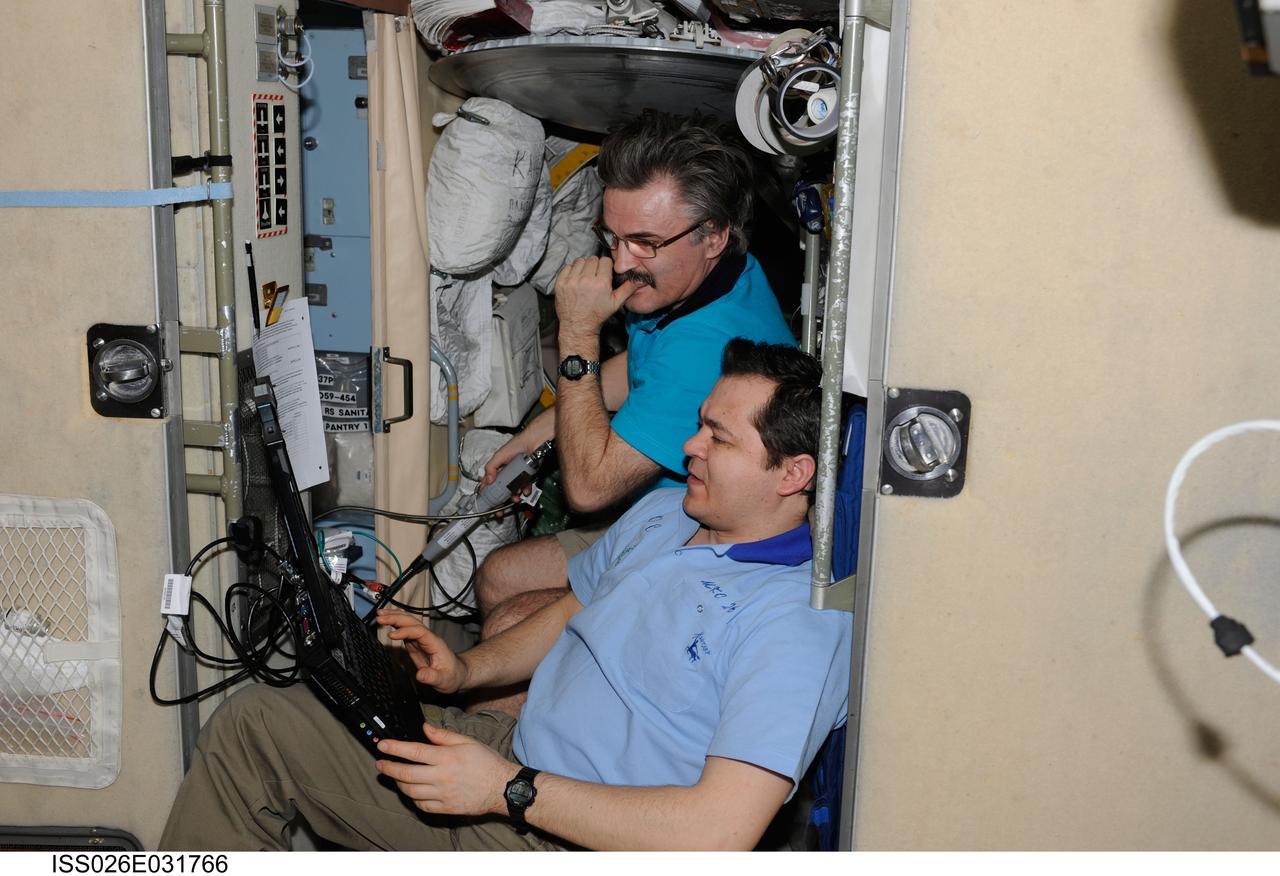
ISS026-E-031766 (4 March 2011) --- Russian cosmonauts Oleg Skripochka (foreground) and Alexander Kaleri, both Expedition 26 flight engineers, watch a computer monitor in the Zvezda Service Module of the International Space Station.
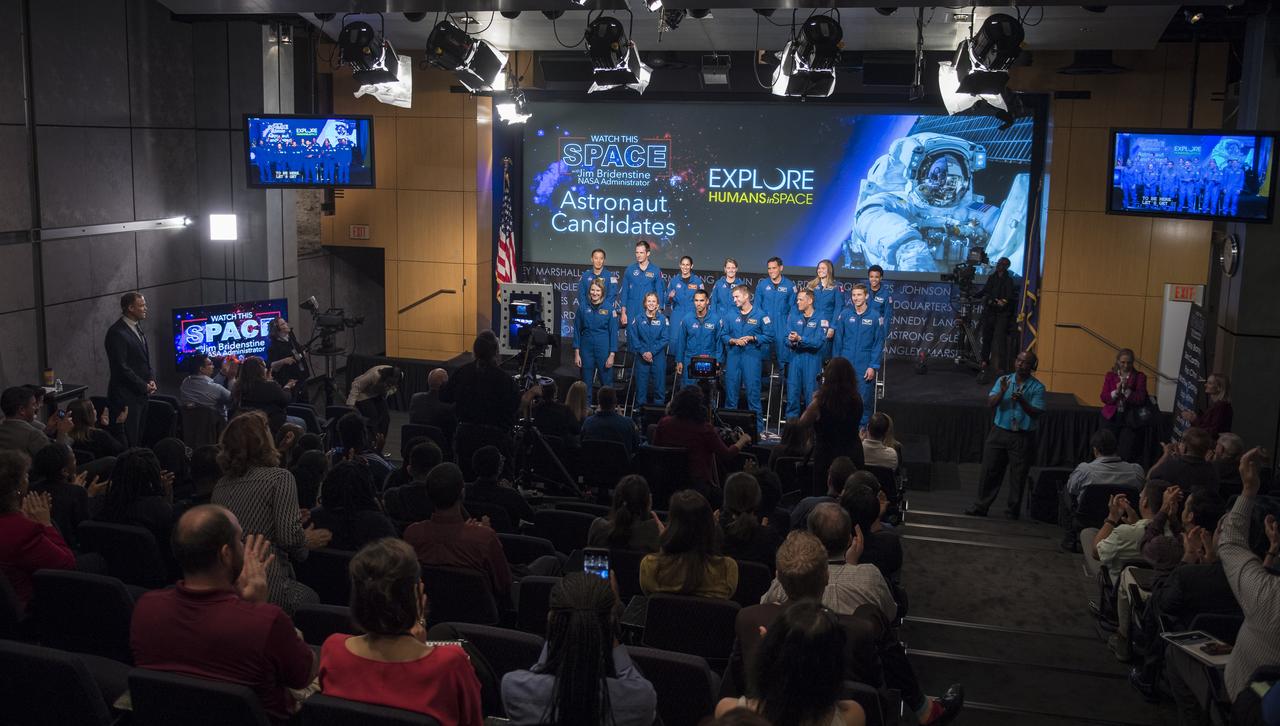
NASA Administrator Jim Bridenstine introduces the 2017 astronaut candidates during a live episode of the Administrator's monthly chat show, Watch This Space, Thursday, Sept. 27, 2018 in the Webb Auditorium at NASA Headquarters in Washington. NASA's newest astronaut candidate class has started their two years of training, after which the new astronaut candidates could be assigned to missions performing research on the International Space Station, launching from American soil on spacecraft built by commercial companies, and launching on deep space missions on NASA’s new Orion spacecraft and Space Launch System rocket. Photo Credit: (NASA/Joel Kowsky)
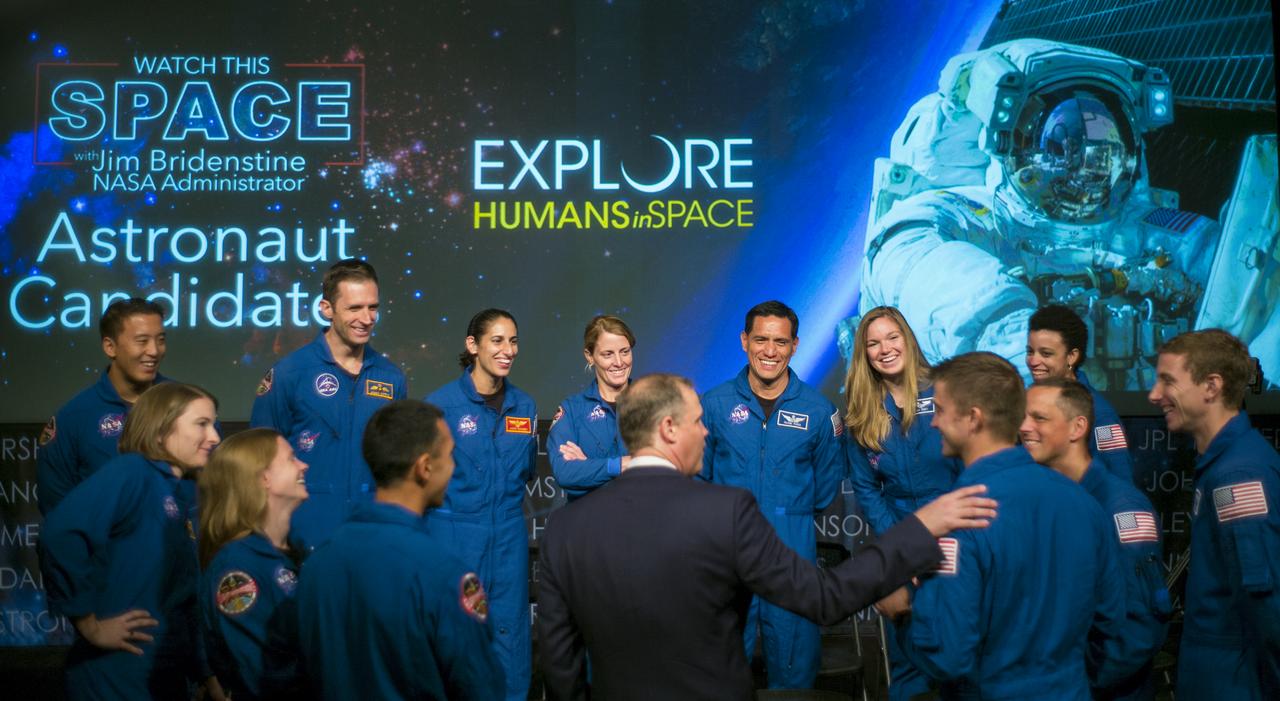
NASA Administrator Jim Bridenstine speaks with NASA and Canadian Space Agency astronaut candidates following a live episode of the Administrator's monthly chat show, Watch This Space, Thursday, Sept. 27, 2018 in the Webb Auditorium at NASA Headquarters in Washington. NASA's newest astronaut candidate class has started their two years of training, after which the new astronaut candidates could be assigned to missions performing research on the International Space Station, launching from American soil on spacecraft built by commercial companies, and launching on deep space missions on NASA’s new Orion spacecraft and Space Launch System rocket. Photo Credit: (NASA/Joel Kowsky)
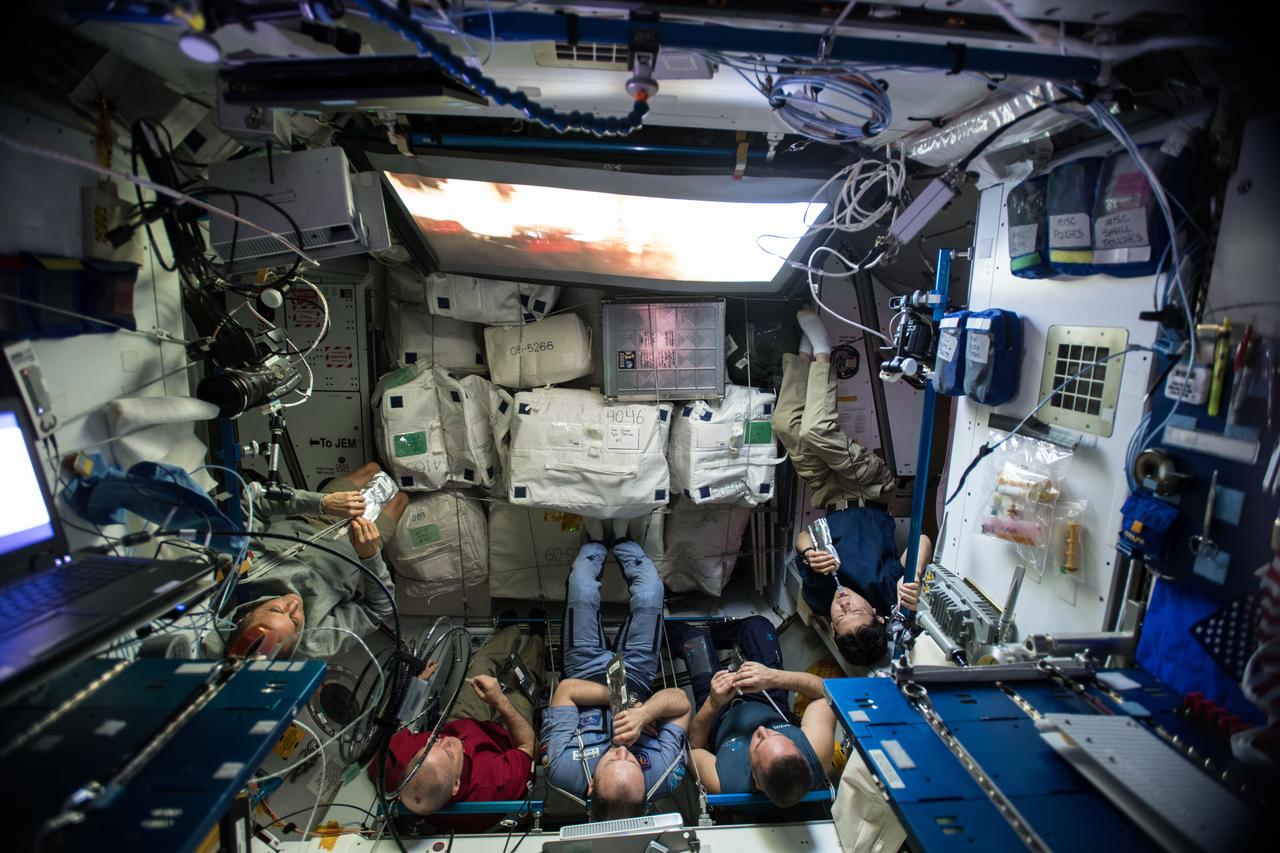
iss054e004175 (Dec. 23, 2017) --- Expedition 54 crew members watch the movie "Star Wars: The Last Jedi" on the big screen in the Harmony module. From left, are Flight Engineers Joe Acaba and Scott Tingle, Commander Alexander Misurkin, and Flight Engineers Anton Shkaplerov and Norishige Kanai.
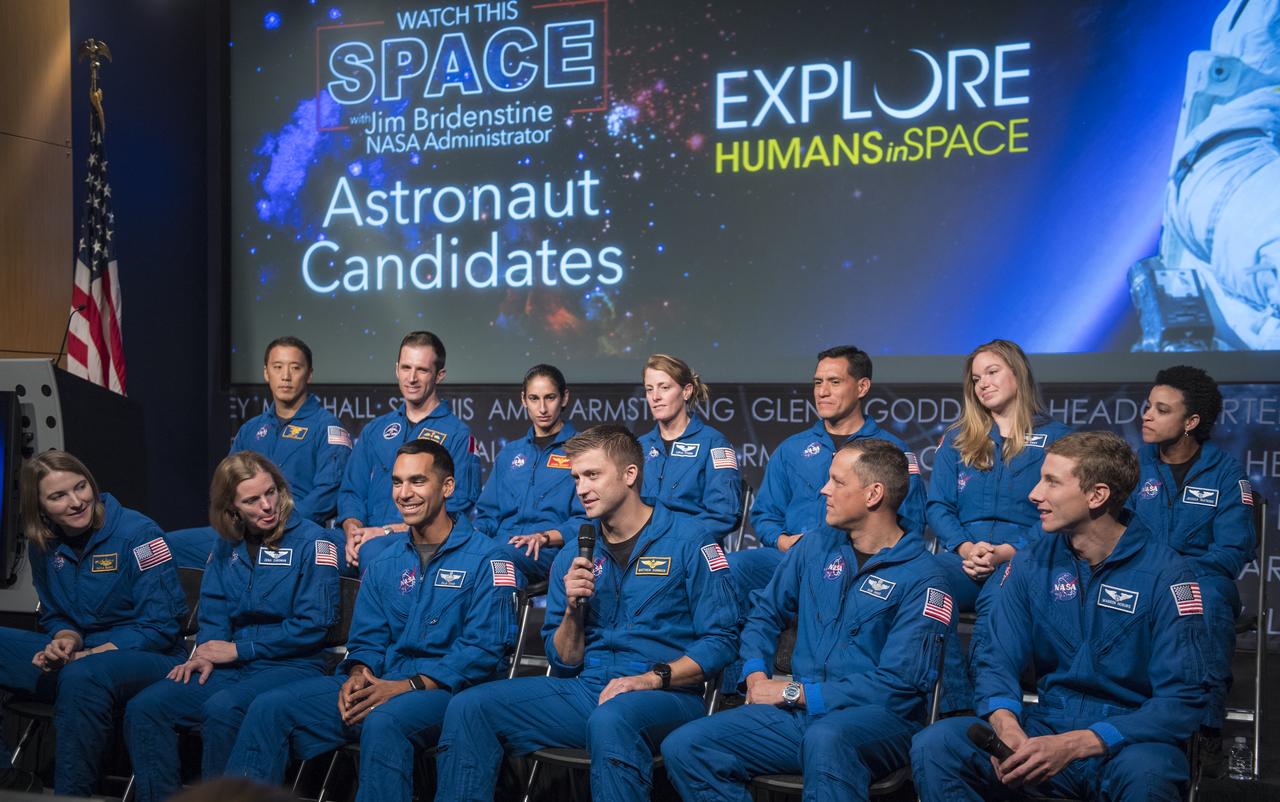
NASA astronaut candidate Matthew Dominick, third from right in the front row, answers a question during a live episode of the Administrator's monthly chat show, Watch This Space, along with fellow members of the 2017 astronaut candidate class, Thursday, Sept. 27, 2018 in the Webb Auditorium at NASA Headquarters in Washington. NASA's newest astronaut candidate class has started their two years of training, after which the new astronaut candidates could be assigned to missions performing research on the International Space Station, launching from American soil on spacecraft built by commercial companies, and launching on deep space missions on NASA’s new Orion spacecraft and Space Launch System rocket. Photo Credit: (NASA/Joel Kowsky)
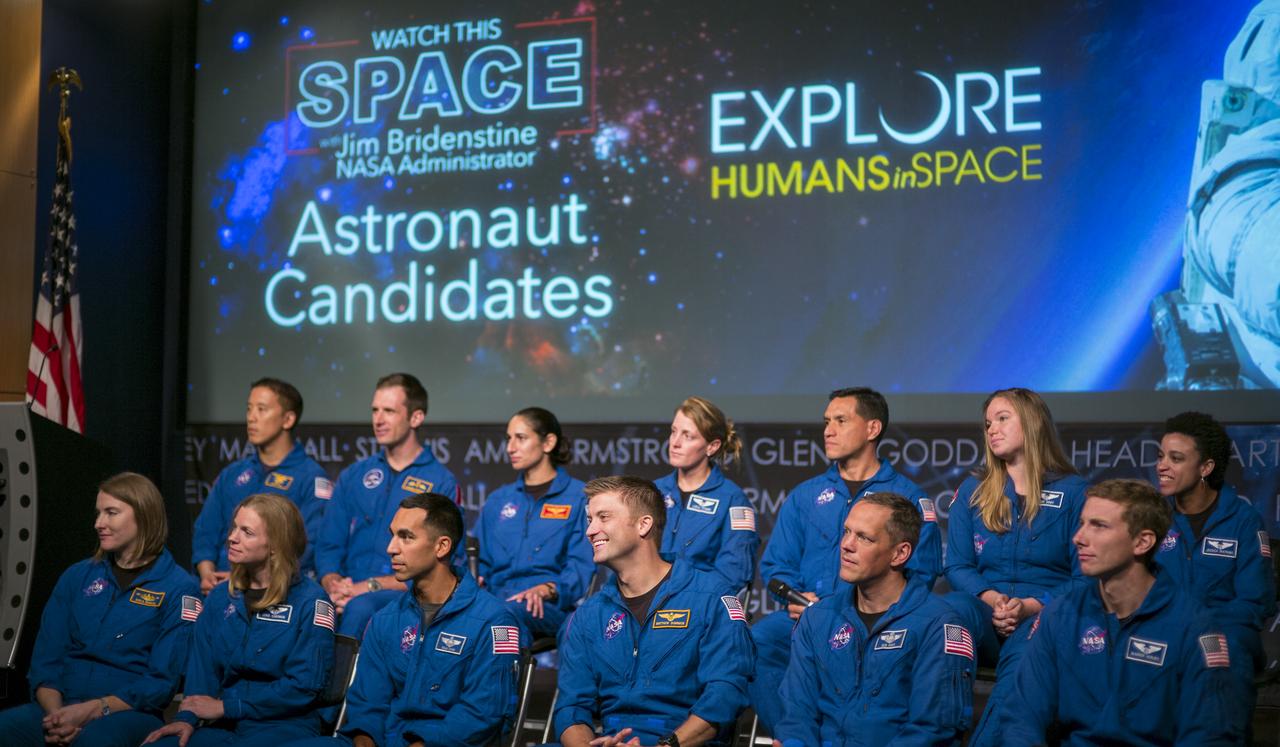
Astronaut candidates, back row from left, Jonny Kim, Joshua Kutryk of the Canadian Space Agency, Jasmin Moghbeli, Loral O’Hara, Frank Rubio, Jennifer Sidey-Gibbons of the Canadian Space Agency, Jessica Watkins, front row from left, Kayla Barron, Zena Cardman, Raja Chari, Matthew Dominick, Bob Hines, and Warren Hoburg are seen during a live episode of the Administrator's monthly chat show, Watch This Space, Thursday, Sept. 27, 2018 in the Webb Auditorium at NASA Headquarters in Washington. NASA's newest astronaut candidate class has started their two years of training, after which the new astronaut candidates could be assigned to missions performing research on the International Space Station, launching from American soil on spacecraft built by commercial companies, and launching on deep space missions on NASA’s new Orion spacecraft and Space Launch System rocket. Photo Credit: (NASA/Joel Kowsky)
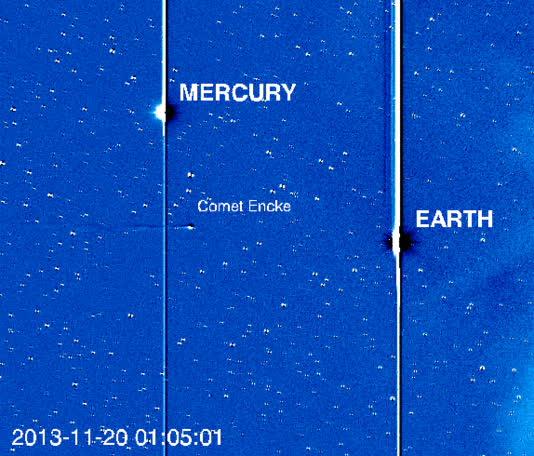
Comet ISON makes its appearance into the higher-resolution HI-1 camera on the STEREO-A spacecraft. The dark "clouds" coming from the right are density enhancements in the solar wind, causing all the ripples in comet Encke's tail. These kinds of solar wind interactions give us valuable information about solar wind conditions near the sun. Note: the STEREO-A spacecraft is currently located on the other side of the Sun, so it sees a totally different geometry to what we see from Earth. Credit: Karl Battams/NASA/STEREO/CIOC <b><a href="http://www.nasa.gov/audience/formedia/features/MP_Photo_Guidelines.html" rel="nofollow">NASA image use policy.</a></b> <b><a href="http://www.nasa.gov/centers/goddard/home/index.html" rel="nofollow">NASA Goddard Space Flight Center</a></b> enables NASA’s mission through four scientific endeavors: Earth Science, Heliophysics, Solar System Exploration, and Astrophysics. Goddard plays a leading role in NASA’s accomplishments by contributing compelling scientific knowledge to advance the Agency’s mission. <b>Follow us on <a href="http://twitter.com/NASA_GoddardPix" rel="nofollow">Twitter</a></b> <b>Like us on <a href="http://www.facebook.com/pages/Greenbelt-MD/NASA-Goddard/395013845897?ref=tsd" rel="nofollow">Facebook</a></b> <b>Find us on <a href="http://instagram.com/nasagoddard?vm=grid" rel="nofollow">Instagram</a></b>
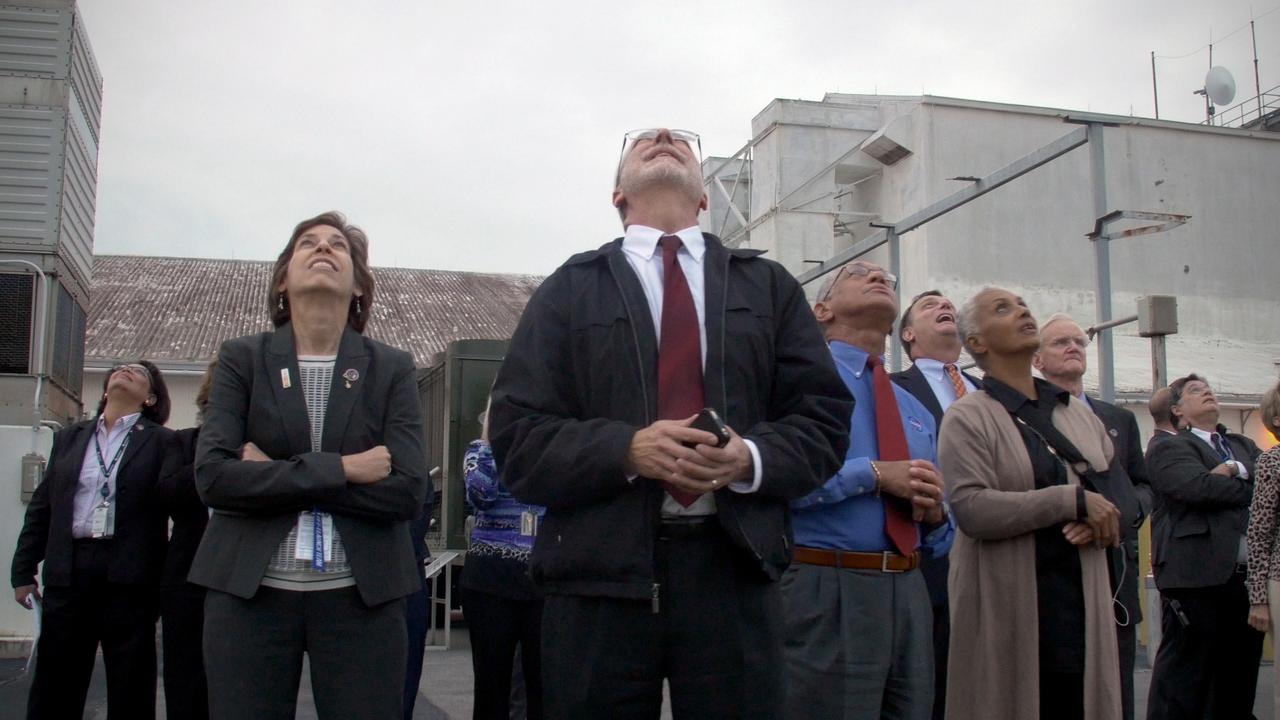
The NASA/Lockheed Martin leadership team watches the Exploration Flight Test-1 (EFT-1) launch outside Hanger AE at the Cape Canaveral Air Force Station in Florida on Dec. 5, 2014. Johnson Space Center Director Ellen Ochoa, Orion Program Manager Mark Geyer, NASA Administrator Charles Bolden and Jackie Bolden, Orion Deputy Program Manager Mark Kirasich, NASA Astronaut John Casper. Part of Batch image transfer from Flickr.
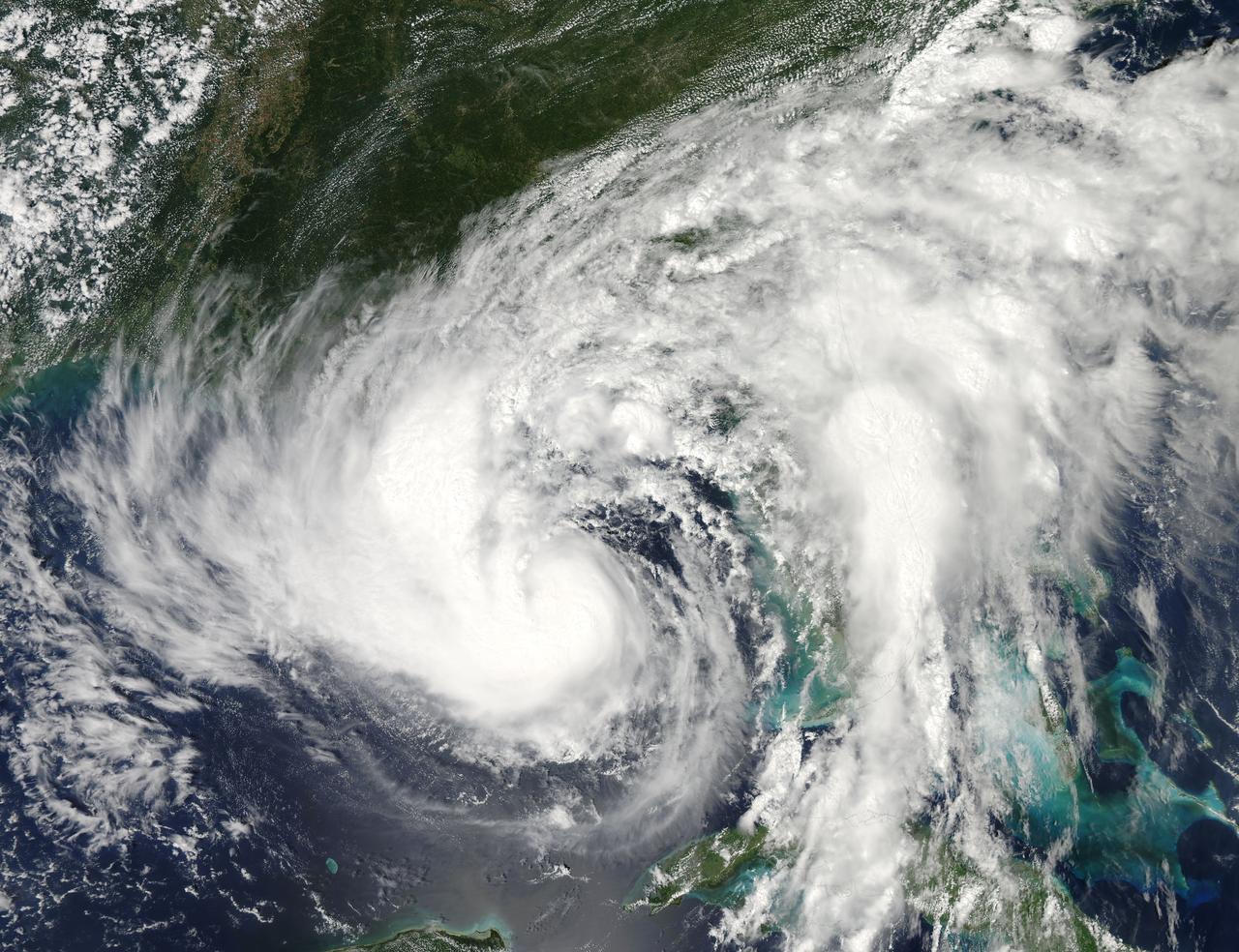
The MODIS instrument on NASA's Aqua satellite captured this visible image of Tropical Storm Isaac on Aug. 27 at 3:00 p.m. EDT is it was moving northwest through the Gulf of Mexico. Issac's large reach is seen by its eastern cloud cover over the entire state of Florida. To read more go to: <a href="http://www.nasa.gov/mission_pages/hurricanes/archives/2012/h2012_Isaac.html" rel="nofollow">www.nasa.gov/mission_pages/hurricanes/archives/2012/h2012...</a> Credit: NASA Goddard MODIS Rapid Response Team <b><a href="http://www.nasa.gov/audience/formedia/features/MP_Photo_Guidelines.html" rel="nofollow">NASA image use policy.</a></b> <b><a href="http://www.nasa.gov/centers/goddard/home/index.html" rel="nofollow">NASA Goddard Space Flight Center</a></b> enables NASA’s mission through four scientific endeavors: Earth Science, Heliophysics, Solar System Exploration, and Astrophysics. Goddard plays a leading role in NASA’s accomplishments by contributing compelling scientific knowledge to advance the Agency’s mission. <b>Follow us on <a href="http://twitter.com/NASA_GoddardPix" rel="nofollow">Twitter</a></b> <b>Like us on <a href="http://www.facebook.com/pages/Greenbelt-MD/NASA-Goddard/395013845897?ref=tsd" rel="nofollow">Facebook</a></b> <b>Find us on <a href="http://instagrid.me/nasagoddard/?vm=grid" rel="nofollow">Instagram</a></b>

Image release August 16, 2012 Astronomers using data from NASA's Hubble Space Telescope have caught two clusters full of massive stars that may be in the early stages of merging. The 30 Doradus Nebula is 170,000 light-years from Earth. What at first was thought to be only one cluster in the core of the massive star-forming region 30 Doradus has been found to be a composite of two clusters that differ in age by about one million years. The entire 30 Doradus complex has been an active star-forming region for 25 million years, and it is currently unknown how much longer this region can continue creating new stars. Smaller systems that merge into larger ones could help to explain the origin of some of the largest known star clusters. The Hubble observations, made with the Wide Field Camera 3, were taken Oct. 20-27, 2009. The blue color is light from the hottest, most massive stars; the green from the glow of oxygen; and the red from fluorescing hydrogen. To read more about this image go to: <a href="http://www.nasa.gov/mission_pages/hubble/science/cluster-collision.html" rel="nofollow">www.nasa.gov/mission_pages/hubble/science/cluster-collisi...</a> Image Credit: NASA, ESA, and E. Sabbi (ESA/STScI) <b><a href="http://www.nasa.gov/audience/formedia/features/MP_Photo_Guidelines.html" rel="nofollow">NASA image use policy.</a></b> <b><a href="http://www.nasa.gov/centers/goddard/home/index.html" rel="nofollow">NASA Goddard Space Flight Center</a></b> enables NASA’s mission through four scientific endeavors: Earth Science, Heliophysics, Solar System Exploration, and Astrophysics. Goddard plays a leading role in NASA’s accomplishments by contributing compelling scientific knowledge to advance the Agency’s mission. <b>Follow us on <a href="http://twitter.com/NASA_GoddardPix" rel="nofollow">Twitter</a></b> <b>Like us on <a href="http://www.facebook.com/pages/Greenbelt-MD/NASA-Goddard/395013845897?ref=tsd" rel="nofollow">Facebook</a></b> <b>Find us on <a href="http://instagrid.me/nasagoddard/?vm=grid" rel="nofollow">Instagram</a></b>
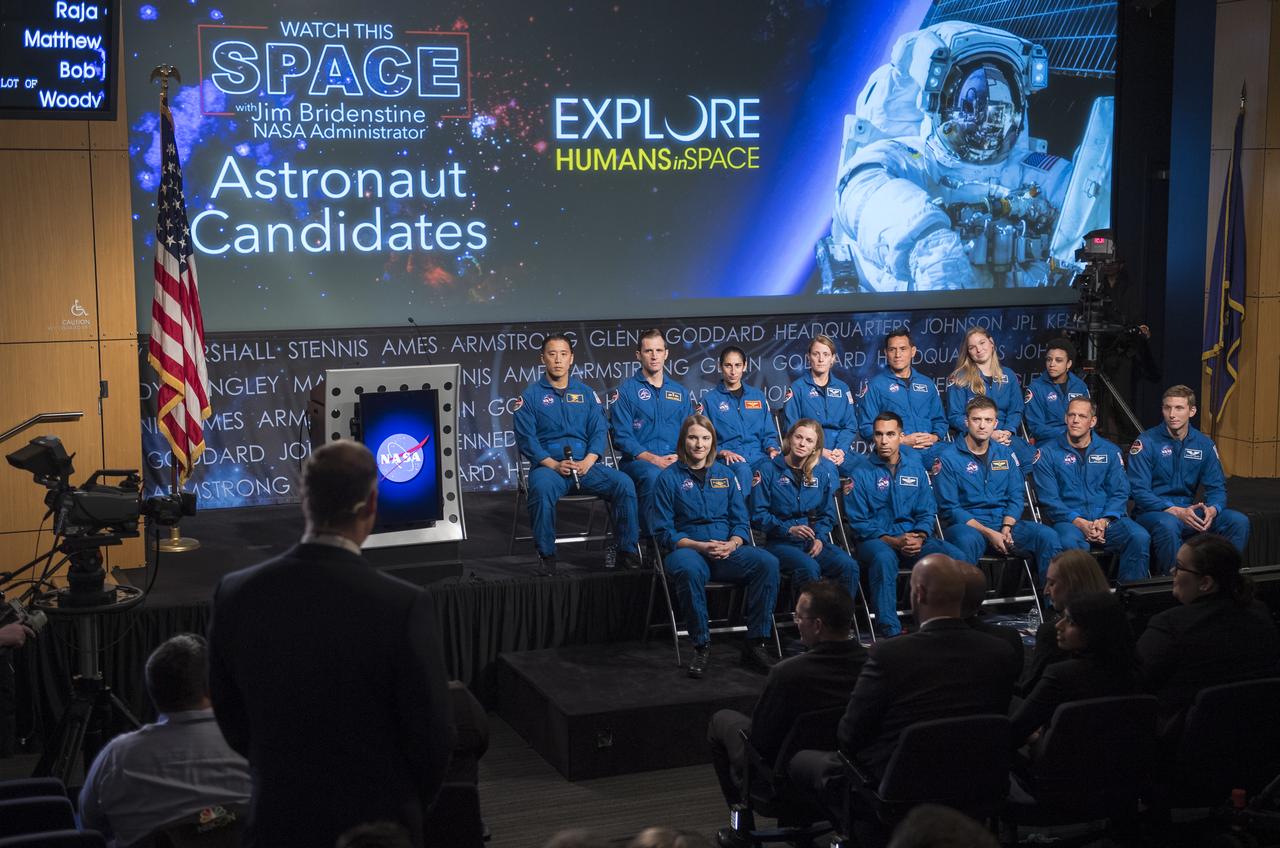
Astronaut candidates, back row from left, Jonny Kim, Joshua Kutryk of the Canadian Space Agency, Jasmin Moghbeli, Loral O’Hara, Frank Rubio, Jennifer Sidey-Gibbons of the Canadian Space Agency, Jessica Watkins, front row from left, Kayla Barron, Zena Cardman, Raja Chari, Matthew Dominick, Bob Hines, and Warren Hoburg listen to a question from NASA Administrator Jim Bridenstine during a live episode of the Administrator's monthly chat show, Watch This Space, Thursday, Sept. 27, 2018 in the Webb Auditorium at NASA Headquarters in Washington. NASA's newest astronaut candidate class has started their two years of training, after which the new astronaut candidates could be assigned to missions performing research on the International Space Station, launching from American soil on spacecraft built by commercial companies, and launching on deep space missions on NASA’s new Orion spacecraft and Space Launch System rocket. Photo Credit: (NASA/Joel Kowsky)
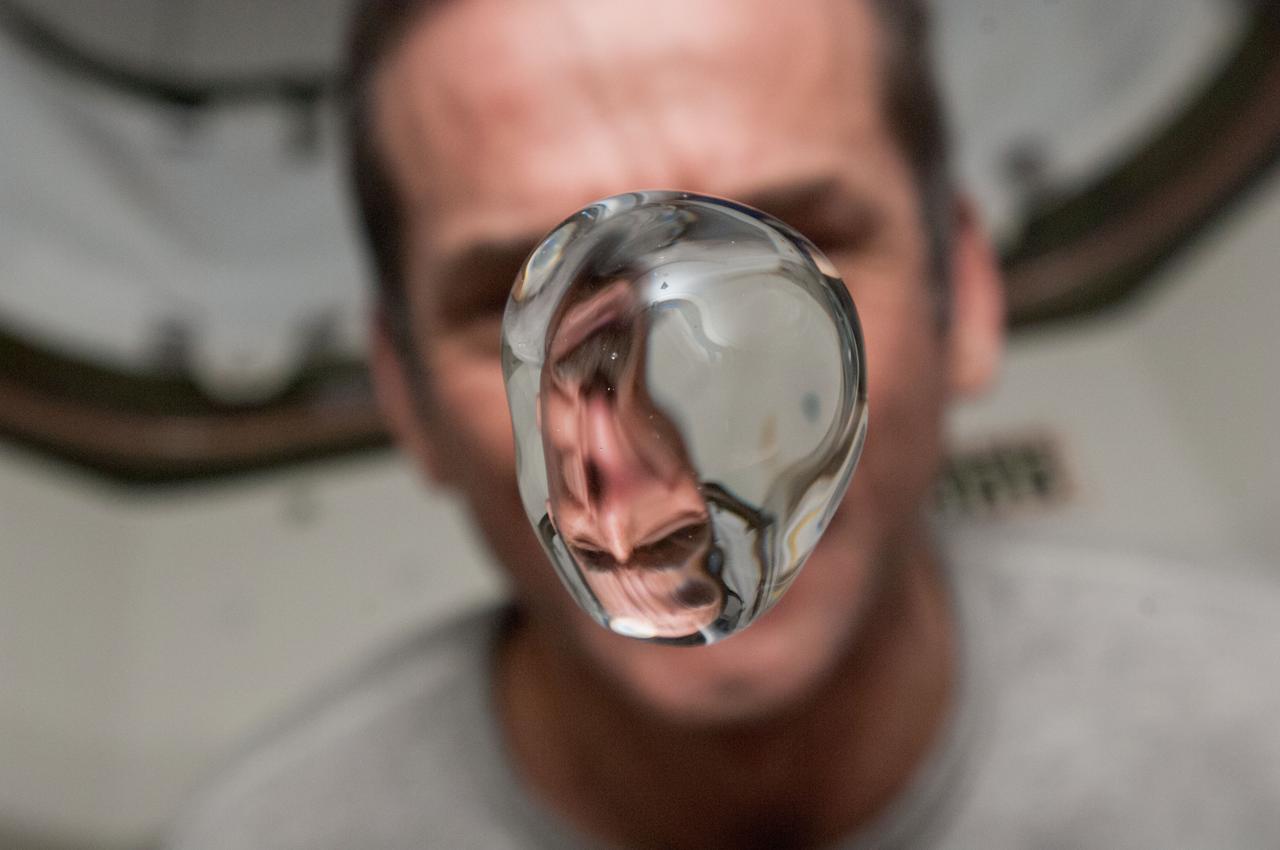
View of Canadian Space Agency (CSA) Chris Hadfield,Expedition 34 Flight Engineer (FE),watching a water bubble float freely,showing his image refracted,in the Node 1. Photo was taken during Expedition 34.
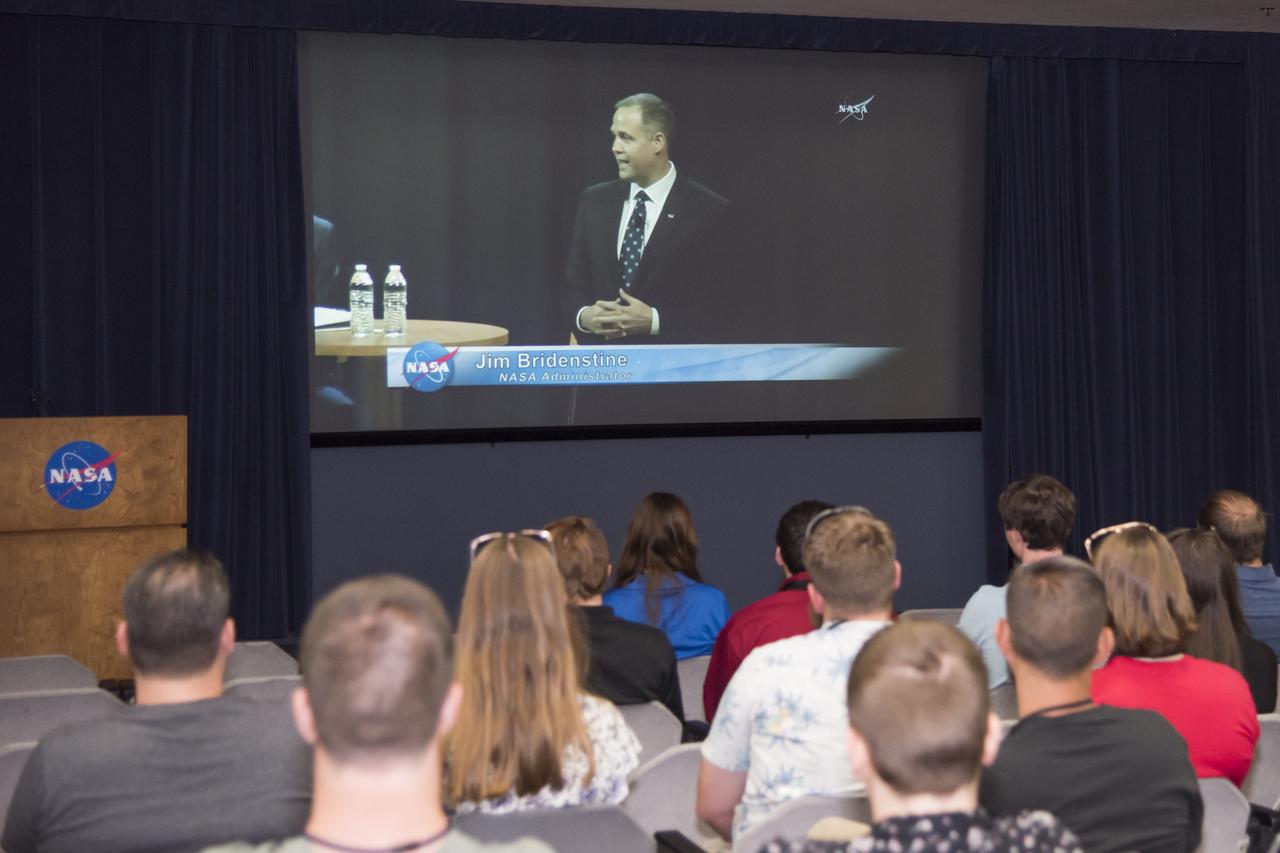
NASA Armstrong Interns watch a live broadcast of a town hall with Administrator Jim Bridenstine for National Intern Day 2018
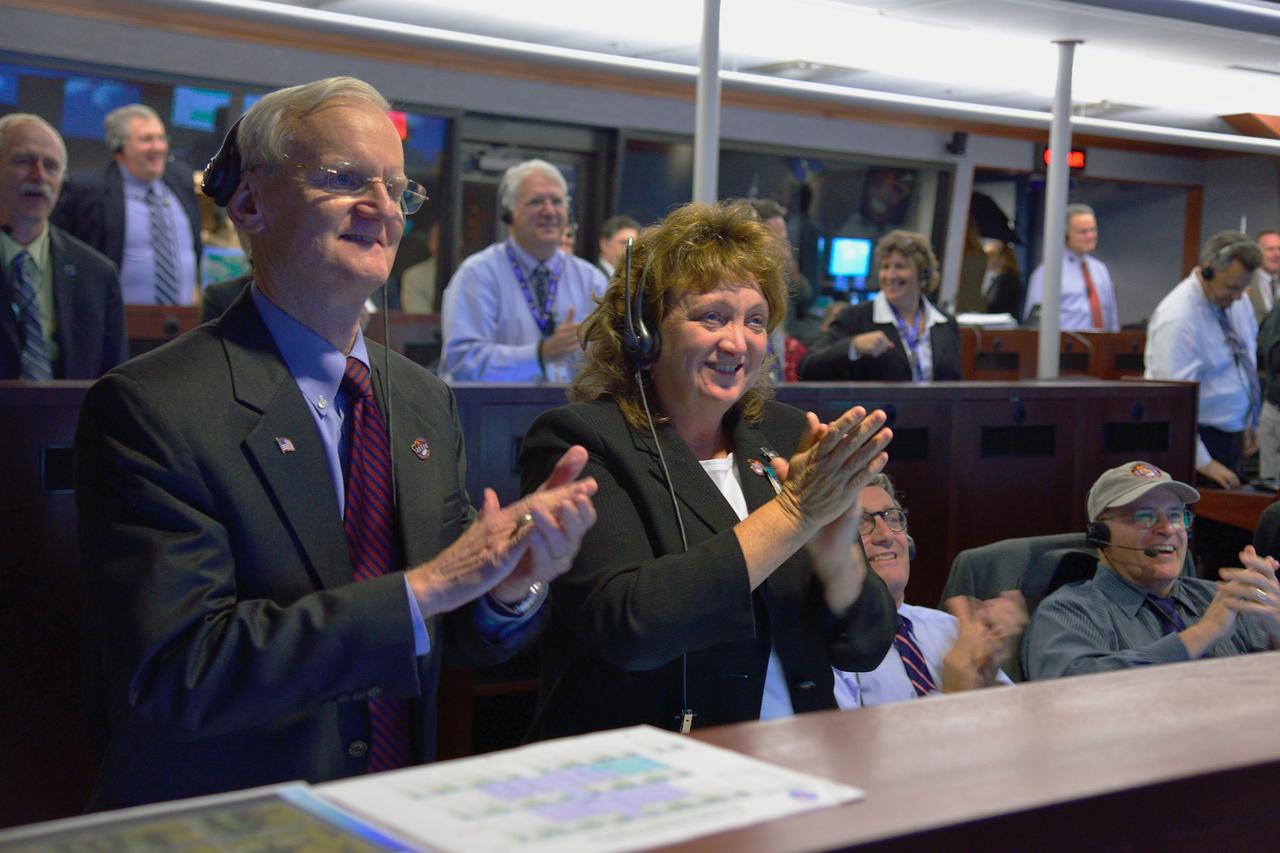
Astronaut John Casper and Lockheed Martin's Carol Webber watch Orion's parachutes open during the Exploration Flight Test-1 (EFT-) landing sequence on Dec. 5, 2014. The Orion spacecraft orbited Earth twice, reaching an altitude of approximately 3,600 miles above Earth before landing. No one was aboard Orion for this flight test, but the spacecraft is designed to allow us to journey to destinations never before visited by humans, including an asteroid and Mars. Part of Batch image transfer from Flickr.
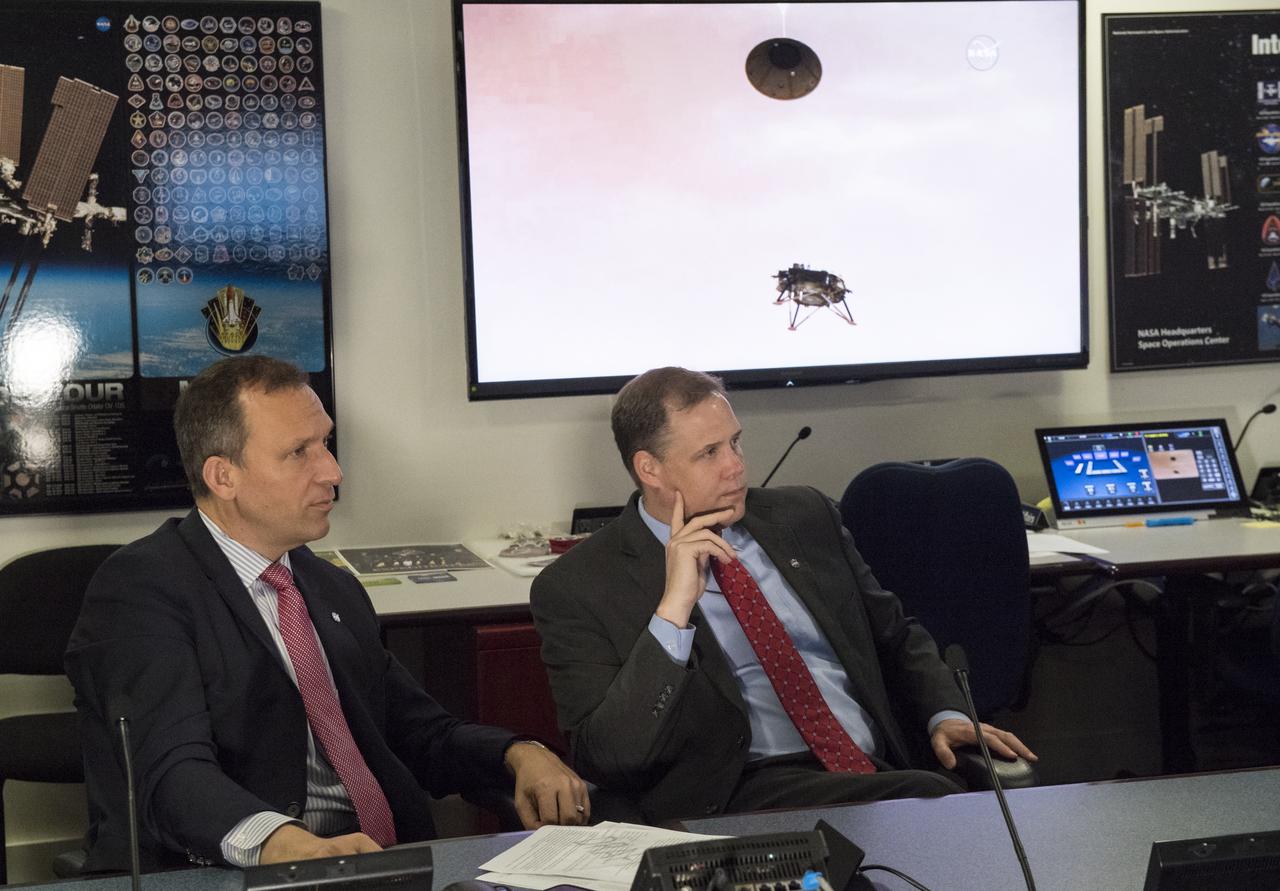
NASA Administrator Jim Bridenstine, right, and NASA Associate Administrator for the Science Mission Directorate, Thomas Zurbuchen, watch monitors following the launch of NASA's InSight spacecraft on a United Launch Alliance (ULA) Atlas-V rocket Saturday, May 5, 2018 at NASA Headquarters in Washington. InSight, short for Interior Exploration using Seismic Investigations, Geodesy and Heat Transport, is a Mars lander designed to study the "inner space" of Mars: its crust, mantle, and core. Photo Credit: (NASA/Aubrey Gemignani)
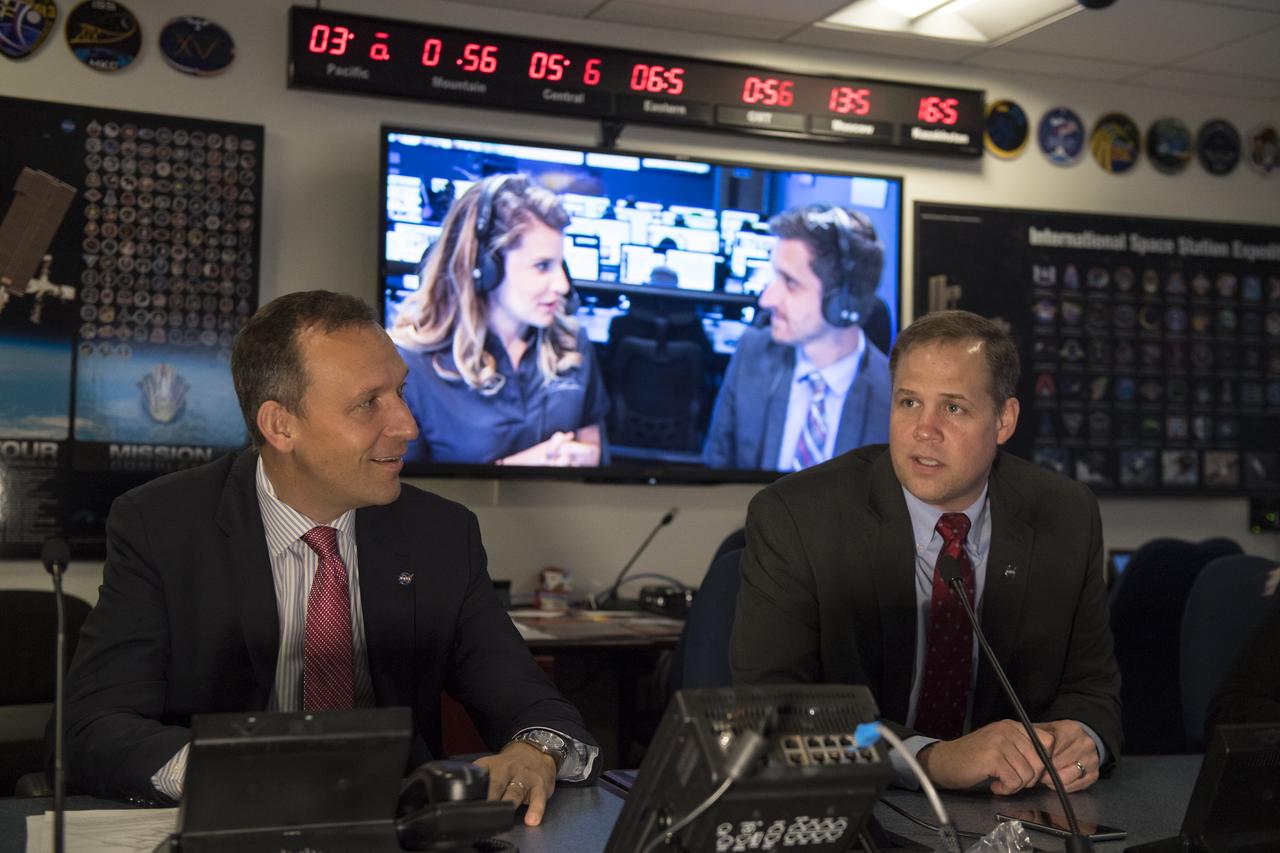
NASA Administrator Jim Bridenstine, right, and NASA Associate Administrator for the Science Mission Directorate, Thomas Zurbuchen, watch the launch of NASA's InSight spacecraft on a United Launch Alliance (ULA) Atlas-V rocket Saturday, May 5, 2018 at NASA Headquarters in Washington. InSight, short for Interior Exploration using Seismic Investigations, Geodesy and Heat Transport, is a Mars lander designed to study the "inner space" of Mars: its crust, mantle, and core. Photo Credit: (NASA/Aubrey Gemignani)
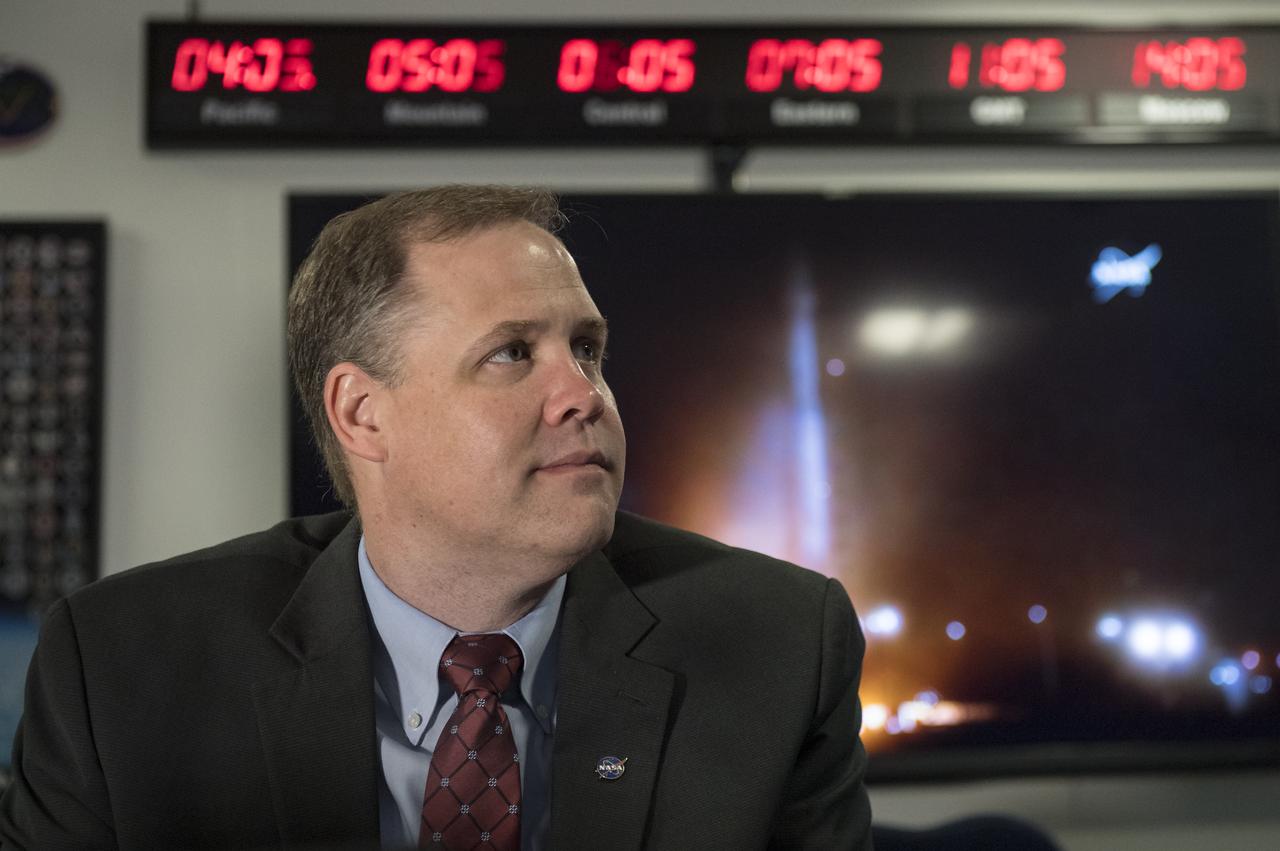
NASA Administrator Jim Bridenstine watches the launch of NASA's InSight spacecraft on a United Launch Alliance (ULA) Atlas-V rocket Saturday, May 5, 2018 at NASA Headquarters in Washington. InSight, short for Interior Exploration using Seismic Investigations, Geodesy and Heat Transport, is a Mars lander designed to study the "inner space" of Mars: its crust, mantle, and core. Photo Credit: (NASA/Aubrey Gemignani)
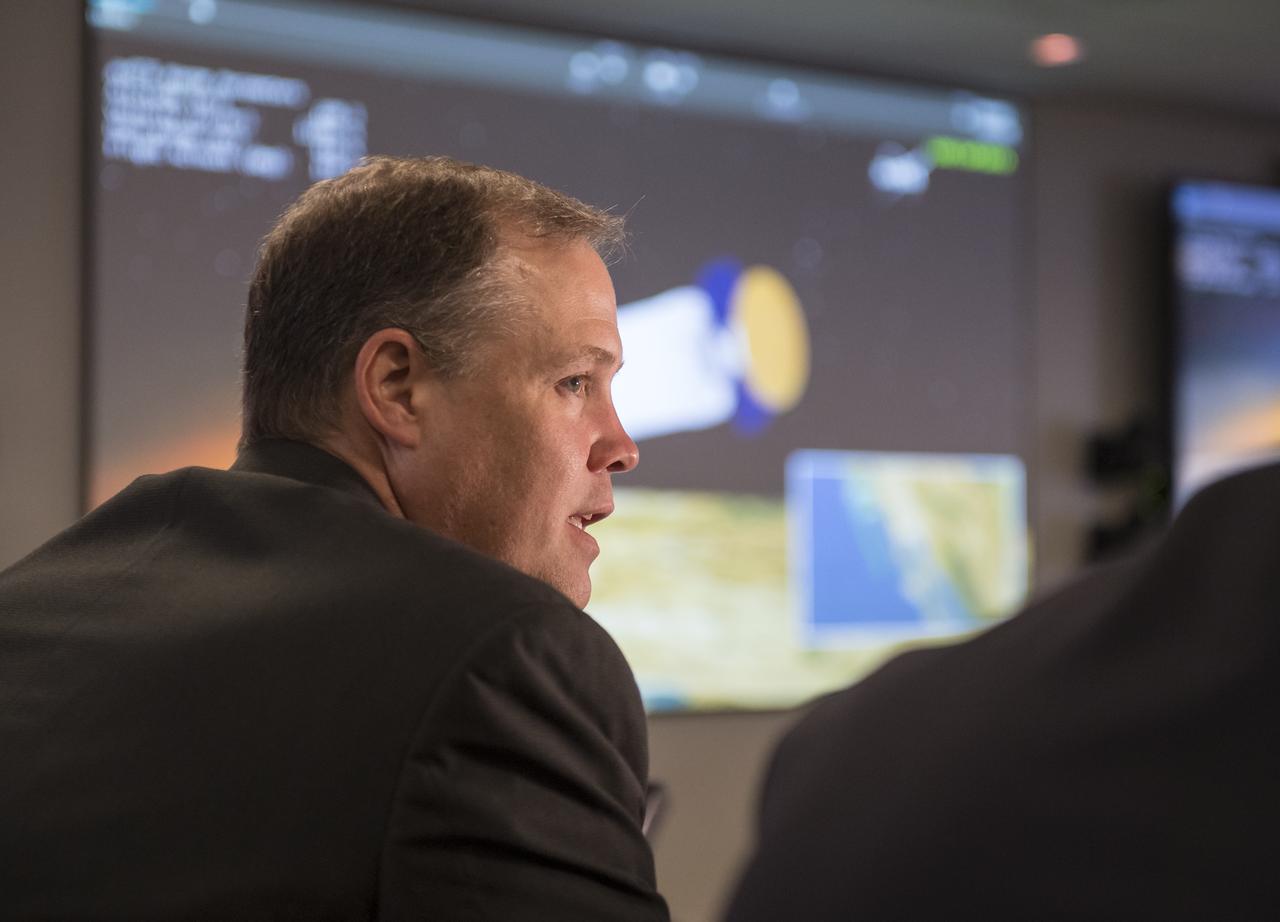
NASA Administrator Jim Bridenstine watches the launch of NASA's InSight spacecraft on a United Launch Alliance (ULA) Atlas-V rocket Saturday, May 5, 2018 at NASA Headquarters in Washington. InSight, short for Interior Exploration using Seismic Investigations, Geodesy and Heat Transport, is a Mars lander designed to study the "inner space" of Mars: its crust, mantle, and core. Photo Credit: (NASA/Aubrey Gemignani)
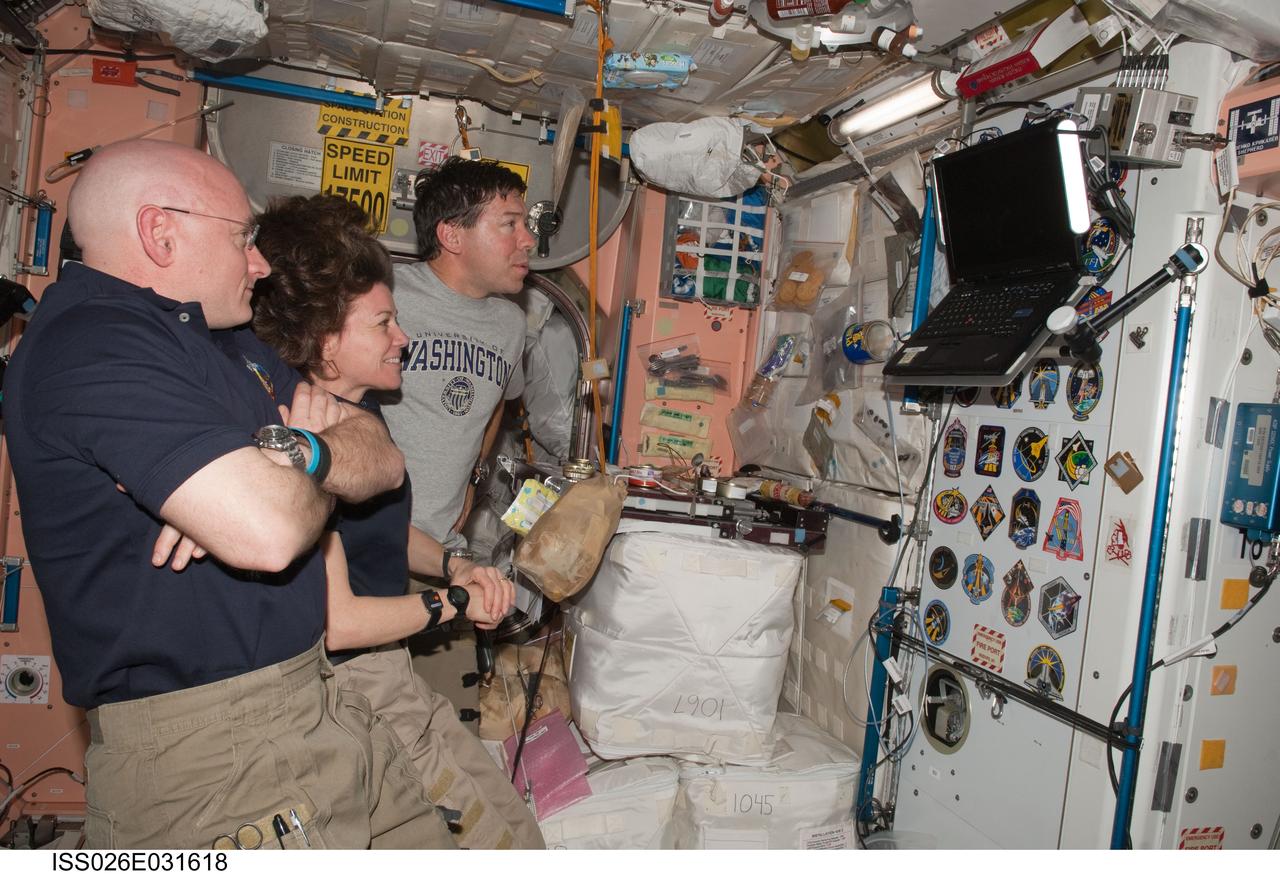
ISS026-E-031618 (3 March 2011) --- NASA astronauts Scott Kelly (foreground), Expedition 26 commander; Cady Coleman, Expedition 26 flight engineer; and Michael Barratt, STS-133 mission specialist, watch a monitor in the Unity node of the International Space Station while space shuttle Discovery remains docked with the station.
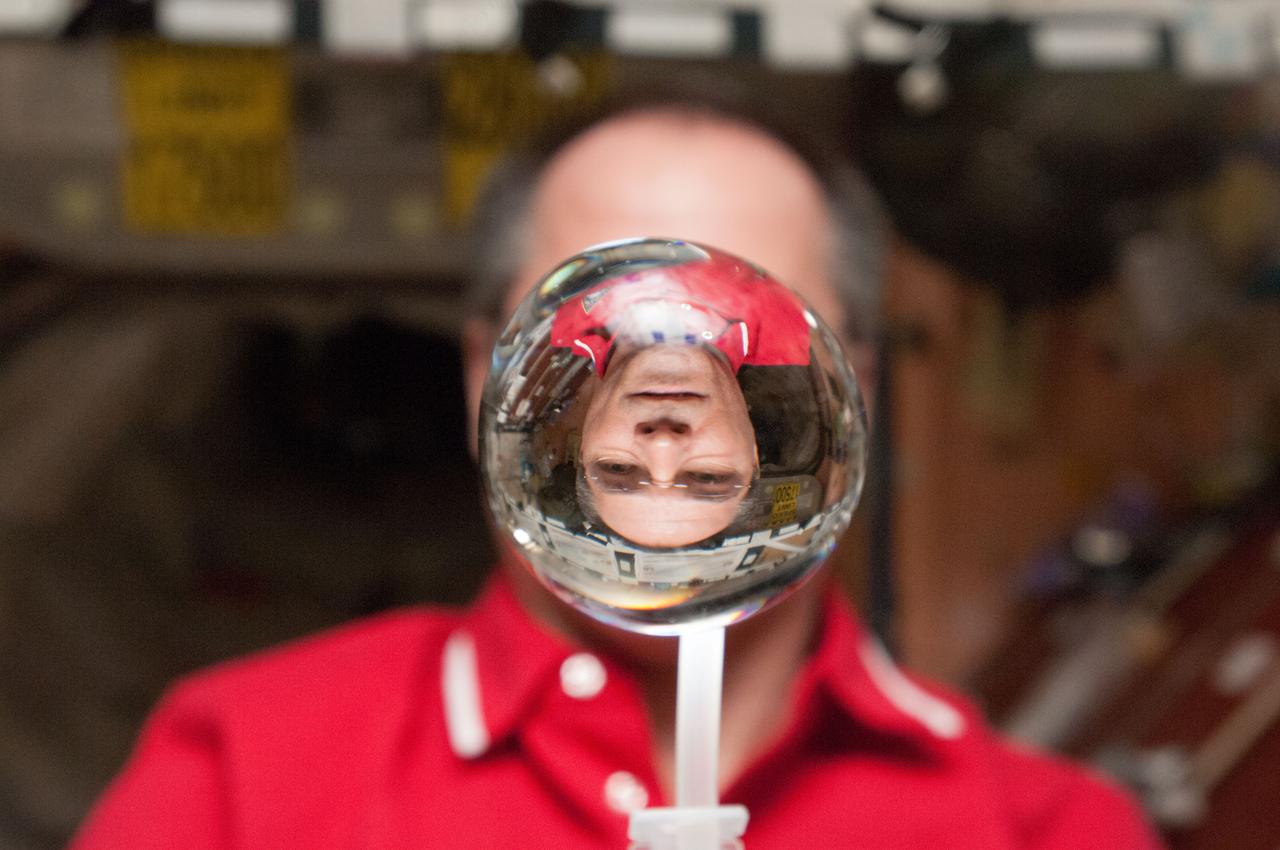
ISS034-E-031855 (21 Jan. 2013) --- NASA astronaut Kevin Ford, Expedition 34 commander, watches a water bubble float freely between him and the camera, showing his image refracted, in the Unity node of the International Space Station.
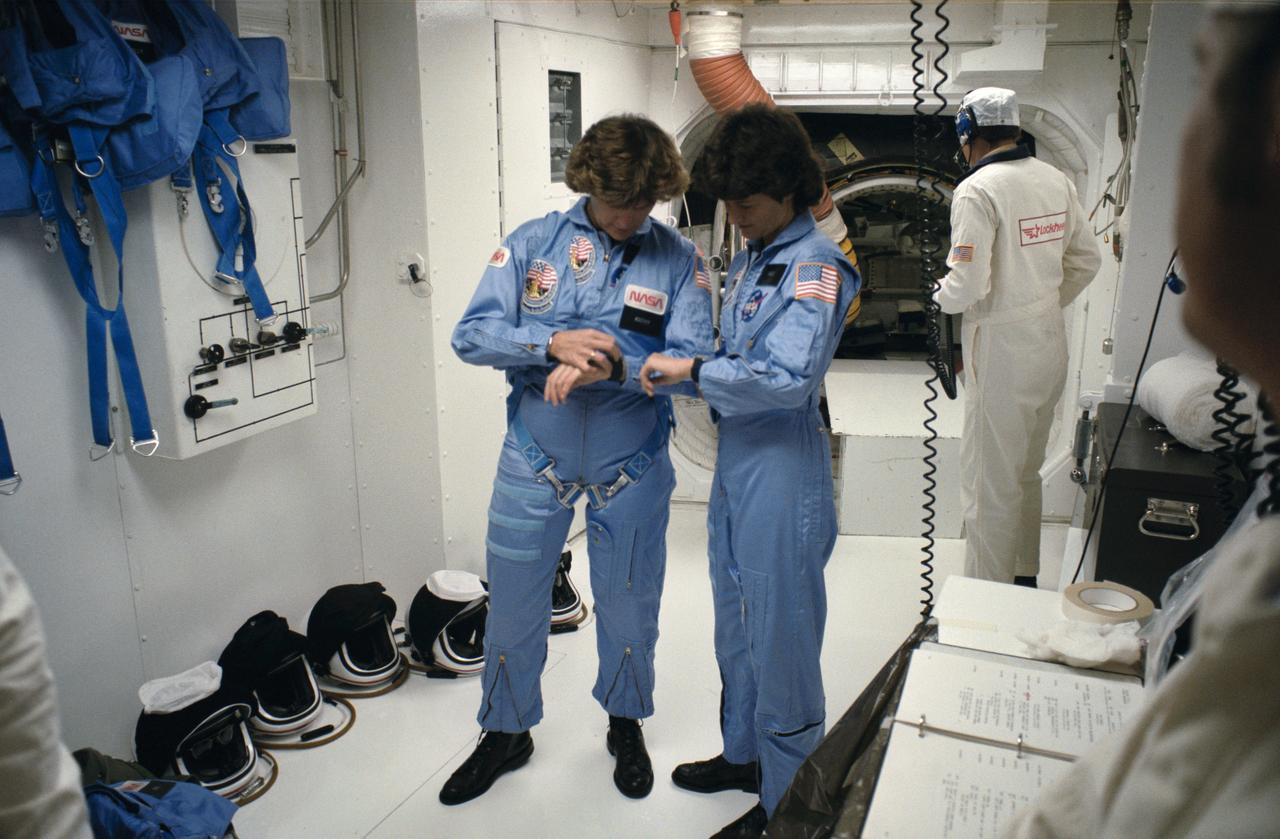
41G-90082 / S17-90082 (5 Oct 1984) --- Astronauts Sally K. Ride (right) and Kathryn D. Sullivan, two of three mission specialists, synchronize their watches prior to ingressing the Space Shuttle Challenger on the launch pad at Kennedy Space Center (KSC). They are in the White Room leading to the entry hatch of the vertically configured spacecraft.
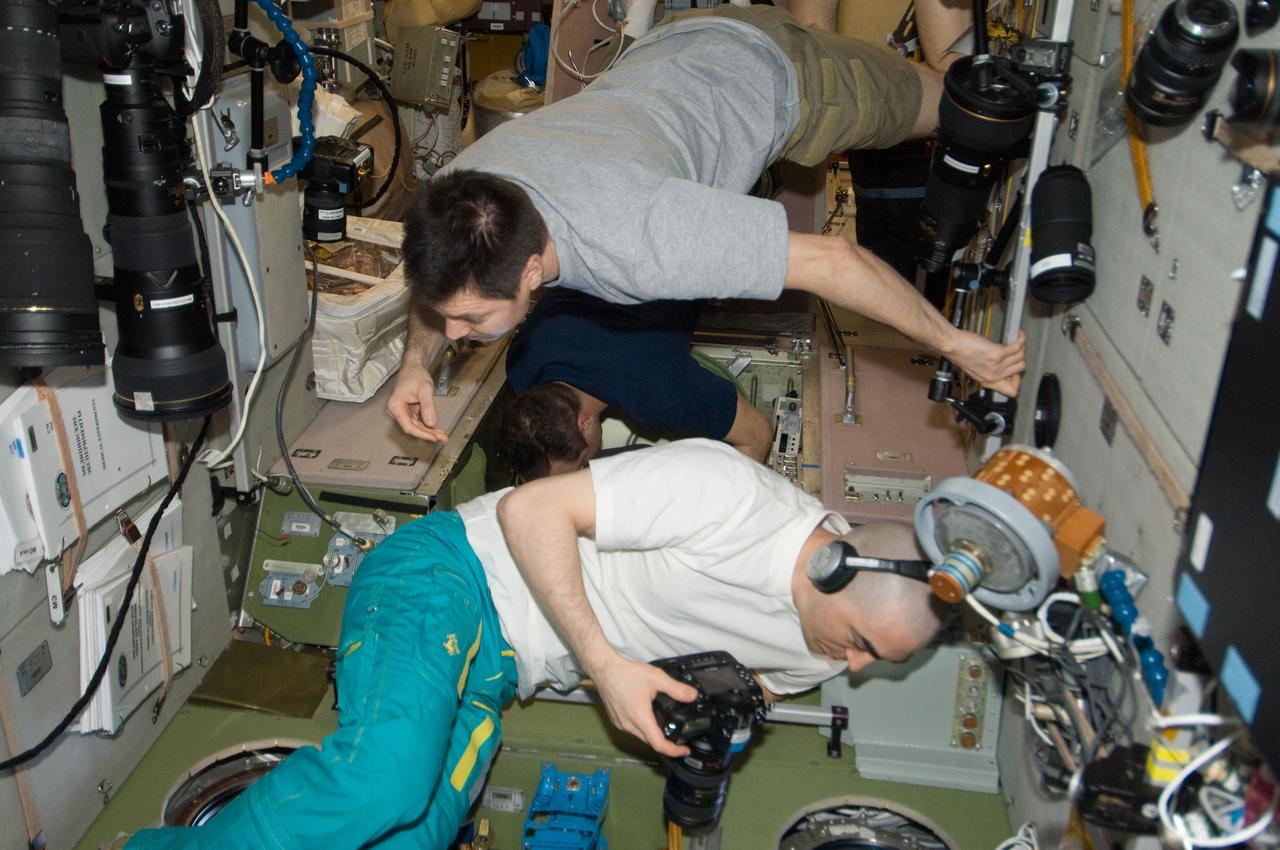
ISS030-E-238160 (19 April 2012) --- From windows in the International Space Station’s Zvezda Service Module, Russian cosmonauts Oleg Kononenko (top), Anatoly Ivanishin (foreground) and Anton Shkaplerov, all Expedition 30 flight engineers, watch the Russian Progress 46 spacecraft after it undocked from the Pirs Docking Compartment.
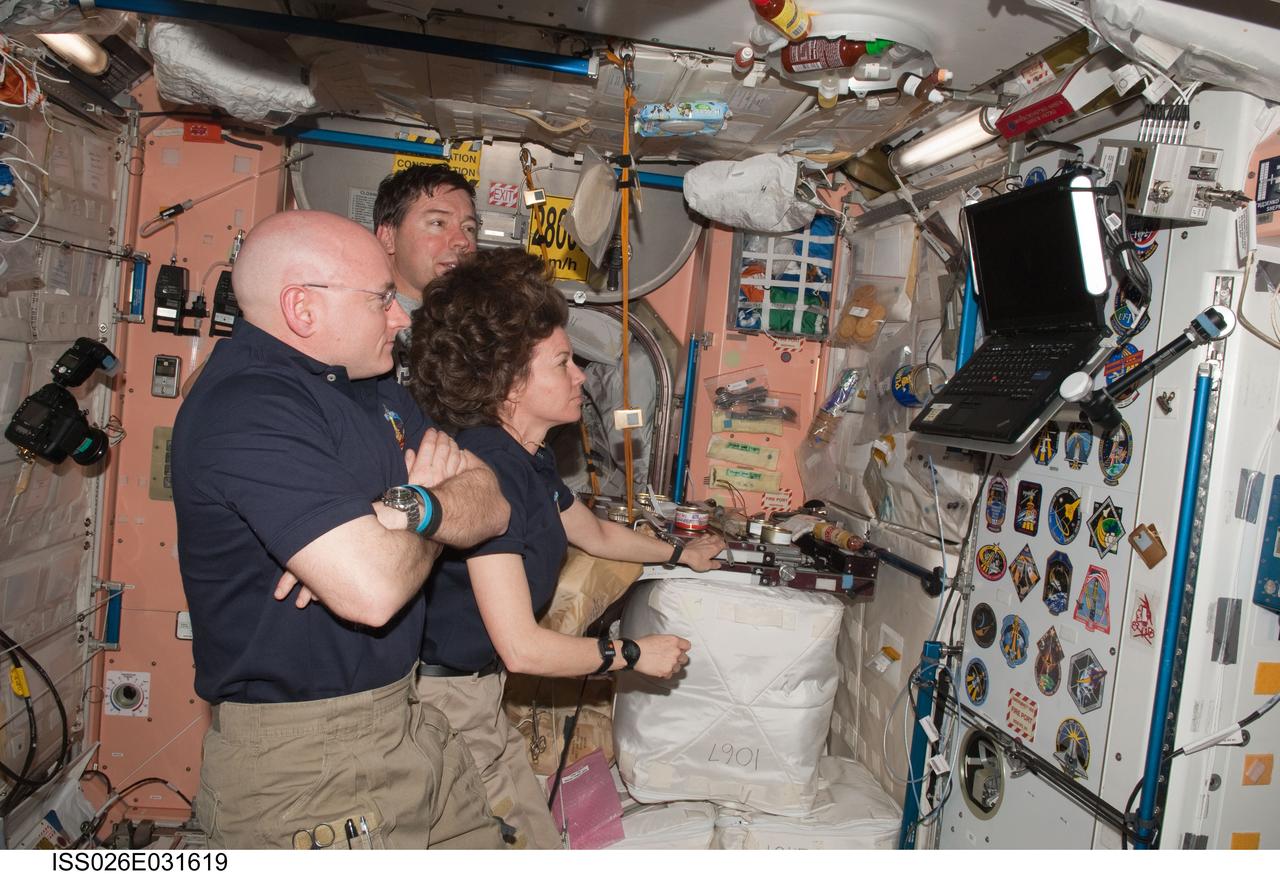
ISS026-E-031619 (3 March 2011) --- NASA astronauts Scott Kelly (foreground), Expedition 26 commander; Cady Coleman, Expedition 26 flight engineer; and Michael Barratt, STS-133 mission specialist, watch a monitor in the Unity node of the International Space Station while space shuttle Discovery remains docked with the station.
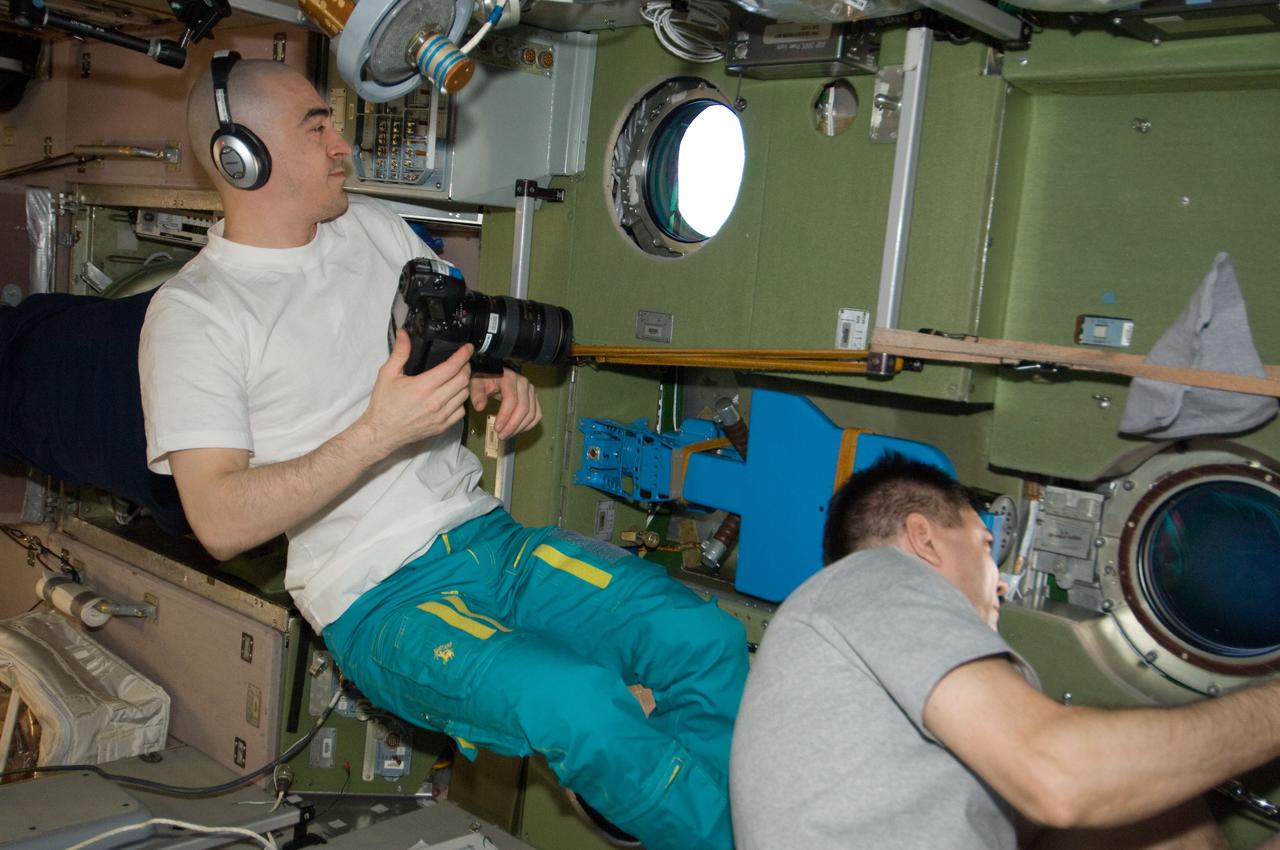
ISS030-E-238163 (19 April 2012) --- From windows in the International Space Station’s Zvezda Service Module, Russian cosmonauts Anatoly Ivanishin (left) and Oleg Kononenko, both Expedition 30 flight engineers, watch the Russian Progress 46 spacecraft after it undocked from the Pirs Docking Compartment.
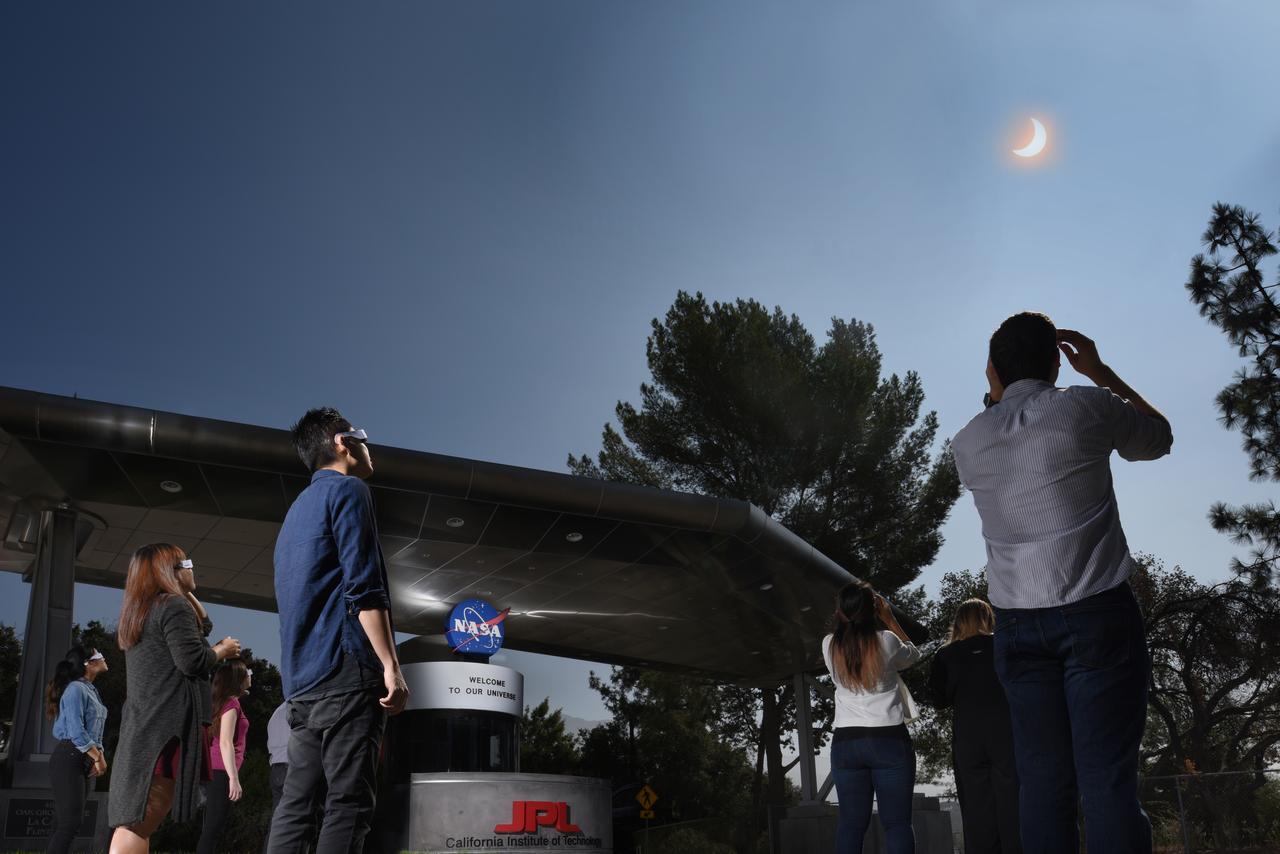
Employees and visitors to JPL stopped to watch the 2017 solar eclipse.
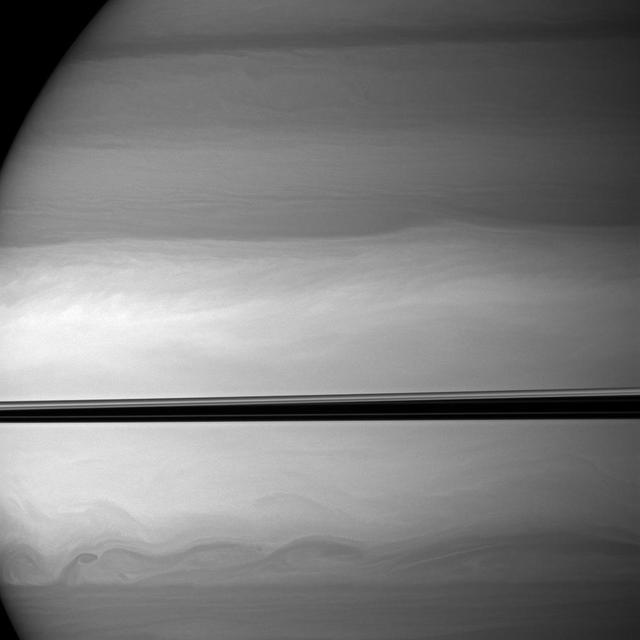
NASA Cassini spacecraft watches as clouds swirl through Saturn equatorial latitudes.
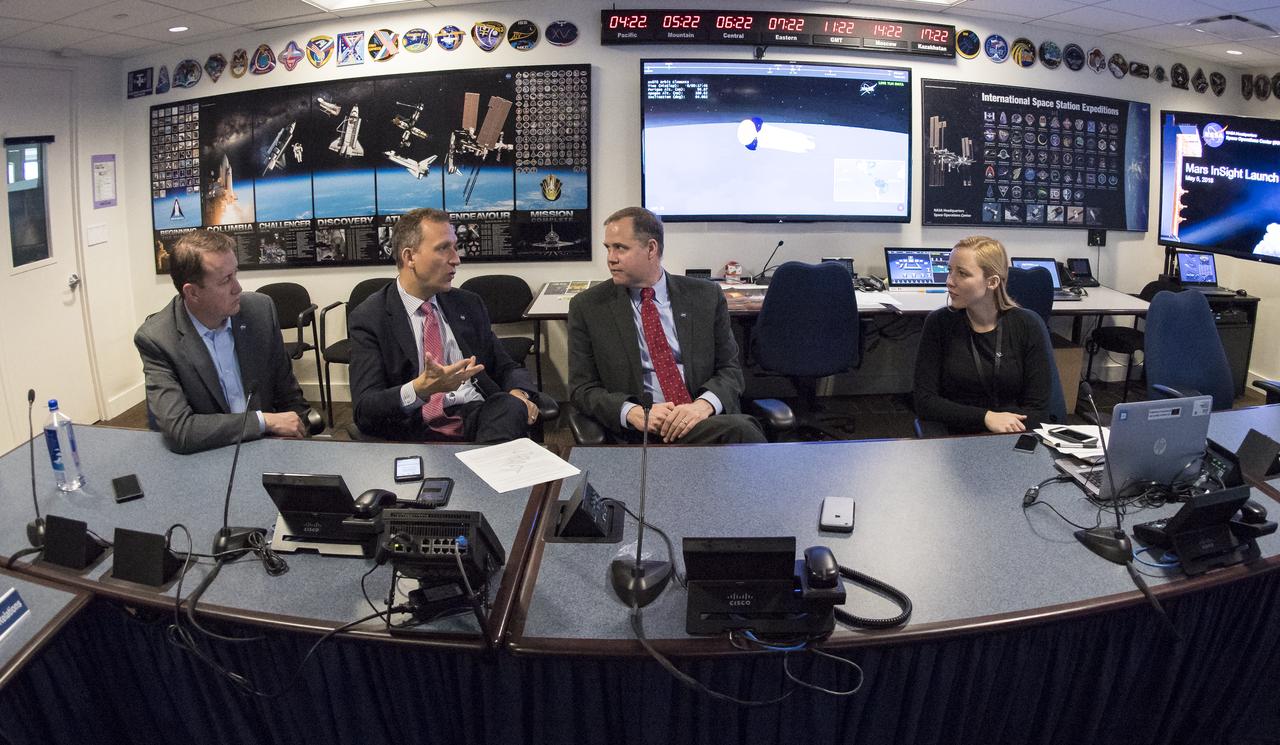
NASA Associate Administrator for the Science Mission Directorate, Thomas Zurbuchen, center, speaks with NASA Administrator Jim Bridenstine, second from right, and NASA Chief Financial Officer, Jeff DeWit, left, after watching the launch of NASA's InSight spacecraft on a United Launch Alliance (ULA) Atlas-V rocket Saturday, May 5, 2018 at NASA Headquarters in Washington. InSight, short for Interior Exploration using Seismic Investigations, Geodesy and Heat Transport, is a Mars lander designed to study the "inner space" of Mars: its crust, mantle, and core. Photo Credit: (NASA/Aubrey Gemignani)
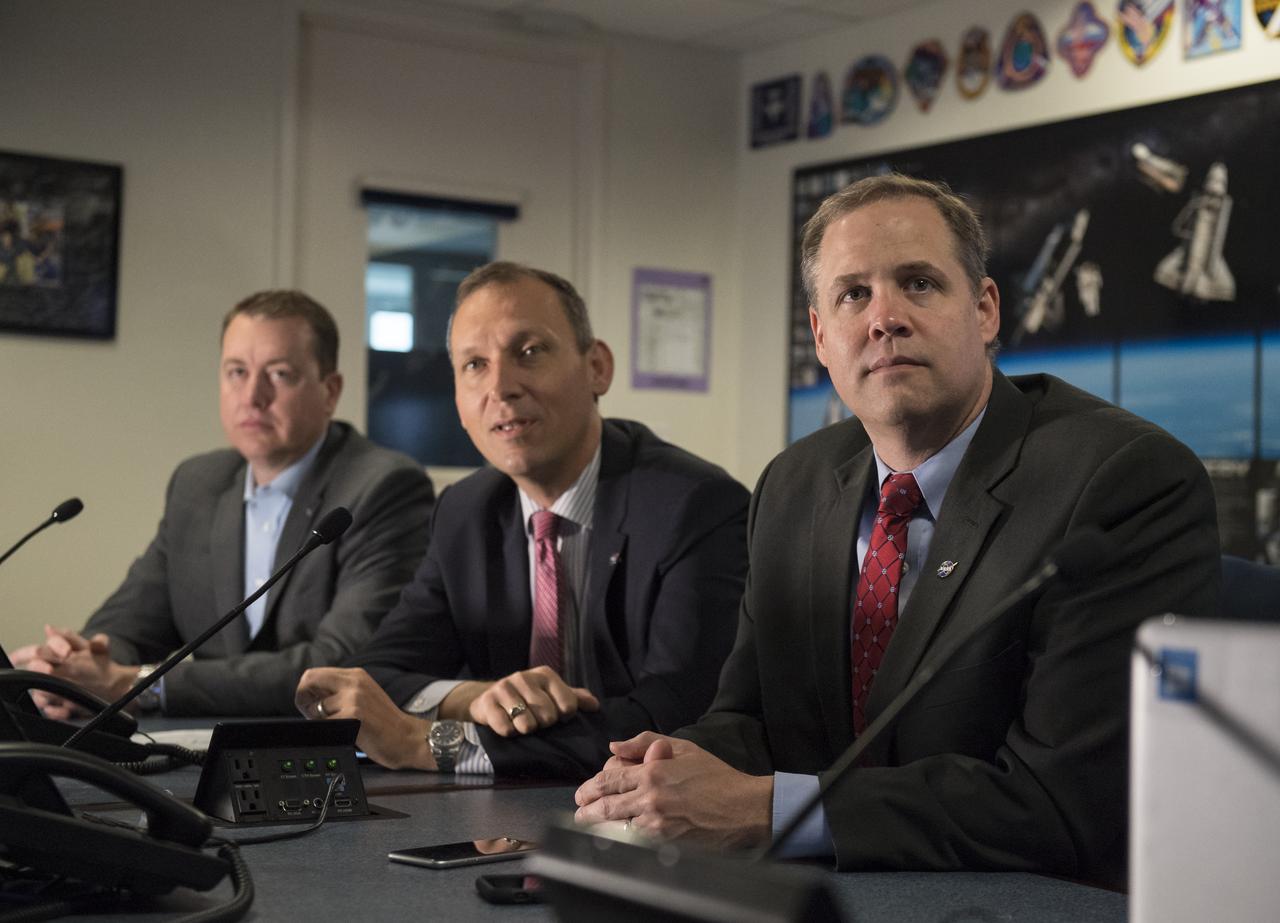
NASA Administrator Jim Bridenstine, right, NASA Associate Administrator for the Science Mission Directorate, Thomas Zurbuchen, center, and NASA Chief Financial Officer, Jeff DeWit, watch the launch of NASA's InSight spacecraft on a United Launch Alliance (ULA) Atlas-V rocket Saturday, May 5, 2018 at NASA Headquarters in Washington. InSight, short for Interior Exploration using Seismic Investigations, Geodesy and Heat Transport, is a Mars lander designed to study the "inner space" of Mars: its crust, mantle, and core. Photo Credit: (NASA/Aubrey Gemignani)
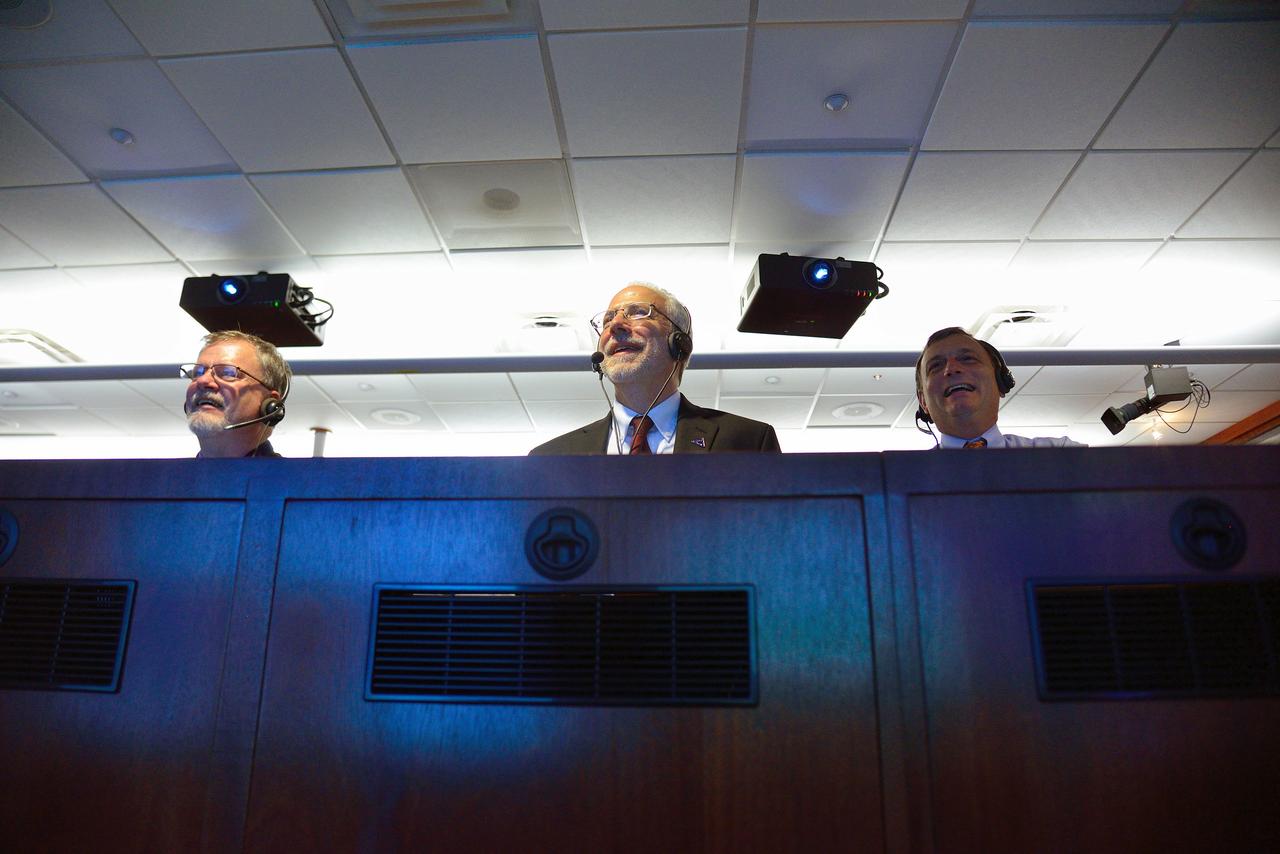
Lockheed Martin Program Manager Mike Hawes, Orion Program Manager Mark Geyer, and Orion Deputy Program Manager Mike Kirasich watch Orion's Exploration Flight Test-1 (EFT-1) reentry sequence in Building AE at Cape Canaveral Air Force Station on a live stream from the Ikhana aircraft on Dec. 5, 2014. The Orion spacecraft orbited Earth twice, reaching an altitude of approximately 3,600 miles above Earth before landing. No one was aboard Orion for this flight test, but the spacecraft is designed to allow us to journey to destinations never before visited by humans, including an asteroid and Mars. Part of Batch image transfer from Flickr.
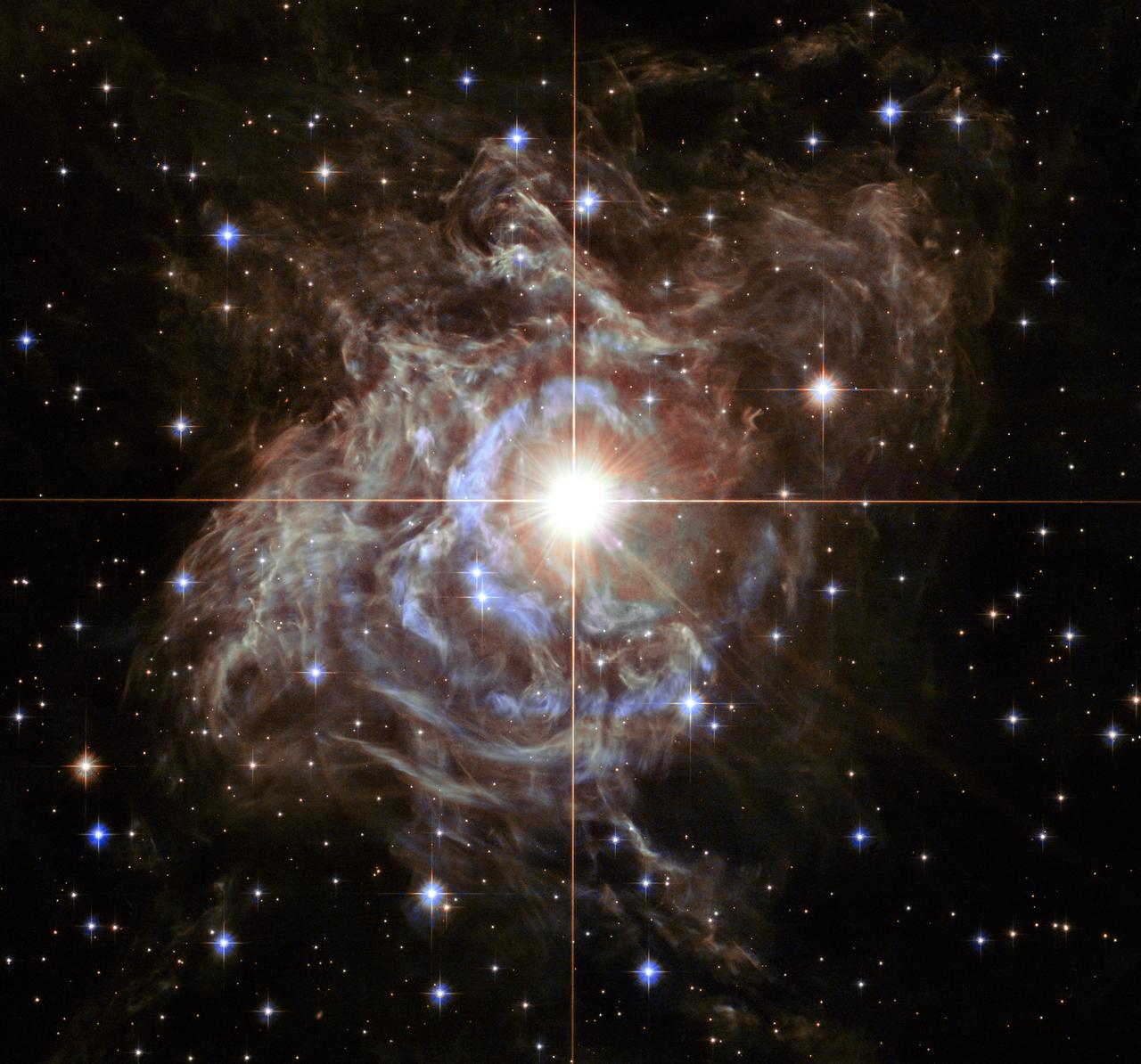
This festive NASA Hubble Space Telescope image resembles a holiday wreath made of sparkling lights. The bright southern hemisphere star RS Puppis, at the center of the image, is swaddled in a gossamer cocoon of reflective dust illuminated by the glittering star. The super star is ten times more massive than our sun and 200 times larger. RS Puppis rhythmically brightens and dims over a six-week cycle. It is one of the most luminous in the class of so-called Cepheid variable stars. Its average intrinsic brightness is 15,000 times greater than our sun’s luminosity. The nebula flickers in brightness as pulses of light from the Cepheid propagate outwards. Hubble took a series of photos of light flashes rippling across the nebula in a phenomenon known as a "light echo." Even though light travels through space fast enough to span the gap between Earth and the moon in a little over a second, the nebula is so large that reflected light can actually be photographed traversing the nebula. By observing the fluctuation of light in RS Puppis itself, as well as recording the faint reflections of light pulses moving across the nebula, astronomers are able to measure these light echoes and pin down a very accurate distance. The distance to RS Puppis has been narrowed down to 6,500 light-years (with a margin of error of only one percent). The Hubble Space Telescope is a project of international cooperation between NASA and the European Space Agency. NASA's Goddard Space Flight Center in Greenbelt, Md., manages the telescope. The Space Telescope Science Institute (STScI) in Baltimore, Md., conducts Hubble science operations. STScI is operated by the Association of Universities for Research in Astronomy, Inc., in Washington, D.C. Acknowledgment: H. Bond (STScI and Pennsylvania State University) <b><a href="http://www.nasa.gov/audience/formedia/features/MP_Photo_Guidelines.html" rel="nofollow">NASA image use policy.</a></b> <b><a href="http://www.nasa.gov/centers/goddard/home/index.html" rel="nofollow">NASA Goddard Space Flight Center</a></b> enables NASA’s mission through four scientific endeavors: Earth Science, Heliophysics, Solar System Exploration, and Astrophysics. Goddard plays a leading role in NASA’s accomplishments by contributing compelling scientific knowledge to advance the Agency’s mission. <b>Follow us on <a href="http://twitter.com/NASA_GoddardPix" rel="nofollow">Twitter</a></b> <b>Like us on <a href="http://www.facebook.com/pages/Greenbelt-MD/NASA-Goddard/395013845897?ref=tsd" rel="nofollow">Facebook</a></b> <b>Find us on <a href="http://instagram.com/nasagoddard?vm=grid" rel="nofollow">Instagram</a></b>
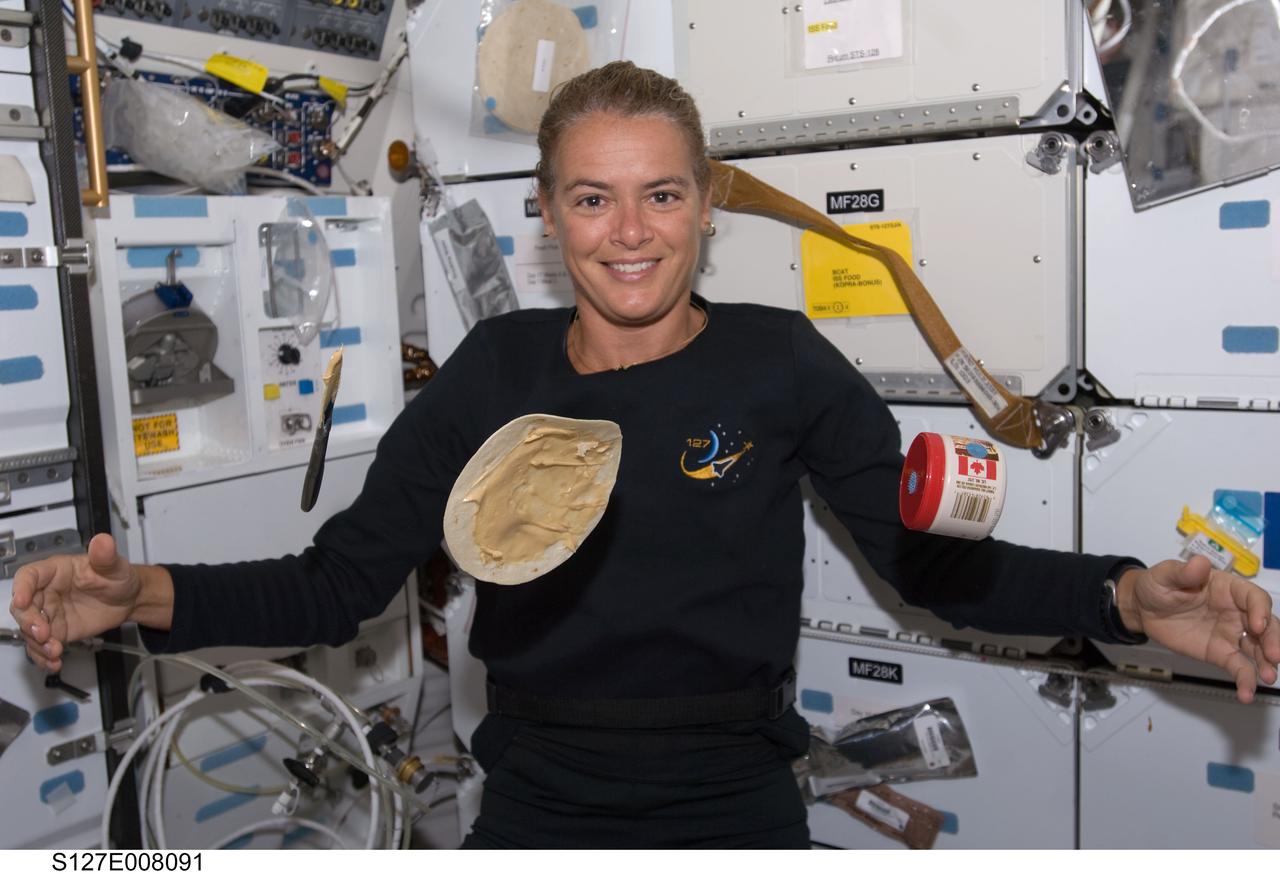
S127-E-008091 (23 July 2009) --- Canadian Space Agency astronaut Julie Payette, STS-127 mission specialist, watches as a tortilla floats in front of her on Endeavour's middeck during flight day nine.
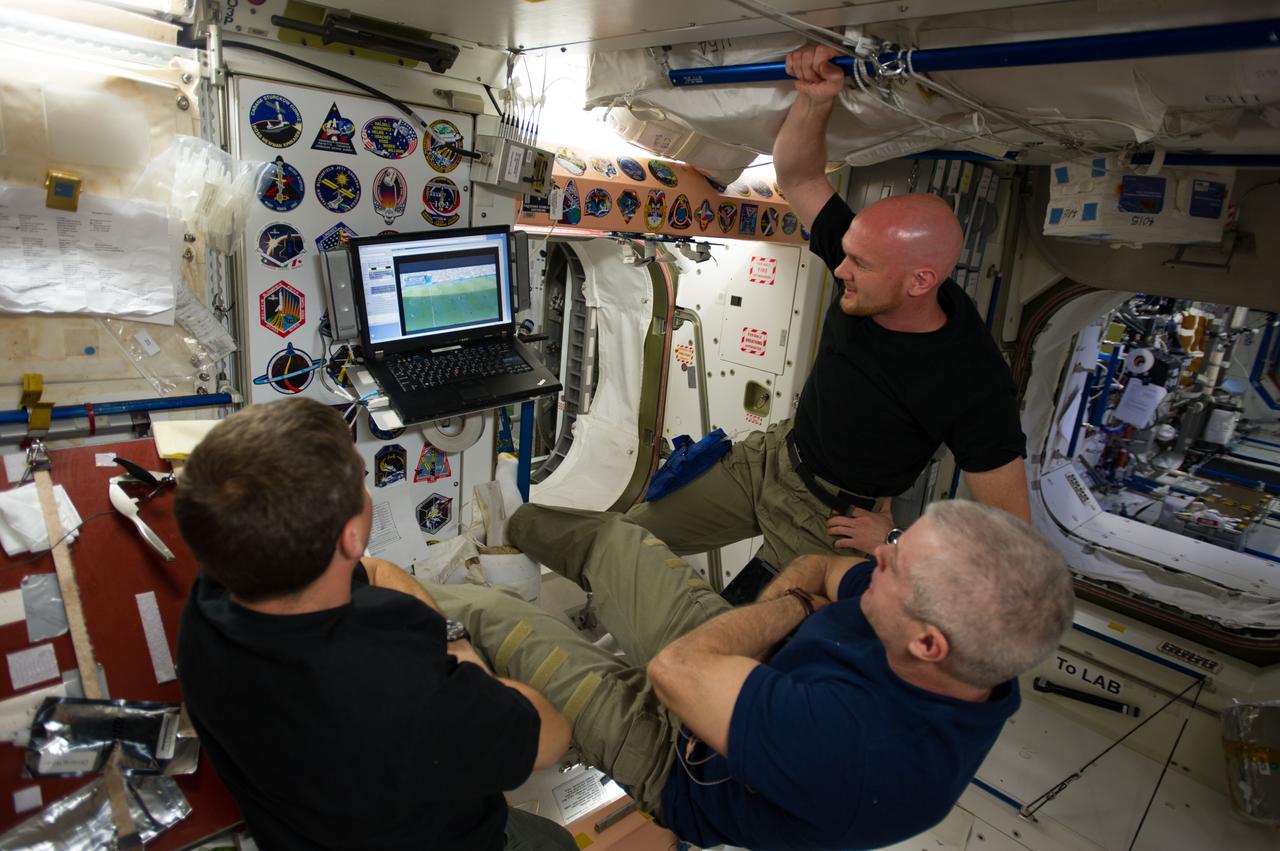
ISS040-E-012313 (17 June 2014) --- From left, Expedition 40 crew members Reid Wiseman and Steve Swanson of NASA and ESA astronaut Alexander Gerst take a break to watch ten minutes of live World Cup matches between science experiments while living and working aboard the International Space Station. Swanson is Expedition 40 commander and the others are flight engineers.
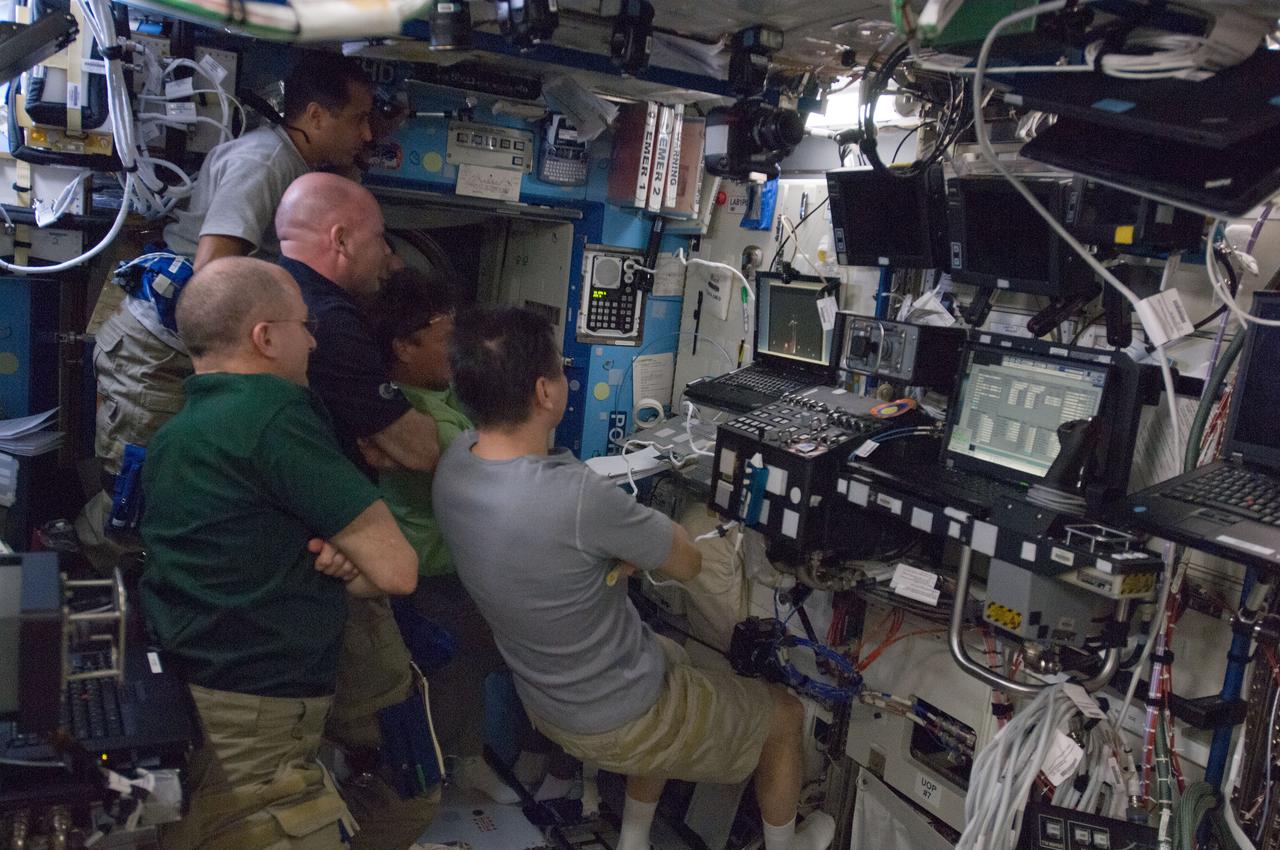
ISS031-E-140385 (22 May 2012) --- Expedition 31 crew members watch the launch of the SpaceX Falcon 9 rocket on a computer monitor in the Destiny laboratory of the International Space Station on May 22, 2012. Pictured clockwise (from bottom right) are Russian cosmonaut Oleg Kononenko, commander; NASA astronaut Don Pettit, European Space Agency astronaut Andre Kuipers, NASA astronaut Joe Acaba, Russian cosmonauts Sergei Revin (obscured) and Gennady Padalka, all flight engineers.
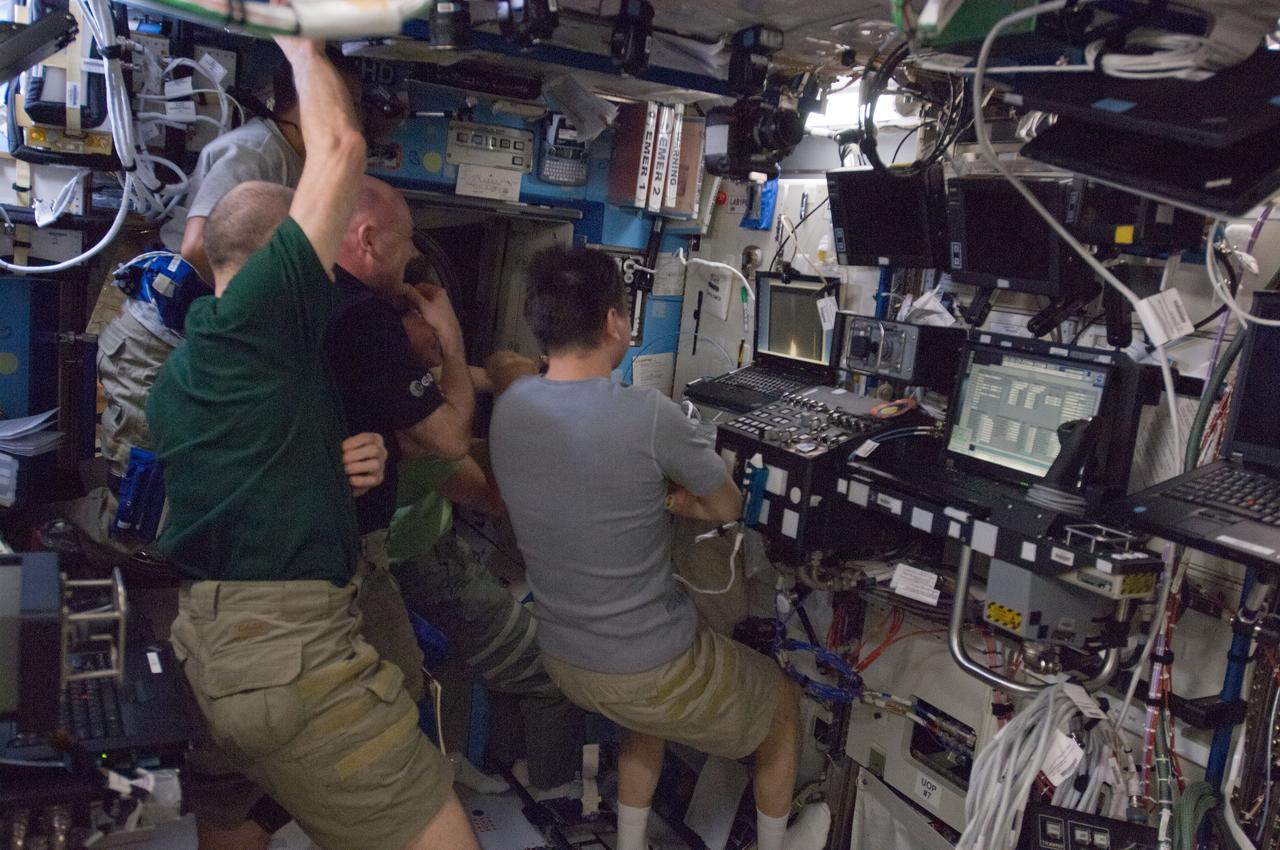
ISS031-E-140390 (22 May 2012) --- Expedition 31 crew members watch the launch of the SpaceX Falcon 9 rocket on a computer monitor in the Destiny laboratory of the International Space Station on May 22, 2012. Pictured clockwise (from bottom right) are Russian cosmonaut Oleg Kononenko, commander; NASA astronaut Don Pettit, European Space Agency astronaut Andre Kuipers, NASA astronaut Joe Acaba, Russian cosmonauts Sergei Revin (obscured) and Gennady Padalka, all flight engineers.
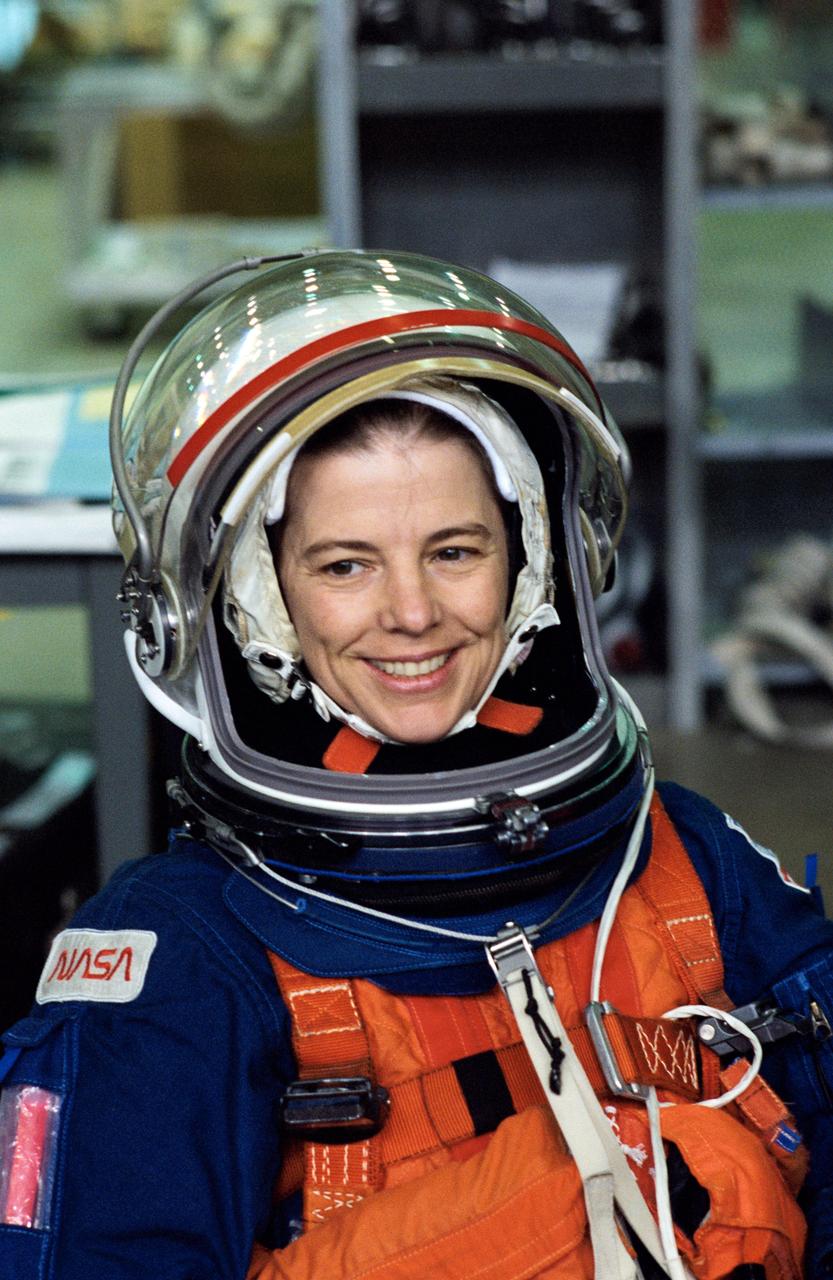
S94-47256 (13 Oct 1994) --- Astronaut Bonnie J. Dunbar, STS-71 mission specialist, smiles as she watches a crew mate (out of frame) make a simulated parachute landing in nearby water. The action came as part of an emergency bailout training session in the Johnson Space Center's (JSC) Weightless Environment Training Facility's (WET-F) 25-feet-deep pool.
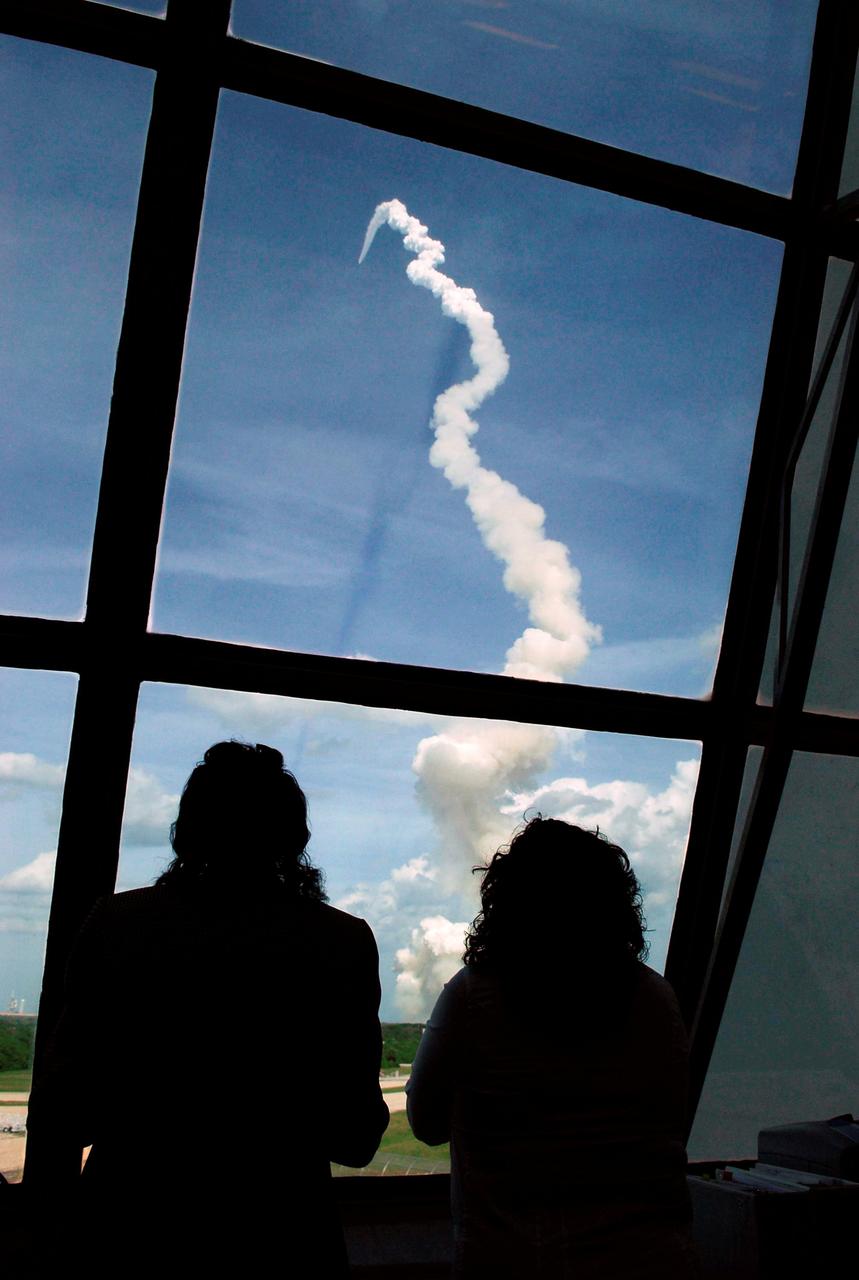
STS122-S-018 (7 Feb. 2008) --- View of personnel watching the launch of the Space Shuttle Atlantis through the windows of the Launch Control Center at the Kennedy Space Center (KSC). Atlantis lifted off from launch pad 39A at 2:45 p.m. (EST). The launch is the third attempt for Atlantis since December 2007 to carry the European Space Agency's (ESA) Columbus laboratory to the station. During the mission, the crew's prime objective is to attach the laboratory to the Harmony module, adding to the station's size and capabilities. Onboard are astronauts Steve Frick, STS-122 commander; Alan Poindexter, pilot; Leland Melvin, Rex Walheim, ESA's Hans Schlegel, Stanley Love and ESA's Leopold Eyharts, all mission specialists. Eyharts will join Expedition 16 in progress to serve as a flight engineer aboard the ISS.
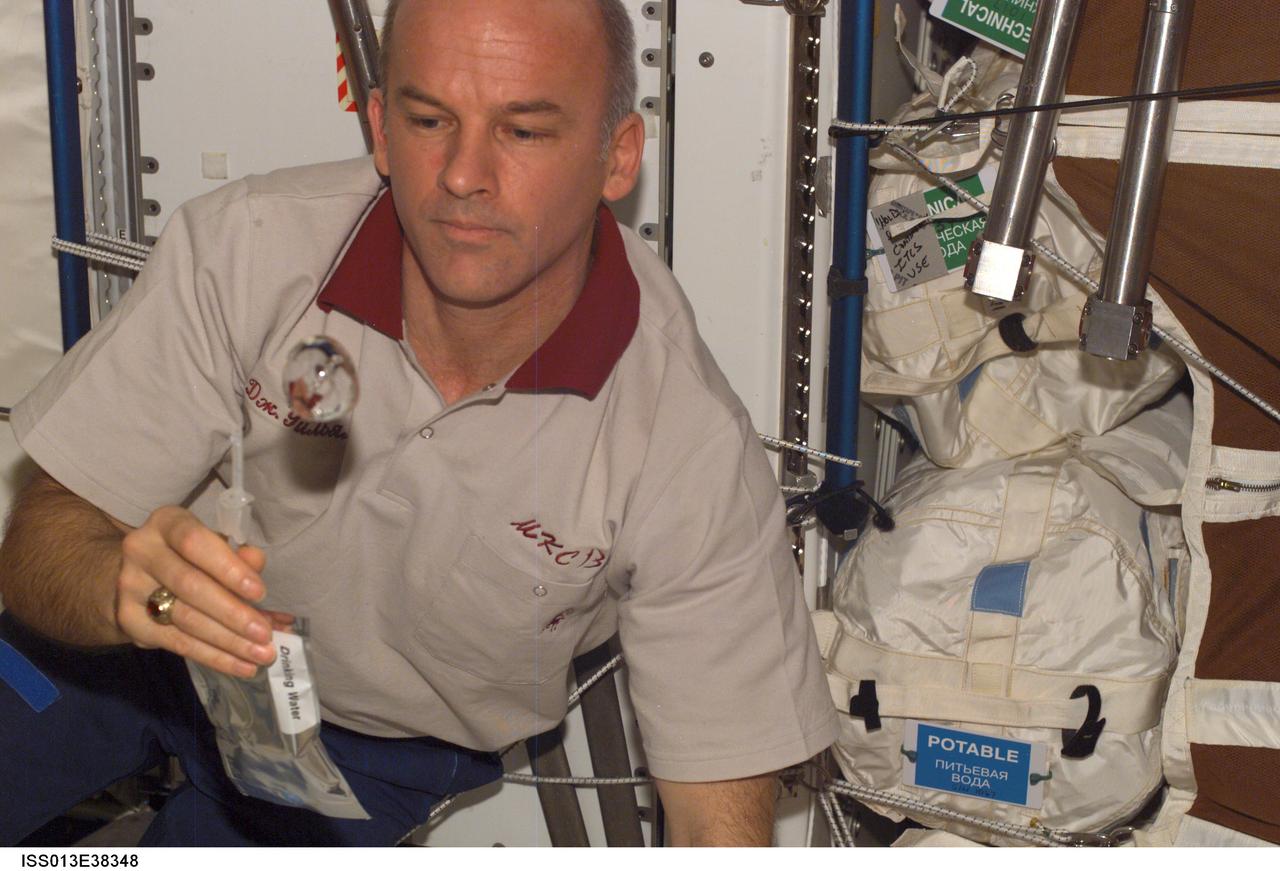
ISS013-E-38348 (18 June 2006) --- Astronaut Jeffrey N. Williams, Expedition 13 NASA space station science officer and flight engineer, watches a water bubble float freely while holding a container of water in the Destiny laboratory of the International Space Station.
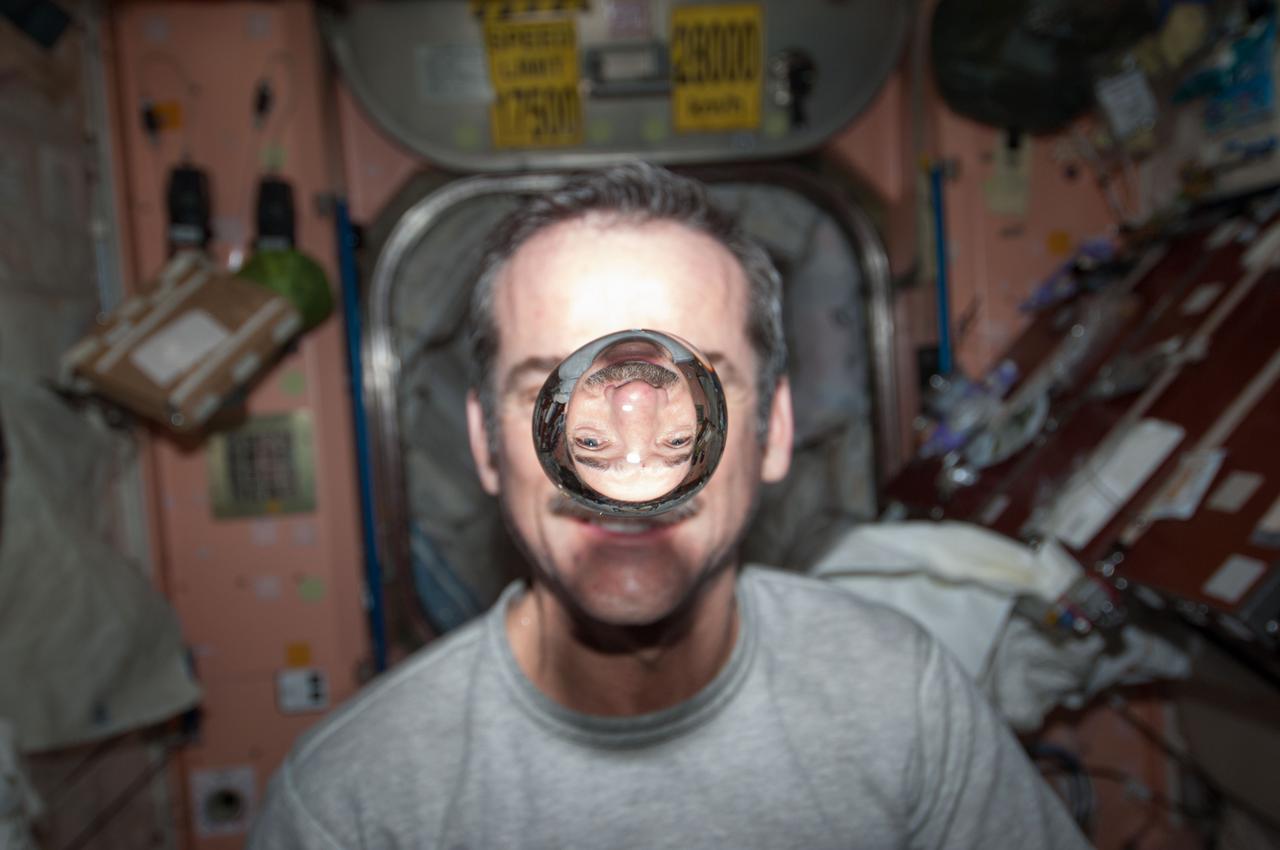
ISS034-E-031694 (21 Jan. 2013) --- Canadian Space Agency astronaut Chris Hadfield, Expedition 34 flight engineer, watches a water bubble float freely between him and the camera, showing his image refracted, in the Unity node of the International Space Station.
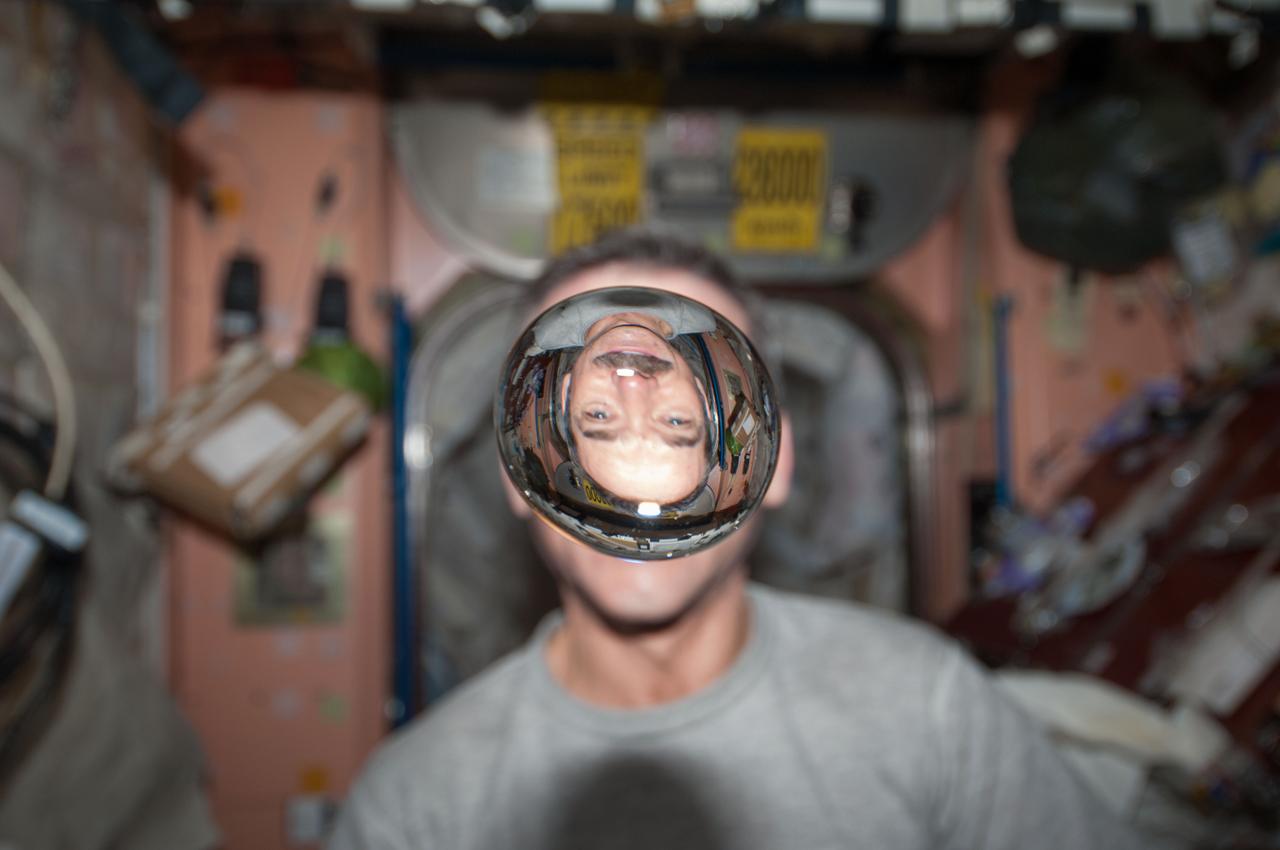
ISS034-E-031695 (21 Jan. 2013) --- Canadian Space Agency astronaut Chris Hadfield, Expedition 34 flight engineer, watches a water bubble float freely between him and the camera, showing his image refracted, in the Unity node of the International Space Station.
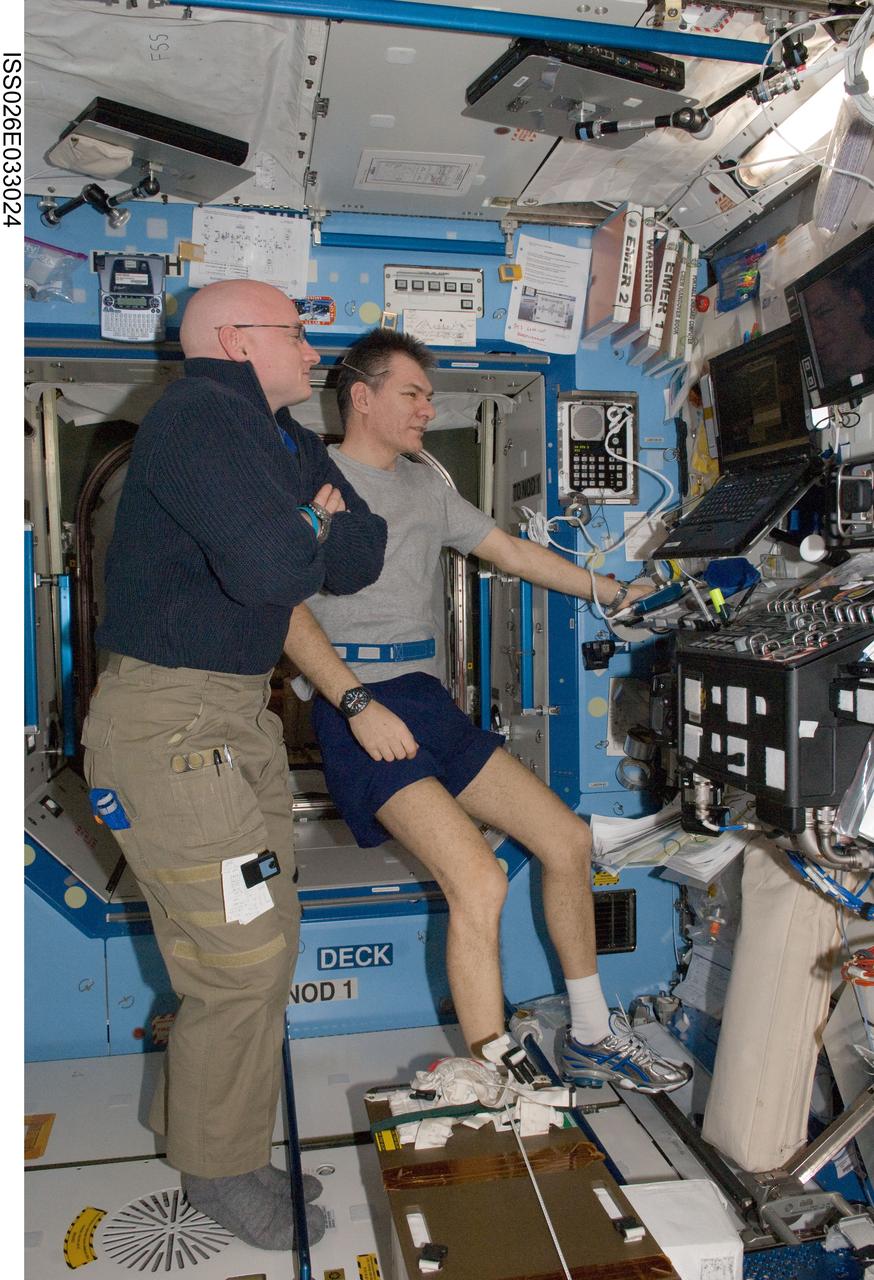
ISS026-E-033024 (9 March 2011) --- NASA astronaut Scott Kelly (foreground), Expedition 26 commander; and European Space Agency astronaut Paolo Nespoli, flight engineer, watch the landing of space shuttle Discovery (STS-133) on a computer monitor in the Destiny laboratory of the International Space Station.
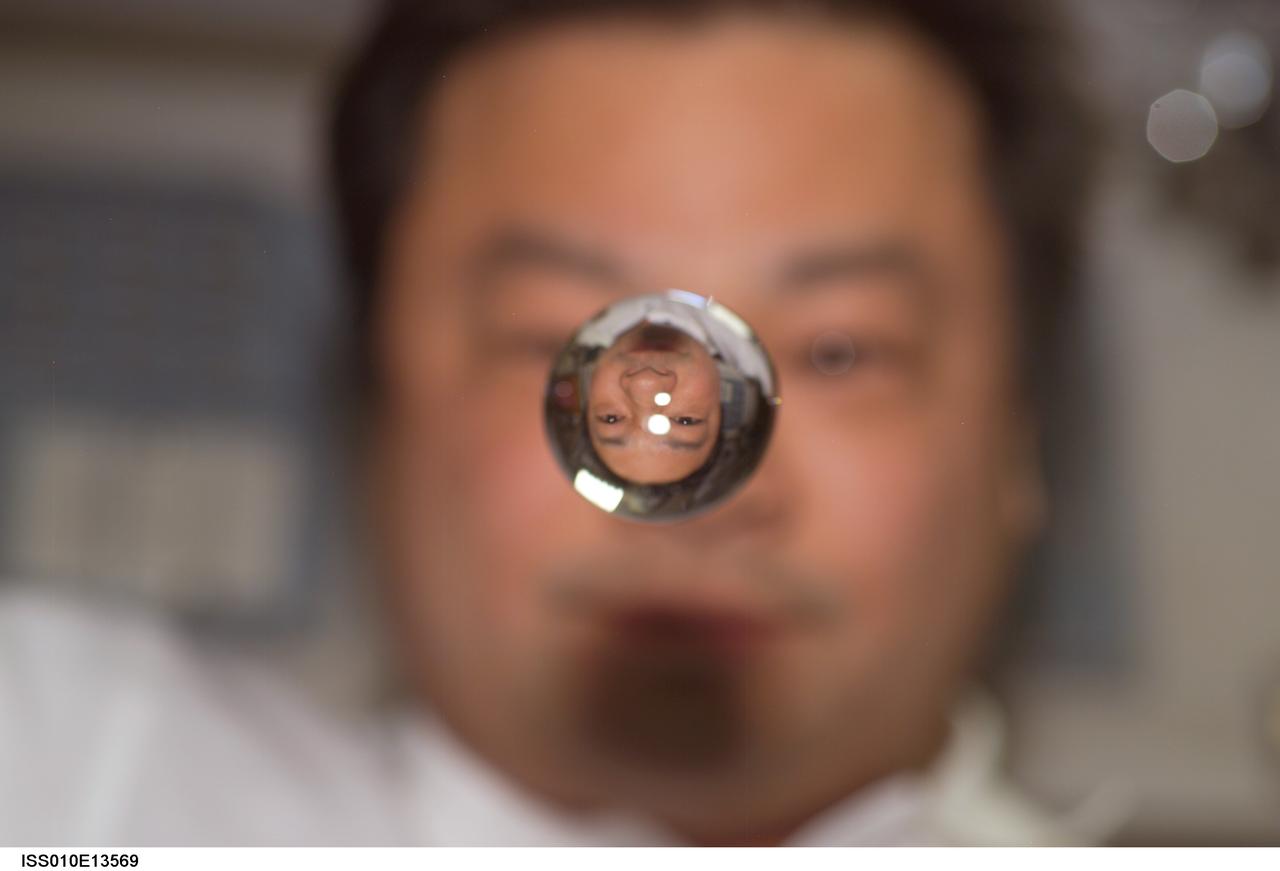
ISS010-E-13569 (15 January 2005) --- Astronaut Leroy Chiao, Expedition 10 commander and NASA ISS science officer, watches a water bubble float between him and the camera, showing his image refracted, on the International Space Station (ISS).
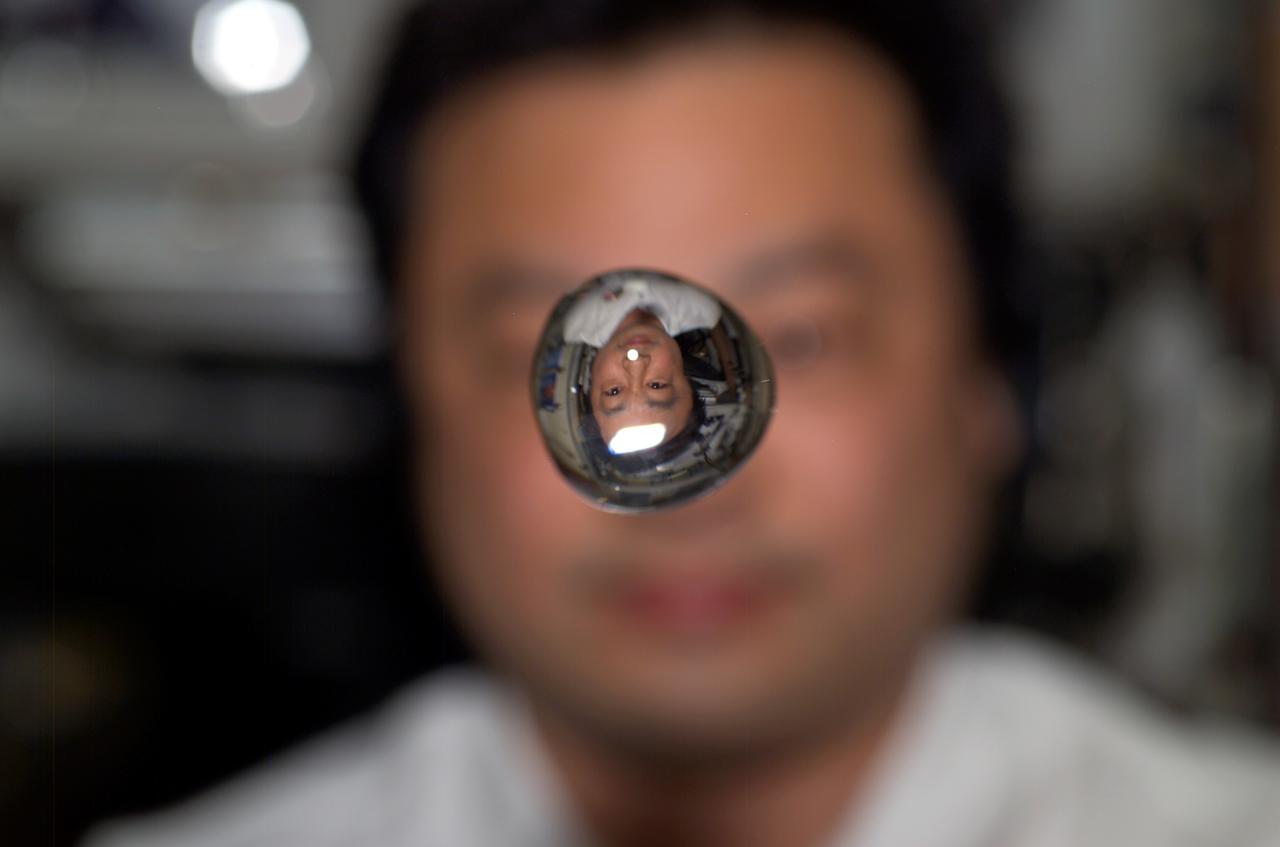
ISS010-E-13562 (15 January 2005) --- Astronaut Leroy Chiao, Expedition 10 commander and NASA Space Station science officer, watches a water bubble float between himself and the camera in the Zvezda Service Module, showing his image refracted.

Dr. Eugene Parker, a pioneer in heliophysics and S. Chandrasekhar distinguished service professor emeritus for the Department of Astronomy and Astrophysics at the University of Chicago, watches the launch of NASA's Parker Solar Probe. This is the first agency mission named for a living person. The liftoff took place at 3:31 a.m. EDT on Sunday, Aug. 12, 2018. The spacecraft was built by the Johns Hopkins University Applied Physics Laboratory in Laurel, Maryland. The mission will perform the closest-ever observations of a star when it travels through the Sun's atmosphere, called the corona. The probe will rely on measurements and imaging to revolutionize our understanding of the corona and the Sun-Earth connection.

Dr. Eugene Parker, a pioneer in heliophysics and S. Chandrasekhar distinguished service professor emeritus for the Department of Astronomy and Astrophysics at the University of Chicago, watches the launch of NASA's Parker Solar Probe. This is the first agency mission named for a living person. The liftoff took place at 3:31 a.m. EDT on Sunday, Aug. 12, 2018. The spacecraft was built by the Johns Hopkins University Applied Physics Laboratory in Laurel, Maryland. The mission will perform the closest-ever observations of a star when it travels through the Sun's atmosphere, called the corona. The probe will rely on measurements and imaging to revolutionize our understanding of the corona and the Sun-Earth connection.
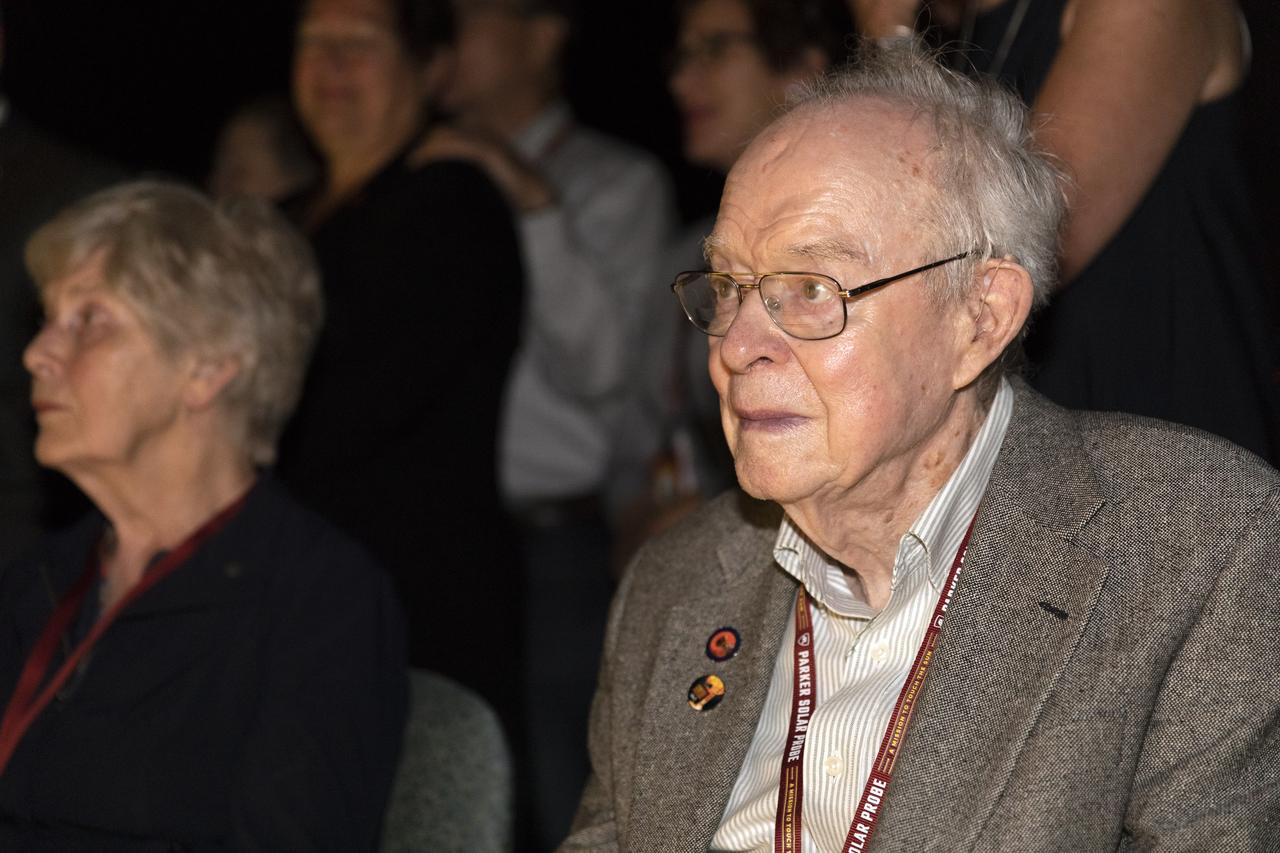
Dr. Eugene Parker, a pioneer in heliophysics and S. Chandrasekhar distinguished service professor emeritus for the Department of Astronomy and Astrophysics at the University of Chicago, watches the launch of NASA's Parker Solar Probe. This is the first agency mission named for a living person. The liftoff took place at 3:31 a.m. EDT on Sunday, Aug. 12, 2018. The spacecraft was built by the Johns Hopkins University Applied Physics Laboratory in Laurel, Maryland. The mission will perform the closest-ever observations of a star when it travels through the Sun's atmosphere, called the corona. The probe will rely on measurements and imaging to revolutionize our understanding of the corona and the Sun-Earth connection.
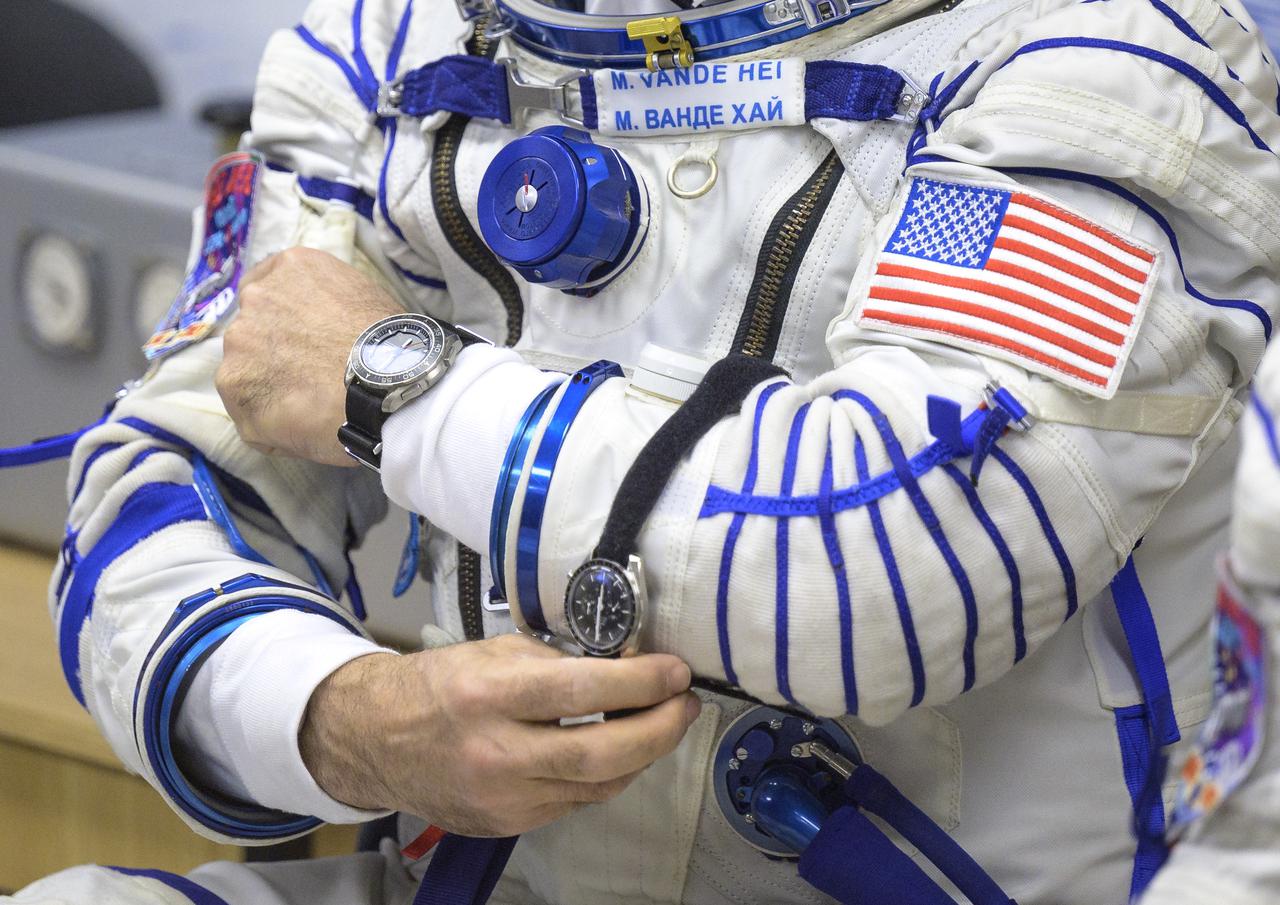
Expedition 65 NASA astronaut Mark Vande Hei adjust one of his watches after donning his Russian Sokol suit as he and fellow crewmates Russian cosmonauts Oleg Novitskiy and Pyotr Dubrov, prepare for their Soyuz launch to the International Space Station Friday, April 9, 2021 in Baikonur, Kazakhstan. Launch of the Soyuz rocket sent the trio on a mission to the International Space Station. Photo Credit: (NASA/Bill Ingalls)
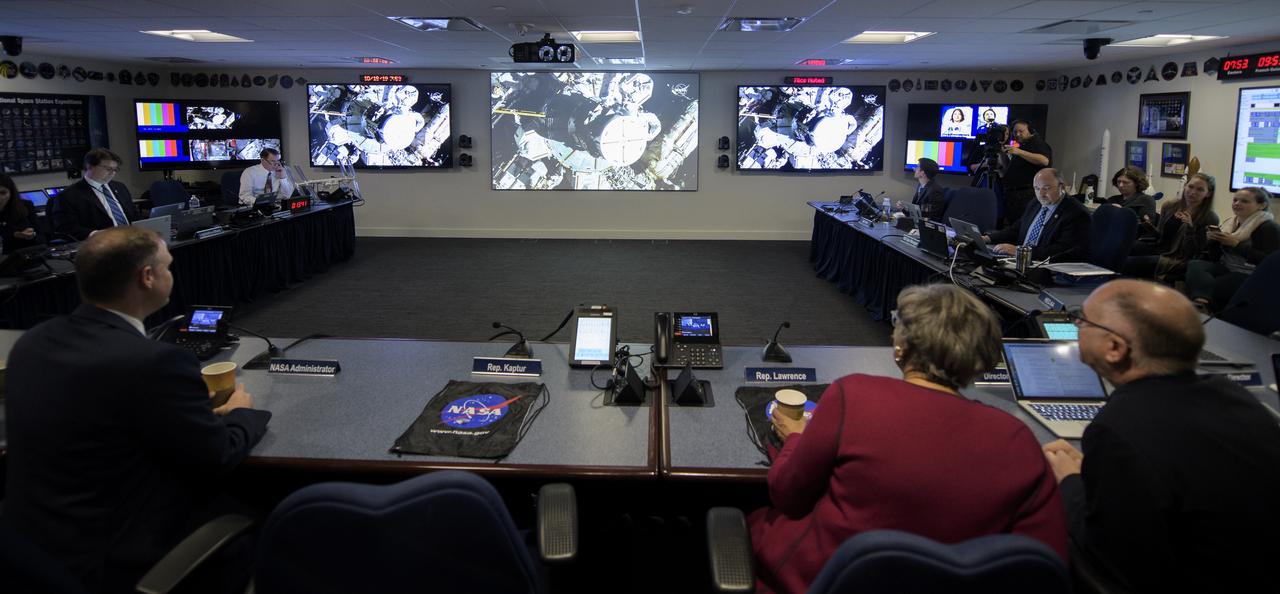
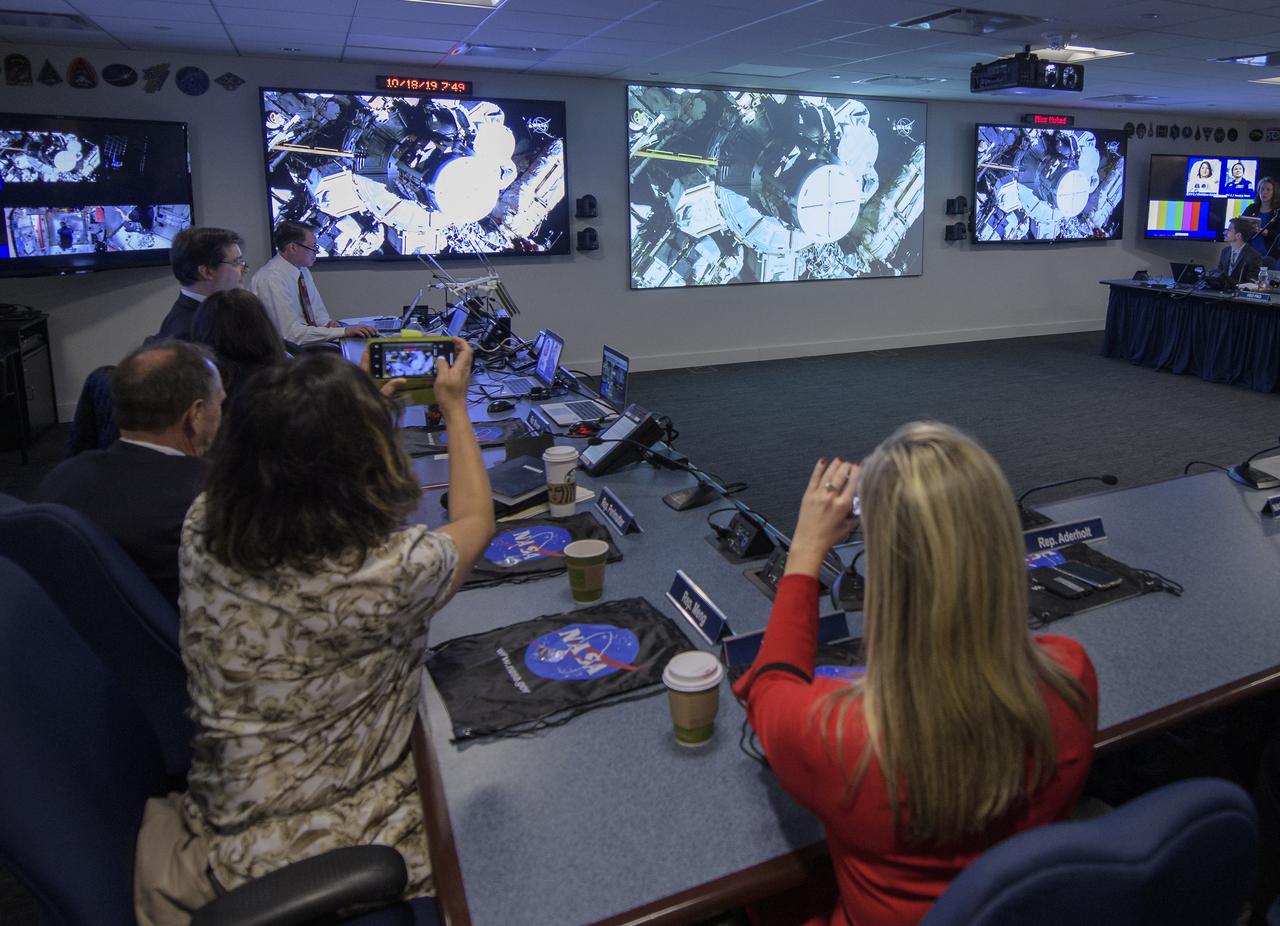
NASA Administrator Jim Bridenstine, NASA management and members of Congess watch the beginning of the first all-woman spacewalk on Friday, Oct. 18, 2019, from the Space Operations Center at NASA Headquarters in Washington. The first all-woman spacewalk in history began at 7:38am EDT with NASA astronauts Christina Koch and Jessica Meir venturing outside the International Space Station to replace a failed battery charge-discharge unit. This is the fourth spacewalk for Koch and Meir’s first. Photo Credit: (NASA/Joel Kowsky)

Rep. Marcy Kaptur, D-Ohio, watches the beginning of the first all-woman spacewalk on Friday, Oct. 18, 2019, from the Space Operations Center at NASA Headquarters in Washington. The first all-woman spacewalk in history began at 7:38am EDT with NASA astronauts Christina Koch and Jessica Meir venturing outside the International Space Station to replace a failed battery charge-discharge unit. This is the fourth spacewalk for Koch and Meir’s first. Photo Credit: (NASA/Joel Kowsky)
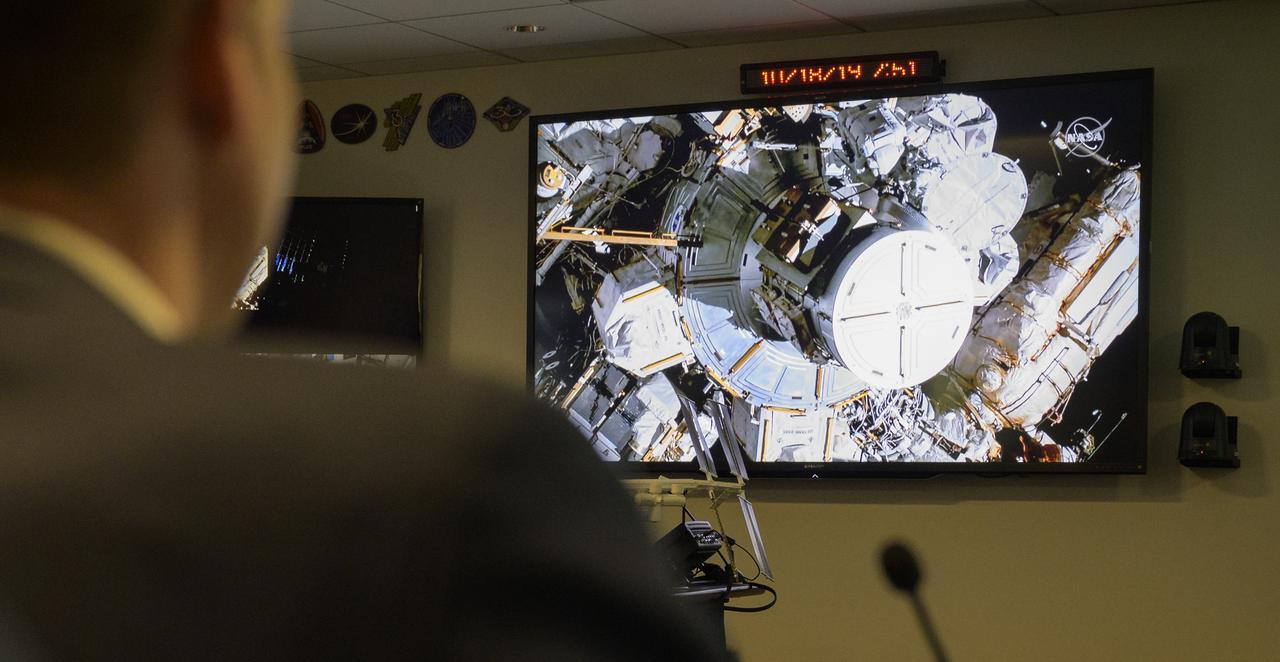
NASA Administrator Jim Bridenstine watches the beginning of the first all-woman spacewalk on Friday, Oct. 18, 2019, from the Space Operations Center at NASA Headquarters in Washington. The first all-woman spacewalk in history began at 7:38am EDT with NASA astronauts Christina Koch and Jessica Meir venturing outside the International Space Station to replace a failed battery charge-discharge unit. This is the fourth spacewalk for Koch and Meir’s first. Photo Credit: (NASA/Joel Kowsky)
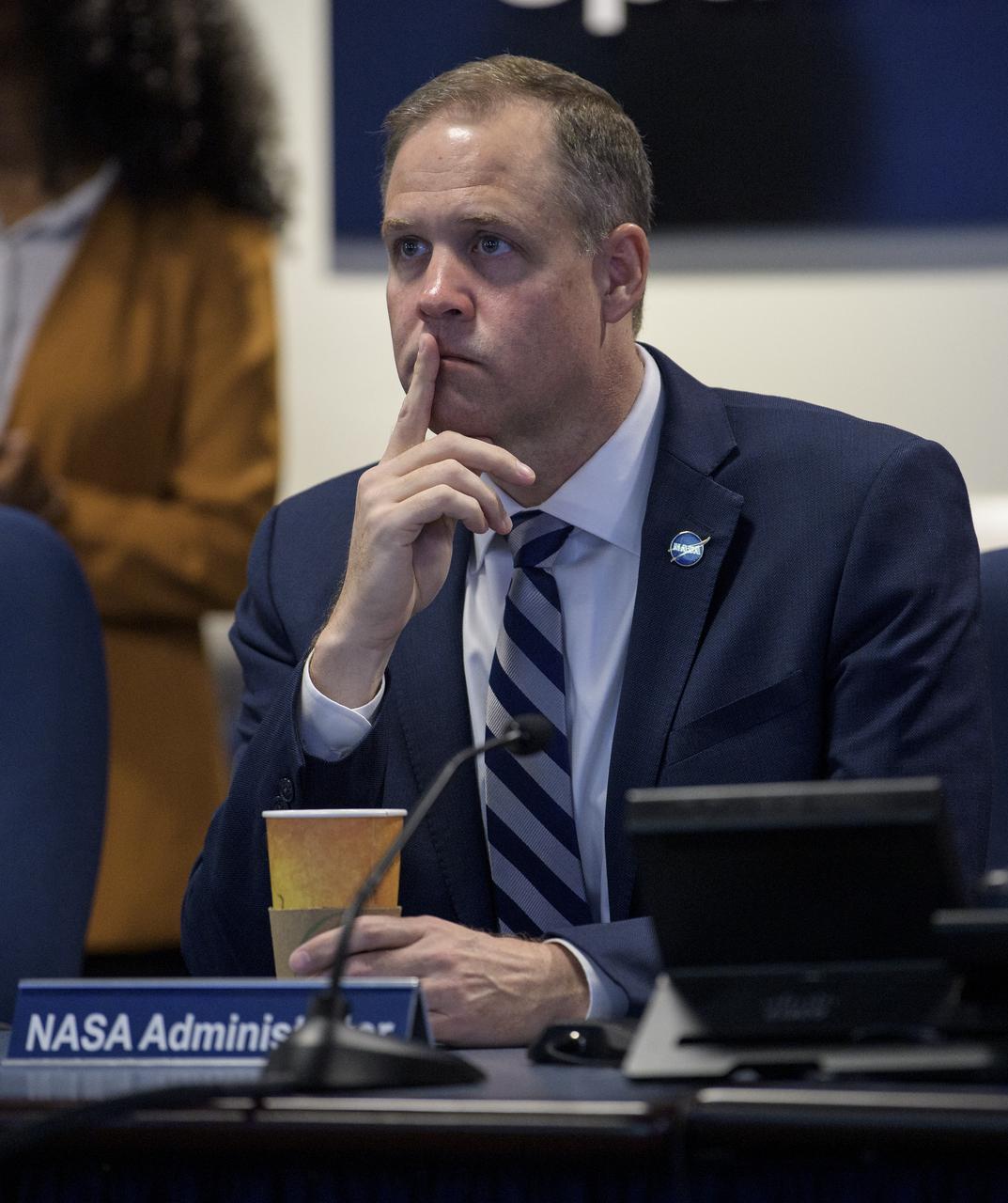
NASA Administrator Jim Bridenstine is seen as he watches the beginning of the first all-woman spacewalk on Friday, Oct. 18, 2019, from the Space Operations Center at NASA Headquarters in Washington. The first all-woman spacewalk in history began at 7:38am EDT with NASA astronauts Christina Koch and Jessica Meir venturing outside the International Space Station to replace a failed battery charge-discharge unit. This is the fourth spacewalk for Koch and Meir’s first. Photo Credit: (NASA/Joel Kowsky)
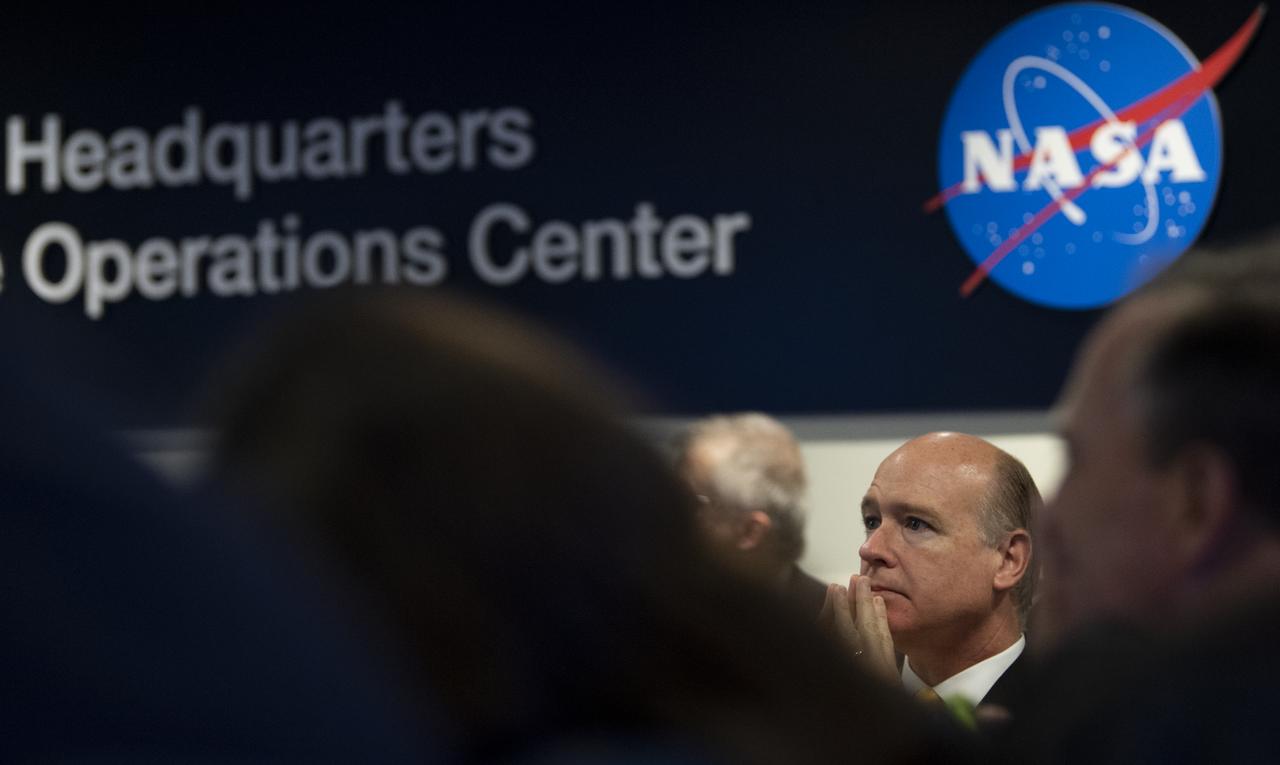
Rep. Robert Aderholt, R-Ala., is seen as he watches the beginning of the first all-woman spacewalk on Friday, Oct. 18, 2019, from the Space Operations Center at NASA Headquarters in Washington. The first all-woman spacewalk in history began at 7:38am EDT with NASA astronauts Christina Koch and Jessica Meir venturing outside the International Space Station to replace a failed battery charge-discharge unit. This is the fourth spacewalk for Koch and Meir’s first. Photo Credit: (NASA/Joel Kowsky)
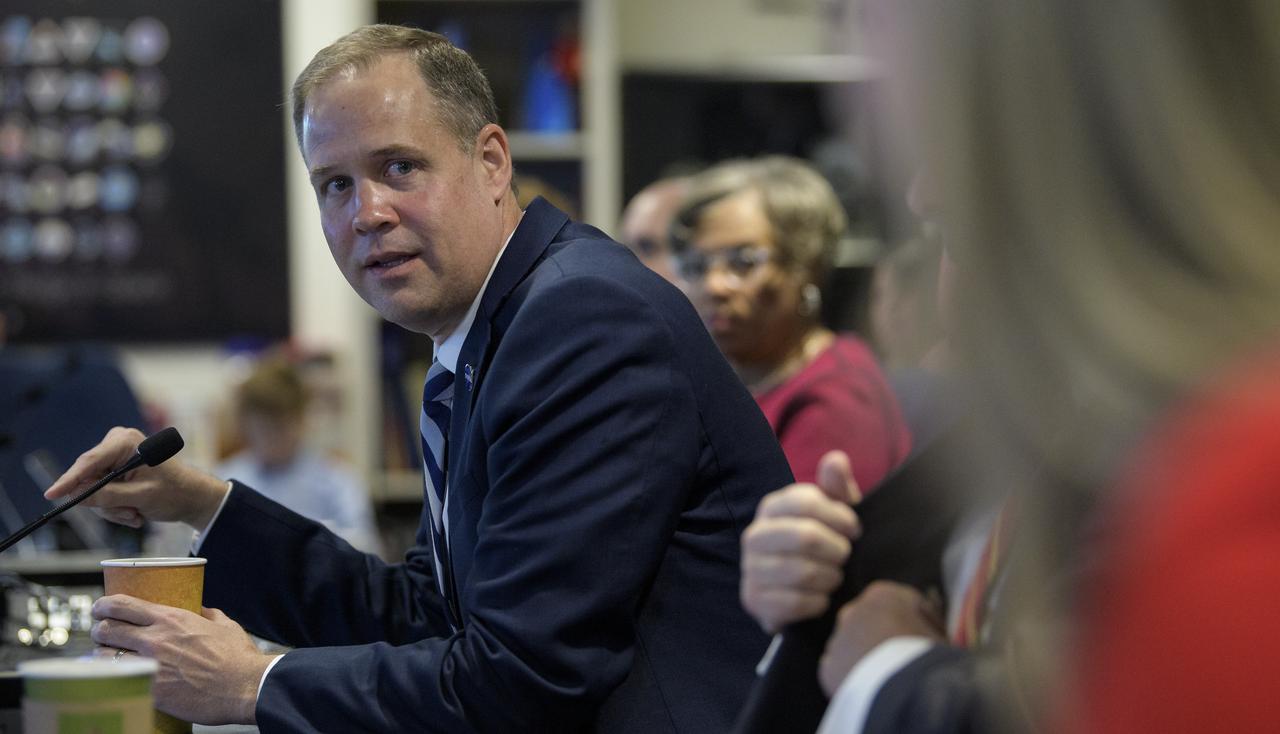
NASA Administrator Jim Bridenstine speaks to members of Congress as they watch the beginning of the first all-woman spacewalk on Friday, Oct. 18, 2019, from the Space Operations Center at NASA Headquarters in Washington. The first all-woman spacewalk in history began at 7:38am EDT with NASA astronauts Christina Koch and Jessica Meir venturing outside the International Space Station to replace a failed battery charge-discharge unit. This is the fourth spacewalk for Koch and Meir’s first. Photo Credit: (NASA/Joel Kowsky)
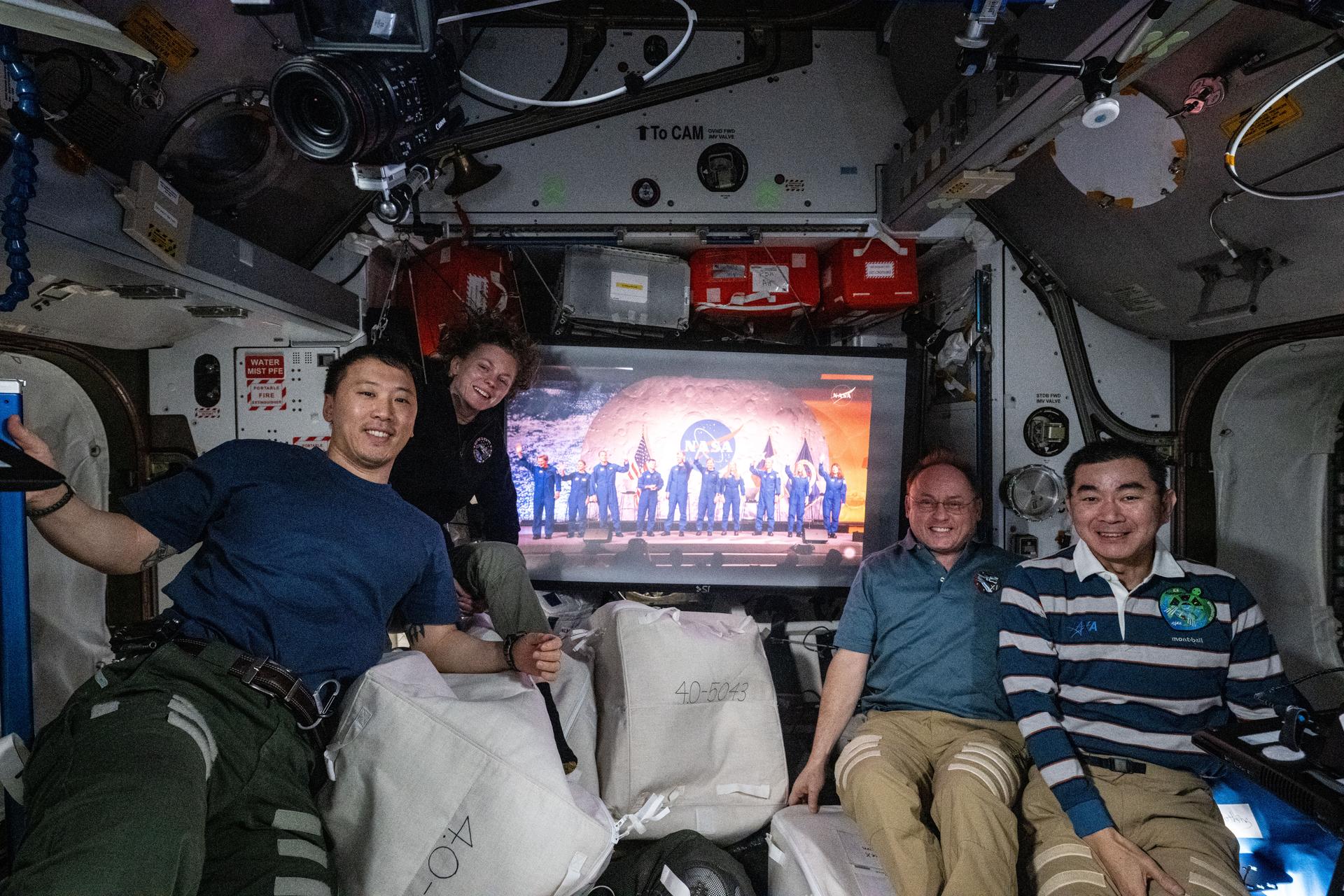
iss073e0765799 (Sept. 22, 2025) --- Four Expedition 73 flight engineers gather together inside the International Space Station's Harmony module and watch NASA's announcement of its 2025 Astronaut Candidate Class from the Johnson Space Center in Houston, Texas. From left, are NASA astronauts Jonny Kim, Zena Cardman, and Mike Fincke, and JAXA (Japan Aerospace Exploration Agency) astronaut Kimiya Yui.
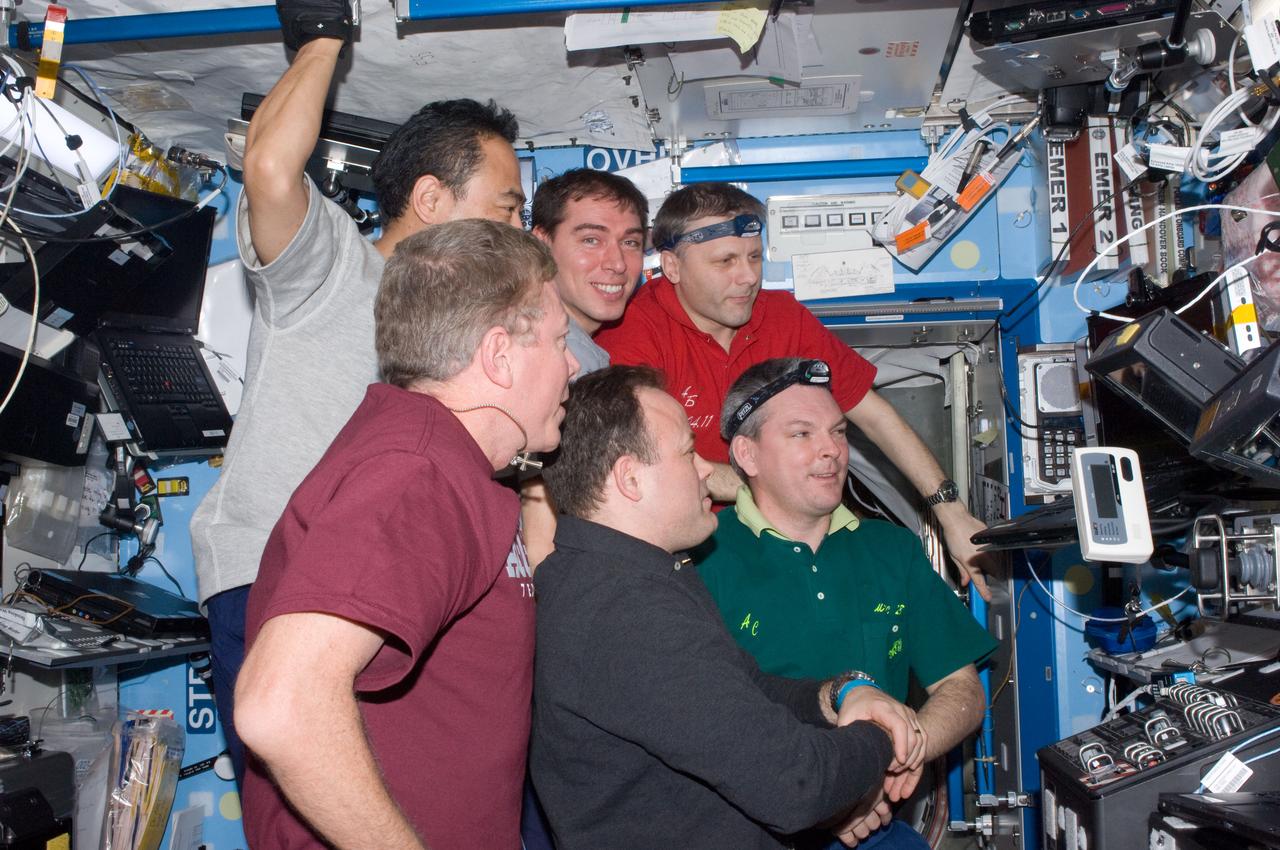
ISS028-E-014701 (8 July 2011) --- Expedition 28 crew members watch the launch of STS-135 space shuttle Atlantis from a computer in the Destiny laboratory of the International Space Station. Pictured counter-clockwise (from top right) are Russian cosmonaut Andrey Borisenko, commander; Russian cosmonaut Sergei Volkov, Japan Aerospace Exploration Agency astronaut Satoshi Furukawa, NASA astronauts Mike Fossum and Ron Garan, and Russian cosmonaut Alexander Samokutyaev, all flight engineers.

Sam Scimemi, Director of NASA’s International Space Station Division is seen as he watches the beginning of the first all-woman spacewalk on Friday, Oct. 18, 2019, from the Space Operations Center at NASA Headquarters in Washington. The first all-woman spacewalk in history began at 7:38am EDT with NASA astronauts Christina Koch and Jessica Meir venturing outside the International Space Station to replace a failed battery charge-discharge unit. This is the fourth spacewalk for Koch and Meir’s first. Photo Credit: (NASA/Joel Kowsky)

Rep. Brenda Lawrence, D-Mich., watches the beginning of the first all-woman spacewalk on Friday, Oct. 18, 2019, from the Space Operations Center at NASA Headquarters in Washington. The first all-woman spacewalk in history began at 7:38am EDT with NASA astronauts Christina Koch and Jessica Meir venturing outside the International Space Station to replace a failed battery charge-discharge unit. This is the fourth spacewalk for Koch and Meir’s first. Photo Credit: (NASA/Joel Kowsky)
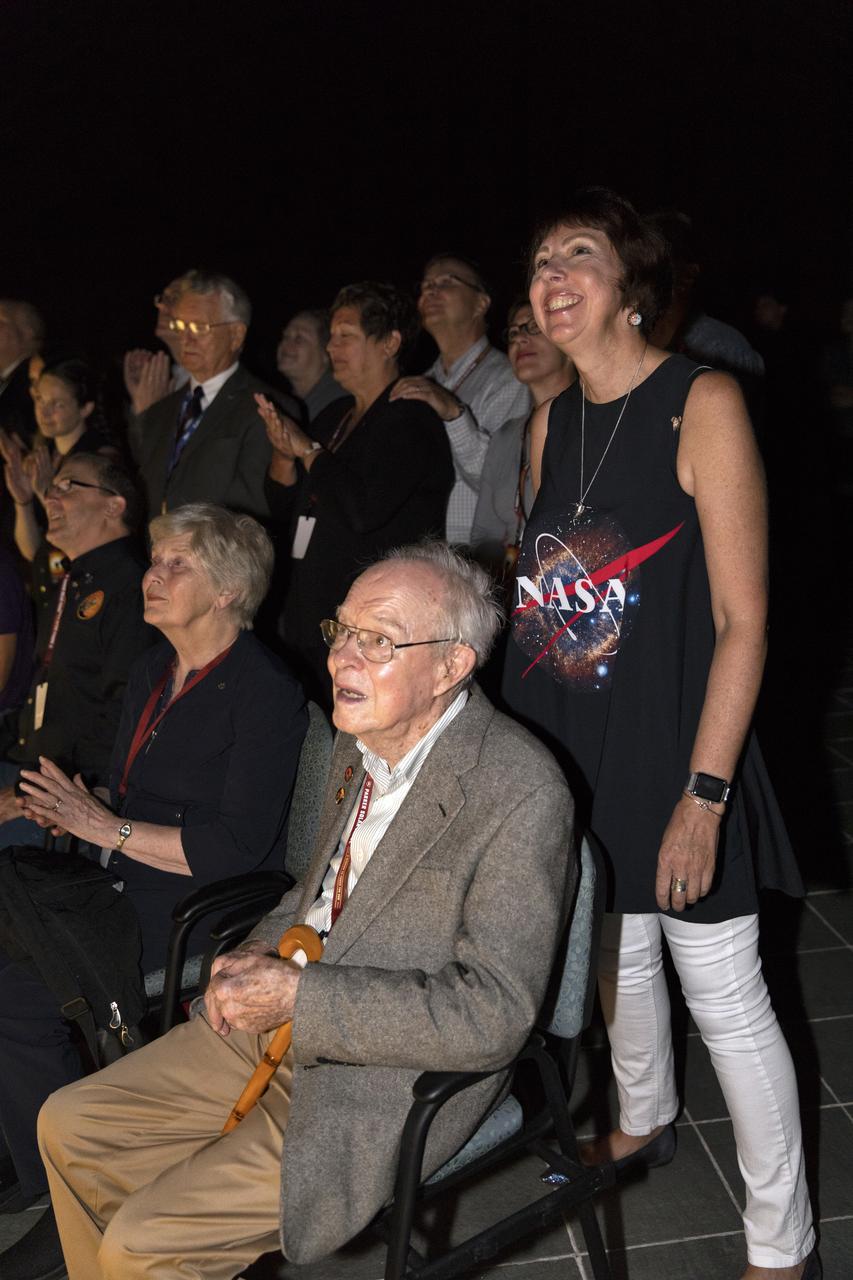
Dr. Eugene Parker (seated in the foreground), a pioneer in heliophysics and S. Chandrasekhar distinguished service professor emeritus for the Department of Astronomy and Astrophysics at the University of Chicago, watches the launch of NASA's Parker Solar Probe. This is the first agency mission named for a living person. Standing behind Parker is Nicky Fox, Parker Solar Probe project scientist at Johns Hopkins Applied Physics Laboratory. The liftoff took place at 3:31 a.m. EDT on Sunday, Aug. 12, 2018. The spacecraft was built by the Johns Hopkins University Applied Physics Laboratory in Laurel, Maryland. The mission will perform the closest-ever observations of a star when it travels through the Sun's atmosphere, called the corona. The probe will rely on measurements and imaging to revolutionize our understanding of the corona and the Sun-Earth connection.
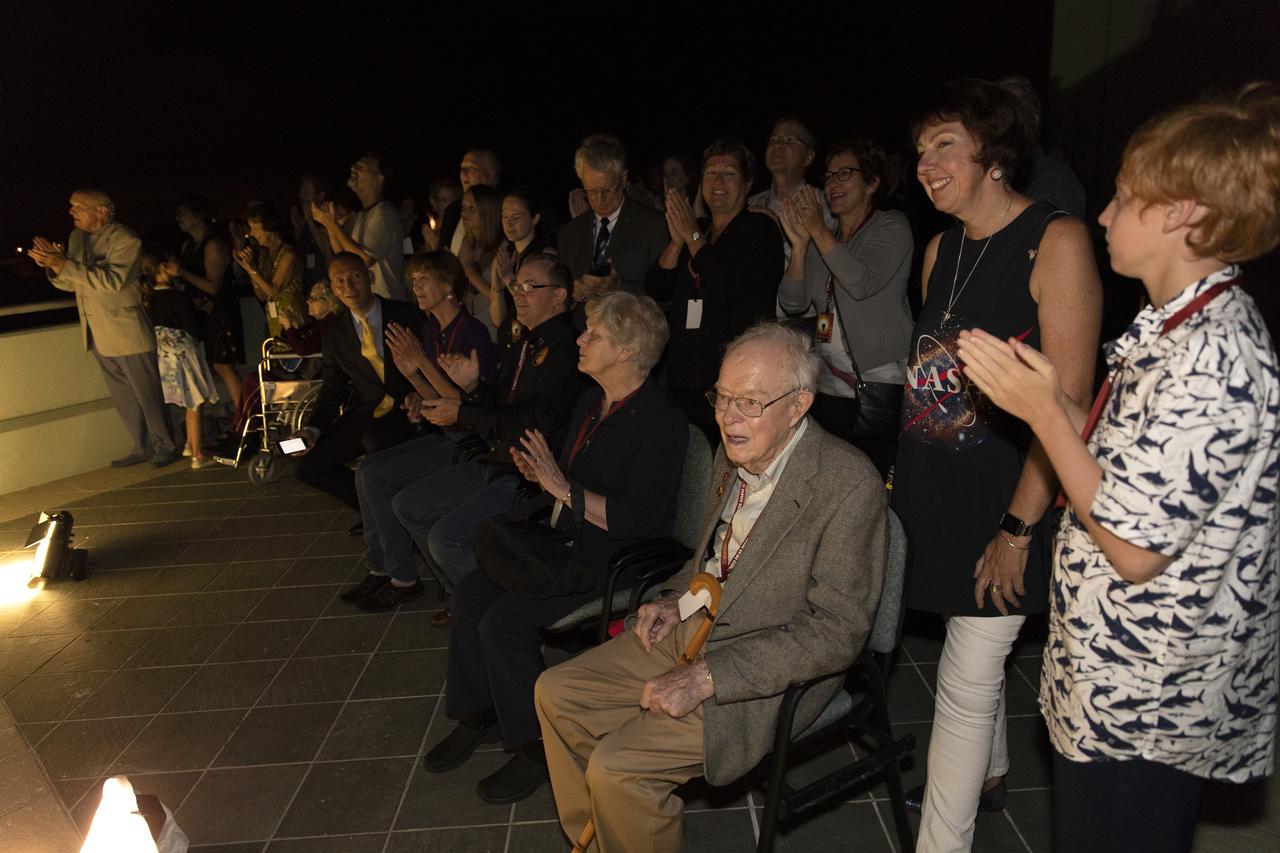
Dr. Eugene Parker (seated in the foreground), a pioneer in heliophysics and S. Chandrasekhar distinguished service professor emeritus for the Department of Astronomy and Astrophysics at the University of Chicago, watches the launch of NASA's Parker Solar Probe. This is the first agency mission named for a living person. Standing behind Parker is Nicky Fox, Parker Solar Probe project scientist at Johns Hopkins Applied Physics Laboratory. The liftoff took place at 3:31 a.m. EDT on Sunday, Aug. 12, 2018. The spacecraft was built by the Johns Hopkins University Applied Physics Laboratory in Laurel, Maryland. The mission will perform the closest-ever observations of a star when it travels through the Sun's atmosphere, called the corona. The probe will rely on measurements and imaging to revolutionize our understanding of the corona and the Sun-Earth connection.
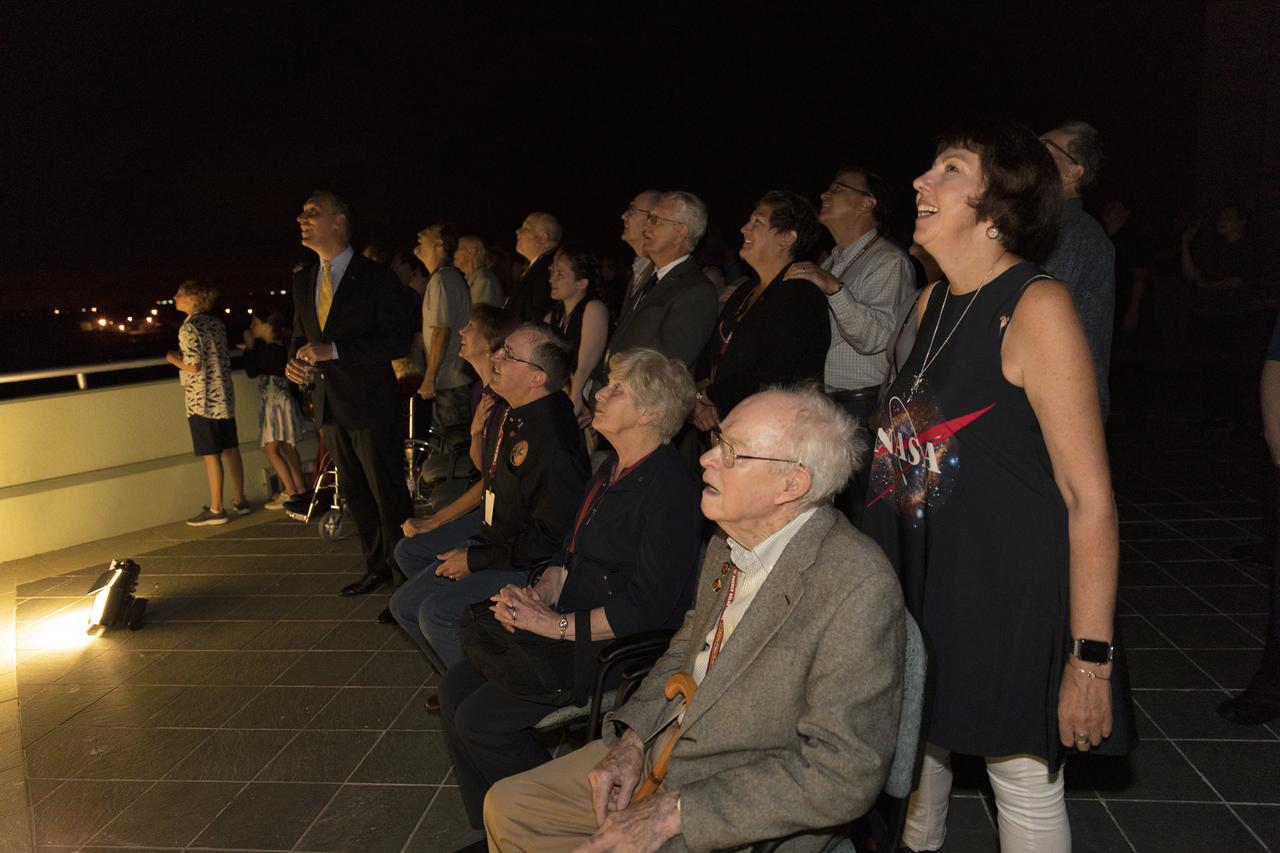
Dr. Eugene Parker (seated in the foreground), a pioneer in heliophysics and S. Chandrasekhar distinguished service professor emeritus for the Department of Astronomy and Astrophysics at the University of Chicago, watches the launch of NASA's Parker Solar Probe. This is the first agency mission named for a living person. Standing behind Parker is Nicky Fox, Parker Solar Probe project scientist at Johns Hopkins Applied Physics Laboratory. The liftoff took place at 3:31 a.m. EDT on Sunday, Aug. 12, 2018. The spacecraft was built by the Johns Hopkins University Applied Physics Laboratory in Laurel, Maryland. The mission will perform the closest-ever observations of a star when it travels through the Sun's atmosphere, called the corona. The probe will rely on measurements and imaging to revolutionize our understanding of the corona and the Sun-Earth connection.
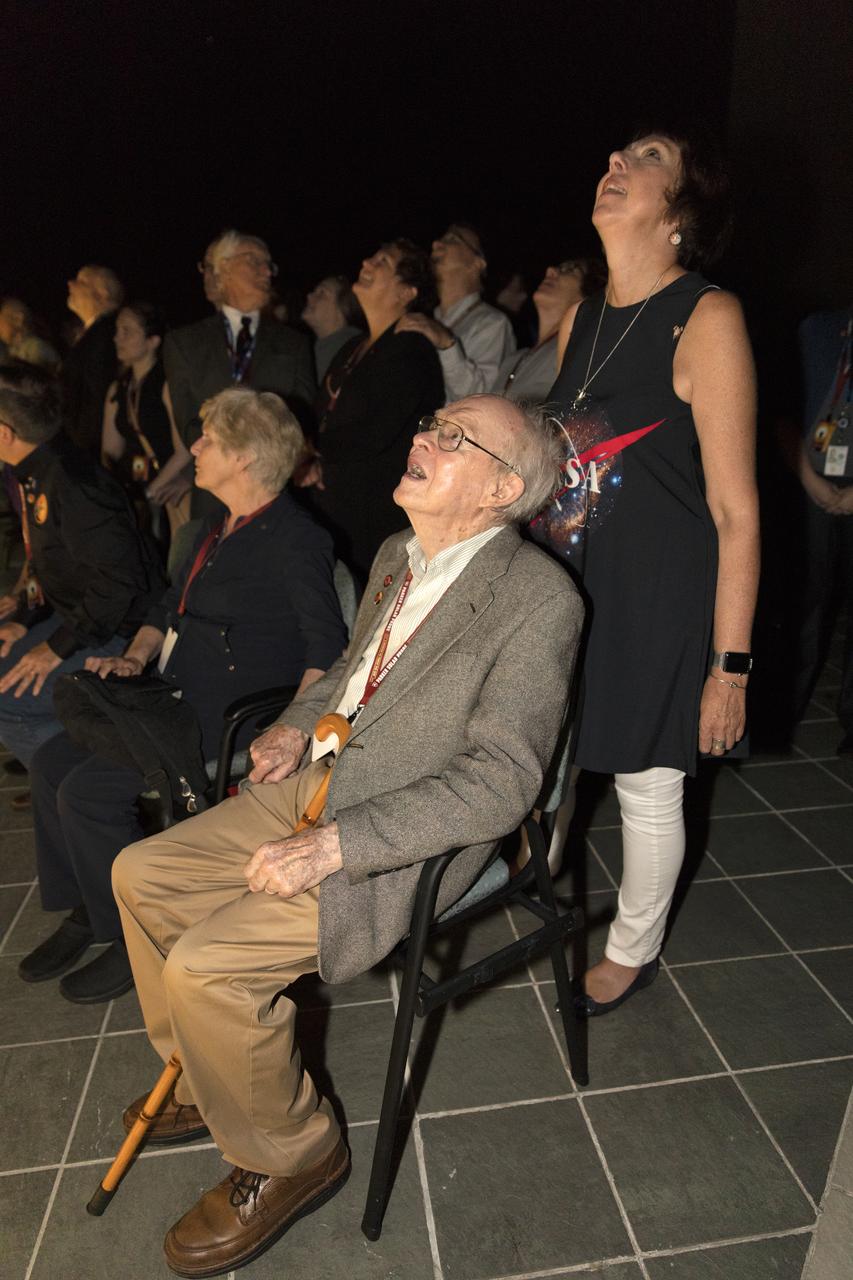
Dr. Eugene Parker (seated in the foreground), a pioneer in heliophysics and S. Chandrasekhar distinguished service professor emeritus for the Department of Astronomy and Astrophysics at the University of Chicago, watches the launch of NASA's Parker Solar Probe. This is the first agency mission named for a living person. Standing behind Parker is Nicky Fox, Parker Solar Probe project scientist at Johns Hopkins Applied Physics Laboratory. The liftoff took place at 3:31 a.m. EDT on Sunday, Aug. 12, 2018. The spacecraft was built by the Johns Hopkins University Applied Physics Laboratory in Laurel, Maryland. The mission will perform the closest-ever observations of a star when it travels through the Sun's atmosphere, called the corona. The probe will rely on measurements and imaging to revolutionize our understanding of the corona and the Sun-Earth connection.

NASA's Cassini spacecraft watched clouds of methane moving across the far northern regions of Saturn's largest moon, Titan, on Oct. 29 and 30, 2016. Several sets of clouds develop, move over the surface and fade during the course of this movie sequence, which spans 11 hours, with one frame taken every 20 minutes. Most prominent are long cloud streaks that lie between 49 and 55 degrees north latitude. While the general region of cloud activity is persistent over the course of the observation, individual streaks appear to develop then fade. These clouds are measured to move at a speed of about 14 to 22 miles per hour (7 to 10 meters per second). There are also some small clouds over the region of small lakes farther north, including a bright cloud between Neagh Lacus and Punga Mare, which fade over the course of the movie. This small grouping of clouds is moving at a speed of about 0.7 to 1.4 miles per hour (1 to 2 meters per second). Time-lapse movies like this allow scientists to observe the dynamics of clouds as they develop, move over the surface and fade. A time-lapse movie can also help to distinguish between noise in images (for example from cosmic rays hitting the detector) and faint clouds or fog. In 2016, Cassini has intermittently observed clouds across the northern mid-latitudes of Titan, as well as within the north polar region -- an area known to contain numerous methane/ethane lakes and seas see PIA19657 and PIA17655. However, most of this year's observations designed for cloud monitoring have been short snapshots taken days, or weeks, apart. This observation provides Cassini's best opportunity in 2016 to study short-term cloud dynamics. Models of Titan's climate have predicted more cloud activity during early northern summer than what Cassini has observed so far, suggesting that the current understanding of the giant moon's changing seasons is incomplete. The mission will continue monitoring Titan's weather around the 2017 summer solstice in Titan's northern hemisphere. The movie was acquired using the Cassini narrow-angle camera using infrared filters to make the surface and tropospheric methane clouds visible. A movie is available at http://photojournal.jpl.nasa.gov/catalog/PIA21051
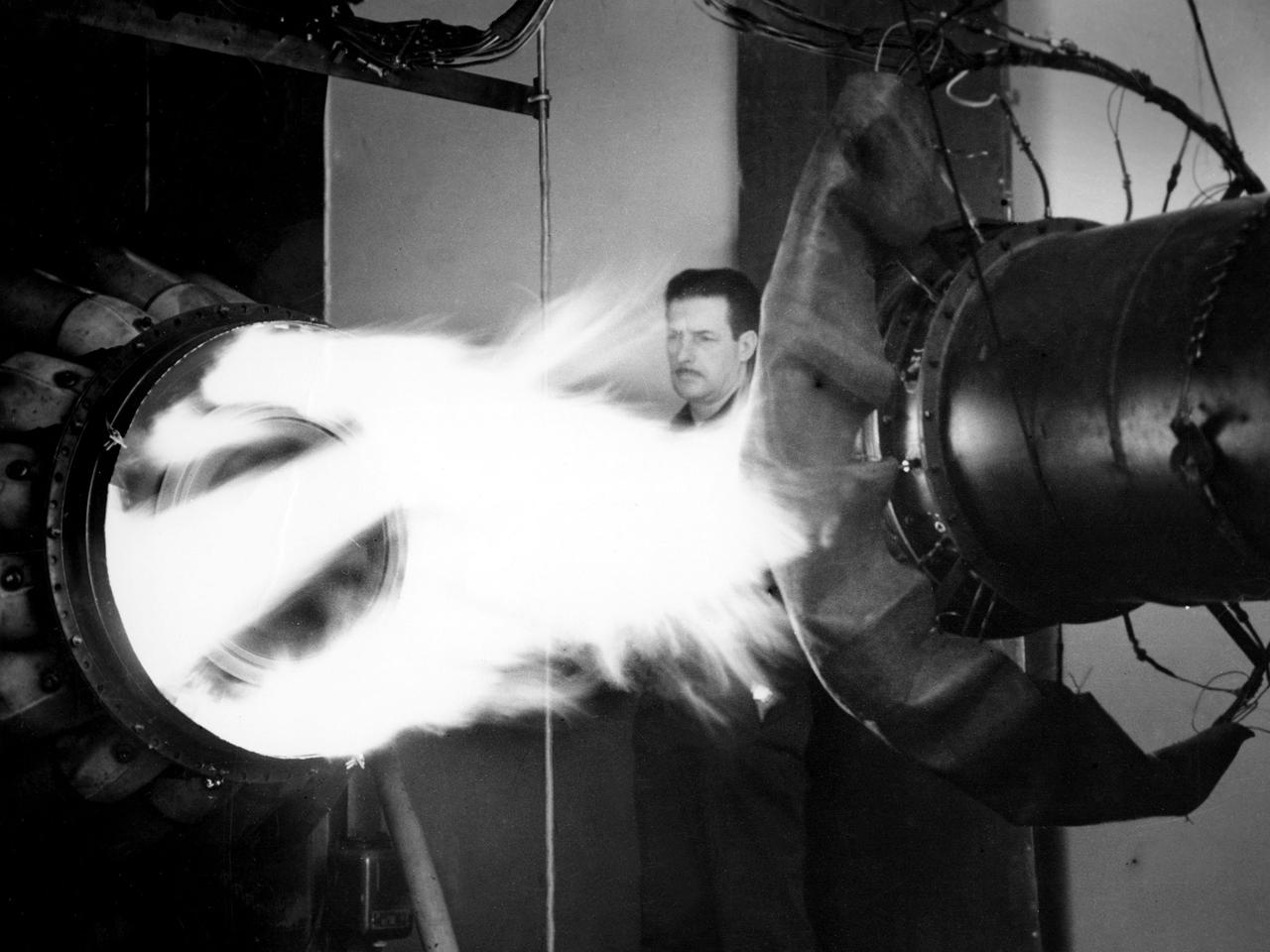
A mechanic watches the firing of a General Electric I-40 turbojet at the National Advisory Committee for Aeronautics (NACA) Lewis Flight Propulsion Laboratory. The military selected General Electric’s West Lynn facility in 1941 to secretly replicate the centrifugal turbojet engine designed by British engineer Frank Whittle. General Electric’s first attempt, the I-A, was fraught with problems. The design was improved somewhat with the subsequent I-16 engine. It was not until the engine's next reincarnation as the I-40 in 1943 that General Electric’s efforts paid off. The 4000-pound thrust I-40 was incorporated into the Lockheed Shooting Star airframe and successfully flown in June 1944. The Shooting Star became the US’s first successful jet aircraft and the first US aircraft to reach 500 miles per hour. NACA Lewis studied all of General Electric’s centrifugal turbojet models during the 1940s. In 1945 the entire Shooting Star aircraft was investigated in the Altitude Wind Tunnel. Engine compressor performance and augmentation by water injection; comparison of different fuel blends in a single combustor; and air-cooled rotors were studied. The mechanic in this photograph watches the firing of a full-scale I-40 in the Jet Propulsion Static Laboratory. The facility was quickly built in 1943 specifically in order to test the early General Electric turbojets. The I-A was secretly analyzed in the facility during the fall of 1943.
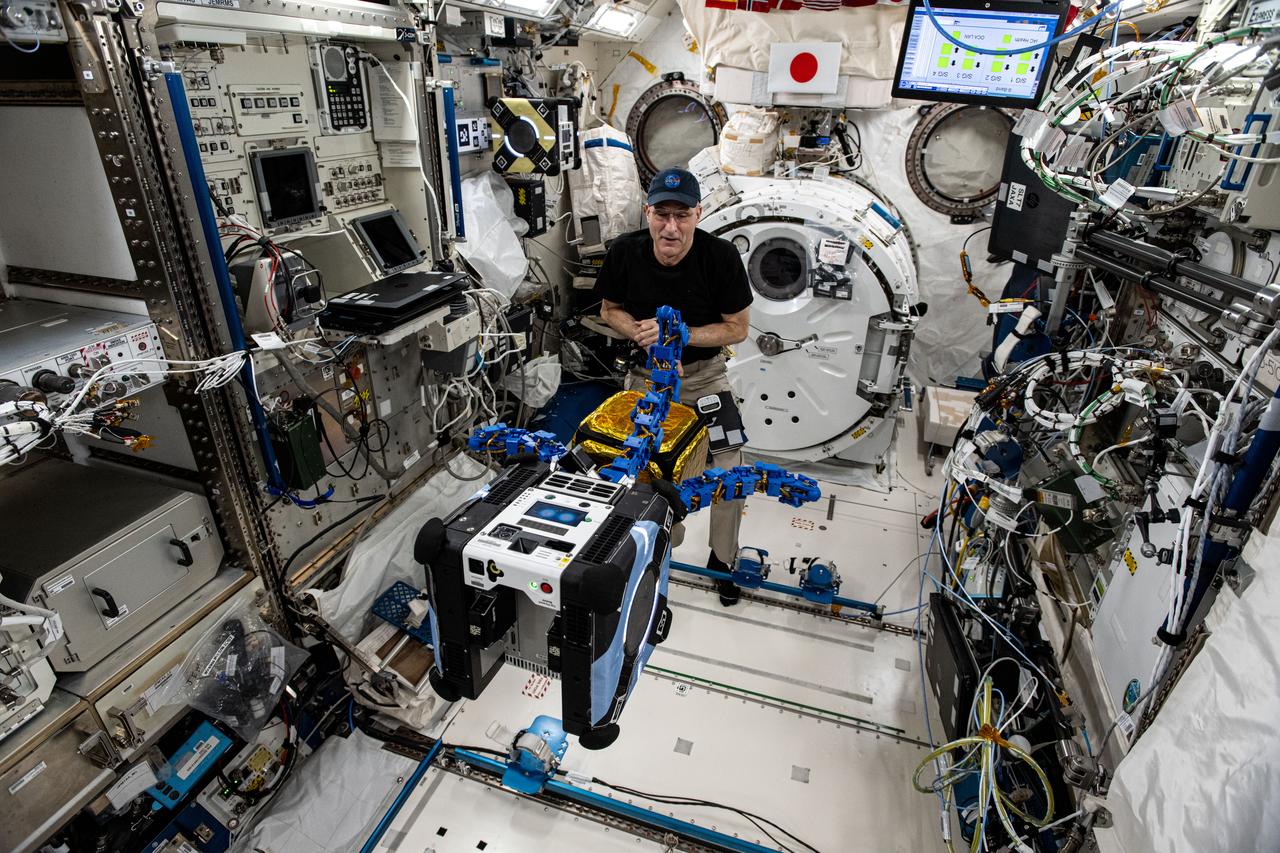
iss072e921201 (April 4, 2025) --- NASA astronaut and Expedition 72 Flight Engineer Don Pettit watches as an Astrobee robotic free-flyer outfitted with tentacle-like grippers grapples a "capture cube" inside the International Space Station's Kibo laboratory module.
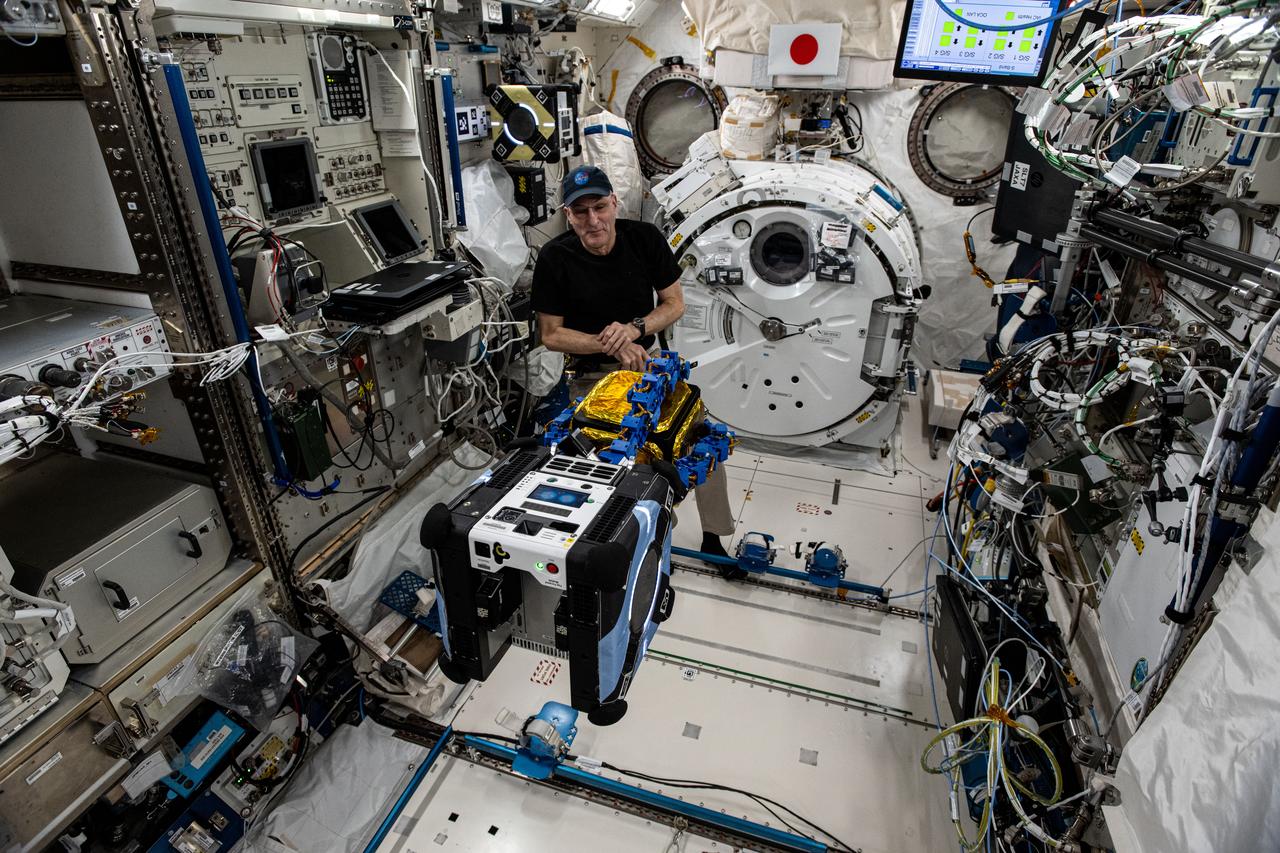
iss072e921202 (April 4, 2025) --- NASA astronaut and Expedition 72 Flight Engineer Don Pettit watches as an Astrobee robotic free-flyer outfitted with tentacle-like grippers grapples a "capture cube" inside the International Space Station's Kibo laboratory module.
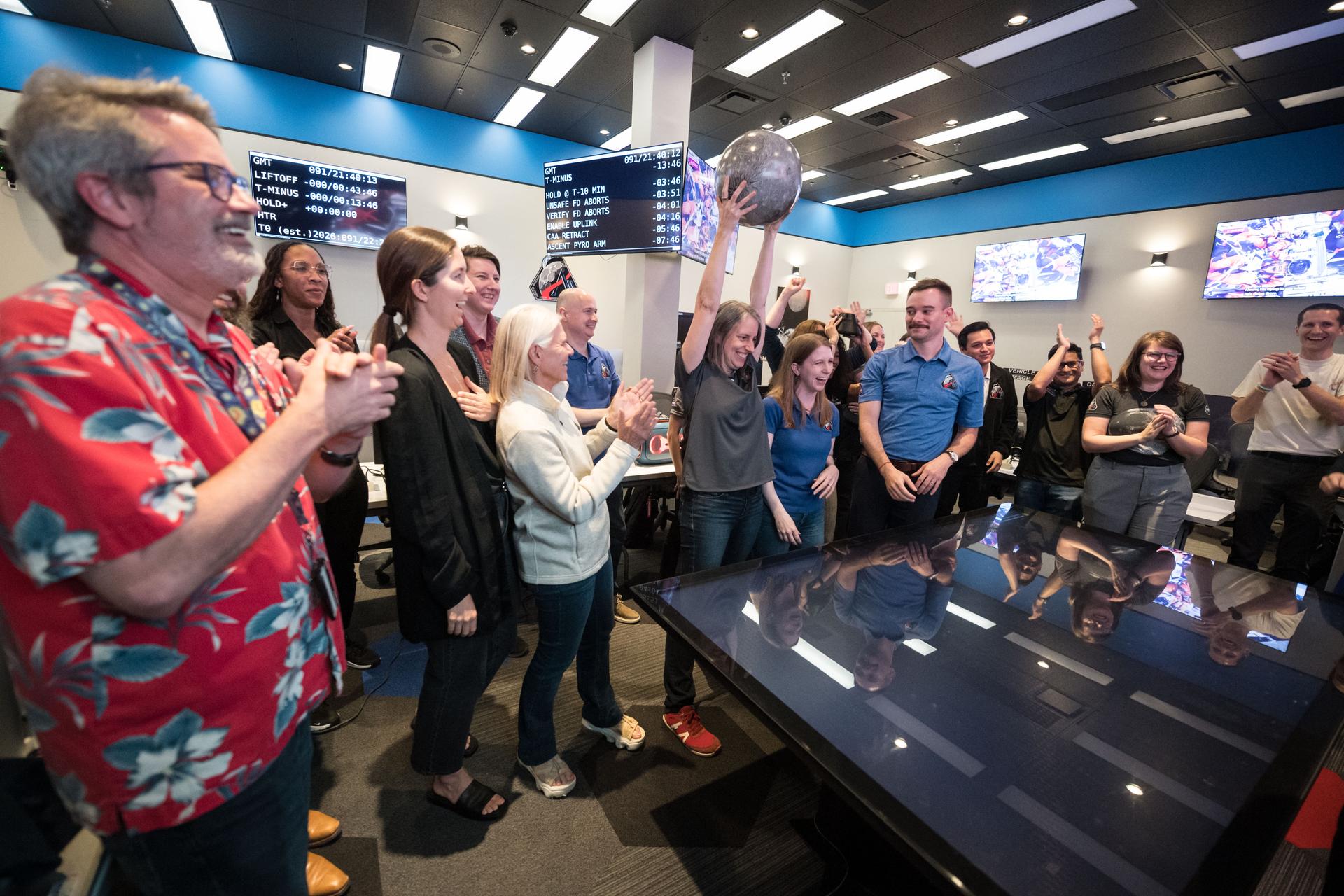
Members of the Artemis lunar science team cheer as they gather to watch the Artemis II launch broadcast from the Science Evaluation Room (SER) in Mission Control at NASA's Johnson Space Center in Houston. The SER supports lunar science and planetary observations for the Artemis science officer in the mission’s main flight control room. Built specifically for Artemis missions with these science priorities in mind, the SER is equipped to support rapid data interpretation, collaborative analysis, real-time decision making, and seamless coordination between the science and operations teams. Credits: NASA/Mark Sowa.
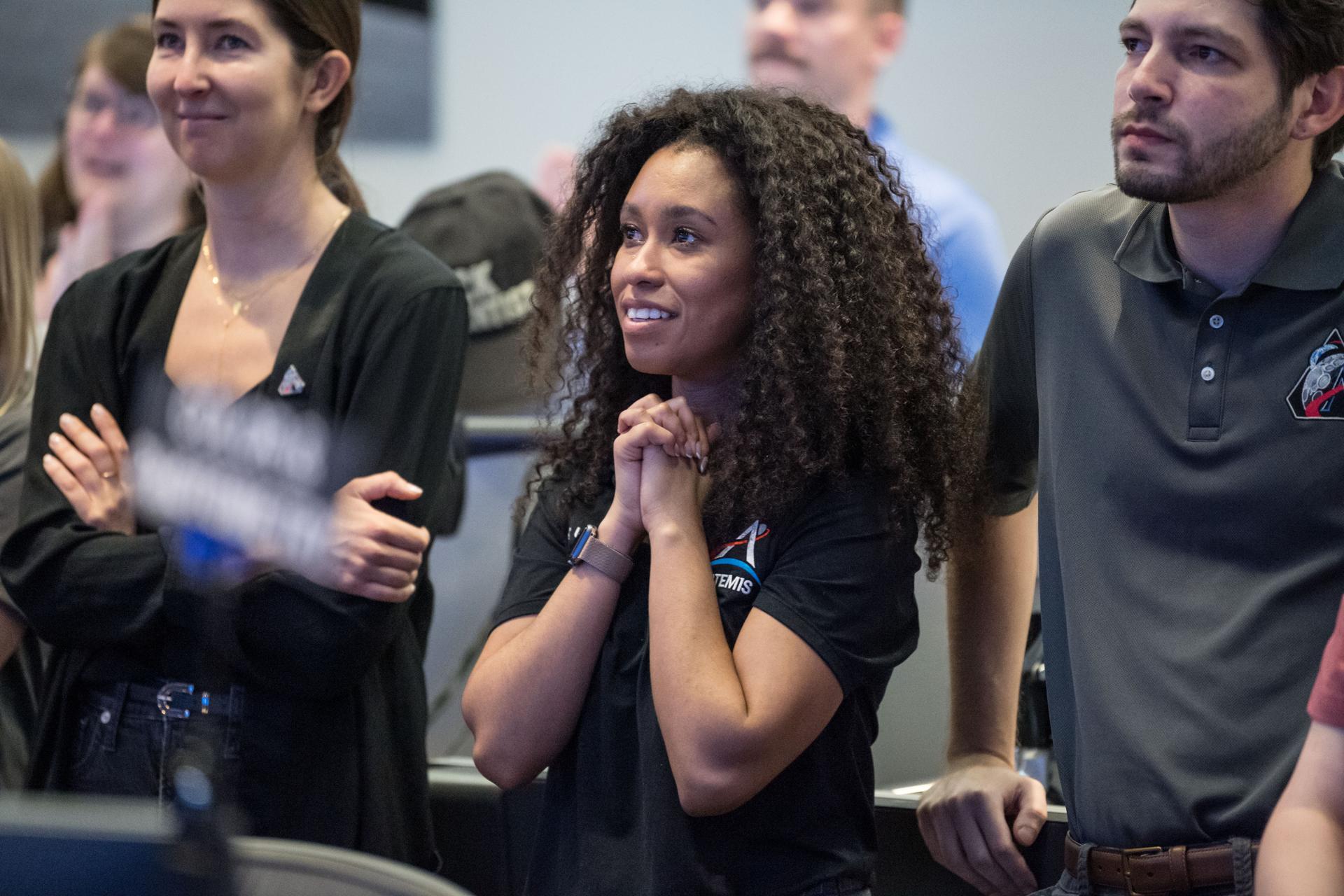
Members of the Artemis lunar science team, from left, Ariel Deutsch, Amber Turner, and Wilfredo Garcia-Lopez, watch the Artemis II launch from the Science Evaluation Room (SER) in Mission Control at Johnson Space Center in Houston. The SER supports lunar science and planetary observations for the Artemis science officer in the mission’s main flight control room. Built specifically for Artemis missions with these science priorities in mind, the SER is equipped to support rapid data interpretation, collaborative analysis, real-time decision making, and seamless coordination between the science and operations teams. Credits: NASA/Mark Sowa.
Rep. Kendra Horn, D-Okla., right, and Rep. Grace Meng, D-N.Y., are seen as they watch the beginning of the first all-woman spacewalk on Friday, Oct. 18, 2019, from the Space Operations Center at NASA Headquarters in Washington. The first all-woman spacewalk in history began at 7:38am EDT with NASA astronauts Christina Koch and Jessica Meir venturing outside the International Space Station to replace a failed battery charge-discharge unit. This is the fourth spacewalk for Koch and Meir’s first. Photo Credit: (NASA/Joel Kowsky)
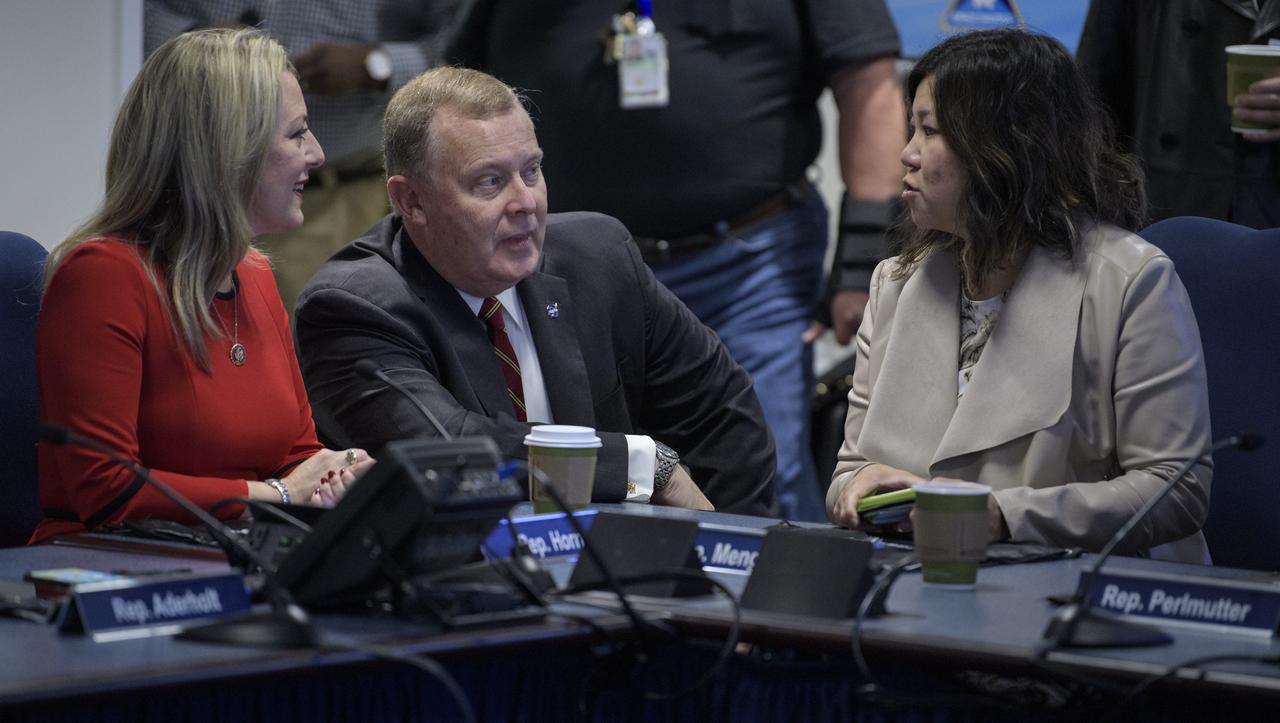
NASA Deputy Administrator Jim Morhard, center, speaks with Rep. Kendra Horn, D-Okla., left, and Rep. Grace Meng, D-N.Y., as they watch the beginning of the first all-woman spacewalk on Friday, Oct. 18, 2019, from the Space Operations Center at NASA Headquarters in Washington. The first all-woman spacewalk in history began at 7:38am EDT with NASA astronauts Christina Koch and Jessica Meir venturing outside the International Space Station to replace a failed battery charge-discharge unit. This is the fourth spacewalk for Koch and Meir’s first. Photo Credit: (NASA/Joel Kowsky)
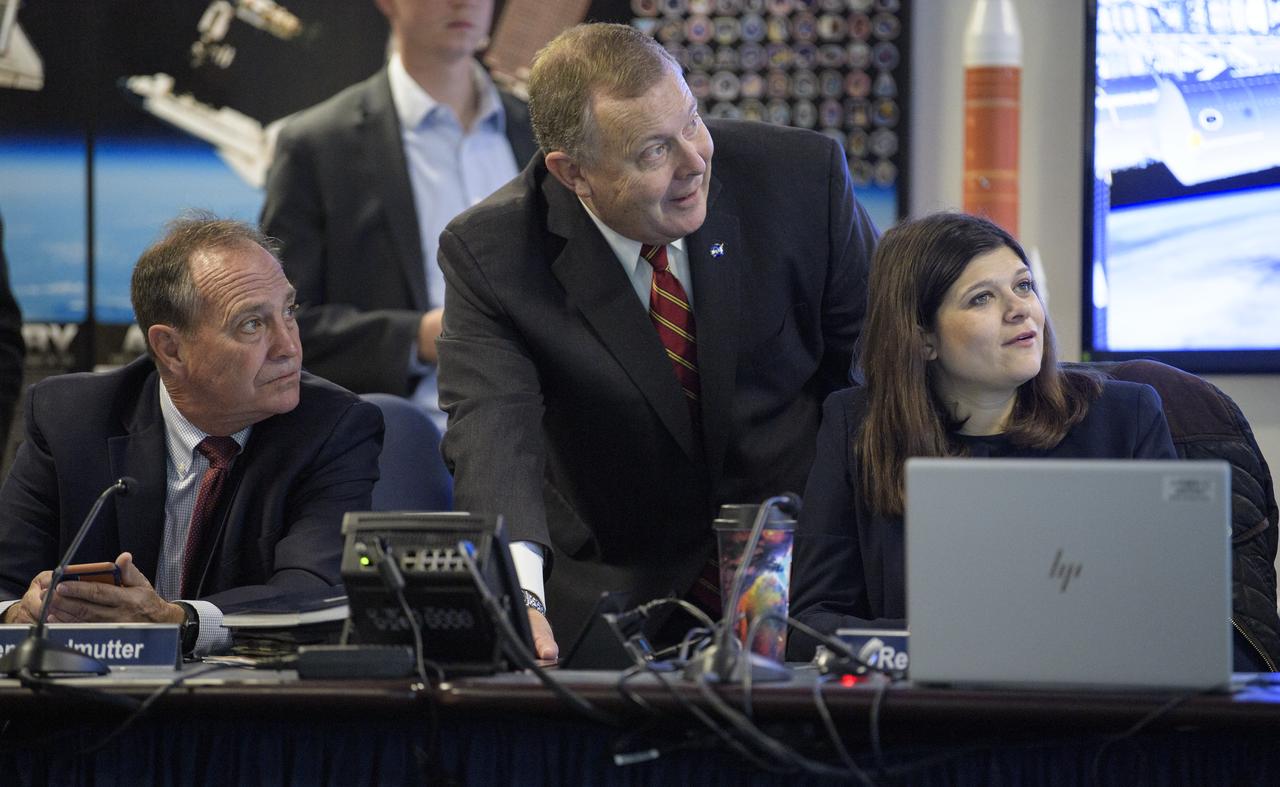
NASA Deputy Administrator Jim Morhard, center, is seen with Rep. Ed Perlmutter, D-Col., left, and Rep. Haley Stevens, D-Mich., as they watch the beginning of the first all-woman spacewalk on Friday, Oct. 18, 2019, from the Space Operations Center at NASA Headquarters in Washington. The first all-woman spacewalk in history began at 7:38am EDT with NASA astronauts Christina Koch and Jessica Meir venturing outside the International Space Station to replace a failed battery charge-discharge unit. This is the fourth spacewalk for Koch and Meir’s first. Photo Credit: (NASA/Joel Kowsky)
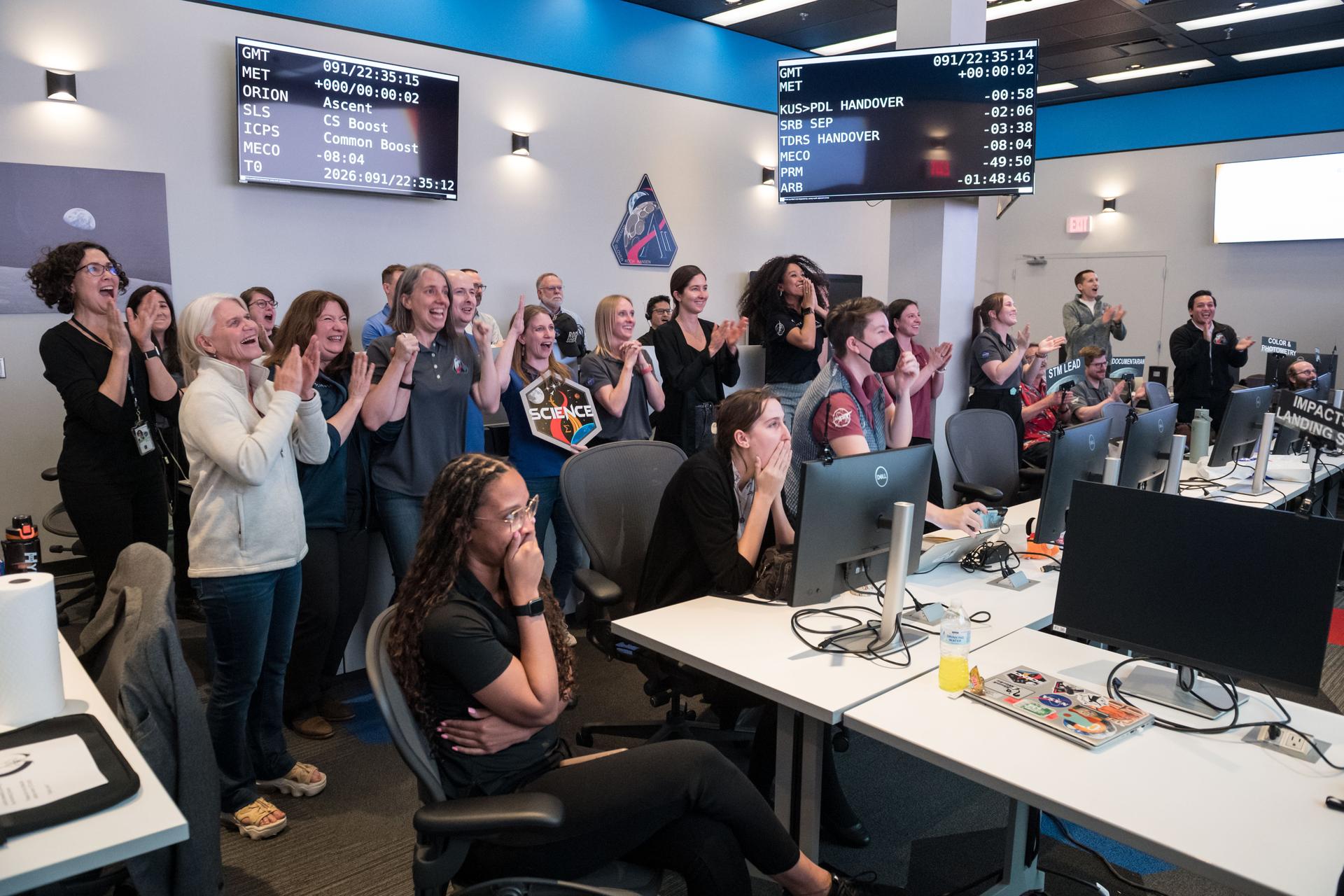
Members of the Artemis lunar science team celebrate the Artemis II launch as they watch from the Science Evaluation Room (SER) in Mission Control at NASA's Johnson Space Center in Houston. The SER supports lunar science and planetary observations for the Artemis science officer in the mission’s main flight control room. Built specifically for Artemis missions with these science priorities in mind, the SER is equipped to support rapid data interpretation, collaborative analysis, real-time decision making, and seamless coordination between the science and operations teams. Credits: NASA/Mark Sowa.
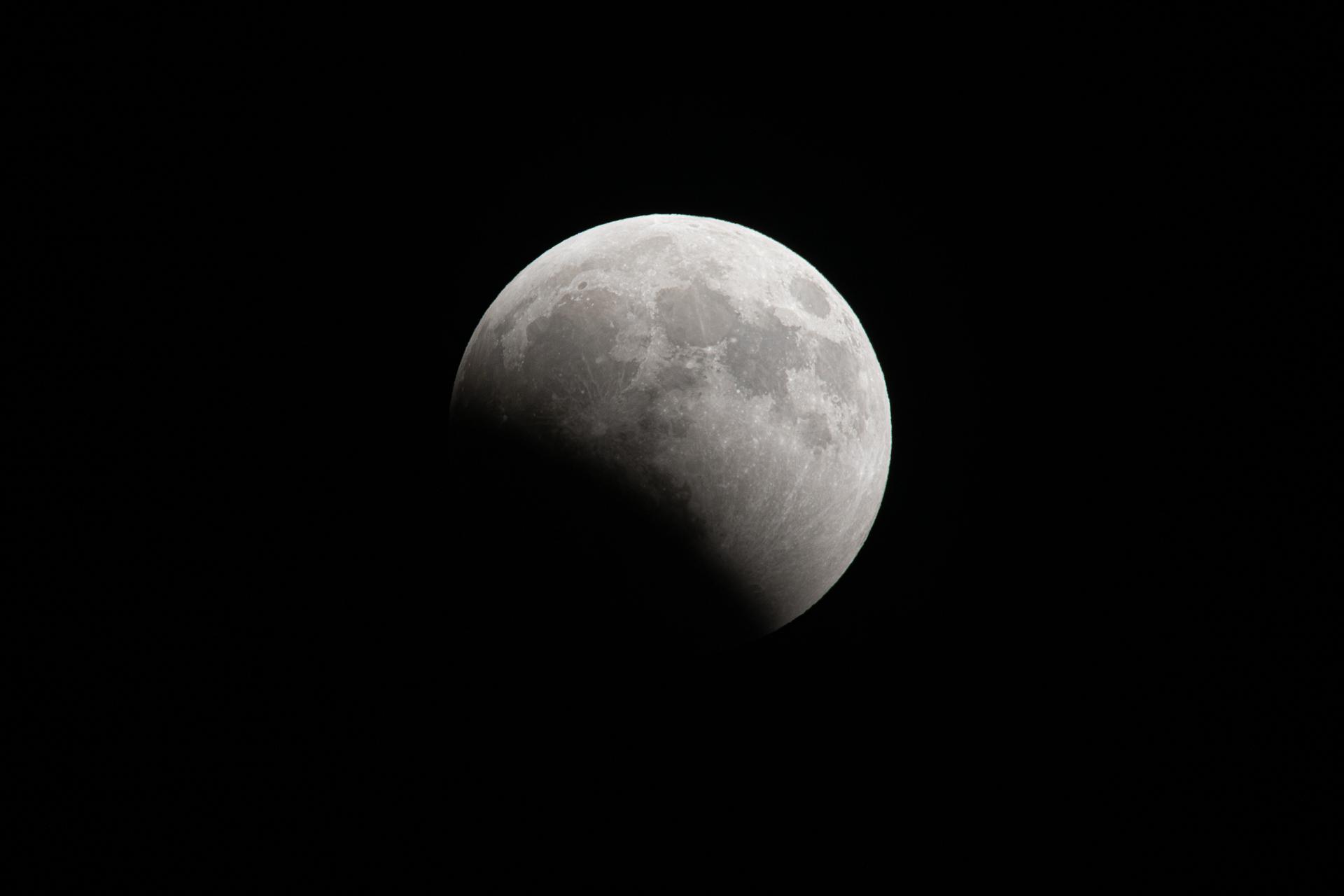
A lunar eclipse is visible over southern Louisiana. The lunar eclipse was visible throughout much of North and South America and part of Europe and Africa between Aug. 27-28. The Full Moon slipped through Earth’s shadow on Aug. 27, continuing into Aug. 28 for some parts of the world, resulting in the lunar eclipse. At maximum eclipse, the Moon takes on a dramatic dark, ruddy or coppery tint along the covered edge. New Orleans is home to NASA’s Michoud Assembly Facility, where stages for NASA’s SLS (Space Launch System) rocket and structures for Orion spacecraft are produced for the Artemis missions.
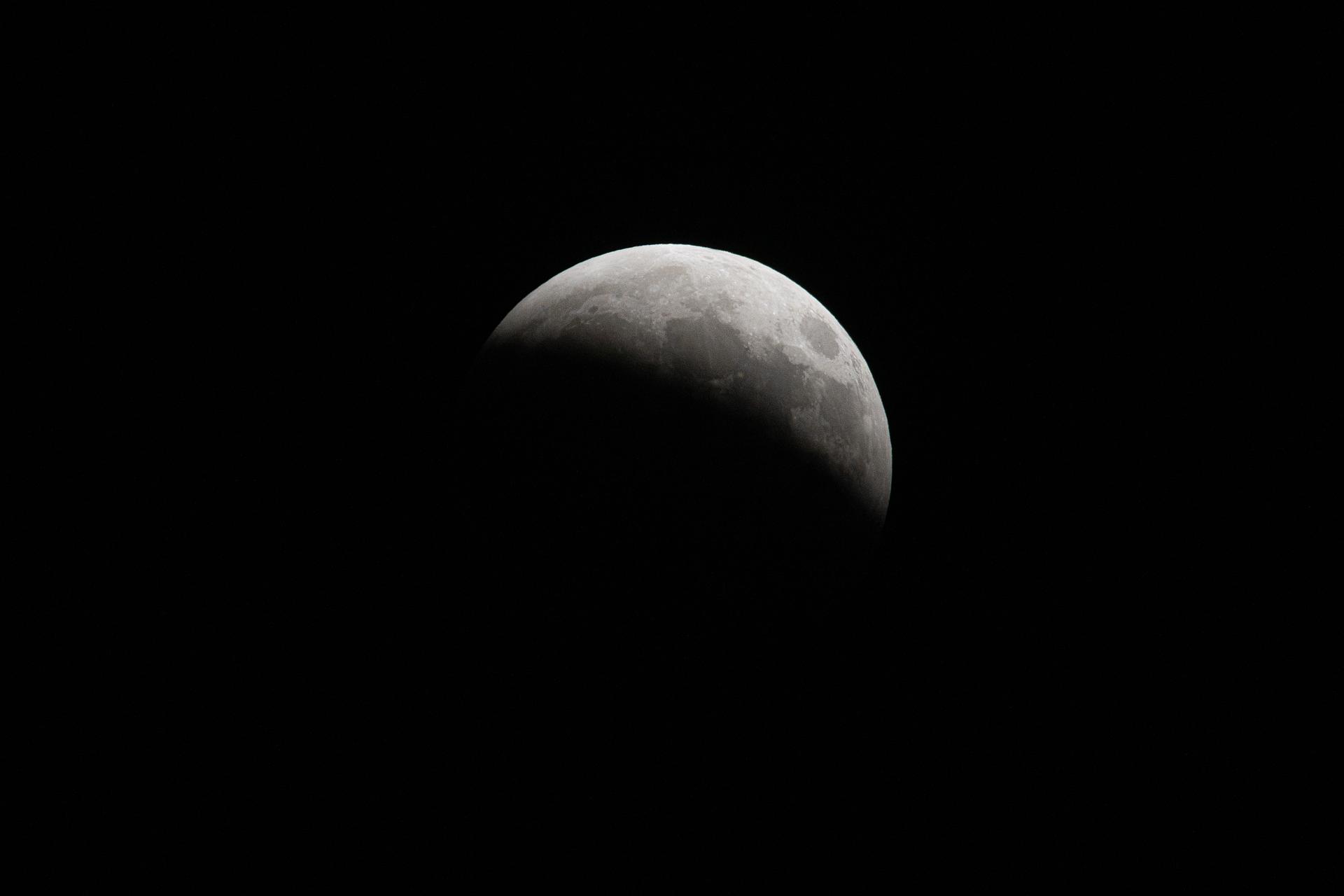
A lunar eclipse is visible over southern Louisiana. The lunar eclipse was visible throughout much of North and South America and part of Europe and Africa between Aug. 27-28. The Full Moon slipped through Earth’s shadow on Aug. 27, continuing into Aug. 28 for some parts of the world, resulting in the lunar eclipse. At maximum eclipse, the Moon takes on a dramatic dark, ruddy or coppery tint along the covered edge. New Orleans is home to NASA’s Michoud Assembly Facility, where stages for NASA’s SLS (Space Launch System) rocket and structures for Orion spacecraft are produced for the Artemis missions.
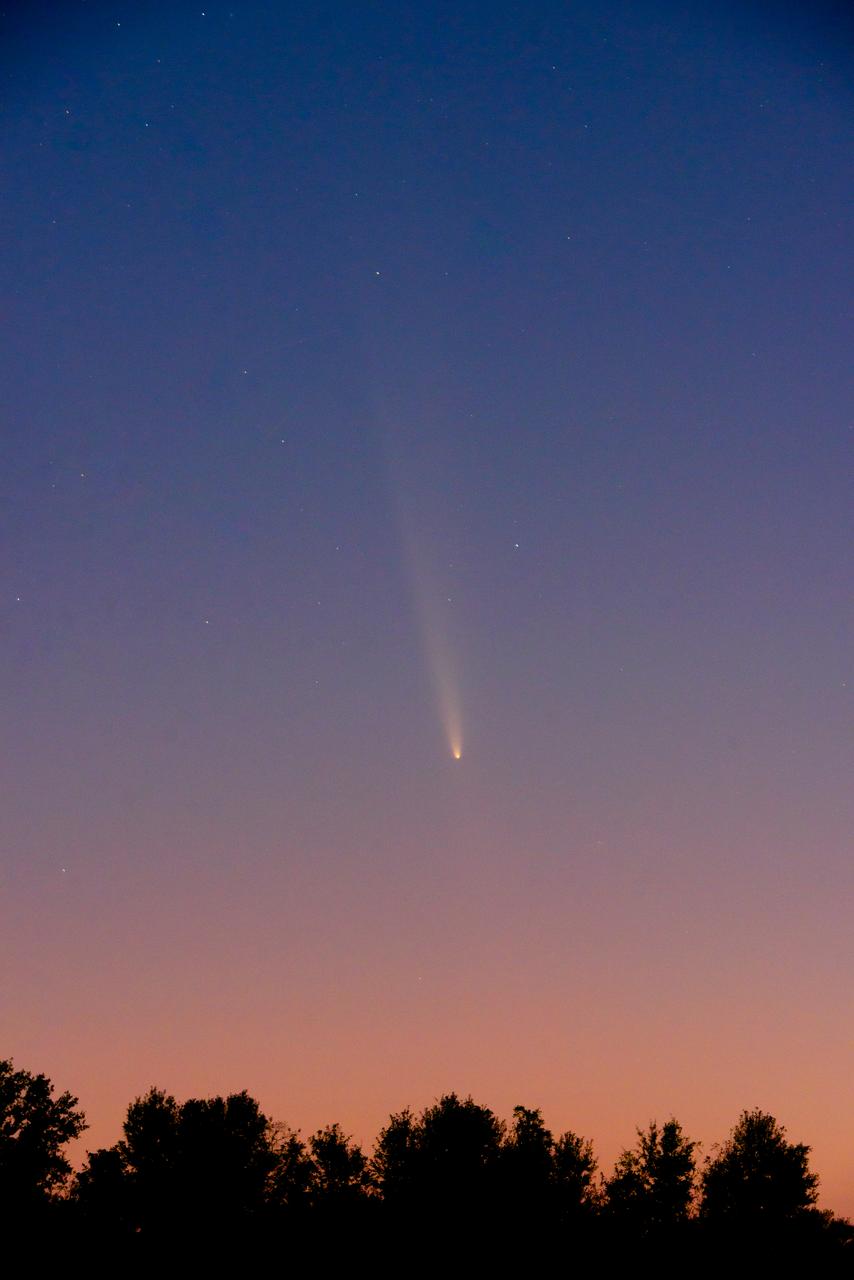
The Oort Cloud comet, called C/2023 A3 Tsuchinshan-ATLAS, passes over Southeast Louisiana near New Orleans, home of NASA’s Michoud Assembly Facility, Sunday, Oct. 13, 2024. The comet is making its first appearance in documented human history; it was last seen in the night sky 80,000 years ago. The Tsuchinshan-ATLAS comet made its first close pass by Earth in mid-October and will remain visible to viewers in the Northern Hemisphere just between the star Arcturus and planet Venus through early November.
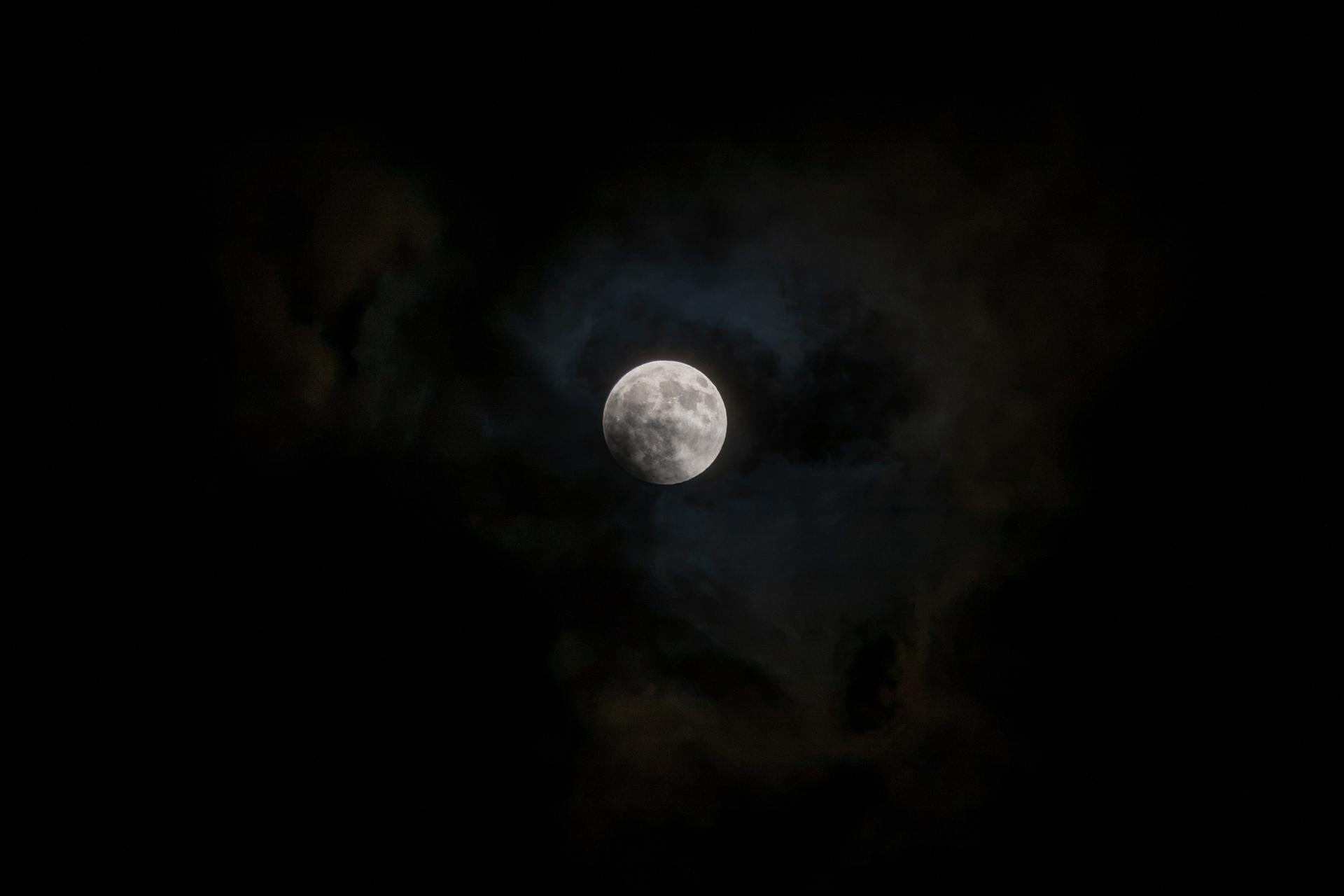
A lunar eclipse is visible over southern Louisiana. The lunar eclipse was visible throughout much of North and South America and part of Europe and Africa between Aug. 27-28. The Full Moon slipped through Earth’s shadow on Aug. 27, continuing into Aug. 28 for some parts of the world, resulting in the lunar eclipse. At maximum eclipse, the Moon takes on a dramatic dark, ruddy or coppery tint along the covered edge. New Orleans is home to NASA’s Michoud Assembly Facility, where stages for NASA’s SLS (Space Launch System) rocket and structures for Orion spacecraft are produced for the Artemis missions.
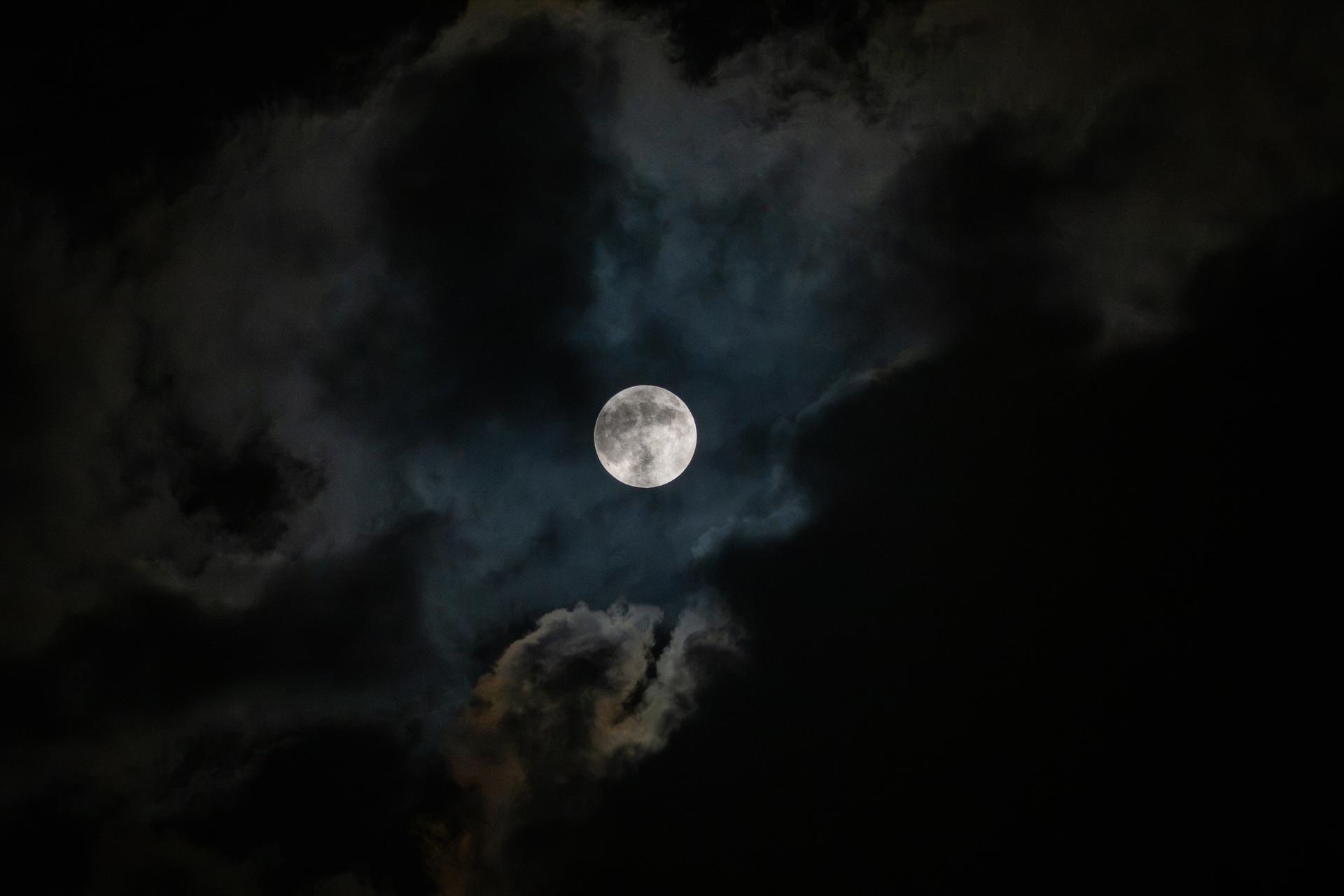
A lunar eclipse is visible over southern Louisiana. The lunar eclipse was visible throughout much of North and South America and part of Europe and Africa between Aug. 27-28. The Full Moon slipped through Earth’s shadow on Aug. 27, continuing into Aug. 28 for some parts of the world, resulting in the lunar eclipse. At maximum eclipse, the Moon takes on a dramatic dark, ruddy or coppery tint along the covered edge. New Orleans is home to NASA’s Michoud Assembly Facility, where stages for NASA’s SLS (Space Launch System) rocket and structures for Orion spacecraft are produced for the Artemis missions.
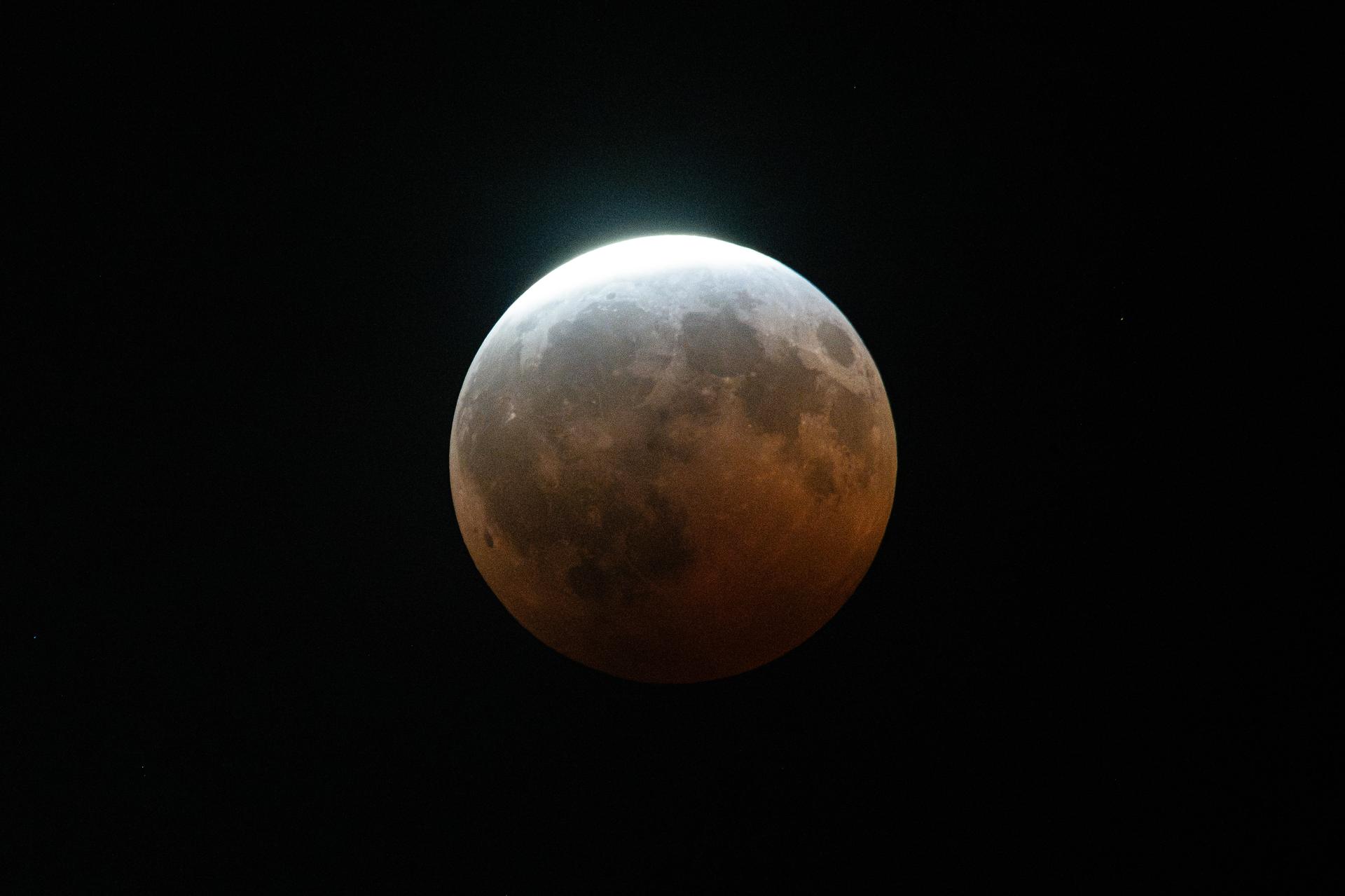
A lunar eclipse is visible over southern Louisiana. The lunar eclipse was visible throughout much of North and South America and part of Europe and Africa between Aug. 27-28. The Full Moon slipped through Earth’s shadow on Aug. 27, continuing into Aug. 28 for some parts of the world, resulting in the lunar eclipse. At maximum eclipse, the Moon takes on a dramatic dark, ruddy or coppery tint along the covered edge. New Orleans is home to NASA’s Michoud Assembly Facility, where stages for NASA’s SLS (Space Launch System) rocket and structures for Orion spacecraft are produced for the Artemis missions.
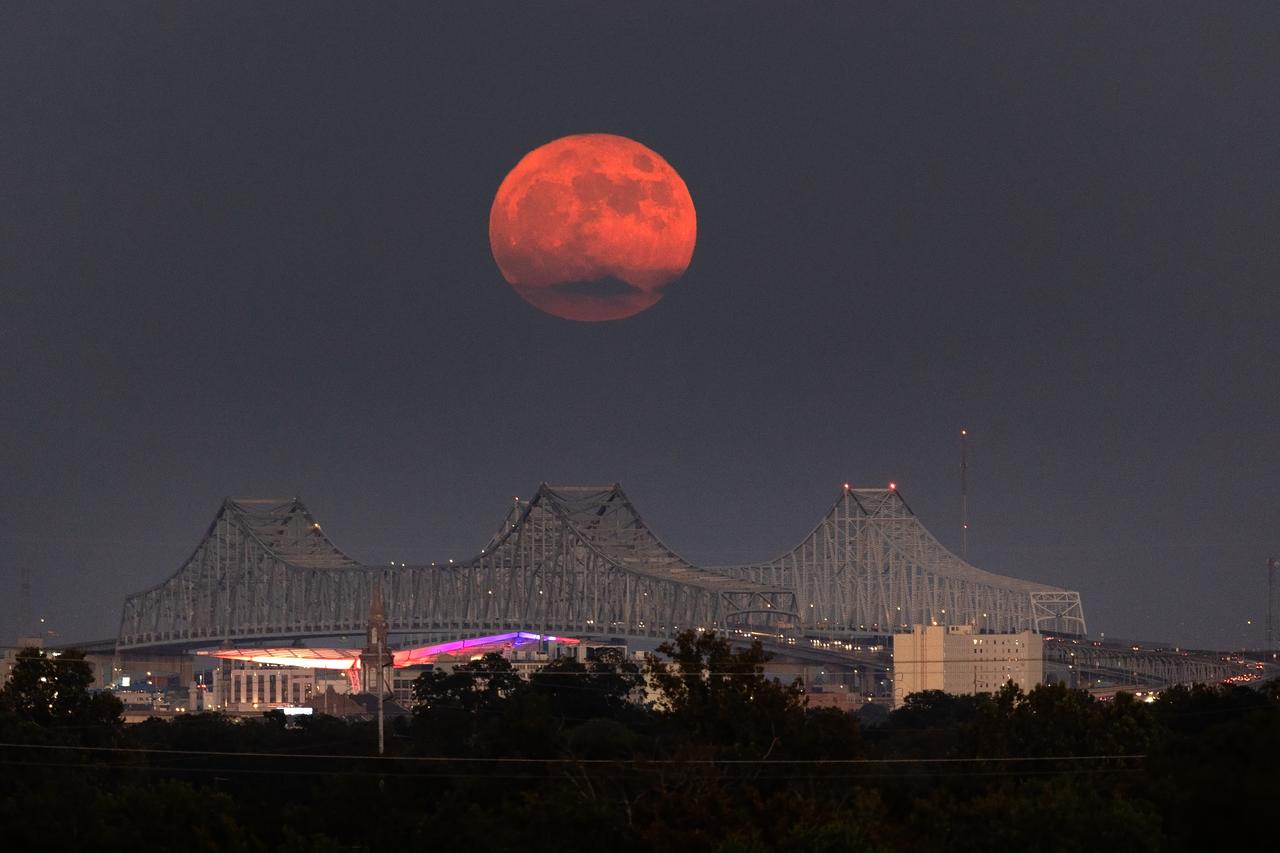
A Super Blue Moon rises above the Mississippi River and the Crescent City Connection Bridge in New Orleans, Aug. 30. The full moon is “super” because it’s slightly closer to Earth and “blue” because it’s the second full moon in a month. About 25% of all full moons are supermoons, but only 3% of full moons are blue moons. The next super blue moons will occur in a pair in January and March 2037. New Orleans is home to NASA’s Michoud Assembly Facility, where stages for NASA’s SLS (Space Launch System) rocket and structures for Orion spacecraft are produced for the Artemis missions.