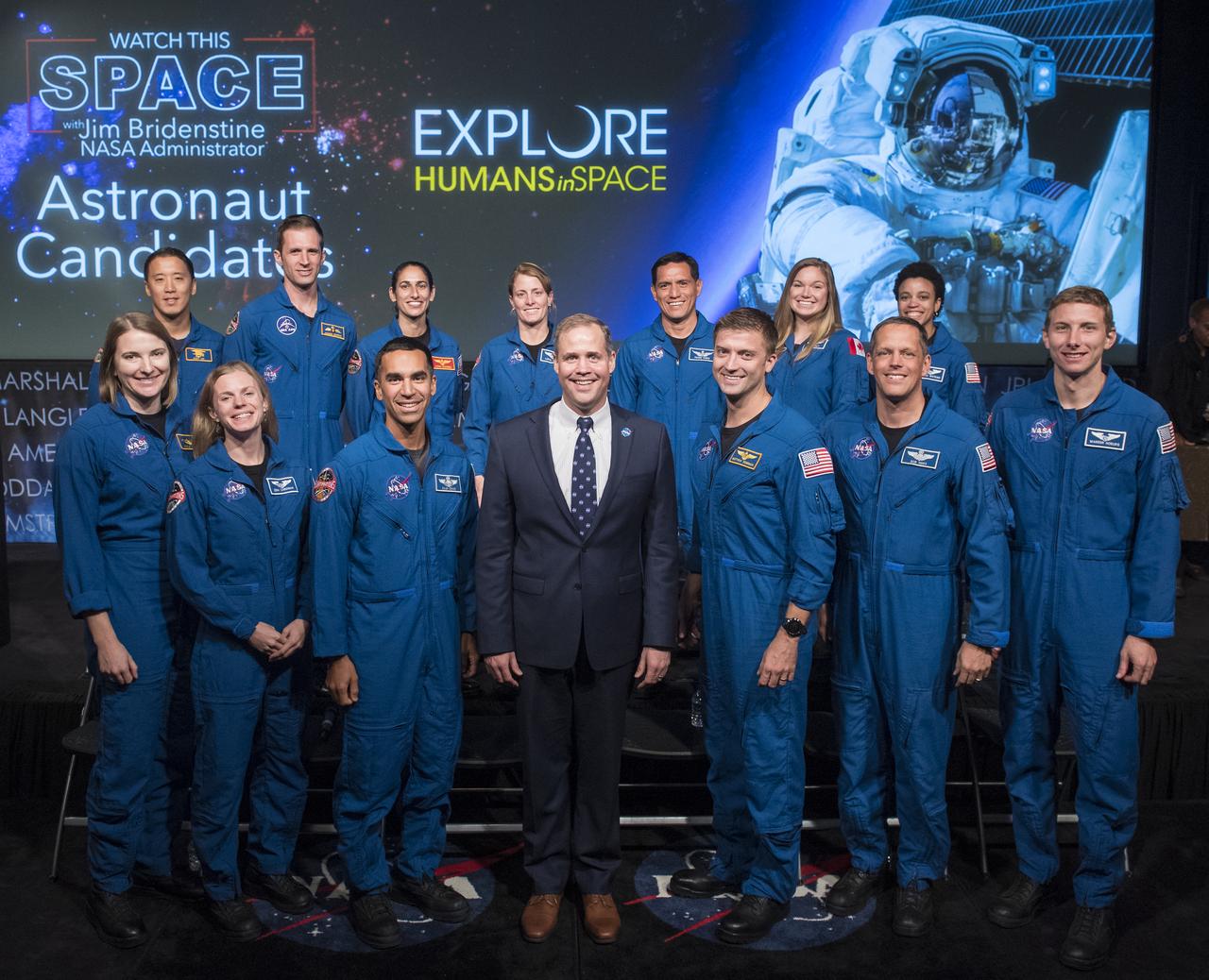
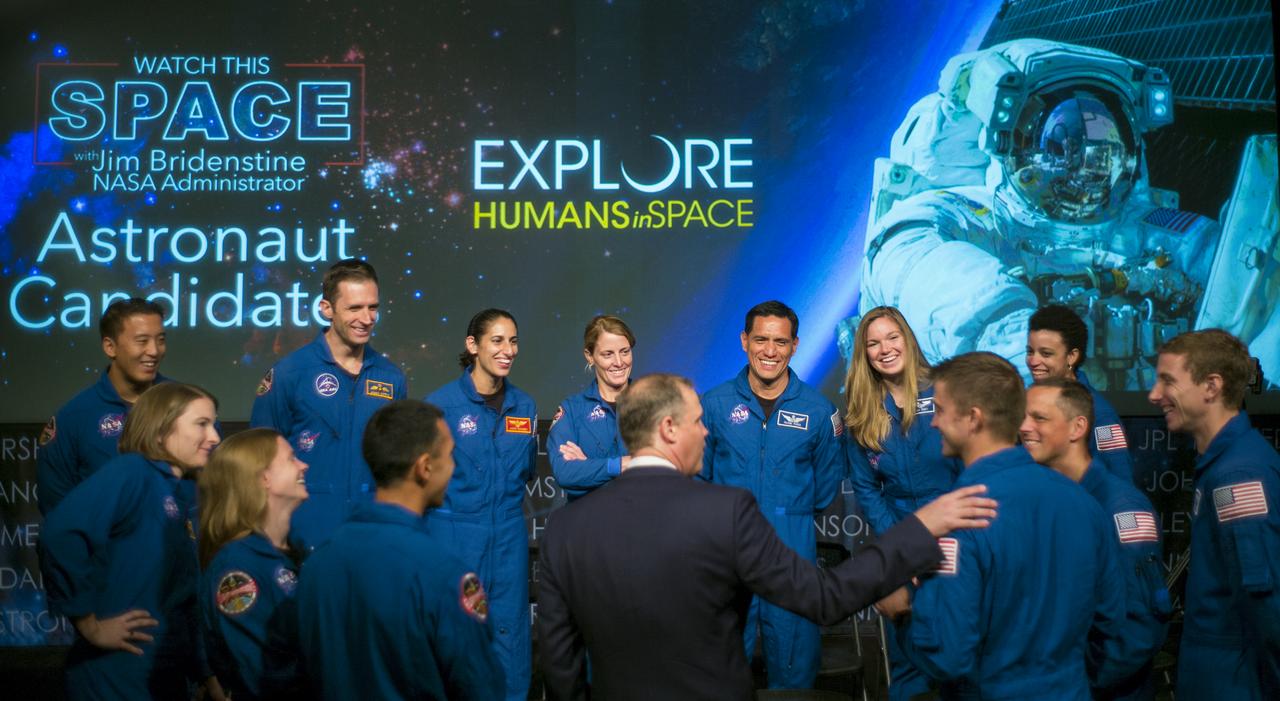
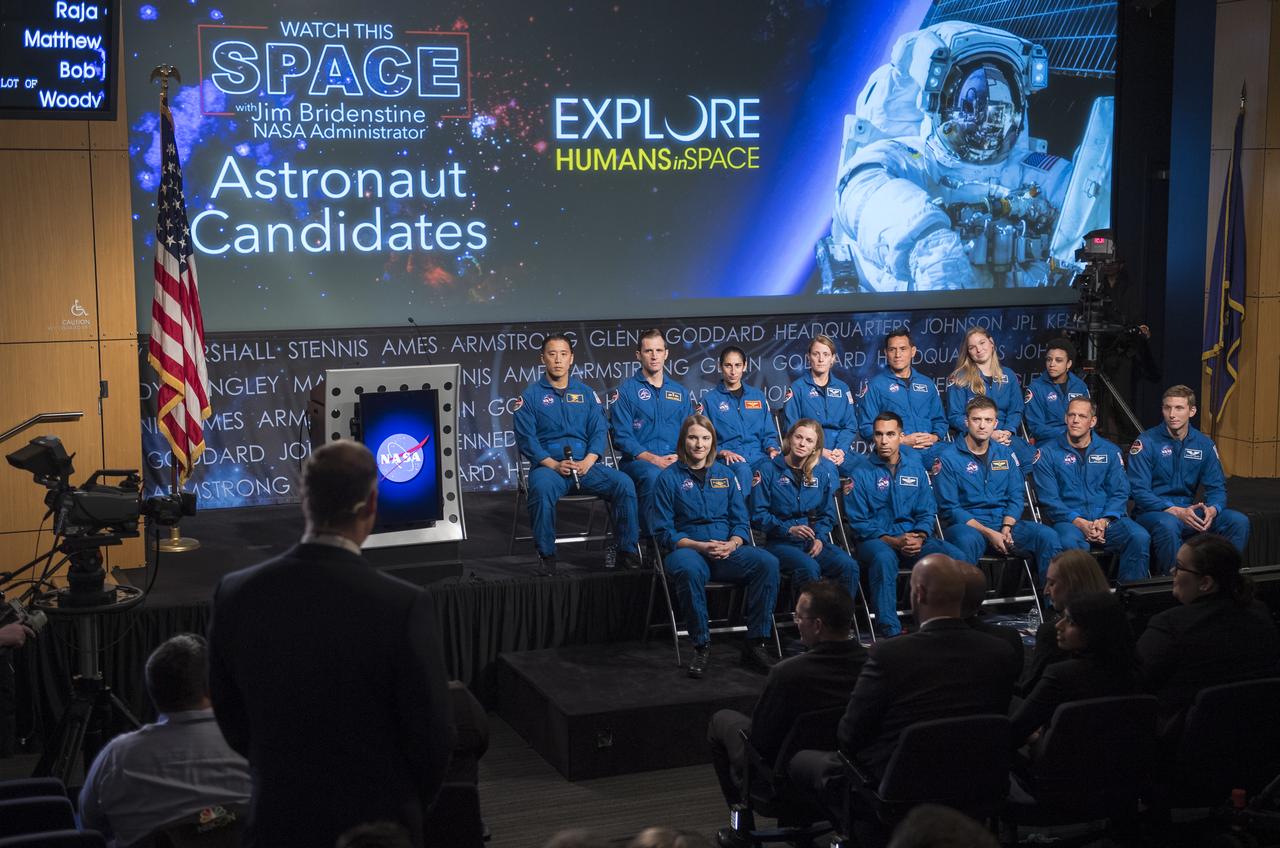
NASA Administrator Jim Bridenstine poses for a picture with the 2017 astronaut candidate class after taping a live episode of the Administrator's monthly chat show, Watch This Space,  Thursday, Sept. 27, 2018 in the Webb Auditorium at NASA Headquarters in Washington. NASA astronaut candidates, back row from left, Jonny Kim, Joshua Kutryk of the Canadian Space Agency, Jasmin Moghbeli, Loral O’Hara, Frank Rubio, Jennifer Sidey-Gibbons of the Canadian Space Agency, Jessica Watkins, front row from left, Kayla Barron, Zena Cardman, Raja Chari, Matthew Dominick, Bob Hines, and Warren Hoburg.    Photo Credit: (NASA/Joel Kowsky)
Watch This Space with the 2017 Astronaut Candidate Class
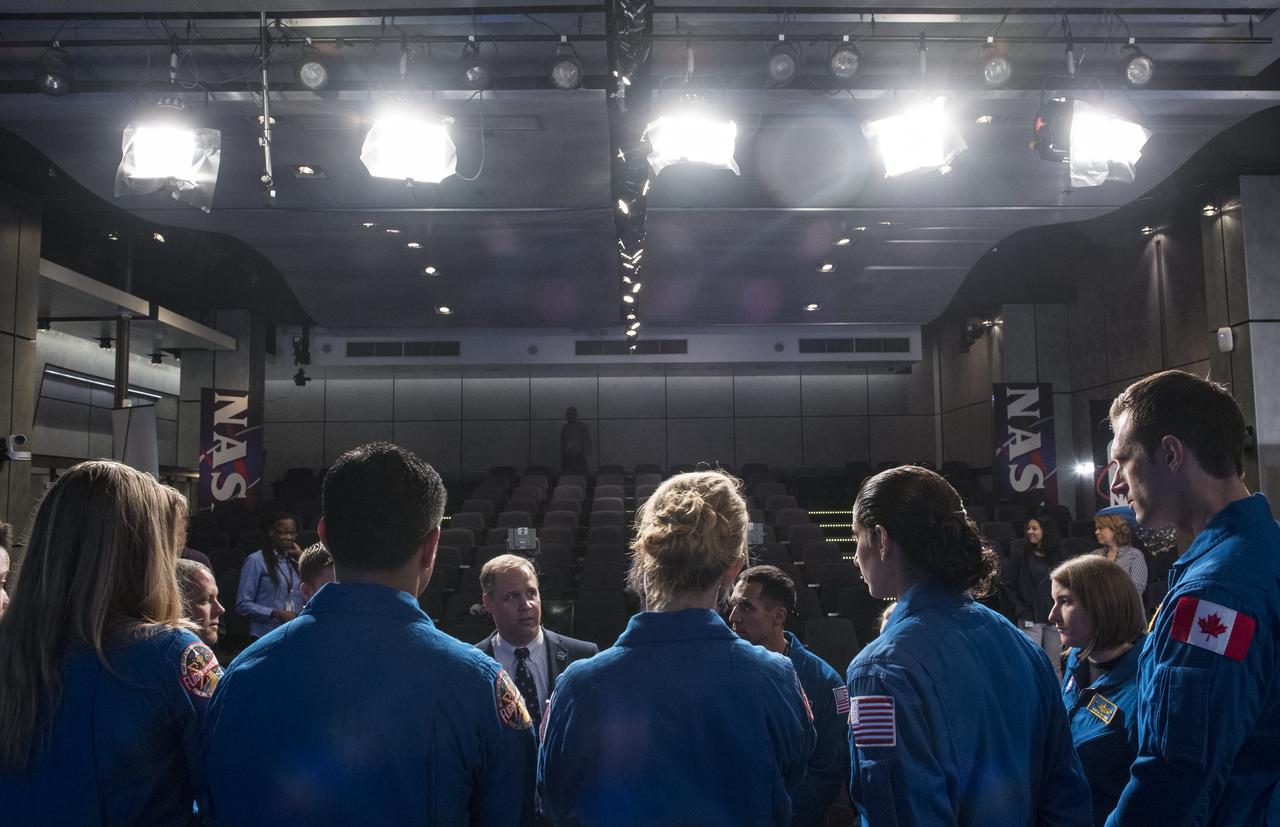
NASA Administrator Jim Bridenstine speaks with NASA and Canadian Space Agency astronaut candidates following a live episode of the Administrator's monthly chat show, Watch This Space,  Thursday, Sept. 27, 2018 in the Webb Auditorium at NASA Headquarters in Washington. NASA's newest astronaut candidate class has started their two years of training, after which the new astronaut candidates could be assigned to missions performing research on the International Space Station, launching from American soil on spacecraft built by commercial companies, and launching on deep space missions on NASA’s new Orion spacecraft and Space Launch System rocket.  Photo Credit: (NASA/Joel Kowsky)
Watch This Space with the 2017 Astronaut Candidate Class
NASA astronaut candidate Kayla Barron answers a question during a live episode of the Administrator's monthly chat show, Watch This Space,  Thursday, Sept. 27, 2018 in the Webb Auditorium at NASA Headquarters in Washington. NASA's newest astronaut candidate class has started their two years of training, after which the new astronaut candidates could be assigned to missions performing research on the International Space Station, launching from American soil on spacecraft built by commercial companies, and launching on deep space missions on NASA’s new Orion spacecraft and Space Launch System rocket.  Photo Credit: (NASA/Joel Kowsky)
Watch This Space with the 2017 Astronaut Candidate Class
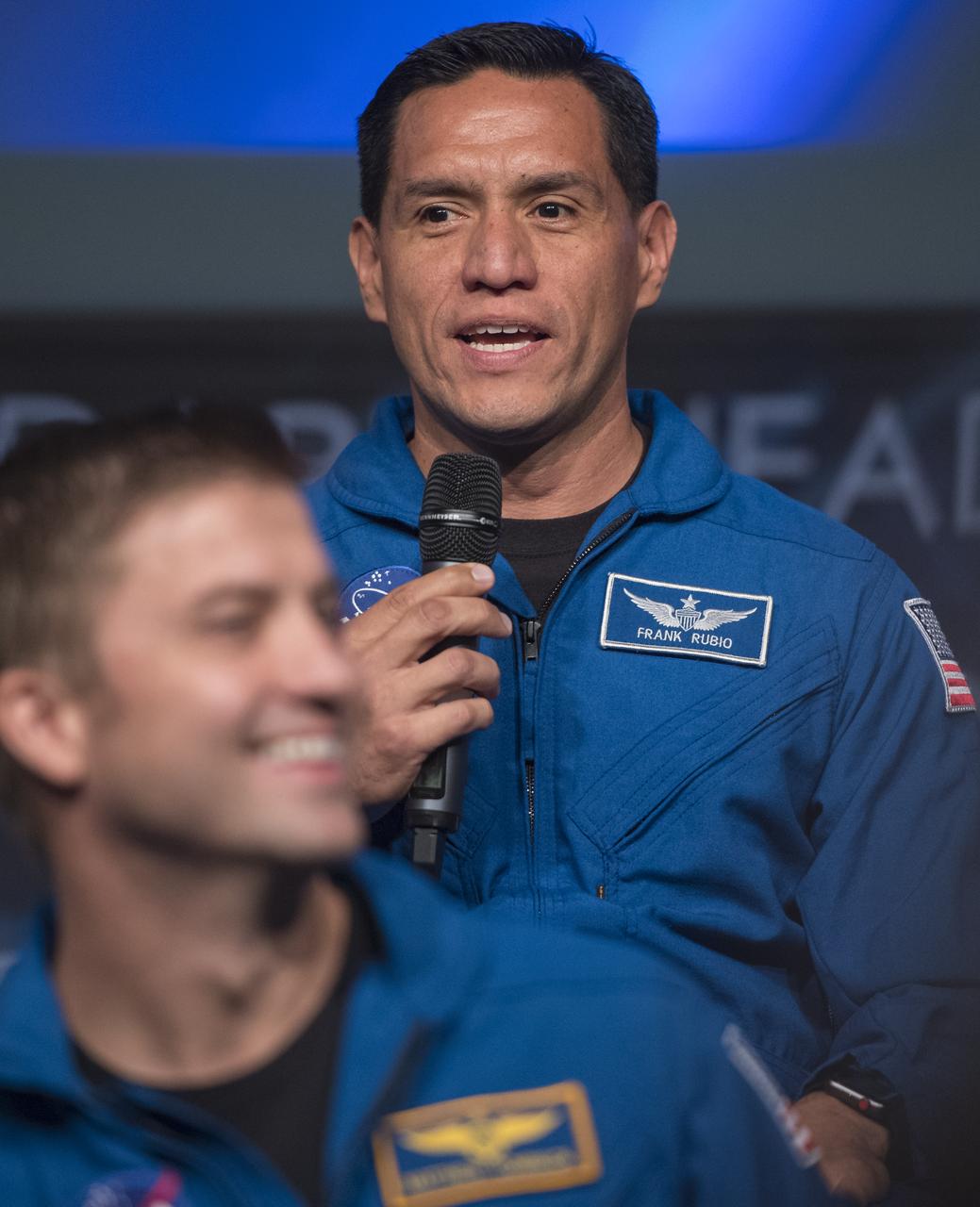
NASA Astronaut Candidate Frank Rubio answers a question during a live episode of the Administrator's monthly chat show, Watch This Space,  Thursday, Sept. 27, 2018 in the Webb Auditorium at NASA Headquarters in Washington. NASA's newest astronaut candidate class has started their two years of training, after which the new astronaut candidates could be assigned to missions performing research on the International Space Station, launching from American soil on spacecraft built by commercial companies, and launching on deep space missions on NASA’s new Orion spacecraft and Space Launch System rocket.  Photo Credit: (NASA/Joel Kowsky)
Watch This Space with the 2017 Astronaut Candidate Class
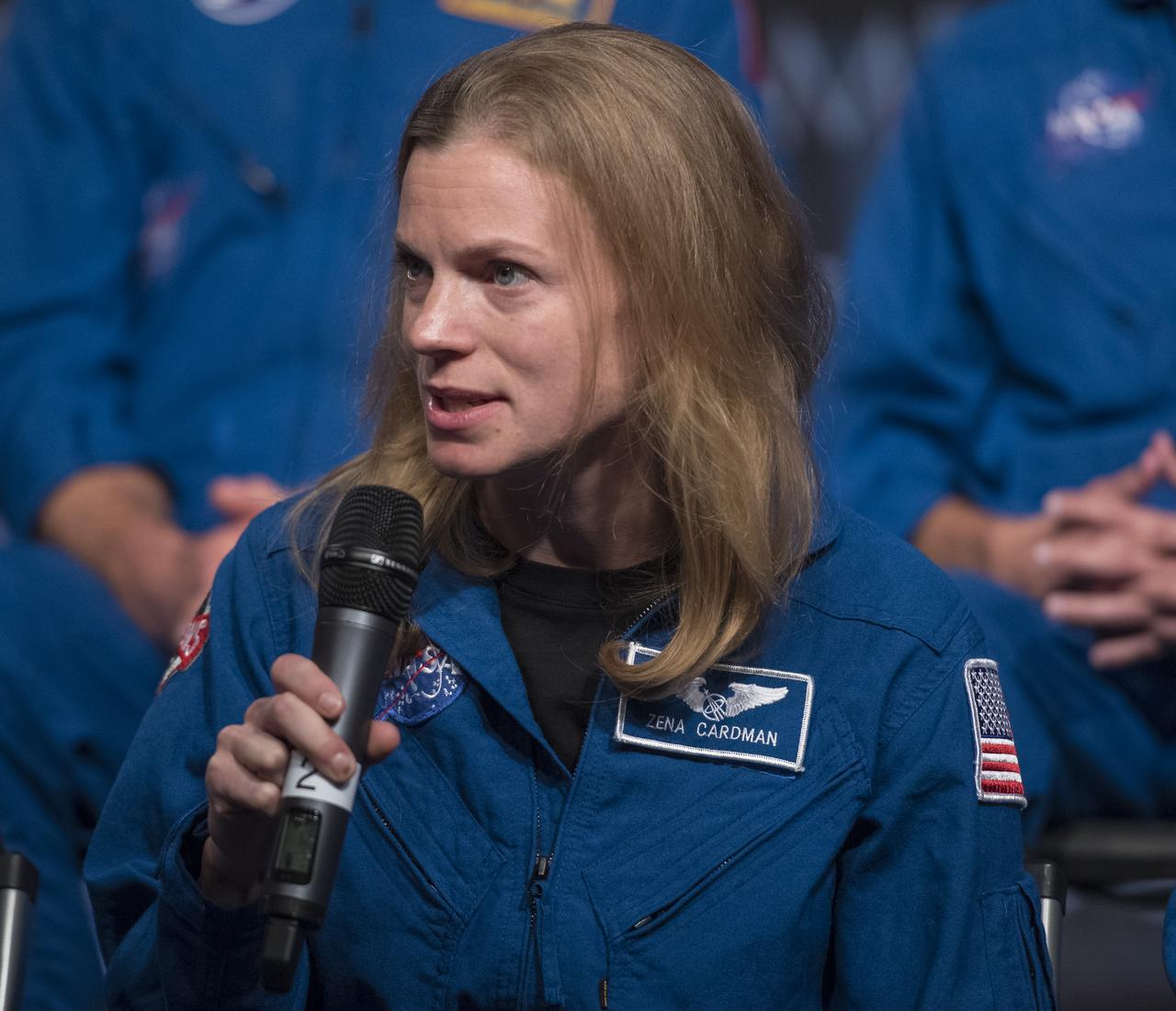
NASA astronaut candidate Zena Cardman answers a question during a live episode of the Administrator's monthly chat show, Watch This Space,  Thursday, Sept. 27, 2018 in the Webb Auditorium at NASA Headquarters in Washington. NASA's newest astronaut candidate class has started their two years of training, after which the new astronaut candidates could be assigned to missions performing research on the International Space Station, launching from American soil on spacecraft built by commercial companies, and launching on deep space missions on NASA’s new Orion spacecraft and Space Launch System rocket.  Photo Credit: (NASA/Joel Kowsky)
Watch This Space with the 2017 Astronaut Candidate Class
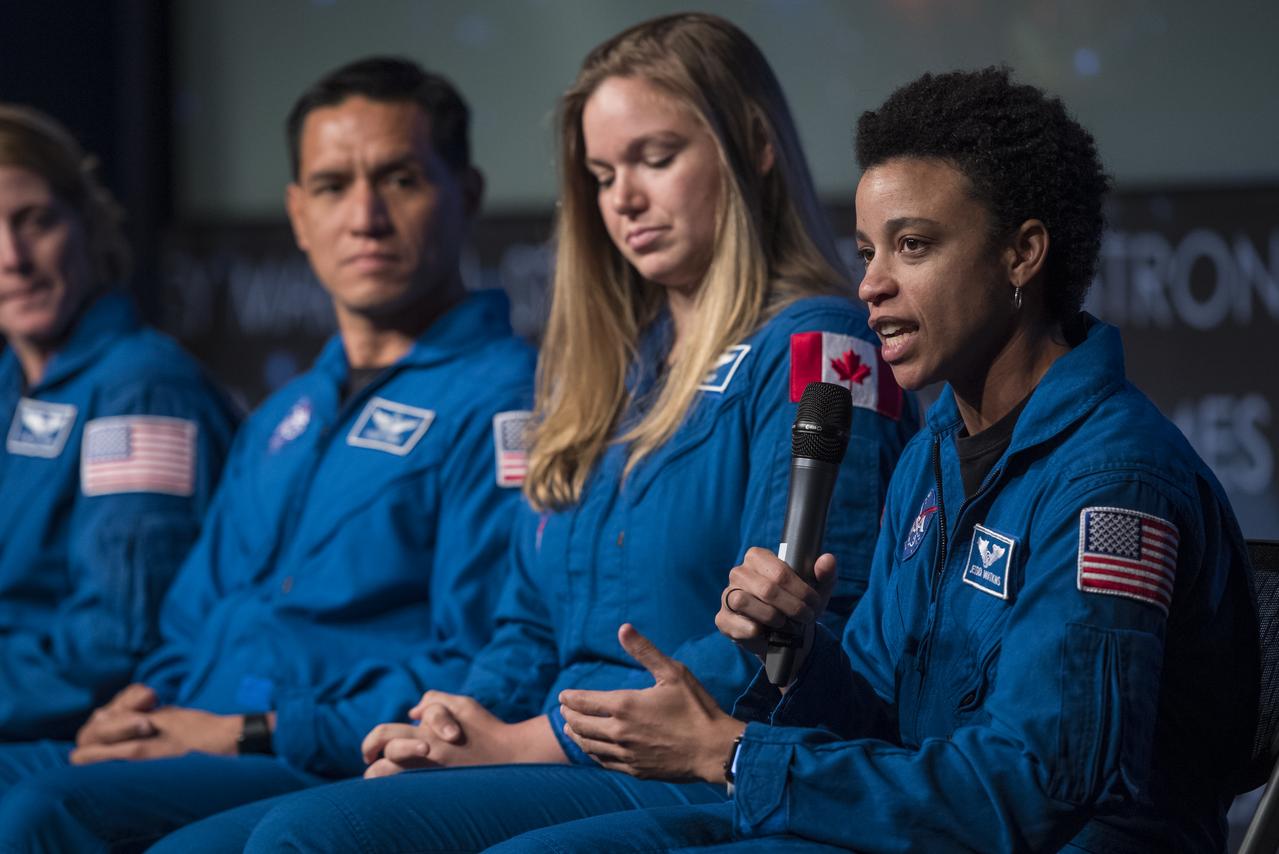
NASA astronaut candidate Jessica Watkins answers a question during a live episode of the Administrator's monthly chat show, Watch This Space,  Thursday, Sept. 27, 2018 in the Webb Auditorium at NASA Headquarters in Washington. NASA's newest astronaut candidate class has started their two years of training, after which the new astronaut candidates could be assigned to missions performing research on the International Space Station, launching from American soil on spacecraft built by commercial companies, and launching on deep space missions on NASA’s new Orion spacecraft and Space Launch System rocket.  Photo Credit: (NASA/Joel Kowsky)
Watch This Space with the 2017 Astronaut Candidate Class
NASA astronaut candidate Bob Hines answers a question during a live episode of the Administrator's monthly chat show, Watch This Space,  Thursday, Sept. 27, 2018 in the Webb Auditorium at NASA Headquarters in Washington. NASA's newest astronaut candidate class has started their two years of training, after which the new astronaut candidates could be assigned to missions performing research on the International Space Station, launching from American soil on spacecraft built by commercial companies, and launching on deep space missions on NASA’s new Orion spacecraft and Space Launch System rocket.  Photo Credit: (NASA/Joel Kowsky)
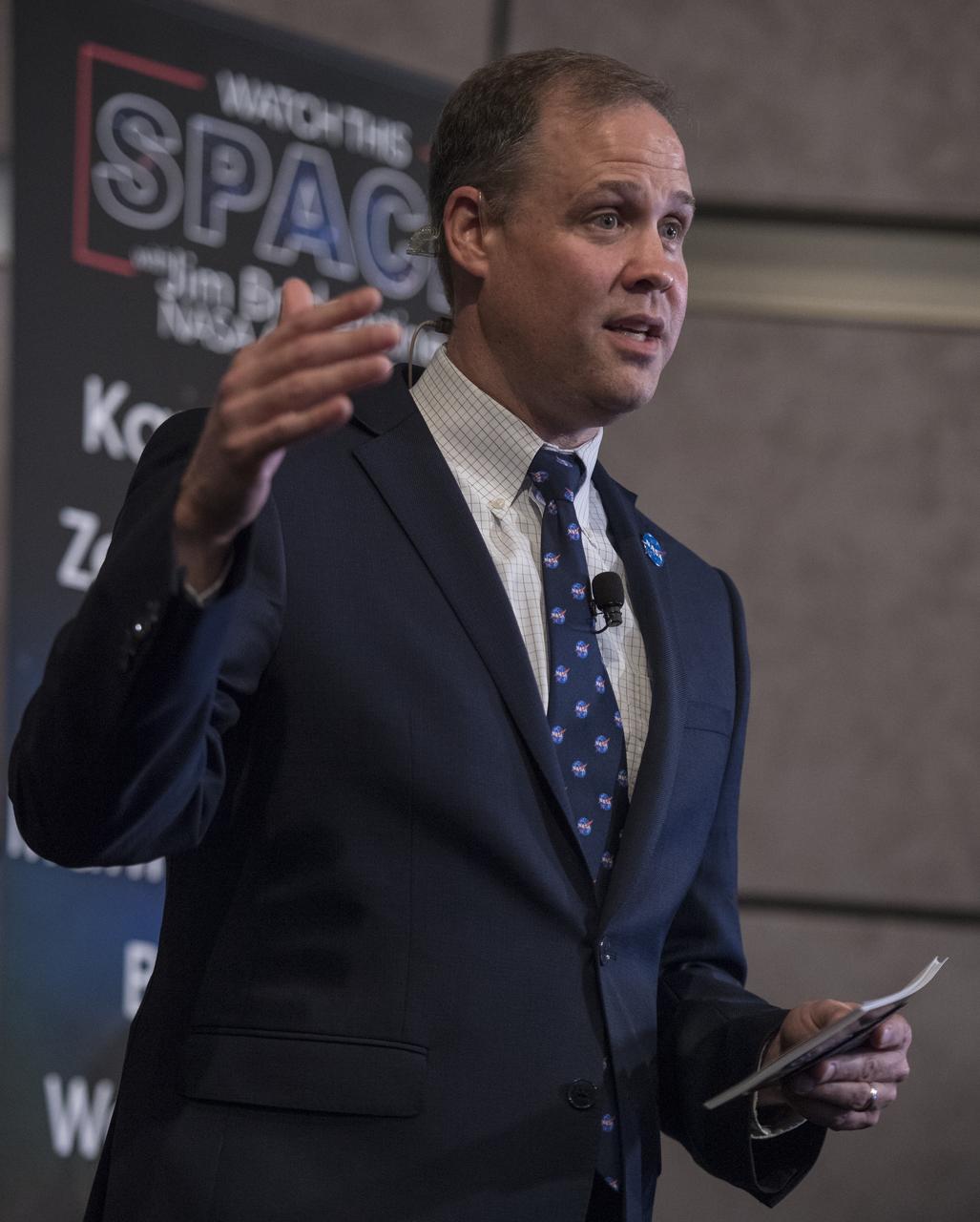
Watch This Space with the 2017 Astronaut Candidate Class
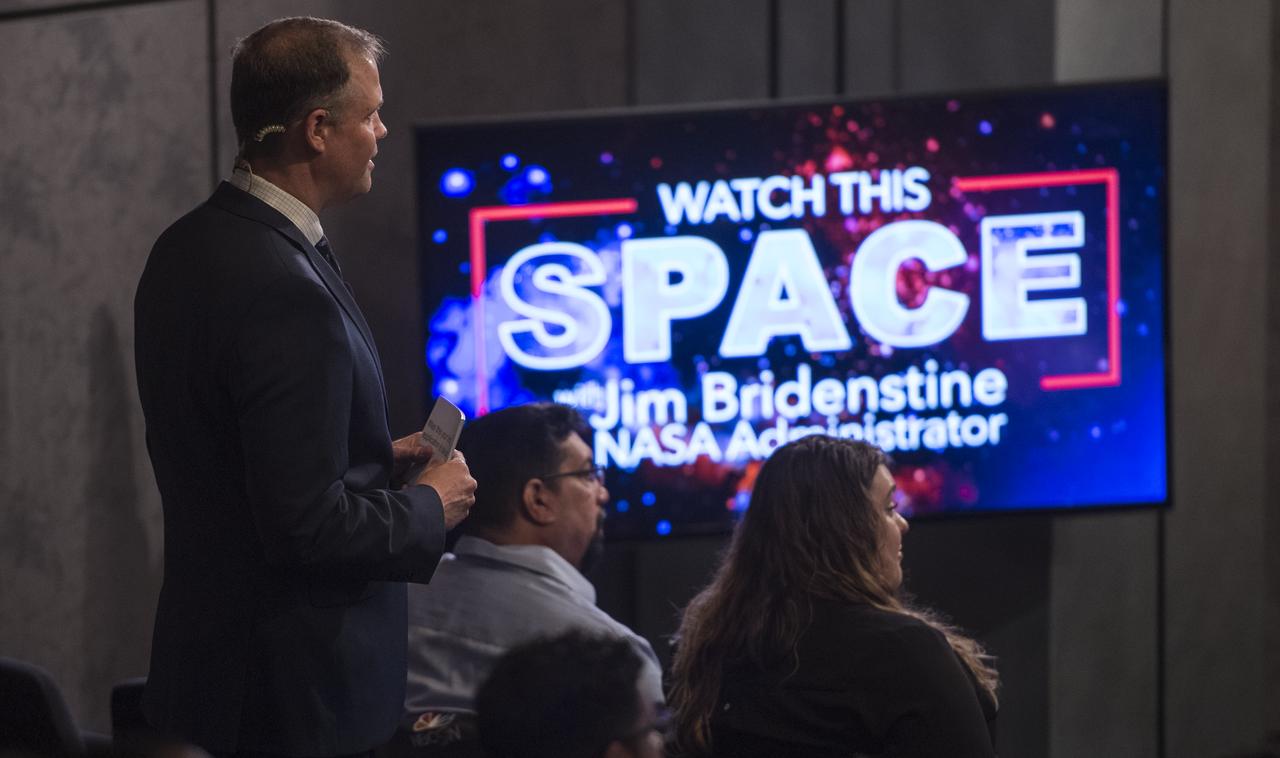
NASA Administrator Jim Bridenstine asks a question of the 2017 astronaut candidates during a live episode of the Administrator's monthly chat show, Watch This Space,  Thursday, Sept. 27, 2018 in the Webb Auditorium at NASA Headquarters in Washington. NASA's newest astronaut candidate class has started their two years of training, after which the new astronaut candidates could be assigned to missions performing research on the International Space Station, launching from American soil on spacecraft built by commercial companies, and launching on deep space missions on NASA’s new Orion spacecraft and Space Launch System rocket.  Photo Credit: (NASA/Joel Kowsky)
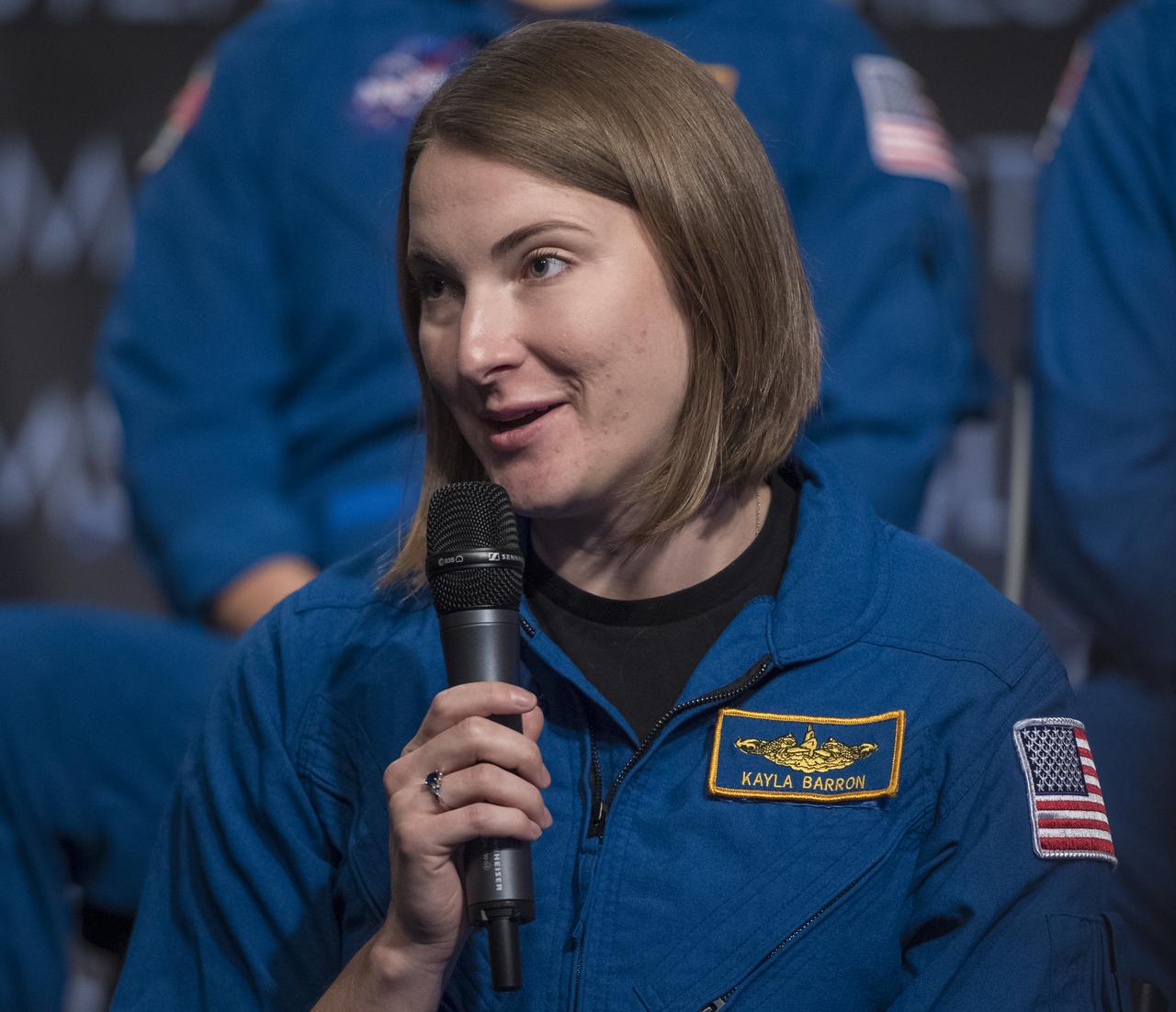
Watch This Space with the 2017 Astronaut Candidate Class
NASA astronaut candidate Jasmin Moghbeli answers a question during a live episode of the Administrator's monthly chat show, Watch This Space,  Thursday, Sept. 27, 2018 in the Webb Auditorium at NASA Headquarters in Washington. NASA's newest astronaut candidate class has started their two years of training, after which the new astronaut candidates could be assigned to missions performing research on the International Space Station, launching from American soil on spacecraft built by commercial companies, and launching on deep space missions on NASA’s new Orion spacecraft and Space Launch System rocket.  Photo Credit: (NASA/Joel Kowsky)
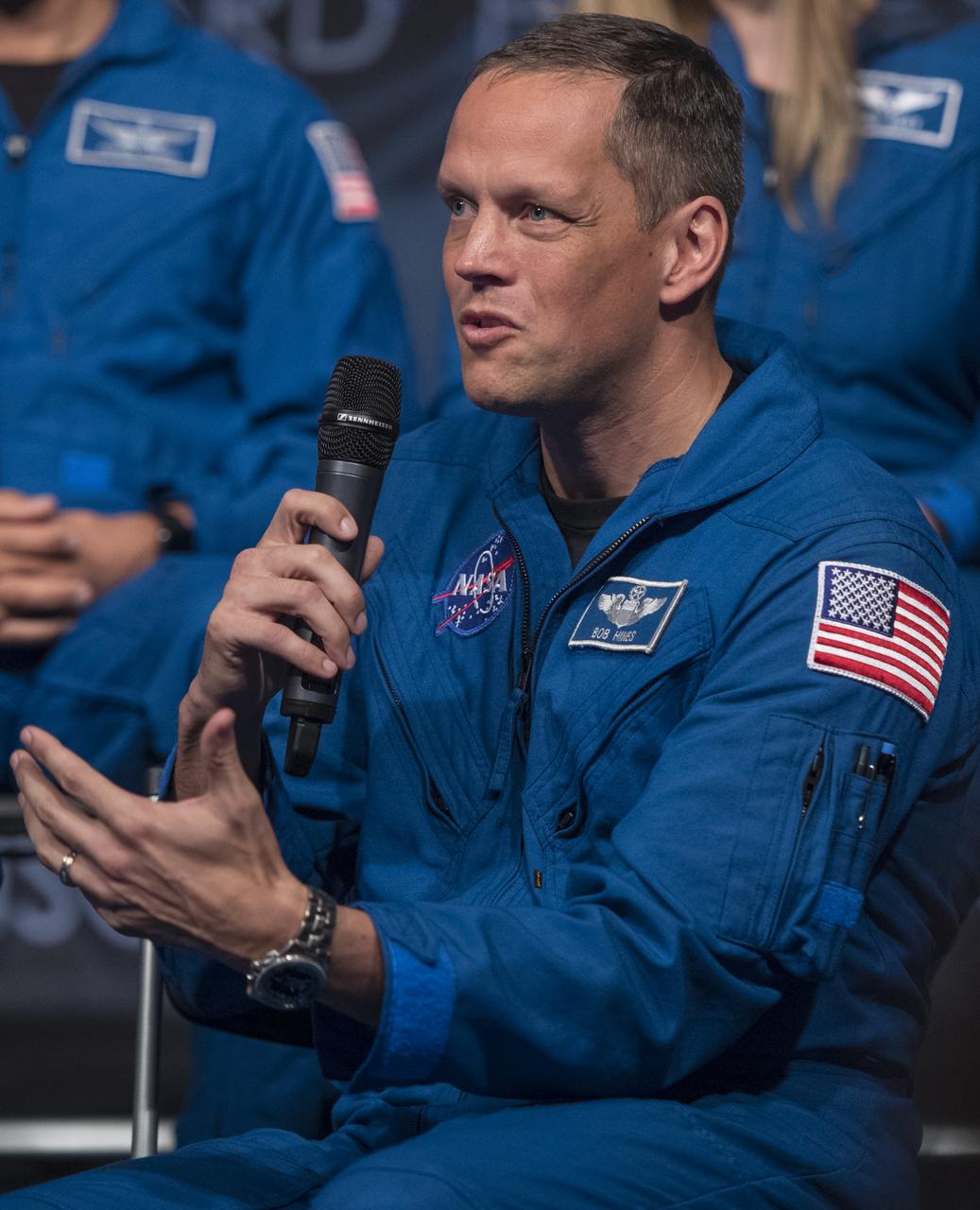
Watch This Space with the 2017 Astronaut Candidate Class
NASA astronaut candidate Loral O’Hara answers a question during a live episode of the Administrator's monthly chat show, Watch This Space,  Thursday, Sept. 27, 2018 in the Webb Auditorium at NASA Headquarters in Washington. NASA's newest astronaut candidate class has started their two years of training, after which the new astronaut candidates could be assigned to missions performing research on the International Space Station, launching from American soil on spacecraft built by commercial companies, and launching on deep space missions on NASA’s new Orion spacecraft and Space Launch System rocket.  Photo Credit: (NASA/Joel Kowsky)
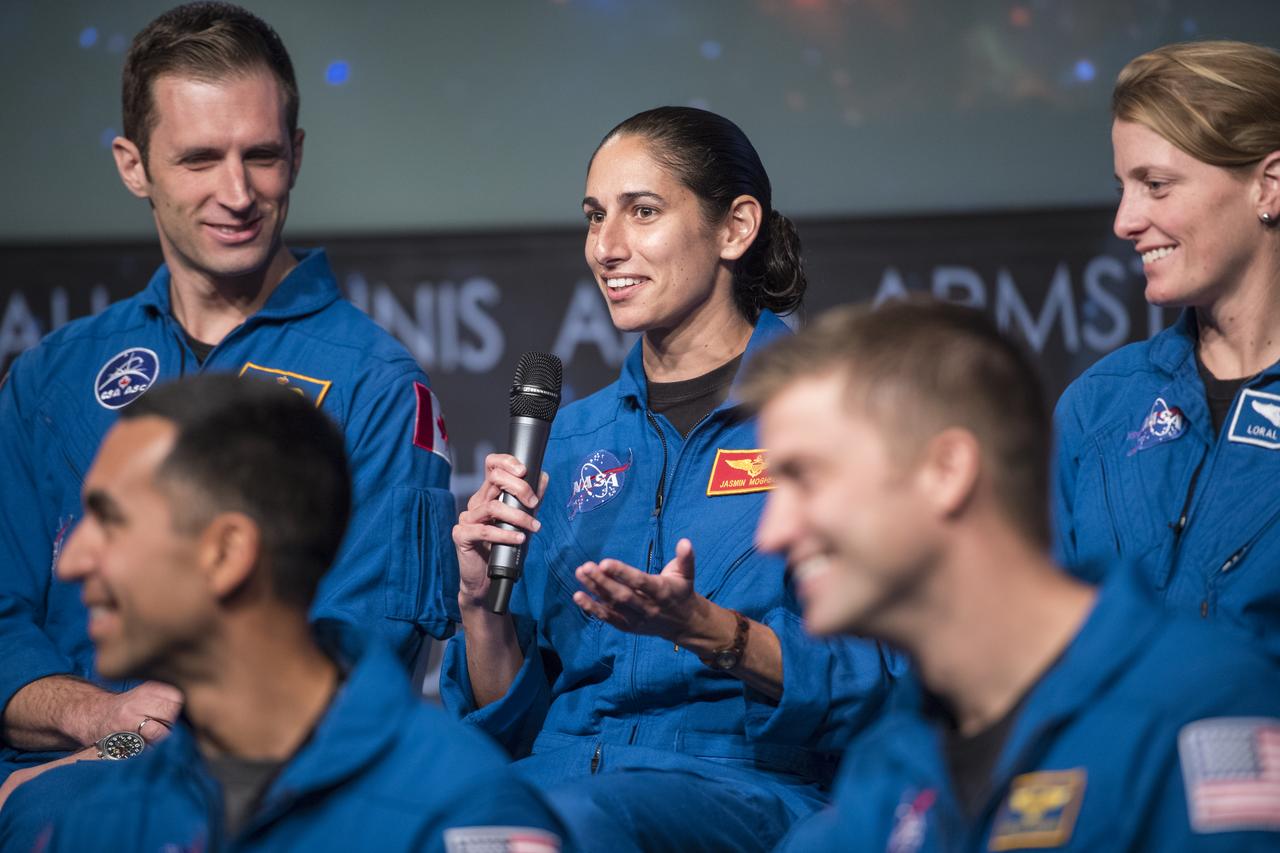
Watch This Space with the 2017 Astronaut Candidate Class
NASA Administrator Jim Bridenstine speaks with the agency's astronaut candidates during a live episode of the Administrator's monthly chat show, Watch This Space,  Thursday, Sept. 27, 2018 in the Webb Auditorium at NASA Headquarters in Washington. NASA's newest astronaut candidate class has started their two years of training, after which the new astronaut candidates could be assigned to missions performing research on the International Space Station, launching from American soil on spacecraft built by commercial companies, and launching on deep space missions on NASA’s new Orion spacecraft and Space Launch System rocket.  Photo Credit: (NASA/Joel Kowsky)
Watch This Space with the 2017 Astronaut Candidate Class
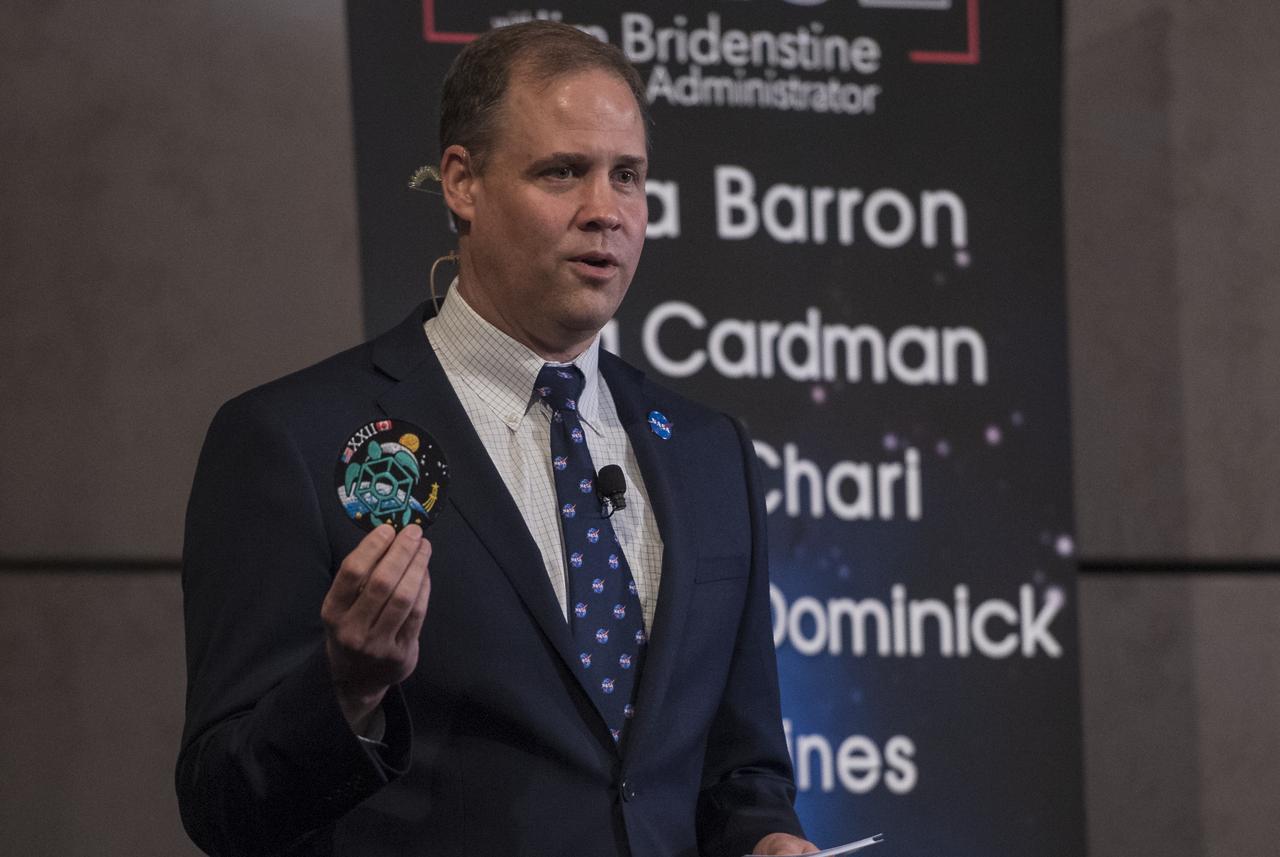
NASA Administrator Jim Bridenstine holds up the patch of the 2017 astronaut class during a live episode of the Administrator's monthly chat show, Watch This Space,  Thursday, Sept. 27, 2018 in the Webb Auditorium at NASA Headquarters in Washington. NASA's newest astronaut candidate class has started their two years of training, after which the new astronaut candidates could be assigned to missions performing research on the International Space Station, launching from American soil on spacecraft built by commercial companies, and launching on deep space missions on NASA’s new Orion spacecraft and Space Launch System rocket.  Photo Credit: (NASA/Joel Kowsky)
Watch This Space with the 2017 Astronaut Candidate Class
NASA Administrator Jim Bridenstine is seen during a live episode of the Administrator's monthly chat show, Watch This Space,  Thursday, Sept. 27, 2018 in the Webb Auditorium at NASA Headquarters in Washington. NASA's newest astronaut candidate class has started their two years of training, after which the new astronaut candidates could be assigned to missions performing research on the International Space Station, launching from American soil on spacecraft built by commercial companies, and launching on deep space missions on NASA’s new Orion spacecraft and Space Launch System rocket.  Photo Credit: (NASA/Joel Kowsky)
Watch This Space with the 2017 Astronaut Candidate Class
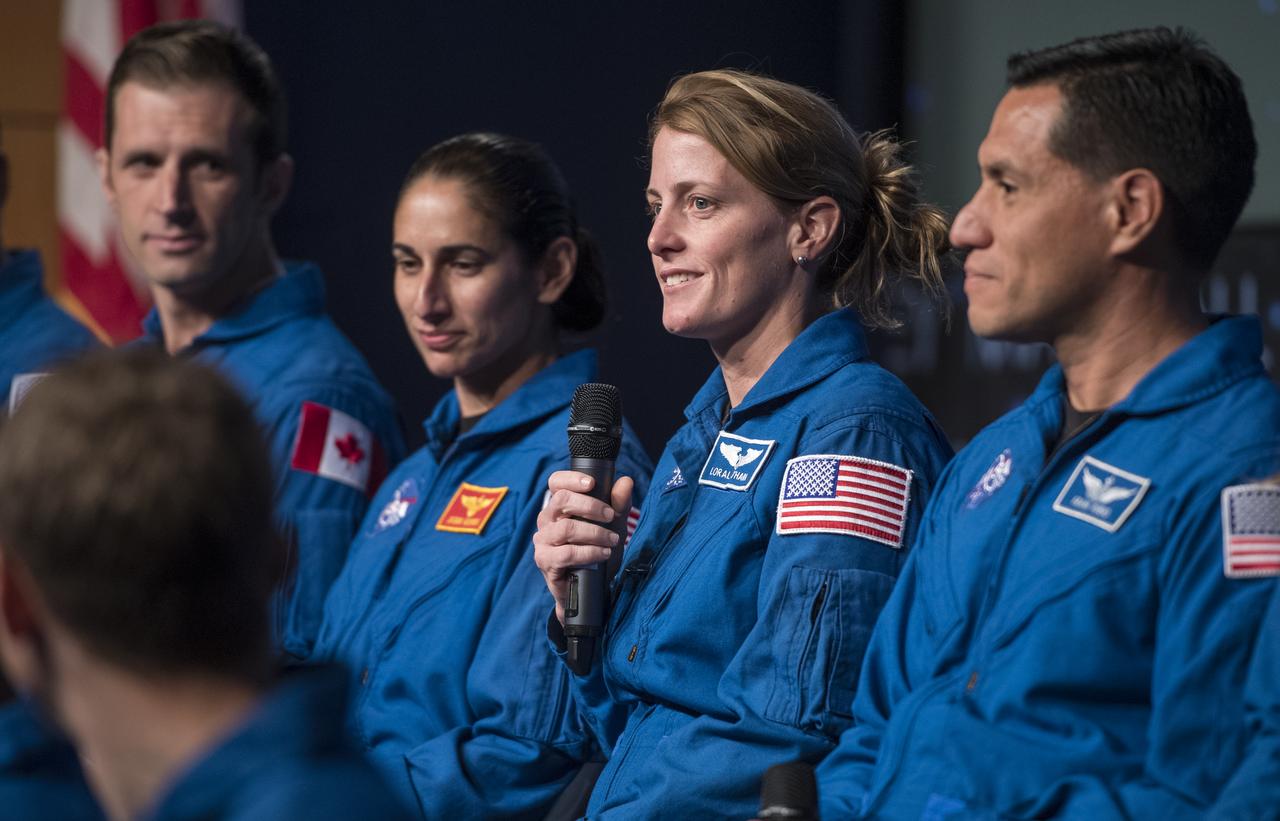
NASA Administrator Jim Bridenstine speaks with NASA and Canadian Space Agency astronaut candidates following a live episode of the Administrator's monthly chat show, Watch This Space,  Thursday, Sept. 27, 2018 in the Webb Auditorium at NASA Headquarters in Washington. NASA's newest astronaut candidate class has started their two years of training, after which the new astronaut candidates could be assigned to missions performing research on the International Space Station, launching from American soil on spacecraft built by commercial companies, and launching on deep space missions on NASA’s new Orion spacecraft and Space Launch System rocket.  Photo Credit: (NASA/Joel Kowsky)
Watch This Space with the 2017 Astronaut Candidate Class
NASA Administrator Jim Bridenstine introduces the 2017 astronaut candidates during a live episode of the Administrator's monthly chat show, Watch This Space,  Thursday, Sept. 27, 2018 in the Webb Auditorium at NASA Headquarters in Washington. NASA's newest astronaut candidate class has started their two years of training, after which the new astronaut candidates could be assigned to missions performing research on the International Space Station, launching from American soil on spacecraft built by commercial companies, and launching on deep space missions on NASA’s new Orion spacecraft and Space Launch System rocket.  Photo Credit: (NASA/Joel Kowsky)
Watch This Space with the 2017 Astronaut Candidate Class
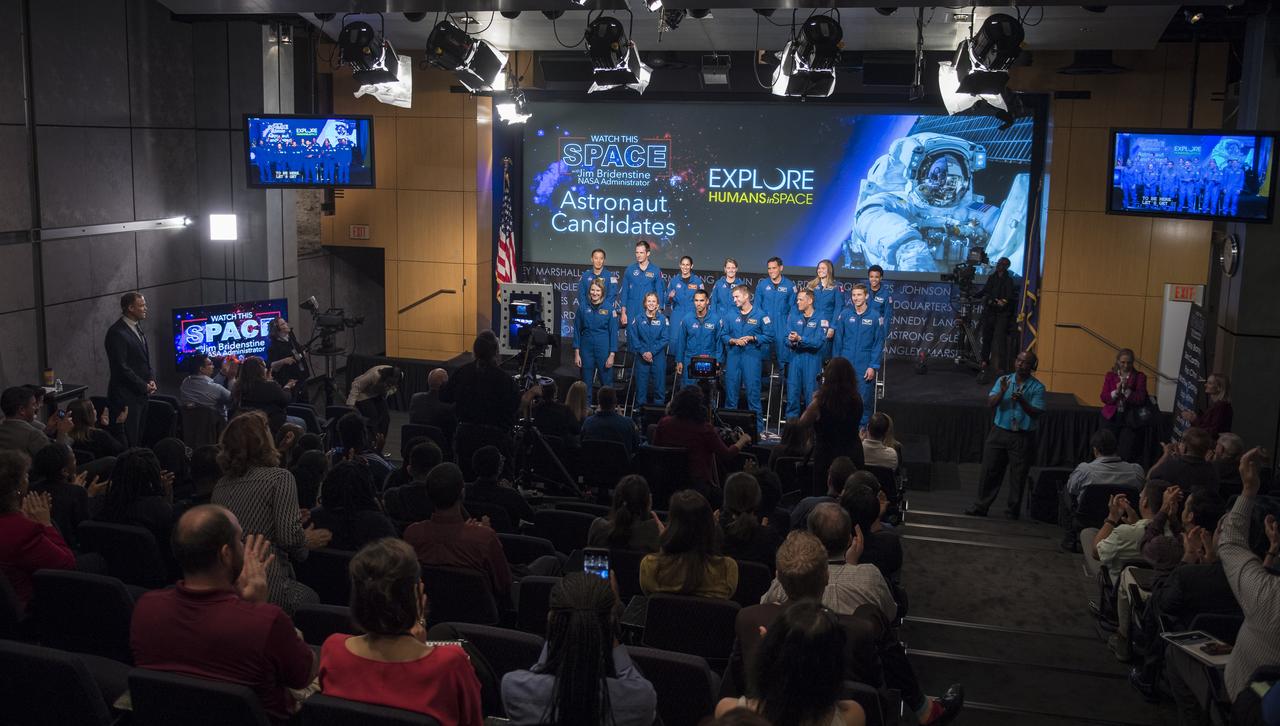
Astronaut candidates, back row from left, Jonny Kim, Joshua Kutryk of the Canadian Space Agency, Jasmin Moghbeli, Loral O’Hara, Frank Rubio, Jennifer Sidey-Gibbons of the Canadian Space Agency, Jessica Watkins, front row from left, Kayla Barron, Zena Cardman, Raja Chari, Matthew Dominick, Bob Hines, and Warren Hoburg are seen during a live episode of the Administrator's monthly chat show, Watch This Space,  Thursday, Sept. 27, 2018 in the Webb Auditorium at NASA Headquarters in Washington. NASA's newest astronaut candidate class has started their two years of training, after which the new astronaut candidates could be assigned to missions performing research on the International Space Station, launching from American soil on spacecraft built by commercial companies, and launching on deep space missions on NASA’s new Orion spacecraft and Space Launch System rocket.  Photo Credit: (NASA/Joel Kowsky)
Watch This Space with the 2017 Astronaut Candidate Class
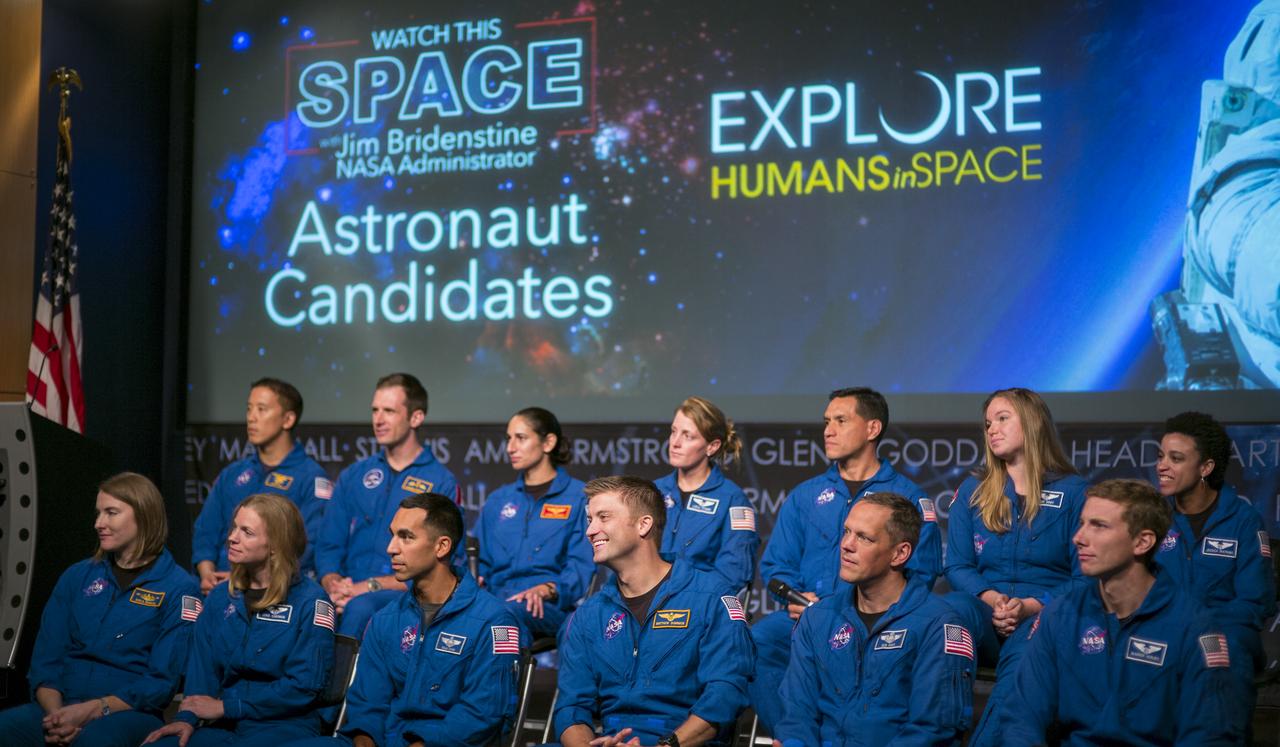
NASA astronaut candidate Matthew Dominick, third from right in the front row, answers a question during a live episode of the Administrator's monthly chat show, Watch This Space, along with fellow members of the 2017 astronaut candidate class, Thursday, Sept. 27, 2018 in the Webb Auditorium at NASA Headquarters in Washington. NASA's newest astronaut candidate class has started their two years of training, after which the new astronaut candidates could be assigned to missions performing research on the International Space Station, launching from American soil on spacecraft built by commercial companies, and launching on deep space missions on NASA’s new Orion spacecraft and Space Launch System rocket.  Photo Credit: (NASA/Joel Kowsky)
Watch This Space with the 2017 Astronaut Candidate Class
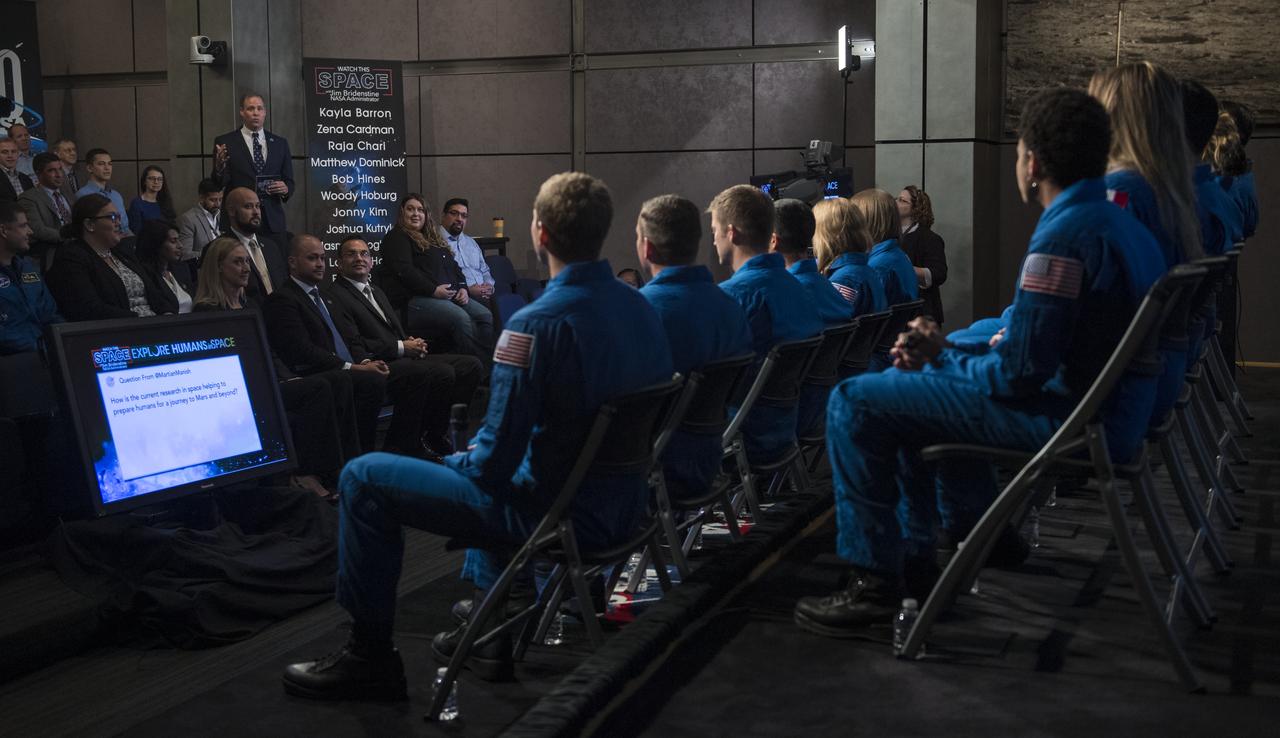
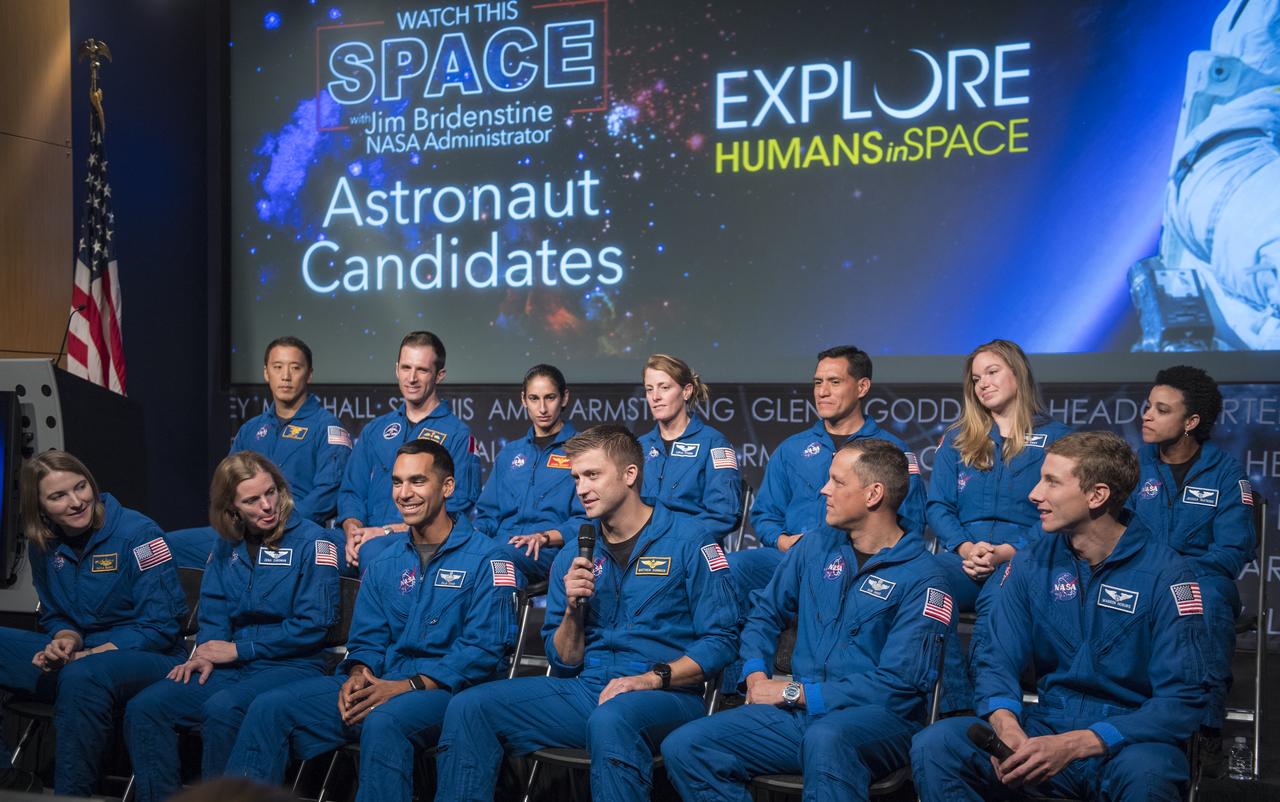
Astronaut candidates, back row from left, Jonny Kim, Joshua Kutryk of the Canadian Space Agency, Jasmin Moghbeli, Loral O’Hara, Frank Rubio, Jennifer Sidey-Gibbons of the Canadian Space Agency, Jessica Watkins, front row from left, Kayla Barron, Zena Cardman, Raja Chari, Matthew Dominick, Bob Hines, and Warren Hoburg listen to a question from NASA Administrator Jim Bridenstine during a live episode of the Administrator's monthly chat show, Watch This Space,  Thursday, Sept. 27, 2018 in the Webb Auditorium at NASA Headquarters in Washington. NASA's newest astronaut candidate class has started their two years of training, after which the new astronaut candidates could be assigned to missions performing research on the International Space Station, launching from American soil on spacecraft built by commercial companies, and launching on deep space missions on NASA’s new Orion spacecraft and Space Launch System rocket.  Photo Credit: (NASA/Joel Kowsky)
Watch This Space with the 2017 Astronaut Candidate Class
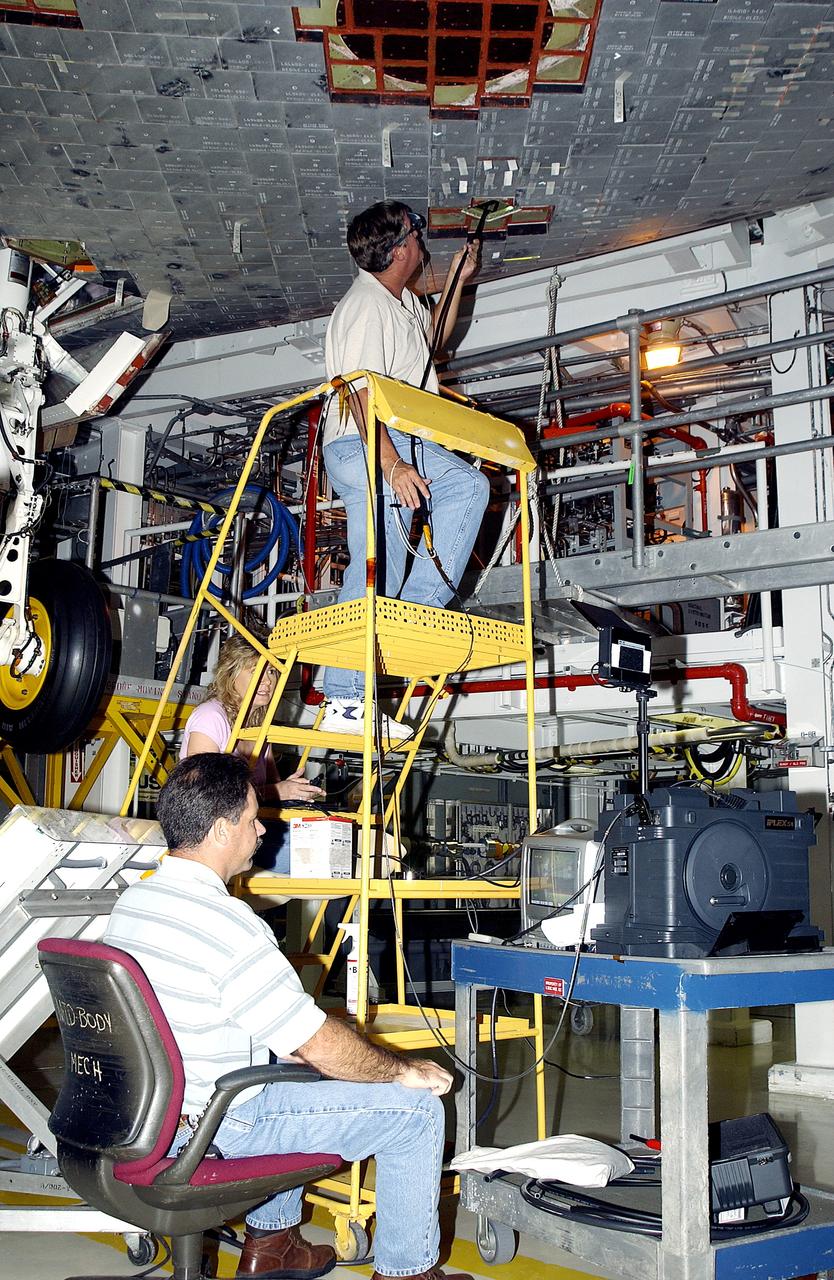
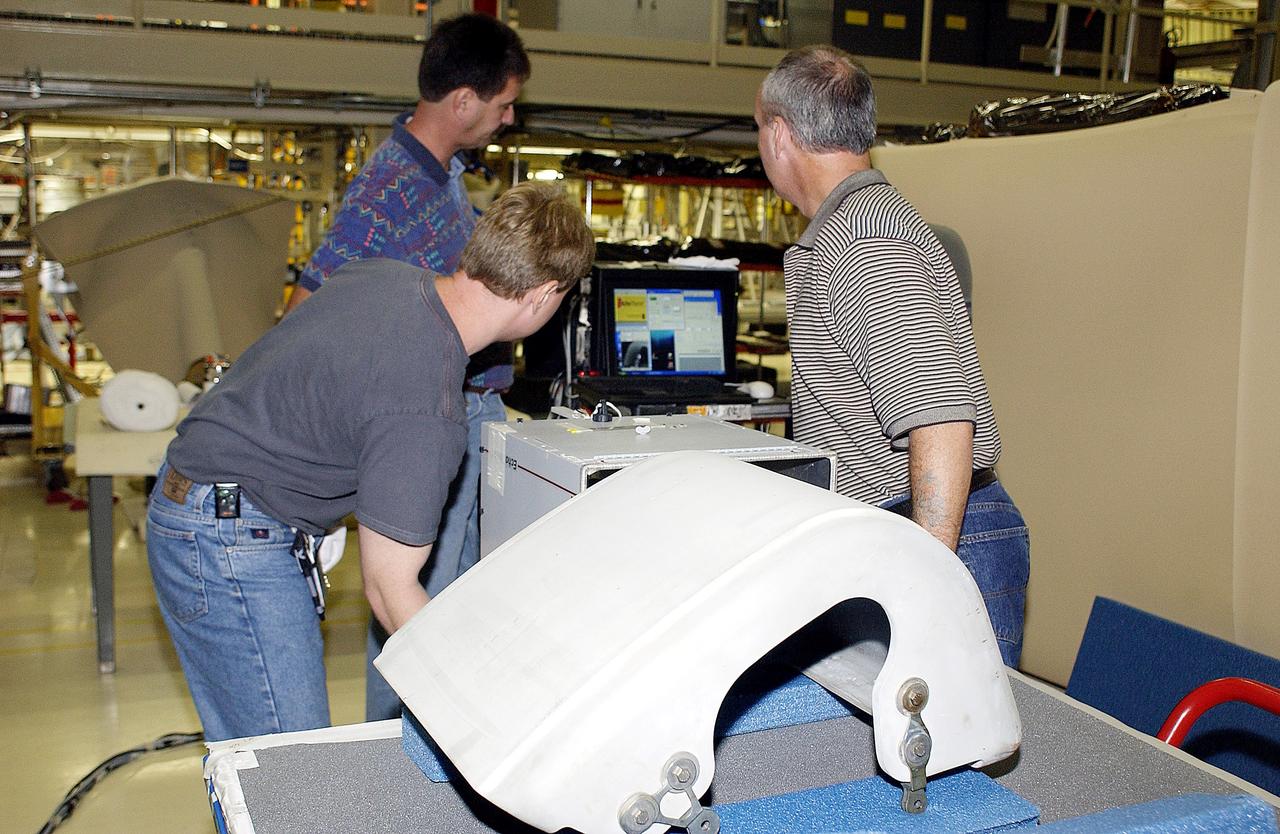
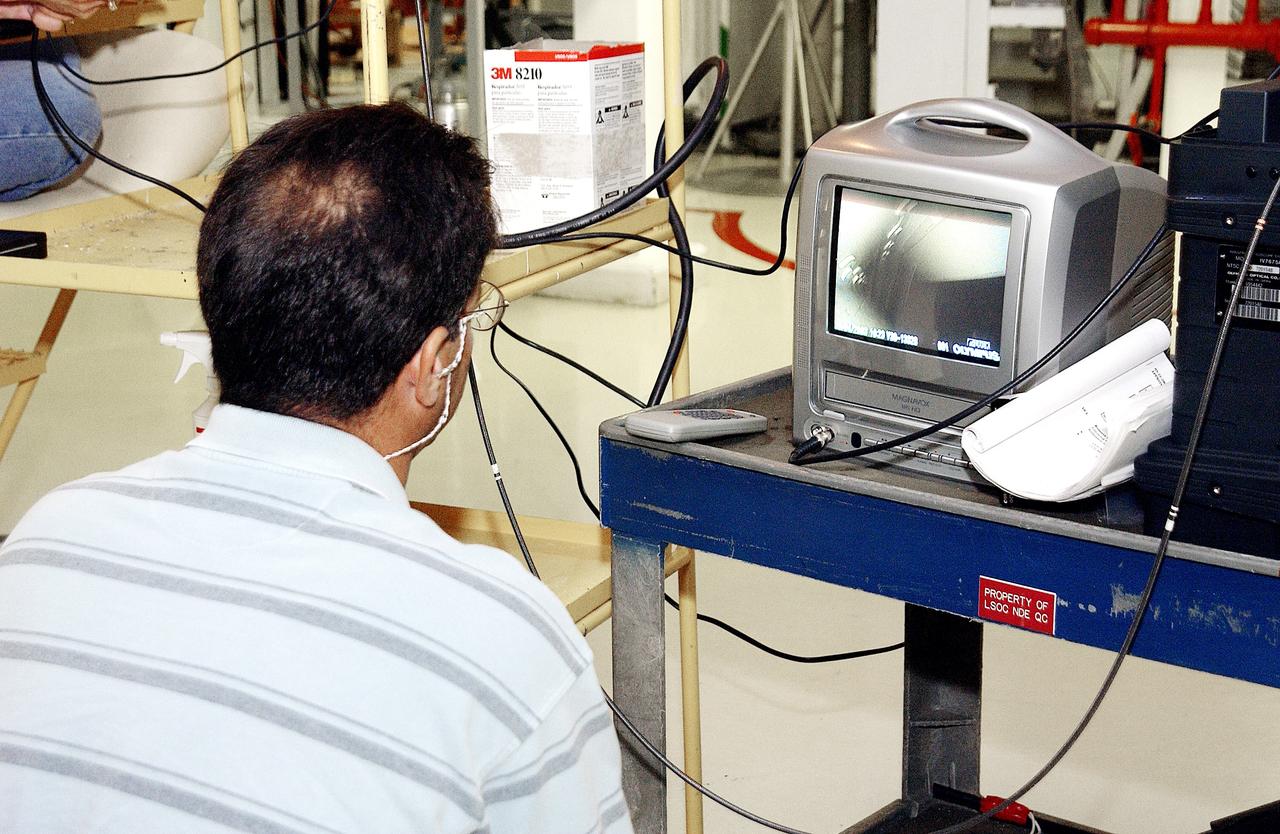
KENNEDY SPACE CENTER, FLA. -  In the Orbiter Processing Facility,  Richard Parker, with NASA, watches a monitor showing images from a camera inserted beneath tiles of the orbiter Endeavour to inspect for corrosion.
KENNEDY SPACE CENTER, FLA. - In the Orbiter Processing Facility, Richard Parker, with NASA, watches a monitor showing images from a camera inserted beneath tiles of the orbiter Endeavour to inspect for corrosion.
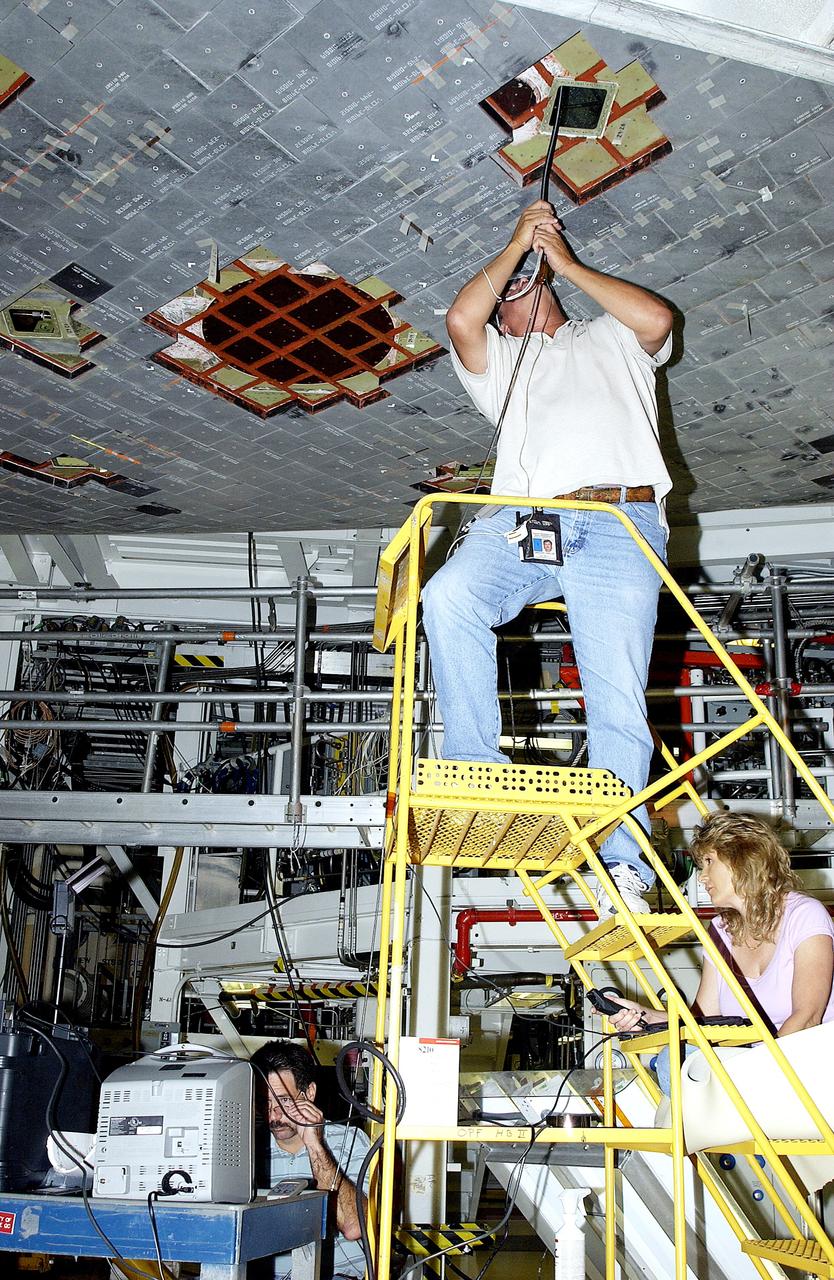
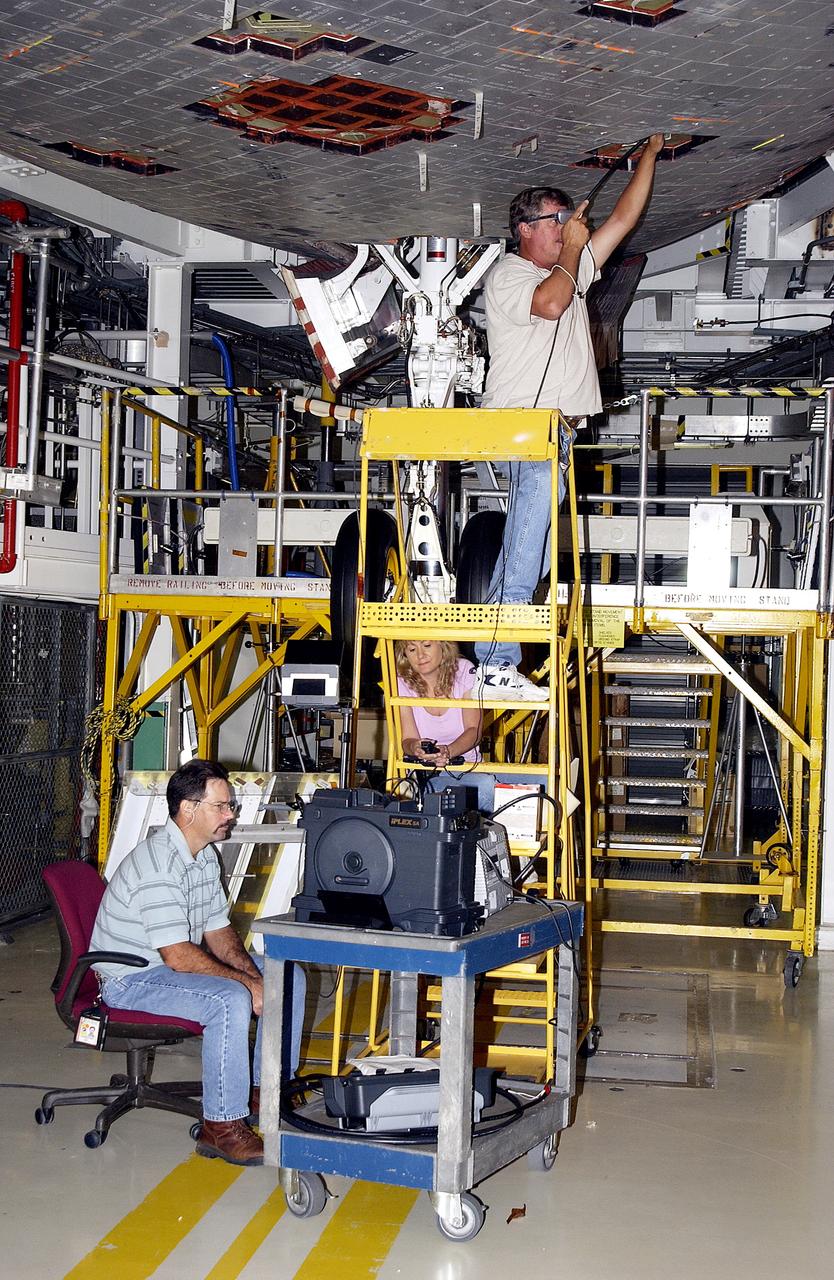
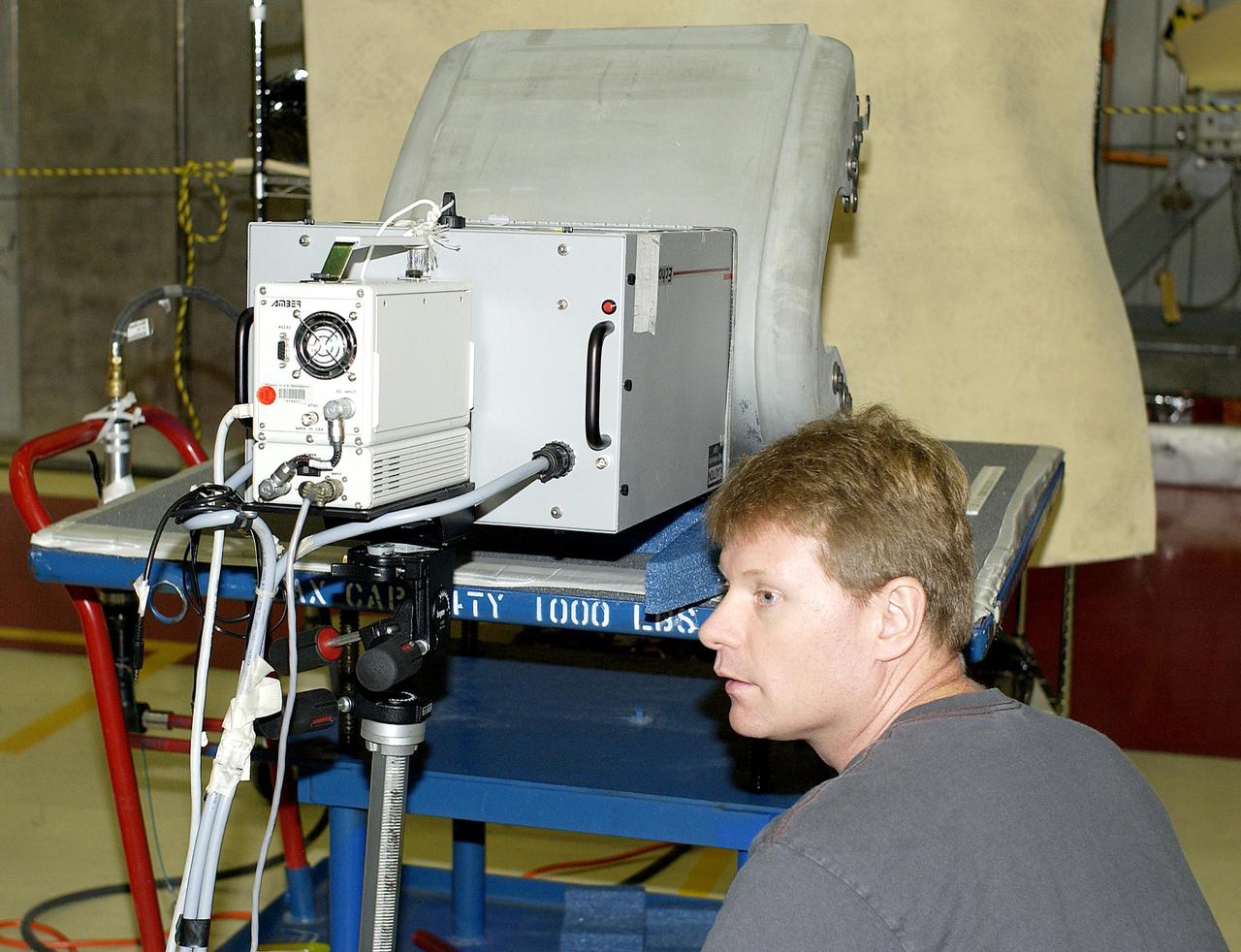
KENNEDY SPACE CENTER, FLA. -  In the Orbiter Processing Facility, while Greg Harlow, with United Space Alliance (USA), (above) threads a camera under the tiles of the orbiter Endeavour, Peggy Ritchie, with USA, (behind the stand) and NASA’s Richard Parker watch the images on a monitor to inspect for corrosion.
KENNEDY SPACE CENTER, FLA. - In the Orbiter Processing Facility, while Greg Harlow, with United Space Alliance (USA), (above) threads a camera under the tiles of the orbiter Endeavour, Peggy Ritchie, with USA, (behind the stand) and NASA’s Richard Parker watch the images on a monitor to inspect for corrosion.
KENNEDY SPACE CENTER, FLA. - In the Orbiter Processing Facility, while Greg Harlow, with United Space Alliance (USA), (above) threads a camera under the tiles of the orbiter Endeavour, NASA’s Richard Parker (below left) and Peggy Ritchie, with USA, (at right) watch the images on a monitor to inspect for corrosion.
KENNEDY SPACE CENTER, FLA. -   In the Orbiter Processing Facility, while Greg Harlow, with United Space Alliance (USA) (above) threads a camera under the tiles of the orbiter Endeavour, Peggy Ritchie, USA, (behind the stand) and NASA’s Richard Parker (seated) watch the images on a monitor to inspect for corrosion.
KENNEDY SPACE CENTER, FLA. - In the Orbiter Processing Facility, while Greg Harlow, with United Space Alliance (USA) (above) threads a camera under the tiles of the orbiter Endeavour, Peggy Ritchie, USA, (behind the stand) and NASA’s Richard Parker (seated) watch the images on a monitor to inspect for corrosion.
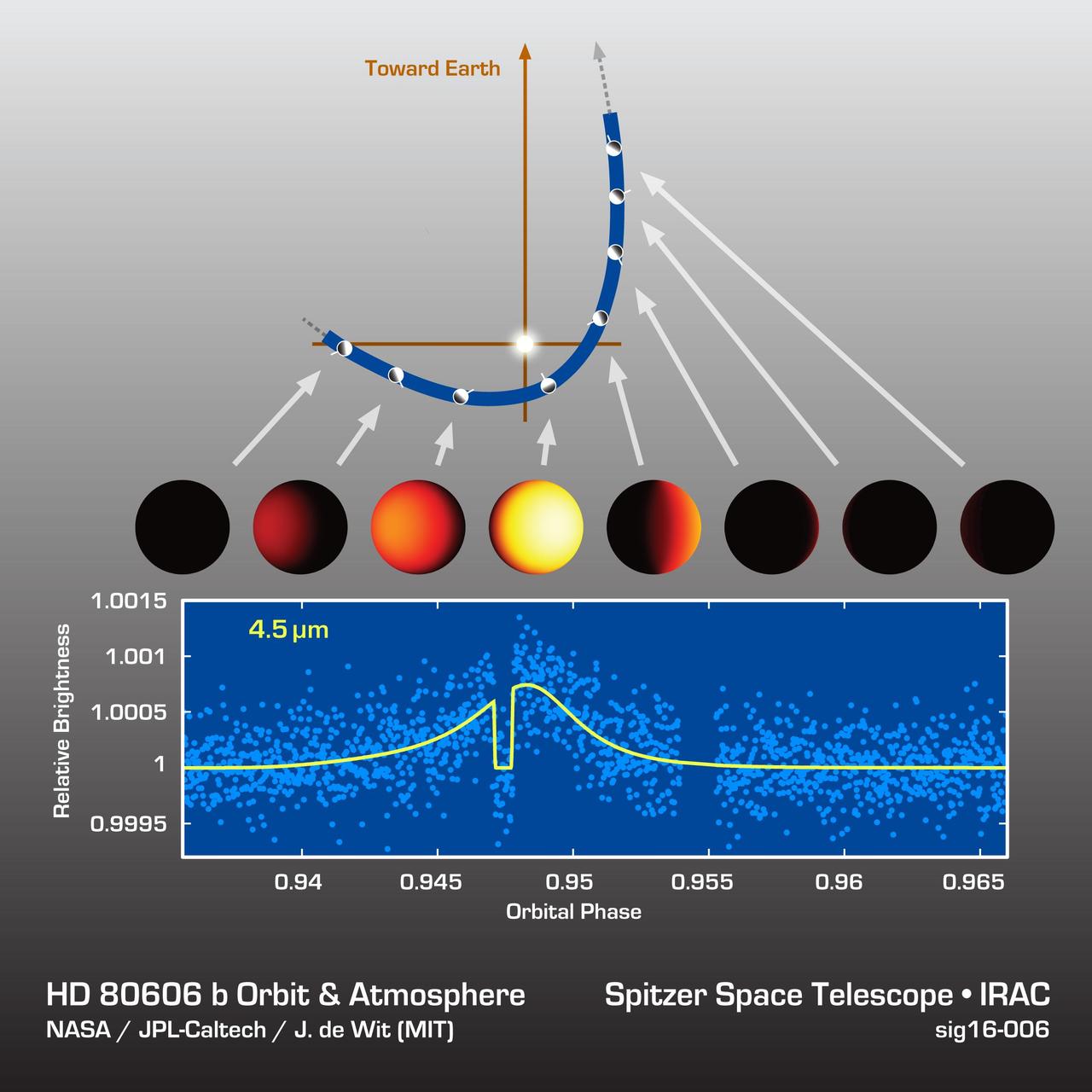
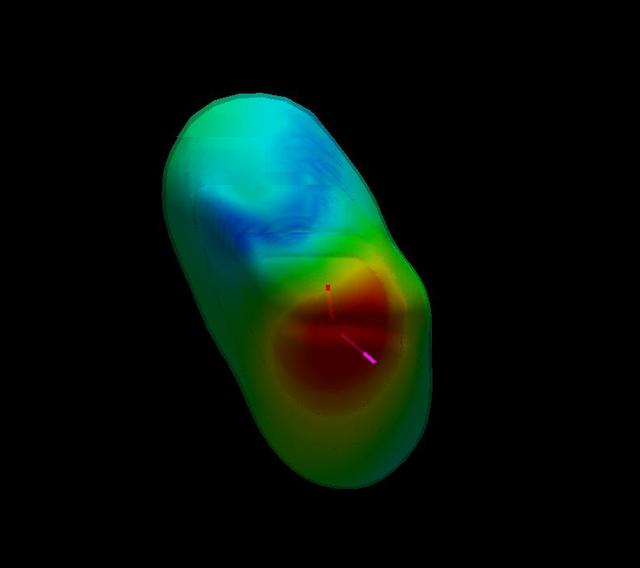
Astronomers watched an exoplanet called HD 80606b heat up and cool off during its sizzling-hot orbit around its star. The results are shown in this data plot from NASA Spitzer Space Telescope.
HD 80606b Light Curve
This graphic, based on data from NASA Voyager spacecraft, shows a model of what our solar system looks like to an observer outside in interstellar space, watching our solar system fly towards the observer.
Our Solar System, from the Outside
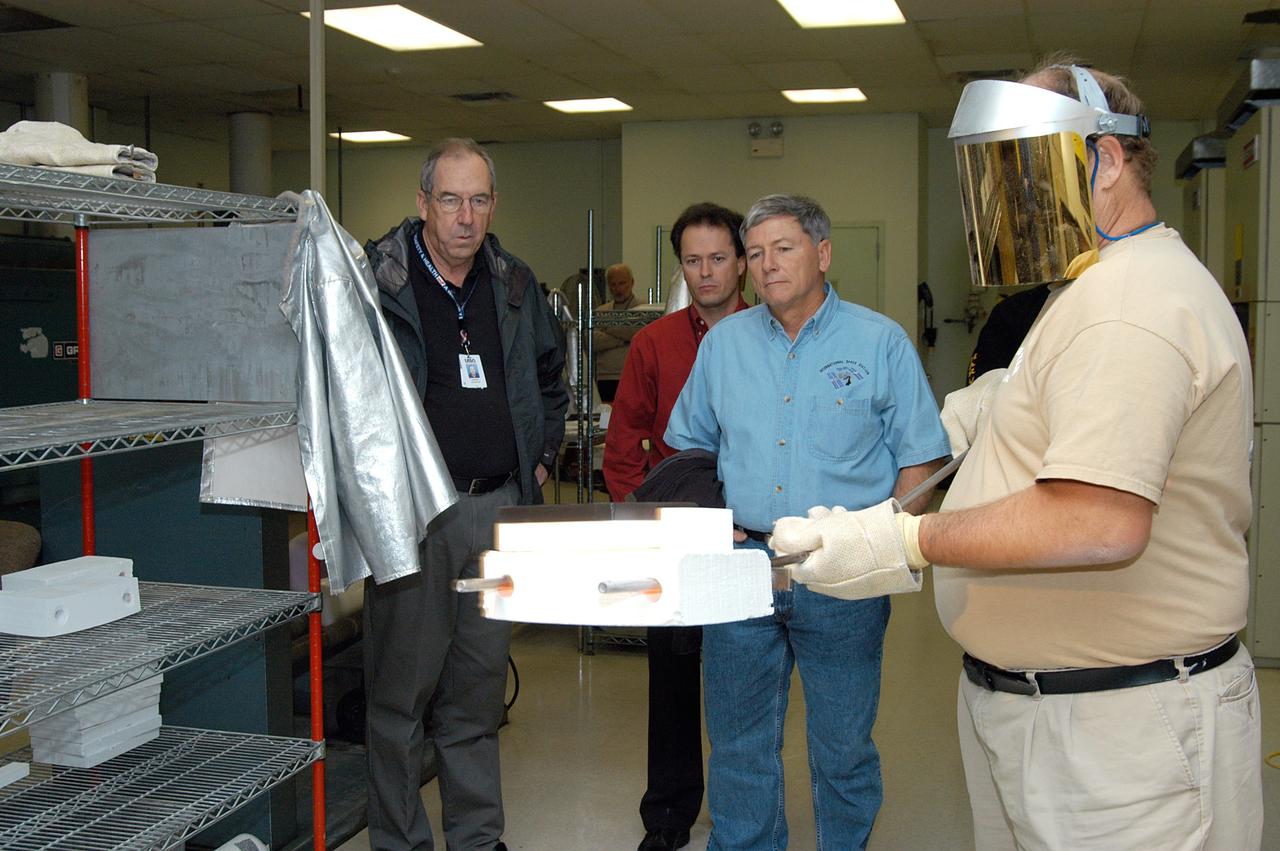
KENNEDY SPACE CENTER, FLA. -- United Space Alliance (USA) Vice President and Space Shuttle Program Manager Howard DeCastro (left) and NASA Deputy Associate Administrator for Space Station and Shuttle Programs Michael Kostelnik (third from left) watch as a USA technician (right) creates a tile for use in the Shuttle's Thermal Protection System (TPS).  NASA and USA Space Shuttle program management are participating in a leadership workday.  The day is intended to provide management with an in-depth, hands-on look at Shuttle processing activities at KSC.
KENNEDY SPACE CENTER, FLA. -- United Space Alliance (USA) Vice President and Space Shuttle Program Manager Howard DeCastro (left) and NASA Deputy Associate Administrator for Space Station and Shuttle Programs Michael Kostelnik (third from left) watch as a USA technician (right) creates a tile for use in the Shuttle's Thermal Protection System (TPS). NASA and USA Space Shuttle program management are participating in a leadership workday. The day is intended to provide management with an in-depth, hands-on look at Shuttle processing activities at KSC.
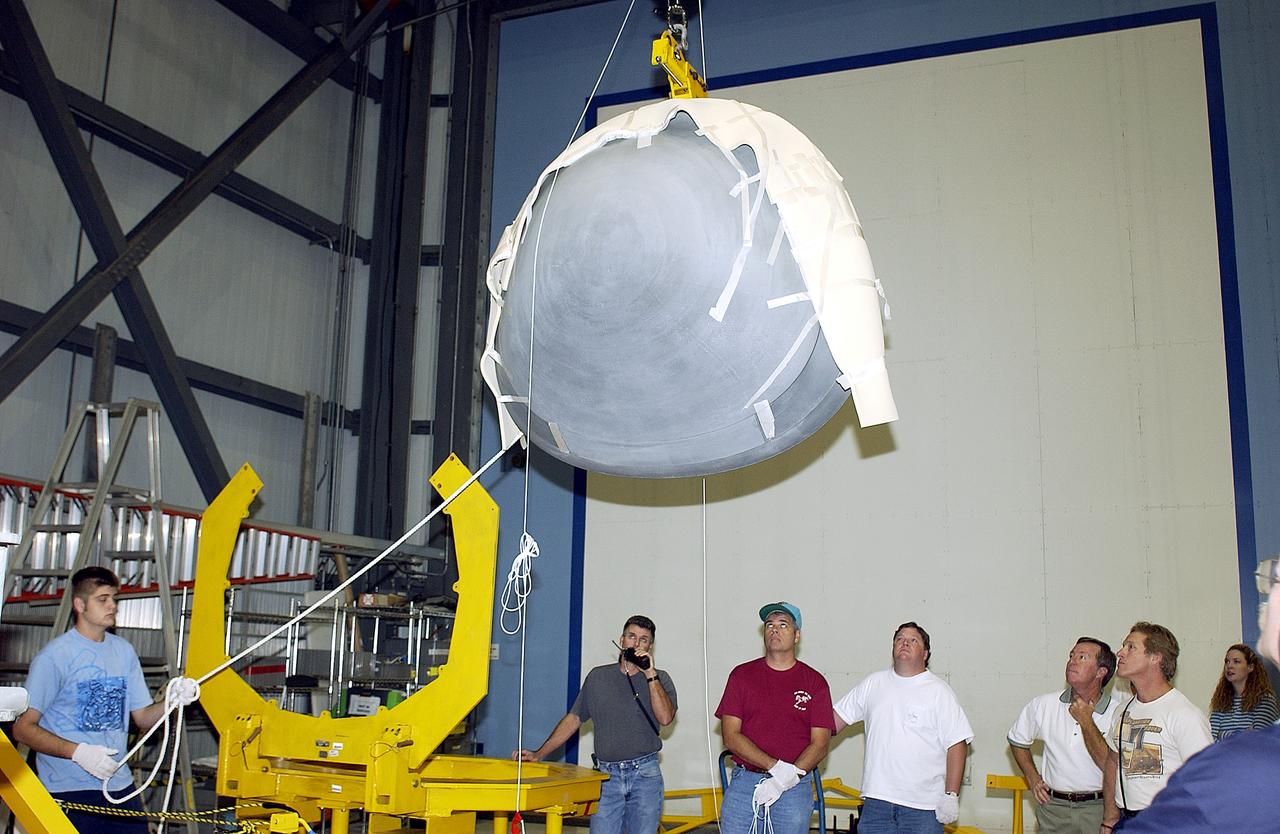
KENNEDY SPACE CENTER, FLA. - In the Orbiter Processing Facility, workers watch as the nose cap of the orbiter Atlantis is lowered toward the floor.   The cap was removed from the orbiter for routine inspection. The nose cap is made of reinforced carbon-carbon (RCC), which has an operating range of minus 250° F to about 3,000° F.
KENNEDY SPACE CENTER, FLA. - In the Orbiter Processing Facility, workers watch as the nose cap of the orbiter Atlantis is lowered toward the floor. The cap was removed from the orbiter for routine inspection. The nose cap is made of reinforced carbon-carbon (RCC), which has an operating range of minus 250° F to about 3,000° F.
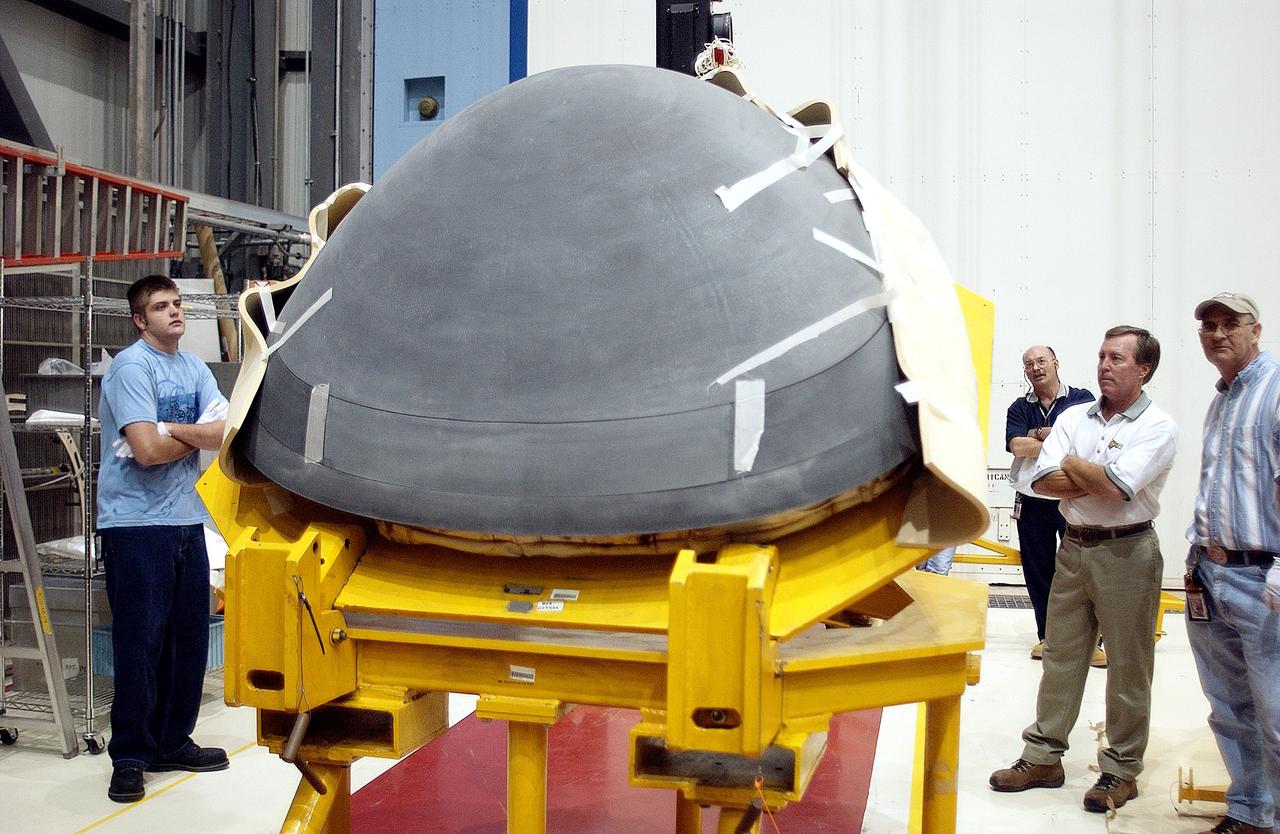
KENNEDY SPACE CENTER, FLA. - In the Orbiter Processing Facility, workers watch as the nose cap of the orbiter Atlantis is shifted to a horizontal position on a stand.  The cap was removed from the orbiter for routine inspection. The nose cap is made of reinforced carbon-carbon (RCC), which has an operating range of minus 250° F to about 3,000° F.
KENNEDY SPACE CENTER, FLA. - In the Orbiter Processing Facility, workers watch as the nose cap of the orbiter Atlantis is shifted to a horizontal position on a stand. The cap was removed from the orbiter for routine inspection. The nose cap is made of reinforced carbon-carbon (RCC), which has an operating range of minus 250° F to about 3,000° F.
KENNEDY SPACE CENTER, FLA. - In the Orbiter Processing Facility, workers watch as the nose cap of the orbiter Atlantis is moved toward the stand at left.  The cap was removed from the orbiter for routine inspection. The nose cap is made of reinforced carbon-carbon (RCC), which has an operating range of minus 250° F to about 3,000° F.
KENNEDY SPACE CENTER, FLA. - In the Orbiter Processing Facility, workers watch as the nose cap of the orbiter Atlantis is moved toward the stand at left. The cap was removed from the orbiter for routine inspection. The nose cap is made of reinforced carbon-carbon (RCC), which has an operating range of minus 250° F to about 3,000° F.
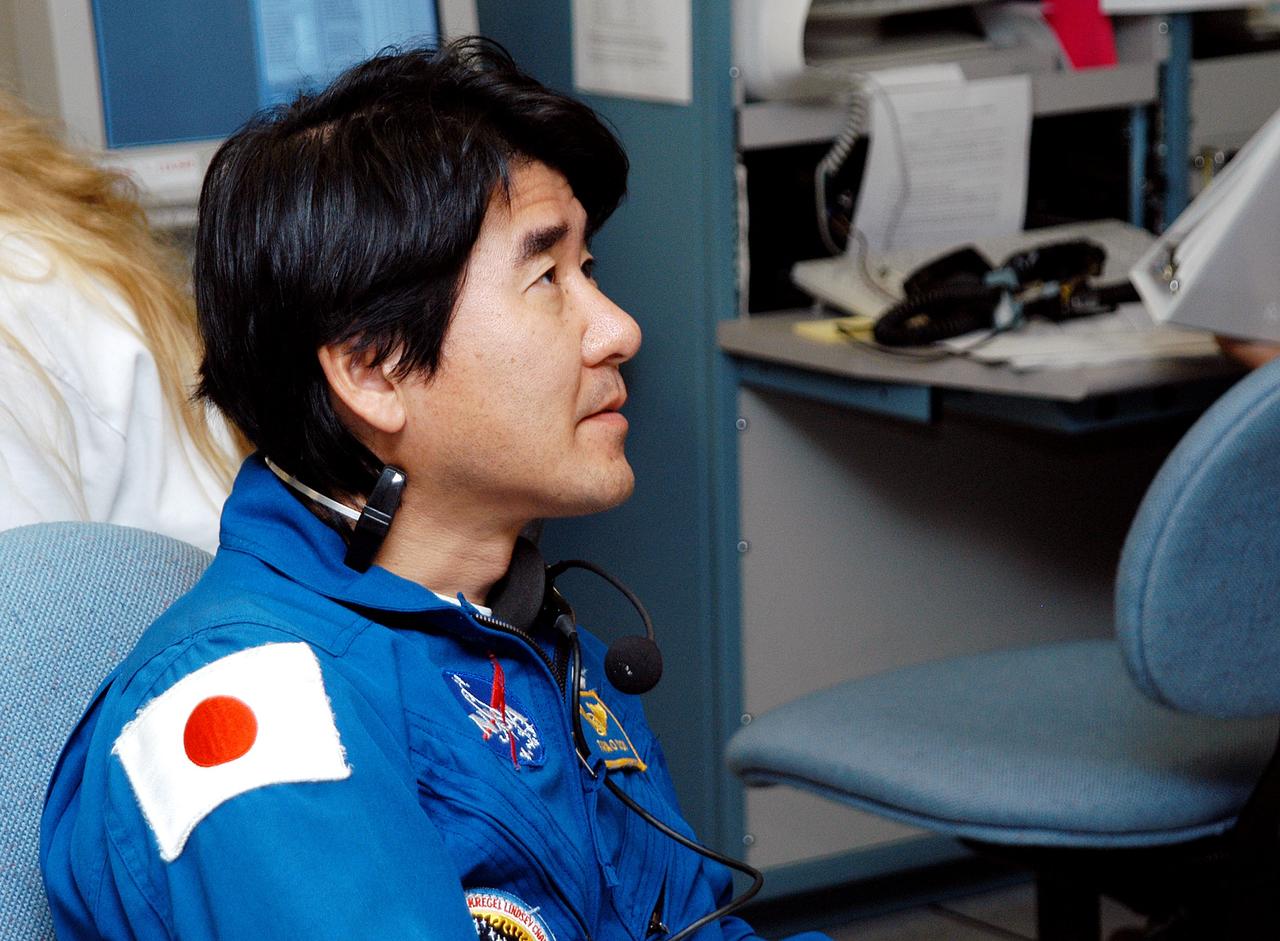
KENNEDY SPACE CENTER, FLA. -  Takao Doi, an astronaut with the National Space Development Agency of Japan (NASDA), watches the sensors  during a Multi-Equipment Interface Test (MEIT) on the Japanese Experiment Module (JEM).  NASDA  developed the laboratory at the Tsukuba Space Center near Tokyo. It is the first element, named "Kibo" (Hope), to be delivered to KSC. The JEM is Japan's primary contribution to the Station. It will enhance the unique research capabilities of the orbiting complex by providing an additional environment for astronauts to conduct science experiments.
KENNEDY SPACE CENTER, FLA. - Takao Doi, an astronaut with the National Space Development Agency of Japan (NASDA), watches the sensors during a Multi-Equipment Interface Test (MEIT) on the Japanese Experiment Module (JEM). NASDA developed the laboratory at the Tsukuba Space Center near Tokyo. It is the first element, named "Kibo" (Hope), to be delivered to KSC. The JEM is Japan's primary contribution to the Station. It will enhance the unique research capabilities of the orbiting complex by providing an additional environment for astronauts to conduct science experiments.
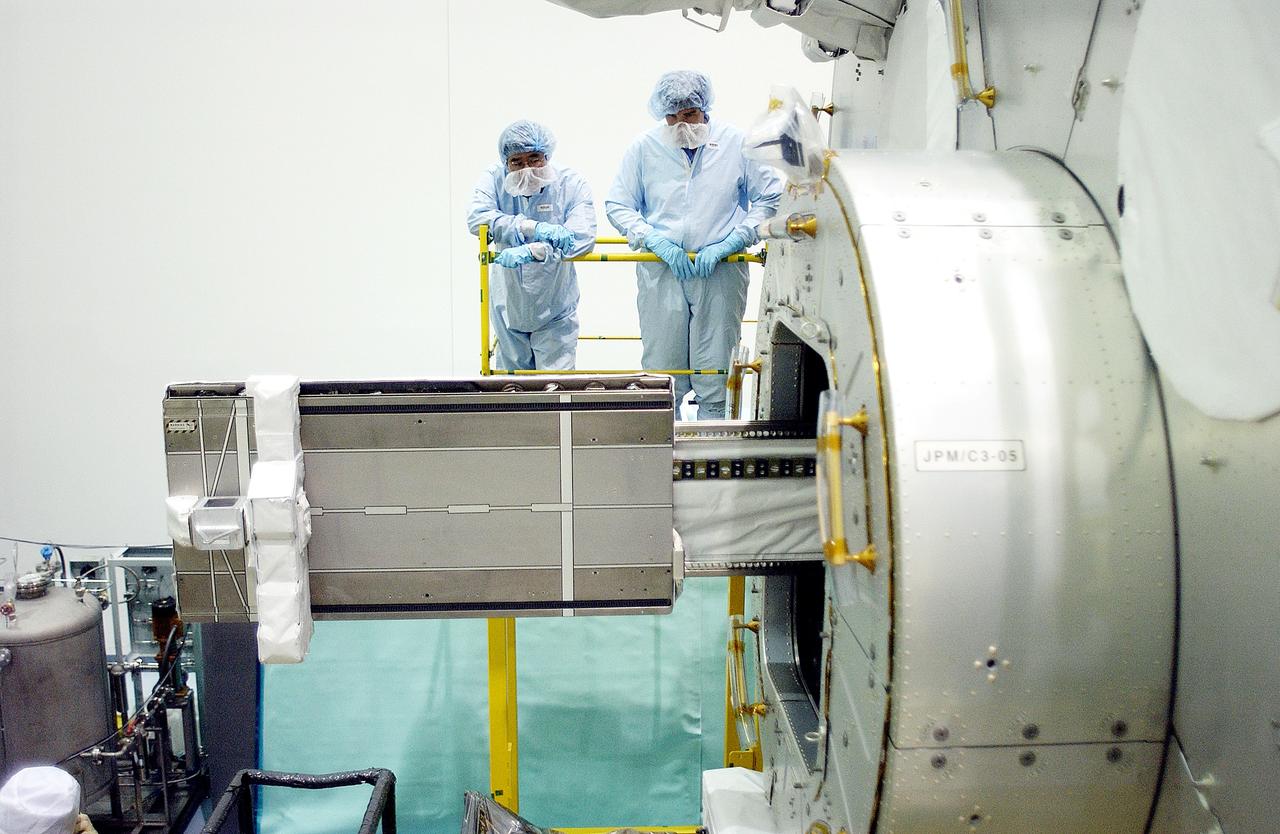
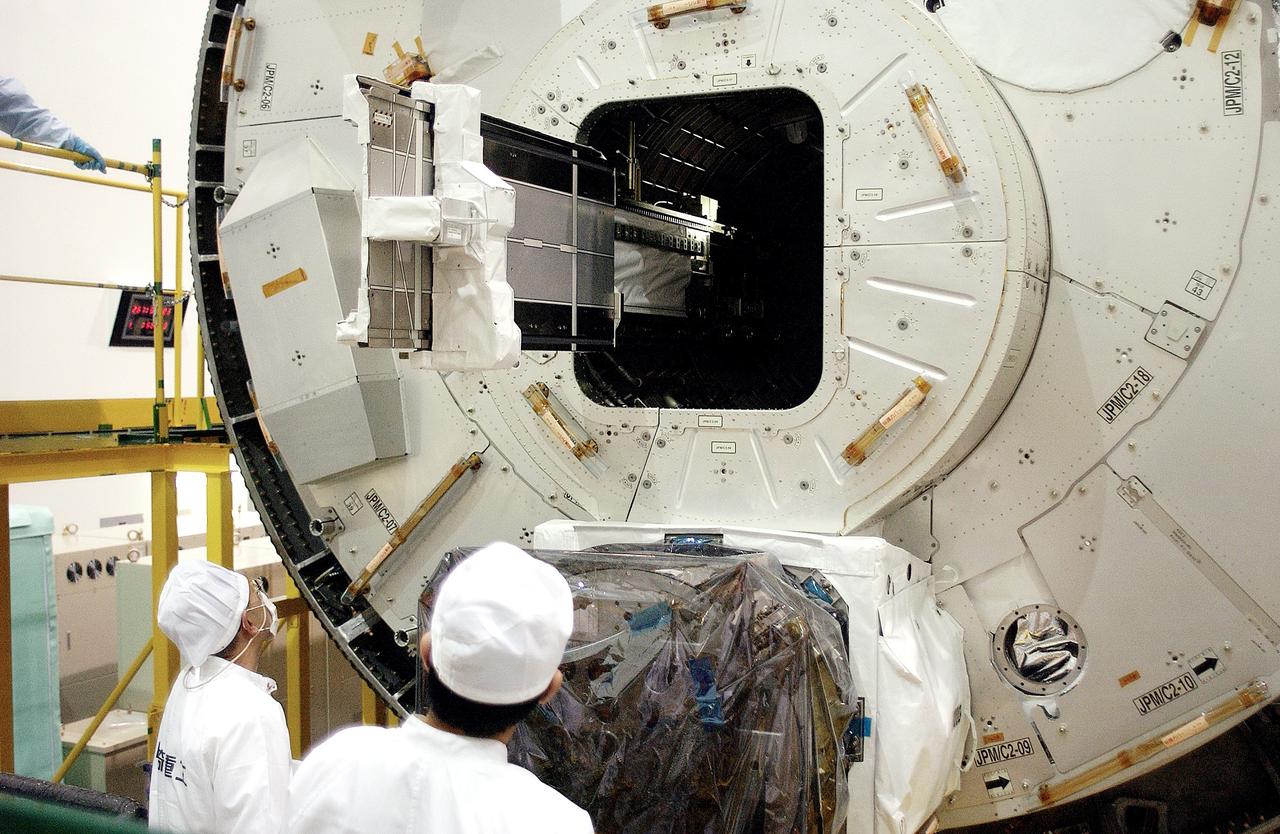
KENNEDY SPACE CENTER, FLA. -  In the Space Station Processing Facility, Japanese astronaut Koichi Wakata (top left) and technicians watch as a tray is extended from inside the Pressurized Module, or PM, part of the Japanese Experiment Module (JEM).   The PM provides a shirt-sleeve environment in which astronauts on the International Space Station can conduct microgravity experiments. There are a total of 23 racks, including 10 experiment racks, inside the PM providing a power supply, communications, air conditioning, hardware cooling, water control and experiment support functions.
KENNEDY SPACE CENTER, FLA. - In the Space Station Processing Facility, Japanese astronaut Koichi Wakata (top left) and technicians watch as a tray is extended from inside the Pressurized Module, or PM, part of the Japanese Experiment Module (JEM). The PM provides a shirt-sleeve environment in which astronauts on the International Space Station can conduct microgravity experiments. There are a total of 23 racks, including 10 experiment racks, inside the PM providing a power supply, communications, air conditioning, hardware cooling, water control and experiment support functions.
KENNEDY SPACE CENTER, FLA. - In the Space Station Processing Facility, technicians on the floor watch as a tray is extended from inside the Pressurized Module, or PM, part of the Japanese Experiment Module (JEM).   The PM provides a shirt-sleeve environment in which astronauts on the International Space Station can conduct microgravity experiments. There are a total of 23 racks, including 10 experiment racks, inside the PM providing a power supply, communications, air conditioning, hardware cooling, water control and experiment support functions.
KENNEDY SPACE CENTER, FLA. - In the Space Station Processing Facility, technicians on the floor watch as a tray is extended from inside the Pressurized Module, or PM, part of the Japanese Experiment Module (JEM). The PM provides a shirt-sleeve environment in which astronauts on the International Space Station can conduct microgravity experiments. There are a total of 23 racks, including 10 experiment racks, inside the PM providing a power supply, communications, air conditioning, hardware cooling, water control and experiment support functions.
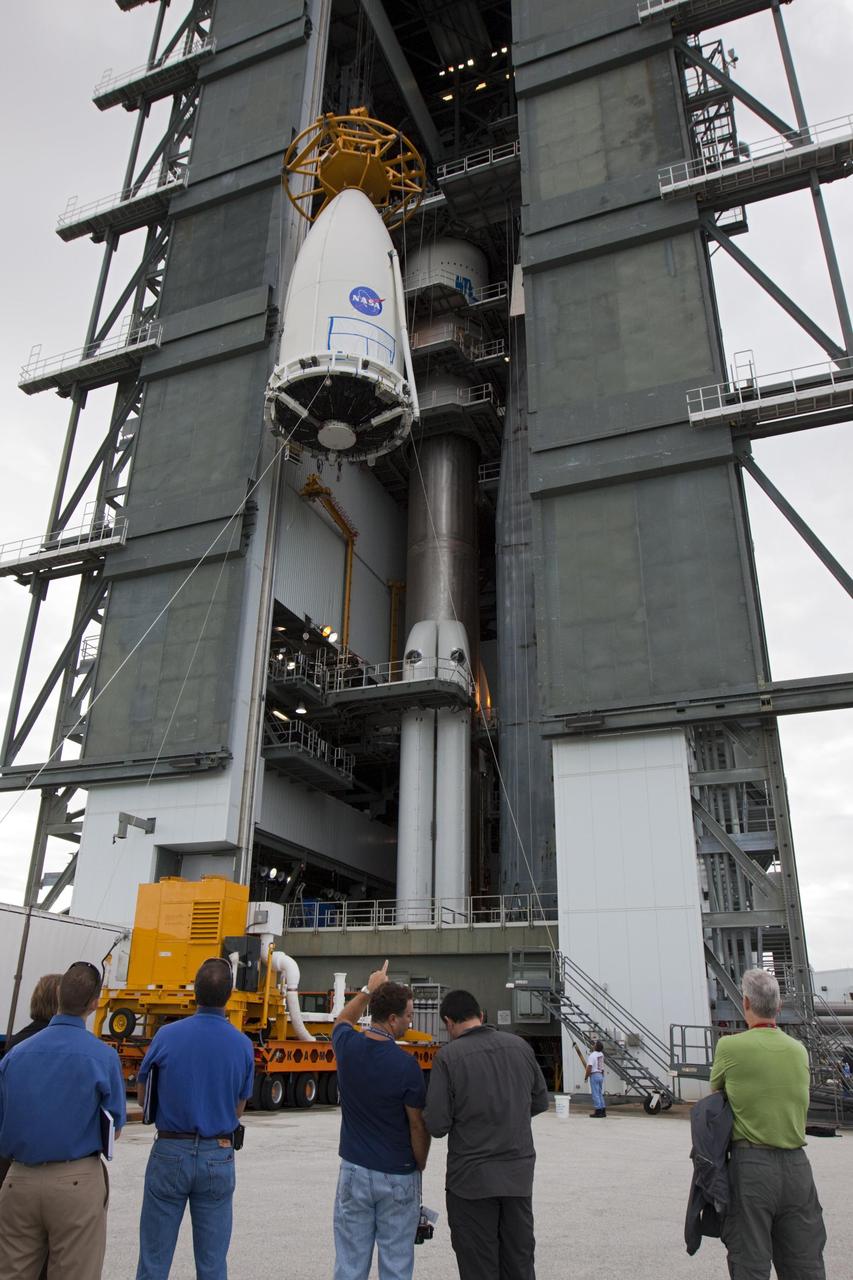
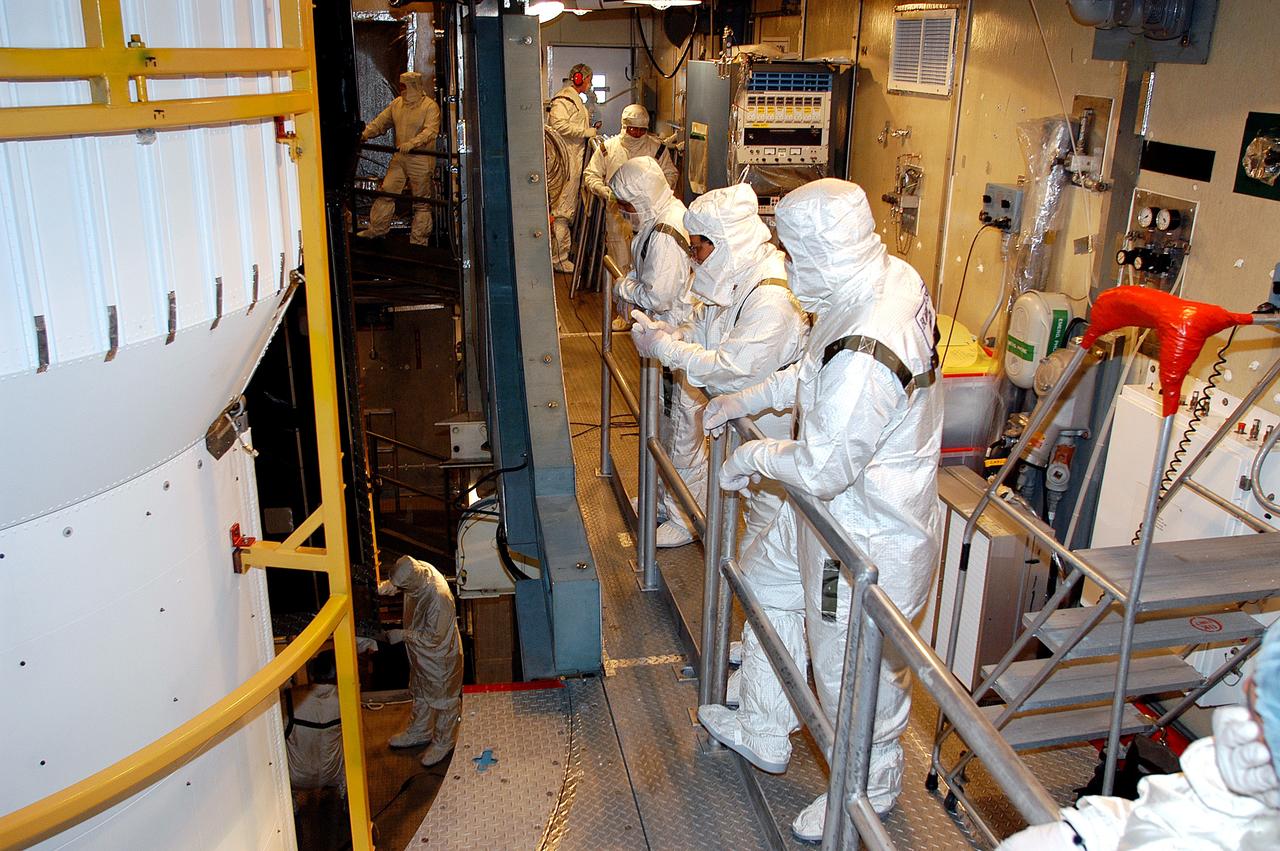
Employees at Space Launch Complex 41 of Cape Canaveral Air Force Station, Fla., keep watch as the payload fairing containing NASA Mars Science Laboratory spacecraft is lifted up the side of the Vertical Integration Facility on Nov. 3, 2011.
Hoisting NASA Mars Science Laboratory Onto Its Atlas V
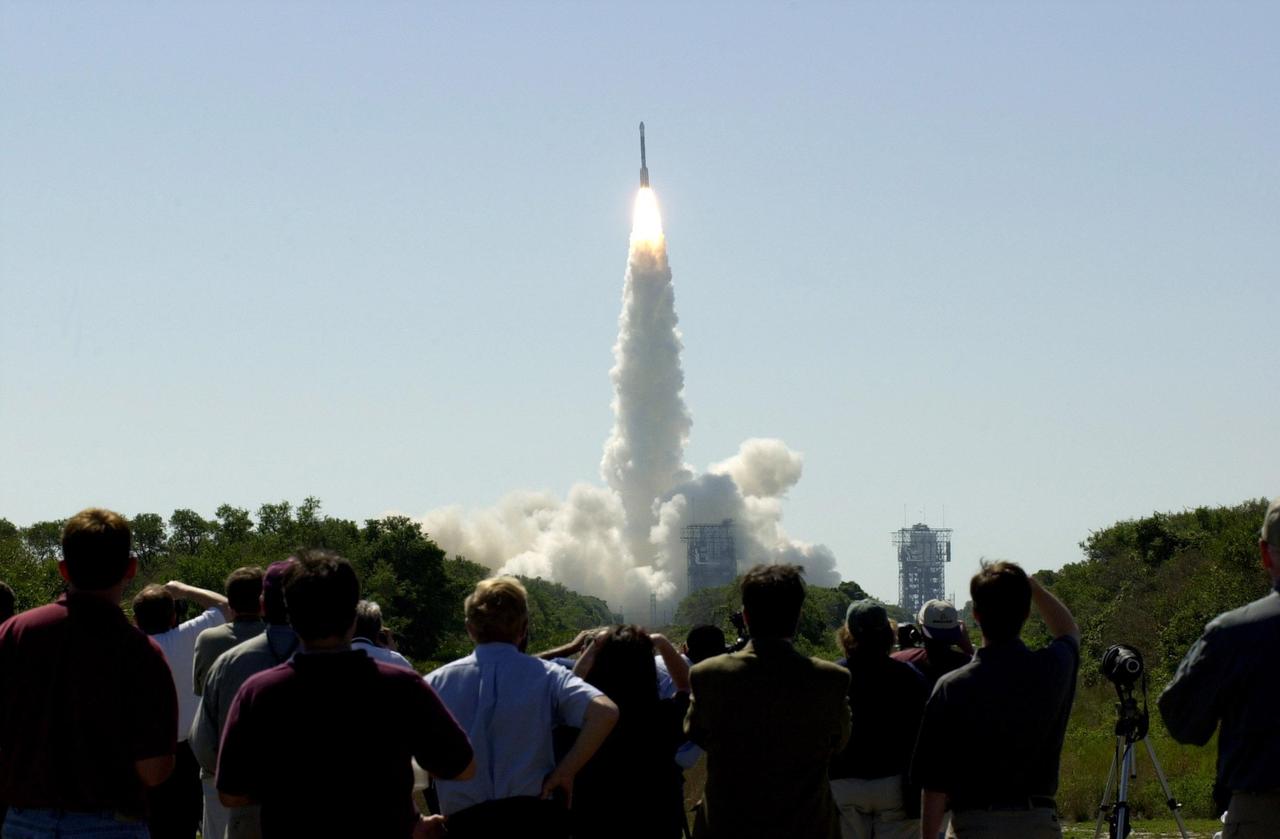
At 11:02 a.m. EDT on April 7, 2001, crowds watch a Boeing Delta II rocket lift off from Cape Canaveral Air Force Station, Florida, carrying NASA 2001 Mars Odyssey spacecraft into space on its seven-month journey to Mars.
Odyssey Launch to Mars on April 7, 2001
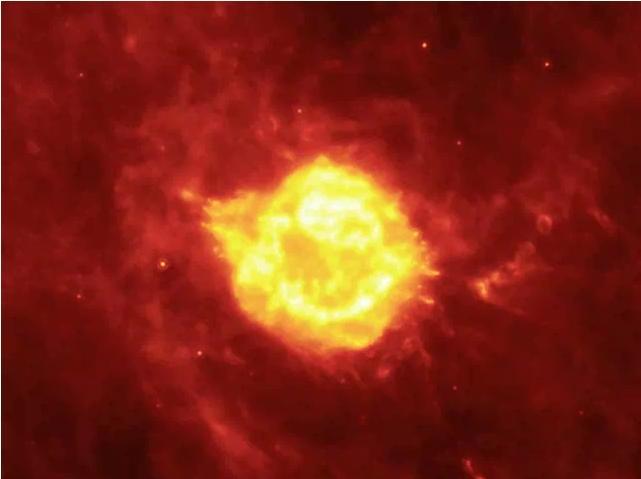
A seething cauldron of light appears to bubble and ooze around the remains of a giant star that astronomers have been watching tear itself apart for the last 300 years. Different observations taken over three years by NASA Spitzer Space Telescope.
Cauldron of Light
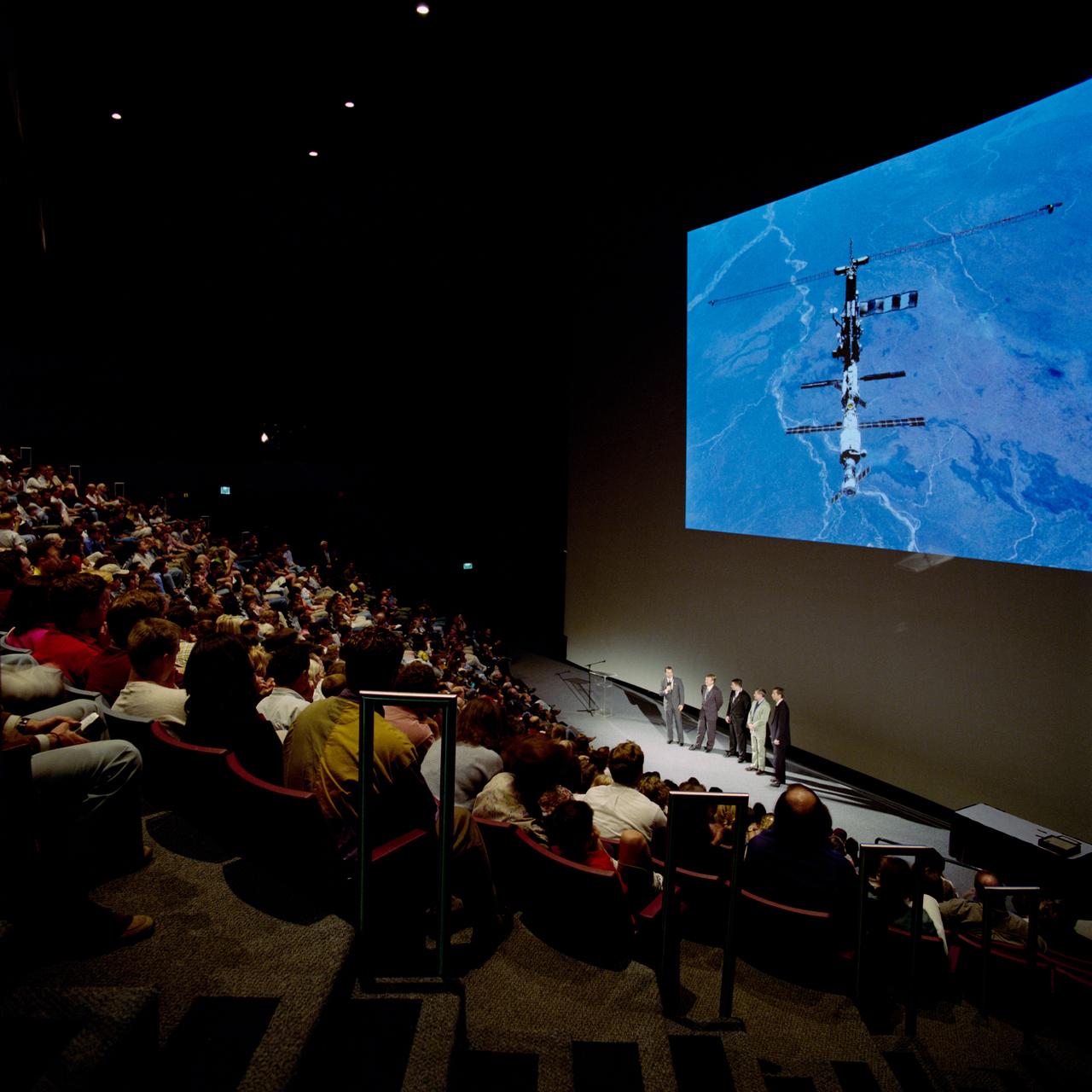
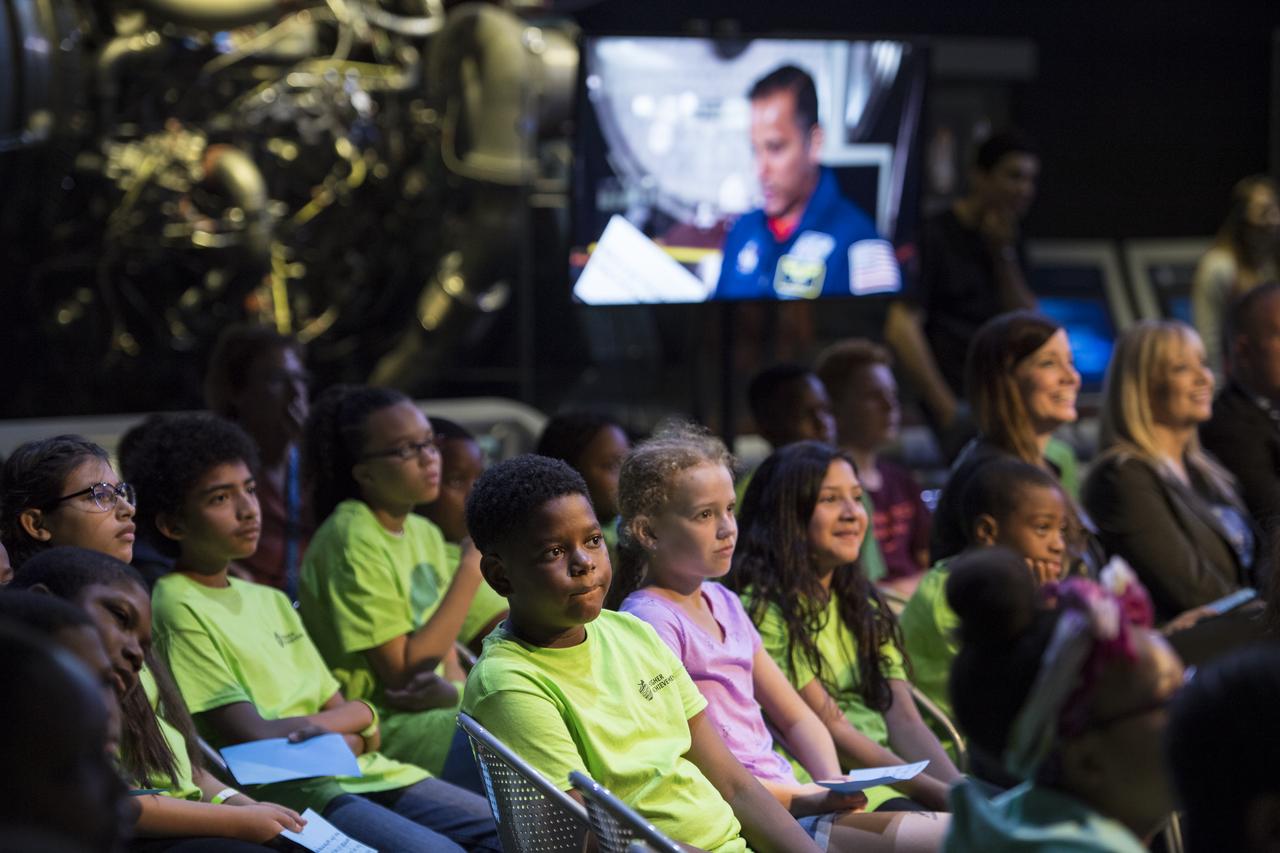
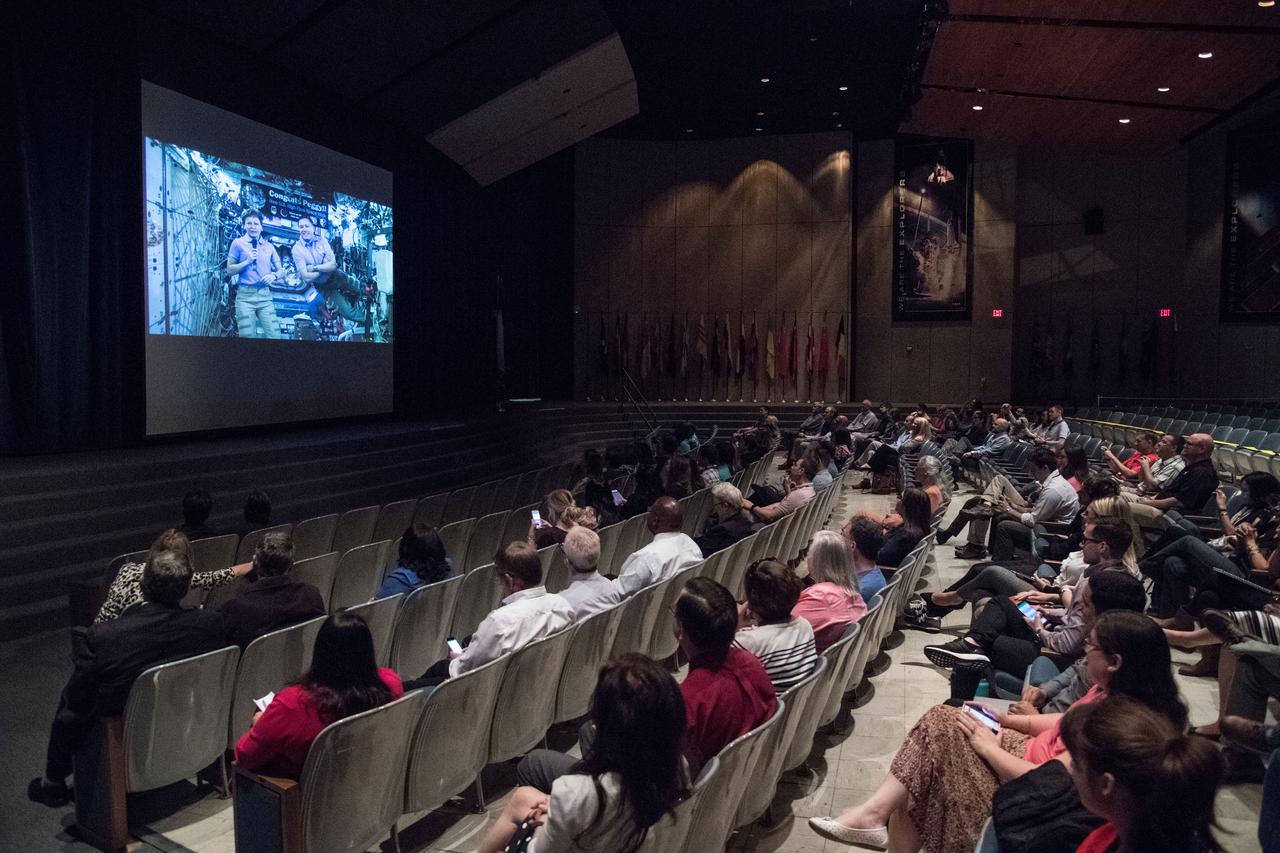
View of individuals in audience watching the International Space Station (ISS) on large screen.
Individuals view ISS
Employees watch the last planned space shuttle main engine test firing.
Last planned Space Shuttle Main Engine Test
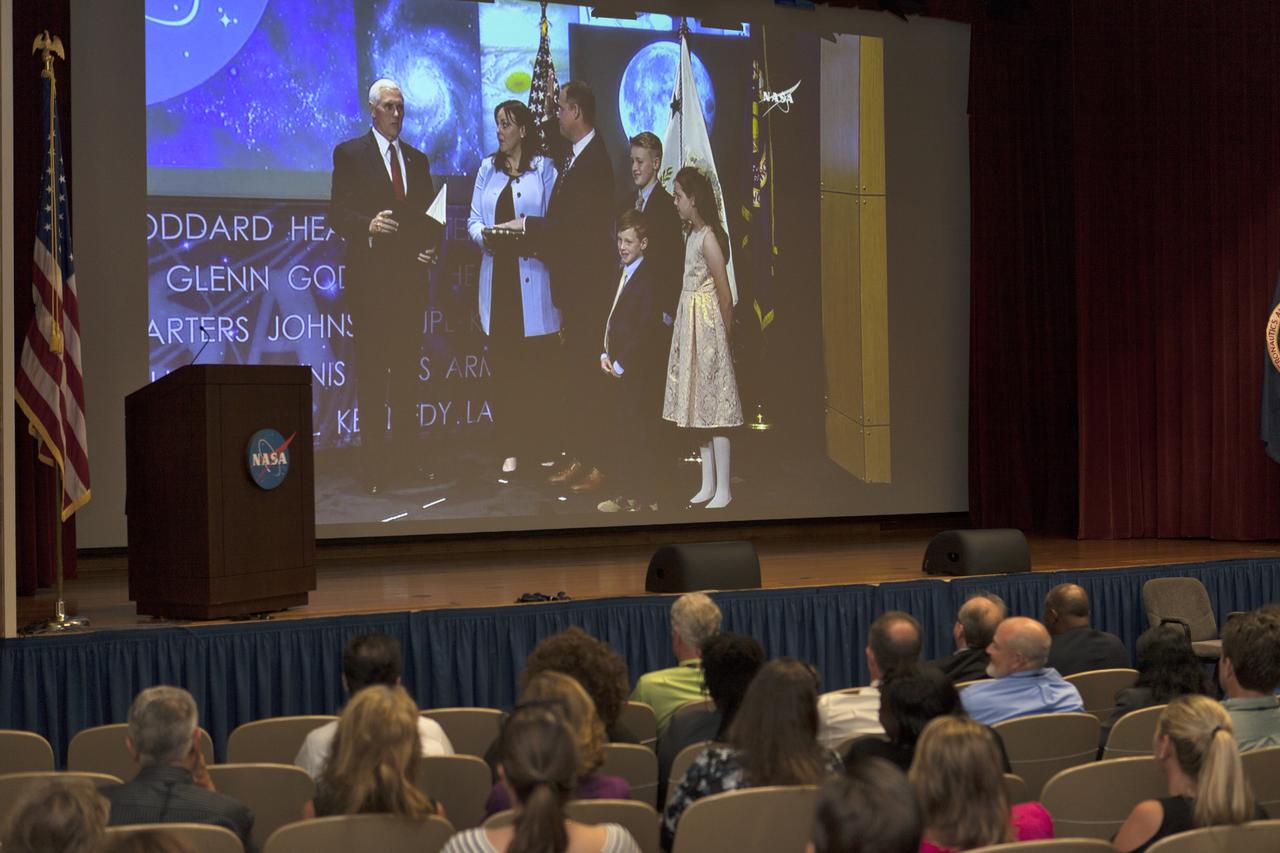
In the Training Auditorium at NASA's Kennedy Space Center in Florida, employees watch as Vice President Mike Pence, left, swears in Jim Bridenstine as the 13th NASA Administrator as Bridenstine's family watches on April 23, 2018, at NASA Headquarters in Washington. Bridenstine was confirmed by the U.S. Senate on April 19.
NASA Administrator Swearing In All Hands
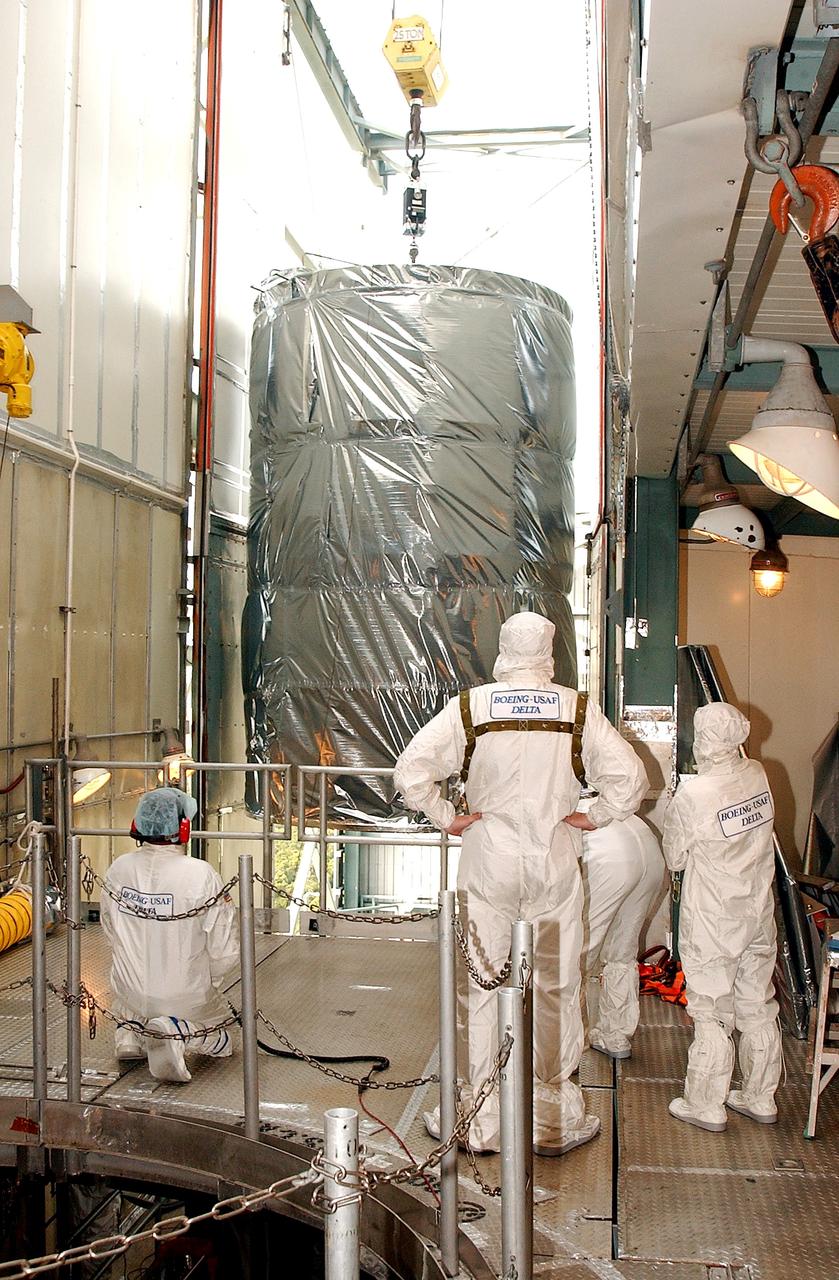
KENNEDY SPACE CENTER, FLA.  - In the mobile service tower on Launch Pad 17-B, Cape Canaveral Air Force Station, workers watch as the first half of the fairing moves closer around the Space Infrared Telescope Facility (SIRTF). SIRTF will obtain images and spectra by detecting the infrared energy, or heat, radiated by objects in space. Consisting of a 0.85-meter telescope and three cryogenically cooled science instruments, SIRTF will be the largest infrared telescope ever launched into space. It is the fourth and final element in NASA’s family of orbiting “Great Observatories.” Its highly sensitive instruments will give a unique view of the Universe and peer into regions of space that are hidden from optical telescopes.
KENNEDY SPACE CENTER, FLA. - In the mobile service tower on Launch Pad 17-B, Cape Canaveral Air Force Station, workers watch as the first half of the fairing moves closer around the Space Infrared Telescope Facility (SIRTF). SIRTF will obtain images and spectra by detecting the infrared energy, or heat, radiated by objects in space. Consisting of a 0.85-meter telescope and three cryogenically cooled science instruments, SIRTF will be the largest infrared telescope ever launched into space. It is the fourth and final element in NASA’s family of orbiting “Great Observatories.” Its highly sensitive instruments will give a unique view of the Universe and peer into regions of space that are hidden from optical telescopes.
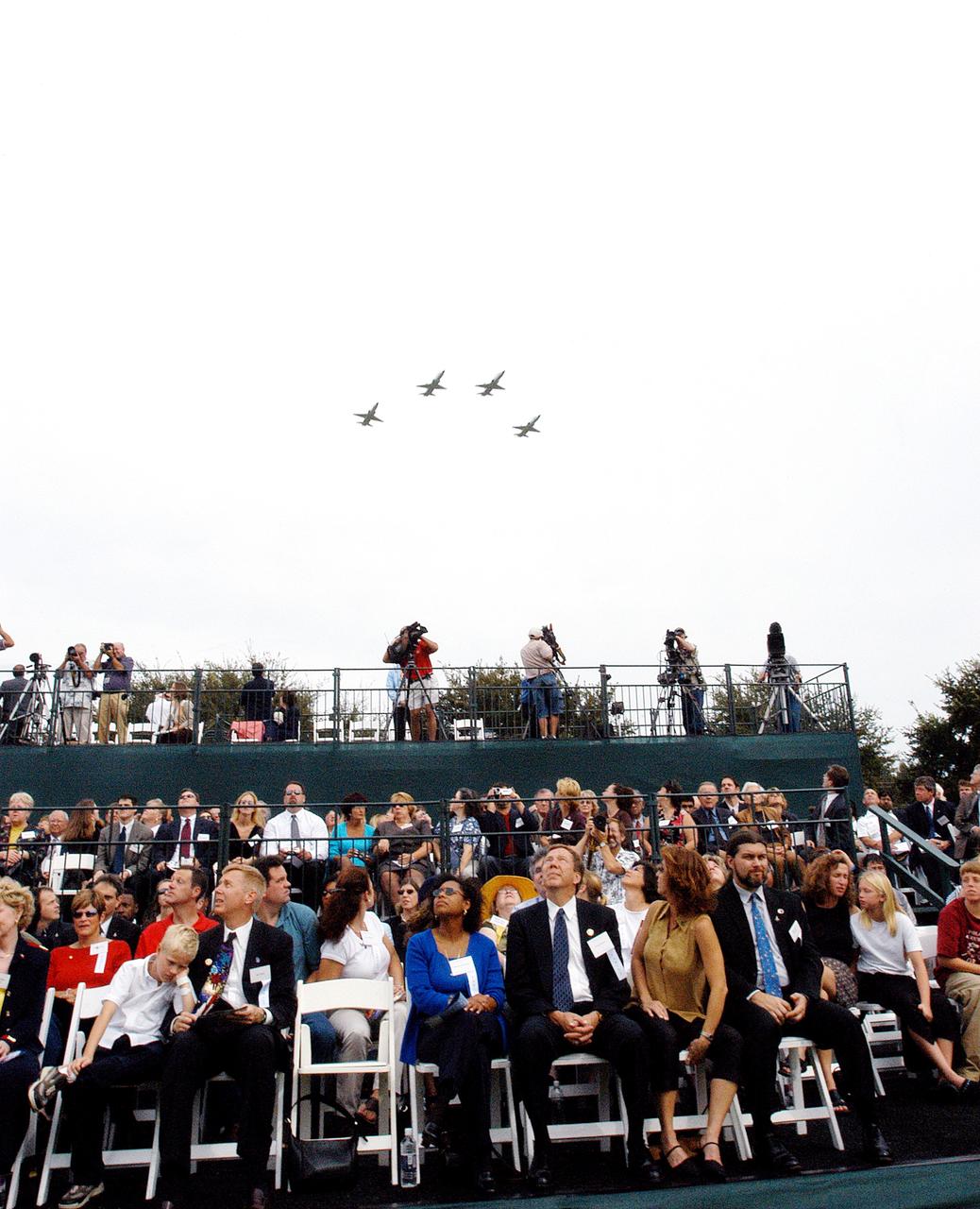
KENNEDY SPACE CENTER, FLA. -- Family members of the STS-107 astronauts and other dignitaries watch NASA T-38 jets fly over the Space Mirror Memorial at the Kennedy Space Center Visitor Complex in a Missing Man Formation. During this dedication ceremony, the names of the STS-107 astronauts who lost their lives during the Columbia accident -- Rick Husband, Willie McCool, Laurel Clark, Michael Anderson, David Brown, Kalpana Chawla, and Ilan Ramon -- join the names of 17 other space heroes who gave their lives for the U.S. space program.
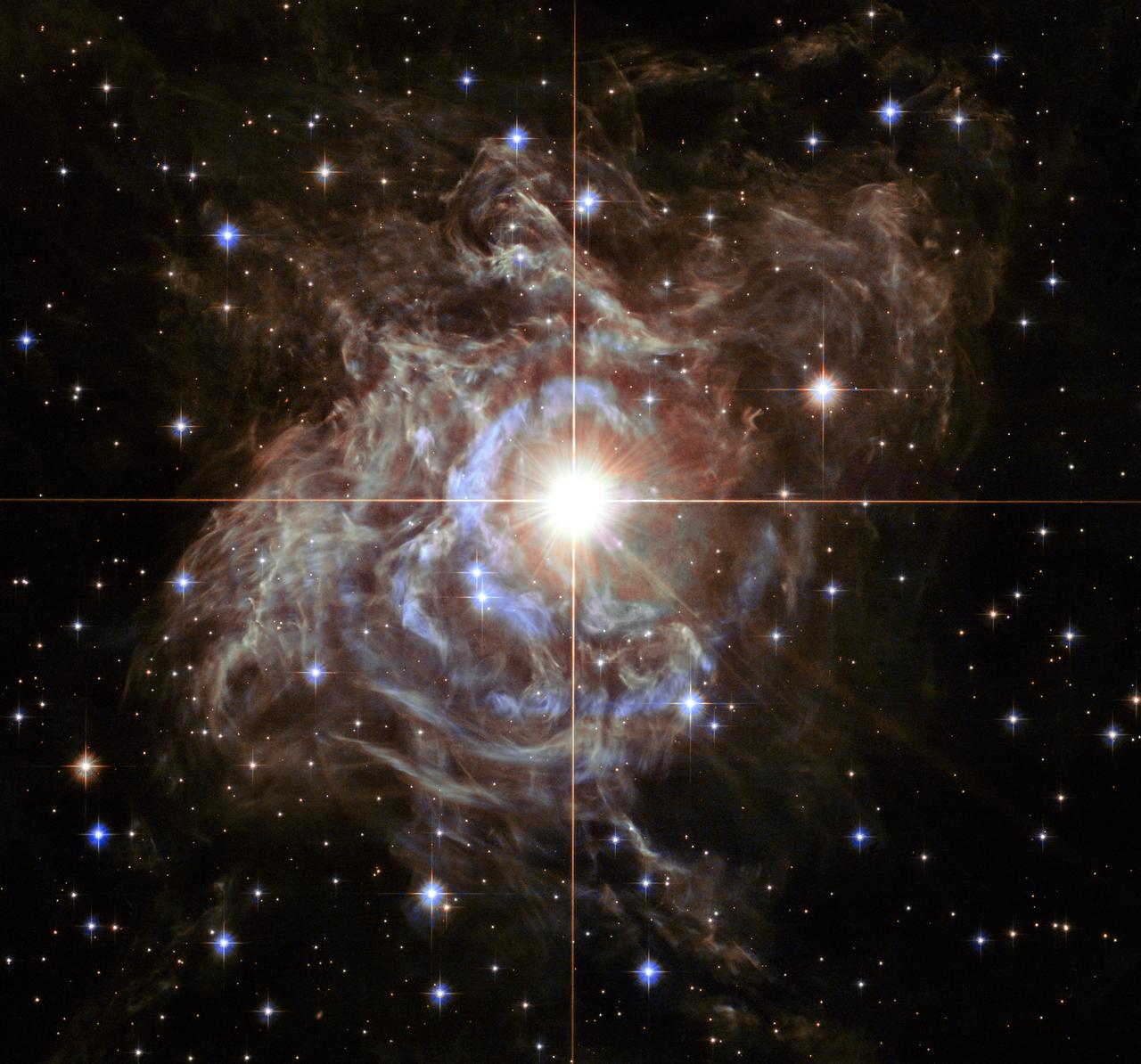
This festive NASA Hubble Space Telescope image resembles a holiday wreath made of sparkling lights. The bright southern hemisphere star RS Puppis, at the center of the image, is swaddled in a gossamer cocoon of reflective dust illuminated by the glittering star. The super star is ten times more massive than our sun and 200 times larger.  RS Puppis rhythmically brightens and dims over a six-week cycle. It is one of the most luminous in the class of so-called Cepheid variable stars. Its average intrinsic brightness is 15,000 times greater than our sun’s luminosity.  The nebula flickers in brightness as pulses of light from the Cepheid propagate outwards. Hubble took a series of photos of light flashes rippling across the nebula in a phenomenon known as a &quot;light echo.&quot; Even though light travels through space fast enough to span the gap between Earth and the moon in a little over a second, the nebula is so large that reflected light can actually be photographed traversing the nebula.  By observing the fluctuation of light in RS Puppis itself, as well as recording the faint reflections of light pulses moving across the nebula, astronomers are able to measure these light echoes and pin down a very accurate distance. The distance to RS Puppis has been narrowed down to 6,500 light-years (with a margin of error of only one percent).  The Hubble Space Telescope is a project of international cooperation between NASA and the European Space Agency. NASA's Goddard Space Flight Center in Greenbelt, Md., manages the telescope. The Space Telescope Science Institute (STScI) in Baltimore, Md., conducts Hubble science operations. STScI is operated by the Association of Universities for Research in Astronomy, Inc., in Washington, D.C.  Acknowledgment: H. Bond (STScI and Pennsylvania State University)  <b><a href="http://www.nasa.gov/audience/formedia/features/MP_Photo_Guidelines.html" rel="nofollow">NASA image use policy.</a></b>  <b><a href="http://www.nasa.gov/centers/goddard/home/index.html" rel="nofollow">NASA Goddard Space Flight Center</a></b> enables NASA’s mission through four scientific endeavors: Earth Science, Heliophysics, Solar System Exploration, and Astrophysics. Goddard plays a leading role in NASA’s accomplishments by contributing compelling scientific knowledge to advance the Agency’s mission.  <b>Follow us on <a href="http://twitter.com/NASA_GoddardPix" rel="nofollow">Twitter</a></b>  <b>Like us on <a href="http://www.facebook.com/pages/Greenbelt-MD/NASA-Goddard/395013845897?ref=tsd" rel="nofollow">Facebook</a></b>  <b>Find us on <a href="http://instagram.com/nasagoddard?vm=grid" rel="nofollow">Instagram</a></b>
Hubble Watches Super Star Create Holiday Light Show
Image release August 16, 2012  Astronomers using data from NASA's Hubble Space Telescope have caught two clusters full of massive stars that may be in the early stages of merging. The 30 Doradus Nebula is 170,000 light-years from Earth. What at first was thought to be only one cluster in the core of the massive star-forming region 30 Doradus has been found to be a composite of two clusters that differ in age by about one million years.  The entire 30 Doradus complex has been an active star-forming region for 25 million years, and it is currently unknown how much longer this region can continue creating new stars. Smaller systems that merge into larger ones could help to explain the origin of some of the largest known star clusters. The Hubble observations, made with the Wide Field Camera 3, were taken Oct. 20-27, 2009. The blue color is light from the hottest, most massive stars; the green from the glow of oxygen; and the red from fluorescing hydrogen.  To read more about this image go to: <a href="http://www.nasa.gov/mission_pages/hubble/science/cluster-collision.html" rel="nofollow">www.nasa.gov/mission_pages/hubble/science/cluster-collisi...</a>  Image Credit: NASA, ESA, and E. Sabbi (ESA/STScI)  <b><a href="http://www.nasa.gov/audience/formedia/features/MP_Photo_Guidelines.html" rel="nofollow">NASA image use policy.</a></b>  <b><a href="http://www.nasa.gov/centers/goddard/home/index.html" rel="nofollow">NASA Goddard Space Flight Center</a></b> enables NASA’s mission through four scientific endeavors: Earth Science, Heliophysics, Solar System Exploration, and Astrophysics. Goddard plays a leading role in NASA’s accomplishments by contributing compelling scientific knowledge to advance the Agency’s mission.  <b>Follow us on <a href="http://twitter.com/NASA_GoddardPix" rel="nofollow">Twitter</a></b>  <b>Like us on <a href="http://www.facebook.com/pages/Greenbelt-MD/NASA-Goddard/395013845897?ref=tsd" rel="nofollow">Facebook</a></b>  <b>Find us on <a href="http://instagrid.me/nasagoddard/?vm=grid" rel="nofollow">Instagram</a></b>
Hubble Watches Star Clusters on a Collision Course
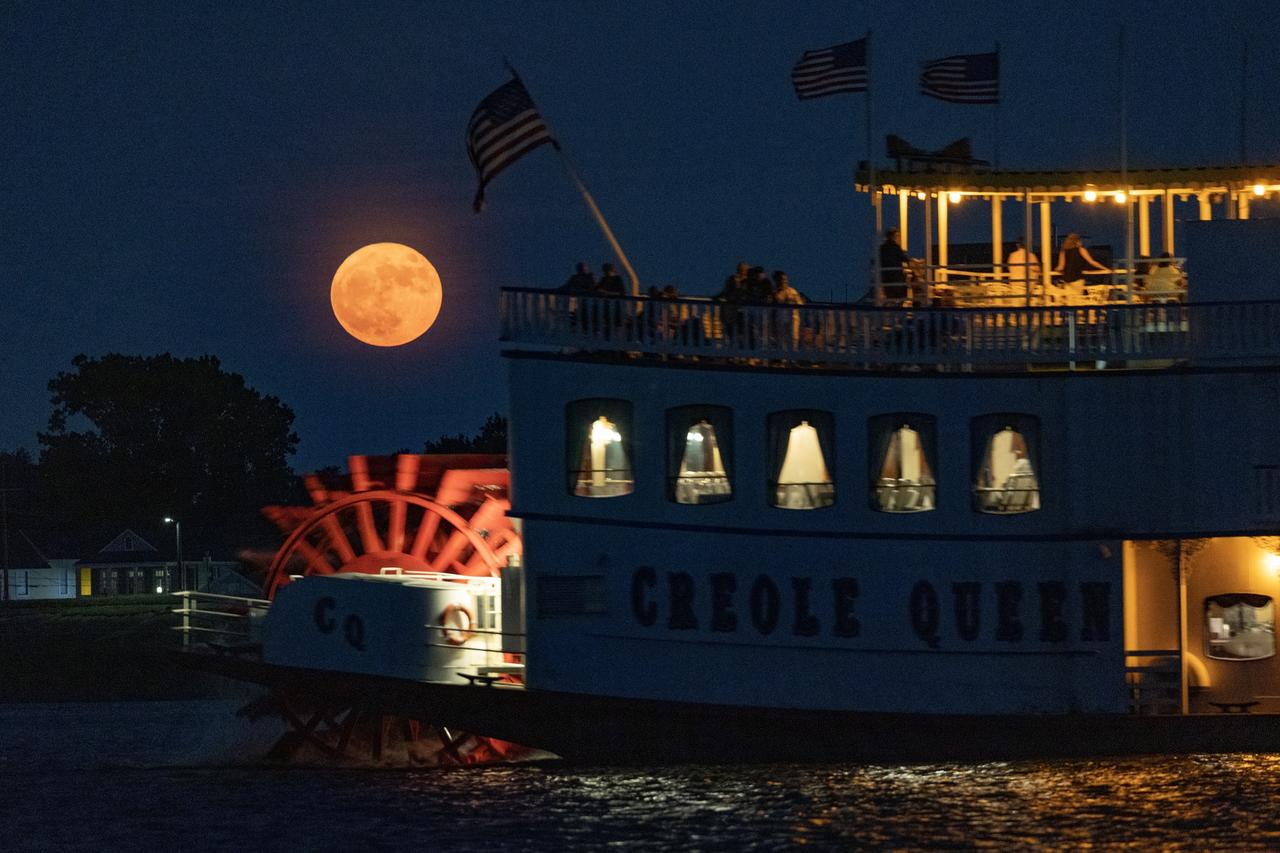
A supermoon rises over the Mississippi River and the Crescent City Aug. 1. The early August full Moon is the second largest in Earth’s skies for 2023. Later in August, a full Moon will appear in the skies for a second time. New Orleans is home to NASA’s Michoud Assembly Facility, where stages for NASA’s SLS (Space Launch System) rocket and structures for Orion spacecraft are produced for the Artemis missions.
August Full Moon Rises Over City of New Orleans
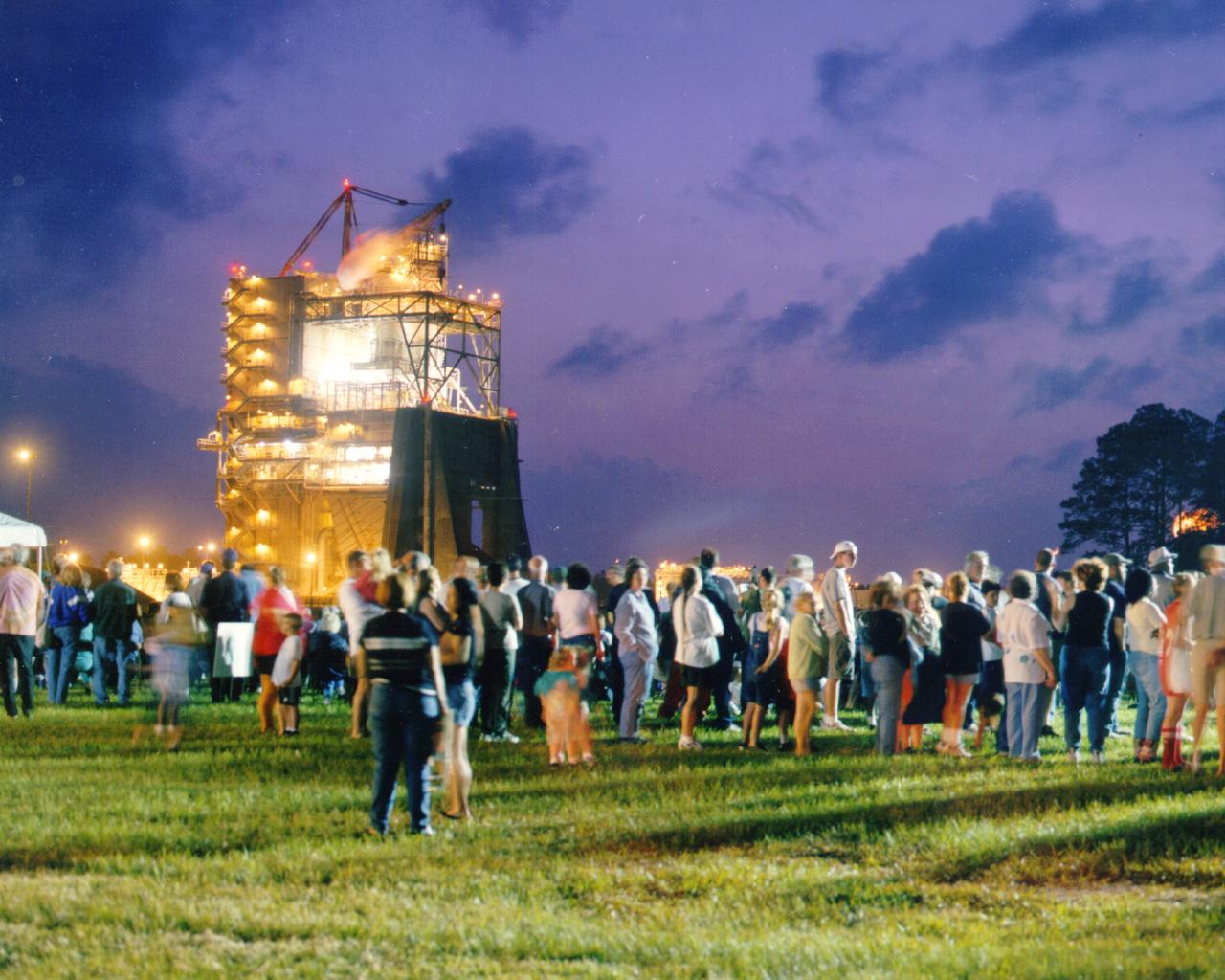
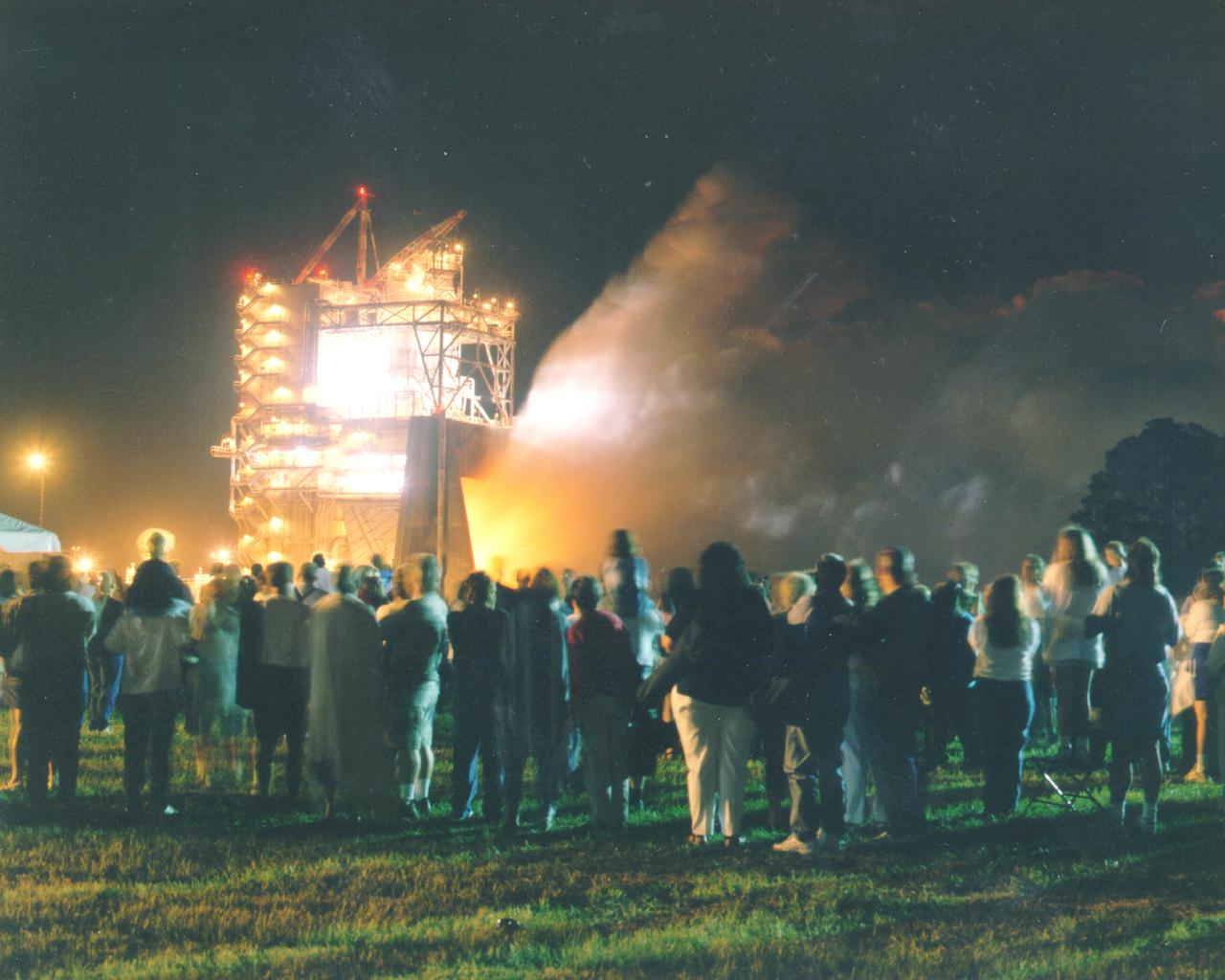
Approximately 13,000 people fill the grounds at NASA's John C. Stennis Space Center for the first-ever evening public engine test of a Space Shuttle Main Engine. The test marked Stennis Space Center's 20th anniversary celebration of the first Space Shuttle mission.
Thousands gather to watch a Space Shuttle Main Engine Test
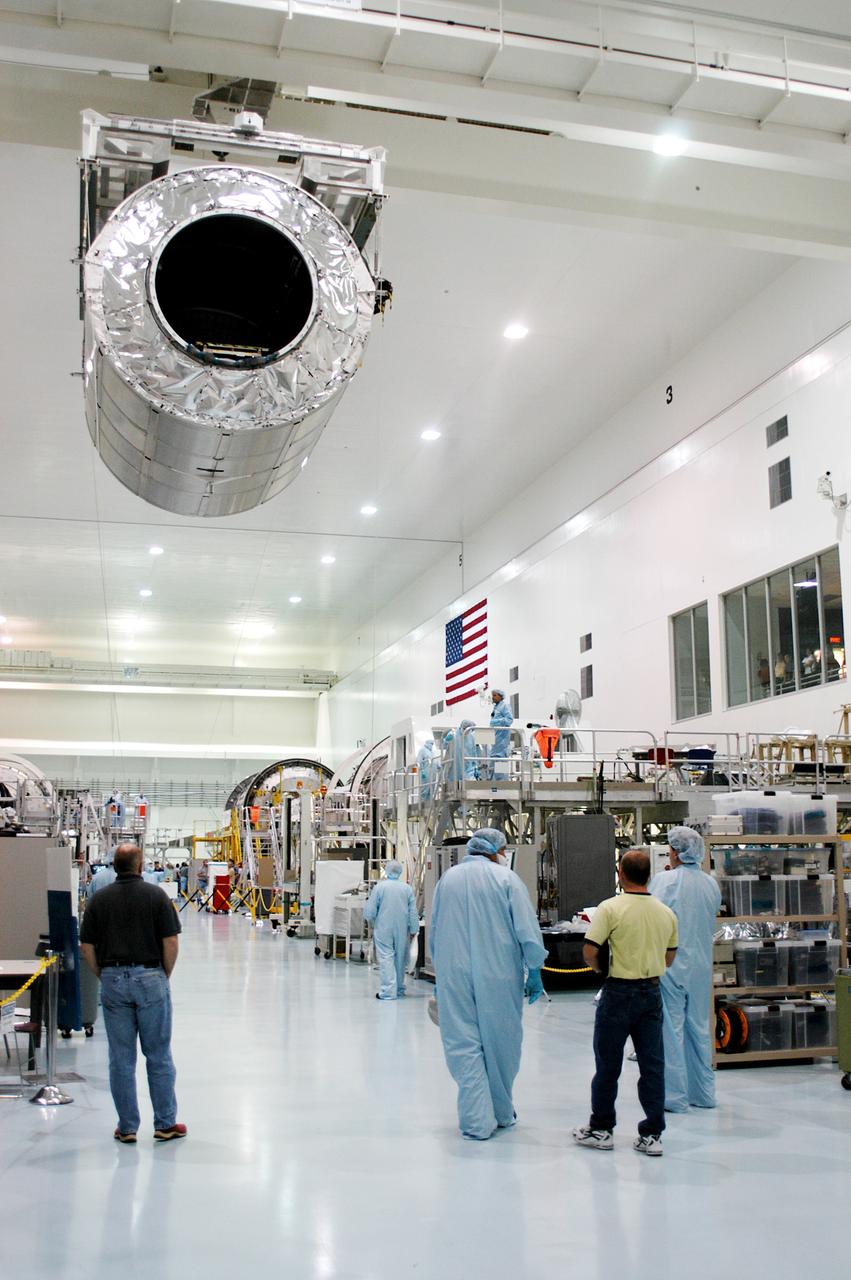
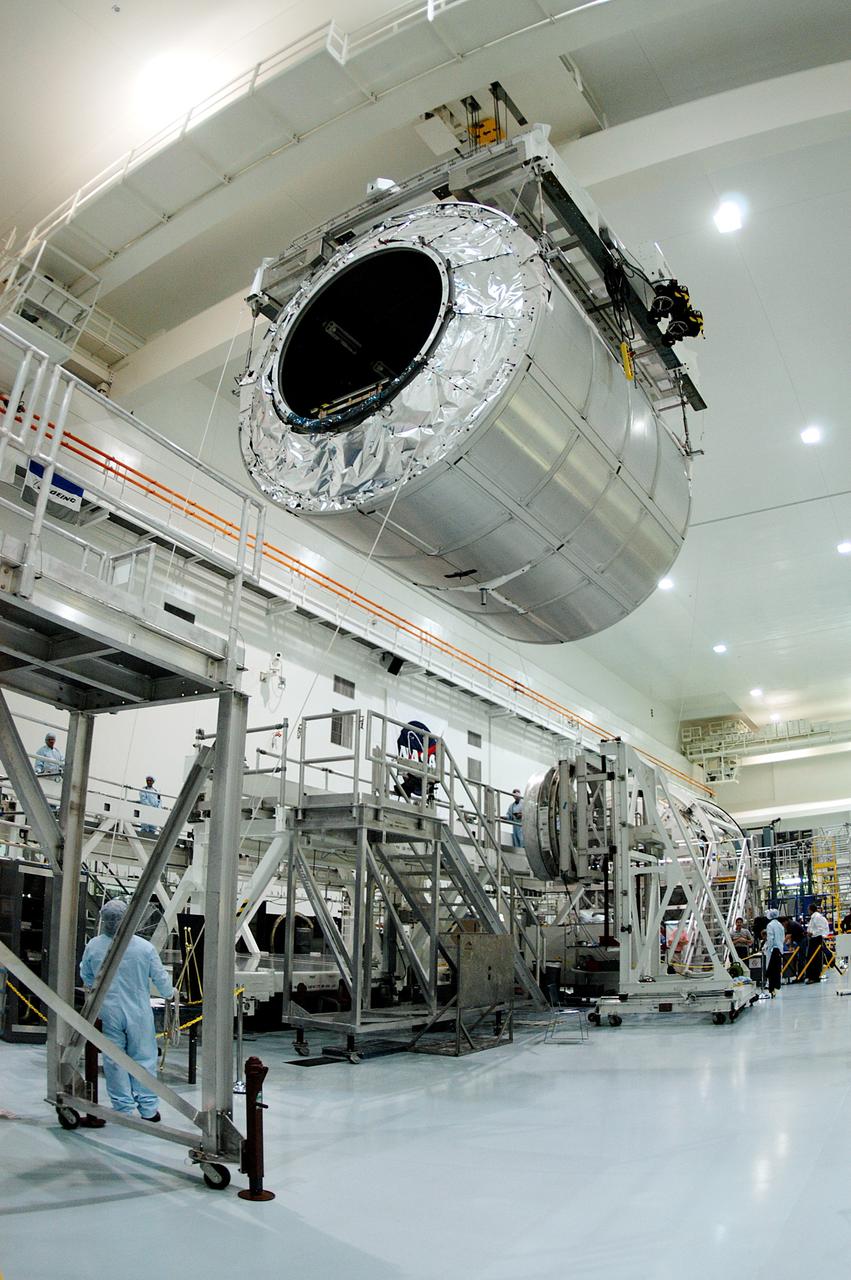
KENNEDY SPACE CENTER, FLA. - A worker on the floor watches as the Multi-Purpose Logistics Module Raffaello moves toward another work stand in the Space Station Processing Facility.  Raffaello is the second MPLM built by the Italian Space Agency, serving as a reusable logistics carrier and primary delivery system to resupply and return station cargo requiring a pressurized environment.  It has been moved across the floor to allow the third MPLM, Donatello, to be brought in for routine testing.  Donatello has been stored in the Operations and Checkout Building.  This is the first time all three MPLMs are in the SSPF; the other one is the Leonardo.  Raffaello is scheduled to fly on Space Shuttle Atlantis on mission STS-114.
KENNEDY SPACE CENTER, FLA. - A worker on the floor watches as the Multi-Purpose Logistics Module Raffaello moves toward another work stand in the Space Station Processing Facility. Raffaello is the second MPLM built by the Italian Space Agency, serving as a reusable logistics carrier and primary delivery system to resupply and return station cargo requiring a pressurized environment. It has been moved across the floor to allow the third MPLM, Donatello, to be brought in for routine testing. Donatello has been stored in the Operations and Checkout Building. This is the first time all three MPLMs are in the SSPF; the other one is the Leonardo. Raffaello is scheduled to fly on Space Shuttle Atlantis on mission STS-114.
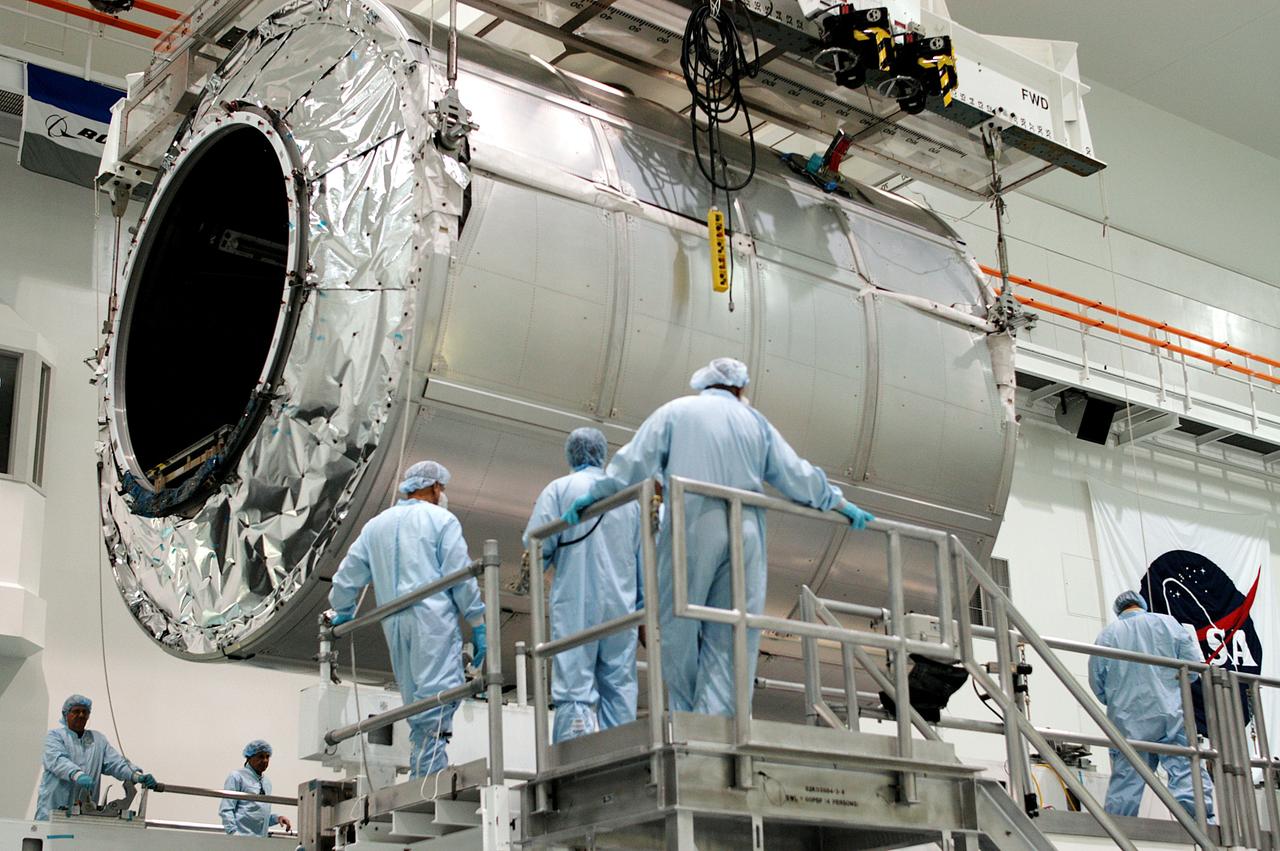
KENNEDY SPACE CENTER, FLA. - Workers on the floor of the Space Station Processing Facility watch as overhead cables carry the Multi-Purpose Logistics Module Donatello to a work stand.  Previously housed in the Operations and Checkout Building, Donatello was brought into the SSPF for routine testing.  This is the first time all three MPLMs (Donatello, Raffaello and Leonardo) are in the SSPF.  The MPLMs were built by the Italian Space Agency, to serve as reusable logistics carriers and the primary delivery system to resupply and return station cargo requiring a pressurized environment.  The third MPLM, Raffaello is scheduled to fly on Space Shuttle Atlantis on mission STS-114.
KENNEDY SPACE CENTER, FLA. - Workers on the floor of the Space Station Processing Facility watch as overhead cables carry the Multi-Purpose Logistics Module Donatello to a work stand. Previously housed in the Operations and Checkout Building, Donatello was brought into the SSPF for routine testing. This is the first time all three MPLMs (Donatello, Raffaello and Leonardo) are in the SSPF. The MPLMs were built by the Italian Space Agency, to serve as reusable logistics carriers and the primary delivery system to resupply and return station cargo requiring a pressurized environment. The third MPLM, Raffaello is scheduled to fly on Space Shuttle Atlantis on mission STS-114.
KENNEDY SPACE CENTER, FLA. - Workers watch as the Multi-Purpose Logistics Module Raffaello is lowered toward a work stand in the Space Station Processing Facility.  Raffaello is the second MPLM built by the Italian Space Agency, serving as a reusable logistics carrier and primary delivery system to resupply and return station cargo requiring a pressurized environment.  It has been moved across the floor to allow the third MPLM, Donatello, to be brought in for routine testing.  Donatello has been stored in the Operations and Checkout Building.  This is the first time all three MPLMs are in the SSPF; the other one is the Leonardo.  Raffaello is scheduled to fly on Space Shuttle Atlantis on mission STS-114.
KENNEDY SPACE CENTER, FLA. - Workers watch as the Multi-Purpose Logistics Module Raffaello is lowered toward a work stand in the Space Station Processing Facility. Raffaello is the second MPLM built by the Italian Space Agency, serving as a reusable logistics carrier and primary delivery system to resupply and return station cargo requiring a pressurized environment. It has been moved across the floor to allow the third MPLM, Donatello, to be brought in for routine testing. Donatello has been stored in the Operations and Checkout Building. This is the first time all three MPLMs are in the SSPF; the other one is the Leonardo. Raffaello is scheduled to fly on Space Shuttle Atlantis on mission STS-114.
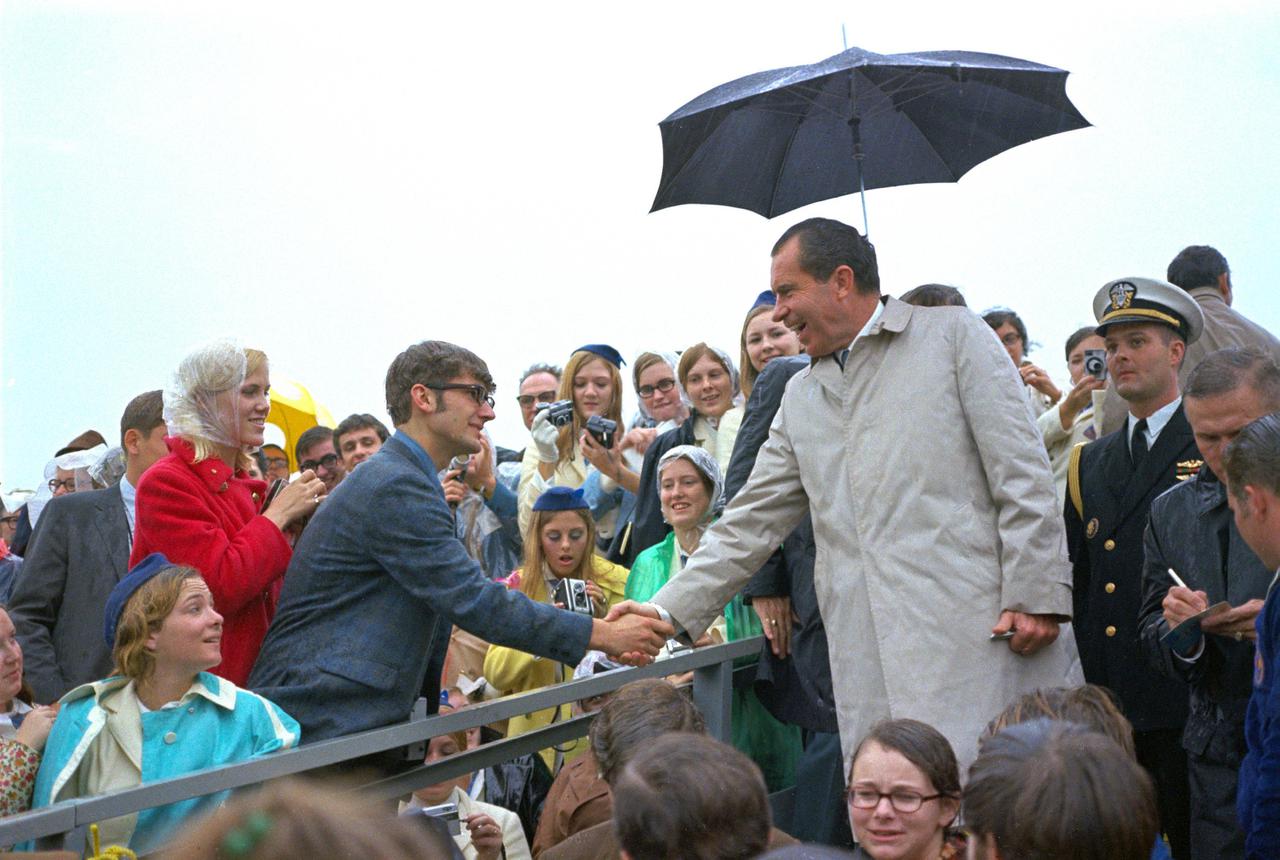
KENNEDY SPACE CENTER, FLA. - President Richard M. Nixon greets crowd gathered to watch the Apollo 12 launch at Kennedy Space Center.
KSC-69PC-657
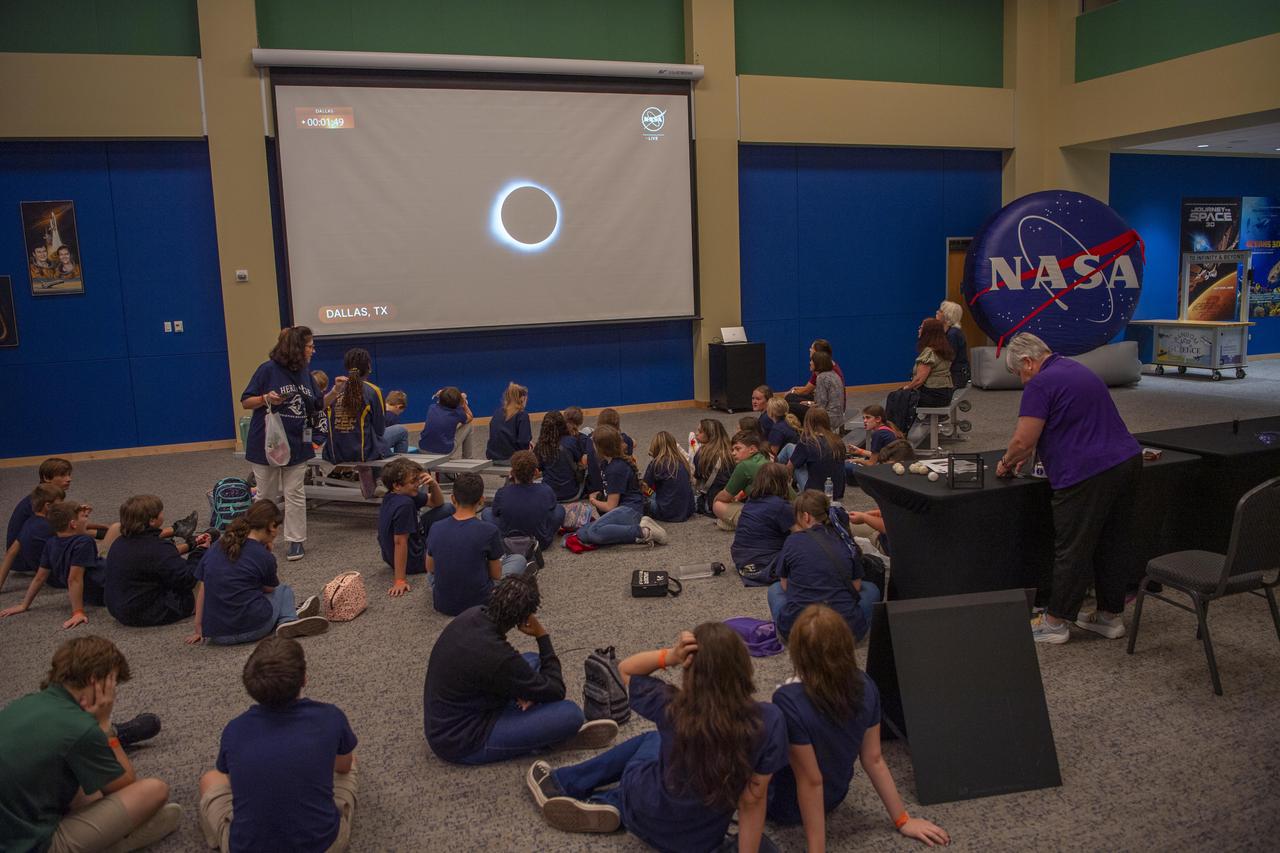
Schoolchildren watch NASA’s coverage of the total solar eclipse on April 8 at INFINITY Science Center, the official visitor center of NASA’s Stennis Space Center.
NASA Stennis Participates in NASA Eclipse Events
A supermoon rises over Huntsville, Alabama, home to NASA’s Marshall Space Flight Center, Aug. 19.  Visible through Wednesday, Aug. 21, the full Moon is both a supermoon and a Blue Moon. Supermoons are the biggest and brightest full Moons of the year because the Moon is within 90% of its closest point to Earth. While not blue in color, the third full Moon in a season with four full Moons is called a “Blue Moon.” Huntsville is known as the “Rocket City” because of its proximity to NASA Marshall, which manages vital propulsion systems and hardware, launch vehicles, engineering technologies, and cutting-edge science for the agency.
August 2024 Blue Supermoon Rises over the “Rocket City”
A supermoon rises over Huntsville, Alabama, home to NASA’s Marshall Space Flight Center, Aug. 19.  Visible through Wednesday, Aug. 21, the full Moon is both a supermoon and a Blue Moon. Supermoons are the biggest and brightest full Moons of the year because the Moon is within 90% of its closest point to Earth. While not blue in color, the third full Moon in a season with four full Moons is called a “Blue Moon.” Huntsville is known as the “Rocket City” because of its proximity to NASA Marshall, which manages vital propulsion systems and hardware, launch vehicles, engineering technologies, and cutting-edge science for the agency.
August 2024 Blue Supermoon Rises over the “Rocket City”
A supermoon rises over Huntsville, Alabama, home to NASA’s Marshall Space Flight Center, Aug. 19.  Visible through Wednesday, Aug. 21, the full Moon is both a supermoon and a Blue Moon. Supermoons are the biggest and brightest full Moons of the year because the Moon is within 90% of its closest point to Earth. While not blue in color, the third full Moon in a season with four full Moons is called a “Blue Moon.” Huntsville is known as the “Rocket City” because of its proximity to NASA Marshall, which manages vital propulsion systems and hardware, launch vehicles, engineering technologies, and cutting-edge science for the agency.
August 2024 Blue Supermoon Rises over the “Rocket City”
KENNEDY SPACE CENTER, FLA.  -  Workers on the mobile service tower on Launch Pad 17-B, Cape Canaveral Air Force Station, watch as the Space Infrared Telescope Facility (SIRTF) clears the platform.   SIRTF will be attached to the Delta II rocket and encapsulated in its fairing before launch.   Consisting of three cryogenically cooled science instruments and an 0.85-meter telescope, SIRTF is one of NASA’s largest infrared telescopes to be launched.  It is the fourth and final element in NASA’s family of orbiting “Great Observatories.”  SIRTF will obtain images and spectra by detecting the infrared energy, or heat, radiated by objects in space. Most of this infrared radiation is blocked by the Earth's atmosphere and cannot be observed from the ground.
KENNEDY SPACE CENTER, FLA. - Workers on the mobile service tower on Launch Pad 17-B, Cape Canaveral Air Force Station, watch as the Space Infrared Telescope Facility (SIRTF) clears the platform. SIRTF will be attached to the Delta II rocket and encapsulated in its fairing before launch. Consisting of three cryogenically cooled science instruments and an 0.85-meter telescope, SIRTF is one of NASA’s largest infrared telescopes to be launched. It is the fourth and final element in NASA’s family of orbiting “Great Observatories.” SIRTF will obtain images and spectra by detecting the infrared energy, or heat, radiated by objects in space. Most of this infrared radiation is blocked by the Earth's atmosphere and cannot be observed from the ground.
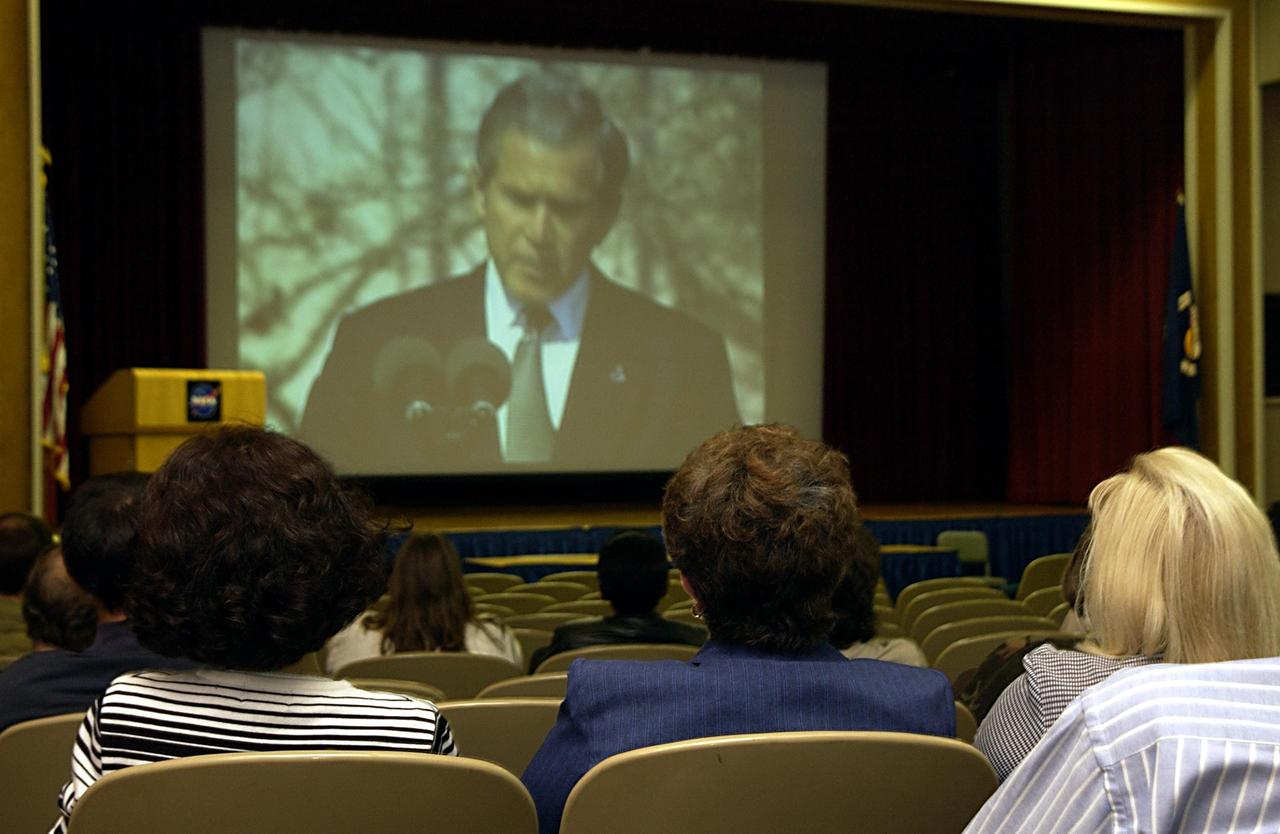
KENNEDY SPACE CENTER, FLA. - Employees at KSC watch President George Bush on NASA television as he speaks at the memorial service for the fallen seven astronauts of Columbia bieng held at Johnson Space Center, Houston.      .
KSC-03pd0268
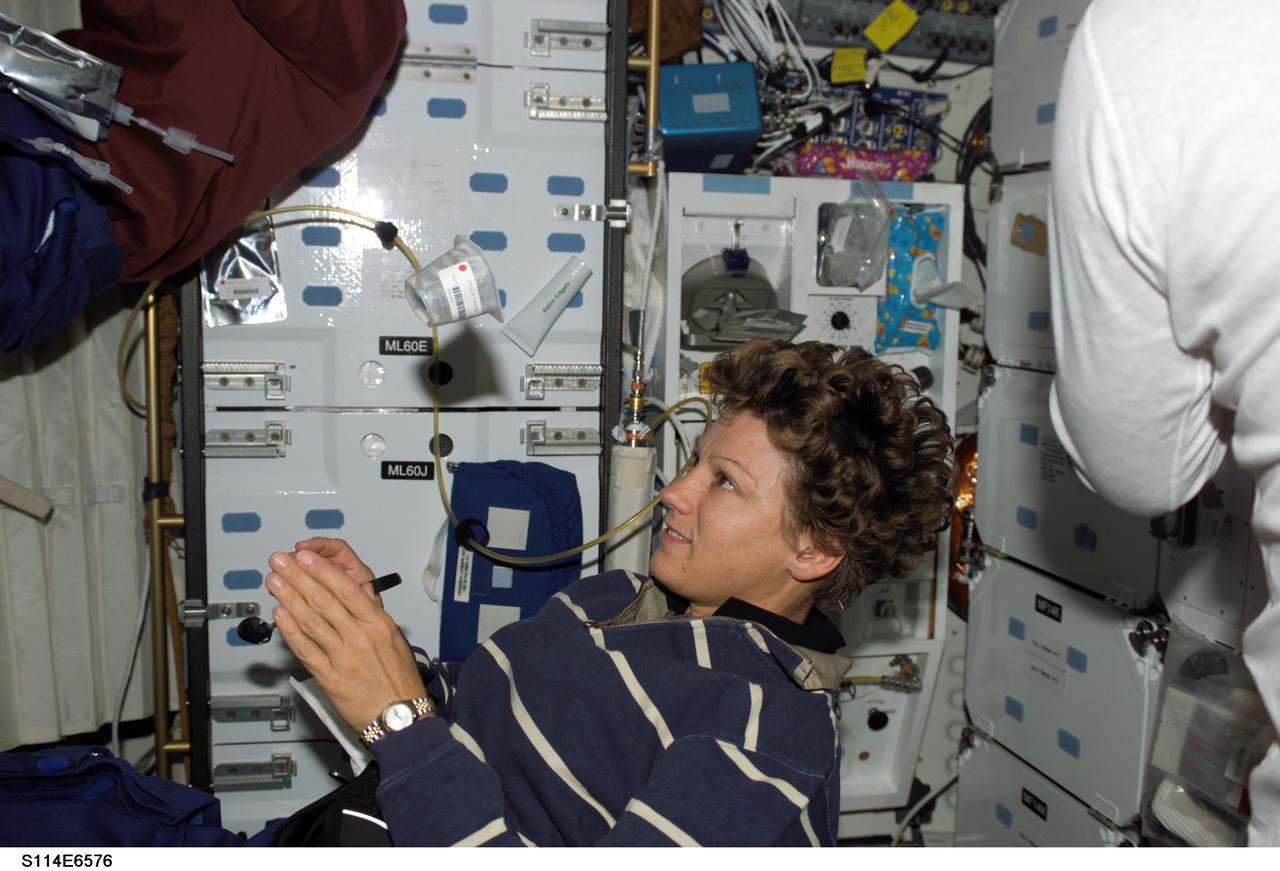
S114-E-6576 (3 August 2005) --- Astronaut Eileen M. Collins, STS-114 commander, watches a container of food floating freely on the middeck of the Space Shuttle Discovery while docked to the International Space Station.
s114e6576
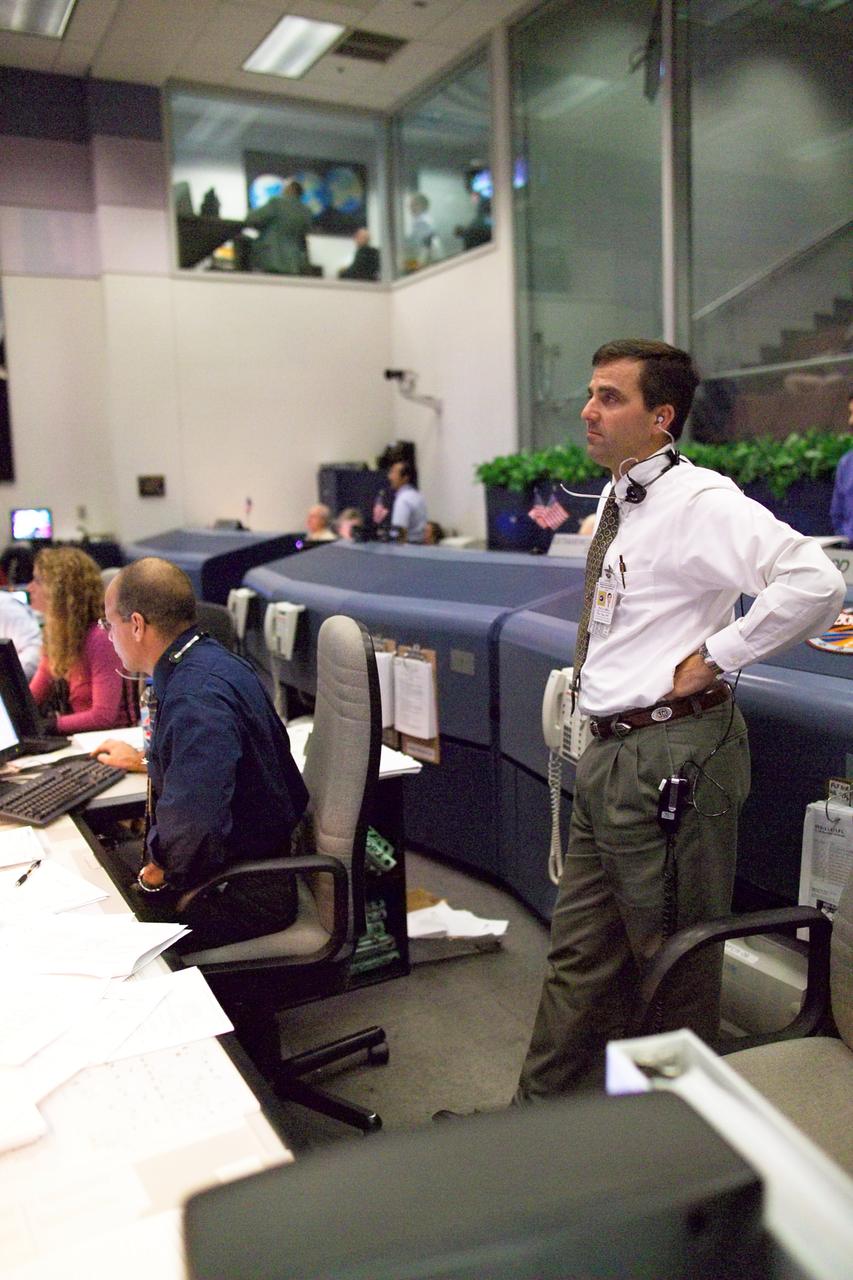
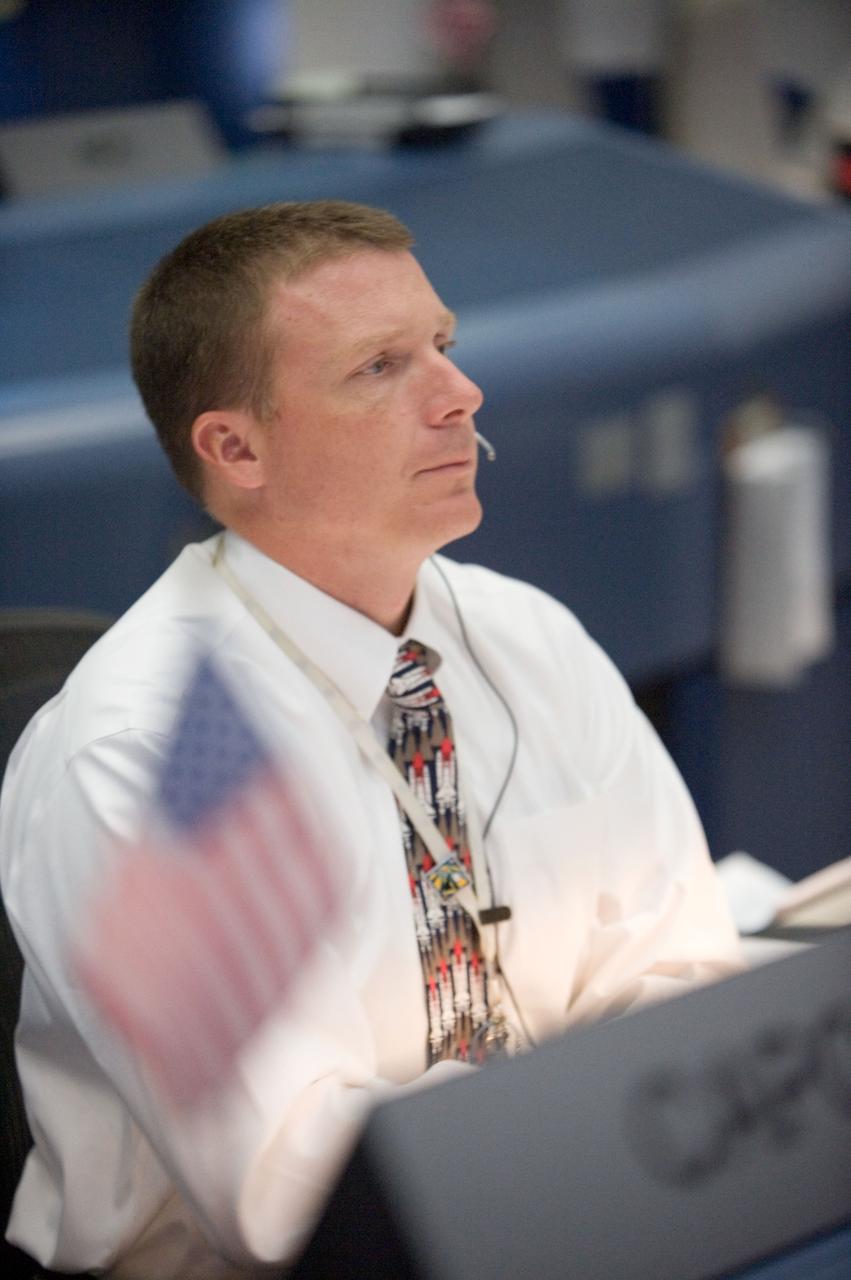
JSC2005-E-31938 (3 August 2005) --- STS114 Lead Flight Director Paul Hill watches televised extravehicular activity (EVA) involving the astronauts of the Space Shuttle Discovery, currently visiting the International Space Station.
STS-114 Mission Control (WFCR and BFCR) during third EVA and tile repair
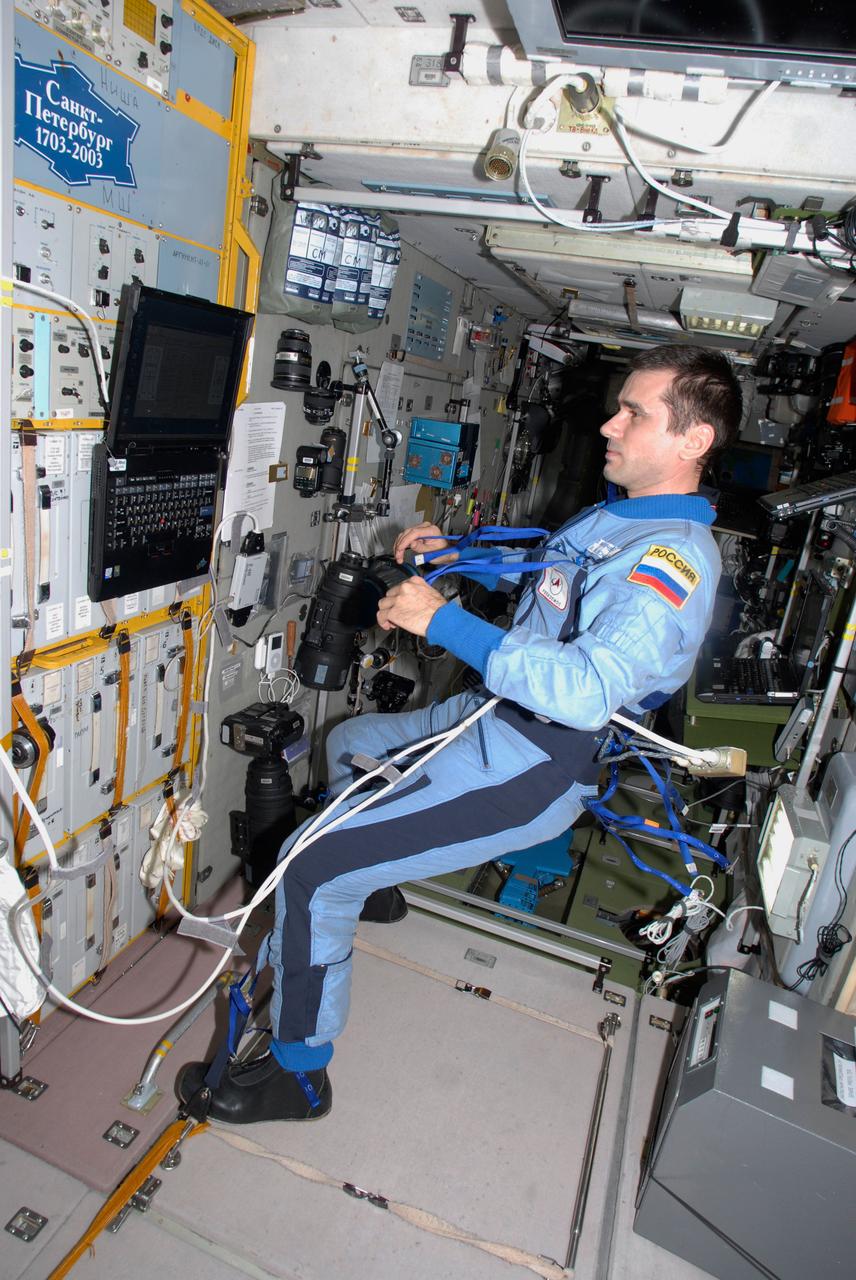
ISS016-E-022540 (13 Jan. 2008) --- Cosmonaut Yuri I. Malenchenko, Expedition 16 flight engineer representing Russia's Federal Space Agency, watches a computer monitor in the Zvezda Service Module of the International Space Station.
Malenchenko wearing Penguin-3 suit in the SM
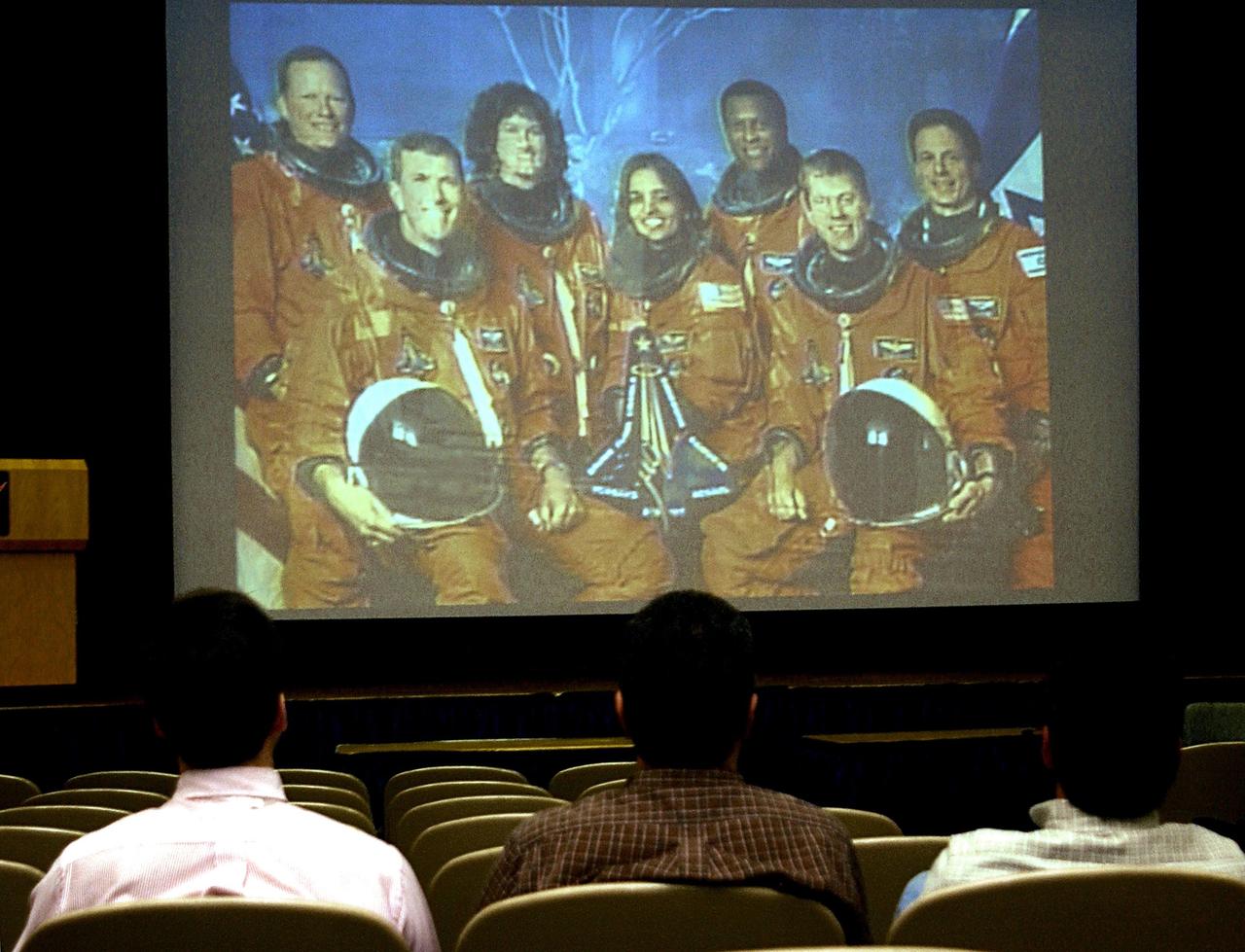
KENNEDY SPACE CENTER, FLA. --  Employees at KSC gather to watch the memorial service for the fallen seven astronauts of Columbia being held at Johnson Space Center, Houston, and broadcast on NASA television.      .
KSC-03pd0266
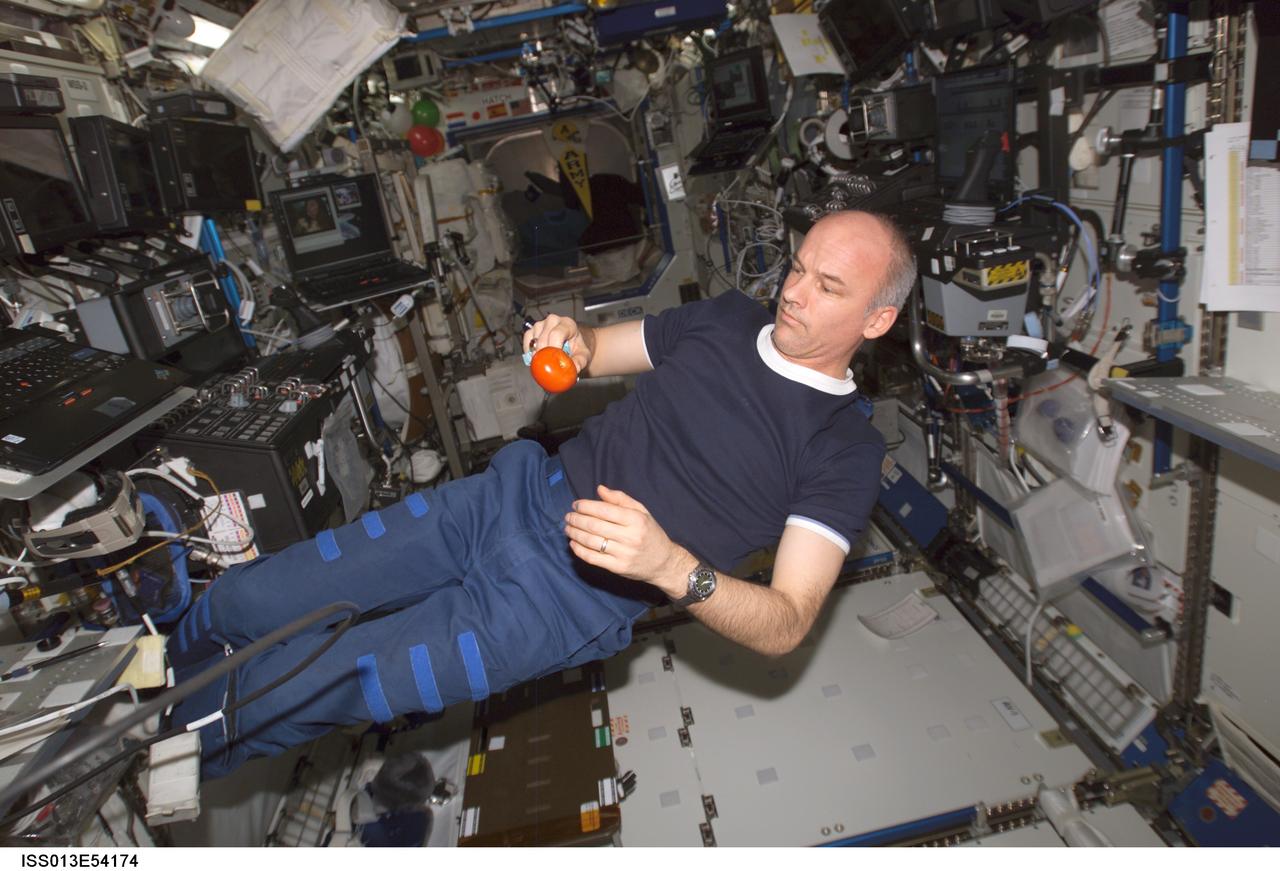
ISS013-E-54174 (16 July 2006) --- Astronaut Jeffrey N. Williams, Expedition 13 NASA space station science officer and flight engineer, watches a tomato float freely in the Destiny laboratory of the International Space Station.
Williams in Destiny Laboratory during Expedition 13
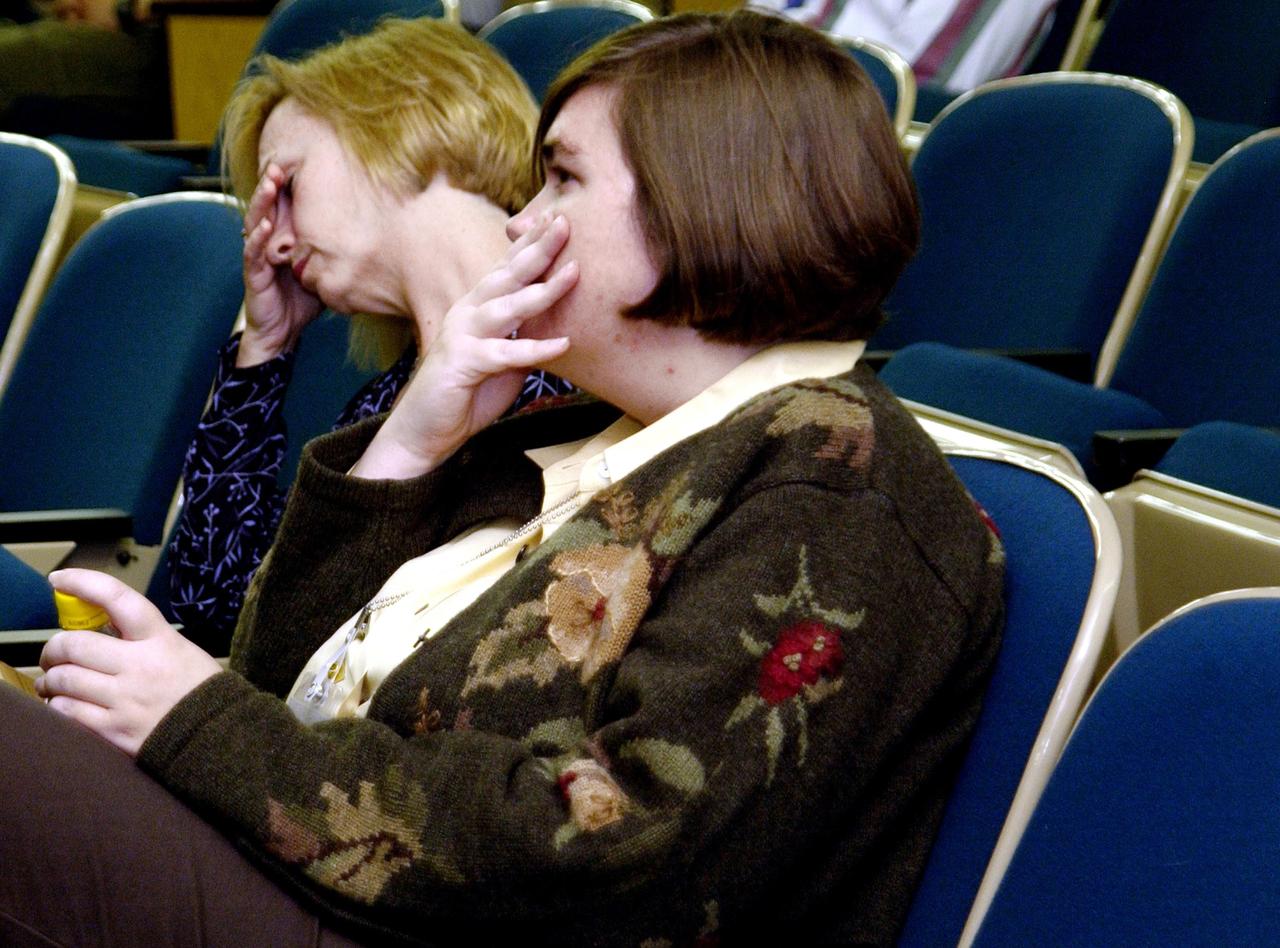
KENNEDY SPACE CENTER, FLA. - Employees at KSC reveal emotion as they watch the memorial service for the fallen seven astronauts of Columbia being held at Johnson Space Center, Houston, and broadcast on NASA television.      .
KSC-03pd0267
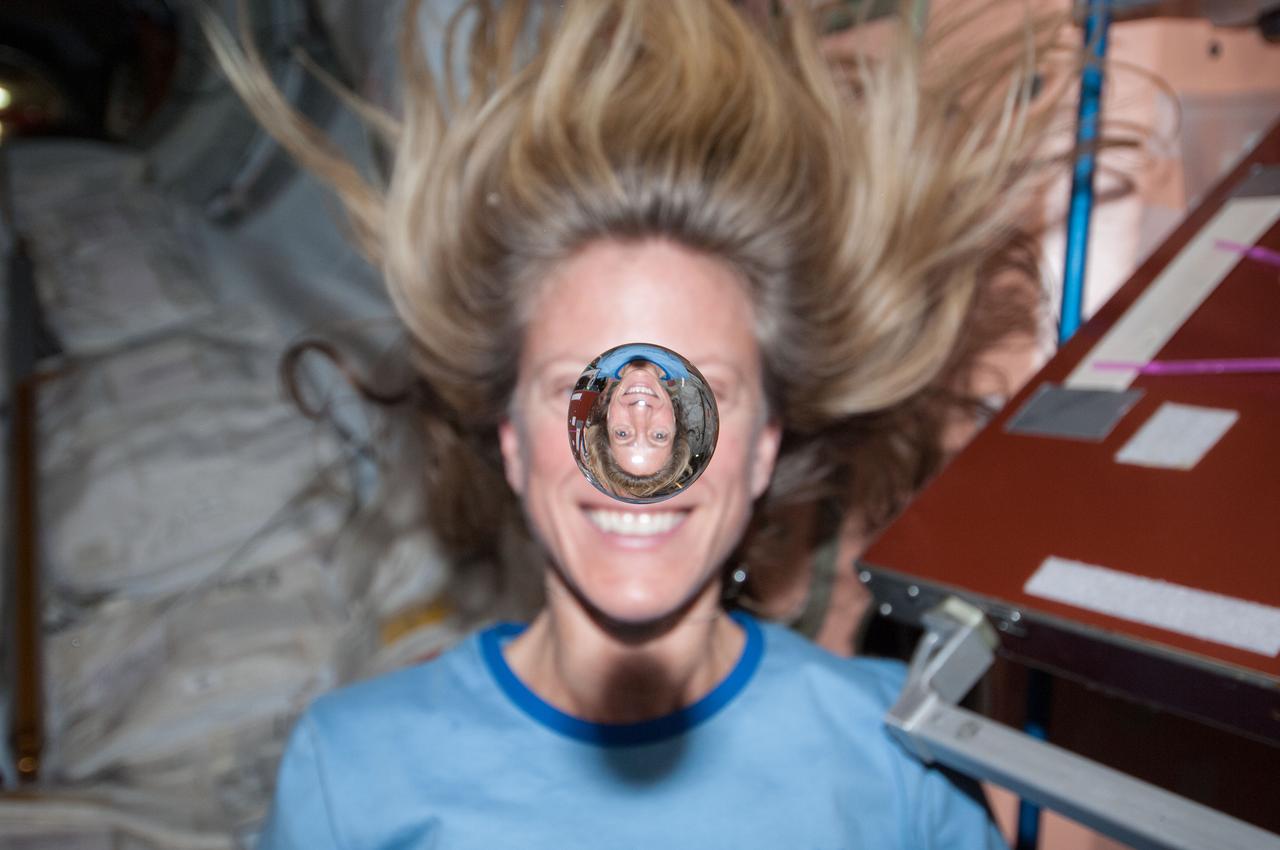
NASA astronaut Karen Nyberger, Expedition 36 flight engineer, watches a water bubble float freely between her and the camera, showing her image refracted in the droplet, while in the Node 1Unity module of the International Space Station.
Faces in water bubbles
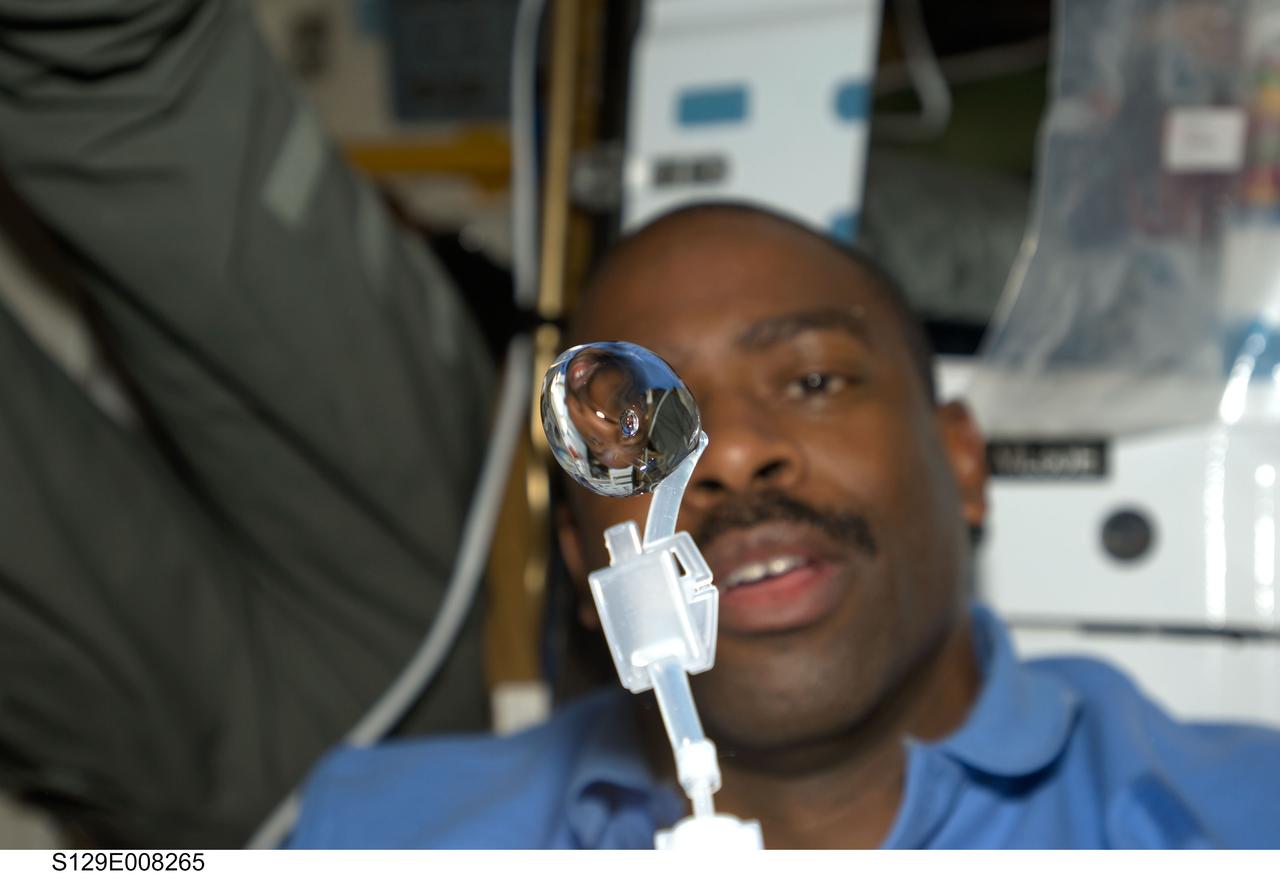
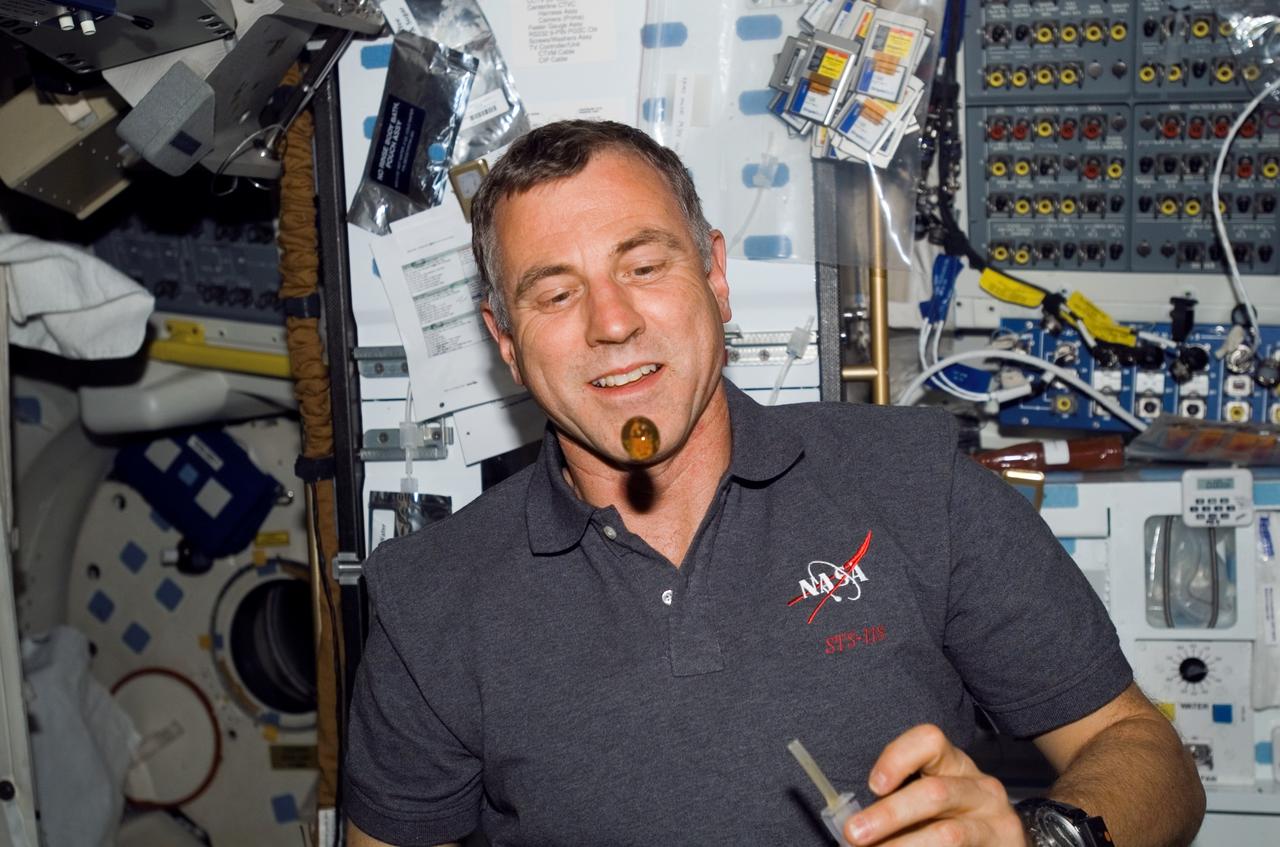
S129-E-008265 (24 Nov. 2009) --- Astronaut Leland Melvin, STS-129 mission specialist, watches a bubble float freely, after having squeezed it from his beverage container, on the middeck of space shuttle Atlantis.
STS-129 MS1 Melvin plays with water globules on the Middeck
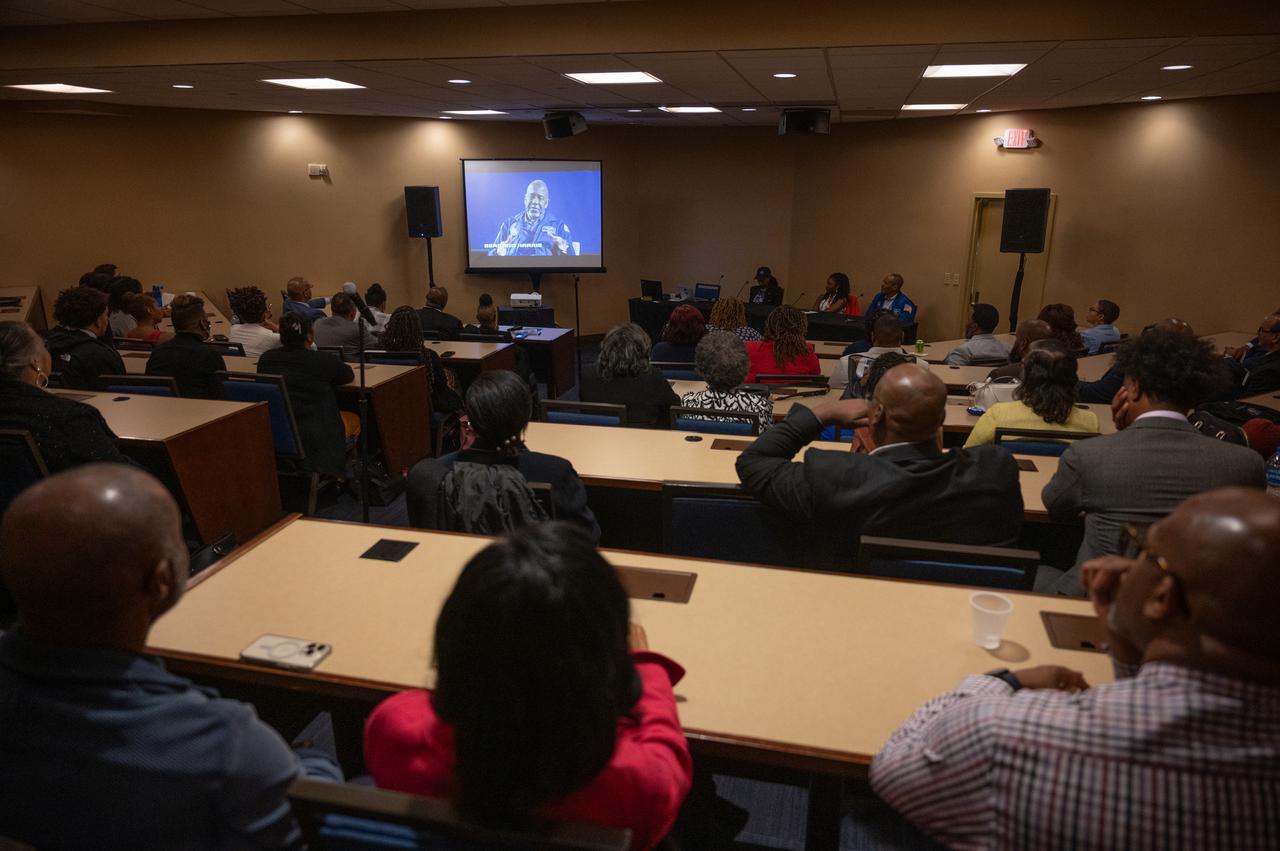
Attendees watch “The Color of Space” during a screening of the documentary as part of the Department of Education’s HBCU Week Conference, Monday, Sept. 25, 2023, at the Hyatt Regency in Arlington, Va.  Photo Credit: (NASA/Joel Kowsky)
Dept. of Edu. HBCU Week Conference Screening of The Color of Spa
KENNEDY SPACE CENTER, FLA. - KSC employees watch an exhibit during Spaceport Super Safety & Health Day.  Dozens of presentations and exhibits across the Center focused attention on safety at work and home.
KSC-02pd1652
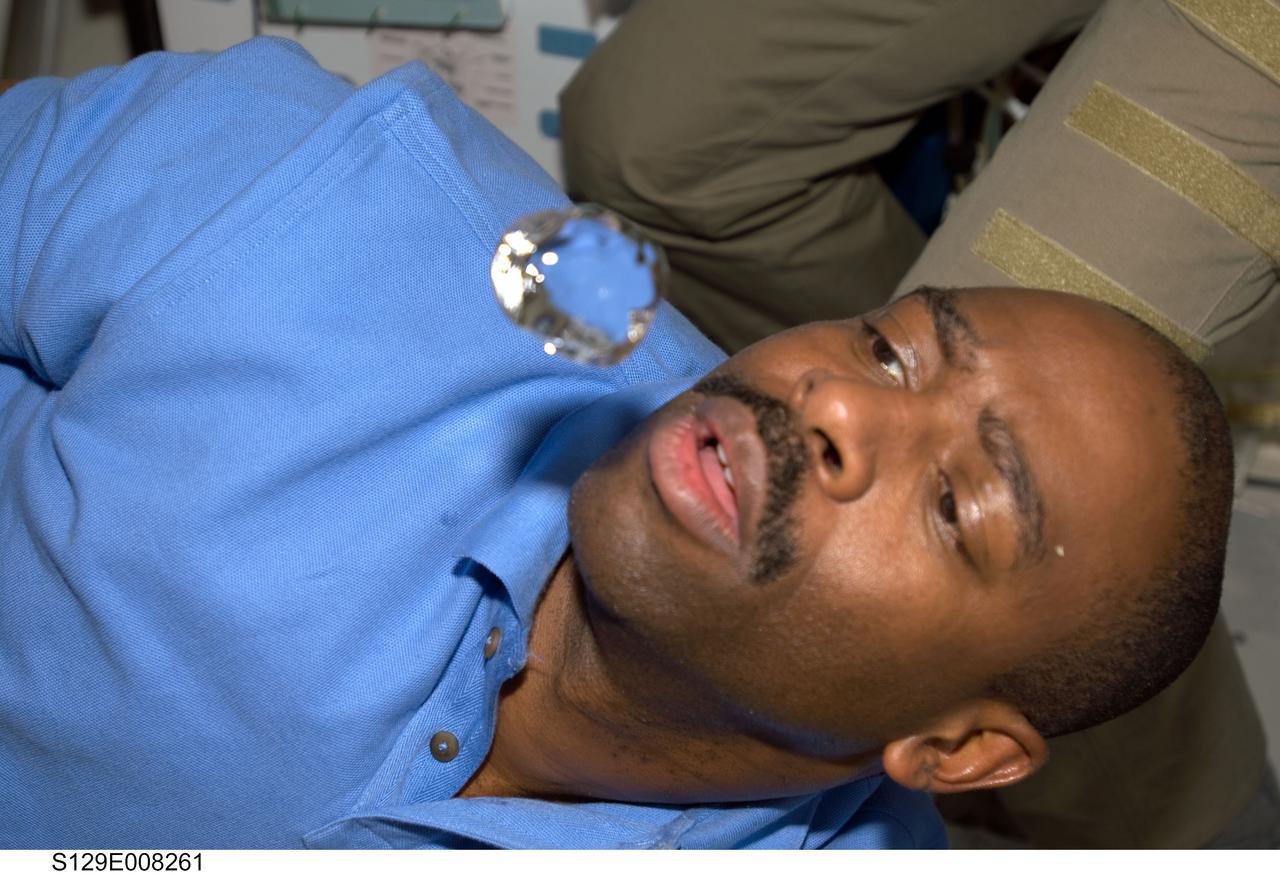
S129-E-008261 (24 Nov. 2009) --- Astronaut Leland Melvin, STS-129 mission specialist, watches a bubble float freely, after having squeezed it from his beverage container, on the middeck of space shuttle Atlantis.
STS-129 MS1 Melvin plays with water globules on the Middeck
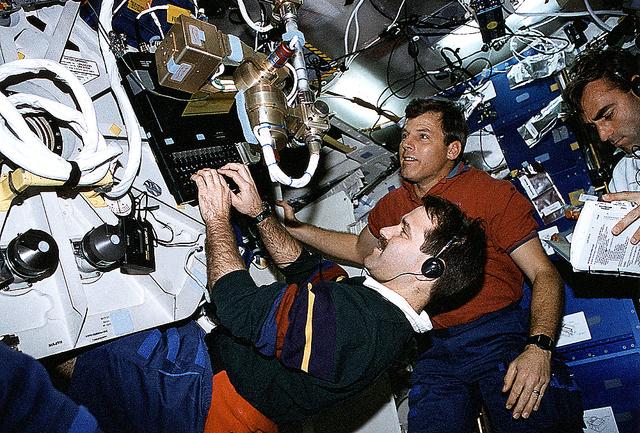
Onboard Space Shuttle Endeavour (STS-67) astronaut John Grunsfeld works at a laptop computer while wearing a headset. Commander Stephen Oswald watches Grunsfeld and Pilot Bill Gregory reads a checklist on the shuttle mid-deck.
Microgravity
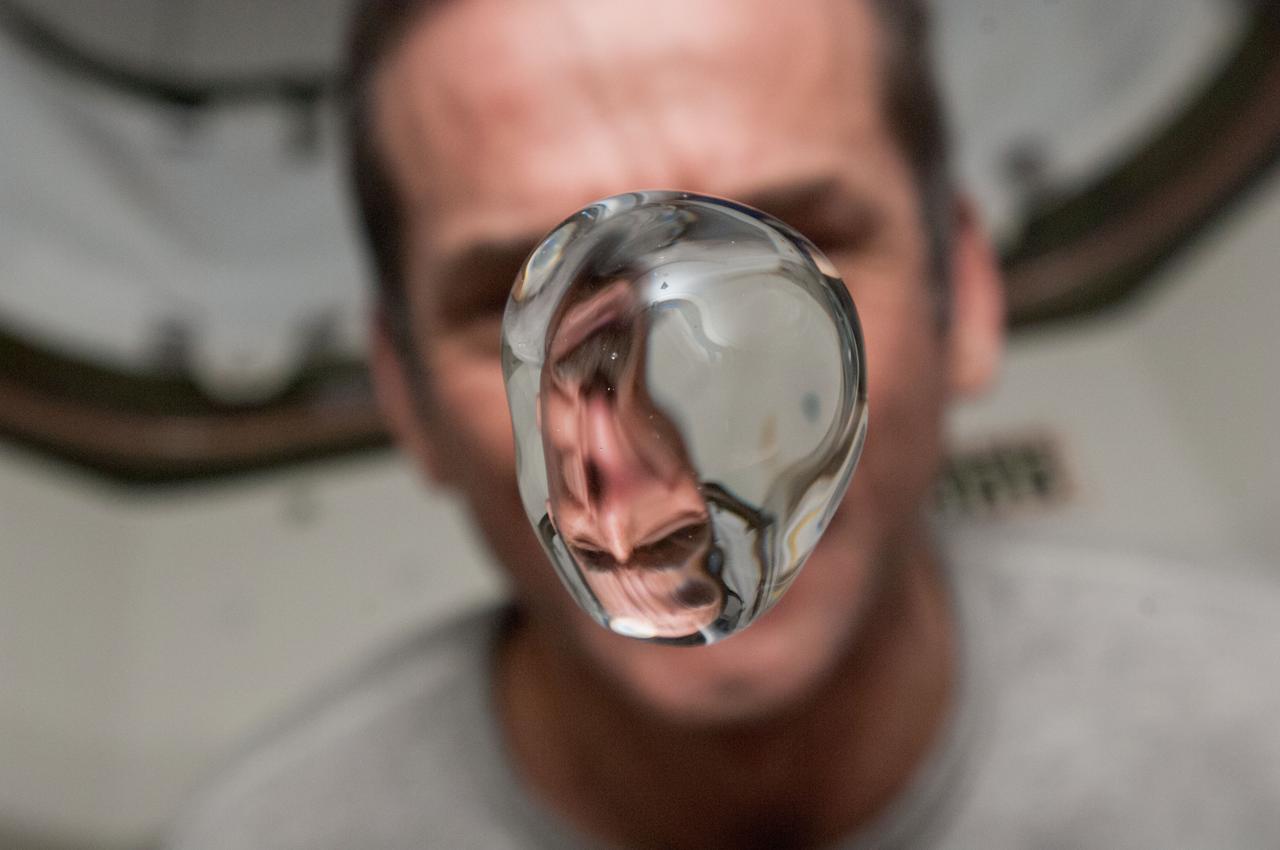
View of Canadian Space Agency (CSA) Chris Hadfield,Expedition 34 Flight Engineer (FE),watching a water bubble float freely,showing his image refracted,in the Node 1.  Photo was taken during Expedition 34.
Hadfield watches a water bubble float in the Node 1
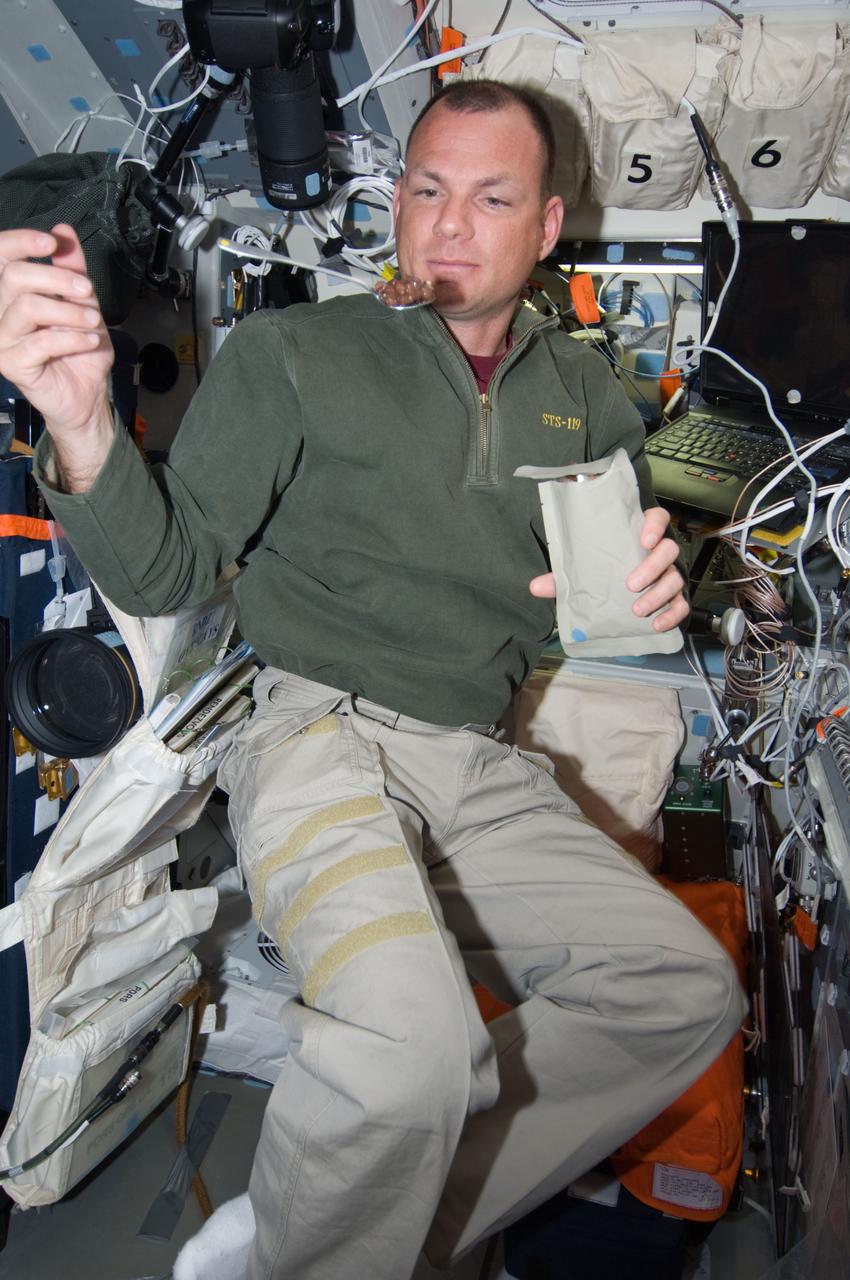
S119-E-008453 (25 March 2009) --- Astronaut Tony Antonelli, STS-119 pilot, watches a spoonful of food float freely while eating a meal on the flight deck of Space Shuttle Discovery.
Antonelli with Food packet on AFT Flight Deck (FD)
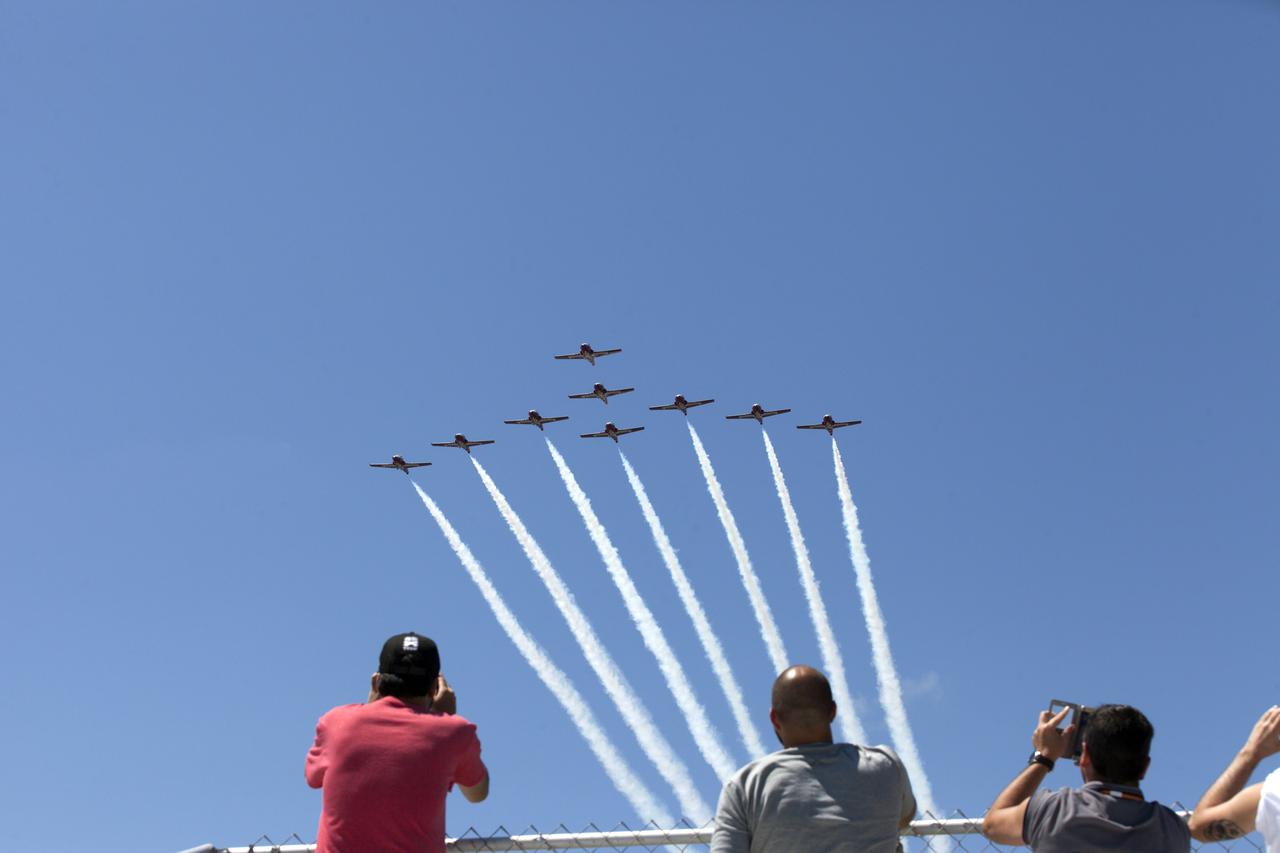
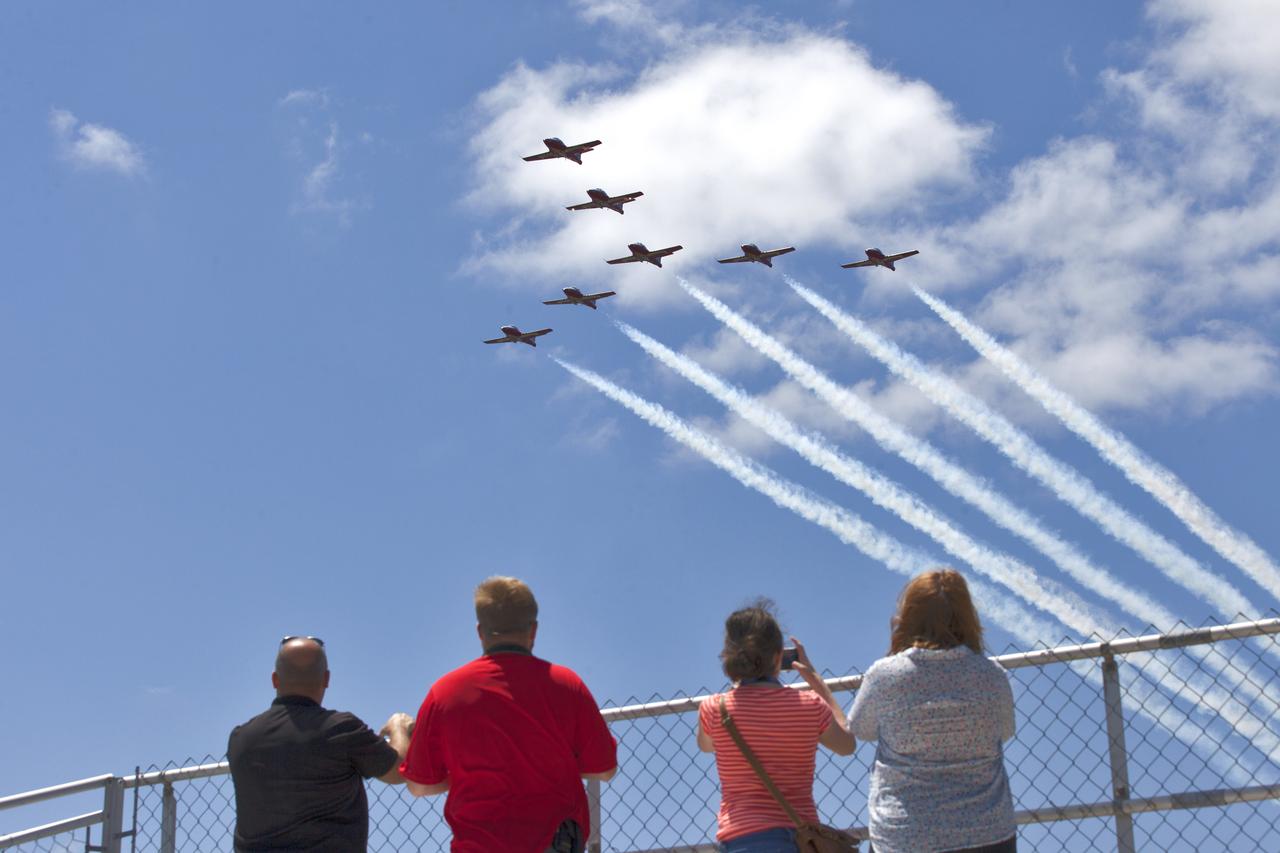
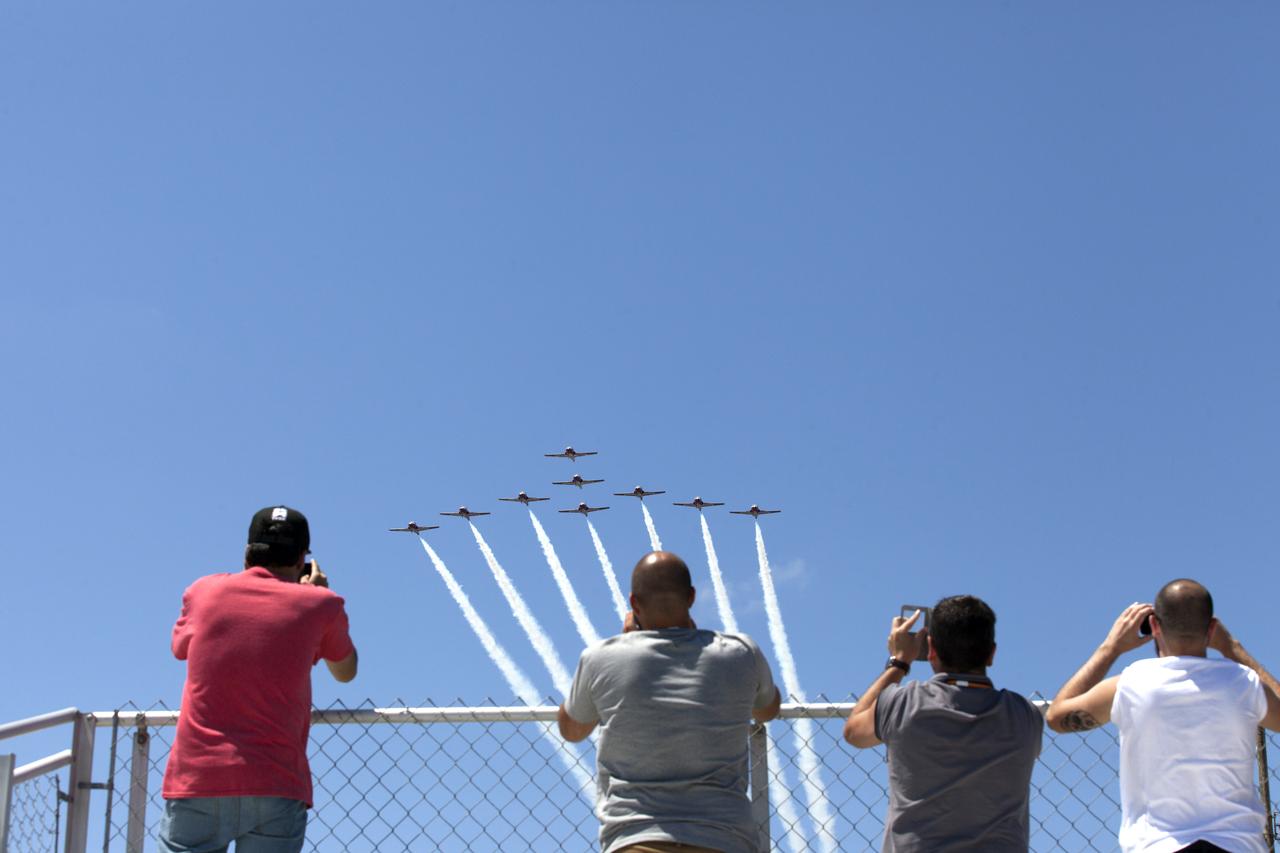
Workers watch as the Canadian Forces Snowbirds fly in formation over the Shuttle Landing Facility at NASA's Kennedy Space Center in Florida, during a practice flight on May 9, 2018, between their scheduled U.S. air shows.
NASA and Canadian Snowbirds Aircrafts
Attendees watch “The Color of Space” during a screening of the documentary as part of the Department of Education’s HBCU Week Conference, Monday, Sept. 25, 2023, at the Hyatt Regency in Arlington, Va.  Photo Credit: (NASA/Joel Kowsky)
Dept. of Edu. HBCU Week Conference Screening of The Color of Spa
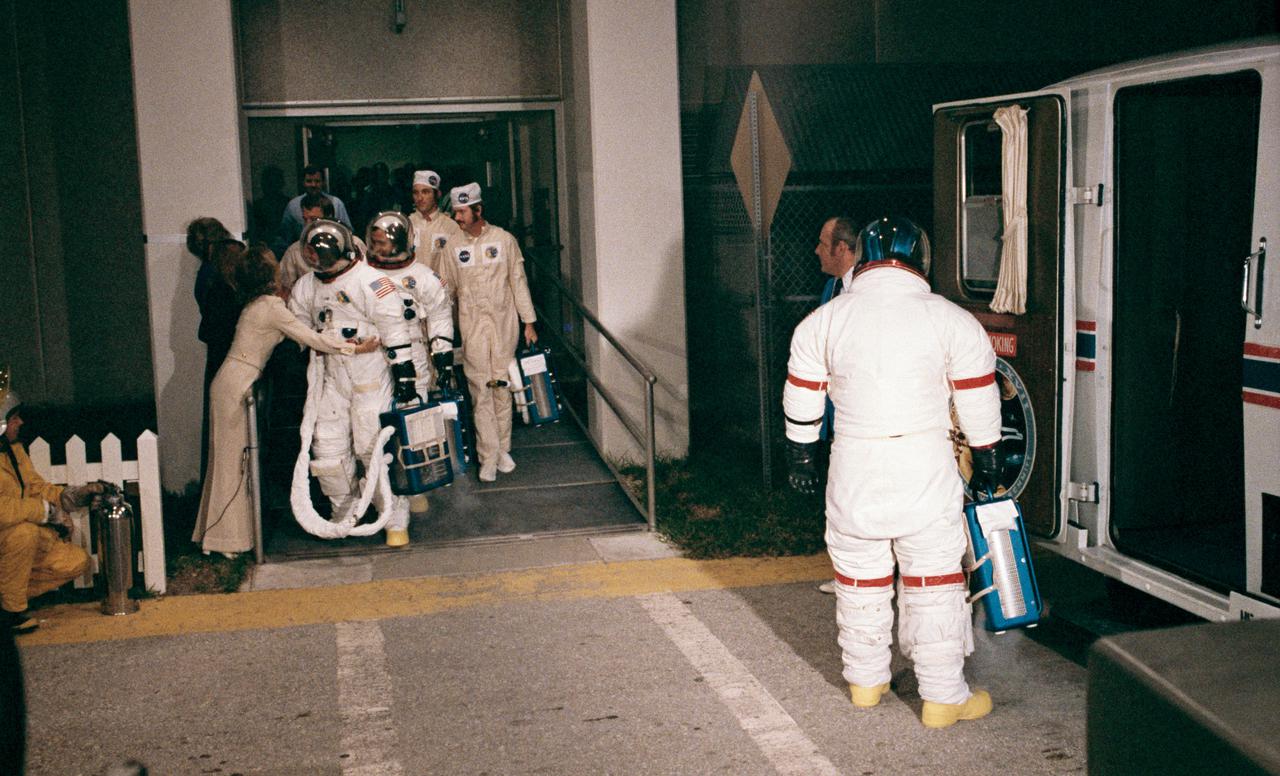
CAPE CANAVERAL, Fla. – Apollo 17 commander Gene Cernan watches as his spacesuit is prepared for liftoff inside the Operations and Checkout Building at NASA's Kennedy Space Center.
KSC-72PC-613
Acting NASA Administrator Robert Lightfoot watches a video introduction during a State of NASA address Monday, Feb. 12, 2018 at NASA's Marshall Space Flight Center in Huntsville, Alabama.  Photo Credit: (NASA/Bill Ingalls)
State of NASA
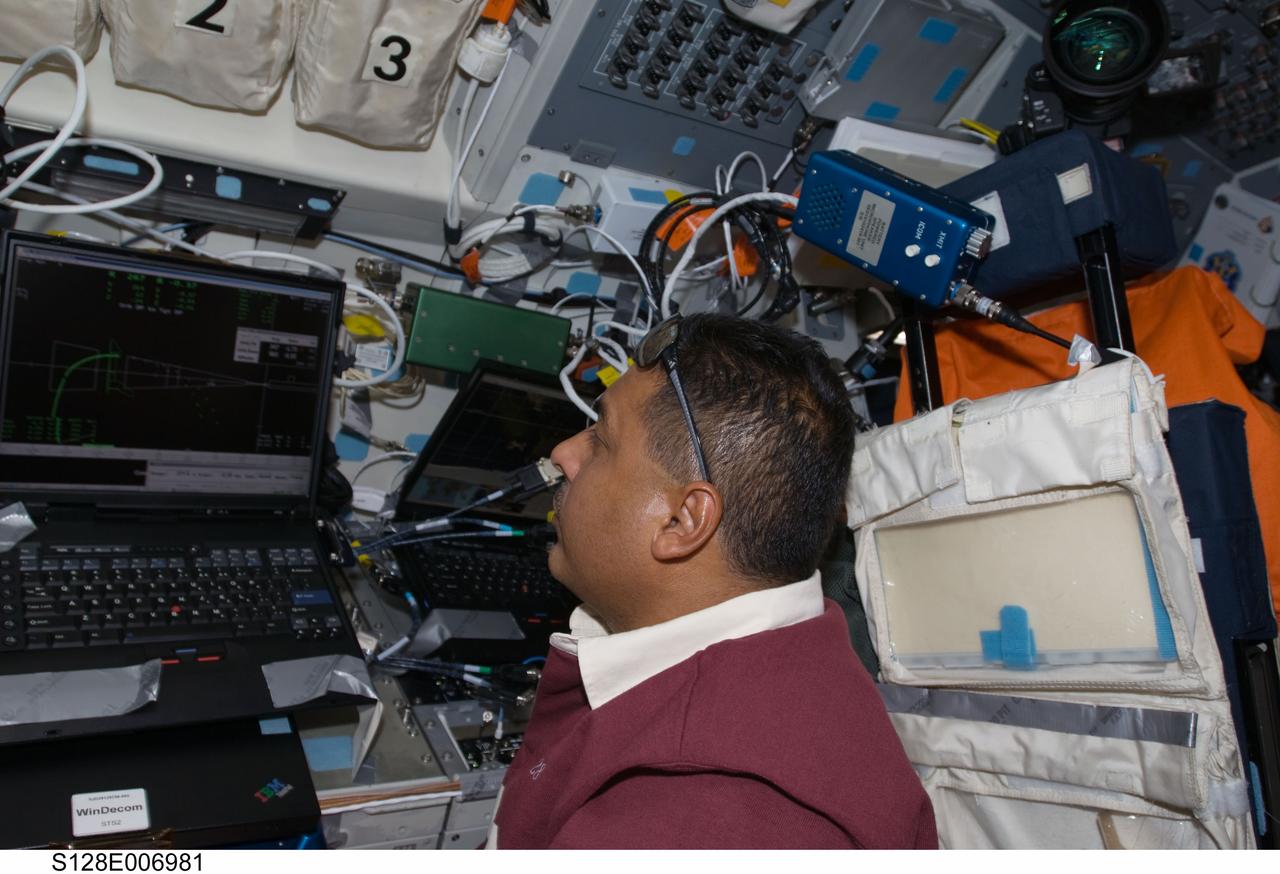
S128-E-006981 (30 Aug. 2009) --- Astronaut Jose Hernandez, STS-128 mission specialist, watches a computer monitor on the flight deck of Space Shuttle Discovery during flight day three activities.
Hernandez on Flight Deck during Approach OPS
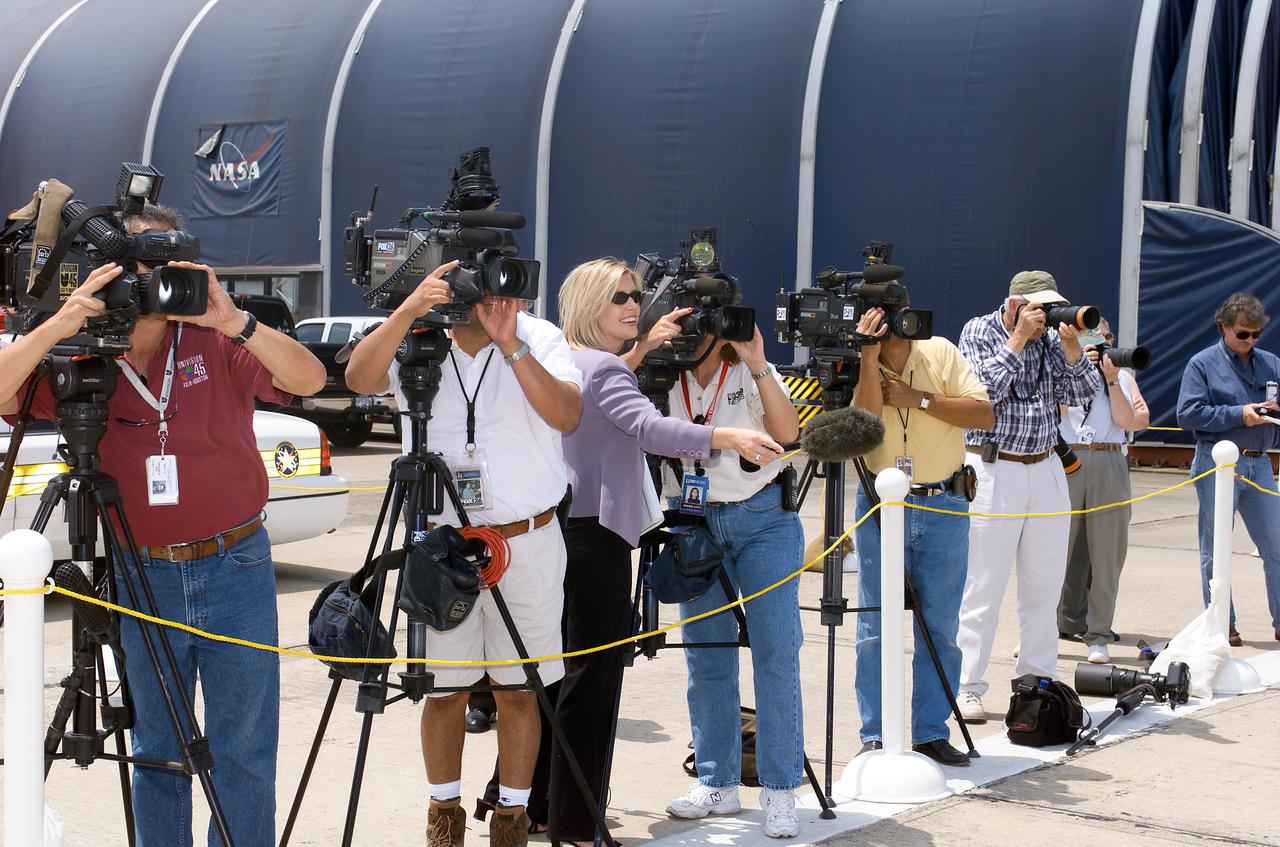
JSC2003-E-37465 (21 May 2003) --- Members of the media are pictured while they watch the arrival of the Expedition 6 crewmembers in a Gulfstream IV aircraft at Ellington Field, near Johnson Space Center (JSC).
International Space Station Expedition 6 crew arrival at Ellington Field for crew return to JSC.
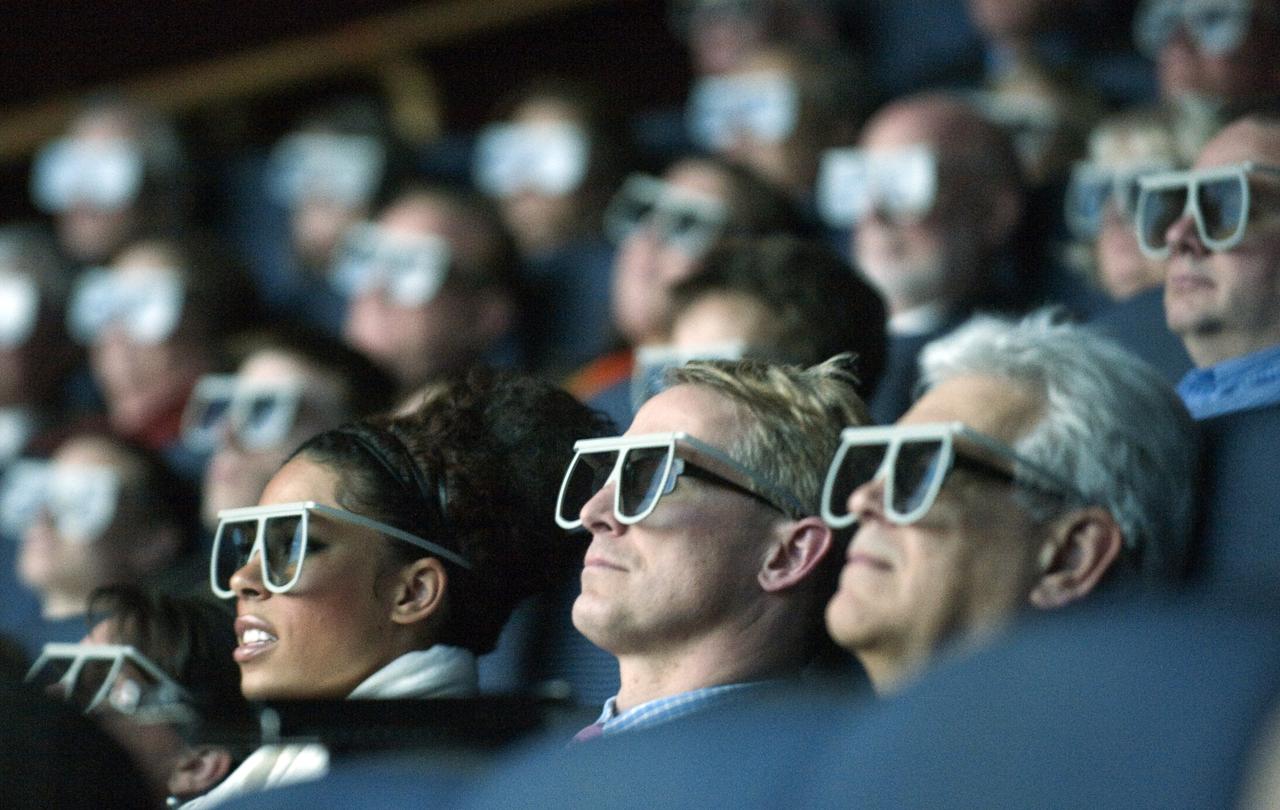
Moviegoers wear 3D glasses as they watch the World Premiere of "Hubble 3D", screened at the Smithsonian's Air and Space Museum Tuesday evening, March 9, 2010, in Washington. Photo Credit: (NASA/Paul E. Alers)
Hubble IMAX Premier
Workers along the NASA Causeway at NASA's Kennedy Space Center in Florida watch a practice flight of the Canadian Forces Snowbirds on May 9, 2018, between their scheduled U.S. air shows.
NASA and Canadian Snowbirds Aircrafts
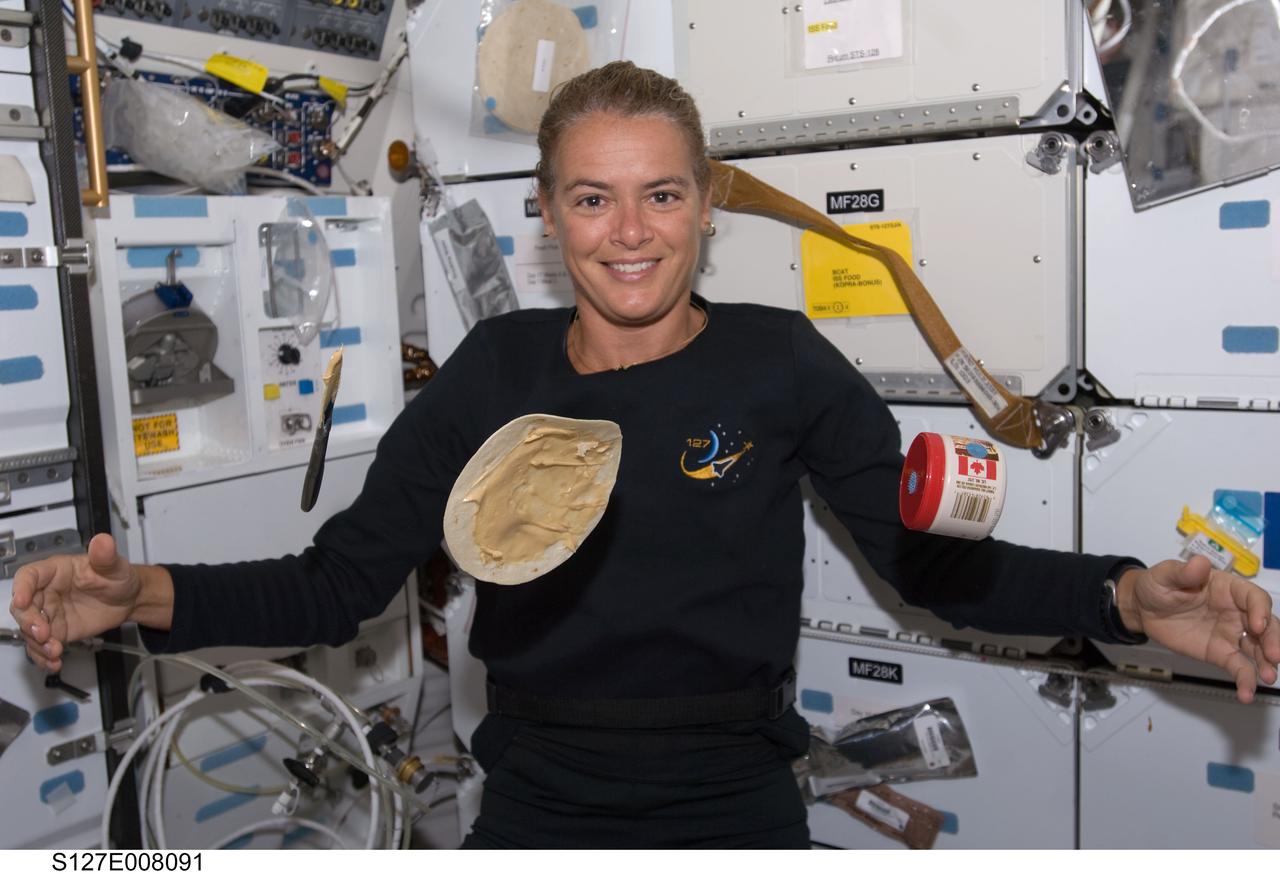
S127-E-008091 (23 July 2009) --- Canadian Space Agency astronaut Julie Payette, STS-127 mission specialist, watches as a tortilla floats in front of her on Endeavour's middeck during flight day nine.
Payette watches tortilla in the FWD MDDK during Joint Operations
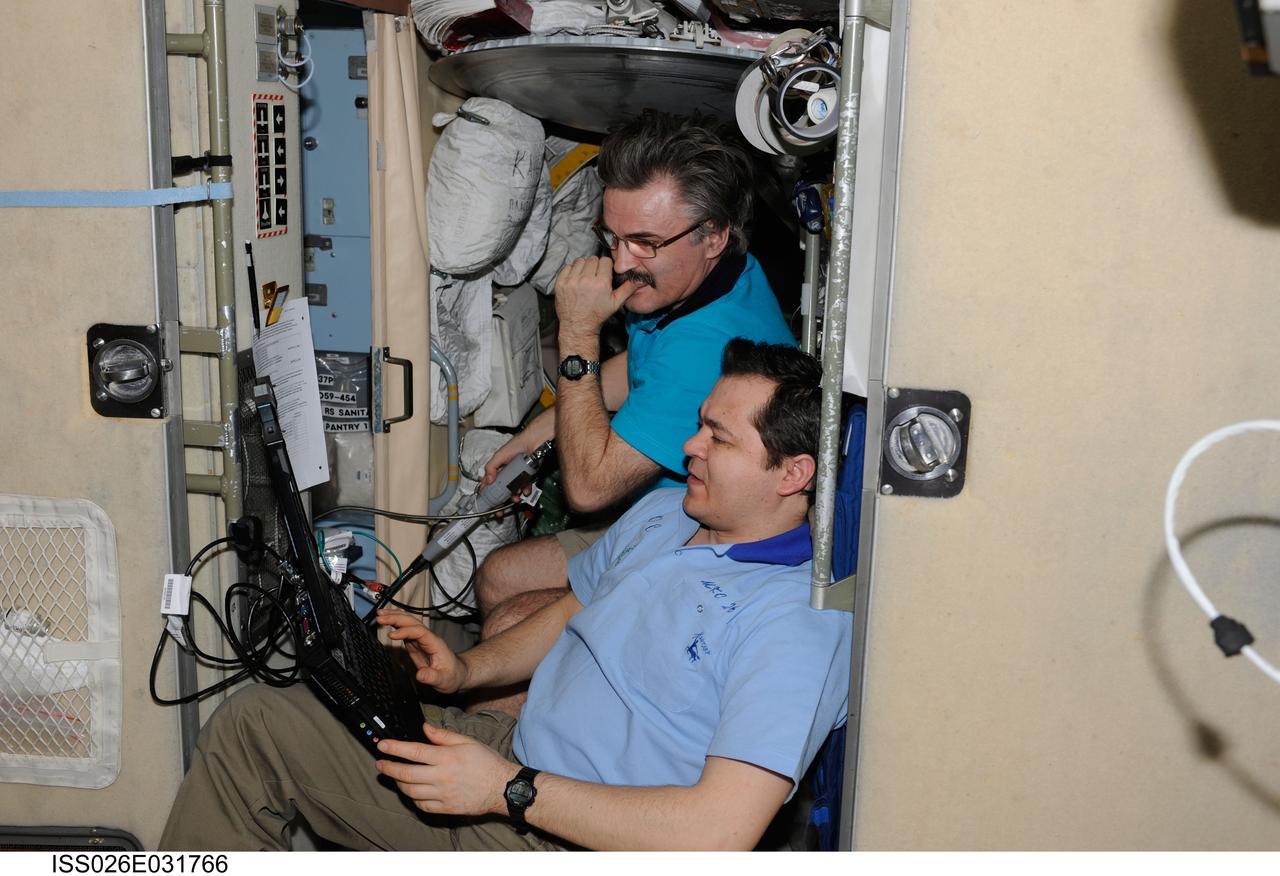
ISS026-E-031766 (4 March 2011) --- Russian cosmonauts Oleg Skripochka (foreground) and Alexander Kaleri, both Expedition 26 flight engineers, watch a computer monitor in the Zvezda Service Module of the International Space Station.
Skripochka and Kaleri watch monitor
Workers along the NASA Causeway at NASA's Kennedy Space Center in Florida watch a practice flight of the Canadian Forces Snowbirds on May 9, 2018, between their scheduled U.S. air shows.
NASA and Canadian Snowbirds Aircrafts
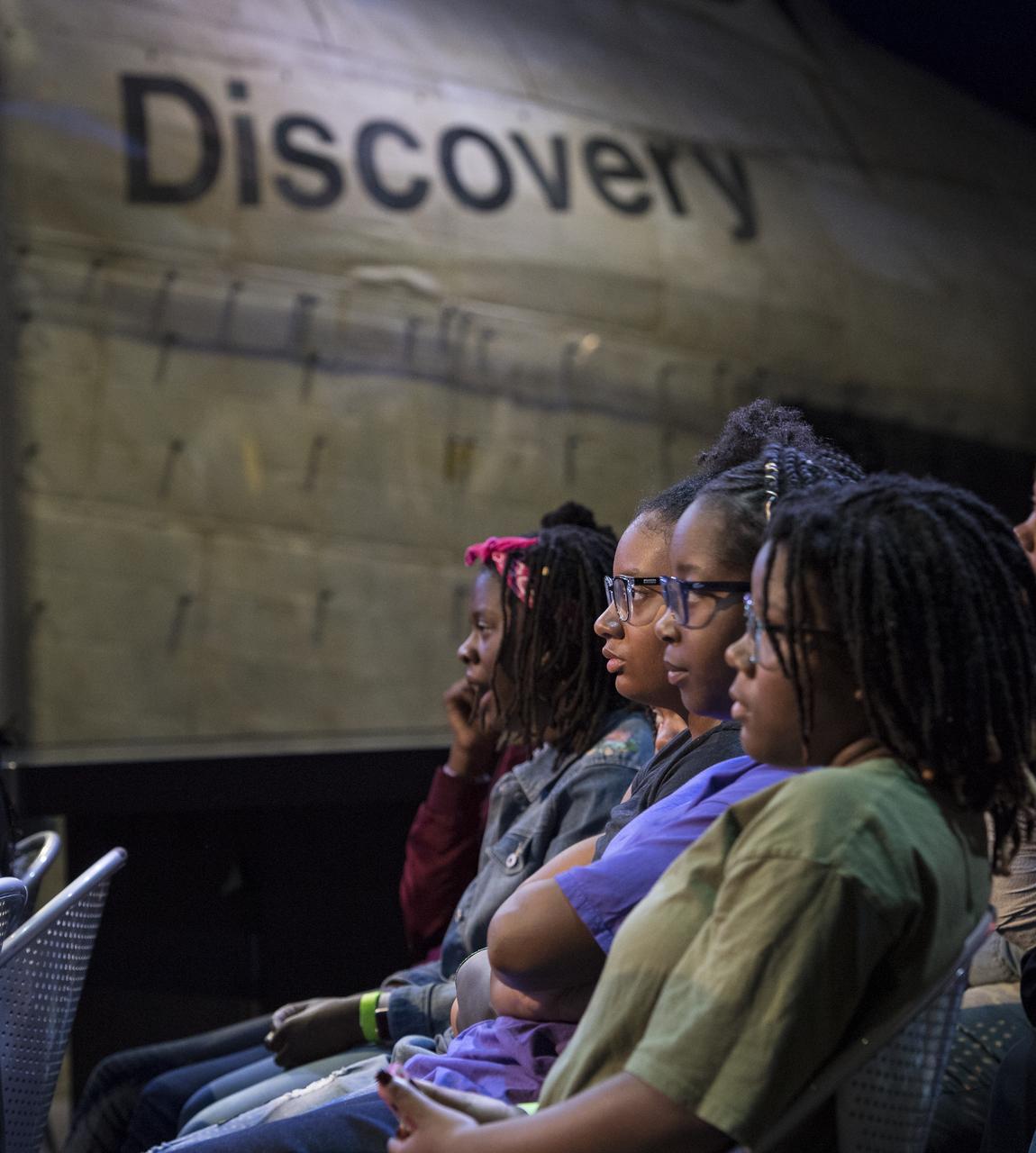
Students watch a video about NASA astronaut Joe Acaba during a STEM in 30 event, Wednesday, June 27, 2018 at Smithsonian's National Air and Space Museum in Washington. Photo Credit: (NASA/Aubrey Gemignani)
Astronaut Serena Auñon-Chancellor at Air and Space Museum
Students watch a video about NASA astronaut Joe Acaba during a STEM in 30 event, Wednesday, June 27, 2018 at Smithsonian's National Air and Space Museum in Washington. Photo Credit: (NASA/Aubrey Gemignani)
Astronaut Serena Auñon-Chancellor at Air and Space Museum
KENNEDY SPACE CENTER, FLA. - In the Orbiter Processing Facility, United Space Alliance workers Jim Landy (front), Dan Phillips and Dan Kenna watch a monitor showing results of flash thermography on the Reinforced Carbon Carbon panel on the table (foreground).  Attached to the leading edge of the wing of the orbiters,  the gray carbon composite RCC panels have sufficient strength to withstand the aerodynamic forces experienced during launch and reentry, which can reach as high as 800 pounds per square foot.  The operating range of RCC is from minus 250º F to about 3,000º F, the temperature produced by friction with the atmosphere during reentry.
KENNEDY SPACE CENTER, FLA. - In the Orbiter Processing Facility, United Space Alliance workers Jim Landy (front), Dan Phillips and Dan Kenna watch a monitor showing results of flash thermography on the Reinforced Carbon Carbon panel on the table (foreground). Attached to the leading edge of the wing of the orbiters, the gray carbon composite RCC panels have sufficient strength to withstand the aerodynamic forces experienced during launch and reentry, which can reach as high as 800 pounds per square foot. The operating range of RCC is from minus 250º F to about 3,000º F, the temperature produced by friction with the atmosphere during reentry.
KENNEDY SPACE CENTER, FLA. - In the Orbiter Processing Facility,  Jim Landy, NDE specialist with United Space Alliance (USA), watches a monitor off-screen to examine a Reinforced Carbon Carbon panel using flash thermography.  Attached to the leading edge of the wing of the orbiters,  the gray carbon composite RCC panels have sufficient strength to withstand the aerodynamic forces experienced during launch and reentry, which can reach as high as 800 pounds per square foot.  The operating range of RCC is from minus 250º F to about 3,000º F, the temperature produced by friction with the atmosphere during reentry.
KENNEDY SPACE CENTER, FLA. - In the Orbiter Processing Facility, Jim Landy, NDE specialist with United Space Alliance (USA), watches a monitor off-screen to examine a Reinforced Carbon Carbon panel using flash thermography. Attached to the leading edge of the wing of the orbiters, the gray carbon composite RCC panels have sufficient strength to withstand the aerodynamic forces experienced during launch and reentry, which can reach as high as 800 pounds per square foot. The operating range of RCC is from minus 250º F to about 3,000º F, the temperature produced by friction with the atmosphere during reentry.
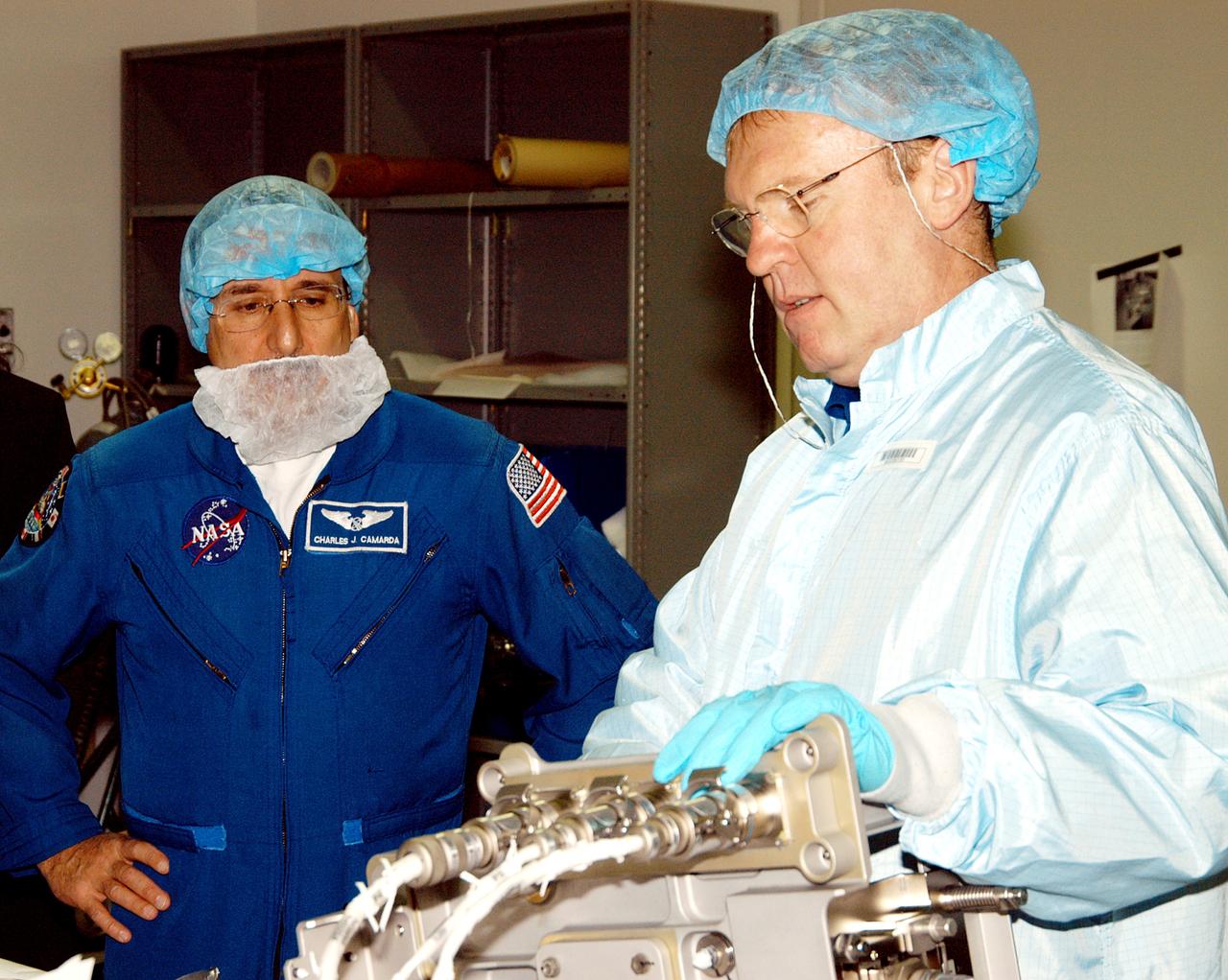
KENNEDY SPACE CENTER, FLA. -  STS-114 Mission Specialist Charles Camarda (left) watches as Mission Specialist  Andrew Thomas manipulates equipment that will be used on the mission.  Crew members are at KSC for equipment familiarization.  STS-114 is classified as Logistics Flight 1 to the International Space Station, delivering new supplies and replacing one of the orbital outpost’s Control Moment Gyroscopes (CMGs). STS-114 will also carry a Raffaello Multi-Purpose Logistics Module and the External Stowage Platform-2.  The crew is slated to conduct at least three spacewalks: They will demonstrate repair techniques of the Shuttle’s Thermal Protection System,  replace the failed CMG with one delivered by the Shuttle, and  install the External Stowage Platform.
KENNEDY SPACE CENTER, FLA. - STS-114 Mission Specialist Charles Camarda (left) watches as Mission Specialist Andrew Thomas manipulates equipment that will be used on the mission. Crew members are at KSC for equipment familiarization. STS-114 is classified as Logistics Flight 1 to the International Space Station, delivering new supplies and replacing one of the orbital outpost’s Control Moment Gyroscopes (CMGs). STS-114 will also carry a Raffaello Multi-Purpose Logistics Module and the External Stowage Platform-2. The crew is slated to conduct at least three spacewalks: They will demonstrate repair techniques of the Shuttle’s Thermal Protection System, replace the failed CMG with one delivered by the Shuttle, and install the External Stowage Platform.
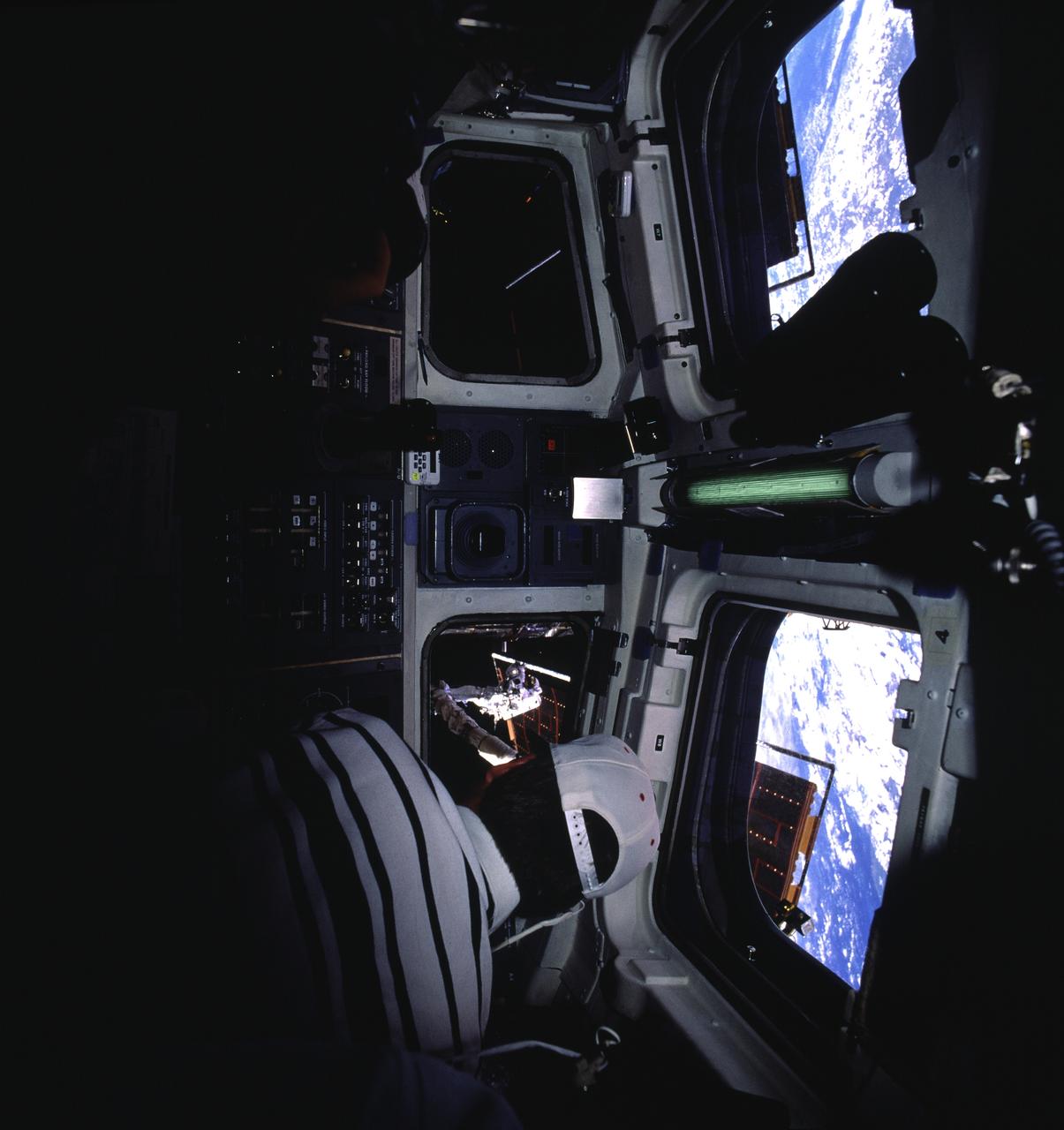
STS082-711-094 (11-21 Feb. 1997) --- From inside the crew cabin, astronaut Steven A. Hawley watches the Extravehicular Activity (EVA) of astronaut Mark C. Lee, payload commander, visible in the background through one of the Space Shuttle Discovery's aft flight deck windows.  Actually, Hawley is doing more than watching the EVA to perform servicing work on the Hubble Space Telescope (HST).  For most of the five days of EVA, Hawley, a veteran of the April 1990 flight which deployed the giant orbiting observatory, controlled the Remote Manipulator System (RMS), on which Lee is standing in this scene.
Flight deck activity during EVA 5 on Flight Day 8
Thousands of people watch the first-ever evening public engine test of a Space Shuttle Main Engine at NASA's John C. Stennis Space Center. The spectacular test marked Stennis Space Center's 20th anniversary celebration of the first Space Shuttle mission.
First-ever evening public engine test of a Space Shuttle Main Engine
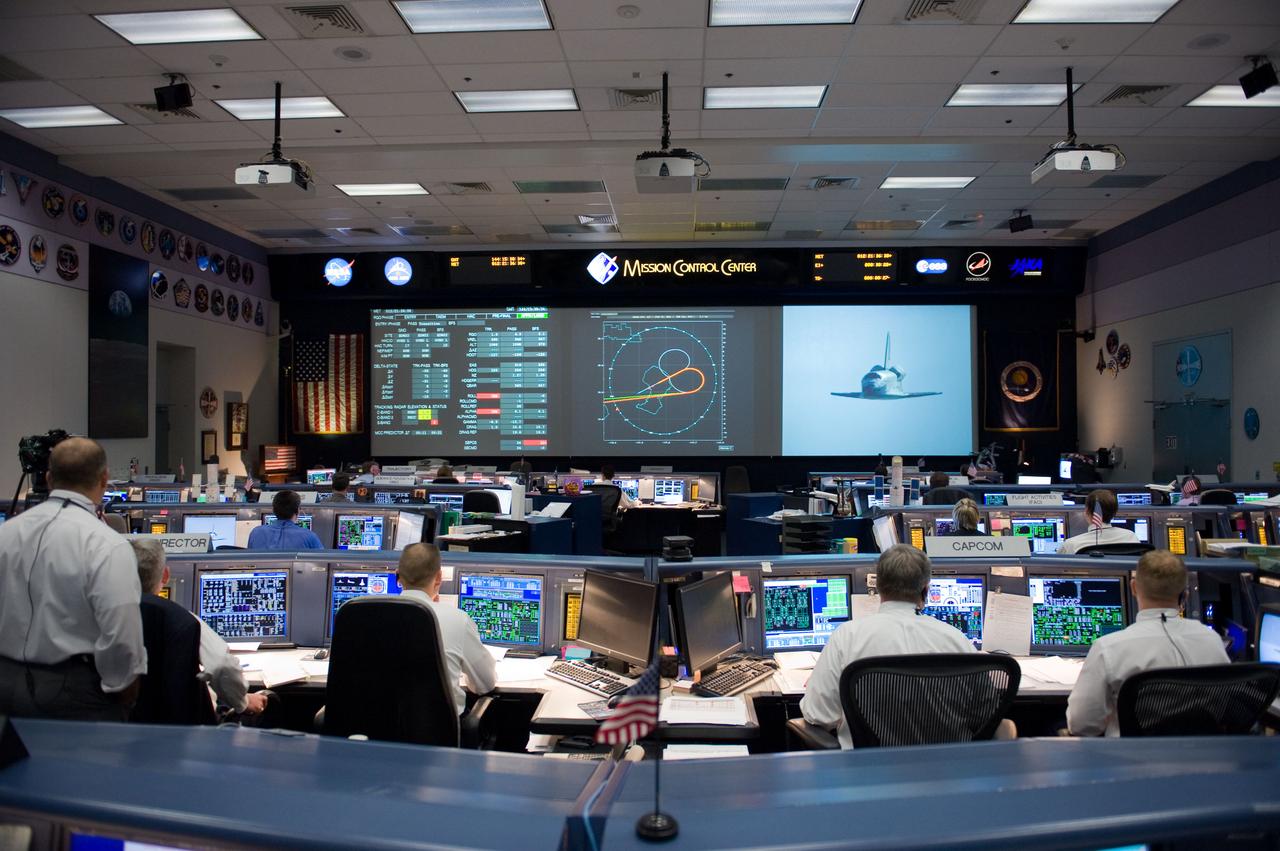
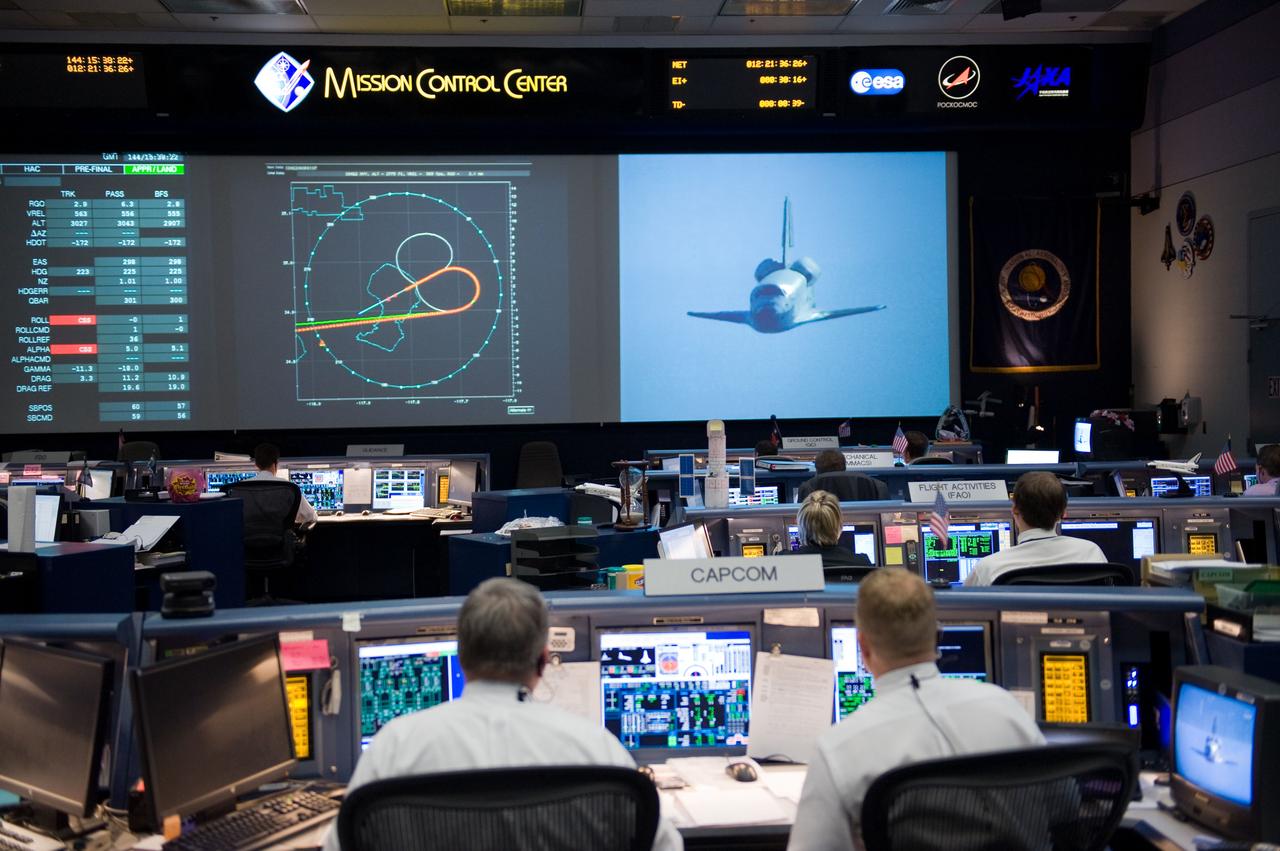
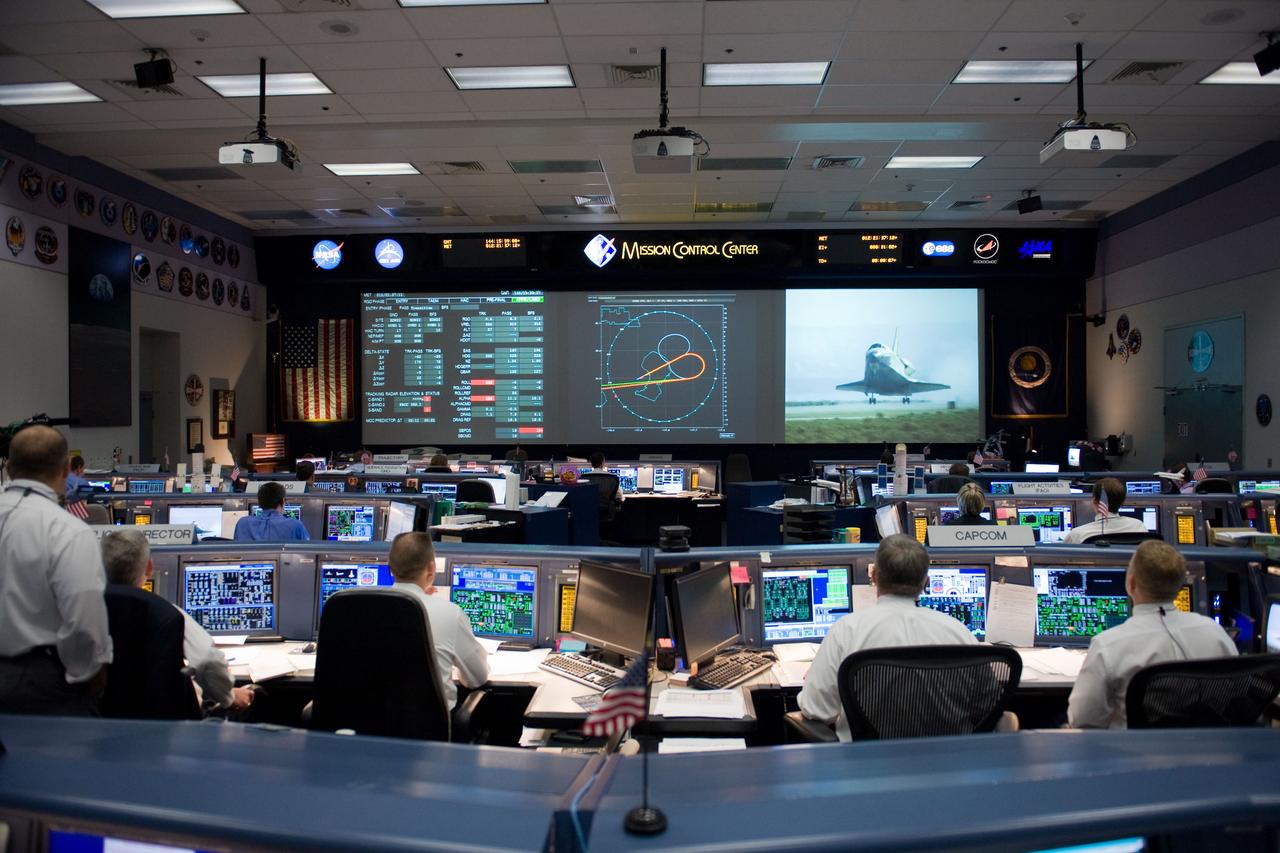
JSC2008-E-046931 (14 June 2008) --- Astronaut Terry Virts, STS-124 spacecraft communicator (CAPCOM), watches the big screens in the space shuttle flight control room in the Mission Control Center at NASA's Johnson Space Center during the landing of Space Shuttle Discovery at NASA's Kennedy Space Center, Fla.
jsc2008e046931
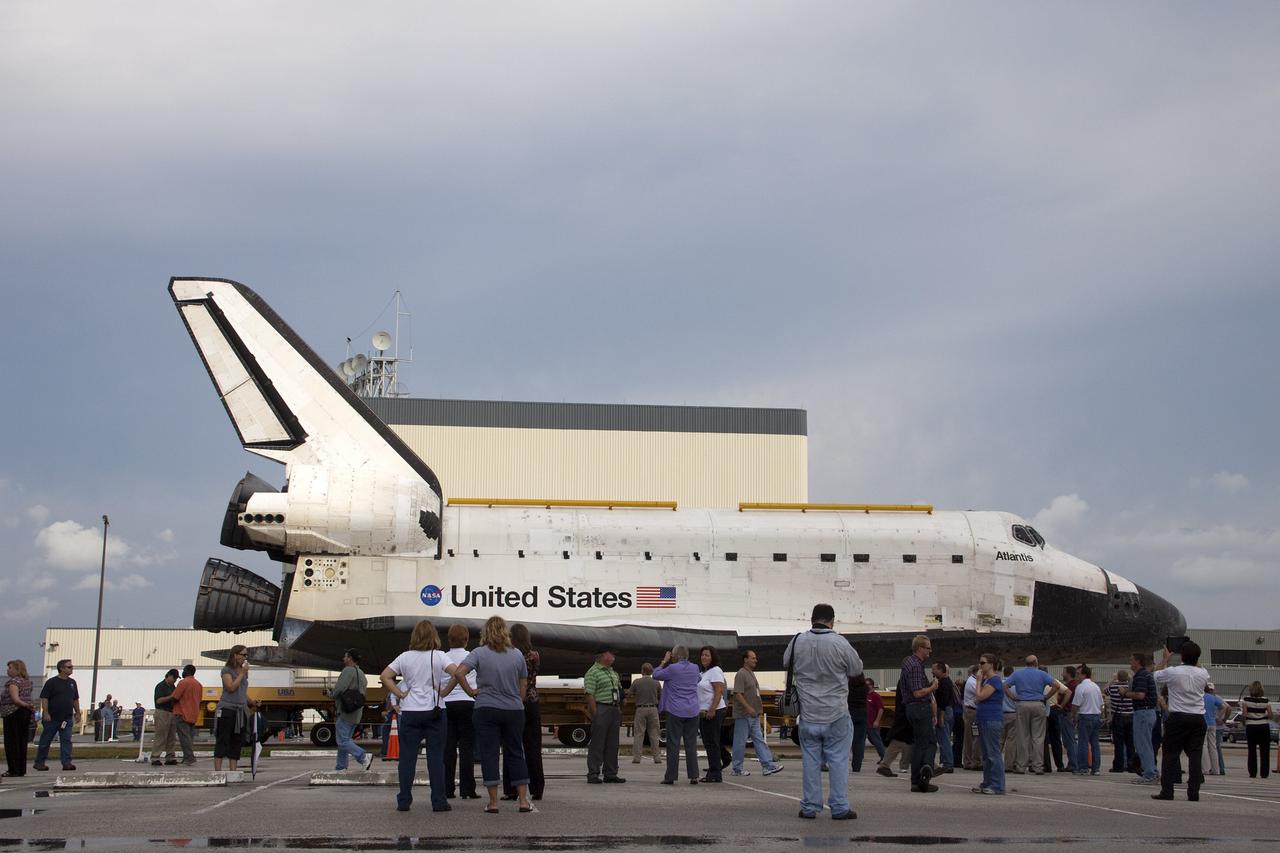
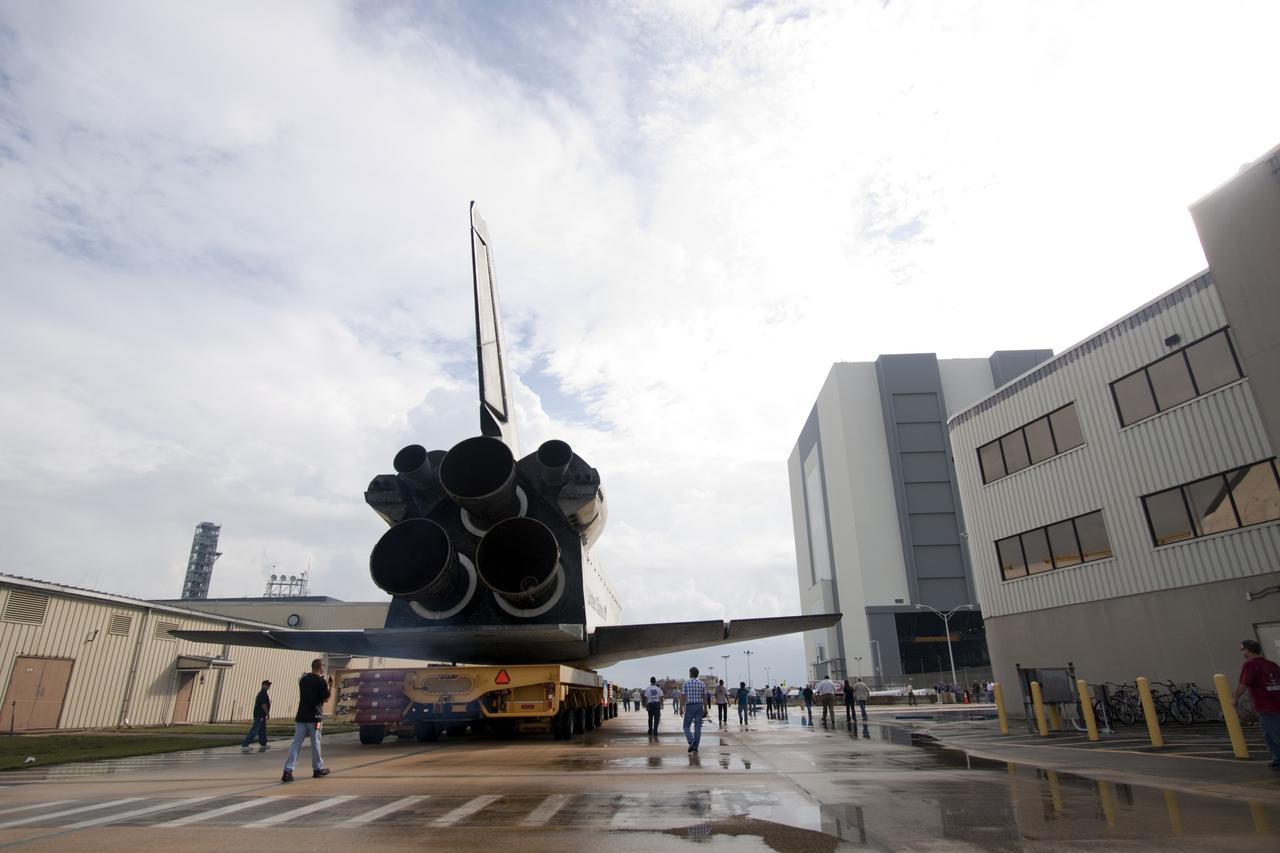
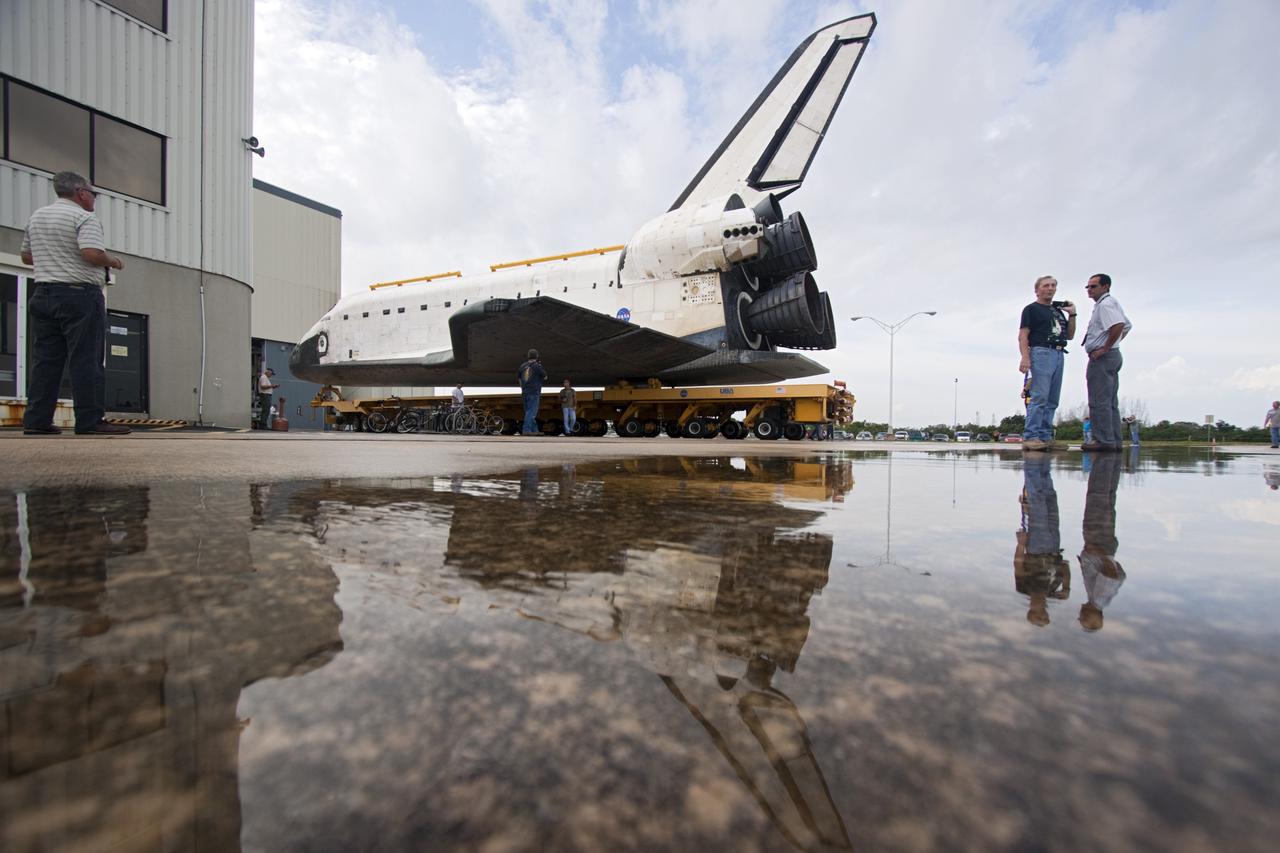
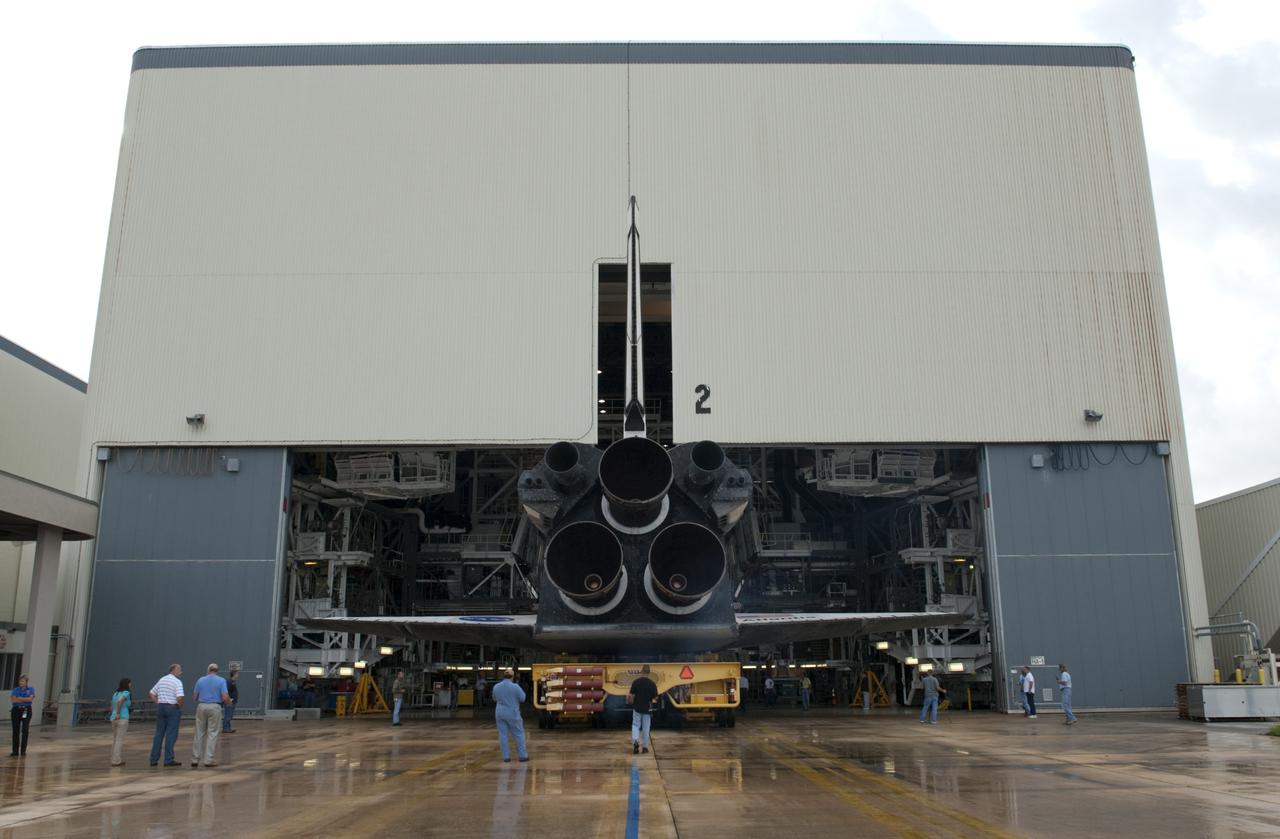
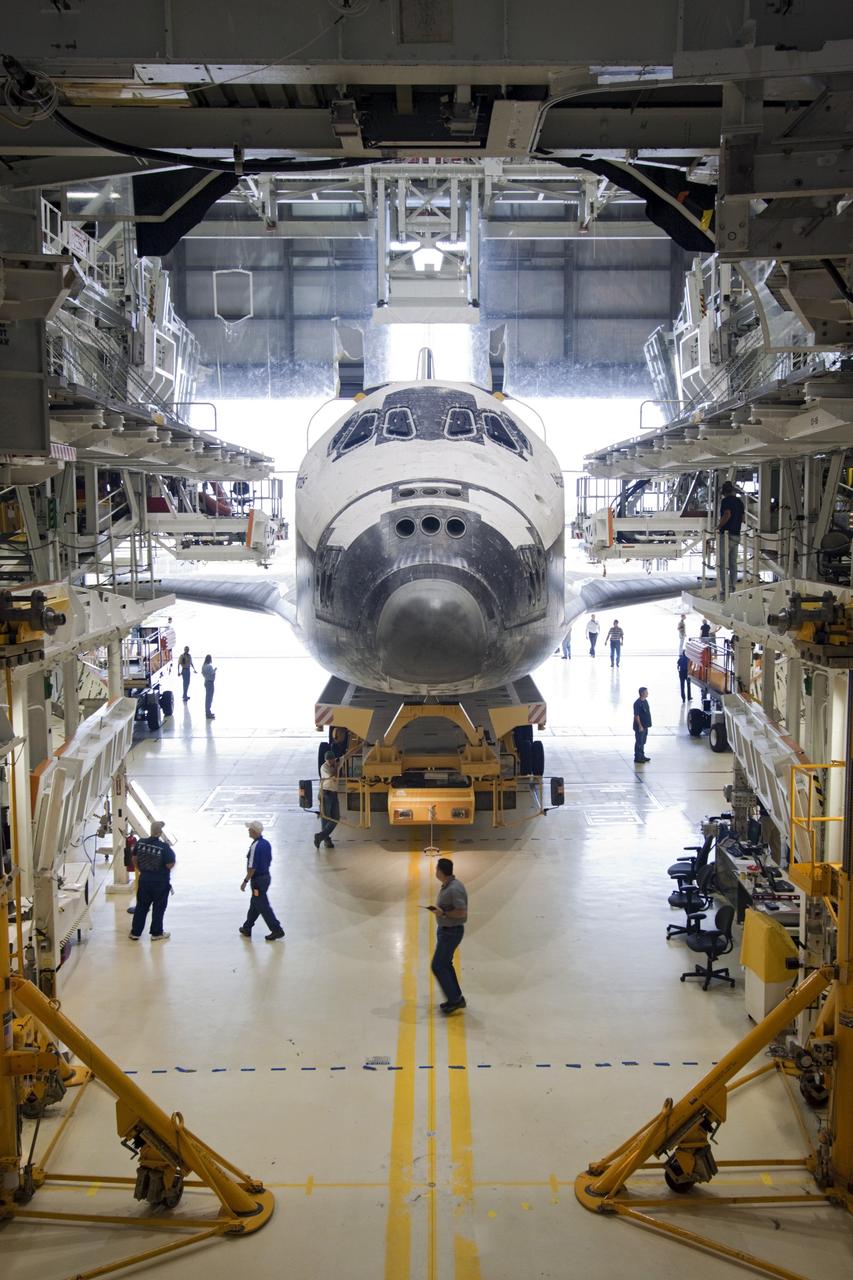
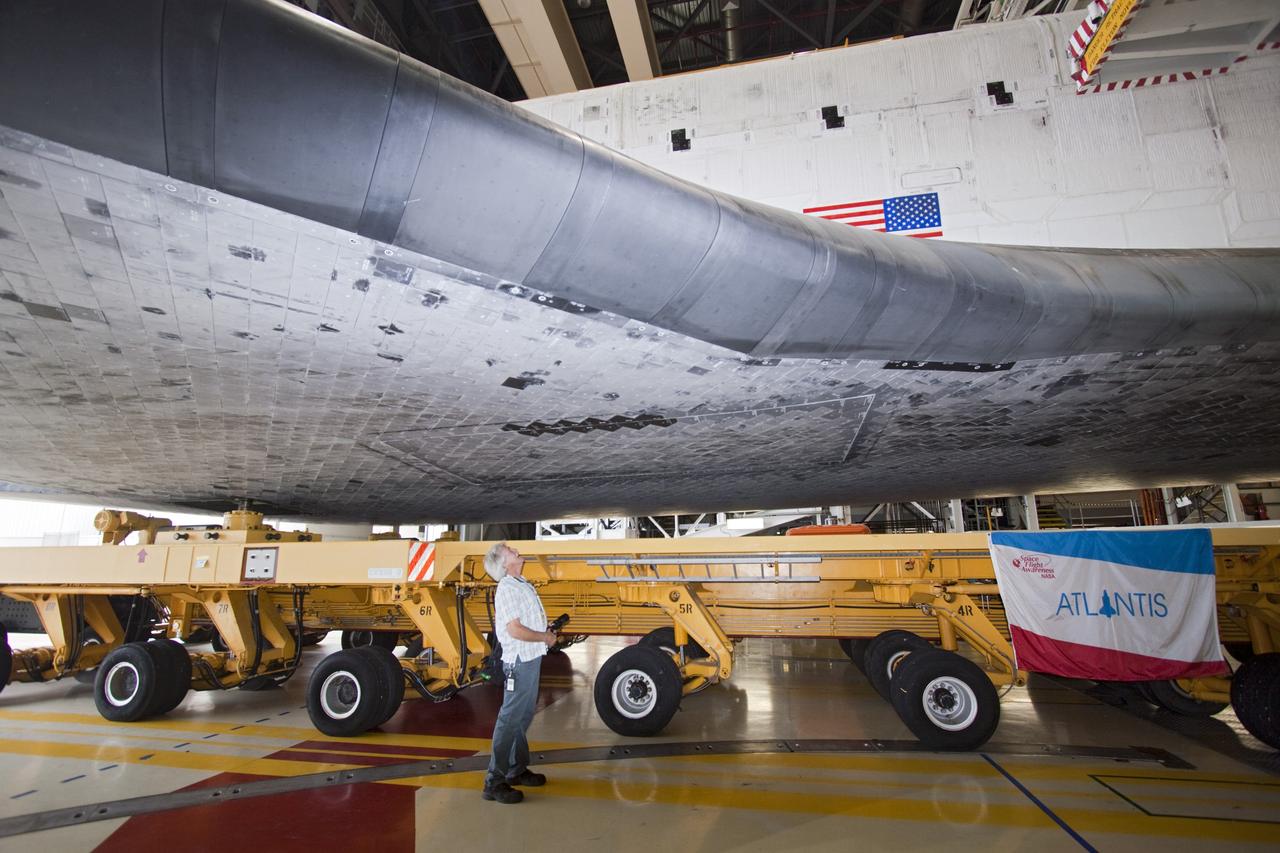
CAPE CANAVERAL, Fla. – Employees at NASA's Kennedy Space Center in Florida watch as the space shuttle Atlantis moves from Orbiter Processing Facility-2 to the Vehicle Assembly Building. Atlantis will be moved to the Kennedy Space Center Visitor Complex in November where it will be placed on public display. Photo credit: NASA/Jim Grossmann
KSC-2012-5866
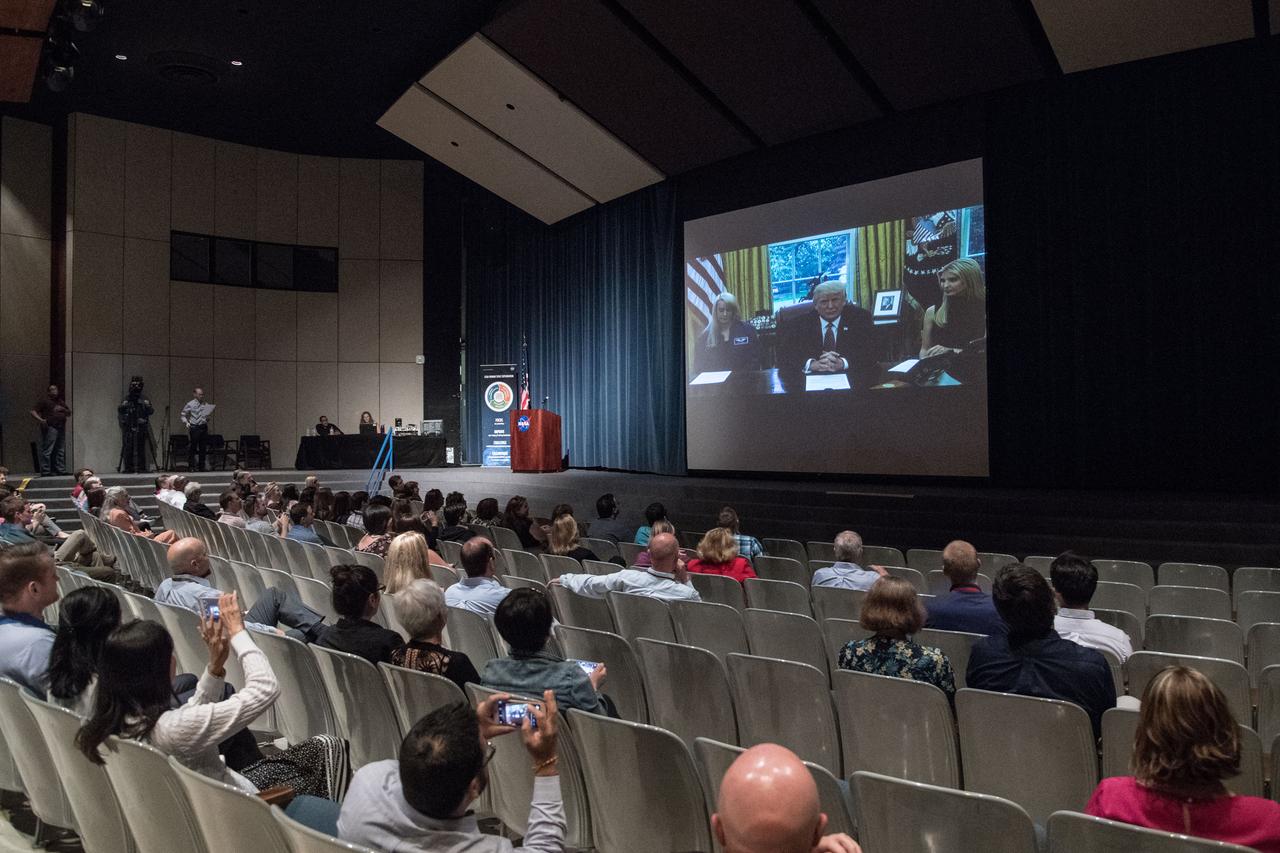
jsc2017e049146 (April 24, 2017) --- Johnson Space Center employees and Center Director watch President Donald Trump call Peggy Whitson on space station for her record-breaking stay aboard the International Space Station. (Photo Credit: NASA/Allison Bills)
jsc2017e049146
STS118-S-076 (21 Aug. 2007) --- NASA Administrator Michael Griffin (right), and NASA Associate Administrator for Space Operations William Gerstenmaier watch as the space shuttle Endeavour touches down  Aug. 21, 2007, at the Kennedy Space Center, Florida, concluding STS-118.  Photo Credit: NASA/Bill Ingalls
STS118-S-076
CAPE CANAVERAL, Fla. – Technicians watch as space shuttle Atlantis moves from Orbiter Processing Facility-2 to the Vehicle Assembly Building at NASA's Kennedy Space Center in Florida. Atlantis will be moved to the Kennedy Space Center Visitor Complex in November where it will be put on public display. Photo credit: NASA/Jim Grossmann
KSC-2012-5851
CAPE CANAVERAL, Fla. – A technician watches as space shuttle Atlantis moves from Orbiter Processing Facility-2 to the Vehicle Assembly Building at NASA's Kennedy Space Center in Florida. Atlantis will be moved to the Kennedy Space Center Visitor Complex in November where it will be put on public display. Photo credit: NASA/Jim Grossmann
KSC-2012-5841
CAPE CANAVERAL, Fla. -- Technicians watch as space shuttle Atlantis moves from Orbiter Processing Facility-2 to the Vehicle Assembly Building at NASA's Kennedy Space Center in Florida. Atlantis will be moved to the Kennedy Space Center Visitor Complex in November where it will be put on public display. Photo credit: NASA/Tim Jacobs
KSC-2012-5854
CAPE CANAVERAL, Fla. -- Technicians watch as space shuttle Atlantis moves from Orbiter Processing Facility-2 to the Vehicle Assembly Building at NASA's Kennedy Space Center in Florida. Atlantis will be moved to the Kennedy Space Center Visitor Complex in November where it will be put on public display. Photo credit: NASA/Jim Grossmann
KSC-2012-5852
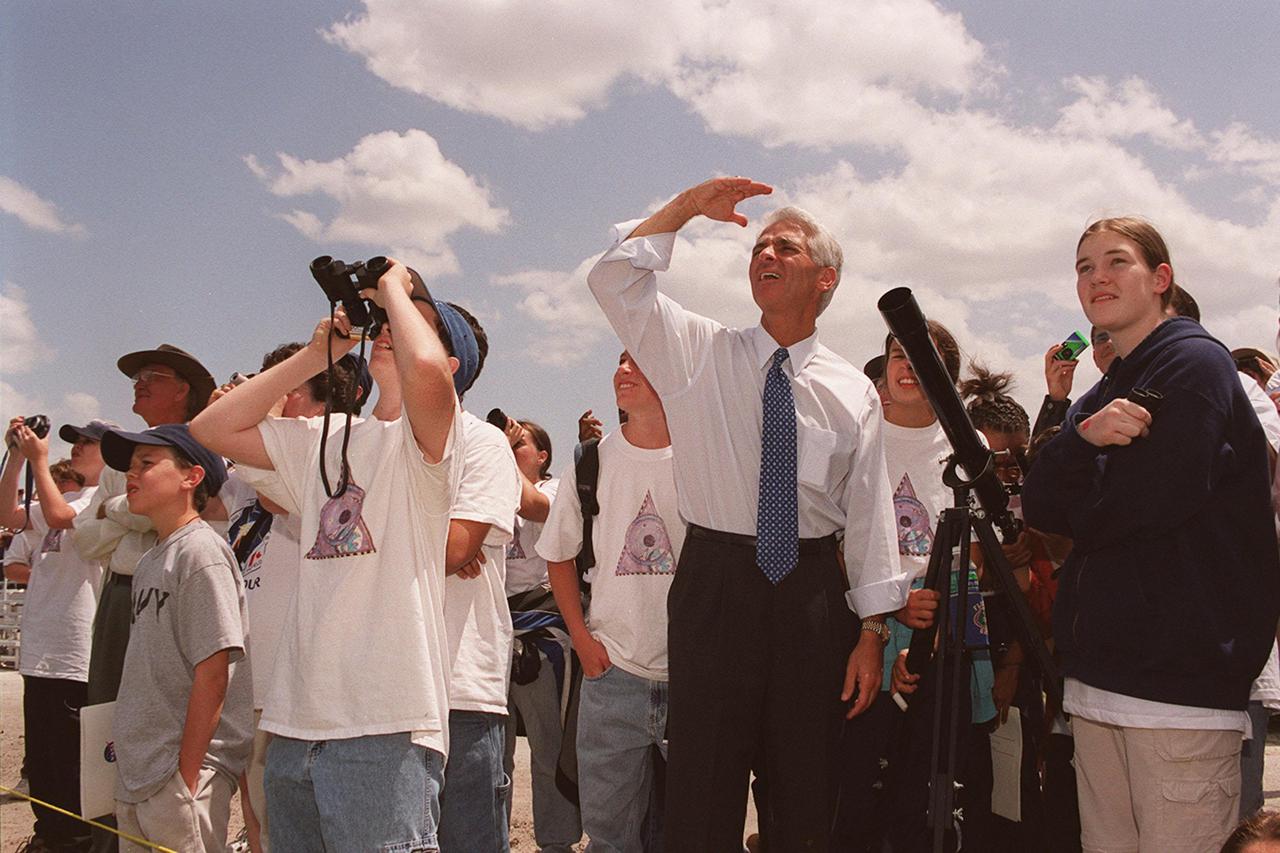
KENNEDY SPACE CENTER, FLA. -- Students from Ronald McNair Magnet School, Cocoa, Fla.,; excitedly watch the launch of  Space Shuttle Endeavour on mission STS-100 in the company of the State Commissioner of Education Charlie Crist (center).  Crist was commemorating the 20th anniversary of Space Shuttle program with his visit to KSC for the launch
KSC-01PP-0844
CAPE CANAVERAL, Fla. -- Technicians watch as space shuttle Atlantis moves from Orbiter Processing Facility-2 to the Vehicle Assembly Building at NASA's Kennedy Space Center in Florida. Atlantis will be moved to the Kennedy Space Center Visitor Complex in November where it will be put on public display. Photo credit: NASA/Tim Jacobs
KSC-2012-5859
JSC2010-E-046798 (5 April 2010) --- Flight director Bryan Lunney watches the big screens in the space shuttle flight control room in the Johnson Space Center's Mission Control Center during launch countdown activities a few hundred miles away in Florida, site of space shuttle Discovery's STS-131 launch.
jsc2010e046798
CAPE CANAVERAL, Fla. -- Technicians watch as space shuttle Atlantis moves from Orbiter Processing Facility-2 to the Vehicle Assembly Building at NASA's Kennedy Space Center in Florida. Atlantis will be moved to the Kennedy Space Center Visitor Complex in November where it will be put on public display. Photo credit: NASA/Tim Jacobs
KSC-2012-5853
CAPE CANAVERAL, Fla. – Technicians watch as space shuttle Atlantis moves from Orbiter Processing Facility-2 to the Vehicle Assembly Building at NASA's Kennedy Space Center in Florida. Atlantis will be moved to the Kennedy Space Center Visitor Complex in November where it will be put on public display. Photo credit: NASA/Jim Grossmann
KSC-2012-5845
ISS026-E-033024 (9 March 2011) --- NASA astronaut Scott Kelly (foreground), Expedition 26 commander; and European Space Agency astronaut Paolo Nespoli, flight engineer, watch the landing of space shuttle Discovery (STS-133) on a computer monitor in the Destiny laboratory of the International Space Station.
Kelly and Nespoli watch STS-133 Landing in the U.S. Laboratory
CAPE CANAVERAL, Fla. – Technicians watch as space shuttle Atlantis moves from Orbiter Processing Facility-2 to the Vehicle Assembly Building at NASA's Kennedy Space Center in Florida. Atlantis will be moved to the Kennedy Space Center Visitor Complex in November where it will be put on public display. Photo credit: NASA/Jim Grossmann
KSC-2012-5843