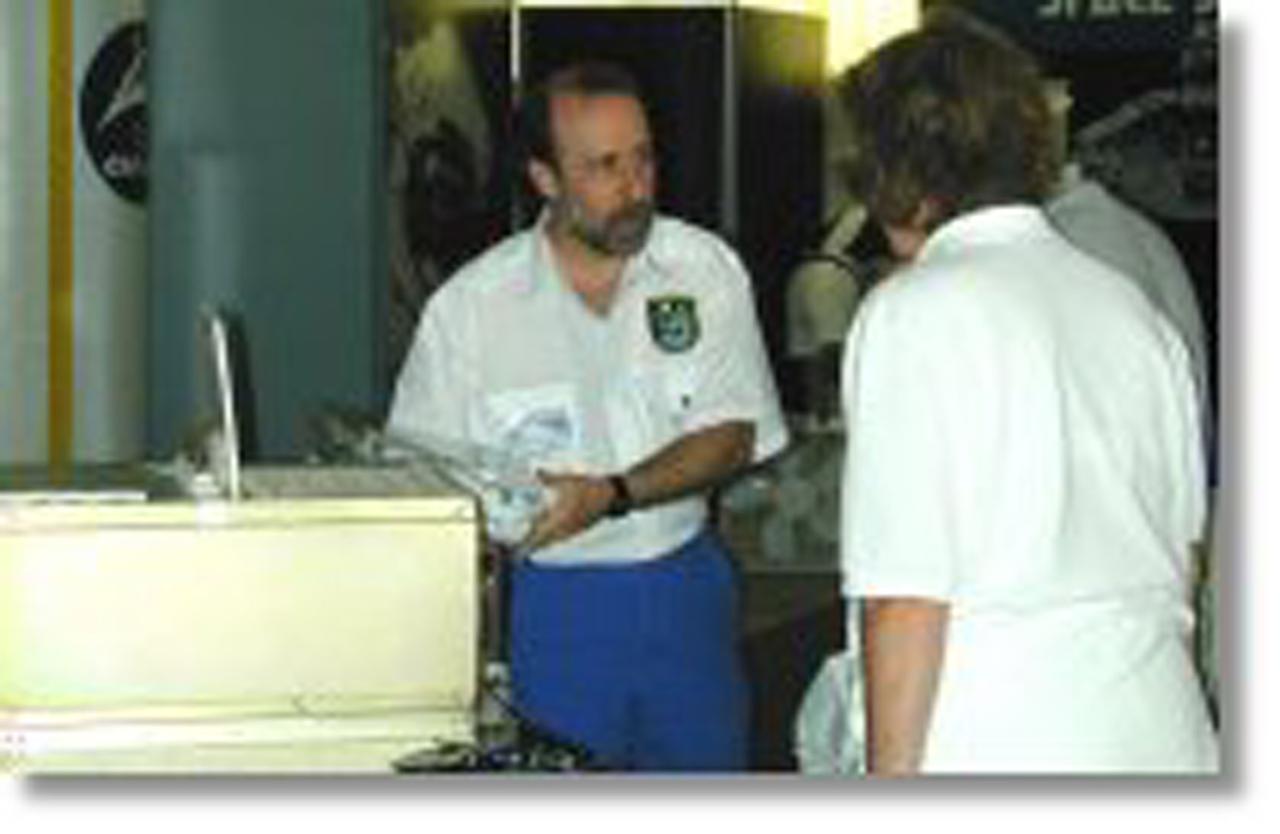
SPD representative Steve Lambing shows the PentaPure water purification unit to some EAA visitors. The Microgravity Research and the Space Product Development Programs joined with the Johnson Space Center (JSC) for a first time ever ISS/Microgravity Research space-focused exhibit at Oshkosh AirVenture'99 from July 28-August 3, 1999. The Space Product Development (SPD) display included the STS-95 ASTROCULTURE training hardware used by John Glenn and his crewmates, a PentaPure water purfication system, and a Ford engine block.
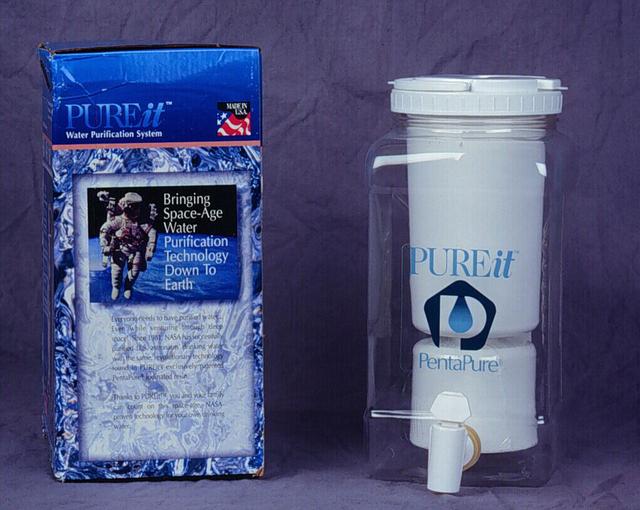
Ecomaster, an affiliate of BioServe Space Technologies, this PentaPure technology has been used to purify water for our nation's Space Shuttle missions since 1981. WTC-Ecomaster of Mirneapolis, Minnesota manufactures water purification systems under the brand name PentaPure (TM). BioServe researcher Dr. George Marchin, of Kansas State University, first demonstrated the superiority of this technology and licensed it to WTC. Marchin continues to perform microgravity research in the development of new technologies for the benefit of life on Earth.
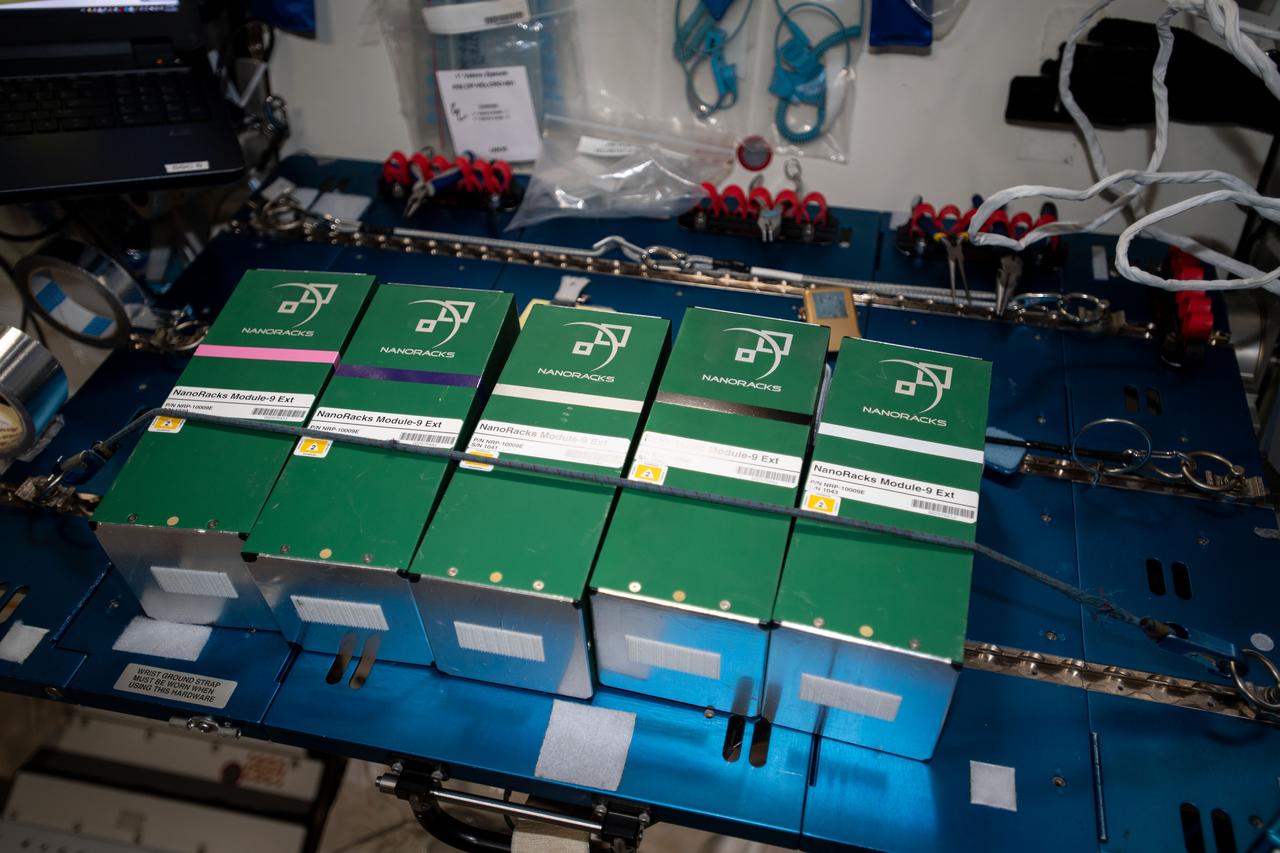
iss060e035405 (8/13/2019) --- A view the NanoRacks-NCESSE-Gemini NanoRacks-National Center for Earth and Space Science-Gemini (SSEP Mission 13) - Part of NanoRacks Module-9 Ext. aboard the International Space Station (ISS). The experiments range from examinations of water filtration and purification to synthetic soil production, rust formation, antibiotic effectiveness, growth and development of microacquatic organisms, and growth of plant, fungi, and bacteria. Each was chosen from more than 3,000 entries submitted by more than 23,000 U.S., Canadian, and Brazilian students. The experiments use NanoRacks MixStix, miniature laboratories activated by space station crew and eventually returned to the student teams on Earth for analysis.
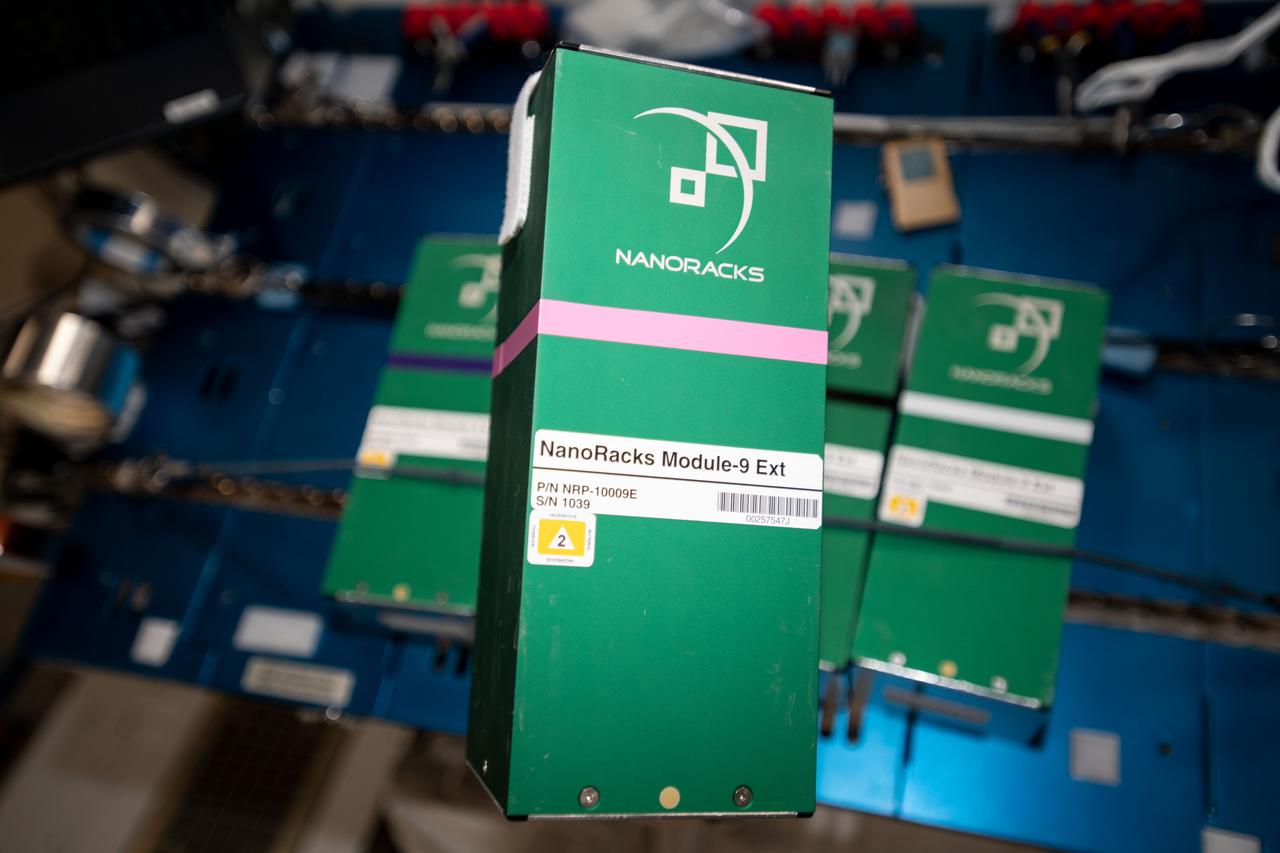
iss060e035407 (8/13/2019) --- A view the NanoRacks-NCESSE-Gemini NanoRacks-National Center for Earth and Space Science-Gemini (SSEP Mission 13) - Part of NanoRacks Module-9 Ext. The experiments range from examinations of water filtration and purification to synthetic soil production, rust formation, antibiotic effectiveness, growth and development of microacquatic organisms, and growth of plant, fungi, and bacteria. Each was chosen from more than 3,000 entries submitted by more than 23,000 U.S., Canadian, and Brazilian students. The experiments use NanoRacks MixStix, miniature laboratories activated by space station crew and eventually returned to the student teams on Earth for analysis.
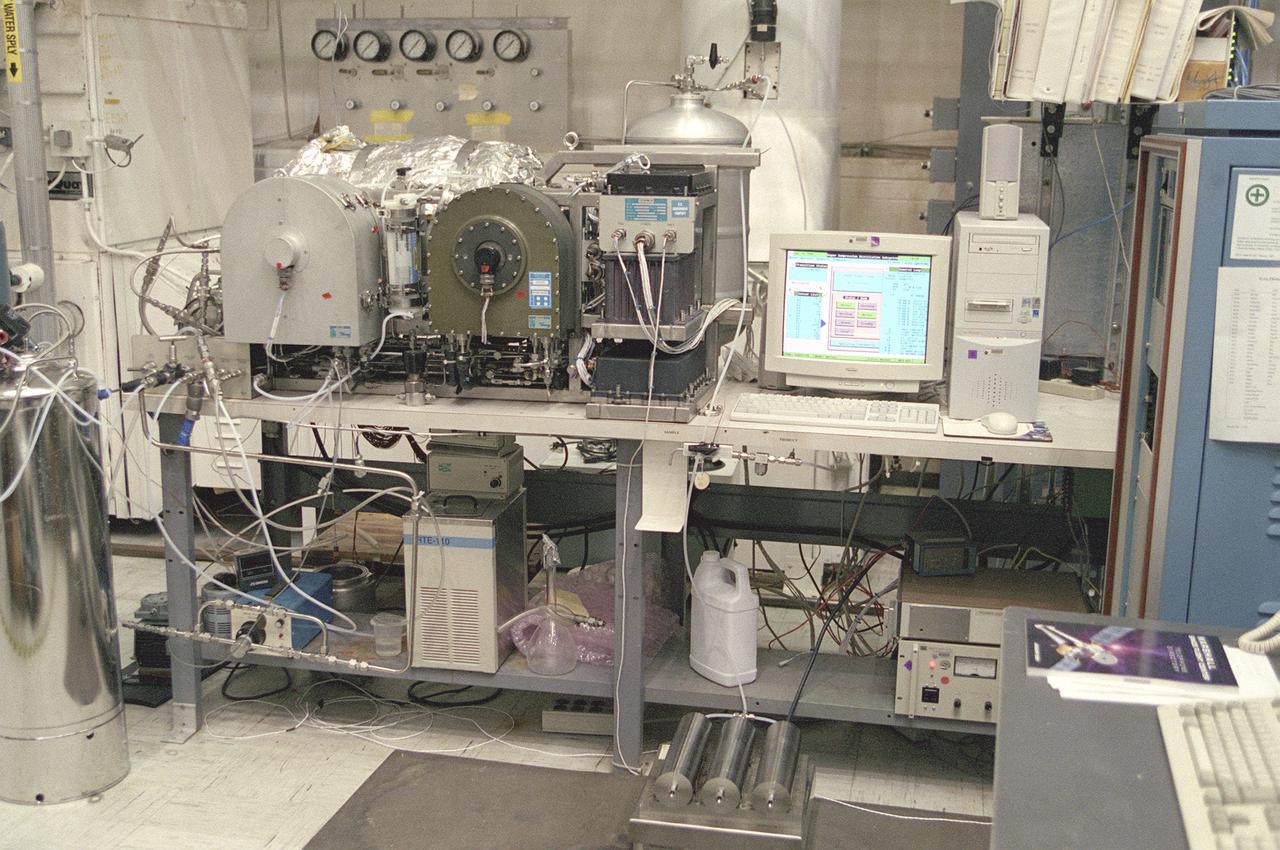
The Marshall Space Flight Center (MSFC) is responsible for designing and building the life support systems that will provide the crew of the International Space Station (ISS) a comfortable environment in which to live and work. Scientists and engineers at the MSFC are working together to provide the ISS with systems that are safe, efficient, and cost-effective. These compact and powerful systems are collectively called the Environmental Control and Life Support Systems, or simply, ECLSS. This photograph shows the fifth generation Urine Processor Development Hardware. The Urine Processor Assembly (UPA) is a part of the Water Recovery System (WRS) on the ISS. It uses a chase change process called vapor compression distillation technology to remove contaminants from urine. The UPA accepts and processes pretreated crewmember urine to allow it to be processed along with other wastewaters in the Water Processor Assembly (WPA). The WPA removes free gas, organic, and nonorganic constituents before the water goes through a series of multifiltration beds for further purification. Product water quality is monitored primarily through conductivity measurements. Unacceptable water is sent back through the WPA for reprocessing. Clean water is sent to a storage tank.
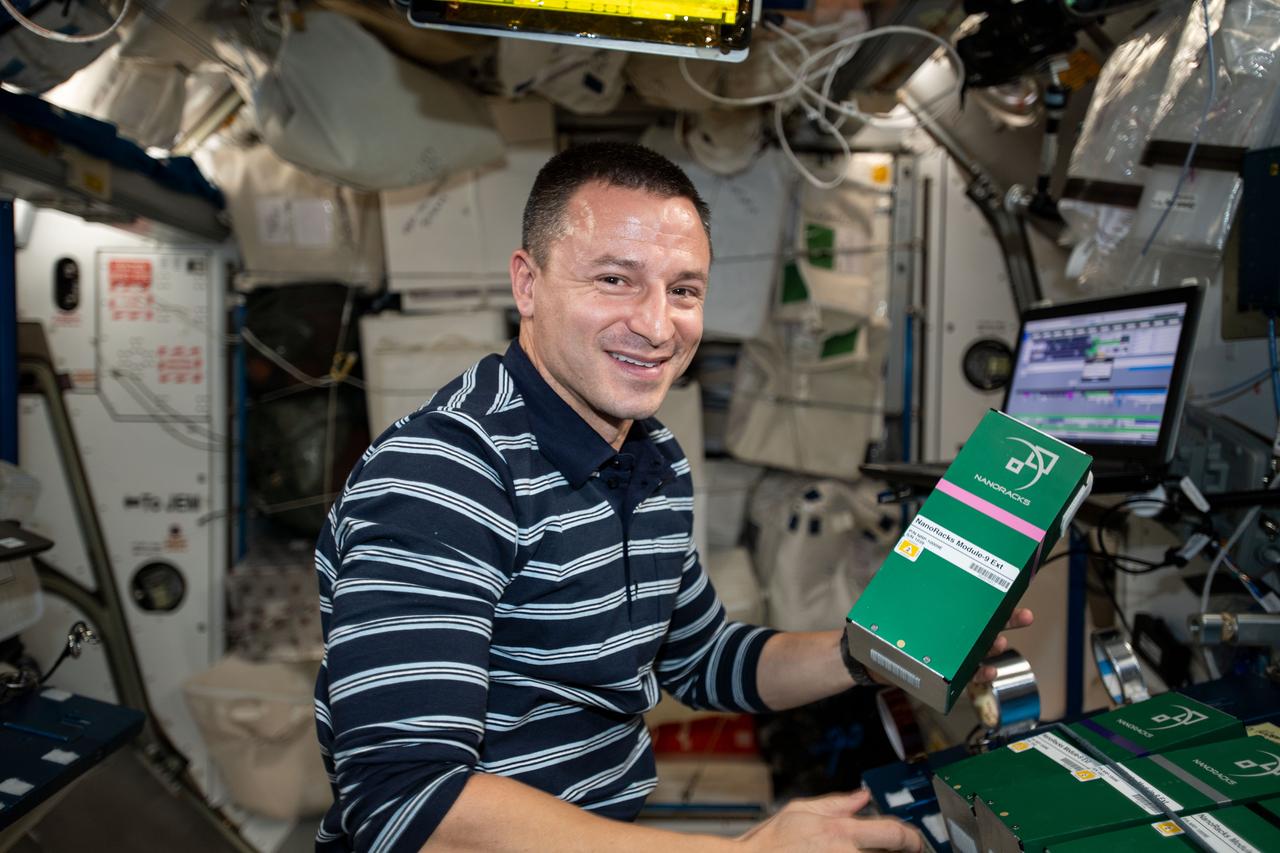
iss060e035409 (8/13/2019) --- A view of NASA astronaut Drew Morgan during the deactivation and/or shaking designated mixture tubes of NanoRacks-NCESSE-Gemini NanoRacks-National Center for Earth and Space Science-Gemini (SSEP Mission 13) - Part of NanoRacks Module-9 Ext. aboard the International Space Station (ISS). The experiments range from examinations of water filtration and purification to synthetic soil production, rust formation, antibiotic effectiveness, growth and development of microacquatic organisms, and growth of plant, fungi, and bacteria. Each was chosen from more than 3,000 entries submitted by more than 23,000 U.S., Canadian, and Brazilian students. The experiments use NanoRacks MixStix, miniature laboratories activated by space station crew and eventually returned to the student teams on Earth for analysis.
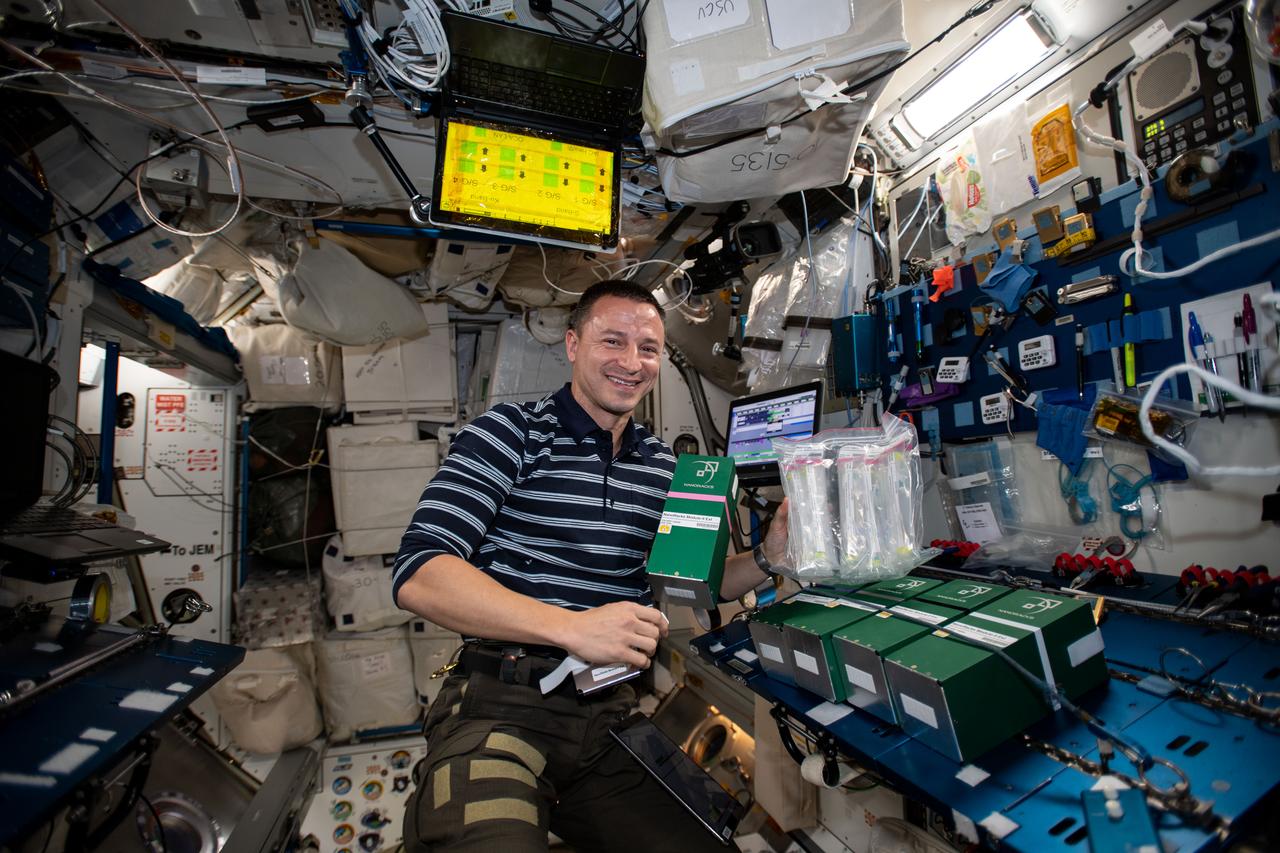
iss060e035415 8/13/2019) --- A view of NASA astronaut Drew Morgan during the deactivation and/or shaking designated mixture tubes of NanoRacks-NCESSE-Gemini NanoRacks-National Center for Earth and Space Science-Gemini (SSEP Mission 13) - Part of NanoRacks Module-9 Ext. aboard the International Space Station (ISS). The experiments range from examinations of water filtration and purification to synthetic soil production, rust formation, antibiotic effectiveness, growth and development of microacquatic organisms, and growth of plant, fungi, and bacteria. Each was chosen from more than 3,000 entries submitted by more than 23,000 U.S., Canadian, and Brazilian students. The experiments use NanoRacks MixStix, miniature laboratories activated by space station crew and eventually returned to the student teams on Earth for analysis.