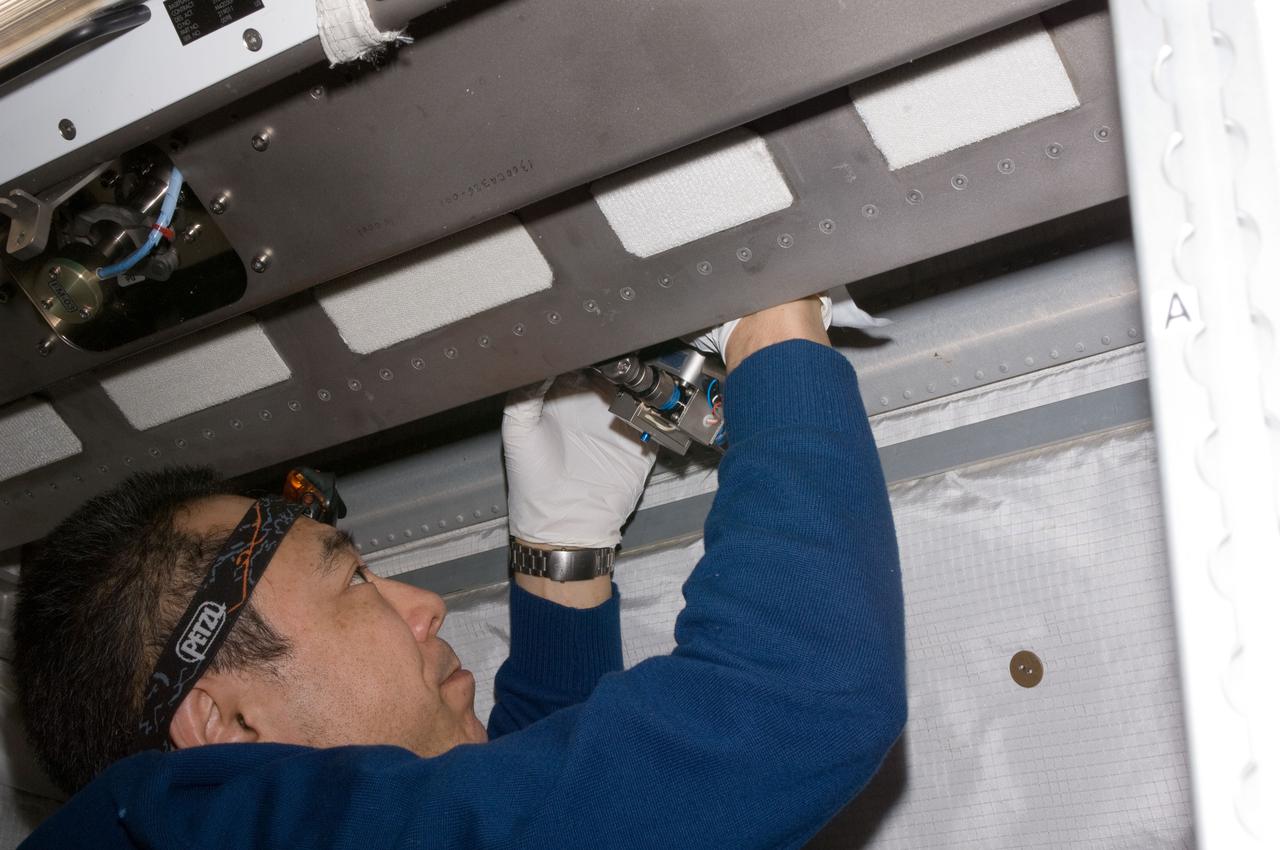
ISS029-E-027341 (14 Oct. 2011) --- In the International Space Station’s Columbus laboratory, Japan Aerospace Exploration Agency astronaut Satoshi Furukawa, Expedition 29 flight engineer, works on Water On/Off Valves (WOOV), performing inspection, cleaning, disinfection and encapsulation on WOOV 3, 4 and 5.
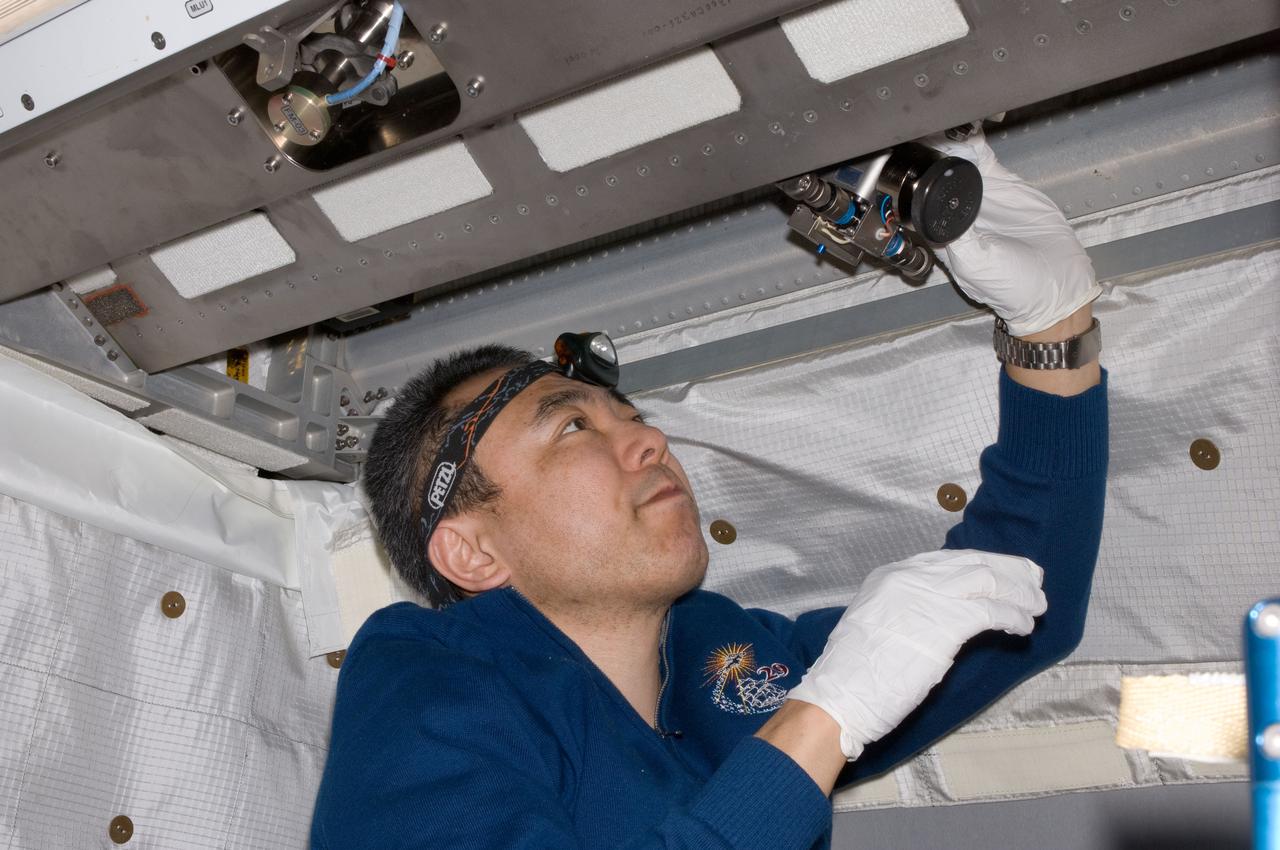
ISS029-E-027343 (14 Oct. 2011) --- In the International Space Station’s Columbus laboratory, Japan Aerospace Exploration Agency astronaut Satoshi Furukawa, Expedition 29 flight engineer, works on Water On/Off Valves (WOOV), performing inspection, cleaning, disinfection and encapsulation on WOOV 3, 4 and 5.
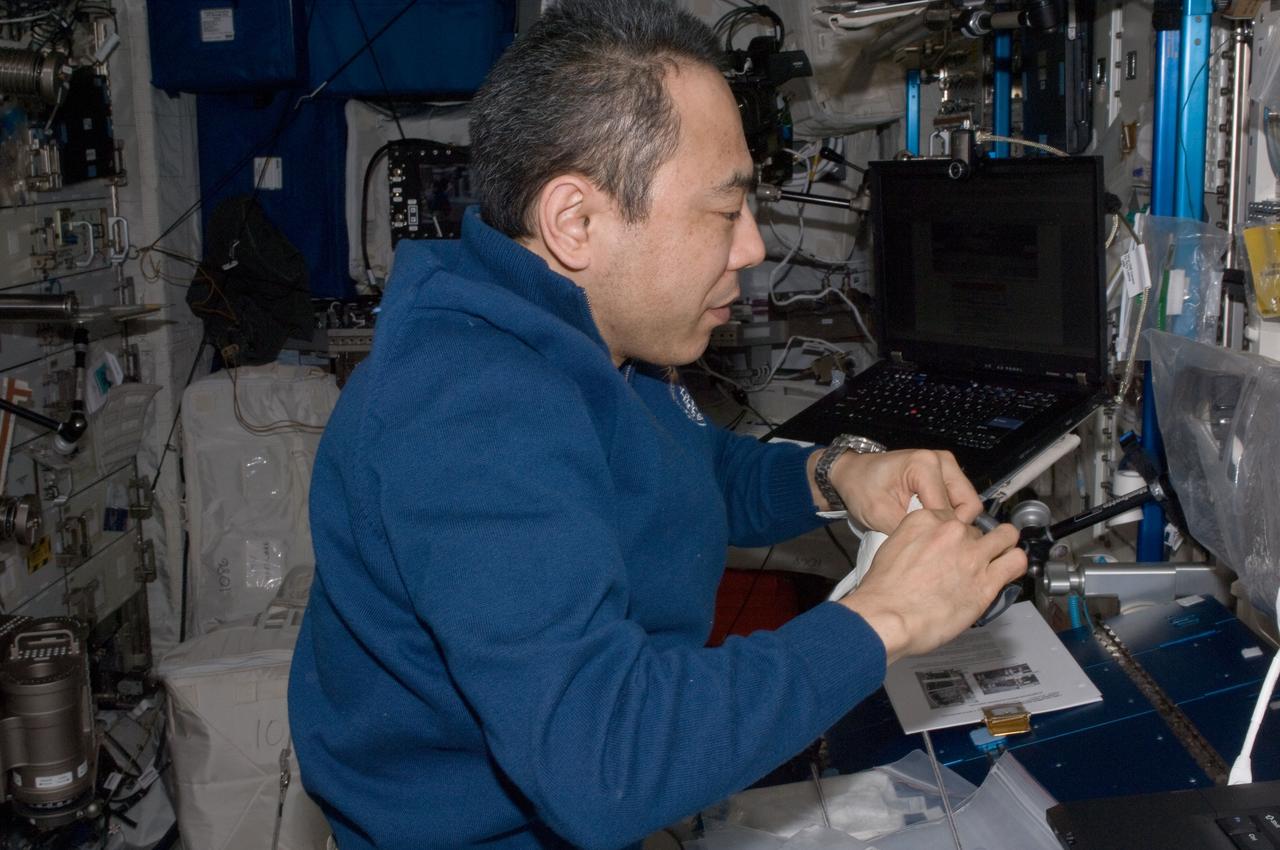
ISS029-E-027334 (14 Oct. 2011) --- In the International Space Station’s Columbus laboratory, Japan Aerospace Exploration Agency astronaut Satoshi Furukawa, Expedition 29 flight engineer, works on Water On/Off Valves (WOOV), performing inspection, cleaning, disinfection and encapsulation on WOOV 3, 4 and 5.
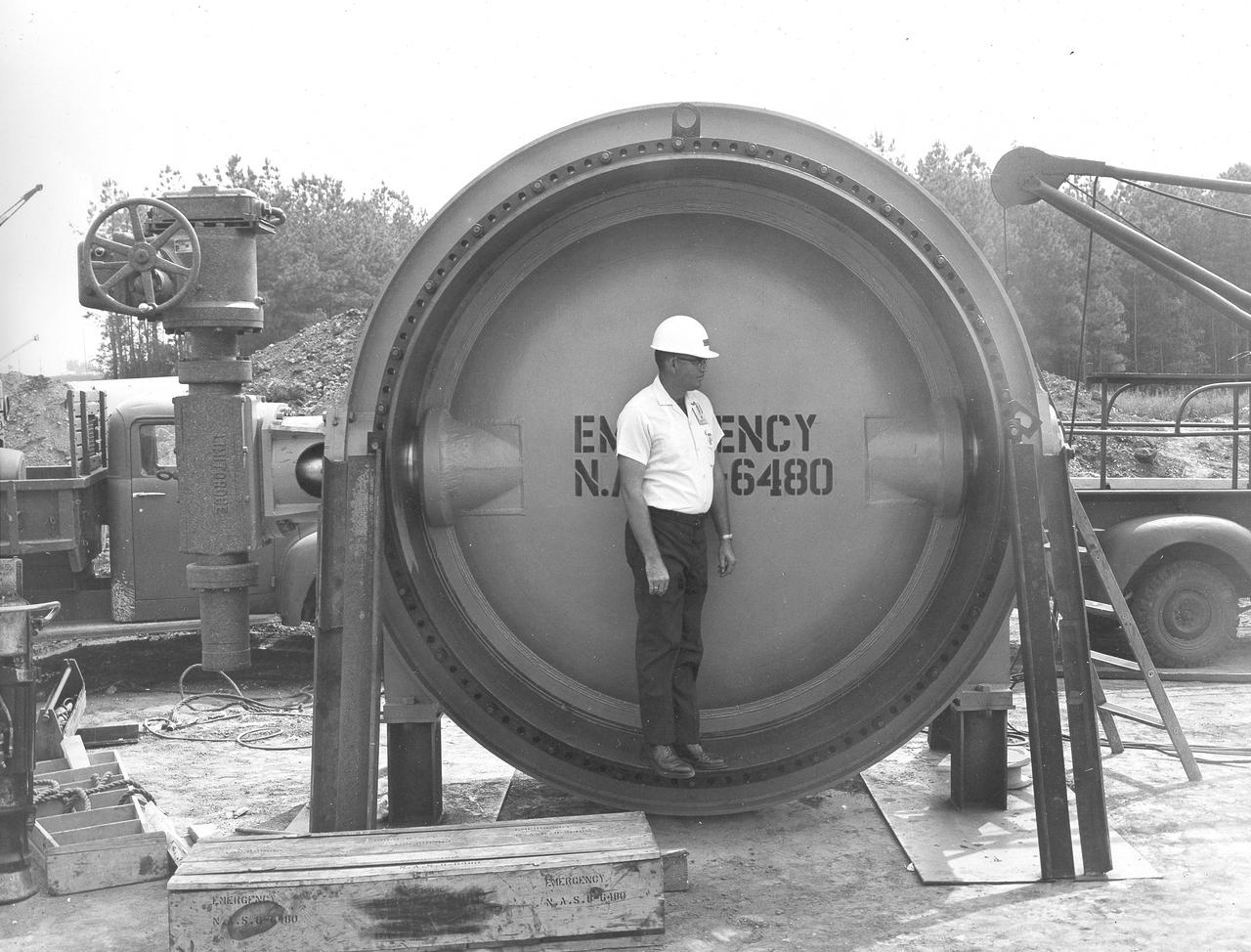
At its founding, the Marshall Space Flight Center (MSFC) inherited the Army’s Jupiter and Redstone test stands, but much larger facilities were needed for the giant stages of the Saturn V. From 1960 to 1964, the existing stands were remodeled and a sizable new test area was developed. The new comprehensive test complex for propulsion and structural dynamics was unique within the nation and the free world, and they remain so today because they were constructed with foresight to meet the future as well as on going needs. Construction of the S-IC Static test stand complex began in 1961 in the west test area of MSFC, and was completed in 1964. The S-IC static test stand was designed to develop and test the 138-ft long and 33-ft diameter Saturn V S-IC first stage, or booster stage, weighing in at 280,000 pounds. Required to hold down the brute force of a 7,500,000-pound thrust produced by 5 F-1 engines, the S-IC static test stand was designed and constructed with the strength of hundreds of tons of steel and 12,000,000 pounds of cement, planted down to bedrock 40 feet below ground level. The foundation walls, constructed with concrete and steel, are 4 feet thick. The base structure consists of four towers with 40-foot-thick walls extending upward 144 feet above ground level. The structure was topped by a crane with a 135-foot boom. With the boom in the upright position, the stand was given an overall height of 405 feet, placing it among the highest structures in Alabama at the time. In addition to the stand itself, related facilities were constructed during this time. Built northeast of the stand was a newly constructed Pump House. Its function was to provide water to the stand to prevent melting damage during testing. The water was sprayed through small holes in the stand’s 1900 ton flame deflector at the rate of 320,000 gallons per minute. In this photograph, a construction worker demonstrates the size of the massive water valve that was used in the testing cooling process.
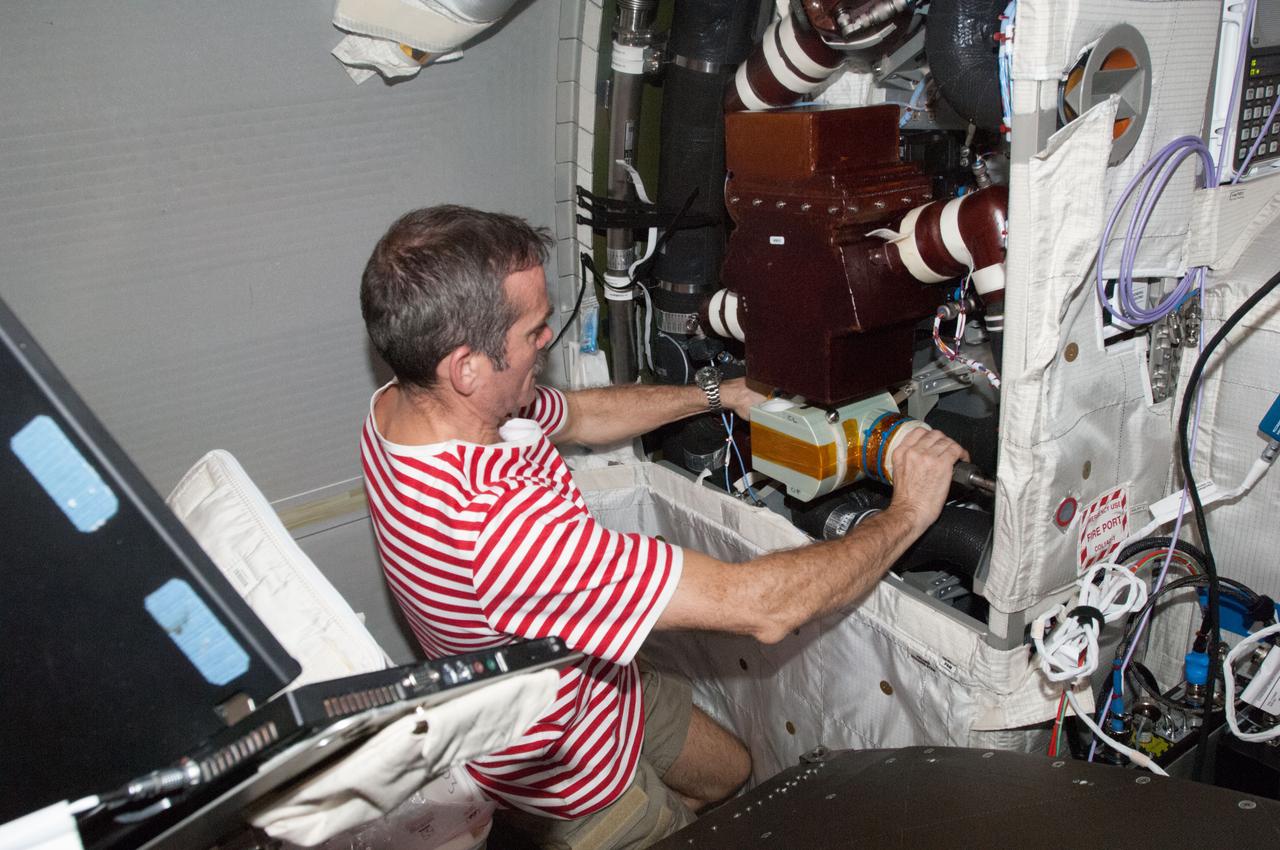
ISS034-E-031766 (18 Jan. 2013) --- Canadian Space Agency astronaut Chris Hadfield, Expedition 34 flight engineer, removes the Water Temporary Substitution Manifold (WTSM) and installs the Water On-Off Valve (WOOV) in the Columbus laboratory of the International Space Station.
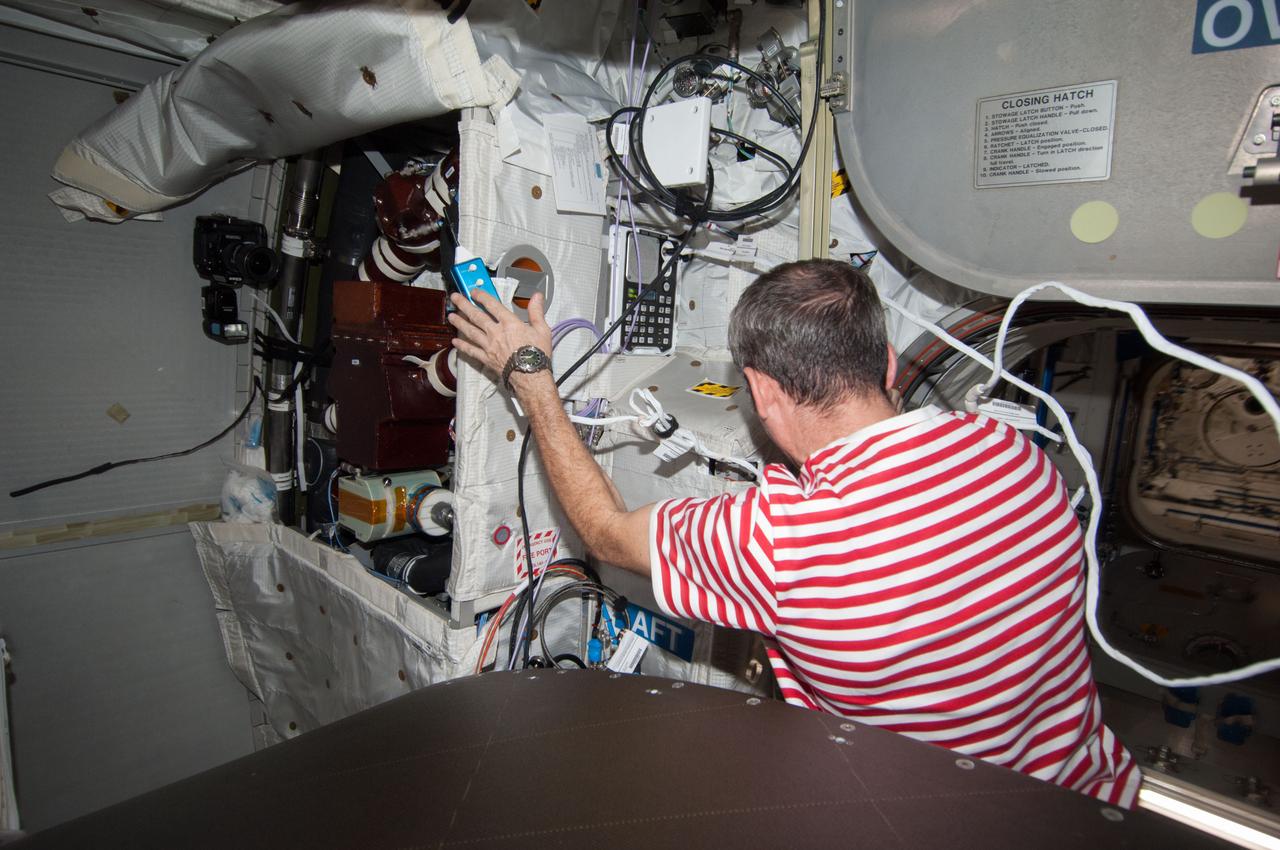
ISS034-E-031578 (18 Jan. 2013) --- Canadian Space Agency astronaut Chris Hadfield, Expedition 34 flight engineer, removes the Water Temporary Substitution Manifold (WTSM) and installs the Water On-Off Valve (WOOV) in the Columbus laboratory of the International Space Station.
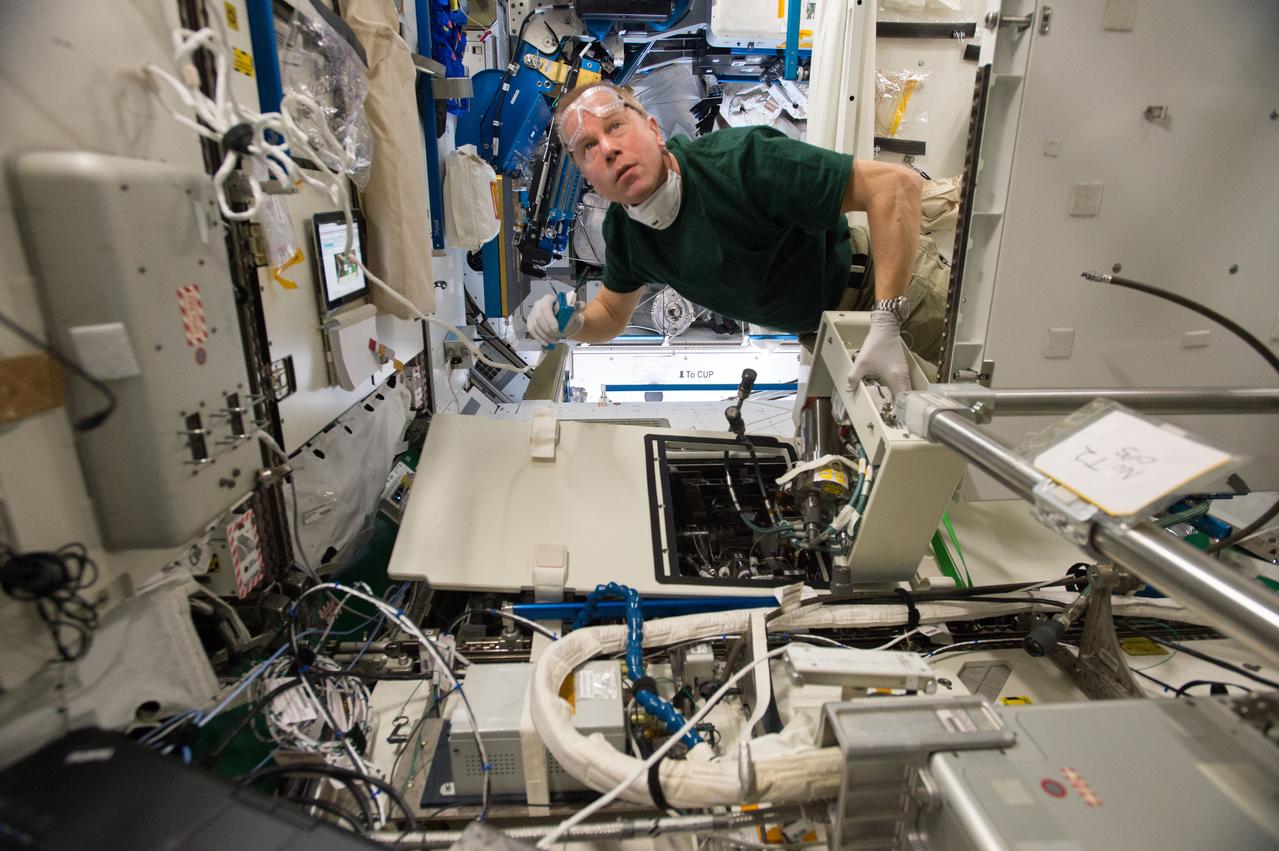
ISS046e023885 (01/25/2016) --- NASA astronaut Tim Kopra performs regular maintenance on the Urine Processing Assembly (UPA) aboard the International Space Station. The UPA is used by the crew to recycle water for use on the station. The image shows Tim replacing the brine filter from the UPA Fill Drain Valve enclosure.
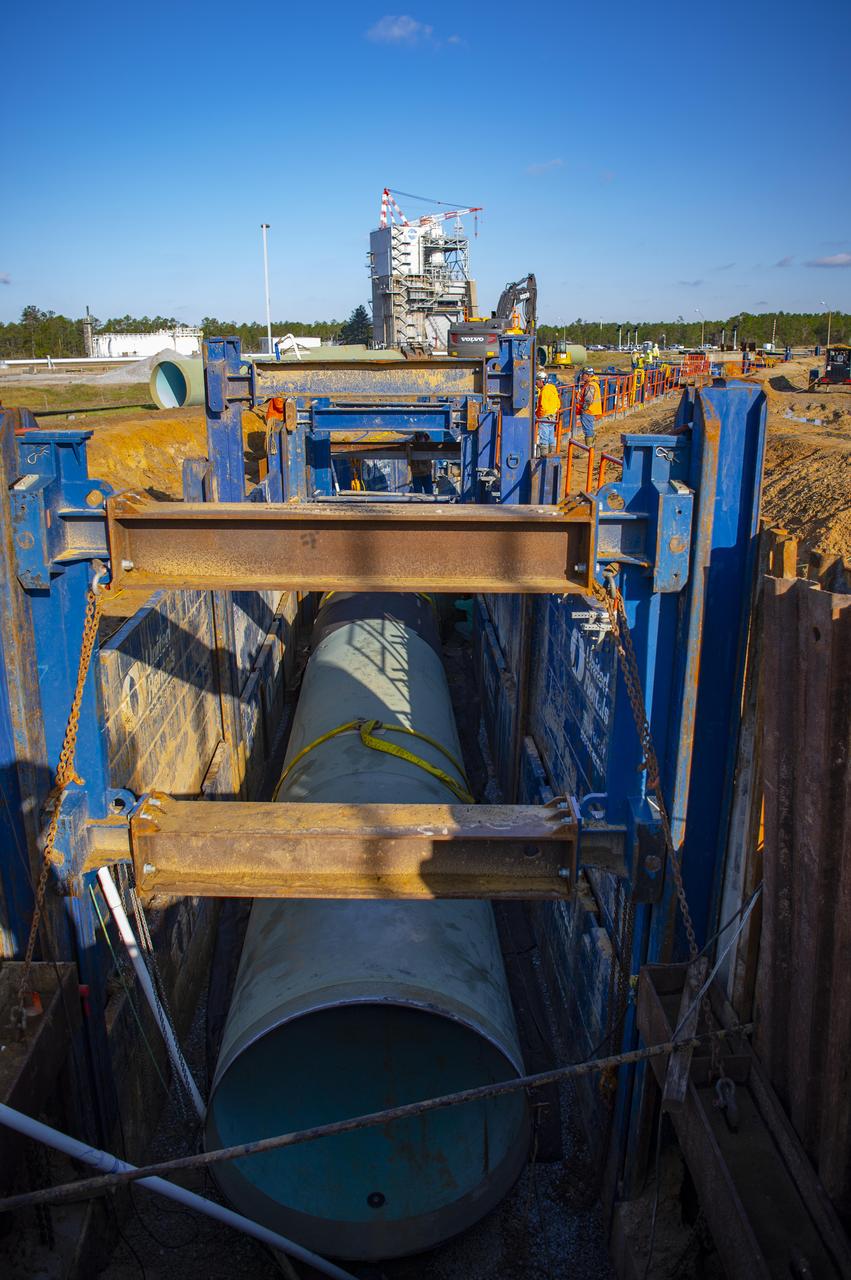
In this March 2022 photo, crews use a shoring system to hold back soil as they install new 75-inch piping leading from the NASA Stennis High Pressure Industrial Water Facility to the valve vault pit serving the Fred Haise Test Stand.
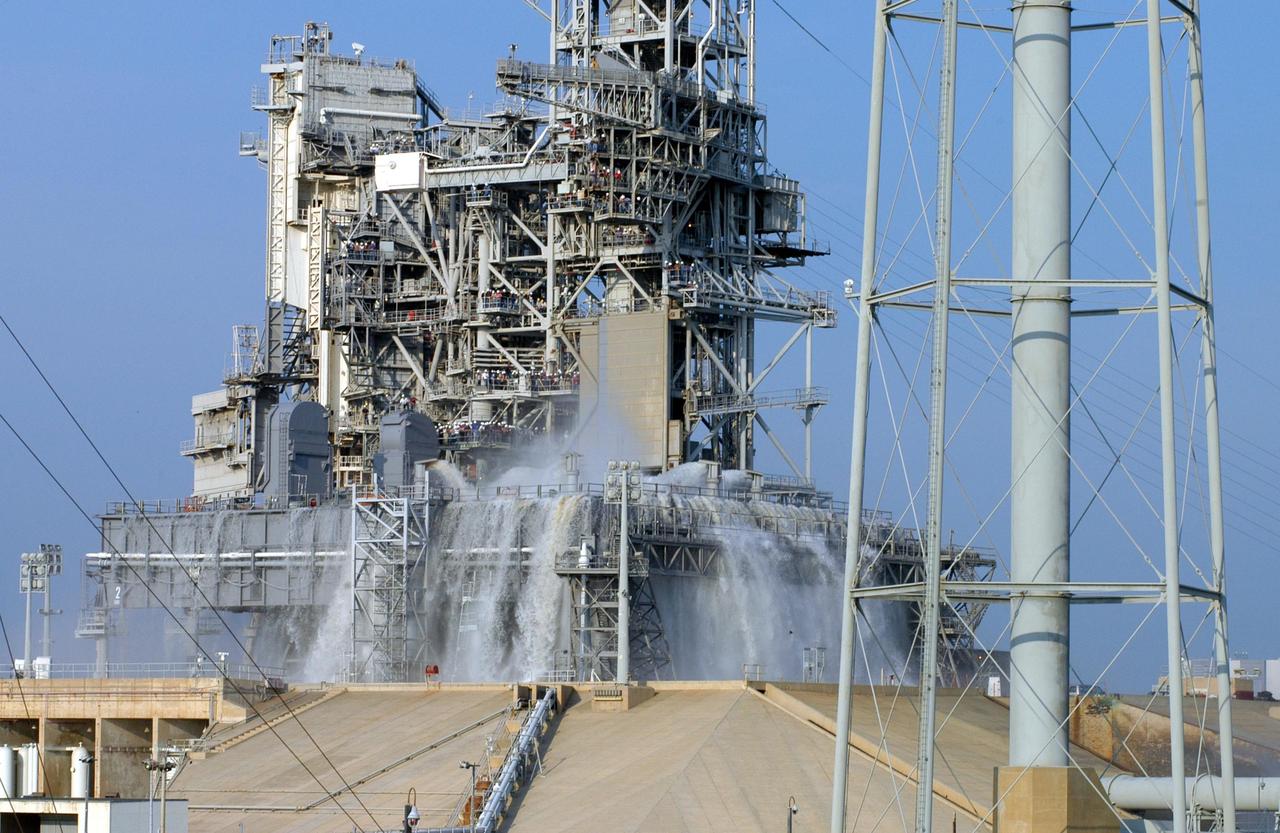
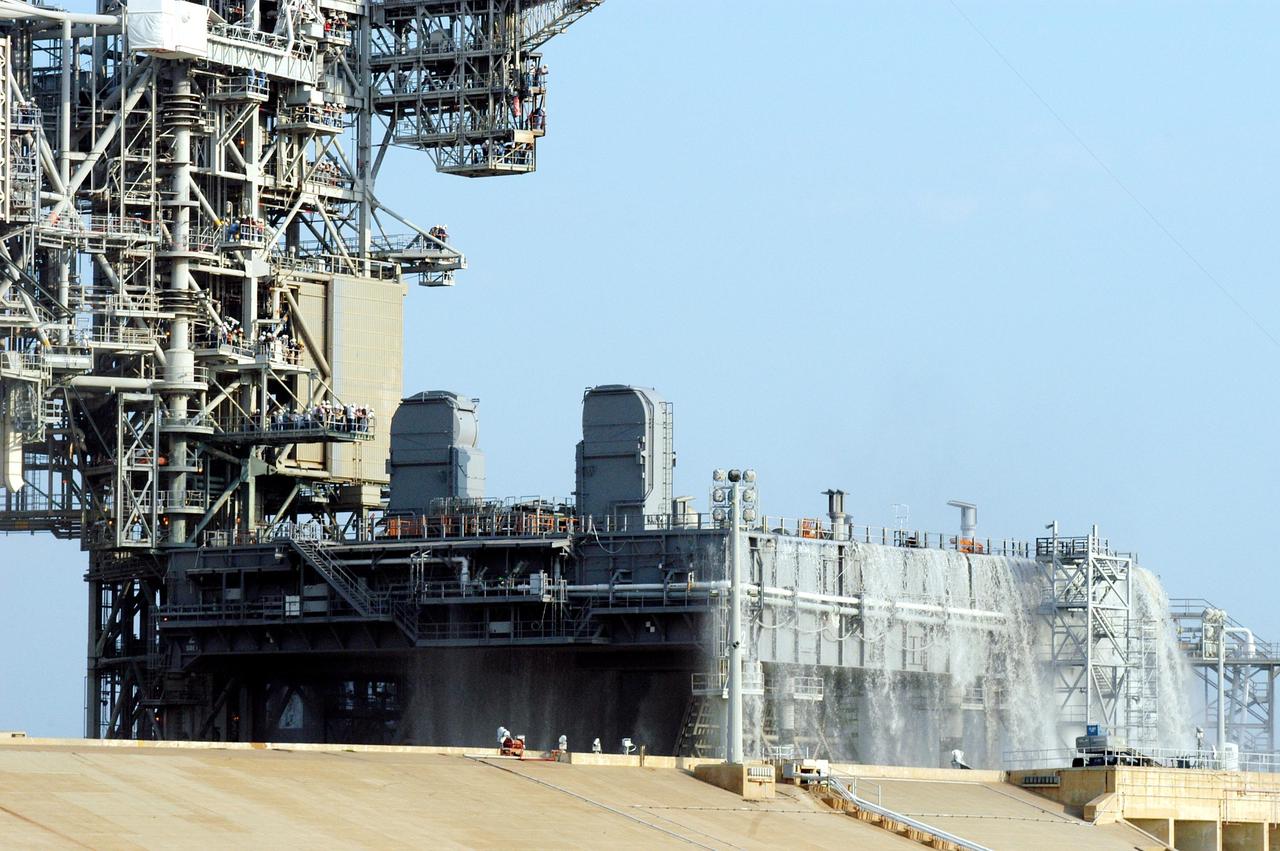
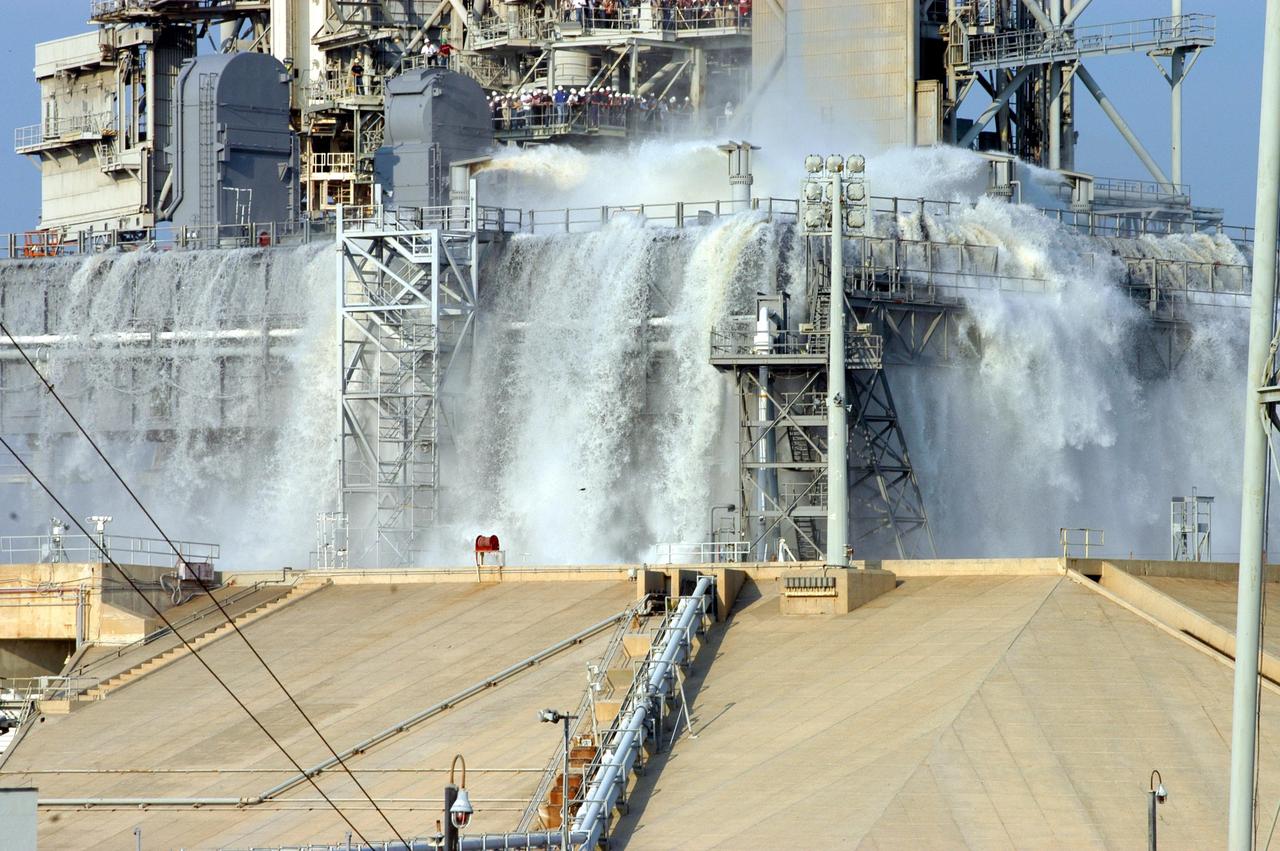
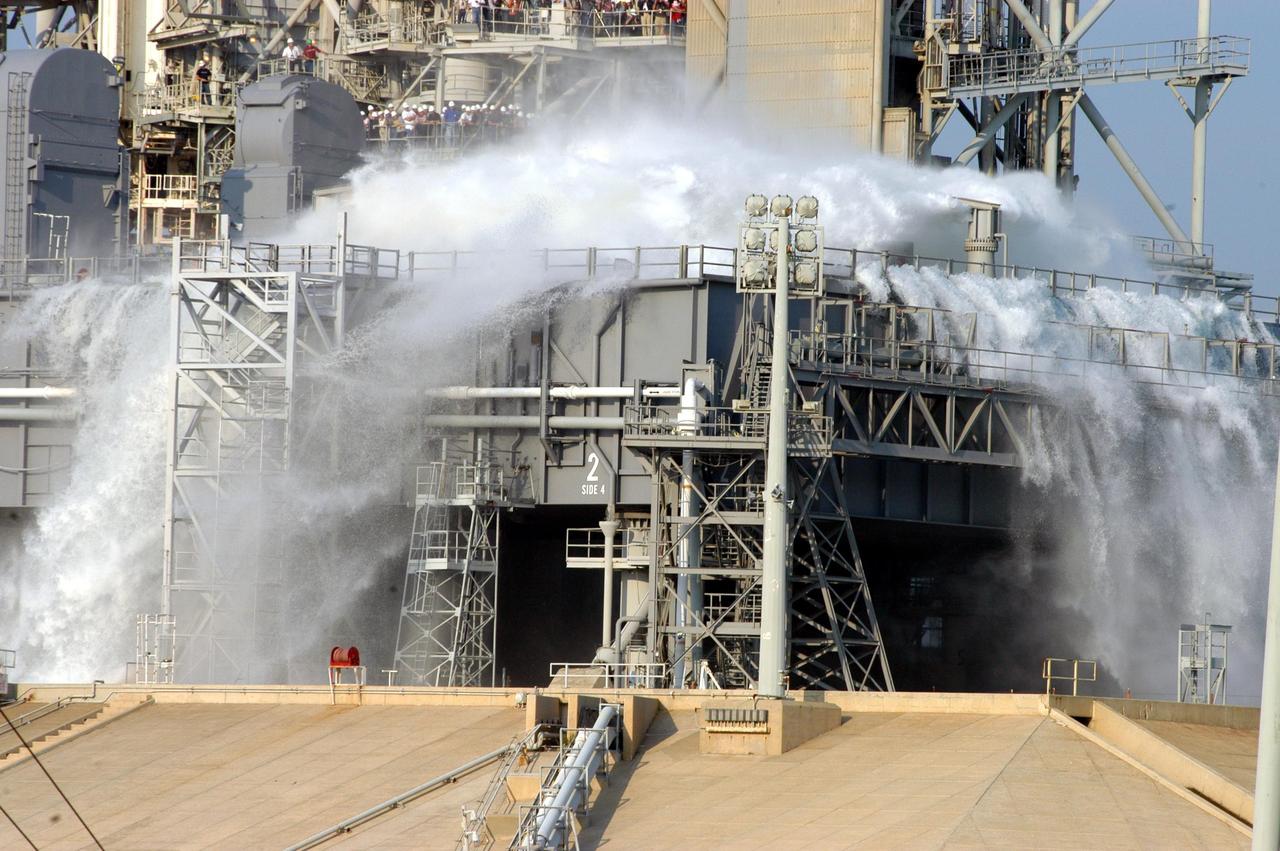
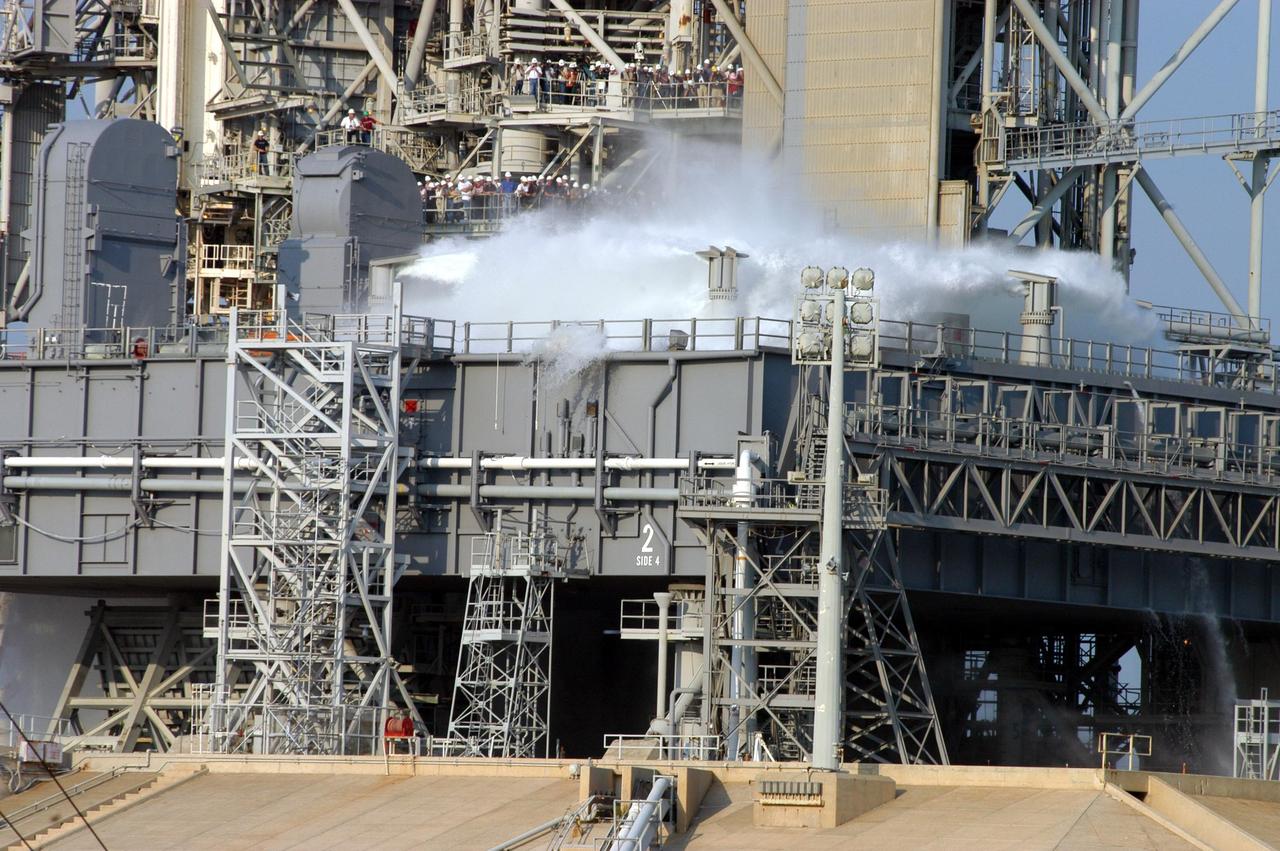
KENNEDY SPACE CENTER, FLA. -- For the fourth time in Space Shuttle Program history, 350,000 gallons of water are released on a Mobile Launcher Platform (MLP) at Launch Pad 39A during a water sound suppression test. This test is being conducted following the replacement of the six main system valves, which had been in place since the beginning of the Shuttle Program and had reached the end of their service life. Also, the hydraulic portion of the valve actuators has been redesigned and simplified to reduce maintenance costs. The sound suppression water system is installed on the launch pads to protect the orbiter and its payloads from damage by acoustical energy reflected from the MLP during launch. The system includes an elevated water tank with a capacity of 300,000 gallons. The tank is 290 feet high and stands on the northeast side of the Pad. The water is released just before the ignition of the orbiter's three main engines and twin solid rocket boosters, and flows through parallel 7-foot-diameter pipes to the Pad area.
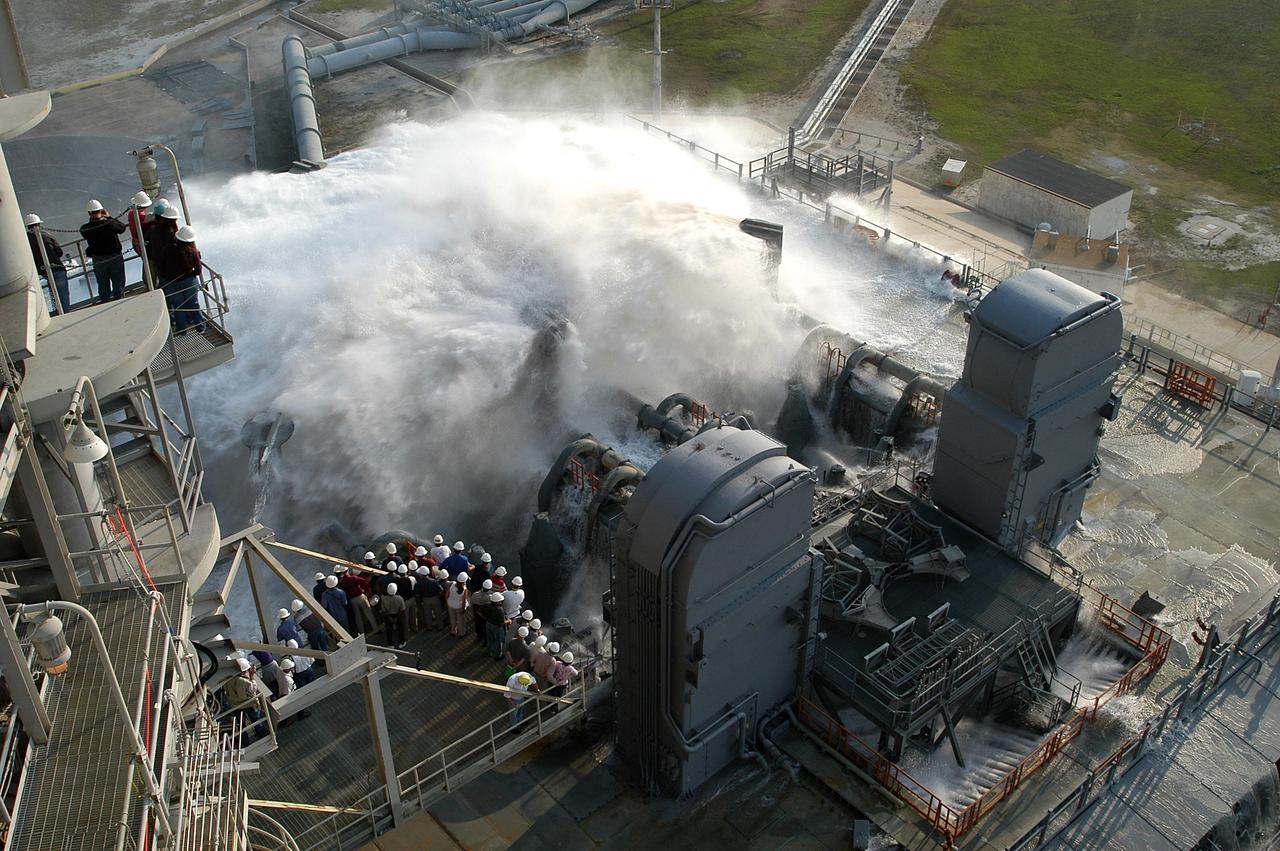
KENNEDY SPACE CENTER, FLA. -- Water is released onto the Mobile Launcher Platform (MLP) on Launch Pad 39A at the start of a water sound suppression test. Workers and the media (left) are on hand to witness the rare event. This test is being conducted following the replacement of the six main system valves, which had been in place since the beginning of the Shuttle Program and had reached the end of their service life. Also, the hydraulic portion of the valve actuators has been redesigned and simplified to reduce maintenance costs. The sound suppression water system is installed on the launch pads to protect the orbiter and its payloads from damage by acoustical energy reflected from the MLP during launch. The system includes an elevated water tank with a capacity of 300,000 gallons. The tank is 290 feet high and stands on the northeast side of the Pad. The water is released just before the ignition of the orbiter's three main engines and twin solid rocket boosters, and flows through parallel 7-foot-diameter pipes to the Pad area.

KENNEDY SPACE CENTER, FLA. -- Water is released onto the Mobile Launcher Platform (MLP) on Launch Pad 39A at the start of a water sound suppression test. Workers and the media (left) are on hand to witness the rare event. This test is being conducted following the replacement of the six main system valves, which had been in place since the beginning of the Shuttle Program and had reached the end of their service life. Also, the hydraulic portion of the valve actuators has been redesigned and simplified to reduce maintenance costs. The sound suppression water system is installed on the launch pads to protect the orbiter and its payloads from damage by acoustical energy reflected from the MLP during launch. The system includes an elevated water tank with a capacity of 300,000 gallons. The tank is 290 feet high and stands on the northeast side of the Pad. The water is released just before the ignition of the orbiter's three main engines and twin solid rocket boosters, and flows through parallel 7-foot-diameter pipes to the Pad area.

KENNEDY SPACE CENTER, FLA. -- For the fourth time in Space Shuttle Program history, 350,000 gallons of water are released on a Mobile Launcher Platform (MLP) at Launch Pad 39A during a water sound suppression test. Because of the unusual event, media and workers watch from nearby vantage points on the Fixed Service Structure (left). This test is being conducted following the replacement of the six main system valves, which had been in place since the beginning of the Shuttle Program and had reached the end of their service life. Also, the hydraulic portion of the valve actuators has been redesigned and simplified to reduce maintenance costs. The sound suppression water system is installed on the launch pads to protect the orbiter and its payloads from damage by acoustical energy reflected from the MLP during launch. The system includes an elevated water tank with a capacity of 300,000 gallons. The tank is 290 feet high and stands on the northeast side of the Pad. The water is released for launch just before the ignition of the orbiter's three main engines and twin solid rocket boosters, and flows through parallel 7-foot-diameter pipes to the Pad area.
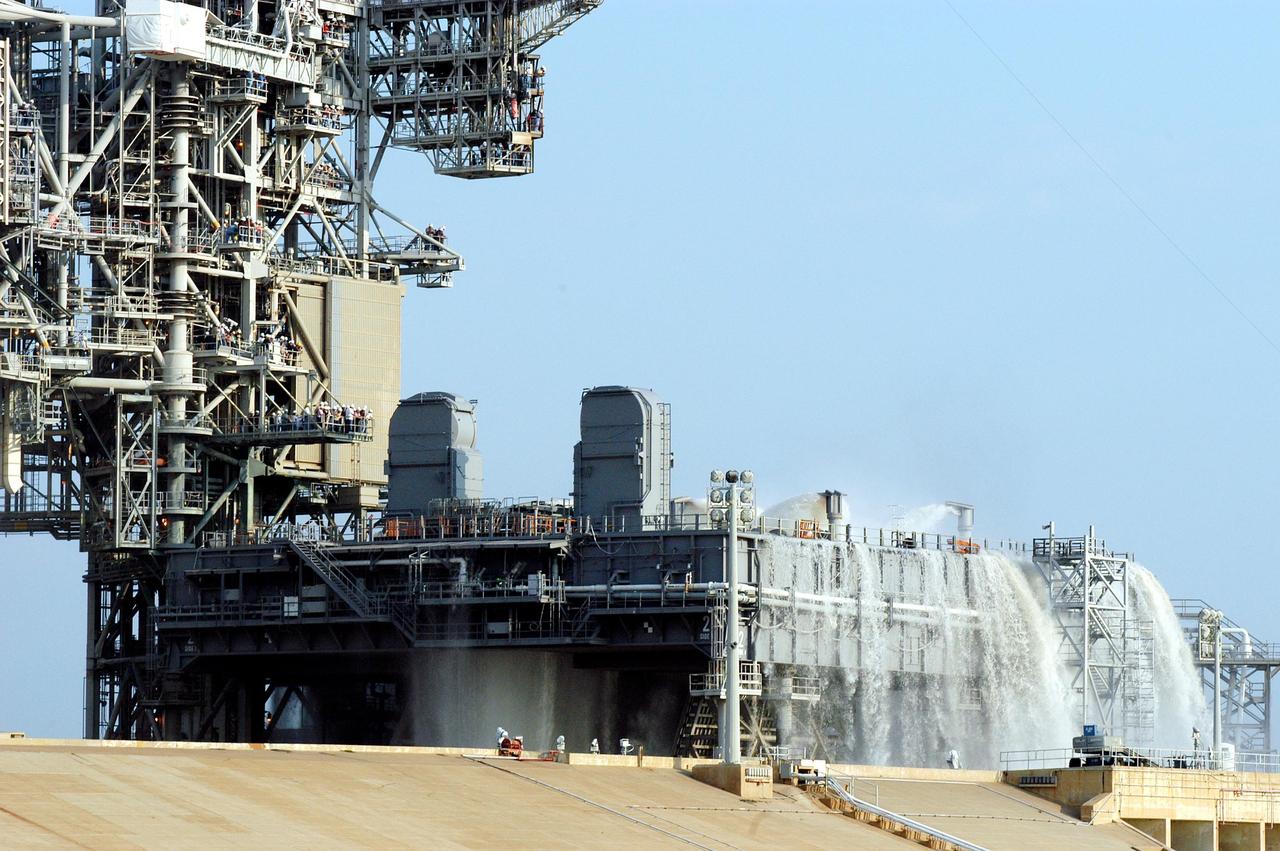
KENNEDY SPACE CENTER, FLA. -- For the fourth time in Space Shuttle Program history, 350,000 gallons of water are being released on a Mobile Launcher Platform (MLP) at Launch Pad 39A during a water sound suppression test. Because of the unusual event, media and workers watch from nearby vantage points on the Fixed Service Structure (left). This test is being conducted following the replacement of the six main system valves, which had been in place since the beginning of the Shuttle Program and had reached the end of their service life. Also, the hydraulic portion of the valve actuators has been redesigned and simplified to reduce maintenance costs. The sound suppression water system is installed on the launch pads to protect the orbiter and its payloads from damage by acoustical energy reflected from the MLP during launch. The system includes an elevated water tank with a capacity of 300,000 gallons. The tank is 290 feet high and stands on the northeast side of the Pad. The water is released just before the ignition of the orbiter's three main engines and twin solid rocket boosters, and flows through parallel 7-foot-diameter pipes to the Pad area.
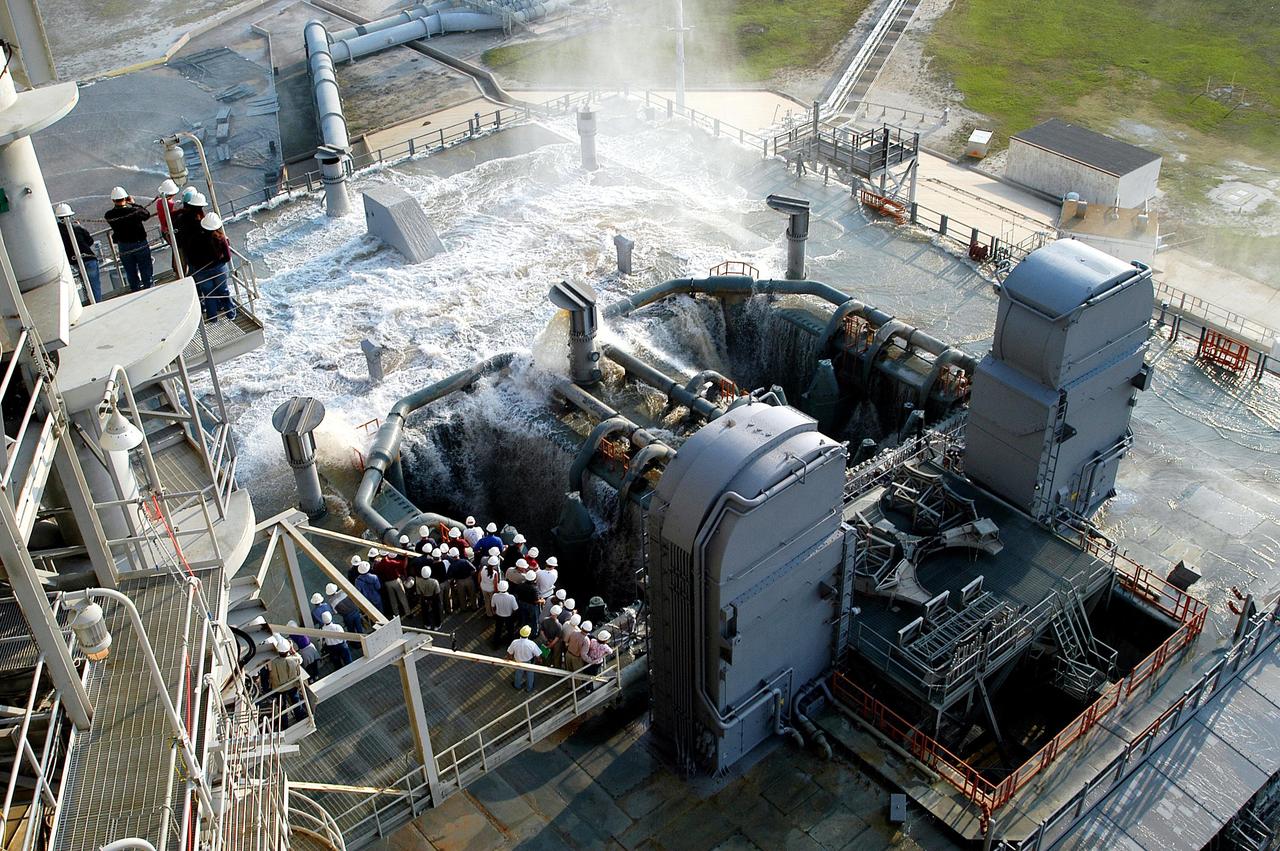
KENNEDY SPACE CENTER, FLA. -- Water recedes from the Mobile Launcher Platform (MLP) on Launch Pad 39A after the water sound suppression test. Workers and the media (left) were on hand to witness the rare event. This test was conducted following the replacement of the six main system valves, which had been in place since the beginning of the Shuttle Program and had reached the end of their service life. Also, the hydraulic portion of the valve actuators has been redesigned and simplified to reduce maintenance costs. The sound suppression water system is installed on the launch pads to protect the orbiter and its payloads from damage by acoustical energy reflected from the MLP during launch. The system includes an elevated water tank with a capacity of 300,000 gallons. The tank is 290 feet high and stands on the northeast side of the Pad. The water is released just before the ignition of the orbiter's three main engines and twin solid rocket boosters, and flows through parallel 7-foot-diameter pipes to the Pad area.
KENNEDY SPACE CENTER, FLA. -- For the fourth time in Space Shuttle Program history, 350,000 gallons of water are being released on a Mobile Launcher Platform (MLP) at Launch Pad 39A during a water sound suppression test. Because of the unusual event, media and workers watch from nearby vantage points on the Fixed Service Structure (left). This test is being conducted following the replacement of the six main system valves, which had been in place since the beginning of the Shuttle Program and had reached the end of their service life. Also, the hydraulic portion of the valve actuators has been redesigned and simplified to reduce maintenance costs. The sound suppression water system is installed on the launch pads to protect the orbiter and its payloads from damage by acoustical energy reflected from the MLP during launch. The system includes an elevated water tank with a capacity of 300,000 gallons. The tank is 290 feet high and stands on the northeast side of the Pad. The water is released just before the ignition of the orbiter's three main engines and twin solid rocket boosters, and flows through parallel 7-foot-diameter pipes to the Pad area.
KENNEDY SPACE CENTER, FLA. -- For the fourth time in Space Shuttle Program history, 350,000 gallons of water are released on a Mobile Launcher Platform (MLP) at Launch Pad 39A during a water sound suppression test. This test is being conducted following the replacement of the six main system valves, which had been in place since the beginning of the Shuttle Program and had reached the end of their service life. Also, the hydraulic portion of the valve actuators has been redesigned and simplified to reduce maintenance costs. The sound suppression water system is installed on the launch pads to protect the orbiter and its payloads from damage by acoustical energy reflected from the MLP during launch. The system includes an elevated water tank with a capacity of 300,000 gallons. The tank is 290 feet high and stands on the northeast side of the Pad. The water is released just before the ignition of the orbiter's three main engines and twin solid rocket boosters, and flows through parallel 7-foot-diameter pipes to the Pad area.
KENNEDY SPACE CENTER, FLA. -- For the fourth time in Space Shuttle Program history, 350,000 gallons of water are released on a Mobile Launcher Platform (MLP) at Launch Pad 39A during a water sound suppression test. This test is being conducted following the replacement of the six main system valves, which had been in place since the beginning of the Shuttle Program and had reached the end of their service life. Also, the hydraulic portion of the valve actuators has been redesigned and simplified to reduce maintenance costs. The sound suppression water system is installed on the launch pads to protect the orbiter and its payloads from damage by acoustical energy reflected from the MLP during launch. The system includes an elevated water tank with a capacity of 300,000 gallons. The tank is 290 feet high and stands on the northeast side of the Pad. The water is released just before the ignition of the orbiter's three main engines and twin solid rocket boosters, and flows through parallel 7-foot-diameter pipes to the Pad area.
KENNEDY SPACE CENTER, FLA. -- For the fourth time in Space Shuttle Program history, 350,000 gallons of water are released on a Mobile Launcher Platform (MLP) at Launch Pad 39A during a water sound suppression test. This test is being conducted following the replacement of the six main system valves, which had been in place since the beginning of the Shuttle Program and had reached the end of their service life. Also, the hydraulic portion of the valve actuators has been redesigned and simplified to reduce maintenance costs. The sound suppression water system is installed on the launch pads to protect the orbiter and its payloads from damage by acoustical energy reflected from the MLP during launch. The system includes an elevated water tank with a capacity of 300,000 gallons. The tank is 290 feet high and stands on the northeast side of the Pad. The water is released just before the ignition of the orbiter's three main engines and twin solid rocket boosters, and flows through parallel 7-foot-diameter pipes to the Pad area.
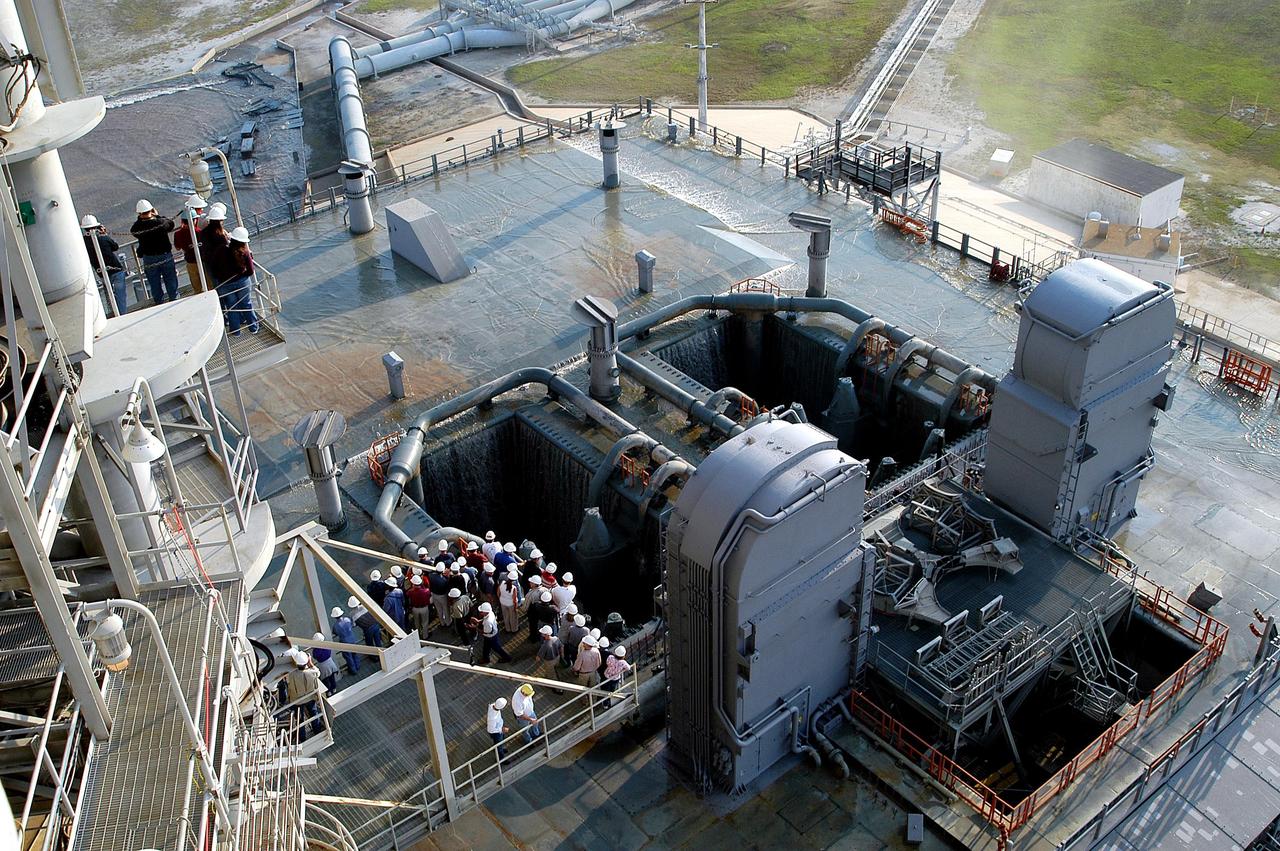
KENNEDY SPACE CENTER, FLA. -- Some water remains on the surface of the Mobile Launcher Platform (MLP) on Launch Pad 39A after a water sound suppression test. Workers and the media (left) were on hand to witness the rare event. This test was conducted following the replacement of the six main system valves, which had been in place since the beginning of the Shuttle Program and had reached the end of their service life. Also, the hydraulic portion of the valve actuators has been redesigned and simplified to reduce maintenance costs. The sound suppression water system is installed on the launch pads to protect the orbiter and its payloads from damage by acoustical energy reflected from the MLP during launch. The system includes an elevated water tank with a capacity of 300,000 gallons. The tank is 290 feet high and stands on the northeast side of the Pad. The water is released just before the ignition of the orbiter's three main engines and twin solid rocket boosters, and flows through parallel 7-foot-diameter pipes to the Pad area.
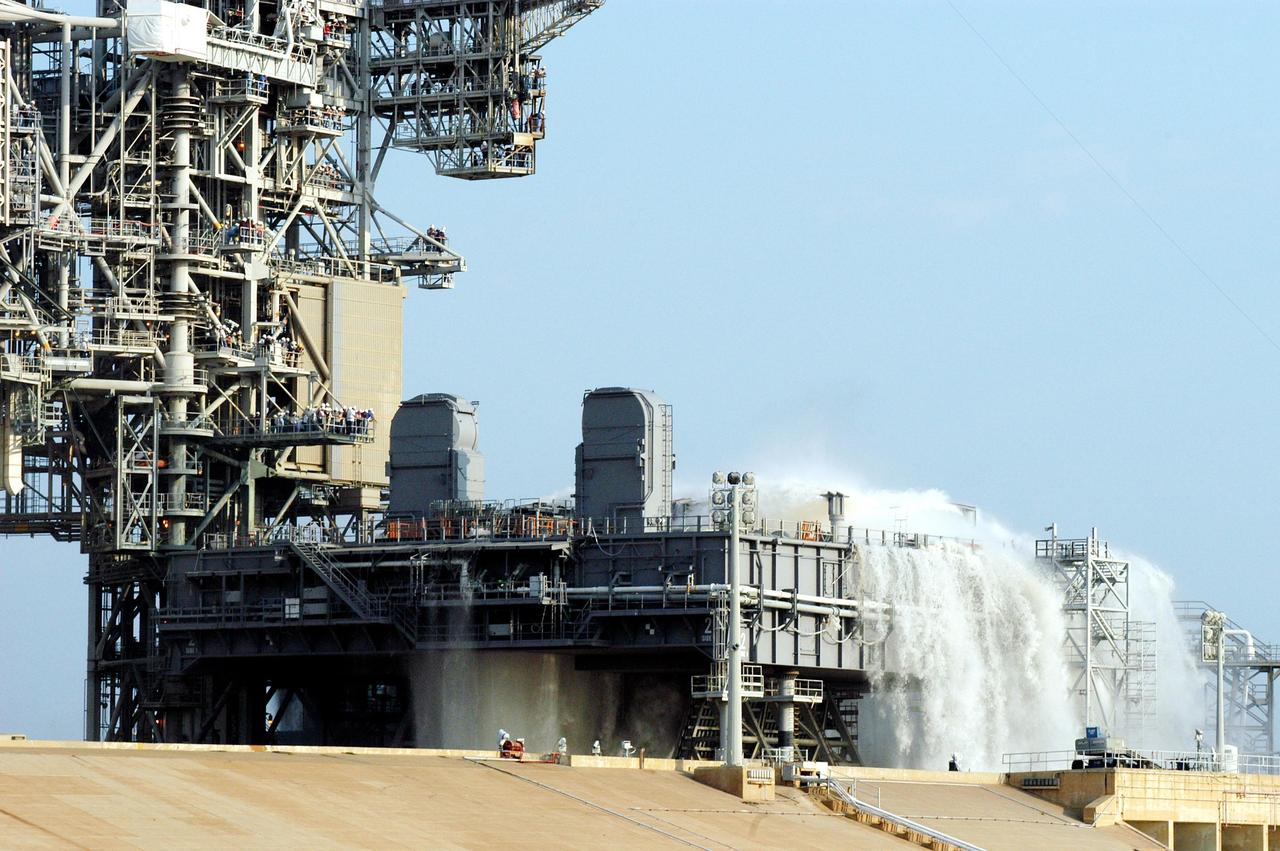
KENNEDY SPACE CENTER, FLA. -- For the fourth time in Space Shuttle Program history, 350,000 gallons of water are being released on a Mobile Launcher Platform (MLP) at Launch Pad 39A during a water sound suppression test. Because of the unusual event, media and workers watch from nearby vantage points on the Fixed Service Structure (left). This test is being conducted following the replacement of the six main system valves, which had been in place since the beginning of the Shuttle Program and had reached the end of their service life. Also, the hydraulic portion of the valve actuators has been redesigned and simplified to reduce maintenance costs. The sound suppression water system is installed on the launch pads to protect the orbiter and its payloads from damage by acoustical energy reflected from the MLP during launch. The system includes an elevated water tank with a capacity of 300,000 gallons. The tank is 290 feet high and stands on the northeast side of the Pad. The water is released just before the ignition of the orbiter's three main engines and twin solid rocket boosters, and flows through parallel 7-foot-diameter pipes to the Pad area.

About 450,000 gallons of water flowed at high speed from a holding tank through new and modified piping and valves, the flame trench, flame deflector nozzles and mobile launcher interface risers during a wet flow test at Launch Pad 39B at NASA's Kennedy Space Center in Florida. At peak flow, the water reached about 100 feet in the air above the pad surface. The test was a milestone to confirm and baseline the performance of the Ignition Overpressure/Sound Suppression system. During launch of NASA's Space Launch System rocket and Orion spacecraft, the high-speed water flow will help protect the vehicle from the extreme acoustic and temperature environment during ignition and liftoff.
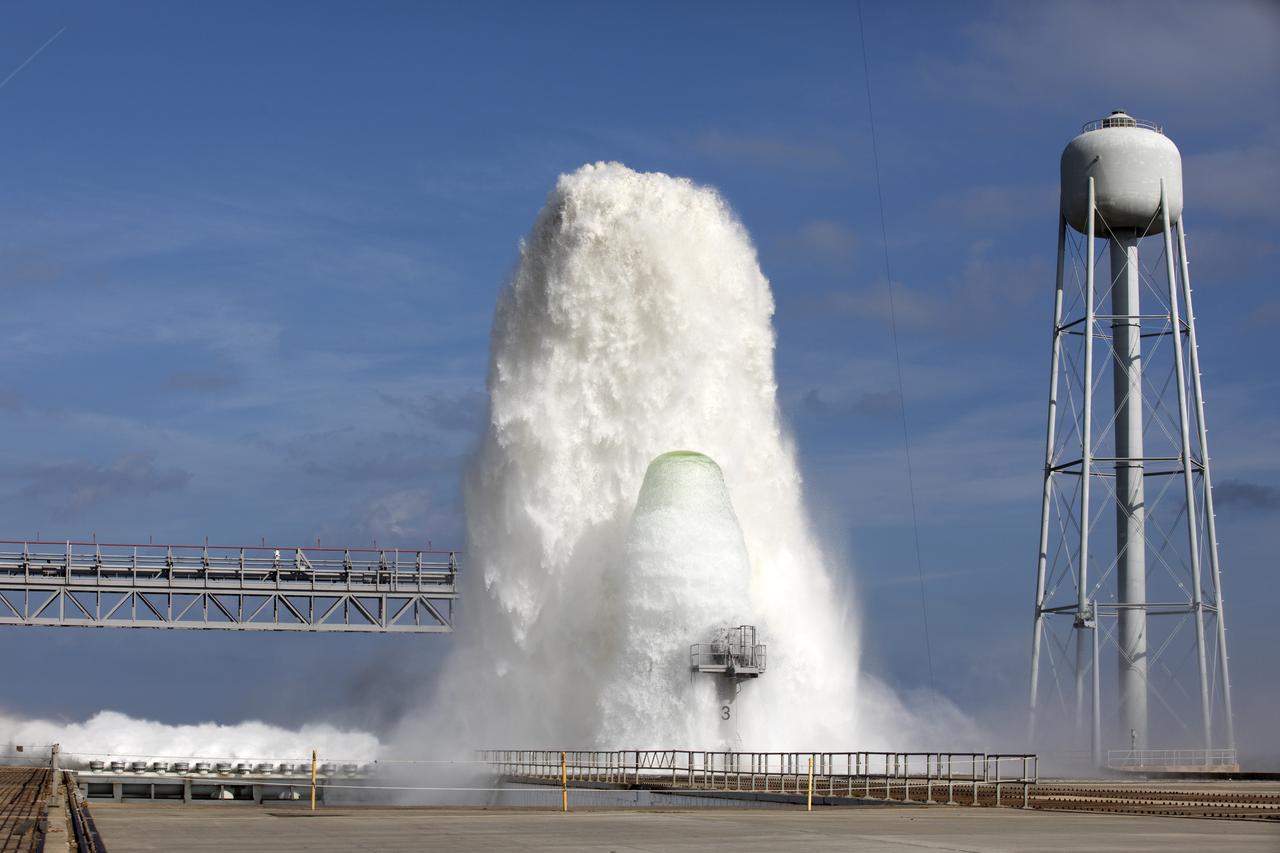
About 450,000 gallons of water flowed at high speed from a holding tank through new and modified piping and valves, the flame trench, flame deflector nozzles and mobile launcher interface risers during a wet flow test at Launch Pad 39B at NASA's Kennedy Space Center in Florida. At peak flow, the water reached about 100 feet in the air above the pad surface. The test was a milestone to confirm and baseline the performance of the Ignition Overpressure/Sound Suppression system. During launch of NASA's Space Launch System rocket and Orion spacecraft, the high-speed water flow will help protect the vehicle from the extreme acoustic and temperature environment during ignition and liftoff.

About 450,000 gallons of water flowed at high speed from a holding tank through new and modified piping and valves, the flame trench, flame deflector nozzles and mobile launcher interface risers during a wet flow test at Launch Pad 39B at NASA's Kennedy Space Center in Florida. At peak flow, the water reached about 100 feet in the air above the pad surface. The test was a milestone to confirm and baseline the performance of the Ignition Overpressure/Sound Suppression system. During launch of NASA's Space Launch System rocket and Orion spacecraft, the high-speed water flow will help protect the vehicle from the extreme acoustic and temperature environment during ignition and liftoff.
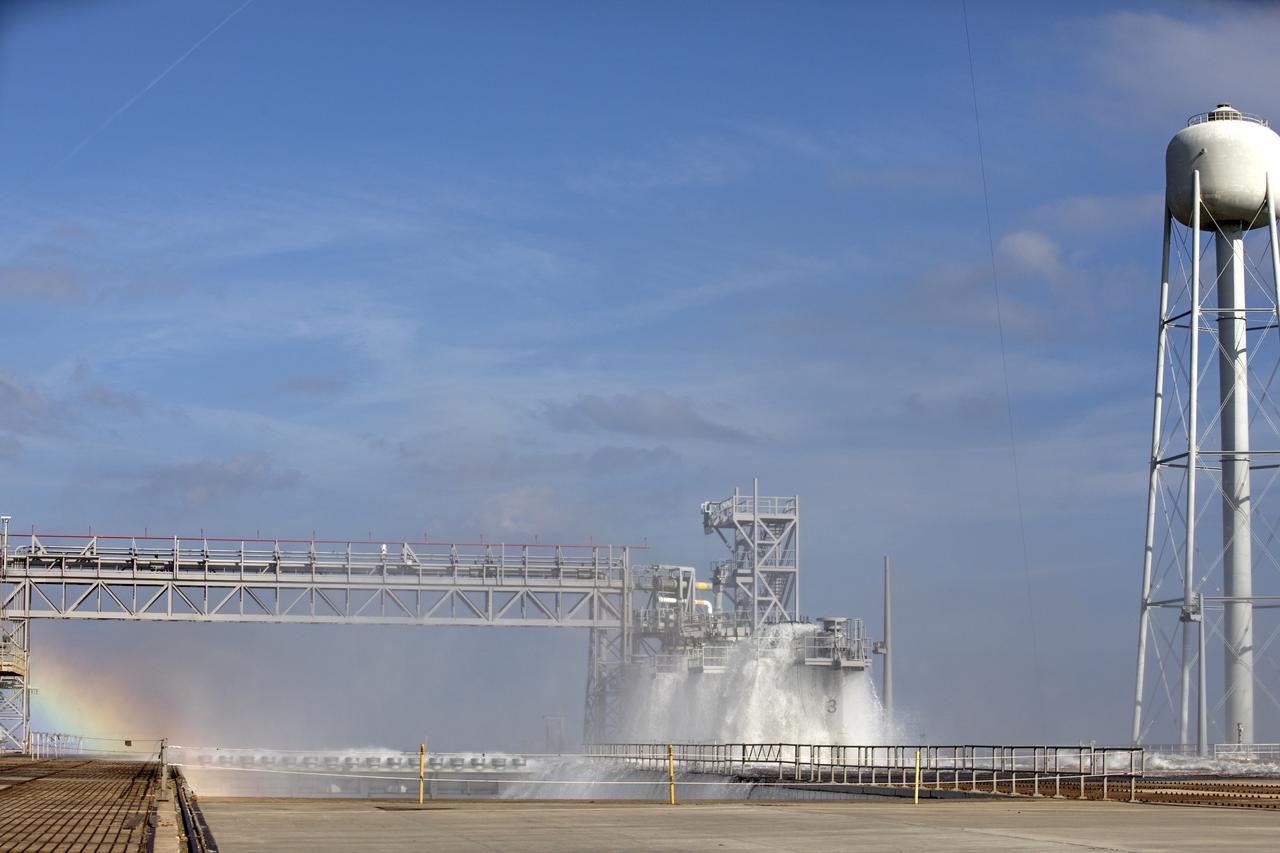
About 450,000 gallons of water flowed at high speed from a holding tank through new and modified piping and valves, the flame trench, flame deflector nozzles and mobile launcher interface risers during a wet flow test at Launch Pad 39B at NASA's Kennedy Space Center in Florida. At peak flow, the water reached about 100 feet in the air above the pad surface. The test was a milestone to confirm and baseline the performance of the Ignition Overpressure/Sound Suppression system. During launch of NASA's Space Launch System rocket and Orion spacecraft, the high-speed water flow will help protect the vehicle from the extreme acoustic and temperature environment during ignition and liftoff.
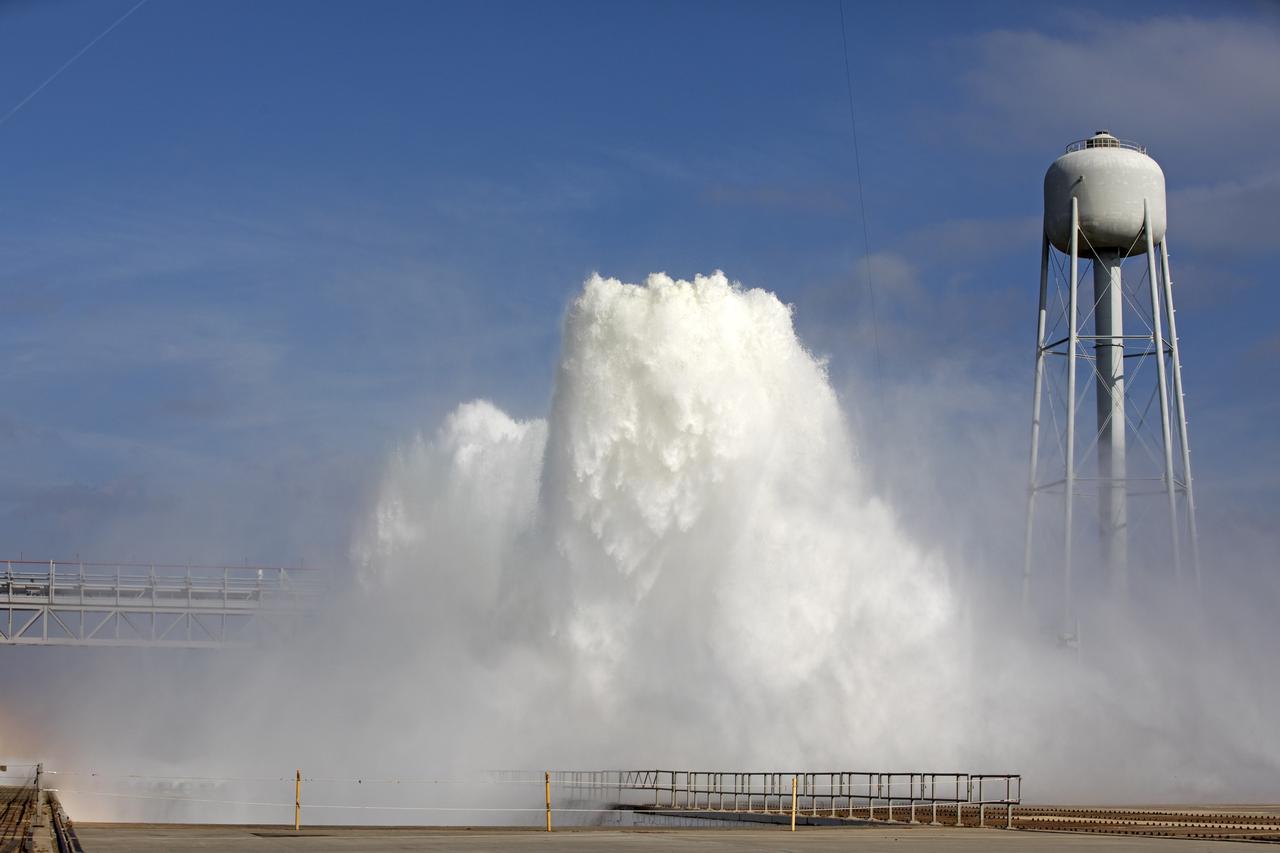
About 450,000 gallons of water flowed at high speed from a holding tank through new and modified piping and valves, the flame trench, flame deflector nozzles and mobile launcher interface risers during a wet flow test at Launch Pad 39B at NASA's Kennedy Space Center in Florida. At peak flow, the water reached about 100 feet in the air above the pad surface. The test was a milestone to confirm and baseline the performance of the Ignition Overpressure/Sound Suppression system. During launch of NASA's Space Launch System rocket and Orion spacecraft, the high-speed water flow will help protect the vehicle from the extreme acoustic and temperature environment during ignition and liftoff.
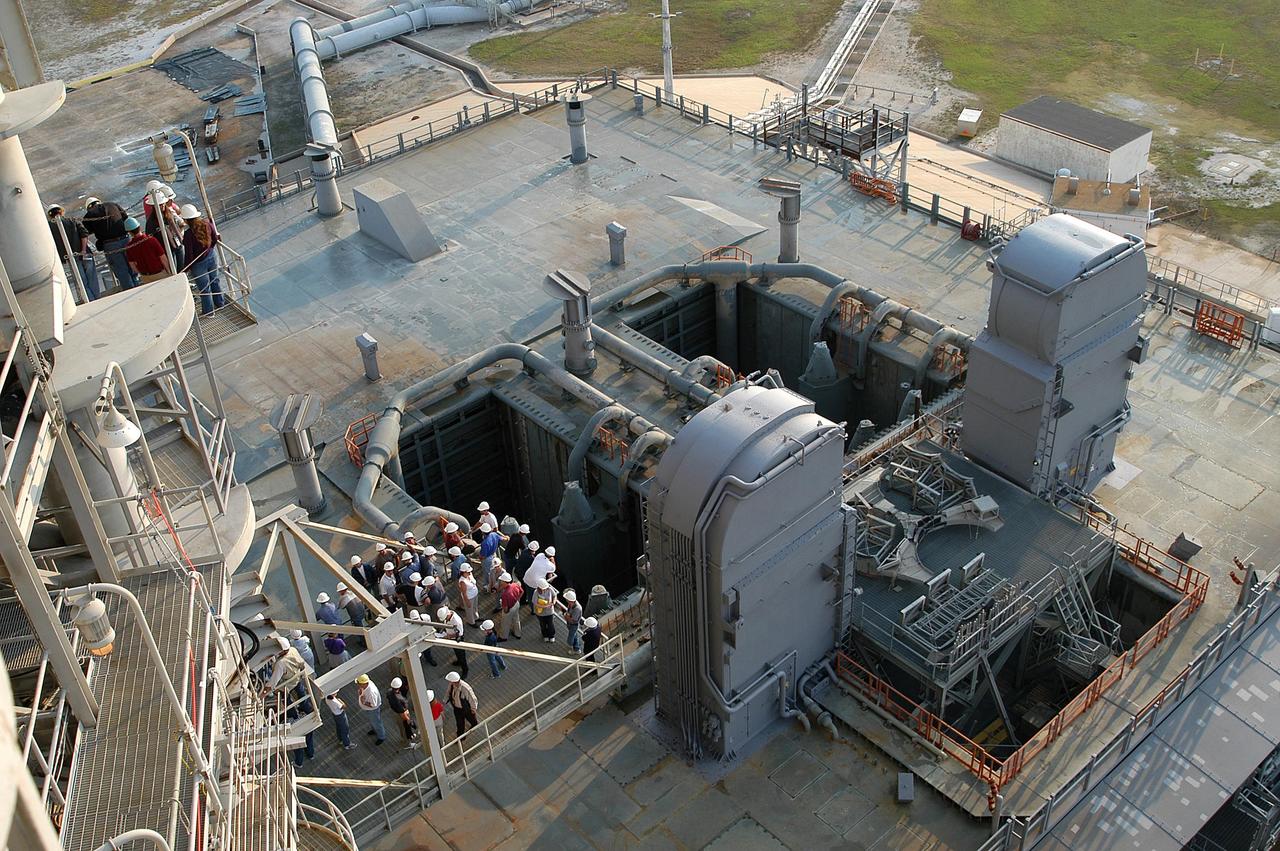
KENNEDY SPACE CENTER, FLA. -- From vantage points on the Fixed Service Structure (left) on Launch Pad 39A, workers and the media look down upon the Mobile Launcher Platform (MLP) waiting for the start of a water sound suppression test. This test is being conducted following the replacement of the six main system valves, which had been in place since the beginning of the Shuttle Program and had reached the end of their service life. Also, the hydraulic portion of the valve actuators has been redesigned and simplified to reduce maintenance costs. The sound suppression water system is installed on the launch pads to protect the orbiter and its payloads from damage by acoustical energy reflected from the MLP during launch. The system includes an elevated water tank with a capacity of 300,000 gallons. The tank is 290 feet high and stands on the northeast side of the Pad. The water is released just before the ignition of the orbiter's three main engines and twin solid rocket boosters, and flows through parallel 7-foot-diameter pipes to the Pad area.
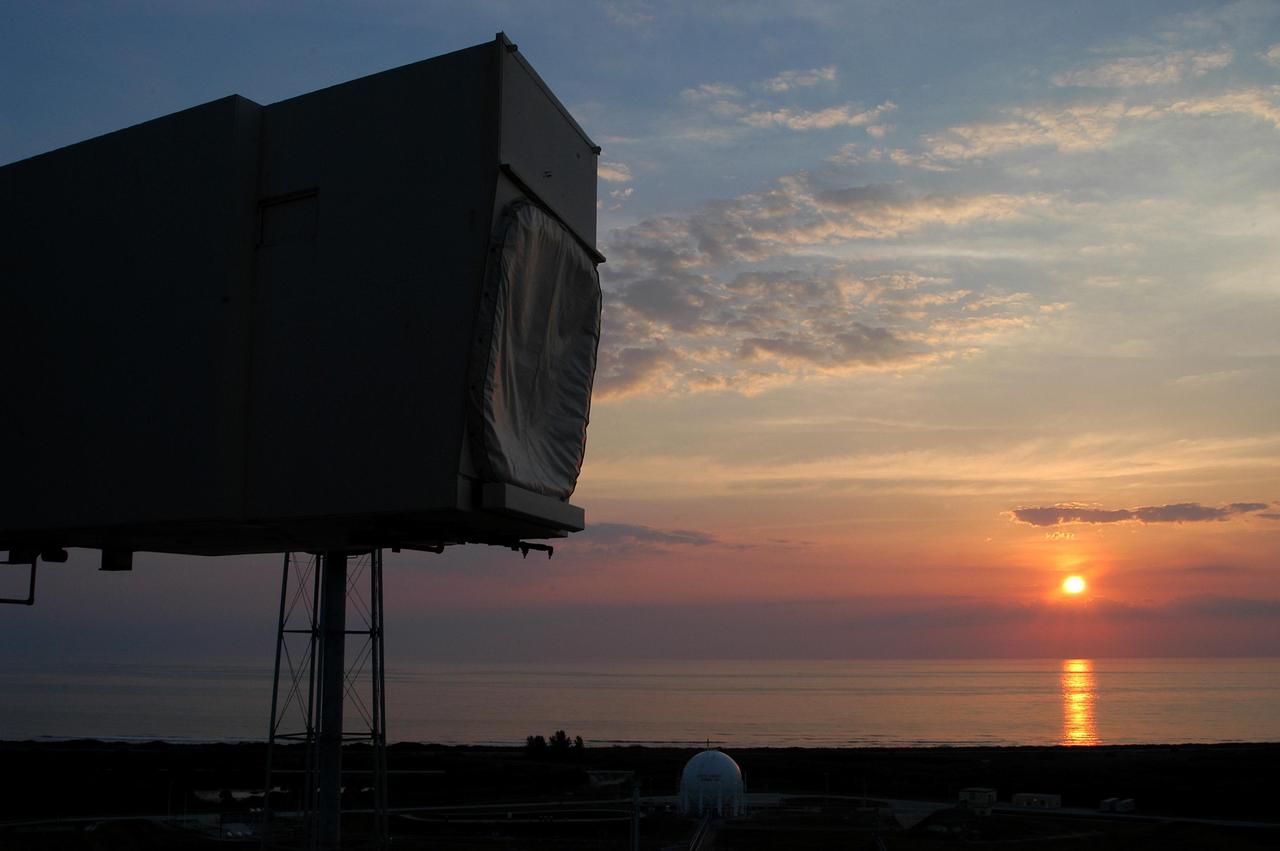
KENNEDY SPACE CENTER, FLA. -- A crimson and gold sunrise over the Central Florida coast begins illuminating Launch Pad 39A, where a water sound suppression test is to take place. This test is being conducted following the replacement of the six main system valves, which had been in place since the beginning of the Shuttle Program and had reached the end of their service life. Also, the hydraulic portion of the valve actuators has been redesigned and simplified to reduce maintenance costs. The sound suppression water system is installed on the launch pads to protect the orbiter and its payloads from damage by acoustical energy reflected from the MLP during launch. The system includes an elevated water tank with a capacity of 300,000 gallons. The tank is 290 feet high and stands on the northeast side of the Pad. The water is released just before the ignition of the orbiter’s three main engines and twin solid rocket boosters, and flows through parallel 7-foot-diameter pipes to the Pad area.
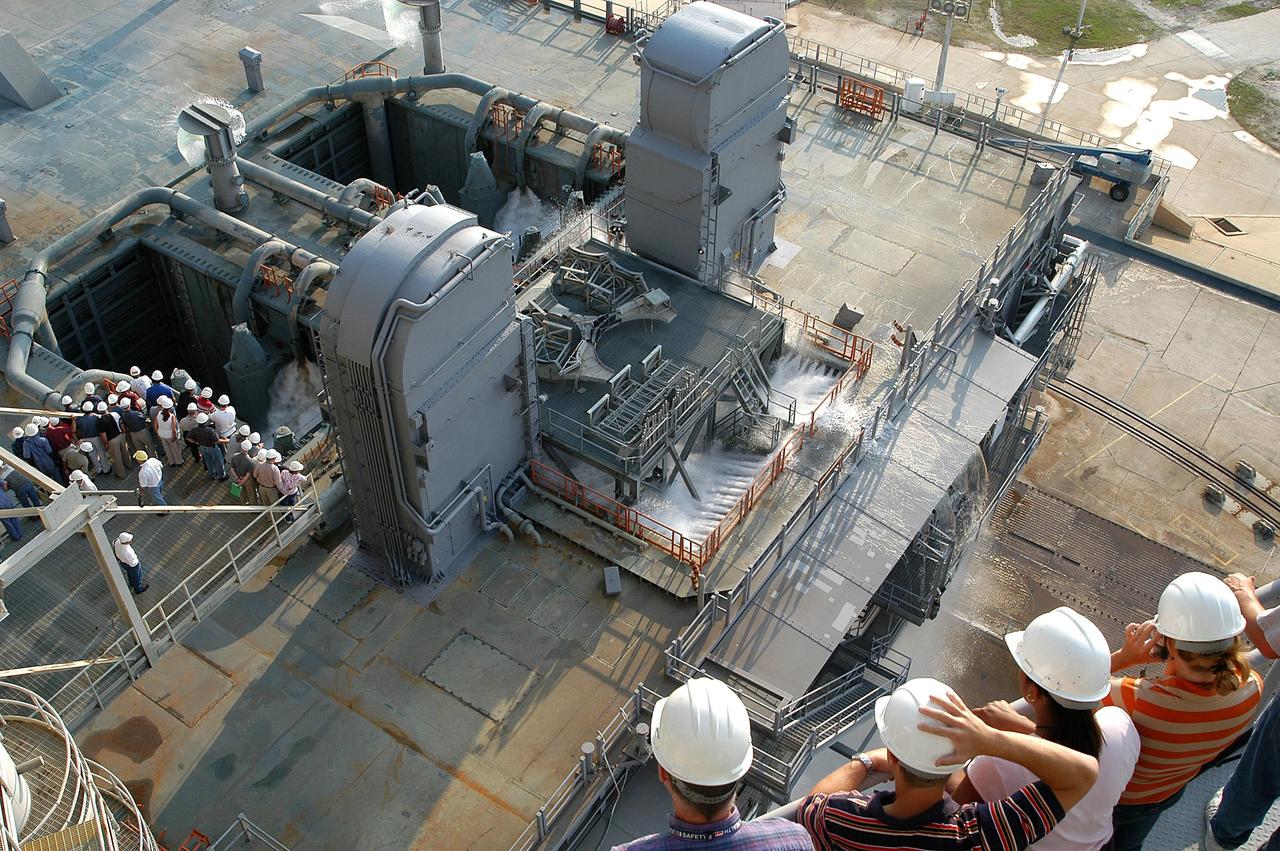
KENNEDY SPACE CENTER, FLA. -- From vantage points on the Fixed Service Structure (bottom right and left) on Launch Pad 39A, workers and the media look down upon the Mobile Launcher Platform (MLP) at the start of a water sound suppression test. This test is being conducted following the replacement of the six main system valves, which had been in place since the beginning of the Shuttle Program and had reached the end of their service life. Also, the hydraulic portion of the valve actuators has been redesigned and simplified to reduce maintenance costs. The sound suppression water system is installed on the launch pads to protect the orbiter and its payloads from damage by acoustical energy reflected from the MLP during launch. The system includes an elevated water tank with a capacity of 300,000 gallons. The tank is 290 feet high and stands on the northeast side of the Pad. The water is released just before the ignition of the orbiter's three main engines and twin solid rocket boosters, and flows through parallel 7-foot-diameter pipes to the Pad area.
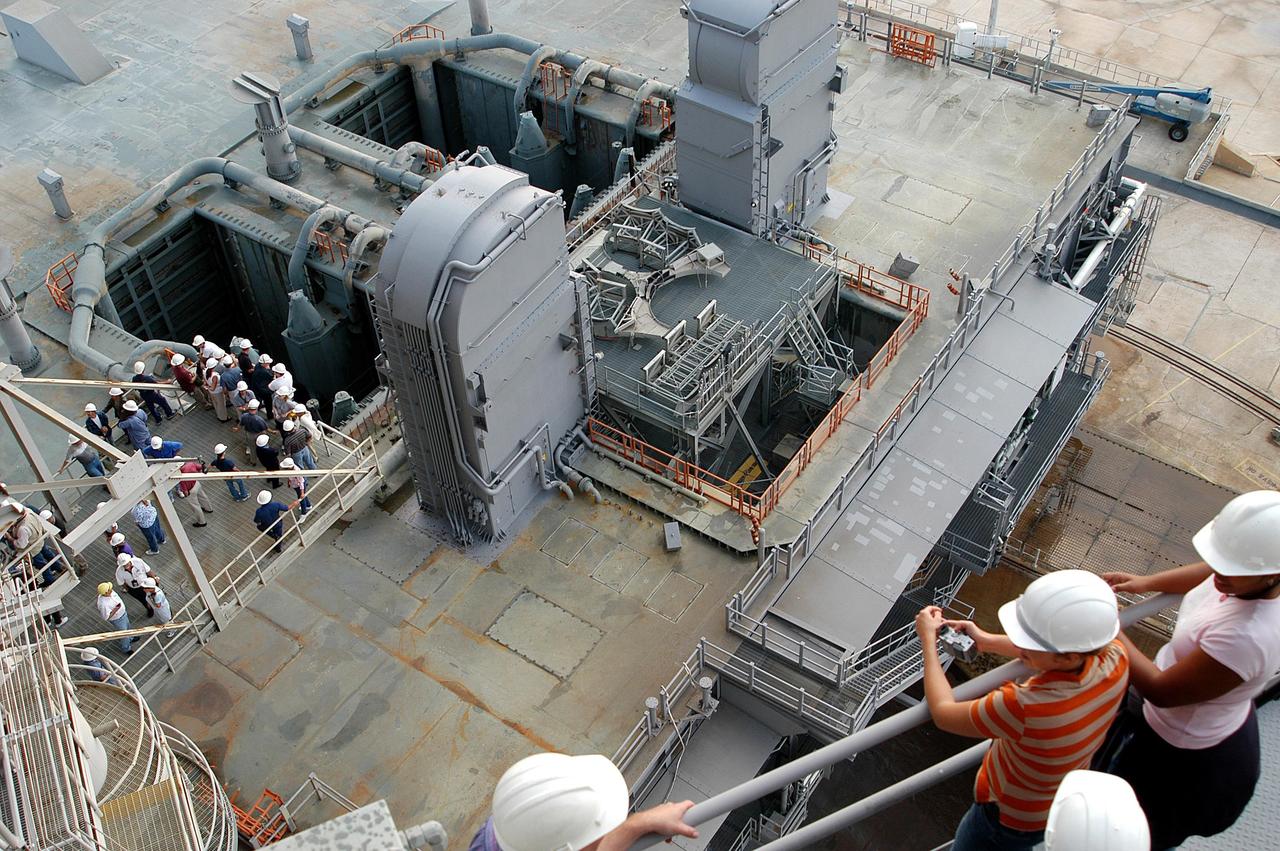
KENNEDY SPACE CENTER, FLA. -- From vantage points on the Fixed Service Structure (left) on Launch Pad 39A, workers and the media look down upon the Mobile Launcher Platform (MLP) waiting for the start of a water sound suppression test. This test is being conducted following the replacement of the six main system valves, which had been in place since the beginning of the Shuttle Program and had reached the end of their service life. Also, the hydraulic portion of the valve actuators has been redesigned and simplified to reduce maintenance costs. The sound suppression water system is installed on the launch pads to protect the orbiter and its payloads from damage by acoustical energy reflected from the MLP during launch. The system includes an elevated water tank with a capacity of 300,000 gallons. The tank is 290 feet high and stands on the northeast side of the Pad. The water is released just before the ignition of the orbiter's three main engines and twin solid rocket boosters, and flows through parallel 7-foot-diameter pipes to the Pad area.
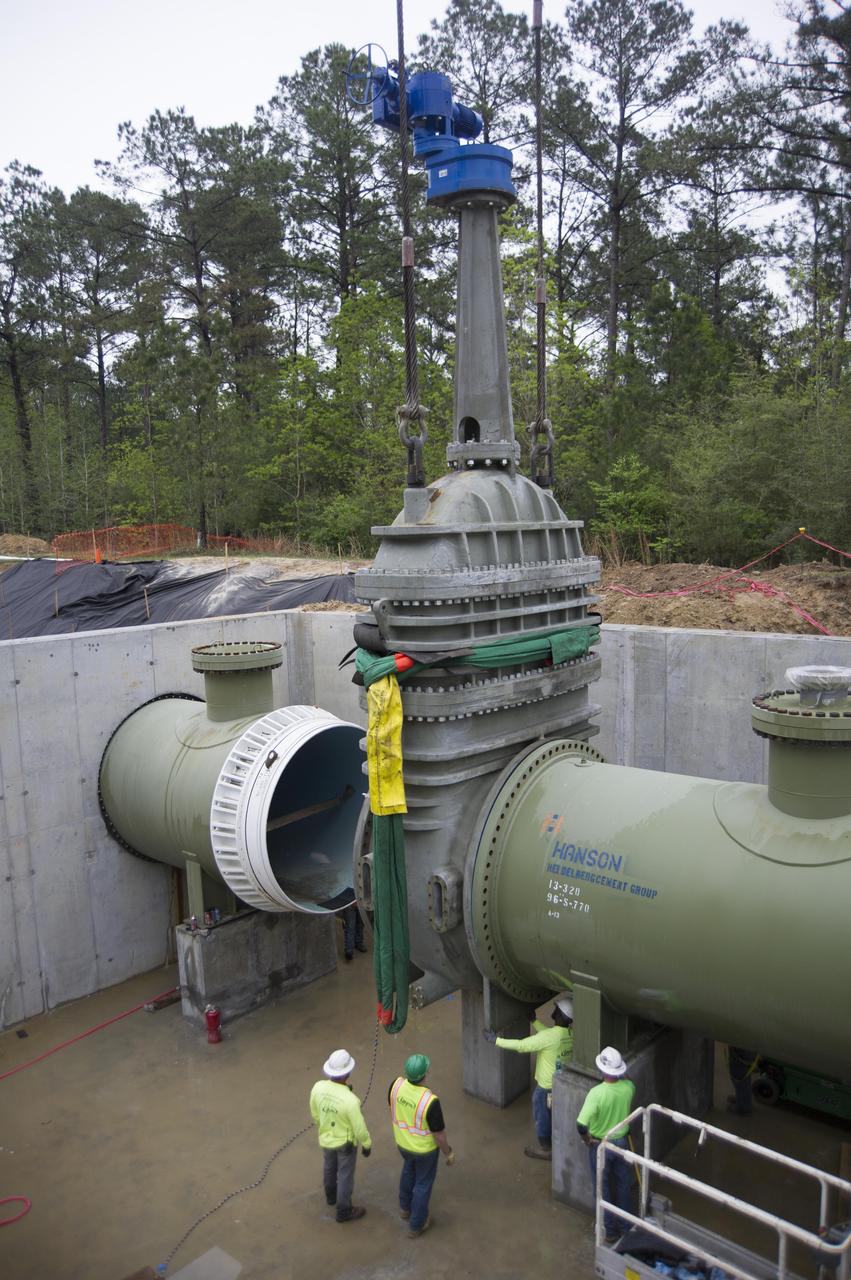
Stennis Space Center employees install a 96-inch valve during a recent upgrade of the high-pressure industrial water system that serves the site’s large rocket engine test stands. The upgraded system has a capacity to flow 335,000 gallons of water a minute, which is a critical element for testing. At Stennis, engines are anchored in place on large test stands and fired just as they are during an actual space flight. The fire and exhaust from the test is redirected out of the stand by a large flame trench. A water deluge system directs thousands of gallons of water needed to cool the exhaust. Water also must be available for fire suppression in the event of a mishap. The new system supports RS-25 engine testing on the A-1 Test Stand, as well as testing of the core stage of NASA’s new Space Launch System on the B-2 Test Stand at Stennis.
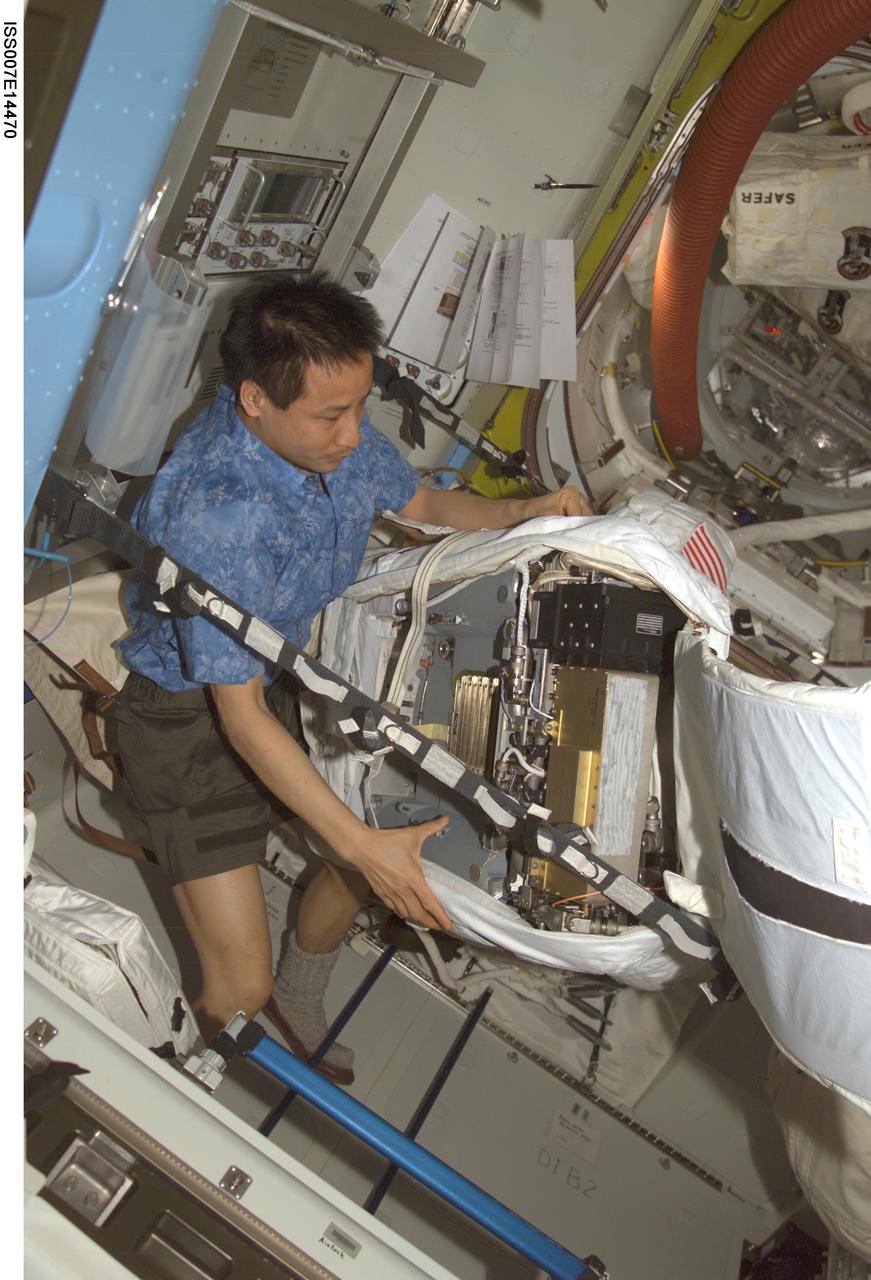
ISS007-E-14470 (5 September 2003) --- Astronaut Edward T. Lu, Expedition 7 NASA ISS science officer and flight engineer, performs routine maintenance on an Extravehicular Mobility Unit (EMU) space suit in the Quest airlock on the International Space Station (ISS). The work represents a mid-term checkout and included emptying and refilling the suit’s water tank and loops, cycling relief valves, checking sensors and collecting data, a leak check and running the suit’s fan for two hours to lubricate it.
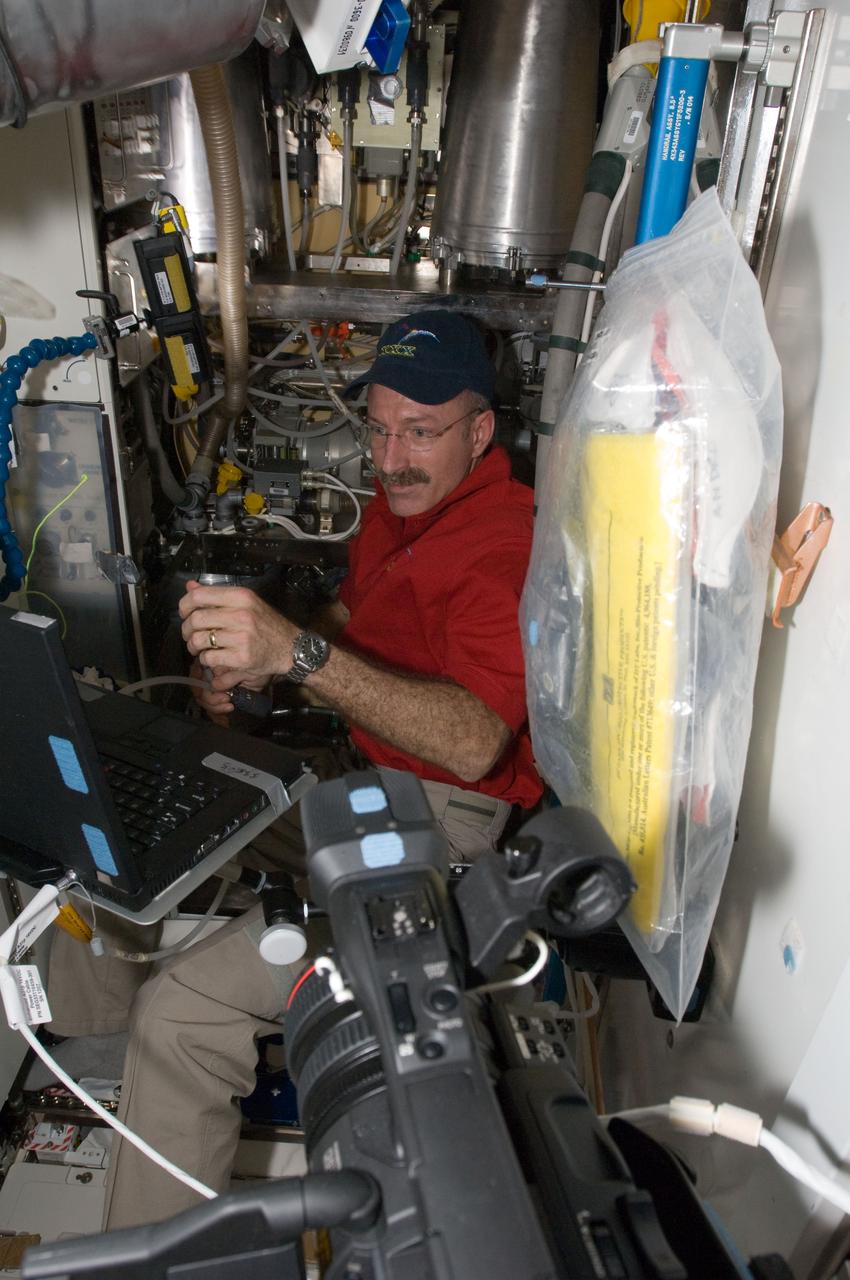
ISS030-E-032750 (11 Jan. 2012) --- NASA astronaut Dan Burbank, Expedition 30 flight commander, performs the Waste and Hygiene Compartment (WHC) yearly maintenance in the Tranquility node of the International Space Station. The maintenance included removing and replacing the urine hydraulic components which include urine lines, urine valve block and urine pressure sensors, and removing and replacing the Flush Water Tank Pressure Sensor.
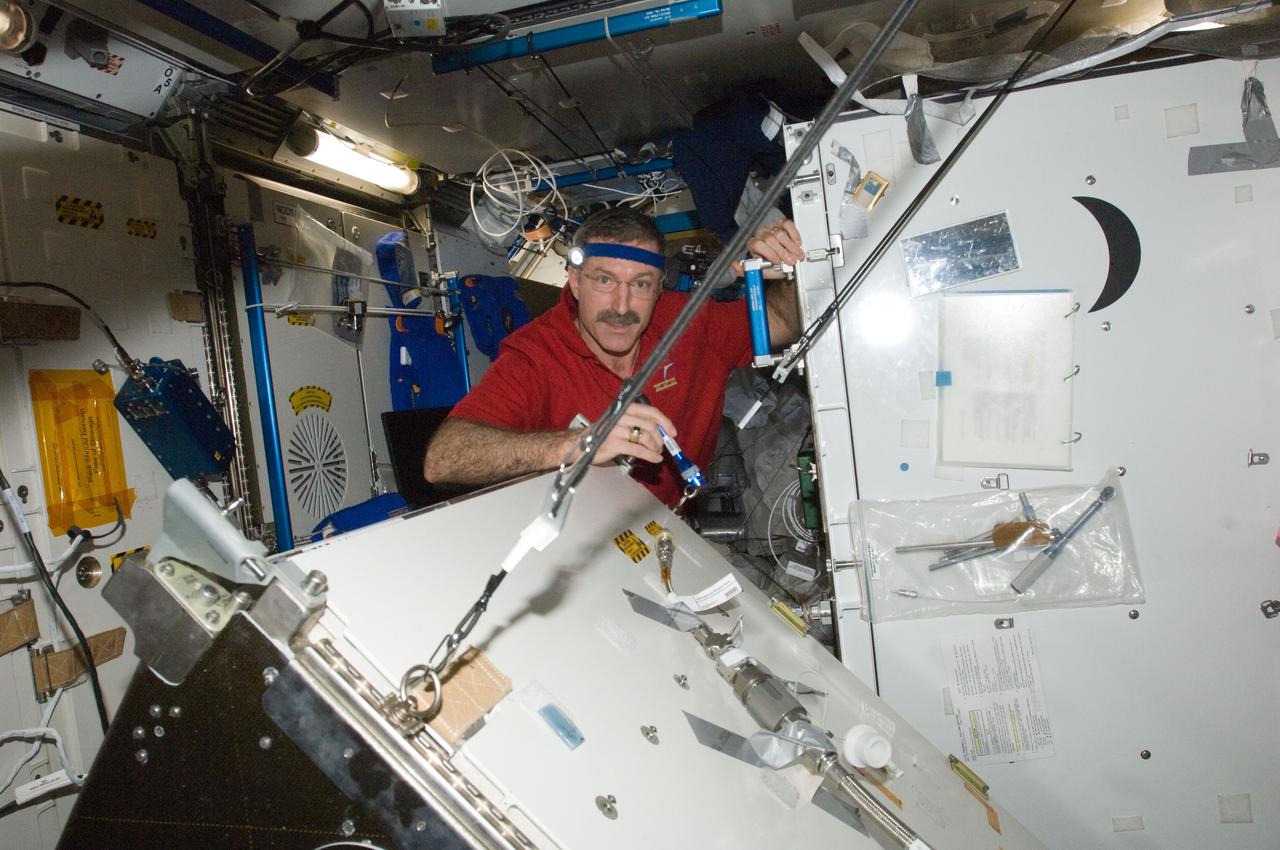
ISS030-E-128752 (8 March 2012) --- NASA astronaut Dan Burbank, Expedition 30 commander, performs part one of the Water Recovery System-1 (WRS-1) repair in the Tranquility node of the International Space Station. Burbank removed and replaced the failed Catalytic Reactor (CR), and installed a temporary filter kit between the new CR and the Microbial Check Valve (MCV) to support a system flush of the new Orbital Replacement Unit (ORU).
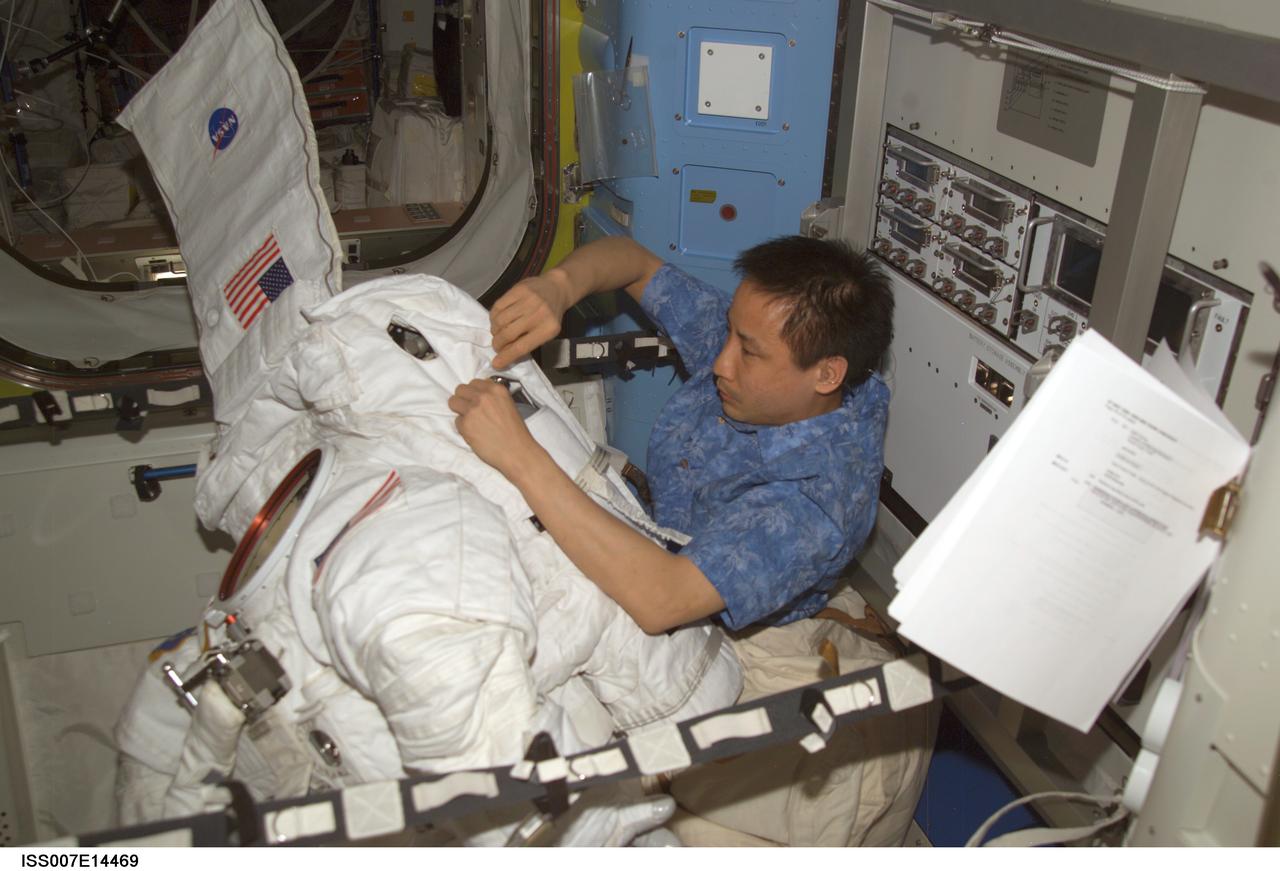
ISS007-E-14469 (5 September 2003) --- Astronaut Edward T. Lu, Expedition 7 NASA ISS science officer and flight engineer, performs routine maintenance on an Extravehicular Mobility Unit (EMU) space suit in the Quest airlock on the International Space Station (ISS). The work represents a mid-term checkout and included emptying and refilling the suit’s water tank and loops, cycling relief valves, checking sensors and collecting data, a leak check and running the suit’s fan for two hours to lubricate it.
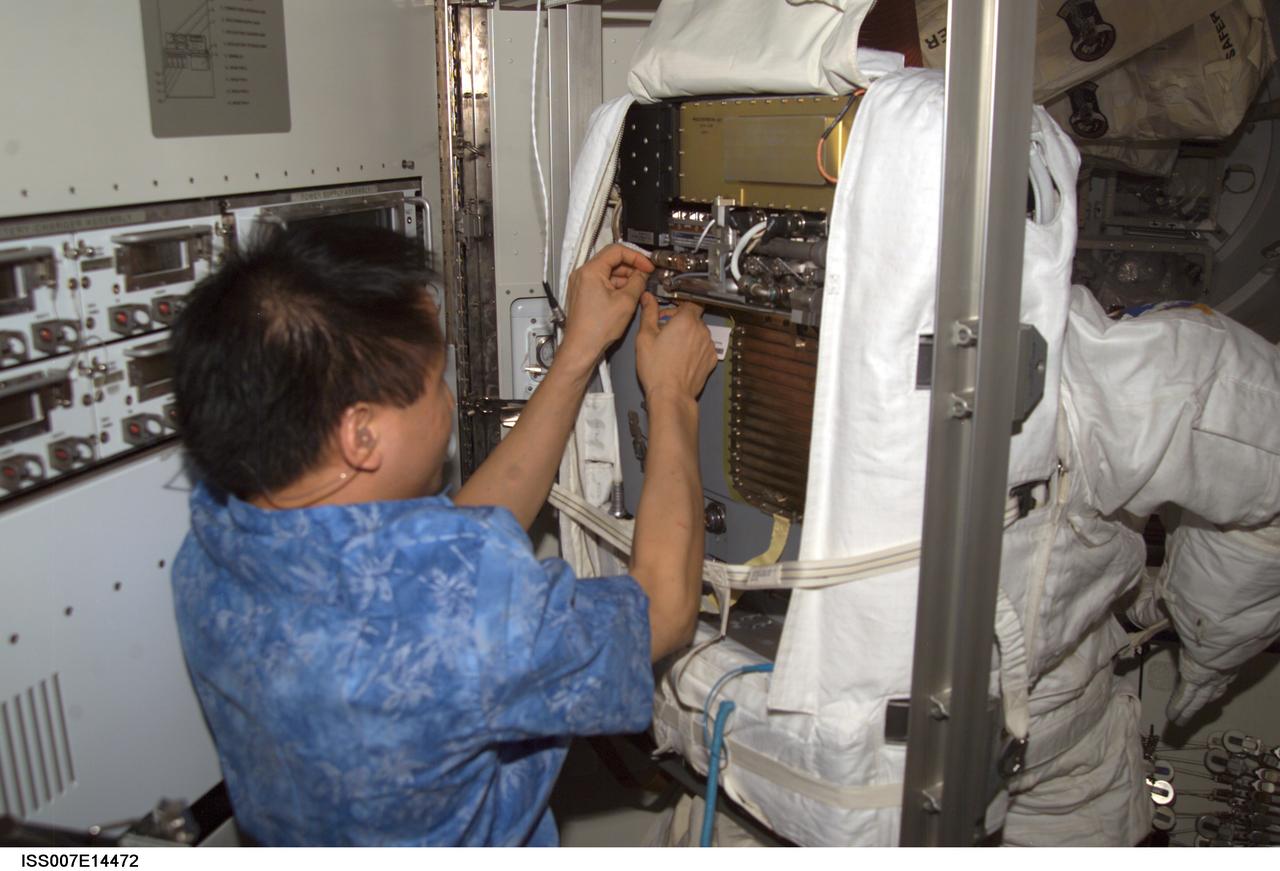
ISS007-E-14472 (5 September 2003) --- Astronaut Edward T. Lu, Expedition 7 NASA ISS science officer and flight engineer, performs routine maintenance on an Extravehicular Mobility Unit (EMU) space suit in the Quest airlock on the International Space Station (ISS). The work represents a mid-term checkout and included emptying and refilling the suit’s water tank and loops, cycling relief valves, checking sensors and collecting data, a leak check and running the suit’s fan for two hours to lubricate it.
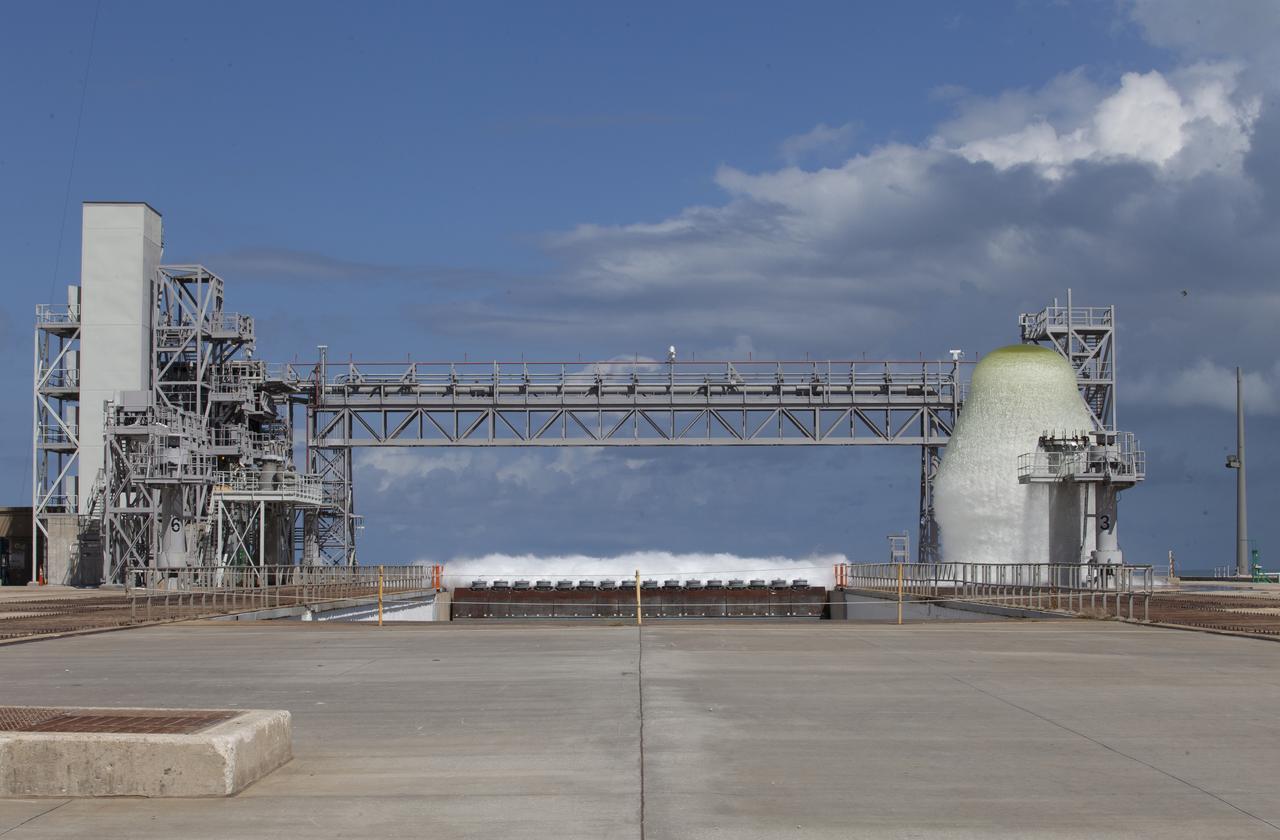
A flow test of the Ignition Overpressure Protection and Sound Suppression water deluge system is in progress at Launch Pad 39B at NASA's Kennedy Space Center in Florida, on Oct. 15, 2018. At peak flow, the water will reach about 100 feet in the air above the pad surface. It will flow at high speed from a holding tank through new and modified piping and valves, the flame trench, flame deflector nozzles and mobile launcher interface risers. The testing is part of Exploration Ground System's preparation for the new Space Launch System rocket. Modifications were made to the pad after a previous wet flow test, increasing the performance of the system. During the launch of Exploration Mission-1 and subsequent missions, this water deluge system will release about 450,000 gallons of water across the mobile launcher and Flame Deflector to reduce the extreme heat and energy generated by the rocket during ignition and liftoff.
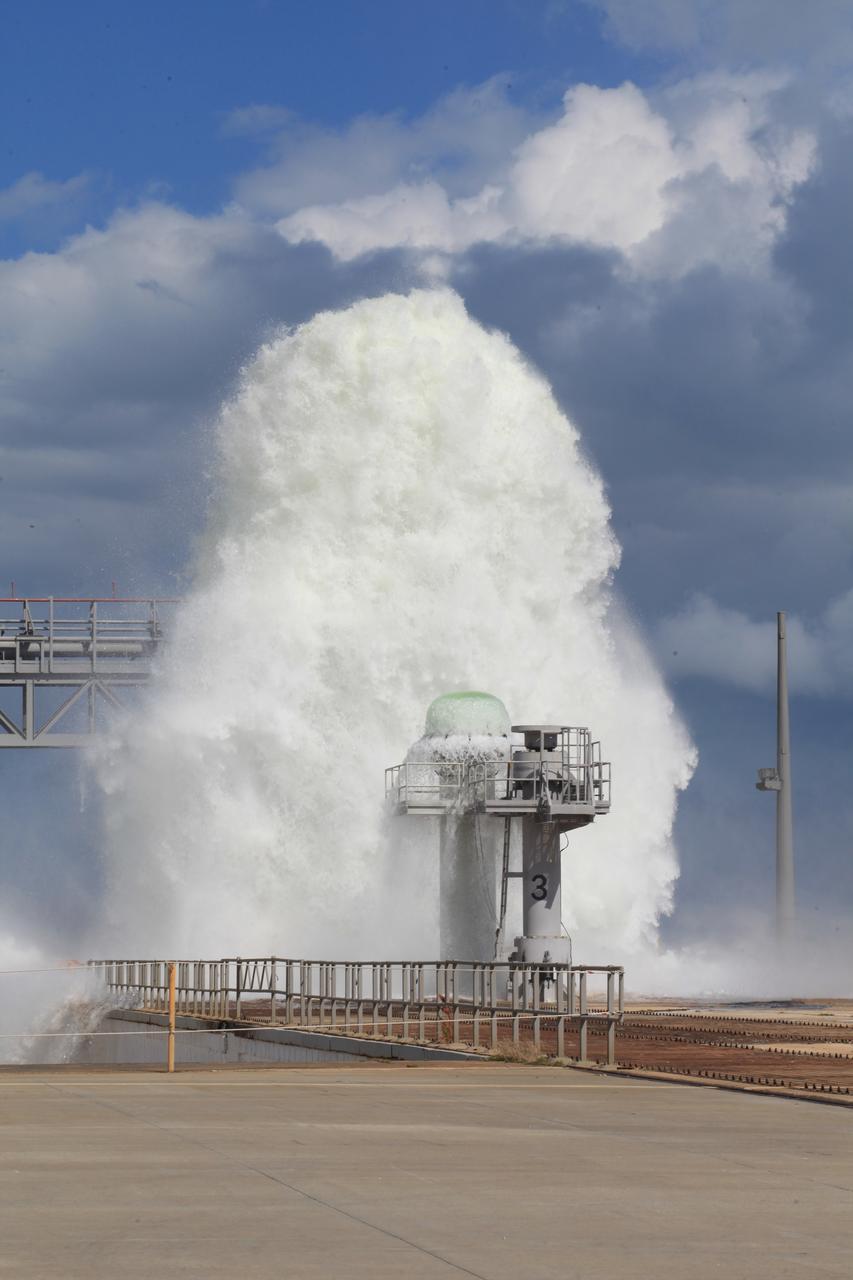
A flow test of the Ignition Overpressure Protection and Sound Suppression water deluge system is in progress at Launch Pad 39B at NASA's Kennedy Space Center in Florida, on Oct. 15, 2018. At peak flow, the water reaches about 100 feet in the air above the pad surface. It flows at high speed from a holding tank through new and modified piping and valves, the flame trench, flame deflector nozzles and mobile launcher interface risers. The testing is part of Exploration Ground System's preparation for the new Space Launch System rocket. Modifications were made to the pad after a previous wet flow test, increasing the performance of the system. During the launch of Exploration Mission-1 and subsequent missions, this water deluge system will release about 450,000 gallons of water across the mobile launcher and Flame Deflector to reduce the extreme heat and energy generated by the rocket during ignition and liftoff.

A flow test of the Ignition Overpressure Protection and Sound Suppression water deluge system is in progress at Launch Pad 39B at NASA's Kennedy Space Center in Florida, on Oct. 15, 2018. At peak flow, the water reaches about 100 feet in the air above the pad surface. It flows at high speed from a holding tank through new and modified piping and valves, the flame trench, flame deflector nozzles and mobile launcher interface risers. The testing is part of Exploration Ground System's preparation for the new Space Launch System rocket. Modifications were made to the pad after a previous wet flow test, increasing the performance of the system. During the launch of Exploration Mission-1 and subsequent missions, this water deluge system will release about 450,000 gallons of water across the mobile launcher and Flame Deflector to reduce the extreme heat and energy generated by the rocket during ignition and liftoff.

A flow test of the Ignition Overpressure Protection and Sound Suppression water deluge system is in progress at Launch Pad 39B at NASA's Kennedy Space Center in Florida, on Oct. 15, 2018. At peak flow, the water reaches about 100 feet in the air above the pad surface. It flows at high speed from a holding tank through new and modified piping and valves, the flame trench, flame deflector nozzles and mobile launcher interface risers. The testing is part of Exploration Ground System's preparation for the new Space Launch System rocket. Modifications were made to the pad after a previous wet flow test, increasing the performance of the system. During the launch of Exploration Mission-1 and subsequent missions, this water deluge system will release about 450,000 gallons of water across the mobile launcher and Flame Deflector to reduce the extreme heat and energy generated by the rocket during ignition and liftoff.
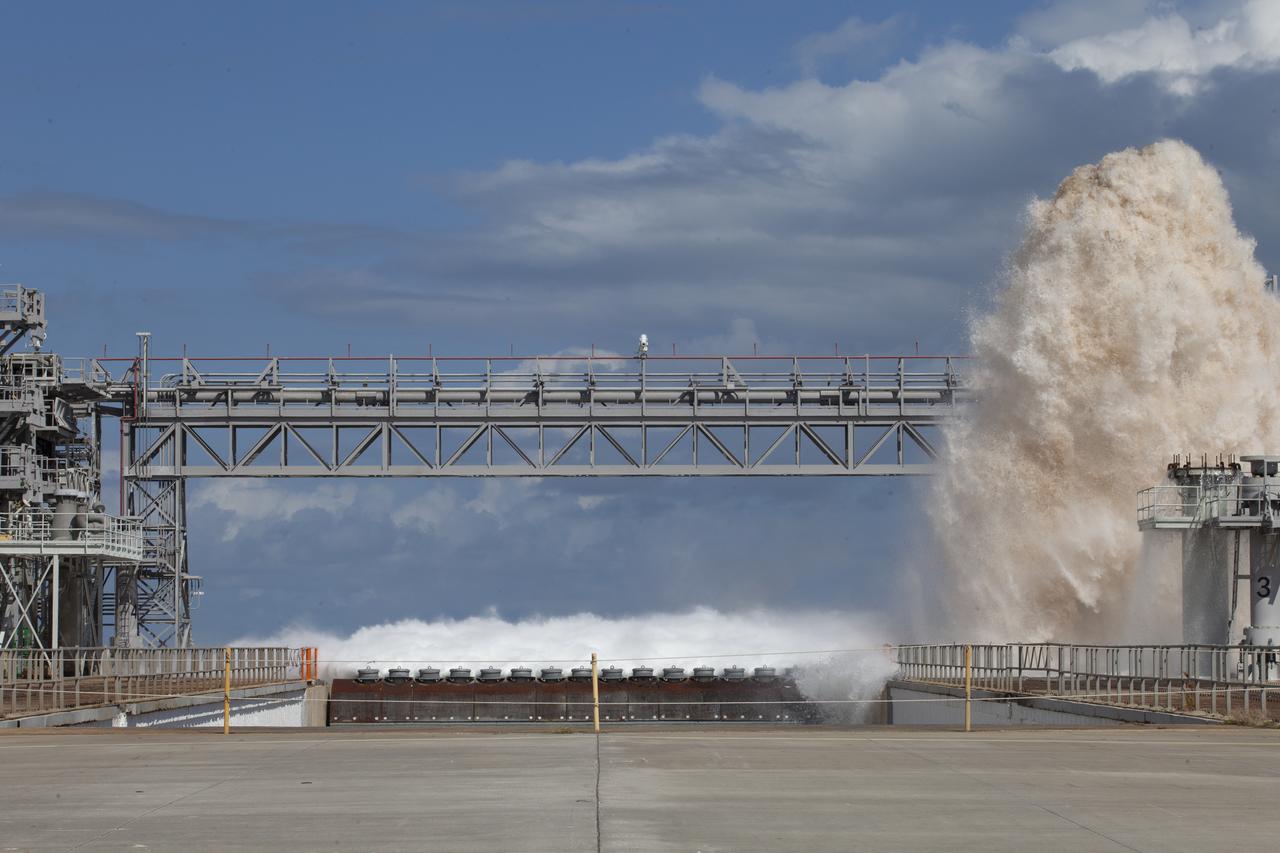
A flow test of the Ignition Overpressure Protection and Sound Suppression water deluge system is in progress at Launch Pad 39B at NASA's Kennedy Space Center in Florida, on Oct. 15, 2018. At peak flow, the water reaches about 100 feet in the air above the pad surface. It flows at high speed from a holding tank through new and modified piping and valves, the flame trench, flame deflector nozzles and mobile launcher interface risers. The testing is part of Exploration Ground System's preparation for the new Space Launch System rocket. Modifications were made to the pad after a previous wet flow test, increasing the performance of the system. During the launch of Exploration Mission-1 and subsequent missions, this water deluge system will release about 450,000 gallons of water across the mobile launcher and Flame Deflector to reduce the extreme heat and energy generated by the rocket during ignition and liftoff.

A flow test of the Ignition Overpressure Protection and Sound Suppression water deluge system is in progress at Launch Pad 39B at NASA's Kennedy Space Center in Florida, on Oct. 15, 2018. At peak flow, the water reaches about 100 feet in the air above the pad surface. It flows at high speed from a holding tank through new and modified piping and valves, the flame trench, flame deflector nozzles and mobile launcher interface risers. The testing is part of Exploration Ground System's preparation for the new Space Launch System rocket. Modifications were made to the pad after a previous wet flow test, increasing the performance of the system. During the launch of Exploration Mission-1 and subsequent missions, this water deluge system will release about 450,000 gallons of water across the mobile launcher and Flame Deflector to reduce the extreme heat and energy generated by the rocket during ignition and liftoff.
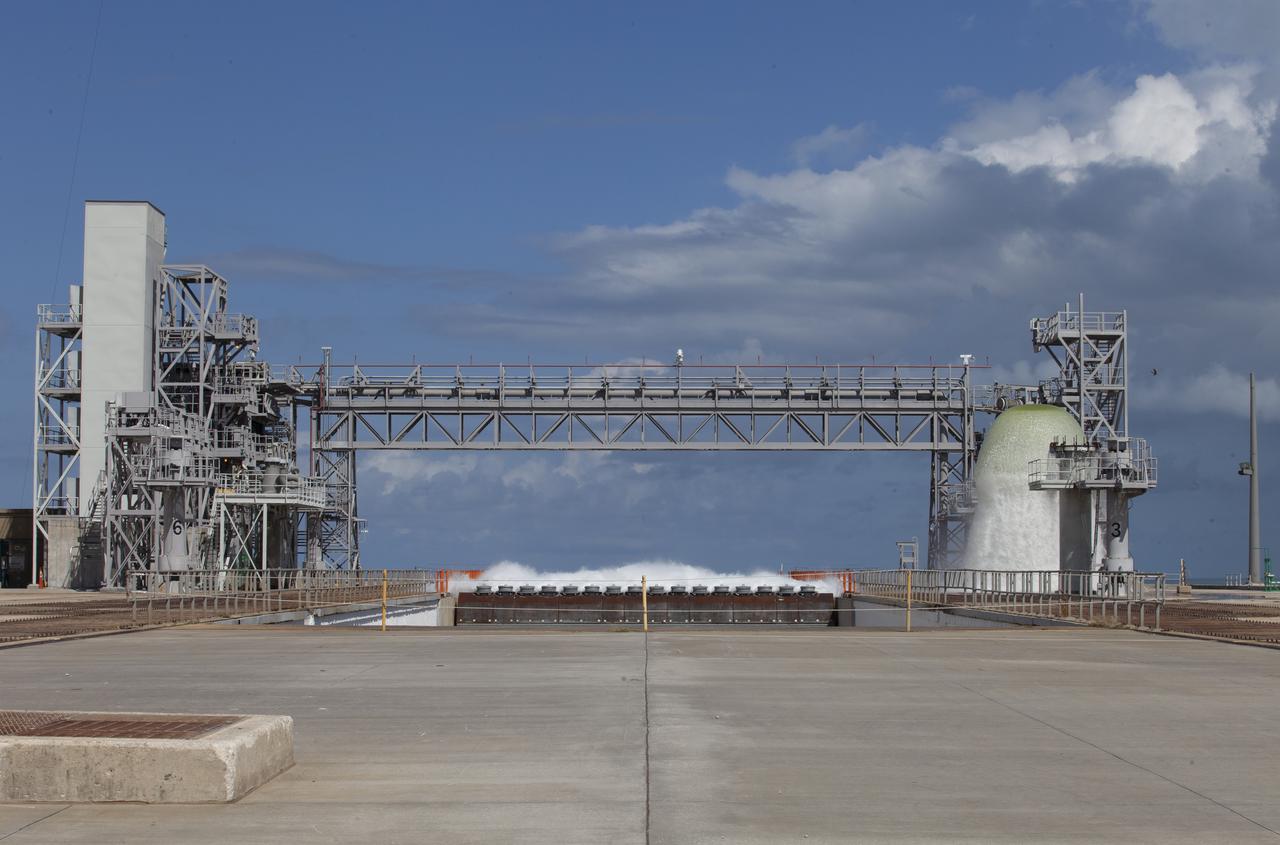
A flow test of the Ignition Overpressure Protection and Sound Suppression water deluge system begins at Launch Pad 39B at NASA's Kennedy Space Center in Florida, on Oct. 15, 2018. At peak flow, the water will reach about 100 feet in the air above the pad surface. It will flow at high speed from a holding tank through new and modified piping and valves, the flame trench, flame deflector nozzles and mobile launcher interface risers. The testing is part of Exploration Ground System's preparation for the new Space Launch System rocket. Modifications were made to the pad after a previous wet flow test, increasing the performance of the system. During the launch of Exploration Mission-1 and subsequent missions, this water deluge system will release about 450,000 gallons of water across the mobile launcher and Flame Deflector to reduce the extreme heat and energy generated by the rocket during ignition and liftoff.

A flow test of the Ignition Overpressure Protection and Sound Suppression water deluge system is in progress at Launch Pad 39B at NASA's Kennedy Space Center in Florida, on Oct. 15, 2018. At peak flow, the water reaches about 100 feet in the air above the pad surface. It flows at high speed from a holding tank through new and modified piping and valves, the flame trench, flame deflector nozzles and mobile launcher interface risers. The testing is part of Exploration Ground System's preparation for the new Space Launch System rocket. Modifications were made to the pad after a previous wet flow test, increasing the performance of the system. During the launch of Exploration Mission-1 and subsequent missions, this water deluge system will release about 450,000 gallons of water across the mobile launcher and Flame Deflector to reduce the extreme heat and energy generated by the rocket during ignition and liftoff.

About 450,000 gallons of water flow at high speed from a holding tank through new and modified piping and valves, the flame trench, flame deflector nozzles and mobile launcher interface risers during a wet flow test on May 24, 2018, at Launch Pad 39B at NASA's Kennedy Space Center in Florida. At peak flow, the water reached about 100 feet in the air above the pad surface. The test was performed by Exploration Ground Systems to confirm the performance of the Ignition Overpressure/Sound Suppression system. During launch of NASA's Space Launch System rocket and Orion spacecraft, the high-speed water flow will help protect the vehicle from the extreme acoustic and temperature environment during ignition and liftoff.
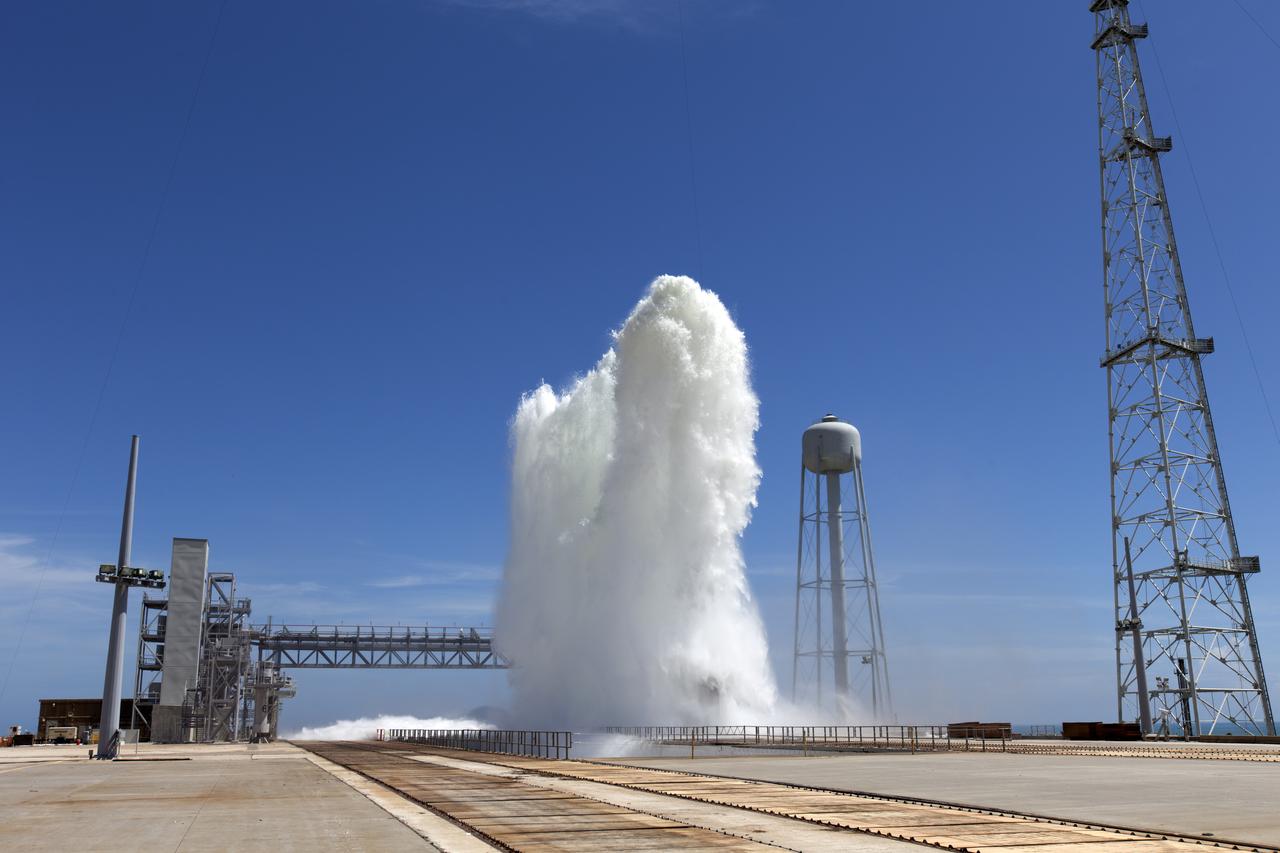
About 450,000 gallons of water flow at high speed from a holding tank through new and modified piping and valves, the flame trench, flame deflector nozzles and mobile launcher interface risers during a wet flow test on May 24, 2018, at Launch Pad 39B at NASA's Kennedy Space Center in Florida. At peak flow, the water reached about 100 feet in the air above the pad surface. The test was performed by Exploration Ground Systems to confirm the performance of the Ignition Overpressure/Sound Suppression system. During launch of NASA's Space Launch System rocket and Orion spacecraft, the high-speed water flow will help protect the vehicle from the extreme acoustic and temperature environment during ignition and liftoff.
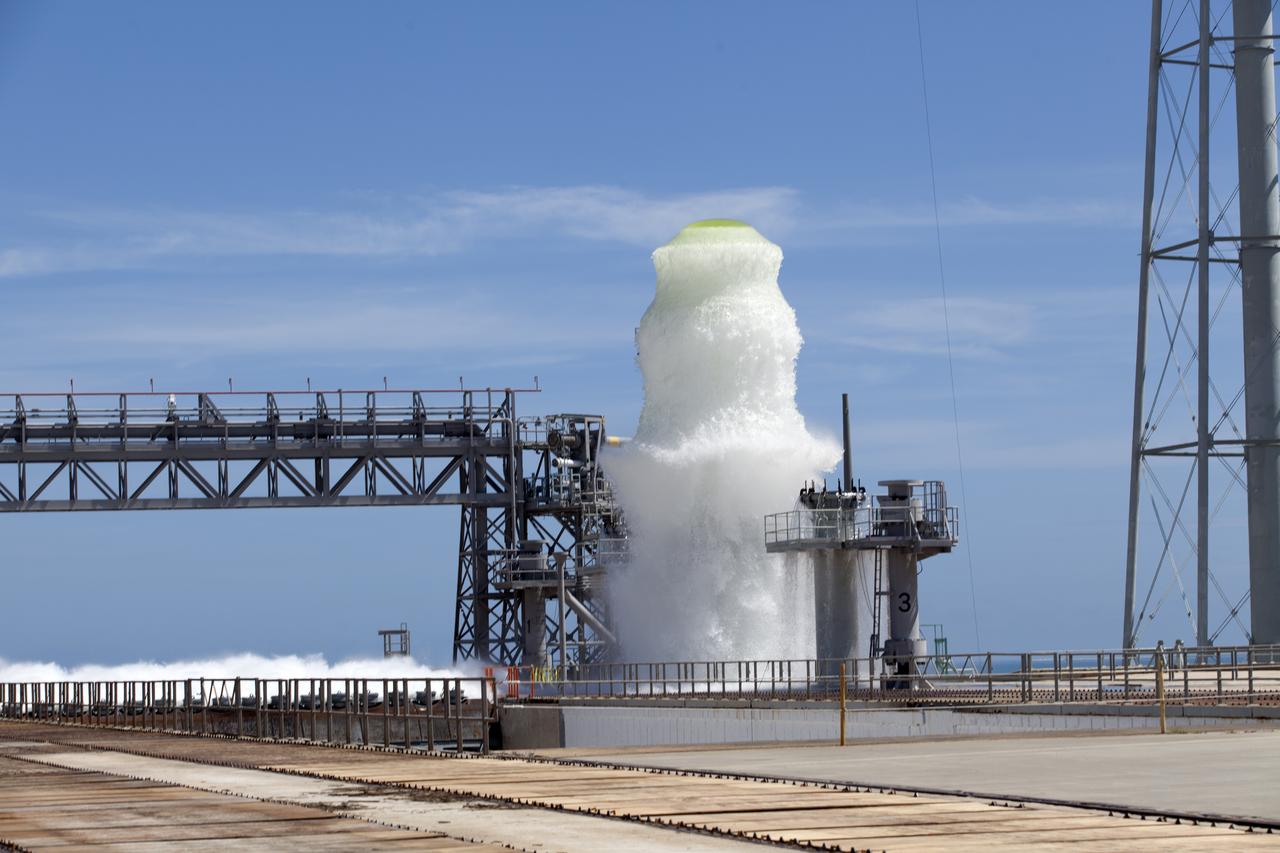
About 450,000 gallons of water flow at high speed from a holding tank through new and modified piping and valves, the flame trench, flame deflector nozzles and mobile launcher interface risers during a wet flow test on May 24, 2018, at Launch Pad 39B at NASA's Kennedy Space Center in Florida. At peak flow, the water reached about 100 feet in the air above the pad surface. The test was performed by Exploration Ground Systems to confirm the performance of the Ignition Overpressure/Sound Suppression system. During launch of NASA's Space Launch System rocket and Orion spacecraft, the high-speed water flow will help protect the vehicle from the extreme acoustic and temperature environment during ignition and liftoff.
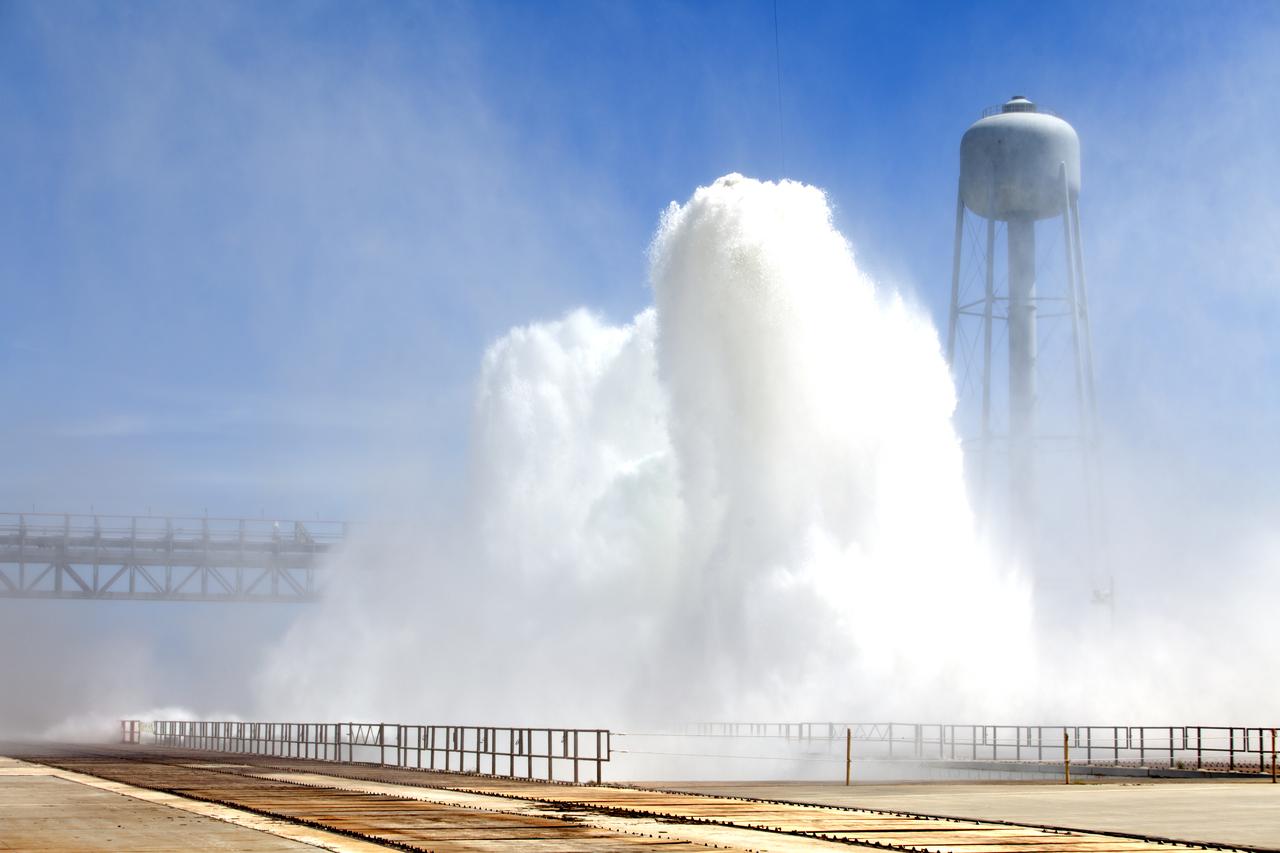
About 450,000 gallons of water flow at high speed from a holding tank through new and modified piping and valves, the flame trench, flame deflector nozzles and mobile launcher interface risers during a wet flow test on May 24, 2018, at Launch Pad 39B at NASA's Kennedy Space Center in Florida. At peak flow, the water reached about 100 feet in the air above the pad surface. The test was performed by Exploration Ground Systems to confirm the performance of the Ignition Overpressure/Sound Suppression system. During launch of NASA's Space Launch System rocket and Orion spacecraft, the high-speed water flow will help protect the vehicle from the extreme acoustic and temperature environment during ignition and liftoff.
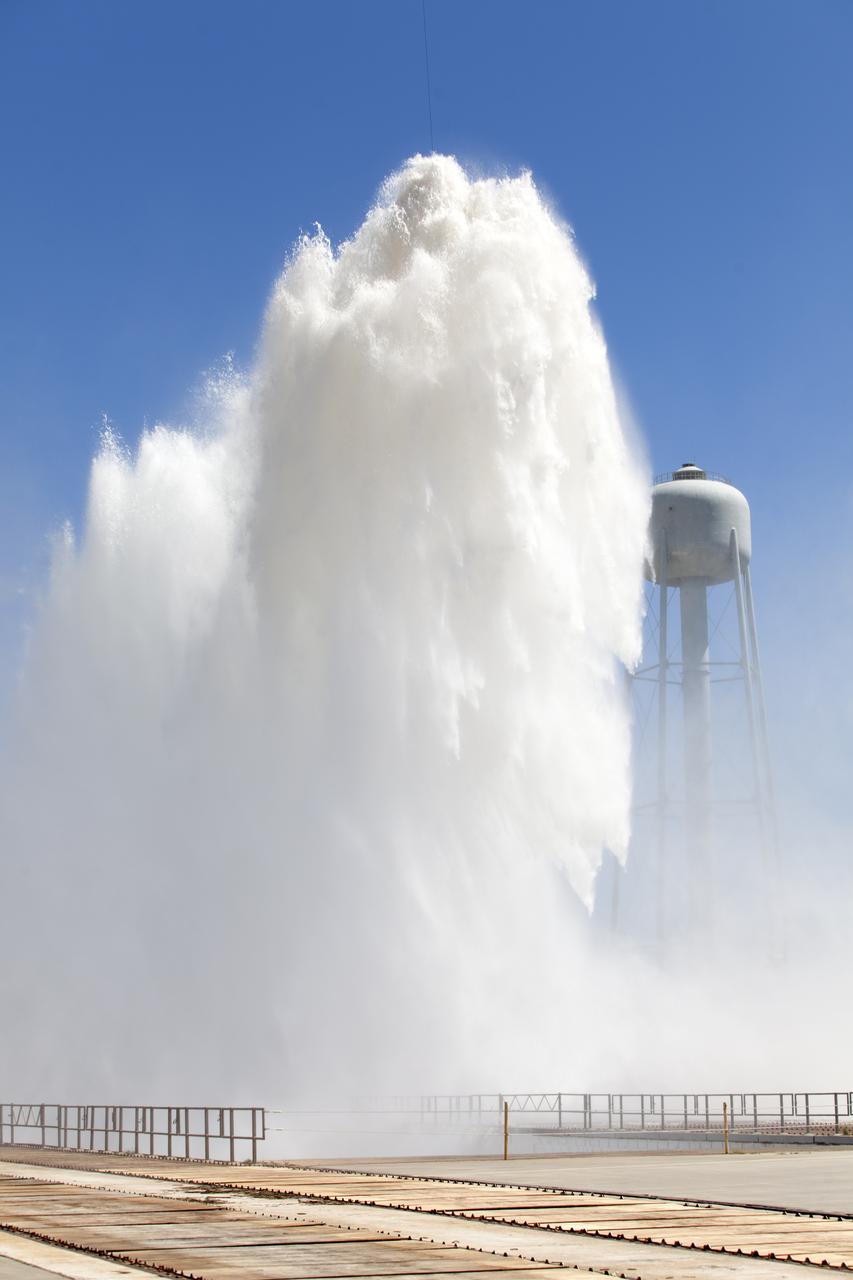
About 450,000 gallons of water flow at high speed from a holding tank through new and modified piping and valves, the flame trench, flame deflector nozzles and mobile launcher interface risers during a wet flow test on May 24, 2018, at Launch Pad 39B at NASA's Kennedy Space Center in Florida. At peak flow, the water reached about 100 feet in the air above the pad surface. The test was performed by Exploration Ground Systems to confirm the performance of the Ignition Overpressure/Sound Suppression system. During launch of NASA's Space Launch System rocket and Orion spacecraft, the high-speed water flow will help protect the vehicle from the extreme acoustic and temperature environment during ignition and liftoff.
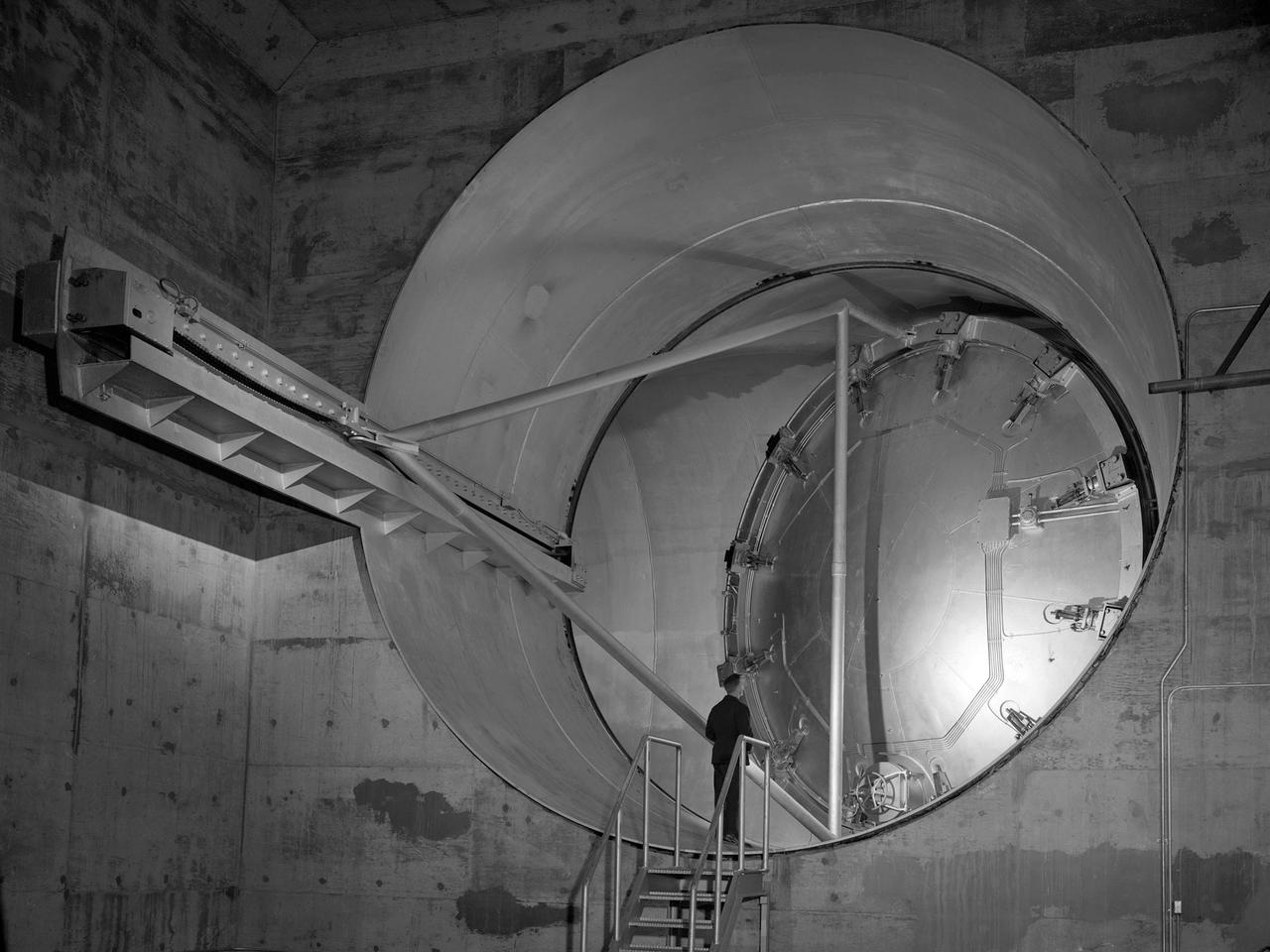
A 24-foot diameter swing valve is seen in an open position inside the new 10- by 10-Foot Supersonic Wind Tunnel at the National Advisory Committee for Aeronautics (NACA) Lewis Flight Propulsion Laboratory. The 10- by 10 was the most powerful propulsion wind tunnel in the nation. After over three years of construction the tunnel was ready to conduct its first tests in early 1956. The 10- by 10-foot tunnel was part of Congress’ Unitary Plan Act which coordinated wind tunnel construction at the NACA, Air Force, industry, and universities. The 10- by 10 was the largest of the three NACA tunnels built under the act. This large swinging valve is critical to the operation of the facility. In one position the valve seals off the tunnel exhaust, making the tunnel a closed circuit, which is used for aerodynamic testing of models. In its other position, the valve acts as a seal across the tunnel and leaves the tunnel exhaust open. This arrangement is used when engines are fired. The air going through the tunnel is taken from the atmosphere and returned to the atmosphere after one pass through the tunnel. Engines up to five feet in diameter can be tested in the 10- by 10-foot test section. Air flows up to Mach 3.5 can be fed through the test section by a 250,000-horsepower axial-flow compressor fan. The incoming air must be dehumidified and cooled so that the proper conditions are present for the test. A large air dryer with 1,890 tons of activated alumina soaks up 1.5 tons of water per minute from the air flow. A cooling apparatus equivalent to 250,000 household air conditioners is used to cool the air.
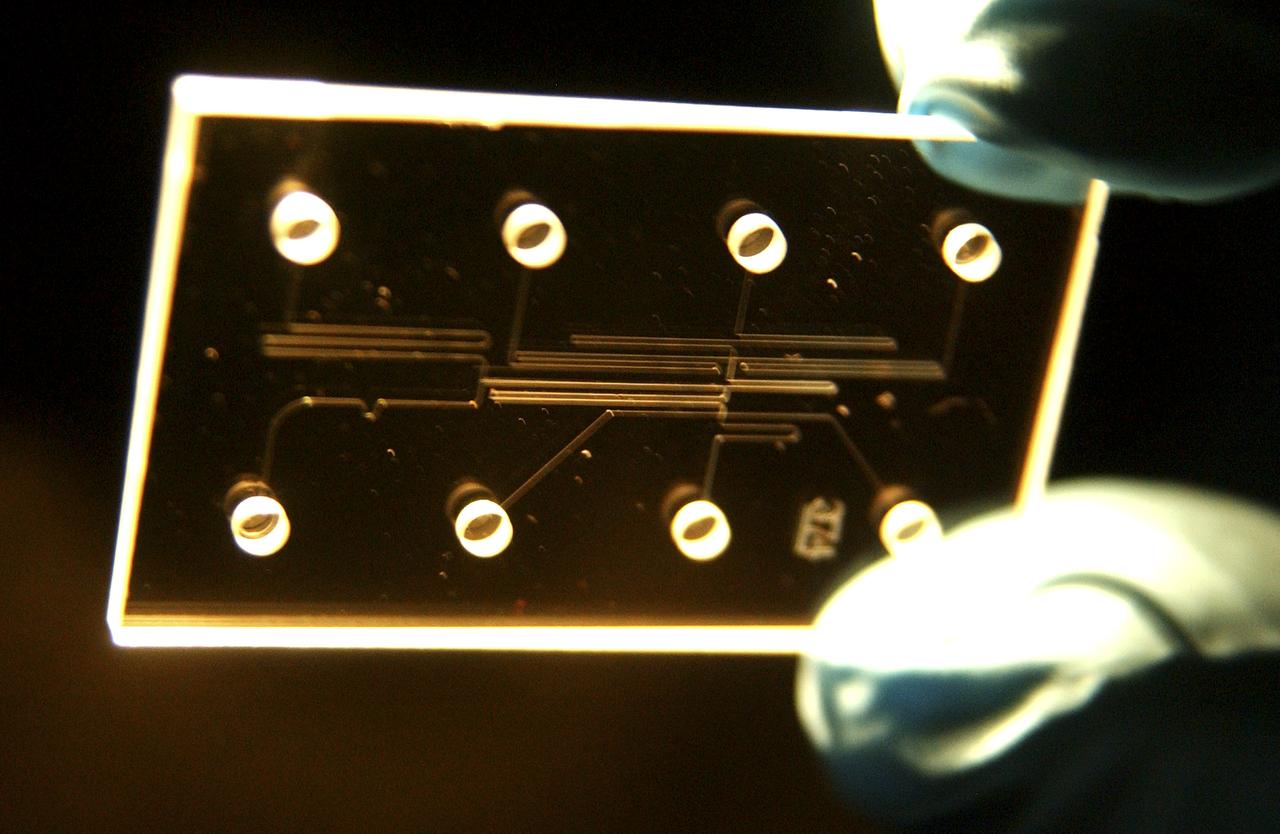
Labs on chips are manufactured in many shapes and sizes and can be used for numerous applications, from medical tests to water quality monitoring to detecting the signatures of life on other planets. The eight holes on this chip are actually ports that can be filled with fluids or chemicals. Tiny valves control the chemical processes by mixing fluids that move in the tiny channels that look like lines, connecting the ports. Scientists at NASA's Marshall Space Flight Center (MSFC) in Huntsville, Alabama designed this chip to grow biological crystals on the International Space Station. Through this research, they discovered that this technology is ideally suited for solving the challenges of the Vision for Space Exploration. For example, thousands of chips the size of dimes could be loaded on a Martian rover looking for biosignatures of past or present life. Other types of chips could be placed in handheld devices used to monitor microbes in water or to quickly conduct medical tests on astronauts. (NASA/MSFC/D.Stoffer)
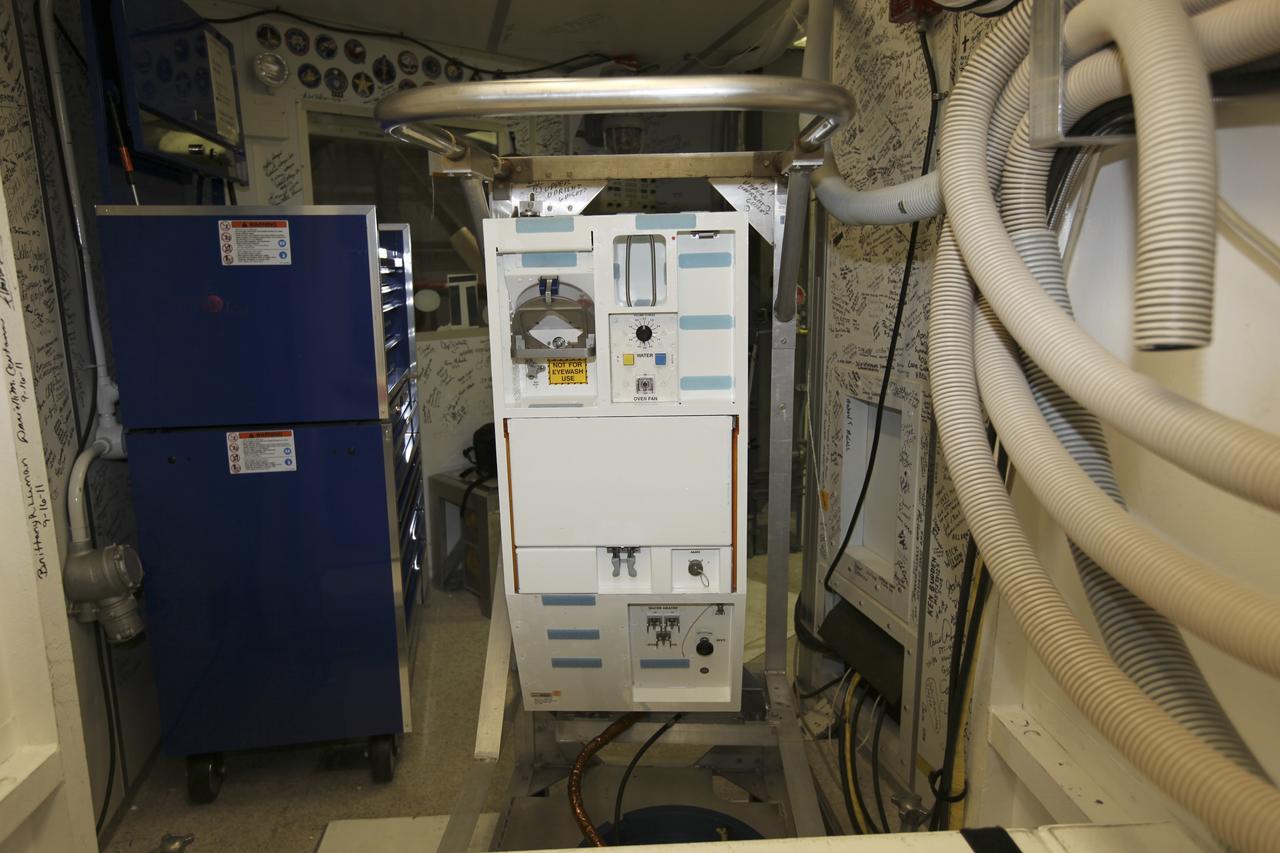
CAPE CANAVERAL, Fla. – Inside Orbiter Processing Facility-1 at NASA’s Kennedy Space Center in Florida, the shuttle orbiter repackaged galley (SORG) is being installed in the middeck of space shuttle Discovery. After Discovery’s final mission, STS-133, the SORG was removed and sent to a United Space Alliance lab in Houston where it was cleaned and deserviced. Water in the microbial check valve and the orbiter water system was drained and dried. The SORG was returned to Kennedy Space Center. The work is part of the Space Shuttle Program’s transition and retirement processing of shuttle Discovery, which is being prepared for display at Smithsonian’s National Air and Space Museum, Steven F. Udvar-Hazy Center in Chantilly, Va. For more information, visit http://www.nasa.gov/shuttle. Photo credit: NASA/Dimitri Gerondidakis
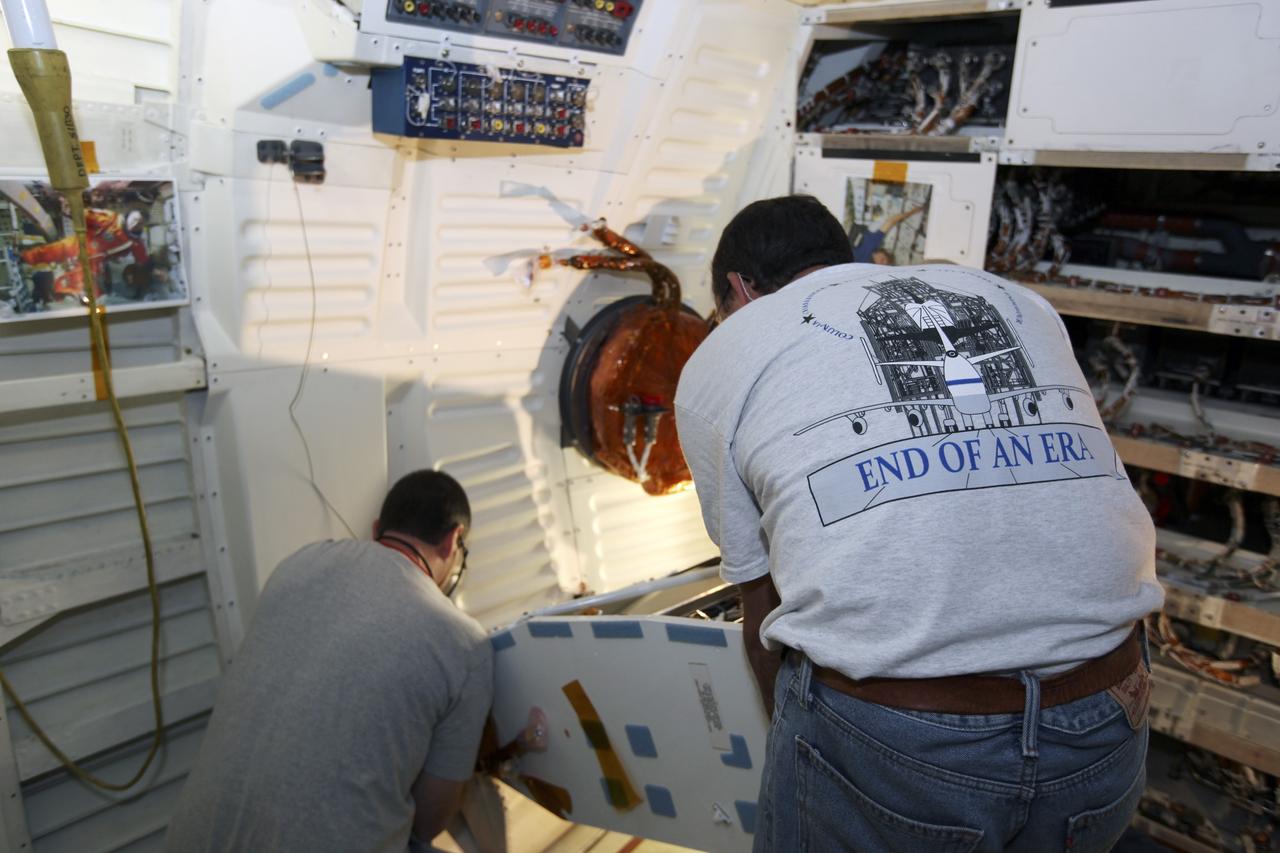
CAPE CANAVERAL, Fla. – Inside Orbiter Processing Facility-1 at NASA’s Kennedy Space Center in Florida, technicians prepare to install the shuttle orbiter repackaged galley (SORG) in the middeck of space shuttle Discovery. After Discovery’s final mission, STS-133, the SORG was removed and sent to a United Space Alliance lab in Houston where it was cleaned and deserviced. Water in the microbial check valve and the orbiter water system was drained and dried. The SORG was returned to Kennedy Space Center. The work is part of the Space Shuttle Program’s transition and retirement processing of shuttle Discovery, which is being prepared for display at Smithsonian’s National Air and Space Museum, Steven F. Udvar-Hazy Center in Chantilly, Va. For more information, visit http://www.nasa.gov/shuttle. Photo credit: NASA/Dimitri Gerondidakis
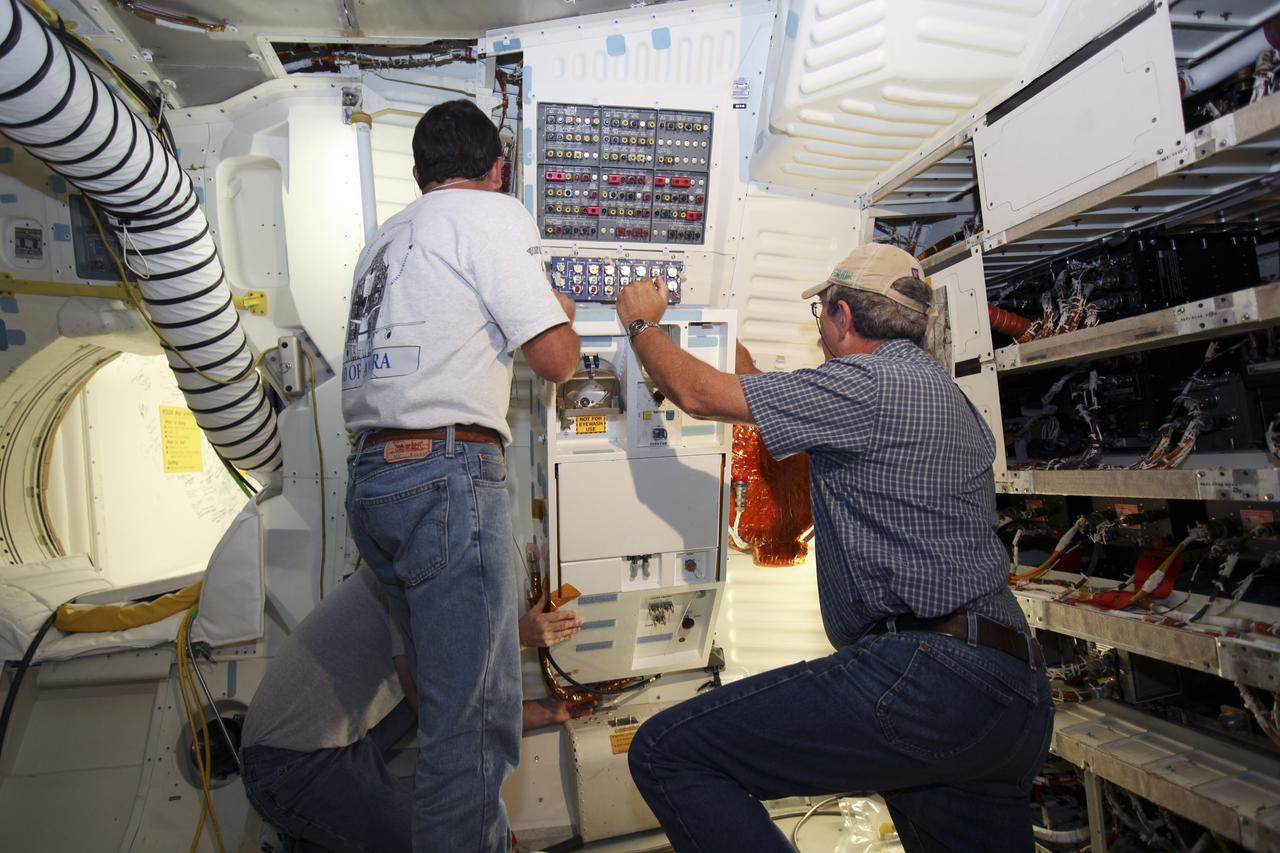
CAPE CANAVERAL, Fla. – Inside Orbiter Processing Facility-1 at NASA’s Kennedy Space Center in Florida, technicians install the shuttle orbiter repackaged galley (SORG) in the middeck of space shuttle Discovery. After Discovery’s final mission, STS-133, the SORG was removed and sent to a United Space Alliance lab in Houston where it was cleaned and deserviced. Water in the microbial check valve and the orbiter water system was drained and dried. The SORG was returned to Kennedy Space Center. The work is part of the Space Shuttle Program’s transition and retirement processing of shuttle Discovery, which is being prepared for display at Smithsonian’s National Air and Space Museum, Steven F. Udvar-Hazy Center in Chantilly, Va. For more information, visit http://www.nasa.gov/shuttle. Photo credit: NASA/Dimitri Gerondidakis
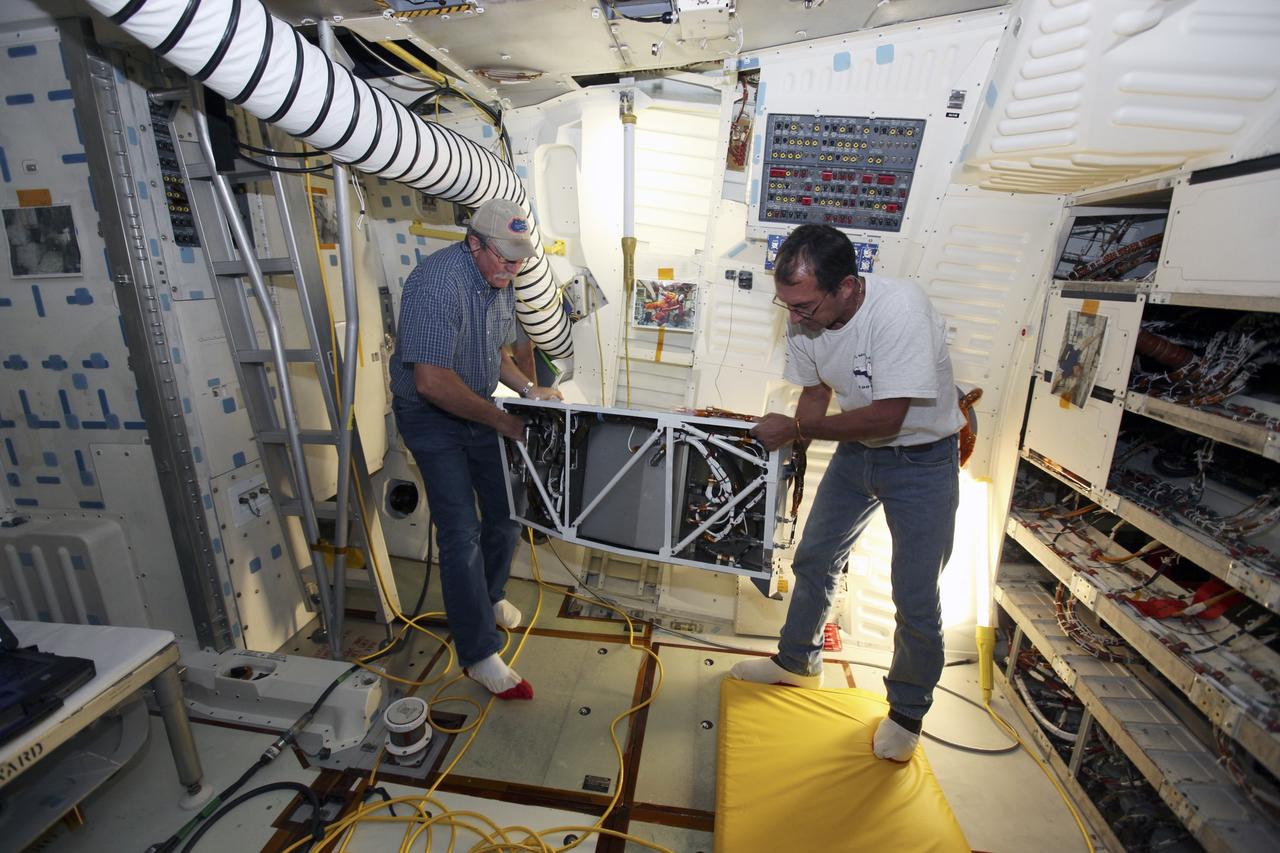
CAPE CANAVERAL, Fla. – Inside Orbiter Processing Facility-1 at NASA’s Kennedy Space Center in Florida, technicians prepare to install the shuttle orbiter repackaged galley (SORG) in the middeck of space shuttle Discovery. After Discovery’s final mission, STS-133, the SORG was removed and sent to a United Space Alliance lab in Houston where it was cleaned and deserviced. Water in the microbial check valve and the orbiter water system was drained and dried. The SORG was returned to Kennedy Space Center. The work is part of the Space Shuttle Program’s transition and retirement processing of shuttle Discovery, which is being prepared for display at Smithsonian’s National Air and Space Museum, Steven F. Udvar-Hazy Center in Chantilly, Va. For more information, visit http://www.nasa.gov/shuttle. Photo credit: NASA/Dimitri Gerondidakis
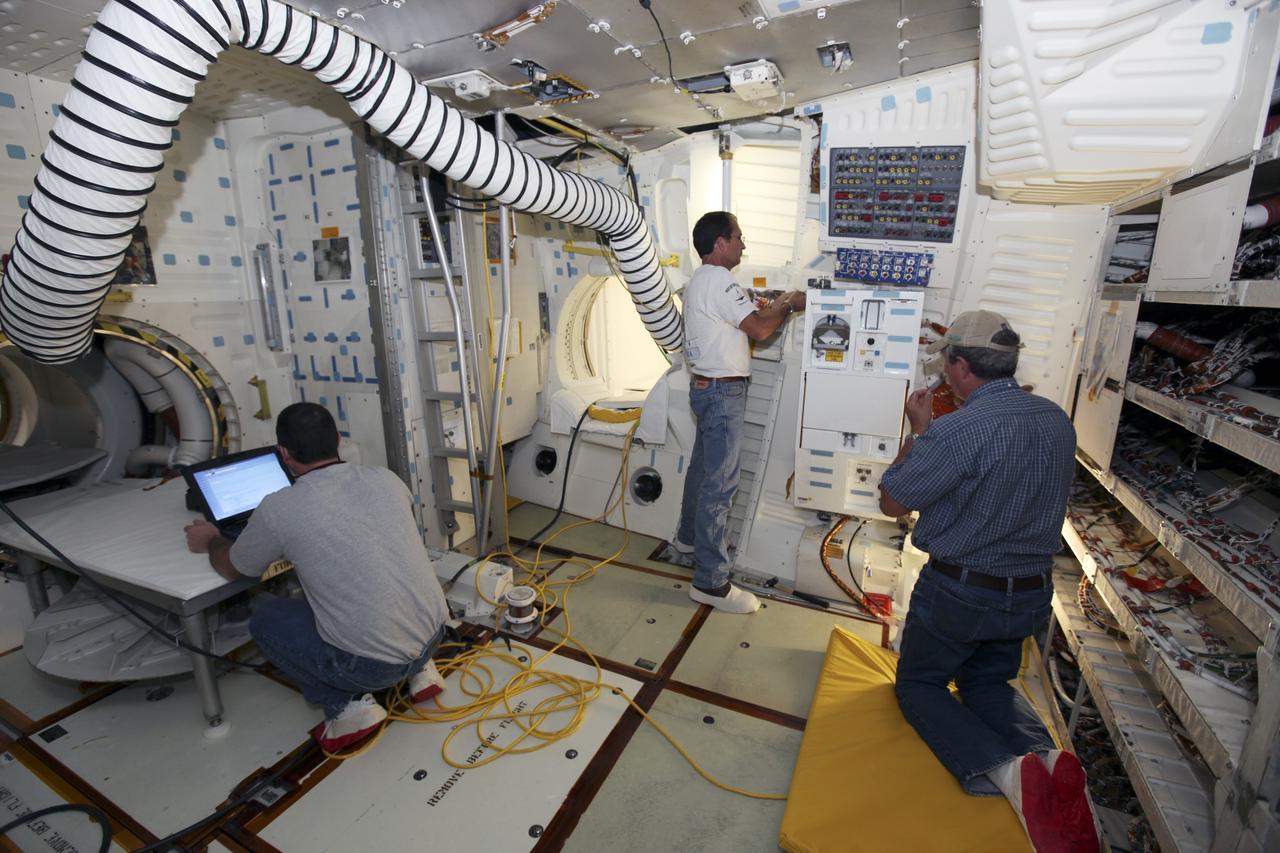
CAPE CANAVERAL, Fla. – Inside Orbiter Processing Facility-1 at NASA’s Kennedy Space Center in Florida, technicians install the shuttle orbiter repackaged galley (SORG) in the middeck of space shuttle Discovery. After Discovery’s final mission, STS-133, the SORG was removed and sent to a United Space Alliance lab in Houston where it was cleaned and deserviced. Water in the microbial check valve and the orbiter water system was drained and dried. The SORG was returned to Kennedy Space Center. The work is part of the Space Shuttle Program’s transition and retirement processing of shuttle Discovery, which is being prepared for display at Smithsonian’s National Air and Space Museum, Steven F. Udvar-Hazy Center in Chantilly, Va. For more information, visit http://www.nasa.gov/shuttle. Photo credit: NASA/Dimitri Gerondidakis
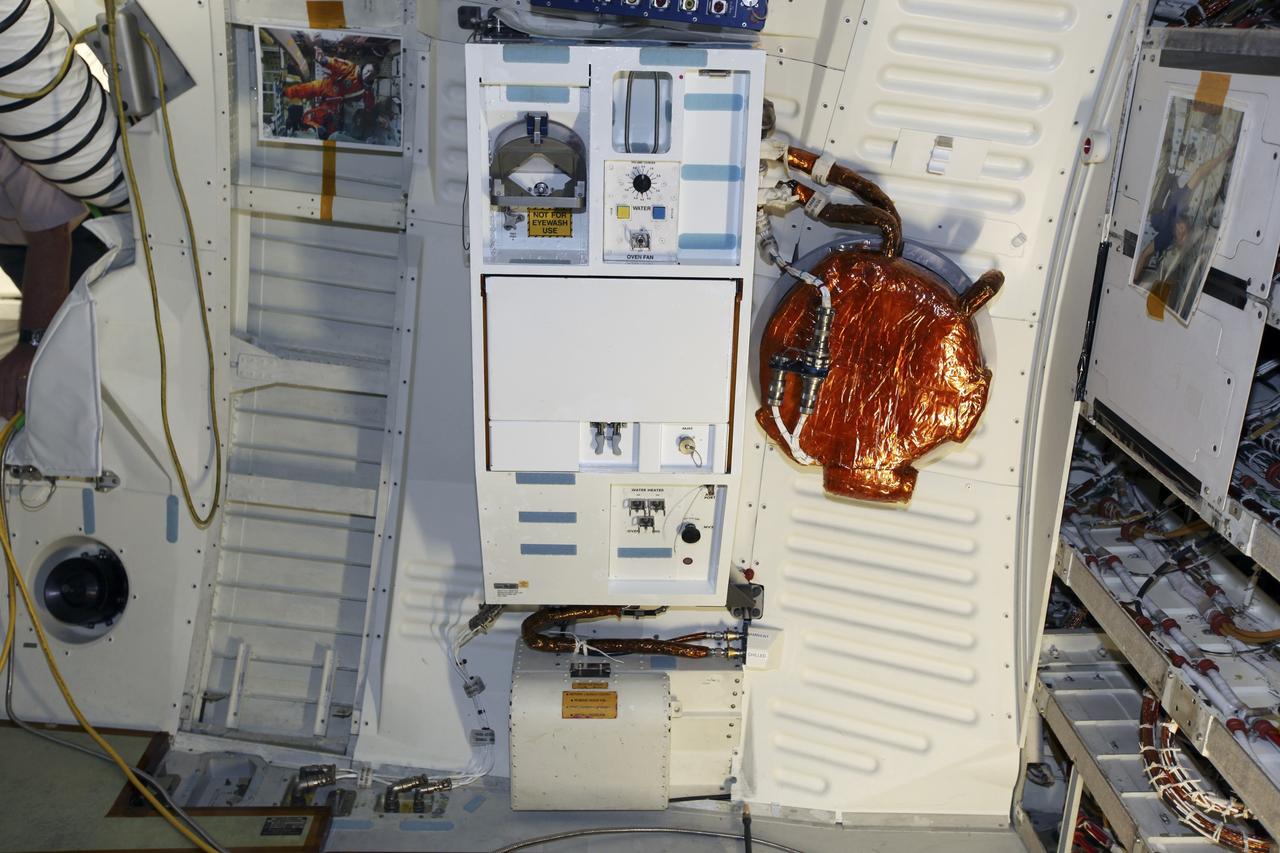
CAPE CANAVERAL, Fla. – Inside Orbiter Processing Facility-1 at NASA’s Kennedy Space Center in Florida, the shuttle orbiter repackaged galley (SORG) is installed in the middeck of space shuttle Discovery. After Discovery’s final mission, STS-133, the SORG was removed and sent to a United Space Alliance lab in Houston where it was cleaned and deserviced. Water in the microbial check valve and the orbiter water system was drained and dried. The SORG was returned to Kennedy Space Center. The work is part of the Space Shuttle Program’s transition and retirement processing of shuttle Discovery, which is being prepared for display at Smithsonian’s National Air and Space Museum, Steven F. Udvar-Hazy Center in Chantilly, Va. For more information, visit http://www.nasa.gov/shuttle. Photo credit: NASA/Dimitri Gerondidakis
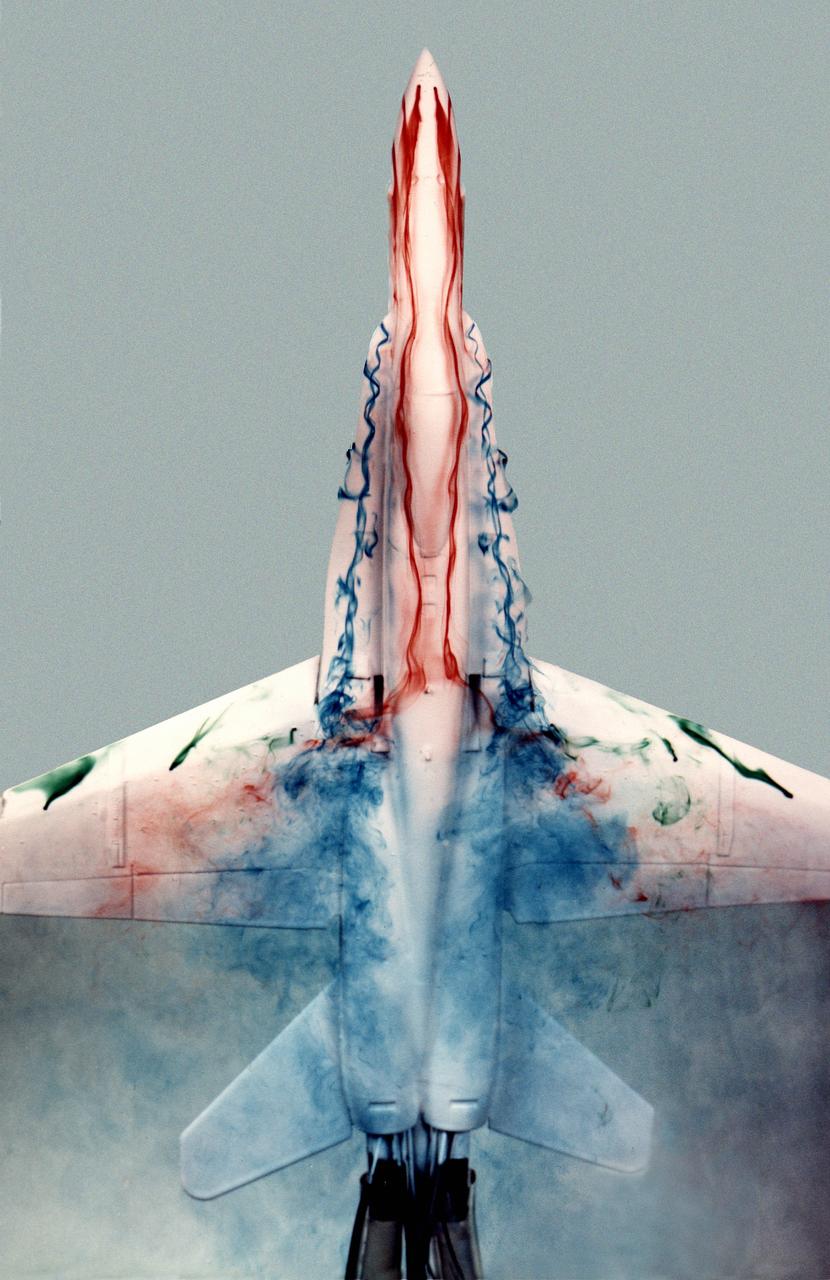
This image shows a plastic 1/48-scale model of an F-18 aircraft inside the "Water Tunnel" more formally known as the NASA Dryden Flow Visualization Facility. Water is pumped through the tunnel in the direction of normal airflow over the aircraft; then, colored dyes are pumped through tubes with needle valves. The dyes flow back along the airframe and over the airfoils highlighting their aerodynamic characteristics. The aircraft can also be moved through its pitch axis to observe airflow disruptions while simulating actual flight at high angles of attack. The Water Tunnel at NASA's Dryden Flight Research Center, Edwards, CA, became operational in 1983 when Dryden was a Flight Research Facility under the management of the Ames Research Center in Mountain View, CA. As a medium for visualizing fluid flow, water has played a significant role. Its use dates back to Leonardo da Vinci (1452-1519), the Renaissance Italian engineer, architect, painter, and sculptor. In more recent times, water tunnels have assisted the study of complex flows and flow-field interactions on aircraft shapes that generate strong vortex flows. Flow visualization in water tunnels assists in determining the strength of vortices, their location, and possible methods of controlling them. The design of the Dryden Water Tunnel imitated that of the Northrop Corporation's tunnel in Hawthorne, CA. Called the Flow Visualization Facility, the Dryden tunnel was built to assist researchers in understanding the aerodynamics of aircraft configured in such a way that they create strong vortex flows, particularly at high angles of attack. The tunnel provides results that compare well with data from aircraft in actual flight in another fluid-air. Other uses of the tunnel have included study of how such flight hardware as antennas, probes, pylons, parachutes, and experimental fixtures affect airflow. The facility has also been helpful in finding the best locations for emitting smoke from flight vehicles for flow vi
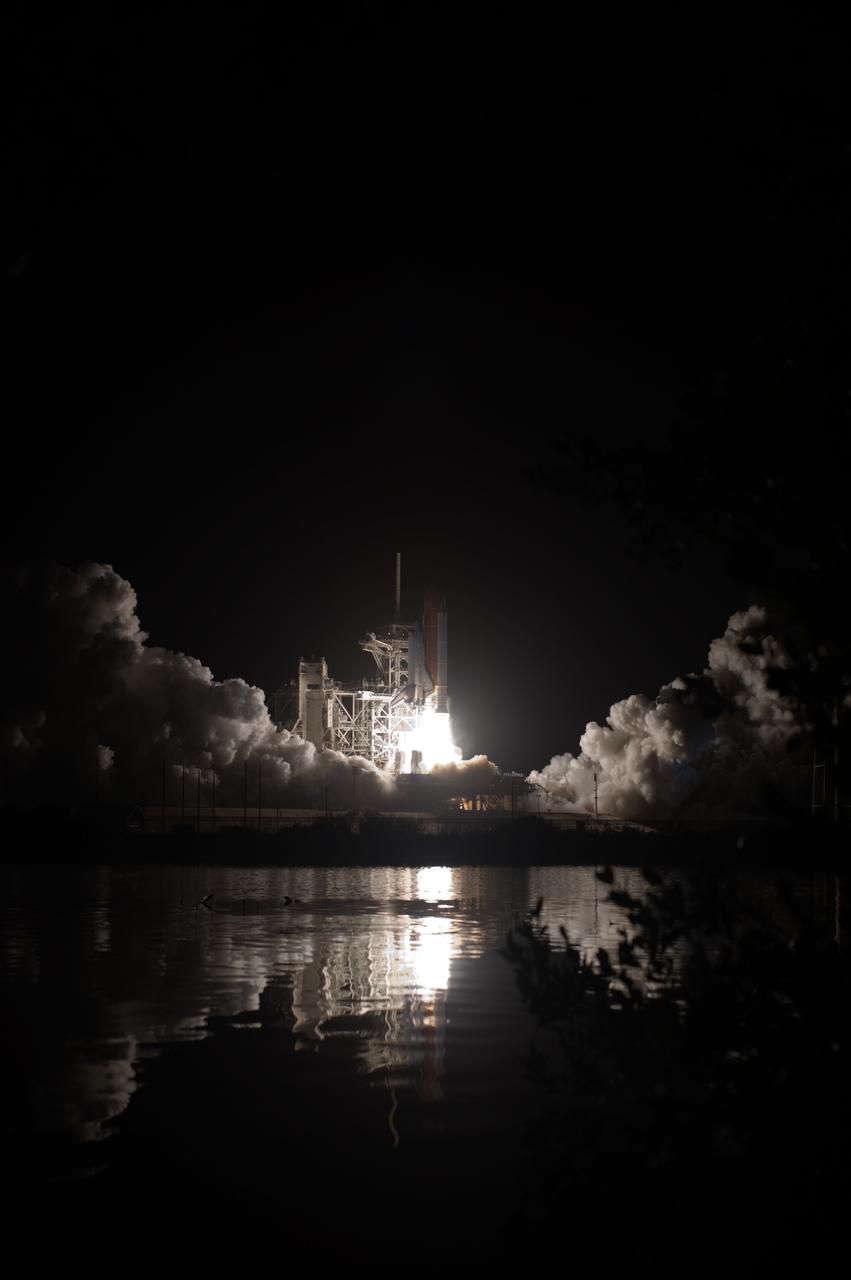
CAPE CANAVERAL, Fla. – The fiery liftoff of space shuttle Discovery at NASA's Kennedy Space Center in Florida is captured in the water close to Launch Pad 39A. Liftoff on the STS-128 mission was on time at 11:59 p.m. EDT. The first launch attempt on Aug. 24 was postponed due to unfavorable weather conditions. The second attempt on Aug. 25 also was postponed due to an issue with a valve in space shuttle Discovery's main propulsion system. The STS-128 mission is the 30th International Space Station assembly flight and the 128th space shuttle flight. The 13-day mission will deliver more than 7 tons of supplies, science racks and equipment, as well as additional environmental hardware to sustain six crew members on the International Space Station. The equipment includes a freezer to store research samples, a new sleeping compartment and the COLBERT treadmill. Photo credit: NASA/Tony Gray-Tom Farrar
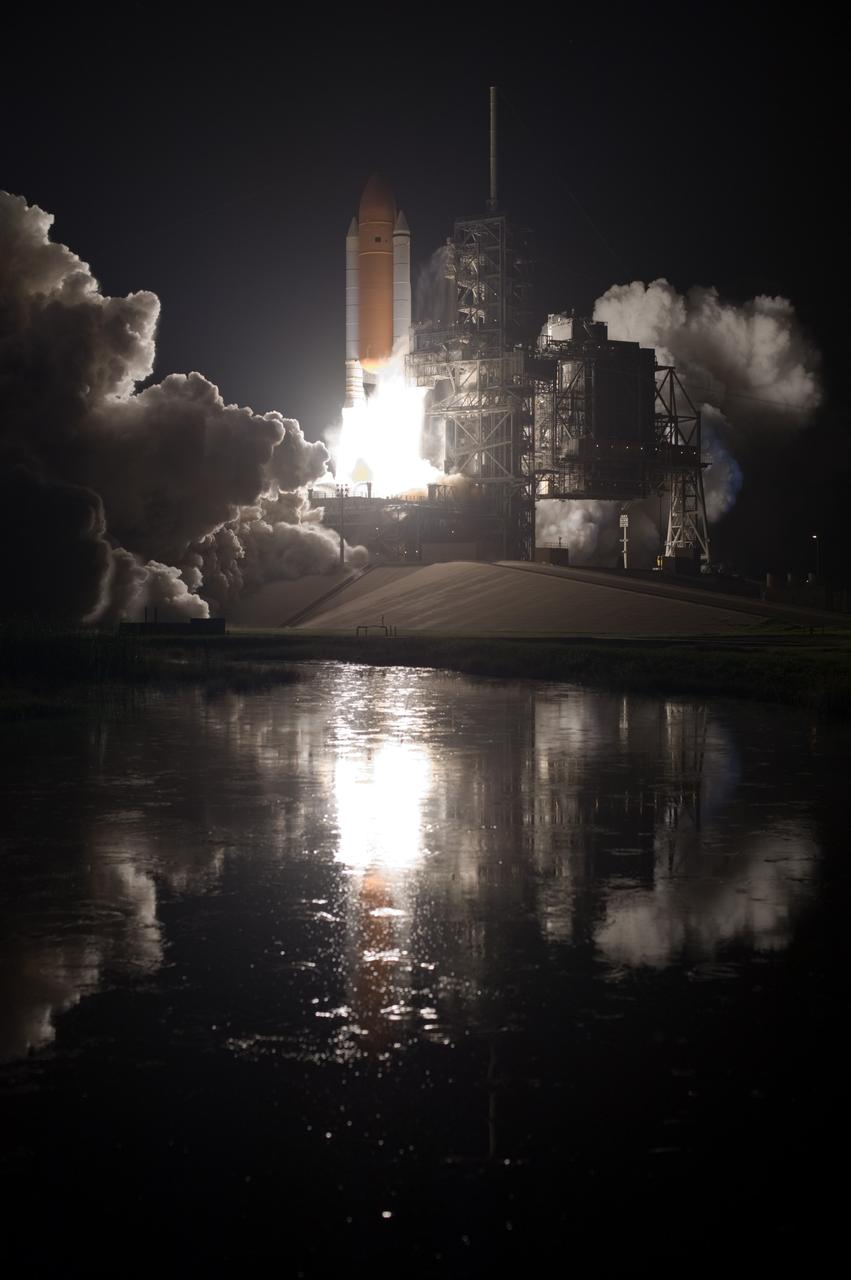
CAPE CANAVERAL, Fla. – The water close to Launch Pad 39A at NASA's Kennedy Space Center in Florida captures the brilliance from launch of space shuttle Discovery on the STS-128 mission. Liftoff from Launch Pad 39A was on time at 11:59 p.m. EDT. The first launch attempt on Aug. 24 was postponed due to unfavorable weather conditions. The second attempt on Aug. 25 also was postponed due to an issue with a valve in space shuttle Discovery's main propulsion system. The STS-128 mission is the 30th International Space Station assembly flight and the 128th space shuttle flight. The 13-day mission will deliver more than 7 tons of supplies, science racks and equipment, as well as additional environmental hardware to sustain six crew members on the International Space Station. The equipment includes a freezer to store research samples, a new sleeping compartment and the COLBERT treadmill. Photo credit: NASA/Tony Gray-Tom Farrar
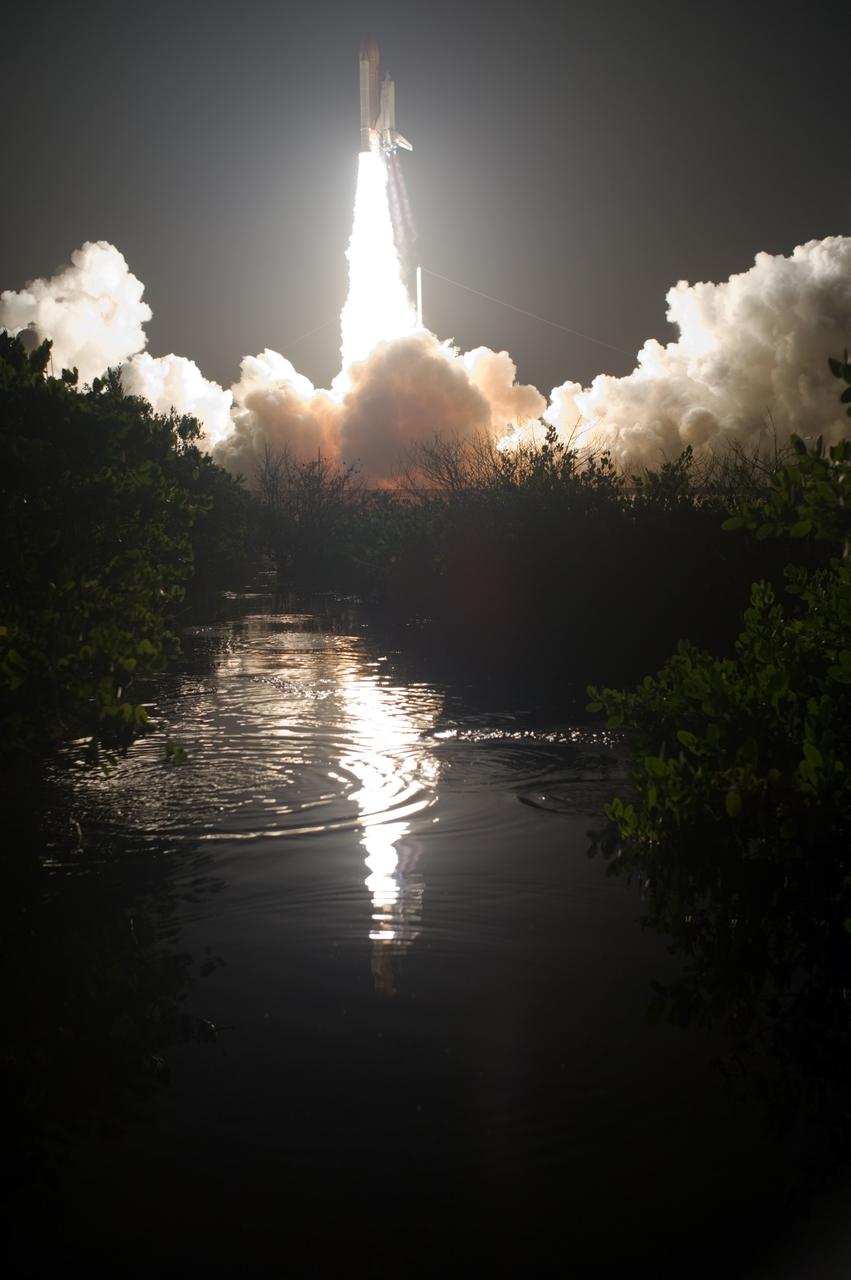
CAPE CANAVERAL, Fla. – The water close to Launch Pad 39A at NASA's Kennedy Space Center in Florida captures the brilliance from launch of space shuttle Discovery on the STS-128 mission. Liftoff from Launch Pad 39A was on time at 11:59 p.m. EDT. The first launch attempt on Aug. 24 was postponed due to unfavorable weather conditions. The second attempt on Aug. 25 also was postponed due to an issue with a valve in space shuttle Discovery's main propulsion system. The STS-128 mission is the 30th International Space Station assembly flight and the 128th space shuttle flight. The 13-day mission will deliver more than 7 tons of supplies, science racks and equipment, as well as additional environmental hardware to sustain six crew members on the International Space Station. The equipment includes a freezer to store research samples, a new sleeping compartment and the COLBERT treadmill. Photo credit: NASA/Tony Gray-Tom Farrar
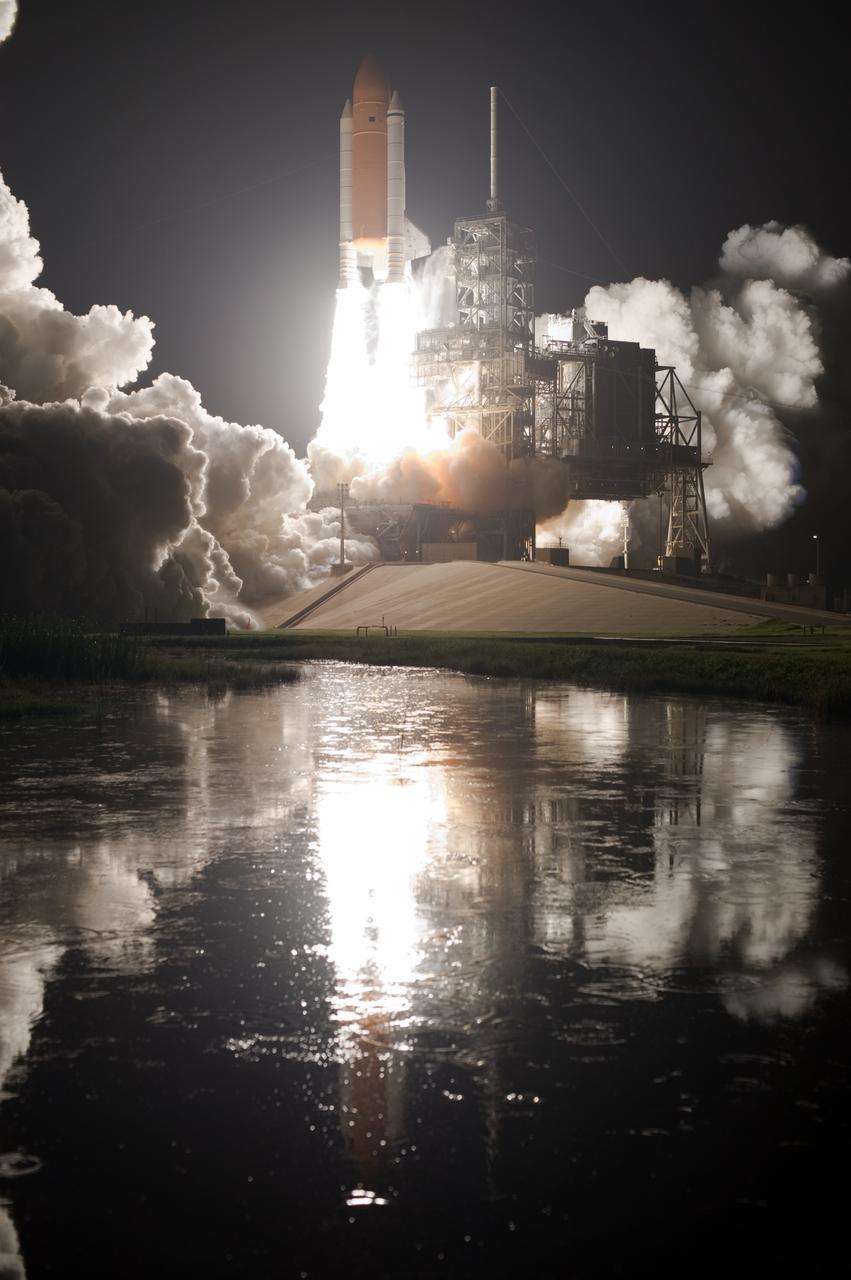
CAPE CANAVERAL, Fla. – The water close to Launch Pad 39A at NASA's Kennedy Space Center in Florida captures the firelight from space shuttle Discovery's launch on the STS-128 mission. Liftoff from Launch Pad 39A was on time at 11:59 p.m. EDT. The first launch attempt on Aug. 24 was postponed due to unfavorable weather conditions. The second attempt on Aug. 25 also was postponed due to an issue with a valve in space shuttle Discovery's main propulsion system. The STS-128 mission is the 30th International Space Station assembly flight and the 128th space shuttle flight. The 13-day mission will deliver more than 7 tons of supplies, science racks and equipment, as well as additional environmental hardware to sustain six crew members on the International Space Station. The equipment includes a freezer to store research samples, a new sleeping compartment and the COLBERT treadmill. Photo credit: NASA/Tony Gray-Tom Farrar
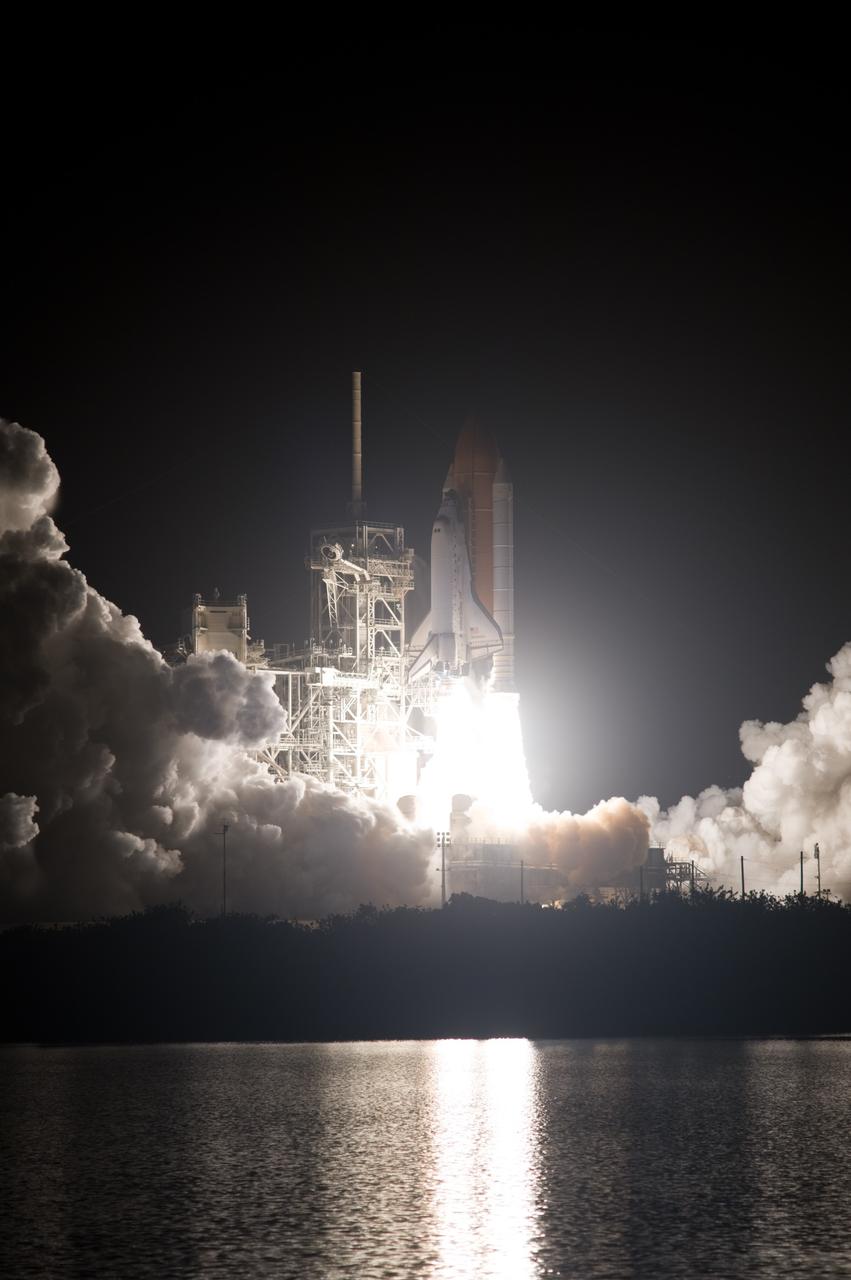
CAPE CANAVERAL, Fla. – Reflected in the water next to Launch Pad 39A at NASA's Kennedy Space Center in Florida, space shuttle Discovery roars toward space on the STS-128 mission. Liftoff from Launch Pad 39A was on time at 11:59 p.m. EDT. The first launch attempt on Aug. 24 was postponed due to unfavorable weather conditions. The second attempt on Aug. 25 also was postponed due to an issue with a valve in space shuttle Discovery's main propulsion system. The STS-128 mission is the 30th International Space Station assembly flight and the 128th space shuttle flight. The 13-day mission will deliver more than 7 tons of supplies, science racks and equipment, as well as additional environmental hardware to sustain six crew members on the International Space Station. The equipment includes a freezer to store research samples, a new sleeping compartment and the COLBERT treadmill. Photo credit: NASA/Sandra Joseph-Kevin O'Connell
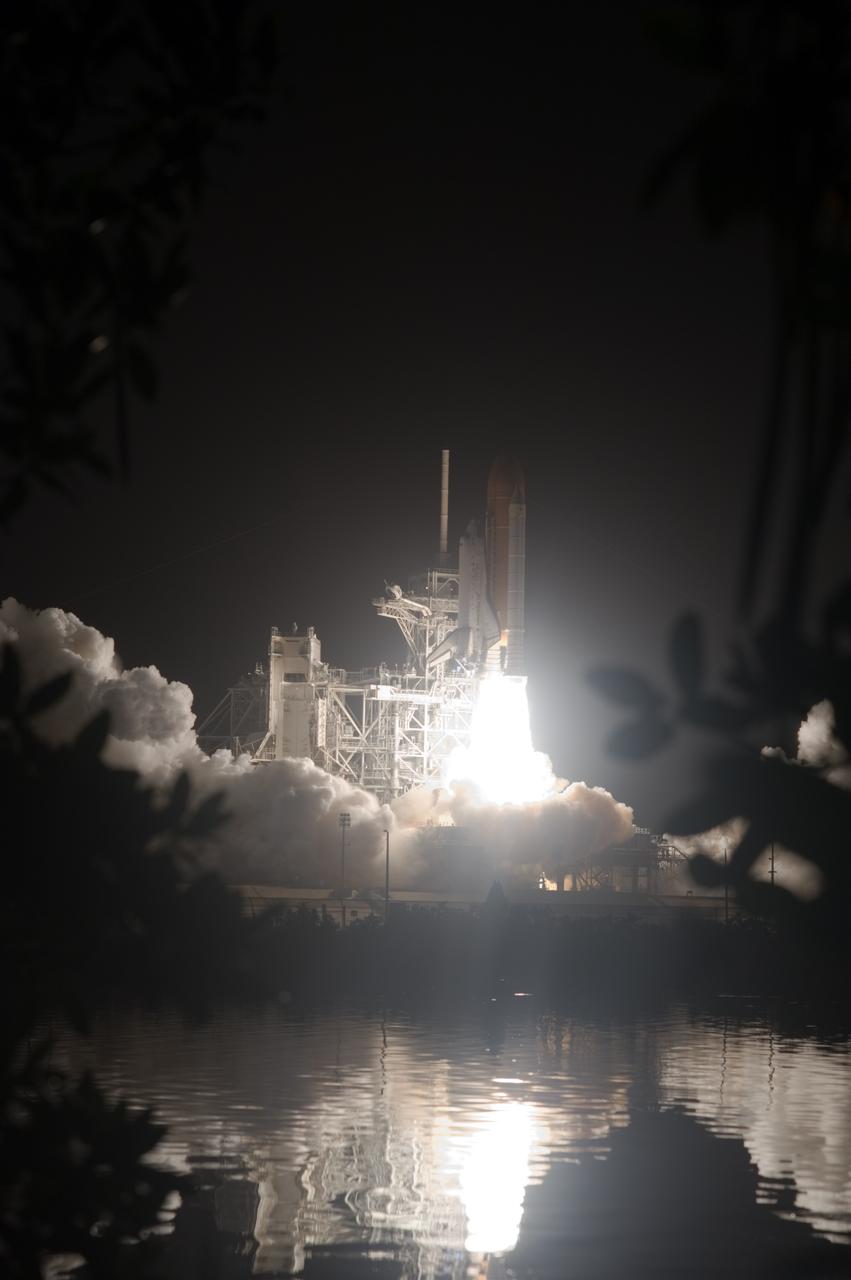
CAPE CANAVERAL, Fla. – The brilliance of space shuttle Discovery's liftoff at NASA's Kennedy Space Center in Florida is captured in the water near Launch Pad 39A. Liftoff on the STS-128 mission was on time at 11:59 p.m. EDT. The first launch attempt on Aug. 24 was postponed due to unfavorable weather conditions. The second attempt on Aug. 25 also was postponed due to an issue with a valve in space shuttle Discovery's main propulsion system. The STS-128 mission is the 30th International Space Station assembly flight and the 128th space shuttle flight. The 13-day mission will deliver more than 7 tons of supplies, science racks and equipment, as well as additional environmental hardware to sustain six crew members on the International Space Station. The equipment includes a freezer to store research samples, a new sleeping compartment and the COLBERT treadmill. Photo credit: NASA/Sandra Joseph-Kevin O'Connell
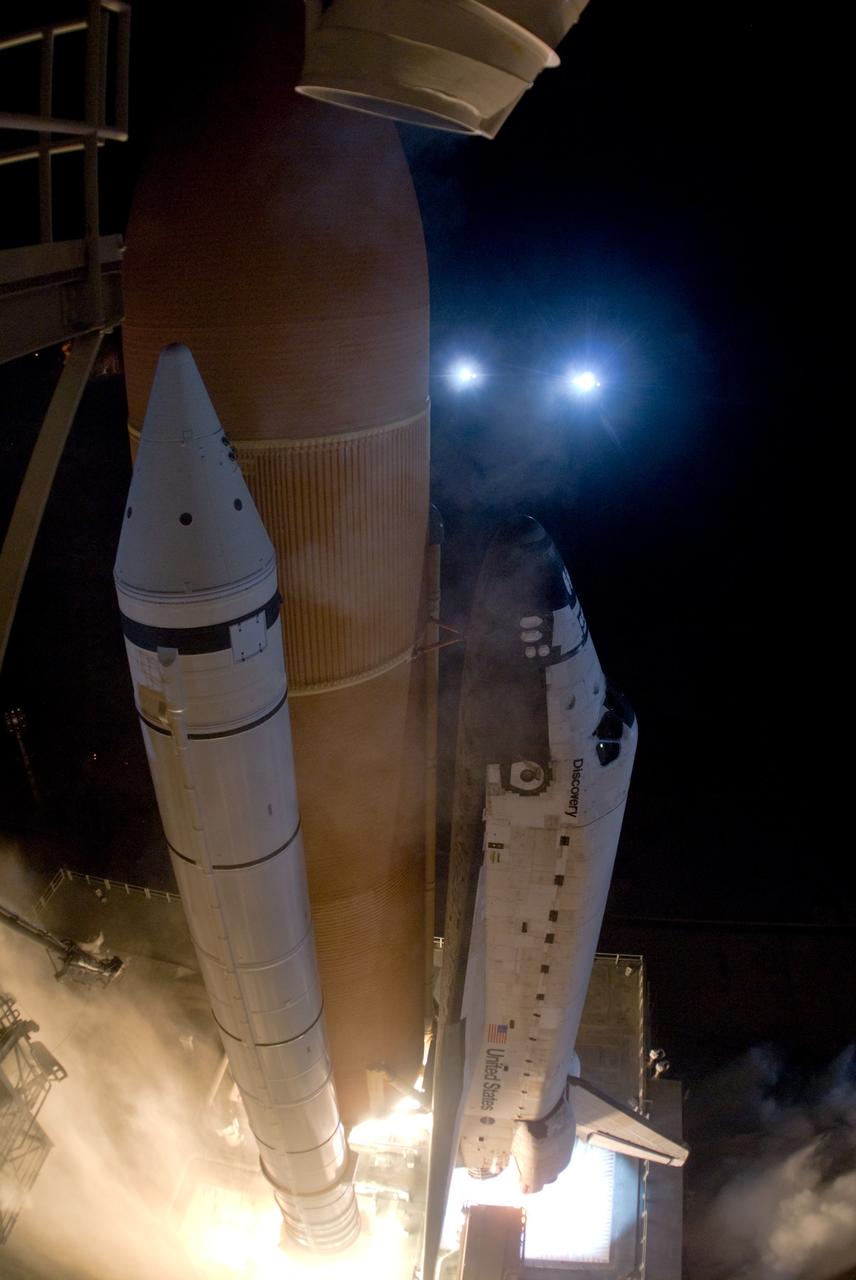
CAPE CANAVERAL, Fla. – Water from the rainbirds floods the mobile launcher platform as space shuttle Discovery rises from NASA Kennedy Space Center's Launch pad 39A on the STS-128 mission. The water helps with sound suppression. Above Discovery's nose are two of the xenon lights that surround the pad. Liftoff from Launch Pad 39A was on time at 11:59 p.m. EDT. The first launch attempt on Aug. 24 was postponed due to unfavorable weather conditions. The second attempt on Aug. 25 also was postponed due to an issue with a valve in space shuttle Discovery's main propulsion system. The STS-128 mission is the 30th International Space Station assembly flight and the 128th space shuttle flight. The 13-day mission will deliver more than 7 tons of supplies, science racks and equipment, as well as additional environmental hardware to sustain six crew members on the International Space Station. The equipment includes a freezer to store research samples, a new sleeping compartment and the COLBERT treadmill. Photo credit: NASA/Tony Gray-Tom Farrar
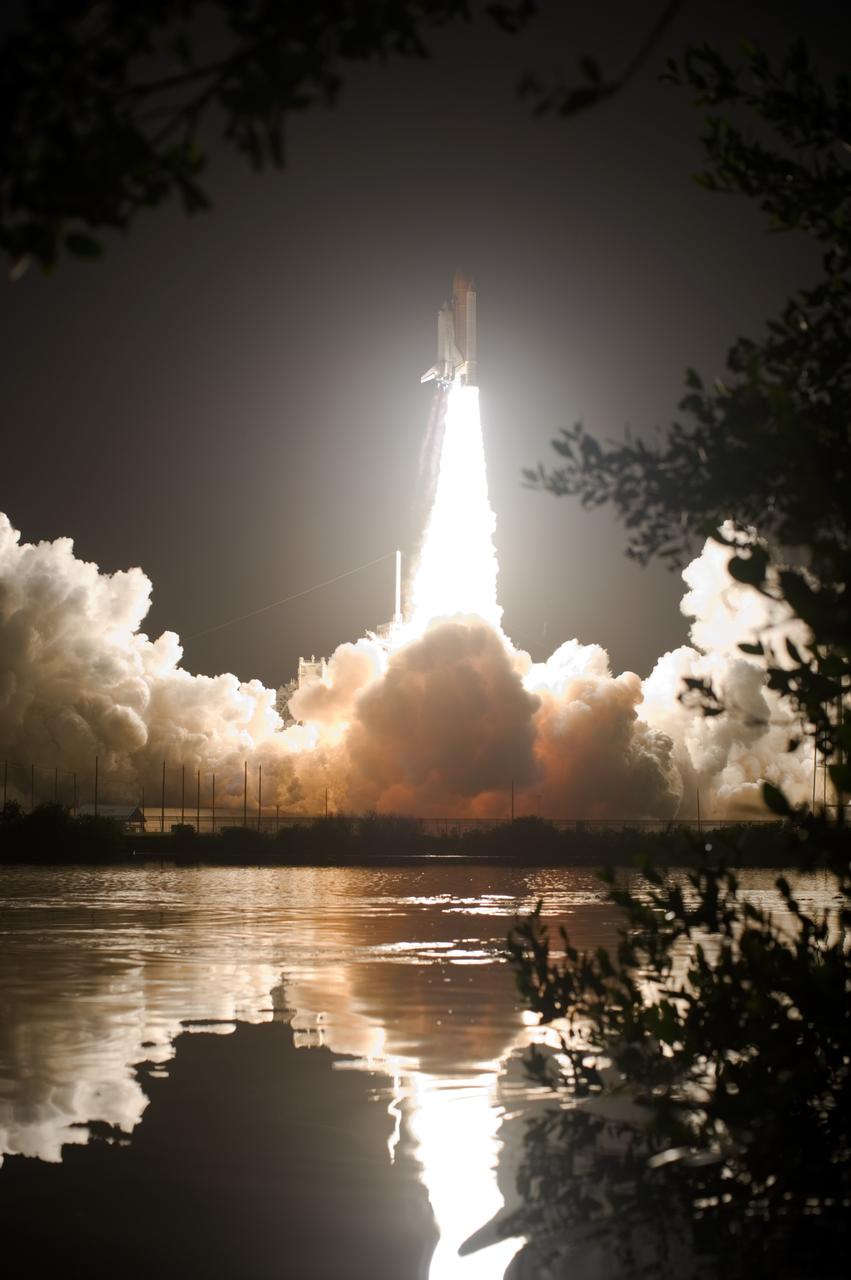
CAPE CANAVERAL, Fla. – Racing to space atop a tower of flame, space shuttle Discovery lights the night sky at liftoff, all captured in the water near Launch Pad 39A at NASA's Kennedy Space Center in Florida. Liftoff from Launch Pad 39A on the STS-128 mission was on time at 11:59 p.m. EDT. The first launch attempt on Aug. 24 was postponed due to unfavorable weather conditions. The second attempt on Aug. 25 also was postponed due to an issue with a valve in space shuttle Discovery's main propulsion system. The STS-128 mission is the 30th International Space Station assembly flight and the 128th space shuttle flight. The 13-day mission will deliver more than 7 tons of supplies, science racks and equipment, as well as additional environmental hardware to sustain six crew members on the International Space Station. The equipment includes a freezer to store research samples, a new sleeping compartment and the COLBERT treadmill. Photo credit: NASA/Tony Gray-Tom Farrar

CAPE CANAVERAL, Fla. – At NASA's Kennedy Space Center in Florida, water flows over the mobile launch platform to act as sound suppression during space shuttle Discovery's liftoff from Launch Pad 39A on the STS-128 mission. Liftoff from Launch Pad 39A was on time at 11:59 p.m. EDT. The first launch attempt on Aug. 24 was postponed due to unfavorable weather conditions. The second attempt on Aug. 25 also was postponed due to an issue with a valve in space shuttle Discovery's main propulsion system. The STS-128 mission is the 30th International Space Station assembly flight and the 128th space shuttle flight. The 13-day mission will deliver more than 7 tons of supplies, science racks and equipment, as well as additional environmental hardware to sustain six crew members on the International Space Station. The equipment includes a freezer to store research samples, a new sleeping compartment and the COLBERT treadmill. Photo credit: NASA/Tony Gray-Tom Farrar