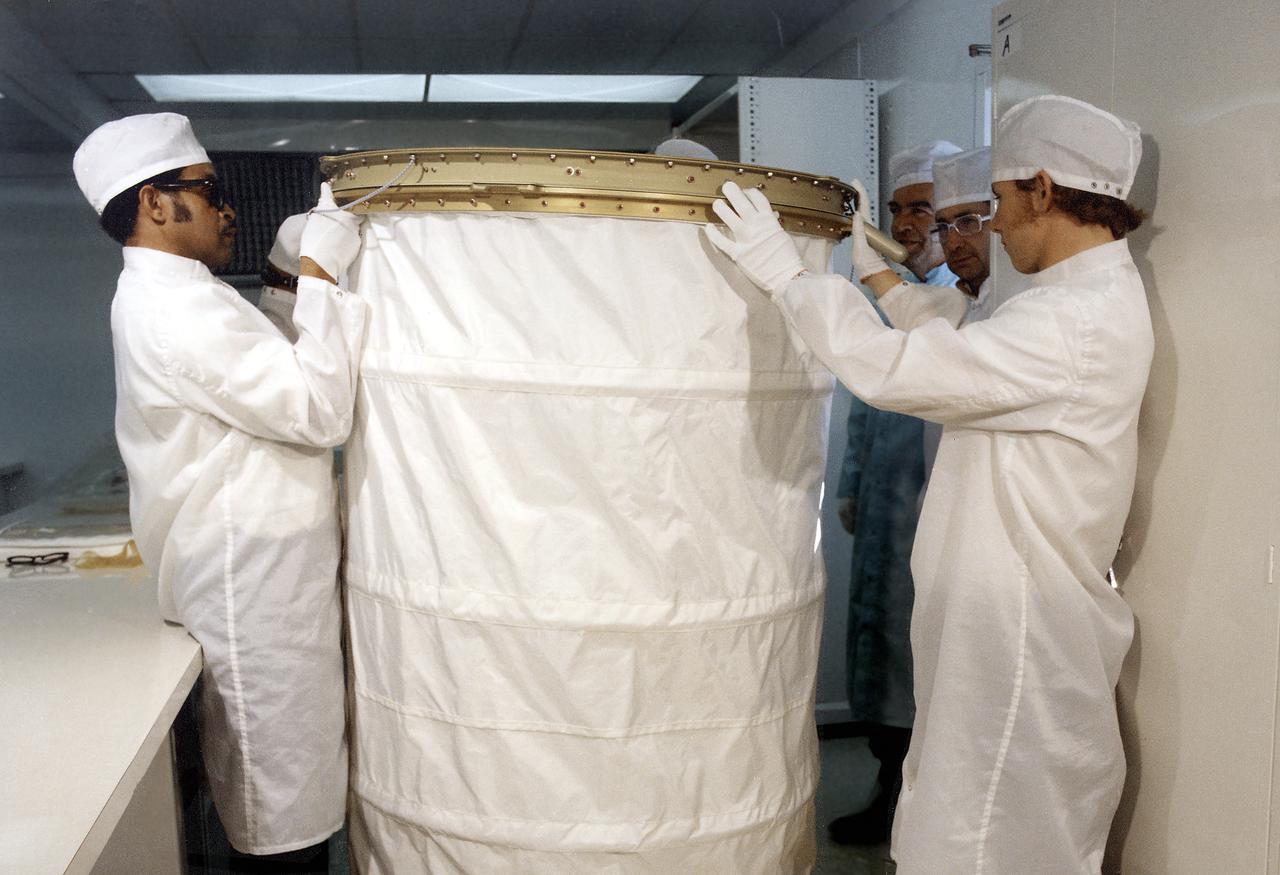
In this photograph, the Orbital Workshop shower compartment was unfolded by technicians for inspection. The shower compartment was a cylindrical cloth enclosure that was folded flat when not in use. The bottom ring of the shower was fastened to the floor and contained foot restraints. The upper ring contained the shower head and hose. To use the shower, the astronaut filled a pressurized portable bottle with heated water and attached the bottle to the ceiling. A flexible hose cornected the water bottle to a handheld shower head. The astronaut pulled the cylindrical shower wall up into position and bathed, using liquid soap. Both soap and water were carefully rationed, having been premeasured for economical use.
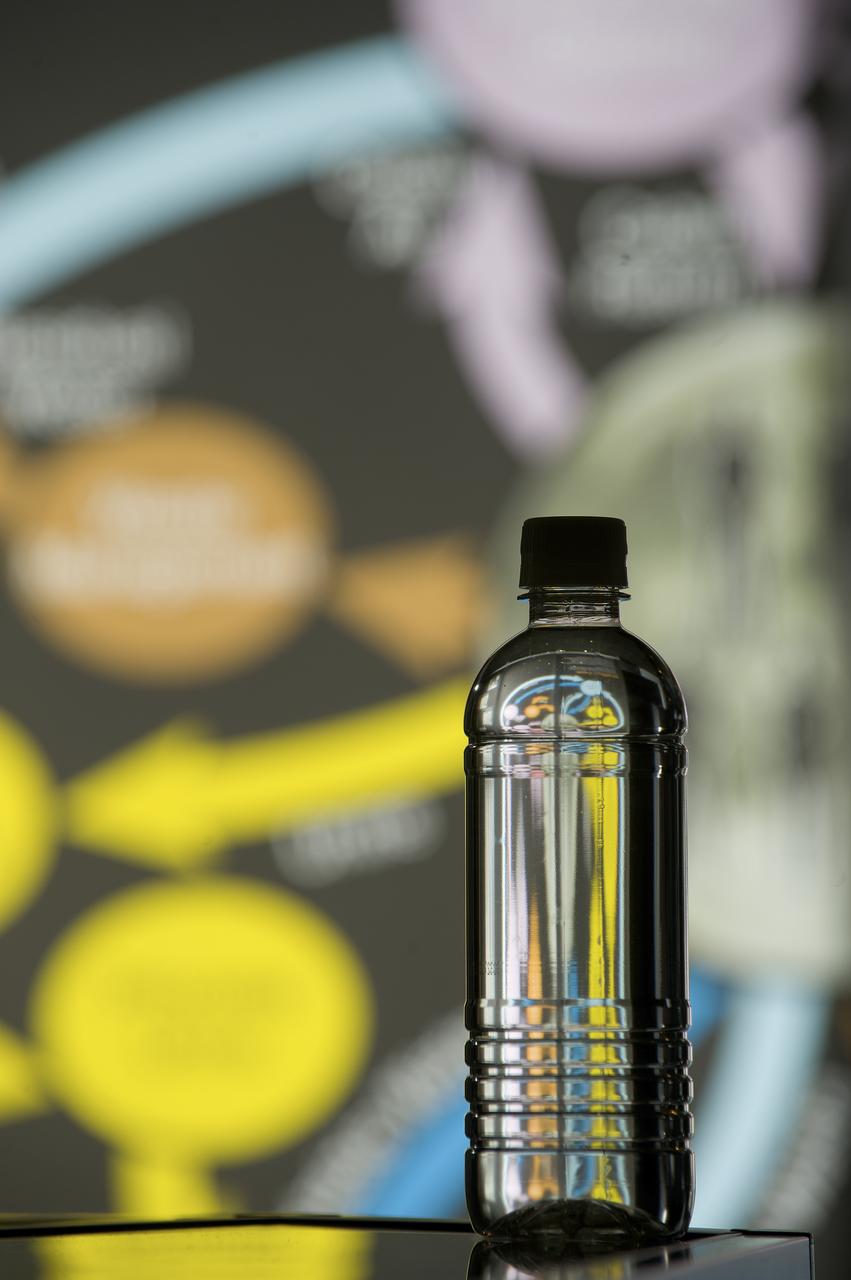
PHOTOS OF BOTTLES CONTAINING URINE, PURIFIED WATER, AND OTHER LIQUIDS AS PART OF THE STEPS OF THE ECLSS PROGRAM
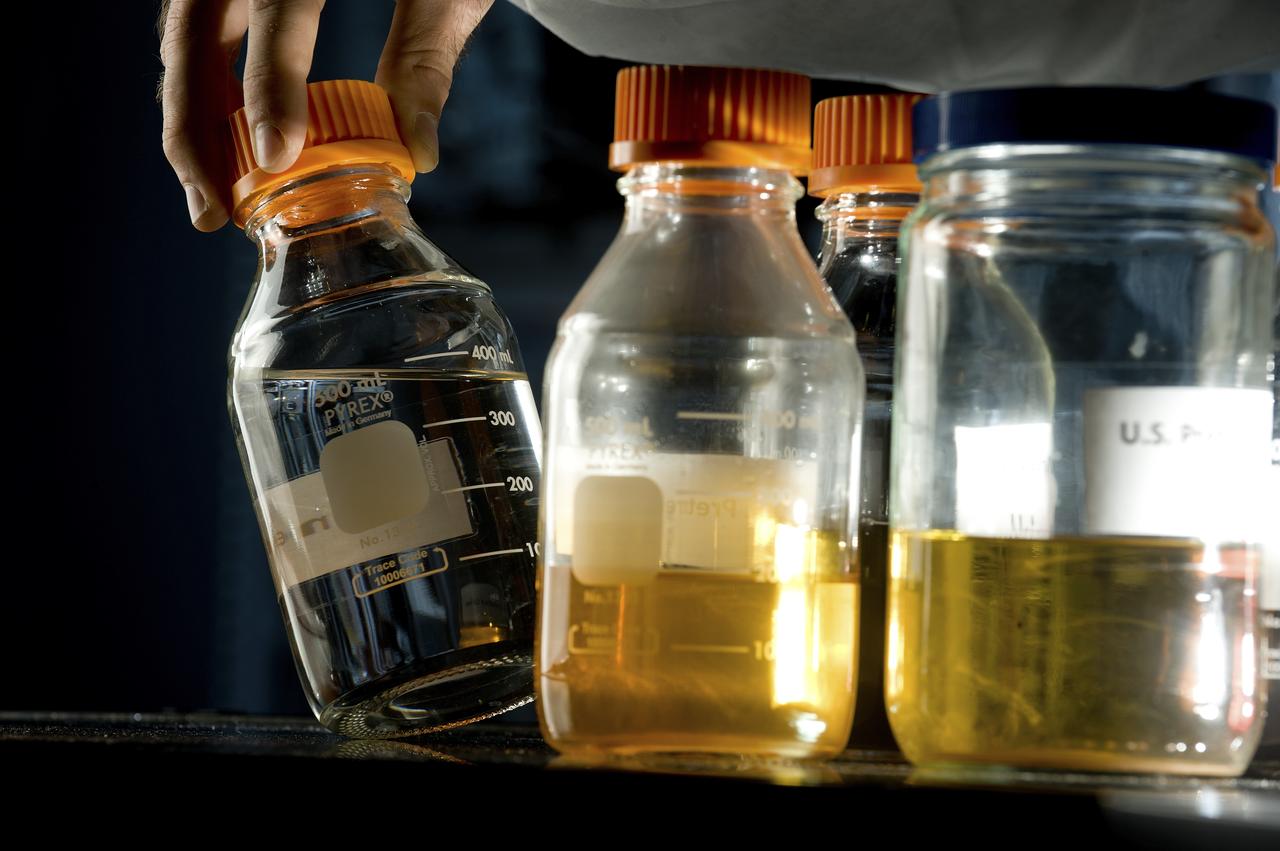
PHOTOS OF BOTTLES CONTAINING URINE, PURIFIED WATER, AND OTHER LIQUIDS AS PART OF THE STEPS OF THE ECLSS PROGRAM
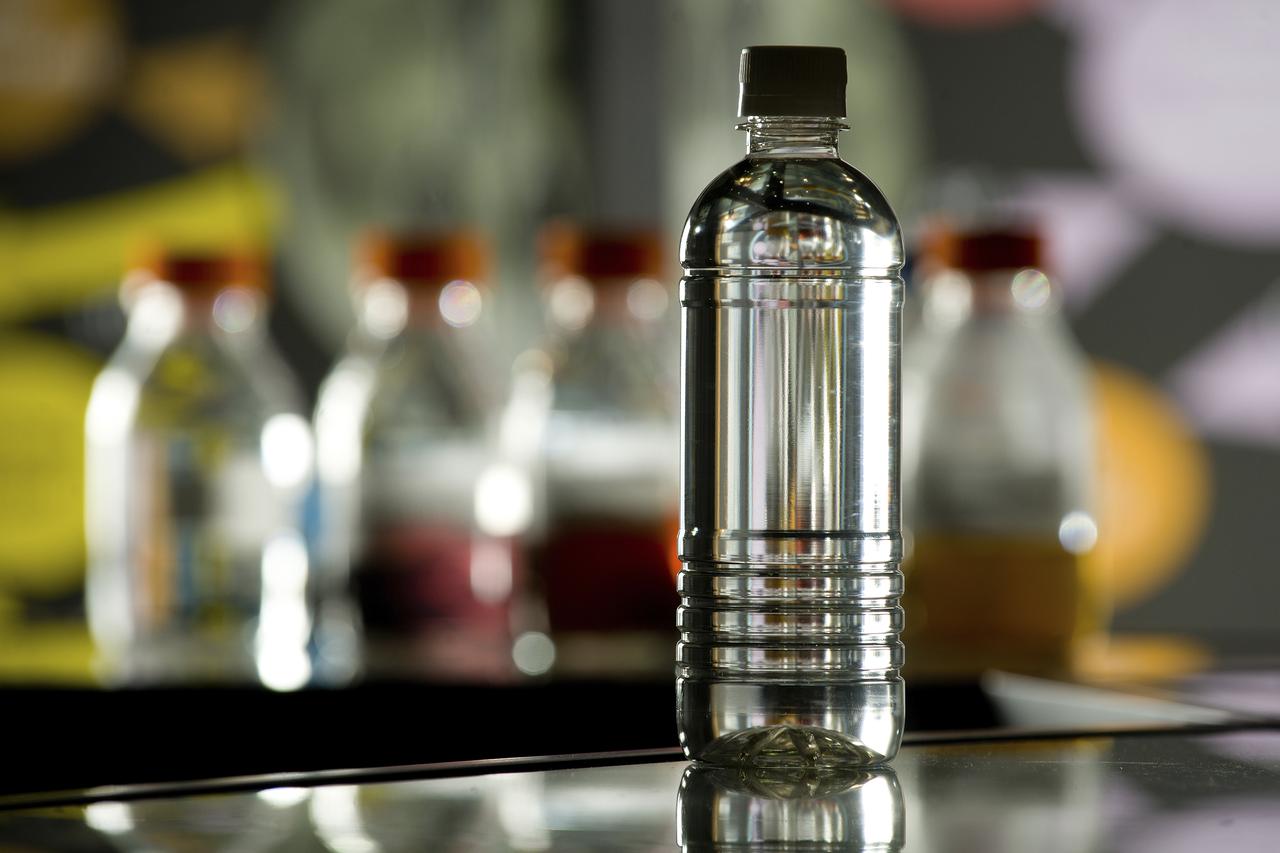
PHOTOS OF BOTTLES CONTAINING URINE, PURIFIED WATER, AND OTHER LIQUIDS AS PART OF THE STEPS OF THE ECLSS PROGRAM
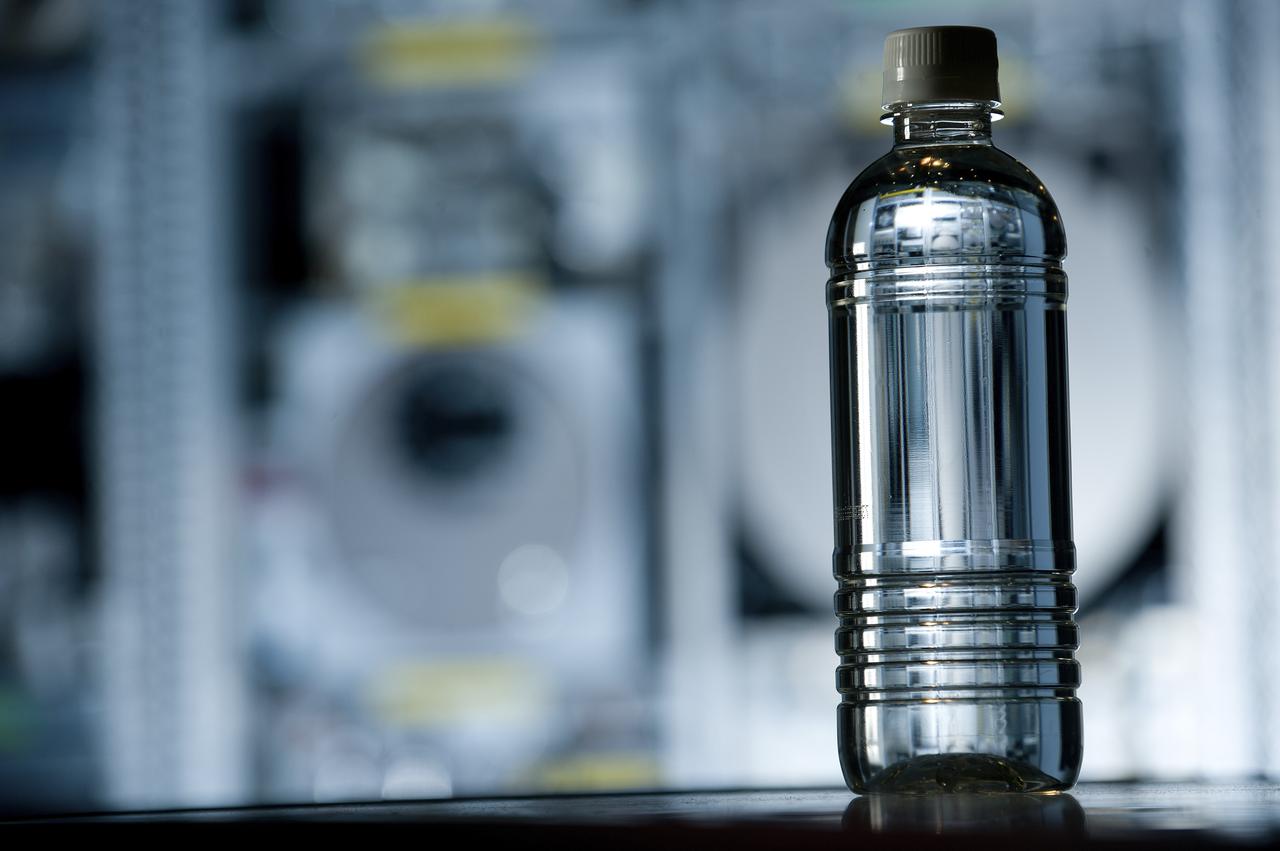
PHOTOS OF BOTTLES CONTAINING URINE, PURIFIED WATER, AND OTHER LIQUIDS AS PART OF THE STEPS OF THE ECLSS PROGRAM
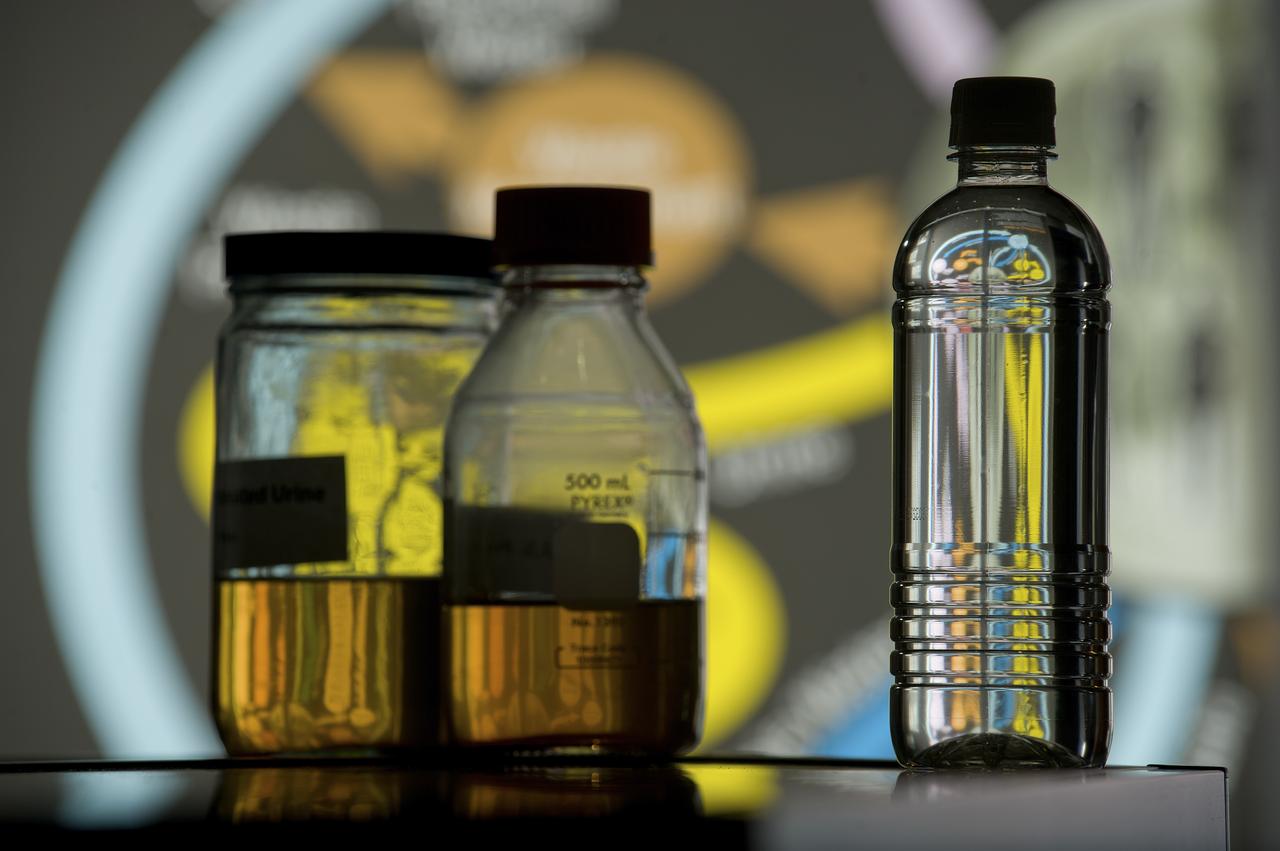
PHOTOS OF BOTTLES CONTAINING URINE, PURIFIED WATER, AND OTHER LIQUIDS AS PART OF THE STEPS OF THE ECLSS PROGRAM
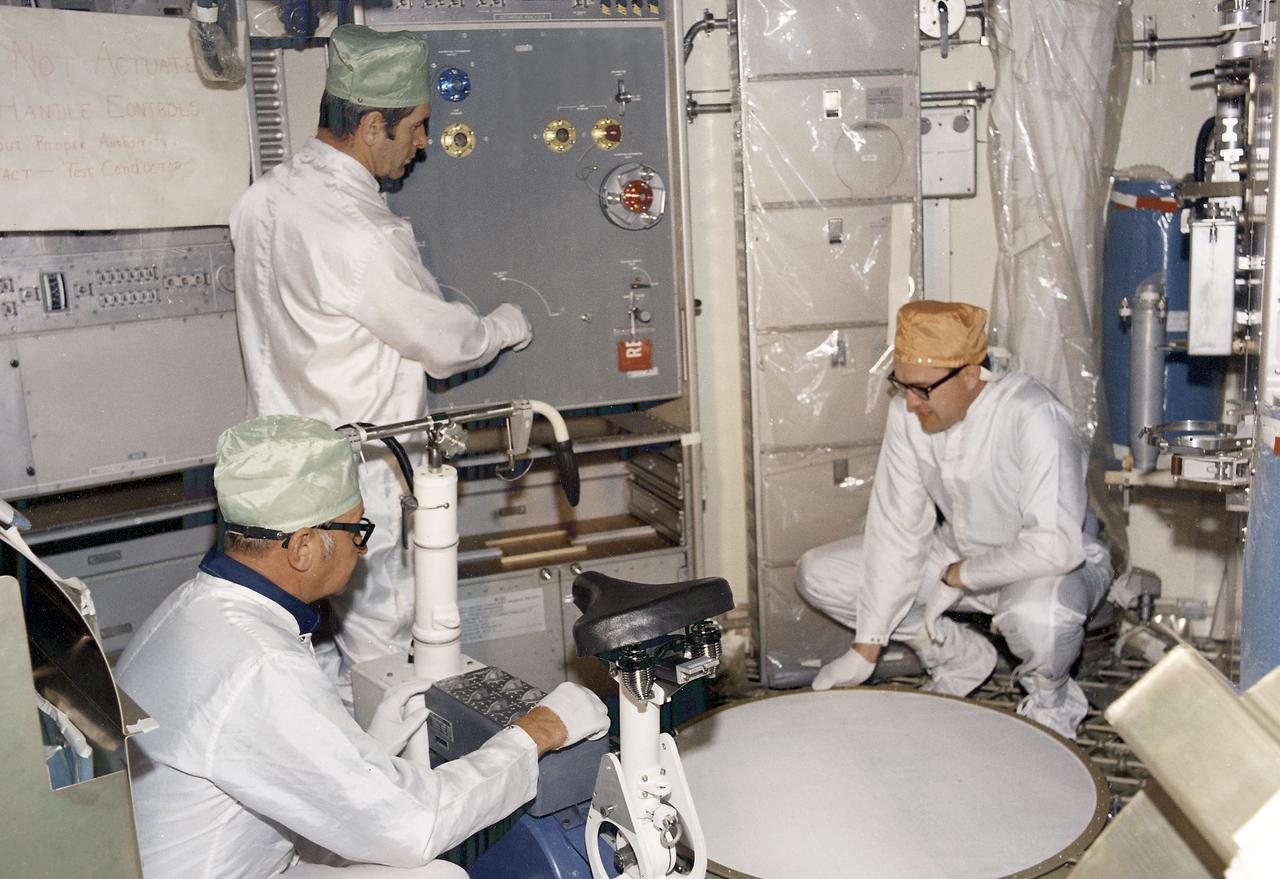
This photograph shows technicians performing a checkout of the Metabolic Analyzer (center background) and the Ergometer (foreground) in the Orbital Workshop (OWS). The shower compartment is at right. The Ergometer (Skylab Experiment M171) evaluated man's metabolic effectiveness and cost of work in space environment. Located in the experiment and work area of the OWS, the shower compartment was a cylindrical cloth enclosure that was folded flat when not in use. The bottom ring of the shower was fastened to the floor and contained foot restraints. The upper ring contained the shower head and hose. To use the shower, the astronaut filled a pressurized portable bottle with heated water and attached the bottle to the ceiling. A flexible hose cornected the water bottle to a handheld shower head. The astronaut pulled the cylindrical shower wall up into position and bathed, using liquid soap. Both soap and water were carefully rationed, having been premeasured for economical use.
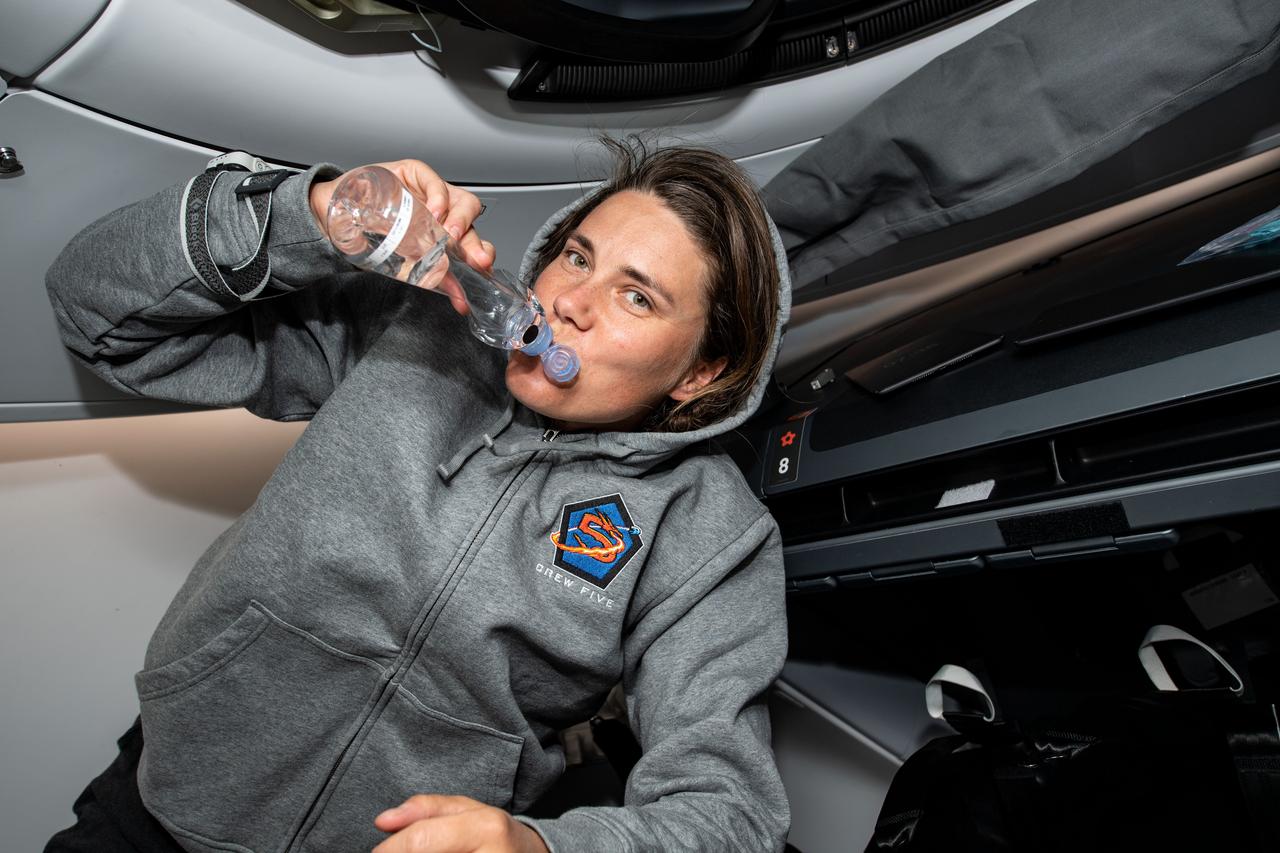
iss068e012328 (Oct. 6, 2022) --- SpaceX Crew-5 Mission Specialist Anna Kikina of Roscosmos drinks from a water bottle aboard the Dragon Endurance crew ship during a flight to the International Space Station.
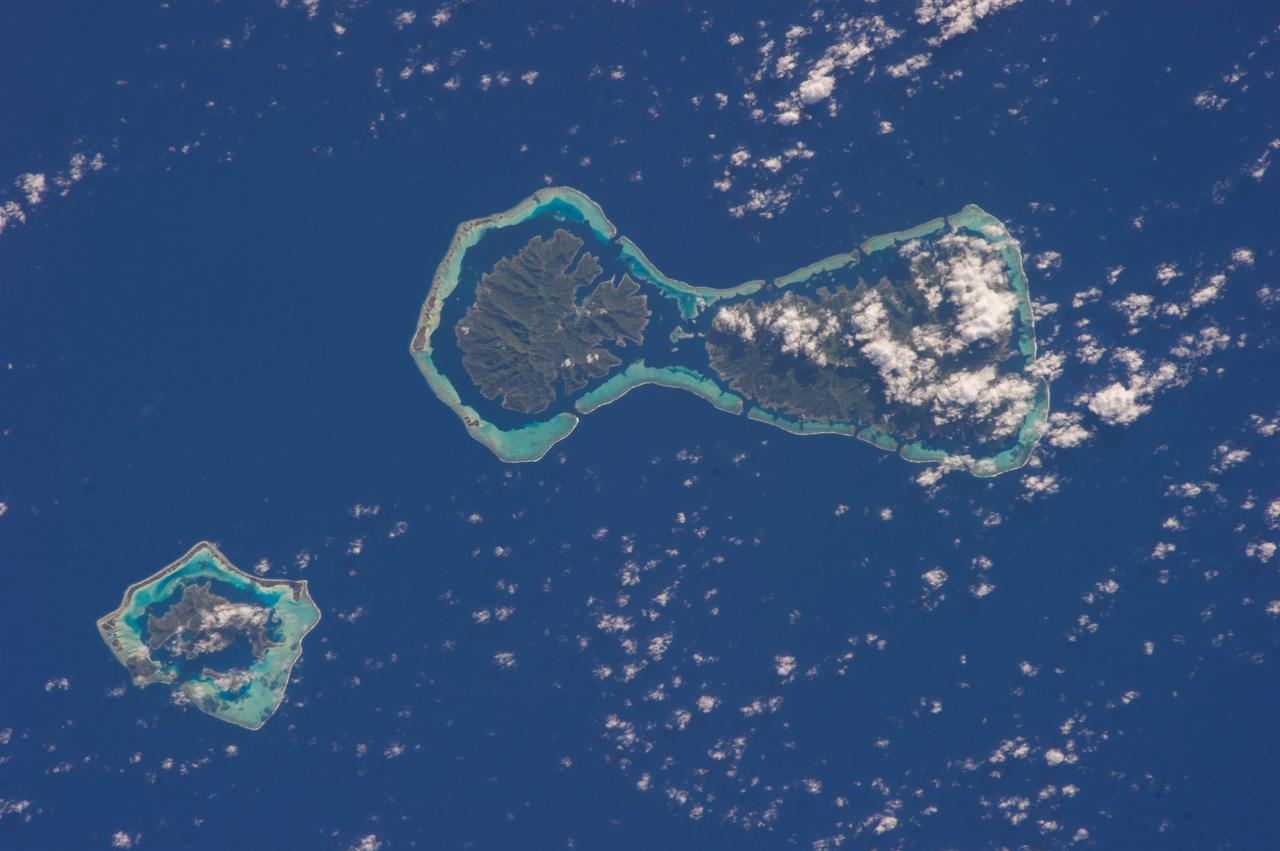
ISS037-E-022125 (28 Oct. 2013) --- The interesting color contrasts of the water surrounding the atolls of Pinaki (bottom) and Nukutavake in French Polynesia caught the eye of one of the Expedition 37 crew members aboard the Earth-orbiting International Space Station on Oct. 28. At first glance to a pair of sleepy eyes, the atolls might look somewhat like a bottle cap and a bottle opener.

NASA Administrator Jim Bridenstine gestures with a bottle of water while testifying during a Subcommittee on Space, Science, and Competitiveness hearing titled, "Global Space Race: Ensuring the United States Remains the Leader in Space," Wednesday, September 26, 2018 at the Russell Senate Office Building in Washington. Photo Credit: (NASA/Aubrey Gemignani)
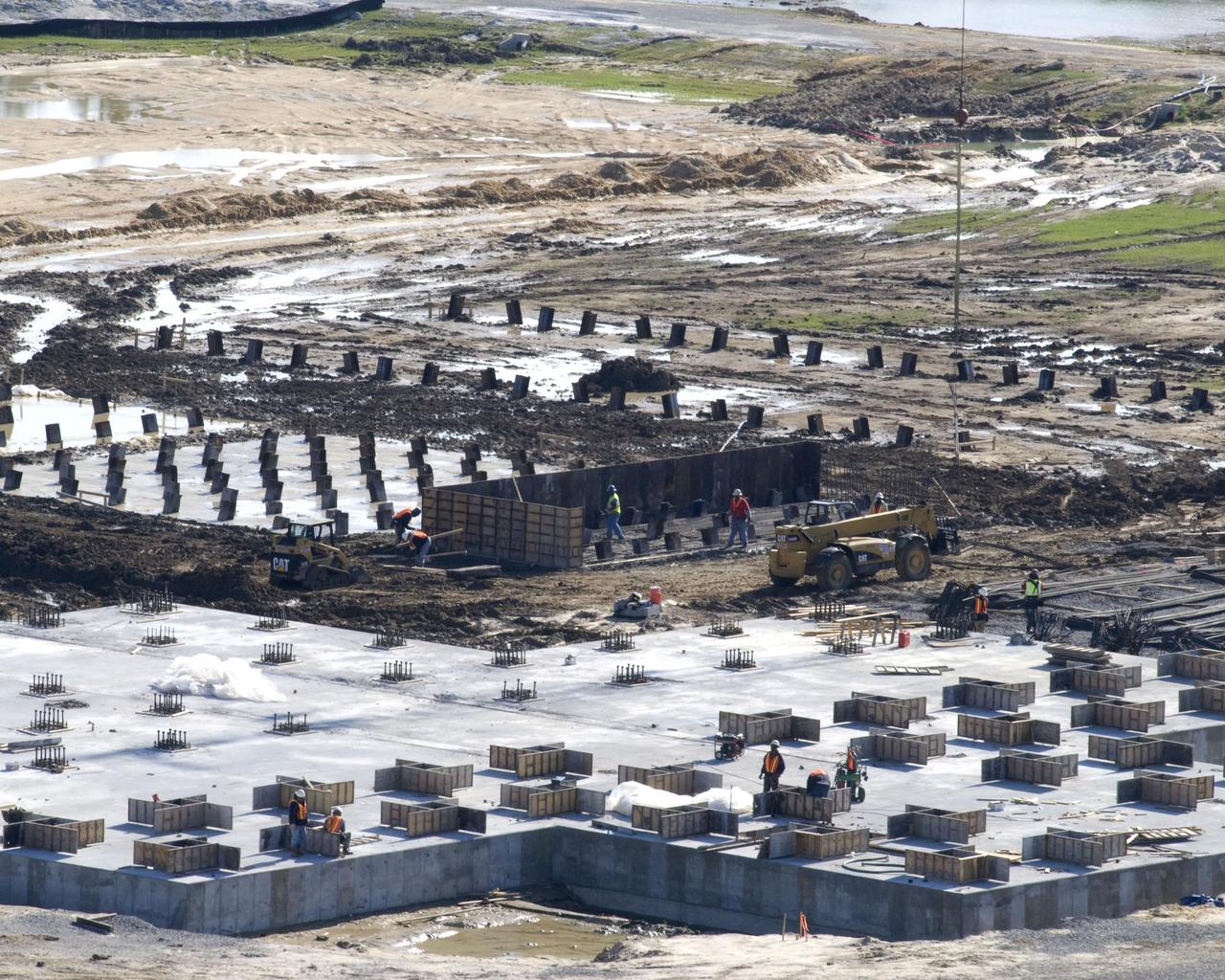
The concrete foundation placed Dec. 18 (foreground) for Stennis Space Center's future A-3 Test Stand has almost completely cured by early January, according to Bo Clarke, NASA's contracting officer technical representative for the foundation contract. By late December, construction on foundations for many of the test stand's support structures - diffuser, liquid oxygen, isopropyl alcohol and water tanks and gaseous nitrogen bottle battery - had begun with the installation of (background) `mud slabs.' The slabs provide a working surface for the reinforcing steel and foundation forms.
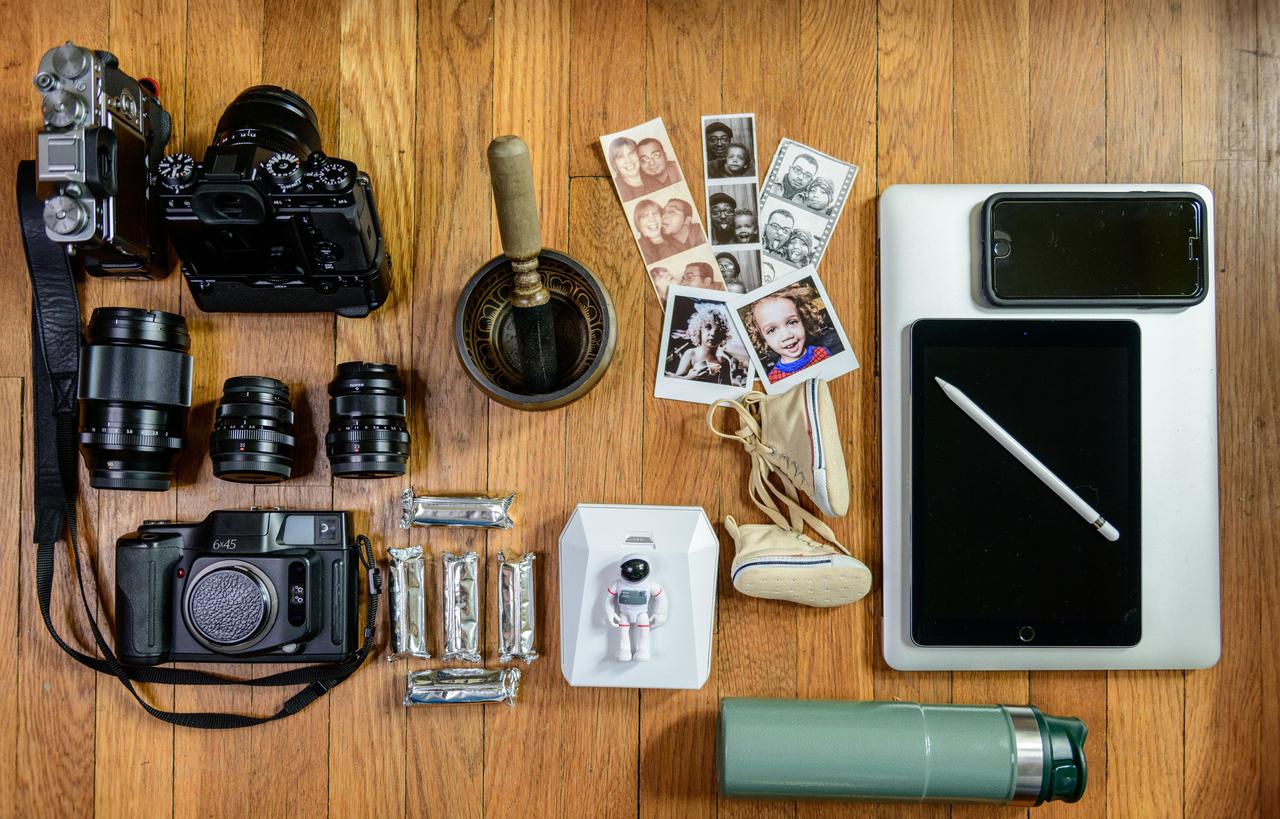
Two mirrirless Digital Camers, 56mm f1.2 lens, 90mm f2 lens, 35mm f2 lens, 23mm f2 lens, 6x4.5 Medium Format Film Camera, 120 film, Singing Bowl, wirerless instant printer, My 3yr olds Astronaut toy, family photos, Oldest Sons (27) baby shoes for luck, Laptop, Phone (for music), Tablet and Pen, Water Bottle.
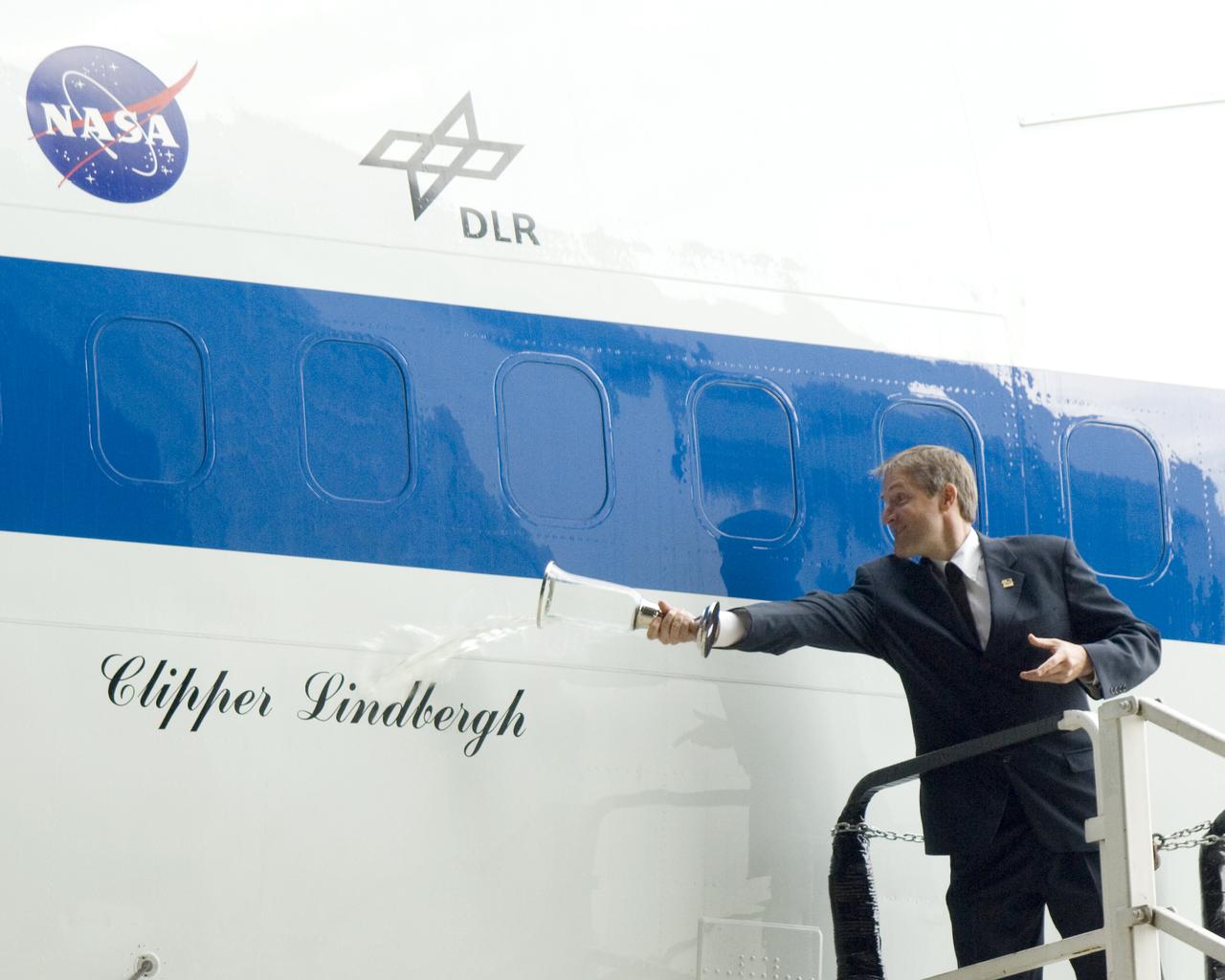
Erik Lindbergh christens NASA's 747 Clipper Lindbergh, the Stratospheric Observatory for Infrared Astronomy, with a special commemorative concoction representing local, NASA, and industry partners. The liquid consisted of a small amount of California wine representing NASA Dryden where the aircraft will be stationed, a small amount of Dr. Pepper (a Waco, TX invention), a quantity of French bottled water (to symbolize Charles Lindbergh's flight to Paris on this date), and a dash of German beer to represent the SOFIA German industry partners.
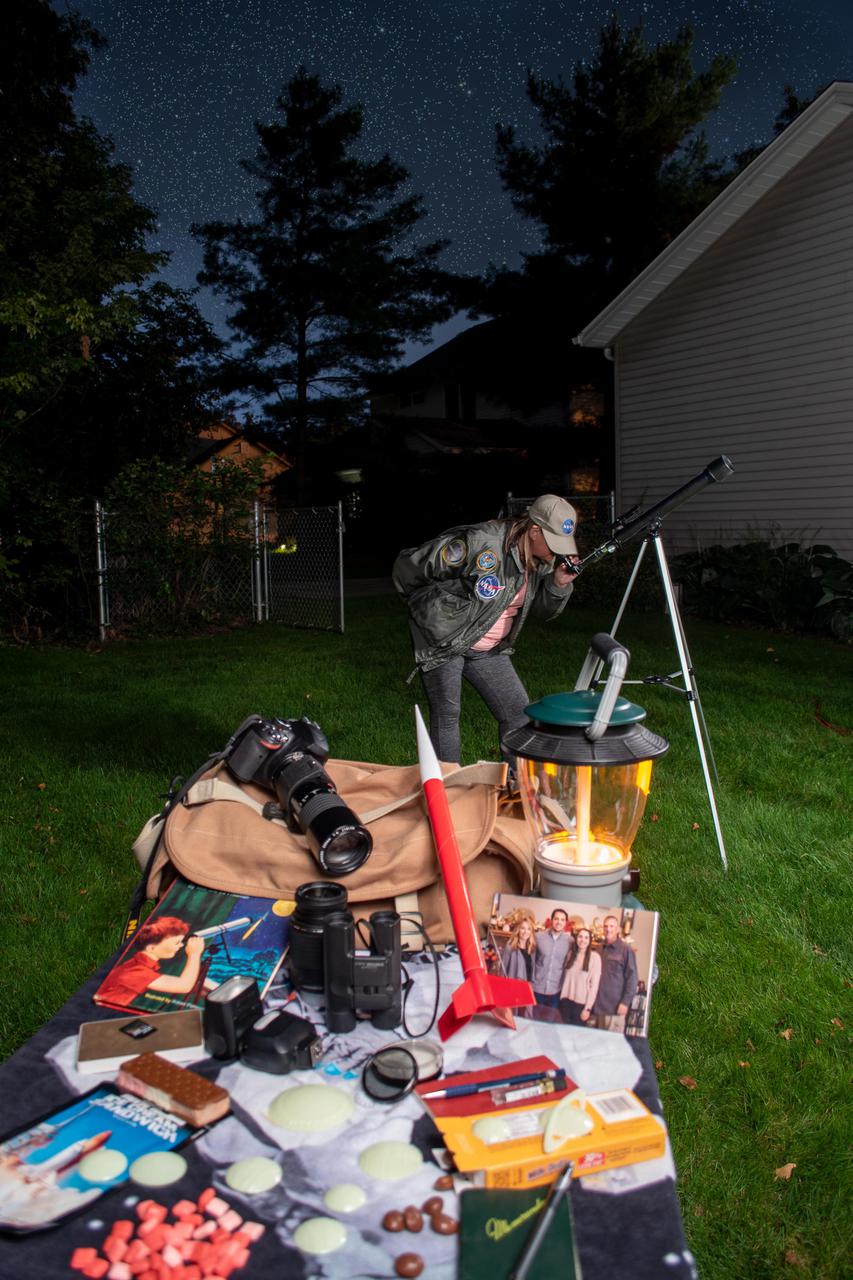
NASA Moon Kit of things I would take to the moon, I couldn’t go to the moon without my two mirrorless digital SLR cameras, Lens, my 120 6x4.5 film camera, several rolls of 120 film, my singing bowl (for meditation), my wireless printer, My son’s astronaut toy, Several pictures of both my sons and wife, My oldest sons first shoes (they are good luck), cell phone (for music and extra photos), Tablet and Pen (for editing and books), my Laptop and my water bottle (I take it everywhere).
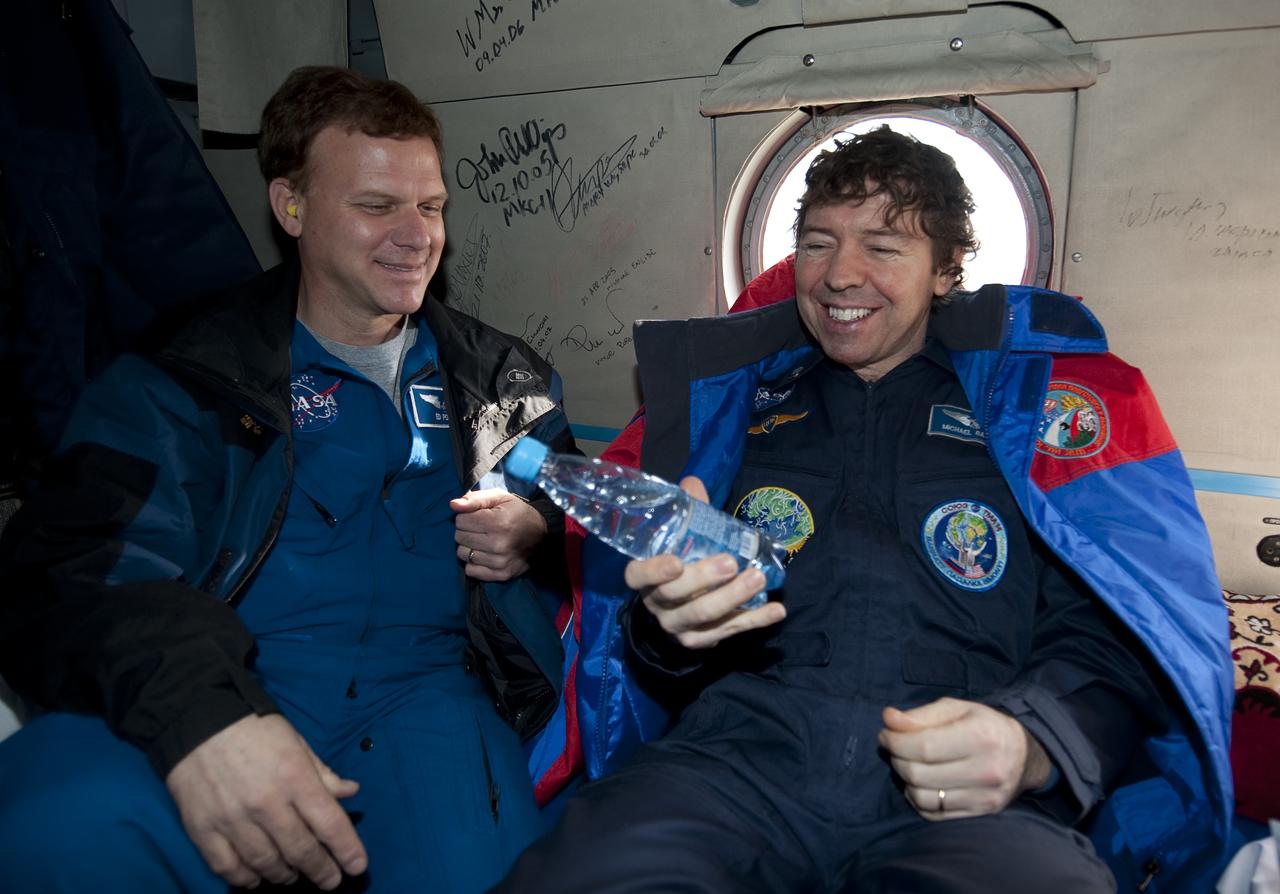
NASA Flight Surgeon Ed Powers, left, laughs as Expedition 20 Flight Engineer Michael Barratt talks about how strange, weight and gravity feel when holding a bottle of water shortly after Barratt, Expedition 20 Commander Gennady Padalka, and spaceflight participant Guy Laliberté landed their Soyuz TMA-14 capsule near the town of Arkalyk, Kazakhstan on Sunday, Oct. 11, 2009. Padalka and Barratt are returning from six months onboard the International Space Station, along with Laliberté who arrived at the station on Oct. 2 with Expedition 21 Flight Engineers Jeff Williams and Maxim Suraev aboard the Soyuz TMA-16 spacecraft. Photo Credit: (NASA/Bill Ingalls)
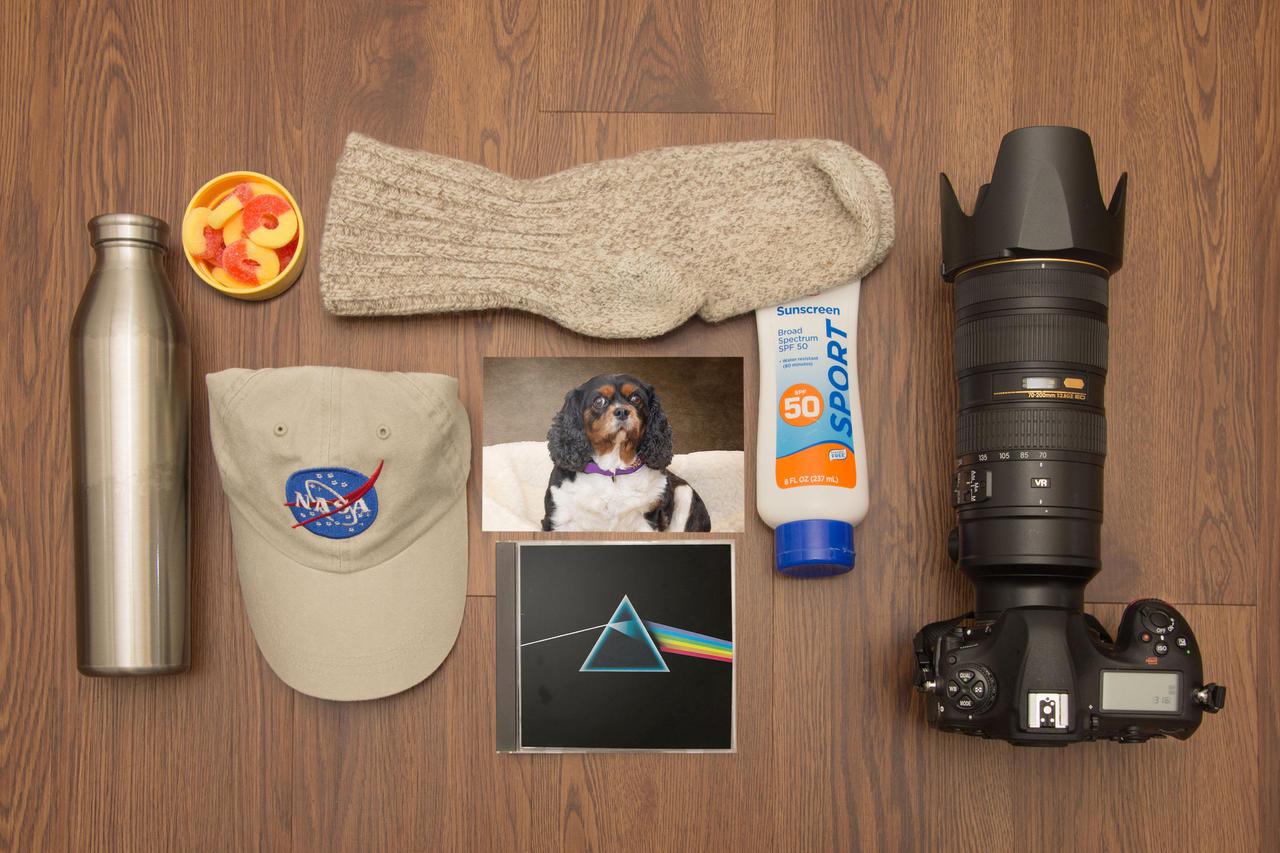
The first thing that went into my Moonkit was my camera. Some of the most iconic photographs ever taken were captured on the surface of the Moon by NASA astronauts. The camera has to go. The hat and sunscreen will be a must to protect me from the unfiltered sunlight. Warm socks? Of course, my feet are always cold. A little “Moon Music” and a photo of Holly, the best dog in the world, will pass the time during breaks. Lastly, I need to eat. Water and gummy peach rings will pack in a small corner of my pack. Marv Smith Lead Photographer, NASA Glenn Research Center
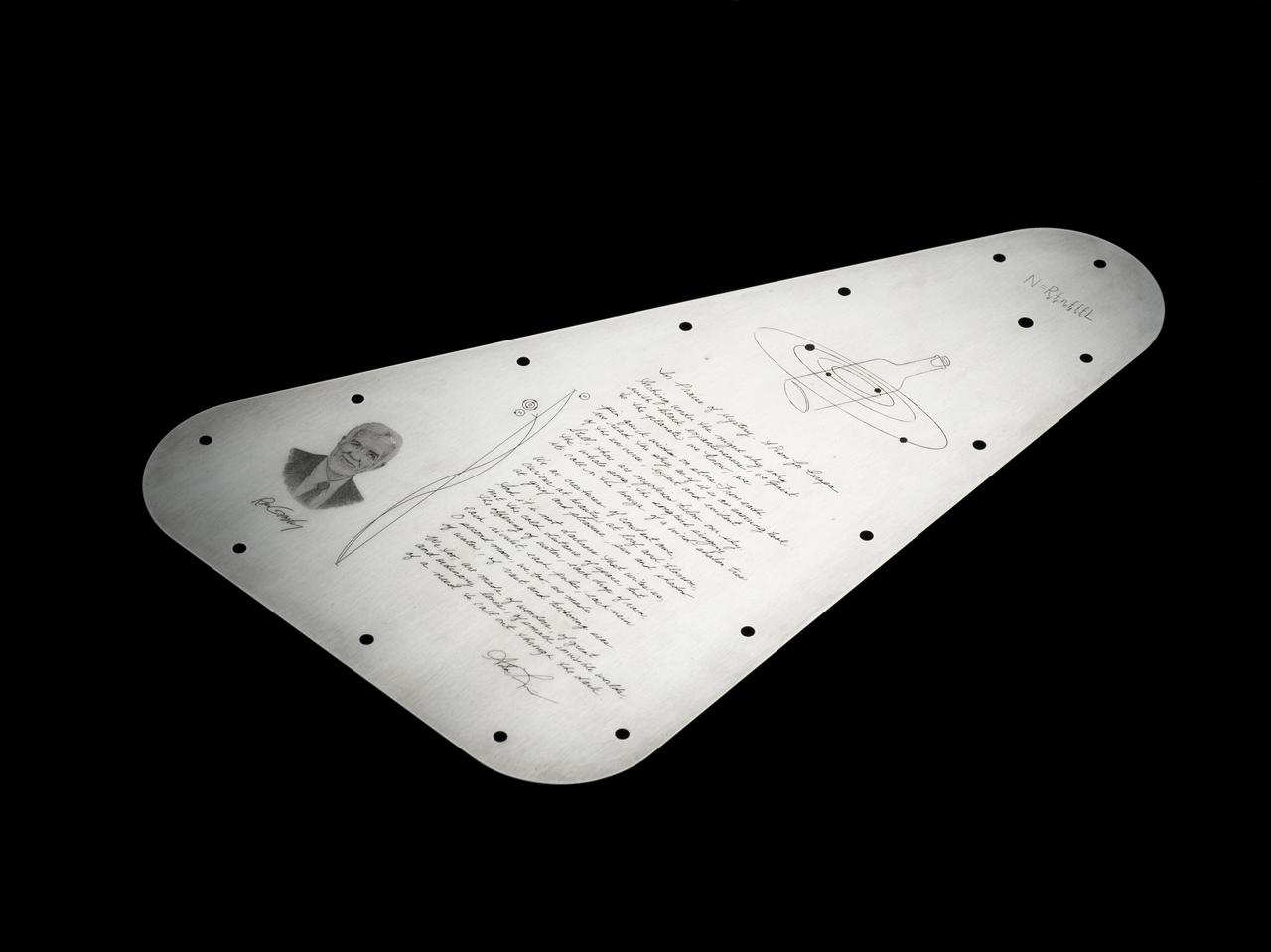
NASA's Europa Clipper spacecraft will carry a special message when it launches in October 2024 and heads toward Jupiter's moon Europa. The moon shows strong evidence of an ocean under its icy crust, with more than twice the amount of water of all of Earth's oceans combined. A triangular metal plate, seen here, will honor that connection to Earth. The plate is made of tantalum metal and is about 7 by 11 inches (18 by 28 centimeters). Engraved on both sides, it seals an opening in the electronics vault, which houses the spacecraft's sensitive electronics. The side shown here features U.S. Poet Laureate Ada Limón's handwritten "In Praise of Mystery: A Poem for Europa," and will be affixed with a silicon microchip stenciled with more than 2.6 million names submitted by the public. The microchip will be placed at the center of the illustration of a bottle amid the Jovian system – a reference to NASA's "Message in a Bottle" campaign, which invited the public to send their names with the spacecraft. The artwork includes the Drake Equation, which was formulated by astronomer Frank Drake in 1961 to estimate the possibility of finding advanced civilizations beyond Earth. Also featured is a reference to the radio frequencies considered plausible for interstellar communication, symbolizing how humanity uses this radio band to listen for messages from the cosmos. These particular frequencies match the radio waves emitted in space by the components of water and are known by astronomers as the "water hole." On the plate, they are depicted as radio emission lines. The plate includes a portrait of one of the founders of planetary science, Ron Greeley, whose early efforts to develop a Europa mission two decades ago laid the foundation for Europa Clipper. In the spirit of the Voyager spacecraft's Golden Record, which carries sounds and images to convey the richness and diversity of life on Earth, the layered message on Europa Clipper aims to spark the imagination and offer a unifying vision. Europa Clipper, set to launch from Kennedy Space Center in Florida, will arrive at the Jupiter system in 2030 and conduct about 50 flybys of the moon Europa. The mission's main science goal is to determine whether there are places below Europa, that could support life. The mission's three main science objectives are to determine the thickness of the moon's icy shell and its surface interactions with the ocean below, to investigate its composition, and to characterize its geology. The mission's detailed exploration of Europa will help scientists better understand the astrobiological potential for habitable worlds beyond our planet. https://photojournal.jpl.nasa.gov/catalog/PIA26062
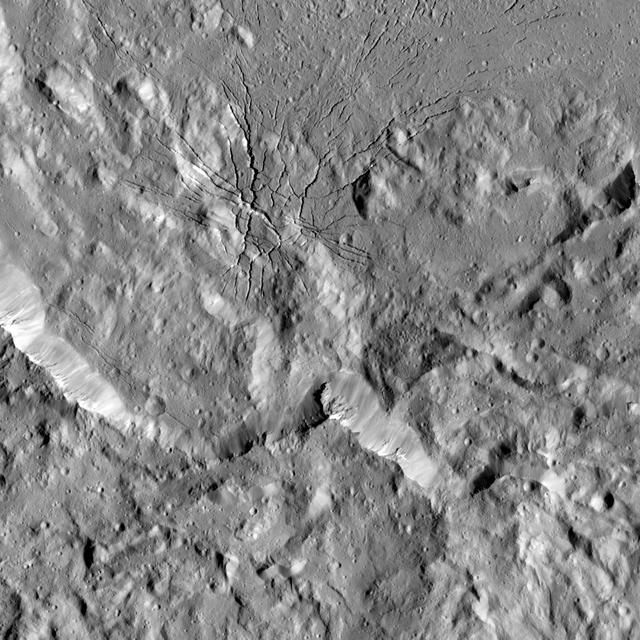
This image shows a complex set of fractures found in the southwestern region of the floor of Occator Crater on Ceres. In this picture, north is at the top. The two intersecting fracture systems (roughly northwest-southeast and southwest-northeast) are part of a larger fault network that extends across Occator's floor. These fractures have been interpreted as evidence that material came up from below and formed a dome shape, as if a piston was pushing Occator's floor from beneath the surface. This may be due to the upwelling of material coming from Ceres' deep interior. An alternative hypothesis is that the deformation is due to volume changes inside a reservoir of icy magma in the shallow subsurface that is in the process of freezing, similar to the change in volume that a bottle of water experiences when put in a freezer. Another set of fractures can be seen parallel to the southwestern wall and is not connected to the Occator fracture network. Dawn took this image during its extended mission on August 17, 2016, from its low-altitude mapping orbit, at a distance of about 240 miles (385 kilometers) above the surface. The image resolution is 120 feet (35 meters) per pixel. The center coordinates are 16 degrees north in latitude and 237 east in longitude. https://photojournal.jpl.nasa.gov/catalog/PIA22091
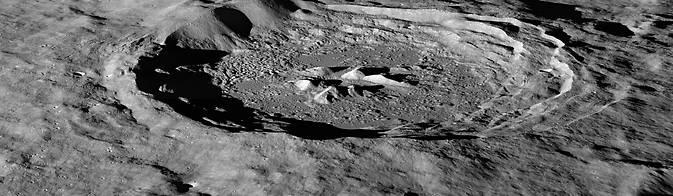
Space travel is difficult and expensive – it would cost thousands of dollars to launch a bottle of water to the moon. The recent discovery of hydrogen-bearing molecules, possibly including water, on the moon has explorers excited because these deposits could be mined if they are sufficiently abundant, sparing the considerable expense of bringing water from Earth. Lunar water could be used for drinking or its components – hydrogen and oxygen – could be used to manufacture important products on the surface that future visitors to the moon will need, like rocket fuel and breathable air. Recent observations by NASA's Lunar Reconnaissance Orbiter (LRO) spacecraft indicate these deposits may be slightly more abundant on crater slopes in the southern hemisphere that face the lunar South Pole. "There’s an average of about 23 parts-per-million-by-weight (ppmw) more hydrogen on Pole-Facing Slopes (PFS) than on Equator-Facing Slopes (EFS)," said Timothy McClanahan of NASA's Goddard Space Flight Center in Greenbelt, Maryland. This is the first time a widespread geochemical difference in hydrogen abundance between PFS and EFS on the moon has been detected. It is equal to a one-percent difference in the neutron signal detected by LRO's Lunar Exploration Neutron Detector (LEND) instrument. McClanahan is lead author of a paper about this research published online October 19 in the journal Icarus. Read more: <a href="http://1.usa.gov/1uaa8s2" rel="nofollow">1.usa.gov/1uaa8s2</a> Photo caption: LRO image of the moon's Hayn Crater, located just northeast of Mare Humboldtianum, dramatically illuminated by the low Sun casting long shadows across the crater floor. Image Credit: NASA/GSFC/Arizona State University <b><a href="http://www.nasa.gov/audience/formedia/features/MP_Photo_Guidelines.html" rel="nofollow">NASA image use policy.</a></b> <b><a href="http://www.nasa.gov/centers/goddard/home/index.html" rel="nofollow">NASA Goddard Space Flight Center</a></b> enables NASA’s mission through four scientific endeavors: Earth Science, Heliophysics, Solar System Exploration, and Astrophysics. Goddard plays a leading role in NASA’s accomplishments by contributing compelling scientific knowledge to advance the Agency’s mission. <b>Follow us on <a href="http://twitter.com/NASAGoddardPix" rel="nofollow">Twitter</a></b> <b>Like us on <a href="http://www.facebook.com/pages/Greenbelt-MD/NASA-Goddard/395013845897?ref=tsd" rel="nofollow">Facebook</a></b> <b>Find us on <a href="http://instagram.com/nasagoddard?vm=grid" rel="nofollow">Instagram</a></b>