
STS-102 mission astronauts James S. Voss and James D. Weatherbee share a congratulatory handshake as the Space Shuttle Orbiter Discovery successfully docks with the International Space Station (ISS). Photographed from left to right are: Astronauts Susan J. Helms, mission specialist; James S. Voss, Expedition 2 crew member; James D. Weatherbee, mission commander; Andrew S.W. Thomas, mission specialist; and nearly out of frame is James M. Kelley, Pilot. Launched March 8, 2001, STS-102's primary cargo was the Leonardo, the Italian Space Agency-built Multipurpose Logistics Module (MPLM). The Leonardo MPLM is the first of three such pressurized modules that will serve as ISS' moving vans, carrying laboratory racks filled with equipment, experiments, and supplies to and from the Station aboard the Space Shuttle. The cylindrical module is approximately 21-feet long and 15- feet in diameter, weighing almost 4.5 tons. It can carry up to 10 tons of cargo in 16 standard Space Station equipment racks. Of the 16 racks the module can carry, 5 can be furnished with power, data, and fluid to support refrigerators or freezers. In order to function as an attached station module as well as a cargo transport, the logistics module also includes components that provide life support, fire detection and suppression, electrical distribution, and computer functions. NASA's 103rd overall mission and the 8th Space Station Assembly Flight, STS-102 mission also served as a crew rotation flight. It delivered the Expedition Two crew to the Station and returned the Expedition One crew back to Earth.
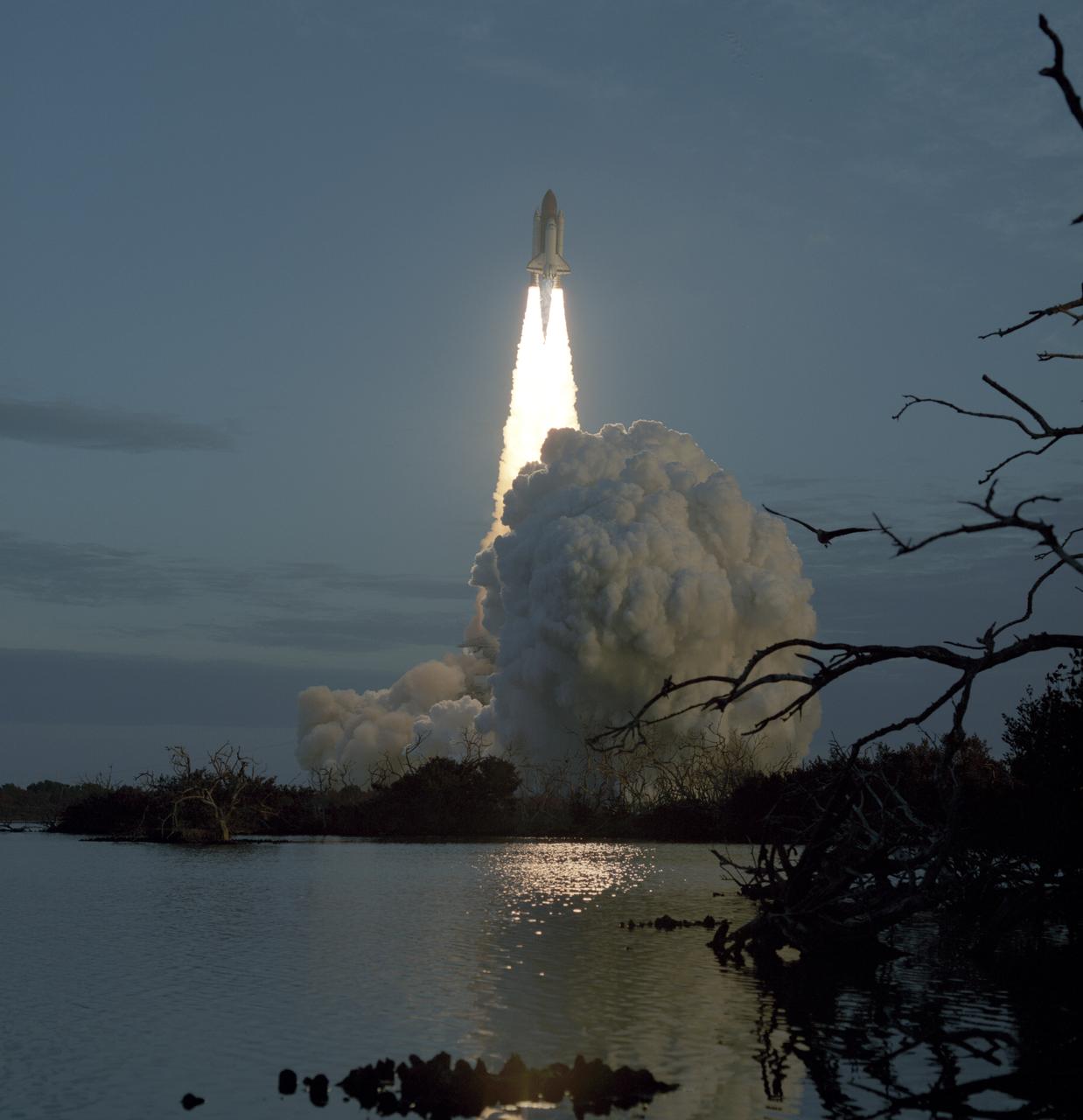
Five astronauts launched aboard the Space Shuttle Columbia on January 9, 1990 at 7:35:00am (EST) for the STS-32 mission. The crew included David C. Brandenstein, commander; James D. Weatherbee, pilot; and mission specialists Marsha S. Ivins, G. David Low, and Bonnie J. Dunbar. Primary objectives of the mission were the deployment of the SYNCOM IV-F5 defense communications satellite and the retrieval of NASA’s Long Duration Exposure Facility (LDEF).
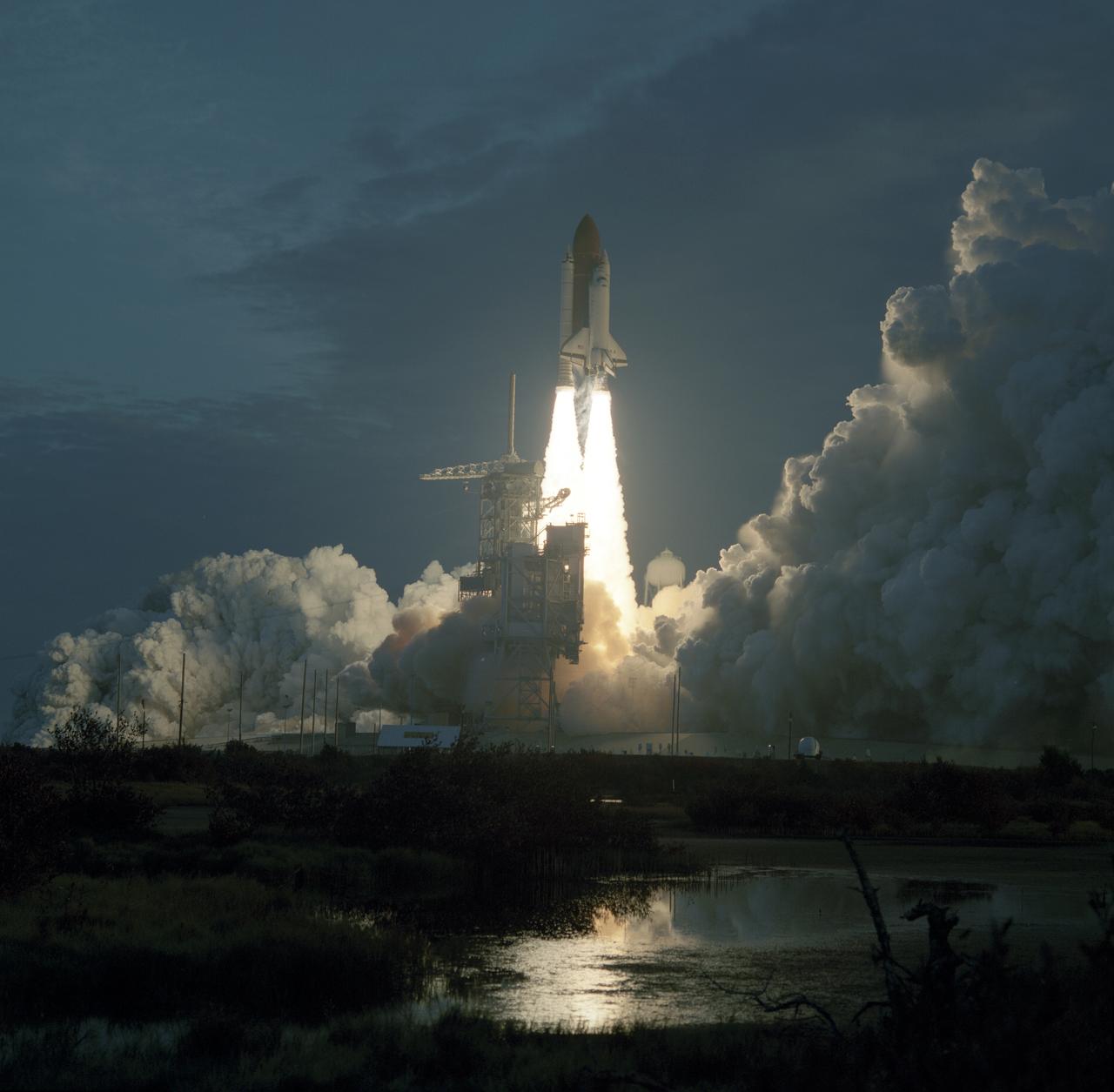
Five astronauts launched aboard the Space Shuttle Columbia on January 9, 1990 at 7:35:00am (EST) for the STS-32 mission. The crew included David C. Brandenstein, commander; James D. Weatherbee, pilot; and mission specialists Marsha S. Ivins, G. David Low, and Bonnie J. Dunbar. Primary objectives of the mission were the deployment of the SYNCOM IV-F5 defense communications satellite and the retrieval of NASA’s Long Duration Exposure Facility (LDEF).
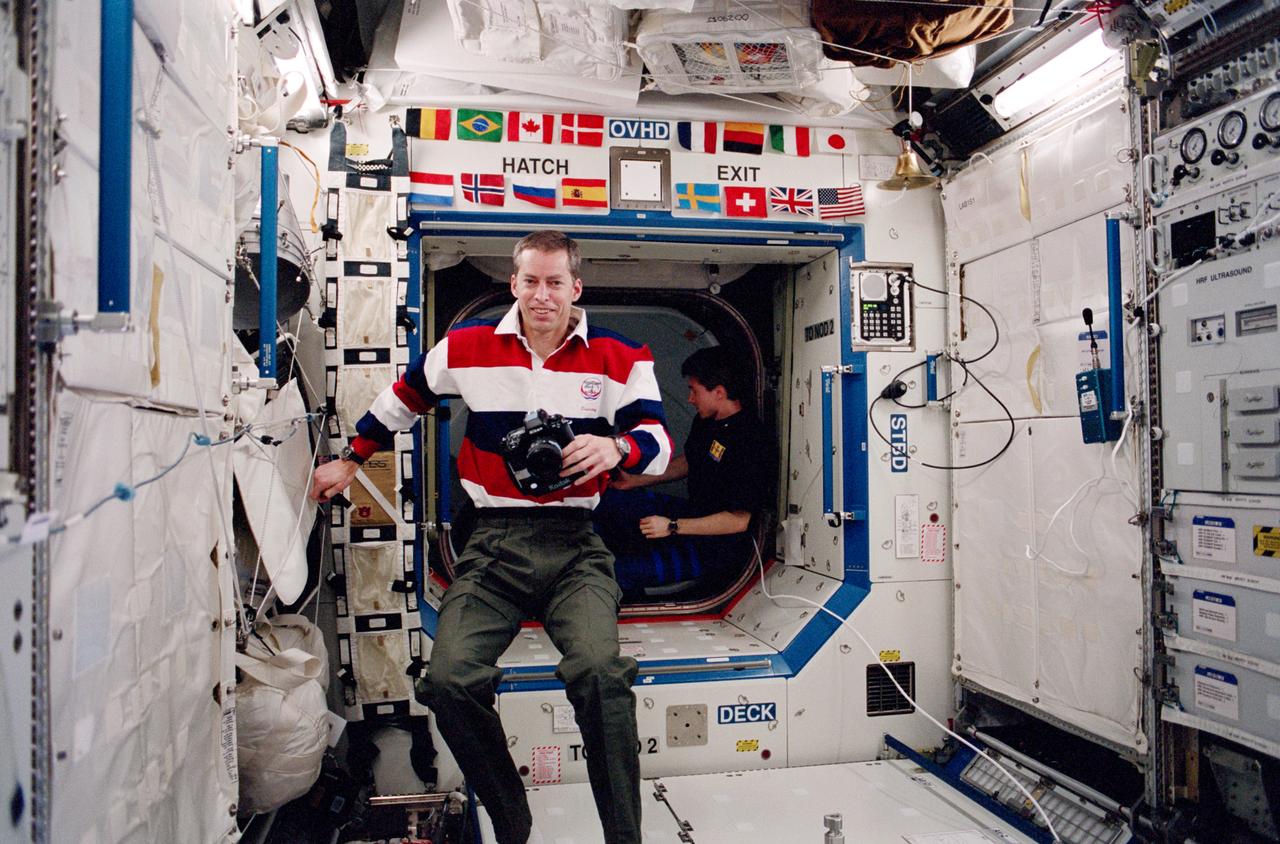
In this Space Shuttle STS-102 mission image, the Payload Equipment Restraint System H-Strap is shown at the left side of the U.S. Laboratory hatch and behind Astronaut James D. Weatherbee, mission specialist. PERS is an integrated modular system of components designed to assist the crew of the International Space Station (ISS) in restraining and carrying necessary payload equipment and tools in a microgravity environment. The Operations Development Group, Flight Projects Directorate at the Marshall Space Flight Center (MSFC), while providing operation support to the ISS Materials Science Research Facility (MSRF), recognized the need for an on-orbit restraint system to facilitate control of lose objects, payloads, and tools. The PERS is the offspring of that need and it helps the ISS crew manage tools and rack components that would otherwise float away in the near-zero gravity environment aboard the Space Station. The system combines Kevlar straps, mesh pockets, Velcro and a variety of cornecting devices into a portable, adjustable system. The system includes the Single Strap, the H-Strap, the Belly Pack, the Laptop Restraint Belt, and the Tool Page Case. The Single Strap and the H-Strap were flown on this mission. The PERS concept was developed by industrial design students at Auburn University and the MSFC Flight Projects Directorate.