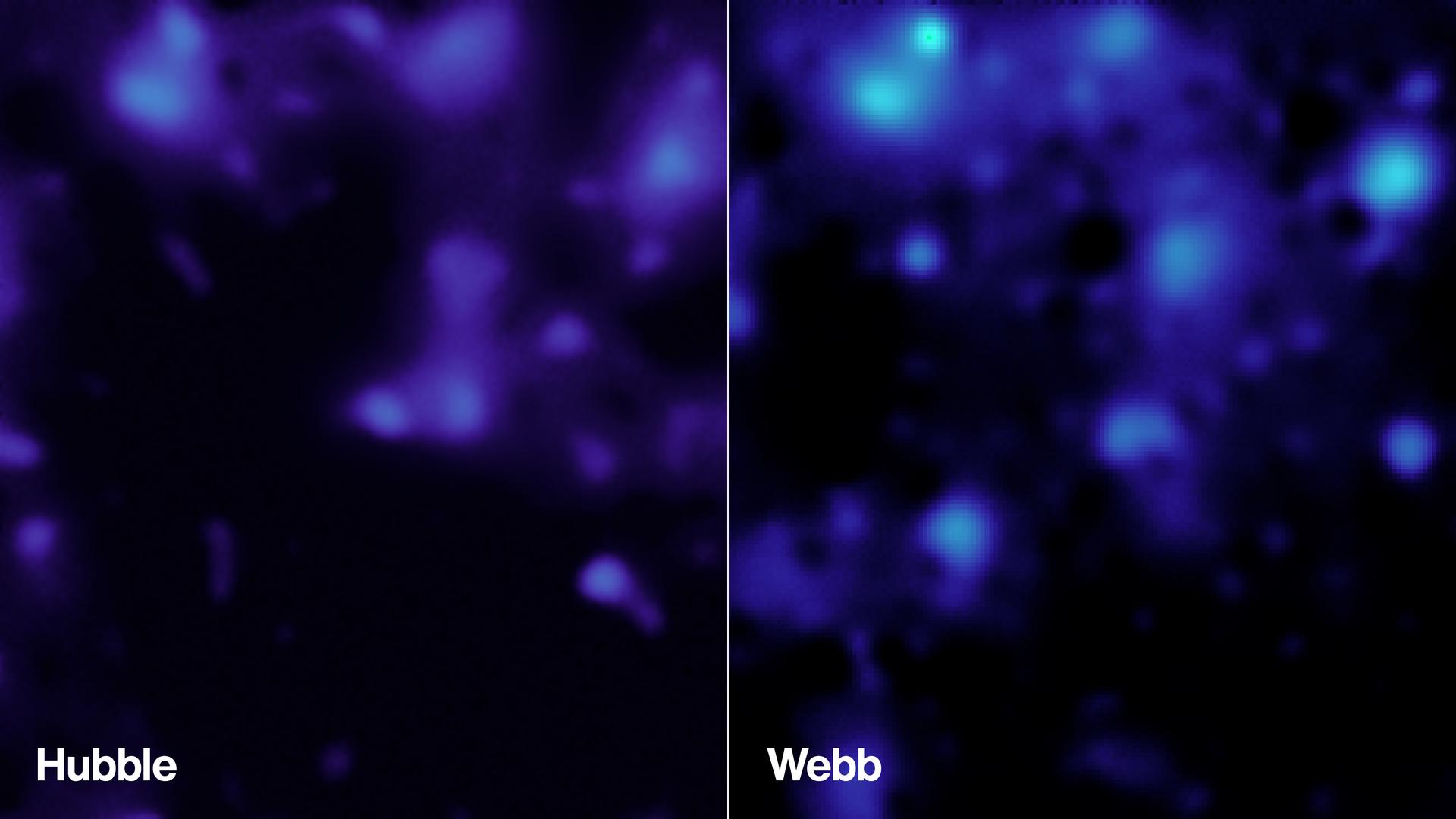
These images show the presence of dark matter in the same region of sky, created using data from NASA’s Webb telescope in 2026 (right) and from the Hubble Space Telescope in 2007 (left). Webb’s higher resolution is providing new insights into how this invisible component influences the distribution of ordinary matter in the universe. The James Webb Space Telescope is solving mysteries in our solar system, looking beyond to distant worlds around other stars, and probing the mysterious structures and origins of our universe and our place in it. Webb is an international program led by NASA with its partners, ESA (European Space Agency) and CSA (Canadian Space Agency). Webb’s MIRI was developed through a 50-50 partnership between NASA and ESA. A division of Caltech in Pasadena, California, JPL led the U.S. contribution to MIRI. JPL also led development of MIRI’s cryocooler, done in collaboration with Northrop Grumman in Redondo Beach, California, and NASA’s Goddard Space Flight Center in Greenbelt, Maryland. To learn more about Webb, visit: https://science.nasa.gov/webb
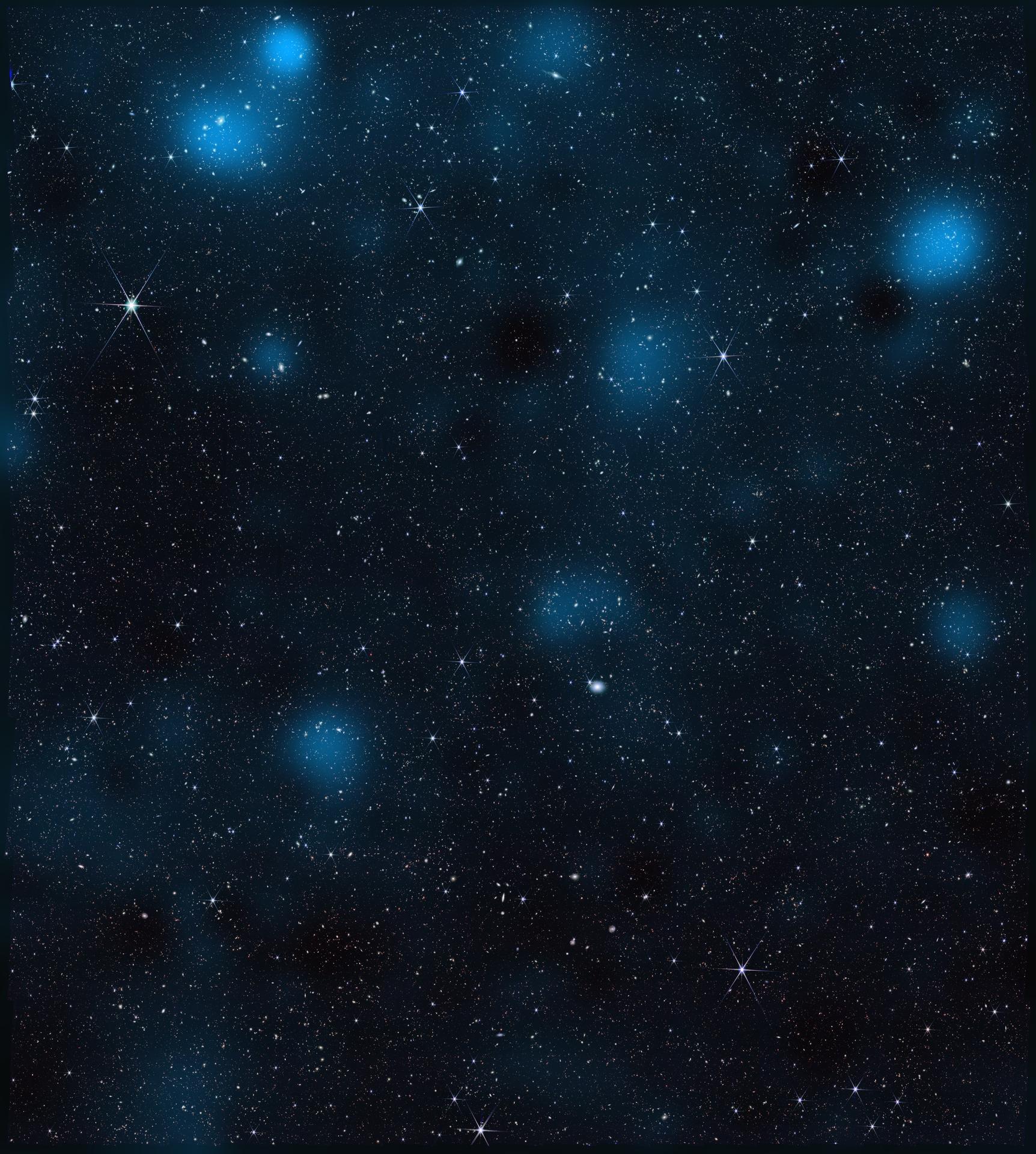
This image from NASA’s James Webb Space Telescope, containing nearly 800,000 galaxies, is overlaid with a map of dark matter, represented in blue. Brighter blue areas indicate a higher density of dark matter. Researchers used Webb data to find the dark matter — which is invisible — via its gravitational influence on regular matter. The area of sky shown here is 0.54 square degrees (about 2½ times the size of the full Moon) and located in the constellation Sextans. Webb’s Near-Infrared Camera (NIRCam) peered at this region for a total of about 255 hours. Dark matter doesn’t emit, reflect, absorb, or even block light, and is therefore not visible to the human eye or traditional telescopes. But it does interact with the universe through gravity, and large clumps or clusters of dark matter have enough mass to curve space itself. Light traveling to Earth from distant galaxies becomes slightly distorted as it passes through the curved fabric of spacetime. In some cases, the warping is significant enough that it is apparent to the naked eye, almost as if the galaxy were being viewed through a warped windowpane, an effect called strong gravitational lensing. In the case of the dark matter map shown here, scientists inferred dark matter’s distribution by relying instead on an effect called weak gravitational lensing, which leads to much more subtle distortions of the light from thousands of galaxies. The dark matter in this area of sky was also mapped in 2007 using data from NASA’s Hubble Space Telescope. The Webb map contains about 10 times more galaxies than do maps of the area made by ground-based observatories and twice as many as Hubble’s map. It reveals new clumps of dark matter and captures a higher-resolution view compared to the Hubble map. Both the Hubble and Webb dark matter maps are part of a project called the Cosmic Evolution Survey (COSMOS). The full COSMOS “field” is 2 square degrees (about 10 times the size of the full Moon) and has been imaged by at least 15 telescopes in space and on the ground. Observing the same region with many different telescopes allows scientists to combine complementary views to understand how galaxies grow and how dark matter influences their evolution. Only Webb and Hubble data have been used to map dark matter in the region. To refine measurements of the distance to many galaxies for the map, the team used Webb’s Mid-Infrared Instrument (MIRI), designed and managed through launch by the agency’s Jet Propulsion Laboratory, along with other space- and ground-based telescopes. The wavelengths that MIRI detects also make it adept at detecting galaxies obscured by cosmic dust clouds. The James Webb Space Telescope is solving mysteries in our solar system, looking beyond to distant worlds around other stars, and probing the mysterious structures and origins of our universe and our place in it. Webb is an international program led by NASA with its partners, ESA (European Space Agency) and CSA (Canadian Space Agency). Webb’s MIRI was developed through a 50-50 partnership between NASA and ESA. A division of Caltech in Pasadena, California, JPL led the U.S. contribution to MIRI. JPL also led development of MIRI’s cryocooler, done in collaboration with Northrop Grumman in Redondo Beach, California, and NASA’s Goddard Space Flight Center in Greenbelt, Maryland. To learn more about Webb, visit: https://science.nasa.gov/webb
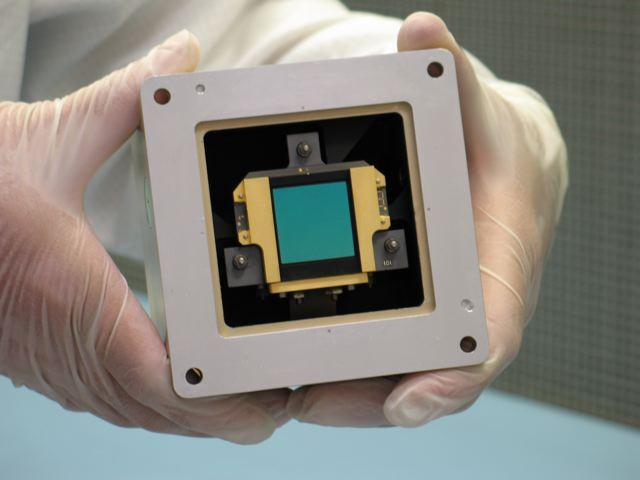
This image shows a model of one of three detectors for the Mid-Infrared Instrument on NASA James Webb Space Telescope.
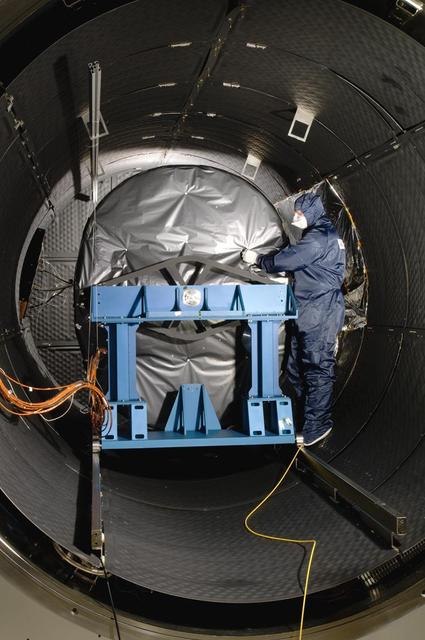
The Mid-Infrared Instrument, a component of NASA James Webb Space Telescope, underwent testing inside the thermal space test chamber at the Science and Technology Facilities Council Rutherford Appleton Laboratory Space in Oxfordshire, England.
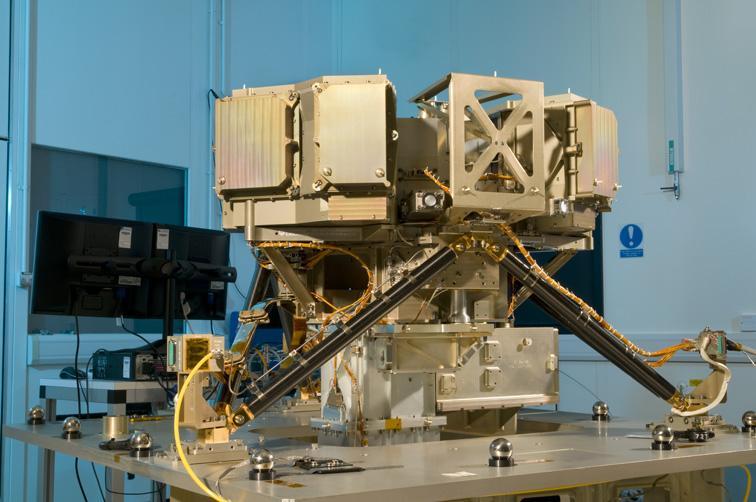
The Mid-Infrared Instrument, a component of NASA James Webb Space Telescope, underwent alignment testing at the Science and Technology Facilities Council Rutherford Appleton Laboratory Space in Oxfordshire, England.
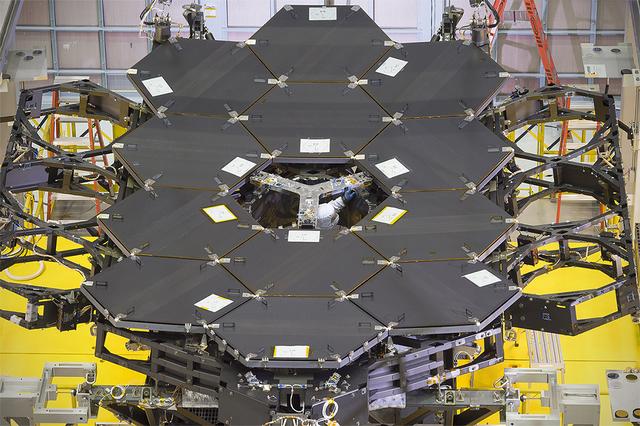
Caption: One dozen (out of 18) flight mirror segments that make up the primary mirror on NASA's James Webb Space Telescope have been installed at NASA's Goddard Space Flight Center. Credits: NASA/Chris Gunn More: Since December 2015, the team of scientists and engineers have been working tirelessly to install all the primary mirror segments onto the telescope structure in the large clean room at NASA's Goddard Space Flight Center in Greenbelt, Maryland. The twelfth mirror was installed on January 2, 2016. "This milestone signifies that all of the hexagonal shaped mirrors on the fixed central section of the telescope structure are installed and only the 3 mirrors on each wing are left for installation," said Lee Feinberg, NASA's Optical Telescope Element Manager at NASA Goddard. "The incredibly skilled and dedicated team assembling the telescope continues to find ways to do things faster and more efficiently." Each hexagonal-shaped segment measures just over 4.2 feet (1.3 meters) across and weighs approximately 88 pounds (40 kilograms). After being pieced together, the 18 primary mirror segments will work together as one large 21.3-foot (6.5-meter) mirror. The primary mirror will unfold and adjust to shape after launch. The mirrors are made of ultra-lightweight beryllium. The mirrors are placed on the telescope's backplane using a robotic arm, guided by engineers. The full installation is expected to be completed in a few months. The mirrors were built by Ball Aerospace & Technologies Corp., Boulder, Colorado. Ball is the principal subcontractor to Northrop Grumman for the optical technology and lightweight mirror system. The installation of the mirrors onto the telescope structure is performed by Harris Corporation of Rochester, New York. Harris Corporation leads integration and testing for the telescope. While the mirror assembly is a very significant milestone, there are many more steps involved in assembling the Webb telescope. The primary mirror and the tennis-court-sized sunshield are the largest and most visible components of the Webb telescope. However, there are four smaller components that are less visible, yet critical. The instruments that will fly aboard Webb - cameras and spectrographs with detectors able to record extremely faint signals — are part of the Integrated Science Instrument Module (ISIM), which is currently undergoing its final cryogenic vacuum test and will be integrated with the mirror later this year.

To keep Webb’s spacecraft element and its sensitive instruments contaminant free, technicians and engineers enclose it in a protective clamshell that serves as a mobile clean room while in transport. Credits: NASA's Goddard Space Flight Center/Chris Gunn more info: https://www.nasa.gov/feature/goddard/2019/nasa-s-webb-is-sound-after-completing-critical-milestones
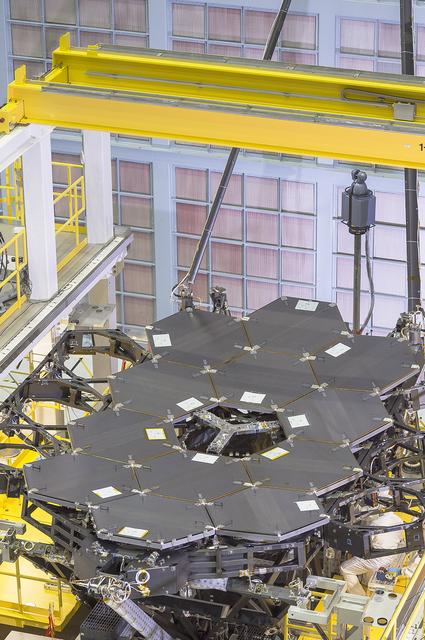
A view of the one dozen (out of 18) flight mirror segments that make up the primary mirror on NASA's James Webb Space Telescope have been installed at NASA's Goddard Space Flight Center. Credits: NASA/Chris Gunn More: Since December 2015, the team of scientists and engineers have been working tirelessly to install all the primary mirror segments onto the telescope structure in the large clean room at NASA's Goddard Space Flight Center in Greenbelt, Maryland. The twelfth mirror was installed on January 2, 2016. "This milestone signifies that all of the hexagonal shaped mirrors on the fixed central section of the telescope structure are installed and only the 3 mirrors on each wing are left for installation," said Lee Feinberg, NASA's Optical Telescope Element Manager at NASA Goddard. "The incredibly skilled and dedicated team assembling the telescope continues to find ways to do things faster and more efficiently." Each hexagonal-shaped segment measures just over 4.2 feet (1.3 meters) across and weighs approximately 88 pounds (40 kilograms). After being pieced together, the 18 primary mirror segments will work together as one large 21.3-foot (6.5-meter) mirror. The primary mirror will unfold and adjust to shape after launch. The mirrors are made of ultra-lightweight beryllium. The mirrors are placed on the telescope's backplane using a robotic arm, guided by engineers. The full installation is expected to be completed in a few months. The mirrors were built by Ball Aerospace & Technologies Corp., Boulder, Colorado. Ball is the principal subcontractor to Northrop Grumman for the optical technology and lightweight mirror system. The installation of the mirrors onto the telescope structure is performed by Harris Corporation of Rochester, New York. Harris Corporation leads integration and testing for the telescope. While the mirror assembly is a very significant milestone, there are many more steps involved in assembling the Webb telescope. The primary mirror and the tennis-court-sized sunshield are the largest and most visible components of the Webb telescope. However, there are four smaller components that are less visible, yet critical. The instruments that will fly aboard Webb - cameras and spectrographs with detectors able to record extremely faint signals — are part of the Integrated Science Instrument Module (ISIM), which is currently undergoing its final cryogenic vacuum test and will be integrated with the mirror later this year.
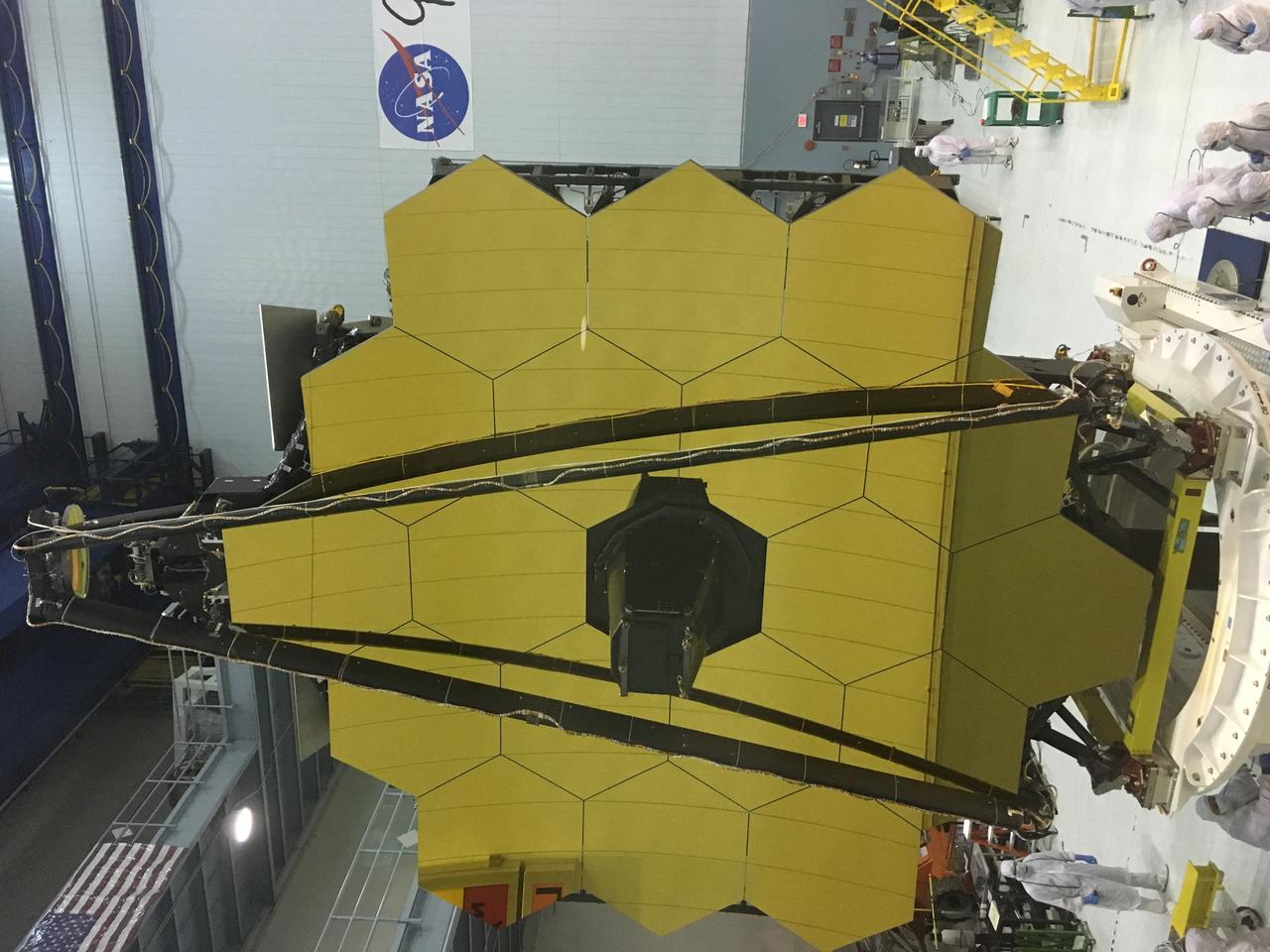
A rare view of the James Webb Space Telescope face-on, from the NASA Goddard cleanroom observation window.

A rare view of the James Webb Space Telescope face-on, from the NASA Goddard cleanroom observation window.
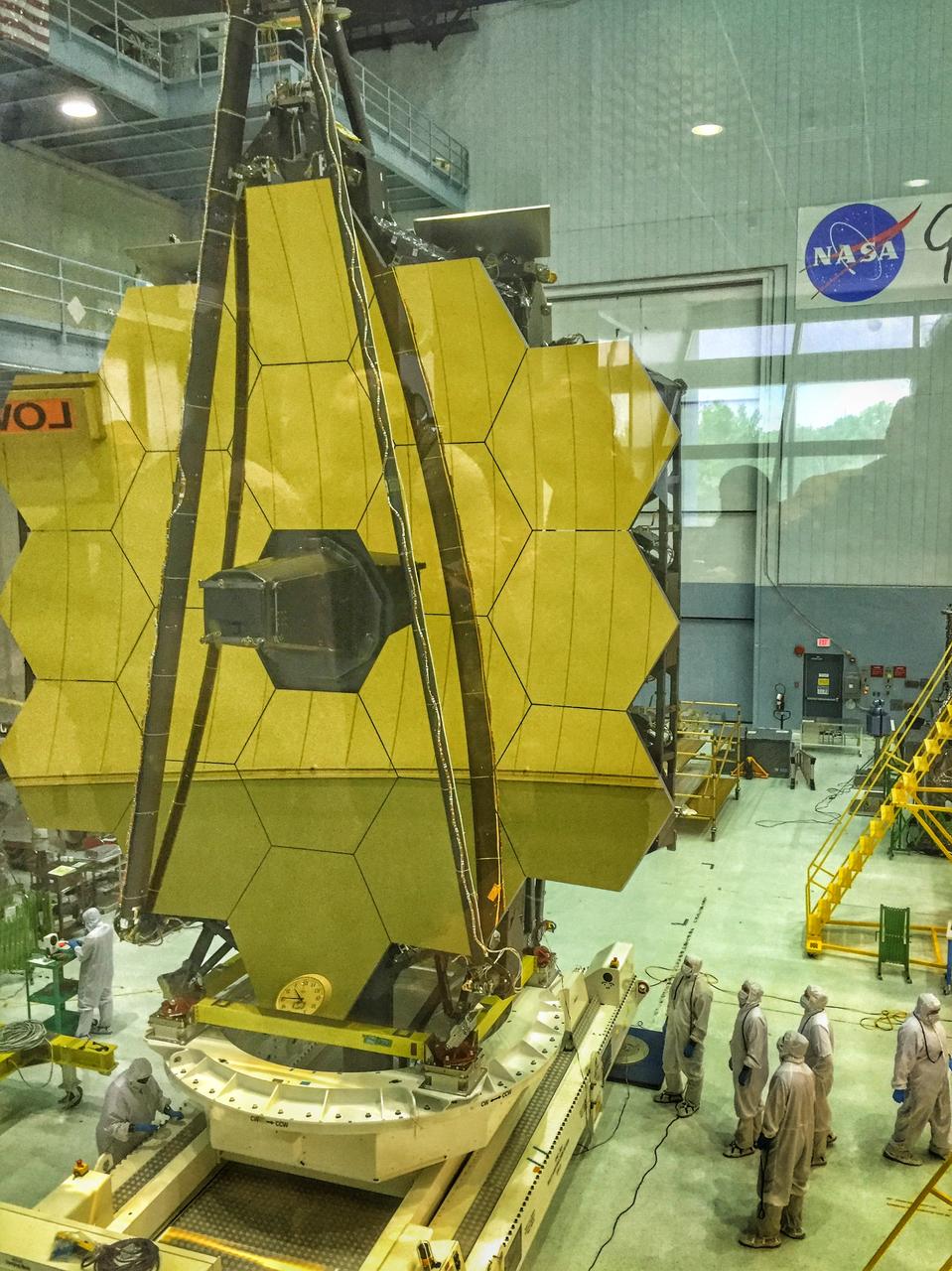
A rare view of the James Webb Space Telescope face-on, from the NASA Goddard cleanroom observation window.
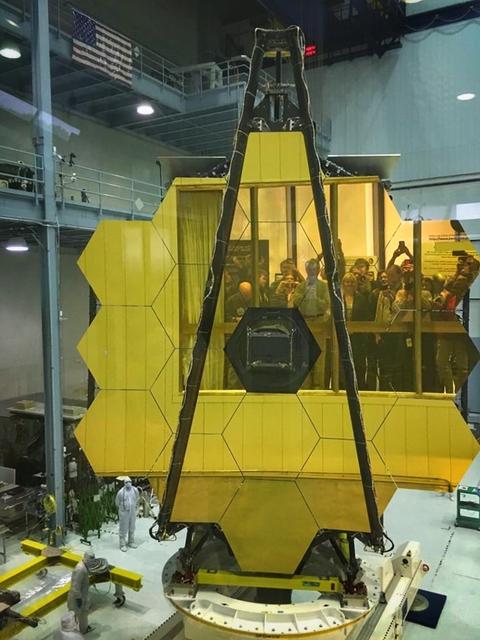
A rare view of the James Webb Space Telescope face-on, from the NASA Goddard cleanroom observation window.

A rare view of the James Webb Space Telescope face-on, from the NASA Goddard cleanroom observation window.
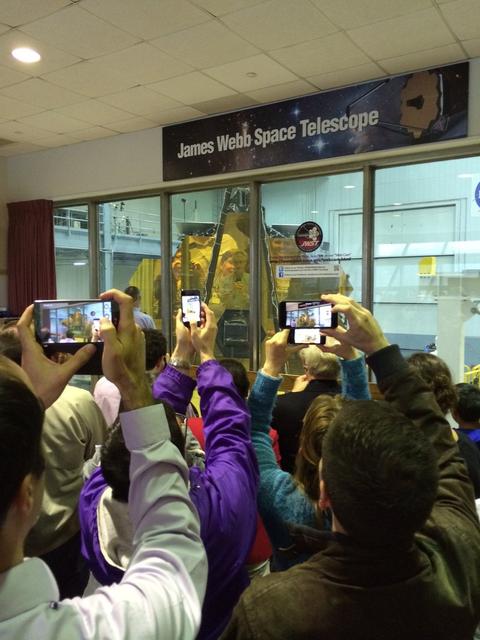
A rare view of the James Webb Space Telescope face-on, from the NASA Goddard cleanroom observation window.
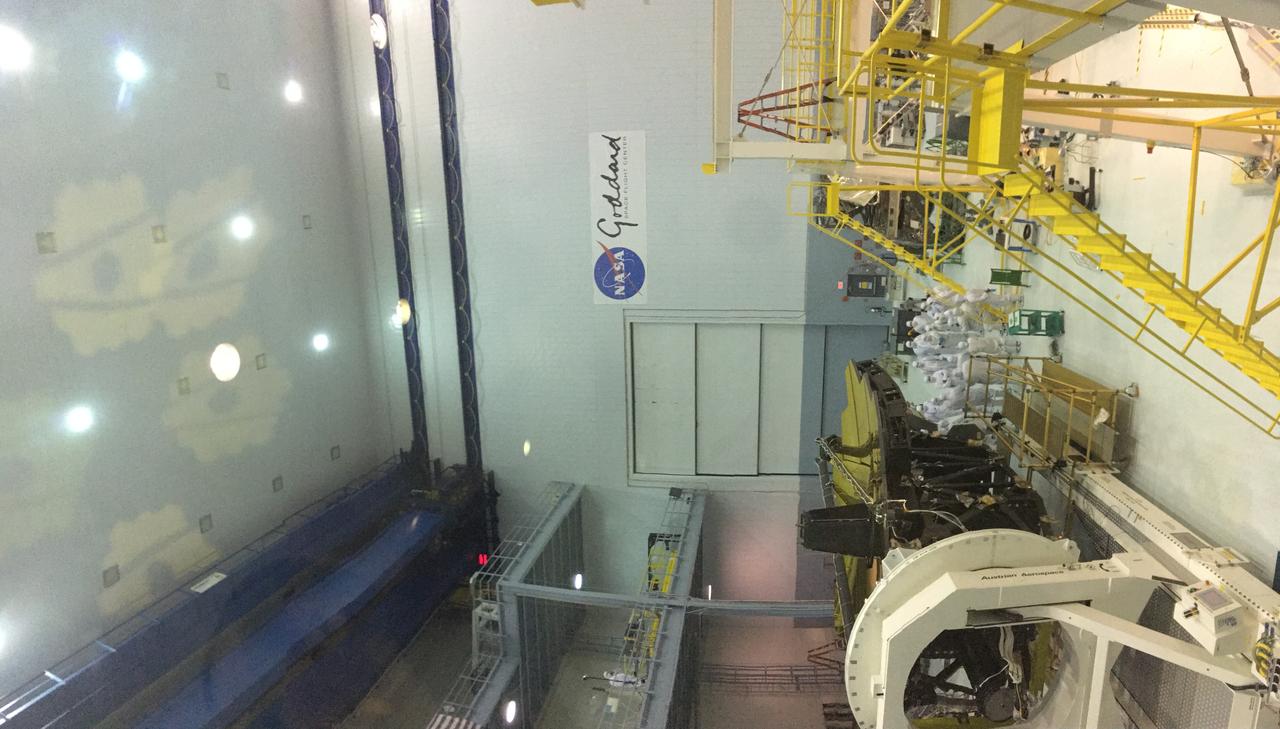
A rare view of the James Webb Space Telescope face-on, from the NASA Goddard cleanroom observation window.
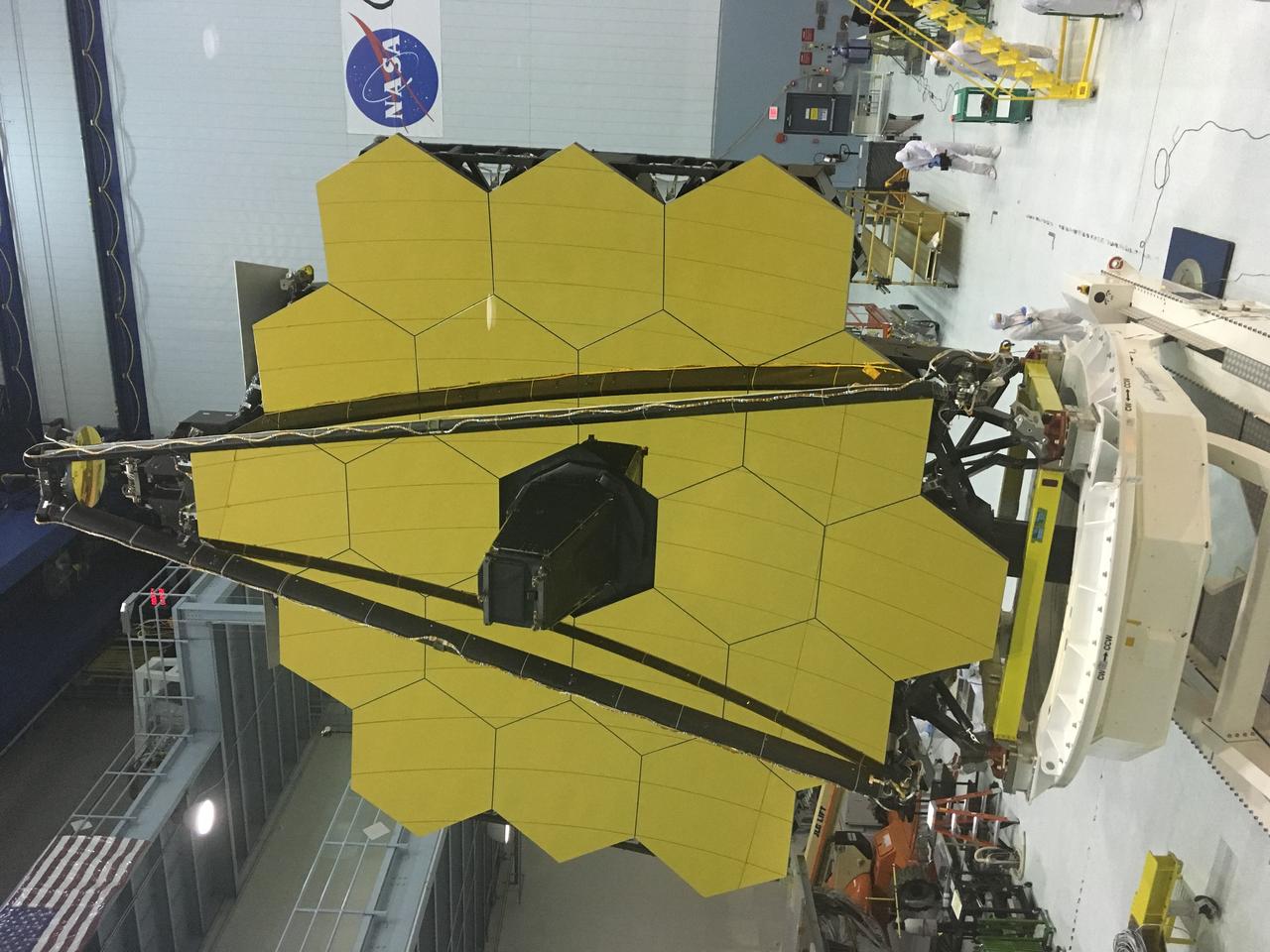
A rare view of the James Webb Space Telescope face-on, from the NASA Goddard cleanroom observation window.
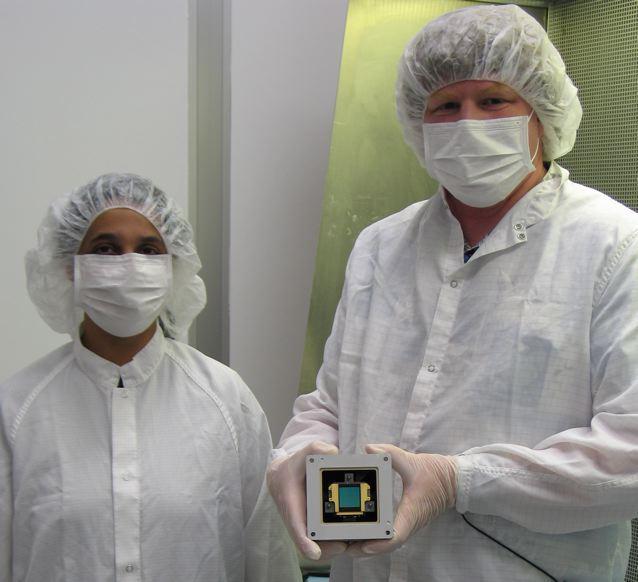
Mike Ressler right and Kalyani Sukhatme of NASA JPL pose in the clean room with a model component, called a focal plane module, of the Mid-Infrared Instrument on NASA James Webb Space Telescope.
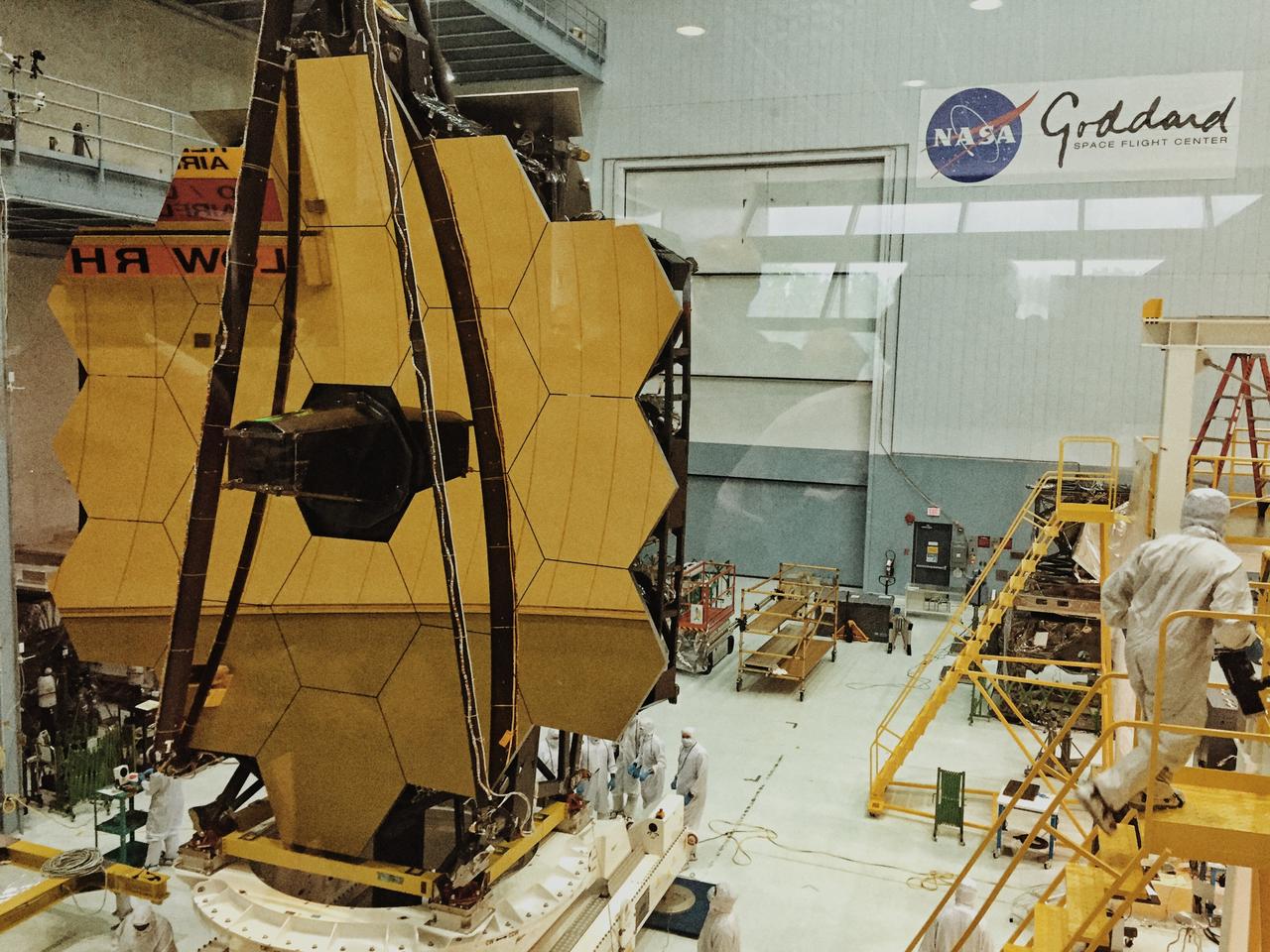
A rare view of the James Webb Space Telescope face-on, from the NASA Goddard cleanroom observation window. Credit: NASA/Goddard/Rebecca Roth
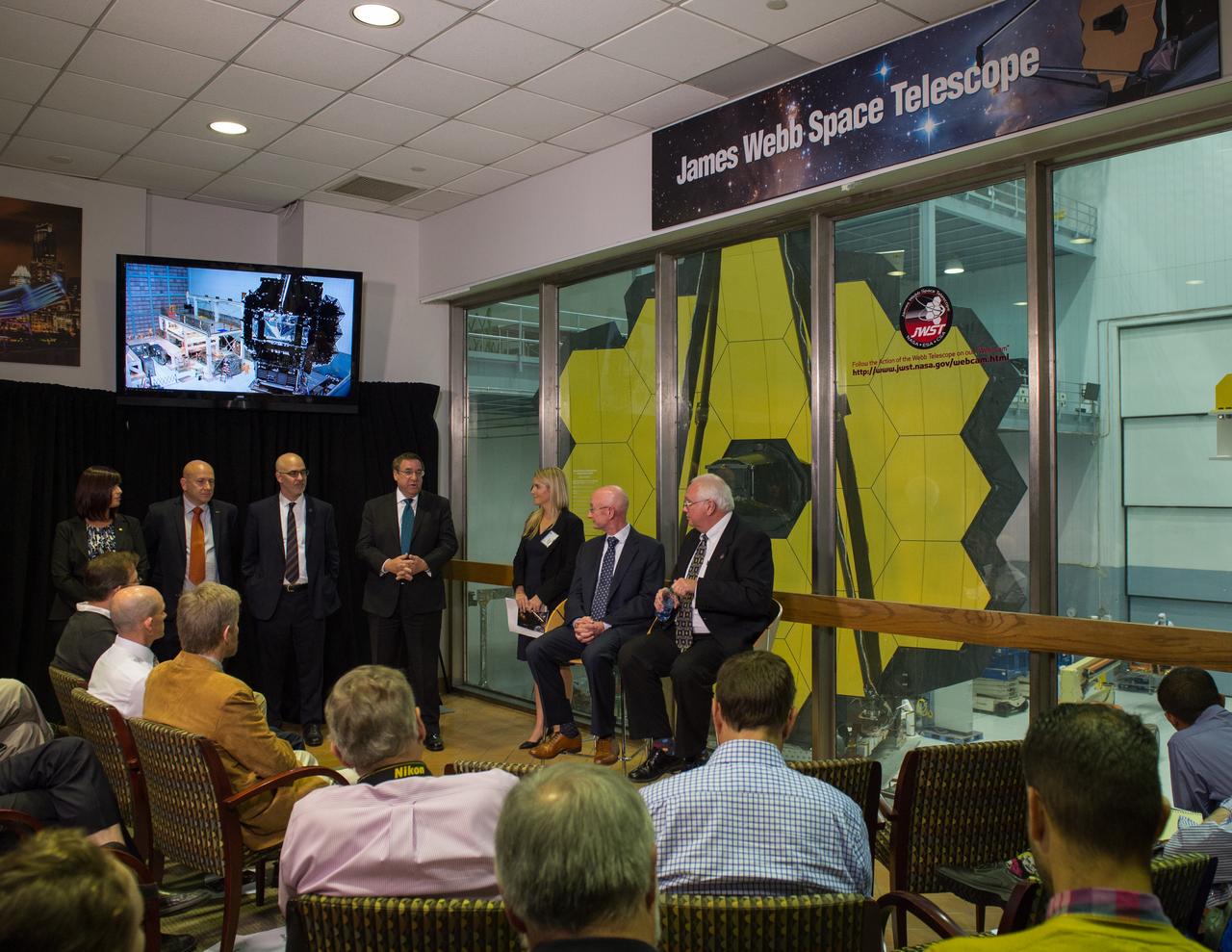
James Webb Space Telescope Mirror Reveal
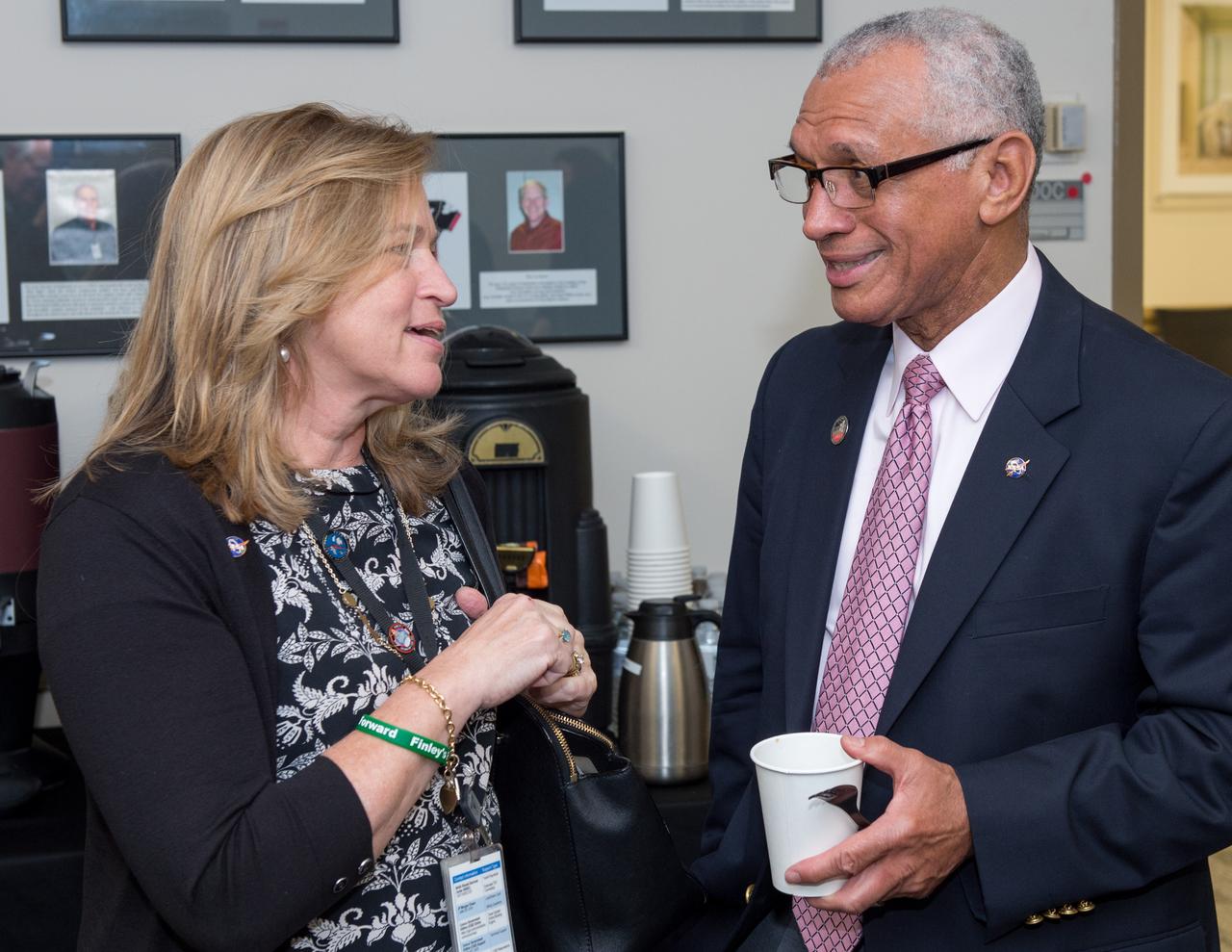
James Webb Space Telescope (JWST) Town Hall -
James Webb Space Telescope Mirror Reveal
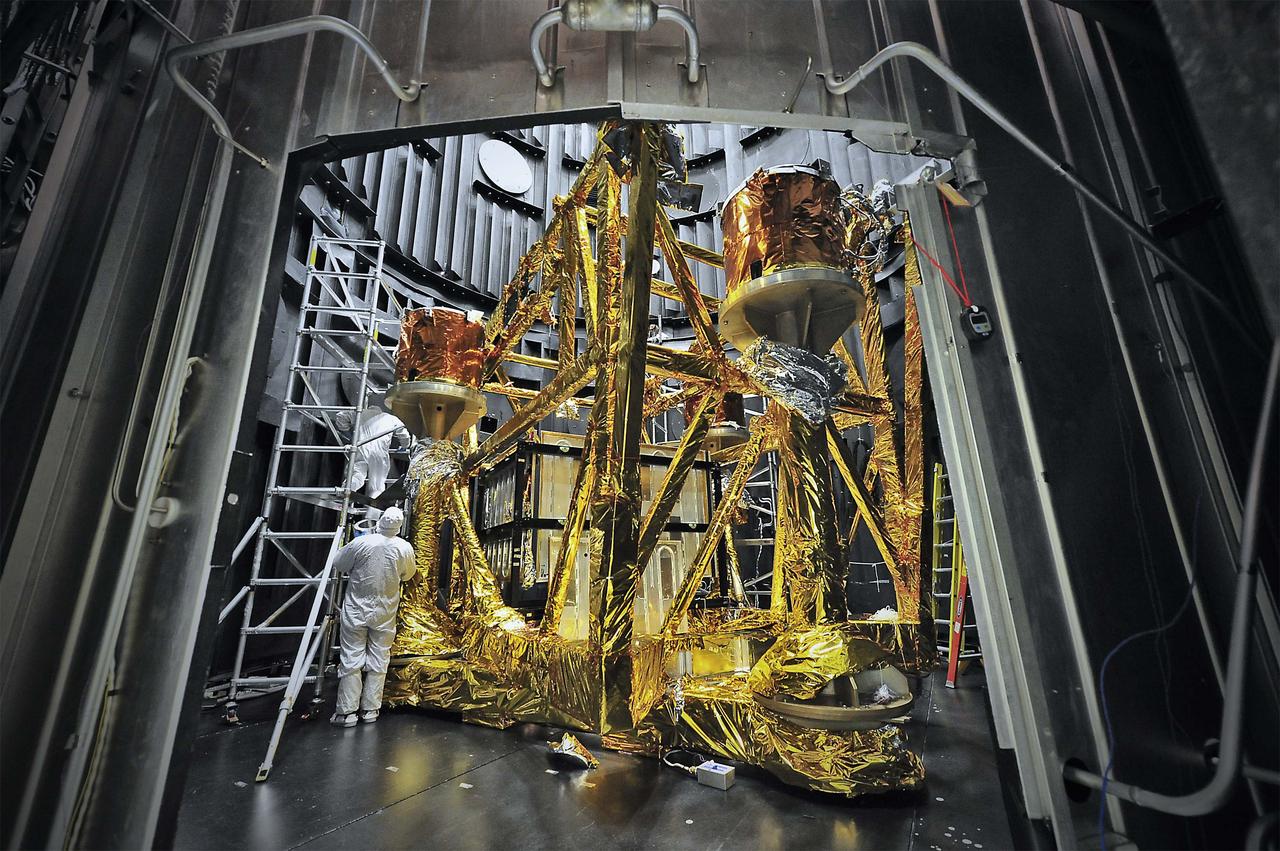
This photograph shows support structures wrapped in gold thermal blankets that look like a golden cage. The structure is housed within the vacuum chamber called the Space Environment Simulator, or SES. The SES is located at NASA's Goddard Space Flight Center in Greenbelt, Md., where components of the James Webb Space Telescope are being tested to withstand the extreme temperatures of space. The entire structure is a system of supports and thermal control devices for the series of thermal tests. Visible in the photo is the lower GESHA (Ground Environmental SES Hardware Assembly).The box in the center photo is a group of four LN2 (liquid nitrogen) panels that are designed to keep it at around 100 kelvins. The panels surround the primary mirror of the OTE (Optical Telescope Element) Simulator or OSIM. When NASA's Webb telescope launches in 2018, it will fly a million miles from Earth and enable scientists on Earth to see the most detailed pictures of the universe. For another photo of the SES, visit: <a href="http://www.nasa.gov/topics/technology/features/webb_osim.html" rel="nofollow">www.nasa.gov/topics/technology/features/webb_osim.html</a> For more information about NASA's James Webb Space Telescope, visit: <a href="http://www.jwst.nasa.gov" rel="nofollow">www.jwst.nasa.gov</a> Photo: NASA/Chris Gunn Text: NASA/Rob Gutro <b><a href="http://www.nasa.gov/audience/formedia/features/MP_Photo_Guidelines.html" rel="nofollow">NASA image use policy.</a></b> <b><a href="http://www.nasa.gov/centers/goddard/home/index.html" rel="nofollow">NASA Goddard Space Flight Center</a></b> enables NASA’s mission through four scientific endeavors: Earth Science, Heliophysics, Solar System Exploration, and Astrophysics. Goddard plays a leading role in NASA’s accomplishments by contributing compelling scientific knowledge to advance the Agency’s mission. <b>Follow us on <a href="http://twitter.com/NASA_GoddardPix" rel="nofollow">Twitter</a></b> <b>Like us on <a href="http://www.facebook.com/pages/Greenbelt-MD/NASA-Goddard/395013845897?ref=tsd" rel="nofollow">Facebook</a></b> <b>Find us on <a href="http://instagram.com/nasagoddard?vm=grid" rel="nofollow">Instagram</a></b>
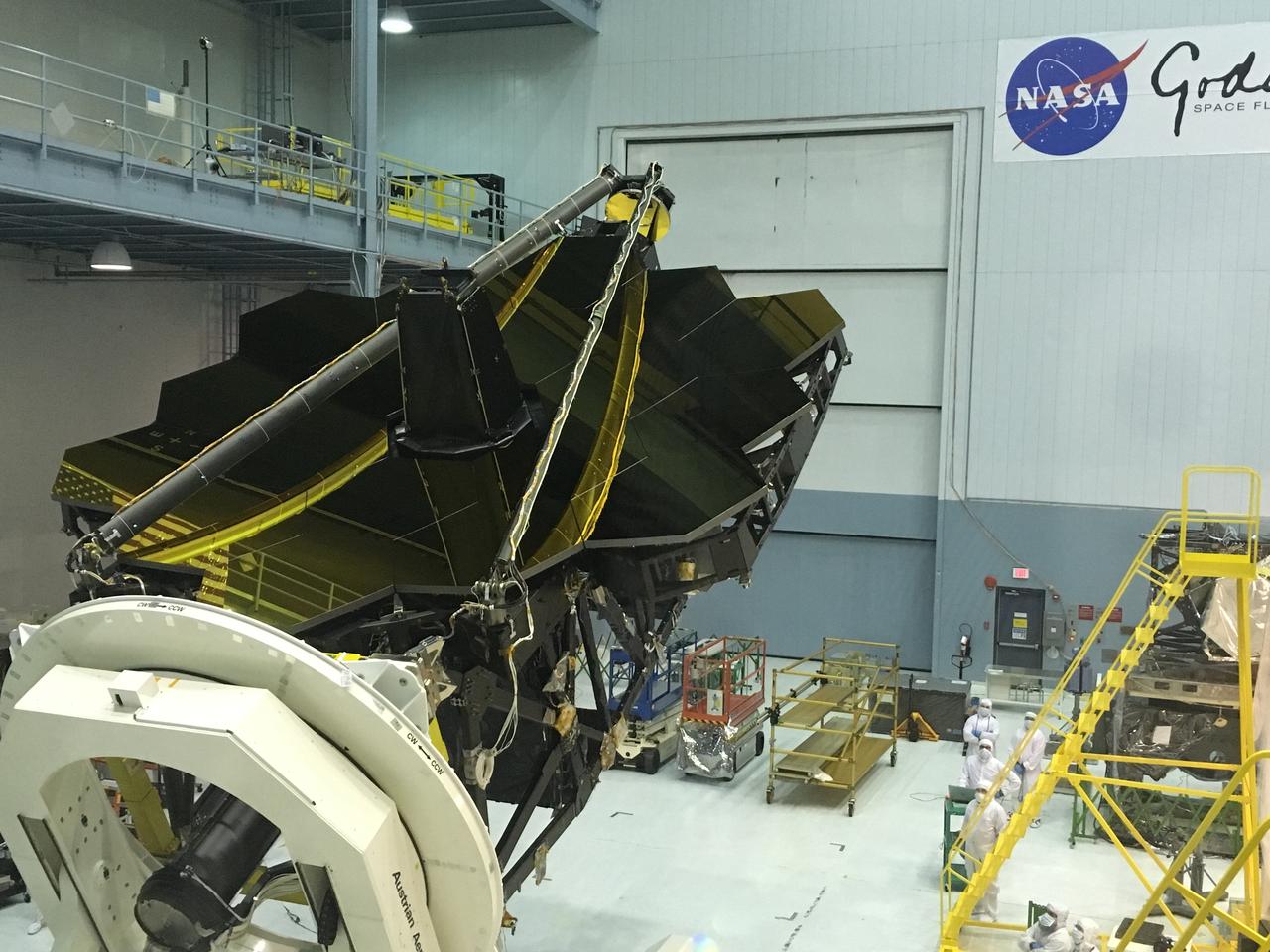
A rare view of the James Webb Space Telescope face-on, from the NASA Goddard cleanroom observation window.
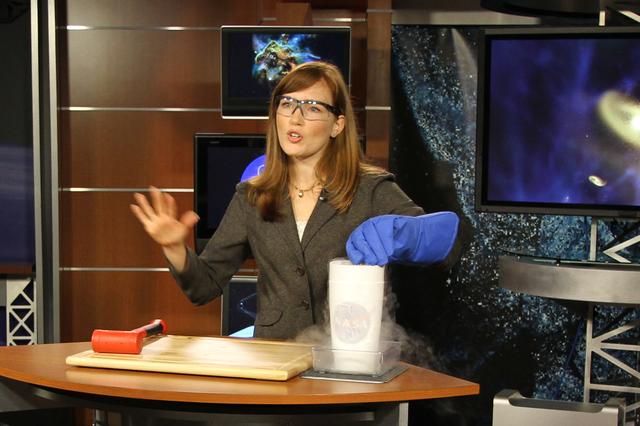
Amber Straughn talks about the extreme temperatures the Webb telescope must withstand in space.
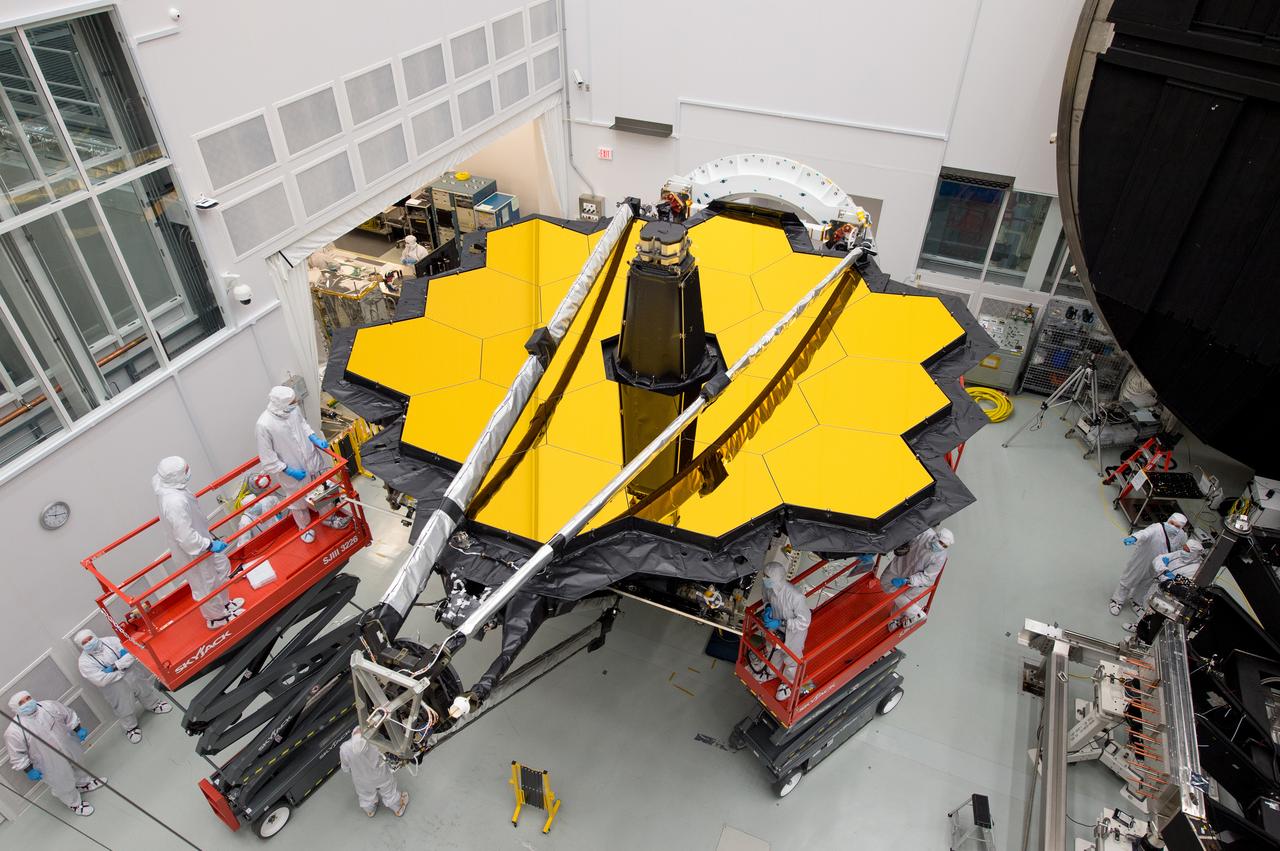
Now that NASA's James Webb Space Telescope has moved to NASA's Johnson Space Center in Houston, Texas, a special Webb camera was installed there to continue providing daily video feeds on the telescope's progress. Space enthusiasts, who are fascinated to see how this next generation space telescope has come together and how it is being tested, are able to see the telescope’s progress as it happens by watching the Webb-cam feed online. The Web camera at NASA’s Johnson Space Center can be seen online at: <a href="http://jwst.nasa.gov/" rel="nofollow">jwst.nasa.gov/</a>, with larger views of the cams available at: <a href="http://jwst.nasa.gov/webcam.html" rel="nofollow">jwst.nasa.gov/webcam.html</a>. Read more: <a href="https://go.nasa.gov/2rQYpT2" rel="nofollow">go.nasa.gov/2rQYpT2</a> <b><a href="http://www.nasa.gov/audience/formedia/features/MP_Photo_Guidelines.html" rel="nofollow">NASA image use policy.</a></b> <b><a href="http://www.nasa.gov/centers/goddard/home/index.html" rel="nofollow">NASA Goddard Space Flight Center</a></b> enables NASA’s mission through four scientific endeavors: Earth Science, Heliophysics, Solar System Exploration, and Astrophysics. Goddard plays a leading role in NASA’s accomplishments by contributing compelling scientific knowledge to advance the Agency’s mission. <b>Follow us on <a href="http://twitter.com/NASAGoddardPix" rel="nofollow">Twitter</a></b> <b>Like us on <a href="http://www.facebook.com/pages/Greenbelt-MD/NASA-Goddard/395013845897?ref=tsd" rel="nofollow">Facebook</a></b> <b>Find us on <a href="http://instagrid.me/nasagoddard/?vm=grid" rel="nofollow">Instagram</a></b>
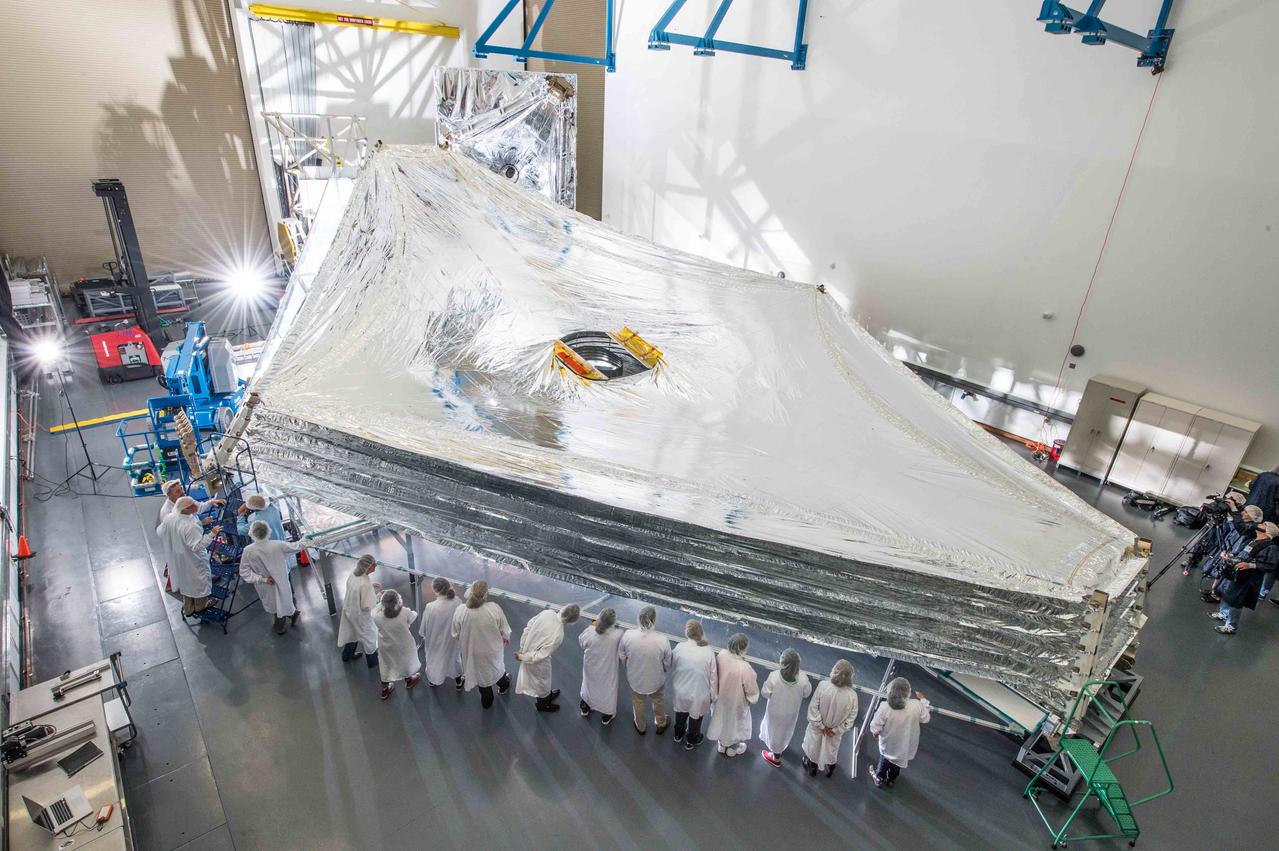
The Sunshield on NASA's James Webb Space Telescope is the largest part of the observatory—five layers of thin membrane that must unfurl reliably in space to precise tolerances. Last week, for the first time, engineers stacked and unfurled a full-sized test unit of the Sunshield and it worked perfectly. The Sunshield is about the length of a tennis court, and will be folded up like an umbrella around the Webb telescope’s mirrors and instruments during launch. Once it reaches its orbit, the Webb telescope will receive a command from Earth to unfold, and separate the Sunshield's five layers into their precisely stacked arrangement with its kite-like shape. The Sunshield test unit was stacked and expanded at a cleanroom in the Northrop Grumman facility in Redondo Beach, California. The Sunshield separates the observatory into a warm sun-facing side and a cold side where the sunshine is blocked from interfering with the sensitive infrared instruments. The infrared instruments need to be kept very cold (under 50 K or -370 degrees F) to operate. The Sunshield protects these sensitive instruments with an effective sun protection factor or SPF of 1,000,000 (suntan lotion generally has an SPF of 8-50). In addition to providing a cold environment, the Sunshield provides a thermally stable environment. This stability is essential to maintaining proper alignment of the primary mirror segments as the telescope changes its orientation to the sun. The James Webb Space Telescope is the successor to NASA's Hubble Space Telescope. It will be the most powerful space telescope ever built. Webb is an international project led by NASA with its partners, the European Space Agency and the Canadian Space Agency. For more information about the Webb telescope, visit: <a href="http://www.jwst.nasa.gov" rel="nofollow">www.jwst.nasa.gov</a> or <a href="http://www.nasa.gov/webb" rel="nofollow">www.nasa.gov/webb</a> For more information on the Webb Sunshield, visit: <a href="http://jwst.nasa.gov/sunshield.html" rel="nofollow">jwst.nasa.gov/sunshield.html</a> Credit: NASA/Goddard/Chris Gunn <b><a href="http://www.nasa.gov/audience/formedia/features/MP_Photo_Guidelines.html" rel="nofollow">NASA image use policy.</a></b> <b><a href="http://www.nasa.gov/centers/goddard/home/index.html" rel="nofollow">NASA Goddard Space Flight Center</a></b> enables NASA’s mission through four scientific endeavors: Earth Science, Heliophysics, Solar System Exploration, and Astrophysics. Goddard plays a leading role in NASA’s accomplishments by contributing compelling scientific knowledge to advance the Agency’s mission. <b>Follow us on <a href="http://twitter.com/NASAGoddardPix" rel="nofollow">Twitter</a></b> <b>Like us on <a href="http://www.facebook.com/pages/Greenbelt-MD/NASA-Goddard/395013845897?ref=tsd" rel="nofollow">Facebook</a></b> <b>Find us on <a href="http://instagram.com/nasagoddard?vm=grid" rel="nofollow">Instagram</a></b>
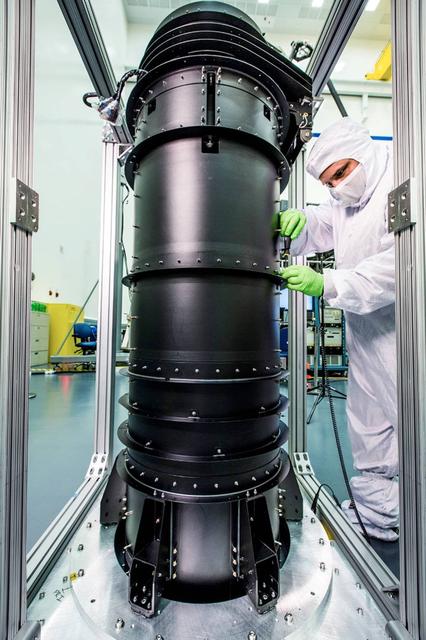
Building a space telescope to see the light from the earliest stars of our universe is a pretty complex task. Although much of the attention goes to instruments and the giant mirrors on NASA's James Webb Space Telescope, there are other components that have big jobs to do and that required imagination, engineering, and innovation to become a reality. For example, engineers working on the Webb telescope have to think of everything from keeping instruments from overheating or freezing, to packing up the Webb, which is as big as a tennis court, to fit inside the rocket that will take it to space. Those are two areas where the "DTA" or Deployable Tower Assembly (DTA) plays a major role. The DTA looks like a big black pipe and is made out of graphite-epoxy composite material to ensure stability and strength with extreme changes in temperature like those encountered in space. When fully deployed, the DTA reaches ten feet in length. The DTA interfaces and supports the spacecraft and the telescope structures. It features two large nested telescoping tubes, connected by a mechanized lead screw. It is a deployable structure that is both very light and extremely strong and stable. The Webb telescope’s secondary mirror support structure and DTA contribute to how the telescope and instruments fit into the rocket fairing in preparation for launch. The DTA allows the Webb to be short enough when stowed to fit in the rocket fairing with an acceptably low center of gravity for launch. Several days after the Webb telescope is launched, the DTA will deploy, or separate, the telescope mirrors and instruments from the spacecraft bus and sunshield. This separation allows the sunshield to unfurl and shade the telescope and instruments from radiant heat and stray light from the sun and Earth. The DTA was designed, built and tested by Astro Aerospace - a Northrop Grumman Company, in Carpinteria, California. The James Webb Space Telescope is the scientific successor to NASA's Hubble Space Telescope. It will be the most powerful space telescope ever built. The Webb telescope is an international project led by NASA with its partners, the European Space Agency and the Canadian Space Agency. For more information about the Webb telescope, visit: <a href="http://www.nasa.gov/webb" rel="nofollow">www.nasa.gov/webb</a> or jwst.nasa.gov <b><a href="http://www.nasa.gov/audience/formedia/features/MP_Photo_Guidelines.html" rel="nofollow">NASA image use policy.</a></b> <b><a href="http://www.nasa.gov/centers/goddard/home/index.html" rel="nofollow">NASA Goddard Space Flight Center</a></b> enables NASA’s mission through four scientific endeavors: Earth Science, Heliophysics, Solar System Exploration, and Astrophysics. Goddard plays a leading role in NASA’s accomplishments by contributing compelling scientific knowledge to advance the Agency’s mission. <b>Follow us on <a href="http://twitter.com/NASAGoddardPix" rel="nofollow">Twitter</a></b> <b>Like us on <a href="http://www.facebook.com/pages/Greenbelt-MD/NASA-Goddard/395013845897?ref=tsd" rel="nofollow">Facebook</a></b> <b>Find us on <a href="http://instagrid.me/nasagoddard/?vm=grid" rel="nofollow">Instagram</a></b>
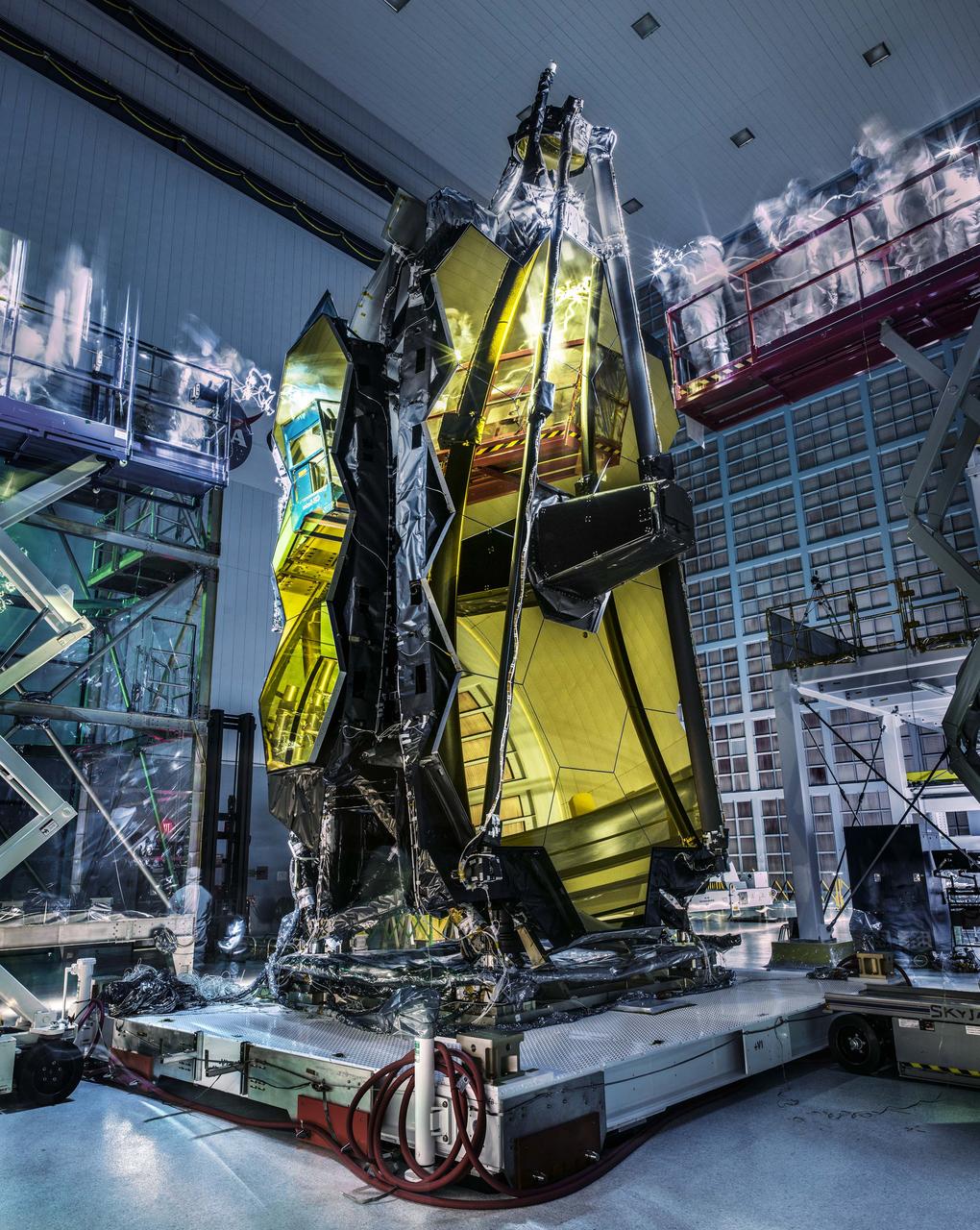
What happens when the lights are turned out in the enormous clean room that currently houses NASA's James Webb Space Telescope? The technicians who are inspecting the telescope and its expansive golden mirrors look like ghostly wraiths in this image as they conduct a "lights out inspection" in the Spacecraft Systems Development and Integration Facility (SSDIF) at NASA's Goddard Space Flight Center in Greenbelt, Maryland. The clean room lights were turned off to inspect the telescope after it experienced vibration and acoustic testing. The contamination control engineer used a bright flashlight and special ultraviolet flashlights to inspect for contamination because it's easier to find in the dark. NASA photographer Chris Gunn said "The people have a ghostly appearance because it's a long exposure." He left the camera's shutter open for a longer than normal time so the movement of the technicians appear as a blur. He also used a special light "painting" technique to light up the primary mirror. The James Webb Space Telescope is the scientific successor to NASA's Hubble Space Telescope. It will be the most powerful space telescope ever built. Webb is an international project led by NASA with its partners, ESA (European Space Agency) and the Canadian Space Agency. For more information about the Webb telescope visit: <a href="http://www.jwst.nasa.gov" rel="nofollow">www.jwst.nasa.gov</a> or <a href="http://www.nasa.gov/webb" rel="nofollow">www.nasa.gov/webb</a> Image Credit: NASA/Chris Gunn
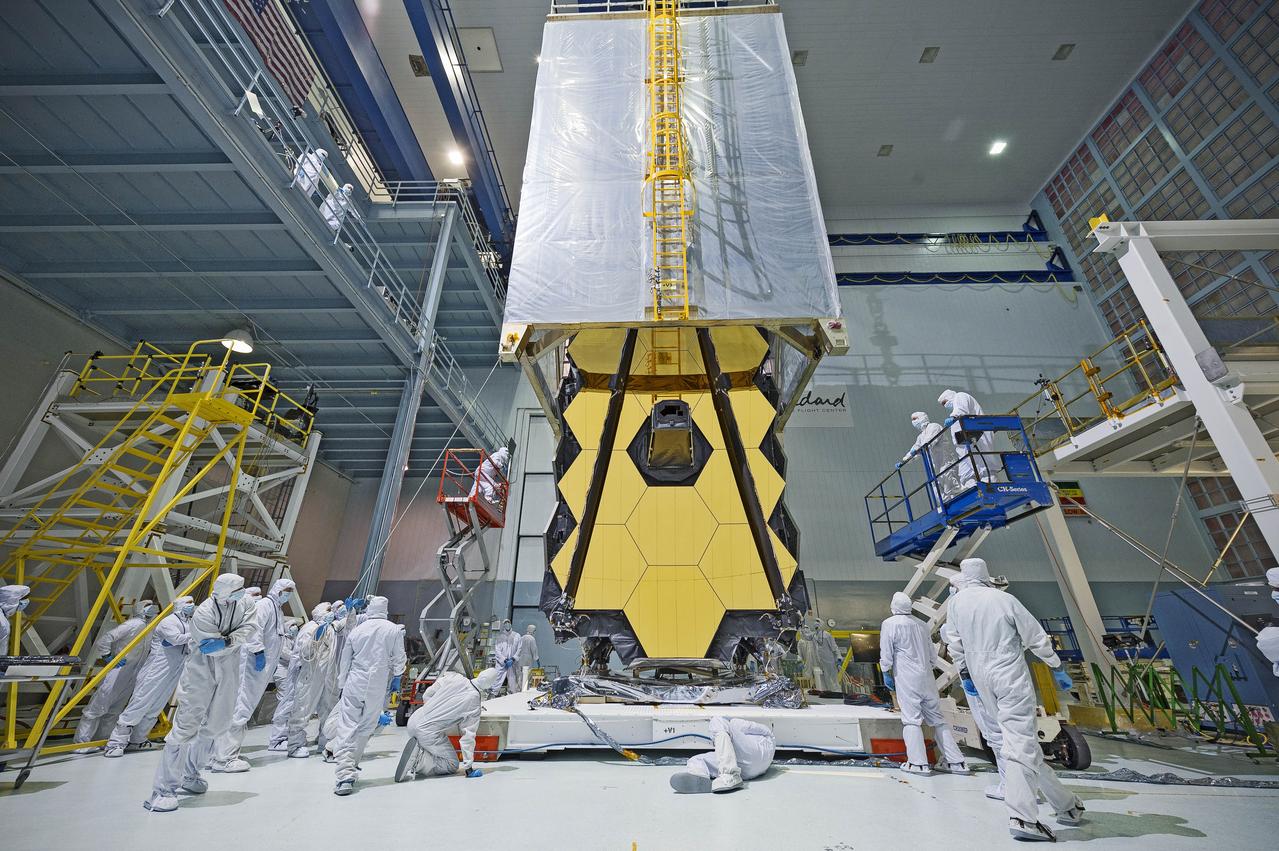
What looks like a teleporter from science fiction being draped over NASA's James Webb Space Telescope, is actually a "clean tent." The clean tent protects Webb from dust and dirt when engineers at NASA's Goddard Space Flight Center in Greenbelt, Maryland transport the next generation space telescope out of the relatively dust-free cleanroom and into the shirtsleeve environment of the vibration and acoustics testing areas. In two years, a rocket will be the transporter that carries the Webb into space so it can orbit one million miles from Earth and peer back over 13.5 billion years to see the first stars and galaxies forming out of the darkness of the early universe. For more information about the Webb telescope, visit: <a href="http://www.jwst.nasa.gov" rel="nofollow">www.jwst.nasa.gov</a> or <a href="http://www.nasa.gov/webb" rel="nofollow">www.nasa.gov/webb</a>. Photo Credit: NASA/Goddard/Chris Gunn <b><a href="http://www.nasa.gov/audience/formedia/features/MP_Photo_Guidelines.html" rel="nofollow">NASA image use policy.</a></b> <b><a href="http://www.nasa.gov/centers/goddard/home/index.html" rel="nofollow">NASA Goddard Space Flight Center</a></b> enables NASA’s mission through four scientific endeavors: Earth Science, Heliophysics, Solar System Exploration, and Astrophysics. Goddard plays a leading role in NASA’s accomplishments by contributing compelling scientific knowledge to advance the Agency’s mission. <b>Follow us on <a href="http://twitter.com/NASAGoddardPix" rel="nofollow">Twitter</a></b> <b>Like us on <a href="http://www.facebook.com/pages/Greenbelt-MD/NASA-Goddard/395013845897?ref=tsd" rel="nofollow">Facebook</a></b> <b>Find us on <a href="http://instagrid.me/nasagoddard/?vm=grid" rel="nofollow">Instagram</a></b>
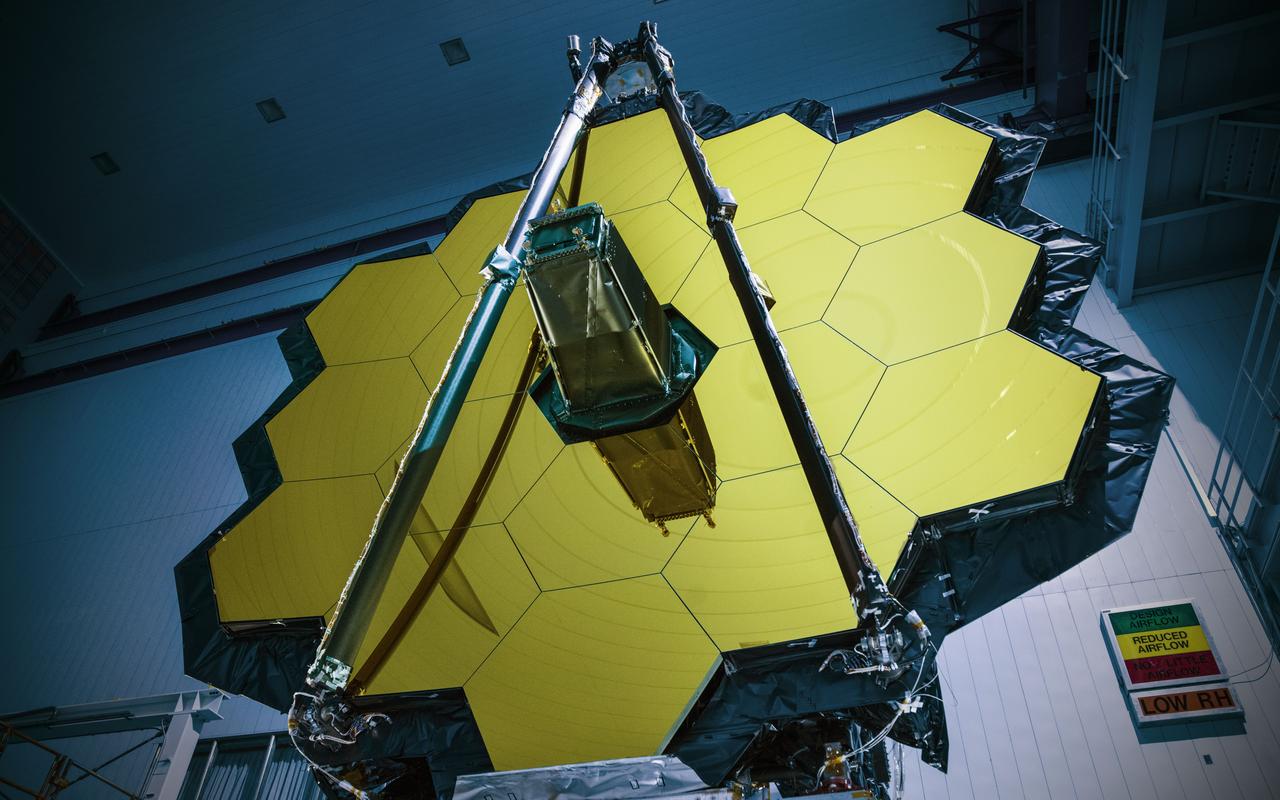
NASA’s James Webb Space Telescope has successfully passed the center of curvature test, an important optical measurement of Webb’s fully assembled primary mirror prior to cryogenic testing, and the last test held at NASA's Goddard Space Flight Center in Greenbelt, Maryland, before the spacecraft is shipped to NASA’s Johnson Space Center in Houston for more testing. After undergoing rigorous environmental tests simulating the stresses of its rocket launch, the Webb telescope team at Goddard analyzed the results from this critical optical test and compared it to the pre-test measurements. The team concluded that the mirrors passed the test with the optical system unscathed. “The Webb telescope is about to embark on its next step in reaching the stars as it has successfully completed its integration and testing at Goddard. It has taken a tremendous team of talented individuals to get to this point from all across NASA, our industry and international partners, and academia,” said Bill Ochs, NASA’s Webb telescope project manager. “It is also a sad time as we say goodbye to the Webb Telescope at Goddard, but are excited to begin cryogenic testing at Johnson.” Rocket launches create high levels of vibration and noise that rattle spacecraft and telescopes. At Goddard, engineers tested the Webb telescope in vibration and acoustics test facilities that simulate the launch environment to ensure that functionality is not impaired by the rigorous ride on a rocket into space. Before and after these environmental tests took place, optical engineers set up an interferometer, the main device used to measure the shape of the Webb telescope’s mirror. An interferometer gets its name from the process of recording and measuring the ripple patterns that result when different beams of light mix and their waves combine or “interfere.” Waves of visible light are less than a thousandth of a millimeter long and optics on the Webb telescope need to be shaped and aligned even more accurately than that to work correctly. Making measurements of the mirror shape and position by lasers prevents physical contact and damage (scratches to the mirror). So, scientists use wavelengths of light to make tiny measurements. By measuring light reflected off the optics using an interferometer, they are able to measure extremely small changes in shape or position that may occur after exposing the mirror to a simulated launch or temperatures that simulate the subfreezing environment of space. During a test conducted by a team from Goddard, Ball Aerospace of Boulder, Colorado, and the Space Telescope Science Institute in Baltimore, temperature and humidity conditions in the clean room were kept incredibly stable to minimize fluctuations in the sensitive optical measurements over time. Even so, tiny vibrations are ever-present in the clean room that cause jitter during measurements, so the interferometer is a “high-speed” one, taking 5,000 “frames” every second, which is a faster rate than the background vibrations themselves. This allows engineers to subtract out jitter and get good, clean results on any changes to the mirror's shape. Credit: NASA/Goddard/Chris Gunn Read more: <a href="https://go.nasa.gov/2oPqHwR" rel="nofollow">go.nasa.gov/2oPqHwR</a> NASA’s Webb Telescope Completes Goddard Testing
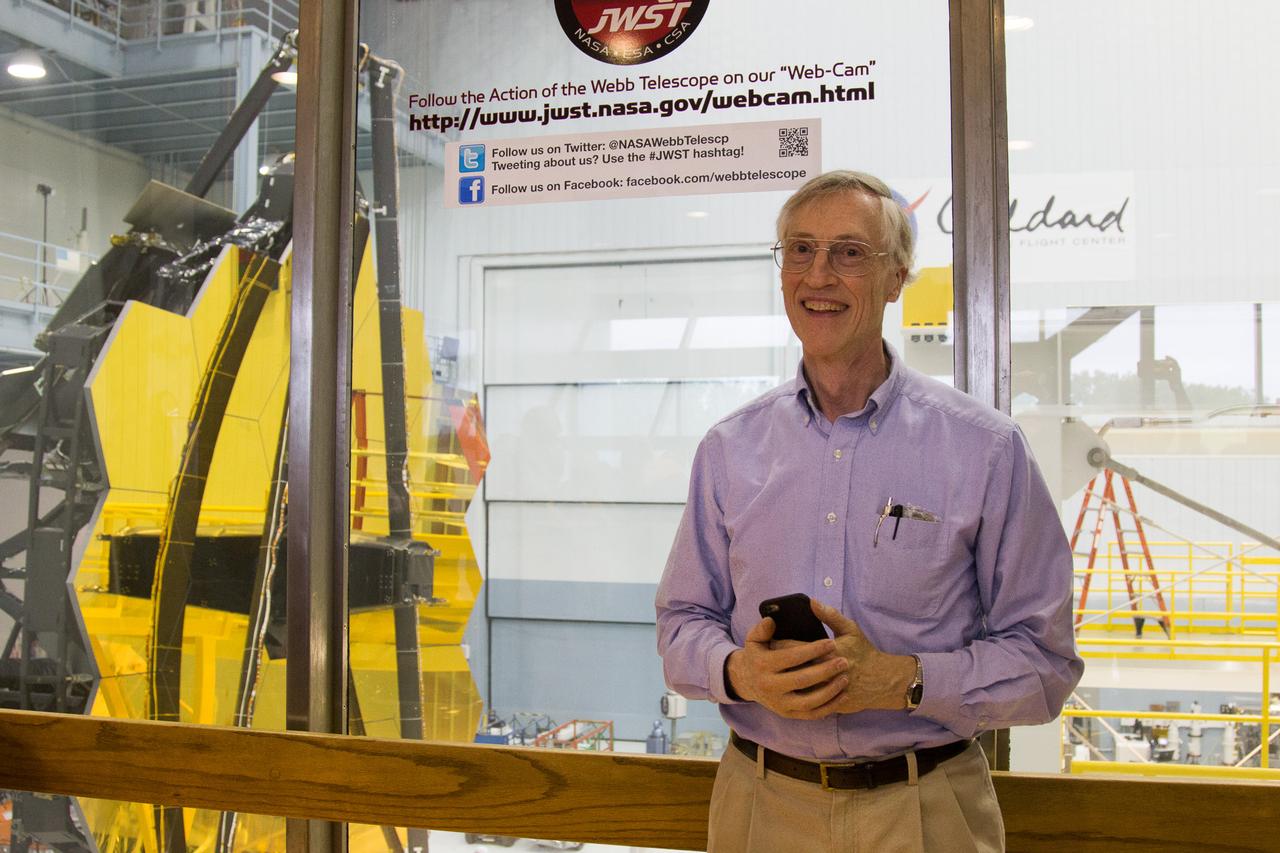
John Mather, Project Scientist for JWST, faces the James Webb Space Telescope primary mirror, NASA/Goddard Space Flight Center, Greenbelt, MD, May 4, 2016
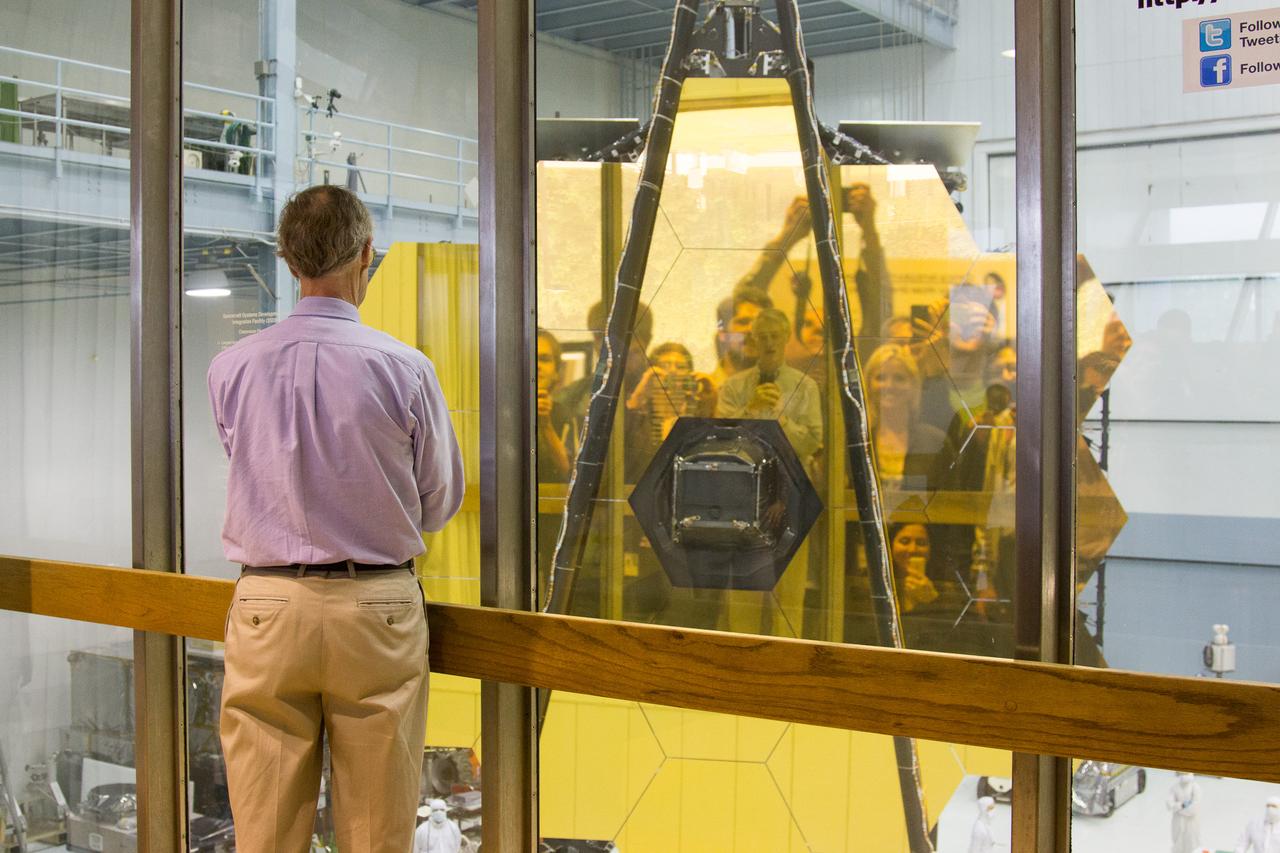
John Mather, Project Scientist for JWST, faces the James Webb Space Telescope primary mirror, taking a selfie, NASA/Goddard Space Flight Center, Greenbelt, MD, May 4, 2016
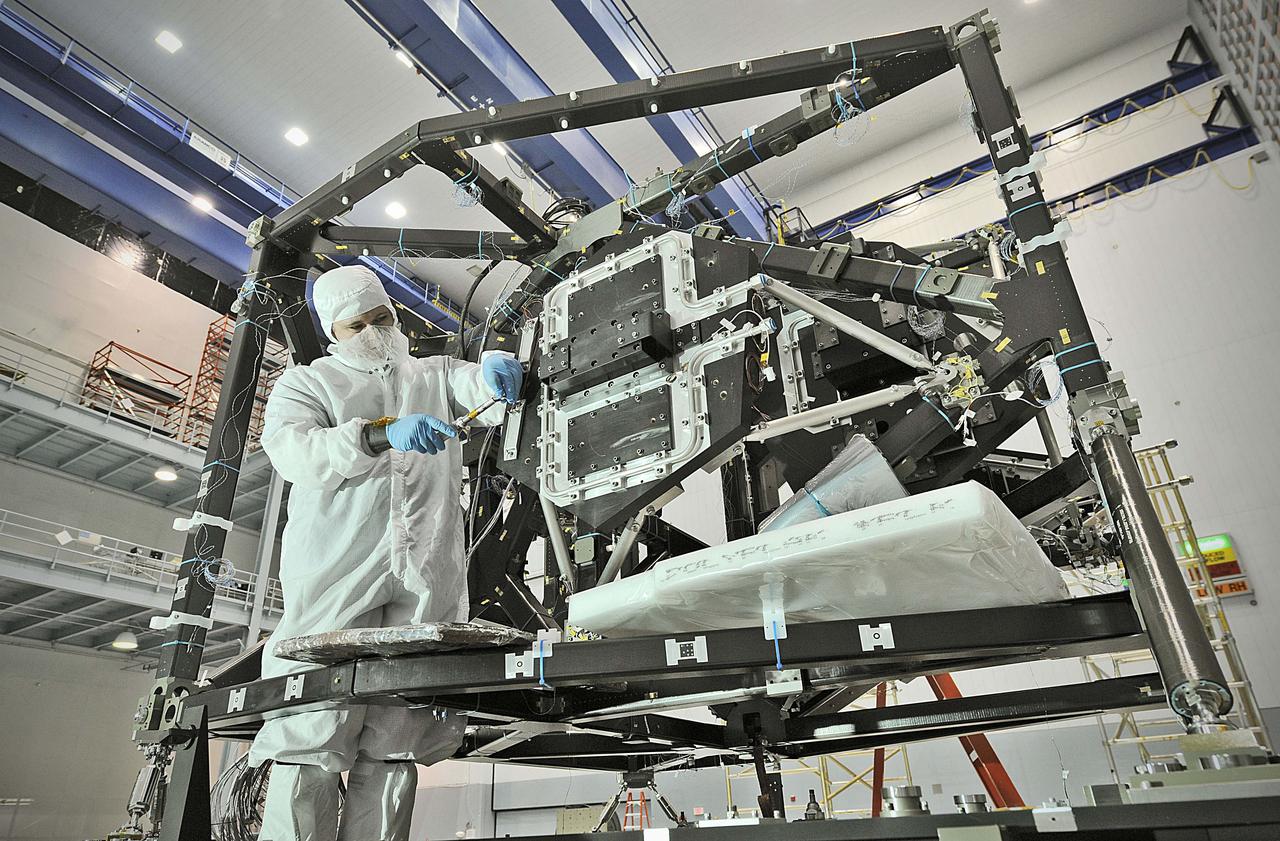
NASA image release September 17, 2010 In preparation for a cryogenic test NASA Goddard technicians install instrument mass simulators onto the James Webb Space Telescope ISIM structure. The ISIM Structure supports and holds the four Webb telescope science instruments : the Mid-Infrared Instrument (MIRI), the Near-Infrared Camera (NIRCam), the Near-Infrared Spectrograph (NIRSpec) and the Fine Guidance Sensor (FGS). Credit: NASA/GSFC/Chris Gunn To learn more about the James Webb Space Telescope go to: <a href="http://www.jwst.nasa.gov/" rel="nofollow">www.jwst.nasa.gov/</a> <b><a href="http://www.nasa.gov/centers/goddard/home/index.html" rel="nofollow">NASA Goddard Space Flight Center</a></b> contributes to NASA’s mission through four scientific endeavors: Earth Science, Heliophysics, Solar System Exploration, and Astrophysics. Goddard plays a leading role in NASA’s endeavors by providing compelling scientific knowledge to advance the Agency’s mission. <b>Follow us on <a href="http://twitter.com/NASA_GoddardPix" rel="nofollow">Twitter</a></b> <b>Join us on <a href="http://www.facebook.com/pages/Greenbelt-MD/NASA-Goddard/395013845897?ref=tsd" rel="nofollow">Facebook</a></b>
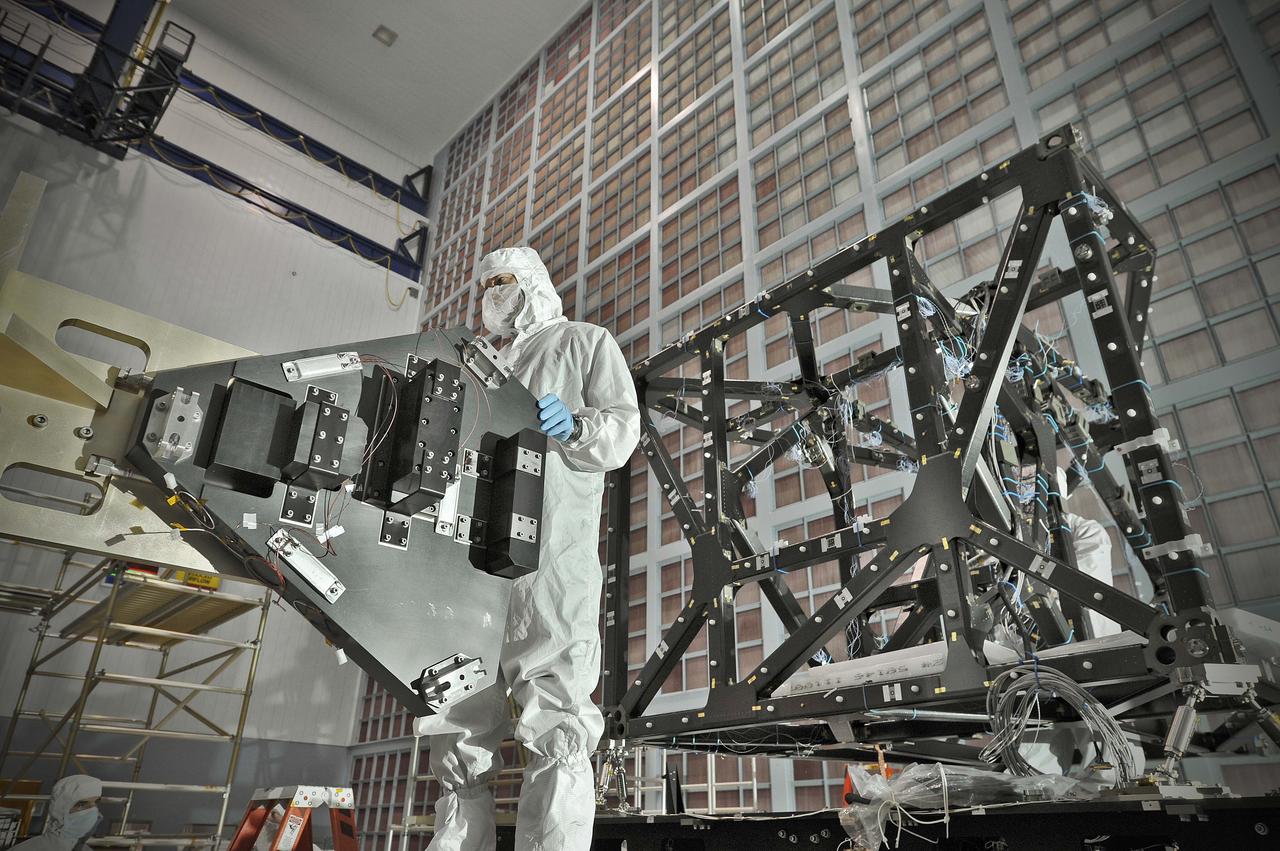
NASA image release September 17, 2010 In preparation for a cryogenic test NASA Goddard technicians install instrument mass simulators onto the James Webb Space Telescope ISIM structure. The ISIM Structure supports and holds the four Webb telescope science instruments : the Mid-Infrared Instrument (MIRI), the Near-Infrared Camera (NIRCam), the Near-Infrared Spectrograph (NIRSpec) and the Fine Guidance Sensor (FGS). Credit: NASA/GSFC/Chris Gunn To learn more about the James Webb Space Telescope go to: <a href="http://www.jwst.nasa.gov/" rel="nofollow">www.jwst.nasa.gov/</a> <b><a href="http://www.nasa.gov/centers/goddard/home/index.html" rel="nofollow">NASA Goddard Space Flight Center</a></b> contributes to NASA’s mission through four scientific endeavors: Earth Science, Heliophysics, Solar System Exploration, and Astrophysics. Goddard plays a leading role in NASA’s endeavors by providing compelling scientific knowledge to advance the Agency’s mission. <b>Follow us on <a href="http://twitter.com/NASA_GoddardPix" rel="nofollow">Twitter</a></b> <b>Join us on <a href="http://www.facebook.com/pages/Greenbelt-MD/NASA-Goddard/395013845897?ref=tsd" rel="nofollow">Facebook</a></b>
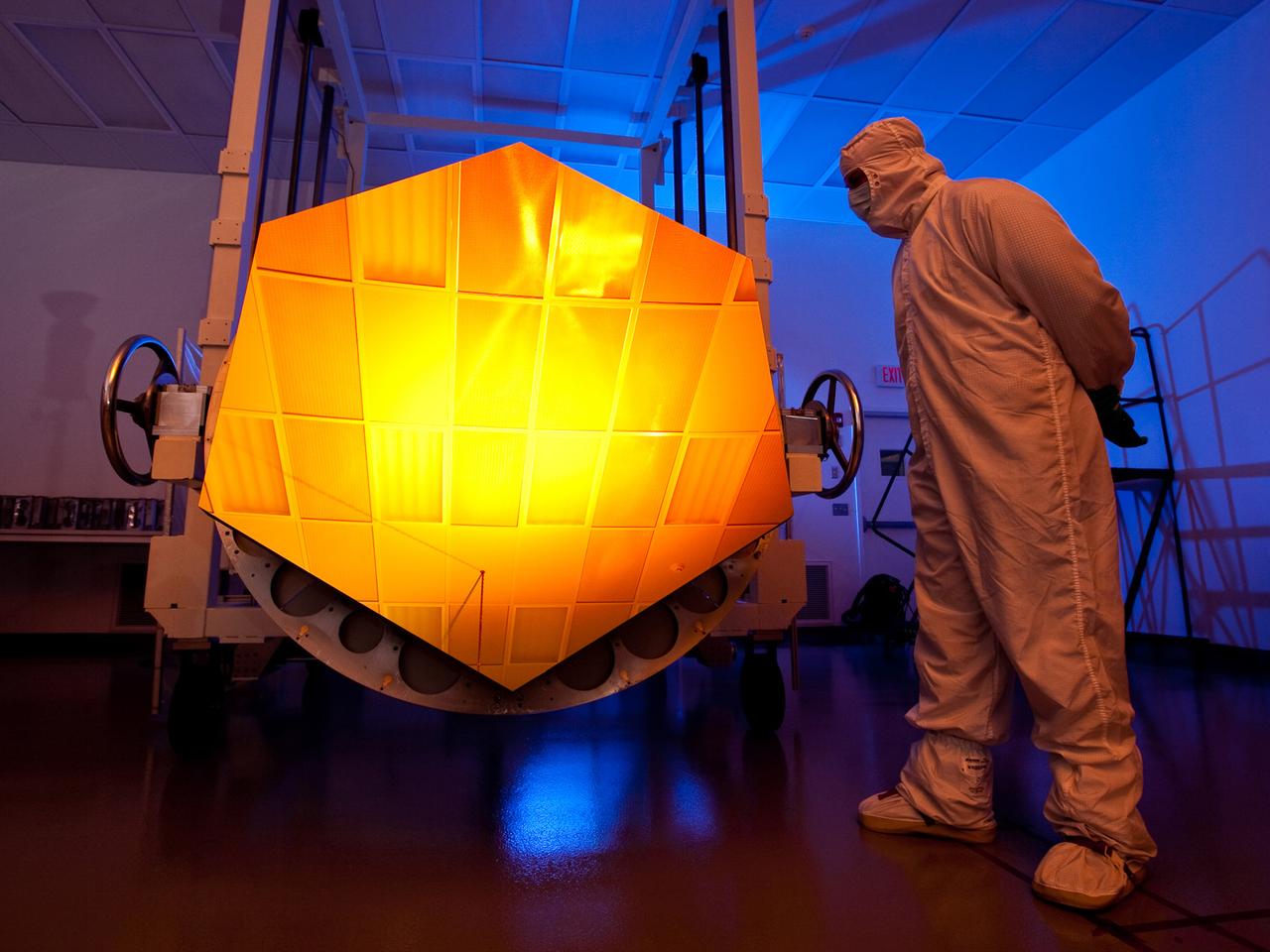
NASA image release December 9, 2010 Caption: The James Webb Space Telescope's Engineering Design Unit (EDU) primary mirror segment, coated with gold by Quantum Coating Incorporated. The actuator is located behind the mirror. Credit: Photo by Drew Noel NASA's James Webb Space Telescope is a wonder of modern engineering. As the planned successor to the Hubble Space telescope, even the smallest of parts on this giant observatory will play a critical role in its performance. A new video takes viewers behind the Webb's mirrors to investigate "actuators," one component that will help Webb focus on some of the earliest objects in the universe. The video called "Got Your Back" is part of an on-going video series about the Webb telescope called "Behind the Webb." It was produced at the Space Telescope Science Institute (STScI) in Baltimore, Md. and takes viewers behind the scenes with scientists and engineers who are creating the Webb telescope's components. During the 3 minute and 12 second video, STScI host Mary Estacion interviewed people involved in the project at Ball Aerospace in Boulder, Colo. and showed the actuators in action. The Webb telescope will study every phase in the history of our universe, ranging from the first luminous glows after the big bang, to the formation of solar systems capable of supporting life on planets like Earth, to the evolution of our own solar system. Measuring the light this distant light requires a primary mirror 6.5 meters (21 feet 4 inches) across – six times larger than the Hubble Space telescope’s mirror! Launching a mirror this large into space isn’t feasible. Instead, Webb engineers and scientists innovated a unique solution – building 18 mirrors that will act in unison as one large mirror. These mirrors are packaged together into three sections that fold up - much easier to fit inside a rocket. Each mirror is made from beryllium and weighs approximately 20 kilograms (46 pounds). Once in space, getting these mirrors to focus correctly on faraway galaxies is another challenge entirely. Actuators, or tiny mechanical motors, provide the answer to achieving a single perfect focus. The primary and secondary mirror segments are both moved by six actuators that are attached to the back of the mirrors. The primary segment has an additional actuator at the center of the mirror that adjusts its curvature. The third mirror segment remains stationary. Lee Feinberg, Webb Optical Telescope Element Manager at NASA's Goddard Space Flight Center in Greenbelt, Md. explained "Aligning the primary mirror segments as though they are a single large mirror means each mirror is aligned to 1/10,000th the thickness of a human hair. This alignment has to be done at 50 degrees above absolute zero! What's even more amazing is that the engineers and scientists working on the Webb telescope literally had to invent how to do this." With the actuators in place, Brad Shogrin, Webb Telescope Manager at Ball Aerospace, Boulder, Colo, details the next step: attaching the hexapod (meaning six-footed) assembly and radius of curvature subsystem (ROC). "Radius of curvature" refers to the distance to the center point of the curvature of the mirror. Feinberg added "To understand the concept in a more basic sense, if you change that radius of curvature, you change the mirror's focus." The "Behind the Webb" video series is available in HQ, large and small Quicktime formats, HD, Large and Small WMV formats, and HD, Large and Small Xvid formats. To see the actuators being attached to the back of a telescope mirror in this new "Behind the Webb" video, visit: <a href="http://webbtelescope.org/webb_telescope/behind_the_webb/7" rel="nofollow">webbtelescope.org/webb_telescope/behind_the_webb/7</a> For more information about Webb's mirrors, visit: <a href="http://www.jwst.nasa.gov/mirrors.html" rel="nofollow">www.jwst.nasa.gov/mirrors.html</a> For more information on the James Webb Space Telescope, visit: <a href="http://jwst.nasa.gov" rel="nofollow">jwst.nasa.gov</a> Rob Gutro NASA's Goddard Space Flight Center, Greenbelt, Md. <b><a href="http://www.nasa.gov/centers/goddard/home/index.html" rel="nofollow">NASA Goddard Space Flight Center</a></b> enables NASA’s mission through four scientific endeavors: Earth Science, Heliophysics, Solar System Exploration, and Astrophysics. Goddard plays a leading role in NASA’s accomplishments by contributing compelling scientific knowledge to advance the Agency’s mission. <b>Follow us on <a href="http://twitter.com/NASA_GoddardPix" rel="nofollow">Twitter</a></b> <b>Join us on <a href="http://www.facebook.com/pages/Greenbelt-MD/NASA-Goddard/395013845897?ref=tsd" rel="nofollow">Facebook</a></b>
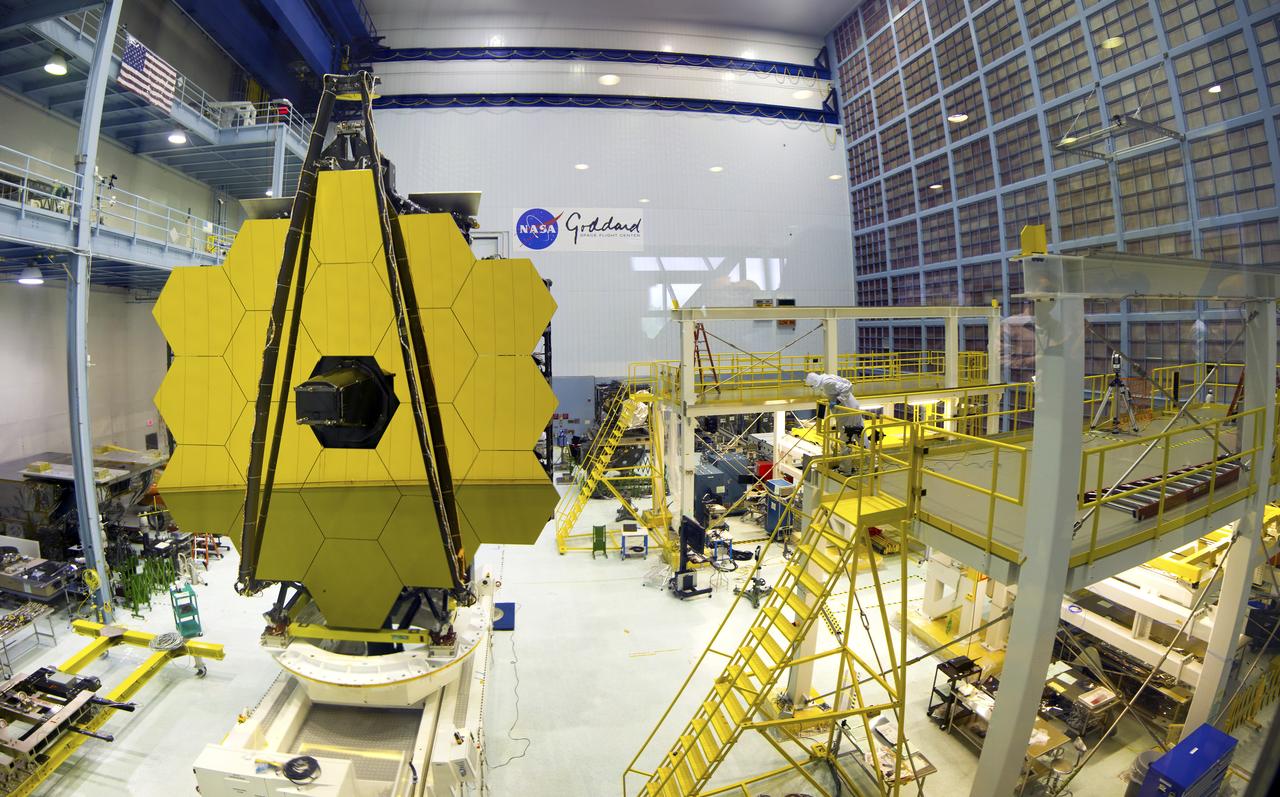
Webb Mirror Tilt Panorama, May 4, 2016 This image is a composite of nine wide-angle photos of the biggest clean room at NASA Goddard on May 4, 2016, when the uncovered flight primary mirror of the James Webb Space Telescope was tilted into a vertical position. Credit: NASA/Francis Reddy (Syneren Technologies) <b><a href="http://www.nasa.gov/audience/formedia/features/MP_Photo_Guidelines.html" rel="nofollow">NASA image use policy.</a></b> <b><a href="http://www.nasa.gov/centers/goddard/home/index.html" rel="nofollow">NASA Goddard Space Flight Center</a></b> enables NASA’s mission through four scientific endeavors: Earth Science, Heliophysics, Solar System Exploration, and Astrophysics. Goddard plays a leading role in NASA’s accomplishments by contributing compelling scientific knowledge to advance the Agency’s mission. <b>Follow us on <a href="http://twitter.com/NASAGoddardPix" rel="nofollow">Twitter</a></b> <b>Like us on <a href="http://www.facebook.com/pages/Greenbelt-MD/NASA-Goddard/395013845897?ref=tsd" rel="nofollow">Facebook</a></b> <b>Find us on <a href="http://instagrid.me/nasagoddard/?vm=grid" rel="nofollow">Instagram</a></b>
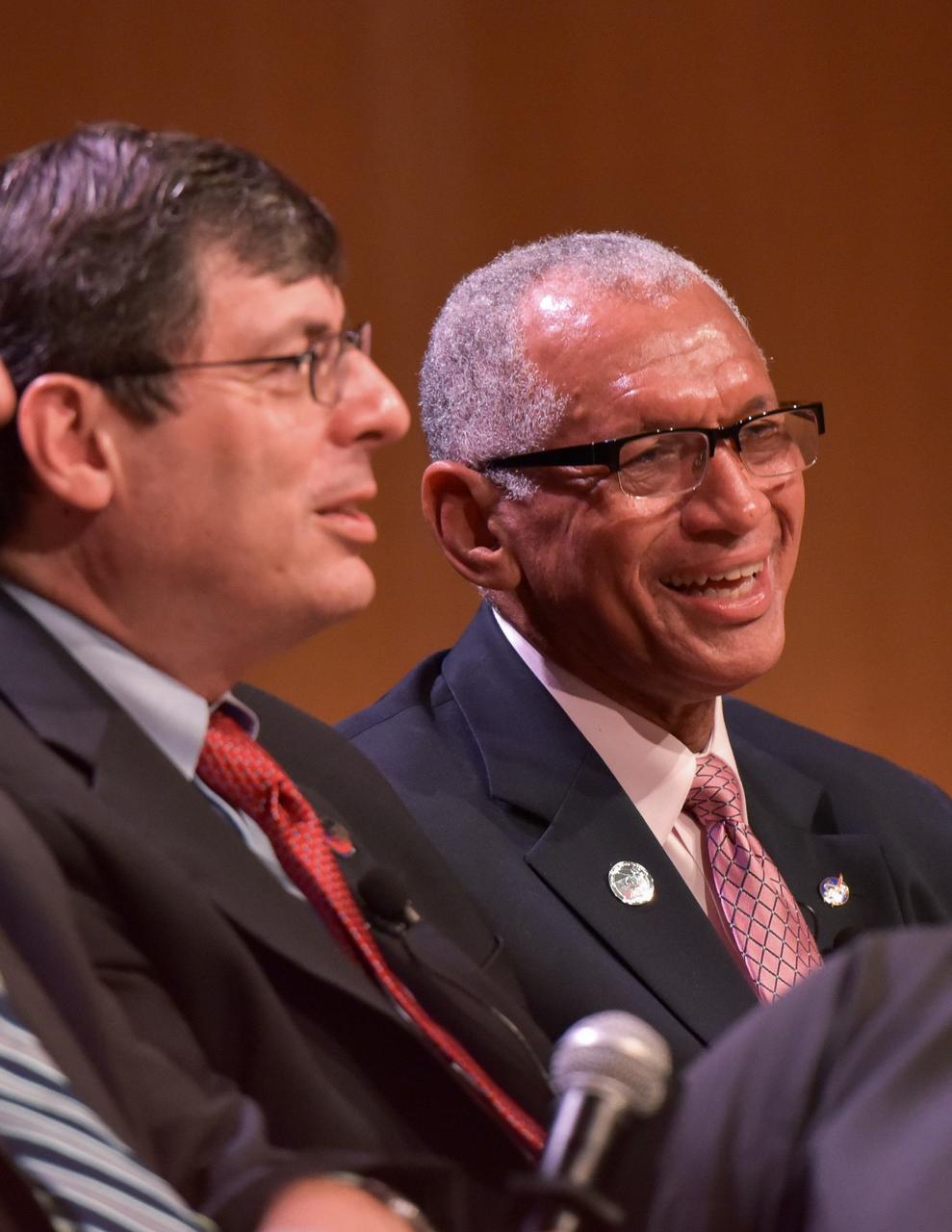
James Webb Space Telescope (JWST) Town Hall - Panel question and answer -
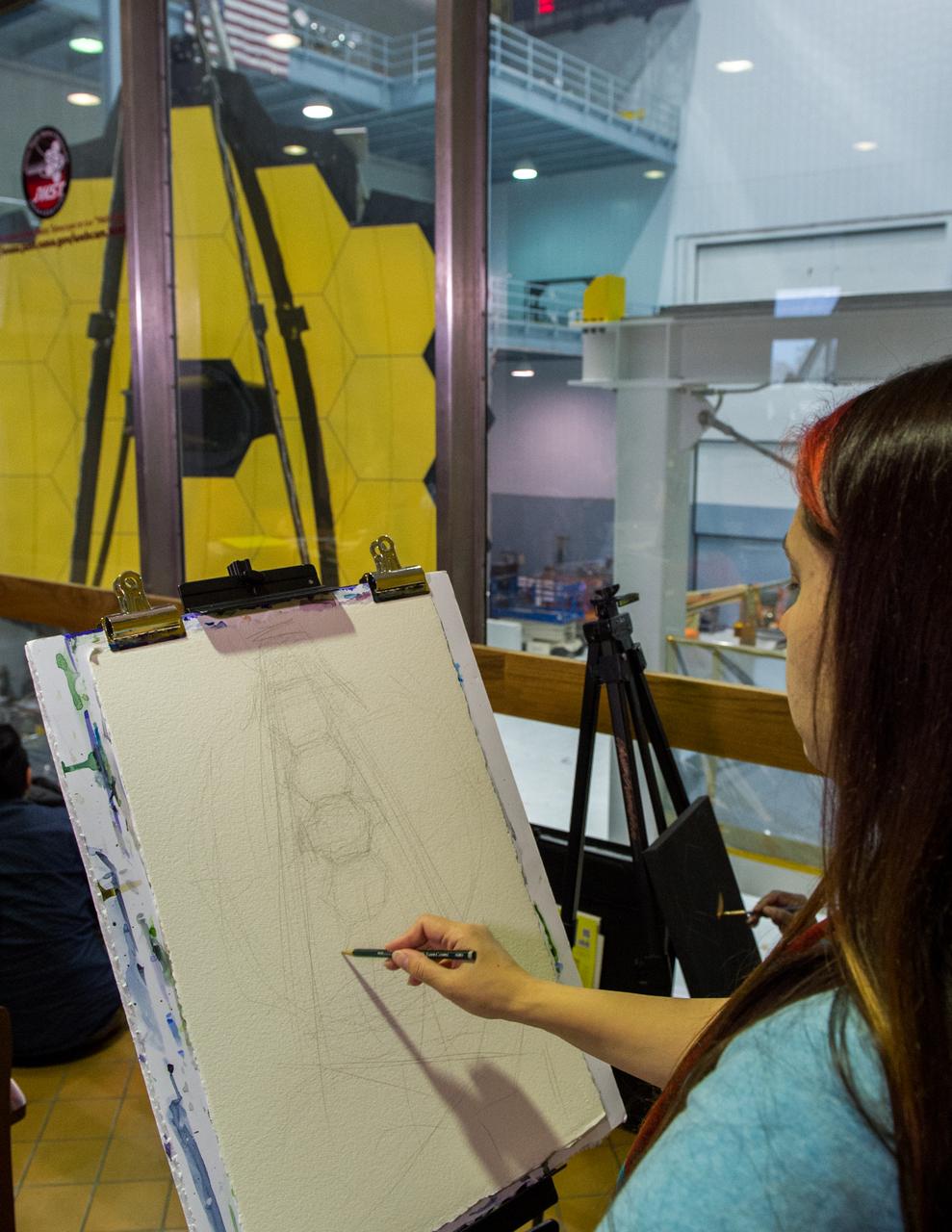
James Webb Space Telescope (JWST) Golden Mirrors artist event.
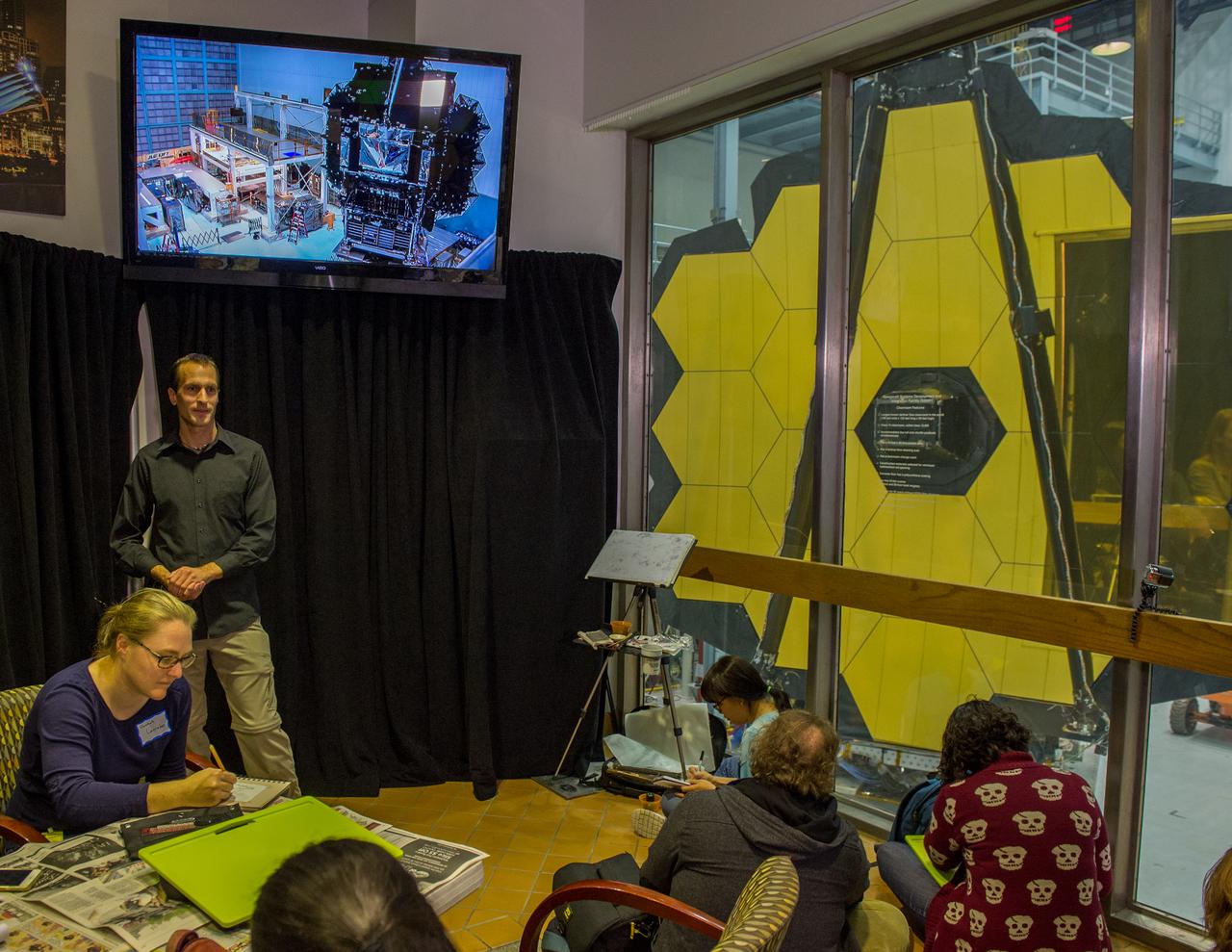
James Webb Space Telescope (JWST) Golden Mirrors artist event.
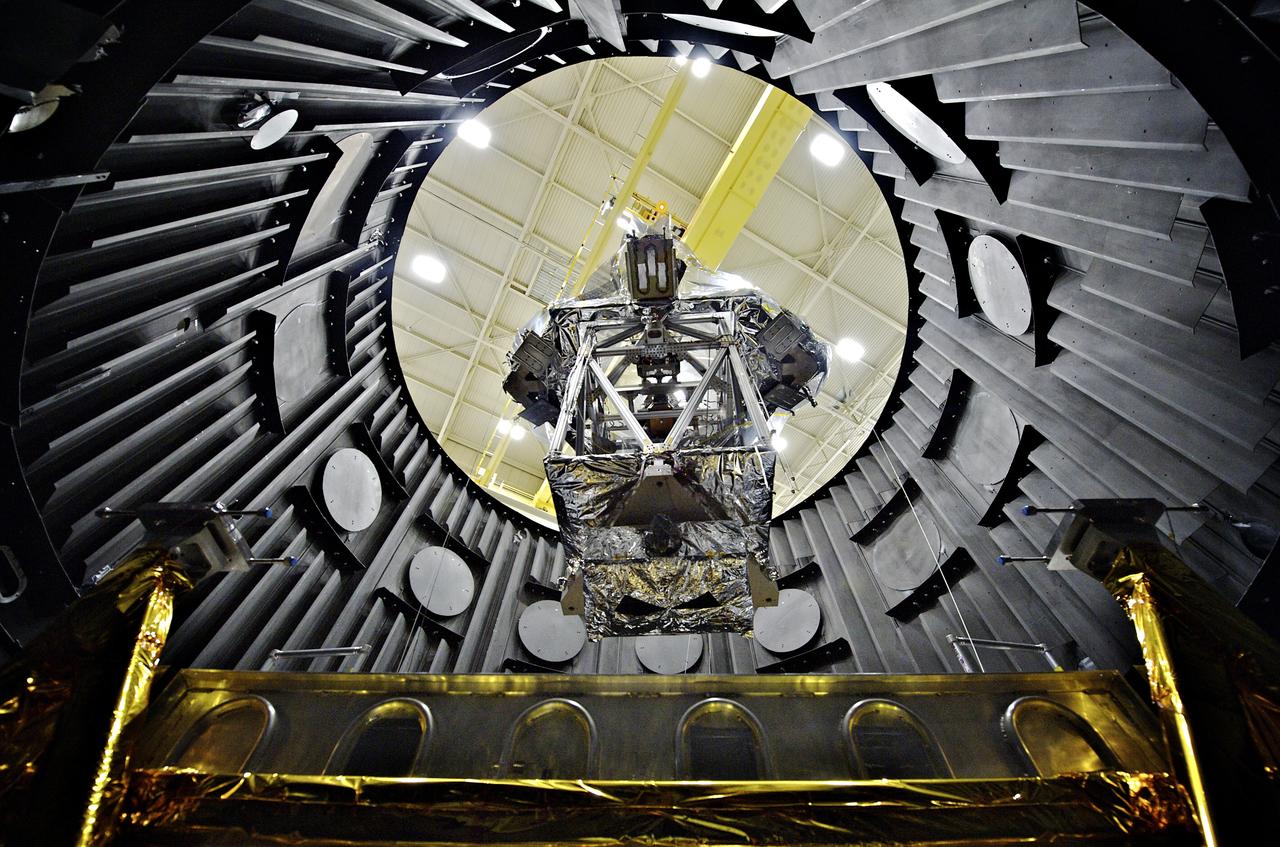
The OTE (Optical Telescope Element) Simulator or OSIM wrapped in a silver blanket on a platform, being lowered down into a vacuum chamber (called the Space Environment Simulator, or SES) by a crane to be tested to withstand the cold temperatures of space. More information: <a href="http://www.nasa.gov/topics/technology/features/webb-osim.html" rel="nofollow">www.nasa.gov/topics/technology/features/webb-osim.html</a> Credit: NASA Goddard/Chris Gunn <b><a href="http://www.nasa.gov/audience/formedia/features/MP_Photo_Guidelines.html" rel="nofollow">NASA image use policy.</a></b> <b><a href="http://www.nasa.gov/centers/goddard/home/index.html" rel="nofollow">NASA Goddard Space Flight Center</a></b> enables NASA’s mission through four scientific endeavors: Earth Science, Heliophysics, Solar System Exploration, and Astrophysics. Goddard plays a leading role in NASA’s accomplishments by contributing compelling scientific knowledge to advance the Agency’s mission. <b>Follow us on <a href="http://twitter.com/NASA_GoddardPix" rel="nofollow">Twitter</a></b> <b>Like us on <a href="http://www.facebook.com/pages/Greenbelt-MD/NASA-Goddard/395013845897?ref=tsd" rel="nofollow">Facebook</a></b> <b>Find us on <a href="http://instagrid.me/nasagoddard/?vm=grid" rel="nofollow">Instagram</a></b>
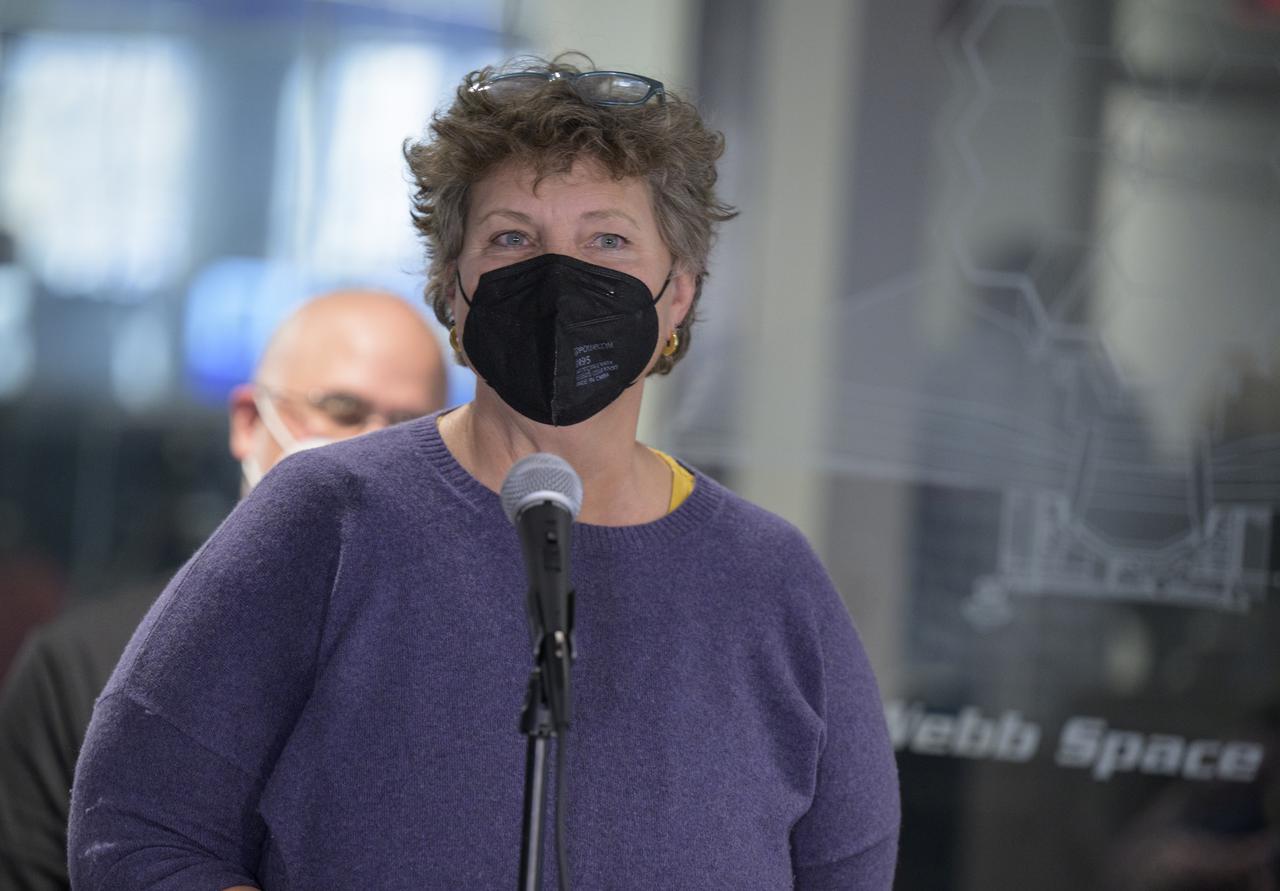
Senior Systems Engineer, Webb, Northrop Grumman, Nanci Shawger answers questions from the media during a briefing following the successful deployment of NASA’s James Webb Space Telescope primary mirror, Saturday, Jan. 8, 2022, from the Webb Space Telescope Mission Operations Center at the Space Telescope Science Institute in Baltimore. With Webb’s 21.3-foot (6.5-meter) primary mirror fully deployed, the infrared observatory has completed its unprecedented process of unfolding in space to prepare for science operations. The observatory will study every phase of cosmic history—from within our solar system to the most distant observable galaxies in the early universe. Photo Credit: (NASA/Bill Ingalls)
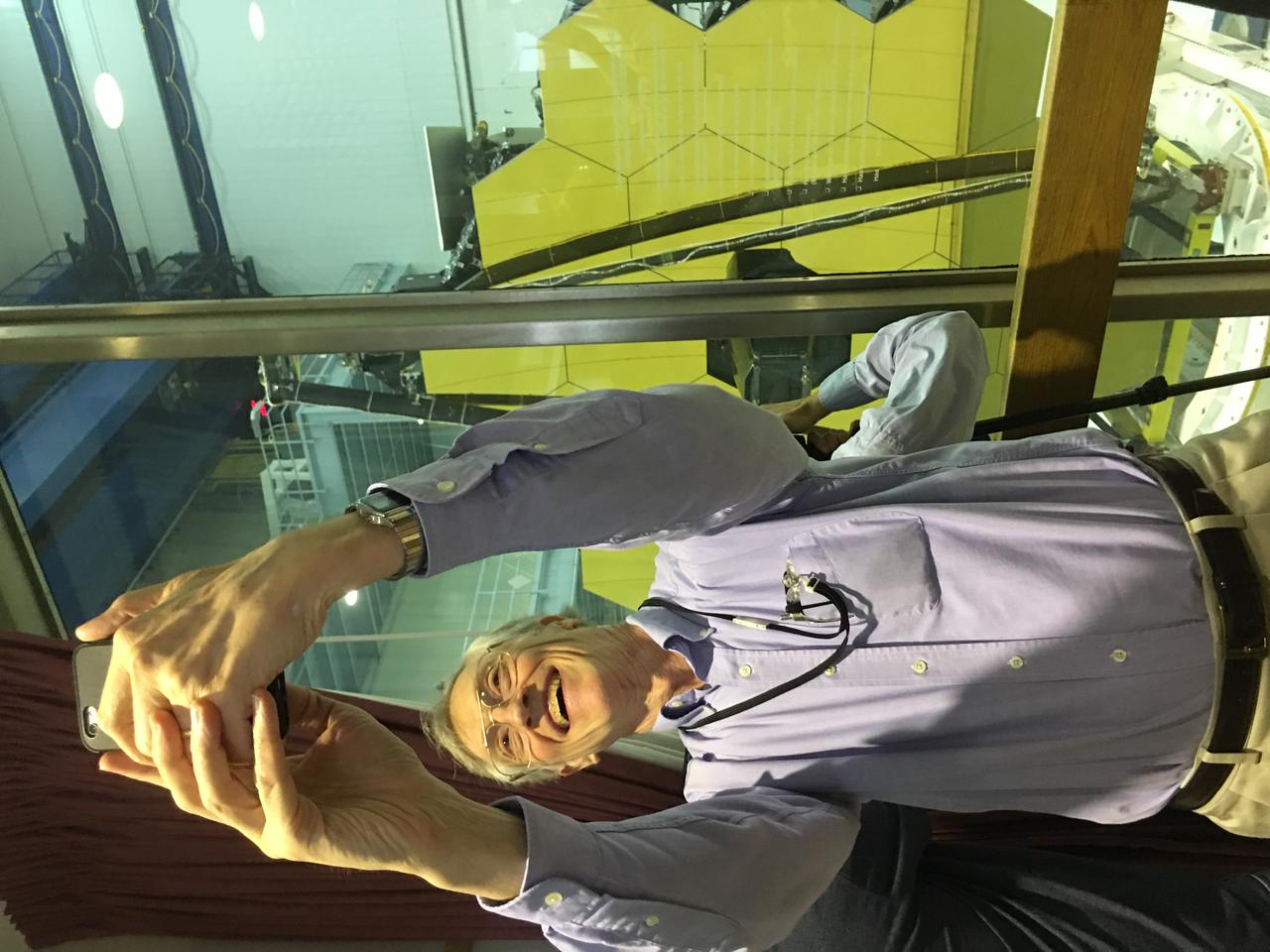
Nobel Laureate and James Webb Space Telescope project scientist Dr. John Mather takes a selfie with the telescope. May 4, 2016 was a rare day for JWST, as it briefly faced the cleanroom observation window. The telescope was eventually rotated face-down in prep for the installation of the flight instruments. Credit: Meredith Gibb
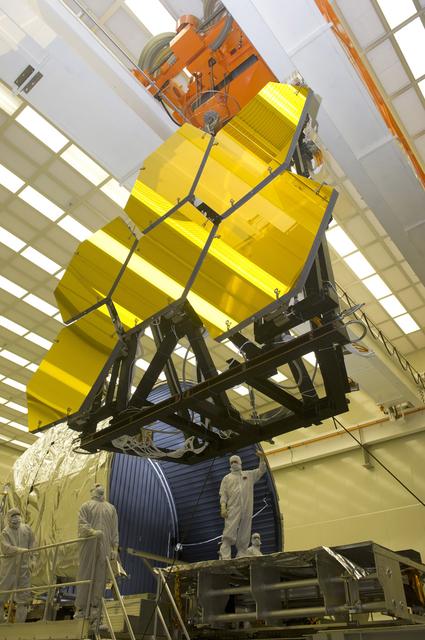
The James Webb Space Telescope mirrors have completed deep-freeze tests and are removed from the X-ray and Cryogenic test Facility at Marshall Space Flight Center. To read more go to: <a href="http://www.nasa.gov/topics/technology/features/webb-mirror-cryo.html" rel="nofollow">www.nasa.gov/topics/technology/features/webb-mirror-cryo....</a> Credit: Emmett Given, NASA Marshall <b><a href="http://www.nasa.gov/audience/formedia/features/MP_Photo_Guidelines.html" rel="nofollow">NASA image use policy.</a></b> <b><a href="http://www.nasa.gov/centers/goddard/home/index.html" rel="nofollow">NASA Goddard Space Flight Center</a></b> enables NASA’s mission through four scientific endeavors: Earth Science, Heliophysics, Solar System Exploration, and Astrophysics. Goddard plays a leading role in NASA’s accomplishments by contributing compelling scientific knowledge to advance the Agency’s mission. <b>Follow us on <a href="http://twitter.com/NASA_GoddardPix" rel="nofollow">Twitter</a></b> <b>Like us on <a href="http://www.facebook.com/pages/Greenbelt-MD/NASA-Goddard/395013845897?ref=tsd" rel="nofollow">Facebook</a></b> <b>Find us on <a href="http://instagrid.me/nasagoddard/?vm=grid" rel="nofollow">Instagram</a></b>
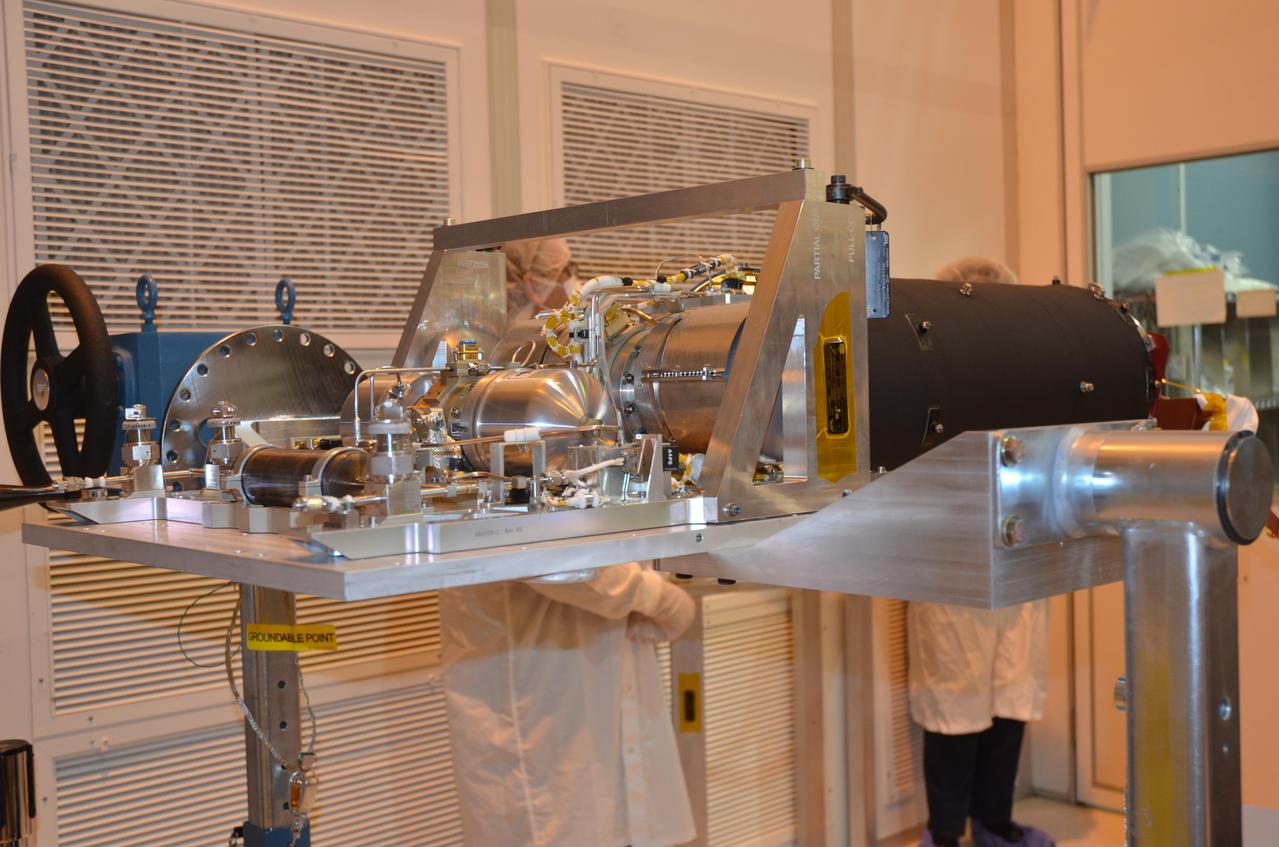
This image shows the cooling device for the Mid-Infrared Instrument, or MIRI, one of the James Webb Space Telescope's four instruments. This photo was taken after the cryocooler had completed testing, and was taken out of the test chamber in preparation for being placed into its shipping container. The cooler was shipped to the Northrop Grumman Aerospace Systems facility in Redondo Beach, California, on May 26, 2016. There, the cooler will be attached to the body of the Webb telescope. http://photojournal.jpl.nasa.gov/catalog/PIA20688
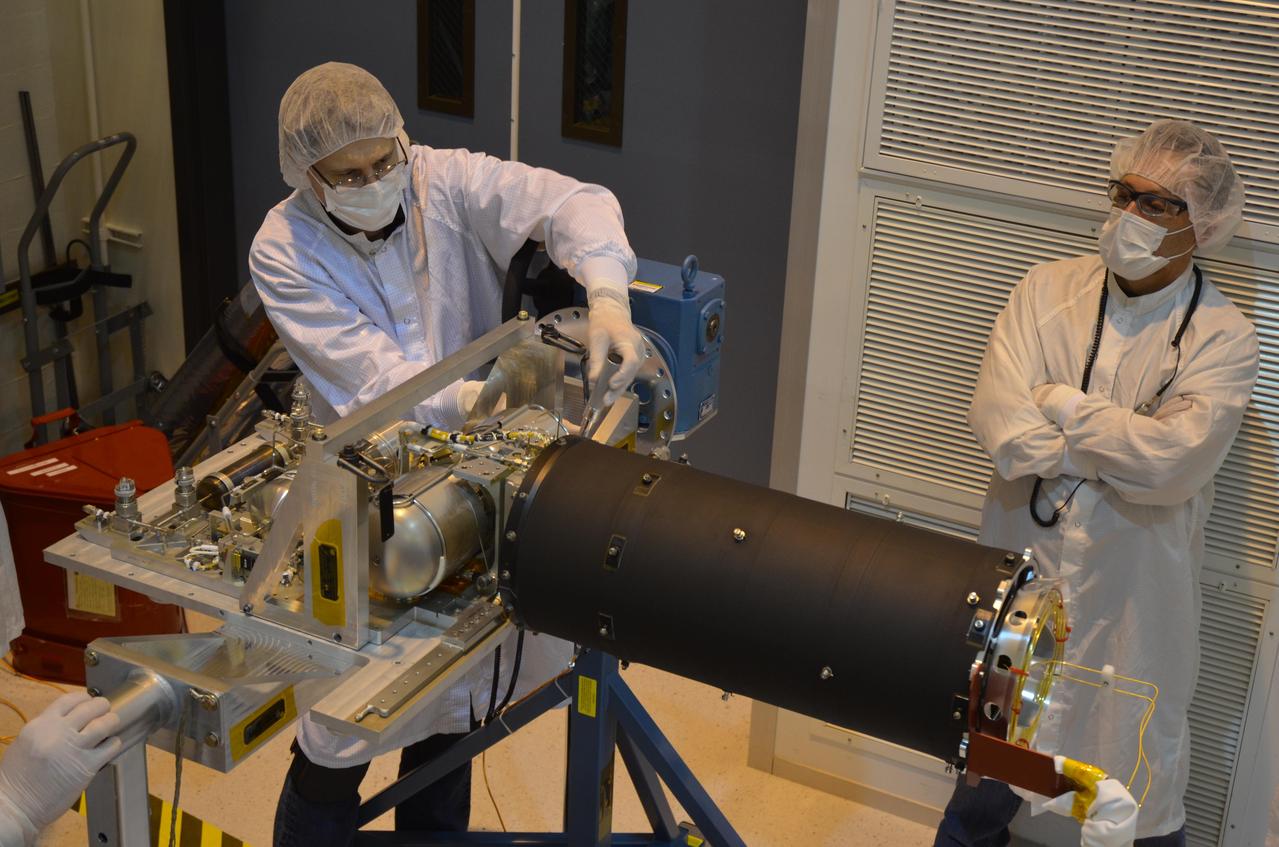
Technicians inspect a component of the cryocooler for the Mid-Infrared Instrument, or MIRI, part of NASA's James Webb Space Telescope. This photo was taken after the cooler had completed testing, and was taken out of the test chamber in preparation for being placed into its shipping container. The cooler was shipped to the Northrop Grumman Aerospace Systems facility in Redondo Beach, California, on May 26, 2016. There, the cooler will be attached to the body of the Webb telescope. http://photojournal.jpl.nasa.gov/catalog/PIA20686
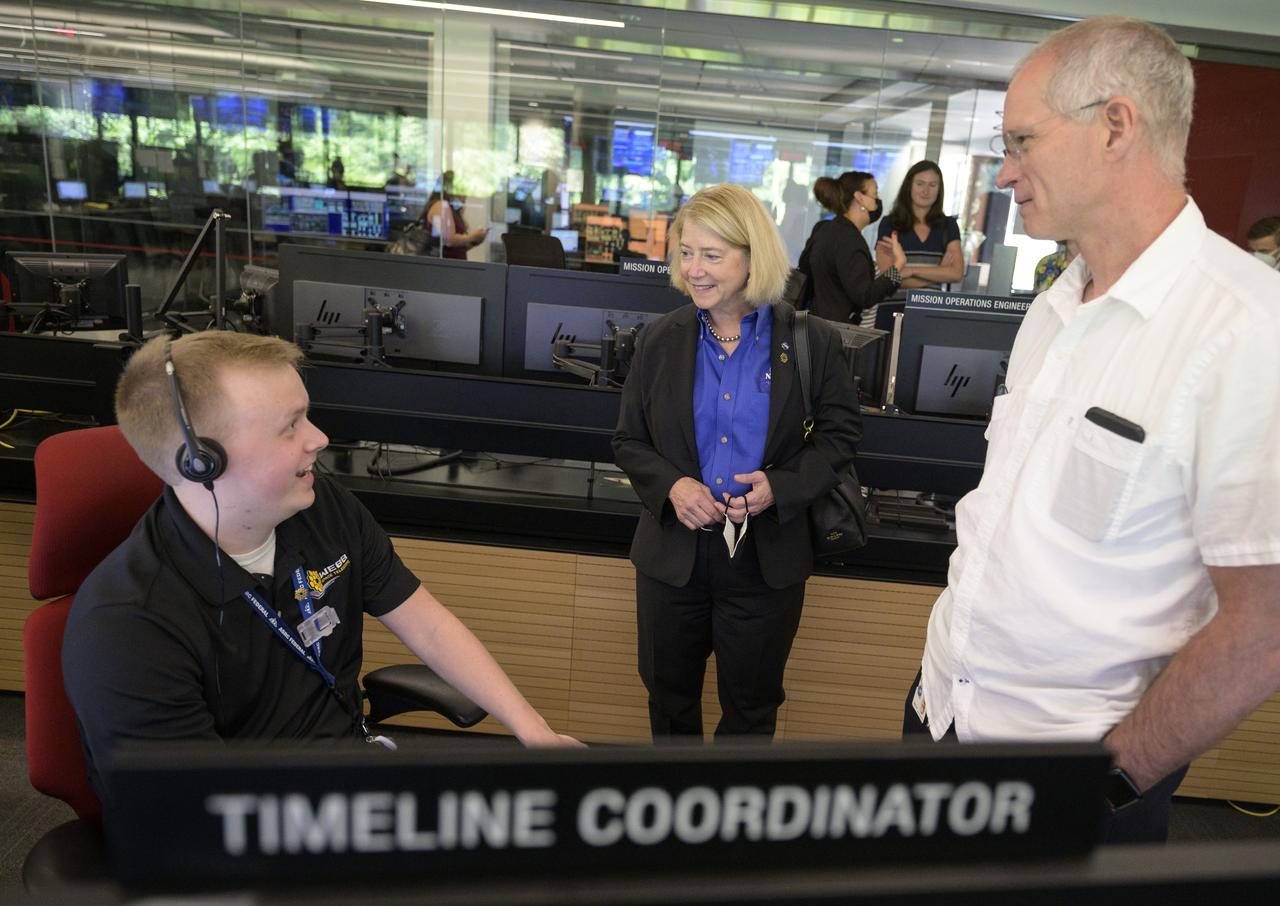
NASA Deputy Administrator Pam Melroy, center, meets with NASA James Webb Space Telescope Timeline Controller Matt Wasiak, left, and NASA James Webb Space Telescope Deputy Mission Operations Manager Ron Jones, right, during a tour of the NASA James Webb Space Telescope Mission Operations Center, Wednesday, June 29, 2022, at the Space Telescope Science Institute (STScI) in Baltimore. Prior to the tour the deputy spoke at a briefing that focused on the status of NASA’s James Webb Space Telescope in its final weeks of preparing for its science mission, as well as overviews of planned science for Webb’s first year of operations. Photo Credit: (NASA/Bill Ingalls)
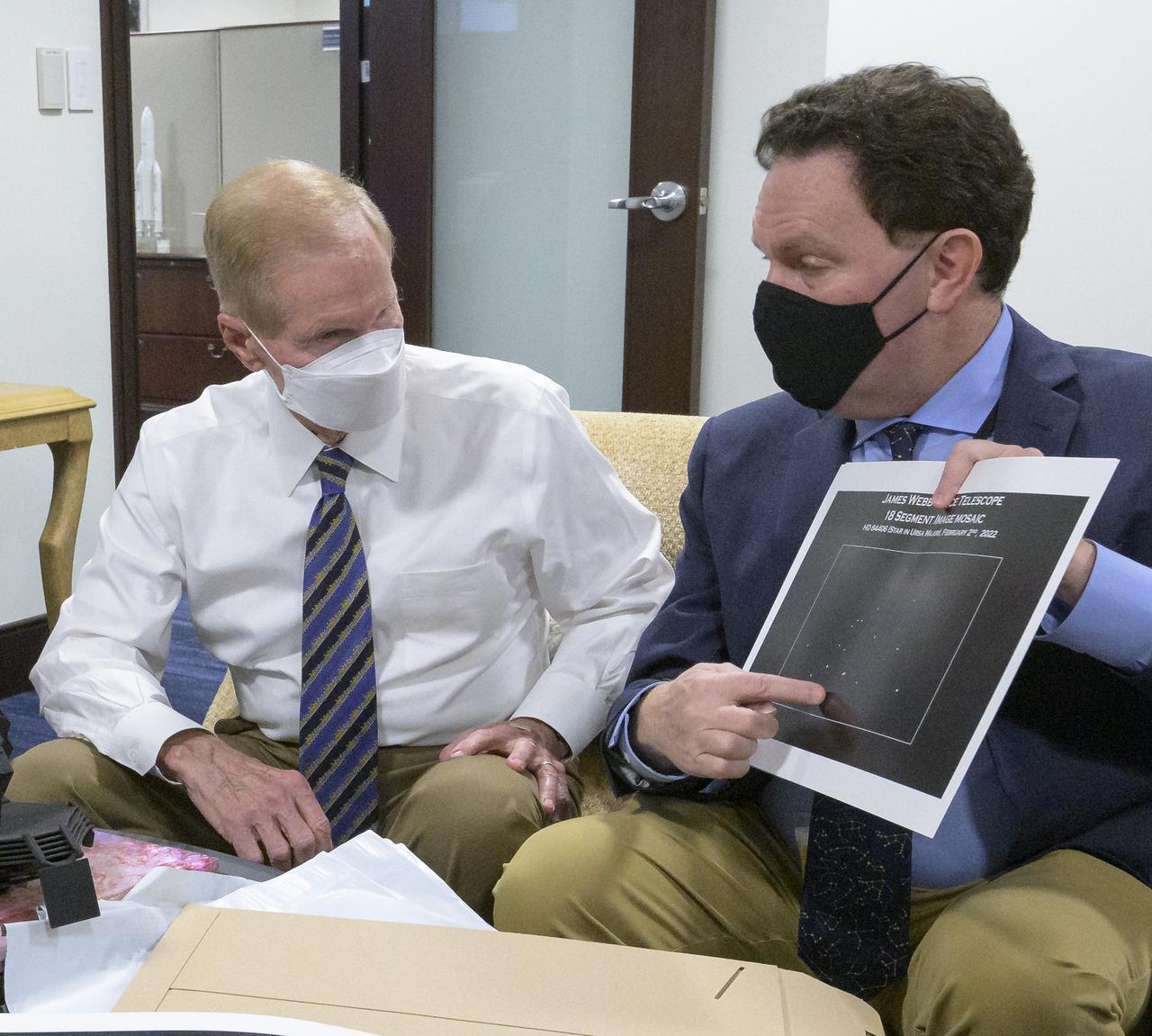
NASA Administrator Bill Nelson, left, is shown an early mirror alignment image from the James Webb Space Telescope, by NASA Webb Optical Telescope Element Manager Lee Feinberg, Monday, Feb., 7, 2022, at the Mary W. Jackson NASA Headquarters building in Washington. This engineering visual, which features 18 unfocused dots of light, demonstrates that the Webb team has successfully identified starlight through each of Webb’s 18 hexagonal mirror segments – the starting point in a months-long process to progressively align the segments into a single, precise mirror to prepare the telescope for science. Photo Credit: (NASA/Bill Ingalls)
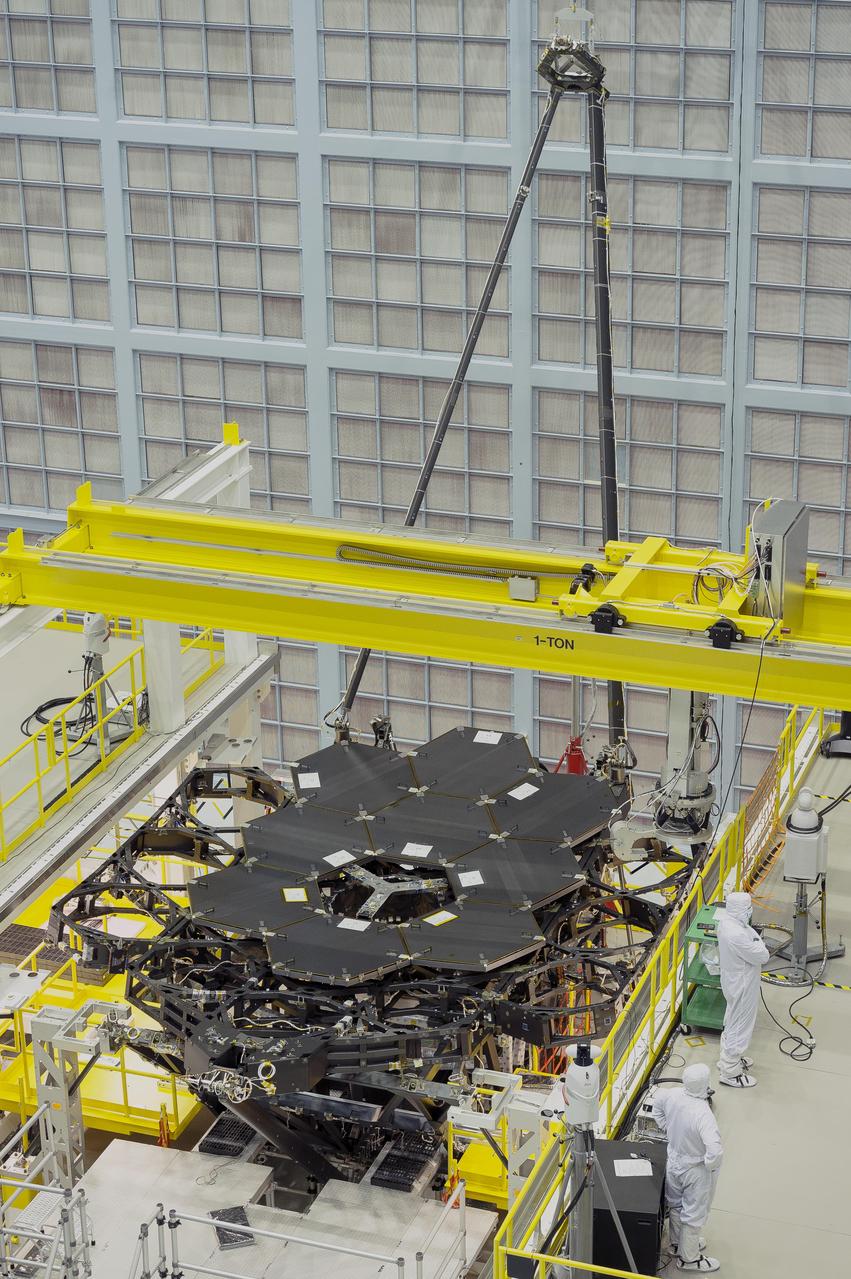
Inside NASA's Goddard Space Flight Center's massive clean room in Greenbelt, Maryland, the ninth flight mirror was installed onto the telescope structure with a robotic arm. This marks the halfway completion point for the James Webb Space Telescope's segmented primary mirror. Nine of the James Webb Space Telescope's 18 primary flight mirrors have been installed on the telescope structure. This marks the halfway point in the James Webb Space Telescope's primary mirror installation. Credit: NASA's Goddard Space Flight Center/Chris Gunn Read more: <a href="http://go.nasa.gov/1kqK6fW" rel="nofollow">go.nasa.gov/1kqK6fW</a>
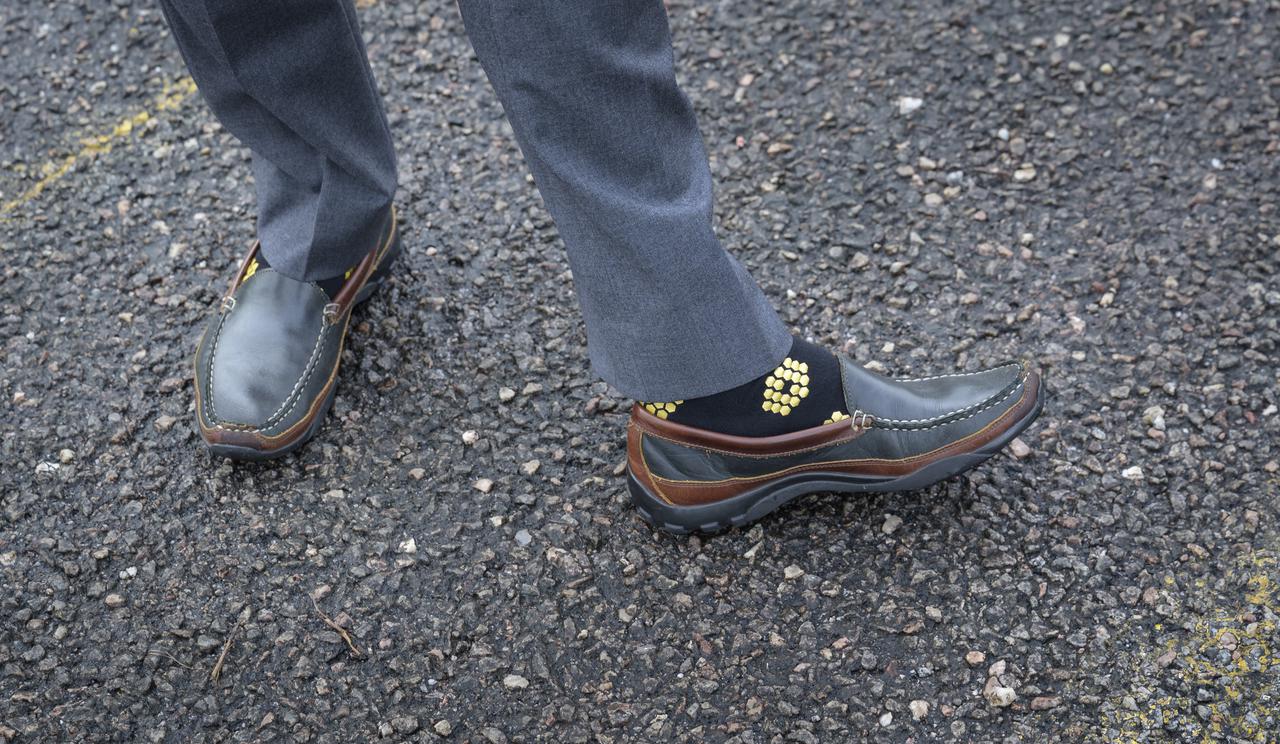
NASA James Webb Space Telescope Program Scientist Eric Smith, wearing Webb themed socks, waits for Arianespace's Ariane 5 rocket with NASA’s James Webb Space Telescope onboard, to rollout to the launch pad, Thursday, Dec. 23, 2021, at Europe’s Spaceport, the Guiana Space Center in Kourou, French Guiana. The James Webb Space Telescope (sometimes called JWST or Webb) is a large infrared telescope with a 21.3 foot (6.5 meter) primary mirror. The observatory will study every phase of cosmic history—from within our solar system to the most distant observable galaxies in the early universe. Photo Credit: (NASA/Bill Ingalls)
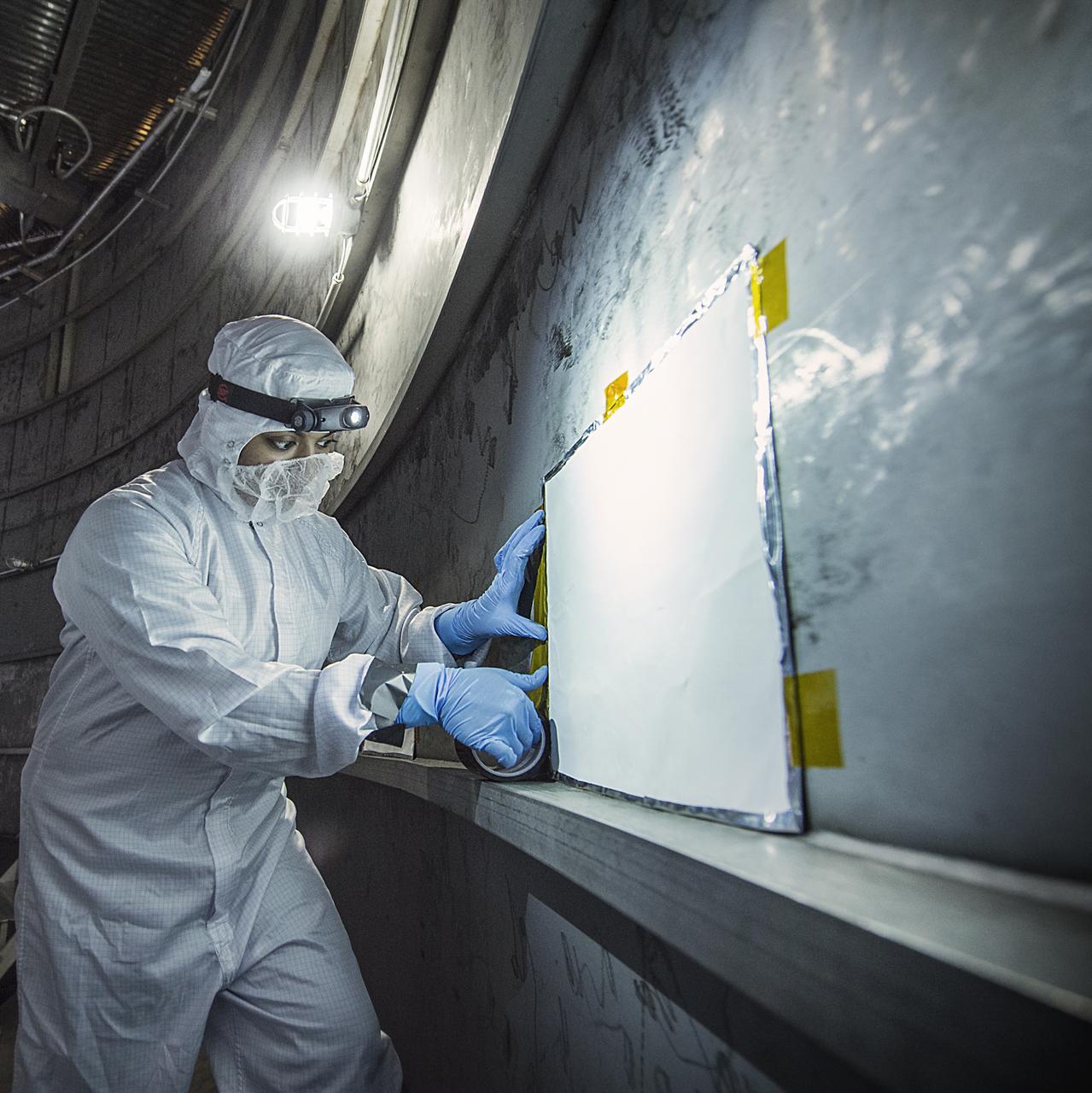
Contamination from organic molecules can harm delicate instruments and engineers are taking special care at NASA to prevent that from affecting the James Webb Space Telescope (and all satellites and instruments). Recently, Nithin Abraham, a Thermal Coatings Engineer placed Molecular Adsorber Coating or "MAC" panels in the giant chamber where the Webb telescope will be tested. This contamination can occur through a process when a vapor or odor is emitted by a substance. This is called "outgassing." The "new car smell" is an example of that, and is unhealthy for people and sensitive satellite instruments. So, NASA engineers have created a new way to protect those instruments from the damaging effects of contamination coming from outgassing. "The Molecular Adsorber Coating (MAC) is a NASA Goddard coatings technology that was developed to adsorb or entrap outgassed molecular contaminants for spaceflight applications," said Nithin Abraham, Thermal Coatings Engineer at NASA's Goddard Space Flight Center in Greenbelt, Maryland. MAC is currently serving as an innovative contamination mitigation tool for Chamber A operations at NASA Johnson Space Center in Houston, Texas. MAC can be used to keep outgassing from coming in from outside areas or to capture outgassing directly from hardware, components, and within instrument cavities. In this case, MAC is helping by capturing outgassed contaminants outside the test chamber from affecting the Webb components. MAC is expected to capture the outgassed contaminants that exist in the space of the vacuum chamber (not from the Webb components). Credit: NASA/GoddardChris Gunn Read more: <a href="http://www.nasa.gov/feature/goddard/nasa-technology-protects-webb-telescope-from-contamination" rel="nofollow">www.nasa.gov/feature/goddard/nasa-technology-protects-web...</a> <b><a href="http://www.nasa.gov/audience/formedia/features/MP_Photo_Guidelines.html" rel="nofollow">NASA image use policy.</a></b> <b><a href="http://www.nasa.gov/centers/goddard/home/index.html" rel="nofollow">NASA Goddard Space Flight Center</a></b> enables NASA’s mission through four scientific endeavors: Earth Science, Heliophysics, Solar System Exploration, and Astrophysics. Goddard plays a leading role in NASA’s accomplishments by contributing compelling scientific knowledge to advance the Agency’s mission. <b>Follow us on <a href="http://twitter.com/NASAGoddardPix" rel="nofollow">Twitter</a></b> <b>Like us on <a href="http://www.facebook.com/pages/Greenbelt-MD/NASA-Goddard/395013845897?ref=tsd" rel="nofollow">Facebook</a></b> <b>Find us on <a href="http://instagrid.me/nasagoddard/?vm=grid" rel="nofollow">Instagram</a></b>

Dr. Nancy Grace Roman visits James Webb Space Telescope (JWST) and the Hubble Project Team.
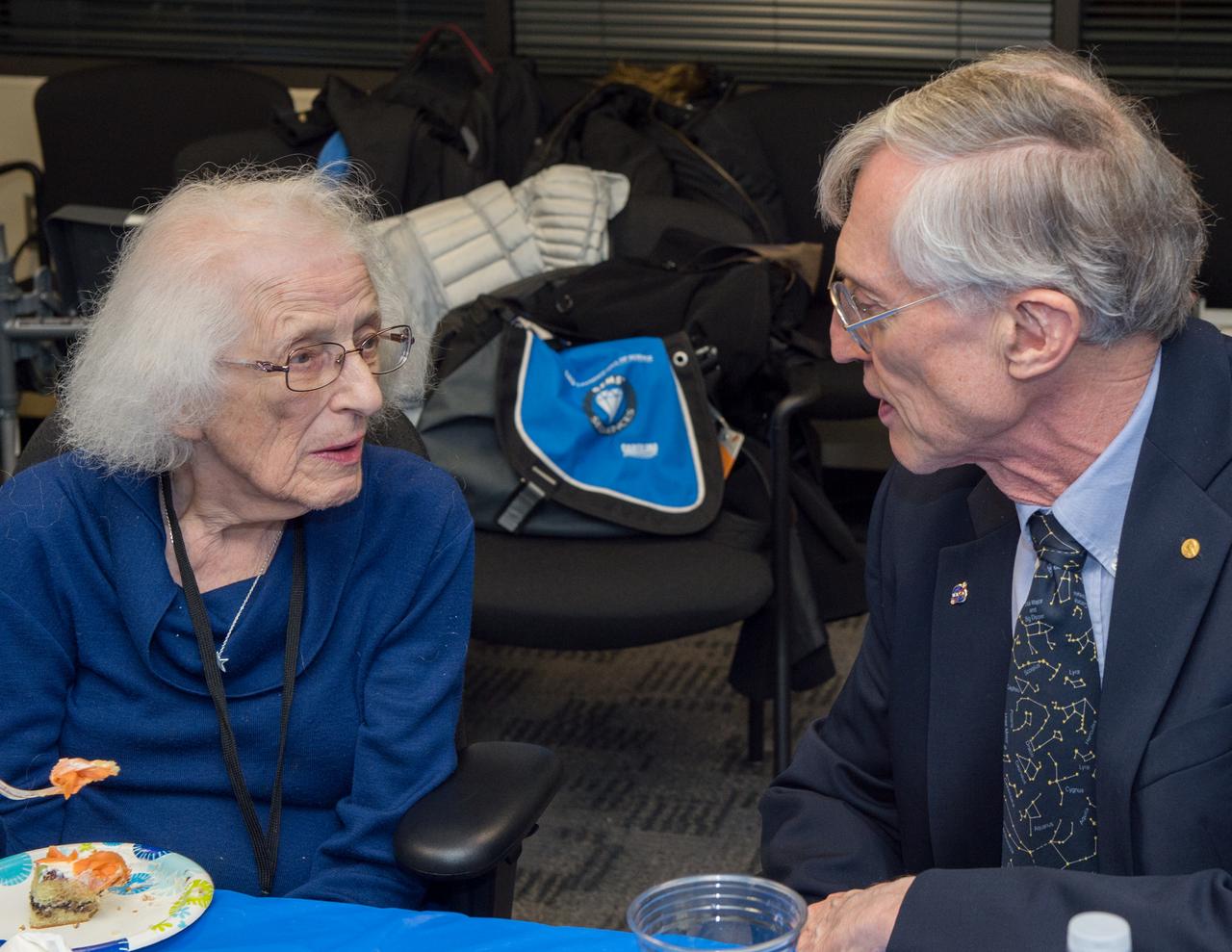
Dr. Nancy Grace Roman visits James Webb Space Telescope (JWST) and the Hubble Project Team. Dr. John Mather.

Dr. Nancy Grace Roman visits James Webb Space Telescope (JWST) and the Hubble Project Team.
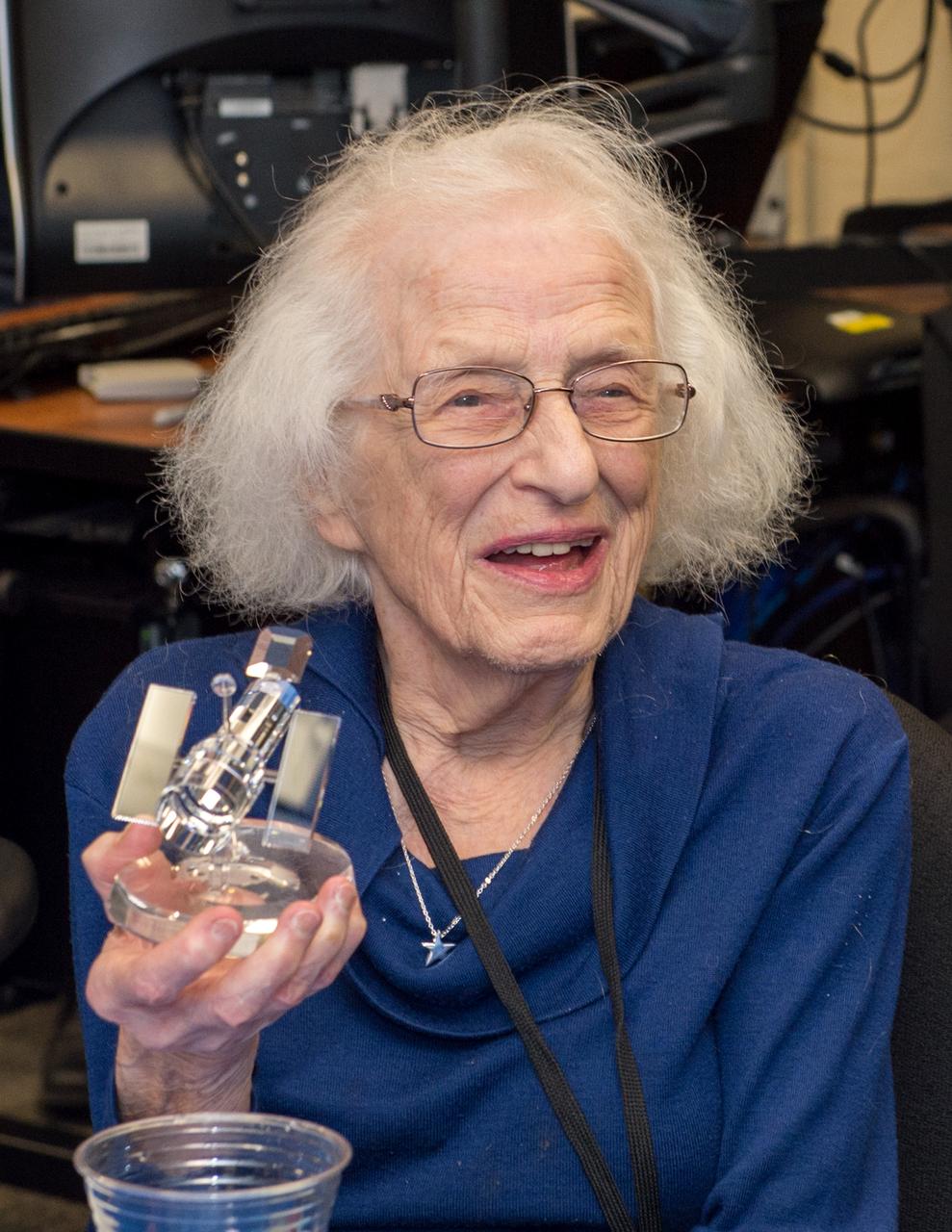
Dr. Nancy Grace Roman visits James Webb Space Telescope (JWST) and the Hubble Project Team.

Engineer Erin Wilson adds aluminum tape to electrical cables to protect them from the cold during environmental testing of special optical equipment. These tests will verify the alignment of the actual flight instruments that will fly aboard NASA’s James Webb Space Telescope. "Because the flight science instruments detect infrared light, they must be extremely cold to work, and so the environment we test them in must be extremely cold too," Wilson says. Wilson is working in the Space Environment Simulator thermal-vacuum chamber at NASA's Goddard Space Flight Center in Greenbelt, Md. The subject of the testing is the Optical Telescope Element (OTE) Simulator, or OSIM. The hardware seen in the background is the Beam Image Analyzer, which will be used to measure OSIM. It sits above the OSIM, which is under the platform that Wilson is working on. The OSIM is about two stories tall and almost as wide as the whole test chamber. The job of the OSIM is to generate a beam of light just like the one that the real telescope optics will feed into the actual flight science instruments. Because the real flight science instruments will be used to test the real flight telescope, their alignment and performance have to be verified first, using OSIM, and before that can happen, the OSIM has to tested and verified. In space, the telescope optics act as Webb’s eye, and on the ground, the OSIM substitutes for the telescope optics, says Robert Rashford, manager for the OSIM as well as the Integrated Science Instrument Module (ISIM) Electronics Compartment. This hardware is being tested in an environment that mimics the hard vacuum and cold temperatures that Webb will experience in space. After Erin and others were done setting things up in the test chamber, Goddard engineers sealed it up, evacuated all the air and lowered the temperature of the equipment being tested to 42 Kelvin (-384-point-1 Fahrenheit or -231-point-1 Celsius). "It has taken a little over a month to get temperatures cold enough to duplicate the temperatures that Webb will see in operation in space," Rashford says. In the next couple weeks Rashford and the team of Goddard engineers will measure the OSIM with the Beam Image Analyzer. This extremely cold or “cryogenic” optical testing and verification process will likely take 90 days to complete. Laura Betz NASA's Goddard Space Flight Center, Greenbelt, Md. <b><a href="http://www.nasa.gov/audience/formedia/features/MP_Photo_Guidelines.html" rel="nofollow">NASA image use policy.</a></b> <b><a href="http://www.nasa.gov/centers/goddard/home/index.html" rel="nofollow">NASA Goddard Space Flight Center</a></b> enables NASA’s mission through four scientific endeavors: Earth Science, Heliophysics, Solar System Exploration, and Astrophysics. Goddard plays a leading role in NASA’s accomplishments by contributing compelling scientific knowledge to advance the Agency’s mission. <b>Follow us on <a href="http://twitter.com/NASA_GoddardPix" rel="nofollow">Twitter</a></b> <b>Like us on <a href="http://www.facebook.com/pages/Greenbelt-MD/NASA-Goddard/395013845897?ref=tsd" rel="nofollow">Facebook</a></b> <b>Find us on <a href="http://instagrid.me/nasagoddard/?vm=grid" rel="nofollow">Instagram</a></b>
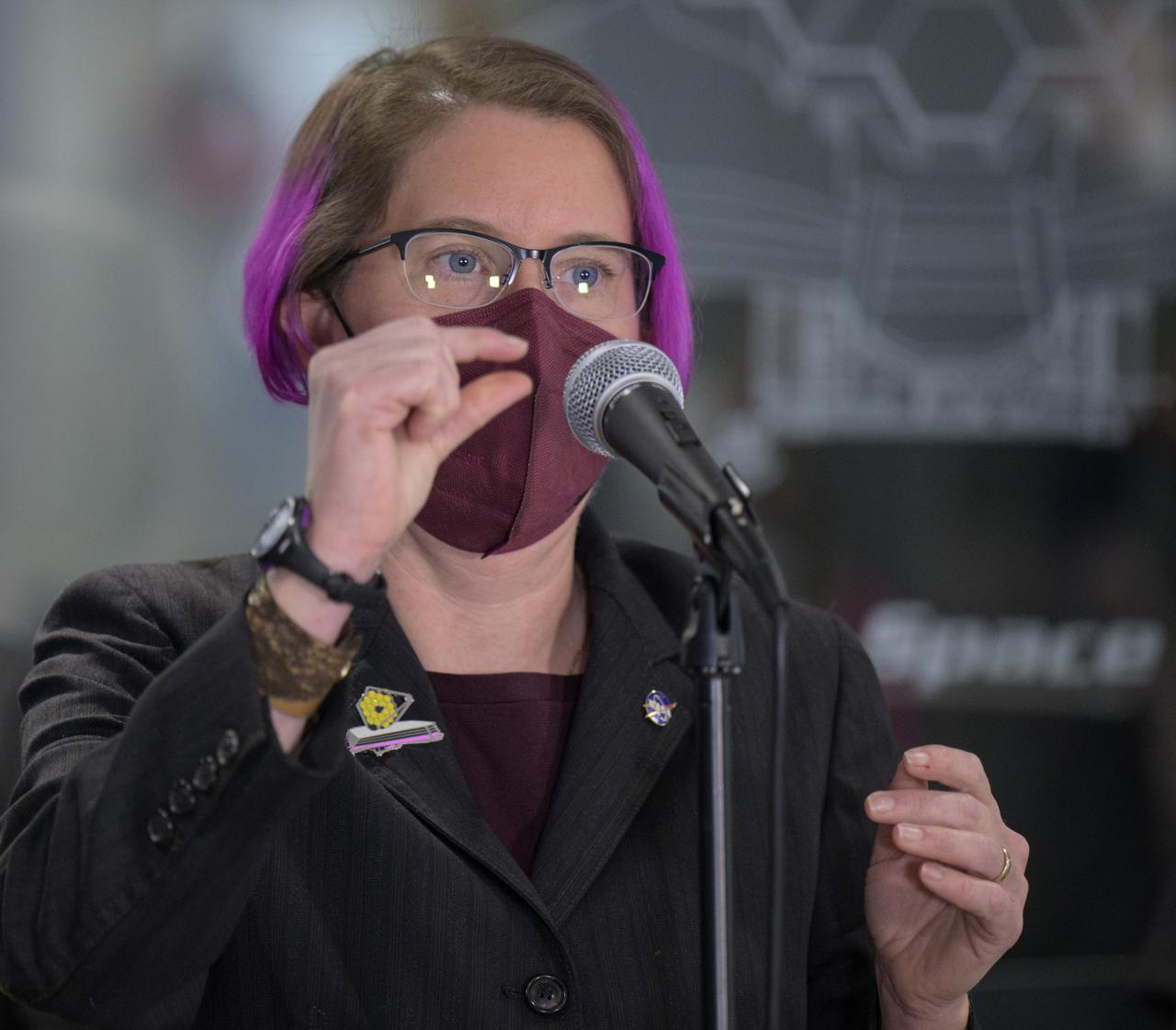
NASA James Webb Space Telescope Operations Project Scientist Jane Rigby answers questions from the media during a briefing following the successful deployment of NASA’s James Webb Space Telescope primary mirror, Saturday, Jan. 8, 2022, from the Webb Space Telescope Mission Operations Center at the Space Telescope Science Institute in Baltimore. With Webb’s 21.3-foot (6.5-meter) primary mirror fully deployed, the infrared observatory has completed its unprecedented process of unfolding in space to prepare for science operations. The observatory will study every phase of cosmic history—from within our solar system to the most distant observable galaxies in the early universe. Photo Credit: (NASA/Bill Ingalls)

NASA James Webb Space Telescope Operations Project Scientist Jane Rigby answers questions from the media during a briefing following the successful deployment of NASA’s James Webb Space Telescope primary mirror, Saturday, Jan. 8, 2022, from the Webb Space Telescope Mission Operations Center at the Space Telescope Science Institute in Baltimore. With Webb’s 21.3-foot (6.5-meter) primary mirror fully deployed, the infrared observatory has completed its unprecedented process of unfolding in space to prepare for science operations. The observatory will study every phase of cosmic history—from within our solar system to the most distant observable galaxies in the early universe. Photo Credit: (NASA/Bill Ingalls)
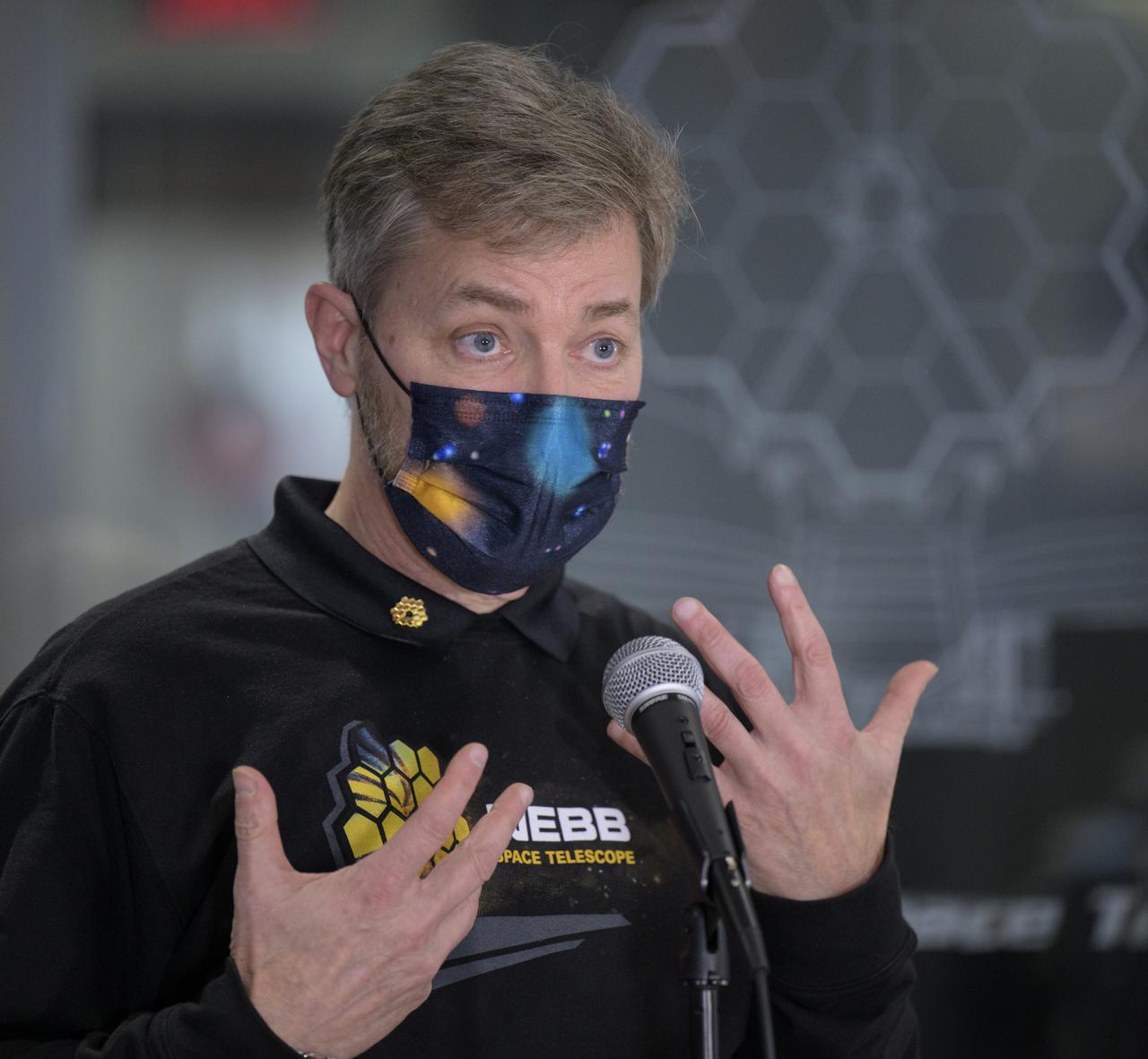
NASA James Webb Space Telescope Commissioning Manager John Durning answers questions from the media during a briefing following the successful deployment of NASA’s James Webb Space Telescope primary mirror, Saturday, Jan. 8, 2022, from the Webb Space Telescope Mission Operations Center at the Space Telescope Science Institute in Baltimore. With Webb’s 21.3-foot (6.5-meter) primary mirror fully deployed, the infrared observatory has completed its unprecedented process of unfolding in space to prepare for science operations. The observatory will study every phase of cosmic history—from within our solar system to the most distant observable galaxies in the early universe. Photo Credit: (NASA/Bill Ingalls)
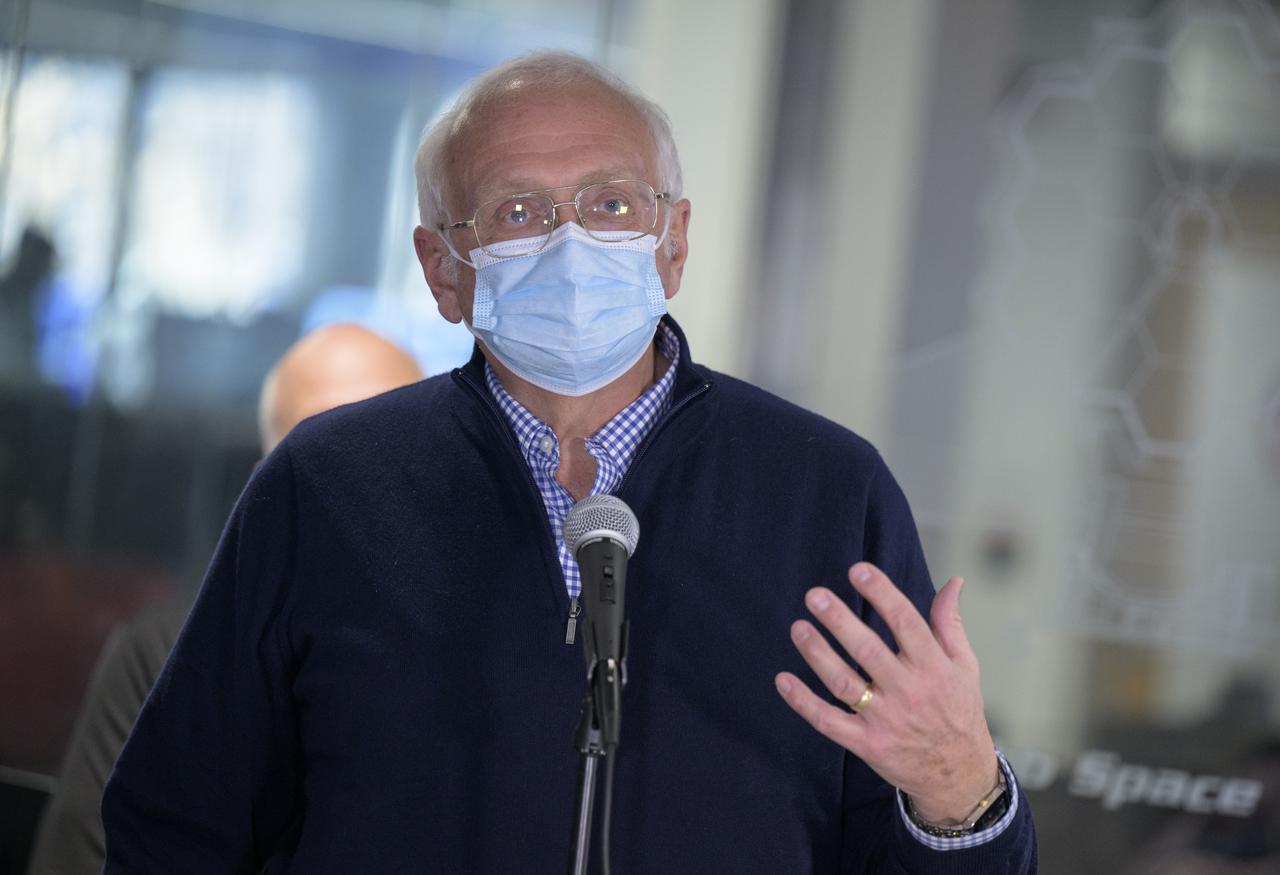
NASA James Webb Space Telescope Project Manager Bill Ochs answers questions from the media during a briefing following the successful deployment of NASA’s James Webb Space Telescope primary mirror, Saturday, Jan. 8, 2022, from the Webb Space Telescope Mission Operations Center at the Space Telescope Science Institute in Baltimore. With Webb’s 21.3-foot (6.5-meter) primary mirror fully deployed, the infrared observatory has completed its unprecedented process of unfolding in space to prepare for science operations. The observatory will study every phase of cosmic history—from within our solar system to the most distant observable galaxies in the early universe. Photo Credit: (NASA/Bill Ingalls)
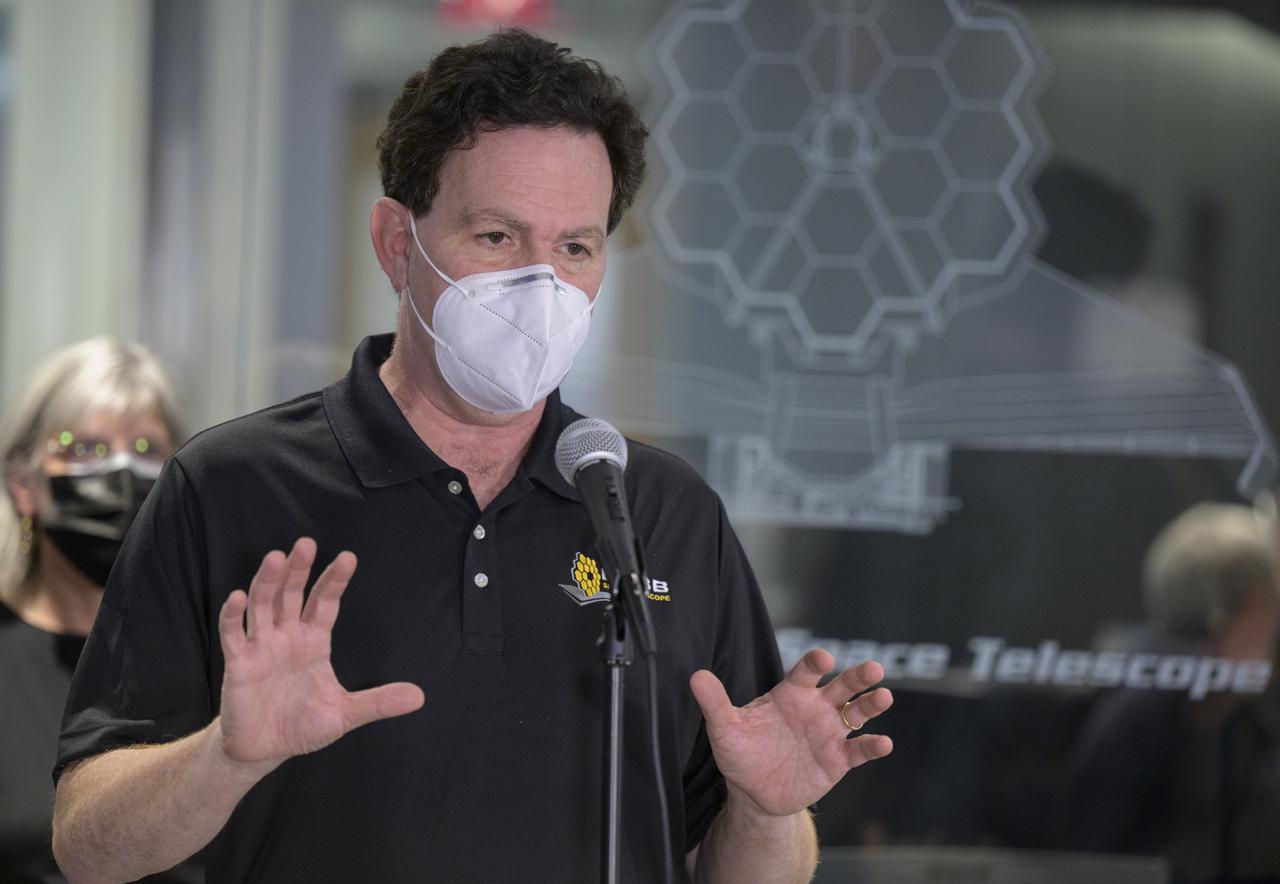
NASA James Webb Space Telescope Element Manager Lee Feinberg answers questions from the media during a briefing following the successful deployment of NASA’s James Webb Space Telescope primary mirror, Saturday, Jan. 8, 2022, from the Webb Space Telescope Mission Operations Center at the Space Telescope Science Institute in Baltimore. With Webb’s 21.3-foot (6.5-meter) primary mirror fully deployed, the infrared observatory has completed its unprecedented process of unfolding in space to prepare for science operations. The observatory will study every phase of cosmic history—from within our solar system to the most distant observable galaxies in the early universe. Photo Credit: (NASA/Bill Ingalls)
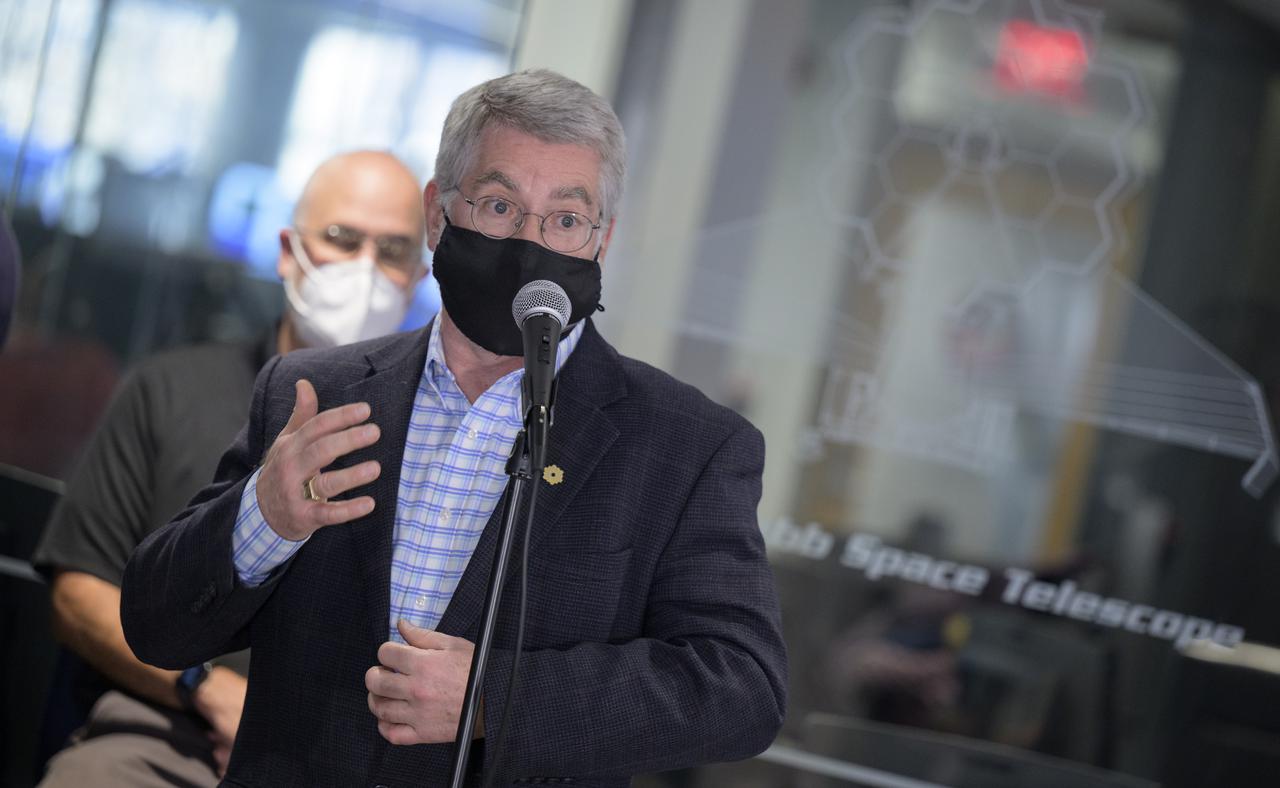
NASA James Webb Space Telescope Mission Systems Engineer Mike Menzel answers questions from the media during a briefing following the successful deployment of NASA’s James Webb Space Telescope primary mirror, Saturday, Jan. 8, 2022, from the Webb Space Telescope Mission Operations Center at the Space Telescope Science Institute in Baltimore. With Webb’s 21.3-foot (6.5-meter) primary mirror fully deployed, the infrared observatory has completed its unprecedented process of unfolding in space to prepare for science operations. The observatory will study every phase of cosmic history—from within our solar system to the most distant observable galaxies in the early universe. Photo Credit: (NASA/Bill Ingalls)
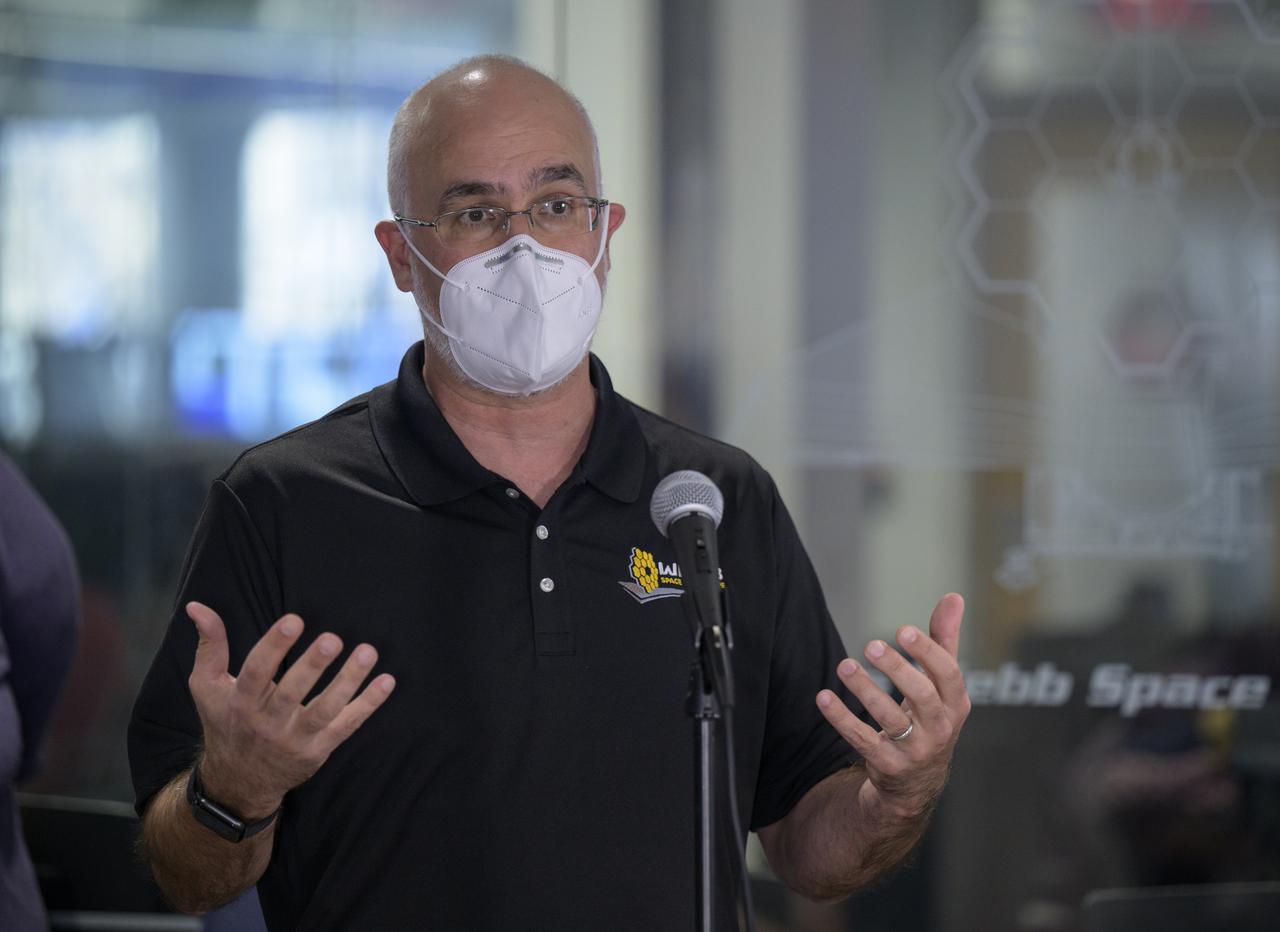
Vice President and Program Manager, Webb, Northrop Grumman, Scott Willoughby answers questions from the media during a briefing following the successful deployment of NASA’s James Webb Space Telescope primary mirror, Saturday, Jan. 8, 2022, from the Webb Space Telescope Mission Operations Center at the Space Telescope Science Institute in Baltimore. With Webb’s 21.3-foot (6.5-meter) primary mirror fully deployed, the infrared observatory has completed its unprecedented process of unfolding in space to prepare for science operations. The observatory will study every phase of cosmic history—from within our solar system to the most distant observable galaxies in the early universe. Photo Credit: (NASA/Bill Ingalls)
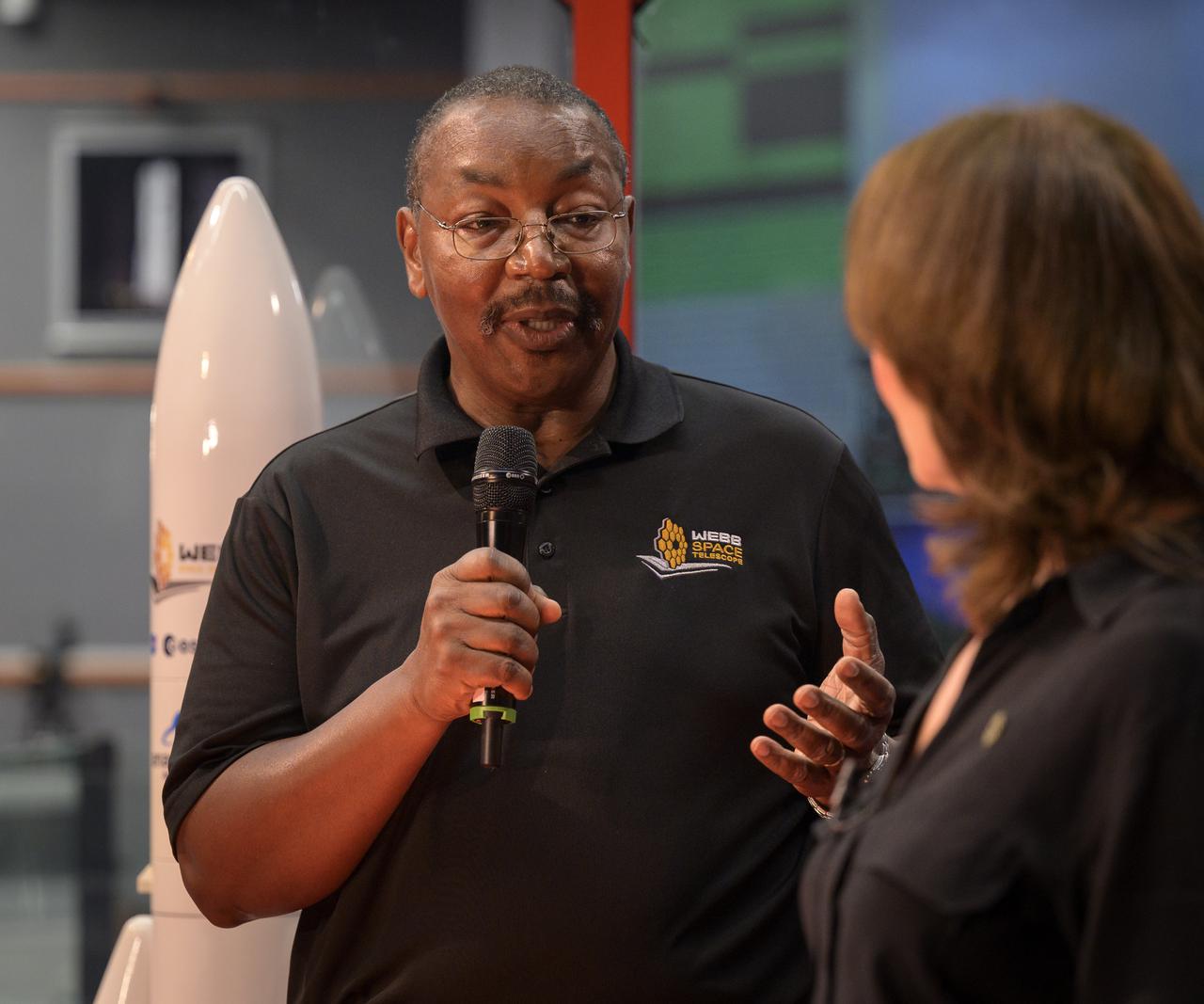
NASA Program Director for the James Webb Space Telescope Program Greg Robinson gives a brief interview on NASA television as he and the launch team monitor the countdown of the launch of Arianespace's Ariane 5 rocket carrying NASA’s James Webb Space Telescope, Saturday, Dec. 25, 2021, in the Jupiter Center at the Guiana Space Center in Kourou, French Guiana. The James Webb Space Telescope (sometimes called JWST or Webb) is a large infrared telescope with a 21.3 foot (6.5 meter) primary mirror. The observatory will study every phase of cosmic history—from within our solar system to the most distant observable galaxies in the early universe. Photo Credit: (NASA/Bill Ingalls)
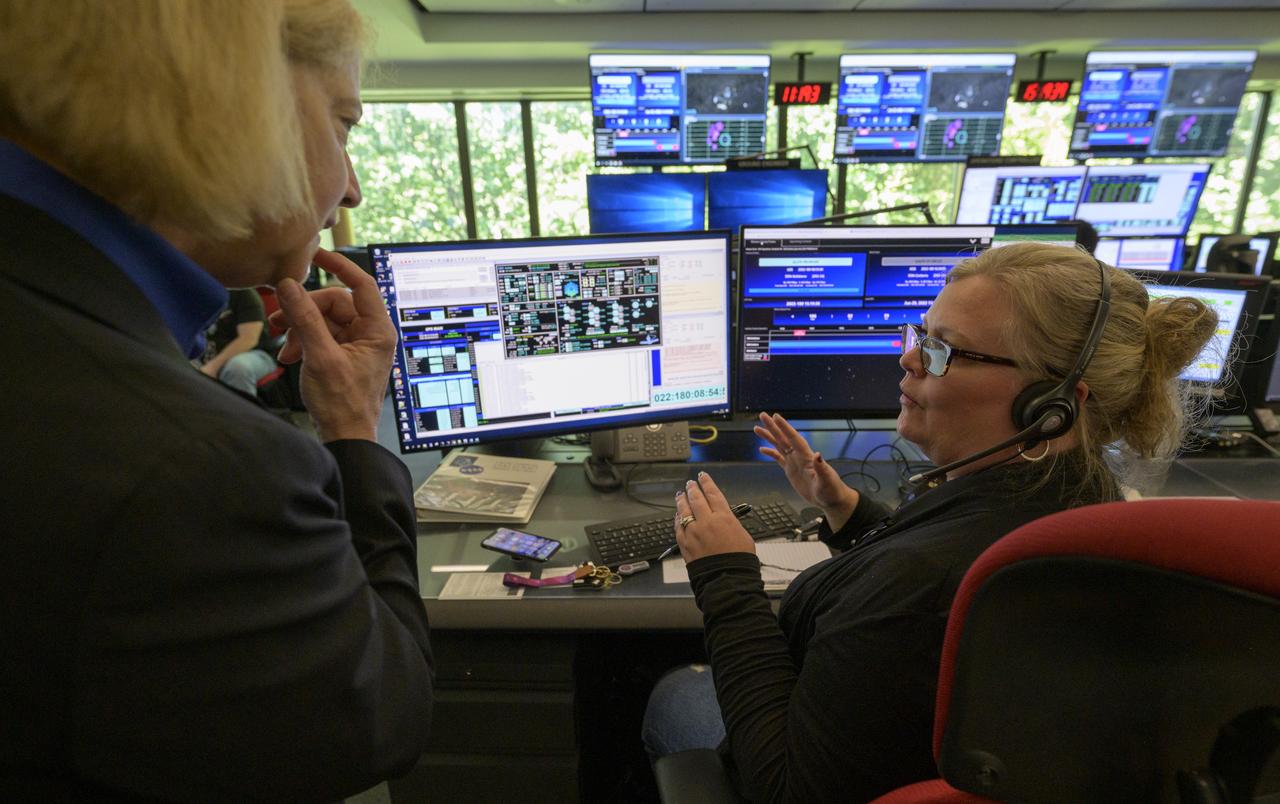
NASA Deputy Administrator Pam Melroy, left, meets with NASA James Webb Space Telescope Mission Planner Kari Bosley during a tour of the NASA James Webb Space Telescope Mission Operations Center, Wednesday, June 29, 2022, at the Space Telescope Science Institute (STScI) in Baltimore. Prior to the tour the deputy spoke at a briefing that focused on the status of NASA’s James Webb Space Telescope in its final weeks of preparing for its science mission, as well as overviews of planned science for Webb’s first year of operations. Photo Credit: (NASA/Bill Ingalls)
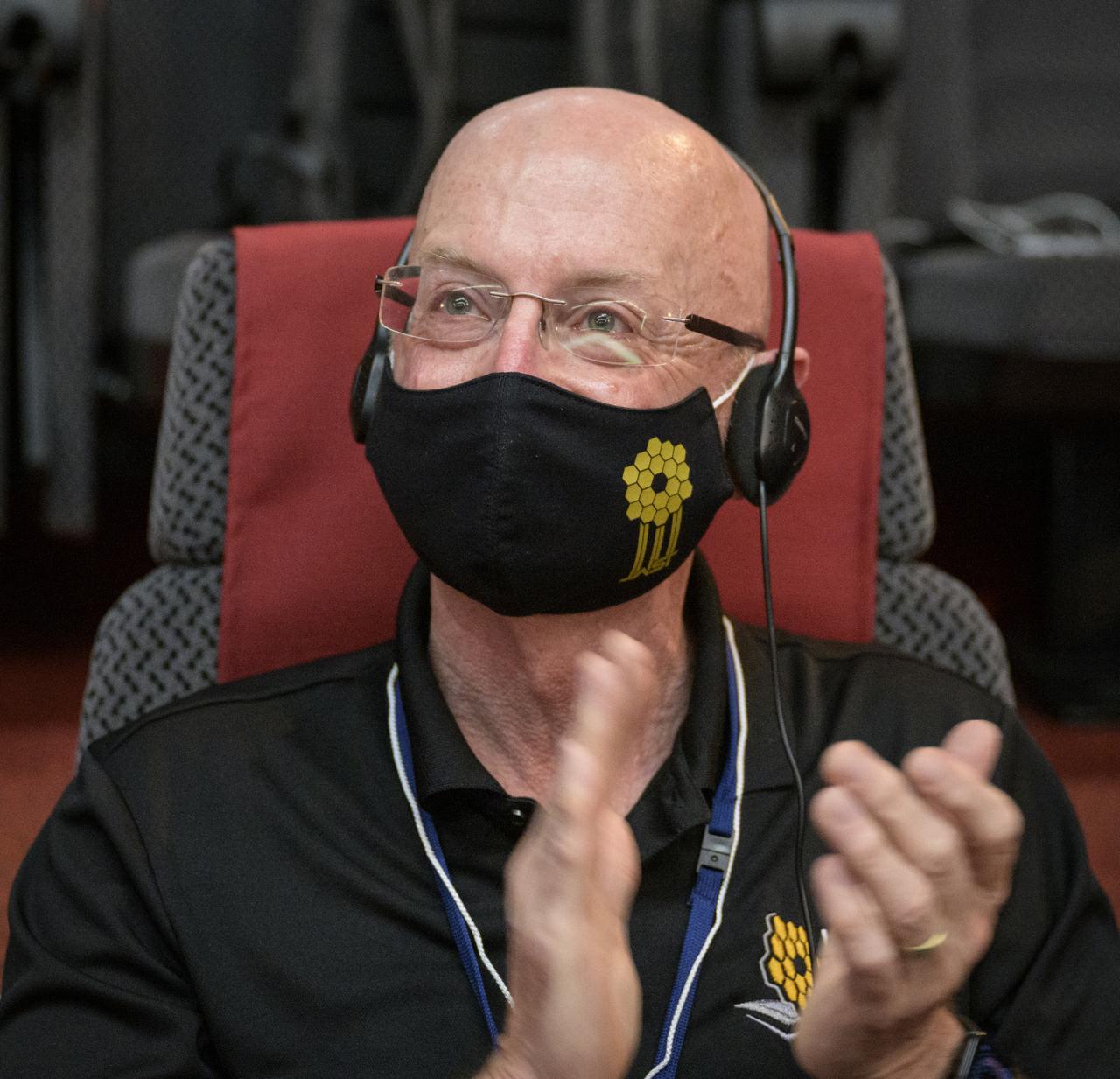
NASA James Webb Space Telescope Program Scientist Eric Smith reacts after hearing confirmation that the James Webb Space Telescope successfully separated from the Ariane 5 rocket, Saturday, Dec. 25, 2021, in the Jupiter Hall of the Guiana Space Centre in Kourou, French Guiana. The James Webb Space Telescope (sometimes called JWST or Webb) is a large infrared telescope with a 21.3 foot (6.5 meter) primary mirror. The observatory will study every phase of cosmic history—from within our solar system to the most distant observable galaxies in the early universe. Photo Credit: (NASA/Bill Ingalls)
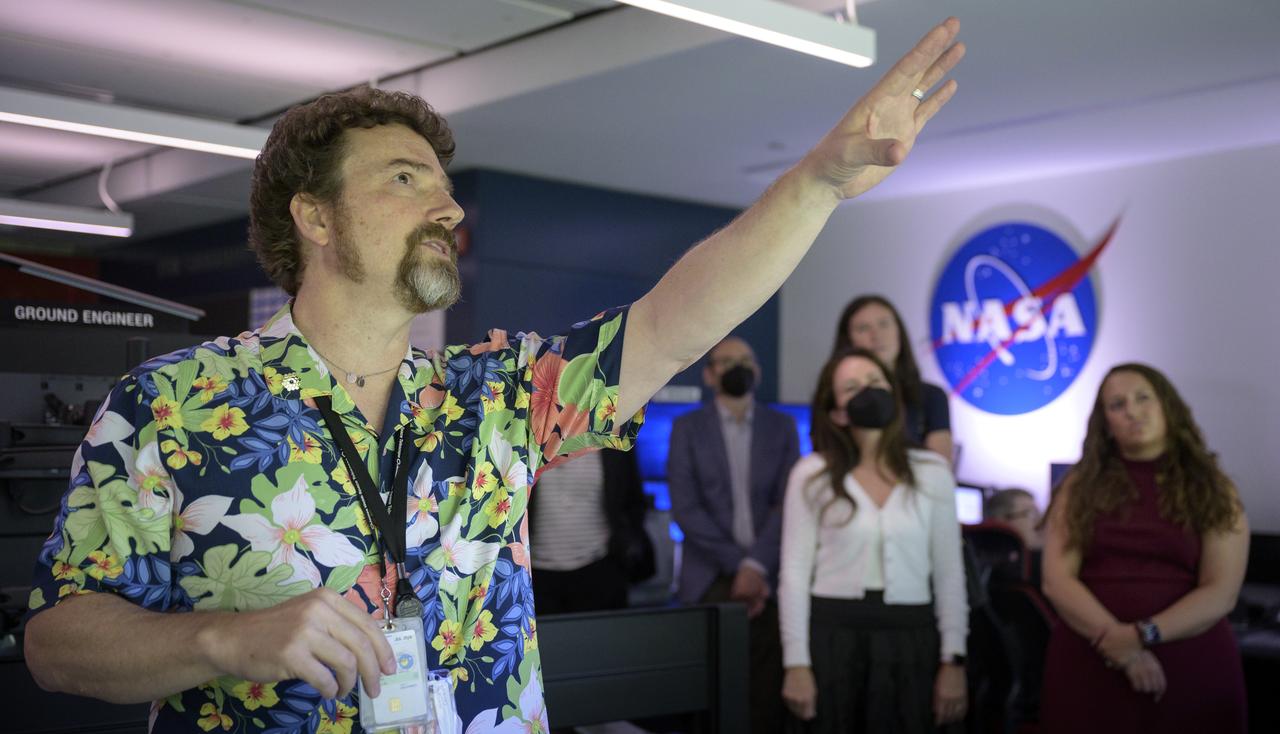
NASA James Webb Space Telescope Mission Operations Manager Carl Starr gives a tour of the NASA James Webb Space Telescope Mission Operations Center, Wednesday, June 29, 2022, at the Space Telescope Science Institute (STScI) in Baltimore. Prior to the tour the NASA Deputy Administrator Pam Melroy and NASA Associate Administrator for the Science Mission Directorate Thomas Zurbuchen spoke at a briefing that focused on the status of NASA’s James Webb Space Telescope in its final weeks of preparing for its science mission, as well as overviews of planned science for Webb’s first year of operations. Photo Credit: (NASA/Bill Ingalls)
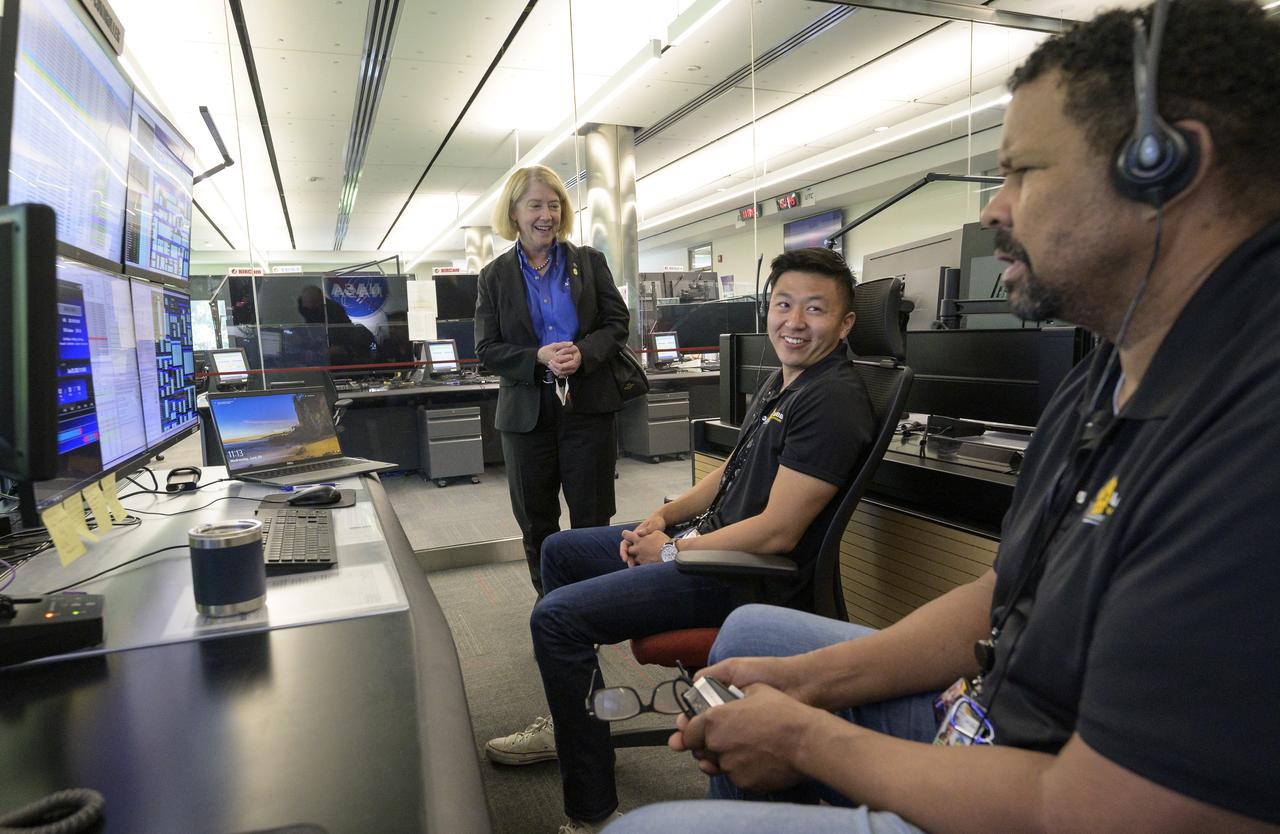
NASA Deputy Administrator Pam Melroy, left, meets with NASA James Webb Space Telescope Command Controllers Justin Truing, and Phil Johnson, right, during a tour of the NASA James Webb Space Telescope Mission Operations Center, Wednesday, June 29, 2022, at the Space Telescope Science Institute (STScI) in Baltimore. Prior to the tour the deputy spoke at a briefing that focused on the status of NASA’s James Webb Space Telescope in its final weeks of preparing for its science mission, as well as overviews of planned science for Webb’s first year of operations. Photo Credit: (NASA/Bill Ingalls)
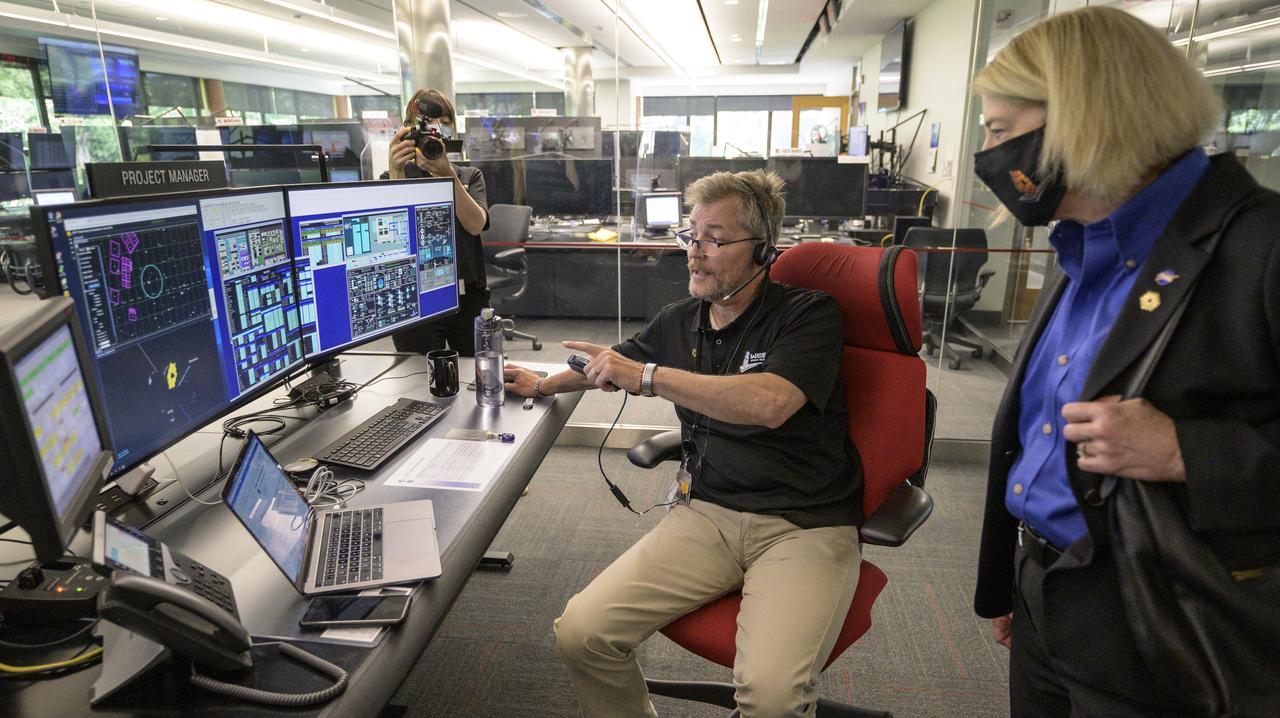
NASA Deputy Administrator Pam Melroy, right, talks with NASA James Webb Space Telescope deputy senior project scientist Jon Gardner, as she is given a tour of the NASA James Webb Space Telescope Mission Operations Center, Wednesday, June 29, 2022, at the Space Telescope Science Institute (STScI) in Baltimore. Prior to the tour the deputy spoke at a briefing that focused on the status of NASA’s James Webb Space Telescope in its final weeks of preparing for its science mission, as well as overviews of planned science for Webb’s first year of operations. Photo Credit: (NASA/Bill Ingalls)
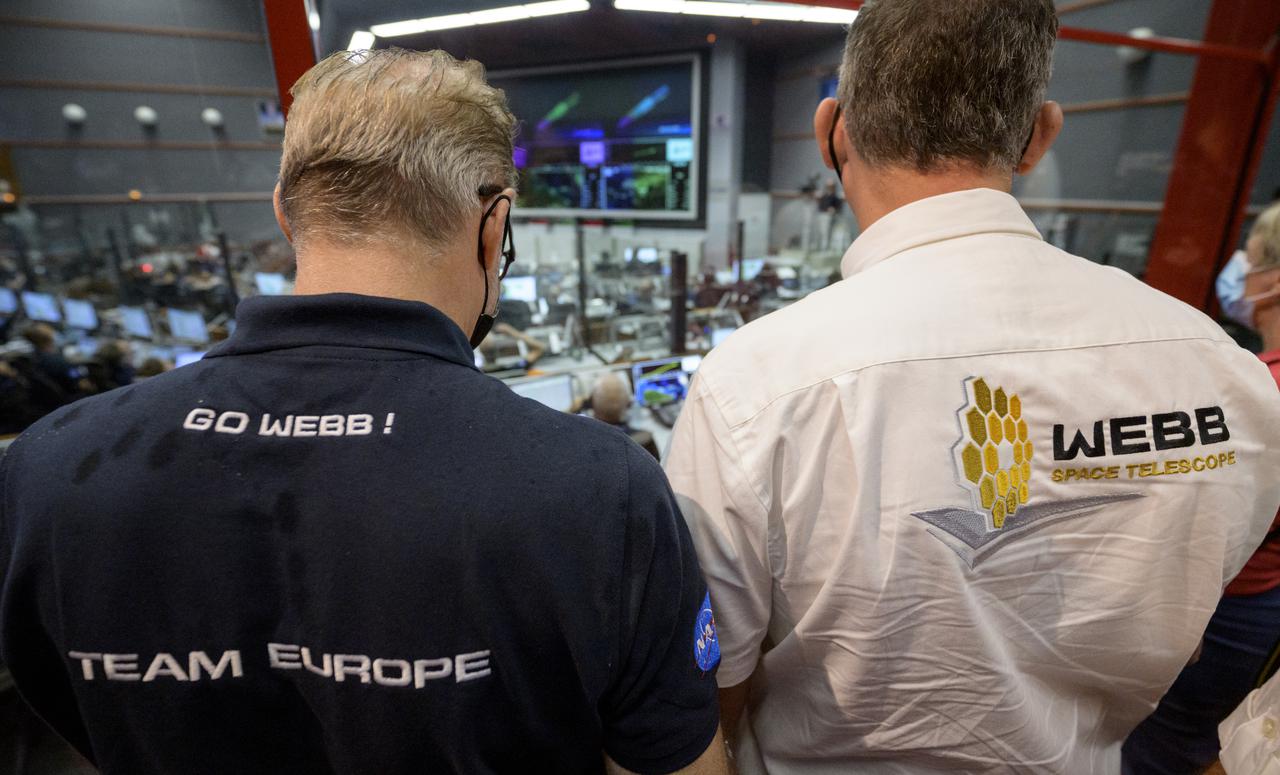
ESA (European Space Agency) Director-General Dr. Josef Aschbacher, left, and NASA Associate Administrator for the Science Mission Directorate Thomas Zurbuchen, monitor the progress of the Ariane 5 rocket delivering the James Webb Space Telescope into space, Saturday, Dec. 25, 2021, in the Jupiter Hall of the Guiana Space Centre in Kourou, French Guiana. The James Webb Space Telescope (sometimes called JWST or Webb) is a large infrared telescope with a 21.3 foot (6.5 meter) primary mirror. The observatory will study every phase of cosmic history—from within our solar system to the most distant observable galaxies in the early universe. Photo Credit: (NASA/Bill Ingalls)
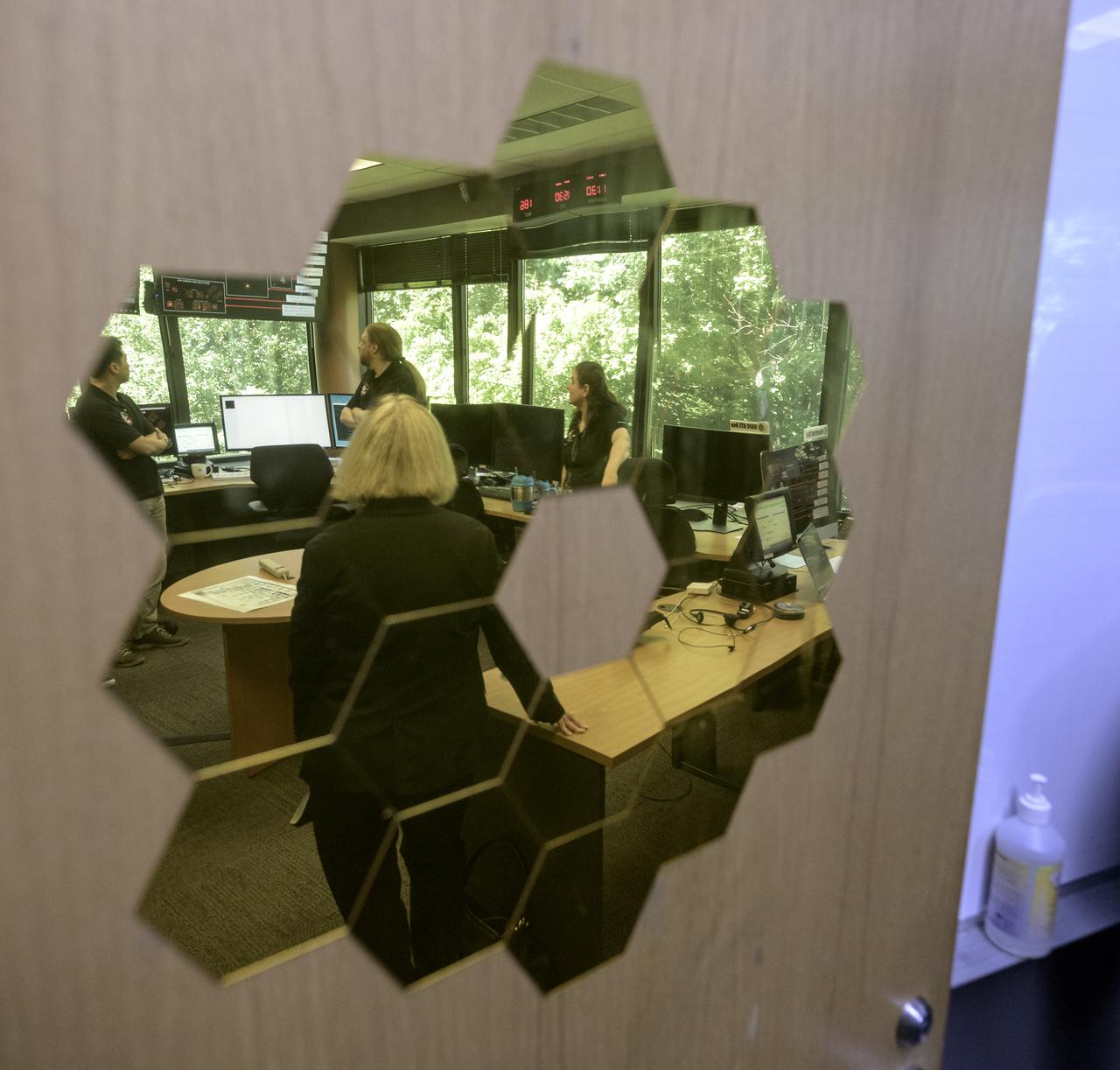
NASA Deputy Administrator Pam Melroy, back to camera, is seen reflected in a door mirror decoration as she meets with members of the NASA James Webb Space Telescope wavefront sensing and control analysis office, Wednesday, June 29, 2022, at the Space Telescope Science Institute (STScI) in Baltimore. Prior to the tour the deputy spoke at a briefing that focused on the status of NASA’s James Webb Space Telescope in its final weeks of preparing for its science mission, as well as overviews of planned science for Webb’s first year of operations. Photo Credit: (NASA/Bill Ingalls)
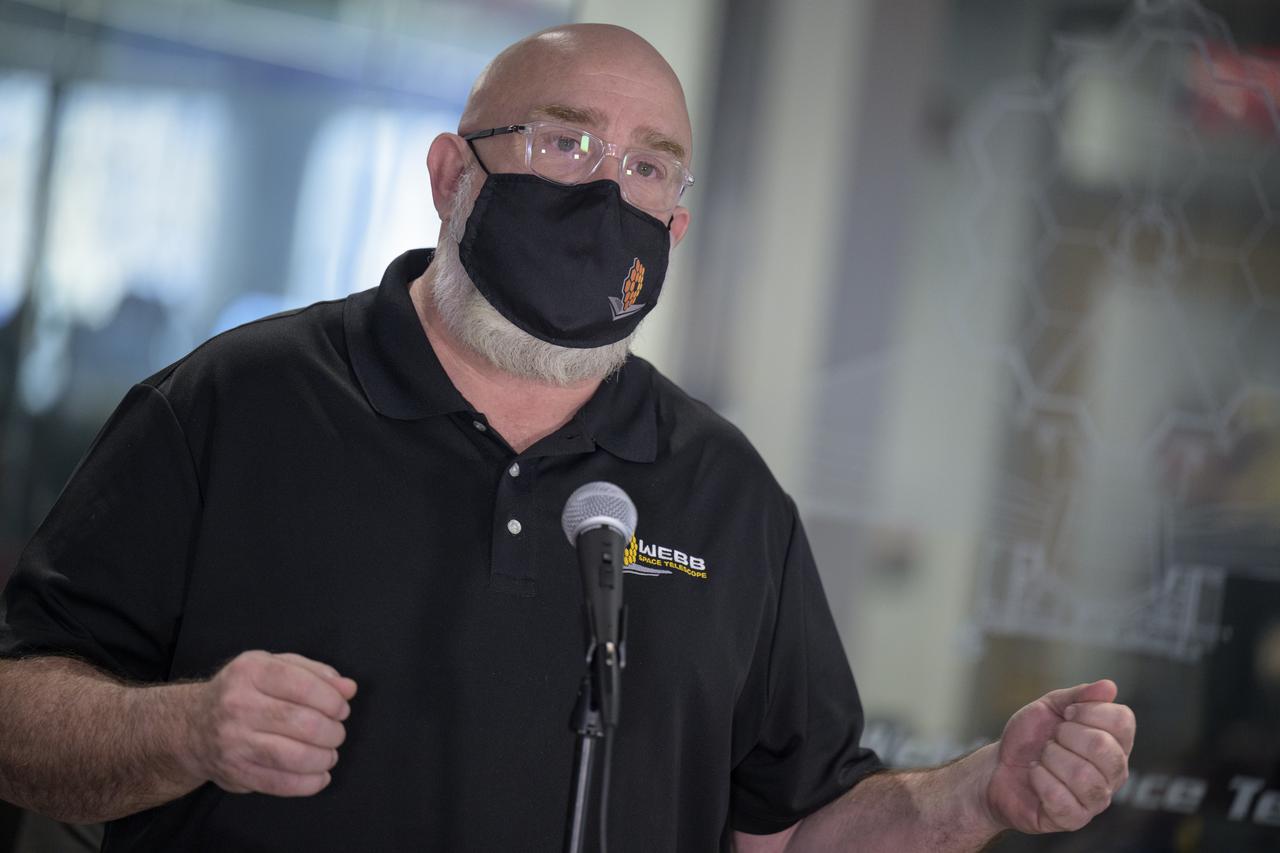
Deputy Program Manager, Northrop Grumman, Vince Heeg answers questions from the media during a briefing following the successful deployment of NASA’s James Webb Space Telescope primary mirror, Saturday, Jan. 8, 2022, from the Webb Space Telescope Mission Operations Center at the Space Telescope Science Institute in Baltimore. With Webb’s 21.3-foot (6.5-meter) primary mirror fully deployed, the infrared observatory has completed its unprecedented process of unfolding in space to prepare for science operations. The observatory will study every phase of cosmic history—from within our solar system to the most distant observable galaxies in the early universe. Photo Credit: (NASA/Bill Ingalls)
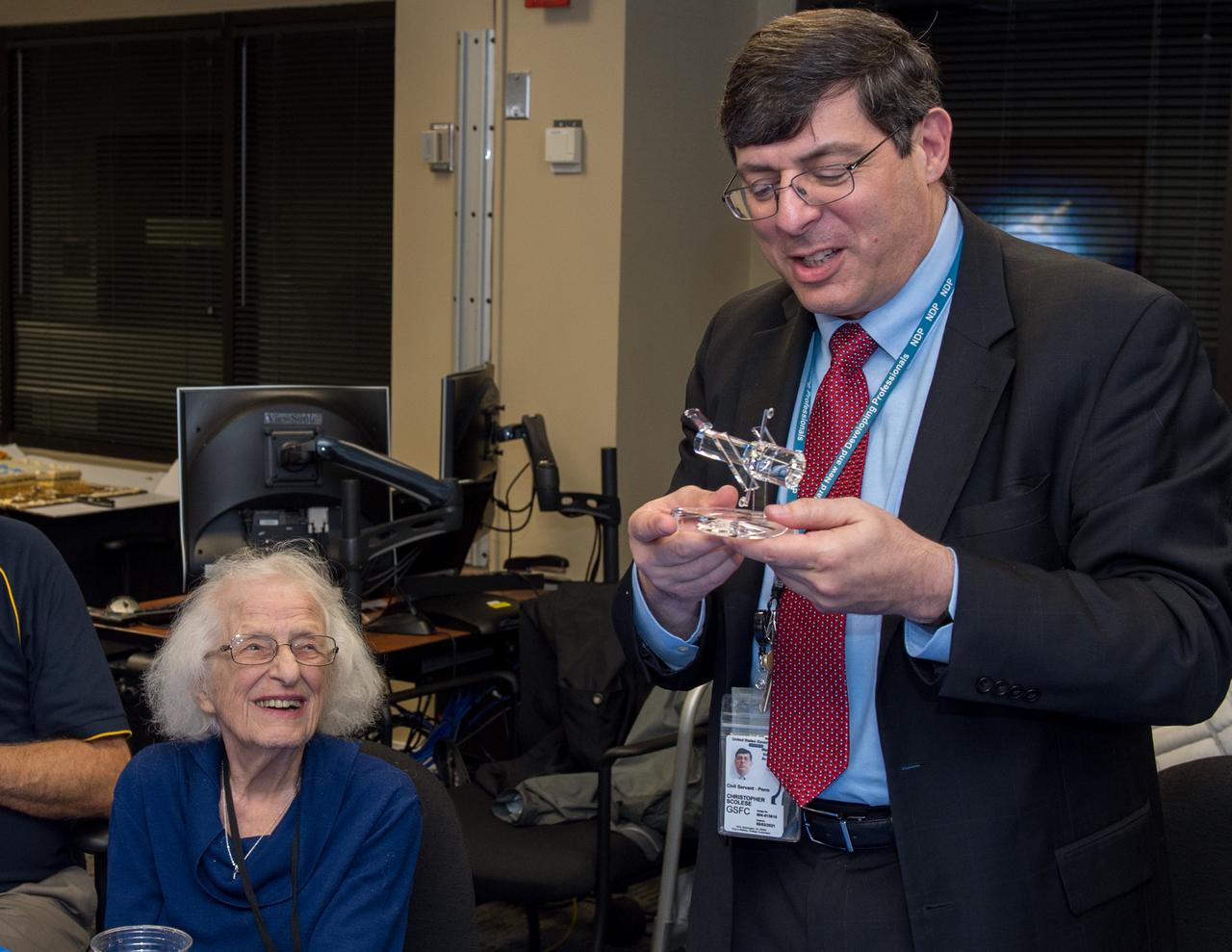
Dr. Nancy Grace Roman visits James Webb Space Telescope (JWST) and the Hubble Project Team. Center Director Chris Scolese
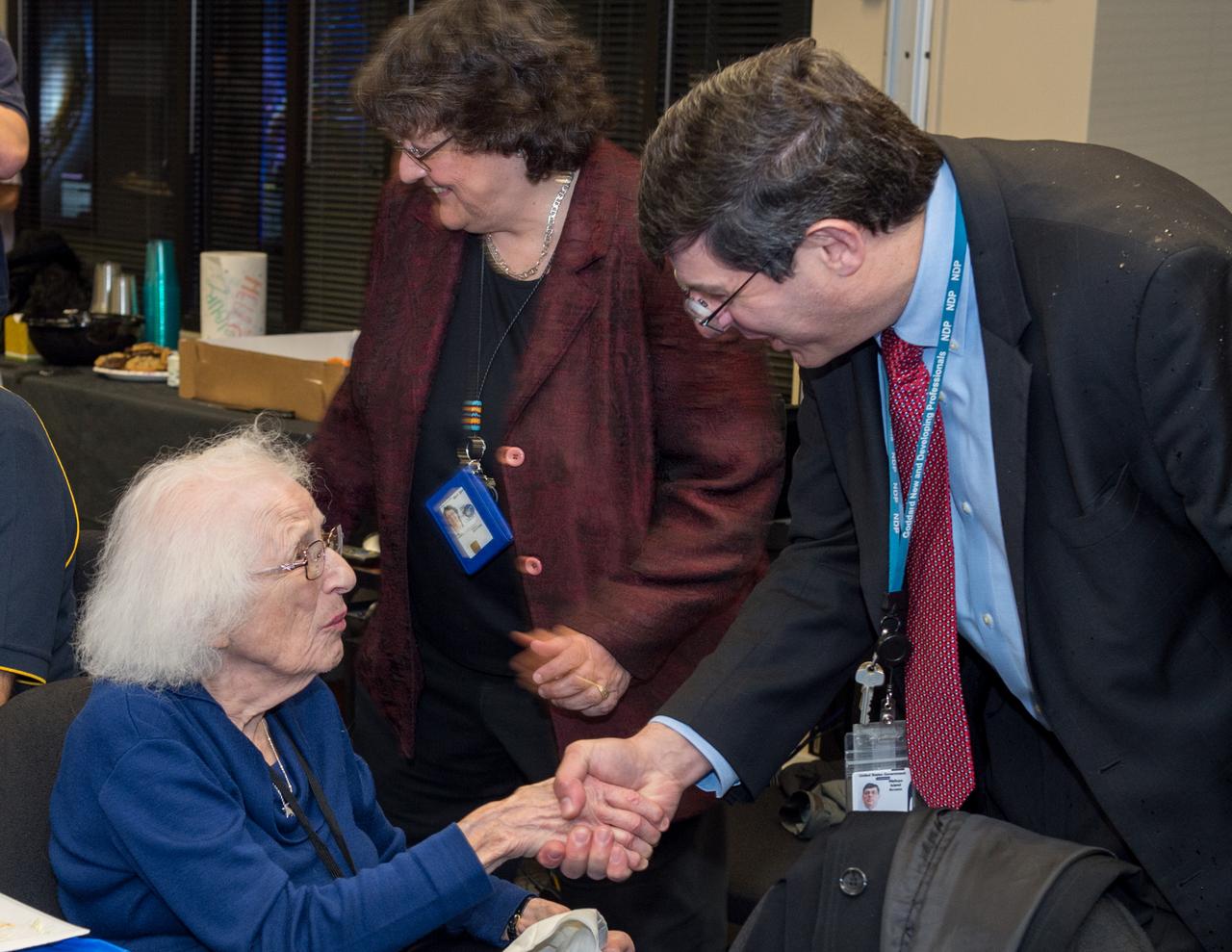
Dr. Nancy Grace Roman visits James Webb Space Telescope (JWST) and the Hubble Project Team. Center Director Chris Scolese
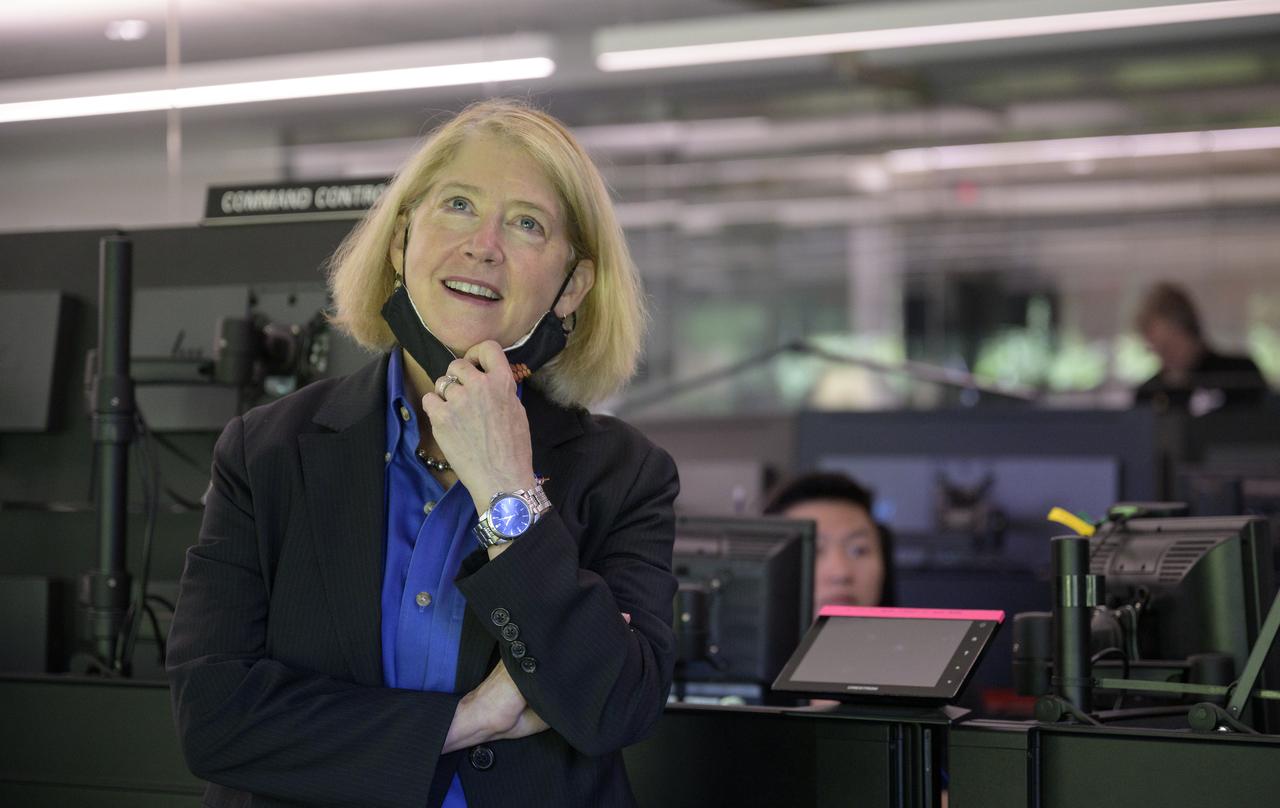
NASA Deputy Administrator Pam Melroy reacts to being shown some raw images from NASA’s James Webb Space Telescope during a tour of the Mission Operations Center, Wednesday, June 29, 2022, at the Space Telescope Science Institute (STScI) in Baltimore. Prior to the tour the deputy spoke at a briefing that focused on the status of NASA’s James Webb Space Telescope in its final weeks of preparing for its science mission, as well as overviews of planned science for Webb’s first year of operations. Photo Credit: (NASA/Bill Ingalls)
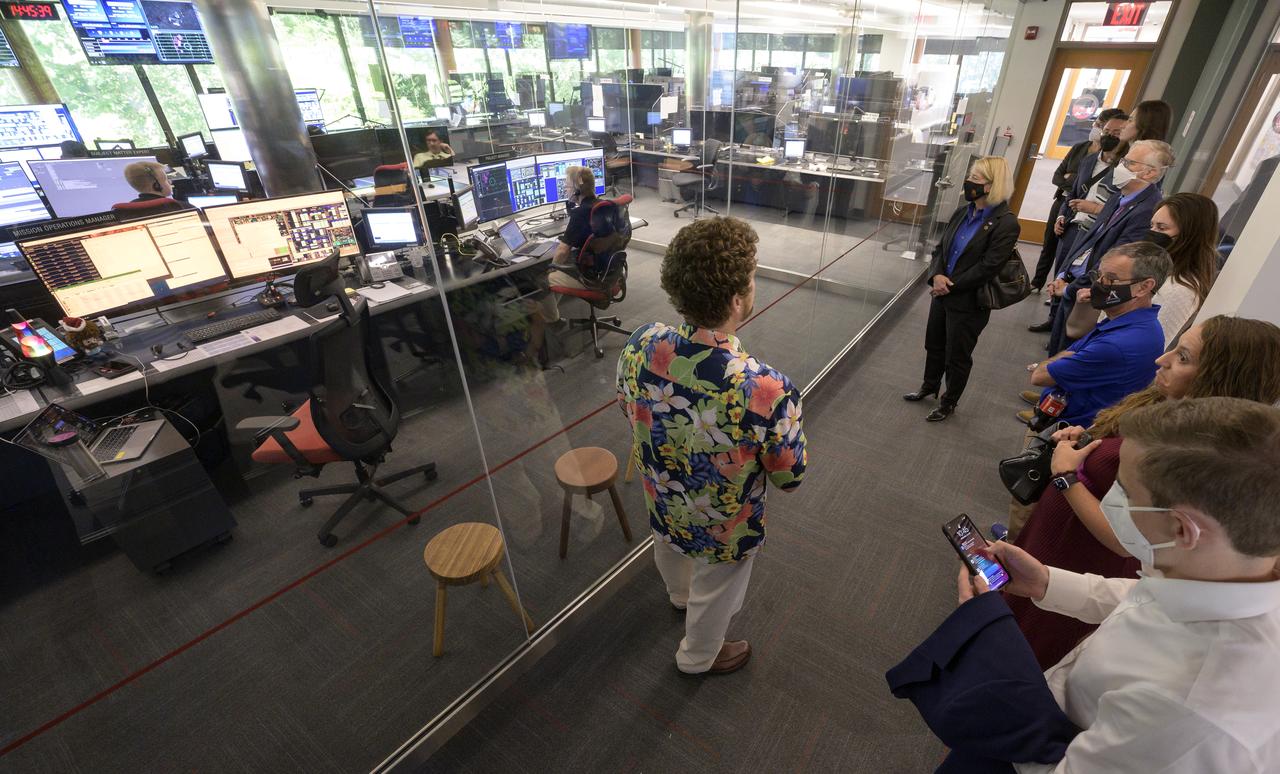
NASA Deputy Administrator Pam Melroy is given a tour of the NASA James Webb Space Telescope Mission Operations Center, Wednesday, June 29, 2022, at the Space Telescope Science Institute (STScI) in Baltimore. Prior to the tour the deputy spoke at a briefing that focused on the status of NASA’s James Webb Space Telescope in its final weeks of preparing for its science mission, as well as overviews of planned science for Webb’s first year of operations. Photo Credit: (NASA/Bill Ingalls)
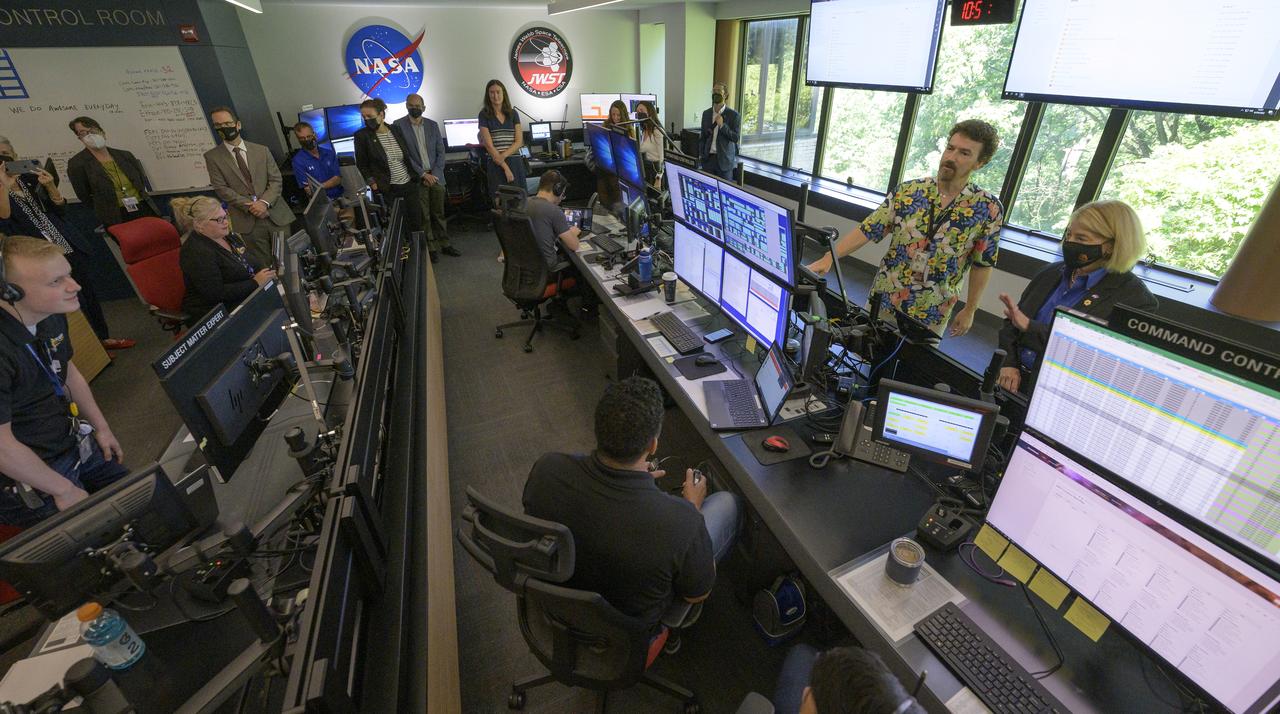
NASA Deputy Administrator Pam Melroy is given a tour of the NASA James Webb Space Telescope Mission Operations Center, Wednesday, June 29, 2022, at the Space Telescope Science Institute (STScI) in Baltimore. Prior to the tour the deputy spoke at a briefing that focused on the status of NASA’s James Webb Space Telescope in its final weeks of preparing for its science mission, as well as overviews of planned science for Webb’s first year of operations. Photo Credit: (NASA/Bill Ingalls)
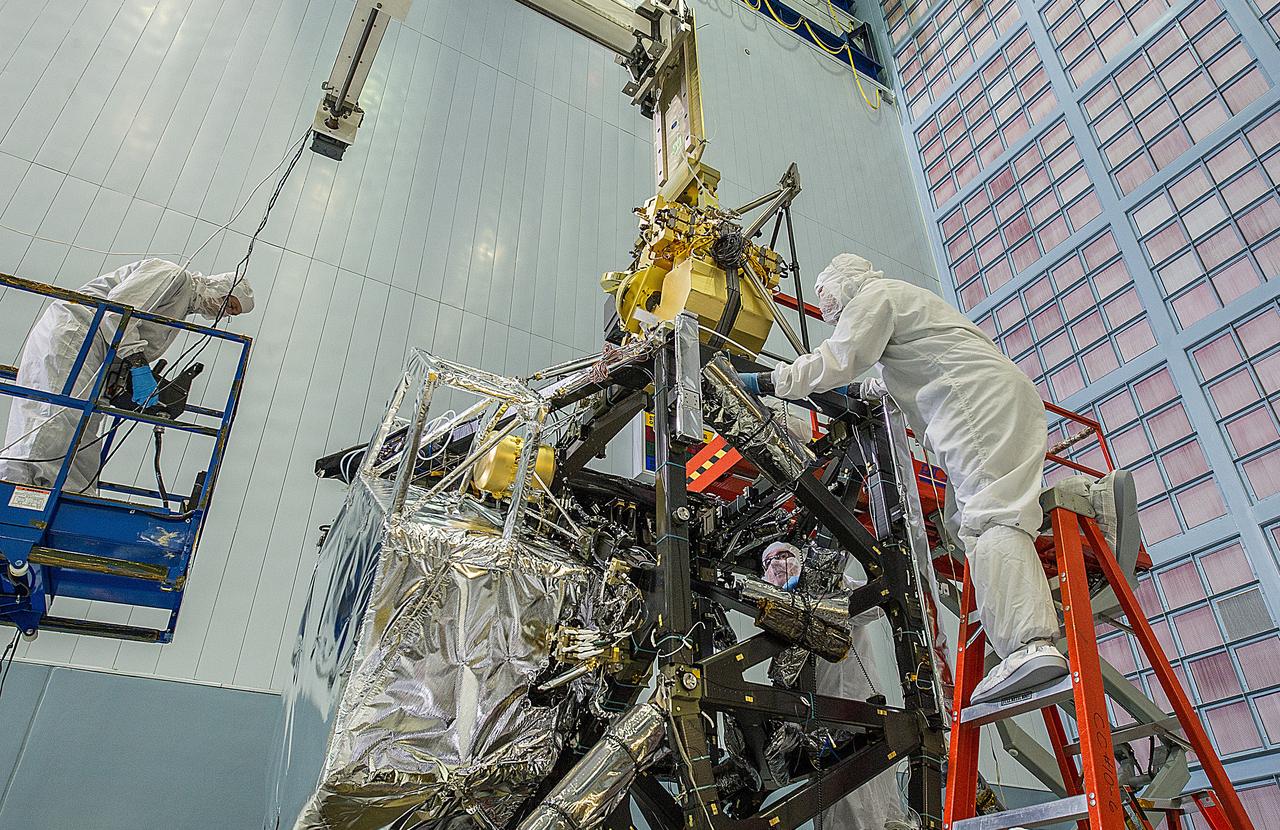
nside the world's largest clean room at NASA's Goddard Space Flight Center in Greenbelt, Md., engineers worked tirelessly to install another essential part of the James Webb Space Telescope - the Near Infrared Camera into the heart of the telescope. To complete this installation, the engineers needed to carefully move NIRCam inside the heart or ISIM, or Integrated Science Instrument Module that will house all of the science instruments. "Installing NIRCam into the center of the structure is nerve wracking because of the tight clearances," said Marcia J. Rieke, Professor of Astronomy at the University of Arizona, and principal investigator for the NIRCam. "I'm glad nothing bumped, and all the bolts are in place." NIRCam is a unique machine because in addition to being one of the four science instruments on the Webb, it also serves as the wavefront sensor, which means it will provide vital information for shaping the telescope mirrors and aligning its optics so that they can function properly and see into the distant universe. The NIRCam instrument will operate at very cold temperatures, and will be tested to ensure that it will be able to withstand the environment of space. The NIRCam is Webb's primary imager that will cover the infrared wavelength range 0.6 to 5 microns. It will detect light from the earliest stars and galaxies in the process of formation, the population of stars in nearby galaxies, as well as young stars and exoplanets in the Milky Way. NIRCam is provided by the University of Arizona and Lockheed Martin Advanced Technology Center. Webb is an international project led by NASA with its partners the European Space Agency and the Canadian Space Agency. The James Webb Space Telescope is the successor to NASA's Hubble Space Telescope. It will be the most powerful space telescope ever built. For more information about the Webb telescope, visit: <a href="http://www.jwst.nasa.gov" rel="nofollow">www.jwst.nasa.gov</a> or <a href="http://www.nasa.gov/webb" rel="nofollow">www.nasa.gov/webb</a> Credit: NASA/Goddard/Chris Gunn <b><a href="http://www.nasa.gov/audience/formedia/features/MP_Photo_Guidelines.html" rel="nofollow">NASA image use policy.</a></b> <b><a href="http://www.nasa.gov/centers/goddard/home/index.html" rel="nofollow">NASA Goddard Space Flight Center</a></b> enables NASA’s mission through four scientific endeavors: Earth Science, Heliophysics, Solar System Exploration, and Astrophysics. Goddard plays a leading role in NASA’s accomplishments by contributing compelling scientific knowledge to advance the Agency’s mission. <b>Follow us on <a href="http://twitter.com/NASAGoddardPix" rel="nofollow">Twitter</a></b> <b>Like us on <a href="http://www.facebook.com/pages/Greenbelt-MD/NASA-Goddard/395013845897?ref=tsd" rel="nofollow">Facebook</a></b> <b>Find us on <a href="http://instagram.com/nasagoddard?vm=grid" rel="nofollow">Instagram</a></b>
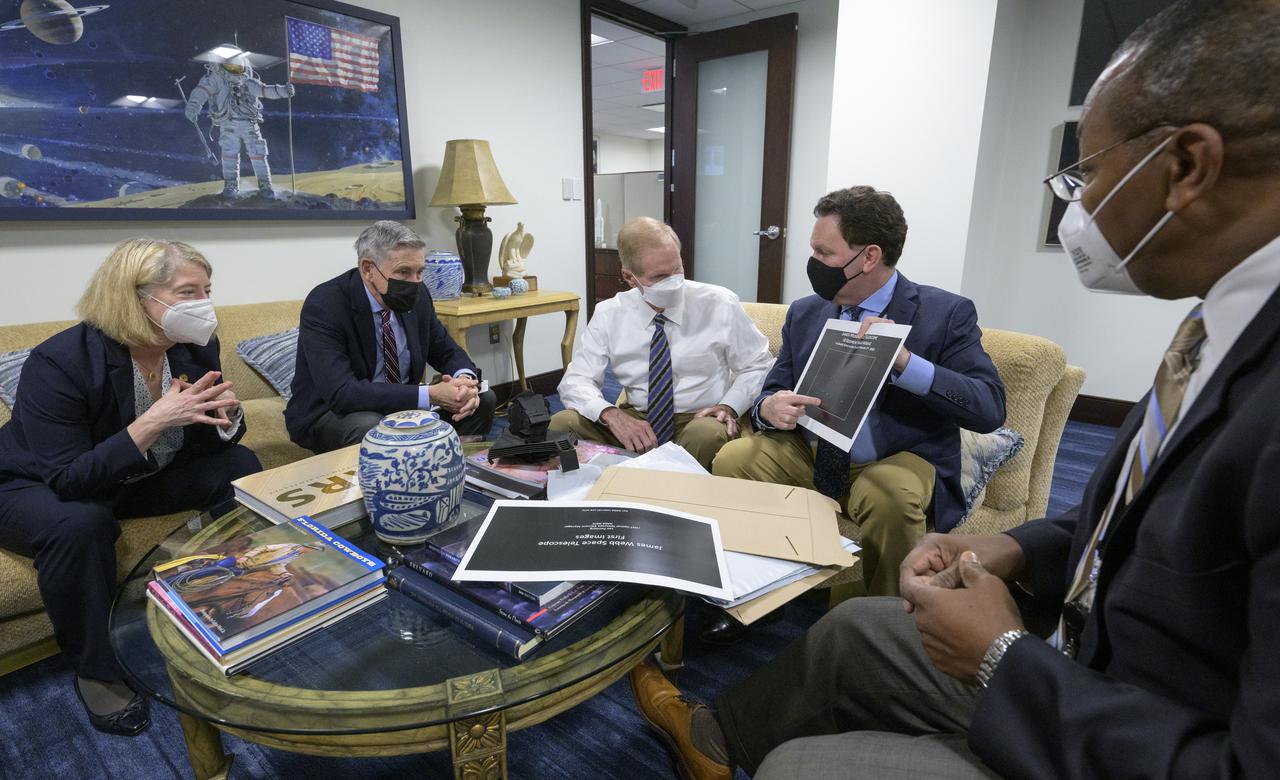
NASA Deputy Administrator Pam Melroy, left, NASA Associate Administrator Bob Cabana, and NASA Administrator Bill Nelson are shown an early mirror alignment image from the James Webb Space Telescope, by NASA Webb Optical Telescope Element Manager Lee Feinberg, as NASA Program Director for the James Webb Space Telescope Program Greg Robinson, right, looks on, Monday, Feb., 7, 2022, at the Mary W. Jackson NASA Headquarters building in Washington. This engineering visual, which features 18 unfocused dots of light, demonstrates that the Webb team has successfully identified starlight through each of Webb’s 18 hexagonal mirror segments – the starting point in a months-long process to progressively align the segments into a single, precise mirror to prepare the telescope for science. Photo Credit: (NASA/Bill Ingalls)

John Mather, Project Scientist for JWST, faces the James Webb Space Telescope primary mirror, taking a selfie, NASA/Goddard Space Flight Center, Greenbelt, MD, May 4, 2016
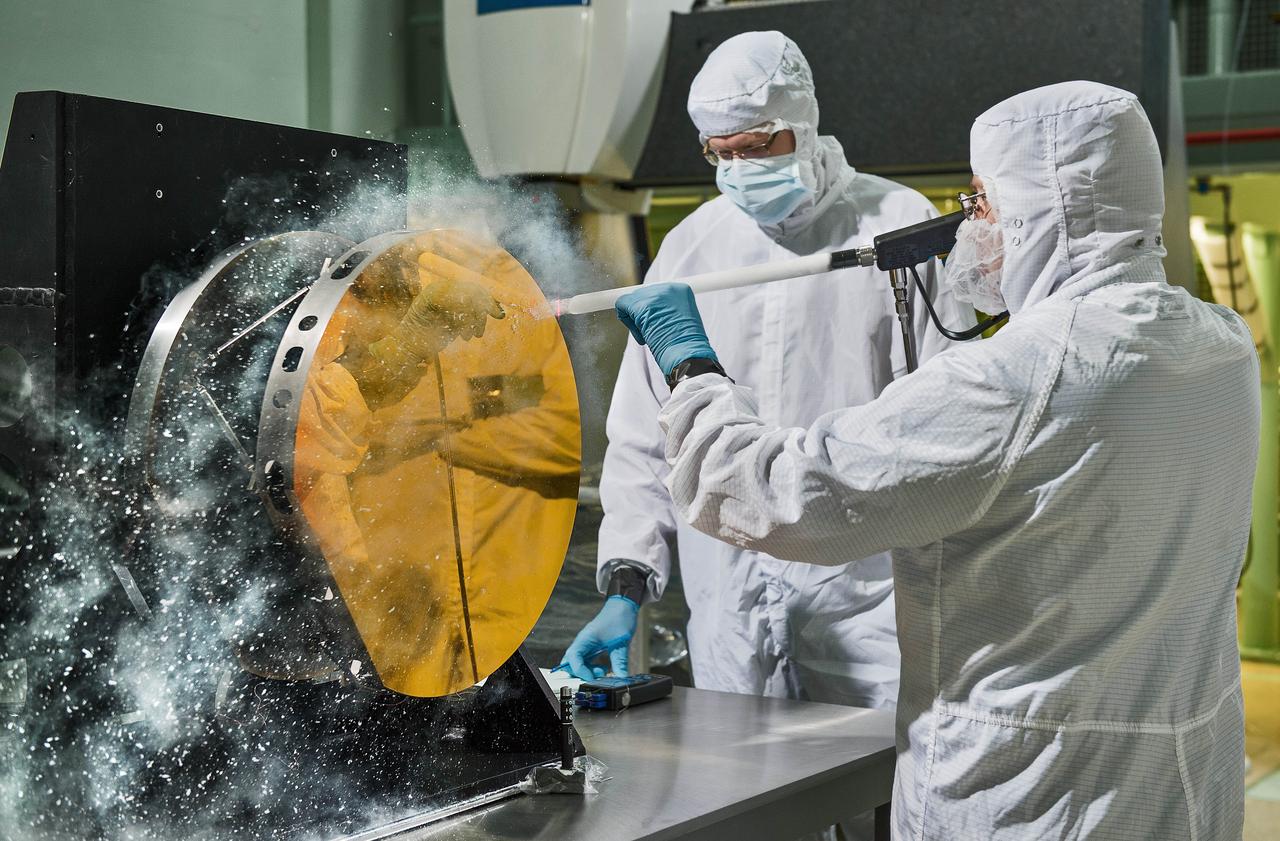
Just like drivers sometimes use snow to clean their car mirrors in winter, two Exelis Inc. engineers are practicing "snow cleaning'" on a test telescope mirror for the James Webb Space Telescope at NASA's Goddard Space Flight Center in Greenbelt, Maryland. By shooting carbon dioxide snow at the surface, engineers are able to clean large telescope mirrors without scratching them. "The snow-like crystals (carbon dioxide snow) knock contaminate particulates and molecules off the mirror," said Lee Feinberg, NASA optical telescope element manager. This technique will only be used if the James Webb Space Telescope's mirror is contaminated during integration and testing. The Webb telescope is the scientific successor to NASA's Hubble Space Telescope. It will be the most powerful space telescope ever built. With a mirror seven times as large as Hubble's and infrared capability, Webb will be capturing light from 13.5 billion light years away. To do this, its mirror must be kept super clean. "Small dust particles or molecules can impact the science that can be done with the Webb," said Feinberg. "So cleanliness especially on the mirrors is critical." Webb is an international project led by NASA with its partners, the European Space Agency and the Canadian Space Agency. Image credit: NASA/Goddard/Chris Gunn
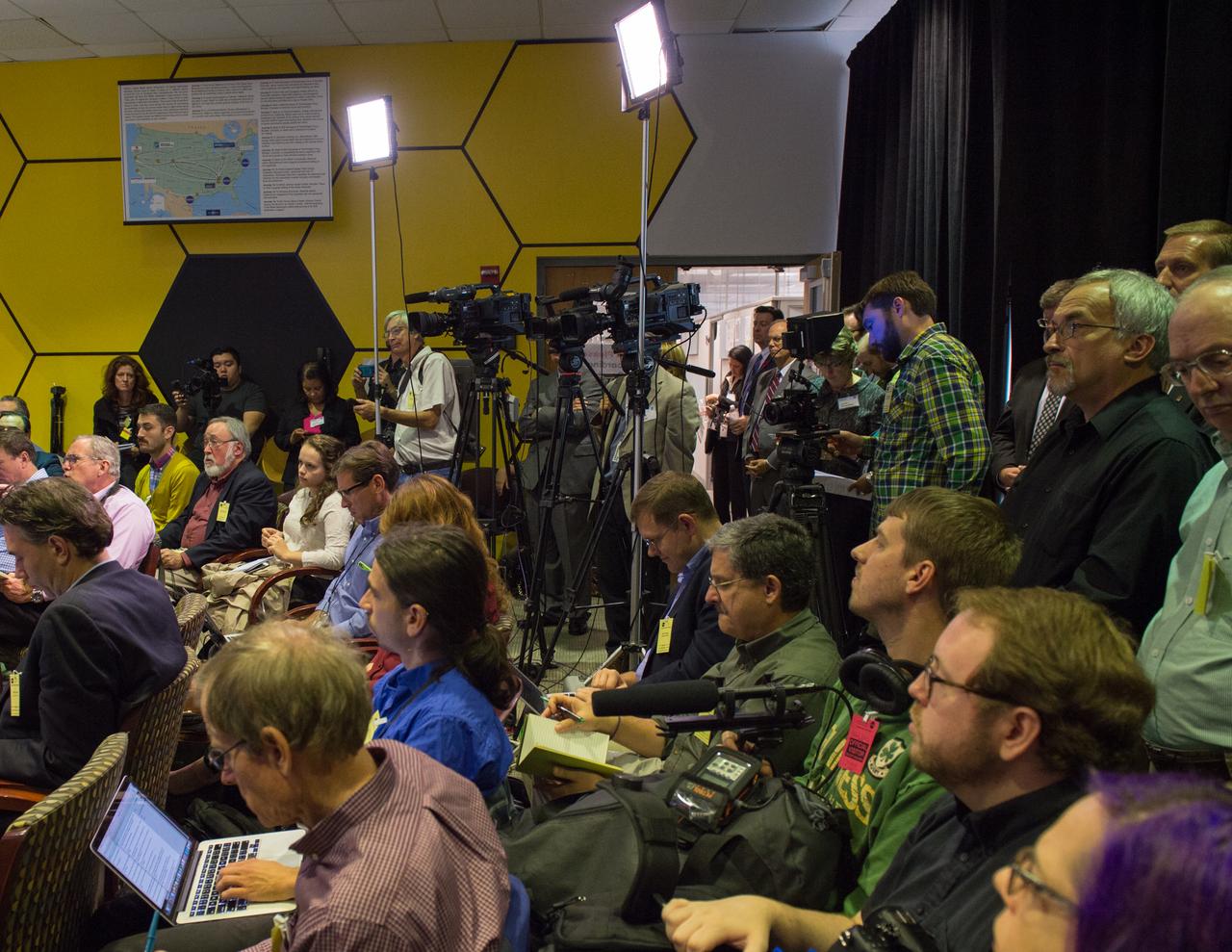
Goddard employees were invited to a town hall with NASA Administrator Charlie Bolden, Associate Administrator for the NASA Science Mission Directorate Thomas Zurbuchen and Goddard Center Director Chris Scolese, Nov. 2, at 11:30 a.m. in the Hinners Auditorium in Building 8. Bolden thanked the James Webb Space Telescope team at Goddard as well as our international and corporate partners for their exceptional support. Credit: NASA/Goddard
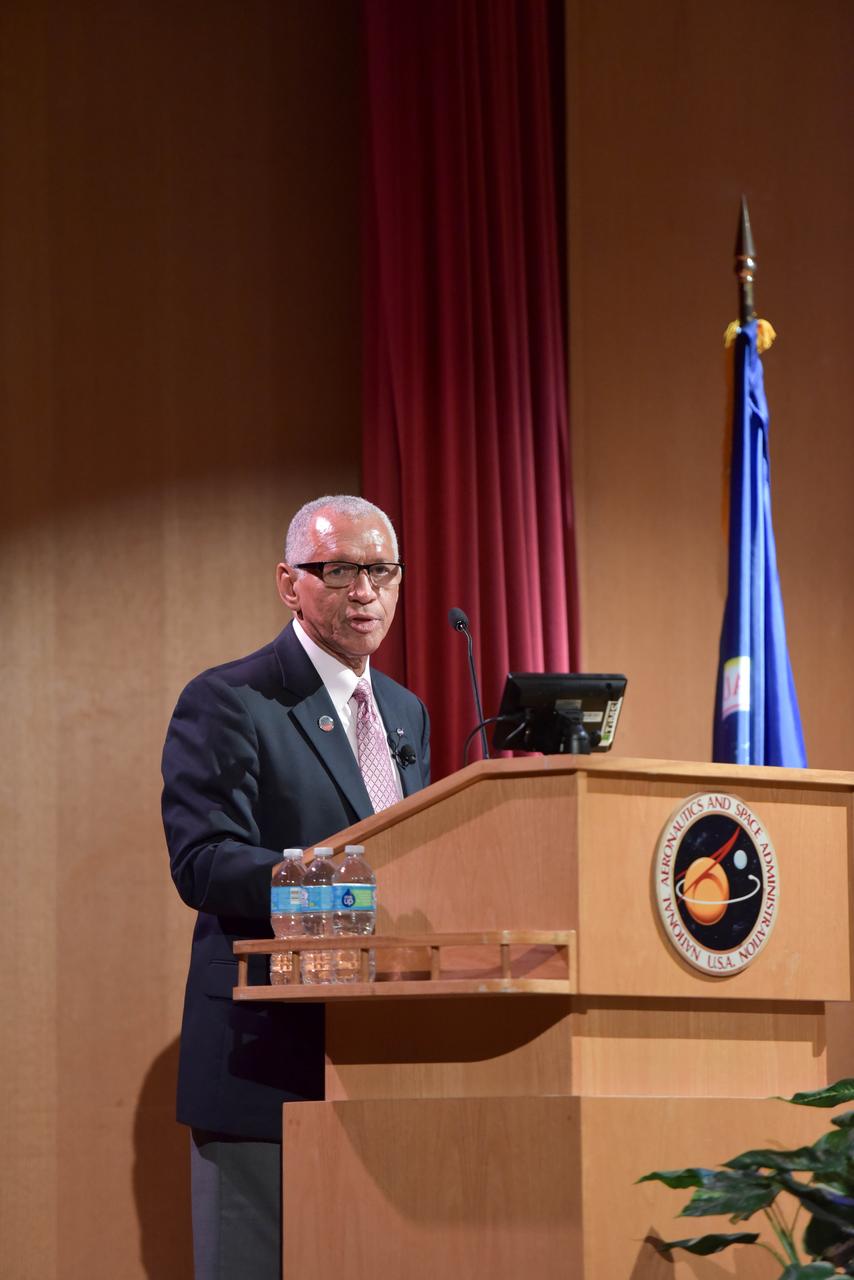
Goddard employees were invited to a town hall with NASA Administrator Charlie Bolden, Associate Administrator for the NASA Science Mission Directorate Thomas Zurbuchen and Goddard Center Director Chris Scolese, Nov. 2, at 11:30 a.m. in the Hinners Auditorium in Building 8. Bolden thanked the James Webb Space Telescope team at Goddard as well as our international and corporate partners for their exceptional support. Credit: NASA/Goddard
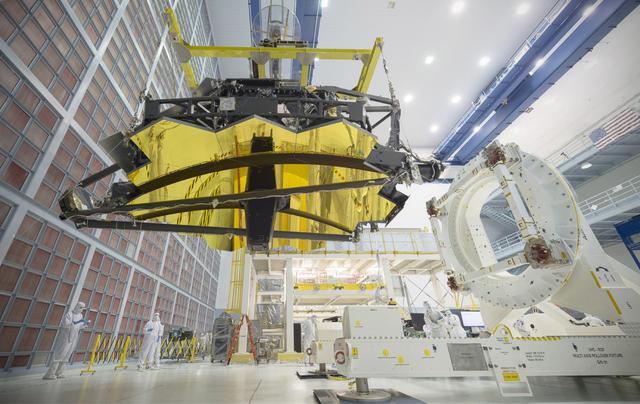
The James Webb Space Telescope was lifted out of its assembly stand for the last time at NASA's Goddard Space Flight Center in Greenbelt, Md. In this photo, the telescope was hanging upside down as the lift crew were about to install it in the rollover fixture where it will be situated before moving on to its upcoming center of curvature test. Image credit: NASA/Goddard/Chris Gunn

Goddard employees were invited to a town hall with NASA Administrator Charlie Bolden, Associate Administrator for the NASA Science Mission Directorate Thomas Zurbuchen and Goddard Center Director Chris Scolese, Nov. 2, at 11:30 a.m. in the Hinners Auditorium in Building 8. Bolden thanked the James Webb Space Telescope team at Goddard as well as our international and corporate partners for their exceptional support. Credit: NASA/Goddard
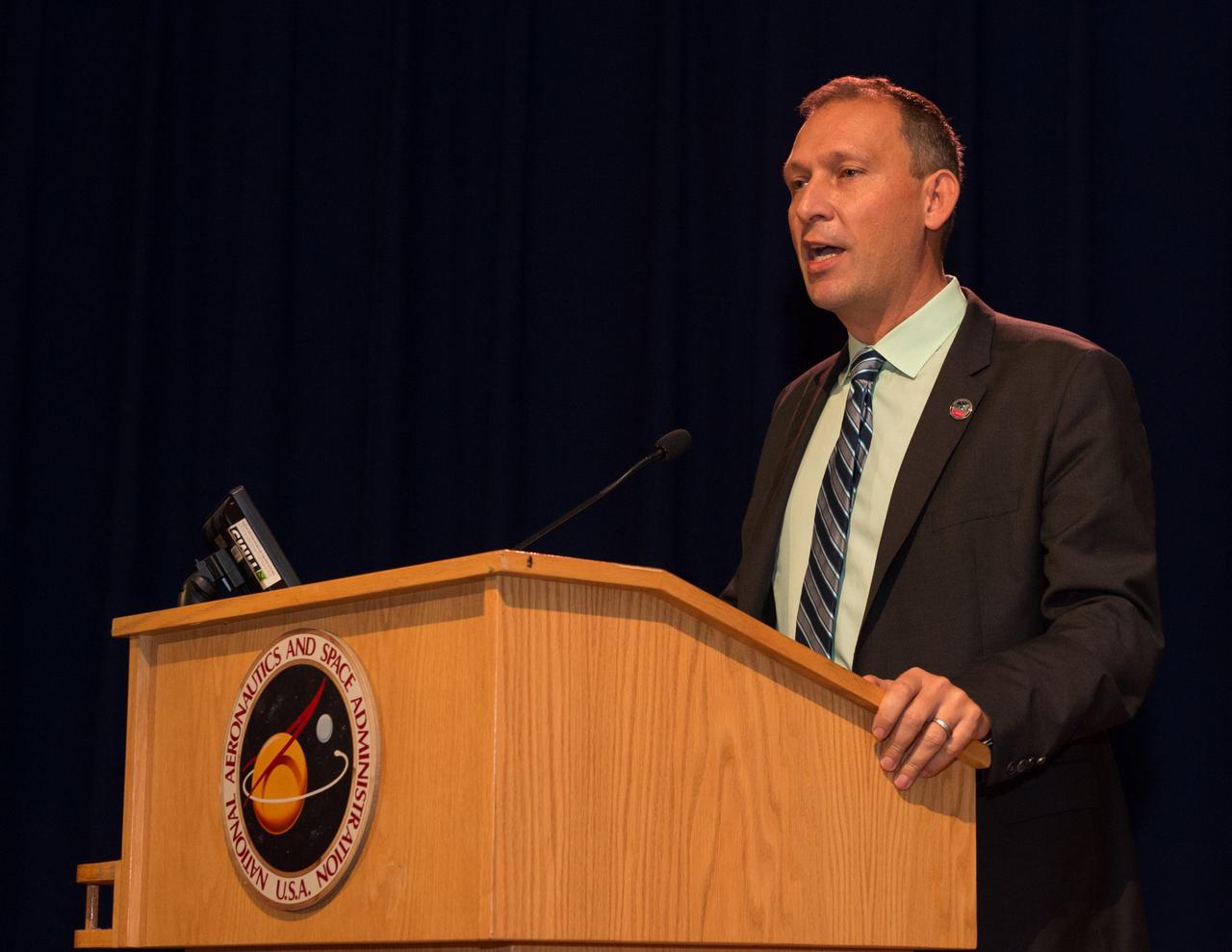
Goddard employees were invited to a town hall with NASA Administrator Charlie Bolden, Associate Administrator for the NASA Science Mission Directorate Thomas Zurbuchen and Goddard Center Director Chris Scolese, Nov. 2, at 11:30 a.m. in the Hinners Auditorium in Building 8. Bolden thanked the James Webb Space Telescope team at Goddard as well as our international and corporate partners for their exceptional support. Credit: NASA/Goddard
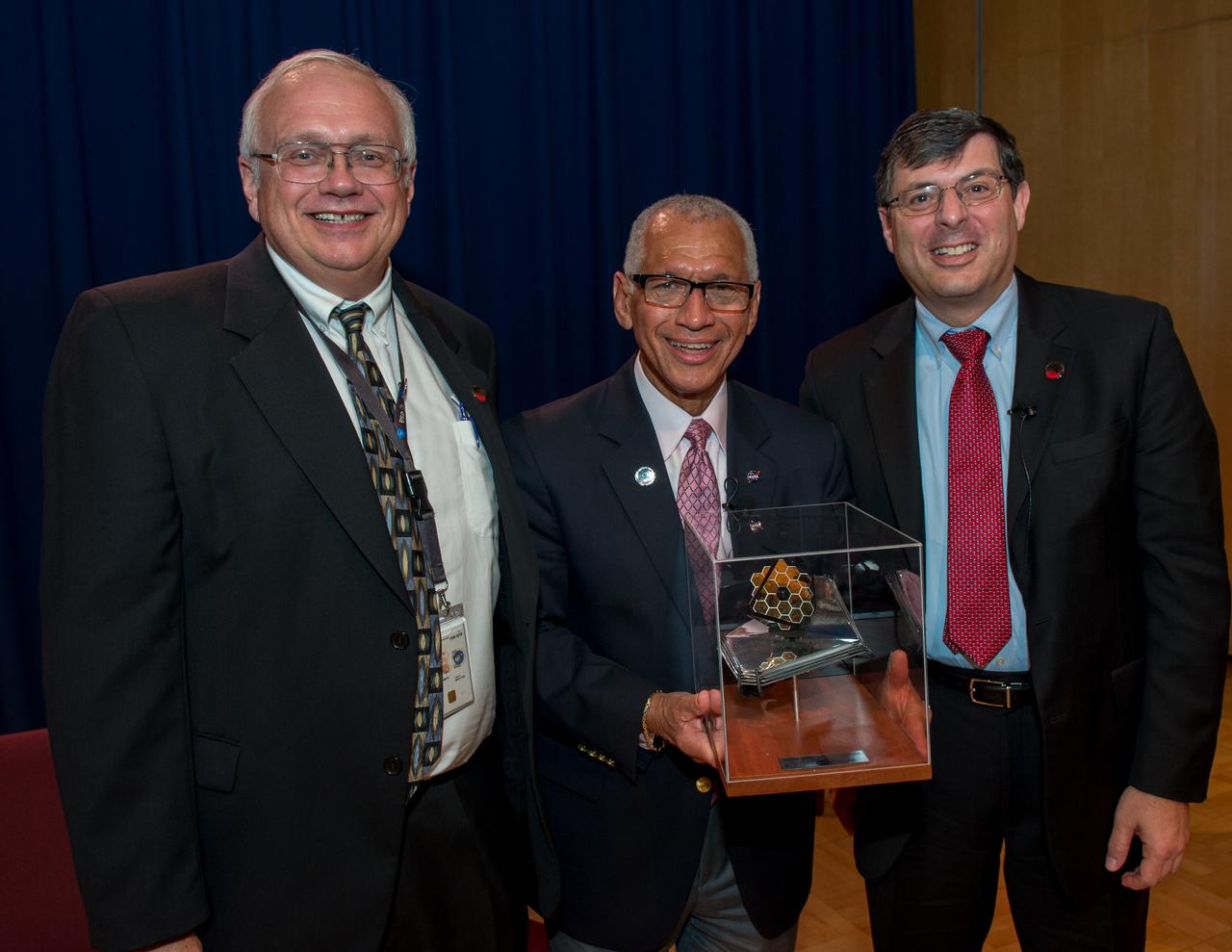
Goddard employees were invited to a town hall with NASA Administrator Charlie Bolden, Associate Administrator for the NASA Science Mission Directorate Thomas Zurbuchen and Goddard Center Director Chris Scolese, Nov. 2, at 11:30 a.m. in the Hinners Auditorium in Building 8. Bolden thanked the James Webb Space Telescope team at Goddard as well as our international and corporate partners for their exceptional support. Credit: NASA/Goddard
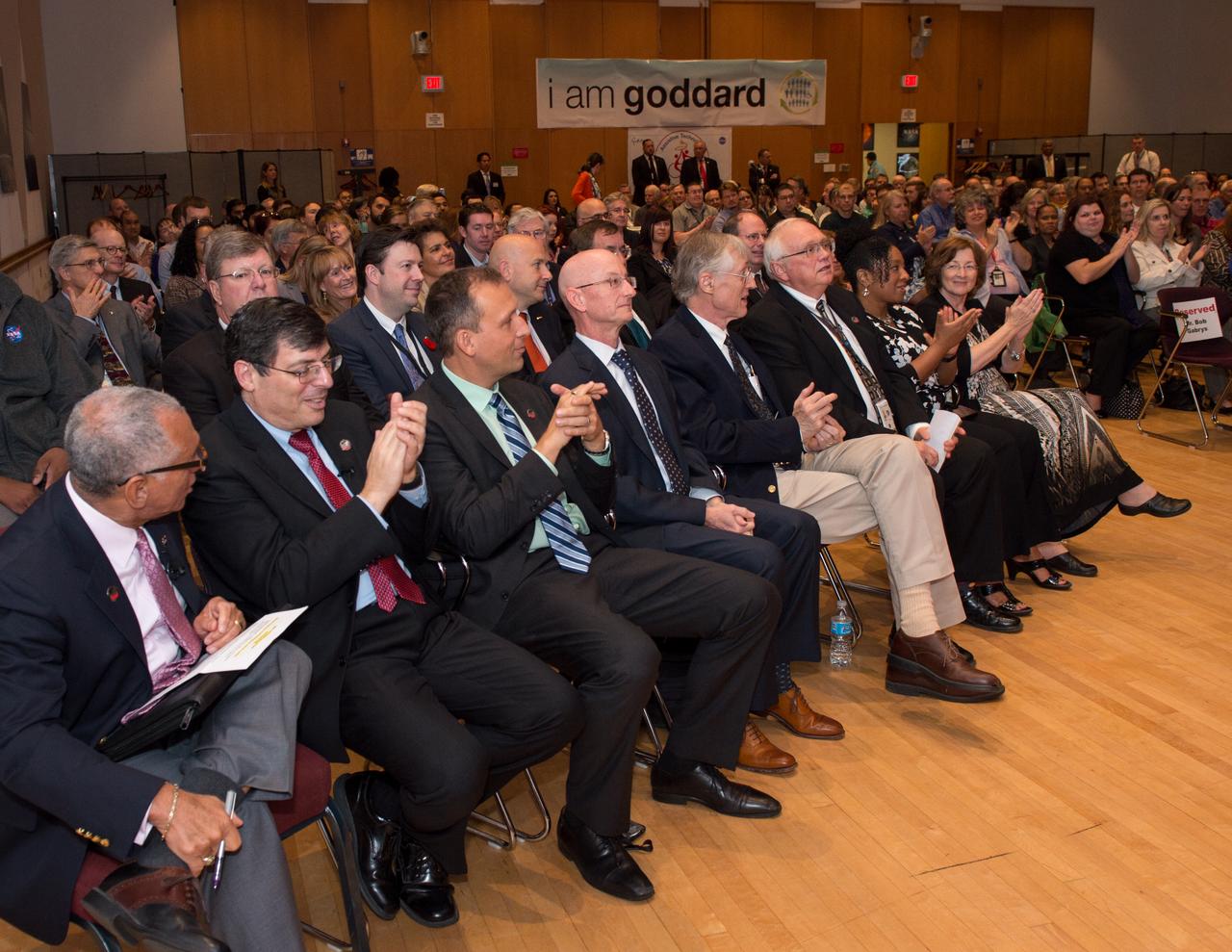
Goddard employees were invited to a town hall with NASA Administrator Charlie Bolden, Associate Administrator for the NASA Science Mission Directorate Thomas Zurbuchen and Goddard Center Director Chris Scolese, Nov. 2, at 11:30 a.m. in the Hinners Auditorium in Building 8. Bolden thanked the James Webb Space Telescope team at Goddard as well as our international and corporate partners for their exceptional support. Credit: NASA/Goddard

Goddard employees were invited to a town hall with NASA Administrator Charlie Bolden, Associate Administrator for the NASA Science Mission Directorate Thomas Zurbuchen and Goddard Center Director Chris Scolese, Nov. 2, at 11:30 a.m. in the Hinners Auditorium in Building 8. Bolden thanked the James Webb Space Telescope team at Goddard as well as our international and corporate partners for their exceptional support. Credit: NASA/Goddard
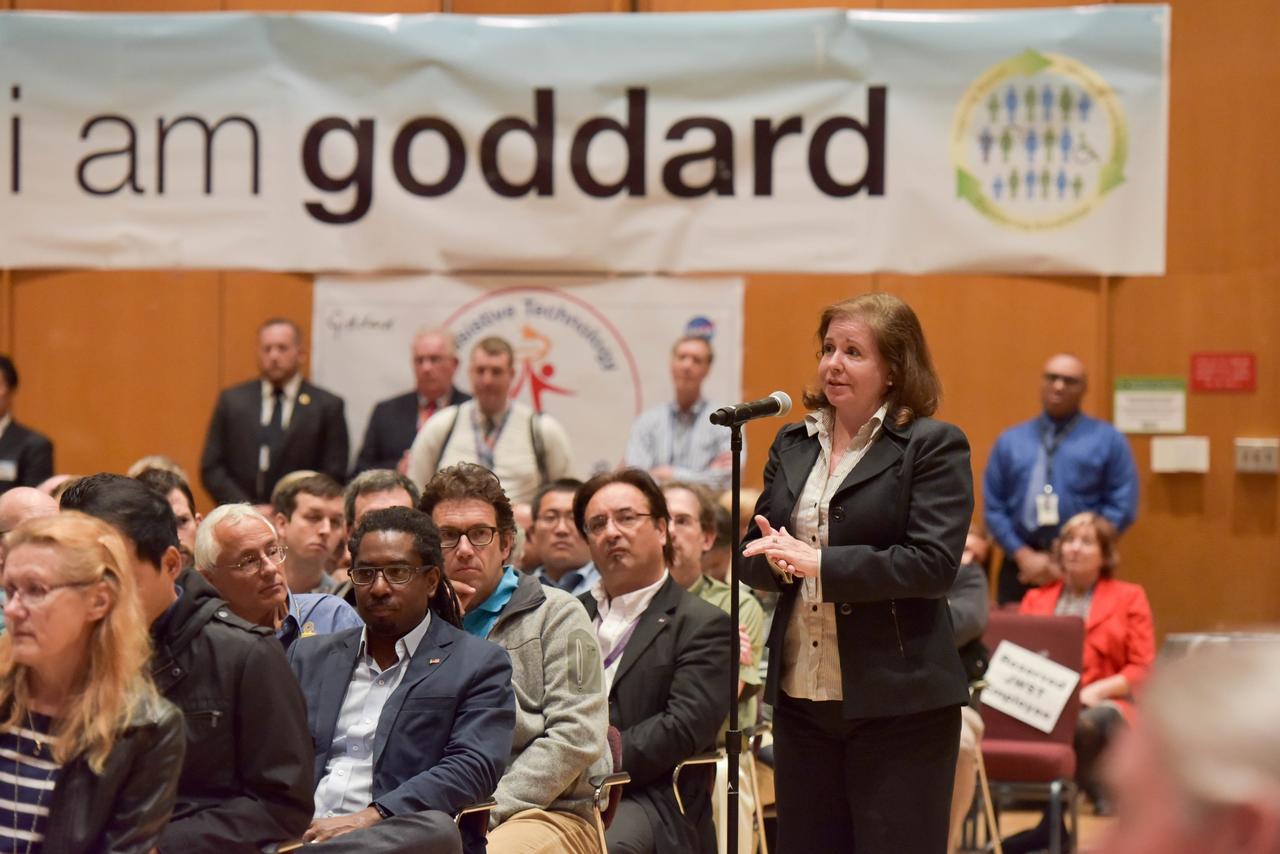
Goddard employees were invited to a town hall with NASA Administrator Charlie Bolden, Associate Administrator for the NASA Science Mission Directorate Thomas Zurbuchen and Goddard Center Director Chris Scolese, Nov. 2, at 11:30 a.m. in the Hinners Auditorium in Building 8. Bolden thanked the James Webb Space Telescope team at Goddard as well as our international and corporate partners for their exceptional support. Credit: NASA/Goddard
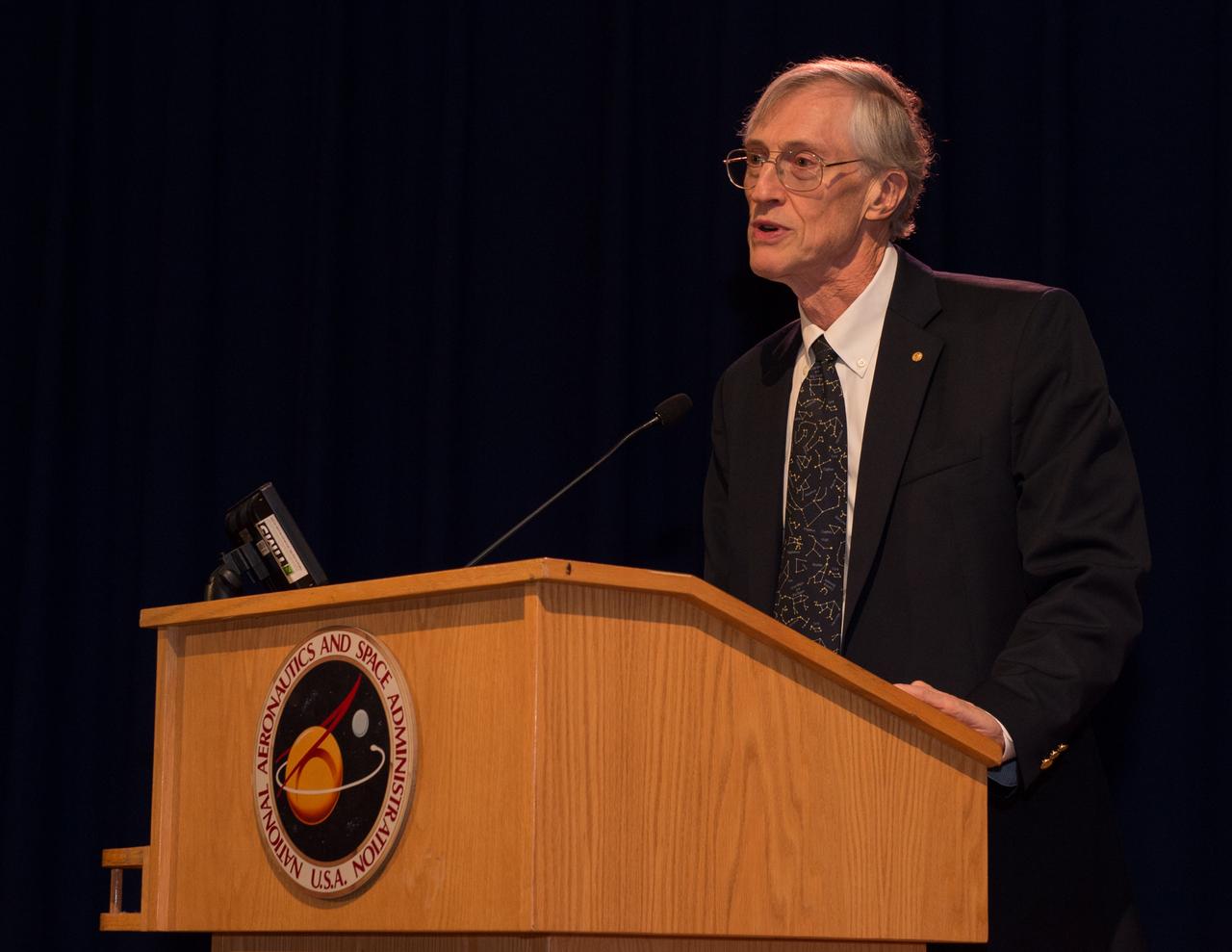
Goddard employees were invited to a town hall with NASA Administrator Charlie Bolden, Associate Administrator for the NASA Science Mission Directorate Thomas Zurbuchen and Goddard Center Director Chris Scolese, Nov. 2, at 11:30 a.m. in the Hinners Auditorium in Building 8. Bolden thanked the James Webb Space Telescope team at Goddard as well as our international and corporate partners for their exceptional support. Credit: NASA/Goddard
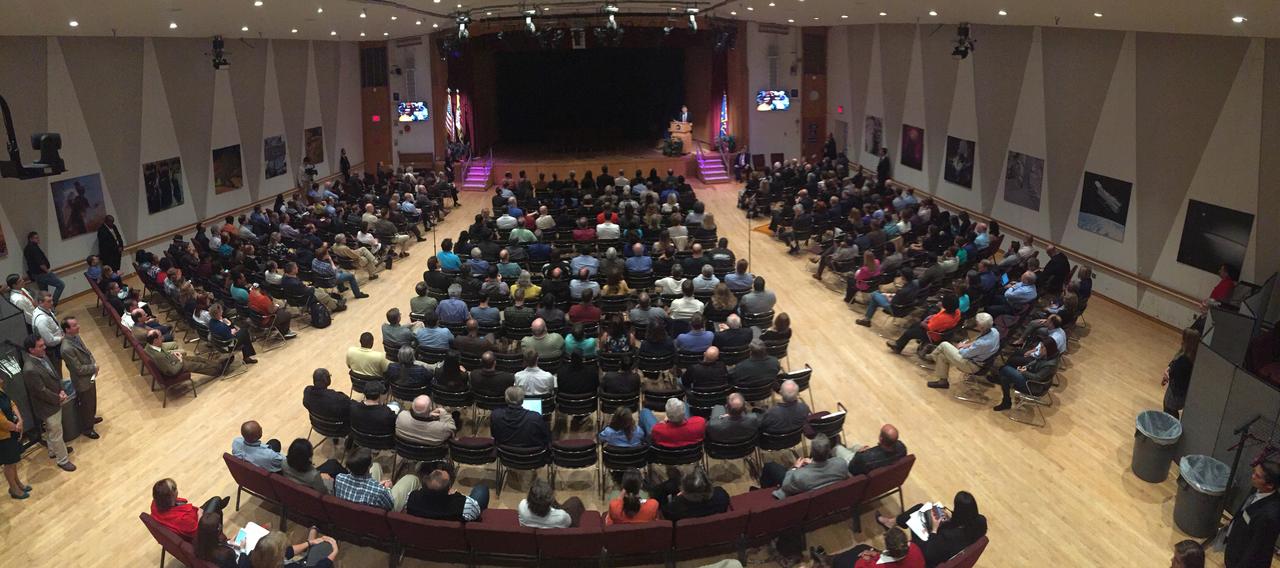
Goddard employees were invited to a town hall with NASA Administrator Charlie Bolden, Associate Administrator for the NASA Science Mission Directorate Thomas Zurbuchen and Goddard Center Director Chris Scolese, Nov. 2, at 11:30 a.m. in the Hinners Auditorium in Building 8. Bolden thanked the James Webb Space Telescope team at Goddard as well as our international and corporate partners for their exceptional support. Credit: NASA/Goddard
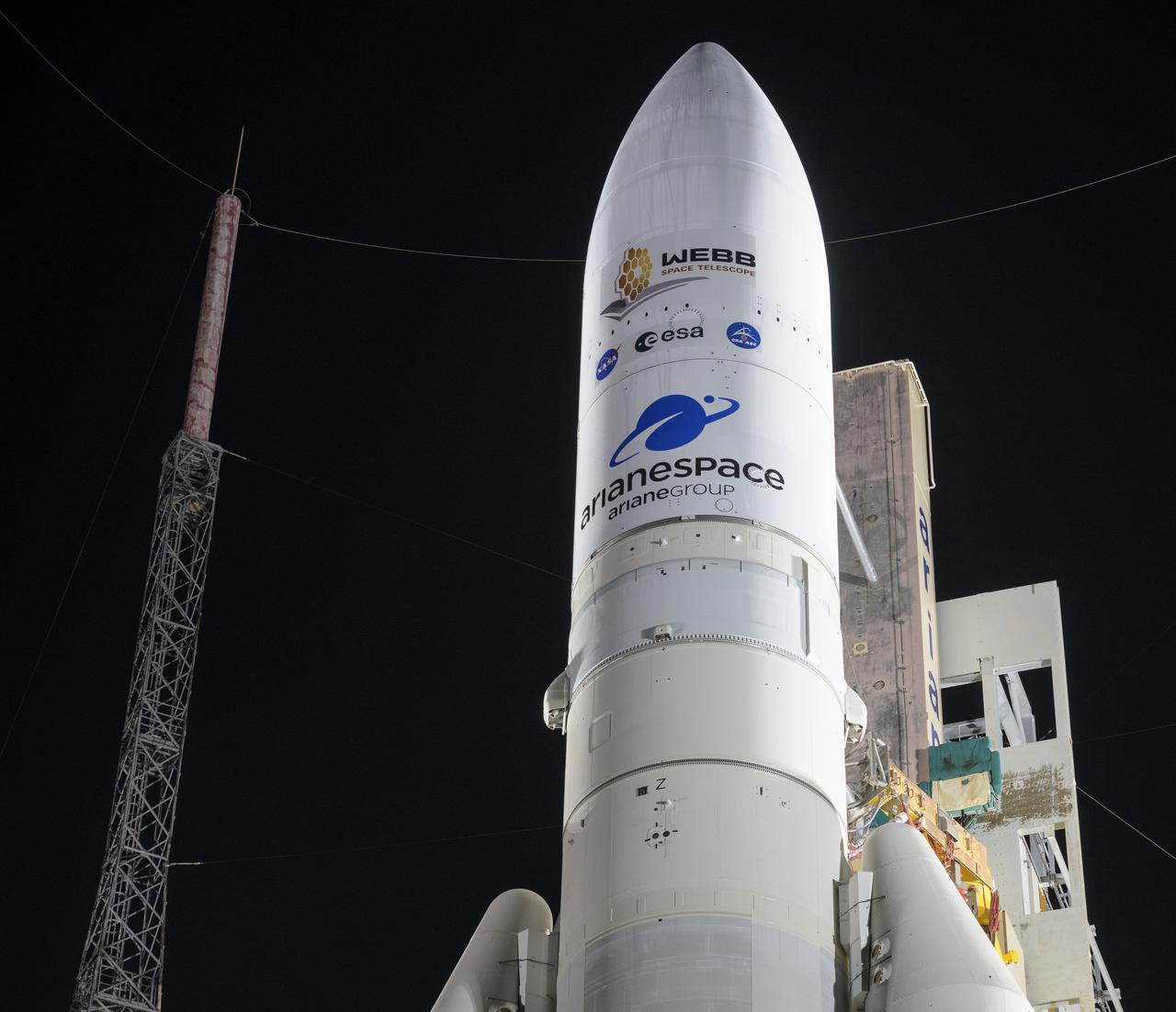
Arianespace's Ariane 5 rocket with NASA’s James Webb Space Telescope onboard, is seen at the launch pad, Thursday, Dec. 23, 2021, at Europe’s Spaceport, the Guiana Space Center in Kourou, French Guiana. The James Webb Space Telescope (sometimes called JWST or Webb) is a large infrared telescope with a 21.3 foot (6.5 meter) primary mirror. The observatory will study every phase of cosmic history—from within our solar system to the most distant observable galaxies in the early universe. Photo Credit: (NASA/Bill Ingalls)
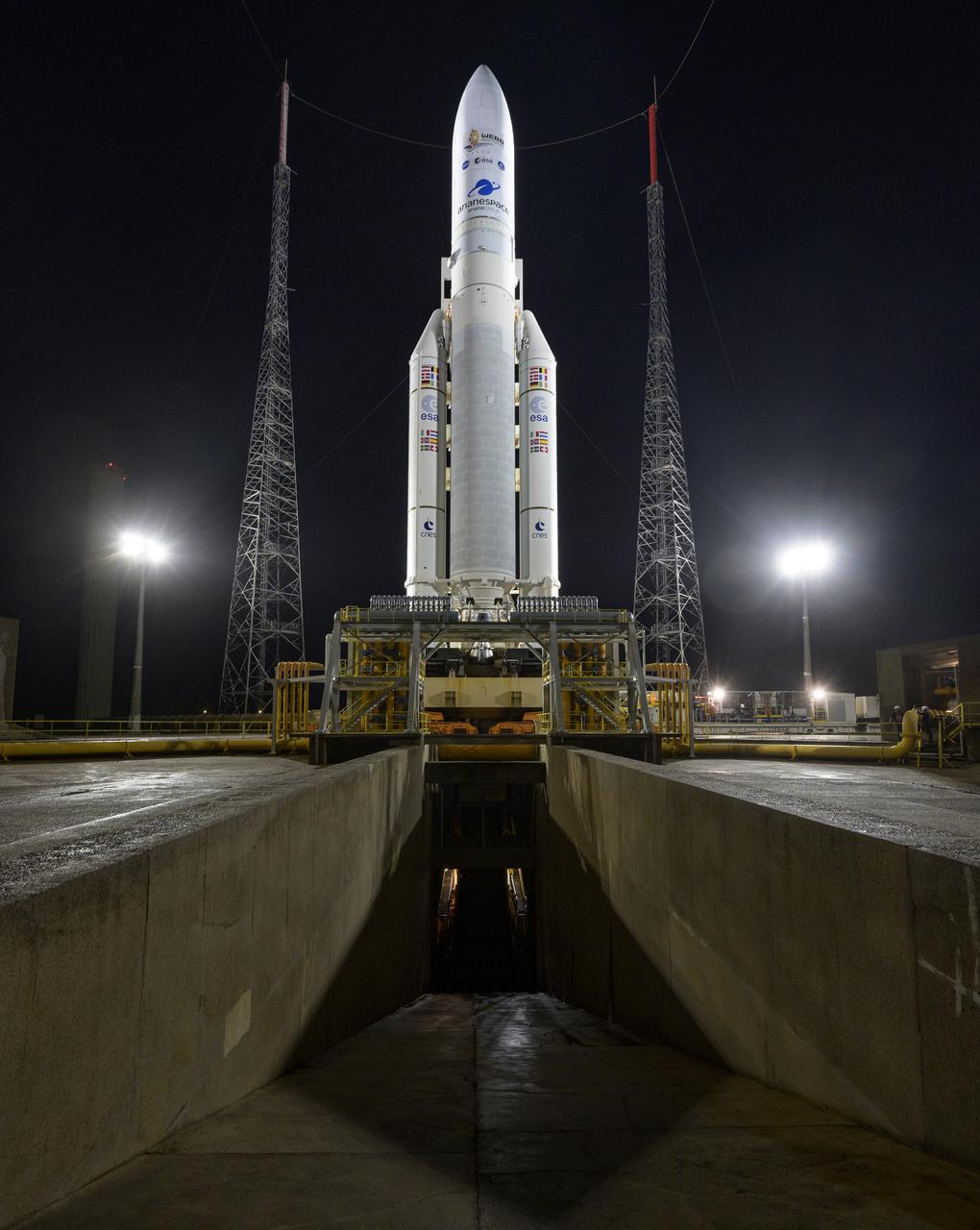
Arianespace's Ariane 5 rocket with NASA’s James Webb Space Telescope onboard, is seen at the launch pad, Thursday, Dec. 23, 2021, at Europe’s Spaceport, the Guiana Space Center in Kourou, French Guiana. The James Webb Space Telescope (sometimes called JWST or Webb) is a large infrared telescope with a 21.3 foot (6.5 meter) primary mirror. The observatory will study every phase of cosmic history—from within our solar system to the most distant observable galaxies in the early universe. Photo Credit: (NASA/Bill Ingalls)
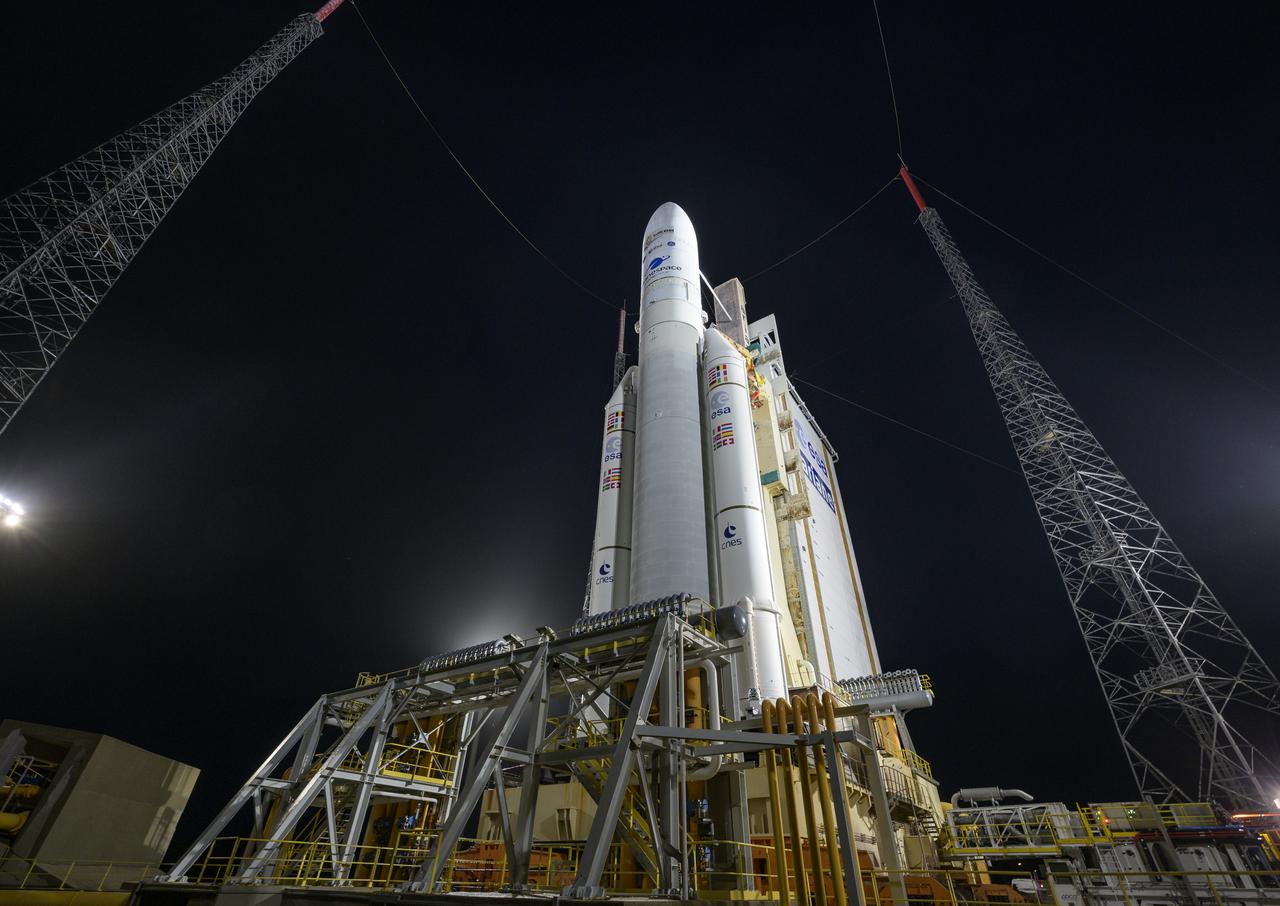
Arianespace's Ariane 5 rocket with NASA’s James Webb Space Telescope onboard, is seen at the launch pad, Thursday, Dec. 23, 2021, at Europe’s Spaceport, the Guiana Space Center in Kourou, French Guiana. The James Webb Space Telescope (sometimes called JWST or Webb) is a large infrared telescope with a 21.3 foot (6.5 meter) primary mirror. The observatory will study every phase of cosmic history—from within our solar system to the most distant observable galaxies in the early universe. Photo Credit: (NASA/Bill Ingalls)

Arianespace's Ariane 5 rocket with NASA’s James Webb Space Telescope onboard, is seen at the launch pad, Thursday, Dec. 23, 2021, at Europe’s Spaceport, the Guiana Space Center in Kourou, French Guiana. The James Webb Space Telescope (sometimes called JWST or Webb) is a large infrared telescope with a 21.3 foot (6.5 meter) primary mirror. The observatory will study every phase of cosmic history—from within our solar system to the most distant observable galaxies in the early universe. Photo Credit: (NASA/Bill Ingalls)
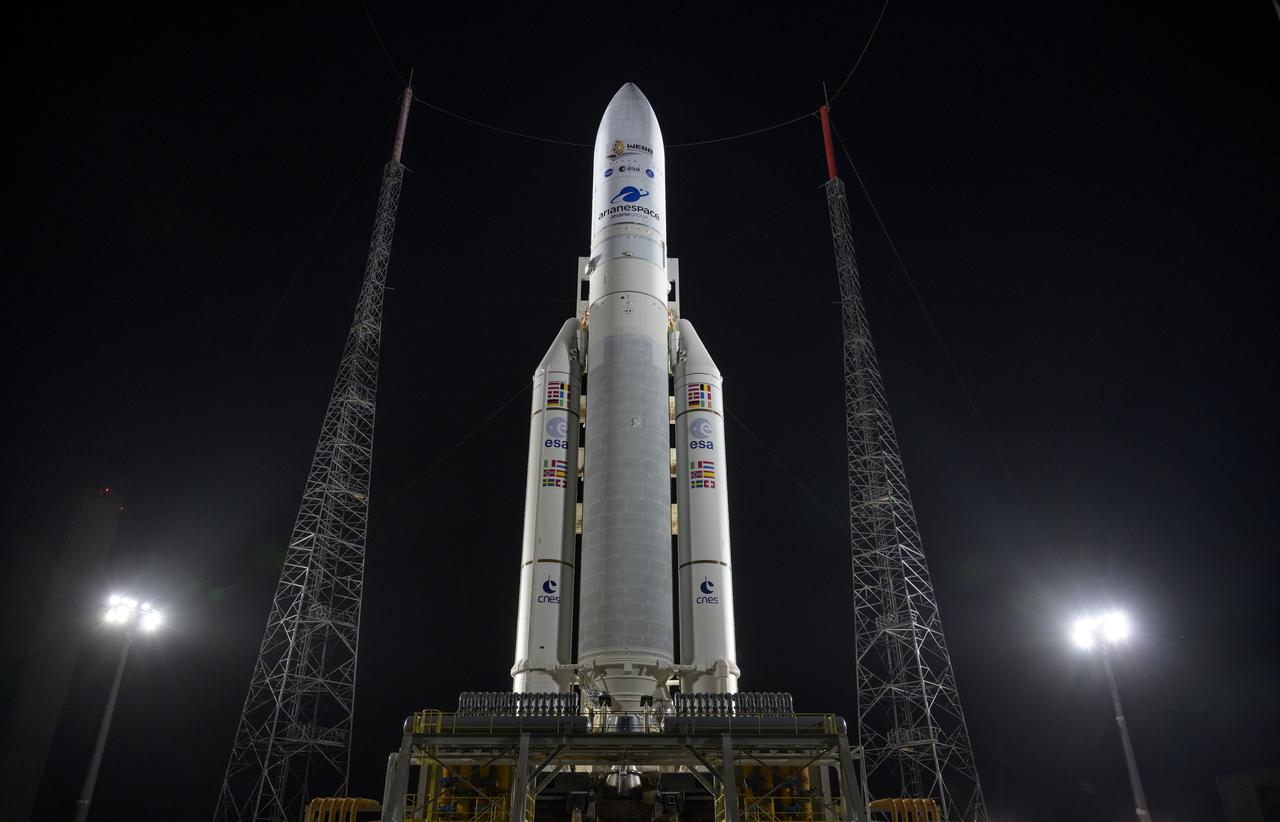
Arianespace's Ariane 5 rocket with NASA’s James Webb Space Telescope onboard, is seen at the launch pad, Thursday, Dec. 23, 2021, at Europe’s Spaceport, the Guiana Space Center in Kourou, French Guiana. The James Webb Space Telescope (sometimes called JWST or Webb) is a large infrared telescope with a 21.3 foot (6.5 meter) primary mirror. The observatory will study every phase of cosmic history—from within our solar system to the most distant observable galaxies in the early universe. Photo Credit: (NASA/Bill Ingalls)
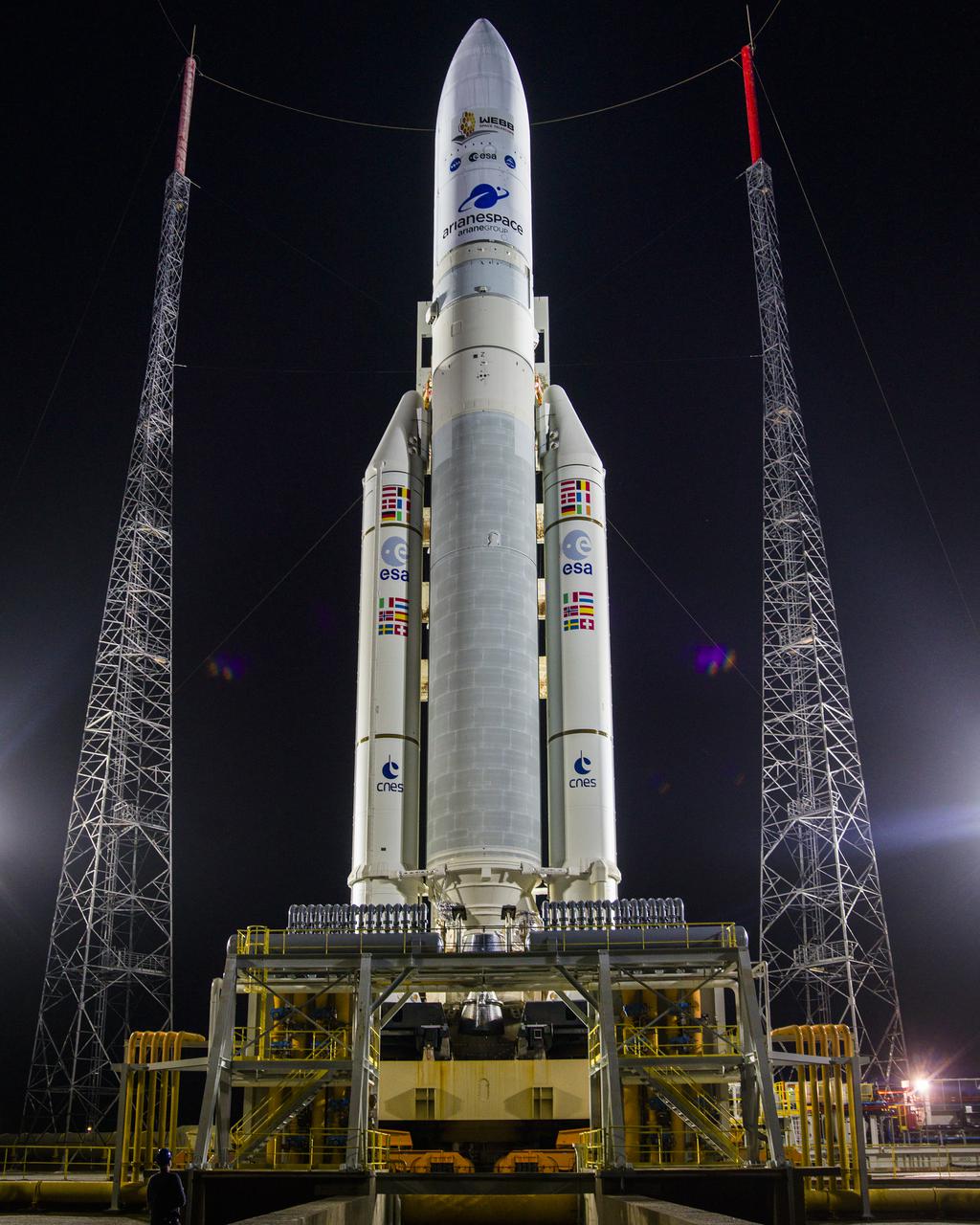
Arianespace's Ariane 5 rocket with NASA’s James Webb Space Telescope onboard, is seen at the launch pad, Thursday, Dec. 23, 2021, at Europe’s Spaceport, the Guiana Space Center in Kourou, French Guiana. The James Webb Space Telescope (sometimes called JWST or Webb) is a large infrared telescope with a 21.3 foot (6.5 meter) primary mirror. The observatory will study every phase of cosmic history—from within our solar system to the most distant observable galaxies in the early universe. Photo Credit: (NASA/Chris Gunn)
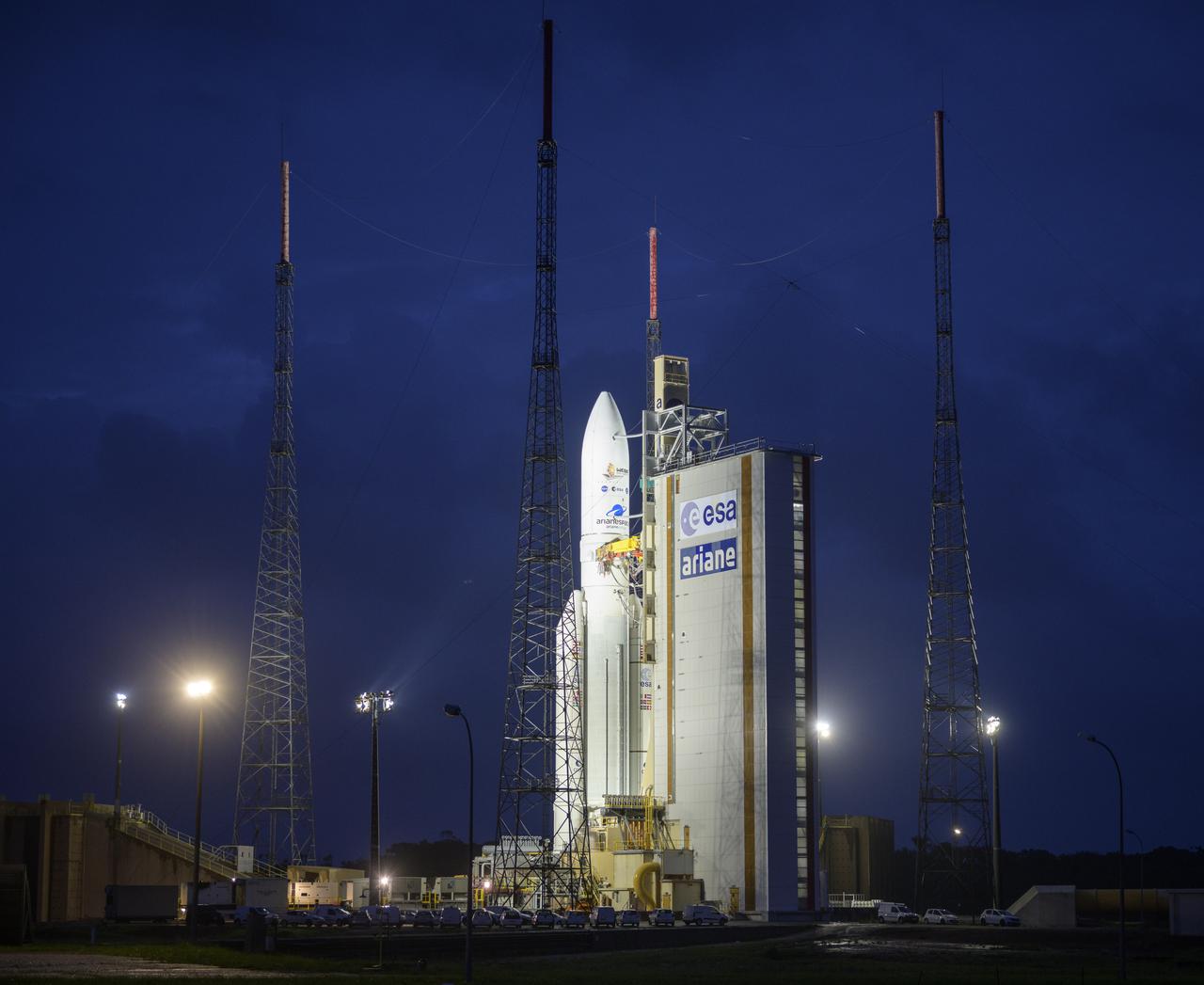
Arianespace's Ariane 5 rocket with NASA’s James Webb Space Telescope onboard, is seen at the launch pad, Thursday, Dec. 23, 2021, at Europe’s Spaceport, the Guiana Space Center in Kourou, French Guiana. The James Webb Space Telescope (sometimes called JWST or Webb) is a large infrared telescope with a 21.3 foot (6.5 meter) primary mirror. The observatory will study every phase of cosmic history—from within our solar system to the most distant observable galaxies in the early universe. Photo Credit: (NASA/Bill Ingalls)
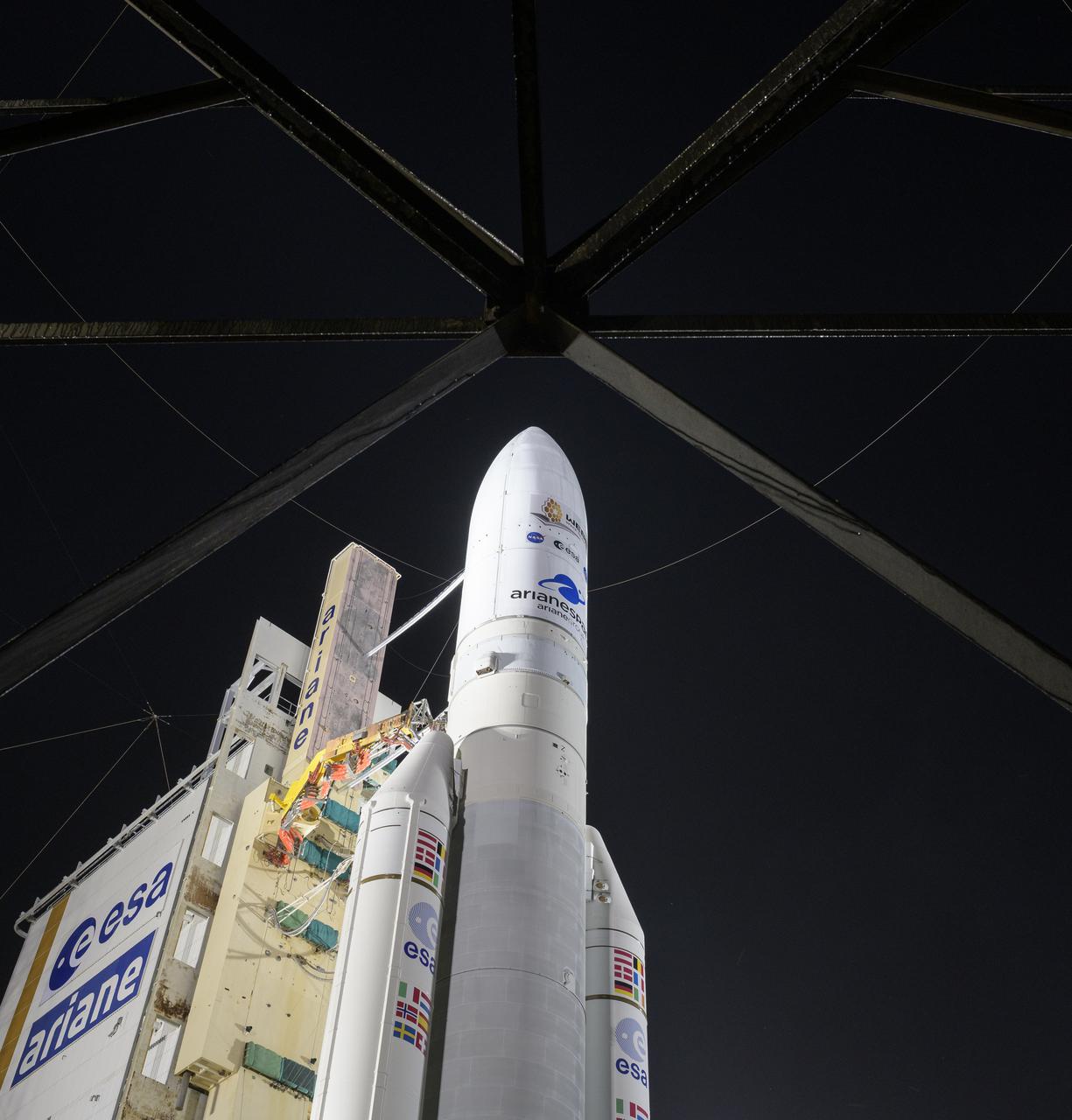
Arianespace's Ariane 5 rocket with NASA’s James Webb Space Telescope onboard, is seen at the launch pad, Thursday, Dec. 23, 2021, at Europe’s Spaceport, the Guiana Space Center in Kourou, French Guiana. The James Webb Space Telescope (sometimes called JWST or Webb) is a large infrared telescope with a 21.3 foot (6.5 meter) primary mirror. The observatory will study every phase of cosmic history—from within our solar system to the most distant observable galaxies in the early universe. Photo Credit: (NASA/Bill Ingalls)
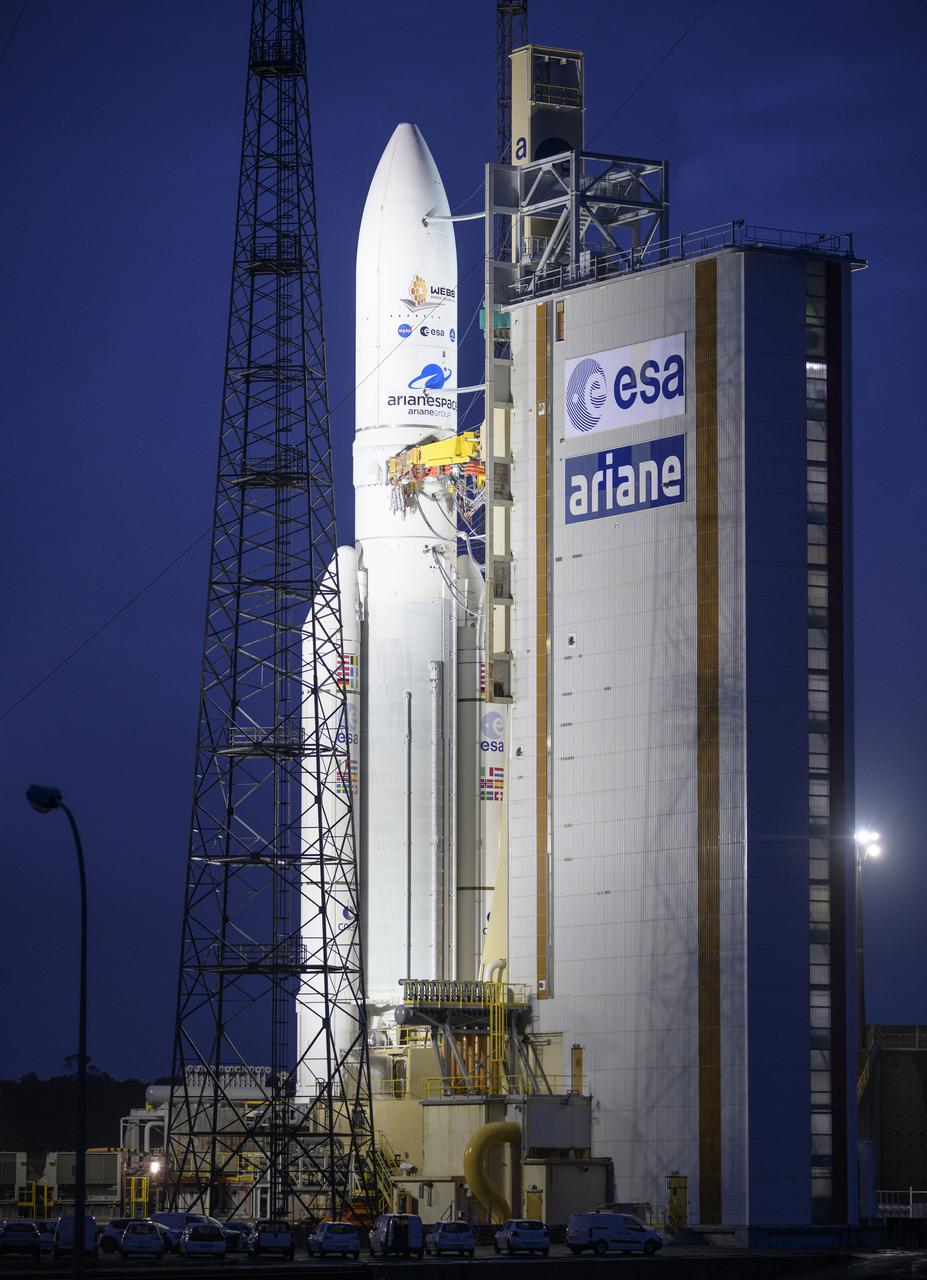
Arianespace's Ariane 5 rocket with NASA’s James Webb Space Telescope onboard, is seen at the launch pad, Thursday, Dec. 23, 2021, at Europe’s Spaceport, the Guiana Space Center in Kourou, French Guiana. The James Webb Space Telescope (sometimes called JWST or Webb) is a large infrared telescope with a 21.3 foot (6.5 meter) primary mirror. The observatory will study every phase of cosmic history—from within our solar system to the most distant observable galaxies in the early universe. Photo Credit: (NASA/Bill Ingalls)