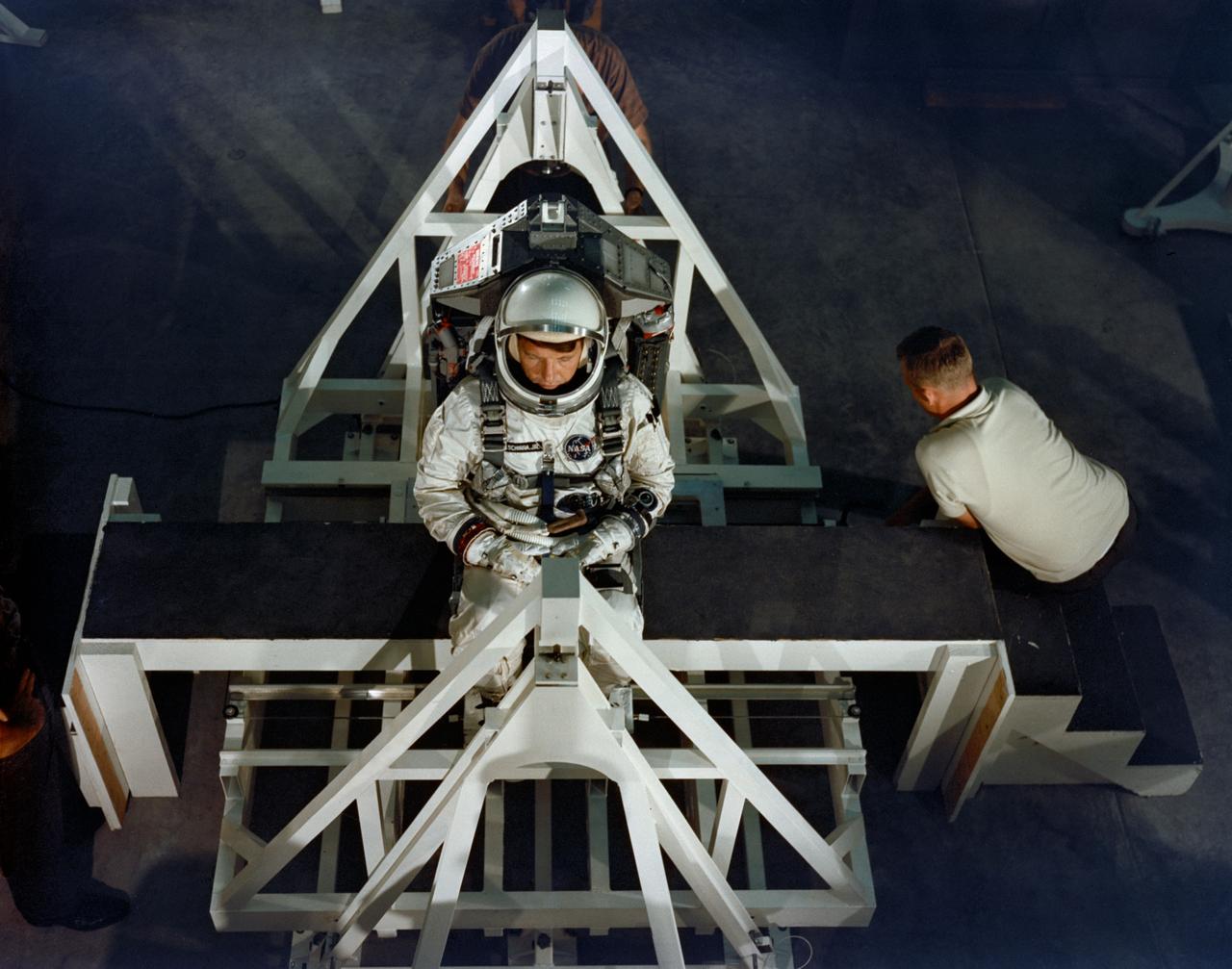
S65-54319 (22 Sept. 1965) --- Astronaut Walter M. Schirra Jr., command pilot of the Gemini-6 prime crew, undergoes weight and balance tests in the Pyrotechnic Installation Building, Merritt Island, Kennedy Space Center, Florida. Photo credit: NASA or National Aeronautics and Space Administration
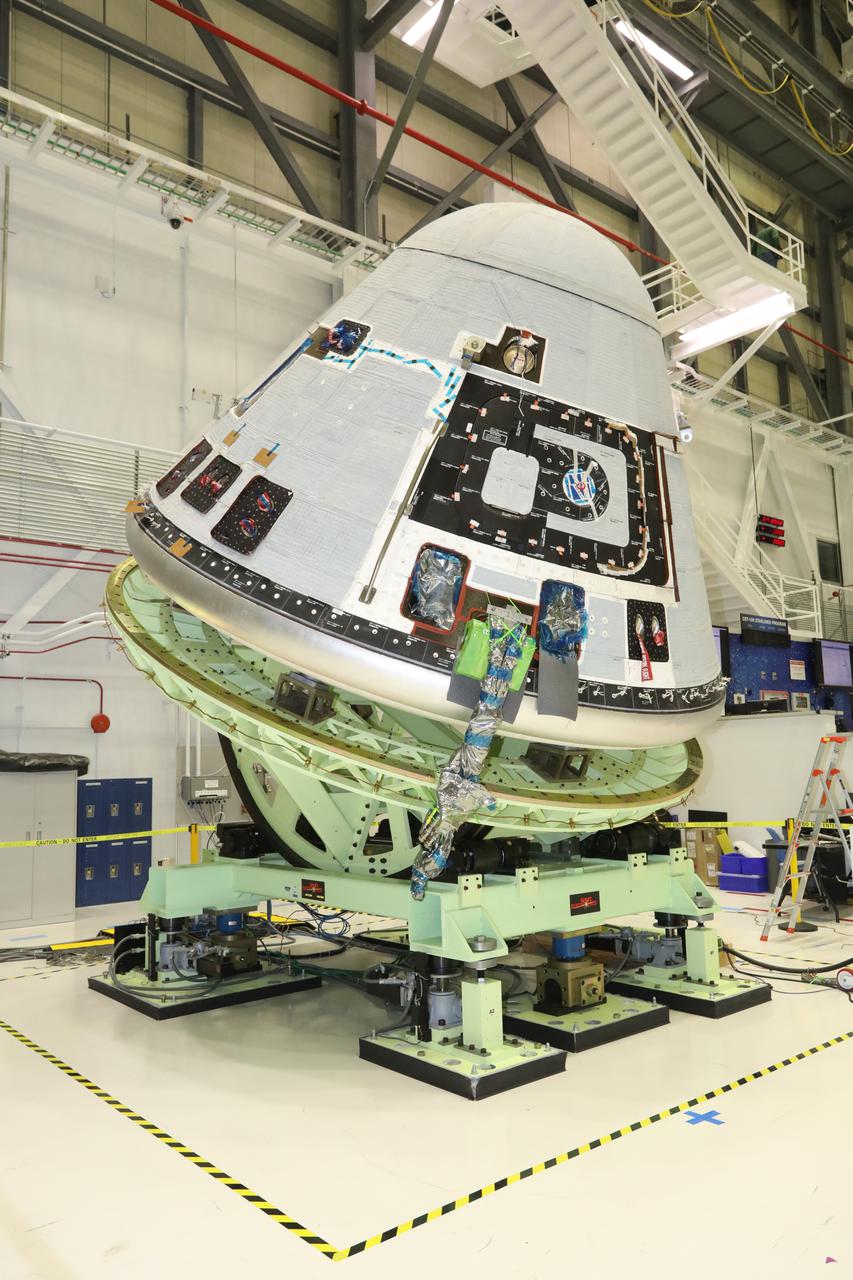
Boeing’s Starliner crew module is weighed in the Commercial Crew and Cargo Processing Facility at Kennedy Space Center in Florida on Jan. 14, 2021, in preparation for the company’s second Orbital Flight Test (OFT-2), as part of NASA’s Commercial Crew Program.. The Weight and Center of Gravity test measures the weight and balance of the spacecraft to ensure optimal performance during launch and re-entry. The test helps to validate parameters required for launching on United Launch Alliance’s Atlas V rocket, docking to the International Space Station and for navigation of the vehicle, among others.
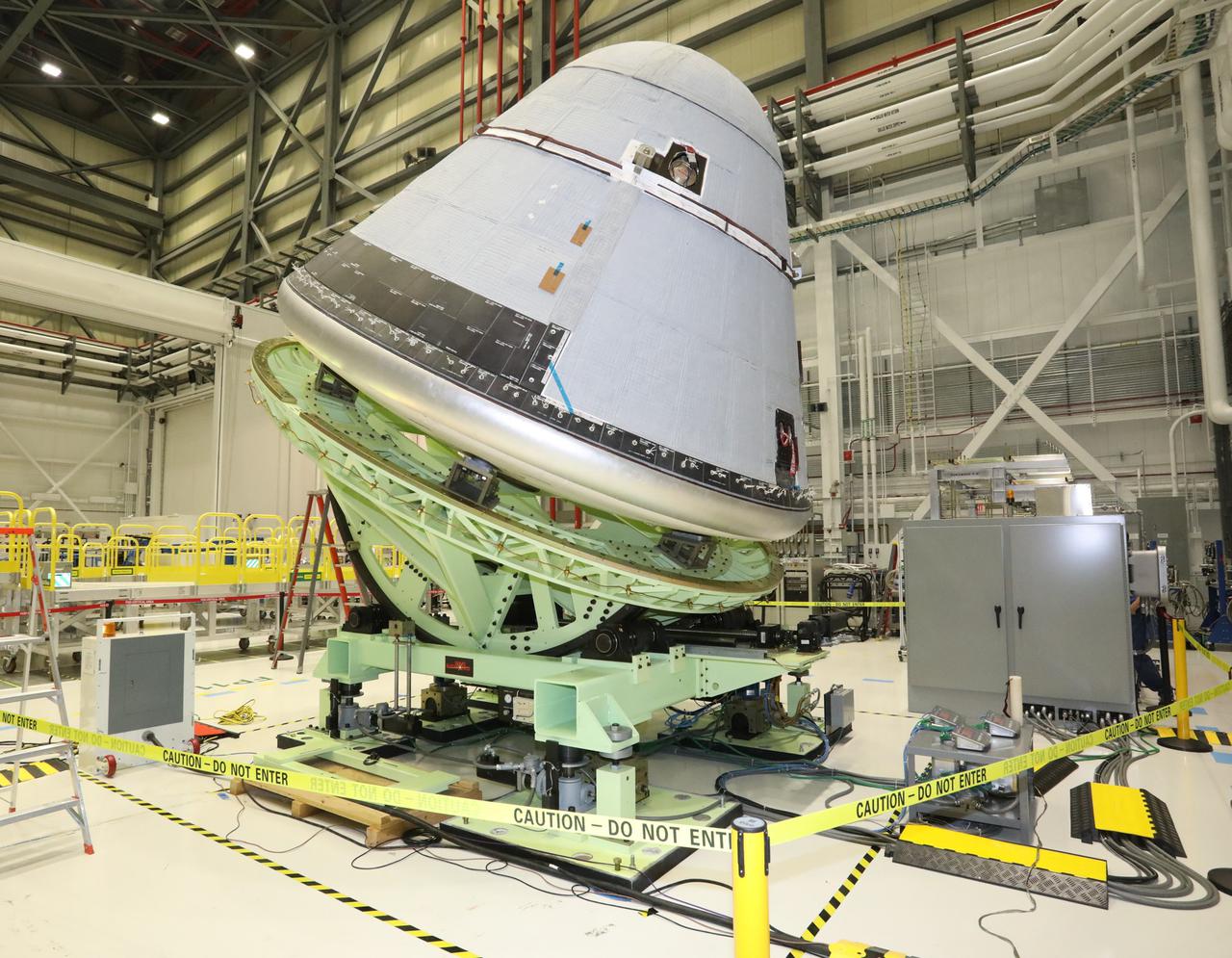
Boeing’s Starliner crew module is weighed in the Commercial Crew and Cargo Processing Facility at Kennedy Space Center in Florida on Jan. 14, 2021, in preparation for the company’s second Orbital Flight Test (OFT-2), as part of NASA’s Commercial Crew Program.. The Weight and Center of Gravity test measures the weight and balance of the spacecraft to ensure optimal performance during launch and re-entry. The test helps to validate parameters required for launching on United Launch Alliance’s Atlas V rocket, docking to the International Space Station and for navigation of the vehicle, among others.
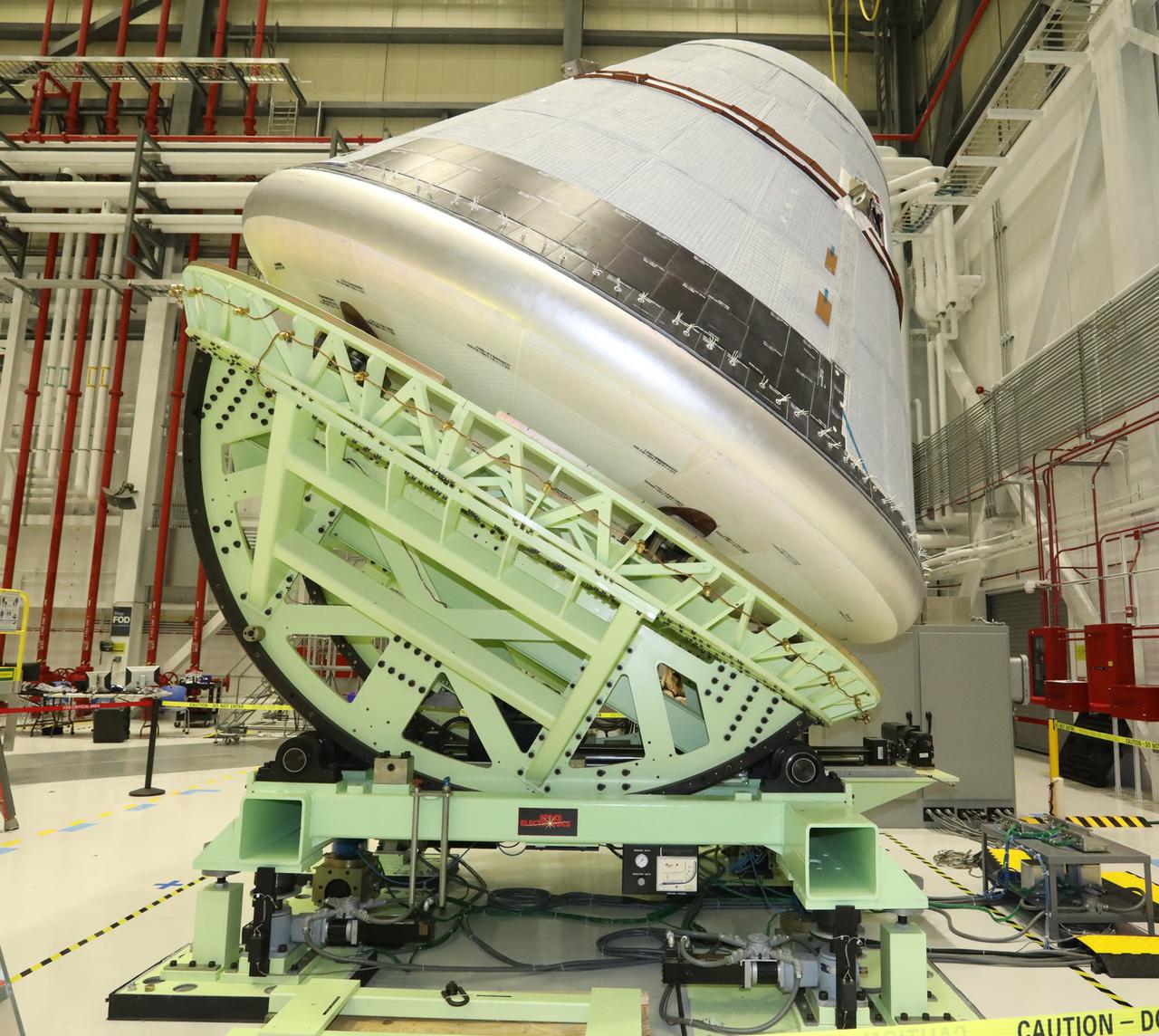
Boeing’s Starliner crew module is weighed in the Commercial Crew and Cargo Processing Facility at Kennedy Space Center in Florida on Jan. 14, 2021, in preparation for the company’s second Orbital Flight Test (OFT-2), as part of NASA’s Commercial Crew Program.. The Weight and Center of Gravity test measures the weight and balance of the spacecraft to ensure optimal performance during launch and re-entry. The test helps to validate parameters required for launching on United Launch Alliance’s Atlas V rocket, docking to the International Space Station and for navigation of the vehicle, among others.
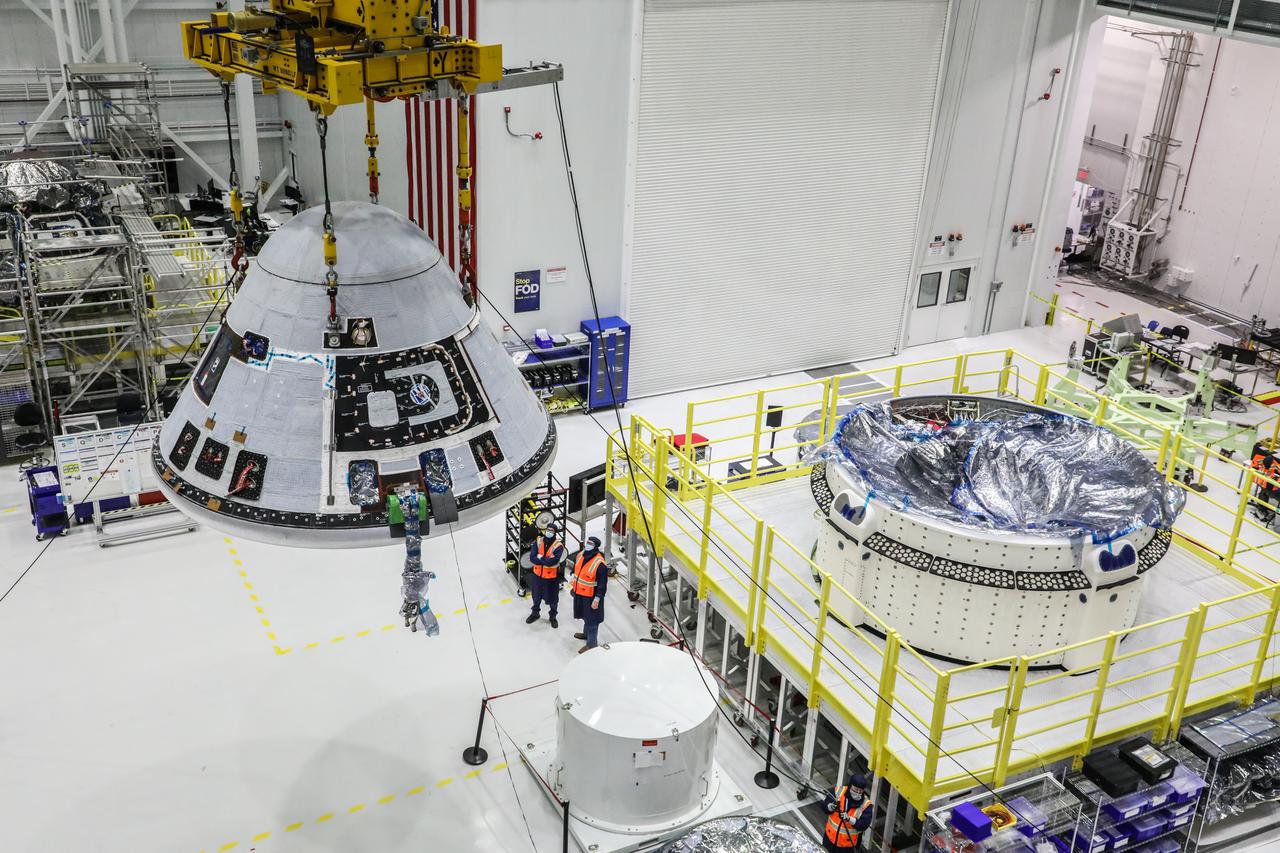
Boeing’s Starliner crew module is hoisted and moves past the service module in the Commercial Crew and Cargo Processing Facility at Kennedy Space Center in Florida on Wednesday, Jan. 13, 2021, prior to the weight and center of gravity test. The crew module and service module will soon be mated, making the spacecraft complete for the company’s second Orbital Flight Test (OFT-2) for NASA’s Commercial Crew Program. OFT-2 is a critical developmental milestone on the company’s path toward flying crew missions for NASA.
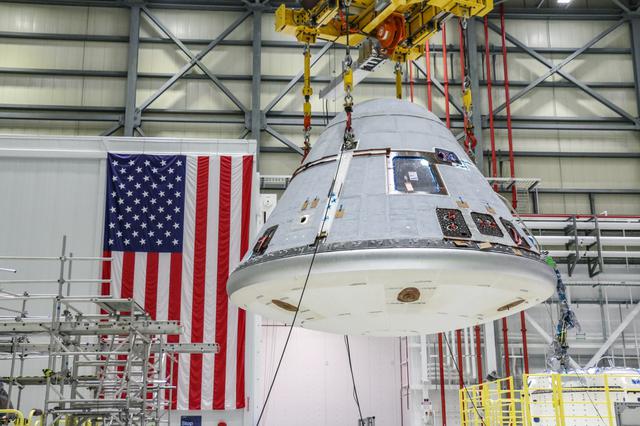
Boeing’s Starliner crew module for the company’s second Orbital Flight Test (OFT-2) is lifted Wednesday, Jan. 13, 2021, in the Commercial Crew and Cargo Processing Facility at Kennedy Space Center in Florida prior to the vehicle having a weight and center of gravity test. OFT-2 is a critical developmental milestone on the company’s path toward flying crew missions for NASA, as part of the agency’s Commercial Crew Program.
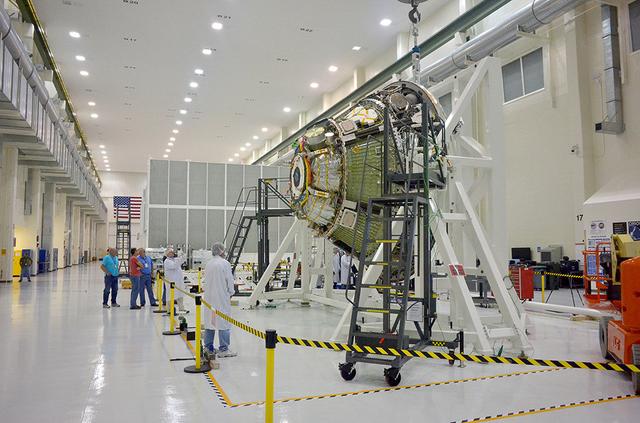
An Orion weight and center of gravity test with the Exploration Flight Test-1 (EFT-1) crew module takes place at the Operations and Checkout (O&C) Building at Kennedy Space Center on June 8, 2014. Part of Batch image transfer from Flickr.

An Orion weight and center of gravity test with the Exploration Flight Test-1 (EFT-1) crew module takes place at the Operations and Checkout (O&C) Building at Kennedy Space Center on June 8, 2014. Part of Batch image transfer from Flickr.

An Orion weight and center of gravity test with the Exploration Flight Test-1 (EFT-1) crew module takes place at the Operations and Checkout (O&C) Building at Kennedy Space Center on June 8, 2014. Part of Batch image transfer from Flickr.
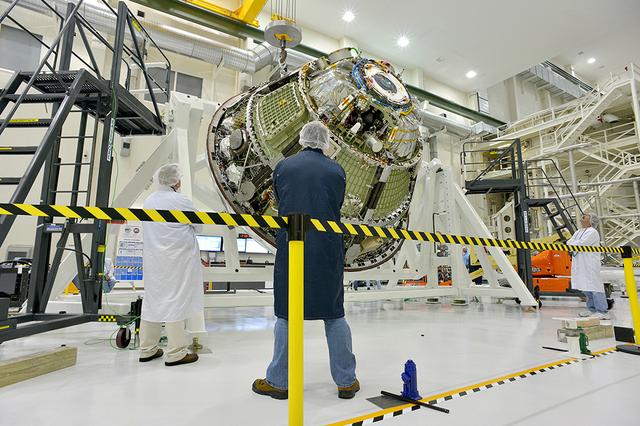
An Orion weight and center of gravity test with the Exploration Flight Test-1 (EFT-1) crew module takes place at the Operations and Checkout (O&C) Building at Kennedy Space Center on June 8, 2014. Part of Batch image transfer from Flickr.

An Orion weight and center of gravity test with the Exploration Flight Test-1 (EFT-1) crew module takes place at the Operations and Checkout (O&C) Building at Kennedy Space Center on June 8, 2014. Part of Batch image transfer from Flickr.

An Orion weight and center of gravity test with the Exploration Flight Test-1 (EFT-1) crew module takes place at the Operations and Checkout (O&C) Building at Kennedy Space Center on June 8, 2014. Part of Batch image transfer from Flickr.

An Orion weight and center of gravity test with the Exploration Flight Test-1 (EFT-1) crew module takes place at the Operations and Checkout (O&C) Building at Kennedy Space Center on June 8, 2014. Part of Batch image transfer from Flickr.
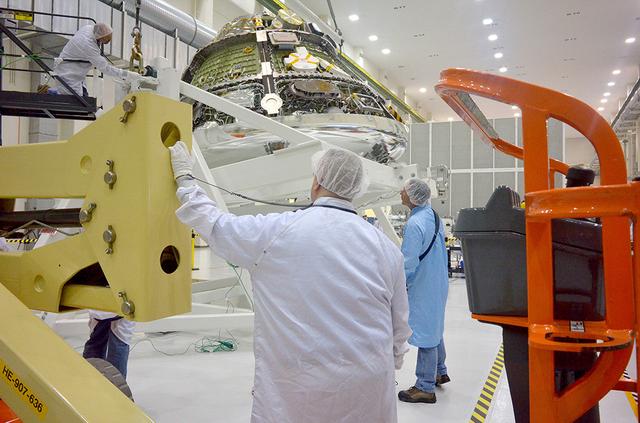
An Orion weight and center of gravity test with the Exploration Flight Test-1 (EFT-1) crew module takes place at the Operations and Checkout (O&C) Building at Kennedy Space Center on June 8, 2014. Part of Batch image transfer from Flickr.

An Orion weight and center of gravity test with the Exploration Flight Test-1 (EFT-1) crew module takes place at the Operations and Checkout (O&C) Building at Kennedy Space Center on June 8, 2014. Part of Batch image transfer from Flickr.

An Orion weight and center of gravity test with the Exploration Flight Test-1 (EFT-1) crew module takes place at the Operations and Checkout (O&C) Building at Kennedy Space Center on June 8, 2014. Part of Batch image transfer from Flickr.

An Orion weight and center of gravity test with the Exploration Flight Test-1 (EFT-1) crew module takes place at the Operations and Checkout (O&C) Building at Kennedy Space Center on June 8, 2014. Part of Batch image transfer from Flickr.

An Orion weight and center of gravity test with the Exploration Flight Test-1 (EFT-1) crew module takes place at the Operations and Checkout (O&C) Building at Kennedy Space Center on June 8, 2014. Part of Batch image transfer from Flickr.

An Orion weight and center of gravity test with the Exploration Flight Test-1 (EFT-1) crew module takes place at the Operations and Checkout (O&C) Building at Kennedy Space Center on June 8, 2014. Part of Batch image transfer from Flickr.

An Orion weight and center of gravity test with the Exploration Flight Test-1 (EFT-1) crew module takes place at the Operations and Checkout (O&C) Building at Kennedy Space Center on June 8, 2014. Part of Batch image transfer from Flickr.
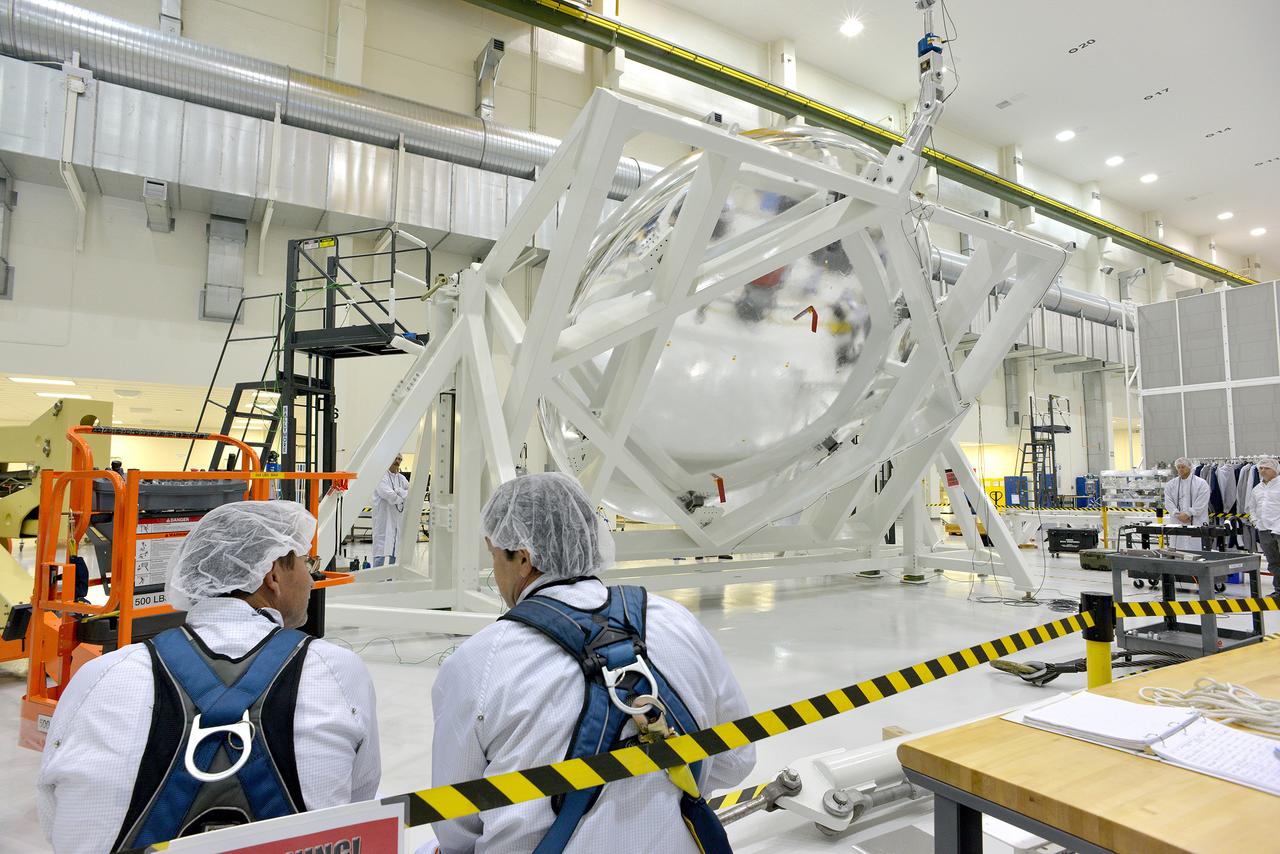
An Orion weight and center of gravity test with the Exploration Flight Test-1 (EFT-1) crew module takes place at the Operations and Checkout (O&C) Building at Kennedy Space Center on June 8, 2014. Part of Batch image transfer from Flickr.

An Orion weight and center of gravity test with the Exploration Flight Test-1 (EFT-1) crew module takes place at the Operations and Checkout (O&C) Building at Kennedy Space Center on June 8, 2014. Part of Batch image transfer from Flickr.
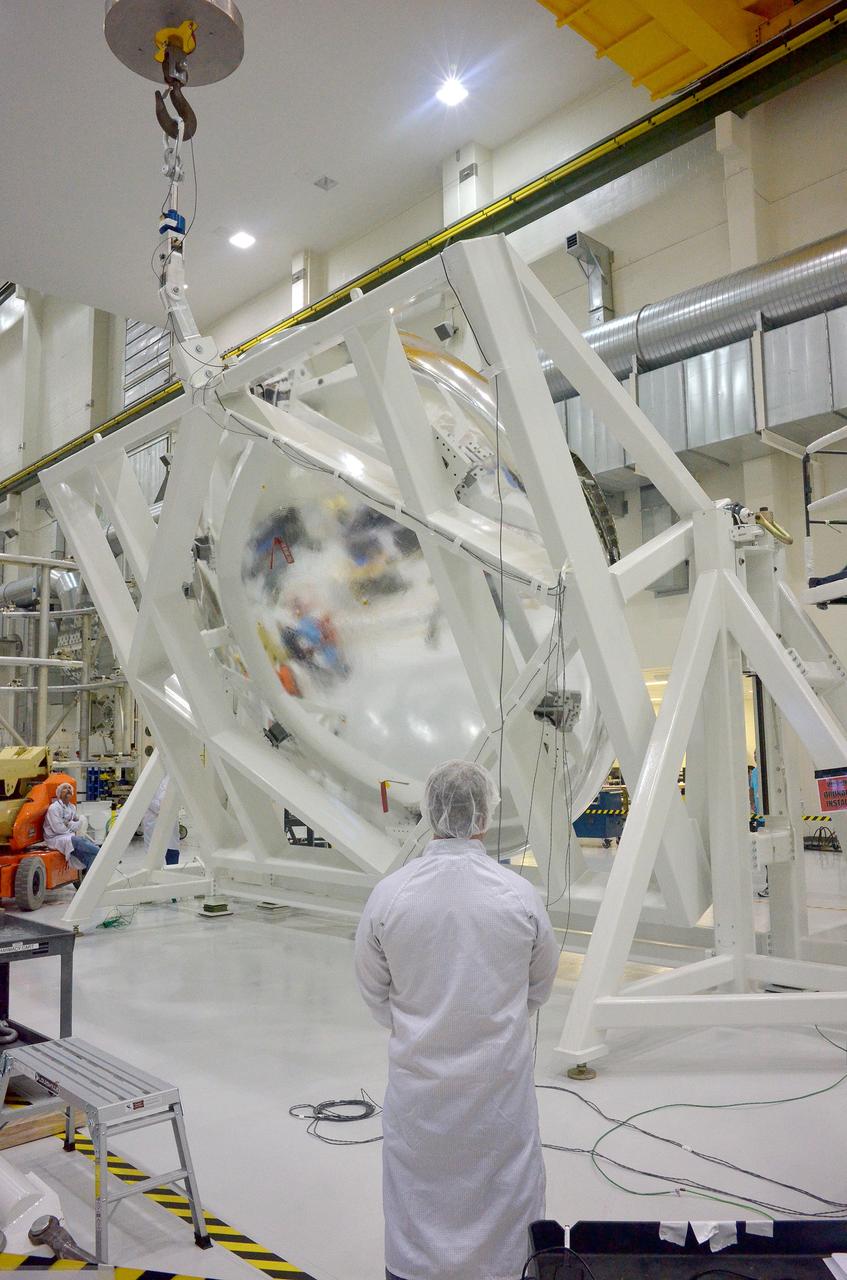
An Orion weight and center of gravity test with the Exploration Flight Test-1 (EFT-1) crew module takes place at the Operations and Checkout (O&C) Building at Kennedy Space Center on June 8, 2014. Part of Batch image transfer from Flickr.
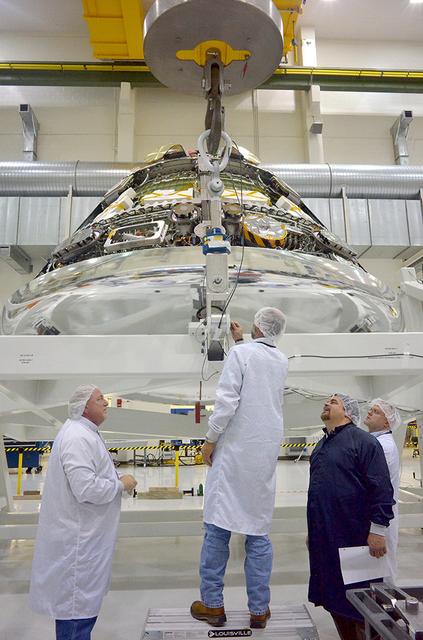
An Orion weight and center of gravity test with the Exploration Flight Test-1 (EFT-1) crew module takes place at the Operations and Checkout (O&C) Building at Kennedy Space Center on June 8, 2014.Part of Batch image transfer from Flickr.
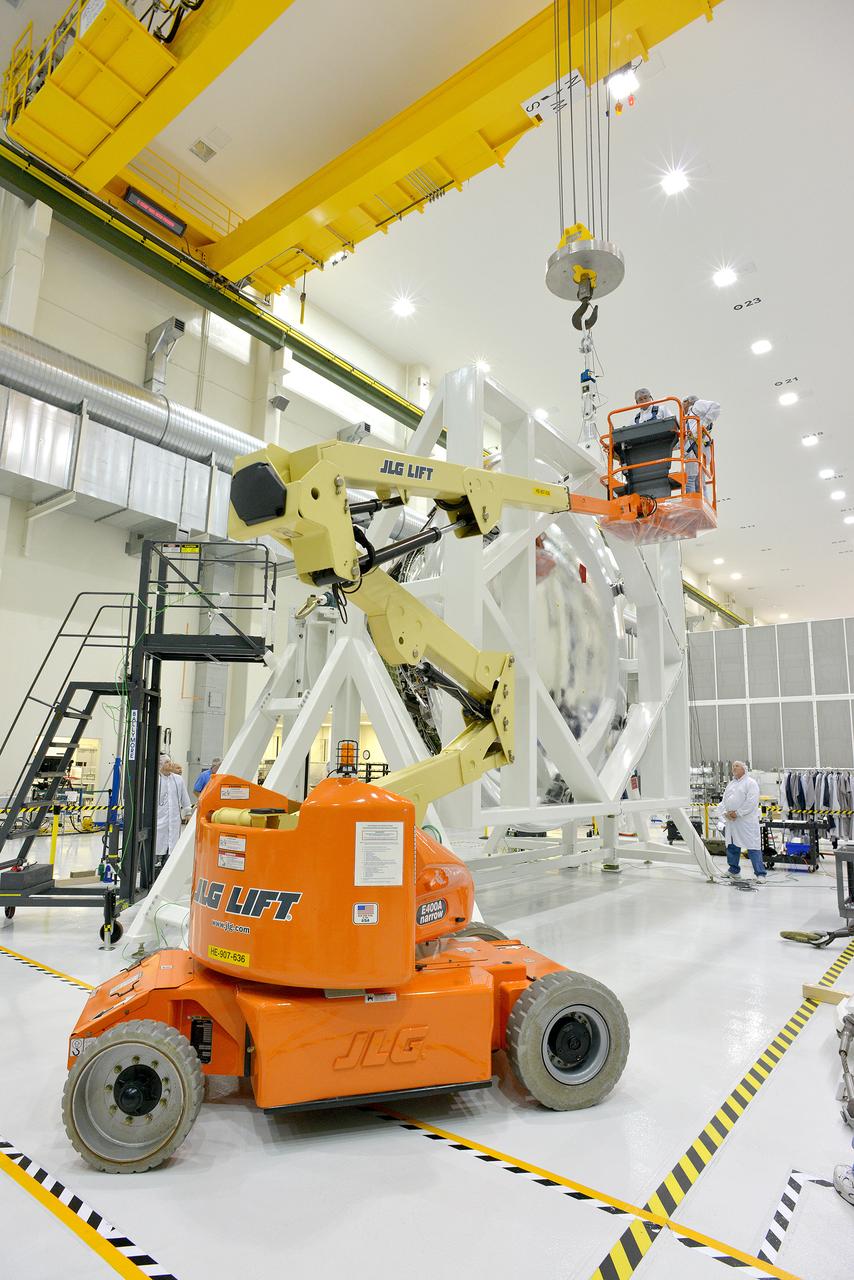
An Orion weight and center of gravity test with the Exploration Flight Test-1 (EFT-1) crew module takes place at the Operations and Checkout (O&C) Building at Kennedy Space Center on June 8, 2014. Part of Batch image transfer from Flickr.
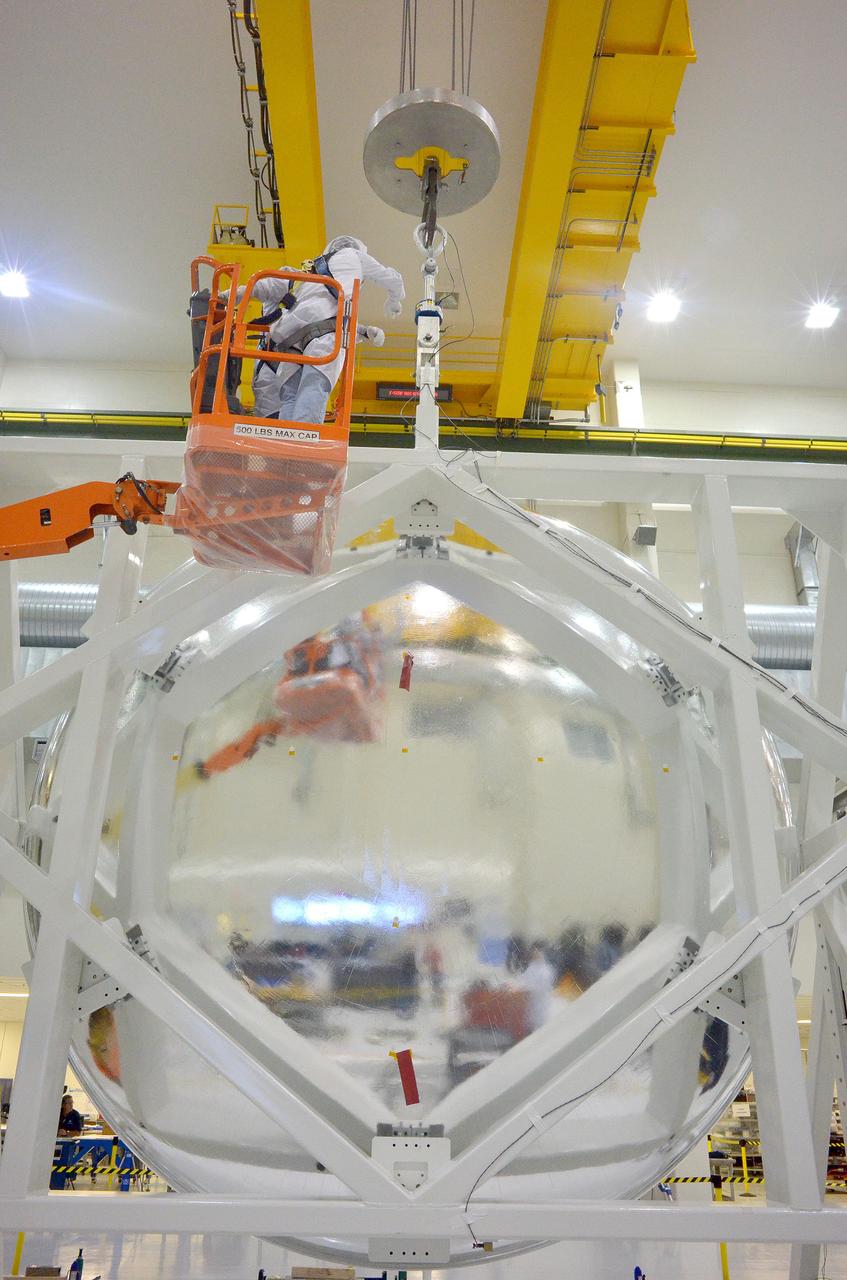
An Orion weight and center of gravity test with the Exploration Flight Test-1 (EFT-1) crew module takes place at the Operations and Checkout (O&C) Building at Kennedy Space Center on June 8, 2014. Part of Batch image transfer from Flickr.
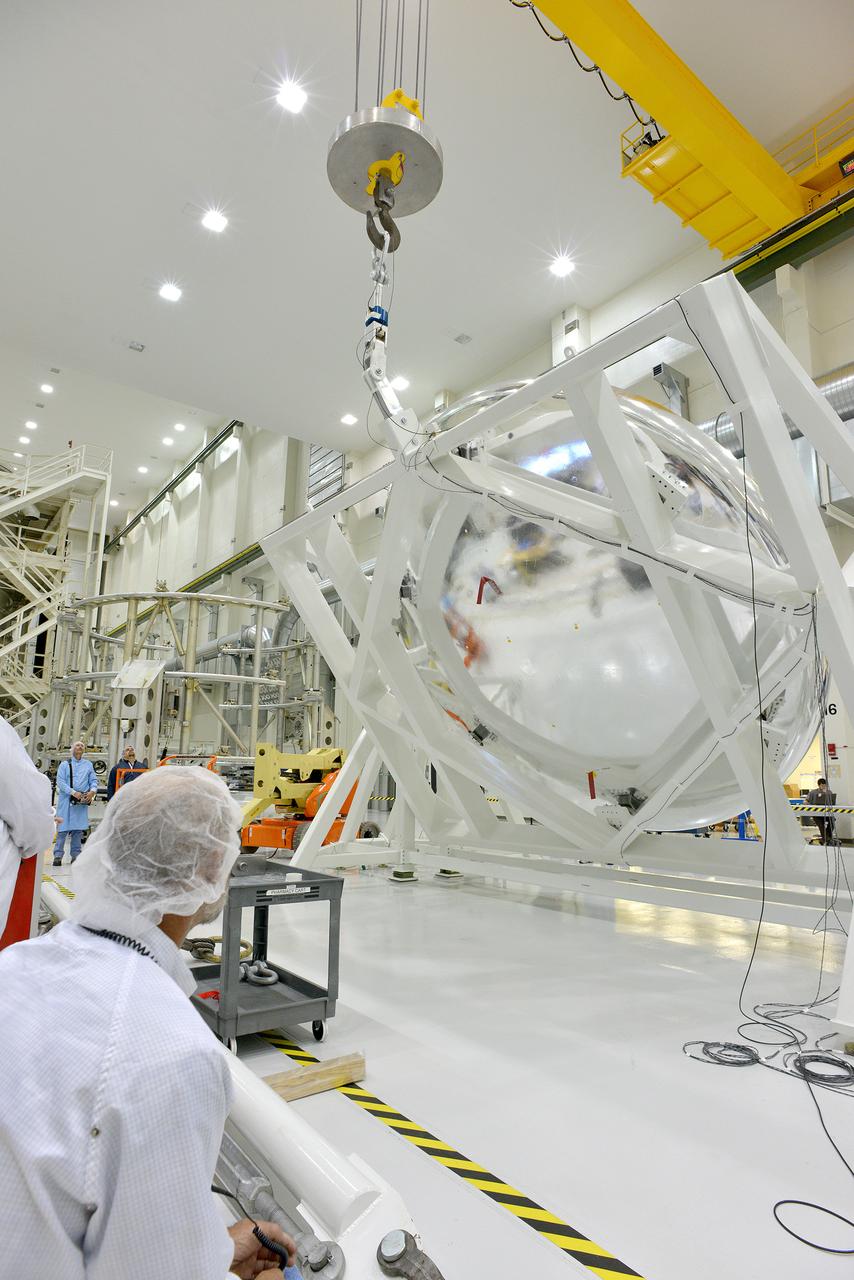
An Orion weight and center of gravity test with the Exploration Flight Test-1 (EFT-1) crew module takes place at the Operations and Checkout (O&C) Building at Kennedy Space Center on June 8, 2014. Part of Batch image transfer from Flickr.
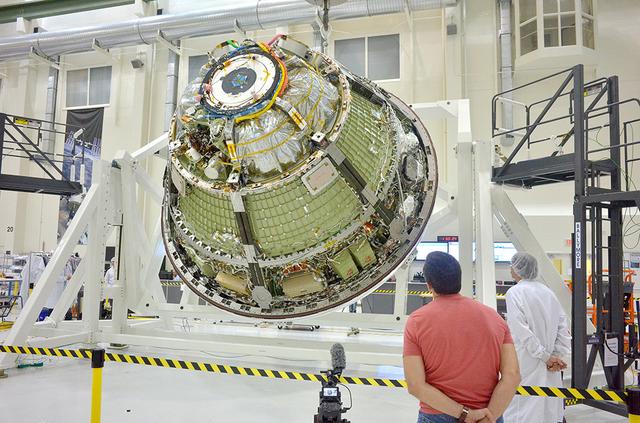
An Orion weight and center of gravity test with the Exploration Flight Test-1 (EFT-1) crew module takes place at the Operations and Checkout (O&C) Building at Kennedy Space Center on June 8, 2014. Part of Batch image transfer from Flickr.
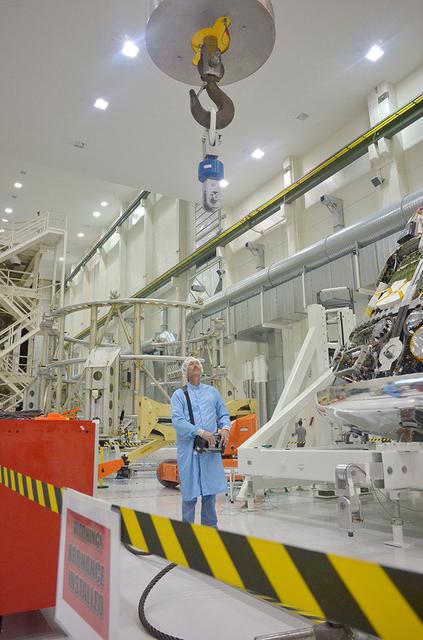
An Orion weight and center of gravity test with the Exploration Flight Test-1 (EFT-1) crew module takes place at the Operations and Checkout (O&C) Building at Kennedy Space Center on June 8, 2014. Part of Batch image transfer from Flickr.
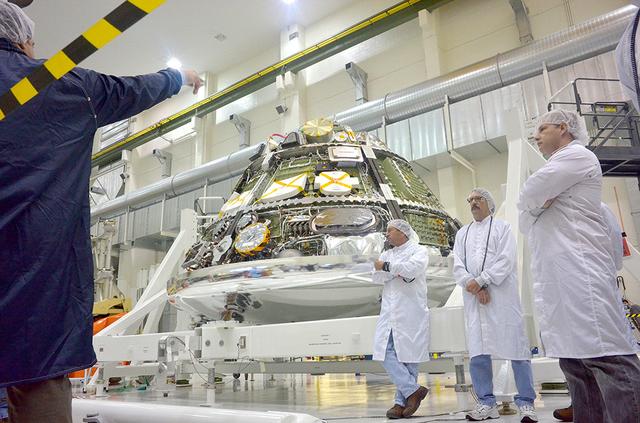
An Orion weight and center of gravity test with the Exploration Flight Test-1 (EFT-1) crew module takes place at the Operations and Checkout (O&C) Building at Kennedy Space Center on June 8, 2014. Part of Batch image transfer from Flickr.
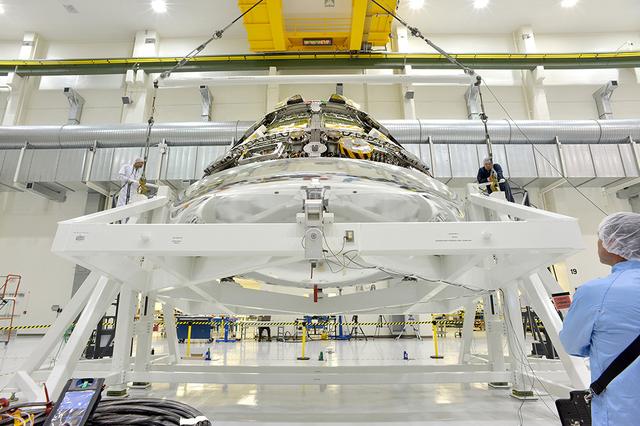
An Orion weight and center of gravity test with the Exploration Flight Test-1 (EFT-1) crew module takes place at the Operations and Checkout (O&C) Building at Kennedy Space Center on June 8, 2014. Part of Batch image transfer from Flickr.
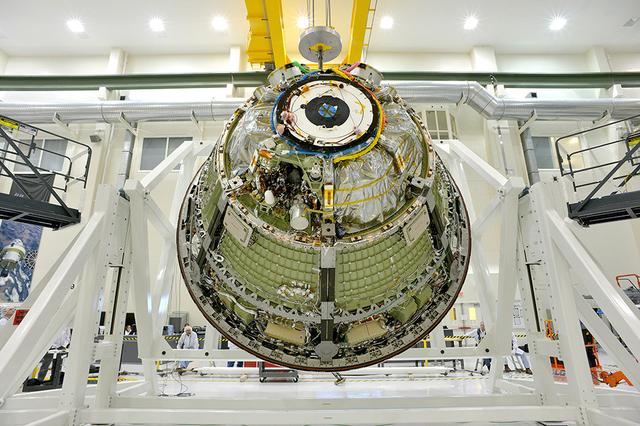
An Orion weight and center of gravity test with the Exploration Flight Test-1 (EFT-1) crew module takes place at the Operations and Checkout (O&C) Building at Kennedy Space Center on June 8, 2014. Part of Batch image transfer from Flickr.
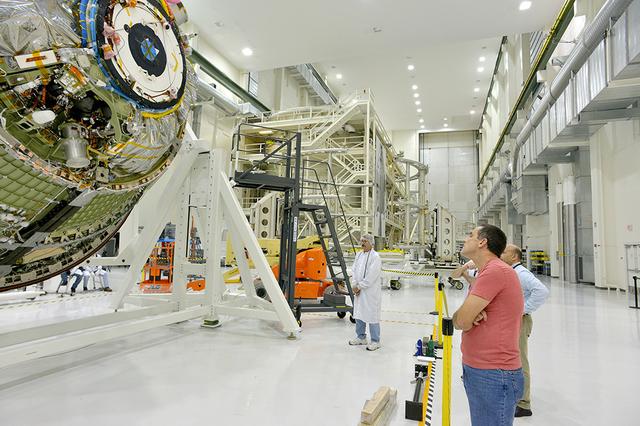
An Orion weight and center of gravity test with the Exploration Flight Test-1 (EFT-1) crew module takes place at the Operations and Checkout (O&C) Building at Kennedy Space Center on June 8, 2014. Part of Batch image transfer from Flickr.
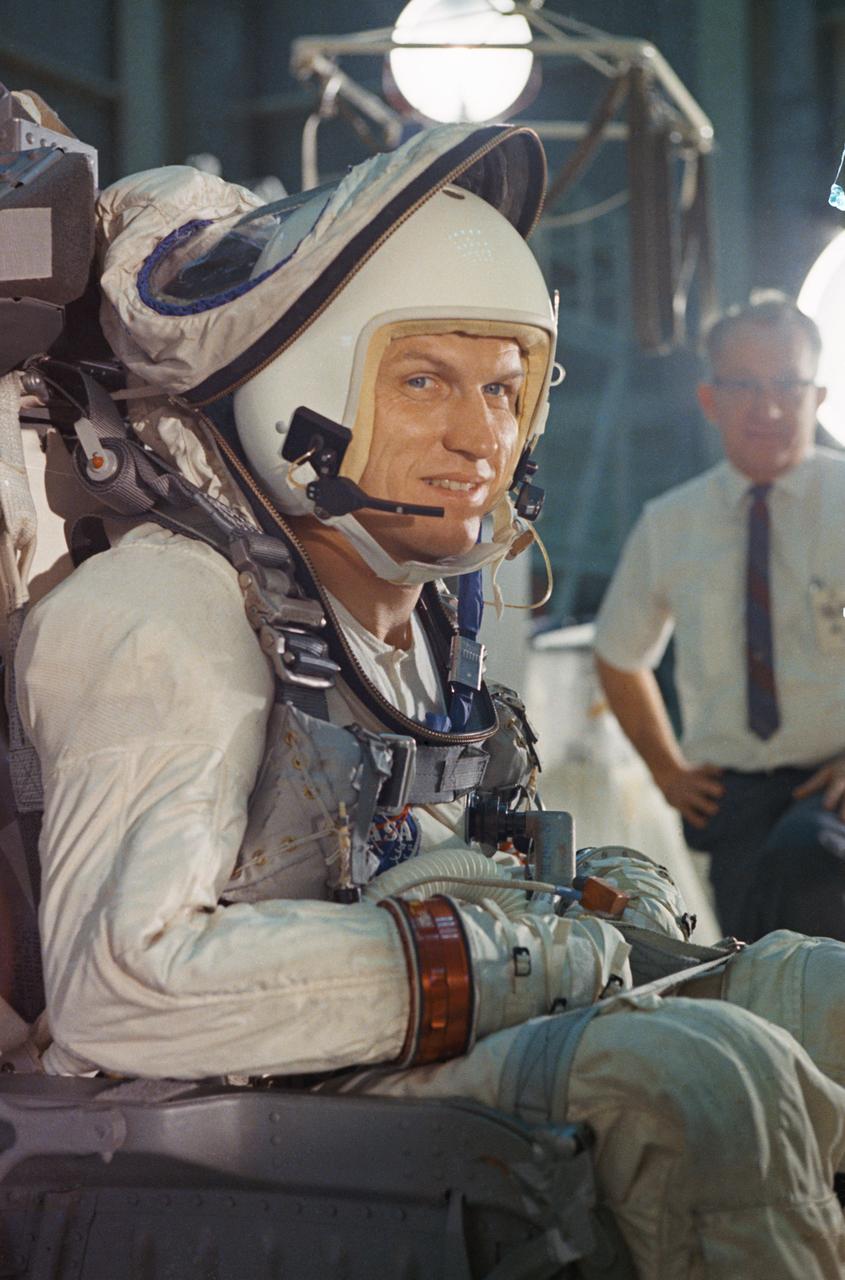
S65-56208 (25 Oct. 1965) --- Astronaut Frank Borman, command pilot for the Gemini-7 prime crew, is pictured during weight and balance tests conducted in the Pyrotechnic Installation Building, Merritt Island, Kennedy Space Center. Photo credit: NASA
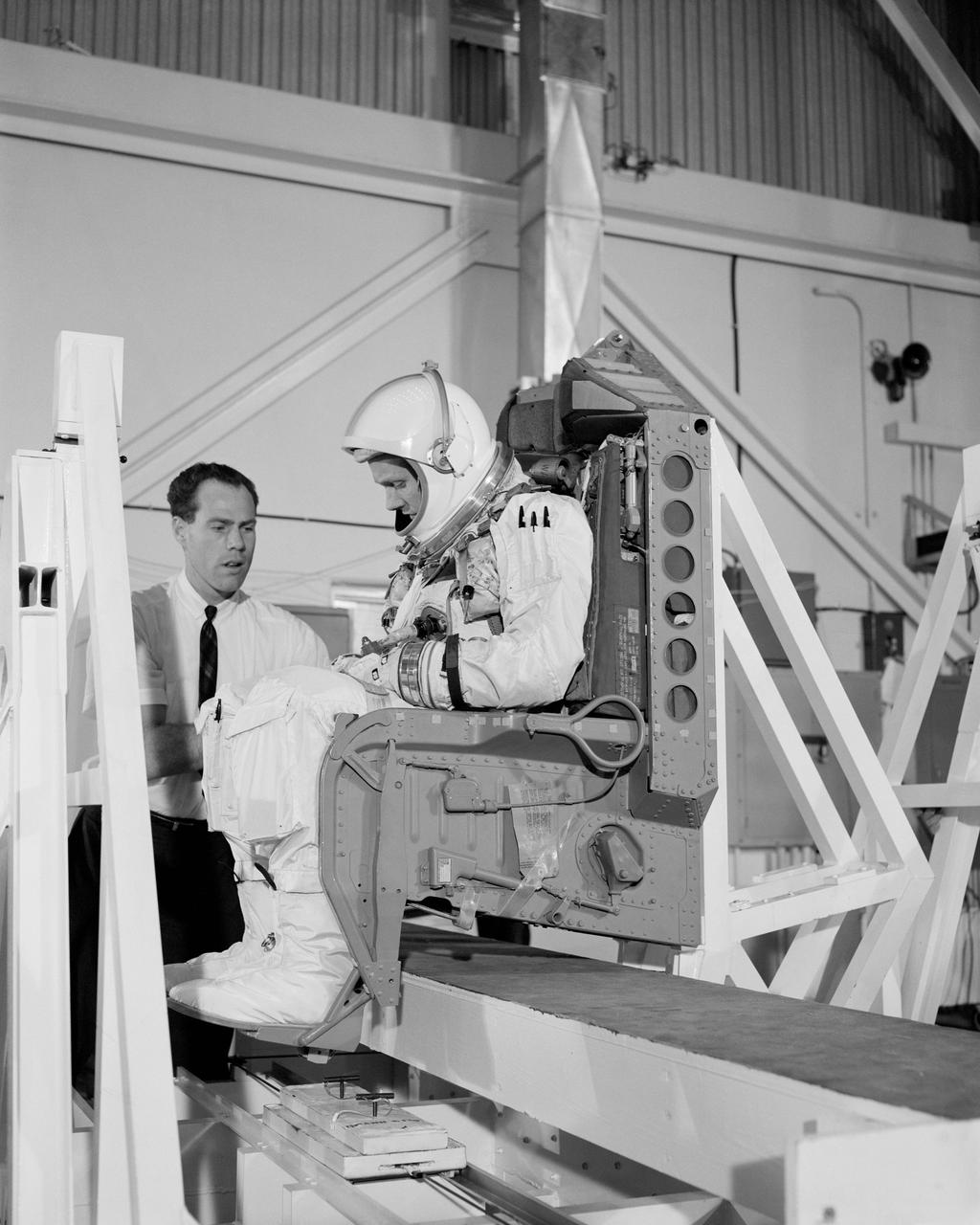
S66-22933 (18 Feb. 1966) --- Astronaut Neil A. Armstrong undergoes weight and balance tests in the Pyrotechnic Installation Building, Merritt Island, Kennedy Space Center, Florida. Photo credit: NASA
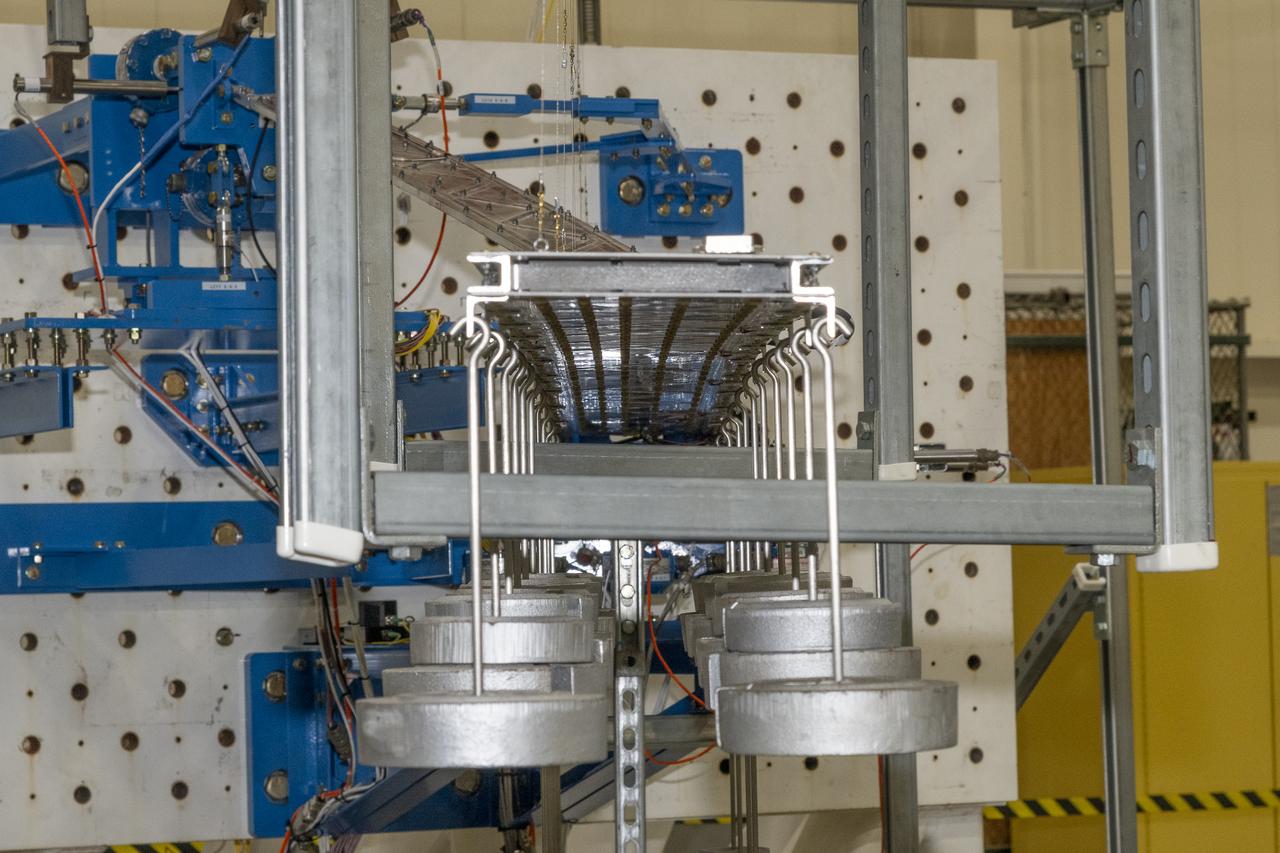
Researchers test a 10-foot Mock Truss-Braced Wing at NASA’s Armstrong Flight Research Center in Edwards, California. Weights are hung from the wing to apply stress used to determine its limits. The aircraft concept involves a wing braced on an aircraft using diagonal struts that also add lift and could result in significantly improved aerodynamics.
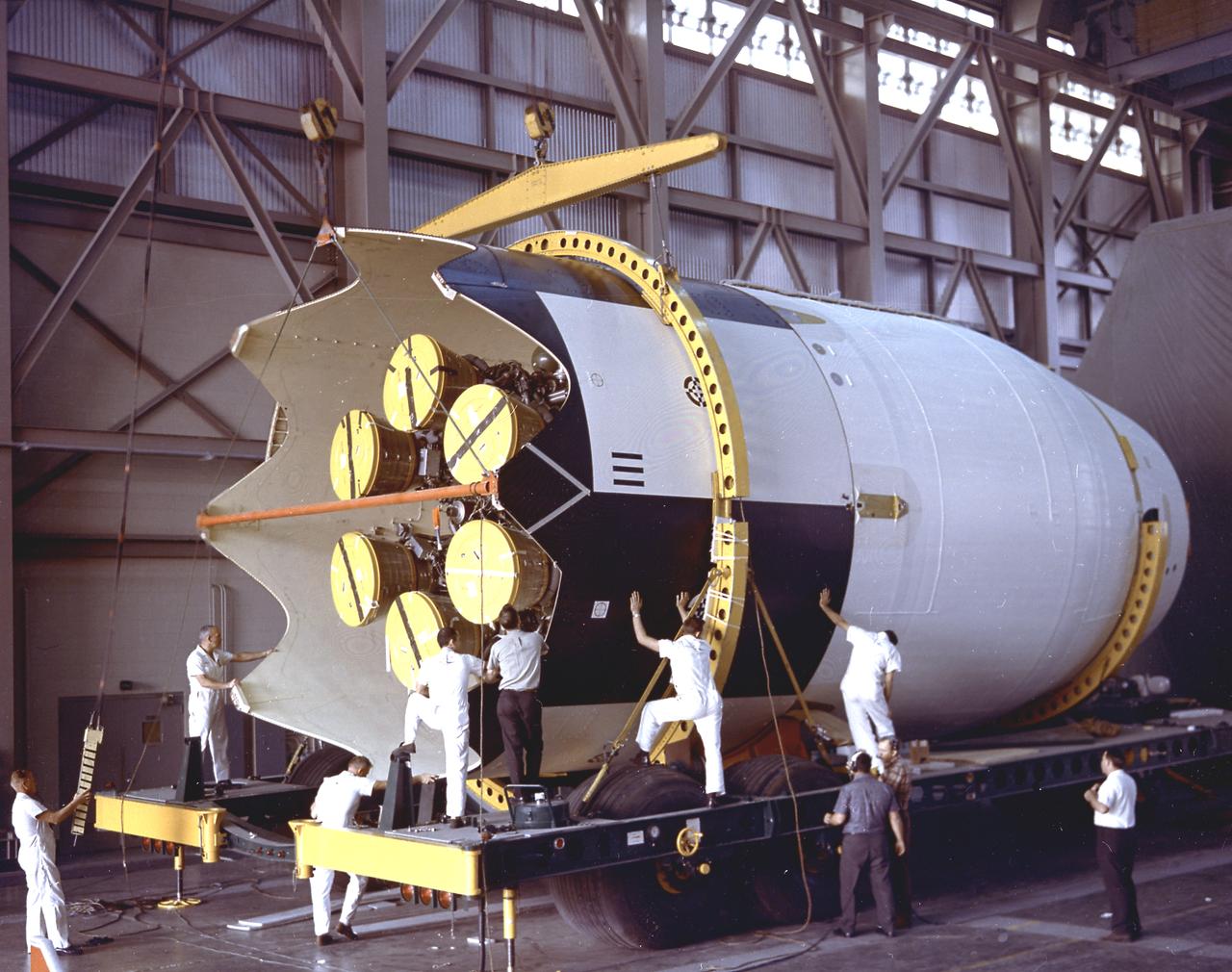
The Saturn I S-IV stage (second stage) assembly for the SA-9 mission underwent the weight and balance test in the hangar building at Cape Canaveral. The S-IV stage had six RL-10 engines which used liquid hydrogen and liquid oxygen as its propellants arranged in a circle. Each RL-10 engine produced a thrust of 15,000 pounds, a total combined thrust of 90,000 pounds. The SA-9 mission was the first Saturn with operational payload Pegasus I, meteoroid detection satellite, and launched on February 16, 1965.
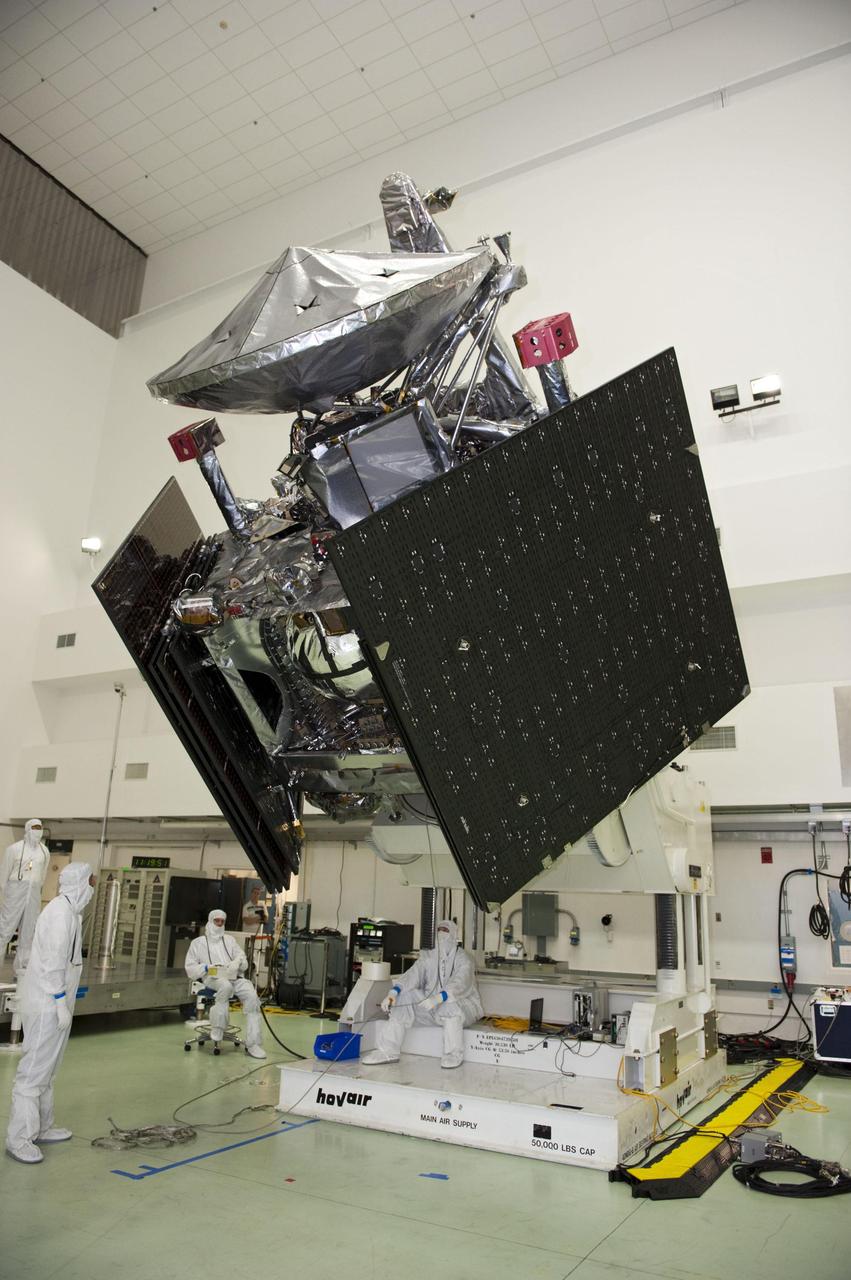
NASA Juno spacecraft undergoes weight and balance testing at Astrotech payload processing facility, Titusville, Fla. June 16, 2011.
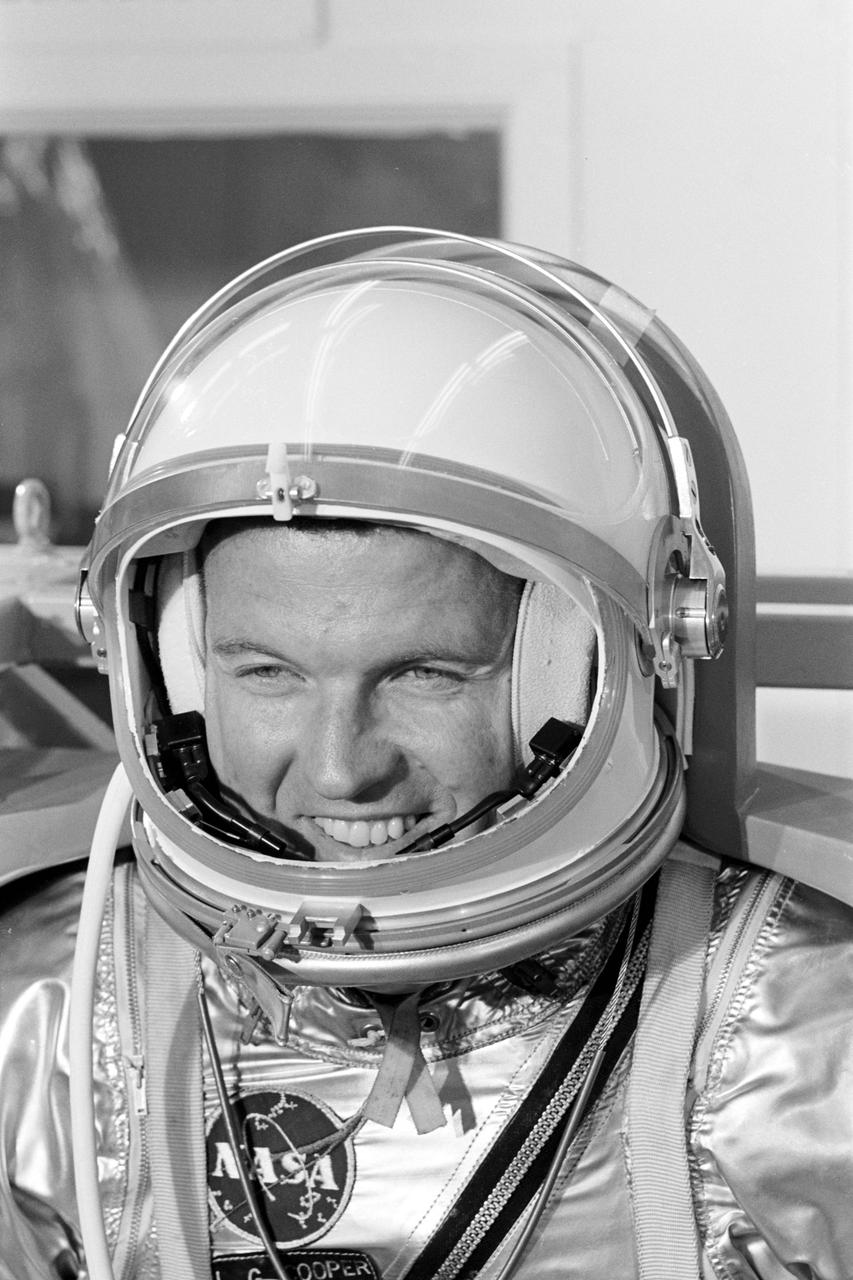
S63-03974 (1963) --- Astronaut L. Gordon Cooper Jr., prime pilot for the Mercury-Atlas 9 (MA-9) mission, relaxes while waiting for weight and balance tests to begin. Photo credit: NASA

Researchers test a 10-foot Mock Truss-Braced Wing at NASA’s Armstrong Flight Research Center in Edwards, California. From left, test director Frank Pena and Ray Sadler watch as Lucas Oramas, left, and Charlie Eloff add weight to the test wing to apply stress used to determine its limits. The aircraft concept involves a wing braced on an aircraft using diagonal struts that also add lift and could result in significantly improved aerodynamics.
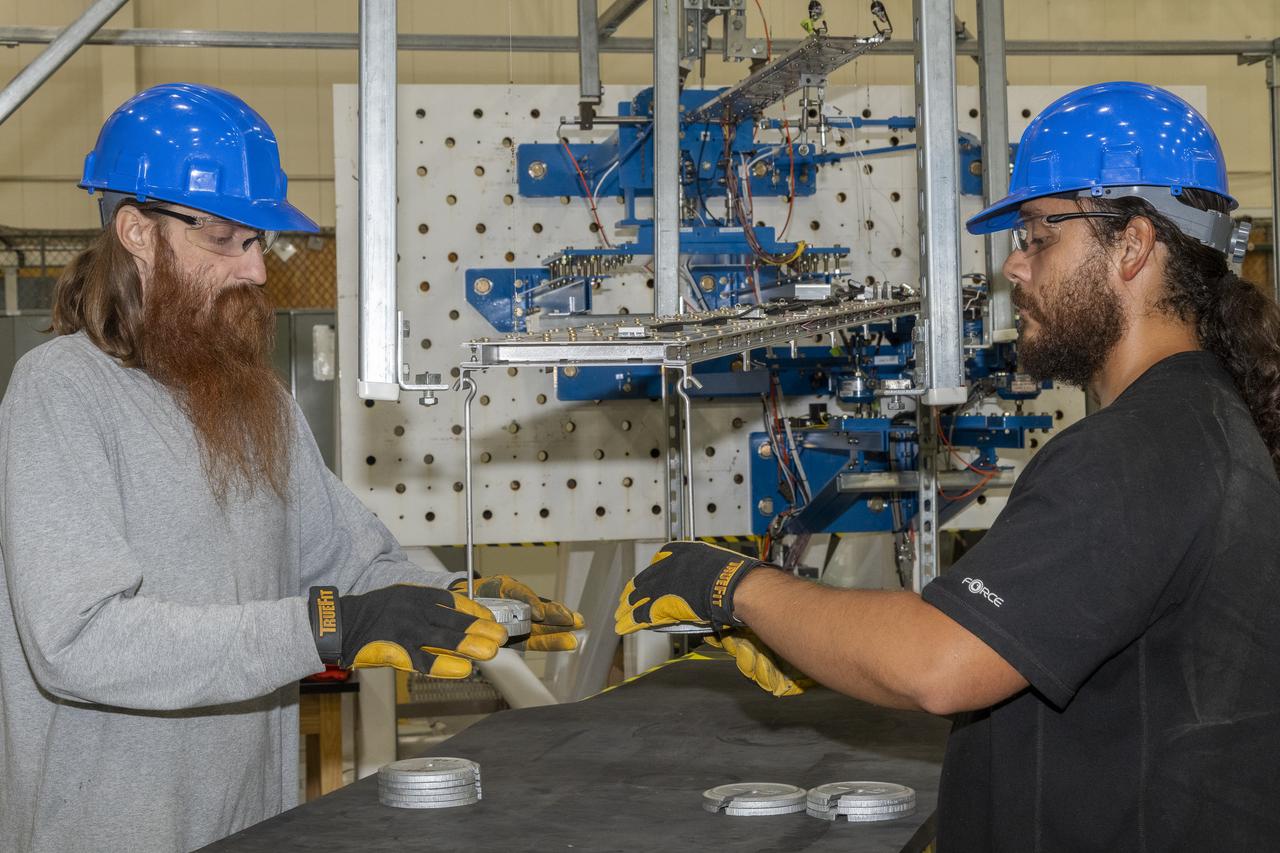
Researchers test a 10-foot Mock Truss-Braced Wing at NASA’s Armstrong Flight Research Center in Edwards, California. Charlie Eloff, left, and Lucas Oramas add weight to the test wing to apply stress used to determine its limits. The aircraft concept involves a wing braced on an aircraft using diagonal struts that also add lift and could result in significantly improved aerodynamics.
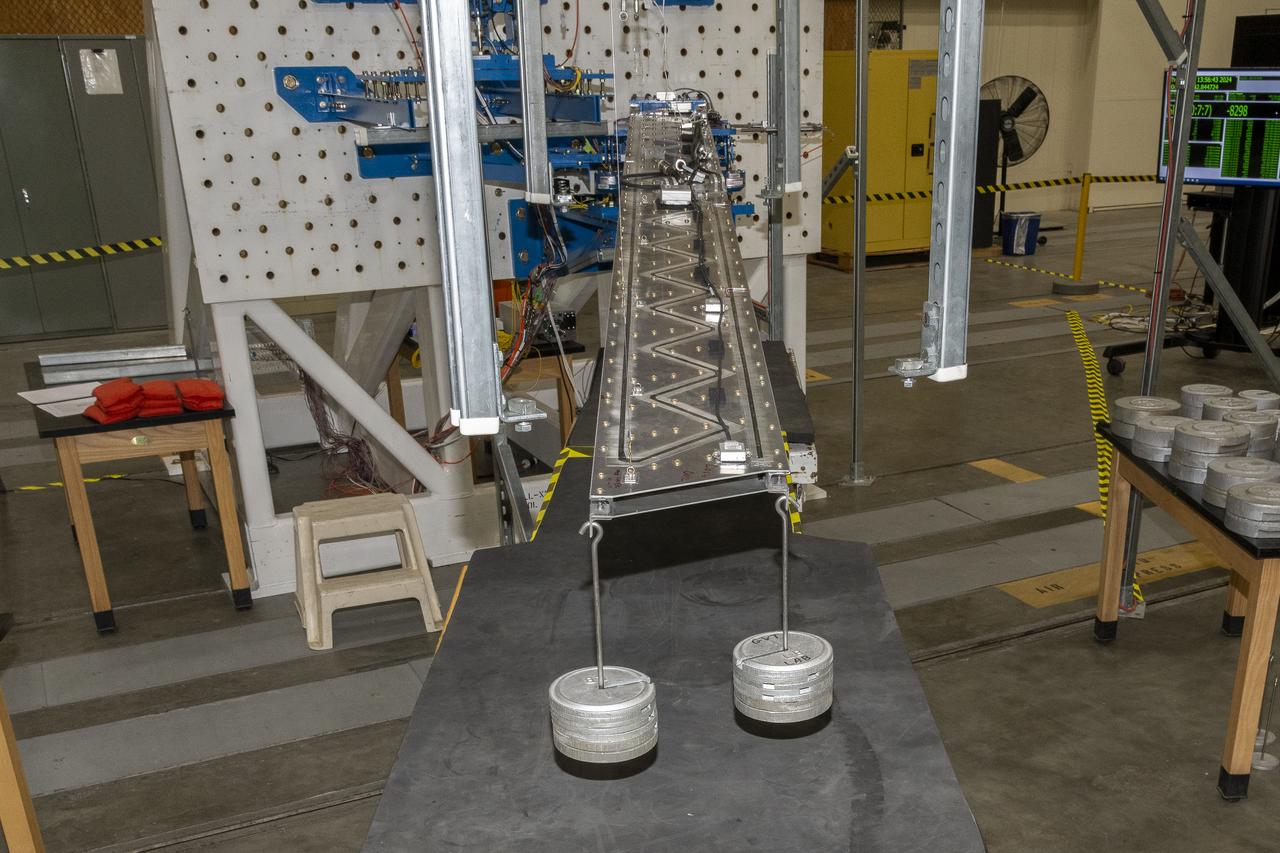
Researchers test a 10-foot Mock Truss-Braced Wing at NASA’s Armstrong Flight Research Center in Edwards, California. Weights are added to the wingtip to apply stress used to determine its limits. The aircraft concept involves a wing braced on an aircraft using diagonal struts that also add lift and could result in significantly improved aerodynamics.

This archival photo shows the Voyager Proof Test Model (in the foreground right of center) undergoing a mechanical preparation and weight center of gravity test at NASA's Jet Propulsion Laboratory, Pasadena, California, on January 12, 1977. https://photojournal.jpl.nasa.gov/catalog/PIA21476

This archival photo shows the Voyager Proof Test Model undergoing a mechanical preparation and weight center of gravity test at NASA's Jet Propulsion Laboratory, Pasadena, California, on January 12, 1977. The stack of three white cylinders seen near center is a stand-in for the spacecraft's power generators (called RTGs). Above that, a silvery canister holds the spacecraft's magnetometer in its stowed configuration. https://photojournal.jpl.nasa.gov/catalog/PIA21477

Horizontal loading & unloading of payload canister with test weights in O&C high bay, November 12, 1980

Photos of LaRC team weighting and performing Center of Gravity (CG) measurements of the Structural Test Article (STA) at NASA Langley Research Center.
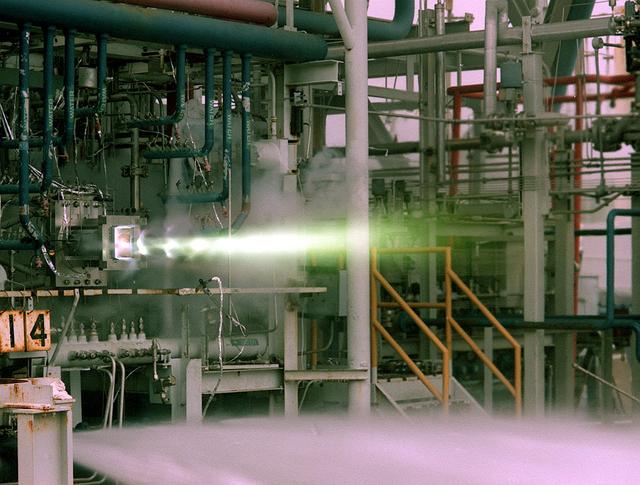
This is a photo of a 40 K Test of a single thrust cell of the Fastrac engine for the X-33, an alternate light-weight launch vehicle, at Marshall Test Stand-116. The X-33 program was cancelled in 2001.
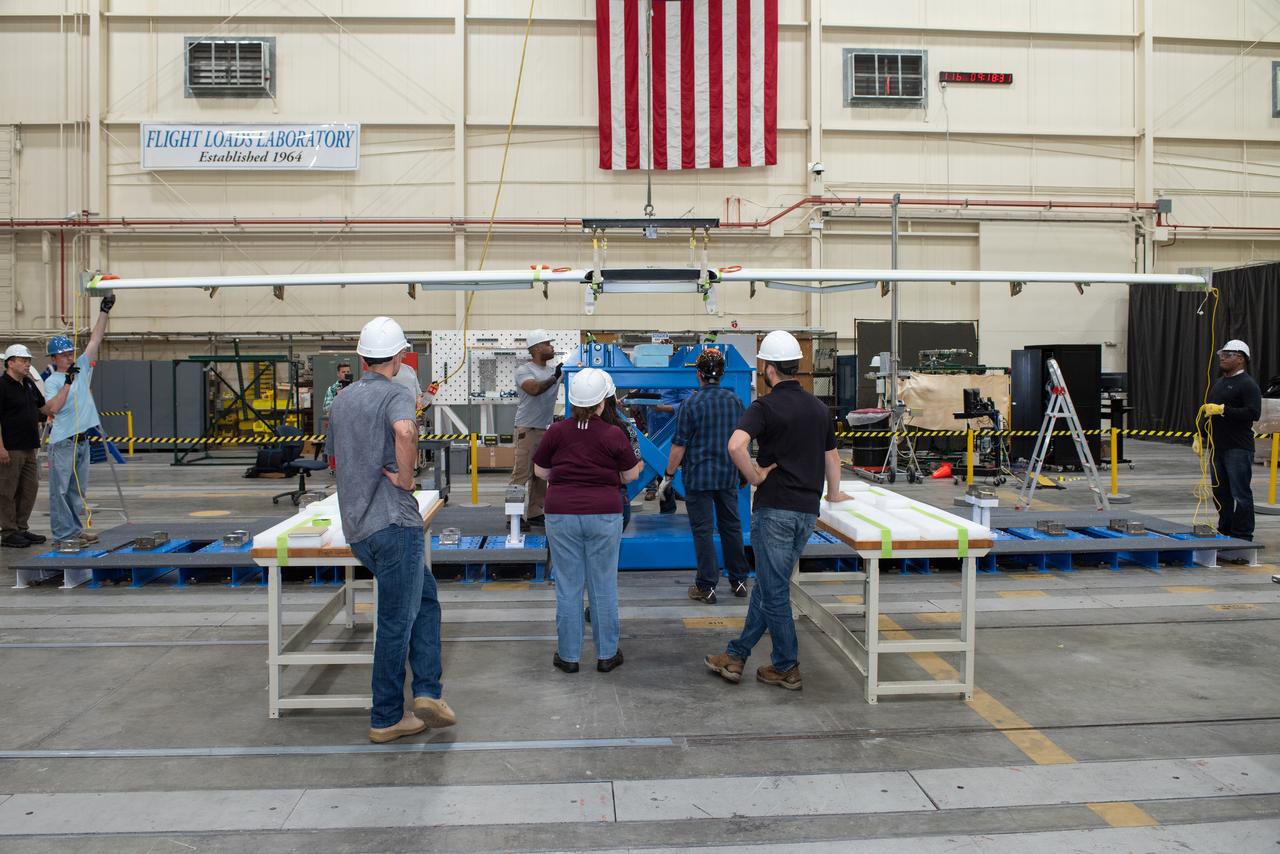
Engineers and specialists prepare X-57s Mod III wing for testing in the Flight Loads Laboratory at NASA’s Armstrong Flight Research Center in Edwards, California. Here, the wing began preparation for several tests, including weight and balance measurement, ground vibration testing, and wing loading tests.
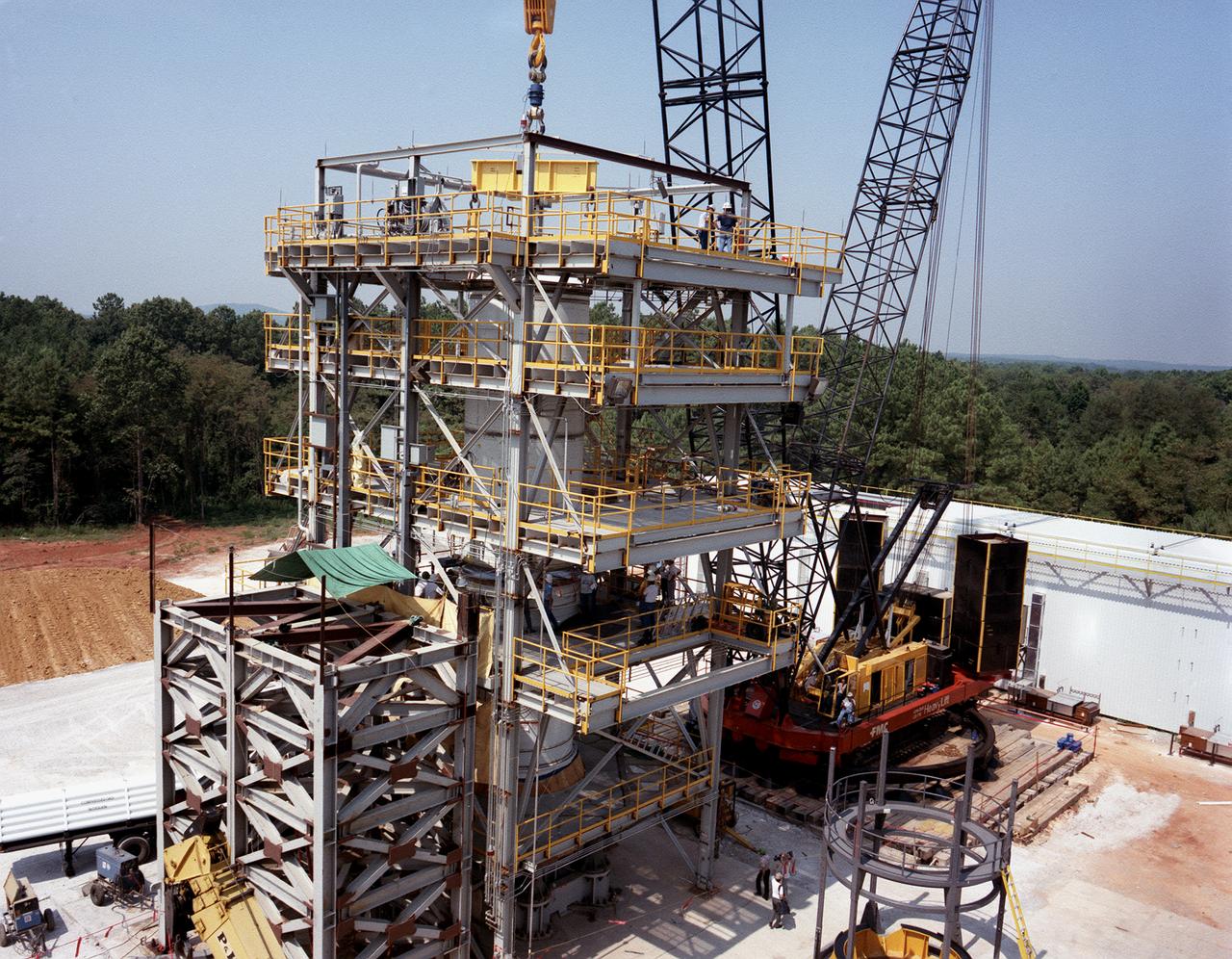
A forward segment is being lowered into the Transient Pressure Test Article (TPTA) test stand at thw Marshall Space Flight Center (MSFC) east test area. The TPTA test stand, 14-feet wide, 27-feet long, and 33-feet high, was built in 1987 to provide data to verify the sealing capability of the redesign solid rocket motor (SRM) field and nozzle joints. The test facility applies pressure, temperature, and external loads to a short stack of solid rocket motor hardware. The simulated SRM ignition pressure and temperature transients are achieved by firing a small amount of specially configured solid propellant. The pressure transient is synchronized with external programmable dynamic loads that simulate lift off loads at the external tank attach points. Approximately one million pounds of dead weight on top of the test article simulates the weight of the other Shuttle elements.
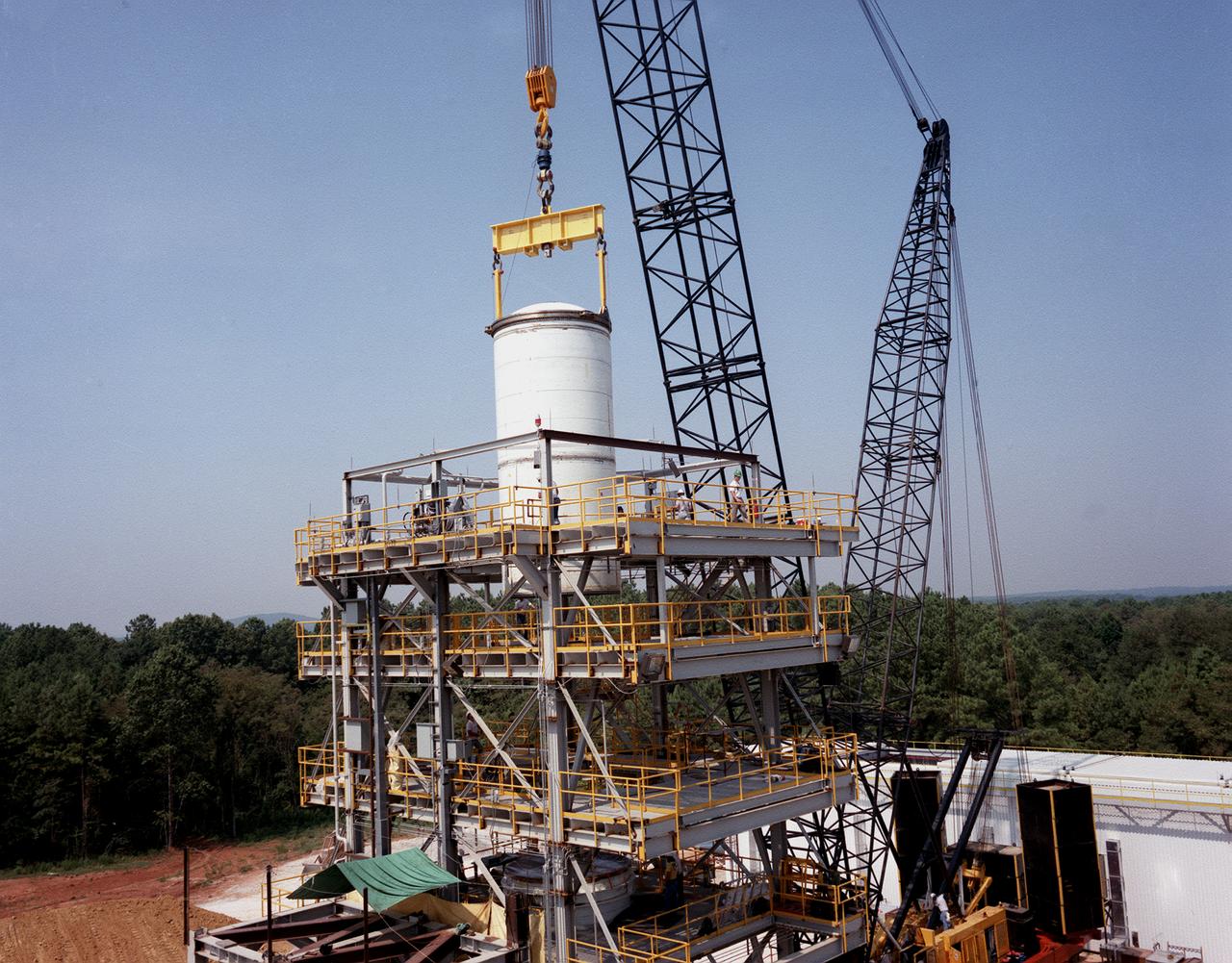
A forward segment is being lowered into the Transient Pressure Test Article (TPTA) test stand at the Marshall Space Flight Center (MSFC) east test area. The TPTA test stand, 14-feet wide, 27-feet long, and 33-feet high, was built in 1987 to provide data to verify the sealing capability of the redesign solid rocket motor (SRM) field and nozzle joints. The test facility applies pressure, temperature, and external loads to a short stack of solid rocket motor hardware. The simulated SRM ignition pressure and temperature transients are achieved by firing a small amount of specially configured solid propellant. The pressure transient is synchronized with external programmable dynamic loads that simulate lift off loads at the external tank attach points. Approximately one million pounds of dead weight on top of the test article simulates the weight of the other Shuttle elements.
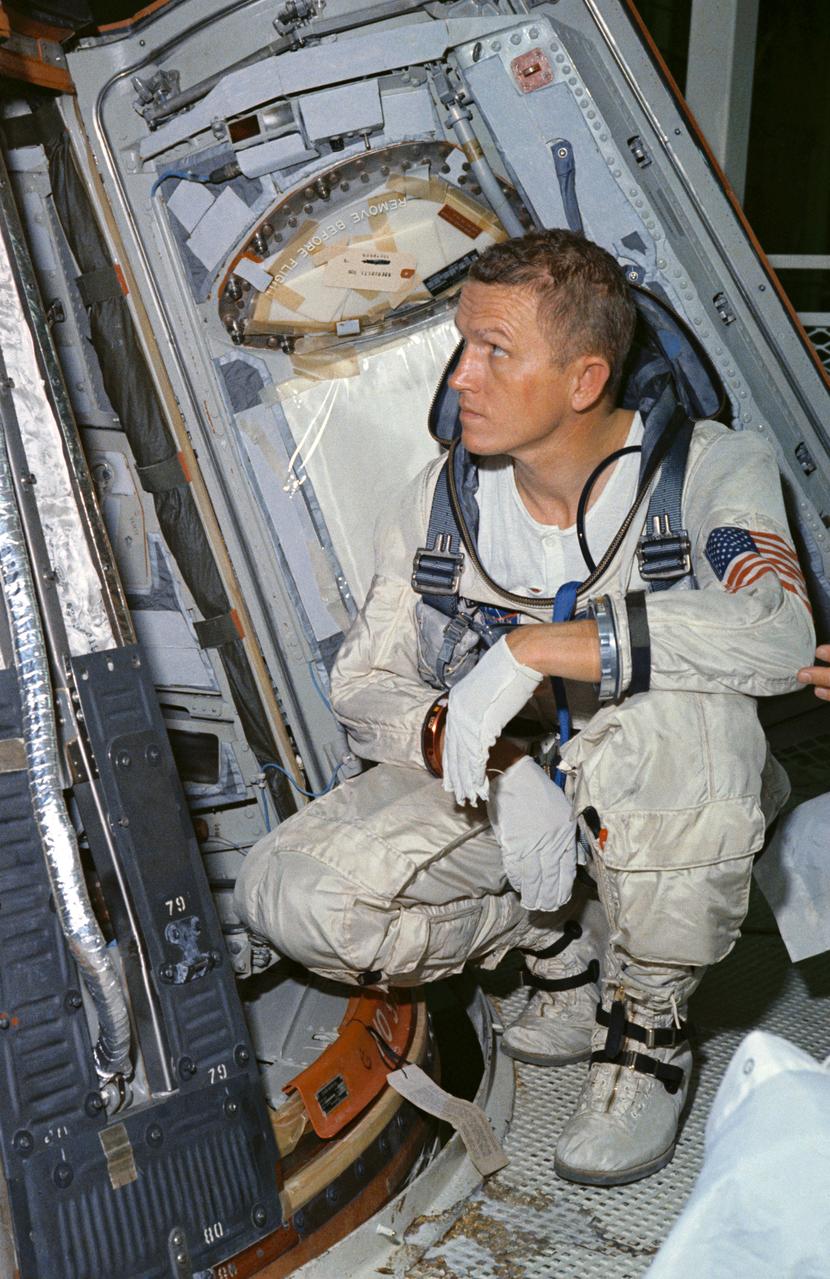
S65-56205 (25 Oct. 1965) --- Astronaut Frank Borman, command pilot for the Gemini-7 spaceflight, looks over the Gemini-7 spacecraft during weight and balance tests. The tests are conducted in the Pyrotechnic Installation Building, Merritt Island, Kennedy Space Center, as part of preflight preparation. Photo credit: NASA
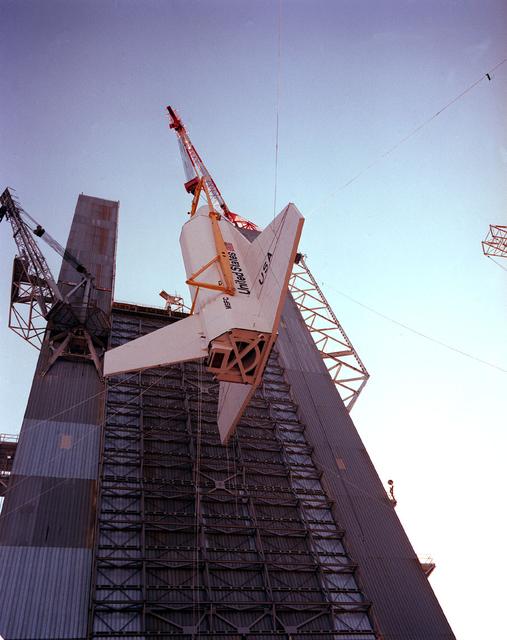
MSFC, Ala. -- The Space Shuttle Orbiter simulator is hoisted into the giant dynamics test stand at NASA's Marshall Space Flight Center, Huntsville, Ala. The simulator was built at the Marshall Center for use in pathfinder activities, such as checking roadway clearances, crane capabilities and fits within structures. It is the same size, shape and weight of an actual Orbiter.
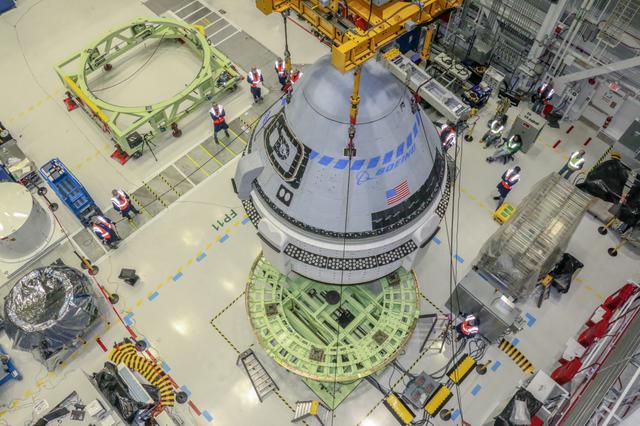
Boeing’s CST-100 Starliner undergoes weight and center of gravity checks in the Commercial Crew and Cargo Processing Facility at Kennedy Space Center in Florida on July 13, 2021. The operations are in preparation for the company’s second Orbital Flight Test (OFT-2), as part of NASA’s Commercial Crew Program.
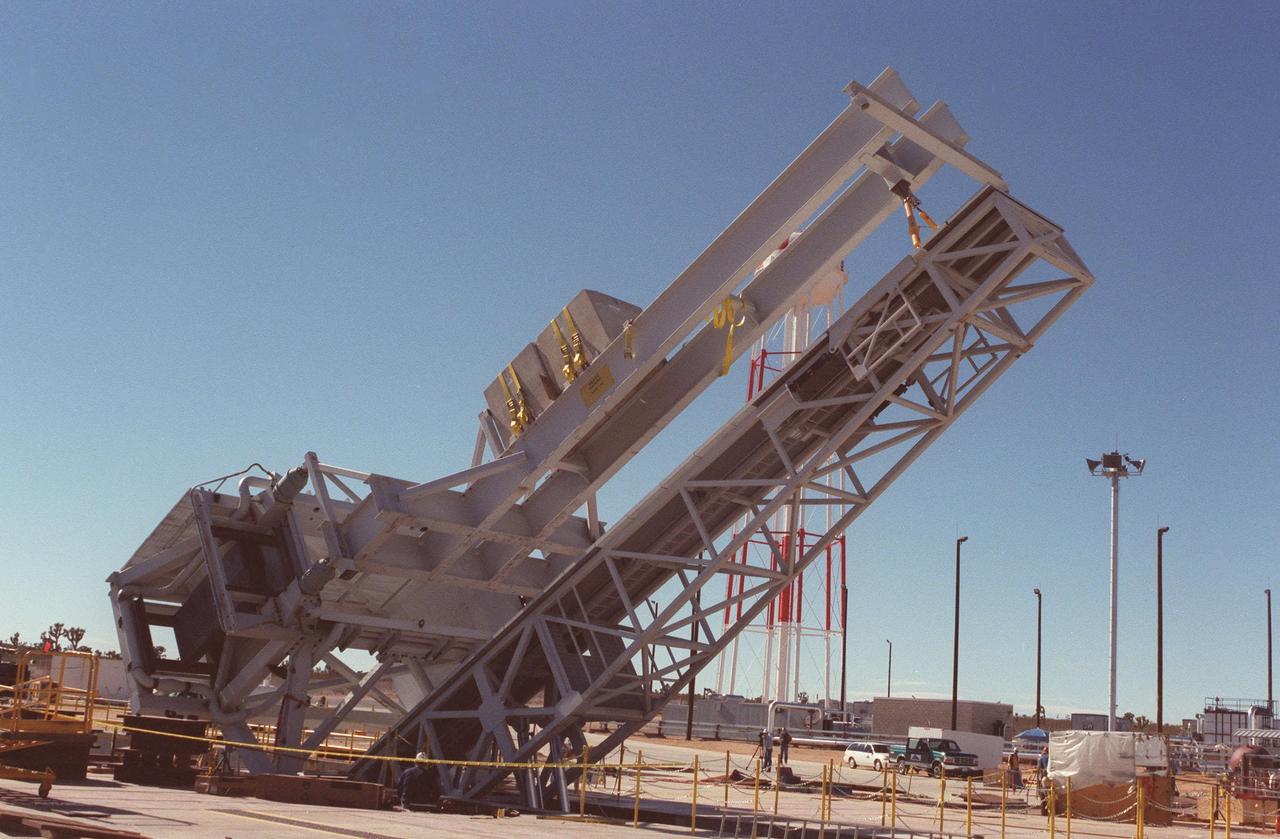
As part of X-33 launch equipment testing at Edwards Air Force Base, CA, the KSC-developed X-33 weight simulator (top), known as the "iron bird," is lifted to a vertical position at the X-33 launch site. The simulator matches the 75,000-pound weight and 63-foot height of the X-33 vehicle that will be using the launch equipment. KSC's Vehicle Positioning System (VPS) placed the simulator on the rotating launch platform prior to the rotation. The new VPS will dramatically reduce the amount of manual labor required to position a reusable launch vehicle for liftoff
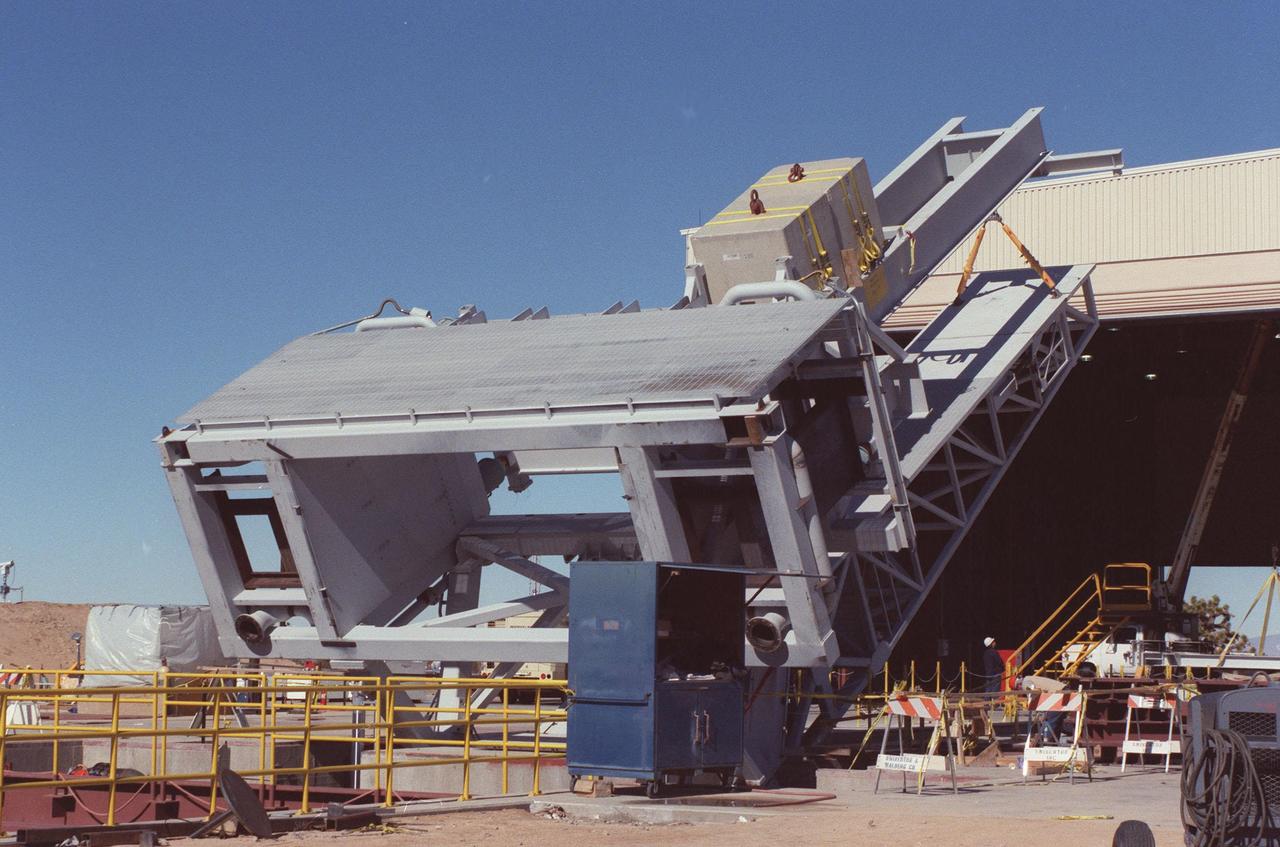
The KSC-developed X-33 weight simulator (top), known as the "iron bird," is lifted to a vertical position at the X-33 launch site as part of launch equipment testing on Edwards Air Force Base, CA. The simulator matches the 75,000-pound weight and 63-foot height of the X-33 vehicle that will be using the launch equipment. KSC's Vehicle Positioning System (VPS) placed the simulator on the rotating launch platform prior to the rotation. The new VPS will dramatically reduce the amount of manual labor required to position a reusable launch vehicle for liftoff
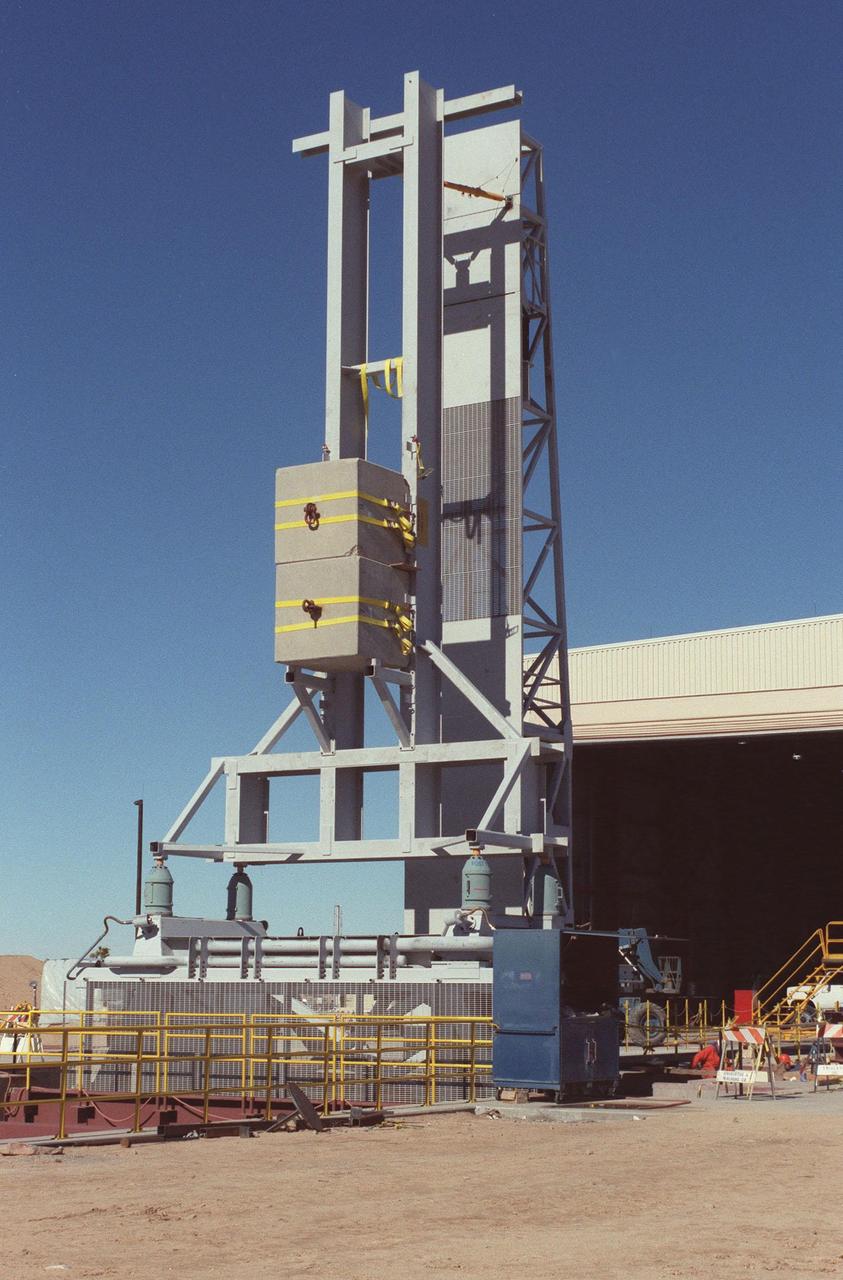
The KSC-developed X-33 weight simulator (left), known as the "iron bird," is fully raised to a vertical position at the X-33 launch site as part of launch equipment testing on Edwards Air Force Base, CA. The simulator matches the 75,000-pound weight and 63-foot height of the X-33 vehicle that will be using the launch equipment. KSC's Vehicle Positioning System (VPS) placed the simulator on the rotating launch platform prior to the rotation. The new VPS will dramatically reduce the amount of manual labor required to position a reusable launch vehicle for liftoff
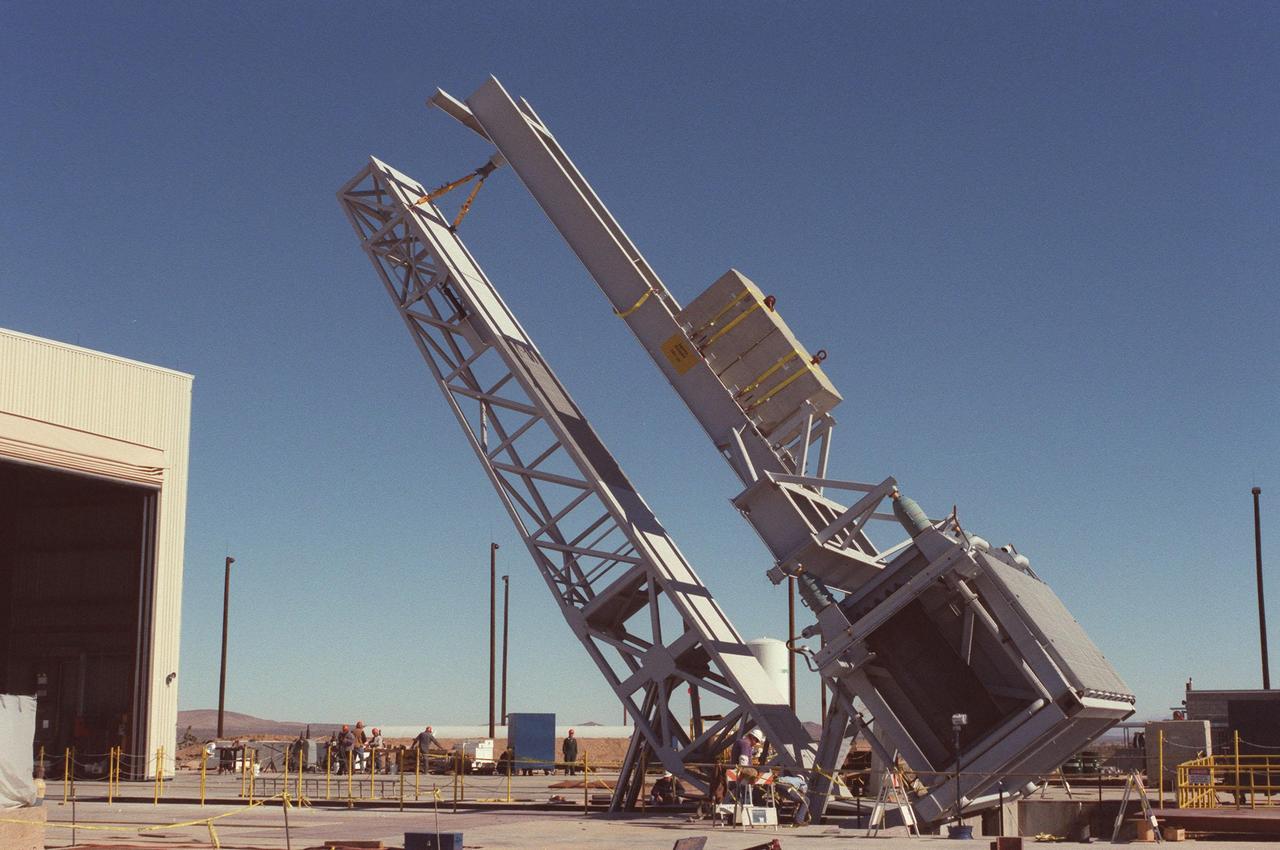
The KSC-developed X-33 weight simulator (top, right), known as the "iron bird," is lifted to a vertical position at the X-33 launch site as part of launch equipment testing on Edwards Air Force Base, CA. The simulator matches the 75,000-pound weight and 63-foot height of the X-33 vehicle that will be using the launch equipment. KSC's Vehicle Positioning System (VPS) placed the simulator on the rotating launch platform prior to the rotation. The new VPS will dramatically reduce the amount of manual labor required to position a reusable launch vehicle for liftoff
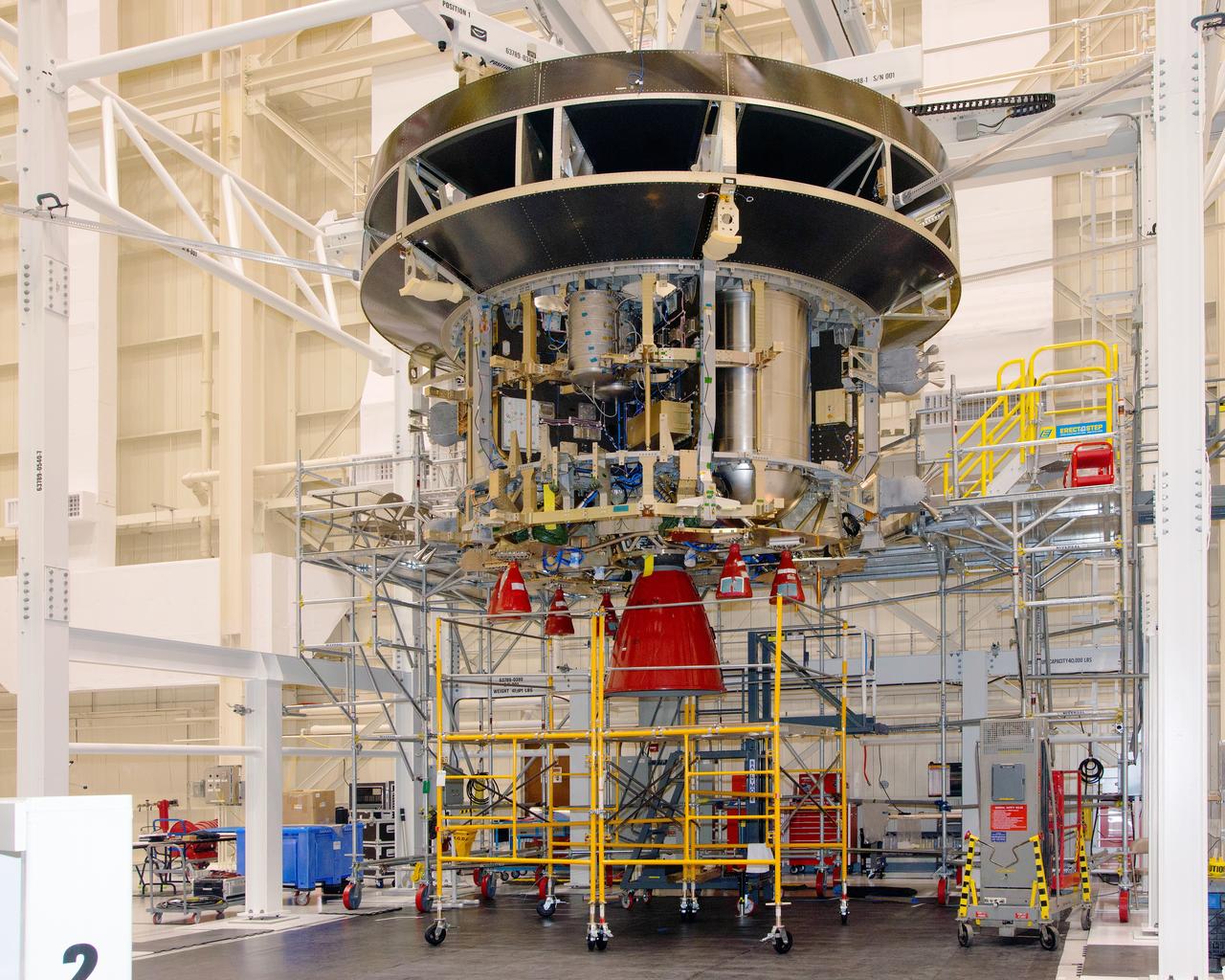
The first European hardware to arrive at NASA for Orion is the European Service Module structural test article on Jan. 12, 2016. This test version of the service module has the same weight and configuration as the real thing and will undergo advanced testing at NASA’s Plum Brook Station in Ohio, USA...In this photo the test article is in scaffolding being ‘mated’ to the Crew Module Adapter, which connects the service module to the Orion Crew Module. Part of Batch image transfer from Flickr.
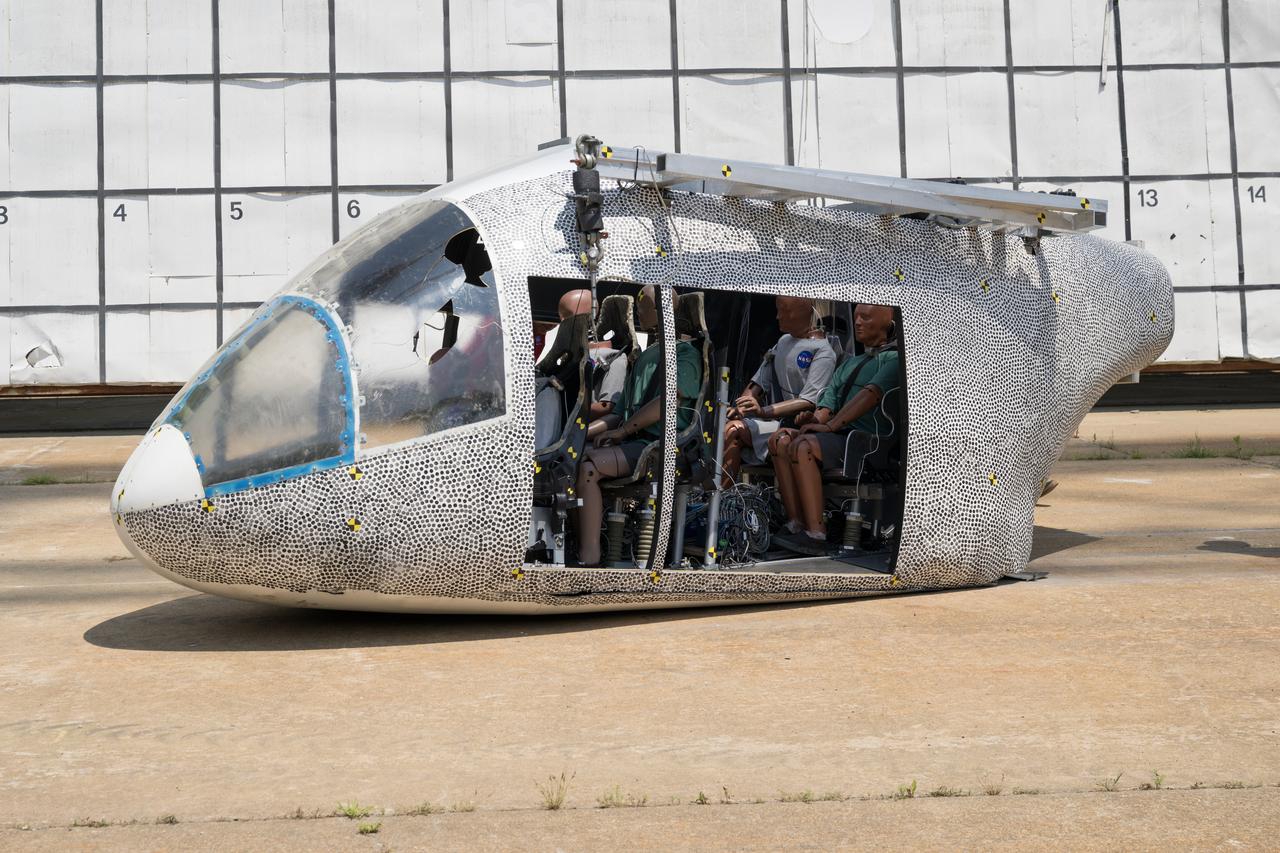
An aircraft body modeled after an air taxi with weighted test dummies inside is shown after a drop test at NASA’s Langley Research Center in Hampton, Virginia. The test was completed June 26 at Langley’s Landing and Impact Research Facility. The aircraft was dropped from a tall steel structure, known as a gantry, after being hoisted about 35 feet in the air by cables. NASA researchers are investigating aircraft materials that best absorb impact forces in a crash.

An aircraft body modeled after an air taxi with weighted test dummies inside is being prepared for a drop test by researchers at NASA’s Langley Research Center in Hampton, Virginia. The test was completed June 26 at Langley’s Landing and Impact Research Facility. The aircraft was dropped from a tall steel structure, known as a gantry, after being hoisted about 35 feet in the air by cables. NASA researchers are investigating aircraft materials that best absorb impact forces in a crash.
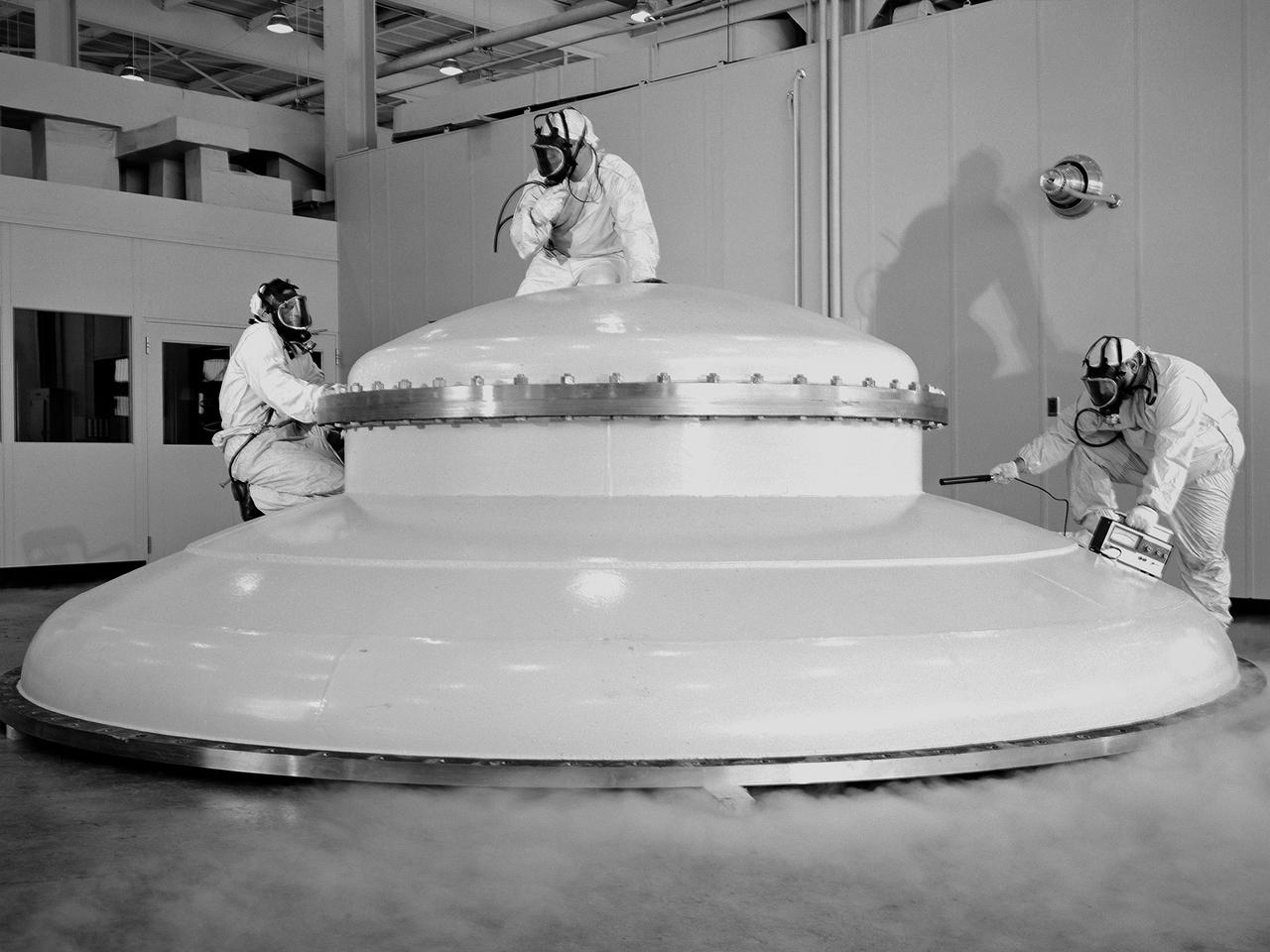
Engineer Paul Reader and his colleagues take environmental measurements during testing of a 20-inch diameter ion engine in a vacuum tank at the Electric Propulsion Laboratory (EPL). Researchers at the Lewis Research Center were investigating the use of a permanent-magnet circuit to create the magnetic field required power electron bombardment ion engines. Typical ion engines use a solenoid coil to create this magnetic field. It was thought that the substitution of a permanent magnet would create a comparable magnetic field with a lower weight. Testing of the magnet system in the EPL vacuum tanks revealed no significant operational problems. Reader found the weight of the two systems was similar, but that the thruster’s efficiency increased with the magnet. The EPL contained a series of large vacuum tanks that could be used to simulate conditions in space. Large vacuum pumps reduced the internal air pressure, and a refrigeration system created the cryogenic temperatures found in space.
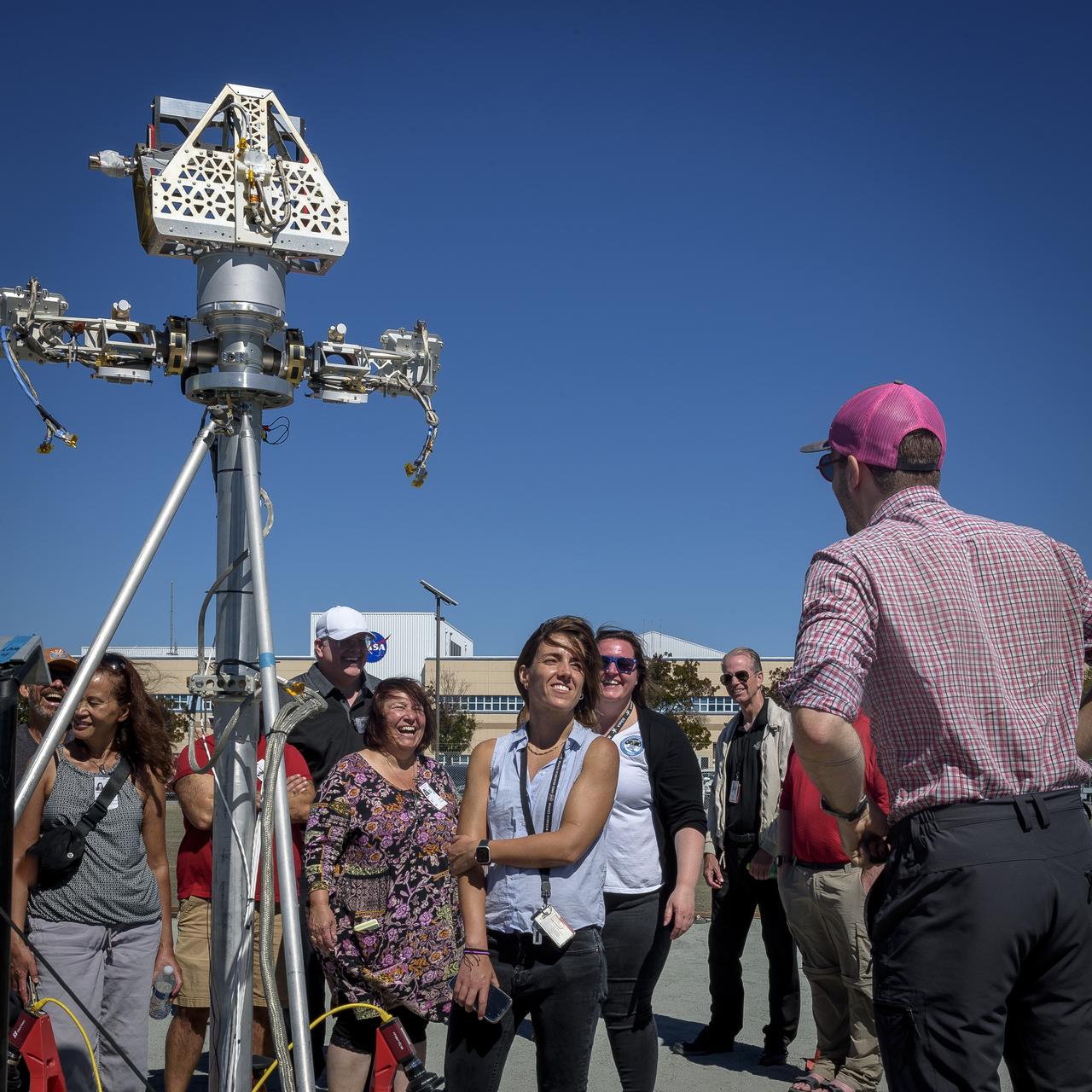
Antoine Tardy explains the operation of the Moon Gravity Representative Unit (MGRU3) at the Roverscape during Family Day for team members of the Volatiles Investigating Polar Exploration Rover (VIPER). MGRU3 is a weight equivalent mobility and navigation test platform for VIPER. It is used to test, develop and validate the different mobility and navigation techniques and capabilities of the VIPER rover, to safely and efficiently map water at the Moon’s South Pole.
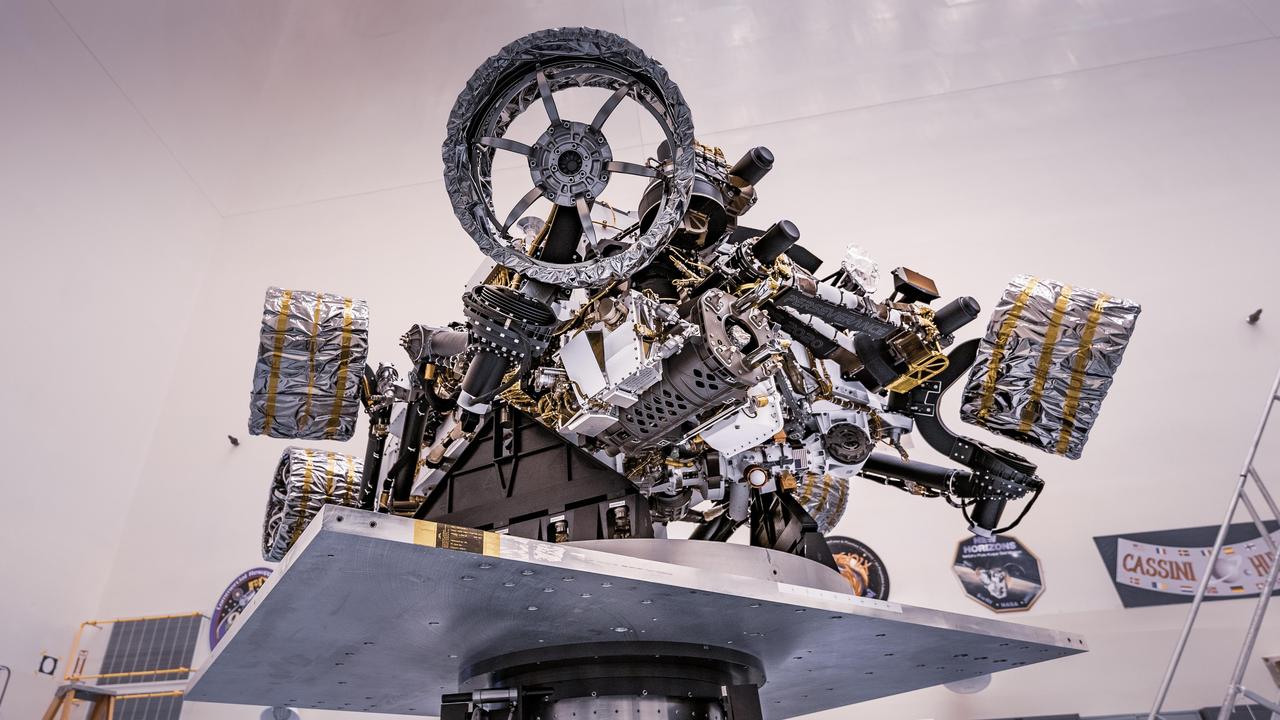
NASA's Perseverance rover can be seen attached to a spin table during a test of its mass properties at the Kennedy Space Center in Florida. During the test, the rover was rotated clockwise and counterclockwise to determine its center of gravity, or the point at which weight is evenly dispersed on all sides. The image was taken on April 7, 2020. https://photojournal.jpl.nasa.gov/catalog/PIA23826
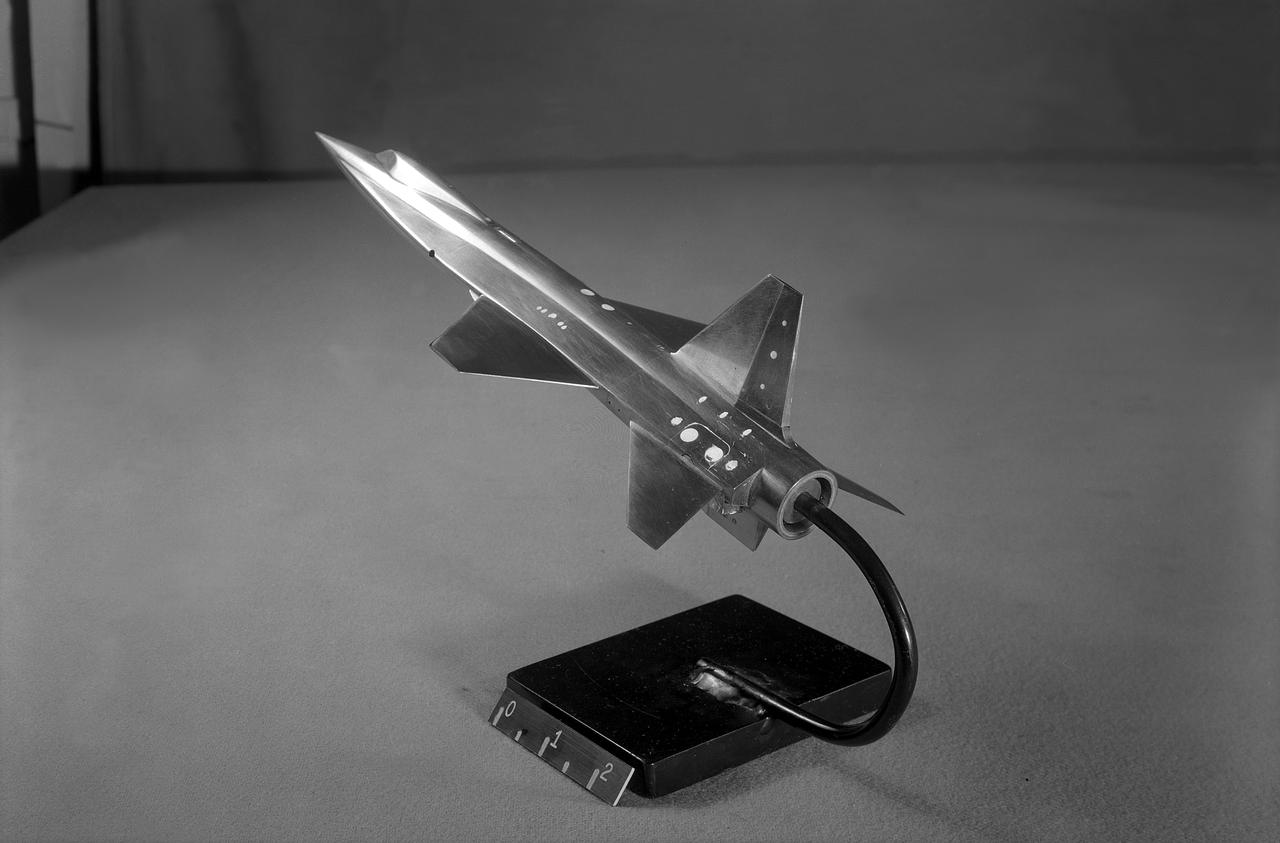
This scale-model of North American's initial X-15 design was tested in North American and NACA wind tunnels note the conventional tail and fuselage side-tunnels that extend far toward the aircraft nose. North American engineers would determine that the variable wedge-angle stabilizer created a weight issue, and aeronautical testing by Langley engineers confirmed that the side-tunnels made the design less stable.

Ethan Massey, in the control booth, sends commands that control the movement of the Moon Gravity Representative Unit (MGRU3) at the Roverscape during Family Day for team members of the Volatiles Investigating Polar Exploration Rover (VIPER). MGRU3 is a weight equivalent mobility and navigation test platform for VIPER. It is used to test, develop and validate the different mobility and navigation techniques and capabilities of the VIPER rover, to safely and efficiently map water at the Moon’s South Pole.
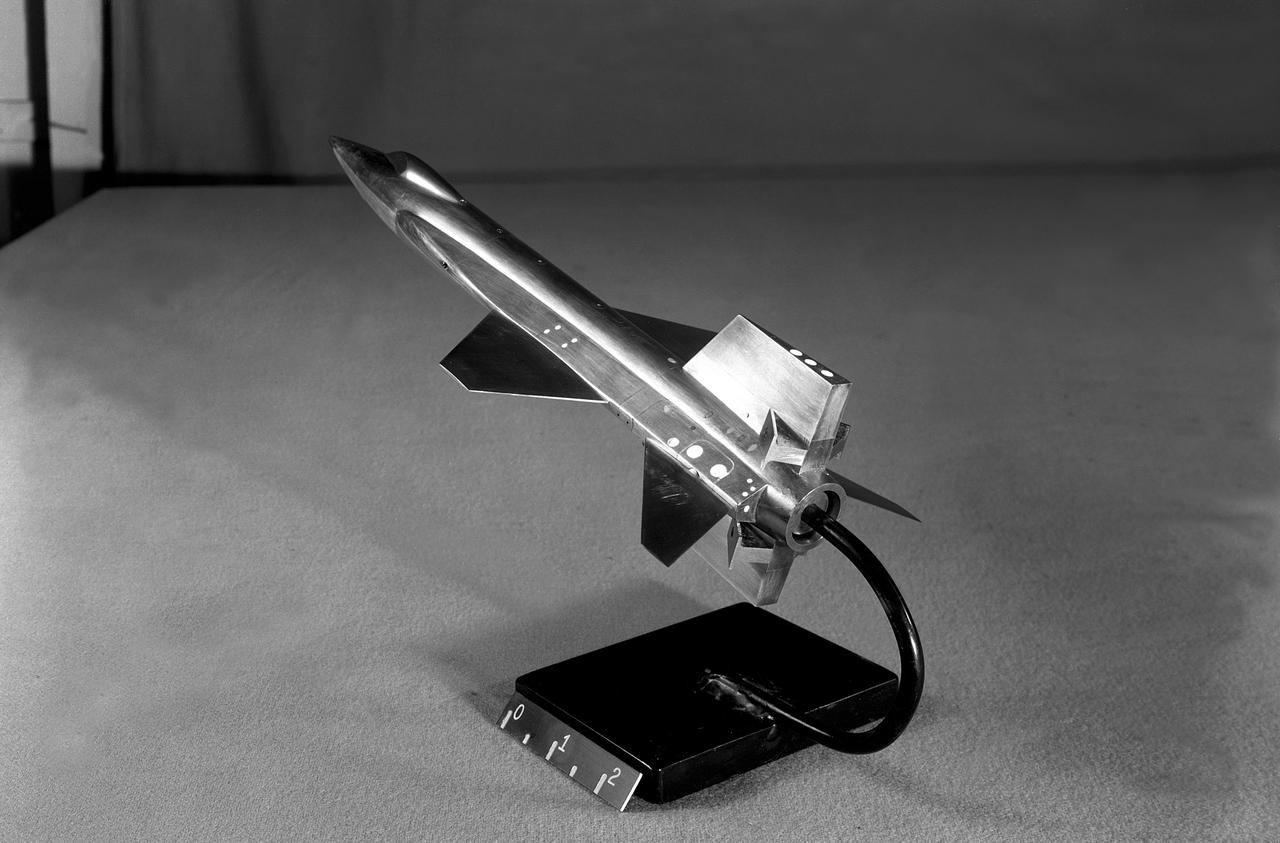
This scale-model of North American's initial X-15 design was tested in North American and NACA wind tunnels note the conventional tail and fuselage side-tunnels that extend far toward the aircraft nose. North American engineers would determine that the variable wedge-angle stabilizer created a weight issue, and aeronautical testing by Langley engineers confirmed that the side-tunnels made the design less stable.
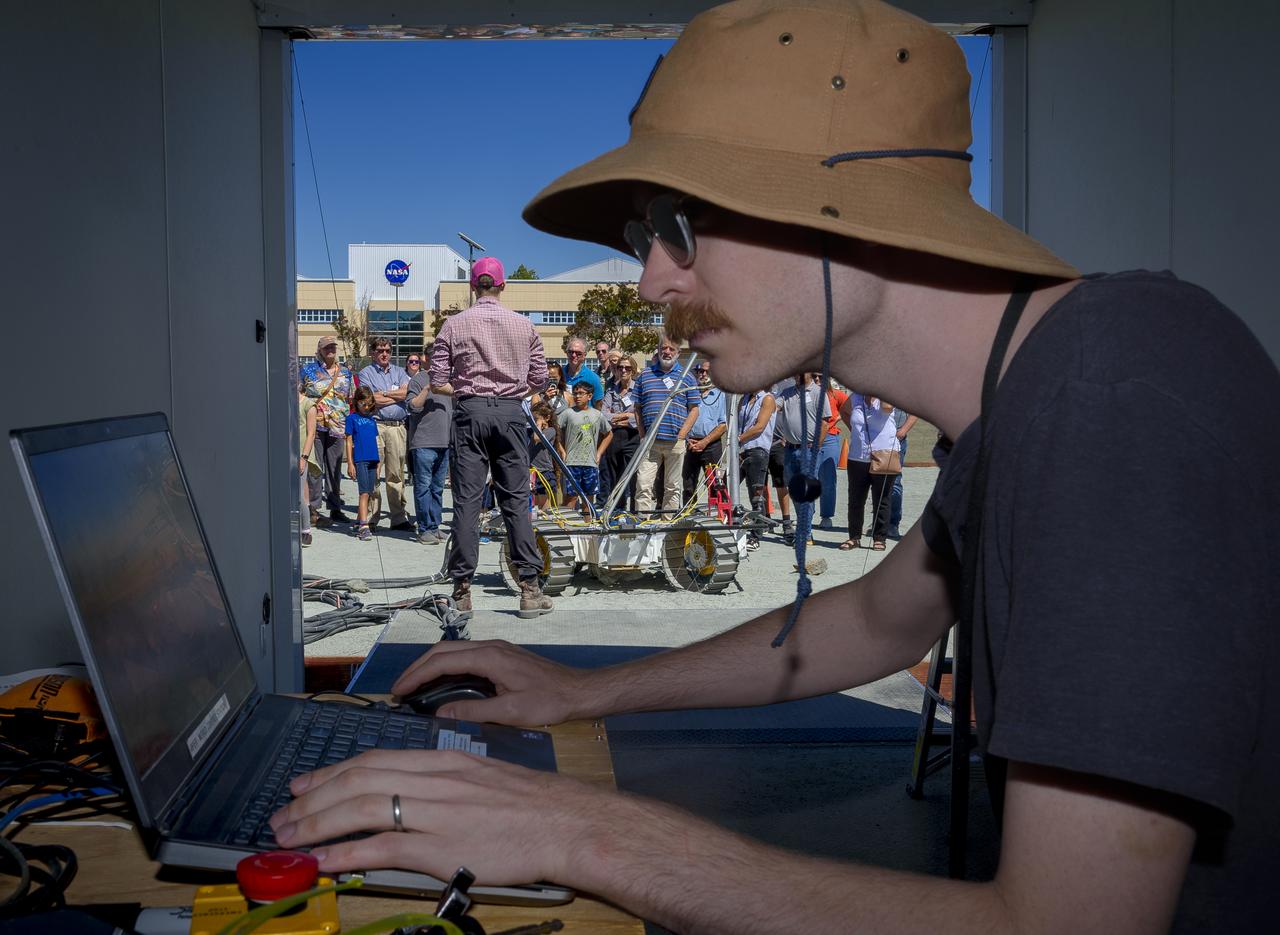
Ethan Massey, in the control booth, sends commands that control the movement of the Moon Gravity Representative Unit (MGRU3) at the Roverscape during Family Day for team members of the Volatiles Investigating Polar Exploration Rover (VIPER). MGRU3 is a weight equivalent mobility and navigation test platform for VIPER. It is used to test, develop and validate the different mobility and navigation techniques and capabilities of the VIPER rover, to safely and efficiently map water at the Moon’s South Pole.
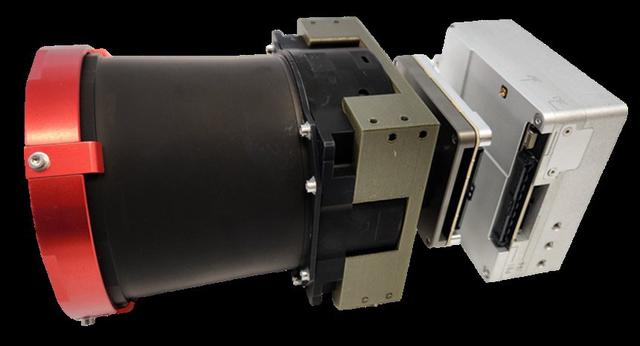
jsc2025e044727 (5/12/2025) --- Image of complete SEED payload, includes space-qualified lens, Image Sensor, and POBC. Space Test Program – Houston 10 – Space Edge Experiments and Demonstrations (STP-H10-SEED) tests hardware to deliver near-real time actionable information using machine learning algorithms. Results could validate the low size, weight, and power of this commercial off-the-shelf edge processing hardware for various applications. Image courtesy of NOVI LLC.
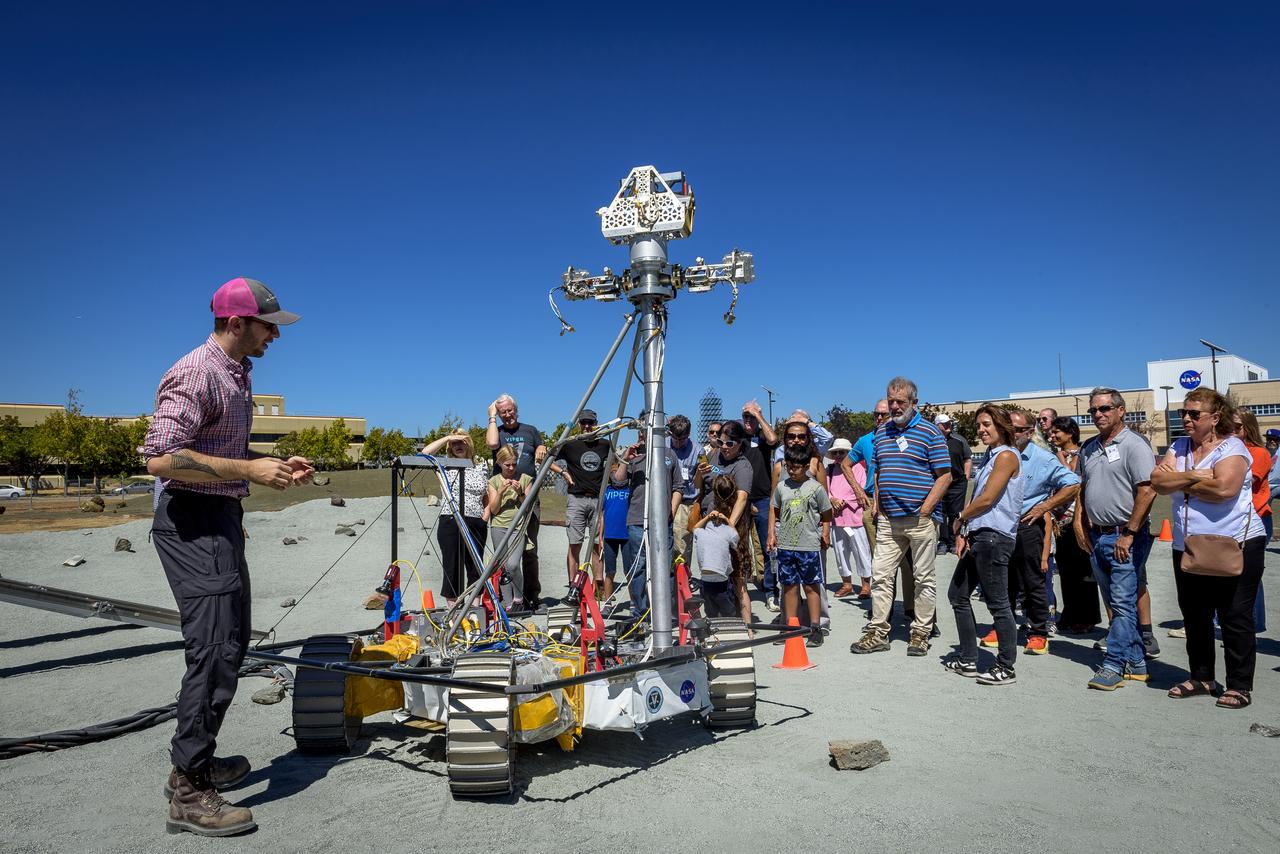
Antoine Tardy explains the operation of the Moon Gravity Representative Unit (MGRU3) at the Roverscape during Family Day for team members of the Volatiles Investigating Polar Exploration Rover (VIPER). MGRU3 is a weight equivalent mobility and navigation test platform for VIPER. It is used to test, develop and validate the different mobility and navigation techniques and capabilities of the VIPER rover, to safely and efficiently map water at the Moon’s South Pole.

In High Bay 3 inside the Vehicle Assembly Building at NASA’s Kennedy Space Center in Florida, teams with Exploration Ground Systems and Jacobs use the Orion stage adapter structural test article and the Mass Simulator for Orion for testing on Aug. 13, 2021. They are stacked atop the Space Launch System (SLS) rocket. These test articles represent the mass and weight of the actual Orion stage adapter and Orion spacecraft that will be used for various tests. Launching in 2021, Artemis I will be an uncrewed test of the Orion spacecraft and SLS rocket as an integrated system ahead of crewed flights to the Moon. Under Artemis, NASA aims to land the first woman and first person of color on the Moon and establish sustainable lunar exploration.
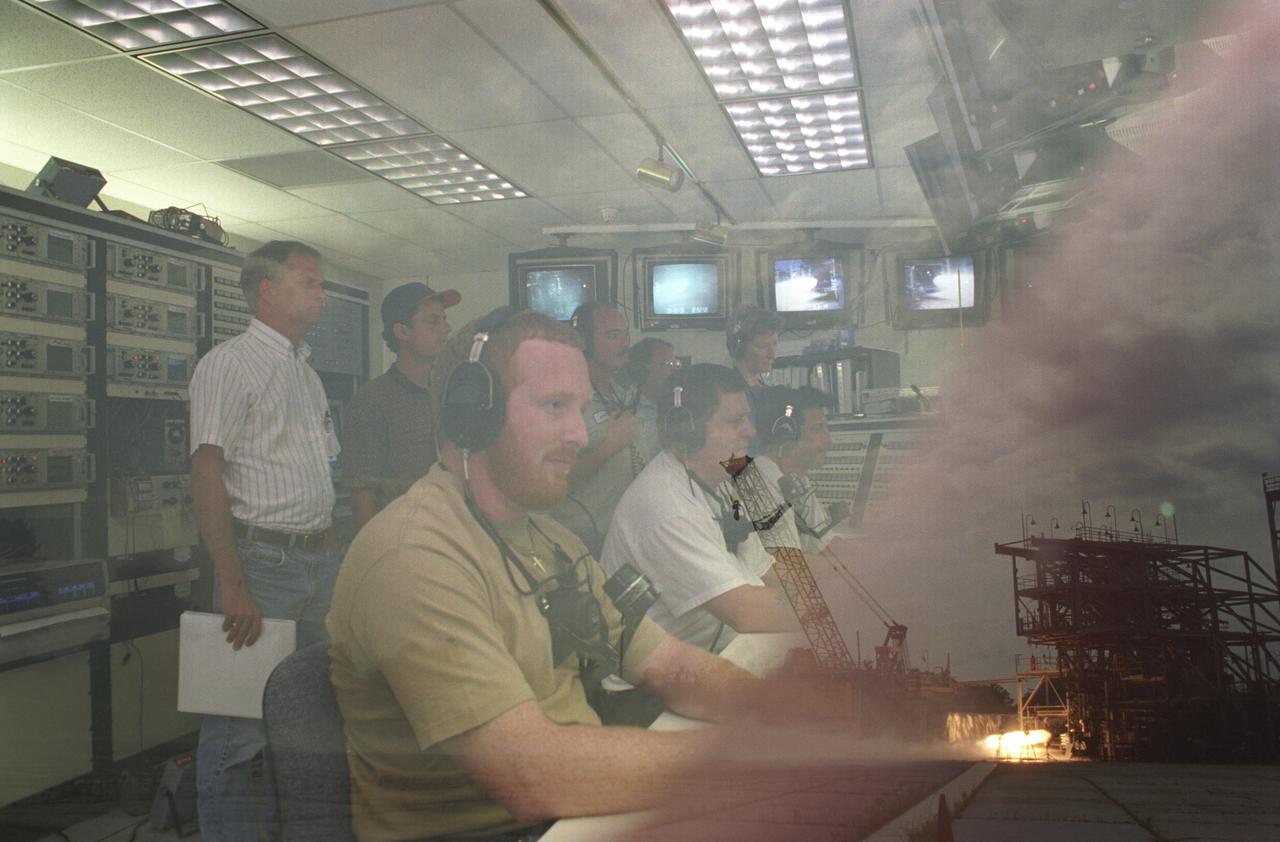
This double exposure depicts Marshall Space Flight Center's (MSFC) Test Stand 116 hosting a 60K Bantam Fastrac thrust chamber assembly test. The lower right exposure shows the engine firing in the test stand while the center exposure reveals workers monitoring the test in the interior block house of the test facility. The thrust chamber assembly is only part of the Fastrac engine project to build a low-cost engine for the X-34, an alternate light-weight unmarned launch vehicle. Both the nozzle and the engine for Fastrac are being manufactured at MSFC.

In High Bay 3 inside the Vehicle Assembly Building at NASA’s Kennedy Space Center in Florida, teams with Exploration Ground Systems and Jacobs use the Orion stage adapter structural test article and the Mass Simulator for Orion for testing on Aug. 13, 2021. They are stacked atop the Space Launch System (SLS) rocket. These test articles represent the mass and weight of the actual Orion stage adapter and Orion spacecraft that will be used for various tests. Launching in 2021, Artemis I will be an uncrewed test of the Orion spacecraft and SLS rocket as an integrated system ahead of crewed flights to the Moon. Under Artemis, NASA aims to land the first woman and first person of color on the Moon and establish sustainable lunar exploration.
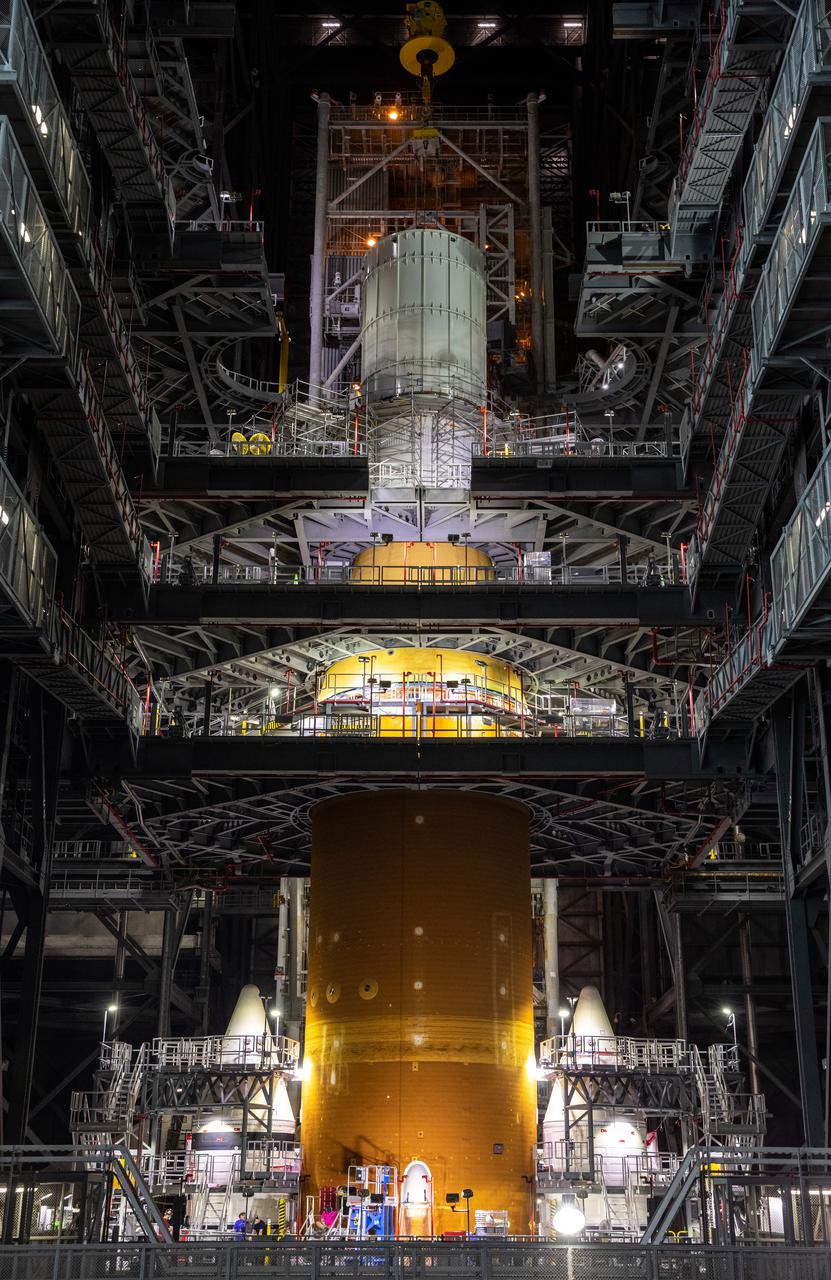
Tests are underway in High Bay 3 inside the Vehicle Assembly Building at NASA’s Kennedy Space Center in Florida on Aug. 13, 2021, using the Orion stage adapter structural test article and the Mass Simulator for Orion. Stacked atop the Space Launch System (SLS) rocket, these test articles represent the mass and weight of the actual Orion stage adapter and Orion spacecraft. Launching in 2021, Artemis I will be an uncrewed test of the Orion spacecraft and SLS rocket as an integrated system ahead of crewed flights to the Moon. Under Artemis, NASA aims to land the first woman and first person of color on the Moon and establish sustainable lunar exploration.

Seen here is a close-up view of the Orion stage adapter (OSA) structural test article atop the Space Launch System (SLS) rocket inside the Vehicle Assembly Building (VAB) at NASA’s Kennedy Space Center in Florida on Aug. 12, 2021. The test article, representing the mass and weight of the actual flight hardware, is being used for various tests inside the VAB ahead of OSA stacking operations. The first in an increasingly complex set of missions, Artemis I will test SLS and the Orion spacecraft as an integrated system prior to crewed flights to the Moon. Through Artemis, NASA will send the first woman and the first person of color to the lunar surface, as well as establish a sustainable presence on and around the Moon.

Seen here is a close-up view of the Orion stage adapter (OSA) structural test article atop the Space Launch System (SLS) rocket inside the Vehicle Assembly Building (VAB) at NASA’s Kennedy Space Center in Florida on Aug. 12, 2021. The test article, representing the mass and weight of the actual flight hardware, is being used for various tests inside the VAB ahead of OSA stacking operations. The first in an increasingly complex set of missions, Artemis I will test SLS and the Orion spacecraft as an integrated system prior to crewed flights to the Moon. Through Artemis, NASA will send the first woman and the first person of color to the lunar surface, as well as establish a sustainable presence on and around the Moon.

Tests are underway in High Bay 3 inside the Vehicle Assembly Building at NASA’s Kennedy Space Center in Florida on Aug. 13, 2021, using the Orion stage adapter structural test article and the Mass Simulator for Orion. Stacked atop the Space Launch System (SLS) rocket, these test articles represent the mass and weight of the actual Orion stage adapter and Orion spacecraft. Launching in 2021, Artemis I will be an uncrewed test of the Orion spacecraft and SLS rocket as an integrated system ahead of crewed flights to the Moon. Under Artemis, NASA aims to land the first woman and first person of color on the Moon and establish sustainable lunar exploration.
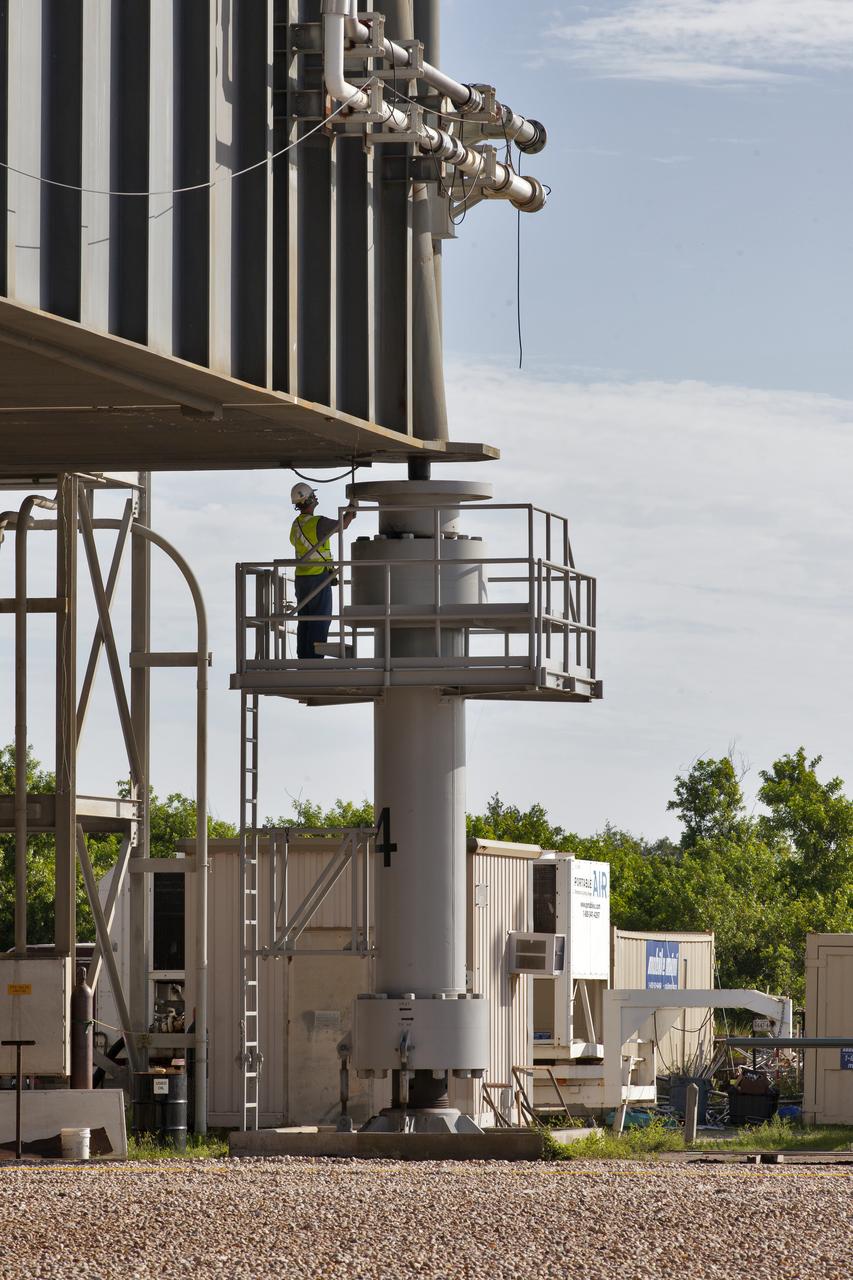
A construction worker monitors the progress as crawler-transporter 2 (CT-2) lifts the mobile launcher up a few inches from its support posts June 1, 2018, at NASA's Kennedy Space Center in Florida. Three lifts were performed to practice lifting procedures, validate interface locations, confirm the weight of the mobile launcher, and develop a baseline for modal analysis. The mobile launcher is equipped with a number of lines, called umbilicals, which will connect to NASA's Space Launch System (SLS) and Orion. The lift helped to test the capability of the upgraded CT-2 to handle the weight of the mobile launcher with SLS and Orion atop. Exploration Ground Systems is preparing the ground systems necessary to support the SLS and Orion spacecraft for Exploration Mission-1 and deep space missions.
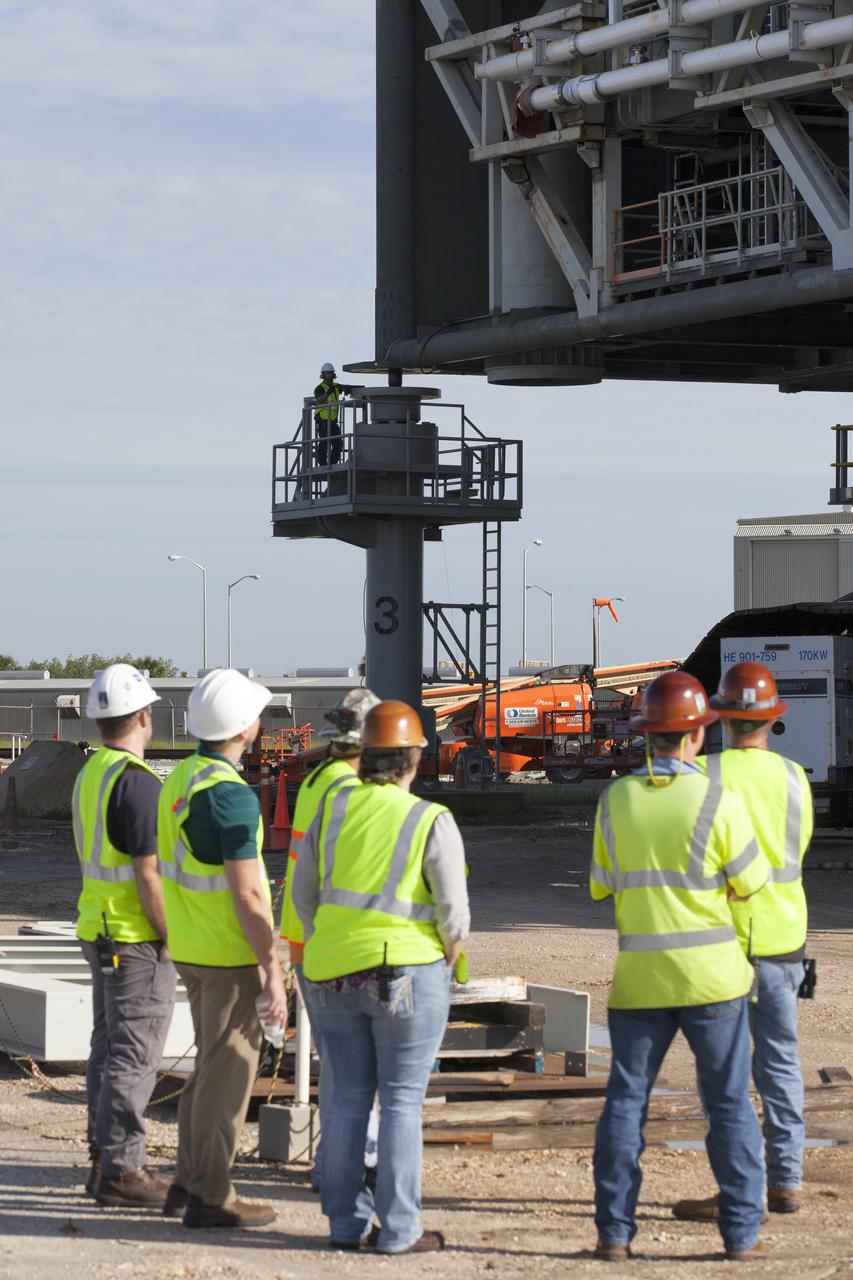
Workers watch as crawler-transporter 2 (CT-2) lifts the mobile launcher up a few inches from its support posts June 1, 2018, at NASA's Kennedy Space Center in Florida. Three lifts were performed to practice lifting procedures, validate interface locations, confirm the weight of the mobile launcher, and develop a baseline for modal analysis. The mobile launcher is equipped with a number of lines, called umbilicals, which will connect to NASA's Space Launch System (SLS) and Orion. The lift helped to test the capability of the upgraded CT-2 to handle the weight of the mobile launcher. Exploration Ground Systems is preparing the ground systems necessary to the SLS and Orion spacecraft for Exploration Mission-1 and deep space missions.
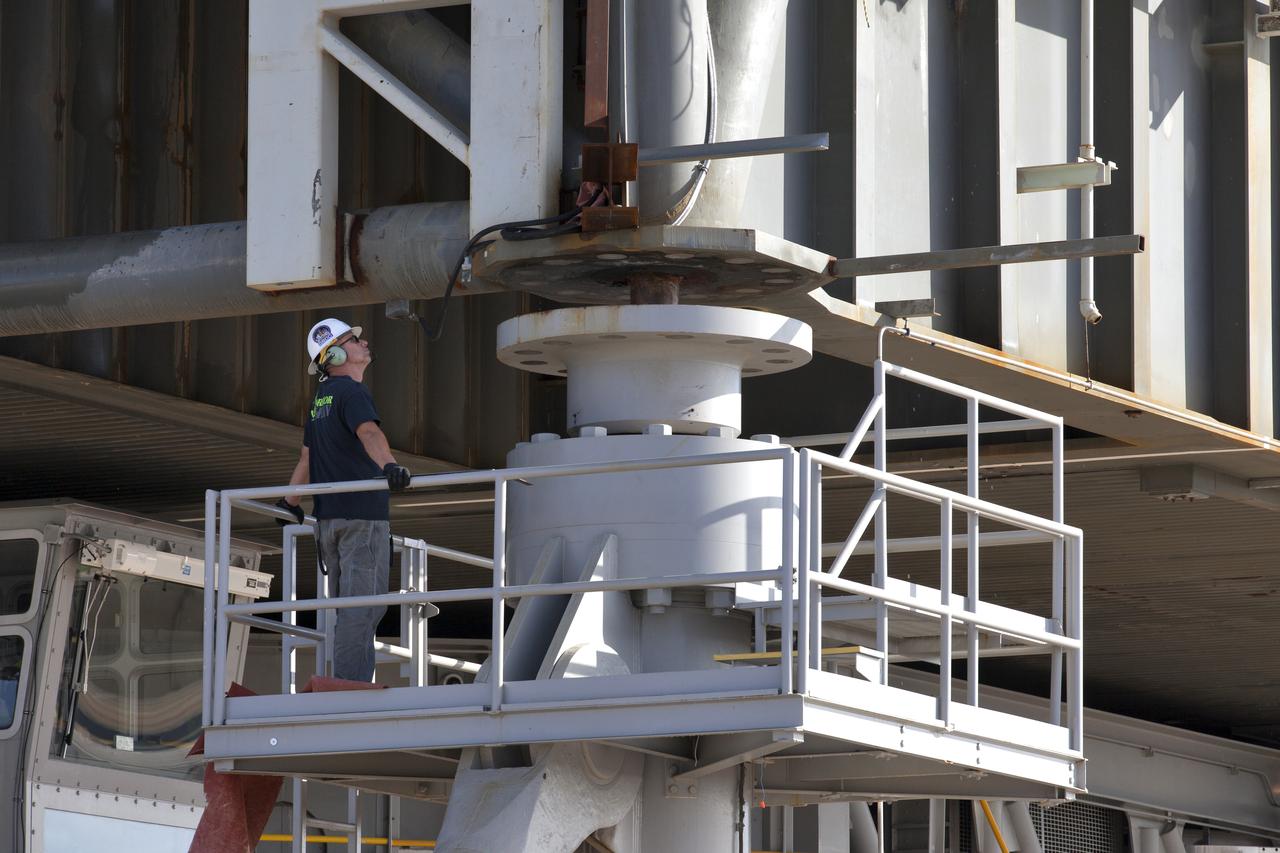
A construction worker monitors the progress as crawler-transporter 2 (CT-2) lifts the mobile launcher up a few inches from its support posts June 1, 2018, at NASA's Kennedy Space Center in Florida. Three lifts were performed to practice lifting procedures, validate interface locations, confirm the weight of the mobile launcher, and develop a baseline for modal analysis. The mobile launcher is equipped with a number of lines, called umbilicals, which will connect to NASA's Space Launch System (SLS) and Orion. The lift helped to test the capability of the upgraded CT-2 to handle the weight of the mobile launcher. Exploration Ground Systems is preparing the ground systems necessary to support the SLS and Orion spacecraft for Exploration Mission-1 and deep space missions.
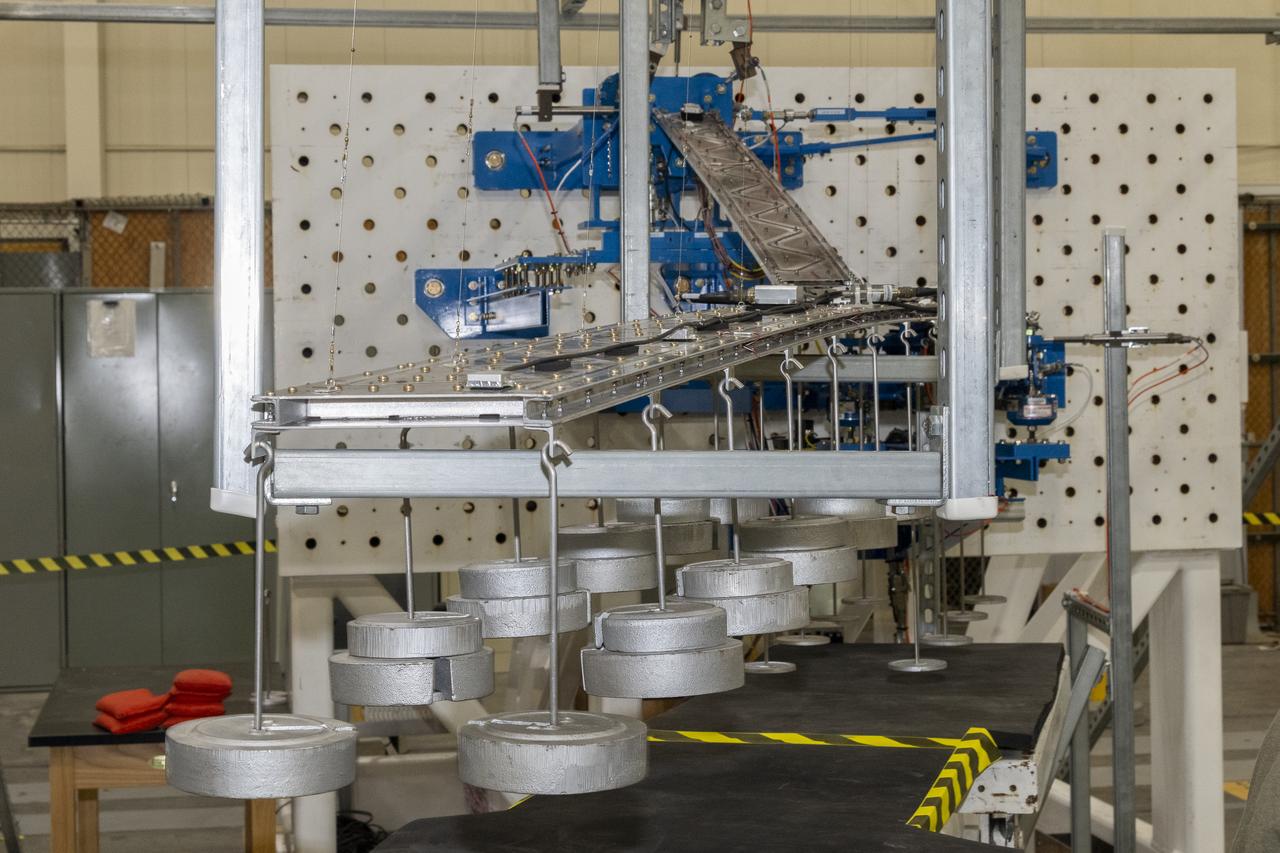
Researchers test a 10-foot Mock Truss-Braced Wing at NASA’s Armstrong Flight Research Center in Edwards, California. The aircraft concept involves a wing braced on an aircraft using diagonal struts that also add lift and could result in significantly improved aerodynamics.
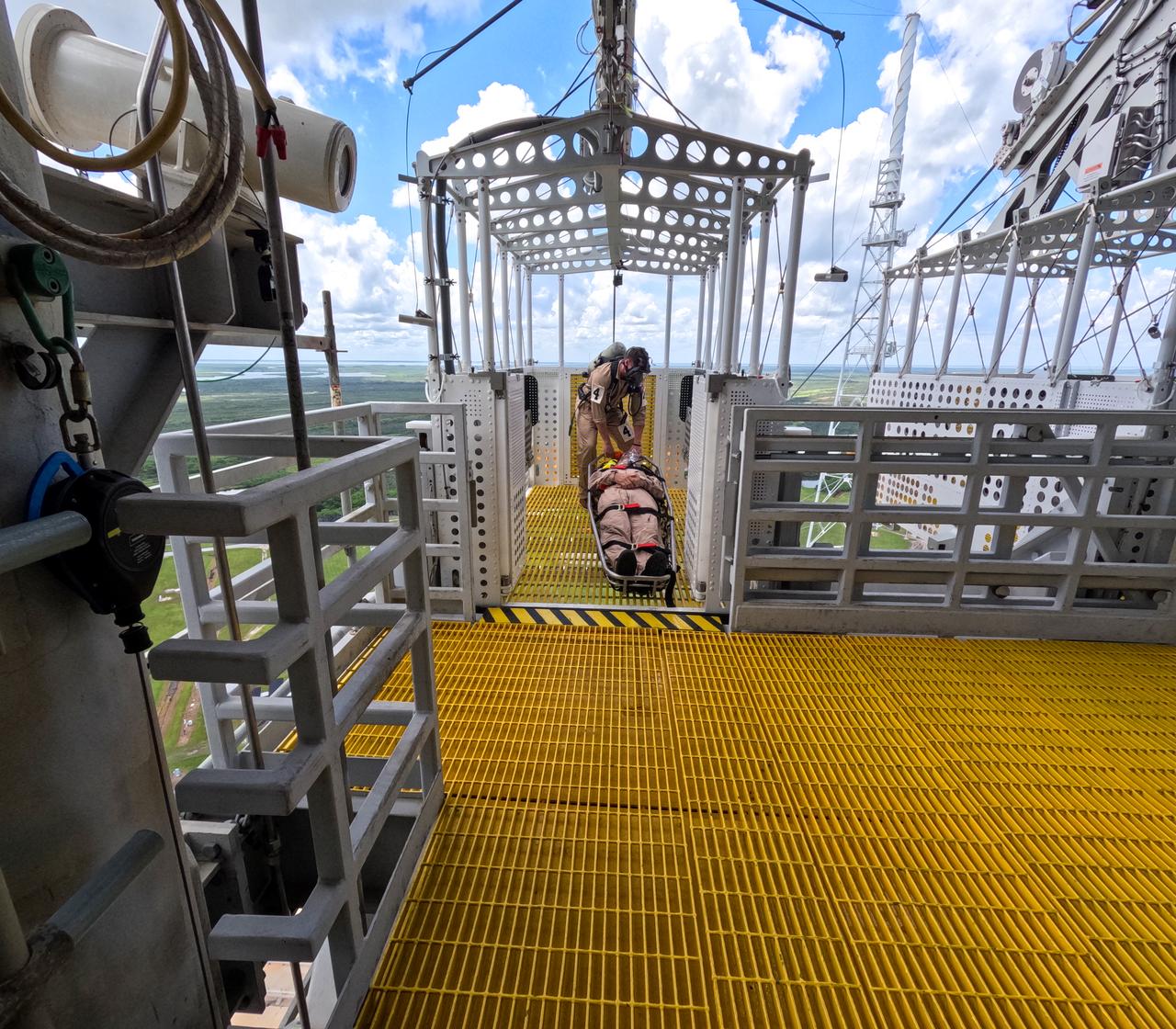
Teams at NASA’s Kennedy Space Center in Florida practice the Artemis mission emergency escape or egress procedures during a series of integrated system verification and validation tests at Launch Pad 39B on Sunday, Aug. 11, 2024. Members of the closeout crew, pad rescue team and the Exploration Ground Systems Program practiced the process of getting inside and out of the emergency egress baskets. While the crew and other personnel will ride the emergency egress baskets to the terminus area in a real emergency, no one rode the baskets for this test. Instead, teams tested the baskets during separate occasions by using water tanks filled to different levels to replicate simulate the weight of passengers.
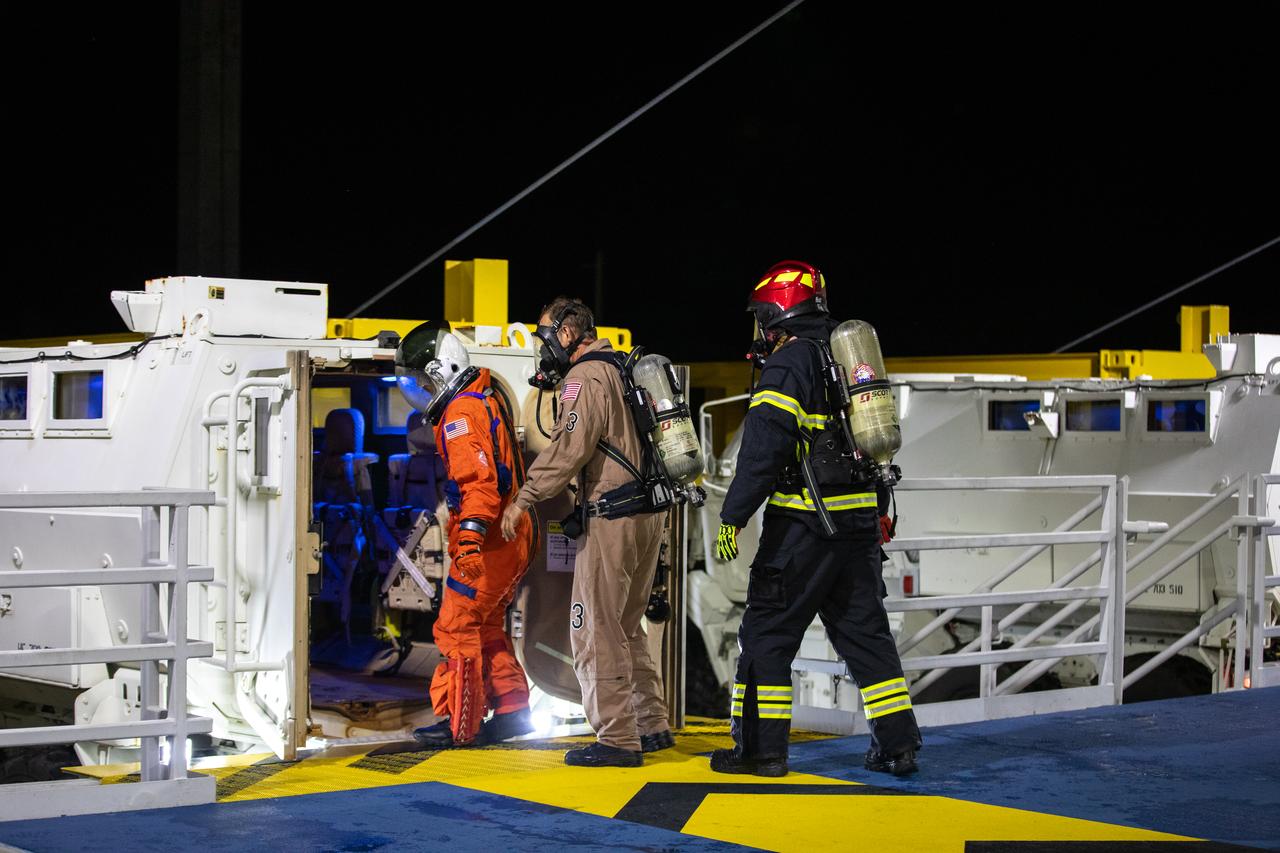
Teams at NASA’s Kennedy Space Center in Florida practice the Artemis mission emergency escape or egress procedures during a series of integrated system verification and validation tests at Launch Pad 39B on Tuesday, Aug. 13, 2024. Members of the closeout crew, pad rescue team and the Exploration Ground Systems Program practiced the process of getting inside and out of the emergency egress baskets. While the crew and other personnel will ride the emergency egress baskets to the terminus area in a real emergency, no one rode the baskets for this test. Instead, teams tested the baskets during separate occasions by using water tanks filled to different levels to replicate simulate the weight of passengers.
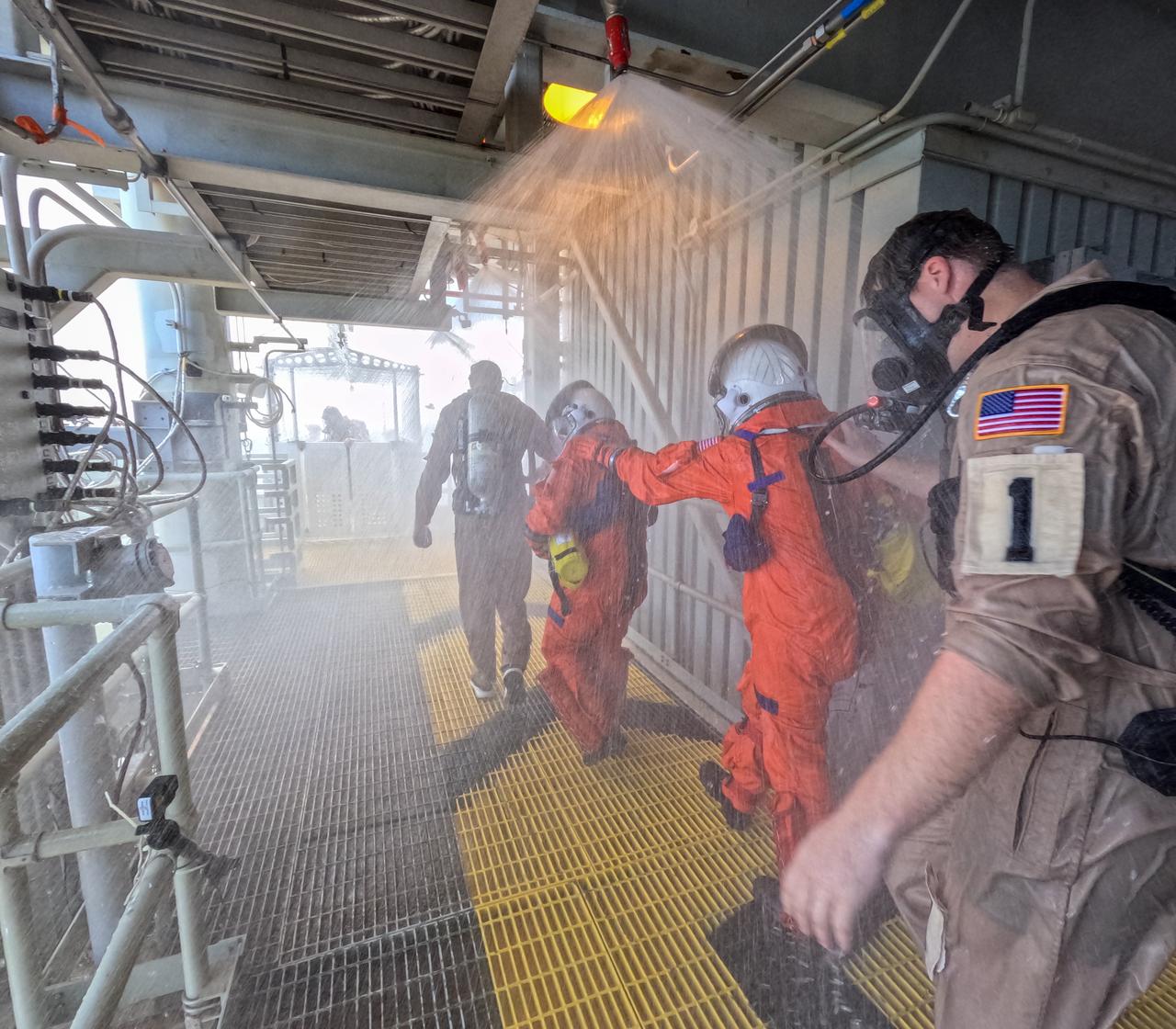
Teams at NASA’s Kennedy Space Center in Florida practice the Artemis mission emergency escape or egress procedures during a series of integrated system verification and validation tests at Launch Pad 39B on Sunday, Aug. 11, 2024. Members of the closeout crew, simulated flight crew, pad rescue team, and the Exploration Ground Systems Program practiced the process of getting inside and out of the emergency egress baskets. While the crew and other personnel will ride the emergency egress baskets to the terminus area in a real emergency, no one rode the baskets for this test. Instead, teams tested the baskets during separate occasions by using water tanks filled to different levels to replicate simulate the weight of passengers.
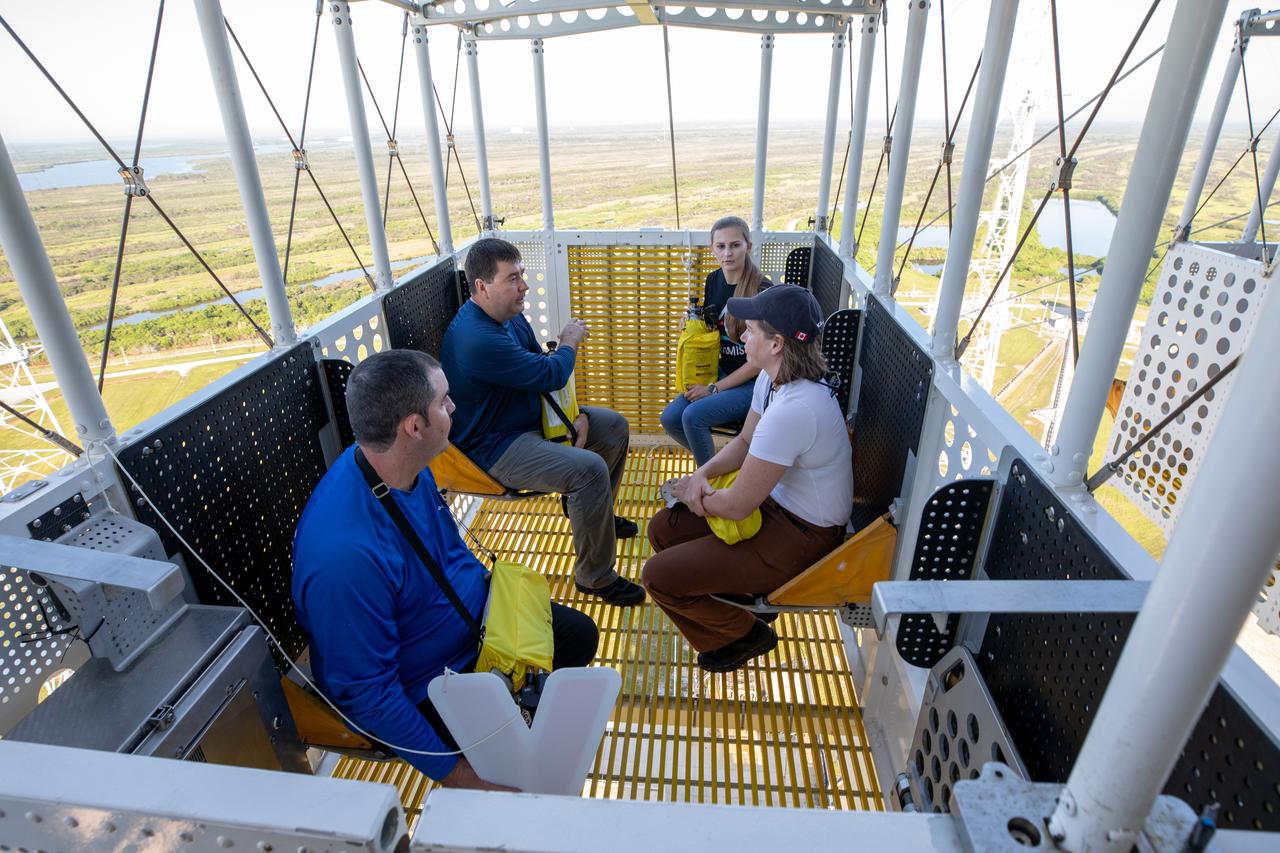
Teams at NASA’s Kennedy Space Center in Florida practice the Artemis mission emergency escape or egress procedures during a series of integrated system verification and validation tests at Launch Pad 39B on Sunday, Aug. 11, 2024. Members of the closeout crew, pad rescue team and the Exploration Ground Systems Program practiced the process of getting inside and out of the emergency egress baskets. While the crew and other personnel will ride the emergency egress baskets to the terminus area in a real emergency, no one rode the baskets for this test. Instead, teams tested the baskets during separate occasions by using water tanks filled to different levels to replicate simulate the weight of passengers.
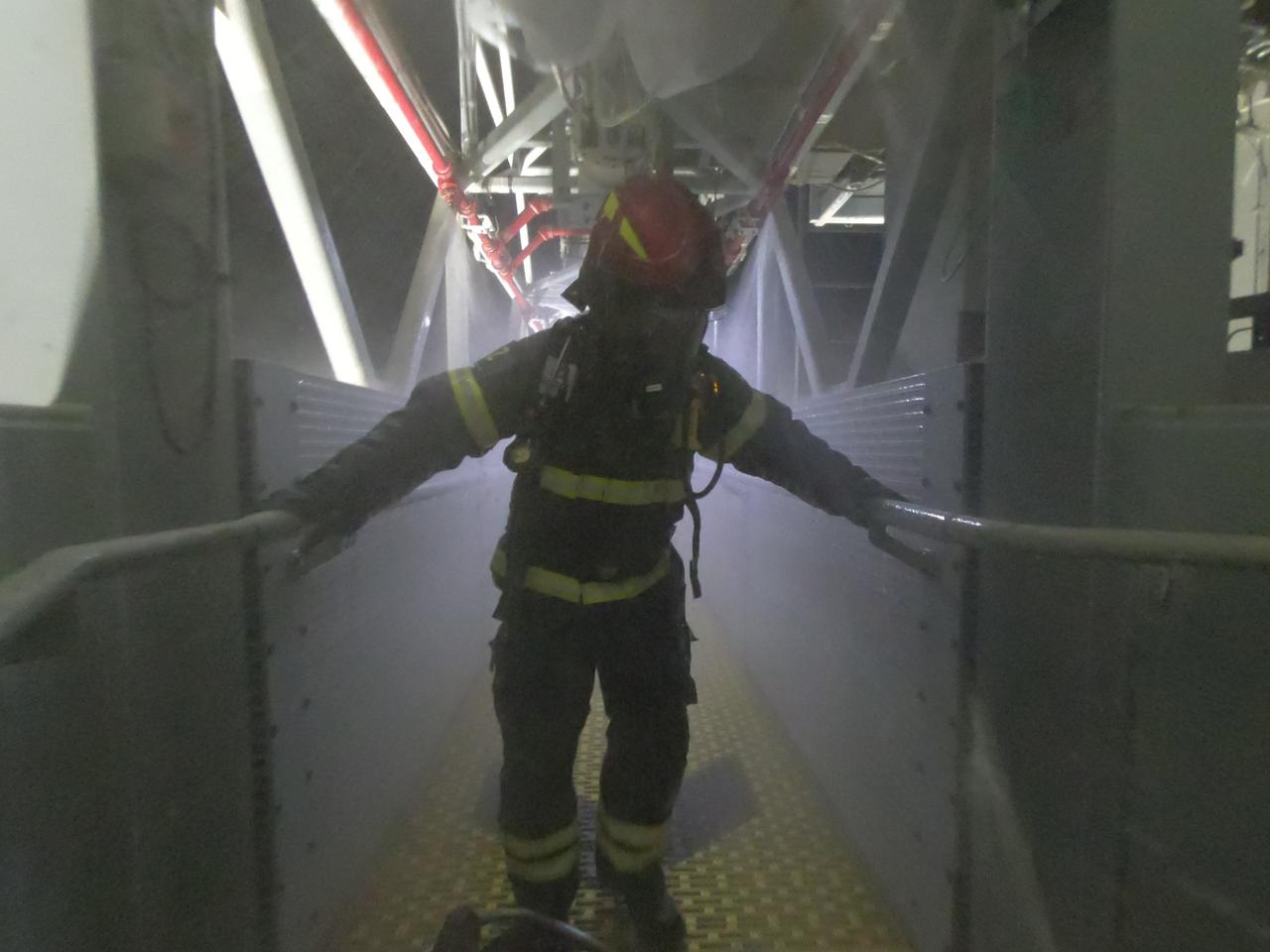
Teams at NASA’s Kennedy Space Center in Florida practice the Artemis mission emergency escape or egress procedures during a series of integrated system verification and validation tests at Launch Pad 39B on Monday, Aug. 12, 2024. Members of the closeout crew, pad rescue team and the Exploration Ground Systems Program practiced the process of getting inside and out of the emergency egress baskets. While the crew and other personnel will ride the emergency egress baskets to the terminus area in a real emergency, no one rode the baskets for this test. Instead, teams tested the baskets during separate occasions by using water tanks filled to different levels to replicate simulate the weight of passengers.
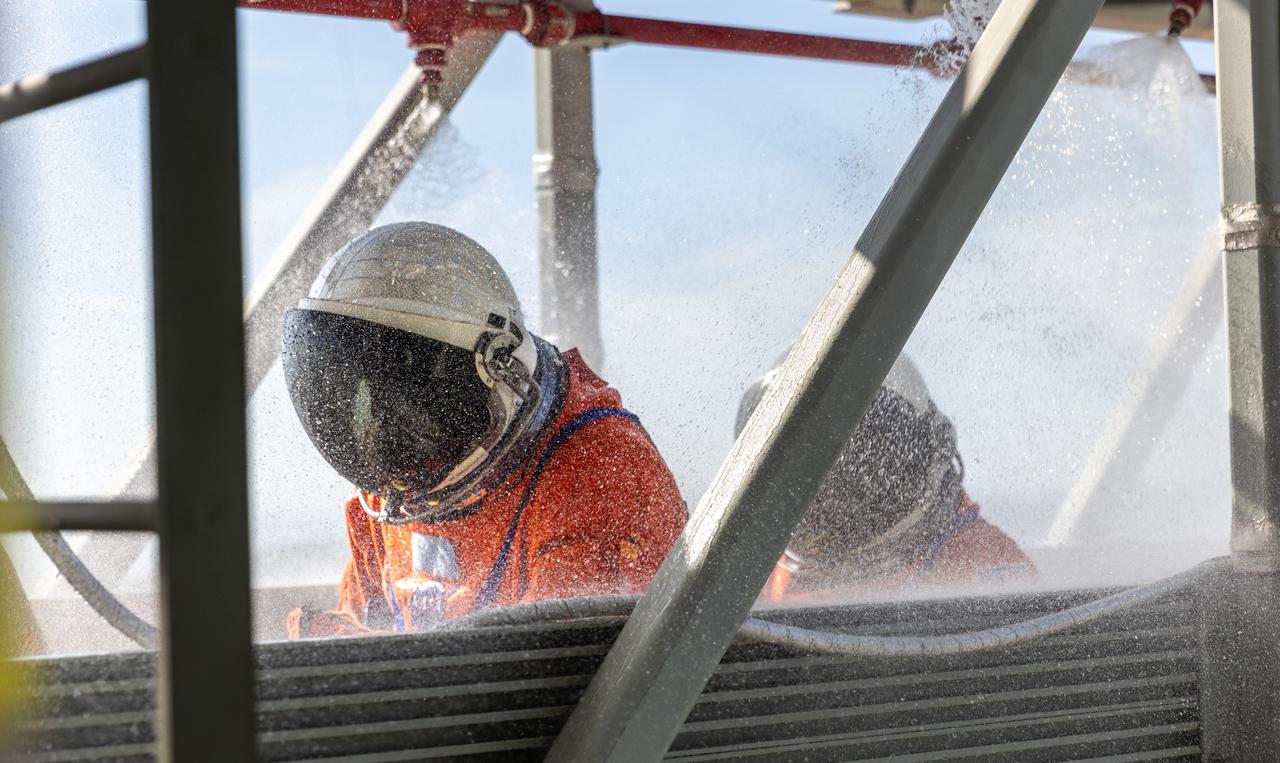
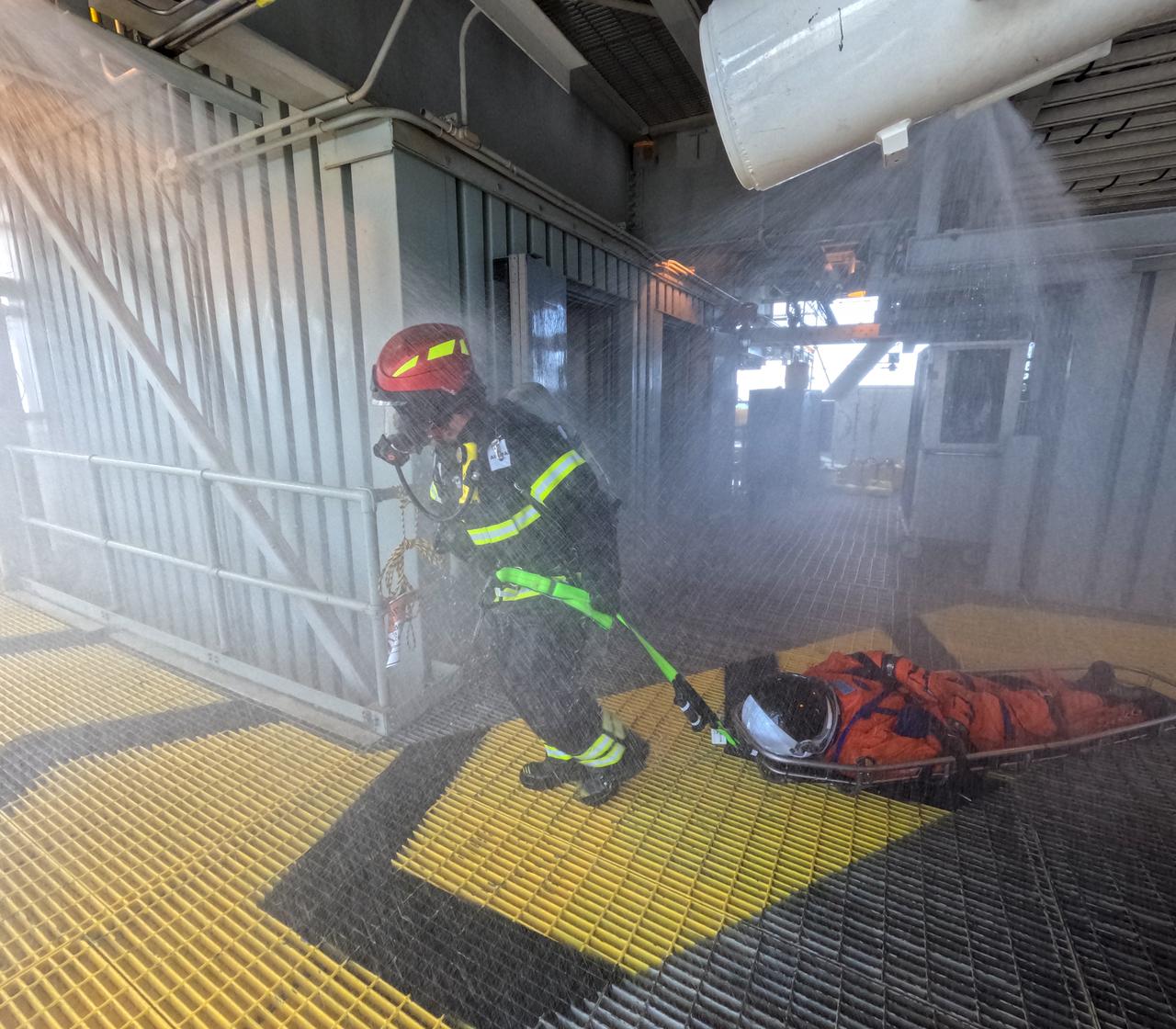
Teams at NASA’s Kennedy Space Center in Florida practice the Artemis mission emergency escape or egress procedures during a series of integrated system verification and validation tests at Launch Pad 39B on Tuesday, Aug. 13, 2024. Members of the closeout crew, pad rescue team, and the Exploration Ground Systems Program – who also suited up as astronauts – practiced the process of getting inside and out of the emergency egress baskets. While the crew and other personnel will ride the emergency egress baskets to the terminus area in a real emergency, no one rode the baskets for this test. Instead, teams tested the baskets during separate occasions by using water tanks filled to different levels to replicate simulate the weight of passengers.
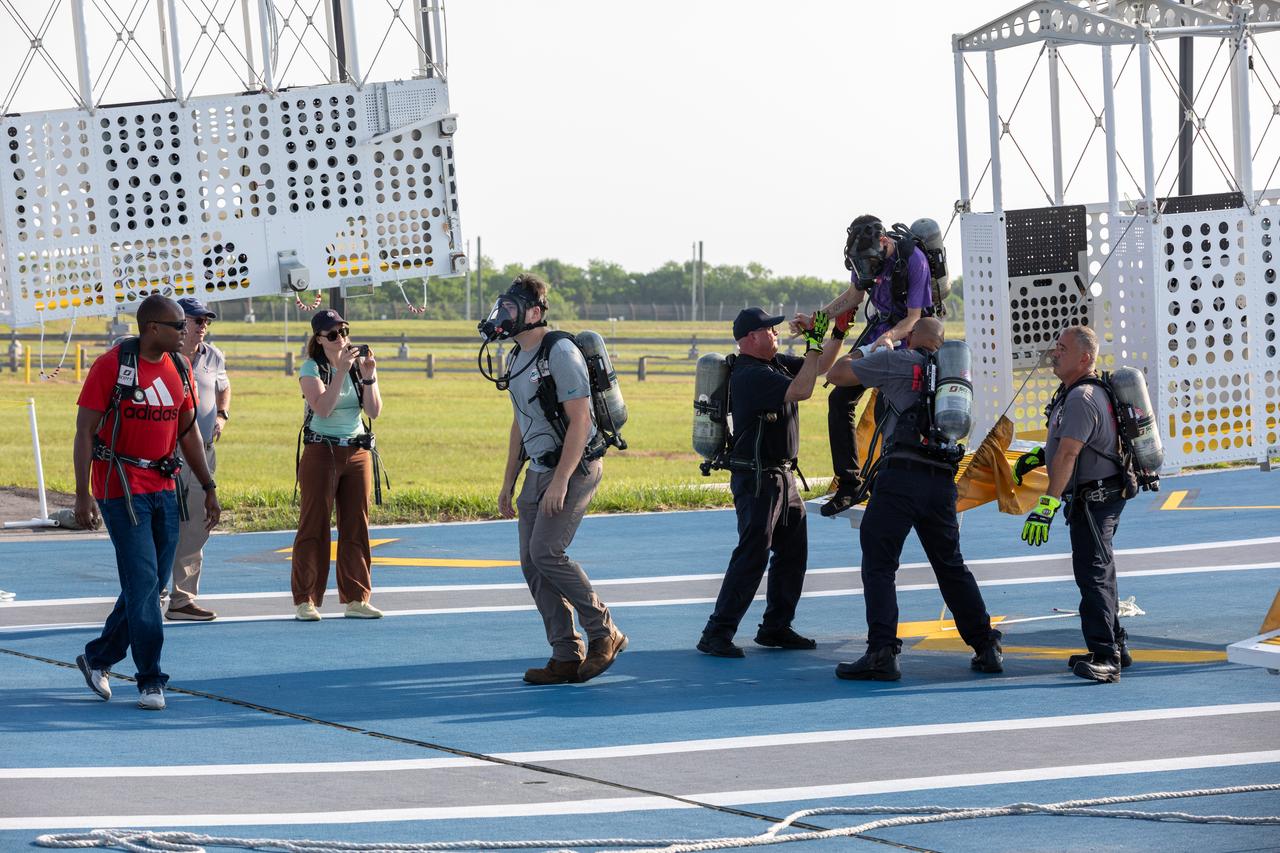
Teams at NASA’s Kennedy Space Center in Florida practice the Artemis mission emergency procedures during a series of integrated system verification and validation tests at Launch Pad 39B on Friday, Aug. 9, 2024. Members of the closeout crew, pad rescue team, and the Exploration Ground Systems Program practiced the process of getting inside and out of the emergency egress baskets. While the crew and other personnel will ride the emergency egress baskets to the terminus area in a real emergency, no one rode the baskets for this test. Instead, teams tested the baskets during separate occasions by using water tanks filled to different levels to replicate simulate the weight of passengers.
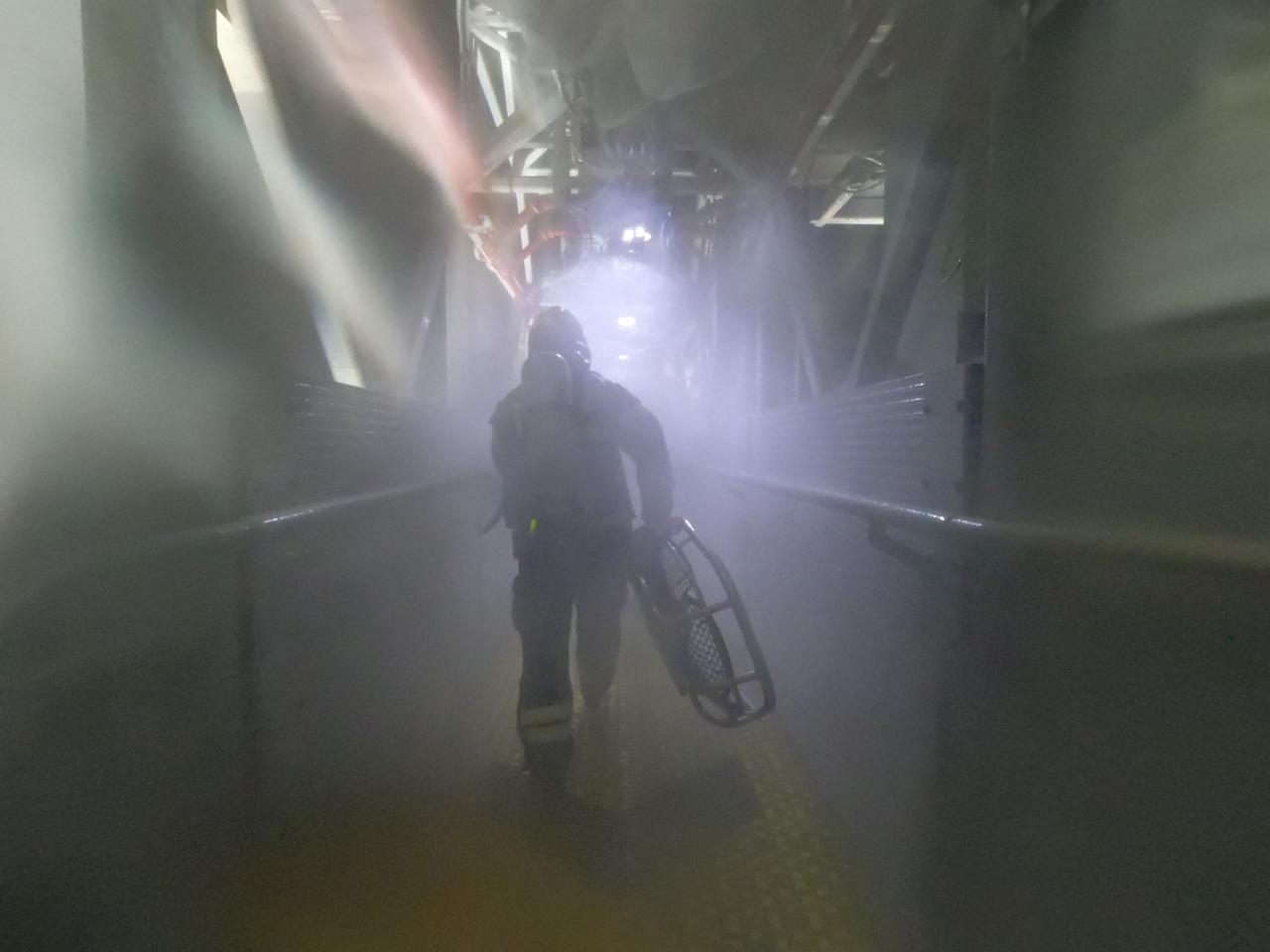
Teams at NASA’s Kennedy Space Center in Florida practice the Artemis mission emergency escape or egress procedures during a series of integrated system verification and validation tests at Launch Pad 39B on Tuesday, Aug. 13, 2024. Members of the closeout crew, pad rescue team, and the Exploration Ground Systems Program – who also suited up as astronauts – practiced the process of getting inside and out of the emergency egress baskets. While the crew and other personnel will ride the emergency egress baskets to the terminus area in a real emergency, no one rode the baskets for this test. Instead, teams tested the baskets during separate occasions by using water tanks filled to different levels to replicate simulate the weight of passengers.
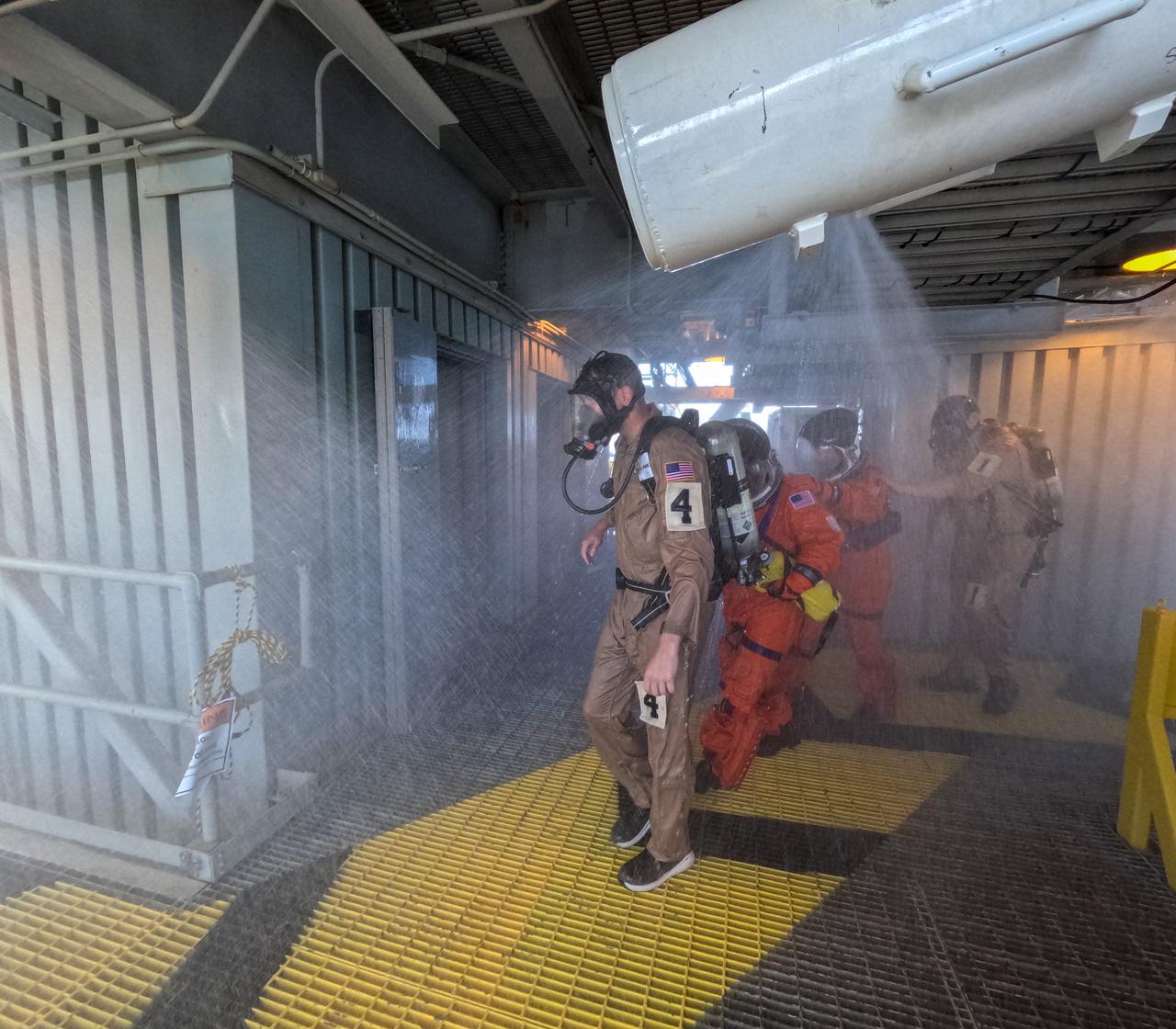
Teams at NASA’s Kennedy Space Center in Florida practice the Artemis mission emergency escape or egress procedures during a series of integrated system verification and validation tests at Launch Pad 39B on Sunday, Aug. 11, 2024. Members of the closeout crew, simulated flight crew, pad rescue team, and the Exploration Ground Systems Program practiced the process of getting inside and out of the emergency egress baskets. While the crew and other personnel will ride the emergency egress baskets to the terminus area in a real emergency, no one rode the baskets for this test. Instead, teams tested the baskets during separate occasions by using water tanks filled to different levels to replicate simulate the weight of passengers.
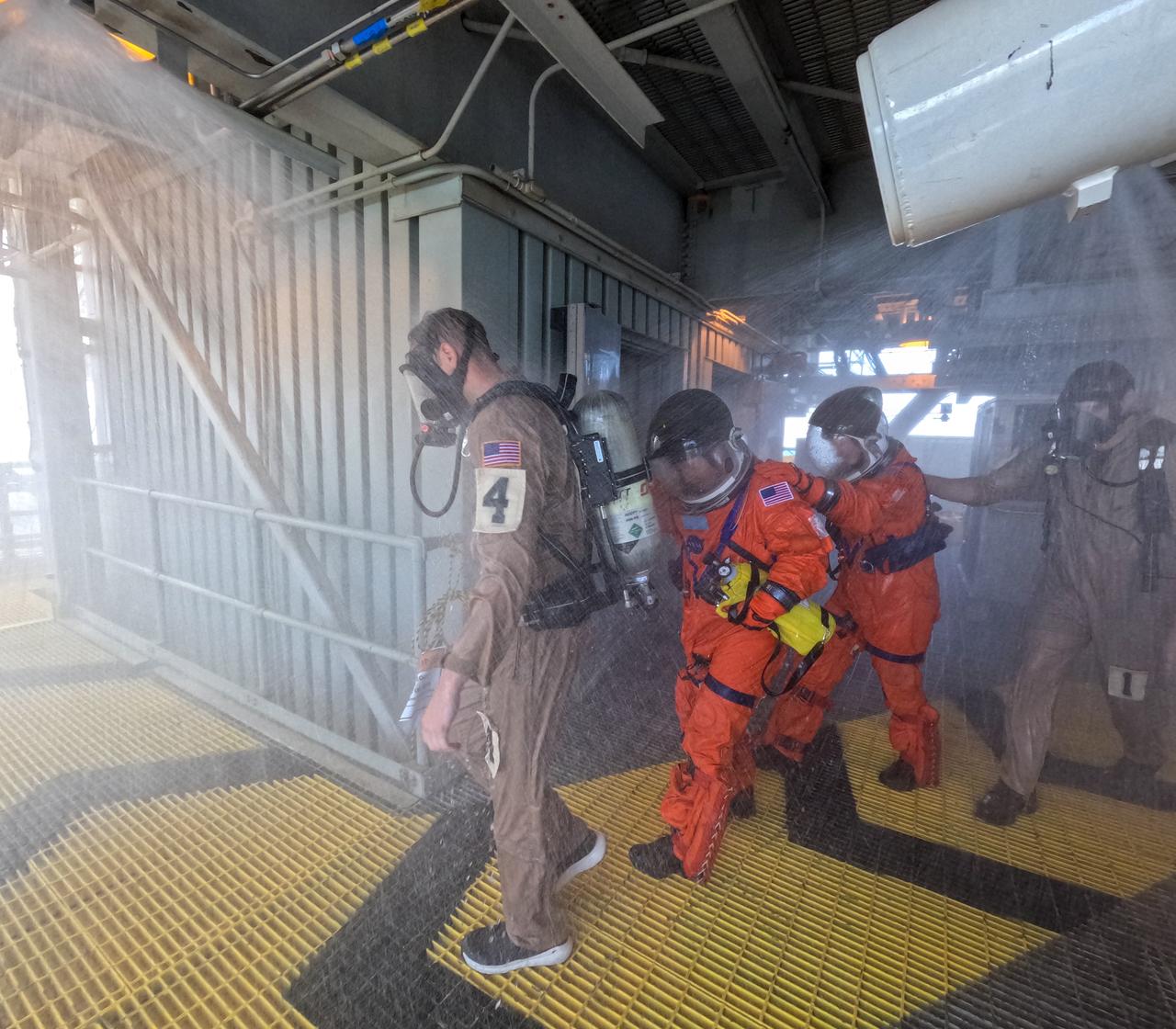
Teams at NASA’s Kennedy Space Center in Florida practice the Artemis mission emergency escape or egress procedures during a series of integrated system verification and validation tests at Launch Pad 39B on Sunday, Aug. 11, 2024. Members of the closeout crew, simulated flight crew, pad rescue team, and the Exploration Ground Systems Program practiced the process of getting inside and out of the emergency egress baskets. While the crew and other personnel will ride the emergency egress baskets to the terminus area in a real emergency, no one rode the baskets for this test. Instead, teams tested the baskets during separate occasions by using water tanks filled to different levels to replicate simulate the weight of passengers.
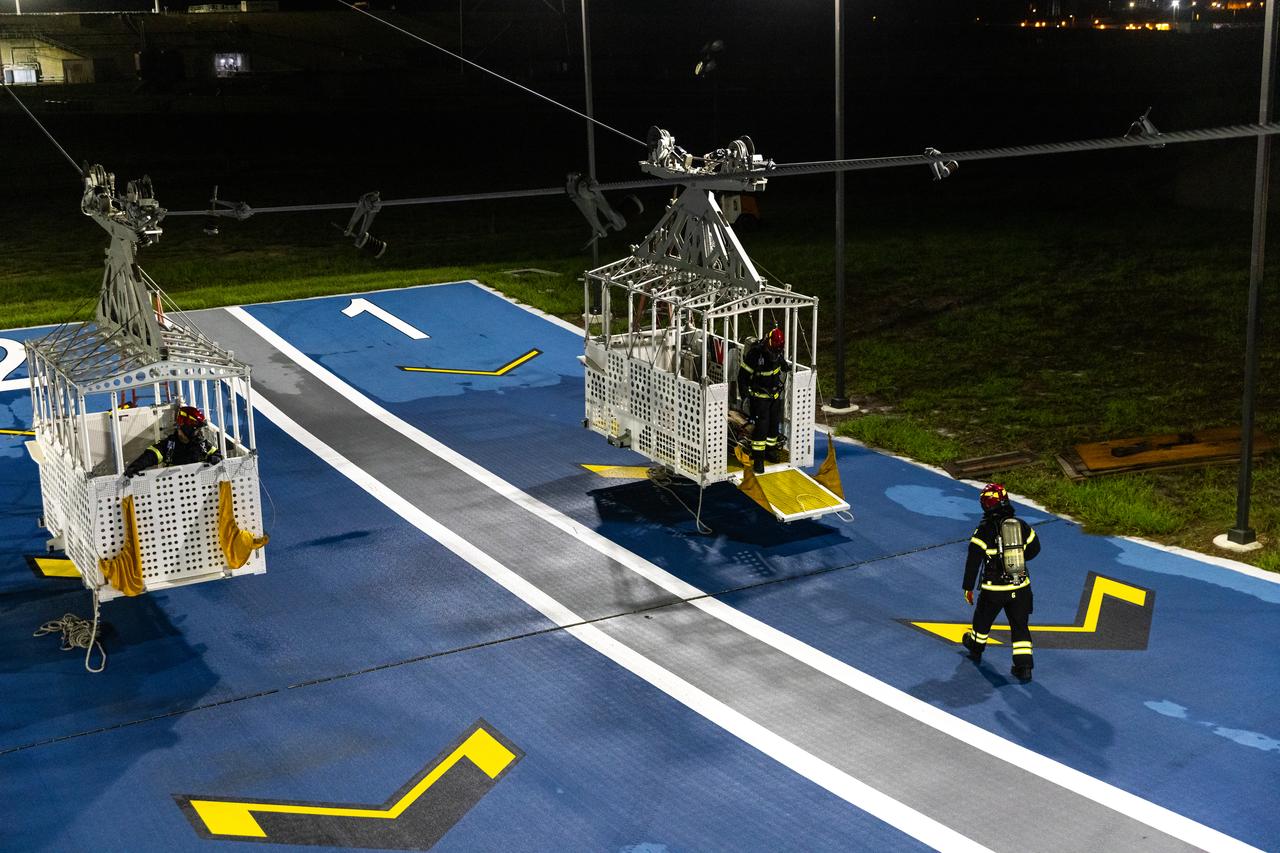
Teams at NASA’s Kennedy Space Center in Florida practice the Artemis mission emergency escape or egress procedures during a series of integrated system verification and validation tests at Launch Pad 39B on Tuesday, Aug. 13, 2024. Members of the closeout crew, pad rescue team and the Exploration Ground Systems Program practiced the process of getting inside and out of the emergency egress baskets. While the crew and other personnel will ride the emergency egress baskets to the terminus area in a real emergency, no one rode the baskets for this test. Instead, teams tested the baskets during separate occasions by using water tanks filled to different levels to replicate simulate the weight of passengers.
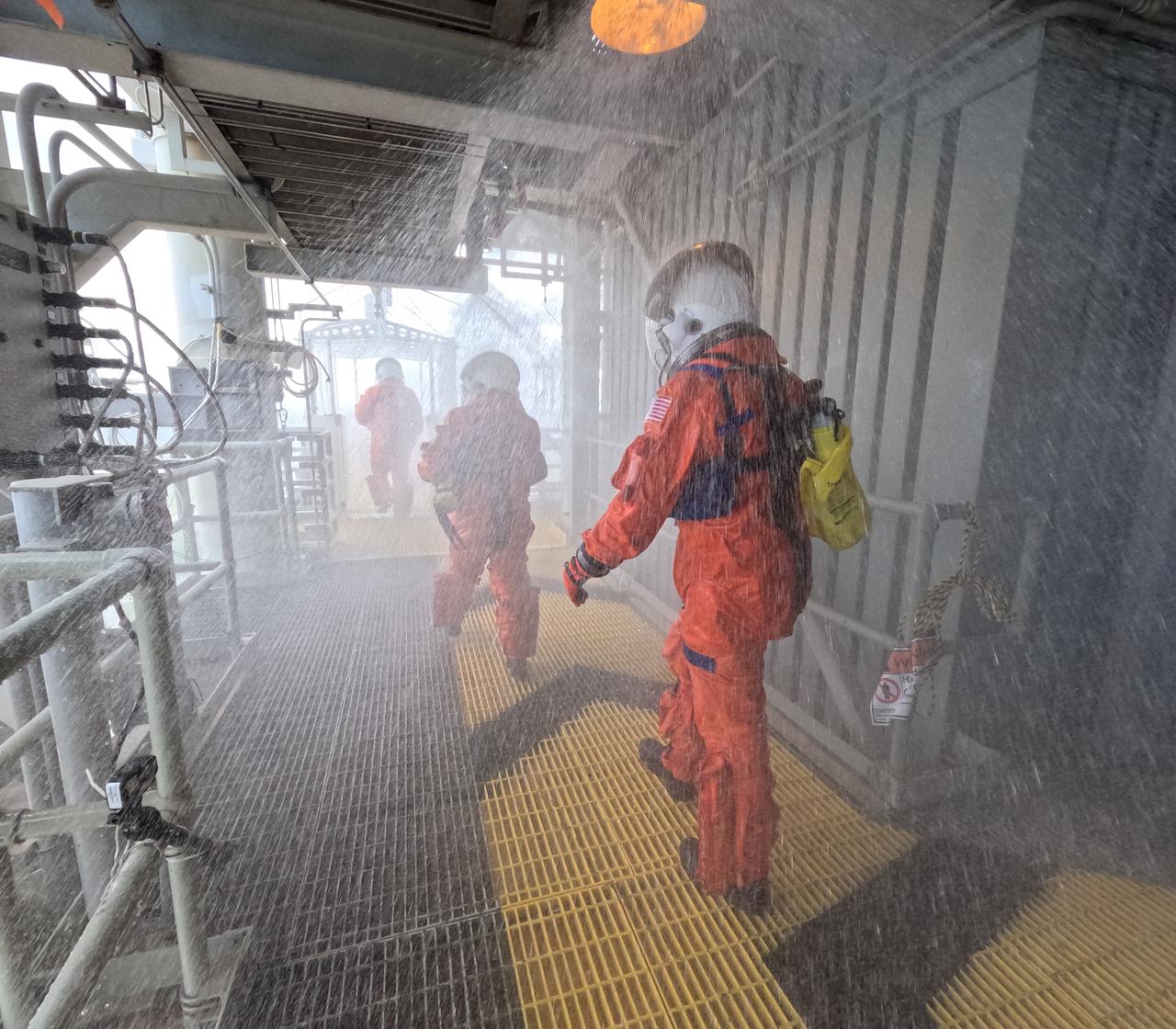
Teams at NASA’s Kennedy Space Center in Florida practice the Artemis mission emergency escape or egress procedures during a series of integrated system verification and validation tests at Launch Pad 39B on Sunday, Aug. 11, 2024. Members of the closeout crew, simulated flight crew, pad rescue team, and the Exploration Ground Systems Program practiced the process of getting inside and out of the emergency egress baskets. While the crew and other personnel will ride the emergency egress baskets to the terminus area in a real emergency, no one rode the baskets for this test. Instead, teams tested the baskets during separate occasions by using water tanks filled to different levels to replicate simulate the weight of passengers.
Teams at NASA’s Kennedy Space Center in Florida practice the Artemis mission emergency escape or egress procedures during a series of integrated system verification and validation tests at Launch Pad 39B on Sunday, Aug. 11, 2024. Members of the closeout crew, simulated flight crew, pad rescue team, and the Exploration Ground Systems Program practiced the process of getting inside and out of the emergency egress baskets. While the crew and other personnel will ride the emergency egress baskets to the terminus area in a real emergency, no one rode the baskets for this test. Instead, teams tested the baskets during separate occasions by using water tanks filled to different levels to replicate simulate the weight of passengers.
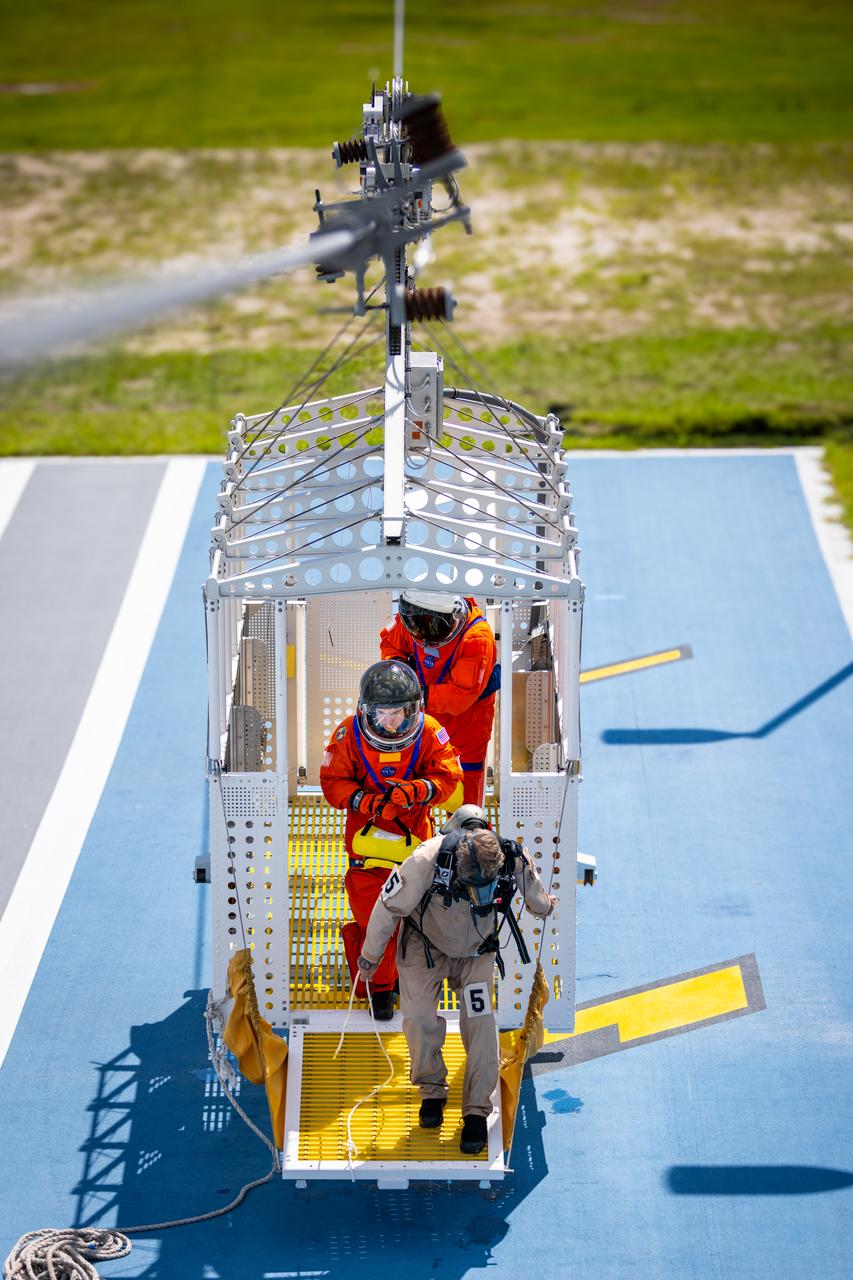
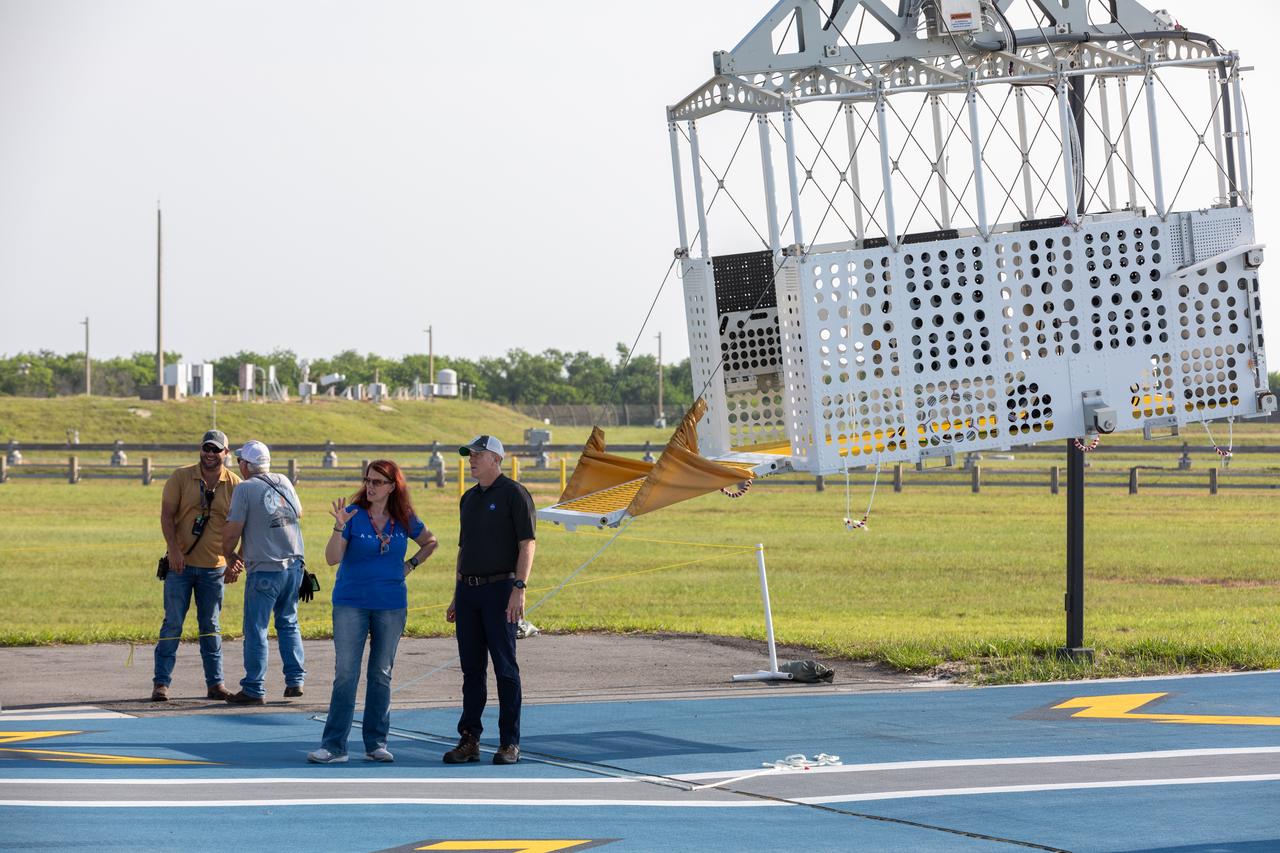
Teams at NASA’s Kennedy Space Center in Florida practice the Artemis mission emergency escape or egress procedures during a series of integrated system verification and validation tests at Launch Pad 39B on Monday, Aug. 12, 2024. Members of the closeout crew, pad rescue team and the Exploration Ground Systems Program practiced the process of getting inside and out of the emergency egress baskets. While the crew and other personnel will ride the emergency egress baskets to the terminus area in a real emergency, no one rode the baskets for this test. Instead, teams tested the baskets during separate occasions by using water tanks filled to different levels to replicate simulate the weight of passengers.
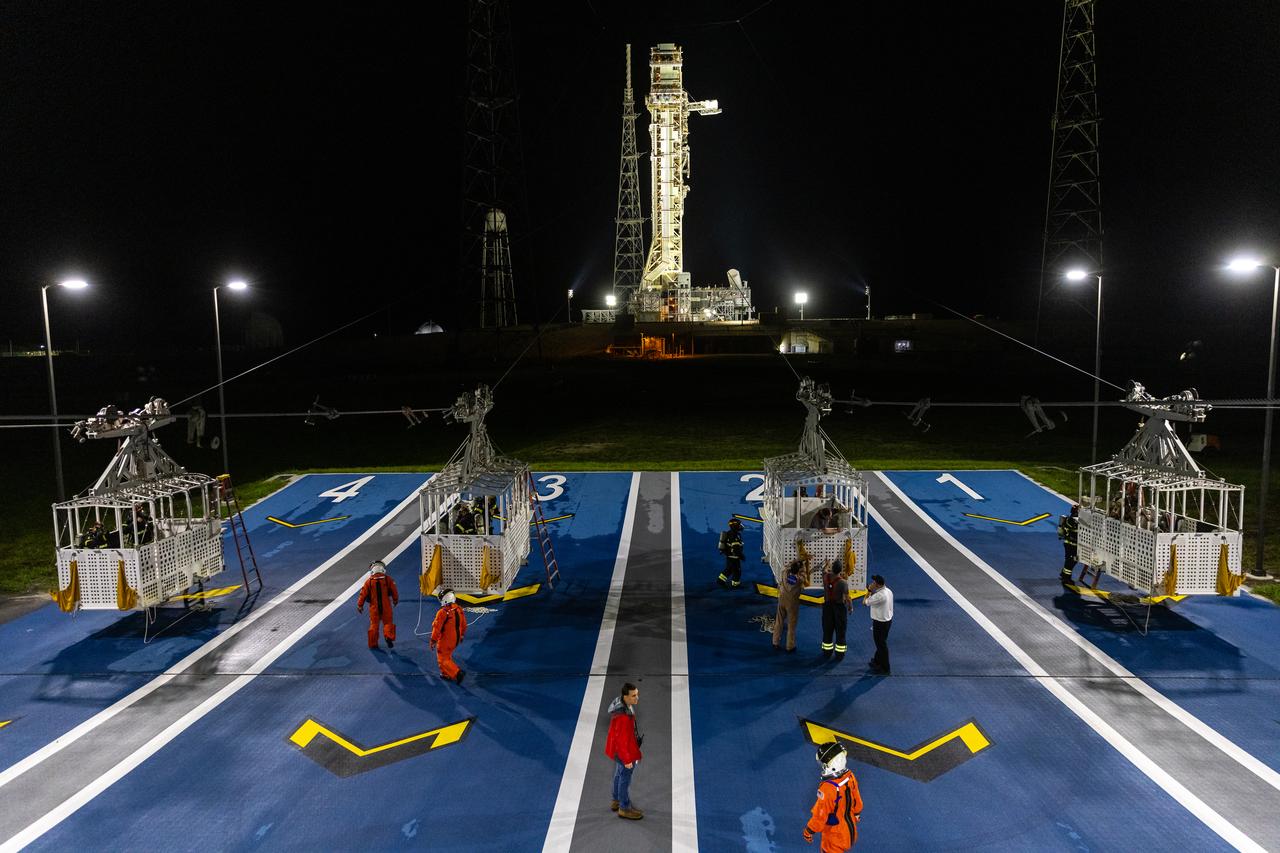
Teams at NASA’s Kennedy Space Center in Florida practice the Artemis mission emergency procedures during a series of integrated system verification and validation tests at Launch Pad 39B on Friday, Aug. 9, 2024. Members of the closeout crew, pad rescue team, and the Exploration Ground Systems Program practiced the process of getting inside and out of the emergency egress baskets. While the crew and other personnel will ride the emergency egress baskets to the terminus area in a real emergency, no one rode the baskets for this test. Instead, teams tested the baskets during separate occasions by using water tanks filled to different levels to replicate simulate the weight of passengers.
Teams at NASA’s Kennedy Space Center in Florida practice the Artemis mission emergency escape or egress procedures during a series of integrated system verification and validation tests at Launch Pad 39B on Tuesday, Aug. 13, 2024. Members of the closeout crew, pad rescue team and the Exploration Ground Systems Program practiced the process of getting inside and out of the emergency egress baskets. While the crew and other personnel will ride the emergency egress baskets to the terminus area in a real emergency, no one rode the baskets for this test. Instead, teams tested the baskets during separate occasions by using water tanks filled to different levels to replicate simulate the weight of passengers.

Teams at NASA’s Kennedy Space Center in Florida practice the Artemis mission emergency escape or egress procedures during a series of integrated system verification and validation tests at Launch Pad 39B on Monday, Aug. 12, 2024. Members of the closeout crew, pad rescue team and the Exploration Ground Systems Program practiced the process of getting inside and out of the emergency egress baskets. While the crew and other personnel will ride the emergency egress baskets to the terminus area in a real emergency, no one rode the baskets for this test. Instead, teams tested the baskets during separate occasions by using water tanks filled to different levels to replicate simulate the weight of passengers.

Teams at NASA’s Kennedy Space Center in Florida practice the Artemis mission emergency escape or egress procedures during a series of integrated system verification and validation tests at Launch Pad 39B on Sunday, Aug. 11, 2024. Members of the closeout crew, pad rescue team and the Exploration Ground Systems Program practiced the process of getting inside and out of the emergency egress baskets. While the crew and other personnel will ride the emergency egress baskets to the terminus area in a real emergency, no one rode the baskets for this test. Instead, teams tested the baskets during separate occasions by using water tanks filled to different levels to replicate simulate the weight of passengers.
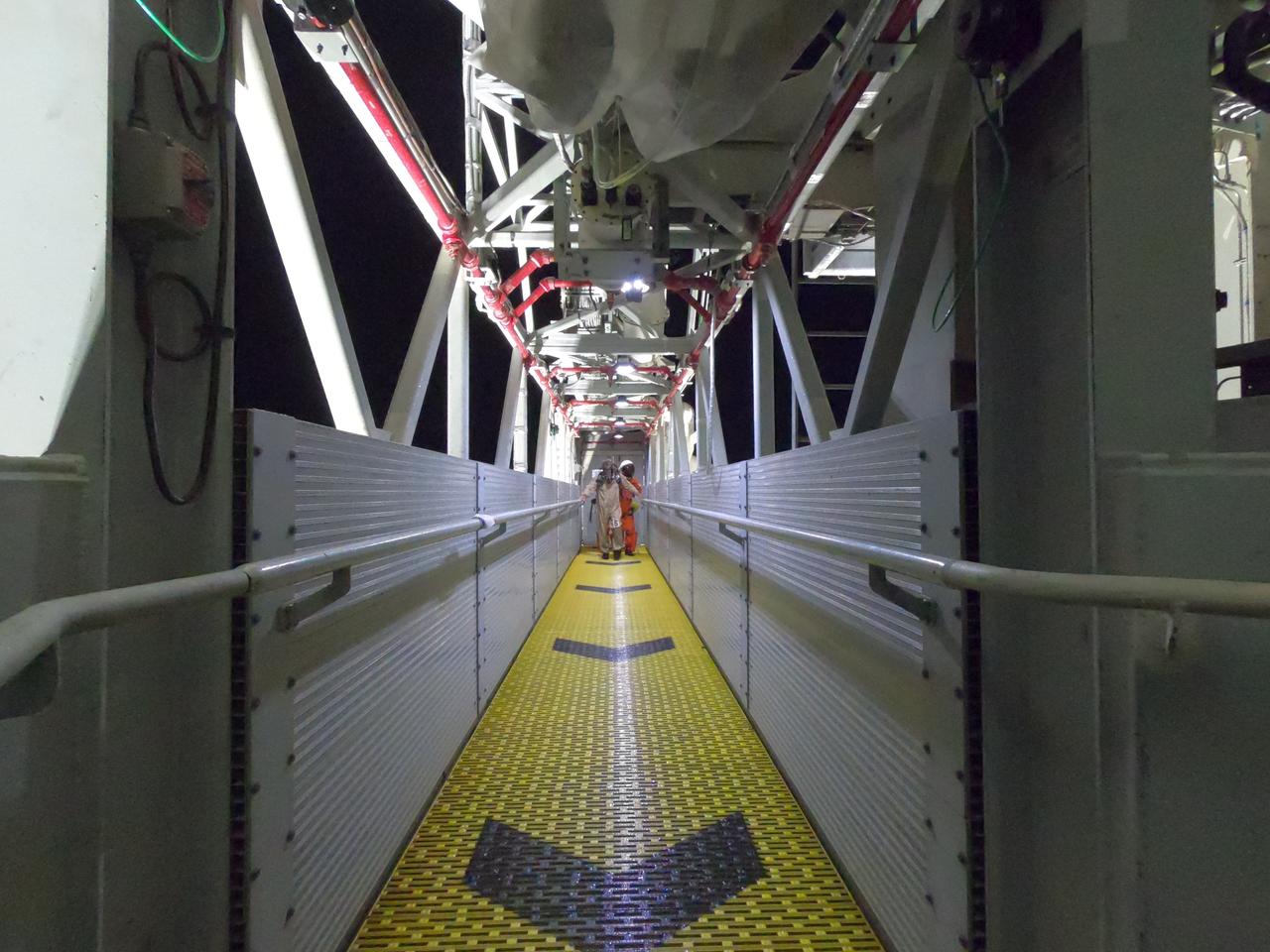
Teams at NASA’s Kennedy Space Center in Florida practice the Artemis mission emergency escape or egress procedures during a series of integrated system verification and validation tests at Launch Pad 39B on Tuesday, Aug. 13, 2024. Members of the closeout crew, pad rescue team, and the Exploration Ground Systems Program – who also suited up as astronauts – practiced the process of getting inside and out of the emergency egress baskets. While the crew and other personnel will ride the emergency egress baskets to the terminus area in a real emergency, no one rode the baskets for this test. Instead, teams tested the baskets during separate occasions by using water tanks filled to different levels to replicate simulate the weight of passengers.
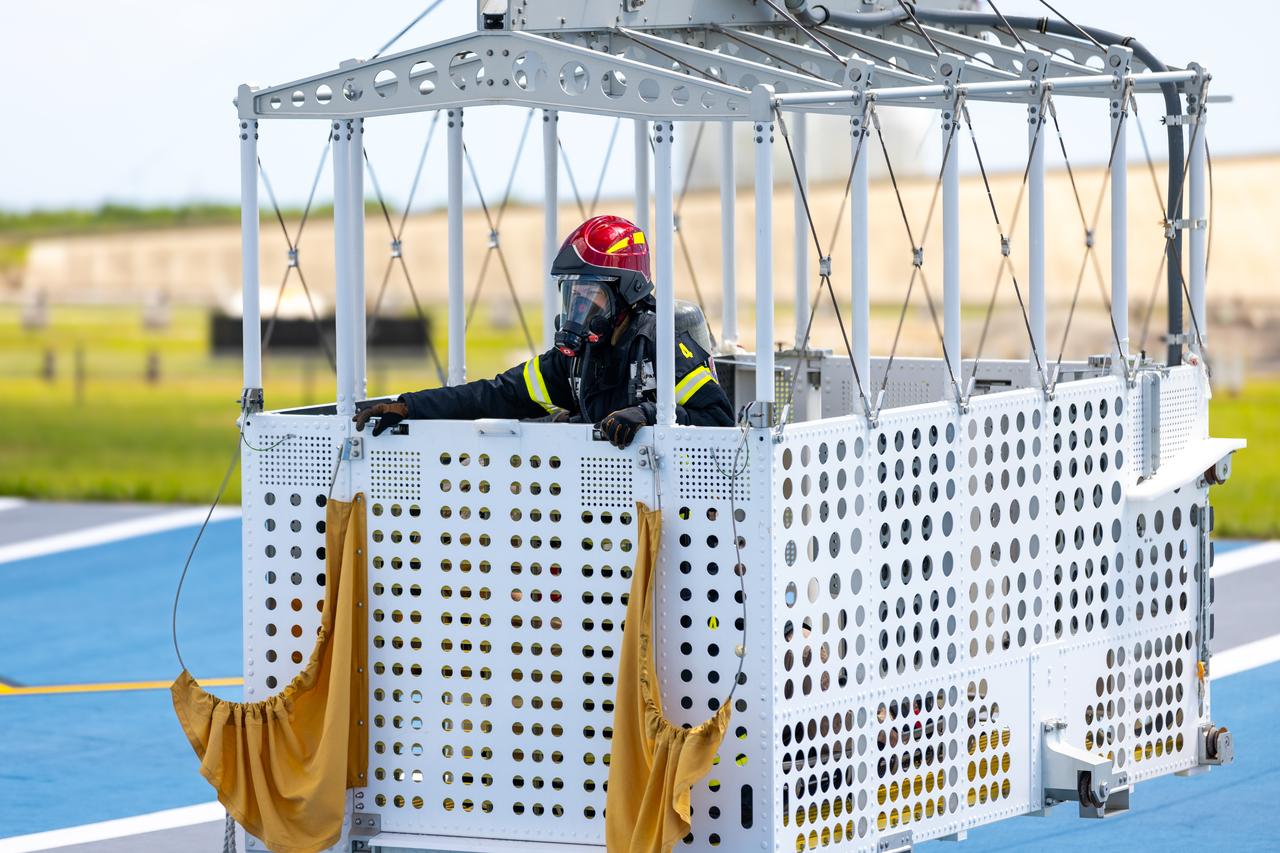
Teams at NASA’s Kennedy Space Center in Florida practice the Artemis mission emergency escape or egress procedures during a series of integrated system verification and validation tests at Launch Pad 39B on Monday, Aug. 12, 2024. Members of the closeout crew, pad rescue team and the Exploration Ground Systems Program practiced the process of getting inside and out of the emergency egress baskets. While the crew and other personnel will ride the emergency egress baskets to the terminus area in a real emergency, no one rode the baskets for this test. Instead, teams tested the baskets during separate occasions by using water tanks filled to different levels to replicate simulate the weight of passengers.