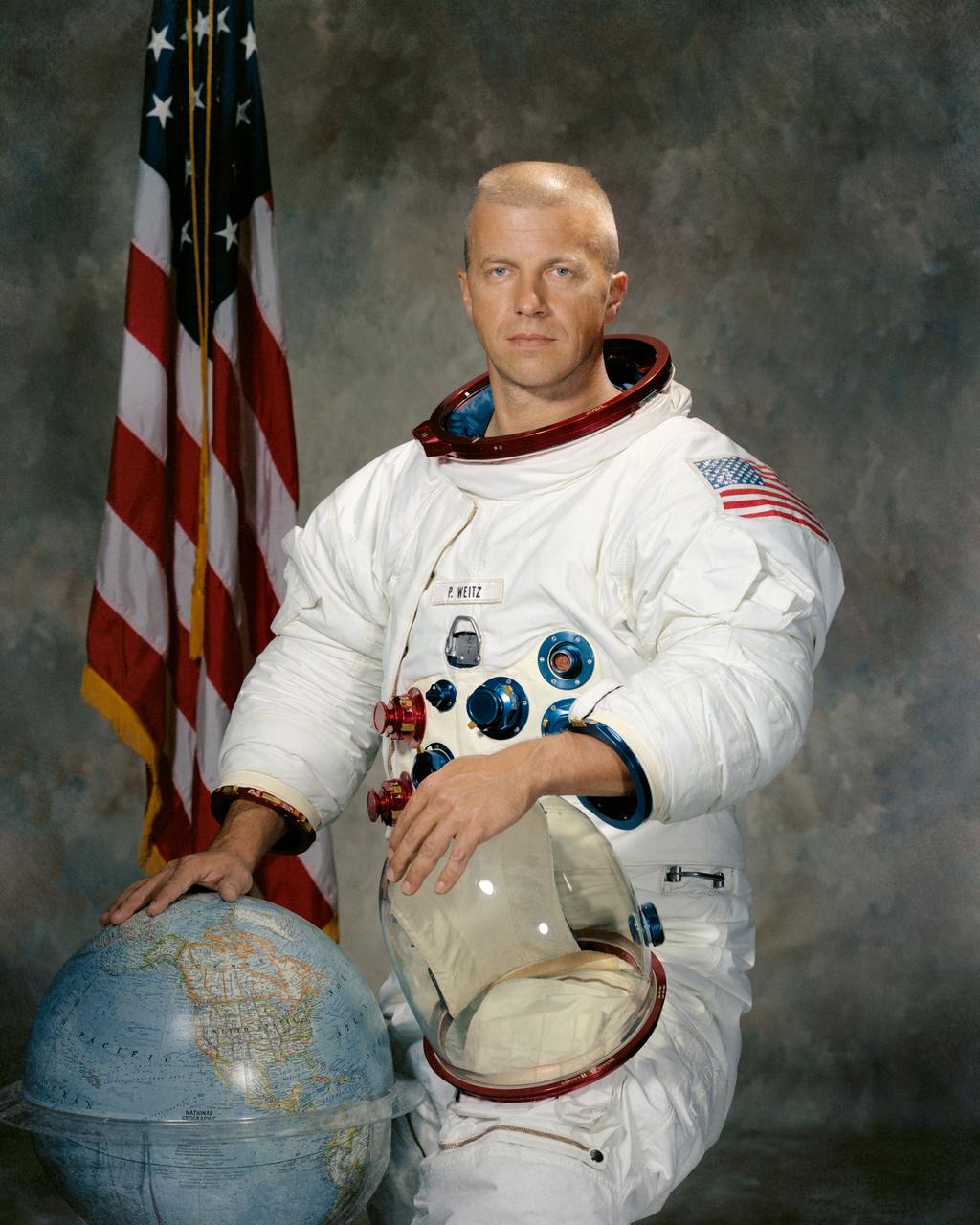
S71-51307 (21 Sept. 1971) --- Astronaut Paul J. Weitz. Photo credit: NASA
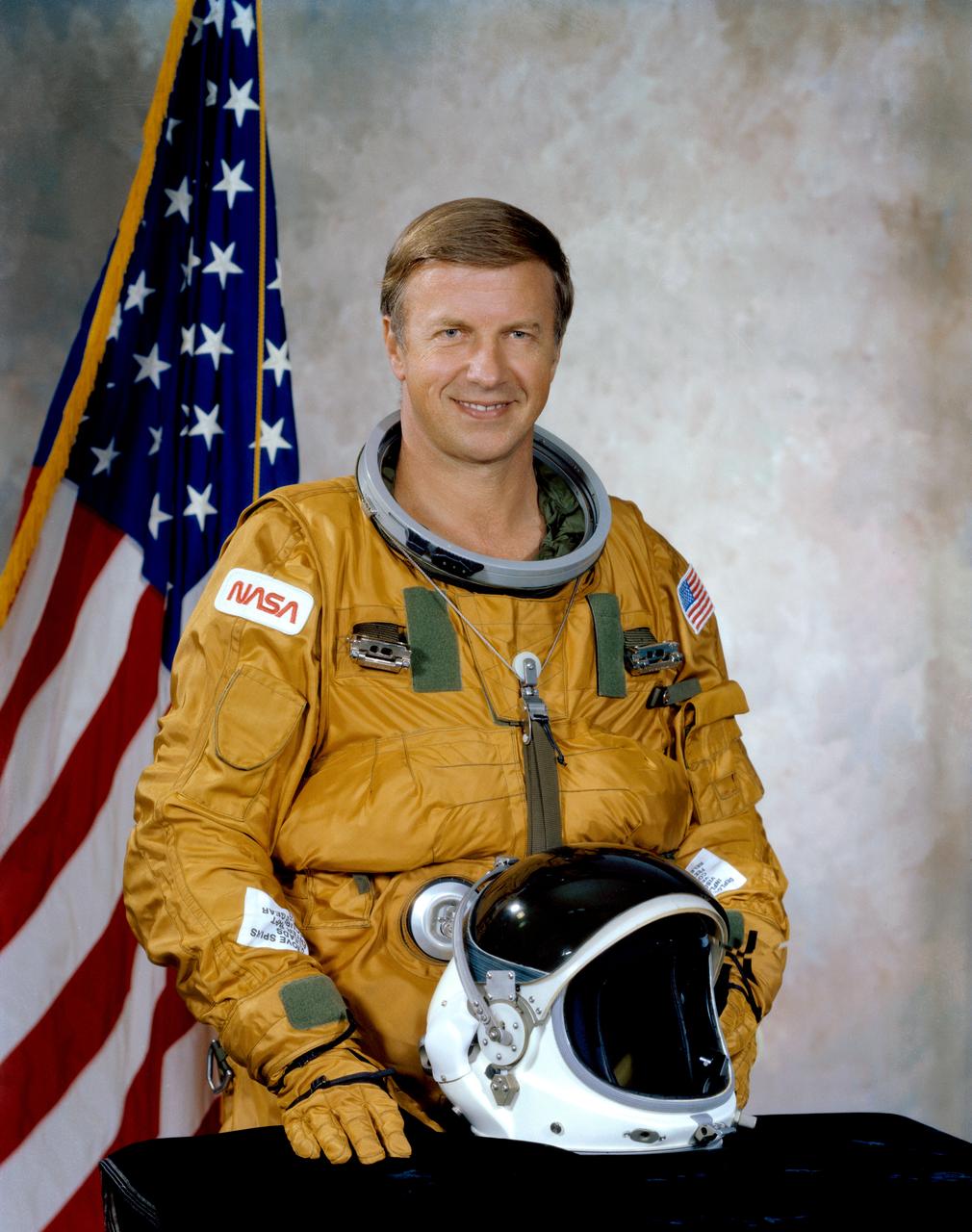
S79-36379 (17 Sept. 1979) --- Astronaut Paul J. Weitz portrait. Photo credit: NASA
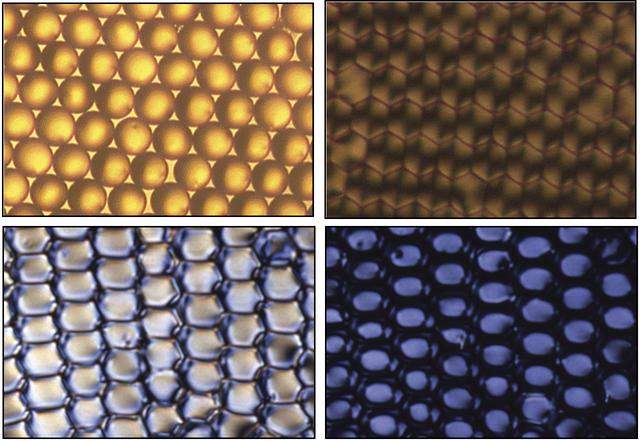
These images, from David Weitz’s liquid crystal research, show ordered uniform sized droplets (upper left) before they are dried from their solution. After the droplets are dried (upper right), they are viewed with crossed polarizers that show the deformation caused by drying, a process that orients the bipolar structure of the liquid crystal within the droplets. When an electric field is applied to the dried droplets (lower left), and then increased (lower right), the liquid crystal within the droplets switches its alignment, thereby reducing the amount of light that can be scattered by the droplets when a beam is shone through them.

S73-18667 (January 1973) --- Astronaut Paul J. Weitz, pilot for the Skylab 2 first manned mission, is suited up for Skylab training activity in the mission simulation and training facility at the Manned Spacecraft Center. Photo credit: NASA
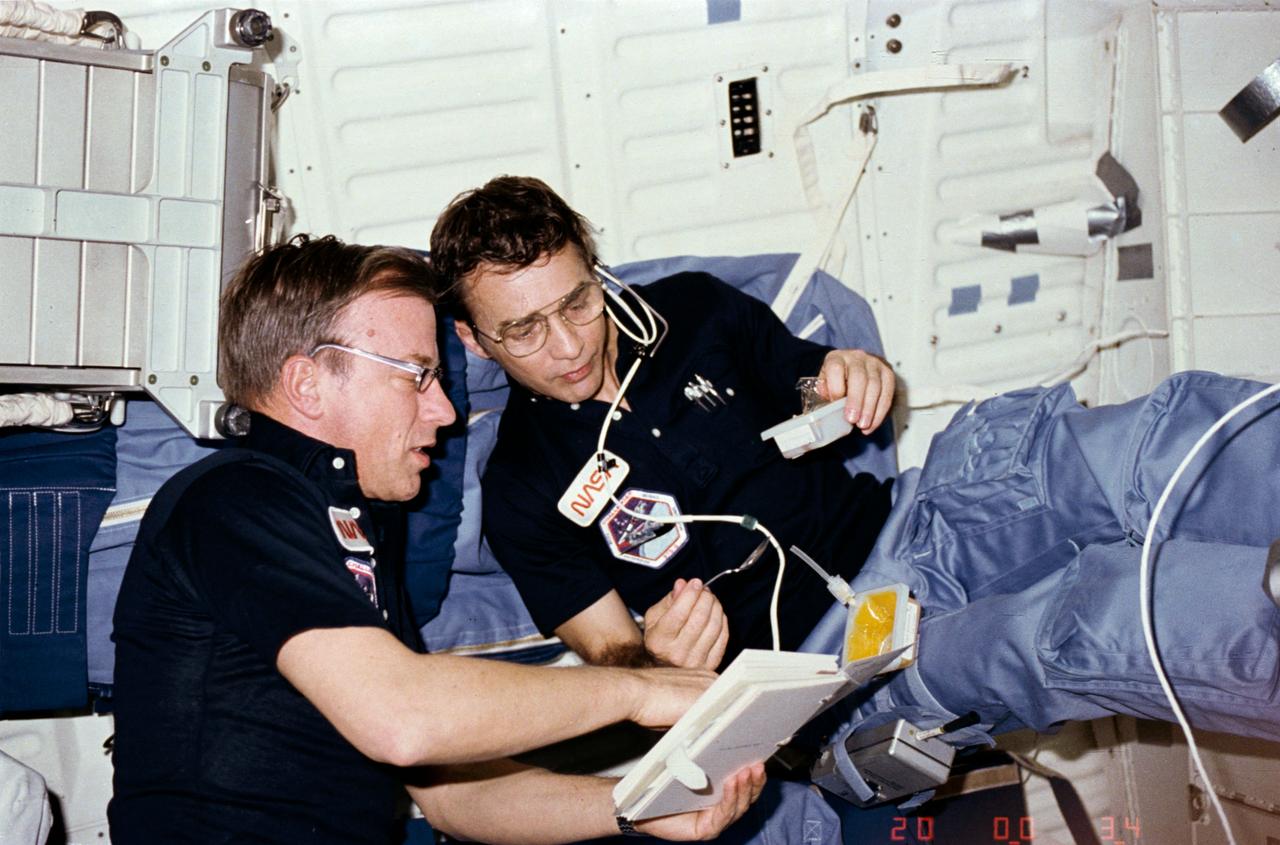
STS006-06-456 (4-9 April 1983) --- Astronaut Paul J. Weitz, STS-6 commander, points out an item in the crew activity plan (CAP) to astronaut Donald H. Peterson as the mission specialist uses a spoon to eat a meal aboard the Earth-orbiting space shuttle Challenger. The two are on the middeck. They are wearing the shirt and trouser portions of the blue cotton multi-piece constant wear garments. This frame was photographed with a 35mm camera. Photo credit: NASA
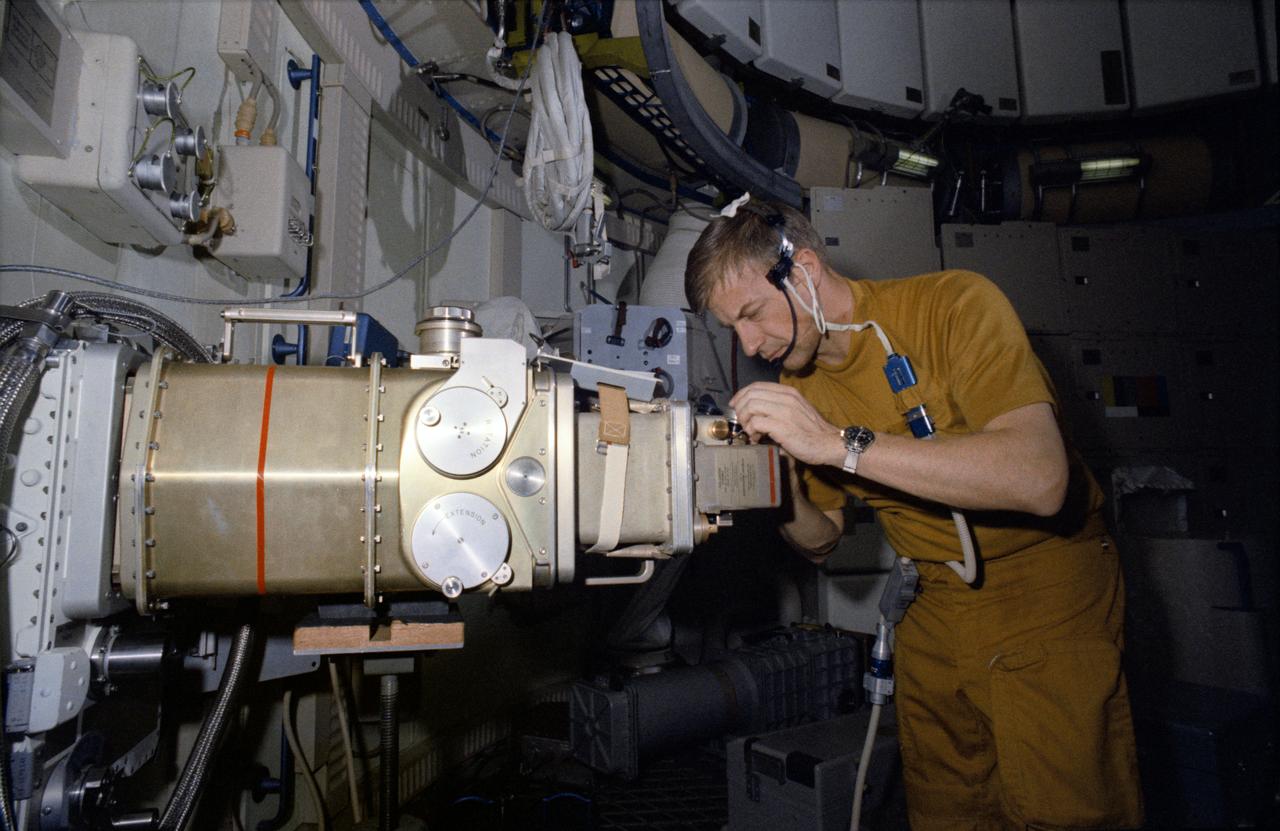
S73-20716 (1 March 1973) --- Astronaut Paul J. Weitz, pilot of the first manned Skylab mission, works with the UV Stellar Astronomy Experiment S019 in the forward compartment of the Skylab Orbital Workshop (OWS) trainer during Skylab training at Johnson Space Center. The equipment consists of a reflecting telescope, a 35mm camera and an additional mirror. It is mounted in an anti-solar scientific airlock in the side of the OWS. Photo credit: NASA
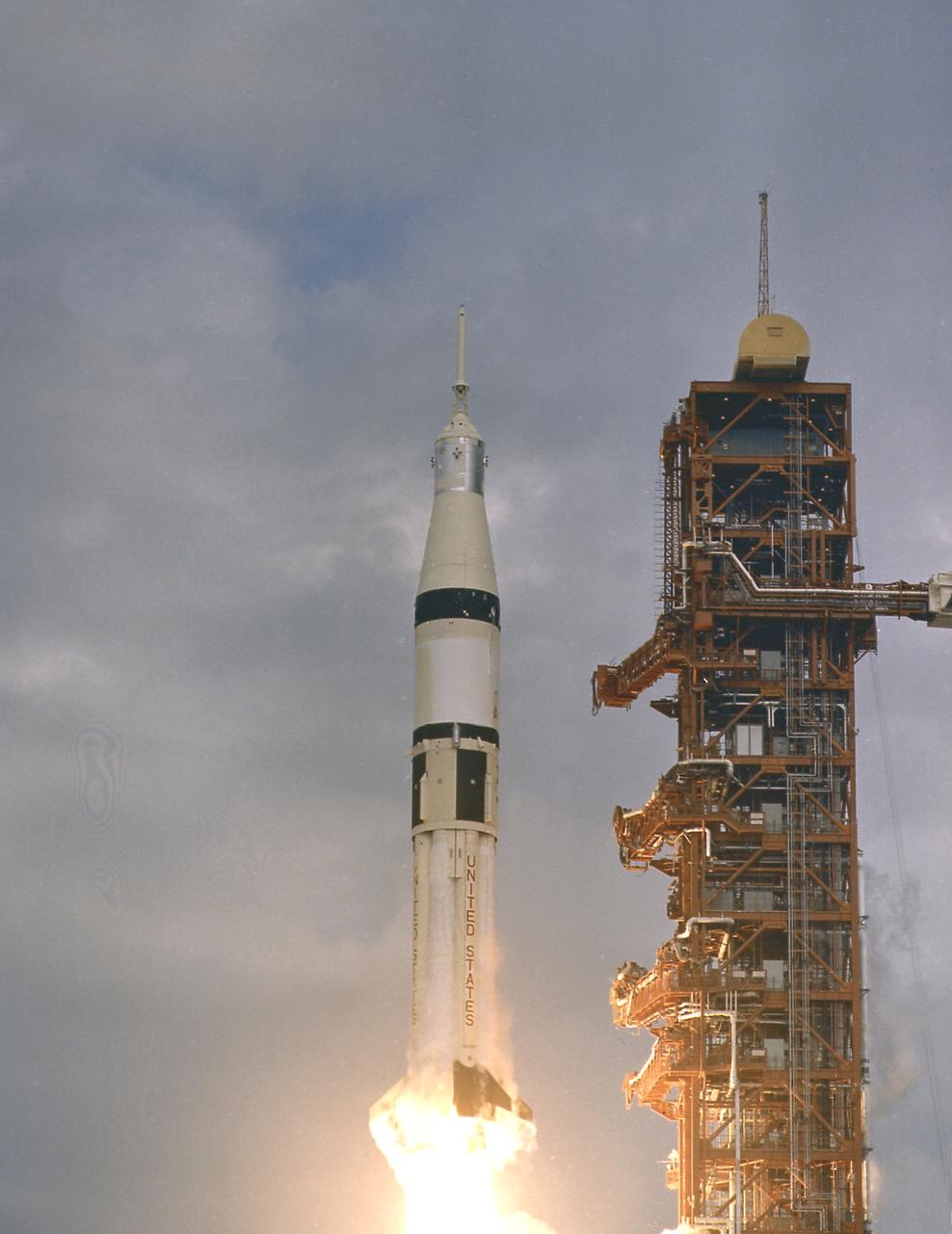
SA-206 lifts off from Kennedy Space Center's launch complex 39B, in Florida, on May 25, 1973, for the first manned Skylab mission (SL-2) with astronauts Pete Conrad, Joseph Kerwin, and Paul Weitz. The Saturn IB, developed under the direction of the Marshall Space Flight Center (MSFC), launched five manned Earth-orbital missions between 1968 and 1975: Apollo 7, Skylab 2, Skylab 3, Skylab 4, and the Apollo-Soyuz Test Project (ASTP).

DISCUSSING THEIR EXPERIENCES AND MEMORIES WITH THE MARSHALL TEAM AT THE 40TH ANNIVERSARY CELEBRATION OF SKYLAB JAN. 31 ARE, FROM LEFT, FORMER SKYLAB ASTRONAUTS ED GIBSON, SKYLAB 4 SCIENCE POLOT; PAUL WEITZ, SKYLAB 2 PILOT; WILLIAM POGUE, SKYLAB 4 PILOT; GERALD CARR, SKYLAB 4 COMMANDER; AND JOSEPH KERWIN, SKYLAB 2 SCIENCE PILOT
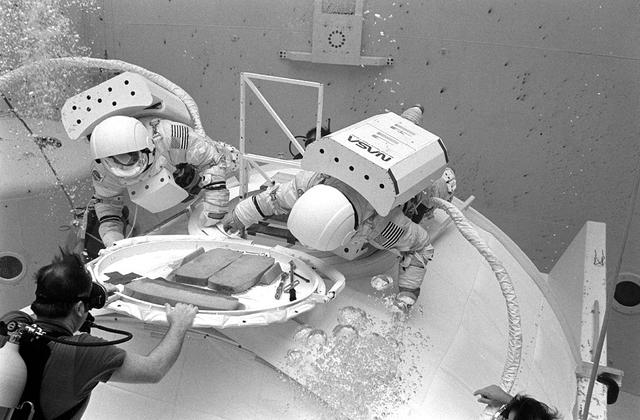
Once the United States' space program had progressed from Earth's orbit into outerspace, the prospect of building and maintaining a permanent presence in space was realized. To accomplish this feat, NASA launched a temporary workstation, Skylab, to discover the effects of low gravity and weightlessness on the human body, and also to develop tools and equipment that would be needed in the future to build and maintain a more permanent space station. The structures, techniques, and work schedules had to be carefully designed to fit this unique construction site. The components had to be lightweight for transport into orbit, yet durable. The station also had to be made with removable parts for easy servicing and repairs by astronauts. All of the tools necessary for service and repairs had to be designed for easy manipulation by a suited astronaut. Construction methods had to be efficient due to the limited time the astronauts could remain outside their controlled environment. In lieu of all the specific needs for this project, an environment on Earth had to be developed that could simulate a low gravity atmosphere. A Neutral Buoyancy Simulator (NBS) was constructed by NASA Marshall Space Flight Center (MSFC) in 1968. Since then, NASA scientists have used this facility to understand how humans work best in low gravity and also provide information about the different kinds of structures that can be built. With the help of the NBS, building a space station became more of a reality. Pictured is Astronaut Paul Weitz training on a mock-up of Spacelab's airlock-hatch cover. Training was also done on the use of foot restraints which had recently been developed to help astronauts maintain their positions during space walks rather than having their feet float out from underneath them while they tried to perform maintenance and repair operations. Every aspect of every space mission was researched and demonstrated in the NBS. Using the airlock hatch cover and foot restraints were just a small example of the preparation that went into each mission.
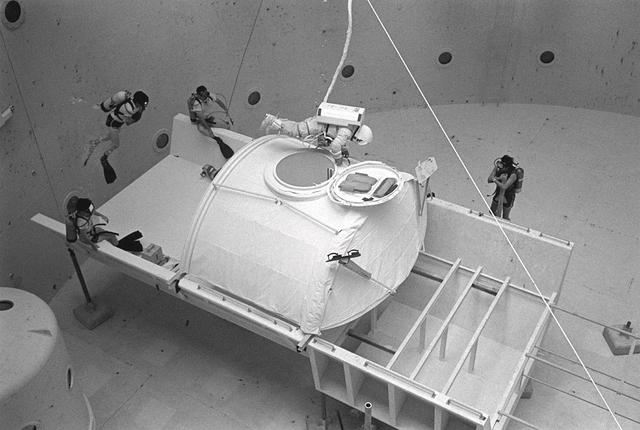
Once the United States' space program had progressed from Earth's orbit into outerspace, the prospect of building and maintaining a permanent presence in space was realized. To accomplish this feat, NASA launched a temporary workstation, Skylab, to discover the effects of low gravity and weightlessness on the human body, and also to develop tools and equipment that would be needed in the future to build and maintain a more permanent space station. The structures, techniques, and work schedules had to be carefully designed to fit this unique construction site. The components had to be lightweight for transport into orbit, yet durable. The station also had to be made with removable parts for easy servicing and repairs by astronauts. All of the tools necessary for service and repairs had to be designed for easy manipulation by a suited astronaut. Construction methods had to be efficient due to the limited time the astronauts could remain outside their controlled environment. In lieu of all the specific needs for this project, an environment on Earth had to be developed that could simulate a low gravity atmosphere. A Neutral Buoyancy Simulator (NBS) was constructed by NASA Marshall Space Flight Center (MSFC) in 1968. Since then, NASA scientists have used this facility to understand how humans work best in low gravity and also provide information about the different kinds of structures that can be built. With the help of the NBS, building a space station became more of a reality. Pictured is Astronaut Paul Weitz training on a mock-up of Spacelab's airlock-hatch cover. Training was also done on the use of foot restraints which had recently been developed to help astronauts maintain their positions during space walks rather than having their feet float out from underneath them while they tried to perform maintenance and repair operations. Every aspect of every space mission was researched and demonstrated in the NBS. Using the airlock hatch cover and foot restraints were just a small example of the preparation that went into each mission.
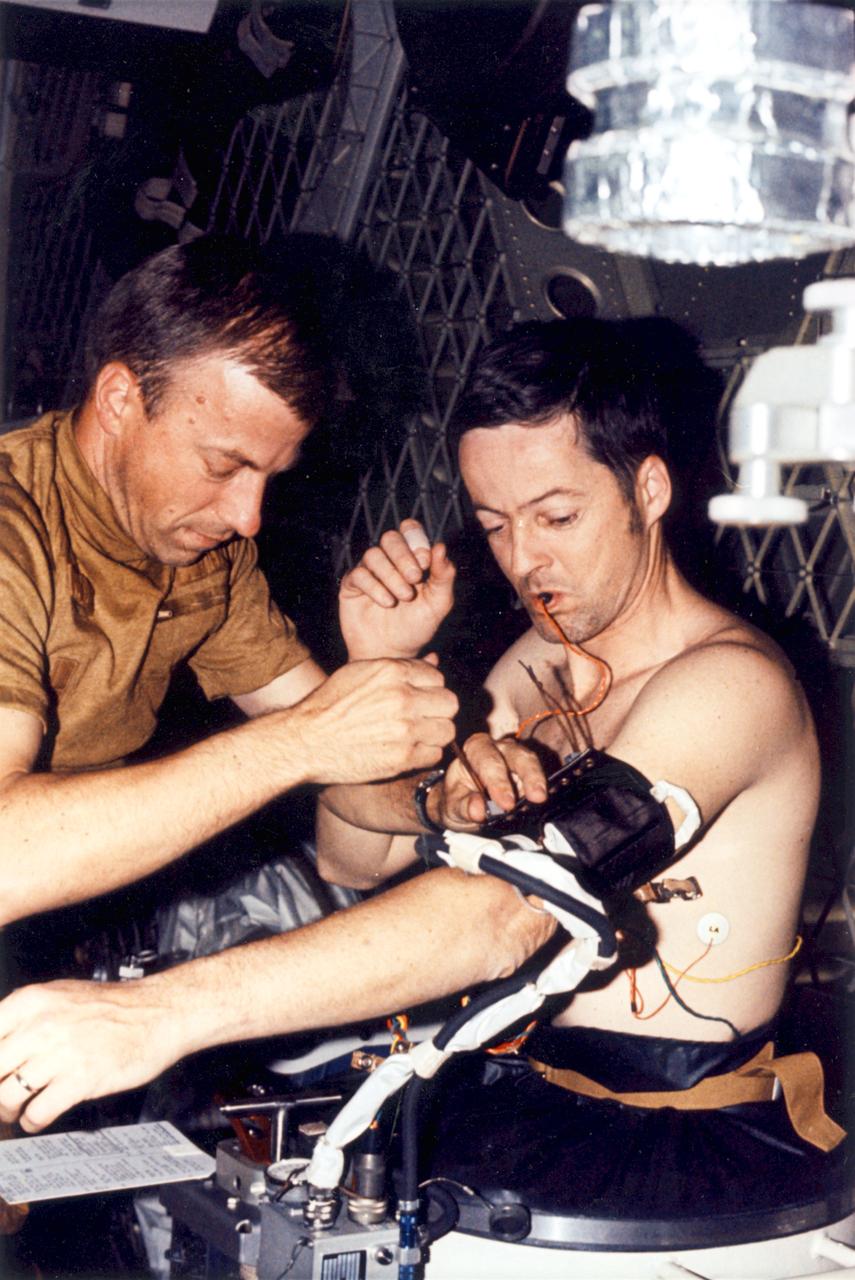
Astronaut Weitz assists Astronaut Kerwin with blood pressure cuff. Skylab-2 mission duration 5/25/73 thru 6/22/73.
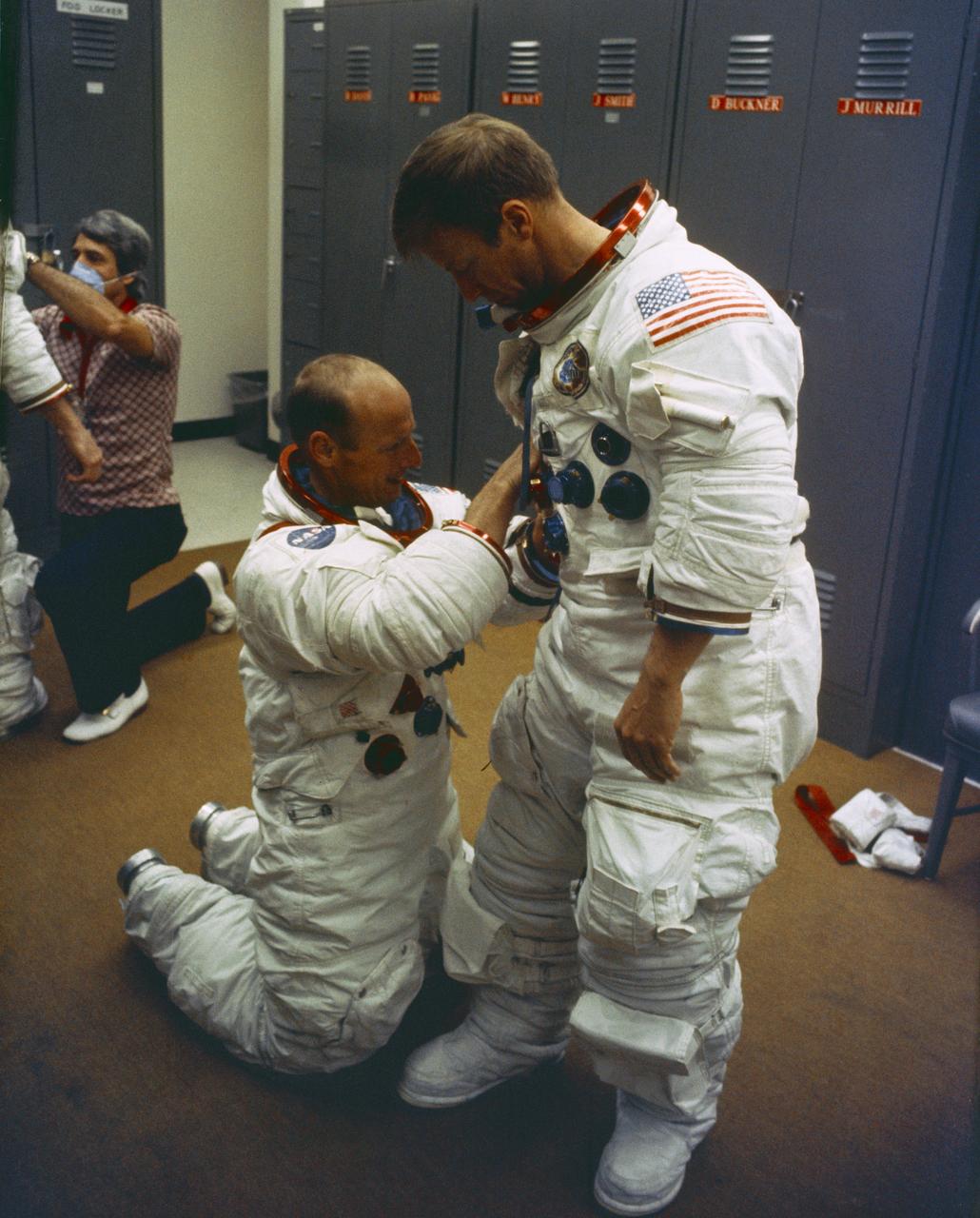
S73-25399 (8 May 1973) --- Astronaut Paul J. Weitz, prime crew pilot of the first manned Skylab mission, is suited up in Bldg. 5 at Johnson Space Center (JSC) during prelaunch training activity. He is assisted by astronaut Charles Conrad, Jr., prime crew commander. The man in the left background is wearing a face mask to insure that Conrad, Joseph Kerwin and Weitz are not exposed to disease prior to launch. Photo credit: NASA
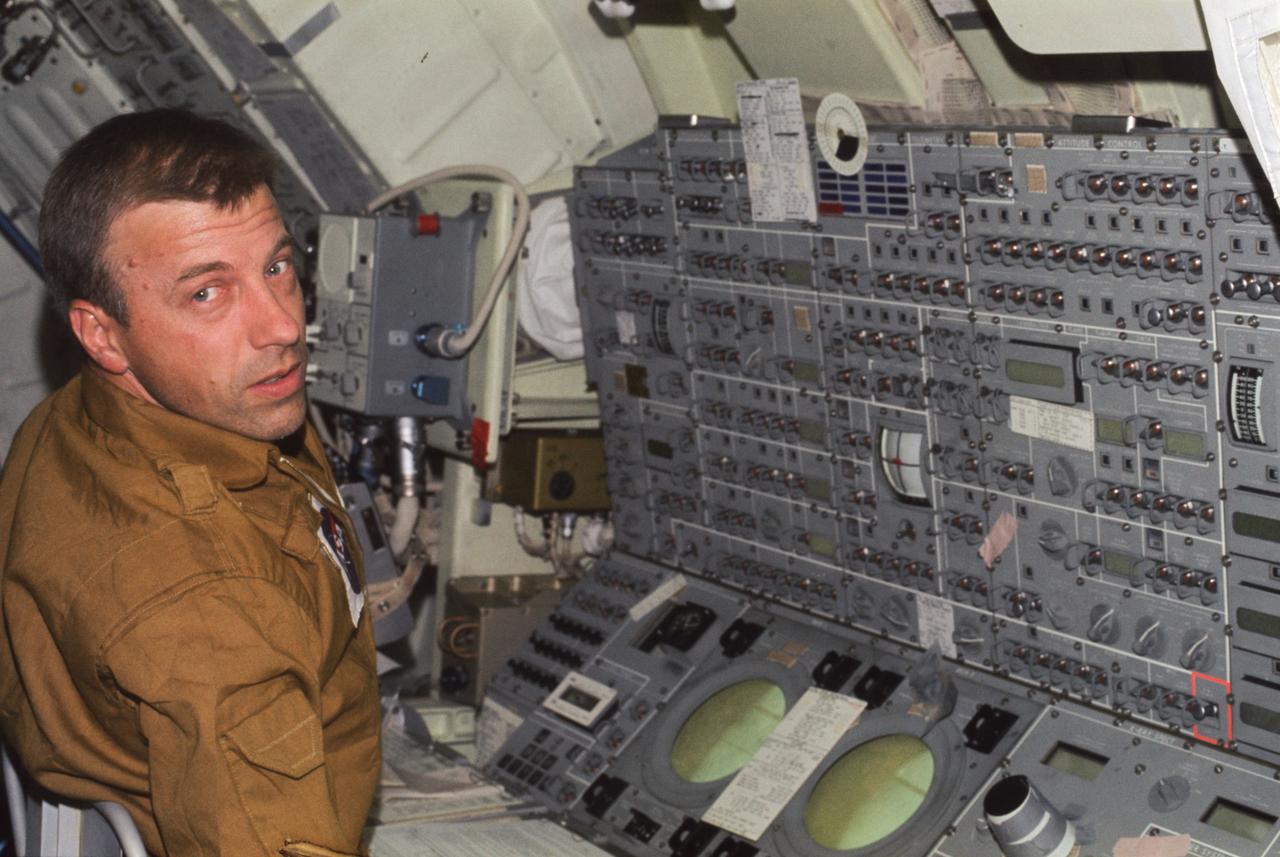
SL2-X9-747 (June 1973) --- Astronaut Paul J. Weitz, Skylab 2 pilot, mans the control and display console of the Apollo Telescope Mount (ATM) in this onboard view photographed in Earth orbit. The ATM C&D console is located in the Multiple Docking Adapter (MDA) of the Skylab 1/2 space station. Weitz, along with astronaut Charles Conrad Jr., commander, and scientist-astronaut Joseph P. Kerwin, science pilot, went on to successfully complete a 28-day mission in Earth orbit. Photo credit: NASA
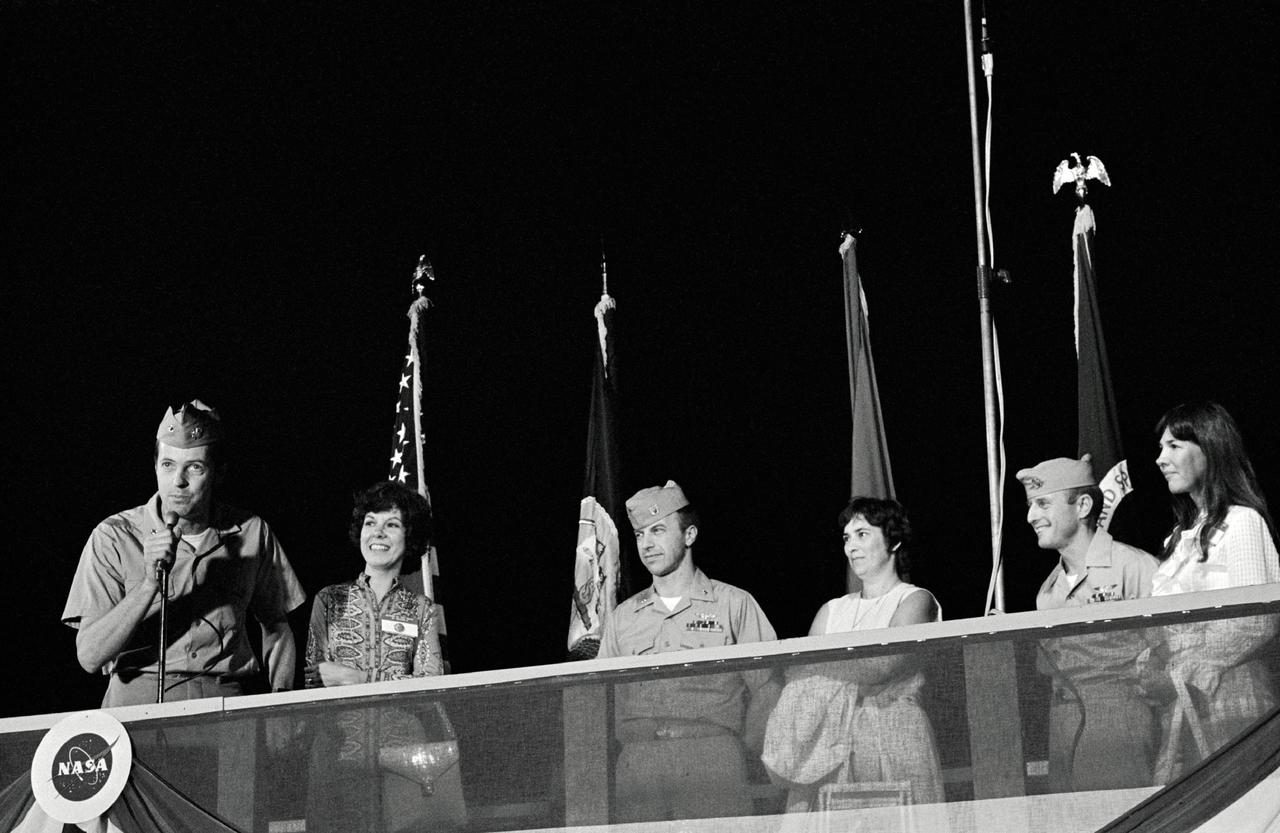
S73-28818 (24 June 1973) --- Scientist-astronaut Joseph P. Kerwin, science pilot for the Skylab 2 mission, speaks to a crowd at Ellington Air Force Base during welcome home ceremonies for the crew. Astronaut Paul J. Weitz, pilot, is at center; and astronaut Charles Conrad Jr., crew commander, is at right. The wives, standing by their husbands, are (left to right) Shirley Kerwin, Suzanne Weitz and Jane Conrad. Photo credit: NASA
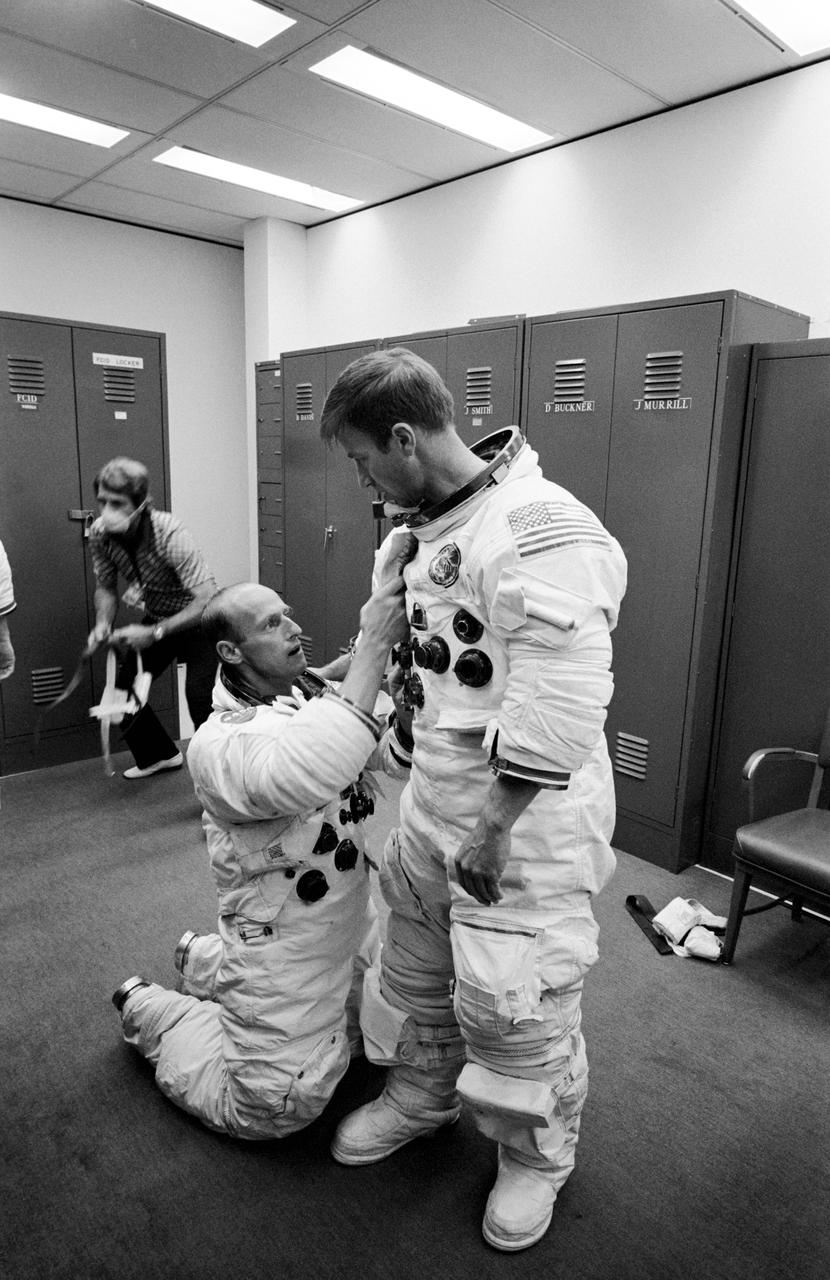
S73-25283 (8 May 1973) --- Astronaut Paul J. Weitz, prime crew pilot of the first manned Skylab mission, is suited up in Bldg. 5 at Johnson Space Center during prelaunch training activity. He is assisted by astronaut Charles Conrad Jr., prime crew commander. The man in the left background is wearing a face mask to insure that Conrad, Joseph Kerwin and Weitz are not exposed to disease prior to launch. Photo credit: NASA
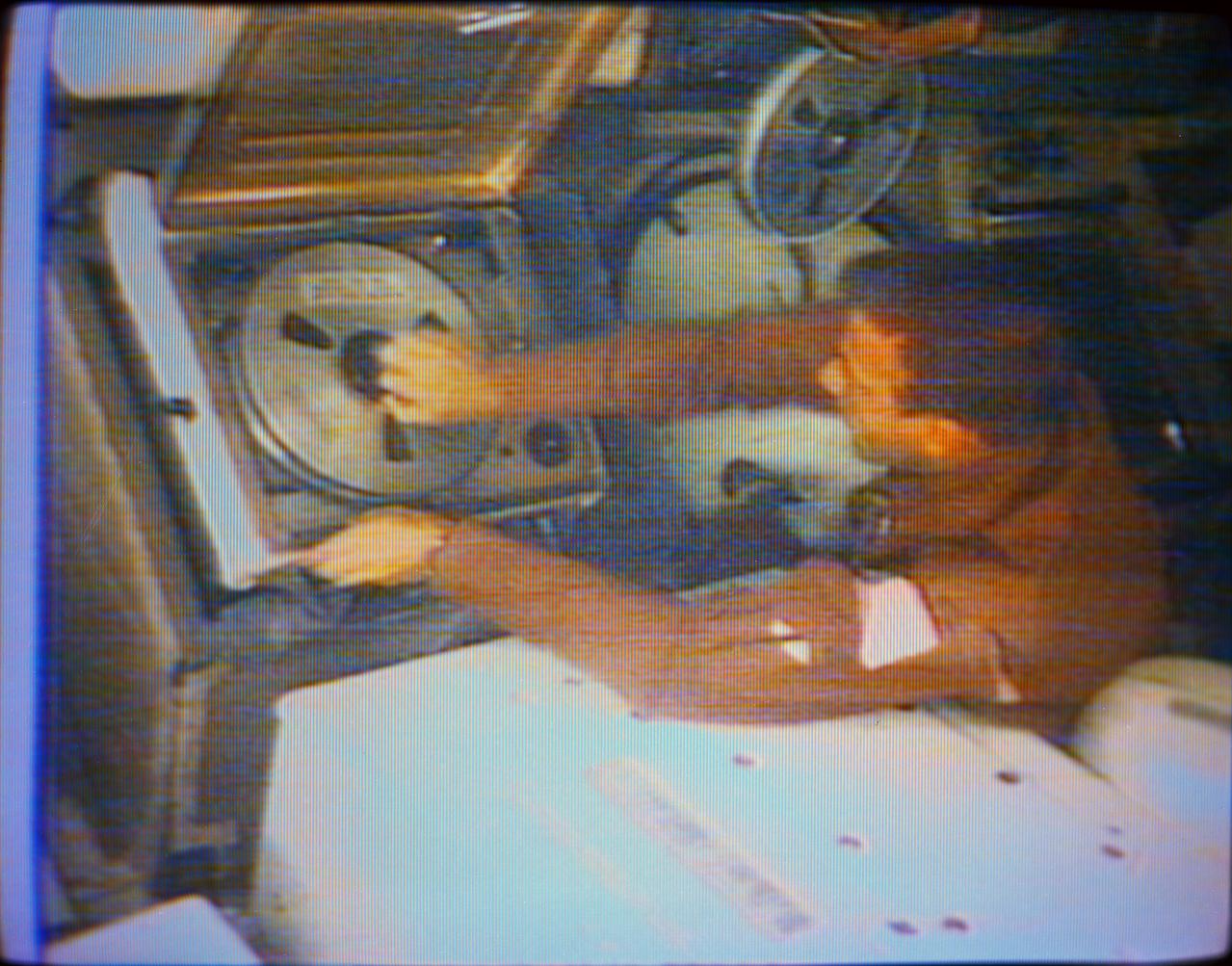
S73-27467 (5 June 1973) --- An overhead view of astronaut Paul J. Weitz, Skylab 2 pilot, at the video tape recorder in the Orbital Workshop of the Skylab 1 and 2 space station cluster in Earth orbit. Weitz is changing the tape in the recorder and storing the used data tape. This photograph was reproduced from a color television transmission made on June 5, 1973. Photo credit: NASA
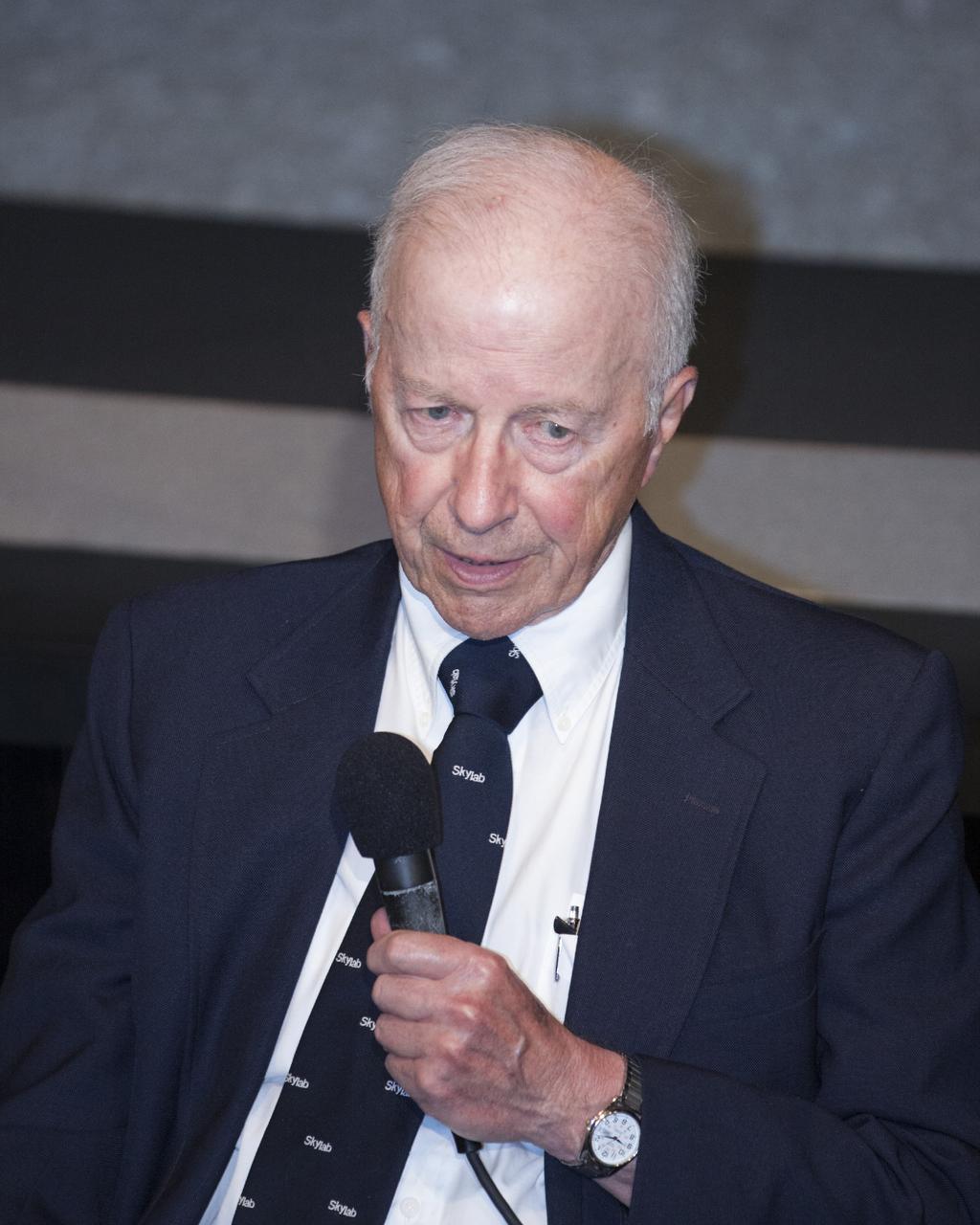
CAPE CANAVERAL, Fla. – At the Kennedy Space Center's Apollo/Saturn V Center, former NASA astronaut Paul Weitz speaks to guests at the Astronaut Scholarship Foundation's event celebrating the 40th anniversary of Skylab. Weitz served as pilot on Skylab 2, the first piloted mission to the space station. Weitz went on to fly missions aboard the space shuttle. The gala commemorating the 40th anniversary of Skylab included six of the nine astronauts who flew missions to America's first space station. The orbiting laboratory was launched unpiloted from Kennedy on May 14, 1973. Between May 25, 1973 and Feb. 8, 1974, crews of three spent 28, 59 and 84 days living and working in low-Earth orbit aboard the station. For more information, visit http://www.nasa.gov/mission_pages/skylab/ Photo credit: NASA/Kim Shiflett

KENNEDY SPACE CENTER, FLA. - Liftoff of STS-6, Orbiter Challenger, from Complex 39A carrying astronauts Paul Weitz, Karol J. Bobko, Donald H. Peterson and Dr. Story Musgrave.
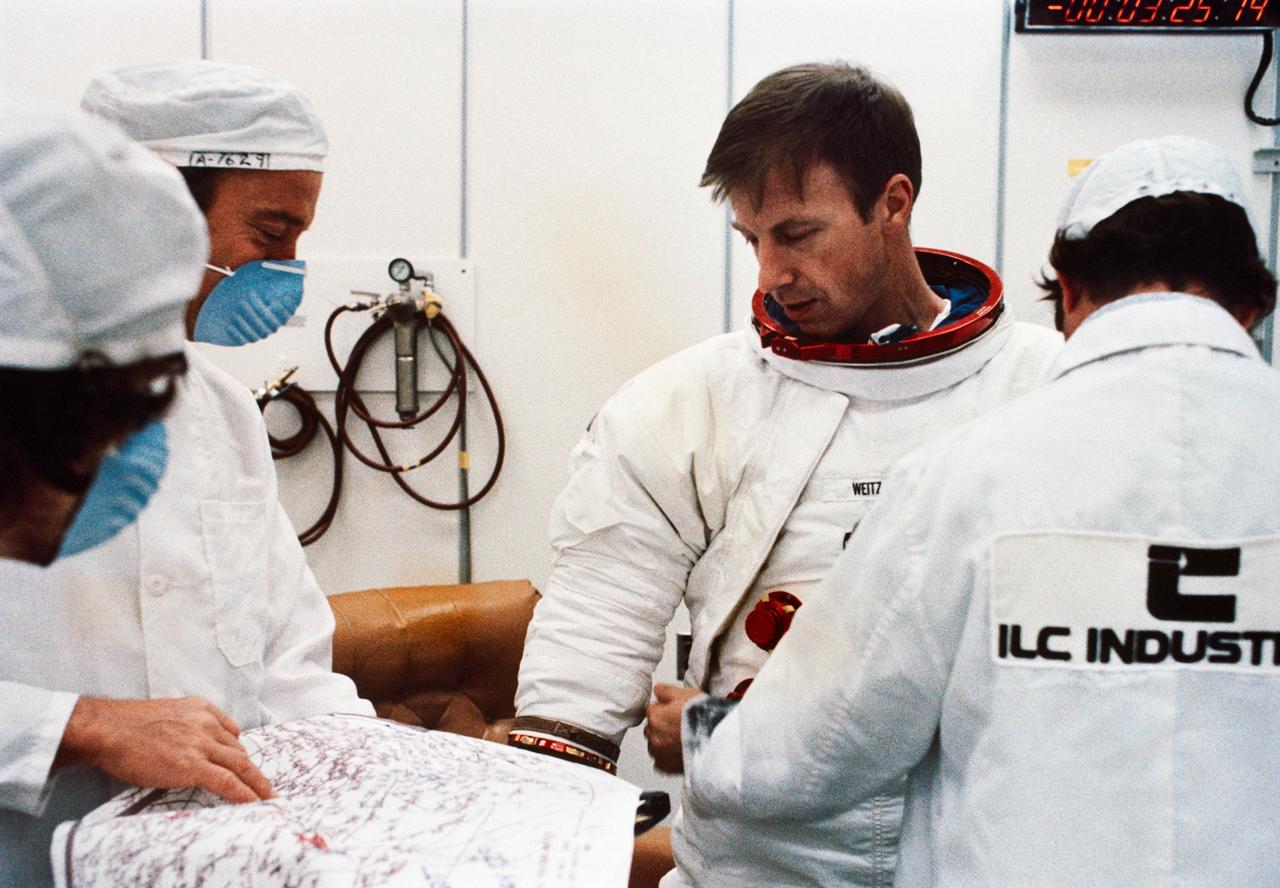
S73-25898 (25 May 1973) --- Astronaut Paul Weitz, pilot of the Skylab 2 mission, is suited up in the Manned Spacecraft Operations Building at the Kennedy Space Center during Skylab 2 prelaunch preparations. Photo credit: NASA
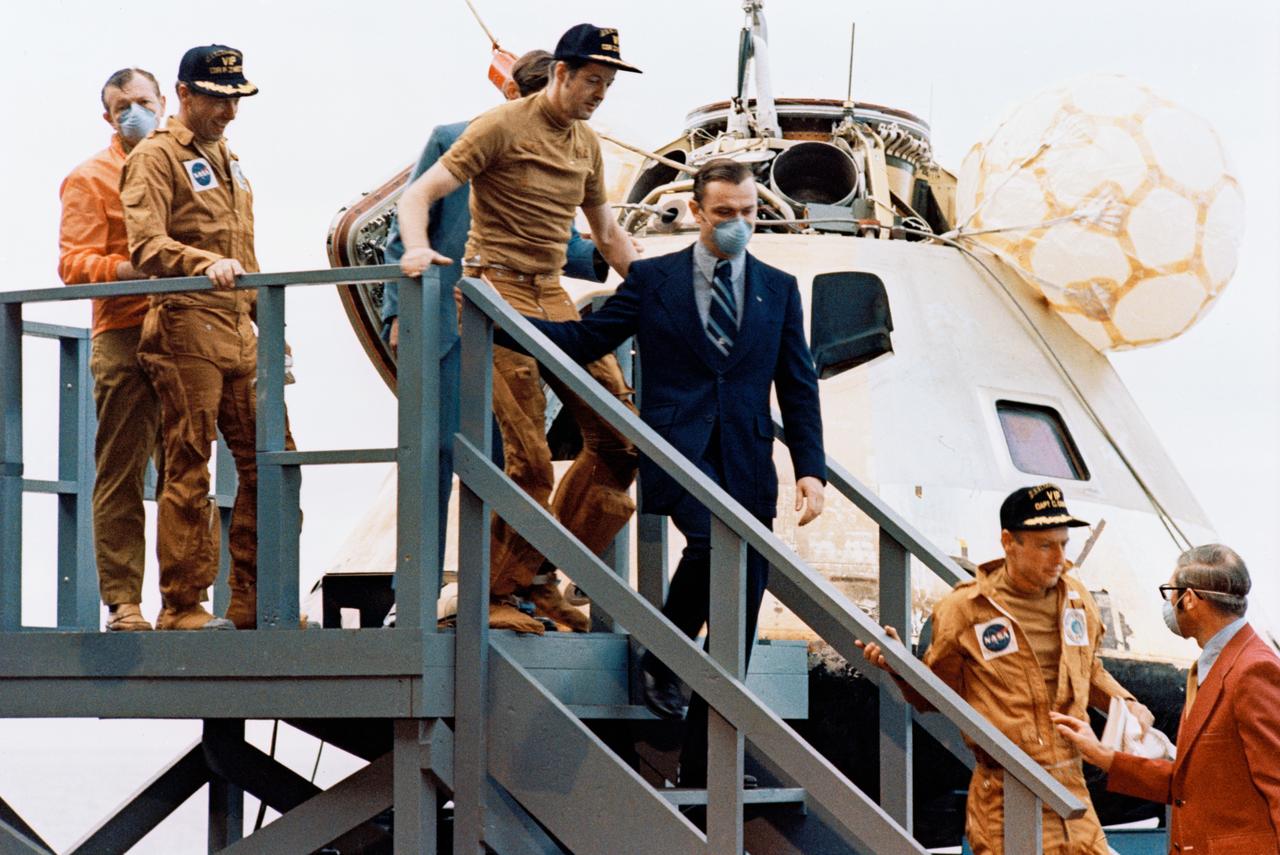
S73-29141 (22 June 1973) --- The three Skylab 2 crewmen arrive on the deck of the prime recovery ship, USS Ticonderoga, following the successful splashdown of the Skylab 2 Command Module about 835 miles southwest of San Diego, California. Leading down the steps is astronaut Charles Conrad Jr., commander, followed by scientist-astronaut Joseph P. Kerwin, science pilot, and astronaut Paul J. Weitz, pilot. Recovery and medical personnel walk down the steps with the astronauts. The crewmen remained inside the spacecraft (seen in background) until it was hoisted aboard the recovery ship. Conrad, Kerwin and Weitz had just completed a 28-day stay with the Skylab 1 space station in Earth orbit conducting numerous medical, scientific and technological experiments. Photo credit: NASA
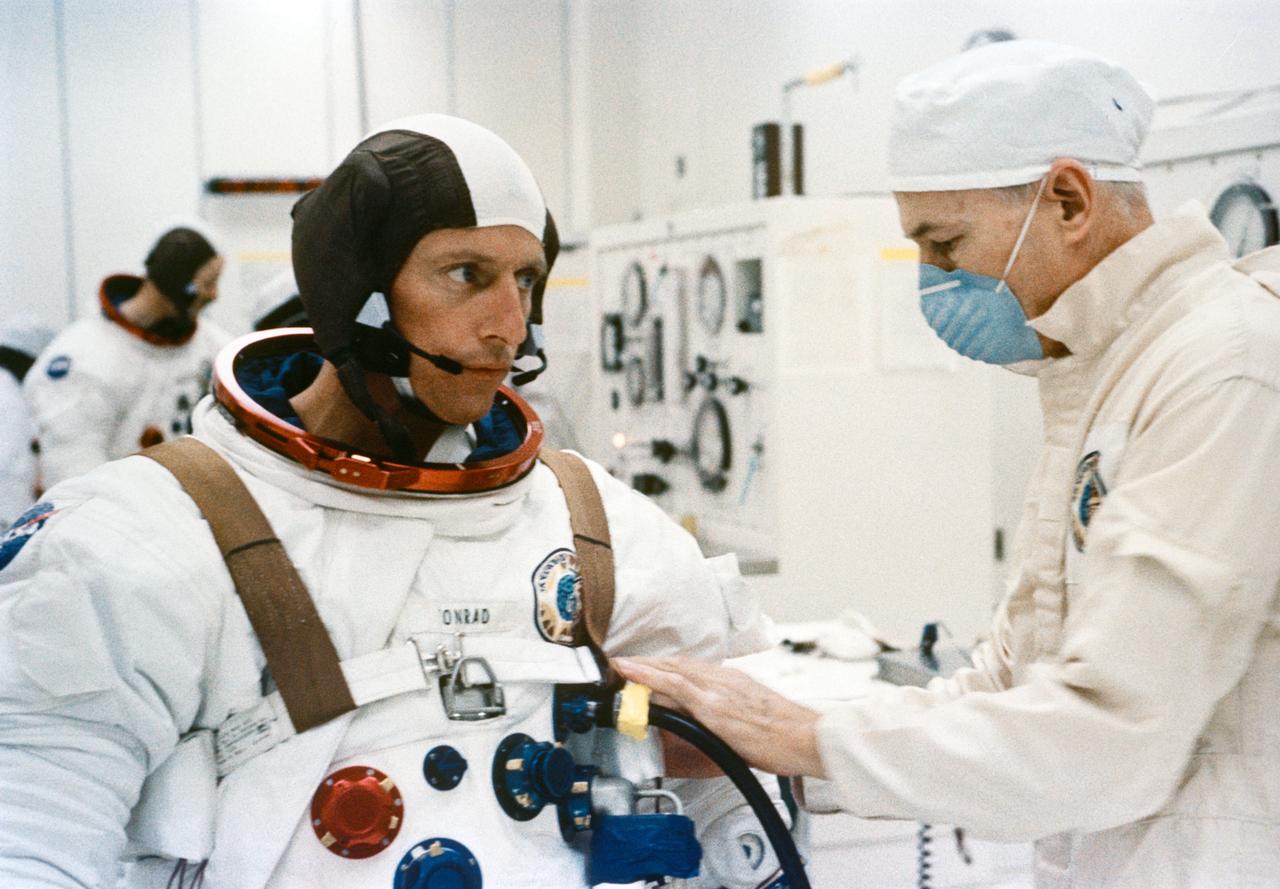
S73-25901 (25 May 1973) --- Astronaut Charles Conrad Jr., commander of the Skylab 2 mission, is suited up in the Manned Spacecraft Operations Building at the Kennedy Space Center during Skylab 2 prelaunch preparations. Skylab 2, with astronauts Conrad, Joseph P. Kerwin and Paul J. Weitz aboard, was launched from KSC's Pad B, Launch Complex 39, at 9:00 a.m. (EDT), May 25, 1973. Photo credit: NASA
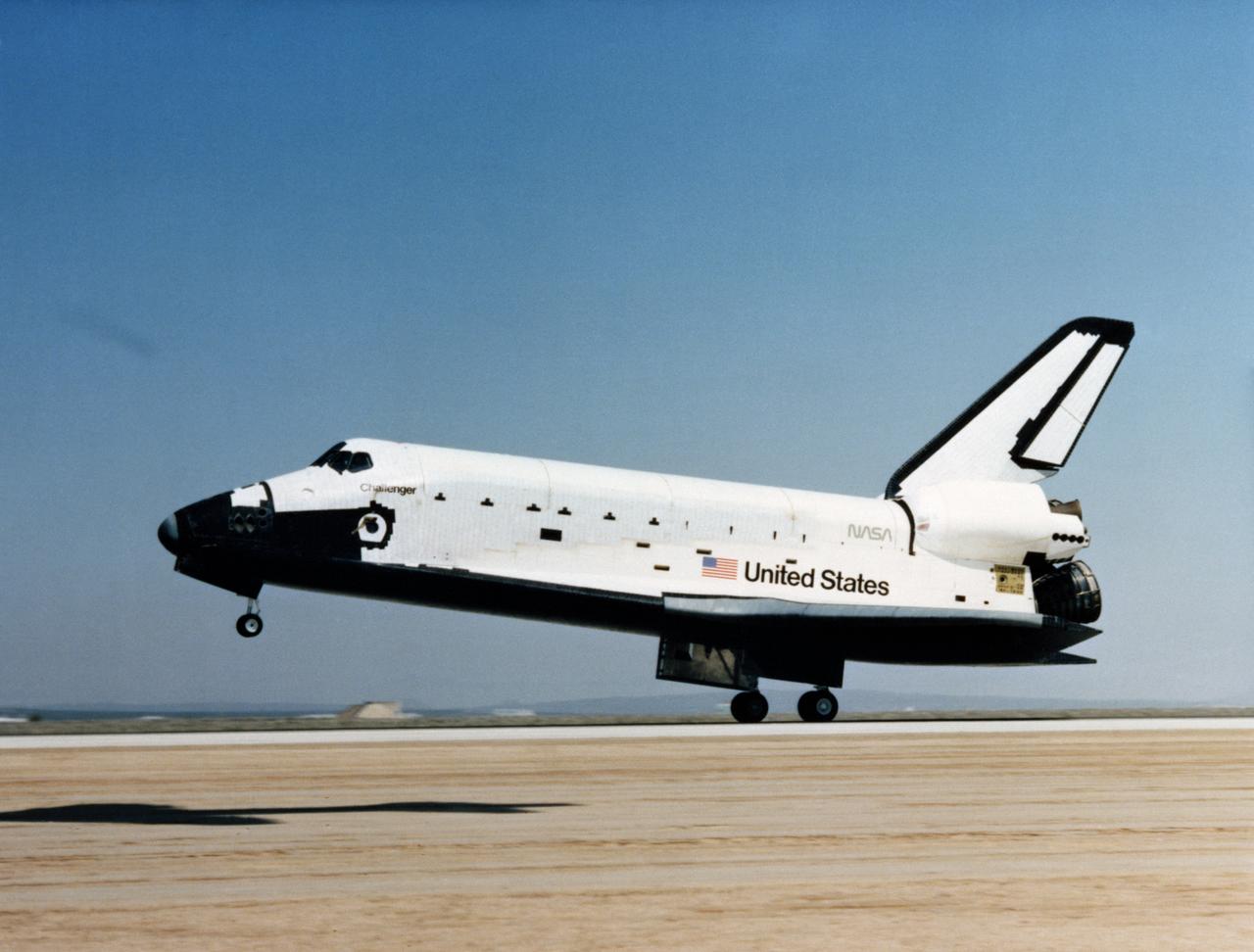
S83-30220 (9 April 1983) --- The space shuttle Challenger makes its first landing shortly before 11 a.m. (PST) on April 9, 1983, on Runway 22 at the Edwards Air Force Base in Southern California. Onboard the reusable spacecraft, having just completed a successful five-day mission, are astronauts Paul J. Weitz, Karol J. Bobko, F. Story Musgrave and Donald H. Peterson. Photo credit: NASA
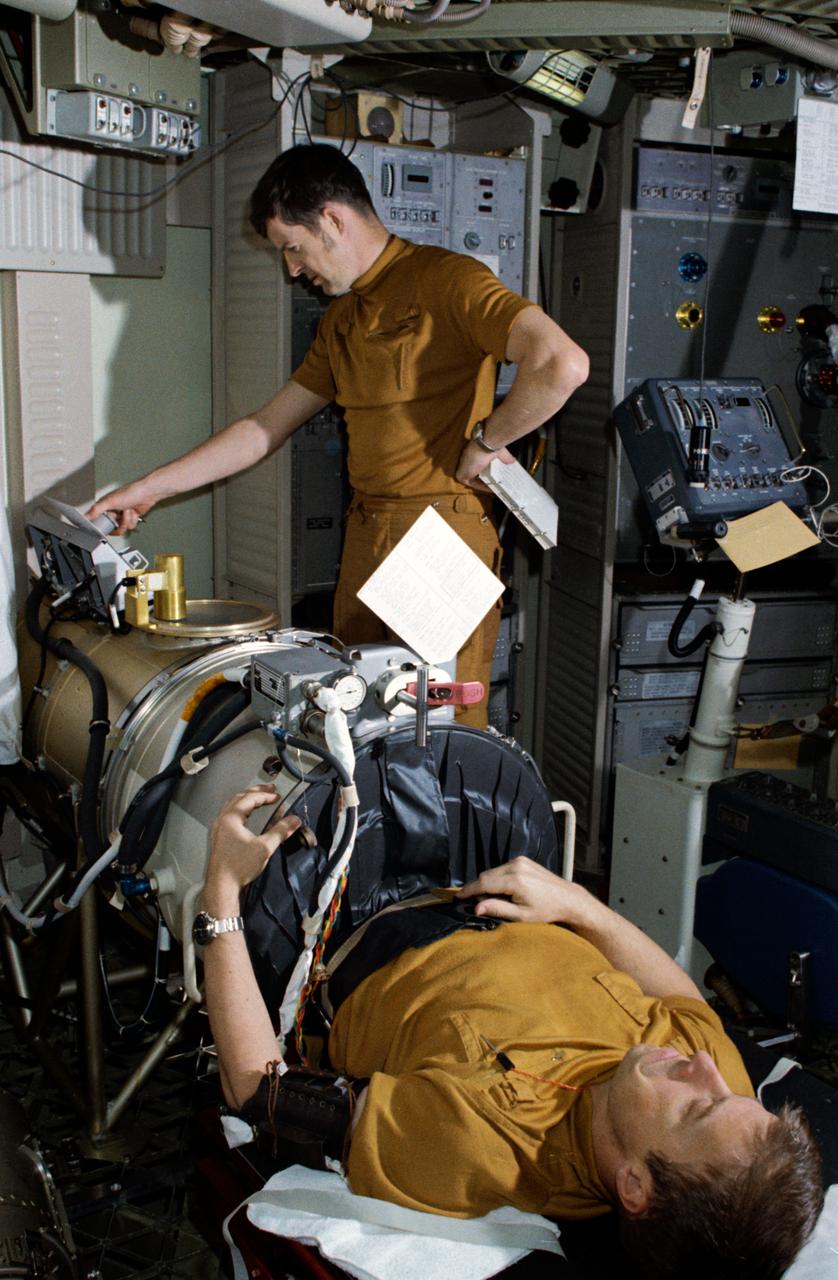
S73-20276 (1 March 1973) --- Astronaut Paul J. Weitz, pilot of the first manned Skylab mission, lies in the lower body negative pressure device during Skylab training at Johnson Space Center. Operating the controls in the background is scientist-astronaut Joseph P. Kerwin, science pilot of the mission. They are in the work and experiments area of the crew quarters of the Skylab Orbital Workshop (OWS) trainer at JSC. Photo credit: NASA

KENNEDY SPACE CENTER, FLA. -- The first flight of Challenger on mission STS-6. The primary payload is the first Tracking and Data Relay Satellite-1. The mission also is using the first lightweight external tank and lightweight solid rocket booster casings. The crew comprises Commander Paul J. Weitz, Pilot Karol J. Bobko, and Mission Specialists Donald H. Peterson and F. Story Musgrave.
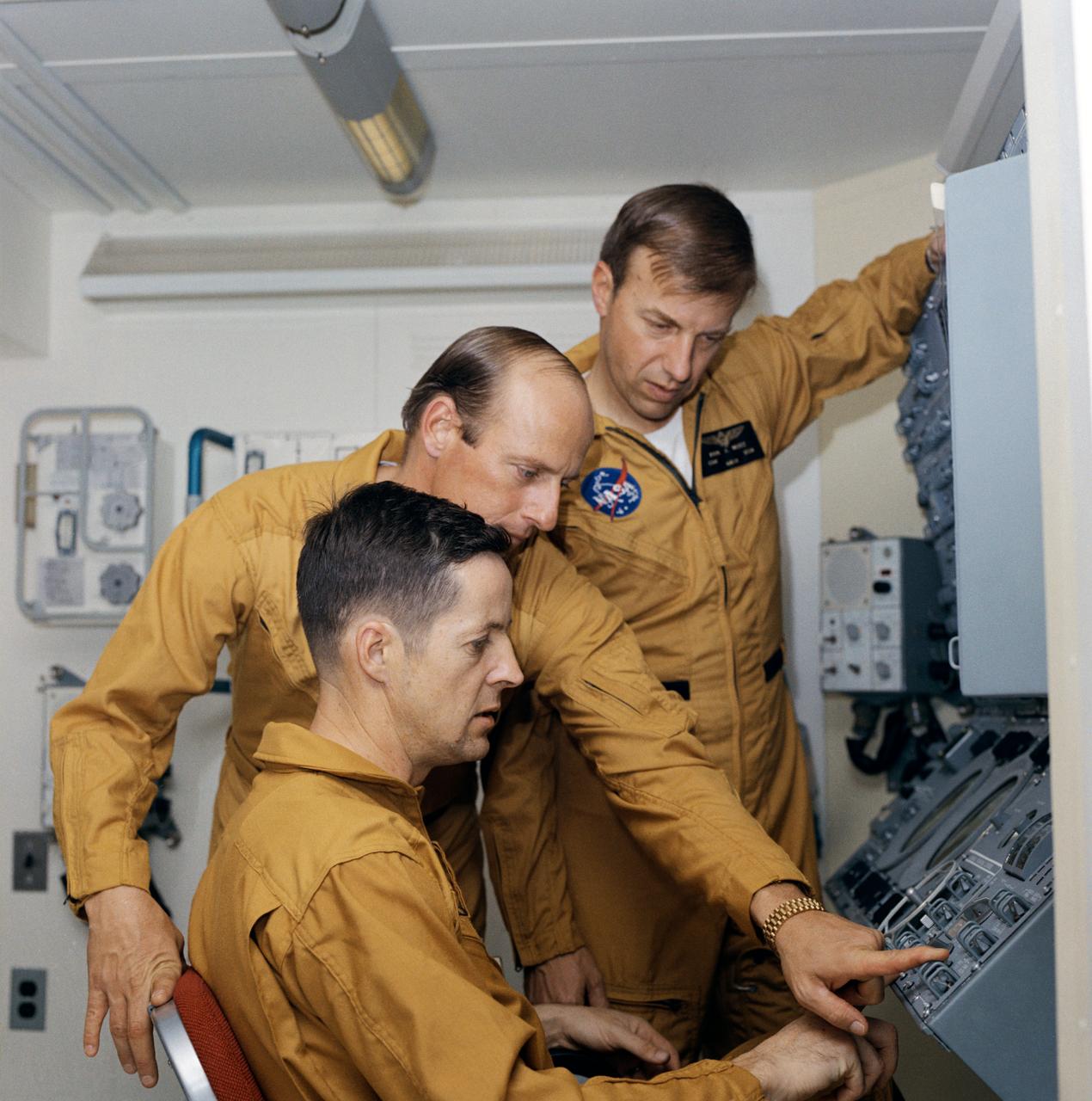
S72-17512 (19 Jan. 1972) --- These three men are the crewmen for the first manned Skylab mission. They are astronaut Charles Conrad Jr., commander, standing left; scientist-astronaut Joseph P. Kerwin, seated; and astronaut Paul J. Weitz, pilot. They were photographed and interviewed during an "open house" press day in the realistic atmosphere of the Multiple Docking Adapter (MDA) trainer in the Mission Simulation and Training Facility at the Manned Spacecraft Center (MSC). The control and display panel for the Apollo Telescope Mount (ATM) is at right. Photo credit: NASA
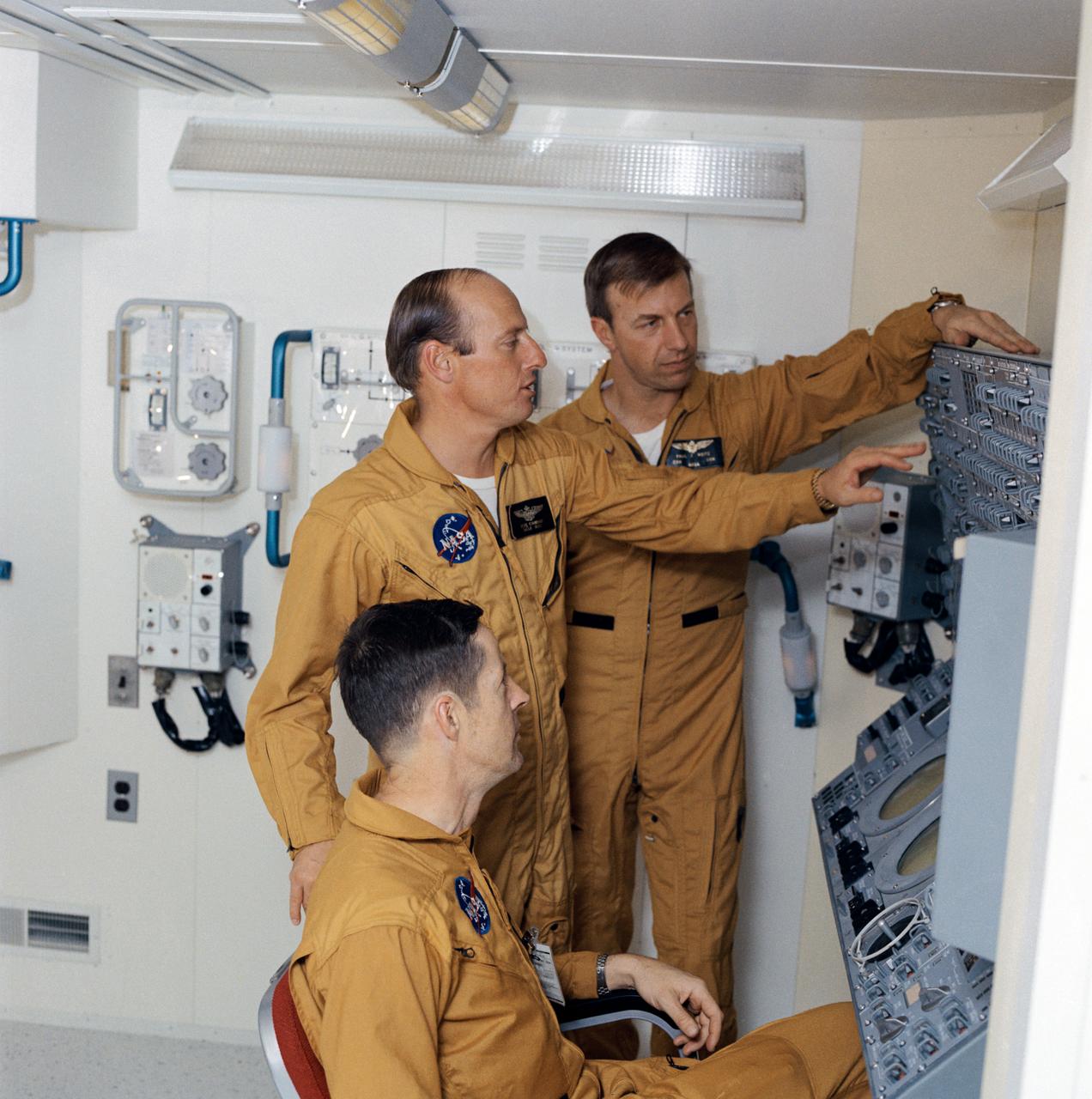
S72-17509 (19 Jan. 1972) --- These three men are the crewmen for the first manned Skylab mission. They are astronaut Charles Conrad Jr., commander, standing left; scientist-astronaut Joseph P. Kerwin, seated; and astronaut Paul J. Weitz, pilot. They were photographed and interviewed during an "open house" press day in the realistic atmosphere of the Multiple Docking Adapter (MDA) trainer in the Mission Simulation and Training Facility at the Manned Spacecraft Center (MSC). The control and display panel for the Apollo Telescope Mount (ATM) is at right. Photo credit: NASA

STS006-46-617 (4-9 April 1983) --- This view of sunset over the Amazon Basin was photographed with a 35mm camera from the Earth-orbiting space shuttle Challenger. The reusable vehicle was making its first trip into space and carried a crew of astronauts Paul J. Weitz, Karol J. Bobko, F. Story Musgrave and Donald H. Peterson. Photo credit: NASA
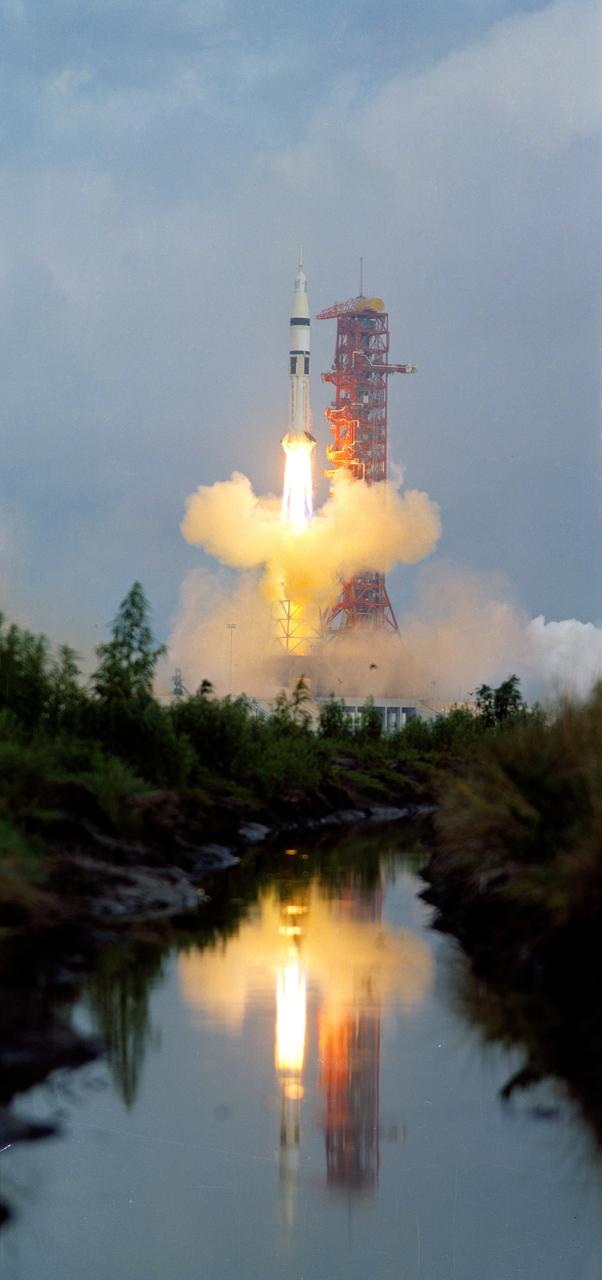
S73-27095 (25 May 1973) --- The Skylab 2 crew, consisting of astronauts Charles Conrad Jr., Joseph P. Kerwin and Paul J. Weitz, inside the command module atop a Saturn IB launch vehicle, heads toward the Skylab space station in Earth orbit. The command module was inserted into Earth orbit approximately 10 minutes after liftoff. The three represent the first of three crews who will spend record-setting durations for human beings in space, while performing a variety of experiments. Photo credit: NASA
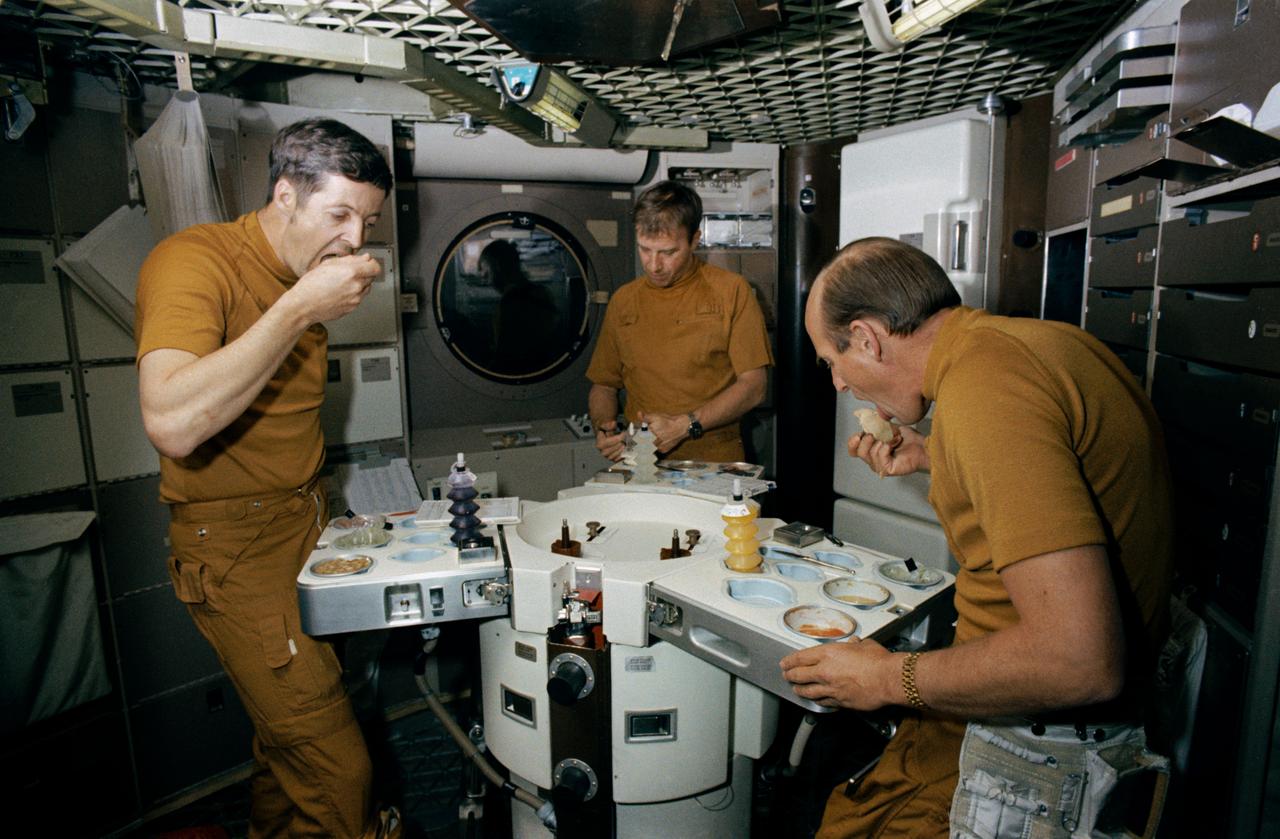
S73-20236 (1 March 1973) --- The three members of the prime crew of the first manned Skylab mission dine on specially prepared Skylab space food in the wardroom of the crew quarters of the Skylab Orbital Workshop (OWS) trainer during Skylab training at the Johnson Space Center. They are, left to right, scientist-astronaut Joseph P. Kerwin, science pilot; astronaut Paul J. Weitz, pilot; and astronaut Charles Conrad Jr., commander. Photo credit: NASA
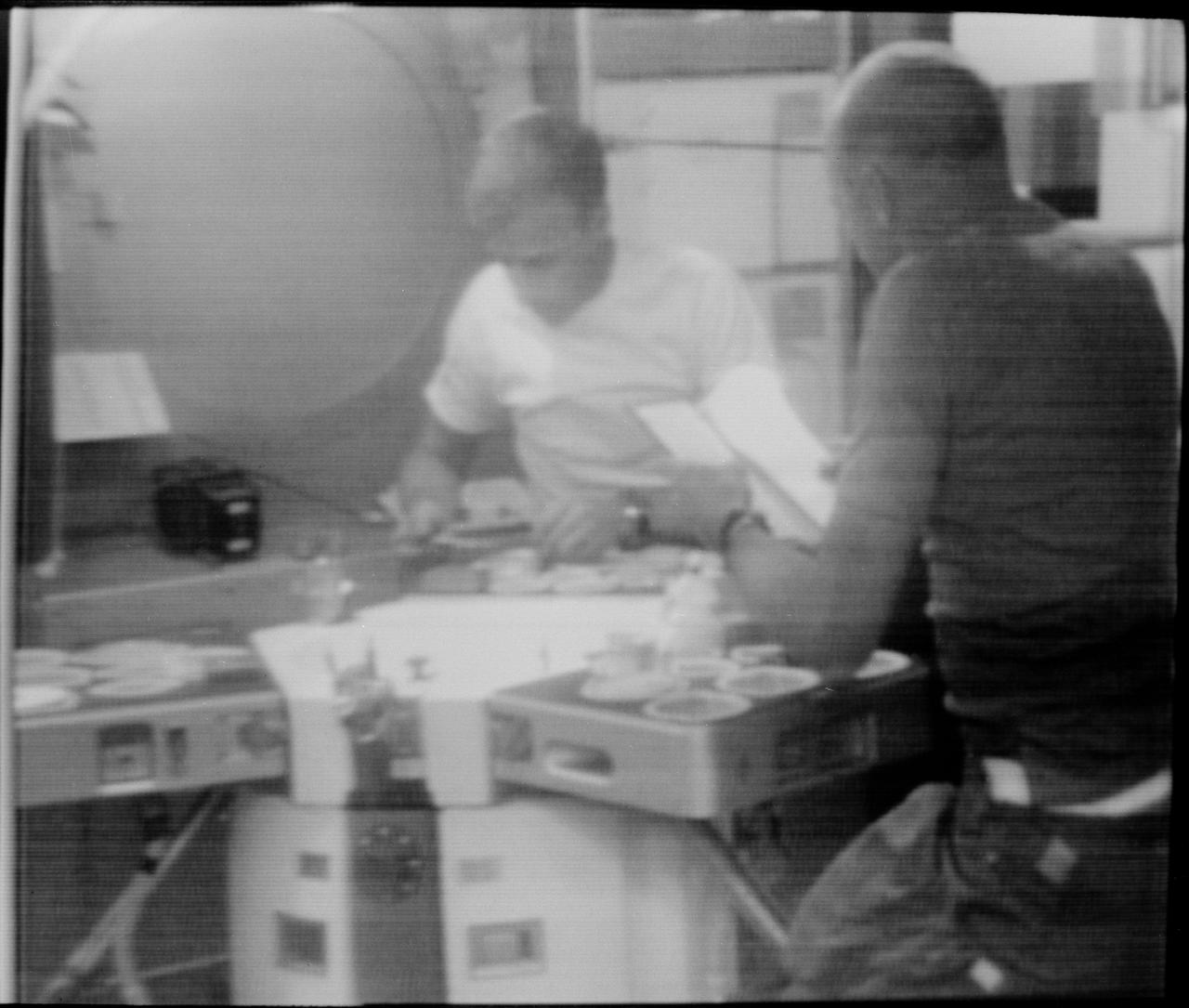
S73-27081 (30 May 1973) --- Two of the three Skylab 2 astronauts are seen in the wardroom of the crew quarters of the Orbital Workshop of the Skylab 1 space station cluster in Earth orbit in this reproduction taken from a television transmission made by a TV camera aboard the space station. They are preparing to eat a meal. Astronaut Charles Conrad Jr., commander, is in the right foreground. In the background is astronaut Paul J. Weitz, pilot. Photo credit: NASA
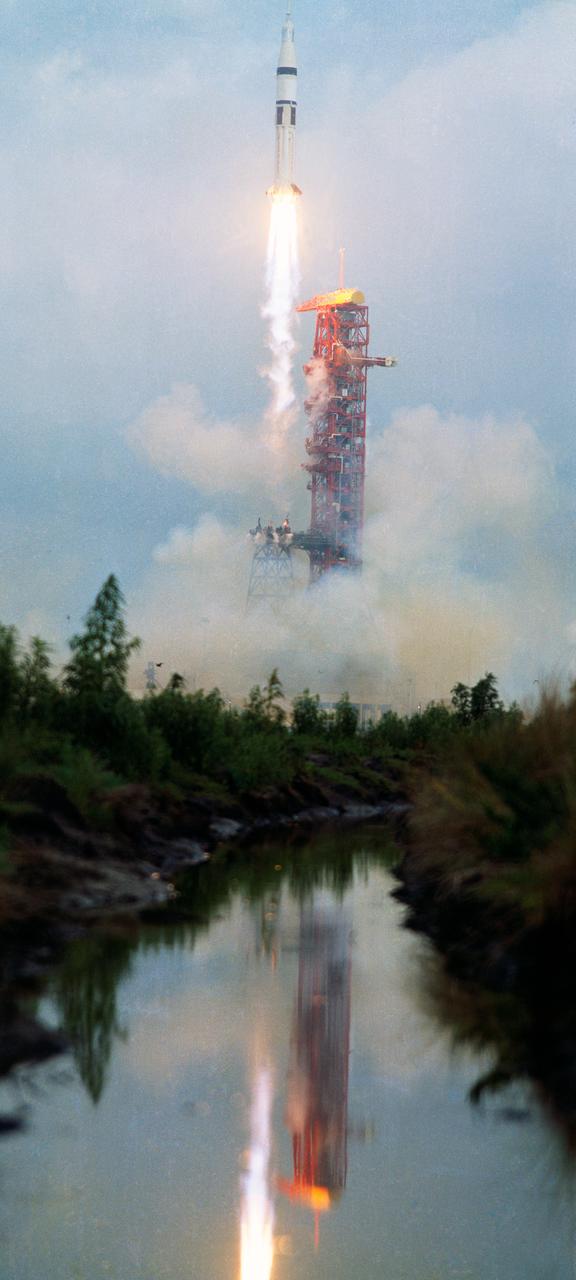
S73-27096 (25 May 1973) --- The Skylab 2 crew, consisting of astronauts Charles Conrad Jr., Joseph P. Kerwin and Paul J. Weitz, inside the command module atop a Saturn IB launch vehicle, heads toward the Skylab space station in Earth orbit. The command module was inserted into Earth orbit approximately 10 minutes after liftoff. The three represent the first of three crews who will spend record-setting durations for human beings in space, while performing a variety of experiments. Photo credit: NASA
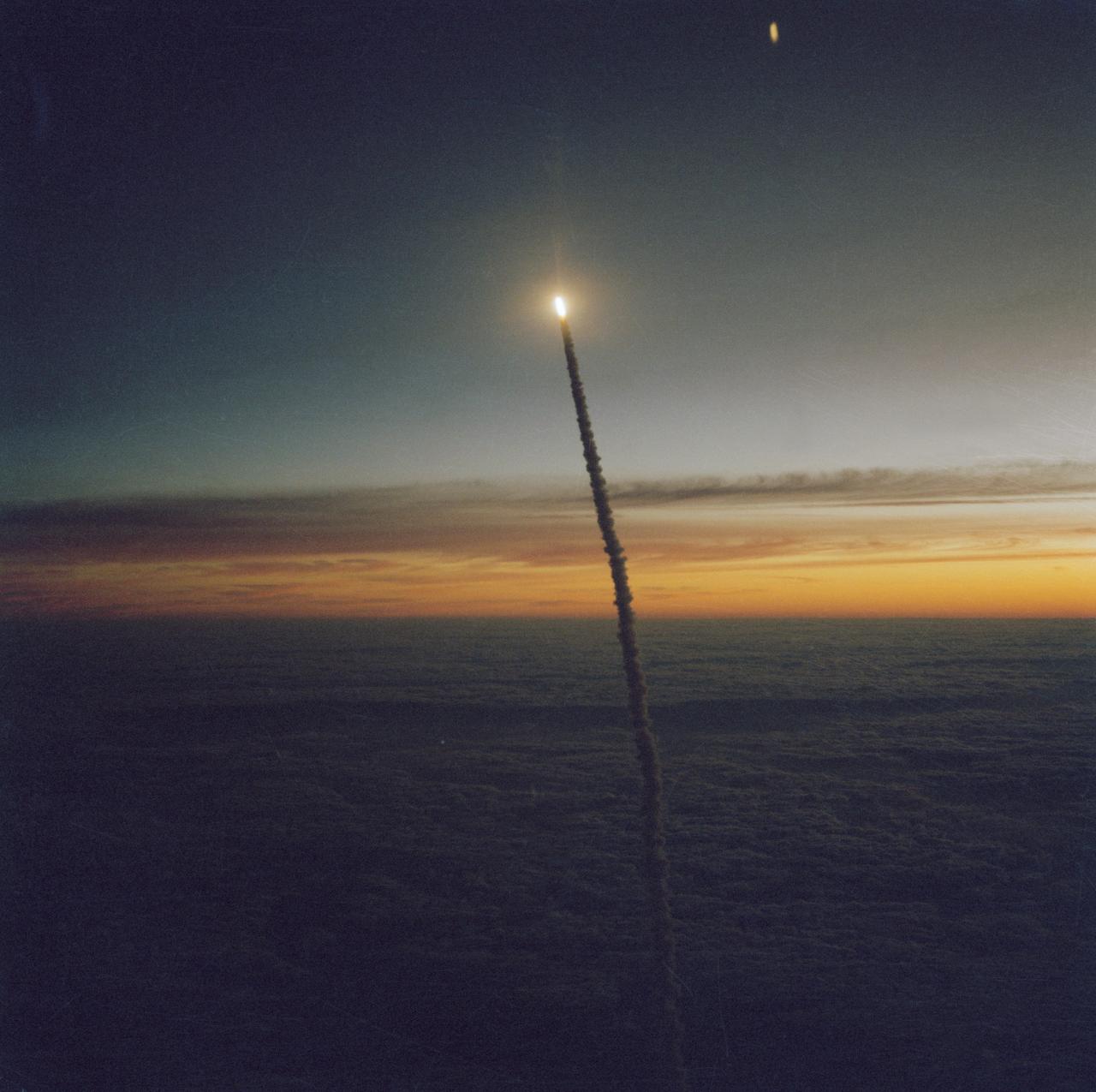
41G-90139 (5 October 1984) --- A Florida dawn scene forms the backdrop for the climbing Space Shuttle Challenger, its two solid rocket boosters and external fuel tank. Seven crewmembers, a space record, head for a busy eight-day stay in Earth orbit. The scene was photographed by astronaut Paul J. Weitz, who was piloting the Shuttle training aircraft (STA).
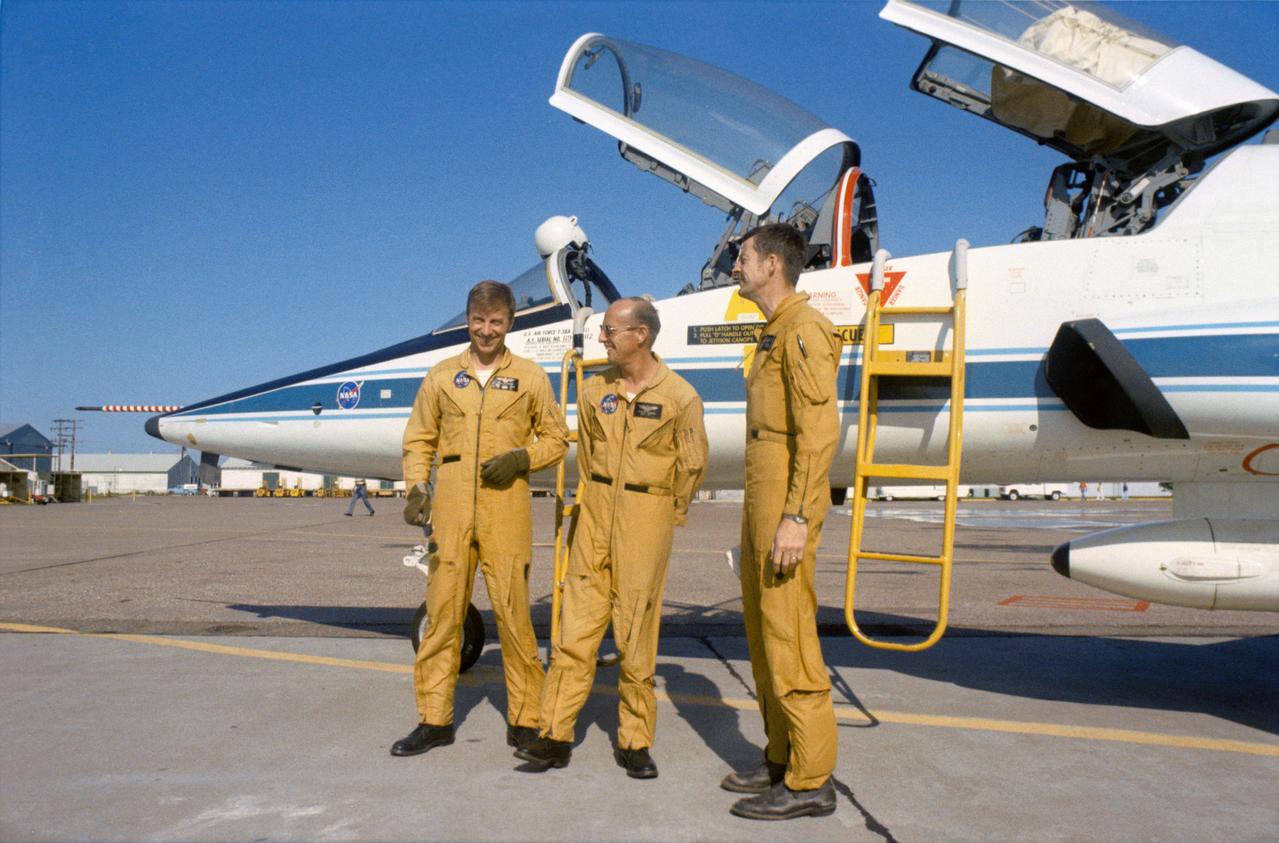
S73-25714 (13 May 1973) --- Members of the prime crew of the first manned Skylab Mission (Skylab 2) stand beside a NASA T-38 jet aircraft trainer at nearby Ellington Air Force Base prior to take off for the Kennedy Space Center, Florida. They are (left to right) astronauts Paul J. Weitz, mission pilot; Charles Conrad Jr., commander; and scientist Joseph P. Kerwin, science pilot. The three crewmen have completed their prelaunch training at JSC. Photo credit: NASA
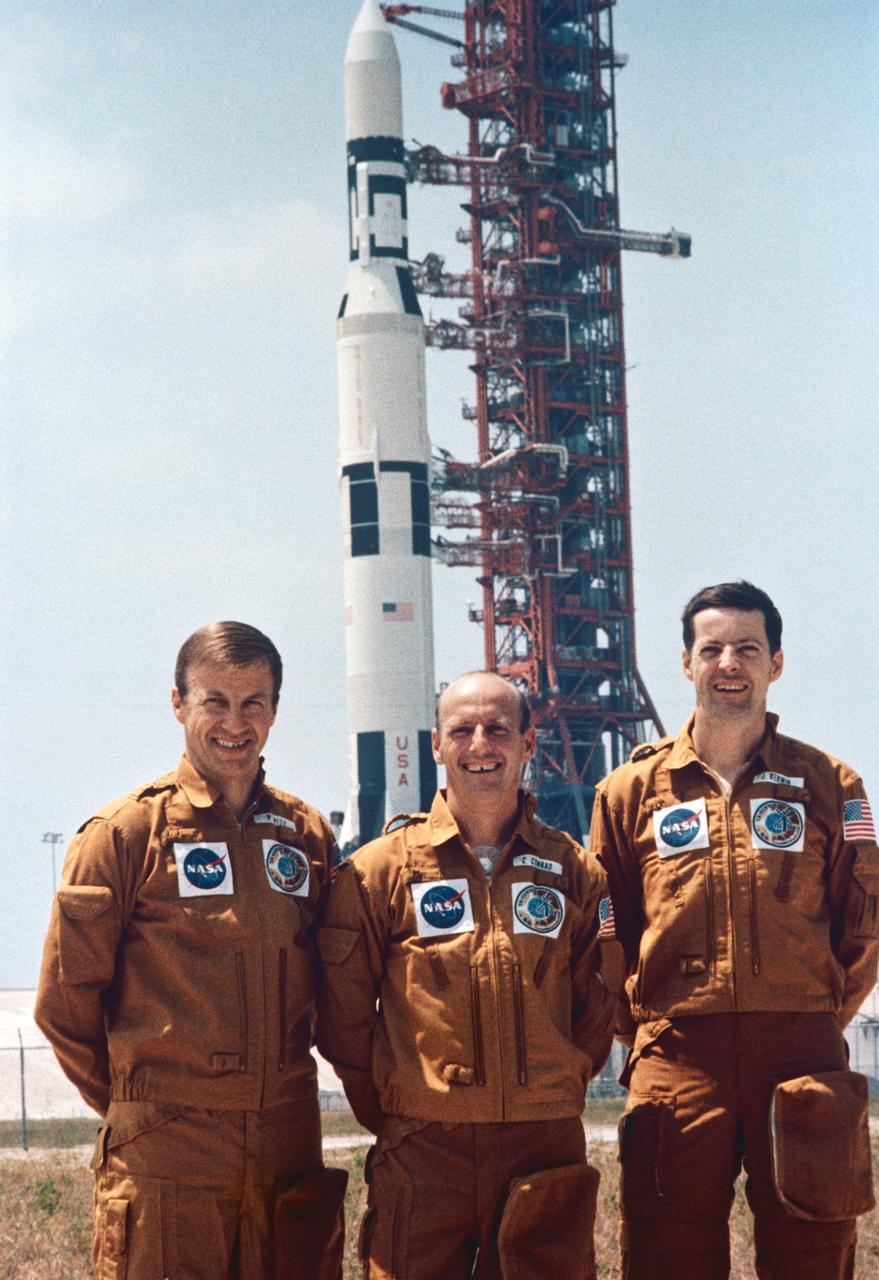
S73-25902 (4 May 1973) --- The three prime crew members of the first manned Skylab mission (Skylab 2) are photographed at Launch Complex 39, Kennedy Space Center, during preflight activity. They are, left to right, astronaut Paul J. Weitz, pilot; astronaut Charles Conrad Jr., commander; and scientist-astronaut Joseph P. Kerwin, science pilot. In the background is the Skylab 1/Saturn V space vehicle with its Skylab space station payload on Pad A. Photo credit: NASA
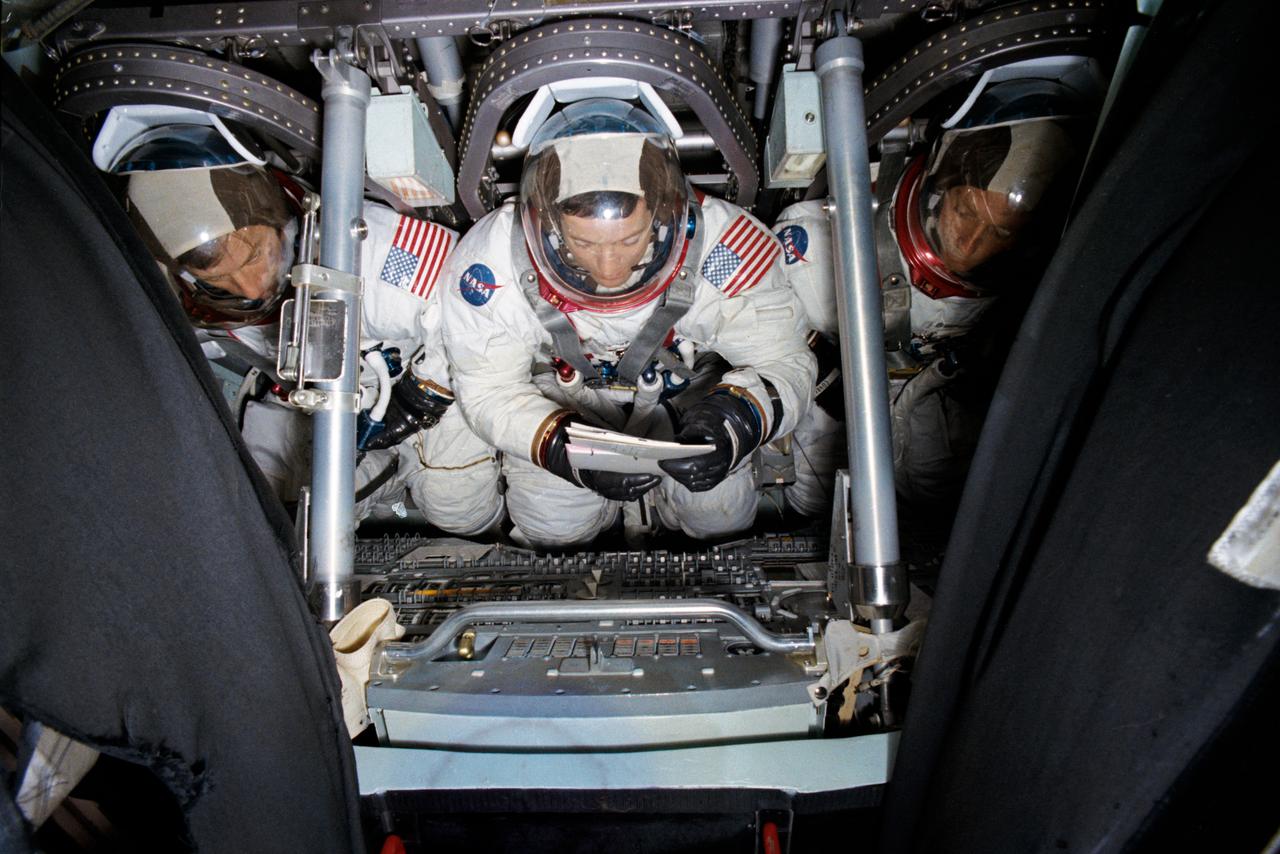
S73-25401 (8 May 1973) --- The members of the prime crew of the first manned Skylab mission go over a checklist during Skylab prelaunch training activity at Johnson Space Center. They are in the Apollo Command Module Mission Simulator in Bldg. 5 at JSC. They are, left to right, astronaut Charles Conrad Jr., commander; scientist-astronaut Joseph P. Kerwin, science pilot; and astronaut Paul J. Weitz, pilot. Photo credit: NASA
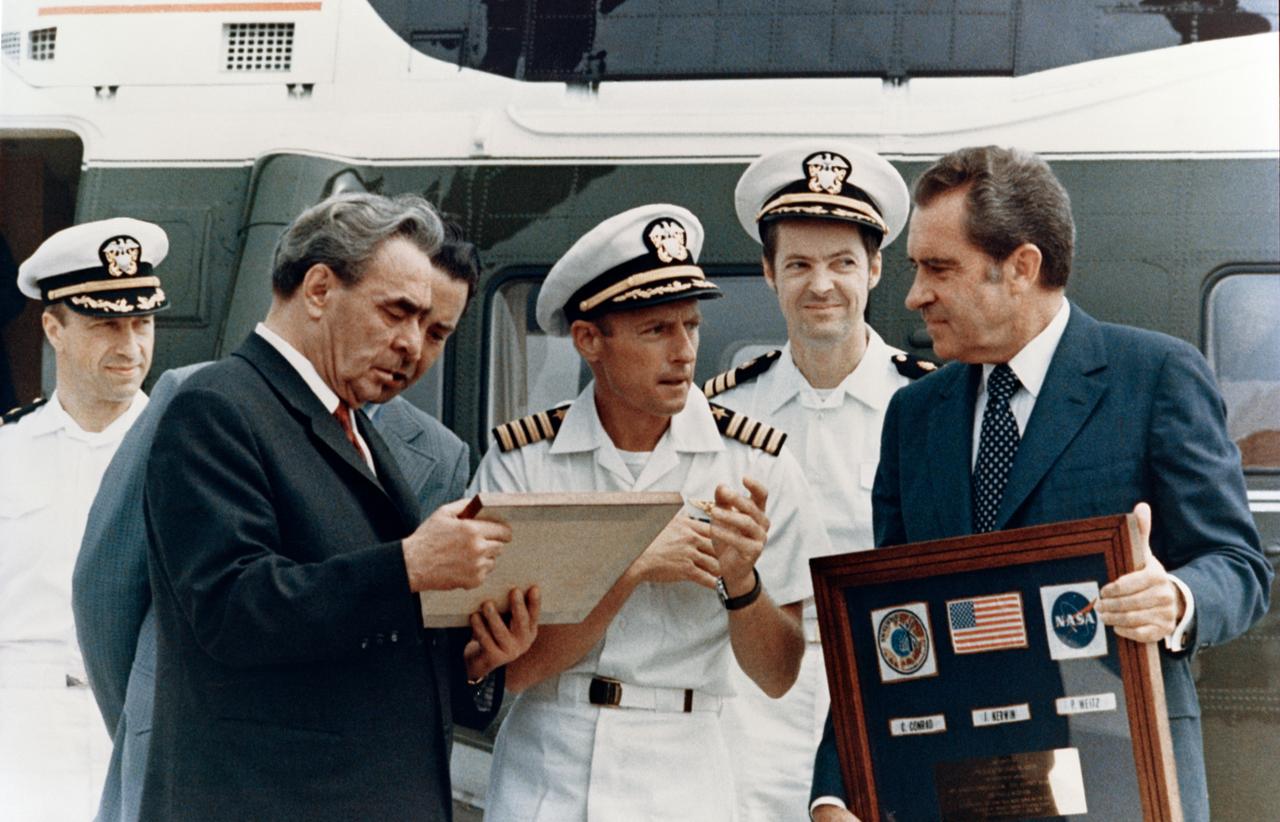
S73-30889 (June 1973) --- Leonid I. Breznev, General Secretary of the Communist Party, Union of Soviet Socialist Republics, and President Richard M. Nixon, during ceremonies at the Western White House in San Clemente, California, examine plaques presented by Skylab astronauts Charles Conrad Jr., center; Joseph P. Kerwin, second from right; and Paul J. Weitz, left. Photo credit: NASA
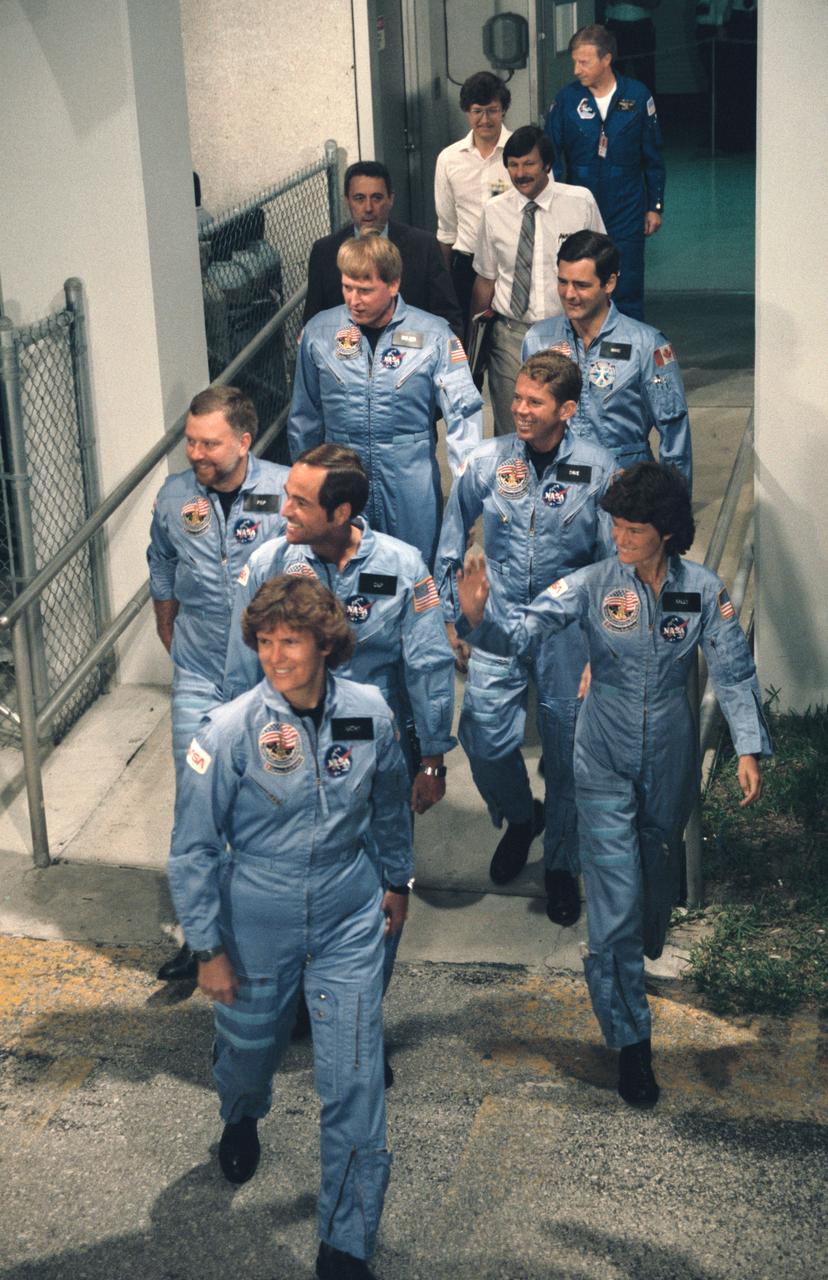
41G-90081 / S17-90081 (5 Oct 1984) --- The seven member crew leaves the Operations and Checkout Building (OCB) to take a van ride to the launch pad. Leading the way is Kathryn D. Sullivan followed in file by Robert L. Crippen, Paul D. Scully-Power and Jon A. McBride. On the right side are Sally K. Ride, David C. Leestma and Marc Garneau. Trailing the crew are George W. S. Abbey, Richard Nygren, Paul Bulver, and Paul J. Weitz.
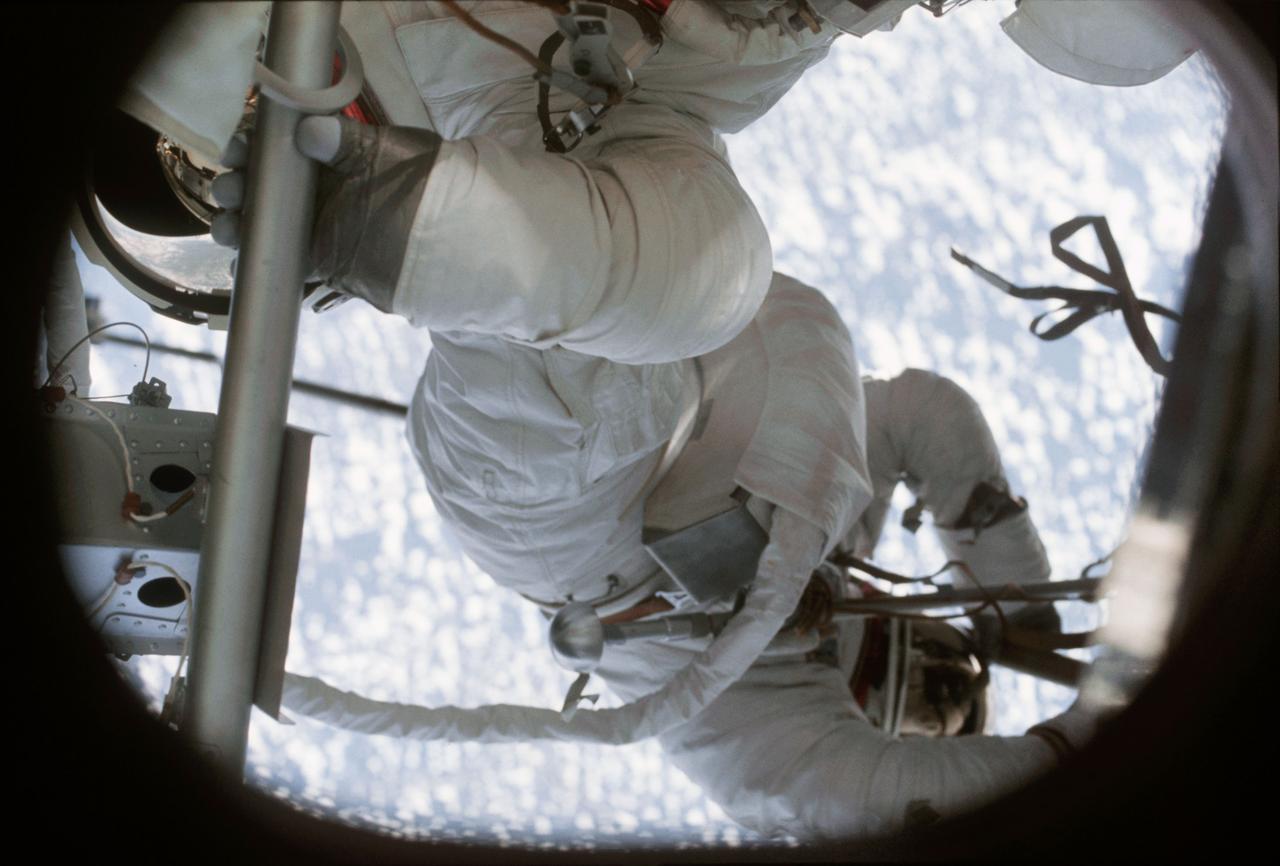
SL2-100-799 (7 June 1973) --- This medium close-up view shows astronauts Charles Conrad, commander for Skylab 2, and Science Pilot Joseph P. Kerwin performing an extravehicular activity (EVA) to repair the damaged and partially deployed solar array system on the Skylab complex. The photo was taken from inside the Orbital Workshop (OWS) by astronaut Paul J. Weitz, pilot. Photo credit: NASA
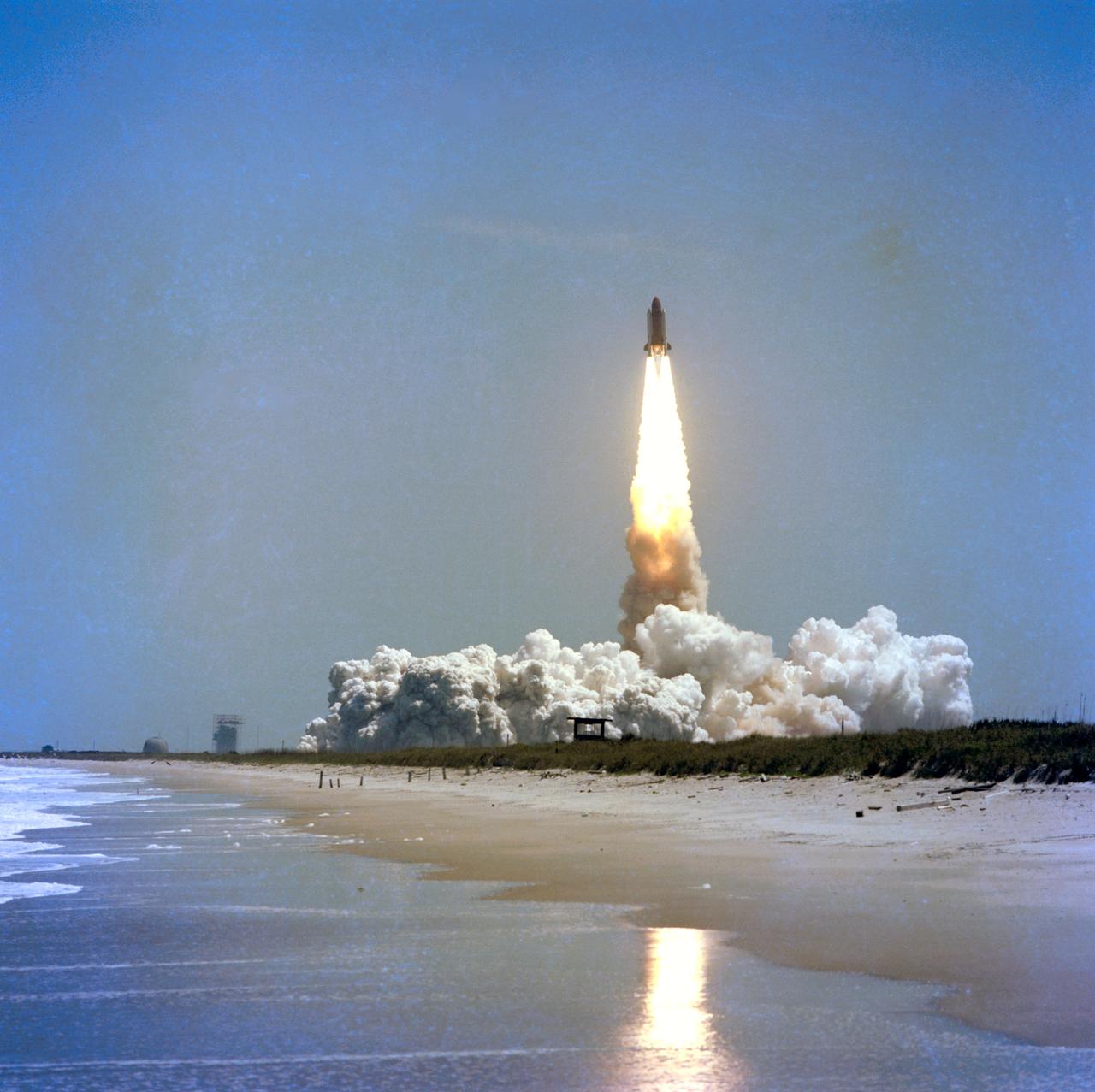
S83-30134 (7 April 1983) --- Flare from the first launch of the space shuttle Challenger is reflected in the Atlantic Ocean?s Cape Canaveral beach waters shortly after 1:30 p.m. (EST) on April 7, 1983. Only the tips of the orbiter?s wings are visible in this south looking view, as the manned portion of the launch cluster is obscured by its new lightweight external fuel tank (ET) and two solid rocket boosters (SRB). Onboard the spacecraft are astronauts Paul J. Weitz, Karol J. Bobko, Dr. F. Story Musgrave and Donald H. Peterson. Photo credit: NASA
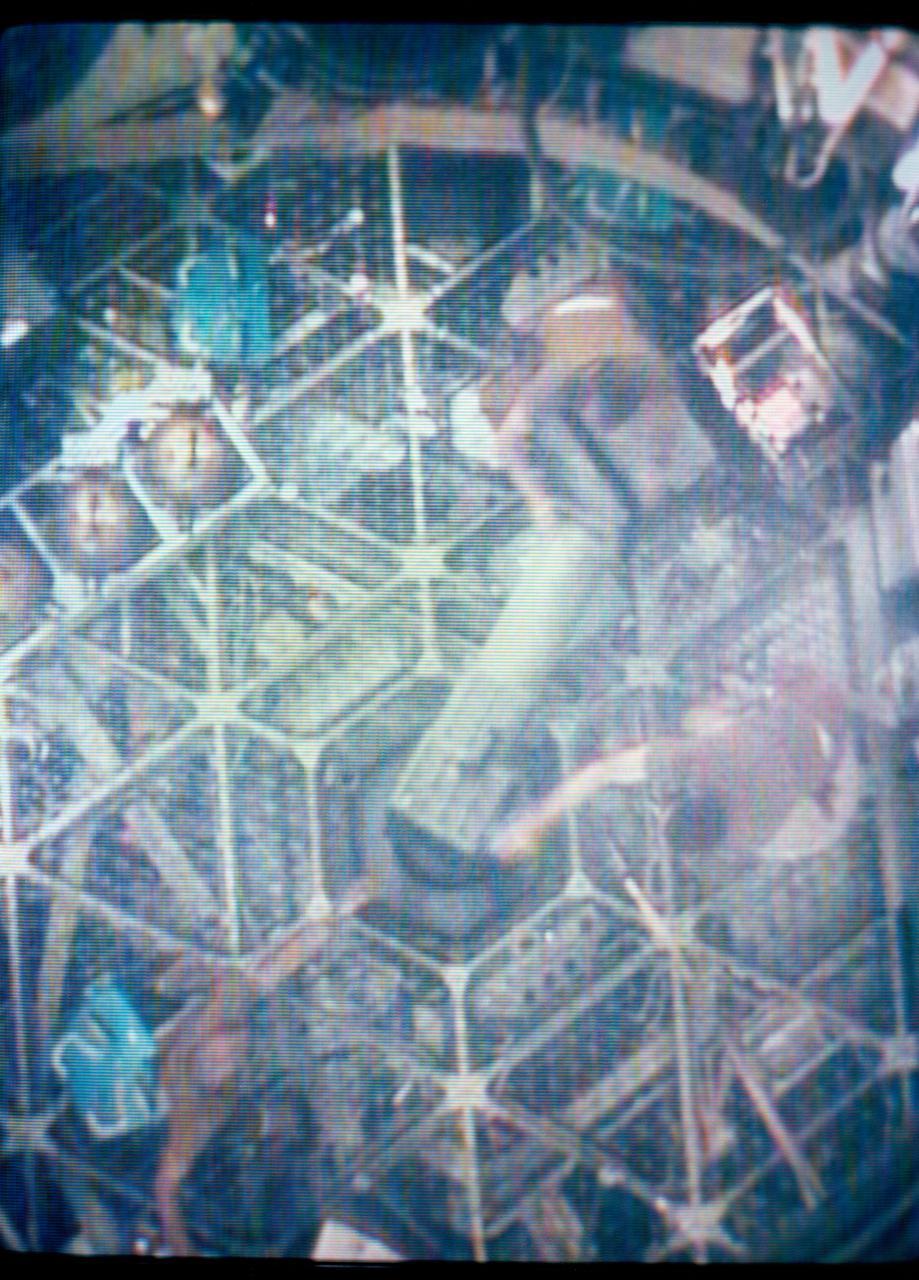
S73-27730 (June 1973) --- The Skylab 2 crewmen, astronauts Charles Conrad Jr., Joseph P. Kerwin and Paul J. Weitz, move the S183 Ultraviolet Panorama astrophysics experiment equipment under zero-gravity conditions in space in the foreground compartment of the Orbital Workshop of the Skylab 1 & 2 space station in Earth orbit, as seen in this reproduction taken from a color television transmission made by a TV camera aboard the space station. The S183 equipment includes the S183 spectrograph, the S019 mirror assembly, and a Maurer camera. Photo credit: NASA
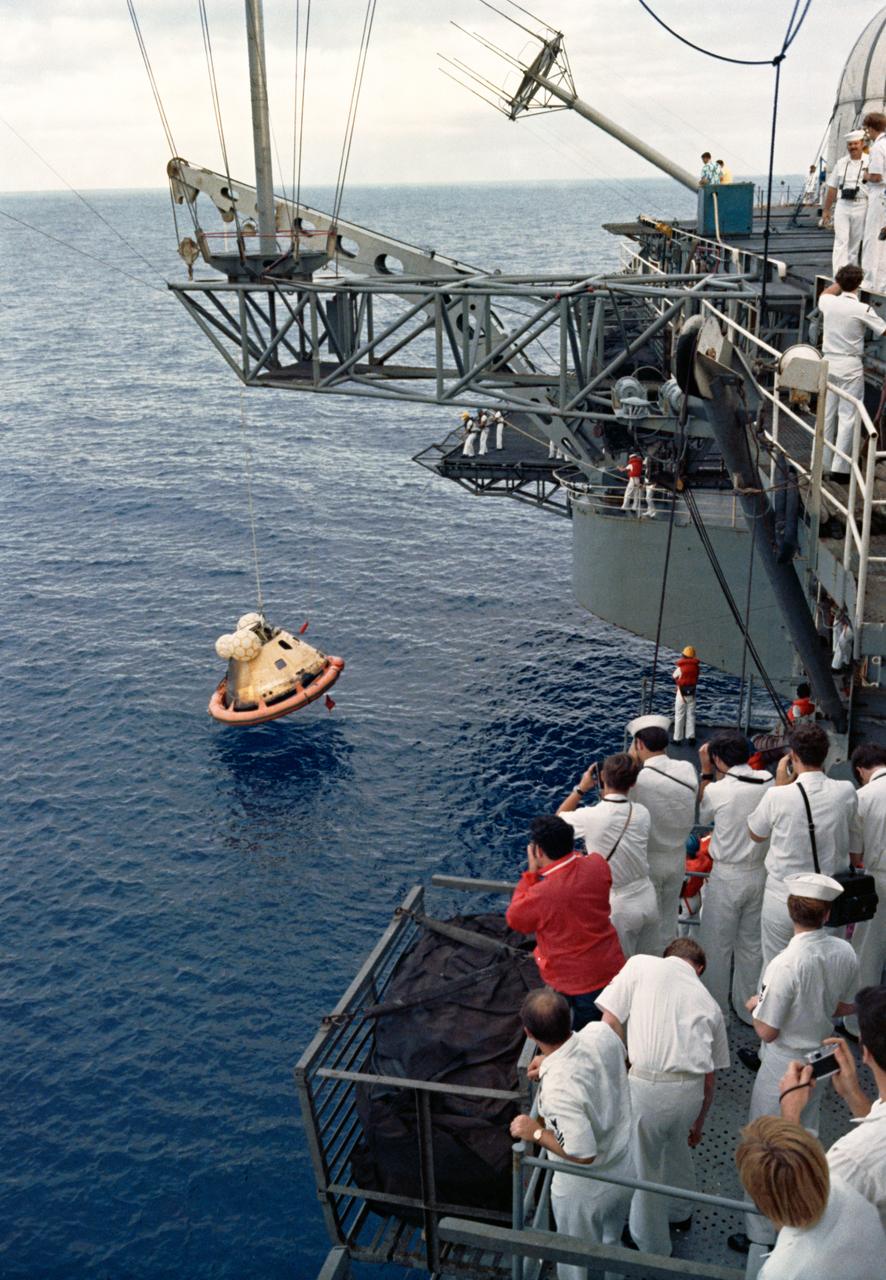
S73-29138 (22 June 1973) --- The Skylab 2 Command Module, with astronauts Charles Conrad Jr., Joseph P. Kerwin and Paul J. Weitz still inside, is hoisted aboard the prime recovery ship, USS Ticonderoga, following successful splashdown in the Pacific Ocean about 835 miles southwest of San Diego, California. The crewmen had just completed a 28-day stay with the Skylab 1 space station in Earth orbit conducting numerous medical, scientific and technological experiments. Note the inflated bags and the floatation collar on the spacecraft. Photo credit: NASA
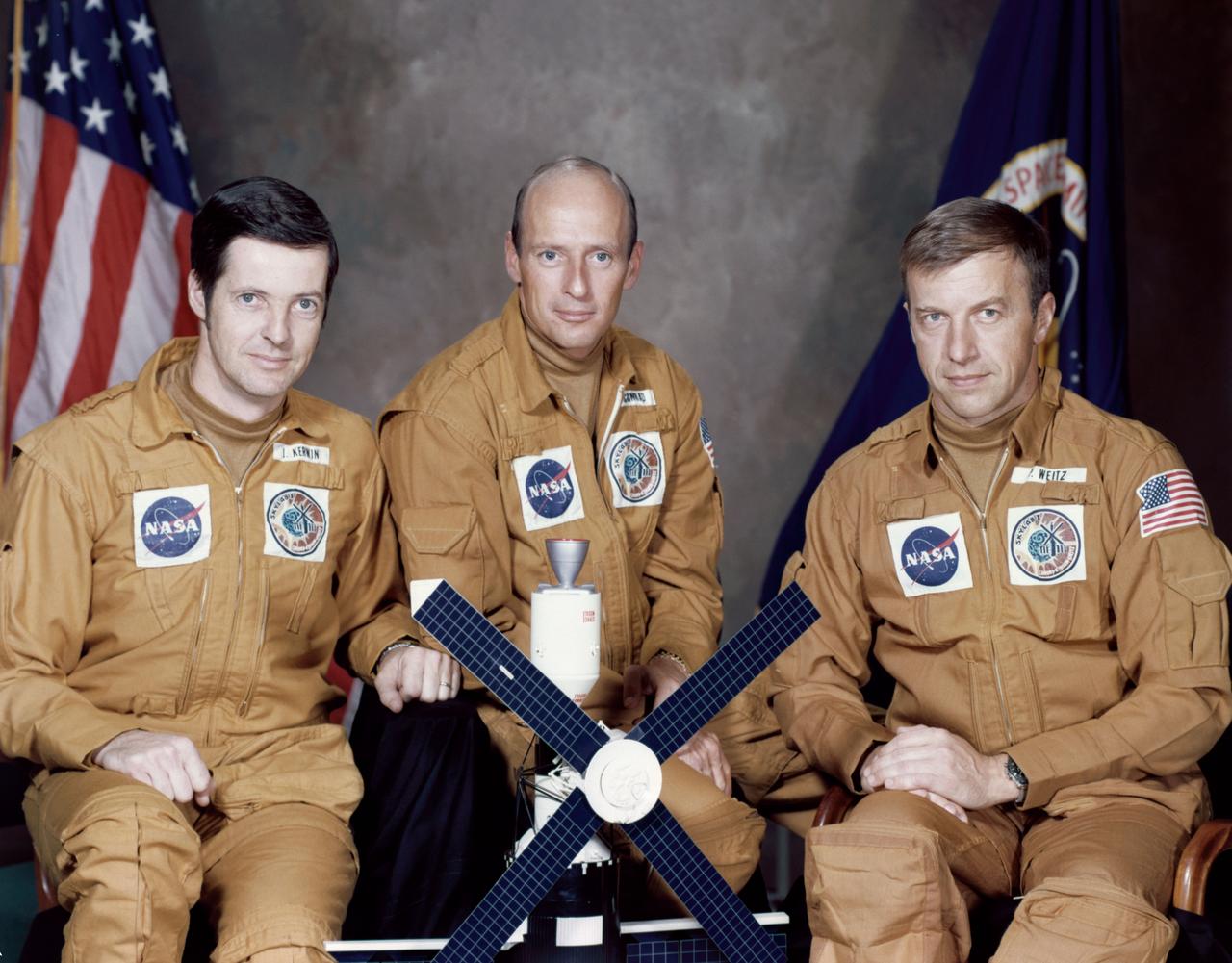
S73-24303 (May 1973) --- These three astronauts have been named by the National Aeronautics and Space Administration as the prime crew of the first manned Skylab mission. They are, left to right, Joseph P. Kerwin, science pilot; Charles Conrad Jr., commander; and Paul J. Weitz, pilot. Skylab is a three-part program consisting of one 28-day and two 56-day manned visits spanning an eight-month period. One day prior to the launch of this crew, the unmanned Skylab space station cluster will be launched and placed in Earth orbit. The first manned mission will last up to 28 days. Photo credit: NASA
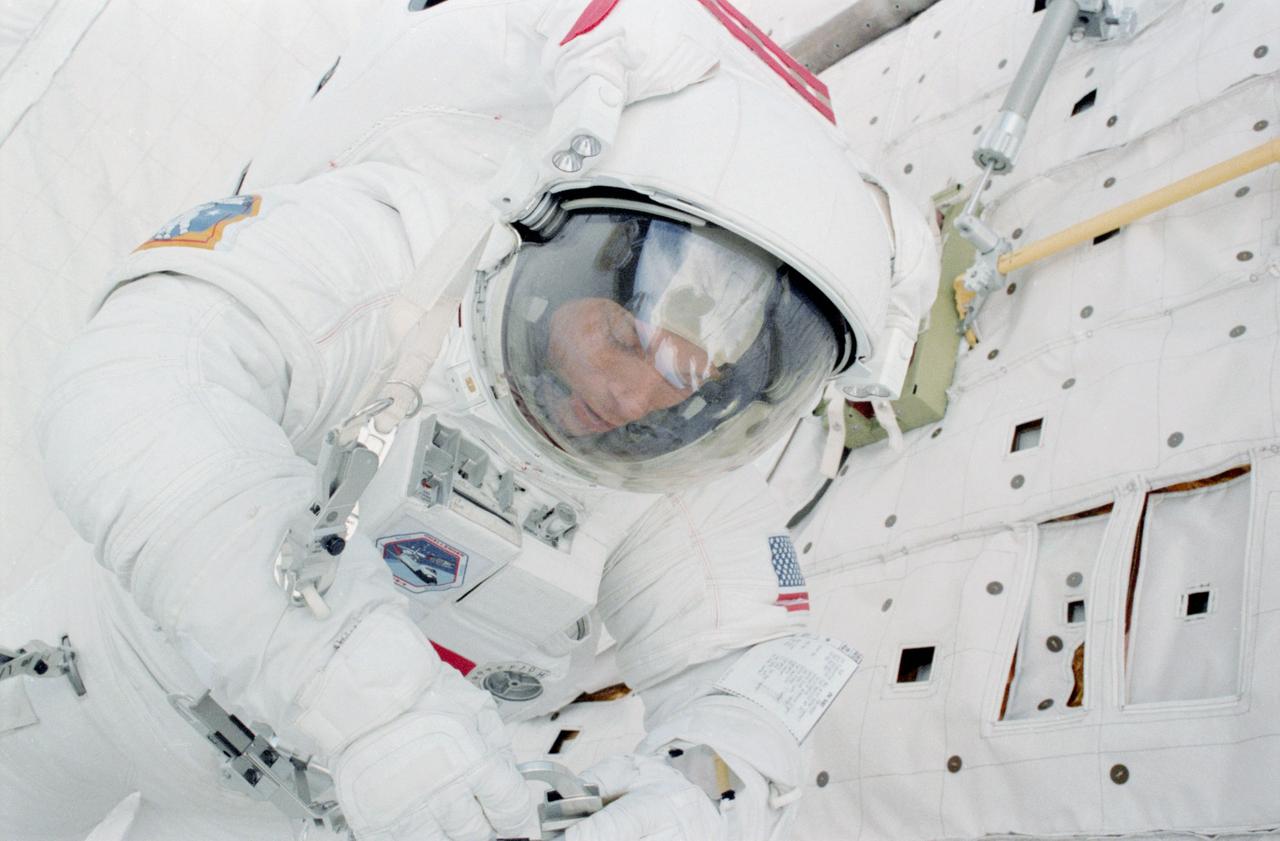
STS006-22-026 (7 April 1983) --- Astronaut F. Story Musgrave, one of two STS-6 mission specialists who performed a lengthy, successful extravehicular activity (EVA) in the cargo bay of the Earth orbiting space shuttle Challenger, anchors himself near the forward bulkhead of the reusable vehicle. Astronaut Donald H. Peterson, sharing the cargo bay with Dr. Musgrave, exposed this frame with a 35mm camera, while astronauts Paul J. Weitz, commander, and Karol J. Bobko, pilot, remained in the cabin. Photo credit: NASA
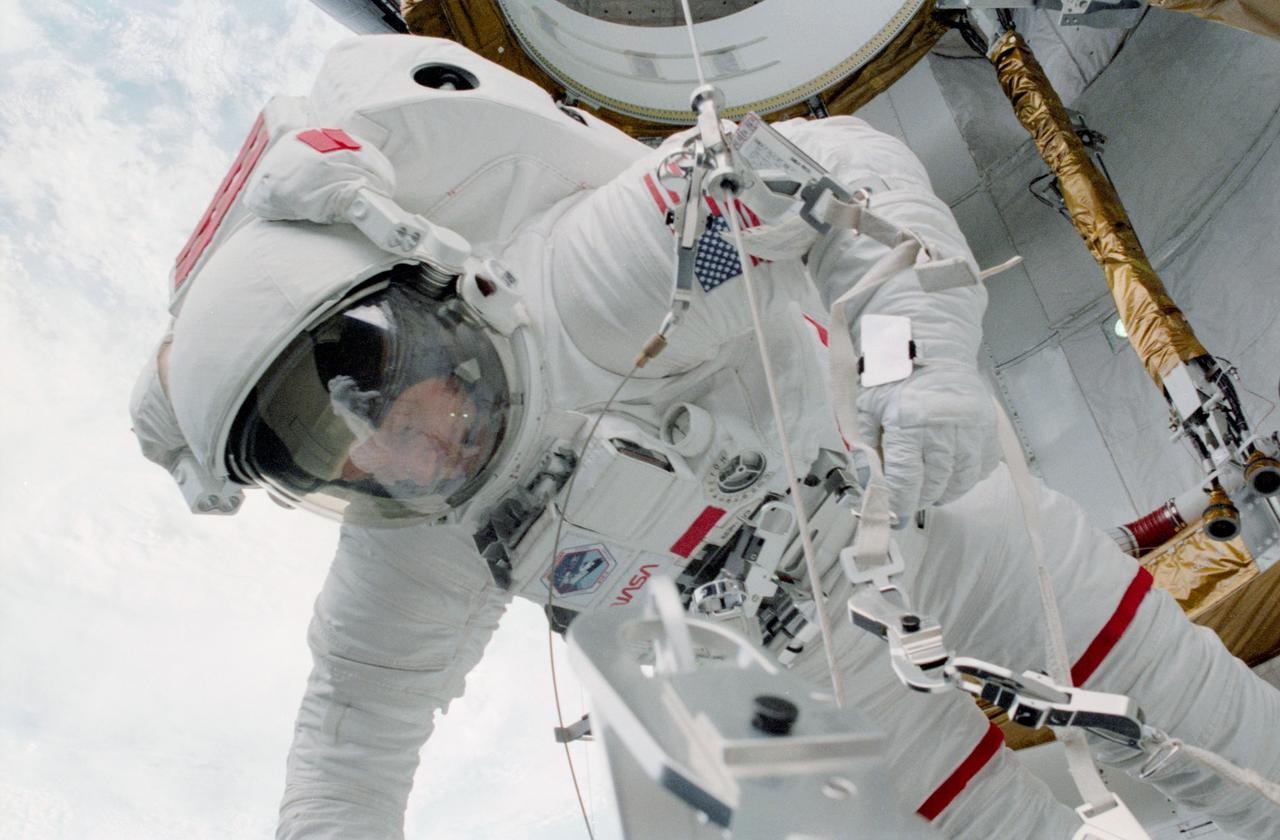
STS006-22-038 (7 April 1983) --- Astronaut F. Story Musgrave, one of two STS-6 mission specialists who performed a long, successful extravehicular activity (EVA) in the cargo bay of the Earth-orbiting space shuttle Challenger, moves along a slide wire near the now vacated inertial upper stage’s (ISU) airborne support equipment (ASE). Astronaut Donald H. Peterson, sharing the cargo bay with Dr. Musgrave, exposed this frame with a 35mm camera, while astronauts Paul J. Weitz, commander; Karol J. Bobko, pilot, remained in the cabin. Photo credit: NASA
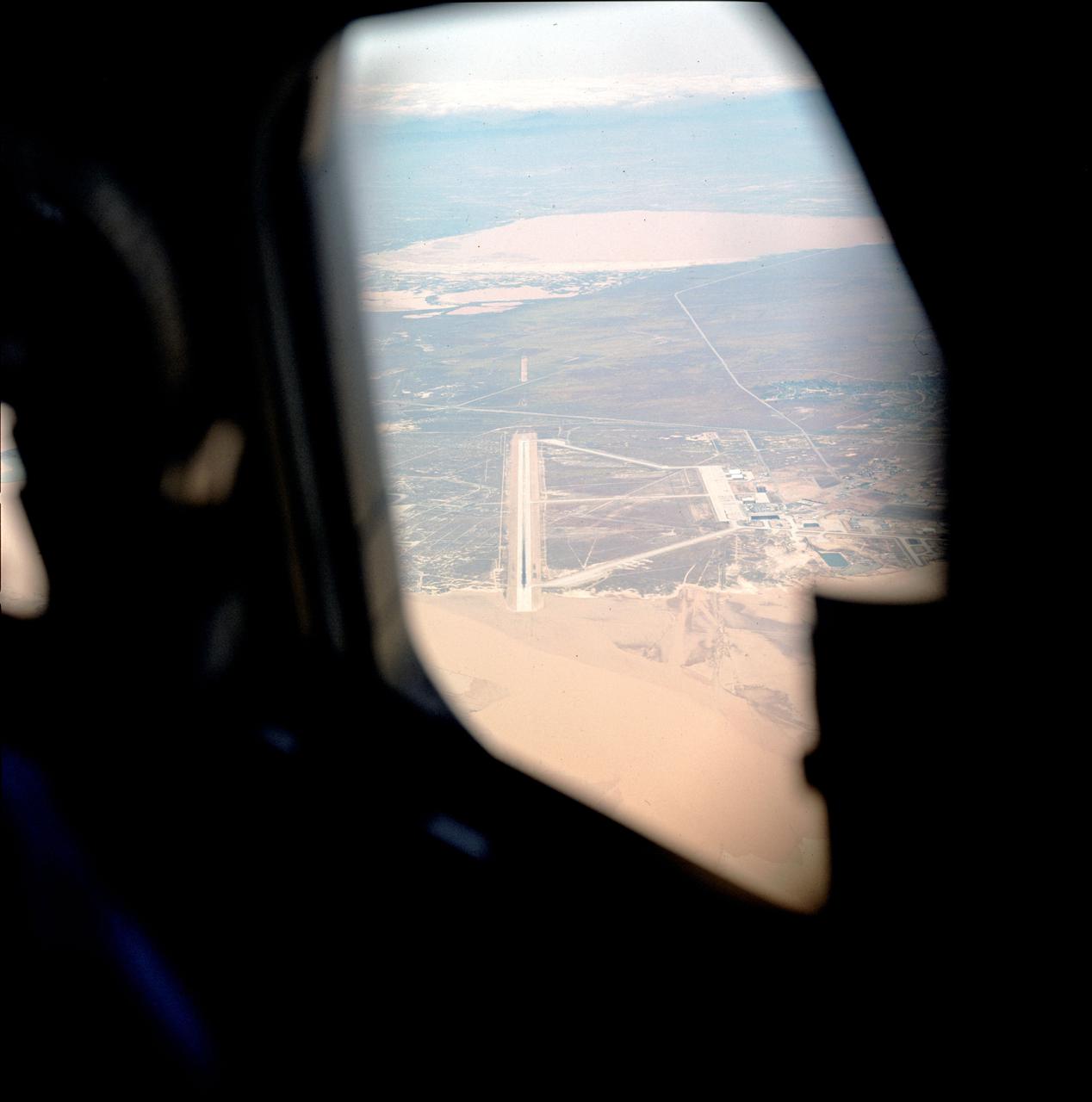
STS006-46-667 (9 April 1983) --- One of the final pictures taken aboard the space shuttle Challenger is this 35mm frame of Landing Strip 22 at Edwards Air Force Base as the reusable spacecraft was lined up for its landing only seconds later. The frame was exposed by astronaut Donald H. Peterson, STS-6 mission specialist, who was stretching behind the commander’s seat occupied by astronaut Paul J. Weitz on the flight deck. Also onboard the spacecraft for the five-day flight were astronauts Karol J. Bobko, pilot, and Dr. F. Story Musgrave, mission specialist. Photo credit: NASA
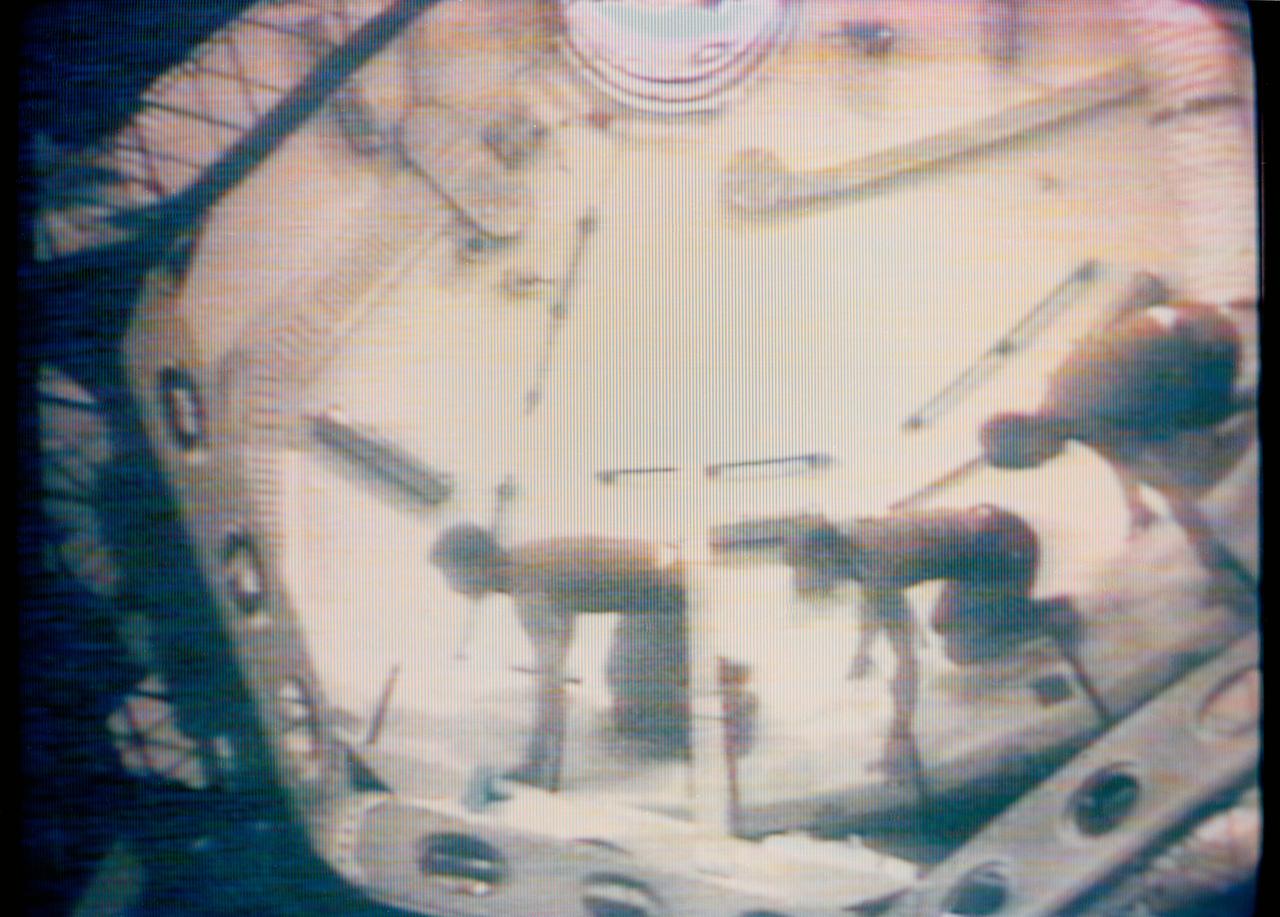
S73-27262 (1 June 1973) --- The three Skylab 2 crewmen give a demonstration on the effects of weightlessness in the Orbital Workshop of the Skylab 1 and 2 space station cluster in Earth orbit, as seen in this reproduction taken from a color television transmission made by a TV camera aboard the space station. Astronauts Charles Conrad Jr., Joseph P. Kerwin and Paul J. Weitz are crouched in a fast-start stance to race around the dome area of the OWS forward compartment. The astronauts had ease of motion and good maneuverability in the zero-gravity of space. Photo credit: NASA
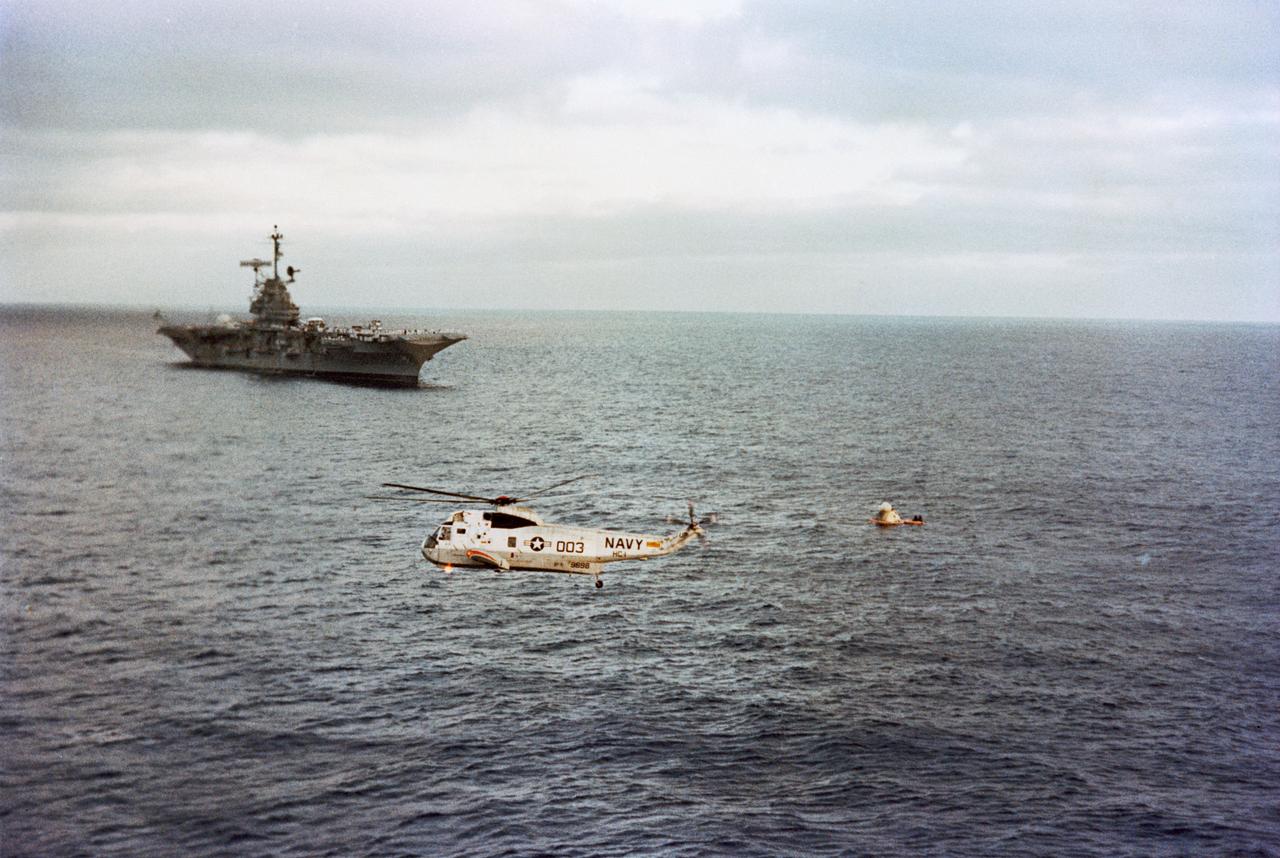
S73-29147 (22 June 1973) --- The Skylab 2 Command Module, with astronauts Charles Conrad Jr., Joseph P. Kerwin and Paul J. Weitz still inside, floats in the Pacific Ocean following successful splashdown about 835 miles southwest of San Diego, California. The prime recovery ship, USS Ticonderoga, approaches from the left background. A recovery helicopter hovers in the foreground. The three Skylab 2 crewmen had just completed a 28-day stay with the Skylab 1 space station in Earth orbit conducting numerous medical, scientific and technological experiments. Photo credit: NASA
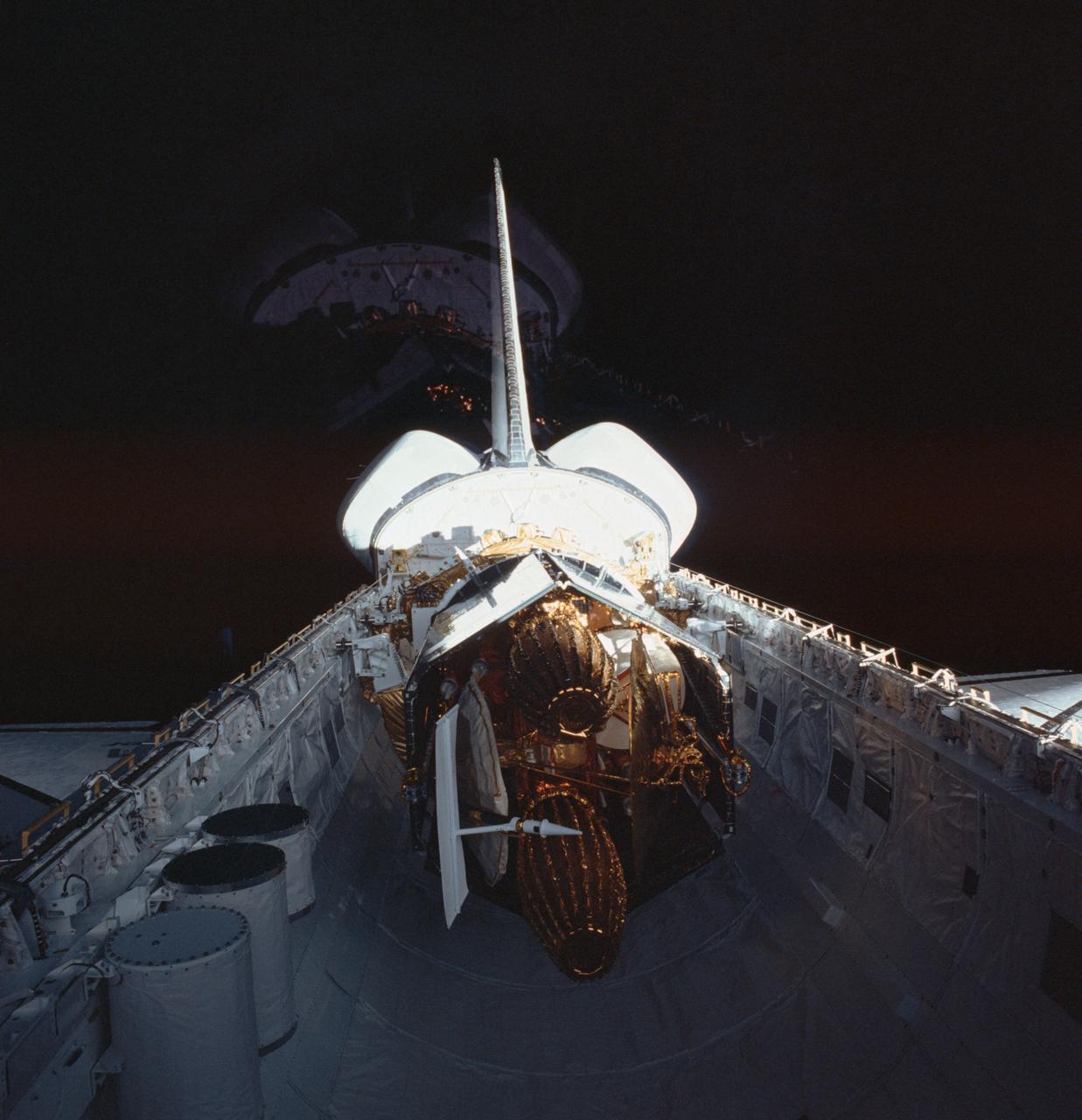
STS006-38-844 (4 April 1983) --- The stowed tracking and data relay satellite (TDRS) and its inertial upper stage (IUS) are seen in duplicate in this 70mm frame taken by the STS-6 crew aboard the Earth-orbiting space shuttle Challenger on its first day in space. A reflection in the aft window of the flight deck resulted in the mirage effect of the “second” TDRS. The three canisters in the aft foreground contain experiments of participants in NASA’s STS getaway special (GAS) program. Onboard the second reusable shuttle for this five-day flight were astronauts Paul J. Weitz, Karol J. Bobko, Dr. F. Story Musgrave and Donald H. Peterson. Photo credit: NASA
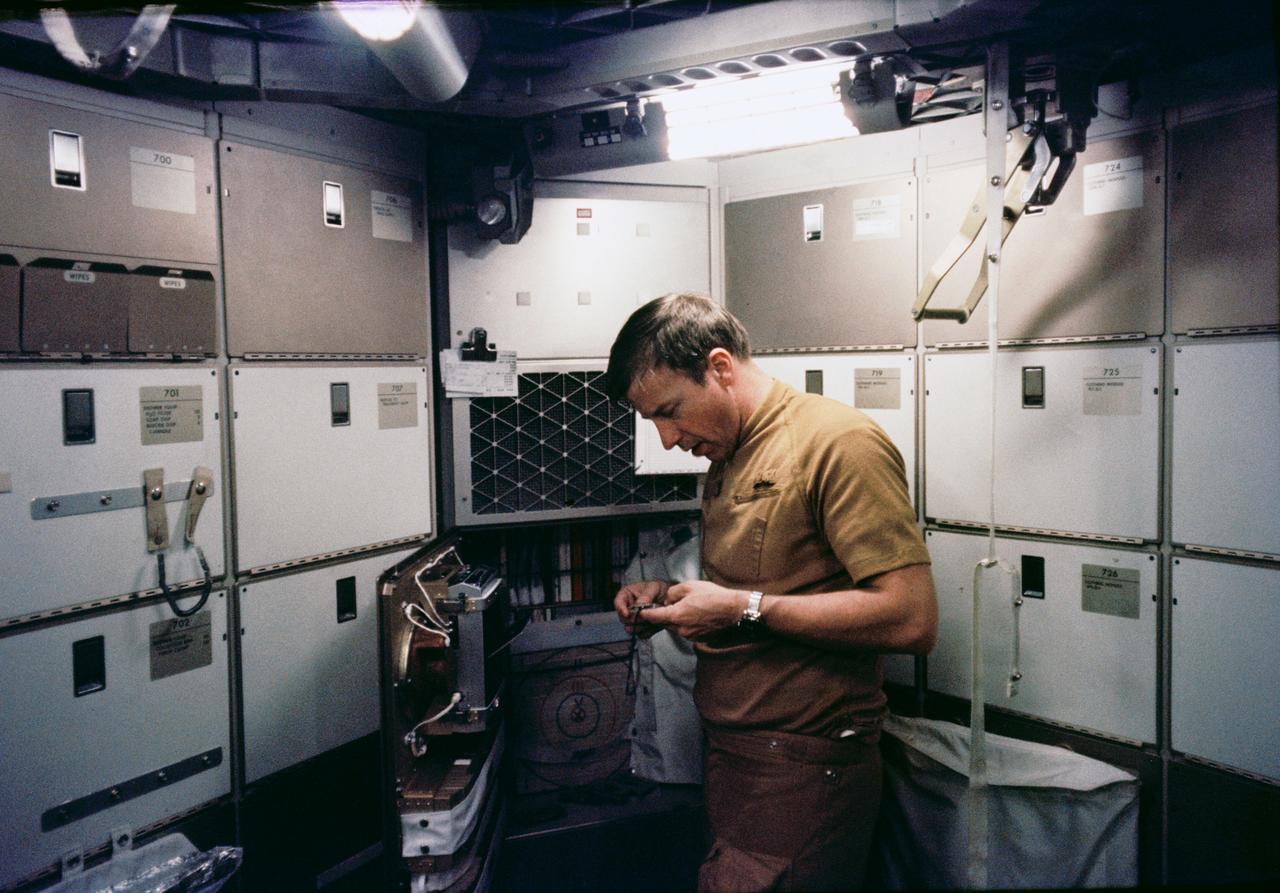
S73-17859 (January 1973) --- Astronaut Paul J. Weitz, pilot for Skylab 2 (first Skylab manned) mission, looks over off-duty recreational equipment in the crew quarters of the Skylab Orbital Workshop (OWS) trainer during Skylab simulation activity at the Manned Spacecraft Center. The equipment includes such items as tape decks and stereo music equipment, playing cards, darts, etc. The OWS is a component of the Skylab space station cluster which will be launched unmanned aboard a Saturn V in summer of 1973, and will be visited three times by three-man crews over an eight month period. Photo credit: NASA
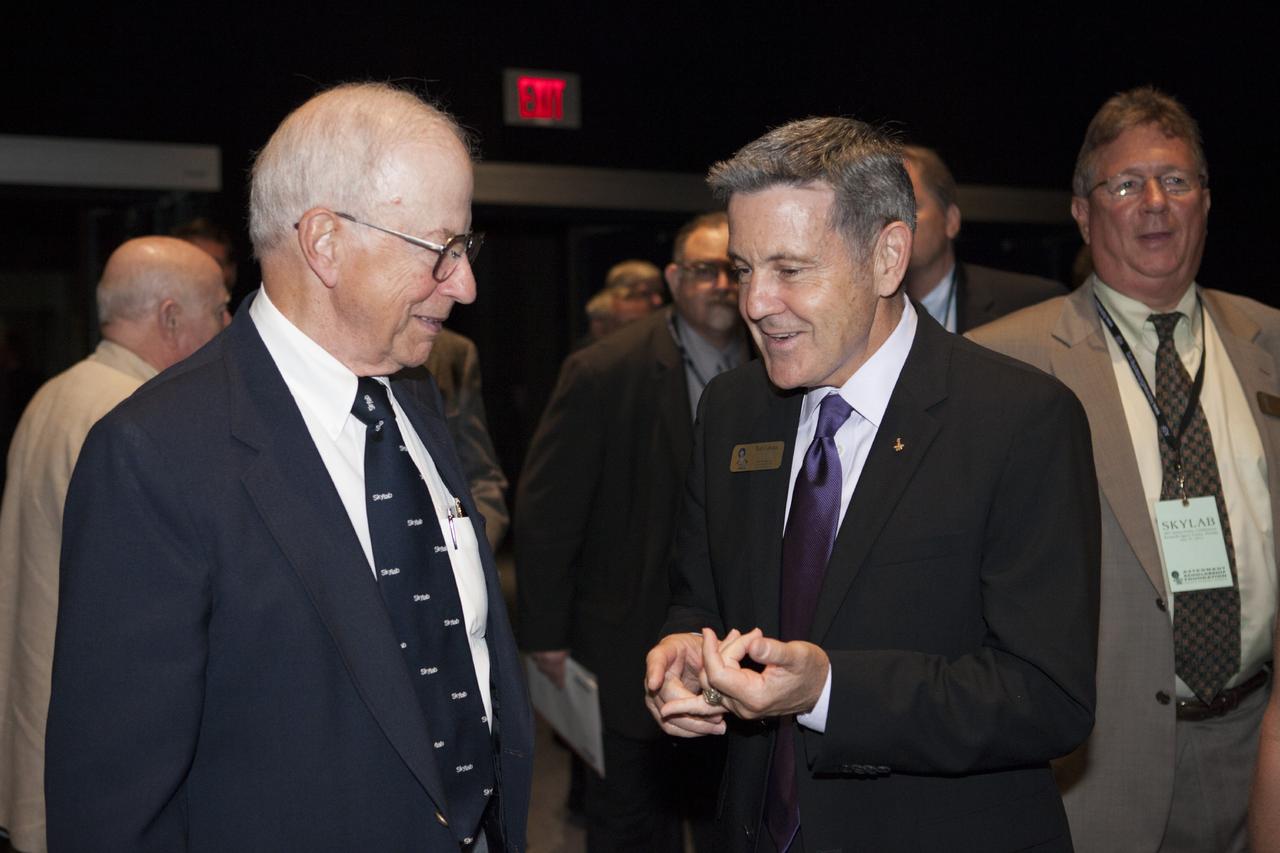
CAPE CANAVERAL, Fla. – At the Kennedy Space Center's Apollo/Saturn V Center Bob Cabana, Kennedy's director, right, speaks with Skylab 2 pilot Paul Weitz during an event sponsored by the Astronaut Scholarship Foundation celebrating the 40th anniversary of Skylab. Both astronauts also flew missions during the Space Shuttle Program. The gala commemorating the 40th anniversary of Skylab included six of the nine astronauts who flew missions to America's first space station. The orbiting laboratory was launched unpiloted from Kennedy on May 14, 1973. Between May 25, 1973 and Feb. 8, 1974, crews of three spent 28, 59 and 84 days living and working in low-Earth orbit aboard the station. For more information, visit http://www.nasa.gov/mission_pages/skylab/ Photo credit: NASA/Kim Shiflett
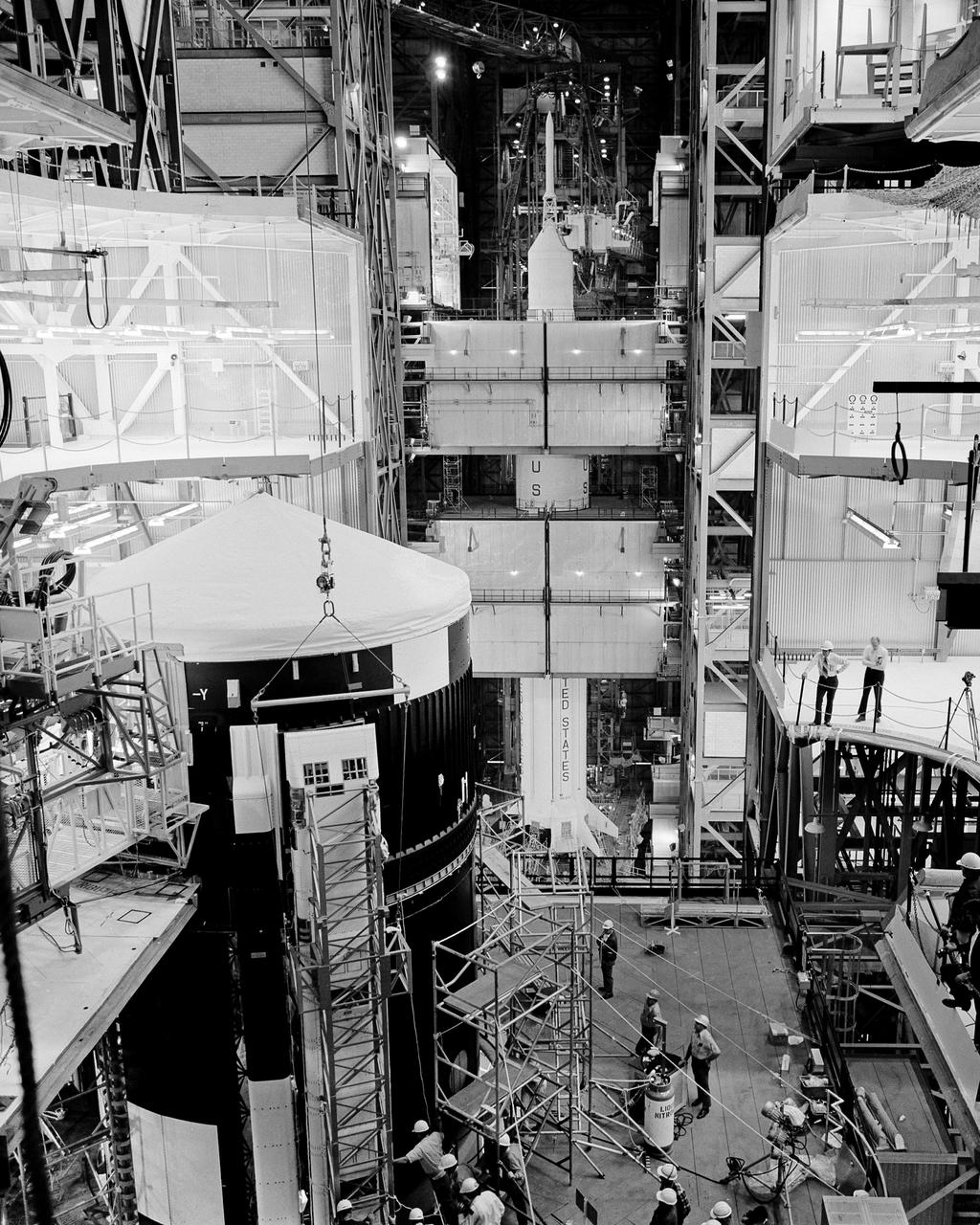
CAPE KENNEDY, Fla. -- At the Kennedy Space Center in Florida, one of Skylab 1's solar cell arrays is installed on the orbital space station in High Bay 2 of the Vehicle Assembly Building. Skylab 2 launch vehicle is in high bay 1, visible in the background. Each of the two solar cell arrays on the space station that will be deployed in orbit is designed to provide 10,500 watts of power. All power needed to operate the station and the Apollo Telescope mount will be taken from the arrays. Each array will have almost 1,177 square feet of surface area to turn sunlight into electrical power. Skylab 1 is schedule for launch April 30, 1973 and Skylab 2, carrying the astronauts Charles Conrad Jr., Dr. Joseph P. Kerwin and Paul J. Weitz to dock with the space station and enter it to live and work for 28 days, will be launched a day later. Photo Credit: NASA
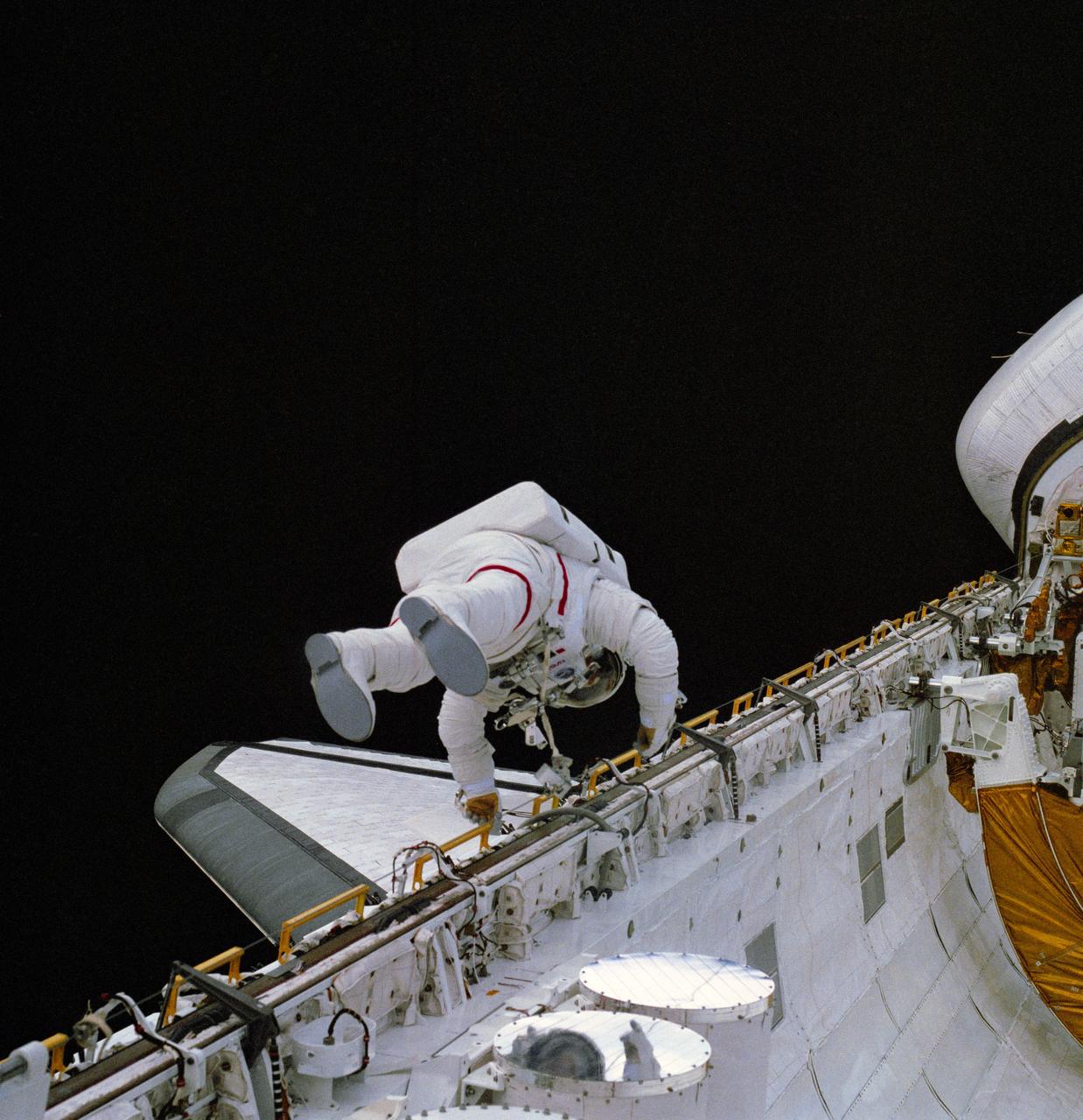
S83-30215 (7 April 1983) --- This photograph of astronaut Story Musgrave, STS-6 mission specialist, translating along the longerons on the port side of the cargo bay of the Earth-orbiting space shuttle Challenger was taken with a hand-held 70mm camera from some 18 meters (60 feet) away by one of two crew members who remained inside the cabin. Astronauts Musgrave and Donald H. Peterson (out of frame) were in the midst of NASA?s first ever shuttle extravehicular activity (EVA). Astronaut Karol J. Bobko, pilot, took a number of photographs through the aft flight deck?s windows, and astronaut Paul J. Weitz, mission commander, also exposed some images but remained in control of the orbiter during the EVA. Photo credit: NASA
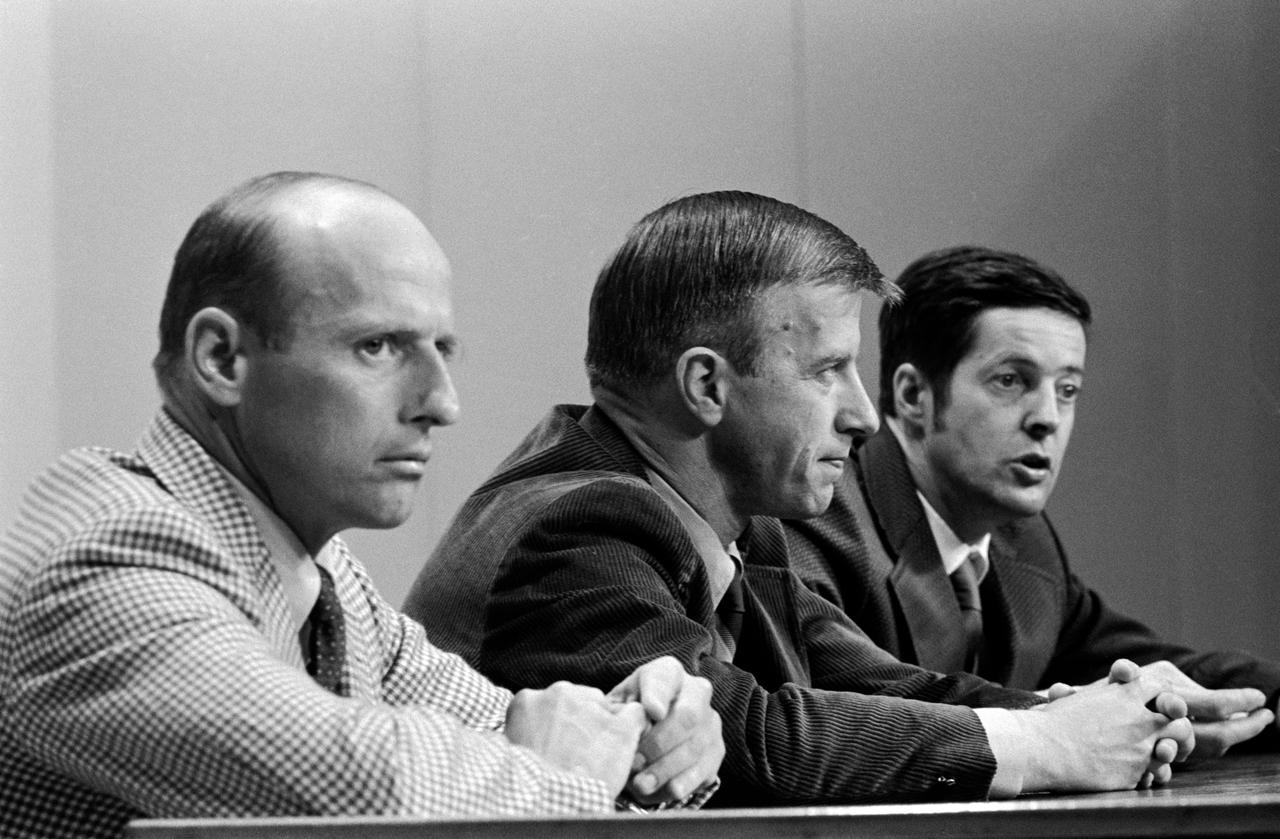
S73-24369 (17 April 1973) --- The three members of the prime crew of the first manned Skylab mission discuss their scheduled flight before a gathering of news media representatives, in building 1 auditorium, April 17, 1973. They are (left to right) astronauts Charles Conrad Jr., commander; Paul J. Weitz, pilot; and scientist Joseph P. Kerwin, science-pilot. Skylab is a three-part program consisting of one 28-day; and two 56-day manned visits spanning an eight-month period. One day prior to the launch of this crew, the unmanned Skylab Space Station cluster will be launched and placed in Earth orbit. The first manned mission will last up to 28 days. Photo credit: NASA
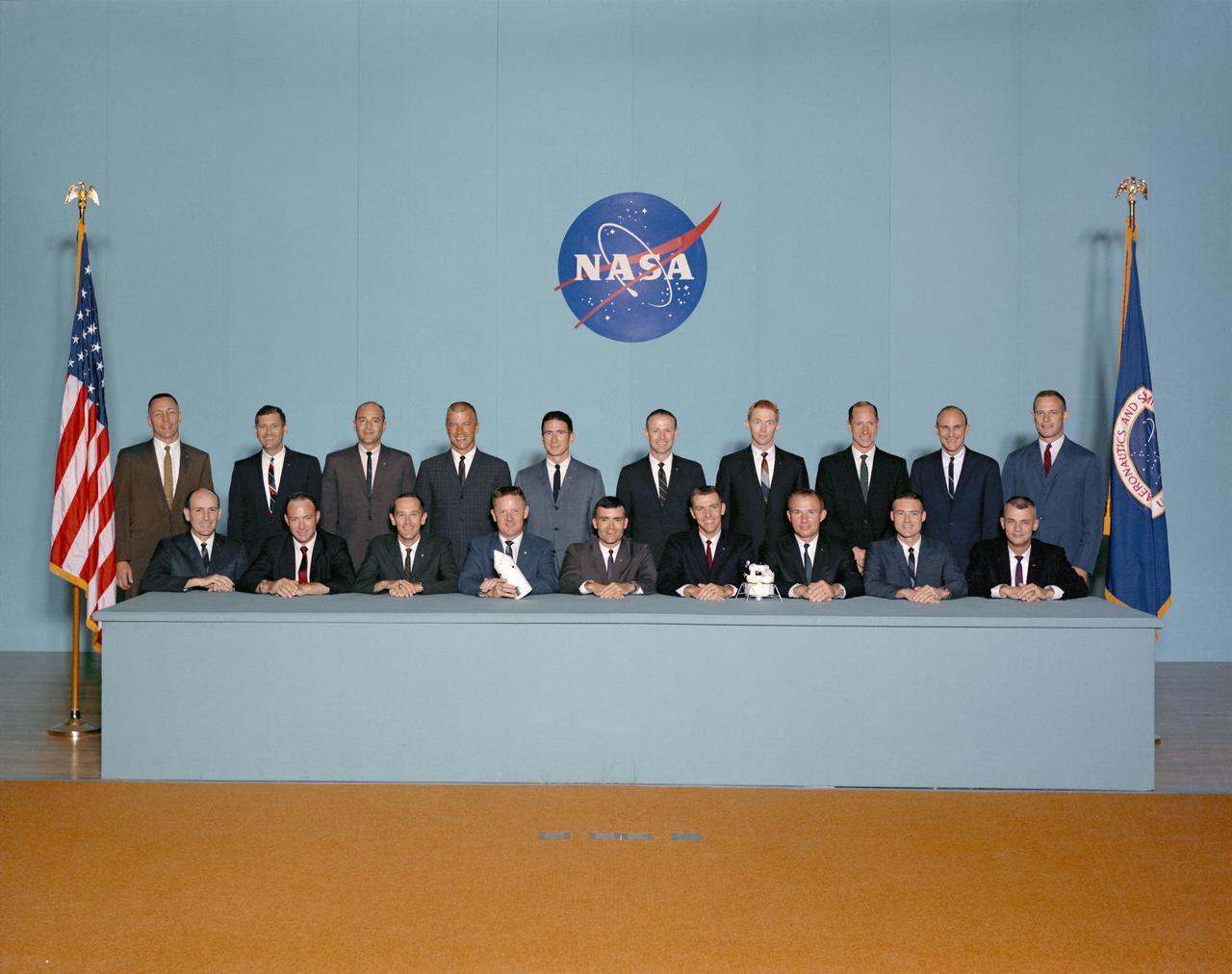
S67-30404 (May 1967) --- Portrait of astronaut group selected April 4, 1966. Seated, left to right, are Edward G. Givens Jr., Edgar D. Mitchell, Charles M. Duke Jr., Don L. Lind, Fred W. Haise Jr., Joe H. Engle, Vance D. Brand, John S. Bull and Bruce McCandless II. Standing, left to right, are John L. Swigert Jr., William R. Pogue, Ronald E. Evans, Paul J. Weitz, James B. Irwin, Gerald P. Carr, Stuart A. Roosa, Alfred M. Worden, Thomas K. Mattingly and Jack R. Lousma. Photo credit: NASA or National Aeronautics and Space Administration
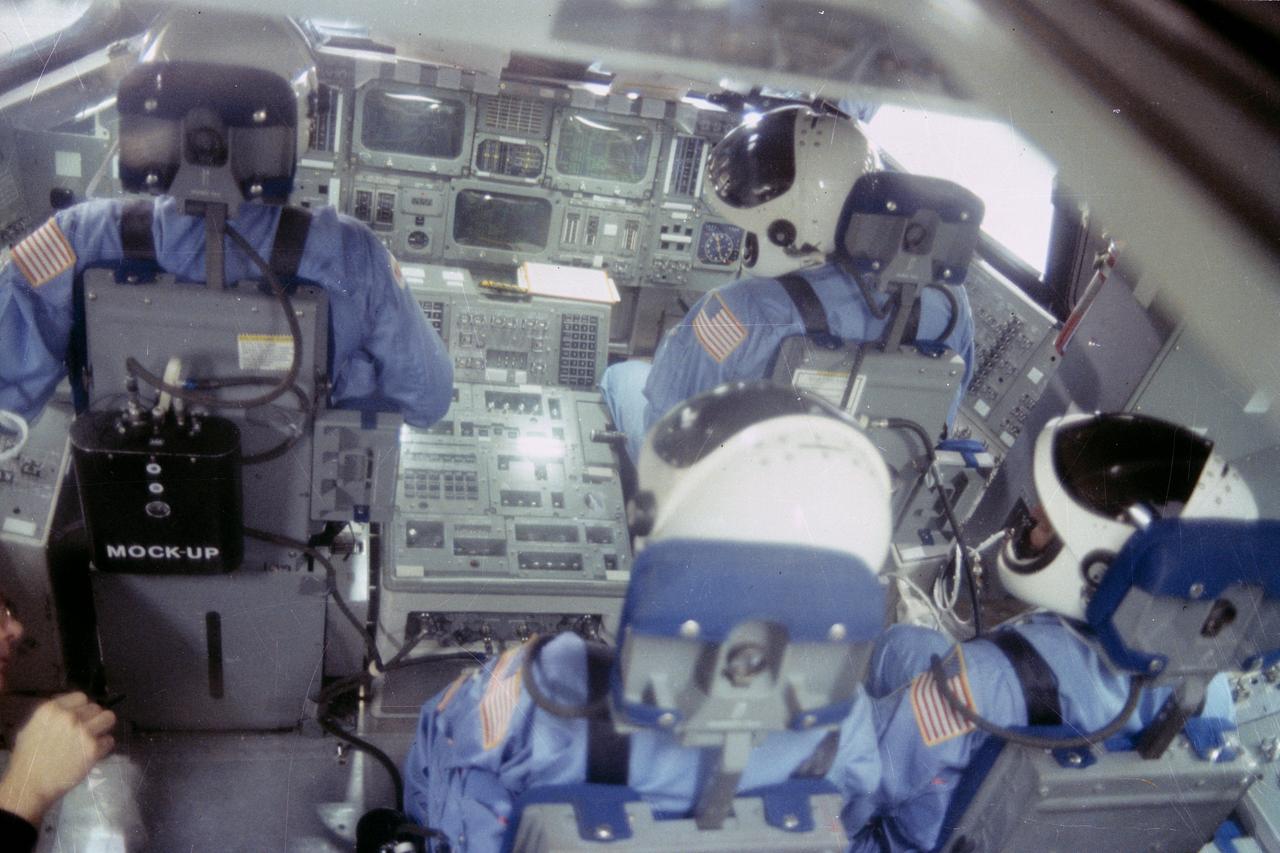
S82-41355 (December 1982) --- The four crew members for NASA?s STS-6 mission go through a training exercise in the full-scale engineering mock-up in the shuttle mock-up and integration laboratory at the Johnson Space Center (JSC). Their seating configuration reflects that of launch and landing phases aboard the space shuttle Challenger. The front stations are occupied by astronauts Paul J. Weitz (left), commander, and Karol J. Bobko, pilot. In the rear seats are astronauts Story Musgrave and Donald H. Peterson, both mission specialists. STS-6 will be the Challenger?s first flight when it takes this crew and a tracking and data relay satellite (TDRS) into Earth orbit the early part of next year. Photo credit: NASA
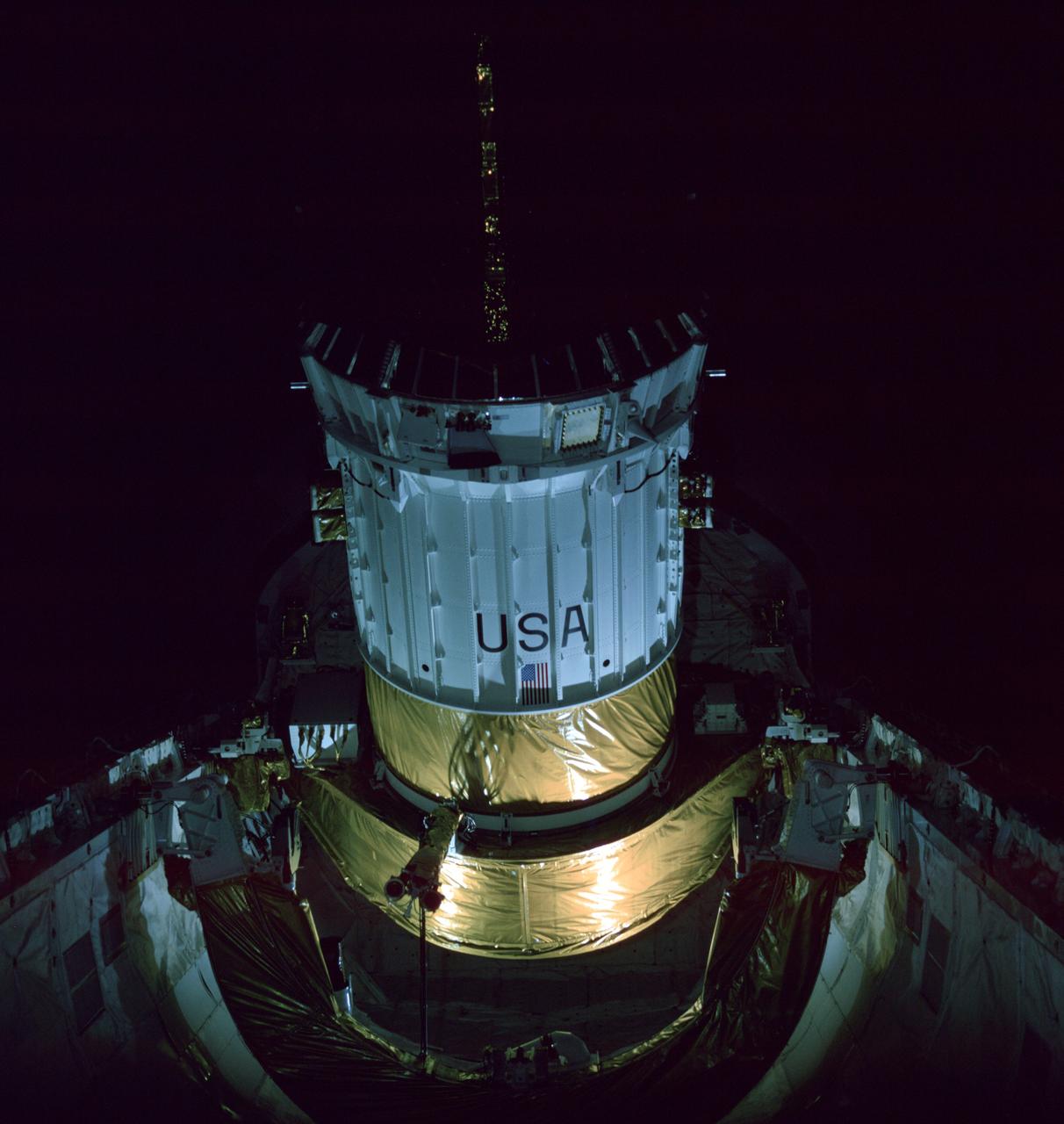
STS006-40-685 (4 April 1983) --- This view of a tilted tracking and data relay satellite (TDRS) and part of its inertial upper stage (IUS) was photographed during deployment of the TDRS/IUS tandem some 10 hours following launch of space shuttle Challenger. A 70mm camera was aimed by crew members through the aft windows of the Earth-orbiting Challenger to capture the scene. A tilt-table device was used to lift the TDRS to this position (almost 90 degrees different from its stowed position). Onboard NASA’s second reusable shuttle for this five-day flight were astronauts Paul J. Weitz, Karol J. Bobko, Dr. F. Story Musgrave and Donald H. Peterson. Photo credit: NASA
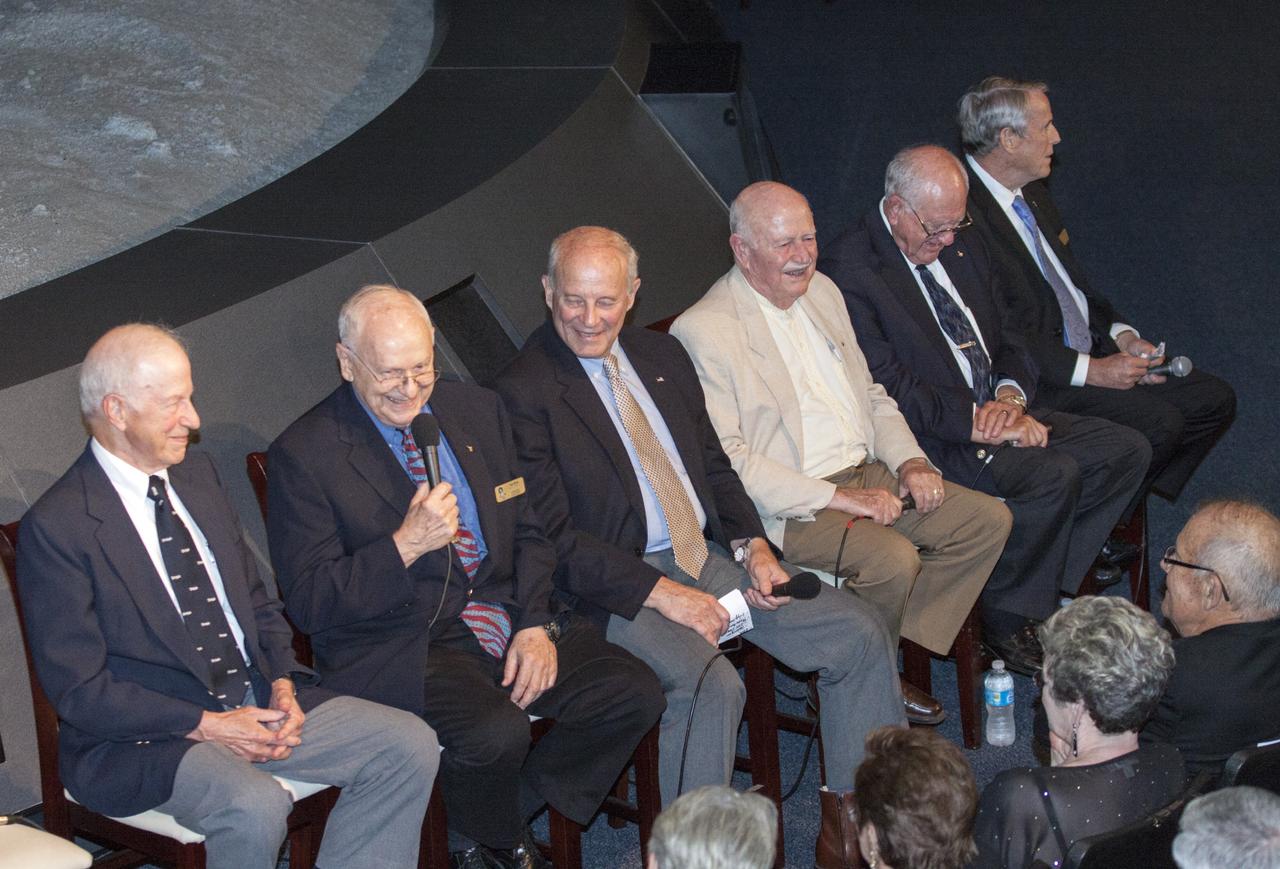
CAPE CANAVERAL, Fla. – At the Kennedy Space Center's Apollo/Saturn V Center, Skylab astronauts, from the left, Paul Weitz, Alan Bean, Jack Lousma, Gerald Carr, William Pogue and Edward Gibson recall experiences during the Astronaut Scholarship Foundation's event celebrating the 40th anniversary of Skylab. The gala commemorating the 40th anniversary of Skylab included six of the nine astronauts who flew missions to America's first space station. The orbiting laboratory was launched unpiloted from Kennedy on May 14, 1973. Between May 25, 1973 and Feb. 8, 1974, crews of three spent 28, 59 and 84 days living and working in low-Earth orbit aboard the station. For more information, visit http://www.nasa.gov/mission_pages/skylab/ Photo credit: NASA/Kim Shiflett
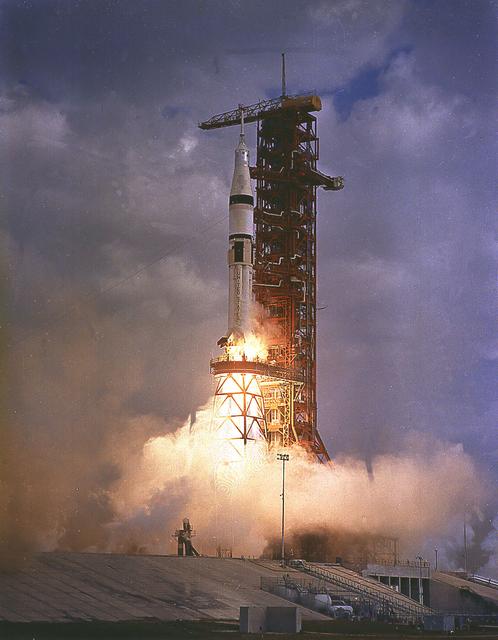
This is an image of the Saturn IB vehicle that lifted off on May 25, 1973, carrying the crew of the Skylab-2 (SL-2) mission. The Saturn IV launch vehicle was used to carry a crew of three astronauts to the Skylab. The SL-2 mission launched the first crew to the Skylab; astronauts Charles "Pete" Conrad, Joseph Kerwin and Paul Weitz. This crew made urgent repair work on the damaged Skylab to make it operational and habitable. The goals of the Skylab were to enrich our scientific knowledge of the Earth, the Sun, the stars, and cosmic space; to study the effects of weightlessness on living organisms, including man; to study the effects of the processing and manufacturing of materials utilizing the absence of gravity; and to conduct Earth resource observations. The duration of this mission was 28 days.
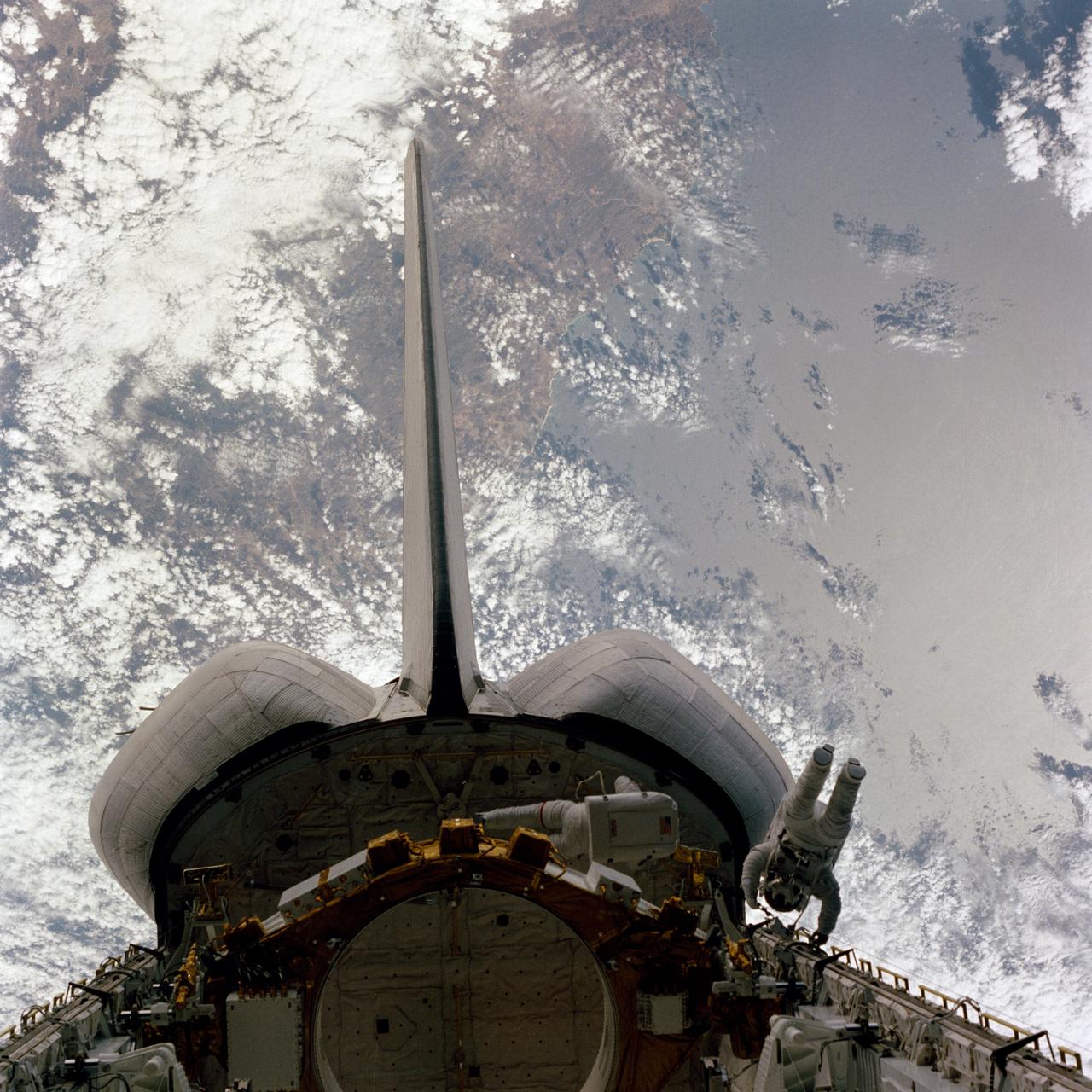
STS006-45-111 (7 April 1983) --- Astronaut Donald H. Peterson (port side) and F. Story Musgrave, STS-6 mission specialists, evaluate the handrail system on the starboard longeron and aft bulkhead, respectively, during a long extravehicular activity (EVA) aboard the Earth-orbiting space shuttle Challenger. The vertical stabilizer and orbital maneuvering system (OMS) pods frame a portion of Mexico?s state of Jalisco below. Punta Farallon and Sahta da Tencatita, about 120 kilometers (75 miles) south of Puerto Vallarta, are visible. Pacific waters form about half of the backdrop for this scene, photographed by one of two crew members who remained inside the spacecraft during the EVA. Astronaut Karol J. Bobko, pilot, took a number of pictures of his fellow crew members during their outside tasks and astronaut Paul J. Weitz, commander, took some photographs while remaining in command of the reusable vehicle. Photo credit: NASA

CAPE KENNEDY, Fla. -- At the Kennedy Space Center in Florida, the Skylab space station, atop a modified Saturn V rocket, lifted off May 14, 1973, from Launch Complex 39A, ten minutes later the 100-ton space station reached orbit, where it will be visited by three astronaut crews during the next eight months. The first crew, consisting of Charles Conrad Jr., mission commander, Dr. Joseph P. Kerwin, science pilot, and Paul J. Weitz, pilot, will live and work in Skylab nearly a month. NASA directs the Skylab Program, which is designed to gain new knowledge in space for improving life on Earth. Its investigations and experiments will help develop new methods of learning about the Earth's environment and resources. It also will examine man's ability to live and work in space for extended periods, and provide new information about the sun. Two additional manned visits to Skylab will follow in August and November. Photo Credit: NASA
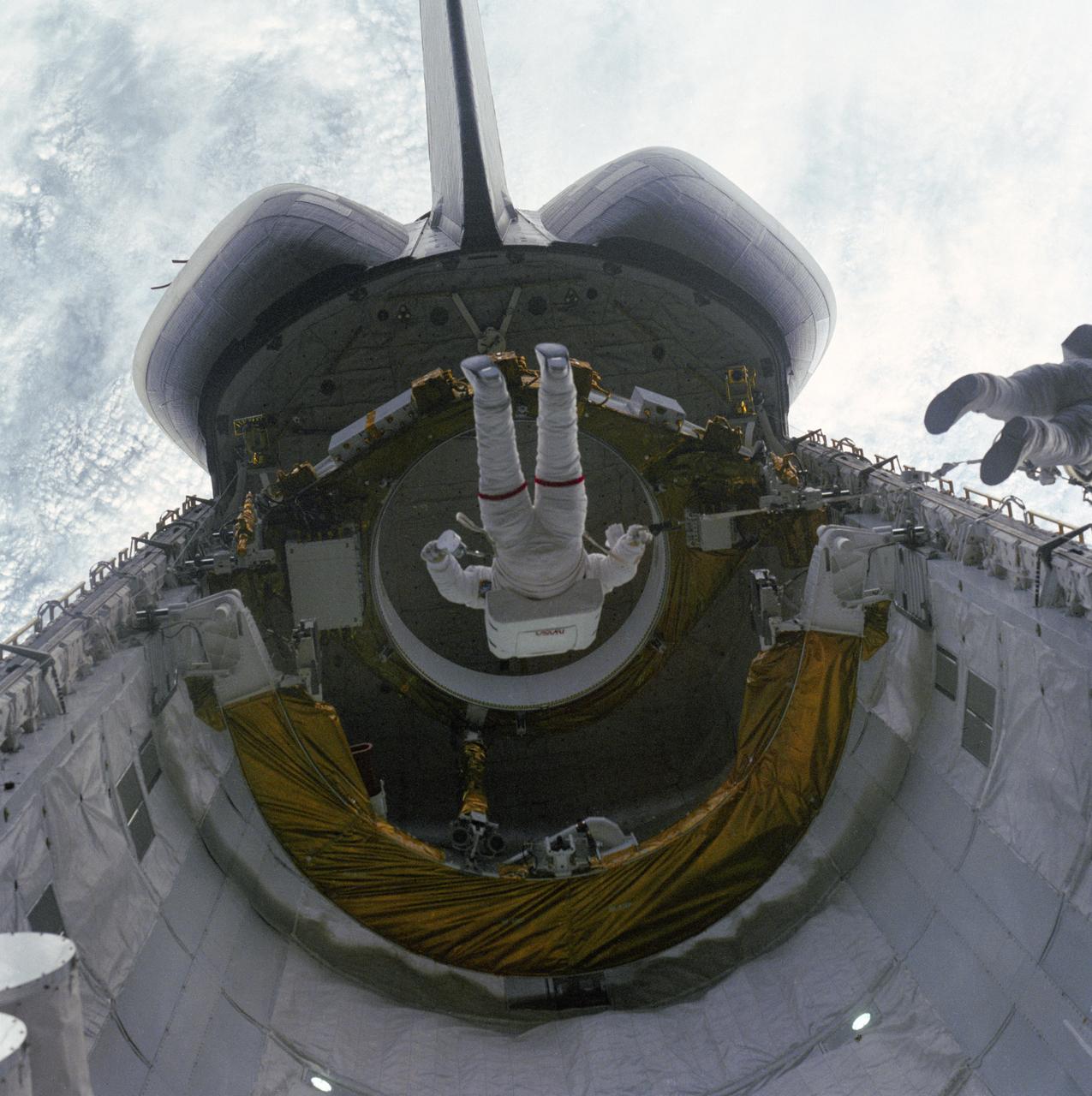
S83-30214 (7 April 1983) --- Astronaut F. Story Musgrave, STS-6 mission specialist, suspends himself midway between the starboard and port slide wire systems to evaluate the pull strength of the reel-in safety tether while astronaut Donald H. Peterson, the flight?s other mission specialist, busies himself along the port side at right edge of frame. This photograph was taken by astronaut Karol J. Bobko, pilot, from the aft window of the Earth-orbiting Challenger?s flight deck. The successful EVA occurred on April 7, 1983, on day four of the five-day flight. The gold-foil protected object is the airborne support equipment (ASE) for the now vacated inertial upper stage (IUS) which aided in the deployment of the tracking and data relay satellite (TDRS) on the first day of the mission. Astronaut Paul J. Weitz, crew commander, was in charge of the Challenger during these operations. The white background is made up mostly of clouds over Earth. Photo credit: NASA
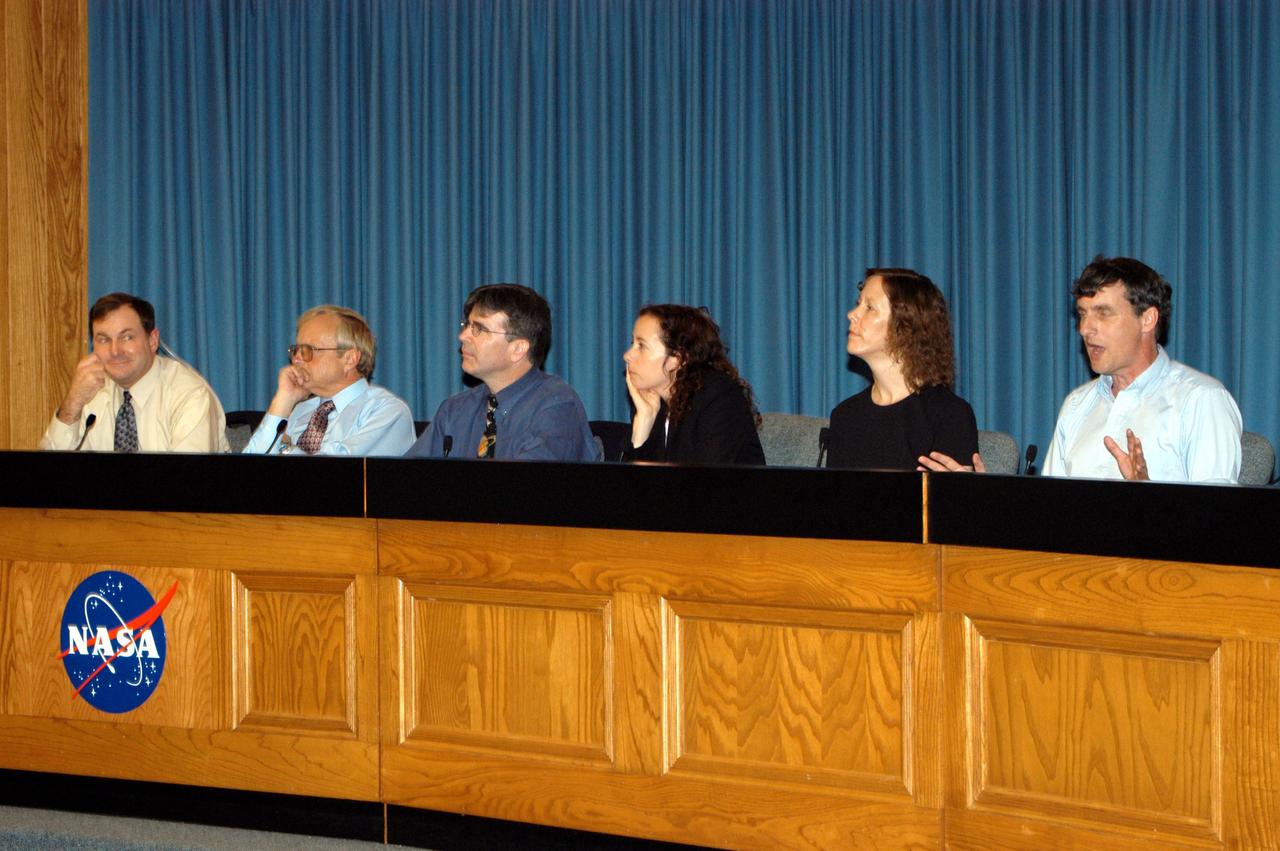
KENNEDY SPACE CENTER, FLA. - A science briefing on the Mars Exploration Rover (MER) missions is held for the media at Kennedy Space Center. From left, the participants are Donald Savage, NASA Public Information Officer; Dr. Ed Weiler, Associate Administrator for Space Science, NASA Headquarters; Dr. Jim Garvin, Mars lead scientist, NASA Headquarters; Dr. Cathy Weitz, MER program scientist, NASA Headquarters; Dr. Joy Crisp, MER project scientist, Jet Propulsion Laboratory; and Dr. Steve Squyres, Mer principal investigator, Cornell Univeristy, Ithaca, N.Y. NASA's twin Mars Exploration Rovers are designed to study the history of water on Mars. These robotic geologists are equipped with a robotic arm, a drilling tool, three spectrometers, and four pairs of cameras that allow them to have a human-like, 3D view of the terrain. Each rover could travel as far as 100 meters in one day to act as Mars scientists' eyes and hands, exploring an environment where humans are not yet able to go. MER-A is scheduled to launch on June 8 at 2:06 p.m. EDT, with two launch opportunities each day during a launch period that closes on June 24.
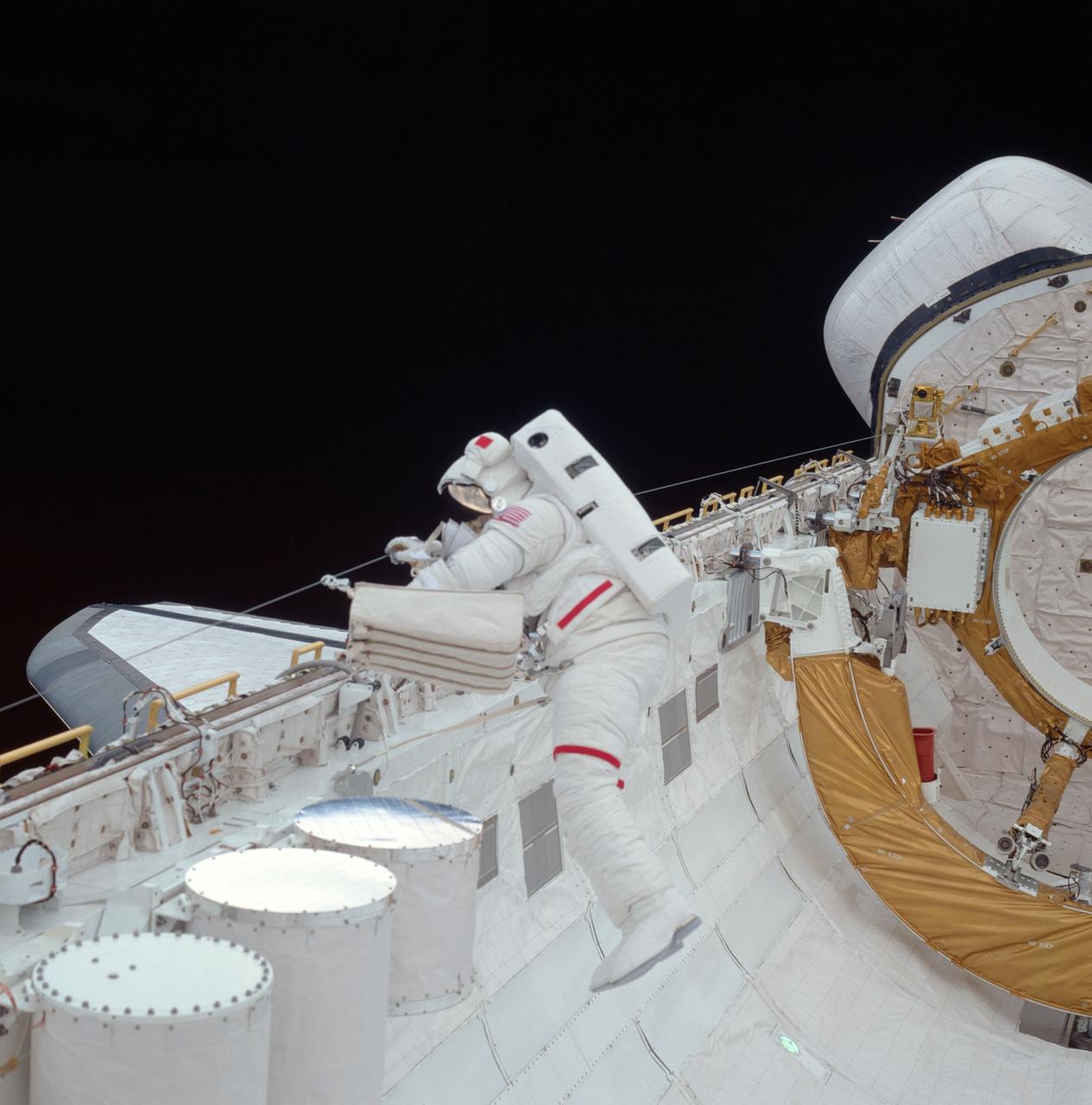
STS006-45-124 (7 April 1983) --- Astronaut F. Story Musgrave, STS-6 mission specialist, translates down the Earth-orbiting space shuttle Challenger’s payload bay door hinge line with a bag of latch tools. This photograph is among the first five still frames that recorded the April 7 extravehicular activity (EVA) of Dr. Musgrave and Donald H. Peterson, the flight’s other mission specialist. It was photographed with a handheld 70mm camera from inside the cabin by one of two crew members who remained on the flight deck during the EVA. Dr. Musgrave’s task here was to evaluate the techniques required to move along the payload bay’s edge with tools. In the lower left foreground are three canisters containing three getaway special (GAS) experiments. Part of the starboard wind and orbital maneuvering system (OMS) pod are seen back dropped against the blackness of space. The gold-foil protected object partially out of frame on the right is the airborne support equipment for the now vacated inertial upper stage (IUS) which aided the deployment of the tracking and data relay satellite on the flight’s first day. Astronauts Paul J. Weitz, command and Karol J. Bobko, pilot, remained inside the Challenger during the EVA. Photo credit: NASA
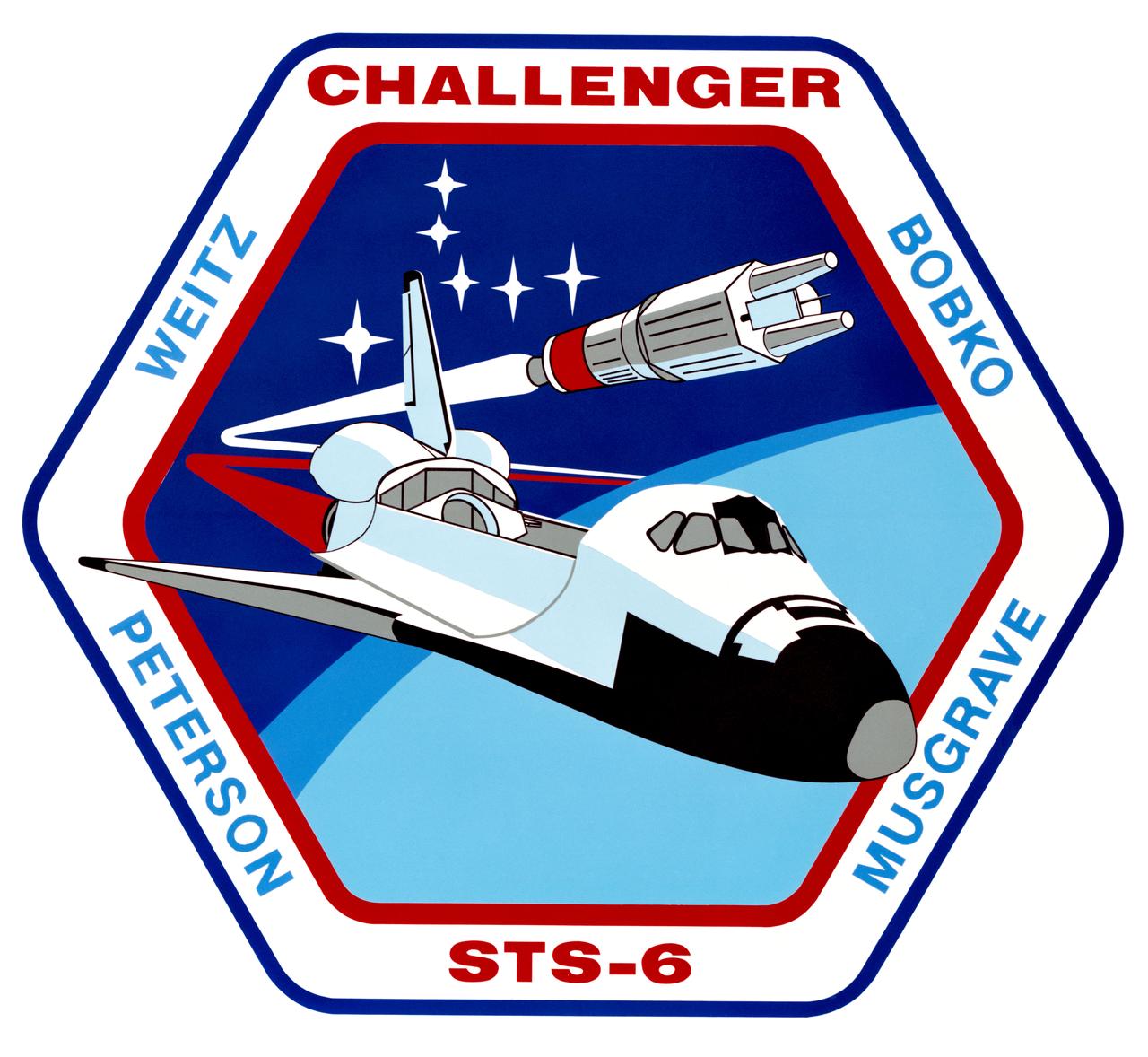
S82-39531 (December 1982) --- This is the official insignia for space shuttle mission STS-6. The crew members for this mission are astronauts Paul J. Weitz, commander; Karol J. Bobko, pilot; F. Story Musgrave, mission specialist; and Donald H. Peterson, mission specialist. The sixth space shuttle flight is represented by the hexagonal shape of the insignia and the six stars, in the portrayed constellation Virgo. The sign Virgo is also symbolic of the first flight of the space shuttle Challenger. Depicted above the spacecraft?s open cargo bay is the combined Inertial Upper Stage (IUS) and a Tracking and Data Relay Satellite. This is the first shuttle flight of the IUS rocket, which will carry the first TDRS to a geosynchronous orbit of 24,000 statute miles. The NASA insignia design for space shuttle flights is reserved for use by the astronauts and for other official use as the NASA Administrator may authorize. Public availability has been approved only in the forms of illustrations by the various news media. When and if there is any change in this policy, which is not anticipated, the change will be publicly announced. Photo credit: NASA
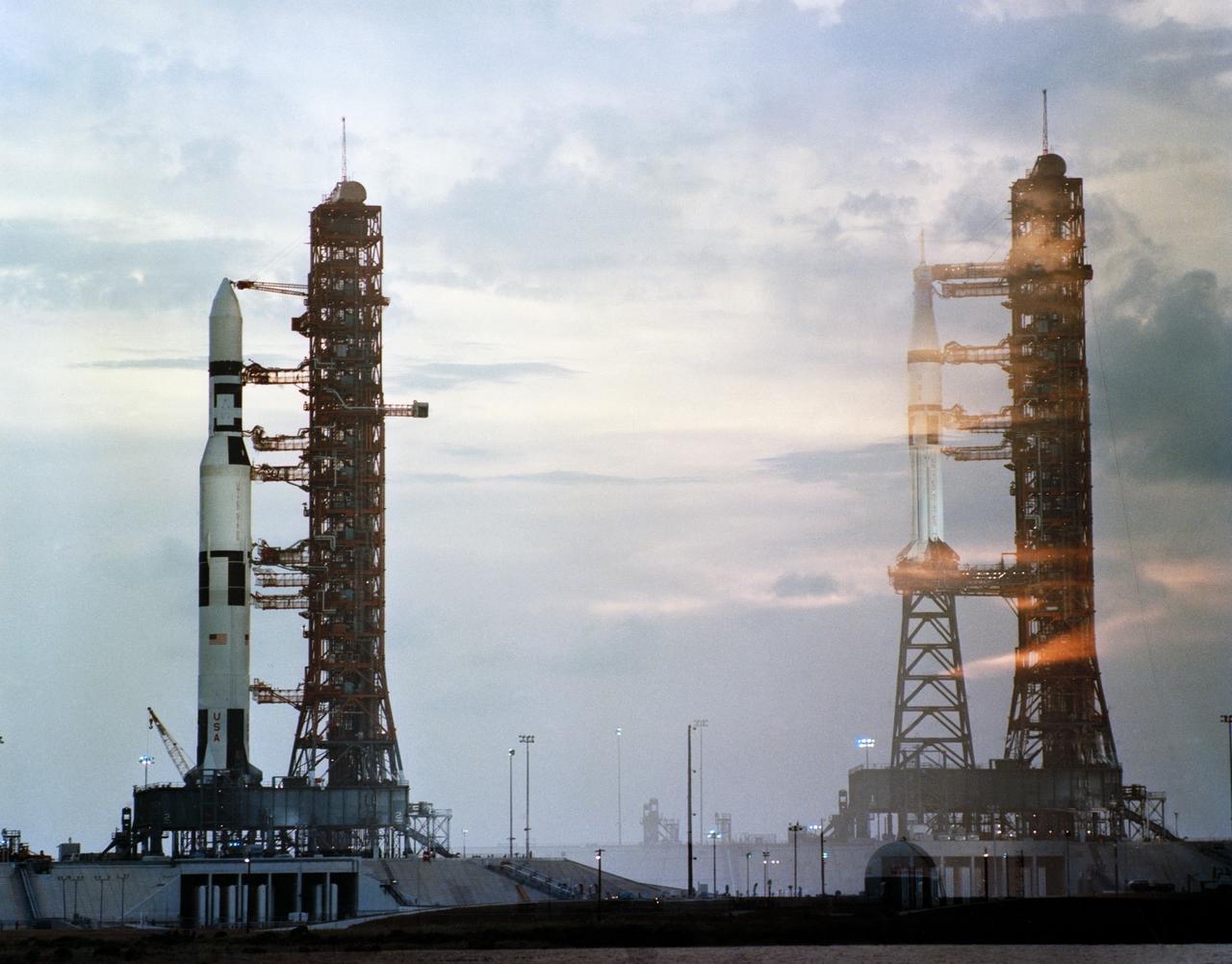
S73-25654 (7 May 1973) --- A deliberate double exposure to help illustrate the comparative sizes and configurations of the Skylab 1 and Skylab 2 space vehicles at Launch Complex 39, Kennedy Space Center, Florida. The double exposure creates an illusion that the rockets are side by side, though actually they are one and a half miles apart. The Skylab 1/ Saturn 1B space vehicle on Pad A is on the left. On the right is the Skylab 2/ Saturn 1B space vehicle on Pad B. The Skylab 1 payload is the space station cluster. The Skylab 2 payload will be an Apollo Command/Service Module (CSM) with astronauts Charles Conrad Jr., Joseph P. Kerwin and Paul J. Weitz aboard. The Saturn V launch vehicle is composed of a Saturn V first (S-1C) stage, a Saturn V second (S-11) stage, and the Skylab payload. The Saturn 1B launch vehicle consists of a Saturn 1B first (S-1B) stage, a Saturn 1B second (S-1VB) stage, and the CSM payload including its launch escape system. Photo credit: NASA
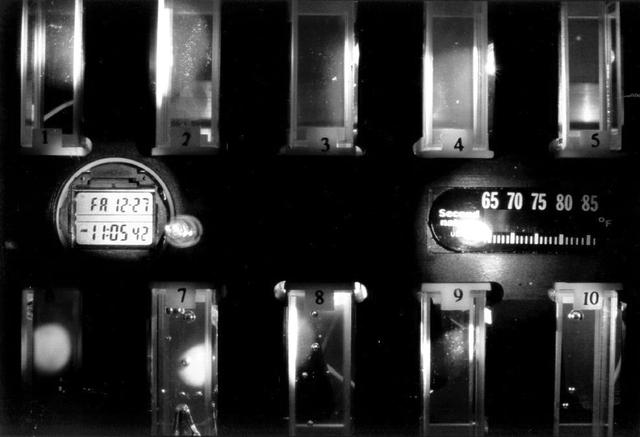
Close-up view of the Binary Colloidal Alloy Test during an experiment run aboard the Russian Mir space station. BCAT is part of an extensive series of experiments plarned to investigate the fundamental properties of colloids so that scientists can make colloids more useful for technological applications. Some of the colloids studied in BCAT are made of two different sized particles (binary colloidal alloys) that are very tiny, uniform plastic spheres. Under the proper conditions, these colloids can arrange themselves in a pattern to form crystals, which may have many unique properties that may form the basis of new classes of light switches, displays, and optical devices that can fuel the evolution of the next generation of computer and communication technologies. This Slow Growth hardware consisted of a 35-mm camera aimed toward a module which contained 10 separate colloid samples. To begin the experiment, one of the astronauts would mix the samples to disperse the colloidal particles. Then the hardware operated autonomously, taking photos of the colloidal samples over a 90-day period. The investigation proved that gravity plays a central role in the formation and stability of these types of colloidal crystal structures. The investigation also helped identify the optimum conditions for the formation of colloidal crystals, which will be used for optimizing future microgravity experiments in the study of colloidal physics. Dr. David Weitz of the University of Pennsylvania and Dr. Peter Pusey of the University of Edinburgh, United Kingdom, are the principal investigators.