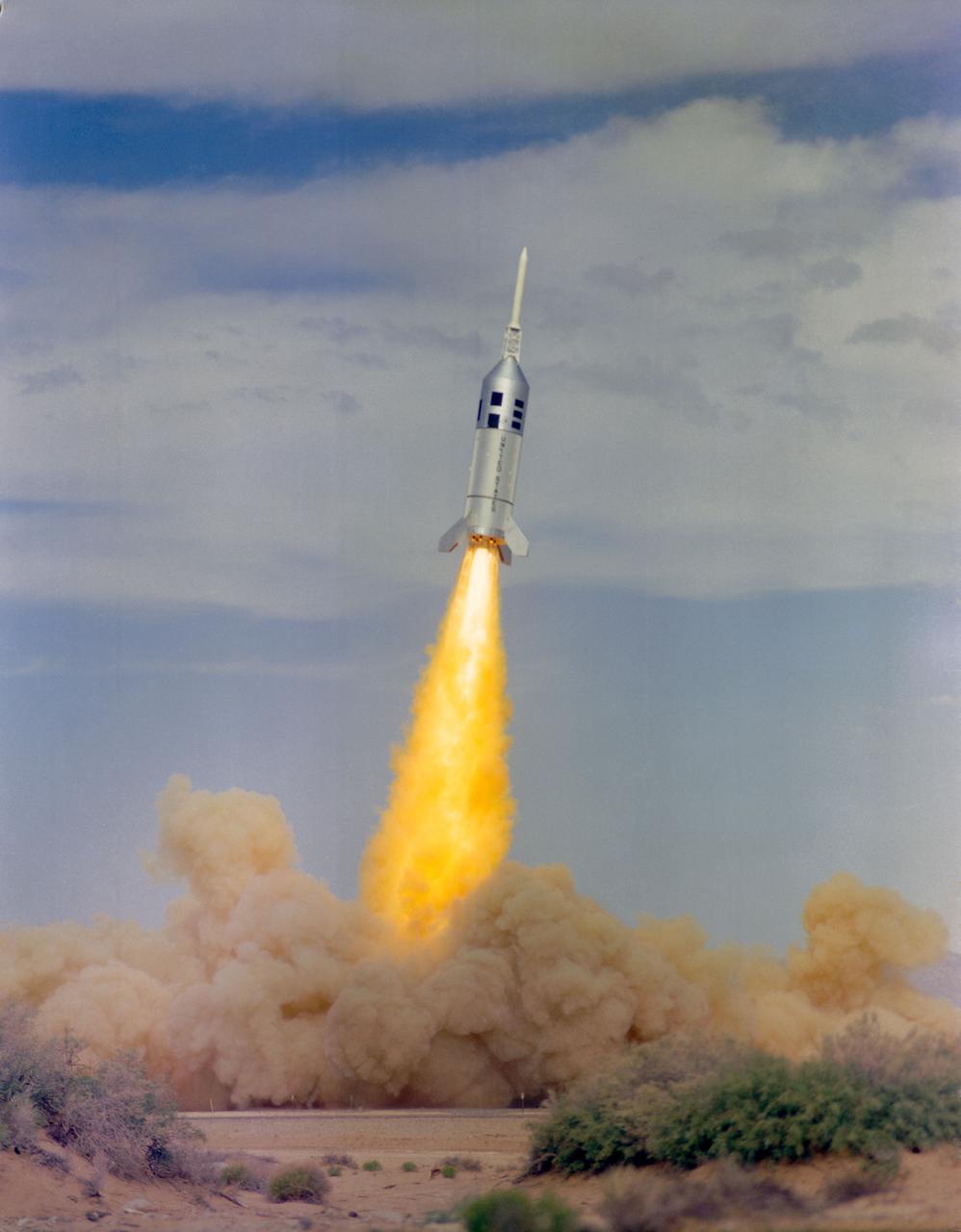
S63-15701 (28 August 1963) --- All seven motors of Little Joe II, ignited simultaneously at launch, with a total thrust of about 310,000 pounds. A maximum height of 24,000 feet was attained as Little Joe II traveled 47,000 feet north on the White Sands Test Range.
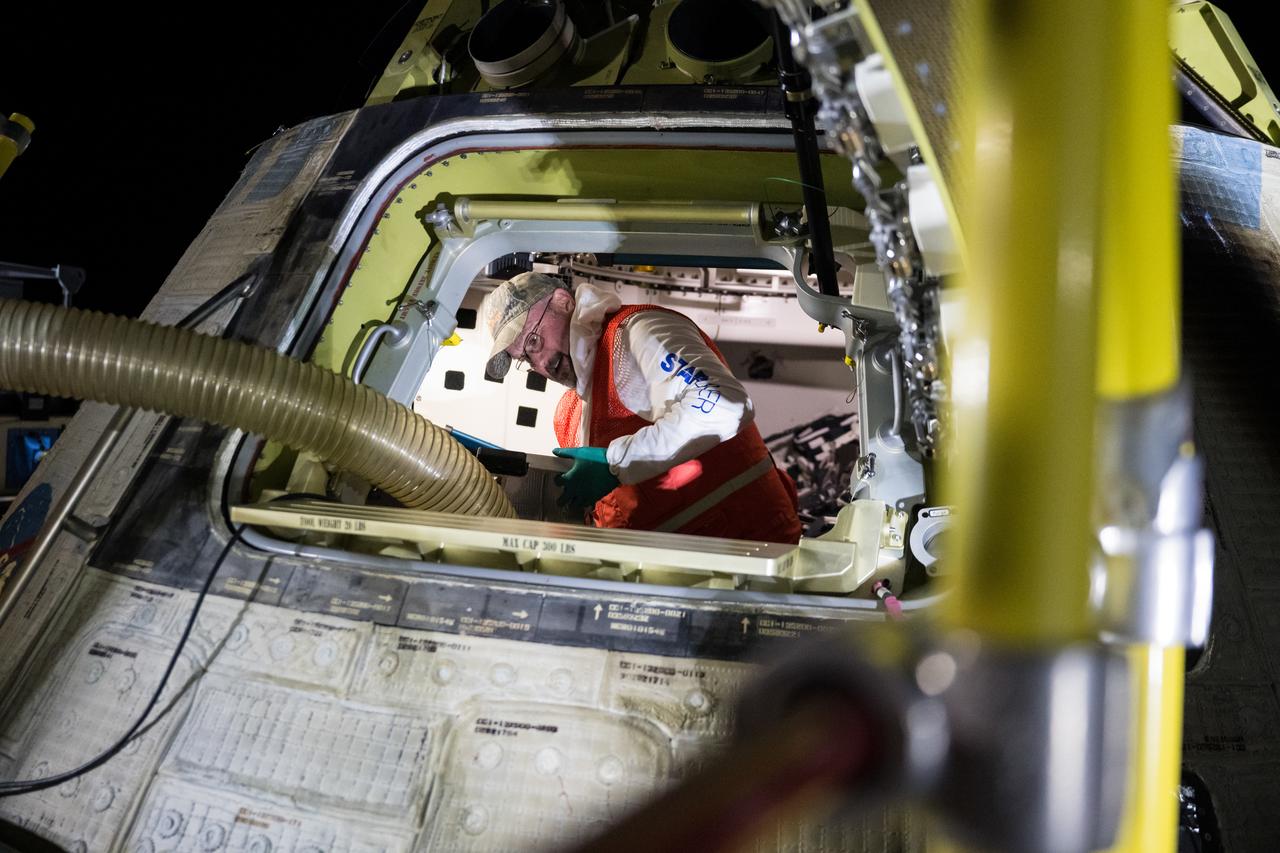
Boeing and NASA teams unload cargo from NASA's Boeing Crew Flight Test Starliner spacecraft after it landed uncrewed at White Sands Missile Range’s Space Harbor, Friday, Sept. 6, 2024 Mountain Time (Sept. 7 Eastern Time), in New Mexico. This approach allows NASA and Boeing to continue gathering testing data on the spacecraft. Photo Credit: (NASA/Aubrey Gemignani)
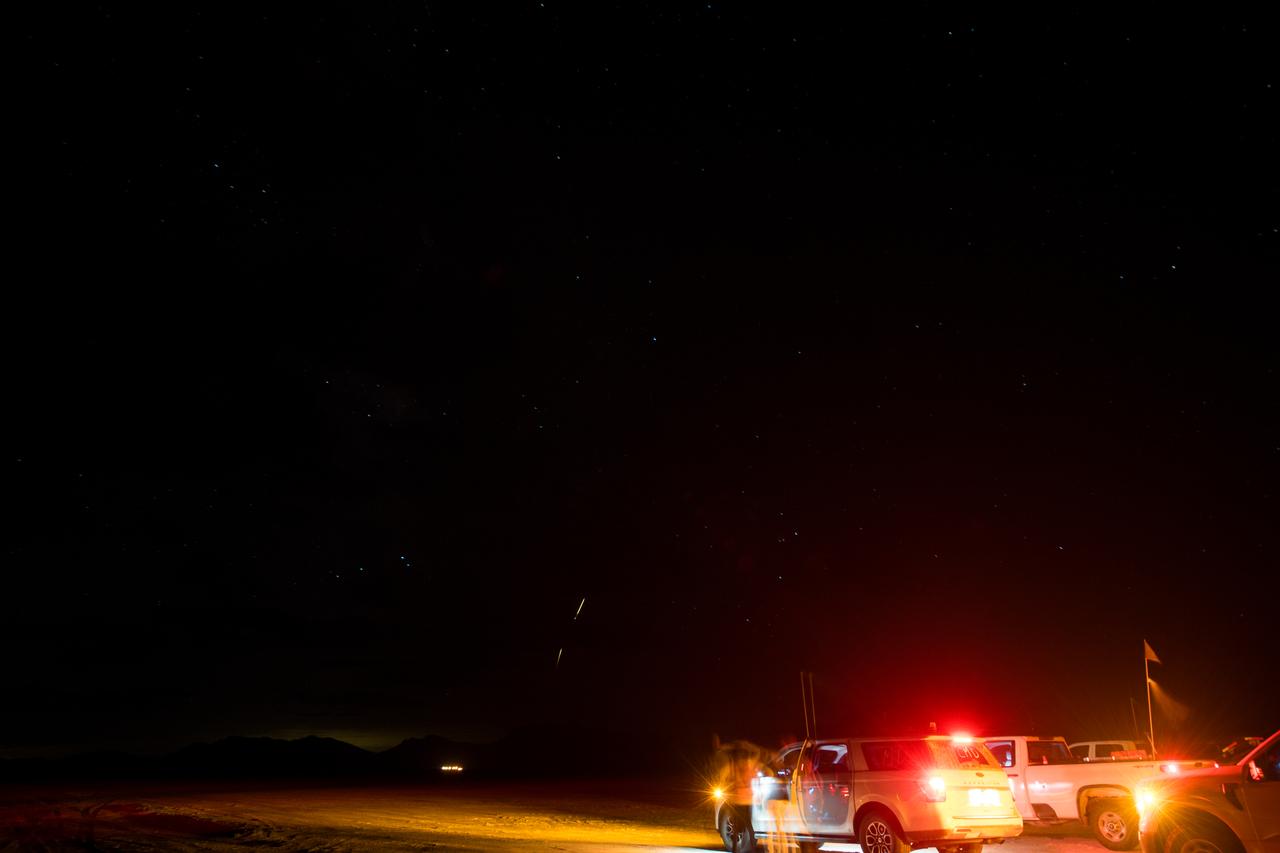
In this 30-second exposure, NASA's Boeing Crew Flight Test Starliner spacecraft lands uncrewed, Friday, Sept. 6, 2024 Mountain Time, at White Sands, New Mexico. This approach allows NASA and Boeing to continue gathering testing data on the spacecraft. Photo Credit: (NASA/Aubrey Gemignani)
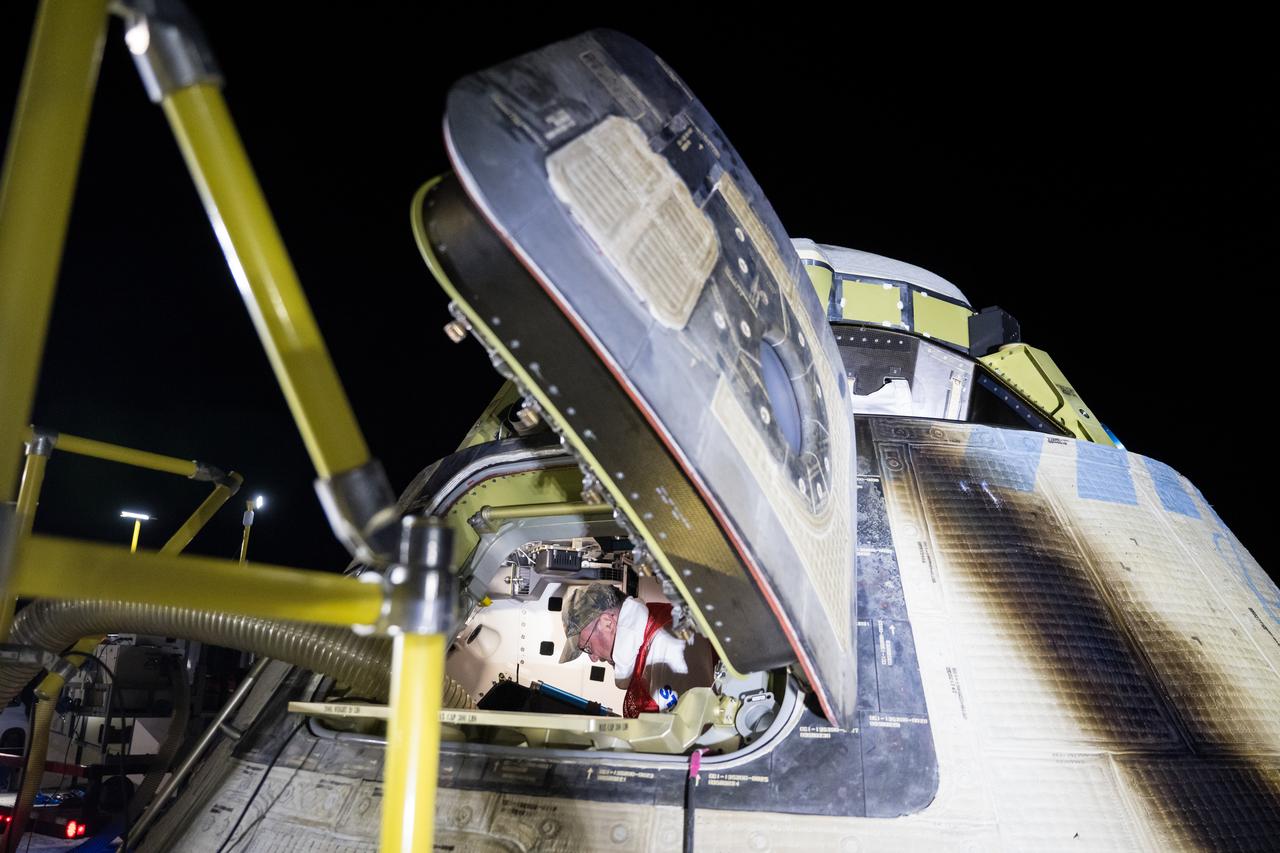
Boeing and NASA teams unload cargo from NASA's Boeing Crew Flight Test Starliner spacecraft after it landed uncrewed at White Sands Missile Range’s Space Harbor, Friday, Sept. 6, 2024 Mountain Time (Sept. 7 Eastern Time), in New Mexico. This approach allows NASA and Boeing to continue gathering testing data on the spacecraft. Photo Credit: (NASA/Aubrey Gemignani)
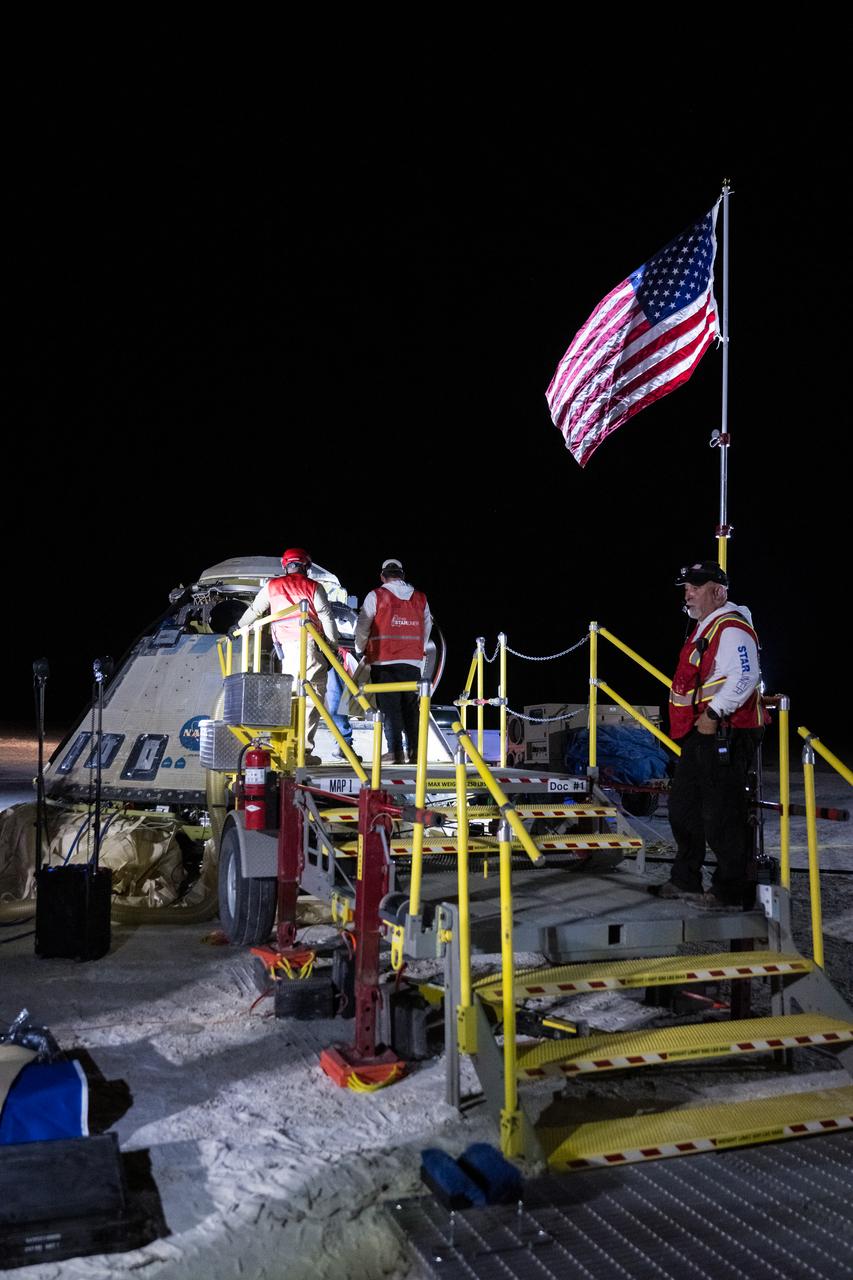
Boeing and NASA teams work around NASA's Boeing Crew Flight Test Starliner spacecraft after it landed uncrewed, Friday, Sept. 6, 2024 Mountain Time (Sept. 7 Eastern Time), at White Sands, New Mexico. This approach allows NASA and Boeing to continue gathering testing data on the spacecraft. Photo Credit: (NASA/Aubrey Gemignani)
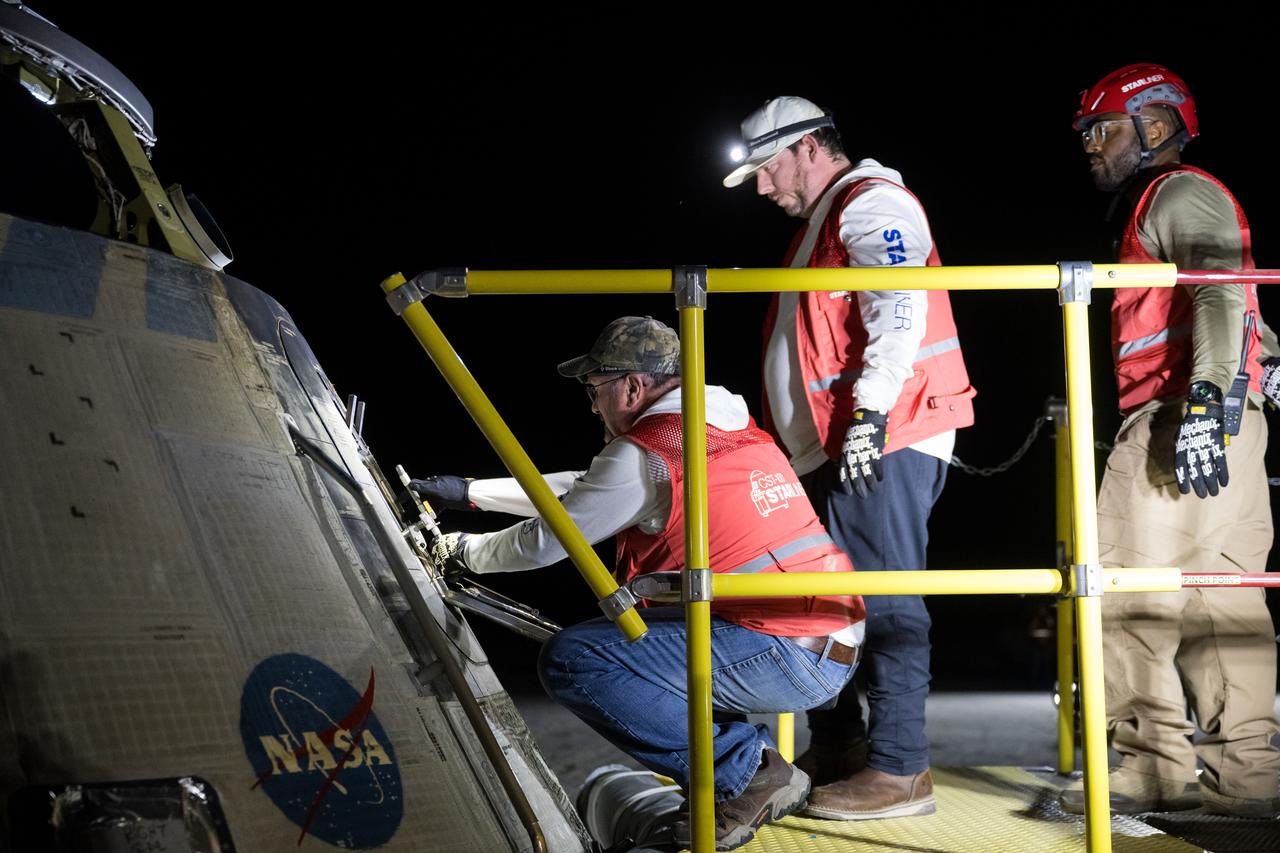
Boeing and NASA teams work around NASA's Boeing Crew Flight Test Starliner spacecraft after it landed uncrewed, Friday, Sept. 6, 2024 Mountain Time (Sept. 7 Eastern Time), at White Sands, New Mexico. This approach allows NASA and Boeing to continue gathering testing data on the spacecraft. Photo Credit: (NASA/Aubrey Gemignani)
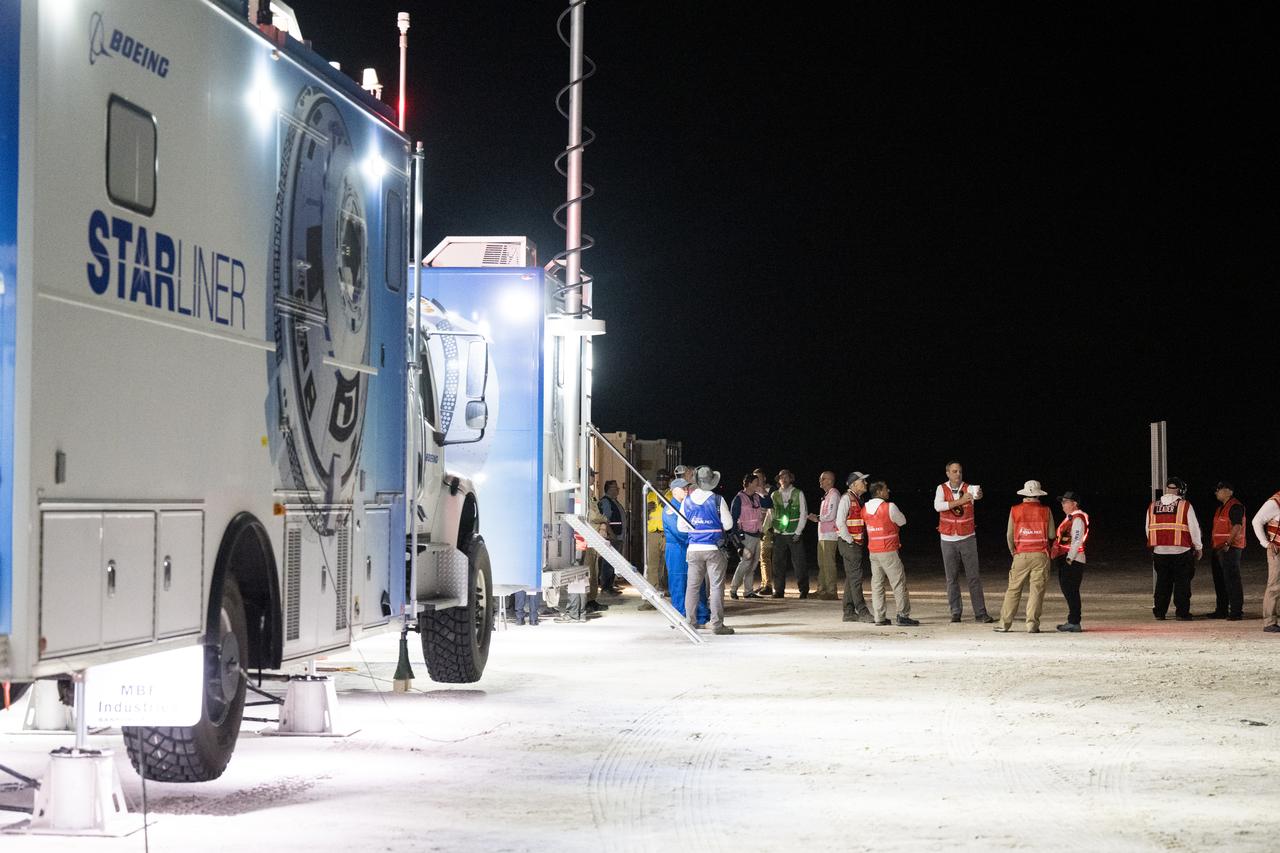
Boeing and NASA teams are seen before NASA's Boeing Crew Flight Test Starliner spacecraft lands uncrewed, Friday, Sept. 6, 2024 Mountain Time at White Sands, New Mexico. This approach allows NASA and Boeing to continue gathering testing data on the spacecraft. Photo Credit: (NASA/Aubrey Gemignani)
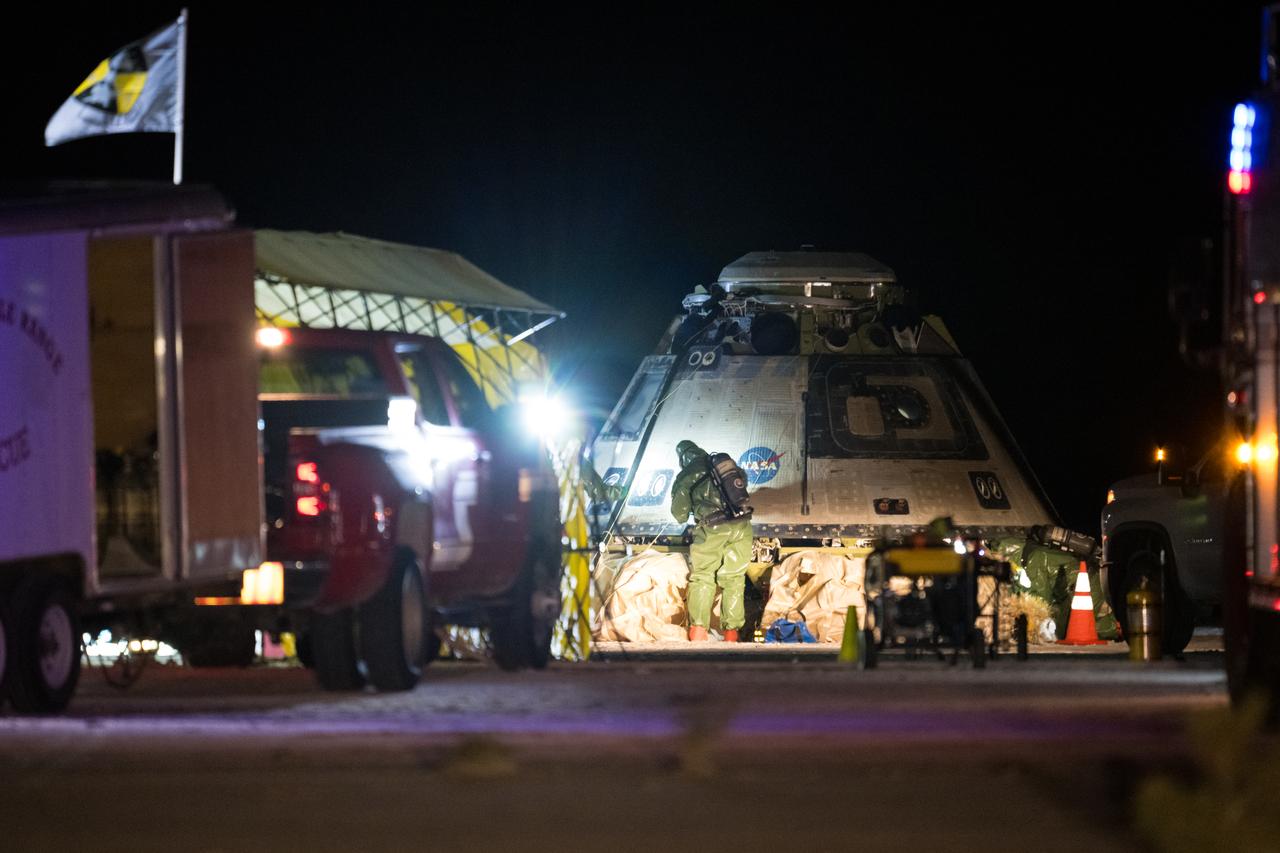
Boeing and NASA recovery teams wait for hazmat teams to confirm it is safe to work around NASA's Boeing Crew Flight Test Starliner spacecraft after it landed uncrewed at White Sands Missile Range’s Space Harbor, Friday, Sept. 6, 2024 Mountain Time (Sept. 7 Eastern Time), in New Mexico. This approach allows NASA and Boeing to continue gathering testing data on the spacecraft. Photo Credit: (NASA/Aubrey Gemignani)
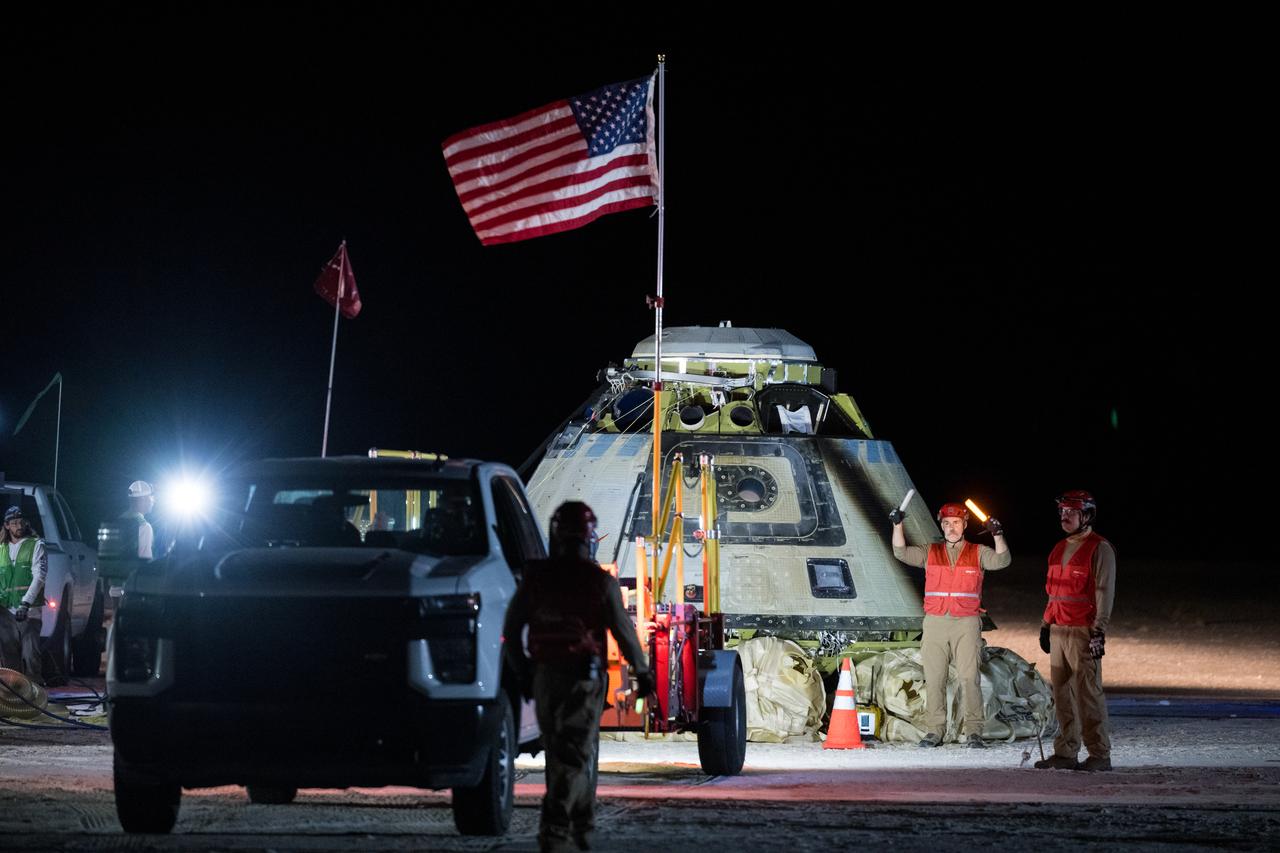
Boeing and NASA teams work around NASA's Boeing Crew Flight Test Starliner spacecraft after it landed uncrewed, Friday, Sept. 6, 2024 Mountain Time (Sept. 7 Eastern Time), at White Sands, New Mexico. This approach allows NASA and Boeing to continue gathering testing data on the spacecraft. Photo Credit: (NASA/Aubrey Gemignani)

Boeing and NASA teams work around NASA's Boeing Crew Flight Test Starliner spacecraft after it landed uncrewed, Friday, Sept. 6, 2024 Mountain Time (Sept. 7 Eastern Time), at White Sands, New Mexico. This approach allows NASA and Boeing to continue gathering testing data on the spacecraft. Photo Credit: (NASA/Aubrey Gemignani)
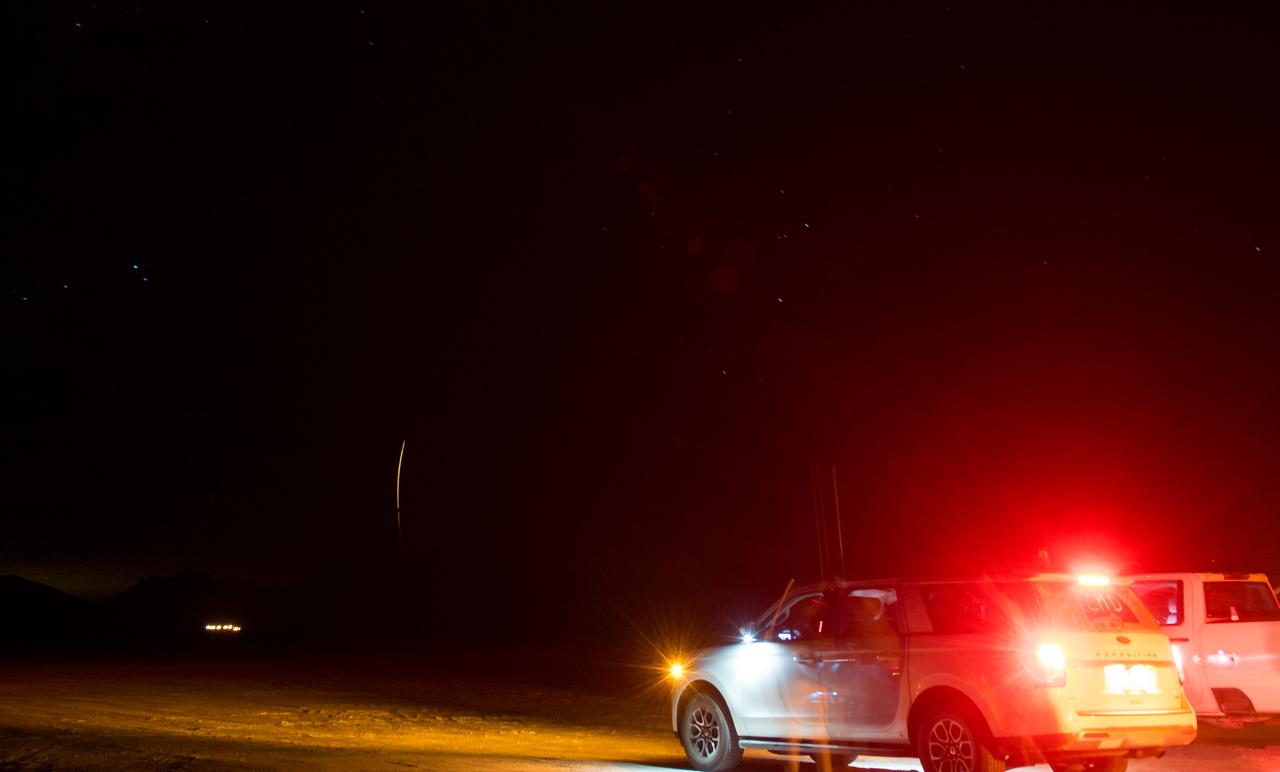
In this 30-second exposure, NASA's Boeing Crew Flight Test Starliner spacecraft lands uncrewed, Friday, Sept. 6, 2024, at White Sands, New Mexico. This approach allows NASA and Boeing to continue gathering testing data on the spacecraft. Photo Credit: (NASA/Aubrey Gemignani)

Boeing and NASA teams work around NASA's Boeing Crew Flight Test Starliner spacecraft after it landed uncrewed, Friday, Sept. 6, 2024 Mountain Time (Sept. 7 Eastern Time), at White Sands, New Mexico. This approach allows NASA and Boeing to continue gathering testing data on the spacecraft. Photo Credit: (NASA/Aubrey Gemignani)
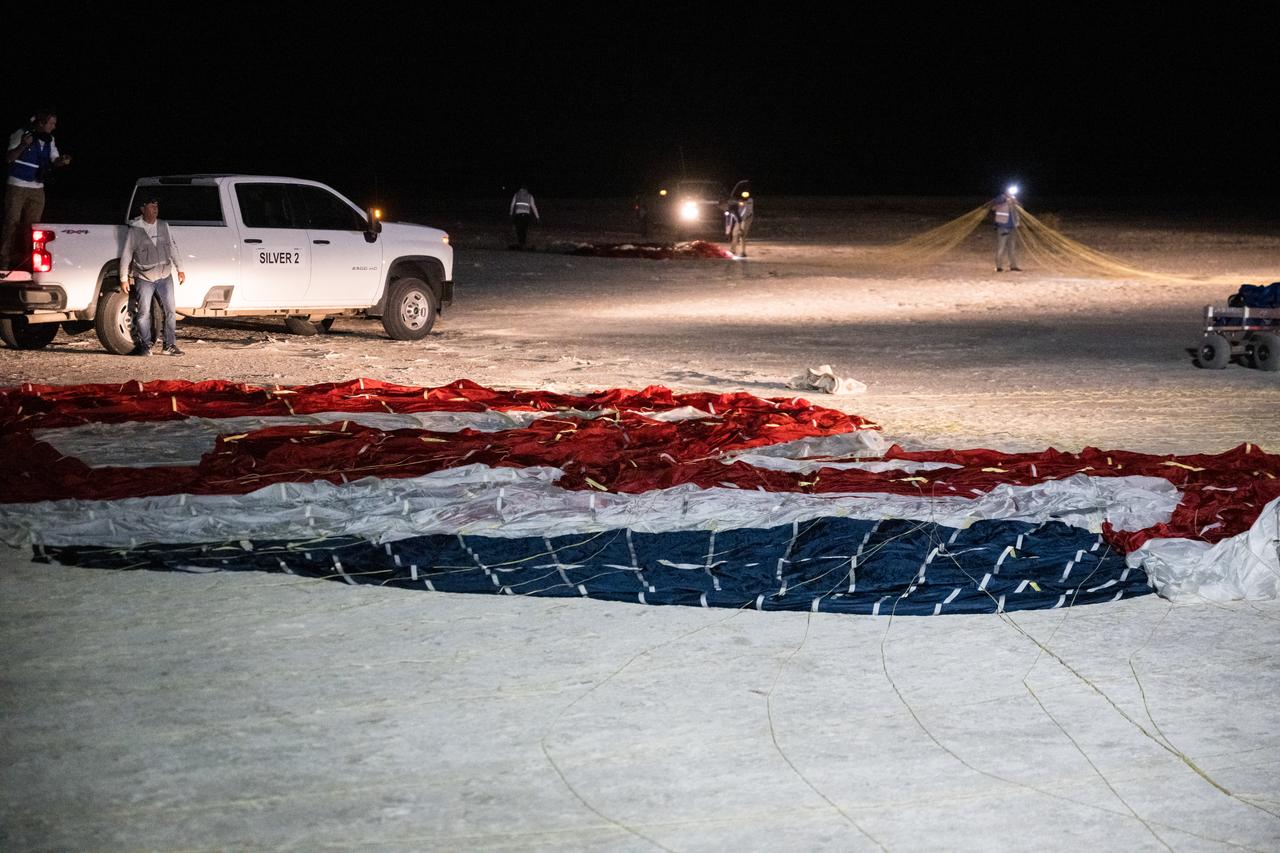
NASA's Boeing Crew Flight Test Starliner spacecraft parachute is seen after the spacecraft landed uncrewed at White Sands Missile Range’s Space Harbor, Friday, Sept. 6, 2024 Mountain Time (Sept. 7 Eastern Time), in New Mexico. This approach allows NASA and Boeing to continue gathering testing data on the spacecraft. Photo Credit: (NASA/Aubrey Gemignani)

Boeing and NASA recovery teams wait for hazmat teams to confirm it is safe to work around NASA's Boeing Crew Flight Test Starliner spacecraft after it landed uncrewed at White Sands Missile Range’s Space Harbor, Friday, Sept. 6, 2024 Mountain Time (Sept. 7 Eastern Time), in New Mexico. This approach allows NASA and Boeing to continue gathering testing data on the spacecraft. Photo Credit: (NASA/Aubrey Gemignani)
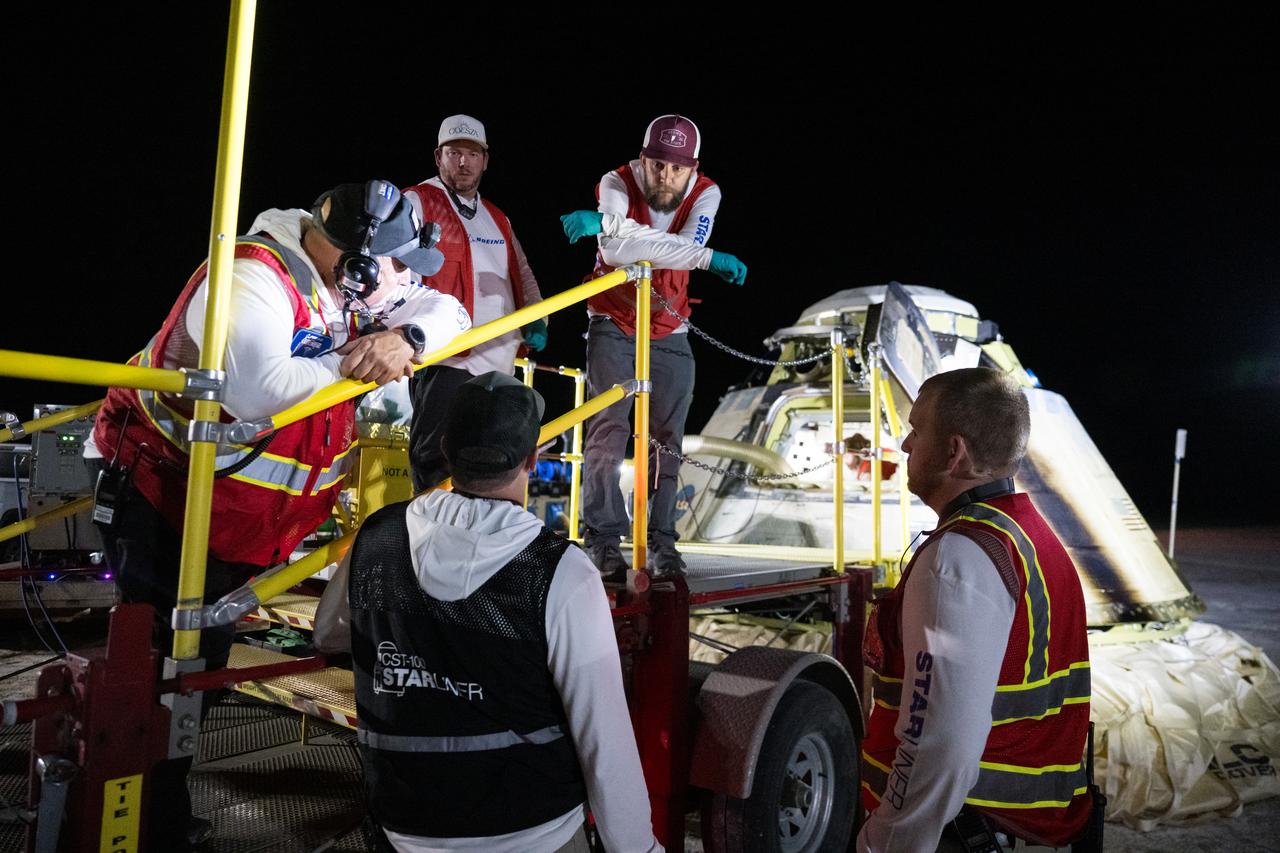
Boeing and NASA teams work around NASA's Boeing Crew Flight Test Starliner spacecraft after it landed uncrewed, Friday, Sept. 6, 2024 Mountain Time (Sept. 7 Eastern Time), at White Sands, New Mexico. This approach allows NASA and Boeing to continue gathering testing data on the spacecraft. Photo Credit: (NASA/Aubrey Gemignani)
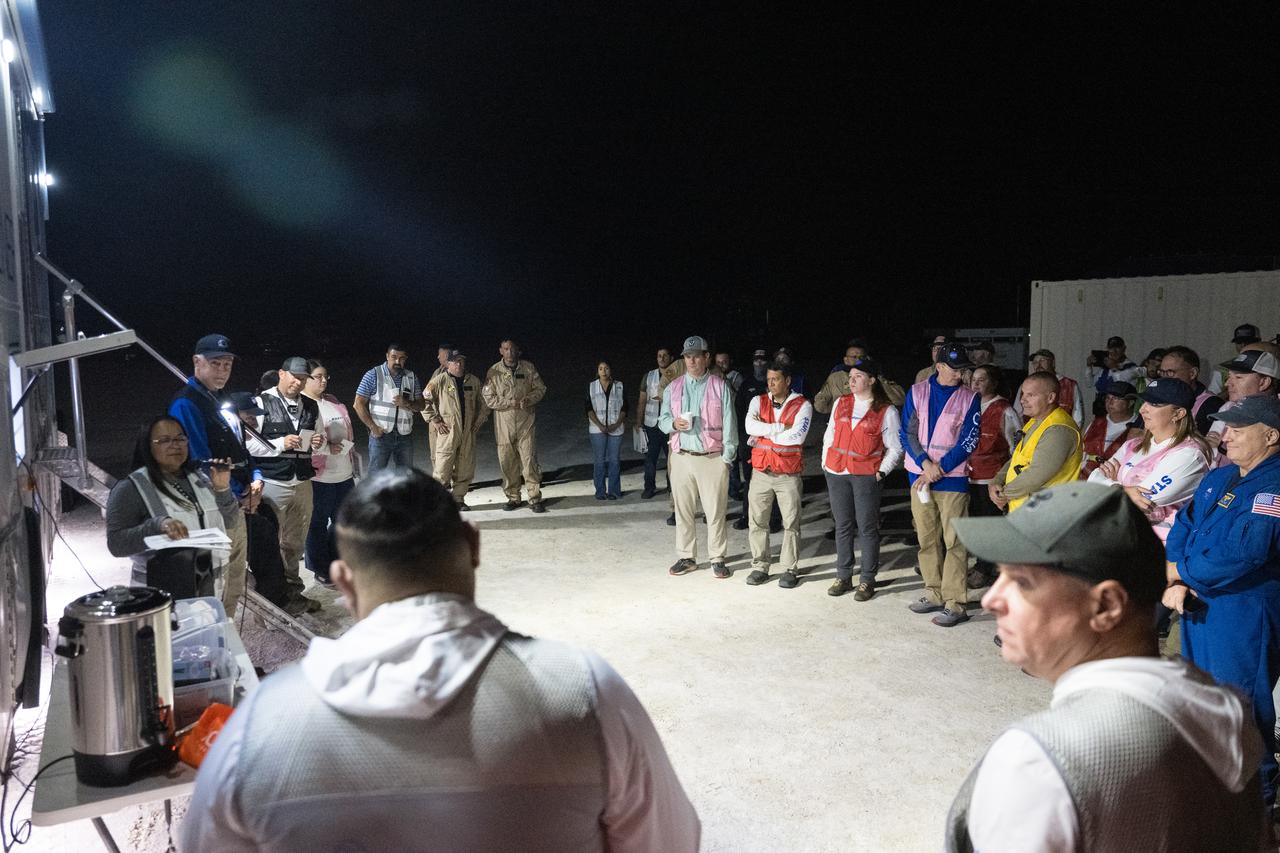
Boeing and NASA teams meet before NASA's Boeing Crew Flight Test Starliner spacecraft lands uncrewed, Friday, Sept. 6, 2024 Mountain Time at White Sands, New Mexico. This approach allows NASA and Boeing to continue gathering testing data on the spacecraft. Photo Credit: (NASA/Aubrey Gemignani)
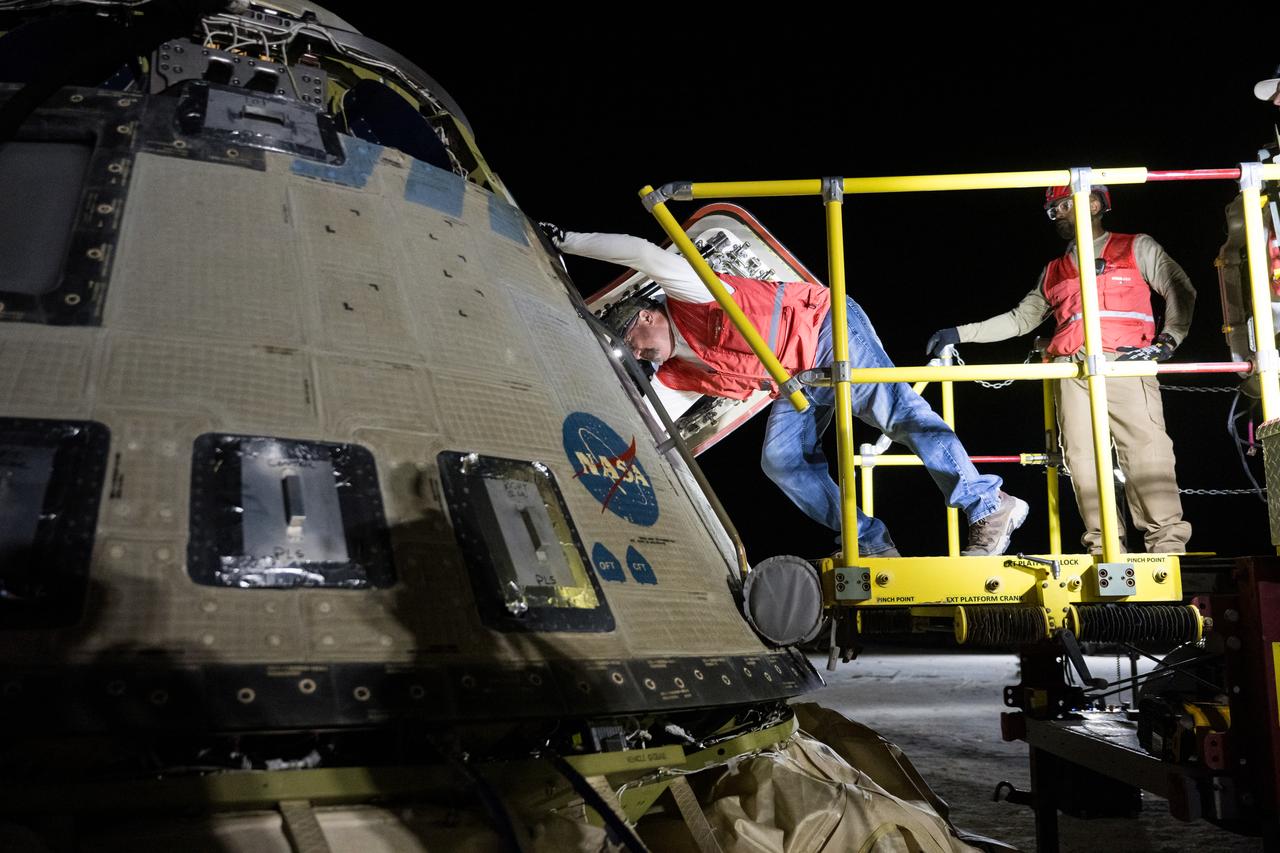
Boeing and NASA teams work around NASA's Boeing Crew Flight Test Starliner spacecraft after it landed uncrewed, Friday, Sept. 6, 2024 Mountain Time (Sept. 7 Eastern Time), at White Sands, New Mexico. This approach allows NASA and Boeing to continue gathering testing data on the spacecraft. Photo Credit: (NASA/Aubrey Gemignani)
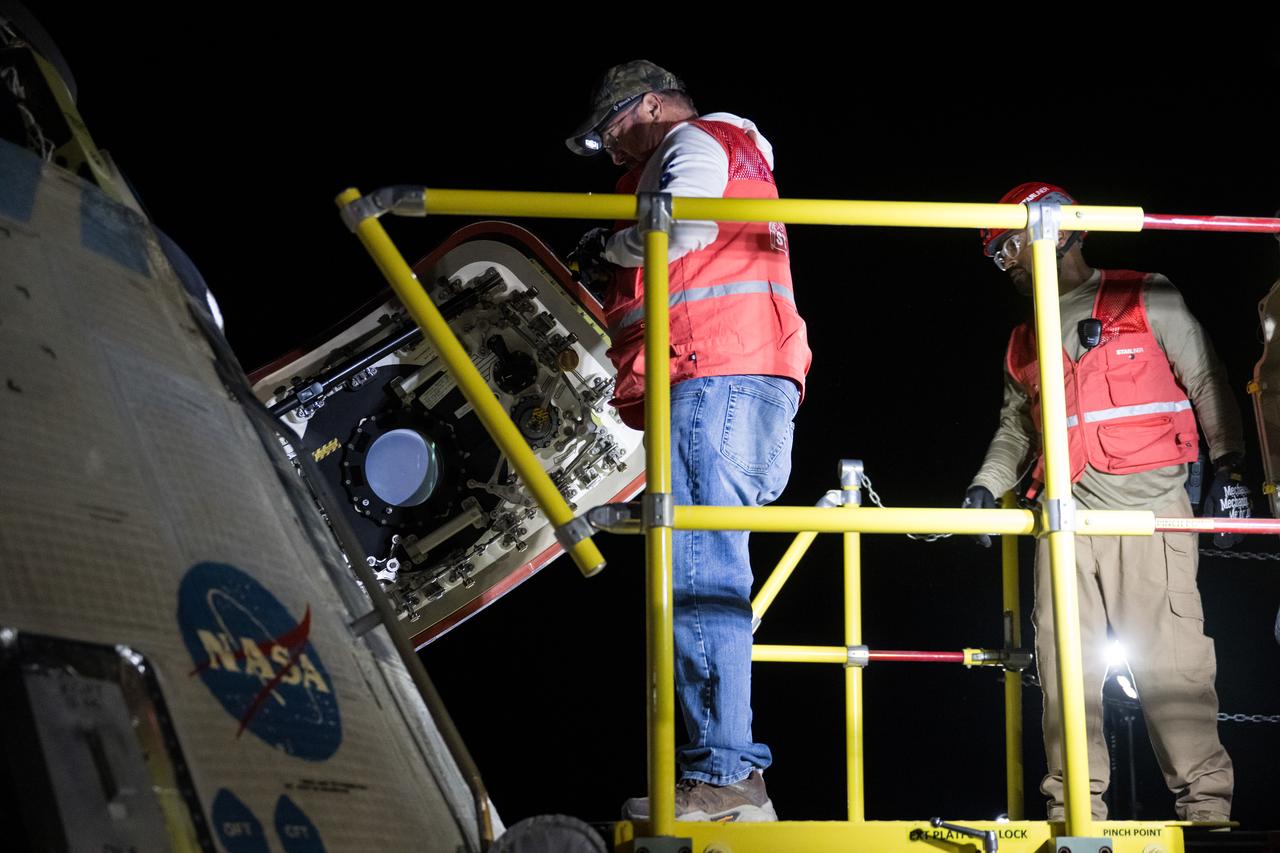
Boeing and NASA teams work around NASA's Boeing Crew Flight Test Starliner spacecraft after it landed uncrewed, Friday, Sept. 6, 2024 Mountain Time (Sept. 7 Eastern Time), at White Sands, New Mexico. This approach allows NASA and Boeing to continue gathering testing data on the spacecraft. Photo Credit: (NASA/Aubrey Gemignani)
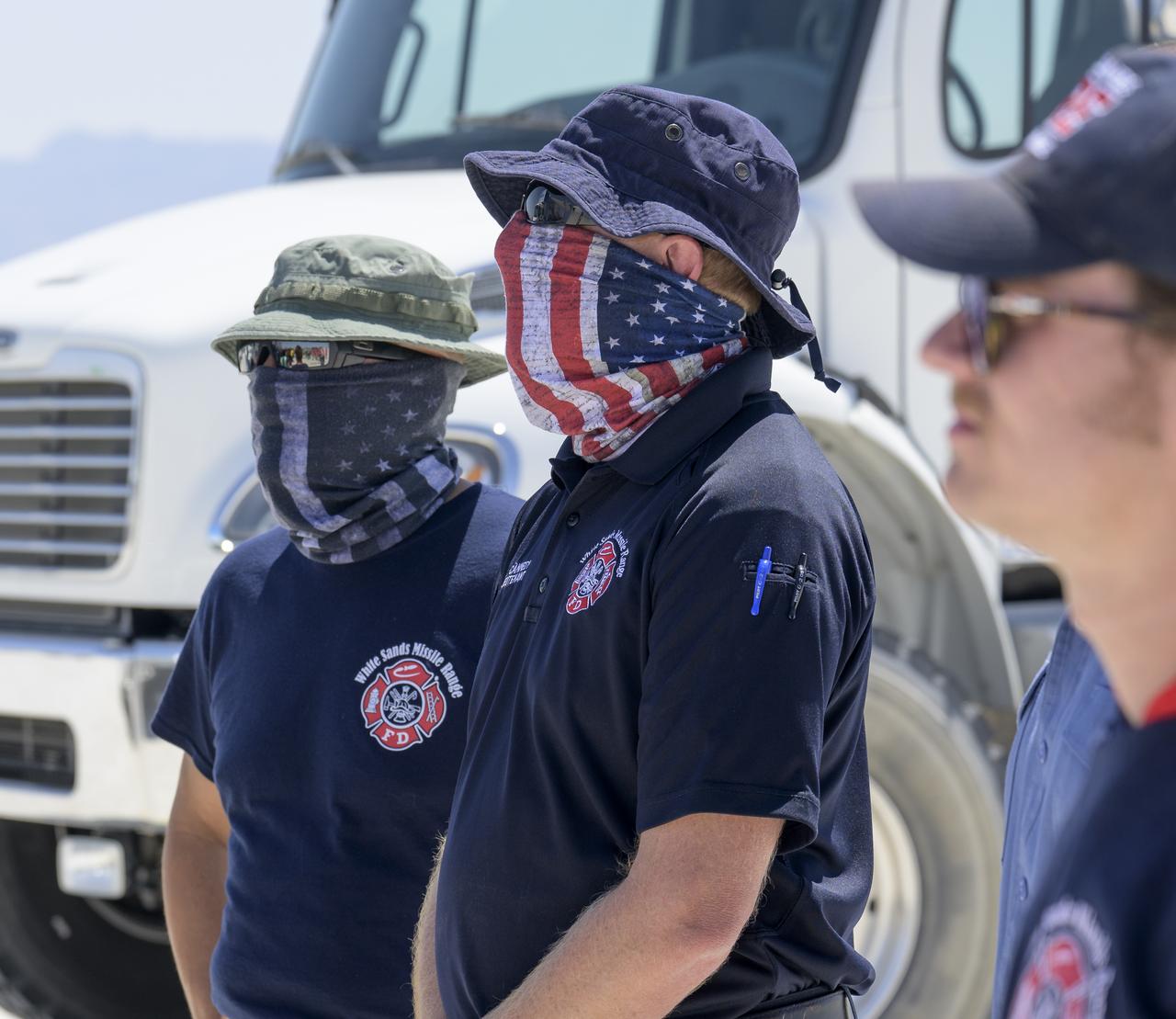
White Sands Missile Range Fire Department team members listen to a pretending briefing as they, NASA, and Boeing teams prepare for the landing of Boeing’s CST-100 Starliner spacecraft at White Sands Missile Range’s Space Harbor, Wednesday, May 25, 2022, in New Mexico. Boeing’s Orbital Flight Test-2 (OFT-2) is Starliner’s second uncrewed flight test to the International Space Station as part of NASA's Commercial Crew Program. OFT-2 serves as an end-to-end test of the system's capabilities. Photo Credit: (NASA/Bill Ingalls)
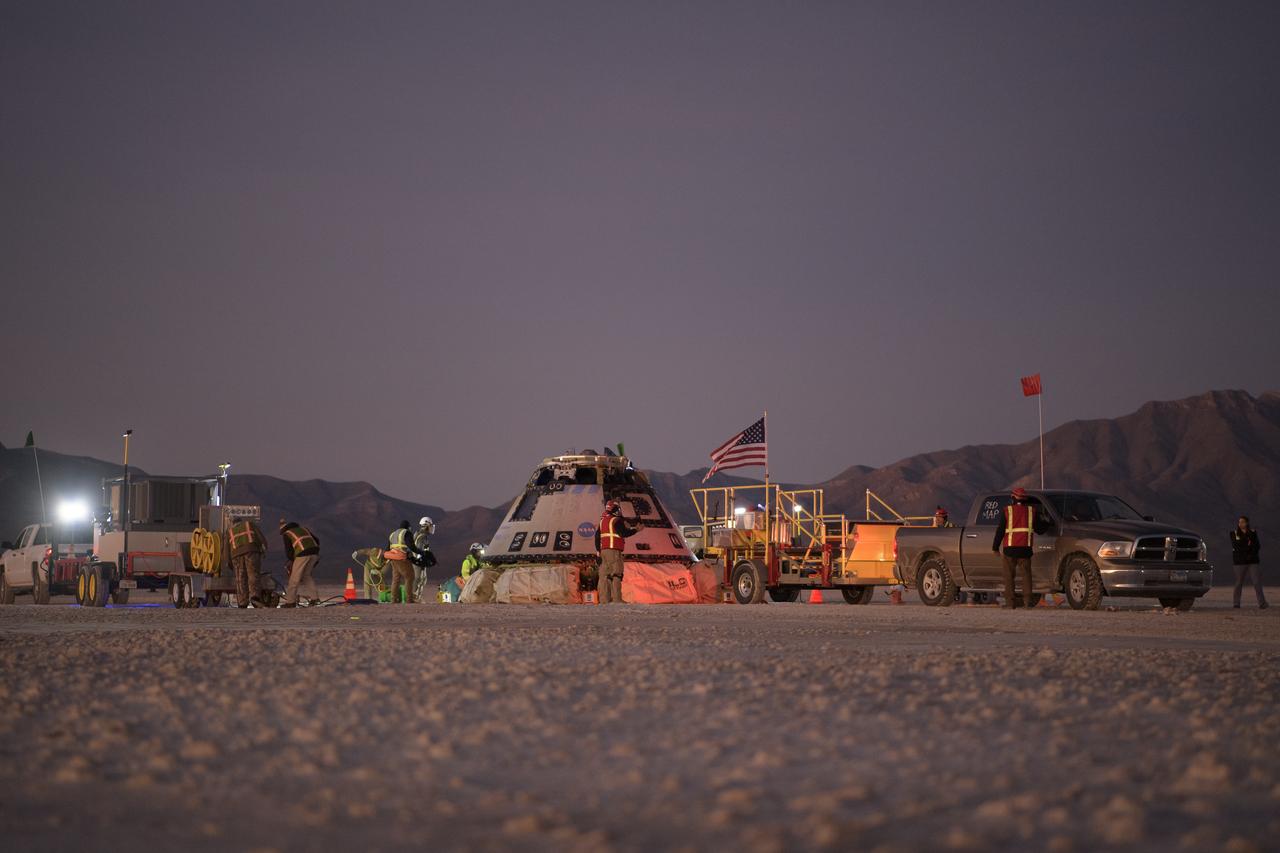
Boeing, NASA, and U.S. Army personnel work around the Boeing CST-100 Starliner spacecraft shortly after it landed in White Sands, New Mexico, Sunday, Dec. 22, 2019. The landing completes an abbreviated Orbital Flight Test for the company that still meets several mission objectives for NASA’s Commercial Crew program. The Starliner spacecraft launched on a United Launch Alliance Atlas V rocket at 6:36 a.m. Friday, Dec. 20 from Space Launch Complex 41 at Cape Canaveral Air Force Station in Florida. Photo Credit: (NASA/Bill Ingalls)
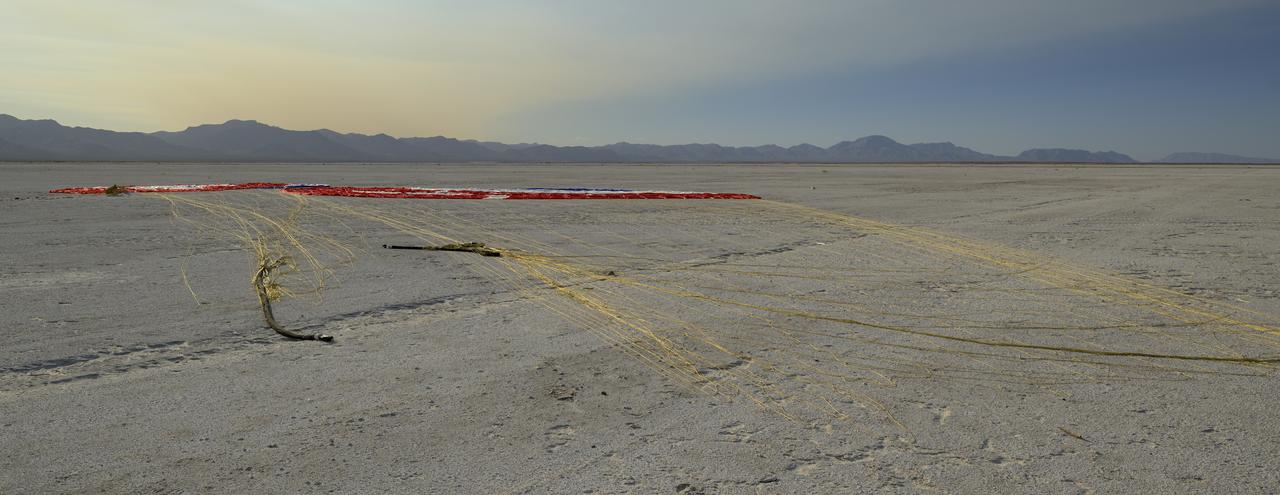
The Boeing CST-100 Starliner parachute is seen after the spacecraft landed at White Sands Missile Range’s Space Harbor, Wednesday, May 25, 2022, in New Mexico. Boeing’s Orbital Flight Test-2 (OFT-2) is Starliner’s second uncrewed flight test to the International Space Station as part of NASA's Commercial Crew Program. OFT-2 serves as an end-to-end test of the system's capabilities. Photo Credit: (NASA/Bill Ingalls)
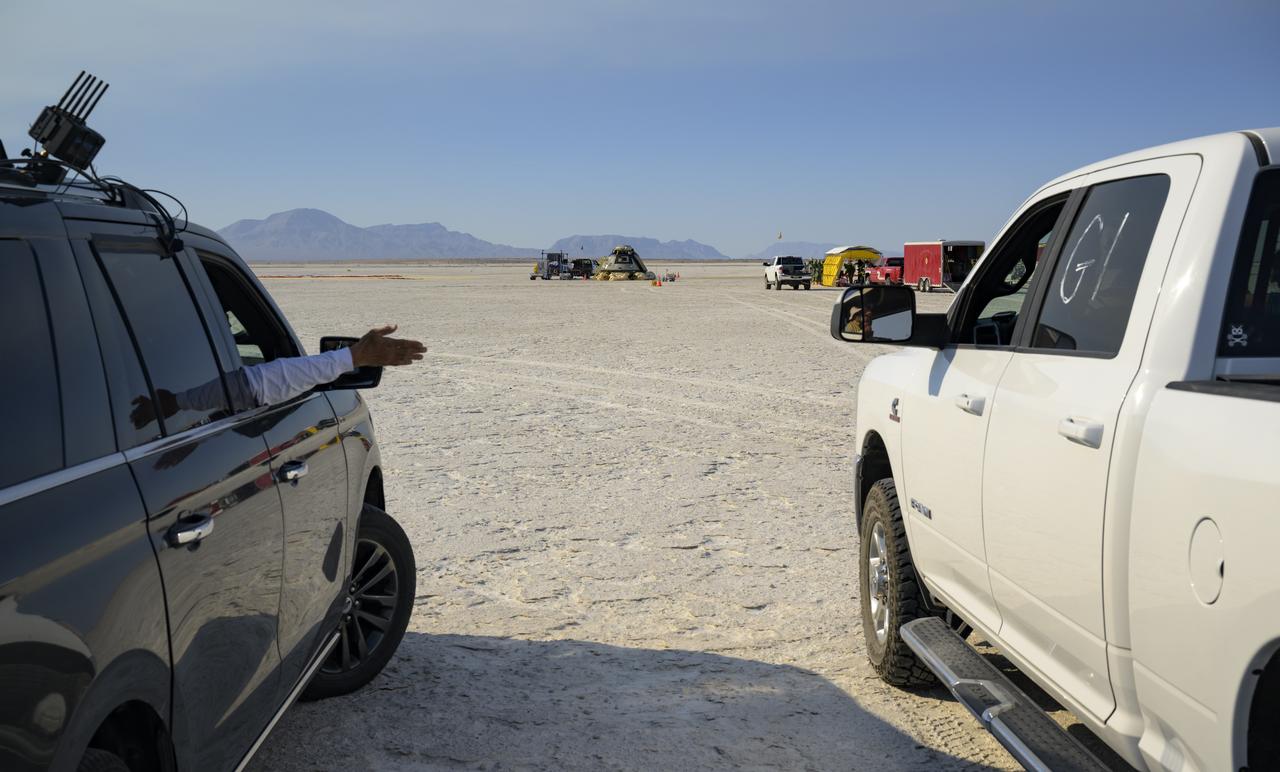
Boeing and NASA teams work around Boeing’s CST-100 Starliner spacecraft after it landed at White Sands Missile Range’s Space Harbor, Wednesday, May 25, 2022, in New Mexico. Boeing’s Orbital Flight Test-2 (OFT-2) is Starliner’s second uncrewed flight test to the International Space Station as part of NASA's Commercial Crew Program. OFT-2 serves as an end-to-end test of the system's capabilities. Photo Credit: (NASA/Bill Ingalls)
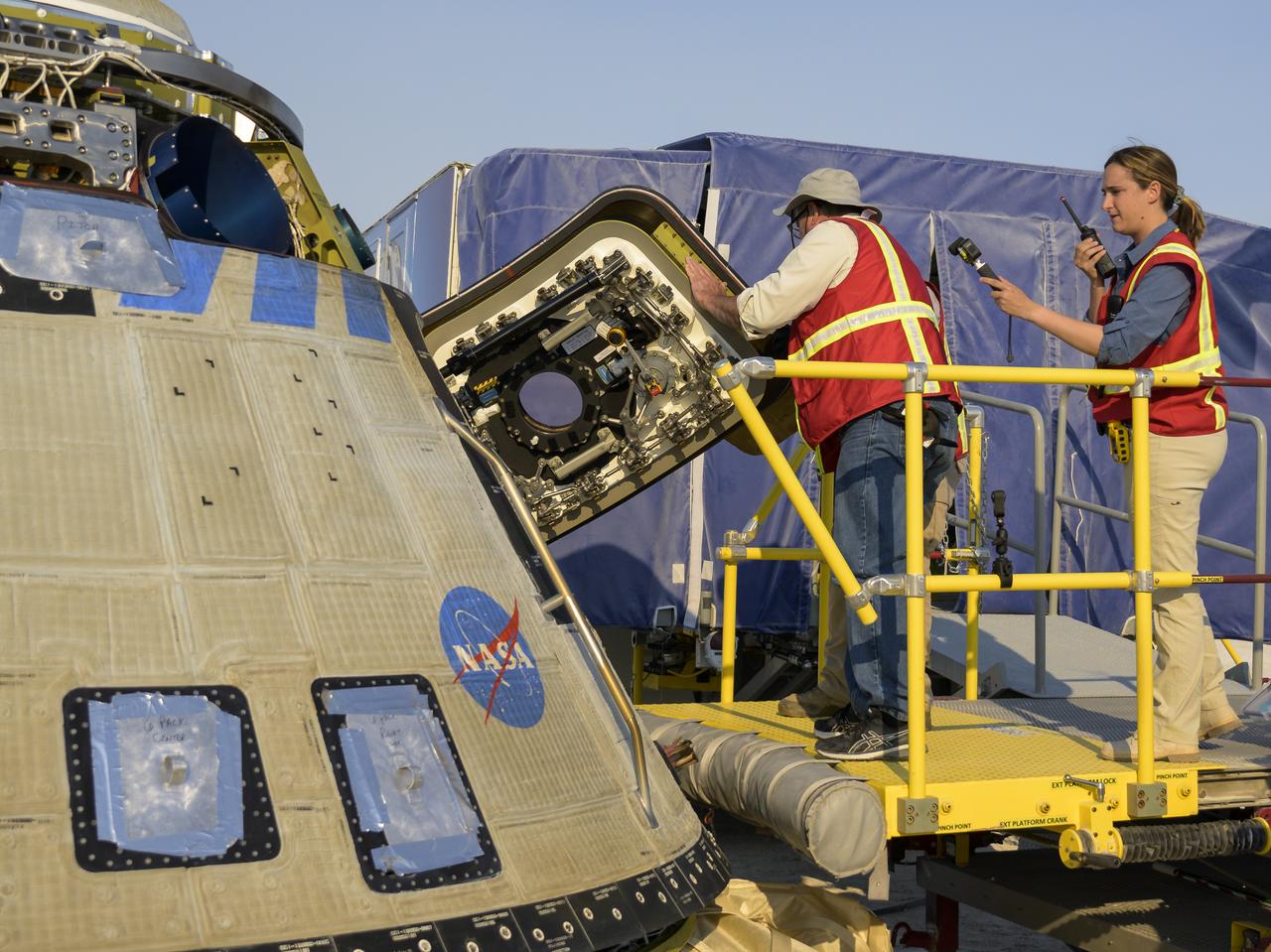
Boeing and NASA teams work around Boeing’s CST-100 Starliner spacecraft after it landed at White Sands Missile Range’s Space Harbor, Wednesday, May 25, 2022, in New Mexico. Boeing’s Orbital Flight Test-2 (OFT-2) is Starliner’s second uncrewed flight test to the International Space Station as part of NASA's Commercial Crew Program. OFT-2 serves as an end-to-end test of the system's capabilities. Photo Credit: (NASA/Bill Ingalls)
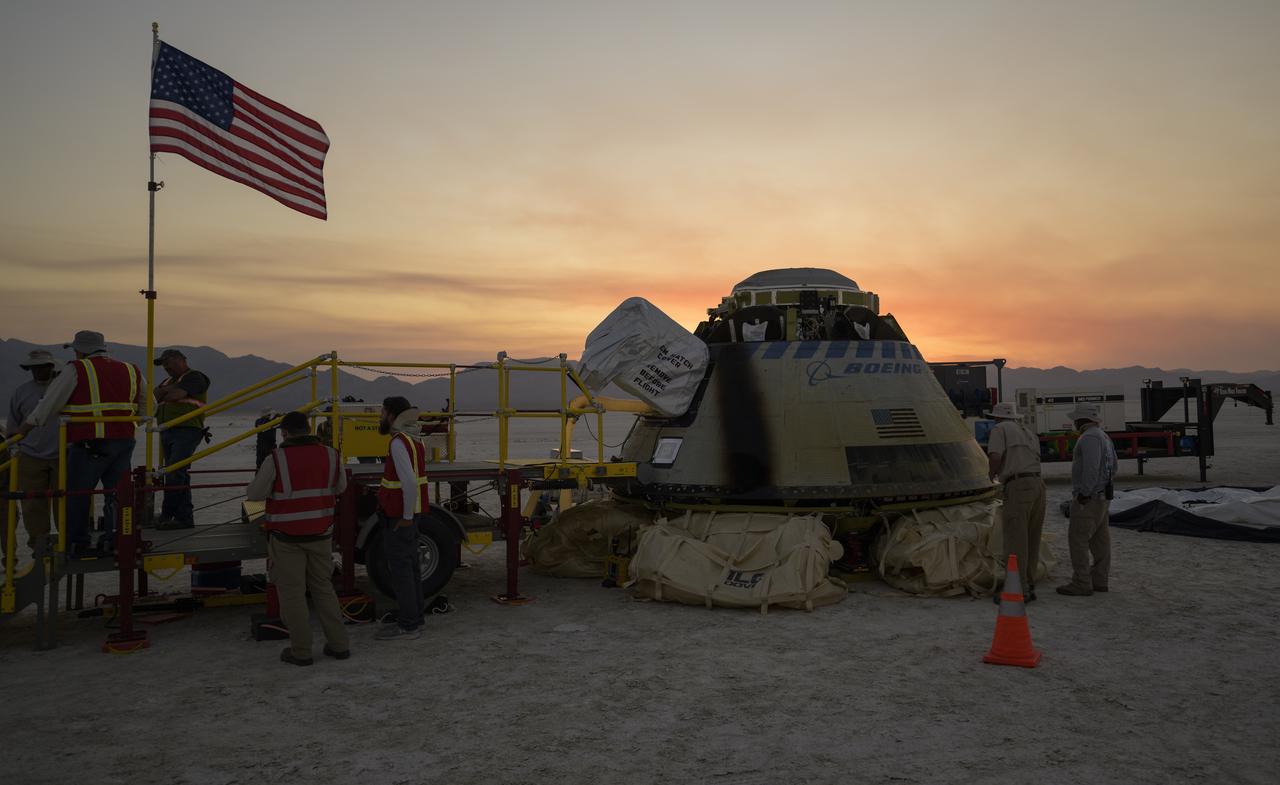
Boeing and NASA teams work around Boeing’s CST-100 Starliner spacecraft after it landed at White Sands Missile Range’s Space Harbor, Wednesday, May 25, 2022, in New Mexico. Boeing’s Orbital Flight Test-2 (OFT-2) is Starliner’s second uncrewed flight test to the International Space Station as part of NASA's Commercial Crew Program. OFT-2 serves as an end-to-end test of the system's capabilities. Photo Credit: (NASA/Bill Ingalls)
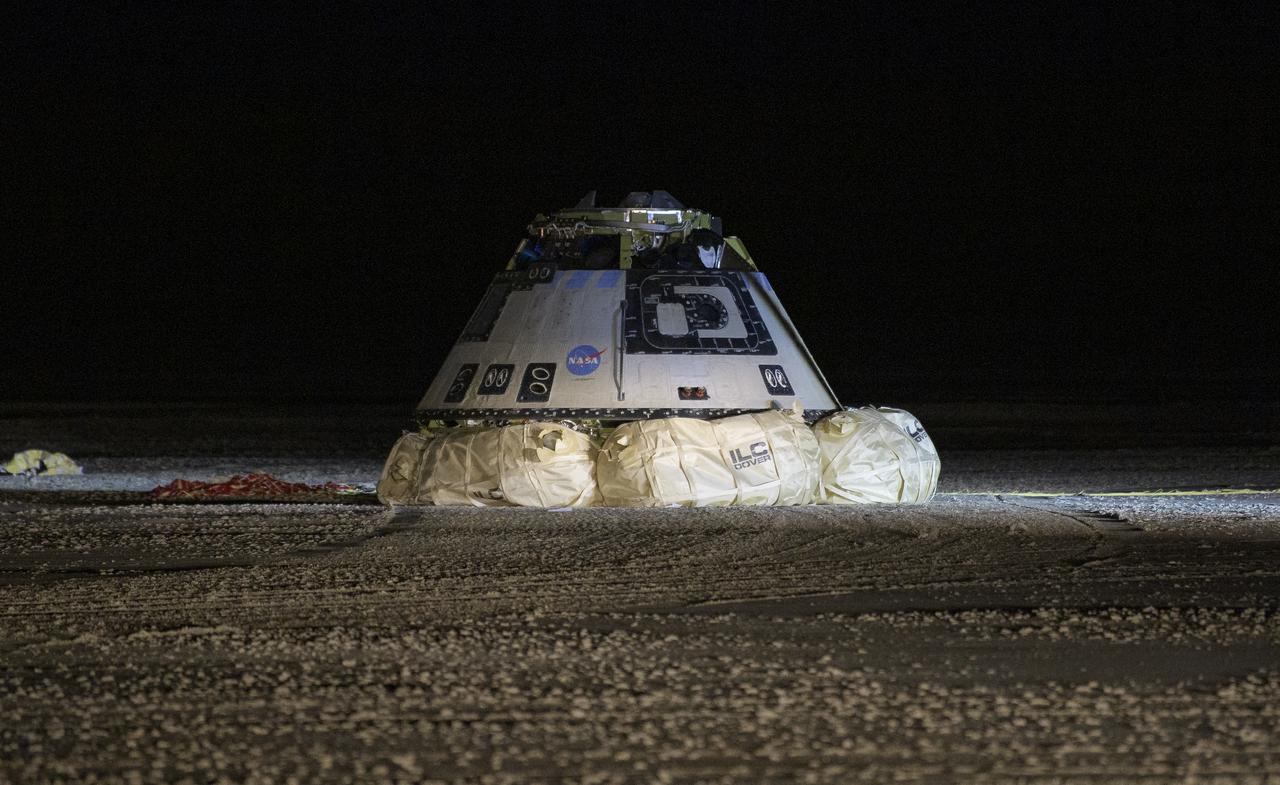
The Boeing CST-100 Starliner spacecraft is seen after it landed in White Sands, New Mexico, Sunday, Dec. 22, 2019. The landing completes an abbreviated Orbital Flight Test for the company that still meets several mission objectives for NASA’s Commercial Crew program. The Starliner spacecraft launched on a United Launch Alliance Atlas V rocket at 6:36 a.m. Friday, Dec. 20 from Space Launch Complex 41 at Cape Canaveral Air Force Station in Florida. Photo Credit: (NASA/Bill Ingalls)
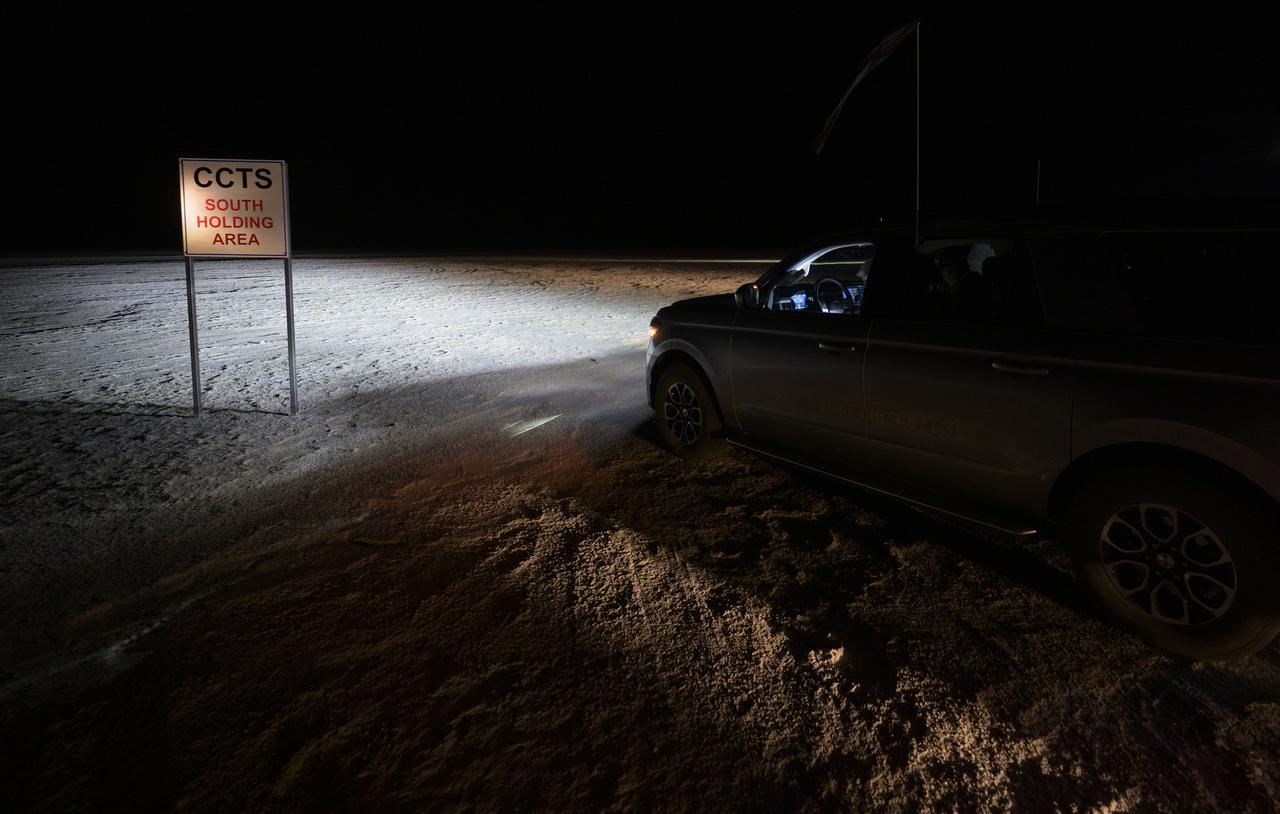
Boeing and NASA teams participate in a mission dress rehearsal to prepare for the landing of the Boeing CST-100 Starliner spacecraft in White Sands, New Mexico, Sunday, June 16, 2024. NASA astronauts Butch Wilmore and Suni Williams are Starliner’s first human crew and travelled to the International Space Station as part of NASA's Boeing Crew Flight Test. The mission serves as an end-to-end demonstration of Boeing’s crew transportation system as a provider for NASA’s Commercial Crew Program. Photo Credit: (NASA/Bill Ingalls)
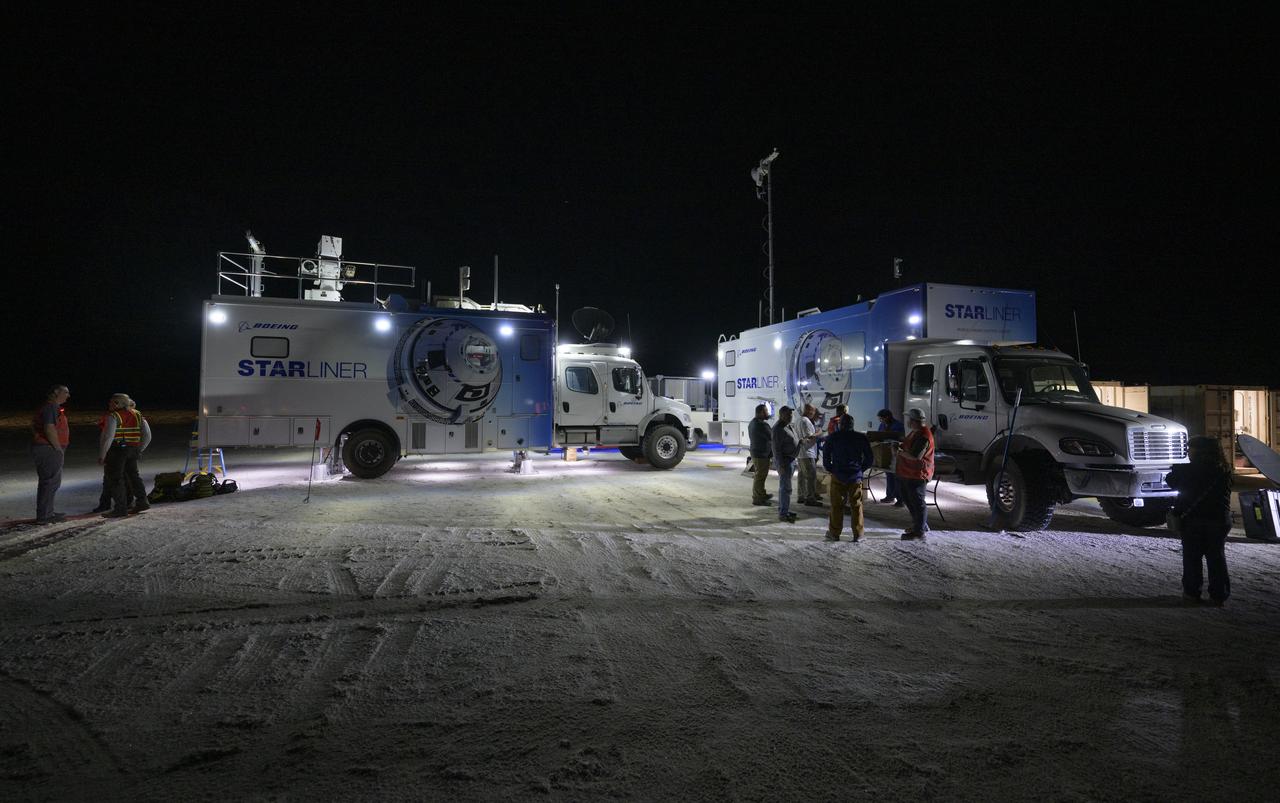
Boeing and NASA teams participate in a mission dress rehearsal to prepare for the landing of the Boeing CST-100 Starliner spacecraft in White Sands, New Mexico, Sunday, June 16, 2024. NASA astronauts Butch Wilmore and Suni Williams are Starliner’s first human crew and travelled to the International Space Station as part of NASA's Boeing Crew Flight Test. The mission serves as an end-to-end demonstration of Boeing’s crew transportation system as a provider for NASA’s Commercial Crew Program. Photo Credit: (NASA/Bill Ingalls)
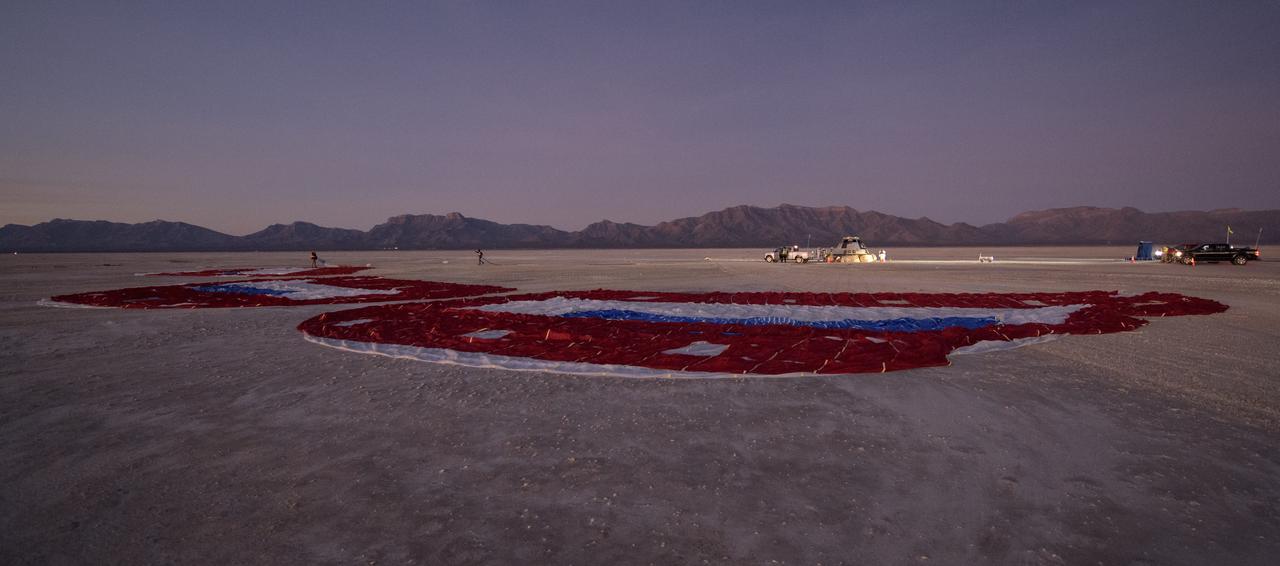
Boeing, NASA, and U.S. Army personnel work around the Boeing CST-100 Starliner spacecraft shortly after it landed in White Sands, New Mexico, Sunday, Dec. 22, 2019. The landing completes an abbreviated Orbital Flight Test for the company that still meets several mission objectives for NASA’s Commercial Crew program. The Starliner spacecraft launched on a United Launch Alliance Atlas V rocket at 6:36 a.m. Friday, Dec. 20 from Space Launch Complex 41 at Cape Canaveral Air Force Station in Florida. Photo Credit: (NASA/Bill Ingalls)
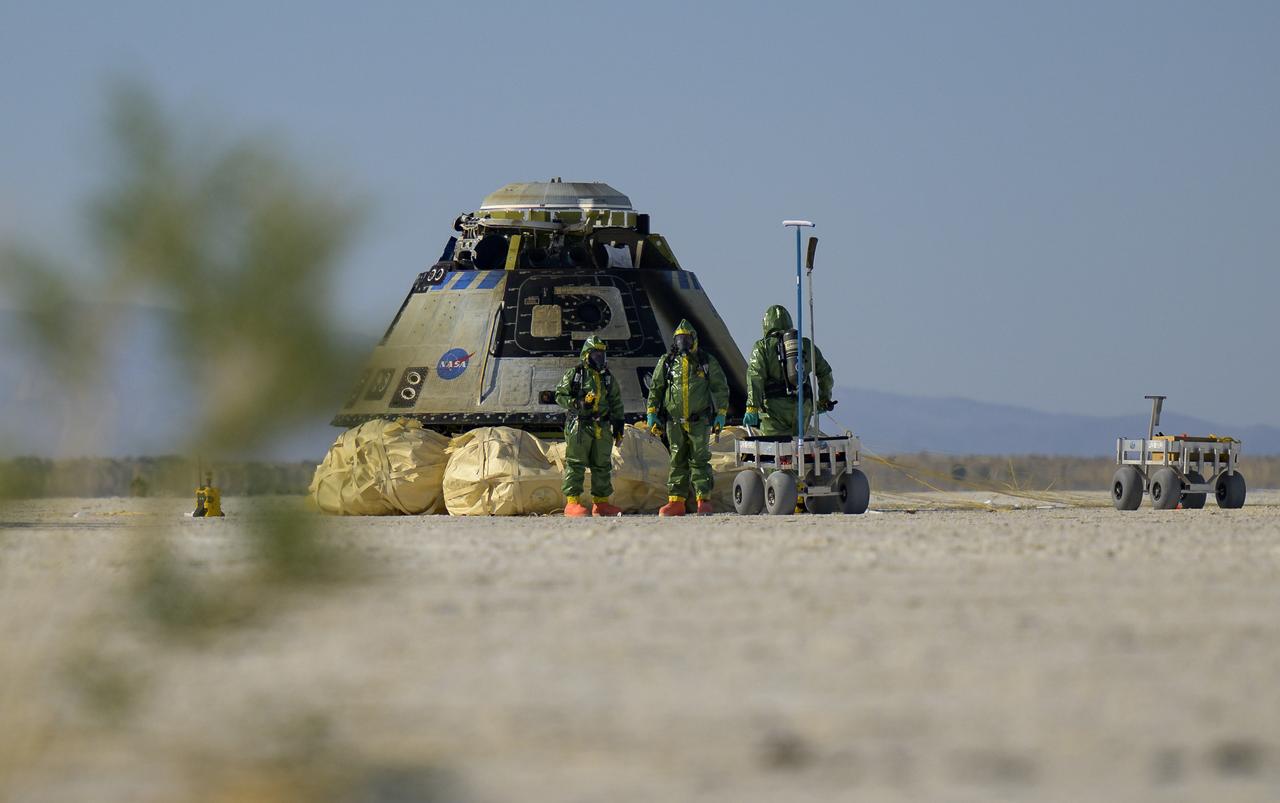
Boeing hazmat teams work around Boeing’s CST-100 Starliner spacecraft after it landed at White Sands Missile Range’s Space Harbor, Wednesday, May 25, 2022, in New Mexico. Boeing’s Orbital Flight Test-2 (OFT-2) is Starliner’s second uncrewed flight test to the International Space Station as part of NASA's Commercial Crew Program. OFT-2 serves as an end-to-end test of the system's capabilities. Photo Credit: (NASA/Bill Ingalls)
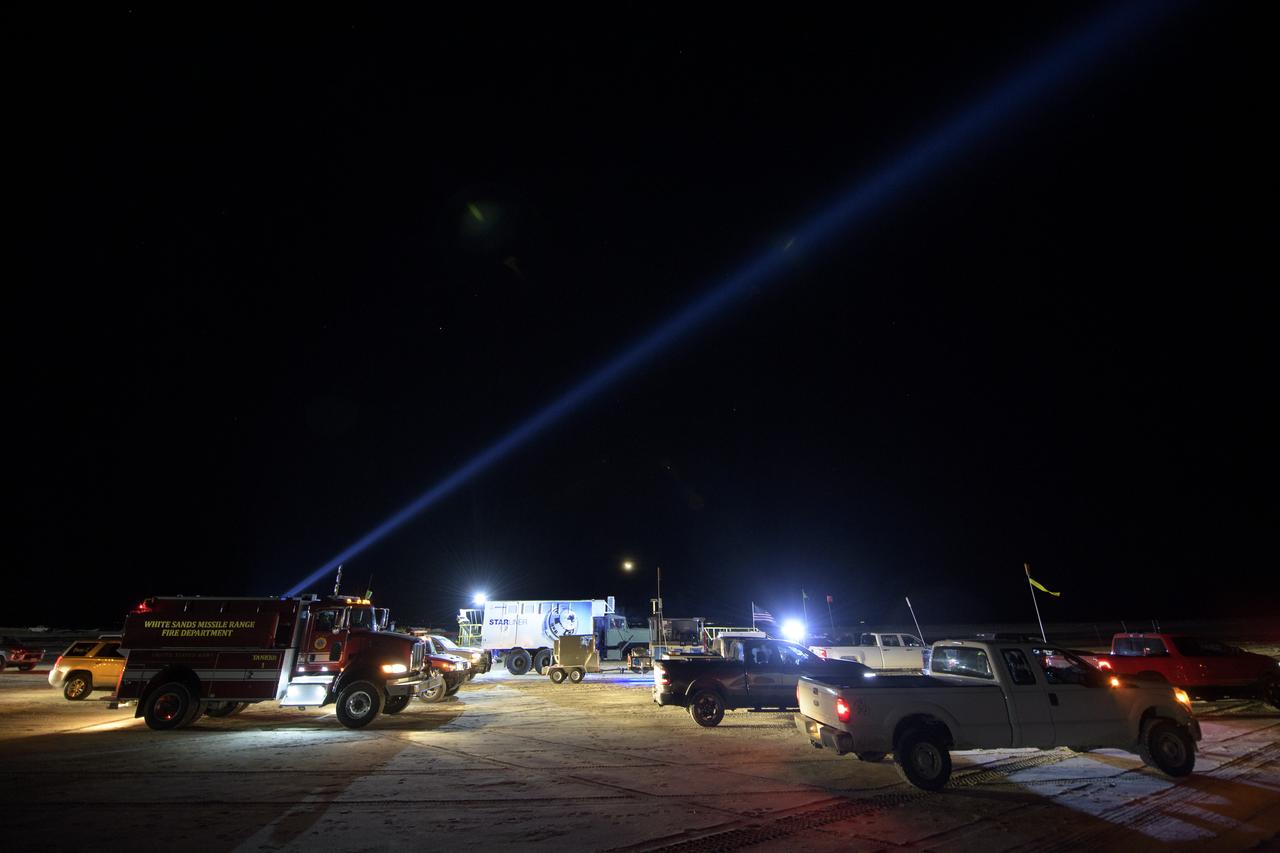
Boeing, NASA, and U.S. Army personnel prepare for the Boeing CST-100 Starliner spacecraft landing in White Sands, New Mexico, Sunday, Dec. 22, 2019. The landing will complete an abbreviated Orbital Flight Test for the company that still meets several mission objectives for NASA’s Commercial Crew program. The Starliner spacecraft launched on a United Launch Alliance Atlas V rocket at 6:36 a.m. Friday, Dec. 20 from Space Launch Complex 41 at Cape Canaveral Air Force Station in Florida. Photo Credit: (NASA/Bill Ingalls)
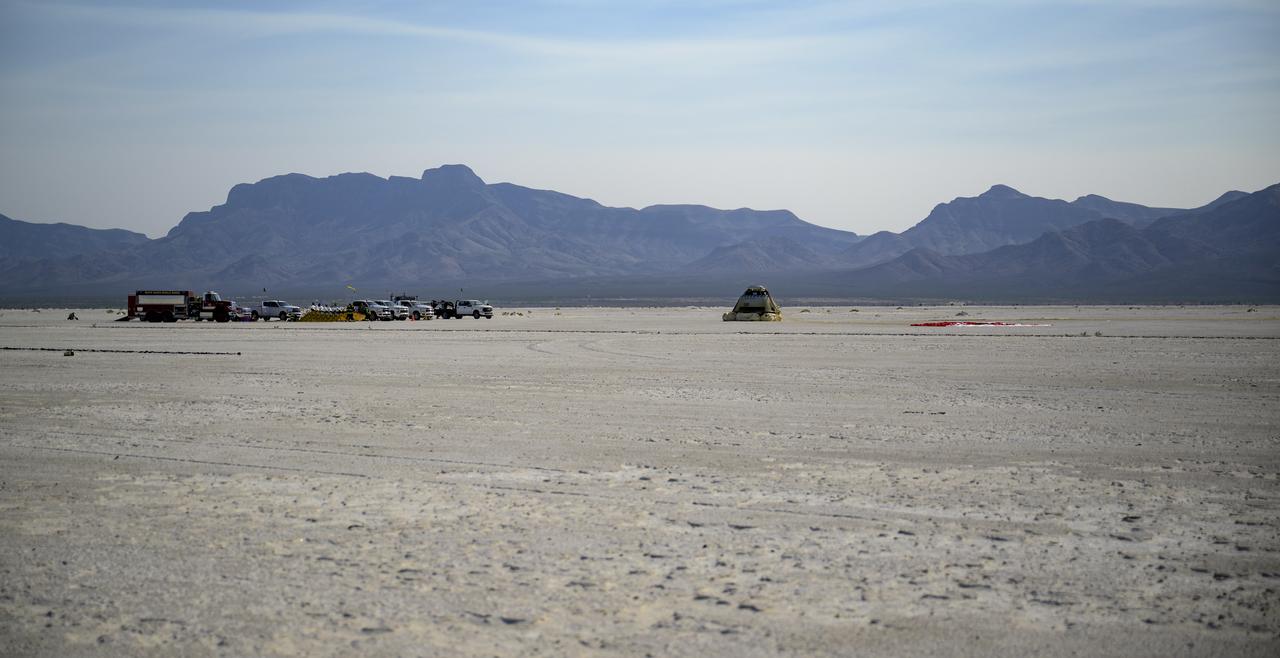
Boeing and NASA teams arrive at Boeing’s CST-100 Starliner spacecraft after it landed at White Sands Missile Range’s Space Harbor, Wednesday, May 25, 2022, in New Mexico. Boeing’s Orbital Flight Test-2 (OFT-2) is Starliner’s second uncrewed flight test to the International Space Station as part of NASA's Commercial Crew Program. OFT-2 serves as an end-to-end test of the system's capabilities. Photo Credit: (NASA/Bill Ingalls)
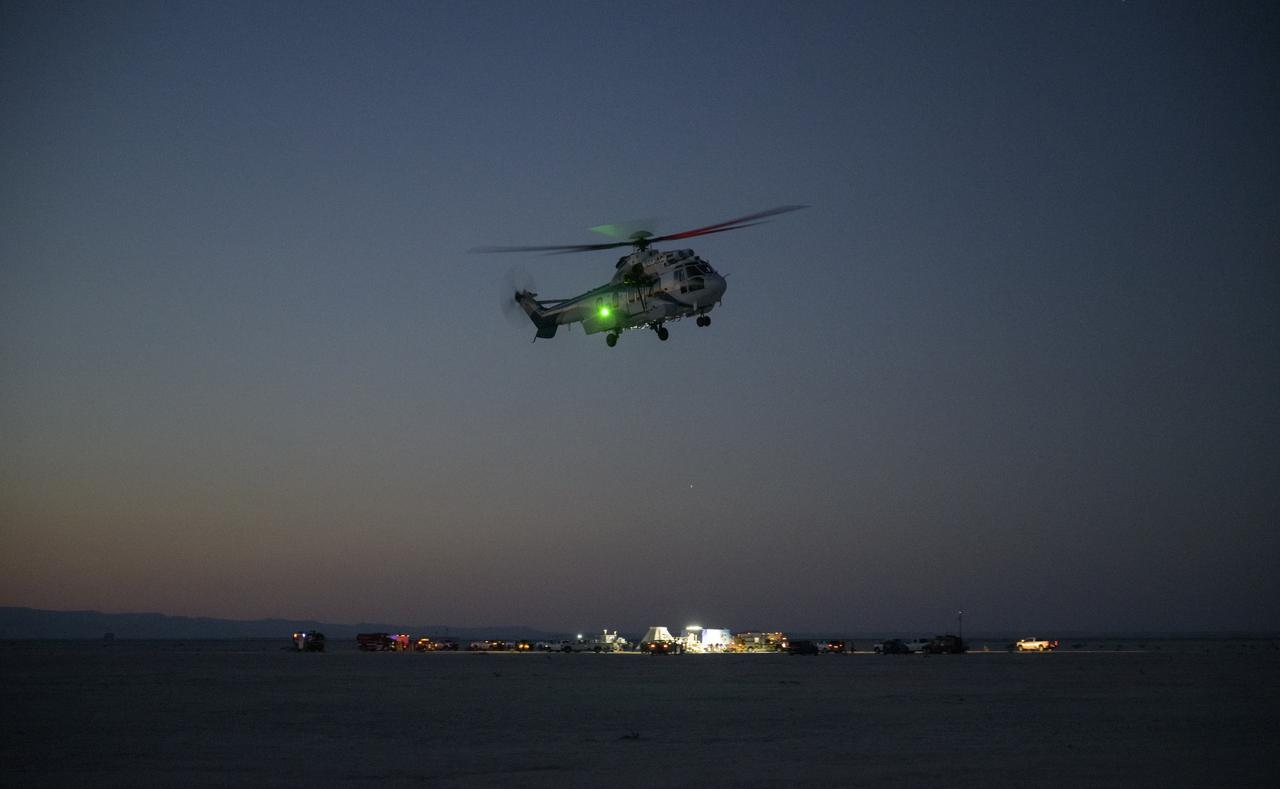
Boeing and NASA teams participate in a mission dress rehearsal to prepare for the landing of the Boeing CST-100 Starliner spacecraft in White Sands, New Mexico, Sunday, June 16, 2024. NASA astronauts Butch Wilmore and Suni Williams are Starliner’s first human crew and travelled to the International Space Station as part of NASA's Boeing Crew Flight Test. The mission serves as an end-to-end demonstration of Boeing’s crew transportation system as a provider for NASA’s Commercial Crew Program. Photo Credit: (NASA/Bill Ingalls)
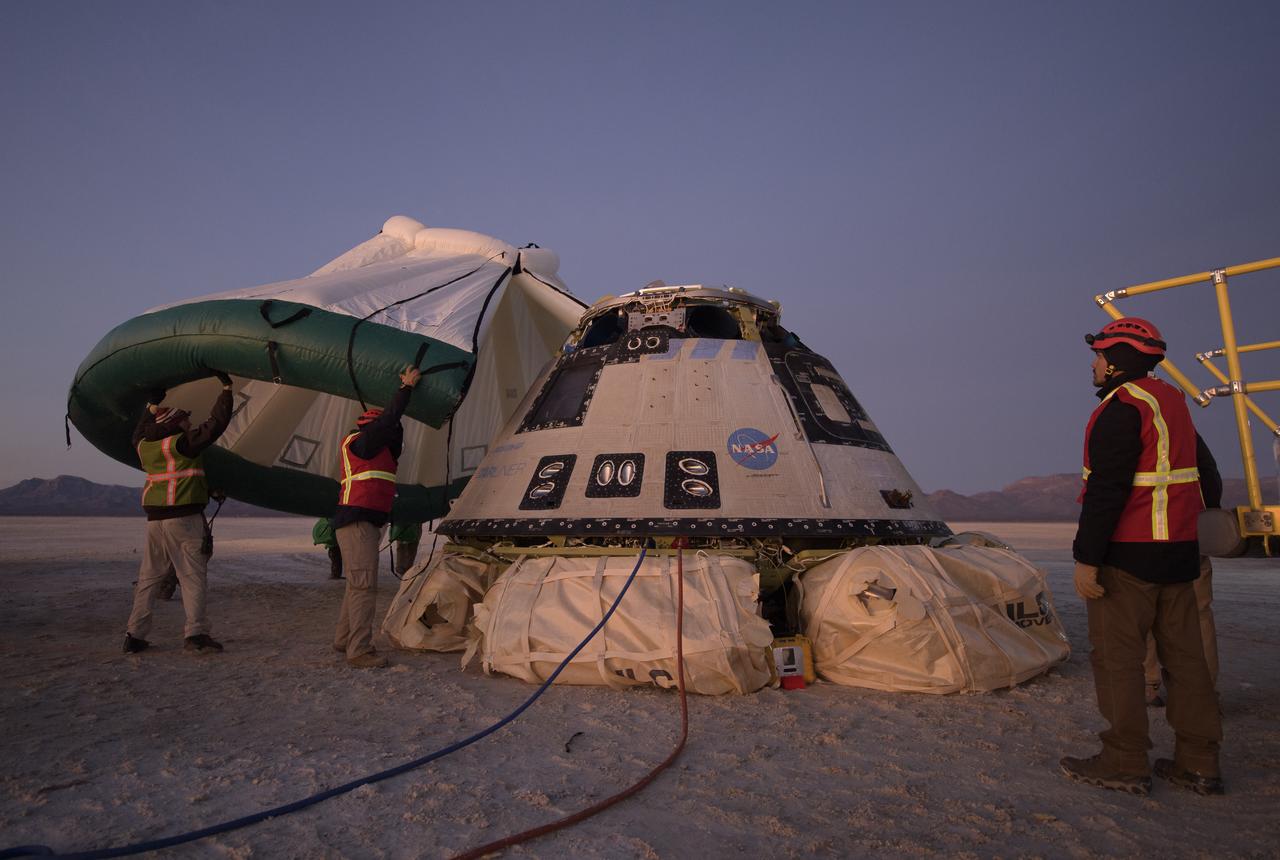
Boeing, NASA, and U.S. Army personnel work around the Boeing CST-100 Starliner spacecraft shortly after it landed in White Sands, New Mexico, Sunday, Dec. 22, 2019. The landing completes an abbreviated Orbital Flight Test for the company that still meets several mission objectives for NASA’s Commercial Crew program. The Starliner spacecraft launched on a United Launch Alliance Atlas V rocket at 6:36 a.m. Friday, Dec. 20 from Space Launch Complex 41 at Cape Canaveral Air Force Station in Florida. Photo Credit: (NASA/Bill Ingalls)
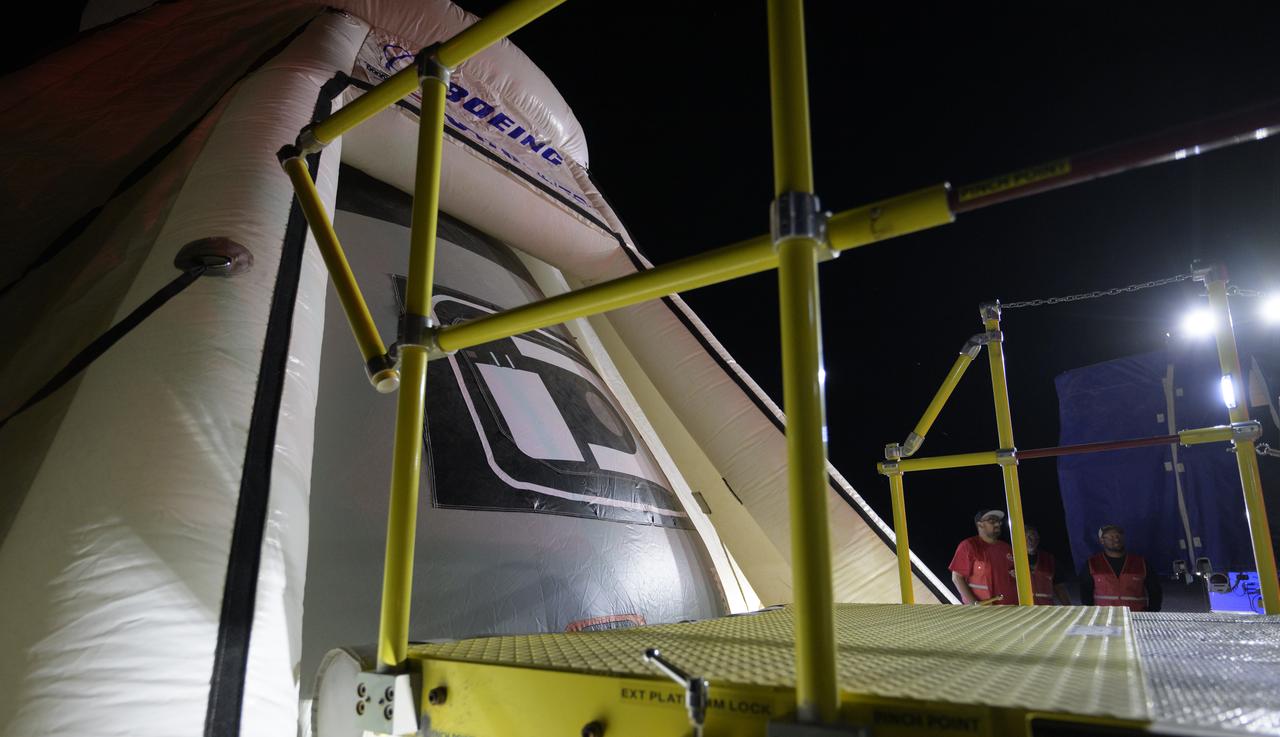
Boeing and NASA teams participate in a mission dress rehearsal to prepare for the landing of the Boeing CST-100 Starliner spacecraft in White Sands, New Mexico, Sunday, June 16, 2024. NASA astronauts Butch Wilmore and Suni Williams are Starliner’s first human crew and travelled to the International Space Station as part of NASA's Boeing Crew Flight Test. The mission serves as an end-to-end demonstration of Boeing’s crew transportation system as a provider for NASA’s Commercial Crew Program. Photo Credit: (NASA/Bill Ingalls)
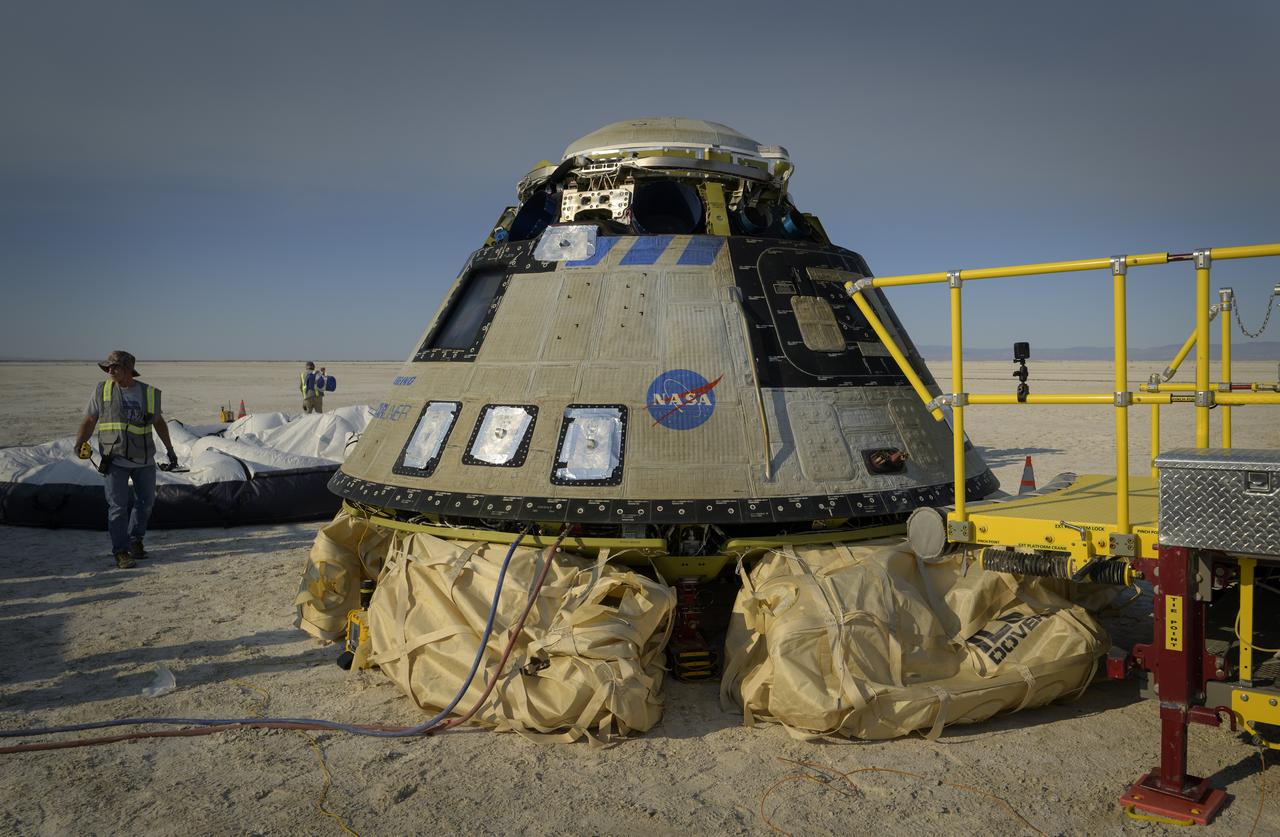
Boeing and NASA teams work around Boeing’s CST-100 Starliner spacecraft after it landed at White Sands Missile Range’s Space Harbor, Wednesday, May 25, 2022, in New Mexico. Boeing’s Orbital Flight Test-2 (OFT-2) is Starliner’s second uncrewed flight test to the International Space Station as part of NASA's Commercial Crew Program. OFT-2 serves as an end-to-end test of the system's capabilities. Photo Credit: (NASA/Bill Ingalls)
Boeing and NASA teams participate in a mission dress rehearsal to prepare for the landing of the Boeing CST-100 Starliner spacecraft in White Sands, New Mexico, Sunday, June 16, 2024. NASA astronauts Butch Wilmore and Suni Williams are Starliner’s first human crew and travelled to the International Space Station as part of NASA's Boeing Crew Flight Test. The mission serves as an end-to-end demonstration of Boeing’s crew transportation system as a provider for NASA’s Commercial Crew Program. Photo Credit: (NASA/Bill Ingalls)
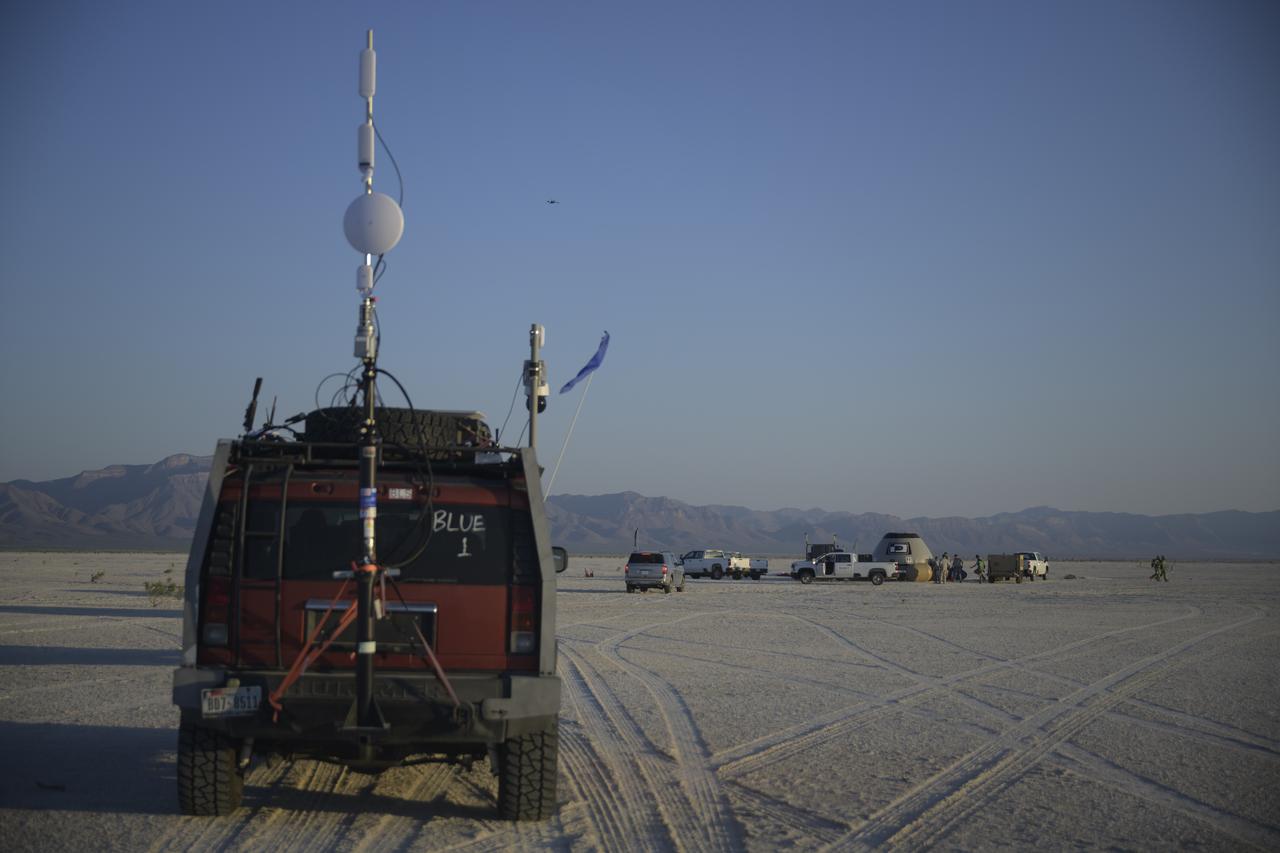
Boeing and NASA teams participate in a mission dress rehearsal to prepare for the landing of the Boeing CST-100 Starliner spacecraft in White Sands, New Mexico, Sunday, June 16, 2024. NASA astronauts Butch Wilmore and Suni Williams are Starliner’s first human crew and travelled to the International Space Station as part of NASA's Boeing Crew Flight Test. The mission serves as an end-to-end demonstration of Boeing’s crew transportation system as a provider for NASA’s Commercial Crew Program. Photo Credit: (NASA/Bill Ingalls)
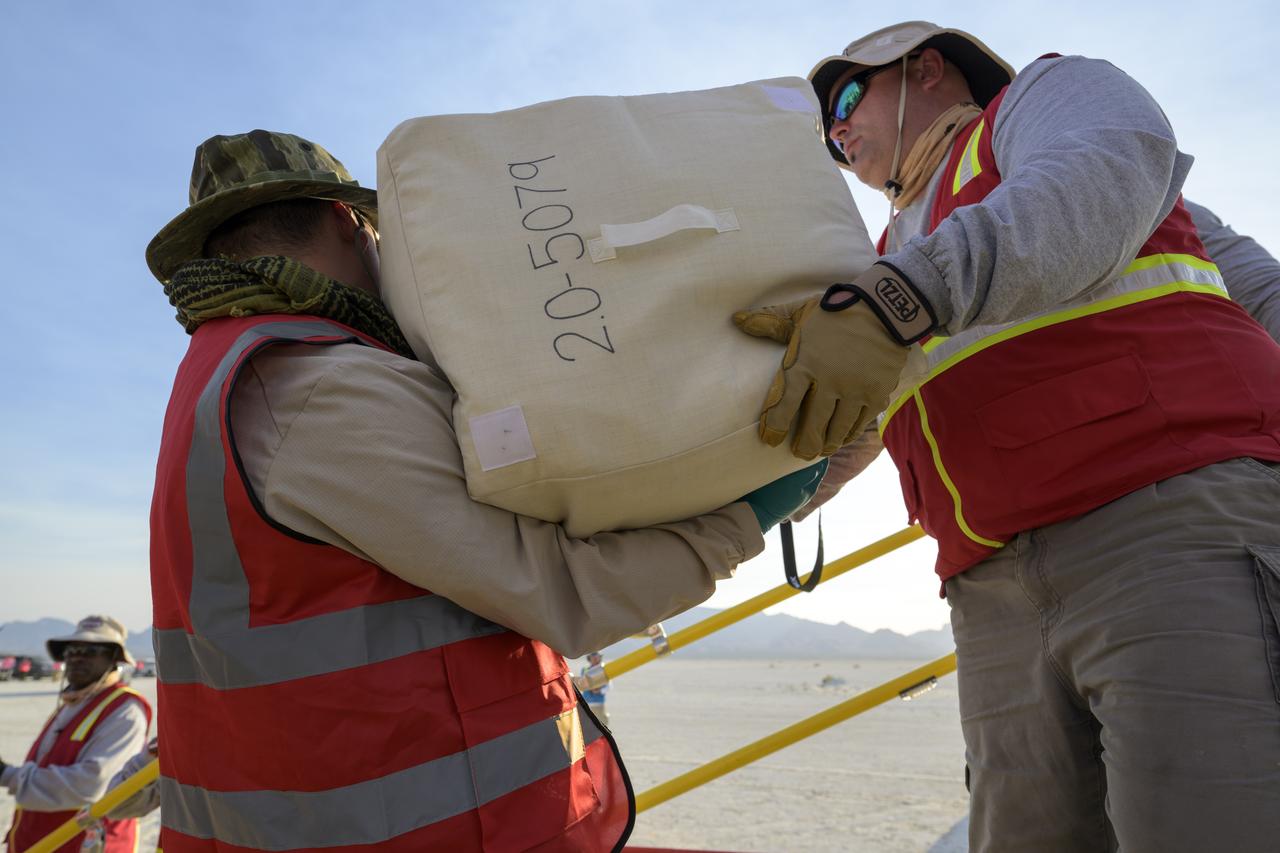
Boeing and NASA teams unload cargo from Boeing’s CST-100 Starliner spacecraft after it landed at White Sands Missile Range’s Space Harbor, Wednesday, May 25, 2022, in New Mexico. Boeing’s Orbital Flight Test-2 (OFT-2) is Starliner’s second uncrewed flight test to the International Space Station as part of NASA's Commercial Crew Program. OFT-2 serves as an end-to-end test of the system's capabilities. Photo Credit: (NASA/Bill Ingalls)
Boeing and NASA teams participate in a mission dress rehearsal to prepare for the landing of the Boeing CST-100 Starliner spacecraft in White Sands, New Mexico, Monday, May 23, 2022. Boeing’s Orbital Flight Test-2 (OFT-2) is Starliner’s second uncrewed flight test to the International Space Station as part of NASA's Commercial Crew Program. OFT-2 serves as an end-to-end test of the system's capabilities. Photo Credit: (NASA/Bill Ingalls)
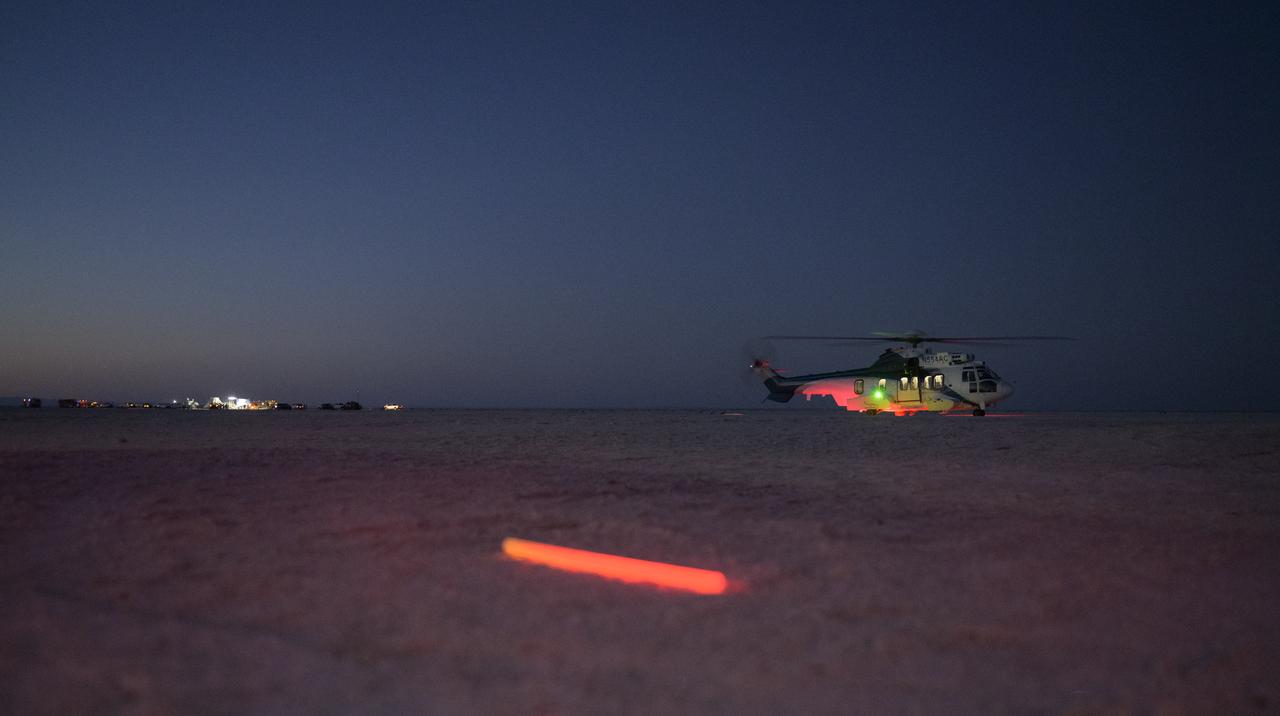
Boeing and NASA teams participate in a mission dress rehearsal to prepare for the landing of the Boeing CST-100 Starliner spacecraft in White Sands, New Mexico, Sunday, June 16, 2024. NASA astronauts Butch Wilmore and Suni Williams are Starliner’s first human crew and travelled to the International Space Station as part of NASA's Boeing Crew Flight Test. The mission serves as an end-to-end demonstration of Boeing’s crew transportation system as a provider for NASA’s Commercial Crew Program. Photo Credit: (NASA/Bill Ingalls)
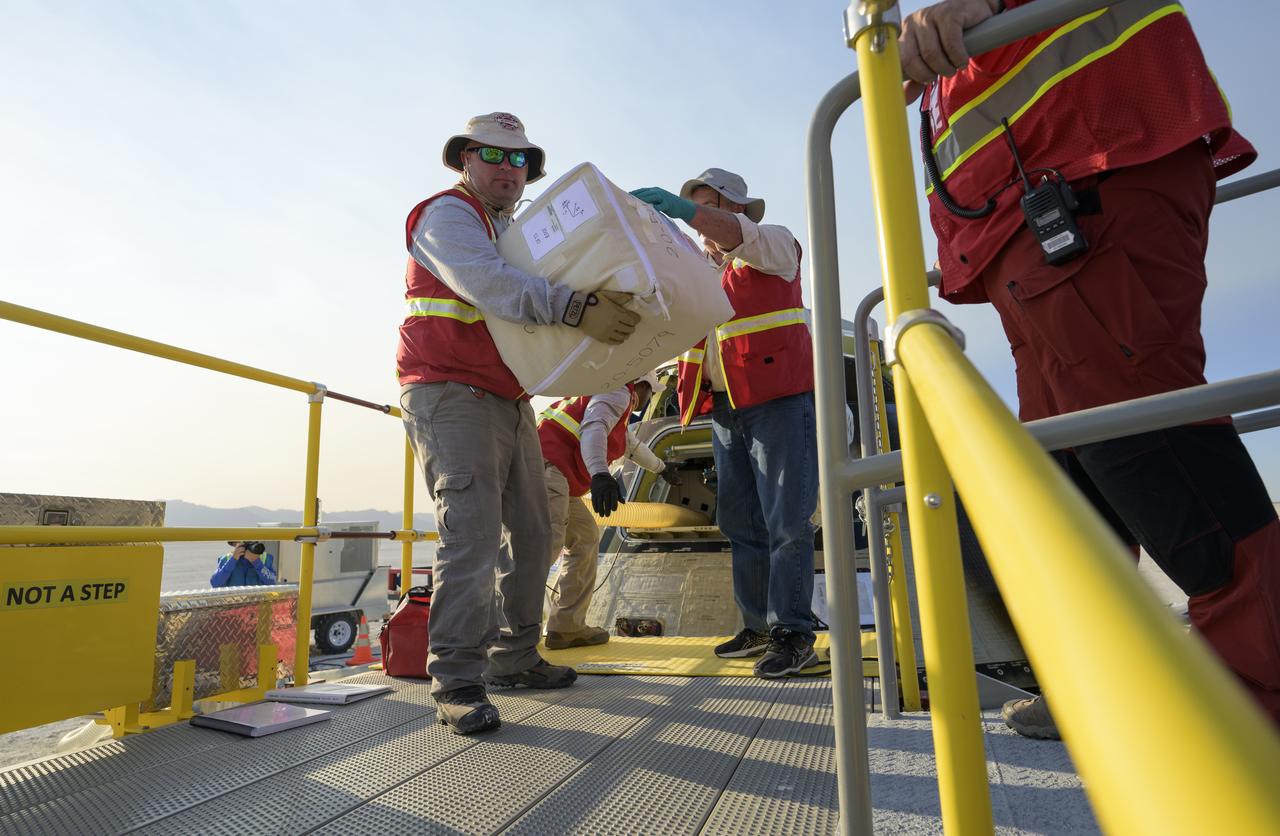
Boeing and NASA teams unload cargo from Boeing’s CST-100 Starliner spacecraft after it landed at White Sands Missile Range’s Space Harbor, Wednesday, May 25, 2022, in New Mexico. Boeing’s Orbital Flight Test-2 (OFT-2) is Starliner’s second uncrewed flight test to the International Space Station as part of NASA's Commercial Crew Program. OFT-2 serves as an end-to-end test of the system's capabilities. Photo Credit: (NASA/Bill Ingalls)
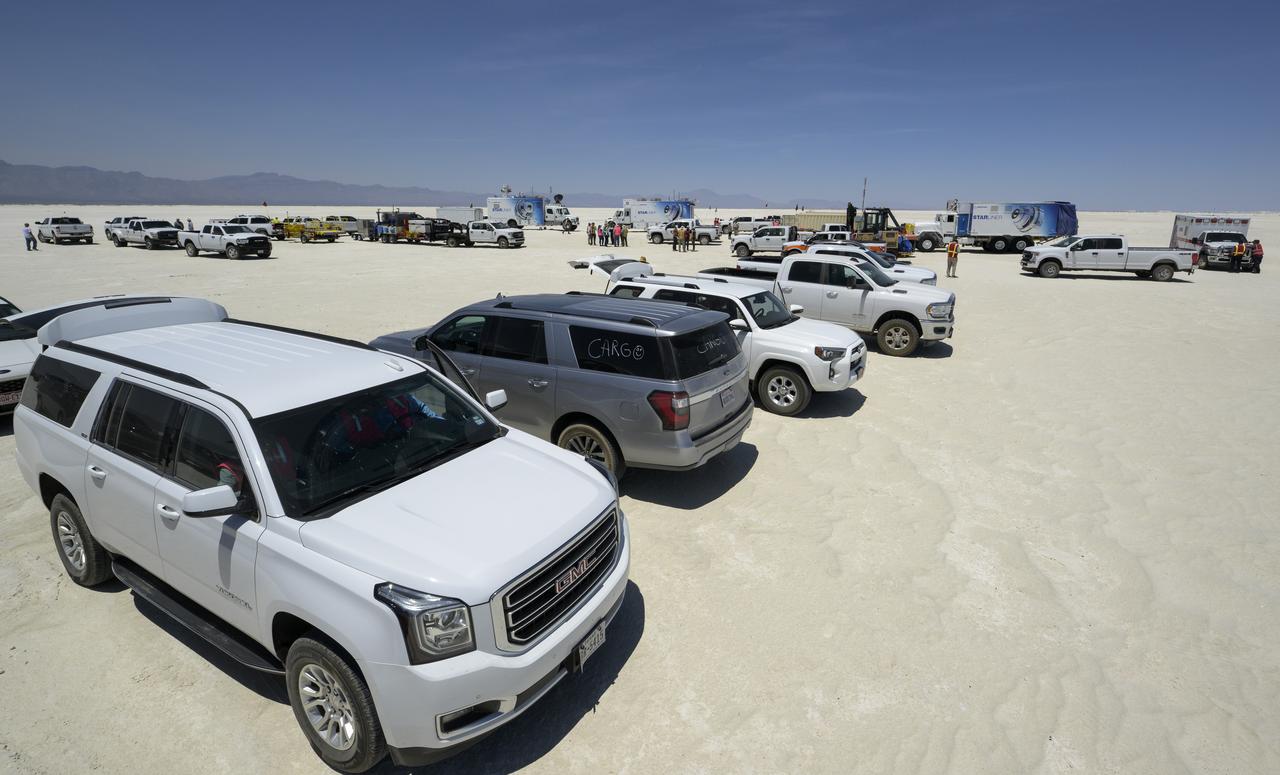
NASA and Boeing teams prepare for the landing of Boeing’s CST-100 Starliner spacecraft at White Sands Missile Range’s Space Harbor, Wednesday, May 25, 2022, in New Mexico. Boeing’s Orbital Flight Test-2 (OFT-2) is Starliner’s second uncrewed flight test to the International Space Station as part of NASA's Commercial Crew Program. OFT-2 serves as an end-to-end test of the system's capabilities. Photo Credit: (NASA/Bill Ingalls)
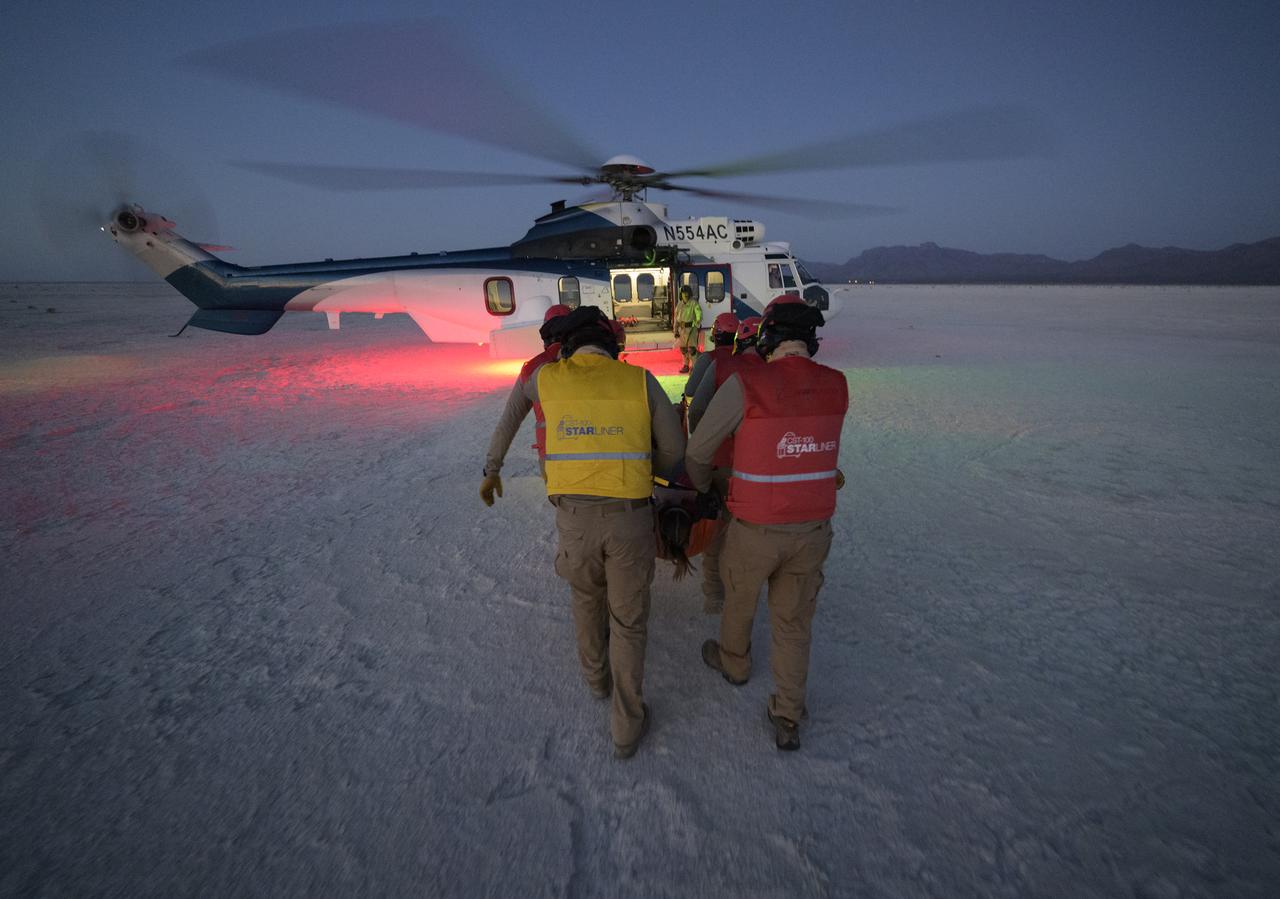
Boeing and NASA teams participate in a mission dress rehearsal to prepare for the landing of the Boeing CST-100 Starliner spacecraft in White Sands, New Mexico, Sunday, June 16, 2024. During the dry-run, teams practice assisting astronauts that might need time to be re-acclimated to Earth’s gravity before walking. NASA astronauts Butch Wilmore and Suni Williams are Starliner’s first human crew and travelled to the International Space Station as part of NASA's Boeing Crew Flight Test. The mission serves as an end-to-end demonstration of Boeing’s crew transportation system as a provider for NASA’s Commercial Crew Program. Photo Credit: (NASA/Bill Ingalls)
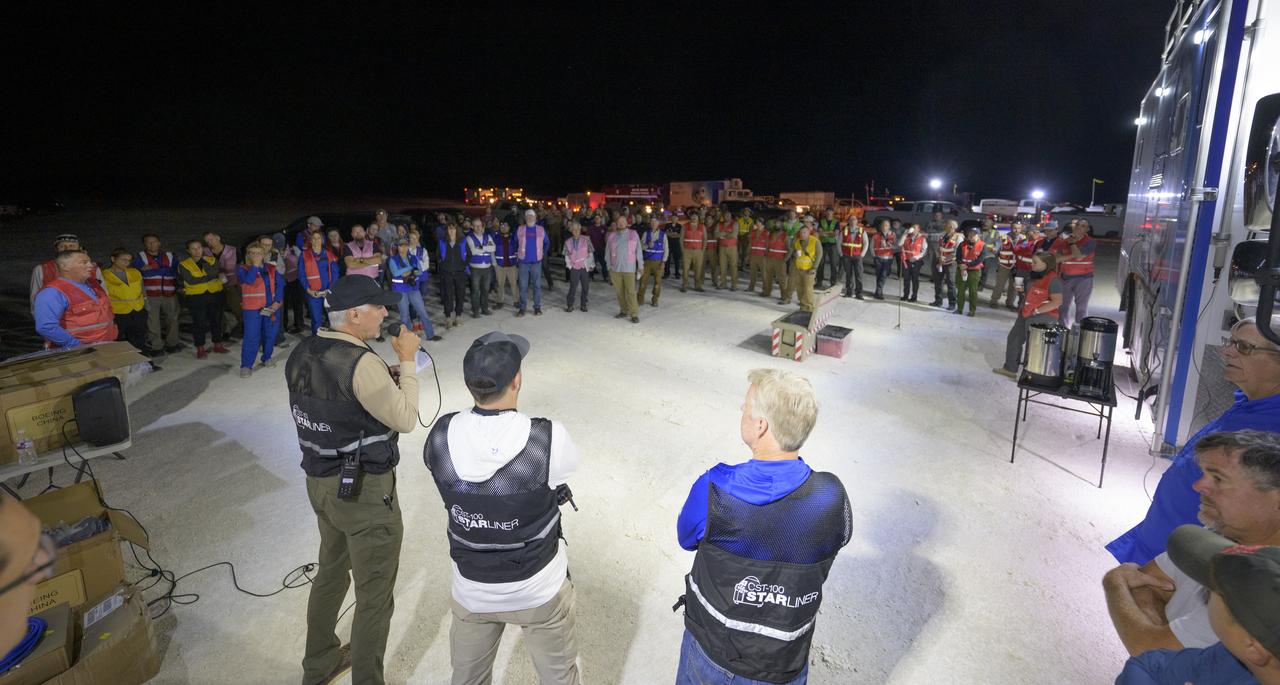
Boeing and NASA teams participate in a mission dress rehearsal to prepare for the landing of the Boeing CST-100 Starliner spacecraft in White Sands, New Mexico, Sunday, June 16, 2024. NASA astronauts Butch Wilmore and Suni Williams are Starliner’s first human crew and travelled to the International Space Station as part of NASA's Boeing Crew Flight Test. The mission serves as an end-to-end demonstration of Boeing’s crew transportation system as a provider for NASA’s Commercial Crew Program. Photo Credit: (NASA/Bill Ingalls)
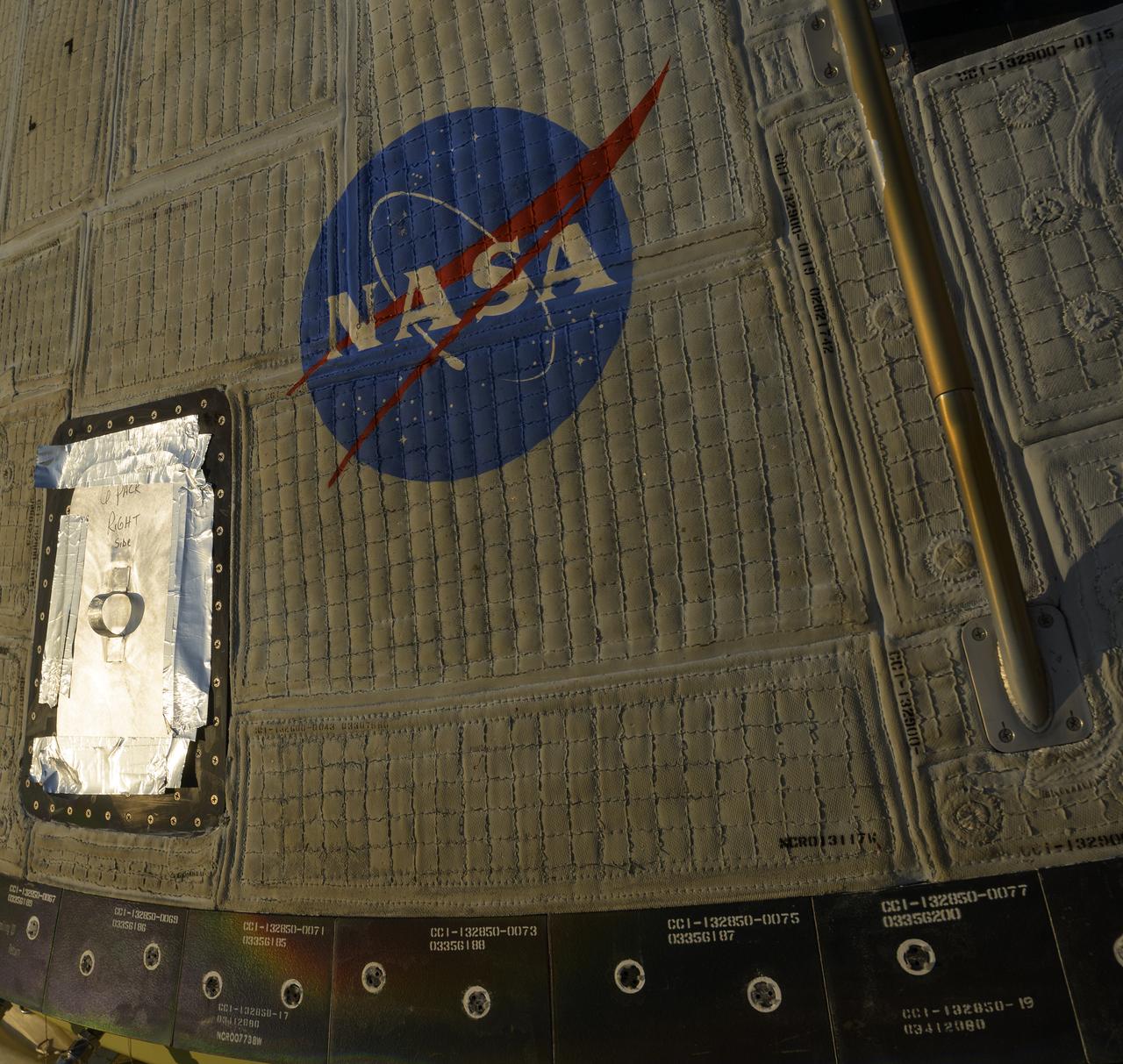
Boeing’s CST-100 Starliner spacecraft is seen after it landed at White Sands Missile Range’s Space Harbor, Wednesday, May 25, 2022, in New Mexico. Boeing’s Orbital Flight Test-2 (OFT-2) is Starliner’s second uncrewed flight test to the International Space Station as part of NASA's Commercial Crew Program. OFT-2 serves as an end-to-end test of the system's capabilities. Photo Credit: (NASA/Bill Ingalls)

Boeing and NASA teams participate in a mission dress rehearsal to prepare for the landing of the Boeing CST-100 Starliner spacecraft in White Sands, New Mexico, Monday, May 23, 2022. Boeing’s Orbital Flight Test-2 (OFT-2) is Starliner’s second uncrewed flight test to the International Space Station as part of NASA's Commercial Crew Program. OFT-2 serves as an end-to-end test of the system's capabilities. Photo Credit: (NASA/Bill Ingalls)
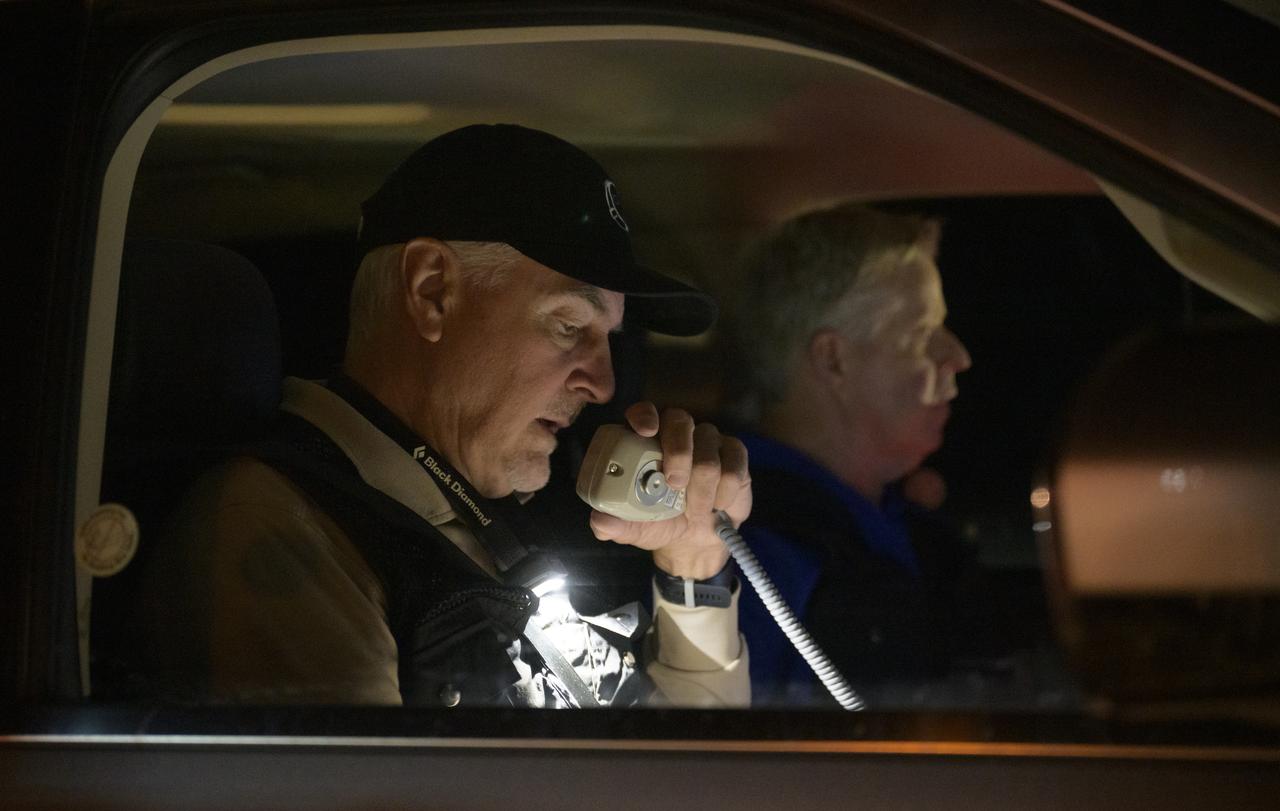
Boeing Recovery Operations Leader Jeffery Davis, left, is seen as Boeing and NASA teams participate in a mission dress rehearsal to prepare for the landing of the Boeing CST-100 Starliner spacecraft in White Sands, New Mexico, Sunday, June 16, 2024. NASA astronauts Butch Wilmore and Suni Williams are Starliner’s first human crew and travelled to the International Space Station as part of NASA's Boeing Crew Flight Test. The mission serves as an end-to-end demonstration of Boeing’s crew transportation system as a provider for NASA’s Commercial Crew Program. Photo Credit: (NASA/Bill Ingalls)
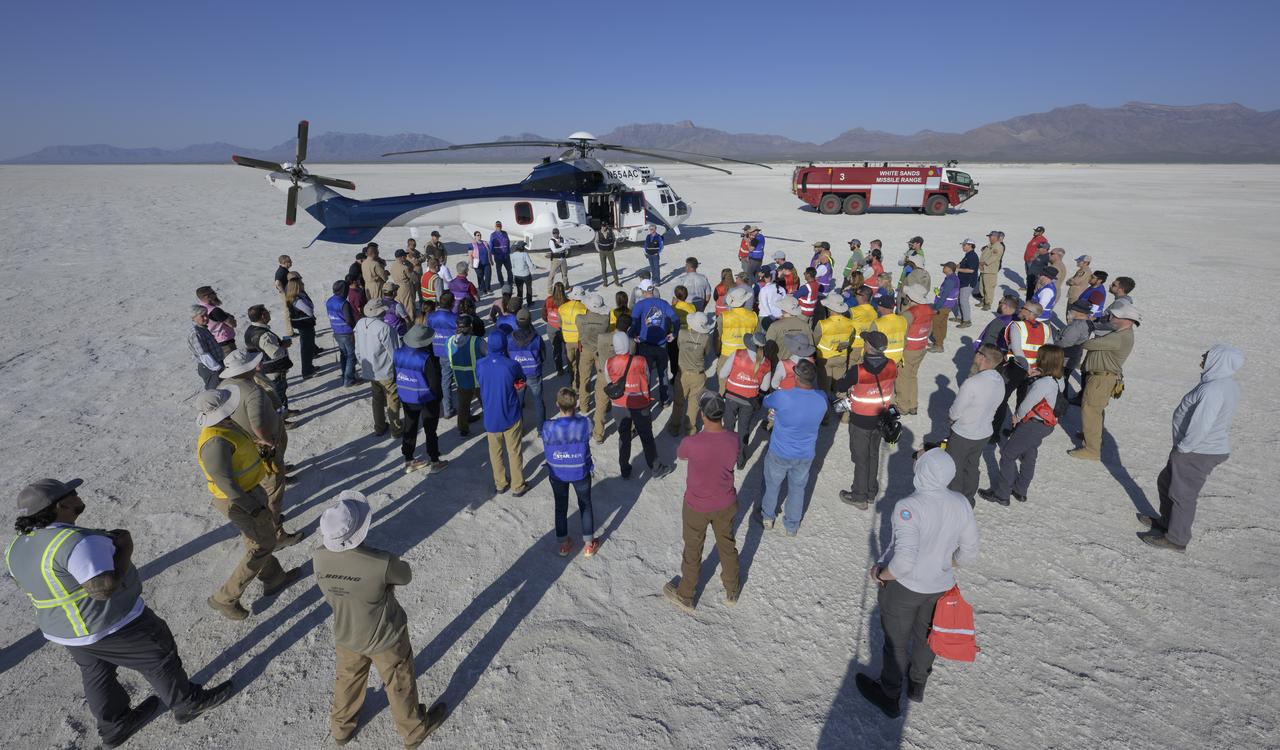
Boeing and NASA teams participate in a mission dress rehearsal to prepare for the landing of the Boeing CST-100 Starliner spacecraft in White Sands, New Mexico, Sunday, June 16, 2024. NASA astronauts Butch Wilmore and Suni Williams are Starliner’s first human crew and travelled to the International Space Station as part of NASA's Boeing Crew Flight Test. The mission serves as an end-to-end demonstration of Boeing’s crew transportation system as a provider for NASA’s Commercial Crew Program. Photo Credit: (NASA/Bill Ingalls)
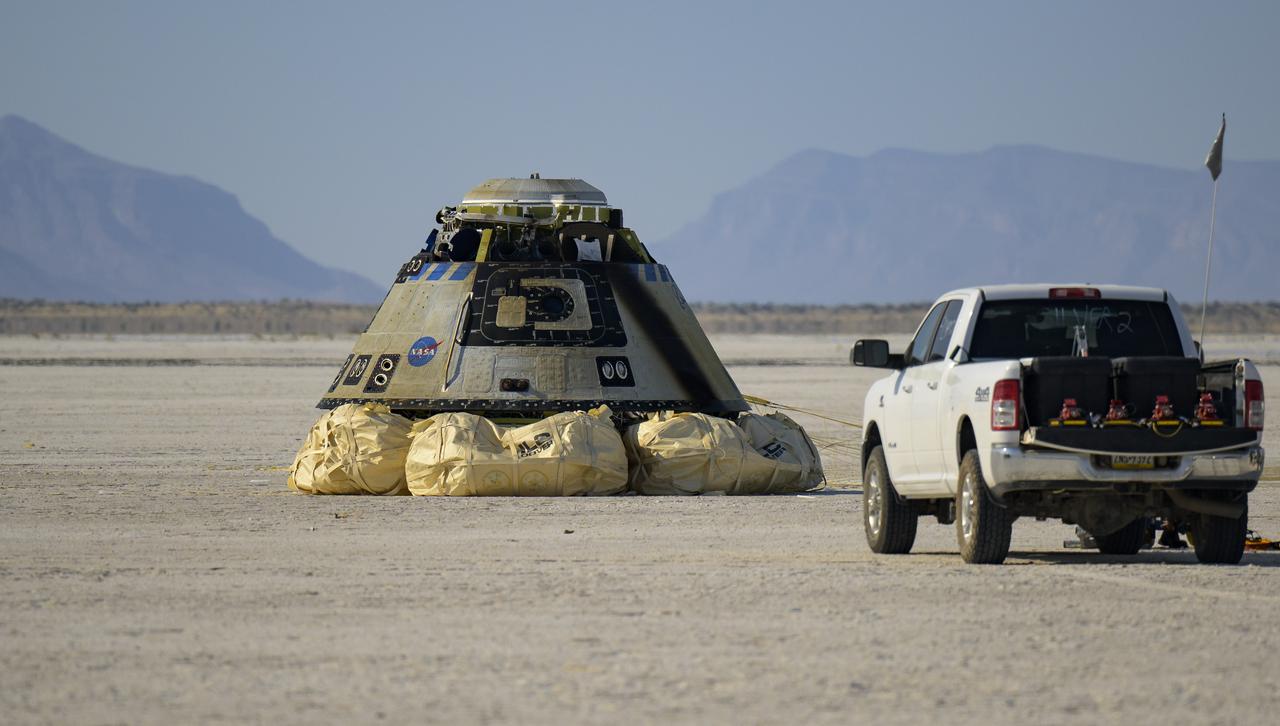
Boeing and NASA teams work around Boeing’s CST-100 Starliner spacecraft after it landed at White Sands Missile Range’s Space Harbor, Wednesday, May 25, 2022, in New Mexico. Boeing’s Orbital Flight Test-2 (OFT-2) is Starliner’s second uncrewed flight test to the International Space Station as part of NASA's Commercial Crew Program. OFT-2 serves as an end-to-end test of the system's capabilities. Photo Credit: (NASA/Bill Ingalls)
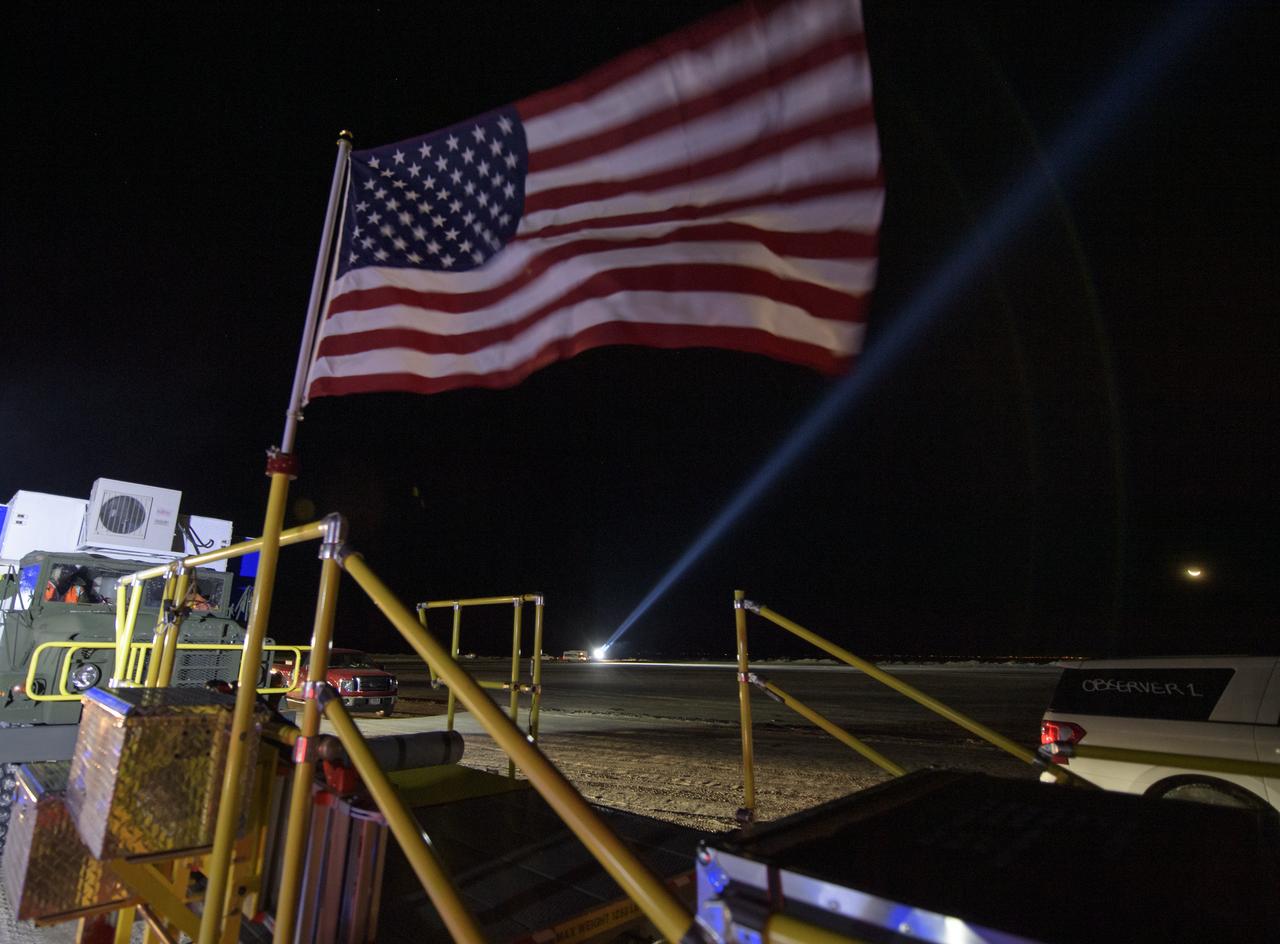
Boeing, NASA, and U.S. Army personnel prepare for the Boeing CST-100 Starliner spacecraft landing in White Sands, New Mexico, Sunday, Dec. 22, 2019. The landing will complete an abbreviated Orbital Flight Test for the company that still meets several mission objectives for NASA’s Commercial Crew program. The Starliner spacecraft launched on a United Launch Alliance Atlas V rocket at 6:36 a.m. Friday, Dec. 20 from Space Launch Complex 41 at Cape Canaveral Air Force Station in Florida. Photo Credit: (NASA/Bill Ingalls)

Boeing hazmat teams work around Boeing’s CST-100 Starliner spacecraft after it landed at White Sands Missile Range’s Space Harbor, Wednesday, May 25, 2022, in New Mexico. Boeing’s Orbital Flight Test-2 (OFT-2) is Starliner’s second uncrewed flight test to the International Space Station as part of NASA's Commercial Crew Program. OFT-2 serves as an end-to-end test of the system's capabilities. Photo Credit: (NASA/Bill Ingalls)
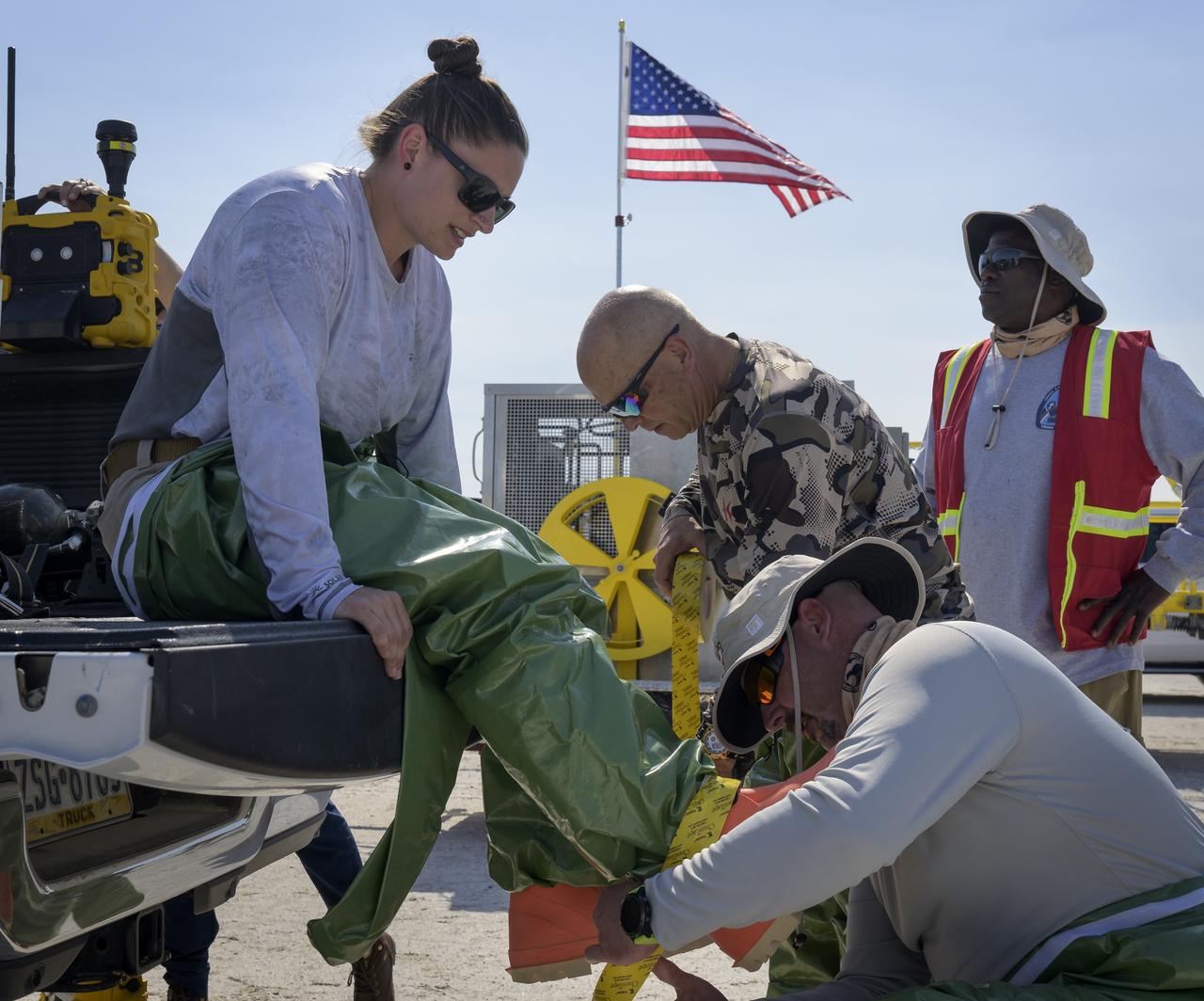
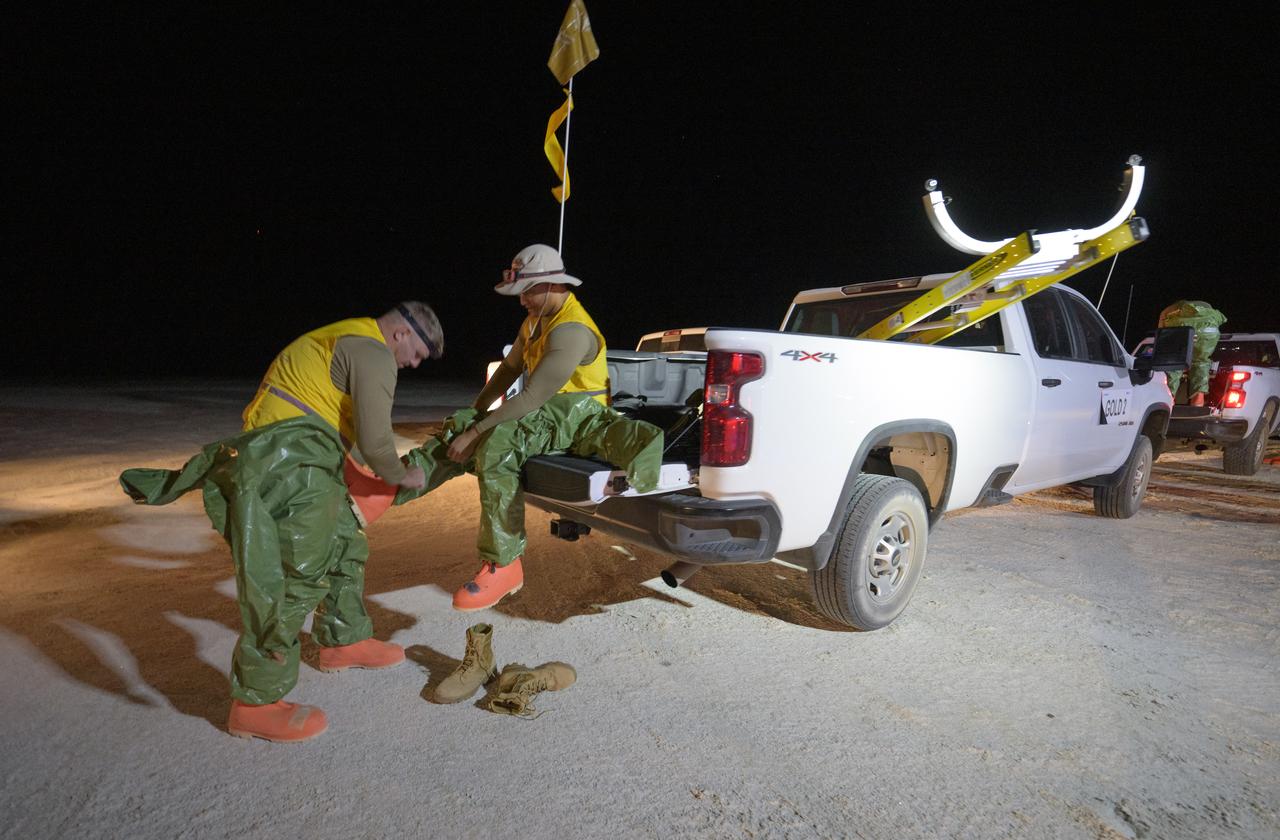
Boeing team members don hazmat suits as they prepare for the landing of Boeing’s CST-100 Starliner spacecraft at White Sands Missile Range’s Space Harbor, Wednesday, May 25, 2022, in New Mexico. Boeing’s Orbital Flight Test-2 (OFT-2) is Starliner’s second uncrewed flight test to the International Space Station as part of NASA's Commercial Crew Program. OFT-2 serves as an end-to-end test of the system's capabilities. Photo Credit: (NASA/Bill Ingalls)
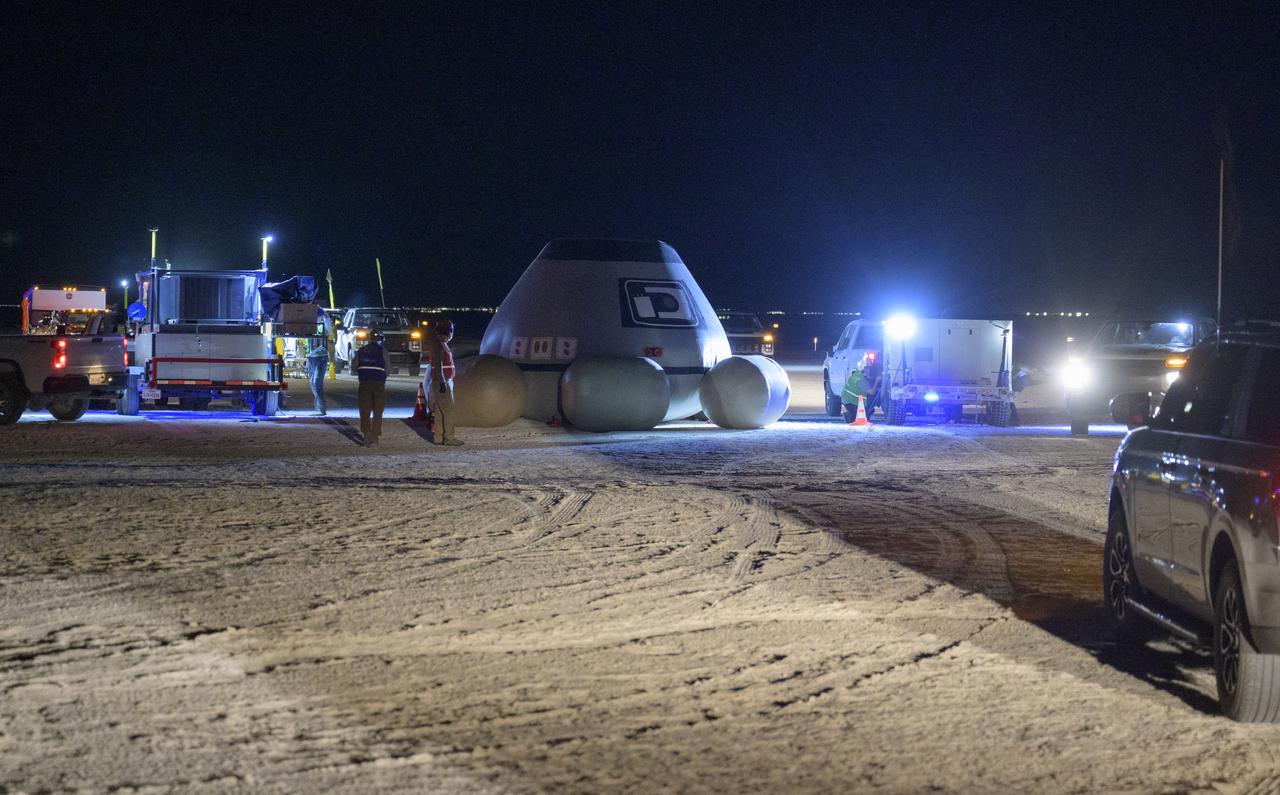
Boeing and NASA teams participate in a mission dress rehearsal to prepare for the landing of the Boeing CST-100 Starliner spacecraft in White Sands, New Mexico, Sunday, June 16, 2024. NASA astronauts Butch Wilmore and Suni Williams are Starliner’s first human crew and travelled to the International Space Station as part of NASA's Boeing Crew Flight Test. The mission serves as an end-to-end demonstration of Boeing’s crew transportation system as a provider for NASA’s Commercial Crew Program. Photo Credit: (NASA/Bill Ingalls)
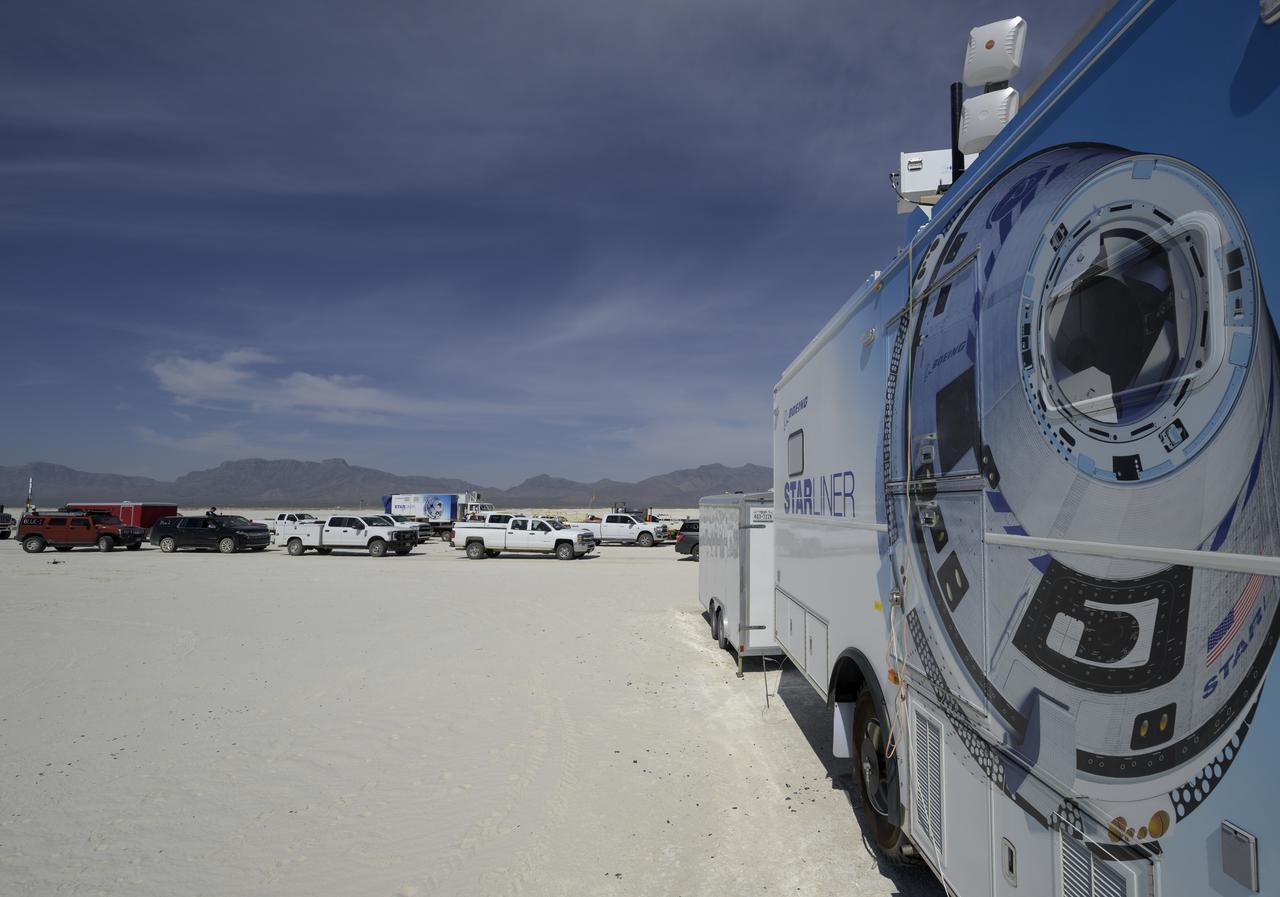
Boeing and NASA teams participate in a mission dress rehearsal to prepare for the landing of the Boeing CST-100 Starliner spacecraft in White Sands, New Mexico, Monday, May 23, 2022. Boeing’s Orbital Flight Test-2 (OFT-2) is Starliner’s second uncrewed flight test to the International Space Station as part of NASA's Commercial Crew Program. OFT-2 serves as an end-to-end test of the system's capabilities. Photo Credit: (NASA/Bill Ingalls)
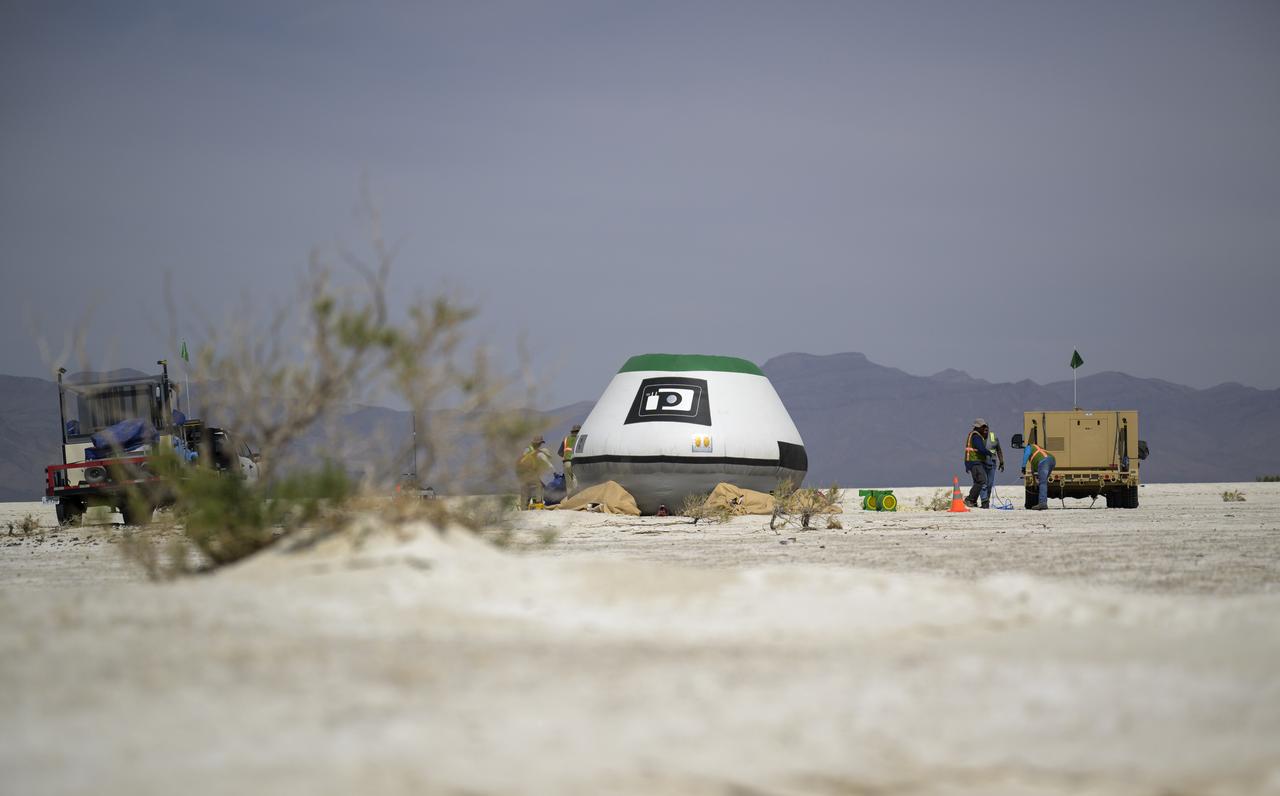
Boeing and NASA teams participate in a mission dress rehearsal to prepare for the landing of the Boeing CST-100 Starliner spacecraft in White Sands, New Mexico, Monday, May 23, 2022. Boeing’s Orbital Flight Test-2 (OFT-2) is Starliner’s second uncrewed flight test to the International Space Station as part of NASA's Commercial Crew Program. OFT-2 serves as an end-to-end test of the system's capabilities. Photo Credit: (NASA/Bill Ingalls)

Boeing and NASA teams participate in a mission dress rehearsal to prepare for the landing of the Boeing CST-100 Starliner spacecraft in White Sands, New Mexico, Monday, May 23, 2022. Boeing’s Orbital Flight Test-2 (OFT-2) is Starliner’s second uncrewed flight test to the International Space Station as part of NASA's Commercial Crew Program. OFT-2 serves as an end-to-end test of the system's capabilities. Photo Credit: (NASA/Bill Ingalls)
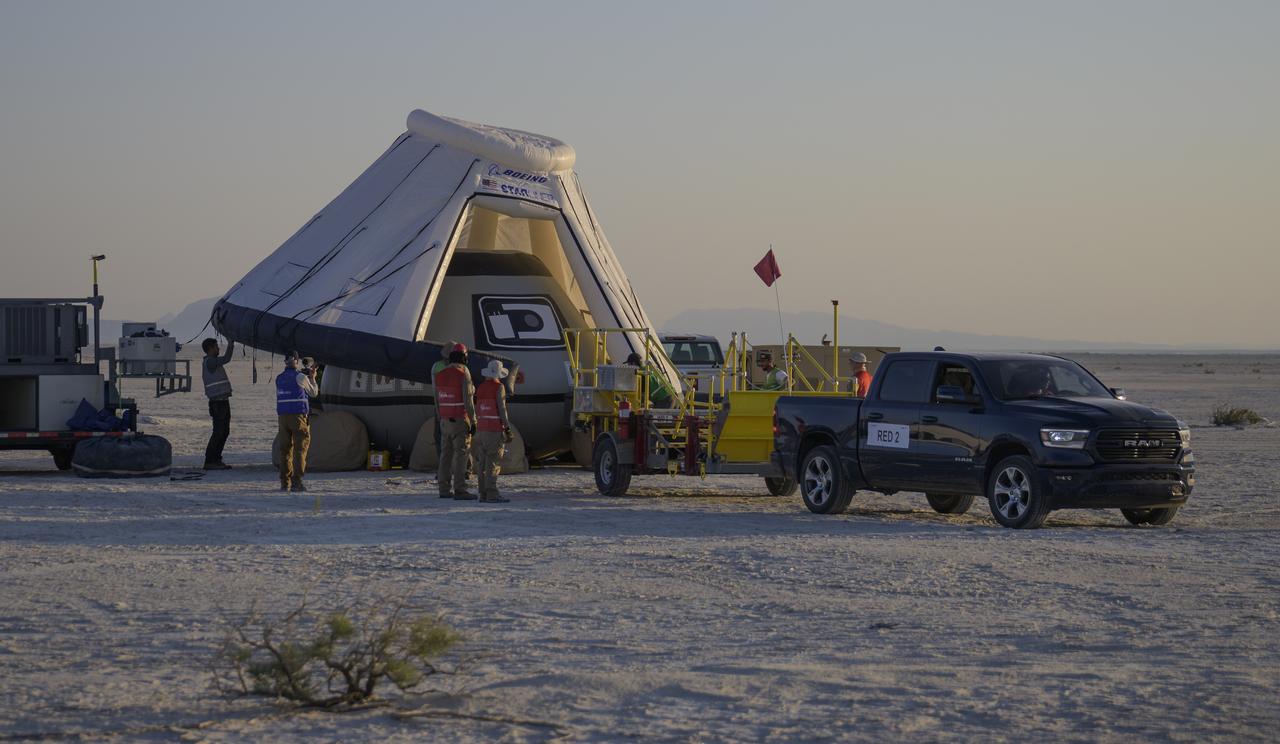
Boeing and NASA teams participate in a mission dress rehearsal to prepare for the landing of the Boeing CST-100 Starliner spacecraft in White Sands, New Mexico, Sunday, June 16, 2024. NASA astronauts Butch Wilmore and Suni Williams are Starliner’s first human crew and travelled to the International Space Station as part of NASA's Boeing Crew Flight Test. The mission serves as an end-to-end demonstration of Boeing’s crew transportation system as a provider for NASA’s Commercial Crew Program. Photo Credit: (NASA/Bill Ingalls)
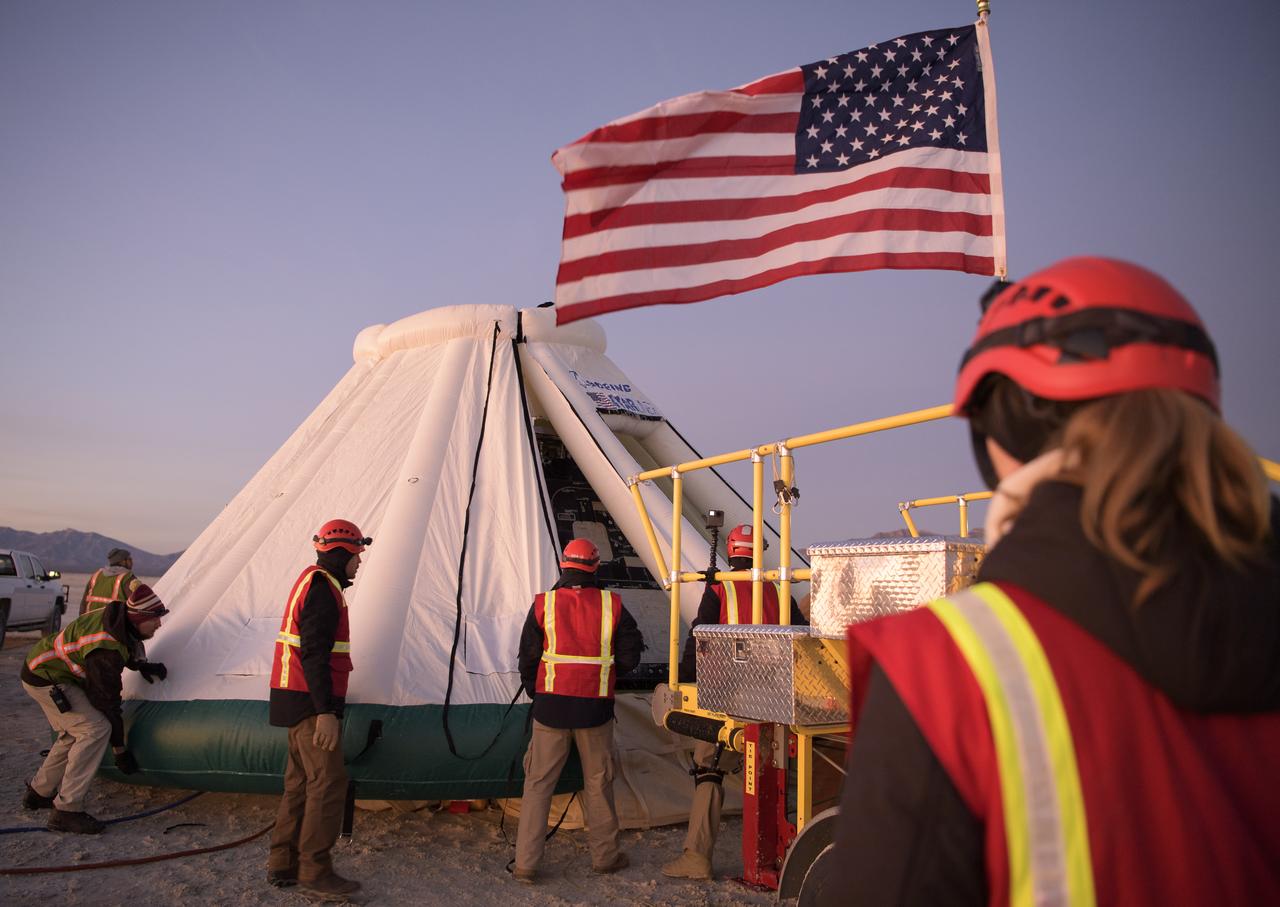
Boeing, NASA, and U.S. Army personnel work around the Boeing CST-100 Starliner spacecraft shortly after it landed in White Sands, New Mexico, Sunday, Dec. 22, 2019. The landing completes an abbreviated Orbital Flight Test for the company that still meets several mission objectives for NASA’s Commercial Crew program. The Starliner spacecraft launched on a United Launch Alliance Atlas V rocket at 6:36 a.m. Friday, Dec. 20 from Space Launch Complex 41 at Cape Canaveral Air Force Station in Florida. Photo Credit: (NASA/Bill Ingalls)
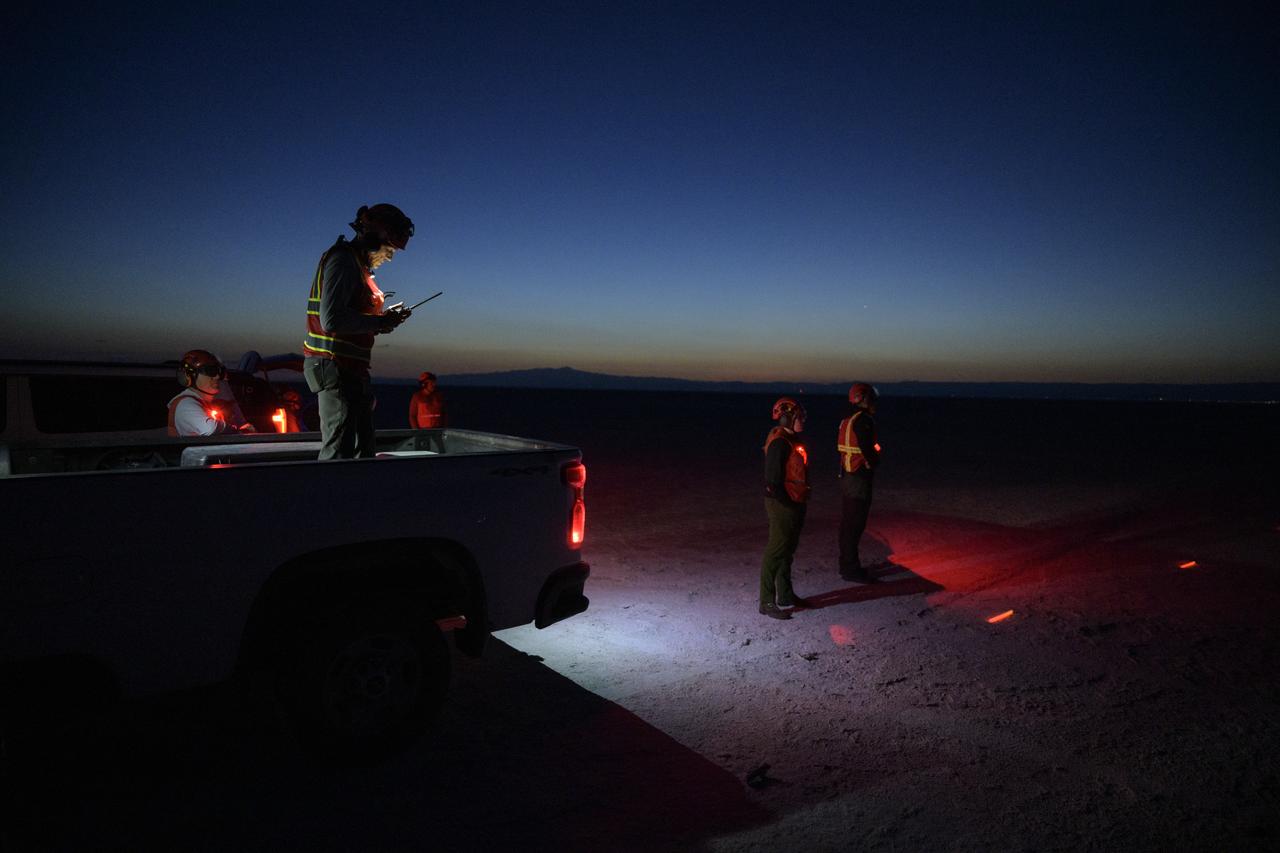
Boeing and NASA teams participate in a mission dress rehearsal to prepare for the landing of the Boeing CST-100 Starliner spacecraft in White Sands, New Mexico, Sunday, June 16, 2024. NASA astronauts Butch Wilmore and Suni Williams are Starliner’s first human crew and travelled to the International Space Station as part of NASA's Boeing Crew Flight Test. The mission serves as an end-to-end demonstration of Boeing’s crew transportation system as a provider for NASA’s Commercial Crew Program. Photo Credit: (NASA/Bill Ingalls)
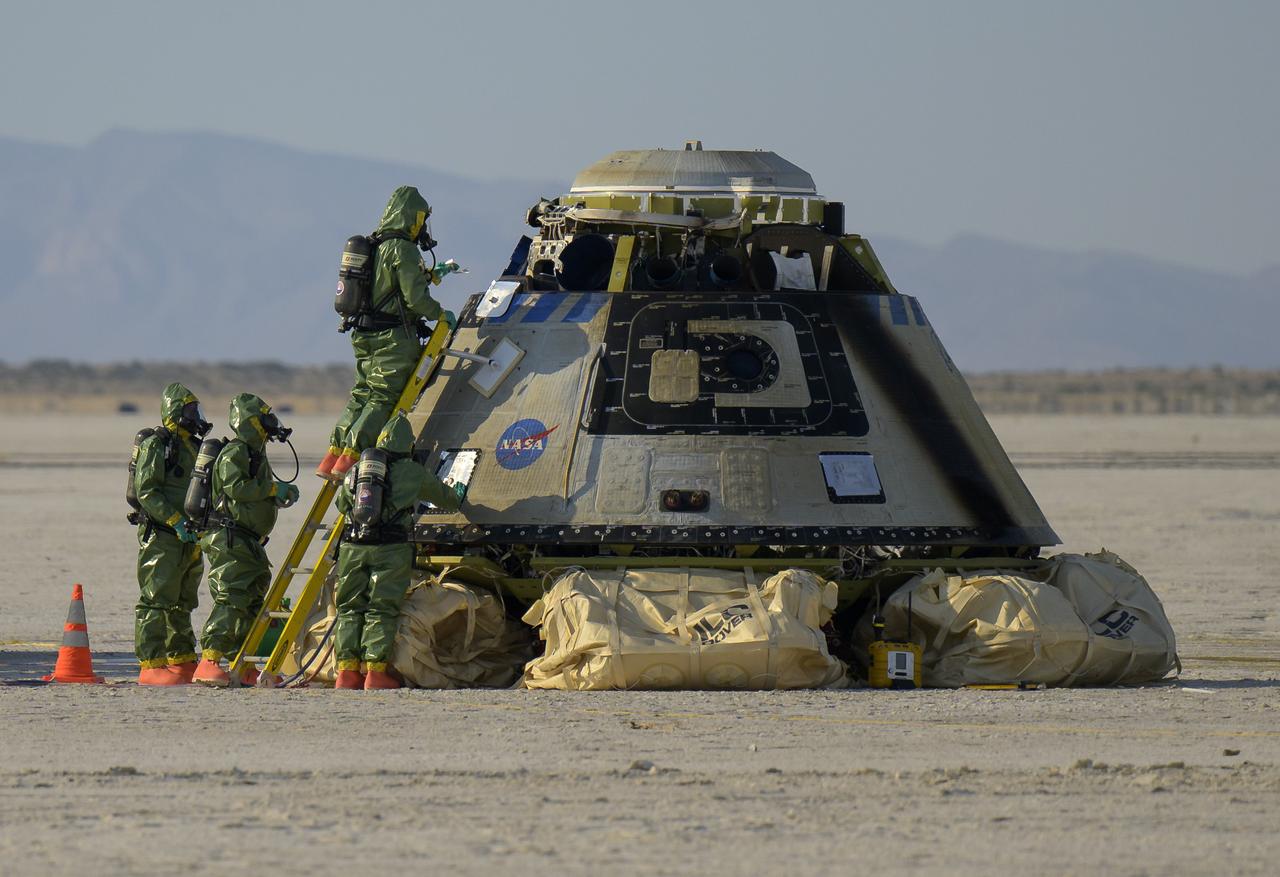
Boeing and NASA teams work around Boeing’s CST-100 Starliner spacecraft after it landed at White Sands Missile Range’s Space Harbor, Wednesday, May 25, 2022, in New Mexico. Boeing’s Orbital Flight Test-2 (OFT-2) is Starliner’s second uncrewed flight test to the International Space Station as part of NASA's Commercial Crew Program. OFT-2 serves as an end-to-end test of the system's capabilities. Photo Credit: (NASA/Bill Ingalls)
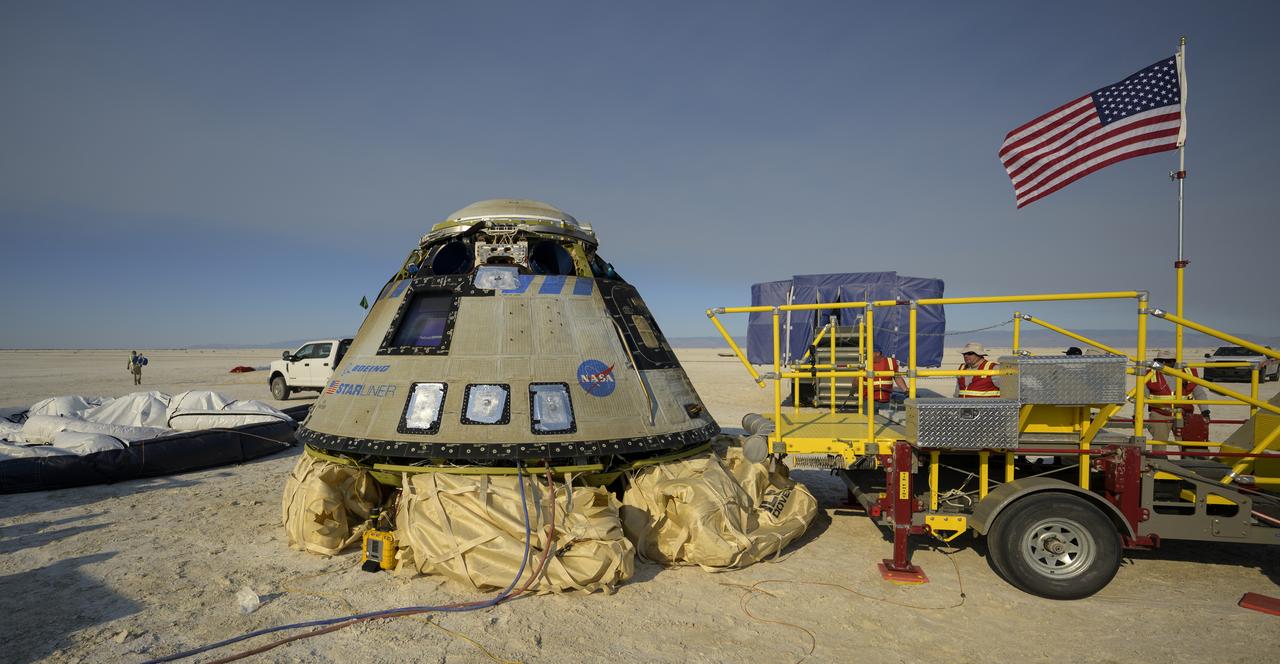
Boeing and NASA teams work around Boeing’s CST-100 Starliner spacecraft after it landed at White Sands Missile Range’s Space Harbor, Wednesday, May 25, 2022, in New Mexico. Boeing’s Orbital Flight Test-2 (OFT-2) is Starliner’s second uncrewed flight test to the International Space Station as part of NASA's Commercial Crew Program. OFT-2 serves as an end-to-end test of the system's capabilities. Photo Credit: (NASA/Bill Ingalls)
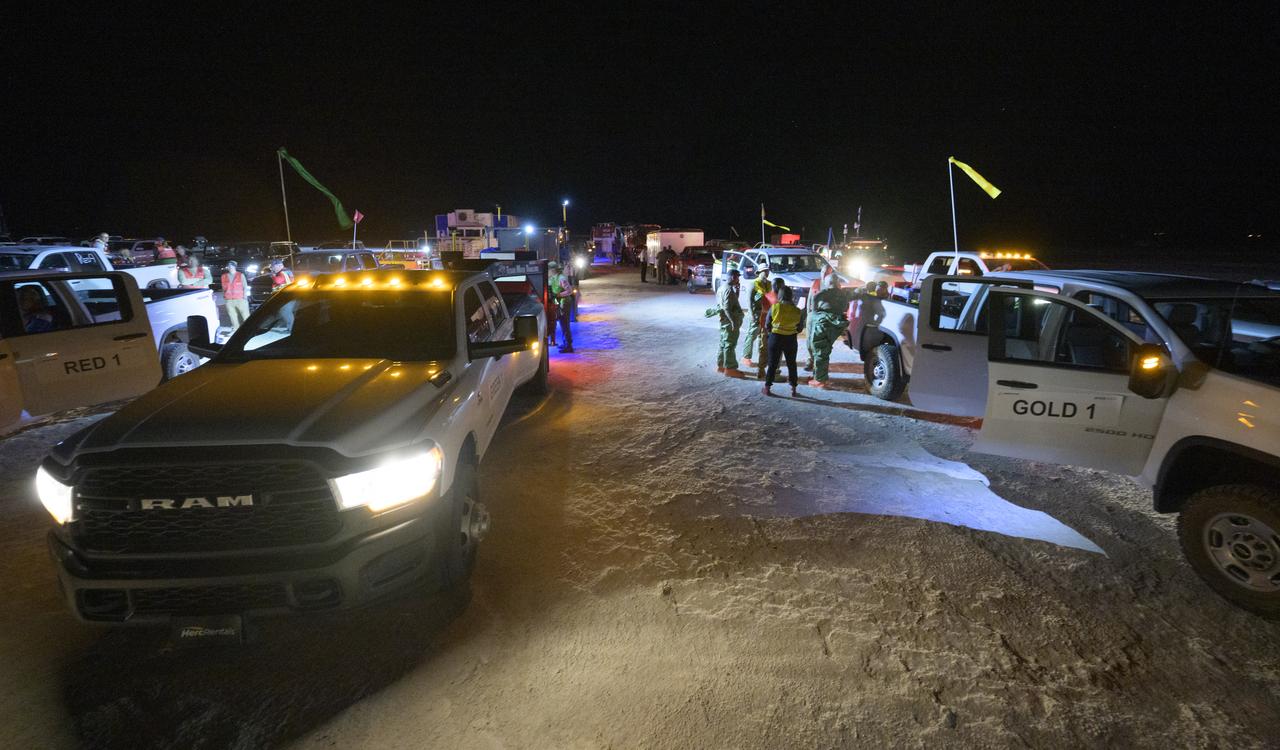
Boeing and NASA teams participate in a mission dress rehearsal to prepare for the landing of the Boeing CST-100 Starliner spacecraft in White Sands, New Mexico, Sunday, June 16, 2024. NASA astronauts Butch Wilmore and Suni Williams are Starliner’s first human crew and travelled to the International Space Station as part of NASA's Boeing Crew Flight Test. The mission serves as an end-to-end demonstration of Boeing’s crew transportation system as a provider for NASA’s Commercial Crew Program. Photo Credit: (NASA/Bill Ingalls)
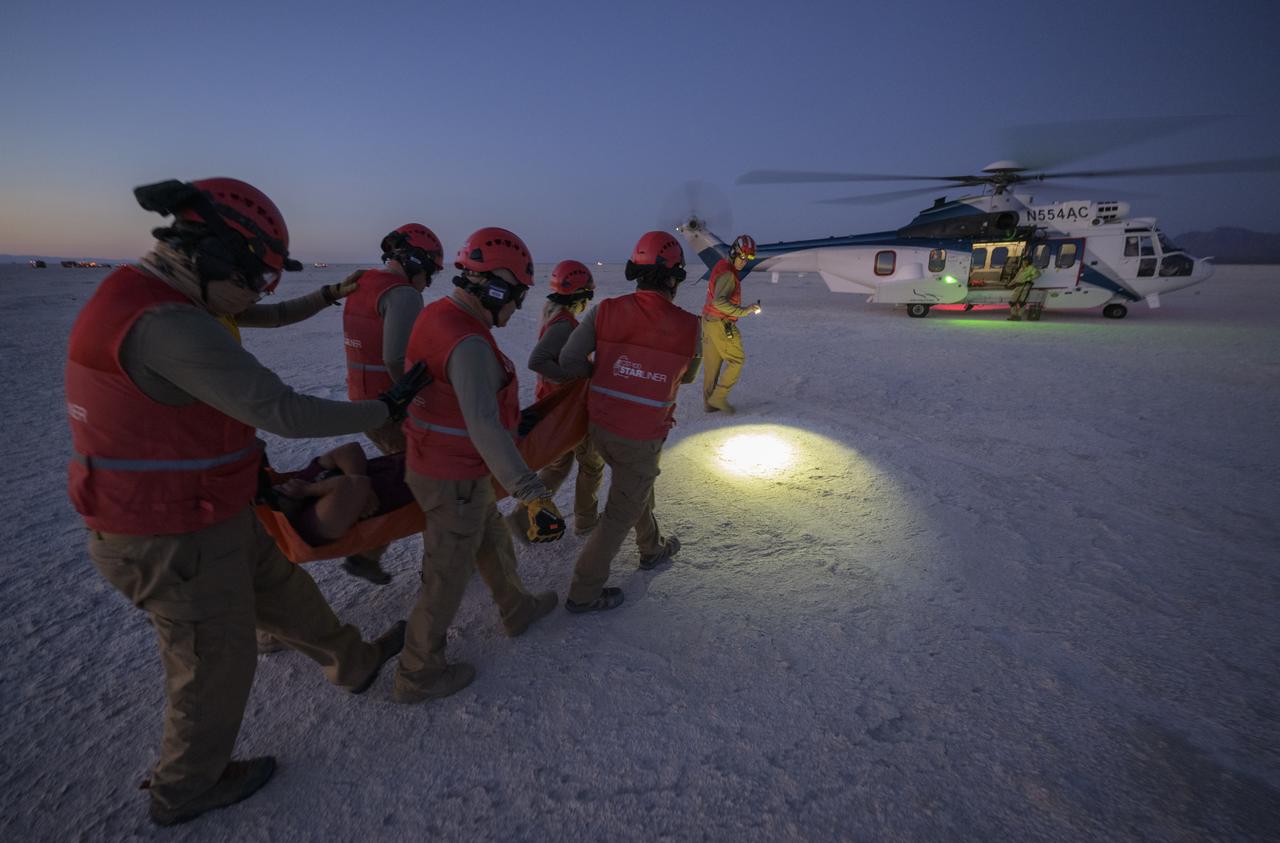
Boeing and NASA teams participate in a mission dress rehearsal to prepare for the landing of the Boeing CST-100 Starliner spacecraft in White Sands, New Mexico, Sunday, June 16, 2024. During the dry-run, teams practice assisting astronauts that might need time to be re-acclimated to Earth’s gravity before walking. NASA astronauts Butch Wilmore and Suni Williams are Starliner’s first human crew and travelled to the International Space Station as part of NASA's Boeing Crew Flight Test. The mission serves as an end-to-end demonstration of Boeing’s crew transportation system as a provider for NASA’s Commercial Crew Program. Photo Credit: (NASA/Bill Ingalls)
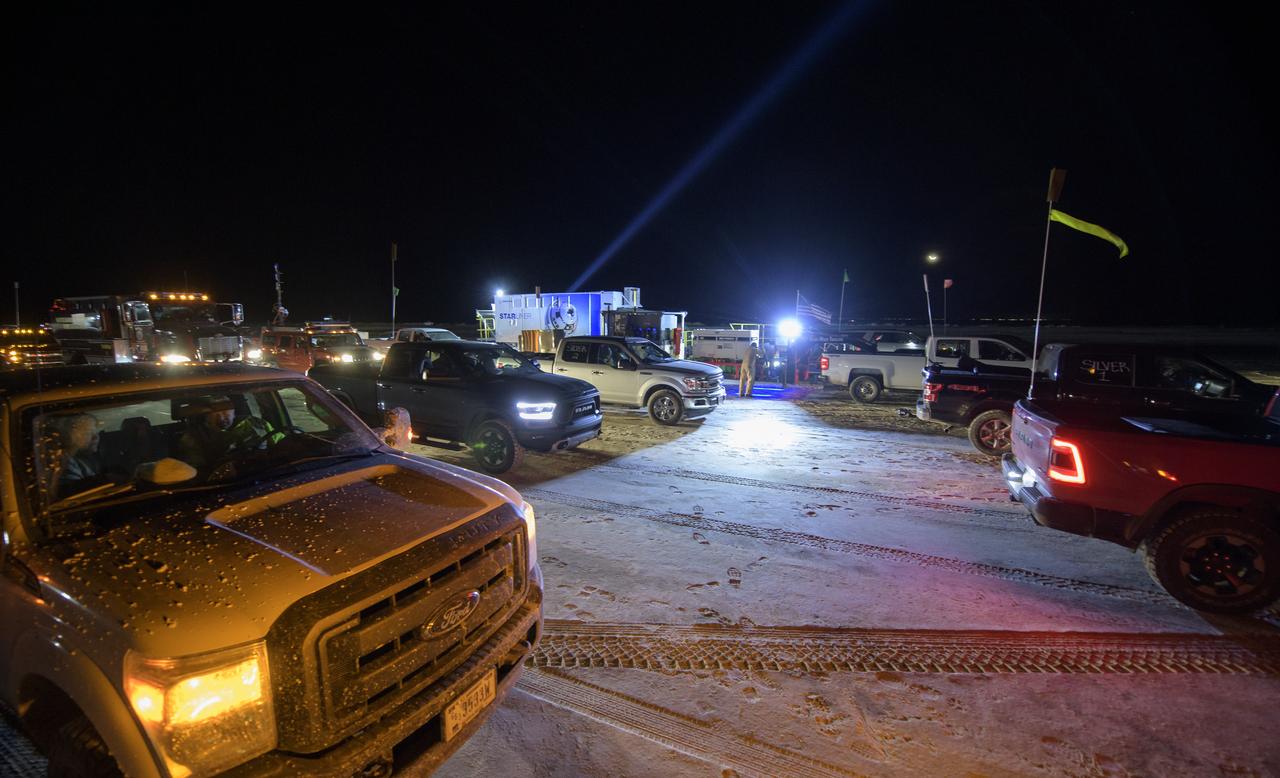
Boeing, NASA, and U.S. Army personnel prepare for the Boeing CST-100 Starliner spacecraft landing in White Sands, New Mexico, Sunday, Dec. 22, 2019. The landing will complete an abbreviated Orbital Flight Test for the company that still meets several mission objectives for NASA’s Commercial Crew program. The Starliner spacecraft launched on a United Launch Alliance Atlas V rocket at 6:36 a.m. Friday, Dec. 20 from Space Launch Complex 41 at Cape Canaveral Air Force Station in Florida. Photo Credit: (NASA/Bill Ingalls)
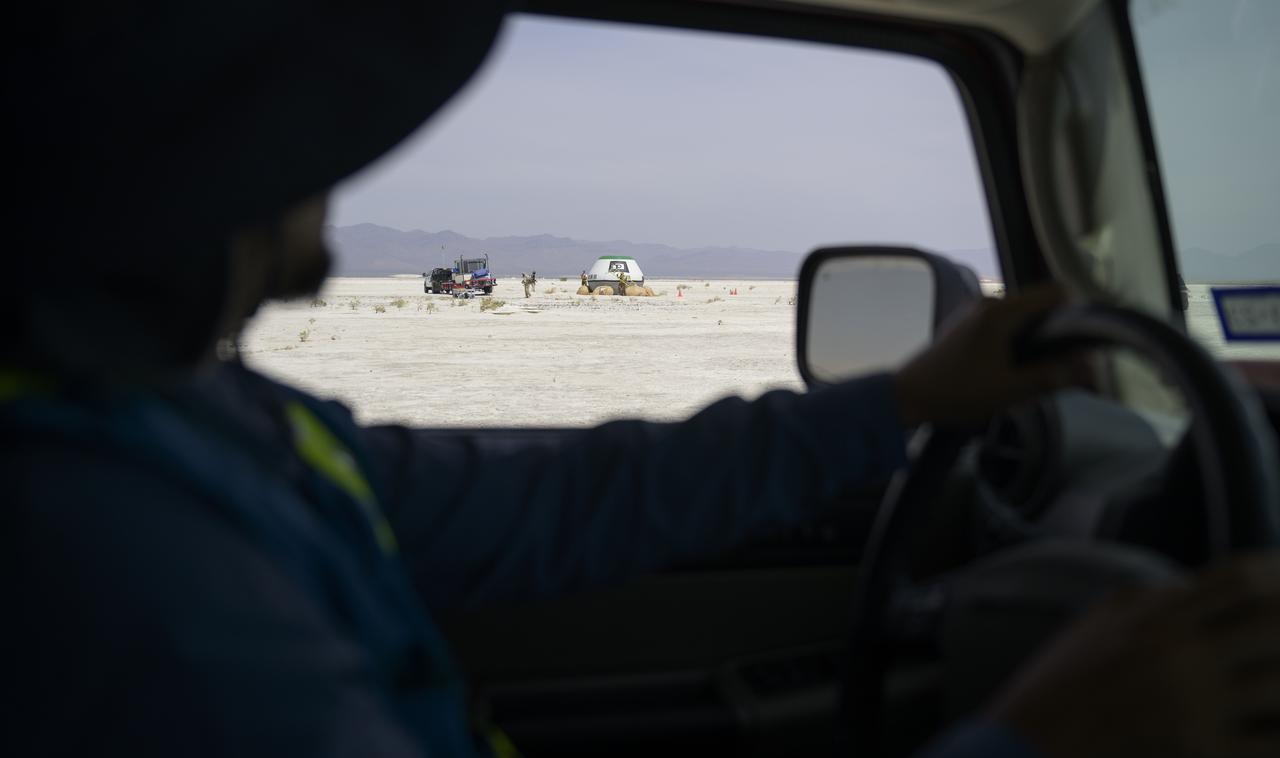
Boeing and NASA teams participate in a mission dress rehearsal to prepare for the landing of the Boeing CST-100 Starliner spacecraft in White Sands, New Mexico, Monday, May 23, 2022. Boeing’s Orbital Flight Test-2 (OFT-2) is Starliner’s second uncrewed flight test to the International Space Station as part of NASA's Commercial Crew Program. OFT-2 serves as an end-to-end test of the system's capabilities. Photo Credit: (NASA/Bill Ingalls)
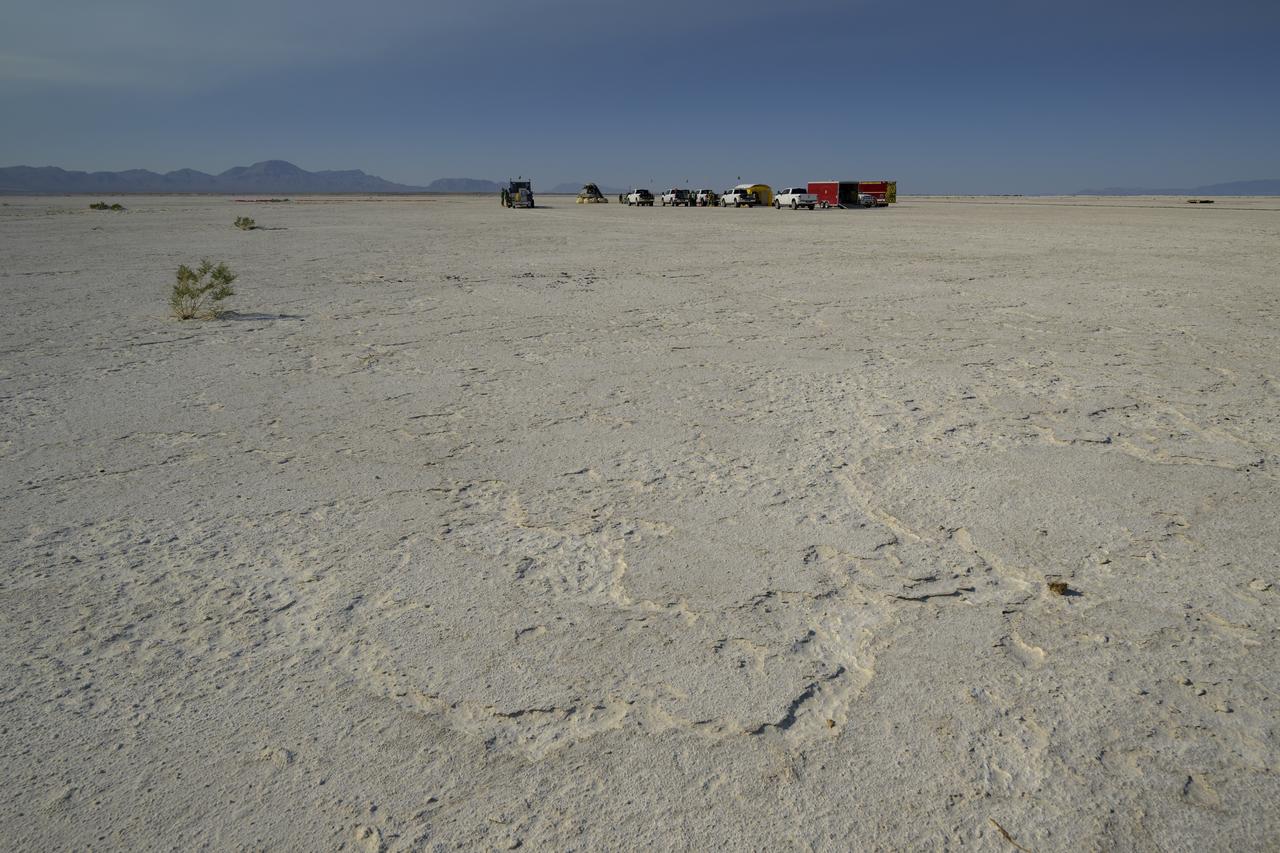
Boeing and NASA teams work around Boeing’s CST-100 Starliner spacecraft after it landed at White Sands Missile Range’s Space Harbor, Wednesday, May 25, 2022, in New Mexico. Boeing’s Orbital Flight Test-2 (OFT-2) is Starliner’s second uncrewed flight test to the International Space Station as part of NASA's Commercial Crew Program. OFT-2 serves as an end-to-end test of the system's capabilities. Photo Credit: (NASA/Bill Ingalls)

Air Operations Lead, Ken Phillips, is seen as Boeing and NASA teams participate in a mission dress rehearsal to prepare for the landing of the Boeing CST-100 Starliner spacecraft in White Sands, New Mexico, Sunday, June 16, 2024. NASA astronauts Butch Wilmore and Suni Williams are Starliner’s first human crew and travelled to the International Space Station as part of NASA's Boeing Crew Flight Test. The mission serves as an end-to-end demonstration of Boeing’s crew transportation system as a provider for NASA’s Commercial Crew Program. Photo Credit: (NASA/Bill Ingalls)
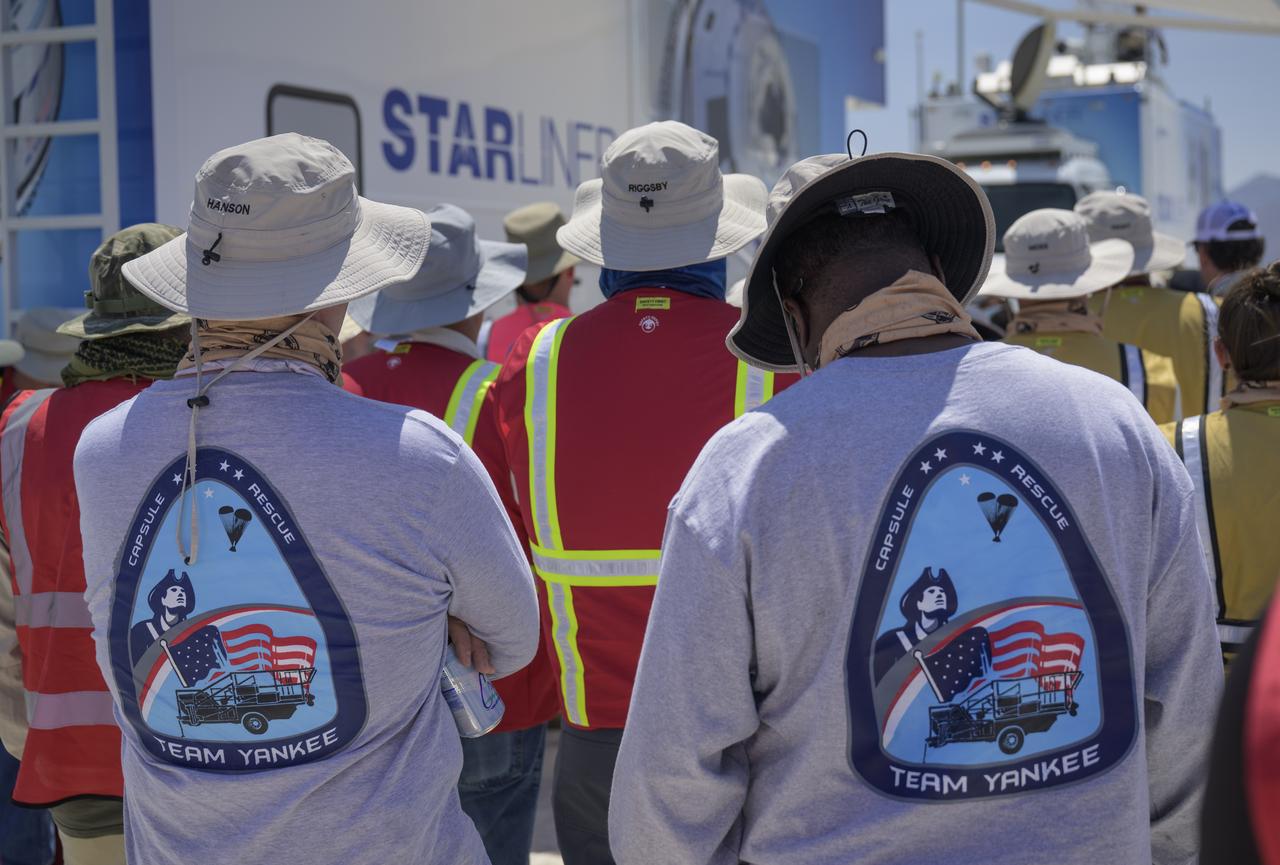
NASA and Boeing teams prepare for the landing of Boeing’s CST-100 Starliner spacecraft at White Sands Missile Range’s Space Harbor, Wednesday, May 25, 2022, in New Mexico. Boeing’s Orbital Flight Test-2 (OFT-2) is Starliner’s second uncrewed flight test to the International Space Station as part of NASA's Commercial Crew Program. OFT-2 serves as an end-to-end test of the system's capabilities. Photo Credit: (NASA/Bill Ingalls)
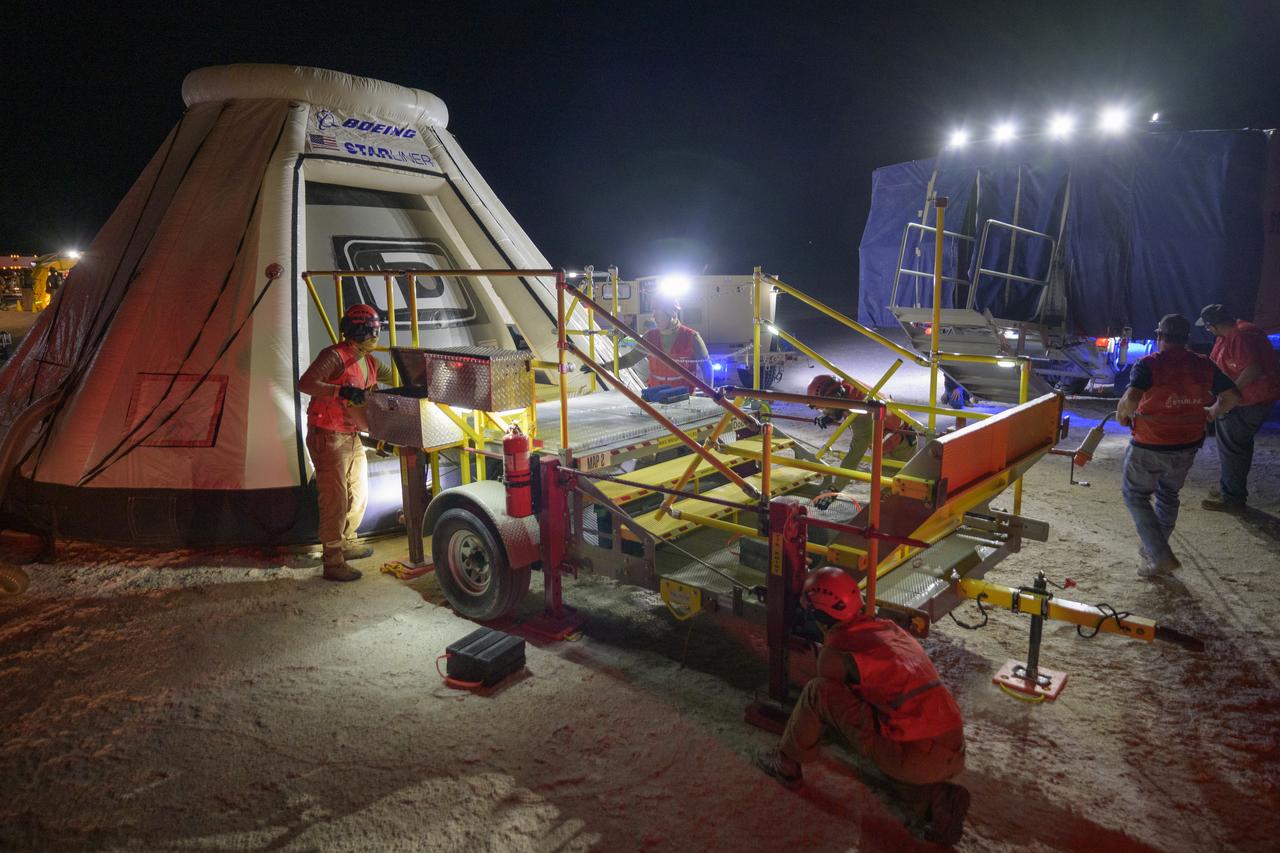
Boeing and NASA teams participate in a mission dress rehearsal to prepare for the landing of the Boeing CST-100 Starliner spacecraft in White Sands, New Mexico, Sunday, June 16, 2024. NASA astronauts Butch Wilmore and Suni Williams are Starliner’s first human crew and travelled to the International Space Station as part of NASA's Boeing Crew Flight Test. The mission serves as an end-to-end demonstration of Boeing’s crew transportation system as a provider for NASA’s Commercial Crew Program. Photo Credit: (NASA/Bill Ingalls)
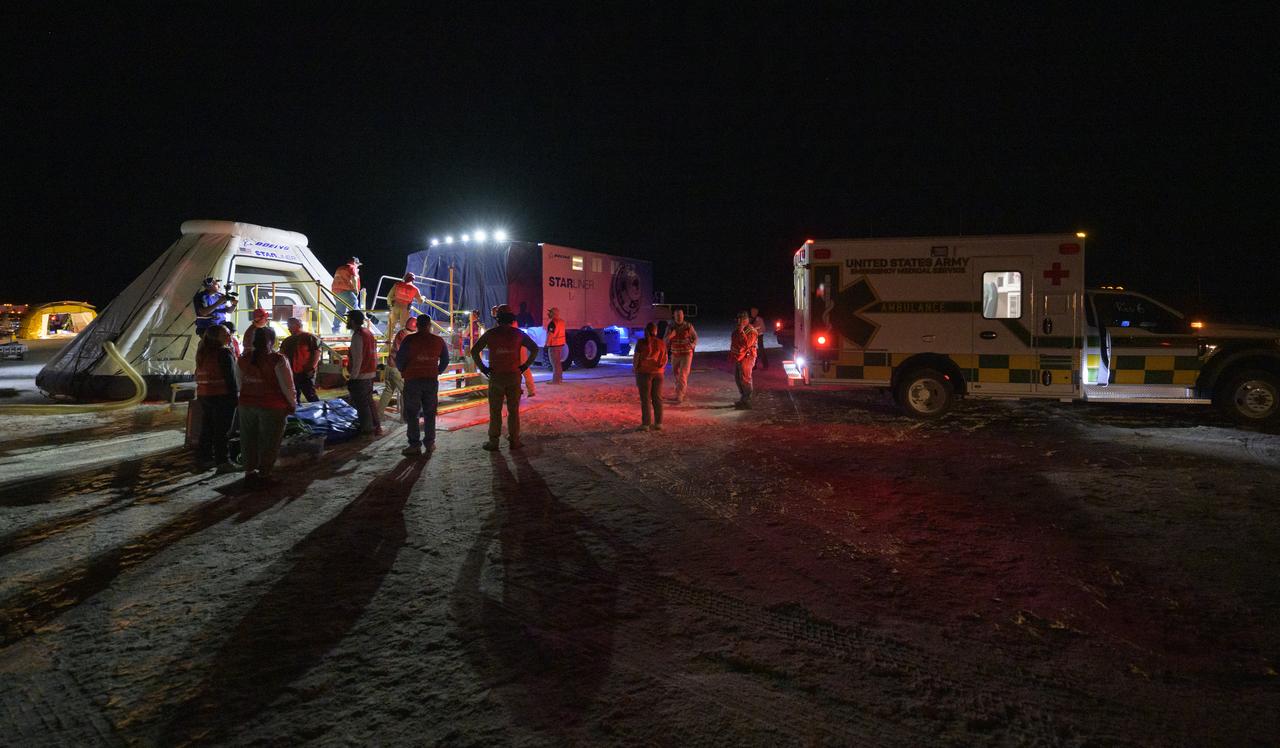
Boeing and NASA teams participate in a mission dress rehearsal to prepare for the landing of the Boeing CST-100 Starliner spacecraft in White Sands, New Mexico, Sunday, June 16, 2024. NASA astronauts Butch Wilmore and Suni Williams are Starliner’s first human crew and travelled to the International Space Station as part of NASA's Boeing Crew Flight Test. The mission serves as an end-to-end demonstration of Boeing’s crew transportation system as a provider for NASA’s Commercial Crew Program. Photo Credit: (NASA/Bill Ingalls)
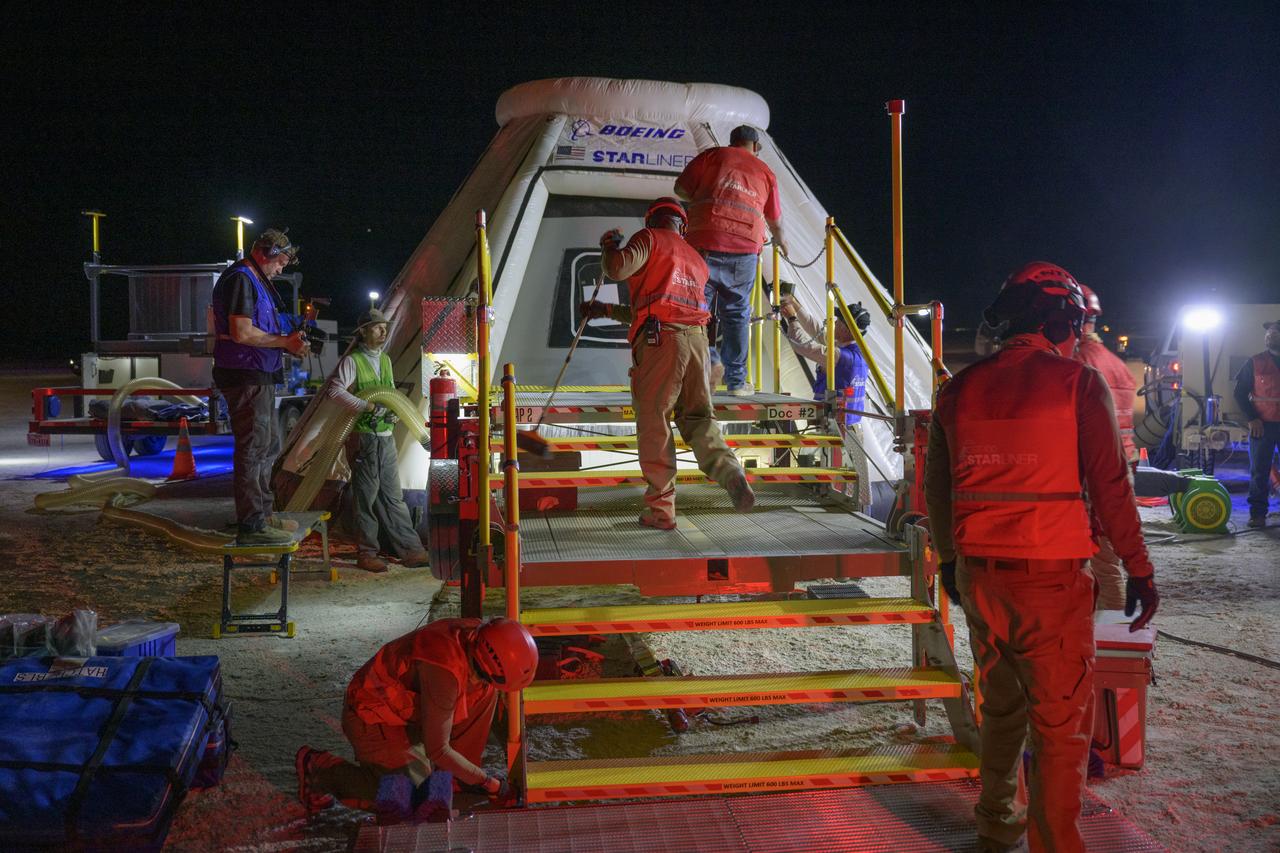
Boeing and NASA teams participate in a mission dress rehearsal to prepare for the landing of the Boeing CST-100 Starliner spacecraft in White Sands, New Mexico, Sunday, June 16, 2024. NASA astronauts Butch Wilmore and Suni Williams are Starliner’s first human crew and travelled to the International Space Station as part of NASA's Boeing Crew Flight Test. The mission serves as an end-to-end demonstration of Boeing’s crew transportation system as a provider for NASA’s Commercial Crew Program. Photo Credit: (NASA/Bill Ingalls)
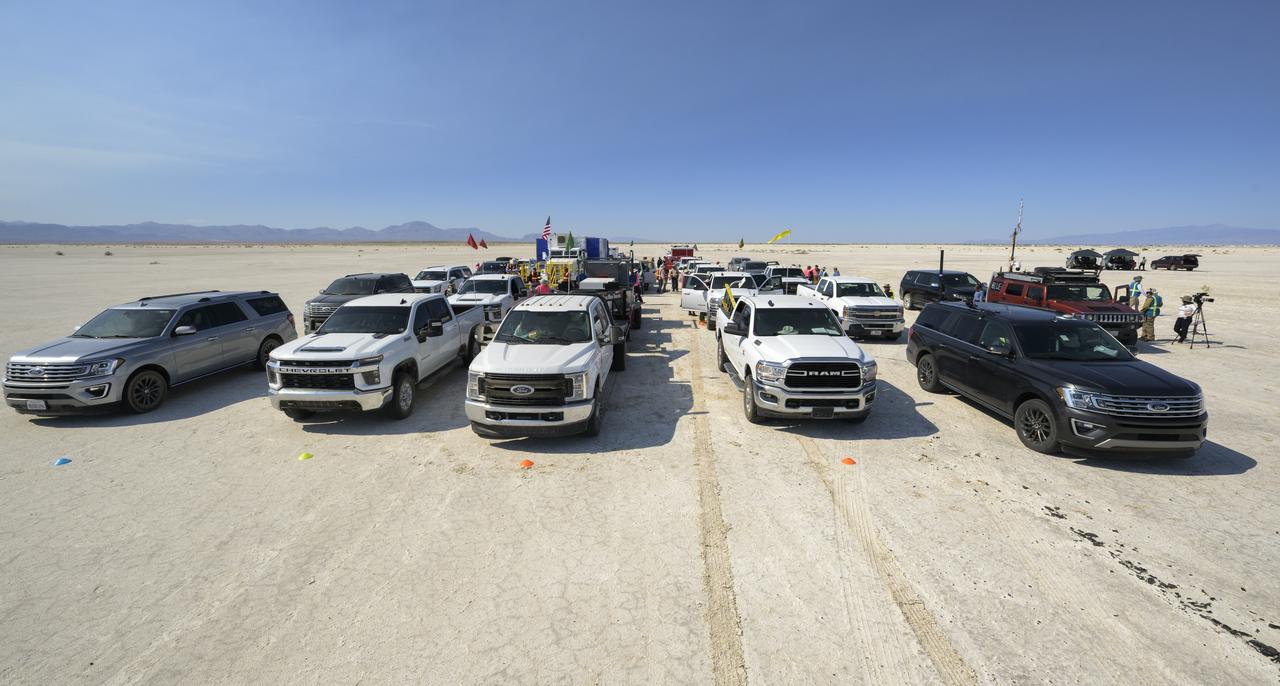
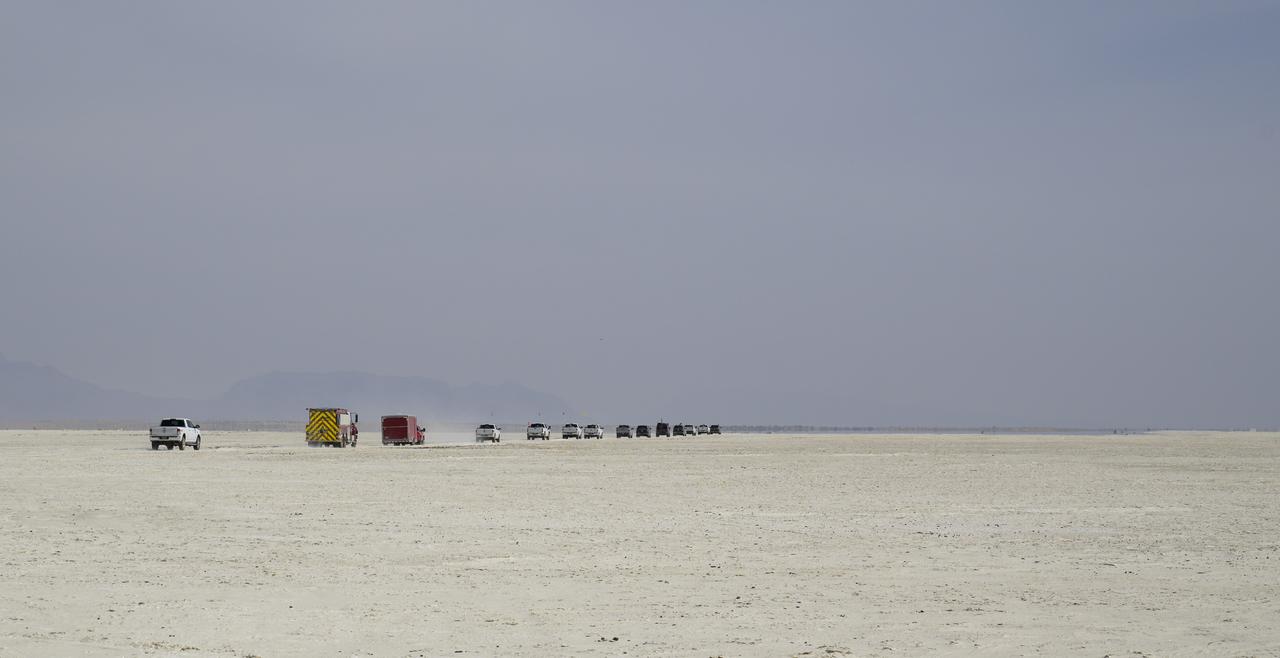
NASA and Boeing teams line up in a convoy as they prepare for the landing of Boeing’s CST-100 Starliner spacecraft at White Sands Missile Range’s Space Harbor, Wednesday, May 25, 2022, in New Mexico. Boeing’s Orbital Flight Test-2 (OFT-2) is Starliner’s second uncrewed flight test to the International Space Station as part of NASA's Commercial Crew Program. OFT-2 serves as an end-to-end test of the system's capabilities. Photo Credit: (NASA/Bill Ingalls)
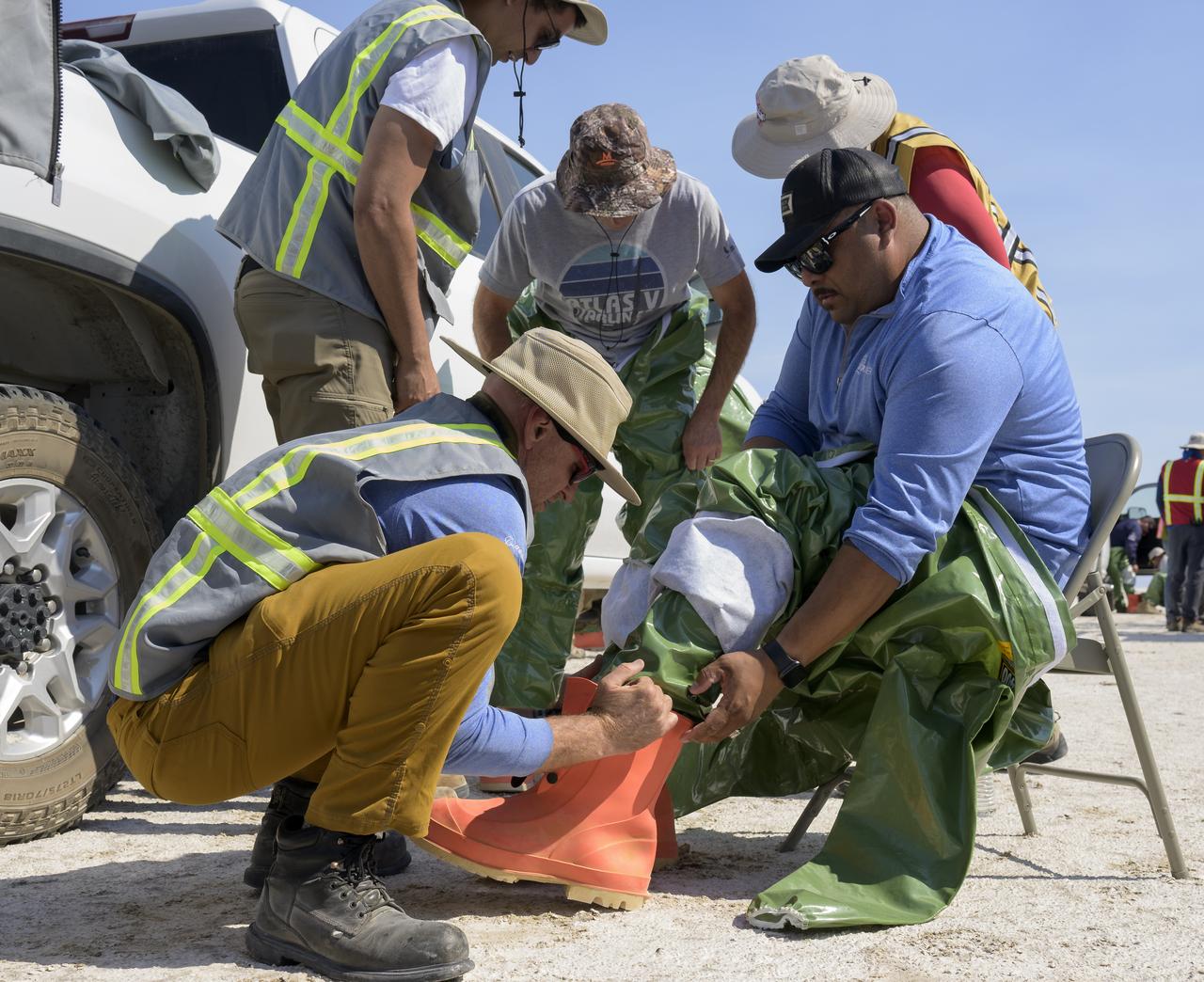
Boeing team members don hazmat suits as they prepare for the landing of Boeing’s CST-100 Starliner spacecraft at White Sands Missile Range’s Space Harbor, Wednesday, May 25, 2022, in New Mexico. Boeing’s Orbital Flight Test-2 (OFT-2) is Starliner’s second uncrewed flight test to the International Space Station as part of NASA's Commercial Crew Program. OFT-2 serves as an end-to-end test of the system's capabilities. Photo Credit: (NASA/Bill Ingalls)
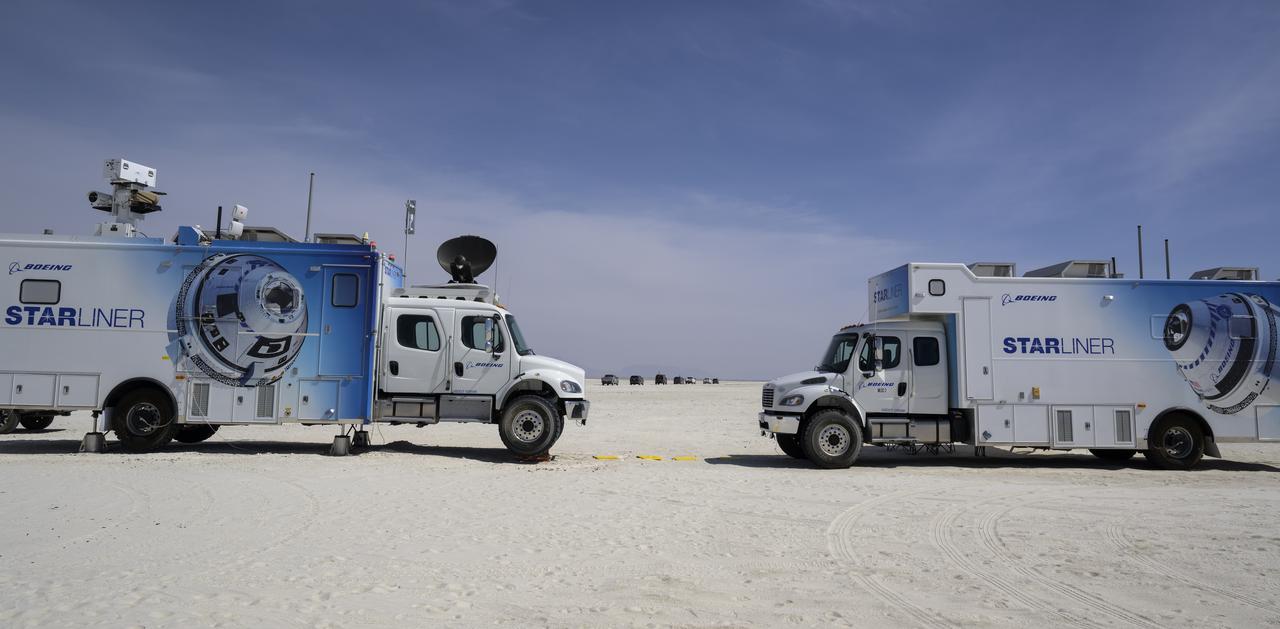
Boeing and NASA teams participate in a mission dress rehearsal to prepare for the landing of the Boeing CST-100 Starliner spacecraft in White Sands, New Mexico, Monday, May 23, 2022. Boeing’s Orbital Flight Test-2 (OFT-2) is Starliner’s second uncrewed flight test to the International Space Station as part of NASA's Commercial Crew Program. OFT-2 serves as an end-to-end test of the system's capabilities. Photo Credit: (NASA/Bill Ingalls)
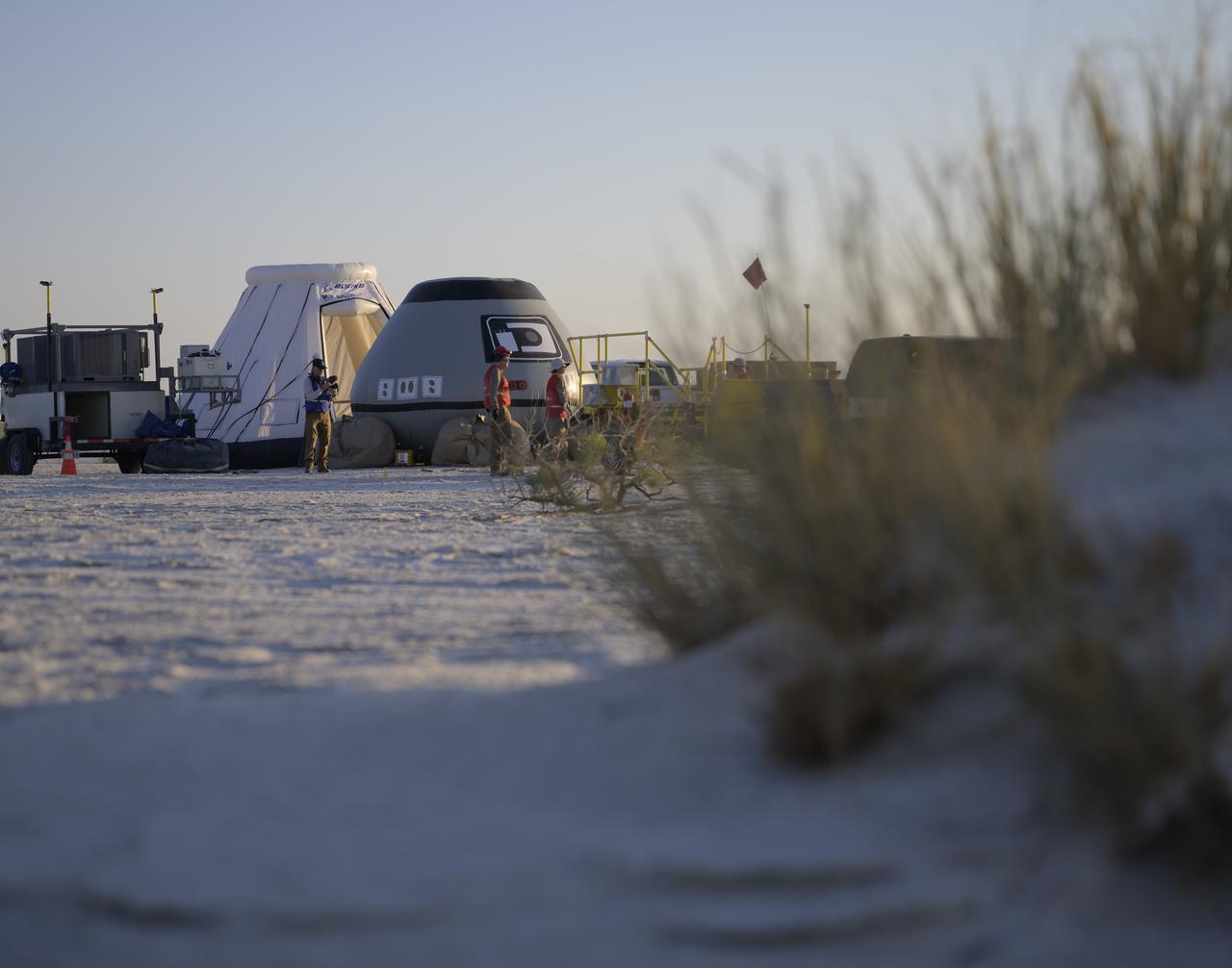
Boeing and NASA teams participate in a mission dress rehearsal to prepare for the landing of the Boeing CST-100 Starliner spacecraft in White Sands, New Mexico, Sunday, June 16, 2024. NASA astronauts Butch Wilmore and Suni Williams are Starliner’s first human crew and travelled to the International Space Station as part of NASA's Boeing Crew Flight Test. The mission serves as an end-to-end demonstration of Boeing’s crew transportation system as a provider for NASA’s Commercial Crew Program. Photo Credit: (NASA/Bill Ingalls)
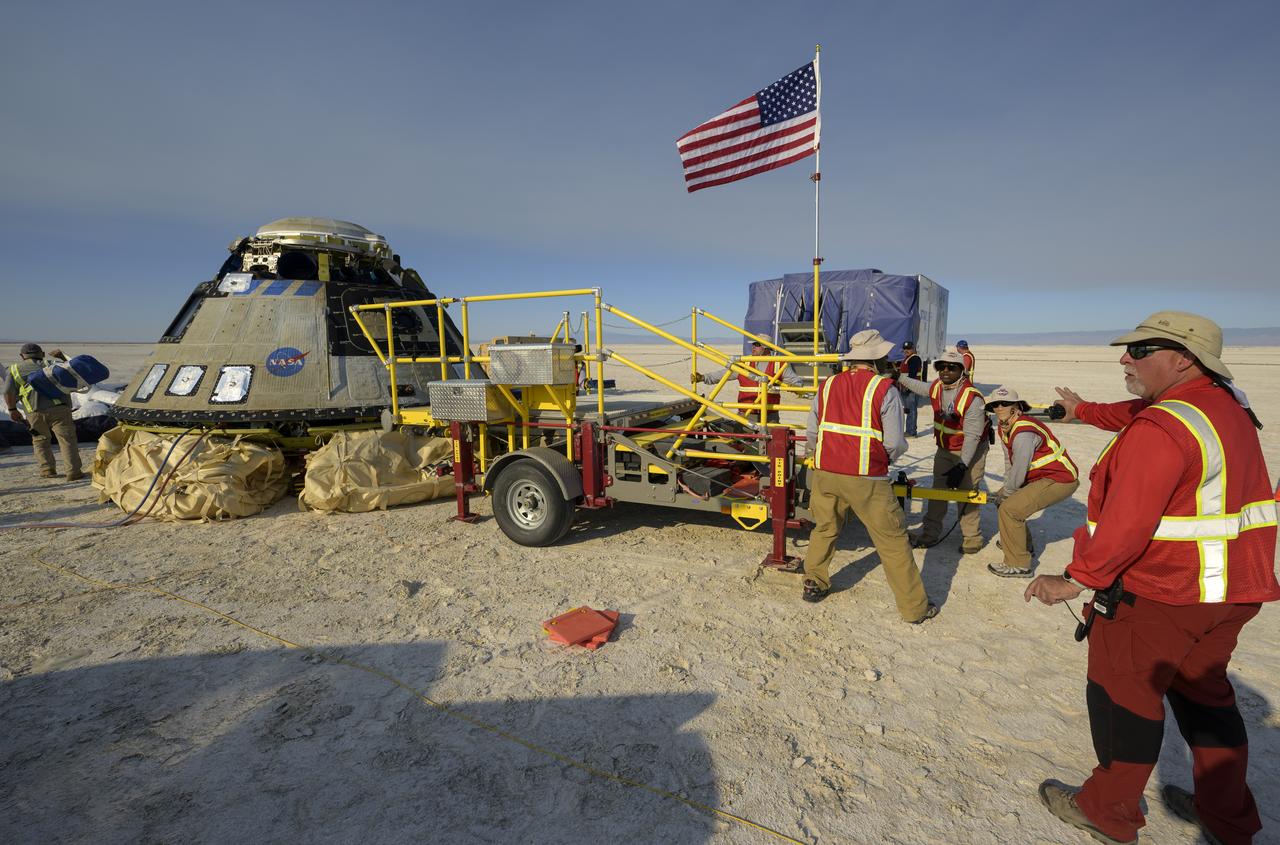
Boeing and NASA teams work around Boeing’s CST-100 Starliner spacecraft after it landed at White Sands Missile Range’s Space Harbor, Wednesday, May 25, 2022, in New Mexico. Boeing’s Orbital Flight Test-2 (OFT-2) is Starliner’s second uncrewed flight test to the International Space Station as part of NASA's Commercial Crew Program. OFT-2 serves as an end-to-end test of the system's capabilities. Photo Credit: (NASA/Bill Ingalls)
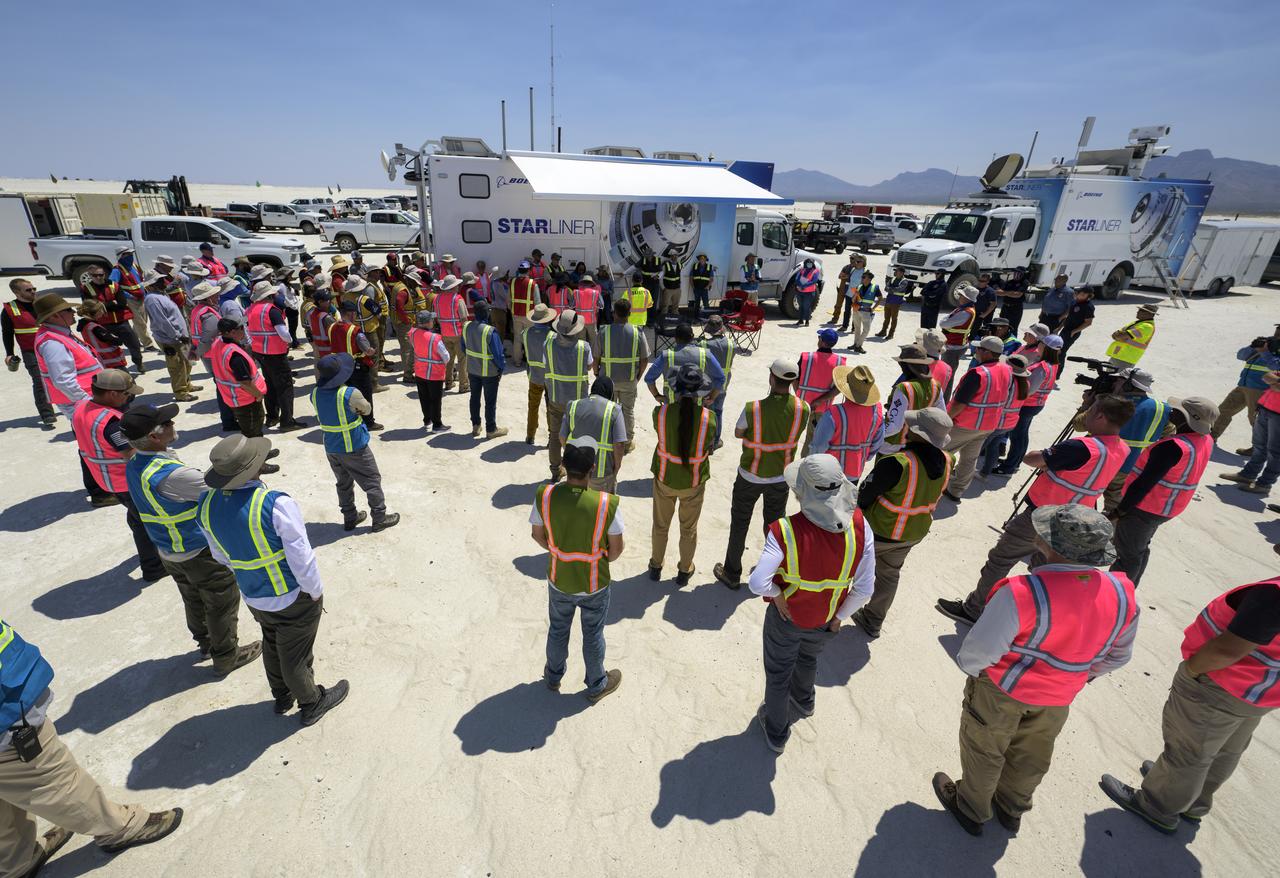
NASA and Boeing teams prepare for the landing of Boeing’s CST-100 Starliner spacecraft at White Sands Missile Range’s Space Harbor, Wednesday, May 25, 2022, in New Mexico. Boeing’s Orbital Flight Test-2 (OFT-2) is Starliner’s second uncrewed flight test to the International Space Station as part of NASA's Commercial Crew Program. OFT-2 serves as an end-to-end test of the system's capabilities. Photo Credit: (NASA/Bill Ingalls)
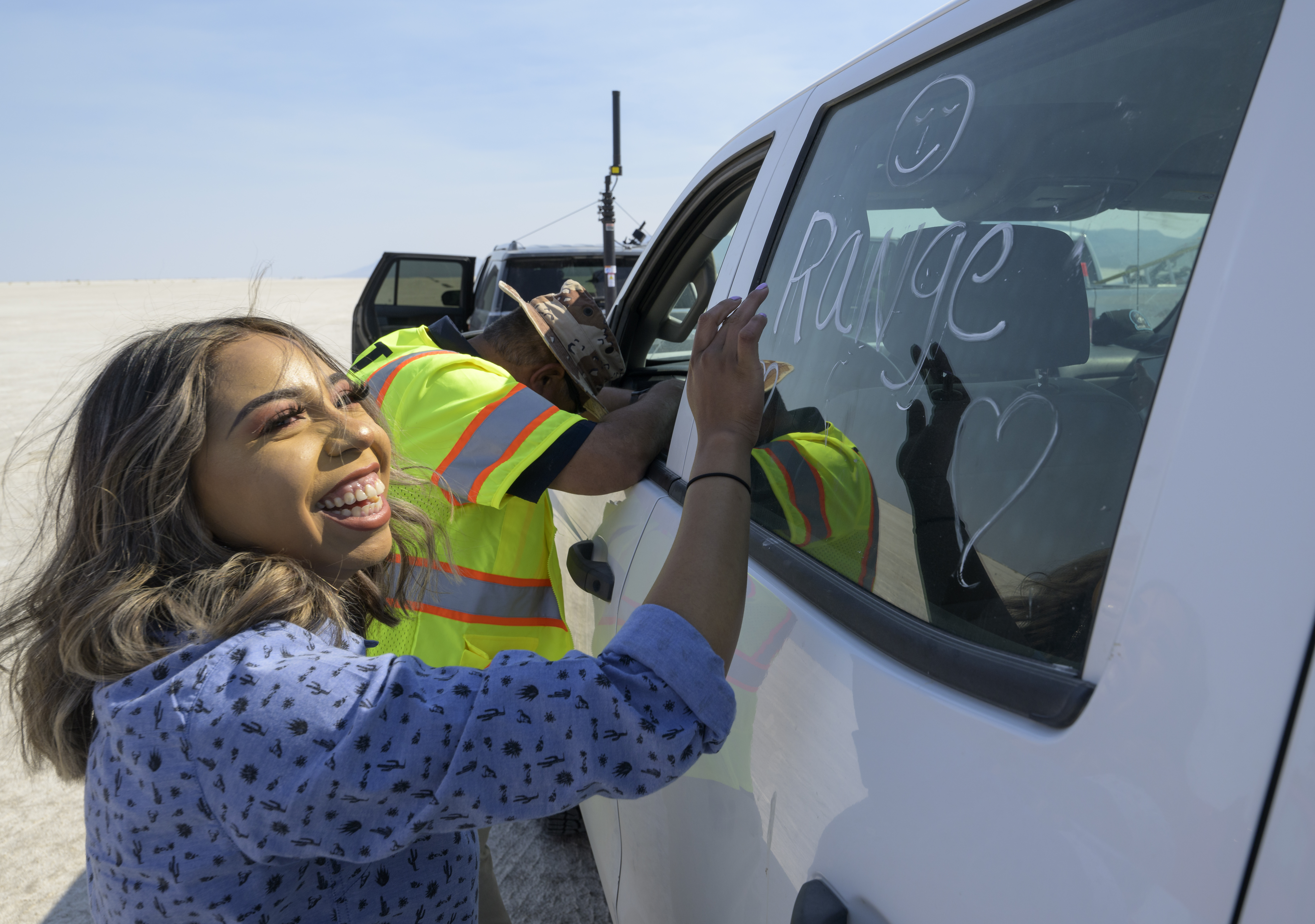
A member of the range safety team labels her convoy vehicle as they prepare for the landing of Boeing’s CST-100 Starliner spacecraft at White Sands Missile Range’s Space Harbor, Wednesday, May 25, 2022, in New Mexico. Boeing’s Orbital Flight Test-2 (OFT-2) is Starliner’s second uncrewed flight test to the International Space Station as part of NASA's Commercial Crew Program. OFT-2 serves as an end-to-end test of the system's capabilities. Photo Credit: (NASA/Bill Ingalls)
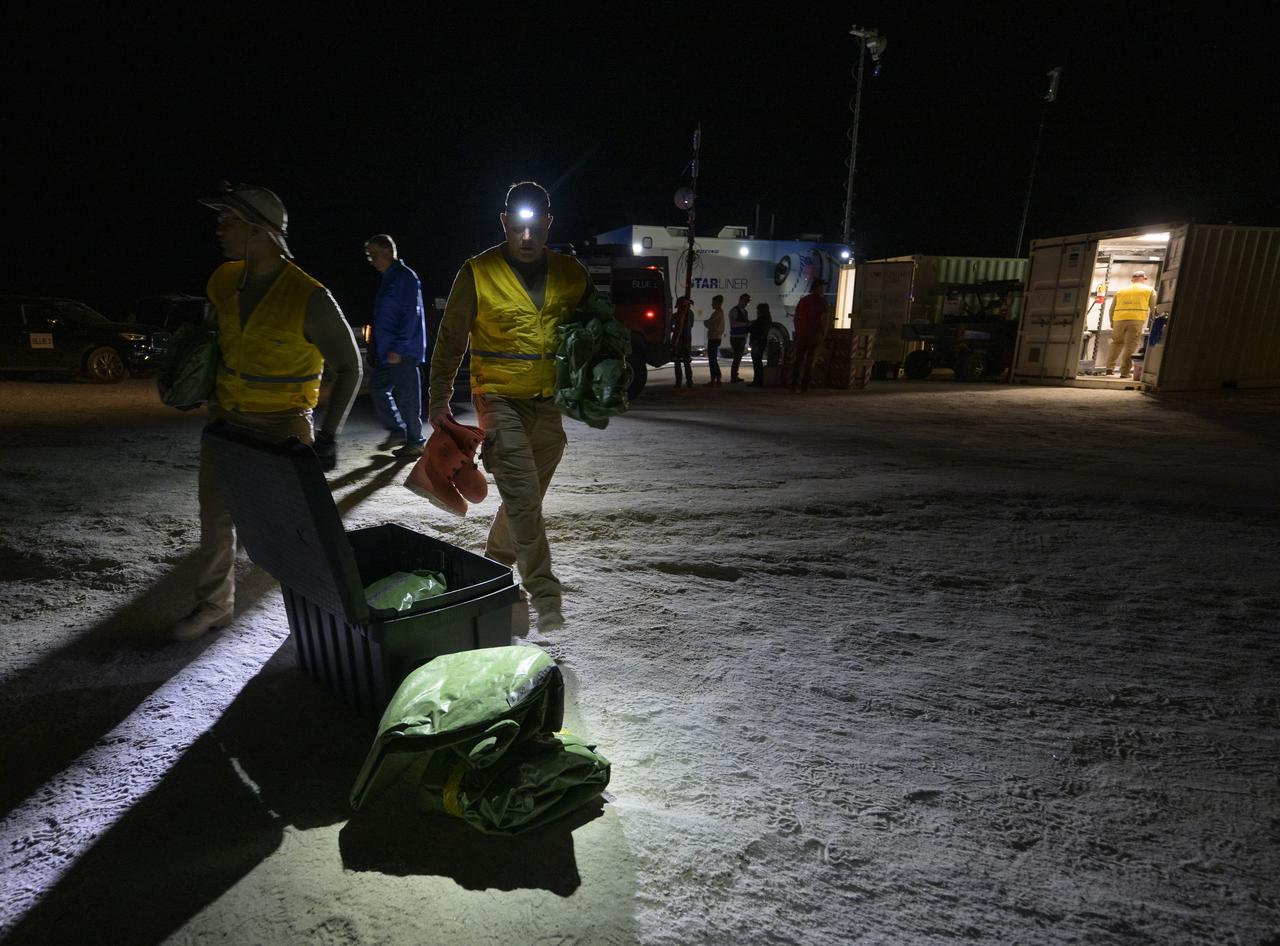
Boeing and NASA teams participate in a mission dress rehearsal to prepare for the landing of the Boeing CST-100 Starliner spacecraft in White Sands, New Mexico, Sunday, June 16, 2024. NASA astronauts Butch Wilmore and Suni Williams are Starliner’s first human crew and travelled to the International Space Station as part of NASA's Boeing Crew Flight Test. The mission serves as an end-to-end demonstration of Boeing’s crew transportation system as a provider for NASA’s Commercial Crew Program. Photo Credit: (NASA/Bill Ingalls)
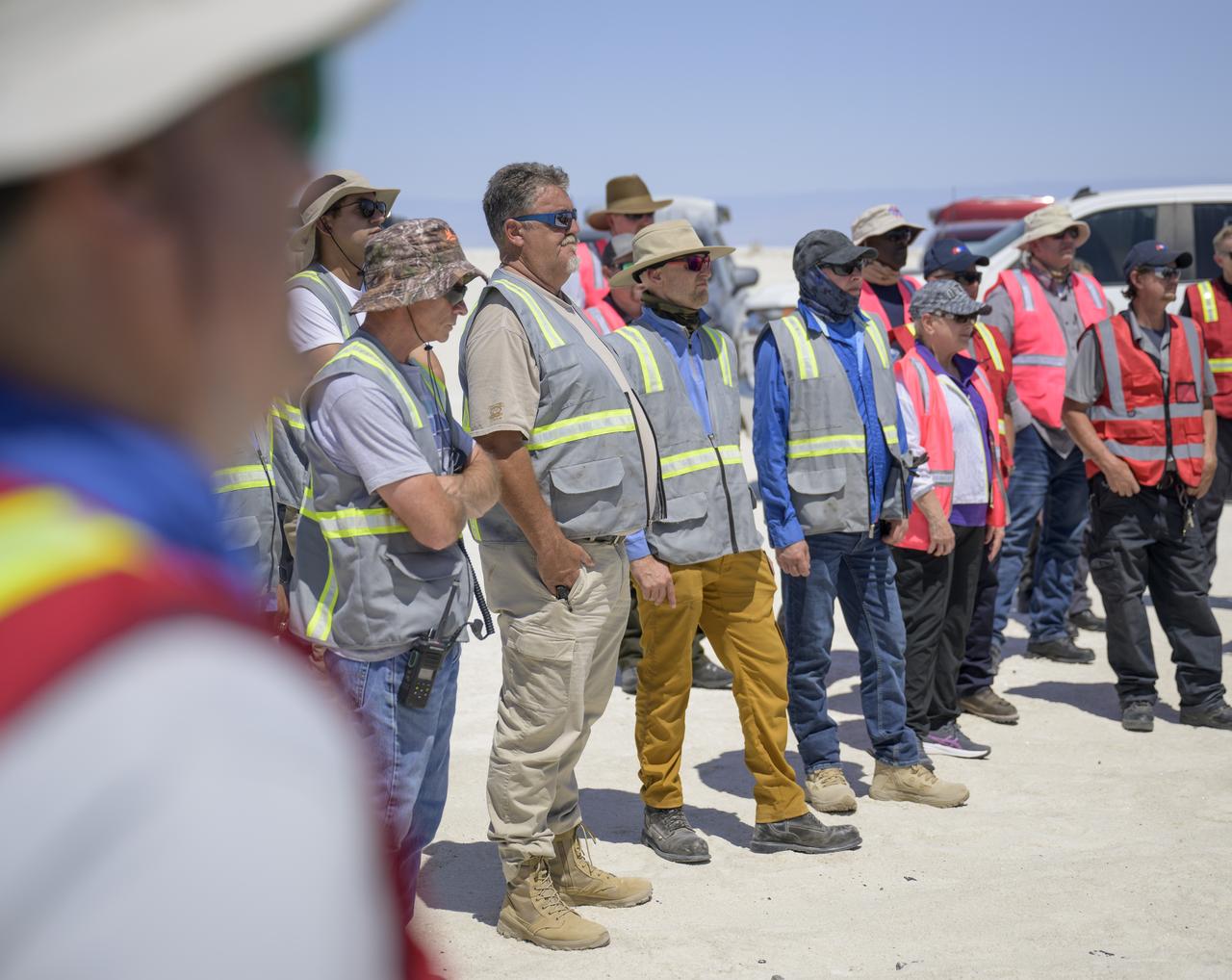
NASA and Boeing teams prepare for the landing of Boeing’s CST-100 Starliner spacecraft at White Sands Missile Range’s Space Harbor, Wednesday, May 25, 2022, in New Mexico. Boeing’s Orbital Flight Test-2 (OFT-2) is Starliner’s second uncrewed flight test to the International Space Station as part of NASA's Commercial Crew Program. OFT-2 serves as an end-to-end test of the system's capabilities. Photo Credit: (NASA/Bill Ingalls)
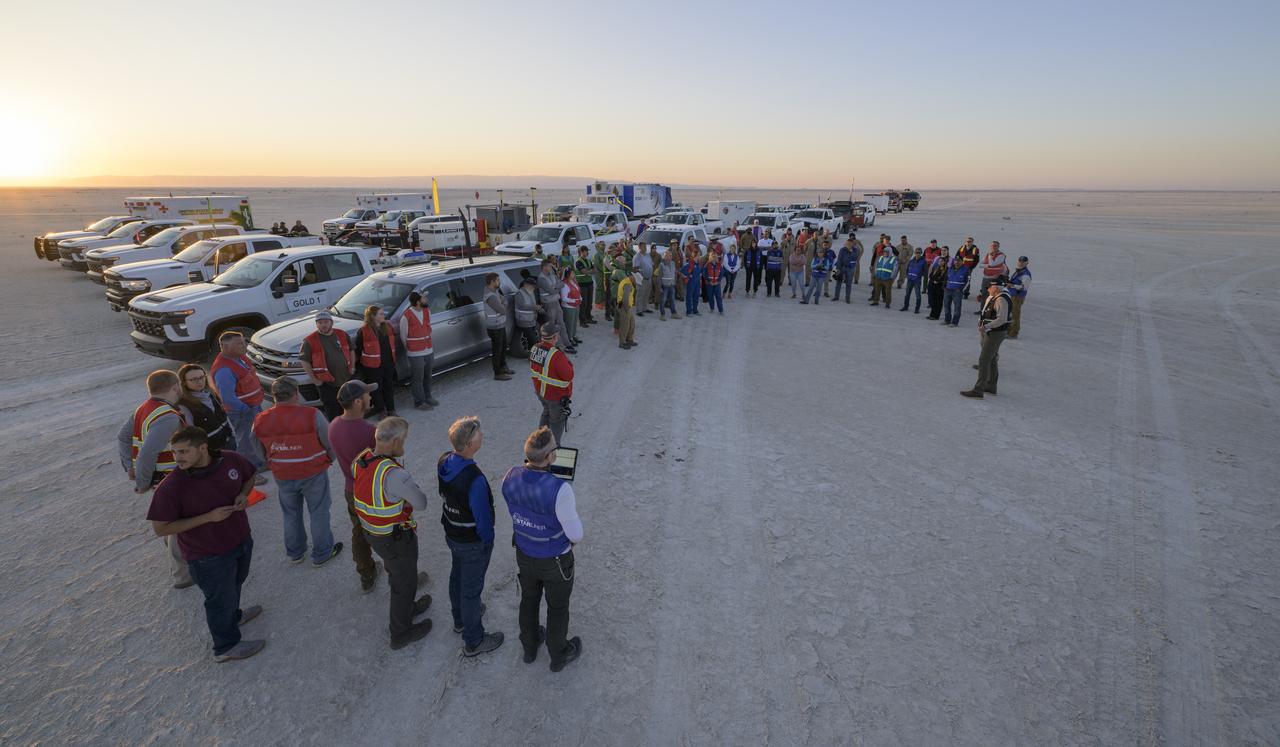
Boeing and NASA teams participate in a mission dress rehearsal to prepare for the landing of the Boeing CST-100 Starliner spacecraft in White Sands, New Mexico, Sunday, June 16, 2024. NASA astronauts Butch Wilmore and Suni Williams are Starliner’s first human crew and travelled to the International Space Station as part of NASA's Boeing Crew Flight Test. The mission serves as an end-to-end demonstration of Boeing’s crew transportation system as a provider for NASA’s Commercial Crew Program. Photo Credit: (NASA/Bill Ingalls)
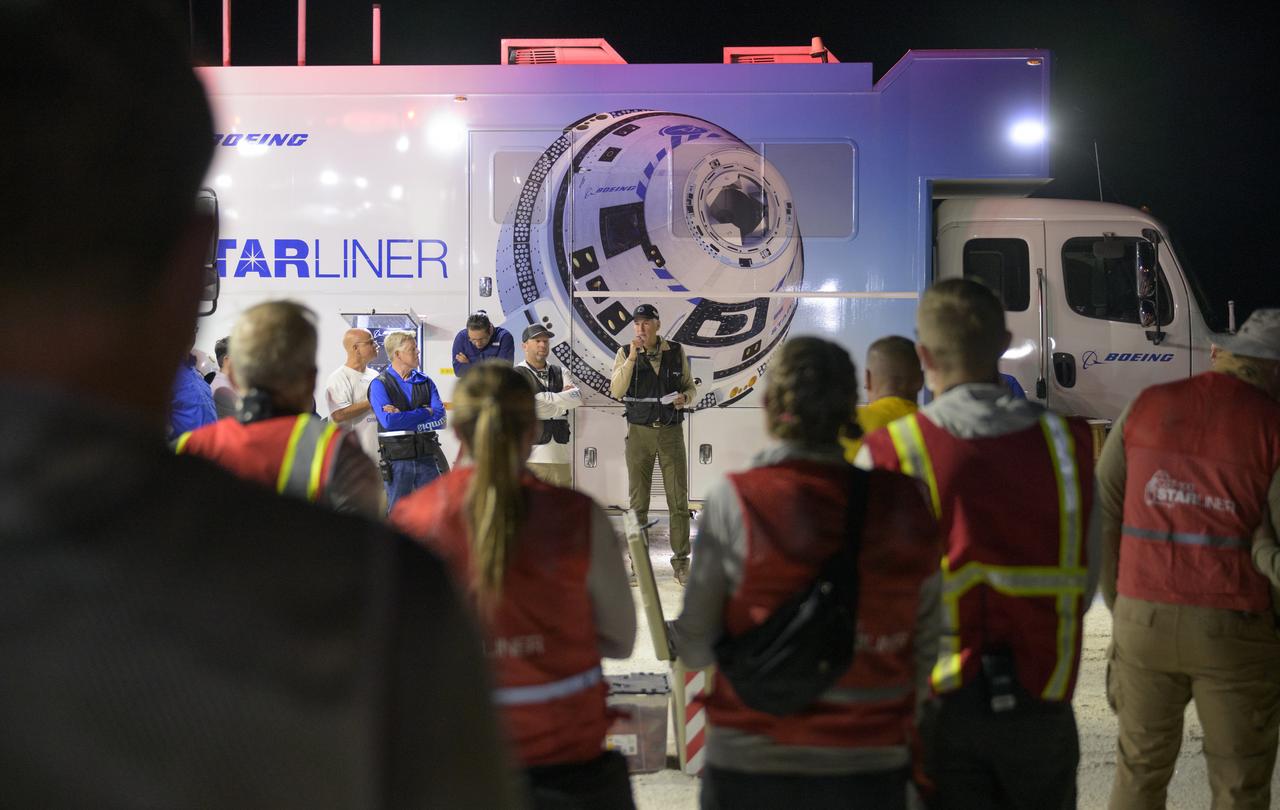
Boeing and NASA teams participate in a mission dress rehearsal to prepare for the landing of the Boeing CST-100 Starliner spacecraft in White Sands, New Mexico, Sunday, June 16, 2024. NASA astronauts Butch Wilmore and Suni Williams are Starliner’s first human crew and travelled to the International Space Station as part of NASA's Boeing Crew Flight Test. The mission serves as an end-to-end demonstration of Boeing’s crew transportation system as a provider for NASA’s Commercial Crew Program. Photo Credit: (NASA/Bill Ingalls)
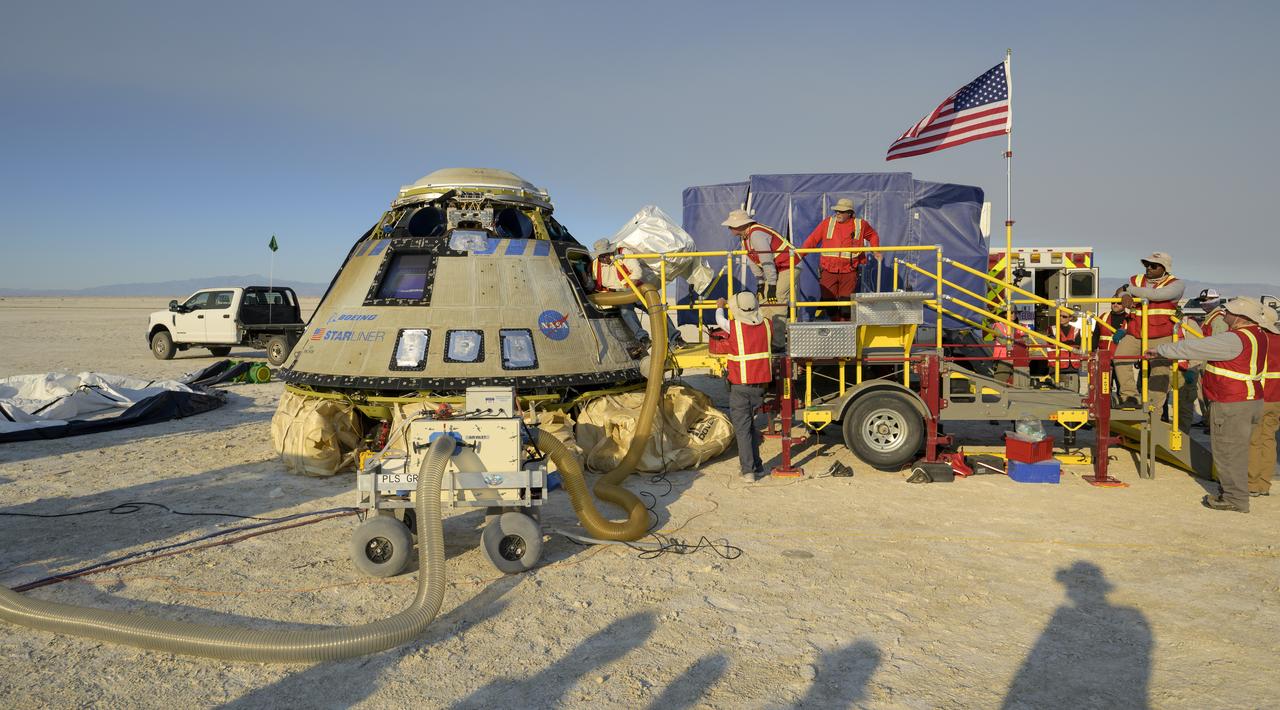
Boeing and NASA teams work around Boeing’s CST-100 Starliner spacecraft after it landed at White Sands Missile Range’s Space Harbor, Wednesday, May 25, 2022, in New Mexico. Boeing’s Orbital Flight Test-2 (OFT-2) is Starliner’s second uncrewed flight test to the International Space Station as part of NASA's Commercial Crew Program. OFT-2 serves as an end-to-end test of the system's capabilities. Photo Credit: (NASA/Bill Ingalls)
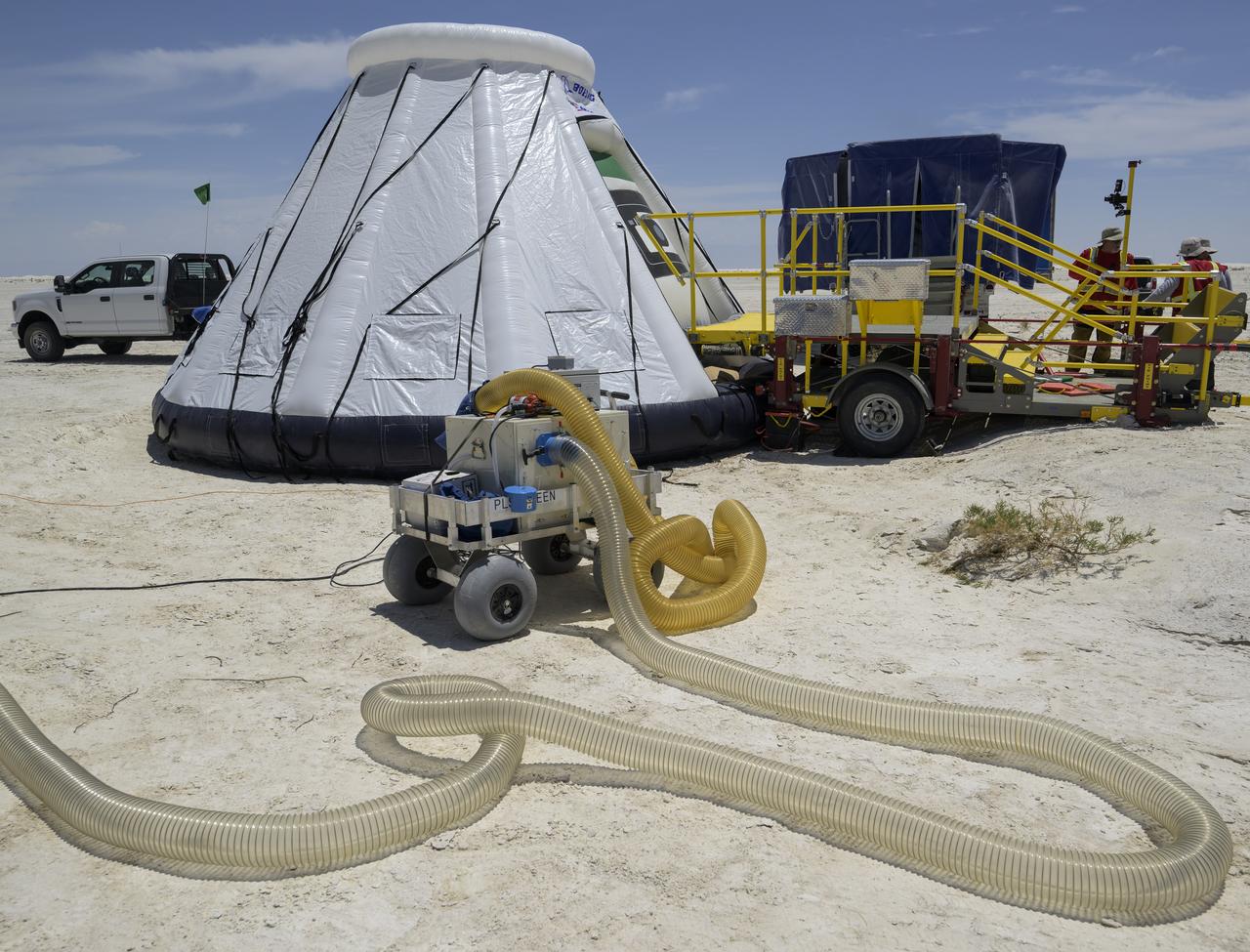
Boeing and NASA teams participate in a mission dress rehearsal to prepare for the landing of the Boeing CST-100 Starliner spacecraft in White Sands, New Mexico, Monday, May 23, 2022. Boeing’s Orbital Flight Test-2 (OFT-2) is Starliner’s second uncrewed flight test to the International Space Station as part of NASA's Commercial Crew Program. OFT-2 serves as an end-to-end test of the system's capabilities. Photo Credit: (NASA/Bill Ingalls)
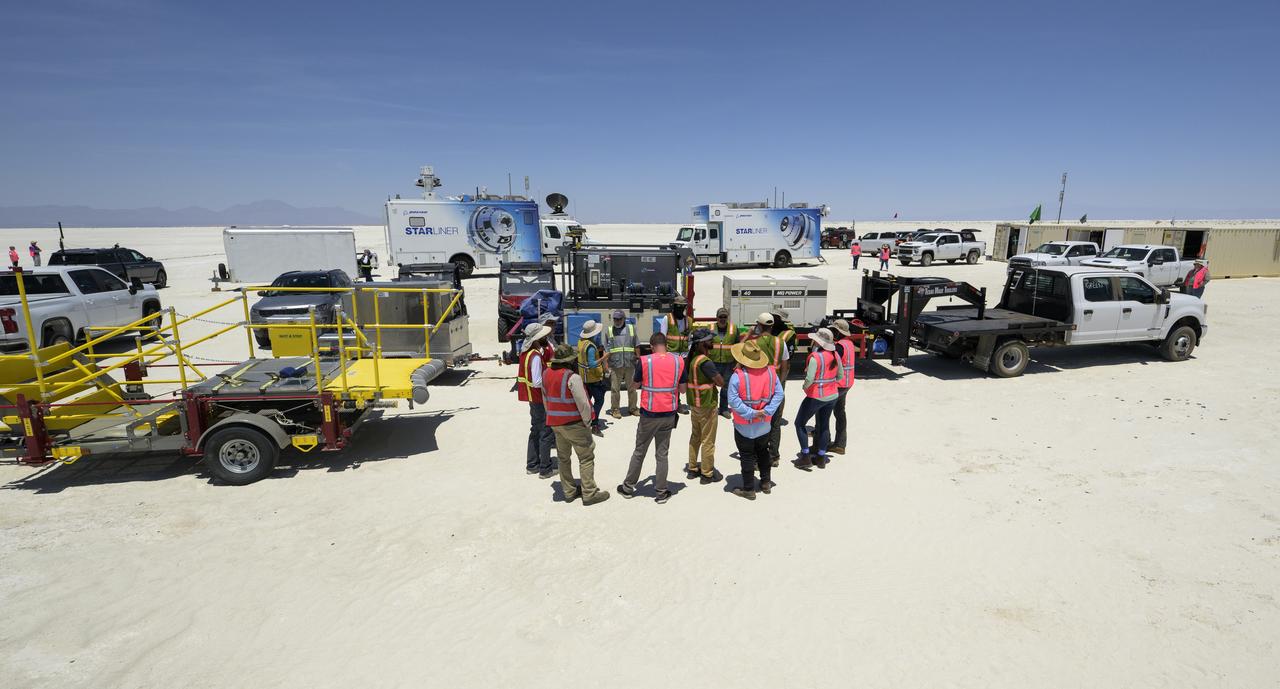
NASA and Boeing teams prepare for the landing of Boeing’s CST-100 Starliner spacecraft at White Sands Missile Range’s Space Harbor, Wednesday, May 25, 2022, in New Mexico. Boeing’s Orbital Flight Test-2 (OFT-2) is Starliner’s second uncrewed flight test to the International Space Station as part of NASA's Commercial Crew Program. OFT-2 serves as an end-to-end test of the system's capabilities. Photo Credit: (NASA/Bill Ingalls)
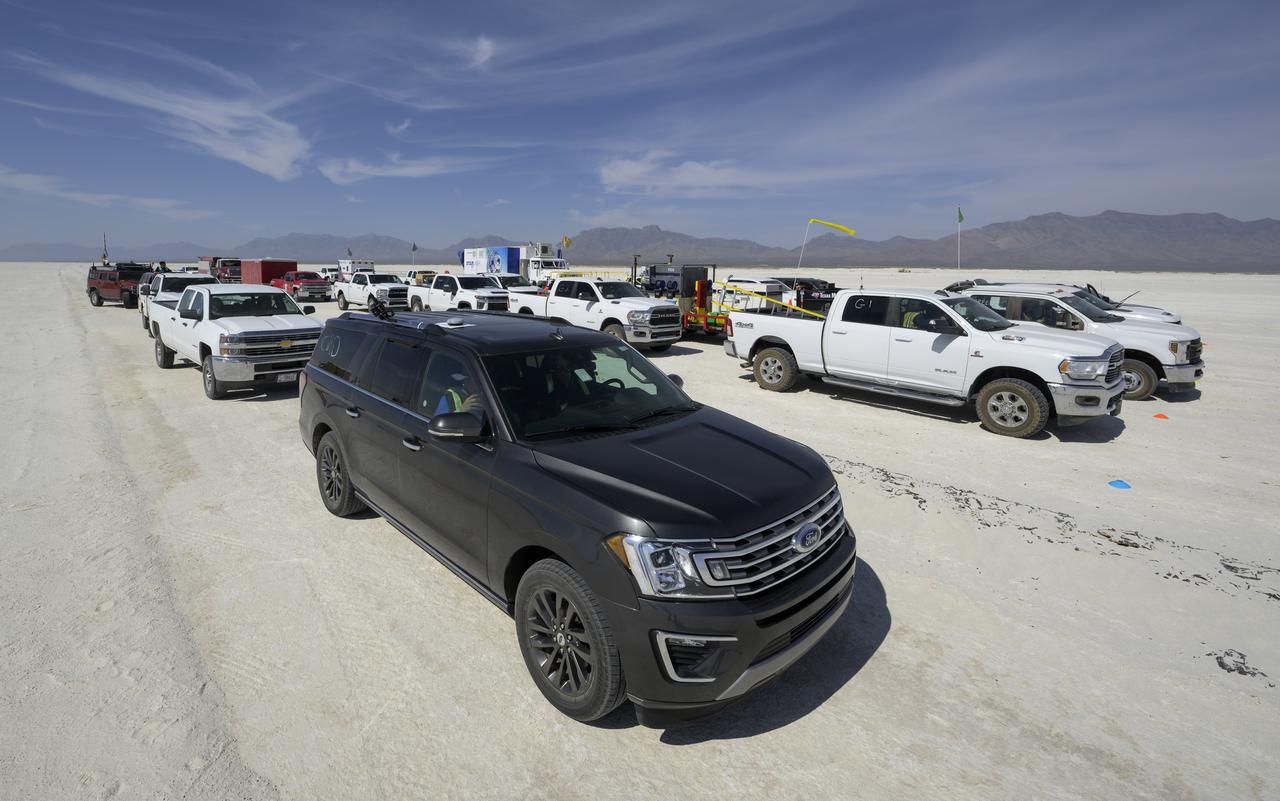
Boeing and NASA teams participate in a mission dress rehearsal to prepare for the landing of the Boeing CST-100 Starliner spacecraft in White Sands, New Mexico, Monday, May 23, 2022. Boeing’s Orbital Flight Test-2 (OFT-2) is Starliner’s second uncrewed flight test to the International Space Station as part of NASA's Commercial Crew Program. OFT-2 serves as an end-to-end test of the system's capabilities. Photo Credit: (NASA/Bill Ingalls)
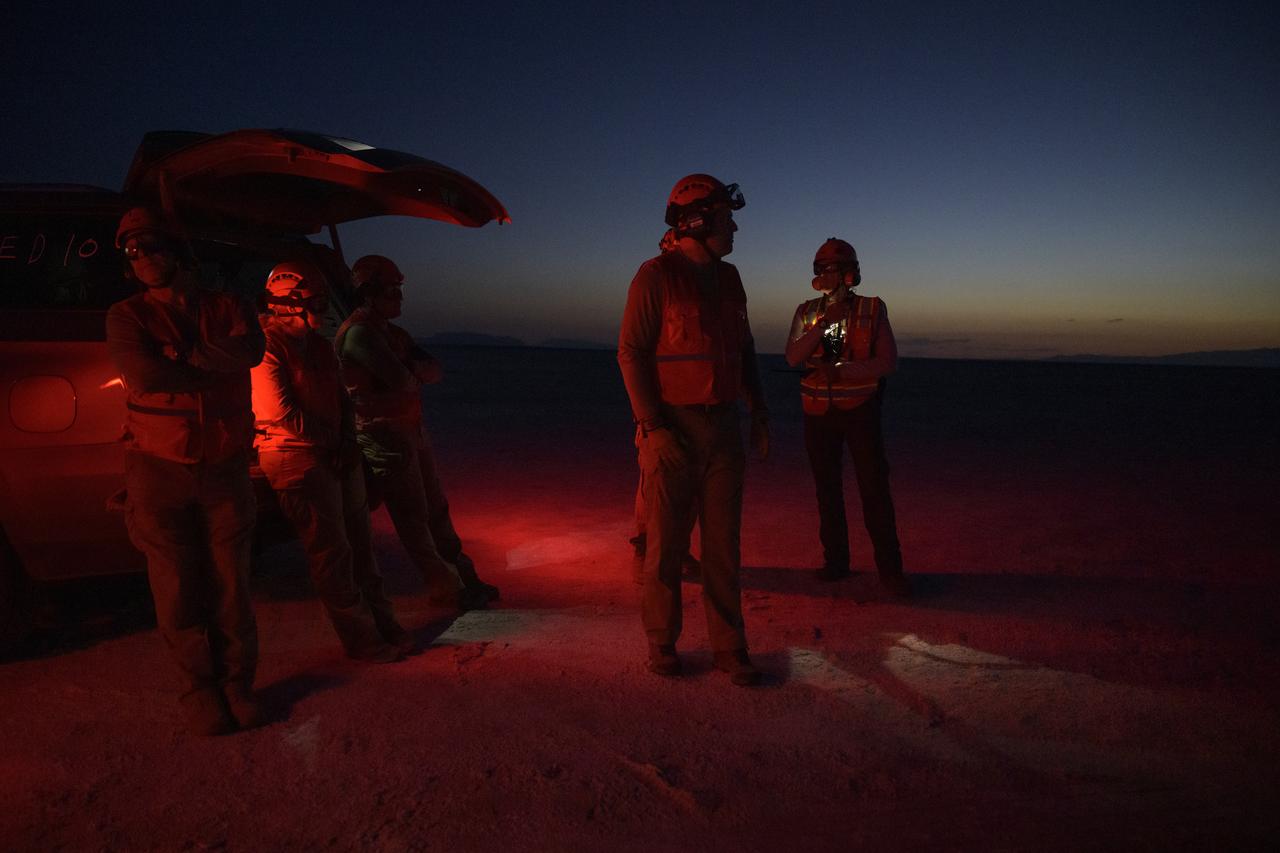
Boeing and NASA teams participate in a mission dress rehearsal to prepare for the landing of the Boeing CST-100 Starliner spacecraft in White Sands, New Mexico, Sunday, June 16, 2024. NASA astronauts Butch Wilmore and Suni Williams are Starliner’s first human crew and travelled to the International Space Station as part of NASA's Boeing Crew Flight Test. The mission serves as an end-to-end demonstration of Boeing’s crew transportation system as a provider for NASA’s Commercial Crew Program. Photo Credit: (NASA/Bill Ingalls)
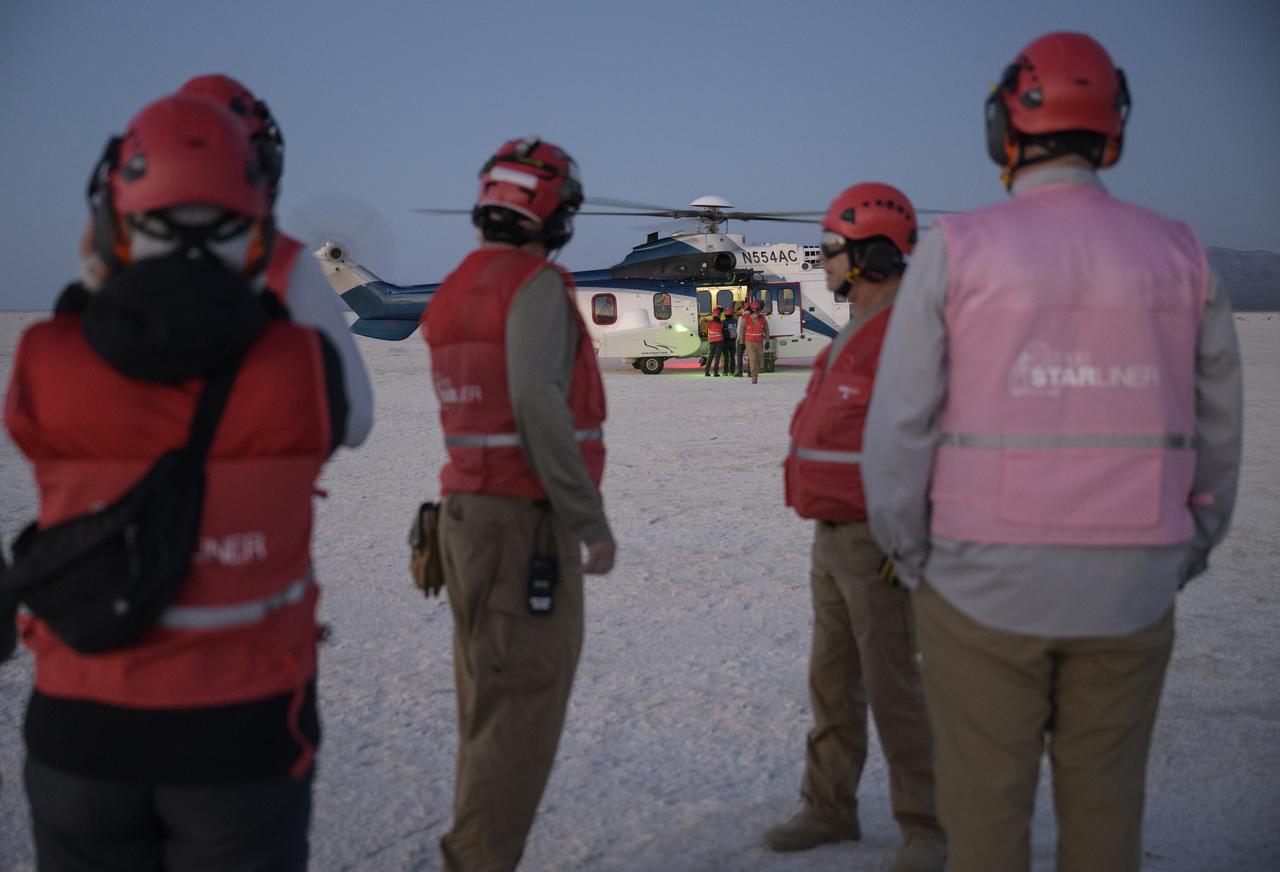
Boeing and NASA teams participate in a mission dress rehearsal to prepare for the landing of the Boeing CST-100 Starliner spacecraft in White Sands, New Mexico, Sunday, June 16, 2024. NASA astronauts Butch Wilmore and Suni Williams are Starliner’s first human crew and travelled to the International Space Station as part of NASA's Boeing Crew Flight Test. The mission serves as an end-to-end demonstration of Boeing’s crew transportation system as a provider for NASA’s Commercial Crew Program. Photo Credit: (NASA/Bill Ingalls)
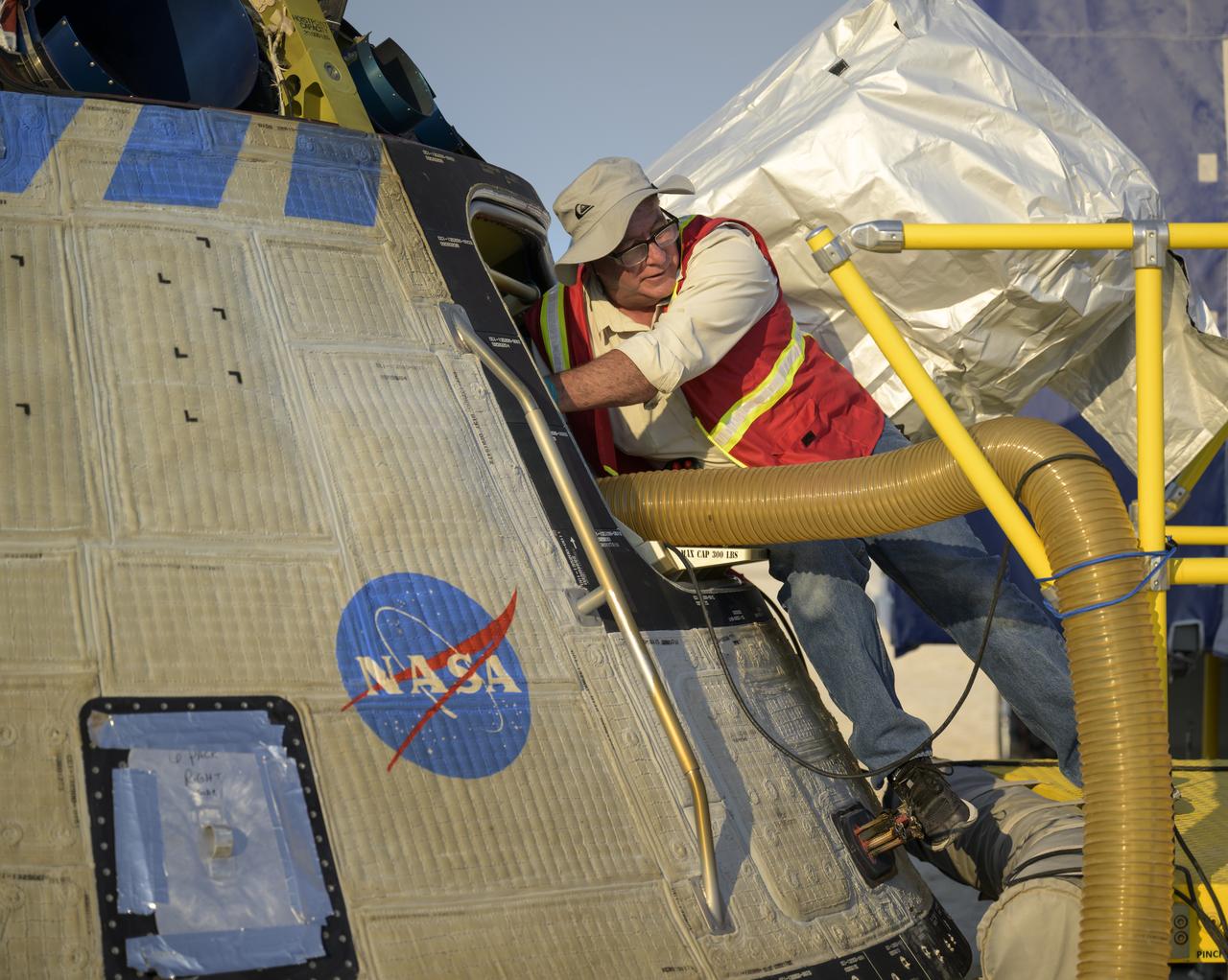
Boeing and NASA teams work around Boeing’s CST-100 Starliner spacecraft after it landed at White Sands Missile Range’s Space Harbor, Wednesday, May 25, 2022, in New Mexico. Boeing’s Orbital Flight Test-2 (OFT-2) is Starliner’s second uncrewed flight test to the International Space Station as part of NASA's Commercial Crew Program. OFT-2 serves as an end-to-end test of the system's capabilities. Photo Credit: (NASA/Bill Ingalls)
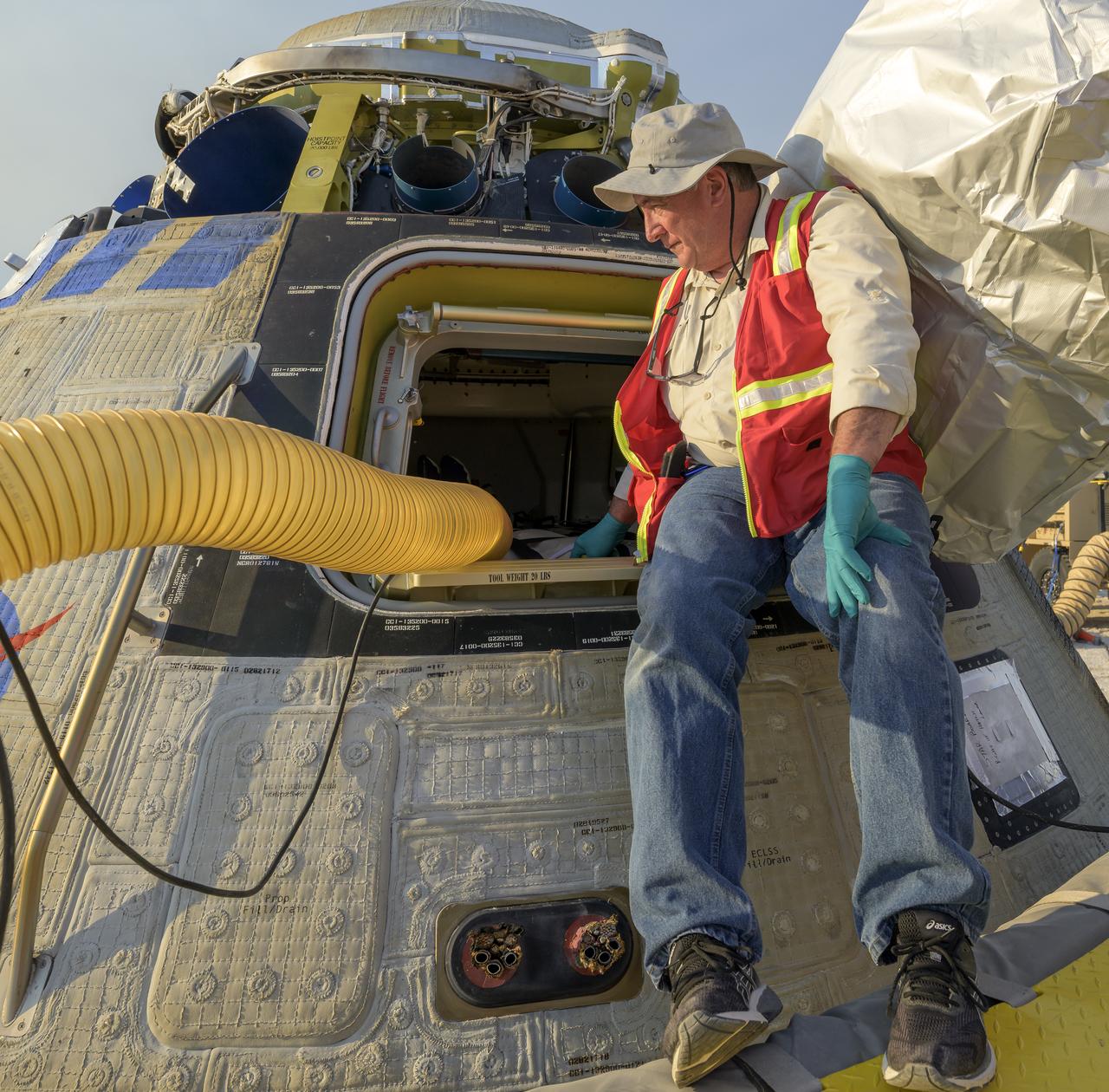
Boeing and NASA teams work around Boeing’s CST-100 Starliner spacecraft after it landed at White Sands Missile Range’s Space Harbor, Wednesday, May 25, 2022, in New Mexico. Boeing’s Orbital Flight Test-2 (OFT-2) is Starliner’s second uncrewed flight test to the International Space Station as part of NASA's Commercial Crew Program. OFT-2 serves as an end-to-end test of the system's capabilities. Photo Credit: (NASA/Bill Ingalls)
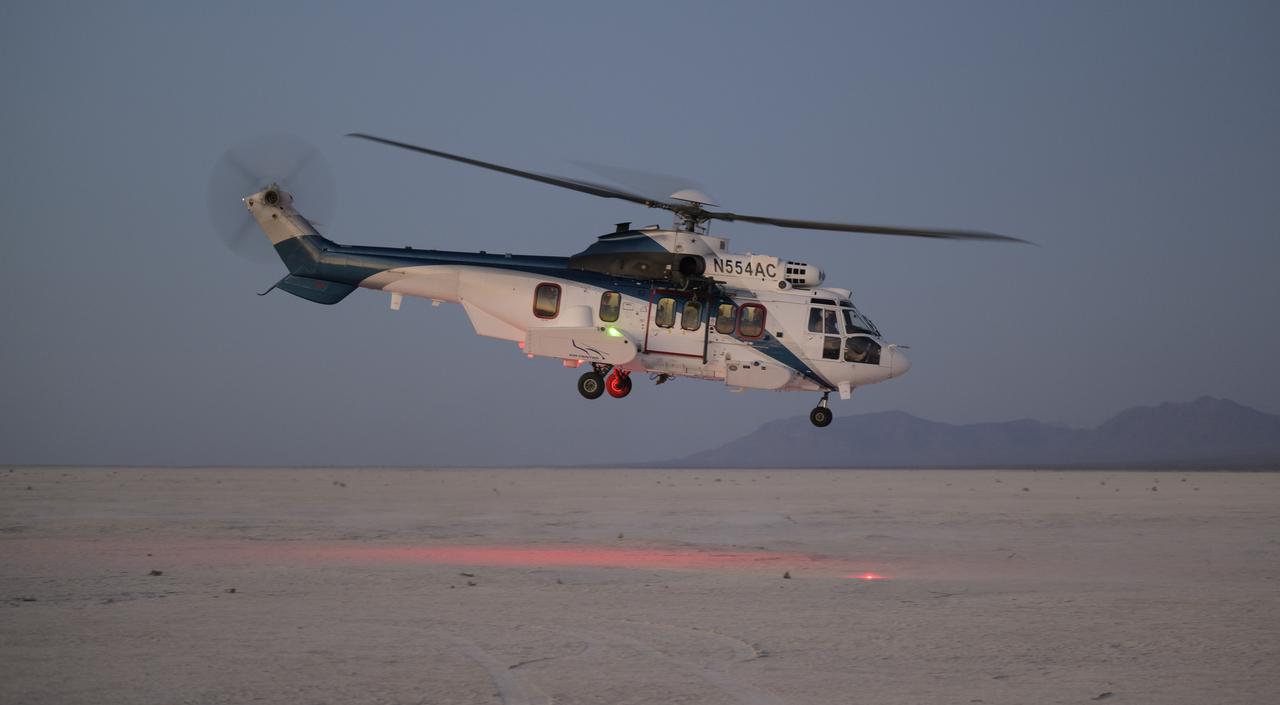
Boeing and NASA teams participate in a mission dress rehearsal to prepare for the landing of the Boeing CST-100 Starliner spacecraft in White Sands, New Mexico, Sunday, June 16, 2024. NASA astronauts Butch Wilmore and Suni Williams are Starliner’s first human crew and travelled to the International Space Station as part of NASA's Boeing Crew Flight Test. The mission serves as an end-to-end demonstration of Boeing’s crew transportation system as a provider for NASA’s Commercial Crew Program. Photo Credit: (NASA/Bill Ingalls)

Boeing and NASA teams work around Boeing’s CST-100 Starliner spacecraft after it landed at White Sands Missile Range’s Space Harbor, Wednesday, May 25, 2022, in New Mexico. Boeing’s Orbital Flight Test-2 (OFT-2) is Starliner’s second uncrewed flight test to the International Space Station as part of NASA's Commercial Crew Program. OFT-2 serves as an end-to-end test of the system's capabilities. Photo Credit: (NASA/Bill Ingalls)
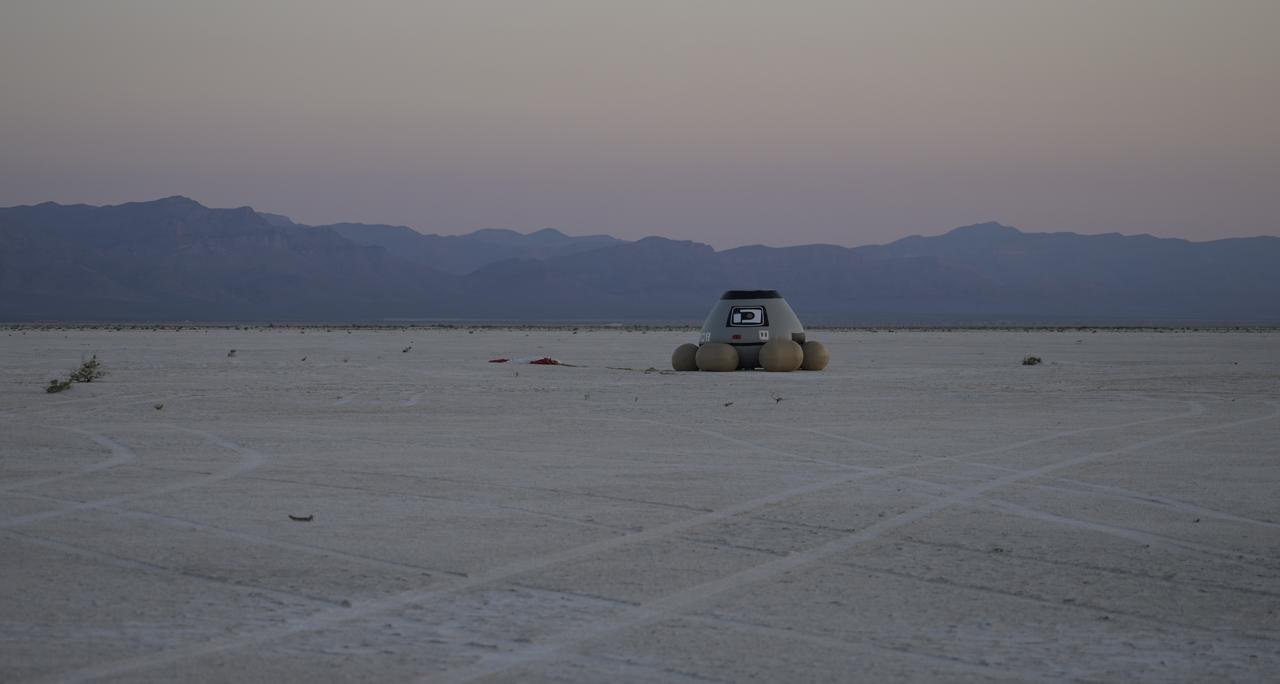
Boeing and NASA teams participate in a mission dress rehearsal to prepare for the landing of the Boeing CST-100 Starliner spacecraft in White Sands, New Mexico, Sunday, June 16, 2024. NASA astronauts Butch Wilmore and Suni Williams are Starliner’s first human crew and travelled to the International Space Station as part of NASA's Boeing Crew Flight Test. The mission serves as an end-to-end demonstration of Boeing’s crew transportation system as a provider for NASA’s Commercial Crew Program. Photo Credit: (NASA/Bill Ingalls)
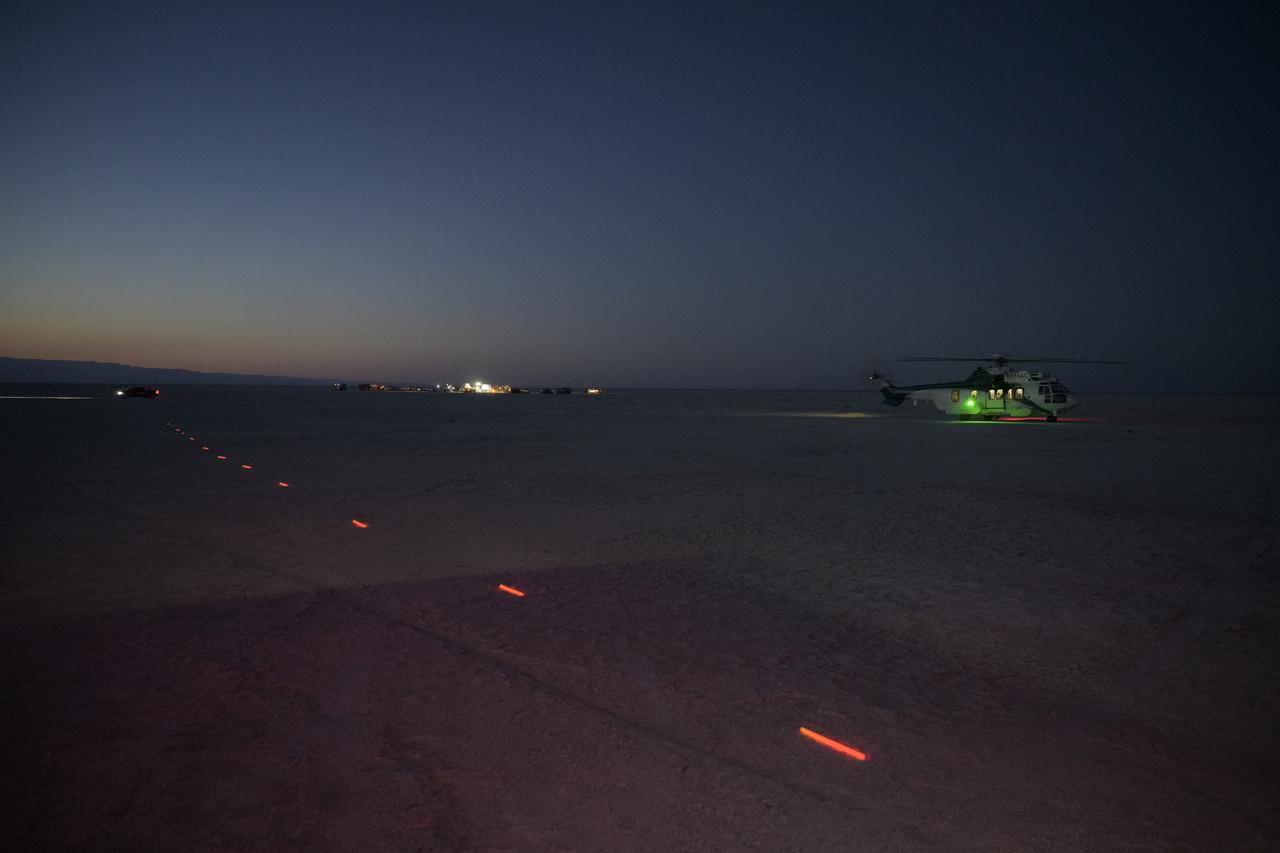
Boeing and NASA teams participate in a mission dress rehearsal to prepare for the landing of the Boeing CST-100 Starliner spacecraft in White Sands, New Mexico, Sunday, June 16, 2024. NASA astronauts Butch Wilmore and Suni Williams are Starliner’s first human crew and travelled to the International Space Station as part of NASA's Boeing Crew Flight Test. The mission serves as an end-to-end demonstration of Boeing’s crew transportation system as a provider for NASA’s Commercial Crew Program. Photo Credit: (NASA/Bill Ingalls)
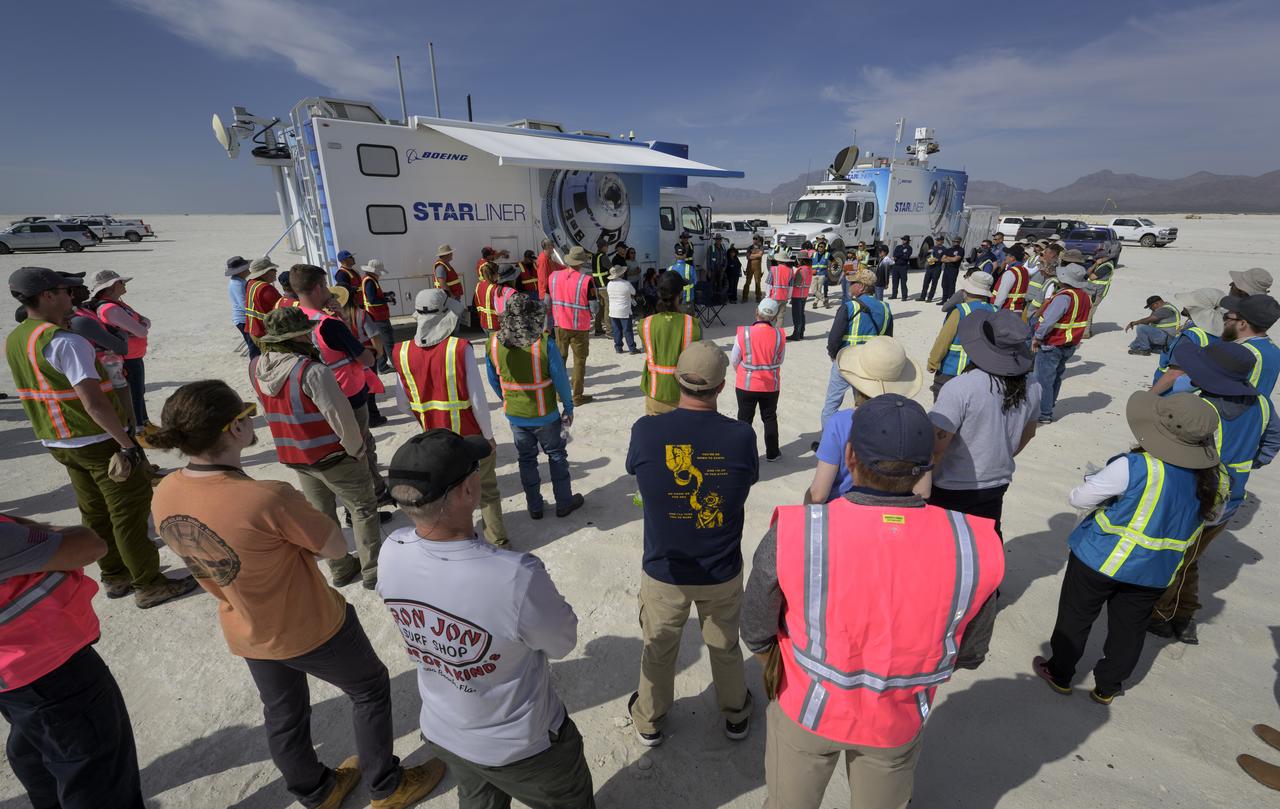
Boeing and NASA teams participate in a mission dress rehearsal to prepare for the landing of the Boeing CST-100 Starliner spacecraft in White Sands, New Mexico, Monday, May 23, 2022. Boeing’s Orbital Flight Test-2 (OFT-2) is Starliner’s second uncrewed flight test to the International Space Station as part of NASA's Commercial Crew Program. OFT-2 serves as an end-to-end test of the system's capabilities. Photo Credit: (NASA/Bill Ingalls)
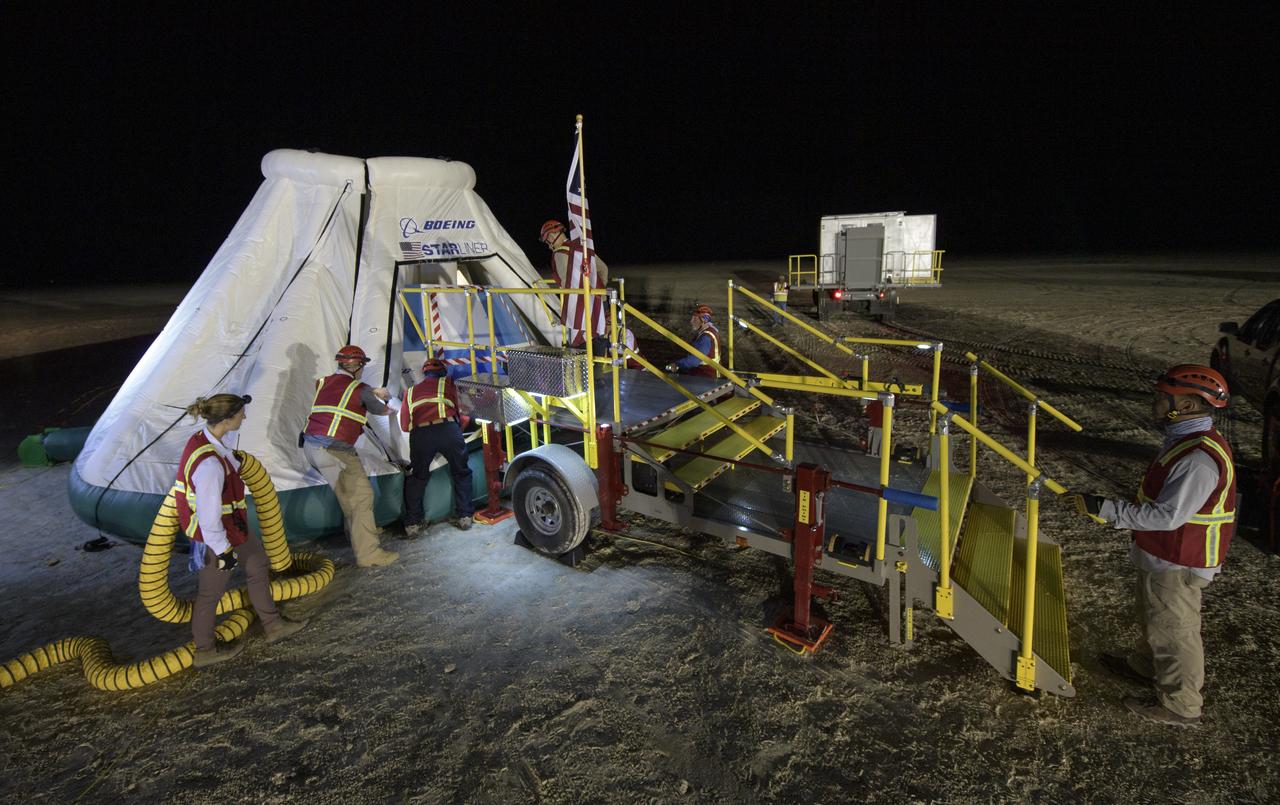
Teams from NASA, Boeing and the White Sands Missile Range, rehearse landing and crew extraction from Boeing’s CST-100 Starliner, which will be used to carry humans to the International Space Station, on Wednesday, Sept. 11, 2019 at the White Sands Missile Range outside Las Cruces, New Mexico. Using a convoy of vehicles Boeing uses to recover their spacecraft after landing and a boiler plate test article of the Starliner capsule, the teams worked through the steps necessary to safe the vehicle and get future crew members out of the Starliner to return home. NASA astronauts Mike Fincke and Nicole Mann and Boeing astronaut Chris Ferguson will fly to the space station aboard the Starliner for the Boeing Crew Flight Test mission. Photo Credit: (NASA/Bill Ingalls)
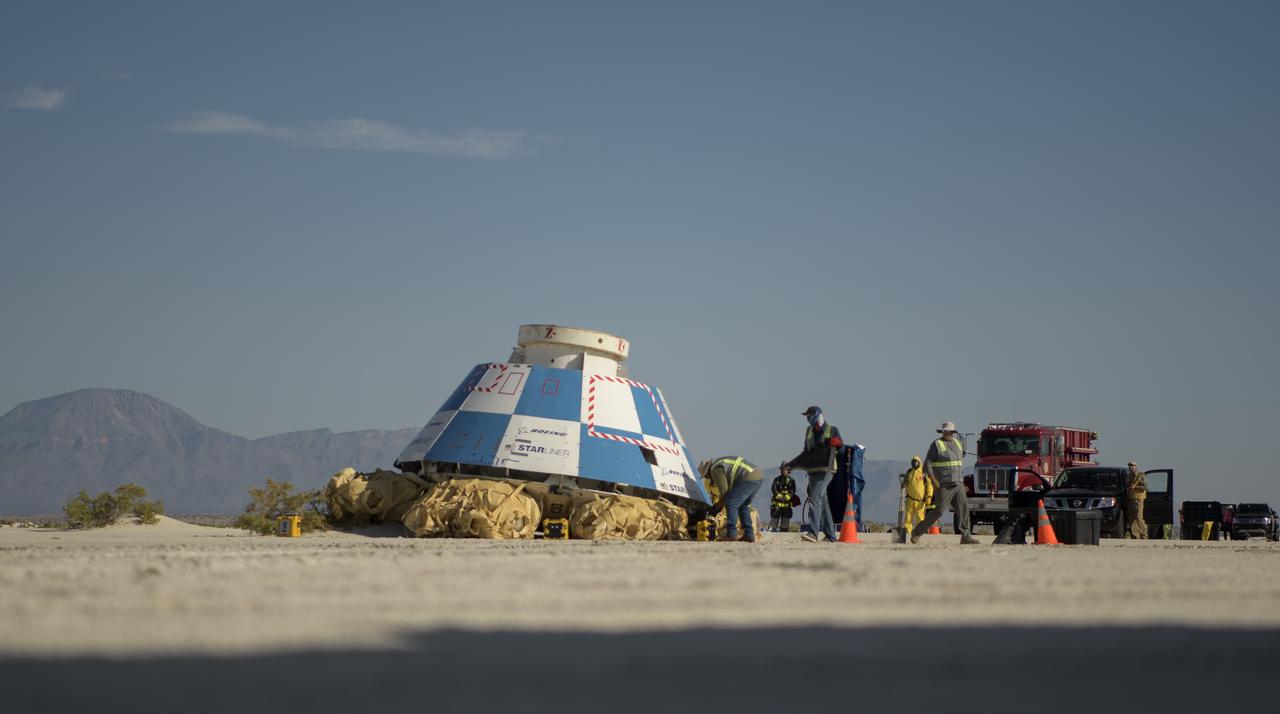
Teams from NASA, Boeing and the White Sands Missile Range, rehearse landing and crew extraction from Boeing’s CST-100 Starliner, which will be used to carry humans to the International Space Station, on Thursday, Sept. 12, 2019 at the White Sands Missile Range outside Las Cruces, New Mexico. Using a convoy of vehicles Boeing uses to recover their spacecraft after landing and a boiler plate test article of the Starliner capsule, the teams worked through the steps necessary to safe the vehicle and get future crew members out of the Starliner to return home. NASA astronauts Mike Fincke and Nicole Mann and Boeing astronaut Chris Ferguson will fly to the space station aboard the Starliner for the Boeing Crew Flight Test mission. Photo Credit: (NASA/Bill Ingalls)
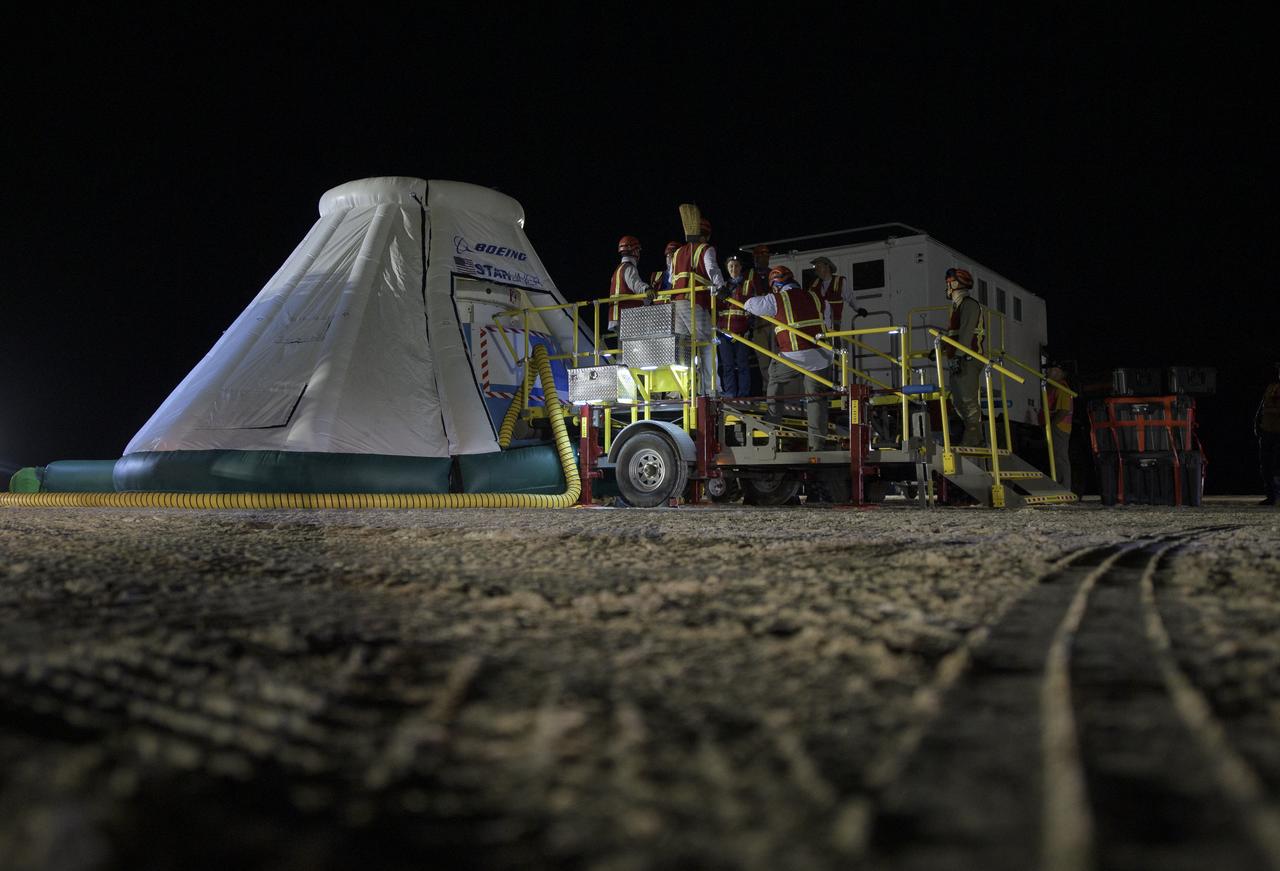
Teams from NASA, Boeing and the White Sands Missile Range, rehearse landing and crew extraction from Boeing’s CST-100 Starliner, which will be used to carry humans to the International Space Station, on Tuesday, Sept. 10, 2019 at the White Sands Missile Range outside Las Cruces, New Mexico. Using a convoy of vehicles Boeing uses to recover their spacecraft after landing and a boiler plate test article of the Starliner capsule, the teams worked through the steps necessary to safe the vehicle and get future crew members out of the Starliner to return home. NASA astronauts Mike Fincke and Nicole Mann and Boeing astronaut Chris Ferguson will fly to the space station aboard the Starliner for the Boeing Crew Flight Test mission. Photo Credit: (NASA/Bill Ingalls)
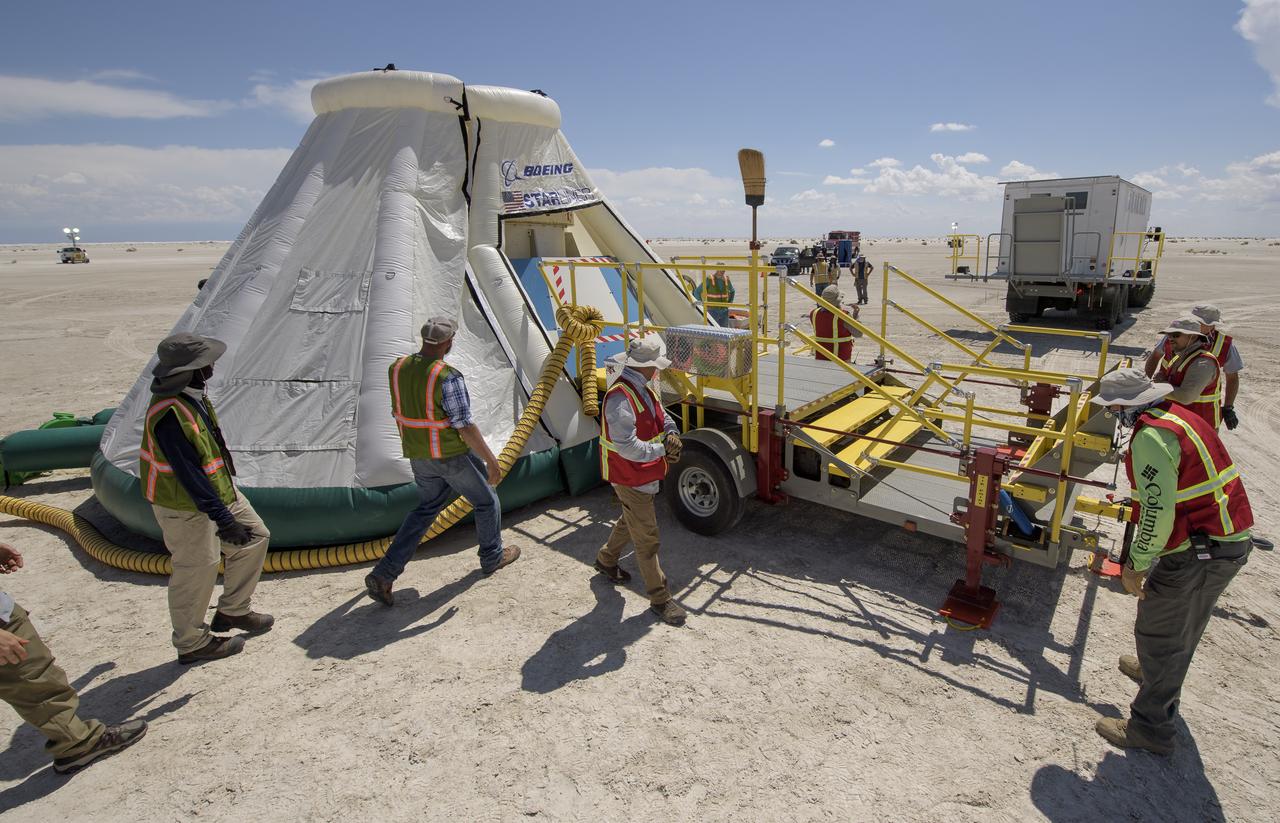
Teams from NASA, Boeing and the White Sands Missile Range, rehearse landing and crew extraction from Boeing’s CST-100 Starliner, which will be used to carry humans to the International Space Station, on Monday, Sept. 9, 2019 at the White Sands Missile Range outside Las Cruces, New Mexico. Using a convoy of vehicles Boeing uses to recover their spacecraft after landing and a boiler plate test article of the Starliner capsule, the teams worked through the steps necessary to safe the vehicle and get future crew members out of the Starliner to return home. NASA astronauts Mike Fincke and Nicole Mann and Boeing astronaut Chris Ferguson will fly to the space station aboard the Starliner for the Boeing Crew Flight Test mission. Photo Credit: (NASA/Bill Ingalls)
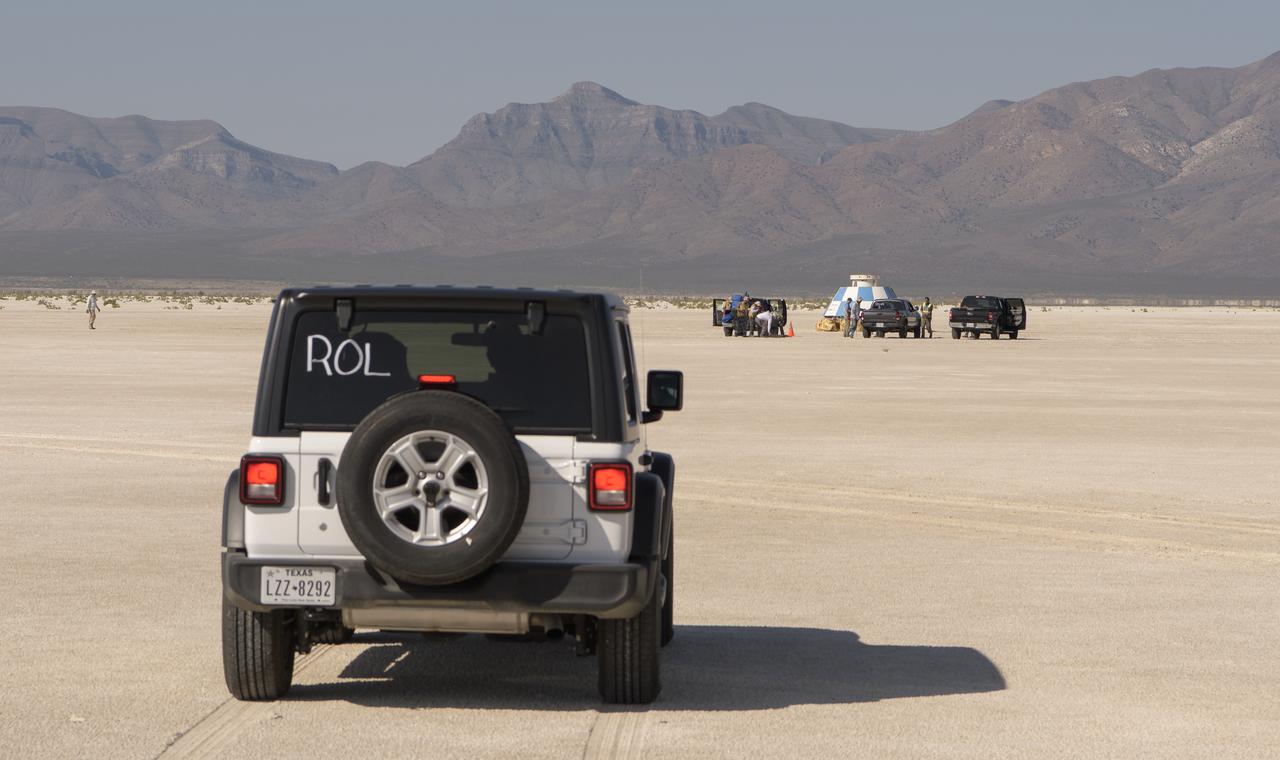
Teams from NASA, Boeing and the White Sands Missile Range, rehearse landing and crew extraction from Boeing’s CST-100 Starliner, which will be used to carry humans to the International Space Station, on Tuesday, Sept. 10, 2019 at the White Sands Missile Range outside Las Cruces, New Mexico. Using a convoy of vehicles Boeing uses to recover their spacecraft after landing and a boiler plate test article of the Starliner capsule, the teams worked through the steps necessary to safe the vehicle and get future crew members out of the Starliner to return home. NASA astronauts Mike Fincke and Nicole Mann and Boeing astronaut Chris Ferguson will fly to the space station aboard the Starliner for the Boeing Crew Flight Test mission. Photo Credit: (NASA/Bill Ingalls)