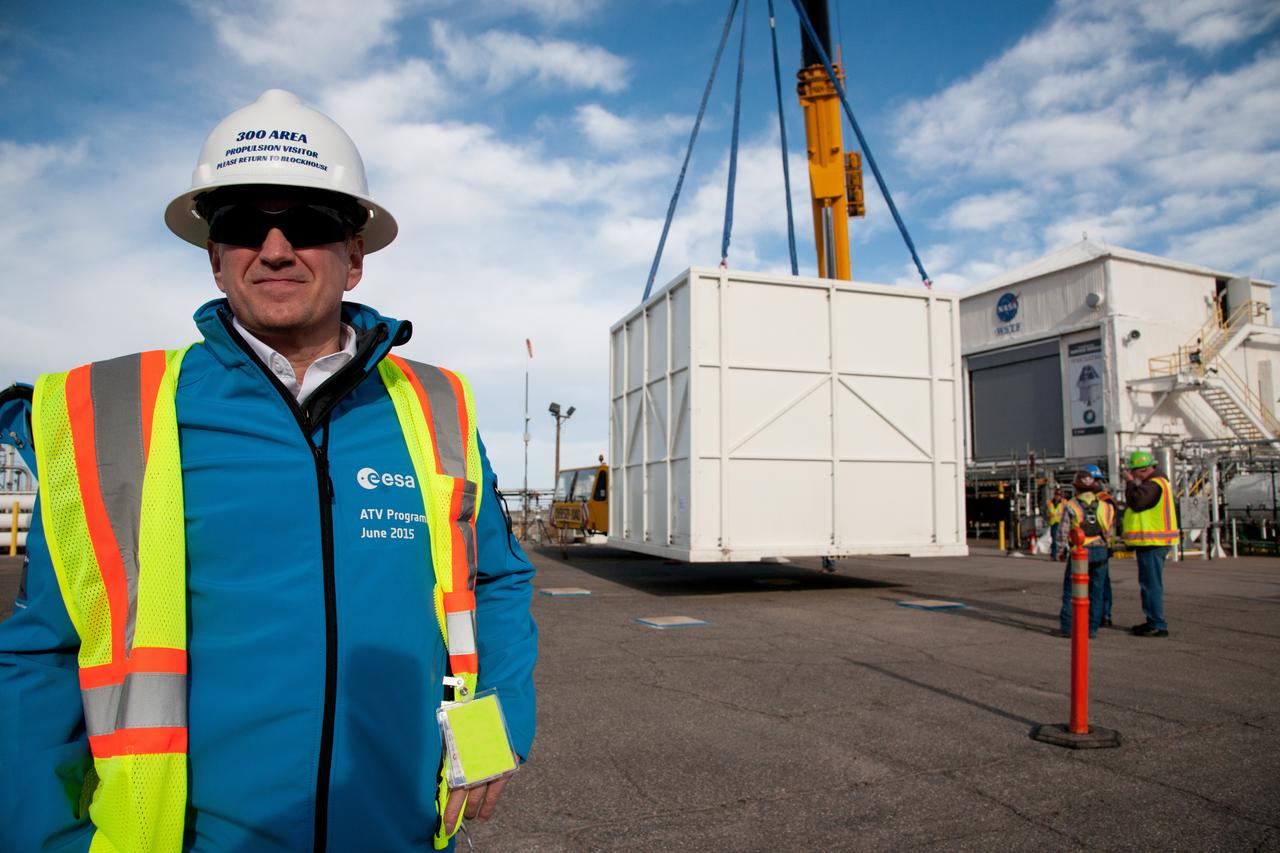
The European Service Module Propulsion Qualification Module (PQM) arrives at White Sands Test Facility in New Mexico on Feb. 18, 2017.
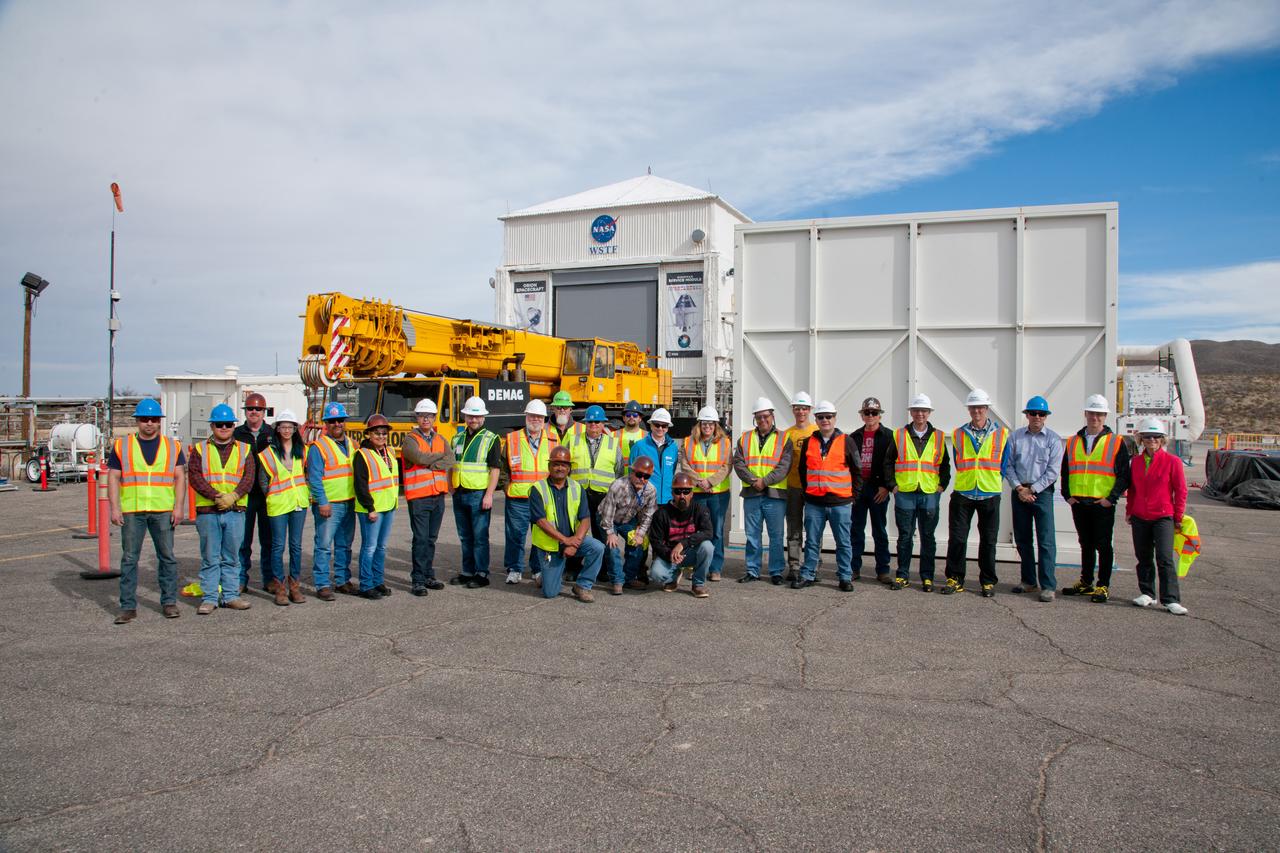
The European Service Module Propulsion Qualification Module (PQM) arrives at White Sands Test Facility in New Mexico on Feb. 18, 2017.

The European Service Module Propulsion Qualification Module (PQM) arrives at White Sands Test Facility in New Mexico on Feb. 18, 2017.
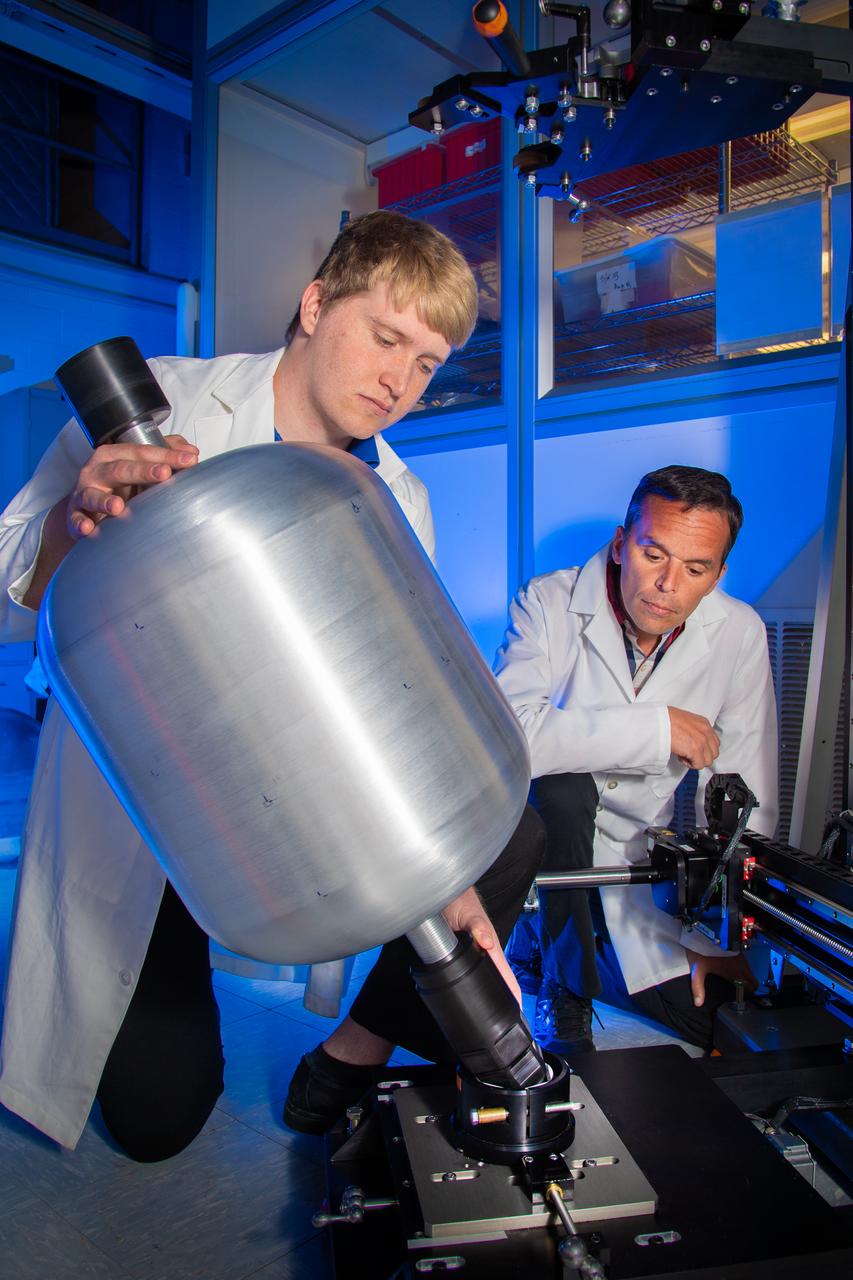
Engineers Ayrton Jordan (left) and Anthony Milana (right) at the NASA White Sands Test Facility (WSTF) in Las Cruces, N.M. install a metallic liner into the multipurpose pressure vessel scanner that could one day become part of a composite overwrapped pressure vessel. A slotted ball joint at the base of the rotary stage allows the tank to pivot resulting in helical scans that are more reliable when measuring interior and exterior 3D surface profiles. Photo Credit: (NASA/Reed P. Elliott)
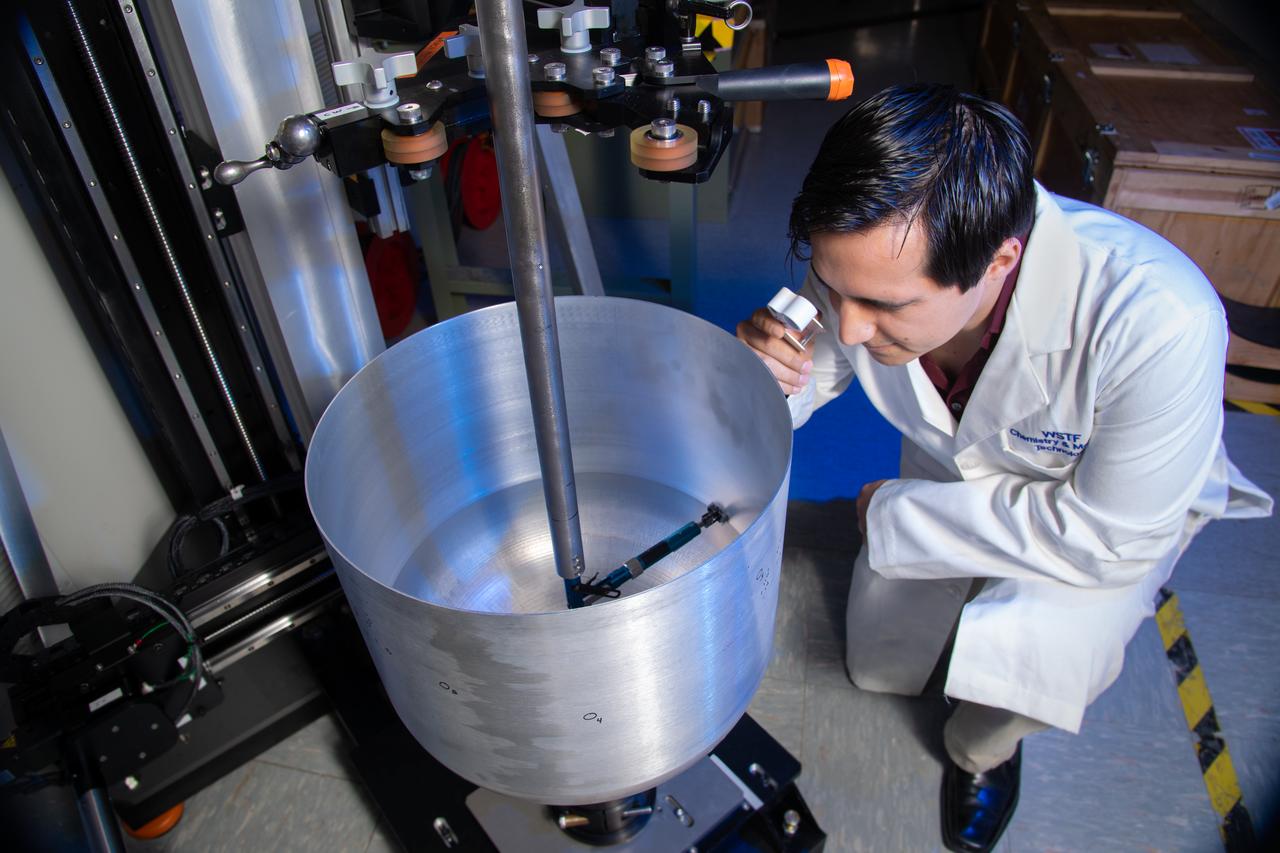
Edgar Reyes, a materials engineer and recent graduate of The University of Texas at El Paso, visually inspects a crack identified on the outer surface of a composite overwrapped pressure vessel (COPV) following an internal eddy-current through-wall nondestructive inspection conducted at the NASA White Sands Test Facility in Las Cruces, N.M. Eddy-current testing is one of many electromagnetic testing methods used in nondestructive testing to identify cracks in COPVS that can potentially threaten spacecraft crew and mission success. Photo Credit: (NASA/Reed P. Elliott)
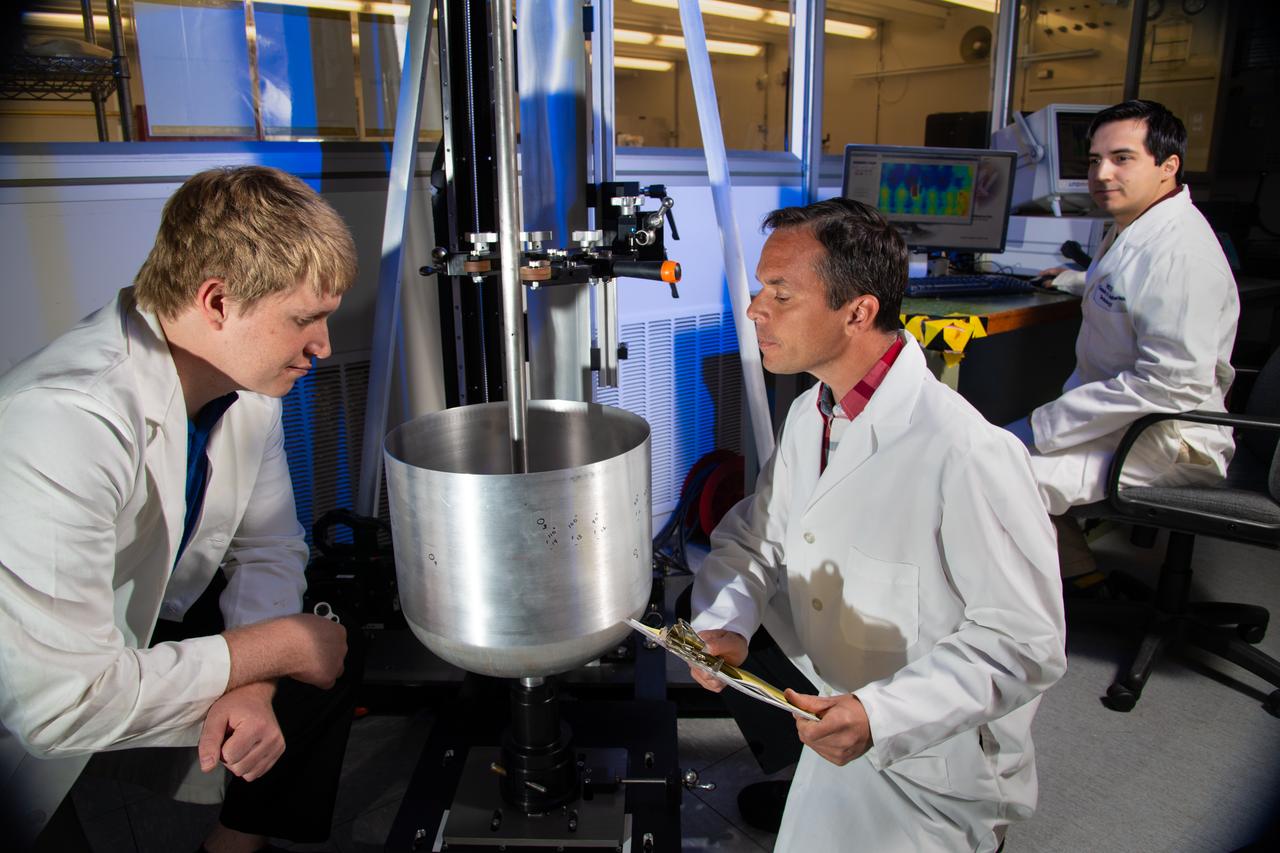
Engineers (from left) Ayrton Jordan, Anthony Milana and Edgar Reyes from the NASA White Sands Test Facility (WSTF) in Las Cruces, N.M. qualify an interior surface pressure vessel crack inspection using the eddy current nondestructive testing technique to find flaws smaller than more common and less capable penetrant testing methods. Detecting cracks smaller than the eye can detect is an important feature as manufacturers push performance limits to achieve lighter, more efficient spacecraft. Photo Credit: (NASA/Reed P. Elliott)

STS003-10-613 (22-30 March 1982) --- A truly remarkable view of White Sands and the nearby Carrizozo Lava Beds in southeast NM (33.5N, 106.5W). White Sands, site of the WW II atomic bomb development and testing facility and later post war nuclear weapons testing that can still be seen in the cleared circular patterns on the ground. Space shuttle Columbia (STS-3), this mission, landed at the White Sands alternate landing site because of bad weather at Edwards AFB, CA. Photo credit: NASA

STS003-010-613 (22-30 March 1982) --- A truly remarkable view of White Sands and the nearby Carrizozo Lava Beds in southeast NM (33.5N, 106.5W). White Sands, site of the WW II atomic bomb development and testing facility and later post war nuclear weapons testing that can still be seen in the cleared circular patterns on the ground. Space shuttle Columbia (STS-3), this mission, landed at the White Sands alternate landing site because of bad weather at Edwards AFB, CA. Photo credit: NASA
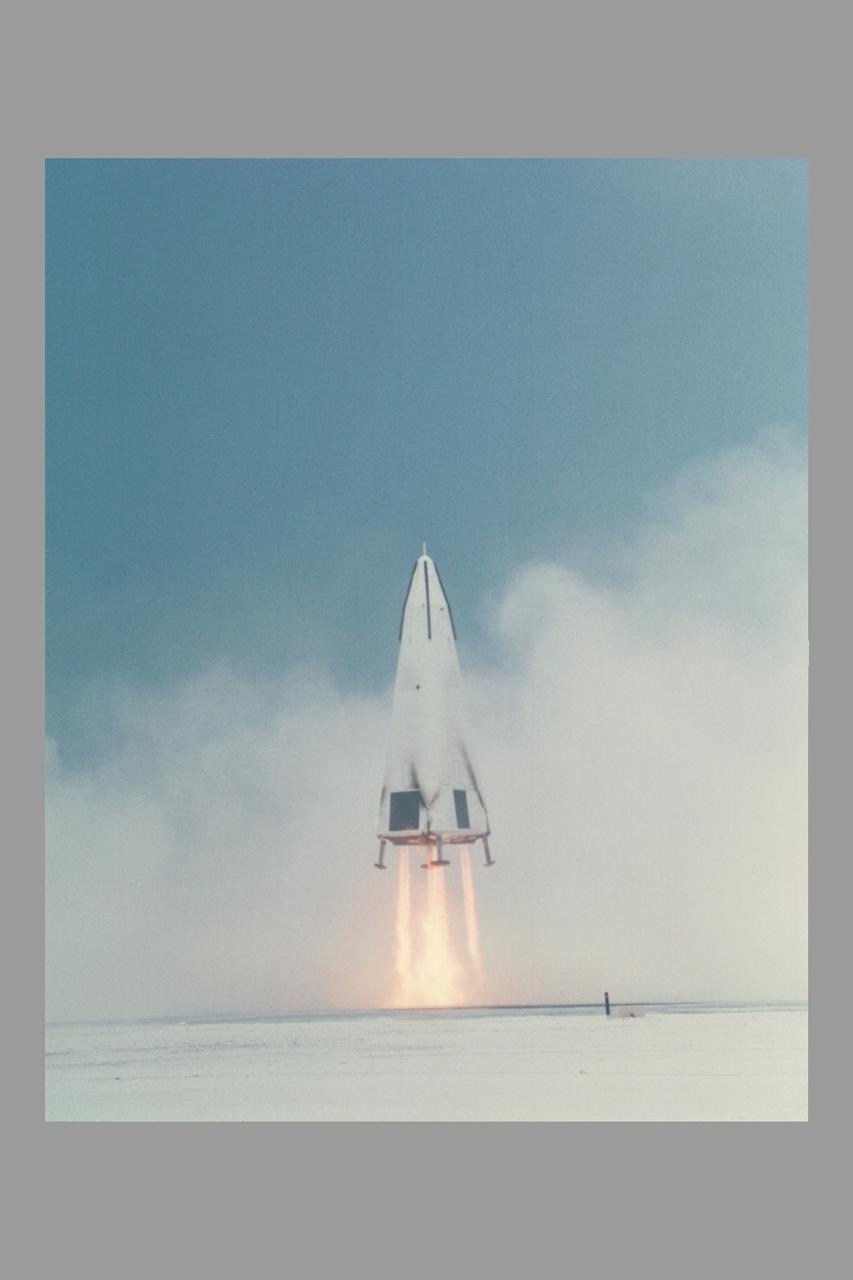
DC-XA (Delta Clipper) 3rd flight landing at JSC White Sands Test Facility, New Mexico (ref: 9608400)
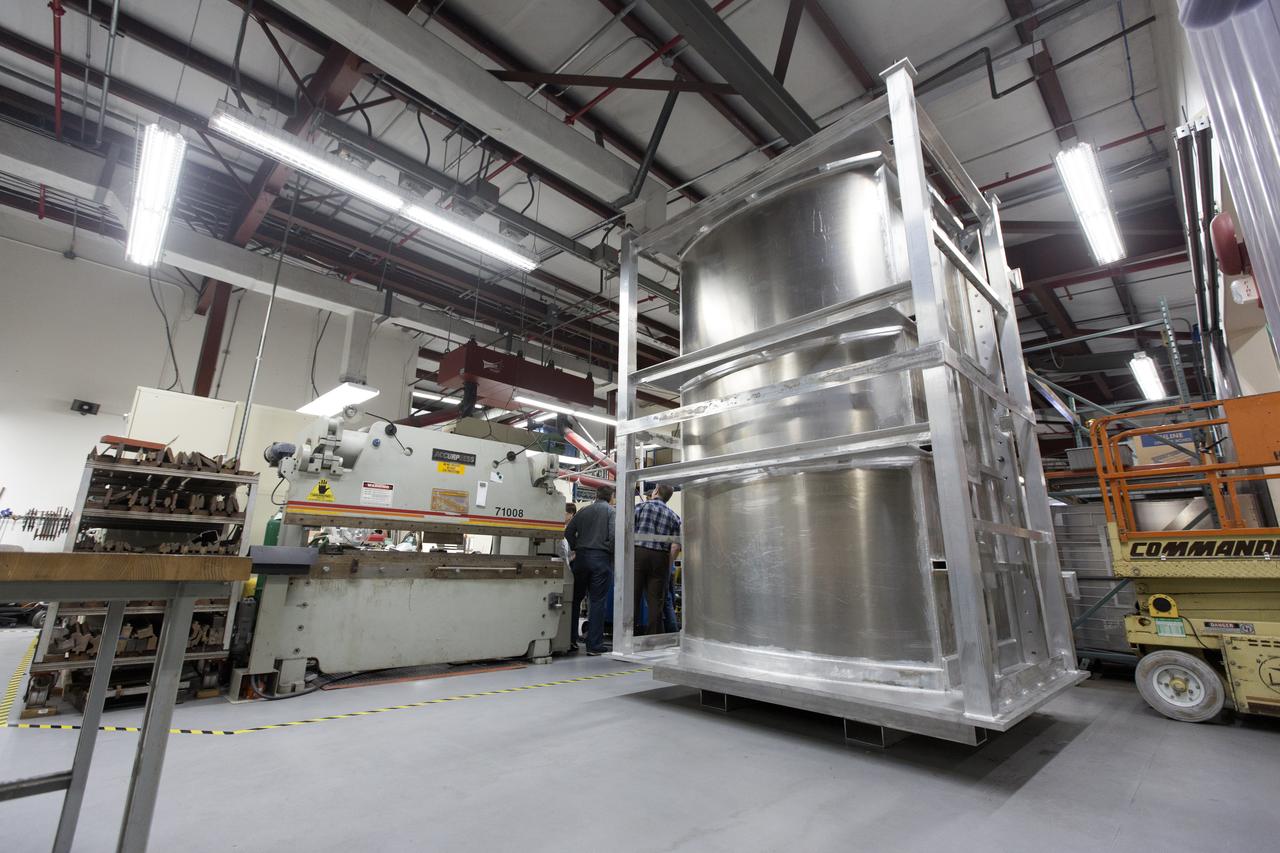
A liquid oxygen test tank was completed in the Prototype Development Laboratory at NASA's Kennedy Space Center in Florida. A banner signing event marked the successful delivery of the tank called Tardis. Engineers and technicians worked together to develop the tank and build it at the lab to support cryogenic testing at Johnson Space Center's White Sands Test Facility in Las Cruces, New Mexico. The 12-foot-tall, 3,810-pound aluminum tank will be shipped to White Sands for testing.
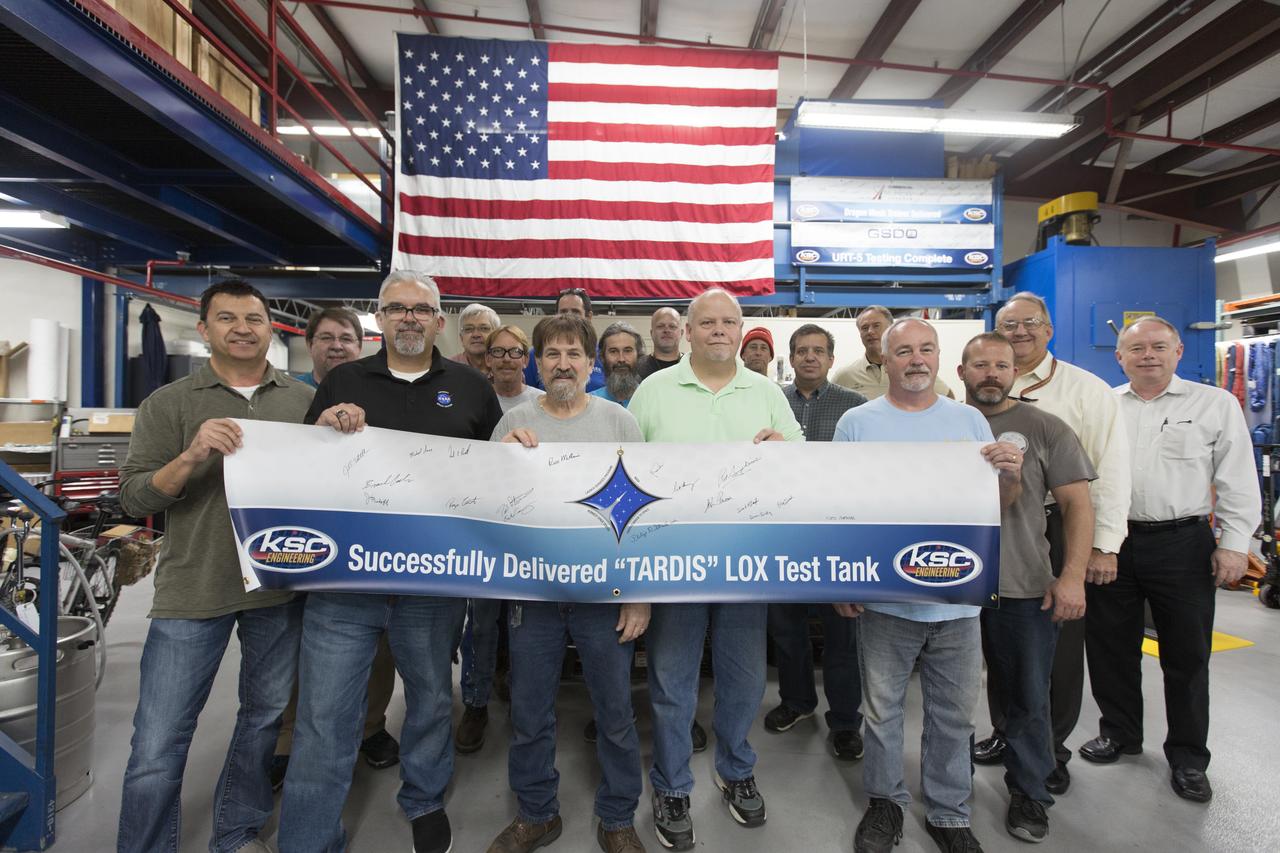
Inside the Prototype Development Laboratory at NASA's Kennedy Space Center in Florida, workers in the lab hold a banner marking the successful delivery of a liquid oxygen test tank called Tardis. Engineers and technicians worked together to develop the tank to build it at the lab to support cryogenic testing at Johnson Space Center's White Sands Test Facility in Las Cruces, New Mexico. The 12-foot-tall, 3,810-pound aluminum tank will be shipped to White Sands for testing.
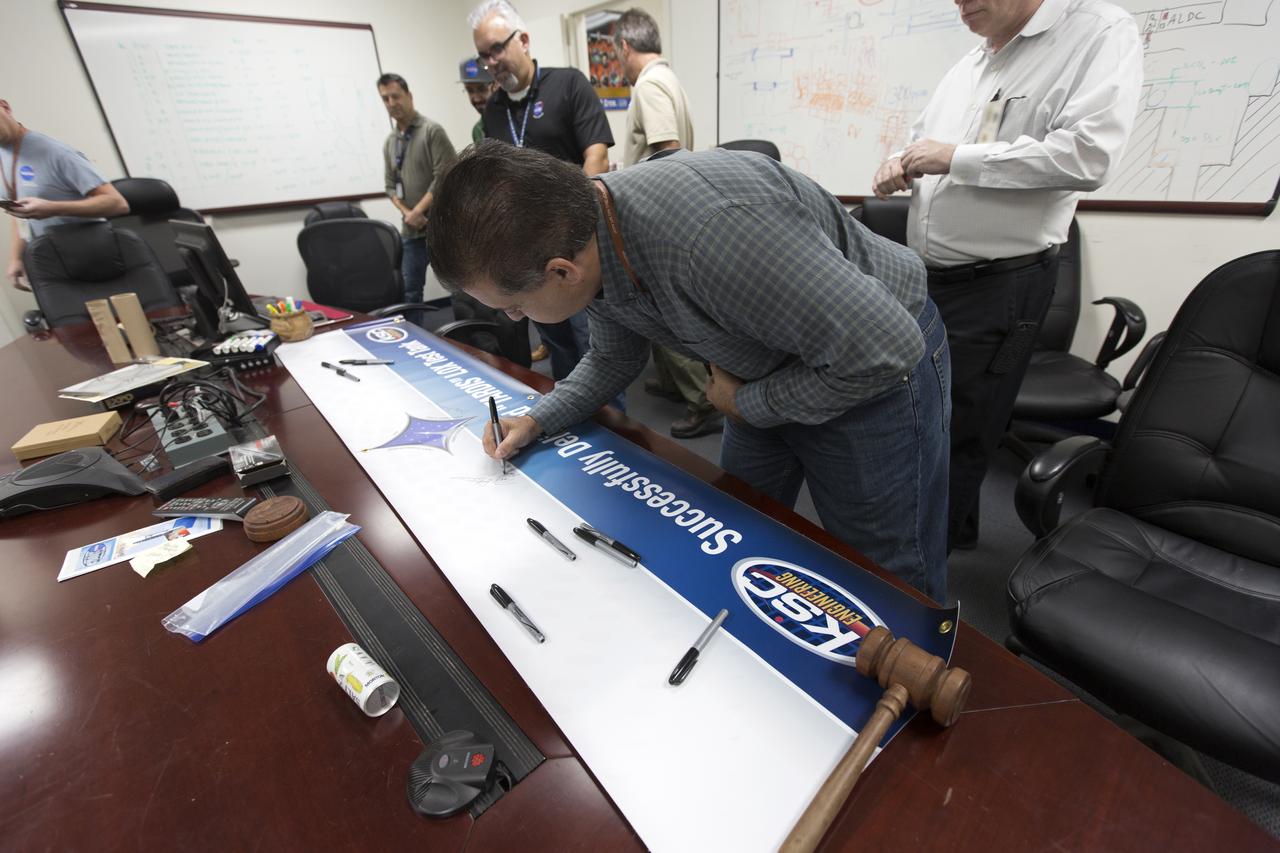
Workers sign the banner marking the successful delivery of a liquid oxygen test tank, called Tardis, in the Prototype Development Laboratory at NASA's Kennedy Space Center in Florida. Engineers and technicians worked together to develop the tank and build it at the lab to support cryogenic testing at Johnson Space Center's White Sands Test Facility in Las Cruces, New Mexico. The 12-foot-tall, 3,810-pound aluminum tank will be shipped to White Sands for testing.
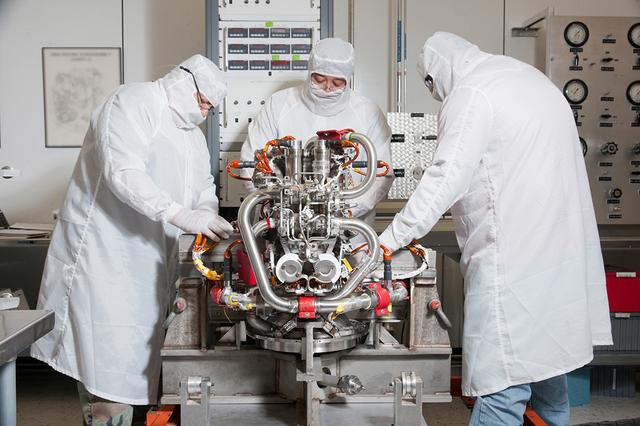
Engineers and technicians in NASA White Sands Test Facility’s Technical Services Section conduct functional tests on Orbital Maneuvering System Engine 108 for Orion on May 1, 2018.

SL2-04-288 (22 June 1973) --- A truly remarkable view of White Sands and the nearby Carrizozo Lava Beds in southeast New Mexico (33.5N, 106.5W). White Sands, site of the WW II atomic bomb development and testing facility and later post war nuclear weapons testing that can still be seen in the cleared circular patterns on the ground. Photo credit: NASA
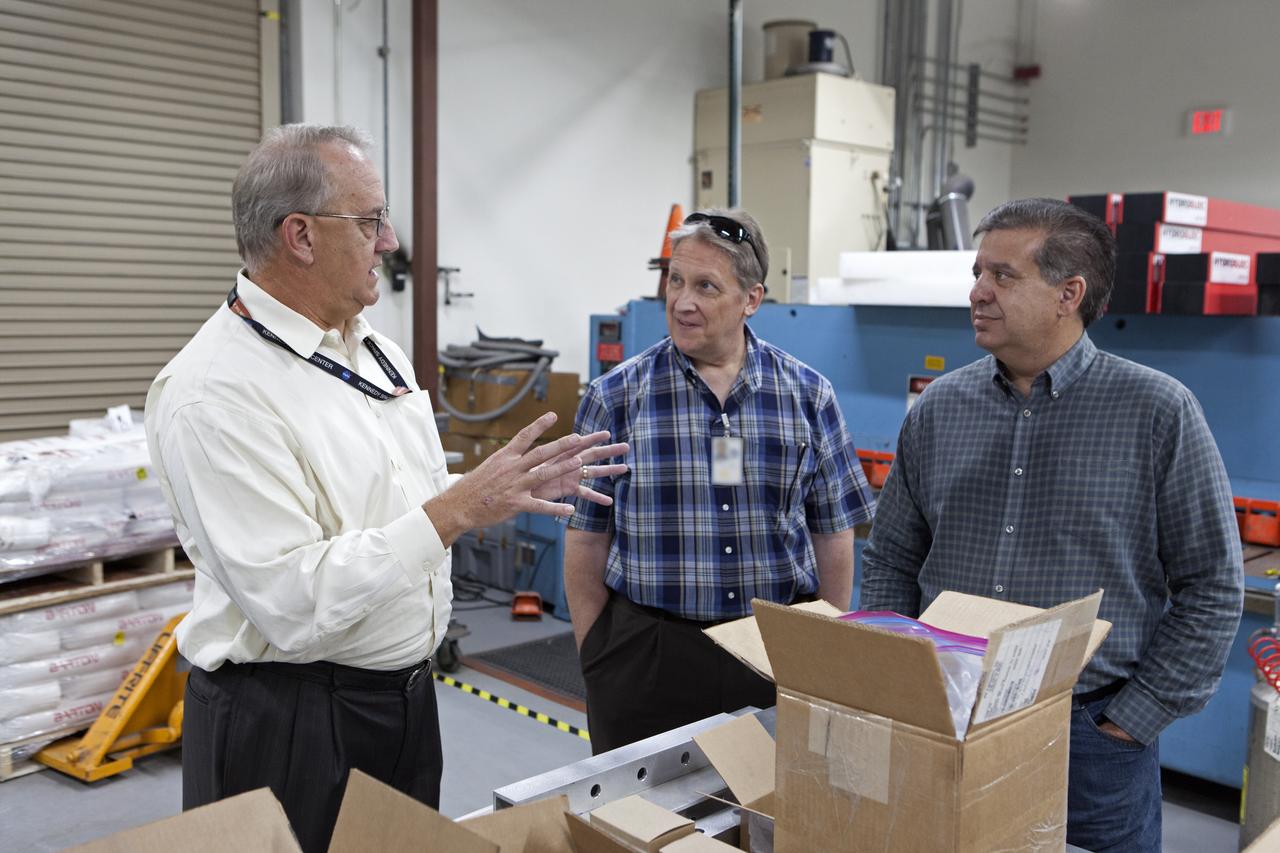
NASA Kennedy Space Center's Engineering Director Pat Simpkins, at left, talks with Michael E. Johnson, a project engineer; and Emilio Cruz, deputy division chief in the Laboratories, Development and Testing Division, inside the Prototype Development Laboratory. A banner signing event was held to mark the successful delivery of a liquid oxygen test tank, called Tardis. Engineers and technicians worked together to develop the tank and build it at the lab to support cryogenic testing at Johnson Space Center's White Sands Test Facility in Las Cruces, New Mexico. The 12-foot-tall, 3,810-pound aluminum tank will be shipped to White Sands for testing.
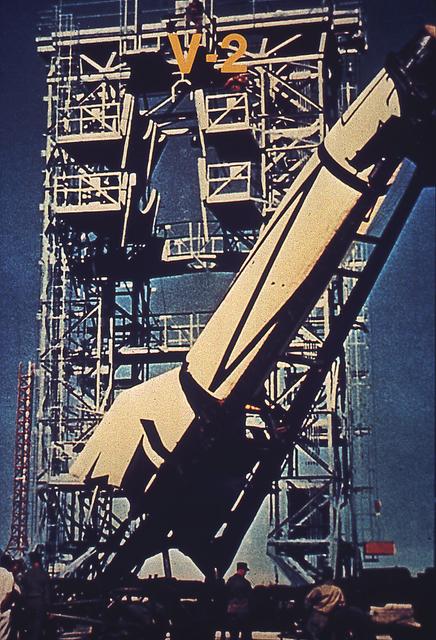
A V-2 rocket is hoisted into a static test facility at White Sands, New Mexico. The German engineers and scientists who developed the V-2 came to the United States at the end of World War II and continued rocket testing under the direction of the U. S. Army, launching more than sixty V-2s.
NASA Kennedy Space Center's Engineering Directorate held a banner signing event in the Prototype Development Laboratory to mark the successful delivery of a liquid oxygen test tank, called Tardis. Engineers and technicians worked together to develop the tank and build it to support cryogenic testing at Johnson Space Center's White Stands Test Facility in Las Cruces, New Mexico. The 12-foot-tall, 3,810-pound aluminum tank will be shipped to White Sands for testing.
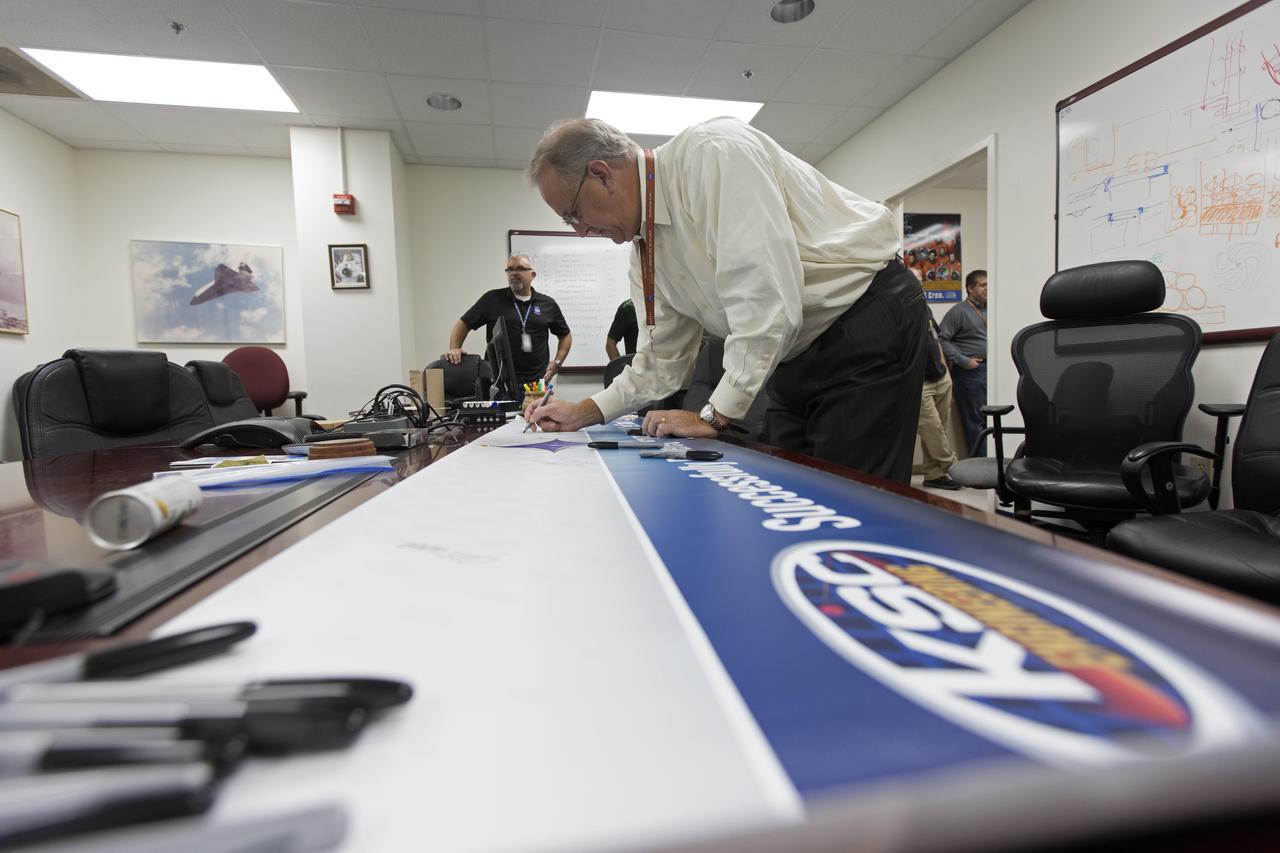
NASA Kennedy Space Center's Engineering Director Pat Simpkins signs the banner marking the successful delivery of a liquid oxygen test tank, called Tardis, in the Prototype Development Laboratory at NASA's Kennedy Space Center in Florida. Engineers and technicians worked together to develop the tank and build it to support cryogenic testing at Johnson Space Center's White Stands Test Facility in Las Cruces, New Mexico. The 12-foot-tall, 3,810-pound aluminum tank will be shipped to White Sands for testing.
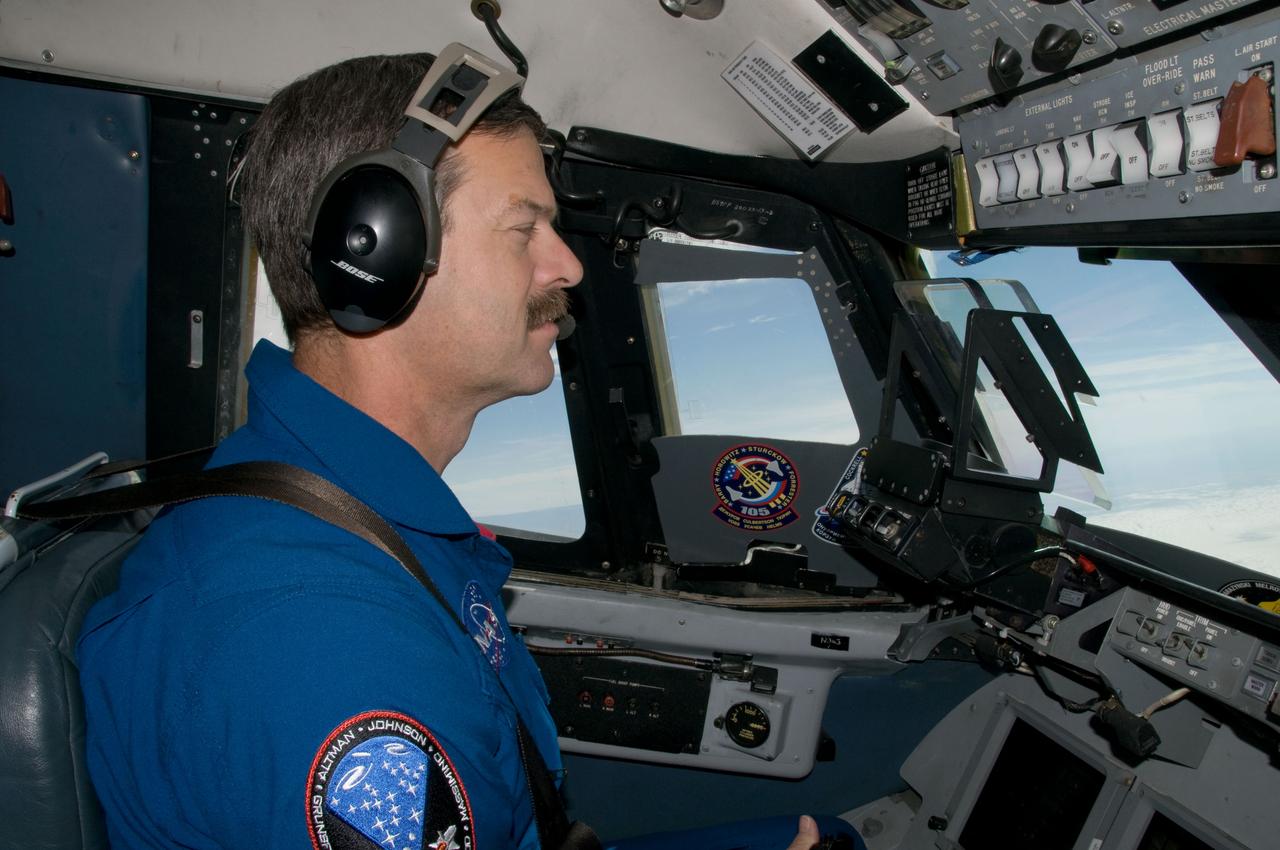
JSC2009-E-054052 (4 March 2009) --- Astronaut Scott Altman, STS-125 commander, flies a Shuttle Training Aircraft (STA) over White Sands Test Facility, New Mexico, during a training session. Photo Credit: Richard N. Clark, AOD division chief
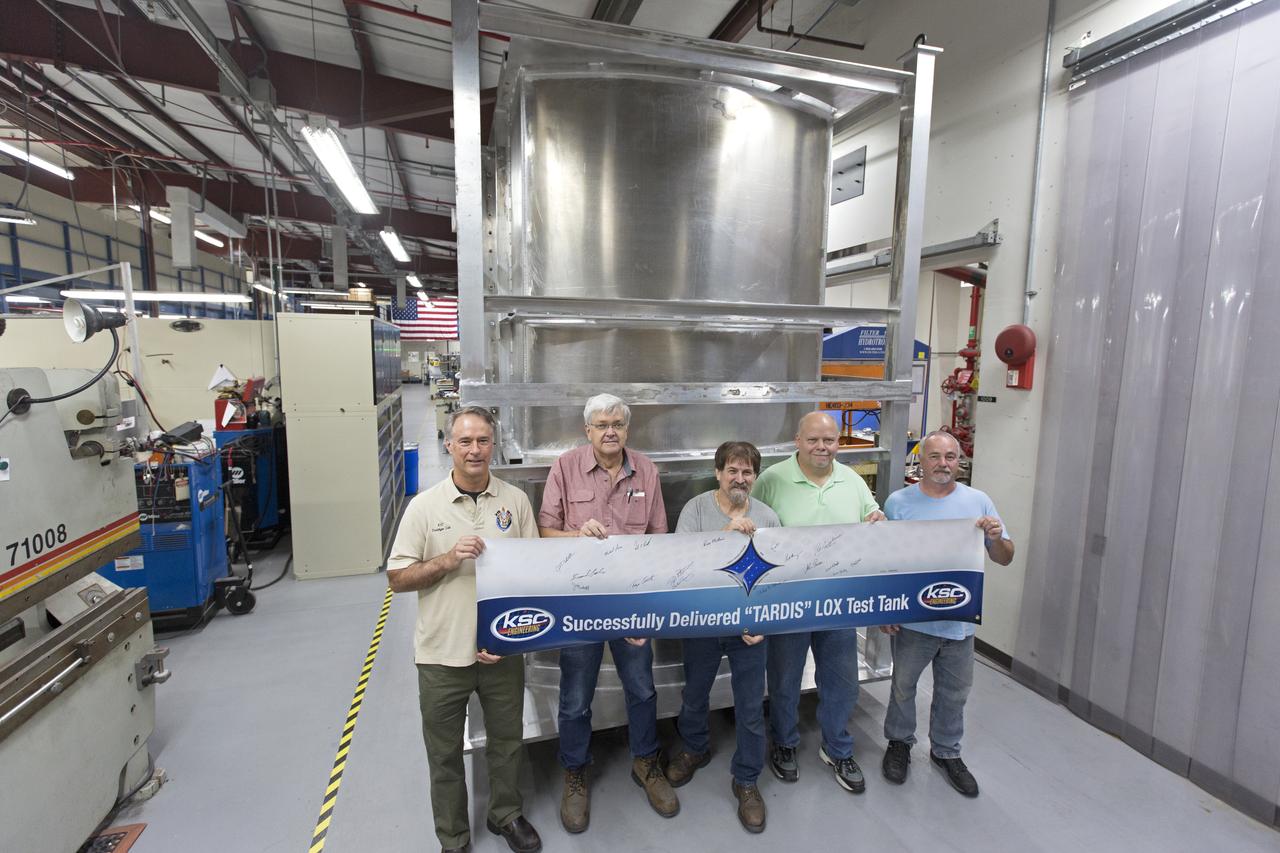
Inside the Prototype Development Laboratory at NASA's Kennedy Space Center in Florida, engineers and technicians hold a banner marking the successful delivery of a liquid oxygen test tank called Tardis. From left, are Todd Steinrock, chief, Fabrication and Development Branch, Prototype Development Lab; David McLaughlin, electrical engineering technician; Phil Stroda, mechanical engineering technician; Perry Dickey, lead electrical engineering technician; and Harold McAmis, lead mechanical engineering technician. Engineers and technicians worked together to develop the tank and build it at the lab to support cryogenic testing at Johnson Space Center's White Sands Test Facility in Las Cruces, New Mexico. The 12-foot-tall, 3,810-pound aluminum tank will be shipped to White Sands for testing.

On March 15, the base heat shield for Boeing’s CST-100 Starliner was freshly installed on the bottom of Spacecraft 1 in the High Bay of the Commercial Crew and Cargo Processing Facility at Kennedy Space Center. This is the spacecraft that will fly during the Pad Abort Test. The next step involves installation of the back shells and forward heat shield, and then the crew module will be mated to the service module for a fit check. Finally, the vehicle will head out to White Sands Missile Range in New Mexico for testing.
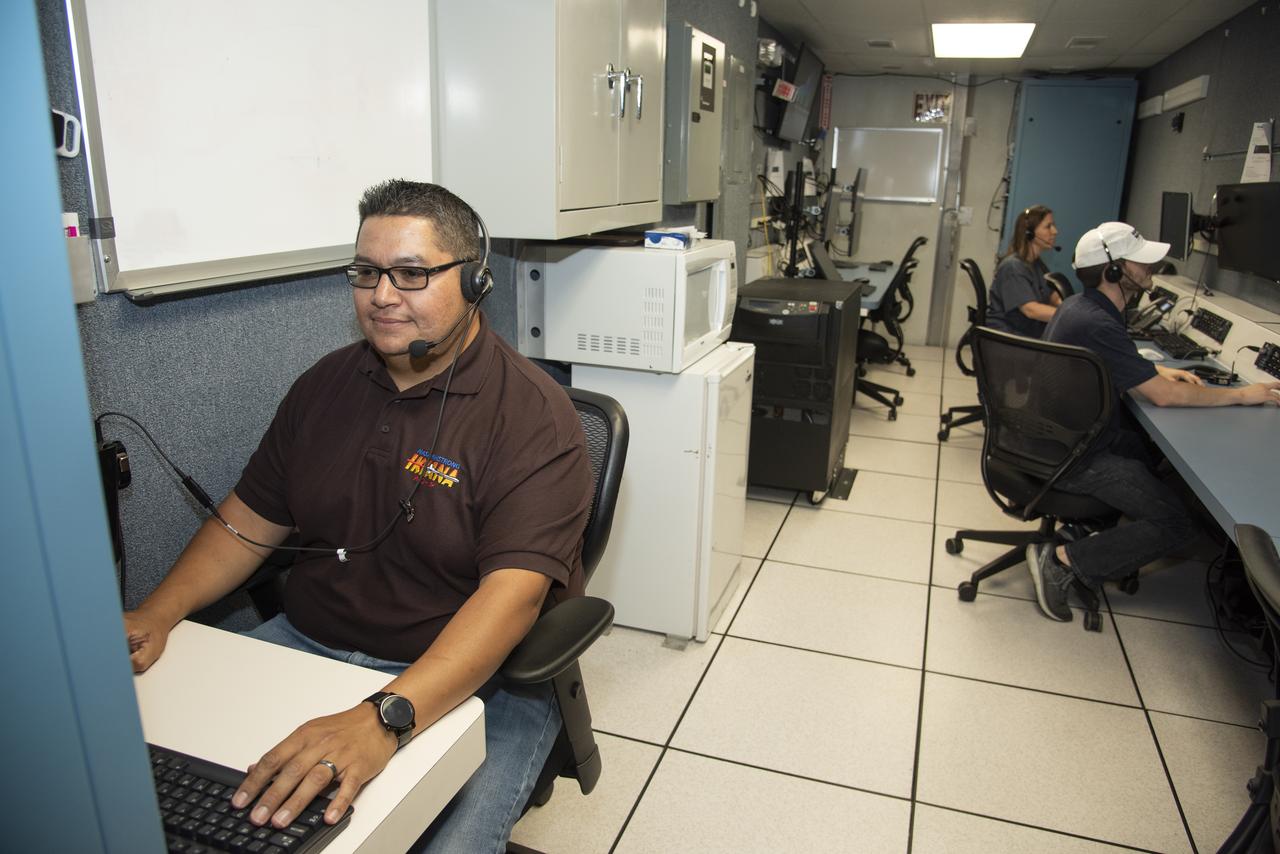
Jesus Vazquez, Zach Springer and Sonja Belcher, from left, are at stations in the Mobile Operations Facility 5 at NASA’s Armstrong Flight Research Center in California. The mobile station support included the Pad Abort-1 test of the Orion Launch Abort System at White Sands, New Mexico, the first Dream Chaser air launch and most recently supported the TigerShark remotely piloted aircraft for the Unmanned Aircraft Systems Integration in the National Airspace System flights.
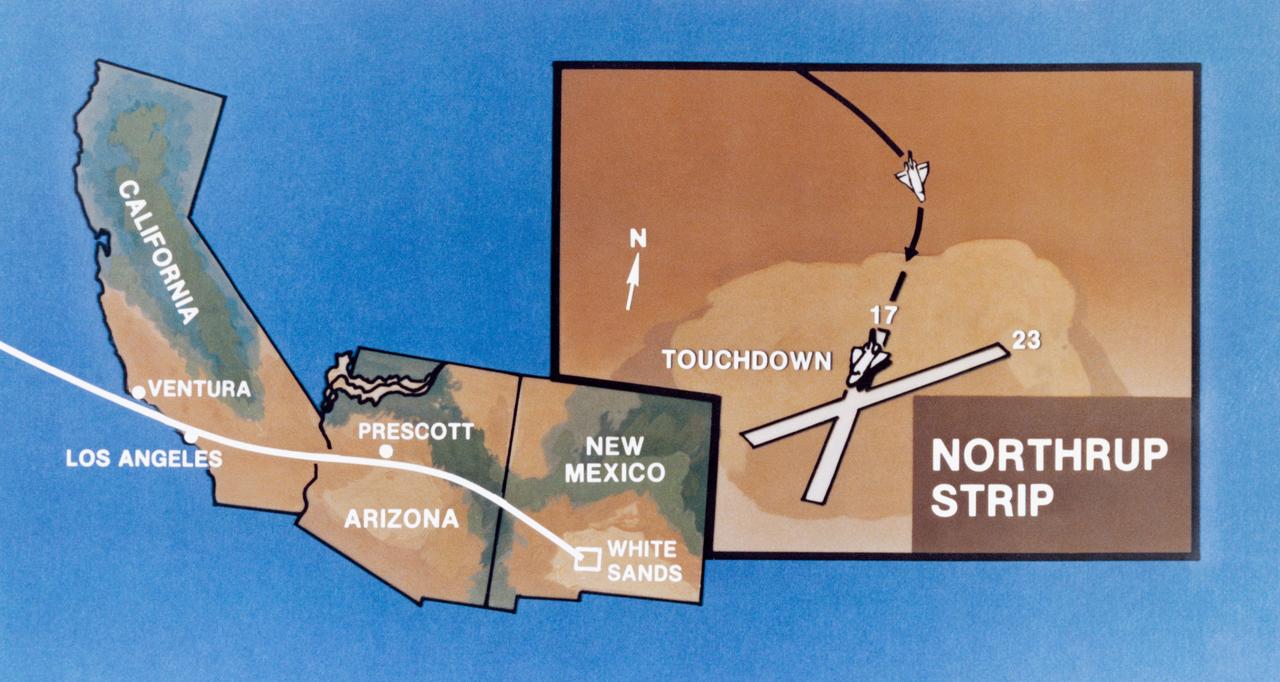
Art Concept of the End-of-Mission Approach and Landing at WSTF, NM, from Rockwell. 1. ART CONCEPT - STS-3 LANDING 2. STS-3 - LANDING WSTF, NM Also available in 4x5 B&W
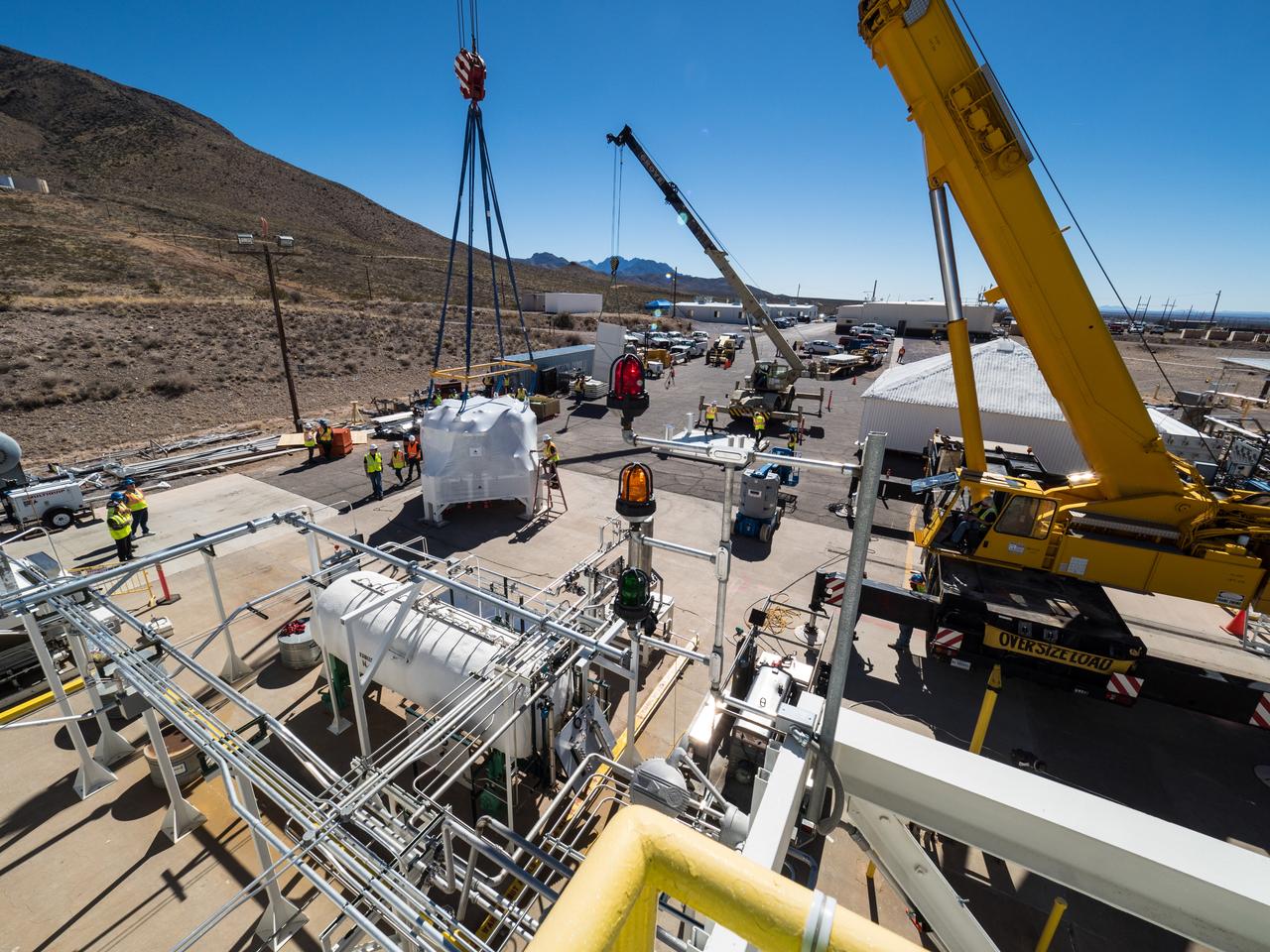
On Feb. 21, 2017 engineers successfully install ESA’s European Service Module Propulsion Qualification Module (PQM) at NASA’s White Sands Test Facility in New Mexico that was delivered by Airbus – ESA’s prime contractor for the Service Module. The module will be equipped with a total of 21 engines to support NASA’s Orion spacecraft: one U.S. Space Shuttle Orbital Maneuvering System (OMS) engine, eight auxiliary thrusters and 12 smaller thrusters produced by Airbus Safran Launchers in Germany. The all-steel PQM structure is used to test the propulsion systems on Orion, including “hot firing” of the OMS engine and thrusters.
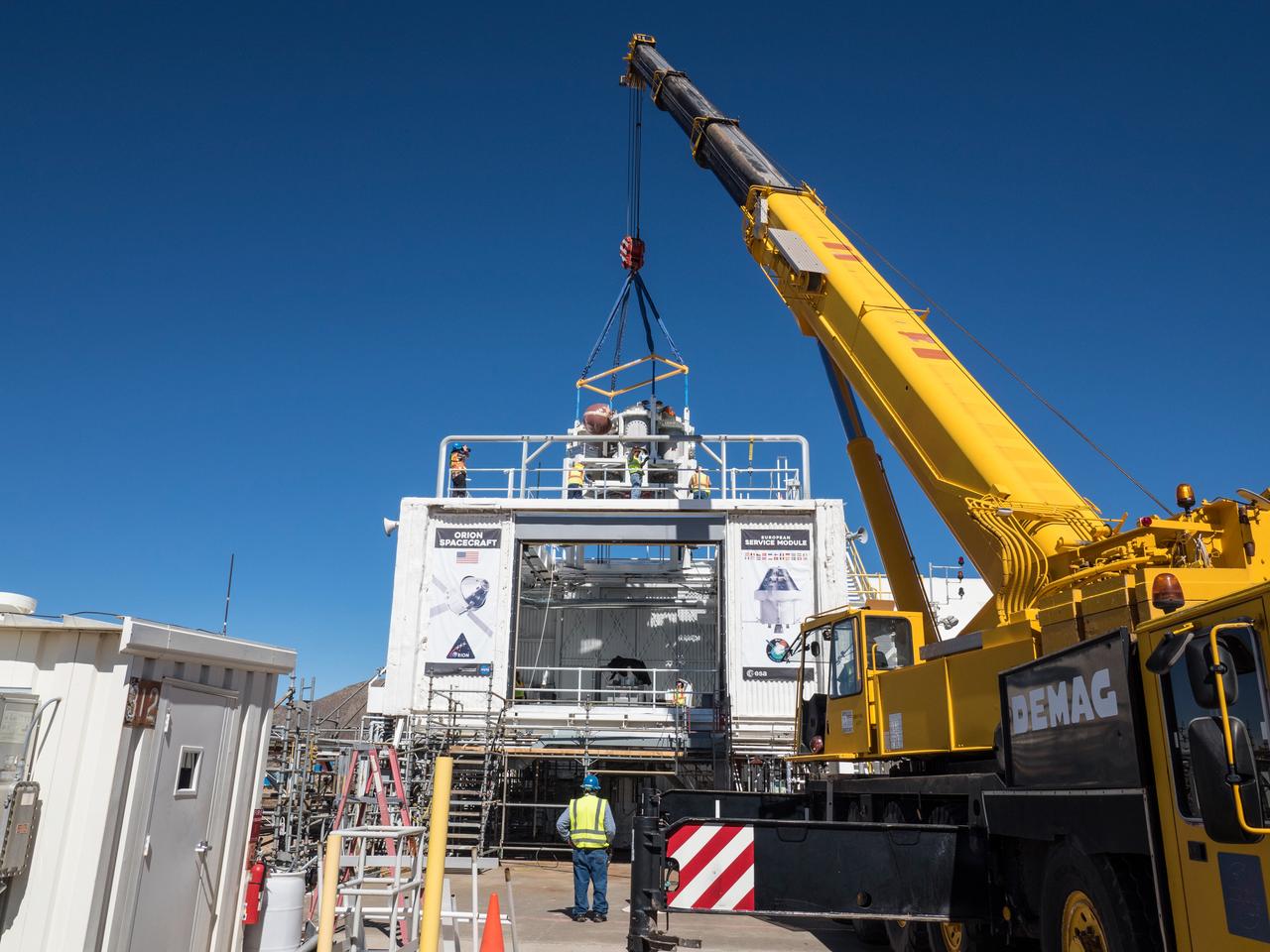
On Feb. 22, engineers successfully install ESA’s European Service Module Propulsion Qualification Module (PQM) at NASA’s White Sands Test Facility in New Mexico that was delivered by Airbus – ESA’s prime contractor for the Service Module. The module will be equipped with a total of 21 engines to support NASA’s Orion spacecraft: one U.S. Space Shuttle Orbital Maneuvering System (OMS) engine, eight auxiliary thrusters and 12 smaller thrusters produced by Airbus Safran Launchers in Germany. The all-steel PQM structure is used to test the propulsion systems on Orion, including “hot firing” of the OMS engine and thrusters.
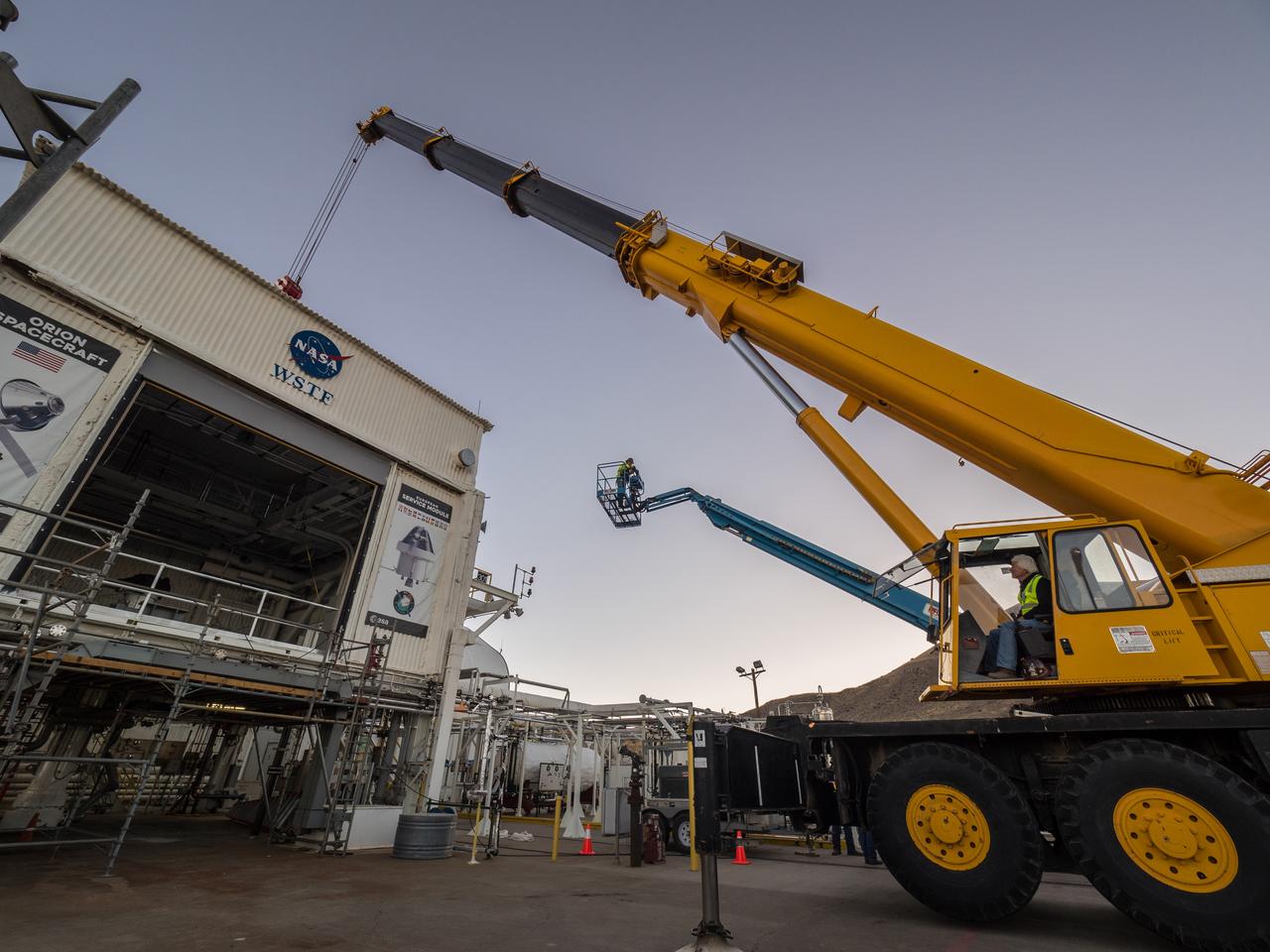
On Feb. 21, 2017 engineers successfully install ESA’s European Service Module Propulsion Qualification Module (PQM) at NASA’s White Sands Test Facility in New Mexico that was delivered by Airbus – ESA’s prime contractor for the Service Module. The module will be equipped with a total of 21 engines to support NASA’s Orion spacecraft: one U.S. Space Shuttle Orbital Maneuvering System (OMS) engine, eight auxiliary thrusters and 12 smaller thrusters produced by Airbus Safran Launchers in Germany. The all-steel PQM structure is used to test the propulsion systems on Orion, including “hot firing” of the OMS engine and thrusters.

On Feb. 21, 2017 engineers successfully install ESA’s European Service Module Propulsion Qualification Module (PQM) at NASA’s White Sands Test Facility in New Mexico that was delivered by Airbus – ESA’s prime contractor for the Service Module. The module will be equipped with a total of 21 engines to support NASA’s Orion spacecraft: one U.S. Space Shuttle Orbital Maneuvering System (OMS) engine, eight auxiliary thrusters and 12 smaller thrusters produced by Airbus Safran Launchers in Germany. The all-steel PQM structure is used to test the propulsion systems on Orion, including “hot firing” of the OMS engine and thrusters.
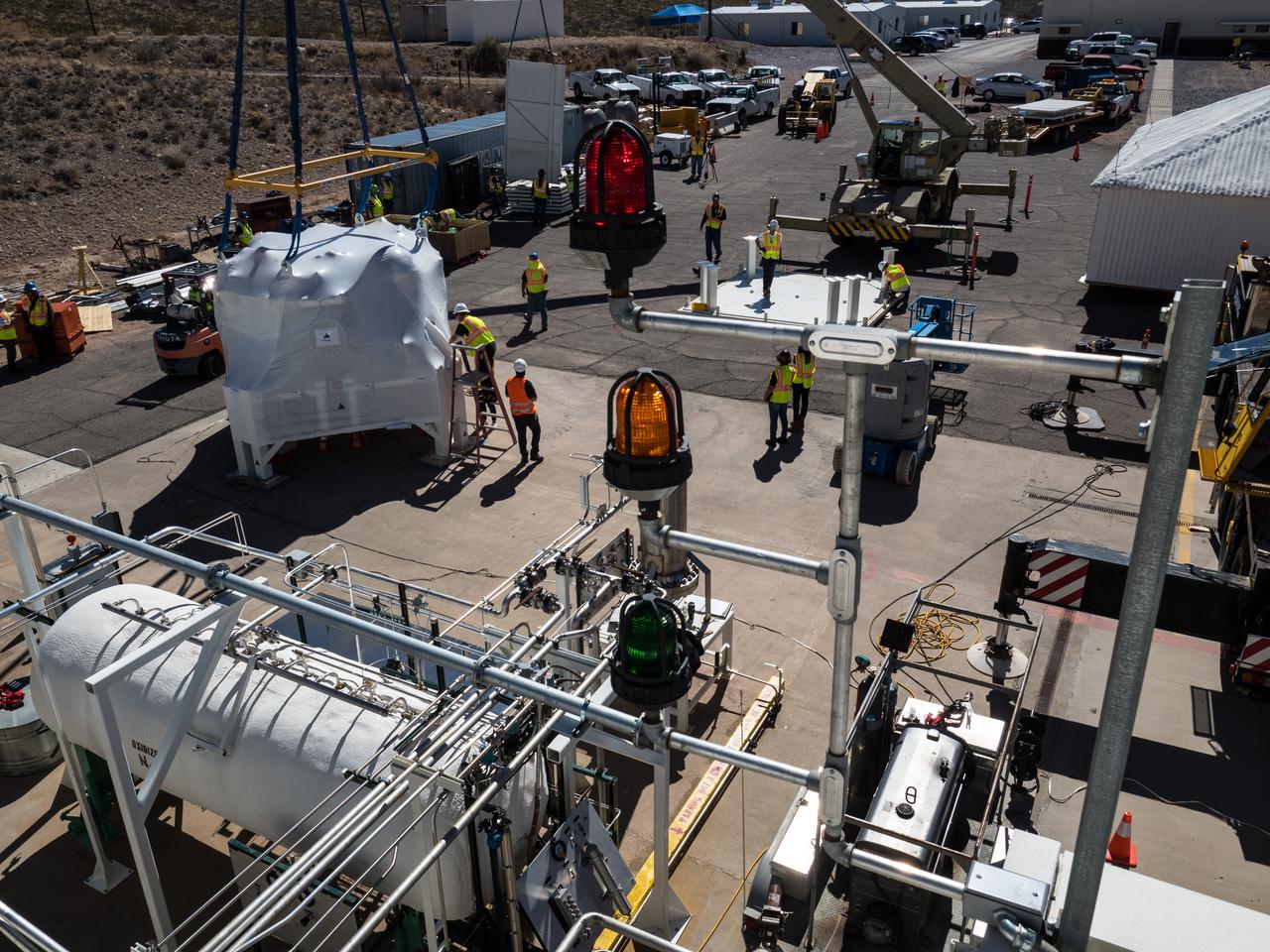
On Feb. 21, 2017 engineers successfully install ESA’s European Service Module Propulsion Qualification Module (PQM) at NASA’s White Sands Test Facility in New Mexico that was delivered by Airbus – ESA’s prime contractor for the Service Module. The module will be equipped with a total of 21 engines to support NASA’s Orion spacecraft: one U.S. Space Shuttle Orbital Maneuvering System (OMS) engine, eight auxiliary thrusters and 12 smaller thrusters produced by Airbus Safran Launchers in Germany. The all-steel PQM structure is used to test the propulsion systems on Orion, including “hot firing” of the OMS engine and thrusters.

On Feb. 22, engineers successfully install ESA’s European Service Module Propulsion Qualification Module (PQM) at NASA’s White Sands Test Facility in New Mexico that was delivered by Airbus – ESA’s prime contractor for the Service Module. The module will be equipped with a total of 21 engines to support NASA’s Orion spacecraft: one U.S. Space Shuttle Orbital Maneuvering System (OMS) engine, eight auxiliary thrusters and 12 smaller thrusters produced by Airbus Safran Launchers in Germany. The all-steel PQM structure is used to test the propulsion systems on Orion, including “hot firing” of the OMS engine and thrusters.
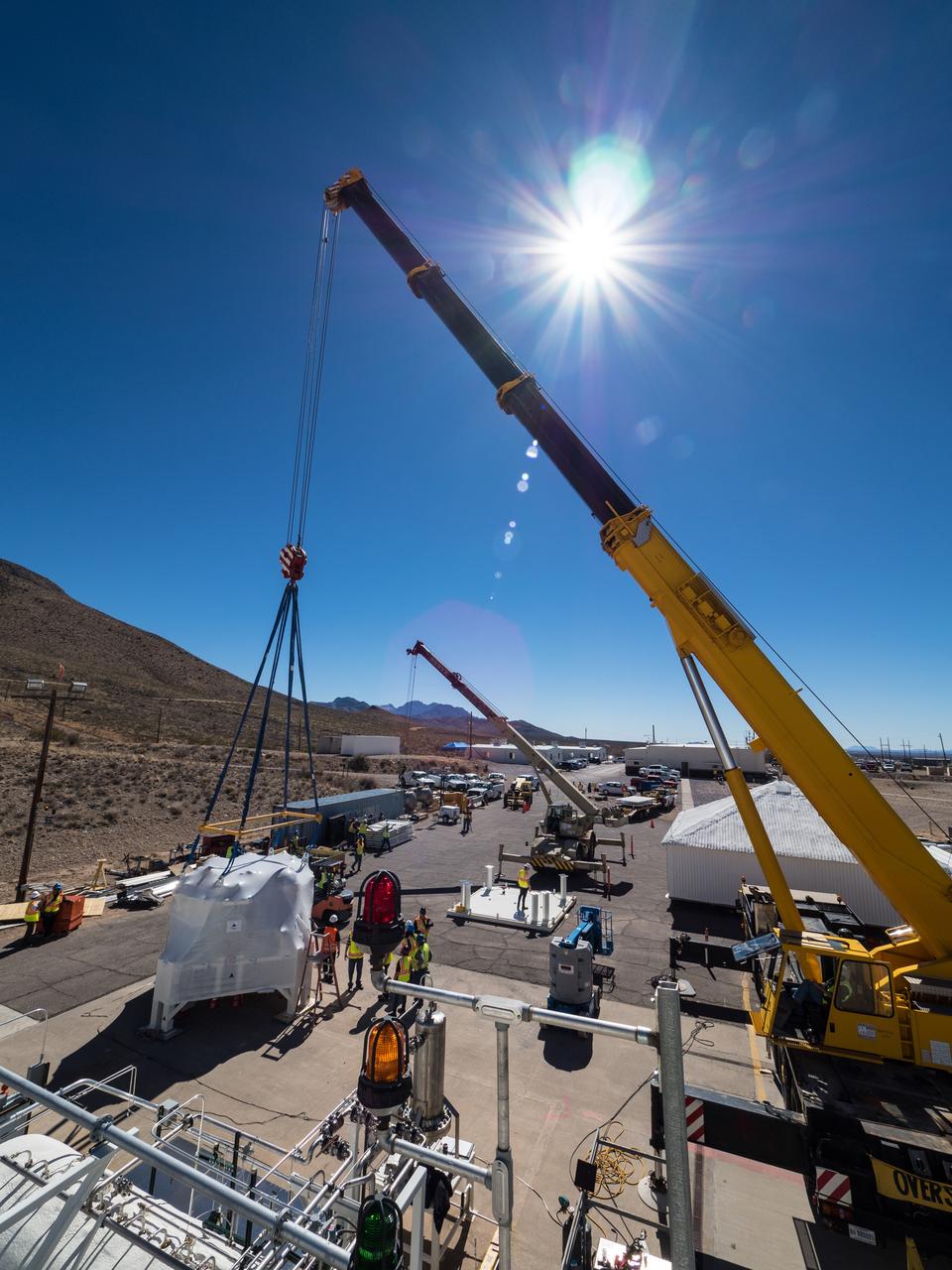
On Feb. 21, 2017 engineers successfully install ESA’s European Service Module Propulsion Qualification Module (PQM) at NASA’s White Sands Test Facility in New Mexico that was delivered by Airbus – ESA’s prime contractor for the Service Module. The module will be equipped with a total of 21 engines to support NASA’s Orion spacecraft: one U.S. Space Shuttle Orbital Maneuvering System (OMS) engine, eight auxiliary thrusters and 12 smaller thrusters produced by Airbus Safran Launchers in Germany. The all-steel PQM structure is used to test the propulsion systems on Orion, including “hot firing” of the OMS engine and thrusters.

On Feb. 21, 2017 engineers successfully install ESA’s European Service Module Propulsion Qualification Module (PQM) at NASA’s White Sands Test Facility in New Mexico that was delivered by Airbus – ESA’s prime contractor for the Service Module. The module will be equipped with a total of 21 engines to support NASA’s Orion spacecraft: one U.S. Space Shuttle Orbital Maneuvering System (OMS) engine, eight auxiliary thrusters and 12 smaller thrusters produced by Airbus Safran Launchers in Germany. The all-steel PQM structure is used to test the propulsion systems on Orion, including “hot firing” of the OMS engine and thrusters.
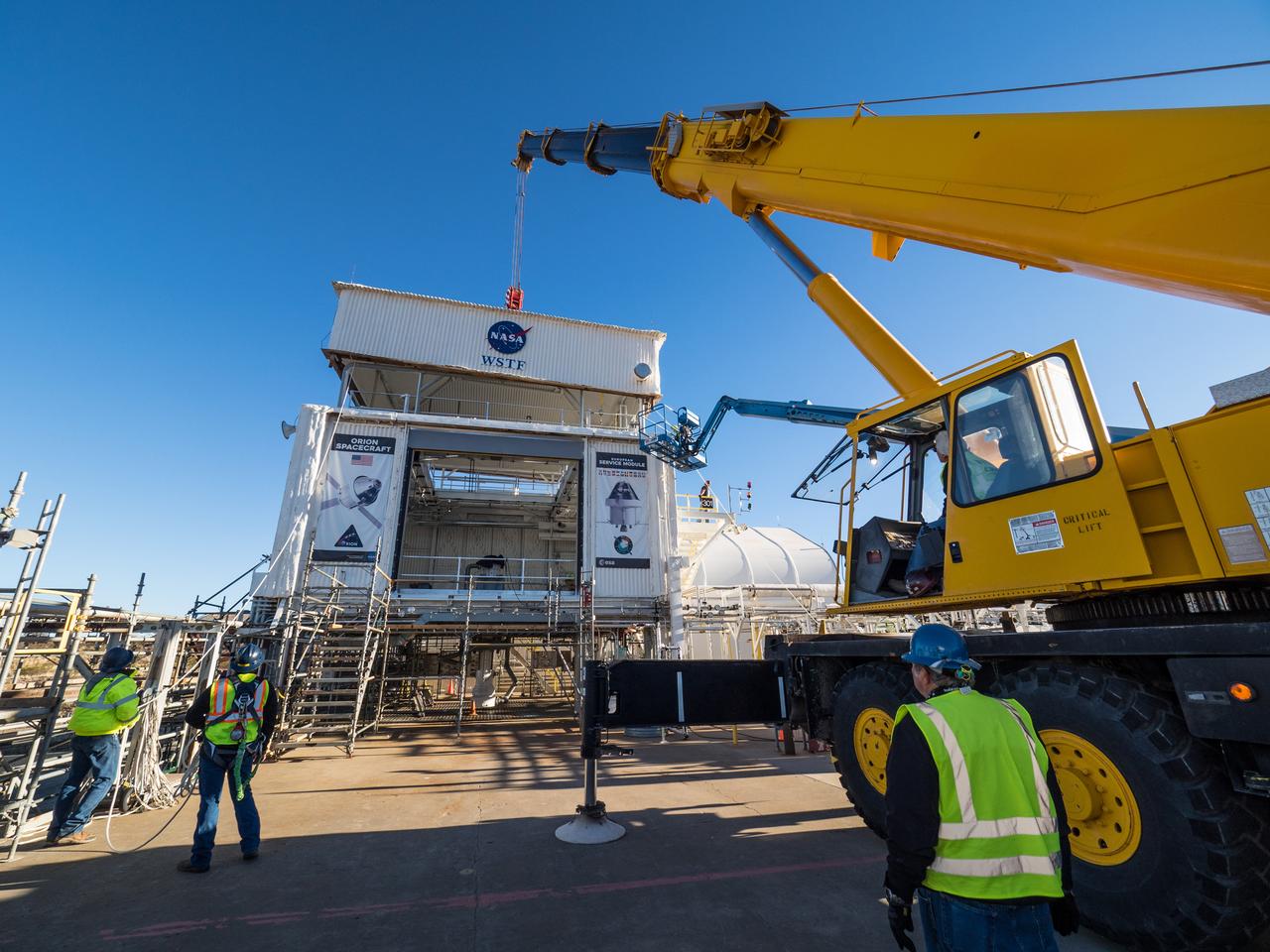
On Feb. 21, 2017 engineers successfully install ESA’s European Service Module Propulsion Qualification Module (PQM) at NASA’s White Sands Test Facility in New Mexico that was delivered by Airbus – ESA’s prime contractor for the Service Module. The module will be equipped with a total of 21 engines to support NASA’s Orion spacecraft: one U.S. Space Shuttle Orbital Maneuvering System (OMS) engine, eight auxiliary thrusters and 12 smaller thrusters produced by Airbus Safran Launchers in Germany. The all-steel PQM structure is used to test the propulsion systems on Orion, including “hot firing” of the OMS engine and thrusters.
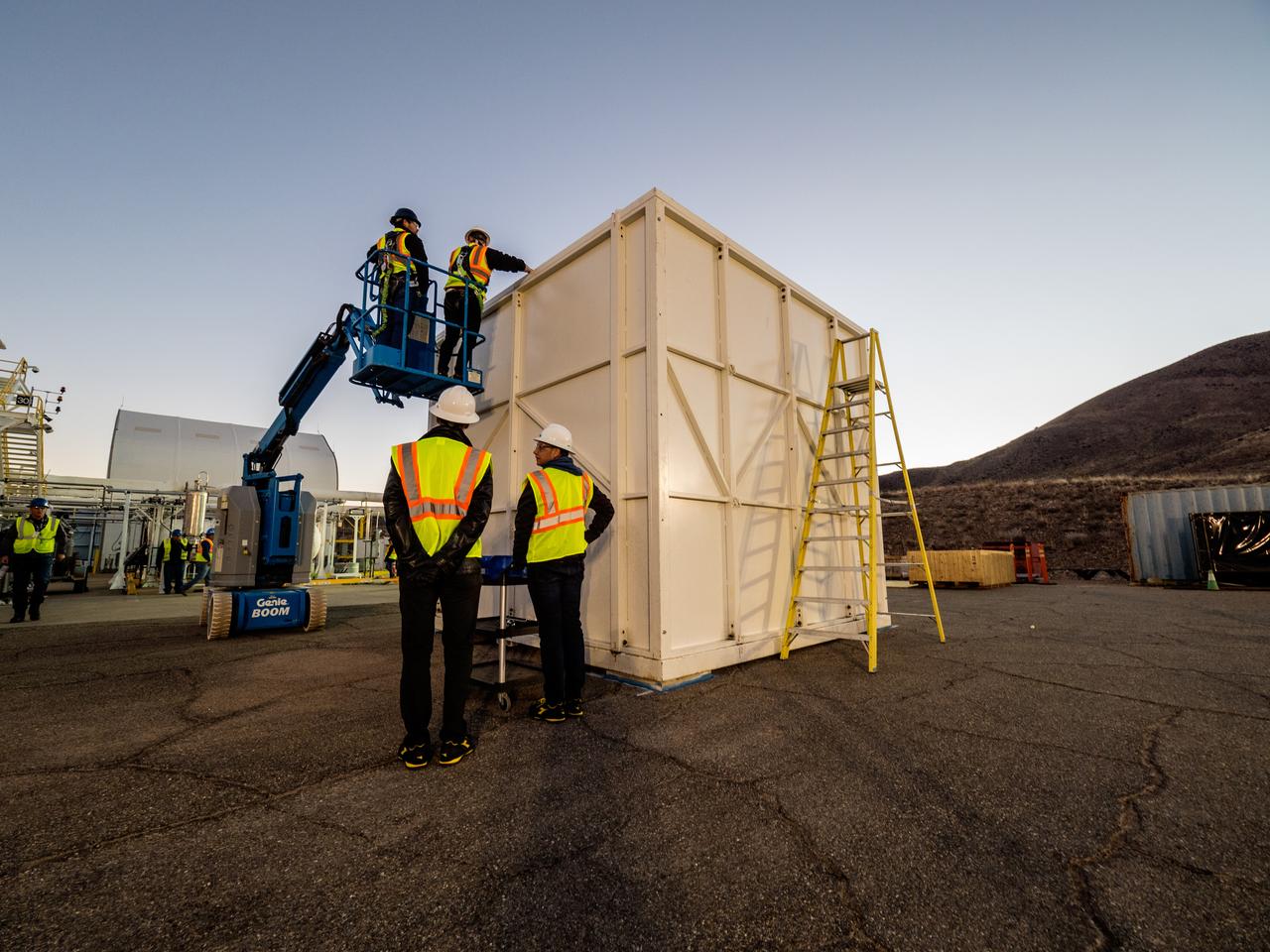
On Feb. 21, 2017 engineers successfully install ESA’s European Service Module Propulsion Qualification Module (PQM) at NASA’s White Sands Test Facility in New Mexico that was delivered by Airbus – ESA’s prime contractor for the Service Module. The module will be equipped with a total of 21 engines to support NASA’s Orion spacecraft: one U.S. Space Shuttle Orbital Maneuvering System (OMS) engine, eight auxiliary thrusters and 12 smaller thrusters produced by Airbus Safran Launchers in Germany. The all-steel PQM structure is used to test the propulsion systems on Orion, including “hot firing” of the OMS engine and thrusters.
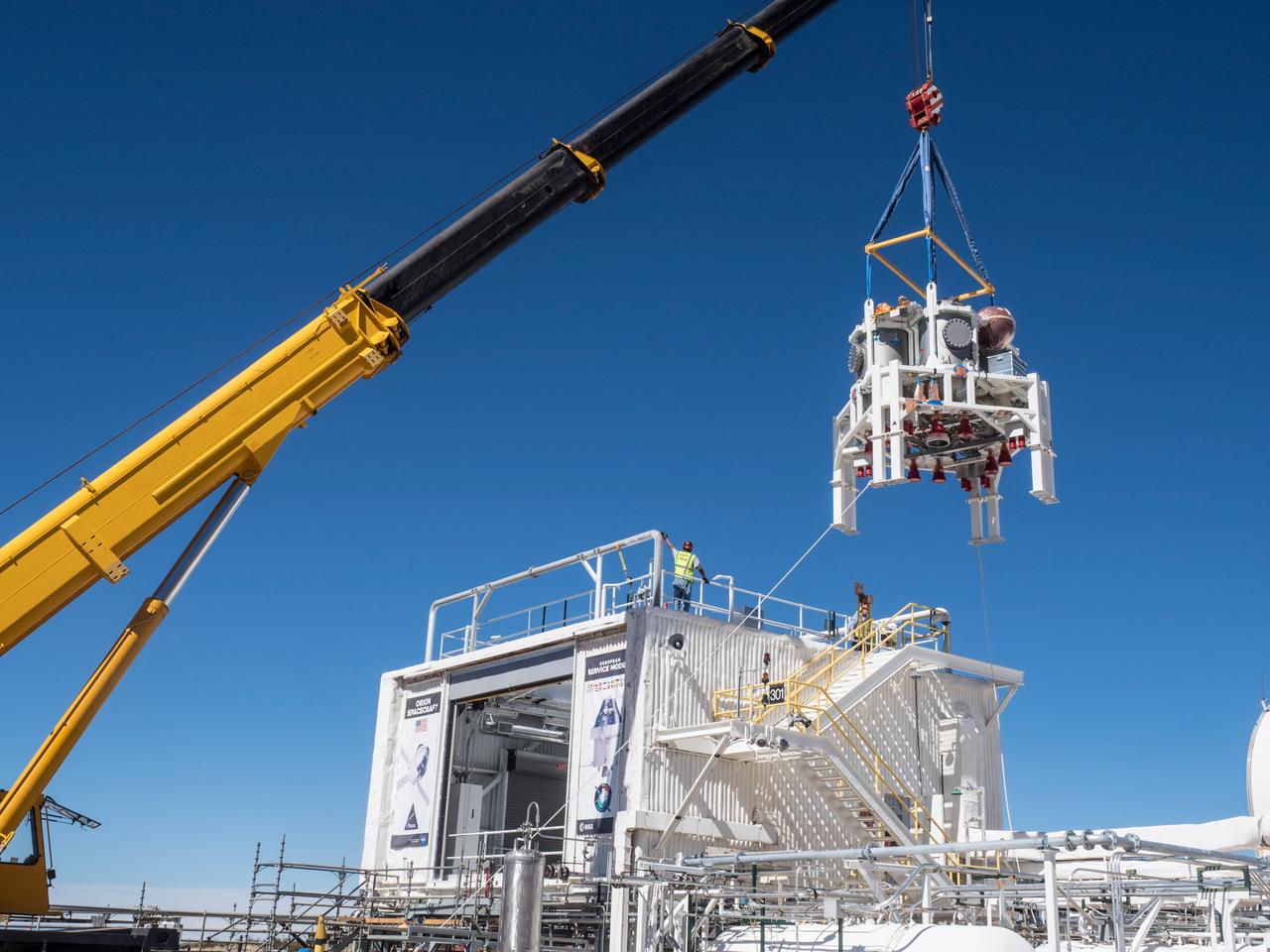
On Feb. 22, engineers successfully install ESA’s European Service Module Propulsion Qualification Module (PQM) at NASA’s White Sands Test Facility in New Mexico that was delivered by Airbus – ESA’s prime contractor for the Service Module. The module will be equipped with a total of 21 engines to support NASA’s Orion spacecraft: one U.S. Space Shuttle Orbital Maneuvering System (OMS) engine, eight auxiliary thrusters and 12 smaller thrusters produced by Airbus Safran Launchers in Germany. The all-steel PQM structure is used to test the propulsion systems on Orion, including “hot firing” of the OMS engine and thrusters.
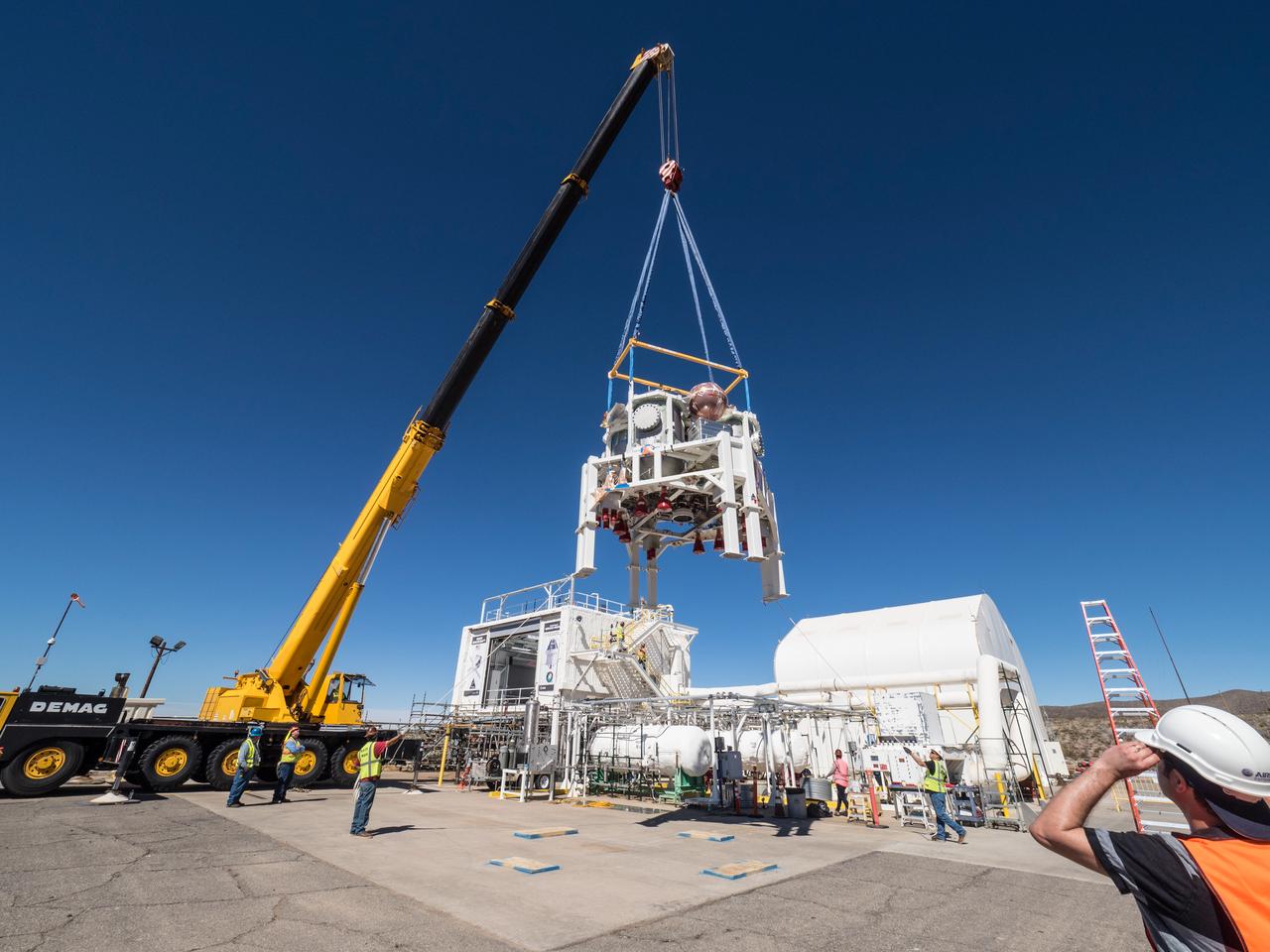
On Feb. 22, engineers successfully install ESA’s European Service Module Propulsion Qualification Module (PQM) at NASA’s White Sands Test Facility in New Mexico that was delivered by Airbus – ESA’s prime contractor for the Service Module. The module will be equipped with a total of 21 engines to support NASA’s Orion spacecraft: one U.S. Space Shuttle Orbital Maneuvering System (OMS) engine, eight auxiliary thrusters and 12 smaller thrusters produced by Airbus Safran Launchers in Germany. The all-steel PQM structure is used to test the propulsion systems on Orion, including “hot firing” of the OMS engine and thrusters.
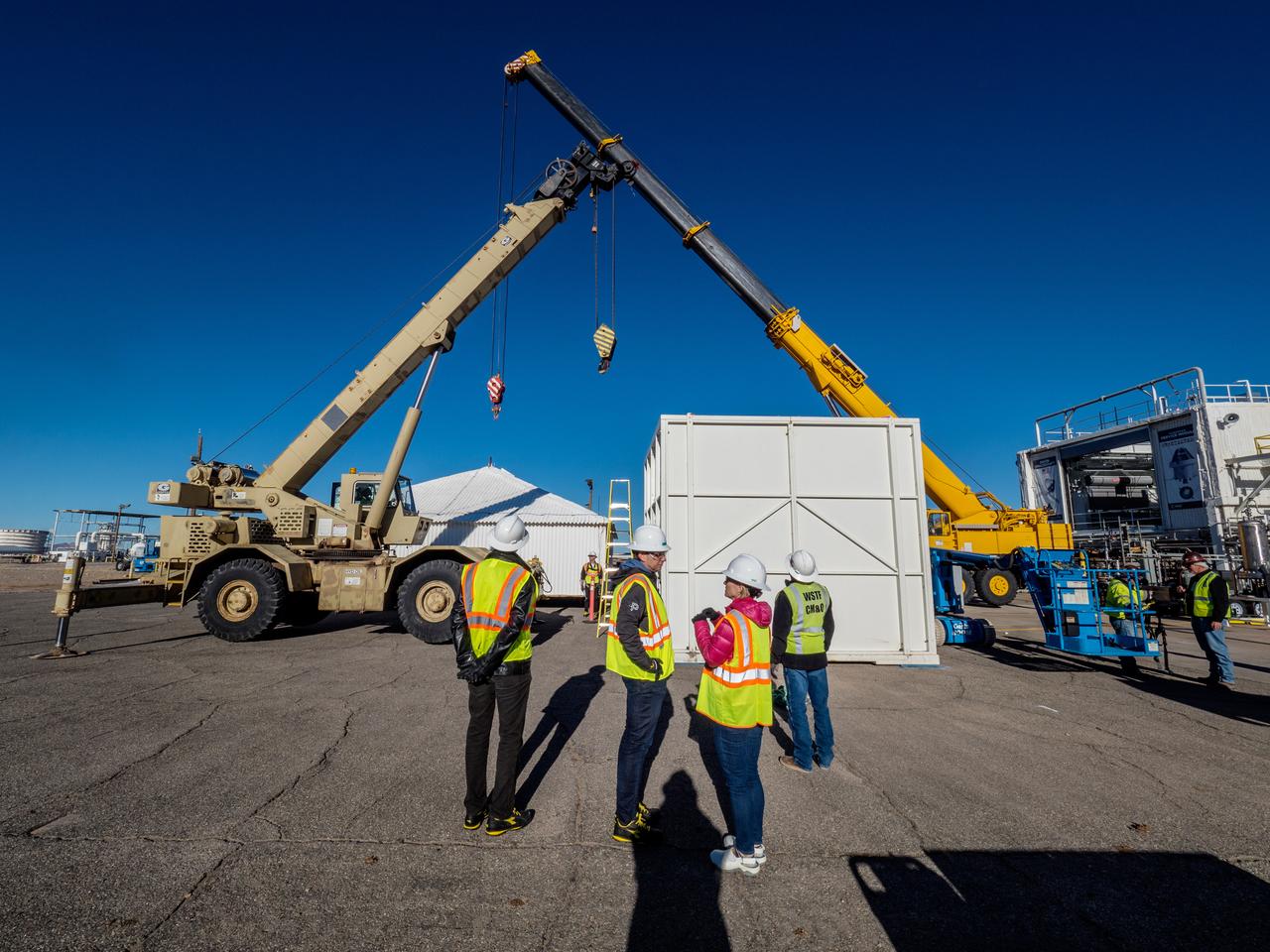
On Feb. 21, 2017 engineers successfully install ESA’s European Service Module Propulsion Qualification Module (PQM) at NASA’s White Sands Test Facility in New Mexico that was delivered by Airbus – ESA’s prime contractor for the Service Module. The module will be equipped with a total of 21 engines to support NASA’s Orion spacecraft: one U.S. Space Shuttle Orbital Maneuvering System (OMS) engine, eight auxiliary thrusters and 12 smaller thrusters produced by Airbus Safran Launchers in Germany. The all-steel PQM structure is used to test the propulsion systems on Orion, including “hot firing” of the OMS engine and thrusters.
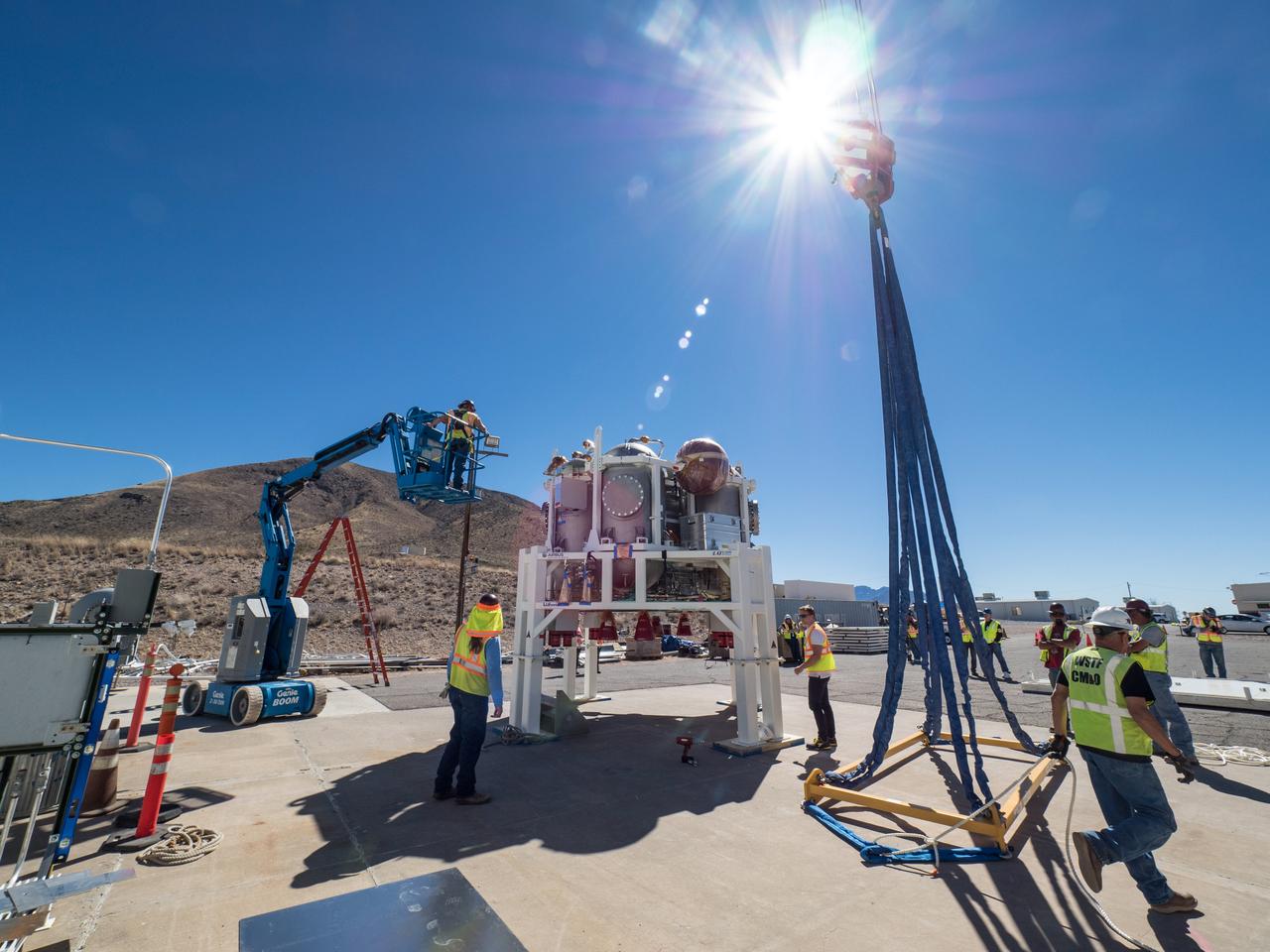
On Feb. 22, engineers successfully install ESA’s European Service Module Propulsion Qualification Module (PQM) at NASA’s White Sands Test Facility in New Mexico that was delivered by Airbus – ESA’s prime contractor for the Service Module. The module will be equipped with a total of 21 engines to support NASA’s Orion spacecraft: one U.S. Space Shuttle Orbital Maneuvering System (OMS) engine, eight auxiliary thrusters and 12 smaller thrusters produced by Airbus Safran Launchers in Germany. The all-steel PQM structure is used to test the propulsion systems on Orion, including “hot firing” of the OMS engine and thrusters.
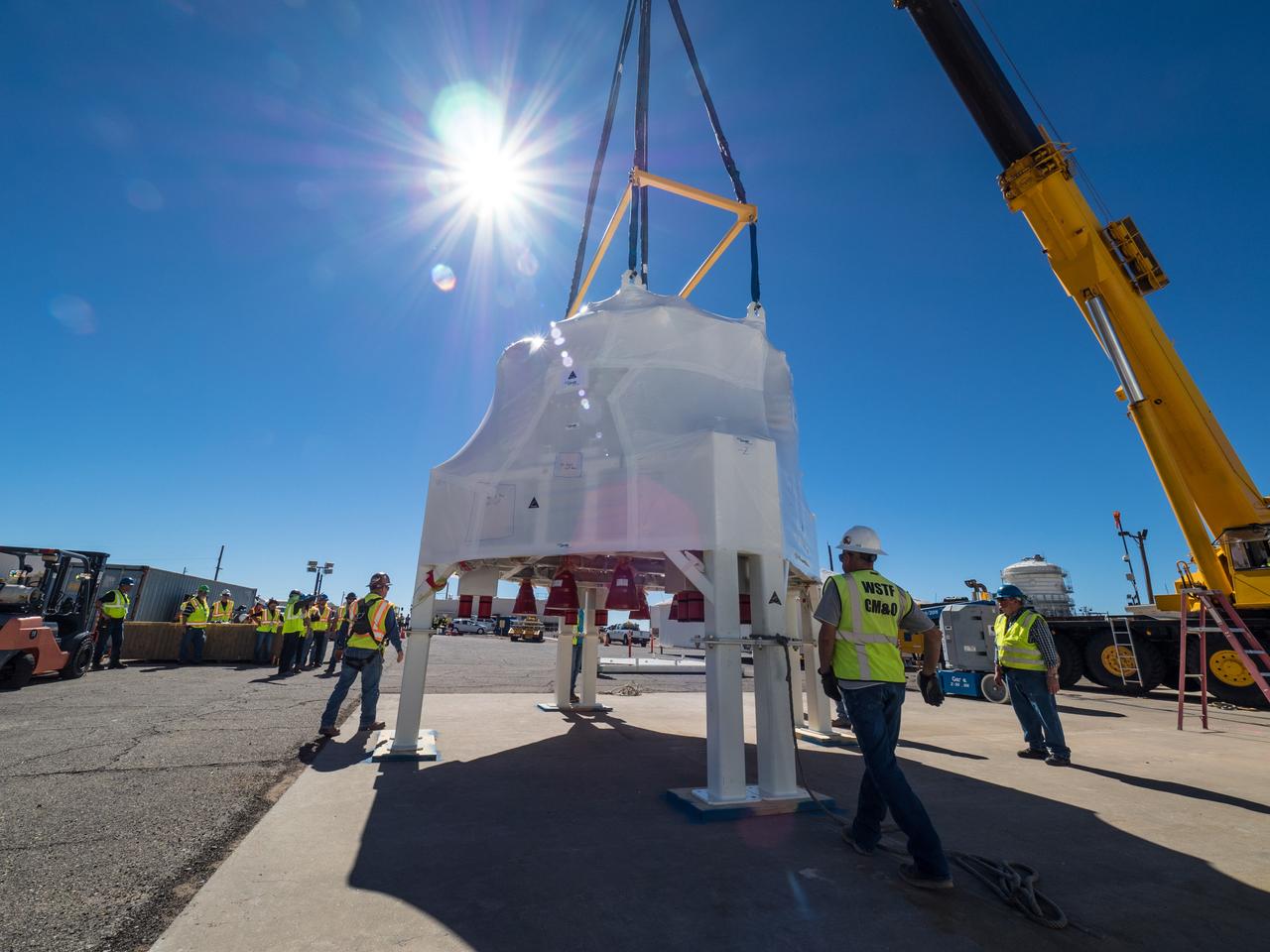
On Feb. 21, 2017 engineers successfully install ESA’s European Service Module Propulsion Qualification Module (PQM) at NASA’s White Sands Test Facility in New Mexico that was delivered by Airbus – ESA’s prime contractor for the Service Module. The module will be equipped with a total of 21 engines to support NASA’s Orion spacecraft: one U.S. Space Shuttle Orbital Maneuvering System (OMS) engine, eight auxiliary thrusters and 12 smaller thrusters produced by Airbus Safran Launchers in Germany. The all-steel PQM structure is used to test the propulsion systems on Orion, including “hot firing” of the OMS engine and thrusters.
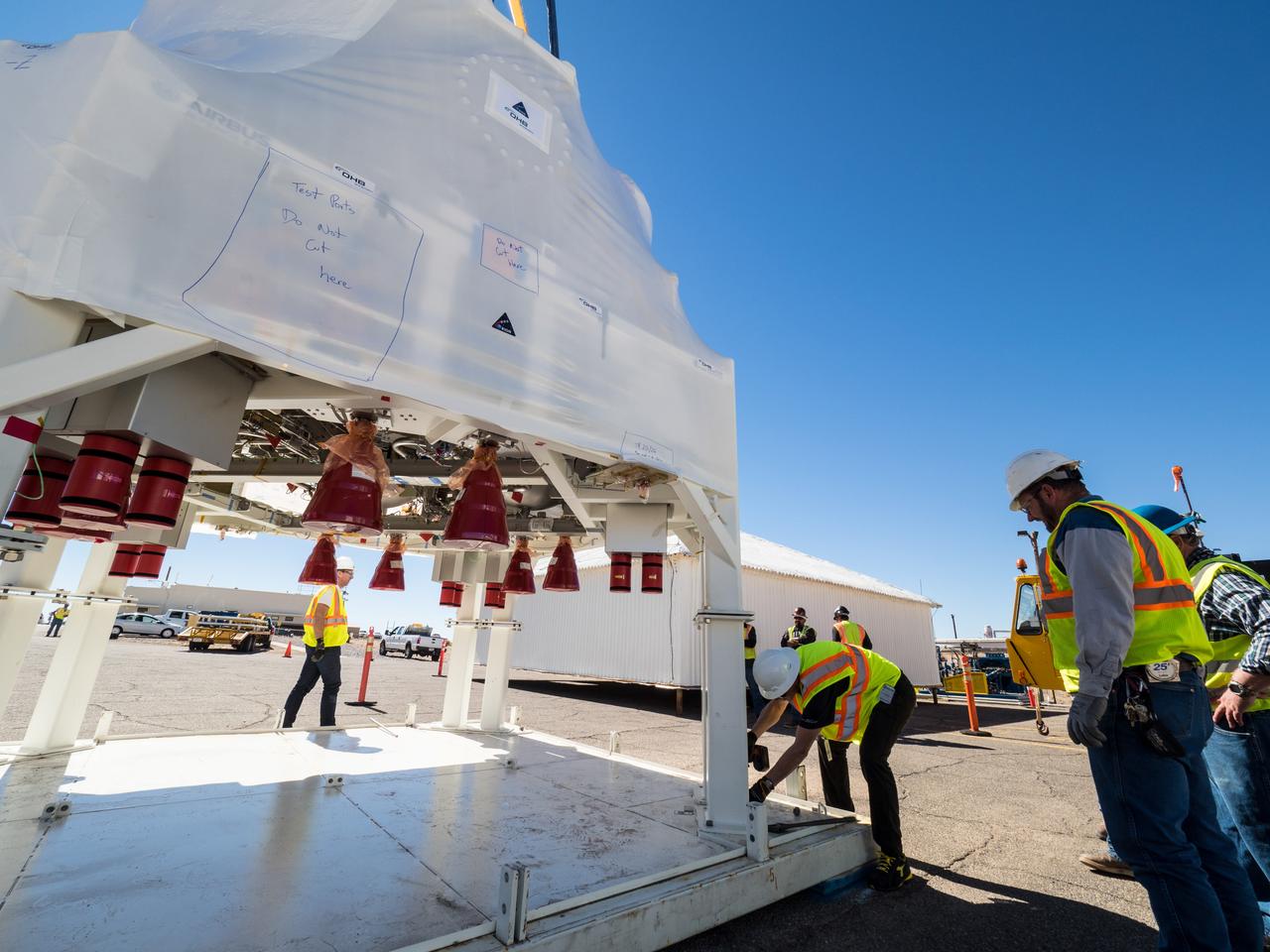
On Feb. 21, 2017 engineers successfully install ESA’s European Service Module Propulsion Qualification Module (PQM) at NASA’s White Sands Test Facility in New Mexico that was delivered by Airbus – ESA’s prime contractor for the Service Module. The module will be equipped with a total of 21 engines to support NASA’s Orion spacecraft: one U.S. Space Shuttle Orbital Maneuvering System (OMS) engine, eight auxiliary thrusters and 12 smaller thrusters produced by Airbus Safran Launchers in Germany. The all-steel PQM structure is used to test the propulsion systems on Orion, including “hot firing” of the OMS engine and thrusters.
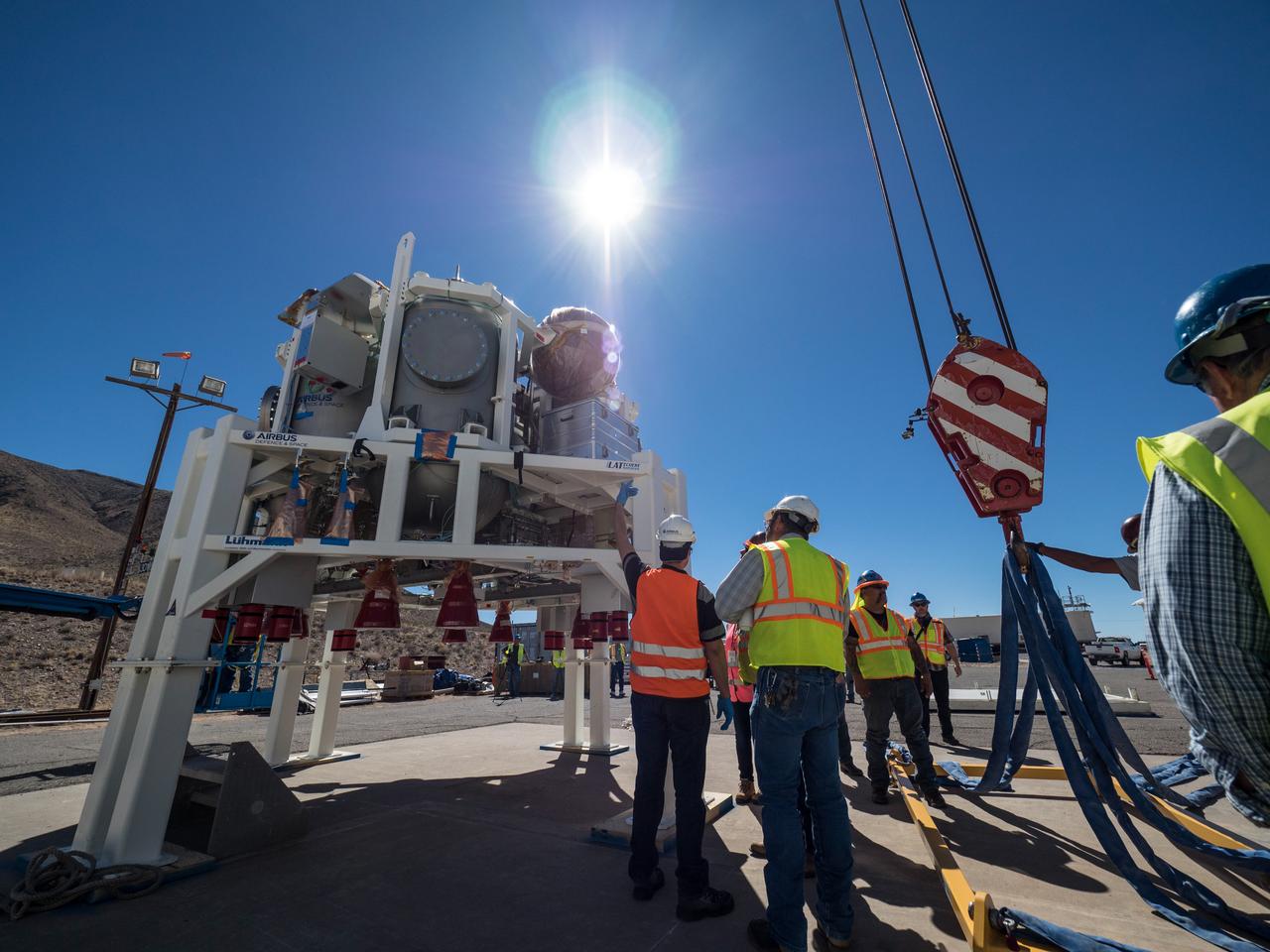
On Feb. 22, engineers successfully install ESA’s European Service Module Propulsion Qualification Module (PQM) at NASA’s White Sands Test Facility in New Mexico that was delivered by Airbus – ESA’s prime contractor for the Service Module. The module will be equipped with a total of 21 engines to support NASA’s Orion spacecraft: one U.S. Space Shuttle Orbital Maneuvering System (OMS) engine, eight auxiliary thrusters and 12 smaller thrusters produced by Airbus Safran Launchers in Germany. The all-steel PQM structure is used to test the propulsion systems on Orion, including “hot firing” of the OMS engine and thrusters.
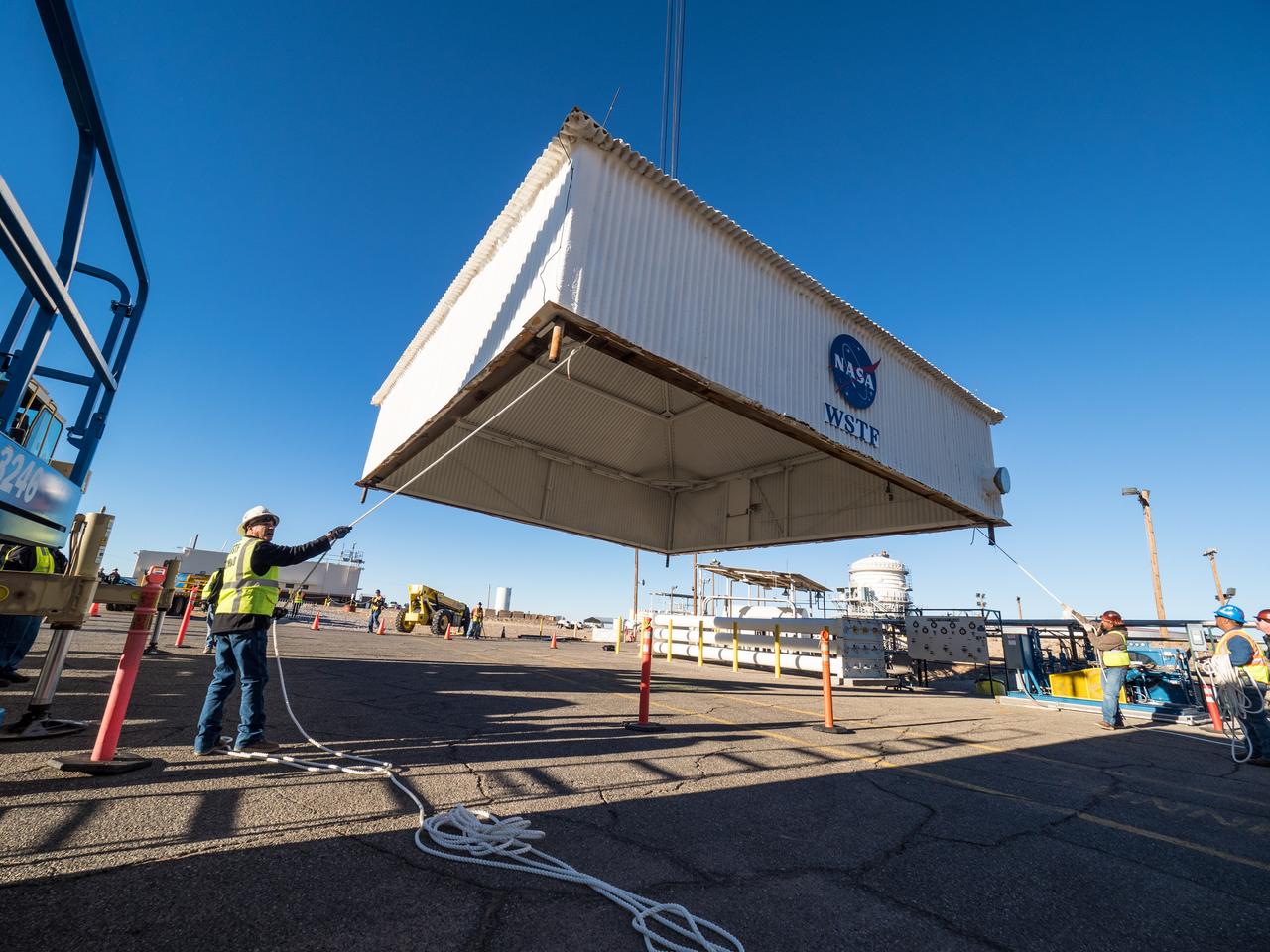
On Feb. 21, 2017 engineers successfully install ESA’s European Service Module Propulsion Qualification Module (PQM) at NASA’s White Sands Test Facility in New Mexico that was delivered by Airbus – ESA’s prime contractor for the Service Module. The module will be equipped with a total of 21 engines to support NASA’s Orion spacecraft: one U.S. Space Shuttle Orbital Maneuvering System (OMS) engine, eight auxiliary thrusters and 12 smaller thrusters produced by Airbus Safran Launchers in Germany. The all-steel PQM structure is used to test the propulsion systems on Orion, including “hot firing” of the OMS engine and thrusters.

On Feb. 21, 2017 engineers successfully install ESA’s European Service Module Propulsion Qualification Module (PQM) at NASA’s White Sands Test Facility in New Mexico that was delivered by Airbus – ESA’s prime contractor for the Service Module. The module will be equipped with a total of 21 engines to support NASA’s Orion spacecraft: one U.S. Space Shuttle Orbital Maneuvering System (OMS) engine, eight auxiliary thrusters and 12 smaller thrusters produced by Airbus Safran Launchers in Germany. The all-steel PQM structure is used to test the propulsion systems on Orion, including “hot firing” of the OMS engine and thrusters.
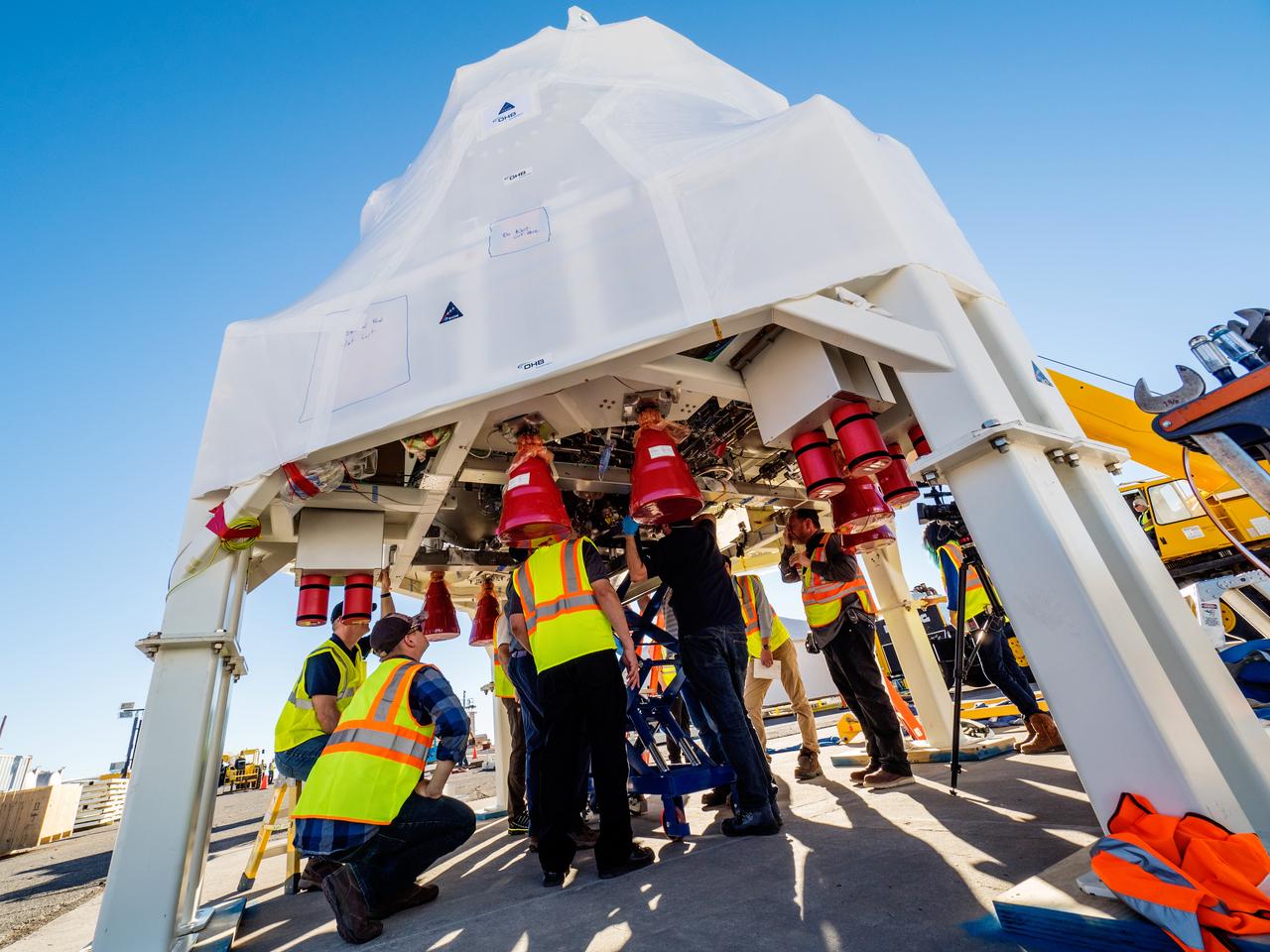
On Feb. 21, 2017 engineers successfully install ESA’s European Service Module Propulsion Qualification Module (PQM) at NASA’s White Sands Test Facility in New Mexico that was delivered by Airbus – ESA’s prime contractor for the Service Module. The module will be equipped with a total of 21 engines to support NASA’s Orion spacecraft: one U.S. Space Shuttle Orbital Maneuvering System (OMS) engine, eight auxiliary thrusters and 12 smaller thrusters produced by Airbus Safran Launchers in Germany. The all-steel PQM structure is used to test the propulsion systems on Orion, including “hot firing” of the OMS engine and thrusters.
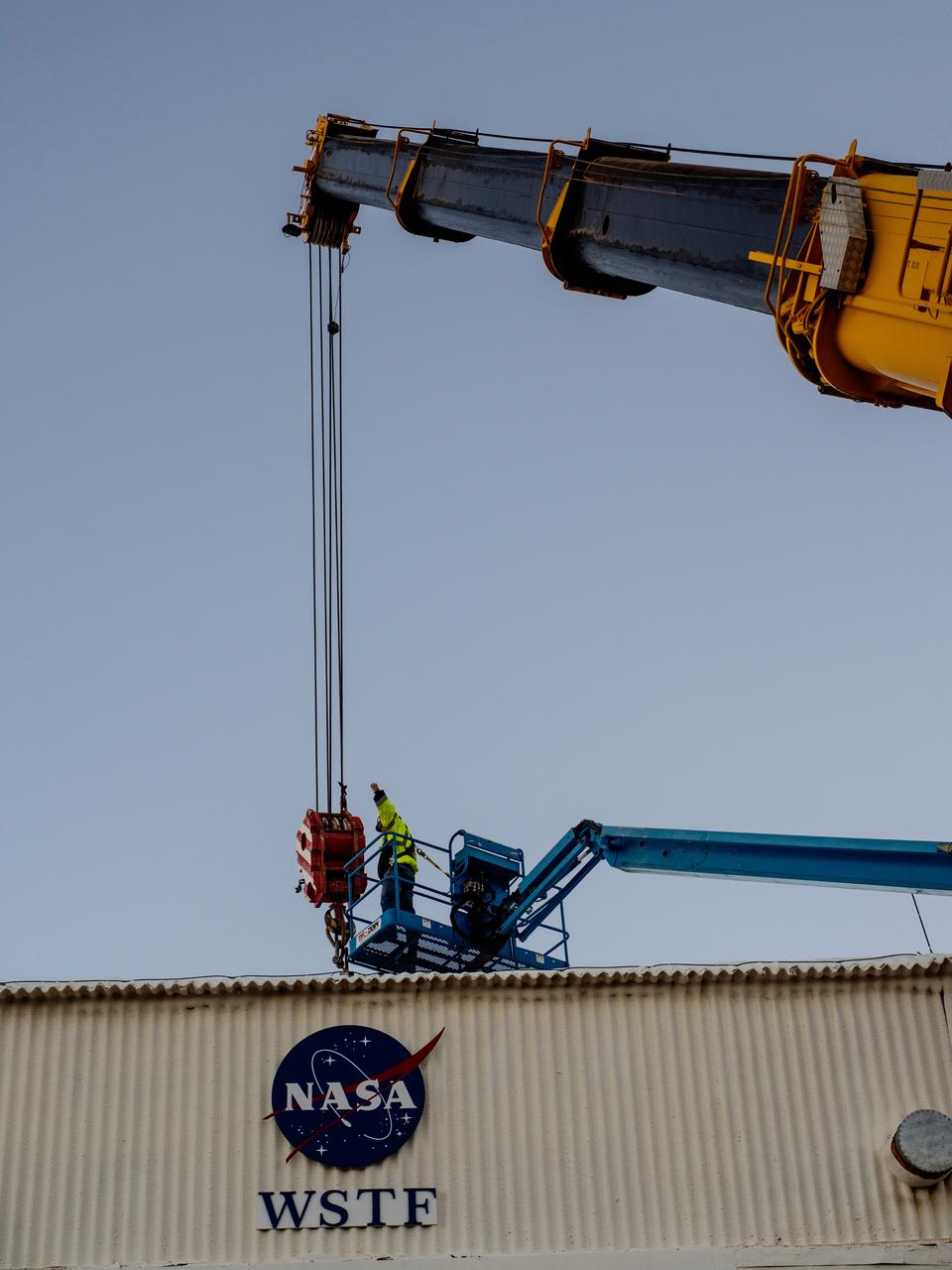
On Feb. 21, 2017 engineers successfully install ESA’s European Service Module Propulsion Qualification Module (PQM) at NASA’s White Sands Test Facility in New Mexico that was delivered by Airbus – ESA’s prime contractor for the Service Module. The module will be equipped with a total of 21 engines to support NASA’s Orion spacecraft: one U.S. Space Shuttle Orbital Maneuvering System (OMS) engine, eight auxiliary thrusters and 12 smaller thrusters produced by Airbus Safran Launchers in Germany. The all-steel PQM structure is used to test the propulsion systems on Orion, including “hot firing” of the OMS engine and thrusters.

On Feb. 21, 2017 engineers successfully install ESA’s European Service Module Propulsion Qualification Module (PQM) at NASA’s White Sands Test Facility in New Mexico that was delivered by Airbus – ESA’s prime contractor for the Service Module. The module will be equipped with a total of 21 engines to support NASA’s Orion spacecraft: one U.S. Space Shuttle Orbital Maneuvering System (OMS) engine, eight auxiliary thrusters and 12 smaller thrusters produced by Airbus Safran Launchers in Germany. The all-steel PQM structure is used to test the propulsion systems on Orion, including “hot firing” of the OMS engine and thrusters.
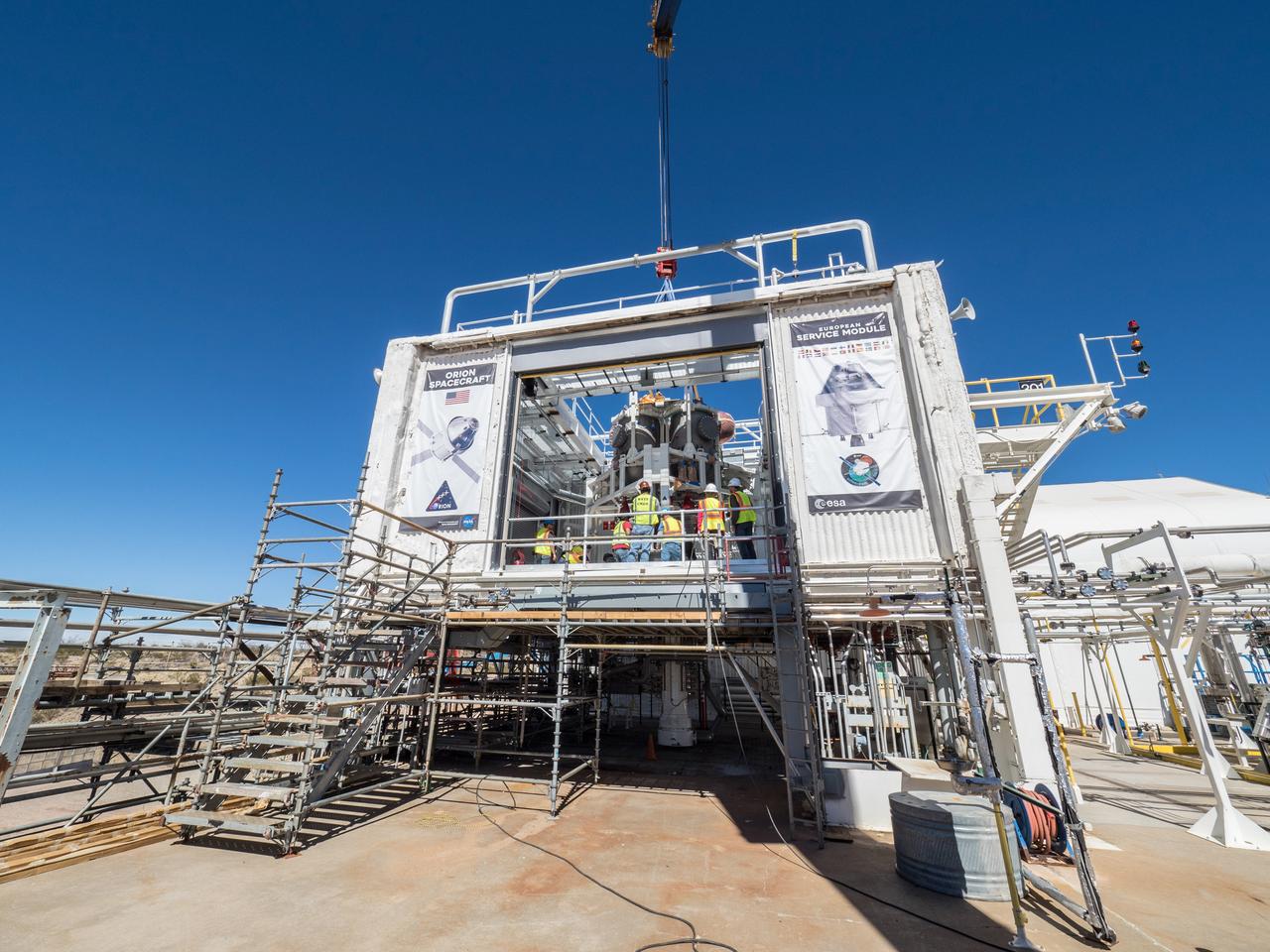
On Feb. 22, engineers successfully install ESA’s European Service Module Propulsion Qualification Module (PQM) at NASA’s White Sands Test Facility in New Mexico that was delivered by Airbus – ESA’s prime contractor for the Service Module. The module will be equipped with a total of 21 engines to support NASA’s Orion spacecraft: one U.S. Space Shuttle Orbital Maneuvering System (OMS) engine, eight auxiliary thrusters and 12 smaller thrusters produced by Airbus Safran Launchers in Germany. The all-steel PQM structure is used to test the propulsion systems on Orion, including “hot firing” of the OMS engine and thrusters.
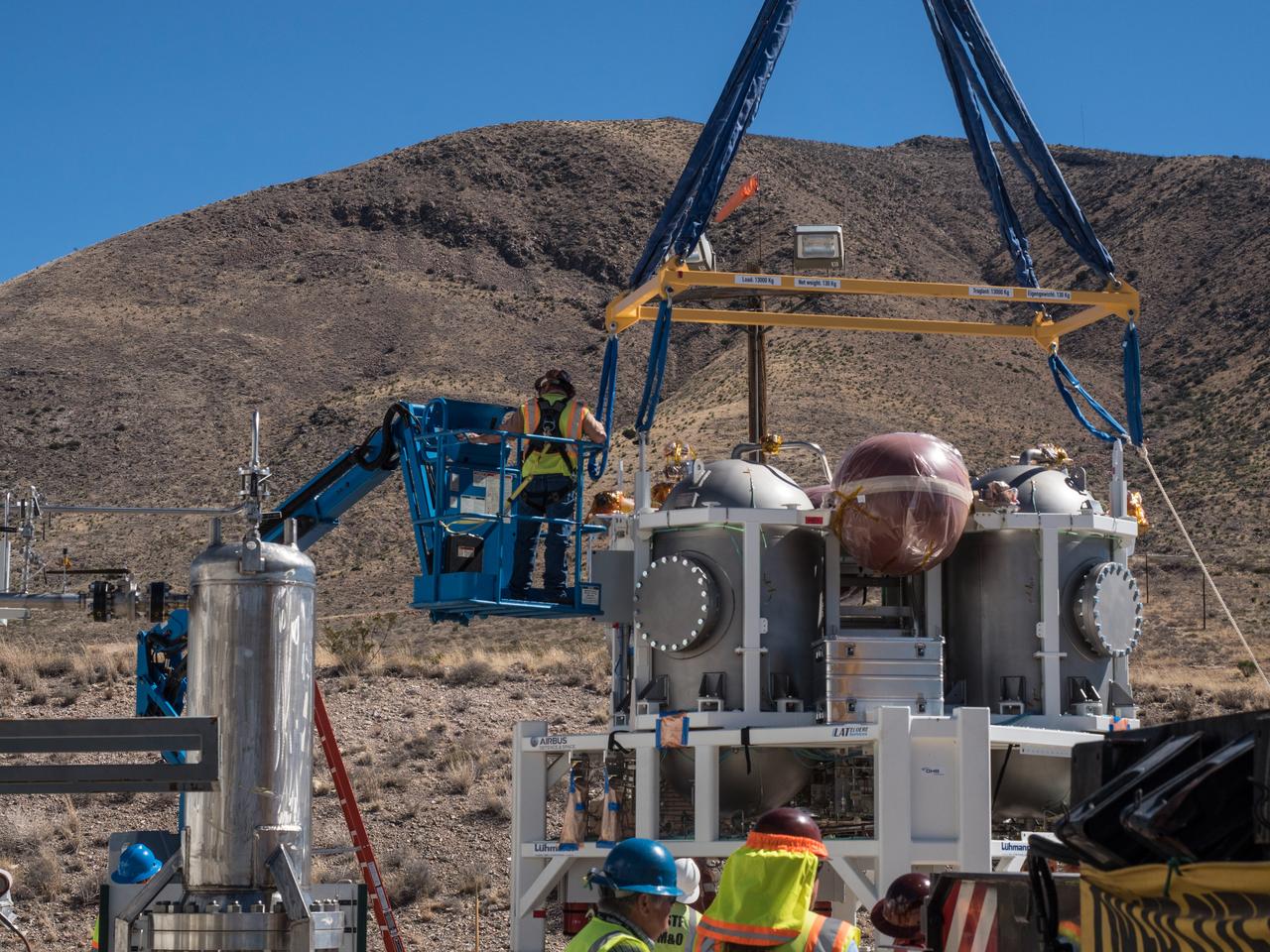
On Feb. 22, engineers successfully install ESA’s European Service Module Propulsion Qualification Module (PQM) at NASA’s White Sands Test Facility in New Mexico that was delivered by Airbus – ESA’s prime contractor for the Service Module. The module will be equipped with a total of 21 engines to support NASA’s Orion spacecraft: one U.S. Space Shuttle Orbital Maneuvering System (OMS) engine, eight auxiliary thrusters and 12 smaller thrusters produced by Airbus Safran Launchers in Germany. The all-steel PQM structure is used to test the propulsion systems on Orion, including “hot firing” of the OMS engine and thrusters.
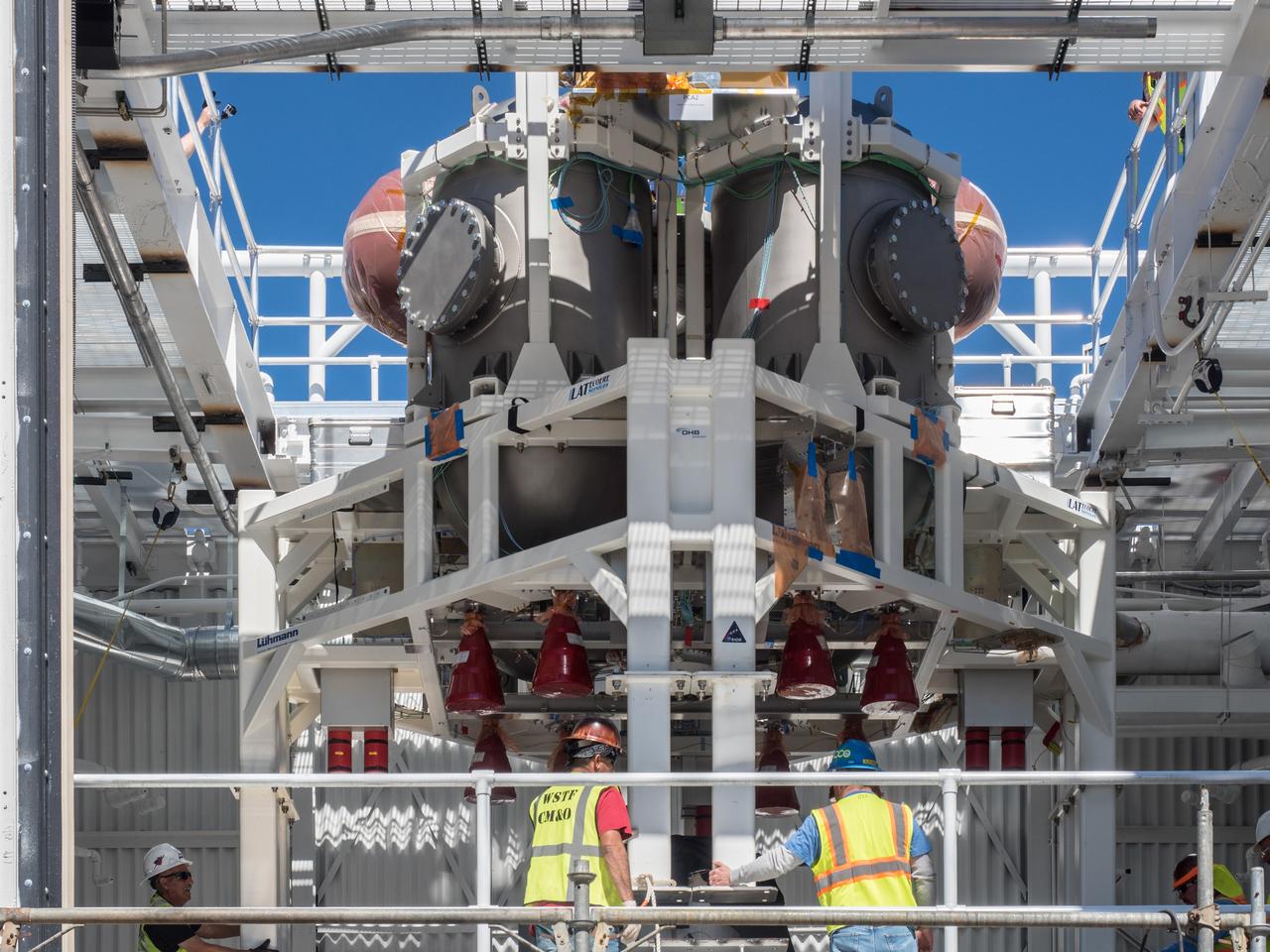
On Feb. 22, engineers successfully install ESA’s European Service Module Propulsion Qualification Module (PQM) at NASA’s White Sands Test Facility in New Mexico that was delivered by Airbus – ESA’s prime contractor for the Service Module. The module will be equipped with a total of 21 engines to support NASA’s Orion spacecraft: one U.S. Space Shuttle Orbital Maneuvering System (OMS) engine, eight auxiliary thrusters and 12 smaller thrusters produced by Airbus Safran Launchers in Germany. The all-steel PQM structure is used to test the propulsion systems on Orion, including “hot firing” of the OMS engine and thrusters.
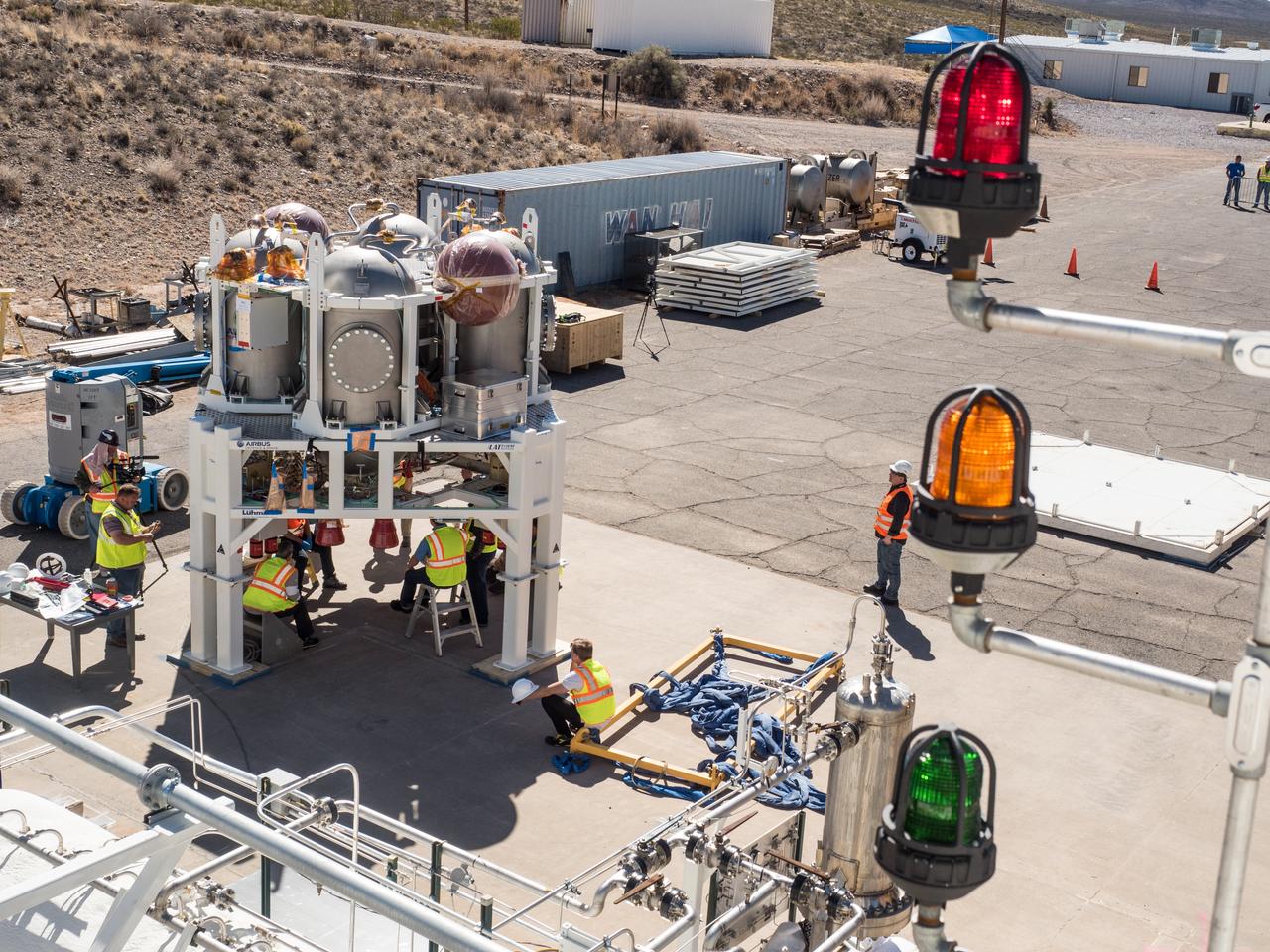
On Feb. 22, engineers successfully install ESA’s European Service Module Propulsion Qualification Module (PQM) at NASA’s White Sands Test Facility in New Mexico that was delivered by Airbus – ESA’s prime contractor for the Service Module. The module will be equipped with a total of 21 engines to support NASA’s Orion spacecraft: one U.S. Space Shuttle Orbital Maneuvering System (OMS) engine, eight auxiliary thrusters and 12 smaller thrusters produced by Airbus Safran Launchers in Germany. The all-steel PQM structure is used to test the propulsion systems on Orion, including “hot firing” of the OMS engine and thrusters.
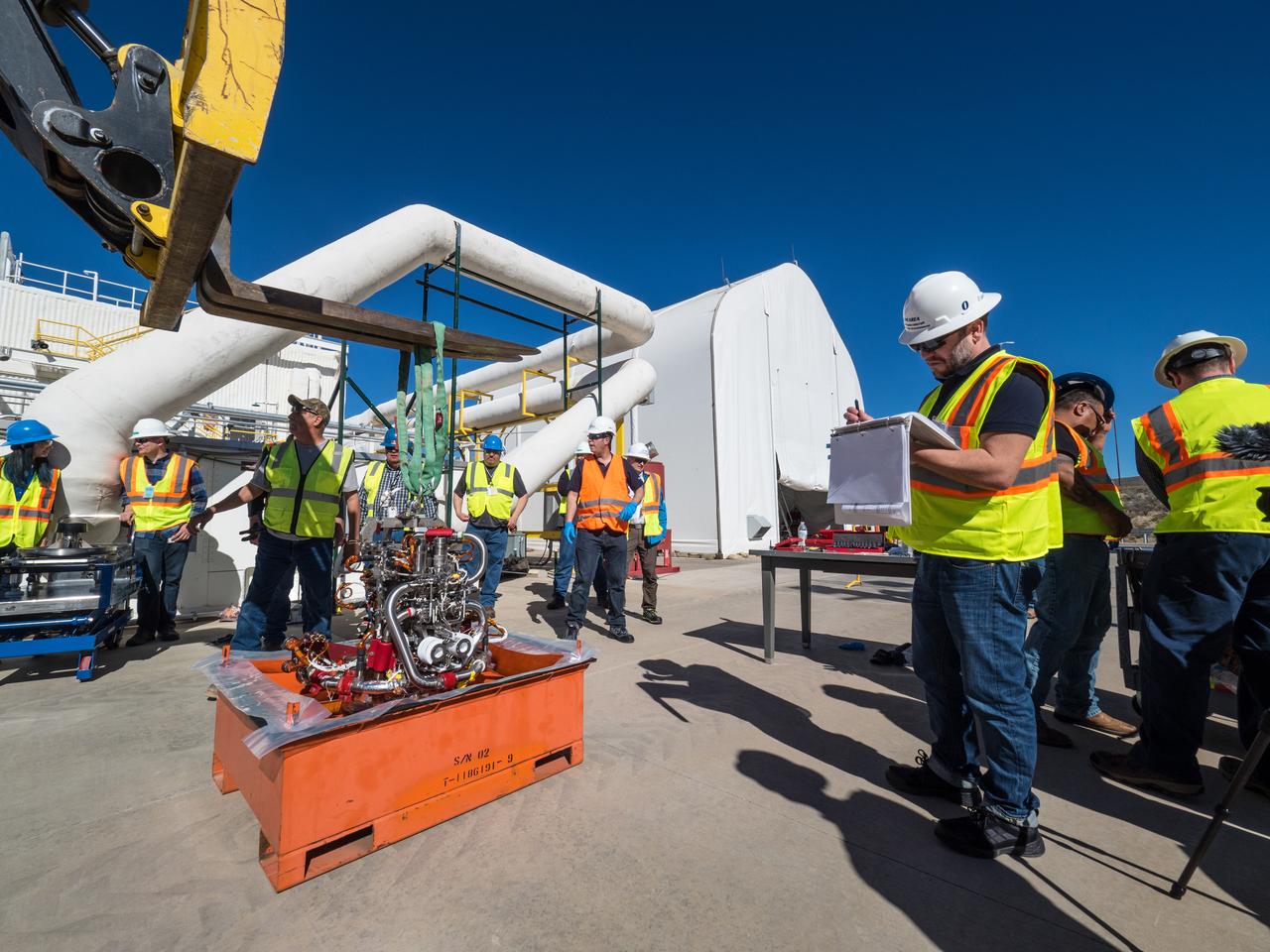
On Feb. 21, 2017 engineers successfully install ESA’s European Service Module Propulsion Qualification Module (PQM) at NASA’s White Sands Test Facility in New Mexico that was delivered by Airbus – ESA’s prime contractor for the Service Module. The module will be equipped with a total of 21 engines to support NASA’s Orion spacecraft: one U.S. Space Shuttle Orbital Maneuvering System (OMS) engine, eight auxiliary thrusters and 12 smaller thrusters produced by Airbus Safran Launchers in Germany. The all-steel PQM structure is used to test the propulsion systems on Orion, including “hot firing” of the OMS engine and thrusters.
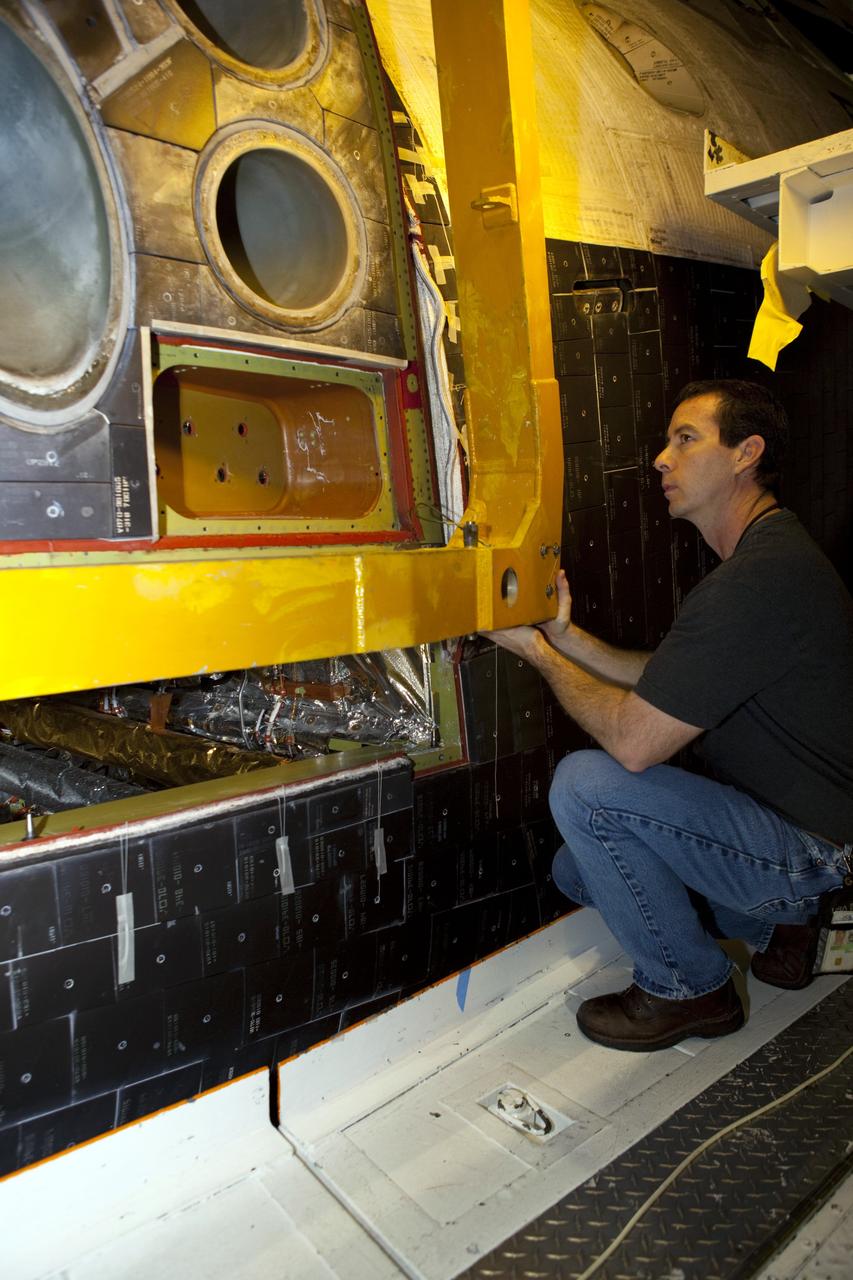
CAPE CANAVERAL, Fla. – In Orbiter Processing Facility-2 at NASA’s Kennedy Space Center in Florida, a technician helps guide a large crane as it lowers the forward reaction control system (FRCS) for installation on space shuttle Endeavour. The work is part of the Space Shuttle Program transition and retirement processing of Endeavour. The FRCS helped maneuver a shuttle while it was in orbit. The FRCS was removed from Endeavour and sent to White Sands Test Facility in N.M. to be cleaned of its toxic propellants. Endeavour is being prepared for display at the California Science Center in Los Angeles. Photo credit: NASA/Dimitri Gerondidakis
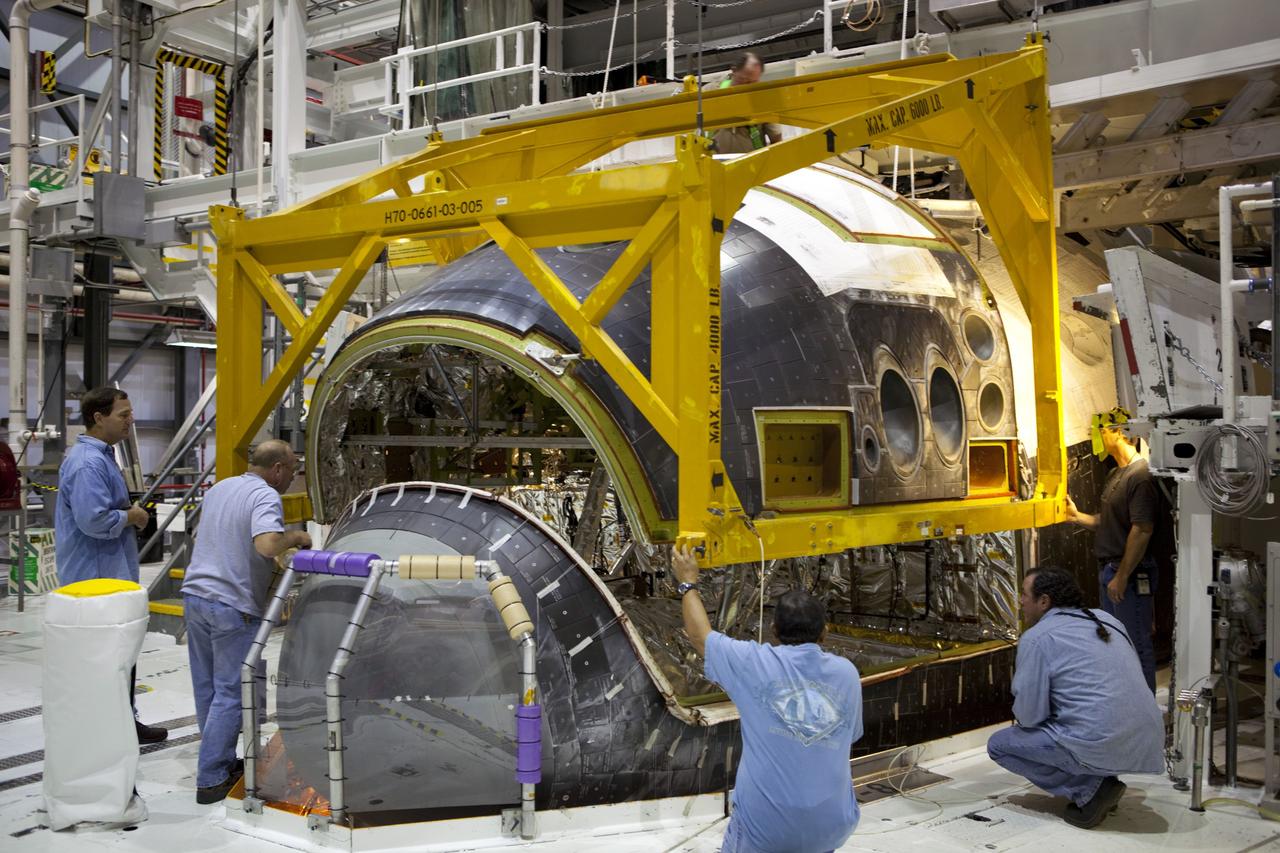
CAPE CANAVERAL, Fla. – In Orbiter Processing Facility-2 at NASA’s Kennedy Space Center in Florida, technicians help guide a large crane as it lowers the forward reaction control system (FRCS) for installation on space shuttle Endeavour. The work is part of the Space Shuttle Program transition and retirement processing of Endeavour. The FRCS helped maneuver a shuttle while it was in orbit. The FRCS was removed from Endeavour and sent to White Sands Test Facility in N.M. to be cleaned of its toxic propellants. Endeavour is being prepared for display at the California Science Center in Los Angeles. Photo credit: NASA/Dimitri Gerondidakis
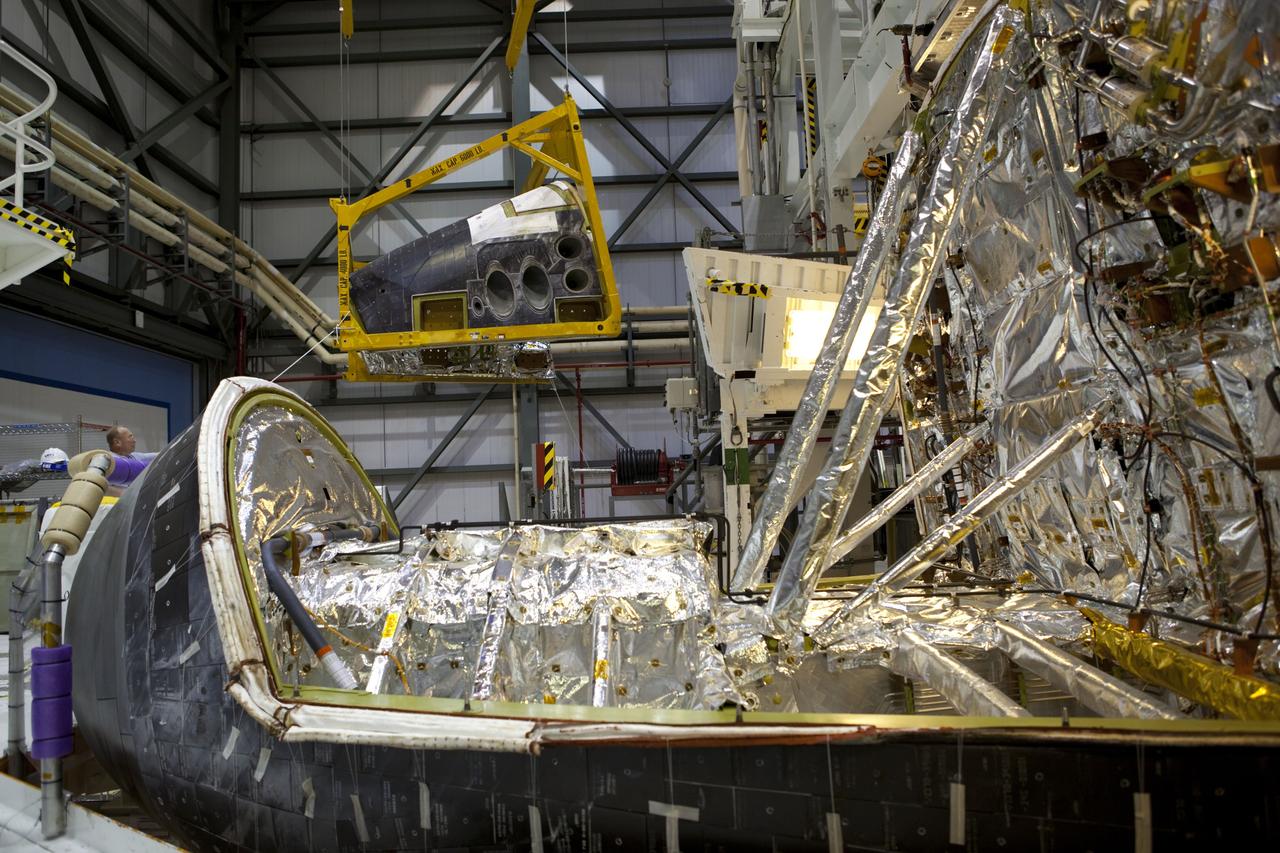
CAPE CANAVERAL, Fla. – In Orbiter Processing Facility-2 at NASA’s Kennedy Space Center in Florida, technicians monitor the progress as a large crane lifts and moves the forward reaction control system (FRCS) for installation on space shuttle Endeavour. The work is part of the Space Shuttle Program transition and retirement processing of Endeavour. The FRCS helped maneuver a shuttle while it was in orbit. The FRCS was removed from Endeavour and sent to White Sands Test Facility in N.M. to be cleaned of its toxic propellants. Endeavour is being prepared for display at the California Science Center in Los Angeles. Photo credit: NASA/Dimitri Gerondidakis
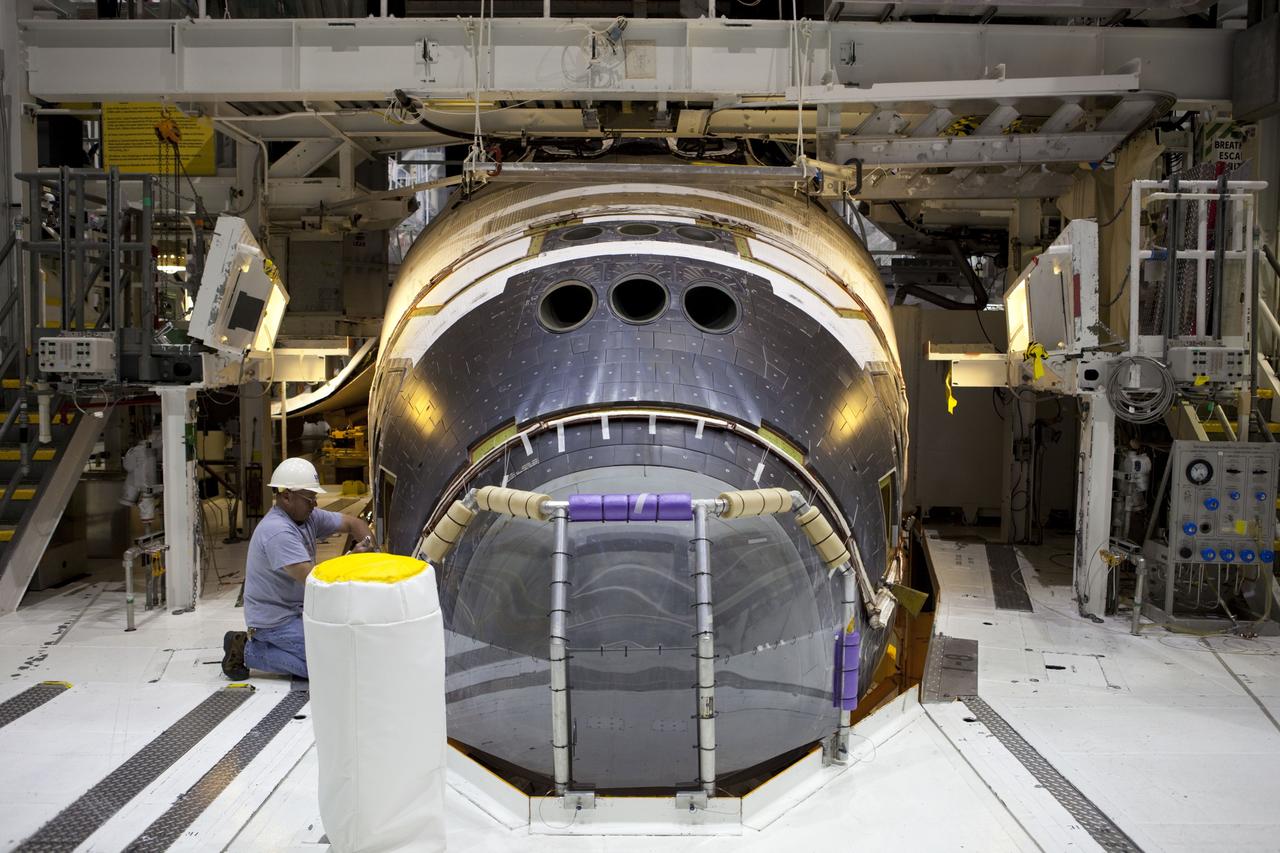
CAPE CANAVERAL, Fla. – In Orbiter Processing Facility-2 at NASA’s Kennedy Space Center in Florida, one of several technicians installs the forward reaction control system (FRCS) on space shuttle Endeavour. The work is part of the Space Shuttle Program transition and retirement processing of Endeavour. The FRCS helped maneuver a shuttle while it was in orbit. The FRCS was removed from Endeavour and sent to White Sands Test Facility in N.M. to be cleaned of its toxic propellants. Endeavour is being prepared for display at the California Science Center in Los Angeles. Photo credit: NASA/Dimitri Gerondidakis
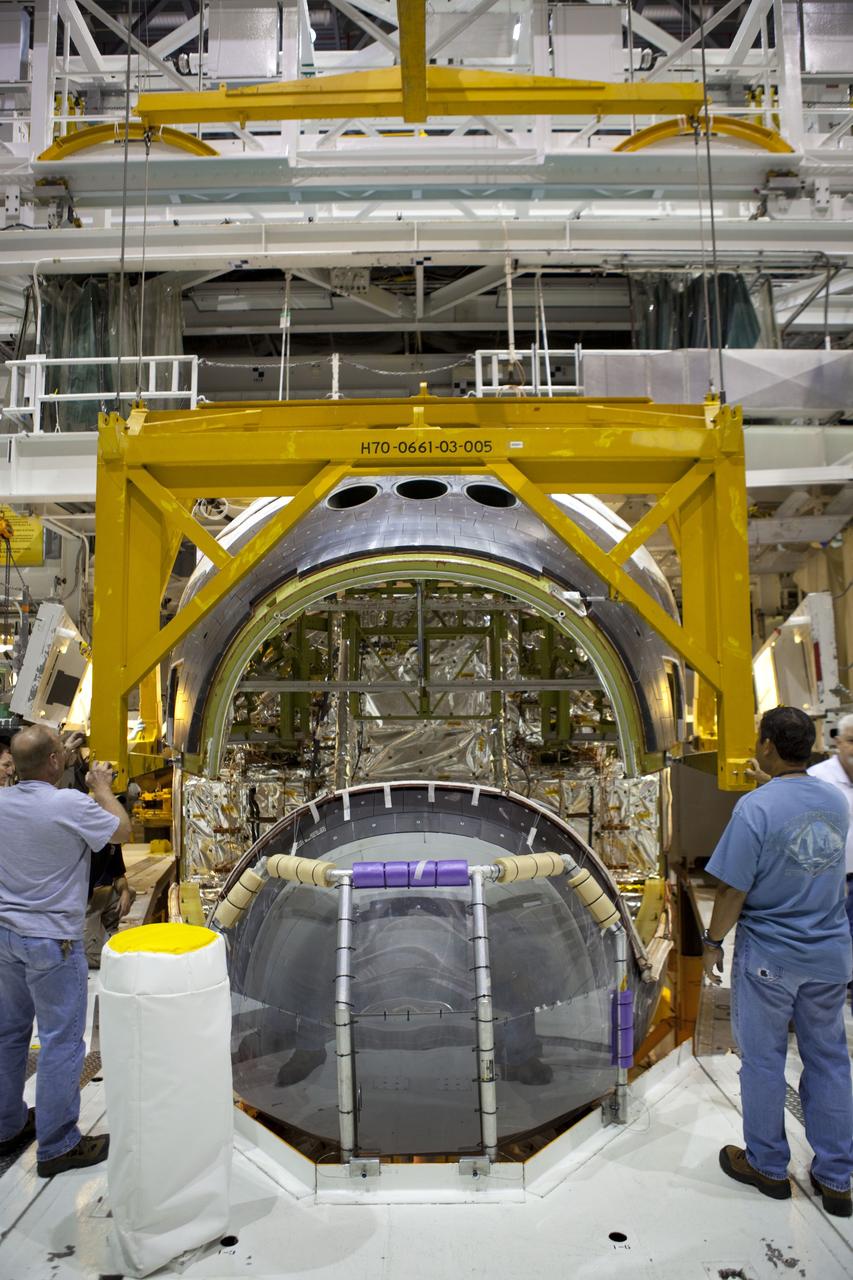
CAPE CANAVERAL, Fla. –In Orbiter Processing Facility-2 at NASA’s Kennedy Space Center in Florida, technicians assist as a large crane lowers the forward reaction control system (FRCS) for installation on space shuttle Endeavour. The work is part of the Space Shuttle Program transition and retirement processing of Endeavour. The FRCS helped maneuver a shuttle while it was in orbit. The FRCS was removed from Endeavour and sent to White Sands Test Facility in N.M. to be cleaned of its toxic propellants. Endeavour is being prepared for display at the California Science Center in Los Angeles. Photo credit: NASA/Dimitri Gerondidakis
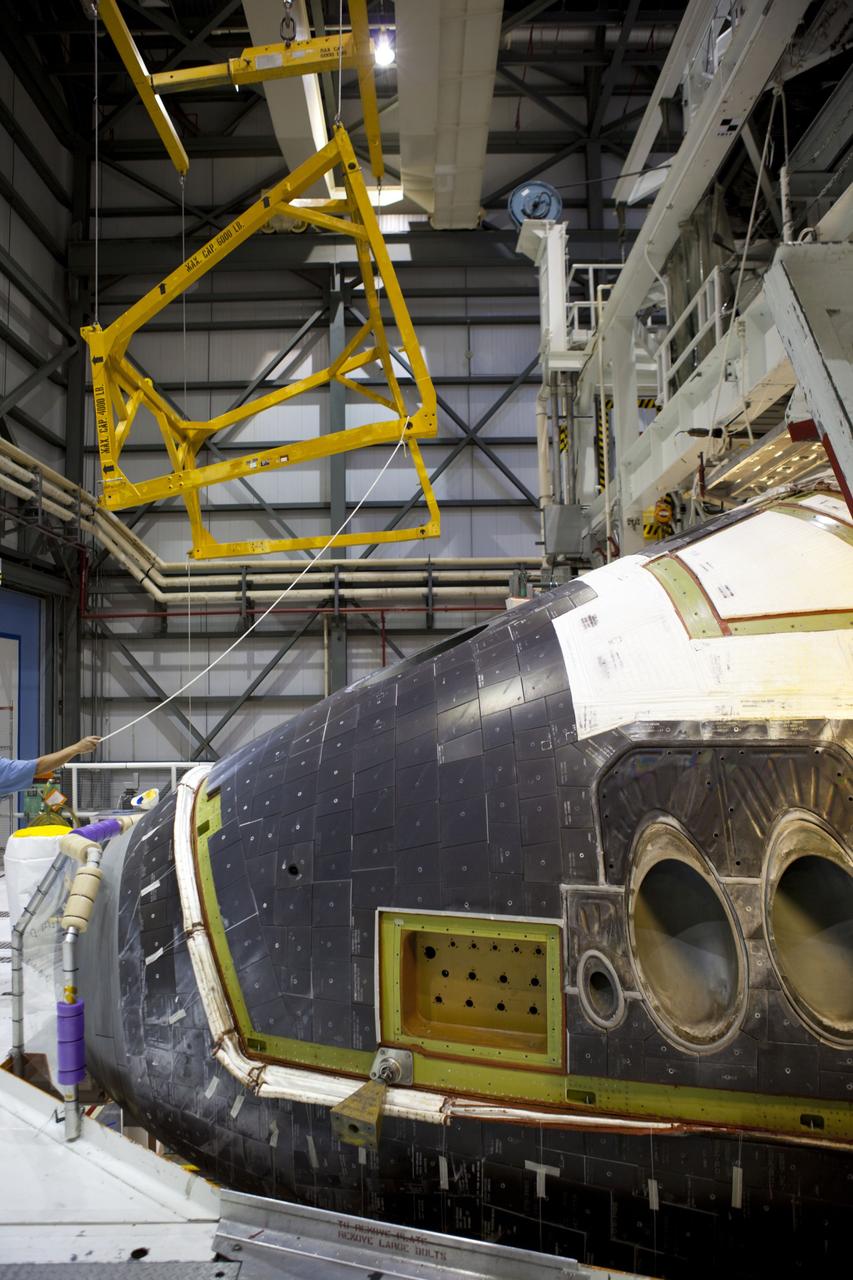
CAPE CANAVERAL, Fla. – In Orbiter Processing Facility-2 at NASA’s Kennedy Space Center in Florida, a large crane is lifted away after it was used to lower the forward reaction control system (FRCS) for installation on space shuttle Endeavour. The work is part of the Space Shuttle Program transition and retirement processing of Endeavour. The FRCS helped maneuver a shuttle while it was in orbit. The FRCS was removed from Endeavour and sent to White Sands Test Facility in N.M. to be cleaned of its toxic propellants. Endeavour is being prepared for display at the California Science Center in Los Angeles. Photo credit: NASA/Dimitri Gerondidakis
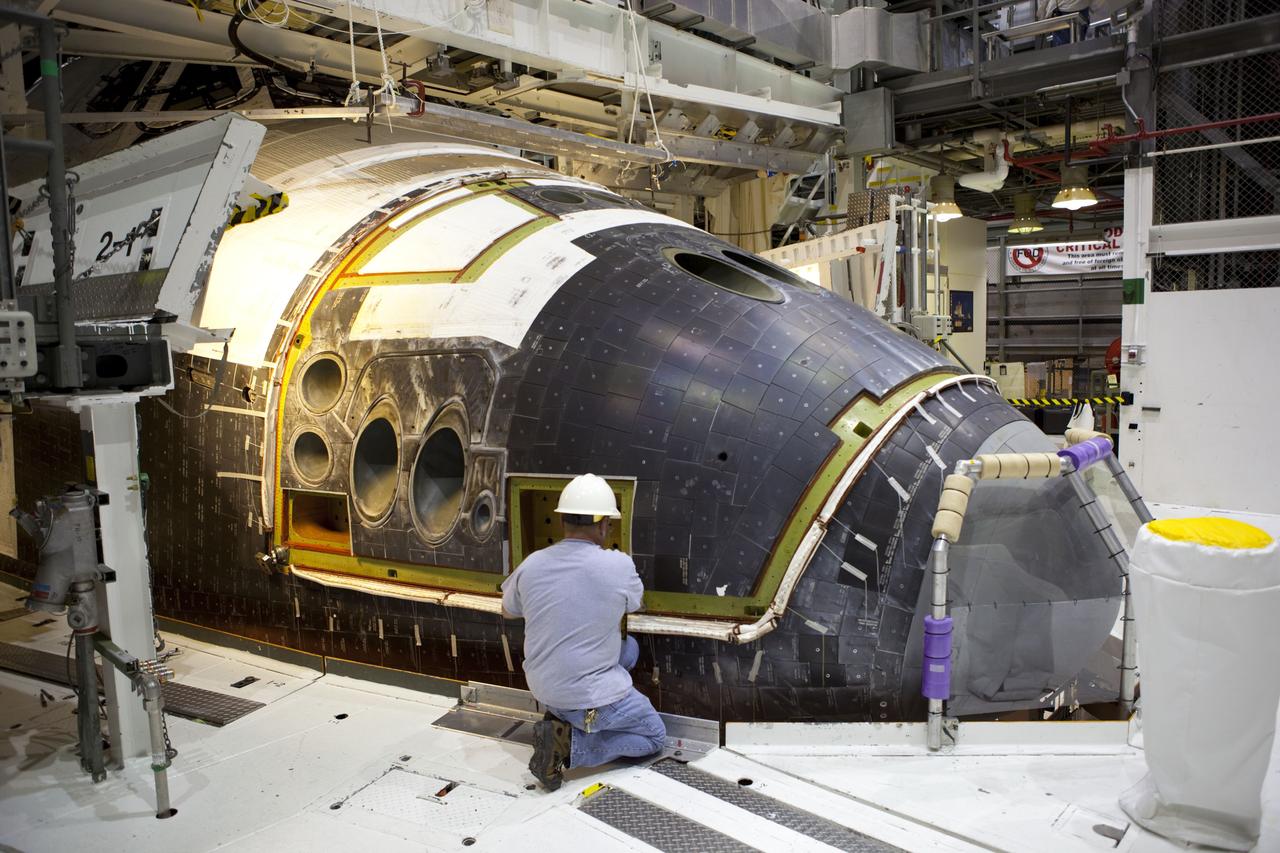
CAPE CANAVERAL, Fla. – In Orbiter Processing Facility-2 at NASA’s Kennedy Space Center in Florida, one of several technicians installs the forward reaction control system (FRCS) on space shuttle Endeavour. The work is part of the Space Shuttle Program transition and retirement processing of Endeavour. The FRCS helped maneuver a shuttle while it was in orbit. The FRCS was removed from Endeavour and sent to White Sands Test Facility in N.M. to be cleaned of its toxic propellants. Endeavour is being prepared for display at the California Science Center in Los Angeles. Photo credit: NASA/Dimitri Gerondidakis
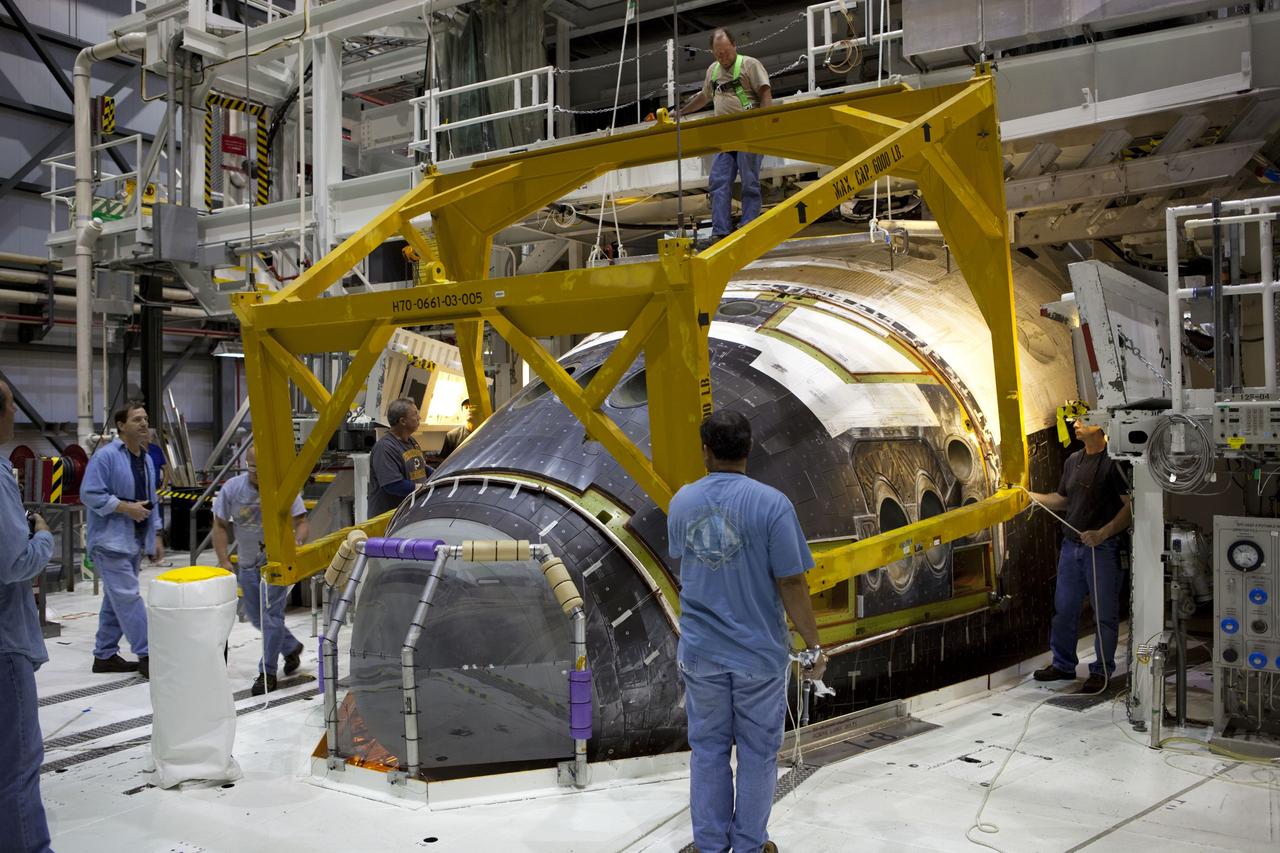
CAPE CANAVERAL, Fla. – In Orbiter Processing Facility-2 at NASA’s Kennedy Space Center in Florida, technicians help lift away the large crane that was used to lower the forward reaction control system (FRCS) for installation on space shuttle Endeavour. The work is part of the Space Shuttle Program transition and retirement processing of Endeavour. The FRCS helped maneuver a shuttle while it was in orbit. The FRCS was removed from Endeavour and sent to White Sands Test Facility in N.M. to be cleaned of its toxic propellants. Endeavour is being prepared for display at the California Science Center in Los Angeles. Photo credit: NASA/Dimitri Gerondidakis
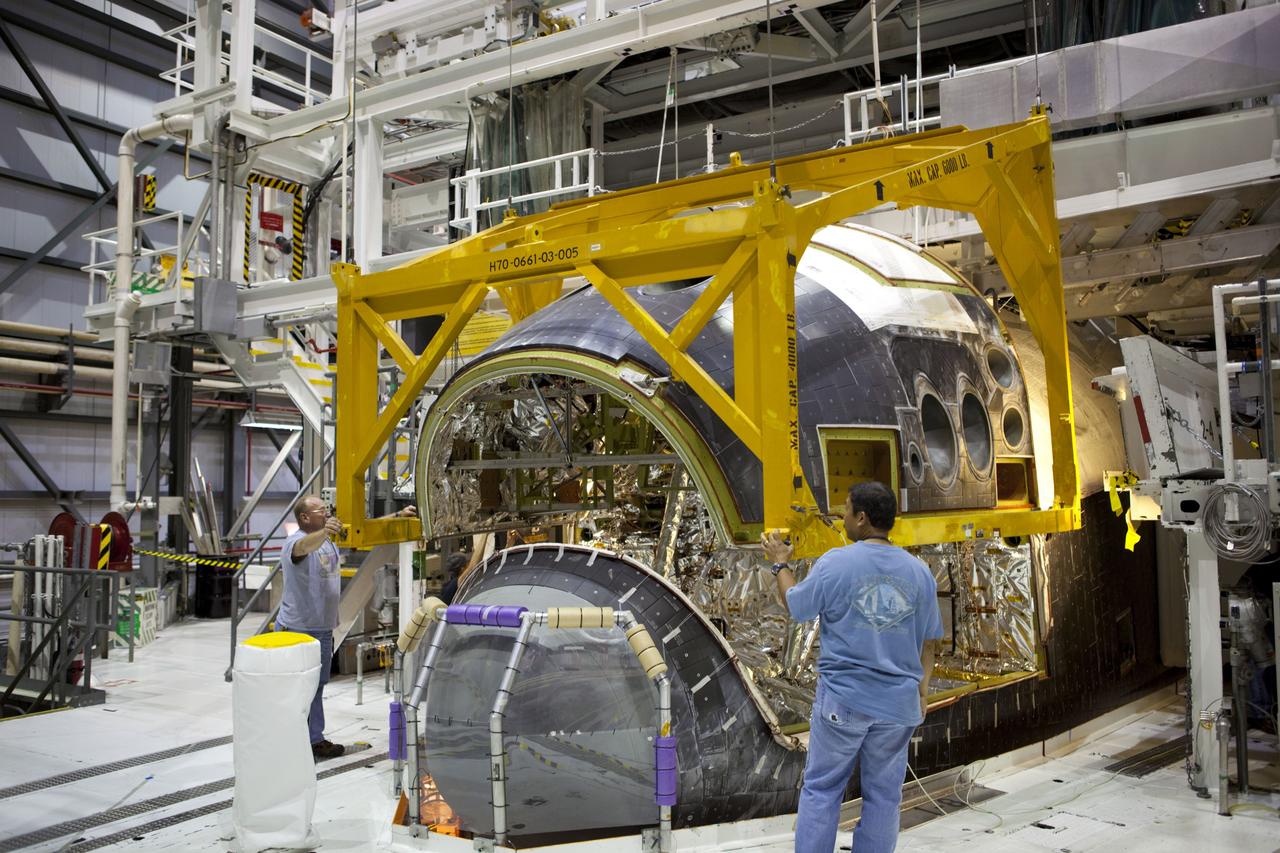
CAPE CANAVERAL, Fla. – In Orbiter Processing Facility-2 at NASA’s Kennedy Space Center in Florida, technicians help guide a large crane as it lowers the forward reaction control system (FRCS) for installation on space shuttle Endeavour. The work is part of the Space Shuttle Program transition and retirement processing of Endeavour. The FRCS helped maneuver a shuttle while it was in orbit. The FRCS was removed from Endeavour and sent to White Sands Test Facility in N.M. to be cleaned of its toxic propellants. Endeavour is being prepared for display at the California Science Center in Los Angeles. Photo credit: NASA/Dimitri Gerondidakis
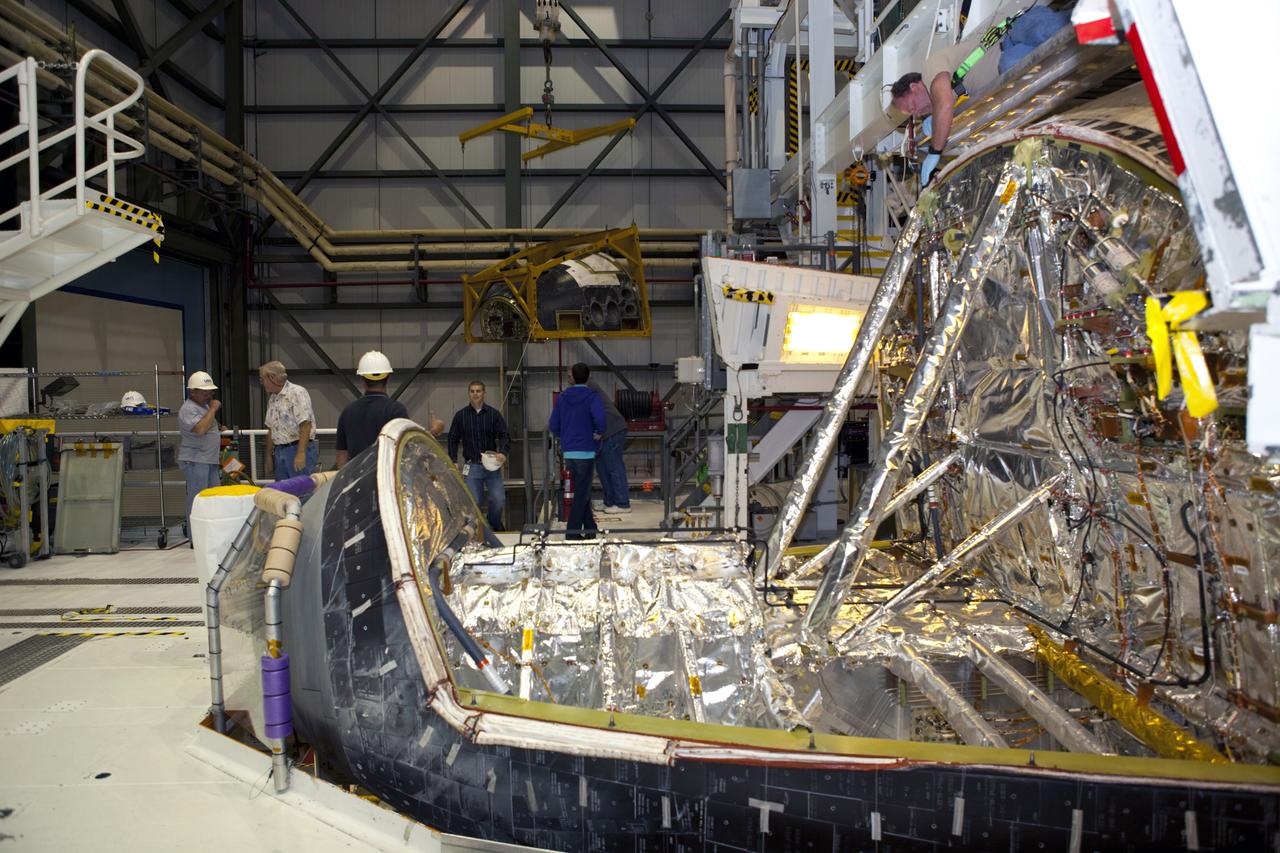
CAPE CANAVERAL, Fla. – In Orbiter Processing Facility-2 at NASA’s Kennedy Space Center in Florida, technicians monitor the progress as a large crane lifts and moves the forward reaction control system (FRCS) for installation on space shuttle Endeavour. The work is part of the Space Shuttle Program transition and retirement processing of Endeavour. The FRCS helped maneuver a shuttle while it was in orbit. The FRCS was removed from Endeavour and sent to White Sands Test Facility in N.M. to be cleaned of its toxic propellants. Endeavour is being prepared for display at the California Science Center in Los Angeles. Photo credit: NASA/Dimitri Gerondidakis
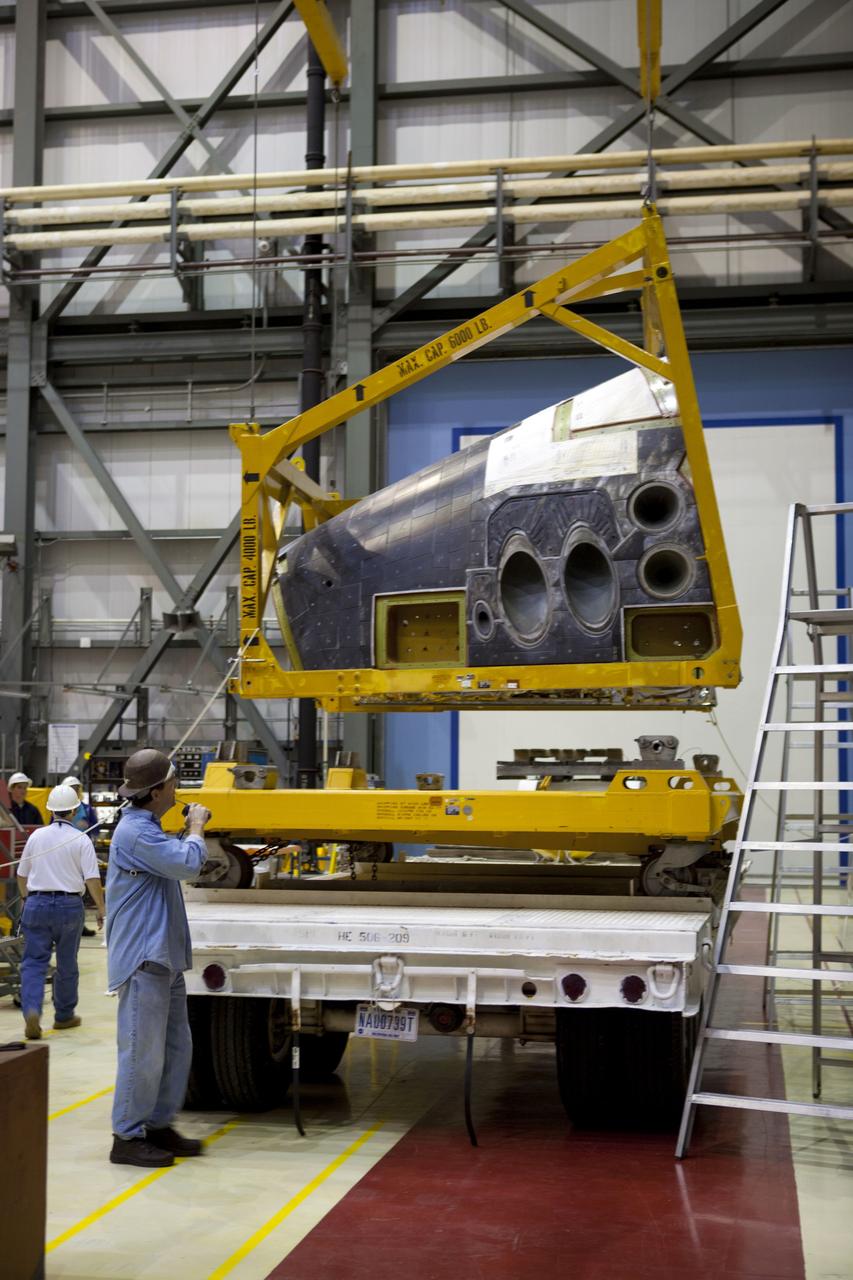
CAPE CANAVERAL, Fla. – In Orbiter Processing Facility-2 at NASA’s Kennedy Space Center in Florida, a technician monitors the progress as a large crane lifts the forward reaction control system (FRCS) for installation on space shuttle Endeavour. The work is part of the Space Shuttle Program transition and retirement processing of Endeavour. The FRCS helped maneuver a shuttle while it was in orbit. The FRCS was removed from Endeavour and sent to White Sands Test Facility in N.M. to be cleaned of its toxic propellants. Endeavour is being prepared for display at the California Science Center in Los Angeles. Photo credit: NASA/Dimitri Gerondidakis
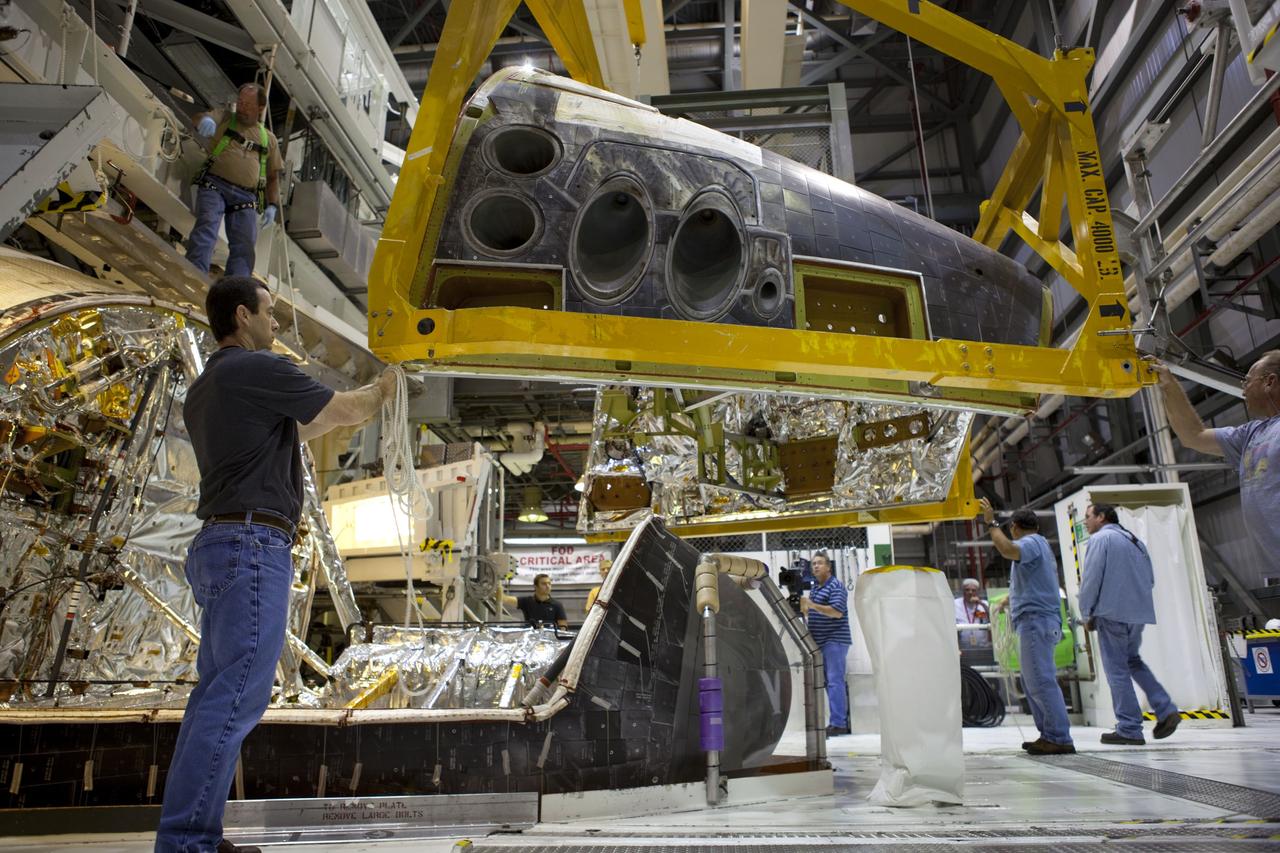
CAPE CANAVERAL, Fla. – In Orbiter Processing Facility-2 at NASA’s Kennedy Space Center in Florida, technicians assist as a large crane lowers the forward reaction control system (FRCS) for installation on space shuttle Endeavour. The work is part of the Space Shuttle Program transition and retirement processing of Endeavour. The FRCS helped maneuver a shuttle while it was in orbit. The FRCS was removed from Endeavour and sent to White Sands Test Facility in N.M. to be cleaned of its toxic propellants. Endeavour is being prepared for display at the California Science Center in Los Angeles. Photo credit: NASA/Dimitri Gerondidakis
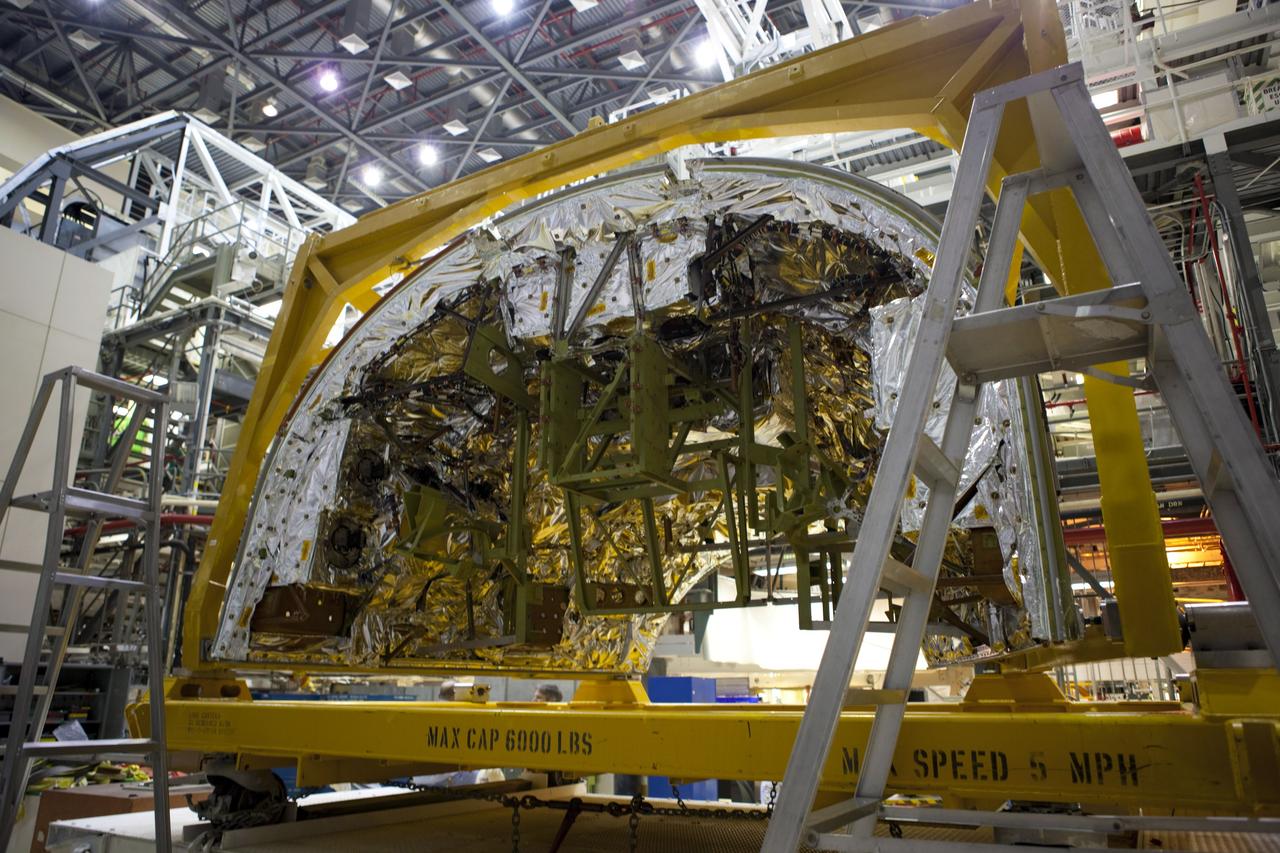
CAPE CANAVERAL, Fla. – In Orbiter Processing Facility-2 at NASA’s Kennedy Space Center in Florida, the forward reaction control system (FRCS) has been prepared to be lifted and installed on space shuttle Endeavour. The work is part of the Space Shuttle Program transition and retirement processing of Endeavour. The FRCS helped maneuver a shuttle while it was in orbit. The FRCS was removed from Endeavour and sent to White Sands Test Facility in N.M. to be cleaned of its toxic propellants. Endeavour is being prepared for display at the California Science Center in Los Angeles. Photo credit: NASA/Dimitri Gerondidakis
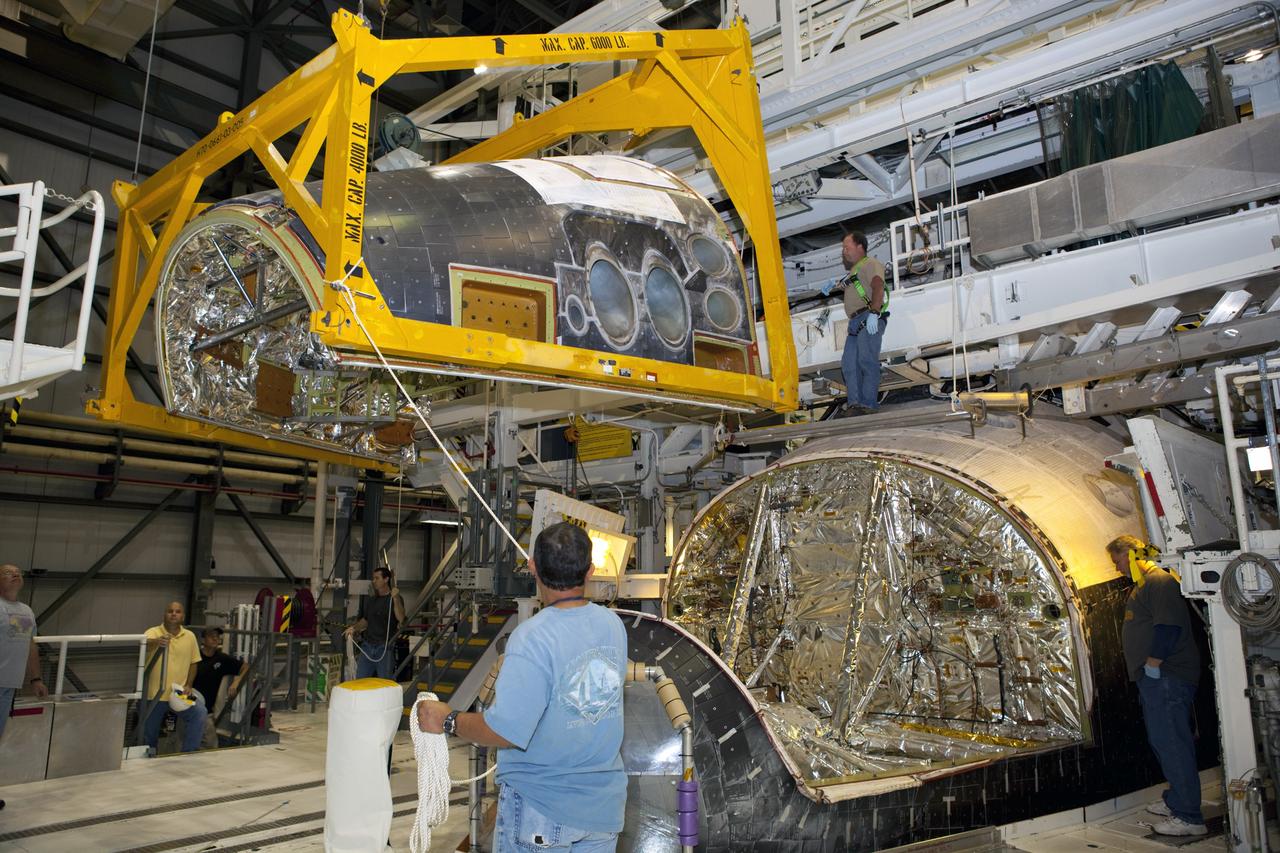
CAPE CANAVERAL, Fla. – In Orbiter Processing Facility-2 at NASA’s Kennedy Space Center in Florida, technicians monitor the progress as a large crane lifts and moves the forward reaction control system (FRCS) closer for installation on space shuttle Endeavour. The work is part of the Space Shuttle Program transition and retirement processing of Endeavour. The FRCS helped maneuver a shuttle while it was in orbit. The FRCS was removed from Endeavour and sent to White Sands Test Facility in N.M. to be cleaned of its toxic propellants. Endeavour is being prepared for display at the California Science Center in Los Angeles. Photo credit: NASA/Dimitri Gerondidakis
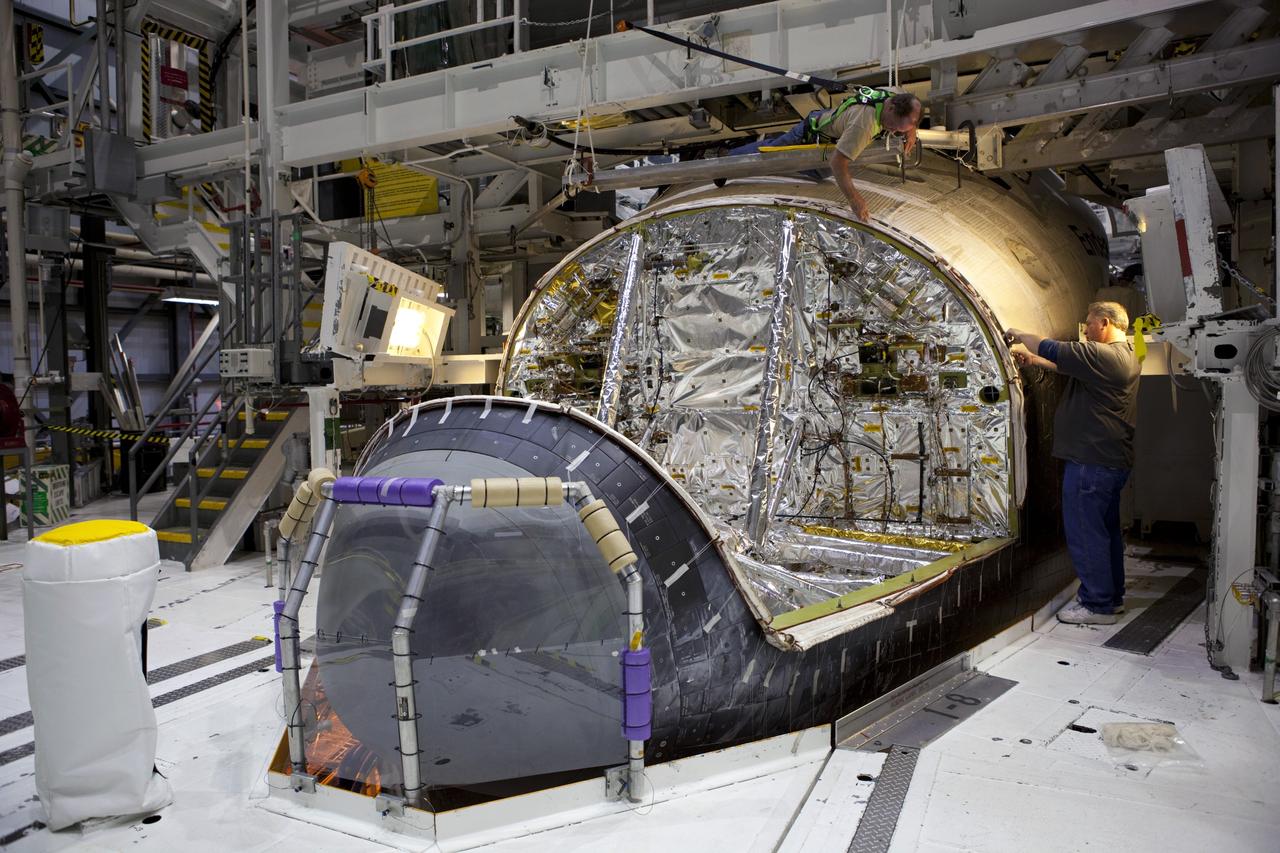
CAPE CANAVERAL, Fla. – In Orbiter Processing Facility-2 at NASA’s Kennedy Space Center in Florida, technicians prepare space shuttle Endeavour so that the forward reaction control system (FRCS) can be lifted and installed. The work is part of the Space Shuttle Program transition and retirement processing of Endeavour. The FRCS helped maneuver a shuttle while it was in orbit. The FRCS was removed from Endeavour and sent to White Sands Test Facility in N.M. to be cleaned of its toxic propellants. Endeavour is being prepared for display at the California Science Center in Los Angeles. Photo credit: NASA/Dimitri Gerondidakis
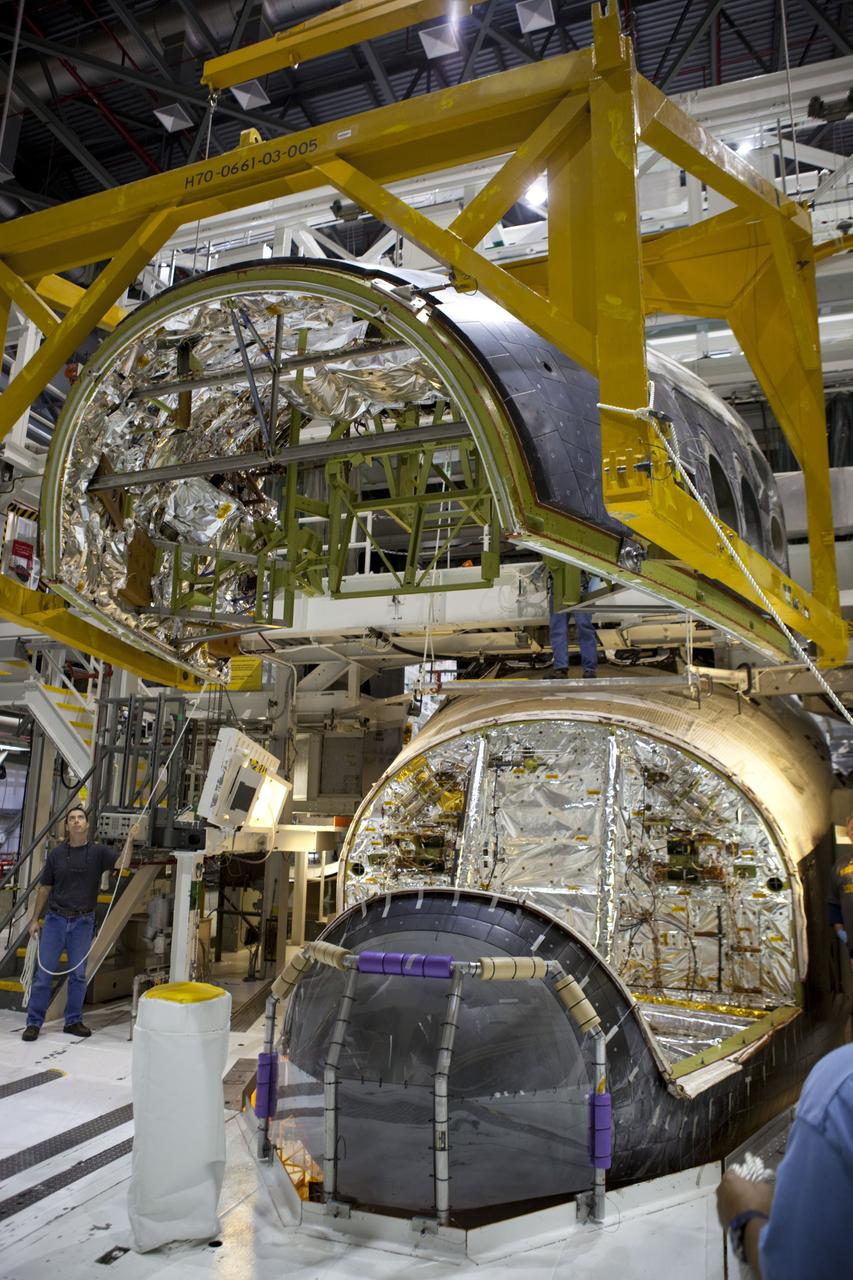
CAPE CANAVERAL, Fla. – In Orbiter Processing Facility-2 at NASA’s Kennedy Space Center in Florida, technicians monitor the progress as a large crane lifts and moves the forward reaction control system (FRCS) closer for installation on space shuttle Endeavour. The work is part of the Space Shuttle Program transition and retirement processing of Endeavour. The FRCS helped maneuver a shuttle while it was in orbit. The FRCS was removed from Endeavour and sent to White Sands Test Facility in N.M. to be cleaned of its toxic propellants. Endeavour is being prepared for display at the California Science Center in Los Angeles. Photo credit: NASA/Dimitri Gerondidakis
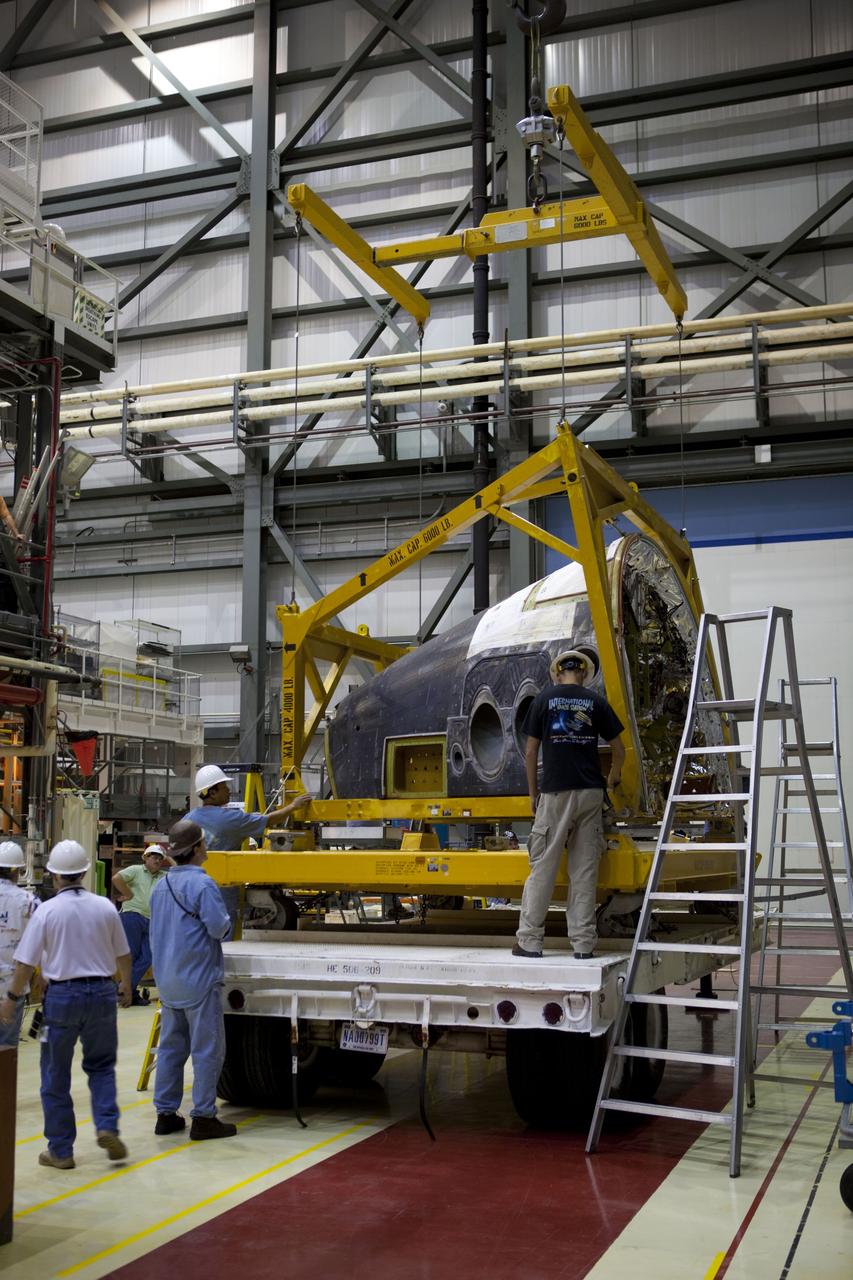
CAPE CANAVERAL, Fla. – In Orbiter Processing Facility-2 at NASA’s Kennedy Space Center in Florida, technicians prepare to lift the forward reaction control system (FRCS) for installation on space shuttle Endeavour. The work is part of the Space Shuttle Program transition and retirement processing of Endeavour. The FRCS helped maneuver a shuttle while it was in orbit. The FRCS was removed from Endeavour and sent to White Sands Test Facility in N.M. to be cleaned of its toxic propellants. Endeavour is being prepared for display at the California Science Center in Los Angeles. Photo credit: NASA/Dimitri Gerondidakis
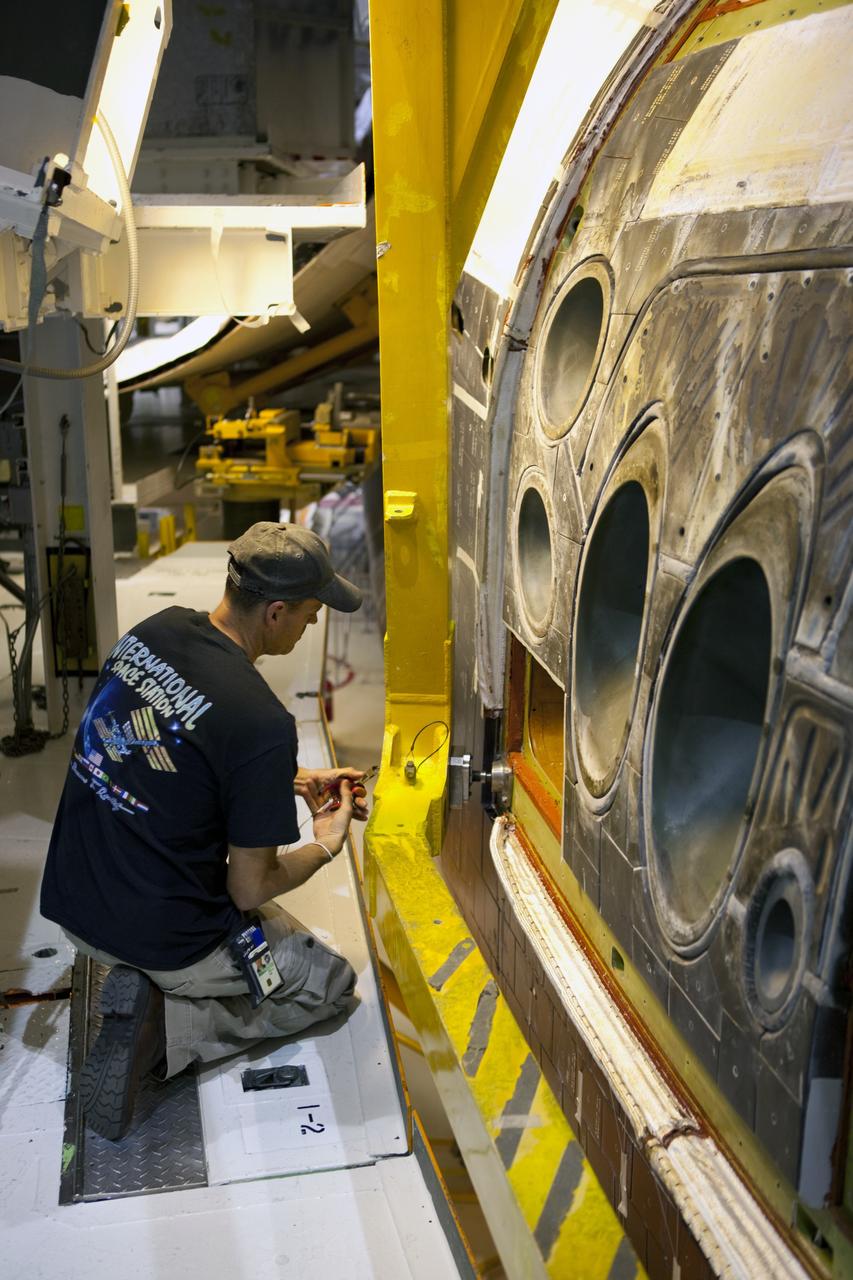
CAPE CANAVERAL, Fla. – In Orbiter Processing Facility-2 at NASA’s Kennedy Space Center in Florida, a technician assists as a large crane lowers the forward reaction control system (FRCS) for installation on space shuttle Endeavour. The work is part of the Space Shuttle Program transition and retirement processing of Endeavour. The FRCS helped maneuver a shuttle while it was in orbit. The FRCS was removed from Endeavour and sent to White Sands Test Facility in N.M. to be cleaned of its toxic propellants. Endeavour is being prepared for display at the California Science Center in Los Angeles. Photo credit: NASA/Dimitri Gerondidakis
A team at NASA’s Glenn Research Center in Cleveland streamed 4K video footage from an aircraft to the International Space Station and back for the first time using optical, or laser, communications. The feat was part of a series of tests on new technology that could provide live video coverage of astronauts on the Moon during the Artemis missions. Working with the Air Force Research Laboratory and NASA’s Small Business Innovation Research program, Glenn engineers temporarily installed a portable laser terminal on the belly of a Pilatus PC-12 aircraft. They then flew over Lake Erie sending data from the aircraft to an optical ground station in Cleveland. From there, it was sent over an Earth-based network to NASA’s White Sands Test Facility in Las Cruces, New Mexico, where scientists used infrared light signals to send the data.

A team at NASA’s Glenn Research Center in Cleveland streamed 4K video footage from an aircraft to the International Space Station and back for the first time using optical, or laser, communications. The feat was part of a series of tests on new technology that could provide live video coverage of astronauts on the Moon during the Artemis missions. Working with the Air Force Research Laboratory and NASA’s Small Business Innovation Research program, Glenn engineers temporarily installed a portable laser terminal on the belly of a Pilatus PC-12 aircraft. They then flew over Lake Erie sending data from the aircraft to an optical ground station in Cleveland. From there, it was sent over an Earth-based network to NASA’s White Sands Test Facility in Las Cruces, New Mexico, where scientists used infrared light signals to send the data. Photo Credit: (NASA/Sara Lowthian-Hanna)
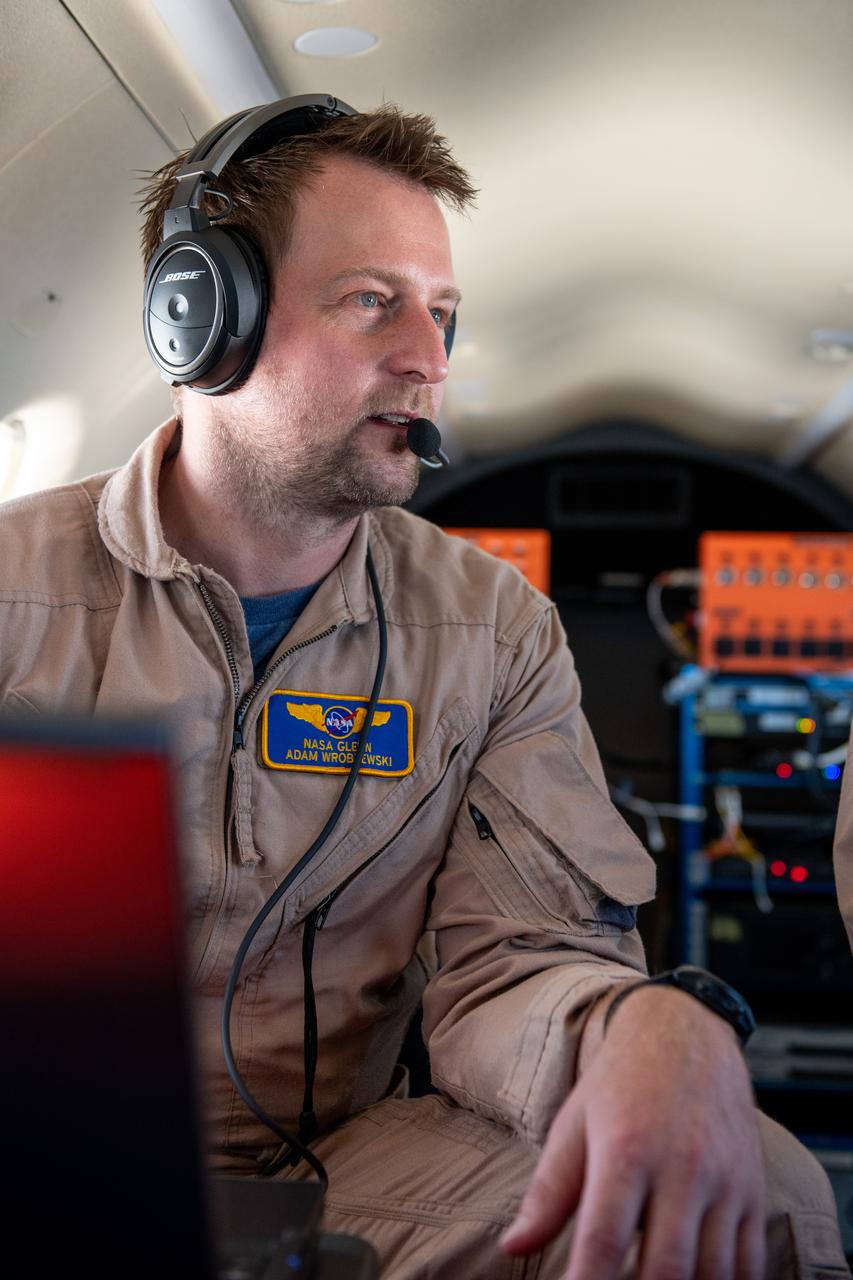
Adam Wroblewski p A team at NASA’s Glenn Research Center in Cleveland streamed 4K video footage from an aircraft to the International Space Station and back for the first time using optical, or laser, communications. The feat was part of a series of tests on new technology that could provide live video coverage of astronauts on the Moon during the Artemis missions. Working with the Air Force Research Laboratory and NASA’s Small Business Innovation Research program, Glenn engineers temporarily installed a portable laser terminal on the belly of a Pilatus PC-12 aircraft. Adam Wroblewski in the PC-12 over Lake Erie on June 13, 2024 sending data from the aircraft to an optical ground station in Cleveland. From there, it was sent over an Earth-based network to NASA’s White Sands Test Facility in Las Cruces, New Mexico, where scientists used infrared light signals to send the data. Photo Credit: (NASA/Sara Lowthian-Hanna)
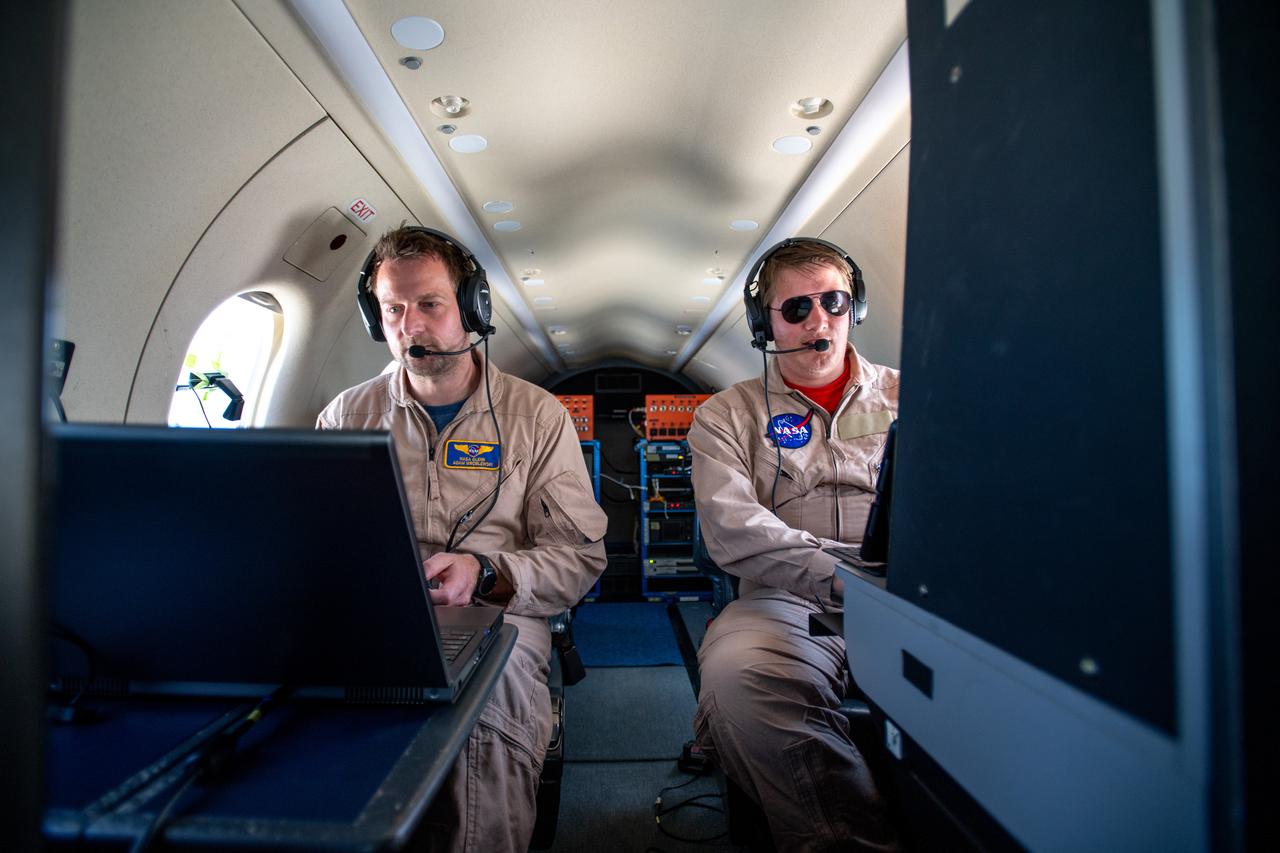
A team at NASA’s Glenn Research Center in Cleveland streamed 4K video footage from an aircraft to the International Space Station and back for the first time using optical, or laser, communications. The feat was part of a series of tests on new technology that could provide live video coverage of astronauts on the Moon during the Artemis missions. Working with the Air Force Research Laboratory and NASA’s Small Business Innovation Research program, Glenn engineers temporarily installed a portable laser terminal on the belly of a Pilatus PC-12 aircraft. They then flew over Lake Erie sending data from the aircraft to an optical ground station in Cleveland. From there, it was sent over an Earth-based network to NASA’s White Sands Test Facility in Las Cruces, New Mexico, where scientists used infrared light signals to send the data. Photo Credit: (NASA/Sara Lowthian-Hanna)
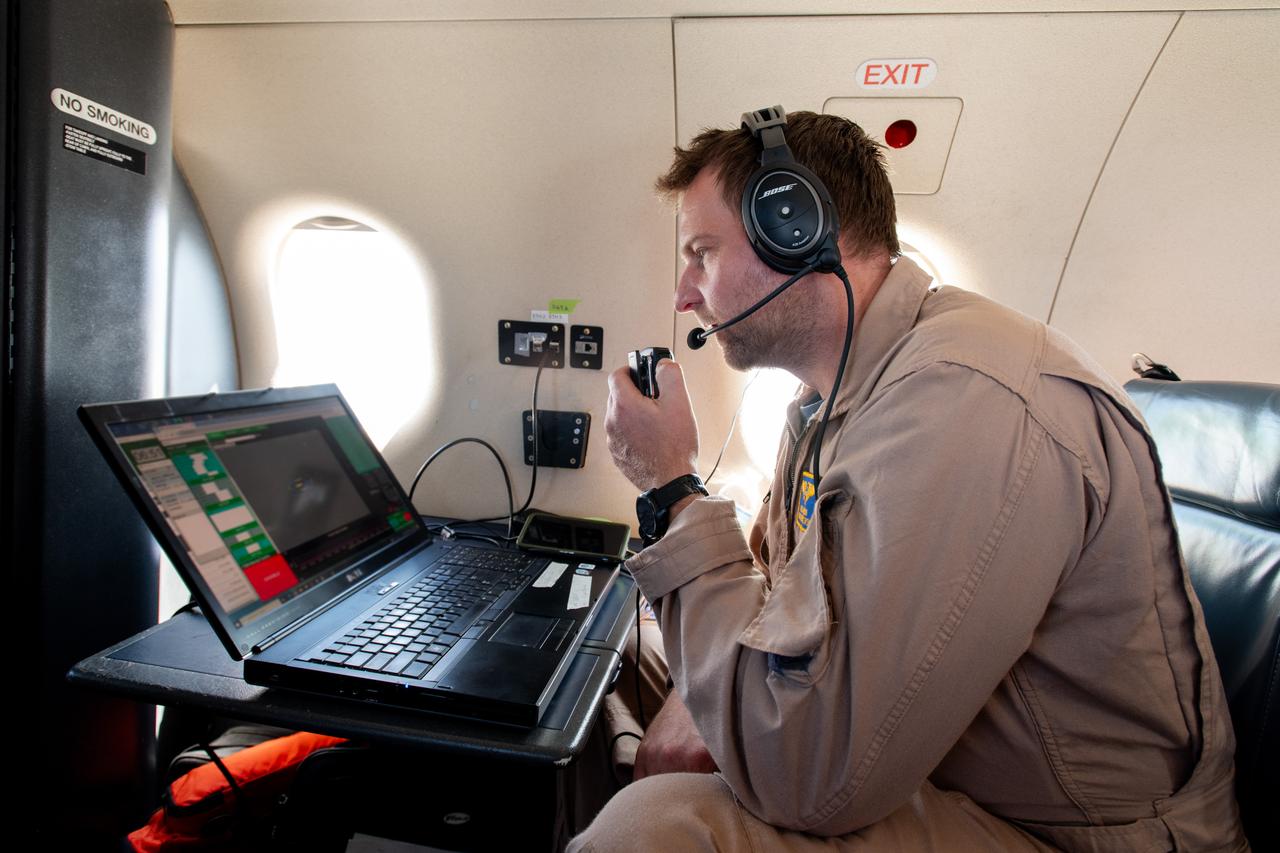
A team at NASA’s Glenn Research Center in Cleveland streamed 4K video footage from an aircraft to the International Space Station and back for the first time using optical, or laser, communications. The feat was part of a series of tests on new technology that could provide live video coverage of astronauts on the Moon during the Artemis missions. Working with the Air Force Research Laboratory and NASA’s Small Business Innovation Research program, Glenn engineers temporarily installed a portable laser terminal on the belly of a Pilatus PC-12 aircraft. They then flew over Lake Erie sending data from the aircraft to an optical ground station in Cleveland. From there, it was sent over an Earth-based network to NASA’s White Sands Test Facility in Las Cruces, New Mexico, where scientists used infrared light signals to send the data.
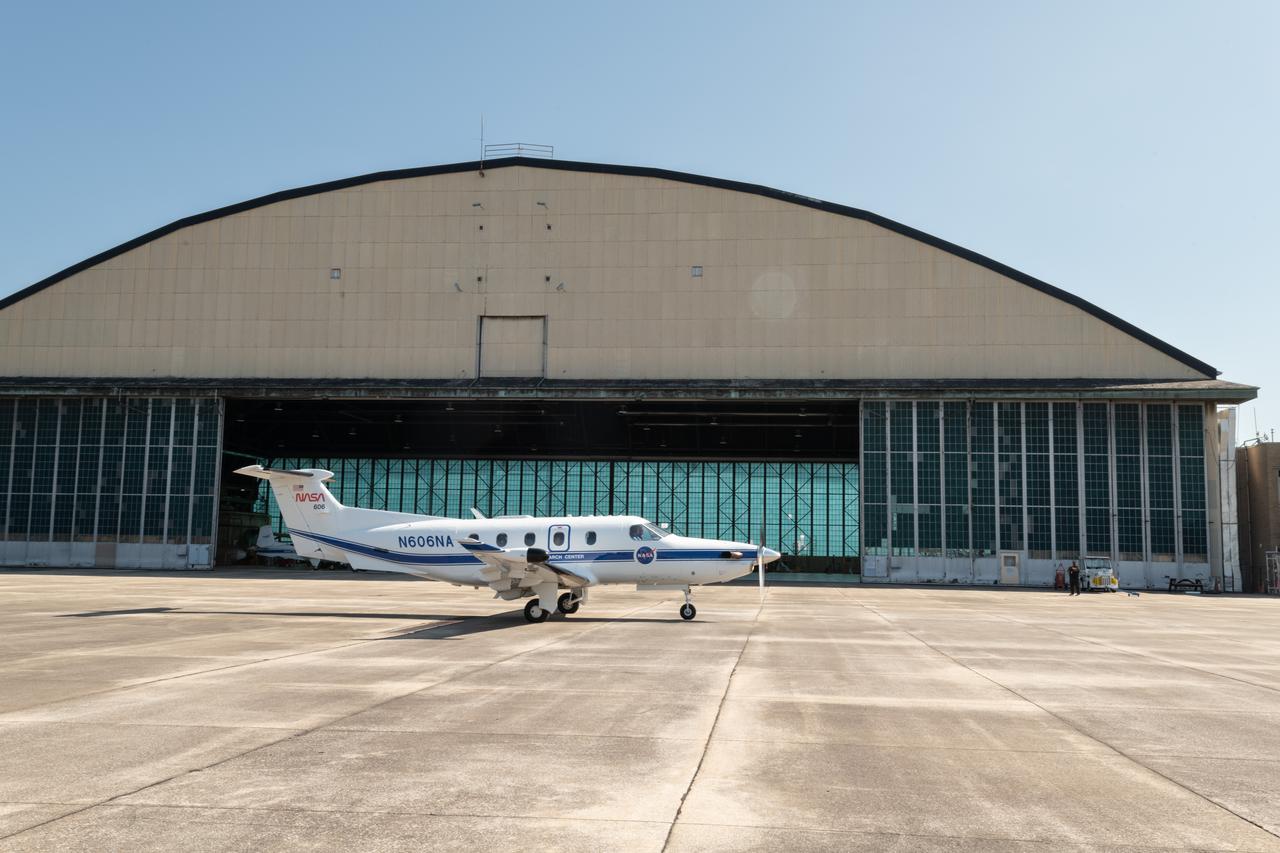
A team at NASA’s Glenn Research Center in Cleveland streamed 4K video footage from an aircraft to the International Space Station and back for the first time using optical, or laser, communications. The feat was part of a series of tests on new technology that could provide live video coverage of astronauts on the Moon during the Artemis missions. Working with the Air Force Research Laboratory and NASA’s Small Business Innovation Research program, Glenn engineers temporarily installed a portable laser terminal on the belly of a Pilatus PC-12 aircraft. They then flew over Lake Erie sending data from the aircraft to an optical ground station in Cleveland. From there, it was sent over an Earth-based network to NASA’s White Sands Test Facility in Las Cruces, New Mexico, where scientists used infrared light signals to send the data.
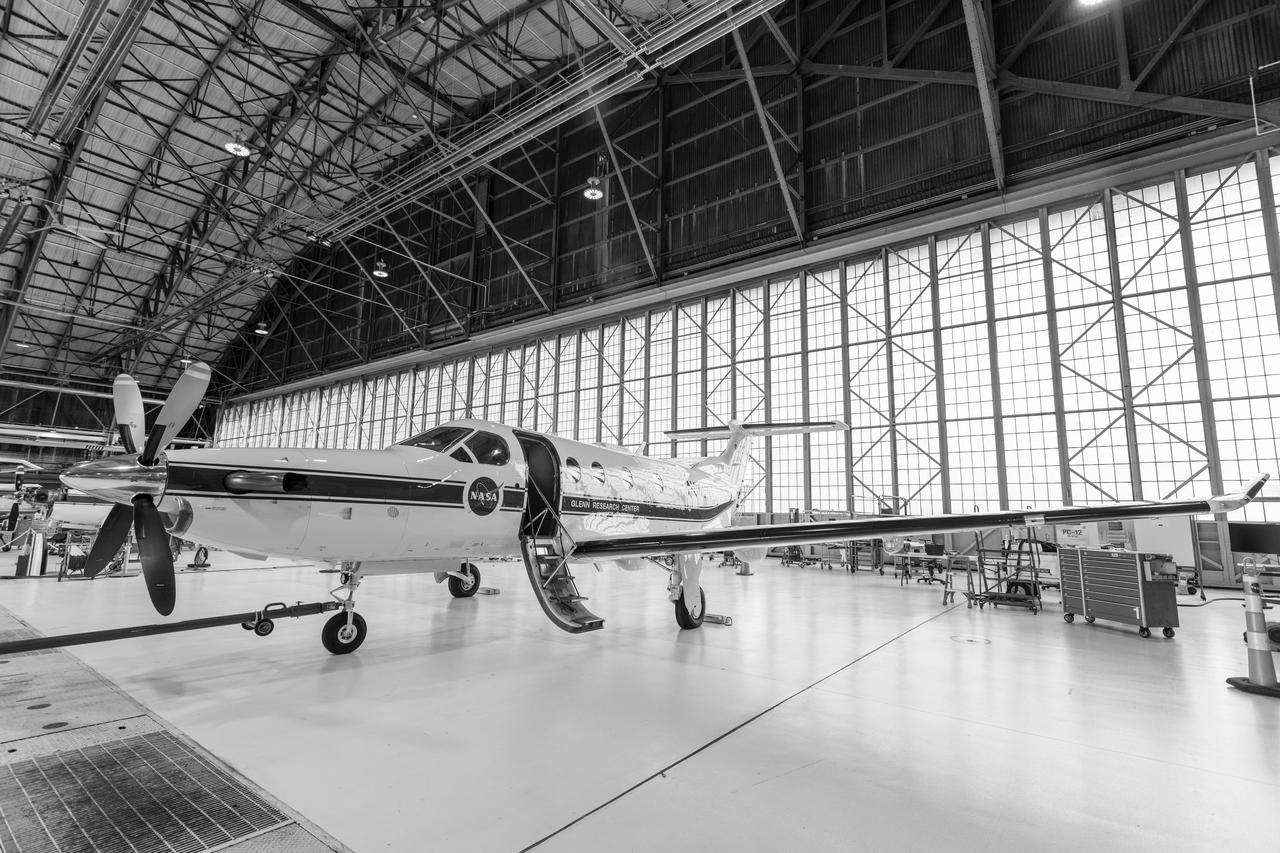
A team at NASA’s Glenn Research Center in Cleveland streamed 4K video footage from an aircraft to the International Space Station and back for the first time using optical, or laser, communications. The feat was part of a series of tests on new technology that could provide live video coverage of astronauts on the Moon during the Artemis missions. Working with the Air Force Research Laboratory and NASA’s Small Business Innovation Research program, Glenn engineers temporarily installed a portable laser terminal on the belly of a Pilatus PC-12 aircraft. They then flew over Lake Erie sending data from the aircraft to an optical ground station in Cleveland. From there, it was sent over an Earth-based network to NASA’s White Sands Test Facility in Las Cruces, New Mexico, where scientists used infrared light signals to send the data.

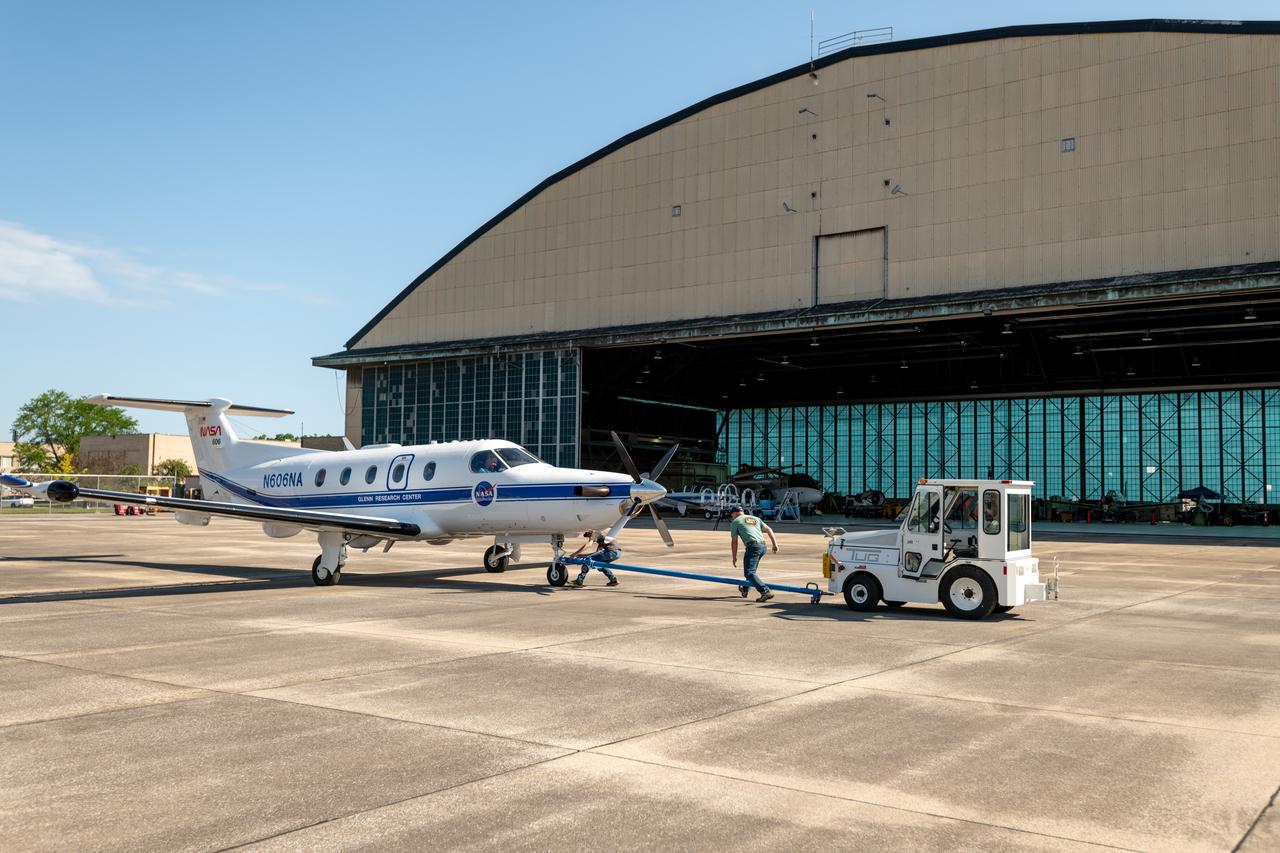
Pilatus PC-12 Aircraft Being Prepped for Takeoff on June 12, 2024. A team at NASA’s Glenn Research Center in Cleveland streamed 4K video footage from an aircraft to the International Space Station and back for the first time using optical, or laser, communications. The feat was part of a series of tests on new technology that could provide live video coverage of astronauts on the Moon during the Artemis missions. Working with the Air Force Research Laboratory and NASA’s Small Business Innovation Research program, Glenn engineers temporarily installed a portable laser terminal on the belly of a Pilatus PC-12 aircraft. They then flew over Lake Erie sending data from the aircraft to an optical ground station in Cleveland. From there, it was sent over an Earth-based network to NASA’s White Sands Test Facility in Las Cruces, New Mexico, where scientists used infrared light signals to send the data. Photo Credit: (NASA/Sara Lowthian-Hanna)

A team at NASA’s Glenn Research Center in Cleveland streamed 4K video footage from an aircraft to the International Space Station and back for the first time using optical, or laser, communications. The feat was part of a series of tests on new technology that could provide live video coverage of astronauts on the Moon during the Artemis missions. Working with the Air Force Research Laboratory and NASA’s Small Business Innovation Research program, Glenn engineers temporarily installed a portable laser terminal on the belly of a Pilatus PC-12 aircraft. They then flew over Lake Erie sending data from the aircraft to an optical ground station in Cleveland. From there, it was sent over an Earth-based network to NASA’s White Sands Test Facility in Las Cruces, New Mexico, where scientists used infrared light signals to send the data.

A team at NASA’s Glenn Research Center in Cleveland streamed 4K video footage from an aircraft to the International Space Station and back for the first time using optical, or laser, communications. The feat was part of a series of tests on new technology that could provide live video coverage of astronauts on the Moon during the Artemis missions. Pictured from Left to Right: James Demers, Adam Wroblewski, Shaun McKeehan, Kurt Blankenship. Working with the Air Force Research Laboratory and NASA’s Small Business Innovation Research program, Glenn engineers temporarily installed a portable laser terminal on the belly of a Pilatus PC-12 aircraft. They then flew over Lake Erie sending data from the aircraft to an optical ground station in Cleveland. From there, it was sent over an Earth-based network to NASA’s White Sands Test Facility in Las Cruces, New Mexico, where scientists used infrared light signals to send the data.
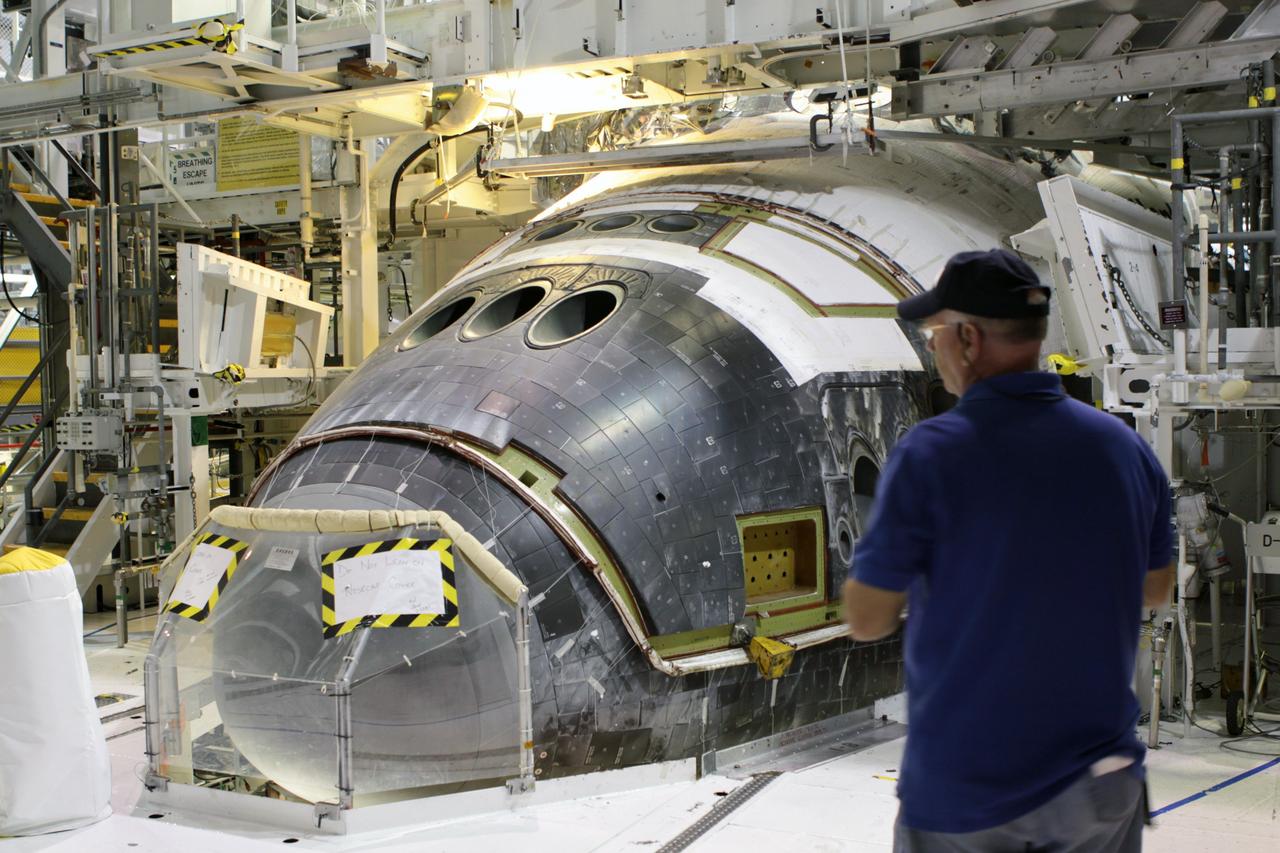
CAPE CANAVERAL, Fla. – In Orbiter Processing Facility-1 at NASA’s Kennedy Space Center in Florida, the forward reaction control system has been reinstalled on space shuttle Atlantis. The system helped the shuttle maneuver while it was in orbit. Atlantis’ FRCS was removed and sent to White Sands Test Facility in New Mexico to be cleaned of its toxic propellants. The work is part of the Space Shuttle Program’s transition and retirement processing of the shuttle fleet. A groundbreaking was held Jan. 18 for Atlantis' future home, a 65,000-square-foot exhibit hall in Shuttle Plaza at the Kennedy Space Center Visitor Complex. Atlantis is scheduled to roll over to the visitor complex in November in preparation for the exhibit’s grand opening in July 2013. For more information, visit http://www.nasa.gov/shuttle. Photo credit: NASA/Jim Grossmann
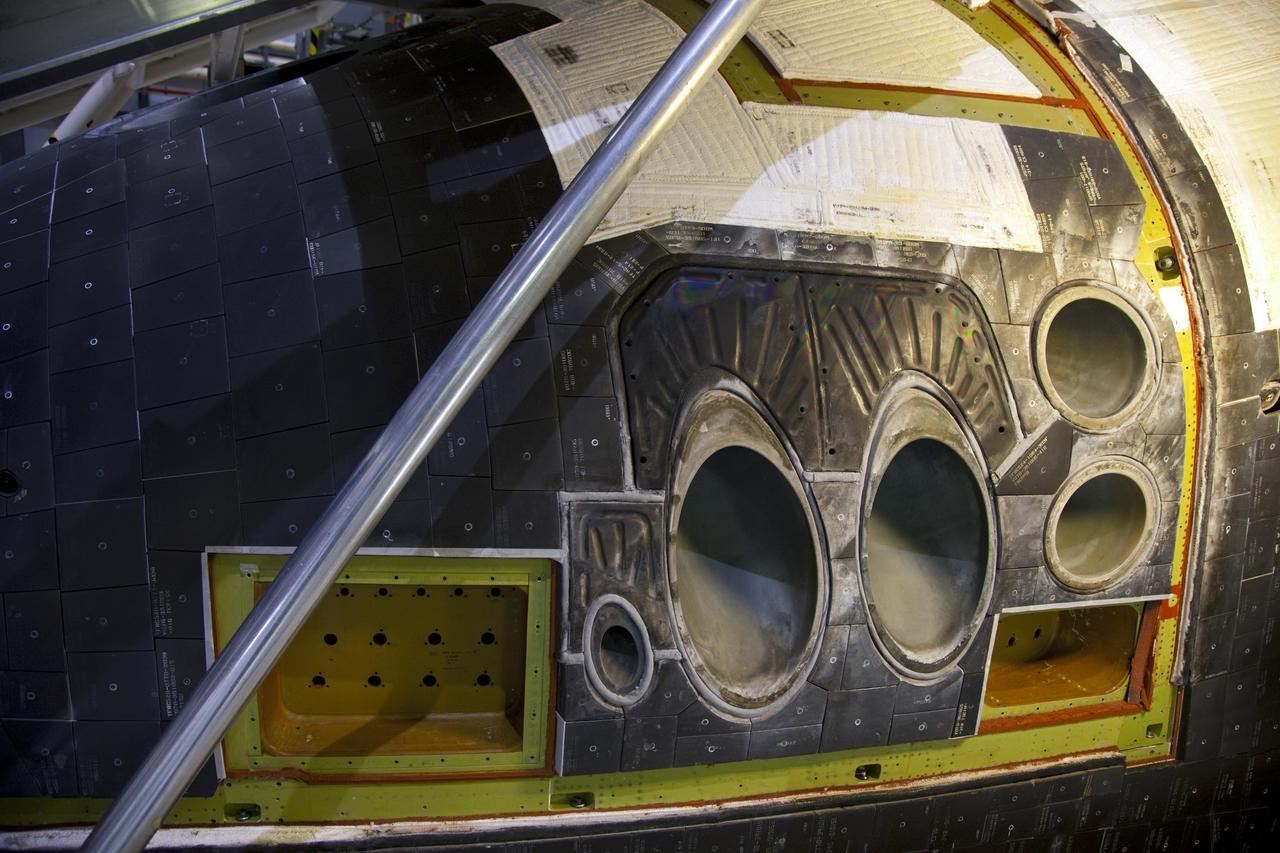
CAPE CANAVERAL, Fla. – In Orbiter Processing Facility-2 at NASA’s Kennedy Space Center in Florida, preparations are under way to begin bonding and sealing the tiles around the access panels to space shuttle Endeavour’s forward reaction control system, or FRCS. The FRCS helped a shuttle maneuver while in orbit. Endeavour’s FRCS was removed and sent to White Sands Test Facility in New Mexico to be cleaned of its toxic propellants and was reinstalled on the shuttle in February. Endeavour is being prepared for public display at the California Science Center in Los Angeles. Over the course of its 19-year career, Endeavour spent 299 days in space during 25 missions. For more information, visit http://www.nasa.gov/shuttle. Photo credit: NASA/Frankie Martin
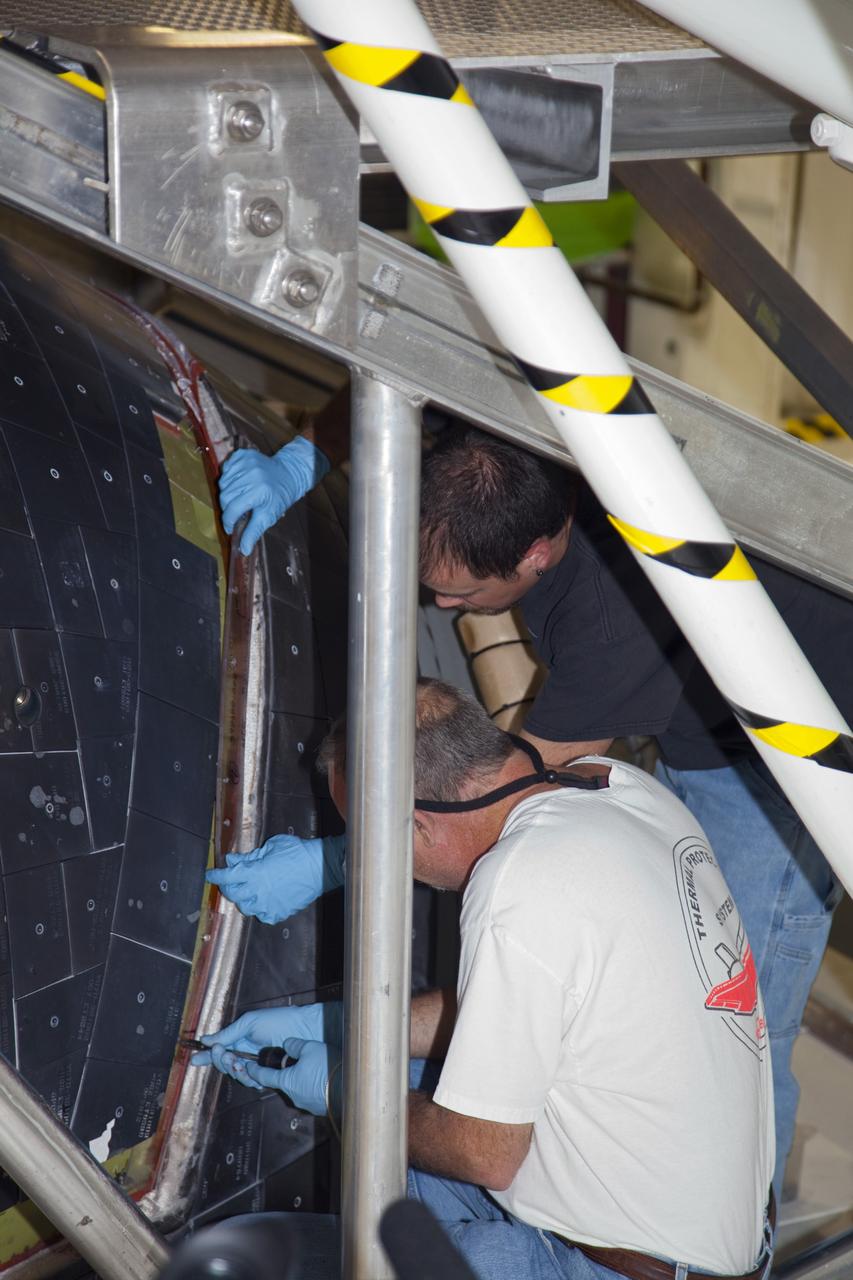
CAPE CANAVERAL, Fla. – In Orbiter Processing Facility-2 at NASA’s Kennedy Space Center in Florida, United Space Alliance technicians begin to bond and seal the tiles around the access panels to space shuttle Endeavour’s forward reaction control system, or FRCS. The FRCS helped a shuttle maneuver while in orbit. Endeavour’s FRCS was removed and sent to White Sands Test Facility in New Mexico to be cleaned of its toxic propellants and was reinstalled on the shuttle in February. Endeavour is being prepared for public display at the California Science Center in Los Angeles. Over the course of its 19-year career, Endeavour spent 299 days in space during 25 missions. For more information, visit http://www.nasa.gov/shuttle. Photo credit: NASA/Frankie Martin
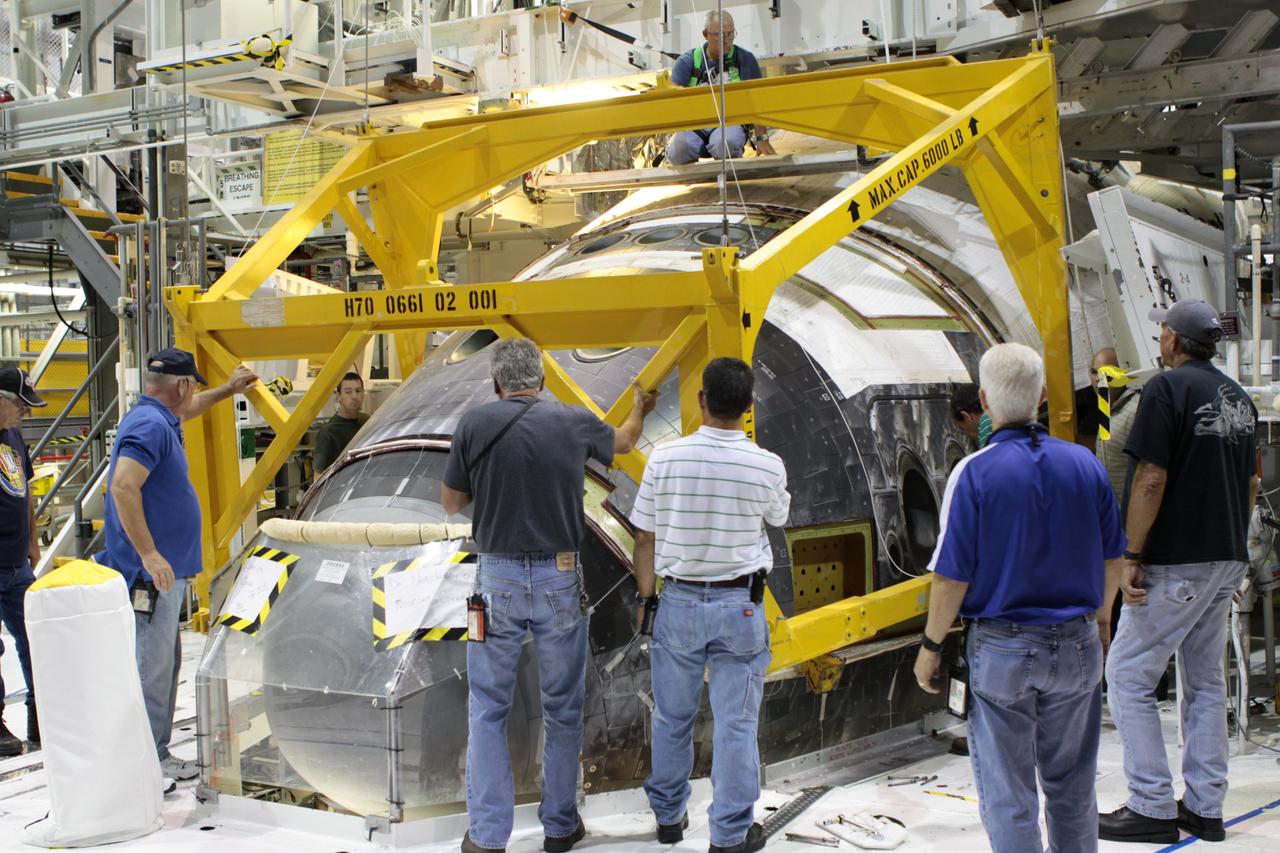
CAPE CANAVERAL, Fla. – In Orbiter Processing Facility-1 at NASA’s Kennedy Space Center in Florida, United Space Alliance technicians remove the lifting device from the forward reaction control system reinstalled on space shuttle Atlantis. The system helped the shuttle maneuver while it was in orbit. Atlantis’ FRCS was removed and sent to White Sands Test Facility in New Mexico to be cleaned of its toxic propellants. The work is part of the Space Shuttle Program’s transition and retirement processing of the shuttle fleet. A groundbreaking was held Jan. 18 for Atlantis' future home, a 65,000-square-foot exhibit hall in Shuttle Plaza at the Kennedy Space Center Visitor Complex. Atlantis is scheduled to roll over to the visitor complex in November in preparation for the exhibit’s grand opening in July 2013. For more information, visit http://www.nasa.gov/shuttle. Photo credit: NASA/Jim Grossmann
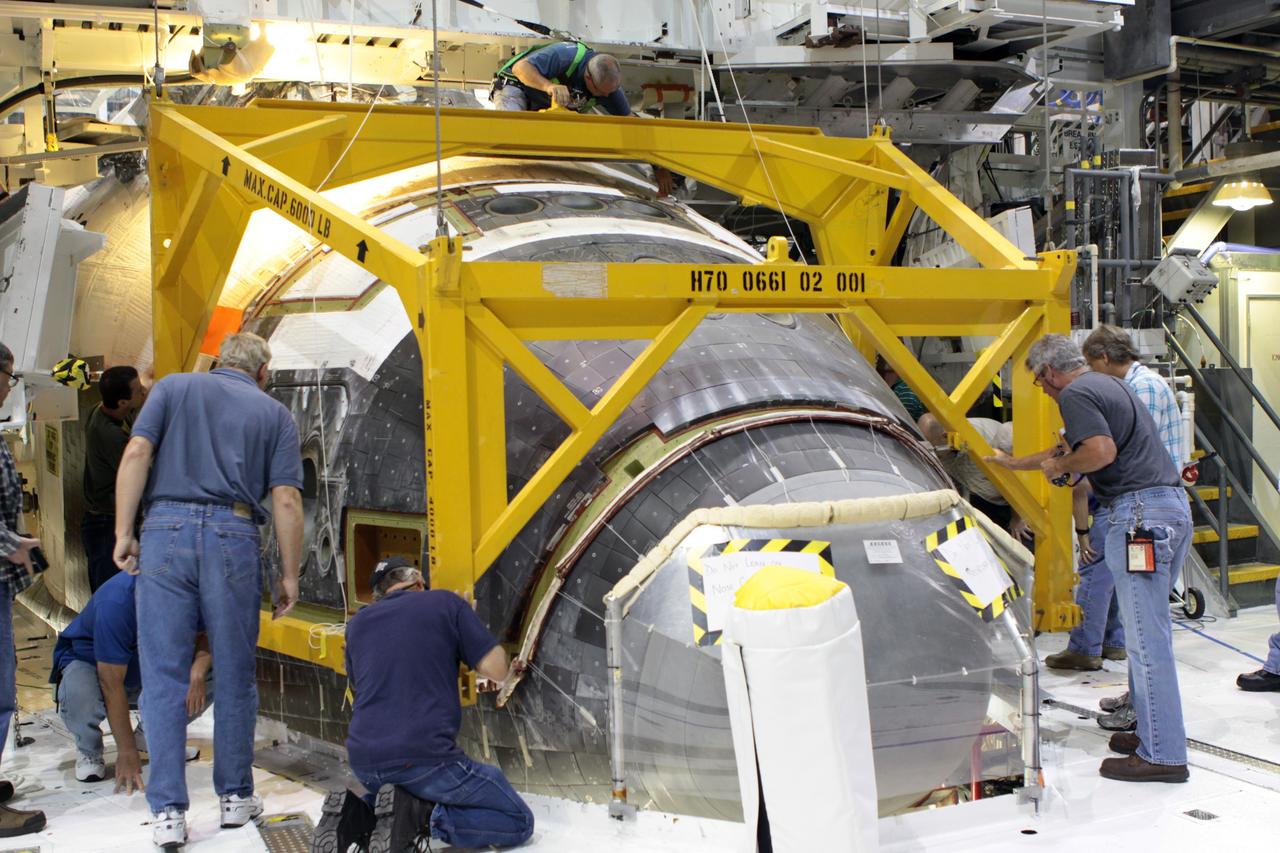
CAPE CANAVERAL, Fla. – In Orbiter Processing Facility-1 at NASA’s Kennedy Space Center in Florida, United Space Alliance technicians secure the forward reaction control system back in place on space shuttle Atlantis. The system helped the shuttle maneuver while it was in orbit. Atlantis’ FRCS was removed and sent to White Sands Test Facility in New Mexico to be cleaned of its toxic propellants. The work is part of the Space Shuttle Program’s transition and retirement processing of the shuttle fleet. A groundbreaking was held Jan. 18 for Atlantis' future home, a 65,000-square-foot exhibit hall in Shuttle Plaza at the Kennedy Space Center Visitor Complex. Atlantis is scheduled to roll over to the visitor complex in November in preparation for the exhibit’s grand opening in July 2013. For more information, visit http://www.nasa.gov/shuttle. Photo credit: NASA/Jim Grossmann
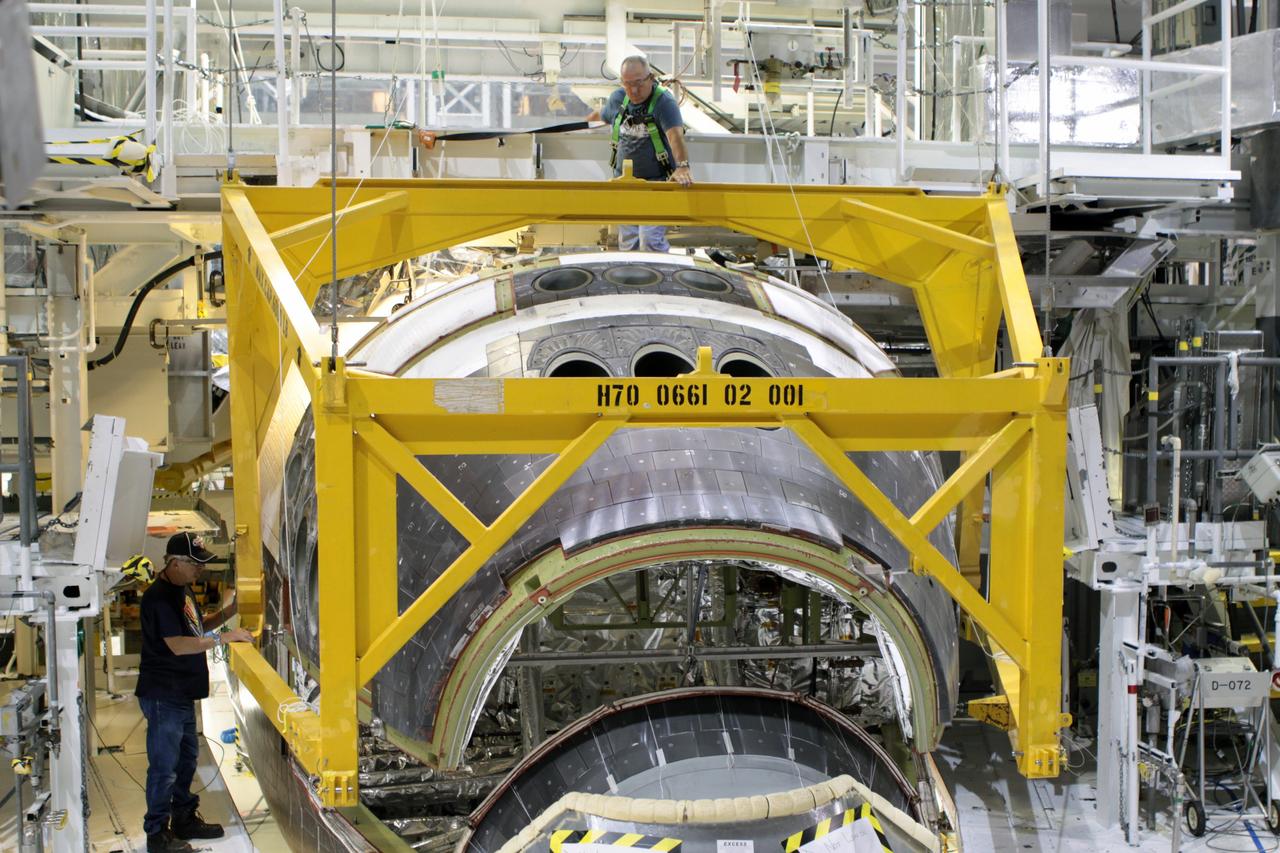
CAPE CANAVERAL, Fla. – In Orbiter Processing Facility-1 at NASA’s Kennedy Space Center in Florida, United Space Alliance technicians monitor the alignment of the forward reaction control system onto space shuttle Atlantis during the system’s reinstallation on the shuttle. The system helped the shuttle maneuver while it was in orbit. Atlantis’ FRCS was removed and sent to White Sands Test Facility in New Mexico to be cleaned of its toxic propellants. The work is part of the Space Shuttle Program’s transition and retirement processing of the shuttle fleet. A groundbreaking was held Jan. 18 for Atlantis' future home, a 65,000-square-foot exhibit hall in Shuttle Plaza at the Kennedy Space Center Visitor Complex. Atlantis is scheduled to roll over to the visitor complex in November in preparation for the exhibit’s grand opening in July 2013. For more information, visit http://www.nasa.gov/shuttle. Photo credit: NASA/Jim Grossmann

CAPE CANAVERAL, Fla. – In Orbiter Processing Facility-1 at NASA’s Kennedy Space Center in Florida, United Space Alliance technicians lower the forward reaction control system toward space shuttle Atlantis during the system’s reinstallation on the shuttle. The system helped the shuttle maneuver while it was in orbit. Atlantis’ FRCS was removed and sent to White Sands Test Facility in New Mexico to be cleaned of its toxic propellants. The work is part of the Space Shuttle Program’s transition and retirement processing of the shuttle fleet. A groundbreaking was held Jan. 18 for Atlantis' future home, a 65,000-square-foot exhibit hall in Shuttle Plaza at the Kennedy Space Center Visitor Complex. Atlantis is scheduled to roll over to the visitor complex in November in preparation for the exhibit’s grand opening in July 2013. For more information, visit http://www.nasa.gov/shuttle. Photo credit: NASA/Jim Grossmann
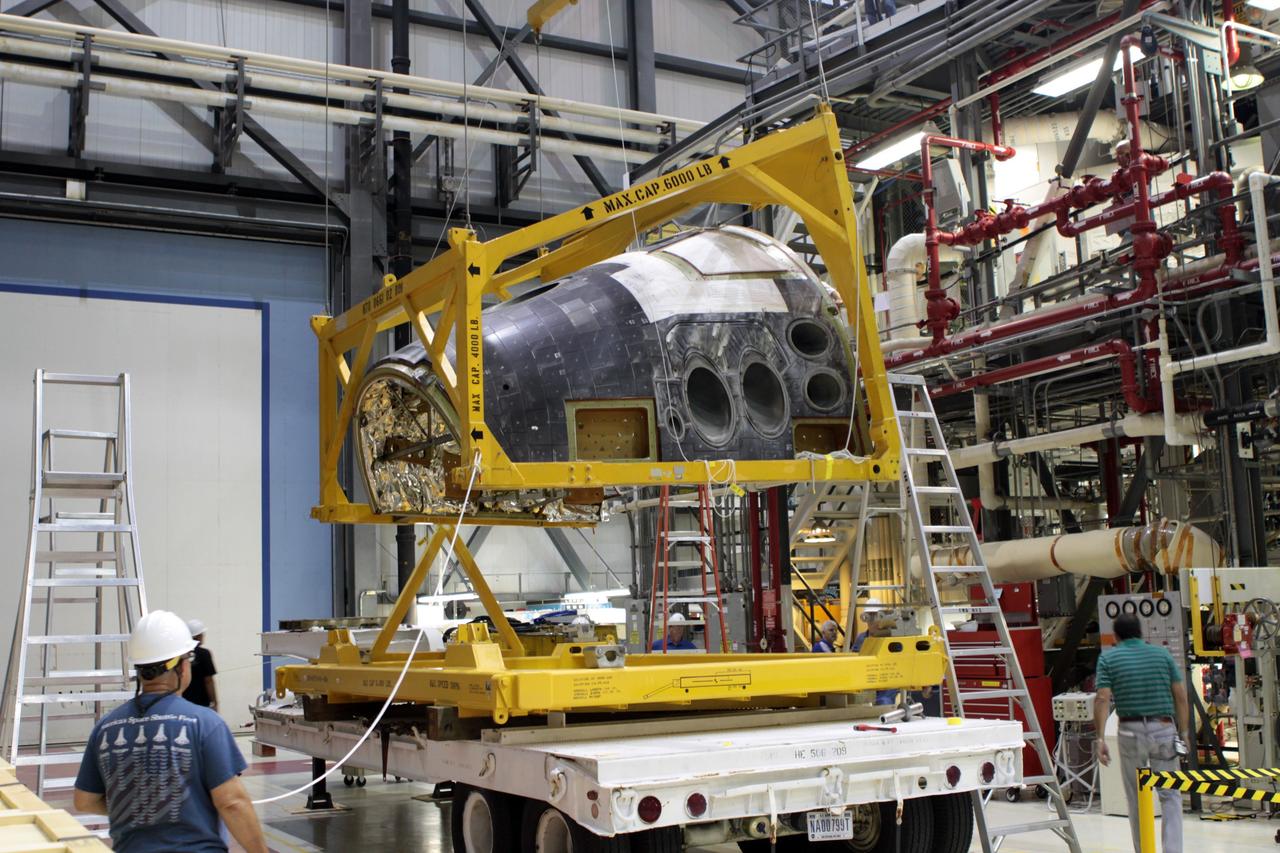
CAPE CANAVERAL, Fla. – In Orbiter Processing Facility-1 at NASA’s Kennedy Space Center in Florida, United Space Alliance technicians lift the forward reaction control system from a transporter during preparations to reinstall it on space shuttle Atlantis. The system helped the shuttle maneuver while it was in orbit. Atlantis’ FRCS was removed and sent to White Sands Test Facility in New Mexico to be cleaned of its toxic propellants. The work is part of the Space Shuttle Program’s transition and retirement processing of the shuttle fleet. A groundbreaking was held Jan. 18 for Atlantis' future home, a 65,000-square-foot exhibit hall in Shuttle Plaza at the Kennedy Space Center Visitor Complex. Atlantis is scheduled to roll over to the visitor complex in November in preparation for the exhibit’s grand opening in July 2013. For more information, visit http://www.nasa.gov/shuttle. Photo credit: NASA/Jim Grossmann
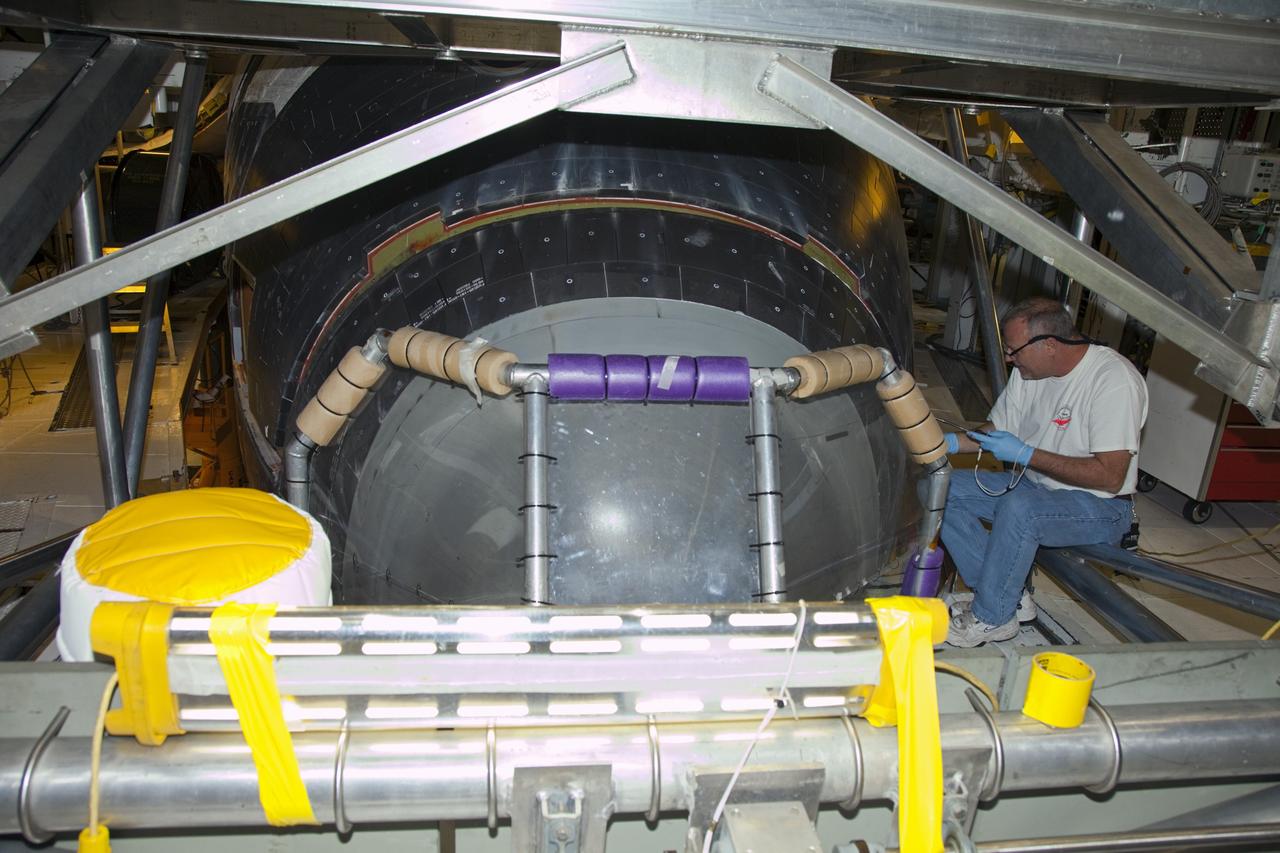
CAPE CANAVERAL, Fla. – In Orbiter Processing Facility-2 at NASA’s Kennedy Space Center in Florida, a United Space Alliance technician, with a tool tethered to his wrist, bonds and seals the tiles around the access panels to space shuttle Endeavour’s forward reaction control system, or FRCS. The FRCS helped a shuttle maneuver while in orbit. Endeavour’s FRCS was removed and sent to White Sands Test Facility in New Mexico to be cleaned of its toxic propellants and was reinstalled on the shuttle in February. Endeavour is being prepared for public display at the California Science Center in Los Angeles. Over the course of its 19-year career, Endeavour spent 299 days in space during 25 missions. For more information, visit http://www.nasa.gov/shuttle. Photo credit: NASA/Frankie Martin
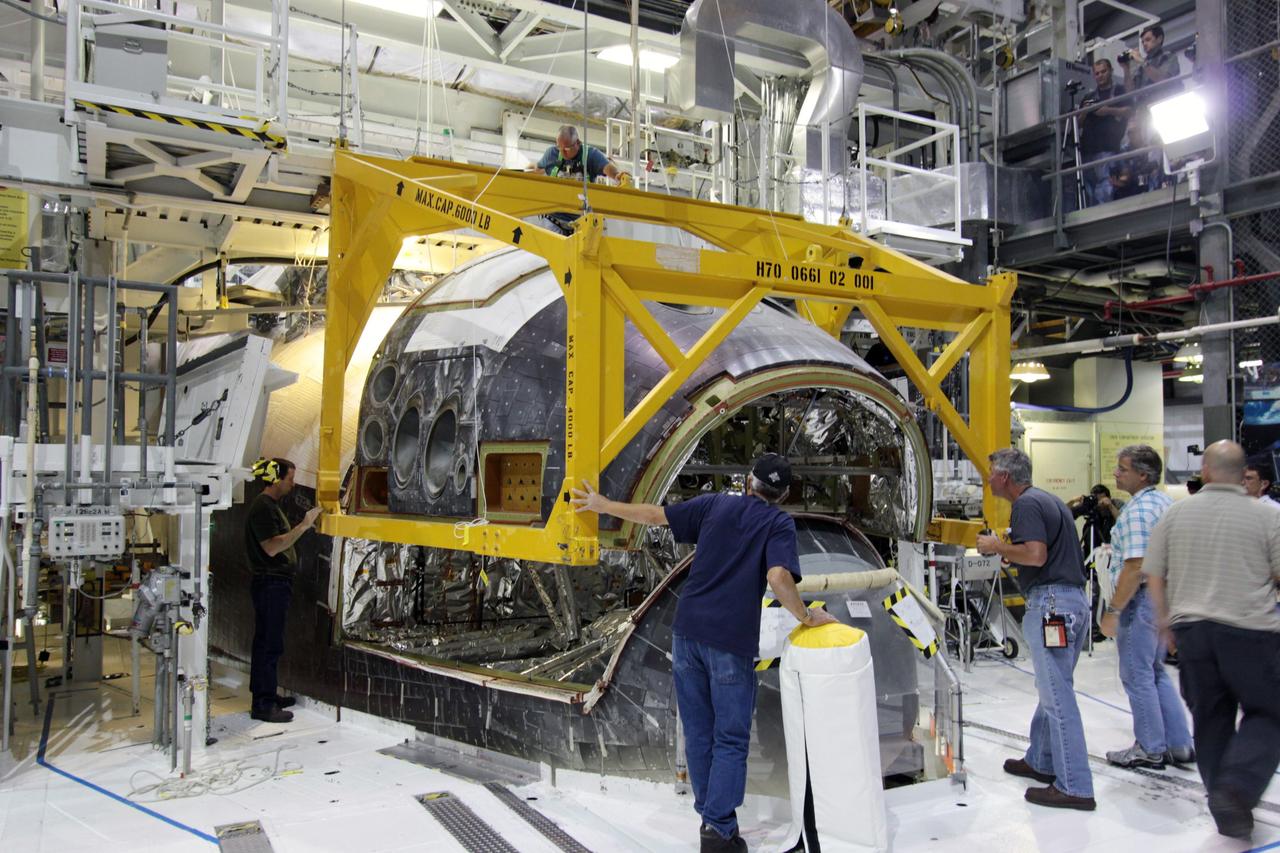
CAPE CANAVERAL, Fla. – In Orbiter Processing Facility-1 at NASA’s Kennedy Space Center in Florida, United Space Alliance technicians align the forward reaction control system onto space shuttle Atlantis during the system’s reinstallation on the shuttle. The system helped the shuttle maneuver while it was in orbit. Atlantis’ FRCS was removed and sent to White Sands Test Facility in New Mexico to be cleaned of its toxic propellants. The work is part of the Space Shuttle Program’s transition and retirement processing of the shuttle fleet. A groundbreaking was held Jan. 18 for Atlantis' future home, a 65,000-square-foot exhibit hall in Shuttle Plaza at the Kennedy Space Center Visitor Complex. Atlantis is scheduled to roll over to the visitor complex in November in preparation for the exhibit’s grand opening in July 2013. For more information, visit http://www.nasa.gov/shuttle. Photo credit: NASA/Jim Grossmann
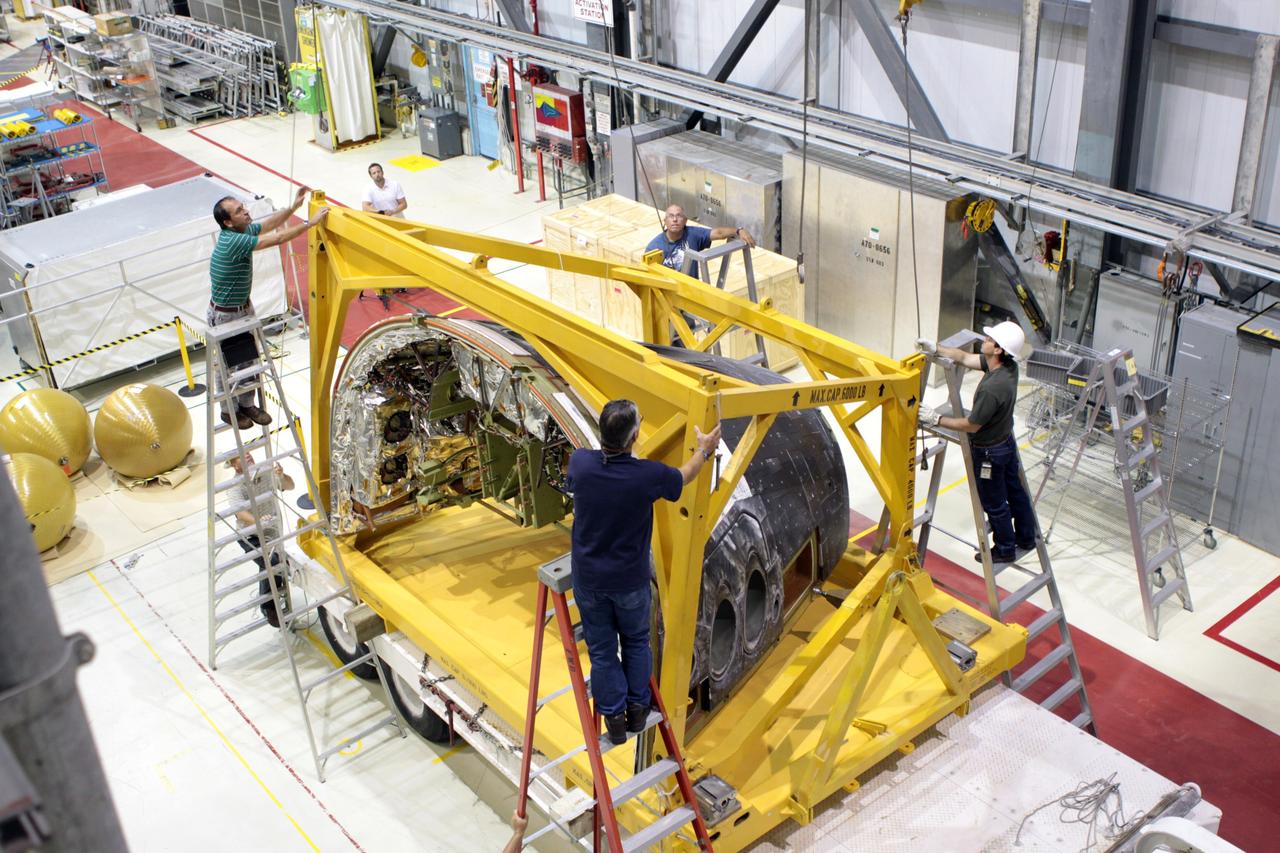
CAPE CANAVERAL, Fla. – In Orbiter Processing Facility-1 at NASA’s Kennedy Space Center in Florida, United Space Alliance technicians prepare to reinstall the forward reaction control system on space shuttle Atlantis. The system helped the shuttle maneuver while it was in orbit. Atlantis’ FRCS was removed and sent to White Sands Test Facility in New Mexico to be cleaned of its toxic propellants. The work is part of the Space Shuttle Program’s transition and retirement processing of the shuttle fleet. A groundbreaking was held Jan. 18 for Atlantis' future home, a 65,000-square-foot exhibit hall in Shuttle Plaza at the Kennedy Space Center Visitor Complex. Atlantis is scheduled to roll over to the visitor complex in November in preparation for the exhibit’s grand opening in July 2013. For more information, visit http://www.nasa.gov/shuttle. Photo credit: NASA/Jim Grossmann
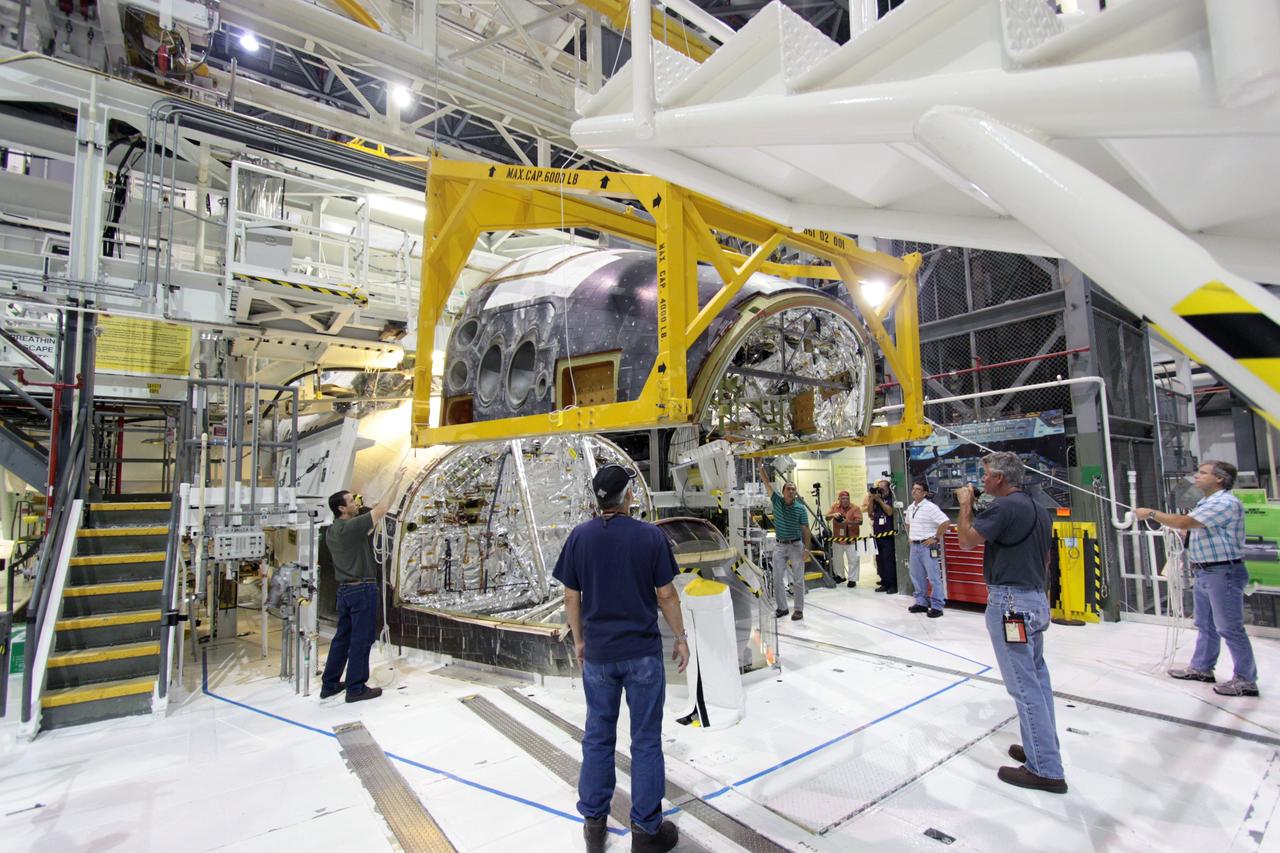
CAPE CANAVERAL, Fla. – In Orbiter Processing Facility-1 at NASA’s Kennedy Space Center in Florida, United Space Alliance technicians position the forward reaction control system over space shuttle Atlantis during the system’s reinstallation on the shuttle. The system helped the shuttle maneuver while it was in orbit. Atlantis’ FRCS was removed and sent to White Sands Test Facility in New Mexico to be cleaned of its toxic propellants. The work is part of the Space Shuttle Program’s transition and retirement processing of the shuttle fleet. A groundbreaking was held Jan. 18 for Atlantis' future home, a 65,000-square-foot exhibit hall in Shuttle Plaza at the Kennedy Space Center Visitor Complex. Atlantis is scheduled to roll over to the visitor complex in November in preparation for the exhibit’s grand opening in July 2013. For more information, visit http://www.nasa.gov/shuttle. Photo credit: NASA/Jim Grossmann
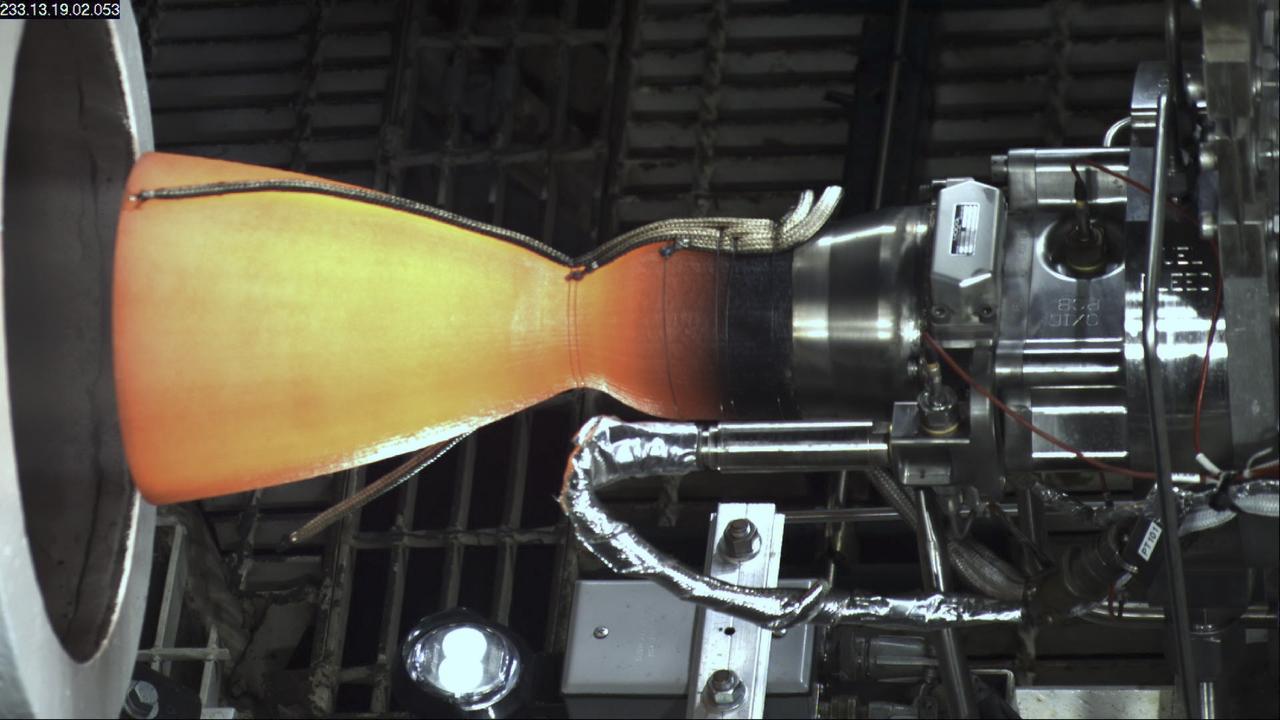
LAS CRUCES, N.M. – A thruster glows red during a hot-fire test for Boeing’s CST-100 spacecraft orbital maneuvering and attitude control OMAC system. During the tests at NASA’s White Sands Test Facility in Las Cruces, N.M., Boeing and partner Aerojet Rocketdyne tested two thrusters to demonstrate stable combustion and performance in a vacuum, simulating a space environment. Two additional thrusters were tested in a vacuum to demonstrate long-duration mission survivability. The 24 thrusters that compose the CST-100’s OMAC system will be jettisoned with the service module after the deorbit burn, prior to re-entry. The tests completed Milestone 9 of the company's funded Space Act Agreement with NASA’s Commercial Crew Program, or CCP, during the Commercial Crew Integrated Capability, or CCiCap, initiative. CCP is intended to lead to the availability of commercial human spaceflight services for government and commercial customers to low-Earth orbit. Future development and certification initiatives eventually will lead to the availability of human spaceflight services for NASA to send its astronauts to the International Space Station, where critical research is taking place daily. For more information about CCP, go to http://www.nasa.gov/commercialcrew. Photo credit: Boeing
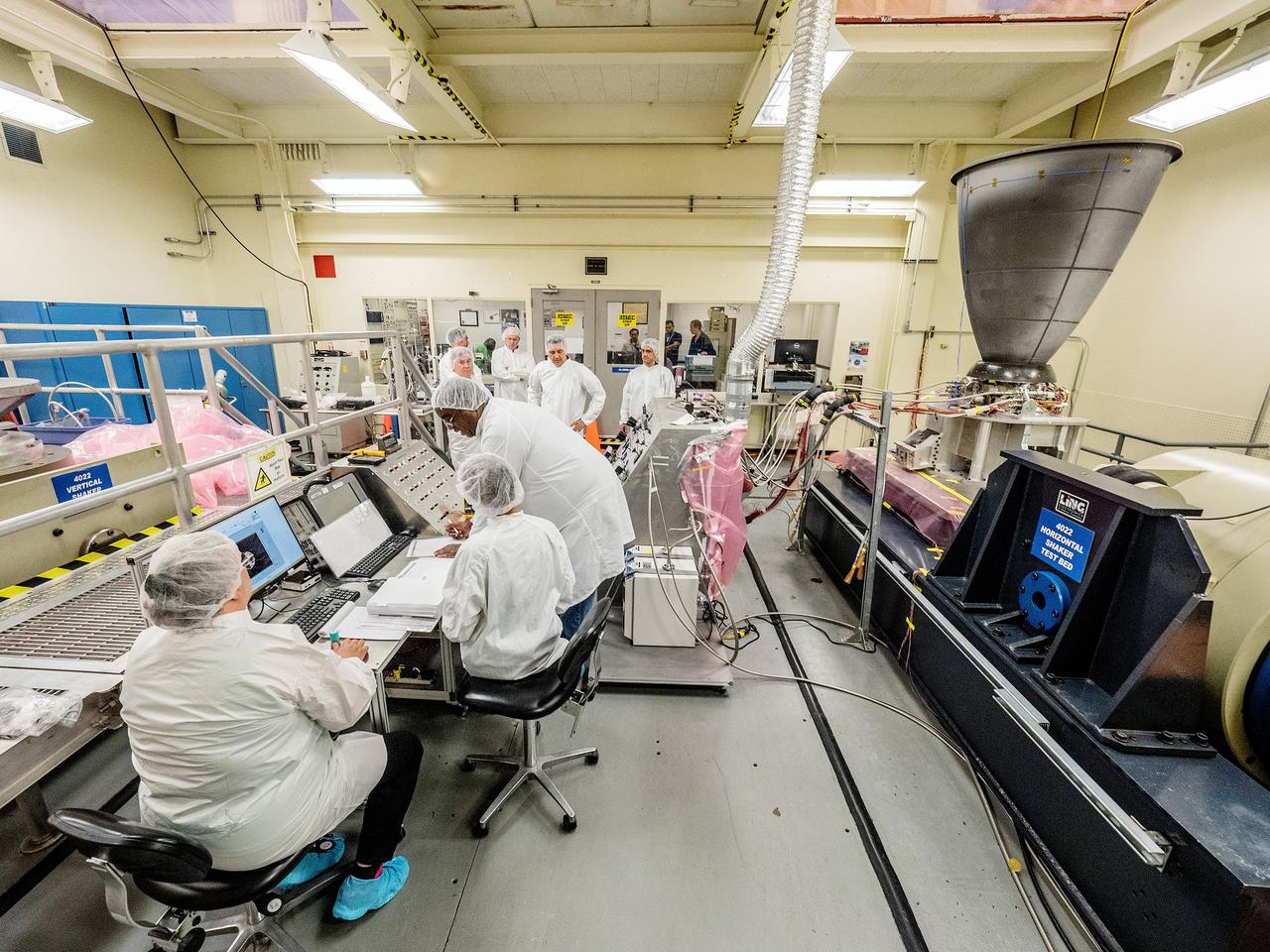
An Orbital Maneuvering System engine is vibration tested at NASA’s Johnson Space Center in Houston on June 16, 2016, before shipment to the agency’s White Sands Test Facility in New Mexico, where it will be fired to qualify the engine for use on Orion’s service module. The vibration testing will help ensure the engine can withstand the loads induced by launch on the agency’s Space Launch System rocket. This summer, another Orbital Maneuvering System engine will be tested at Johnson before it is supplied to ESA (European Space Agency) to integrate into Orion's service module, which will power, propel and cool Orion in space, and also provide consumables like air and water for future crews. ..ESA and its contractor Airbus Defence and Space are providing the service module for Artemis I. This Orbital Maneuvering System engine was used on the space shuttle to provide the thrust for orbital insertion, orbit circularization, orbit transfer, rendezvous, deorbit and abort situations and flew on 31 shuttle flights. The engine flying on Artemis I flew on 19 space shuttle flights, beginning with STS-41G in October 1984 and ending with STS-112 in October 2002.
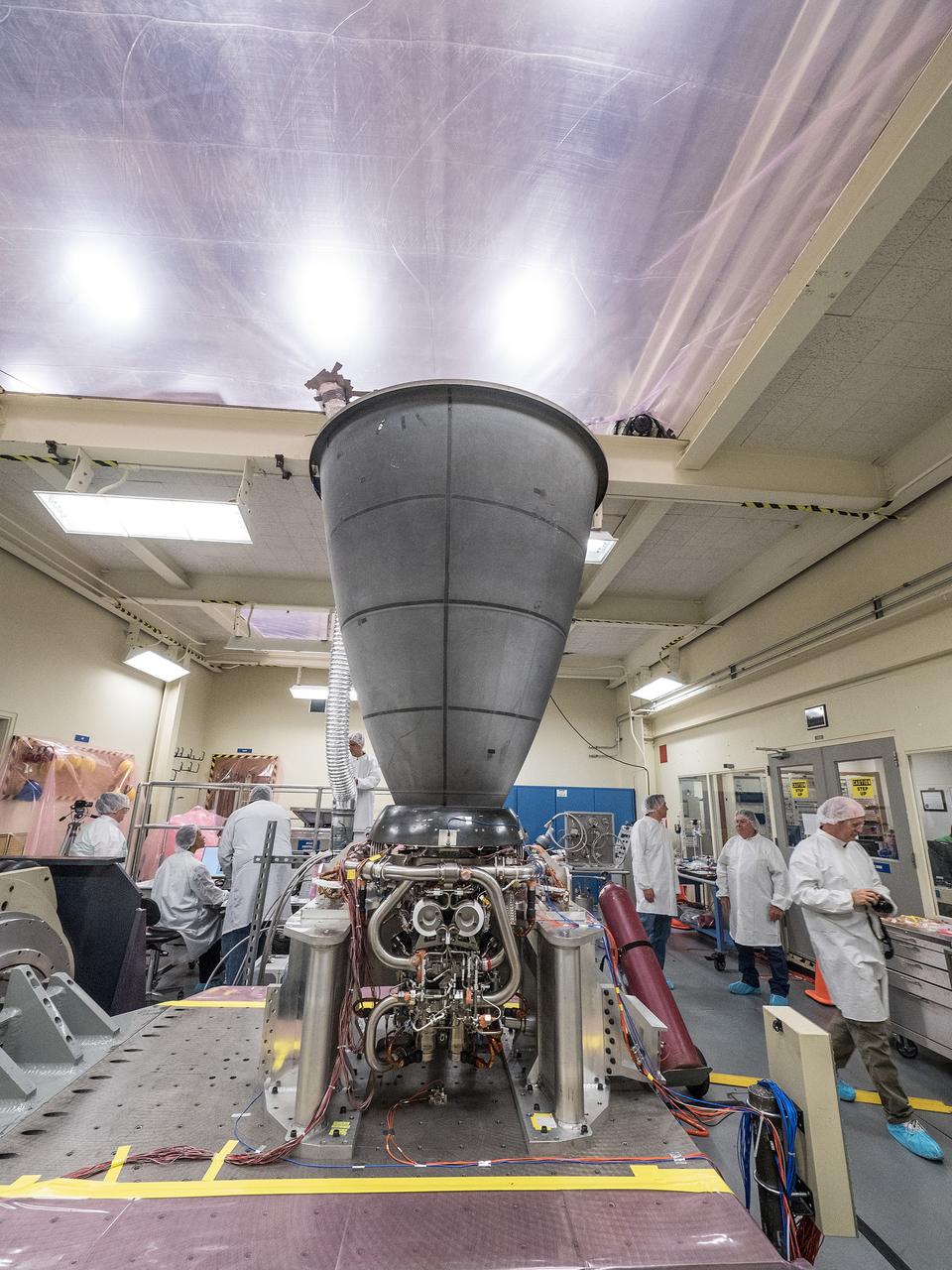
An Orbital Maneuvering System engine is vibration tested at NASA’s Johnson Space Center in Houston on June 16, 2016, before shipment to the agency’s White Sands Test Facility in New Mexico, where it will be fired to qualify the engine for use on Orion’s service module. The vibration testing will help ensure the engine can withstand the loads induced by launch on the agency’s Space Launch System rocket. This summer, another Orbital Maneuvering System engine will be tested at Johnson before it is supplied to ESA (European Space Agency) to integrate into Orion's service module, which will power, propel and cool Orion in space, and also provide consumables like air and water for future crews. ..ESA and its contractor Airbus Defence and Space are providing the service module for Artemis I. This Orbital Maneuvering System engine was used on the space shuttle to provide the thrust for orbital insertion, orbit circularization, orbit transfer, rendezvous, deorbit and abort situations and flew on 31 shuttle flights. The engine flying on Artemis I flew on 19 space shuttle flights, beginning with STS-41G in October 1984 and ending with STS-112 in October 2002.
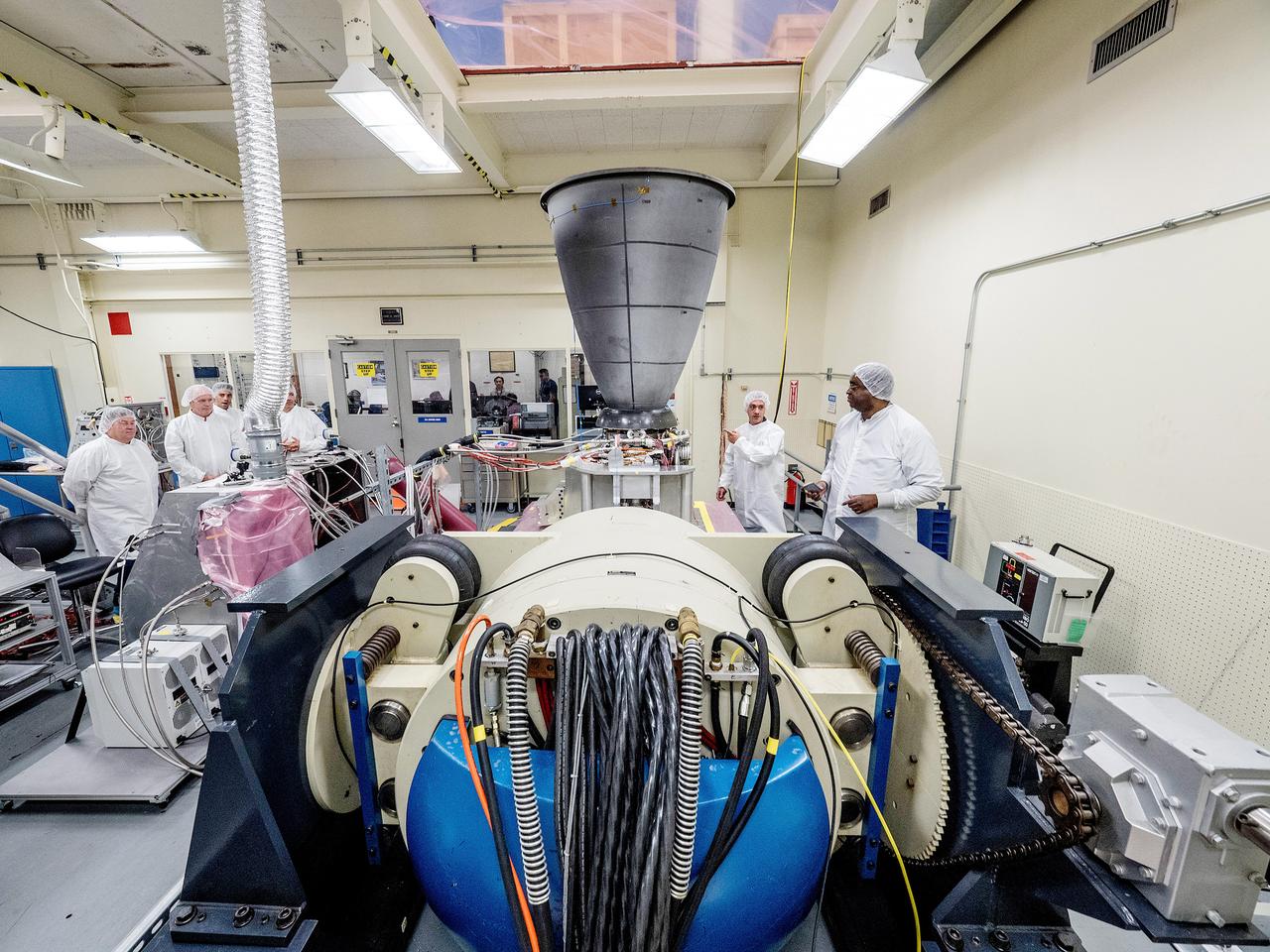
An Orbital Maneuvering System engine is vibration tested at NASA’s Johnson Space Center in Houston on June 16, 2016, before shipment to the agency’s White Sands Test Facility in New Mexico, where it will be fired to qualify the engine for use on Orion’s service module. The vibration testing will help ensure the engine can withstand the loads induced by launch on the agency’s Space Launch System rocket. This summer, another Orbital Maneuvering System engine will be tested at Johnson before it is supplied to ESA (European Space Agency) to integrate into Orion's service module, which will power, propel and cool Orion in space, and also provide consumables like air and water for future crews. ..ESA and its contractor Airbus Defence and Space are providing the service module for Artemis I. This Orbital Maneuvering System engine was used on the space shuttle to provide the thrust for orbital insertion, orbit circularization, orbit transfer, rendezvous, deorbit and abort situations and flew on 31 shuttle flights. The engine flying on Artemis I flew on 19 space shuttle flights, beginning with STS-41G in October 1984 and ending with STS-112 in October 2002.
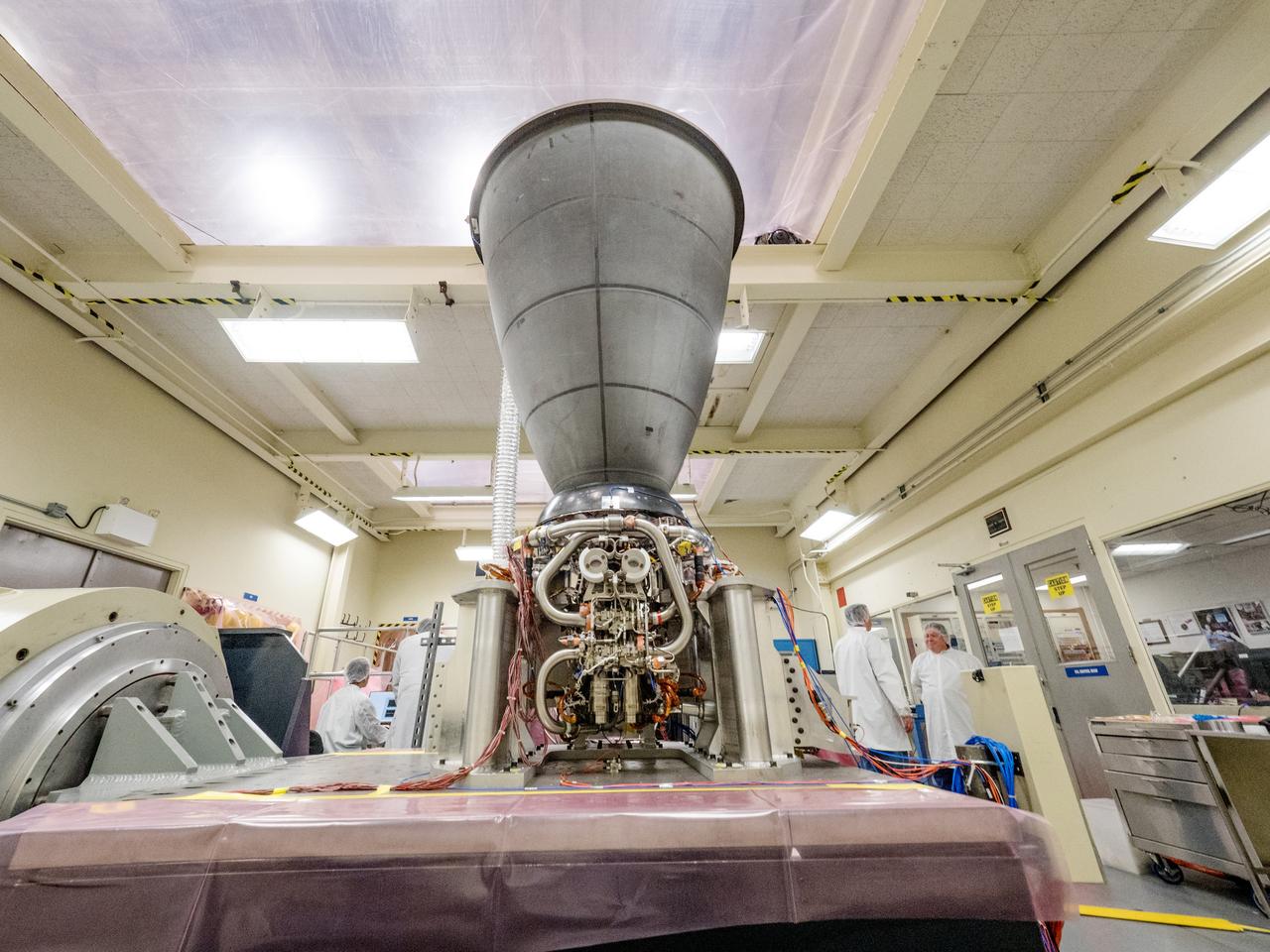
An Orbital Maneuvering System engine is vibration tested at NASA’s Johnson Space Center in Houston on June 16, 2016, before shipment to the agency’s White Sands Test Facility in New Mexico, where it will be fired to qualify the engine for use on Orion’s service module. The vibration testing will help ensure the engine can withstand the loads induced by launch on the agency’s Space Launch System rocket. This summer, another Orbital Maneuvering System engine will be tested at Johnson before it is supplied to ESA (European Space Agency) to integrate into Orion's service module, which will power, propel and cool Orion in space, and also provide consumables like air and water for future crews. ..ESA and its contractor Airbus Defence and Space are providing the service module for Artemis I. This Orbital Maneuvering System engine was used on the space shuttle to provide the thrust for orbital insertion, orbit circularization, orbit transfer, rendezvous, deorbit and abort situations and flew on 31 shuttle flights. The engine flying on Artemis I flew on 19 space shuttle flights, beginning with STS-41G in October 1984 and ending with STS-112 in October 2002.
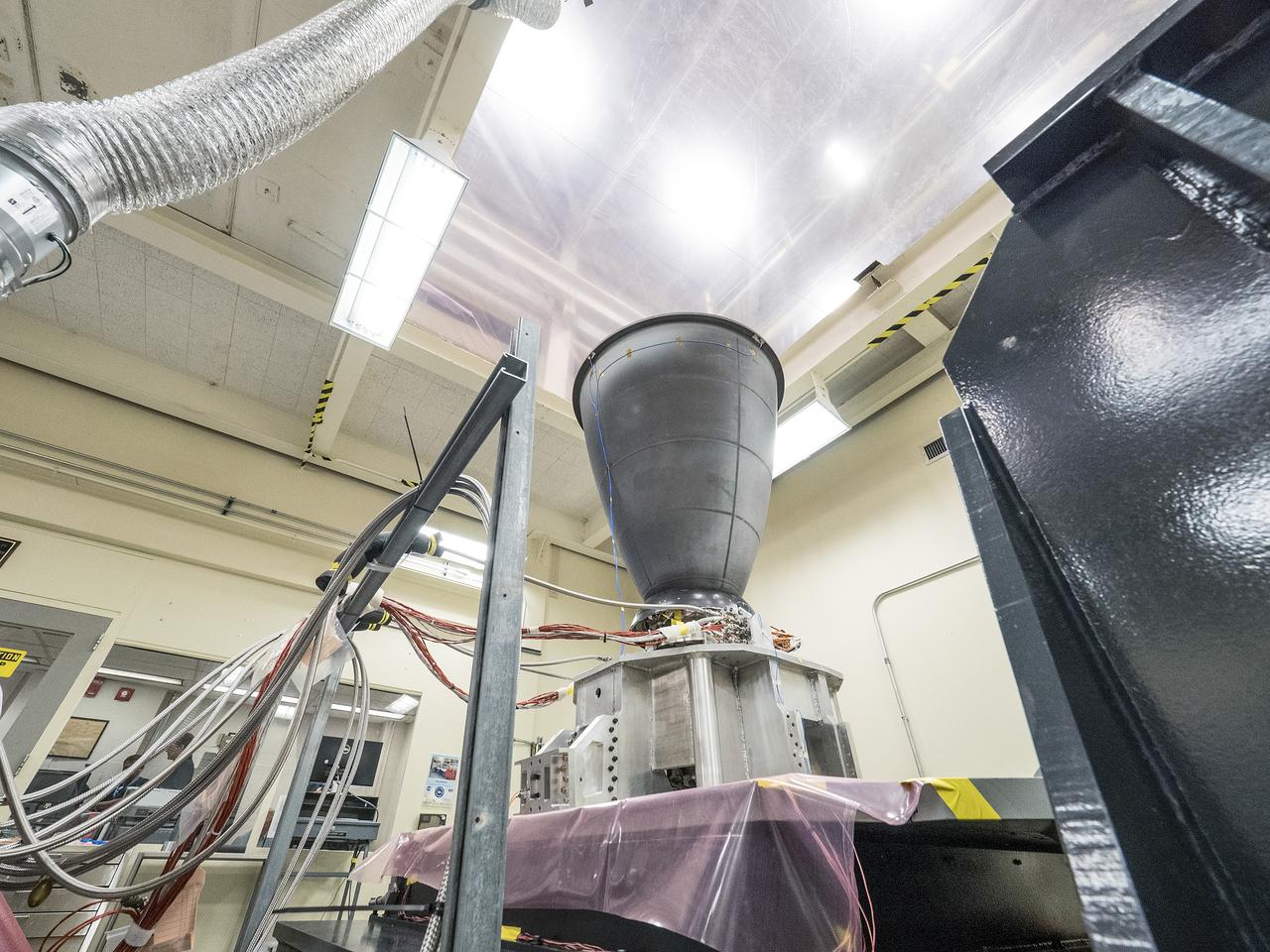
An Orbital Maneuvering System engine is vibration tested at NASA’s Johnson Space Center in Houston on June 16, 2016, before shipment to the agency’s White Sands Test Facility in New Mexico, where it will be fired to qualify the engine for use on Orion’s service module. The vibration testing will help ensure the engine can withstand the loads induced by launch on the agency’s Space Launch System rocket. This summer, another Orbital Maneuvering System engine will be tested at Johnson before it is supplied to ESA (European Space Agency) to integrate into Orion's service module, which will power, propel and cool Orion in space, and also provide consumables like air and water for future crews. ..ESA and its contractor Airbus Defence and Space are providing the service module for Artemis I. This Orbital Maneuvering System engine was used on the space shuttle to provide the thrust for orbital insertion, orbit circularization, orbit transfer, rendezvous, deorbit and abort situations and flew on 31 shuttle flights. The engine flying on Artemis I flew on 19 space shuttle flights, beginning with STS-41G in October 1984 and ending with STS-112 in October 2002.
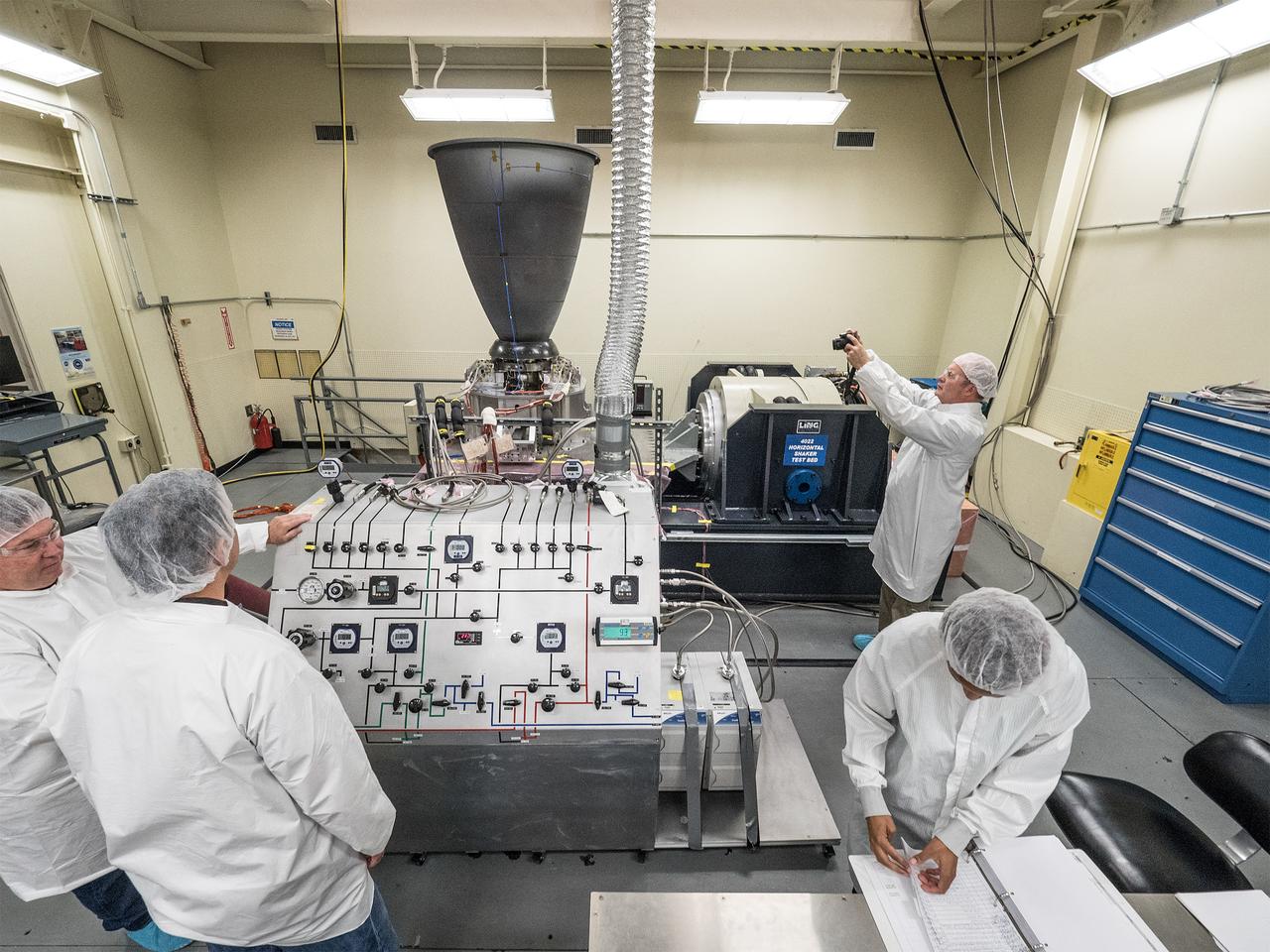
An Orbital Maneuvering System engine is vibration tested at NASA’s Johnson Space Center in Houston on June 16, 2016, before shipment to the agency’s White Sands Test Facility in New Mexico, where it will be fired to qualify the engine for use on Orion’s service module. The vibration testing will help ensure the engine can withstand the loads induced by launch on the agency’s Space Launch System rocket. This summer, another Orbital Maneuvering System engine will be tested at Johnson before it is supplied to ESA (European Space Agency) to integrate into Orion's service module, which will power, propel and cool Orion in space, and also provide consumables like air and water for future crews. ..ESA and its contractor Airbus Defence and Space are providing the service module for Artemis I. This Orbital Maneuvering System engine was used on the space shuttle to provide the thrust for orbital insertion, orbit circularization, orbit transfer, rendezvous, deorbit and abort situations and flew on 31 shuttle flights. The engine flying on Artemis I flew on 19 space shuttle flights, beginning with STS-41G in October 1984 and ending with STS-112 in October 2002.
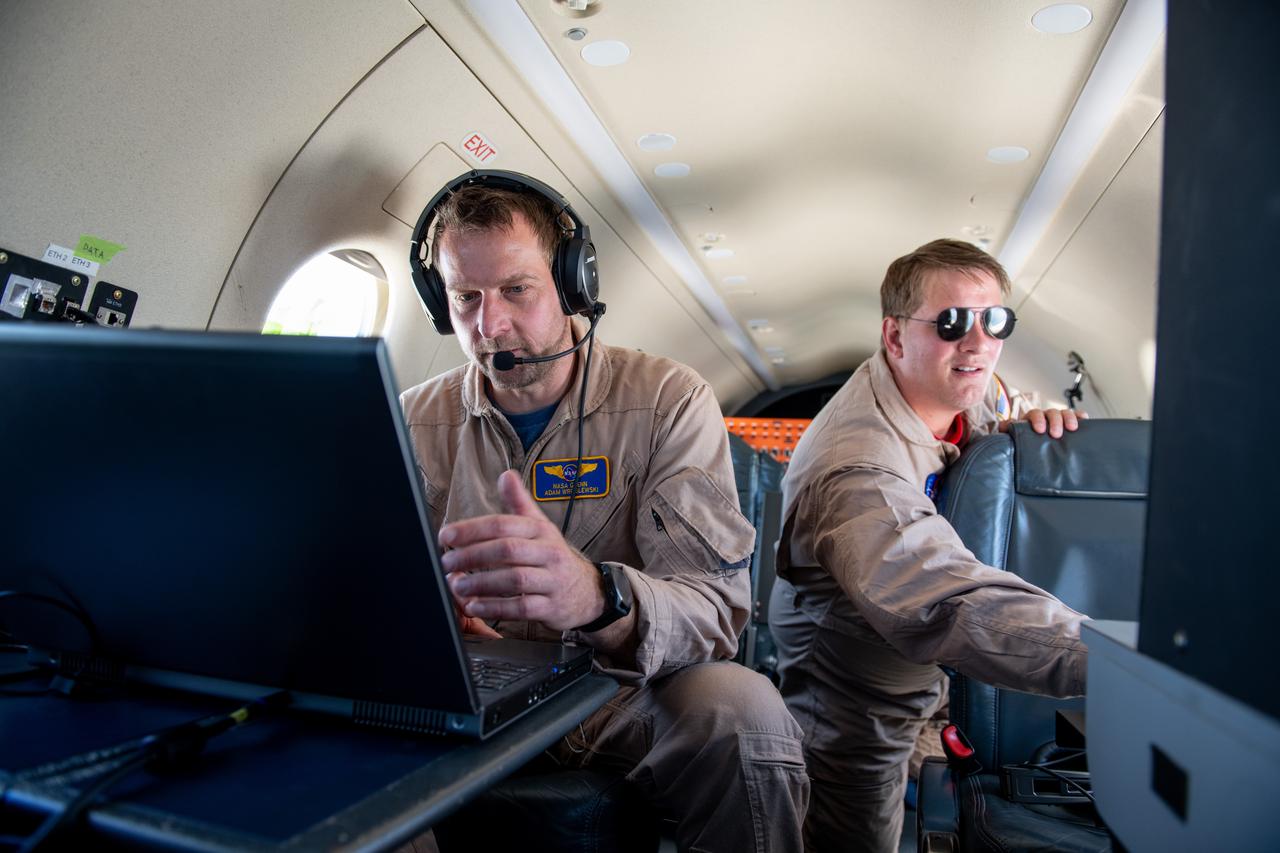
Adam Wroblewski and Shaun McKeehan Working In PC-12 Aircraft during in flight testing on June 13, 2024. A team at NASA’s Glenn Research Center in Cleveland streamed 4K video footage from an aircraft to the International Space Station and back for the first time using optical, or laser, communications. The feat was part of a series of tests on new technology that could provide live video coverage of astronauts on the Moon during the Artemis missions. Working with the Air Force Research Laboratory and NASA’s Small Business Innovation Research program, Glenn engineers temporarily installed a portable laser terminal on the belly of a Pilatus PC-12 aircraft. They then flew over Lake Erie sending data from the aircraft to an optical ground station in Cleveland. From there, it was sent over an Earth-based network to NASA’s White Sands Test Facility in Las Cruces, New Mexico, where scientists used infrared light signals to send the data. Photo Credit: (NASA/Sara Lowthian-Hanna)
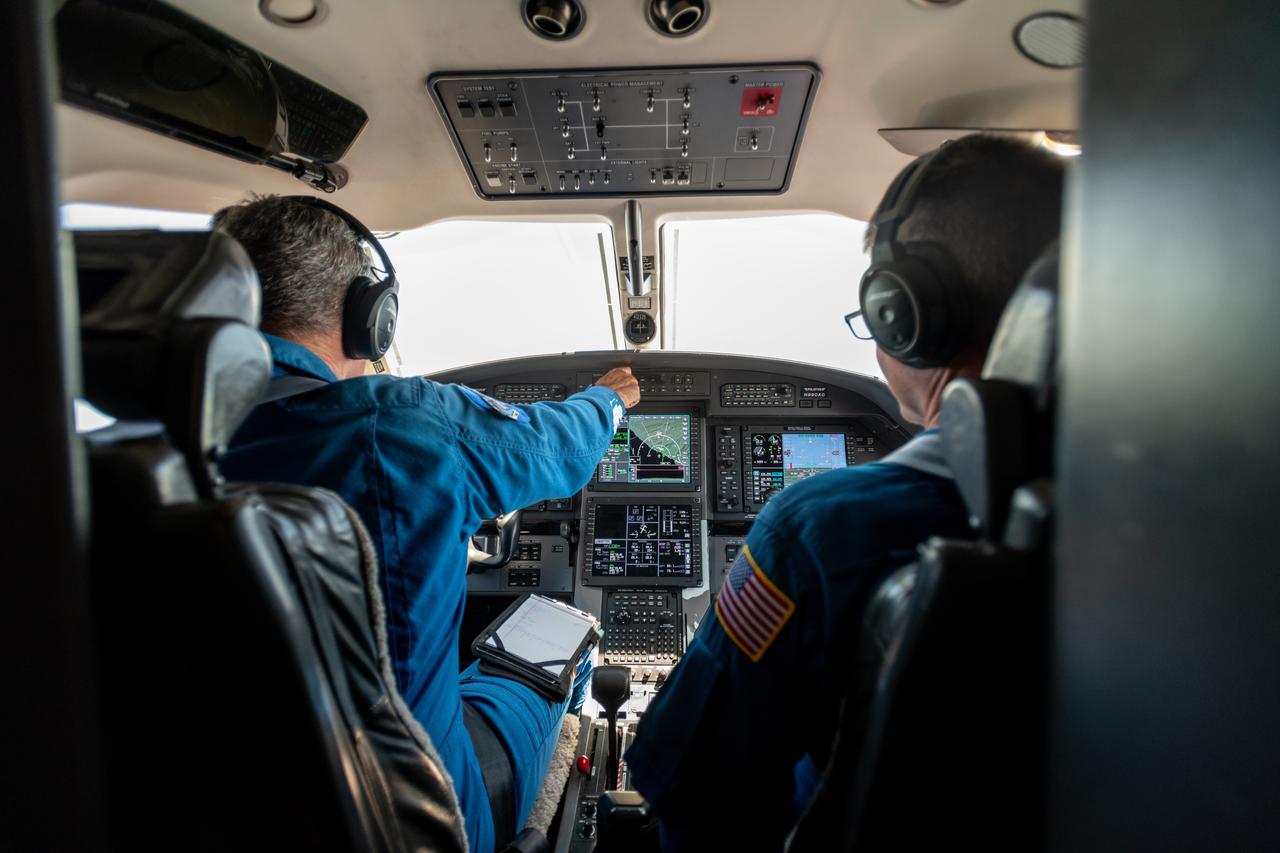
Kurt Blankenship and James Demers Fly PC-12 Aircraft During Testing on June 13, 2024. A team at NASA’s Glenn Research Center in Cleveland streamed 4K video footage from an aircraft to the International Space Station and back for the first time using optical, or laser, communications. The feat was part of a series of tests on new technology that could provide live video coverage of astronauts on the Moon during the Artemis missions. Working with the Air Force Research Laboratory and NASA’s Small Business Innovation Research program, Glenn engineers temporarily installed a portable laser terminal on the belly of a Pilatus PC-12 aircraft. They then flew over Lake Erie sending data from the aircraft to an optical ground station in Cleveland. From there, it was sent over an Earth-based network to NASA’s White Sands Test Facility in Las Cruces, New Mexico, where scientists used infrared light signals to send the data. Photo Credit: (NASA/Sara Lowthian-Hanna)
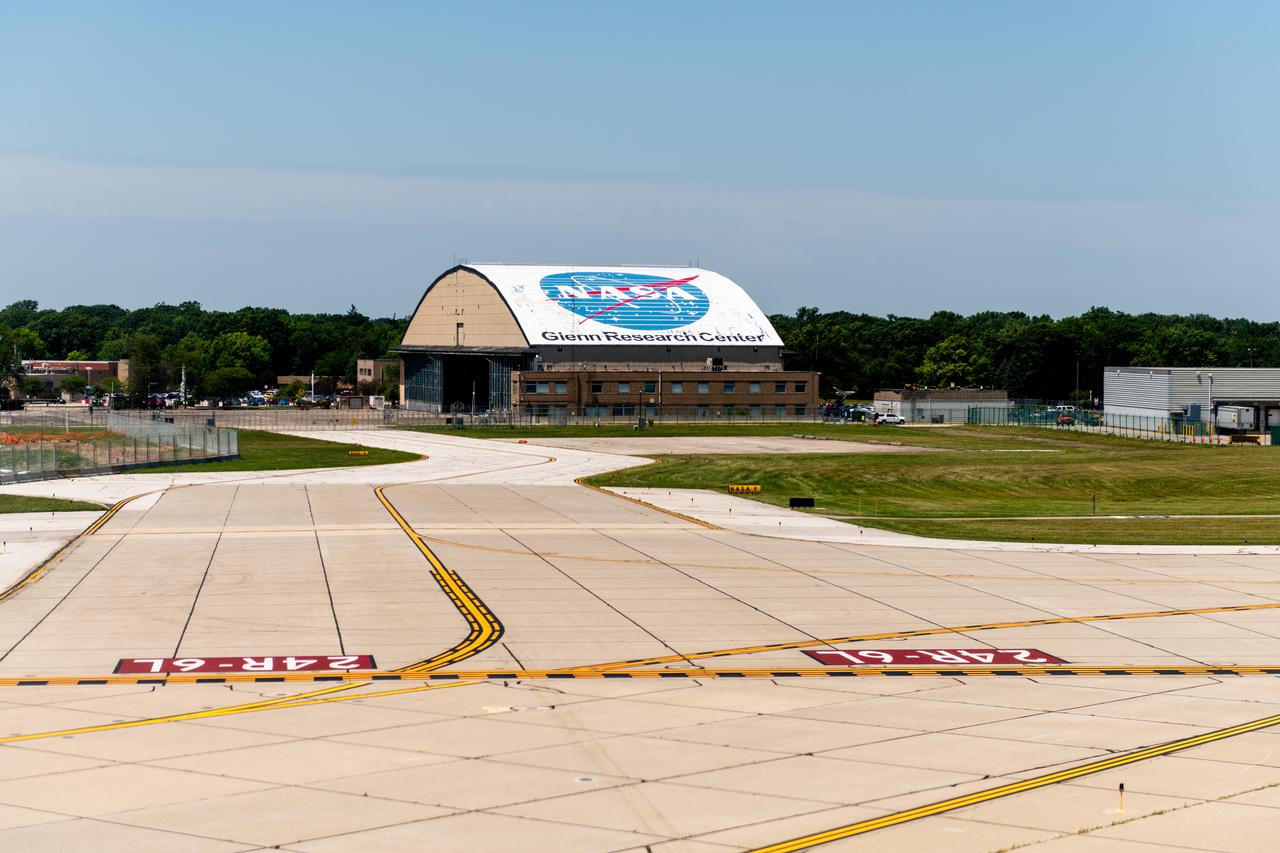
View of the Glenn Research Center Hangar from the Cleveland Hopkins Airport Runway during a testing flight on June 13, 2024. A team at NASA’s Glenn Research Center in Cleveland streamed 4K video footage from an aircraft to the International Space Station and back for the first time using optical, or laser, communications. The feat was part of a series of tests on new technology that could provide live video coverage of astronauts on the Moon during the Artemis missions. Working with the Air Force Research Laboratory and NASA’s Small Business Innovation Research program, Glenn engineers temporarily installed a portable laser terminal on the belly of a Pilatus PC-12 aircraft. They then flew over Lake Erie sending data from the aircraft to an optical ground station in Cleveland. From there, it was sent over an Earth-based network to NASA’s White Sands Test Facility in Las Cruces, New Mexico, where scientists used infrared light signals to send the data. Photo Credit: (NASA/Sara Lowthian-Hanna)