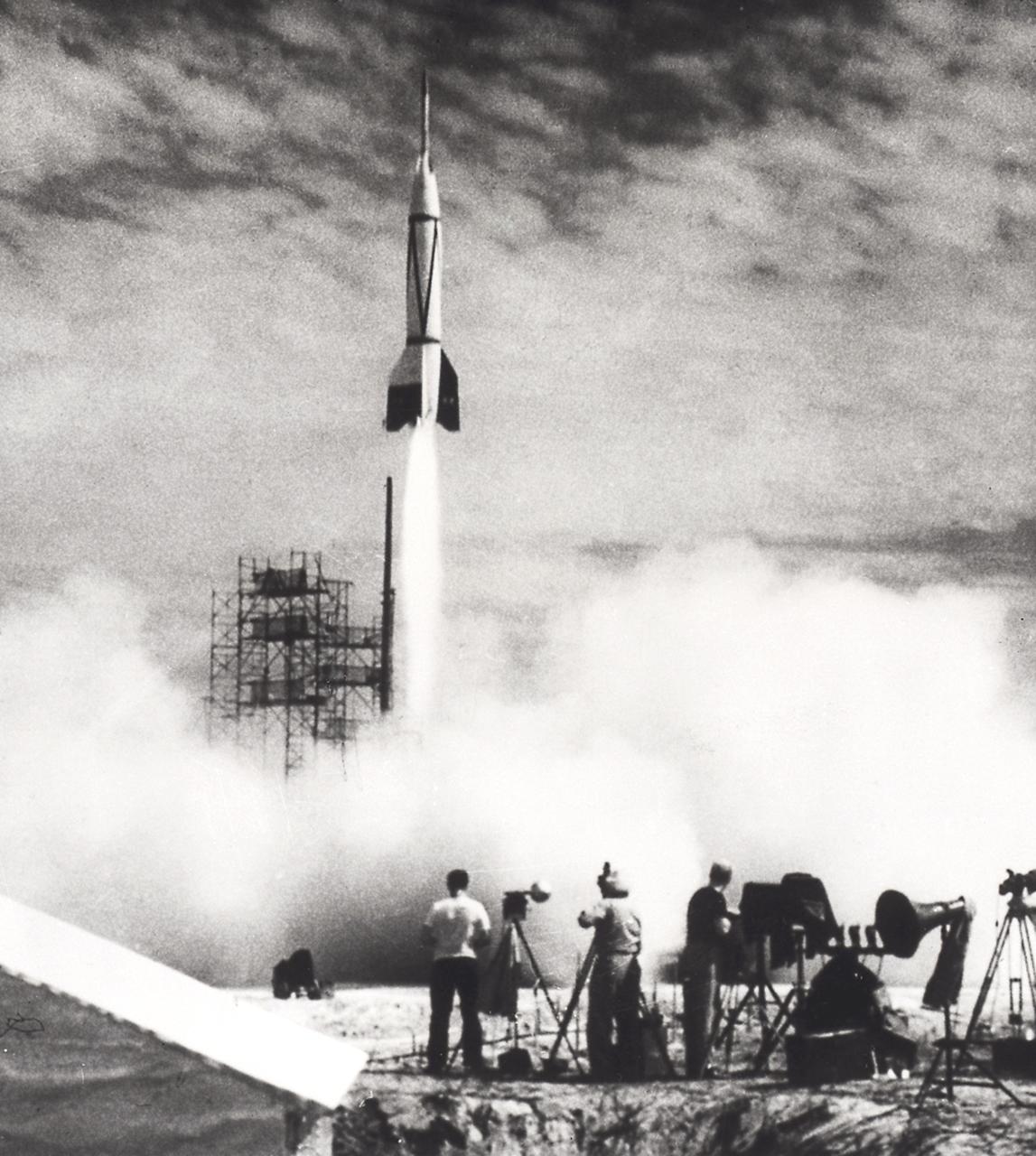
Bumper Wac liftoff at the Long Range Proving Ground located at Cape Canaveral, Florida. At White Sands, New Mexico, the German rocket team experimented with a two-stage rocket called Bumper Wac, which intended to provide data for upper atmospheric research. On February 24, 1950, the Bumper, which employed a V-2 as the first stage with a Wac Corporal upper stage, obtained a peak altitude of more than 240 miles.
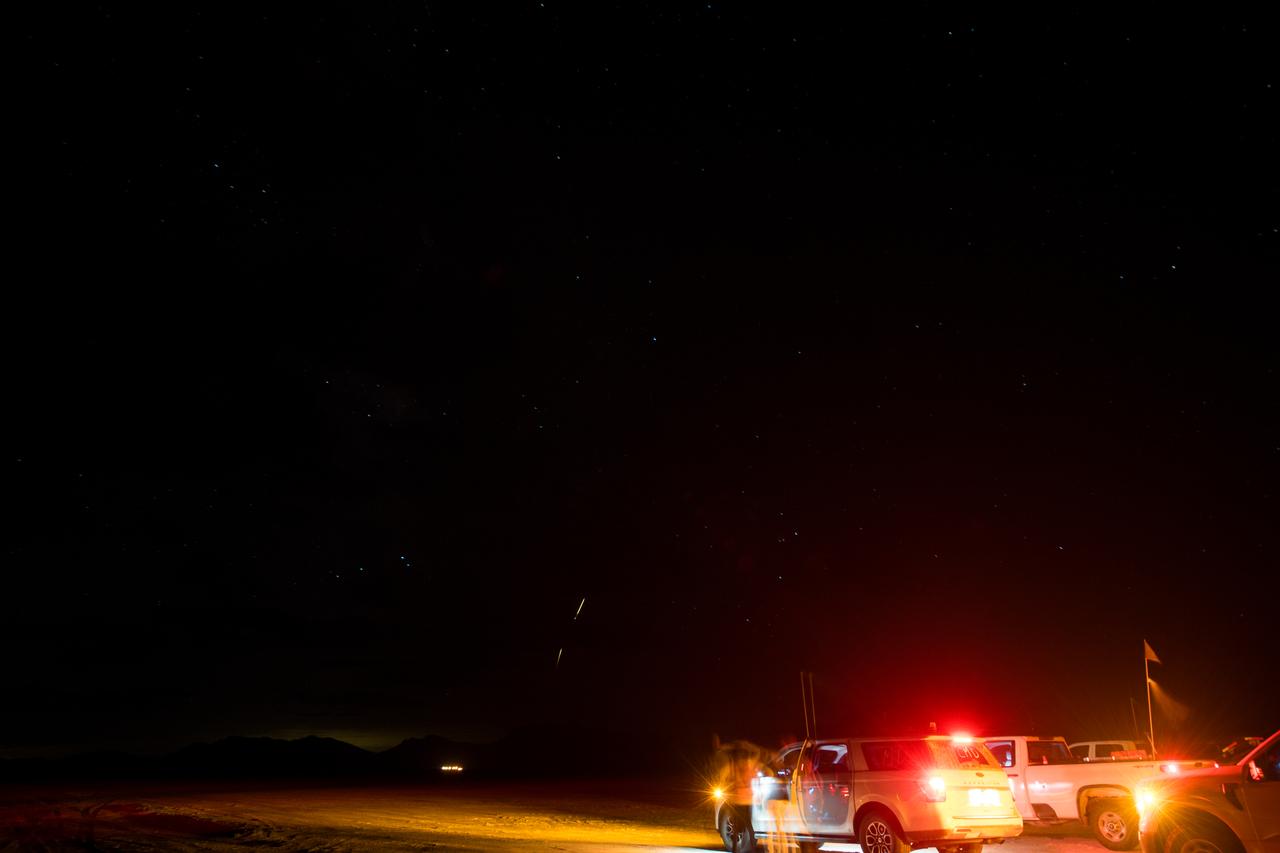
In this 30-second exposure, NASA's Boeing Crew Flight Test Starliner spacecraft lands uncrewed, Friday, Sept. 6, 2024 Mountain Time, at White Sands, New Mexico. This approach allows NASA and Boeing to continue gathering testing data on the spacecraft. Photo Credit: (NASA/Aubrey Gemignani)
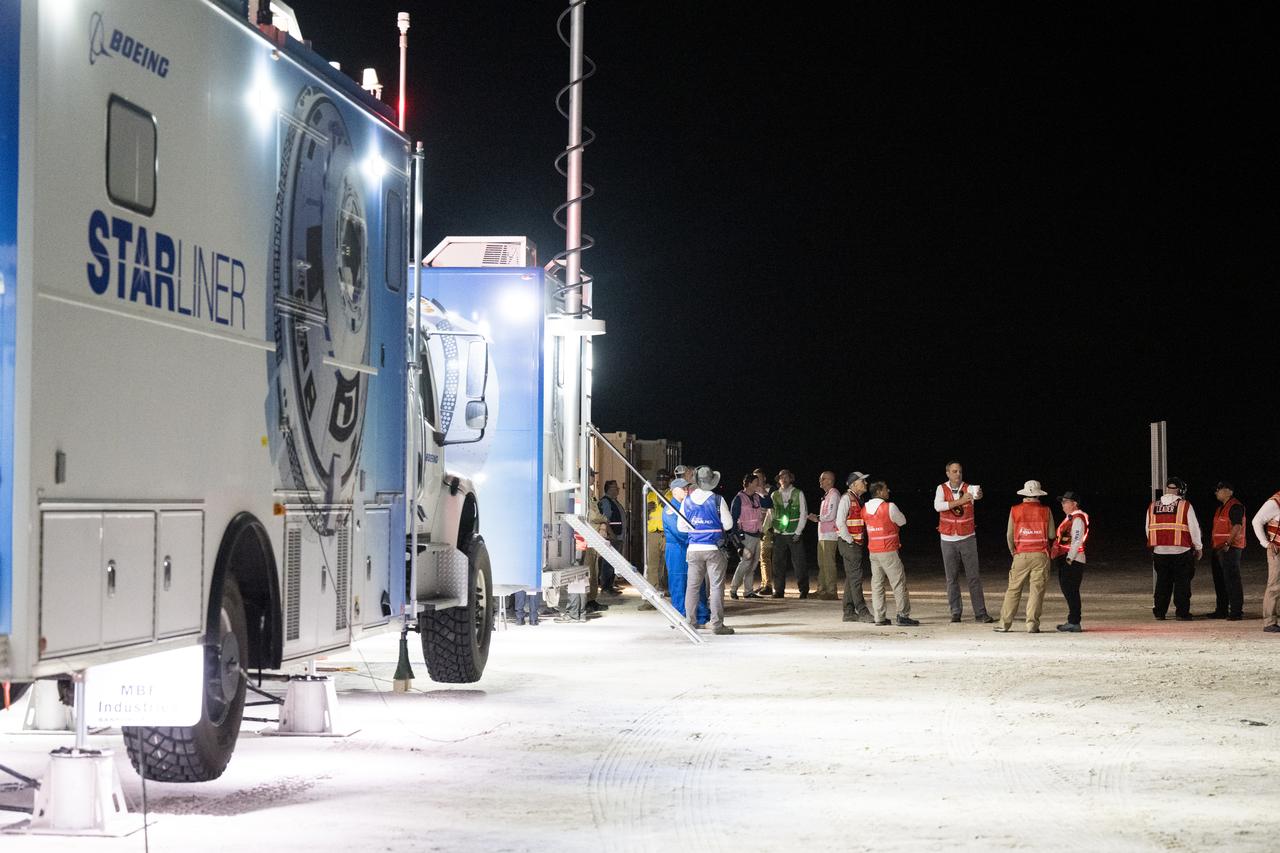
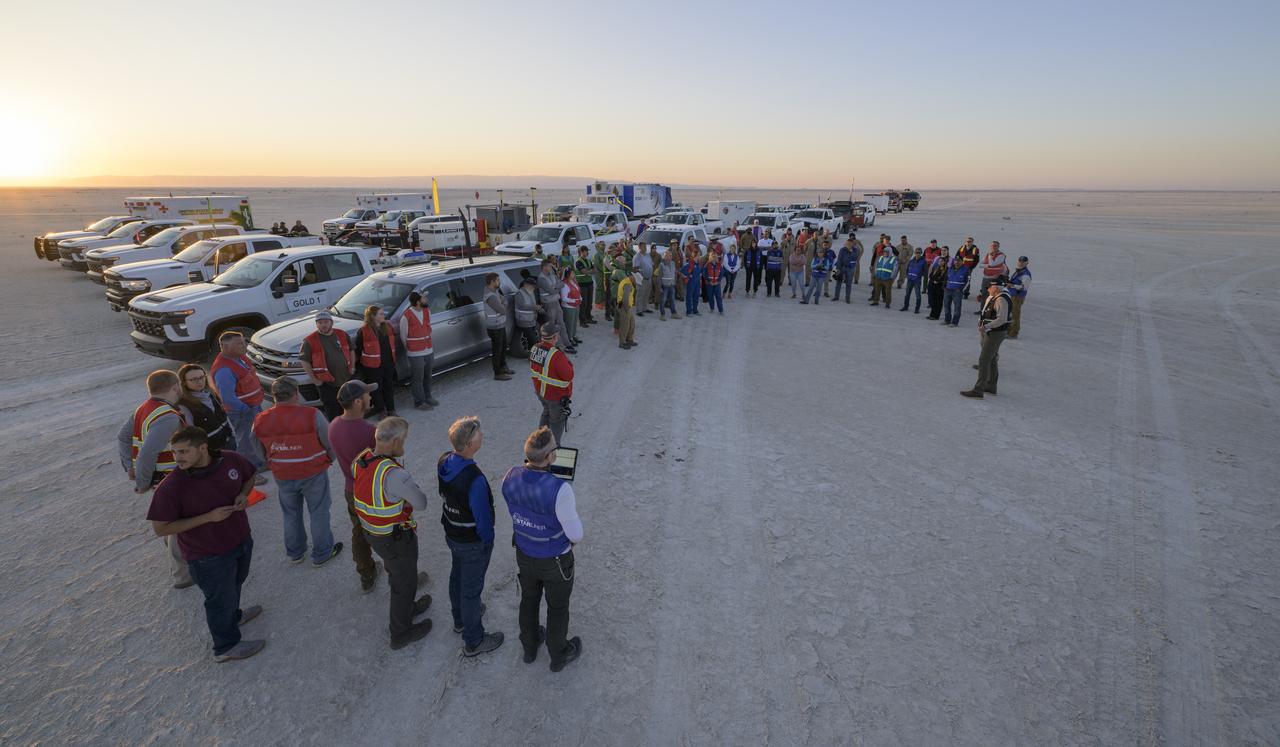
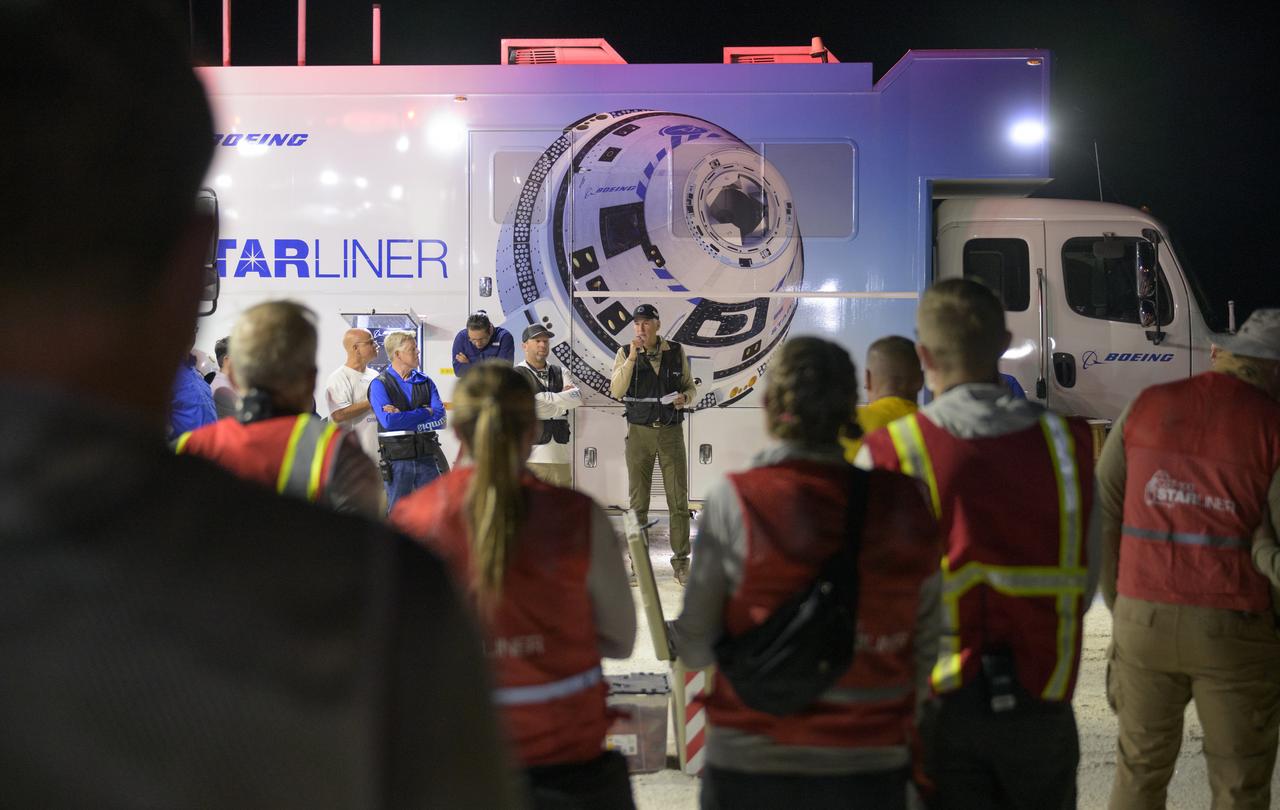
Boeing and NASA teams are seen before NASA's Boeing Crew Flight Test Starliner spacecraft lands uncrewed, Friday, Sept. 6, 2024 Mountain Time at White Sands, New Mexico. This approach allows NASA and Boeing to continue gathering testing data on the spacecraft. Photo Credit: (NASA/Aubrey Gemignani)
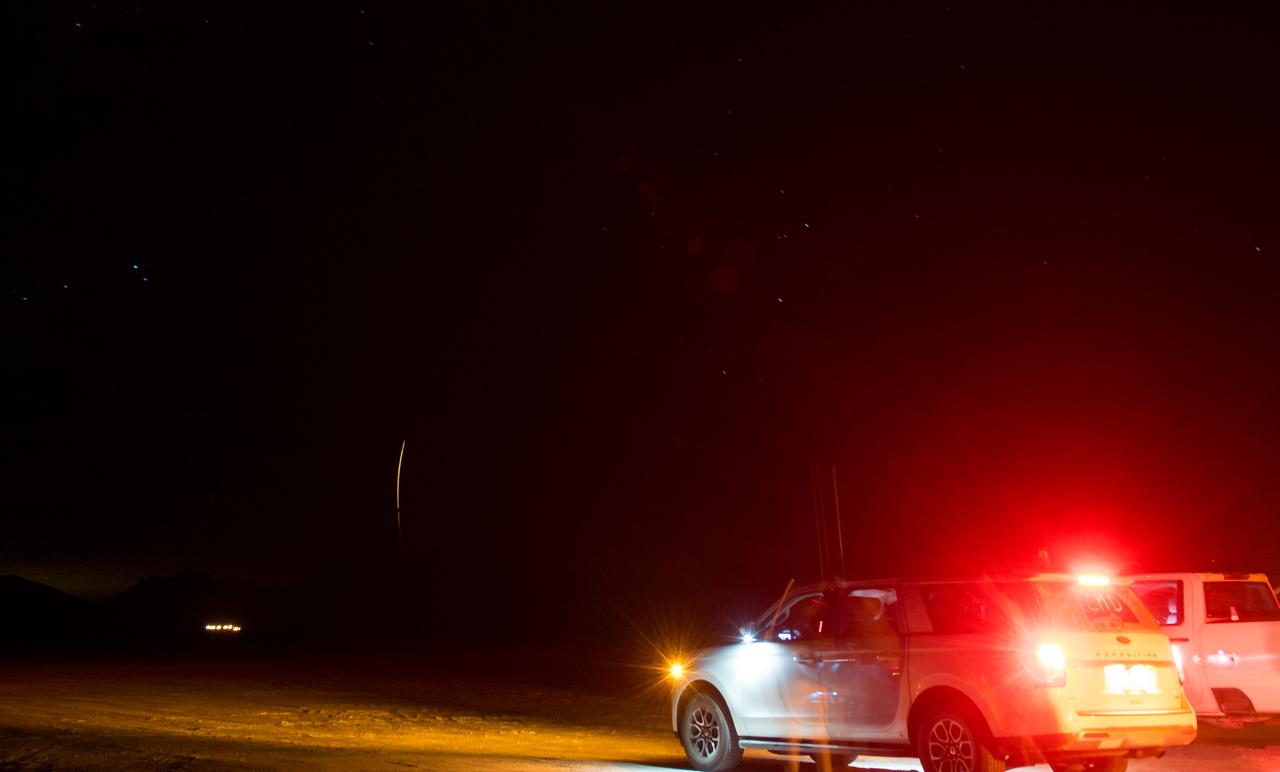
In this 30-second exposure, NASA's Boeing Crew Flight Test Starliner spacecraft lands uncrewed, Friday, Sept. 6, 2024, at White Sands, New Mexico. This approach allows NASA and Boeing to continue gathering testing data on the spacecraft. Photo Credit: (NASA/Aubrey Gemignani)
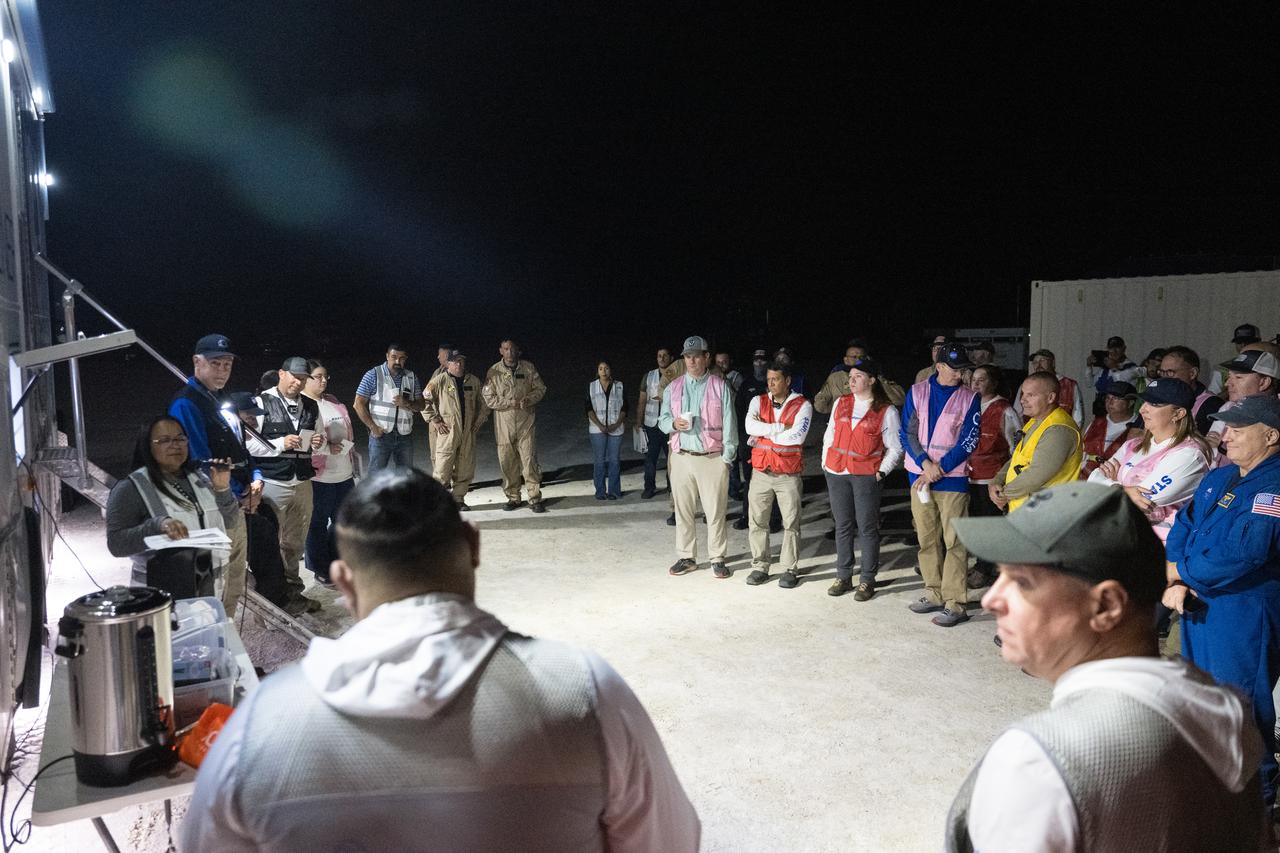
Boeing and NASA teams meet before NASA's Boeing Crew Flight Test Starliner spacecraft lands uncrewed, Friday, Sept. 6, 2024 Mountain Time at White Sands, New Mexico. This approach allows NASA and Boeing to continue gathering testing data on the spacecraft. Photo Credit: (NASA/Aubrey Gemignani)
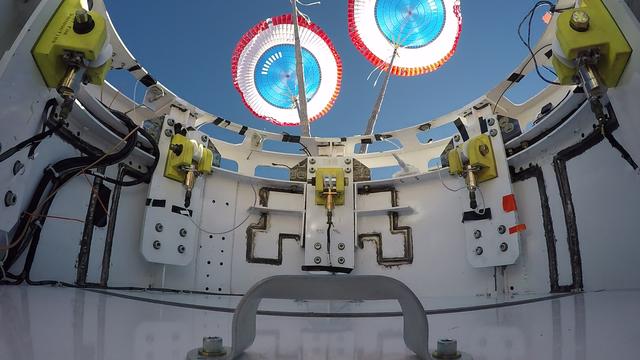
The parachute deployment is seen from the top hatch of a boilerplate CST-100 Starliner during a drop test of the Starliner's parachute system. Boeing, which is building the Starliner, conducted the test in White Sands, New Mexico, as part of the testing campaign for certification by NASA's Commercial Crew Program. Photo credit: Boeing
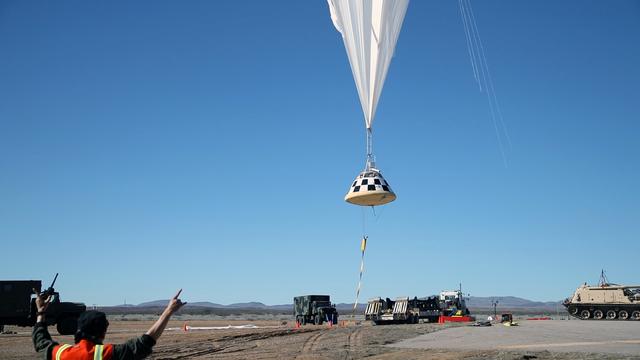
A boilerplate CST-100 Starliner is lifted skyward by a balloon for a drop test of the Starliner's parachute system. Boeing, which is building the Starliner, conducted the test in White Sands, New Mexico, as part of the testing campaign for certification by NASA's Commercial Crew Program. Photo credit: Boeing
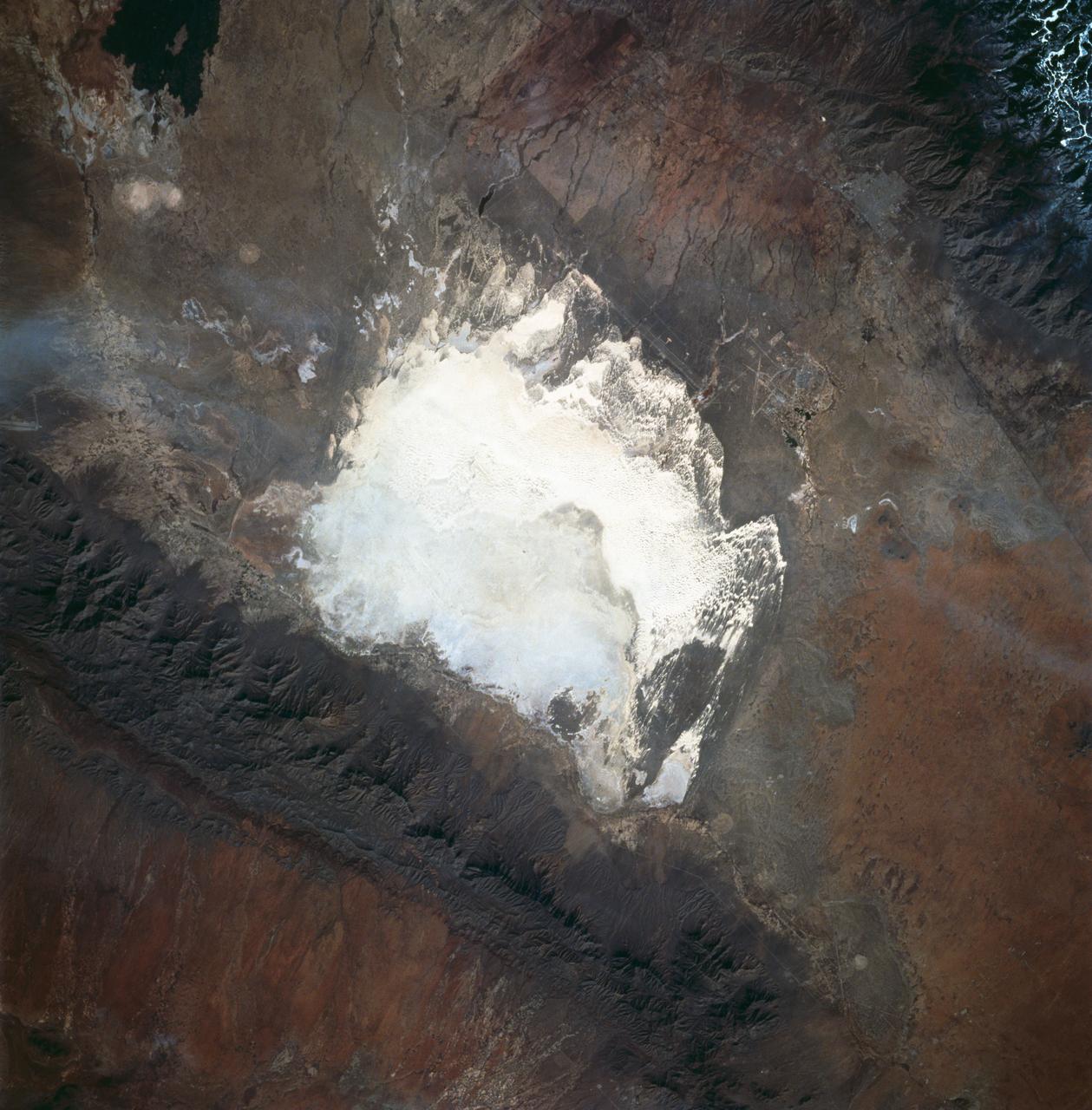
STS060-83-016 (3-11 Feb 1994) --- White Sands National Monument (Park) is easily recognized in the center of this near-vertical color photograph. White Sands is the world's largest gypsum dune field. It represents an alabaster sea that covers nearly 300 square miles. The National Park Service has the responsibility to preserve this unique feature, allowing the dune world to unfold in its natural environment, but without interference from humans. White Sands lies within a spectacular, oblong geological depression called the Tularosa Basin bounded by the Sacramento Mountains on the east and the San Andres Mountains on the west. Climatically the basin is a true desert, averaging less than 10 inches of rainfall per year. In terms of topographic relief the Sacramento Mountains attain elevations greater than 9,000 feet above sea level, while the San Andres Mountains on the west exceed altitudes of 8,000 feet. At the southwest corner of the White Sands is dry lake, Lucero. This lake is the lowest point in the Tularosa Basin at 3,900 feet. In terms of cultural features the city of Alamogordo (over 20,000 population) and Holloman Air Force Base can be seen with great clarity on this photograph. The area is accessible by highways U.S.70 & 82 from Las Cruces, New Mexico, and U.S.54 from El Paso, Texas.
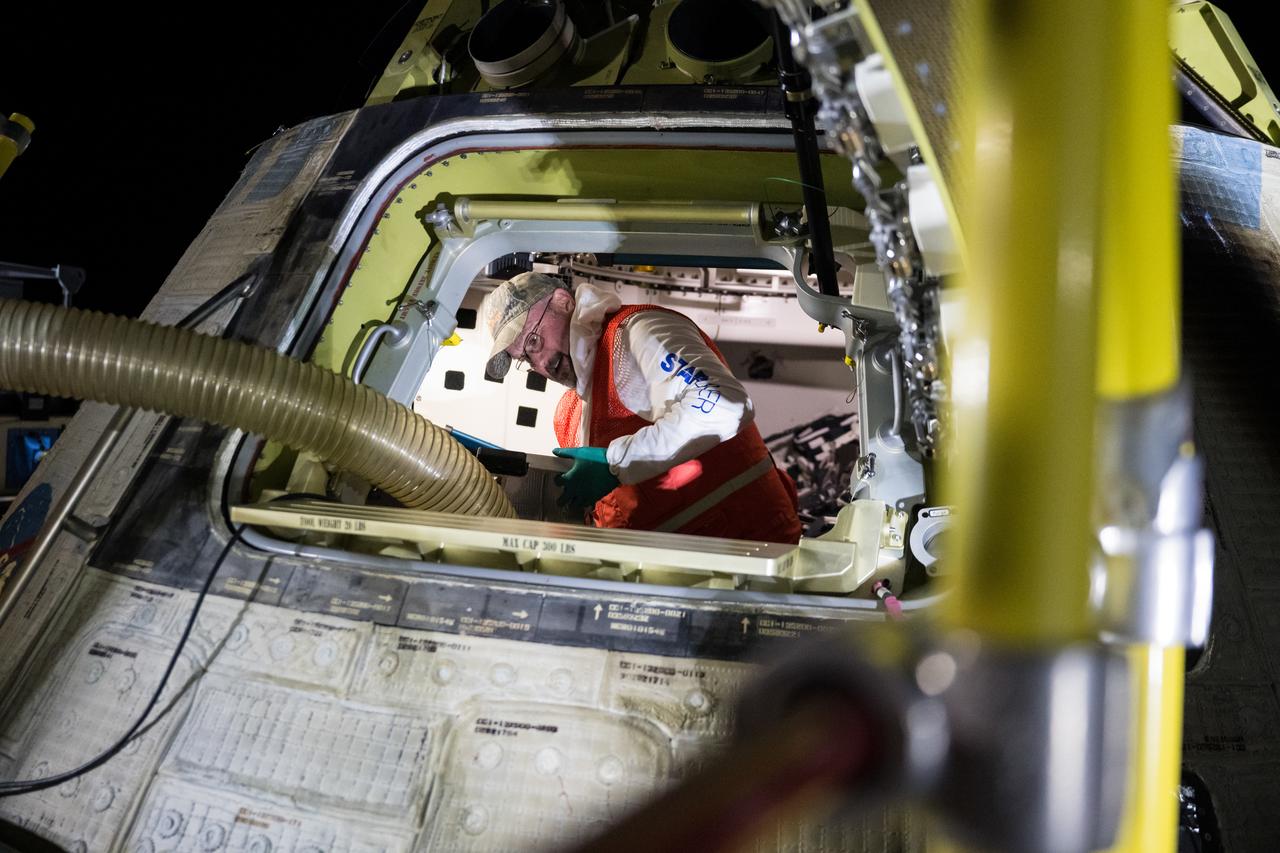
Boeing and NASA teams unload cargo from NASA's Boeing Crew Flight Test Starliner spacecraft after it landed uncrewed at White Sands Missile Range’s Space Harbor, Friday, Sept. 6, 2024 Mountain Time (Sept. 7 Eastern Time), in New Mexico. This approach allows NASA and Boeing to continue gathering testing data on the spacecraft. Photo Credit: (NASA/Aubrey Gemignani)
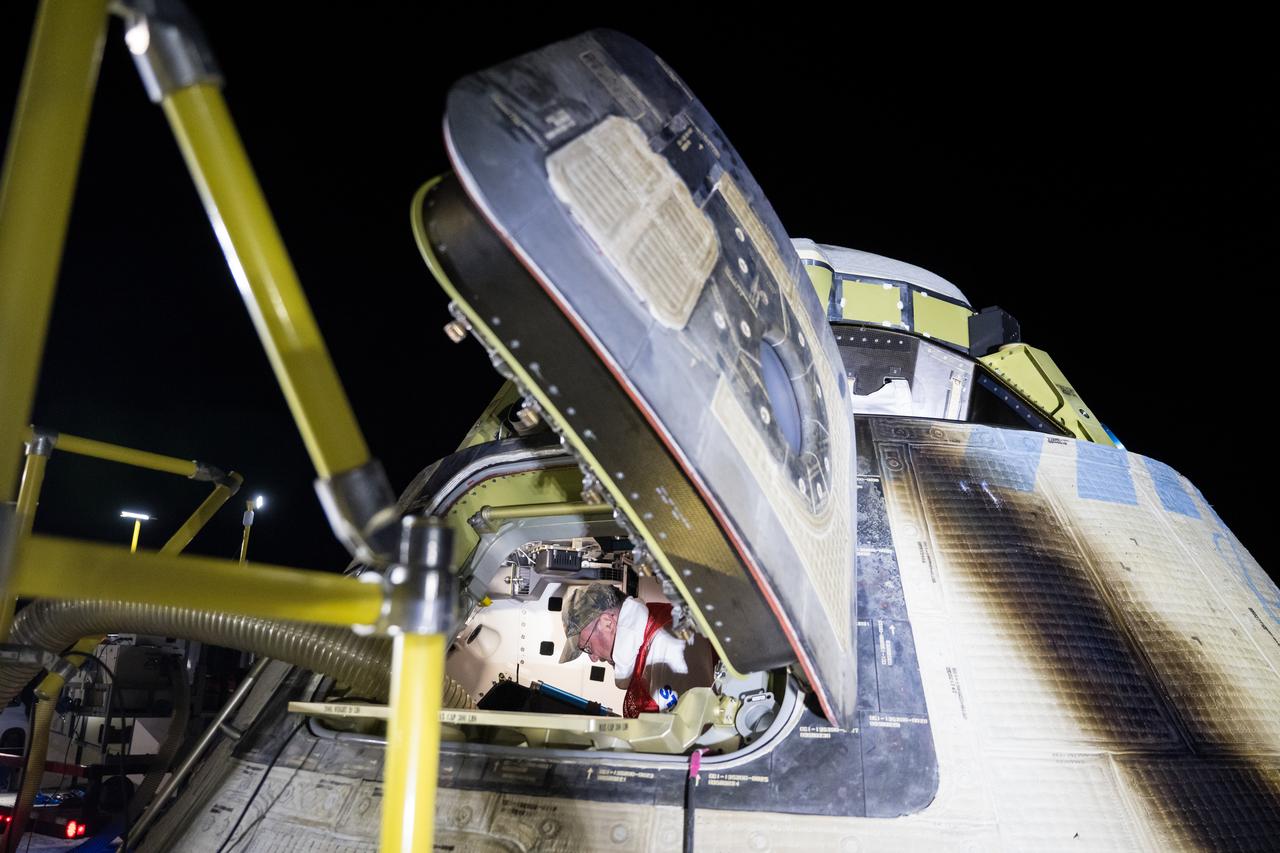
Boeing and NASA teams unload cargo from NASA's Boeing Crew Flight Test Starliner spacecraft after it landed uncrewed at White Sands Missile Range’s Space Harbor, Friday, Sept. 6, 2024 Mountain Time (Sept. 7 Eastern Time), in New Mexico. This approach allows NASA and Boeing to continue gathering testing data on the spacecraft. Photo Credit: (NASA/Aubrey Gemignani)
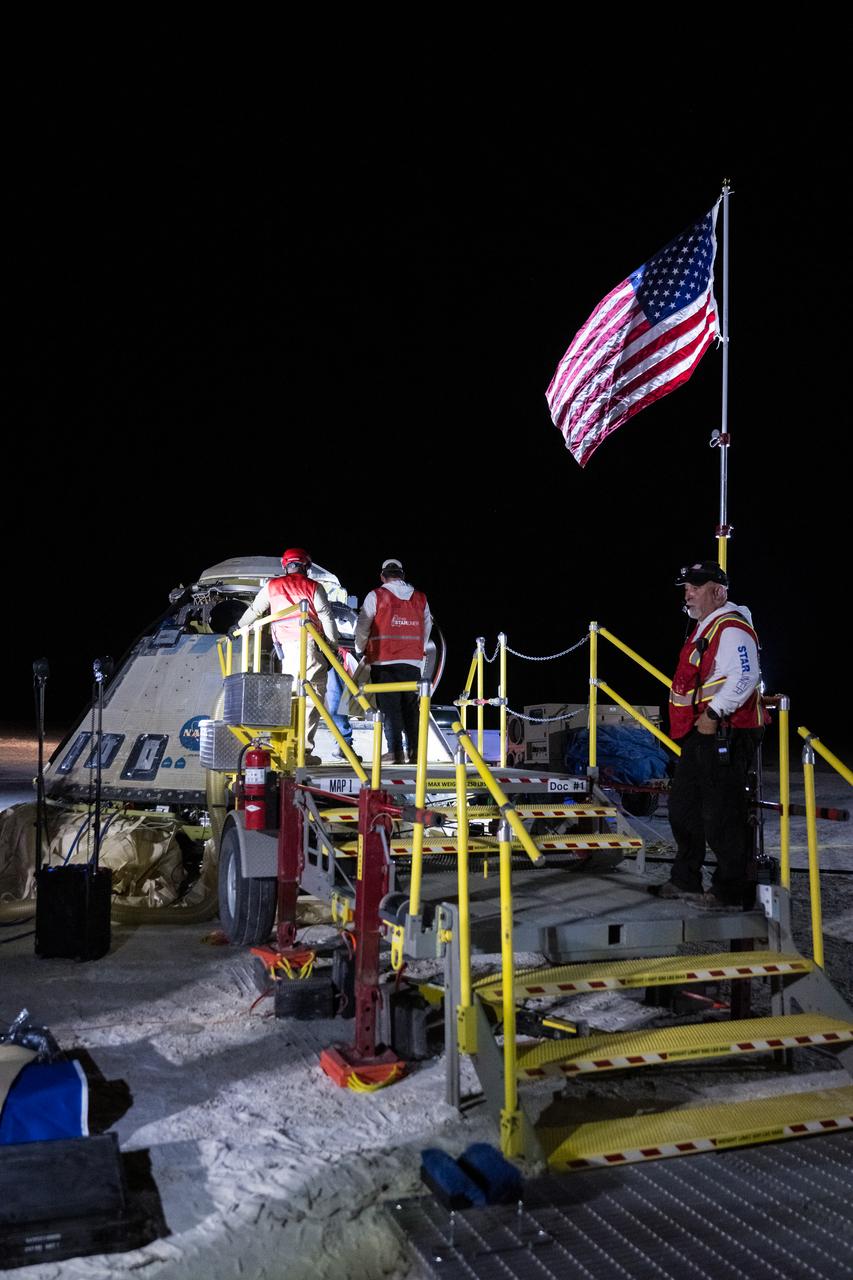
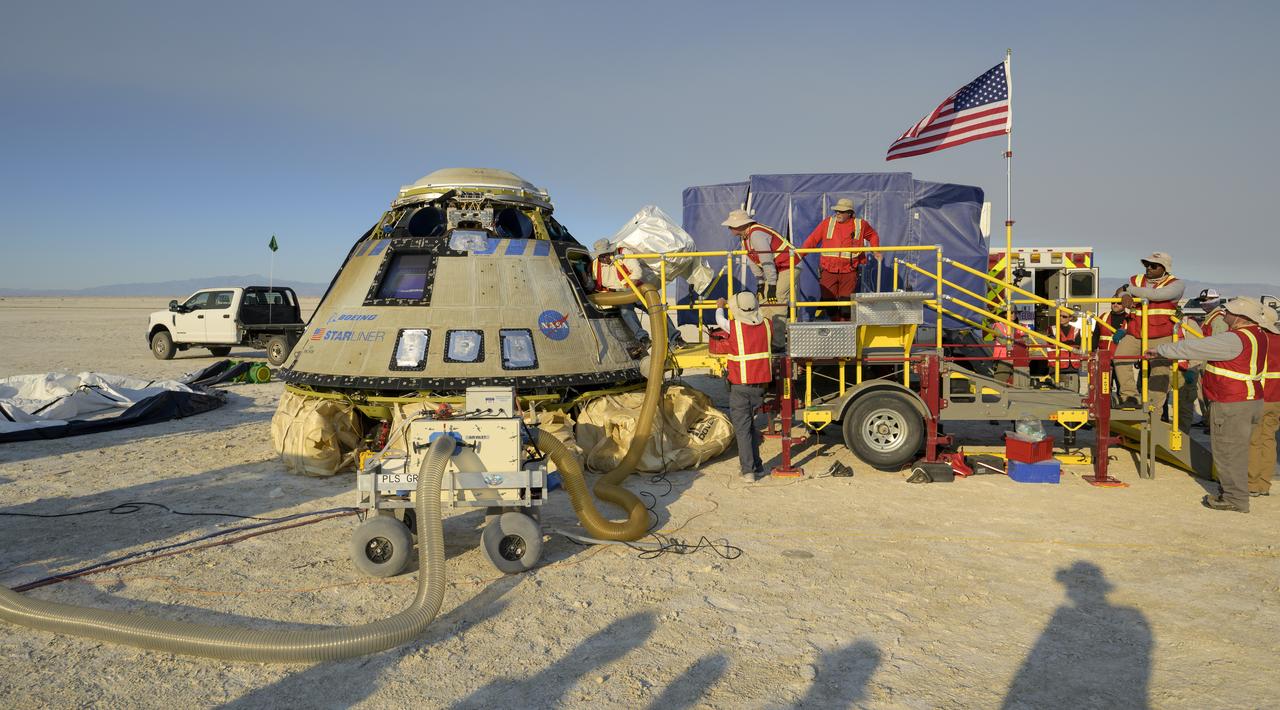
Boeing and NASA teams work around NASA's Boeing Crew Flight Test Starliner spacecraft after it landed uncrewed, Friday, Sept. 6, 2024 Mountain Time (Sept. 7 Eastern Time), at White Sands, New Mexico. This approach allows NASA and Boeing to continue gathering testing data on the spacecraft. Photo Credit: (NASA/Aubrey Gemignani)
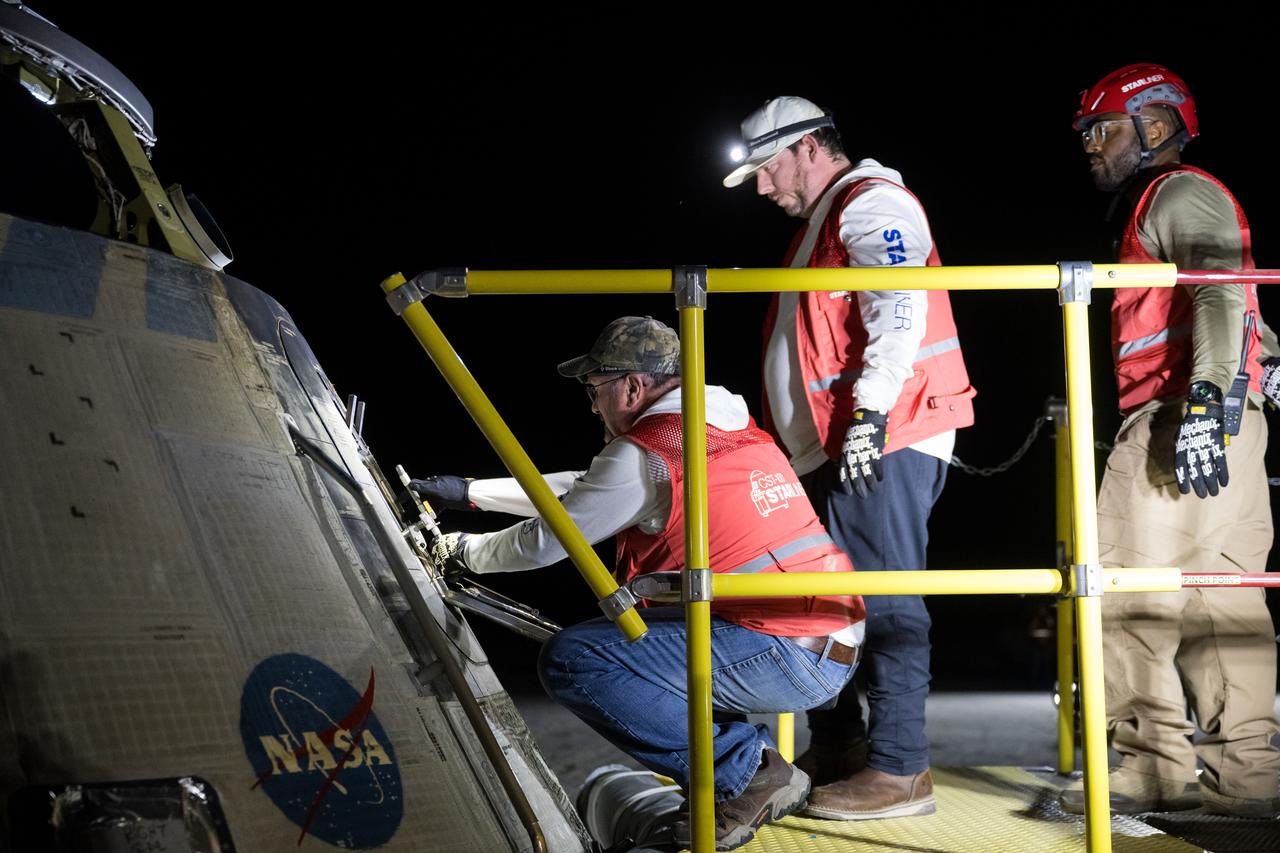
Boeing and NASA teams work around NASA's Boeing Crew Flight Test Starliner spacecraft after it landed uncrewed, Friday, Sept. 6, 2024 Mountain Time (Sept. 7 Eastern Time), at White Sands, New Mexico. This approach allows NASA and Boeing to continue gathering testing data on the spacecraft. Photo Credit: (NASA/Aubrey Gemignani)
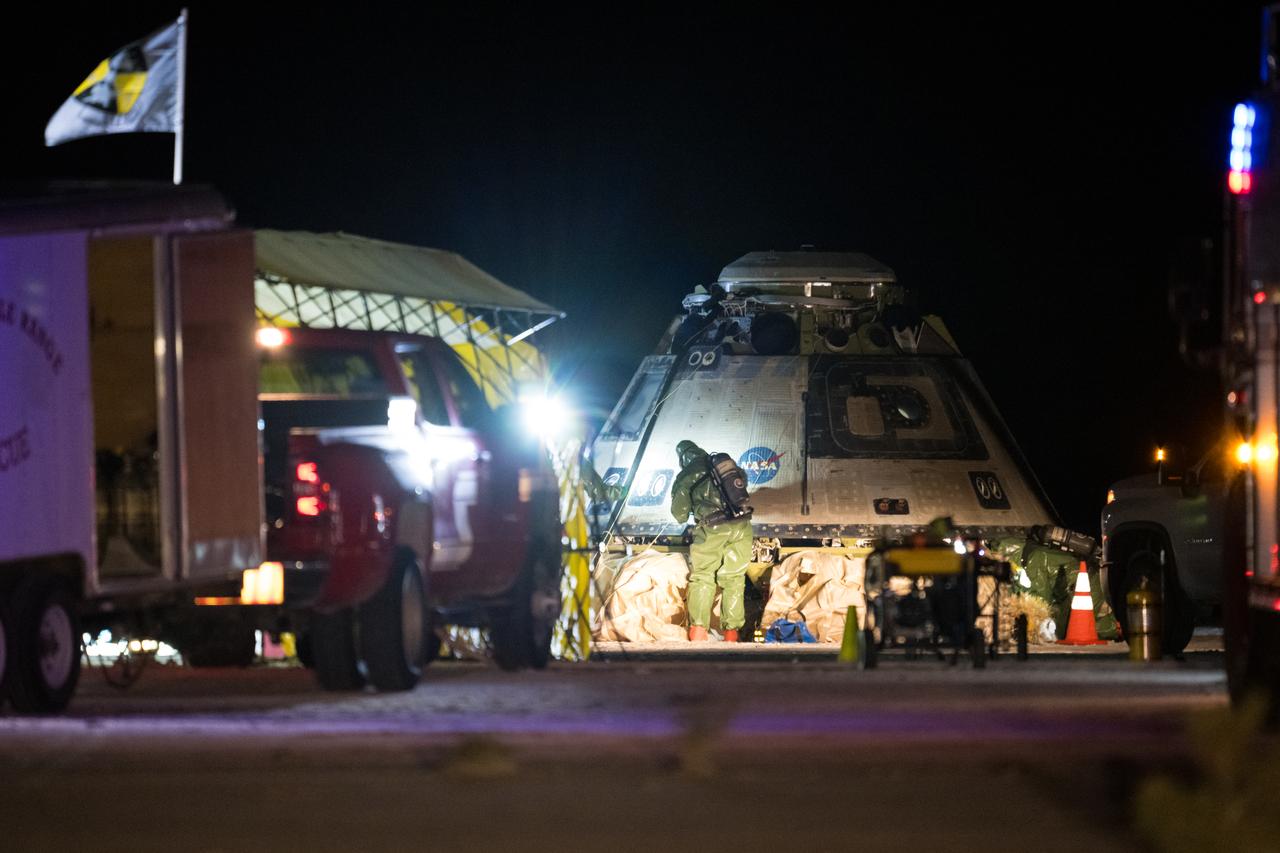
Boeing and NASA recovery teams wait for hazmat teams to confirm it is safe to work around NASA's Boeing Crew Flight Test Starliner spacecraft after it landed uncrewed at White Sands Missile Range’s Space Harbor, Friday, Sept. 6, 2024 Mountain Time (Sept. 7 Eastern Time), in New Mexico. This approach allows NASA and Boeing to continue gathering testing data on the spacecraft. Photo Credit: (NASA/Aubrey Gemignani)
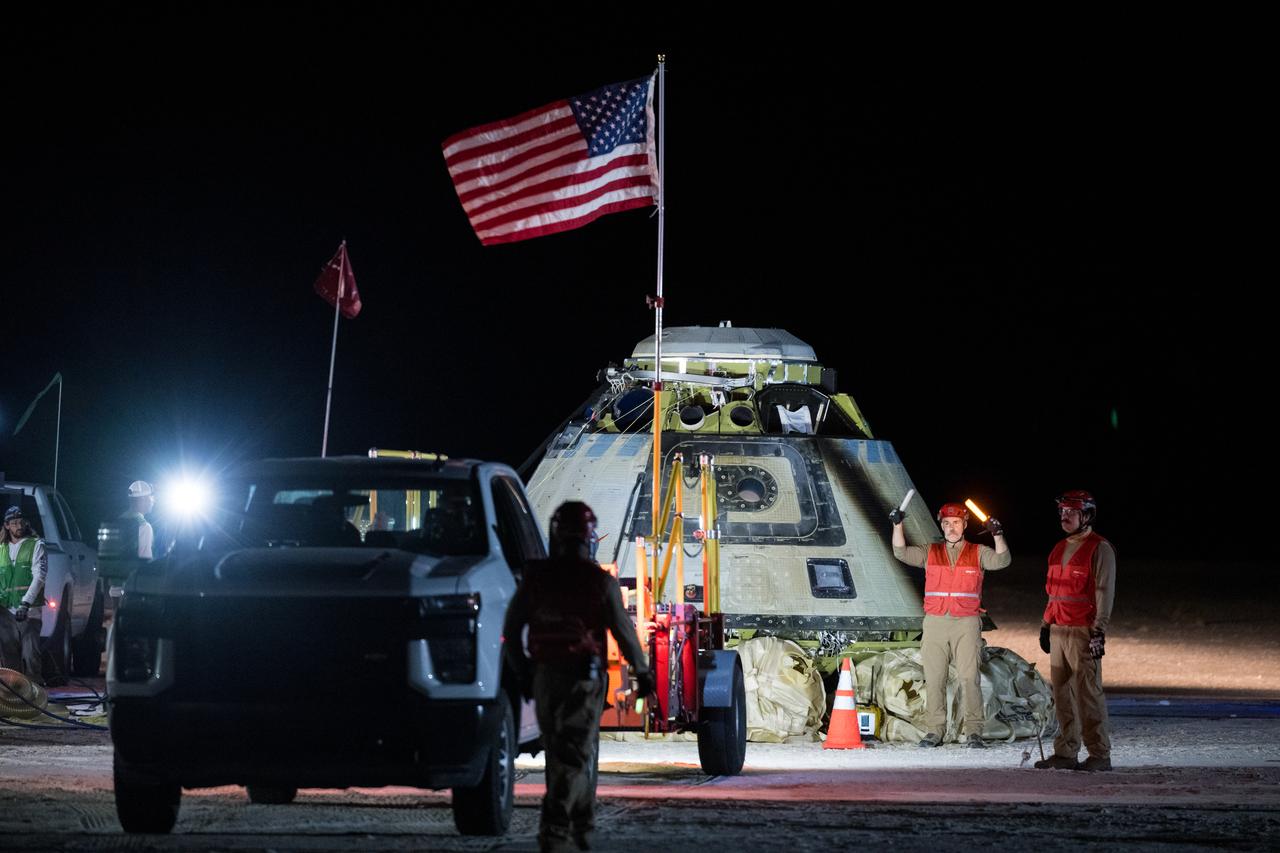
Boeing and NASA teams work around NASA's Boeing Crew Flight Test Starliner spacecraft after it landed uncrewed, Friday, Sept. 6, 2024 Mountain Time (Sept. 7 Eastern Time), at White Sands, New Mexico. This approach allows NASA and Boeing to continue gathering testing data on the spacecraft. Photo Credit: (NASA/Aubrey Gemignani)

Boeing and NASA teams work around NASA's Boeing Crew Flight Test Starliner spacecraft after it landed uncrewed, Friday, Sept. 6, 2024 Mountain Time (Sept. 7 Eastern Time), at White Sands, New Mexico. This approach allows NASA and Boeing to continue gathering testing data on the spacecraft. Photo Credit: (NASA/Aubrey Gemignani)

Boeing and NASA teams work around NASA's Boeing Crew Flight Test Starliner spacecraft after it landed uncrewed, Friday, Sept. 6, 2024 Mountain Time (Sept. 7 Eastern Time), at White Sands, New Mexico. This approach allows NASA and Boeing to continue gathering testing data on the spacecraft. Photo Credit: (NASA/Aubrey Gemignani)
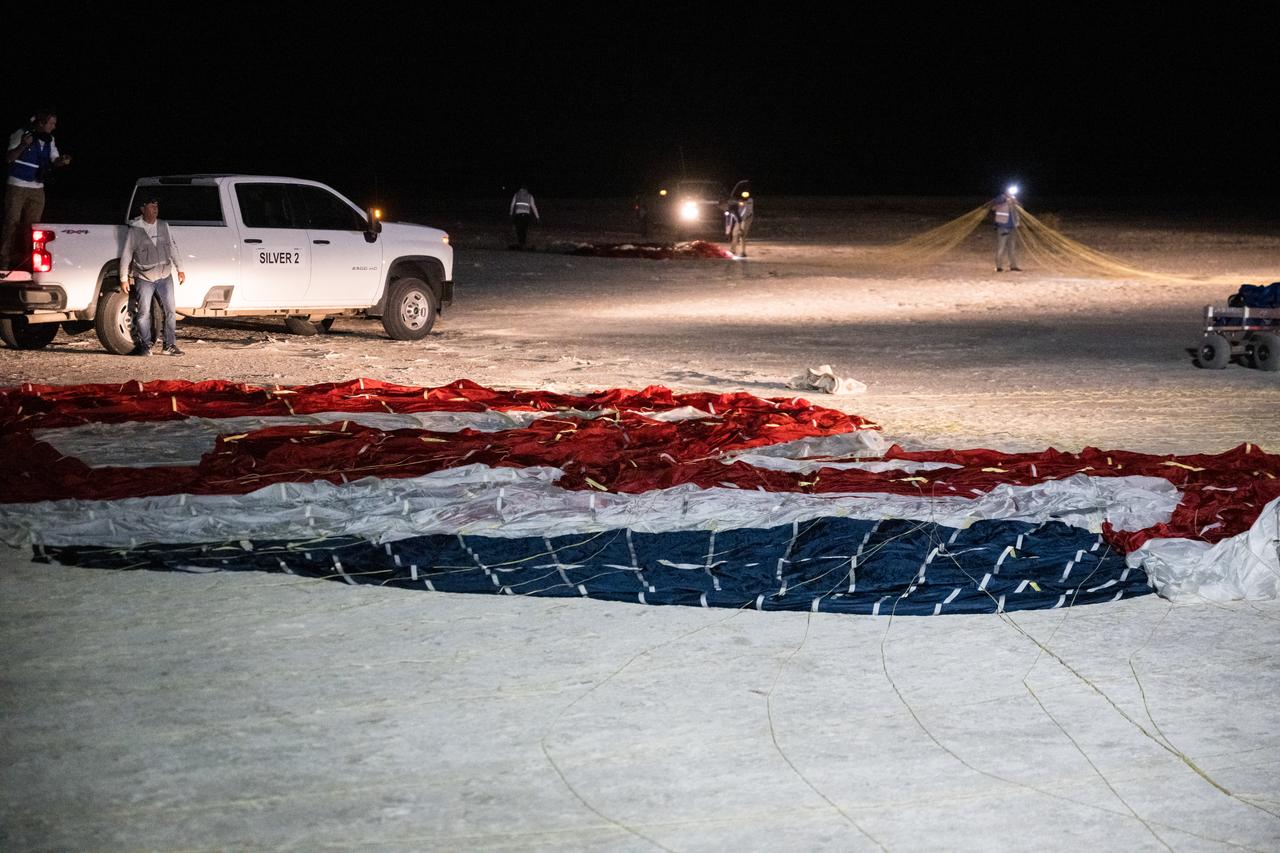
NASA's Boeing Crew Flight Test Starliner spacecraft parachute is seen after the spacecraft landed uncrewed at White Sands Missile Range’s Space Harbor, Friday, Sept. 6, 2024 Mountain Time (Sept. 7 Eastern Time), in New Mexico. This approach allows NASA and Boeing to continue gathering testing data on the spacecraft. Photo Credit: (NASA/Aubrey Gemignani)

Boeing and NASA recovery teams wait for hazmat teams to confirm it is safe to work around NASA's Boeing Crew Flight Test Starliner spacecraft after it landed uncrewed at White Sands Missile Range’s Space Harbor, Friday, Sept. 6, 2024 Mountain Time (Sept. 7 Eastern Time), in New Mexico. This approach allows NASA and Boeing to continue gathering testing data on the spacecraft. Photo Credit: (NASA/Aubrey Gemignani)
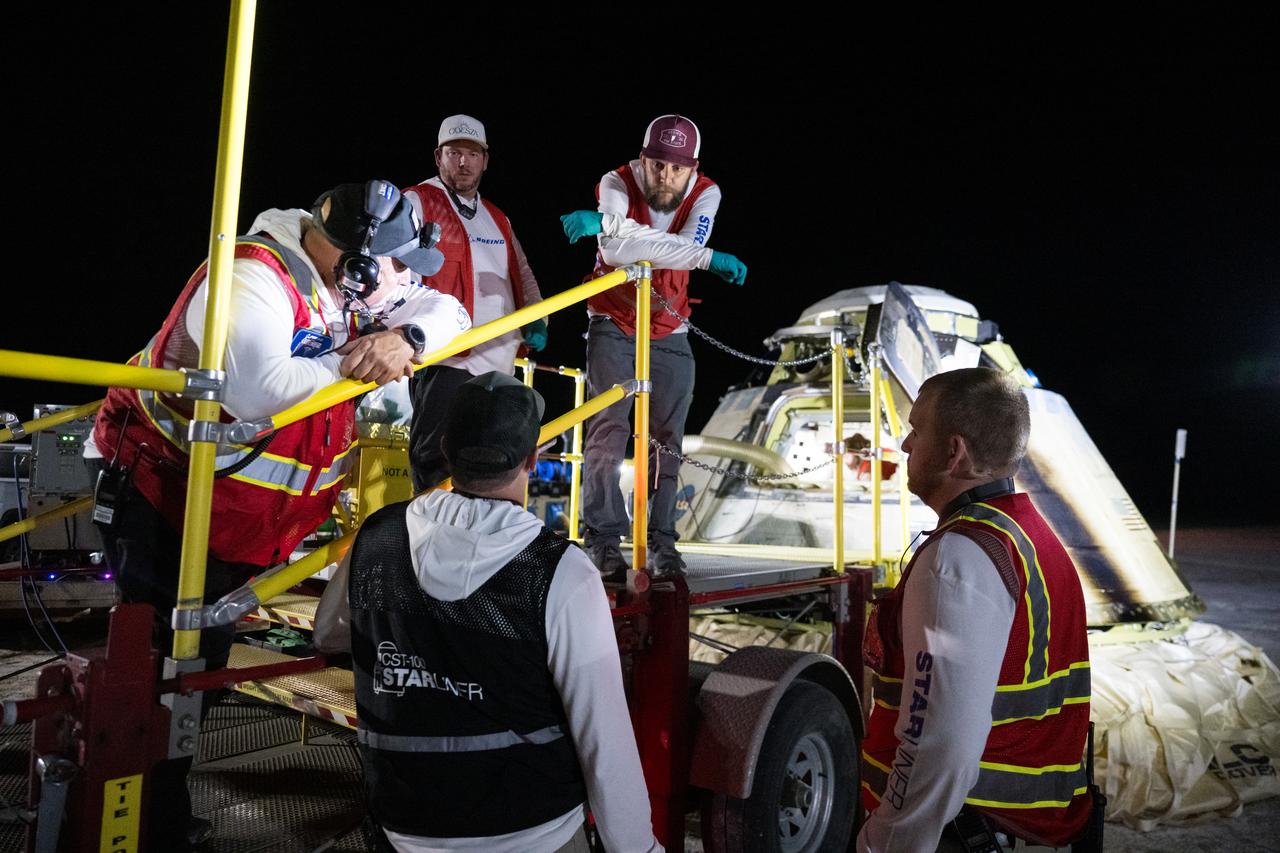
Boeing and NASA teams work around NASA's Boeing Crew Flight Test Starliner spacecraft after it landed uncrewed, Friday, Sept. 6, 2024 Mountain Time (Sept. 7 Eastern Time), at White Sands, New Mexico. This approach allows NASA and Boeing to continue gathering testing data on the spacecraft. Photo Credit: (NASA/Aubrey Gemignani)
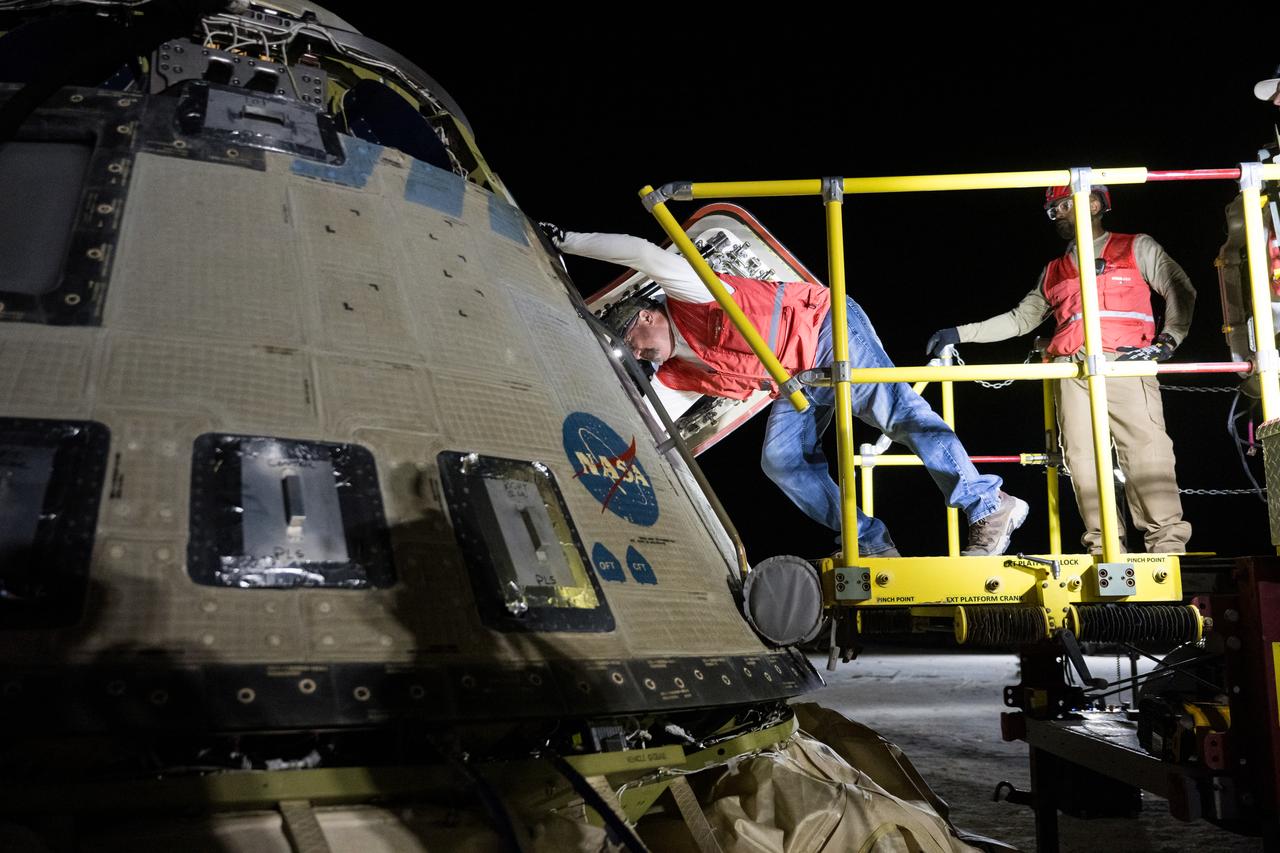
Boeing and NASA teams work around NASA's Boeing Crew Flight Test Starliner spacecraft after it landed uncrewed, Friday, Sept. 6, 2024 Mountain Time (Sept. 7 Eastern Time), at White Sands, New Mexico. This approach allows NASA and Boeing to continue gathering testing data on the spacecraft. Photo Credit: (NASA/Aubrey Gemignani)
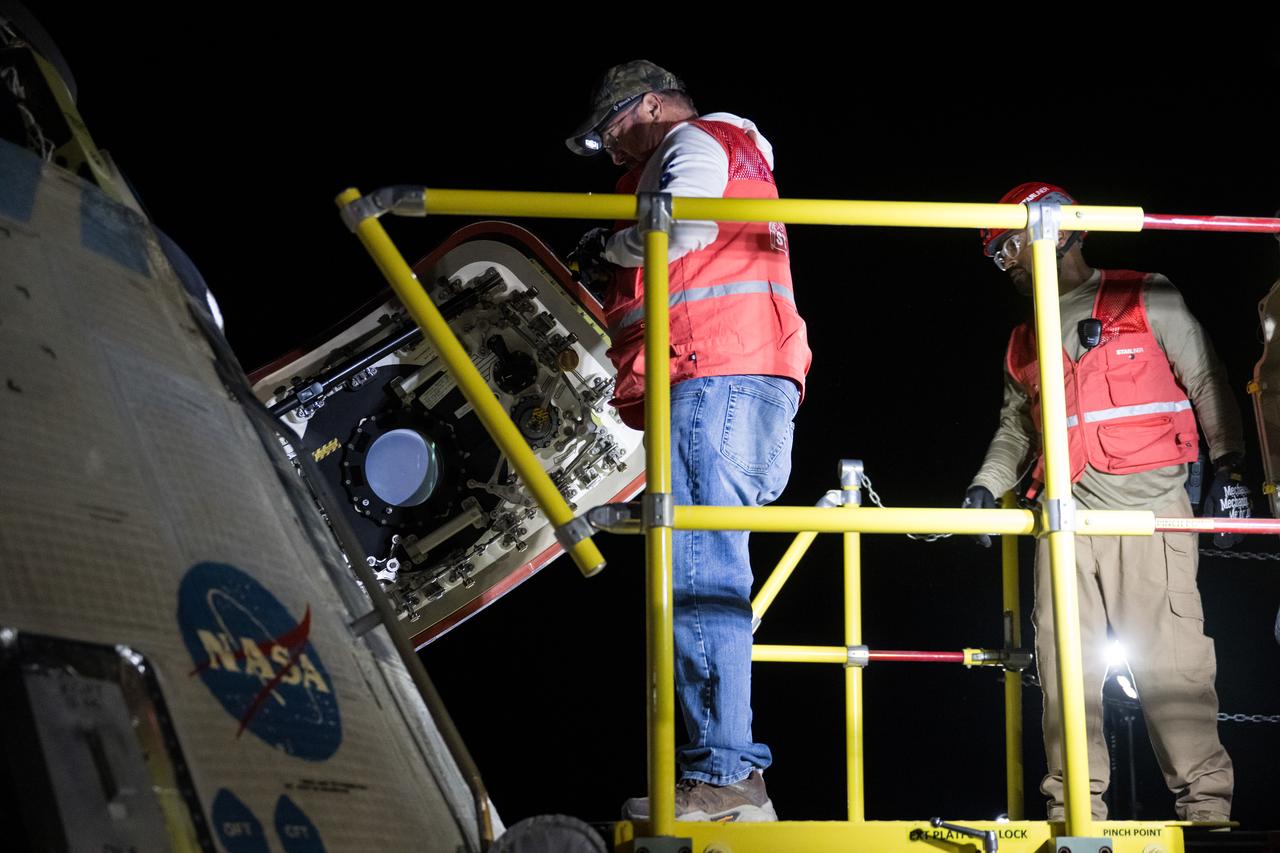
Boeing and NASA teams work around NASA's Boeing Crew Flight Test Starliner spacecraft after it landed uncrewed, Friday, Sept. 6, 2024 Mountain Time (Sept. 7 Eastern Time), at White Sands, New Mexico. This approach allows NASA and Boeing to continue gathering testing data on the spacecraft. Photo Credit: (NASA/Aubrey Gemignani)
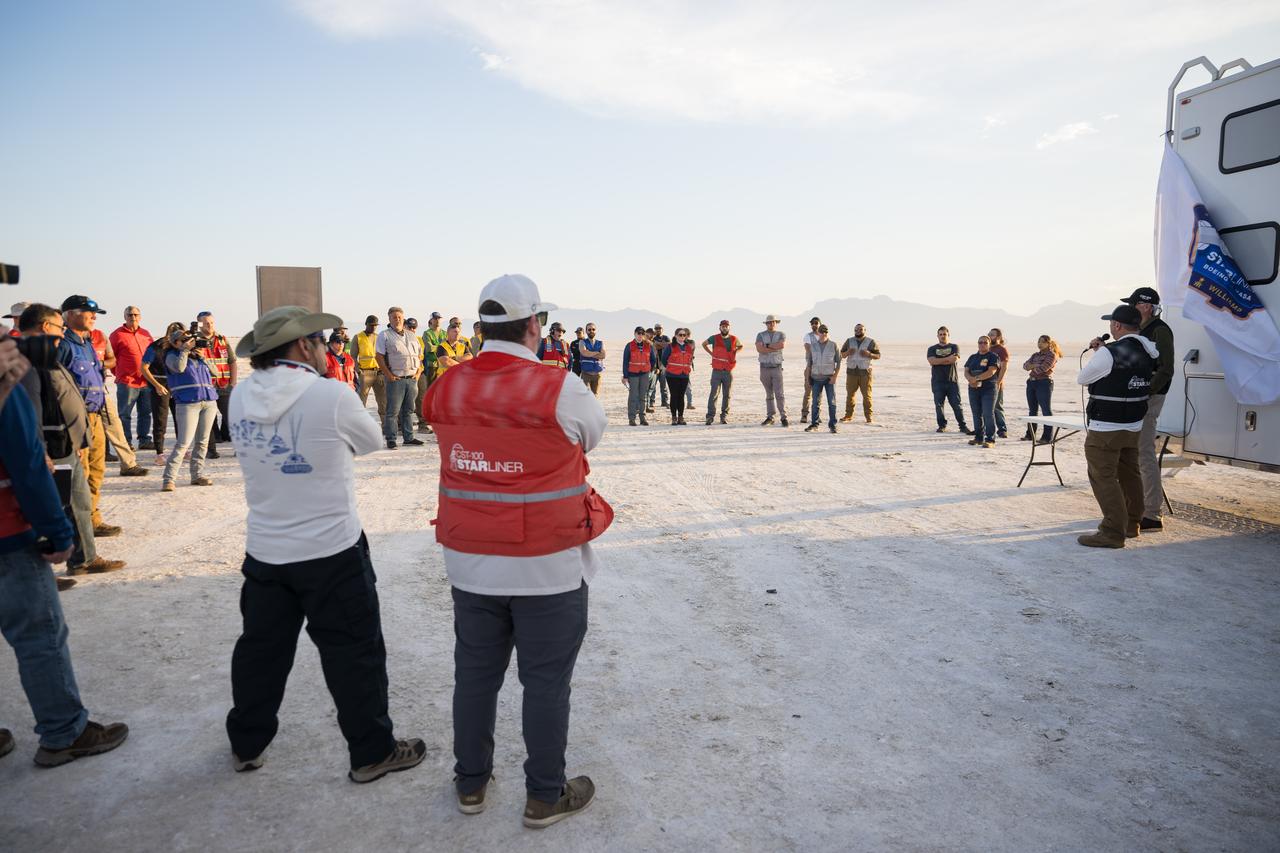
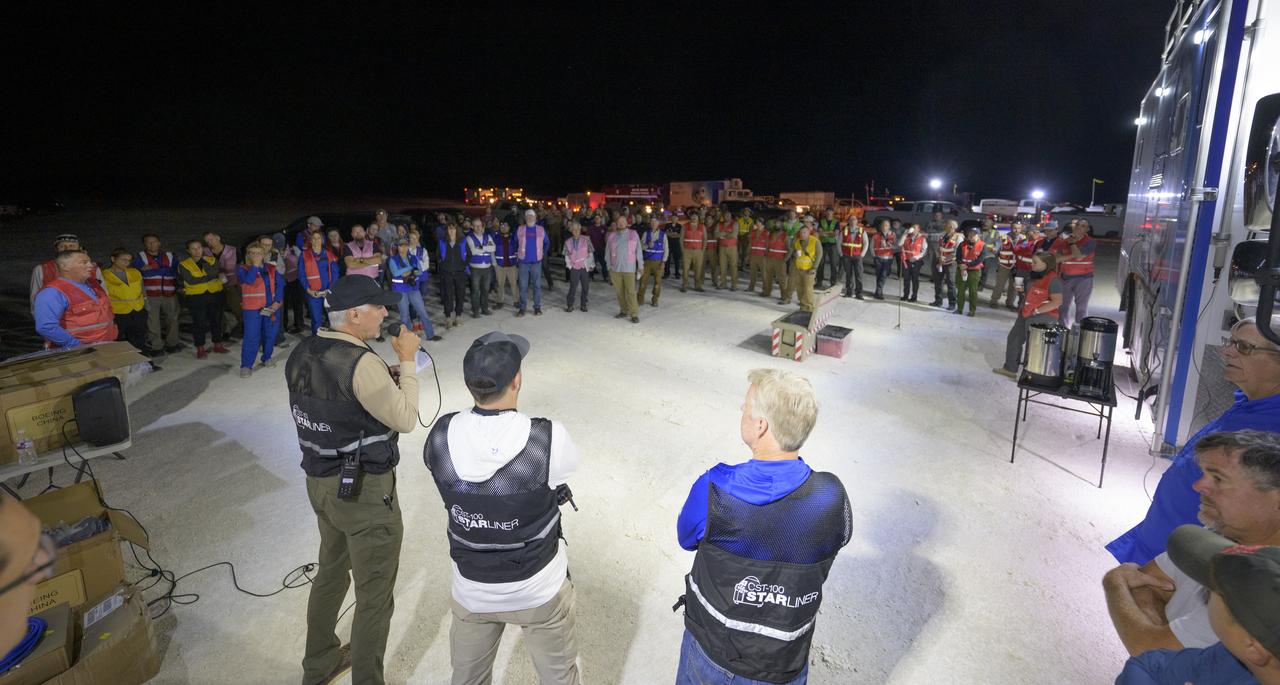
Boeing and NASA teams participate in a mission dress rehearsal to prepare for the landing of NASA’s Boeing Crew Flight Test Starliner spacecraft, Thursday, Sept. 5, 2024, at White Sands, New Mexico. The uncrewed spacecraft is scheduled to land at White Sands Missile Range’s Space Harbor, Friday, Sept. 6, 2024 Mountain Time. This approach allows NASA and Boeing to continue gathering testing data. Photo Credit: (NASA/Aubrey Gemignani)
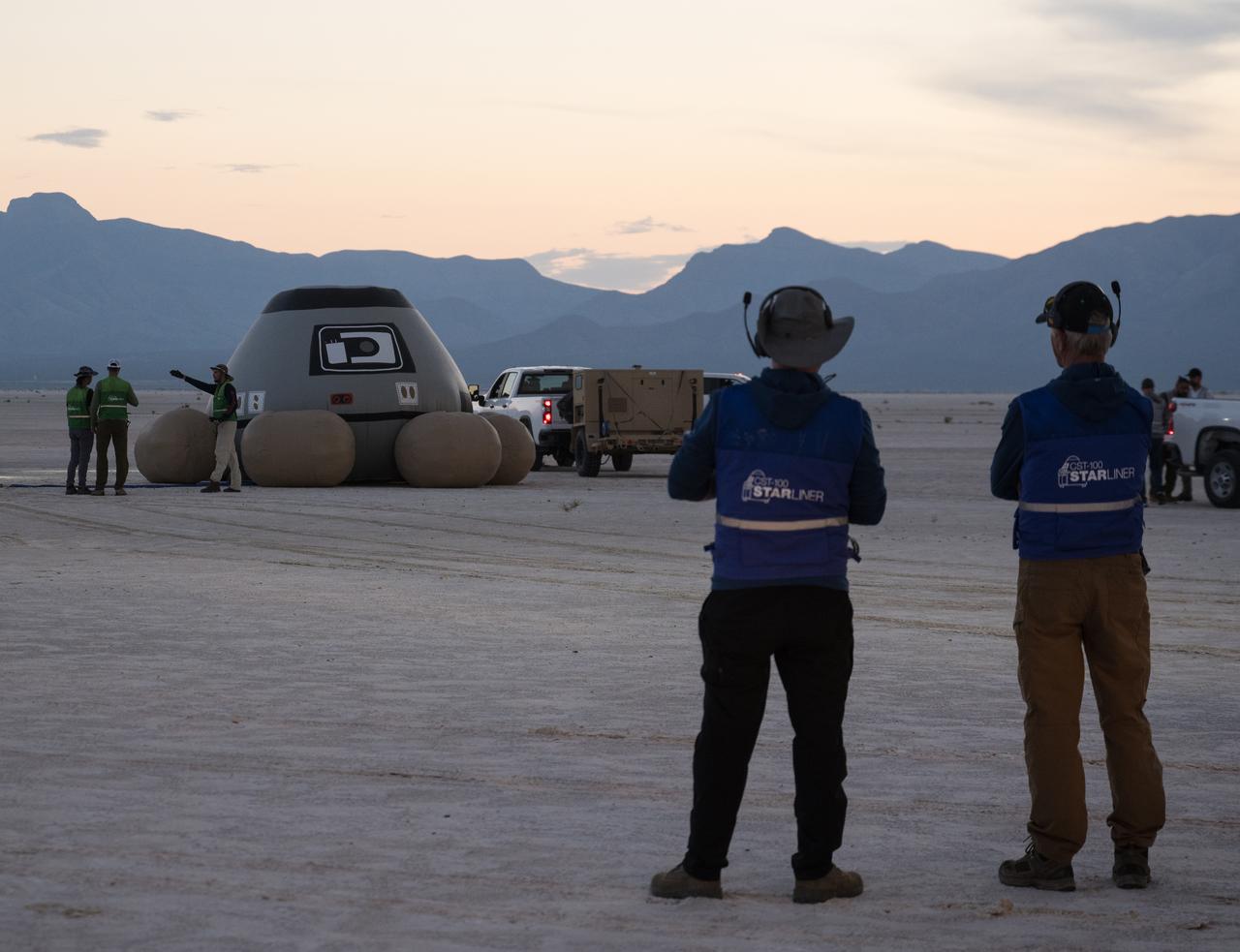
Boeing and NASA teams participate in a mission dress rehearsal to prepare for the landing of NASA’s Boeing Crew Flight Test Starliner spacecraft, Thursday, Sept. 5, 2024, at White Sands, New Mexico. The uncrewed spacecraft is scheduled to land at White Sands Missile Range’s Space Harbor, Friday, Sept. 6, 2024 Mountain Time. This approach allows NASA and Boeing to continue gathering testing data. Photo Credit: (NASA/Aubrey Gemignani)
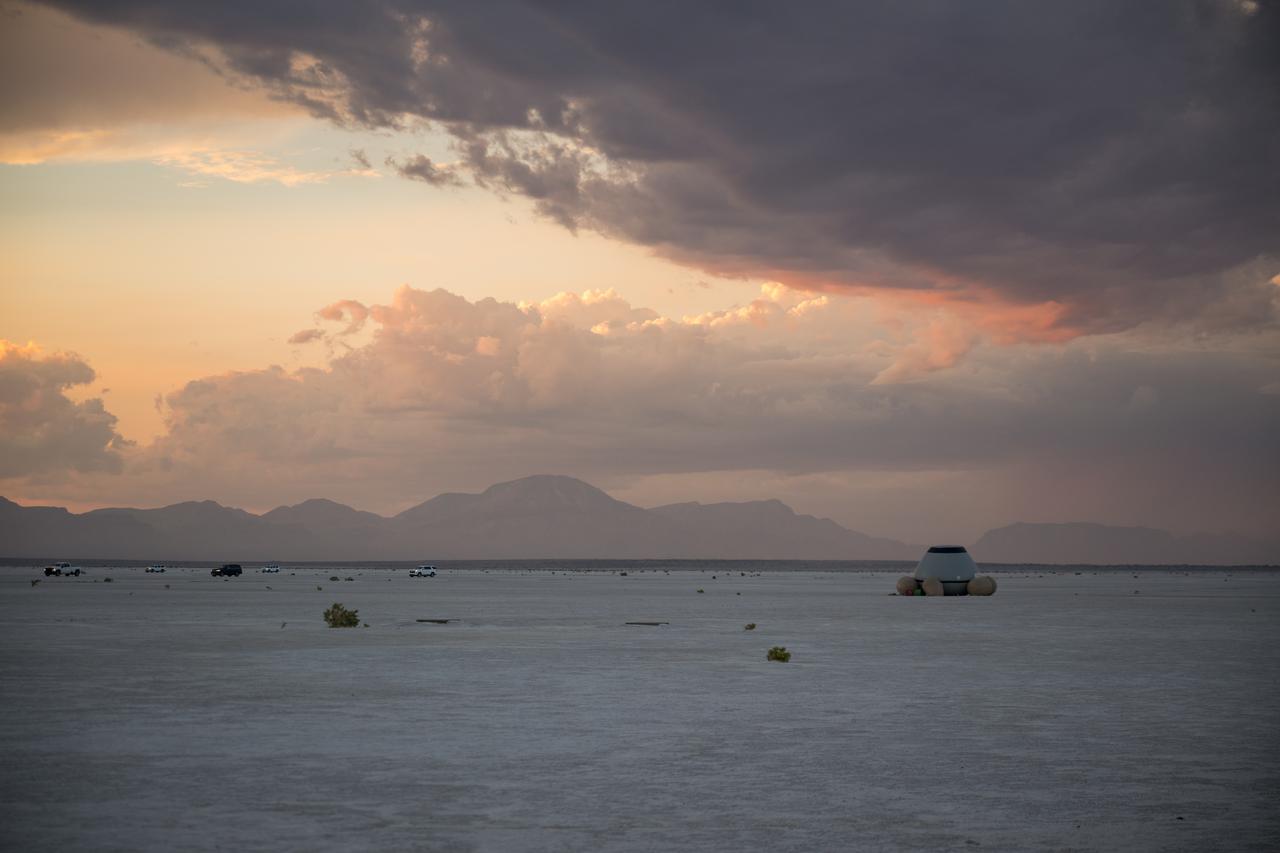
Boeing and NASA teams participate in a mission dress rehearsal to prepare for the landing of NASA’s Boeing Crew Flight Test Starliner spacecraft, Thursday, Sept. 5, 2024, at White Sands, New Mexico. The uncrewed spacecraft is scheduled to land at White Sands Missile Range’s Space Harbor, Friday, Sept. 6, 2024 Mountain Time. This approach allows NASA and Boeing to continue gathering testing data. Photo Credit: (NASA/Aubrey Gemignani)
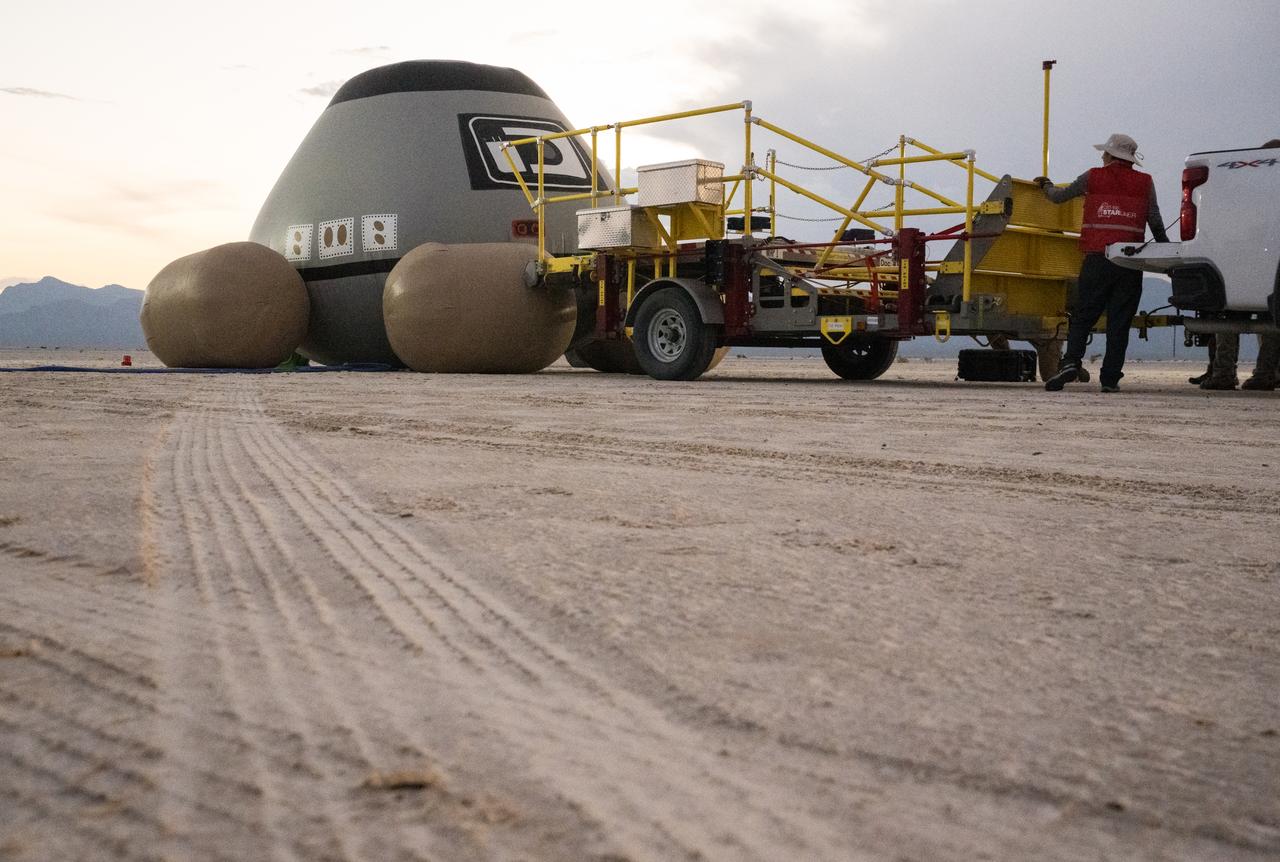
Boeing and NASA teams participate in a mission dress rehearsal to prepare for the landing of NASA’s Boeing Crew Flight Test Starliner spacecraft, Thursday, Sept. 5, 2024, at White Sands, New Mexico. The uncrewed spacecraft is scheduled to land at White Sands Missile Range’s Space Harbor, Friday, Sept. 6, 2024 Mountain Time. This approach allows NASA and Boeing to continue gathering testing data. Photo Credit: (NASA/Aubrey Gemignani)
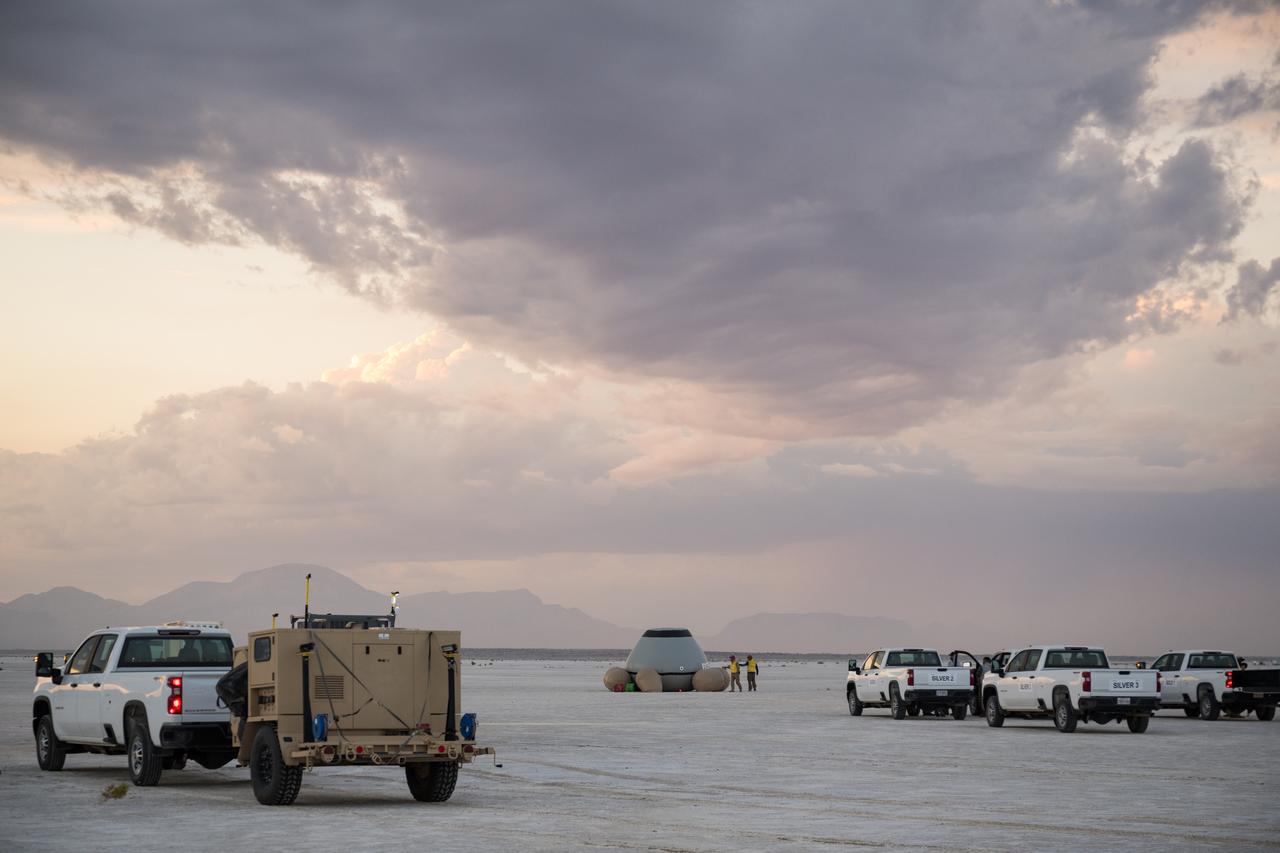
Boeing and NASA teams participate in a mission dress rehearsal to prepare for the landing of NASA’s Boeing Crew Flight Test Starliner spacecraft, Thursday, Sept. 5, 2024, at White Sands, New Mexico. The uncrewed spacecraft is scheduled to land at White Sands Missile Range’s Space Harbor, Friday, Sept. 6, 2024 Mountain Time. This approach allows NASA and Boeing to continue gathering testing data. Photo Credit: (NASA/Aubrey Gemignani)
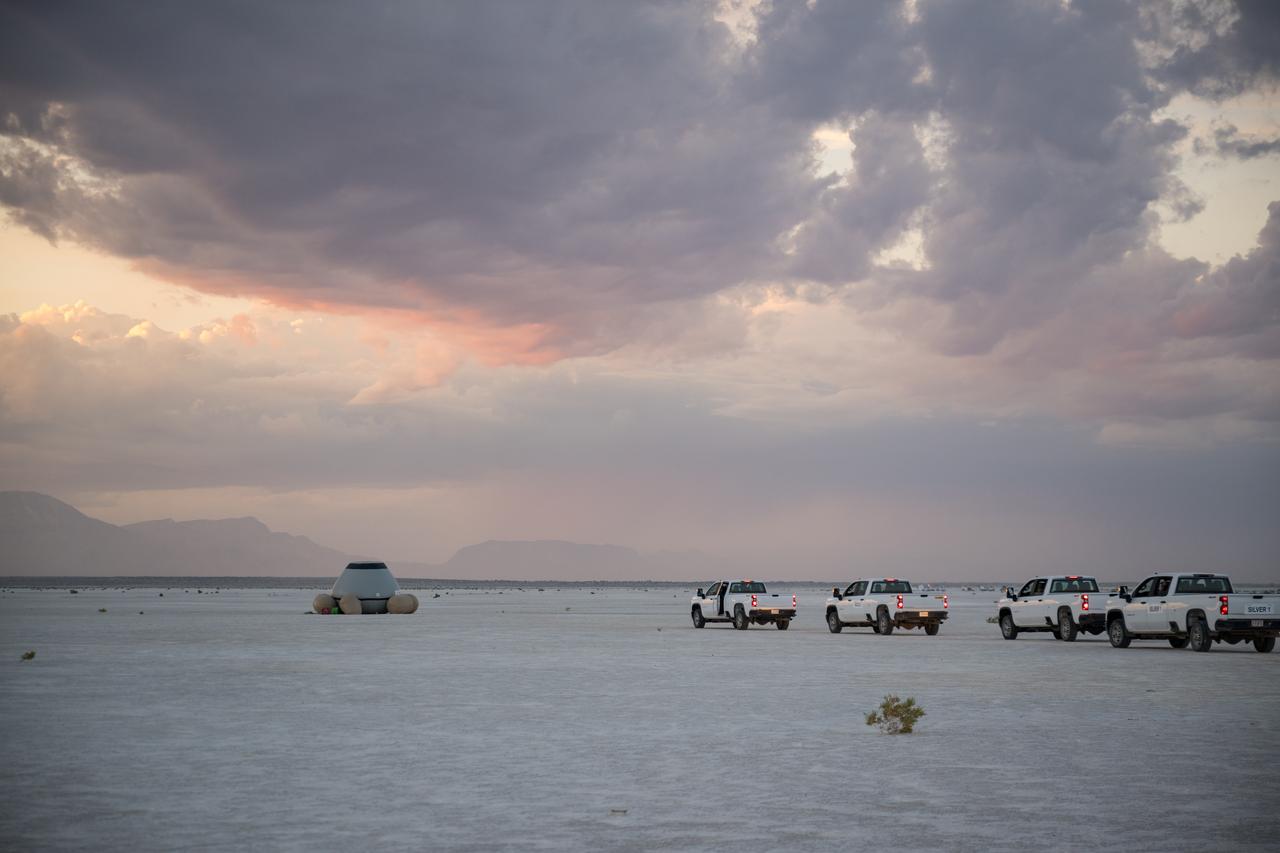
Boeing and NASA teams participate in a mission dress rehearsal to prepare for the landing of NASA’s Boeing Crew Flight Test Starliner spacecraft, Thursday, Sept. 5, 2024, at White Sands, New Mexico. The uncrewed spacecraft is scheduled to land at White Sands Missile Range’s Space Harbor, Friday, Sept. 6, 2024 Mountain Time. This approach allows NASA and Boeing to continue gathering testing data. Photo Credit: (NASA/Aubrey Gemignani)
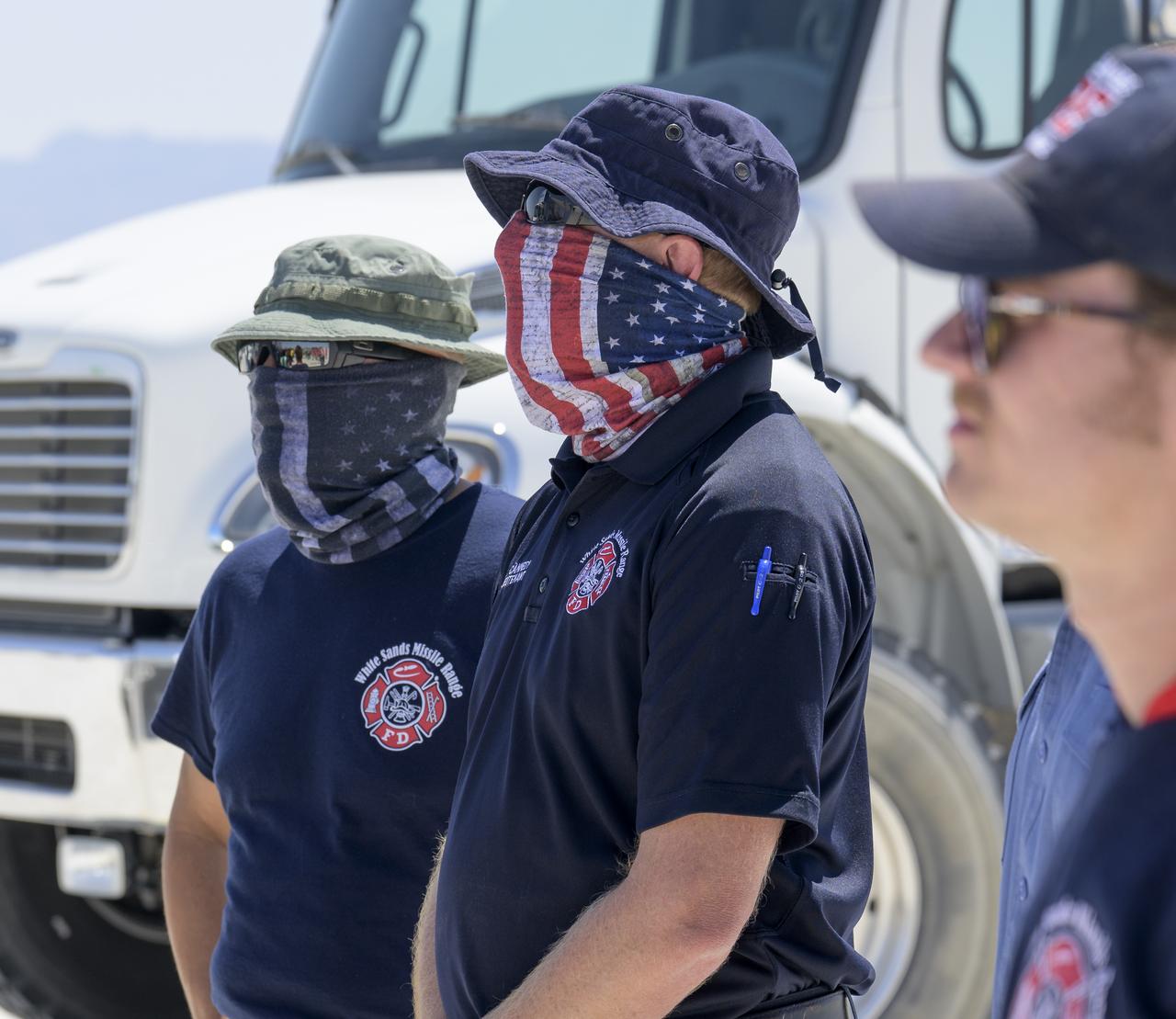
White Sands Missile Range Fire Department team members listen to a pretending briefing as they, NASA, and Boeing teams prepare for the landing of Boeing’s CST-100 Starliner spacecraft at White Sands Missile Range’s Space Harbor, Wednesday, May 25, 2022, in New Mexico. Boeing’s Orbital Flight Test-2 (OFT-2) is Starliner’s second uncrewed flight test to the International Space Station as part of NASA's Commercial Crew Program. OFT-2 serves as an end-to-end test of the system's capabilities. Photo Credit: (NASA/Bill Ingalls)
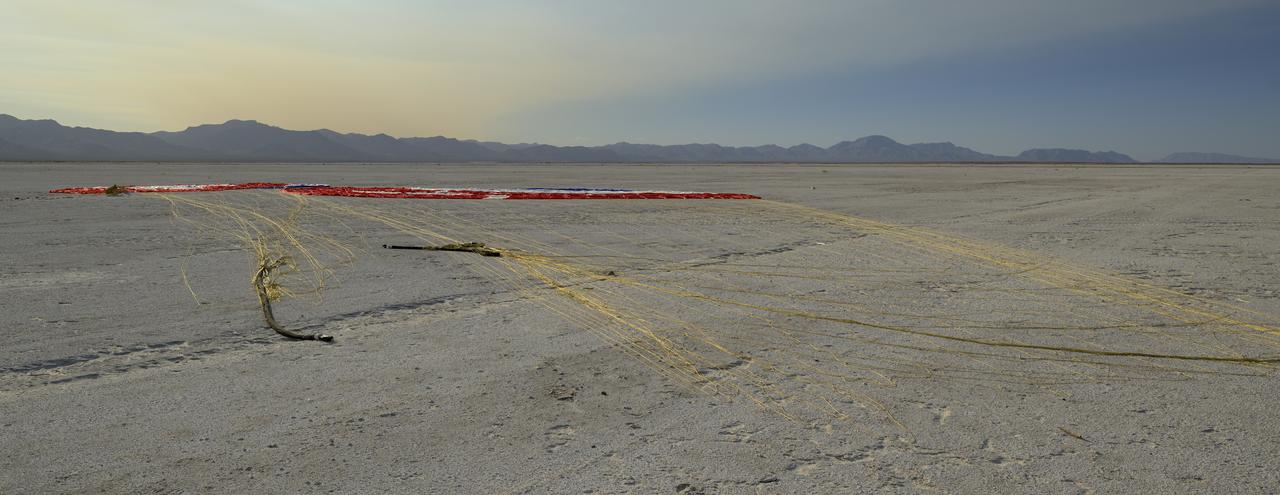
The Boeing CST-100 Starliner parachute is seen after the spacecraft landed at White Sands Missile Range’s Space Harbor, Wednesday, May 25, 2022, in New Mexico. Boeing’s Orbital Flight Test-2 (OFT-2) is Starliner’s second uncrewed flight test to the International Space Station as part of NASA's Commercial Crew Program. OFT-2 serves as an end-to-end test of the system's capabilities. Photo Credit: (NASA/Bill Ingalls)
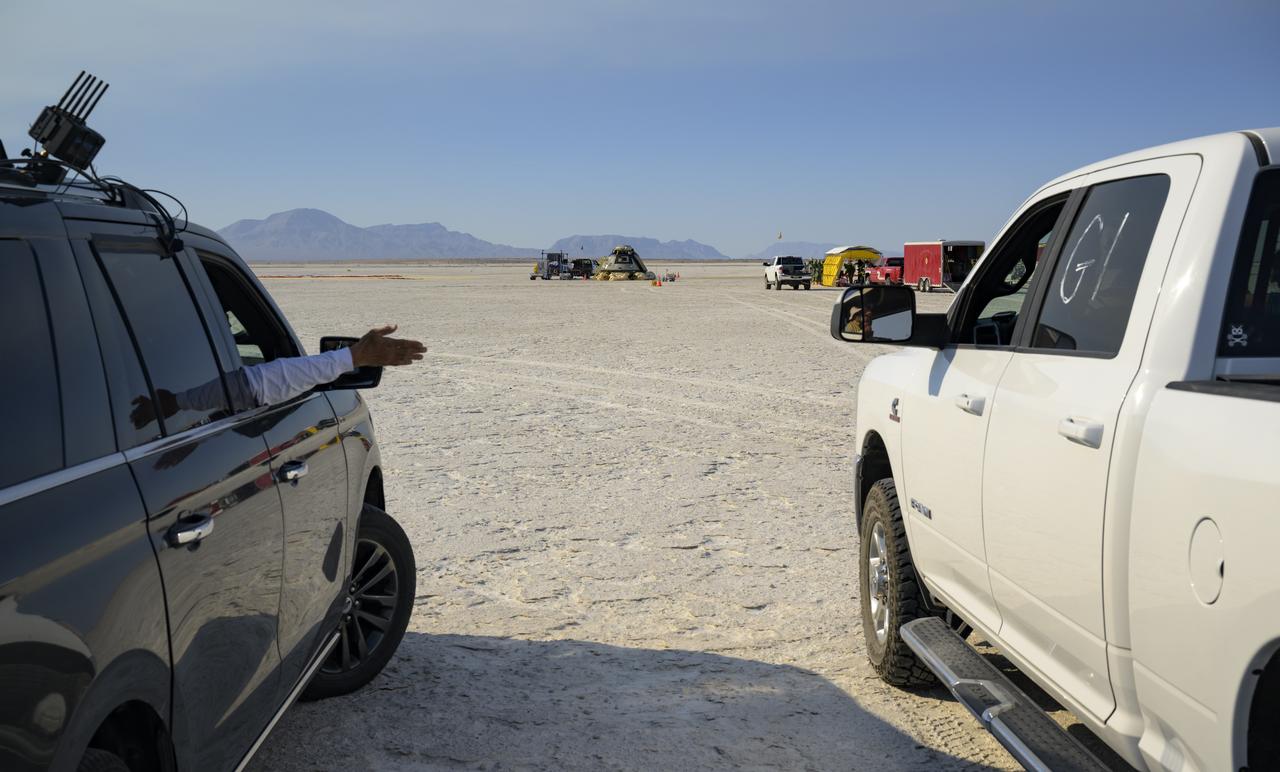
Boeing and NASA teams work around Boeing’s CST-100 Starliner spacecraft after it landed at White Sands Missile Range’s Space Harbor, Wednesday, May 25, 2022, in New Mexico. Boeing’s Orbital Flight Test-2 (OFT-2) is Starliner’s second uncrewed flight test to the International Space Station as part of NASA's Commercial Crew Program. OFT-2 serves as an end-to-end test of the system's capabilities. Photo Credit: (NASA/Bill Ingalls)
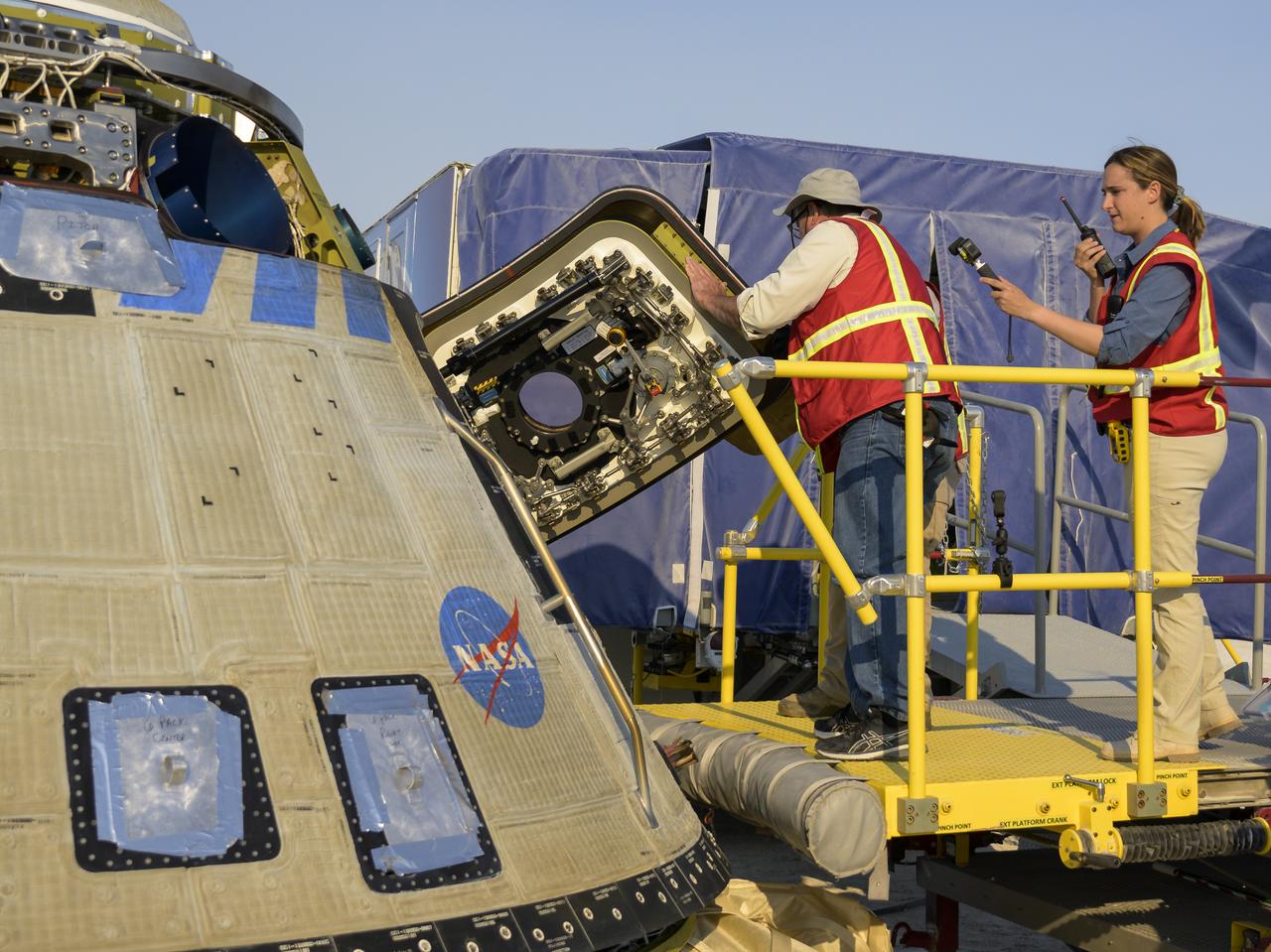
Boeing and NASA teams work around Boeing’s CST-100 Starliner spacecraft after it landed at White Sands Missile Range’s Space Harbor, Wednesday, May 25, 2022, in New Mexico. Boeing’s Orbital Flight Test-2 (OFT-2) is Starliner’s second uncrewed flight test to the International Space Station as part of NASA's Commercial Crew Program. OFT-2 serves as an end-to-end test of the system's capabilities. Photo Credit: (NASA/Bill Ingalls)
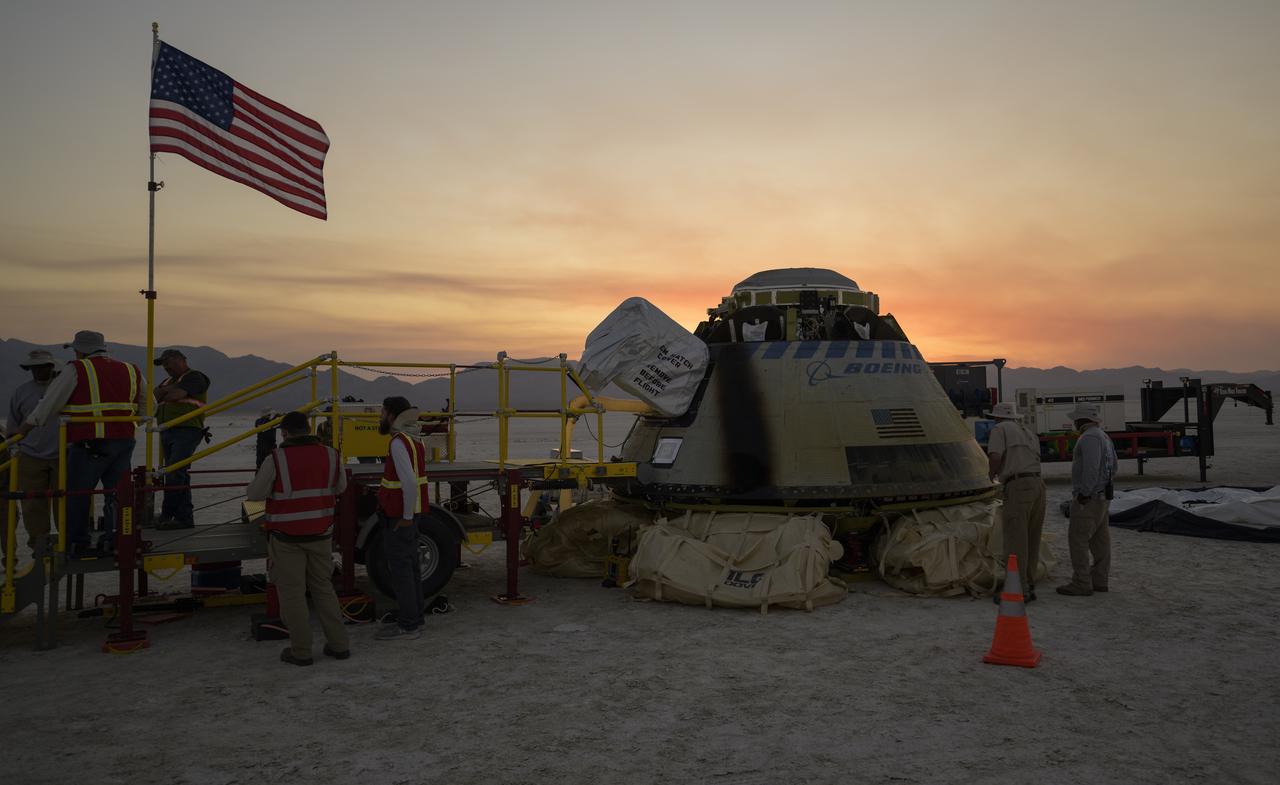
Boeing and NASA teams work around Boeing’s CST-100 Starliner spacecraft after it landed at White Sands Missile Range’s Space Harbor, Wednesday, May 25, 2022, in New Mexico. Boeing’s Orbital Flight Test-2 (OFT-2) is Starliner’s second uncrewed flight test to the International Space Station as part of NASA's Commercial Crew Program. OFT-2 serves as an end-to-end test of the system's capabilities. Photo Credit: (NASA/Bill Ingalls)
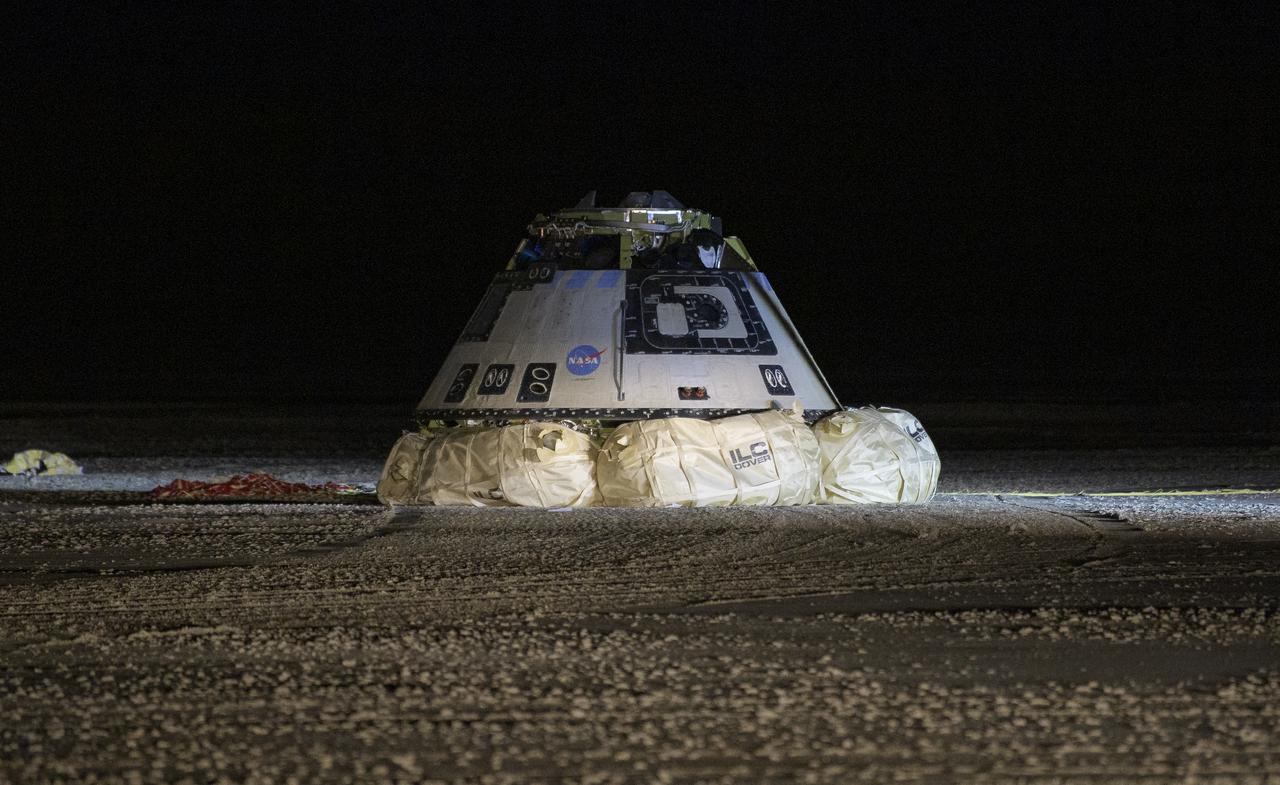
The Boeing CST-100 Starliner spacecraft is seen after it landed in White Sands, New Mexico, Sunday, Dec. 22, 2019. The landing completes an abbreviated Orbital Flight Test for the company that still meets several mission objectives for NASA’s Commercial Crew program. The Starliner spacecraft launched on a United Launch Alliance Atlas V rocket at 6:36 a.m. Friday, Dec. 20 from Space Launch Complex 41 at Cape Canaveral Air Force Station in Florida. Photo Credit: (NASA/Bill Ingalls)
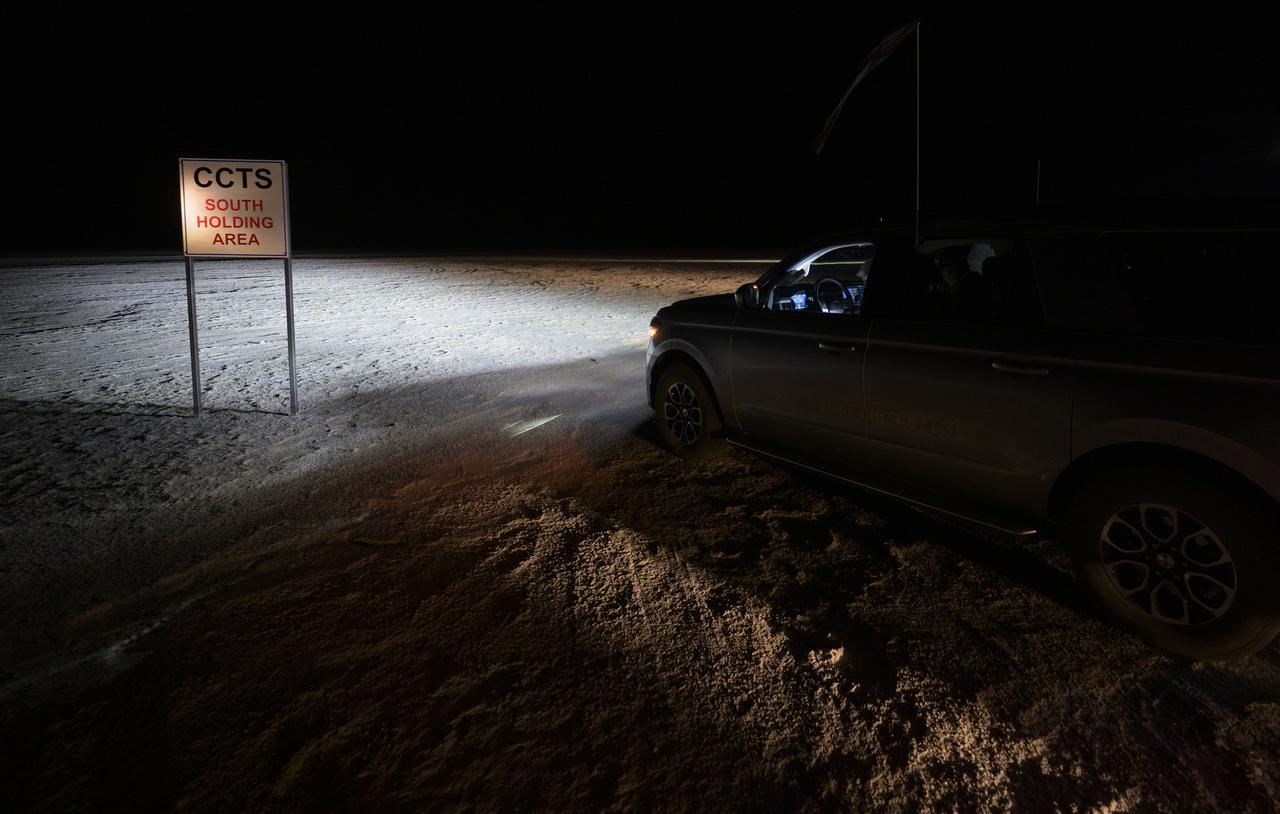
Boeing and NASA teams participate in a mission dress rehearsal to prepare for the landing of the Boeing CST-100 Starliner spacecraft in White Sands, New Mexico, Sunday, June 16, 2024. NASA astronauts Butch Wilmore and Suni Williams are Starliner’s first human crew and travelled to the International Space Station as part of NASA's Boeing Crew Flight Test. The mission serves as an end-to-end demonstration of Boeing’s crew transportation system as a provider for NASA’s Commercial Crew Program. Photo Credit: (NASA/Bill Ingalls)
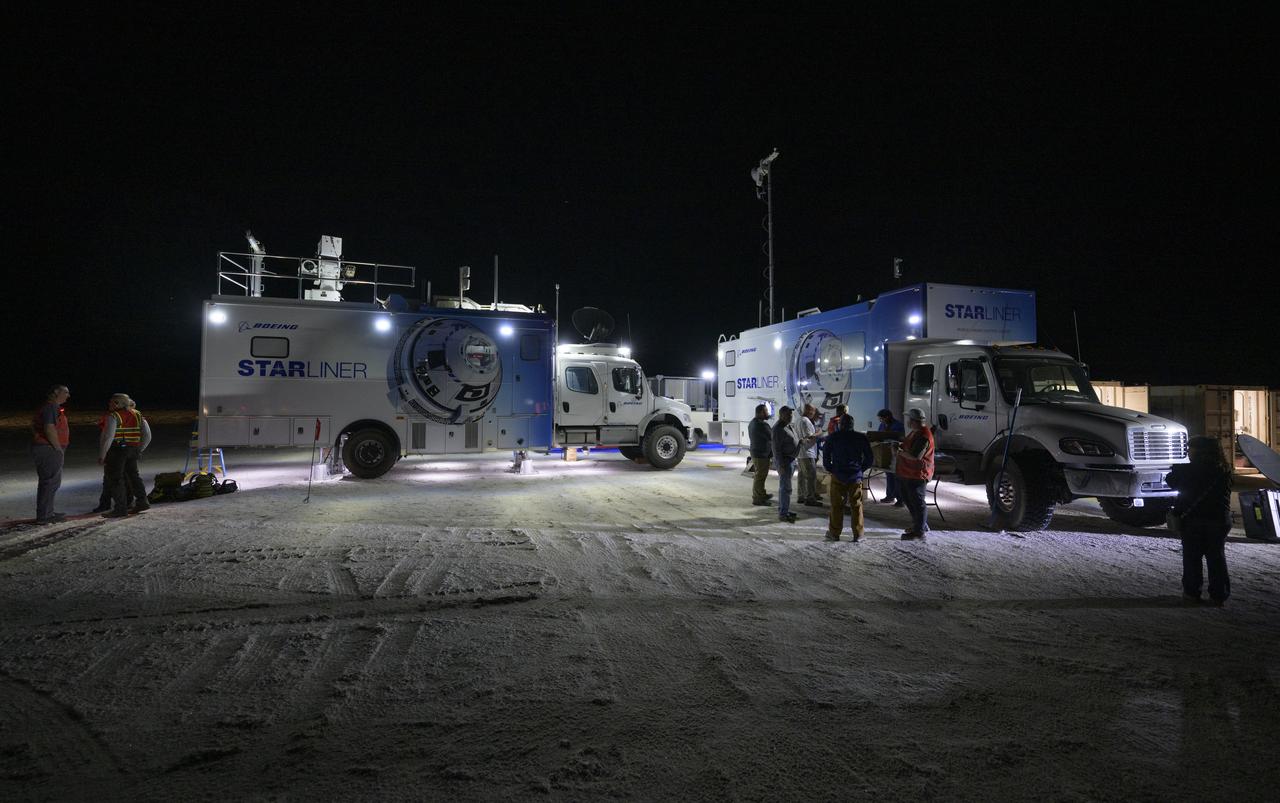
Boeing and NASA teams participate in a mission dress rehearsal to prepare for the landing of the Boeing CST-100 Starliner spacecraft in White Sands, New Mexico, Sunday, June 16, 2024. NASA astronauts Butch Wilmore and Suni Williams are Starliner’s first human crew and travelled to the International Space Station as part of NASA's Boeing Crew Flight Test. The mission serves as an end-to-end demonstration of Boeing’s crew transportation system as a provider for NASA’s Commercial Crew Program. Photo Credit: (NASA/Bill Ingalls)
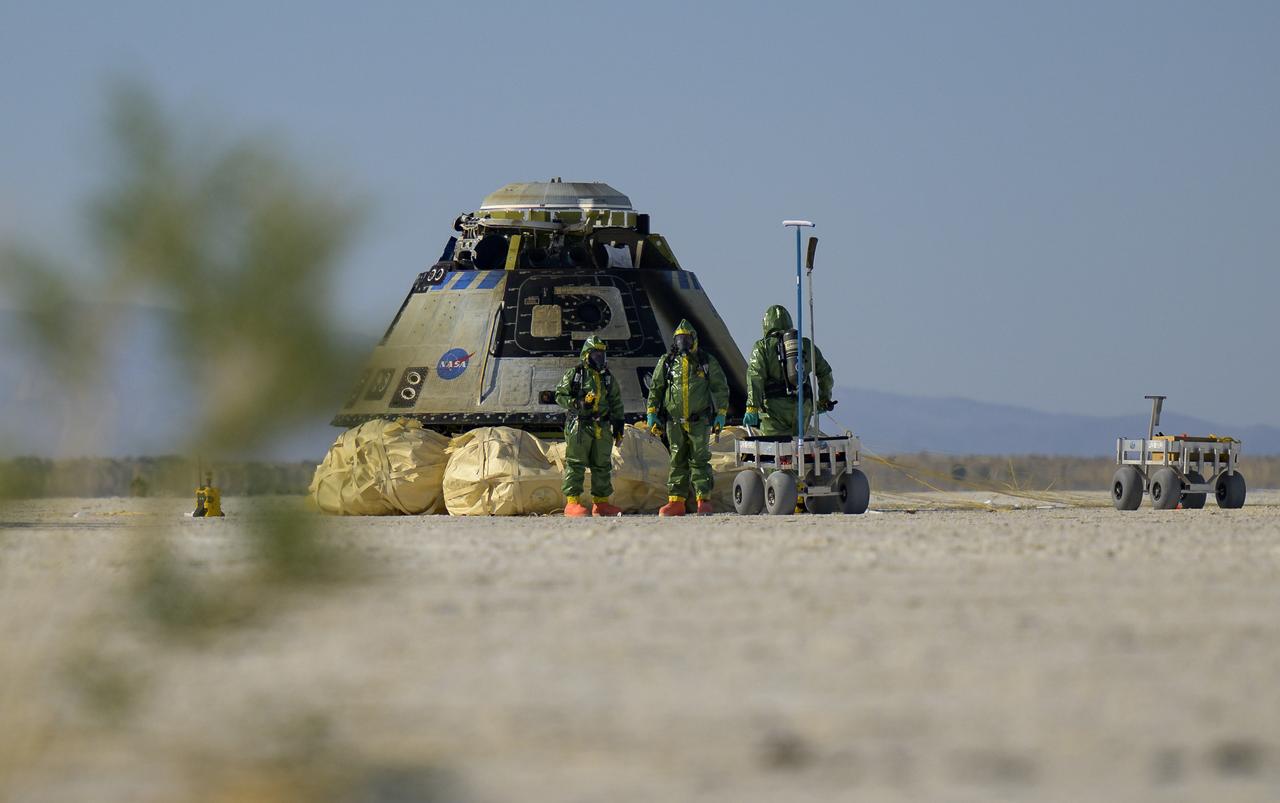
Boeing hazmat teams work around Boeing’s CST-100 Starliner spacecraft after it landed at White Sands Missile Range’s Space Harbor, Wednesday, May 25, 2022, in New Mexico. Boeing’s Orbital Flight Test-2 (OFT-2) is Starliner’s second uncrewed flight test to the International Space Station as part of NASA's Commercial Crew Program. OFT-2 serves as an end-to-end test of the system's capabilities. Photo Credit: (NASA/Bill Ingalls)
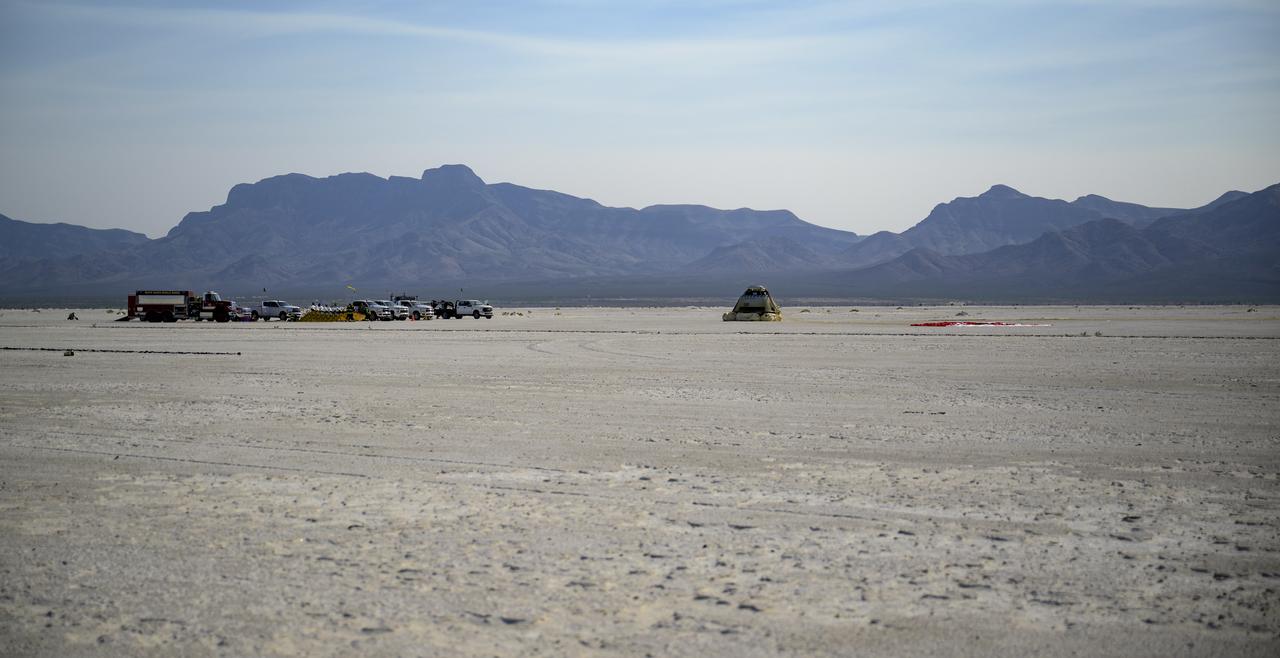
Boeing and NASA teams arrive at Boeing’s CST-100 Starliner spacecraft after it landed at White Sands Missile Range’s Space Harbor, Wednesday, May 25, 2022, in New Mexico. Boeing’s Orbital Flight Test-2 (OFT-2) is Starliner’s second uncrewed flight test to the International Space Station as part of NASA's Commercial Crew Program. OFT-2 serves as an end-to-end test of the system's capabilities. Photo Credit: (NASA/Bill Ingalls)
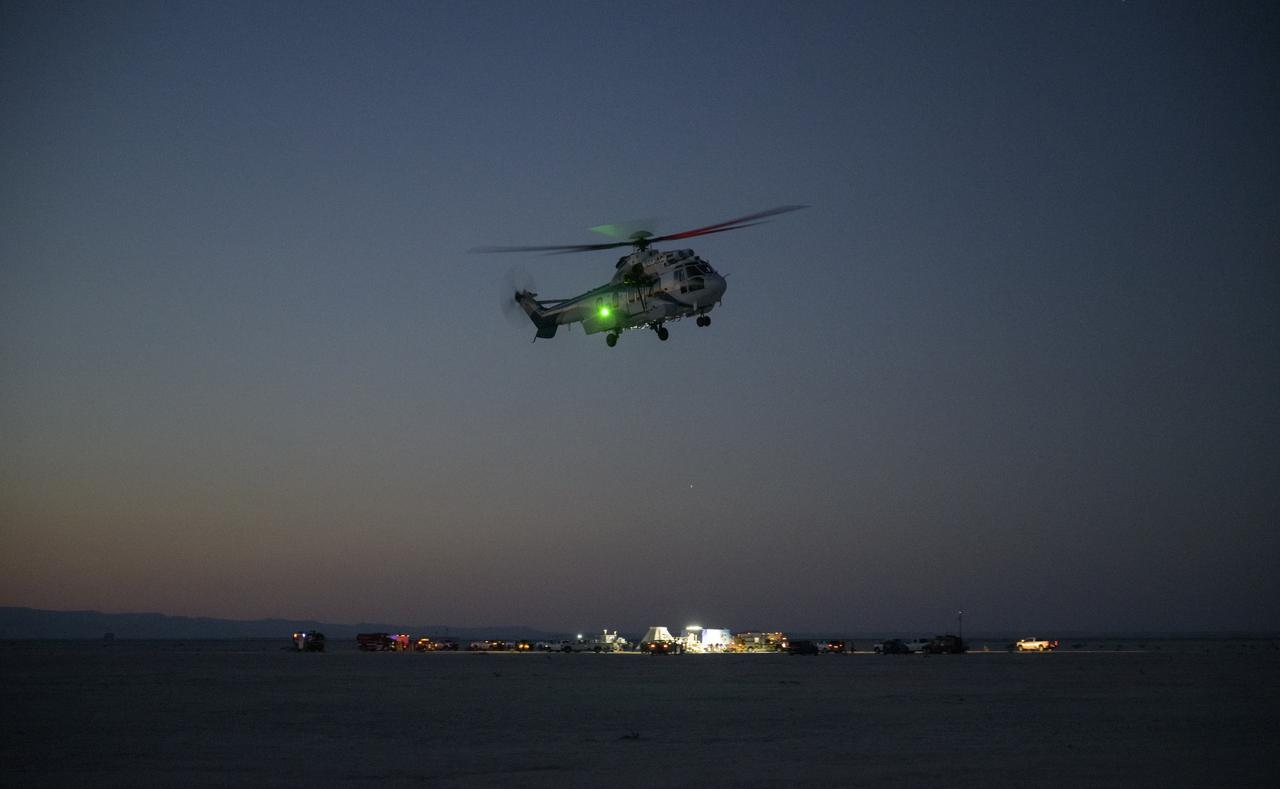
Boeing and NASA teams participate in a mission dress rehearsal to prepare for the landing of the Boeing CST-100 Starliner spacecraft in White Sands, New Mexico, Sunday, June 16, 2024. NASA astronauts Butch Wilmore and Suni Williams are Starliner’s first human crew and travelled to the International Space Station as part of NASA's Boeing Crew Flight Test. The mission serves as an end-to-end demonstration of Boeing’s crew transportation system as a provider for NASA’s Commercial Crew Program. Photo Credit: (NASA/Bill Ingalls)
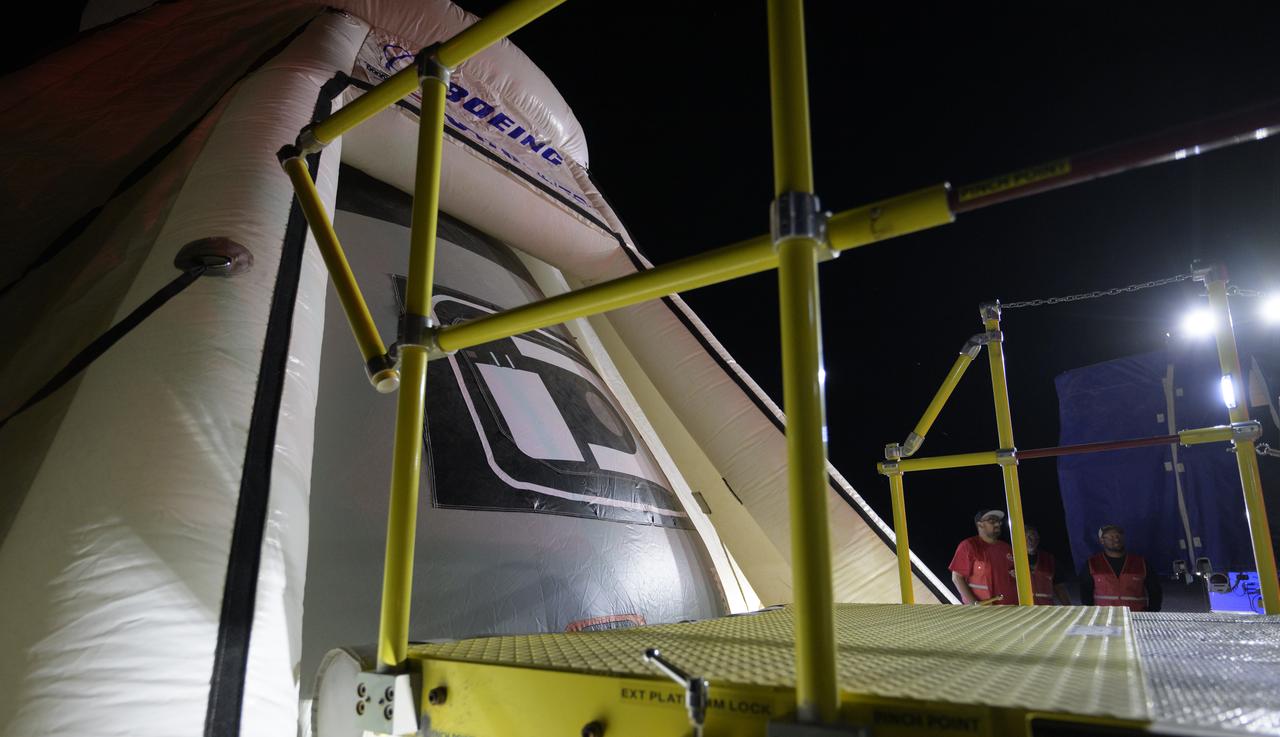
Boeing and NASA teams participate in a mission dress rehearsal to prepare for the landing of the Boeing CST-100 Starliner spacecraft in White Sands, New Mexico, Sunday, June 16, 2024. NASA astronauts Butch Wilmore and Suni Williams are Starliner’s first human crew and travelled to the International Space Station as part of NASA's Boeing Crew Flight Test. The mission serves as an end-to-end demonstration of Boeing’s crew transportation system as a provider for NASA’s Commercial Crew Program. Photo Credit: (NASA/Bill Ingalls)
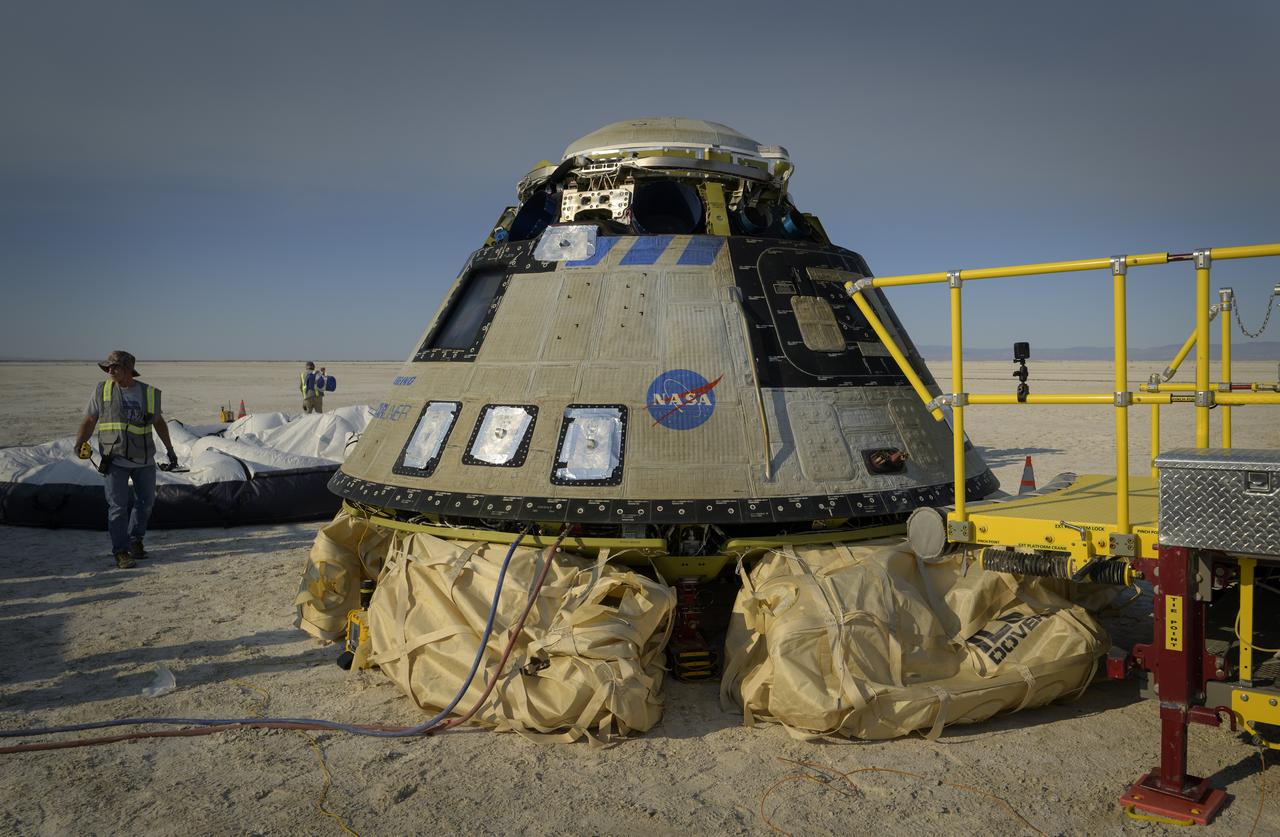
Boeing and NASA teams work around Boeing’s CST-100 Starliner spacecraft after it landed at White Sands Missile Range’s Space Harbor, Wednesday, May 25, 2022, in New Mexico. Boeing’s Orbital Flight Test-2 (OFT-2) is Starliner’s second uncrewed flight test to the International Space Station as part of NASA's Commercial Crew Program. OFT-2 serves as an end-to-end test of the system's capabilities. Photo Credit: (NASA/Bill Ingalls)
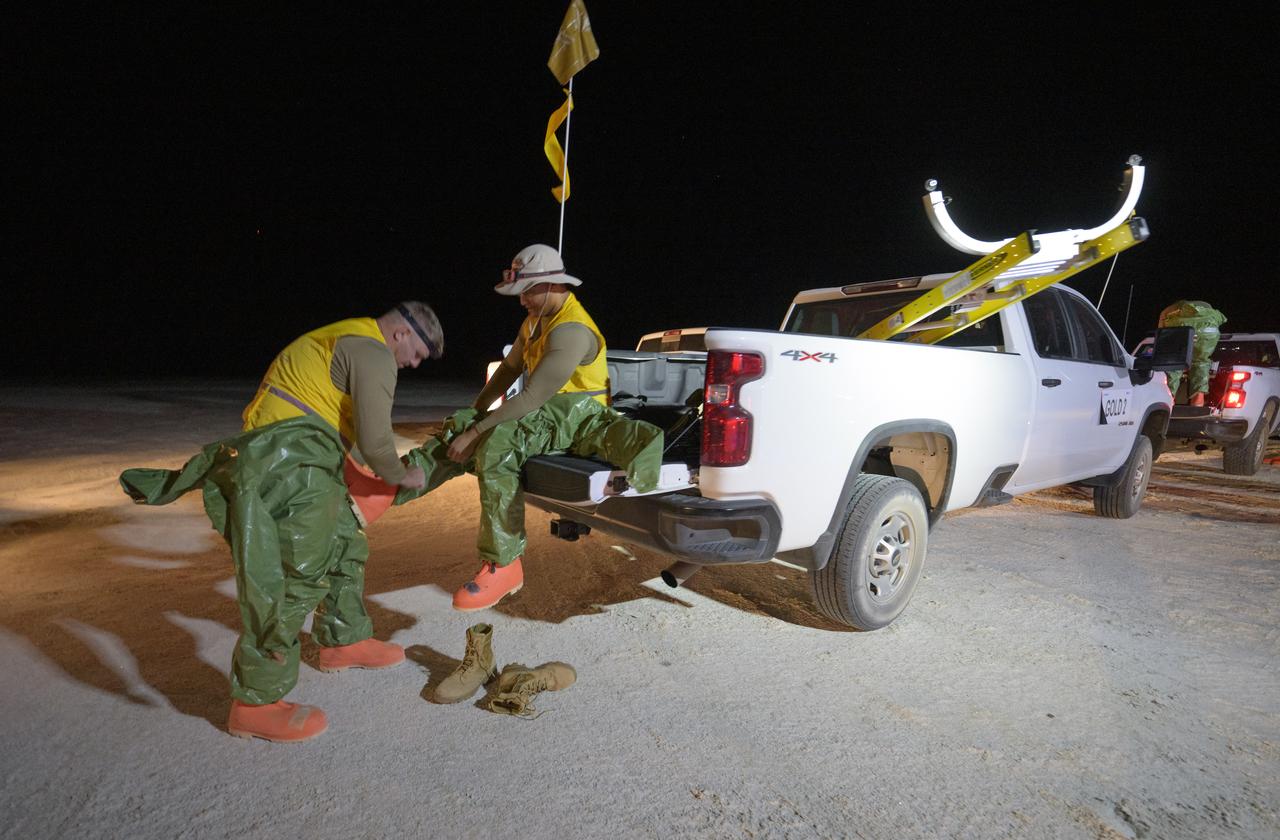
Boeing and NASA teams participate in a mission dress rehearsal to prepare for the landing of the Boeing CST-100 Starliner spacecraft in White Sands, New Mexico, Sunday, June 16, 2024. NASA astronauts Butch Wilmore and Suni Williams are Starliner’s first human crew and travelled to the International Space Station as part of NASA's Boeing Crew Flight Test. The mission serves as an end-to-end demonstration of Boeing’s crew transportation system as a provider for NASA’s Commercial Crew Program. Photo Credit: (NASA/Bill Ingalls)
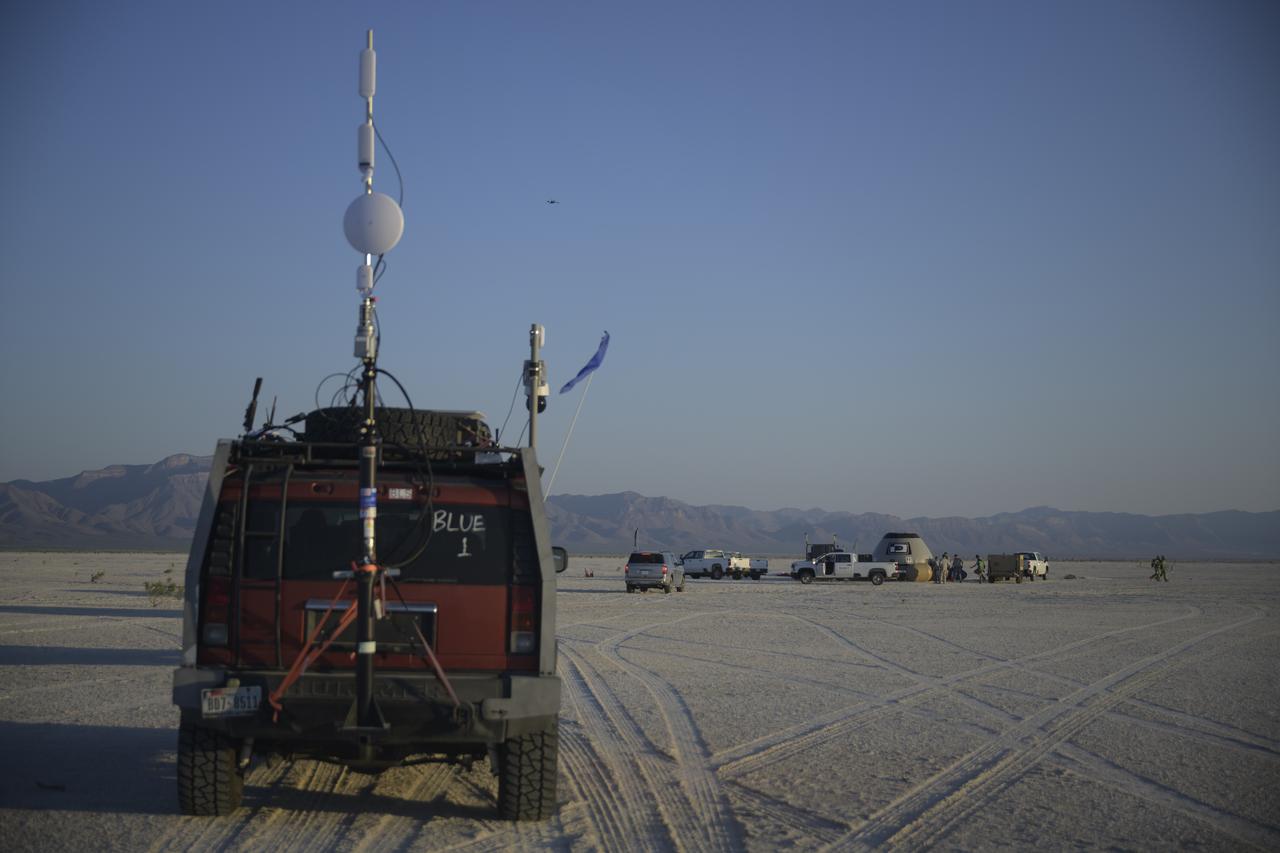
Boeing and NASA teams participate in a mission dress rehearsal to prepare for the landing of the Boeing CST-100 Starliner spacecraft in White Sands, New Mexico, Sunday, June 16, 2024. NASA astronauts Butch Wilmore and Suni Williams are Starliner’s first human crew and travelled to the International Space Station as part of NASA's Boeing Crew Flight Test. The mission serves as an end-to-end demonstration of Boeing’s crew transportation system as a provider for NASA’s Commercial Crew Program. Photo Credit: (NASA/Bill Ingalls)
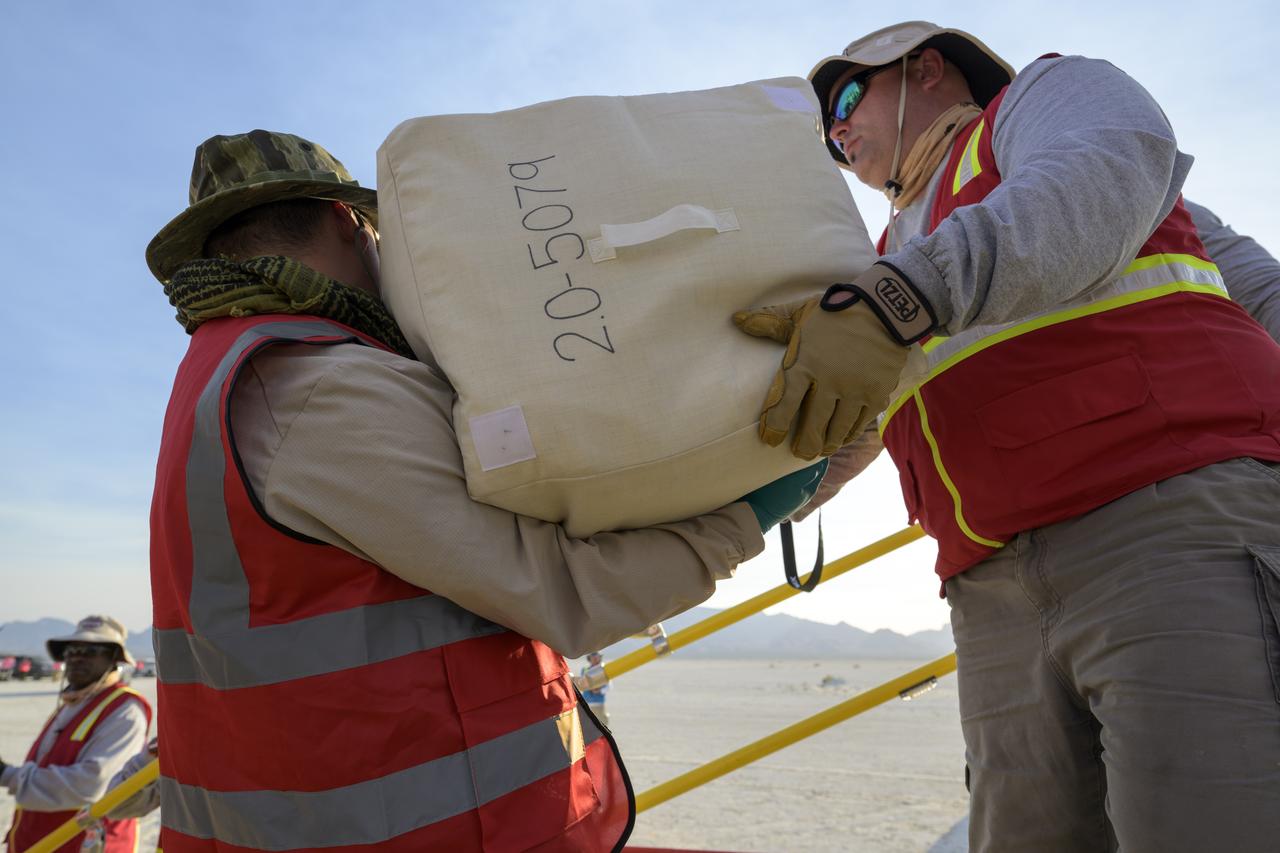
Boeing and NASA teams unload cargo from Boeing’s CST-100 Starliner spacecraft after it landed at White Sands Missile Range’s Space Harbor, Wednesday, May 25, 2022, in New Mexico. Boeing’s Orbital Flight Test-2 (OFT-2) is Starliner’s second uncrewed flight test to the International Space Station as part of NASA's Commercial Crew Program. OFT-2 serves as an end-to-end test of the system's capabilities. Photo Credit: (NASA/Bill Ingalls)
Boeing and NASA teams participate in a mission dress rehearsal to prepare for the landing of the Boeing CST-100 Starliner spacecraft in White Sands, New Mexico, Monday, May 23, 2022. Boeing’s Orbital Flight Test-2 (OFT-2) is Starliner’s second uncrewed flight test to the International Space Station as part of NASA's Commercial Crew Program. OFT-2 serves as an end-to-end test of the system's capabilities. Photo Credit: (NASA/Bill Ingalls)
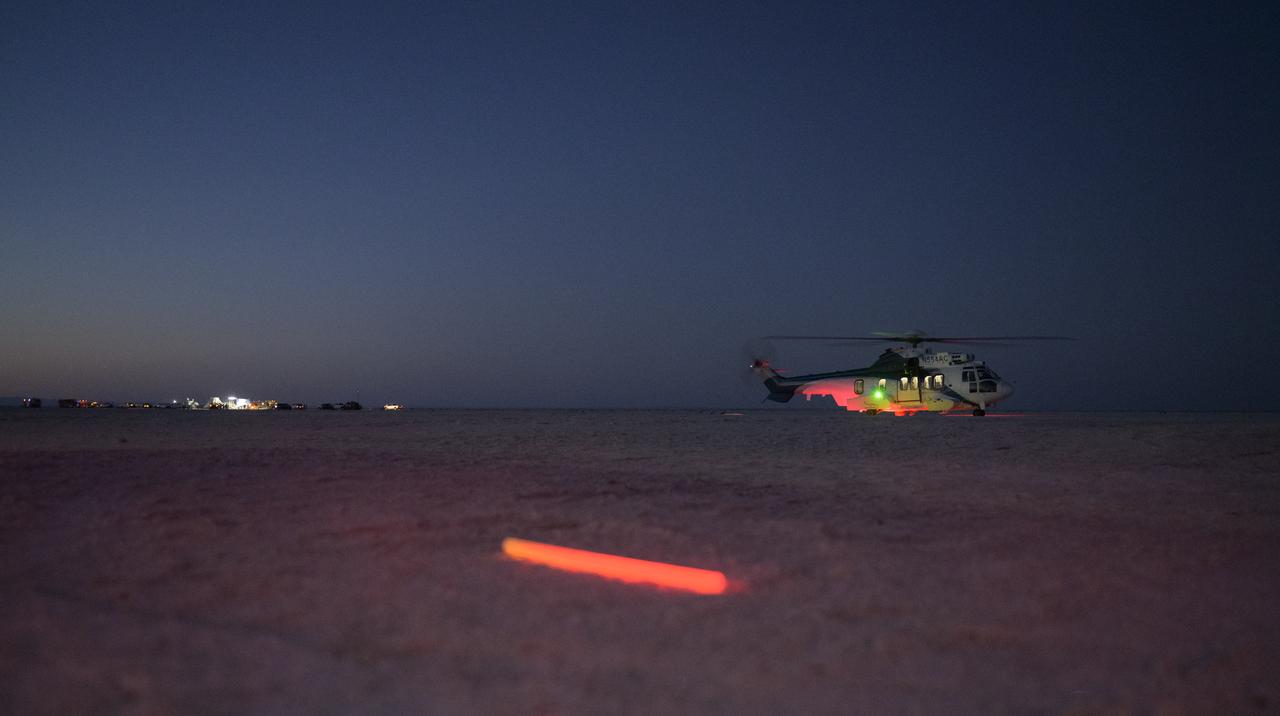
Boeing and NASA teams participate in a mission dress rehearsal to prepare for the landing of the Boeing CST-100 Starliner spacecraft in White Sands, New Mexico, Sunday, June 16, 2024. NASA astronauts Butch Wilmore and Suni Williams are Starliner’s first human crew and travelled to the International Space Station as part of NASA's Boeing Crew Flight Test. The mission serves as an end-to-end demonstration of Boeing’s crew transportation system as a provider for NASA’s Commercial Crew Program. Photo Credit: (NASA/Bill Ingalls)
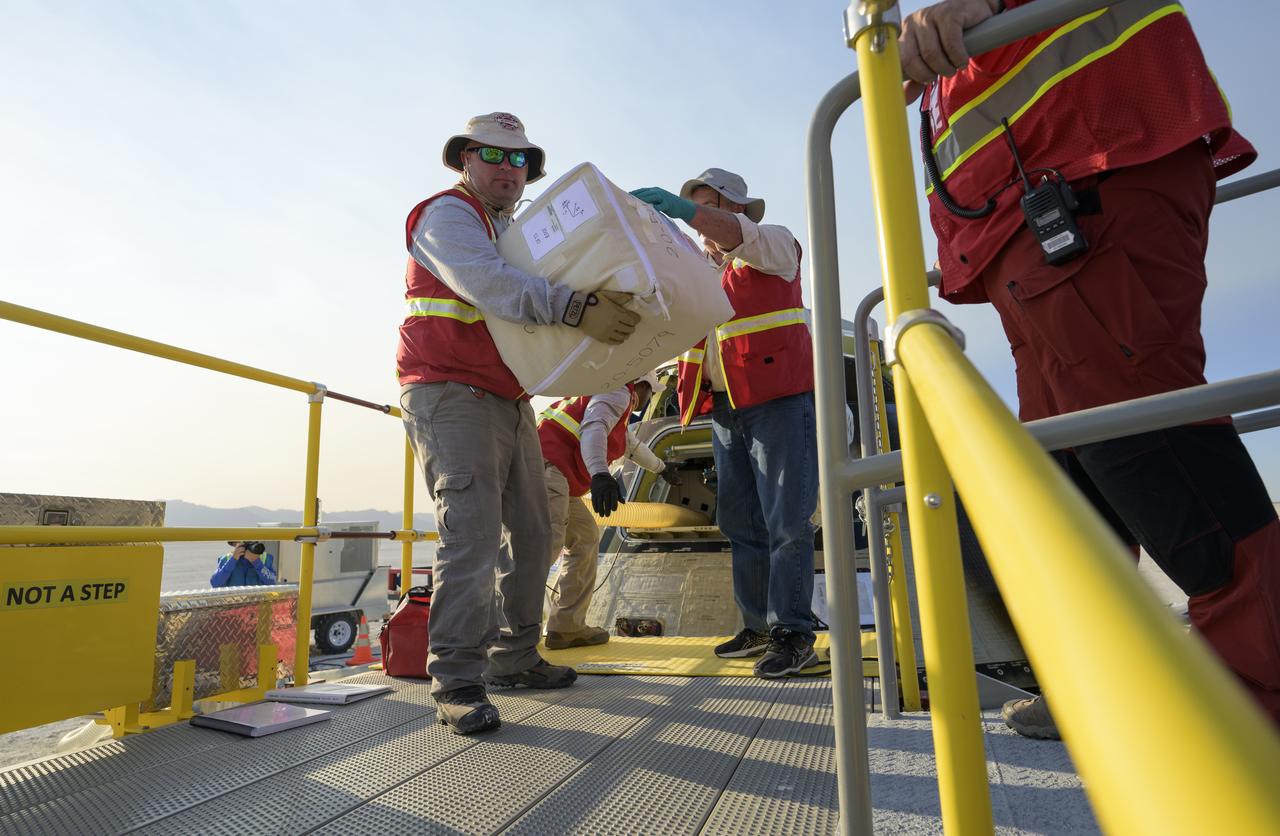
Boeing and NASA teams unload cargo from Boeing’s CST-100 Starliner spacecraft after it landed at White Sands Missile Range’s Space Harbor, Wednesday, May 25, 2022, in New Mexico. Boeing’s Orbital Flight Test-2 (OFT-2) is Starliner’s second uncrewed flight test to the International Space Station as part of NASA's Commercial Crew Program. OFT-2 serves as an end-to-end test of the system's capabilities. Photo Credit: (NASA/Bill Ingalls)
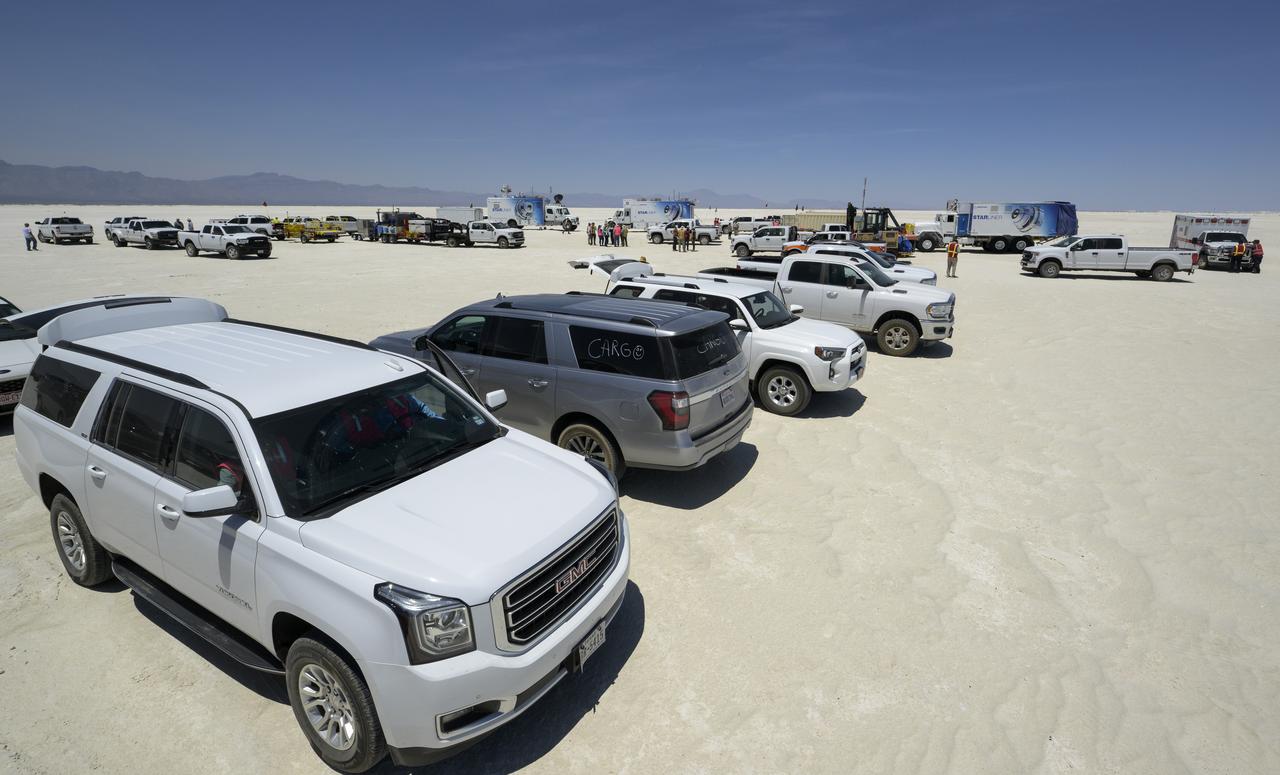
NASA and Boeing teams prepare for the landing of Boeing’s CST-100 Starliner spacecraft at White Sands Missile Range’s Space Harbor, Wednesday, May 25, 2022, in New Mexico. Boeing’s Orbital Flight Test-2 (OFT-2) is Starliner’s second uncrewed flight test to the International Space Station as part of NASA's Commercial Crew Program. OFT-2 serves as an end-to-end test of the system's capabilities. Photo Credit: (NASA/Bill Ingalls)
Boeing and NASA teams participate in a mission dress rehearsal to prepare for the landing of the Boeing CST-100 Starliner spacecraft in White Sands, New Mexico, Sunday, June 16, 2024. NASA astronauts Butch Wilmore and Suni Williams are Starliner’s first human crew and travelled to the International Space Station as part of NASA's Boeing Crew Flight Test. The mission serves as an end-to-end demonstration of Boeing’s crew transportation system as a provider for NASA’s Commercial Crew Program. Photo Credit: (NASA/Bill Ingalls)
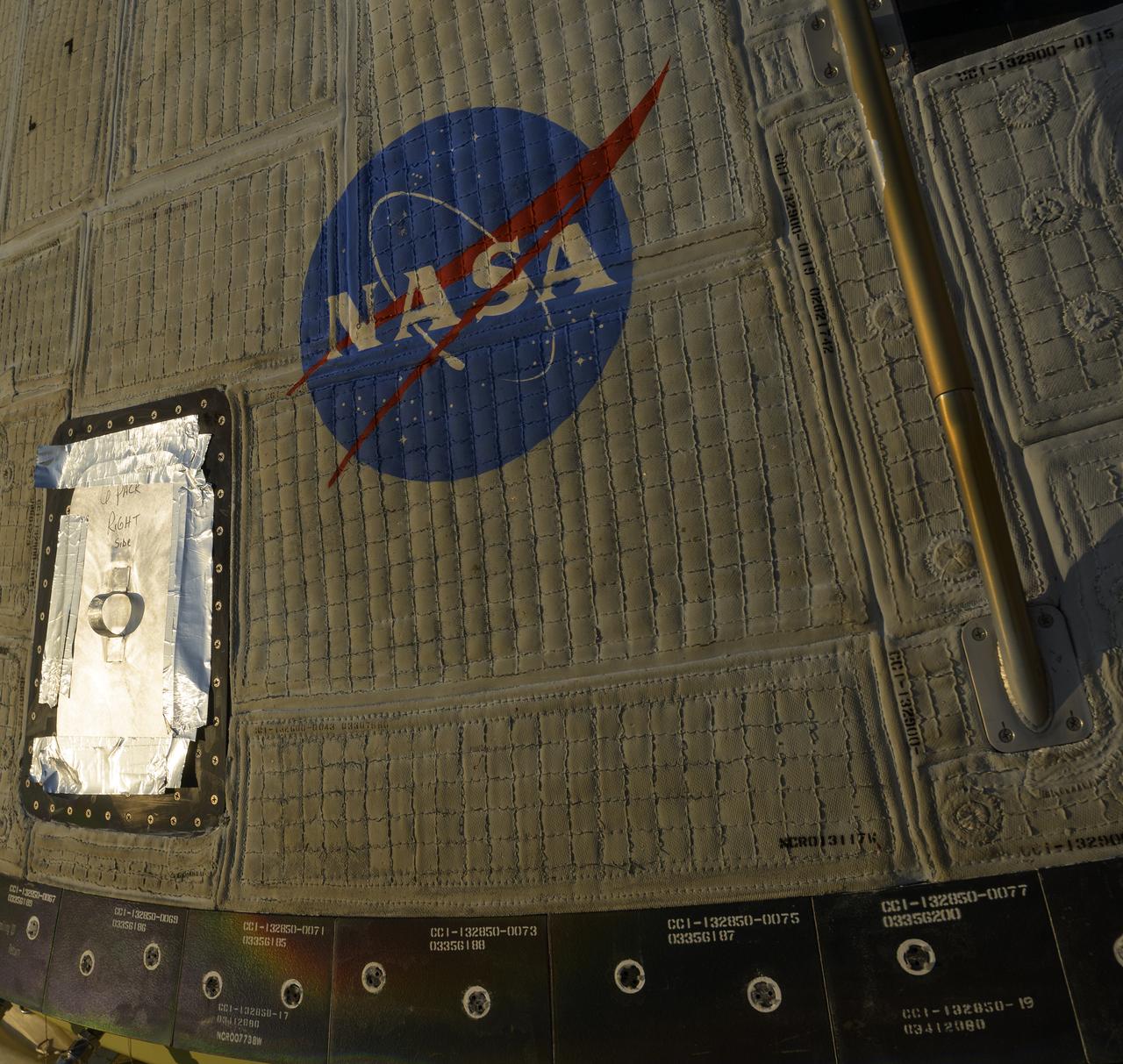
Boeing’s CST-100 Starliner spacecraft is seen after it landed at White Sands Missile Range’s Space Harbor, Wednesday, May 25, 2022, in New Mexico. Boeing’s Orbital Flight Test-2 (OFT-2) is Starliner’s second uncrewed flight test to the International Space Station as part of NASA's Commercial Crew Program. OFT-2 serves as an end-to-end test of the system's capabilities. Photo Credit: (NASA/Bill Ingalls)

Boeing and NASA teams participate in a mission dress rehearsal to prepare for the landing of the Boeing CST-100 Starliner spacecraft in White Sands, New Mexico, Monday, May 23, 2022. Boeing’s Orbital Flight Test-2 (OFT-2) is Starliner’s second uncrewed flight test to the International Space Station as part of NASA's Commercial Crew Program. OFT-2 serves as an end-to-end test of the system's capabilities. Photo Credit: (NASA/Bill Ingalls)
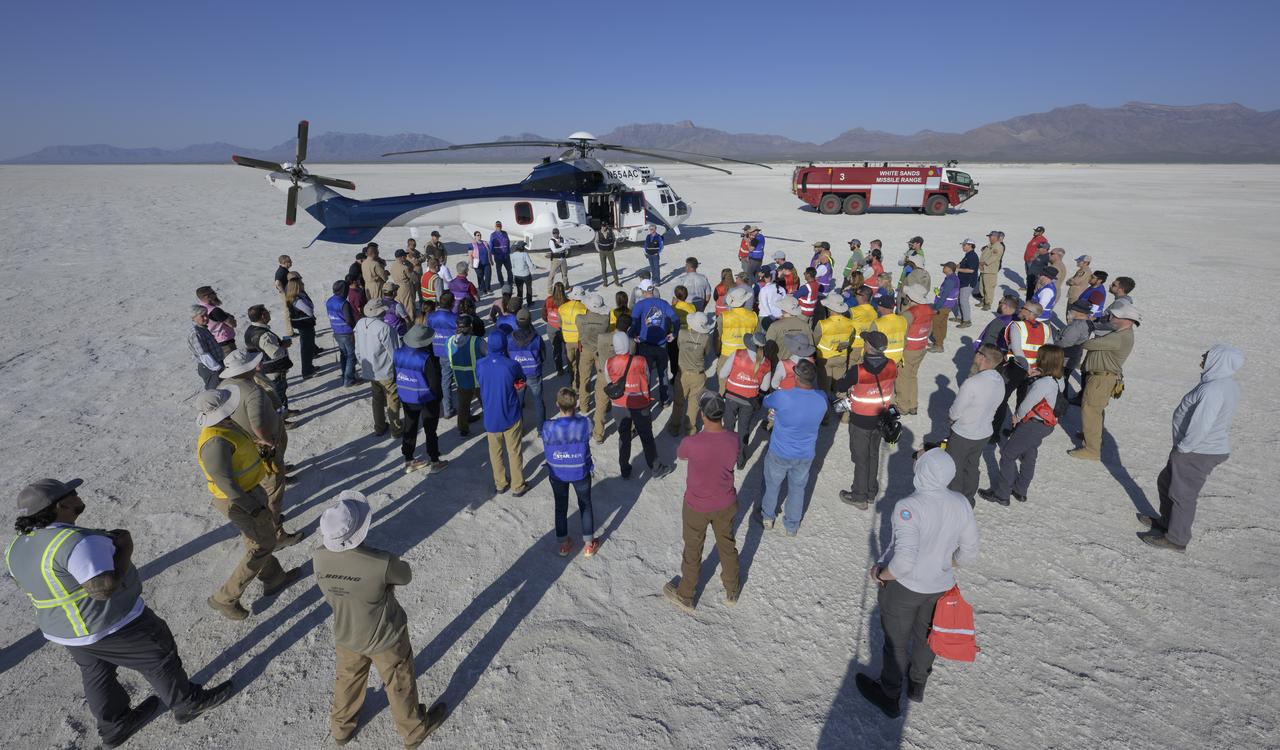
Boeing and NASA teams participate in a mission dress rehearsal to prepare for the landing of the Boeing CST-100 Starliner spacecraft in White Sands, New Mexico, Sunday, June 16, 2024. NASA astronauts Butch Wilmore and Suni Williams are Starliner’s first human crew and travelled to the International Space Station as part of NASA's Boeing Crew Flight Test. The mission serves as an end-to-end demonstration of Boeing’s crew transportation system as a provider for NASA’s Commercial Crew Program. Photo Credit: (NASA/Bill Ingalls)
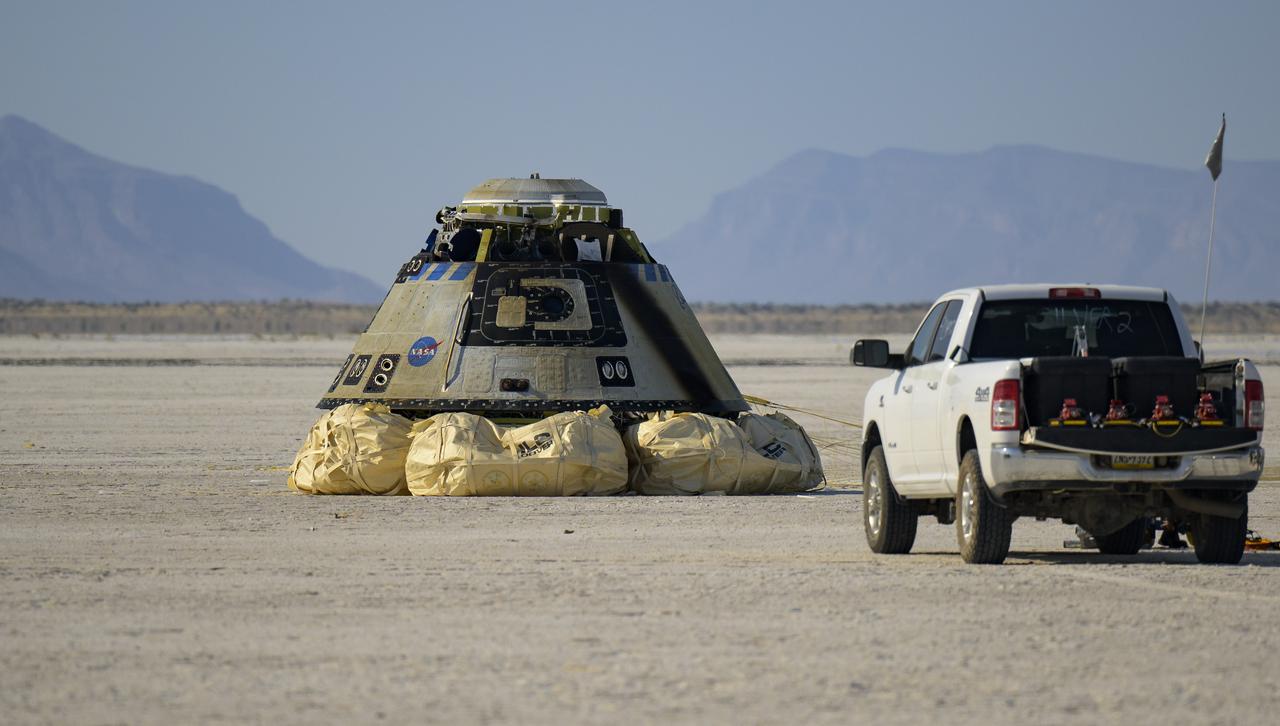
Boeing and NASA teams work around Boeing’s CST-100 Starliner spacecraft after it landed at White Sands Missile Range’s Space Harbor, Wednesday, May 25, 2022, in New Mexico. Boeing’s Orbital Flight Test-2 (OFT-2) is Starliner’s second uncrewed flight test to the International Space Station as part of NASA's Commercial Crew Program. OFT-2 serves as an end-to-end test of the system's capabilities. Photo Credit: (NASA/Bill Ingalls)

Boeing hazmat teams work around Boeing’s CST-100 Starliner spacecraft after it landed at White Sands Missile Range’s Space Harbor, Wednesday, May 25, 2022, in New Mexico. Boeing’s Orbital Flight Test-2 (OFT-2) is Starliner’s second uncrewed flight test to the International Space Station as part of NASA's Commercial Crew Program. OFT-2 serves as an end-to-end test of the system's capabilities. Photo Credit: (NASA/Bill Ingalls)
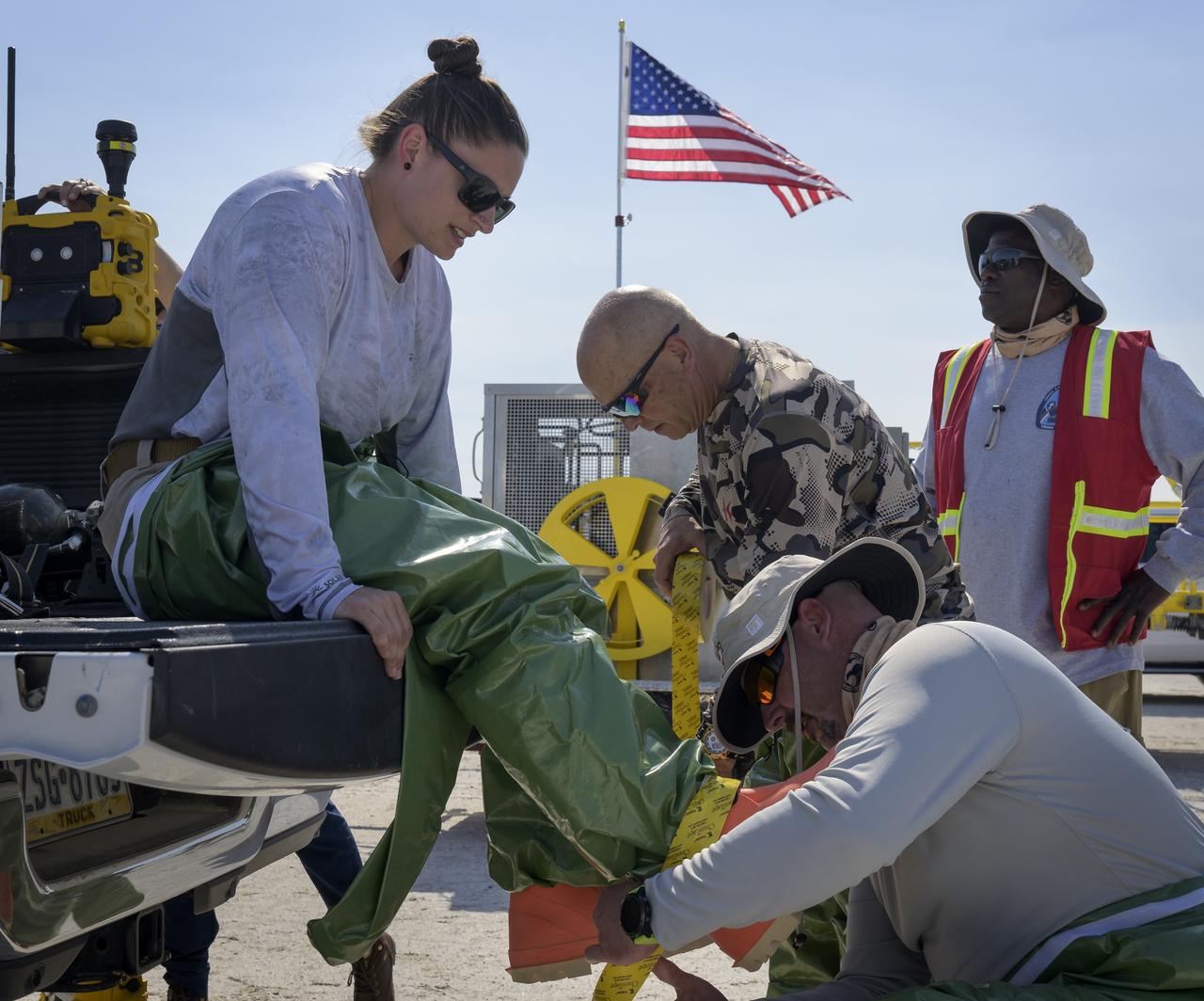
Boeing team members don hazmat suits as they prepare for the landing of Boeing’s CST-100 Starliner spacecraft at White Sands Missile Range’s Space Harbor, Wednesday, May 25, 2022, in New Mexico. Boeing’s Orbital Flight Test-2 (OFT-2) is Starliner’s second uncrewed flight test to the International Space Station as part of NASA's Commercial Crew Program. OFT-2 serves as an end-to-end test of the system's capabilities. Photo Credit: (NASA/Bill Ingalls)
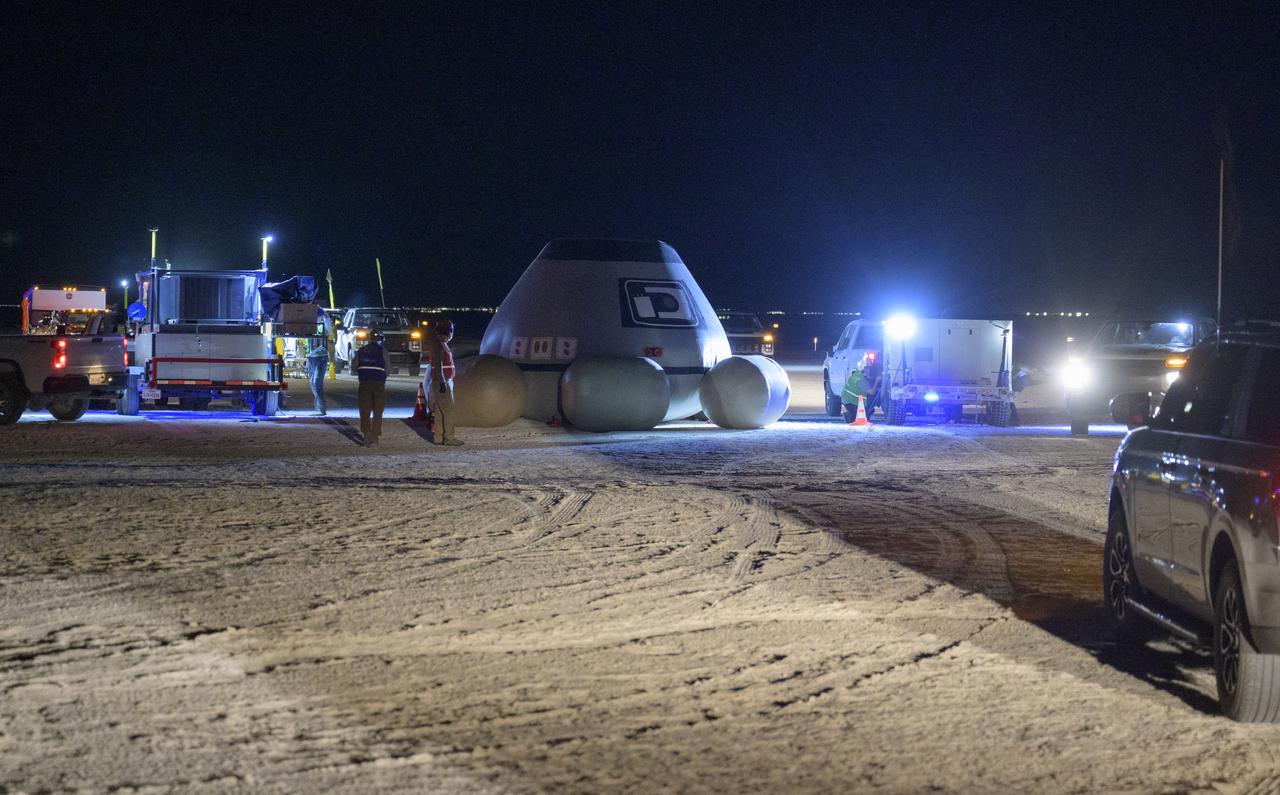
Boeing and NASA teams participate in a mission dress rehearsal to prepare for the landing of the Boeing CST-100 Starliner spacecraft in White Sands, New Mexico, Sunday, June 16, 2024. NASA astronauts Butch Wilmore and Suni Williams are Starliner’s first human crew and travelled to the International Space Station as part of NASA's Boeing Crew Flight Test. The mission serves as an end-to-end demonstration of Boeing’s crew transportation system as a provider for NASA’s Commercial Crew Program. Photo Credit: (NASA/Bill Ingalls)
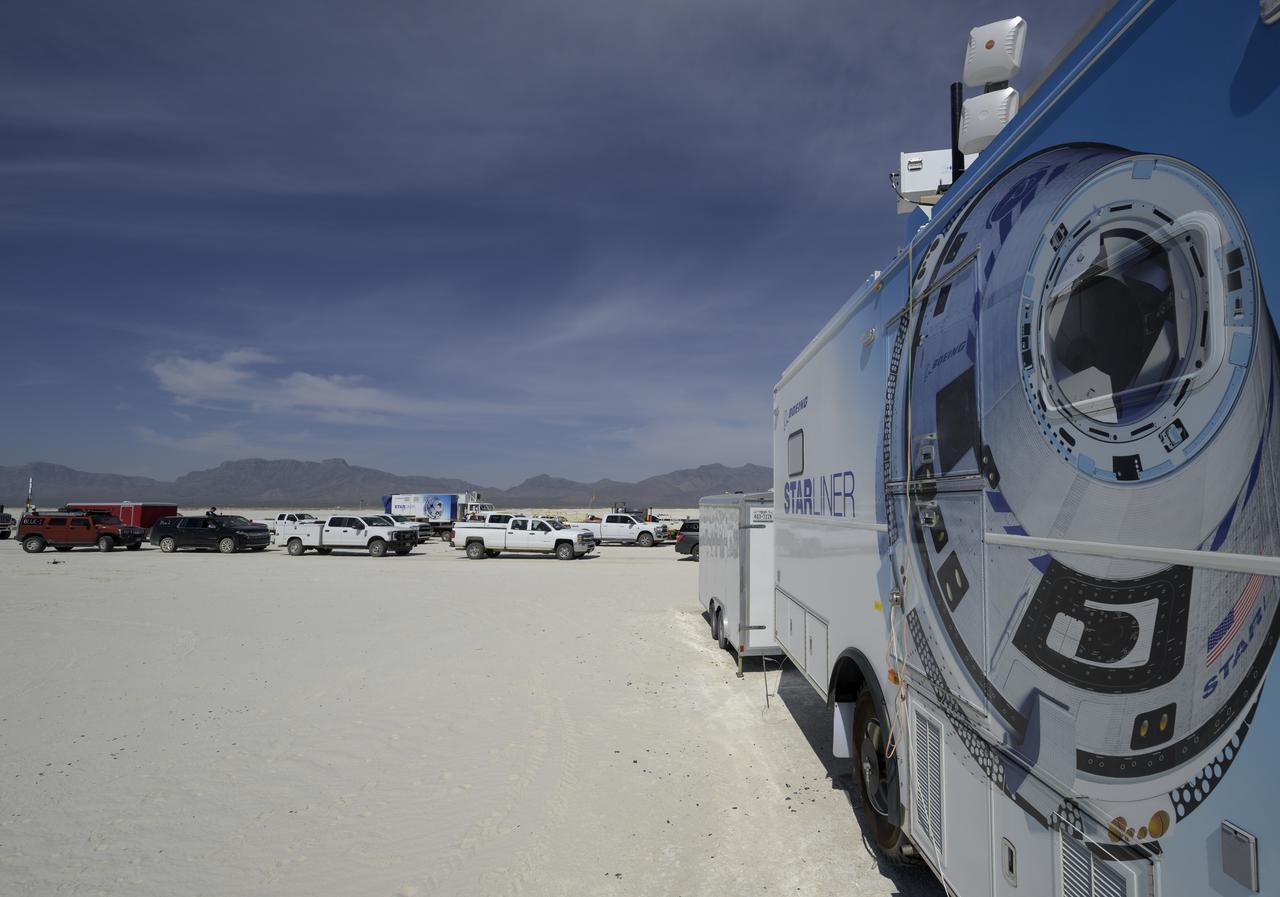
Boeing and NASA teams participate in a mission dress rehearsal to prepare for the landing of the Boeing CST-100 Starliner spacecraft in White Sands, New Mexico, Monday, May 23, 2022. Boeing’s Orbital Flight Test-2 (OFT-2) is Starliner’s second uncrewed flight test to the International Space Station as part of NASA's Commercial Crew Program. OFT-2 serves as an end-to-end test of the system's capabilities. Photo Credit: (NASA/Bill Ingalls)
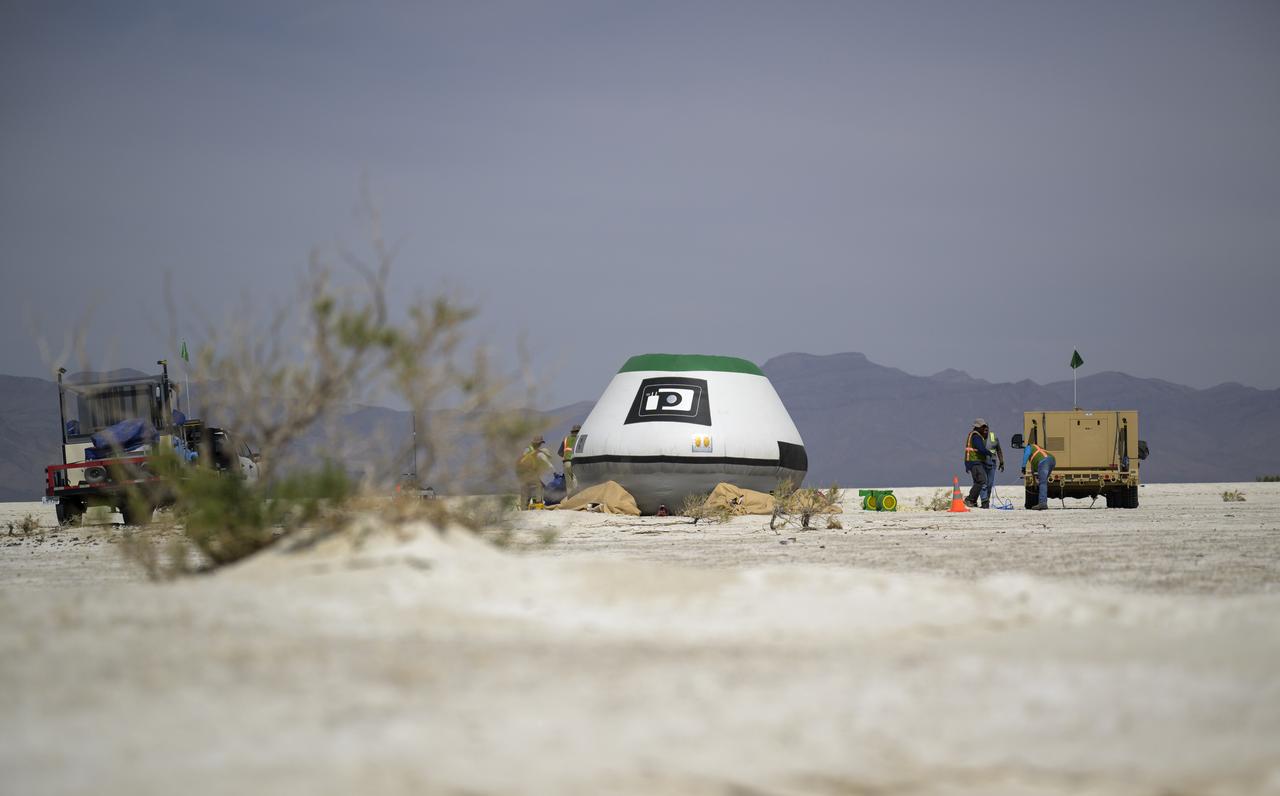
Boeing and NASA teams participate in a mission dress rehearsal to prepare for the landing of the Boeing CST-100 Starliner spacecraft in White Sands, New Mexico, Monday, May 23, 2022. Boeing’s Orbital Flight Test-2 (OFT-2) is Starliner’s second uncrewed flight test to the International Space Station as part of NASA's Commercial Crew Program. OFT-2 serves as an end-to-end test of the system's capabilities. Photo Credit: (NASA/Bill Ingalls)

Boeing and NASA teams participate in a mission dress rehearsal to prepare for the landing of the Boeing CST-100 Starliner spacecraft in White Sands, New Mexico, Monday, May 23, 2022. Boeing’s Orbital Flight Test-2 (OFT-2) is Starliner’s second uncrewed flight test to the International Space Station as part of NASA's Commercial Crew Program. OFT-2 serves as an end-to-end test of the system's capabilities. Photo Credit: (NASA/Bill Ingalls)
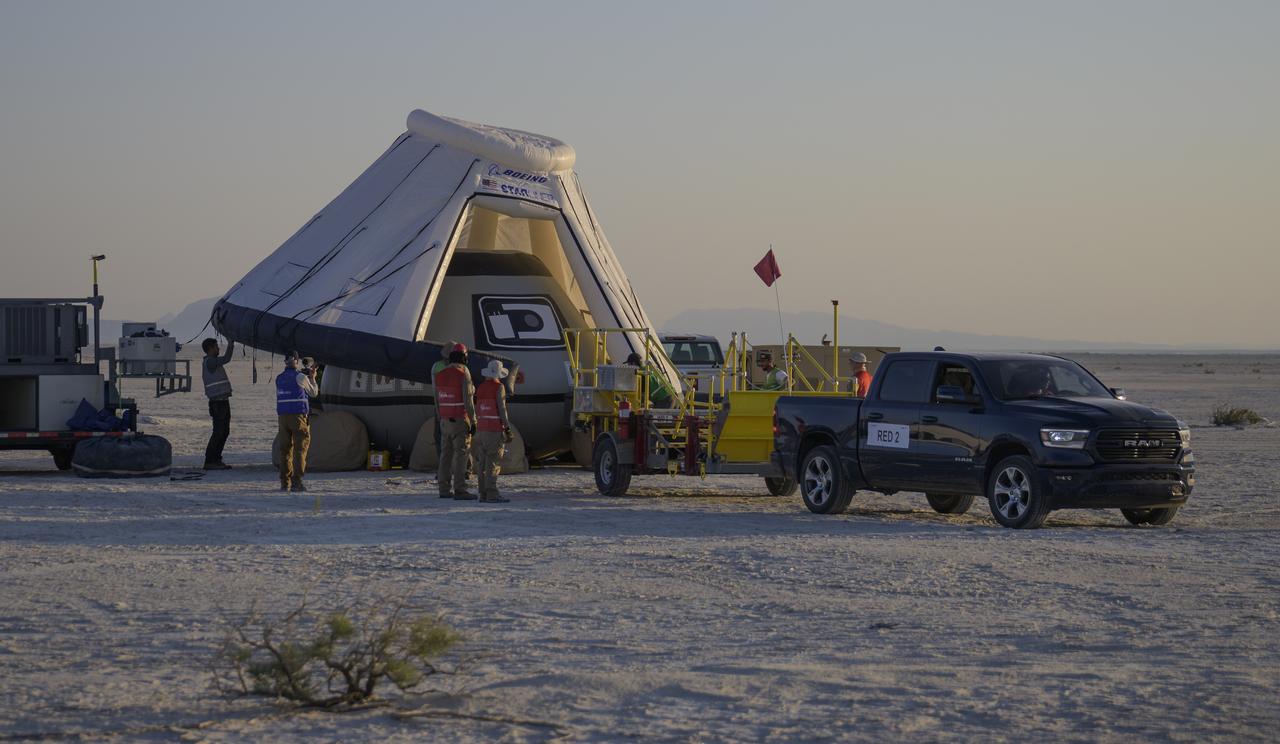
Boeing and NASA teams participate in a mission dress rehearsal to prepare for the landing of the Boeing CST-100 Starliner spacecraft in White Sands, New Mexico, Sunday, June 16, 2024. NASA astronauts Butch Wilmore and Suni Williams are Starliner’s first human crew and travelled to the International Space Station as part of NASA's Boeing Crew Flight Test. The mission serves as an end-to-end demonstration of Boeing’s crew transportation system as a provider for NASA’s Commercial Crew Program. Photo Credit: (NASA/Bill Ingalls)
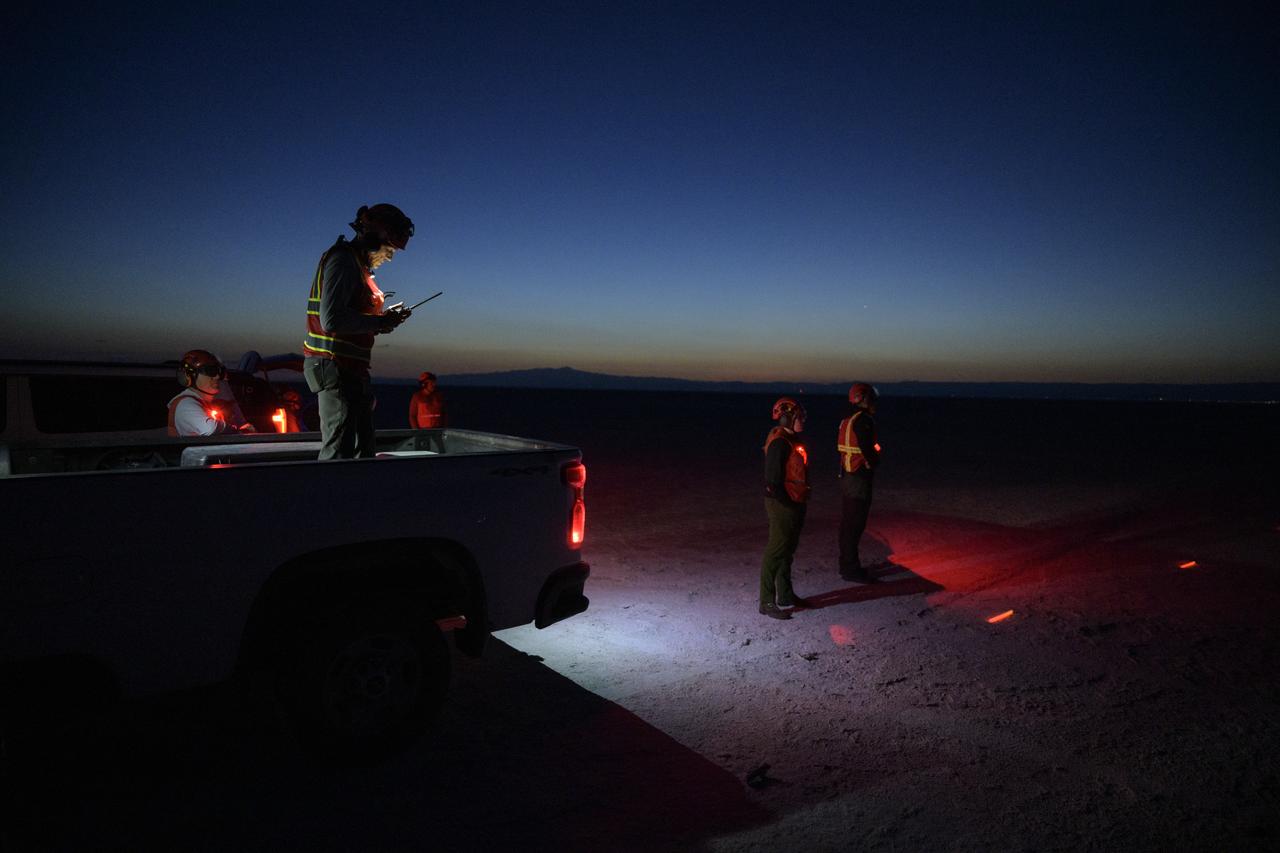
Boeing and NASA teams participate in a mission dress rehearsal to prepare for the landing of the Boeing CST-100 Starliner spacecraft in White Sands, New Mexico, Sunday, June 16, 2024. NASA astronauts Butch Wilmore and Suni Williams are Starliner’s first human crew and travelled to the International Space Station as part of NASA's Boeing Crew Flight Test. The mission serves as an end-to-end demonstration of Boeing’s crew transportation system as a provider for NASA’s Commercial Crew Program. Photo Credit: (NASA/Bill Ingalls)
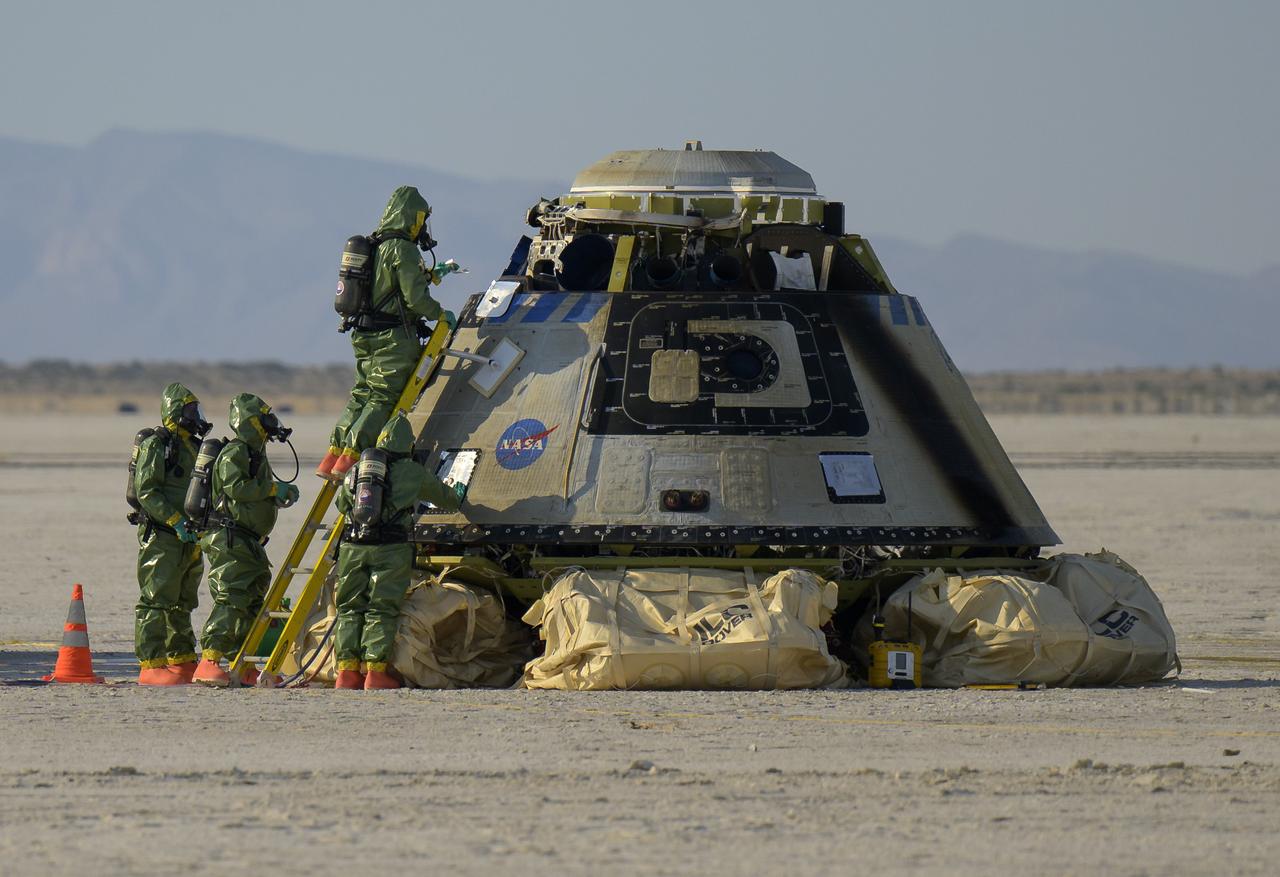
Boeing and NASA teams work around Boeing’s CST-100 Starliner spacecraft after it landed at White Sands Missile Range’s Space Harbor, Wednesday, May 25, 2022, in New Mexico. Boeing’s Orbital Flight Test-2 (OFT-2) is Starliner’s second uncrewed flight test to the International Space Station as part of NASA's Commercial Crew Program. OFT-2 serves as an end-to-end test of the system's capabilities. Photo Credit: (NASA/Bill Ingalls)
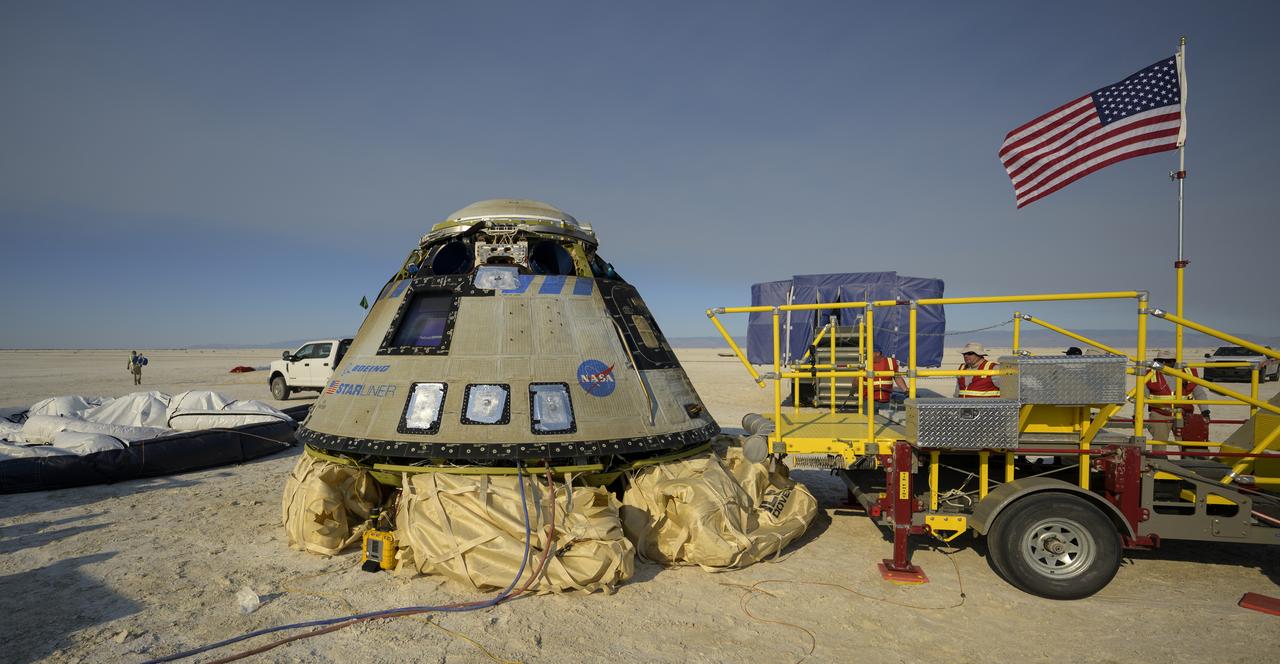
Boeing and NASA teams work around Boeing’s CST-100 Starliner spacecraft after it landed at White Sands Missile Range’s Space Harbor, Wednesday, May 25, 2022, in New Mexico. Boeing’s Orbital Flight Test-2 (OFT-2) is Starliner’s second uncrewed flight test to the International Space Station as part of NASA's Commercial Crew Program. OFT-2 serves as an end-to-end test of the system's capabilities. Photo Credit: (NASA/Bill Ingalls)
Boeing and NASA teams participate in a mission dress rehearsal to prepare for the landing of the Boeing CST-100 Starliner spacecraft in White Sands, New Mexico, Sunday, June 16, 2024. NASA astronauts Butch Wilmore and Suni Williams are Starliner’s first human crew and travelled to the International Space Station as part of NASA's Boeing Crew Flight Test. The mission serves as an end-to-end demonstration of Boeing’s crew transportation system as a provider for NASA’s Commercial Crew Program. Photo Credit: (NASA/Bill Ingalls)
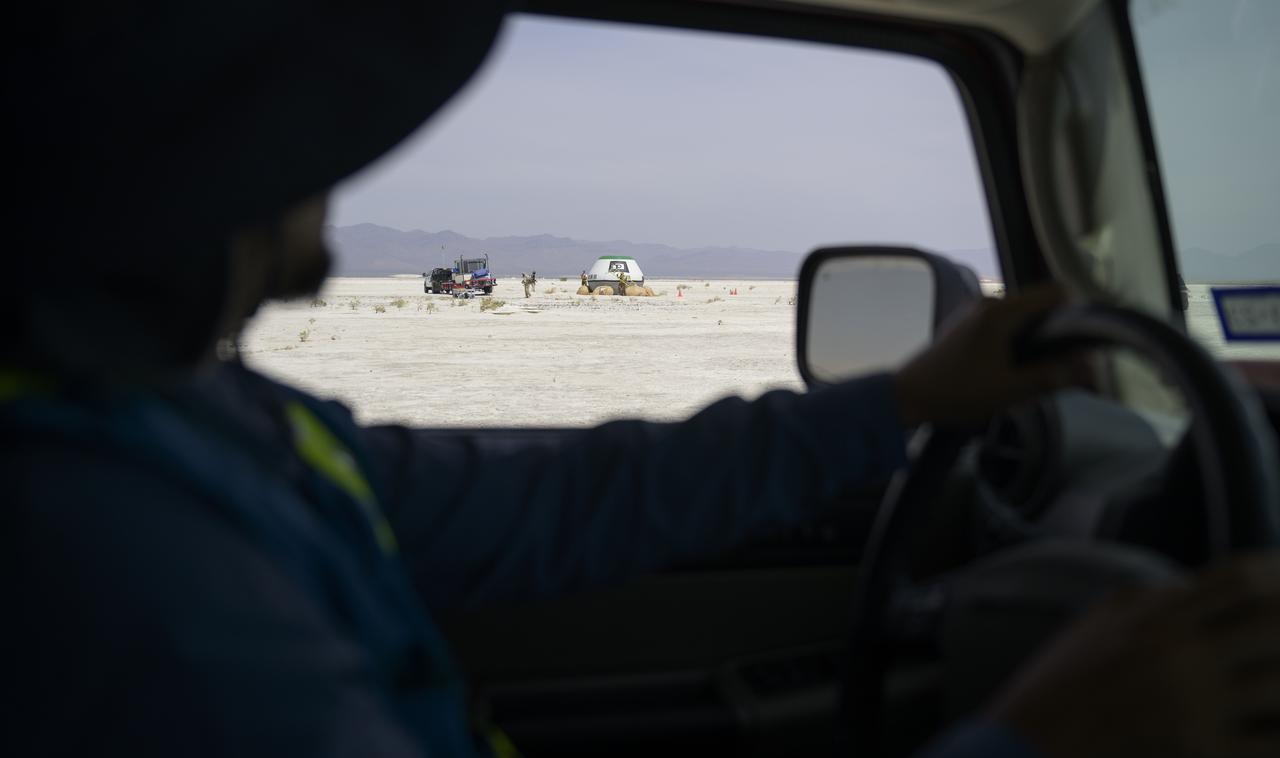
Boeing and NASA teams participate in a mission dress rehearsal to prepare for the landing of the Boeing CST-100 Starliner spacecraft in White Sands, New Mexico, Monday, May 23, 2022. Boeing’s Orbital Flight Test-2 (OFT-2) is Starliner’s second uncrewed flight test to the International Space Station as part of NASA's Commercial Crew Program. OFT-2 serves as an end-to-end test of the system's capabilities. Photo Credit: (NASA/Bill Ingalls)
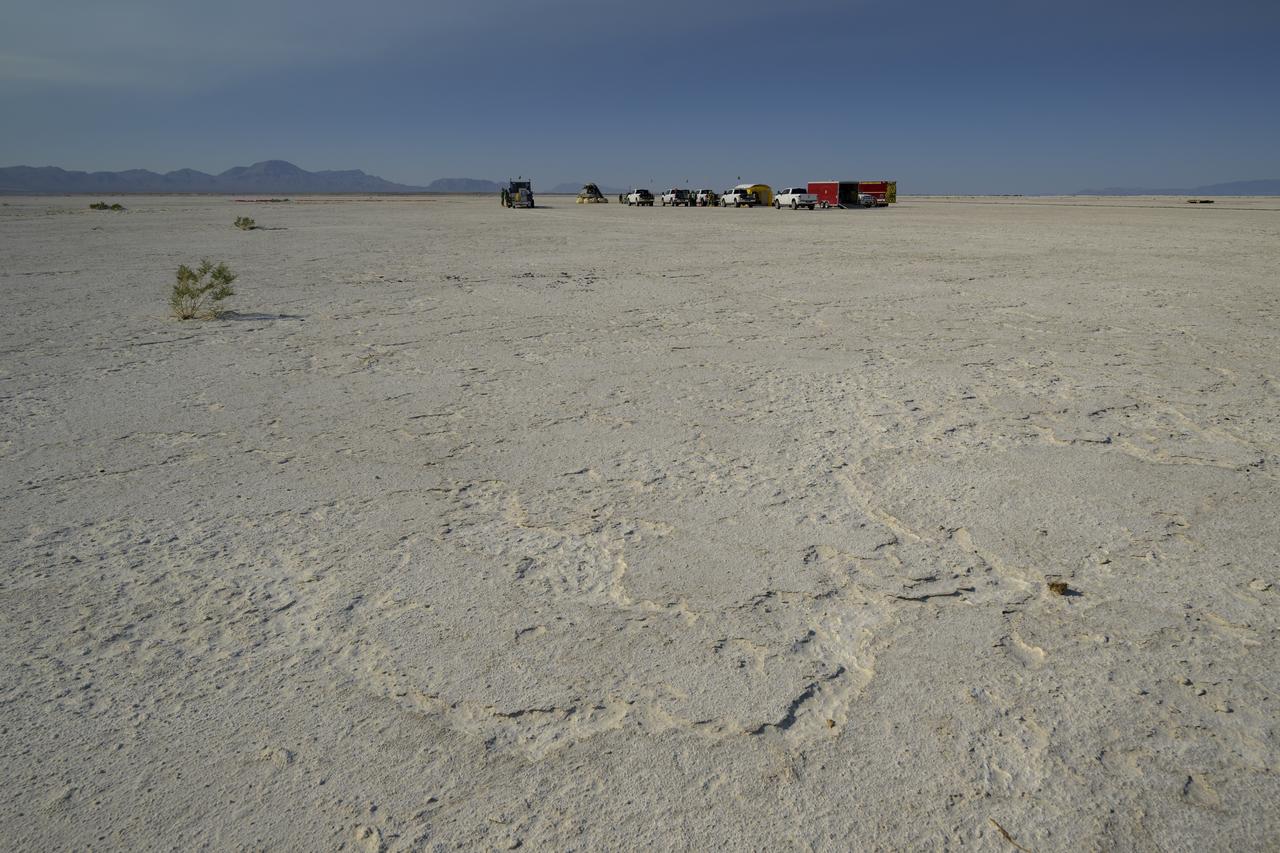
Boeing and NASA teams work around Boeing’s CST-100 Starliner spacecraft after it landed at White Sands Missile Range’s Space Harbor, Wednesday, May 25, 2022, in New Mexico. Boeing’s Orbital Flight Test-2 (OFT-2) is Starliner’s second uncrewed flight test to the International Space Station as part of NASA's Commercial Crew Program. OFT-2 serves as an end-to-end test of the system's capabilities. Photo Credit: (NASA/Bill Ingalls)
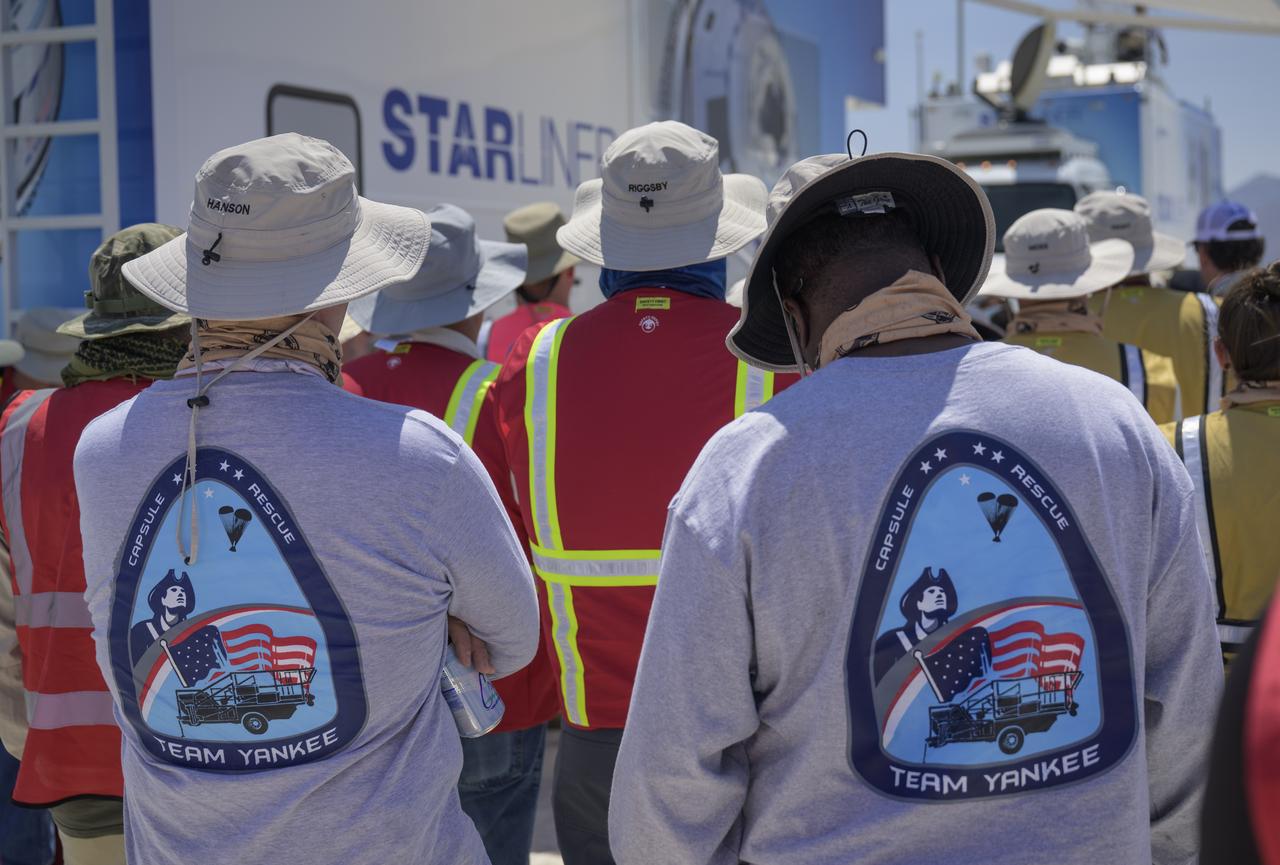
NASA and Boeing teams prepare for the landing of Boeing’s CST-100 Starliner spacecraft at White Sands Missile Range’s Space Harbor, Wednesday, May 25, 2022, in New Mexico. Boeing’s Orbital Flight Test-2 (OFT-2) is Starliner’s second uncrewed flight test to the International Space Station as part of NASA's Commercial Crew Program. OFT-2 serves as an end-to-end test of the system's capabilities. Photo Credit: (NASA/Bill Ingalls)
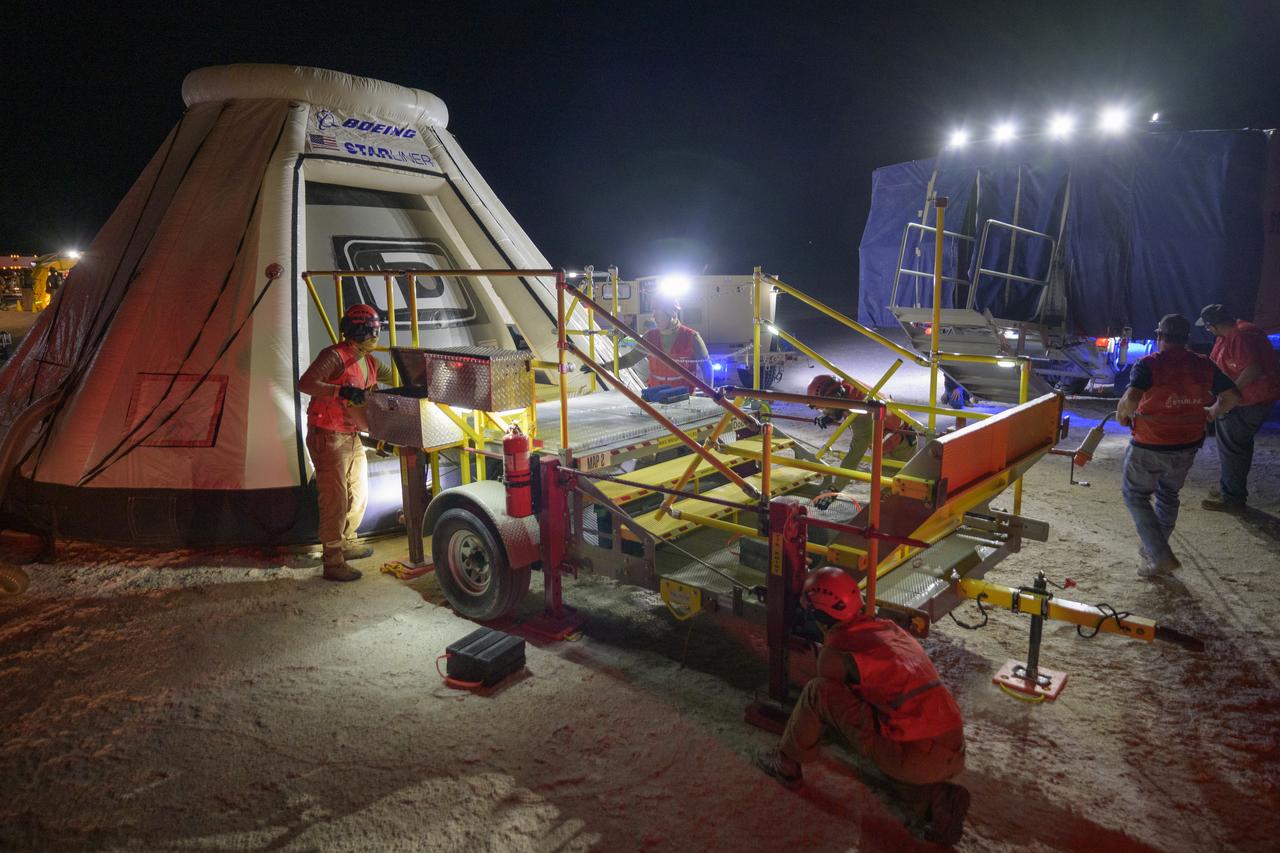
Boeing and NASA teams participate in a mission dress rehearsal to prepare for the landing of the Boeing CST-100 Starliner spacecraft in White Sands, New Mexico, Sunday, June 16, 2024. NASA astronauts Butch Wilmore and Suni Williams are Starliner’s first human crew and travelled to the International Space Station as part of NASA's Boeing Crew Flight Test. The mission serves as an end-to-end demonstration of Boeing’s crew transportation system as a provider for NASA’s Commercial Crew Program. Photo Credit: (NASA/Bill Ingalls)
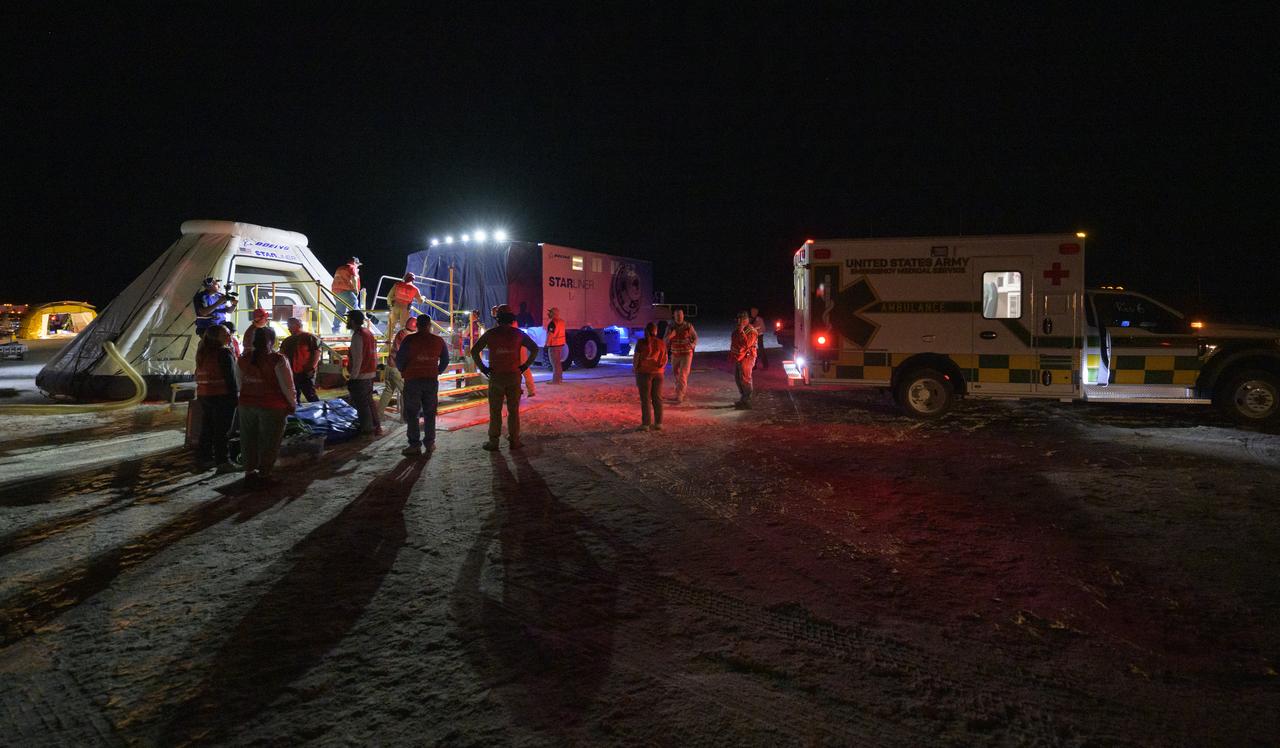
Boeing and NASA teams participate in a mission dress rehearsal to prepare for the landing of the Boeing CST-100 Starliner spacecraft in White Sands, New Mexico, Sunday, June 16, 2024. NASA astronauts Butch Wilmore and Suni Williams are Starliner’s first human crew and travelled to the International Space Station as part of NASA's Boeing Crew Flight Test. The mission serves as an end-to-end demonstration of Boeing’s crew transportation system as a provider for NASA’s Commercial Crew Program. Photo Credit: (NASA/Bill Ingalls)
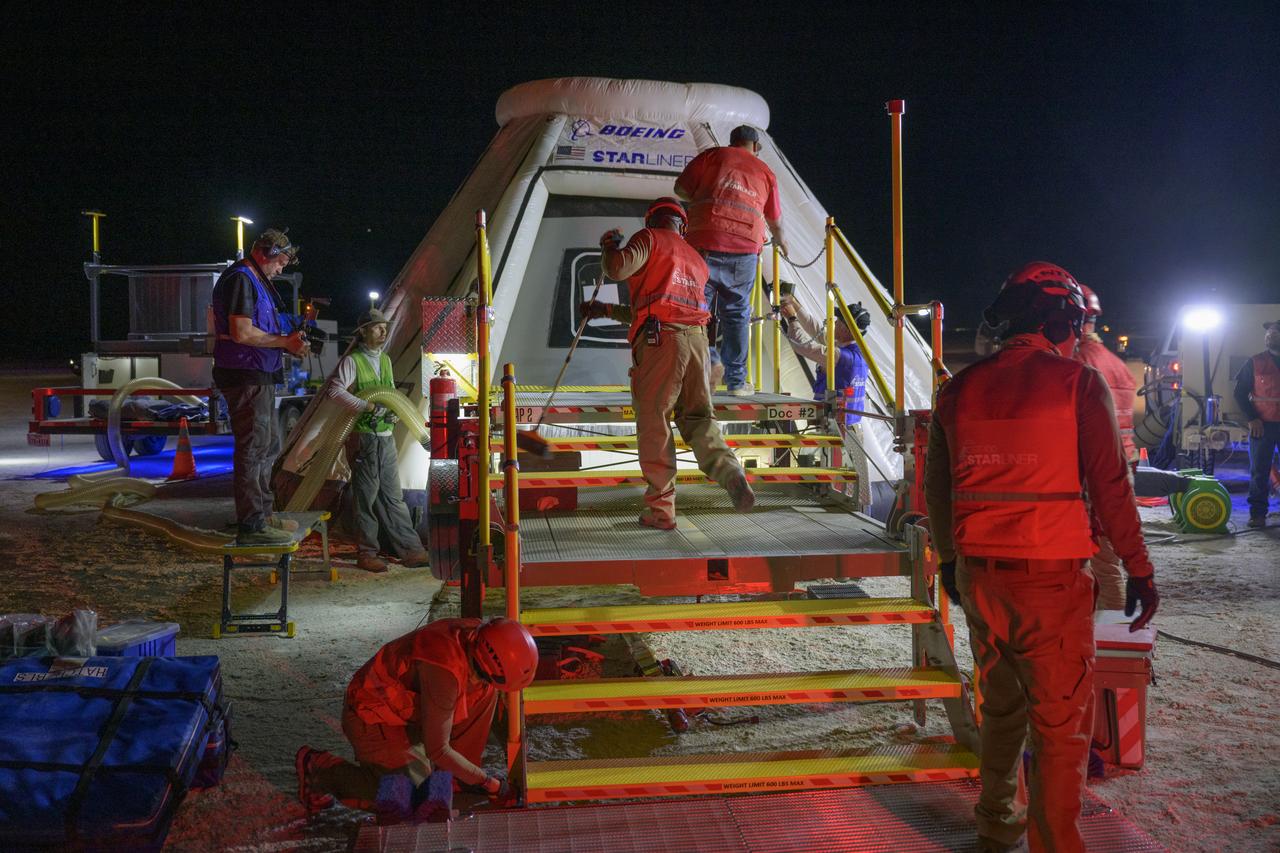
Boeing and NASA teams participate in a mission dress rehearsal to prepare for the landing of the Boeing CST-100 Starliner spacecraft in White Sands, New Mexico, Sunday, June 16, 2024. NASA astronauts Butch Wilmore and Suni Williams are Starliner’s first human crew and travelled to the International Space Station as part of NASA's Boeing Crew Flight Test. The mission serves as an end-to-end demonstration of Boeing’s crew transportation system as a provider for NASA’s Commercial Crew Program. Photo Credit: (NASA/Bill Ingalls)
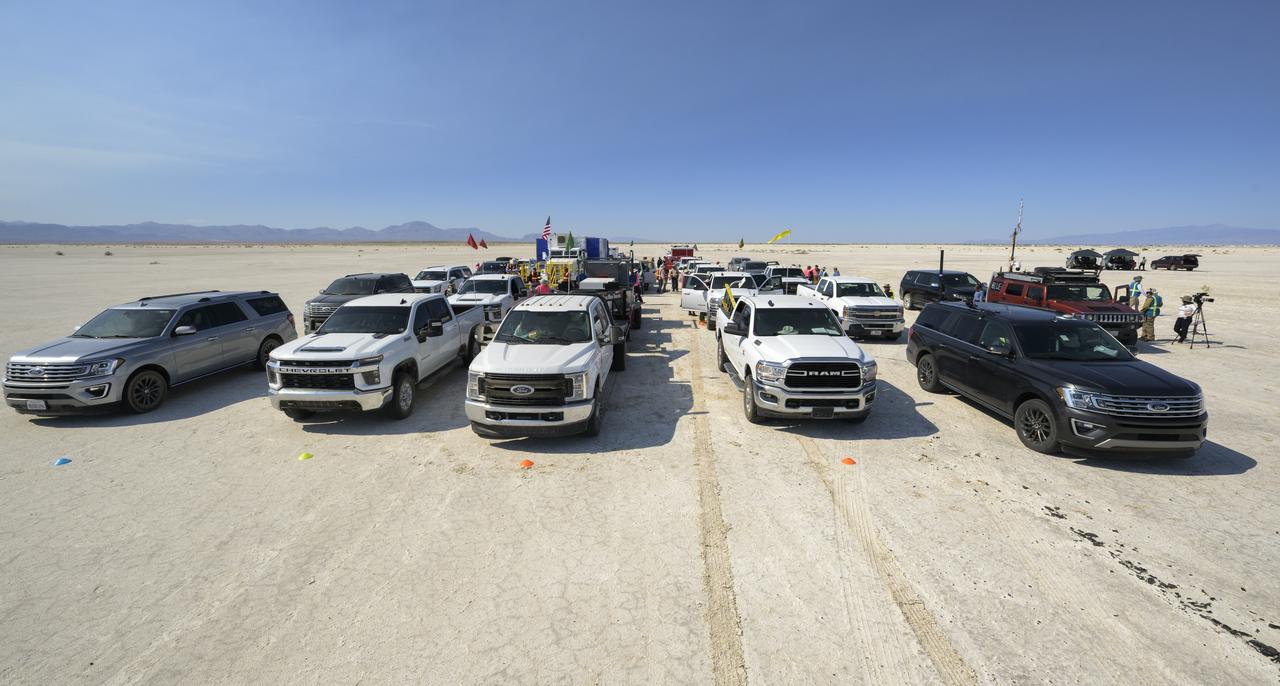
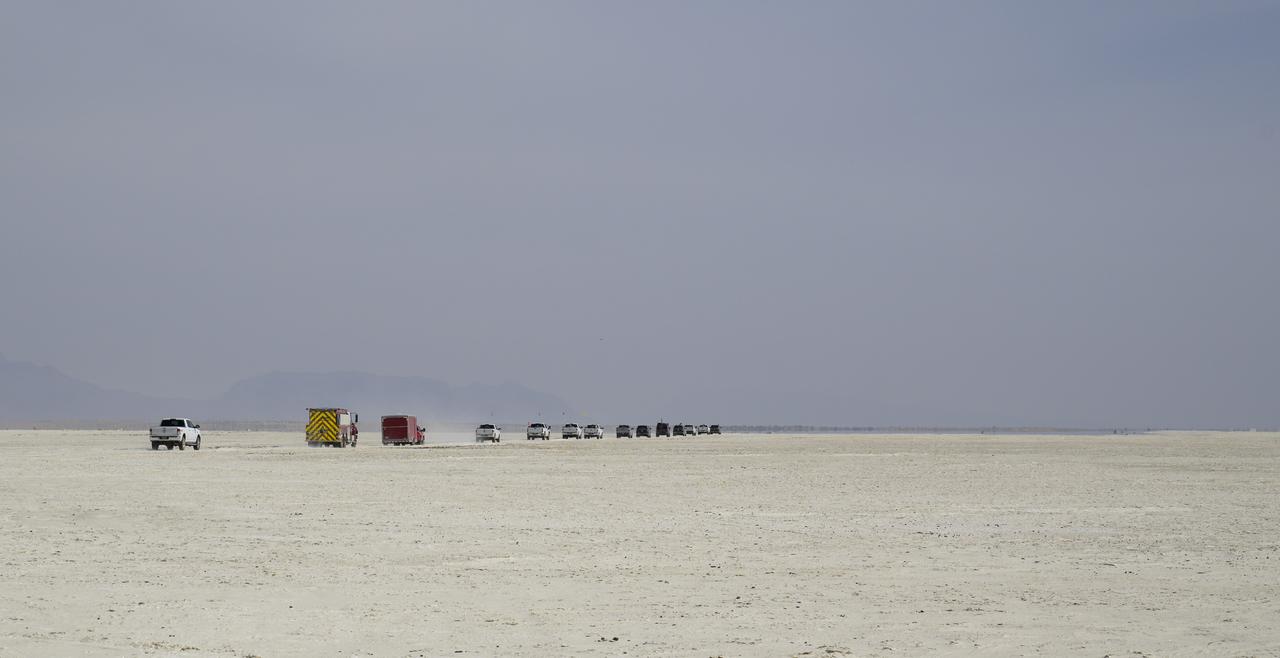
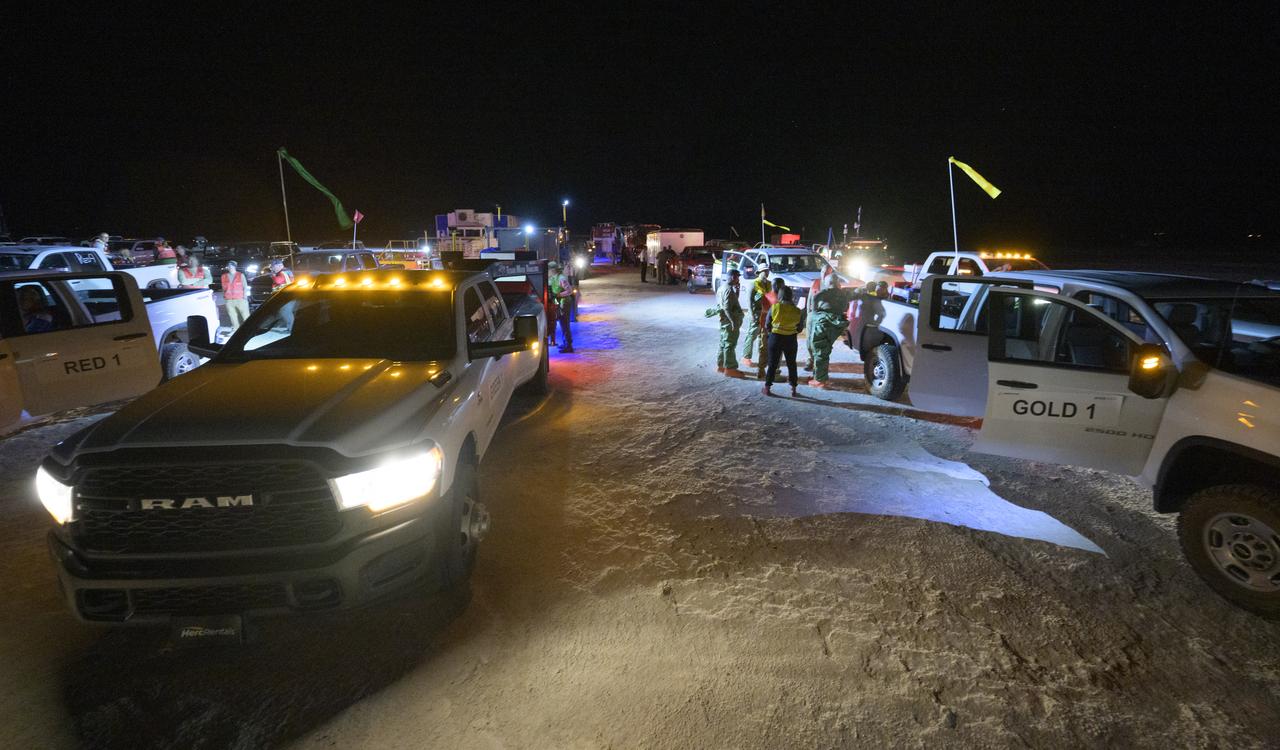
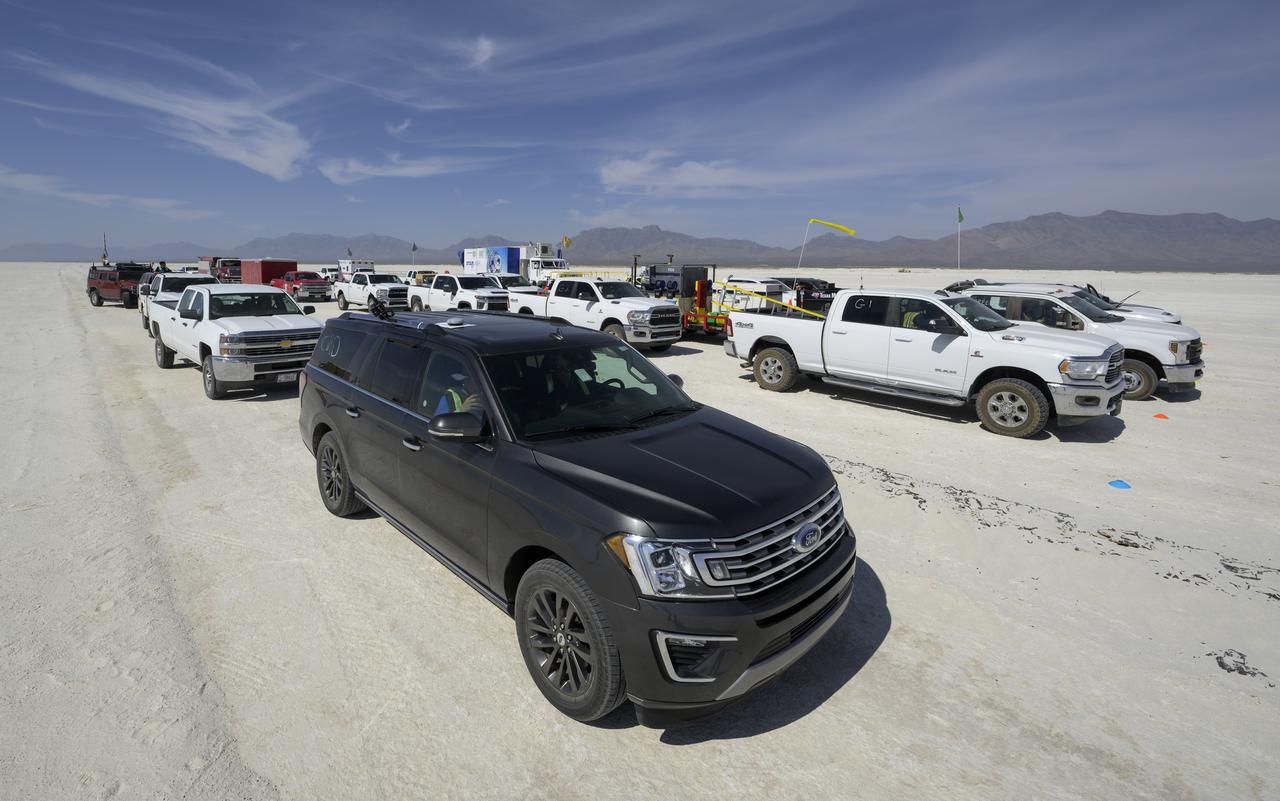
NASA and Boeing teams line up in a convoy as they prepare for the landing of Boeing’s CST-100 Starliner spacecraft at White Sands Missile Range’s Space Harbor, Wednesday, May 25, 2022, in New Mexico. Boeing’s Orbital Flight Test-2 (OFT-2) is Starliner’s second uncrewed flight test to the International Space Station as part of NASA's Commercial Crew Program. OFT-2 serves as an end-to-end test of the system's capabilities. Photo Credit: (NASA/Bill Ingalls)
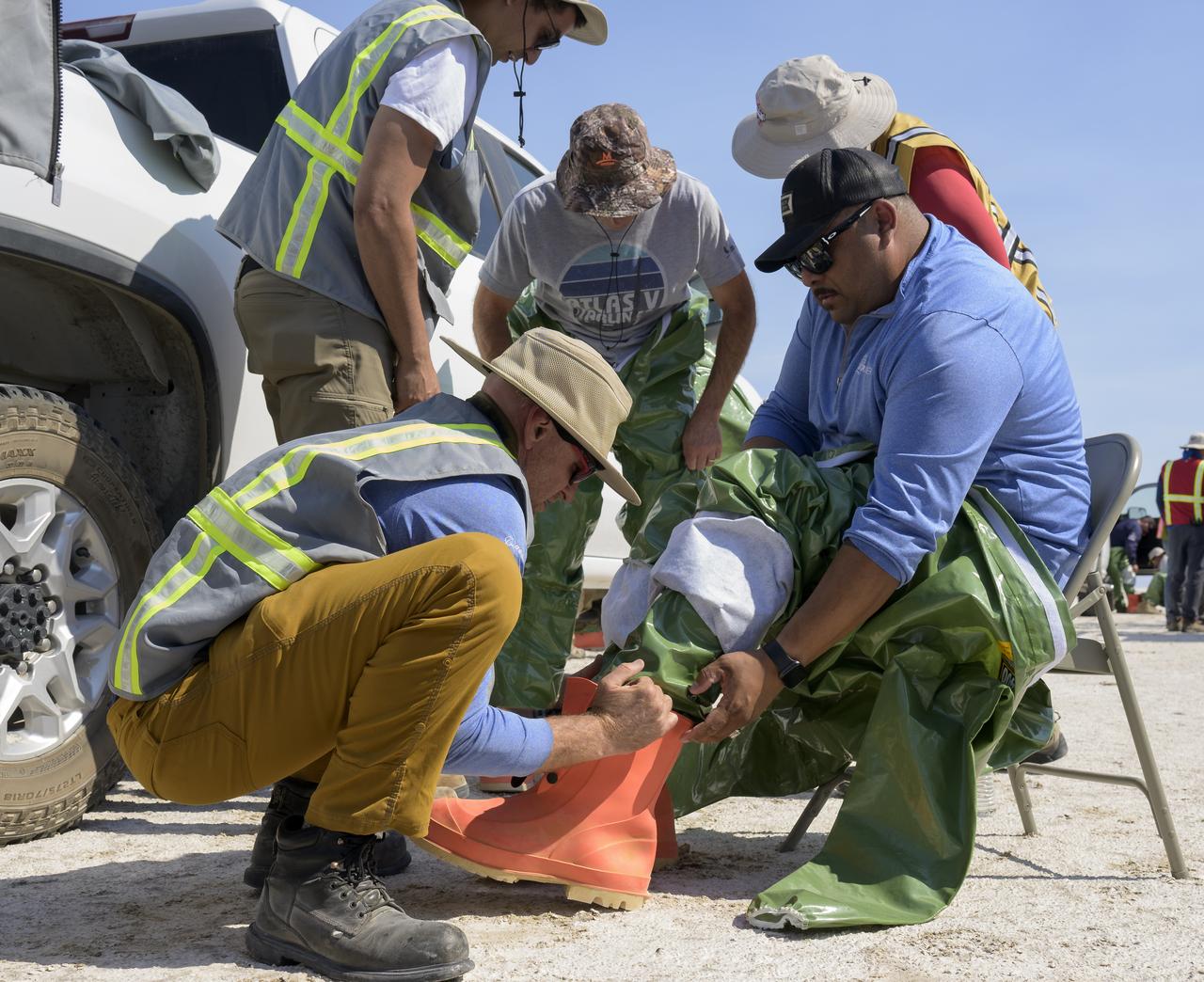
Boeing team members don hazmat suits as they prepare for the landing of Boeing’s CST-100 Starliner spacecraft at White Sands Missile Range’s Space Harbor, Wednesday, May 25, 2022, in New Mexico. Boeing’s Orbital Flight Test-2 (OFT-2) is Starliner’s second uncrewed flight test to the International Space Station as part of NASA's Commercial Crew Program. OFT-2 serves as an end-to-end test of the system's capabilities. Photo Credit: (NASA/Bill Ingalls)
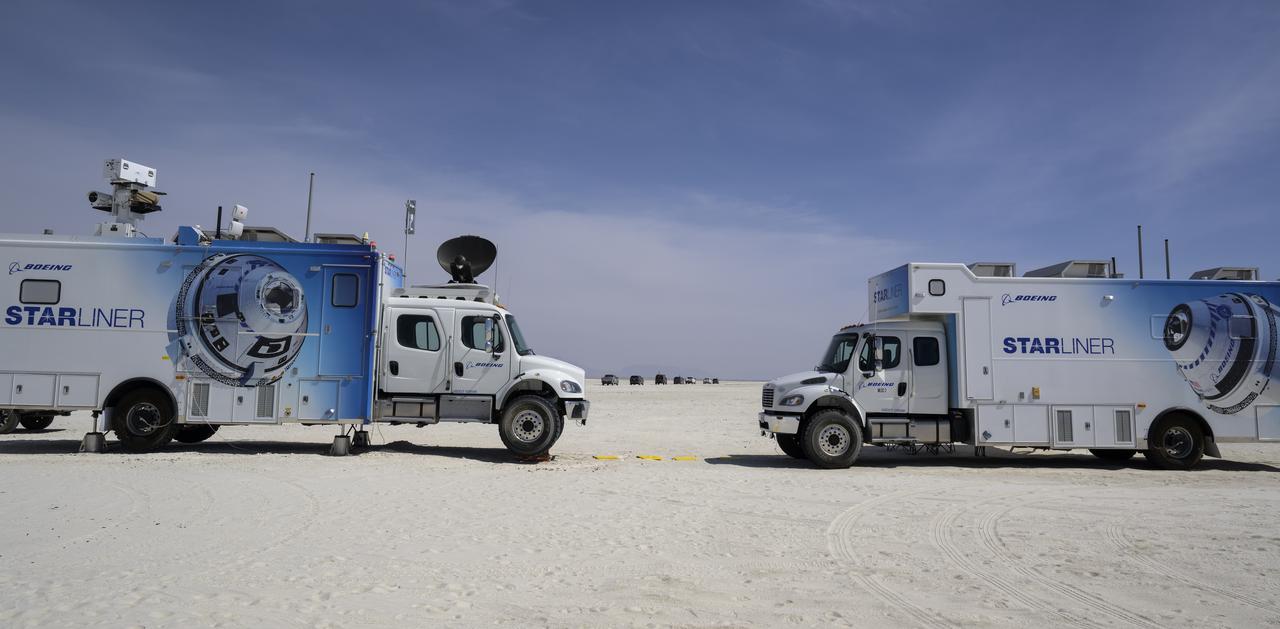
Boeing and NASA teams participate in a mission dress rehearsal to prepare for the landing of the Boeing CST-100 Starliner spacecraft in White Sands, New Mexico, Monday, May 23, 2022. Boeing’s Orbital Flight Test-2 (OFT-2) is Starliner’s second uncrewed flight test to the International Space Station as part of NASA's Commercial Crew Program. OFT-2 serves as an end-to-end test of the system's capabilities. Photo Credit: (NASA/Bill Ingalls)
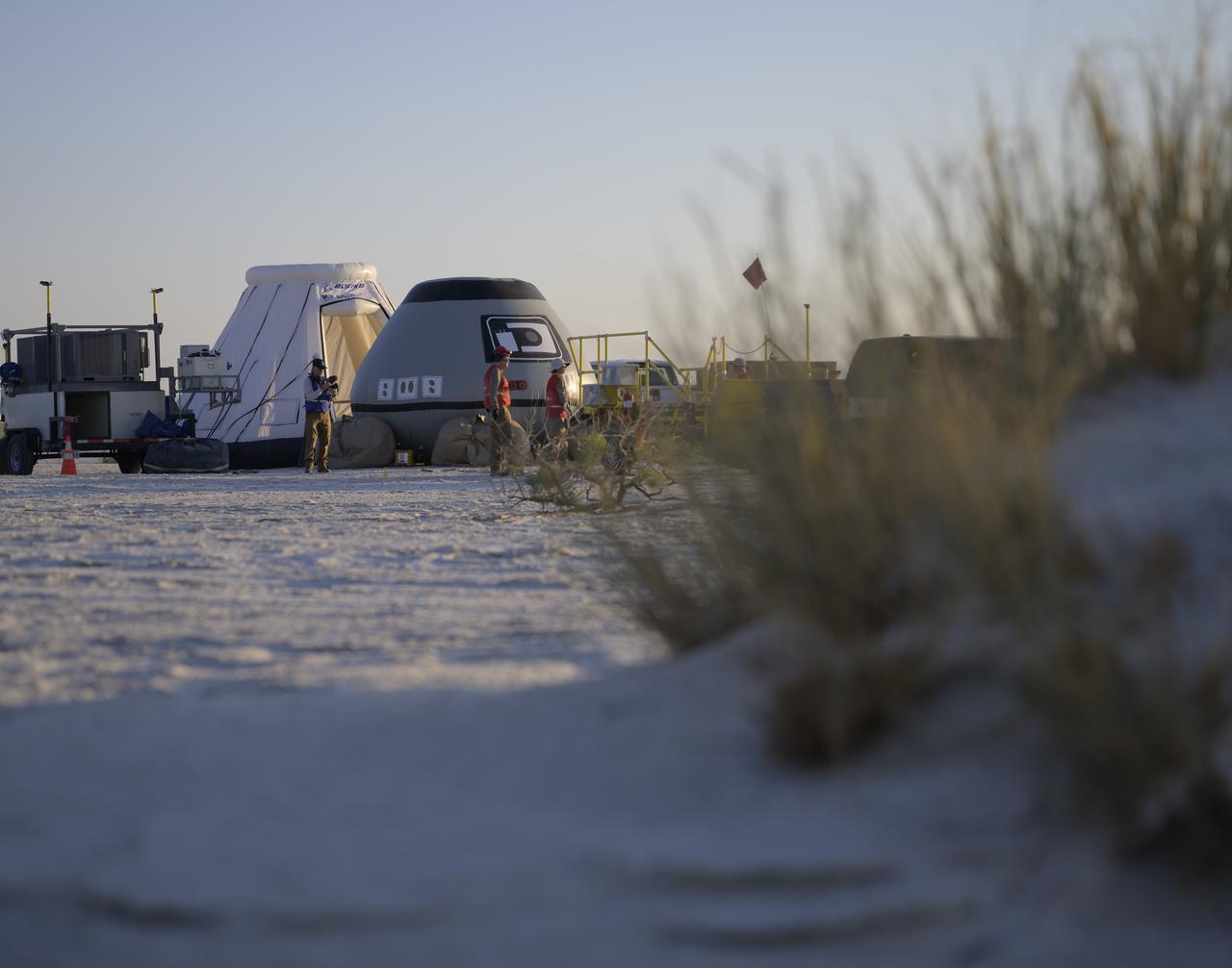
Boeing and NASA teams participate in a mission dress rehearsal to prepare for the landing of the Boeing CST-100 Starliner spacecraft in White Sands, New Mexico, Sunday, June 16, 2024. NASA astronauts Butch Wilmore and Suni Williams are Starliner’s first human crew and travelled to the International Space Station as part of NASA's Boeing Crew Flight Test. The mission serves as an end-to-end demonstration of Boeing’s crew transportation system as a provider for NASA’s Commercial Crew Program. Photo Credit: (NASA/Bill Ingalls)
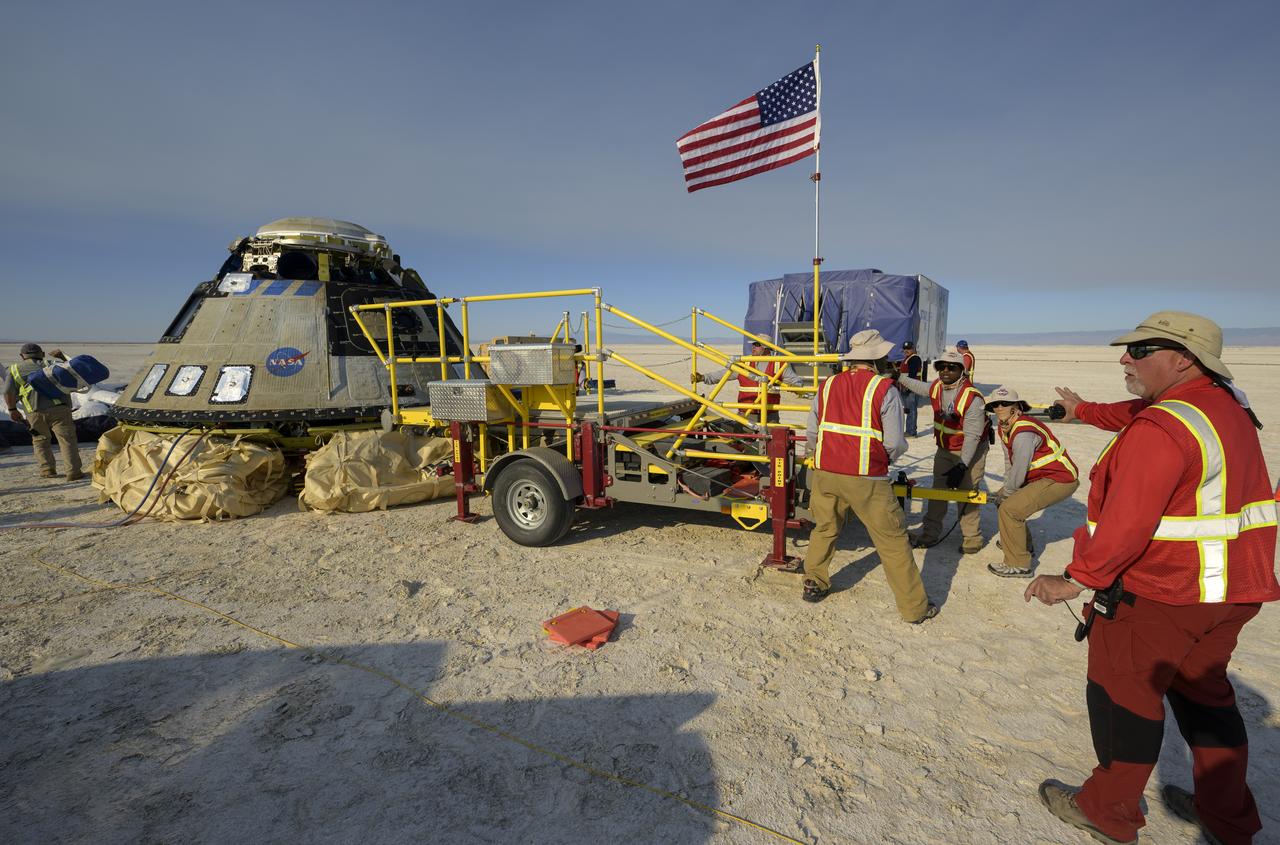
Boeing and NASA teams work around Boeing’s CST-100 Starliner spacecraft after it landed at White Sands Missile Range’s Space Harbor, Wednesday, May 25, 2022, in New Mexico. Boeing’s Orbital Flight Test-2 (OFT-2) is Starliner’s second uncrewed flight test to the International Space Station as part of NASA's Commercial Crew Program. OFT-2 serves as an end-to-end test of the system's capabilities. Photo Credit: (NASA/Bill Ingalls)
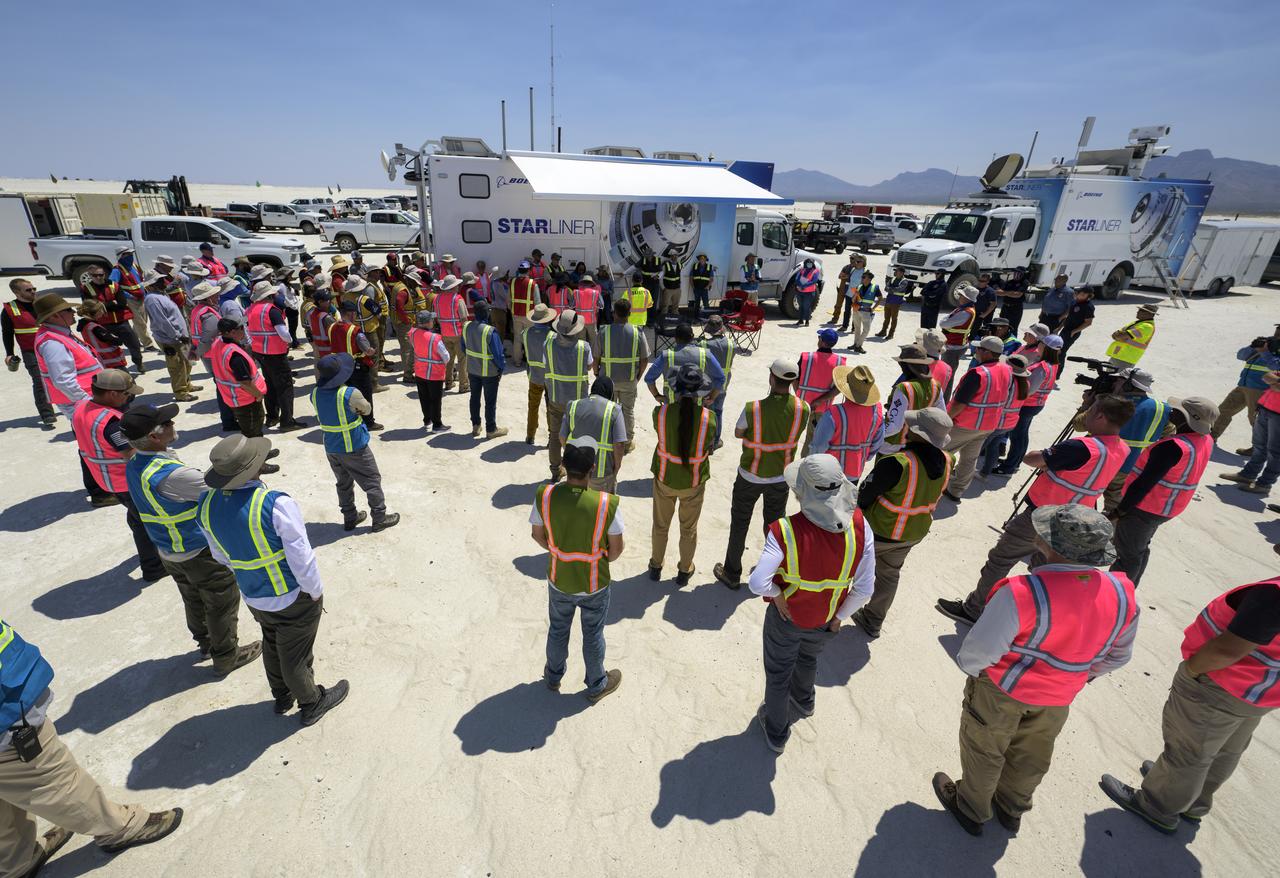
NASA and Boeing teams prepare for the landing of Boeing’s CST-100 Starliner spacecraft at White Sands Missile Range’s Space Harbor, Wednesday, May 25, 2022, in New Mexico. Boeing’s Orbital Flight Test-2 (OFT-2) is Starliner’s second uncrewed flight test to the International Space Station as part of NASA's Commercial Crew Program. OFT-2 serves as an end-to-end test of the system's capabilities. Photo Credit: (NASA/Bill Ingalls)
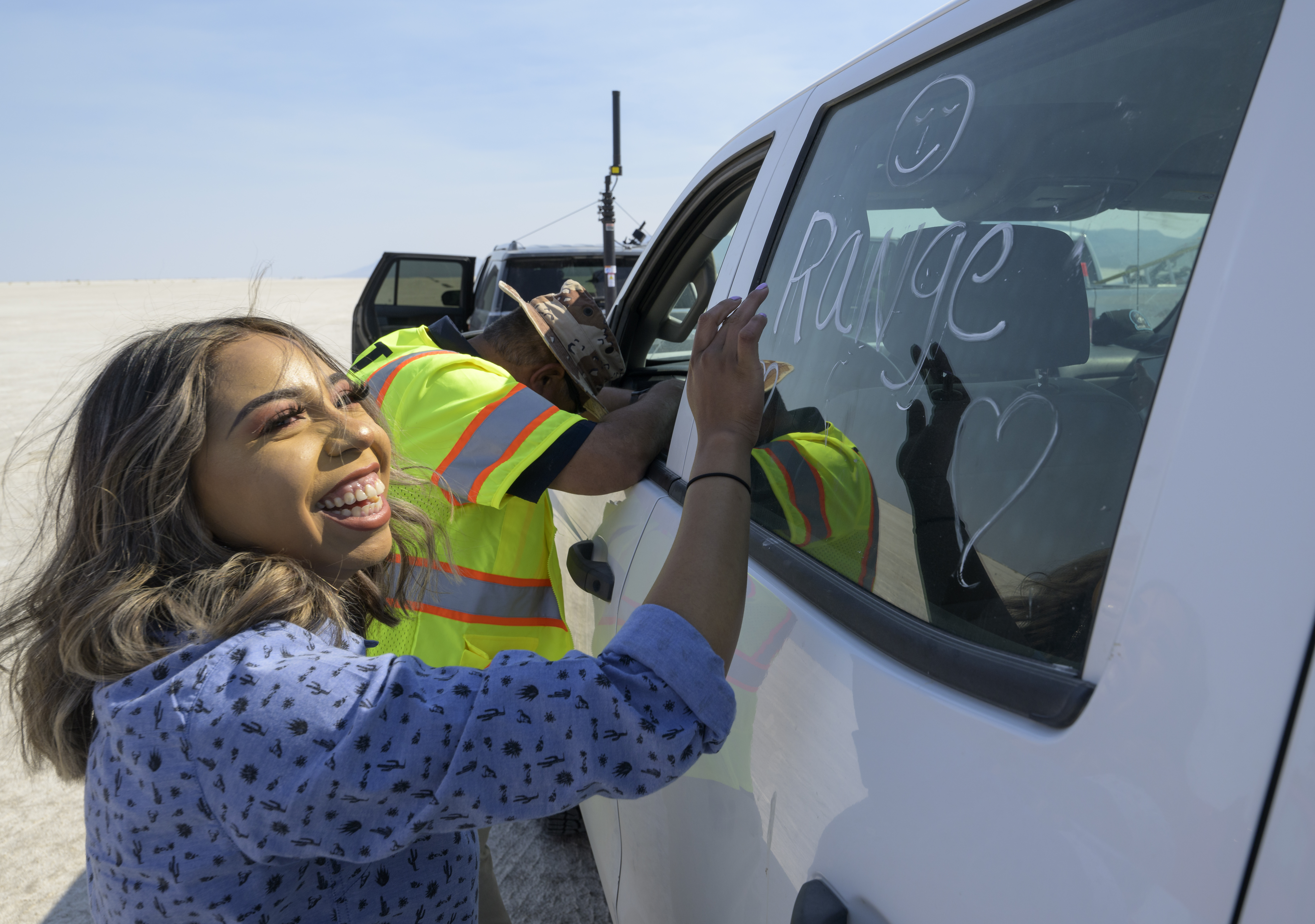
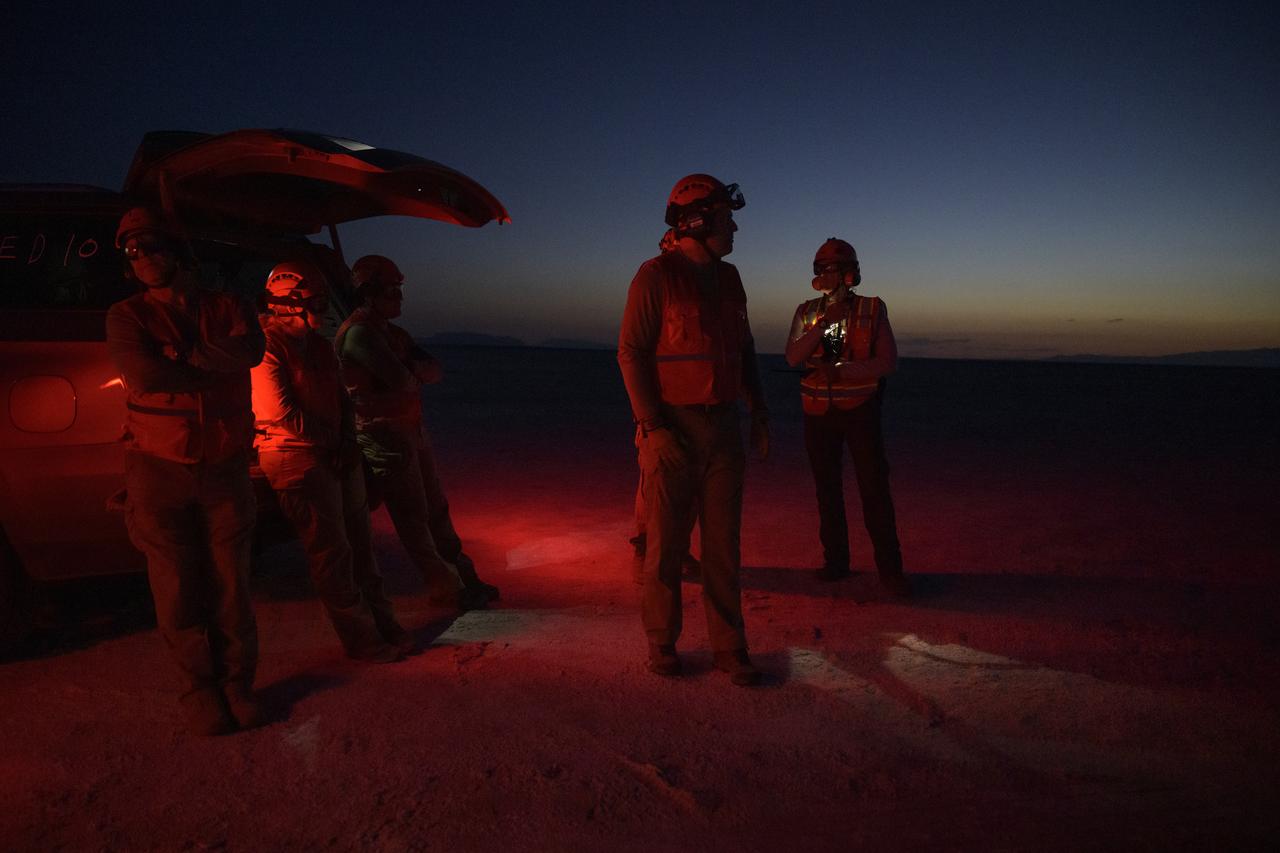
A member of the range safety team labels her convoy vehicle as they prepare for the landing of Boeing’s CST-100 Starliner spacecraft at White Sands Missile Range’s Space Harbor, Wednesday, May 25, 2022, in New Mexico. Boeing’s Orbital Flight Test-2 (OFT-2) is Starliner’s second uncrewed flight test to the International Space Station as part of NASA's Commercial Crew Program. OFT-2 serves as an end-to-end test of the system's capabilities. Photo Credit: (NASA/Bill Ingalls)
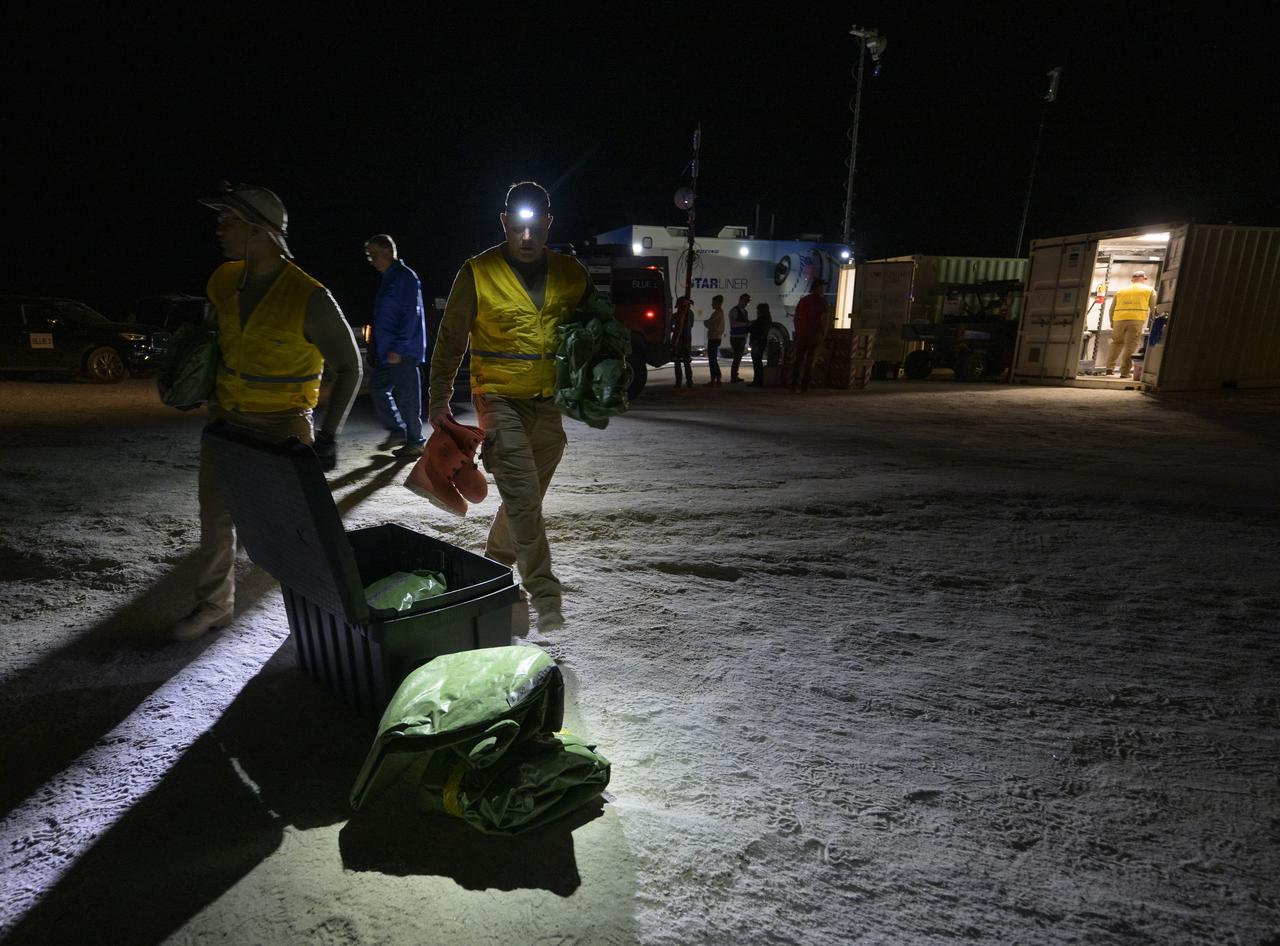
Boeing and NASA teams participate in a mission dress rehearsal to prepare for the landing of the Boeing CST-100 Starliner spacecraft in White Sands, New Mexico, Sunday, June 16, 2024. NASA astronauts Butch Wilmore and Suni Williams are Starliner’s first human crew and travelled to the International Space Station as part of NASA's Boeing Crew Flight Test. The mission serves as an end-to-end demonstration of Boeing’s crew transportation system as a provider for NASA’s Commercial Crew Program. Photo Credit: (NASA/Bill Ingalls)
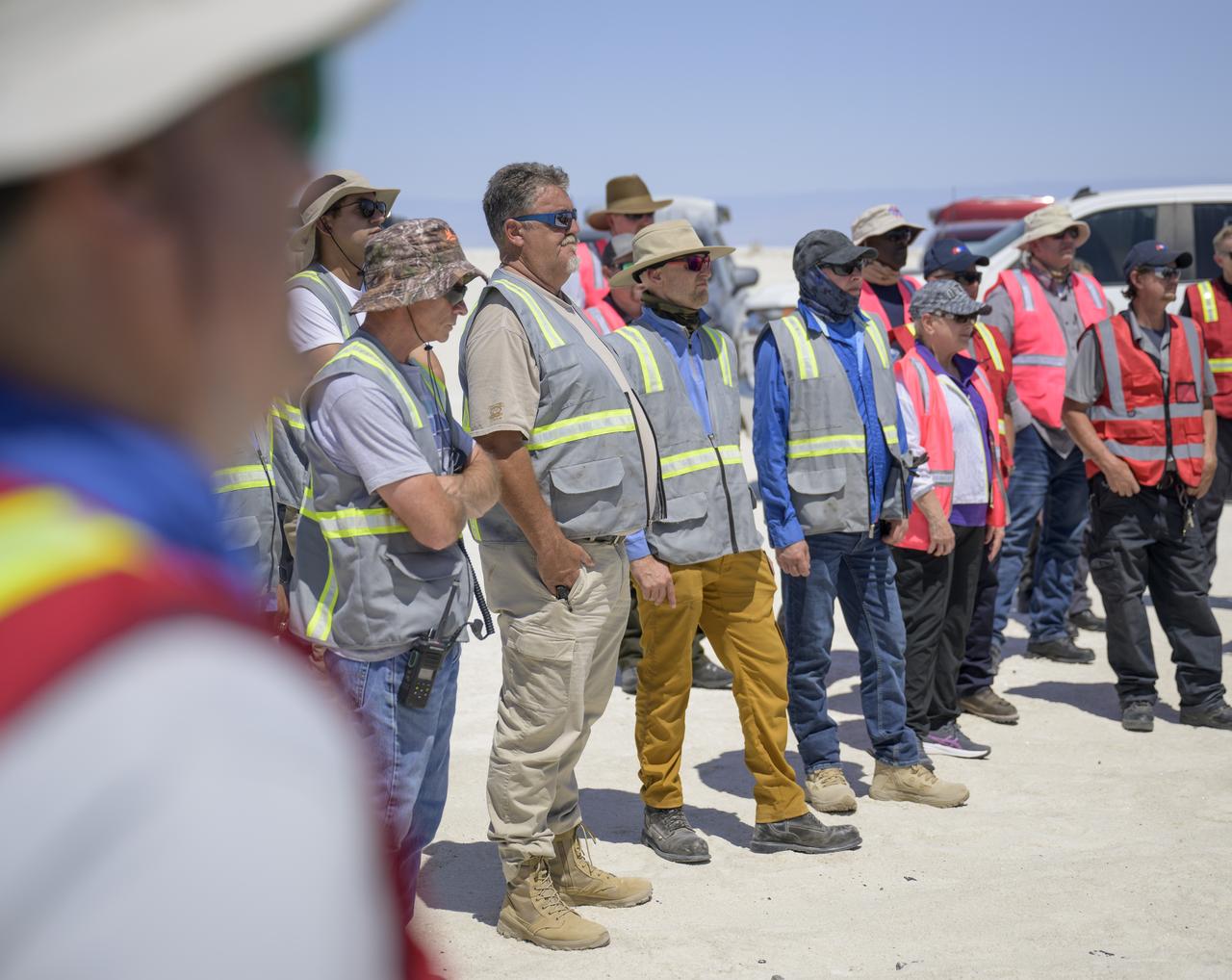
NASA and Boeing teams prepare for the landing of Boeing’s CST-100 Starliner spacecraft at White Sands Missile Range’s Space Harbor, Wednesday, May 25, 2022, in New Mexico. Boeing’s Orbital Flight Test-2 (OFT-2) is Starliner’s second uncrewed flight test to the International Space Station as part of NASA's Commercial Crew Program. OFT-2 serves as an end-to-end test of the system's capabilities. Photo Credit: (NASA/Bill Ingalls)
Boeing and NASA teams participate in a mission dress rehearsal to prepare for the landing of the Boeing CST-100 Starliner spacecraft in White Sands, New Mexico, Sunday, June 16, 2024. NASA astronauts Butch Wilmore and Suni Williams are Starliner’s first human crew and travelled to the International Space Station as part of NASA's Boeing Crew Flight Test. The mission serves as an end-to-end demonstration of Boeing’s crew transportation system as a provider for NASA’s Commercial Crew Program. Photo Credit: (NASA/Bill Ingalls)
Boeing and NASA teams participate in a mission dress rehearsal to prepare for the landing of the Boeing CST-100 Starliner spacecraft in White Sands, New Mexico, Sunday, June 16, 2024. NASA astronauts Butch Wilmore and Suni Williams are Starliner’s first human crew and travelled to the International Space Station as part of NASA's Boeing Crew Flight Test. The mission serves as an end-to-end demonstration of Boeing’s crew transportation system as a provider for NASA’s Commercial Crew Program. Photo Credit: (NASA/Bill Ingalls)
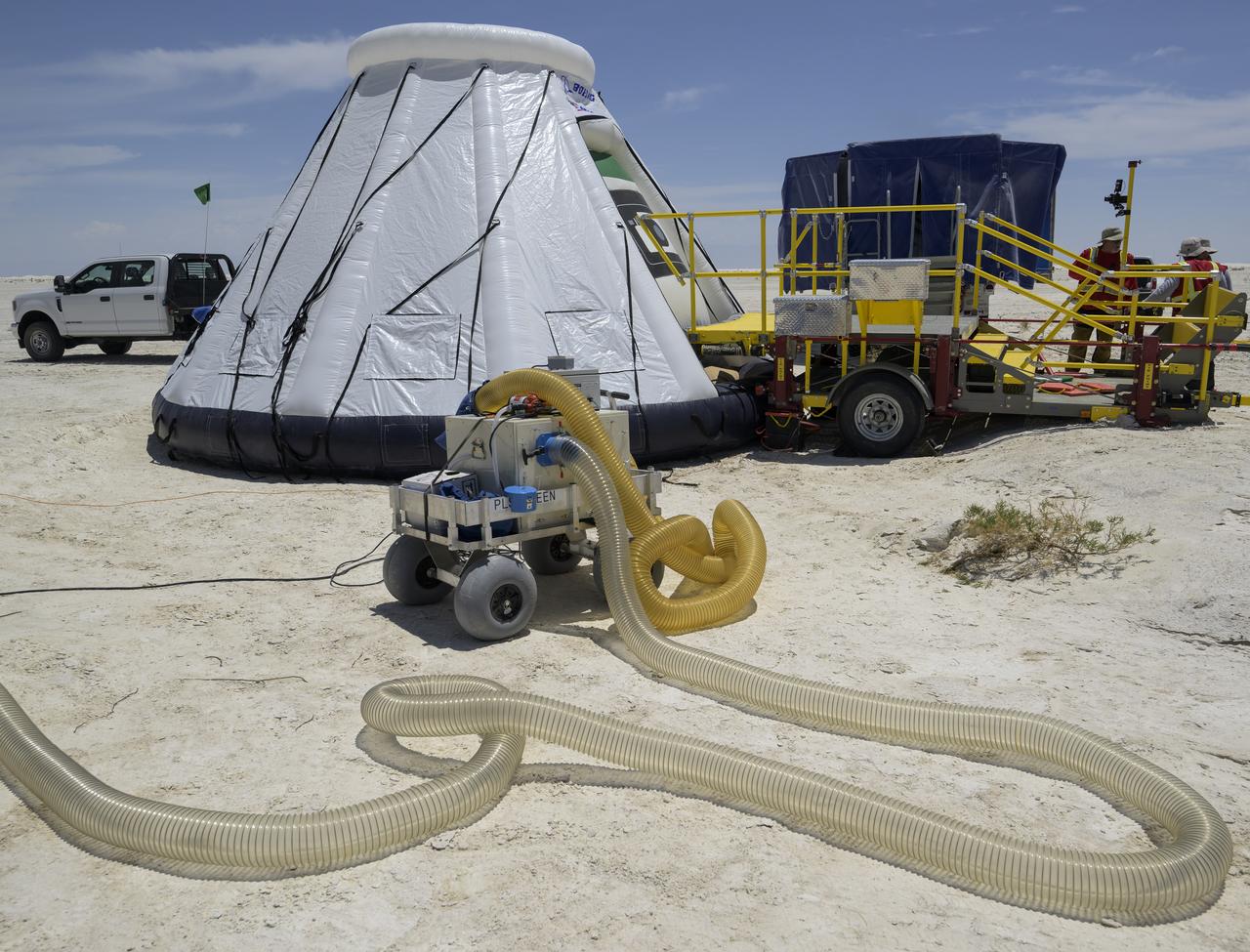
Boeing and NASA teams work around Boeing’s CST-100 Starliner spacecraft after it landed at White Sands Missile Range’s Space Harbor, Wednesday, May 25, 2022, in New Mexico. Boeing’s Orbital Flight Test-2 (OFT-2) is Starliner’s second uncrewed flight test to the International Space Station as part of NASA's Commercial Crew Program. OFT-2 serves as an end-to-end test of the system's capabilities. Photo Credit: (NASA/Bill Ingalls)
Boeing and NASA teams participate in a mission dress rehearsal to prepare for the landing of the Boeing CST-100 Starliner spacecraft in White Sands, New Mexico, Monday, May 23, 2022. Boeing’s Orbital Flight Test-2 (OFT-2) is Starliner’s second uncrewed flight test to the International Space Station as part of NASA's Commercial Crew Program. OFT-2 serves as an end-to-end test of the system's capabilities. Photo Credit: (NASA/Bill Ingalls)
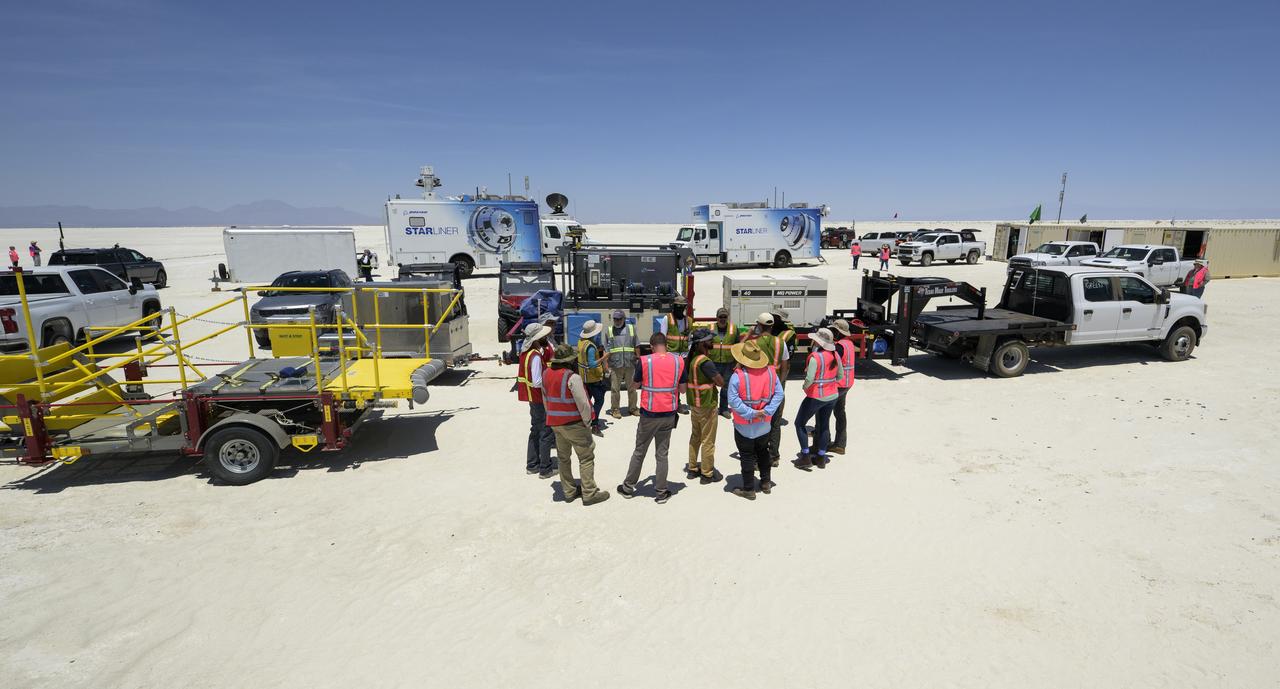
NASA and Boeing teams prepare for the landing of Boeing’s CST-100 Starliner spacecraft at White Sands Missile Range’s Space Harbor, Wednesday, May 25, 2022, in New Mexico. Boeing’s Orbital Flight Test-2 (OFT-2) is Starliner’s second uncrewed flight test to the International Space Station as part of NASA's Commercial Crew Program. OFT-2 serves as an end-to-end test of the system's capabilities. Photo Credit: (NASA/Bill Ingalls)
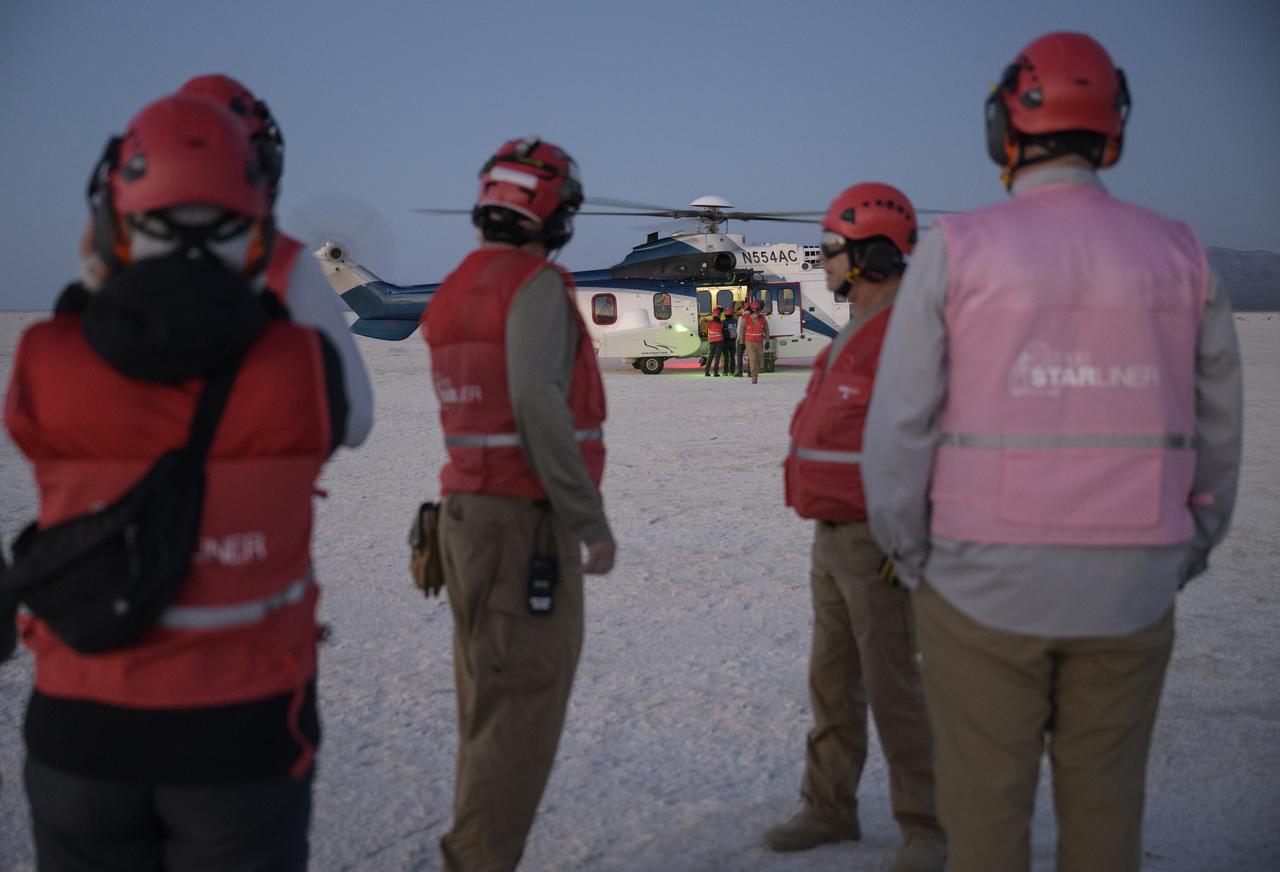
Boeing and NASA teams participate in a mission dress rehearsal to prepare for the landing of the Boeing CST-100 Starliner spacecraft in White Sands, New Mexico, Monday, May 23, 2022. Boeing’s Orbital Flight Test-2 (OFT-2) is Starliner’s second uncrewed flight test to the International Space Station as part of NASA's Commercial Crew Program. OFT-2 serves as an end-to-end test of the system's capabilities. Photo Credit: (NASA/Bill Ingalls)
Boeing and NASA teams participate in a mission dress rehearsal to prepare for the landing of the Boeing CST-100 Starliner spacecraft in White Sands, New Mexico, Sunday, June 16, 2024. NASA astronauts Butch Wilmore and Suni Williams are Starliner’s first human crew and travelled to the International Space Station as part of NASA's Boeing Crew Flight Test. The mission serves as an end-to-end demonstration of Boeing’s crew transportation system as a provider for NASA’s Commercial Crew Program. Photo Credit: (NASA/Bill Ingalls)
Boeing and NASA teams participate in a mission dress rehearsal to prepare for the landing of the Boeing CST-100 Starliner spacecraft in White Sands, New Mexico, Sunday, June 16, 2024. NASA astronauts Butch Wilmore and Suni Williams are Starliner’s first human crew and travelled to the International Space Station as part of NASA's Boeing Crew Flight Test. The mission serves as an end-to-end demonstration of Boeing’s crew transportation system as a provider for NASA’s Commercial Crew Program. Photo Credit: (NASA/Bill Ingalls)
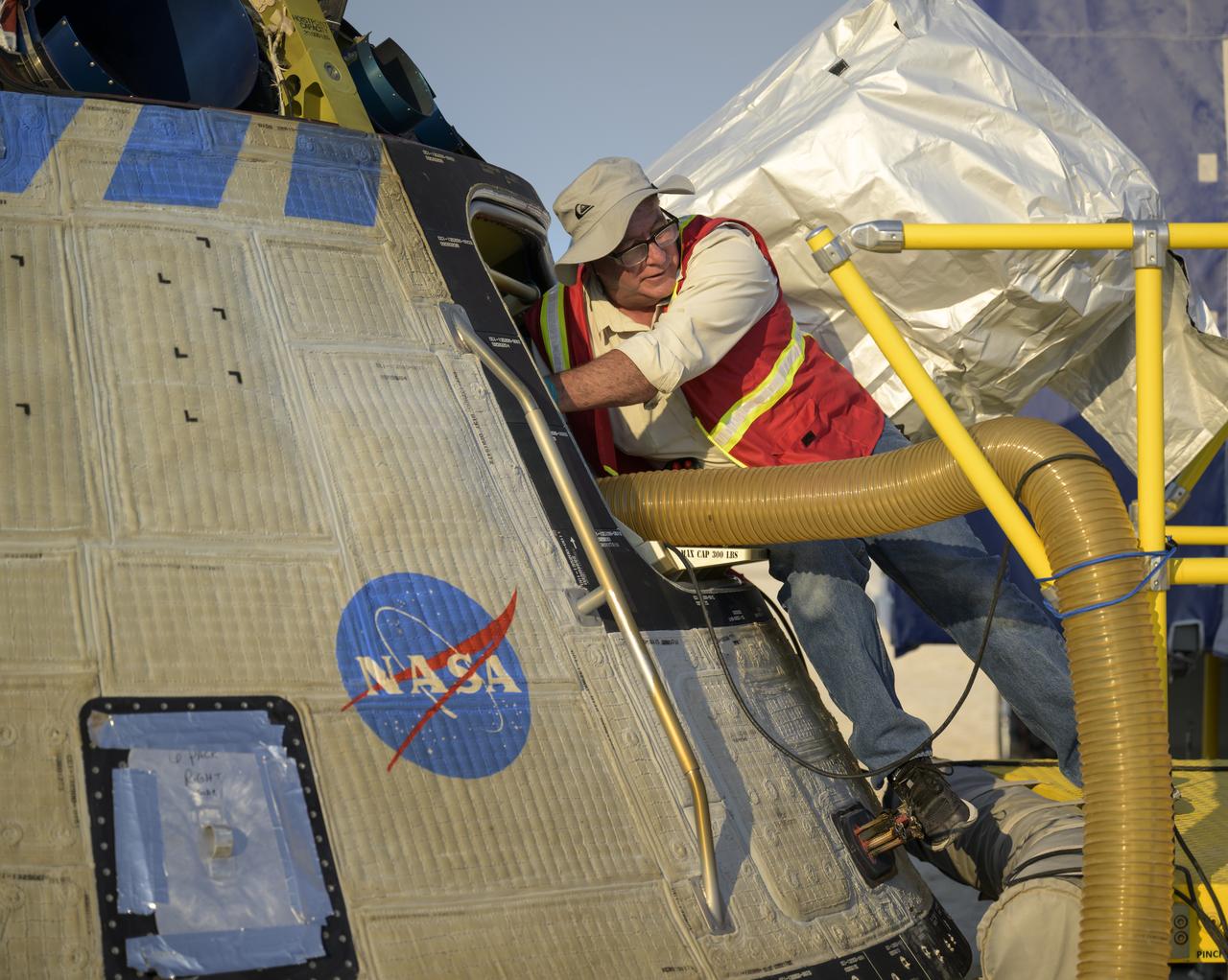
Boeing and NASA teams work around Boeing’s CST-100 Starliner spacecraft after it landed at White Sands Missile Range’s Space Harbor, Wednesday, May 25, 2022, in New Mexico. Boeing’s Orbital Flight Test-2 (OFT-2) is Starliner’s second uncrewed flight test to the International Space Station as part of NASA's Commercial Crew Program. OFT-2 serves as an end-to-end test of the system's capabilities. Photo Credit: (NASA/Bill Ingalls)
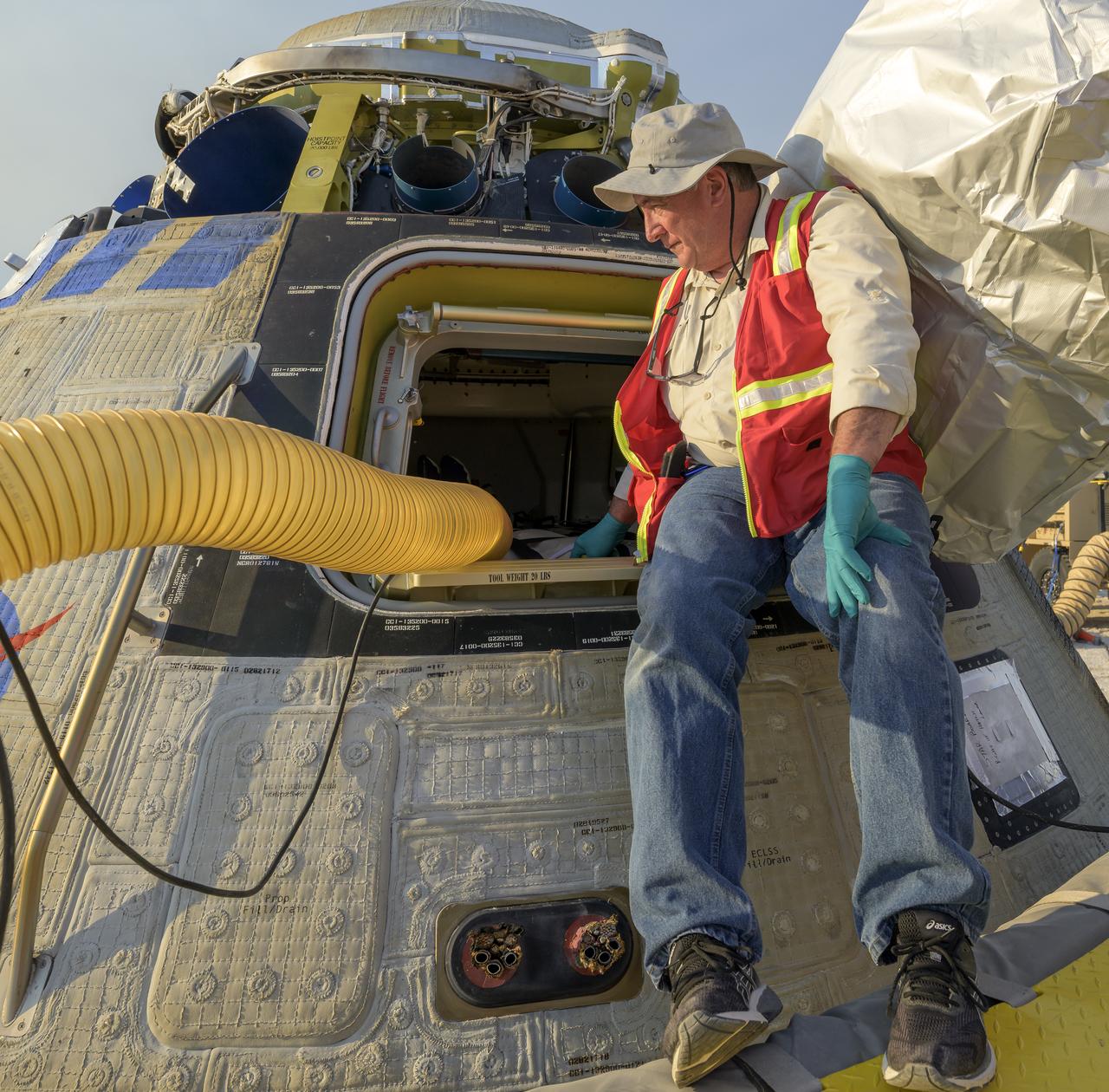
Boeing and NASA teams work around Boeing’s CST-100 Starliner spacecraft after it landed at White Sands Missile Range’s Space Harbor, Wednesday, May 25, 2022, in New Mexico. Boeing’s Orbital Flight Test-2 (OFT-2) is Starliner’s second uncrewed flight test to the International Space Station as part of NASA's Commercial Crew Program. OFT-2 serves as an end-to-end test of the system's capabilities. Photo Credit: (NASA/Bill Ingalls)
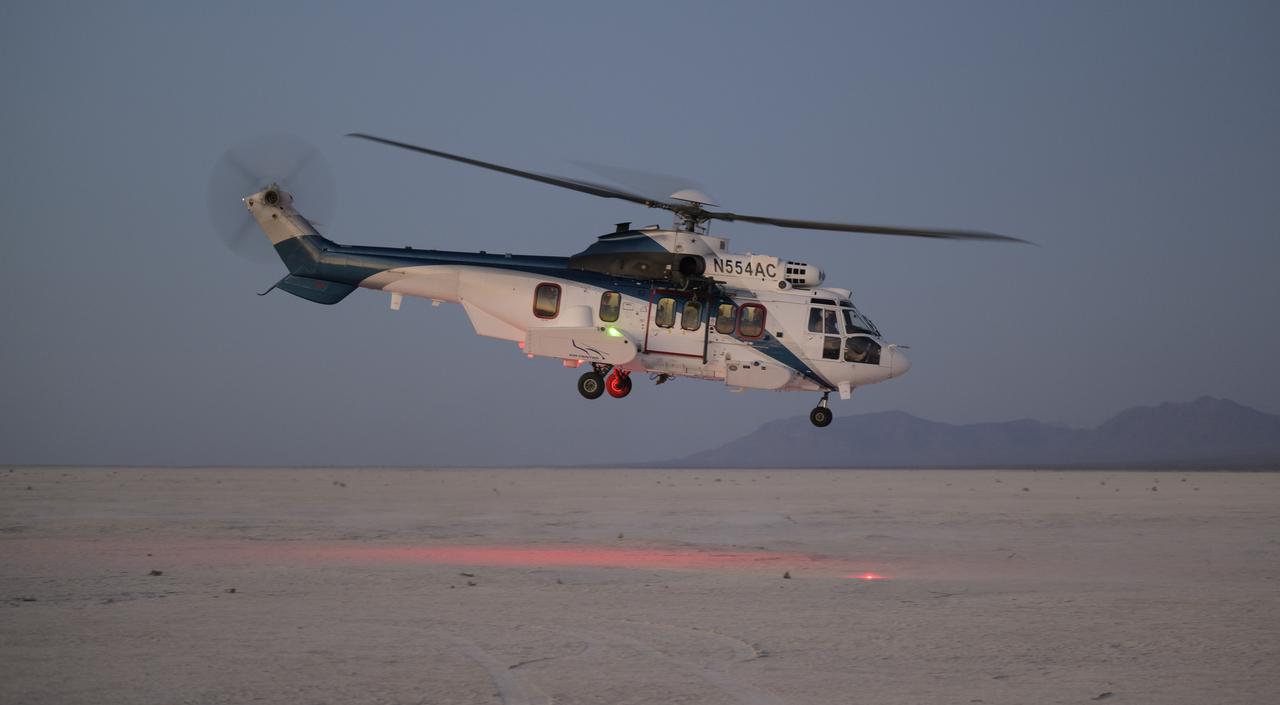
Boeing and NASA teams participate in a mission dress rehearsal to prepare for the landing of the Boeing CST-100 Starliner spacecraft in White Sands, New Mexico, Sunday, June 16, 2024. NASA astronauts Butch Wilmore and Suni Williams are Starliner’s first human crew and travelled to the International Space Station as part of NASA's Boeing Crew Flight Test. The mission serves as an end-to-end demonstration of Boeing’s crew transportation system as a provider for NASA’s Commercial Crew Program. Photo Credit: (NASA/Bill Ingalls)

Boeing and NASA teams work around Boeing’s CST-100 Starliner spacecraft after it landed at White Sands Missile Range’s Space Harbor, Wednesday, May 25, 2022, in New Mexico. Boeing’s Orbital Flight Test-2 (OFT-2) is Starliner’s second uncrewed flight test to the International Space Station as part of NASA's Commercial Crew Program. OFT-2 serves as an end-to-end test of the system's capabilities. Photo Credit: (NASA/Bill Ingalls)
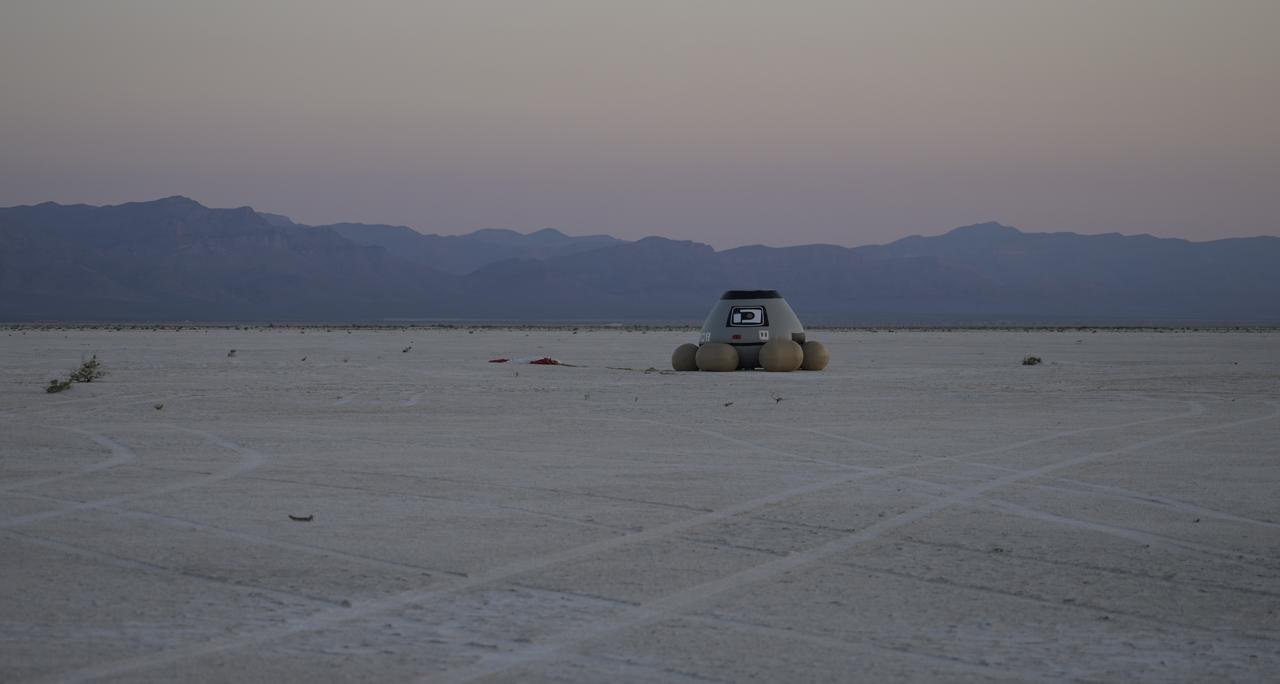
Boeing and NASA teams participate in a mission dress rehearsal to prepare for the landing of the Boeing CST-100 Starliner spacecraft in White Sands, New Mexico, Sunday, June 16, 2024. NASA astronauts Butch Wilmore and Suni Williams are Starliner’s first human crew and travelled to the International Space Station as part of NASA's Boeing Crew Flight Test. The mission serves as an end-to-end demonstration of Boeing’s crew transportation system as a provider for NASA’s Commercial Crew Program. Photo Credit: (NASA/Bill Ingalls)
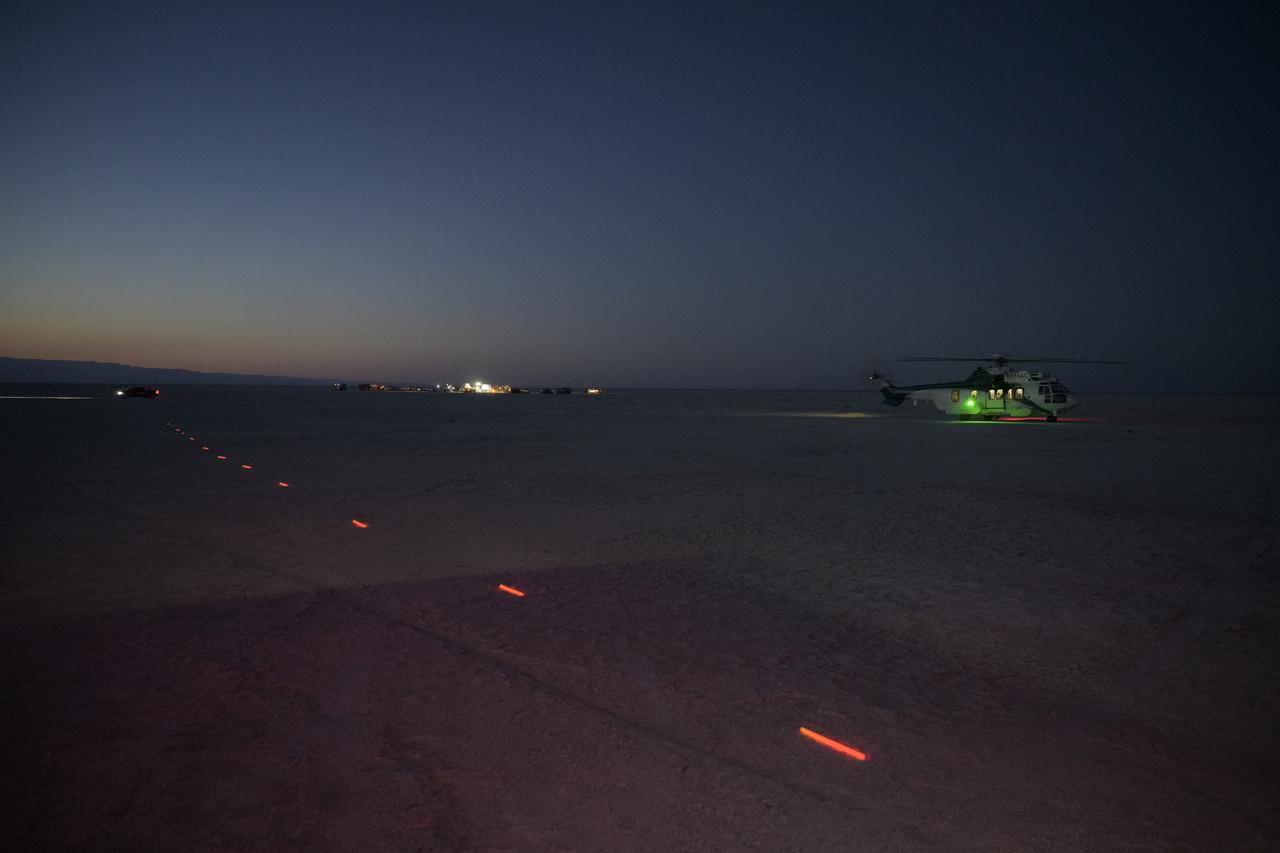
Boeing and NASA teams participate in a mission dress rehearsal to prepare for the landing of the Boeing CST-100 Starliner spacecraft in White Sands, New Mexico, Sunday, June 16, 2024. NASA astronauts Butch Wilmore and Suni Williams are Starliner’s first human crew and travelled to the International Space Station as part of NASA's Boeing Crew Flight Test. The mission serves as an end-to-end demonstration of Boeing’s crew transportation system as a provider for NASA’s Commercial Crew Program. Photo Credit: (NASA/Bill Ingalls)
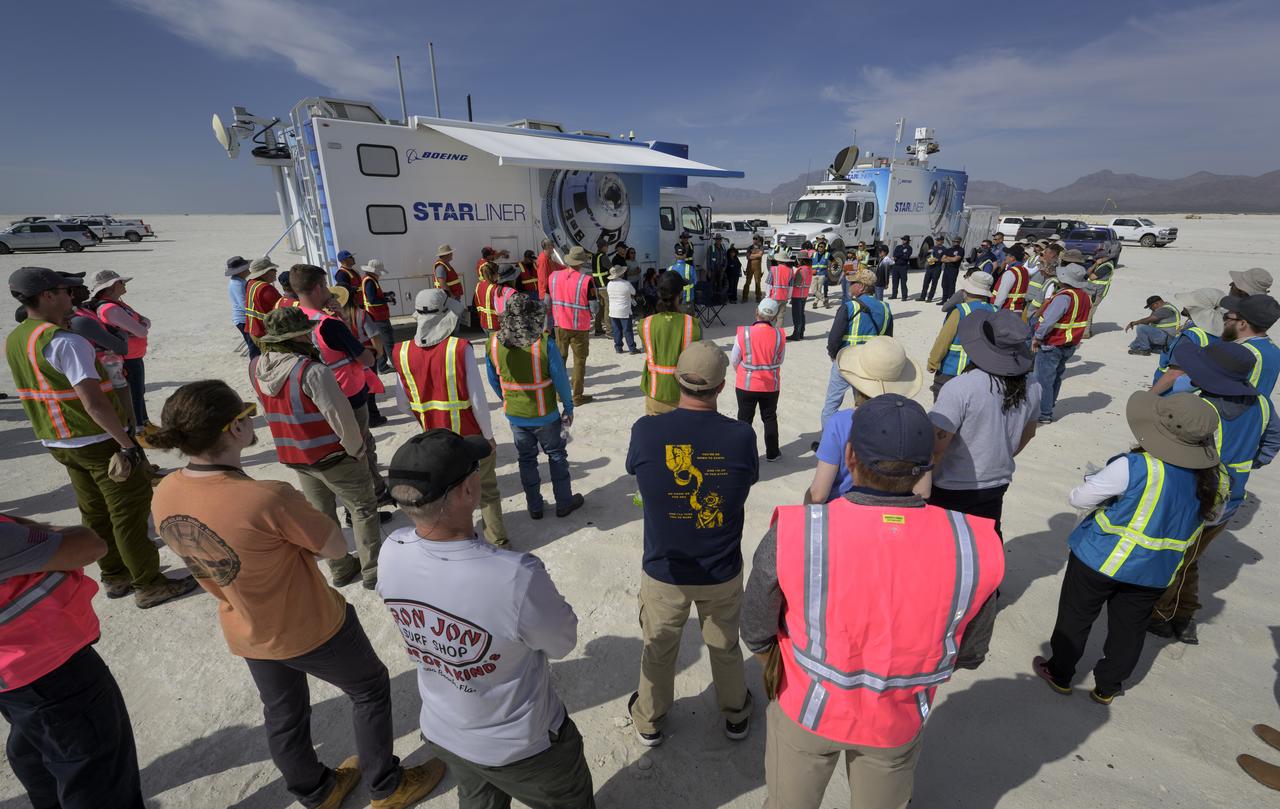
Boeing and NASA teams participate in a mission dress rehearsal to prepare for the landing of the Boeing CST-100 Starliner spacecraft in White Sands, New Mexico, Monday, May 23, 2022. Boeing’s Orbital Flight Test-2 (OFT-2) is Starliner’s second uncrewed flight test to the International Space Station as part of NASA's Commercial Crew Program. OFT-2 serves as an end-to-end test of the system's capabilities. Photo Credit: (NASA/Bill Ingalls)

NASA astronauts Butch Wilmore and Suni Williams signatures are seen inside NASA's Boeing Crew Flight Test Starliner spacecraft after it landed uncrewed at White Sands Missile Range’s Space Harbor, Friday, Sept. 6, 2024 Mountain Time (Sept. 7 Eastern Time), in New Mexico. This approach allows NASA and Boeing to continue gathering testing data on the spacecraft. Photo Credit: (NASA/Aubrey Gemignani)
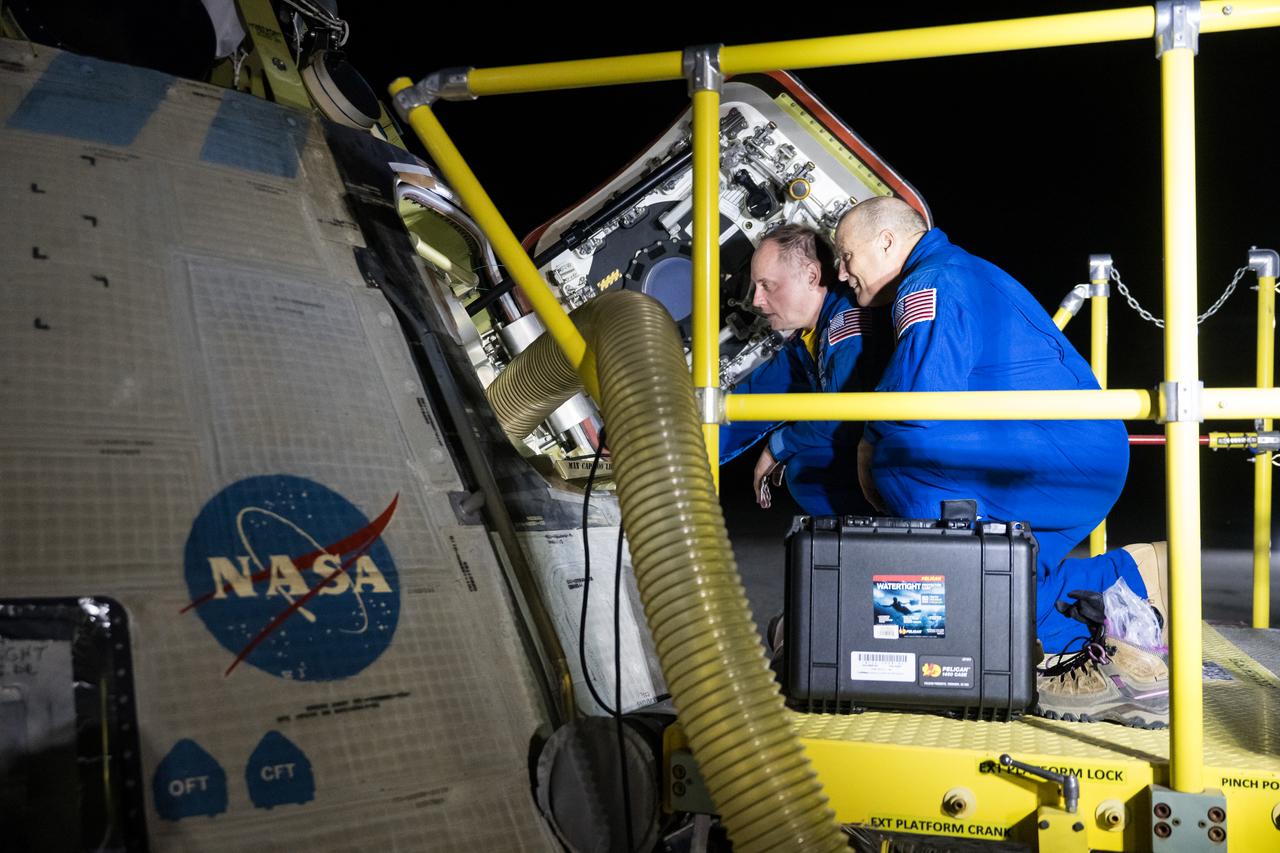
NASA astronauts Mike Fincke, left, and Scott Tingle look inside NASA's Boeing Crew Flight Test Starliner spacecraft after it landed uncrewed at White Sands Missile Range’s Space Harbor, Friday, Sept. 6, 2024 Mountain Time (Sept. 7 Eastern Time), in New Mexico. This approach allows NASA and Boeing to continue gathering testing data on the spacecraft. Photo Credit: (NASA/Aubrey Gemignani)
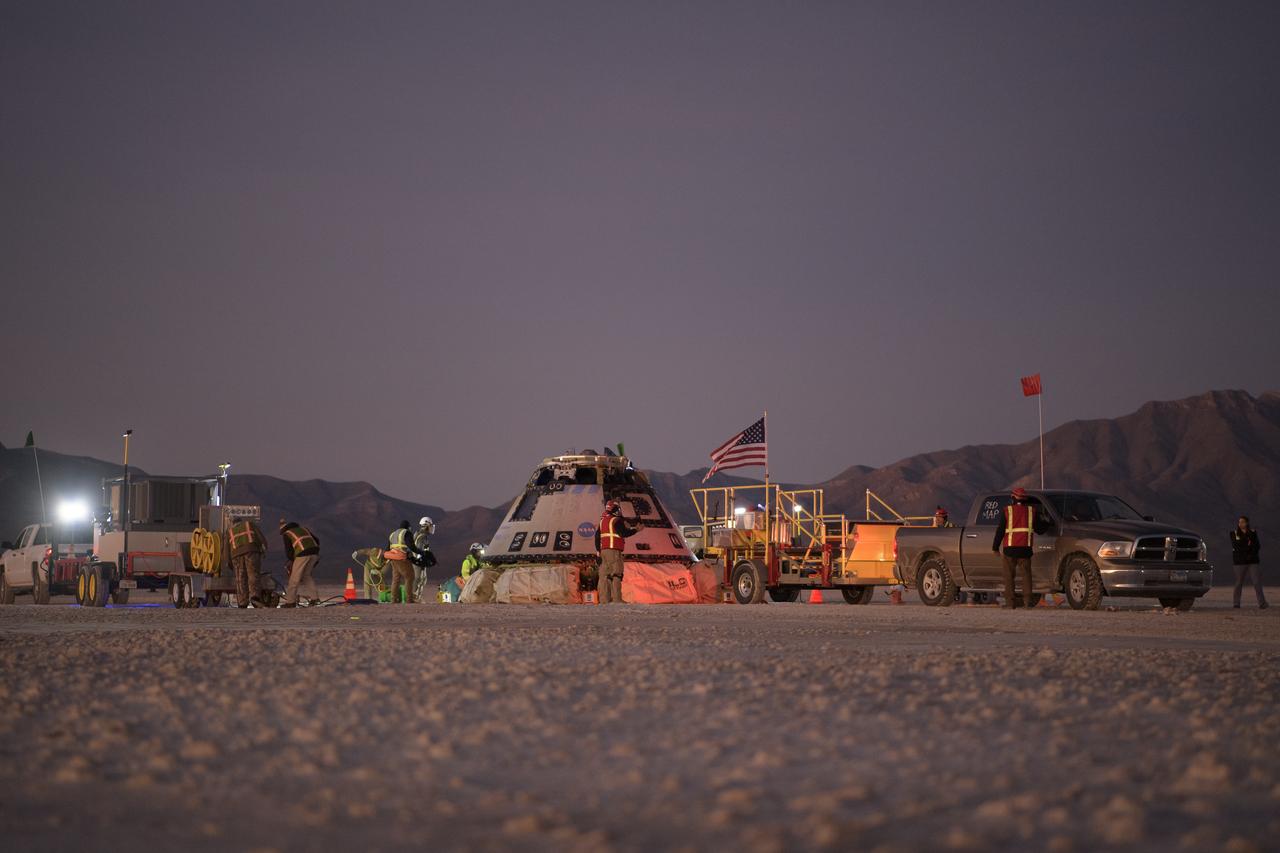
Boeing, NASA, and U.S. Army personnel work around the Boeing CST-100 Starliner spacecraft shortly after it landed in White Sands, New Mexico, Sunday, Dec. 22, 2019. The landing completes an abbreviated Orbital Flight Test for the company that still meets several mission objectives for NASA’s Commercial Crew program. The Starliner spacecraft launched on a United Launch Alliance Atlas V rocket at 6:36 a.m. Friday, Dec. 20 from Space Launch Complex 41 at Cape Canaveral Air Force Station in Florida. Photo Credit: (NASA/Bill Ingalls)
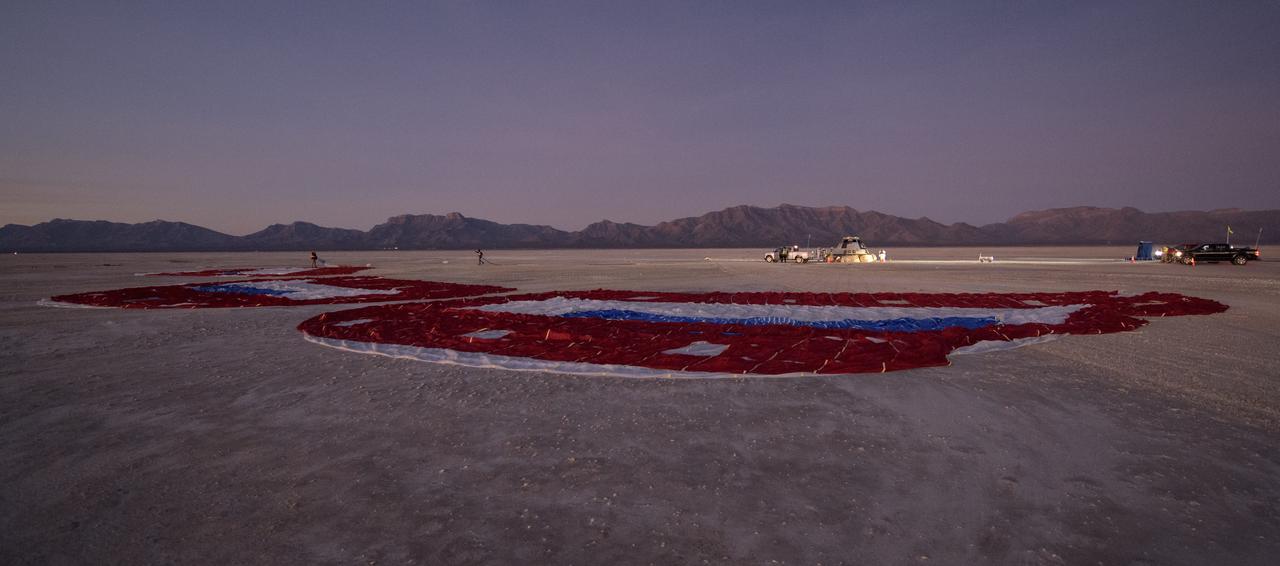
Boeing, NASA, and U.S. Army personnel work around the Boeing CST-100 Starliner spacecraft shortly after it landed in White Sands, New Mexico, Sunday, Dec. 22, 2019. The landing completes an abbreviated Orbital Flight Test for the company that still meets several mission objectives for NASA’s Commercial Crew program. The Starliner spacecraft launched on a United Launch Alliance Atlas V rocket at 6:36 a.m. Friday, Dec. 20 from Space Launch Complex 41 at Cape Canaveral Air Force Station in Florida. Photo Credit: (NASA/Bill Ingalls)
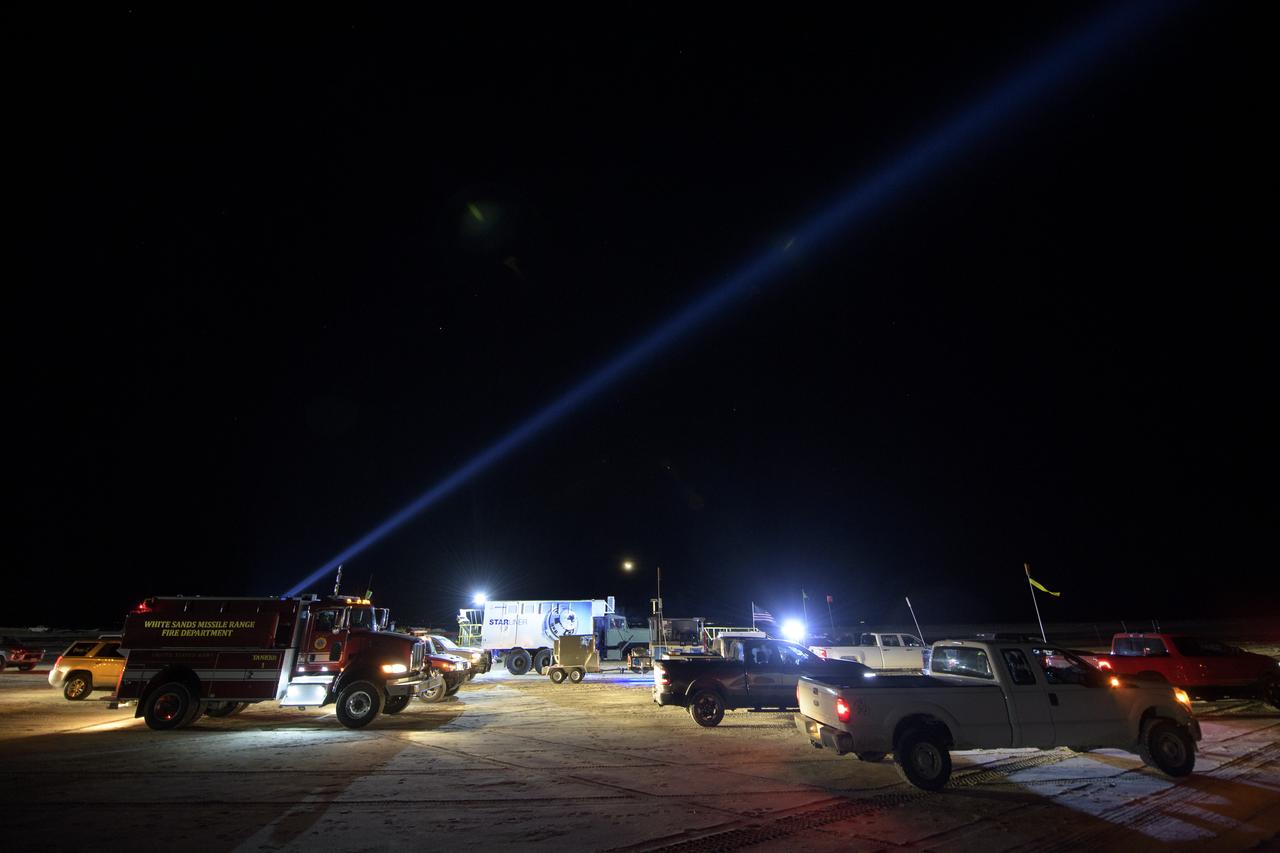
Boeing, NASA, and U.S. Army personnel prepare for the Boeing CST-100 Starliner spacecraft landing in White Sands, New Mexico, Sunday, Dec. 22, 2019. The landing will complete an abbreviated Orbital Flight Test for the company that still meets several mission objectives for NASA’s Commercial Crew program. The Starliner spacecraft launched on a United Launch Alliance Atlas V rocket at 6:36 a.m. Friday, Dec. 20 from Space Launch Complex 41 at Cape Canaveral Air Force Station in Florida. Photo Credit: (NASA/Bill Ingalls)
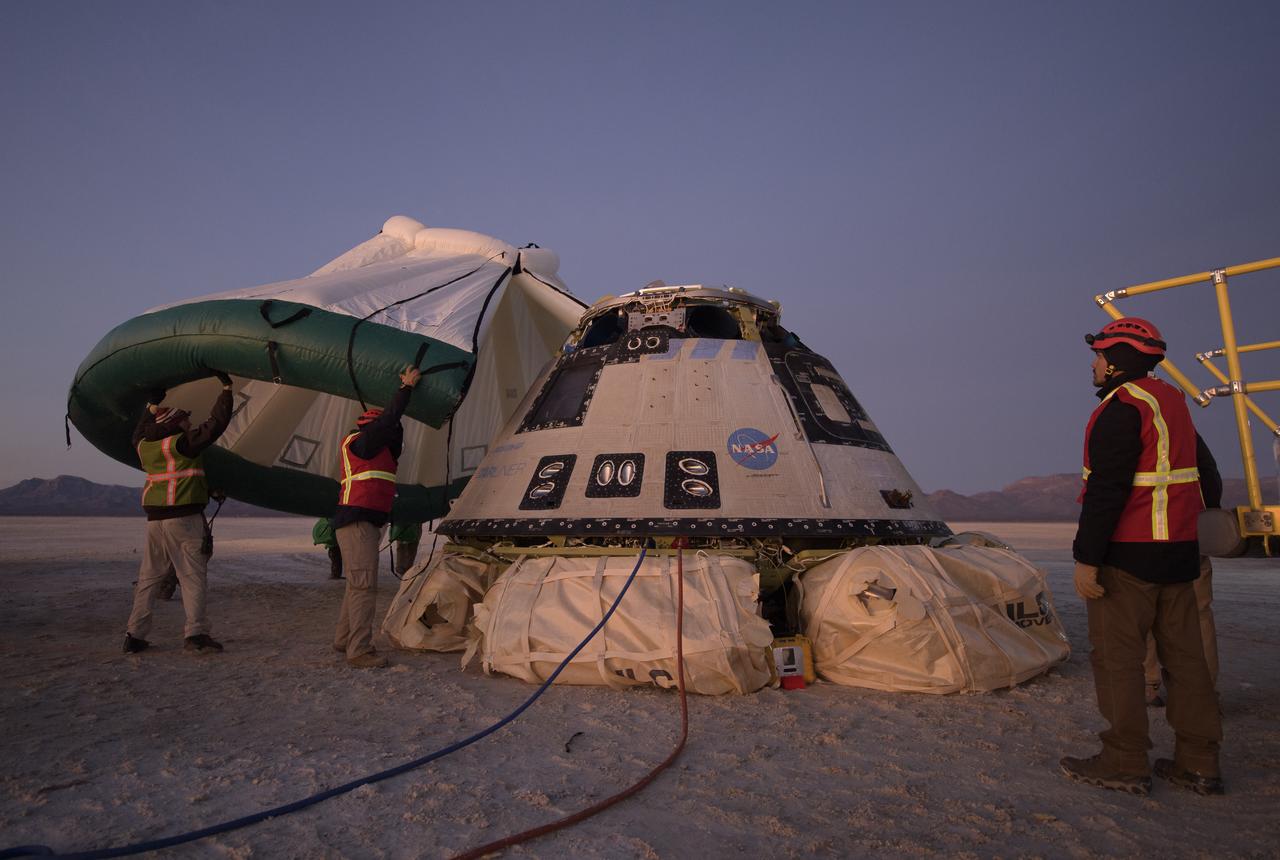
Boeing, NASA, and U.S. Army personnel work around the Boeing CST-100 Starliner spacecraft shortly after it landed in White Sands, New Mexico, Sunday, Dec. 22, 2019. The landing completes an abbreviated Orbital Flight Test for the company that still meets several mission objectives for NASA’s Commercial Crew program. The Starliner spacecraft launched on a United Launch Alliance Atlas V rocket at 6:36 a.m. Friday, Dec. 20 from Space Launch Complex 41 at Cape Canaveral Air Force Station in Florida. Photo Credit: (NASA/Bill Ingalls)
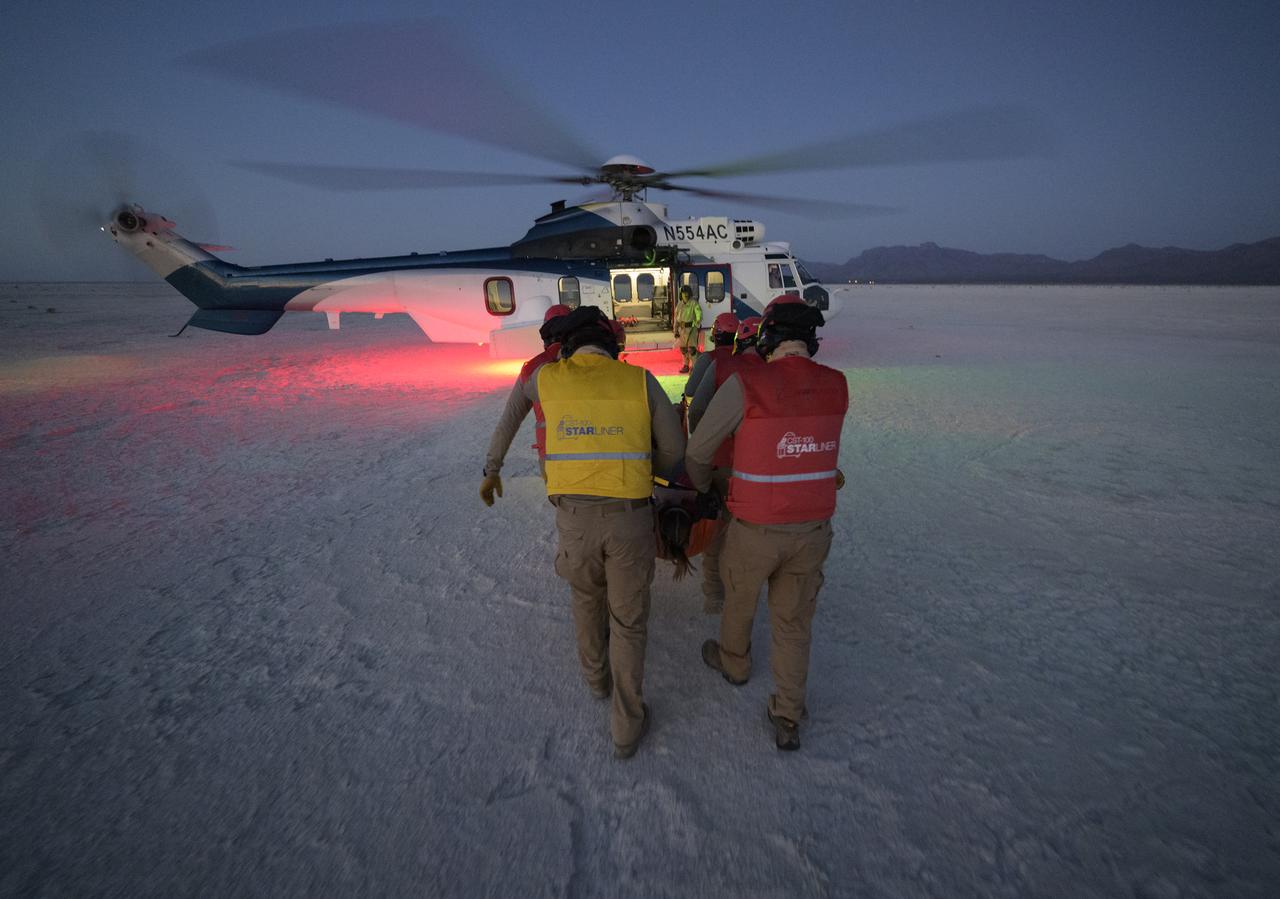
Boeing and NASA teams participate in a mission dress rehearsal to prepare for the landing of the Boeing CST-100 Starliner spacecraft in White Sands, New Mexico, Sunday, June 16, 2024. During the dry-run, teams practice assisting astronauts that might need time to be re-acclimated to Earth’s gravity before walking. NASA astronauts Butch Wilmore and Suni Williams are Starliner’s first human crew and travelled to the International Space Station as part of NASA's Boeing Crew Flight Test. The mission serves as an end-to-end demonstration of Boeing’s crew transportation system as a provider for NASA’s Commercial Crew Program. Photo Credit: (NASA/Bill Ingalls)