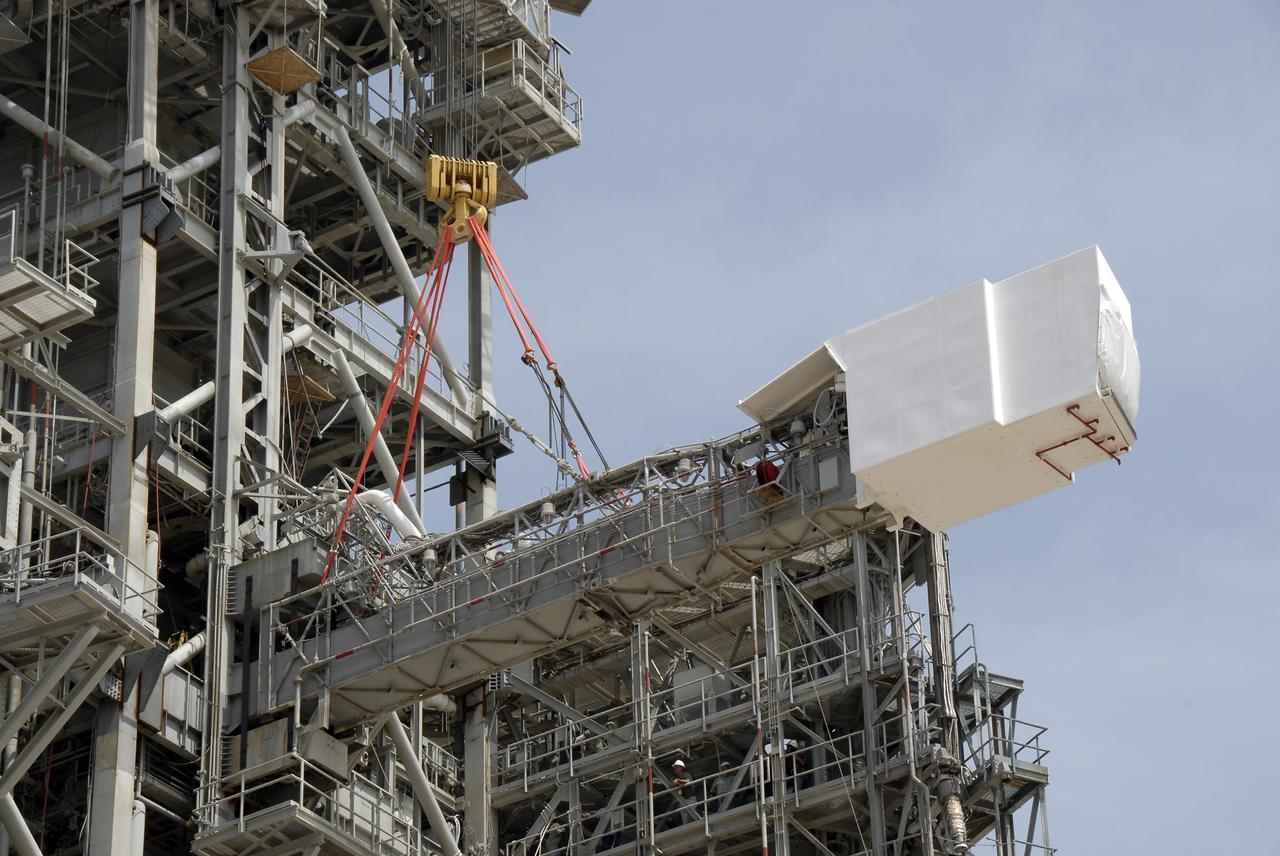
CAPE CANAVERAL, Fla. – The slings from a large crane are in place on the orbiter access arm, which ends in the White Room, that is part of the fixed service structure, or FSS, on Launch Pad 39B at NASA's Kennedy Space Center in Florida. The White Room provided entry into space shuttles that were on the pad. The arm is being removed from the FSS for the pad's conversion as launch site for the Constellation Program's Ares I-X. The launch of the Ares I-X flight test is targeted for August 2009. Photo credit: NASA/Kim Shiflett
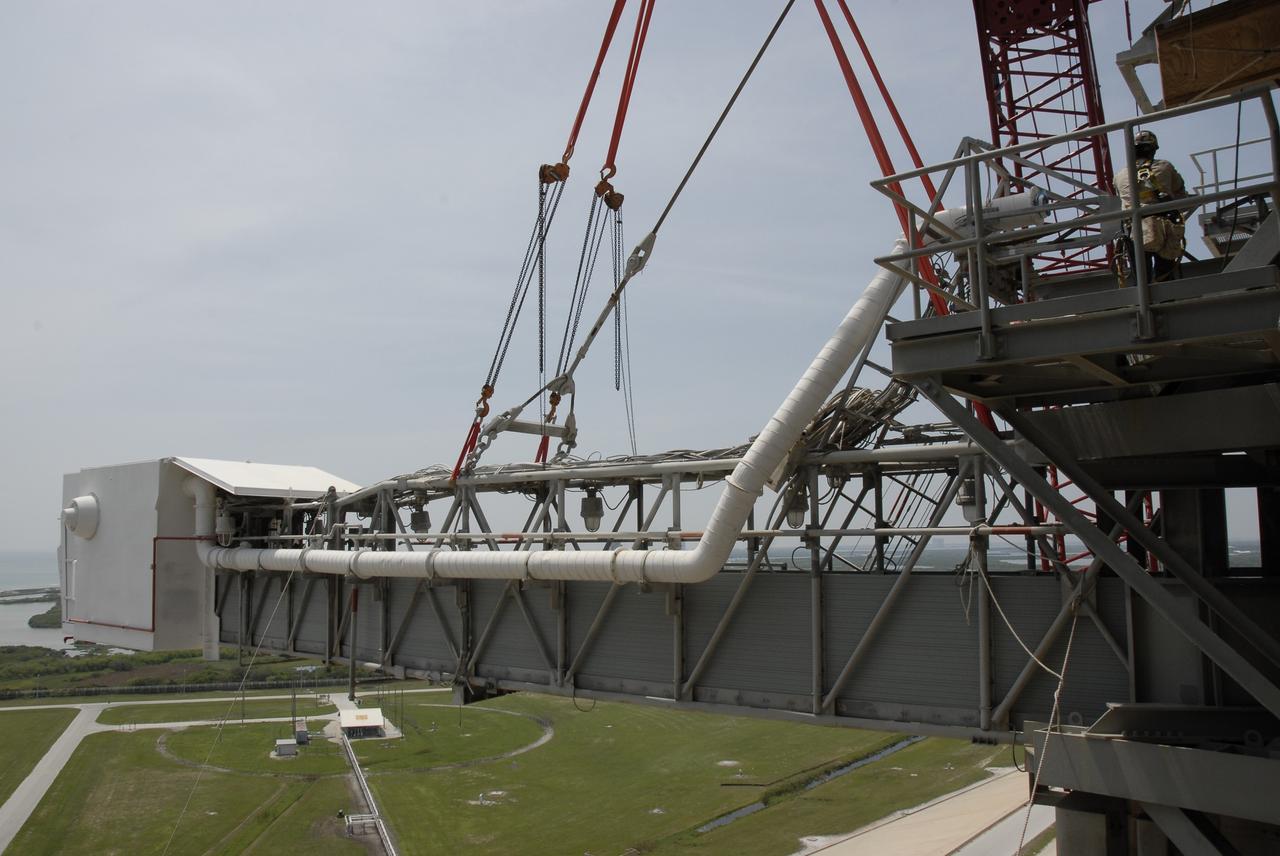
CAPE CANAVERAL, Fla. – The slings from a large crane are in place on the orbiter access arm, which ends in the White Room, that is part of the fixed service structure, or FSS, on Launch Pad 39B at NASA's Kennedy Space Center in Florida. The White Room provided entry into space shuttles that were on the pad. The arm is being removed from the FSS for the pad's conversion as launch site for the Constellation Program's Ares I-X. The launch of the Ares I-X flight test is targeted for August 2009. Photo credit: NASA/Kim Shiflett
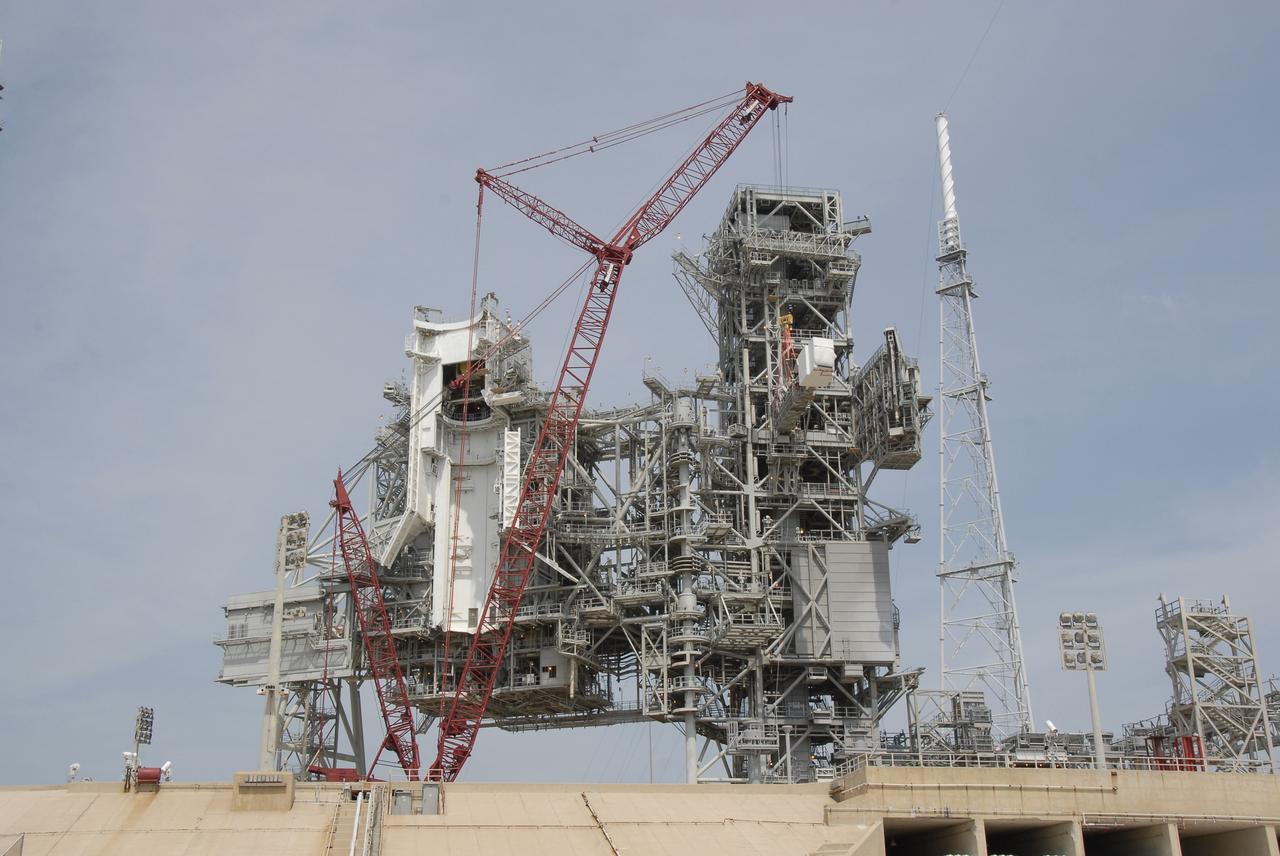
CAPE CANAVERAL, Fla. – The slings from a large crane are being attached to the orbiter access arm, which ends in the White Room, that is part of the fixed service structure, or FSS, on Launch Pad 39B at NASA's Kennedy Space Center in Florida. The White Room provided entry into space shuttles that were on the pad. The arm is being removed from the FSS for the pad's conversion as launch site for the Constellation Program's Ares I-X. The launch of the Ares I-X flight test is targeted for August 2009. Photo credit: NASA/Kim Shiflett
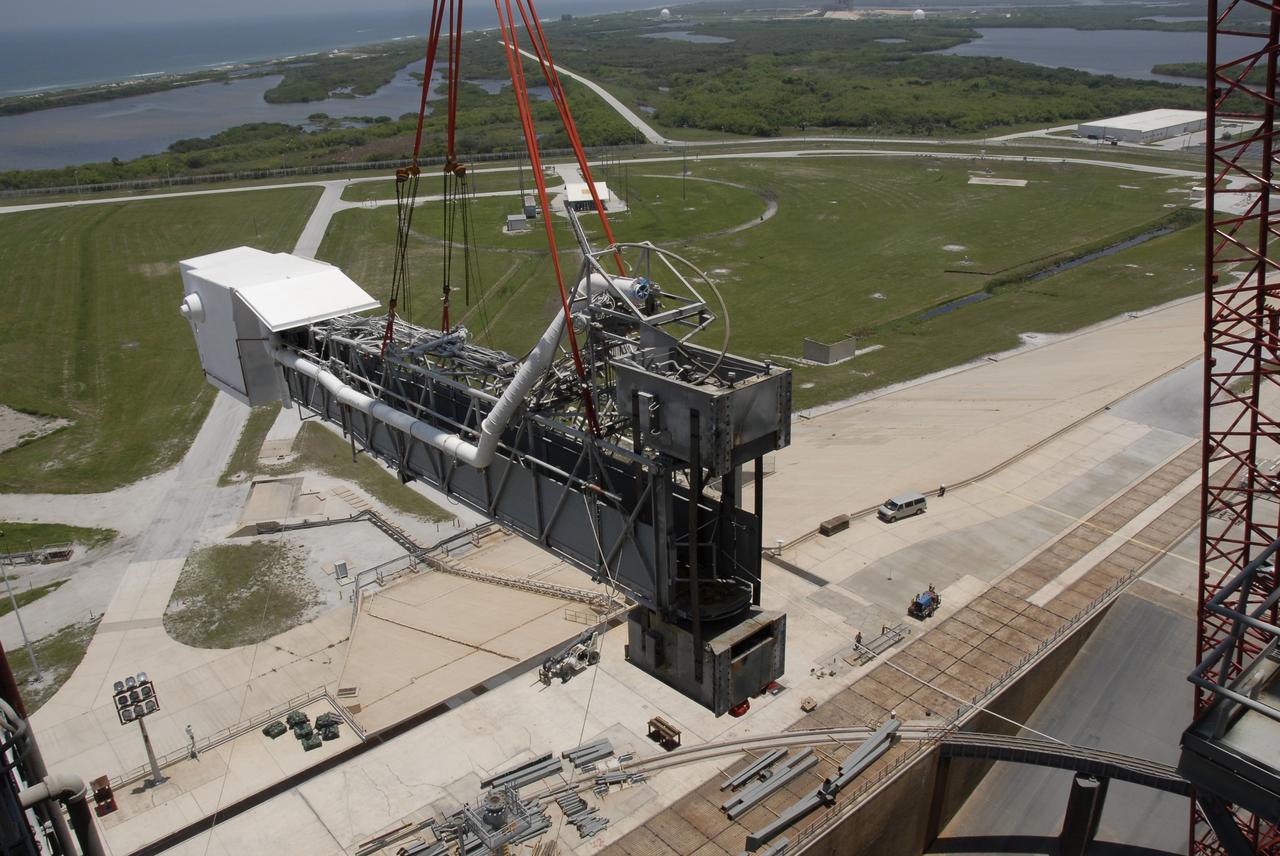
CAPE CANAVERAL, Fla. – The slings from a large crane swing the detached orbiter access arm, which ends in the White Room, away from the fixed service structure, or FSS, on Launch Pad 39B at NASA's Kennedy Space Center in Florida. The White Room provided entry into space shuttles that were on the pad. The arm is being removed from the FSS for the pad's conversion as launch site for the Constellation Program's Ares I-X. The launch of the Ares I-X flight test is targeted for August 2009. Photo credit: NASA/Kim Shiflett
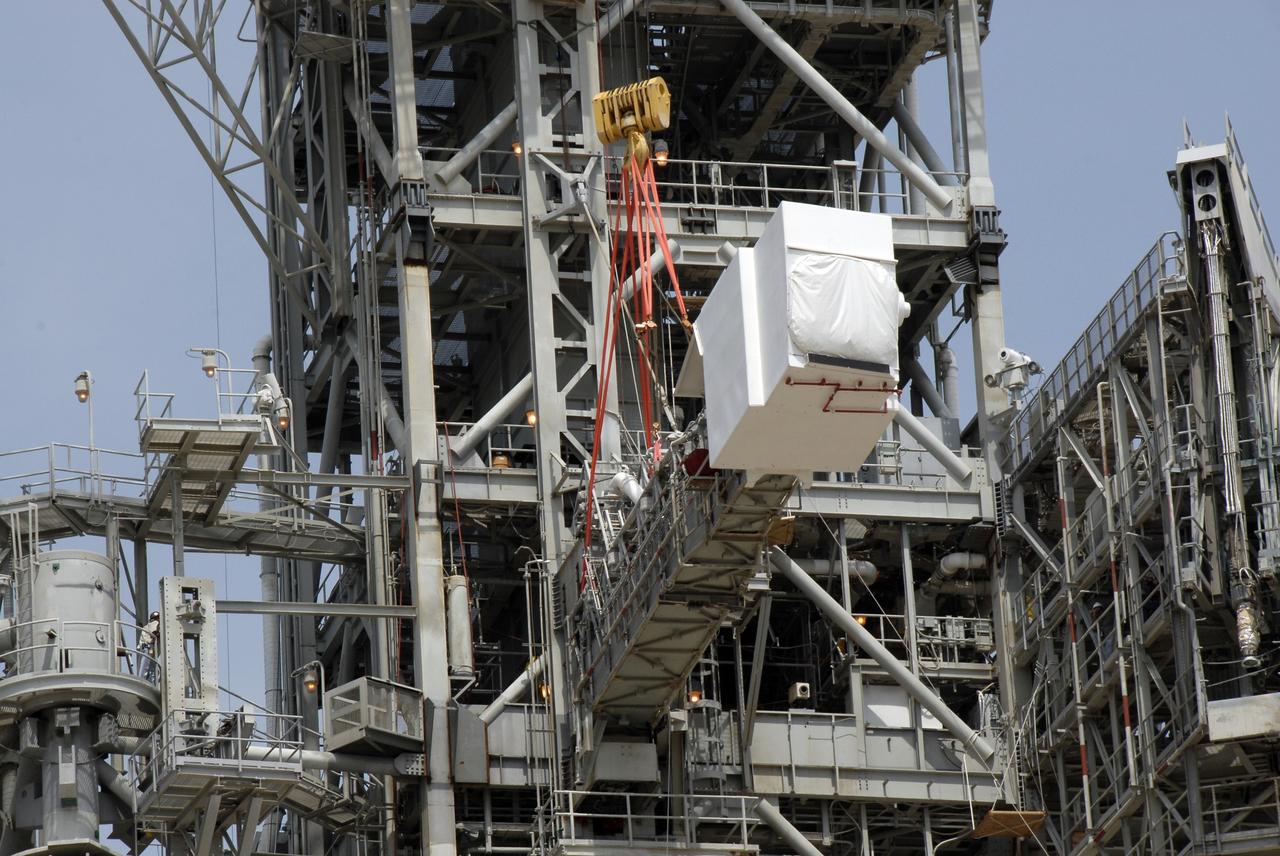
CAPE CANAVERAL, Fla. – The slings from a large crane are being attached to the orbiter access arm, which ends in the White Room, that is part of the fixed service structure, or FSS, on Launch Pad 39B at NASA's Kennedy Space Center in Florida. The White Room provided entry into space shuttles that were on the pad. The arm is being removed from the FSS for the pad's conversion as launch site for the Constellation Program's Ares I-X. The launch of the Ares I-X flight test is targeted for August 2009. Photo credit: NASA/Kim Shiflett
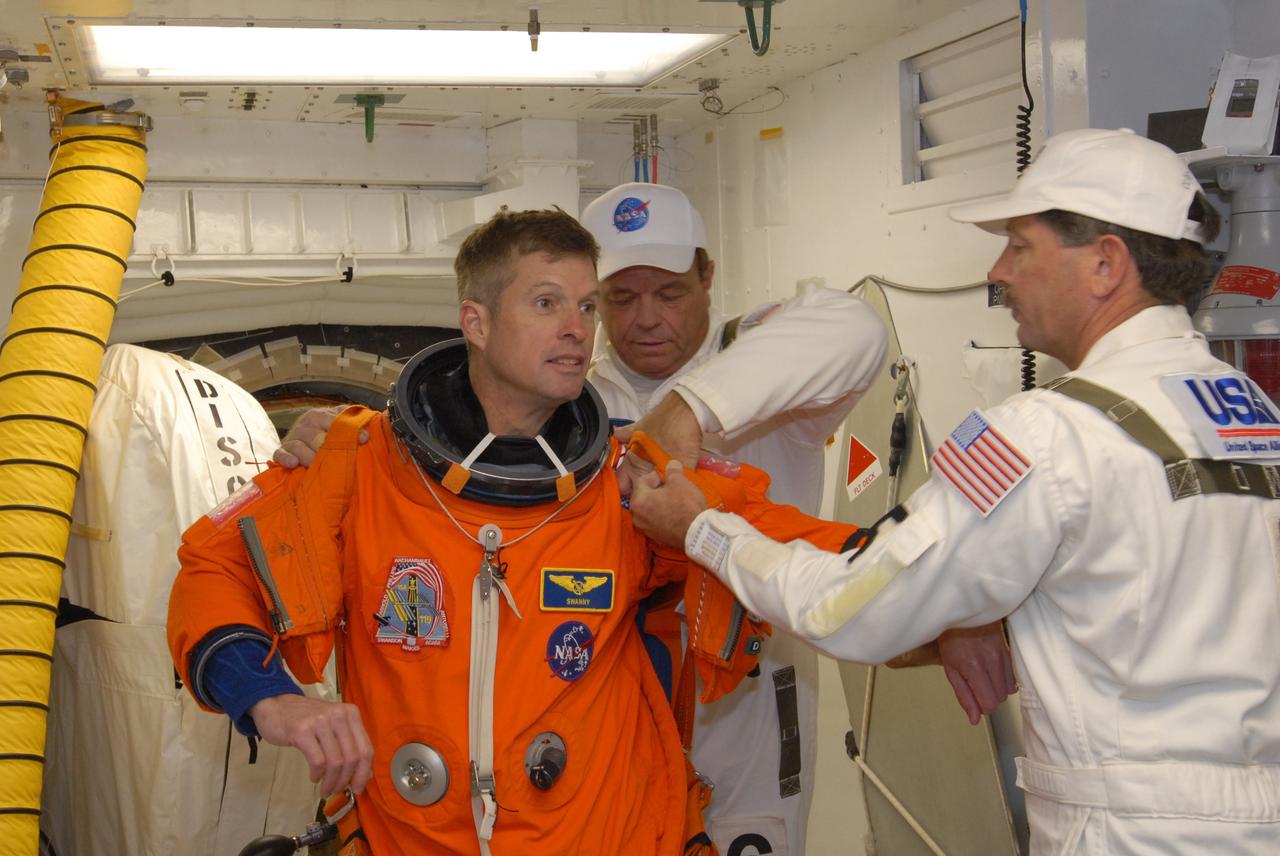
CAPE CANAVERAL, Fla. – In the White Room on Launch Pad 39A at NASA's Kennedy Space Center in Florida, STS-119 Mission Specialist Steve Swanson is helped by the Closeout Crew to put on his harness. The White Room provides access into space shuttle Discovery. Swanson and other crew members will conduct a simulated launch countdown as part of the prelaunch preparation known as Terminal Countdown Demonstration Test. The TCDT also includes equipment familiarization and emergency egress training. Discovery is targeted to launch on the STS-119 mission Feb. 12. During the 14-day mission, the crew will install the S6 truss segment and solar arrays to the starboard side of the International Space Station, completing the station's truss, or backbone. Photo credit: NASA/Jim Grossmann
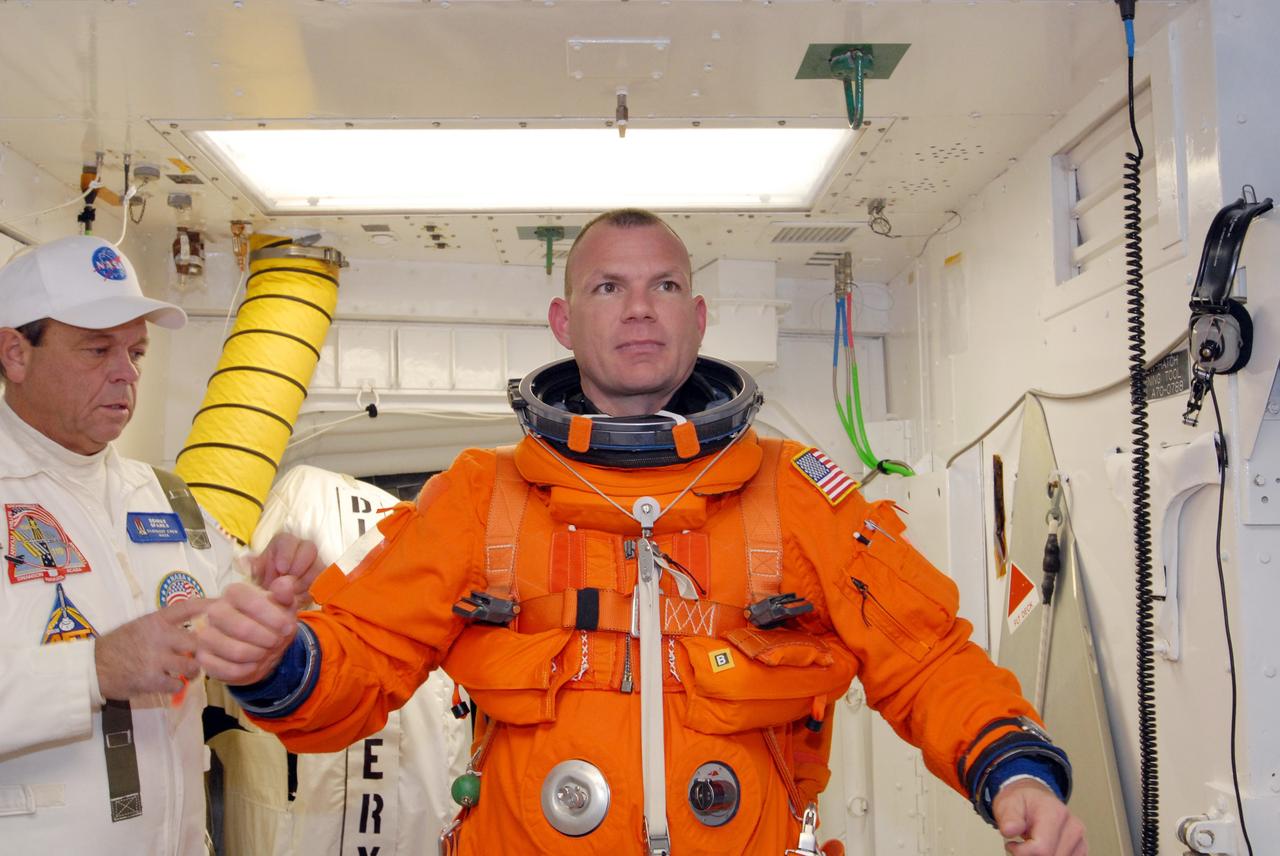
CAPE CANAVERAL, Fla. – In the White Room on Launch Pad 39A at NASA's Kennedy Space Center in Florida, STS-119 Pilot Tony Antonelli is helped by the Closeout Crew to put on his harness. The White Room provides access into space shuttle Discovery. Antonelli and other crew members will conduct a simulated launch countdown as part of the prelaunch preparation known as Terminal Countdown Demonstration Test. The TCDT also includes equipment familiarization and emergency egress training. Discovery is targeted to launch on the STS-119 mission Feb. 12. During the 14-day mission, the crew will install the S6 truss segment and solar arrays to the starboard side of the International Space Station, completing the station's truss, or backbone. Photo credit: NASA/Jim Grossmann
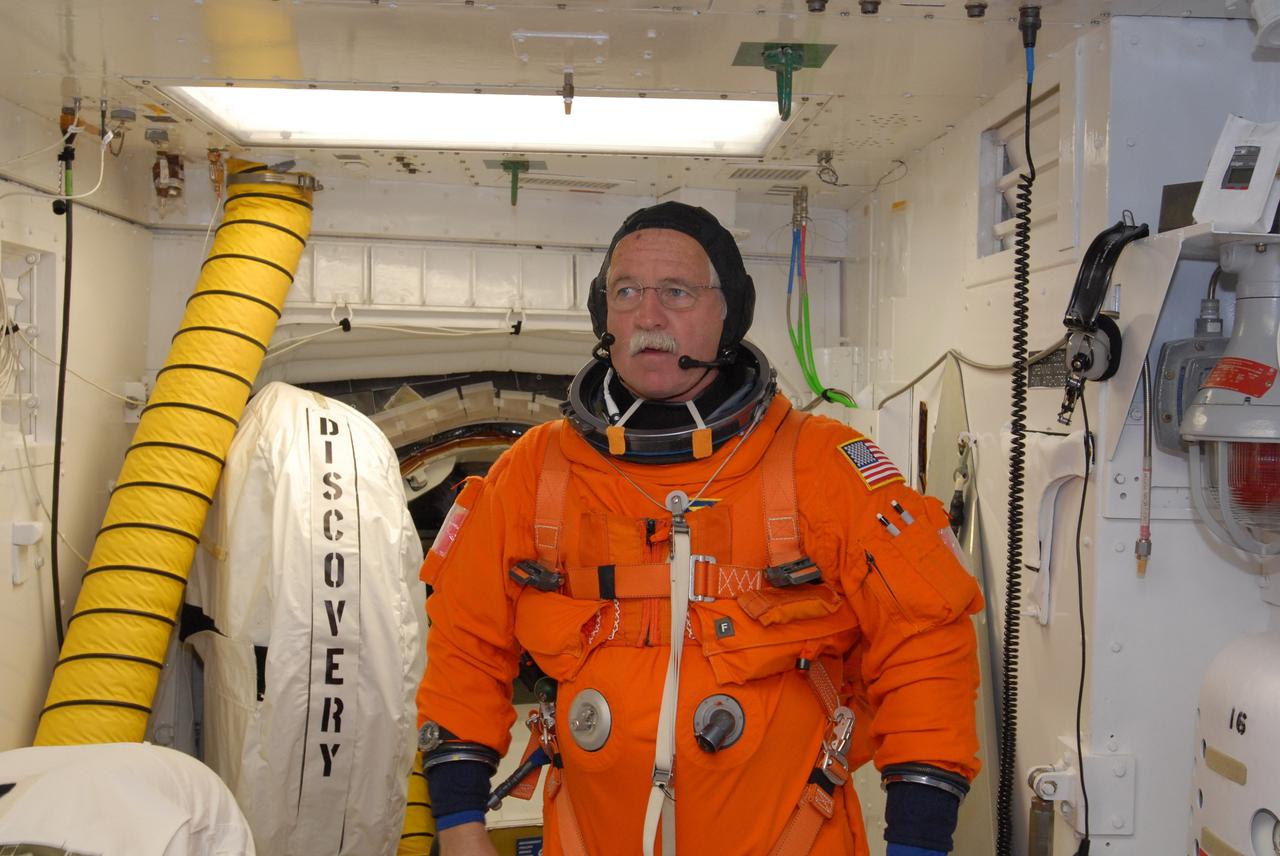
CAPE CANAVERAL, Fla. – In the White Room on Launch Pad 39A at NASA's Kennedy Space Center in Florida, STS-119 Mission Specialist John Phillips has donned the harness over his launch-and-entry suit. The White Room provides access into space shuttle Discovery. Phillips and other crew members will conduct a simulated launch countdown as part of the prelaunch preparation known as Terminal Countdown Demonstration Test. The TCDT also includes equipment familiarization and emergency egress training. Discovery is targeted to launch on the STS-119 mission Feb. 12. During the 14-day mission, the crew will install the S6 truss segment and solar arrays to the starboard side of the International Space Station, completing the station's truss, or backbone. Photo credit: NASA/Jim Grossmann
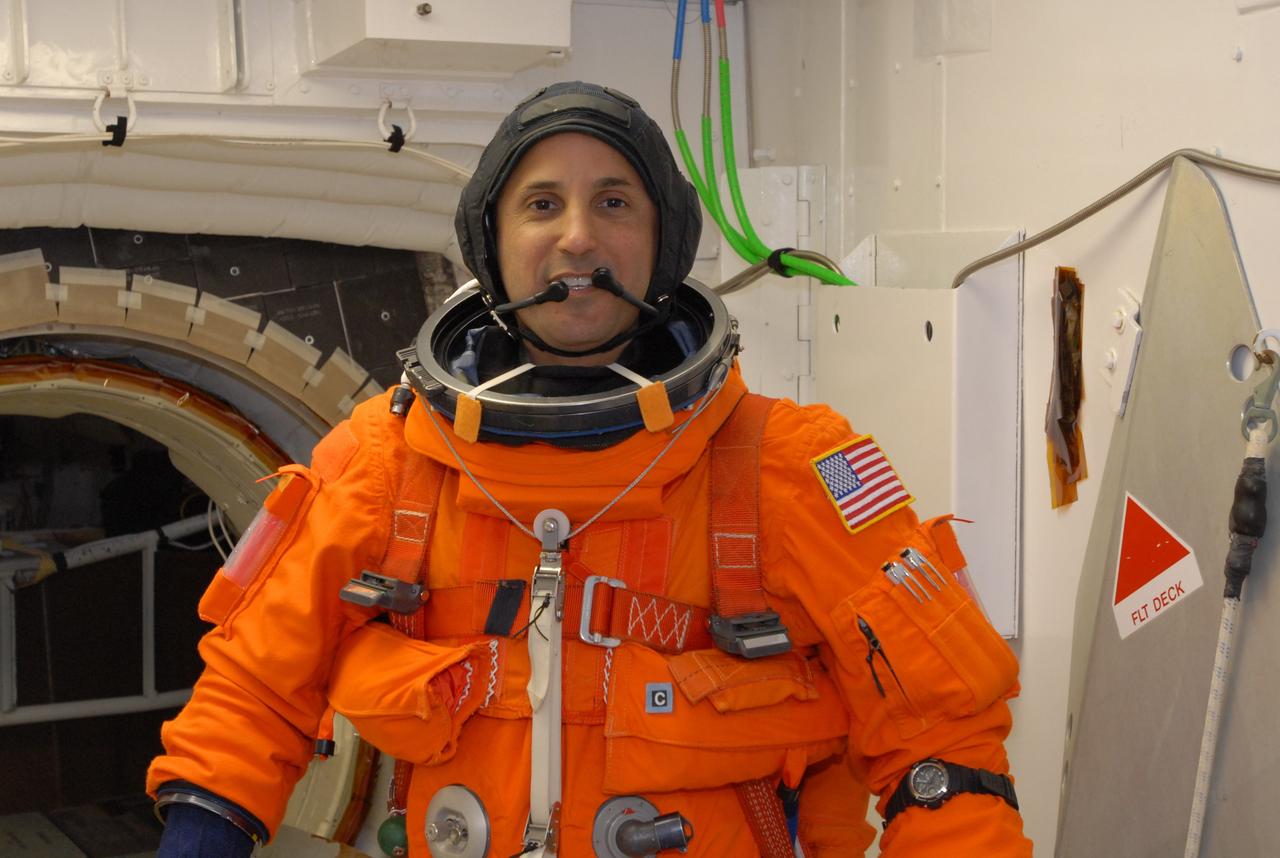
CAPE CANAVERAL, Fla. – In the White Room on Launch Pad 39A at NASA's Kennedy Space Center in Florida, STS-119 Mission Specialist Joseph Acaba is ready to enter space shuttle Discovery, behind him. The White Room provides access into Discovery. Acaba and other crew members will conduct a simulated launch countdown as part of the prelaunch preparation known as Terminal Countdown Demonstration Test. The TCDT also includes equipment familiarization and emergency egress training. Discovery is targeted to launch on the STS-119 mission Feb. 12. During the 14-day mission, the crew will install the S6 truss segment and solar arrays to the starboard side of the International Space Station, completing the station's truss, or backbone. Photo credit: NASA/Jim Grossmann
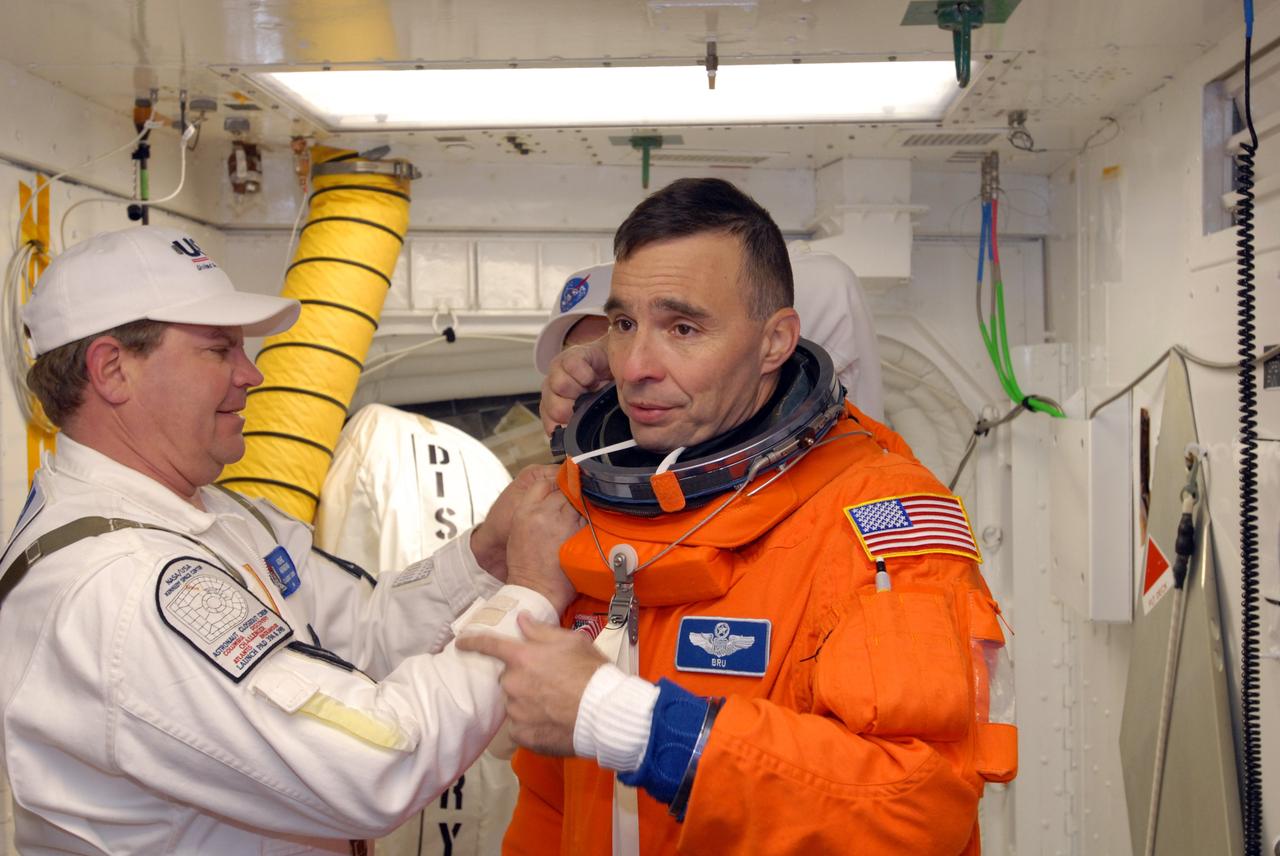
CAPE CANAVERAL, Fla. – In the White Room on Launch Pad 39A at NASA's Kennedy Space Center in Florida, STS-119 Commander Lee Archambault is helped by the Closeout Crew to put on his harness. The White Room provides access into space shuttle Discovery. Archambault and other crew members will conduct a simulated launch countdown as part of the prelaunch preparation known as Terminal Countdown Demonstration Test. The TCDT also includes equipment familiarization and emergency egress training. Discovery is targeted to launch on the STS-119 mission Feb. 12. During the 14-day mission, the crew will install the S6 truss segment and solar arrays to the starboard side of the International Space Station, completing the station's truss, or backbone. Photo credit: NASA/Jim Grossmann
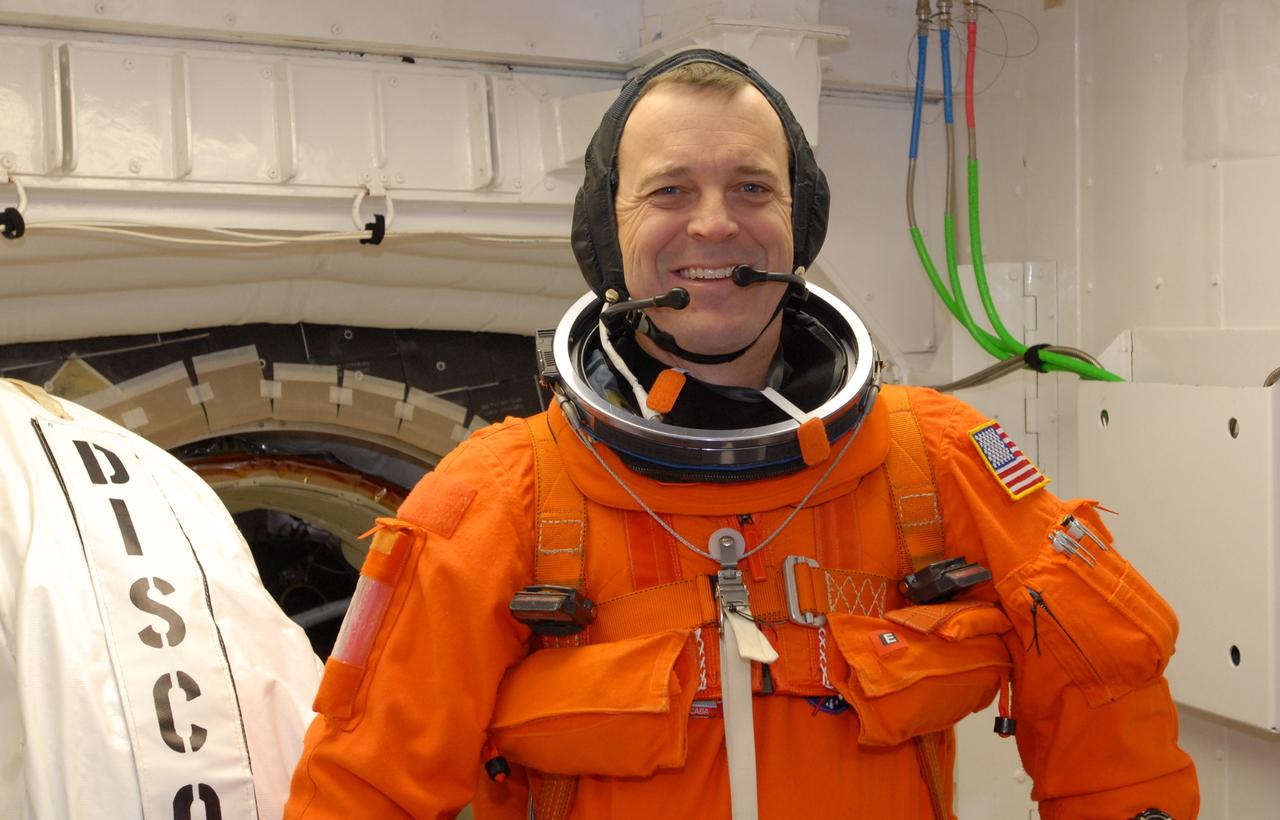
CAPE CANAVERAL, Fla. – In the White Room on Launch Pad 39A at NASA's Kennedy Space Center in Florida, STS-119 Mission Specialist Richard Arnold gets ready to enter space shuttle Discovery, behind him. The White Room provides access into Discovery. Arnold and other crew members will conduct a simulated launch countdown as part of the prelaunch preparation known as Terminal Countdown Demonstration Test. The TCDT also includes equipment familiarization and emergency egress training. Discovery is targeted to launch on the STS-119 mission Feb. 12. During the 14-day mission, the crew will install the S6 truss segment and solar arrays to the starboard side of the International Space Station, completing the station's truss, or backbone. Photo credit: NASA/Jim Grossmann
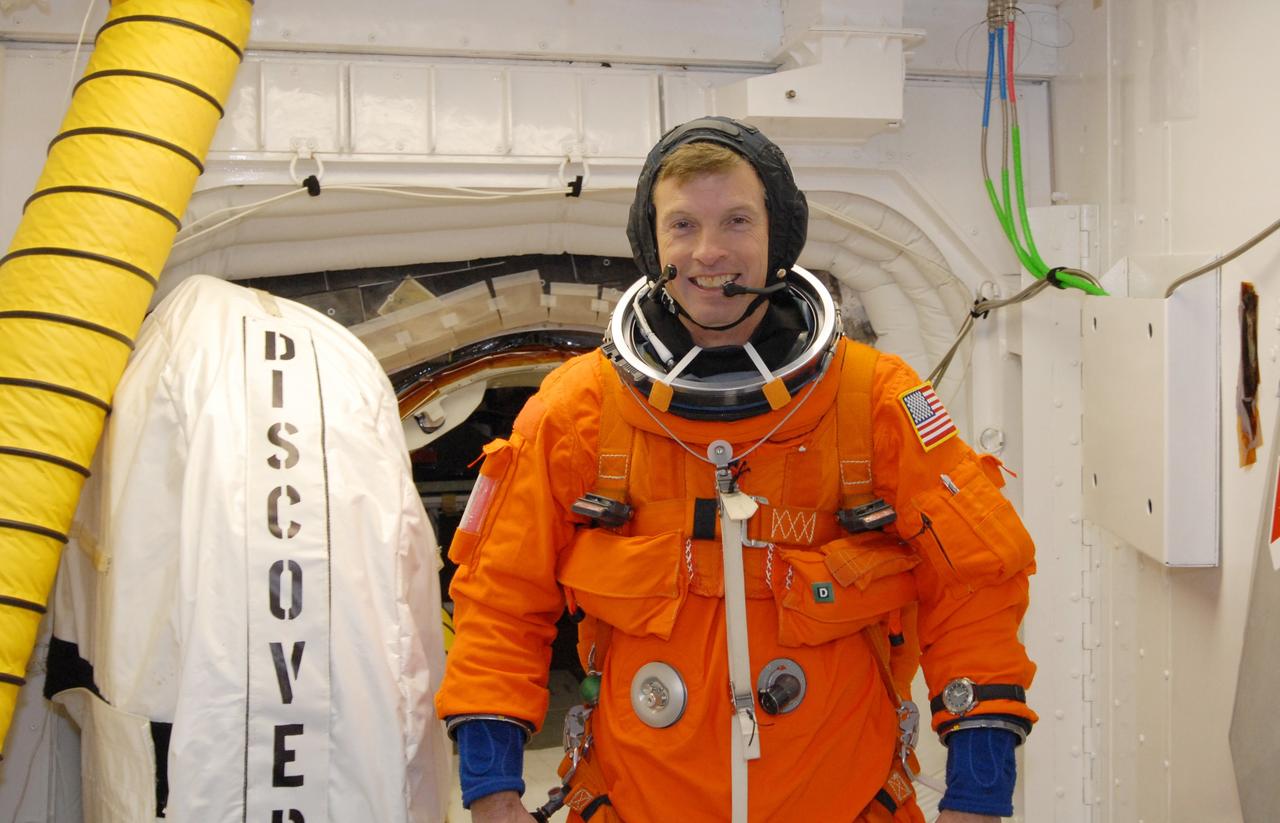
CAPE CANAVERAL, Fla. – In the White Room on Launch Pad 39A at NASA's Kennedy Space Center in Florida, STS-119 Mission Specialist Steve Swanson is ready to enter space shuttle Discovery, behind him. The White Room provides access into Discovery. Swanson and other crew members will conduct a simulated launch countdown as part of the prelaunch preparation known as Terminal Countdown Demonstration Test. The TCDT also includes equipment familiarization and emergency egress training. Discovery is targeted to launch on the STS-119 mission Feb. 12. During the 14-day mission, the crew will install the S6 truss segment and solar arrays to the starboard side of the International Space Station, completing the station's truss, or backbone. Photo credit: NASA/Jim Grossmann
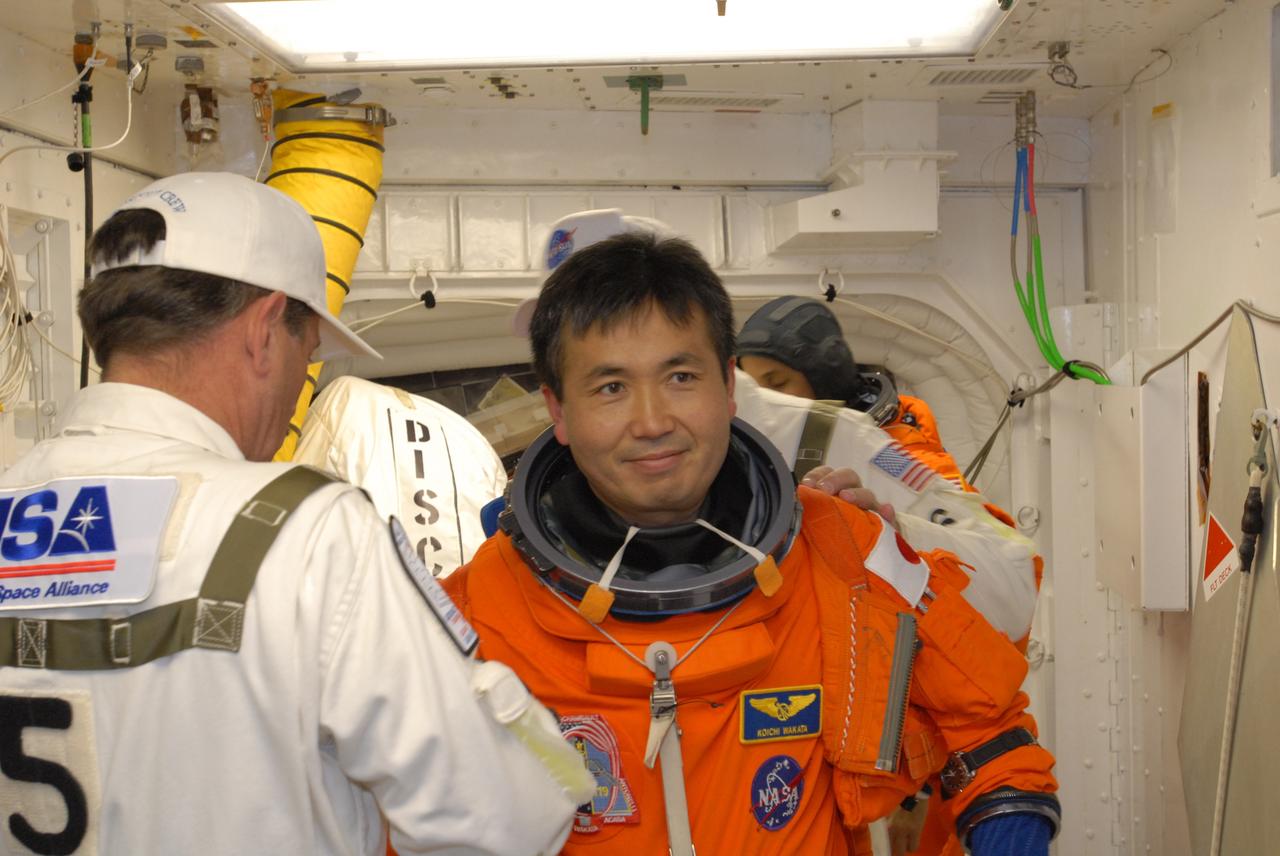
CAPE CANAVERAL, Fla. – In the White Room on Launch Pad 39A at NASA's Kennedy Space Center in Florida, STS-119 Mission Specialist Koichi Wakata is helped by the Closeout Crew to put on his harness. The White Room provides access into space shuttle Discovery. Wakata and other crew members will conduct a simulated launch countdown as part of the prelaunch preparation known as Terminal Countdown Demonstration Test. The TCDT also includes equipment familiarization and emergency egress training. Discovery is targeted to launch on the STS-119 mission Feb. 12. During the 14-day mission, the crew will install the S6 truss segment and solar arrays to the starboard side of the International Space Station, completing the station's truss, or backbone. Photo credit: NASA/Jim Grossmann
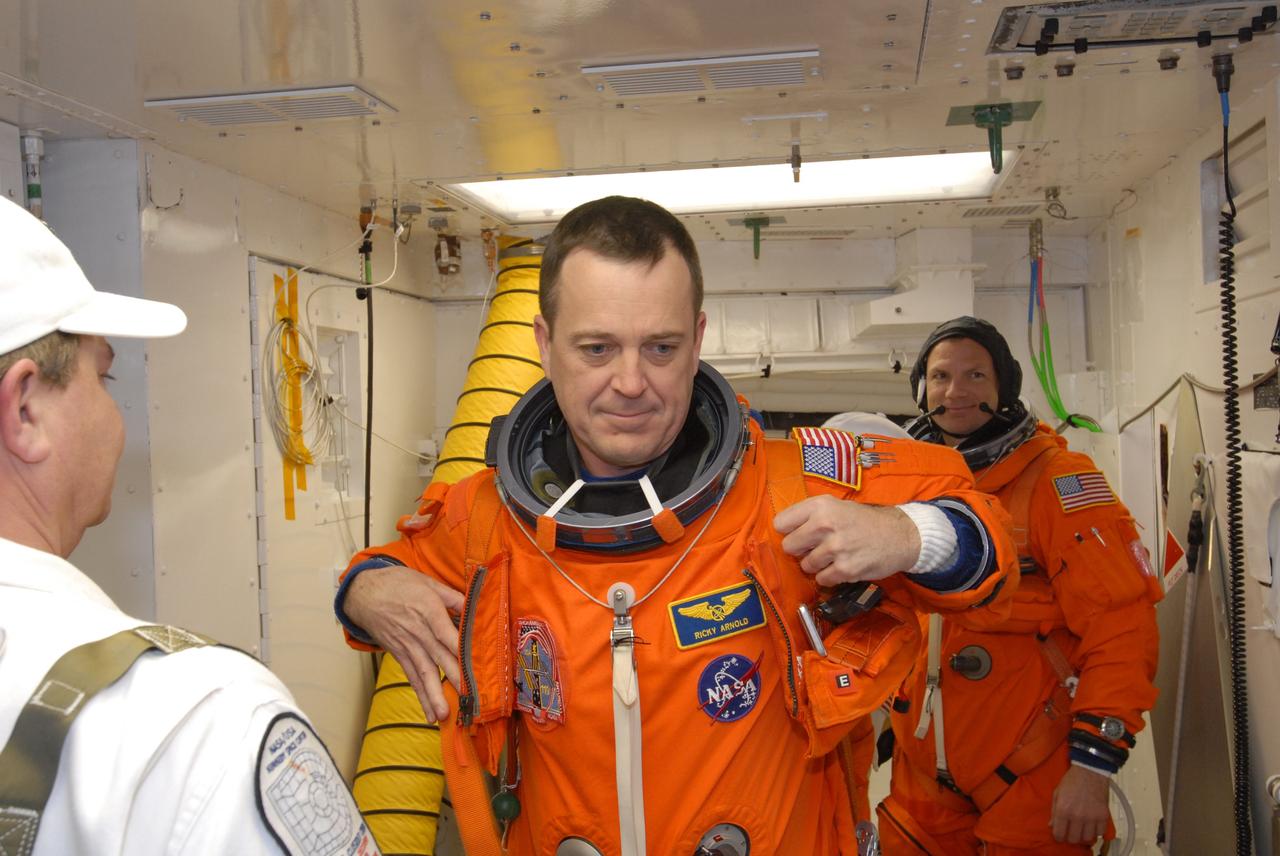
CAPE CANAVERAL, Fla. – In the White Room on Launch Pad 39A at NASA's Kennedy Space Center in Florida, STS-119 Mission Specialist Richard Arnold is helped by the Closeout Crew to put on his harness. The White Room provides access into space shuttle Discovery. Behind Arnold is Pilot Tony Antonelli. Arnold, Antonelli and other crew members will conduct a simulated launch countdown as part of the prelaunch preparation known as Terminal Countdown Demonstration Test. The TCDT also includes equipment familiarization and emergency egress training. Discovery is targeted to launch on the STS-119 mission Feb. 12. During the 14-day mission, the crew will install the S6 truss segment and solar arrays to the starboard side of the International Space Station, completing the station's truss, or backbone. Photo credit: NASA/Jim Grossmann
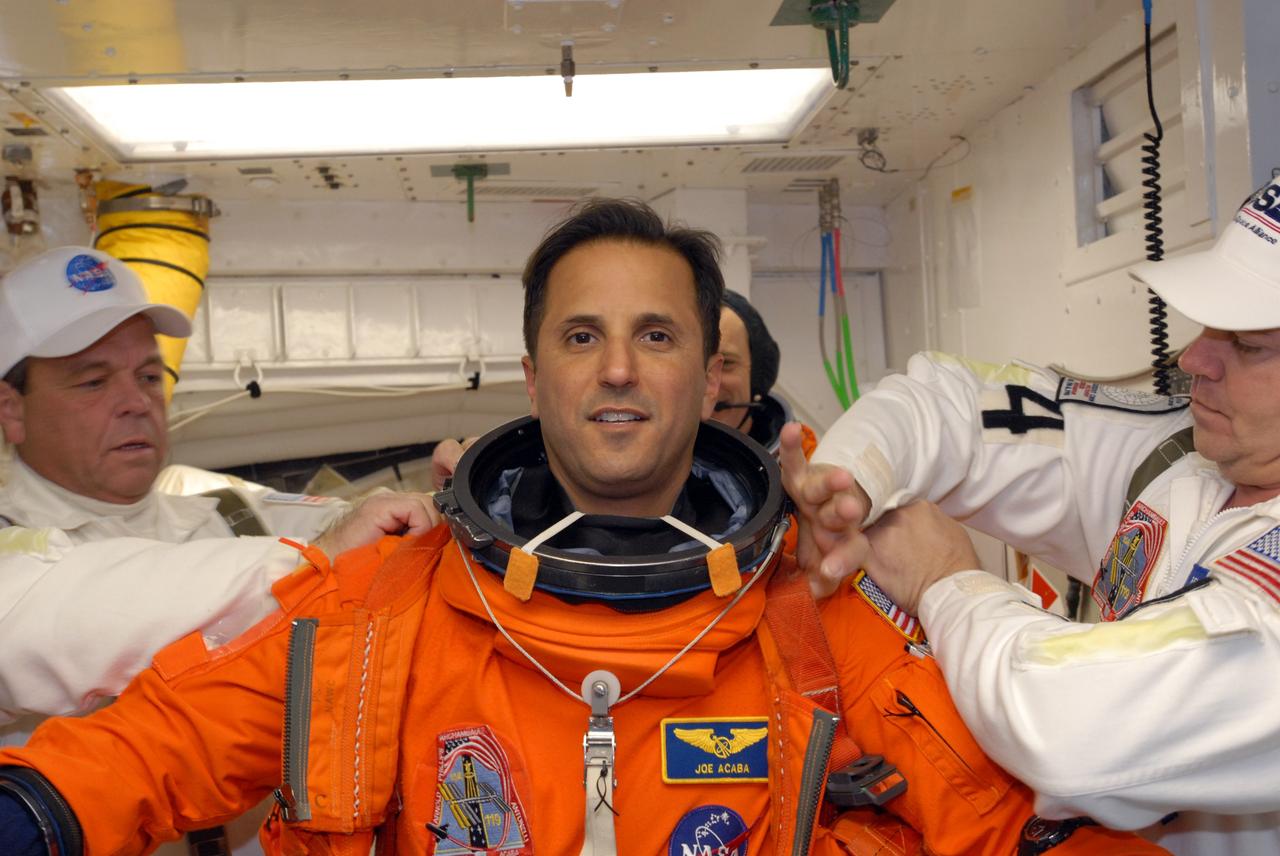
CAPE CANAVERAL, Fla. – In the White Room on Launch Pad 39A at NASA's Kennedy Space Center in Florida, STS-119 Mission Specialist Joseph Acaba is helped by the Closeout Crew to put on his harness. The White Room provides access into space shuttle Discovery. Acaba and other crew members will conduct a simulated launch countdown as part of the prelaunch preparation known as Terminal Countdown Demonstration Test. The TCDT also includes equipment familiarization and emergency egress training. Discovery is targeted to launch on the STS-119 mission Feb. 12. During the 14-day mission, the crew will install the S6 truss segment and solar arrays to the starboard side of the International Space Station, completing the station's truss, or backbone. Photo credit: NASA/Jim Grossmann
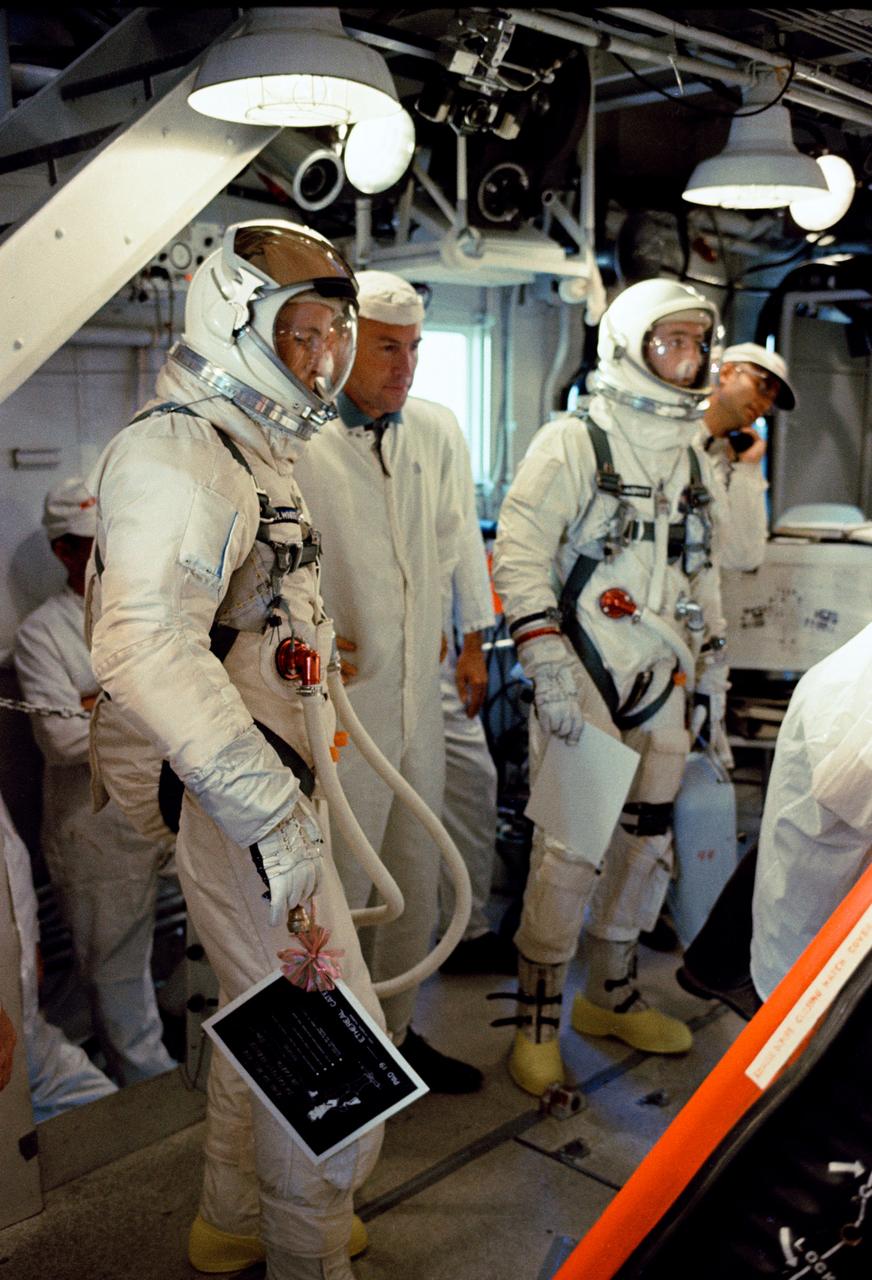
S65-29647 (3 June 1965) --- Astronauts Edward H. White II and James A. McDivitt are shown in the white room as they prepare to enter the Gemini-4 spacecraft atop the Titan launch vehicle at Cape Kennedy, Florida. The NASA Headquarters alternative photo number is 65-H-296.
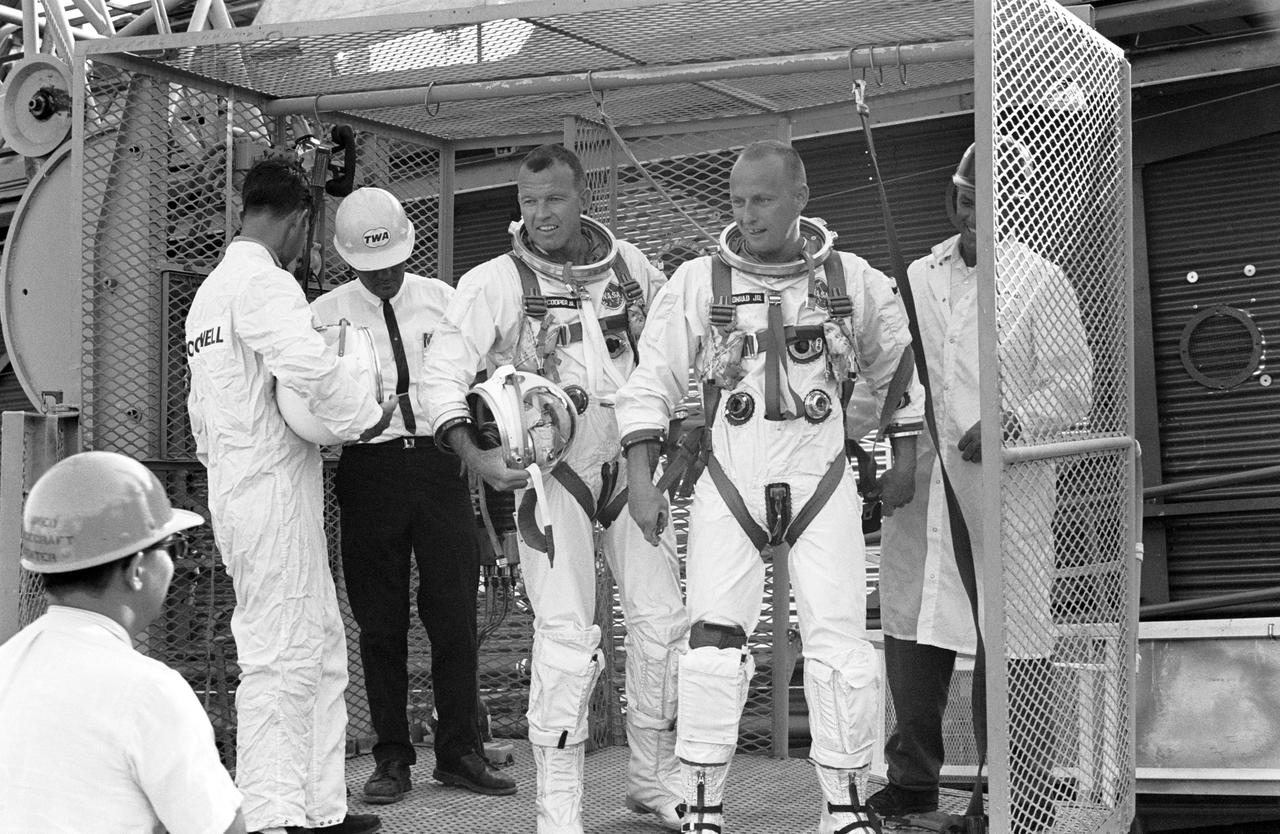
S65-41890 (6 Aug. 1965) --- Astronauts L. Gordon Cooper Jr. (left) and Charles Conrad Jr., prime crew for the Gemini-5 spaceflight, prepare to be hoisted to the white room atop gantry at Pad 19 at Cape Kennedy, Florida, during a simulation exercise for the mission.
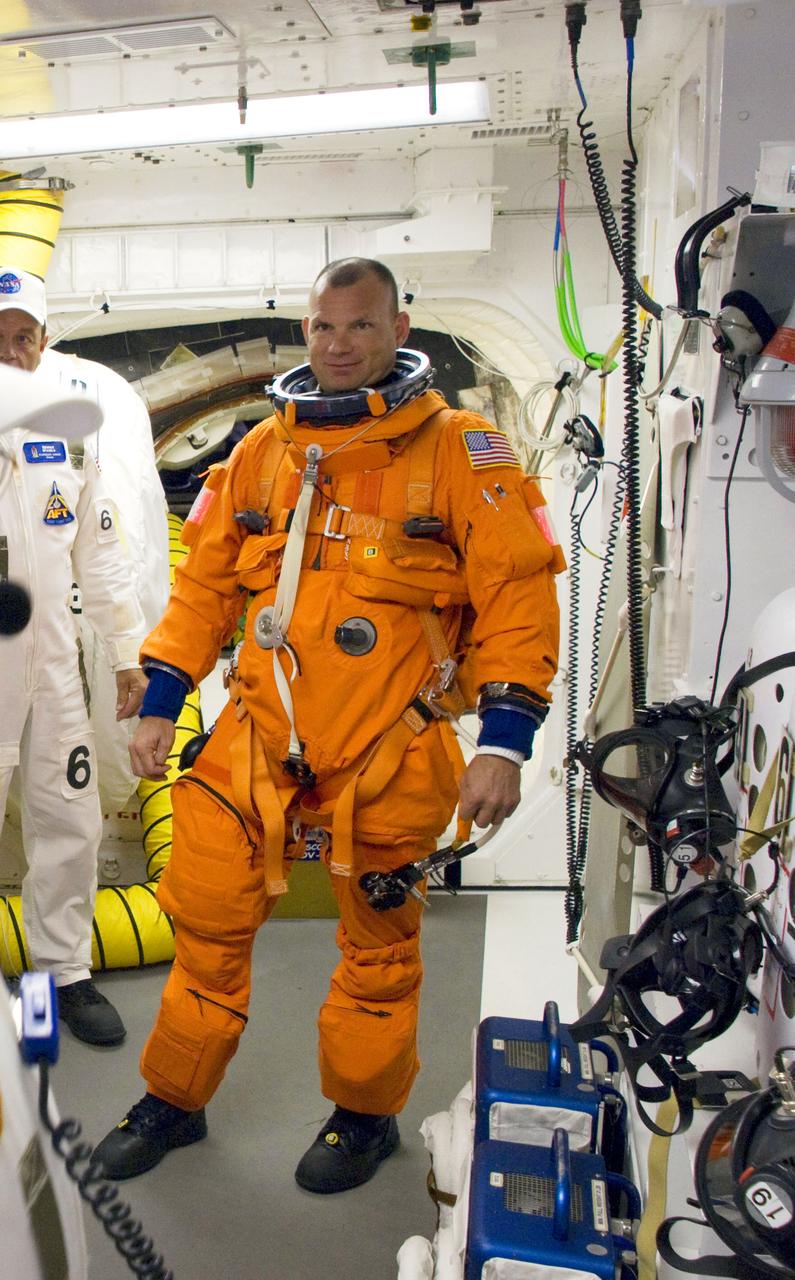
STS119-S-012 (15 March 2009) --- Astronaut Tony Antonelli, STS-119 pilot, attired in his shuttle launch and entry suit (with harness and parachute pack), is pictured in the White Room on launch pad 39A at NASA's Kennedy Space Center in Florida, before crawling through the open hatch into Space Shuttle Discovery. The White Room is at the end of the orbiter access arm on the fixed service structure and provides access into the shuttle. Liftoff is scheduled for 7:43 p.m. (EDT) on March 15, 2009.
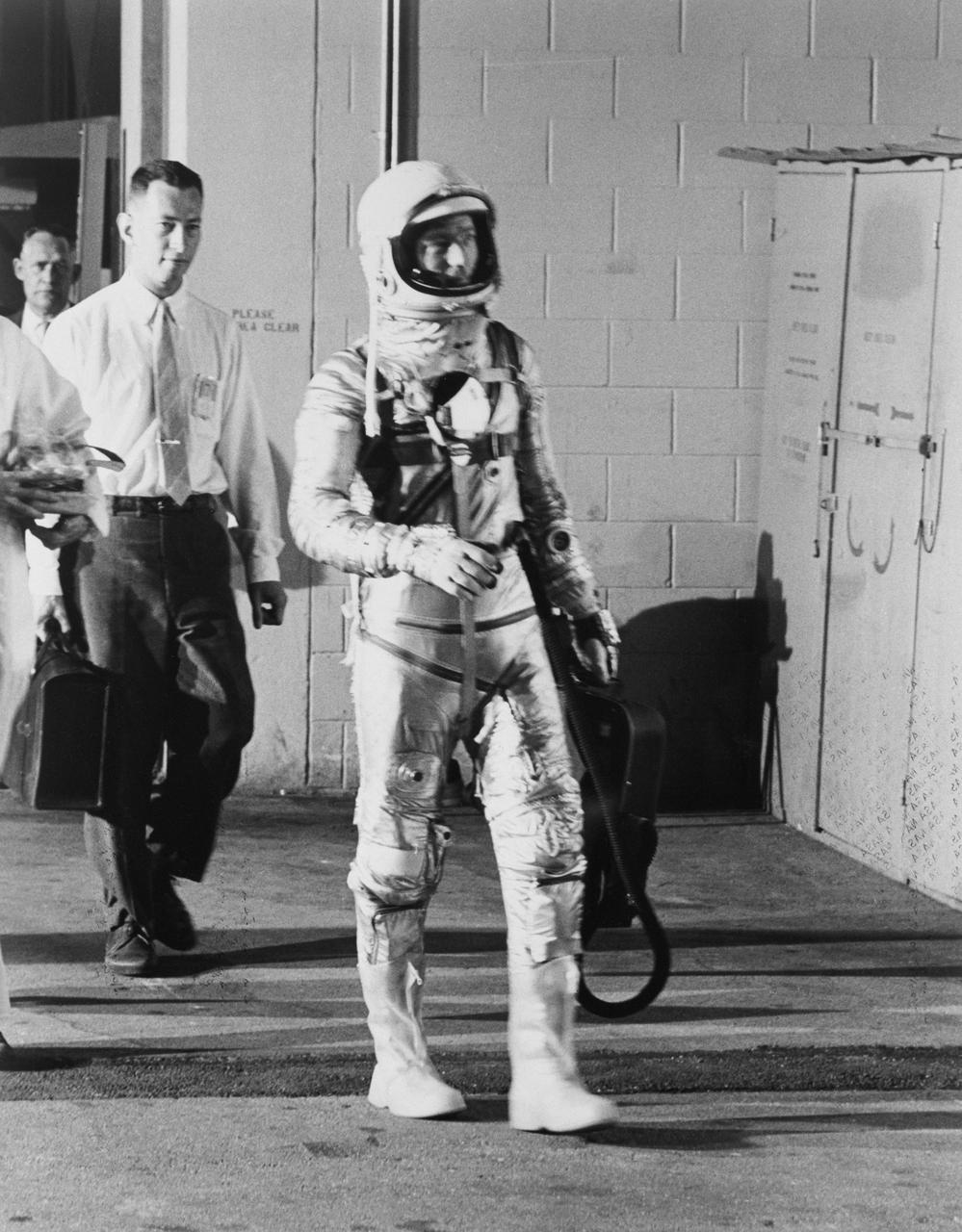
S62-04044 (24 May 1962) --- Astronaut Scott Carpenter leaving White Room for launch site to begin Mercury-Atlas 7 (MA-7) mission. Photo credit: NASA

S65-28746 (21 Aug. 1965) --- Astronauts L. Gordon Cooper Jr. (foreground) and Charles Conrad Jr. arrive in the white room at Pad 19 during the Gemini-5 countdown at Cape Kennedy, Florida.
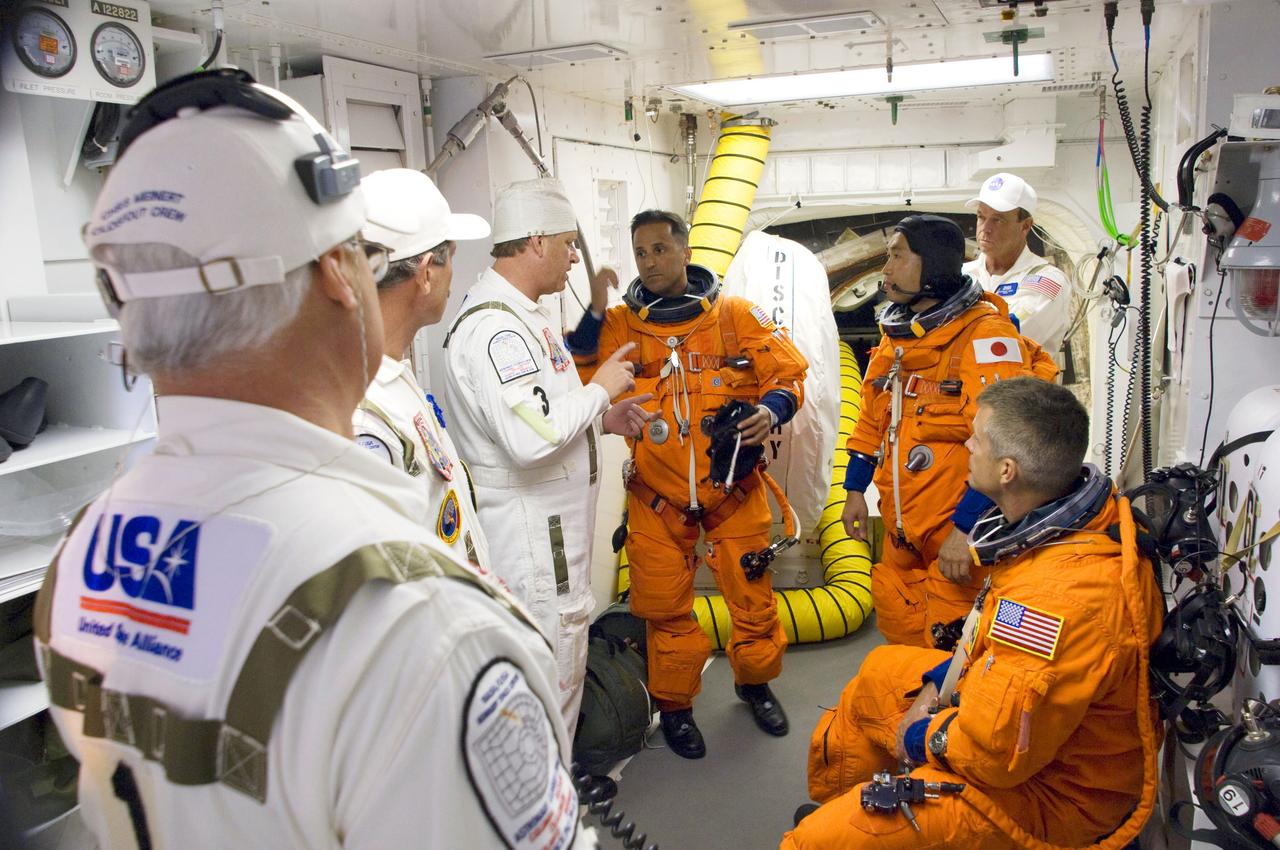
STS119-S-016 (15 March 2009) --- In the White Room on launch pad 39A at NASA's Kennedy Space Center in Florida, attired in their shuttle launch and entry suits with harness and parachute pack, astronauts Joseph Acaba (left), Japan Aerospace Exploration Agency’s Koichi Wakata (center) and Steve Swanson (seated) talk with the closeout crew as they prepare to go through the open hatch into Space Shuttle Discovery. The White Room is at the end of the orbiter access arm on the fixed service structure and provides access into the shuttle. Liftoff is scheduled for 7:43 p.m. (EDT) on March 15, 2009.
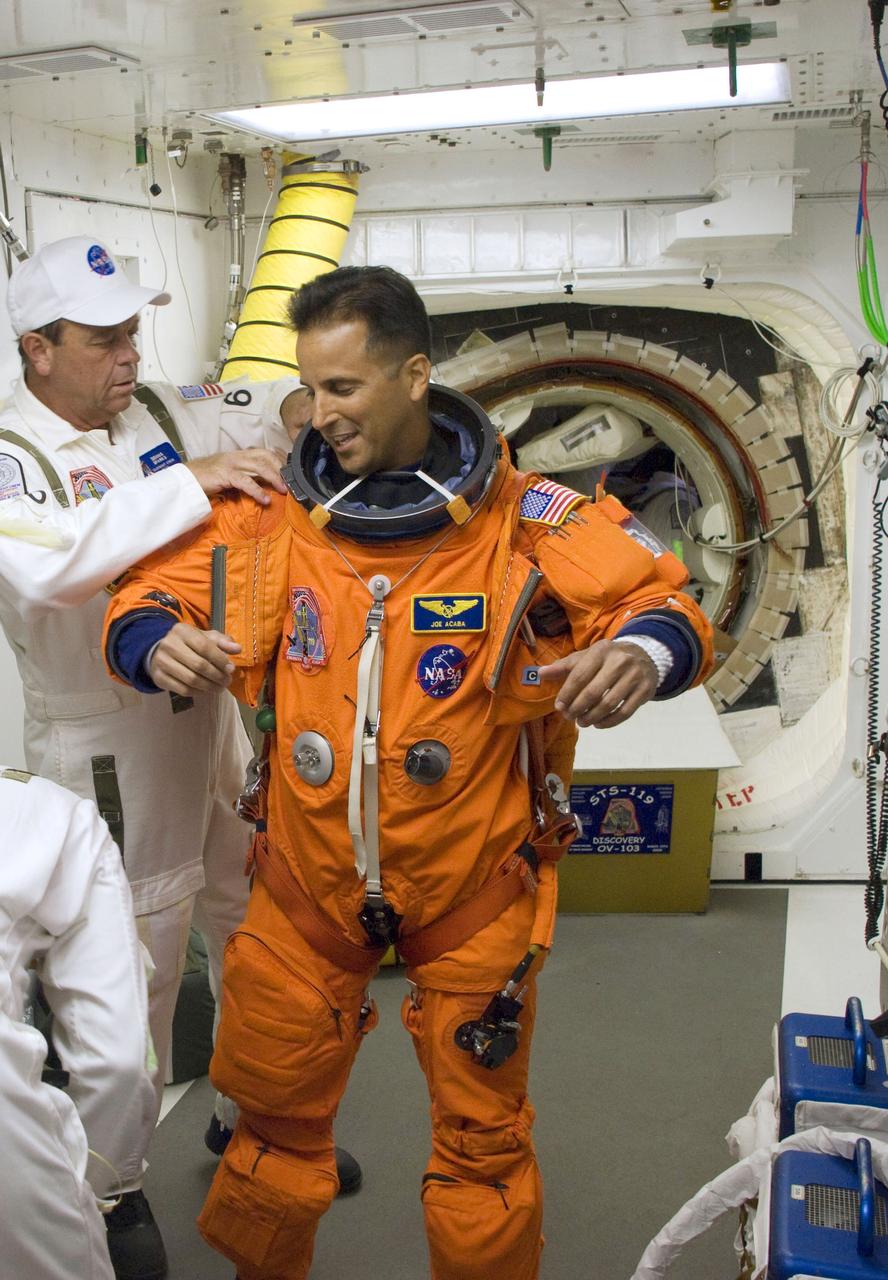
STS119-S-014 (15 March 2009) --- In the White Room on launch pad 39A at NASA's Kennedy Space Center in Florida, astronaut Joseph Acaba, STS-119 mission specialist, attired in his shuttle launch and entry suit, dons his harness, which includes a parachute pack, before crawling through the open hatch into Space Shuttle Discovery. The White Room is at the end of the orbiter access arm on the fixed service structure and provides access into the shuttle. Members of the closeout crew assisted Acaba. Liftoff is scheduled for 7:43 p.m. (EDT) on March 15, 2009.
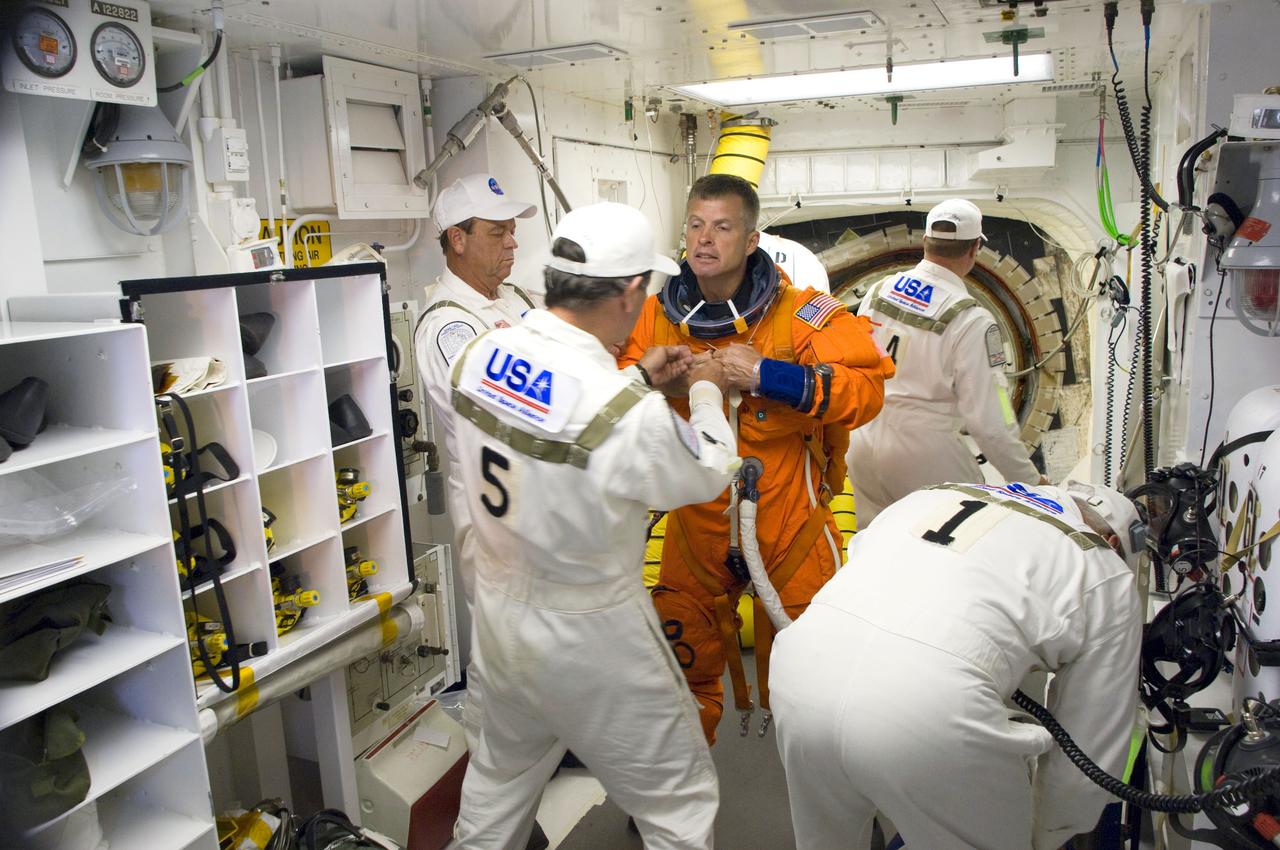
STS119-S-017 (15 March 2009) --- In the White Room on launch pad 39A at NASA's Kennedy Space Center in Florida, astronaut Steve Swanson, STS-119 mission specialist, attired in his shuttle launch and entry suit, dons his harnesses, which includes a parachute pack, before crawling through the open hatch into Space Shuttle Discovery. The White Room is at the end of the orbiter access arm on the fixed service structure and provides access into the shuttle. Members of the closeout crew assisted Swanson. Liftoff is scheduled for 7:43 p.m. (EDT) on March 15, 2009.
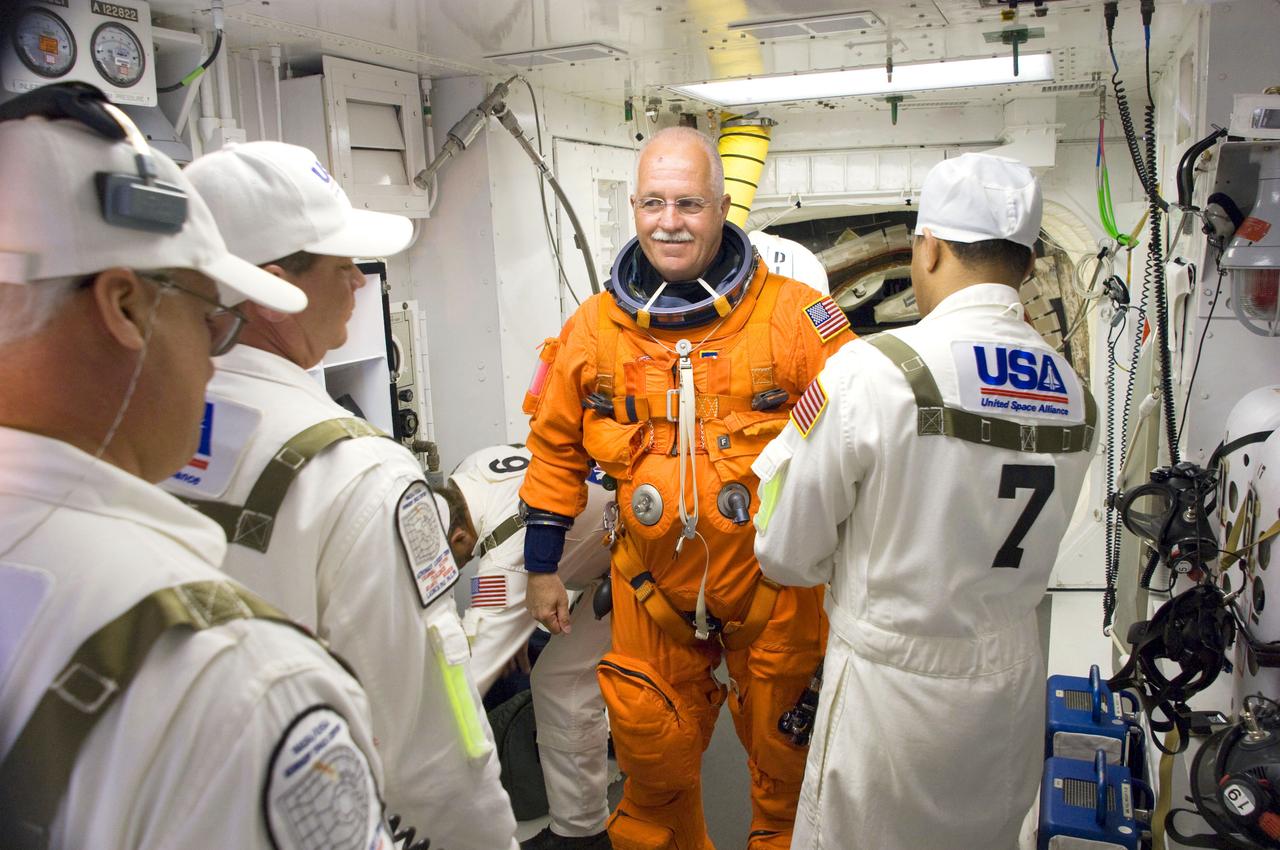
STS119-S-011 (15 March 2009) --- In the White Room on launch pad 39A at NASA's Kennedy Space Center in Florida, astronaut John Phillips, STS-119 mission specialist, attired in his shuttle launch and entry suit, dons his harness, which includes a parachute pack, before crawling through the open hatch into Space Shuttle Discovery. The White Room is at the end of the orbiter access arm on the fixed service structure and provides access into the shuttle. Members of the closeout crew assisted Phillips. Liftoff is scheduled for 7:43 p.m. (EDT) on March 15, 2009.
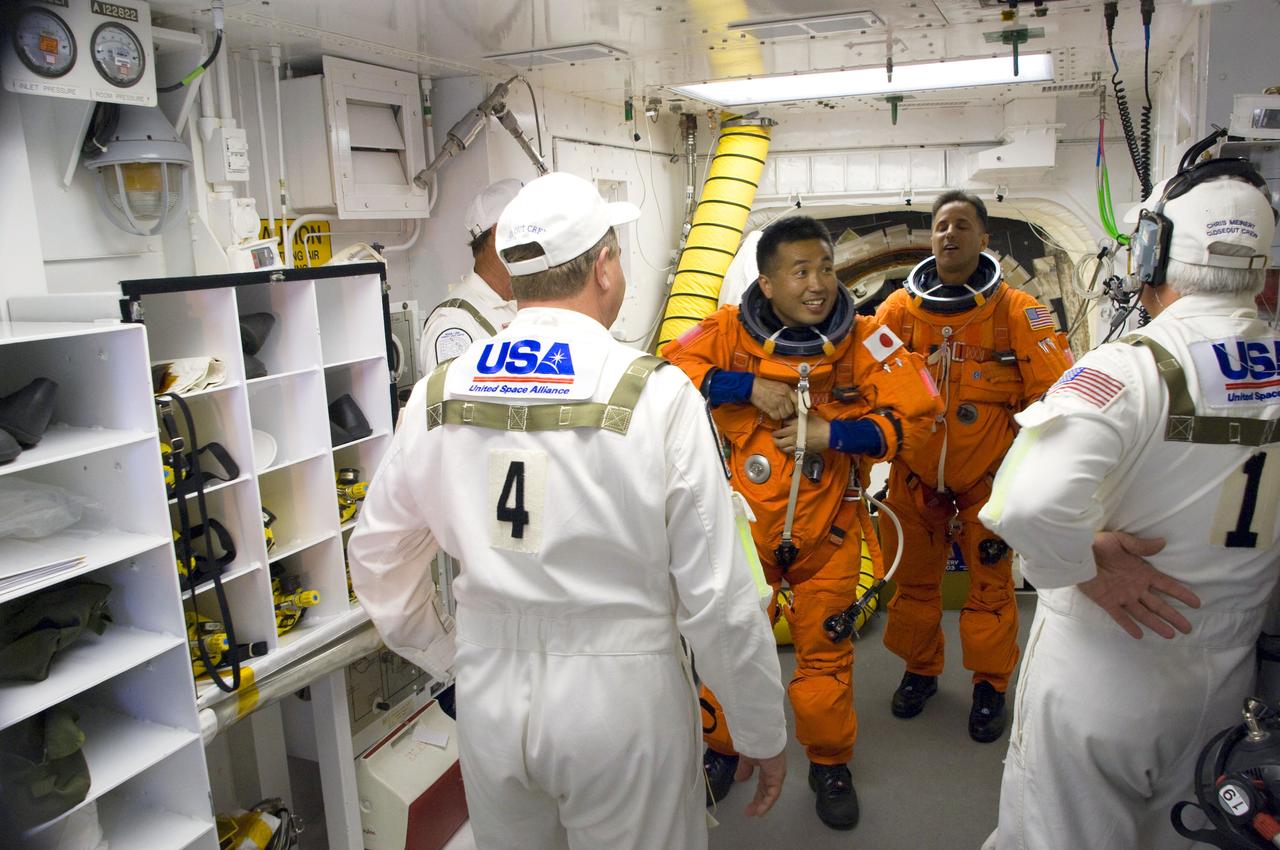
STS119-S-015 (15 March 2009) --- In the White Room on launch pad 39A at NASA's Kennedy Space Center in Florida, Japan Aerospace Exploration Agency astronaut Koichi Wakata (left, facing camera) and NASA astronaut Joseph Acaba, both STS-119 mission specialists, attired in their shuttle launch and entry suits, don their harnesses, which includes a parachute pack, before crawling through the open hatch into Space Shuttle Discovery. The White Room is at the end of the orbiter access arm on the fixed service structure and provides access into the shuttle. Members of the closeout crew assisted the crewmembers. Liftoff is scheduled for 7:43 p.m. (EDT) on March 15, 2009.

CAPE CANAVERAL, Fla. – Kennedy Space Center in Florida, the orbiter access arm, with the White Room on the end, is placed on a trailer. The arm was removed from the fixed service structure for the pad's conversion as launch site for the Constellation Program's Ares I-X. The launch of the Ares I-X flight test is targeted for August 2009. Photo credit: NASA/Kim Shiflett
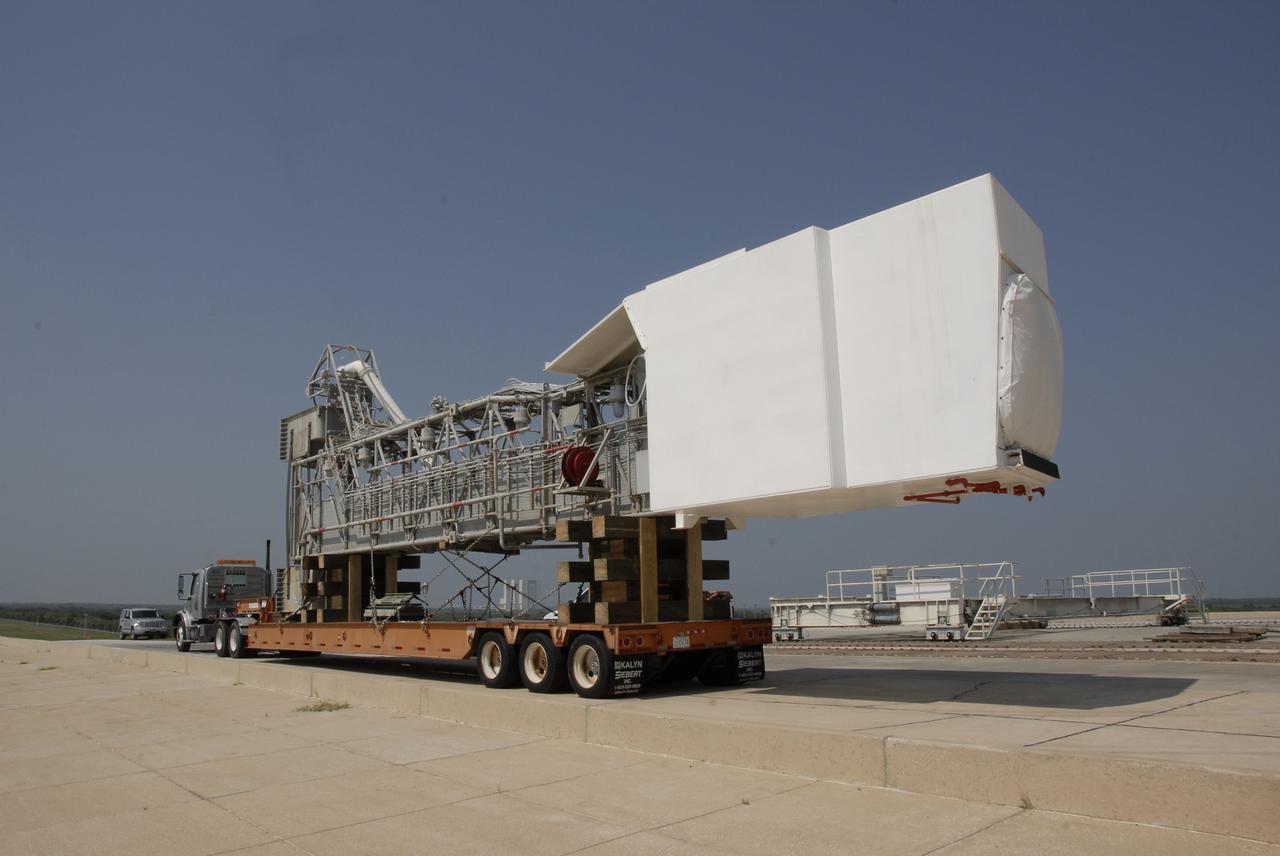
CAPE CANAVERAL, Fla. – The orbiter access arm, with the White Room on the end, leaves Launch Pad 39B on a trailer at NASA's Kennedy Space Center in Florida. The arm was removed from the fixed service structure for the pad's conversion as launch site for the Constellation Program's Ares I-X. The launch of the Ares I-X flight test is targeted for August 2009. Photo credit: NASA/Kim Shiflett
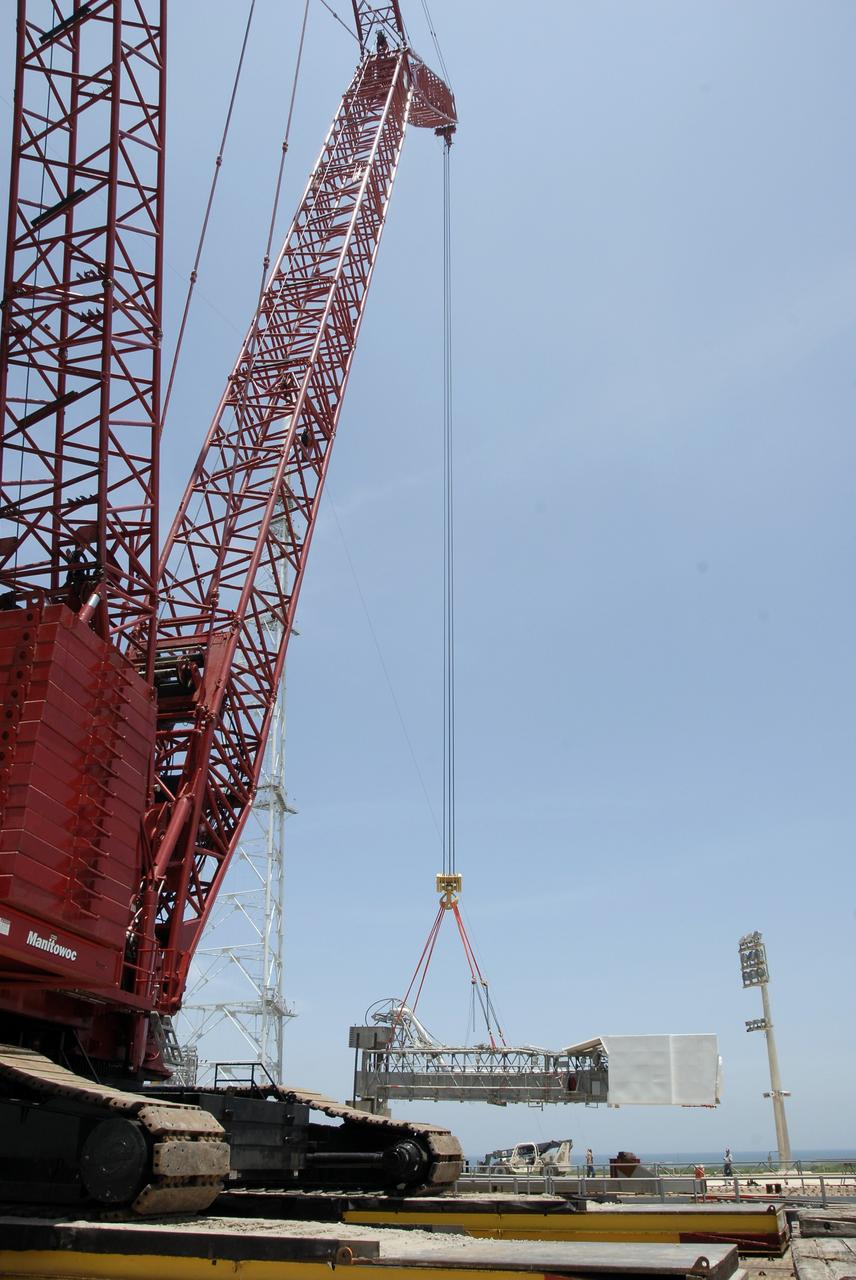
CAPE CANAVERAL, Fla. – On Launch Pad 39B at NASA's Kennedy Space Center in Florida, the crane lowers the orbiter access arm, which ends in the White Room, toward the ground. The arm is being removed from the FSS for the pad's conversion as launch site for the Constellation Program's Ares I-X. The launch of the Ares I-X flight test is targeted for August 2009. Photo credit: NASA/Kim Shiflett
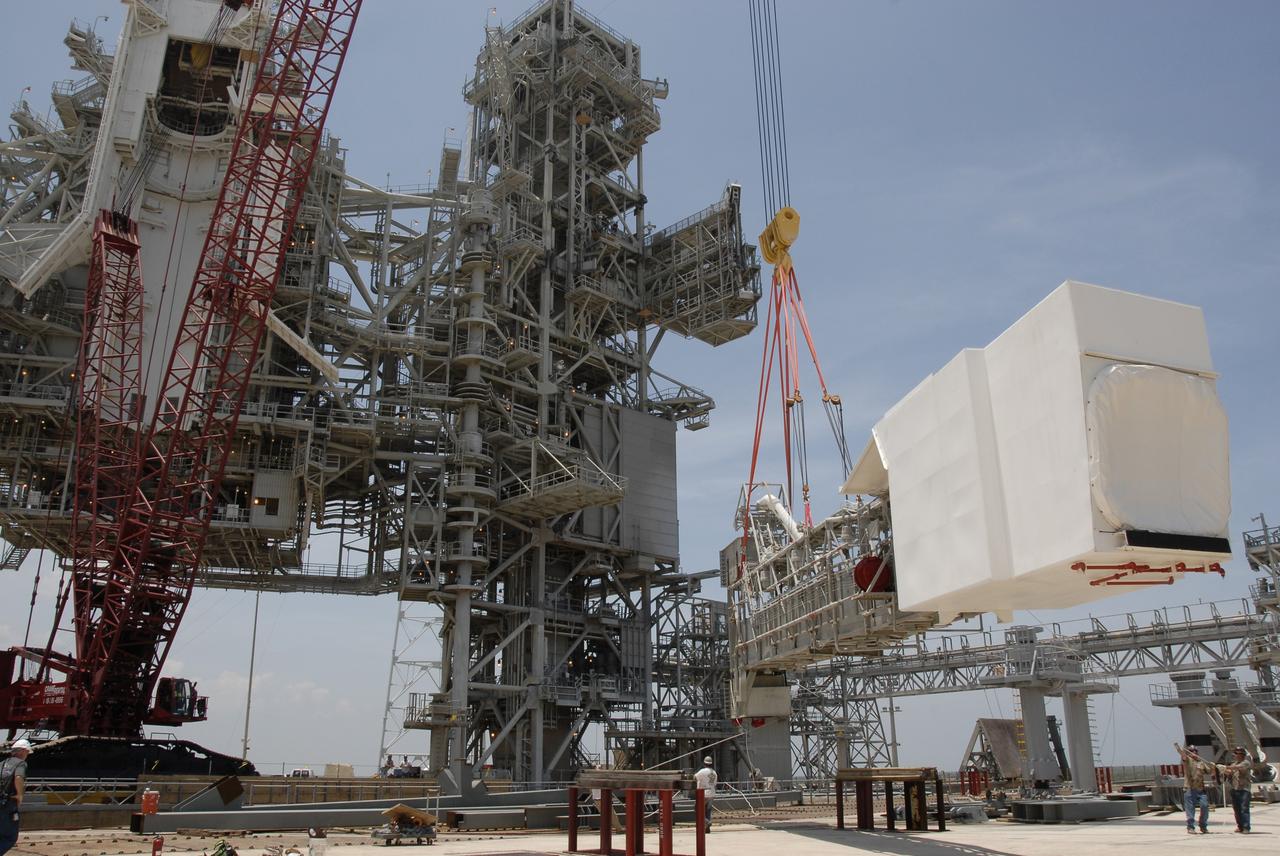
CAPE CANAVERAL, Fla. – On Launch Pad 39B at NASA's Kennedy Space Center in Florida, the crane lowers the orbiter access arm, which ends in the White Room, toward the ground. The arm is being removed from the FSS for the pad's conversion as launch site for the Constellation Program's Ares I-X. The launch of the Ares I-X flight test is targeted for August 2009. Photo credit: NASA/Kim Shiflett
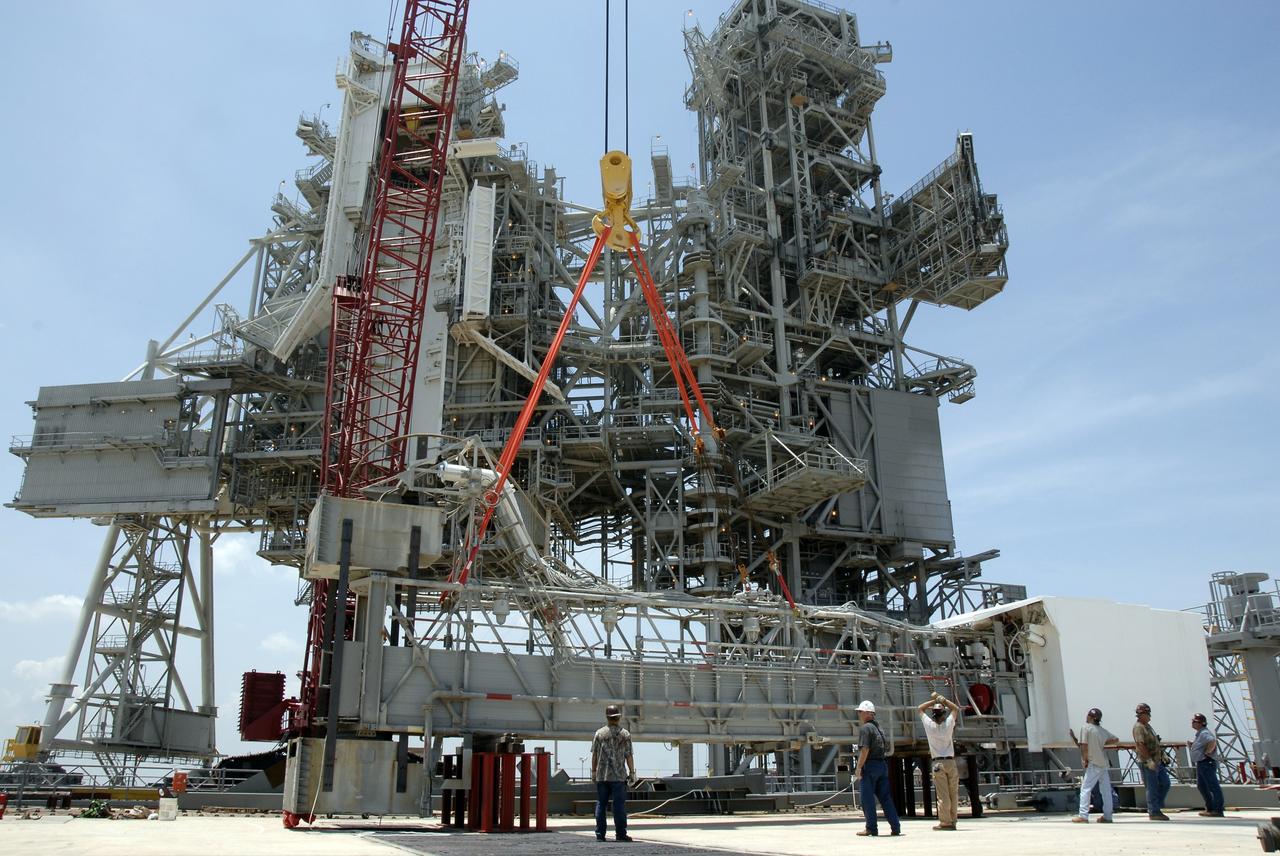
CAPE CANAVERAL, Fla. – On Launch Pad 39B at NASA's Kennedy Space Center in Florida, the crane lowers the orbiter access arm, which ends in the White Room, toward the ground. The arm is being removed from the FSS for the pad's conversion as launch site for the Constellation Program's Ares I-X. The launch of the Ares I-X flight test is targeted for August 2009. Photo credit: NASA/Kim Shiflett
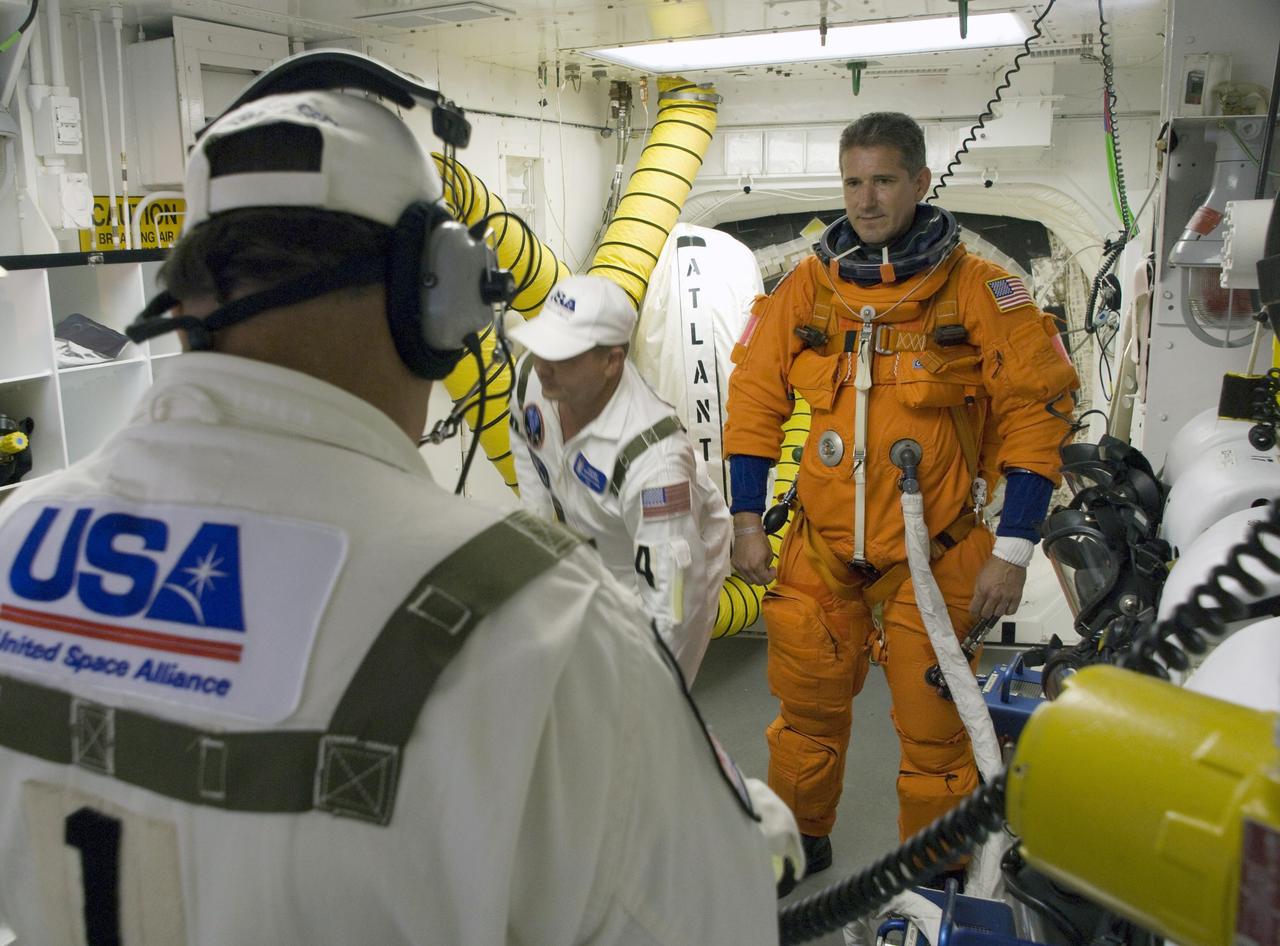
CAPE CANAVERAL, Fla. – In the White Room on Launch Pad 39A at NASA's Kennedy Space Center in Florida, STS-125 Mission Specialist Michael Good prepares to enter space shuttle Atlantis for launch. The White Room is at the end of the orbiter access arm on the fixed service structure and provides access into the shuttle. Atlantis' 11-day flight will include five spacewalks to refurbish and upgrade the telescope with state-of-the-art science instruments that will expand Hubble's capabilities and extend its operational lifespan through at least 2014. The payload includes a Wide Field Camera 3, fine guidance sensor and the Cosmic Origins Spectrograph. Launch of Atlantis on the STS-125 mission is scheduled for 2:01 p.m. May 11 EDT. Photo credit: NASA/Sandra Joseph-Kevin O'Connell
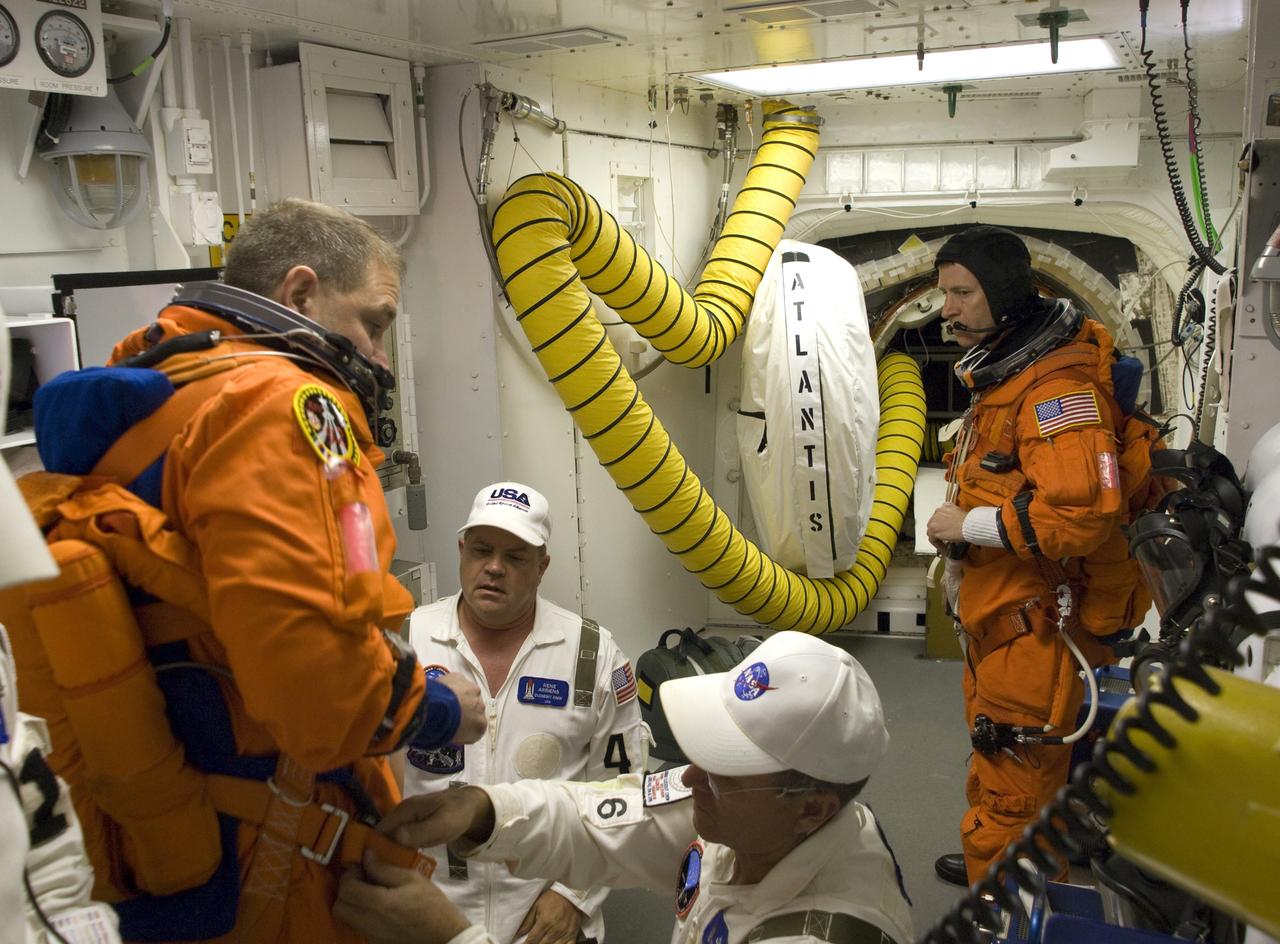
CAPE CANAVERAL, Fla. – In the White Room on Launch Pad 39A at NASA's Kennedy Space Center in Florida, Mission Specialist Andrew Feustel, left, is helped by the closeout crew putting on his harness, which includes a parachute pack. At right is Pilot Gregory C. Johnson. They are preparing to enter space shuttle Atlantis through the open hatch in the background. The White Room is at the end of the orbiter access arm on the fixed service structure and provides access into the shuttle. Atlantis' 11-day flight will include five spacewalks to refurbish and upgrade the telescope with state-of-the-art science instruments that will expand Hubble's capabilities and extend its operational lifespan through at least 2014. The payload includes a Wide Field Camera 3, fine guidance sensor and the Cosmic Origins Spectrograph. Launch of Atlantis on the STS-125 mission is scheduled for 2:01 p.m. May 11 EDT. Photo credit: NASA/Sandra Joseph-Kevin O'Connell
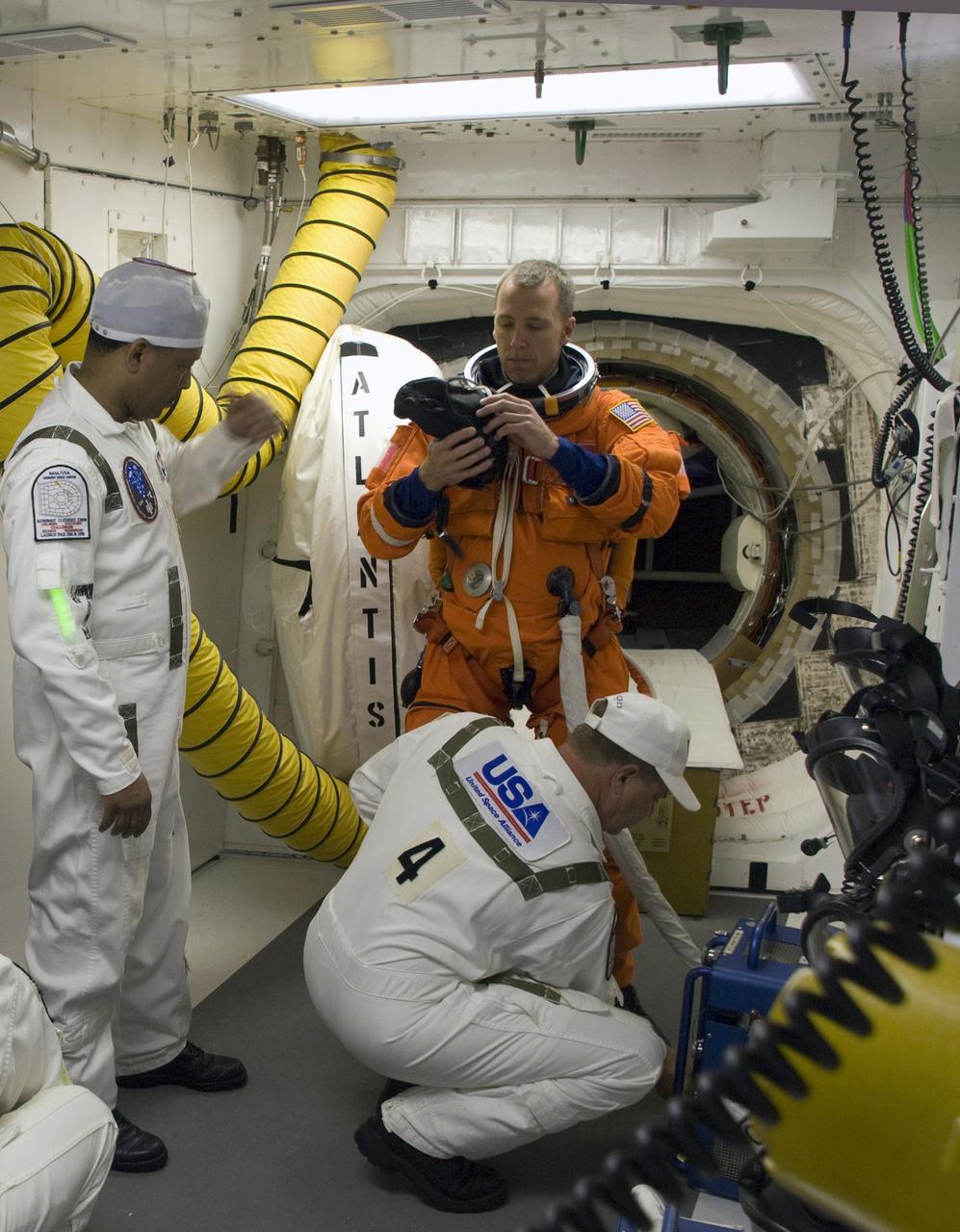
CAPE CANAVERAL, Fla. – In the White Room on Launch Pad 39A at NASA's Kennedy Space Center in Florida, STS-125 Mission Specialist Andrew Feustel is helped by the closeout crew putting on his harness, which includes a parachute pack, before crawling through the open hatch into space shuttle Atlantis. The White Room is at the end of the orbiter access arm on the fixed service structure and provides access into the shuttle. Atlantis' 11-day flight will include five spacewalks to refurbish and upgrade the telescope with state-of-the-art science instruments that will expand Hubble's capabilities and extend its operational lifespan through at least 2014. The payload includes a Wide Field Camera 3, fine guidance sensor and the Cosmic Origins Spectrograph. Launch of Atlantis on the STS-125 mission is scheduled for 2:01 p.m. May 11 EDT. Photo credit: NASA/Sandra Joseph-Kevin O'Connell
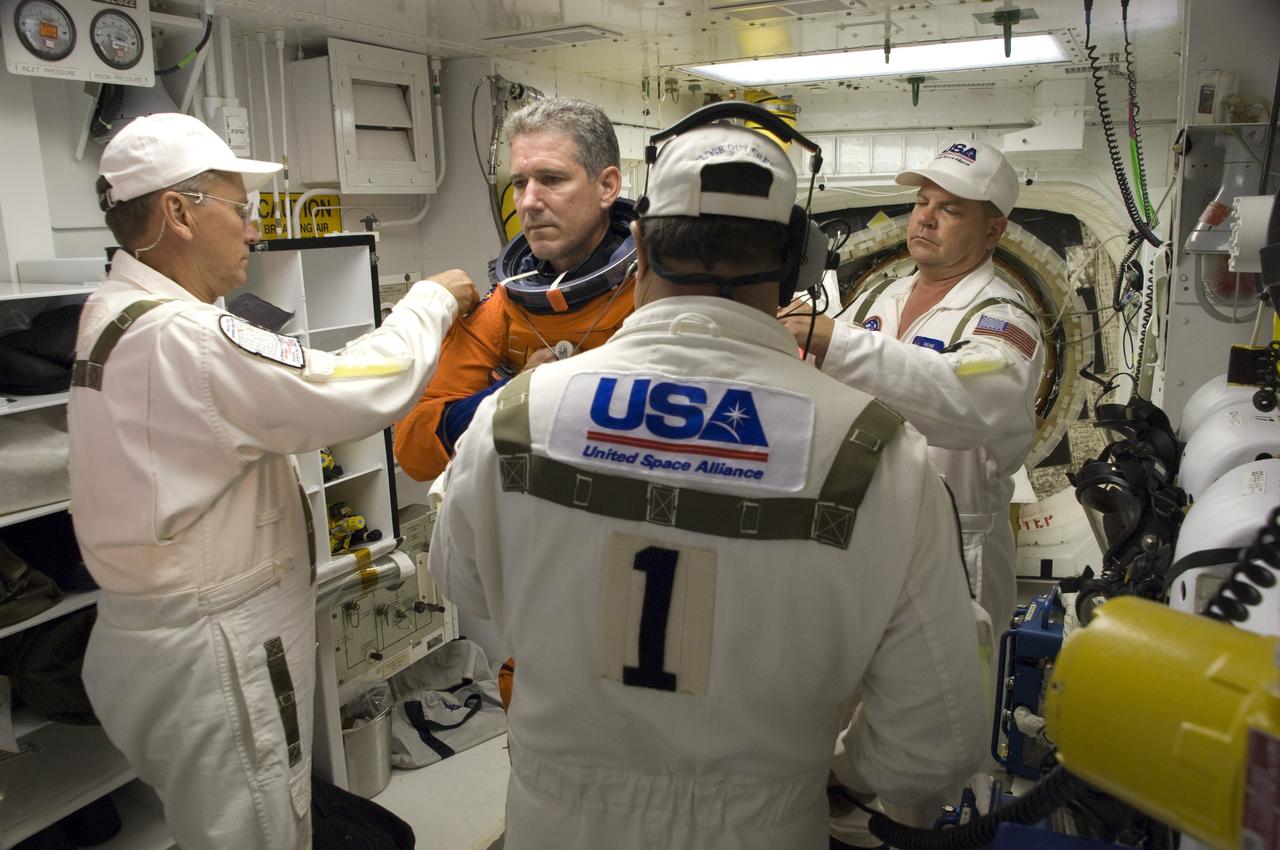
CAPE CANAVERAL, Fla. – In the White Room on Launch Pad 39A at NASA's Kennedy Space Center in Florida, STS-125 Mission Specialist Michael Good is helped by the closeout crew putting on his harness, which includes a parachute pack, before crawling through the open hatch into space shuttle Atlantis. The White Room is at the end of the orbiter access arm on the fixed service structure and provides access into the shuttle. Atlantis' 11-day flight will include five spacewalks to refurbish and upgrade the telescope with state-of-the-art science instruments that will expand Hubble's capabilities and extend its operational lifespan through at least 2014. The payload includes a Wide Field Camera 3, fine guidance sensor and the Cosmic Origins Spectrograph. Launch of Atlantis on the STS-125 mission is scheduled for 2:01 p.m. May 11 EDT. Photo credit: NASA/Sandra Joseph-Kevin O'Connell
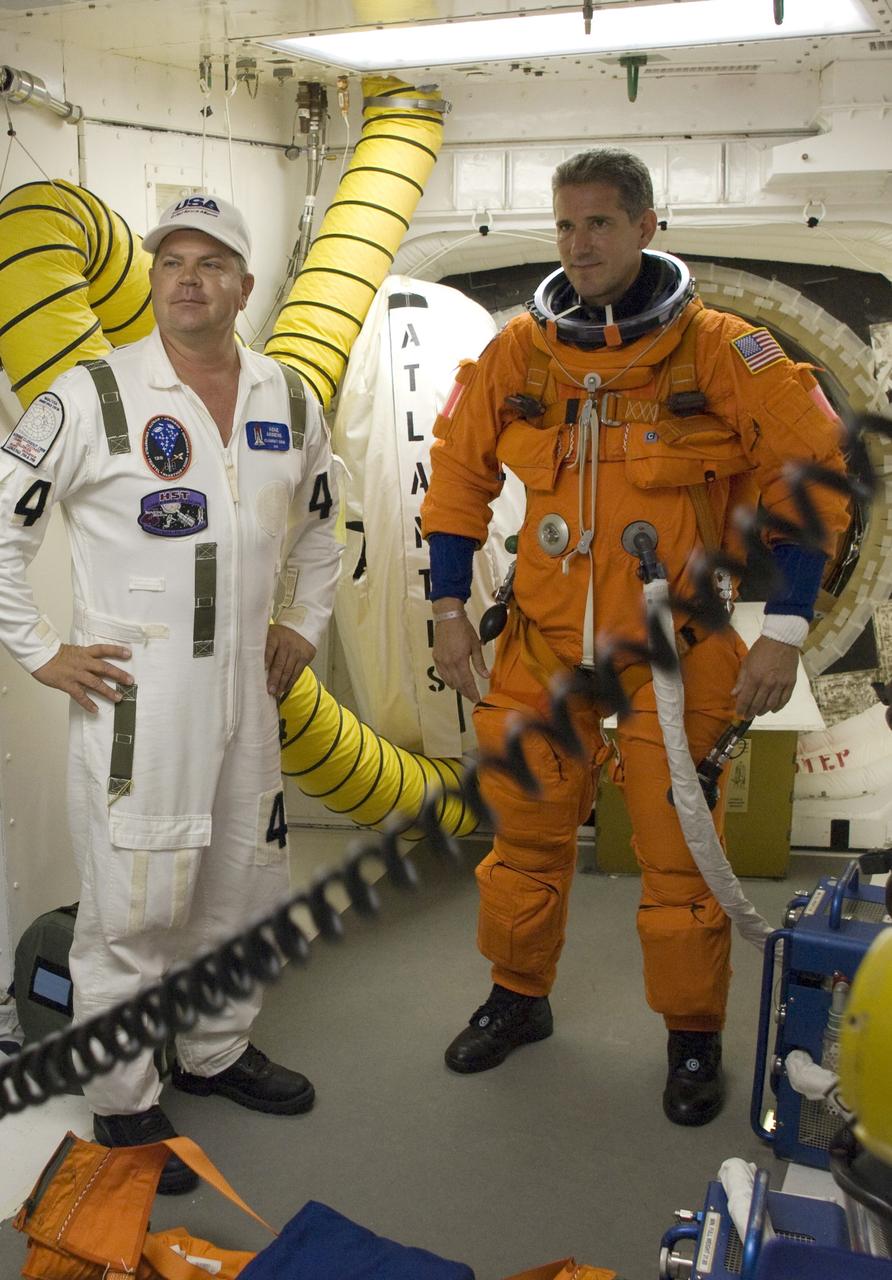
CAPE CANAVERAL, Fla. – In the White Room on Launch Pad 39A at NASA's Kennedy Space Center in Florida, STS-125 Mission Specialist Michael Good stands while cool air is pumped through his launch-and-entry suit. He is preparing to enter space shuttle Atlantis through the open hatch in the background. The White Room is at the end of the orbiter access arm on the fixed service structure and provides access into the shuttle. Atlantis' 11-day flight will include five spacewalks to refurbish and upgrade the telescope with state-of-the-art science instruments that will expand Hubble's capabilities and extend its operational lifespan through at least 2014. The payload includes a Wide Field Camera 3, fine guidance sensor and the Cosmic Origins Spectrograph. Launch of Atlantis on the STS-125 mission is scheduled for 2:01 p.m. May 11 EDT. Photo credit: NASA/Sandra Joseph-Kevin O'Connell

CAPE CANAVERAL, Fla. – In the White Room on Launch Pad 39A at NASA's Kennedy Space Center in Florida, STS-125 Commander Scott Altman is helped by the closeout crew putting on his harness, which includes a parachute pack, before crawling through the open hatch into space shuttle Atlantis. The White Room is at the end of the orbiter access arm on the fixed service structure and provides access into the shuttle. Atlantis' 11-day flight will include five spacewalks to refurbish and upgrade the telescope with state-of-the-art science instruments that will expand Hubble's capabilities and extend its operational lifespan through at least 2014. The payload includes a Wide Field Camera 3, fine guidance sensor and the Cosmic Origins Spectrograph. Launch of Atlantis on the STS-125 mission is scheduled for 2:01 p.m. May 11 EDT. Photo credit: NASA/Sandra Joseph-Kevin O'Connell

CAPE CANAVERAL, Fla. – In the White Room on Launch Pad 39A at NASA's Kennedy Space Center in Florida, STS-125 Mission Specialist Michael Good is helped by the closeout crew putting on his harness, which includes a parachute pack, before crawling through the open hatch into space shuttle Atlantis. The White Room is at the end of the orbiter access arm on the fixed service structure and provides access into the shuttle. Atlantis' 11-day flight will include five spacewalks to refurbish and upgrade the telescope with state-of-the-art science instruments that will expand Hubble's capabilities and extend its operational lifespan through at least 2014. The payload includes a Wide Field Camera 3, fine guidance sensor and the Cosmic Origins Spectrograph. Launch of Atlantis on the STS-125 mission is scheduled for 2:01 p.m. May 11 EDT. Photo credit: NASA/Sandra Joseph-Kevin O'Connell

CAPE CANAVERAL, Fla. – In the White Room on Launch Pad 39A at NASA's Kennedy Space Center in Florida, STS-125 Mission Specialist Megan McArthur completes preparation of her launch-and-entry suit for entry into space shuttle Atlantis. The White Room is at the end of the orbiter access arm on the fixed service structure and provides access into the shuttle. Atlantis' 11-day flight will include five spacewalks to refurbish and upgrade the telescope with state-of-the-art science instruments that will expand Hubble's capabilities and extend its operational lifespan through at least 2014. The payload includes a Wide Field Camera 3, fine guidance sensor and the Cosmic Origins Spectrograph. Launch of Atlantis on the STS-125 mission is scheduled for 2:01 p.m. May 11 EDT. Photo credit: NASA/Sandra Joseph-Kevin O'Connell
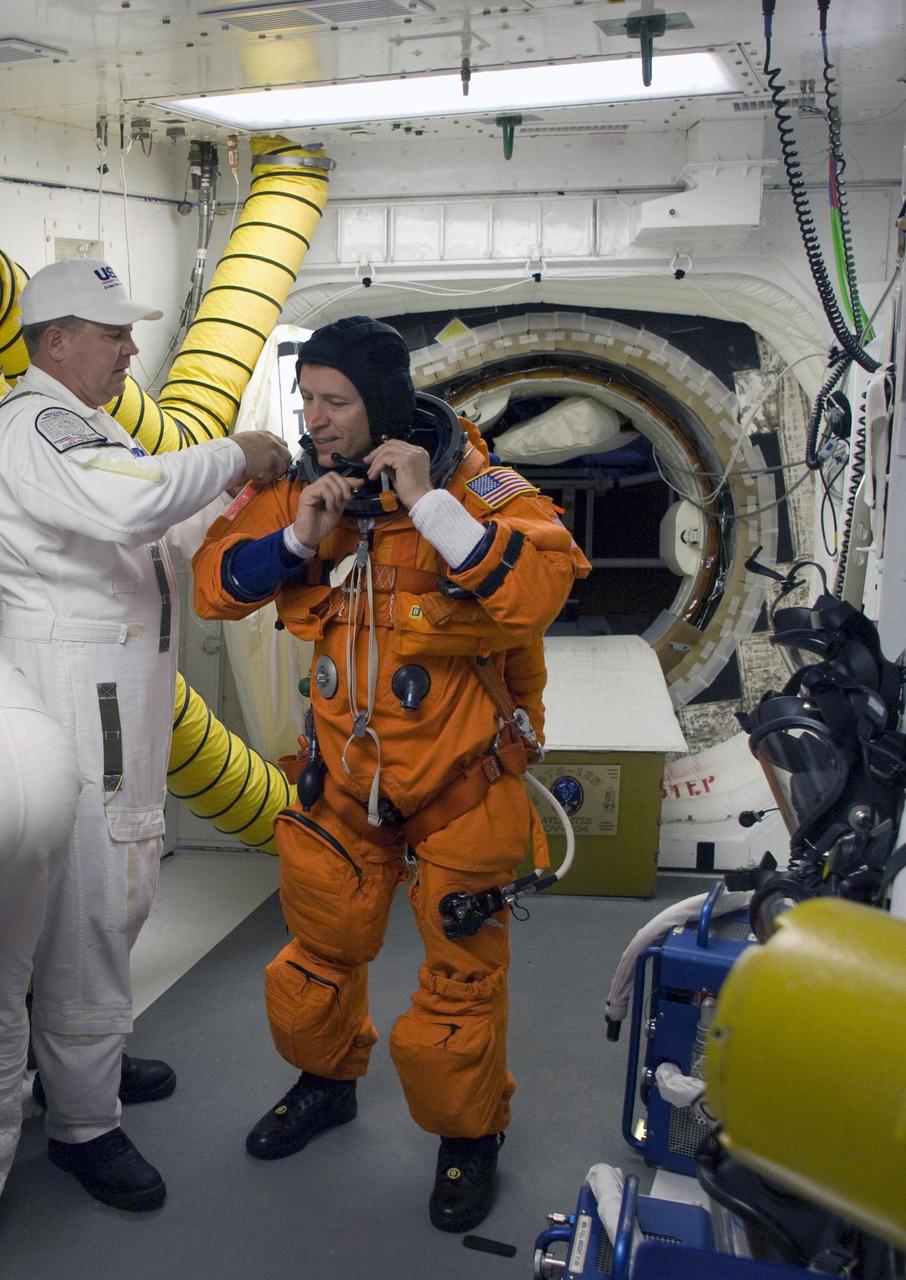
CAPE CANAVERAL, Fla. – In the White Room on Launch Pad 39A at NASA's Kennedy Space Center in Florida, STS-125 Pilot Gregory C. Johnson is helped by the closeout crew putting on his harness, which includes a parachute pack, before crawling through the open hatch into space shuttle Atlantis. The White Room is at the end of the orbiter access arm on the fixed service structure and provides access into the shuttle. Atlantis' 11-day flight will include five spacewalks to refurbish and upgrade the telescope with state-of-the-art science instruments that will expand Hubble's capabilities and extend its operational lifespan through at least 2014. The payload includes a Wide Field Camera 3, fine guidance sensor and the Cosmic Origins Spectrograph. Launch of Atlantis on the STS-125 mission is scheduled for 2:01 p.m. May 11 EDT. Photo credit: NASA/Sandra Joseph-Kevin O'Connell
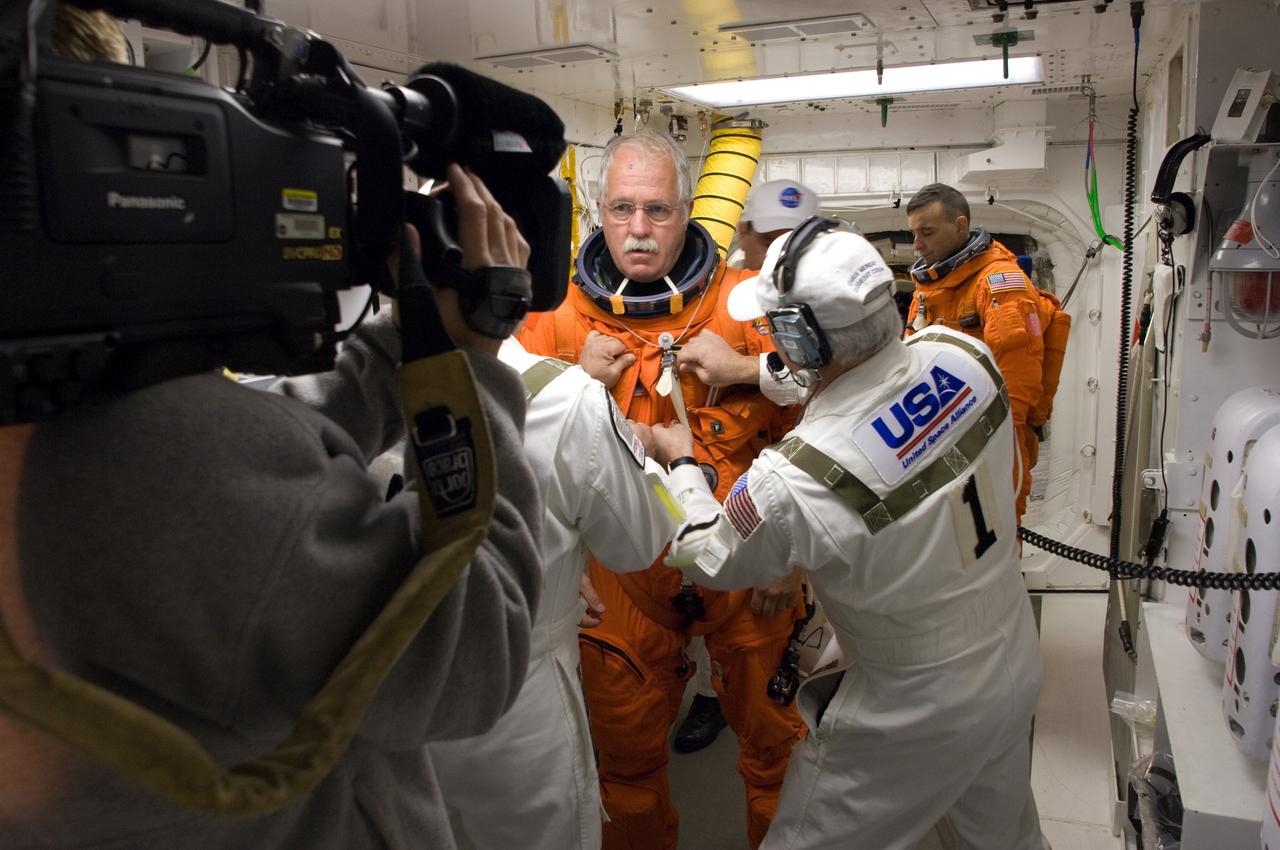
CAPE CANAVERAL, Fla. – In the White Room on Launch Pad 39A at NASA's Kennedy Space Center in Florida, STS-119 Mission Specialist John Phillips (center) is helped by the Closeout Crew to put on his harness. Phillips will join Commander Lee Archambault (background right) and other crew members to enter space shuttle Discovery to conduct a simulated launch countdown. The astronauts are at Kennedy to prepare for launch through Terminal Countdown Demonstration Test activities. The TCDT includes equipment familiarization and emergency egress training. Discovery is targeted to launch on the STS-119 mission Feb. 12. During the 14-day mission, the crew will install the S6 truss segment and solar arrays to the starboard side of the International Space Station, completing the station's truss, or backbone. Photo credit: NASA/Sandra Joseph, Kevin O'Connell, Tom Farrar

CAPE CANAVERAL, Fla. – In the White Room on Launch Pad 39A at NASA's Kennedy Space Center in Florida, STS-119 Mission Specialist Koichi Wakata is helped by the Closeout Crew to put on his harness. Wakata will join other crew members to enter space shuttle Discovery to conduct a simulated launch countdown. The astronauts are at Kennedy to prepare for launch through Terminal Countdown Demonstration Test activities. The TCDT includes equipment familiarization and emergency egress training. Discovery is targeted to launch on the STS-119 mission Feb. 12. During the 14-day mission, the crew will install the S6 truss segment and solar arrays to the starboard side of the International Space Station, completing the station's truss, or backbone. Photo credit: NASA/Sandra Joseph, Kevin O'Connell, Tom Farrar
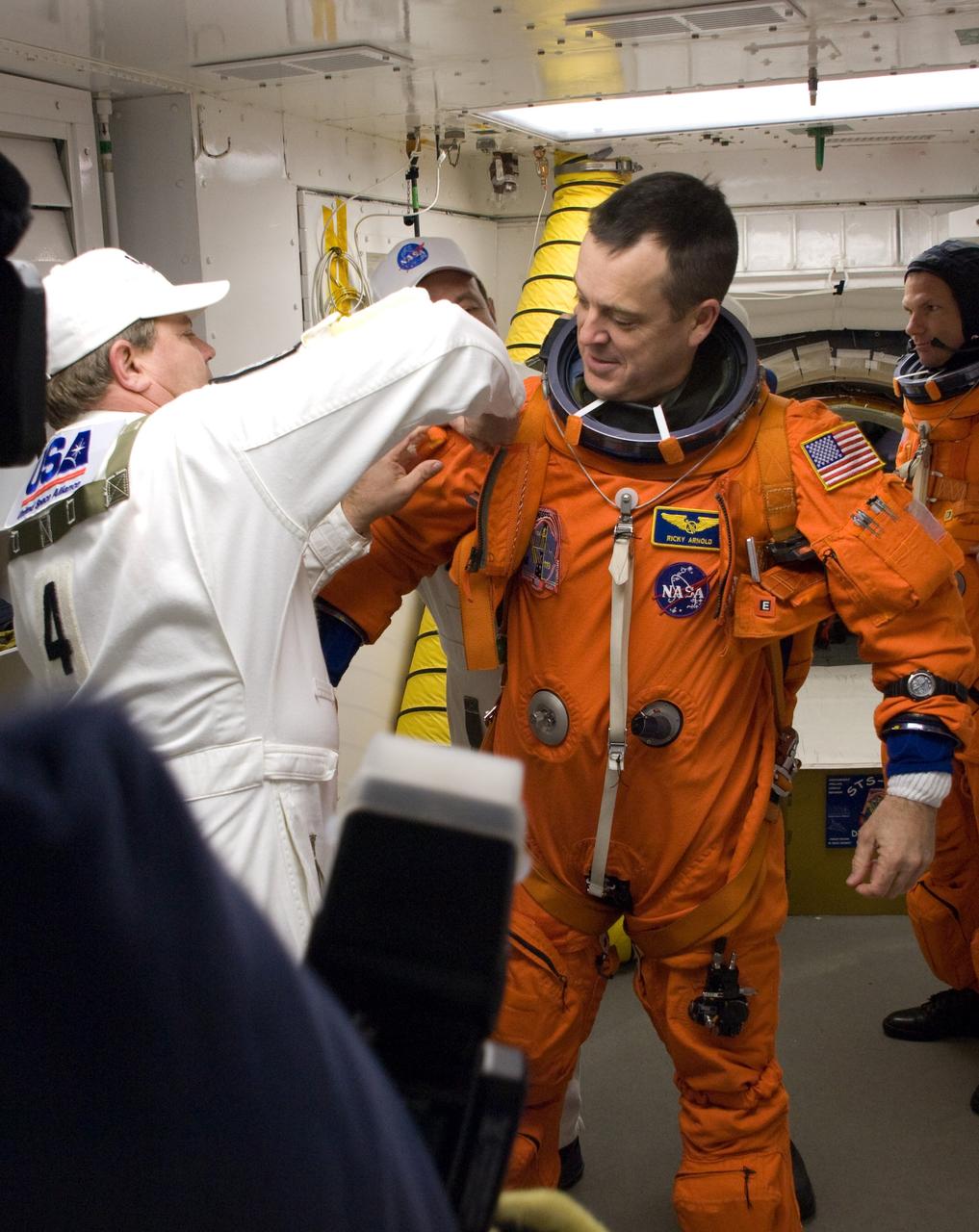
CAPE CANAVERAL, Fla. – In the White Room on Launch Pad 39A at NASA's Kennedy Space Center in Florida, STS-119 Mission Specialist Richard Arnold (foreground) is helped by the Closeout Crew to put on his harness. Arnold will join Pilot Tony Antonelli (background right) and other crew members to enter space shuttle Discovery to conduct a simulated launch countdown. The astronauts are at Kennedy to prepare for launch through Terminal Countdown Demonstration Test activities. The TCDT includes equipment familiarization and emergency egress training. Discovery is targeted to launch on the STS-119 mission Feb. 12. During the 14-day mission, the crew will install the S6 truss segment and solar arrays to the starboard side of the International Space Station, completing the station's truss, or backbone. Photo credit: NASA/Sandra Joseph, Kevin O'Connell, Tom Farrar
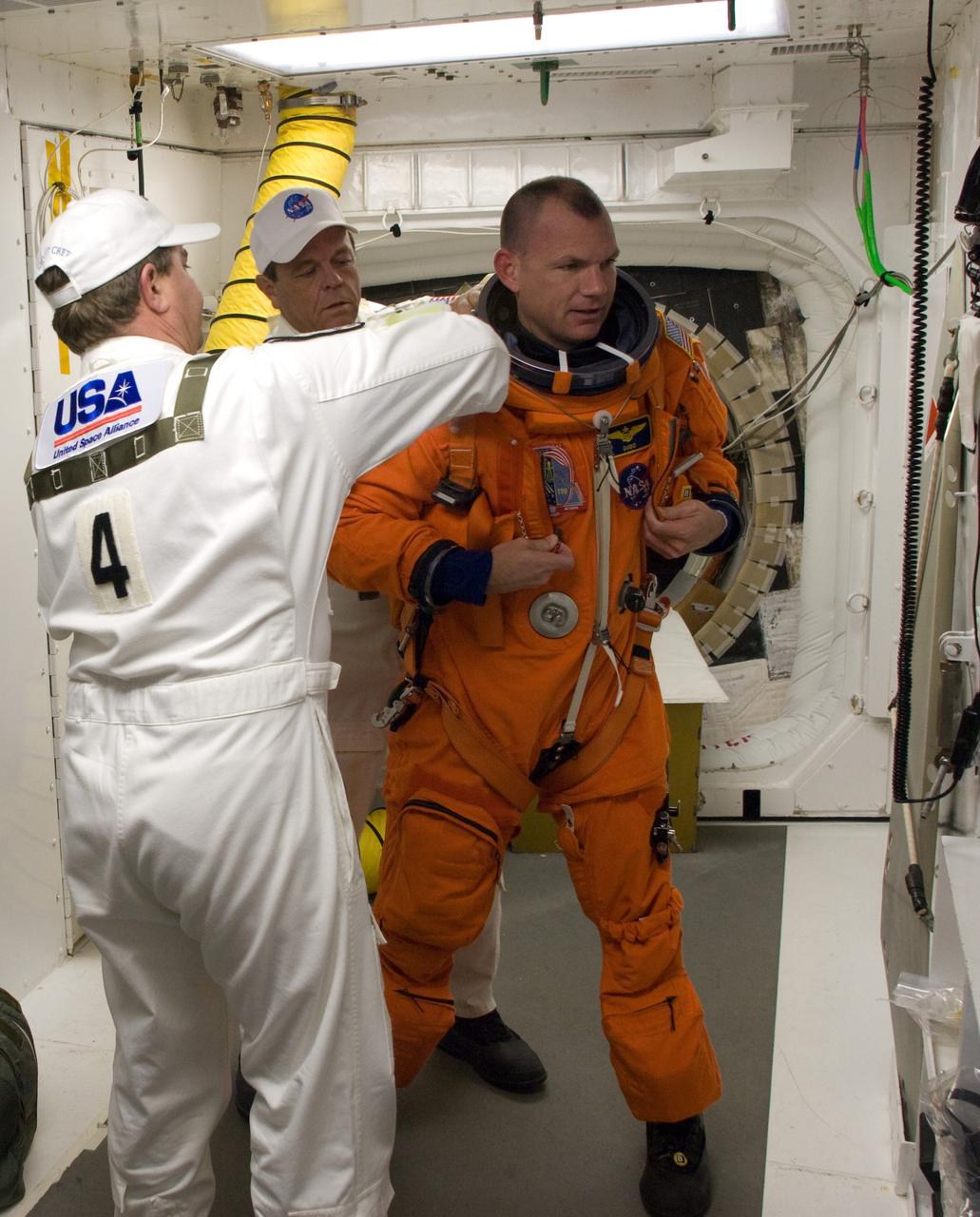
CAPE CANAVERAL, Fla. – In the White Room on Launch Pad 39A at NASA's Kennedy Space Center in Florida, STS-119 Pilot Tony Antonelli is helped by the Closeout Crew to put on his harness. Antonelli will enter space shuttle Discovery along with the other crew members to conduct a simulated launch countdown. The astronauts are at Kennedy to prepare for launch through Terminal Countdown Demonstration Test activities. The TCDT includes equipment familiarization and emergency egress training. Discovery is targeted to launch on the STS-119 mission Feb. 12. During the 14-day mission, the crew will install the S6 truss segment and solar arrays to the starboard side of the International Space Station, completing the station's truss, or backbone. Photo credit: NASA/Sandra Joseph, Kevin O'Connell, Tom Farrar
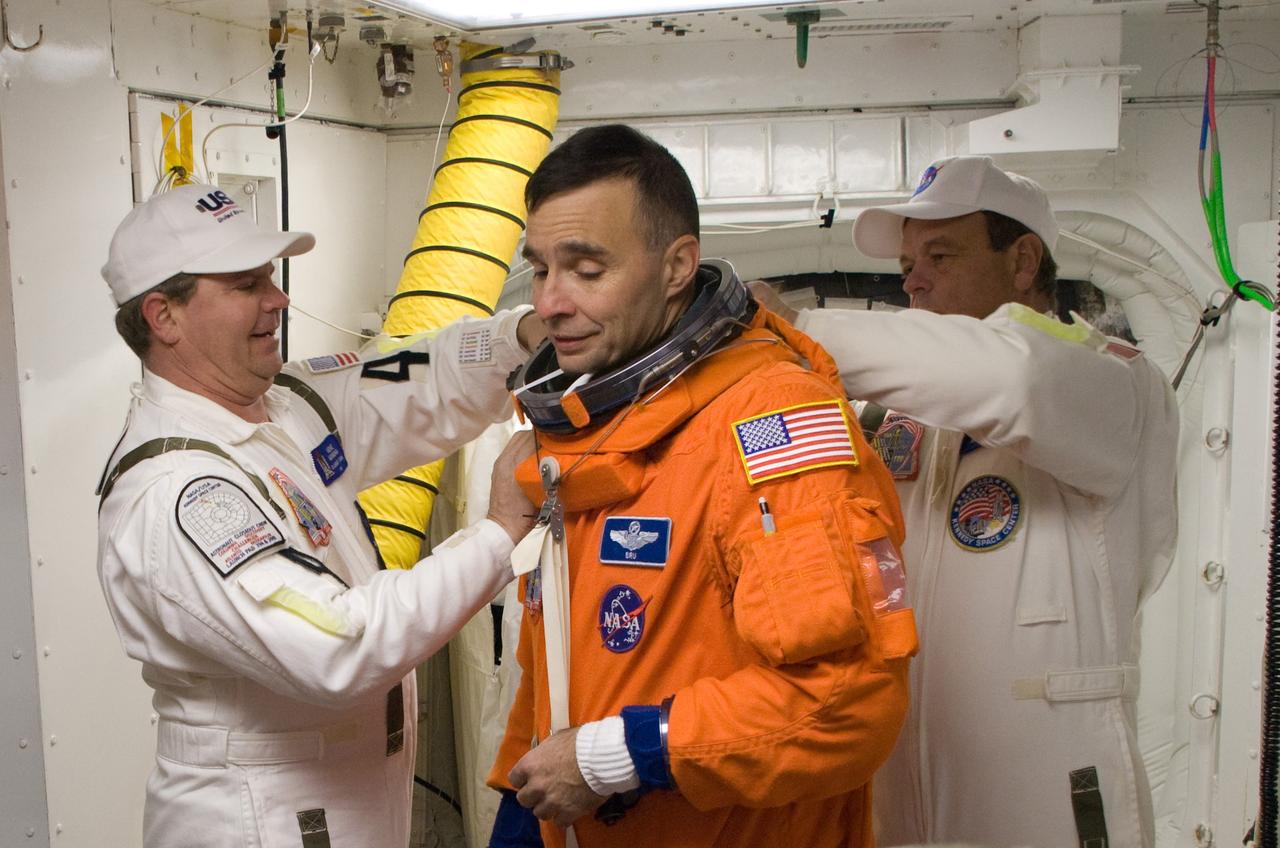
CAPE CANAVERAL, Fla. – In the White Room on Launch Pad 39A at NASA's Kennedy Space Center in Florida, STS-119 Commander Lee Archambault is helped by the Closeout Crew to put on his harness. Archambault will enter space shuttle Discovery along with the other crew members to conduct a simulated launch countdown. The astronauts are at Kennedy to prepare for launch through Terminal Countdown Demonstration Test activities. The TCDT includes equipment familiarization and emergency egress training. Discovery is targeted to launch on the STS-119 mission Feb. 12. During the 14-day mission, the crew will install the S6 truss segment and solar arrays to the starboard side of the International Space Station, completing the station's truss, or backbone. Photo credit: NASA/Sandra Joseph, Kevin O'Connell, Tom Farrar
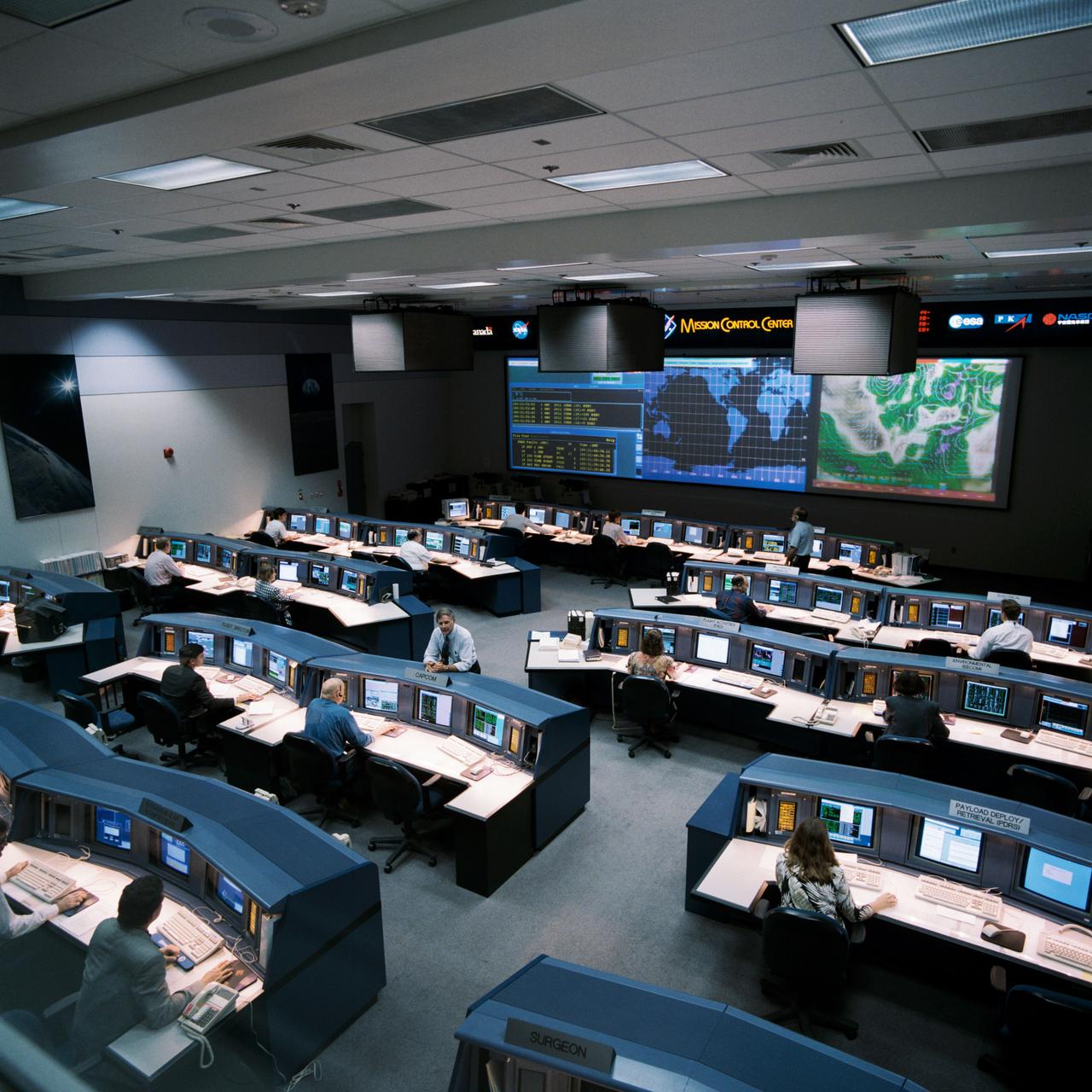
Documentation of the new mission control center White Flight Control Room (FLCR). Excellent overall view of White FLCR with personnel manning console workstations (11221). Fisheye lens perspective from Flight Director station with Brian Austin (11222). Environmental (EECOM) workstation and personnel (11223).
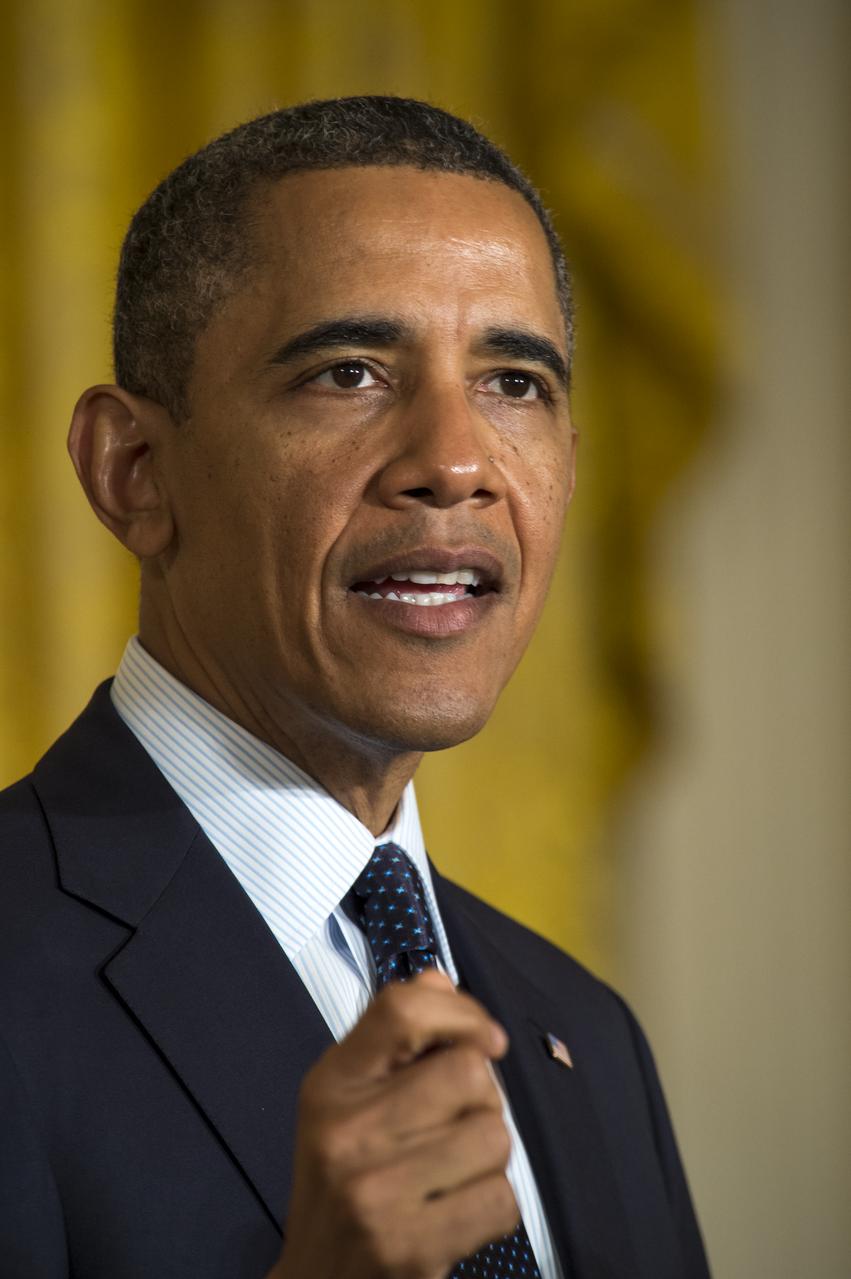
U.S. President Barack Obama speaks as he hosts the third-ever White House Science Fair in the East Room at the White House in Washington, April 22, 2013. The science fair celebrated student winners of a broad range of science, technology, engineering and math (STEM) competitions from across the country. Photo Credit: (NASA/Bill Ingalls)
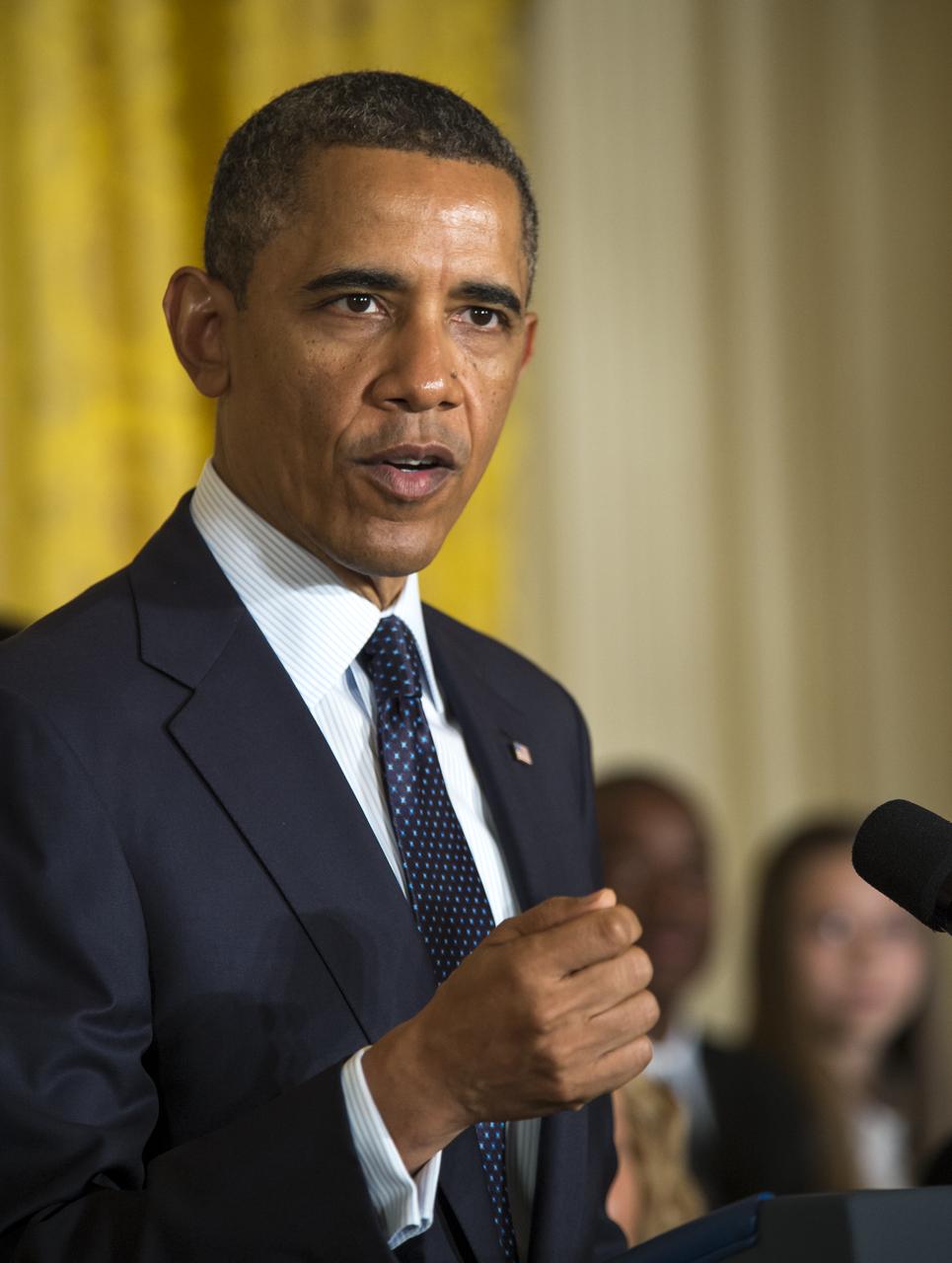
U.S. President Barack Obama speaks as he hosts the third-ever White House Science Fair in the East Room at the White House in Washington, April 22, 2013. The science fair celebrated student winners of a broad range of science, technology, engineering and math (STEM) competitions from across the country. Photo Credit: (NASA/Bill Ingalls)
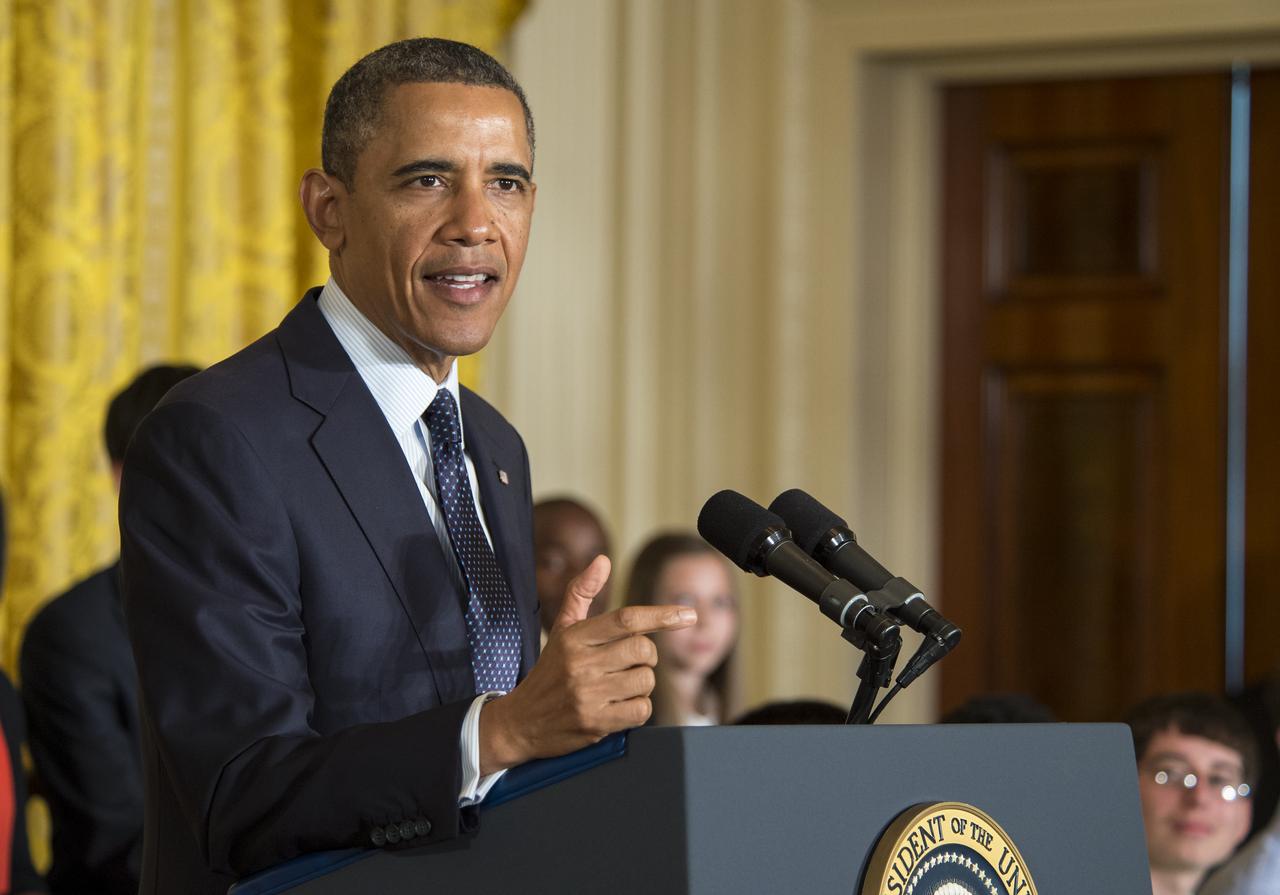
U.S. President Barack Obama speaks as he hosts the third-ever White House Science Fair in the East Room at the White House in Washington, April 22, 2013. The science fair celebrated student winners of a broad range of science, technology, engineering and math (STEM) competitions from across the country. Photo Credit: (NASA/Bill Ingalls)
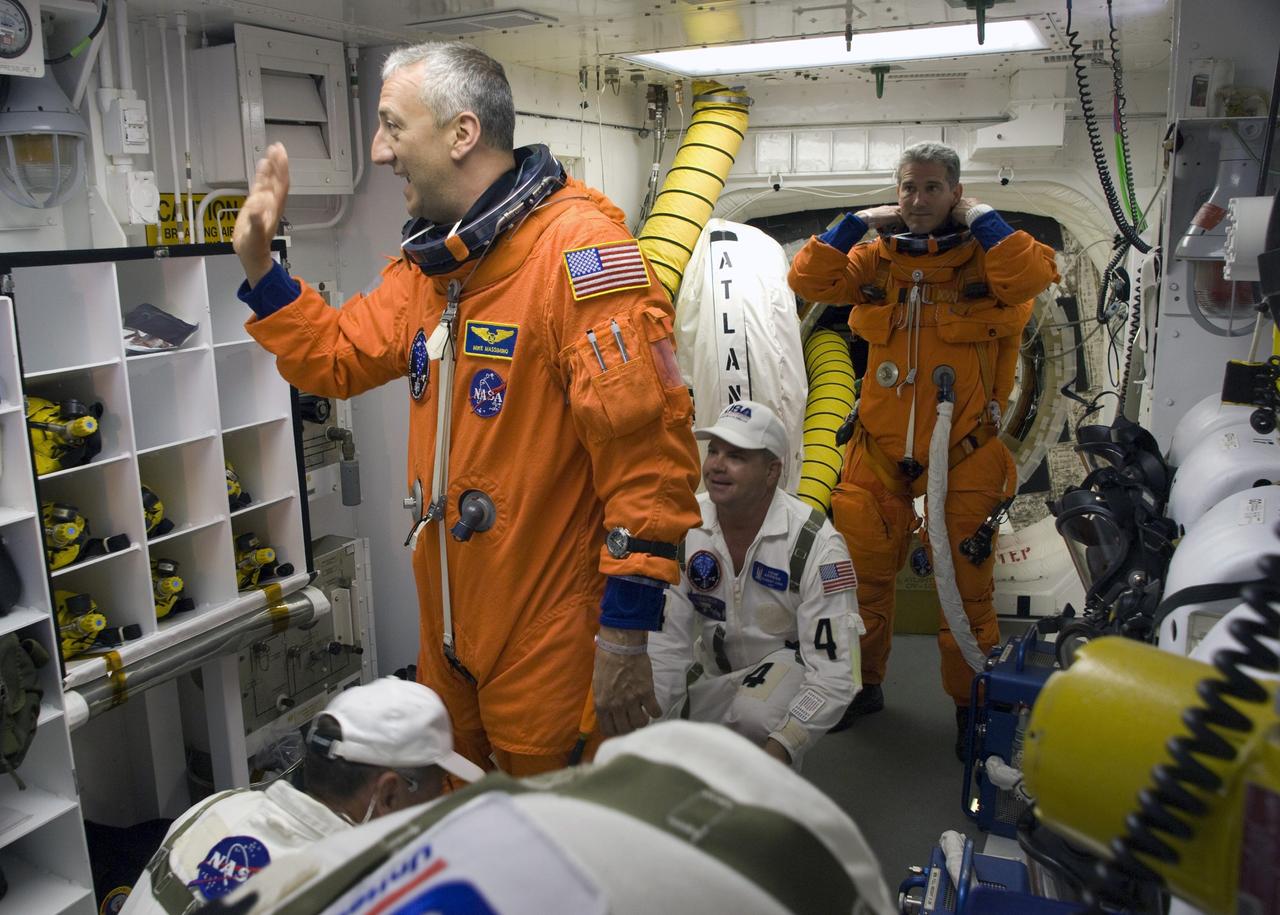
CAPE CANAVERAL, Fla. – In the White Room on Launch Pad 39A at NASA's Kennedy Space Center in Florida, STS-125 Mission Specialist Mike Massimino, left, is next in line to complete preparation of his launch-and-entry suit for launch. At right, Mission Specialist Michael Good is helped with his harness, which includes a parachute pack, before crawling through the open hatch into space shuttle Atlantis. The White Room is at the end of the orbiter access arm on the fixed service structure and provides access into the shuttle. Atlantis' 11-day flight will include five spacewalks to refurbish and upgrade the telescope with state-of-the-art science instruments that will expand Hubble's capabilities and extend its operational lifespan through at least 2014. The payload includes a Wide Field Camera 3, fine guidance sensor and the Cosmic Origins Spectrograph. Launch of Atlantis on the STS-125 mission is scheduled for 2:01 p.m. May 11 EDT. Photo credit: NASA/Sandra Joseph-Kevin O'Connell
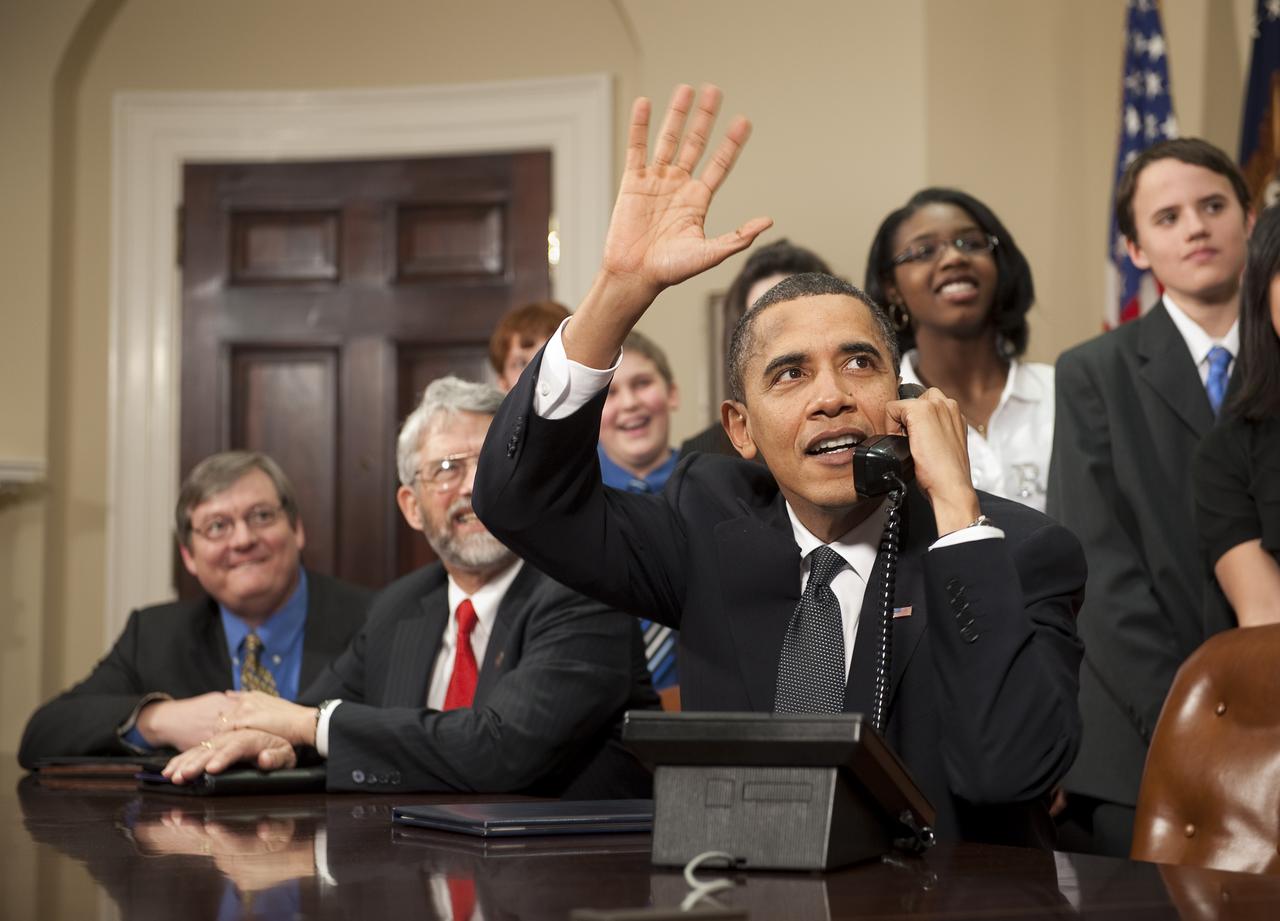
U.S. President Barack Obama, accompanied by members of Congress and middle school children, waves as he talks on the phone from the Roosevelt Room of the White House to astronauts on the International Space Station, Wednesday, Feb. 17, 2010 in Washington. Photo Credit: (NASA/Bill Ingalls)
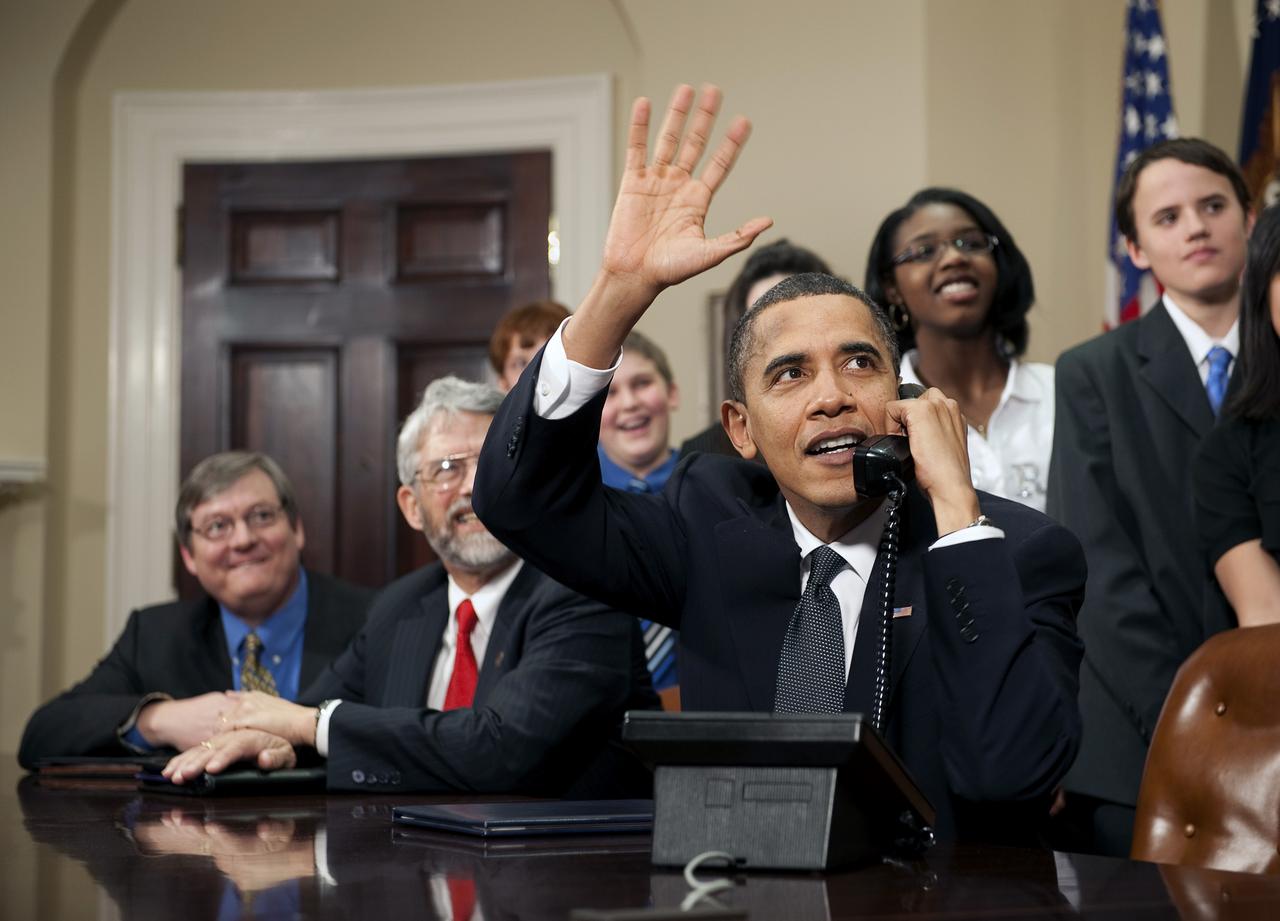
U.S. President Barack Obama, accompanied by members of Congress and middle school children, waves as he talks on the phone from the Roosevelt Room of the White House to astronauts on the International Space Station, Wednesday, Feb. 17, 2010 in Washington. Photo Credit: (NASA/Bill Ingalls)
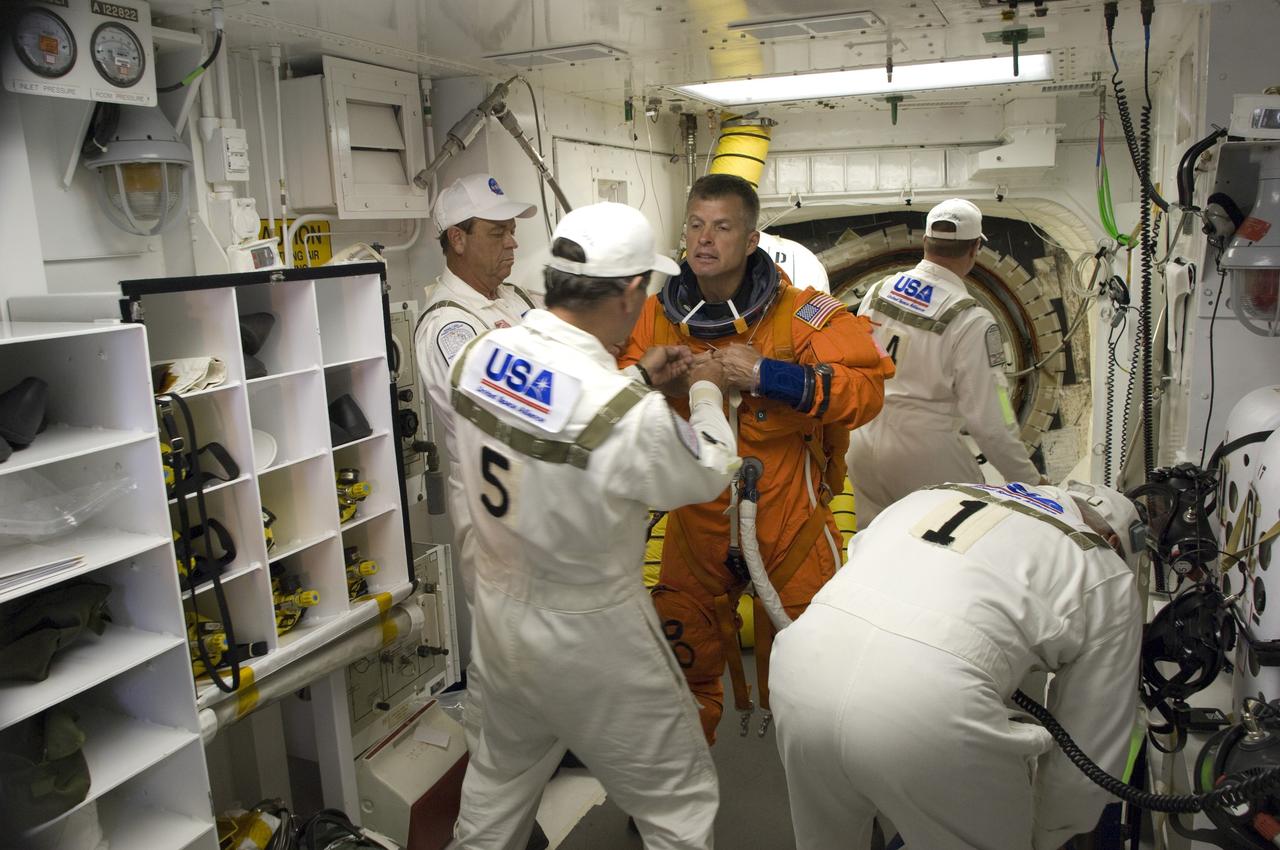
CAPE CANAVERAL, Fla. – In the White Room on Launch Pad 39A at NASA's Kennedy Space Center in Florida, STS-119 Mission Specialist Steve Swanson is helped by the closeout crew putting on his harness, which includes a parachute pack, before crawling through the open hatch into space shuttle Discovery. The White Room is at the end of the orbiter access arm on the fixed service structure and provides access into the shuttle. The STS-119 mission is the 28th to the International Space Station and the 125th space shuttle flight. Discovery will deliver the final pair of power-generating solar array wings and the S6 truss segment. Installation of S6 will signal the station's readiness to house a six-member crew for conducting increased science. Liftoff is scheduled for 7:43 p.m. EDT. Photo credit: NASA/Tony Gray, Tom Farrar
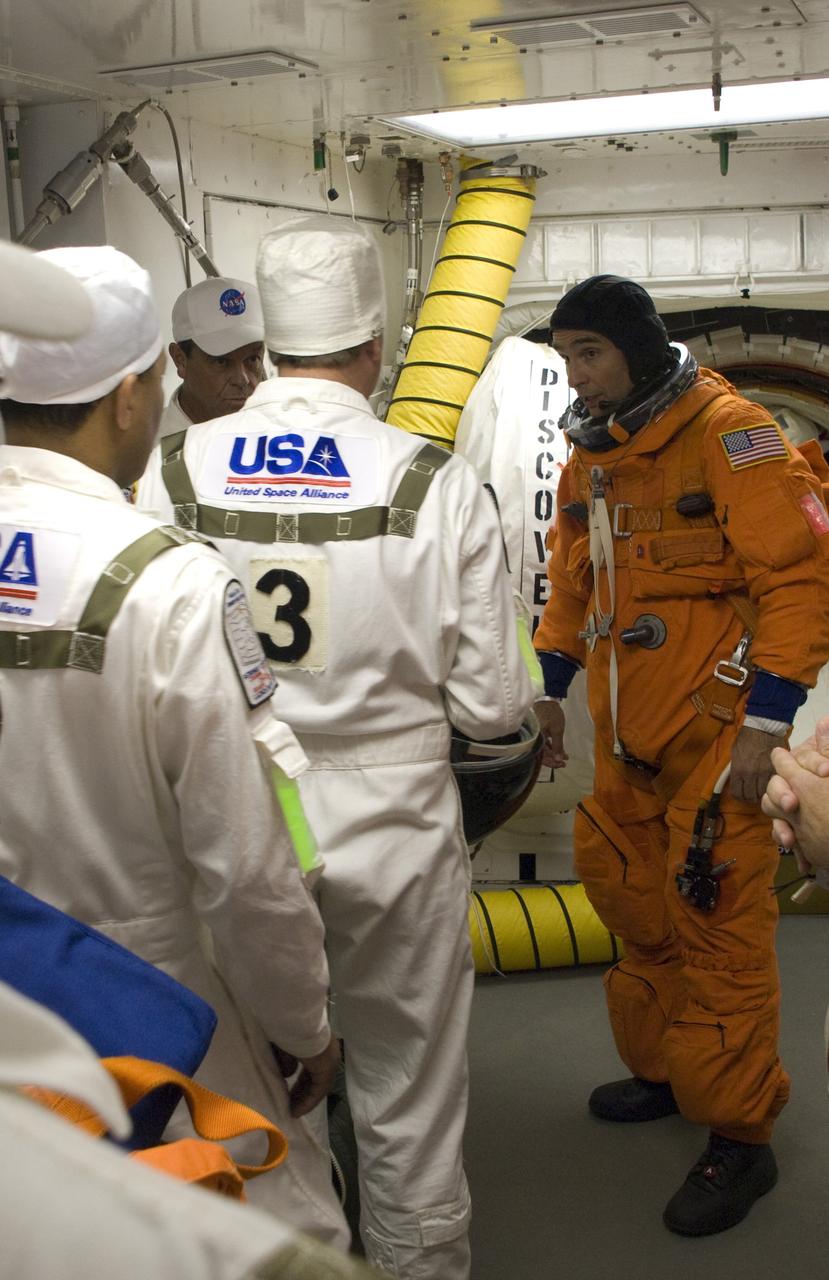
CAPE CANAVERAL, Fla. – In the White Room on Launch Pad 39A at NASA's Kennedy Space Center in Florida, STS-119 Commander Lee Archambault talks to the closeout crew who will put on his harness, which includes a parachute pack, before crawling through the open hatch into the shuttle. The White Room is at the end of the orbiter access arm on the fixed service structure and provides access into space shuttle Discovery. The STS-119 mission is the 28th to the International Space Station and the 125th space shuttle flight. Discovery will deliver the final pair of power-generating solar array wings and the S6 truss segment. Installation of S6 will signal the station's readiness to house a six-member crew for conducting increased science. Liftoff is scheduled for 7:43 p.m. EDT. Photo credit: Photo credit: NASA/Tony Gray, Tom Farrar
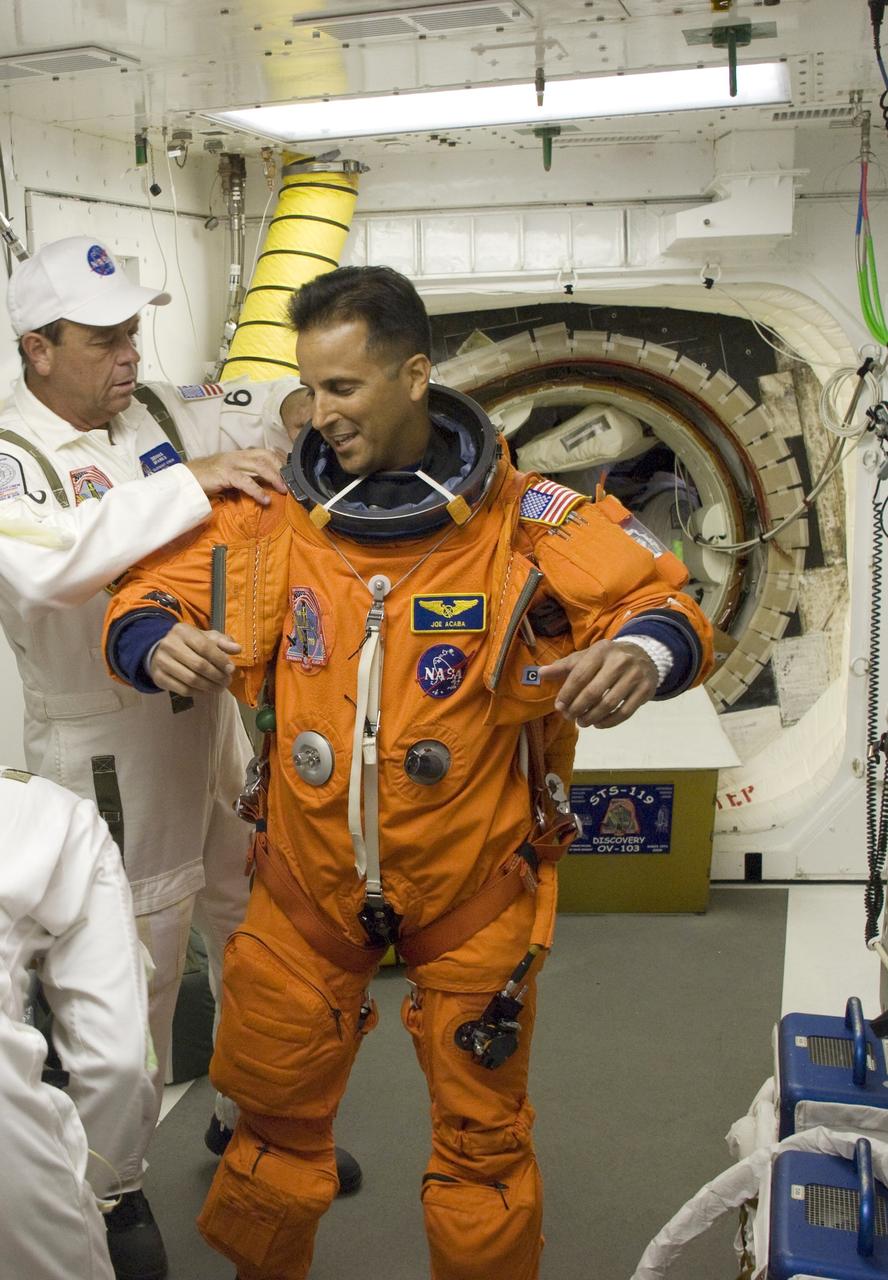
CAPE CANAVERAL, Fla. – In the White Room on Launch Pad 39A at NASA's Kennedy Space Center in Florida, STS-119 Mission Specialist Joseph Acaba is helped by the closeout crew putting on his harness, which includes a parachute pack, before crawling through the open hatch into space shuttle Discovery. The White Room is at the end of the orbiter access arm on the fixed service structure and provides access into the shuttle. The STS-119 mission is the 28th to the International Space Station and the 125th space shuttle flight. Discovery will deliver the final pair of power-generating solar array wings and the S6 truss segment. Installation of S6 will signal the station's readiness to house a six-member crew for conducting increased science. Liftoff is scheduled for 7:43 p.m. EDT. Photo credit: NASA/Tony Gray, Tom Farrar
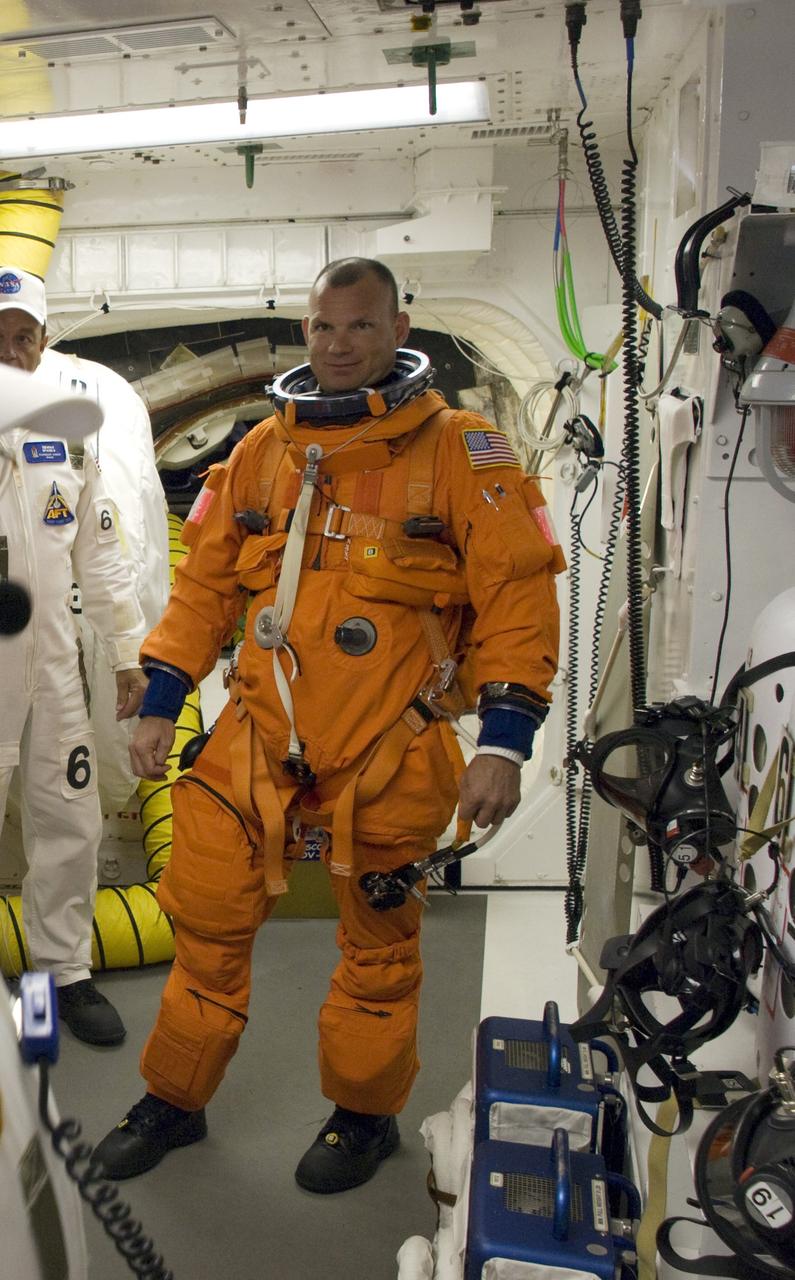
CAPE CANAVERAL, Fla. – In the White Room on Launch Pad 39A at NASA's Kennedy Space Center in Florida, STS-119 Pilot Tony Antonelli is getting into his harness, which includes a parachute pack, before crawling through the open hatch into space shuttle Discovery. The White Room is at the end of the orbiter access arm on the fixed service structure and provides access into the shuttle. The STS-119 mission is the 28th to the International Space Station and the 125th space shuttle flight. Discovery will deliver the final pair of power-generating solar array wings and the S6 truss segment. Installation of S6 will signal the station's readiness to house a six-member crew for conducting increased science. Liftoff is scheduled for 7:43 p.m. EDT. Photo credit: NASA/Tony Gray, Tom Farrar
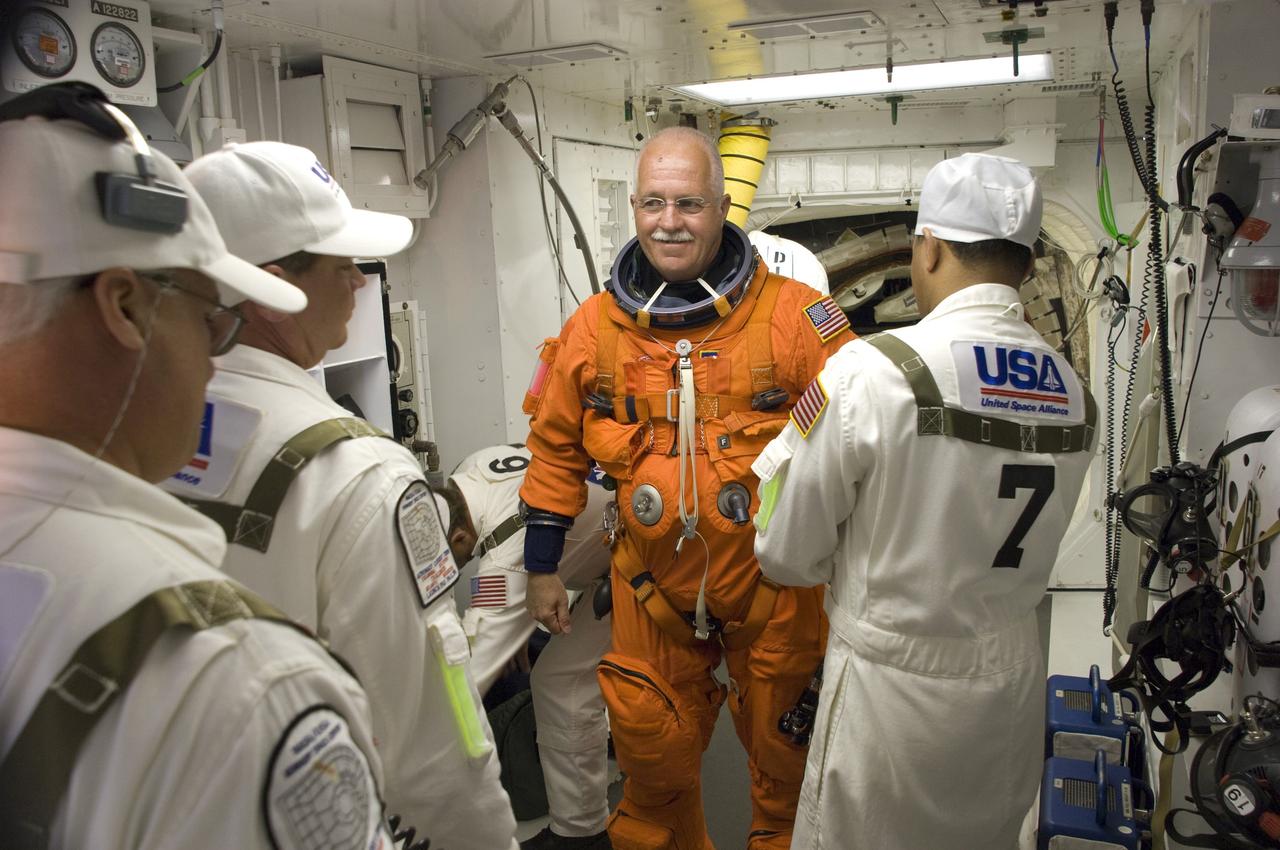
CAPE CANAVERAL, Fla. – In the White Room on Launch Pad 39A at NASA's Kennedy Space Center in Florida, STS-119 Mission Specialist John Phillips is helped by the closeout crew putting on his harness, which includes a parachute pack, before crawling through the open hatch into space shuttle Discovery. The White Room is at the end of the orbiter access arm on the fixed service structure and provides access into the shuttle. The STS-119 mission is the 28th to the International Space Station and the 125th space shuttle flight. Discovery will deliver the final pair of power-generating solar array wings and the S6 truss segment. Installation of S6 will signal the station's readiness to house a six-member crew for conducting increased science. Liftoff is scheduled for 7:43 p.m. EDT. Photo credit: NASA/Tony Gray, Tom Farrar
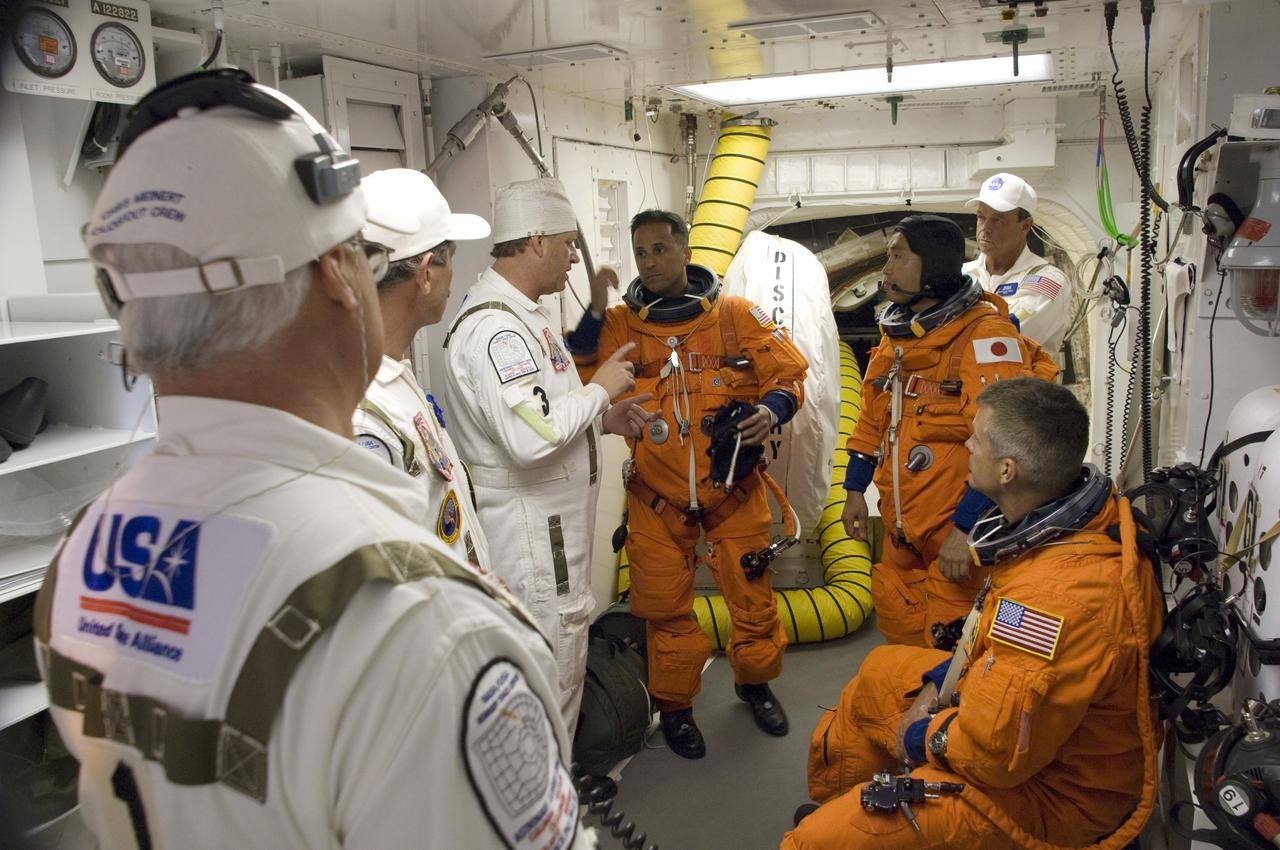
CAPE CANAVERAL, Fla. – In the White Room on Launch Pad 39A at NASA's Kennedy Space Center in Florida, STS-119 Mission Specialists Joseph Acaba (left), Koichi Wakata (center) and Steve Swanson (right) talk to the closeout crew as they prepare to go through the open hatch into space shuttle Discovery. The White Room is at the end of the orbiter access arm on the fixed service structure and provides access into the shuttle. The STS-119 mission is the 28th to the International Space Station and the 125th space shuttle flight. Discovery will deliver the final pair of power-generating solar array wings and the S6 truss segment. Installation of S6 will signal the station's readiness to house a six-member crew for conducting increased science. Liftoff is scheduled for 7:43 p.m. EDT. Photo credit: NASA/Tony Gray, Tom Farrar
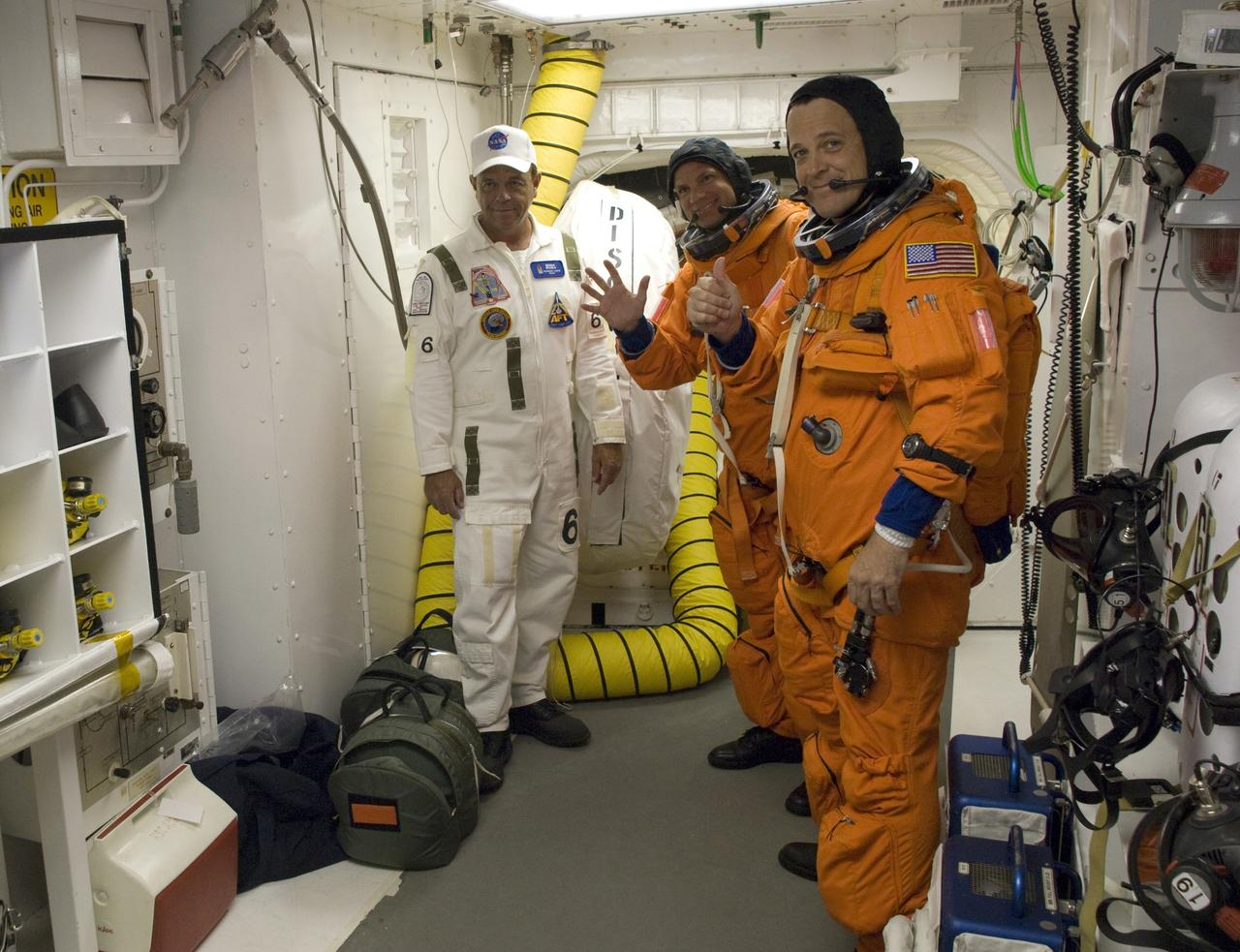
CAPE CANAVERAL, Fla. – In the White Room on Launch Pad 39A at NASA's Kennedy Space Center in Florida, STS-119 Pilot Tony Antonelli (center) and Mission Specialist Richard Arnold are getting ready to enter the open hatch into space shuttle Discovery. The White Room is at the end of the orbiter access arm on the fixed service structure and provides access into the shuttle. The STS-119 mission is the 28th to the International Space Station and the 125th space shuttle flight. Discovery will deliver the final pair of power-generating solar array wings and the S6 truss segment. Installation of S6 will signal the station's readiness to house a six-member crew for conducting increased science. Liftoff is scheduled for 7:43 p.m. EDT. Photo credit: NASA/Tony Gray, Tom Farrar
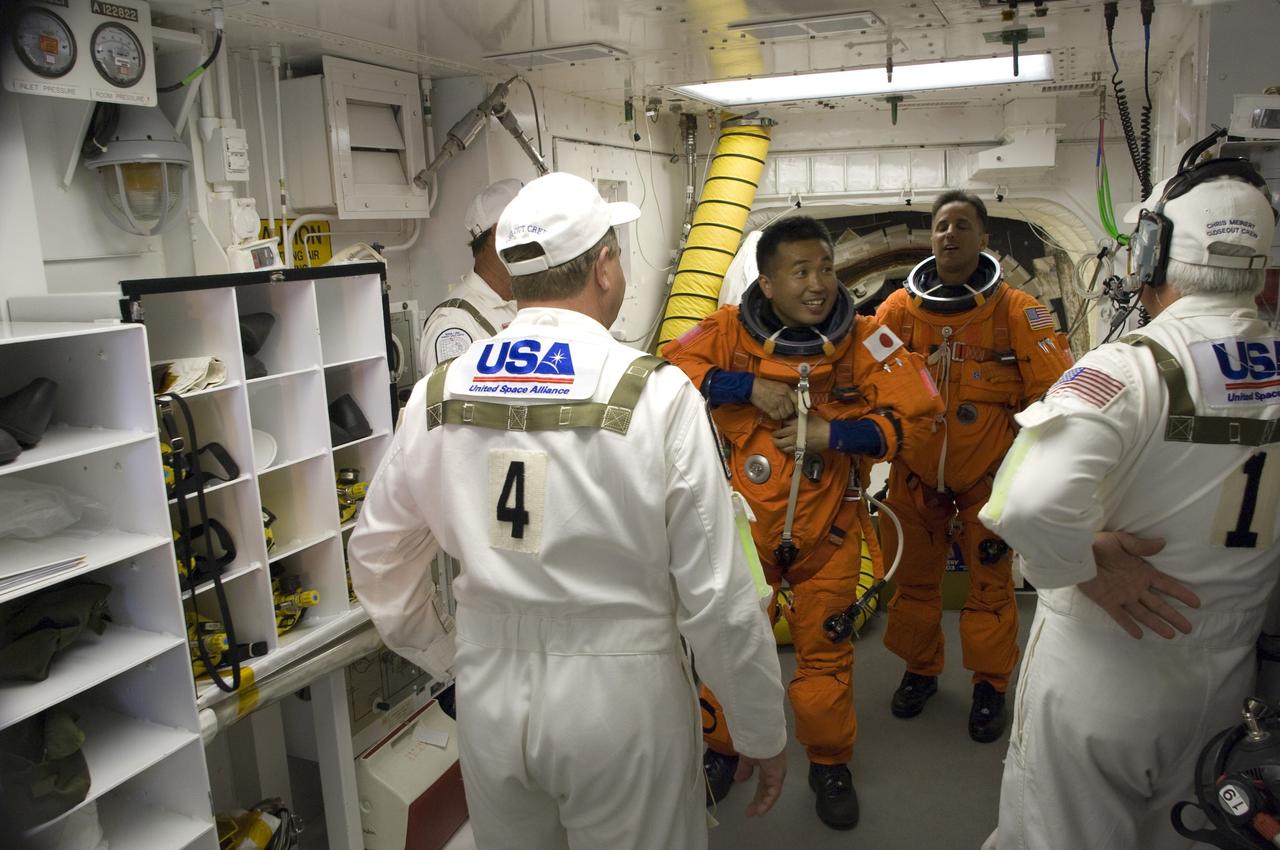
CAPE CANAVERAL, Fla. – In the White Room on Launch Pad 39A at NASA's Kennedy Space Center in Florida, STS-119 Mission Specialists Koichi Wakata (center) and Steve Swanson are getting into their harnesses, which include a parachute pack, before crawling through the open hatch into space shuttle Discovery. The White Room is at the end of the orbiter access arm on the fixed service structure and provides access into the shuttle. The STS-119 mission is the 28th to the International Space Station and the 125th space shuttle flight. Discovery will deliver the final pair of power-generating solar array wings and the S6 truss segment. Installation of S6 will signal the station's readiness to house a six-member crew for conducting increased science. Liftoff is scheduled for 7:43 p.m. EDT. Photo credit: NASA/Tony Gray, Tom Farrar
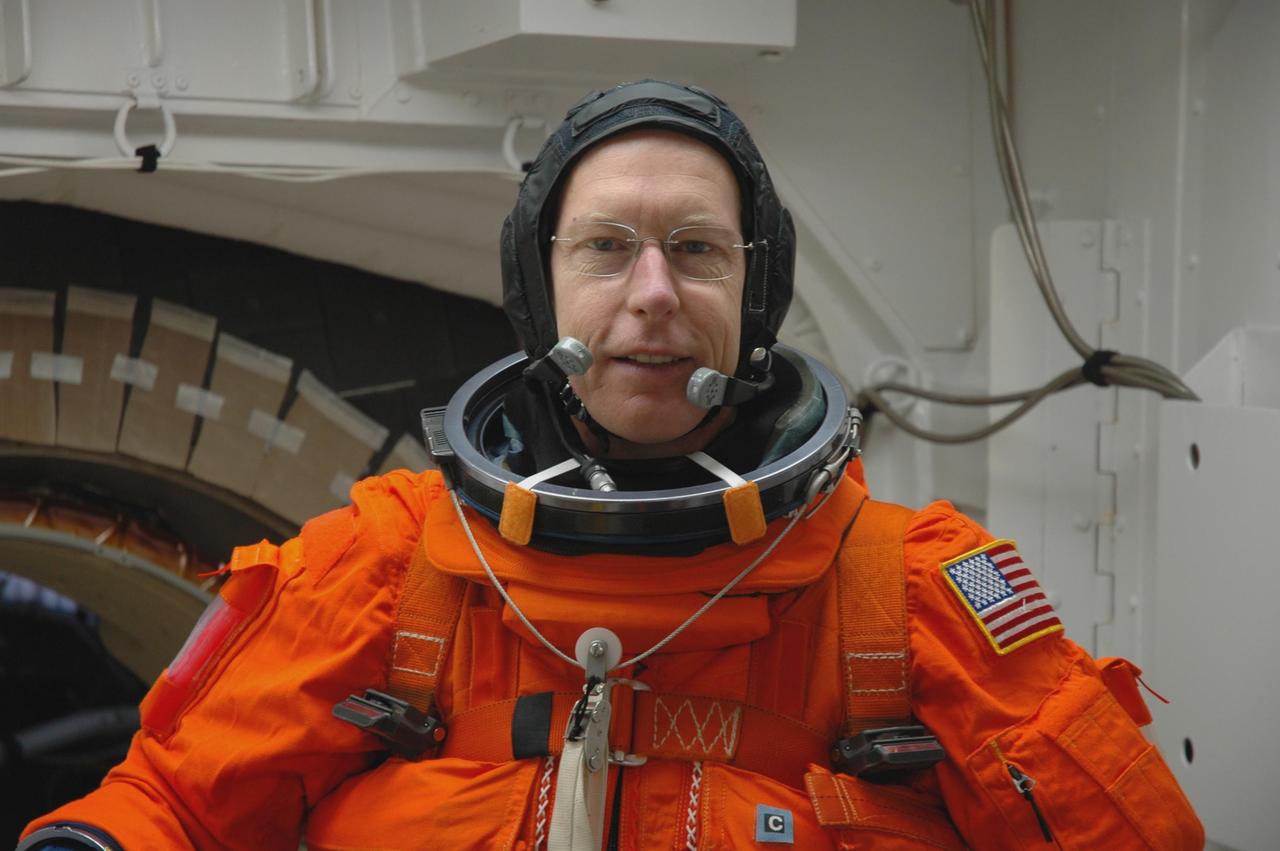
KENNEDY SPACE CENTER, FLA. -- In the white room on Launch Pad 39A, Mission STS-117 Mission Specialist Patrick Forrester prepares to enter Space Shuttle Atlantis. The STS-117 crew practices for launch with a simulation of activities, from suit-up to countdown in the orbiter during terminal countdown demonstration test activities. The STS-117 mission is No. 21 to the International Space Station. Mission payloads aboard Atlantis include the S3/S4 integrated truss structure, a third set of solar arrays and batteries. The crew of six astronauts will install the truss to continue assembly of the station. Launch is scheduled for no earlier than March 15. Photo credit: NASA/Jim Grossmann
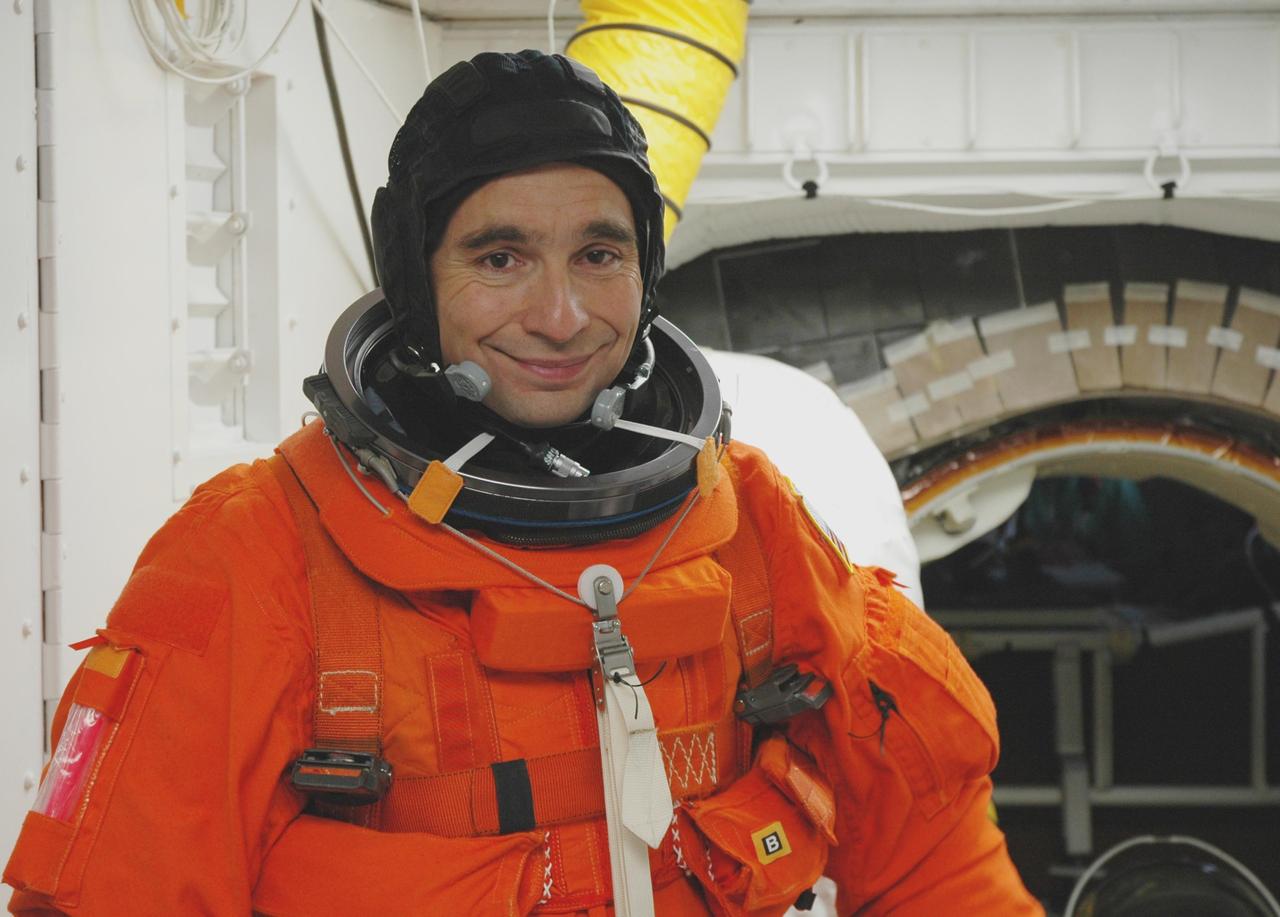
KENNEDY SPACE CENTER, FLA. -- In the white room on Launch Pad 39A, Mission STS-117 Pilot Lee Archambault prepares to enter Space Shuttle Atlantis. The STS-117 crew practices for launch with a simulation of activities, from suit-up to countdown in the orbiter during terminal countdown demonstration test activities. The STS-117 mission is No. 21 to the International Space Station. Mission payloads aboard Atlantis include the S3/S4 integrated truss structure, a third set of solar arrays and batteries. The crew of six astronauts will install the truss to continue assembly of the station. Launch is scheduled for no earlier than March 15. Photo credit: NASA/Jim Grossmann
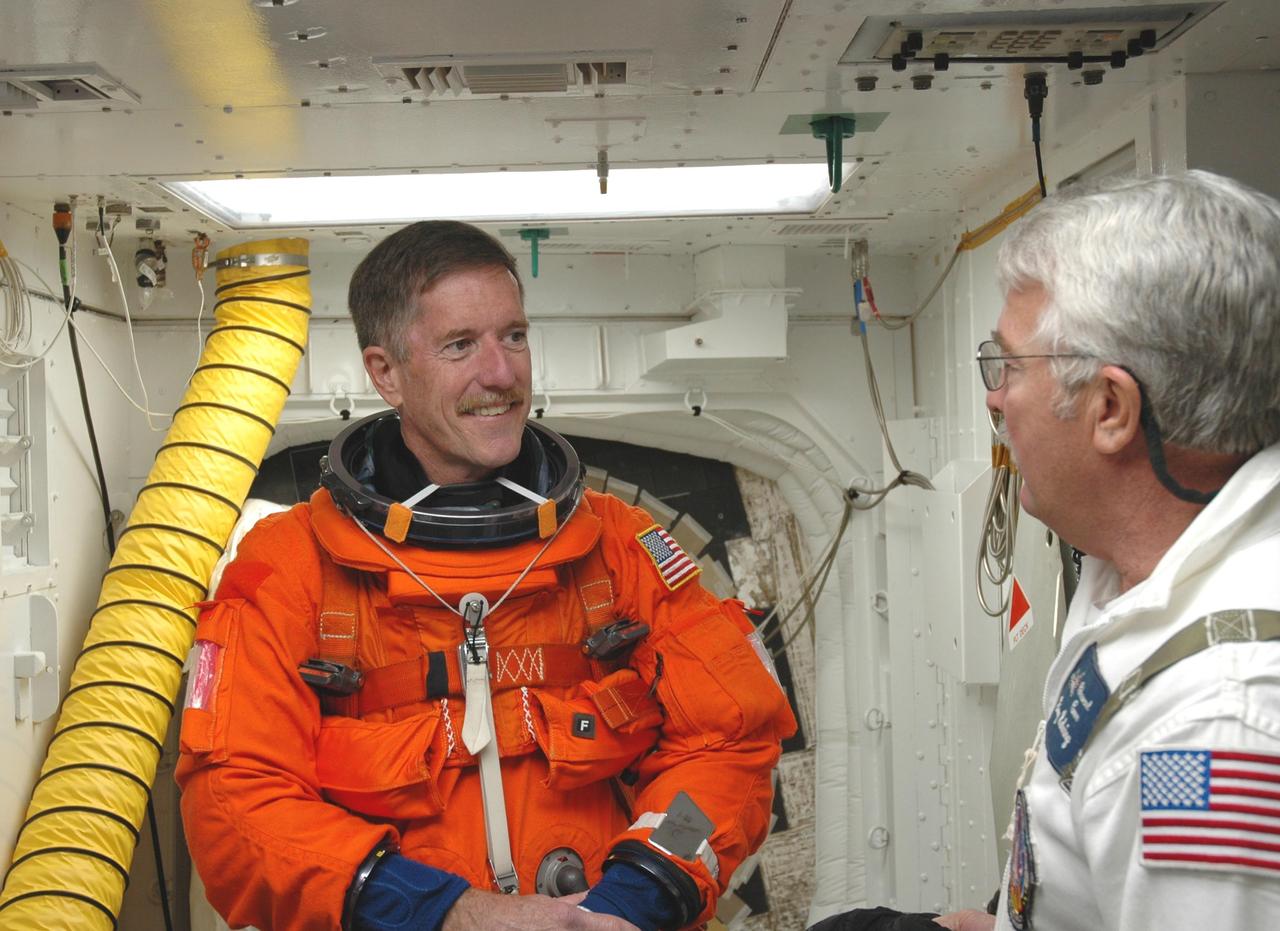
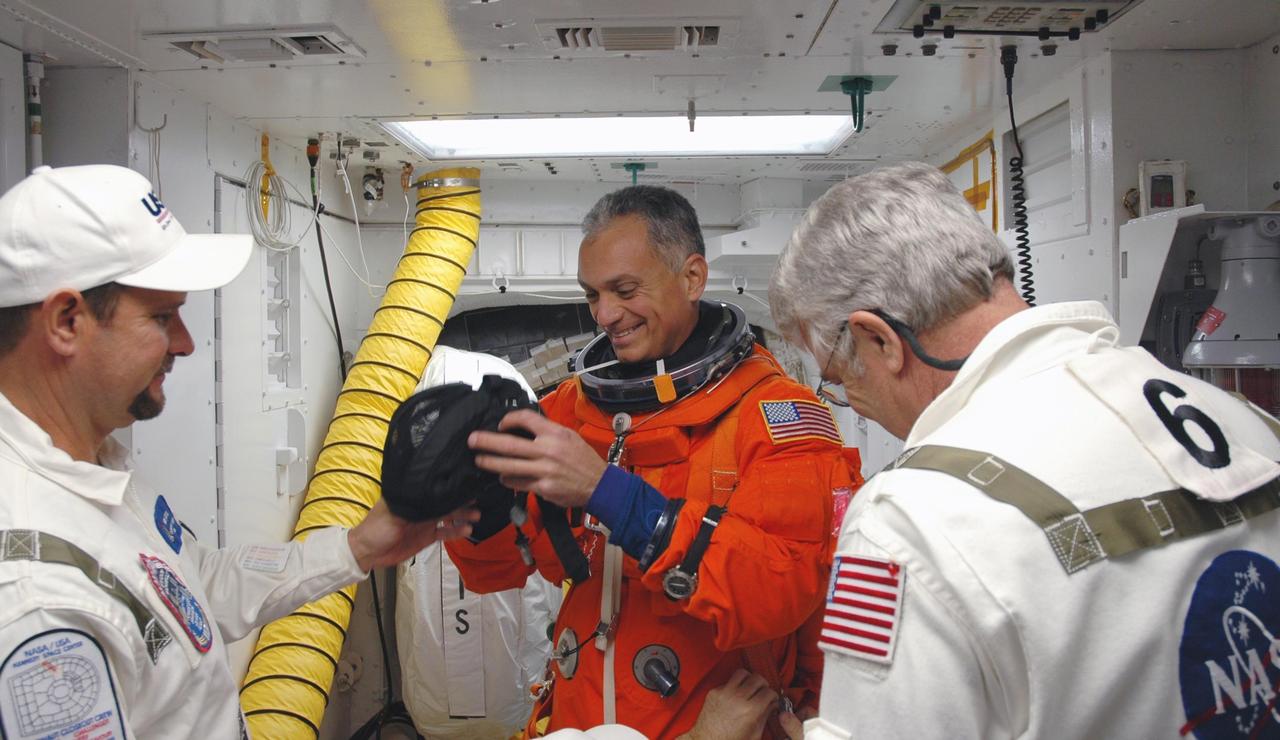
KENNEDY SPACE CENTER, FLA. -- In the white room on Launch Pad 39A, Mission STS-117 Mission Specialist James Reilly is helped with his gear before entering Space Shuttle Atlantis. The STS-117 crew practices for launch with a simulation of activities, from suit-up to countdown in the orbiter during terminal countdown demonstration test activities. The STS-117 mission is No. 21 to the International Space Station. Mission payloads aboard Atlantis include the S3/S4 integrated truss structure, a third set of solar arrays and batteries. The crew of six astronauts will install the truss to continue assembly of the station. Launch is scheduled for no earlier than March 15. Photo credit: NASA/Jim Grossmann
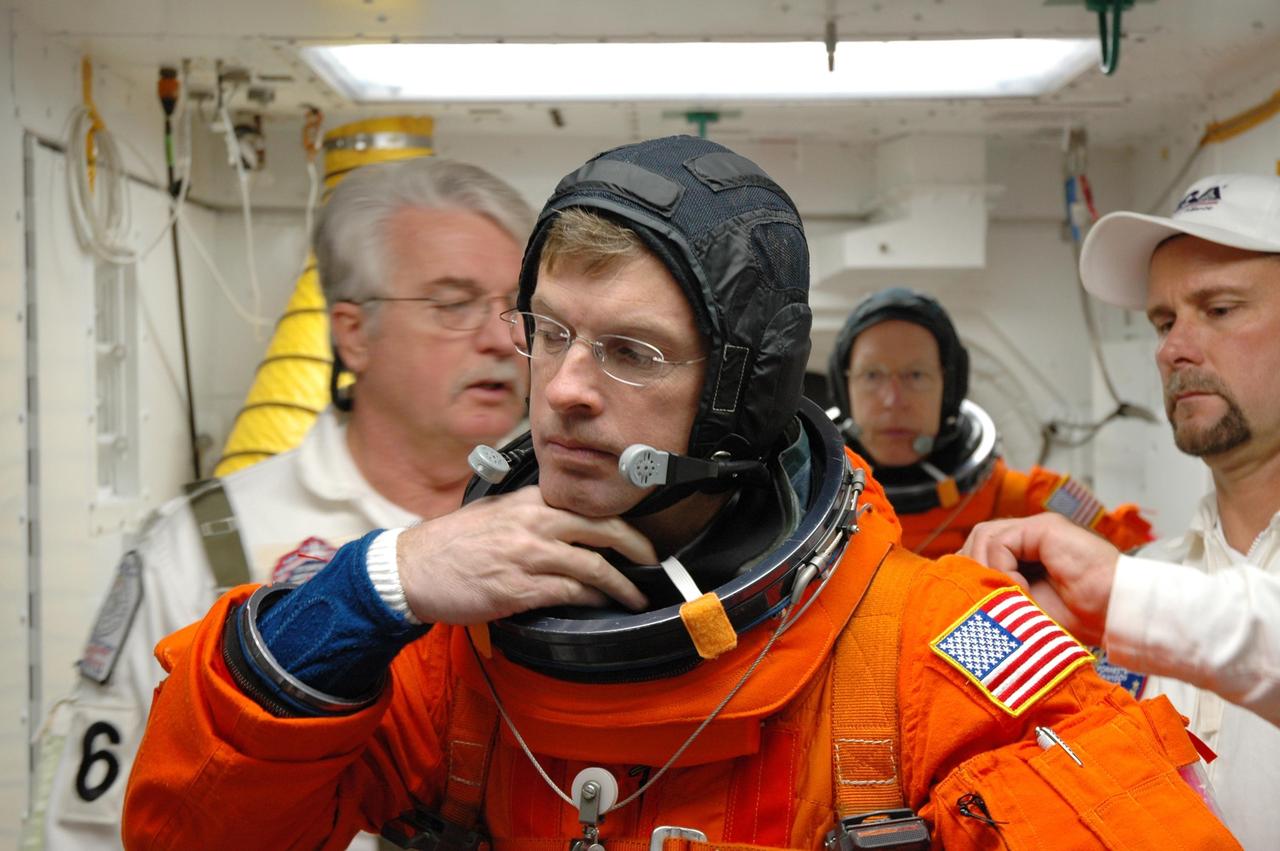
KENNEDY SPACE CENTER, FLA. -- In the white room on Launch Pad 39A, Mission STS-117 Mission Specialist Danny Olivas is helped with his gear before entering Space Shuttle Atlantis. The STS-117 crew practices for launch with a simulation of activities, from suit-up to countdown in the orbiter during terminal countdown demonstration test activities. The STS-117 mission is No. 21 to the International Space Station. Mission payloads aboard Atlantis include the S3/S4 integrated truss structure, a third set of solar arrays and batteries. The crew of six astronauts will install the truss to continue assembly of the station. Launch is scheduled for no earlier than March 15. Photo credit: NASA/Jim Grossmann
KENNEDY SPACE CENTER, FLA. -- In the white room on Launch Pad 39A, Mission STS-117 Mission Specialist Steven Swanson is helped with his gear before entering Space Shuttle Atlantis. The STS-117 crew practices for launch with a simulation of activities, from suit-up to countdown in the orbiter during terminal countdown demonstration test activities. The STS-117 mission is No. 21 to the International Space Station. Mission payloads aboard Atlantis include the S3/S4 integrated truss structure, a third set of solar arrays and batteries. The crew of six astronauts will install the truss to continue assembly of the station. Launch is scheduled for no earlier than March 15. Photo credit: NASA/Jim Grossmann
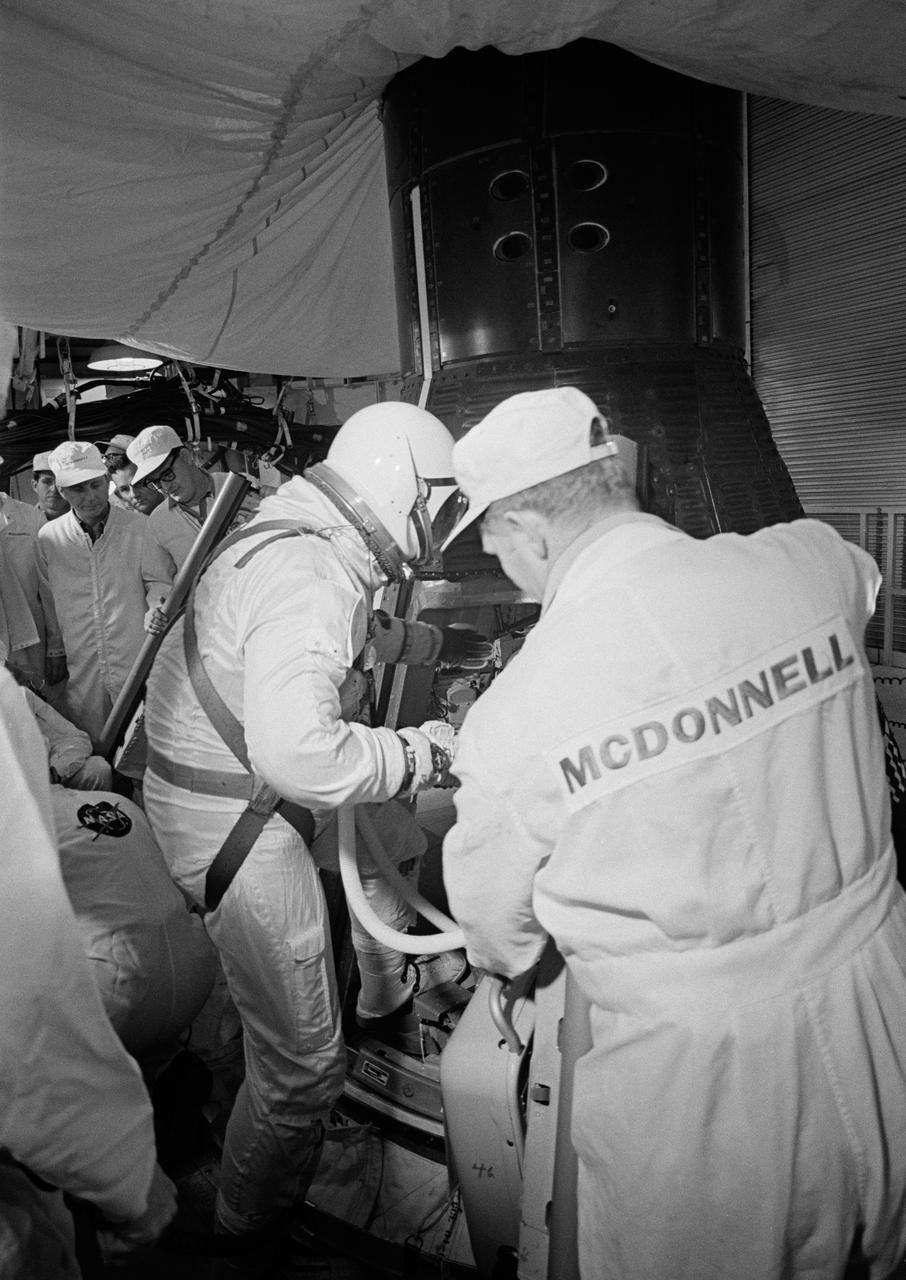
S65-20604 (23 March 1965) --- Astronaut John W. Young, the pilot of the Gemini-Titan 3 three-orbit mission, is assisted by a McDonnell Aircraft Corp. engineer as he enters the Gemini spacecraft in the white room atop the Gemini launch vehicle.
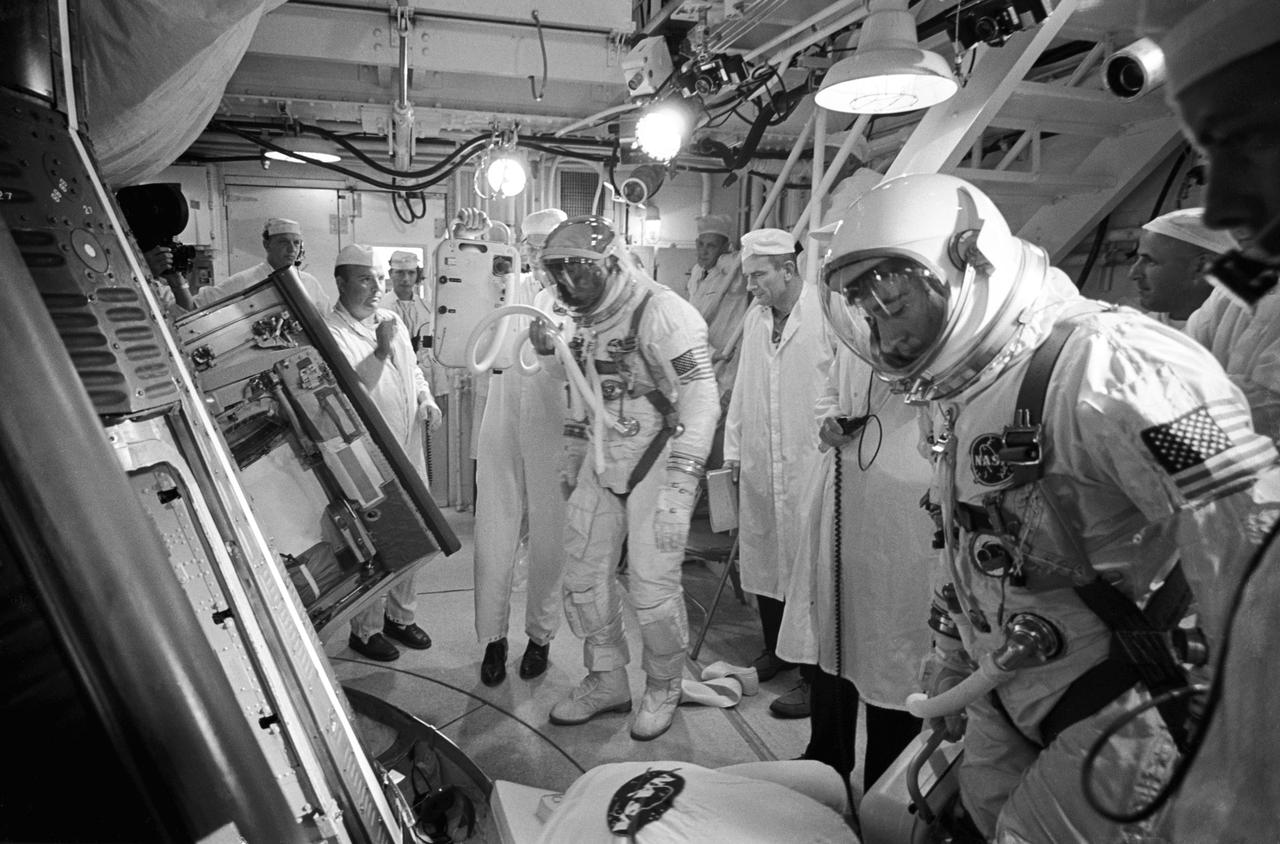
S66-42737 (18 July 1966) --- In the White Room atop the Gemini launch vehicle, astronauts Michael Collins (left), pilot, and John W. Young (right), command pilot, prepare to enter the Gemini-10 spacecraft. Engineers and technicians stand by to assist in the insertion. Photo credit: NASA
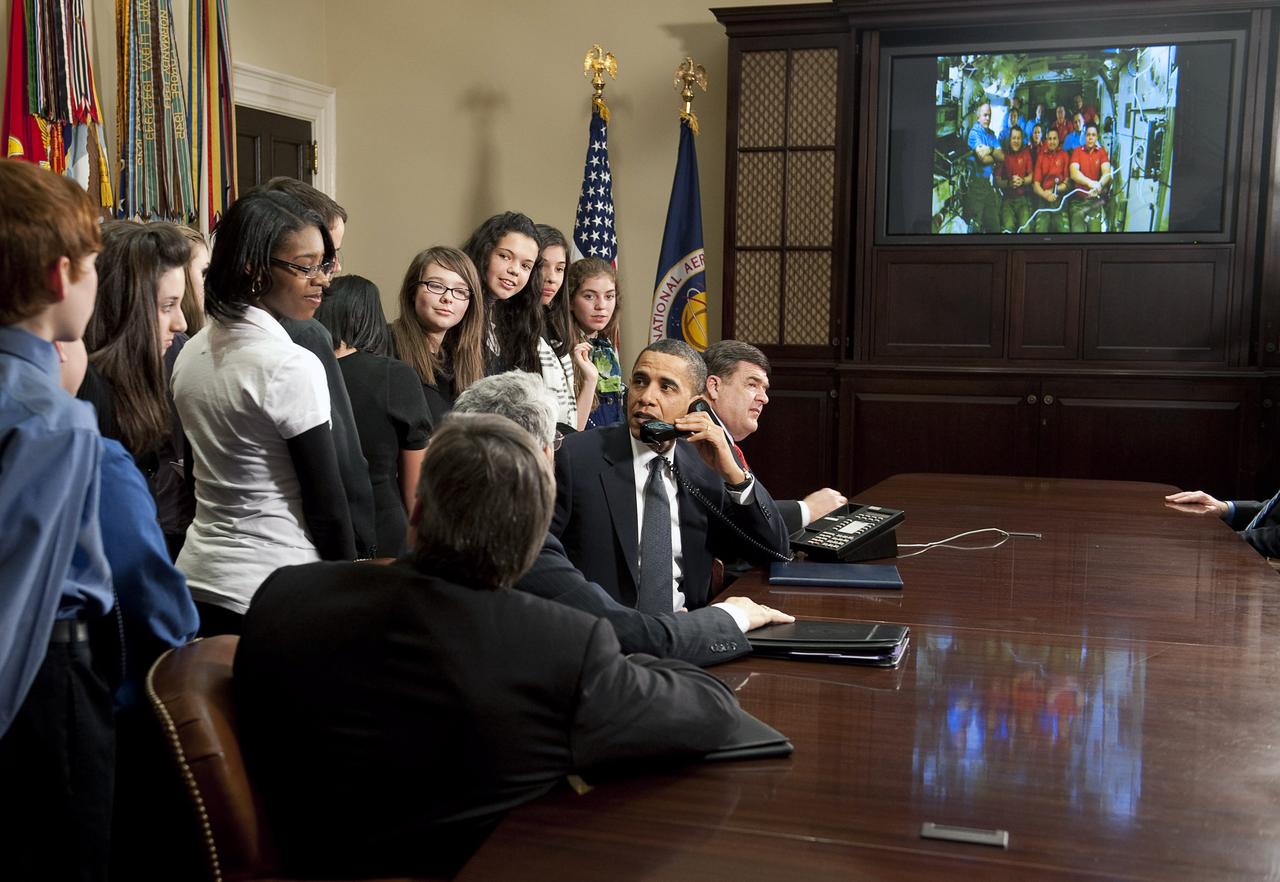
U.S. President Barack Obama, accompanied by Congressman C.A. "Dutch" Ruppersberger (D-MD) and middle school children, prepares to hand over the phone to a student to ask a question to astronauts on the International Space Station during an event in the Roosevelt Room of the White House, Wednesday, Feb. 17, 2010 in Washington. Photo Credit: (NASA/Bill Ingalls)
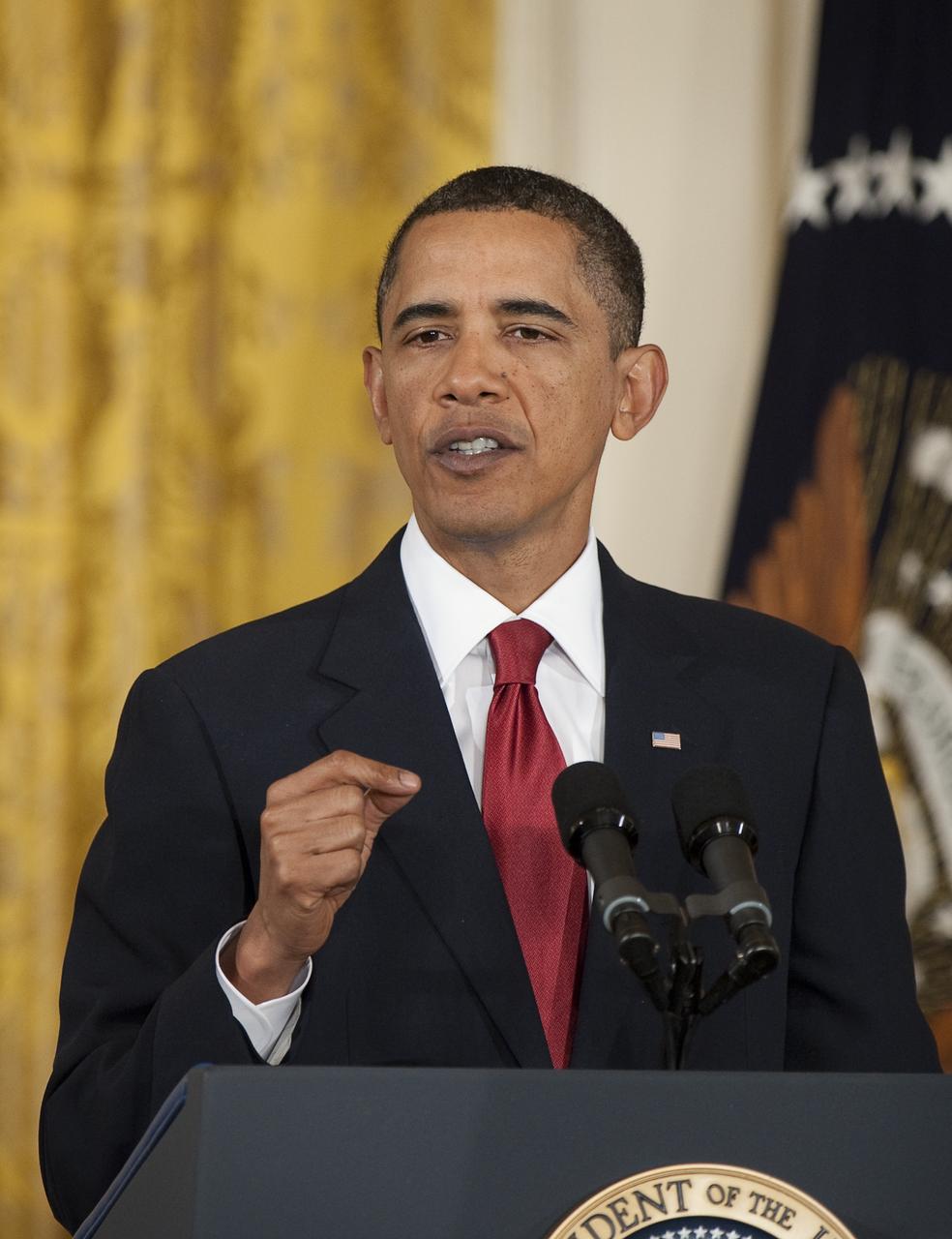
U.S. President Barack Obama speaks in the East Room of the White House in Washington, Wednesday, Jan. 6, 2010, during an 'Educate to Innovate' event where he honored teachers who received awards for excellence in Science, Technology, Engineering and Math (STEM) education. NASA's 'Summer of Innovation' program supports the President's 'Educate to Innovate' campaign. Photo Credit: (NASA/Bill Ingalls)
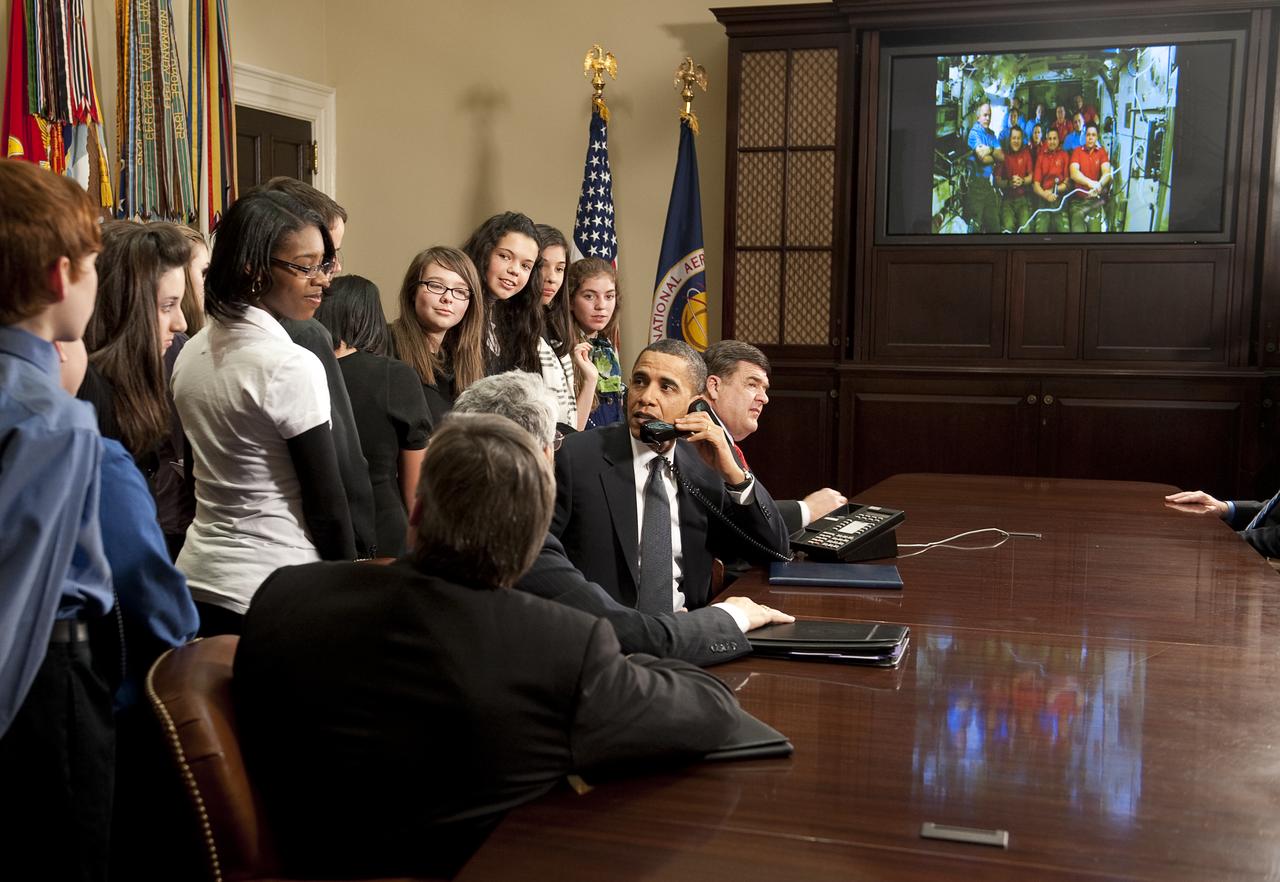
U.S. President Barack Obama, accompanied by Congressman C.A. "Dutch" Ruppersberger (D-MD) and middle school children, prepares to hand over the phone to a student to ask a question to astronauts on the International Space Station during an event in the Roosevelt Room of the White House, Wednesday, Feb. 17, 2010 in Washington. Photo Credit: (NASA/Bill Ingalls)
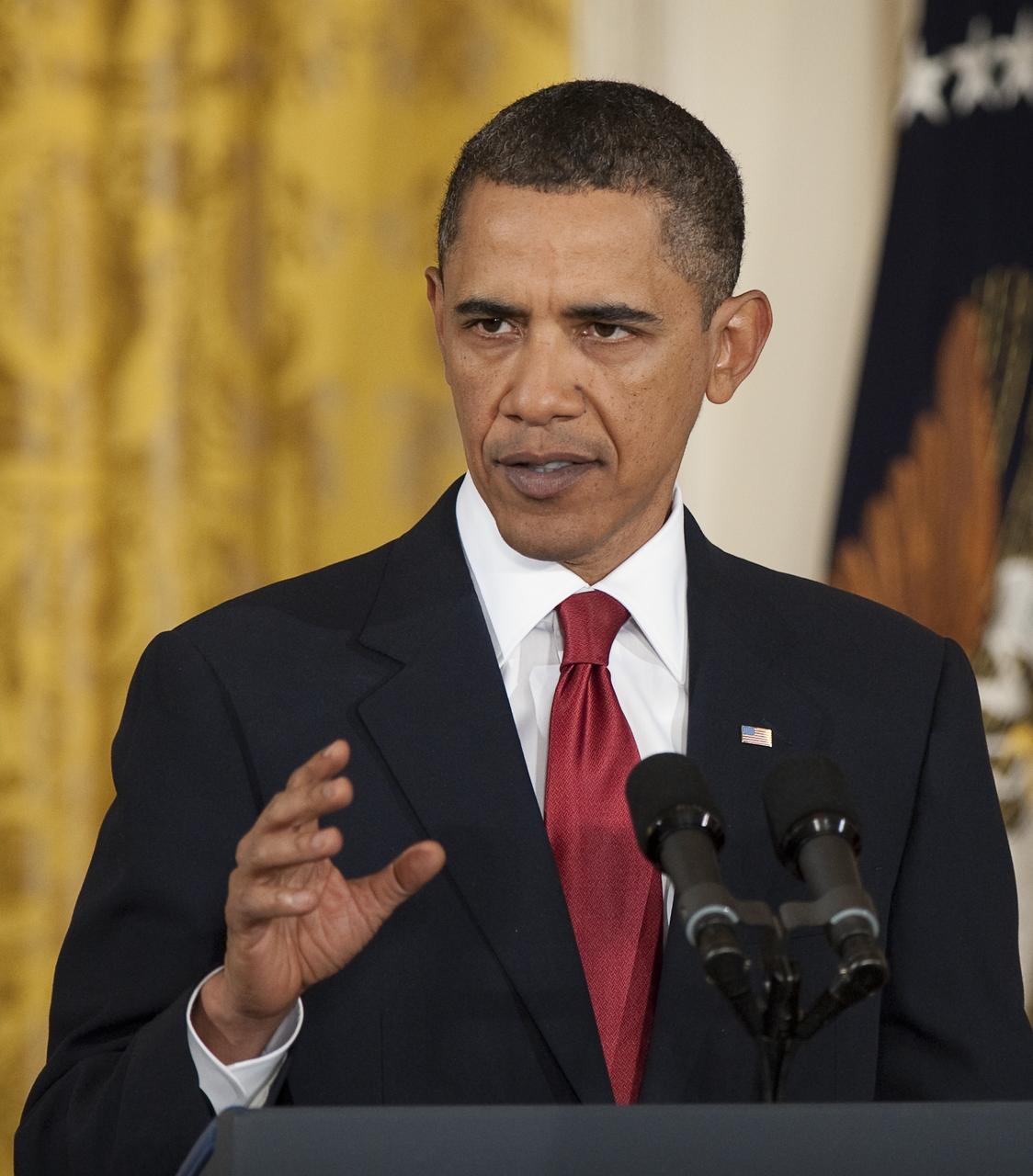
U.S. President Barack Obama speaks in the East Room of the White House in Washington, Wednesday, Jan. 6, 2010, during an 'Educate to Innovate' event where he honored teachers who received awards for excellence in Science, Technology, Engineering and Math (STEM) education. NASA's 'Summer of Innovation' program supports the President's 'Educate to Innovate' campaign. Photo Credit: (NASA/Bill Ingalls)
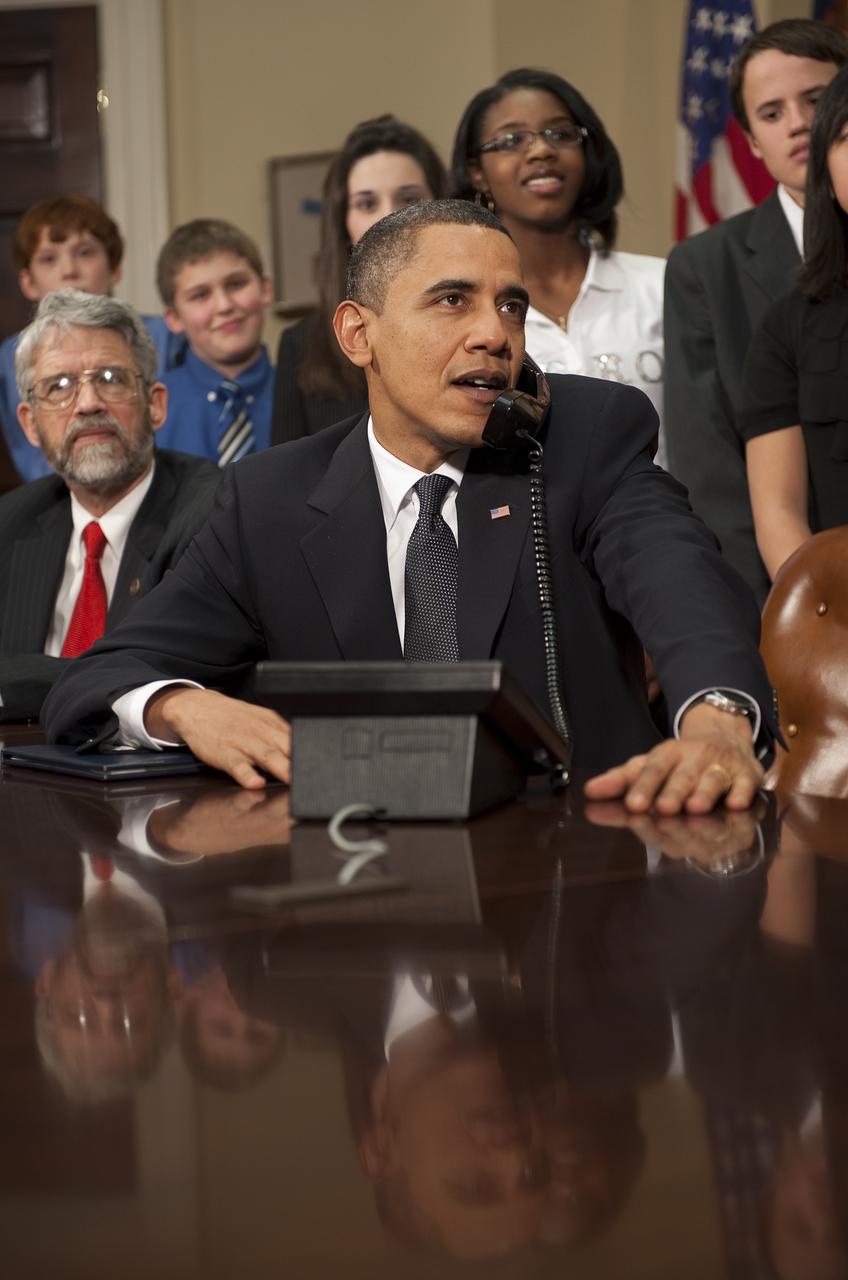
U.S. President Barack Obama, accompanied by White House Science Adviser John Holdren, left, Congressman C.A. "Dutch" Ruppersberger (D-MD) and middle school children, talks on the phone from the Roosevelt Room of the White House to astronauts on the International Space Station, Wednesday, Feb. 17, 2010 in Washington. Photo Credit: (NASA/Bill Ingalls)
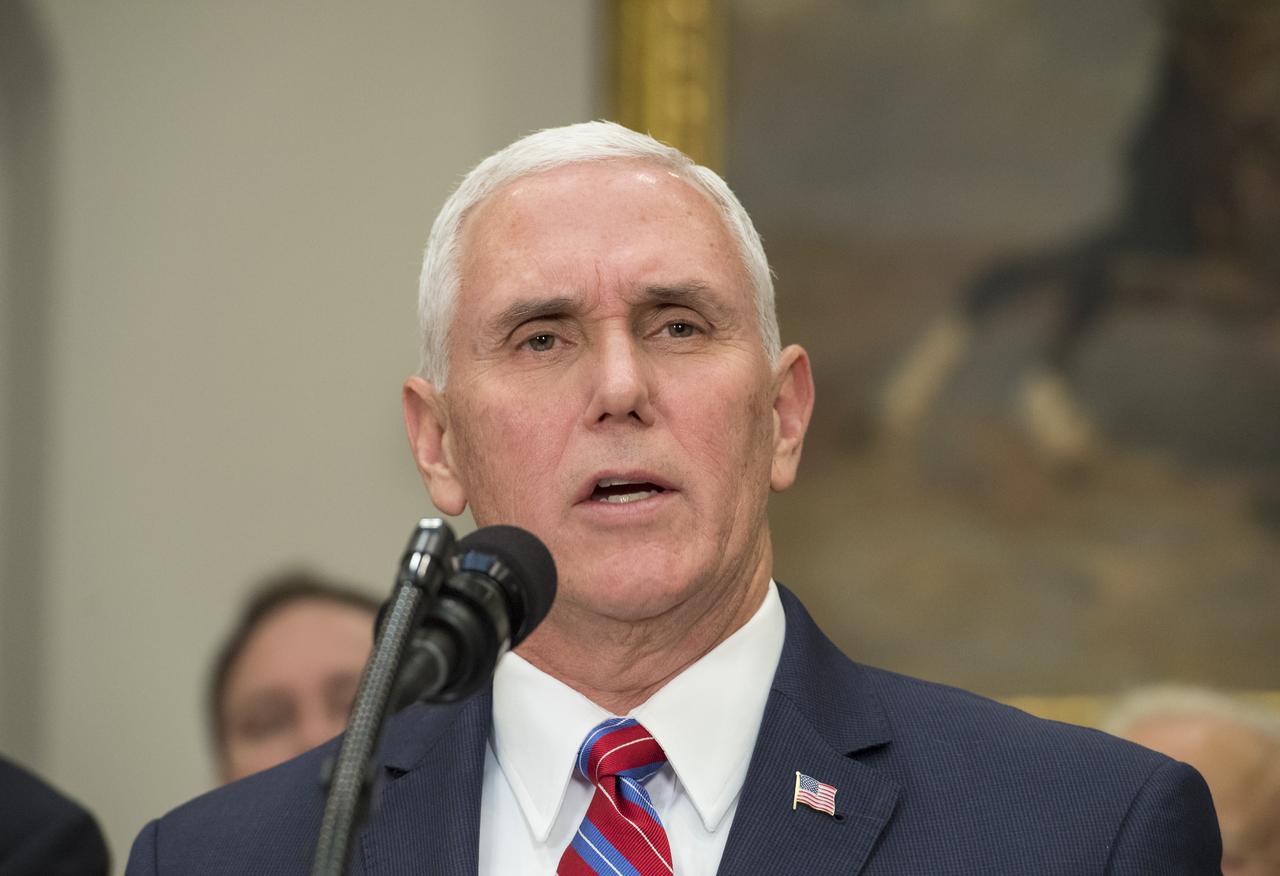
Vice President Mike Pence speaks before President Donald Trump signs Space Policy Directive - 1, directing NASA to return to the moon, alongside members of the Senate, Congress, NASA, and commercial space companies in the Roosevelt room of the White House in Washington, Monday, Dec. 11, 2017. Photo Credit: (NASA/Aubrey Gemignani)

President Donald Trump holds up Space Policy Directive - 1 after signing it, directing NASA to return to the moon, alongside members of the Senate, Congress, NASA, and commercial space companies in the Roosevelt room of the White House in Washington, Monday, Dec. 11, 2017. Photo Credit: (NASA/Aubrey Gemignani)
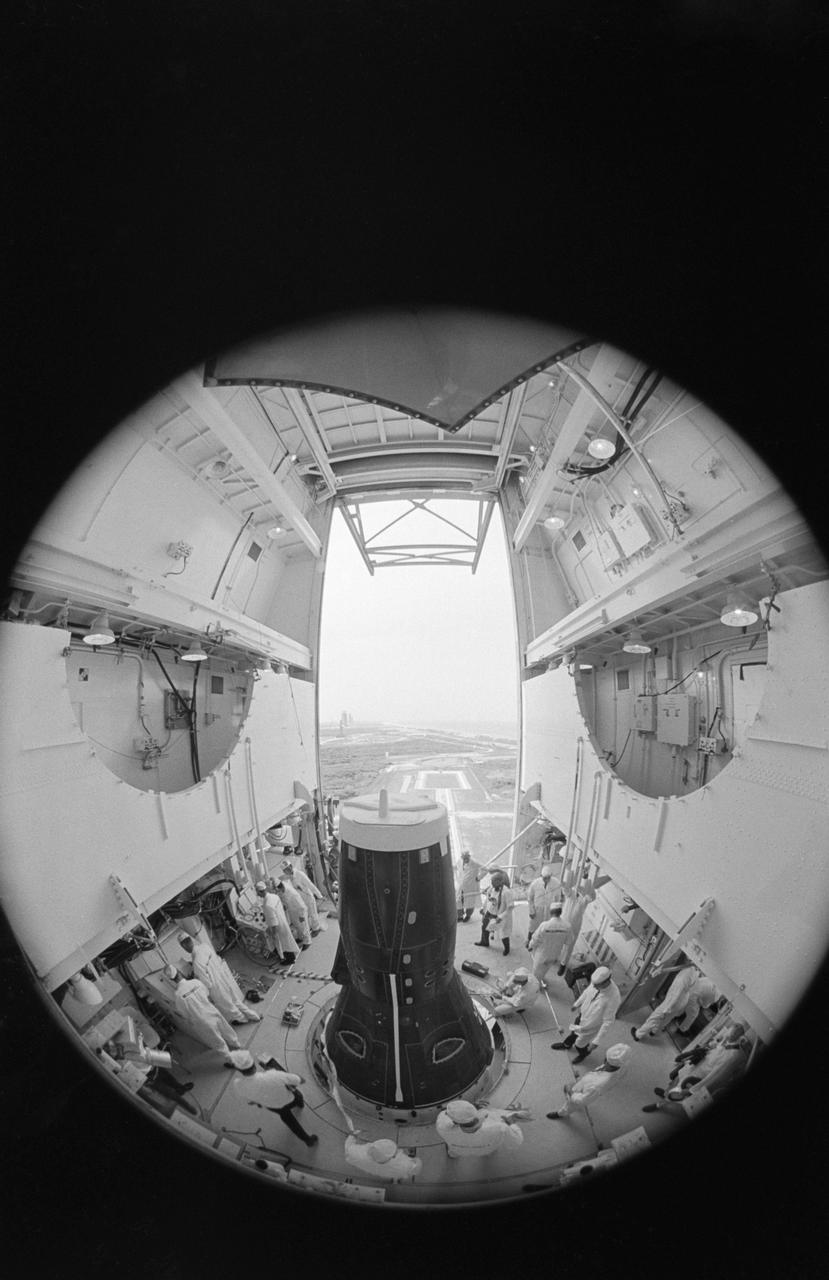
S66-42736 (18 July 1966) --- Fisheye camera lens view of activity in white room atop Pad 19 as technicians secure equipment in preparation for erector lowering. Inside the Gemini-10 spacecraft are astronauts John W. Young, command pilot, and Michael Collins, pilot. Liftoff was at 5:20 p.m. (EST), July 18, 1966. Photo credit: NASA
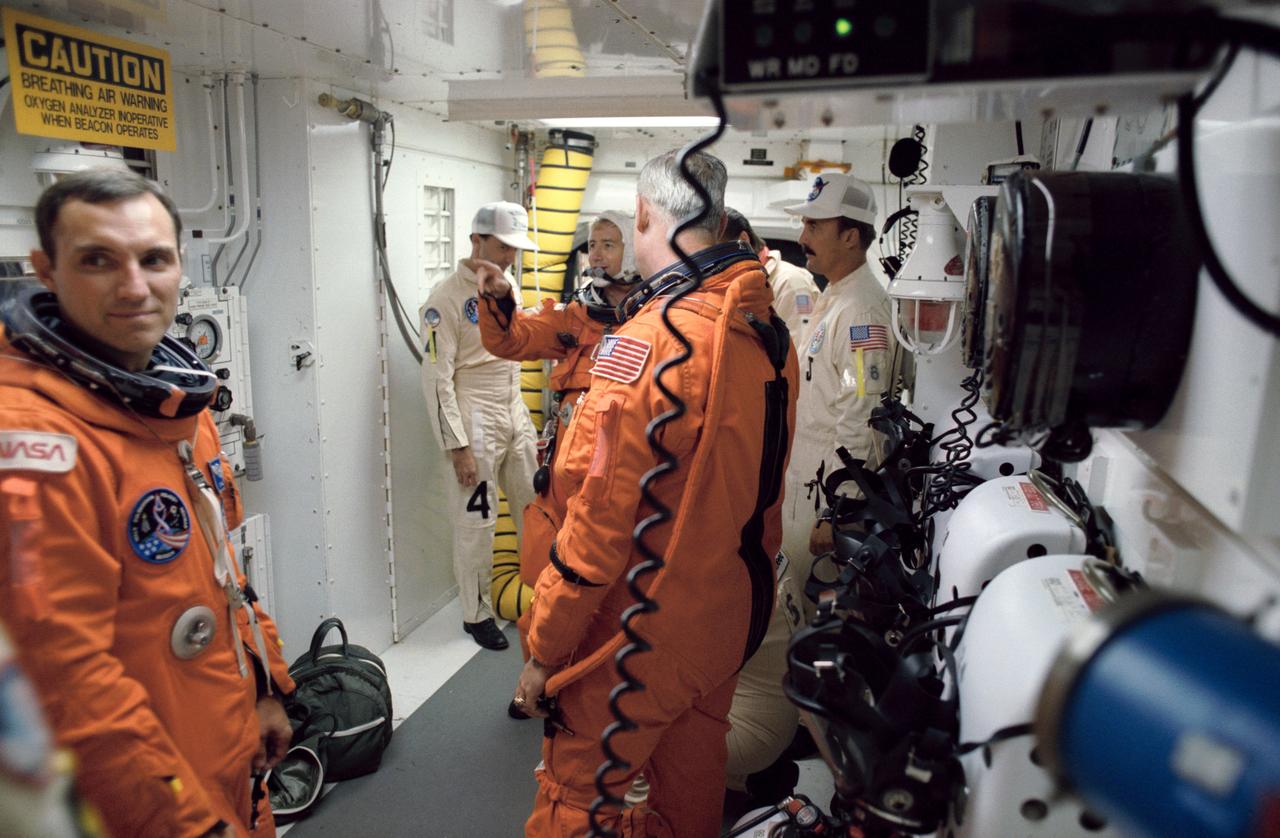
STS051-S-109 (12 Sept 1993) --- Inside the White Room, three astronaut crew members for the STS-51 flight await their queues to ingress the Space Shuttle Discovery. Wearing the partial pressure launch and entry suits are, left to right, Carl E. Walz, mission specialist; Frank L. Culbertson Jr., mission commander; and William F. Readdy, pilot. Not pictured are astronauts James H. Newman and Daniel W. Bursch. Launch occurred at 7:45 a.m. (EDT), September 12, 1993.
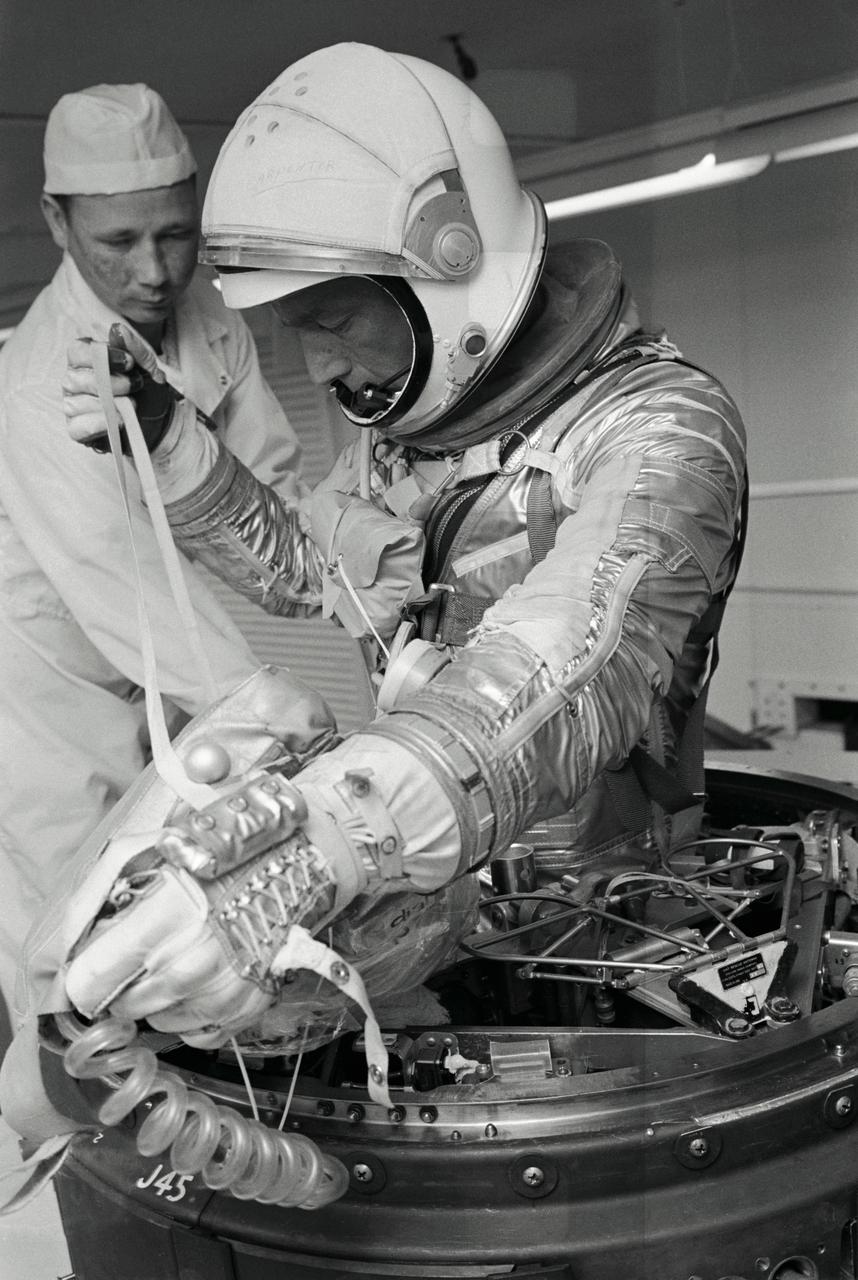
S62-01383 (1962) --- Project Mercury astronaut M. Scott Carpenter, prime pilot of the Mercury-Atlas 7 (the nation's second manned orbital flight), completes top egress training in the white room at Cape Canaveral, Florida. The line he is holding is known as the "man line" which attaches the survival kit to the astronaut. The bag is the survival kit he carries for contingency landings. Clearly visible around his neck is the bag containing the life vest. Photo credit: NASA

President Donald Trump, speaks before signing Space Policy Directive - 1, directing NASA to return to the moon, in the Roosevelt room of the White House in Washington, Monday, Dec. 11, 2017. Photo Credit: (NASA/Aubrey Gemignani)
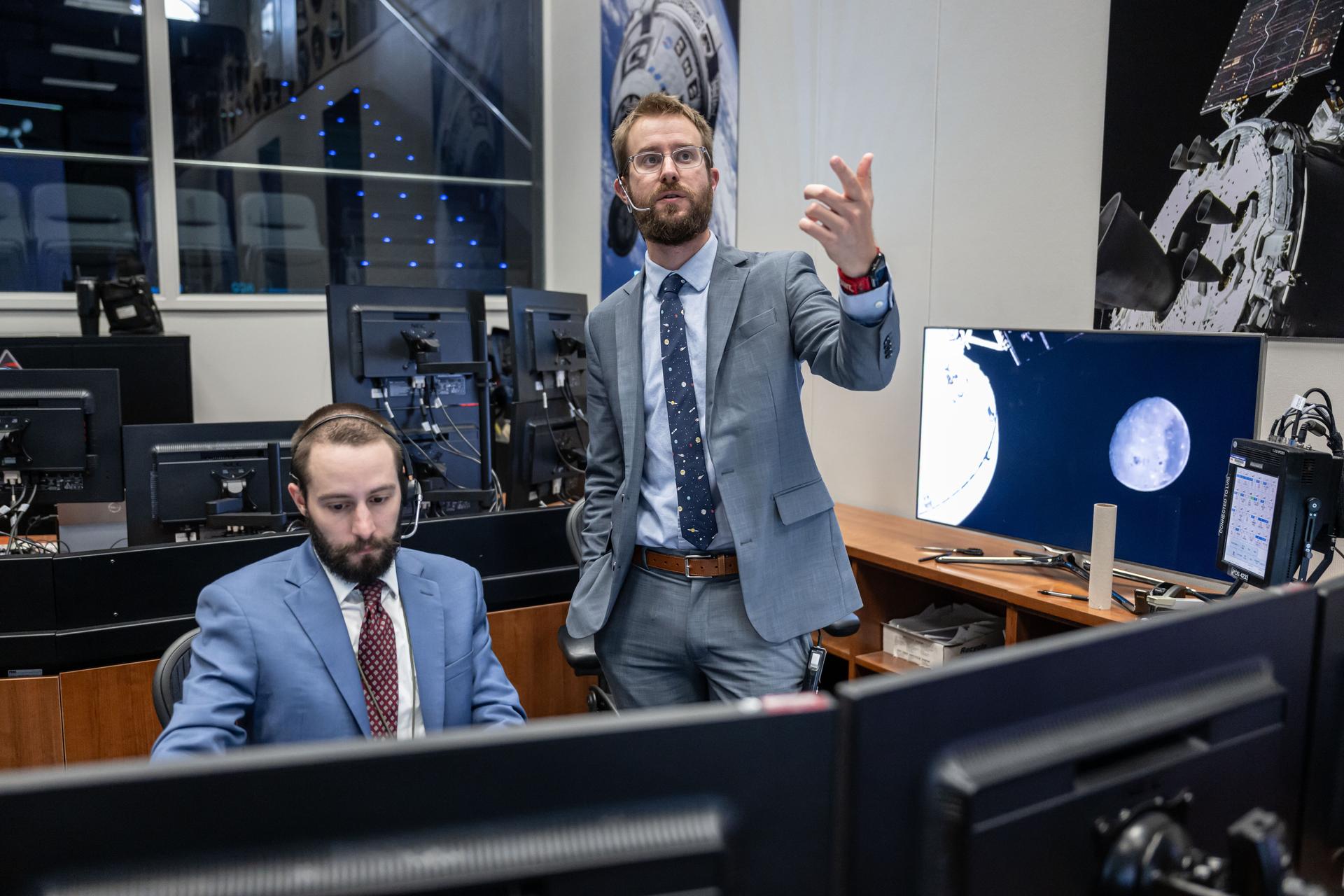
jsc2026e021749 (April 6, 2026) - Chris White, Lead INCO (Integrated Communications Officer) for Artemis II, and Matthew Johns, INCO Flight Controller, are pictured in the White Flight Control Room in the Mission Control Center at NASA’s Johnson Space Center during the Artemis II mission. This image was taken when NASA astronauts Reid Wiseman, Victor Glover, and Christina Koch, and CSA (Canadian Space Agency) astronaut Jeremy Hansen conducted the flyby of the Moon. Credit: NASA/Robert Markowitz
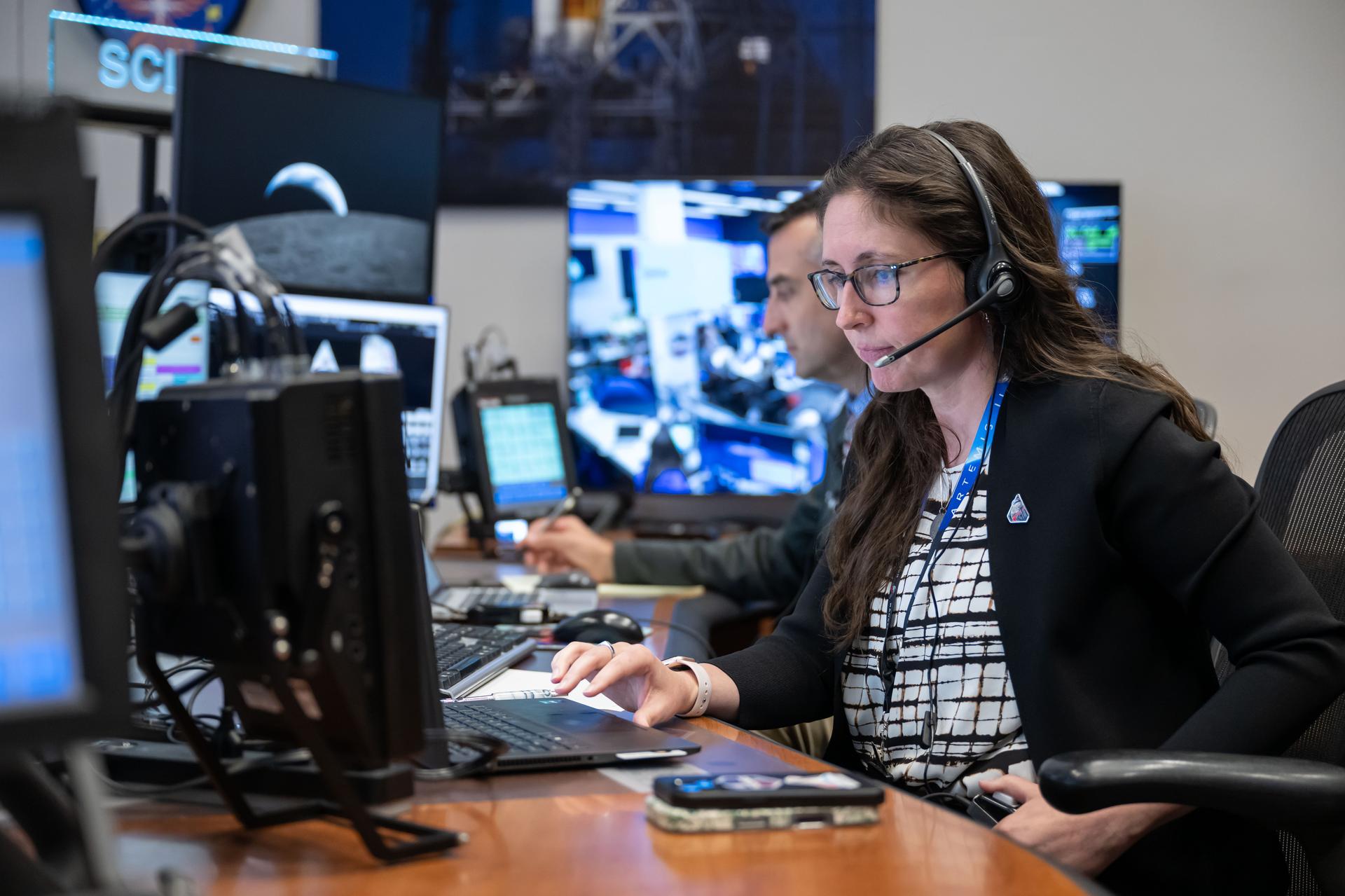
Artemis II science officers, Trevor Graff, background, and Kelsey Young are seen monitoring mission data in real-time from the Science console in the White Flight Control Room in Mission Control at NASA's Johnson Space Center in Houston. Science officers are the senior flight controllers responsible for lunar science and geology objectives during Artemis missions. Credits: NASA/Robert Markowitz
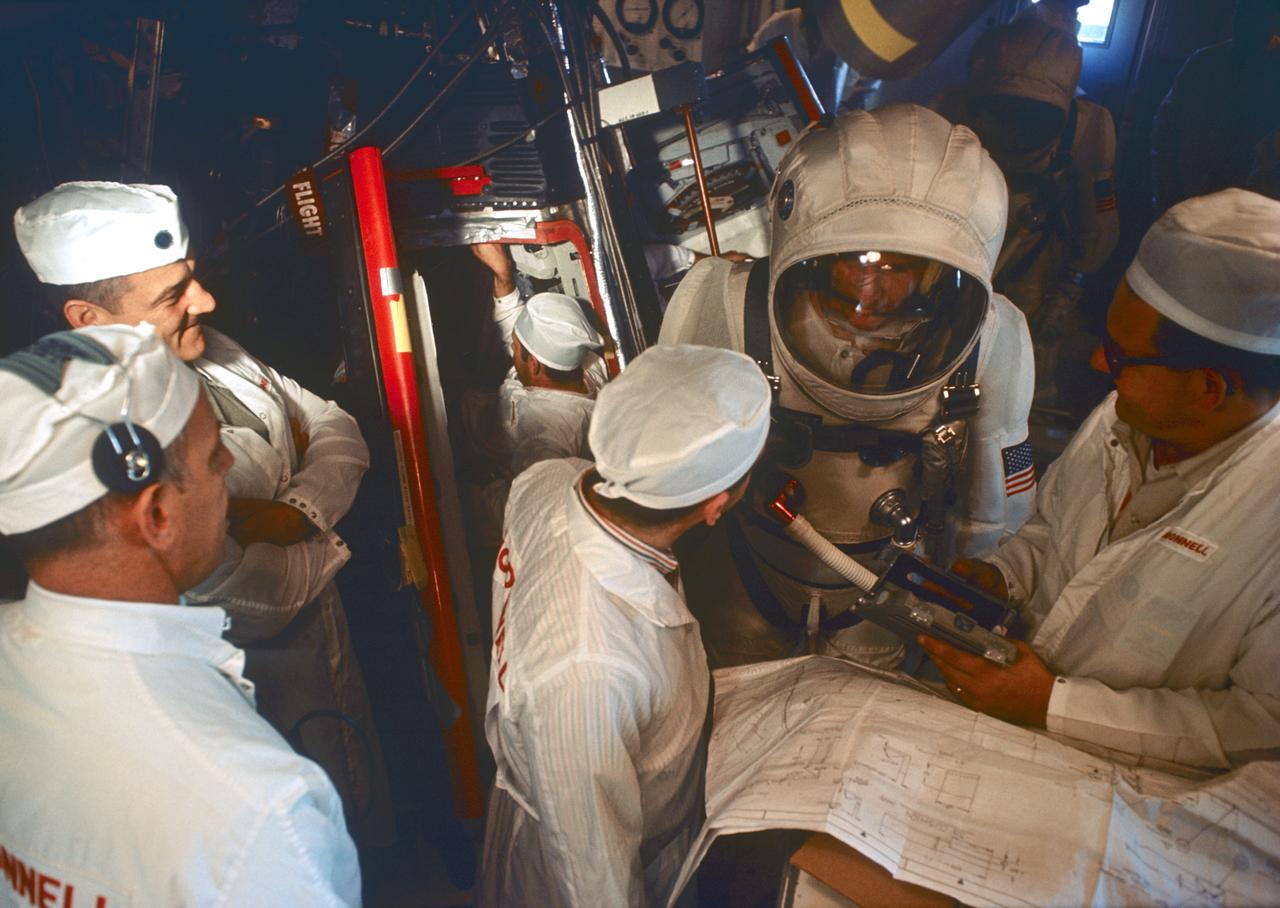
S65-61837 (27 Nov. 1965) --- The Gemini-7 backup crew seen in the White Room atop Pad 19 during Gemini-7 simulation flight activity. McDonnell Aircraft Corporation technicians assist in the exercise. Astronaut Edward H. White II (in foreground) is the Gemini-7 backup crew command pilot; and astronaut Michael Collins (right background) is the backup crew pilot. Photo credit: NASA
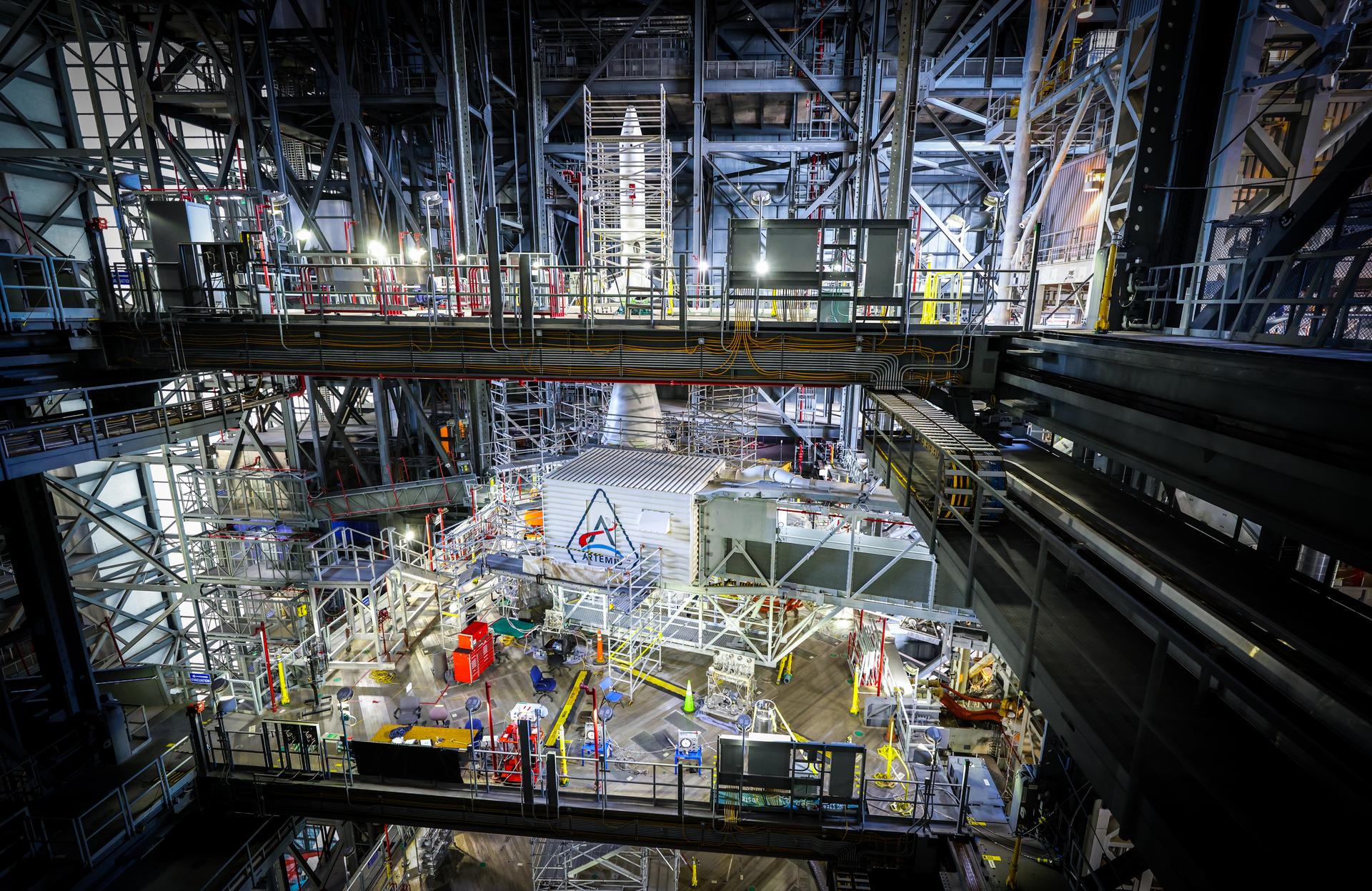
A freshly painted NASA’s Artemis logo is unveiled on the White Room connected to the crew access arm and mobile launcher inside the Vehicle Assembly Building at NASA’s Kennedy Space Center in Florida on Thursday, Dec. 4, 2025. The White Room is the area where the Artemis II crew Reid Wiseman, Victor Glover, Christina Koch, and CSA (Canadian Space Agency) astronaut Jeremy Hansen will enter the Orion spacecraft ahead of launch from Launch Complex 39B at NASA Kennedy in early 2026.
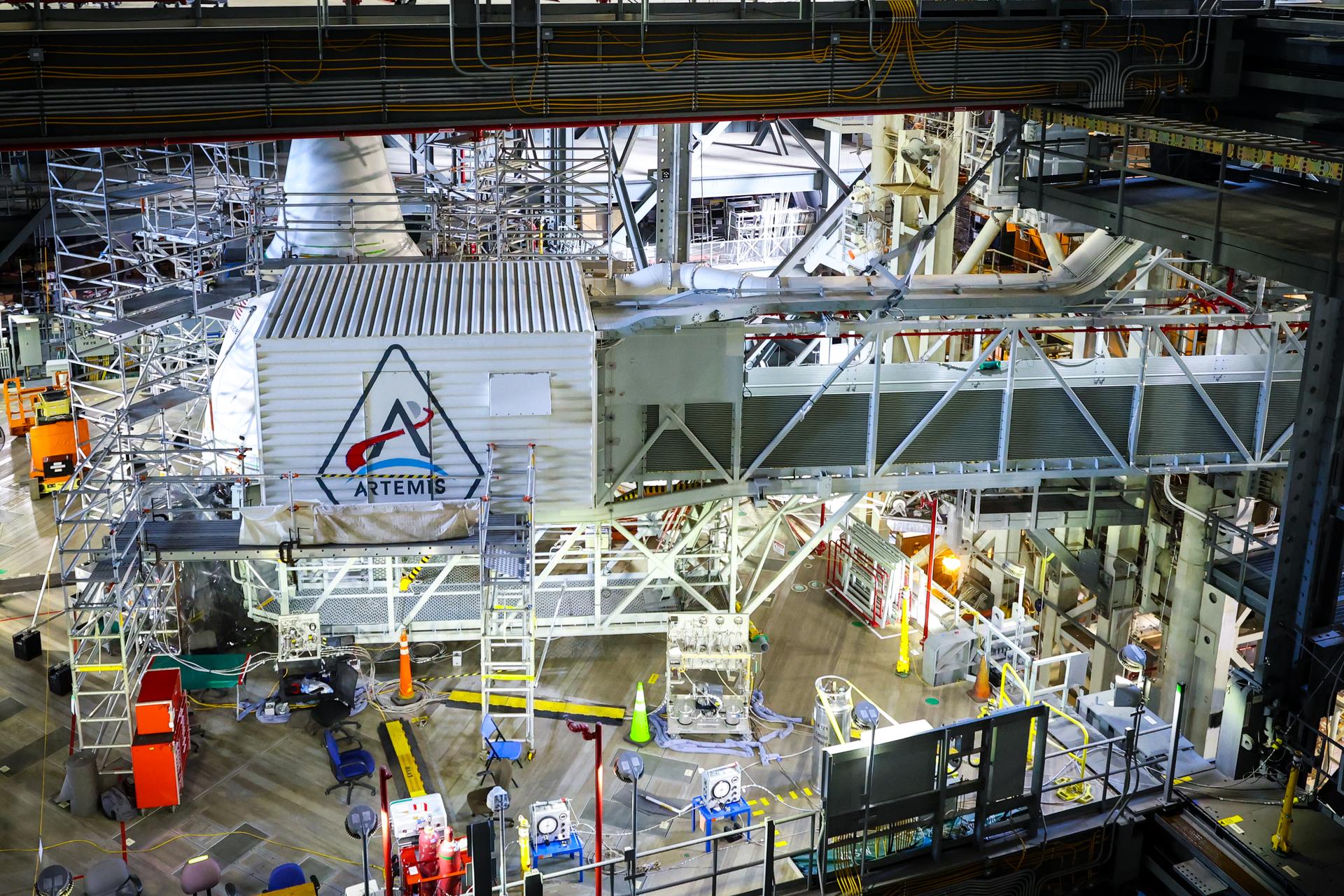
A freshly painted NASA’s Artemis logo is unveiled on the White Room connected to the crew access arm and mobile launcher inside the Vehicle Assembly Building at NASA’s Kennedy Space Center in Florida on Thursday, Dec. 4, 2025. The White Room is the area where the Artemis II crew Reid Wiseman, Victor Glover, Christina Koch, and CSA (Canadian Space Agency) astronaut Jeremy Hansen will enter the Orion spacecraft ahead of launch from Launch Complex 39B at NASA Kennedy in early 2026.
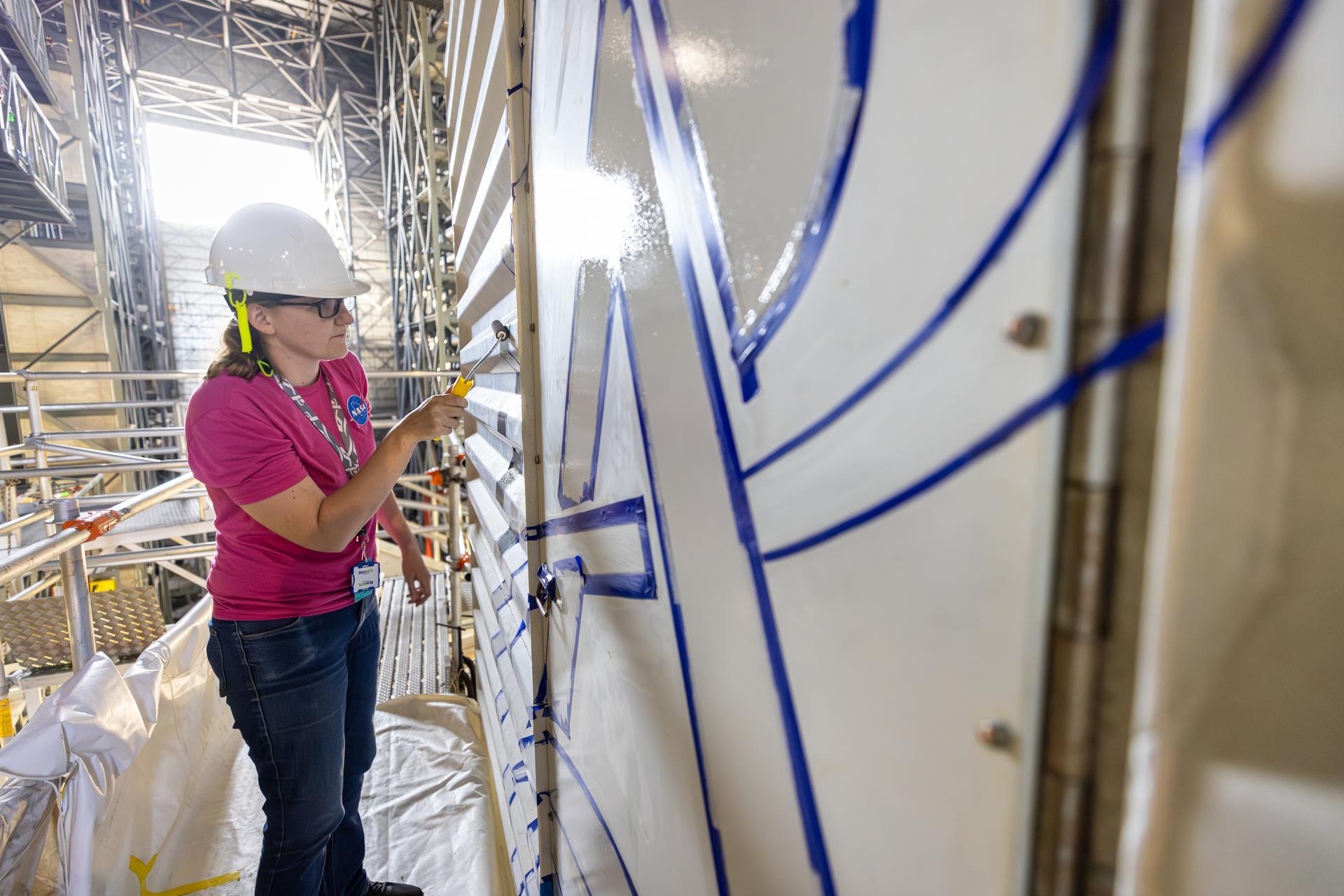
Katie Mortensen, mechanical engineering technician, paints NASA’s Artemis logo on the White Room connected to the crew access arm and mobile launcher inside the Vehicle Assembly Building at NASA’s Kennedy Space Center in Florida on Thursday, Dec. 4, 2025. The White Room is the area where the Artemis II crew Reid Wiseman, Victor Glover, Christina Koch, and CSA (Canadian Space Agency) astronaut Jeremy Hansen will enter the Orion spacecraft ahead of launch from Launch Complex 39B at NASA Kennedy in early 2026.
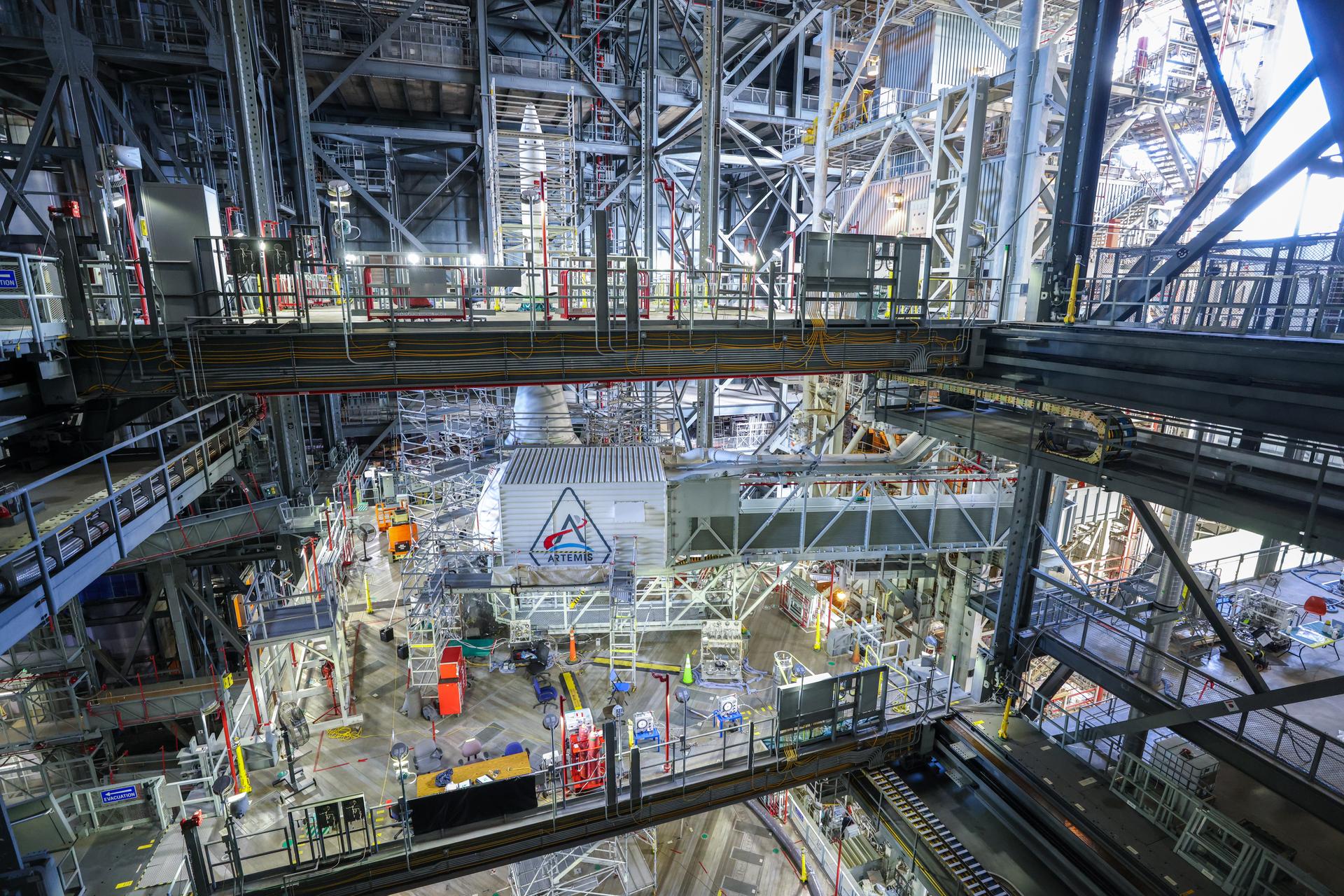
A freshly painted NASA’s Artemis logo is unveiled on the White Room connected to the crew access arm and mobile launcher inside the Vehicle Assembly Building at NASA’s Kennedy Space Center in Florida on Thursday, Dec. 4, 2025. The White Room is the area where the Artemis II crew Reid Wiseman, Victor Glover, Christina Koch, and CSA (Canadian Space Agency) astronaut Jeremy Hansen will enter the Orion spacecraft ahead of launch from Launch Complex 39B at NASA Kennedy in early 2026.
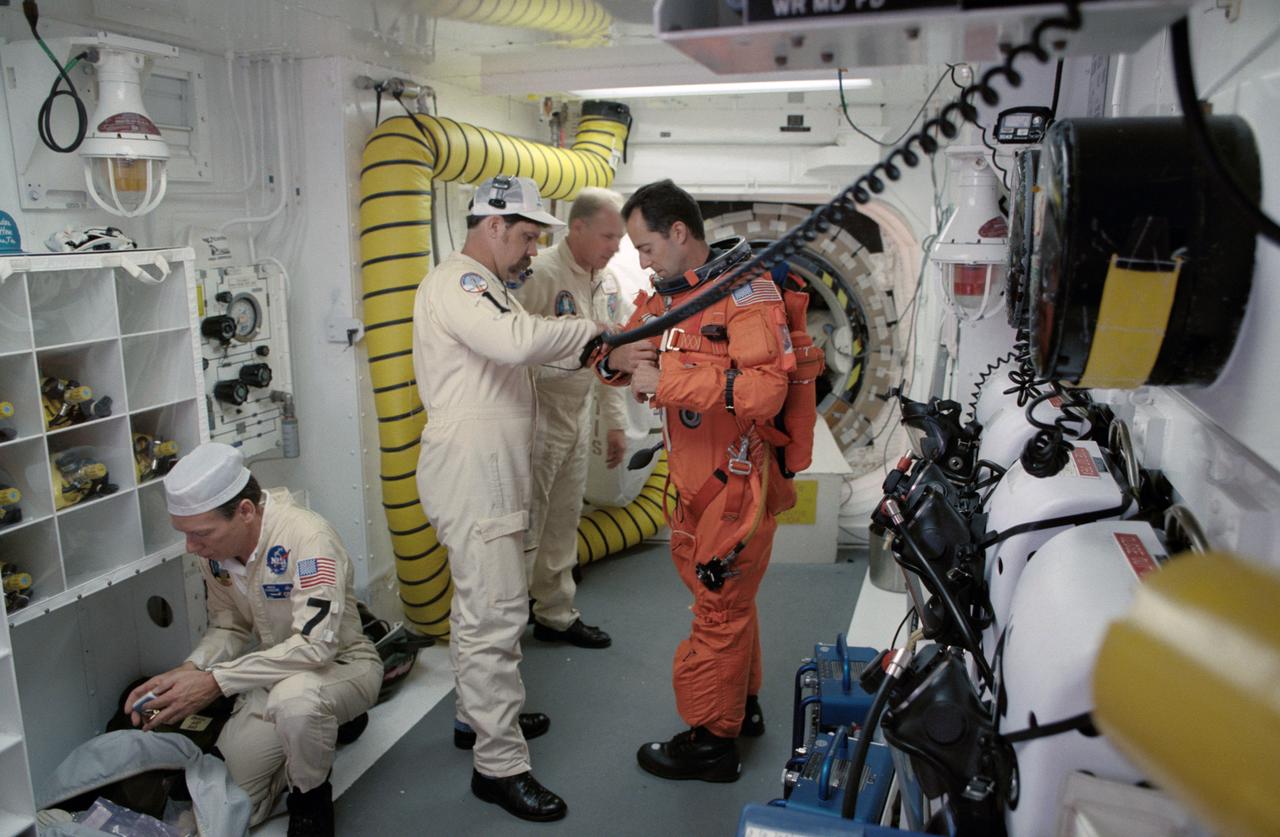
STS066-S-003 (3 November 1994) --- In the white room at Launch Pad 39B, Jean-Francois Clervoy, mission specialist representing European Space Agency (ESA), is assisted with his partial pressure launch/entry suit (LES) by close-out crew members Travis Thompson and Danny Wyatt (background). At noon on November 3, 1994, the ESA astronaut joined five NASA astronauts for launch aboard the Space Shuttle Atlantis. The six astronauts went on to spend 11-days in Earth-orbit in support of the Atmospheric Laboratory for Applications and Science (ATLAS-3) mission.
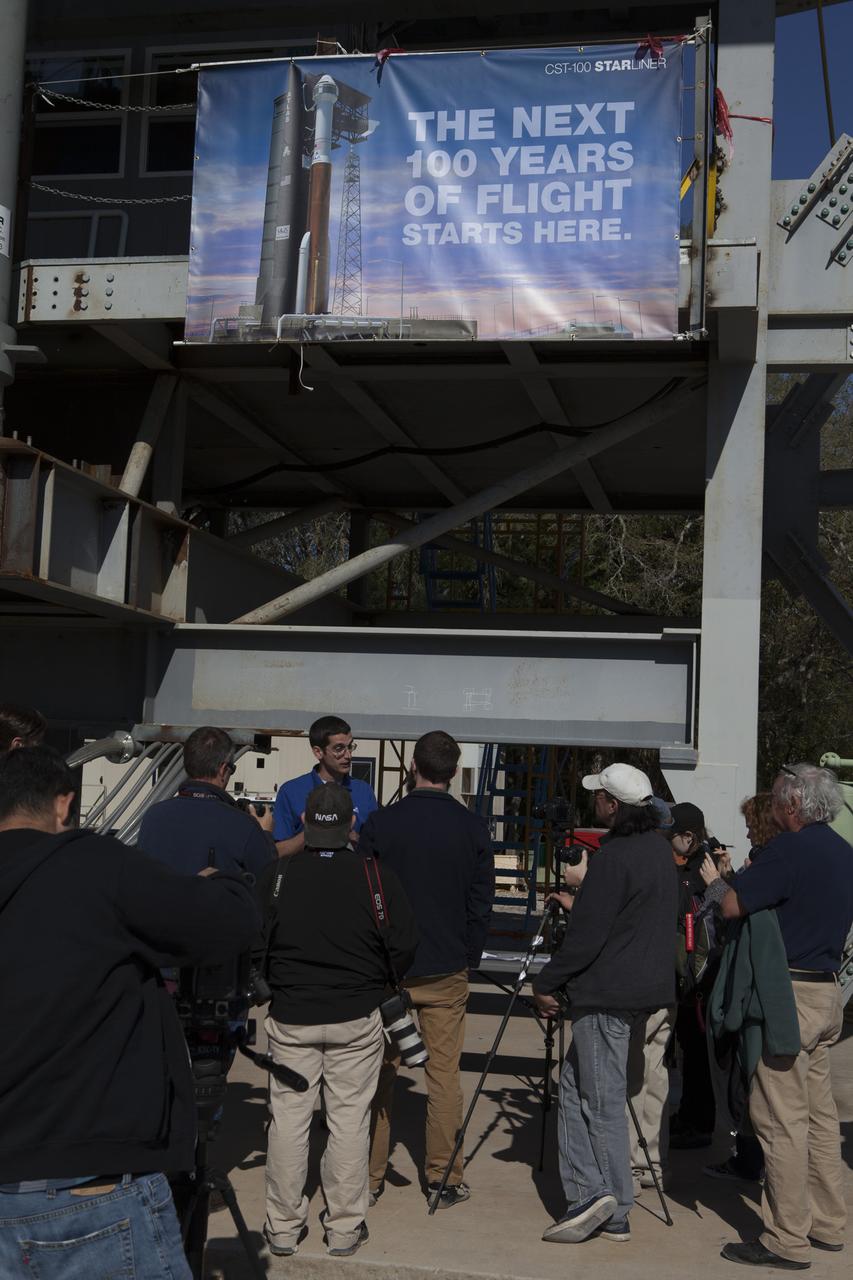
Steve Hirst, Launch Operations Group for United Launch Alliance, speaks to news media about the Crew Access Arm under construction at a yard near NASA's Kennedy Space Center in Florida. The arm and white room are being built to bridge the space between the Crew Access Tower and the hatch to Boeing's CST-100 Starliner spacecraft as it stands atop a ULA Atlas V rocket at Space Launch Complex 41 before flight. Partnering with NASA's Commercial Crew Program, Boeing is one of two companies building a new, privately owned and operated space system to carry astronauts to the International Space Station.
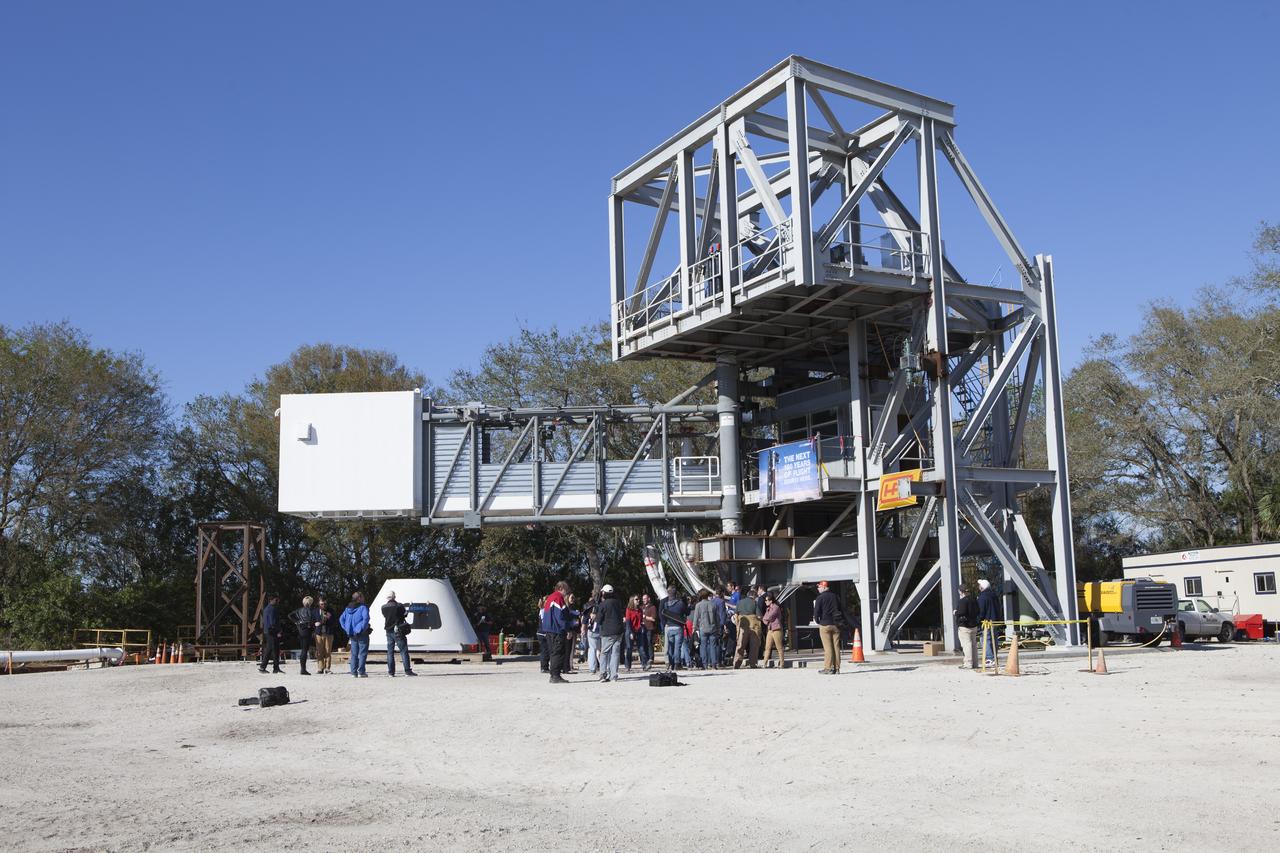
NASA, Boeing and United Launch Alliance officials discuss the Crew Access Arm under construction at a yard near NASA's Kennedy Space Center in Florida. The arm and white room are being built to bridge the space between the Crew Access Tower and the hatch to Boeing's CST-100 Starliner spacecraft as it stands atop a ULA Atlas V rocket at Space Launch Complex 41 before flight. Partnering with NASA's Commercial Crew Program, Boeing is one of two companies building a new, privately owned and operated space system to carry astronauts to the International Space Station.
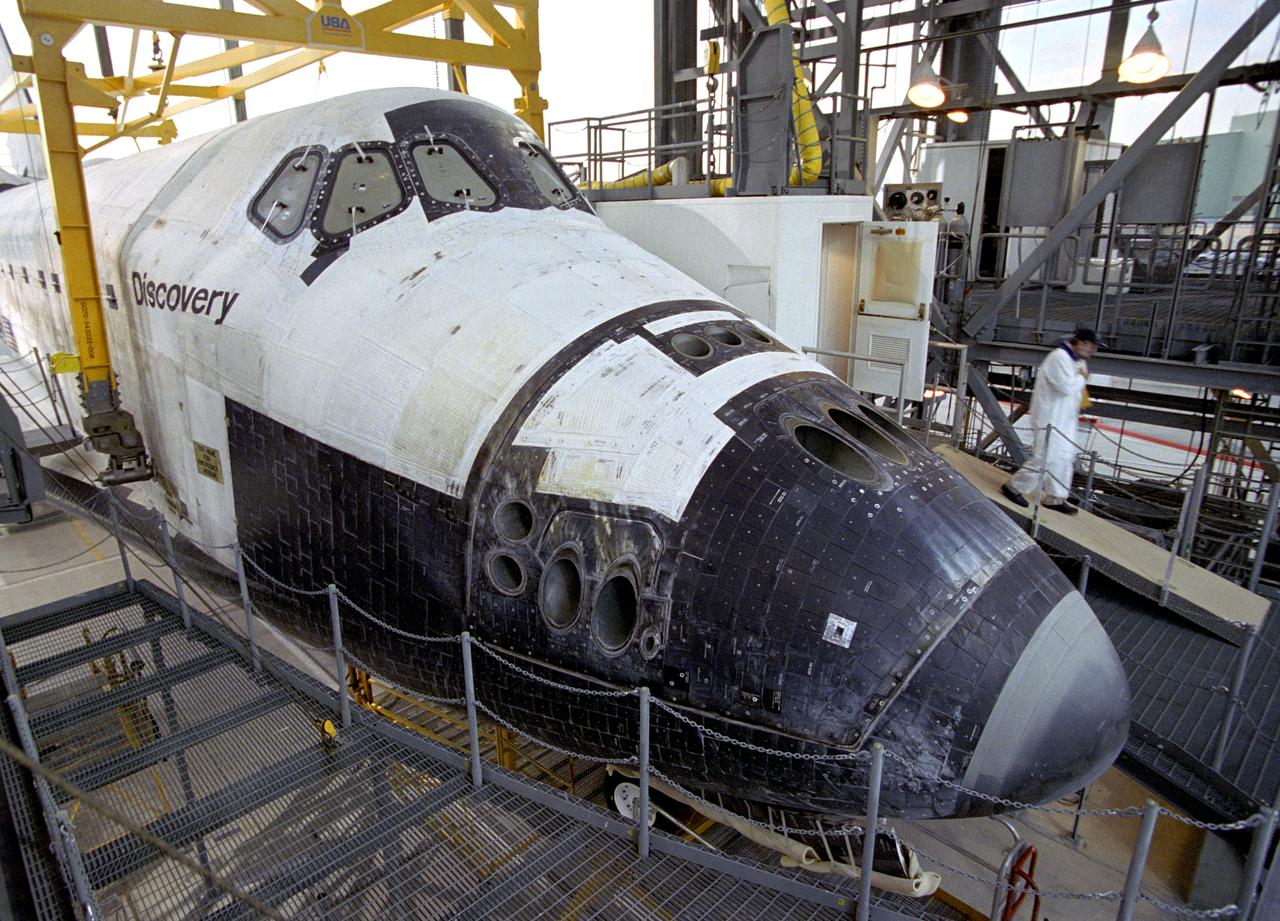
A technician leaves the 'white room', the access point for entering the Space Shuttle Discovery during post-flight processing in the Mate-Demate Device (MDD) at NASA's Dryden Flight Research Center in California. The gantry-like MDD structure is used for servicing the shuttle orbiters in preparation for their ferry flight back to the Kennedy Space Center in Florida, including mounting the shuttle atop NASA's modified Boeing 747 Shuttle Carrier Aircraft. Space Shuttle Discovery landed safely at NASA's Dryden Flight Research Center at Edwards Air Force Base in California at 5:11:22 a.m. PDT, August 9, 2005, following the very successful 14-day STS-114 return to flight mission. During their two weeks in space, Commander Eileen Collins and her six crewmates tested out new safety procedures and delivered supplies and equipment the International Space Station. Discovery spent two weeks in space, where the crew demonstrated new methods to inspect and repair the Shuttle in orbit. The crew also delivered supplies, outfitted and performed maintenance on the International Space Station. A number of these tasks were conducted during three spacewalks. In an unprecedented event, spacewalkers were called upon to remove protruding gap fillers from the heat shield on Discovery's underbelly. In other spacewalk activities, astronauts installed an external platform onto the Station's Quest Airlock and replaced one of the orbital outpost's Control Moment Gyroscopes. Inside the Station, the STS-114 crew conducted joint operations with the Expedition 11 crew. They unloaded fresh supplies from the Shuttle and the Raffaello Multi-Purpose Logistics Module. Before Discovery undocked, the crews filled Raffeallo with unneeded items and returned to Shuttle payload bay. Discovery launched on July 26 and spent almost 14 days on orbit.
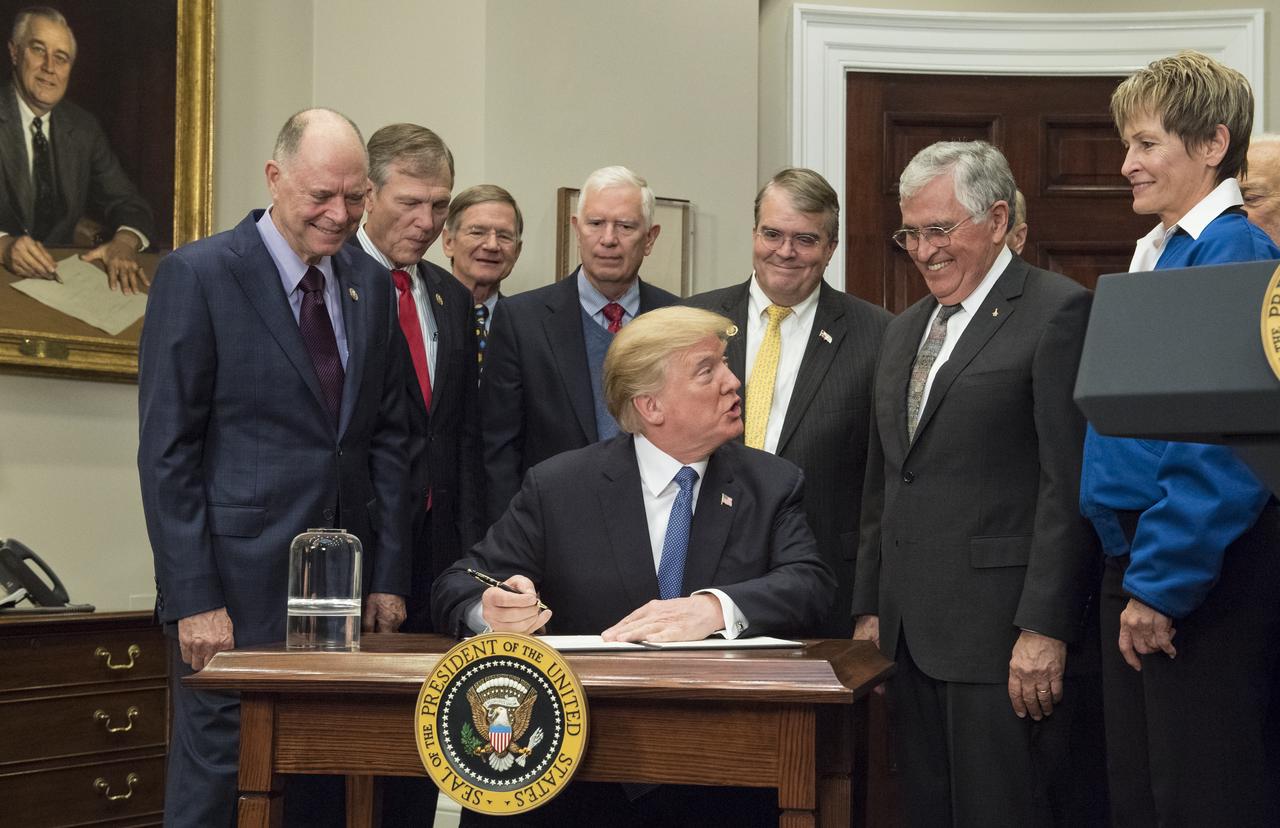
President Donald Trump prepares to sign Space Policy Directive - 1, directing NASA to return to the moon, alongside members of the Senate, Congress, NASA, and commercial space companies in the Roosevelt room of the White House in Washington, Monday, Dec. 11, 2017. Photo Credit: (NASA/Aubrey Gemignani)
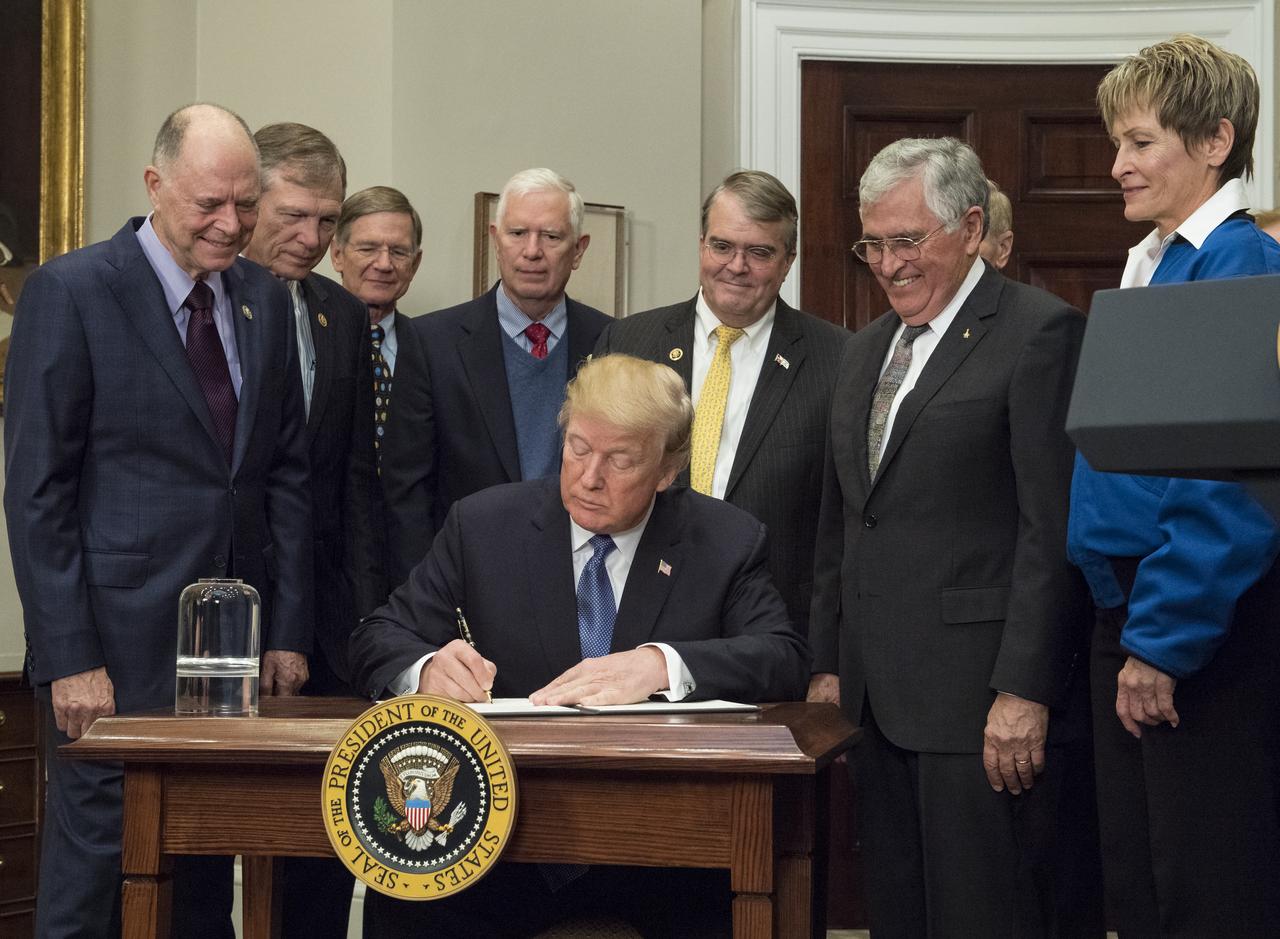
President Donald Trump signs Space Policy Directive - 1, directing NASA to return to the moon, alongside members of the Senate, Congress, NASA, and commercial space companies in the Roosevelt room of the White House in Washington, Monday, Dec. 11, 2017. Photo Credit: (NASA/Aubrey Gemignani)

President Donald Trump gives remarks after speaking with NASA astronauts Christina Koch and Jessica Meir during the first all-woman spacewalk on Friday, Oct. 18, 2019, from the Roosevelt Room of the White House in Washington. The first all-woman spacewalk in history began at 7:38am EDT with Koch and Meir venturing outside the International Space Station to replace a failed battery charge-discharge unit. This is the fourth spacewalk for Koch and Meir’s first. Photo Credit: (NASA/Bill Ingalls)
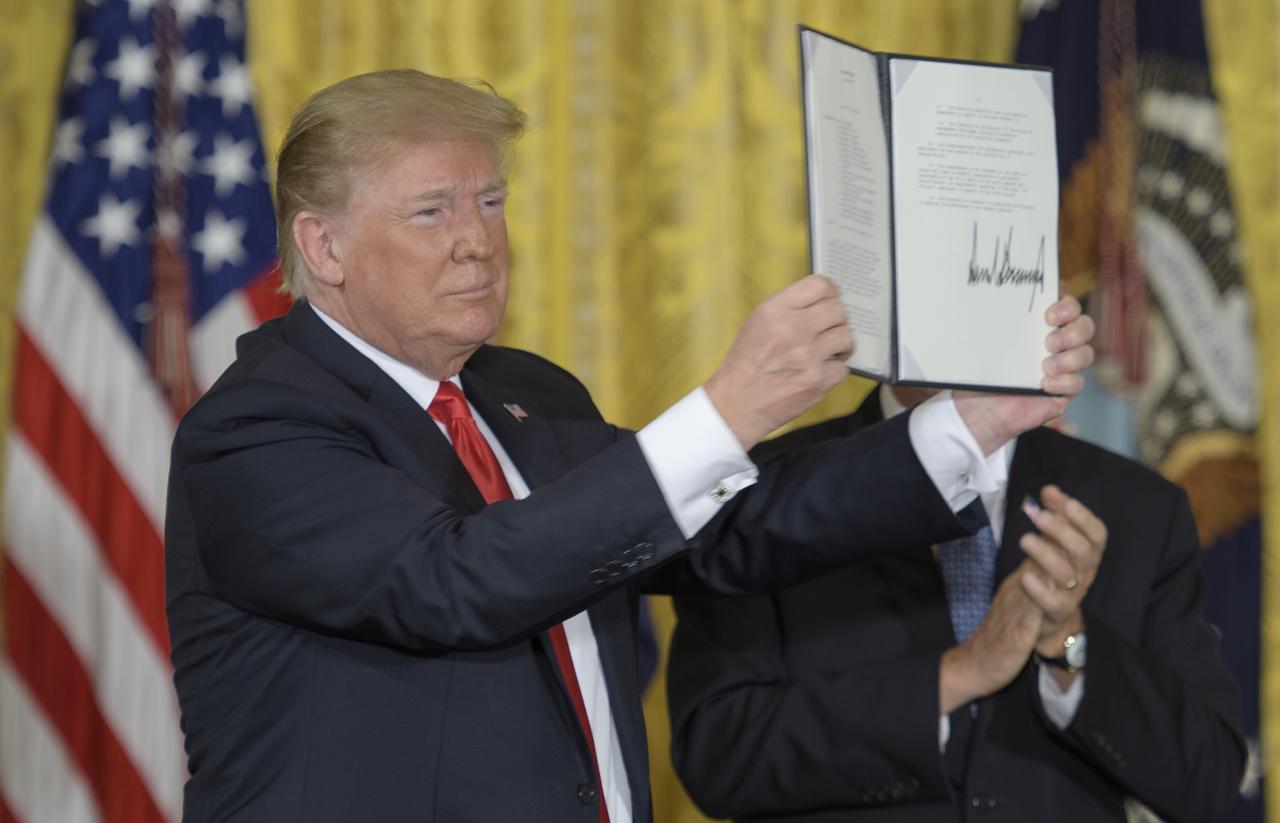
President Donald Trump holds up Space Policy Directive - 3 after signing it during a meeting of the National Space Council in the East Room of the White House, Monday, June 18, 2018, in Washington. Chaired by the Vice President, the council's role is to advise the President regarding national space policy and strategy, and review the nation's long-range goals for space activities. Photo Credit: (NASA/Bill Ingalls)

President Donald Trump gives remarks after speaking with NASA astronauts Christina Koch and Jessica Meir during the first all-woman spacewalk on Friday, Oct. 18, 2019, from the Roosevelt Room of the White House in Washington. The first all-woman spacewalk in history began at 7:38am EDT with Koch and Meir venturing outside the International Space Station to replace a failed battery charge-discharge unit. This is the fourth spacewalk for Koch and Meir’s first. Photo Credit: (NASA/Bill Ingalls)

President Donald Trump speaks before signing an Executive Order to reestablish the National Space Council, alongside members of the Congress, National Aeronautics and Space Administration, and Commercial Space Companies in the Roosevelt room of the White House in Washington, Friday, June 30, 2017. Vice President Mike Pence, also in attendance, will chair the council. Photo Credit: (NASA/Aubrey Gemignani)
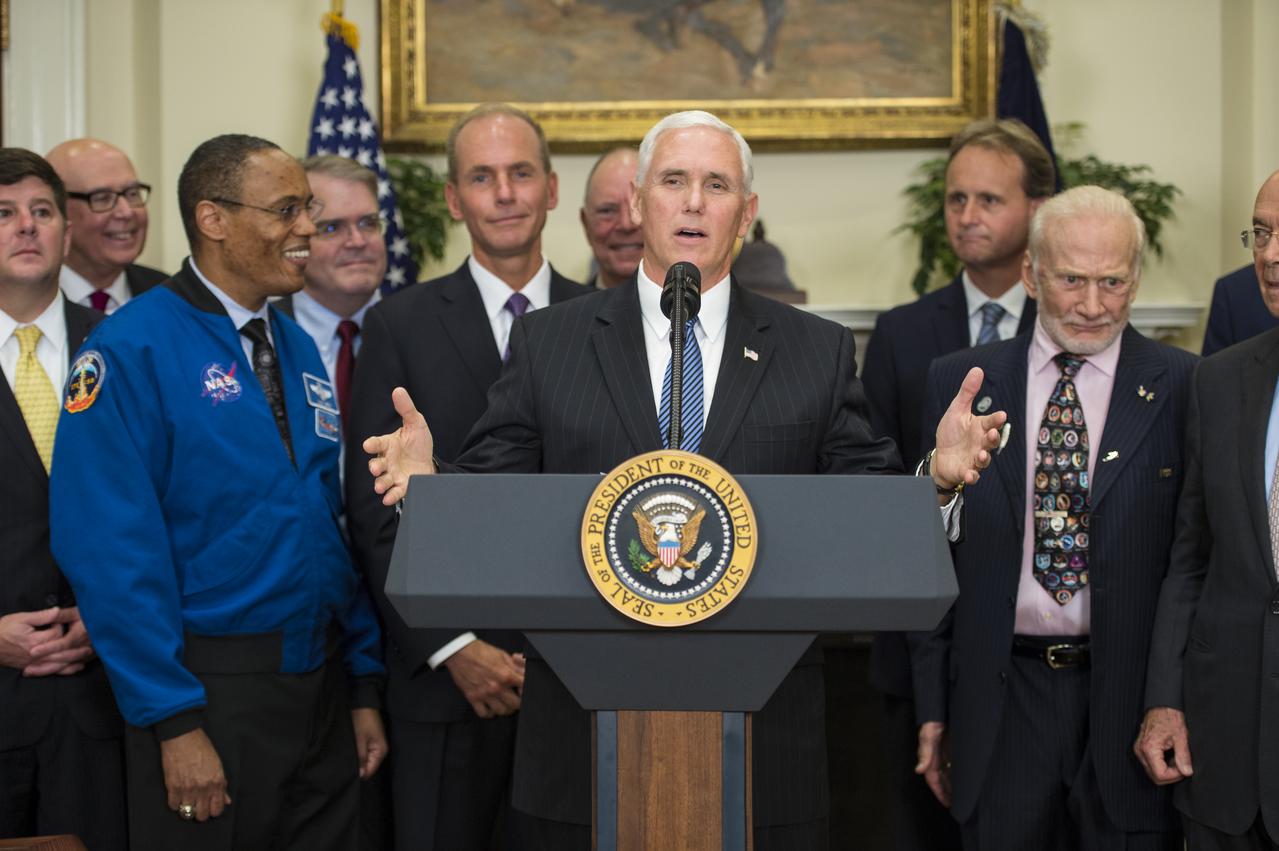
Vice President Mike Pence, center, speaks before introducing President Donald Trump to sign an Executive Order reestablishing the National Space Council, alongside members of the Congress, National Aeronautics and Space Administration, and Commercial Space Companies in the Roosevelt room of the White House in Washington, Friday, June 30, 2017. Vice President Mike Pence will chair the council. Also pictured, are: NASA astronaut Alvin Drew, left, and retired astronaut Buzz Aldrin, right. Photo Credit: (NASA/Aubrey Gemignani)
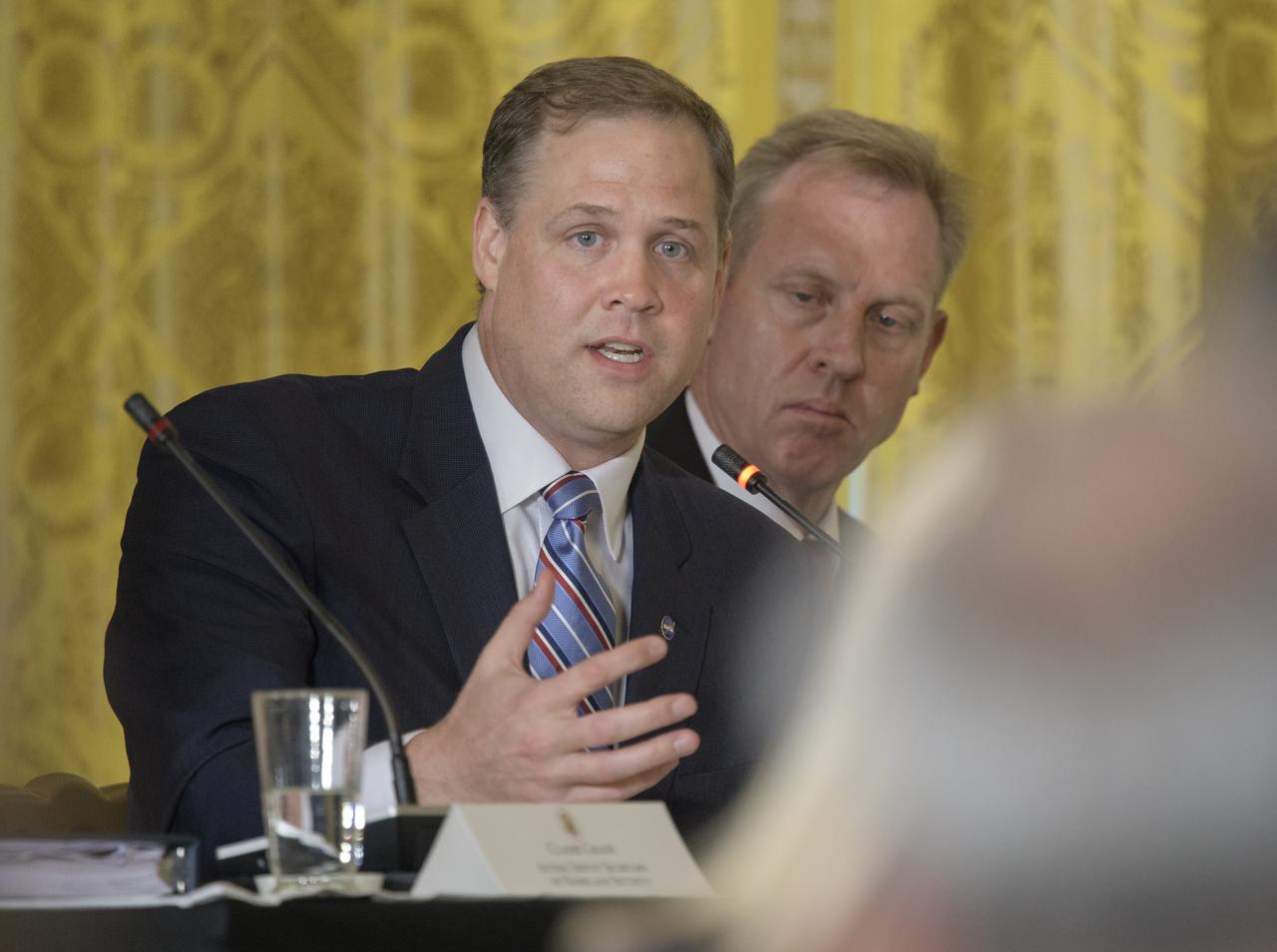
NASA Administrator Jim Bridenstine speaks during a meeting of the National Space Council in the East Room of the White House, Monday, June 18, 2018, in Washington. Chaired by the Vice President, the council's role is to advise the President regarding national space policy and strategy, and review the nation's long-range goals for space activities. Photo Credit: (NASA/Bill Ingalls)
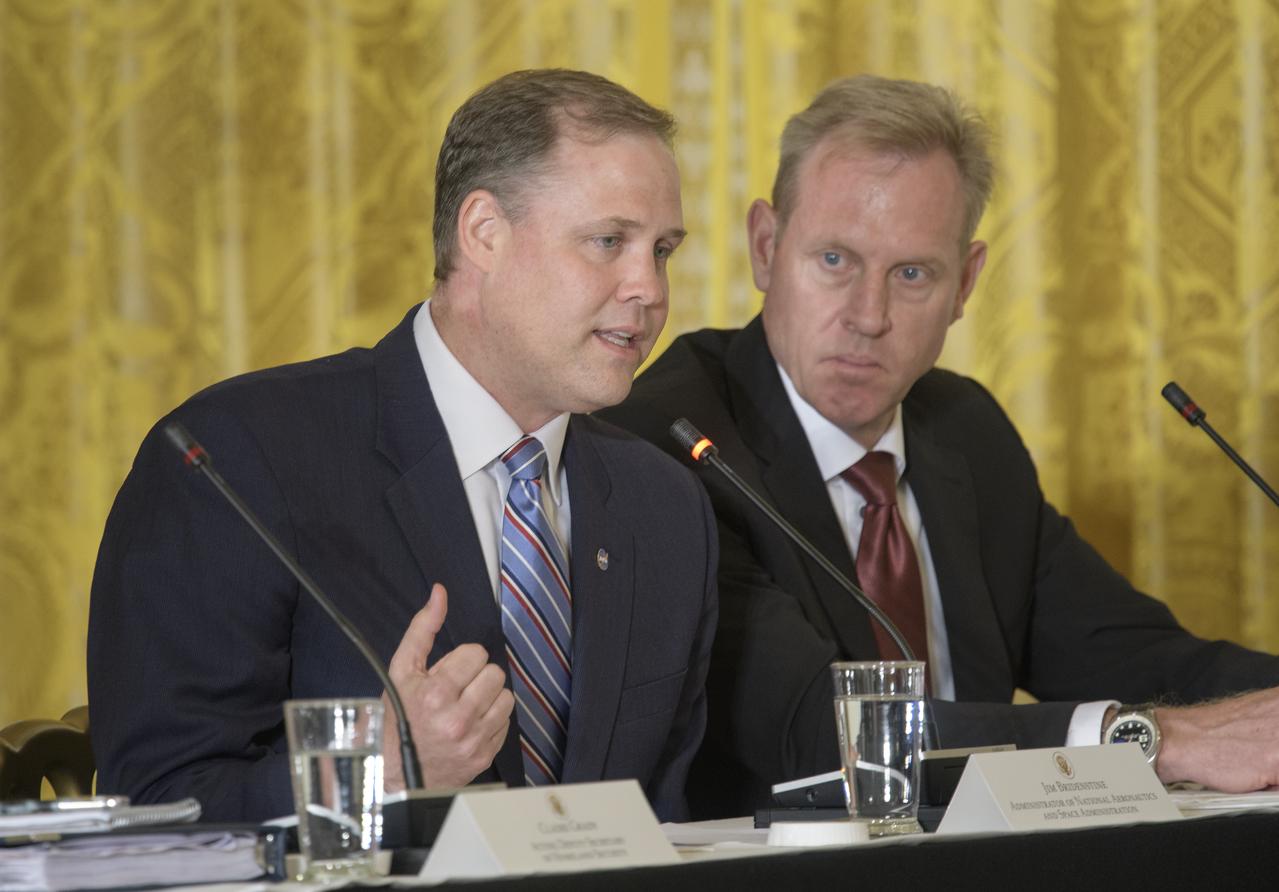
NASA Administrator Jim Bridenstine speaks during a meeting of the National Space Council in the East Room of the White House, Monday, June 18, 2018, in Washington. Chaired by the Vice President, the council's role is to advise the President regarding national space policy and strategy, and review the nation's long-range goals for space activities. Photo Credit: (NASA/Bill Ingalls)

President Donald Trump delivers opening remarks during a meeting of the National Space Council in the East Room of the White House, Monday, June 18, 2018, in Washington. Chaired by the Vice President, the council's role is to advise the President regarding national space policy and strategy, and review the nation's long-range goals for space activities. Photo Credit: (NASA/Bill Ingalls)
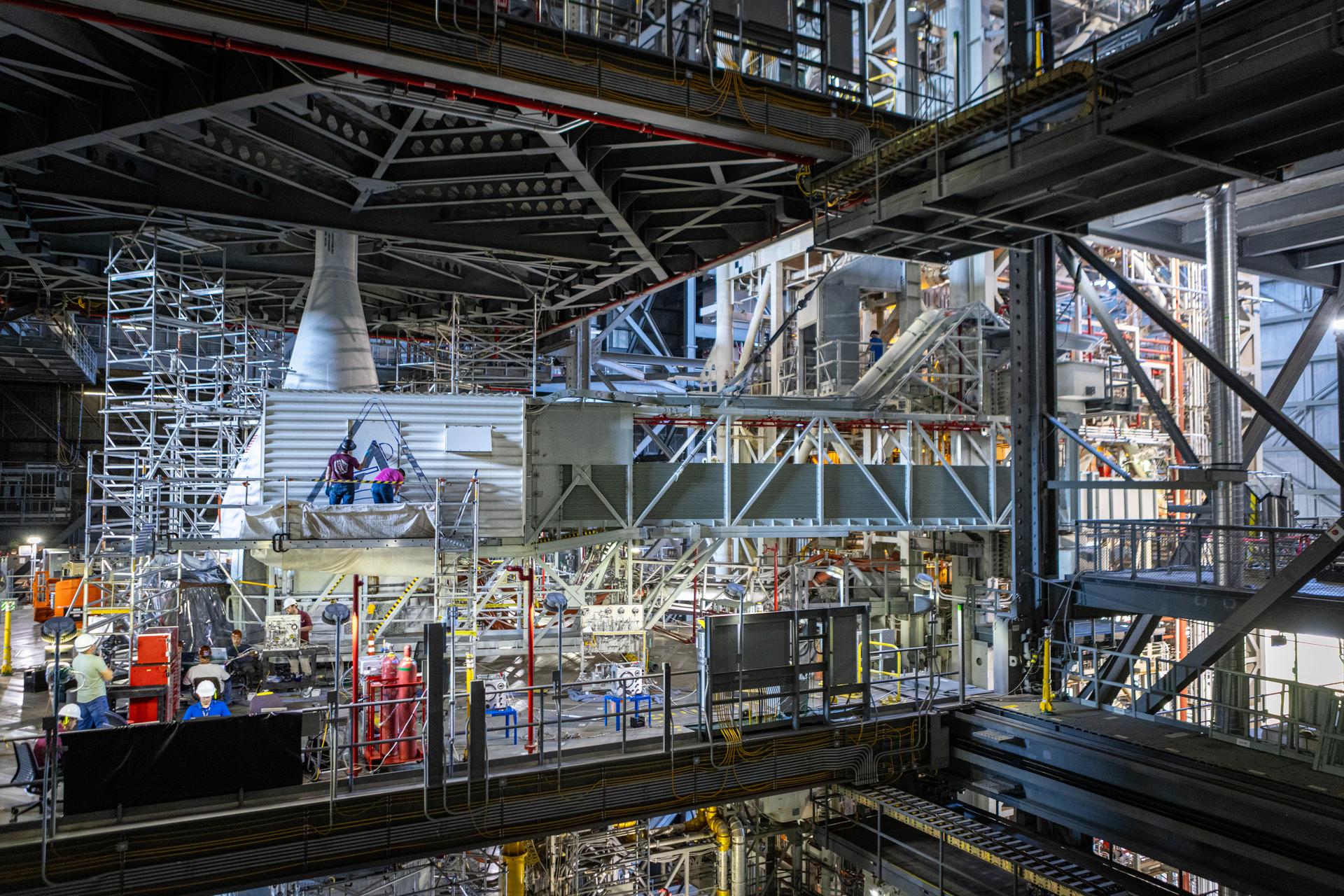
From left, Sean McCrary and Katie Mortensen, mechanical engineering technicians, paint NASA’s Artemis logo on the White Room connected to the crew access arm and mobile launcher inside the Vehicle Assembly Building at NASA’s Kennedy Space Center in Florida on Thursday, Dec. 4, 2025. The White Room is the area where the Artemis II crew Reid Wiseman, Victor Glover, Christina Koch, and CSA (Canadian Space Agency) astronaut Jeremy Hansen will enter the Orion spacecraft ahead of launch from Launch Complex 39B at NASA Kennedy in early 2026.
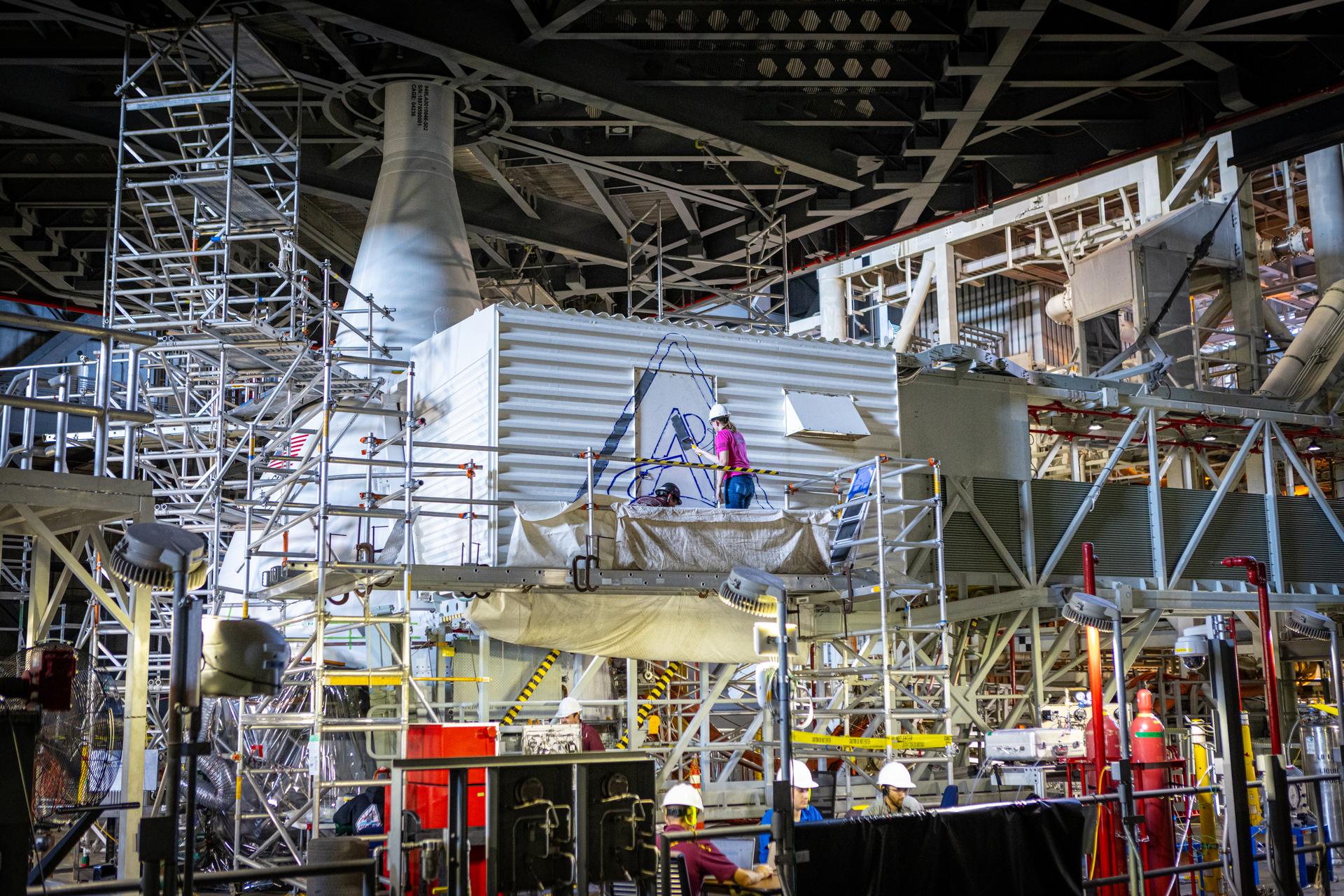
From left, Sean McCrary and Katie Mortensen, mechanical engineering technicians, paint NASA’s Artemis logo on the White Room connected to the crew access arm and mobile launcher inside the Vehicle Assembly Building at NASA’s Kennedy Space Center in Florida on Thursday, Dec. 4, 2025. The White Room is the area where the Artemis II crew Reid Wiseman, Victor Glover, Christina Koch, and CSA (Canadian Space Agency) astronaut Jeremy Hansen will enter the Orion spacecraft ahead of launch from Launch Complex 39B at NASA Kennedy in early 2026.