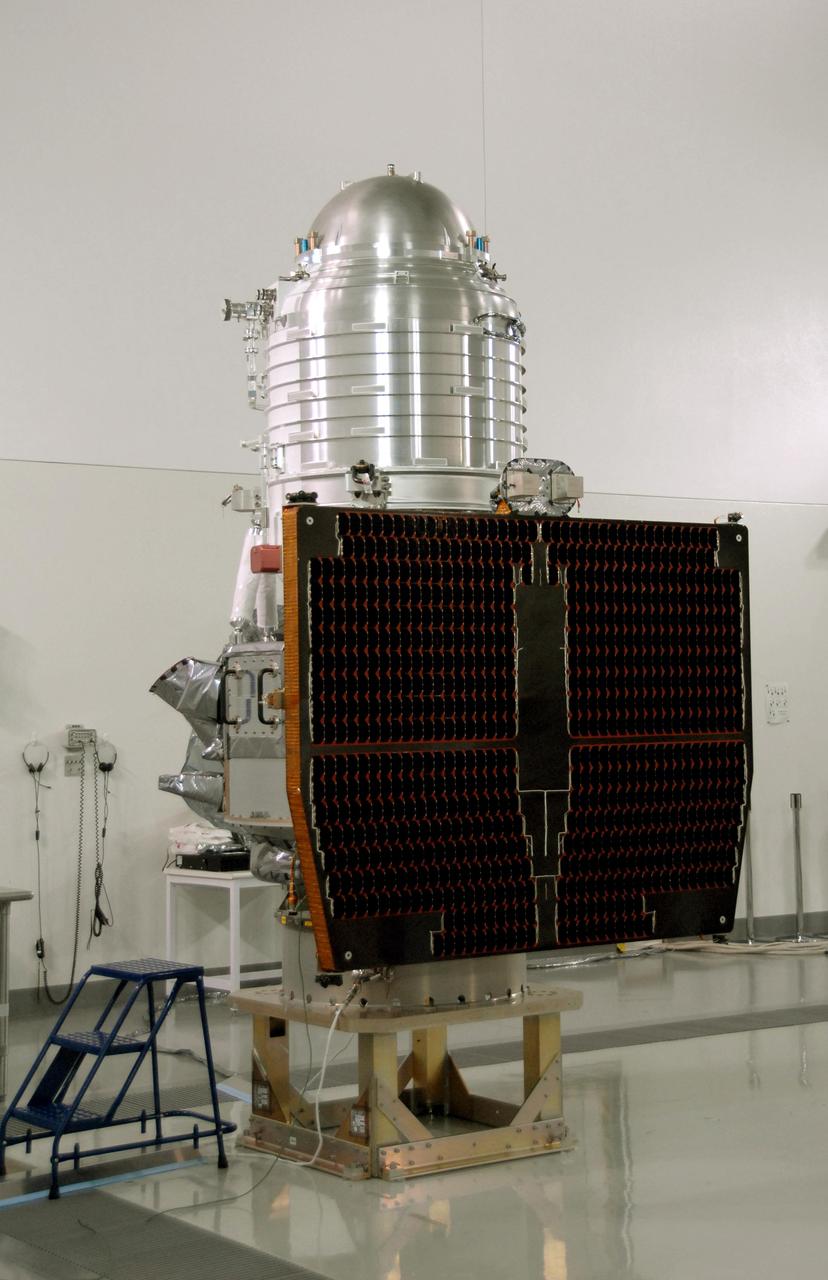
NASA Wide-field Infrared Survey Explorer, or WISE, spacecraft sits on the test stand after connection to the conical adapter.
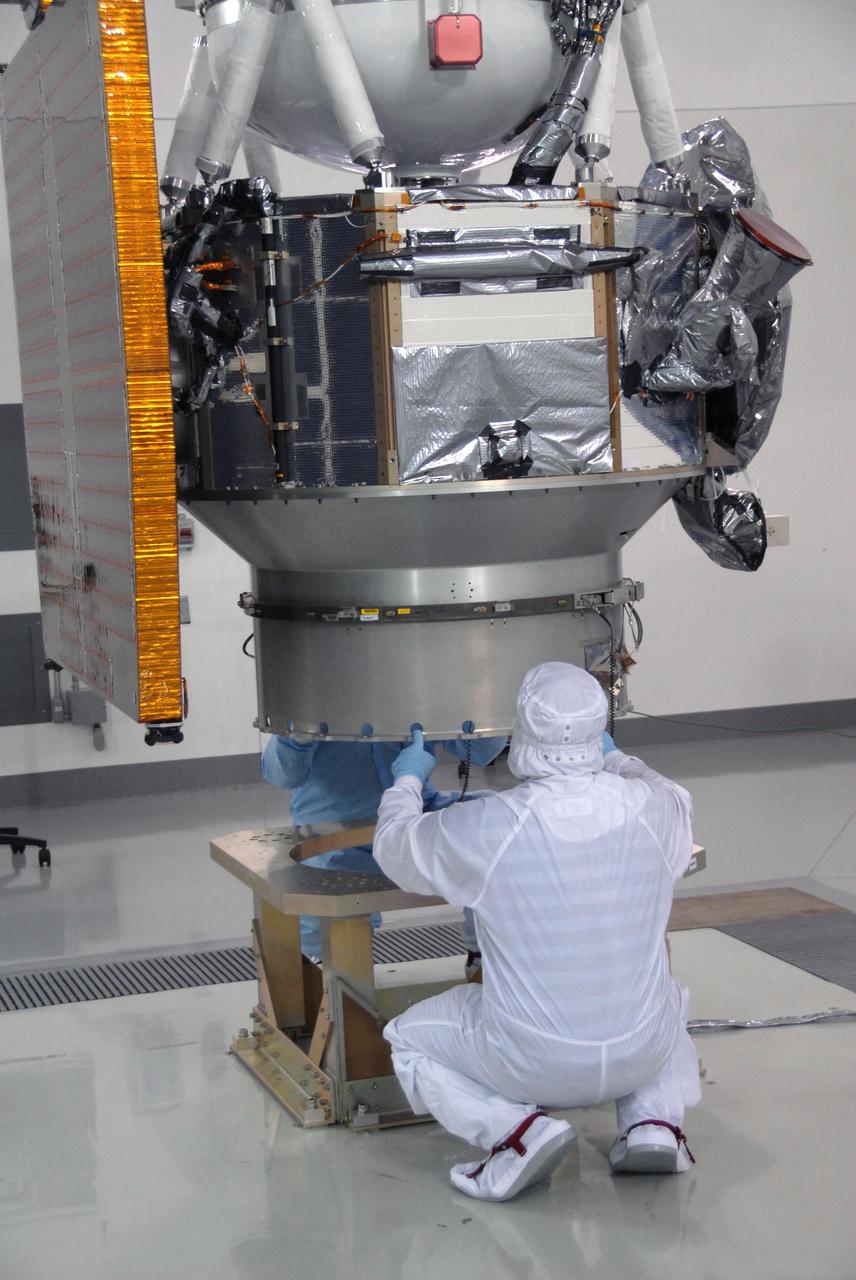
Workers check NASA Wide-field Infrared Survey Explorer, or WISE, spacecraft as it is lowered onto a work stand.
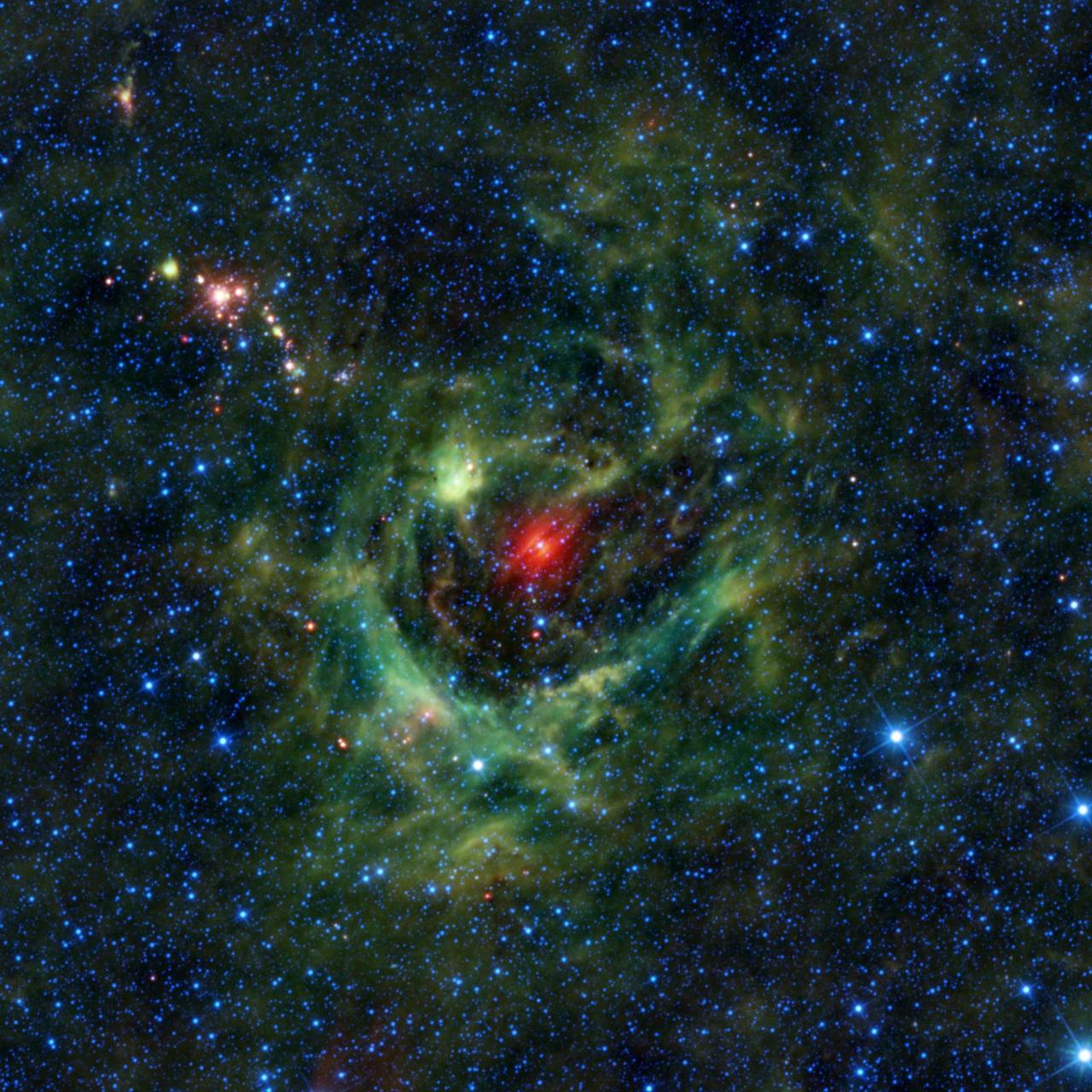
This image from NASA Wide-field Infrared Survey Explorer, or WISE, features a region of star birth wrapped in a blanket of dust, colored green in this infrared view.
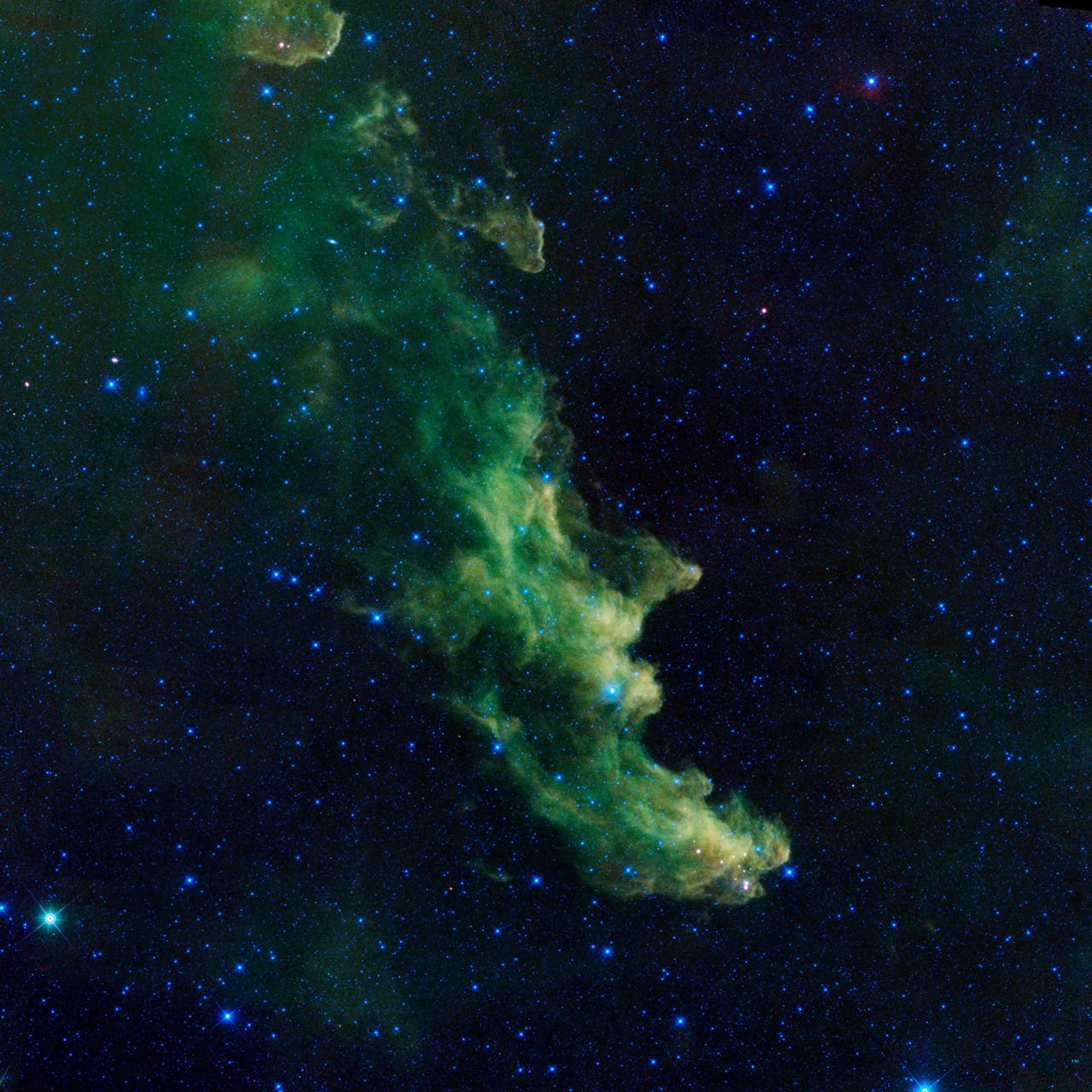
An infrared portrait of the Witch Head nebula from NASA Wide-field Infrared Survey Explorer, or WISE, shows billowy clouds where new stars are brewing.

A new infrared image from NASA Wide-field Infrared Survey Explorer, or WISE, showcases the Tadpole nebula, and asteroids that just happened to be cruising by.
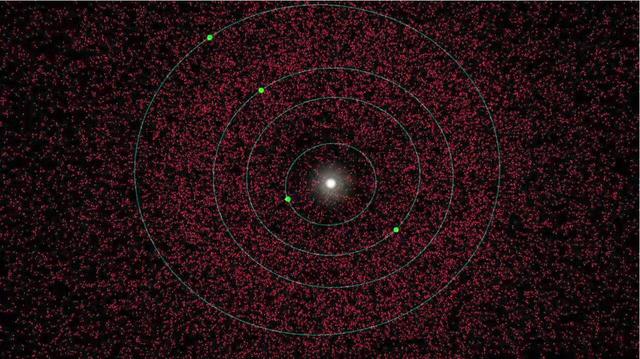
This frame from an animation illustrates asteroid-hunting results from NASA Wide-field Infrared Survey Explorer, or WISE, taken during its one-year survey of the sky in infrared light.
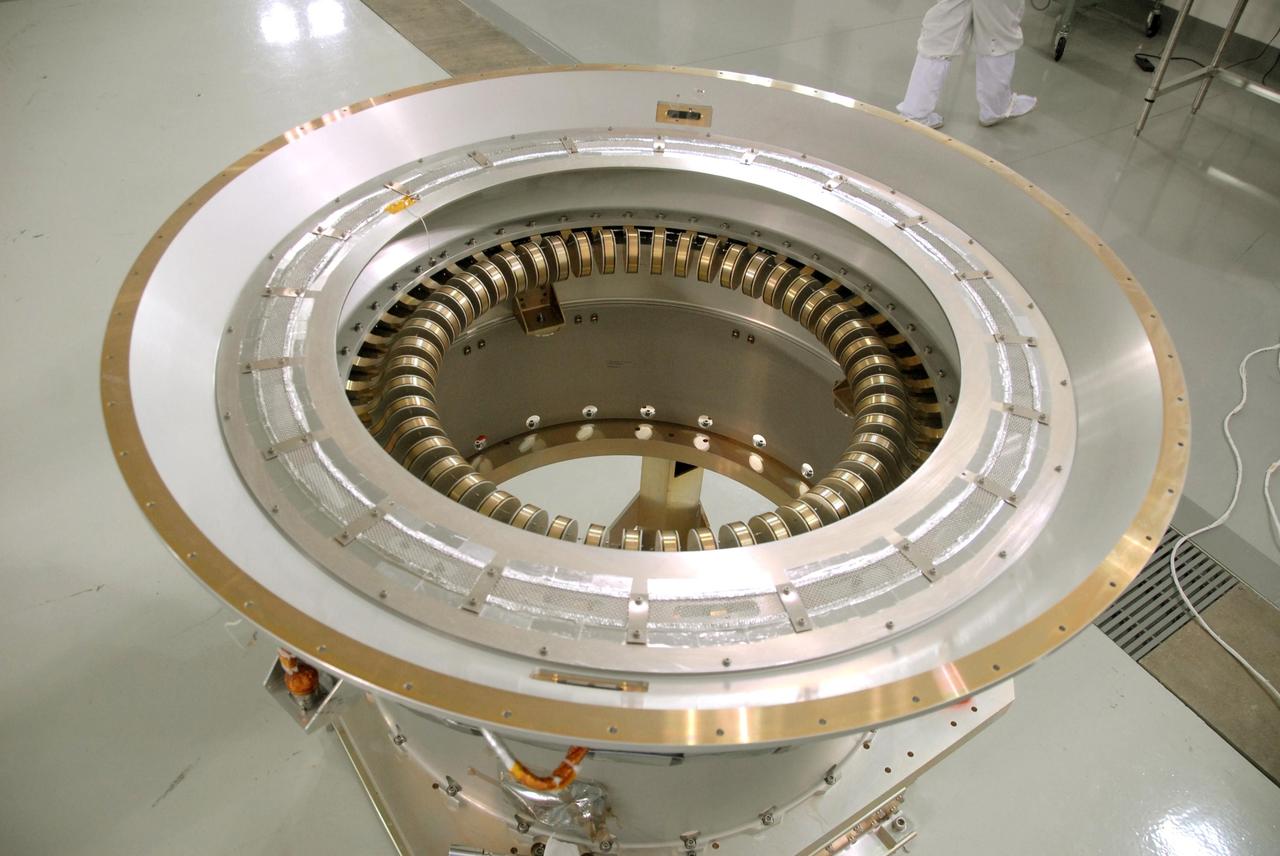
A view of the flexure springs in the soft ride being mated to the payload attach fitting for NASA Wide-field Infrared Survey Explorer, or WISE, spacecraft.
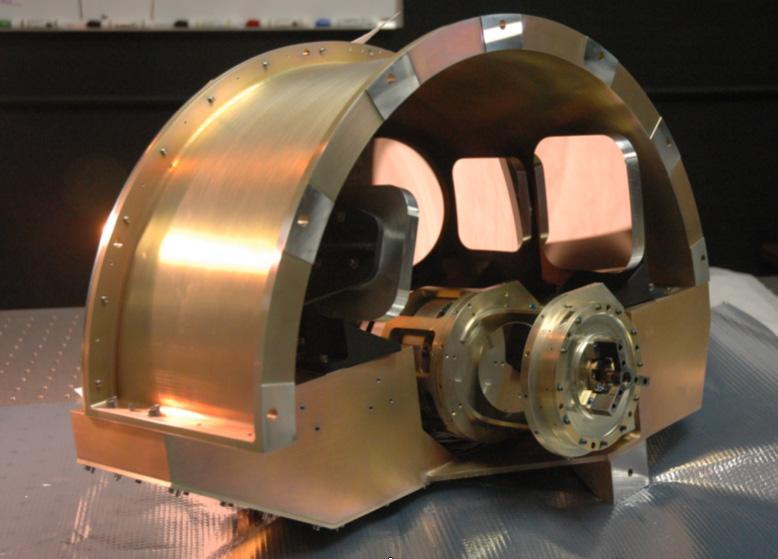
NASA Wide-field Infrared Survey Explorer, or WISE, back-end imager optics. This picture shows the imager optics which are mounted at the back of the optical system.

NASA Wide-field Infrared Survey Explorer, or WISE, helped lead astronomers to what appears to be a new example of a dancing black hole duo.
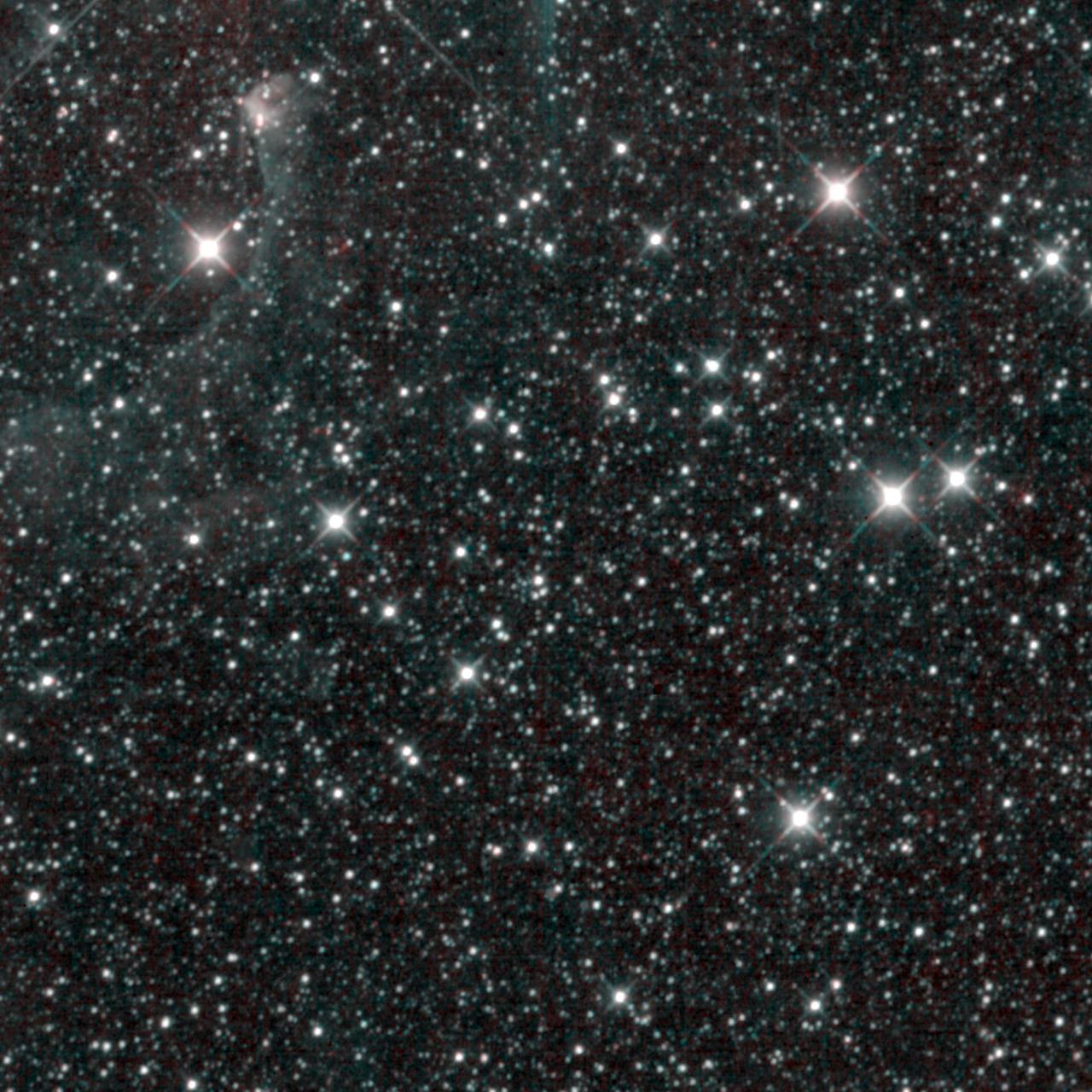
On the morning of February 1, 2011, NASA Wide-field Infrared Survey Explorer, or WISE, took its last snapshot of the sky. WISE final picture shows thousands of stars in a patch of the Milky Way galaxy in the constellation Perseus.
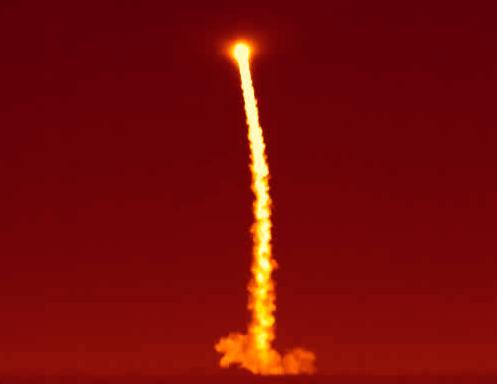
This infrared image shows NASA Wide-field Infrared Survey Explorer WISE rocketing into the sky just before dawn on Dec. 14 from Vandenberg Air Force Base in California. All systems are behaving as expected.

NASA Wide-field Infrared Survey Explorer captured this colorful image of the reflection nebula IRAS 12116-6001. This cloud of interstellar dust cannot be seen directly in visible light, but WISE detectors observed the nebula at infrared wavelengths.

Radiation and winds from massive stars have blown a cavity into the surrounding dust and gas, creating the Trifid nebula, as seen here in infrared light by NASA Wide-field Infrared Survey Explorer, or WISE.
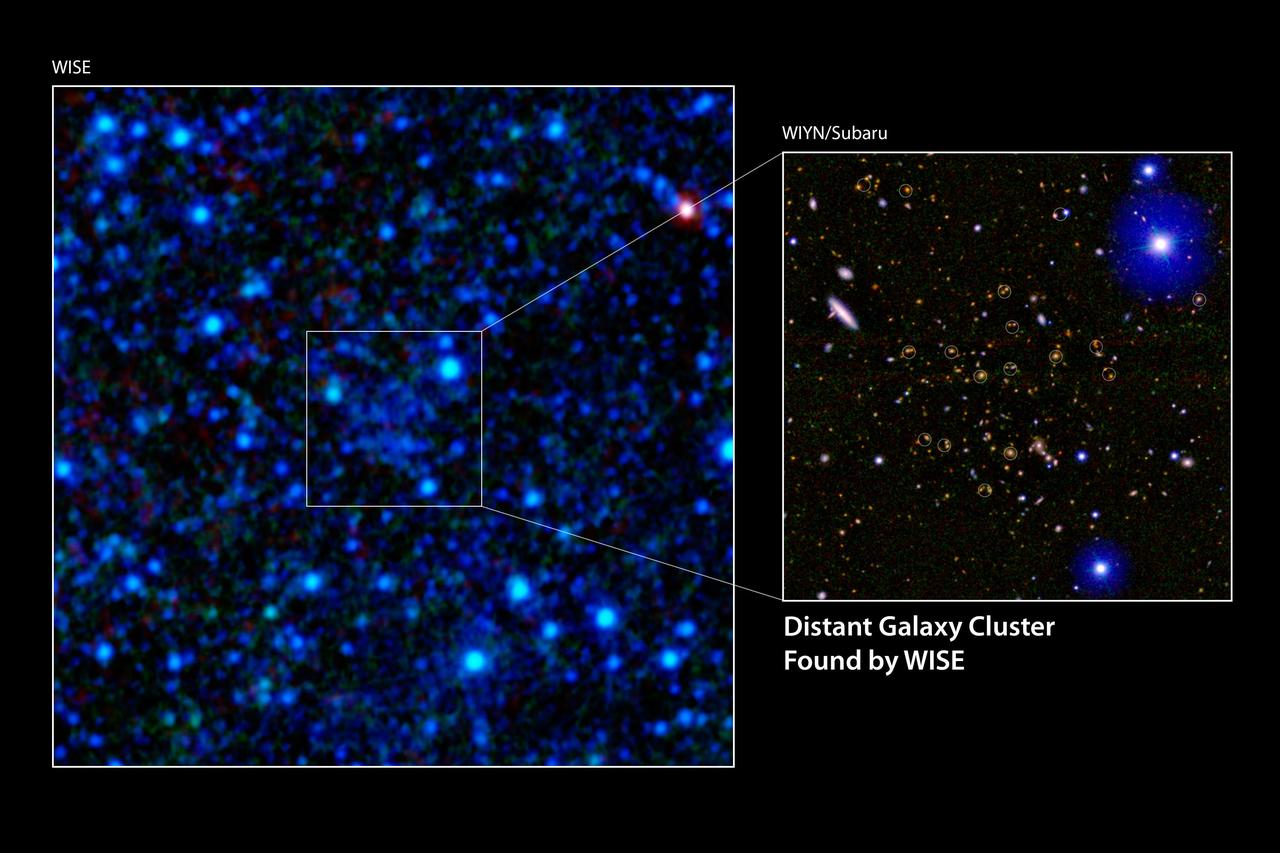
A galaxy cluster 7.7 billion light-years away has been discovered using infrared data from NASA Wide-field Infrared Survey Explorer WISE. The discovery image is shown in the main panel.
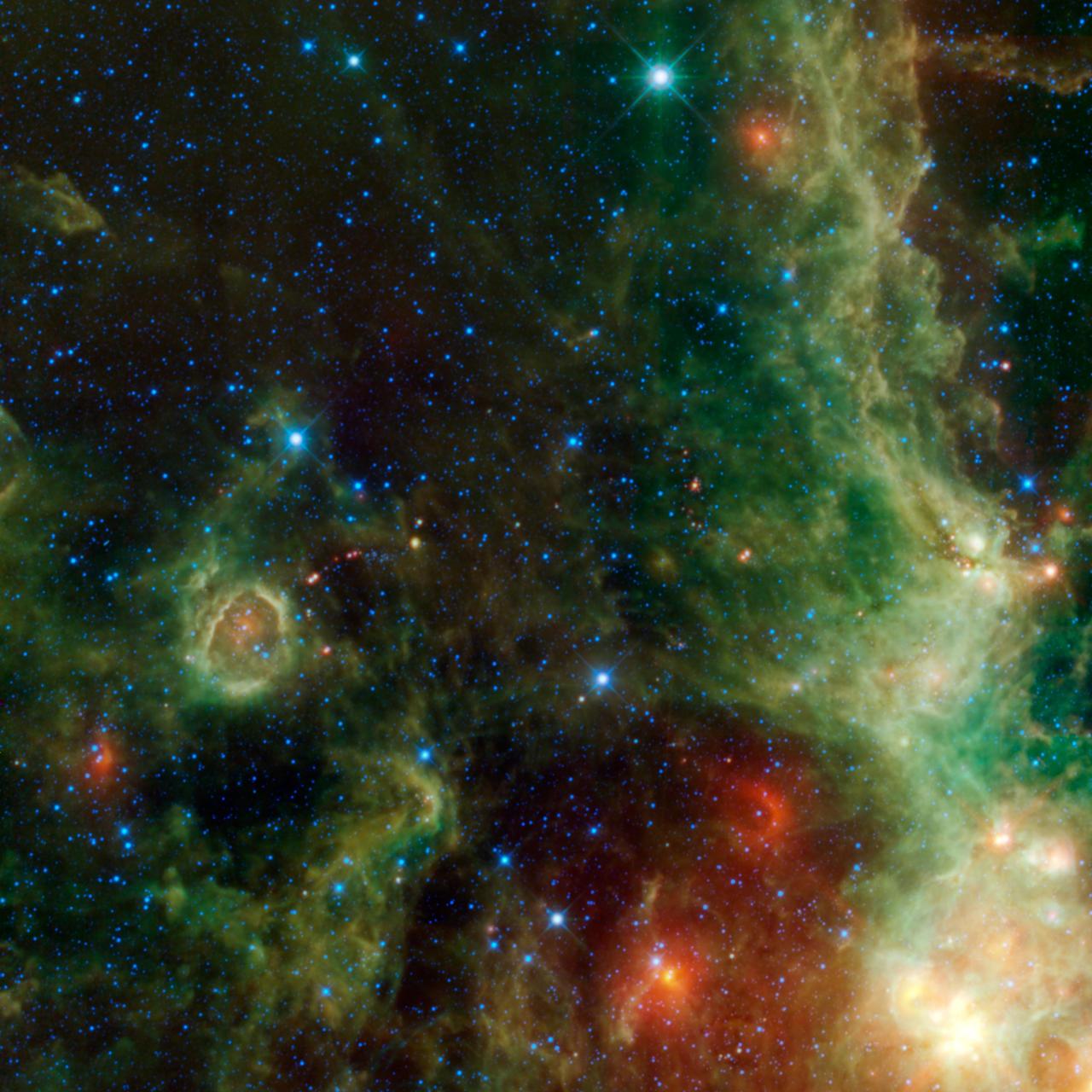
This image from NASA Wide-field Infrared Survey Explorer, or WISE, is a view within the constellation Cassiopeia of another portion of the vast star forming complex that makes up part of the Perseus spiral arm of the Milky Way Galaxy.

This image from NASA Wide-field Infrared Survey Explorer, or WISE, is a view of an area of the sky over 12 times the size of the full Moon on the border of the constellations Sagittarius and Corona Australis.
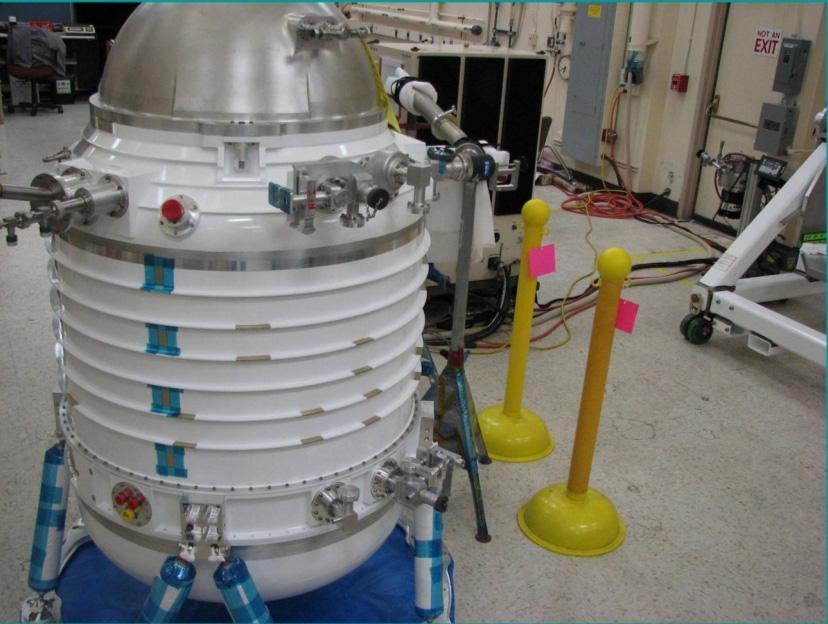
Initial assembly of NASA Wide-field Infrared Survey Explorer cryostat. The cryostat is a 2-stage solid hydrogen dewar that is used to cool the WISE optics and detectors. Here the cryostat internal structures are undergoing their initial vacuum pumpdown.
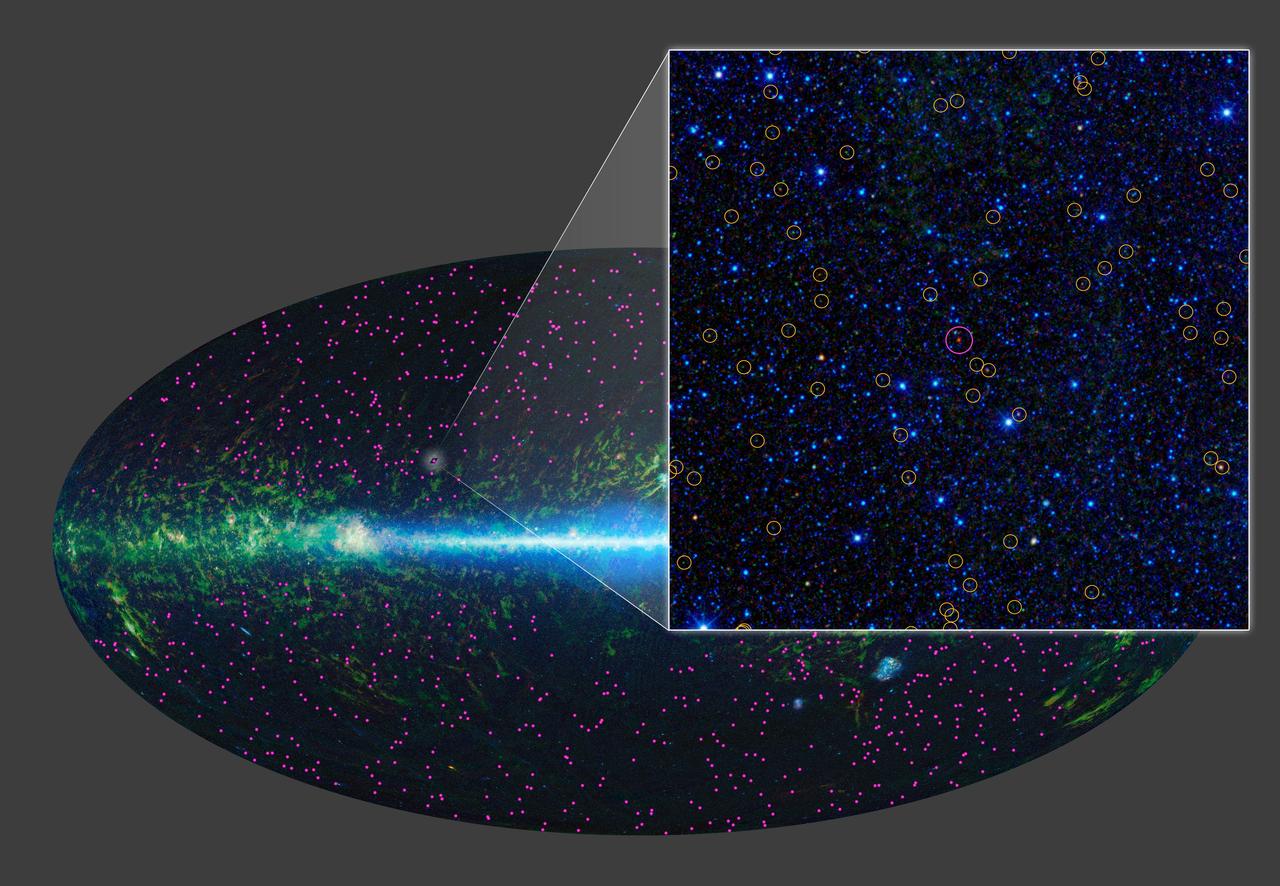
This image zooms in on the region around the first hot DOG red object in magenta circle, discovered by NASA Wide-field Infrared Survey Explorer, or WISE. Hot DOGs are hot dust-obscured galaxies.
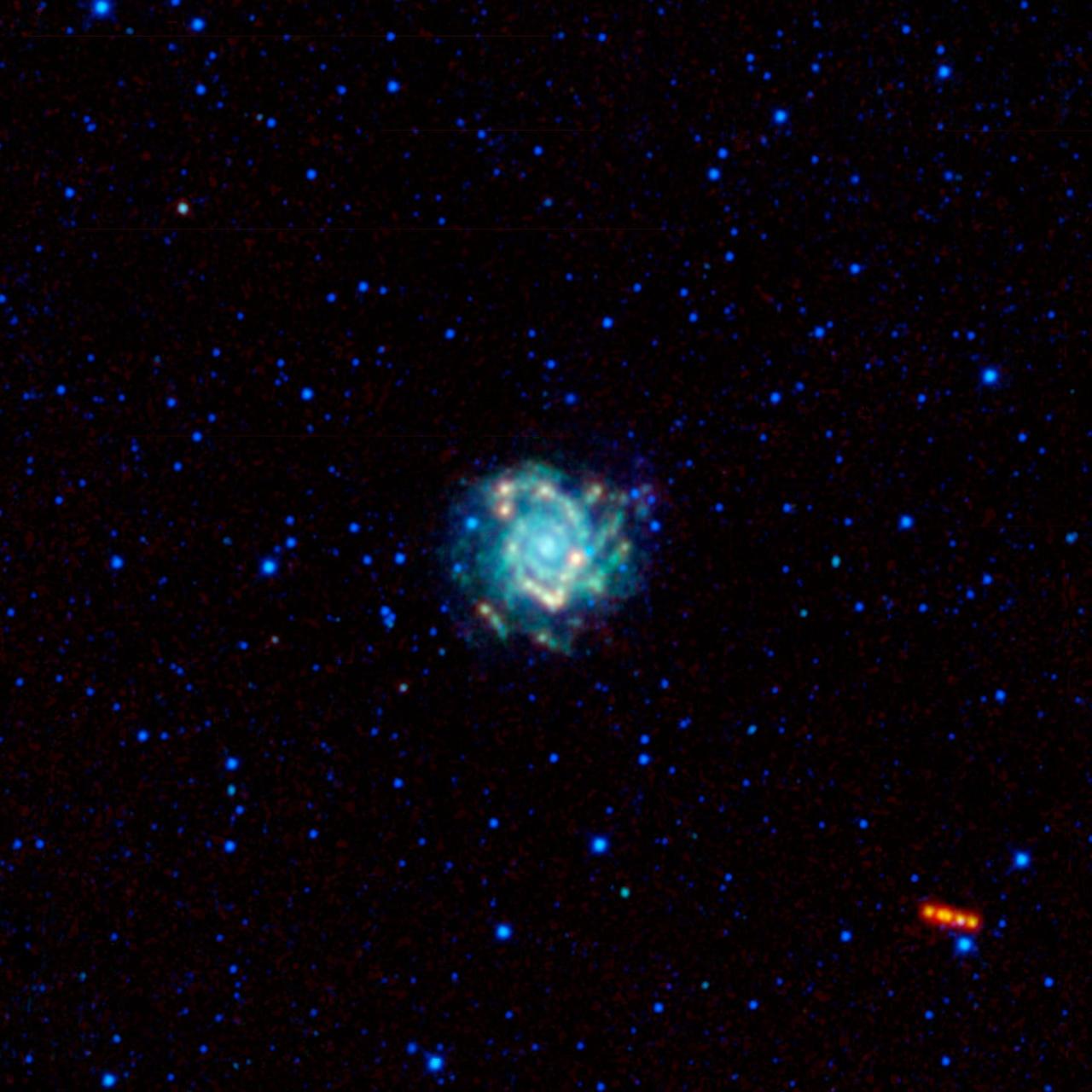
Galaxy Messier 74, with its spiral arms seen face-on, is in the center of this image captured by NASA Wide-field Infrared Survey Explorer, or WISE, while an asteroid tracks its way across the sky.
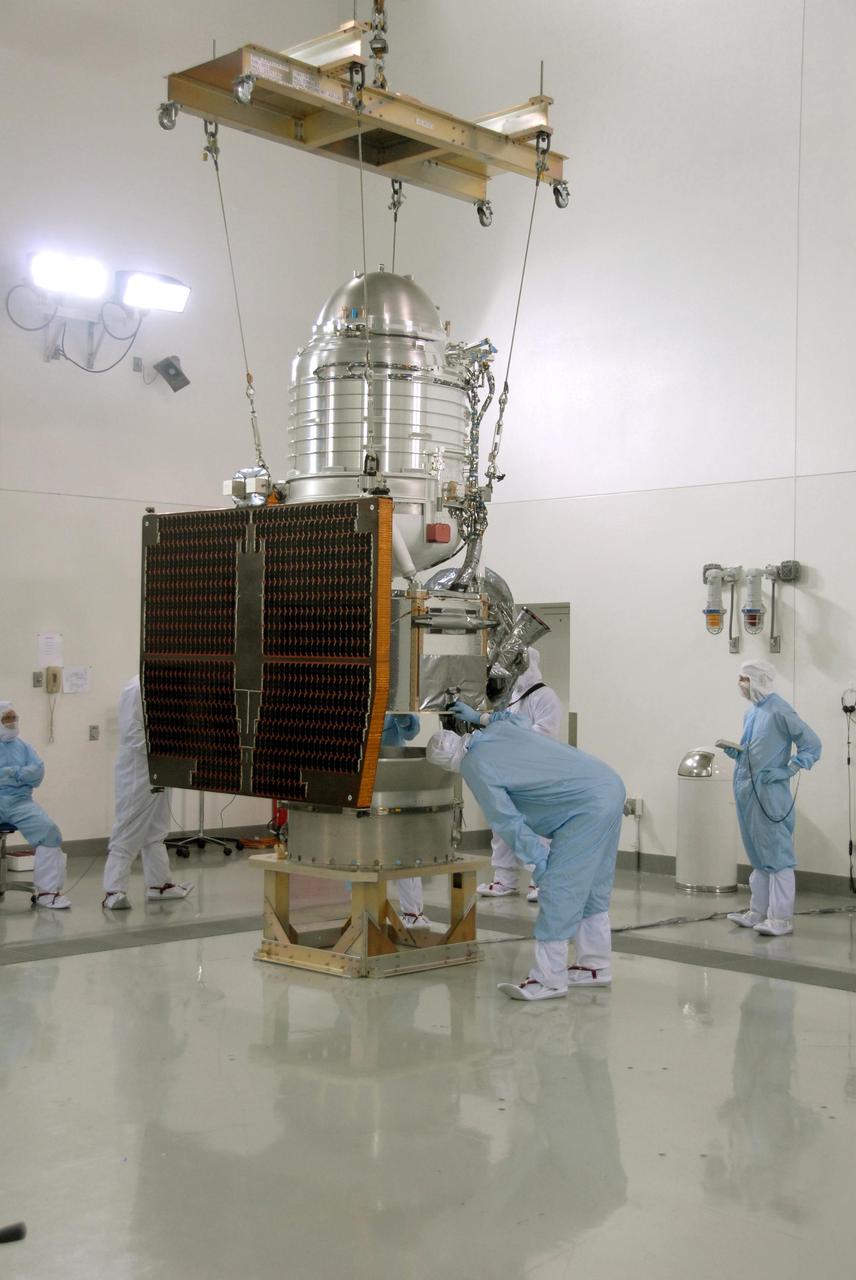
At Vandenberg Air Force Base Astrotech processing facility in California, NASA Wide-field Infrared Survey Explorer, or WISE, spacecraft is being lifted from a work stand.
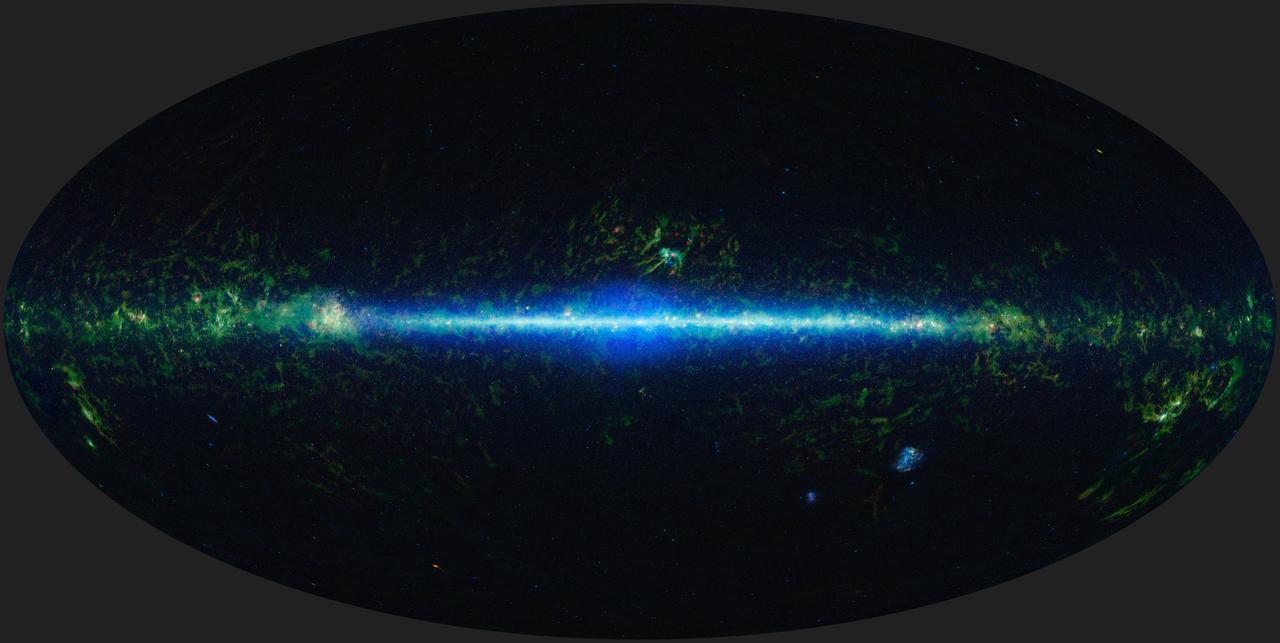
This is a mosaic of the images covering the entire sky as observed by NASA Wide-field Infrared Survey Explorer WISE, part of its All-Sky Data Release. In this mosaic, the Milky Way Galaxy runs horizontally across the map.
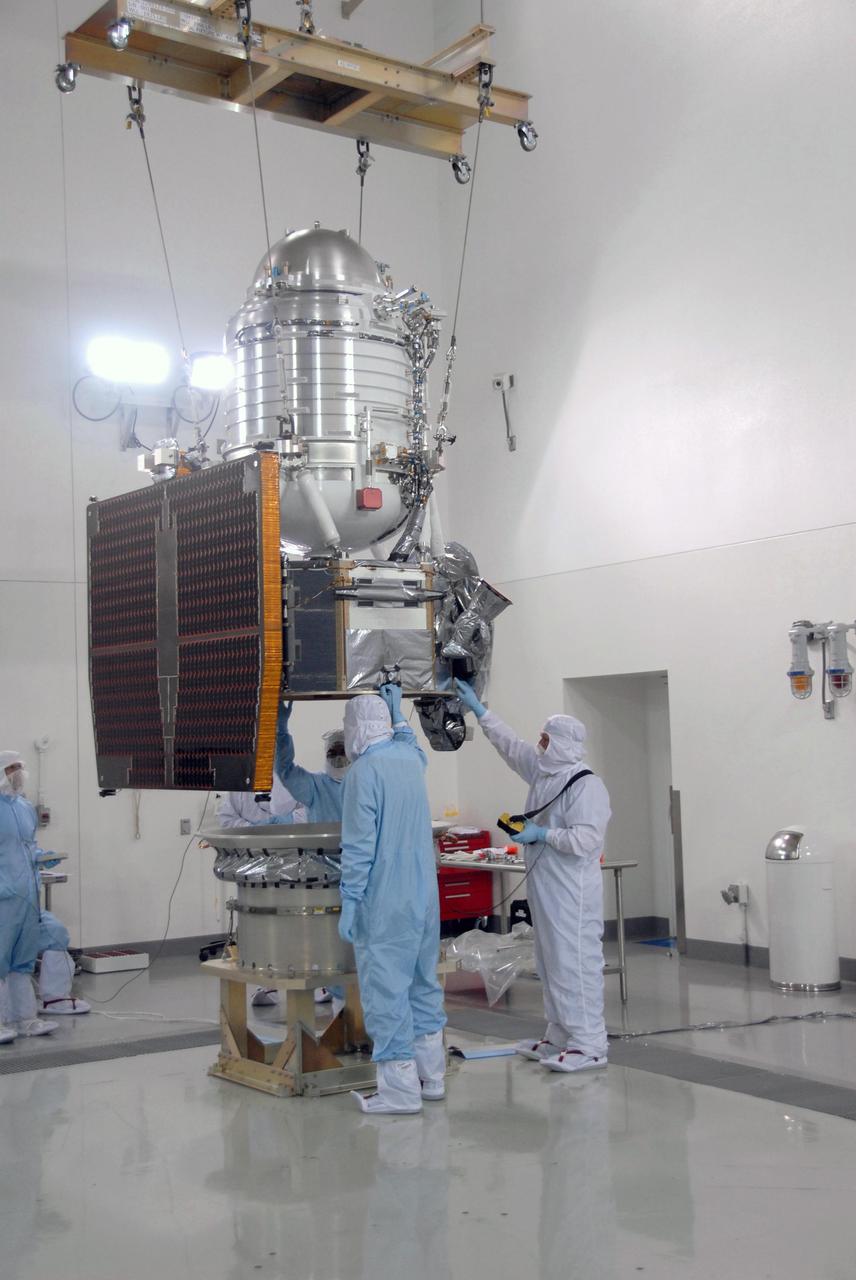
At Vandenberg Air Force Base Astrotech processing facility in California, NASA Wide-field Infrared Survey Explorer, or WISE, spacecraft is lowered toward the flight conical adapter and test stand.
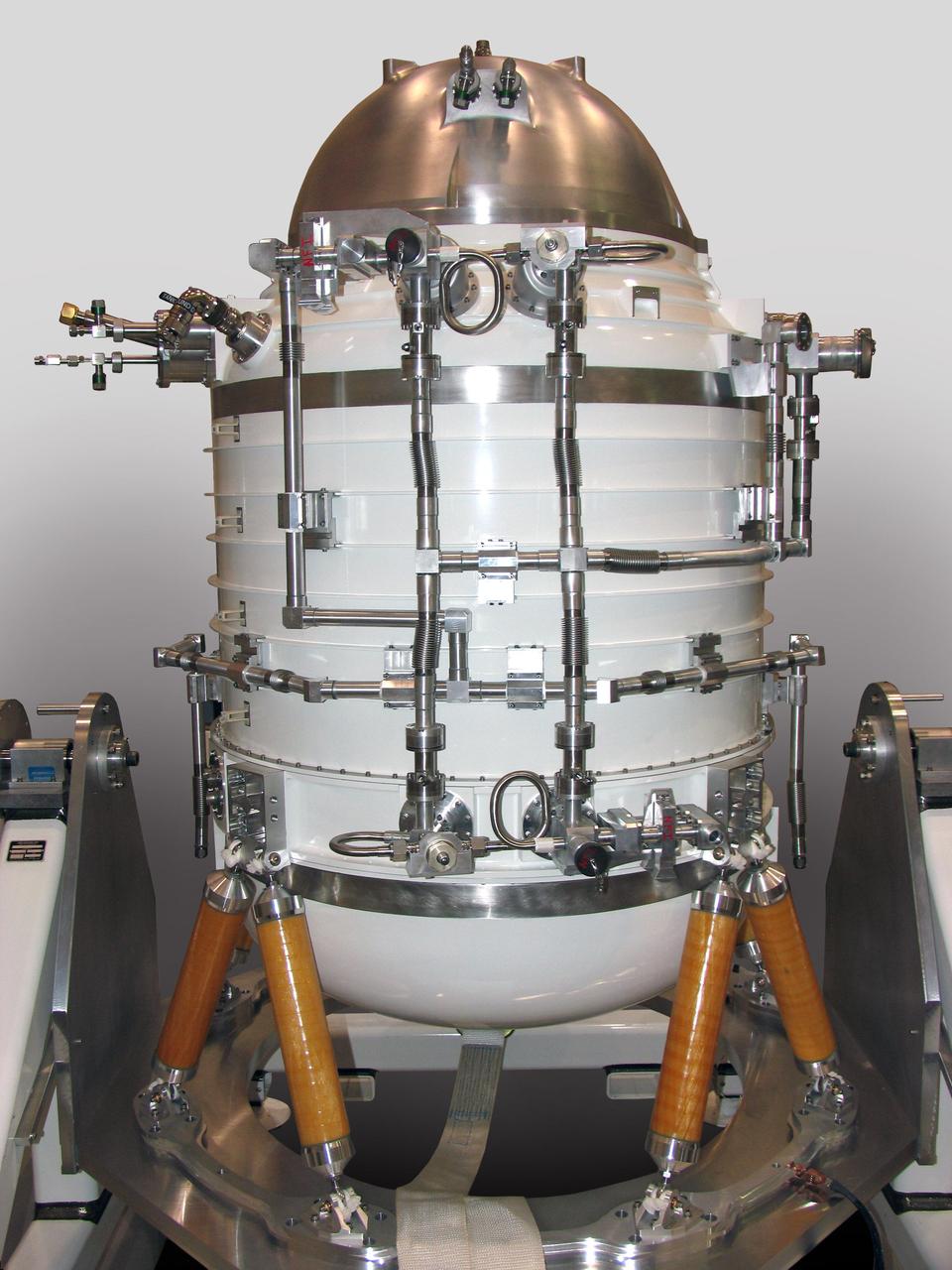
Some say the science instrument on NASA Wide-field Infrared Survey Explorer mission resembles the Star Wars robot R2-D2. The instrument is enclosed in a solid-hydrogen cryostat, which cools the WISE telescope and detectors.

With its all-sky infrared survey, NASA Wide-field Infrared Survey Explorer, or WISE, has identified millions of quasar candidates. Quasars are supermassive black holes with masses millions to billions times greater than our sun.
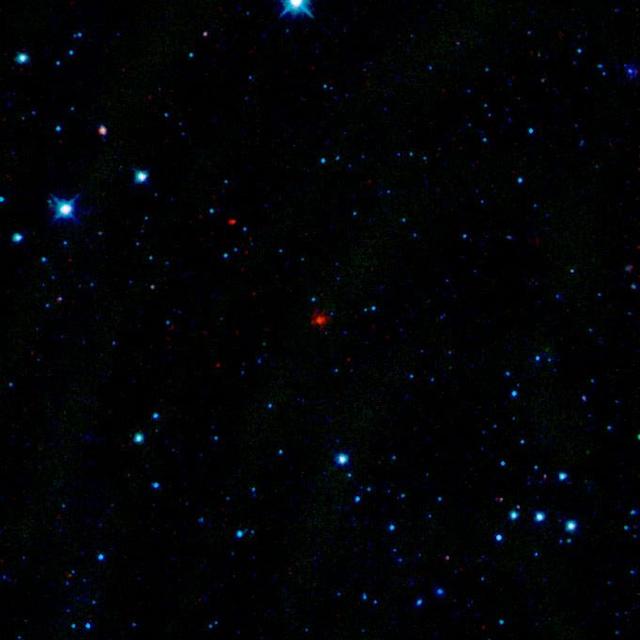
The red smudge at the center of this image is the first comet discovered by NASA Wide-Field Infrared Survey Explorer, or WISE. The comet is a dusty mass of ice and parades around the sun every 4.7 years.
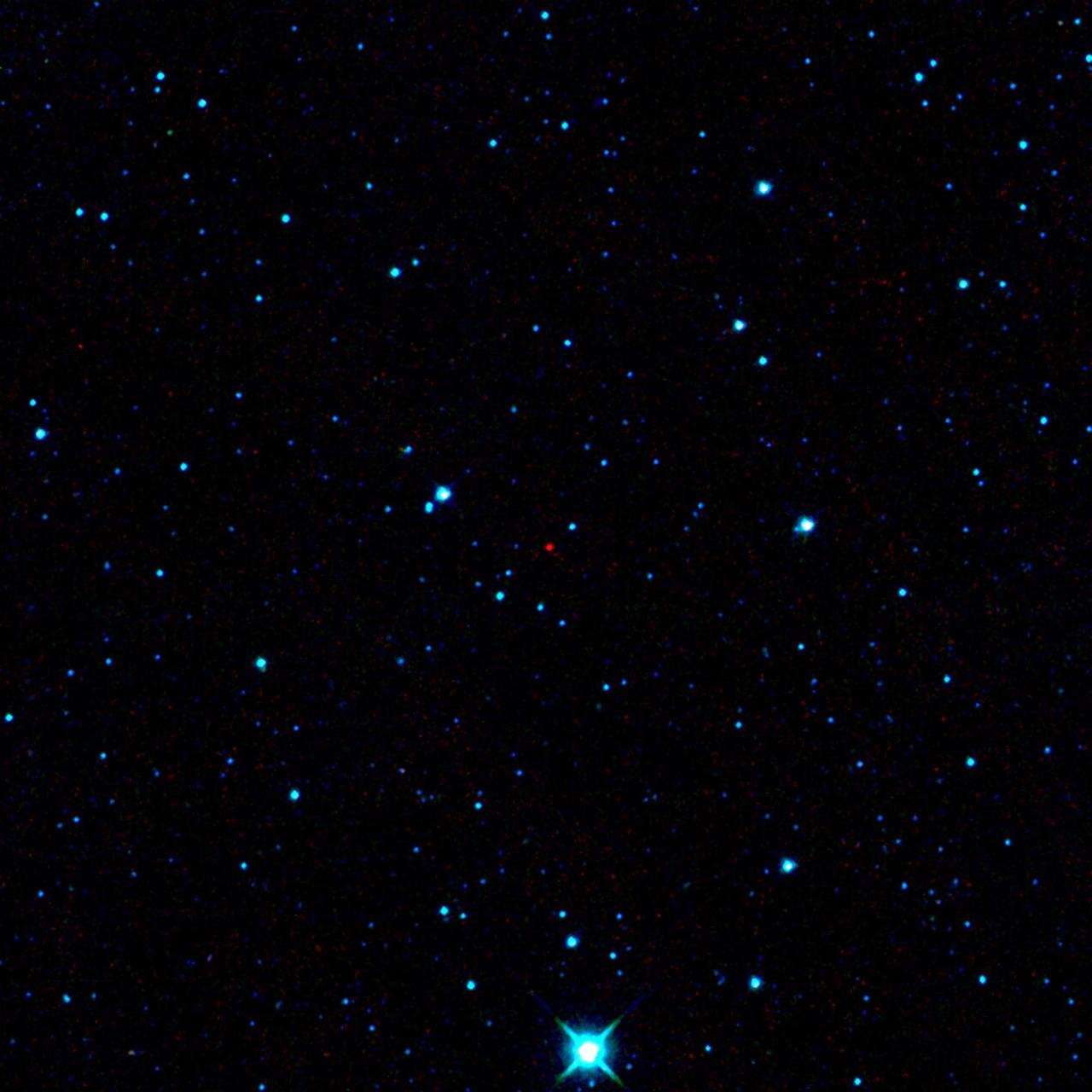
The red dot at the center of this image is the first near-Earth asteroid discovered by NASA Wide-Field Infrared Survey Explorer, or WISE -- an all-sky mapping infrared mission designed to see all sorts of cosmic objects.
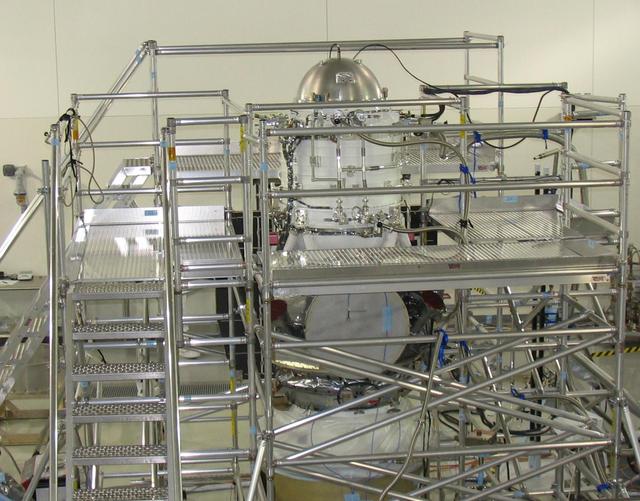
A scaffolding structure built around NASA Wide-field Infrared Survey Explorer allows engineers to freeze its hydrogen coolant. The WISE infrared instrument is kept extremely cold by a bottle-like tank filled with frozen hydrogen, called the cryostat.
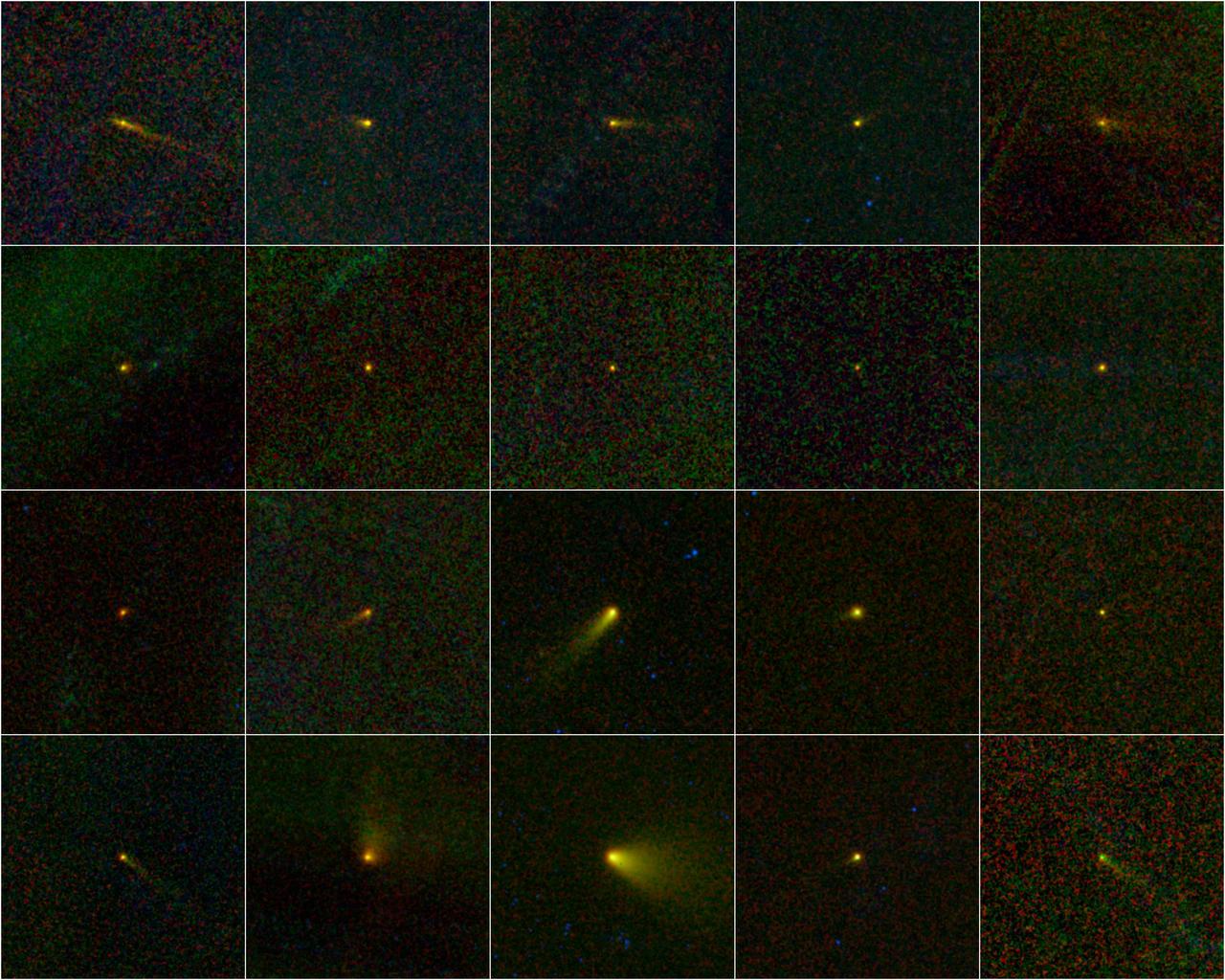
During its one-year mission, NASA Wide-field Infrared Survey Explorer, mapped the entire sky in infrared light. Among the multitudes of astronomical bodies that have been discovered by the NEOWISE portion of the WISE mission are 20 comets.
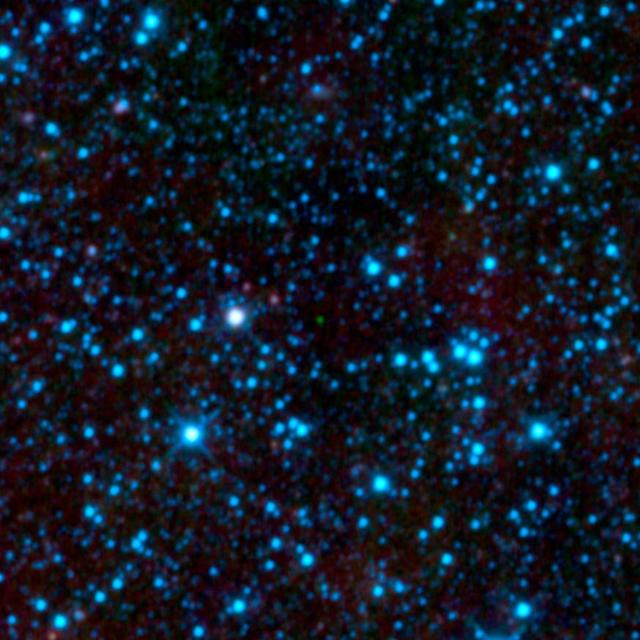
NASA Wide-field Infrared Survey Explorer has uncovered the coldest brown dwarf known so far green dot in very center of this infrared image. WISE 1828+2650 is located in the constellation Lyra. The blue dots are a mix of stars and galaxies.
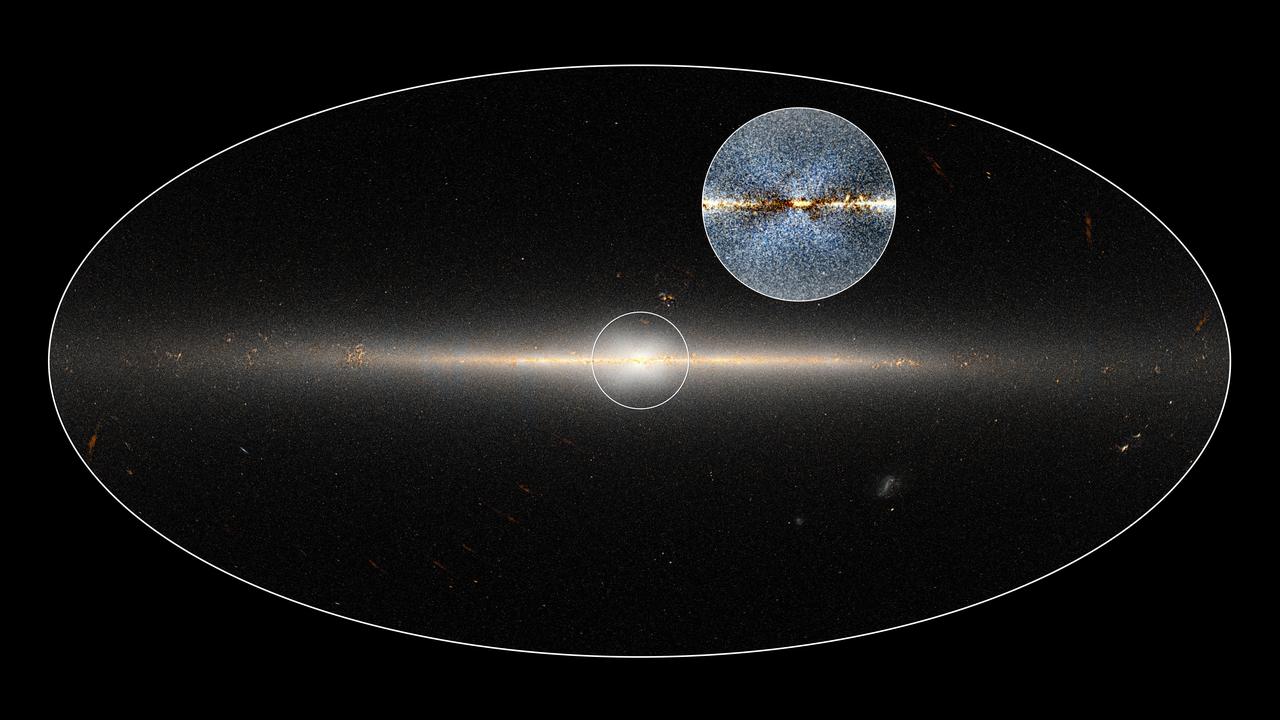
In 2010, NASA's Wide-field Infrared Survey Explorer (WISE) mission observed the entire sky twice. Astronomers used these data to point out the X-shaped structure in the bulge of the Milky Way, contained in the small circle at center, as well as the inset image. The circled central portion covers roughly the area of sky that would be blocked by a basketball when held out at arm's length. Dustin Lang, an astronomer at the Dunlap Institute of the University of Toronto, used these data to make this map, which shows the full 360-degree panorama of the sky as seen by WISE. Lang collaborated with Melissa Ness, postdoctoral researcher at the Max Planck Institute for Astronomy in Germany, http://photojournal.jpl.nasa.gov/catalog/PIA20699
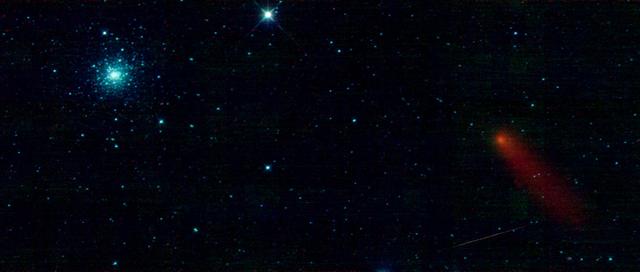
This image from NASA Wide-field Infrared Survey Explorer is a mosaic of 3 individual WISE frames spanning an area on the sky about 7 times the size of the full Moon in portions of the constellations Bootes and Canes Venatici.
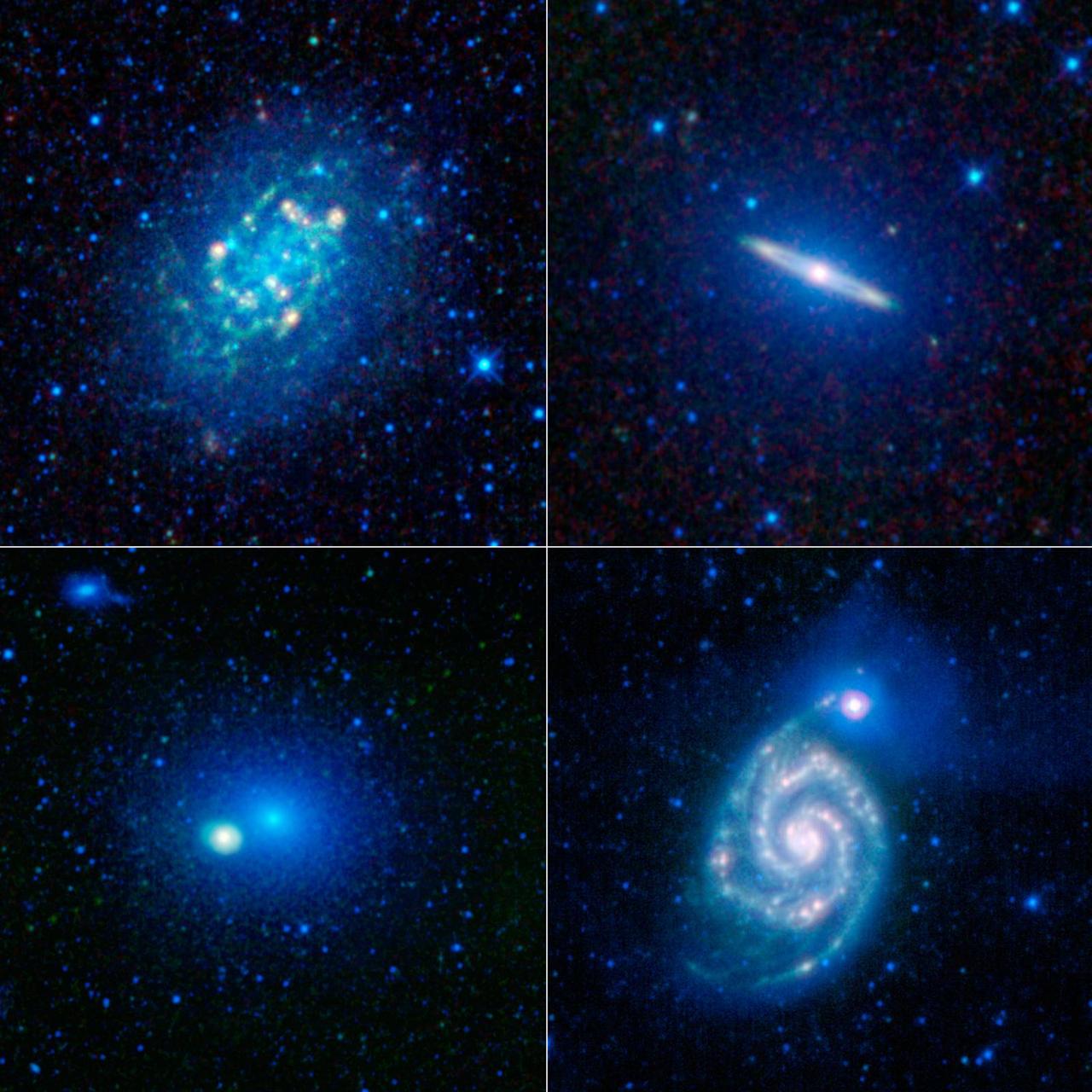
To celebrate the one-year anniversary of the launch of NASA Wide-Field Infrared Explorer, the mission team put together this image showing just a sample of the millions of galaxies that have been imaged by WISE during its survey of the entire sky.
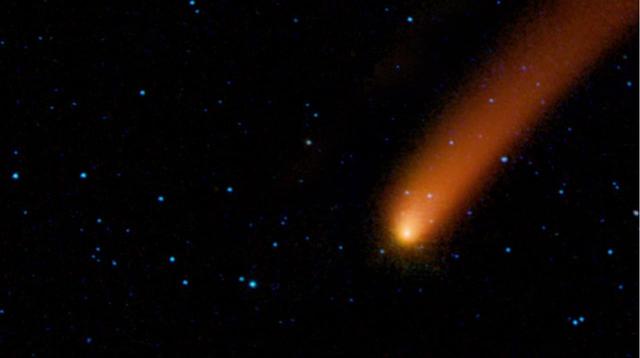
Is it a bird, or a plane? No, it comet Siding Spring streaking across the sky, as seen by NASA Wide-field Infrared Survey Explorer, or WISE. An animation is available at the Photojournal.

Artist concept of Wide-field Infrared Survey Explorer. A new NASA mission will scan the entire sky in infrared light in search of nearby cool stars, planetary construction zones and the brightest galaxies in the universe. http://photojournal.jpl.nasa.gov/catalog/PIA06927

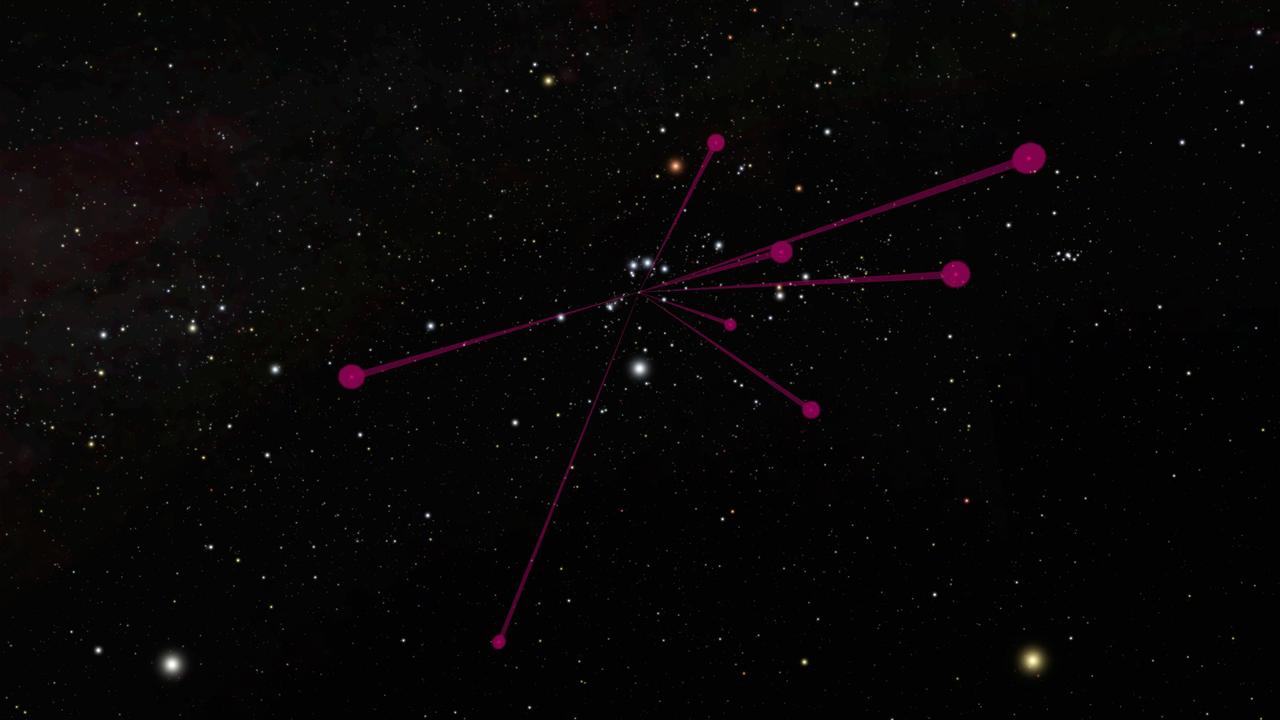
Astronomers using data from NASA's Wide-field Infrared Survey Explorer, or WISE, are helping to trace the shape of our Milky Way galaxy's spiral arms. This illustration shows where WISE data revealed clusters of young stars shrouded in dust, called embedded clusters, which are known to reside in spiral arms. The bars represent uncertainties in the data. The nearly 100 clusters shown here were found in the arms called Perseus, Sagittarius-Carina, and Outer -- three of the galaxy's four proposed primary arms. Our sun resides in a spur to an arm, or a minor arm, called Orion Cygnus. http://photojournal.jpl.nasa.gov/catalog/PIA19341

The dusty face of the Eagle Nebula and its surroundings are revealed in this image based on data from NASA's Wide Field Survey Explorer (WISE). WISE detects infrared light, or a range of wavelengths longer than what the human eye can see. This large star forming region is about 5,700 light years away from Earth and is most famous for being home to the the "Pillars of Creation," a region famously imaged by NASA's Hubble and James Webb space telescopes. The WISE data reveals the entire structure of the nebula surrounding the pillars, which themselves can be seen as a faint yellow-green feature inside the white circle. While the WISE view of the "Pillars" is not as sharp as those taken by Webb and Hubble, the telescope's wide field of view allows us to explore the extended nebula around it. When viewed in visible light, the dust is dark and opaque. In these infrared wavelengths, the dust becomes more translucent, and emits infrared light, shown in green, yellow, and red in this image. The data used in this image came from WISE's primary mission which ran from 2009 to 2011. In 2013, NASA took the spacecraft out of hibernation and began using it to track and study near-Earth objects. The mission and the spacecraft were renamed NEOWISE. However, the data is still being used by astronomers to study objects and regions outside our solar system. Blue and cyan are used to represent infrared light at wavelengths of 3.4 and 4.6 microns, while green and red display longer wavelengths of 12 and 22 microns, respectively. Animation available at https://photojournal.jpl.nasa.gov/catalog/PIA25433
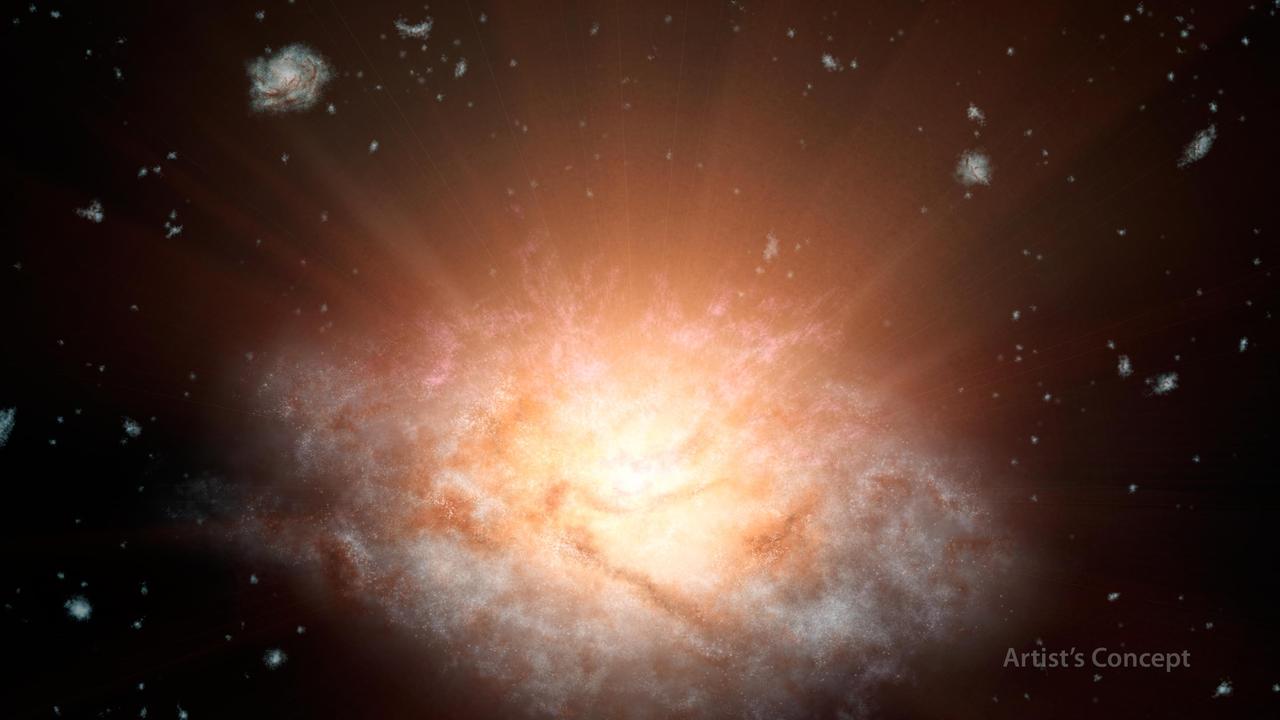
This artist's concept depicts the current record holder for the most luminous galaxy in the universe. The galaxy, named WISE J224607.57-052635.0, is erupting with light equal to more than 300 trillion suns. It was discovered by NASA's Wide-Field Infrared Survey Explorer, or WISE. The galaxy is smaller than the Milky Way, yet puts out 10,000 times more energy. Scientists think that a supermassive black hole at the center of this dusty galaxy is busily consuming gaseous material in a colossal growth spurt. As the gas is dragged toward the black hole, it heats up and blasts out visible, ultraviolet and X-ray light. The dust swaddling the galaxy absorbs this light and heats up, radiating longer-wavelength, infrared light. The dust also blocks our view of shorter, visible-light wavelengths, while letting longer-wavelengths through. This is similar to what happens when sunlight streams through our dusty atmosphere, producing a brilliant red sunrise. In fact, more than 99 percent of the light escaping from this dusty galaxy is infrared. As a result, it is much harder to see with optical telescopes. Because light from the galaxy hosting the black hole has traveled 12.5 billion years to reach us, astronomers are seeing the object as it was in the distant past. During this epoch, galaxies would have been more than five times closer together than they are now, as illustrated in the background of the artist's concept. This is due to the expansion of space -- space itself and the galaxies in it are stretching apart from each other at ever-increasing speeds. http://photojournal.jpl.nasa.gov/catalog/PIA19339

This illustration shows a glowing stream of material from a star as it is being devoured by a supermassive black hole in a tidal disruption flare. When a star passes within a certain distance of a black hole -- close enough to be gravitationally disrupted -- the stellar material gets stretched and compressed as it falls into the black hole. In the process of being accreted, the gas heats up and creates a lot of optical and ultraviolet light, which destroys nearby dust but merely heats dust further out. The farther dust that is heated emits a large amount of infrared light. In recent years, a few dozen such flares have been discovered, but they are not well understood. Astronomers gained new insights into tidal disruption flares thanks to data from NASA's Wide-field Infrared Survey Explorer (WISE). Studies using WISE data characterized tidal disruption flares by studying how surrounding dust absorbs and re-emits their light, like echoes. This approach allowed scientists to measure the energy of flares from stellar tidal disruption events more precisely than ever before. http://photojournal.jpl.nasa.gov/catalog/PIA20027
The locations of brown dwarfs discovered by NASA Wide-field Infrared Survey Explorer, or WISE, and mapped by NASA Spitzer Space Telescope, are shown in this diagram as red circles.

Peering more than 10 billion light-years into the distance, WISE has found tens of millions of actively feeding supermassive lack holes across the full sky. The orange circles highlight those that the telescope identified in a small patch of sky; the two zoomed-in images came from the Hubble Space Telescope. WISE easily sees these monsters because their powerful, accreting black holes warm the dust, causing it to glow in infrared light. The blue circles indicate black holes that were detected using visible-light imagers. In most, that light is blocked by dust. https://photojournal.jpl.nasa.gov/catalog/PIA23588
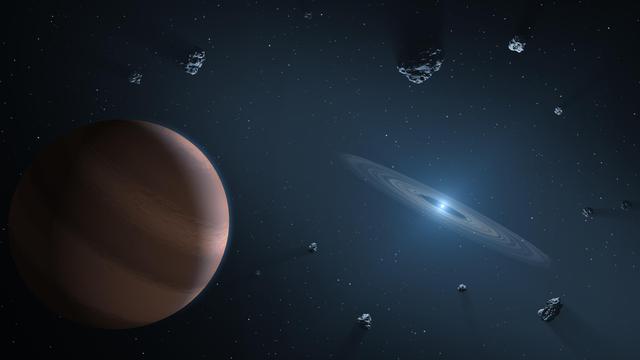
This artist's concept shows an exoplanet and debris disk orbiting a polluted white dwarf. White dwarfs are dim, dense remnants of stars similar to the Sun that have exhausted their nuclear fuel and blown off their outer layers. By "pollution," astronomers mean heavy elements invading the photospheres -- the outer atmospheres -- of these stars. The leading explanation is that exoplanets could push small rocky bodies toward the star, whose powerful gravity would pulverize them into dust. That dust, containing heavy elements from the torn-apart body, would then fall on the star. NASA's Spitzer Space Telescope has been instrumental in expanding the field of polluted white dwarfs orbited by hot, dusty disks. Since launch in 2004, Spitzer has confirmed about 40 of these special stars. Another space telescope, NASA's Wide-field Infrared Survey Explorer (WISE), also detected a handful, bringing the total up to about four dozen known today. Because these objects are so faint, infrared light is crucial to identifying them. https://photojournal.jpl.nasa.gov/catalog/PIA22084

This new image of the Orion Nebula produced using previously released data from three telescopes shows two enormous caverns carved out by unseen giant stars that can release up to a million times more light than our Sun. All that radiation breaks apart dust grains there, helping to create the pair of cavities. Much of the remaining dust is swept away when the stars produce wind or when they die explosive deaths as supernovae. This infrared image shows dust but no stars. Blue light indicates warm dust heated by unseen massive stars. Observed in infrared light – a range of wavelengths outside what human eyes can detect – the views were provided by NASA's retired Spitzer Space Telescope and the Wide-Field Infrared Survey Explorer (WISE), which now operates under the moniker NEOWISE. Spitzer and WISE were both managed by NASA's Jet Propulsion Laboratory in Southern California, which is a division of Caltech. Around the edge of the two cavernous regions, the dust that appears green is slightly cooler. Red indicates cold dust that reaches temperatures of about minus 440 Fahrenheit (minus 260 Celsius). The cold dust appears mostly on the outskirts of the dust cloud, away from the regions where stars form. The red and green light shows data from the now-retired Herschel Space Telescope, an ESA (European Space Agency) observatory that captured wavelengths in the far-infrared and microwave ranges, where cold dust radiates. In between the two hollow regions are orange filaments where dust condenses and forms new stars. Over time, these filaments may produce new giant stars that will once again reshape the region. https://photojournal.jpl.nasa.gov/catalog/PIA25434
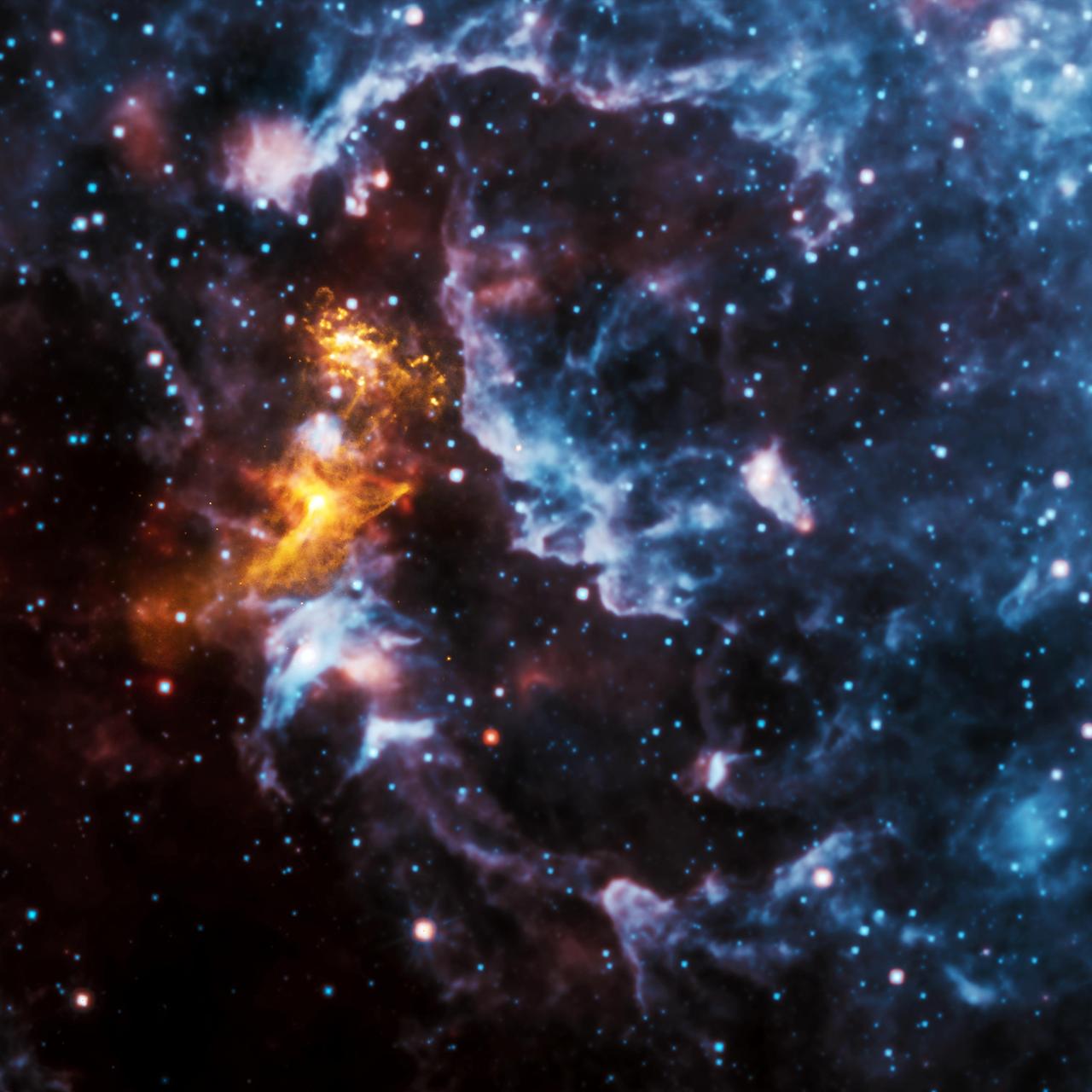
In this image of PSR B1509-58 about 170,000 light-years from Earth, X-rays from NASA Chandra in gold are seen along with infrared data from NASA Wide-field Infrared Survey Explorer WISE telescope in red, green and blue.

The Flame Nebula sits on the eastern hip of Orion the Hunter, a constellation most easily visible in the northern hemisphere during winter evenings in this view from NASA WISE Telescope.
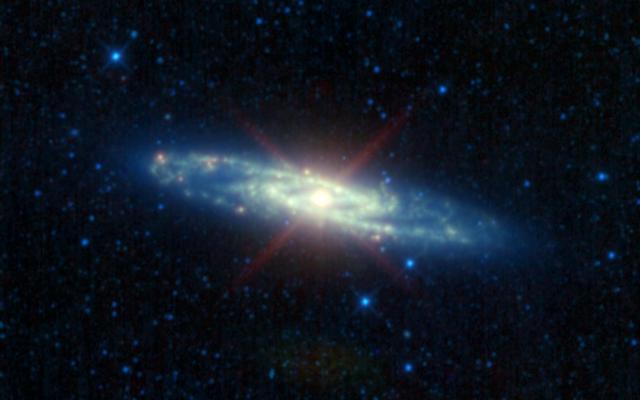
The Sculptor galaxy, or NGC 253, is seen in a rainbow of infrared colors in this mosaic by NASA Wide-field Infrared Survey Explorer. The Sculptor galaxy can be seen by observers in the southern hemisphere with a pair of good binoculars.
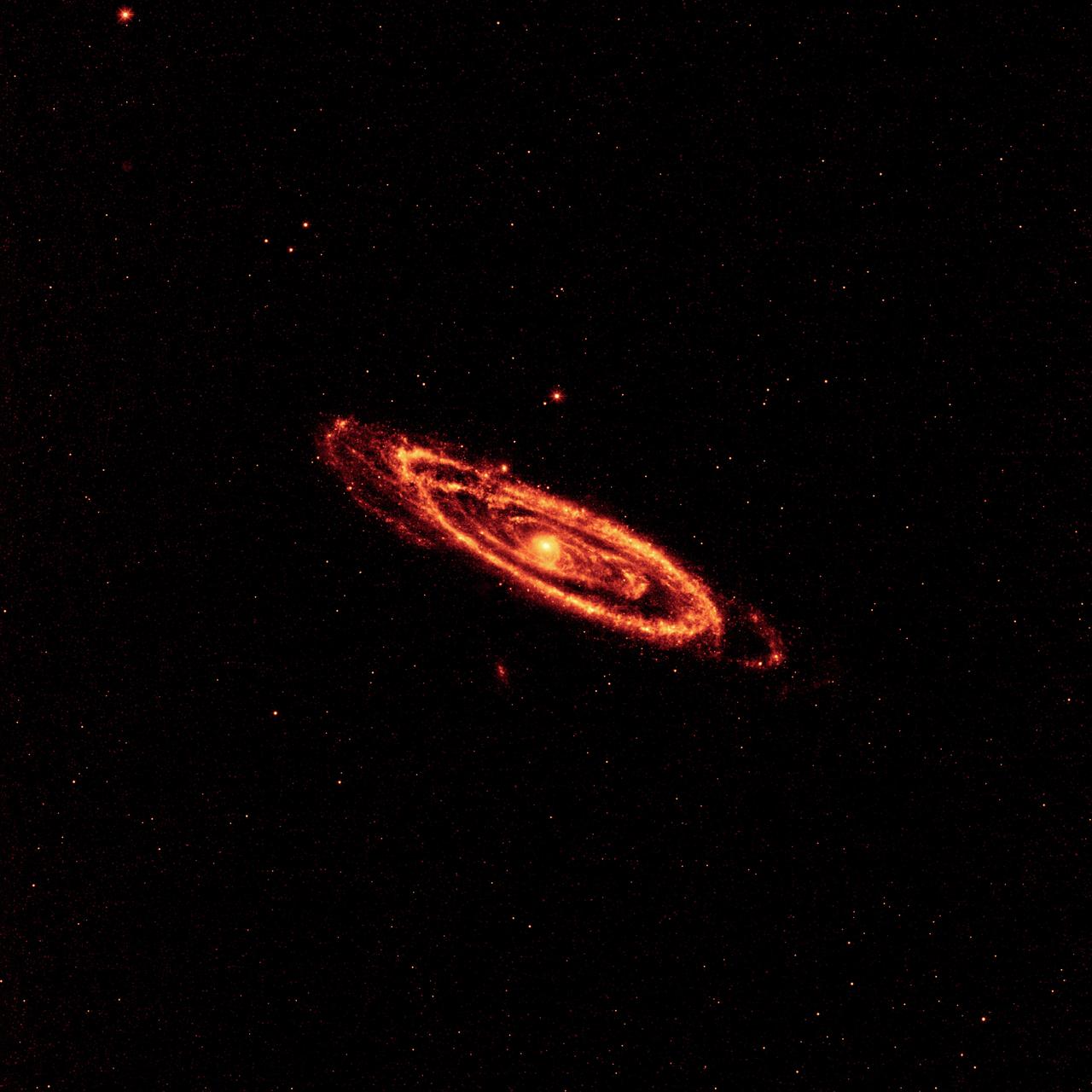
This image from NASA Wide-field Infrared Survey Explorer highlights the dust that speckles the Andromeda galaxy spiral arms. The hot dust, which is being heated by newborn stars, traces the spidery arms all the way to the center of the galaxy.
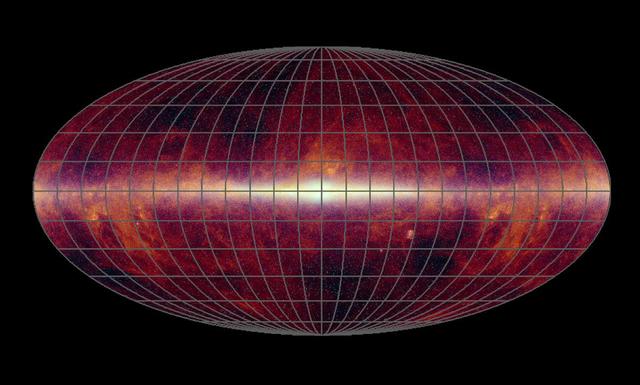
This image is an all-sky infrared map consisting of data taken by previous missions: the Infrared Astronomical Satellite; NASA Cosmic Background Explorer; and the Two-Micron All-Sky Survey.
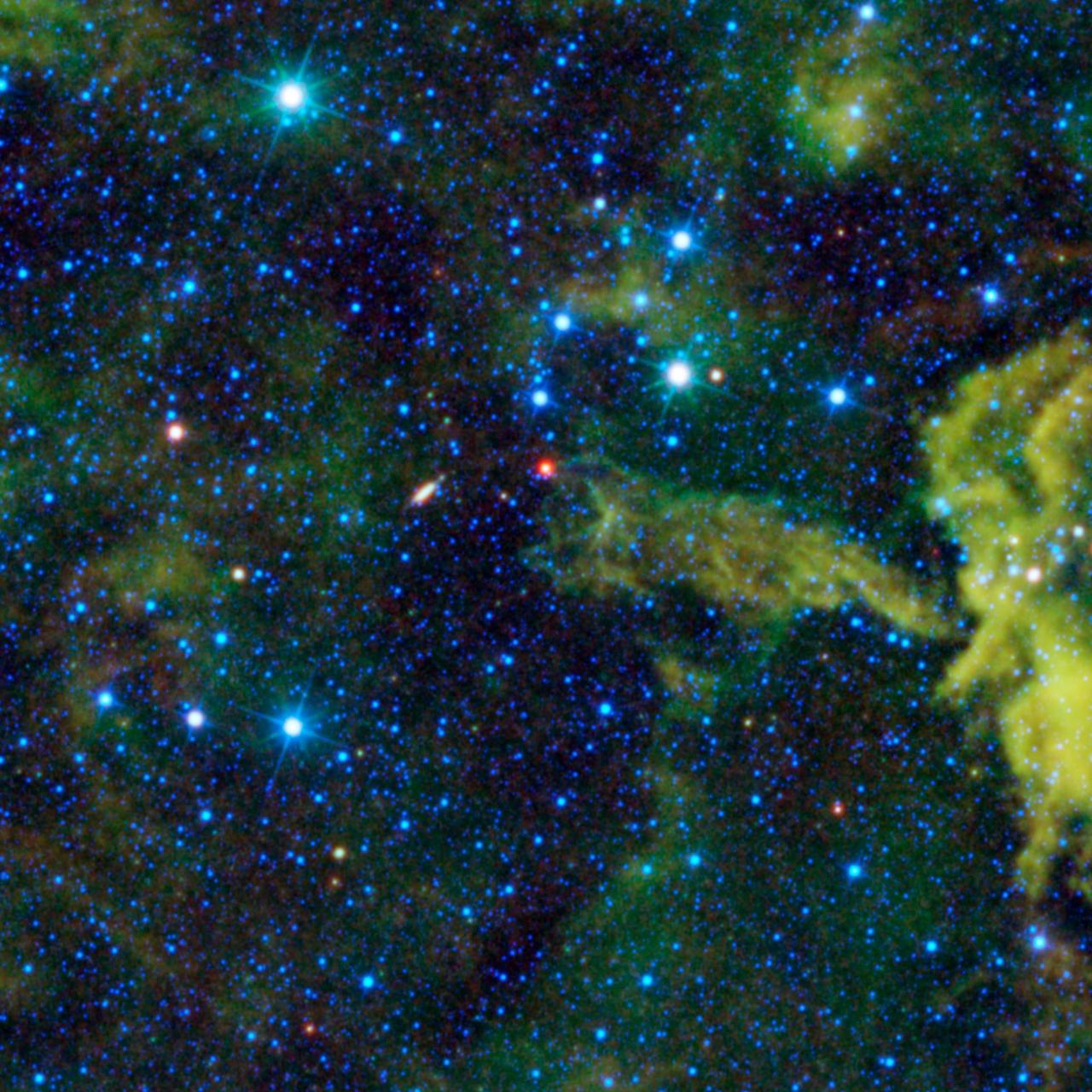
This stellar object is called Spitzer 073425.3-465409, as seen by NASA Wide-field Infrared Survey Explorer; the cloud CG4 might be imagined as a cosmic alligator eating its way across the sky.
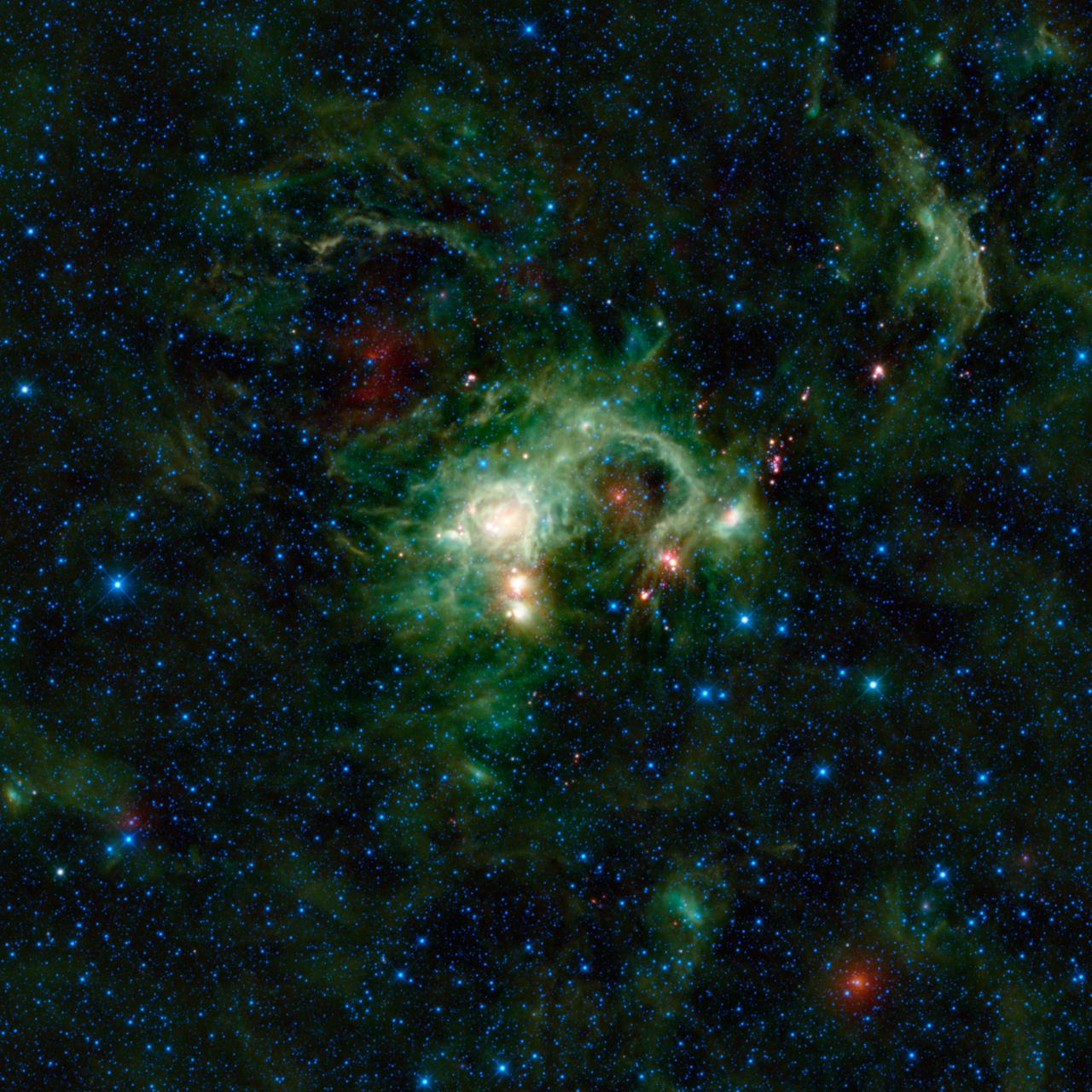
In the Perseus spiral arm of the Milky Way galaxy, opposite the galactic center, lies the nebula SH 2-235. As seen in infrared light, NASA Wide-field Infrared Survey Explorer reveals SH 2-235 to be a huge star formation complex.
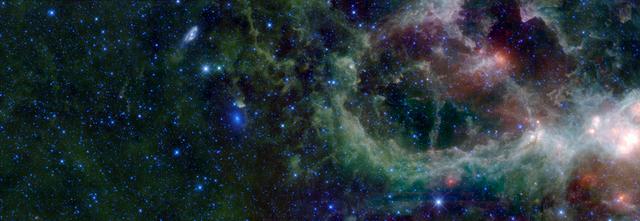
This mosaic of images from NASA WISE Telescope is in the constellation of Cassiopeia. This region contains a large star forming nebula within the Milky Way Galaxy, sometimes called the Heart Nebula, and is over 6 thousand light-years from Earth.
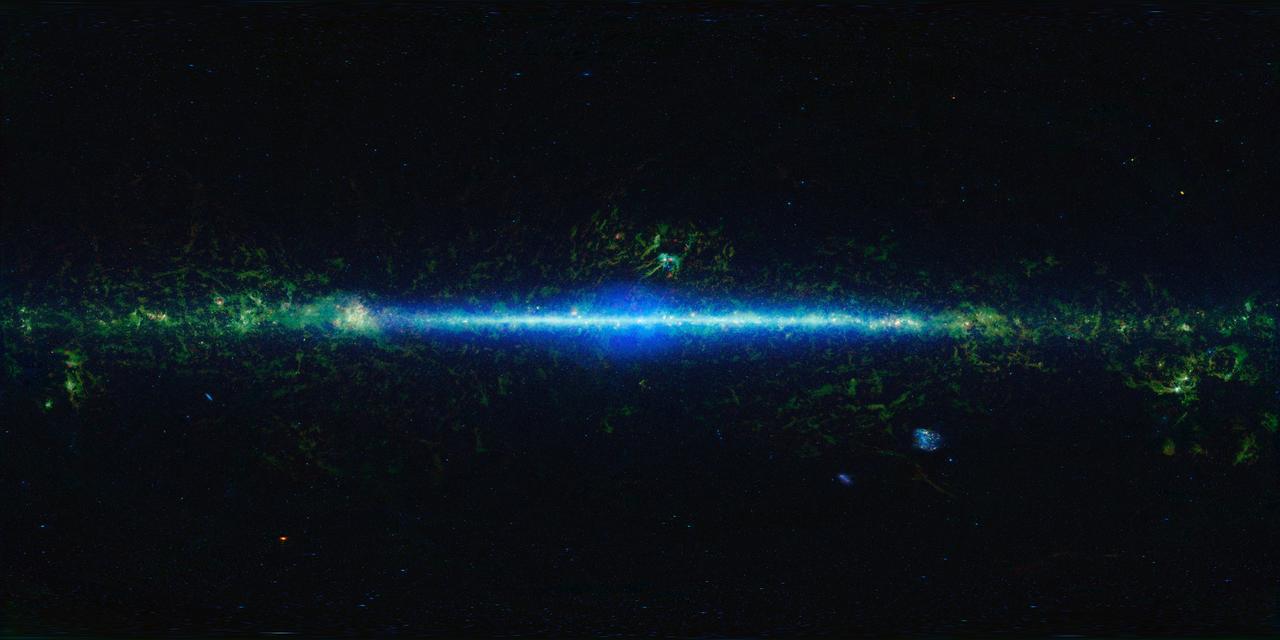
This mosaic of images covering the entire sky was observed by NASA WISE telescope and is part of its All-Sky Data Release. The projection used in this image of the sky is called an equirectangular.
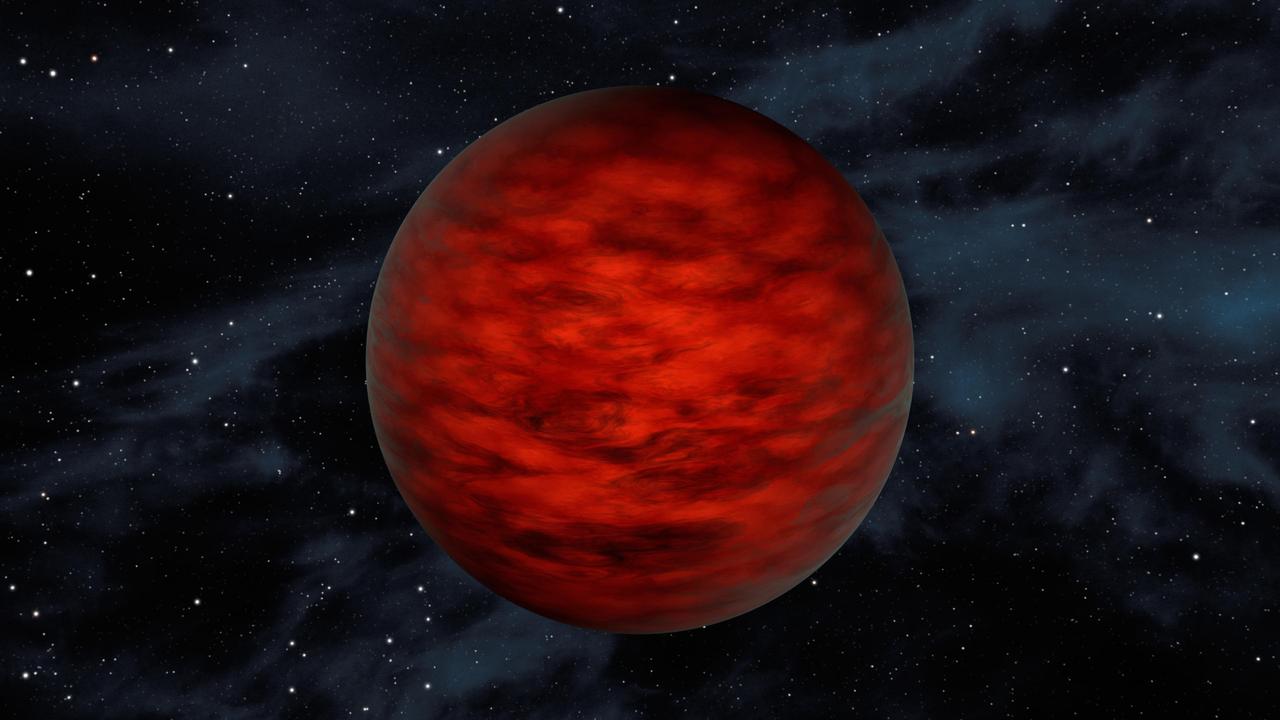
A young, free-floating world sits alone in space in this illustration. The object, called WISEA J114724.10-204021.3, is thought to be an exceptionally low-mass brown dwarf.
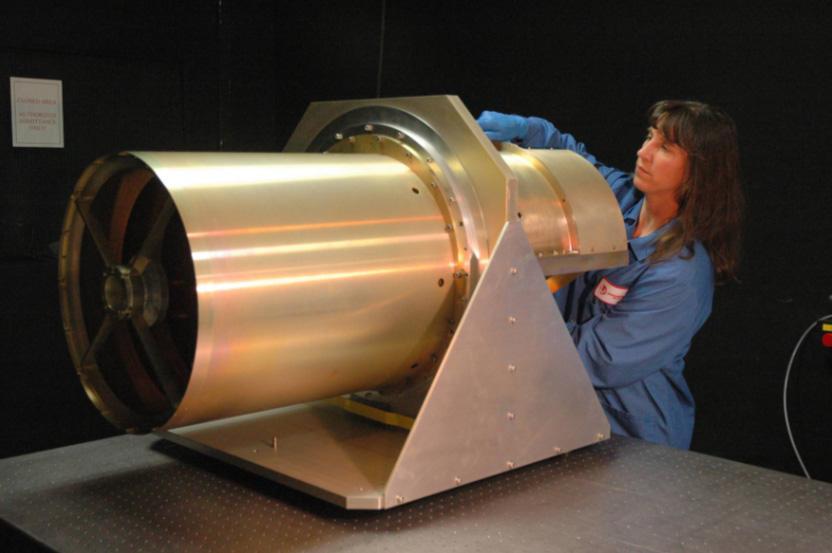
This image shows NASA 40 cm diameter Wide-field Infrared Survey Explorer telescope. Here the lead optical test engineer attaches the back-end imager optics to the afocal.
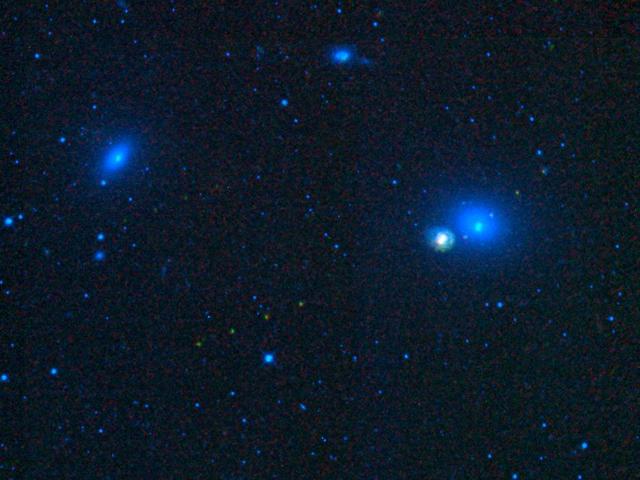
This image from NASA Wide-field Infrared Survey Explorer, shows four galaxies in the Virgo cluster: Messier 59, Messier 60, NGC 4647, and NGC 4638. It also shows the tracks of three asteroids, which appear in this image as trails of green dots.
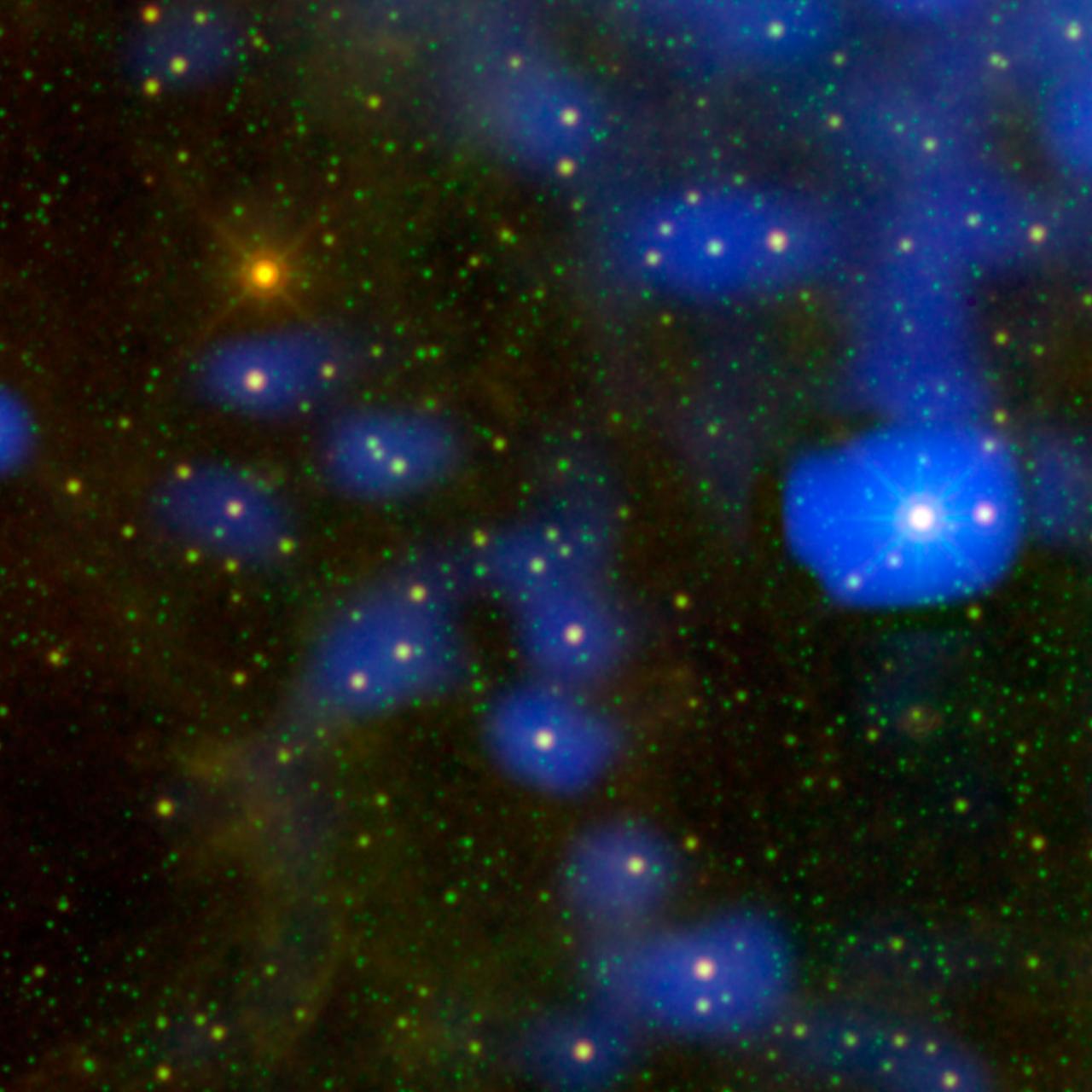
It a dust bunny of cosmic proportions. Astronomers used images from NASA WISE to locate an aging star shedding loads of dust orange dot at upper left.
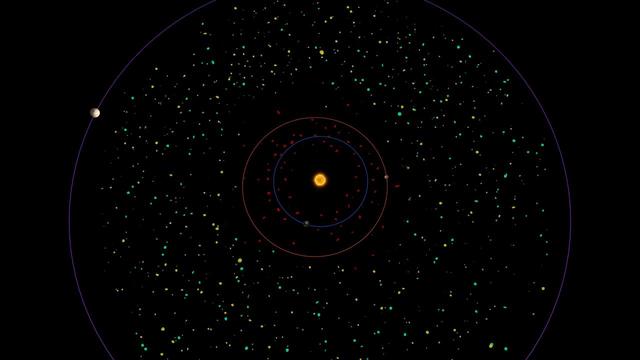
This diagram shows a bird eye view of our asteroid belt, which lies between the orbits of Mars red and Jupiter purple.
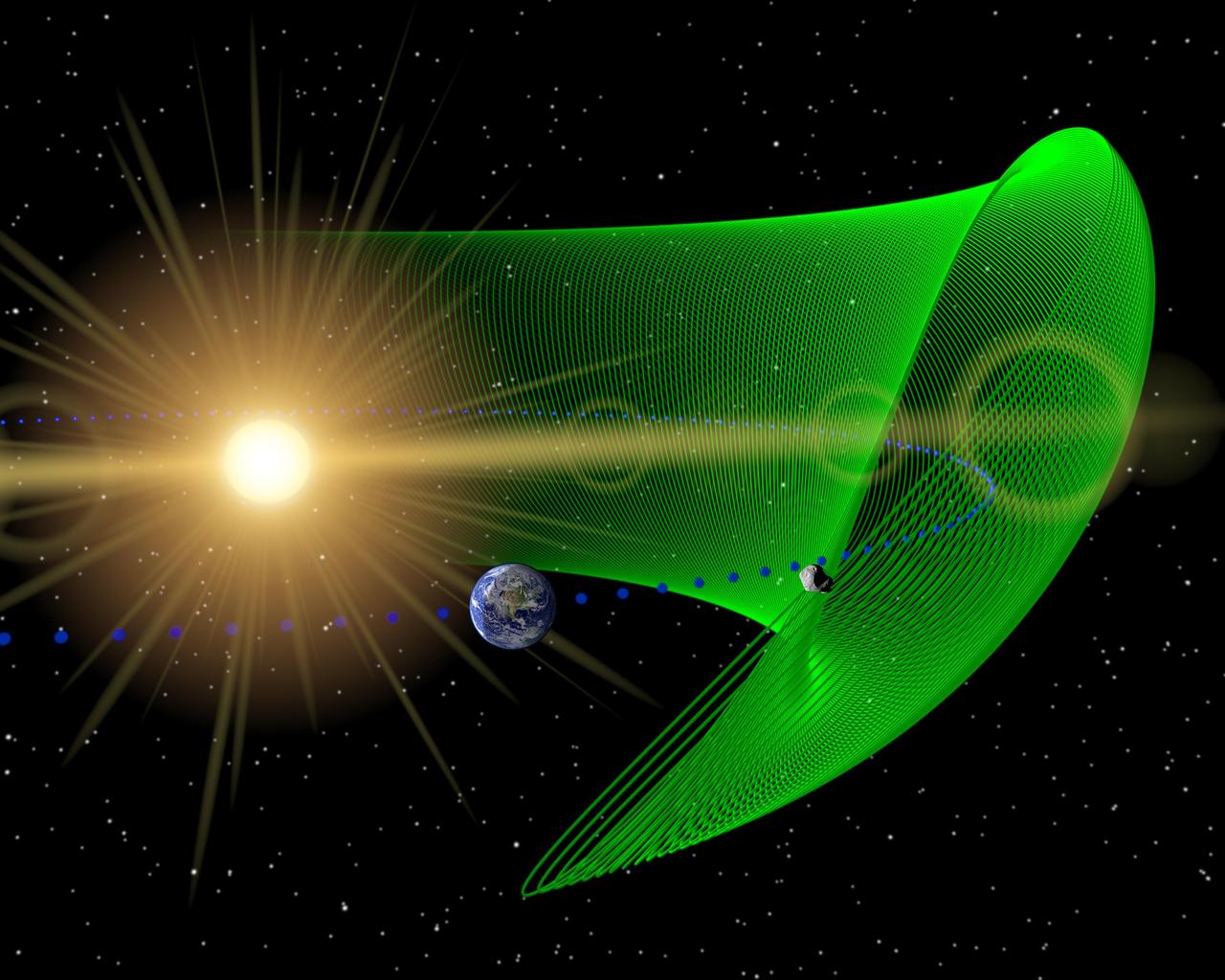
This artist concept illustrates the first known Earth Trojan asteroid, discovered by NEOWISE, the asteroid-hunting portion of NASA WISE mission. The asteroid is shown in gray and its extreme orbit is shown in green. Objects are not drawn to scale.

A dying star, called the Helix nebula, is shown surrounded by the tracks of asteroids in an image captured by NASA WISE. Skirting around the edges of the Helix nebula are the footprints of asteroids marching across the field of view.
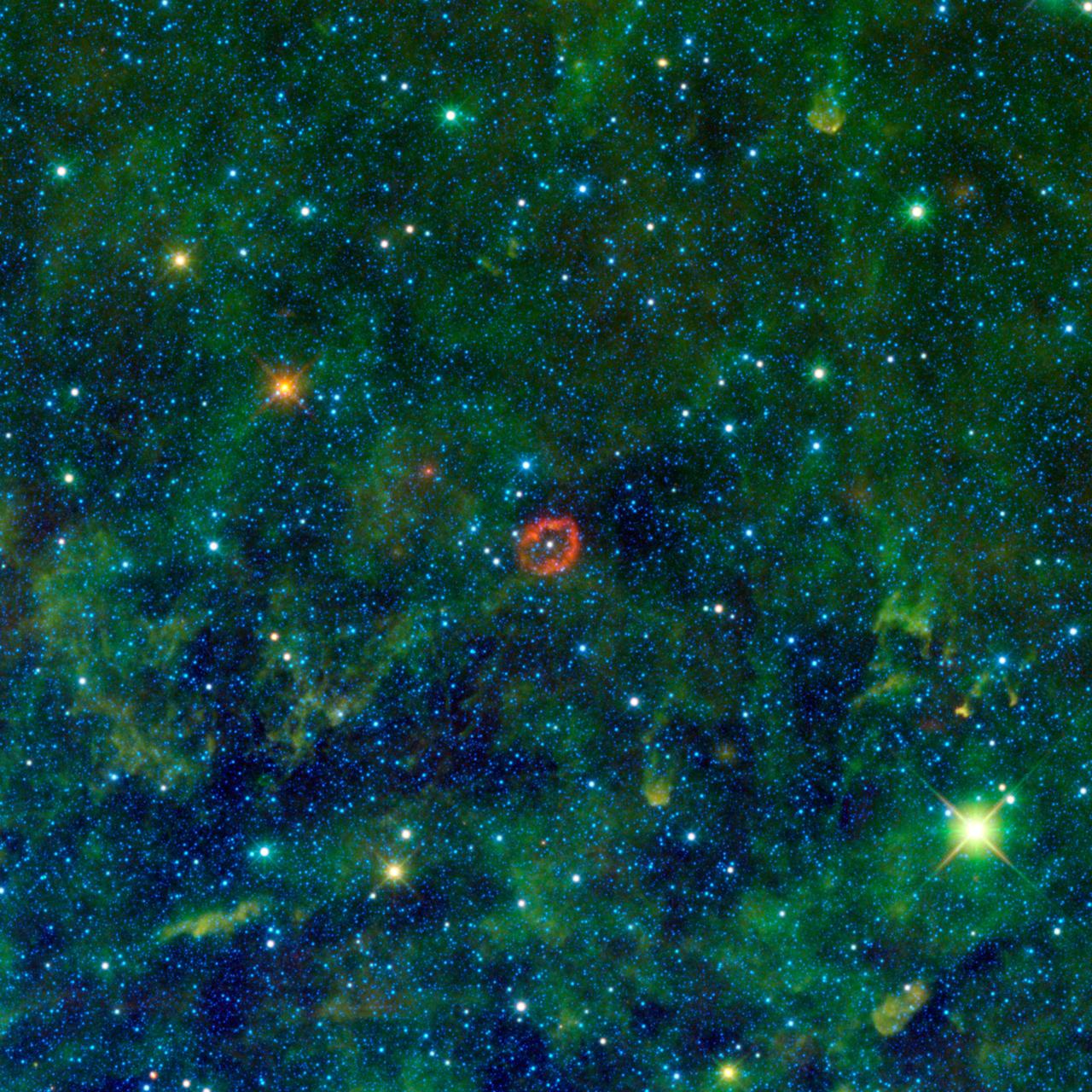
Some might see a blood-red jellyfish, while others might see a pair of lips. In fact, the red-colored object in this new image from NASA Wide-field Infrared Survey Explorer is a sphere of stellar innards.
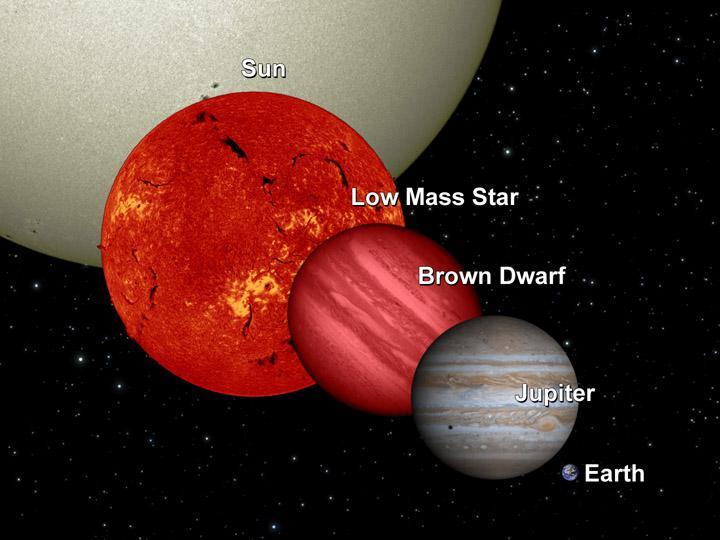
NASA Wide-field Infrared Survey Explorer will uncover many failed stars, or brown dwarfs, in infrared light. This diagram shows a brown dwarf in relation to Earth, Jupiter, a low-mass star and the sun.
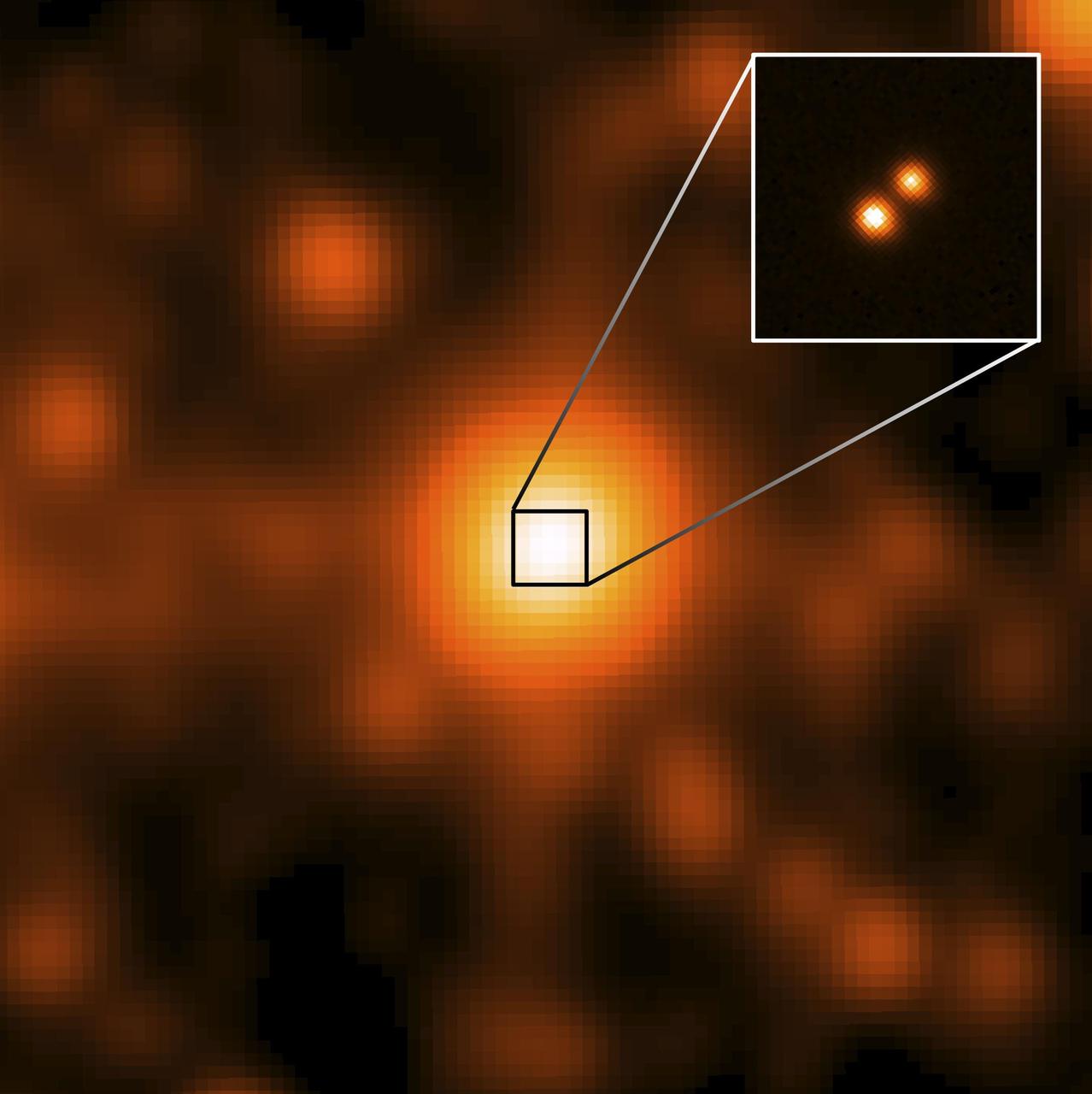
WISE J104915.57-531906, center of the larger image, was taken by the NASA WISE. This is the closest star system discovered since 1916, and the third closest to our sun. It is 6.5 light-years away.
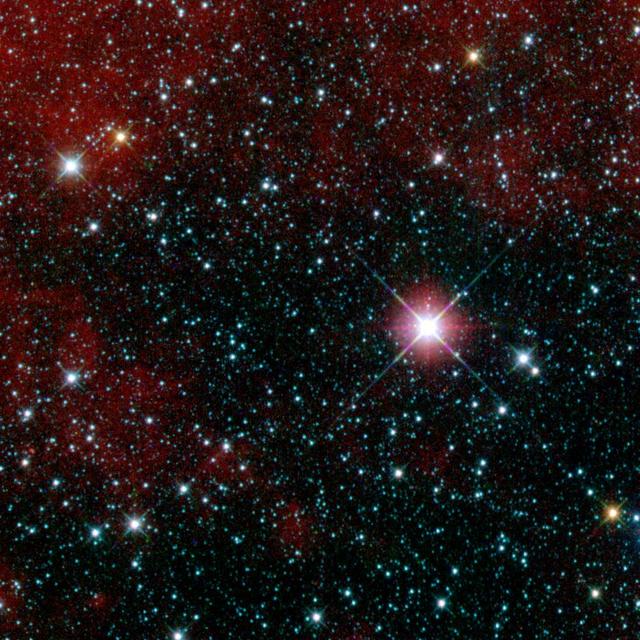
This infrared snapshot of a region in the constellation Carina near the Milky Way was taken shortly after NASA Wide-field Infrared Survey Explorer ejected its cover. The first-light picture shows thousands of stars and covers an area three times the s
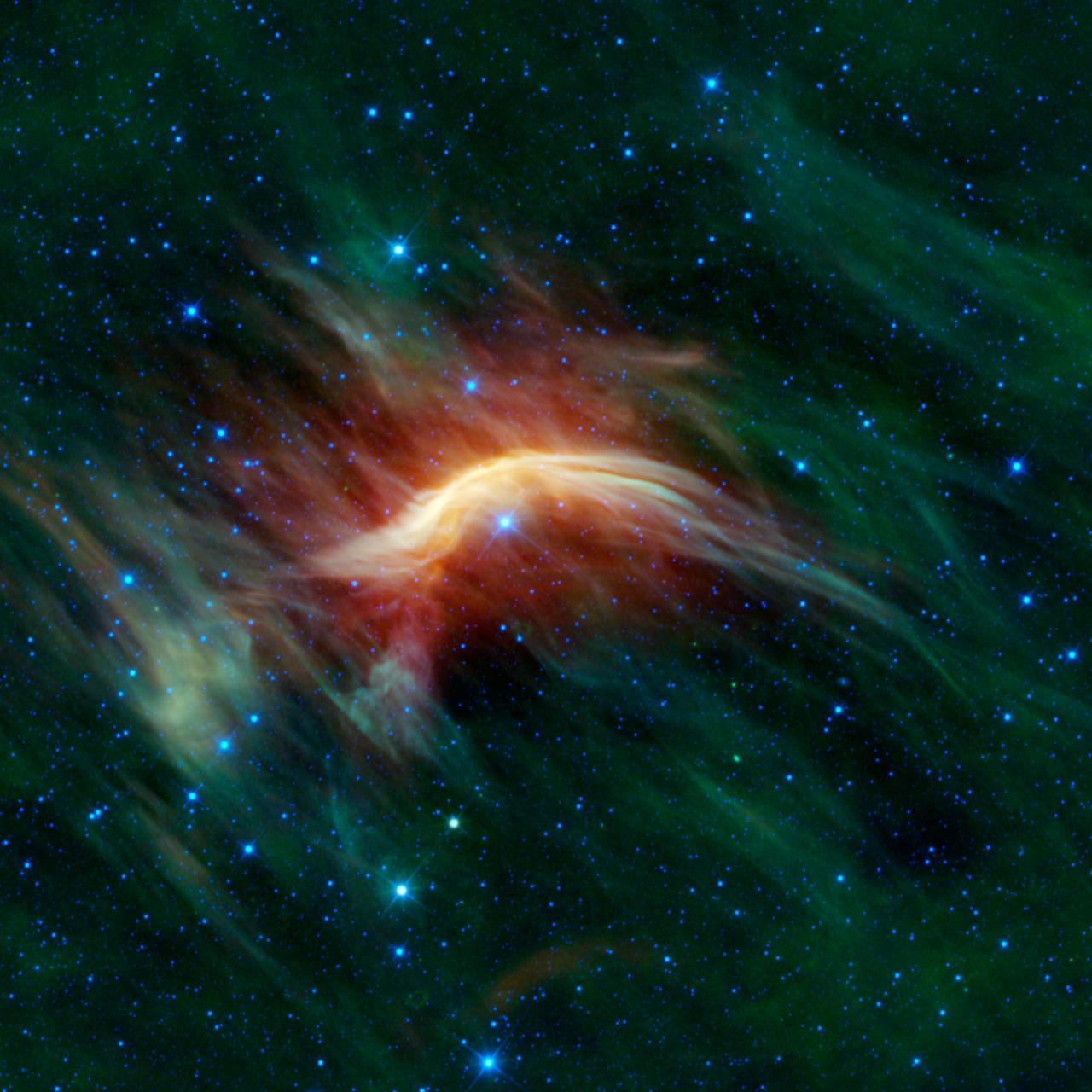
The blue star near the center of this image is Zeta Ophiuchi. Zeta Ophiuchi is actually a very massive, hot, bright blue star plowing its way through a large cloud of interstellar dust and gas in this image from NASA Wide-field Infrared Survey Explorer.
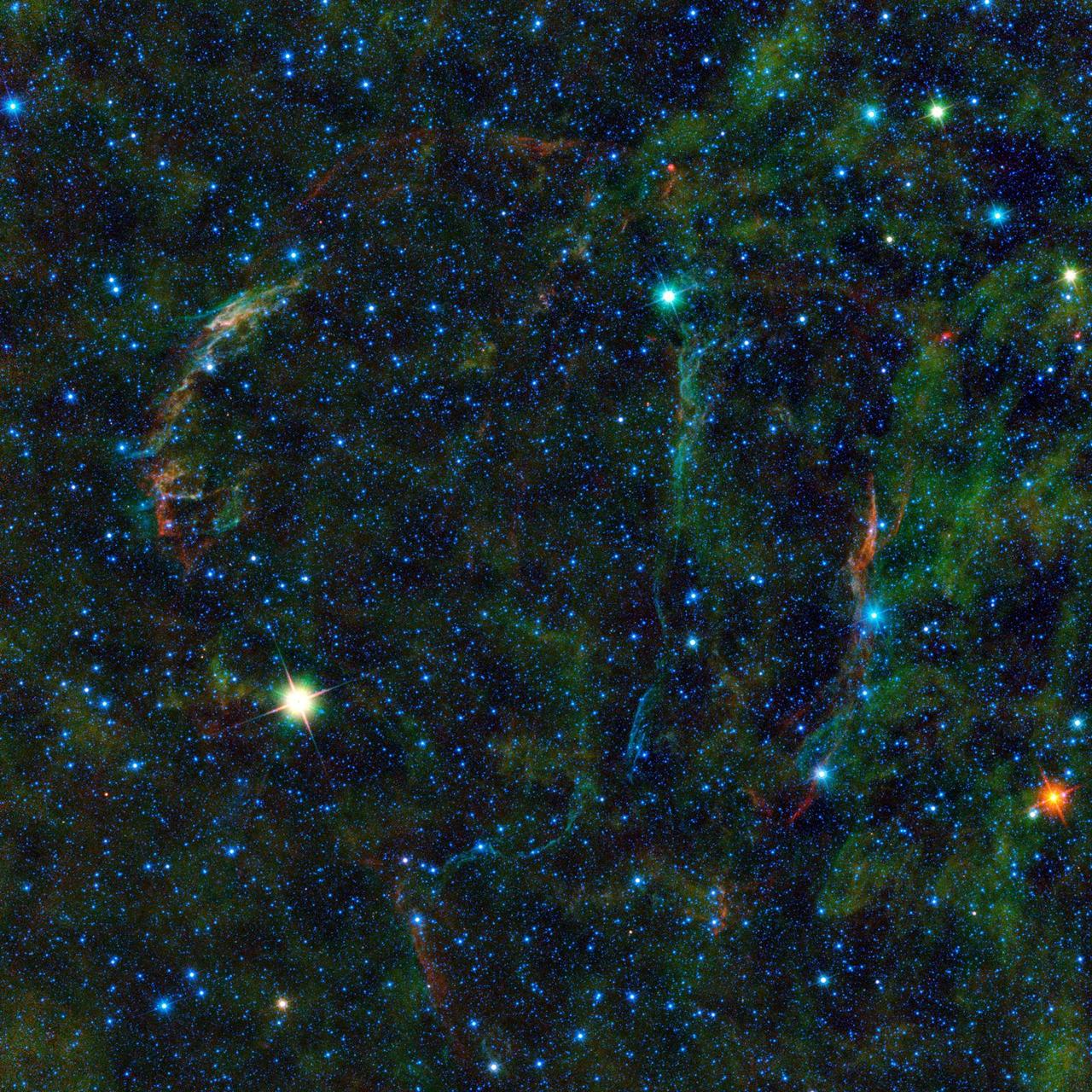
This large mosaic image from NASA Wide-field Infrared Survey Explorer, features the wreckage of an exploded star, as well as other stars nearing the end of their lives.

This mosaic image taken by NASA Wide-field Infrared Survey Explorer, features three nebulae that are part of the giant Orion Molecular Cloud. Included in this view are the Flame nebula, the Horsehead nebula and NGC 2023.
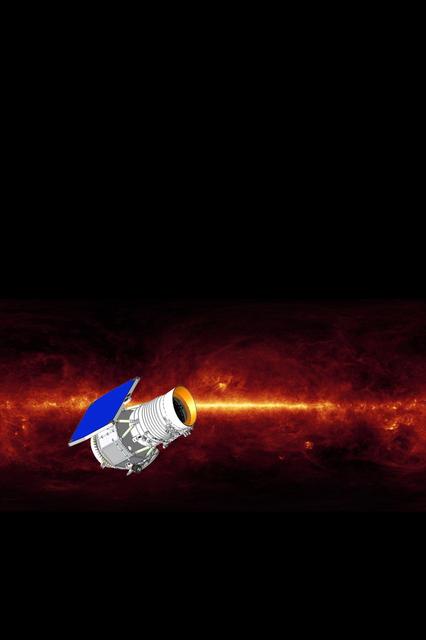
NASA Wide-field Infrared Survey Explorer mission will survey the entire sky in a portion of the electromagnetic spectrum called the mid-infrared with far greater sensitivity than any previous mission or program ever has.
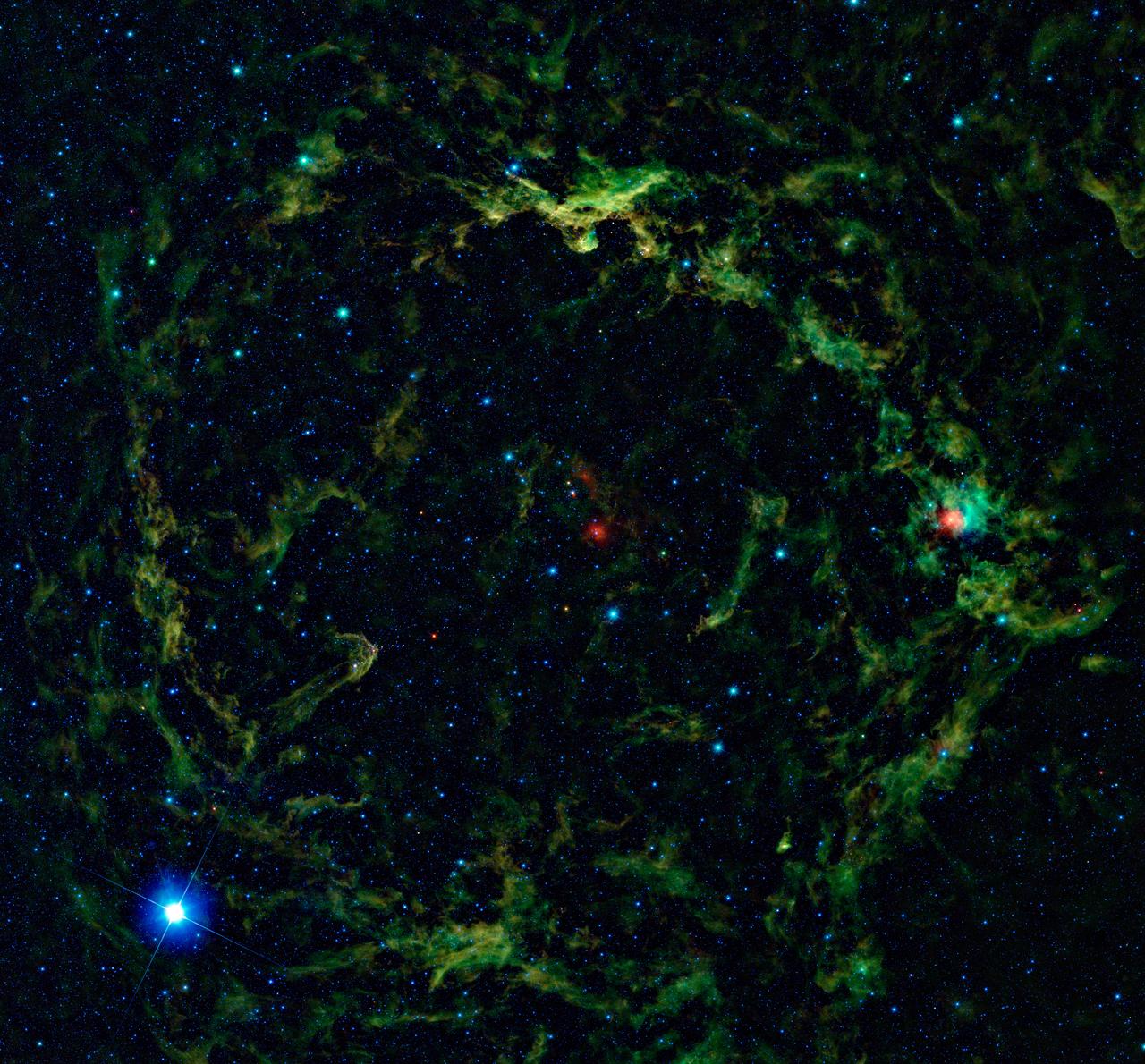
NASA Wide-field Infrared Survey Explorer, shows a giant nebula around Lambda Orionis, inflating Orion head to huge proportions.
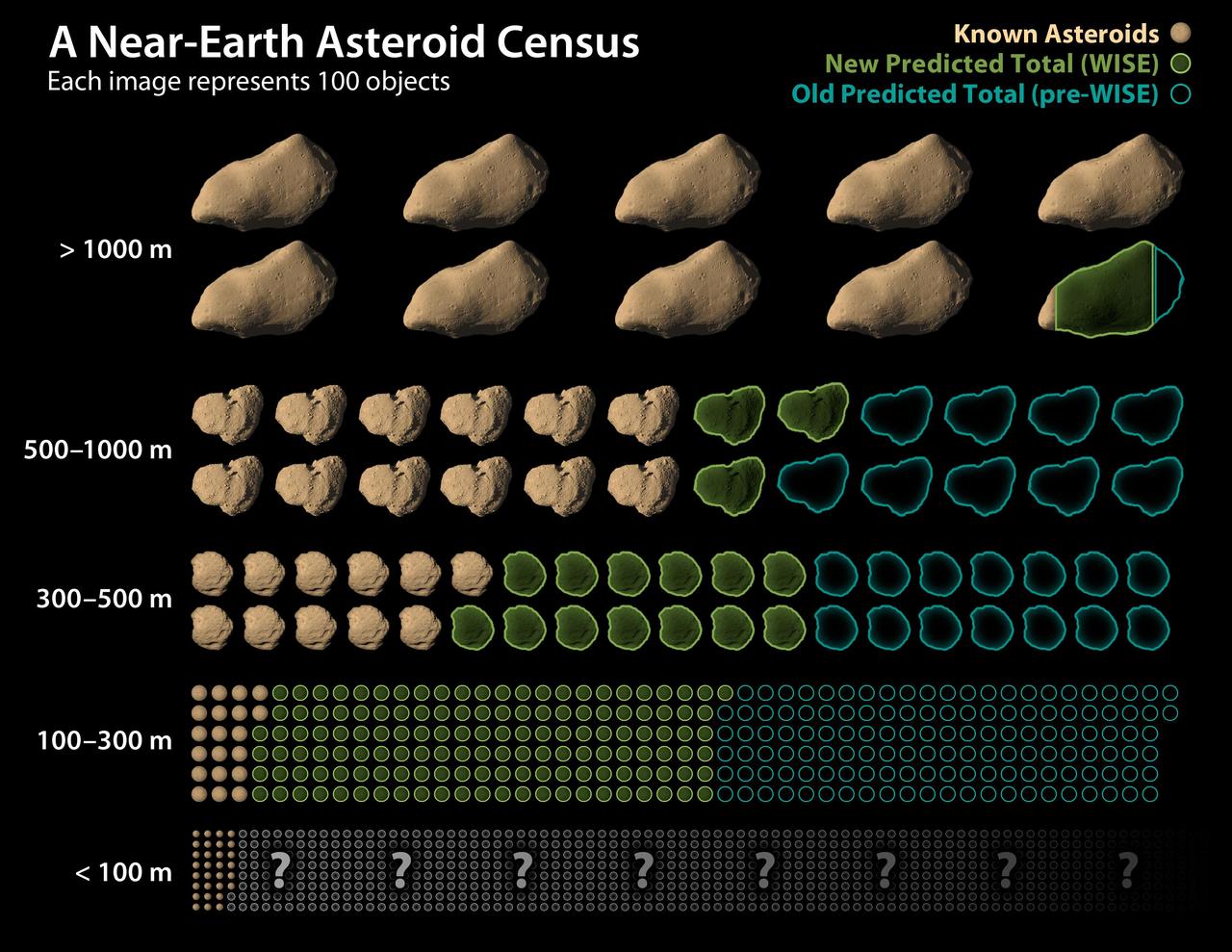
Data from NASA Wide-field Infrared Survey Explorer has led to revisions in the estimated population of near-Earth asteroids. The most accurate survey to date has allowed new estimates of the total numbers of objects in different size categories.
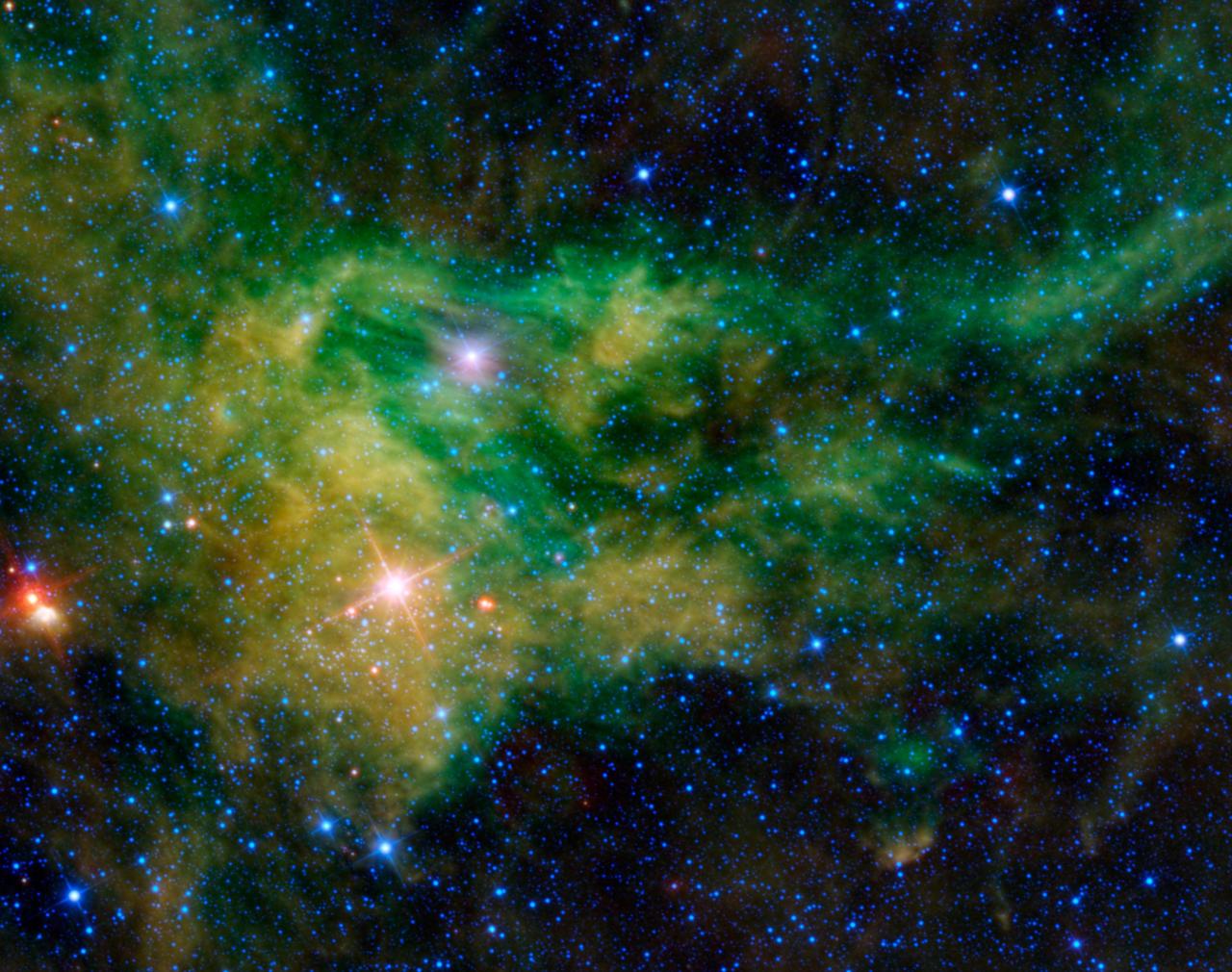
NASA Wide-field Infrared Survey Explorer captured this colorful image of the nebula BFS 29 surrounding the star CE-Camelopardalis, found hovering in the band of the night sky comprising the Milky Way.
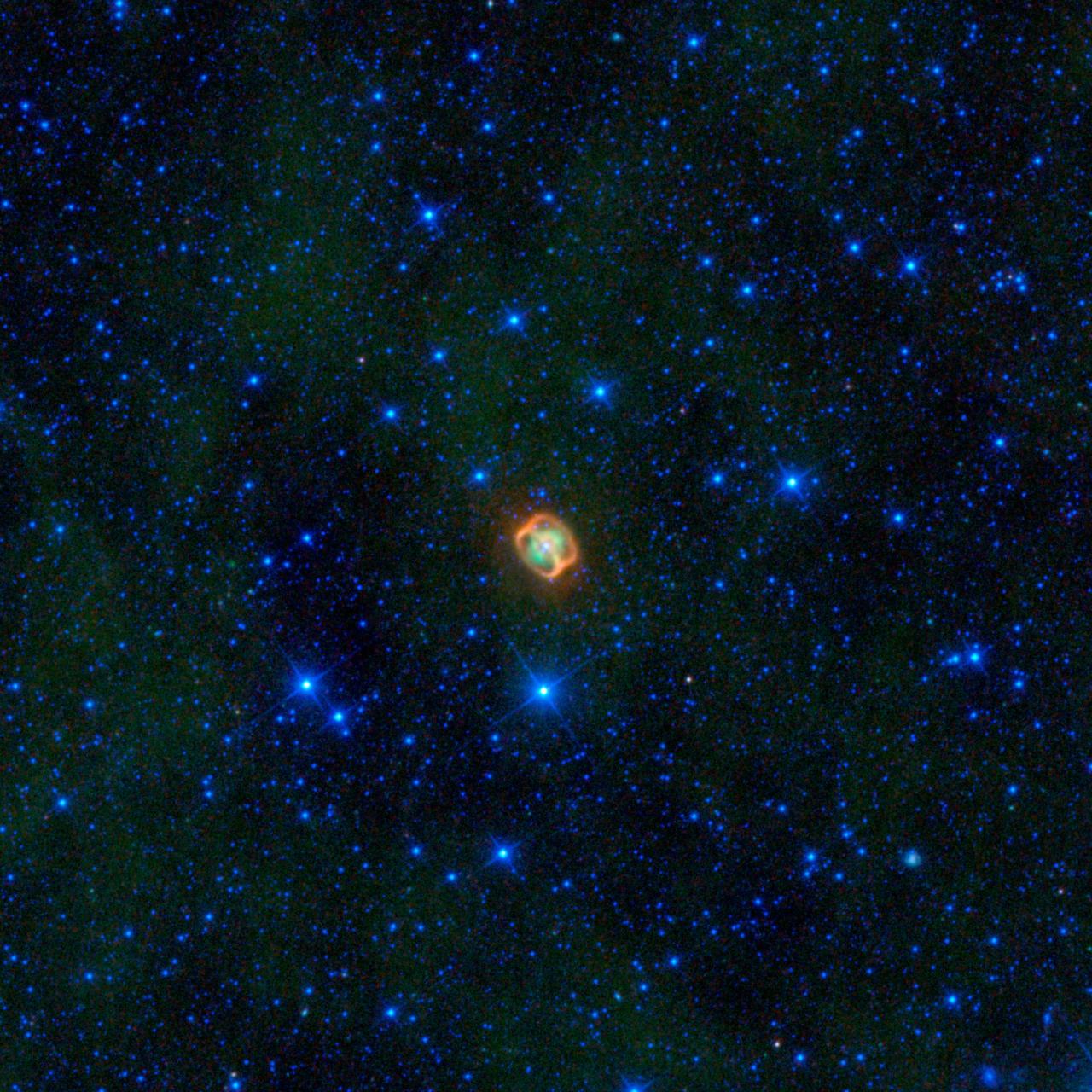
A colorful creature in a starry sea stands out in this image from NASA Wide-field Infrared Explorer; infrared light that has been assigned visible colors we see with our eyes. The jellyfish-looking object is actually a very close pair of dying stars.
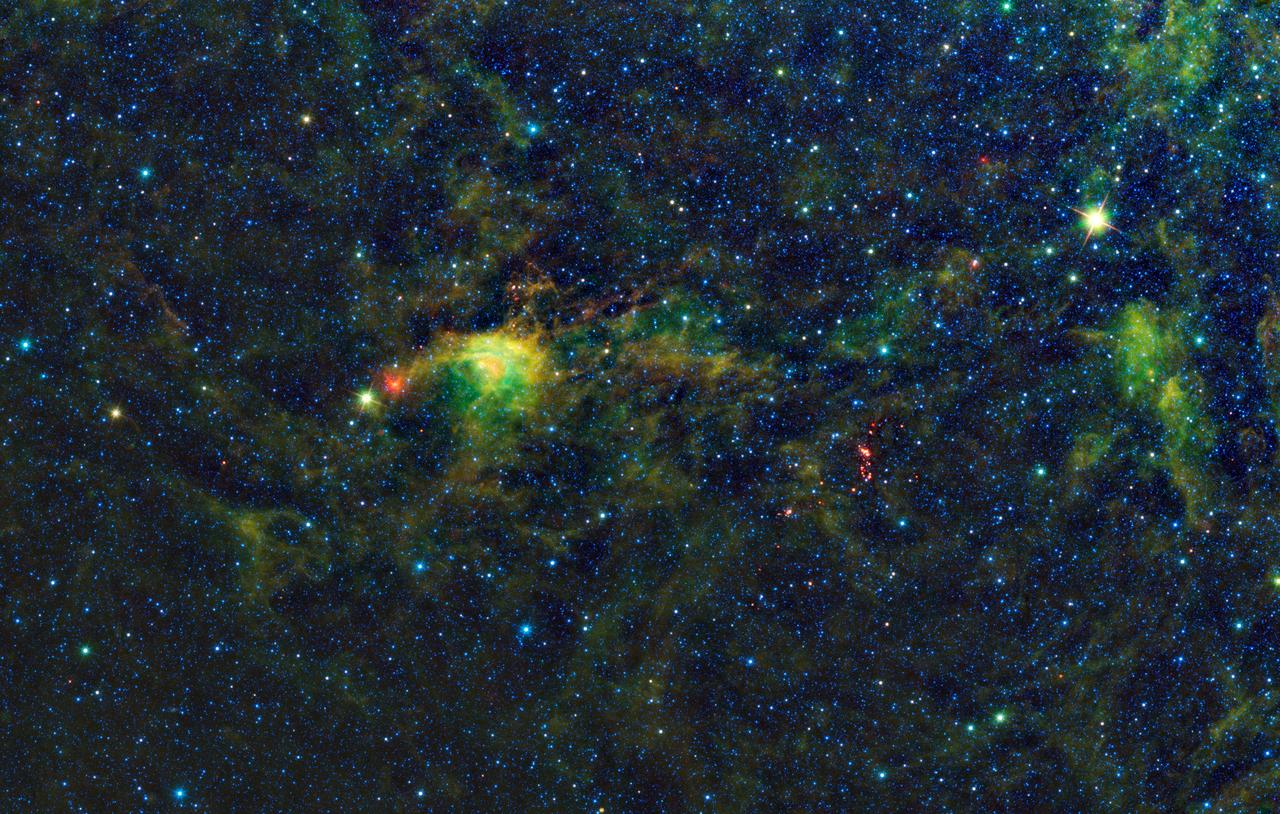
NASA Wide-Field Infrared Survey Explorer has uncovered a striking population of young stellar objects in a complex of dense, dark clouds in the southern constellation of Circinus.
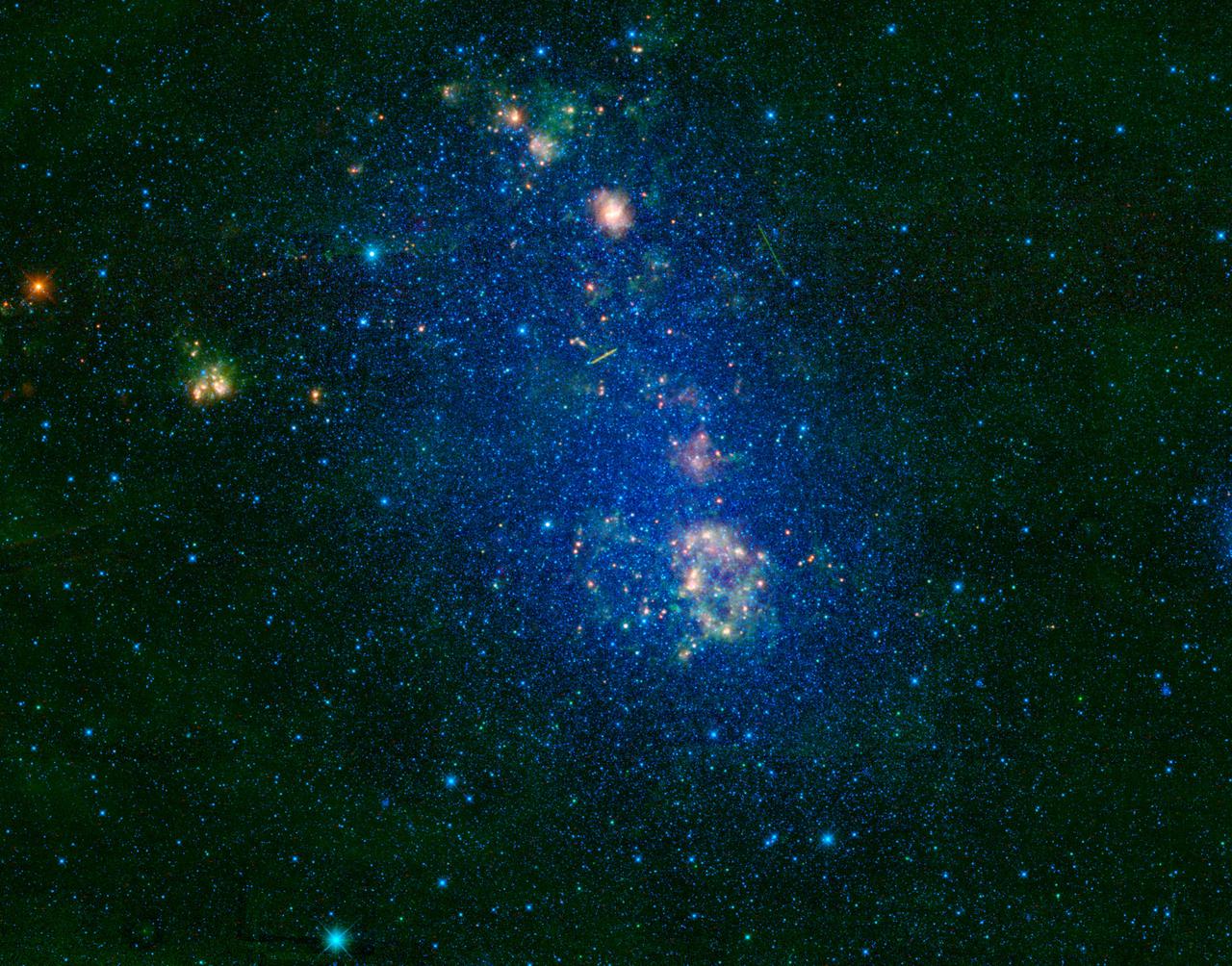
NASA Wide-field Infrared Survey Explorer highlights the Small Magellanic Cloud, a small galaxy about 200,000 light-years away. Located in the constellation Tucana, the Small Magellanic Cloud looks like a wispy cloud encircling the south celestial pole.

This infrared image from NASA Wide-field Infrared Survey Explorer shows the Lambda Centauri nebula, a star-forming cloud in our Milky Way galaxy, also known as the Running Chicken nebula.
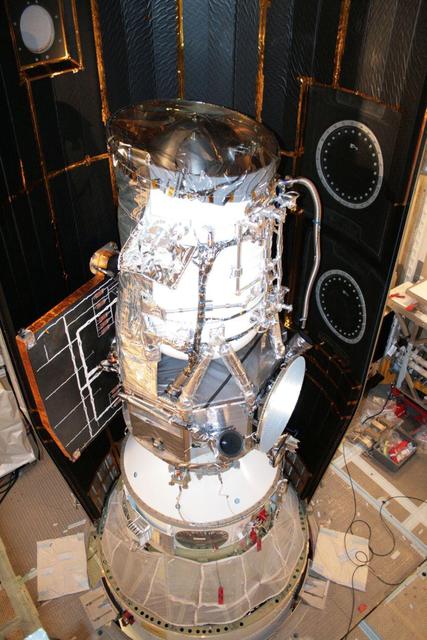
NASA Wide-field Infrared Survey Explorer is shown inside one-half of the nose cone, or fairing, that will protect it during launch.
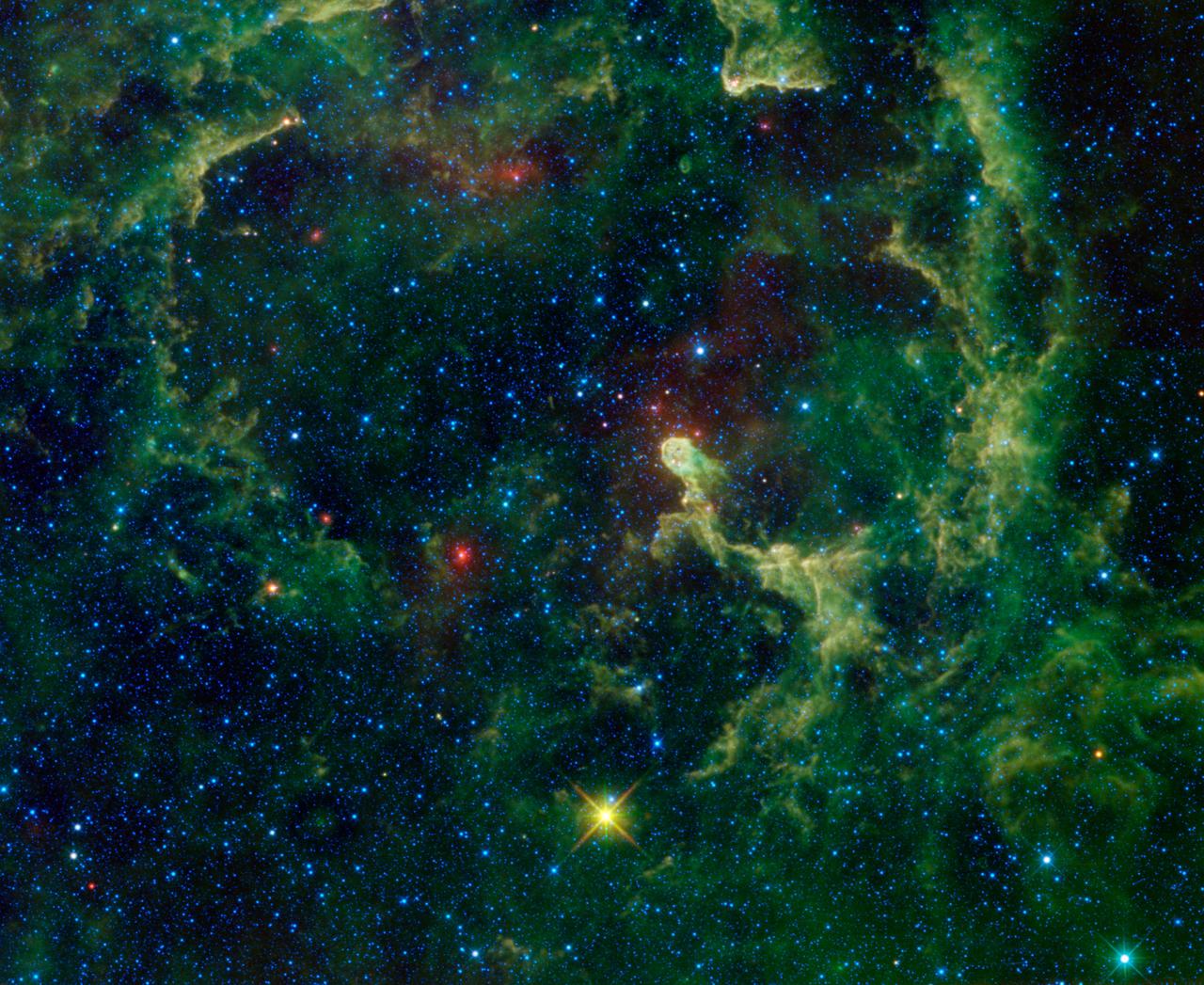
This image of the Elephant Trunk nebula from NASA Wide-field Survey Explorer shows clouds of dust and gas being pushed and eroded by a massive star. The bright trunk of the nebula near the center is an especially dense cloud.

The immense Andromeda galaxy, also known as Messier 31, is captured in full in this image from NASA Wide-field Infrared Survey Explorer. Andromeda is the closest large galaxy to our Milky Way galaxy, and is located 2.5 million light-years from our sun.

This image of galaxy W2246-0526 was created using data from the Atacama Large Millimeter/submillimeter Array (ALMA) - a collection of individual radio antennas that work together as a single telescope. The galaxy is syphoning material away from three companion galaxies through trans-galactic streamers. The main galaxy and one of its companions are in the center. To the lower left is another companion and its large tidal tail that connects it to the main galaxy. The upper left concentration is the third companion galaxy. https://photojournal.jpl.nasa.gov/catalog/PIA22359
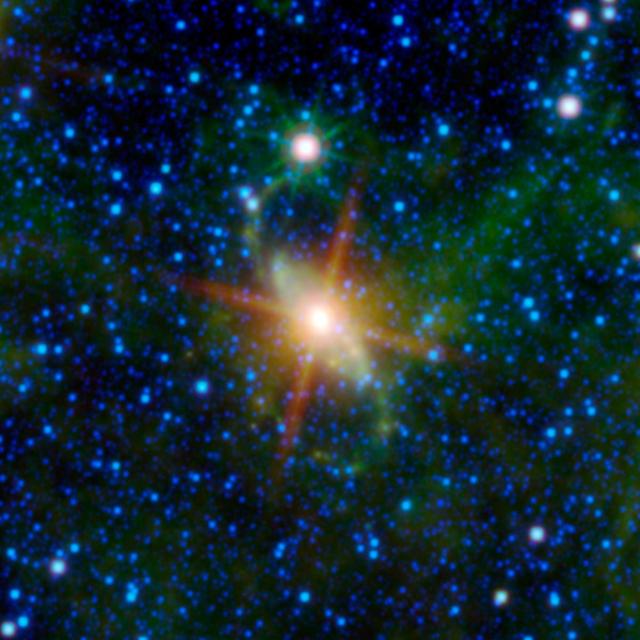
There something special going on in the nearby Circinus galaxy, as revealed by this image from NASA WISE telescope. The Circinus galaxy is located in the constellation of Circinus and is obscured by the plane of our Milky Way galaxy.
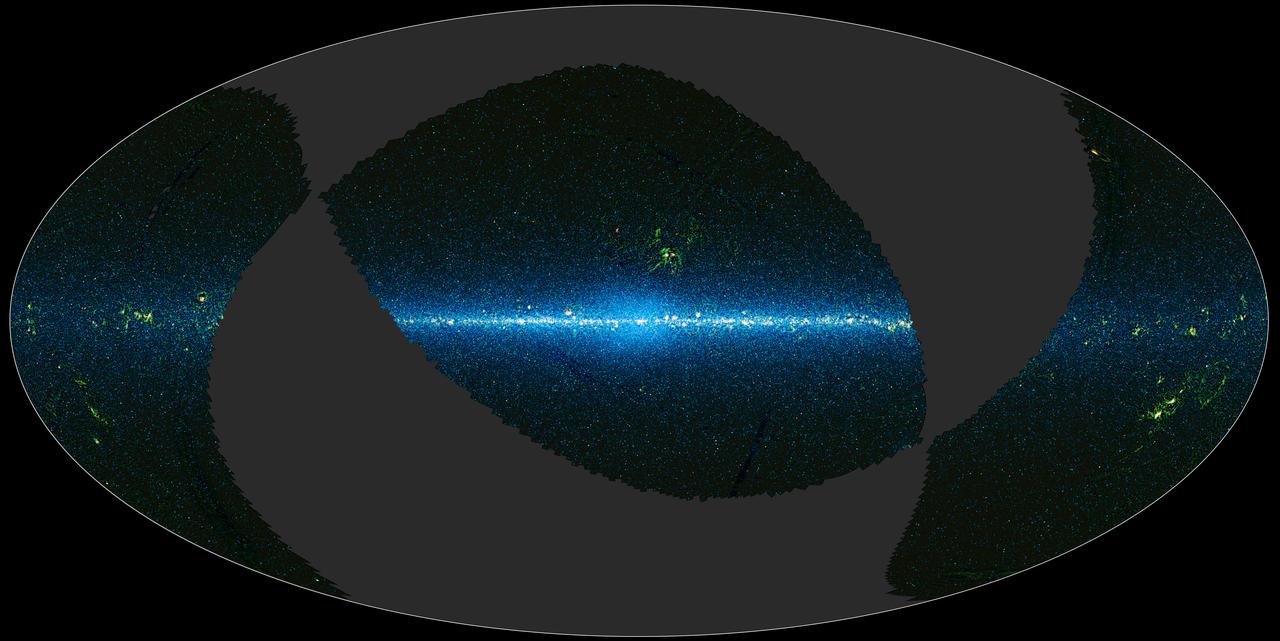
This image is a map of the portion of the sky covered by the preliminary release of WISE data. WISE surveyed the entire sky in four infrared wavelengths in 2010. This map is centered on the Milky Way galaxy.

A colorful collection of galaxy specimens from NASA Wide-field Infrared Survey Explorer mission showcases galaxies of several types, from elegant grand design spirals to more patchy flocculent spirals.
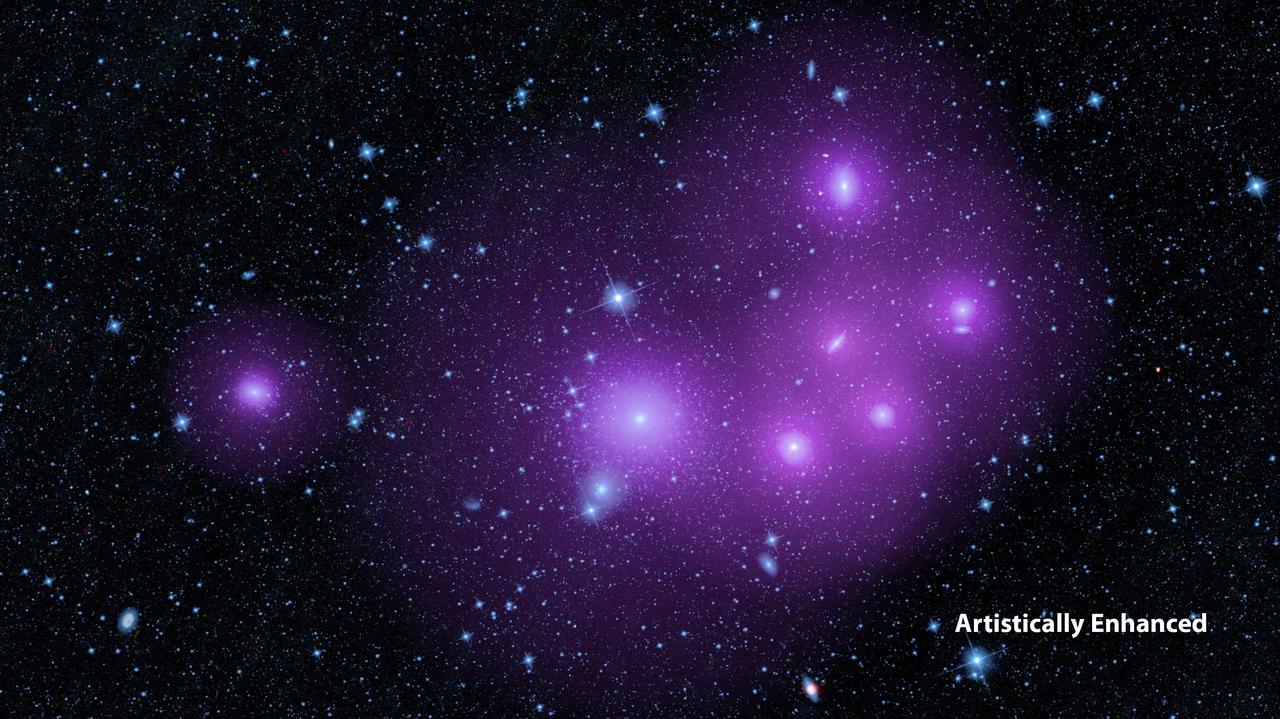
This artistically enhanced image from NASA WISE data shows galaxies clumped together in the Fornax cluster, located 60 million light-years from Earth.
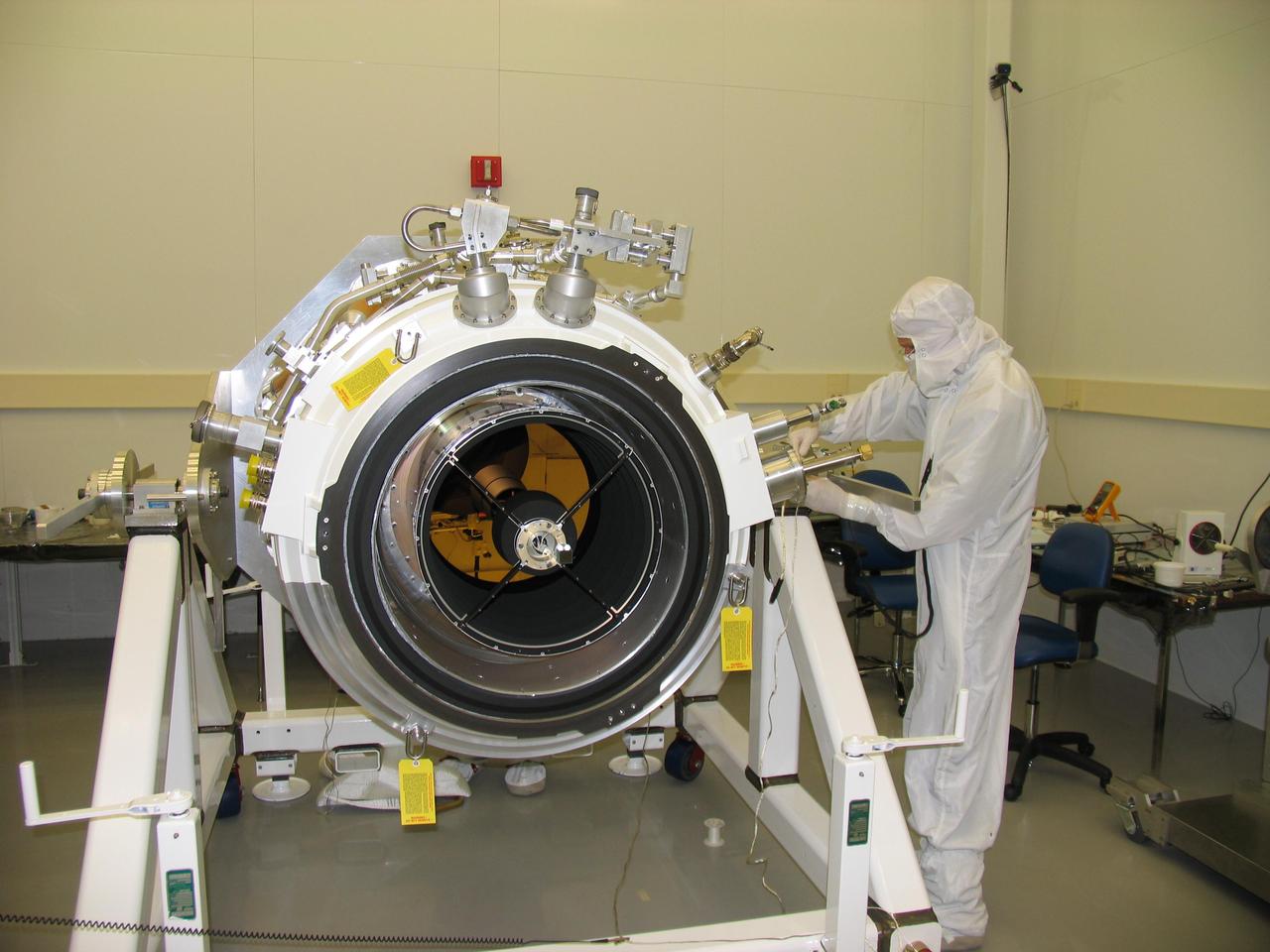
The science instrument on NASA Wide-field Infrared Survey Explorer is shown here with its aperture cover removed, during assembly at the Space Dynamics Laboratory in Logan, Utah.

This image from NASA WISE spacecraft shows a blazar, a voracious supermassive black hole inside a galaxy with a jet that happens to be pointed right toward Earth. Active black holes are often found at the hearts of elliptical galaxies.

This image shows the famous Pleiades cluster of stars as seen through the eyes of NASA Wide-field Infrared Survey Explorer; they are what astronomers call an open cluster of stars, loosely bound to each other to eventually go their separate ways.
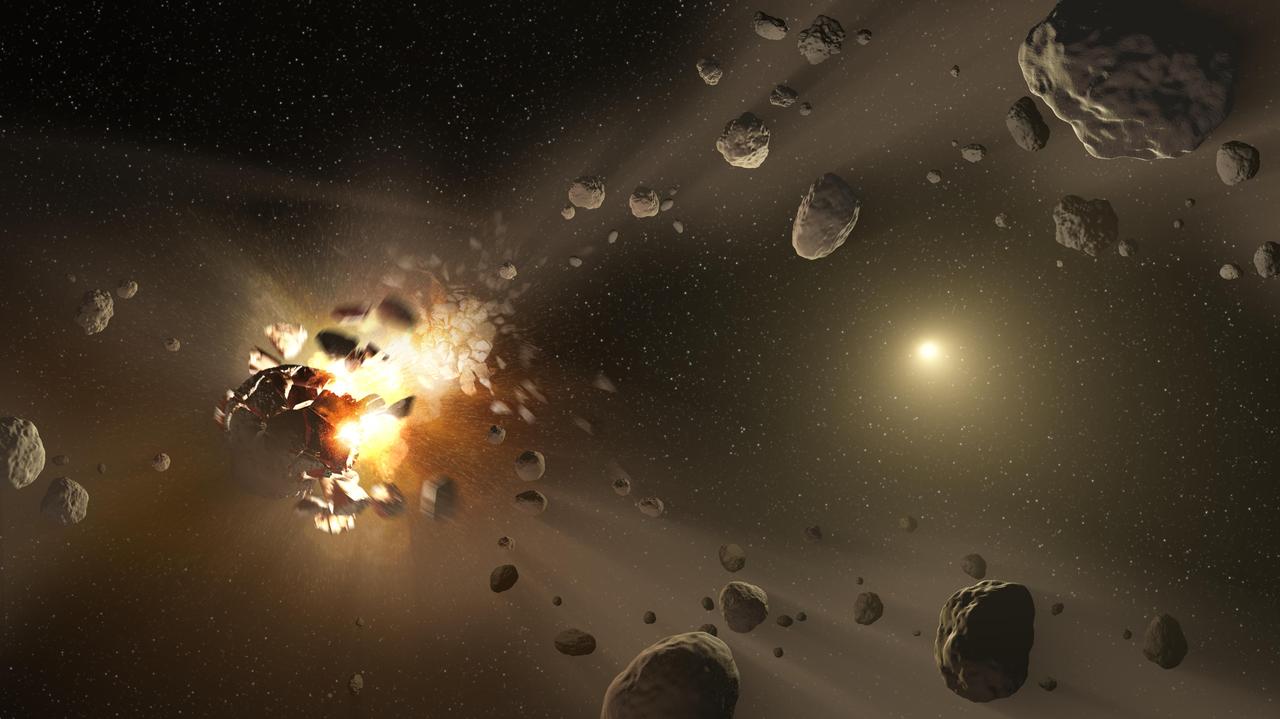
This artist concept catastrophic collisions between asteroids located in the belt between Mars and Jupiter and how they have formed families of objects on similar orbits around the sun.
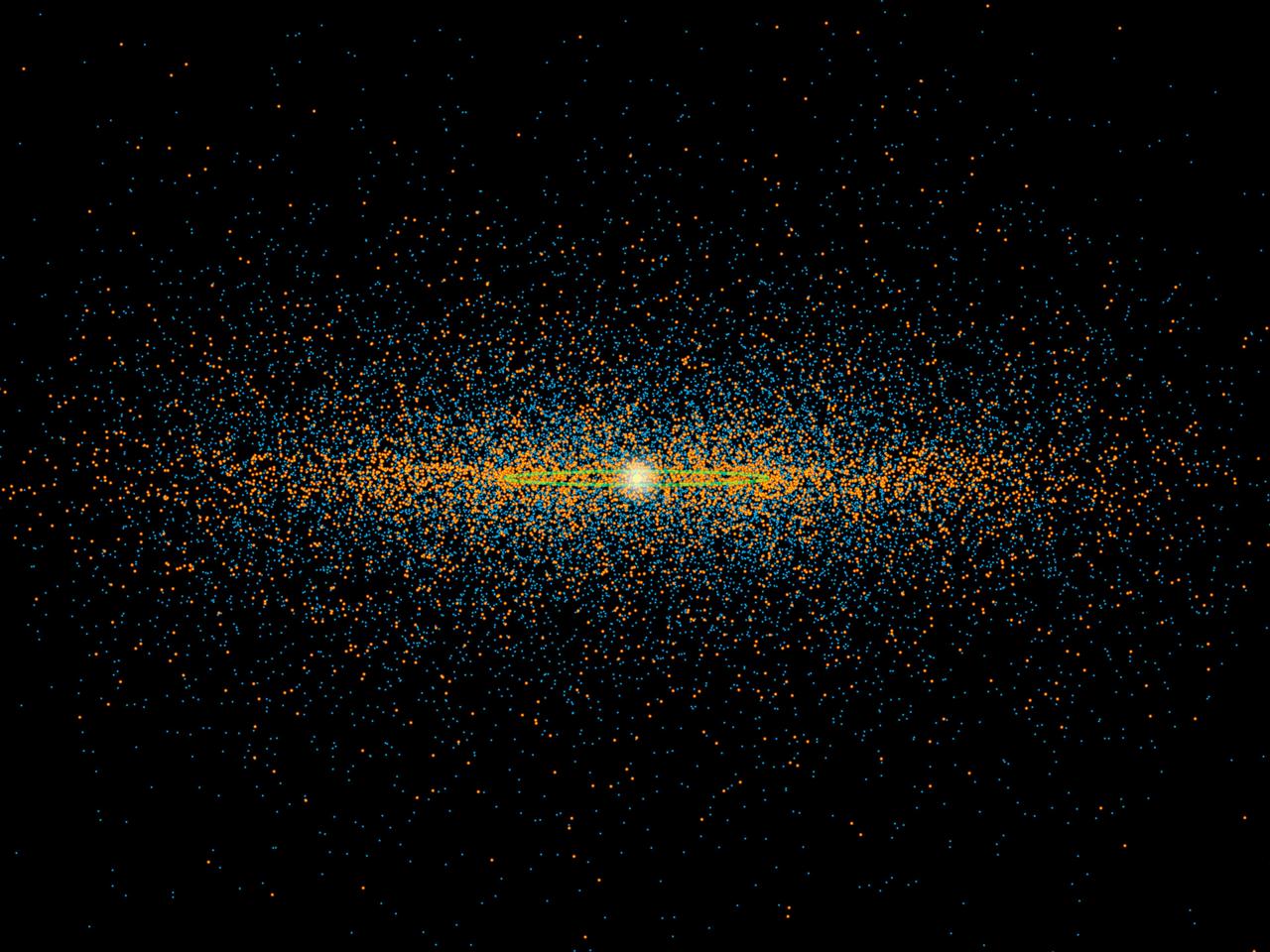
NEOWISE, the asteroid-hunting portion of NASA WISE mission, illustrates the differences between orbits of a typical near-Earth asteroid blue and a potentially hazardous asteroid, or PHA orange. PHAs are a subset of the near-Earth asteroids NEAs.
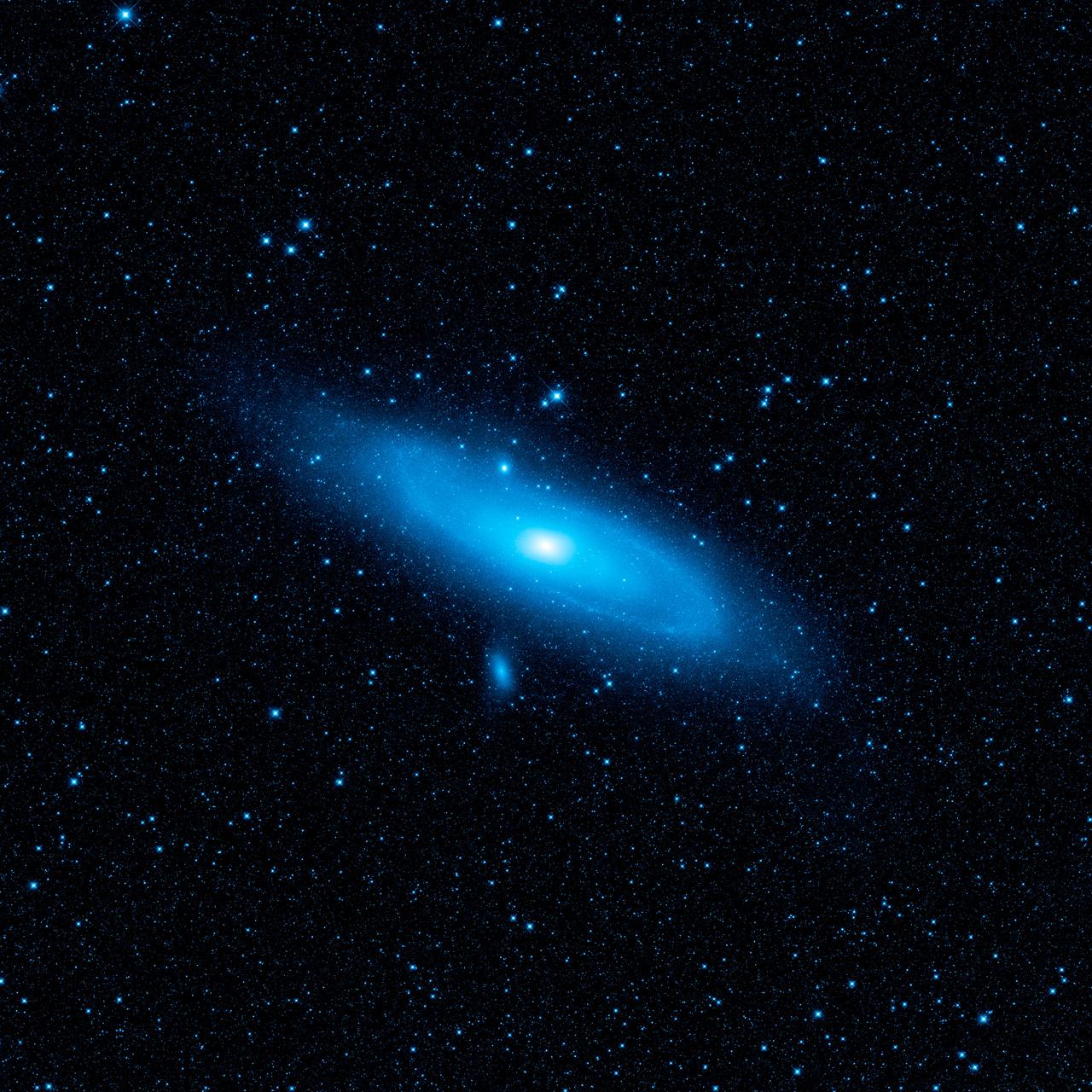
This image from NASA Wide-field Infrared Survey Explorer highlights the Andromeda galaxy older stellar population in blue. A pronounced warp in the disk of the galaxy, the aftermath of a collision with another galaxy, can be seen in the spiral arm.
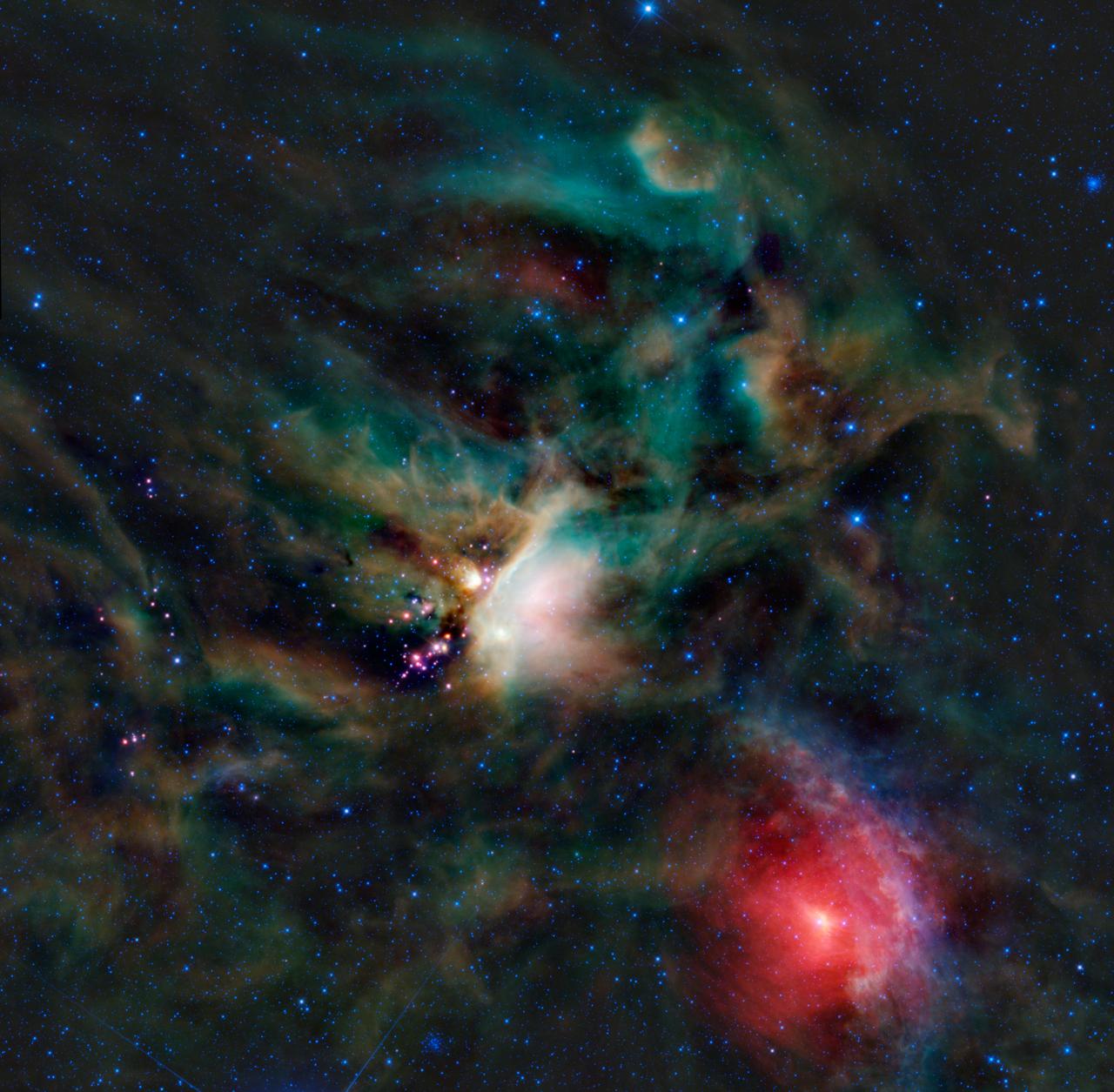
A rich collection of colorful astronomical objects is revealed in this picturesque image of the Rho Ophiuchi cloud complex from NASA Wide-field Infrared Explorer; the cloud is found rising above the plane of the Milky Way in the night sky.

Seen as a red dusty cloud in this image from NASA Wide-field Infrared Survey Explorer, Puppis A is the remnant of a supernova explosion.

This zoomed-in view of a portion of the all-sky survey from NASA Wide-field Infrared Survey Explorer shows a collection of quasar candidates shown in yellow circles. Quasars are supermassive black holes feeding off gas and dust.
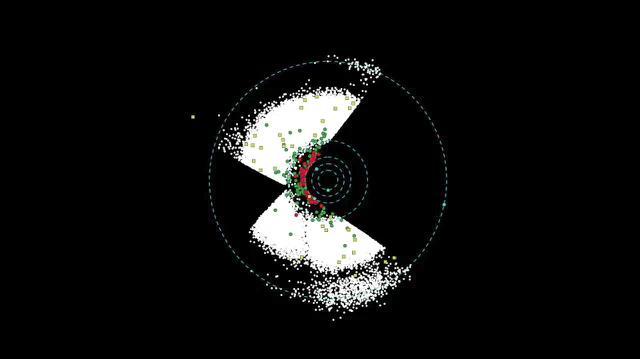
This image shows asteroids observed so far by NASA Wide-field Infrared Survey Explorer. An animation is available at the Photojournal.
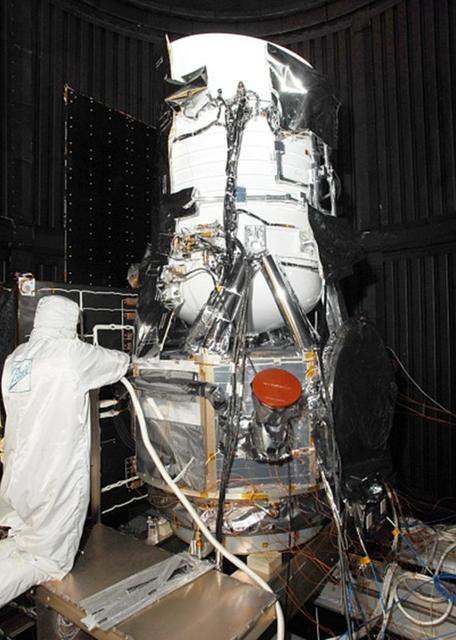
NASA Wide-field Infrared Survey Explorer in the clean room at Ball Aerospace & Technologies Corp., in Boulder, Colo.
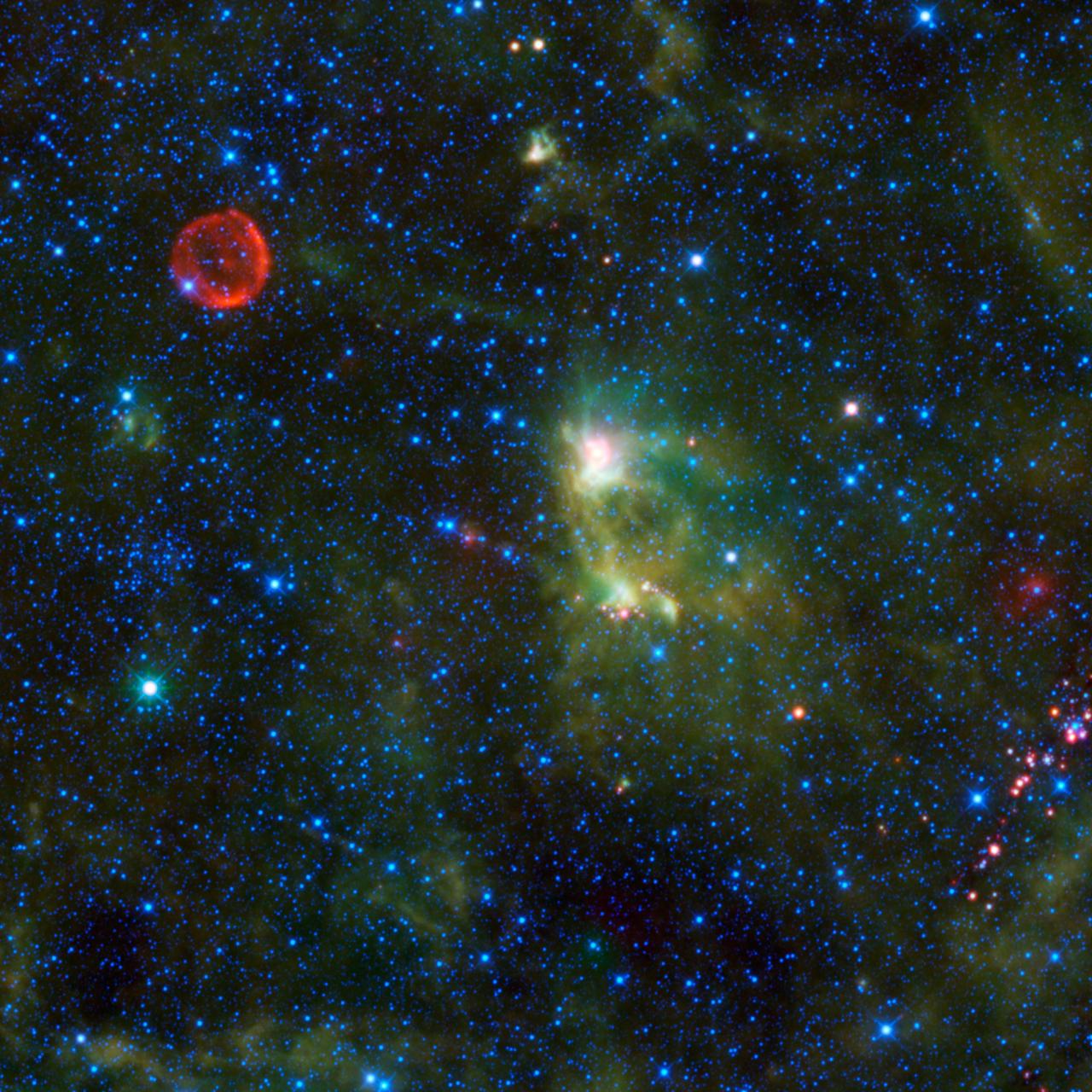
This image from NASA Wide-field Infrared Survey Explorer takes in several interesting objects in the constellation Cassiopeia which are not easily seen in visible light. The red circle visible at upper left is SN 1572, often called Tycho Supernova.
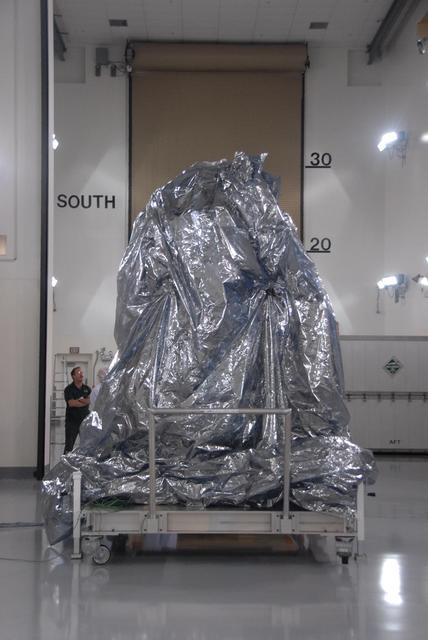
NASA Wide-field Infrared Survey Explorer spacecraft sits with its protective covering.
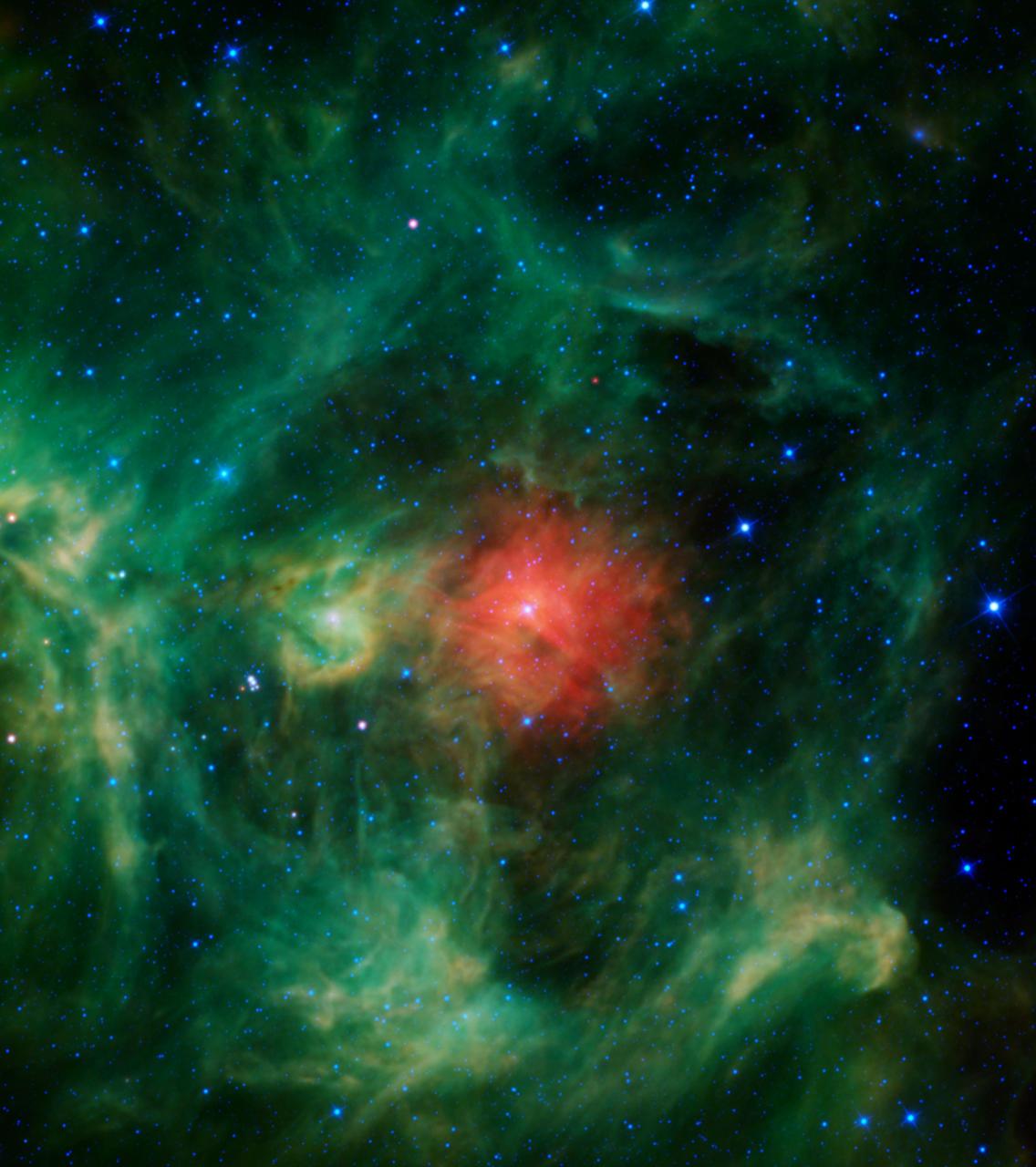
NASA Wide-field Infrared Survey Explorer mission presents the Wreath nebula. The nebula official name is Barnard 3, or IRAS Ring G159.6-18.5. Regions similar to this nebula are found near the band of the Milky Way galaxy in the night sky.
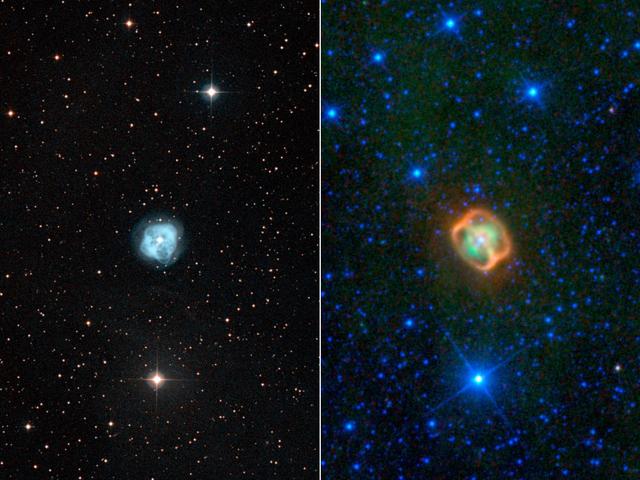
This image composite shows two views of a puffy, dying star, or planetary nebula, known as NGC 1514. At left is a view from a ground-based, visible-light telescope; the view on the right shows the object in infrared light from NASA WISE telescope.

NASA Wide-field Infrared Survey Explorer observed the star-forming cloud NGC 281 in the constellation of Cassiopeia as it appears to be chomping through the cosmos, earning it the nickname the Pacman nebula.
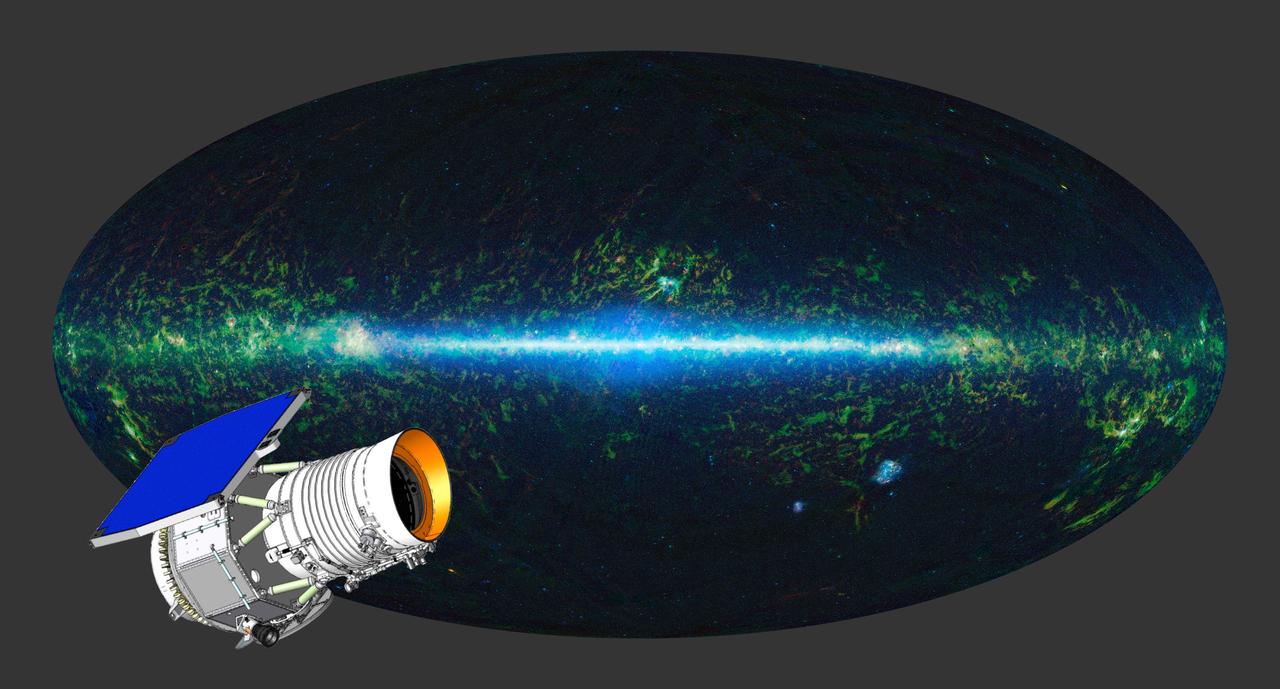
The entire sky as mapped by NASA WISE at infrared wavelengths is shown here, with an artist concept of the WISE satellite superimposed.
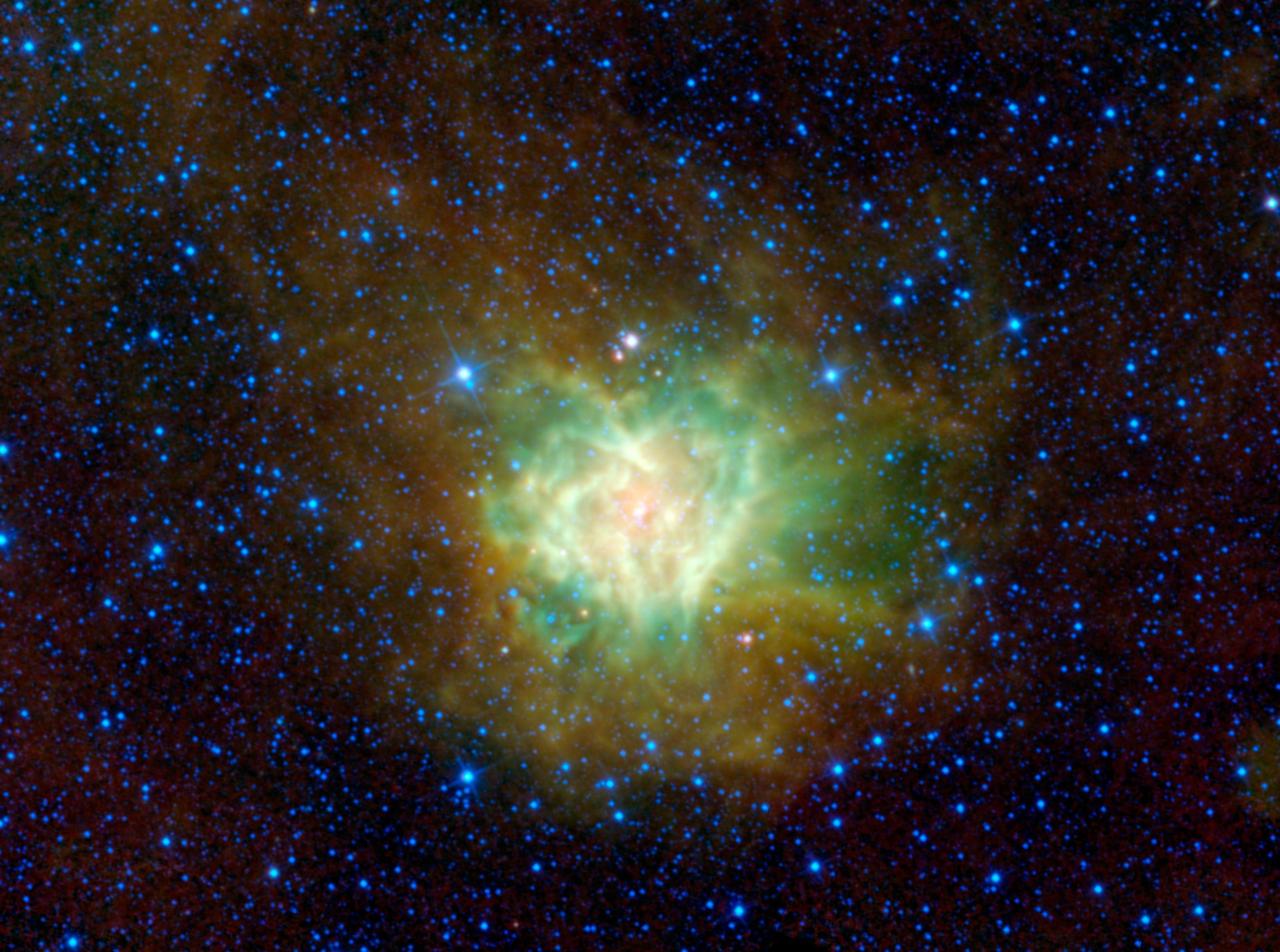
The aptly named Cocoon nebula is featured in this image from NASA Wide-field Infrared Survey Explorer. This cloud of dust and gas is located in the constellation Cygnus, and is wrapped in a dark cloud of dust called Barnard 168.
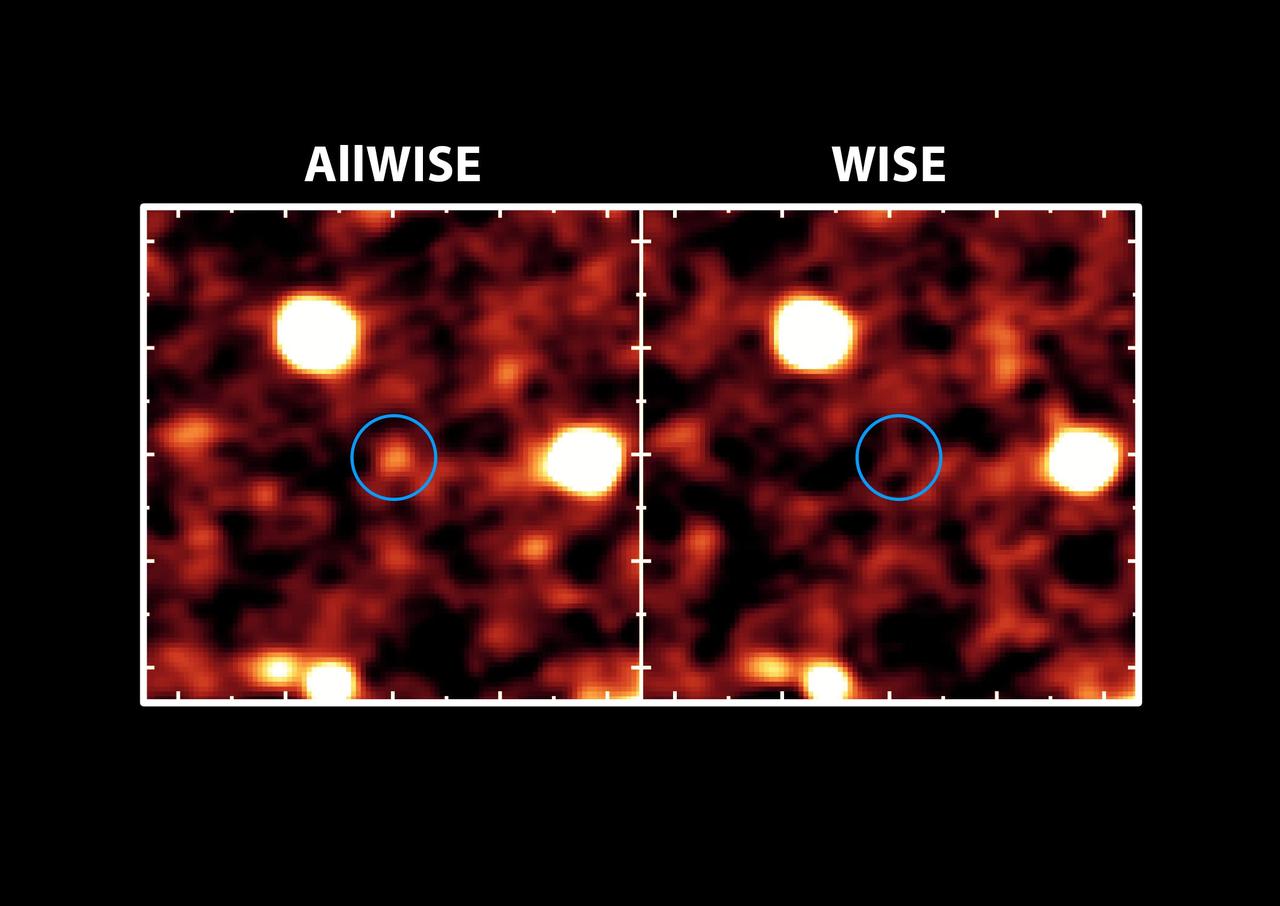
The new AllWISE catalog will bring distant galaxies that were once invisible out of hiding, as illustrated in this image. At right, a portion of the sky available before the AllWISE project; at left, the same part of the sky in a new AllWISE image.