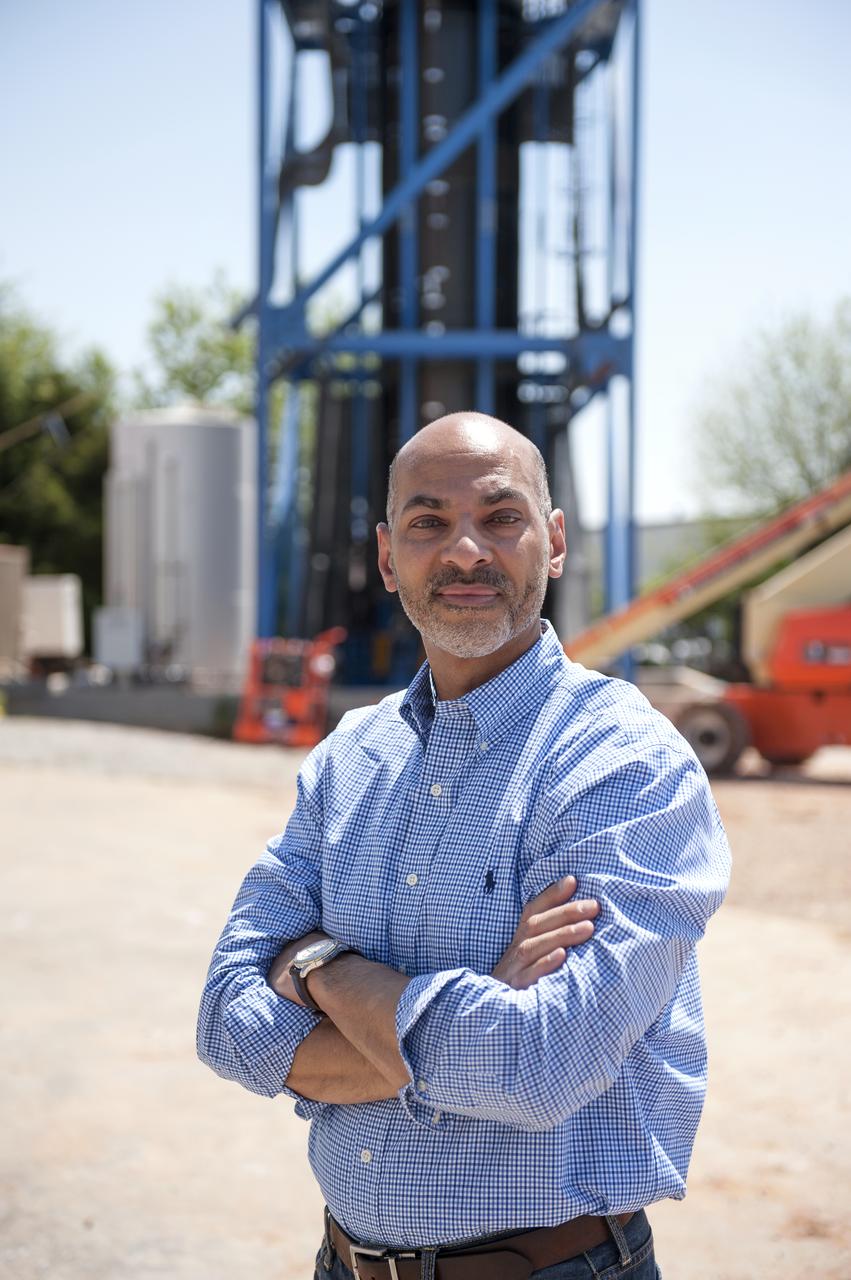
NASA ENGINEER BRYAN BARLEY IS LEADING WORK ON AN ADVANCED BOOSTER CONCEPT DESIGN FOR NASA'S SPACE LAUNCH SYSTEM.
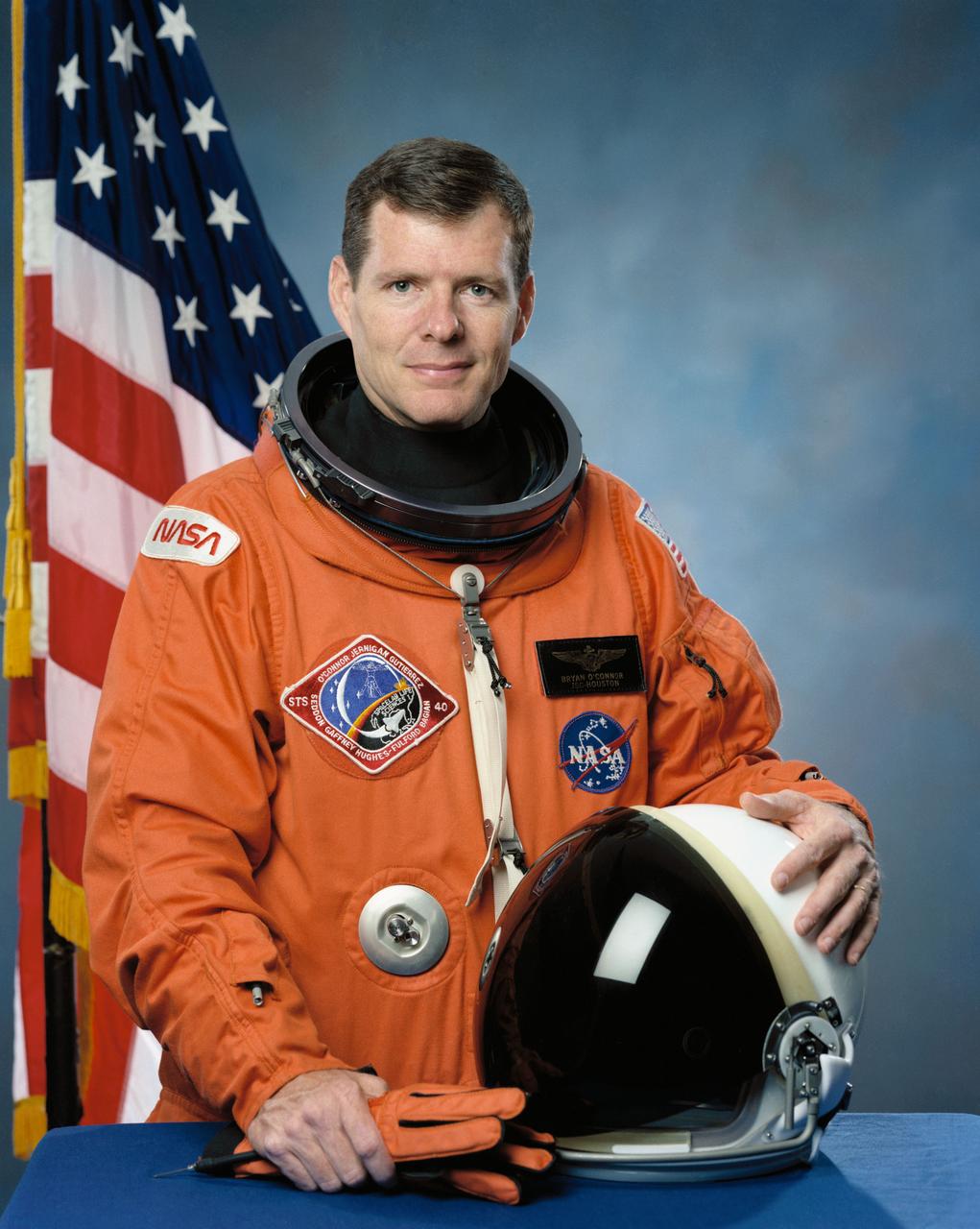
S90-41751 (June 1991) - Astronaut Bryan D. O'Connor.
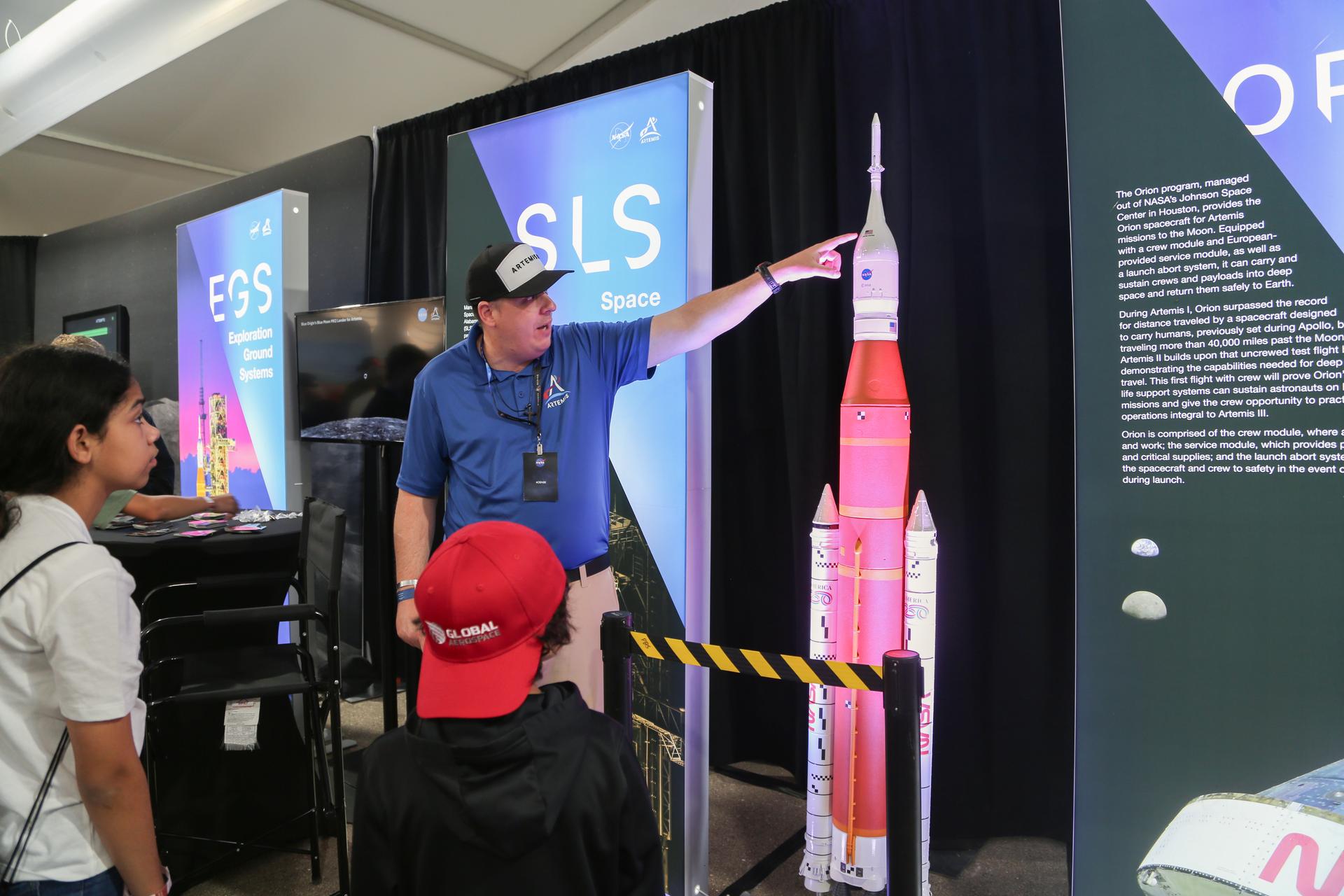
NASA Communications Strategist Will Bryan shows visitors an Orion spacecraft model at the Artemis display in the NASA pavilion at the 2026 Experimental Aircraft Association (EAA) AirVenture air show in Oshkosh, Wisconsin, Monday, July 20, 2026.
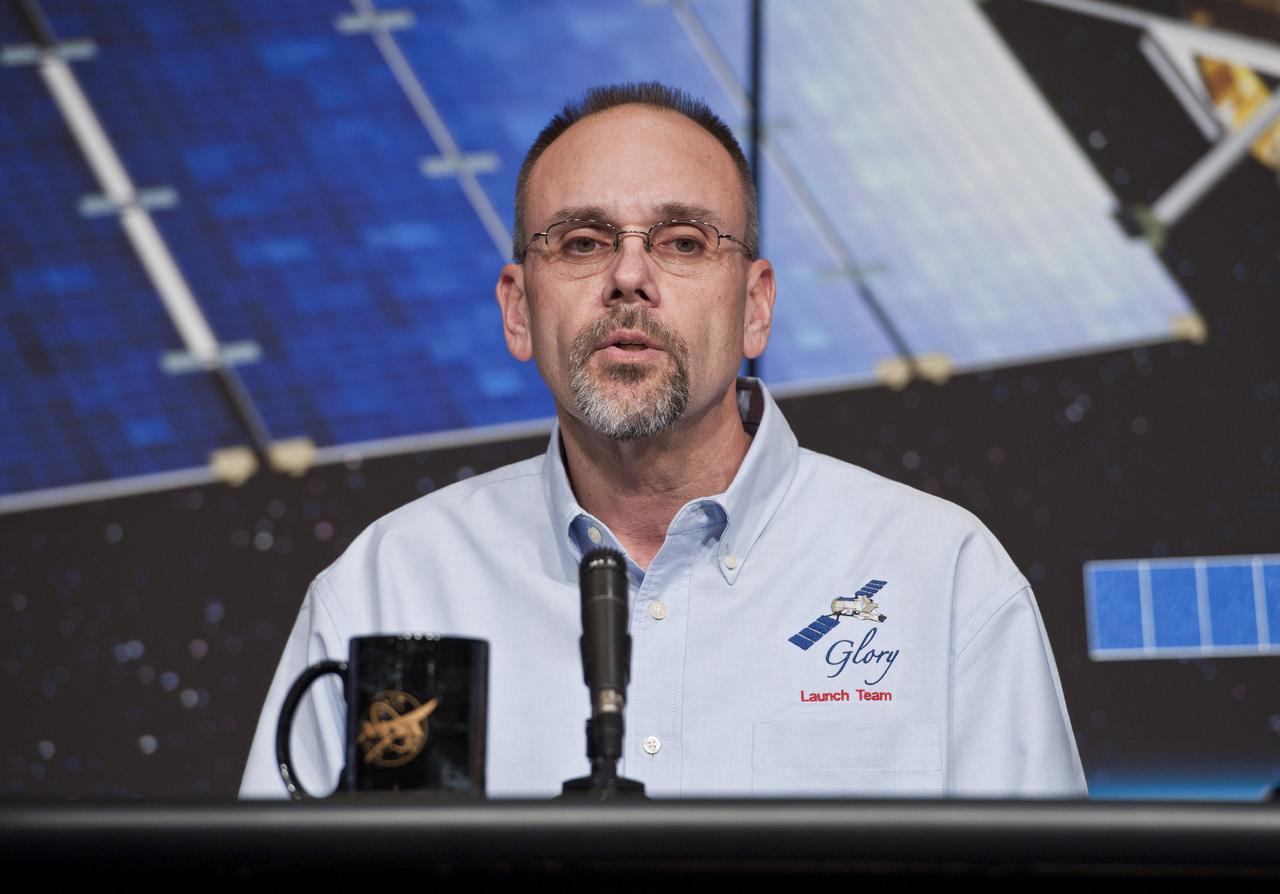
Bryan Fafaul, Glory Project Manager from Goddard Space Flight Center, talks about the launch of the GLORY mission during a news conference at NASA Headquarters, Thursday, Jan. 20, 2011, in Washington. NASA's newest Earth-observing research mission is scheduled for launch form Vandenburg Air Force Base in California on Feb. 23. The mission will improve our understanding of how the sun and tiny atmosppheric particles called aerosols affect Earth's climate. Photo Credit: (NASA/Paul E. Alers)
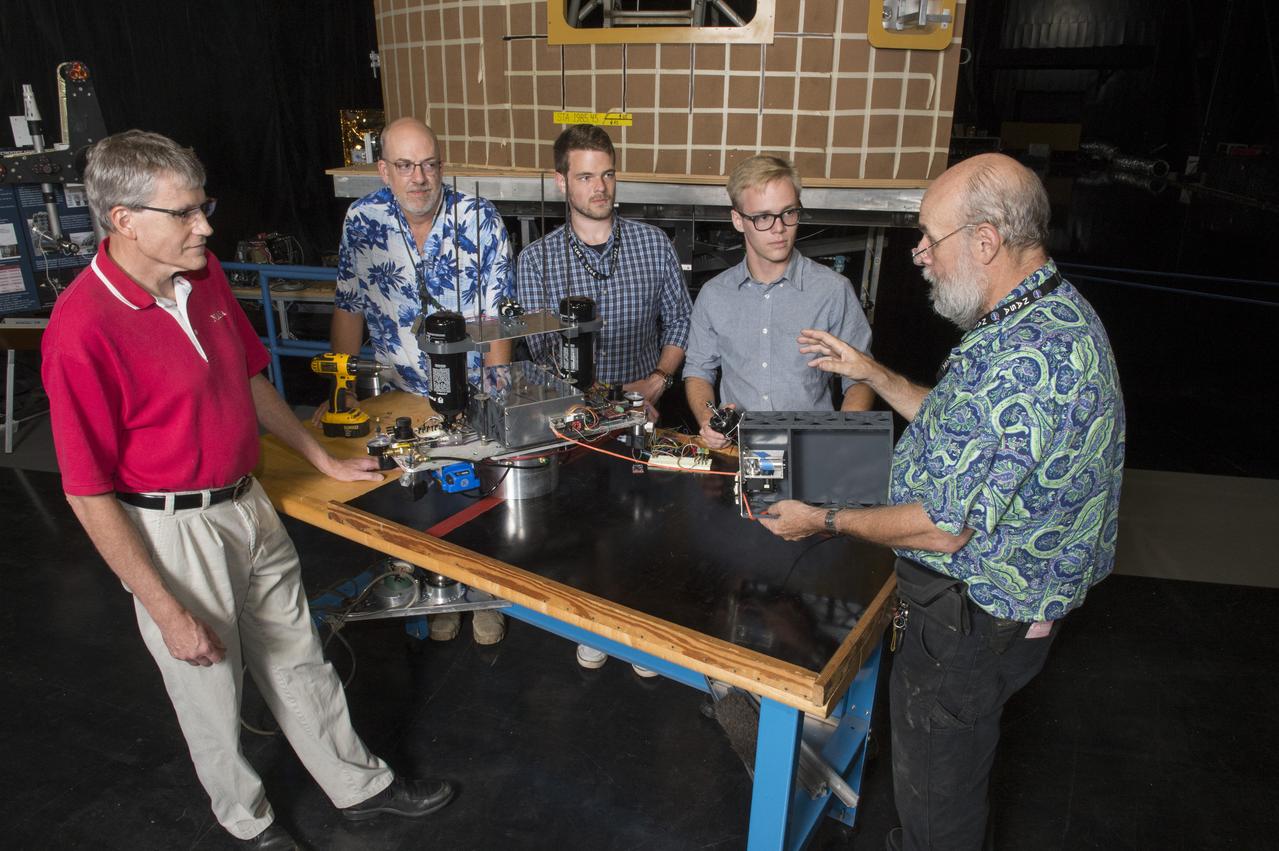
Electric Sail (E-Sail) Tether Team Discusses 6U CubeSat Test Article and Tether Deployment System (Right to left: Tom Bryan, Davis Hunter (student intern), Jonathan MacArthur (student intern), Charles Cowen, Mike Tinker)
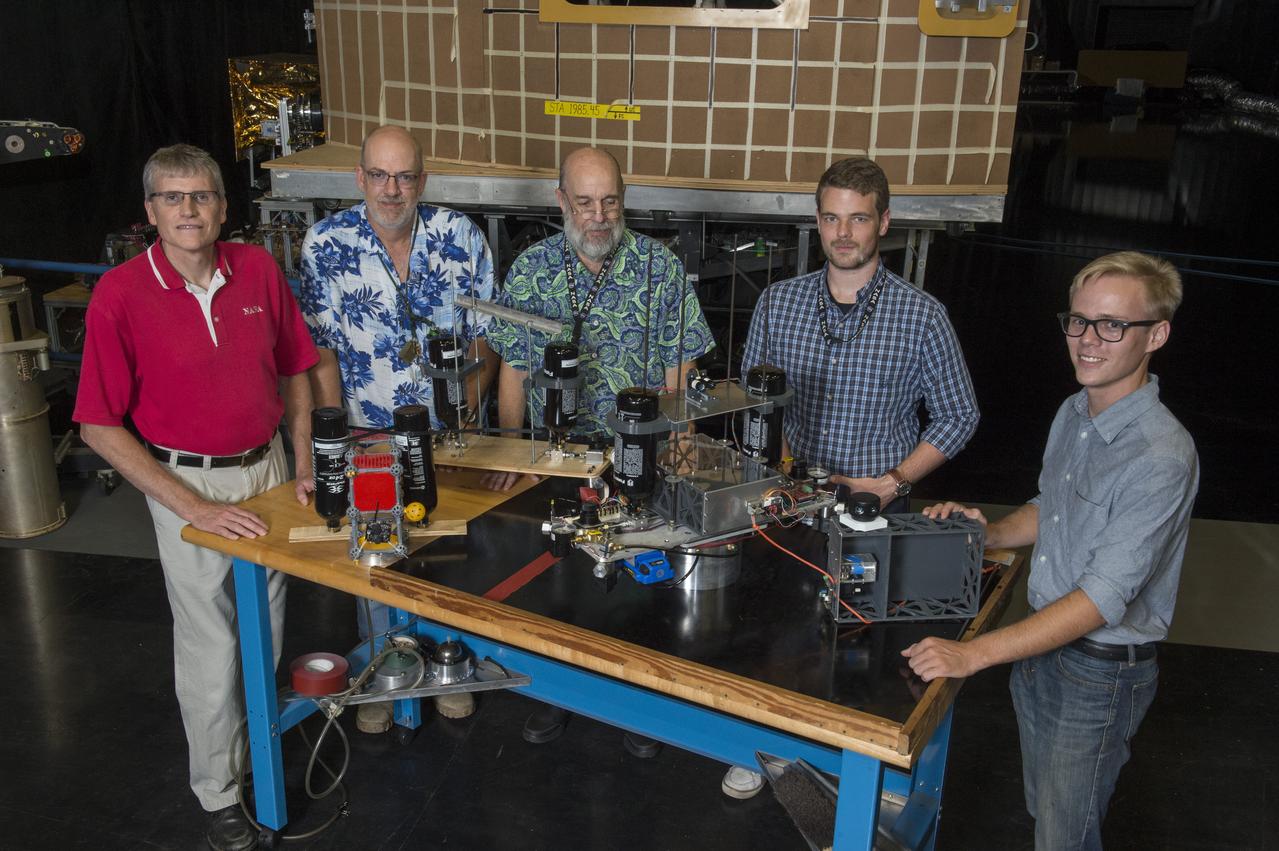
Electric Sail (E-Sail) Tether Team with 6U CubeSat Prototypes and Current Version of Tether Deployer Test Article, (Right to left: Tom Bryan, Davis Hunter (student intern), Jonathan MacArthur (student intern), Charles Cowen, Mike Tinker)
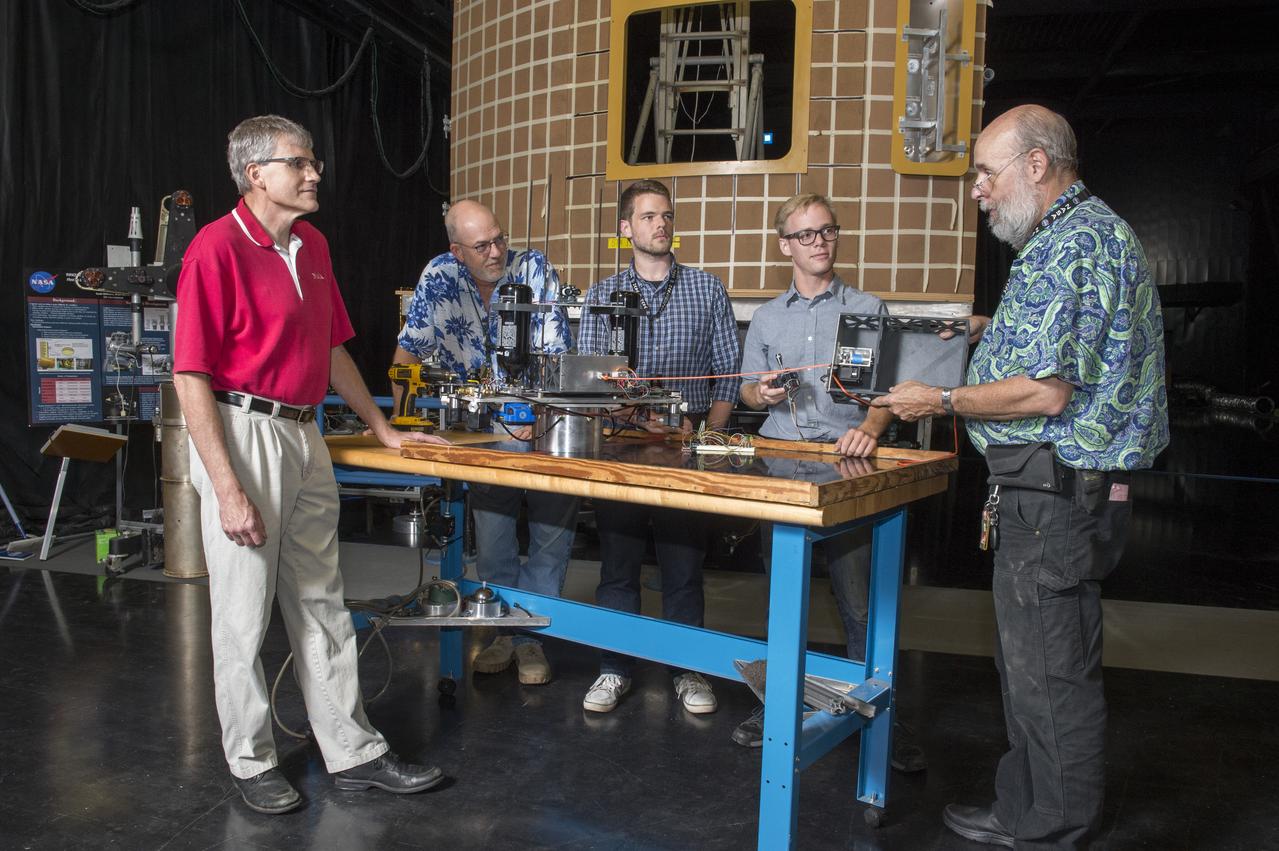
Electric Sail (E-Sail) Tether Team Discusses 6U CubeSat Test Article and Tether Deployment System (Right to left: Tom Bryan, Davis Hunter (student intern), Jonathan MacArthur (student intern), Charles Cowen, Mike Tinker)
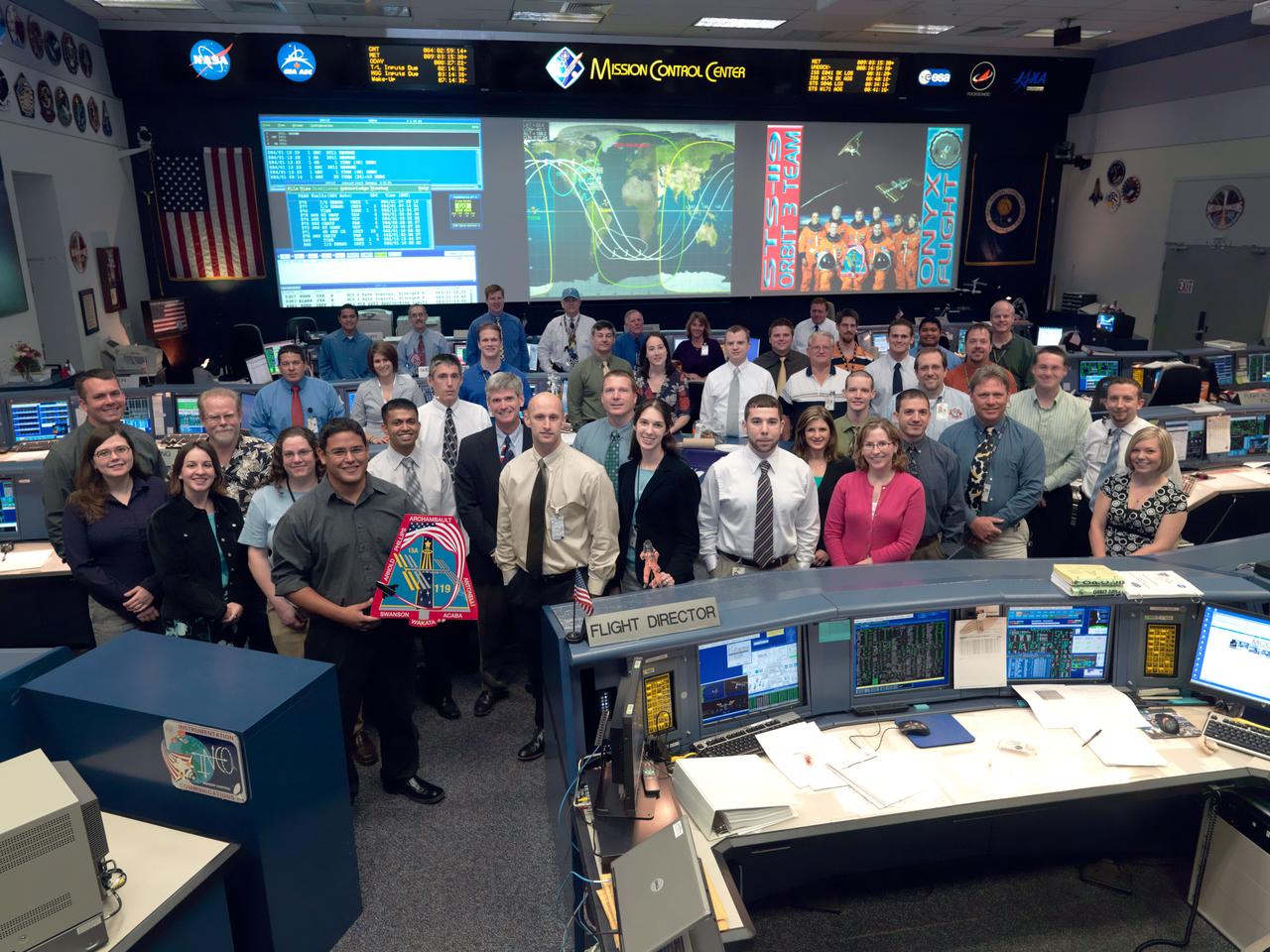
JSC2009-E-061542 (24 March 2009) --- The members of the STS-119 Orbit 3 flight control team pose for a group portrait in the space shuttle flight control room in the Mission Control Center at NASA?s Johnson Space Center. Flight director Bryan Lunney (center) near the front.
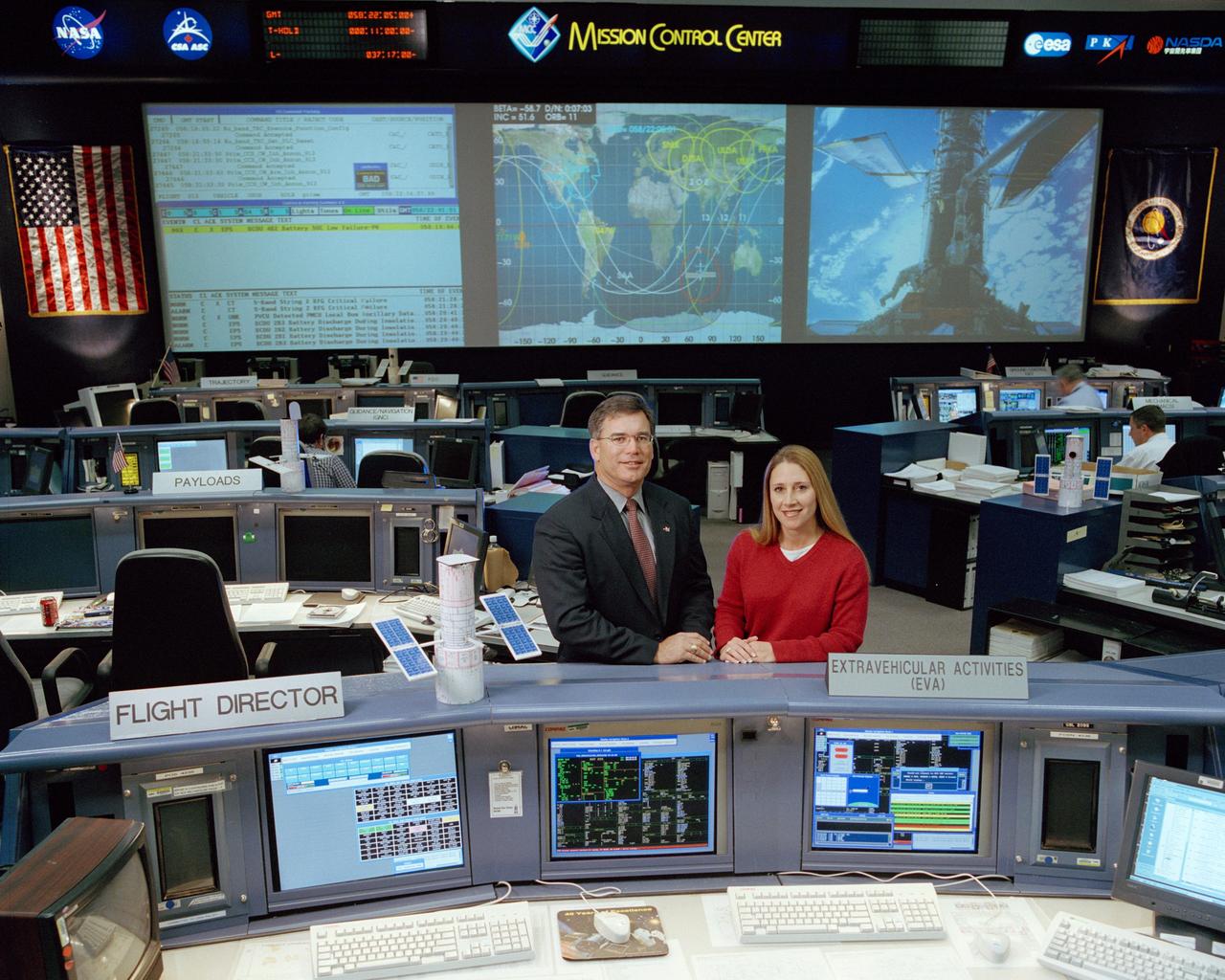
JSC2002-00546 (February 2002) --- Bryan P. Austin, lead flight director for STS-109, and Dana Weigel, lead EVA officer, pose near their respective consoles in the Shuttle Flight Control Room of the Johnson Space Center's Mission Control Center.
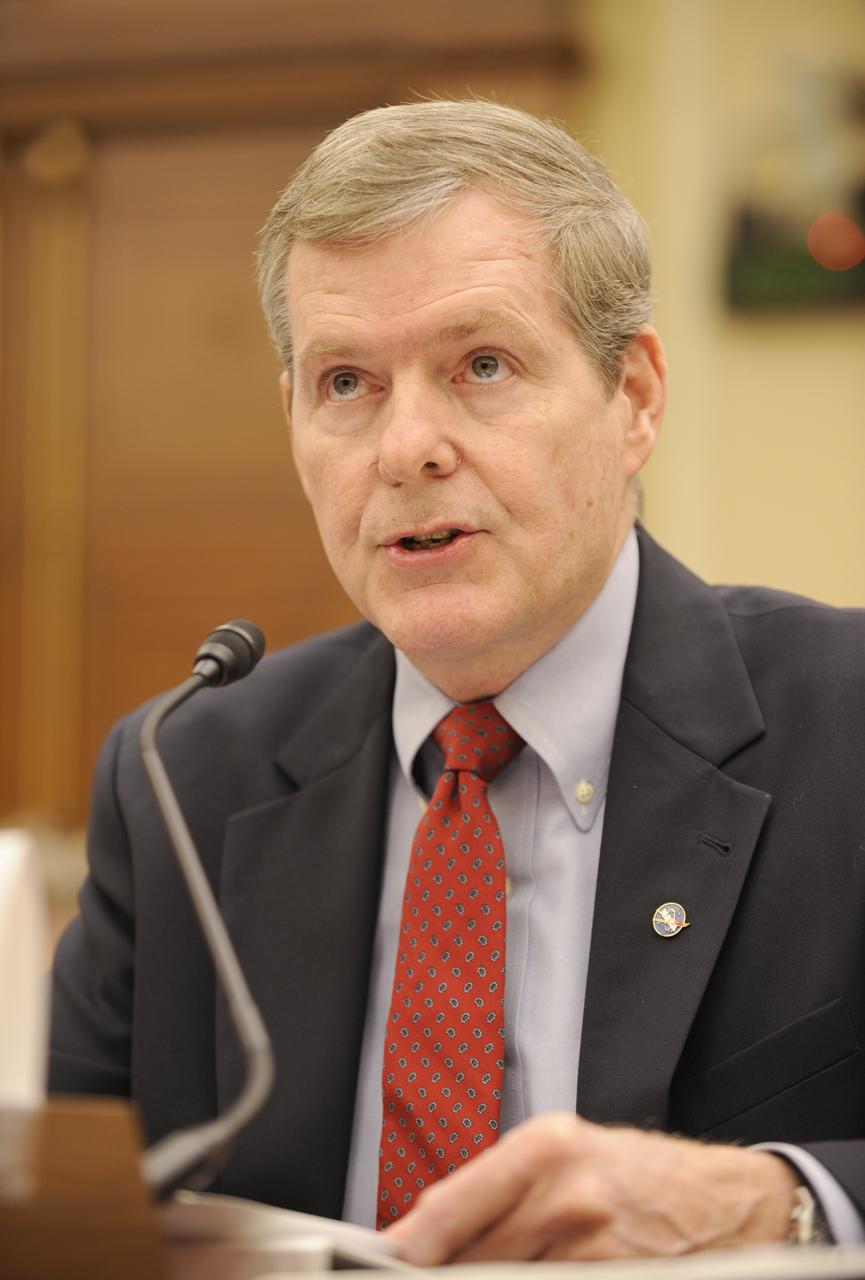
Bryan O'Connor, Chief of Safety and Mission Assurance at NASA, testifies before a hearing before the House Subcommitte on Space and Aeronautics regarding Safety of Human Spaceflight on Capitol Hill, Wednesday, Dec. 2, 2009, in Washington. Photo Credit: (NASA/Bill Ingalls)
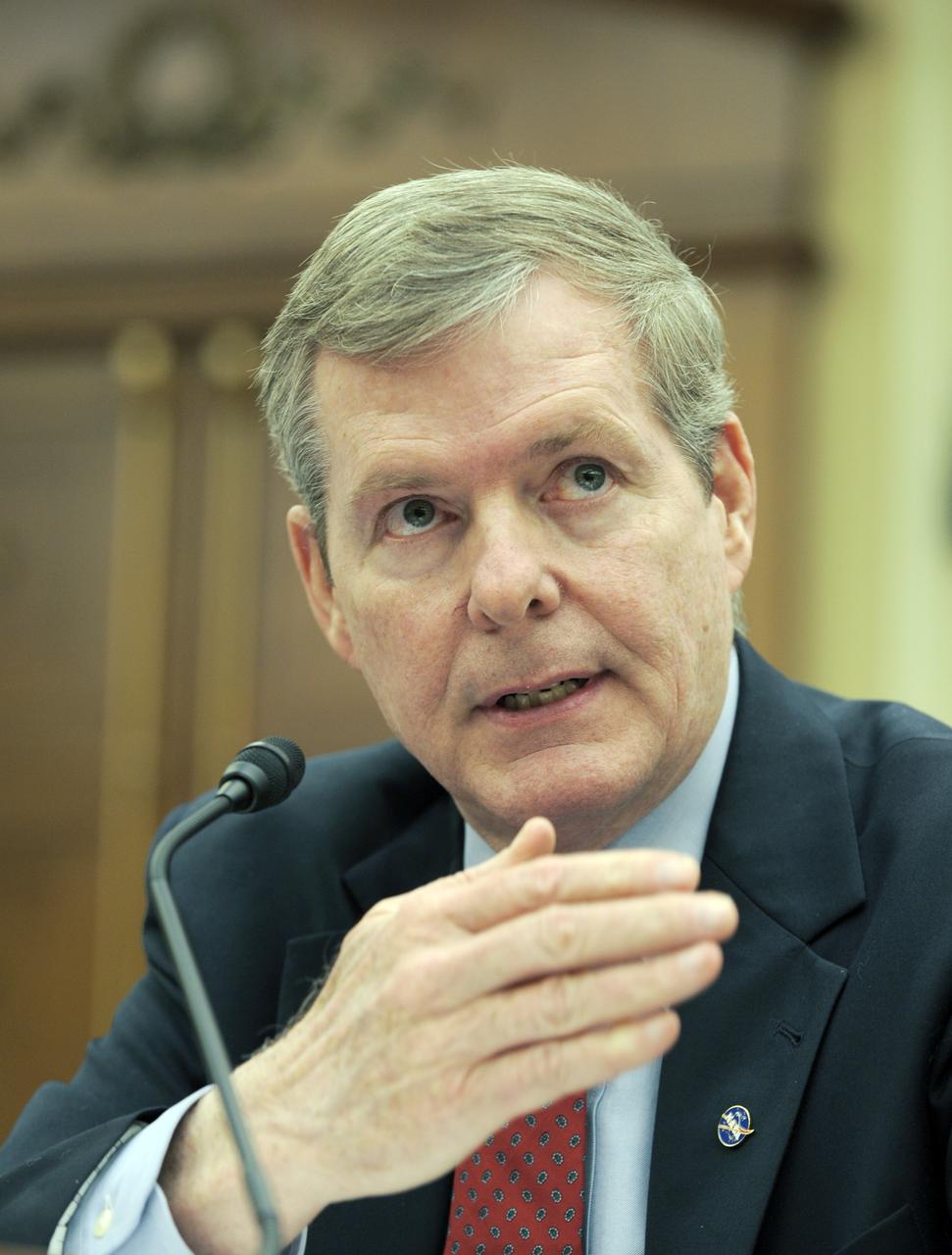
Bryan O'Connor, Chief of Safety and Mission Assurance at NASA, testifies during a hearing before the House Subcommitte on Space and Aeronautics regarding Safety of Human Spaceflight on Capitol Hill, Wednesday, Dec. 2, 2009, in Washington. Photo Credit: (NASA/Bill Ingalls)
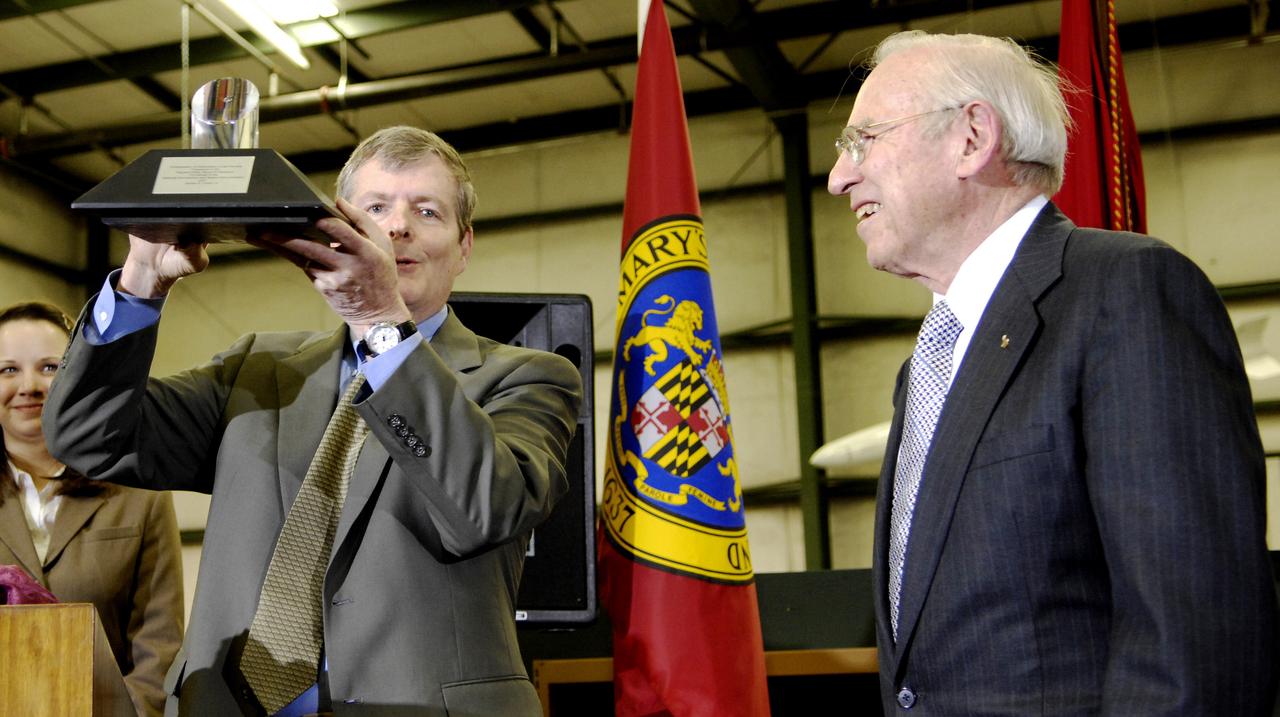
Bryan O'Connor, NASA Associate Administrator, Office of Mission Assurance and Safety, left, presents the Ambassador of Exploration Award to former Apollo astronaut James Lovell, Friday, April 3, 2009, at the Patuxent River Naval Air Museum in Lexington Park, Md. Photo Credit: NASA/Paul E. Alers
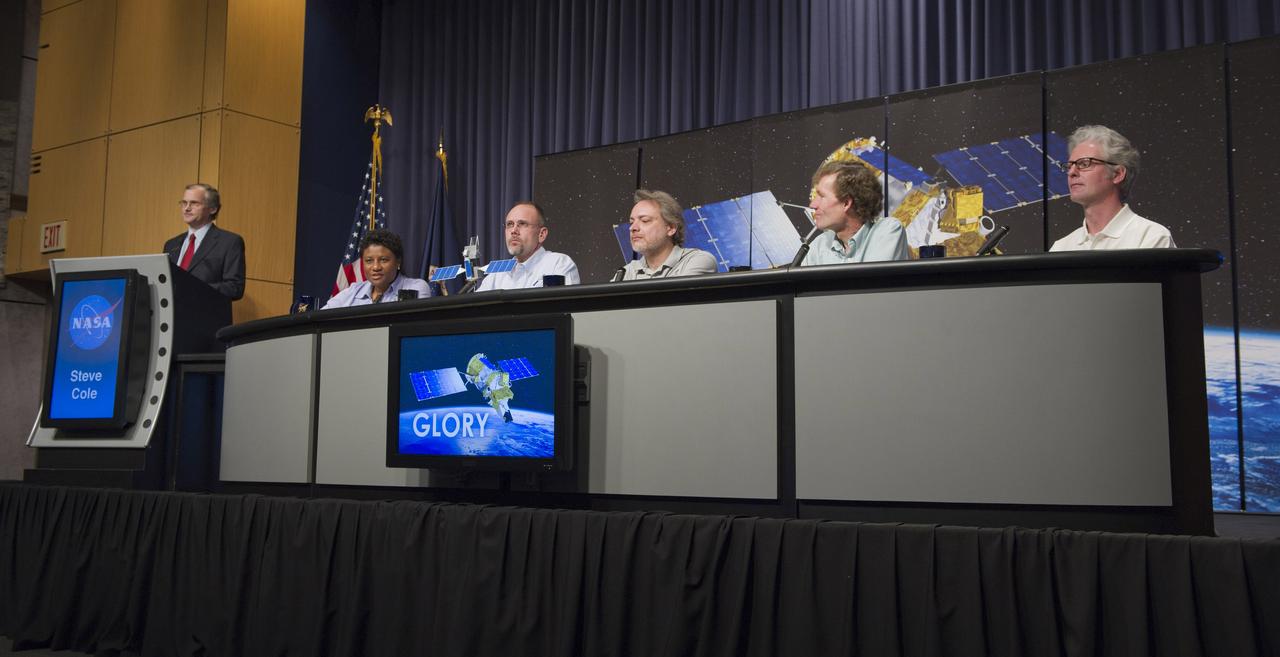
Joy Bretthauer, Glory Program Executive, seated left, Bryan Fafaul, Michael Mischenko, Greg Kopp and Brian Cairns, seated right, talk about the launch of the GLORY mission during a news conference at NASA Headquarters, Thursday, Jan. 20, 2011, in Washington. NASA's newest Earth-observing research mission is scheduled for launch form Vandenburg Air Force Base in California on Feb. 23. The mission will improve our understanding of how the sun and tiny atmosppheric particles called aerosols affect Earth's climate. Photo Credit: (NASA/Paul E. Alers)
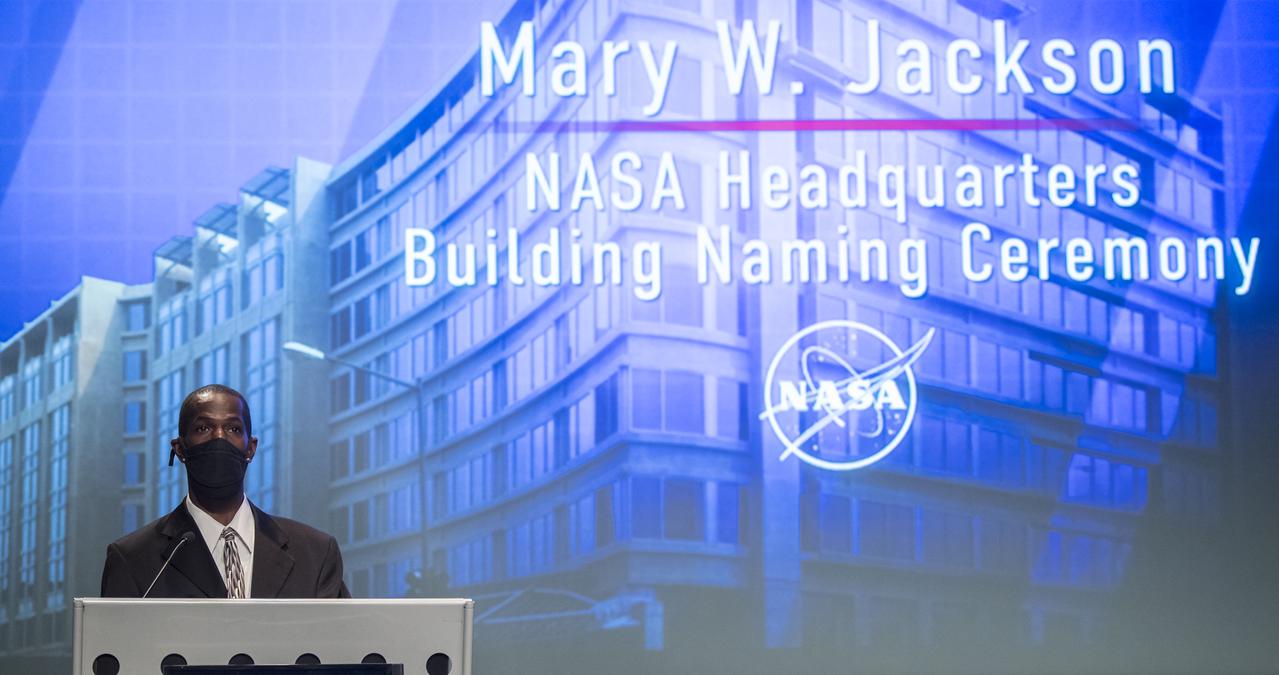
Bryan Jackson, grandson of Mary W. Jackson, speaks during a ceremony officially naming the NASA Headquarters building in honor of Mary W. Jackson, Friday, Feb. 26, 2021, at NASA Headquarters in Washington, DC. Mary W. Jackson, the first African American female engineer at NASA, began her career with the agency in the segregated West Area Computing Unit of NASA’s Langley Research Center in Hampton, Virginia. The mathematician and aerospace engineer went on to lead programs influencing the hiring and promotion of women in NASA's science, technology, engineering, and mathematics careers. In 2019, she posthumously received the Congressional Gold Medal. Photo Credit: (NASA/Joel Kowsky)
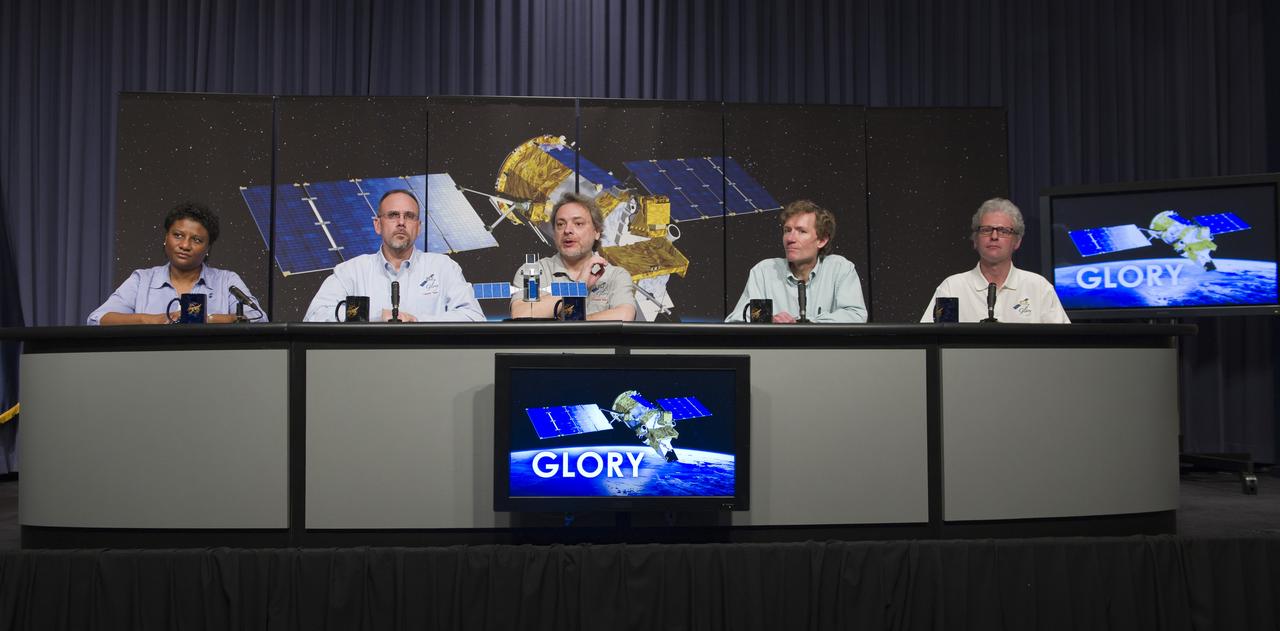
Joy Bretthauer, Glory Program Executive, left, Bryan Fafaul, Glory project manager, Michael Mischenko, Glory project scientist, center, Greg Kopp, University of Colorado, and Brian Cairns, instrument scientist, right, talk about the launch of the GLORY mission during a news conference at NASA Headquarters, Thursday, Jan. 20, 2011, in Washington. NASA's newest Earth-observing research mission is scheduled for launch form Vandenburg Air Force Base in California on Feb. 23. The mission will improve our understanding of how the sun and tiny atmosppheric particles called aerosols affect Earth's climate. Photo Credit: (NASA/Paul E. Alers)
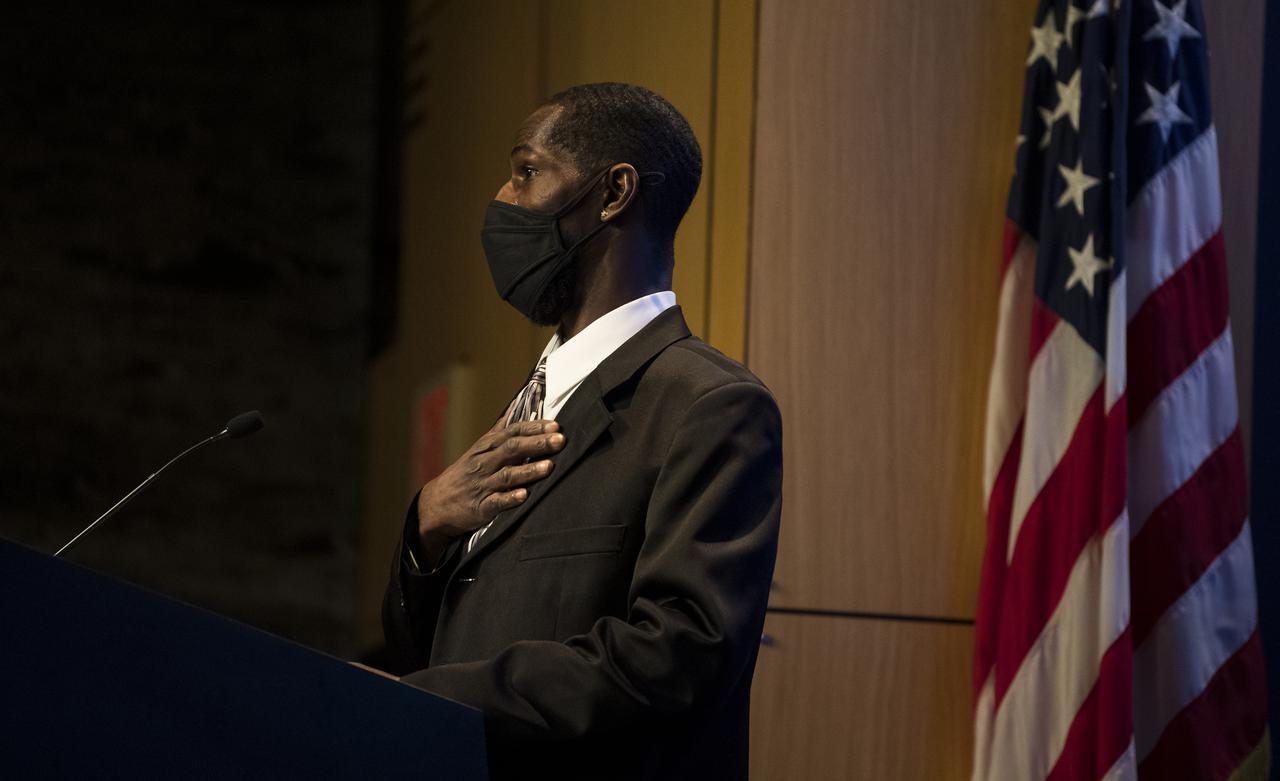
Bryan Jackson, grandson of Mary W. Jackson, speaks during a ceremony officially naming the NASA Headquarters building in honor of Mary W. Jackson, Friday, Feb. 26, 2021, at NASA Headquarters in Washington, DC. Mary W. Jackson, the first African American female engineer at NASA, began her career with the agency in the segregated West Area Computing Unit of NASA’s Langley Research Center in Hampton, Virginia. The mathematician and aerospace engineer went on to lead programs influencing the hiring and promotion of women in NASA's science, technology, engineering, and mathematics careers. In 2019, she posthumously received the Congressional Gold Medal. Photo Credit: (NASA/Joel Kowsky)
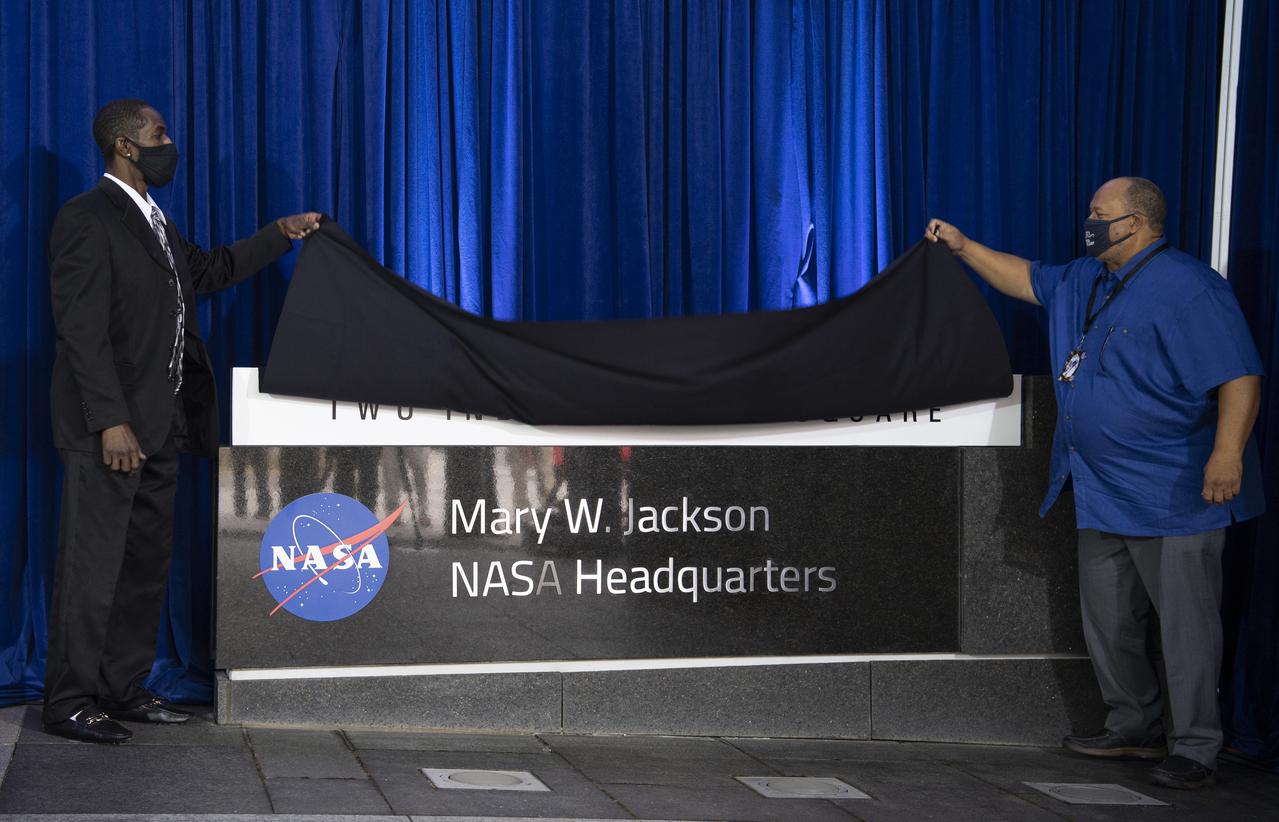
Bryan Jackson, grandson of Mary W. Jackson, left, and Raymond Lewis, son-in-law of Mary W. Jackson, right, unveil the Mary W. Jackson NASA Headquarters sign during a ceremony officially naming the building, Friday, Feb. 26, 2021, at NASA Headquarters in Washington, DC. Mary W. Jackson, the first African American female engineer at NASA, began her career with the agency in the segregated West Area Computing Unit of NASA’s Langley Research Center in Hampton, Virginia. The mathematician and aerospace engineer went on to lead programs influencing the hiring and promotion of women in NASA's science, technology, engineering, and mathematics careers. In 2019, she posthumously received the Congressional Gold Medal. Photo Credit: (NASA/Joel Kowsky)
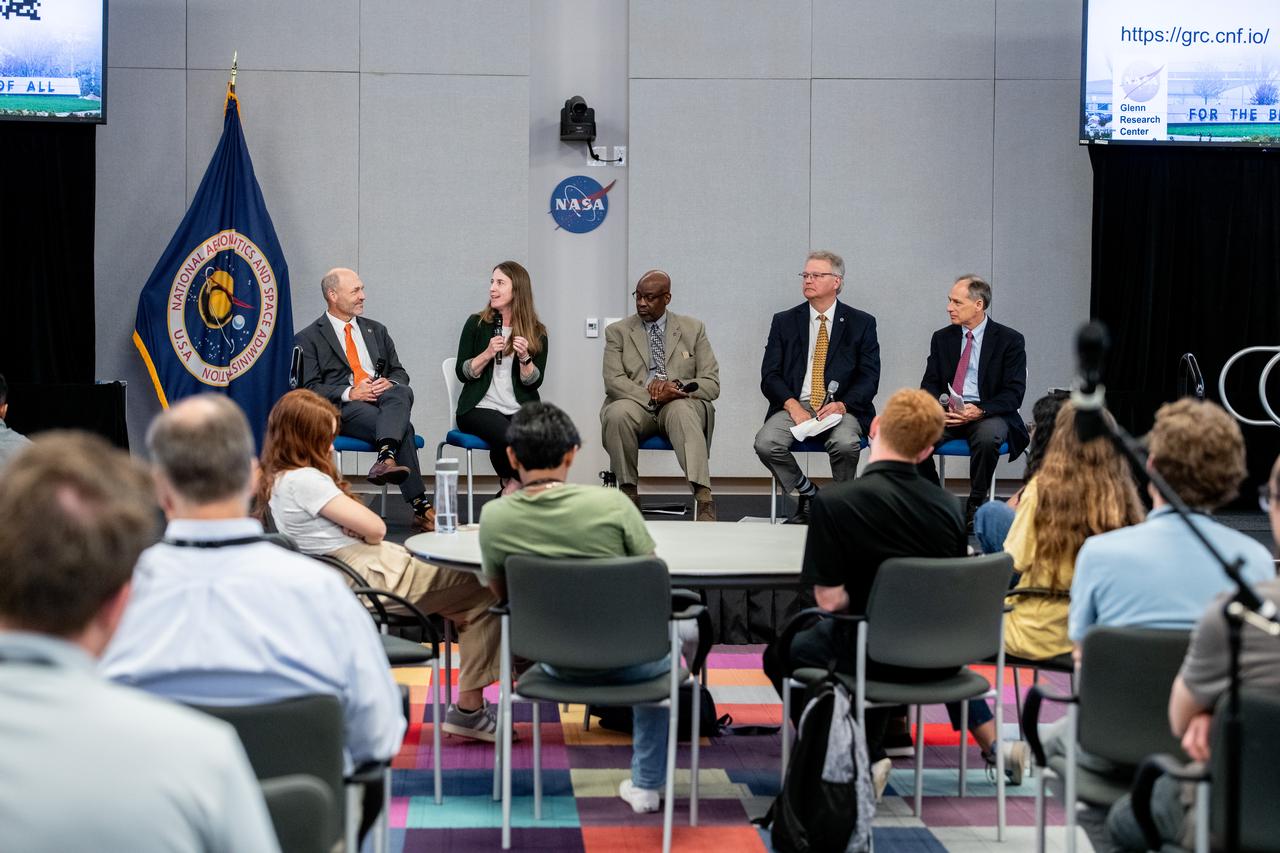
During the meeting, Dr. Calvin and center leaders will explore how technologies being developed at NASA Glenn could help reduce the effects of climate change. The panelists who will be leading the discussion include: Dr. Calvin; Larry Sivic, Associate Director; Dr. Rickey Shyne, Director of Research and Engineering; Bryan Smith, Director of Facilities, Test, & Manufacturing; and W. Allen Kilgore, Acting Director of Aeronautics. Director of Space Flight Systems Dr. Mike Barrett will serve as the moderator.
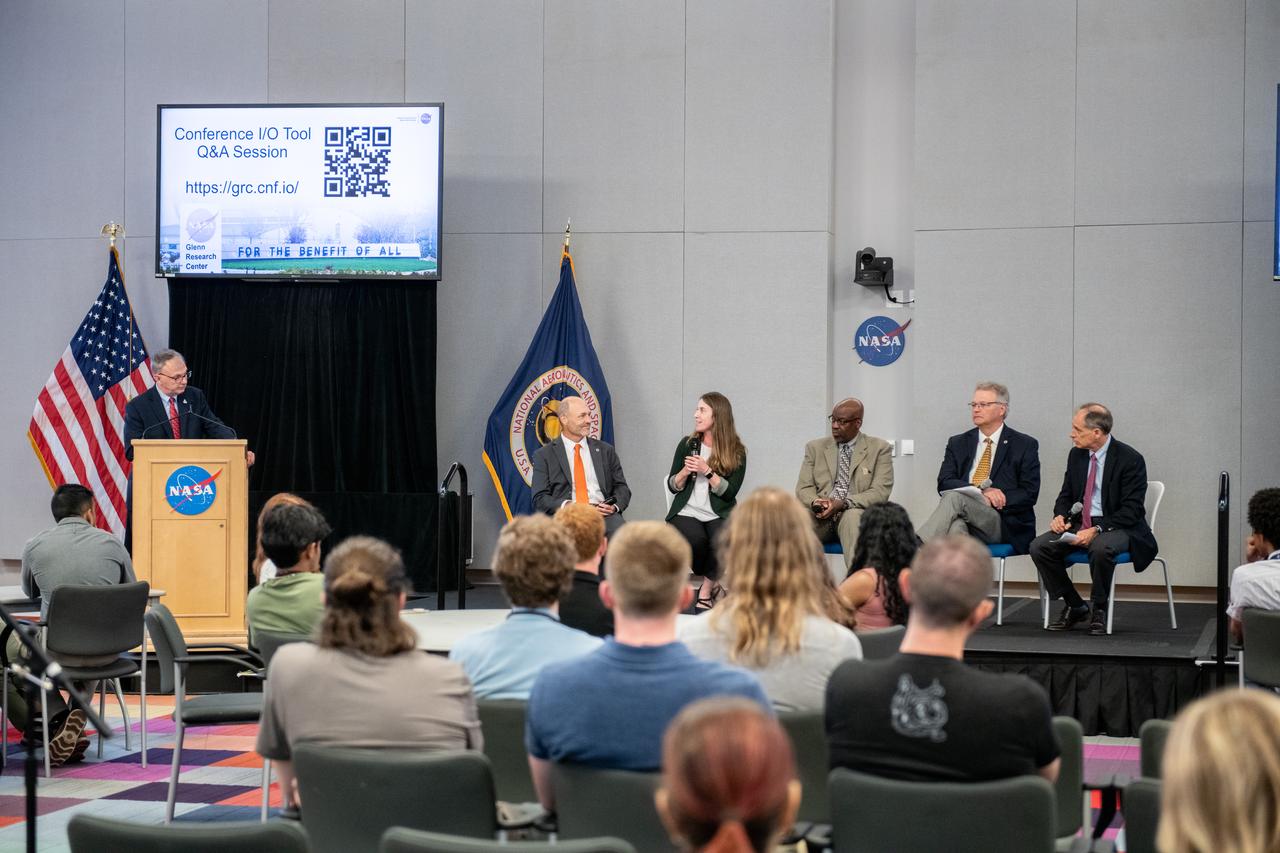
During the climate town hall meeting on June 17th 2024, Dr. Calvin and center leaders explored how technologies being developed at NASA Glenn Research Center could help reduce the effects of climate change. The panelists who lead the discussion include: Dr. Calvin; Dr. Rickey Shyne, Director of Research and Engineering; Bryan Smith, Director of Facilities, Test, & Manufacturing; and W. Allen Kilgore, Acting Director of Aeronautics. Director of Space Flight Systems Dr. Mike Barrett served as the moderator.
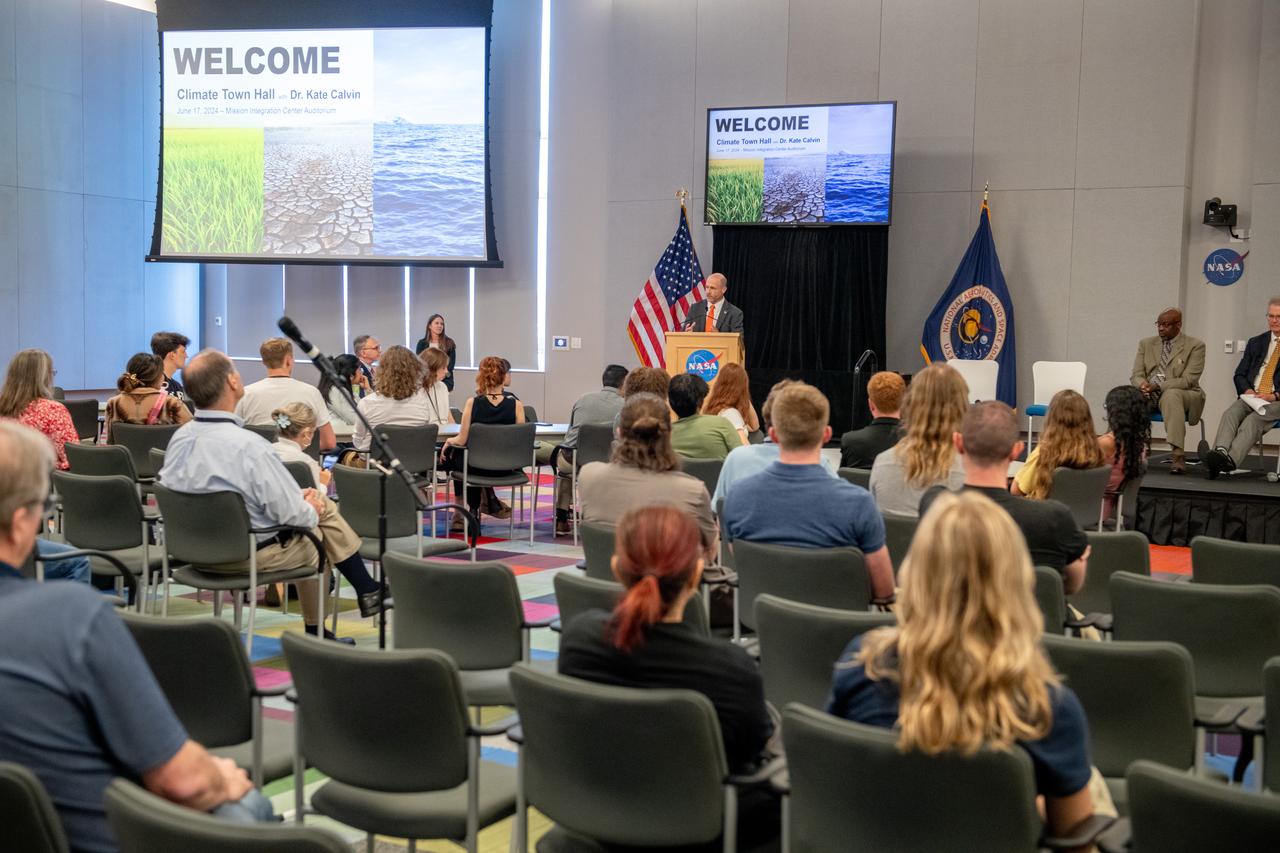
During the meeting, Dr. Calvin and center leaders will explore how technologies being developed at NASA Glenn could help reduce the effects of climate change. The panelists who will be leading the discussion include: Dr. Calvin; Larry Sivic, Associate Director; Dr. Rickey Shyne, Director of Research and Engineering; Bryan Smith, Director of Facilities, Test, & Manufacturing; and W. Allen Kilgore, Acting Director of Aeronautics. Director of Space Flight Systems Dr. Mike Barrett will serve as the moderator.
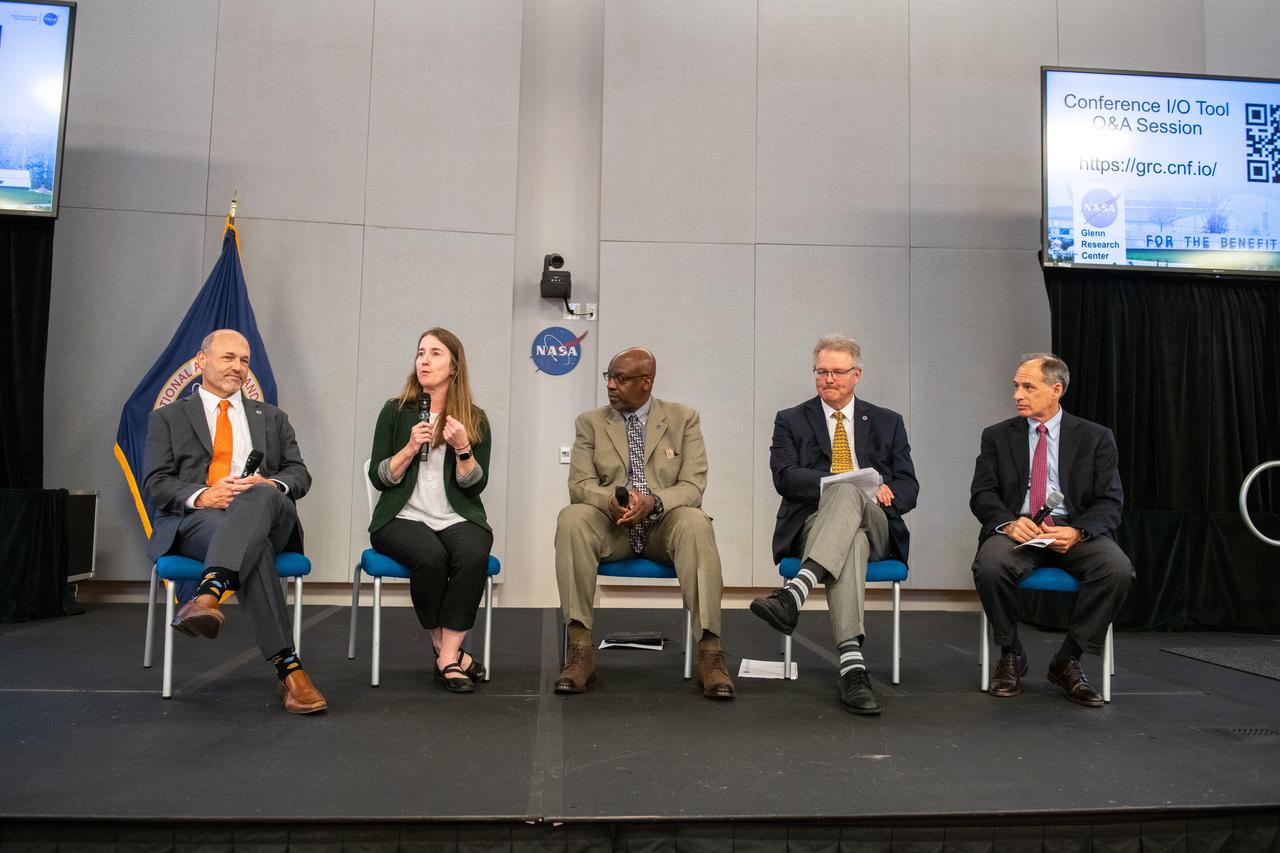
During the climate town hall meeting on June 17th 2024, Dr. Calvin and center leaders explored how technologies being developed at NASA Glenn Research Center could help reduce the effects of climate change. The panelists who lead the discussion include: Dr. Calvin; Dr. Rickey Shyne, Director of Research and Engineering; Bryan Smith, Director of Facilities, Test, & Manufacturing; and W. Allen Kilgore, Acting Director of Aeronautics. Director of Space Flight Systems Dr. Mike Barrett served as the moderator.
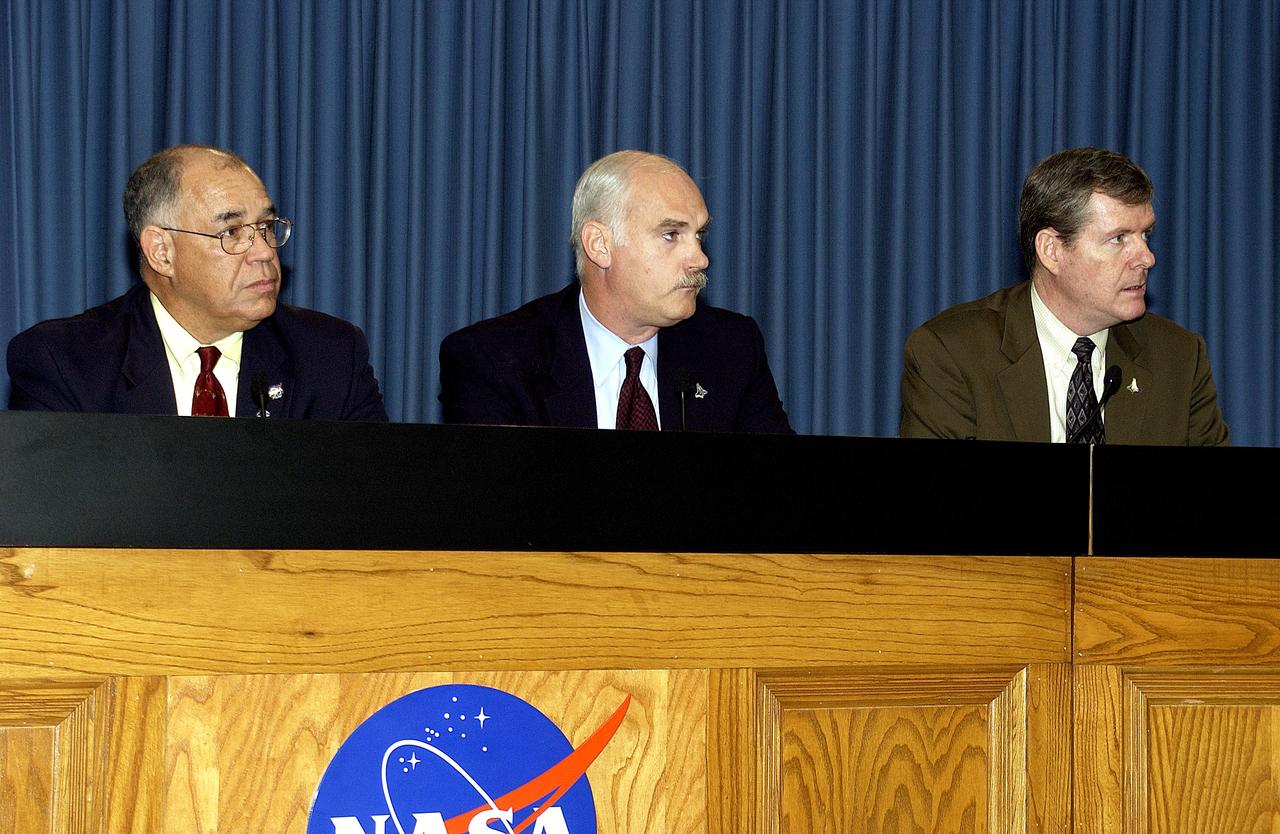
KENNEDY SPACE CENTER, FLA. - NASA officials brief the media at KSC about the agency’s human space flight program. On the panel (left to right) are NASA Deputy Administrator Fred Gregory, Associate Administrator for Space Flight Bill Readdy and Associate Administrator for Safety and Mission Assurance Bryan O’Connor.
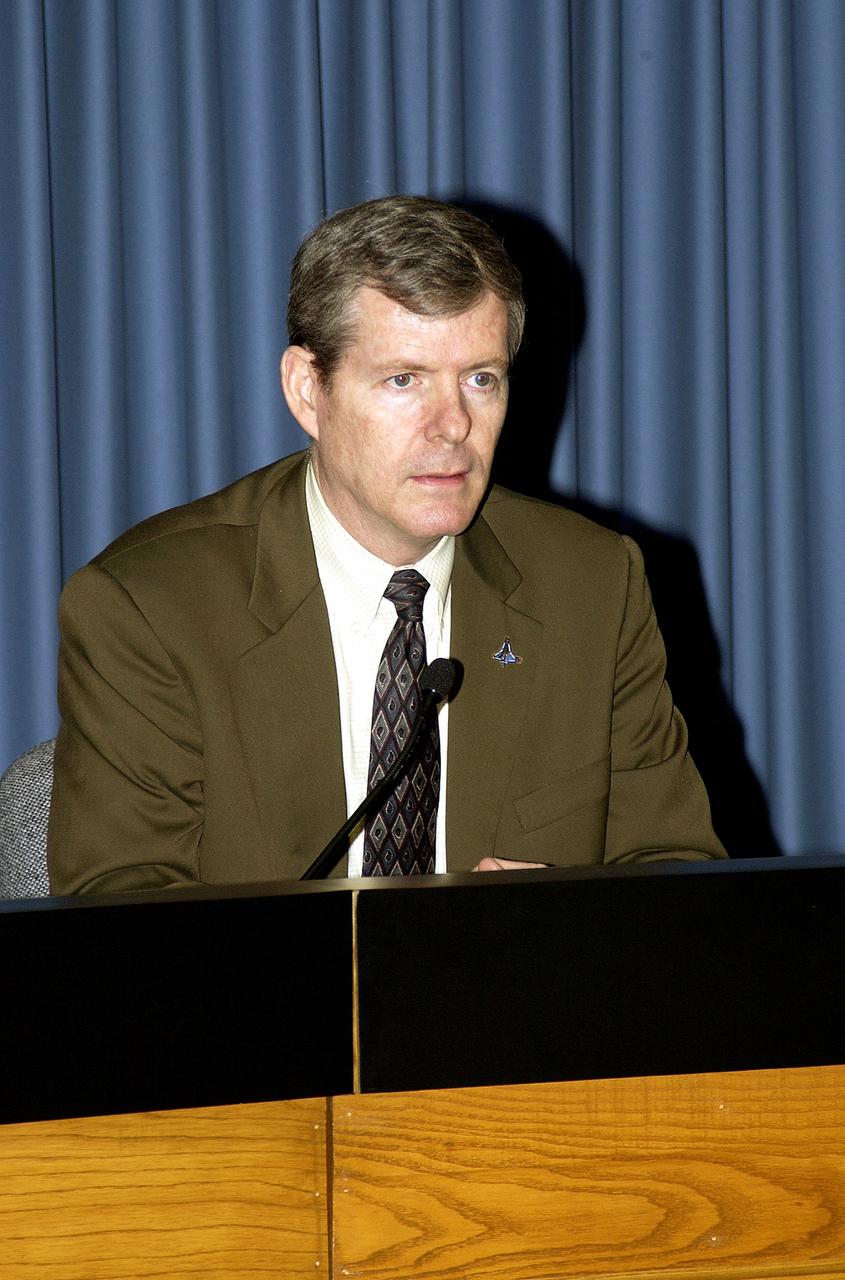
KENNEDY SPACE CENTER, FLA. - Associate Administrator for Safety and Mission Assurance Bryan O’Connor speaks at a media briefing at KSC. NASA officials discussed the agency’s human space flight program. Others on the panel were NASA Deputy Administrator Fred Gregory and Associate Administrator for Space Flight Bill Readdy
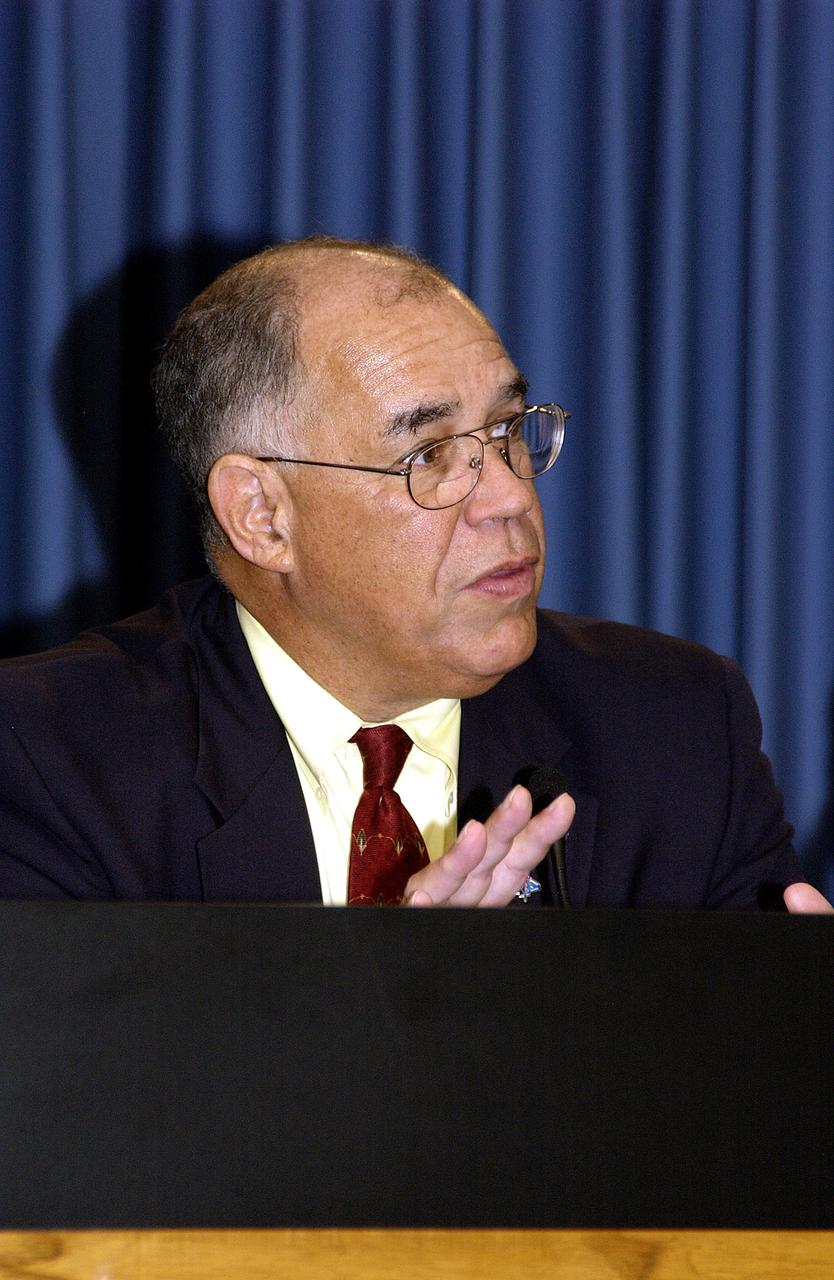
KENNEDY SPACE CENTER, FLA. - NASA Deputy Administrator Fred Gregory speaks at a media briefing at KSC. NASA officials discussed the agency’s human space flight program. Others on the panel were Associate Administrator for Space Flight Bill Readdy and Associate Administrator for Safety and Mission Assurance Bryan O’Connor.
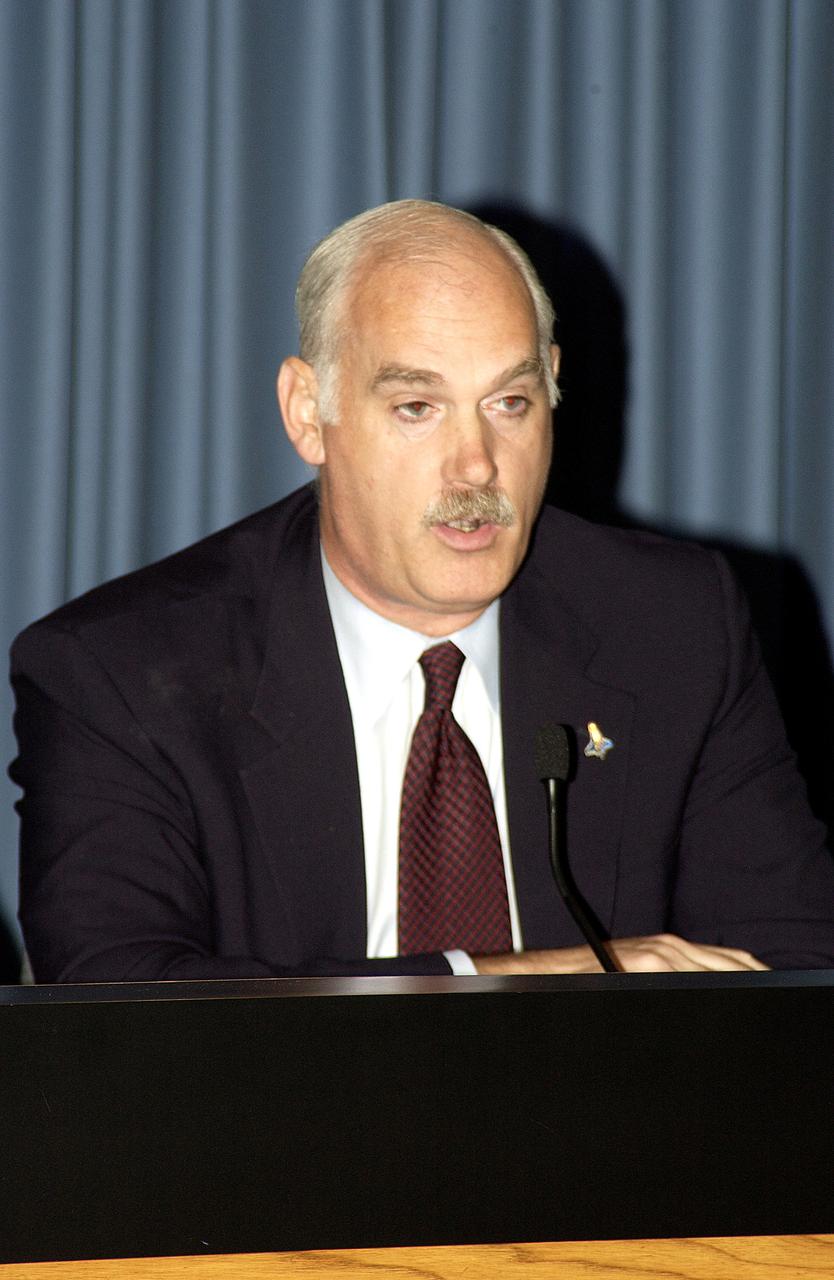
KENNEDY SPACE CENTER, FLA. - Associate Administrator for Space Flight Bill Readdy speaks at a media briefing at KSC. NASA officials discussed the agency’s human space flight program. Others on the panel were NASA Deputy Administrator Fred Gregory and Associate Administrator for Safety and Mission Assurance Bryan O’Connor.
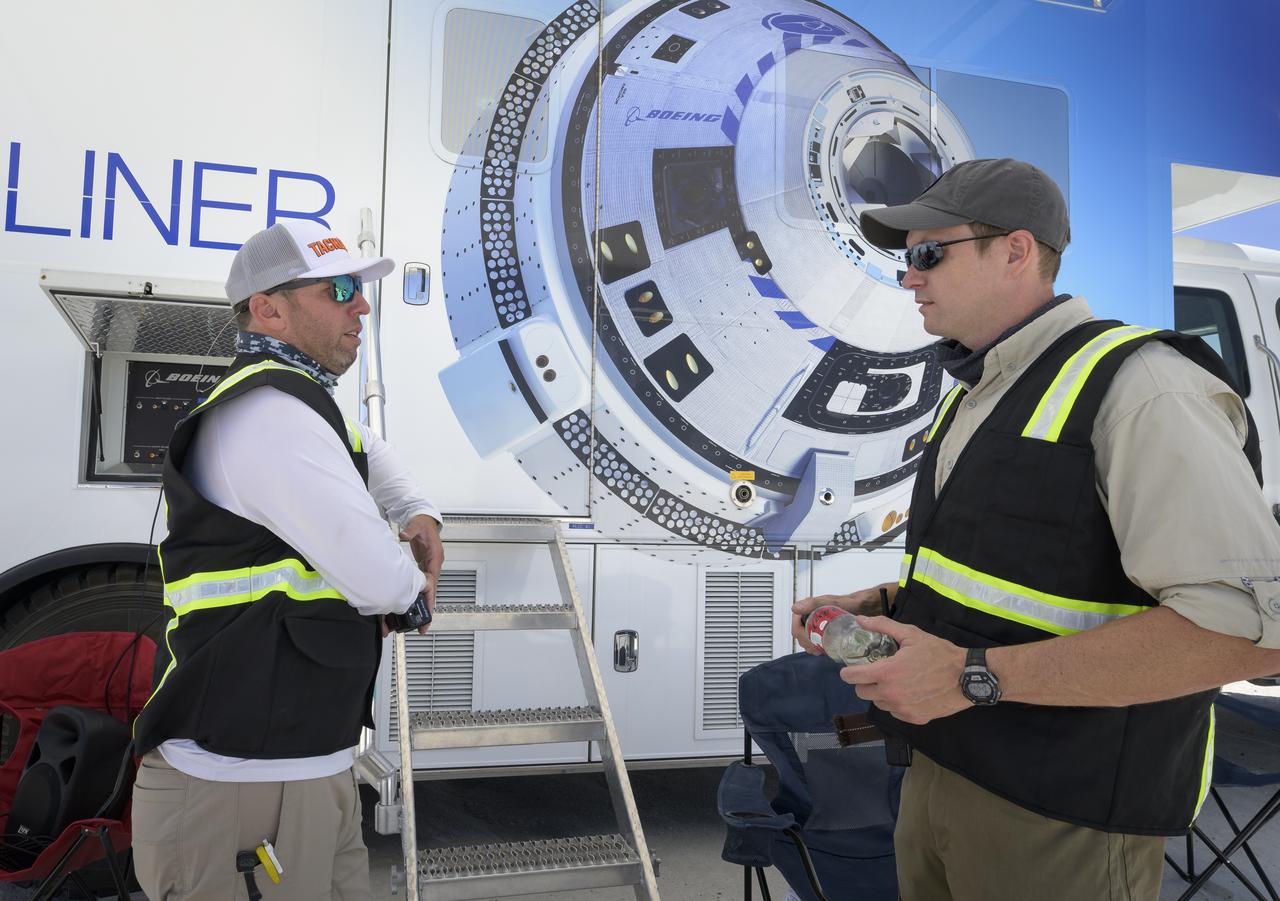
Boeing Recovery Director Bryan Gartner, left, and Boeing Starliner Launch Conductor Louis Atchison prepare for the landing of Boeing’s CST-100 Starliner spacecraft at White Sands Missile Range’s Space Harbor, Wednesday, May 25, 2022, in New Mexico. Boeing’s Orbital Flight Test-2 (OFT-2) is Starliner’s second uncrewed flight test to the International Space Station as part of NASA's Commercial Crew Program. OFT-2 serves as an end-to-end test of the system's capabilities. Photo Credit: (NASA/Bill Ingalls)
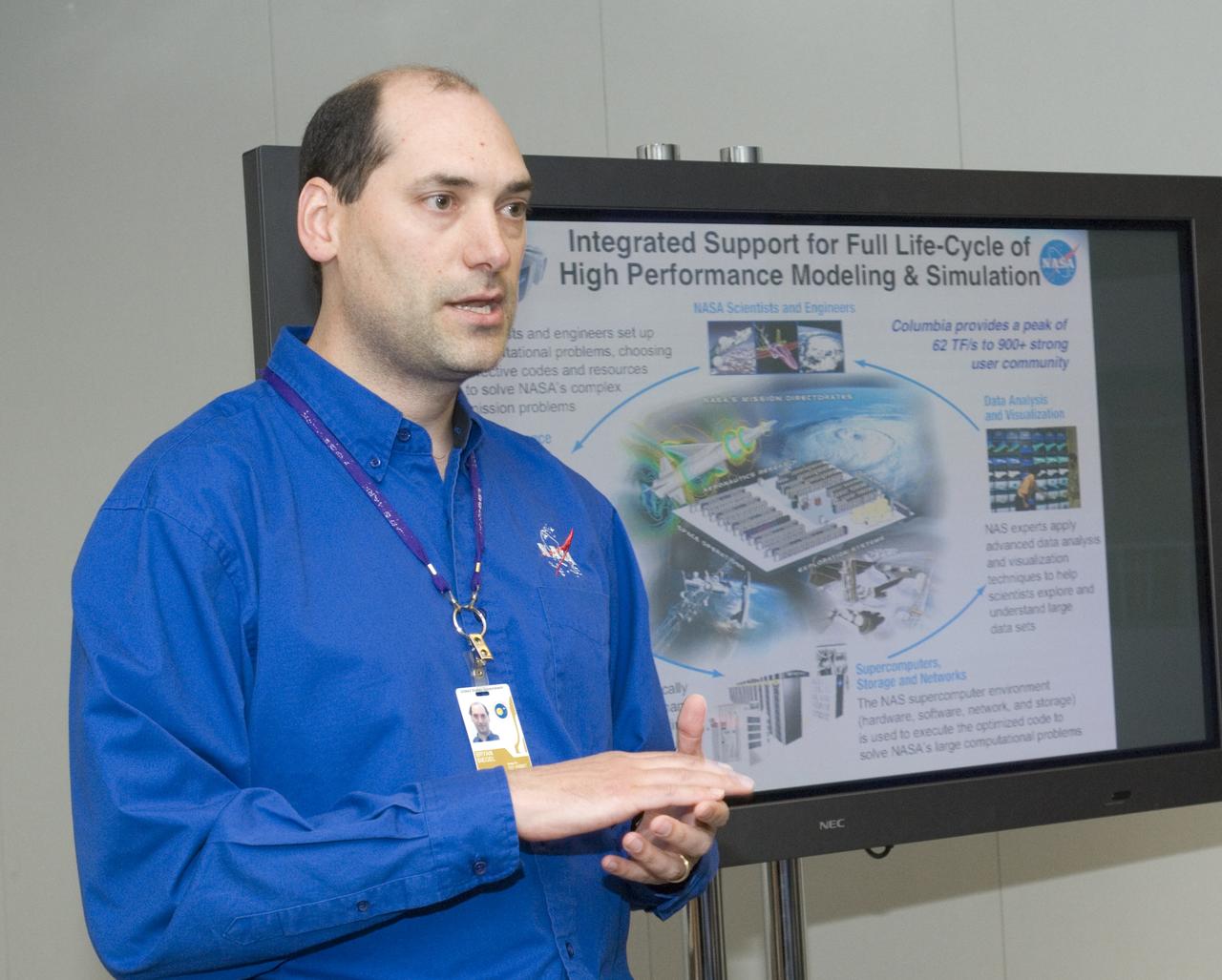
Yuri's Night at Ames a celebration of the first human in space. (Overview with Bryan Biegel, Chief of the Research Branch, NASA Advanced Supercomputing (NAS) Division)
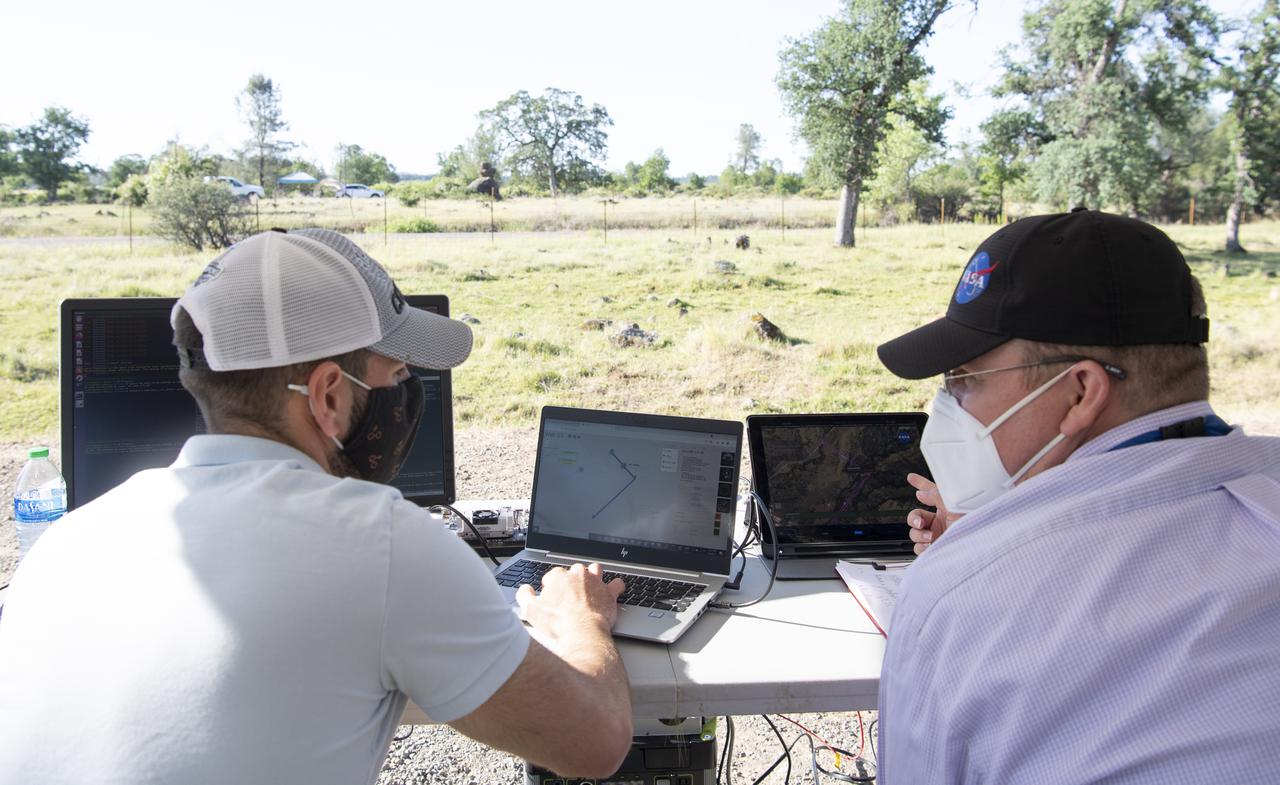
Bryan Petty, autonomy researcher for STEReO, the Scalable Traffic Management for Emergency Response Operations project, at NASA's Langley Research Center, left, and Robert McSwain, co-principle investigator and autonomy researcher for STEReO, the Scalable Traffic Management for Emergency Response Operations project, at NASA's Langley Research Center, right, are seen during simulated drone operations as part of STEReO field testing, Wednesday, May 5, 2021 as Cal Fire conducts aerial fire fighting training exercises near Redding, California. STEReO, the Scalable Traffic Management for Emergency Response Operations project, led by NASA’s Ames Research Center, builds on NASA’s expertise in air traffic management, human factors research, and autonomous technology development to apply the agency’s work in Unmanned Aircraft Systems Traffic Management, or UTM, to public safety uses. Photo Credit: (NASA/Joel Kowsky)
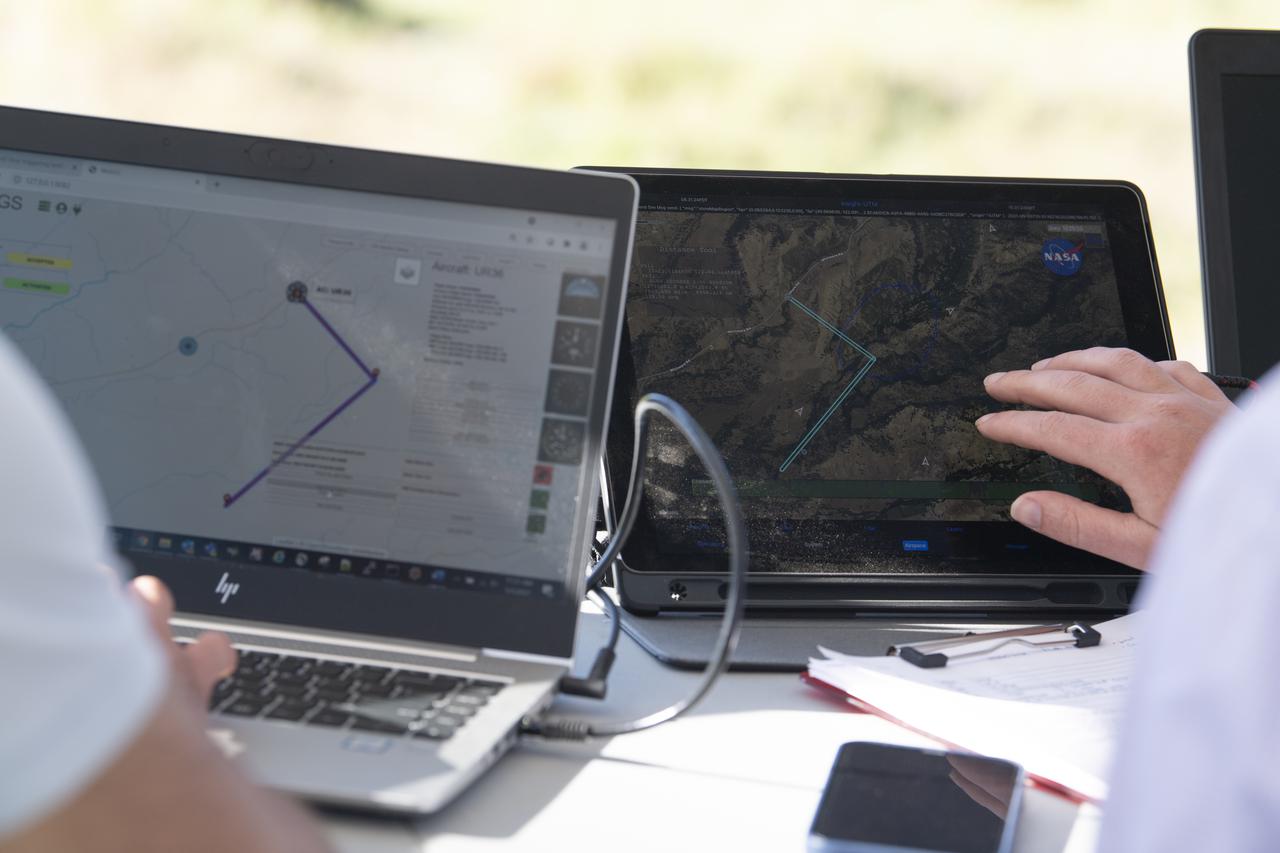
Bryan Petty, autonomy researcher for STEReO, the Scalable Traffic Management for Emergency Response Operations project, at NASA's Langley Research Center, left, and Robert McSwain, co-principle investigator and autonomy researcher for STEReO, the Scalable Traffic Management for Emergency Response Operations project, at NASA's Langley Research Center, right, are seen during simulated drone operations as part of STEReO field testing, Wednesday, May 5, 2021 as Cal Fire conducts aerial fire fighting training exercises near Redding, California. STEReO, the Scalable Traffic Management for Emergency Response Operations project, led by NASA’s Ames Research Center, builds on NASA’s expertise in air traffic management, human factors research, and autonomous technology development to apply the agency’s work in Unmanned Aircraft Systems Traffic Management, or UTM, to public safety uses. Photo Credit: (NASA/Joel Kowsky)
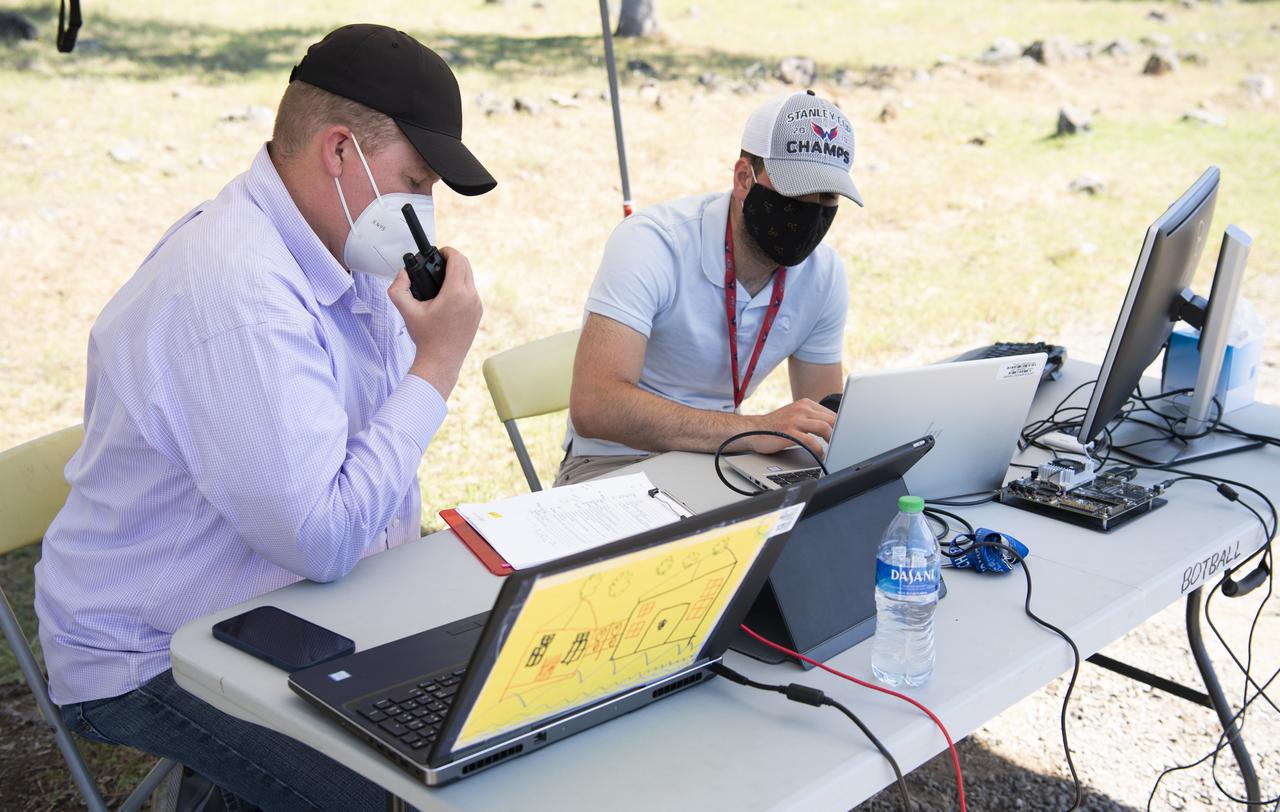
Robert McSwain, co-principle investigator and autonomy researcher for STEReO, the Scalable Traffic Management for Emergency Response Operations project, at NASA's Langley Research Center, left, and Bryan Petty, autonomy researcher for STEReO, the Scalable Traffic Management for Emergency Response Operations project, at NASA's Langley Research Center, right, are seen during simulated drone operations as part of STEReO field testing, Wednesday, May 5, 2021 as Cal Fire conducts aerial fire fighting training exercises near Redding, California. STEReO, the Scalable Traffic Management for Emergency Response Operations project, led by NASA’s Ames Research Center, builds on NASA’s expertise in air traffic management, human factors research, and autonomous technology development to apply the agency’s work in Unmanned Aircraft Systems Traffic Management, or UTM, to public safety uses. Photo Credit: (NASA/Joel Kowsky)
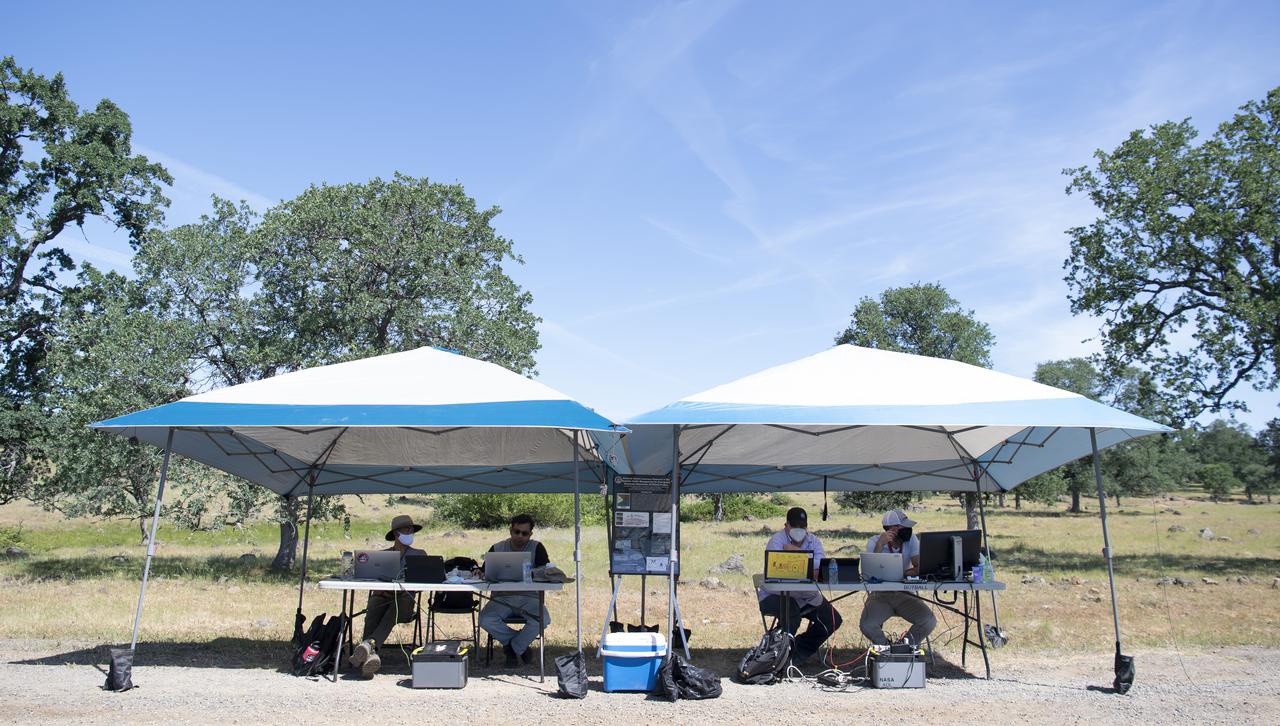
Josh Baculi left, and Anjan Chakrabarty, second from left, autonomy researchers for STEReO, the Scalable Traffic Management for Emergency Response Operations project, from NASA's Ames Research Center, are seen with Robert McSwain, co-principle investigator and autonomy researcher for STEReO, second from right, and Bryan Petty, autonomy researcher for STEReO, right, from NASA's Langley Research Center, during STEReO field testing, Wednesday, May 5, 2021 as Cal Fire conducts aerial fire fighting training exercises near Redding, California. STEReO, the Scalable Traffic Management for Emergency Response Operations project, led by NASA’s Ames Research Center, builds on NASA’s expertise in air traffic management, human factors research, and autonomous technology development to apply the agency’s work in Unmanned Aircraft Systems Traffic Management, or UTM, to public safety uses. Photo Credit: (NASA/Joel Kowsky)
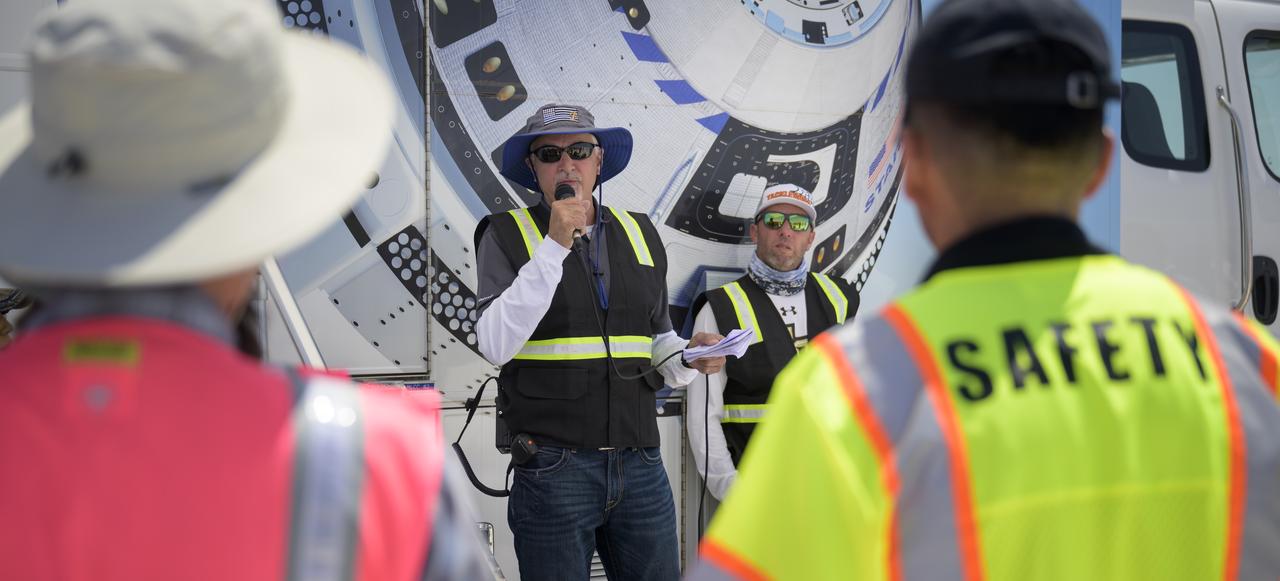
Boeing Recovery Operations Leader Jeffery Davis, left, and Boeing Recovery Director Bryan Gartner, talk to NASA and Boeing teams as they prepare for the landing of Boeing’s CST-100 Starliner spacecraft at White Sands Missile Range’s Space Harbor, Wednesday, May 25, 2022, in New Mexico. Boeing’s Orbital Flight Test-2 (OFT-2) is Starliner’s second uncrewed flight test to the International Space Station as part of NASA's Commercial Crew Program. OFT-2 serves as an end-to-end test of the system's capabilities. Photo Credit: (NASA/Bill Ingalls)

Boeing Recovery Director Bryan Gartner, left, and others wait for hazmat teams to confirm it is safe to work around the Boeing CST-100 Starliner spacecraft after it landed at White Sands Missile Range’s Space Harbor, Wednesday, May 25, 2022, in New Mexico. Boeing’s Orbital Flight Test-2 (OFT-2) is Starliner’s second uncrewed flight test to the International Space Station as part of NASA's Commercial Crew Program. OFT-2 serves as an end-to-end test of the system's capabilities. Photo Credit: (NASA/Bill Ingalls)
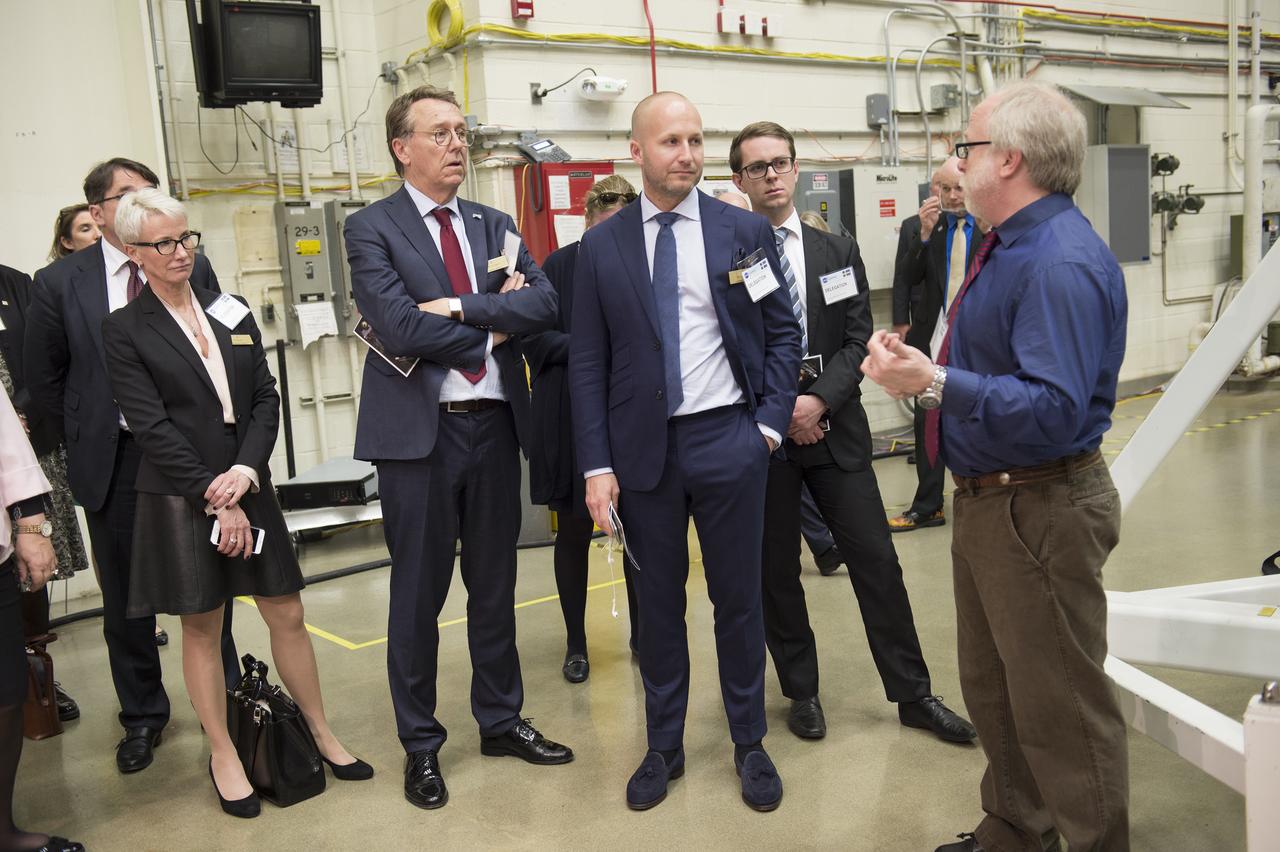
Swedish Delegation visited Goddard on May 3, 2017. Members of the Royal Swedish Academy of Engineering Sciences listen to James Pontius and Bryan Blair talk about GEDI mission and the collaborative work being done with Sweden.
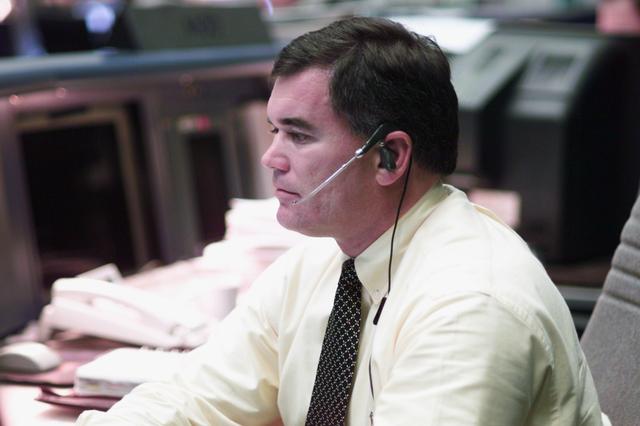
JSC2001-E-25466 (16 August 2001) --- Flight director Bryan Austin studies data at his console in the shuttle flight control room (WFCR) in Houston's Mission Control Center (MCC) during the STS-105 mission.
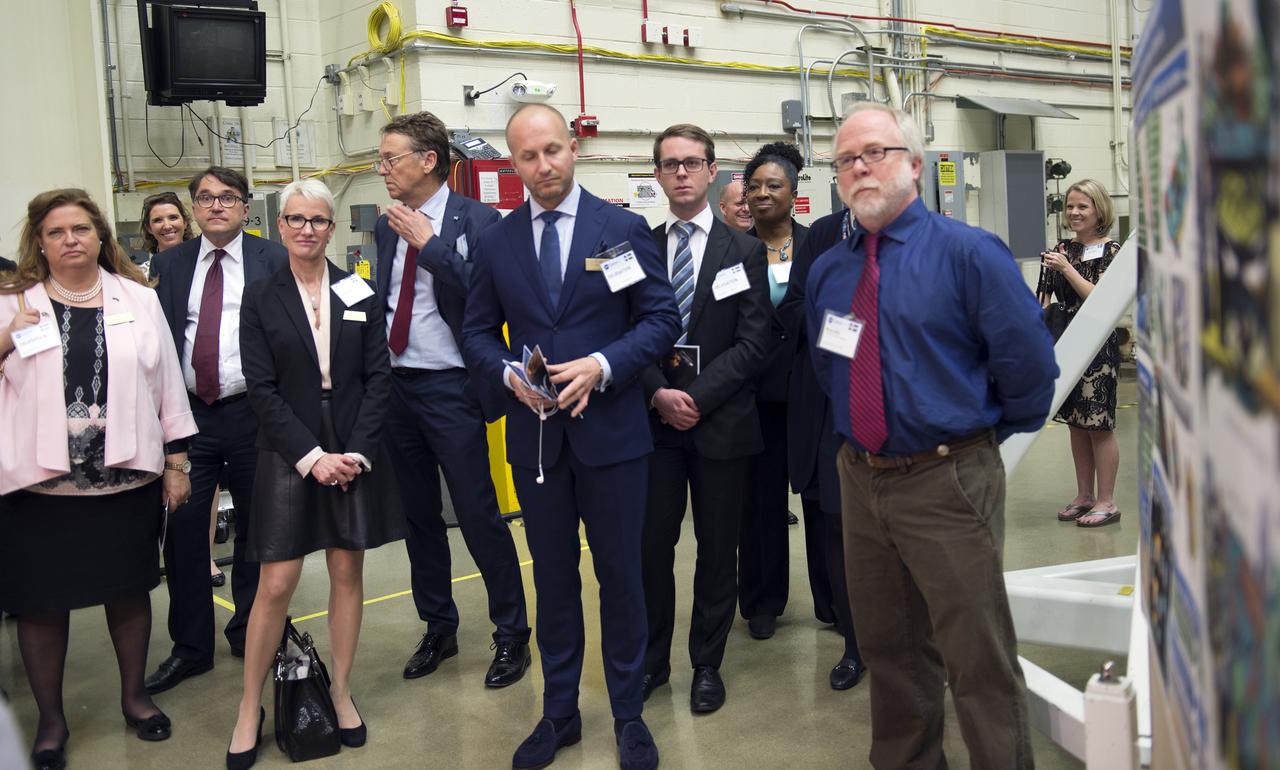
Swedish Delegation visited Goddard on May 3, 2017. Members of the Royal Swedish Academy of Engineering Sciences listen to James Pontius and Bryan Blair talk about GEDI mission and the collaborative work being done with Sweden.

NASA Dryden aircraft and avionics technicians (from left) Bryan Hookland, Art Cope, Herman Rijfkogel and Jonathan Richards install the nose cone on a Phoenix missile prior to a fit check on the center's F-15B research aircraft.
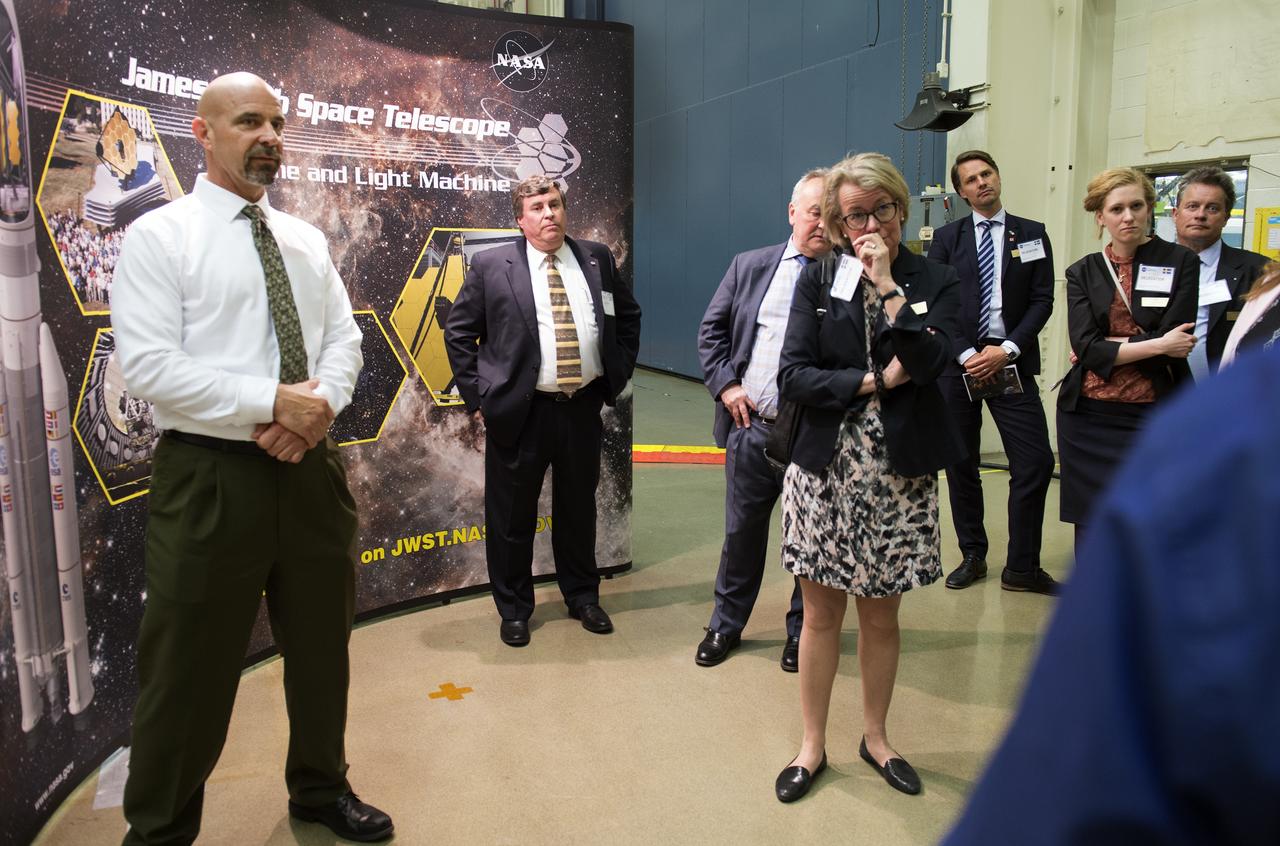
Swedish Delegation visited Goddard on May 3, 2017. Members of the Royal Swedish Academy of Engineering sciences listen to James Pontius and Bryan Blair talk about the GEDI mission and the collaborative work being done with Sweden.
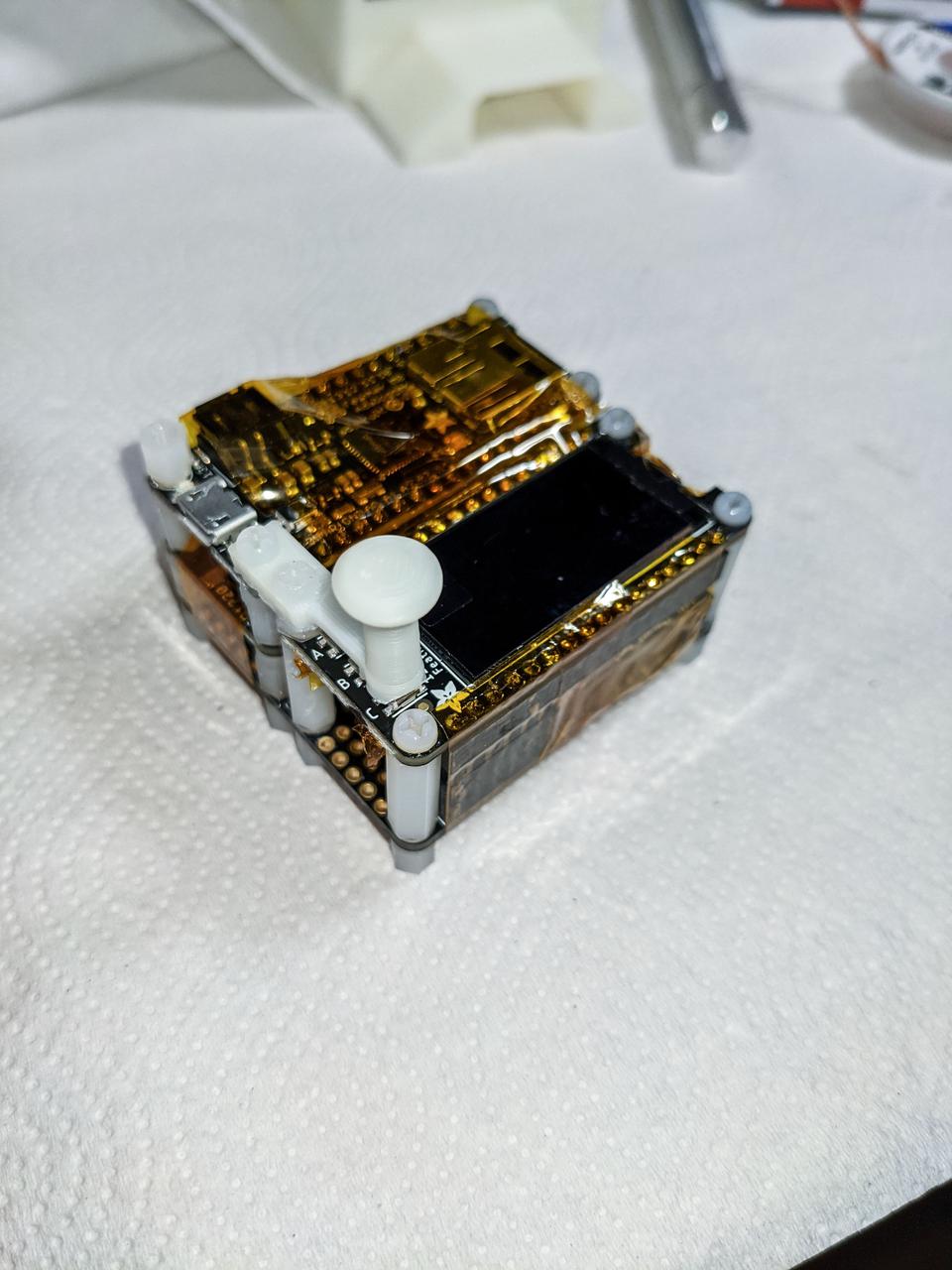
jsc2021e044615 (7/5/2021) --- A preflight view of the electronics of a SpaceDuino development unit which are assembled and ready to drop into the 3D printed enclosure. The button plunger (white) is 3D printed as well. Image courtesy of Bryan Murphy.
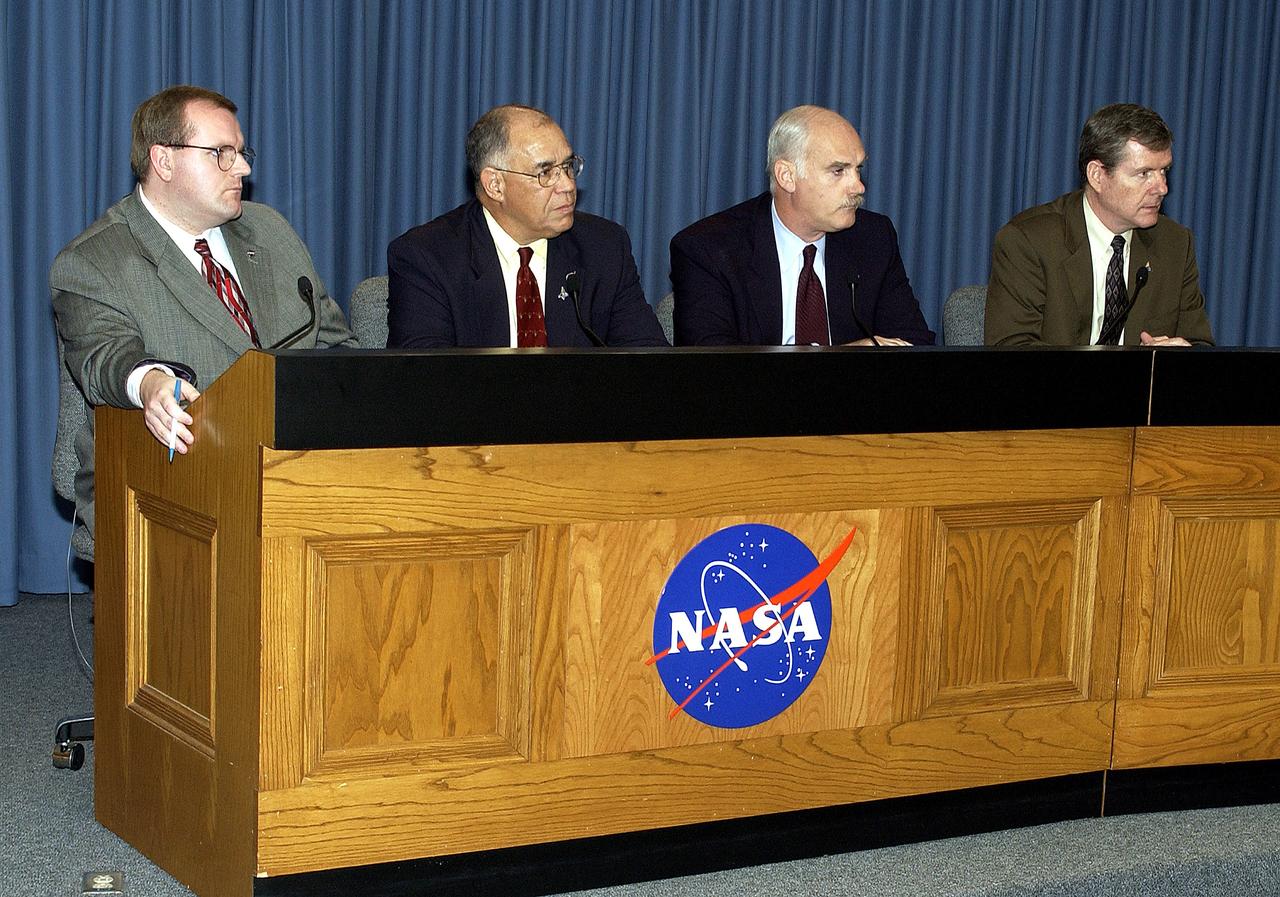
KENNEDY SPACE CENTER, FLA. - NASA officials brief the media at KSC about the agency’s human space flight program. At left is moderator Allard Beutel, with NASA Headquarters. Others on the panel (left to right) are NASA Deputy Administrator Fred Gregory, Associate Administrator for Space Flight Bill Readdy and Associate Administrator for Safety and Mission Assurance Bryan O’Connor.
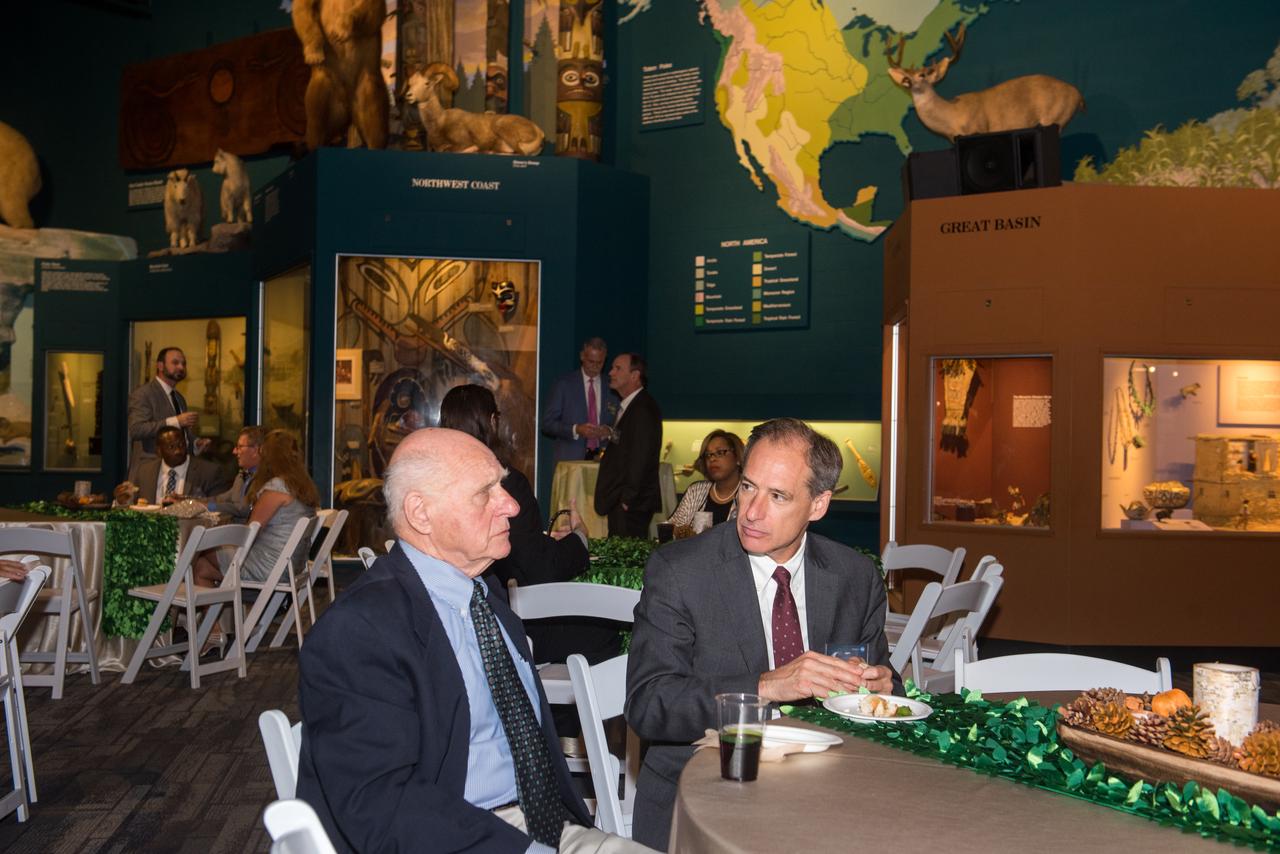
Evening With The Stars - 2019
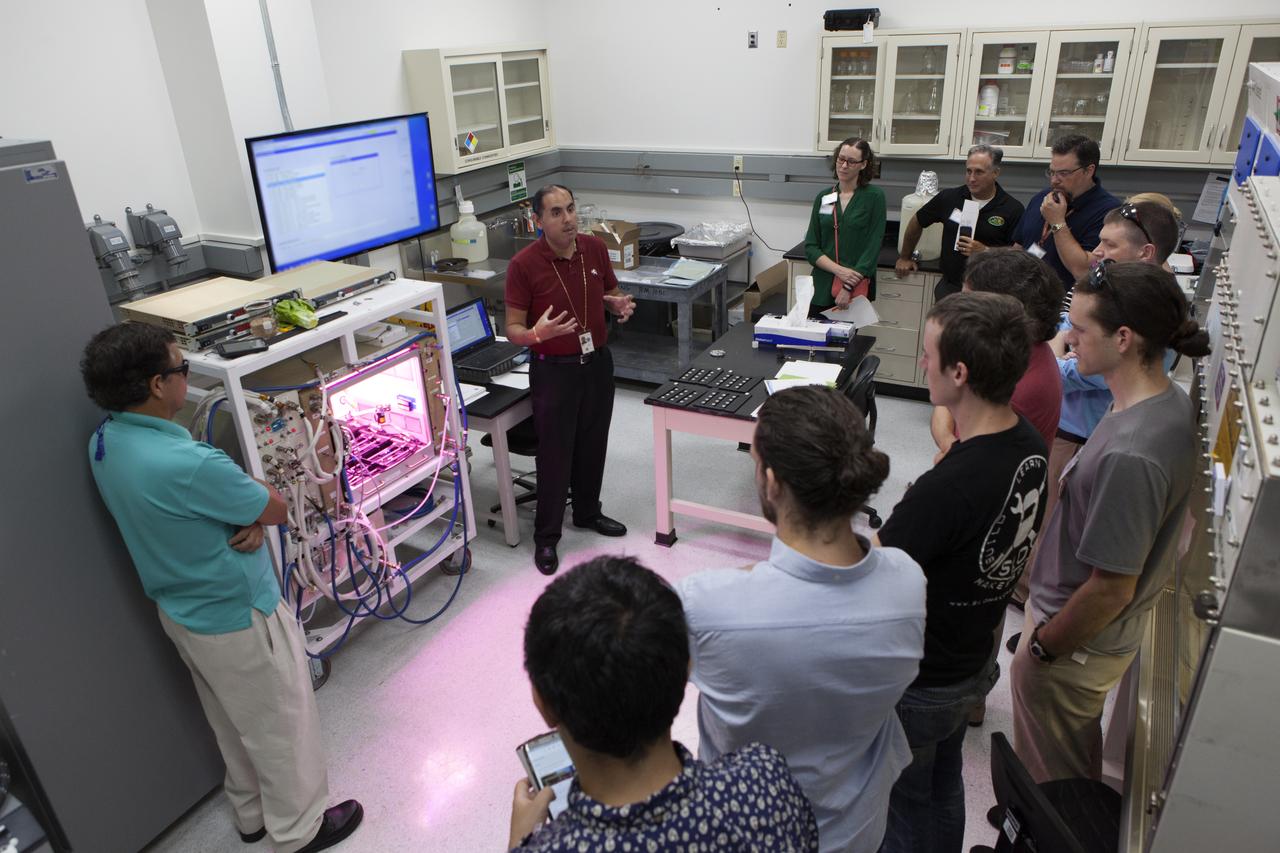
Bryan Onate, Advanced Plant Habitat project manager, with the Exploration Research and Technology Directorate, brainstorms innovative approaches to food production with industry representatives inside a laboratory at the Space Station Processing Facility at NASA's Kennedy Space Center in Florida.
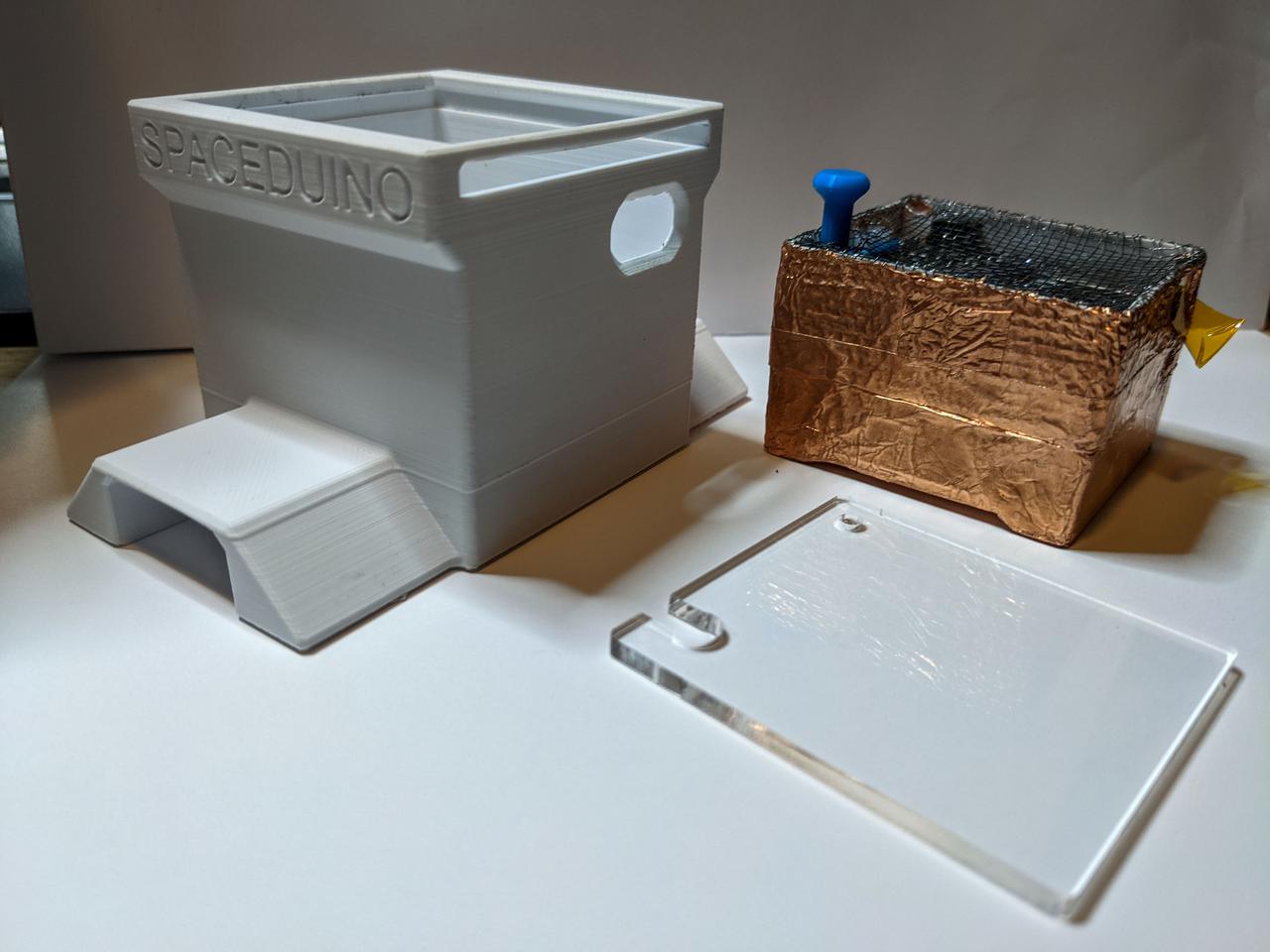
jsc2021e044614 (6/22/2021) --- A view of the SpaceDuino Qualification Unit prior to final assembly. The electronics are packed inside a Faraday cage to mitigate Electro-Magnetic Interference. The 3D printed enclosure and laser-cut acrylic window protect the unit during launch loads and in use. Image courtesy of Bryan Murphy.
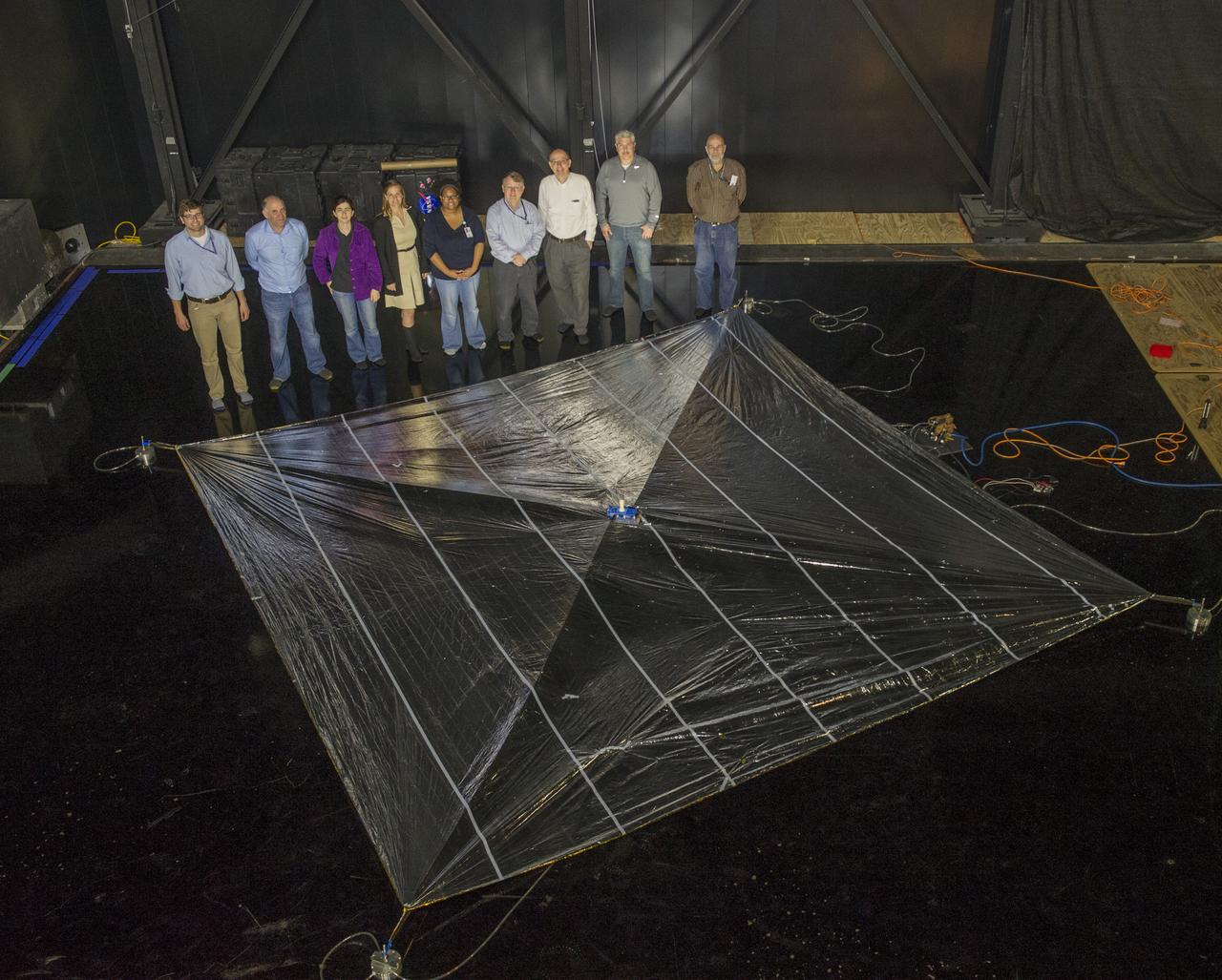
NEA (Near Earth Asteroid) Scout Solar Sail, deployed, with team members: Alex Sobey, Andy Heaton, Olive Stohlmann, Leslie McNutt, Tiffany Russell Lockett, Roy Young, Les Johnson, Kevin Sykes, Tom Bryan
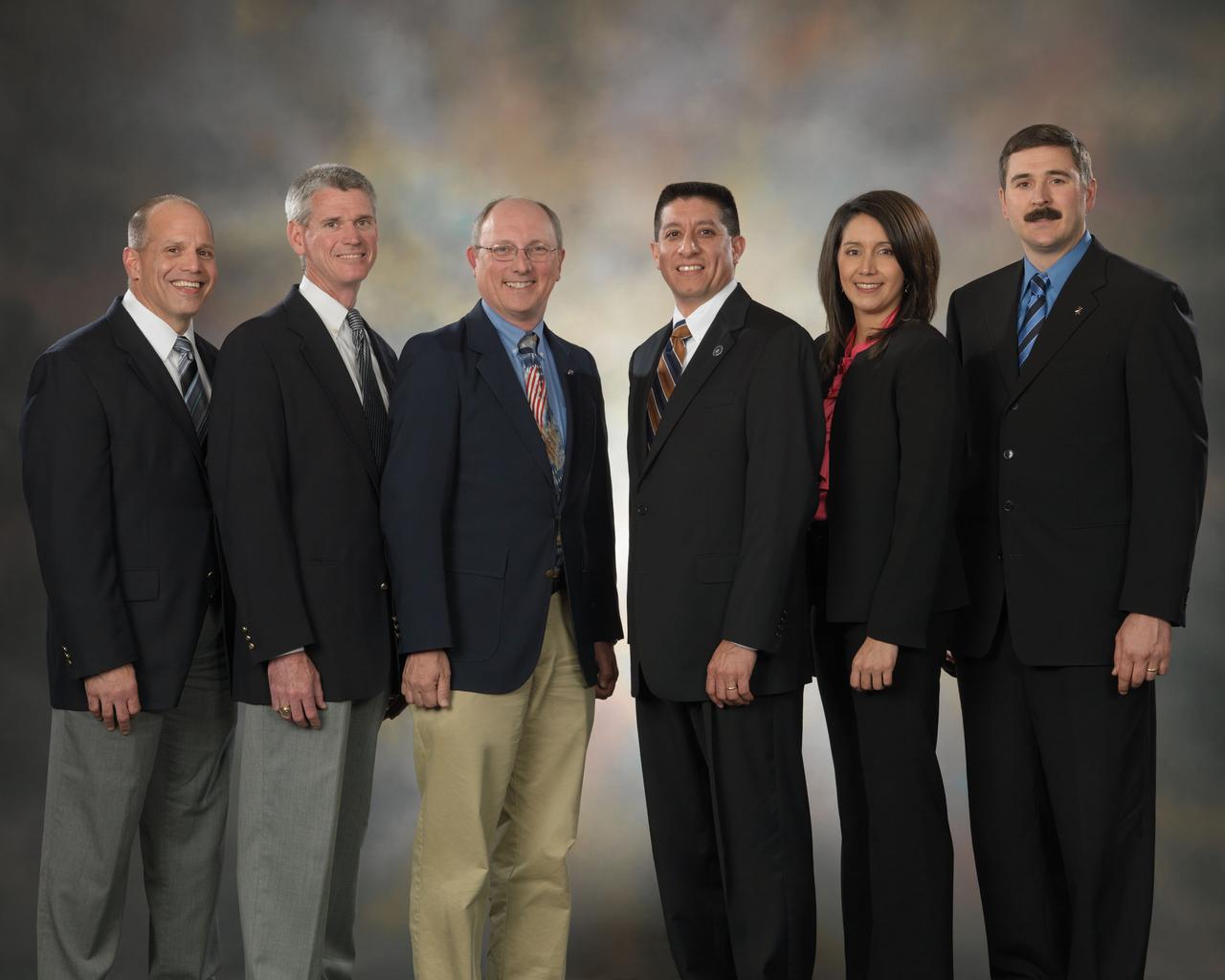
JSC2010-E-045167 (30 March 2010) --- Flight directors for the STS-131/19A mission pose for a preflight group portrait at NASA's Johnson Space Center. Pictured from the left are Tony Ceccacci, Bryan Lunney, Paul Dye, Richard Jones, Ginger Kerrick and Mike Sarafin.
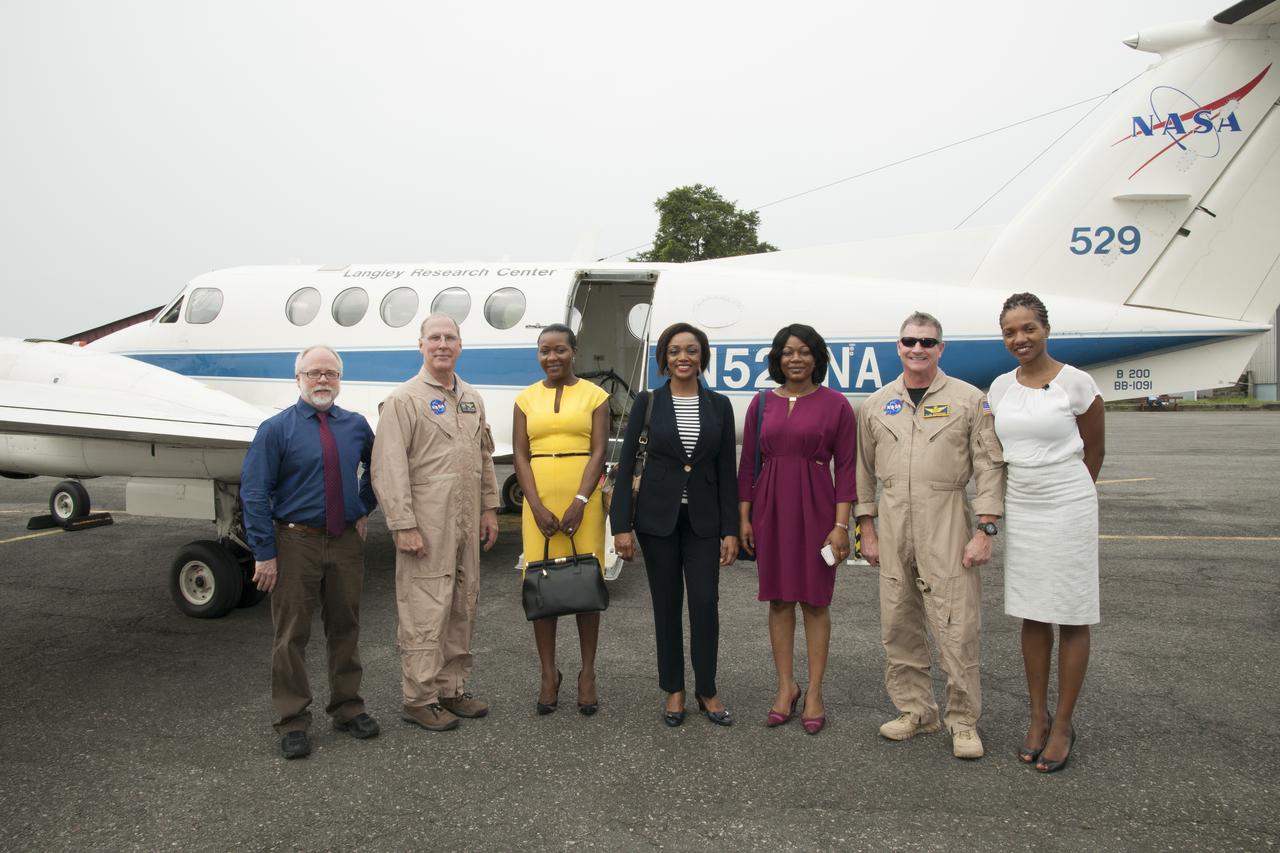
The NASA Langley Research Center-based B-200 in Gabon, Africa, was visited by three representatives of the Gabon Ministry of the Numerical Economy (the three women seen in the middle). In the photo from left are Bryan Blair, Rick Yasky, the three Gabon representatives, Alan Barringer and Lola Fatoyinbo.
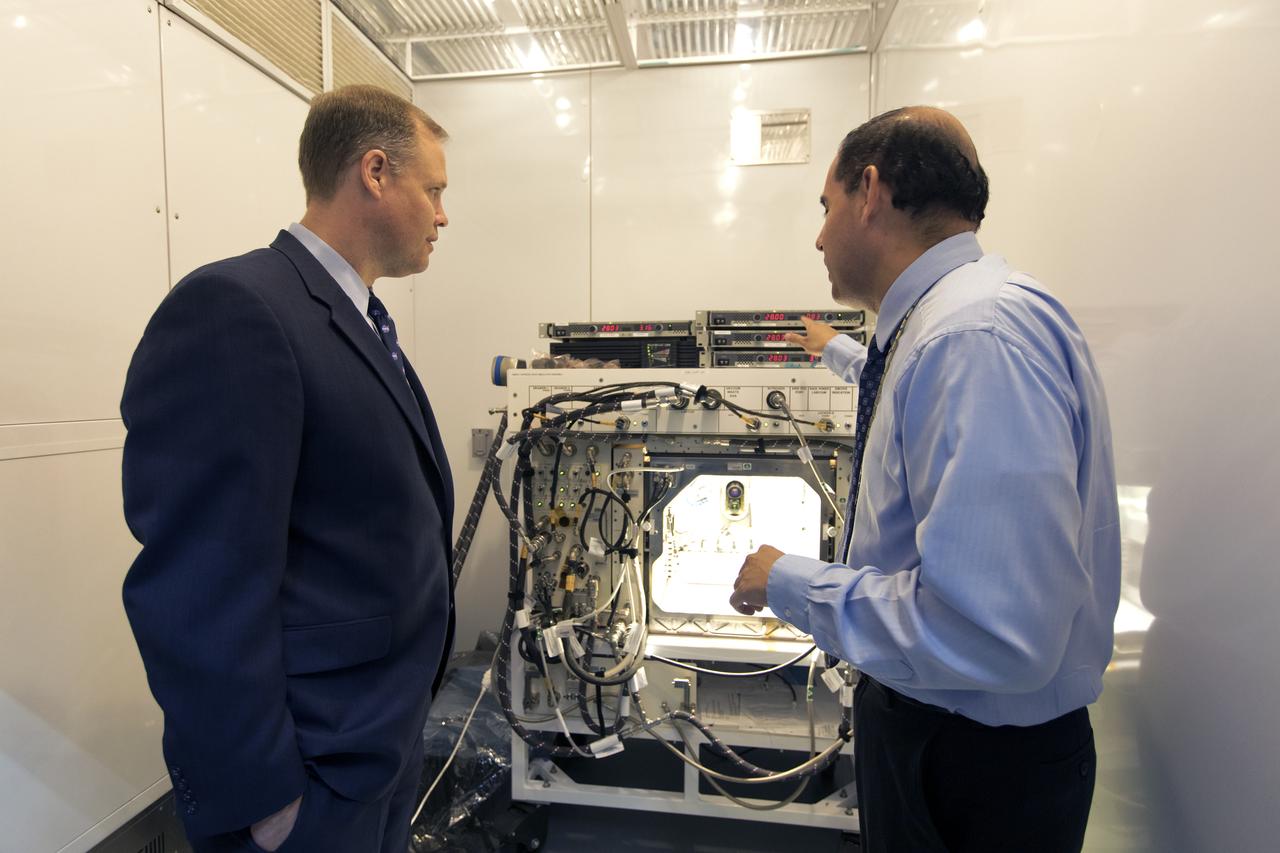
NASA Administrator Jim Bridenstine, left, tours the Space Station Processing Facility at NASA's Kennedy Space Center in Florida, on Aug. 7, 2018. Bryan Onate, at right, Advanced Plant Habitat (APH) project manager, explains a component of the APH control system. Bridenstine also received updates on research and technology accomplishments.
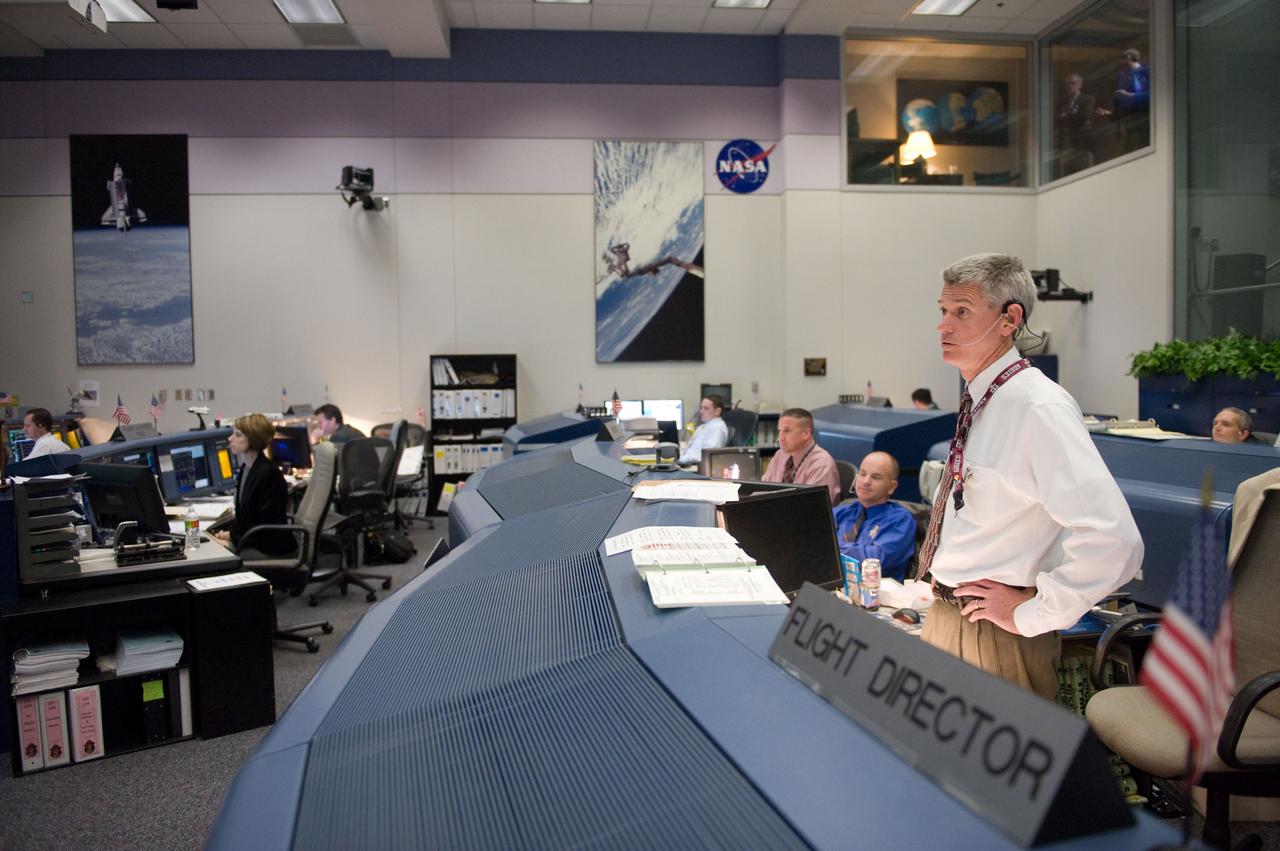
JSC2010-E-046798 (5 April 2010) --- Flight director Bryan Lunney watches the big screens in the space shuttle flight control room in the Johnson Space Center's Mission Control Center during launch countdown activities a few hundred miles away in Florida, site of space shuttle Discovery's STS-131 launch.
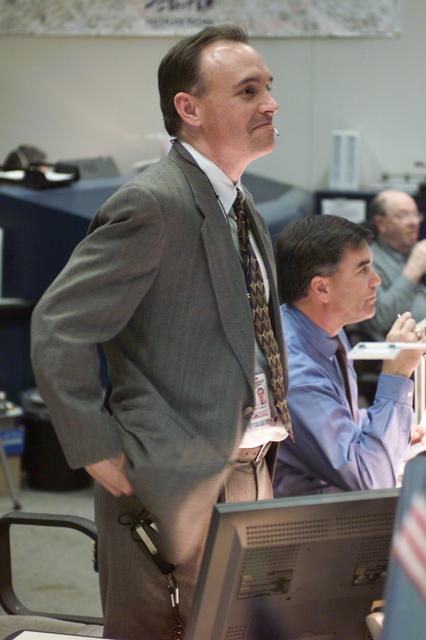
JSC2002-E-08460 (7 March 2002) --- Flight directors Jeff Hanley (standing) and Bryan P. Austin watch the large screens from their consoles in the shuttle flight control room (WFCR) in Houston;s Mission Control Center (MCC) during the STS-109 Hubble Space Telescope (HST) servicing mission.
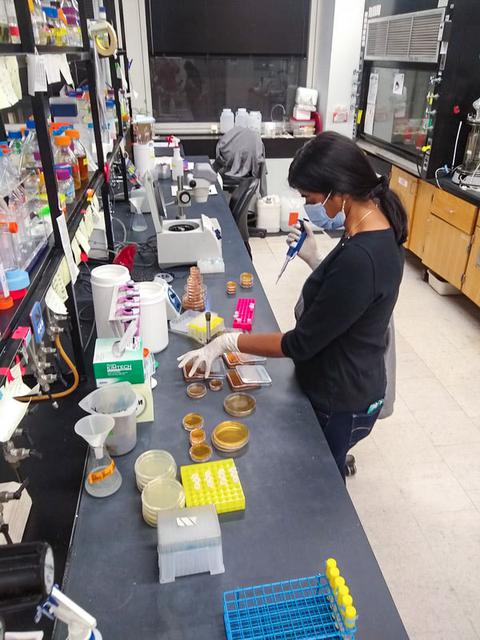
SPOCS Project Co-Lead Swati Ravi pictured in the Columbia University Dietrich Biological Shape and Pattern Formation Laboratory spotting P. aeruginosa and S. aureus bacterial samples for biofilm growth. Swati Ravi Image courtesy of Bryan S. Wang
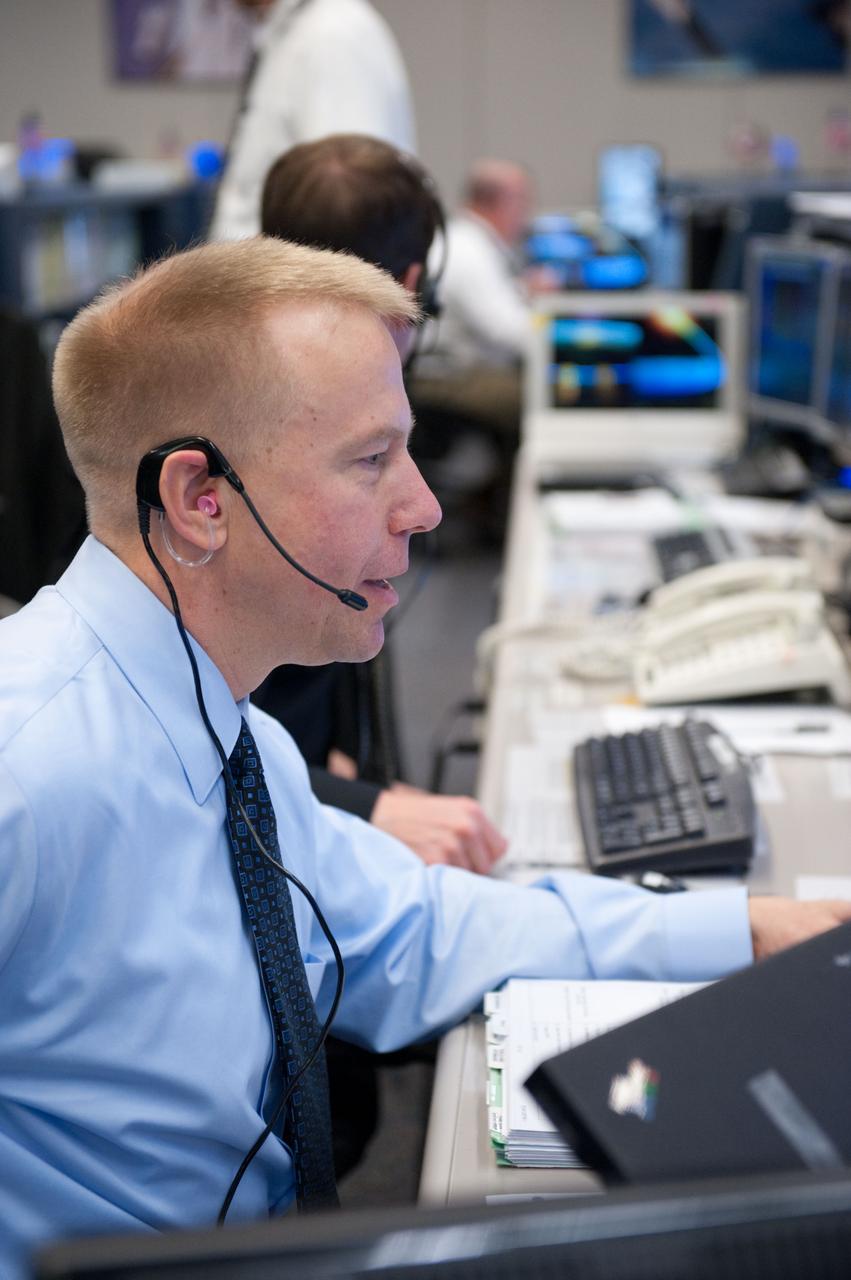
PHOTO DATE: 2-28-11 LOCATION: Bldg. 30 south - FCR-1 & Backrooms SUBJECT: STS-133/ULF5 flight controllers on console during EVA 1 with Orbit 1 Shuttle Flight Director Bryan Lunney and Orbit 2 ISS Flight Director Royce Renfrew PHOTOGRAPHER: Lauren Harnett
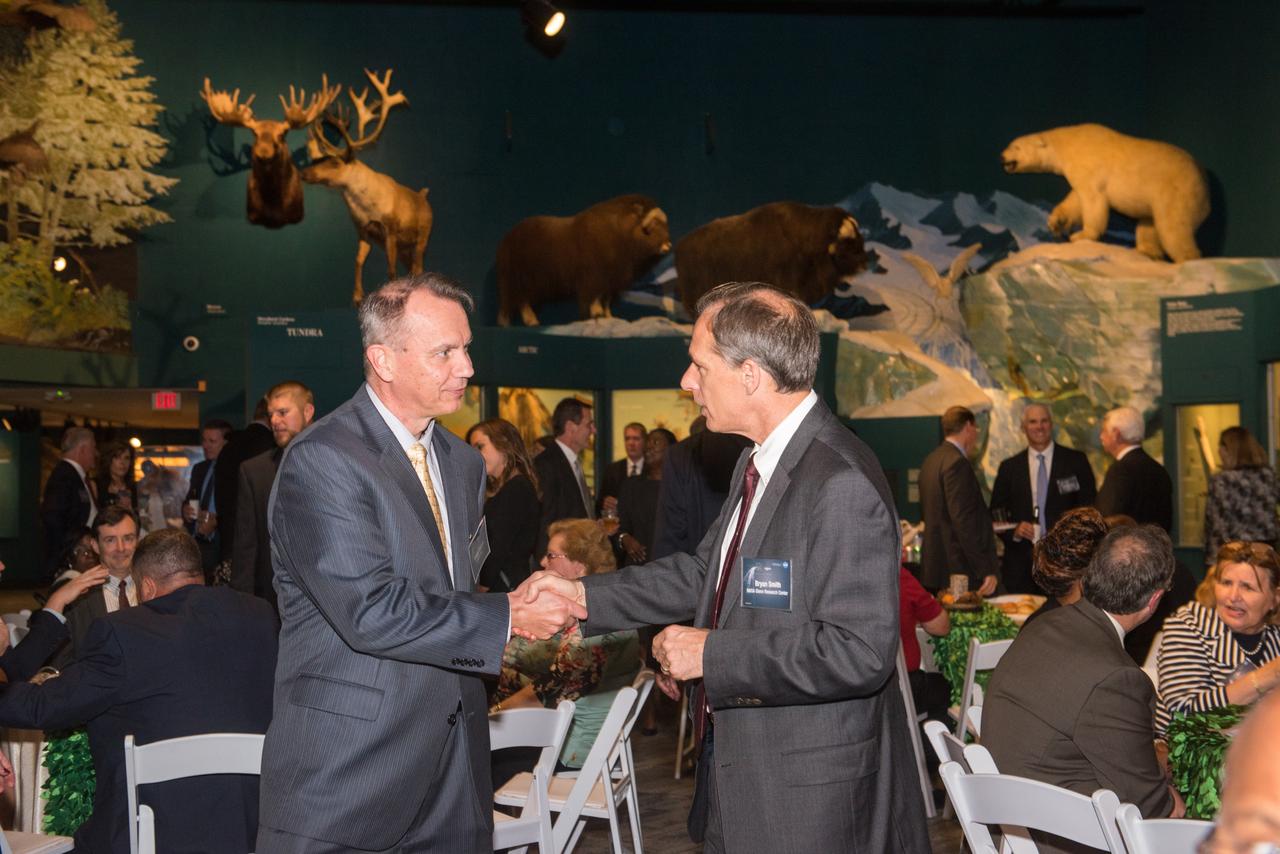
Evening With The Stars - 2019
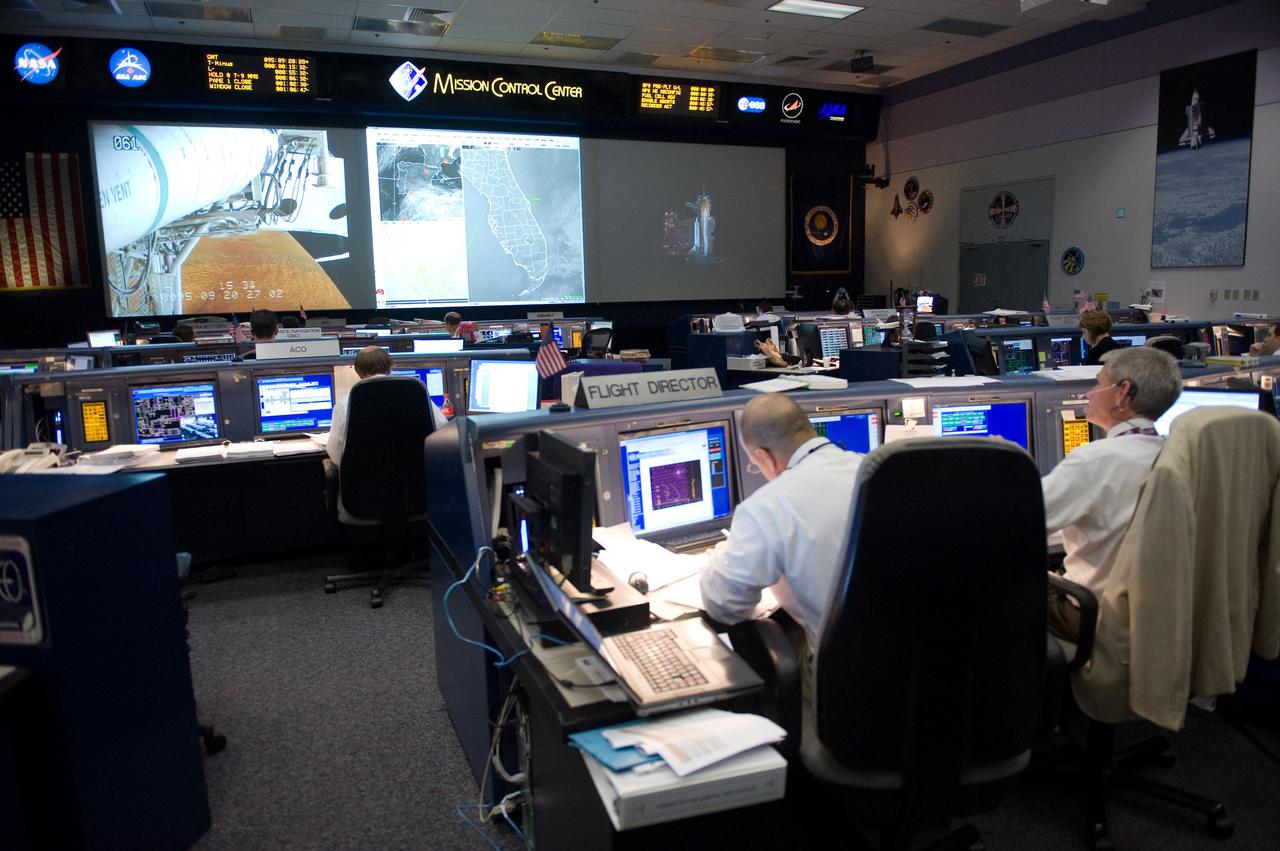
JSC2010-E-046733 (5 April 2010) --- An overall view of the space shuttle flight control room in the Johnson Space Center's Mission Control Center during launch countdown activities a few hundred miles away in Florida, site of space shuttle Discovery's STS-131 launch. In the foreground are flight directors Tony Ceccacci (left) and Bryan Lunney.
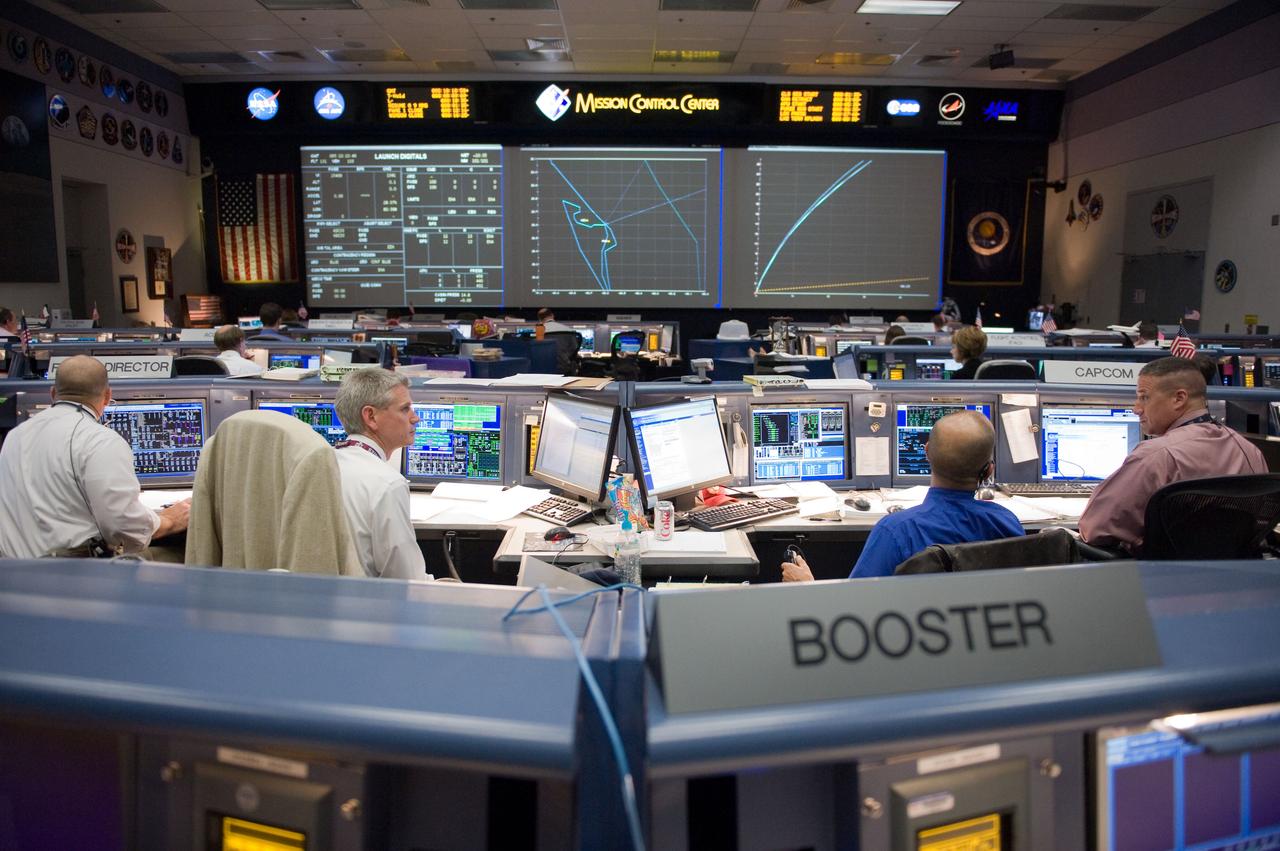
JSC2010-E-046802 (5 April 2010) --- An overall view of the space shuttle flight control room in the Johnson Space Center's Mission Control Center during launch countdown activities a few hundred miles away in Florida, site of space shuttle Discovery's STS-131 launch. Visible in the foreground (from the left) are flight directors Tony Ceccacci and Bryan Lunney; along with astronauts Rick Sturckow and George Zamka, both spacecraft communicators (CAPCOM).
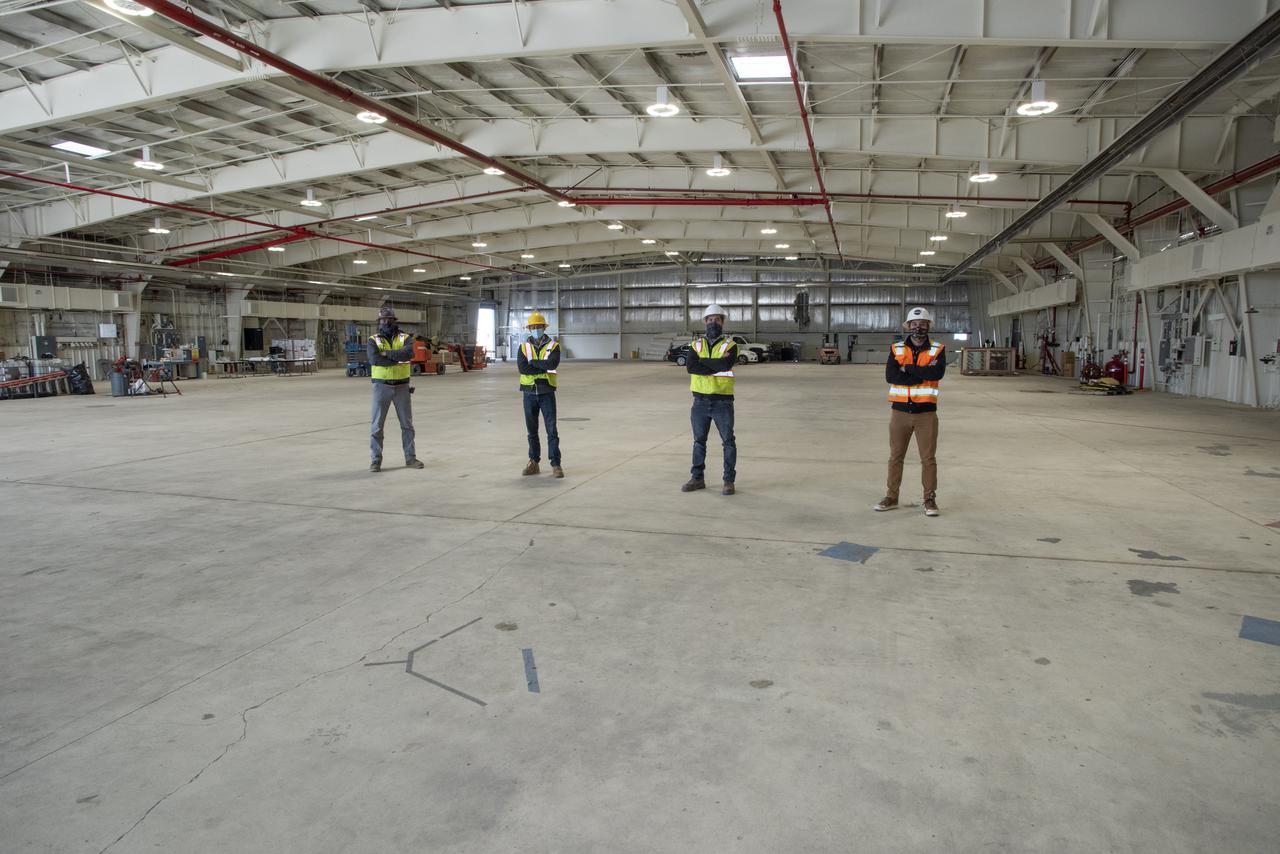
The future home of the X-59 Quiet SuperSonic Technology aircraft is taking shape at NASA's Armstrong Flight Research Center in Edwards, California. Some of the staff working on the project include from left to right Hector Mendoza, CJW/MZT Joint Venture site superintendent, Tim Nazer, CJW/MZT quality control manager, Collin Morris, CJW/MZT project manager and Bryan Watters, NASA civil/structural engineer and project manager.
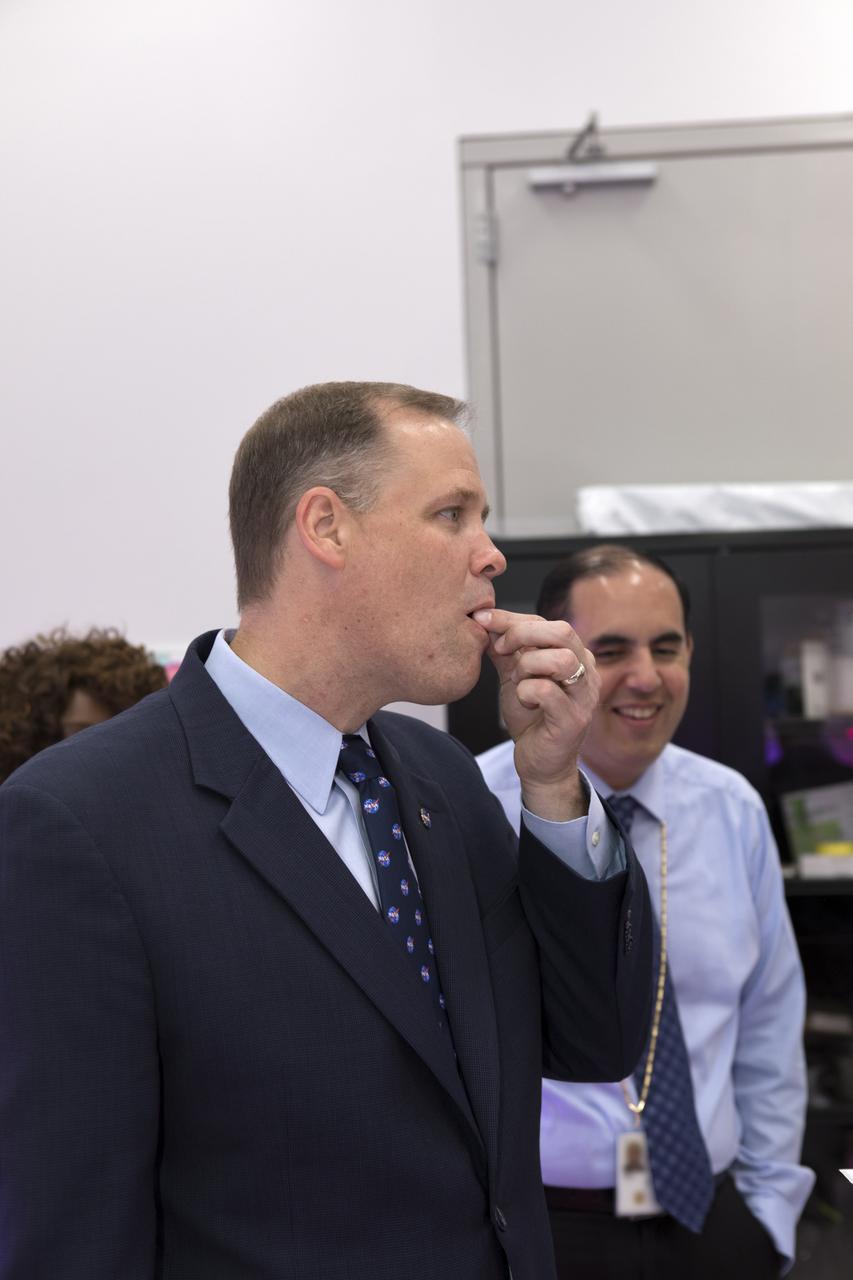
NASA Administrator Jim Bridenstine, left, tours a plant research laboratory and samples a microgreen inside the Space Station Processing Facility (SSPF) at NASA's Kennedy Space Center in Florida, on Aug. 7, 2018. Behind Bridenstine is Bryan Onate, Advanced Plant Habitat project manager. Bridenstine received updates on research and technology accomplishments during his visit to the SSPF.
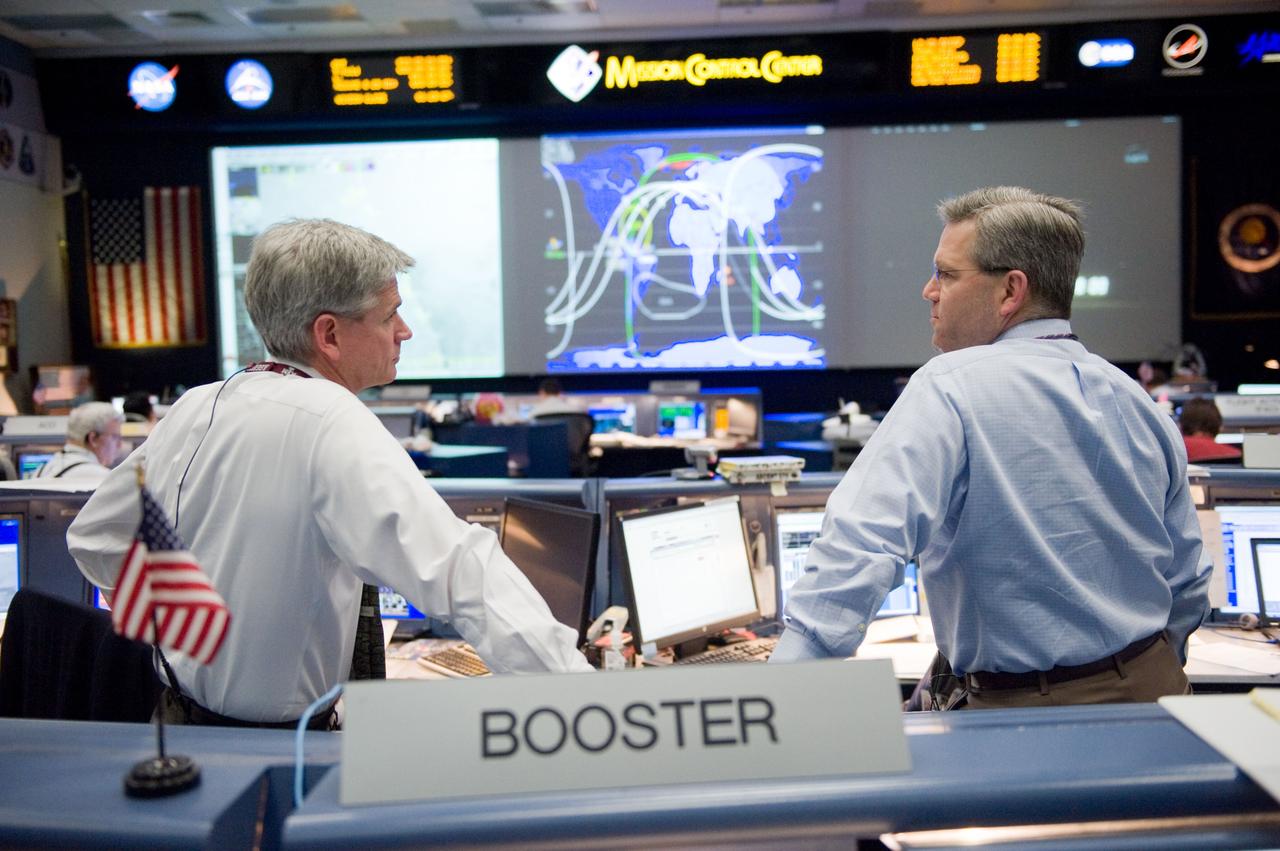
JSC2010-E-018926 (7 Feb. 2010) --- Flight director Bryan Lunney (left) and astronaut Steve Frick, STS-130 spacecraft communicator (CAPCOM), are pictured in the space shuttle flight control room in the Johnson Space Center's Mission Control Center as they anticipate the launch of STS-130. The launch attempt was later postponed until Feb. 8, due to weather conditions.
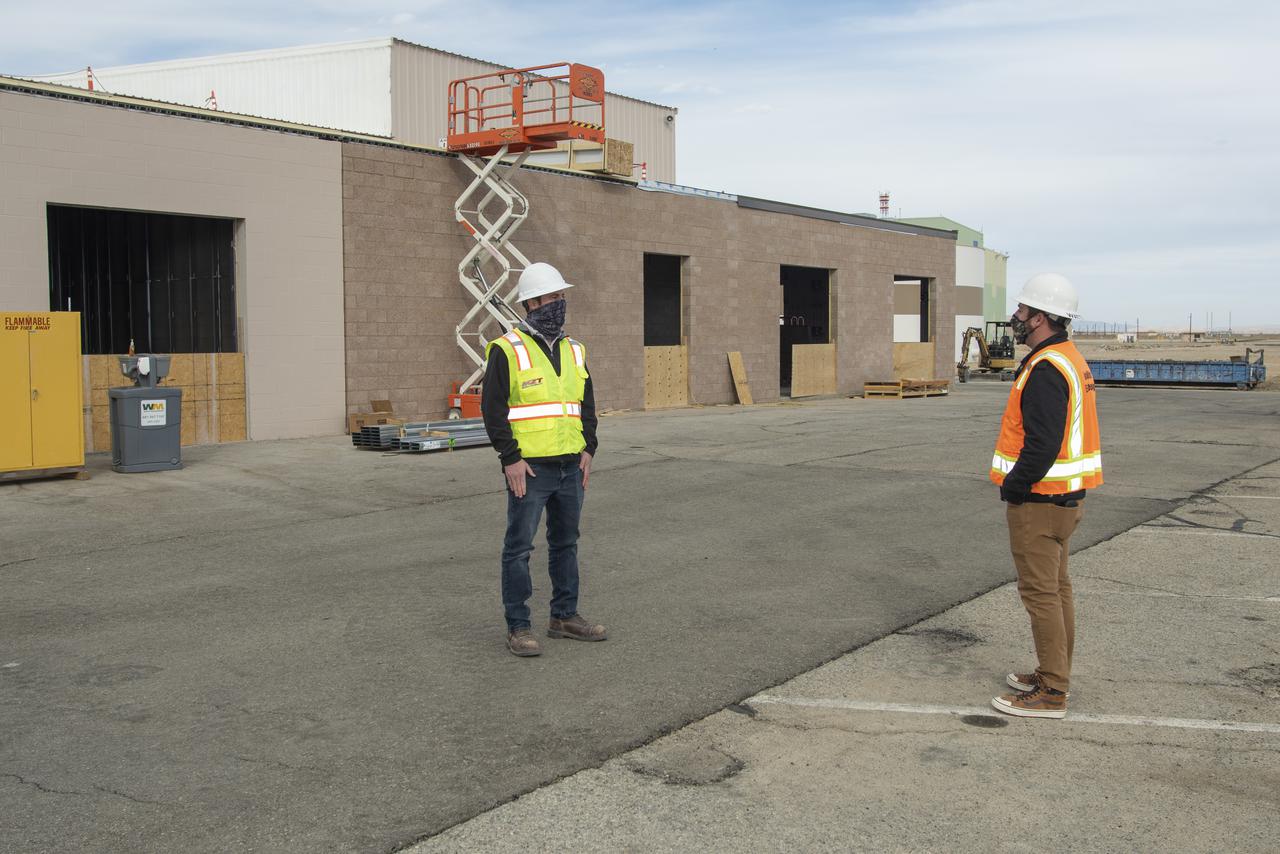
Collin Morris, CJW/MZT project manager and Bryan Watters, NASA civil/structural engineer and project manager, discuss work on the east side of Building 4826. Building 4826 is the future home of the X-59 Quiet SuperSonic Technology aircraft, where a conference room, offices, restrooms and a communications room will be added at NASA's Armstrong Flight Research Center in Edwards, California.
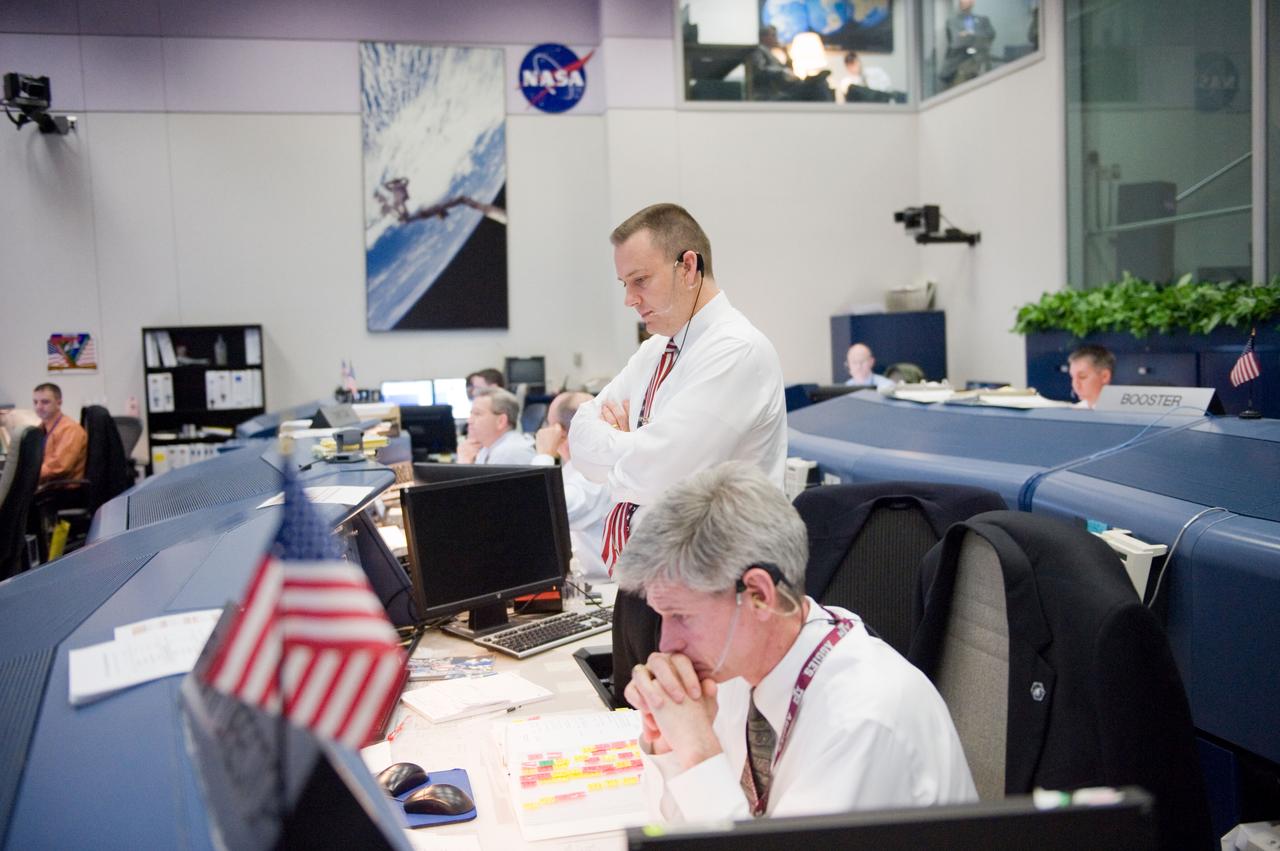
JSC2010-E-018996 (7 Feb. 2010) --- Flight directors Norm Knight (standing) and Bryan Lunney monitor data at their consoles in the space shuttle flight control room in the Johnson Space Center's Mission Control Center during the first launch attempt of the STS-130 mission. The launch was postponed until Feb. 8, due to weather conditions.
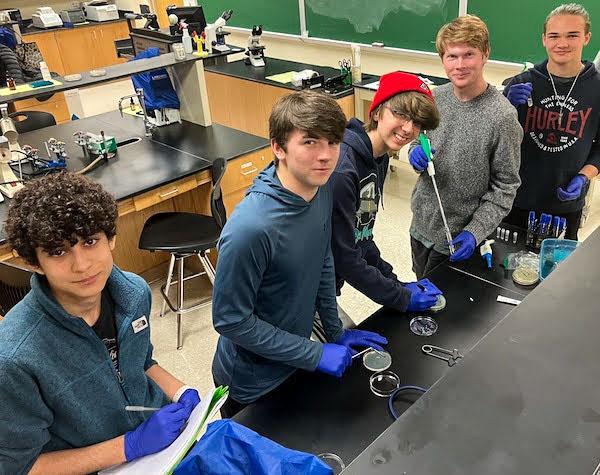
jsc2023e065187 (2/6/2023) --- Student researchers work on their experiment, which will be included in the Nanoracks-National Center for Earth and Space Science Education-Orbiter-Student Spaceflight Experiments Program Mission 17 to ISS (Nanoracks-NCESSE-Orbiter-SSEP). Pictured left to right: Evan Hernandez, Georgi Shourmaroff, Evan Boyer, Bryan Nash, and Kagan Holder.
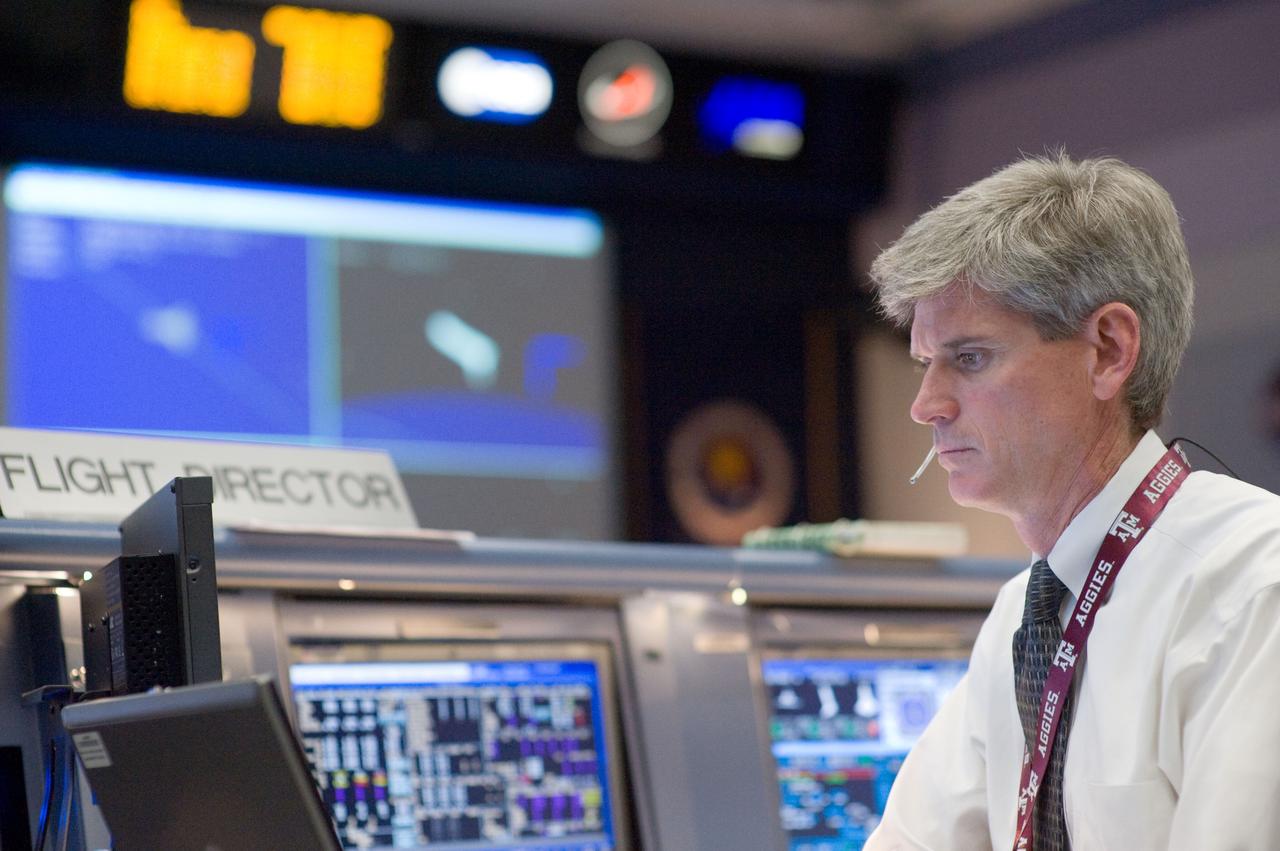
JSC2009-E-118888 (11 May 2009) --- Flight director Bryan Lunney monitors data at his console in the space shuttle flight control room in the Mission Control Center at NASA's Johnson Space Center during launch countdown activities a few hundred miles away in Florida, site of Space Shuttle Atlantis? scheduled STS-125 launch to service the Hubble Space Telescope. Liftoff was on time at 2:01 p.m. (EDT) on May 11, 2009 from launch pad 39A at NASA's Kennedy Space Center.
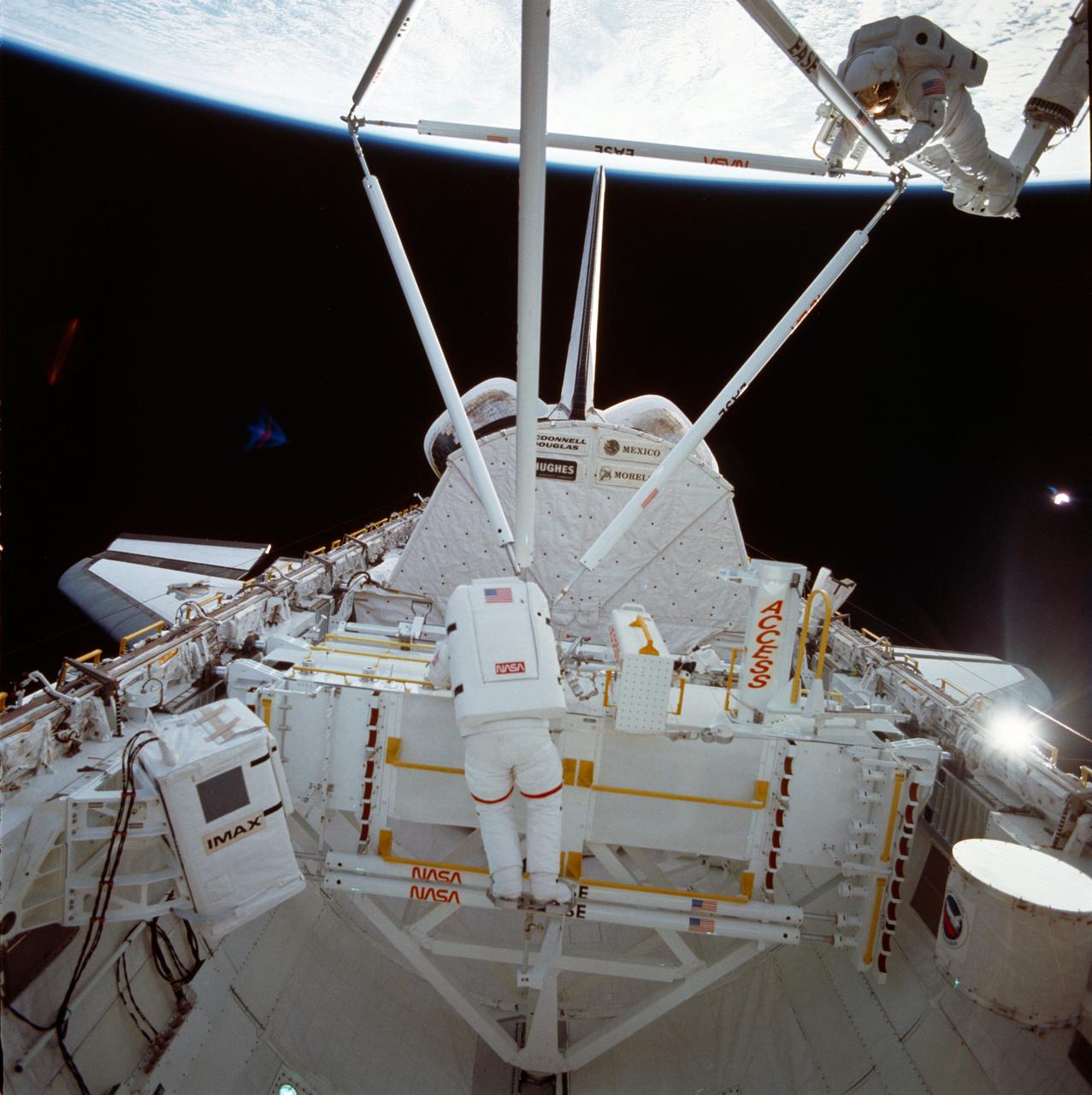
61B-41-047 (1 Dec 1985) --- Astronauts Jerry L. Ross (left) and Sherwood C. (Woody) Spring are photographed by Astronaut Bryan D. O'Connor as they continue to assemble more pieces of the EASE (Experimental Assembly of Structures in Extravehicular Activities) device during the week-long STS 61-B mission. This frame is one of a series covering the structure's build-up.
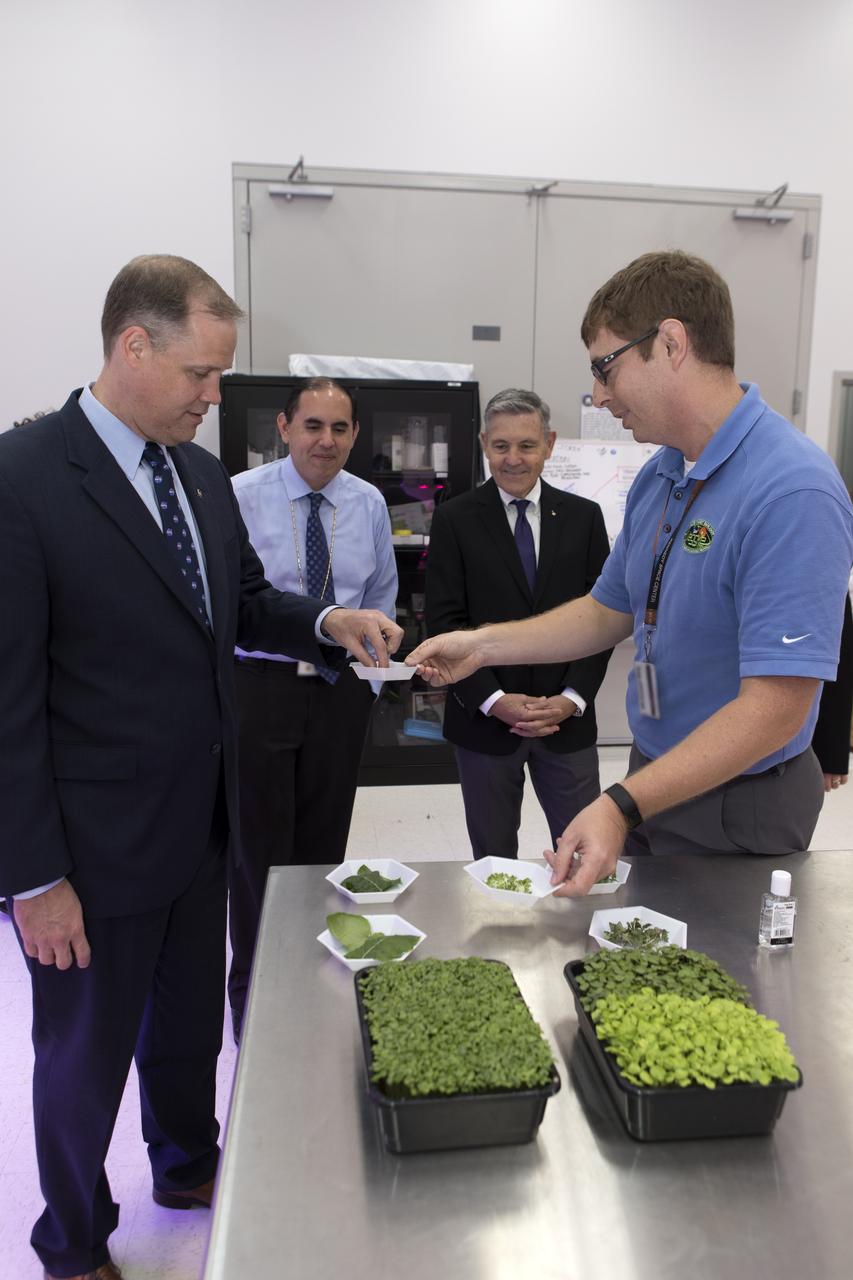
NASA Administrator Jim Bridenstine, far left, tours a plant research laboratory inside the Space Station Processing Facility (SSPF) at NASA's Kennedy Space Center in Florida, on Aug. 7, 2018. Bridenstine selects a microgreen to sample from Matt Romeyn, project scientist. Behind Bridenstine, from left, are Bryan Onate, Advanced Plant Habitat project manager, and Kennedy Space Center Director Bob Cabana. Bridenstine received updates on research and technology accomplishments during his visit to the SSPF.

JSC2010-E-046787 (5 April 2010) --- Flight directors Bryan Lunney (left) and Tony Ceccacci are pictured at their consoles in the space shuttle flight control room in the Johnson Space Center's Mission Control Center during launch countdown activities a few hundred miles away in Florida, site of space shuttle Discovery's STS-131 launch.

NASA’s Beaming Energy for Air Mobility team successfully completed a first-of-its-kind power beaming test at NASA Glenn on June 4, 2025. Later this year, the tested transmitter will be used in a demonstration to wirelessly transmit power using microwaves to a custom power receiver — a step toward gap-filling technology that could one day deliver power on the surface of the Moon or Mars. Seth Waldstein, Seth Schisler and Bryan Schoenholz are in the control room reviewing the results.
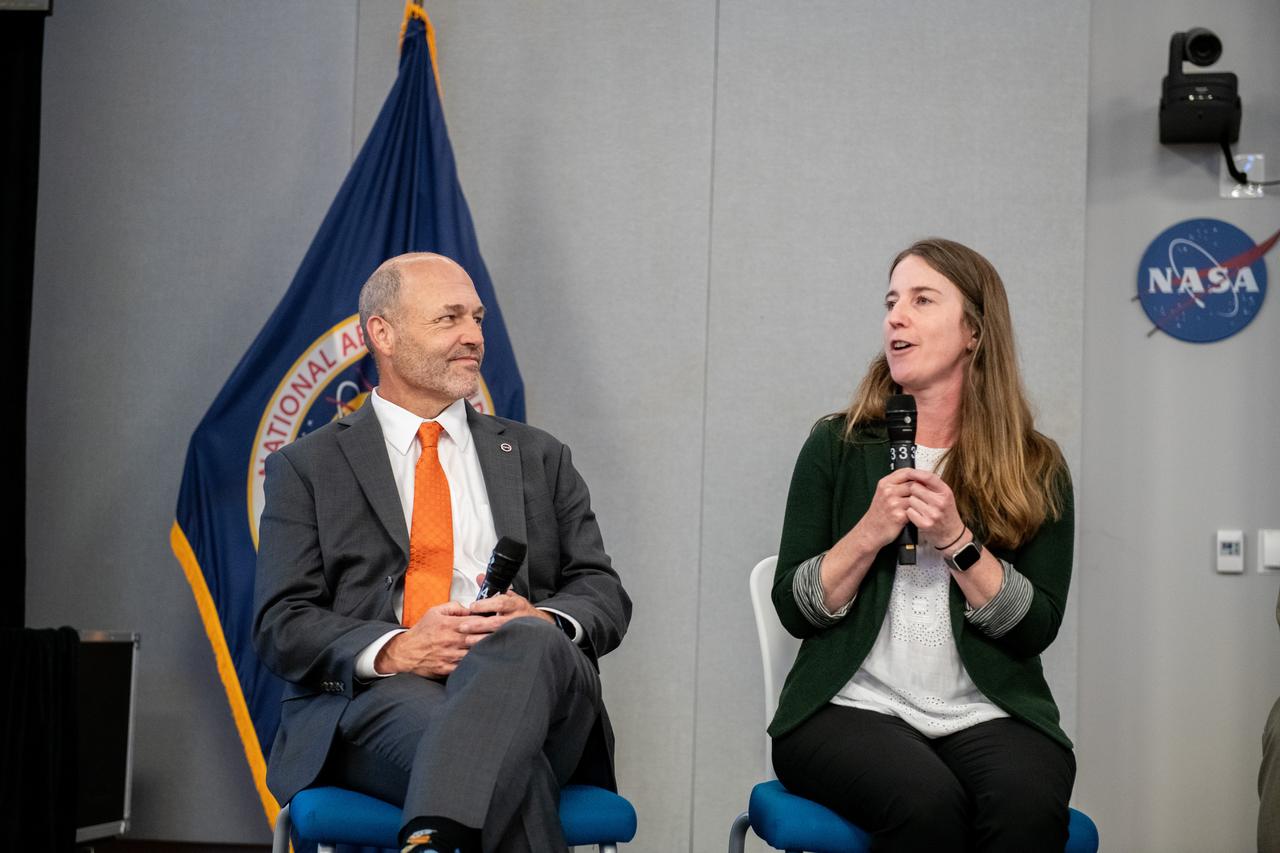
During the climate town hall meeting on June 17th 2024, Dr. Calvin and center leaders explored how technologies being developed at NASA Glenn Research Center could help reduce the effects of climate change. The panelists who lead the discussion include: Dr. Calvin; Dr. Rickey Shyne, Director of Research and Engineering; Bryan Smith, Director of Facilities, Test, & Manufacturing; and W. Allen Kilgore, Acting Director of Aeronautics. Director of Space Flight Systems Dr. Mike Barrett served as the moderator.
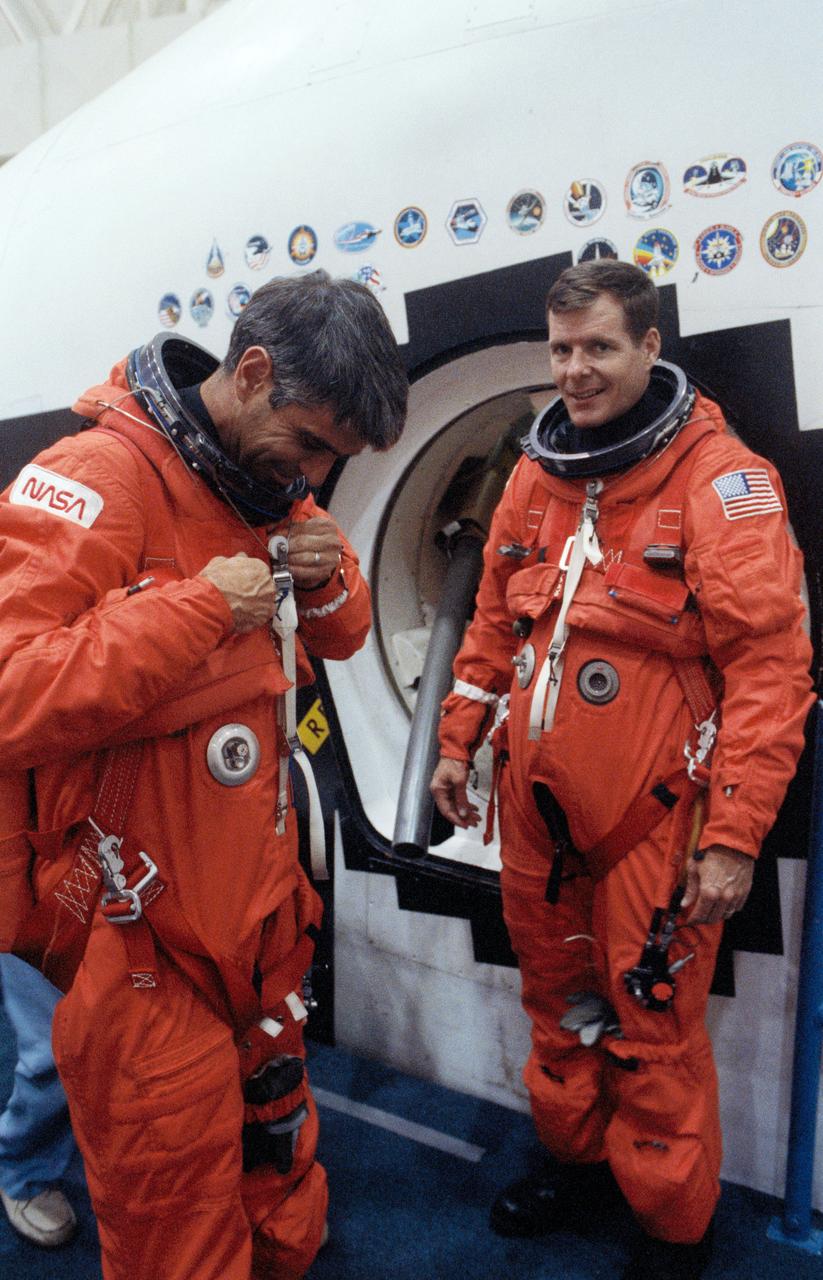
S90-41360 (11 June 1990) --- Two crewmembers assigned to NASA's Spacelab Life Sciences (SLS-1)/STS-40 mission are pictured during emergency egress training in the Shuttle mockup and integration laboratory at the Johnson Space Center (JSC). Seen are astronauts Sidney M. Gutierrez (left) pilot, and Bryan D. O'Connor, mission commander. Out of frame are astronauts Rhea Seddon, James P. Bagian, Tamara E. Jernigan, all mission specialists; and payload specialists Millie Hughes-Fulford and F. Drew Gaffney.

ORLANDO, Fla. – The Emergency Response Team, or ERT, from NASA's Kennedy Space Center competed in the 30th Annual SWAT Round-Up International in Orlando, Florida. The competitors were, from left to right, Charles Pedrick, Nick Romero, Tim Byrne, Jimmie Wright, Jason Connors, Jason Sadowski, Bryan Baylis and Nate Moore. Photo credit: NASA/Jim Grossmann
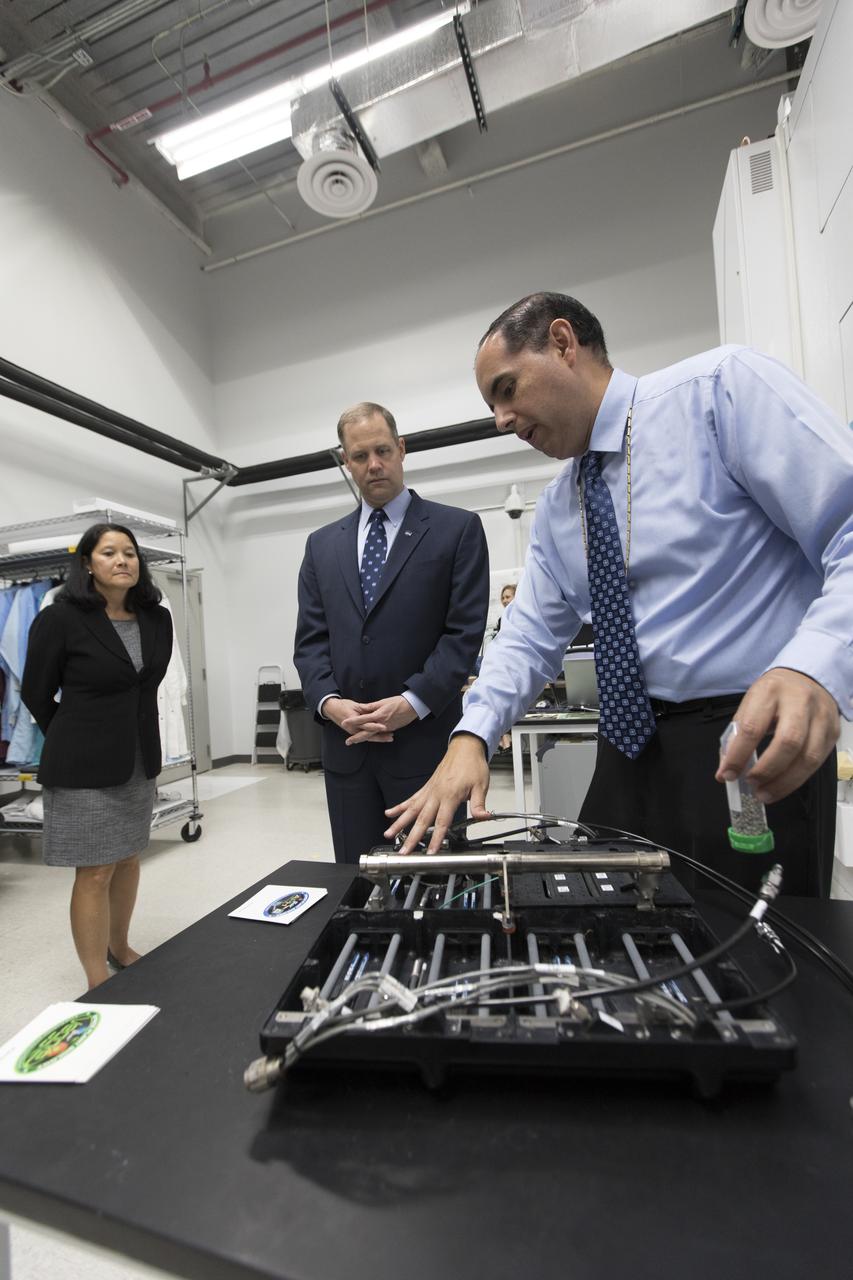
NASA Administrator Jim Bridenstine, center, tours the Space Station Processing Facility at NASA's Kennedy Space Center in Florida, on Aug. 7, 2018. At right, Bryan Onate, Advanced Plant Habitat (APH) project manager, explains a component of the APH cooling system. At left is Josie Burnett, director of Exploration Research and Technology. Bridenstine also received updates on research and technology accomplishments.
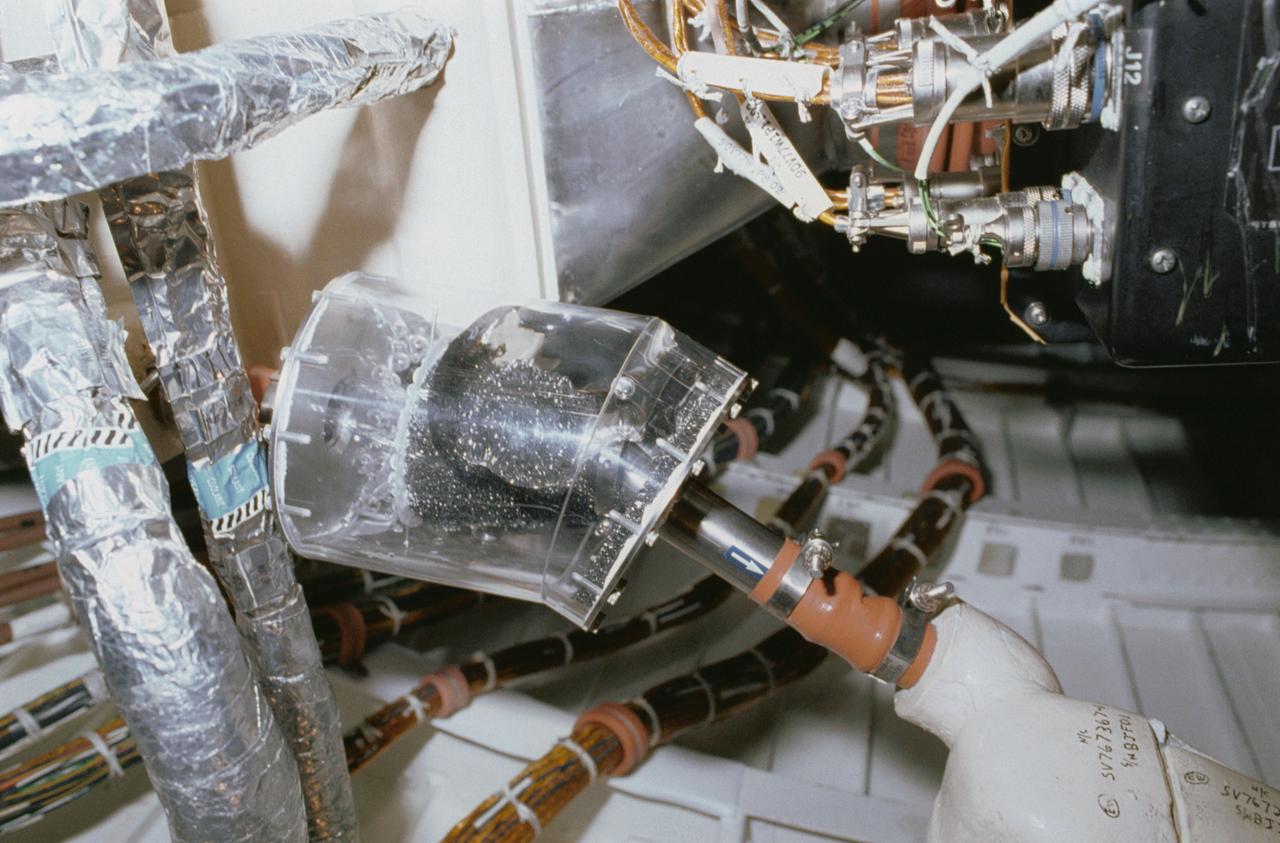
STS040-34-001 (5-14 June 1991) --- This 35mm scene shows a close-up of a prototype filter designed to remove contamination from air and water, before it flows into the Orbiter's humidity separators. This experiment is part of Development Test Objective (DTO) 647, Water Separator Filter Performance Evaluation. Astronauts Bryan D. O'Connor, mission commander, and Sidney M. Gutierrez, pilot, carried out the test and down linked television to the ground for engineering analysis.
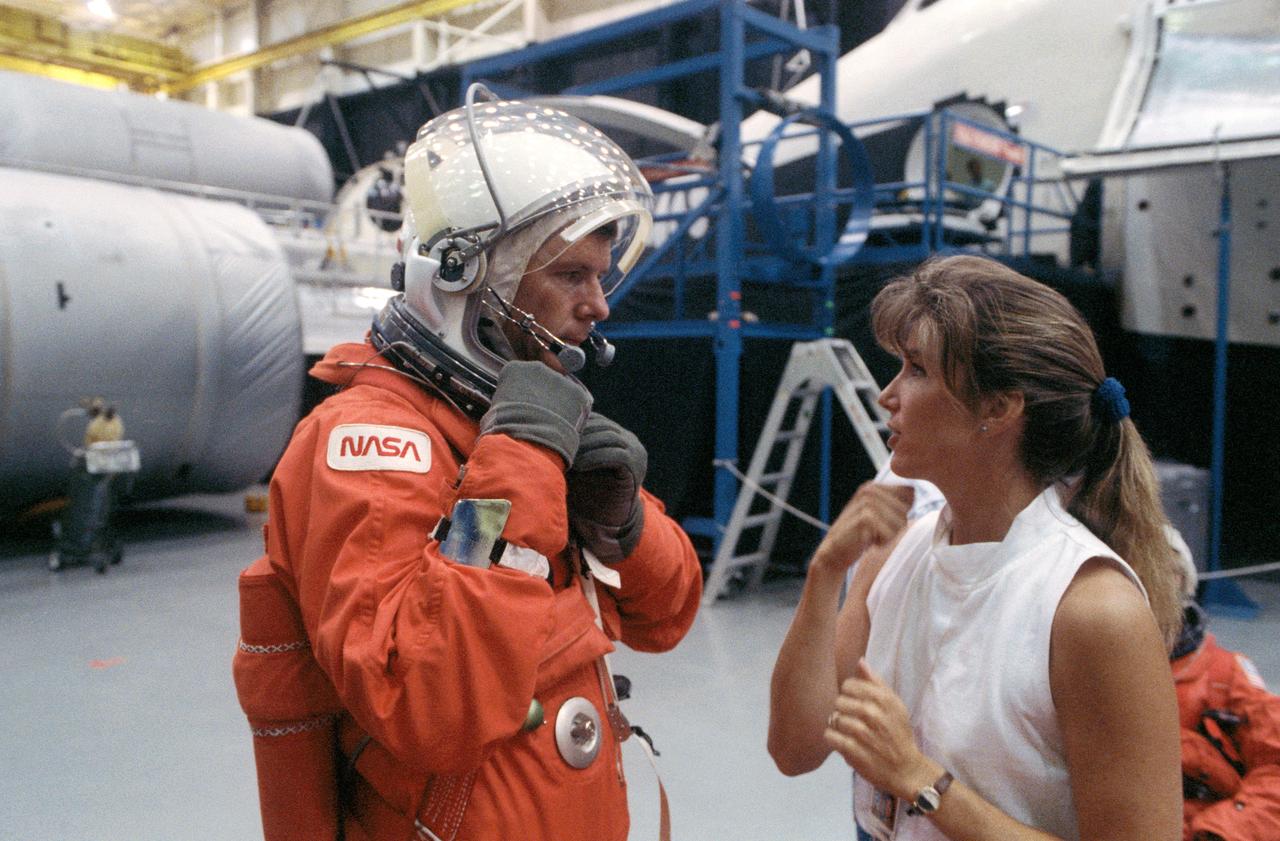
S90-41366 (11 June 1990) --- Astronaut Bryan D. O'Connor, STS-40 mission commander, talks with Elizabeth Youmans of the crew training staff at JSC, during a break in mission training. This exercise, in JSC's Shuttle mockup and integration laboratory, was designed to familiarize the astronauts with proper procedures and gear involved in emergency egress from the Space Shuttle. O'Connor is wearing the orange partial pressure ascent/entry suit. Primary payload of the STS-40 mission is Spacelab Life Sciences (SLS-1).
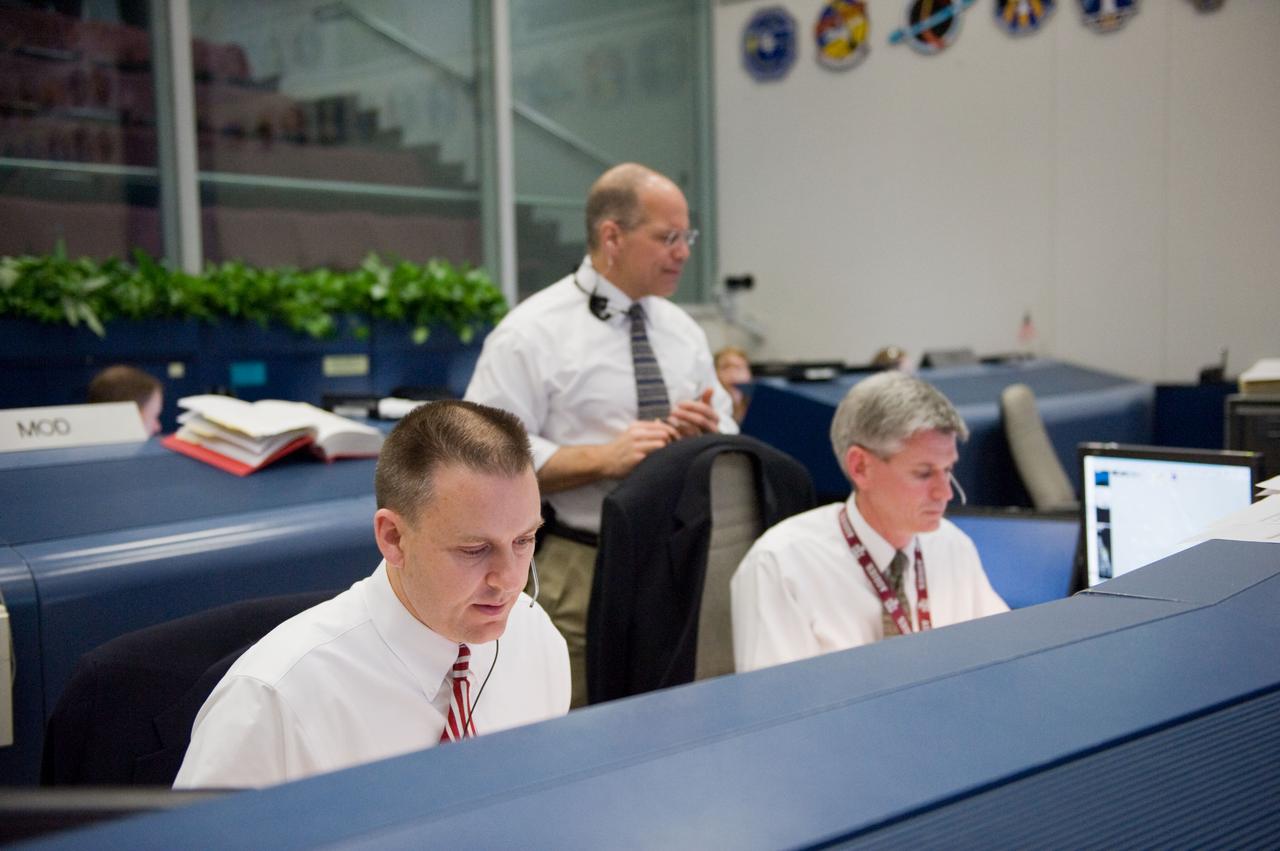
JSC2010-E-018923 (7 Feb. 2010) --- Flight directors Norm Knight (left), Bryan Lunney and Tony Ceccacci (standing) are pictured in the space shuttle flight control room in the Johnson Space Center's Mission Control Center as they anticipate the launch of STS-130. The launch attempt was later postponed until Feb. 8, due to weather conditions.
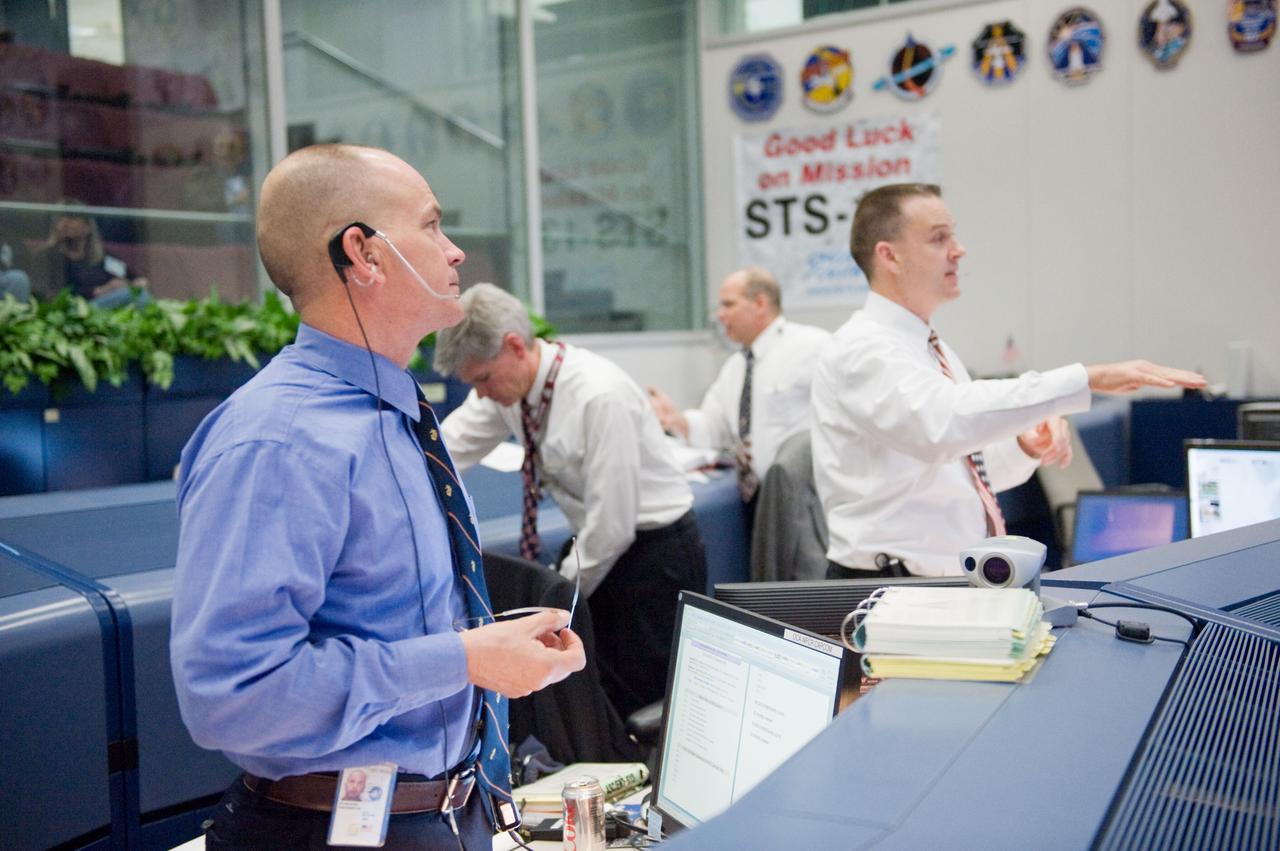
JSC2010-E-019017 (8 Feb. 2010) --- Astronaut Rick Sturckow (left), STS-130 spacecraft communicator (CAPCOM); and flight director Norm Knight are pictured at their consoles in the space shuttle flight control room in the Johnson Space Center's Mission Control Center during launch countdown activities a few hundred miles away in Florida, site of space shuttle Endeavour's STS-130 launch. Flight directors Bryan Lunney (left) and Tony Ceccacci are visible in the background.
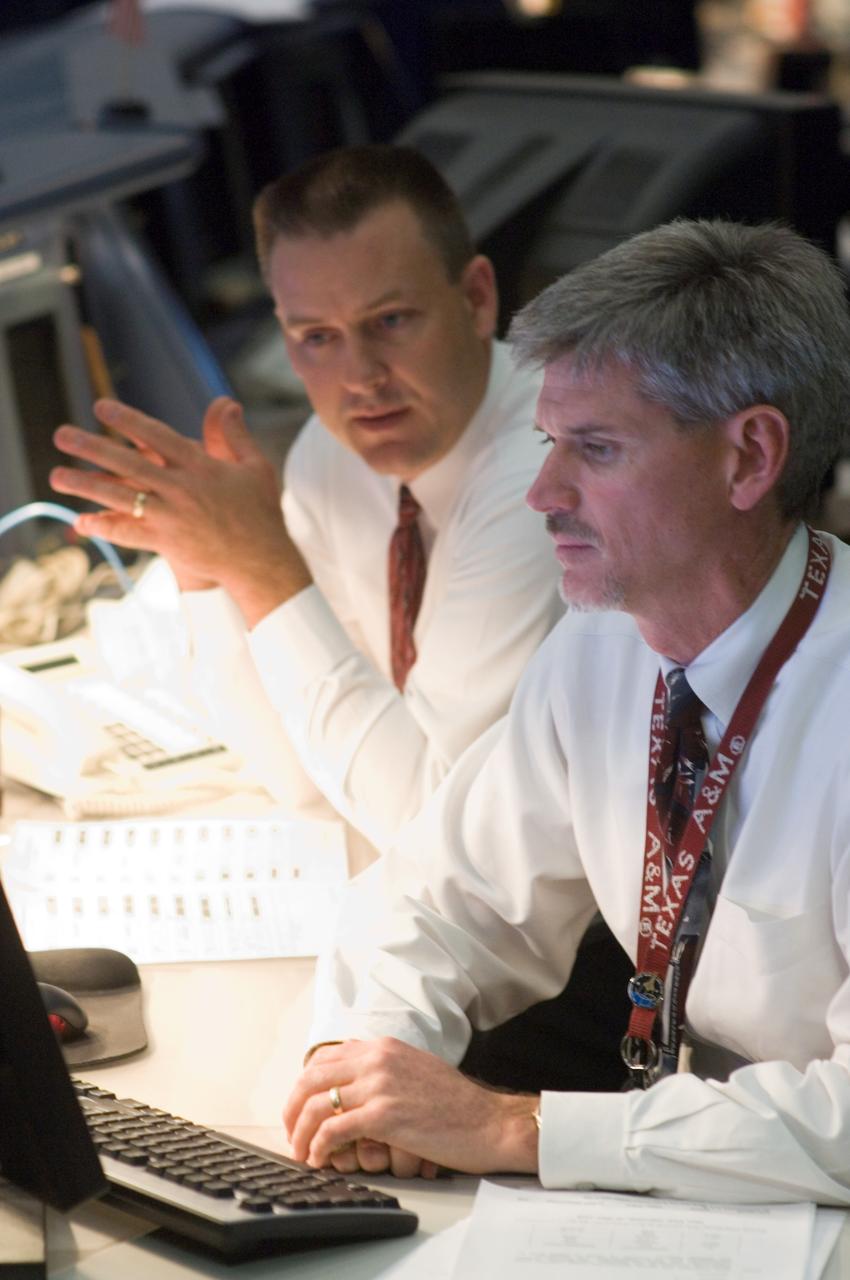
JSC2007-E-095788 (3 Nov. 2007) --- Flight directors Norm Knight (left) and Bryan Lunney, inside the shuttle flight control room of JSC's Mission Control Center, monitor the progress of the Nov. 3 spacewalk by two members of Discovery's crew, while the space shuttle is docked with the International Space Station in Earth orbit. Astronaut Scott Parazynski was busy at work on repairing a tear in a solar panel on the orbiting outpost.
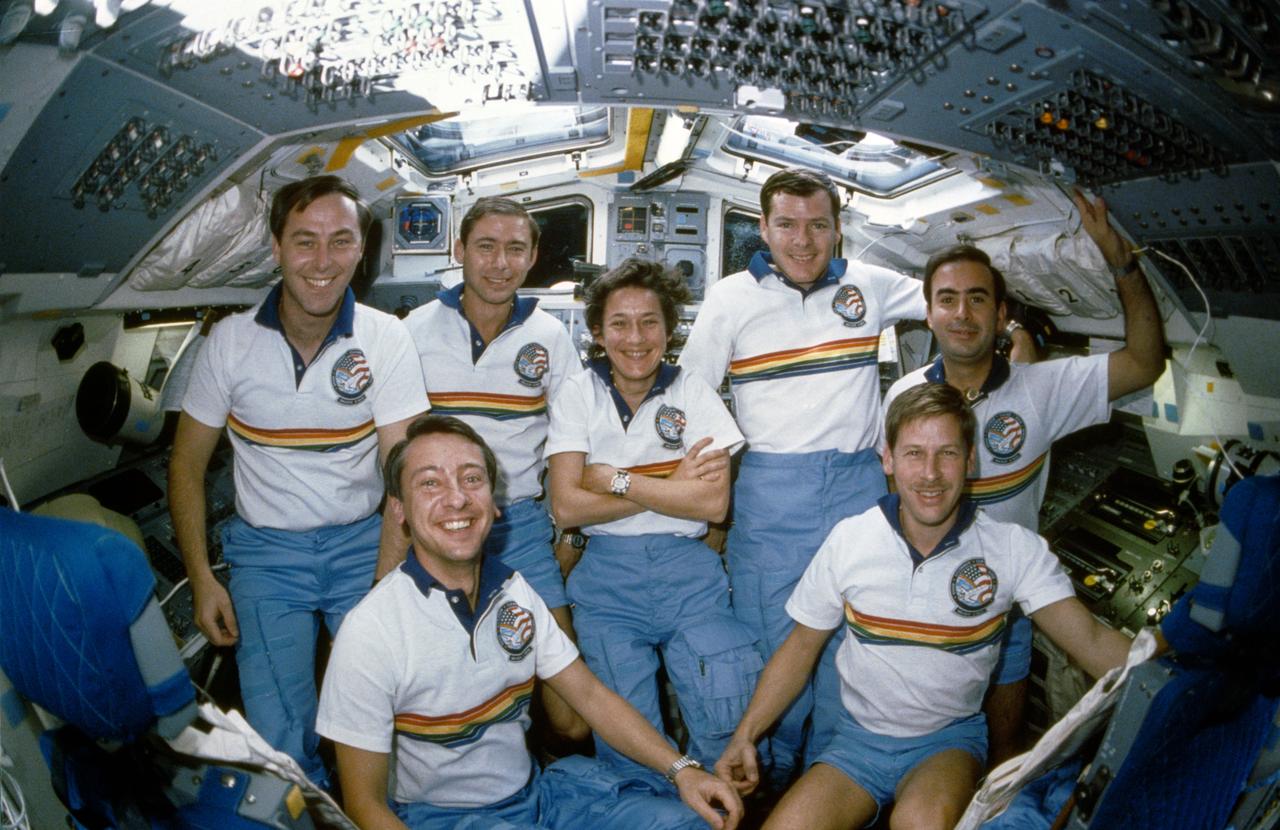
61B-21-008 (26 Nov-1 Dec 1985) --- A fish-eye lens allows for the seven-member STS 61-B crew to be photographed on the flight deck of the earth-orbiting Atlantis. Left to right, back row, are astronauts Jerry L. Ross, Brewster Shaw Jr., Mary L. Cleave, and Bryan D. O'Connor; and payload specialist Rodolfo Neri. Front row, left to right, payload specialist Charles D. Walker and astronaut Sherwood C. Spring.
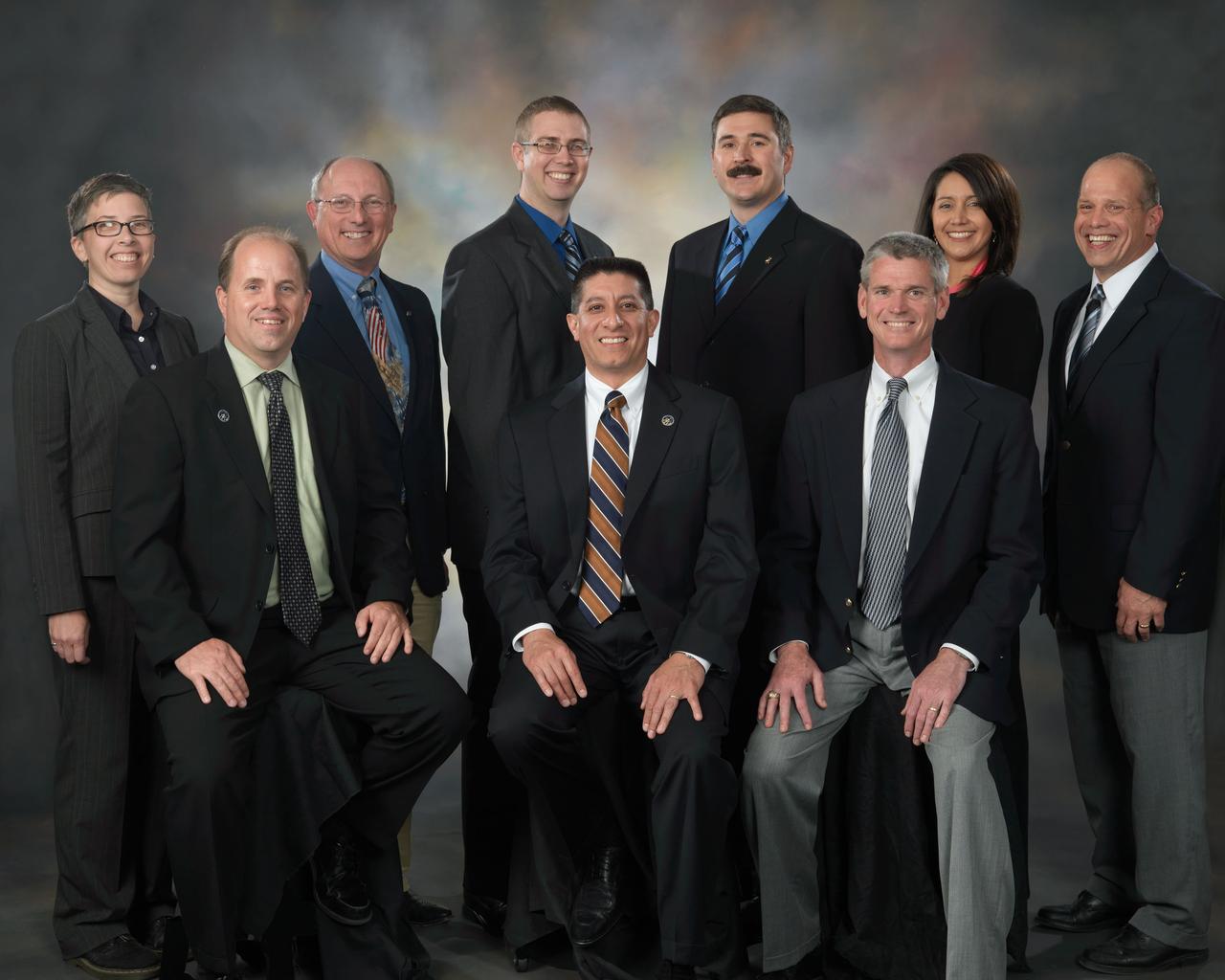
JSC2010-E-045163 (30 March 2010) --- Flight directors for the STS-131/19A mission pose for a preflight group portrait at NASA's Johnson Space Center. Pictured from the left (front row) are Ron Spencer, Richard Jones and Bryan Lunney. Picture from the left (back row) are Courtenay McMillan, Paul Dye, Ed Van Cise, Mike Sarafin, Ginger Kerrick and Tony Ceccacci.
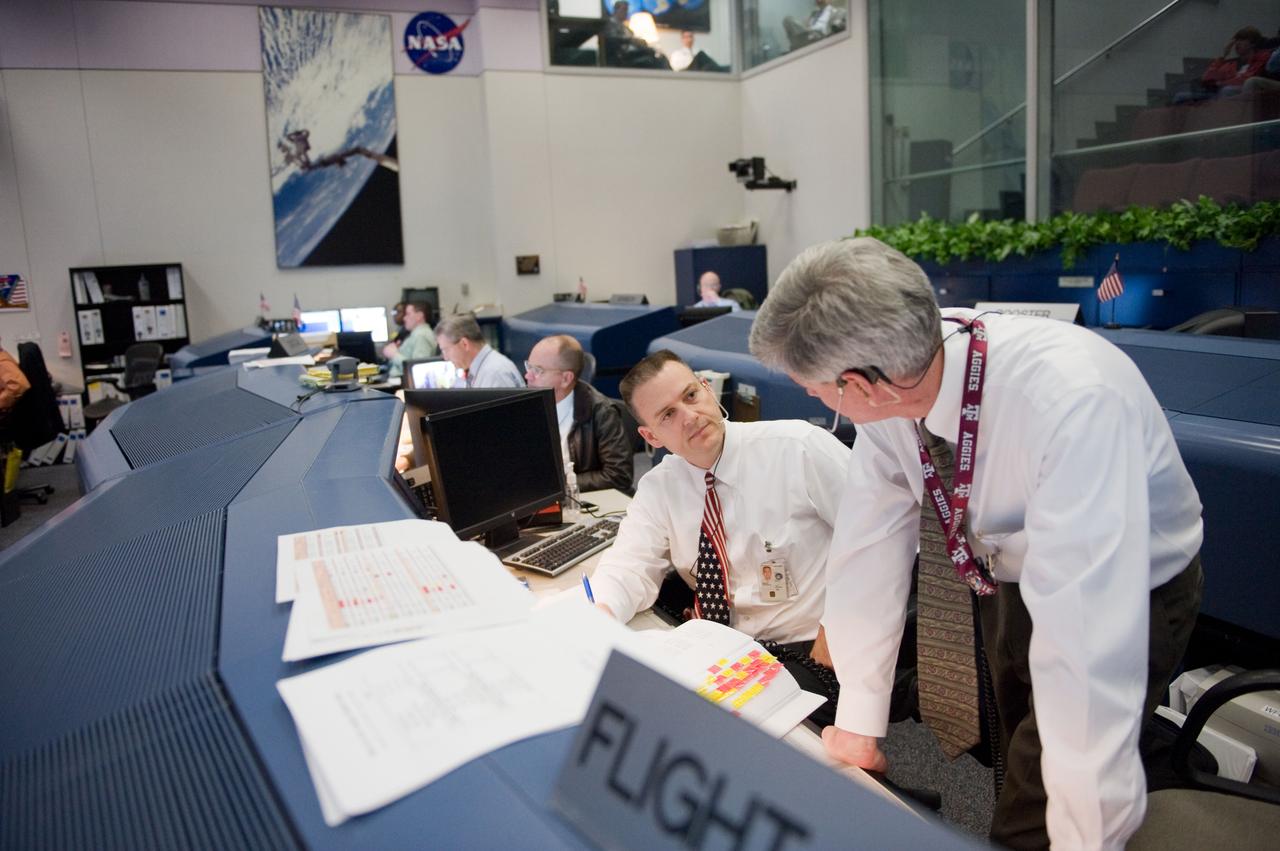
JSC2010-E-018935 (7 Feb. 2010) --- Flight directors Norm Knight (left) and Bryan Lunney are pictured at their consoles in the space shuttle flight control room in the Johnson Space Center's Mission Control Center during the first launch attempt of the STS-130 mission. The launch was postponed until Feb. 8, due to weather conditions.
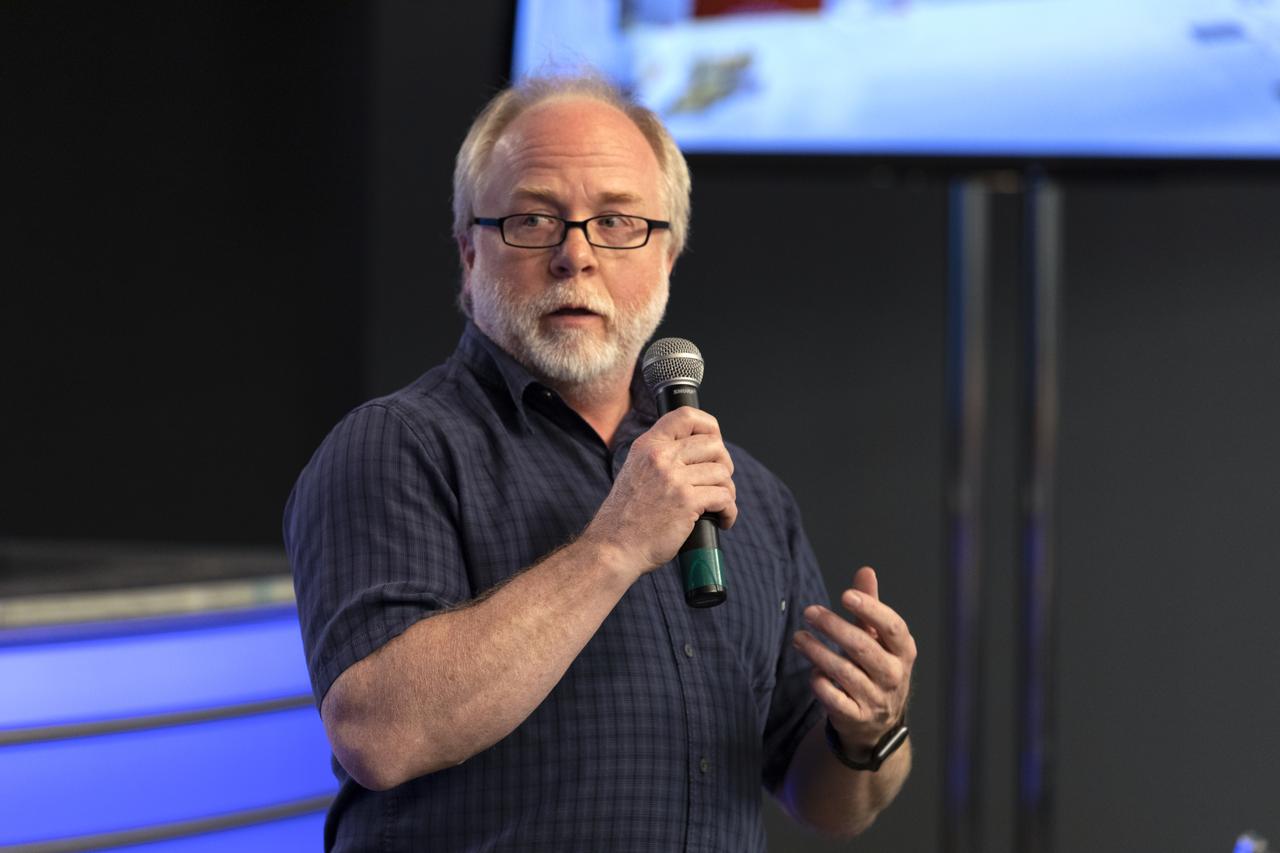
Bryan Blair, deputy principal investigator for Global Ecosystem Dynamics Investigation lidar, or GEDI, speaks to members of the media in the Kennedy Space Center’s Press Site auditorium. The briefing focused on research planned for launch to the International Space Station. The scientific materials and supplies will be aboard a Dragon spacecraft scheduled for liftoff from Cape Canaveral Air Force Station's Space Launch Complex 40. The SpaceX Falcon 9 rocket will launch the company's 16th Commercial Resupply Services mission to the space station.
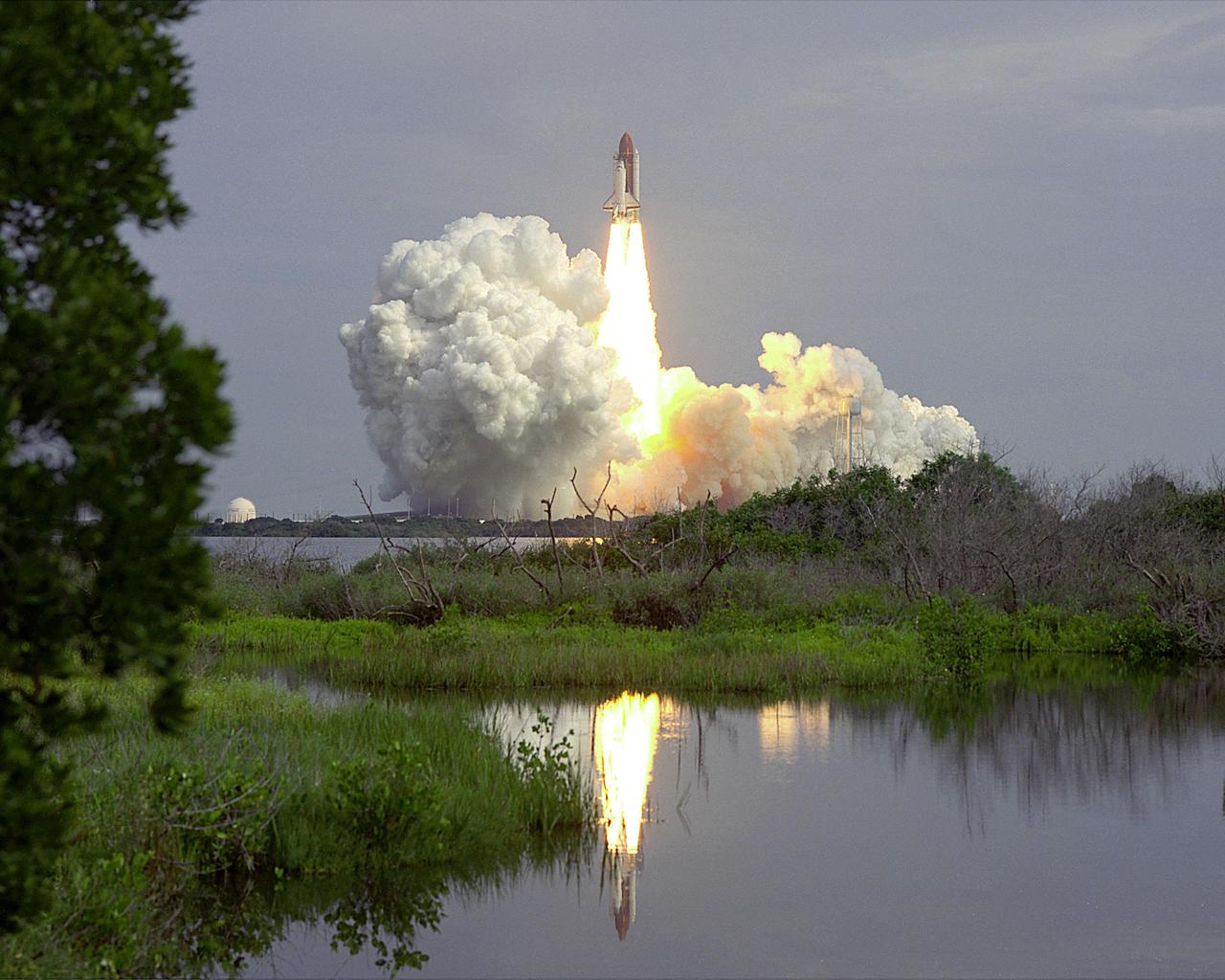
KENNEDY SPACE CENTER, FLA. -- Columbia launches on mission STS-40. Carrying Spacelab Life Sciences-1, it is the first dedicated solely to life sciences, using the habitable module. The crew of seven comprises Commander Bryan D. O'Connor, Pilot Sidney M. Gutierrez, Mission Specialists James P. Bagian, Tamara E. Jernigan and M. Rhea Seddon, and Payload Specialists F. Drew Gaffney and Millie Hughes-Fulford.
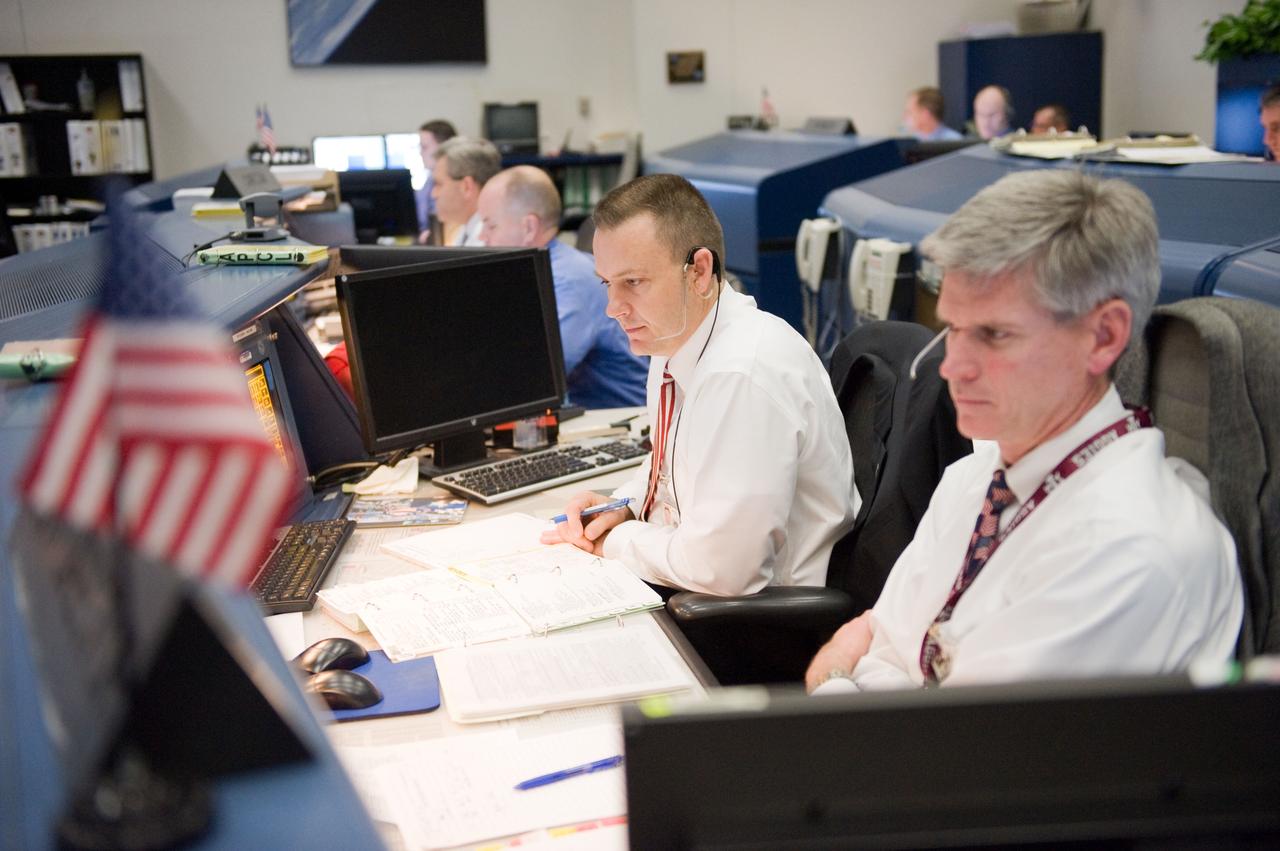
JSC2010-E-019041 (8 Feb. 2010) --- Flight directors Norm Knight (left) and Bryan Lunney monitor data at their console in the space shuttle flight control room in the Mission Control Center at NASA's Johnson Space Center during launch countdown activities a few hundred miles away in Florida, site of space shuttle Endeavour's STS-130 launch.
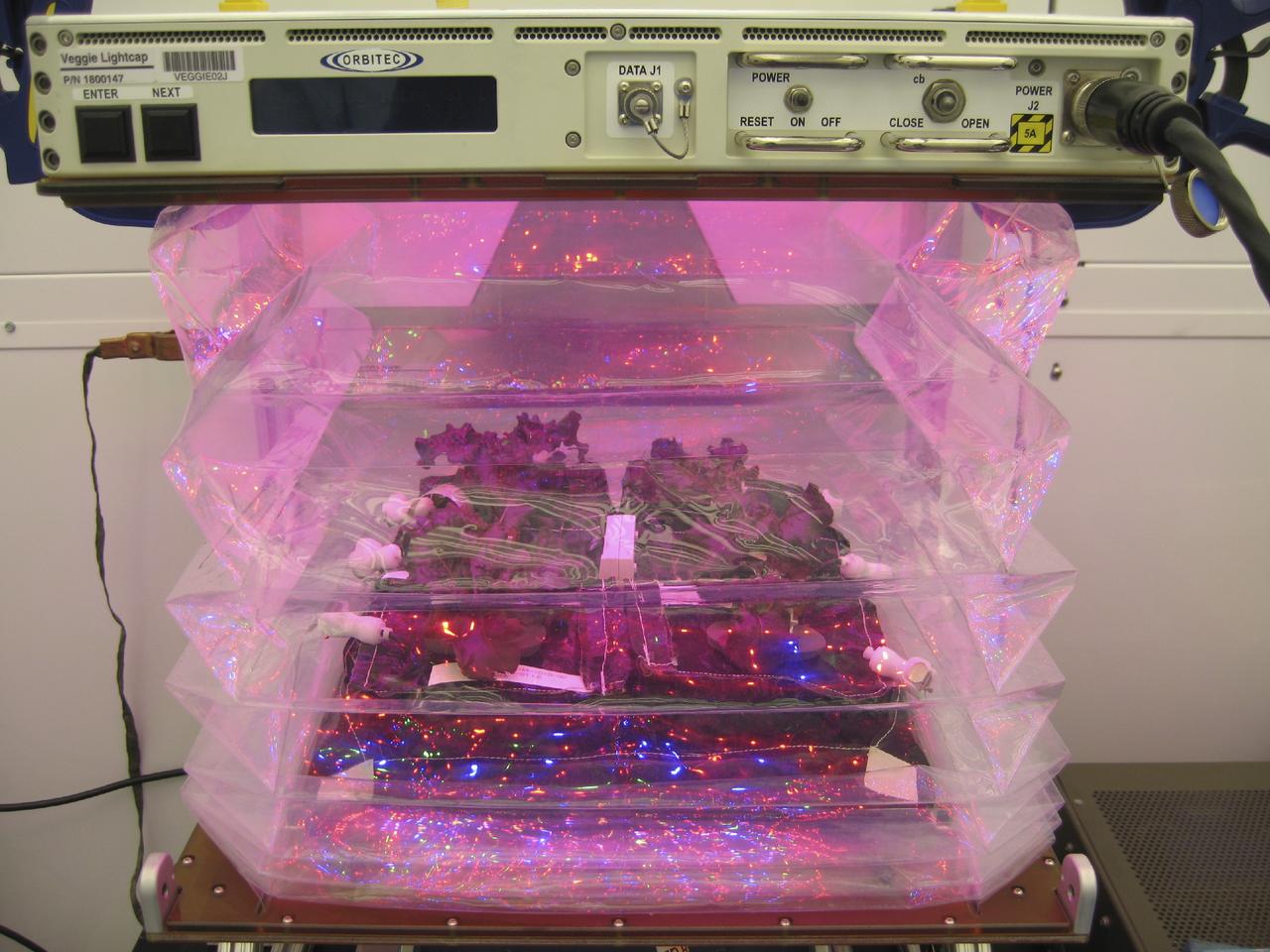
CAPE CANAVERAL, Fla. – Outredgeous red romaine lettuce plants grow inside the bellows of a prototype VEGGIE flight pillow. U.S. astronauts living and working aboard the International Space Station are going to receive a newly developed Vegetable Production System VEGGIE. VEGGIE is set to launch aboard SpaceX's Dragon capsule on NASA's third Commercial Resupply Services mission targeted to launch Dec. 9 from Space Launch Complex 40 at Cape Canaveral Air Force Station in Florida. Photo credit: NASA/Bryan Onate
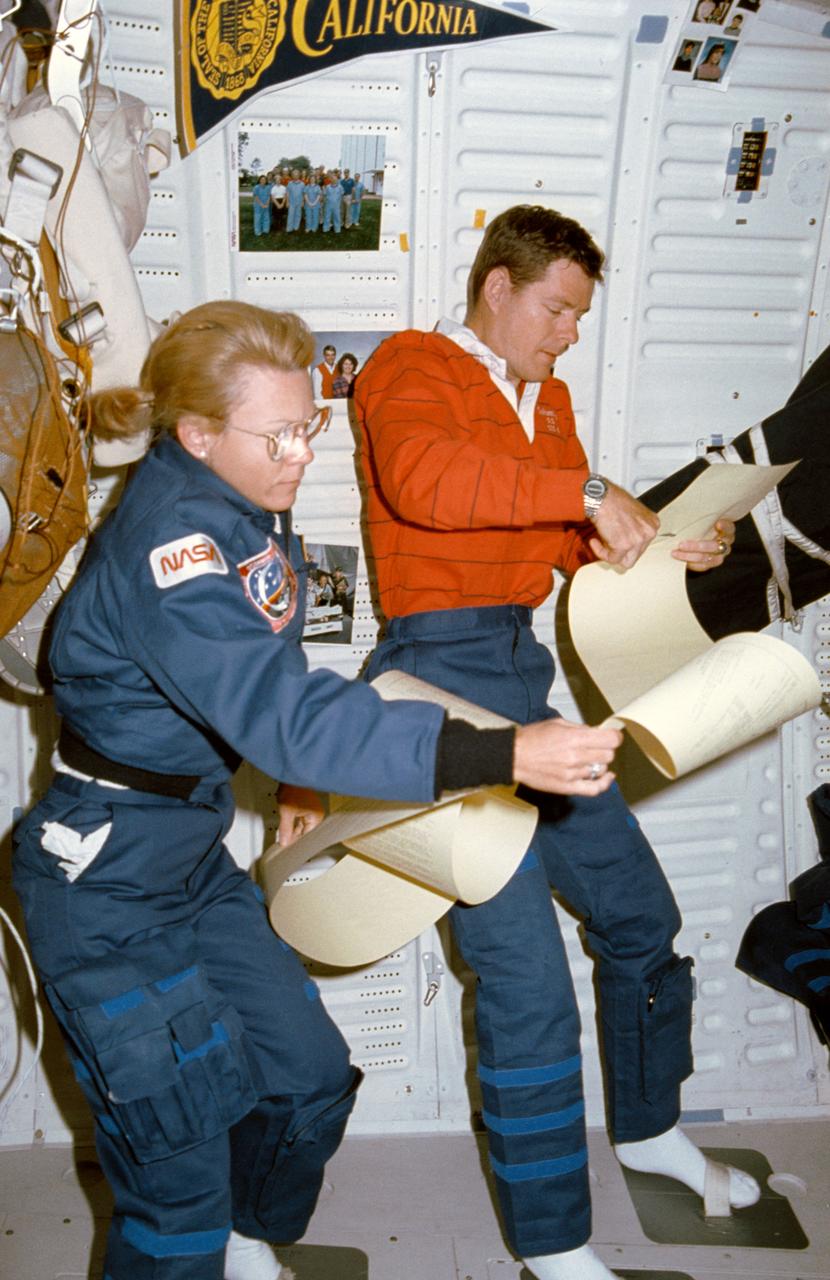
STS040-17-003 (5-14 June 1991) --- Astronauts Rhea Seddon and Bryan D. O'Connor share a 15 ft. length of teleprinter messages aboard Columbia. During the nine-day Spacelab Life Sciences (SLS-1) mission, the STS-40 crewmembers received a large volume of similar print-outs from ground controllers. Using foot restraints, the two obviously expect their perusing to take awhile. This middeck scene was photographed with a 35mm camera.
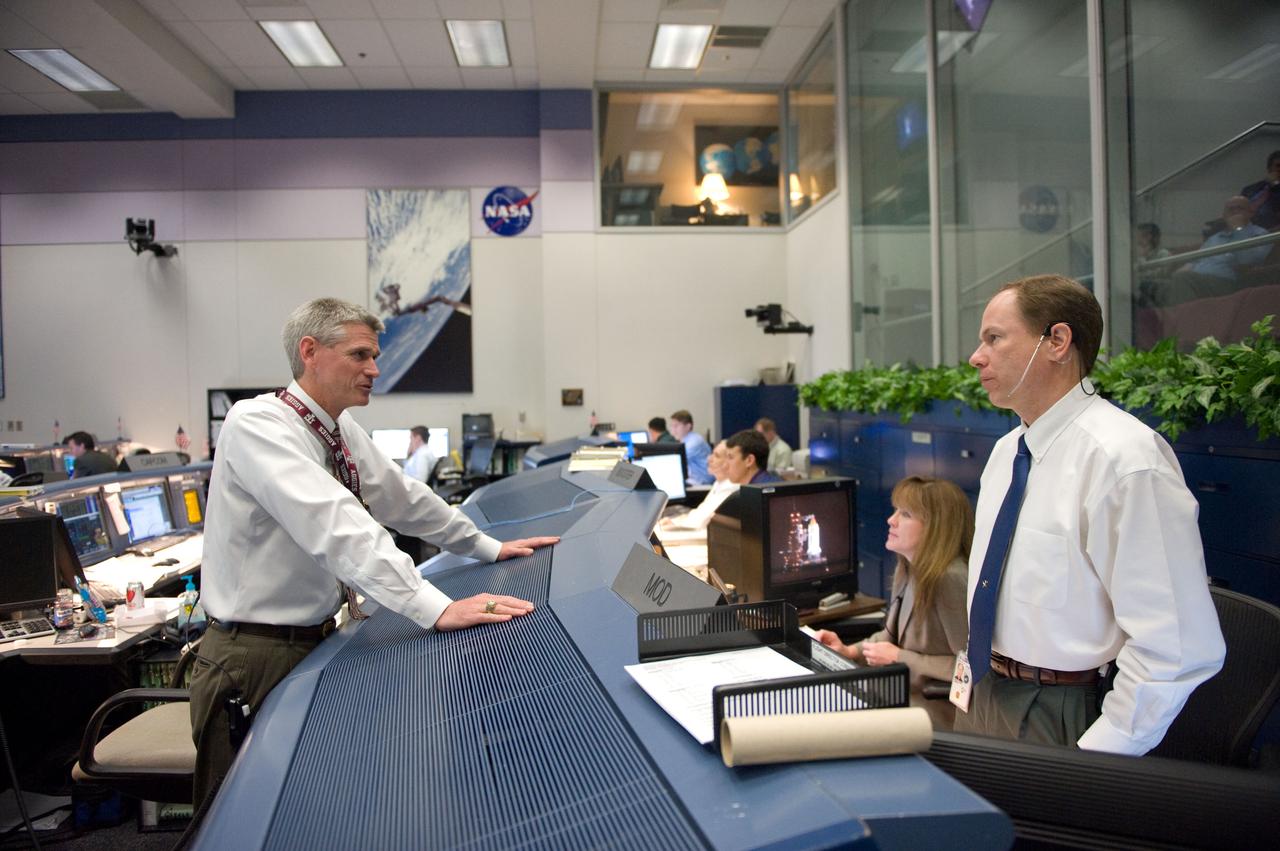
JSC2010-E-046795 (5 April 2010) --- John McCullough (right), chief of the Flight Director Office; Janet Kavandi, deputy director, Flight Crew Operations; and flight director Bryan Lunney are pictured in the space shuttle flight control room in the Johnson Space Center's Mission Control Center during launch countdown activities a few hundred miles away in Florida, site of space shuttle Discovery's STS-131 launch.
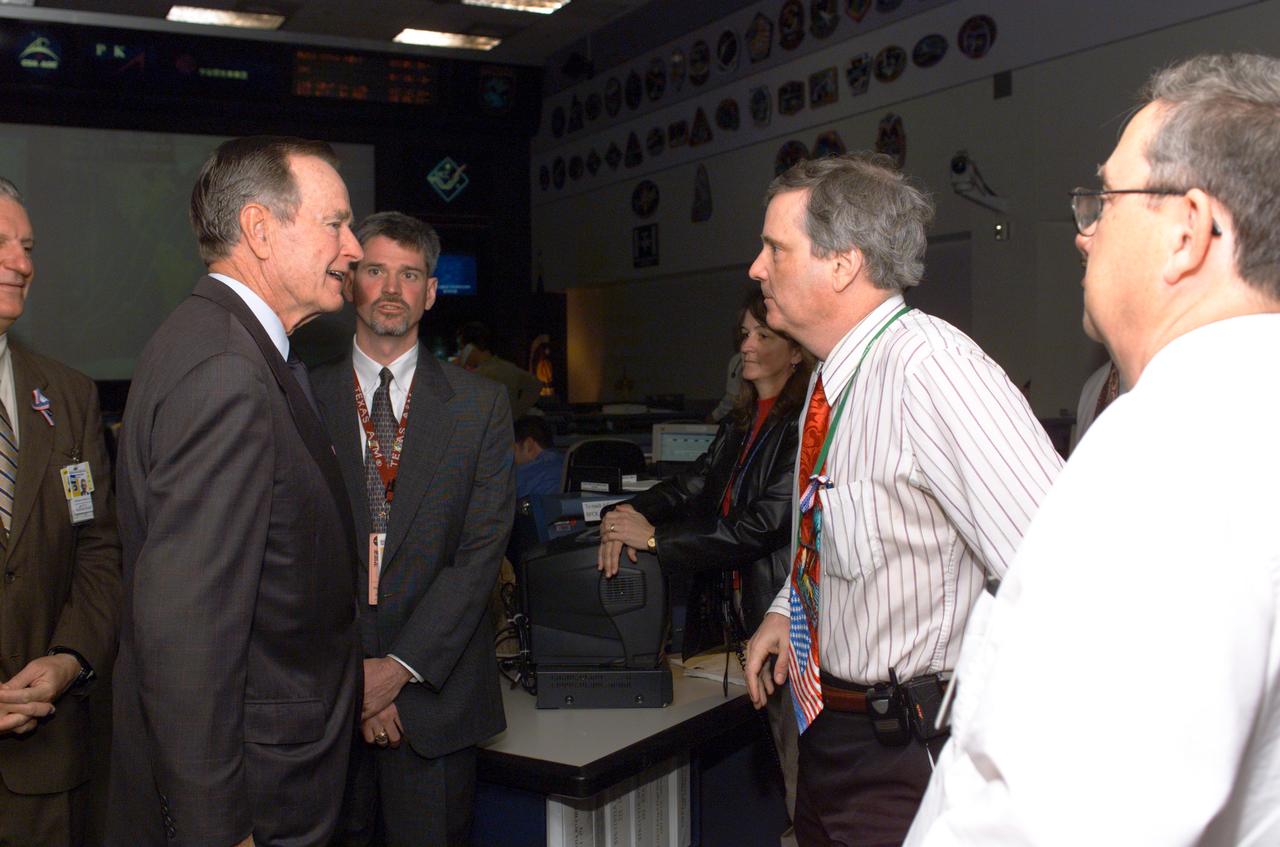
JSC2003-E-05215 (3 February 2003) --- Former President George H.W. Bush (second left) asks a question of Robert Castle during a visit to the Johnson Space Center's Mission Control Center. Others pictured include JSC Director Gen. Jefferson D. Howell, Jr. (far left) and Flight Director Bryan Lunney.
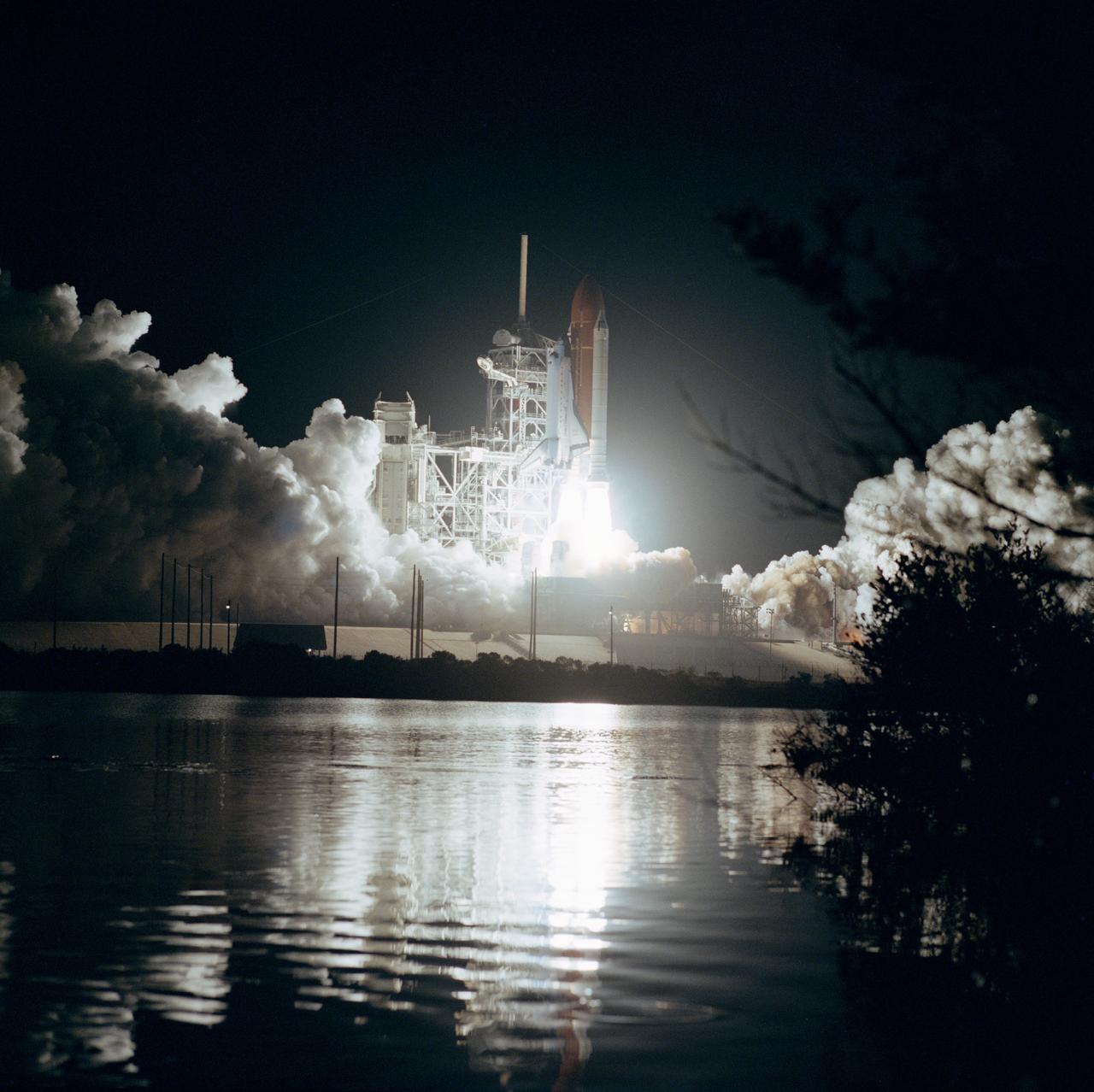
61B-S-067 (26 Nov 1985) --- Space Shuttle Atlantis ascends into the night sky at 7:29 p.m. (EST), November 26, with a seven member crew and three communications satellites aboard. The STS 61-B crewmembers are Brewster Shaw Jr., Bryan D. O?Connor, Mary L. Cleave, Sherwood C. Spring, Jerry L. Ross and Payload Specialists Rodolfo Neri of Mexico (Morelos) and Charles D. Walker of McDonnell Douglas.
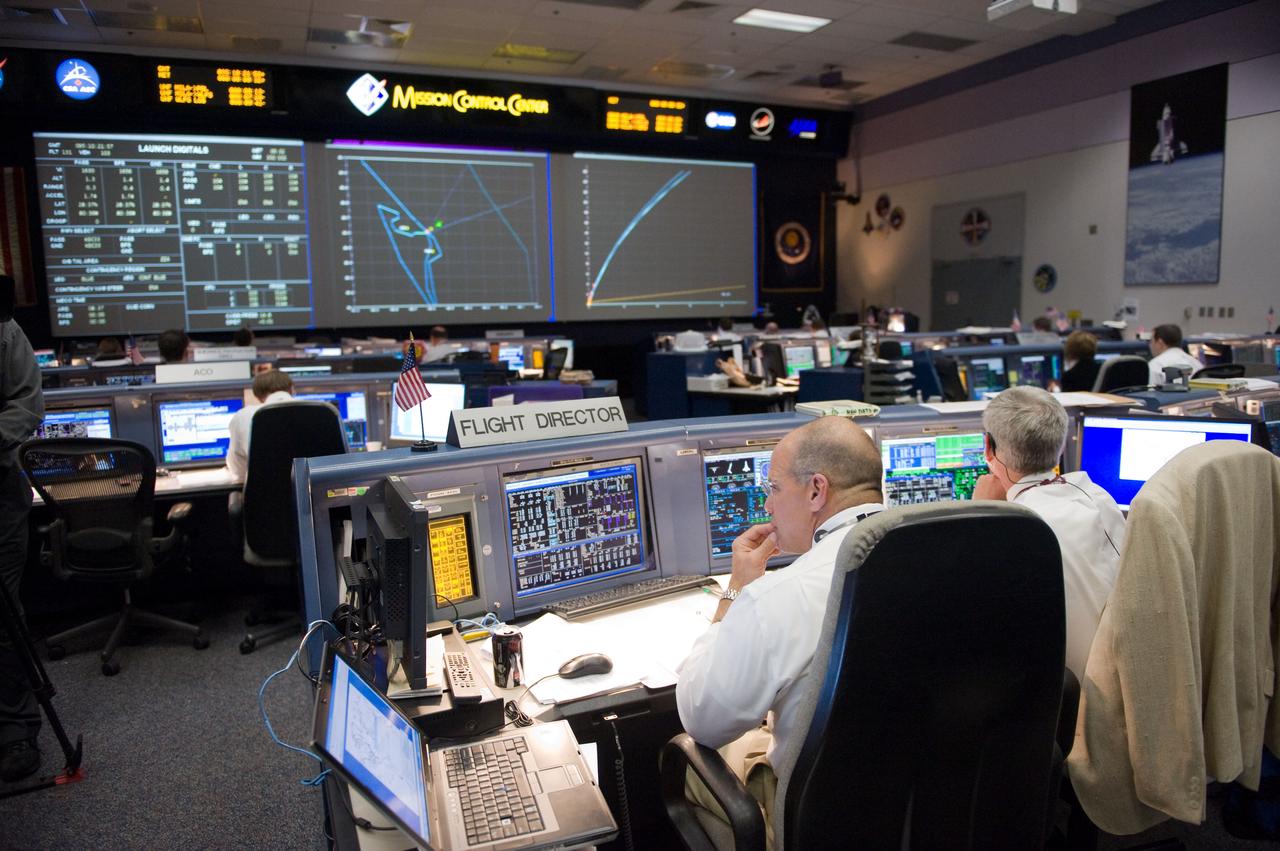
JSC2010-E-046806 (5 April 2010) --- An overall view of the space shuttle flight control room in the Johnson Space Center's Mission Control Center during launch countdown activities a few hundred miles away in Florida, site of space shuttle Discovery's STS-131 launch. In the foreground are flight directors Tony Ceccacci (left) and Bryan Lunney.
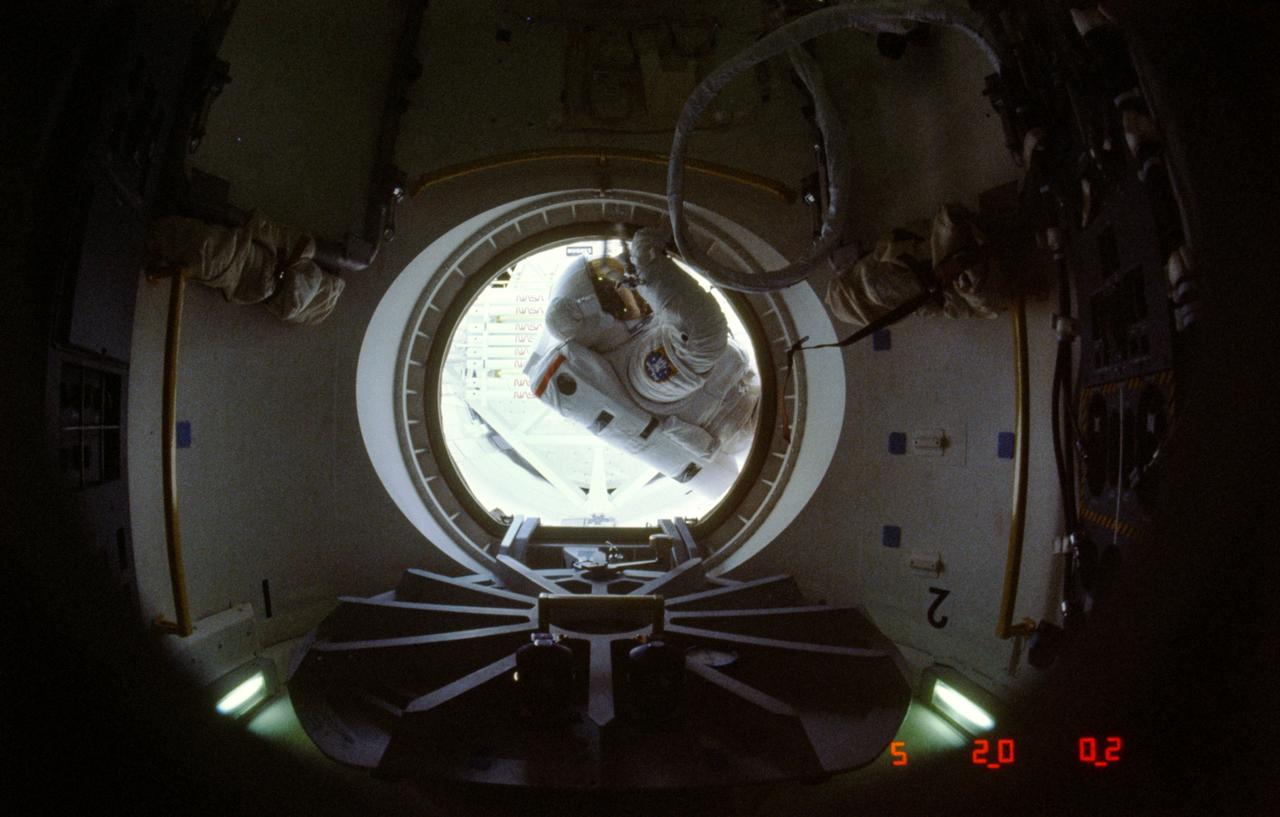
61B-08-026 (1 Dec 1985) --- Astronaut Jerry L. Ross was photographed by astronaut Bryan D. O'Connor through Atlantis's airlock as the mission specialist, fully equipped with his red-striped, white extravehicular mobility unit (EMU), moved out into the cargo bay to begin one of two lengthy extravehicular activities (EVA) on the week-long STS 61-B mission.
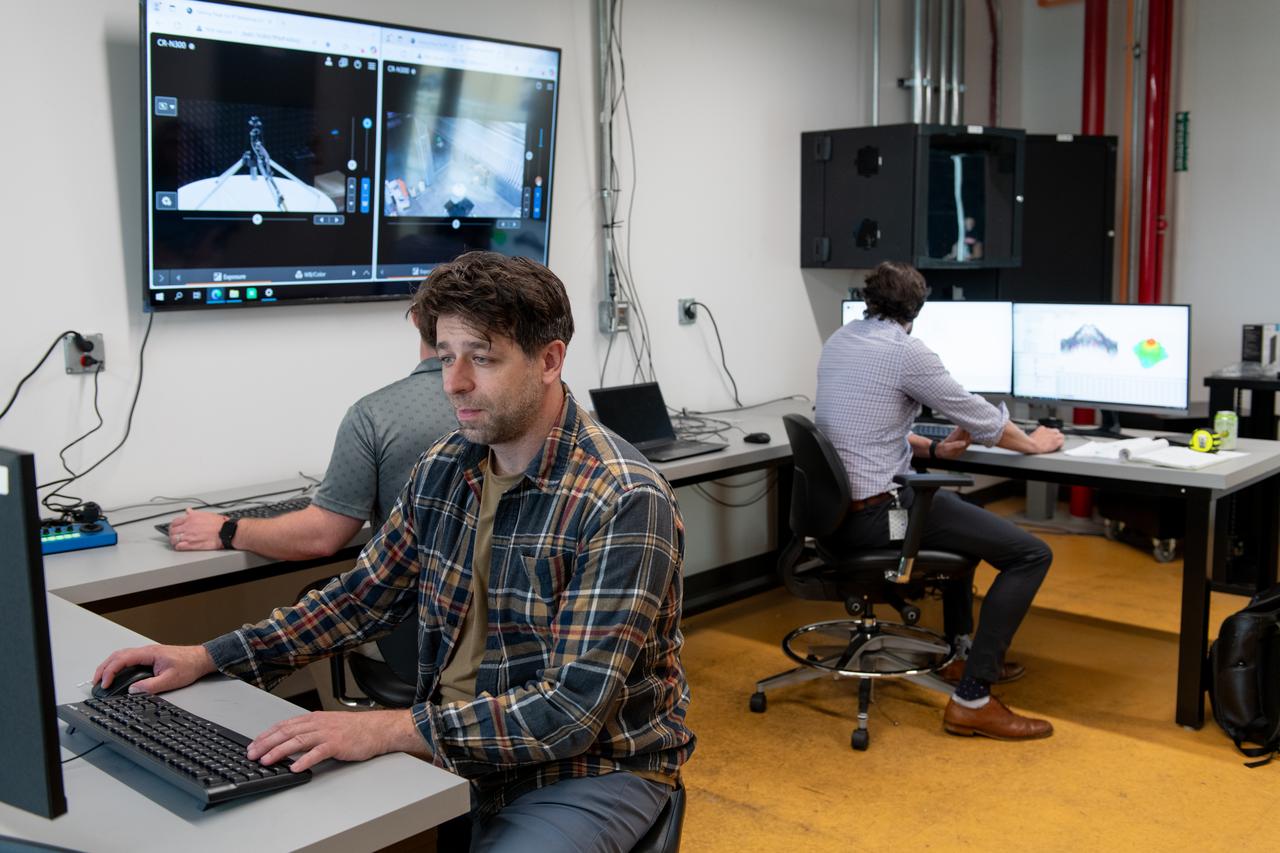
NASA’s Beaming Energy for Air Mobility team successfully completed a first-of-its-kind power beaming test at NASA Glenn. Later this year, the tested transmitter will be used in a demonstration to wirelessly transmit power using microwaves to a custom power receiver — a step toward gap-filling technology that could one day deliver power on the surface of the Moon or Mars. Seth Waldstein, Seth Schisler and Bryan Schoenholz are in the control room reviewing the data.
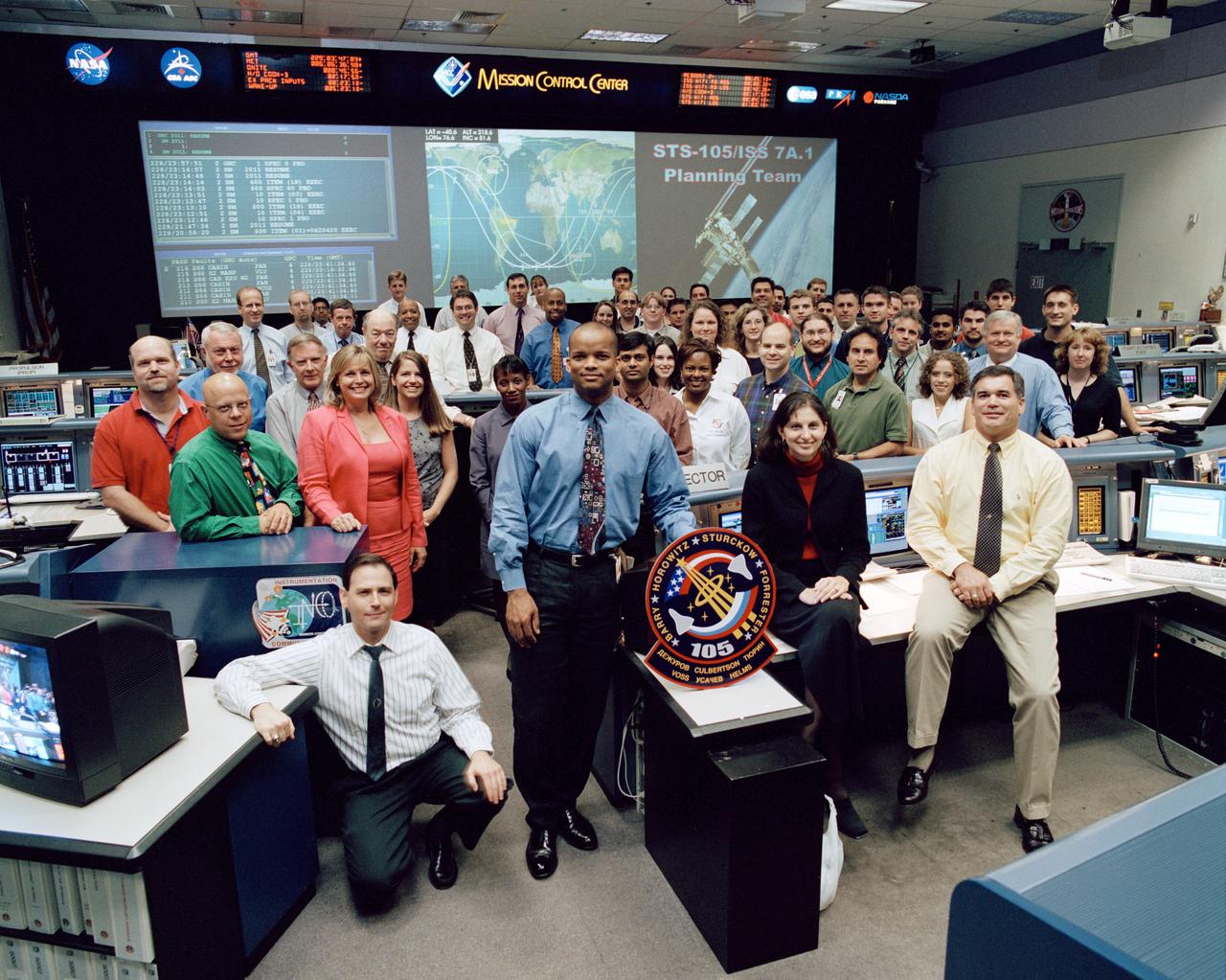
JSC2001-02228 (16 August 2001) --- The members of the STS-105/ISS 7A.1 Planning team pose for a group portrait in the shuttle flight control room (WFCR) in Houston’s Mission Control Center (MCC). Astronaut Robert L. Curbeam, Jr., spacecraft communicator (CAPCOM), stands behind the STS-105 mission logo. Flight director Bryan Austin is visible in the front row on the far right.
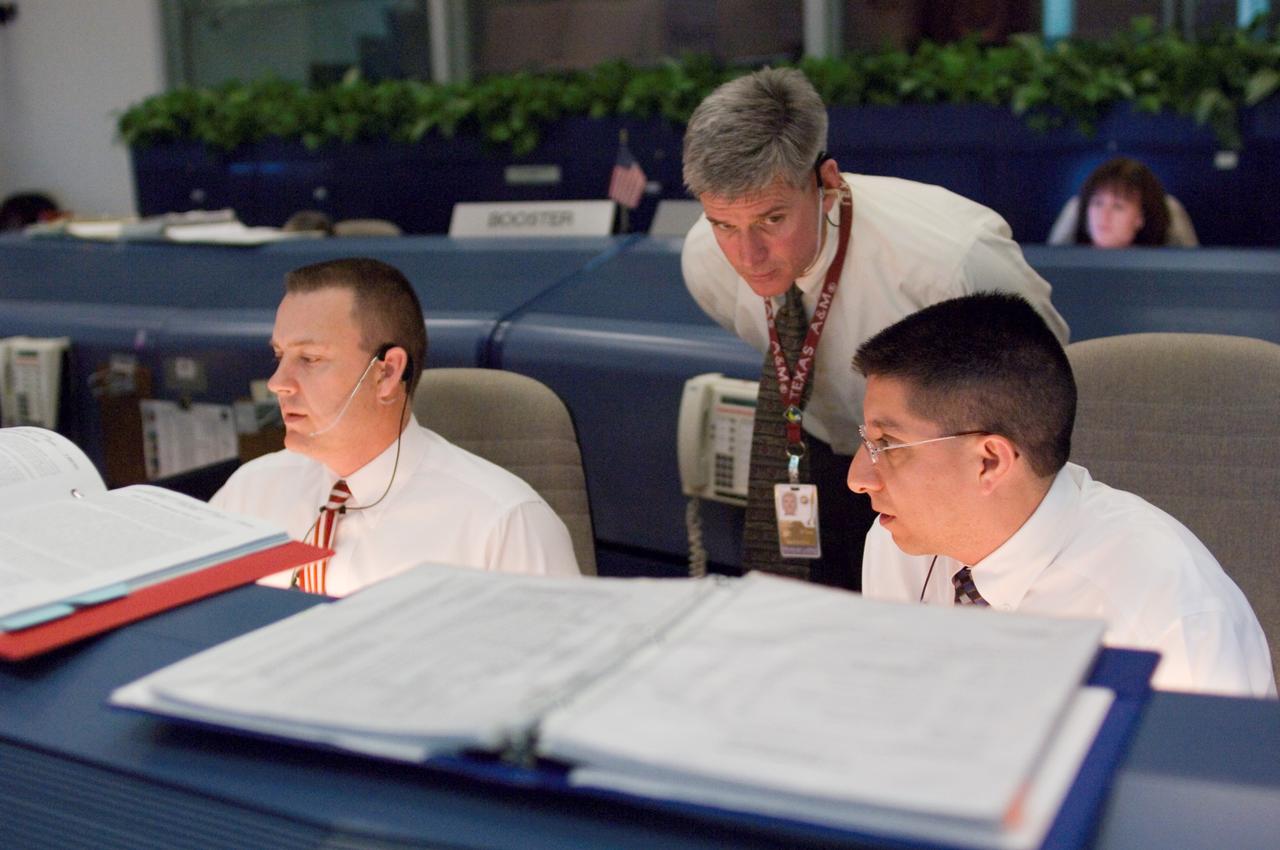
JSC2008-E-010344 (7 Feb. 2008) --- Flight directors Norm Knight (left), Bryan Lunney and Richard Jones monitor data at their consoles in the space shuttle flight control room of Johnson Space Center's Mission Control Center (MCC) during launch countdown activities a few hundred miles away in Florida, site of Space Shuttle Atlantis' scheduled STS-122 launch. Liftoff occurred at 2:45 p.m. (EST) on Feb. 7, 2008 from launch pad 39A at Kennedy Space Center.
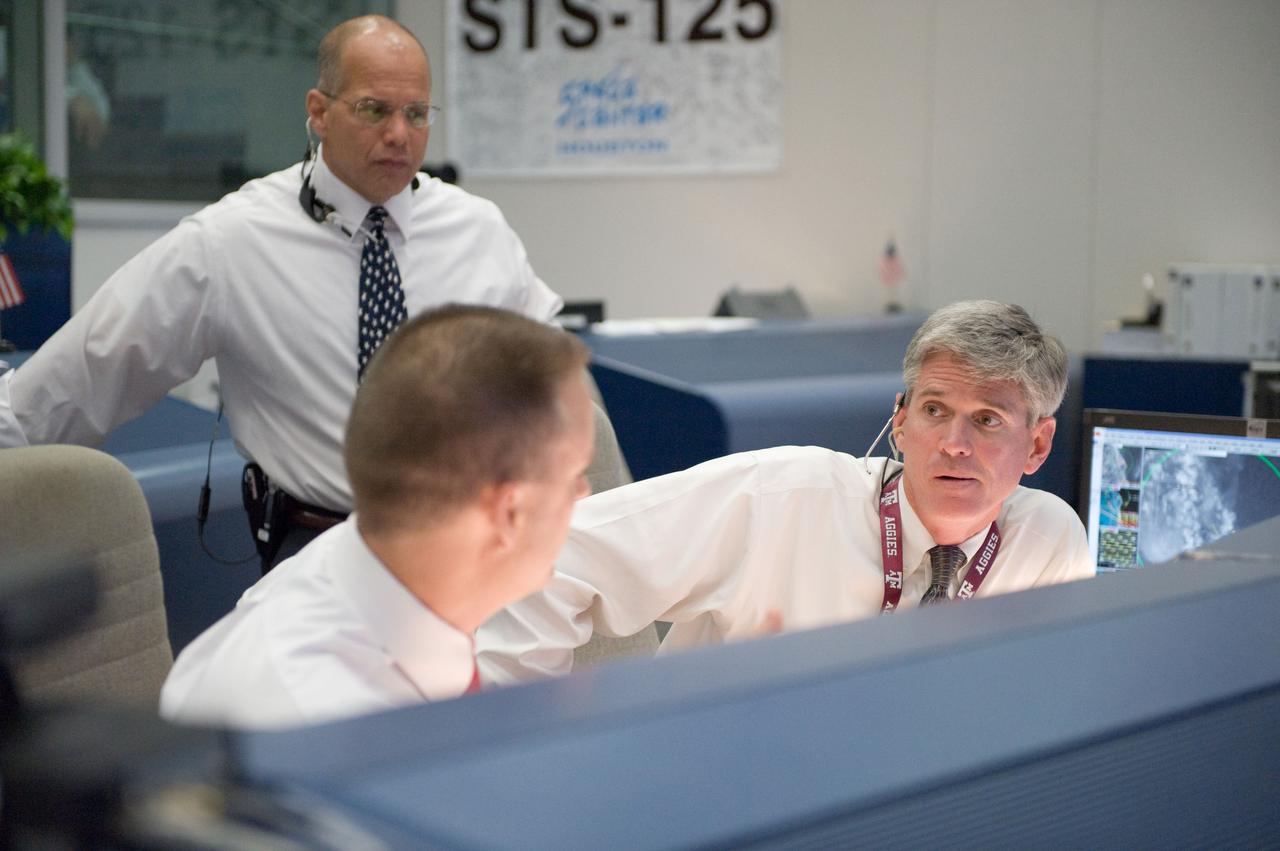
JSC2009-E-118879 (11 May 2009) --- Flight directors Norm Knight (left), Bryan Lunney and Tony Ceccacci (standing) are pictured in the space shuttle flight control room in the Mission Control Center at NASA's Johnson Space Center during launch countdown activities a few hundred miles away in Florida, site of Space Shuttle Atlantis? scheduled STS-125 launch to service the Hubble Space Telescope. Liftoff was on time at 2:01 p.m. (EDT) on May 11, 2009 from launch pad 39A at NASA's Kennedy Space Center.
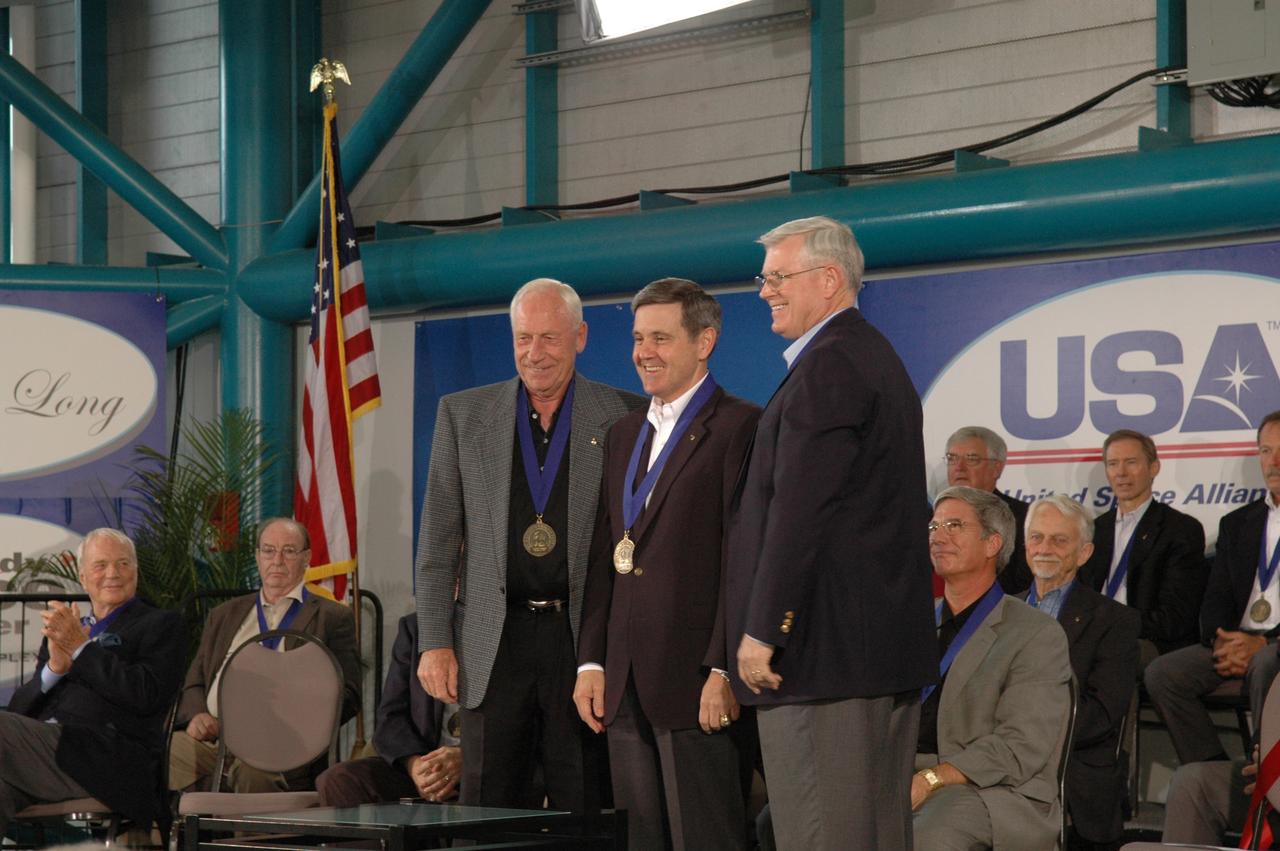
CAPE CANAVERAL, Fla. -- Former astronaut Robert Cabana (center) receives congratulations on his induction into the U.S. Astronaut Hall of Fame from former inductees Al Worden (left) and Michael Coats (right). Other inductees were John Blaha, Loren Shriver; and Bryan O'Connor, NASA's chief of Safety and Mission Assurance at NASA Headquarters in Washington. Other former astronauts attending included Scott Carpenter, John Young, Bob Crippen, and Walt Cunningham. The U.S. Astronaut Hall of Fame is operated by Kennedy Space Center Visitor Complex on behalf of NASA. CNN correspondent John Zarrella hosted the event.
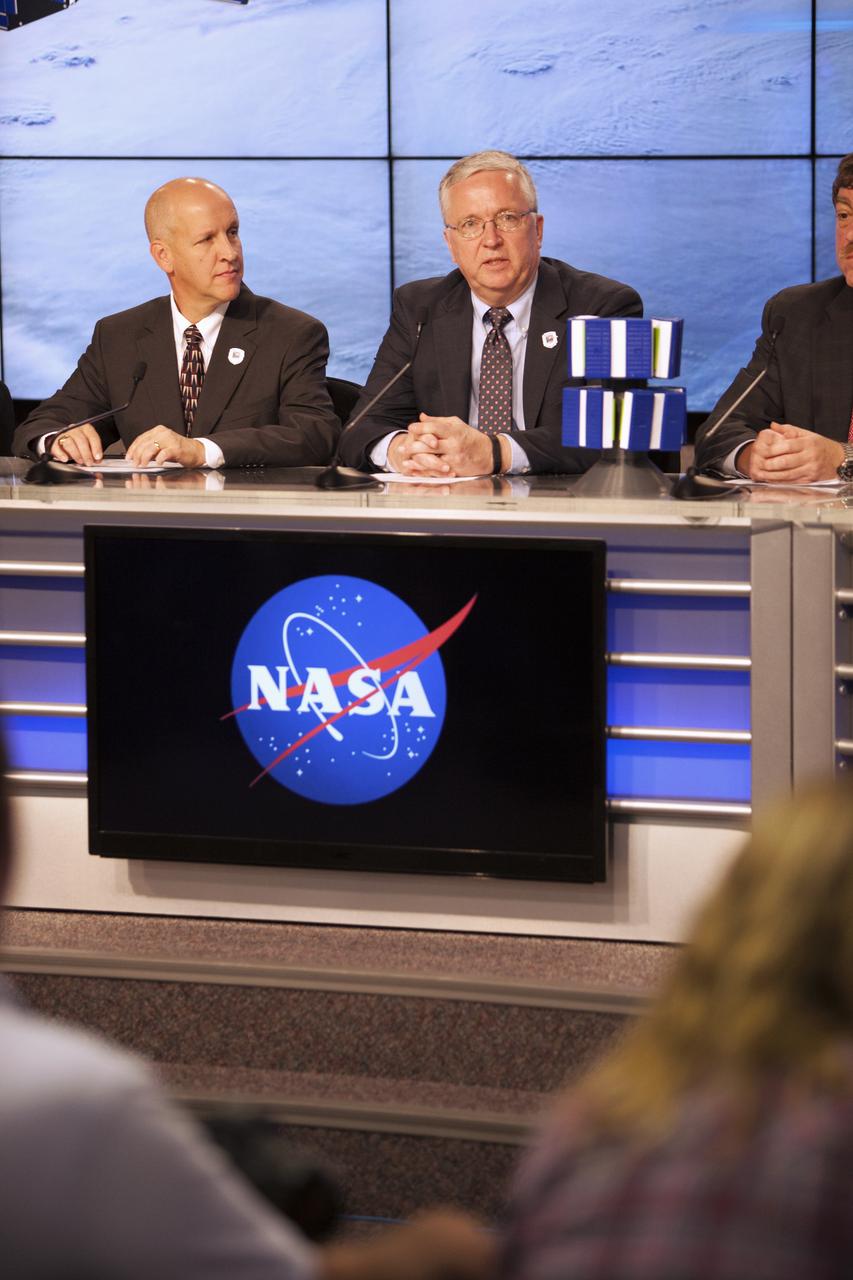
In the Kennedy Space Center’s Press Site auditorium, NASA and industry leaders speak to members of the media during a prelaunch news conference for the agency’s Cyclone Global Navigation Satellite System, or CYGNSS, spacecraft. From left are: Tim Dunn, NASA launch director at Kennedy; and Bryan Baldwin, Pegasus launch vehicle program manager for Orbital ATK, Dulles, Virginia. The eight CYGNSS satellites will make frequent and accurate measurements of ocean surface winds throughout the life cycle of tropical storms and hurricanes. The data will help scientists probe key air-sea interaction processes that take place near the core of storms, which are rapidly changing and play a crucial role in the beginning and intensification of hurricanes.
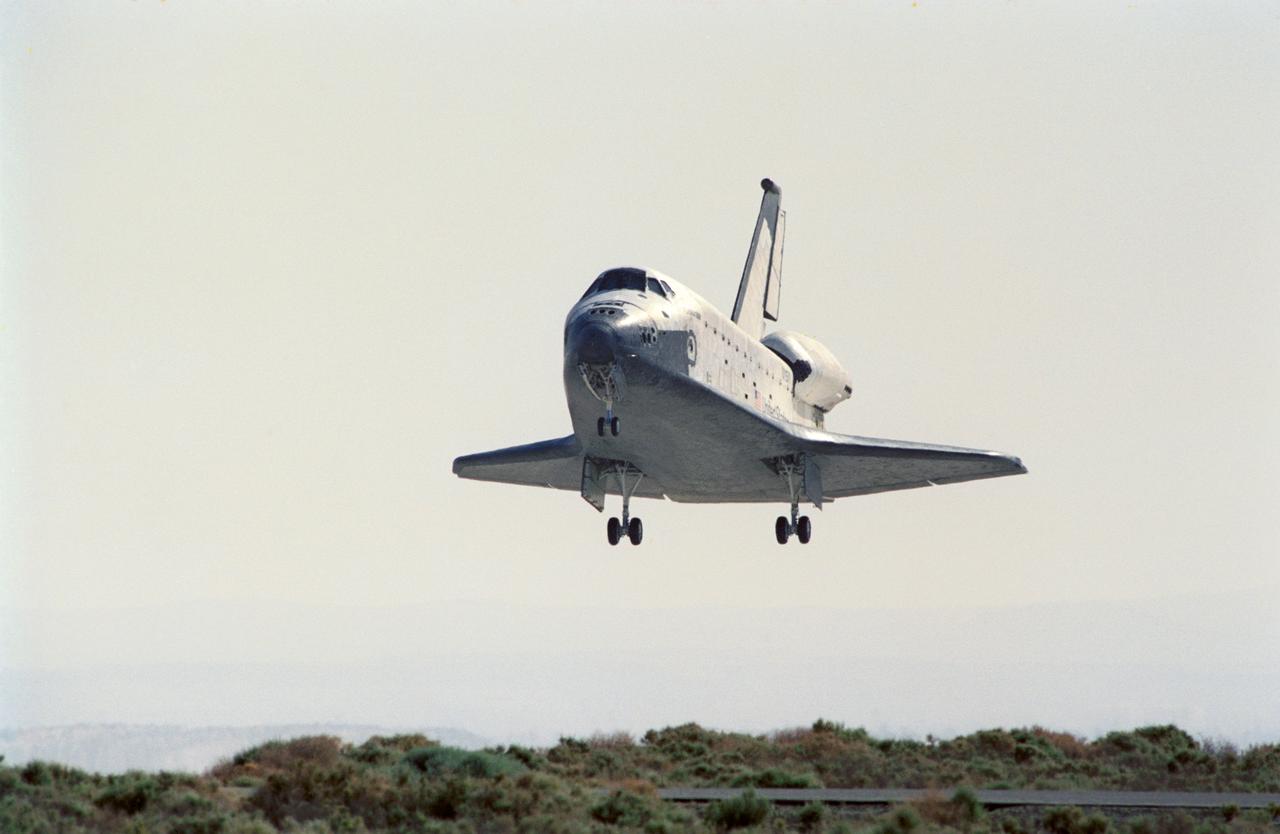
STS040-S-174 (14 June 1991) --- The Space Shuttle Columbia is only moments away from touchdown on Runway 22 at Edwards Air Force Base in California. The landing completes a successful nine-day Spacelab Life Sciences (SLS-1) mission, the first ever devoted exclusively to life sciences research. Onboard the spacecraft were astronauts Bryan D. O'Connor, Sidney M. Gutierrez, Rhea Seddon, James P. Bagian and Tamara E. Jernigan; and payload specialists F. Drew Gaffney and Millie Hughes-Fulford. Landing occurred at 8:39:11 a.m. (PDT), June 14, 1991.
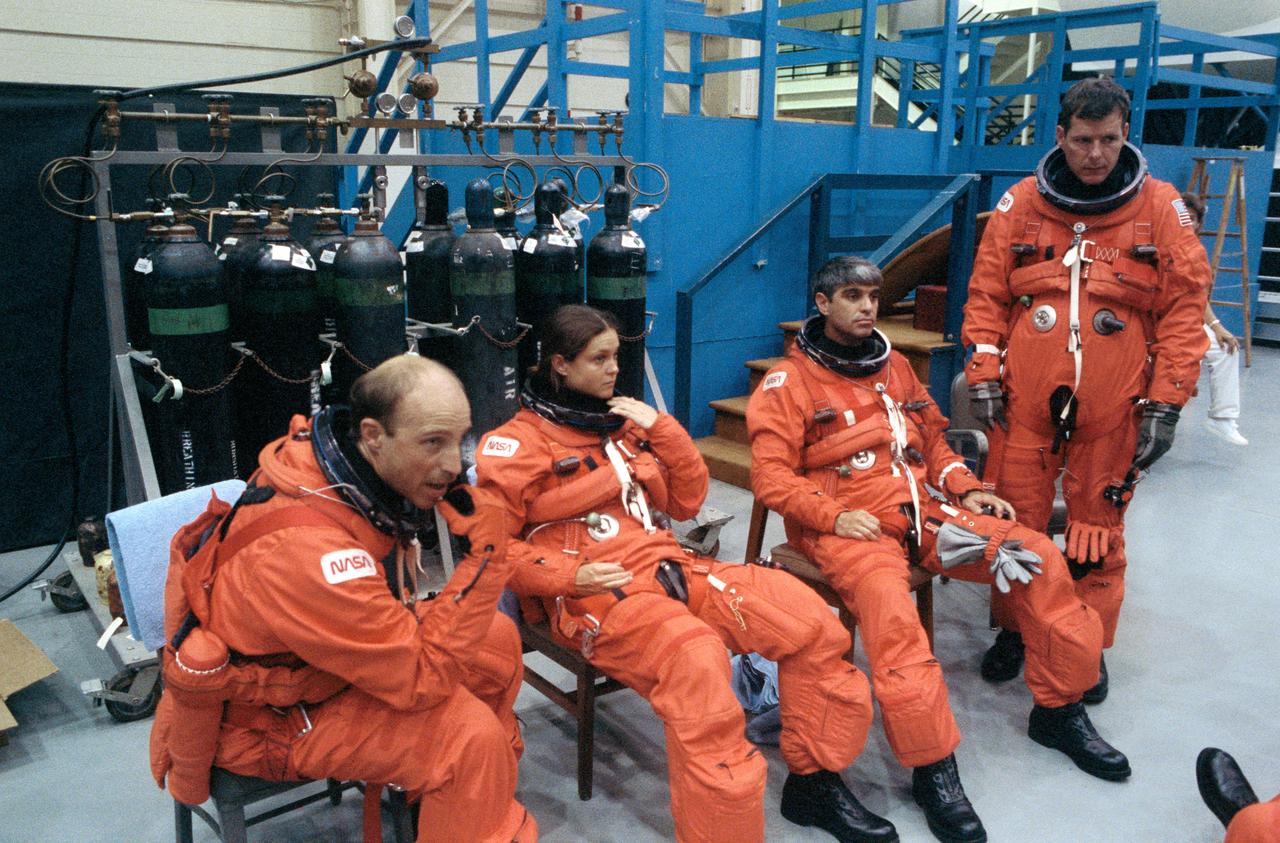
S90-41372 (11 June 1990) --- Crewmembers assigned to NASA's STS 40 Spacelab Life Sciences (SLS-1) mission take a brief break during emergency egress training in the Shuttle mockup and integration laboratory at the Johnson Space Center (JSC). Left to right are astronauts James P. Bagian, Tamara E. Jernigan, both mission specialists; and Sidney M. Gutierrez, pilot; and Bryan D. O'Connor, mission commander. Out of frame are astronaut Rhea Seddon, mission specialist, and payload specialists Millie Hughes-Fulford and Drew Gaffney.
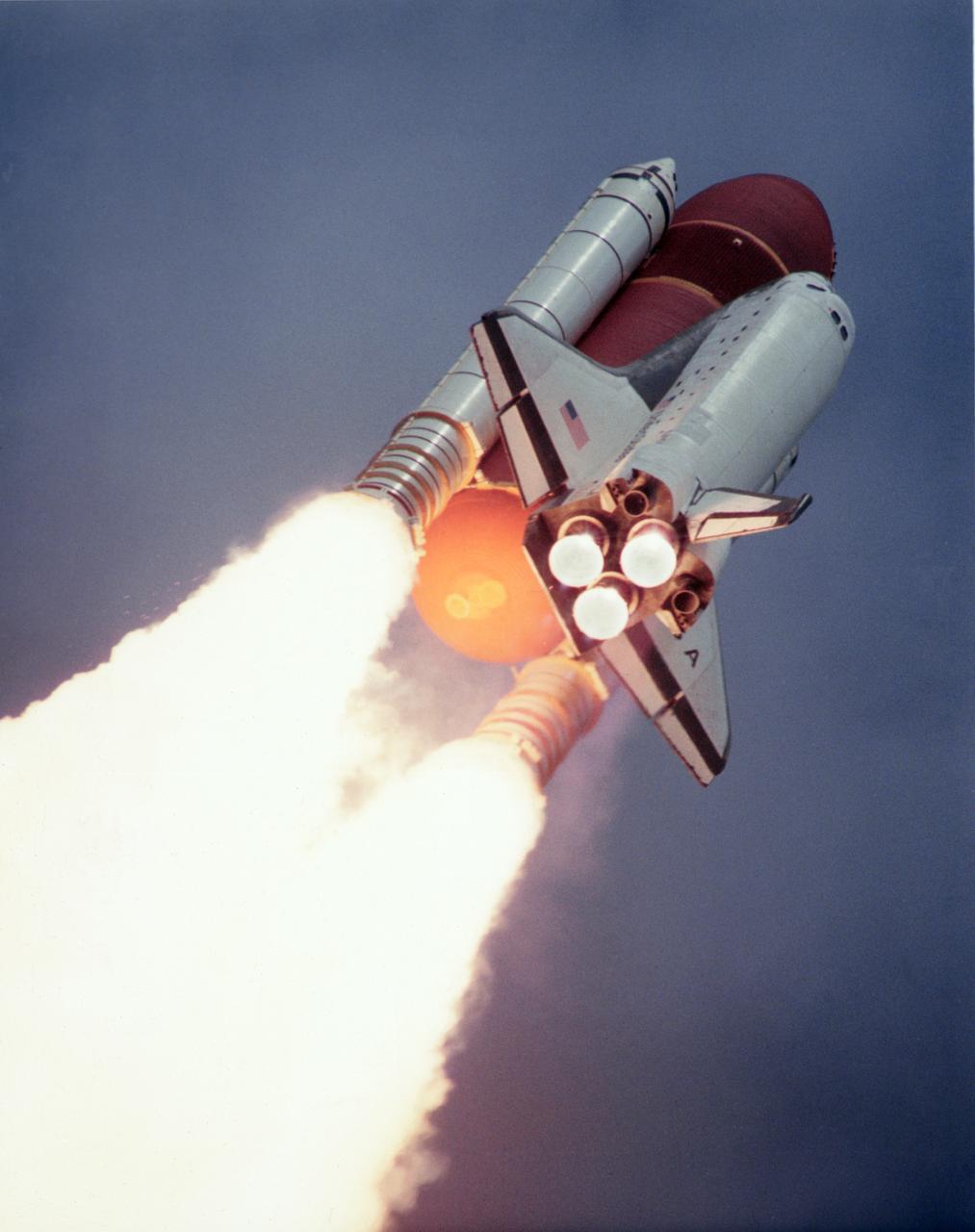
Launched aboard the Space Shuttle Columbia on June 5, 1991 at 9:24; am (EDT), the STS-40 mission was the fifth dedicated Spacelab Mission, Spacelab Life Sciences-1 (SLS-1), and the first mission dedicated solely to life sciences. The STS-40 crew included 7 astronauts: Bryan D. O’Connor, commander; Sidney M. Gutierrez, pilot; F. Drew Gaffney, payload specialist 1; Milli-Hughes Fulford, payload specialist 2; James P. Bagian, mission specialist 1; Tamara E. Jernigan, mission specialist 2; and M. Rhea Seddon, mission specialist 3.
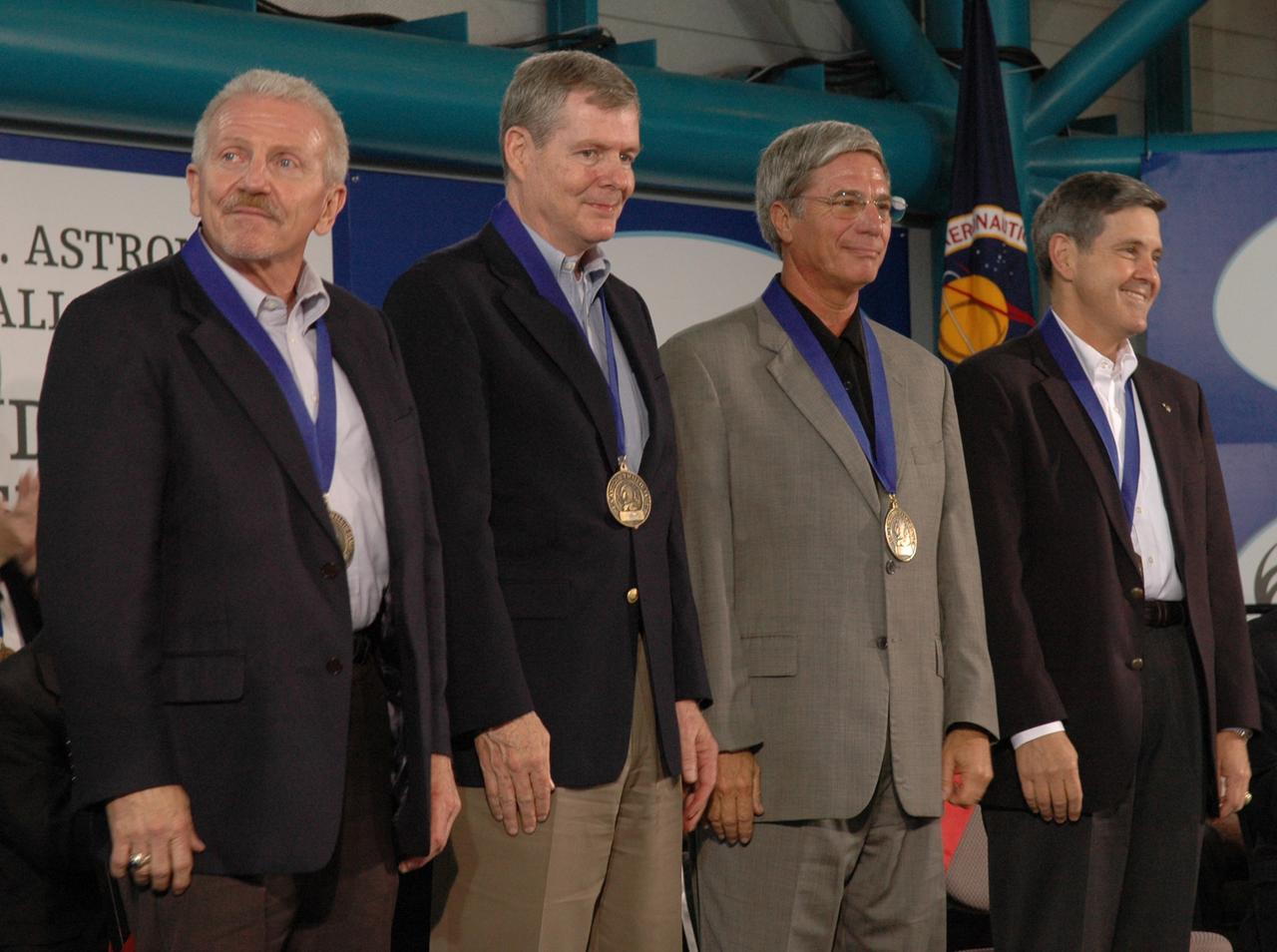
CAPE CANAVERAL, Fla. -- The new inductees into the U.S. Astronaut Hall of Fame stand for an ovation during the ceremony May 3 at NASA's Kennedy Space Center. From left are Loren Shriver; Bryan O'Connor, NASA's chief of Safety and Mission Assurance at NASA Headquarters in Washington; John Blaha; and Robert Cabana, center director of NASA's Stennis Space Center in Mississippi. Other former astronauts attending included Scott Carpenter, John Young, Bob Crippen, and Walt Cunningham. The U.S. Astronaut Hall of Fame is operated by Kennedy Space Center Visitor Complex on behalf of NASA. CNN correspondent John Zarrella hosted the event.
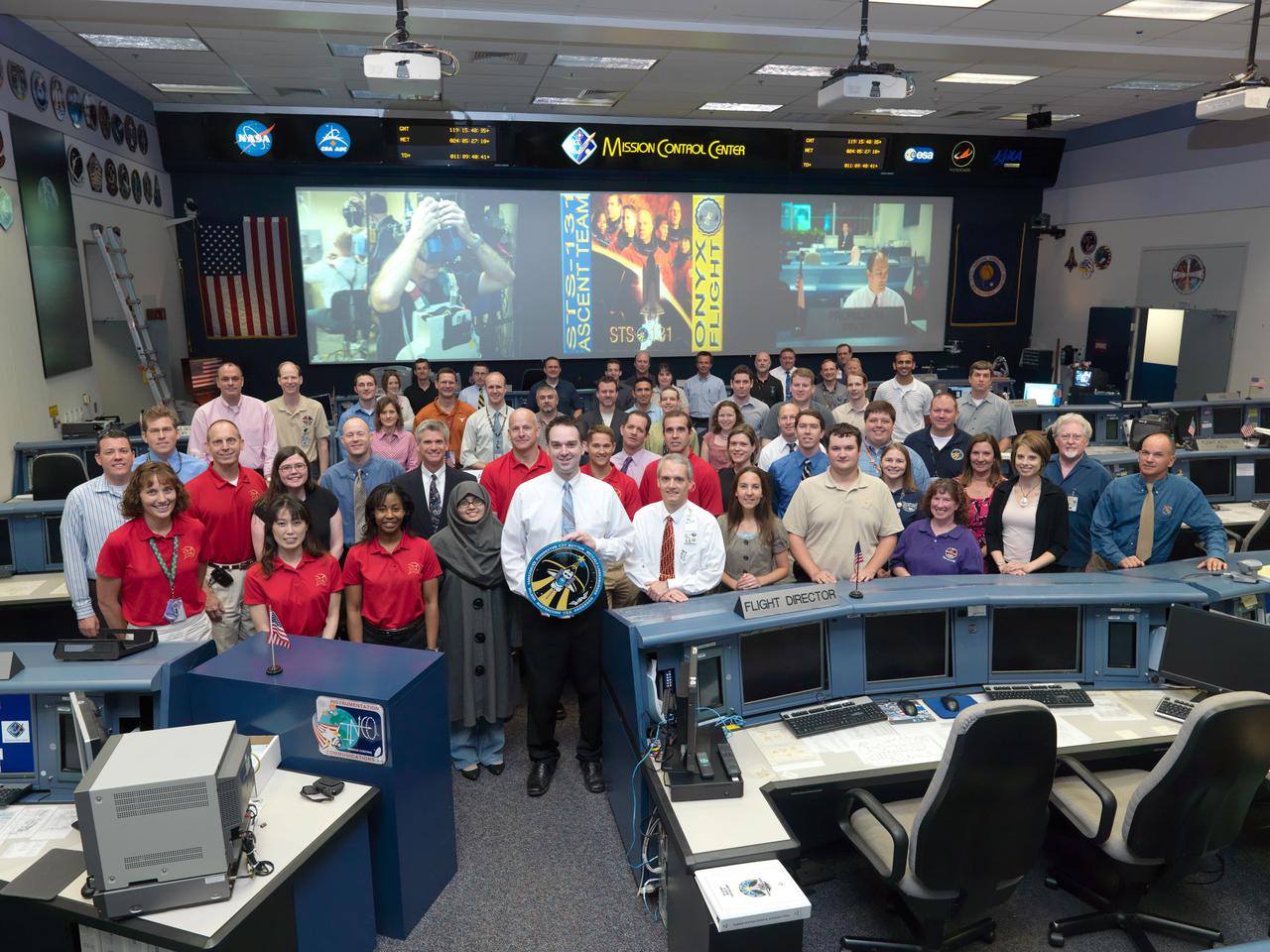
JSC2010-E-060725 (29 April 2010) --- The members of the STS-131 Ascent flight control team and crew members pose for a group portrait in the space shuttle flight control room in the Mission Control Center at NASA's Johnson Space Center. Flight director Bryan Lunney and NASA astronaut Alan Poindexter, commander, (left center) stand on the second row. Additional crew members pictured are NASA astronauts James P. Dutton Jr., pilot; Clayton Anderson, Dorothy Metcalf-Lindenburger, Stephanie Wilson, Rick Mastracchio and Japan Aerospace Exploration Agency (JAXA) astronaut Naoko Yamazaki, all mission specialists.
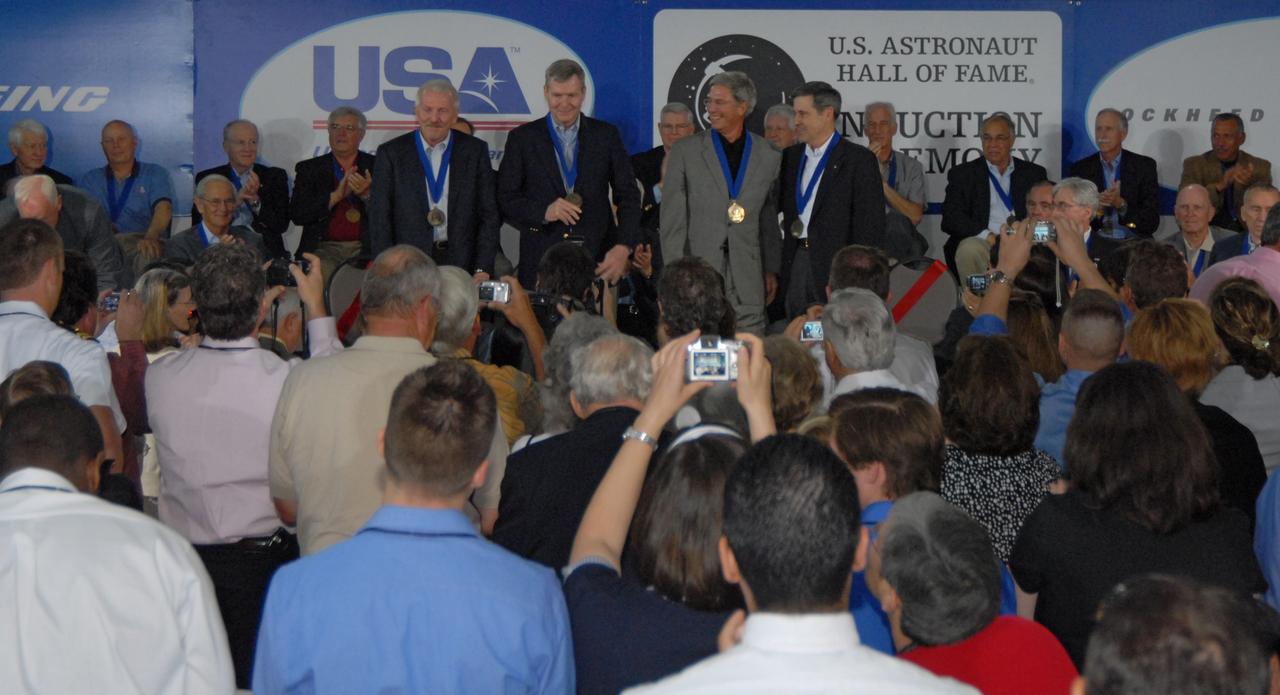
CAPE CANAVERAL, Fla. -- The new inductees into the U.S. Astronaut Hall of Fame step forward on stage for photographs following their induction. From left are Loren Shriver; Bryan O'Connor, NASA's chief of Safety and Mission Assurance at NASA Headquarters in Washington; John Blaha; and Robert Cabana, center director of NASA's Stennis Space Center in Mississippi. The ceremony was held May 3 at NASA's Kennedy Space Center. Other former astronauts attending included Scott Carpenter, John Young, Bob Crippen, and Walt Cunningham. The U.S. Astronaut Hall of Fame is operated by Kennedy Space Center Visitor Complex on behalf of NASA. CNN correspondent John Zarrella hosted the event.
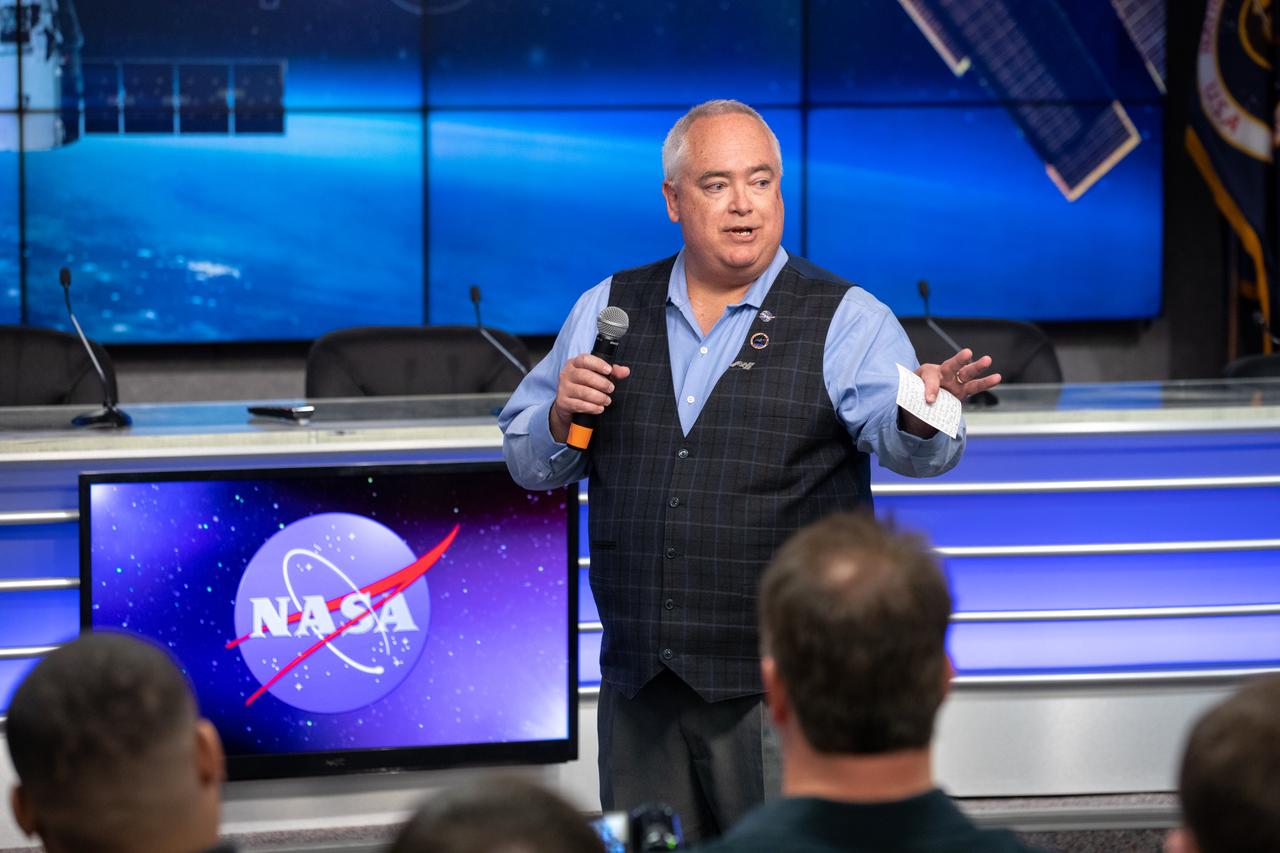
A What's on Board Briefing for SpaceX's 19th Commercial Resupply Services (CRS-19) mission for NASA to the International Space Station took place on Dec. 3, 2019, at the agency's Kennedy Space Center in Florida. Bryan Dansberry, assistant program scientist for NASA's International Space Station Program Science Office shares an overview of the research being conducted aboard the space station and how it benefits exploration and humanity. The SpaceX Falcon 9 rocket and Dragon cargo module are scheduled to launch on Dec. 4, 2019, from Space Launch Complex 40 at Cape Canaveral Air Force Station in Florida.