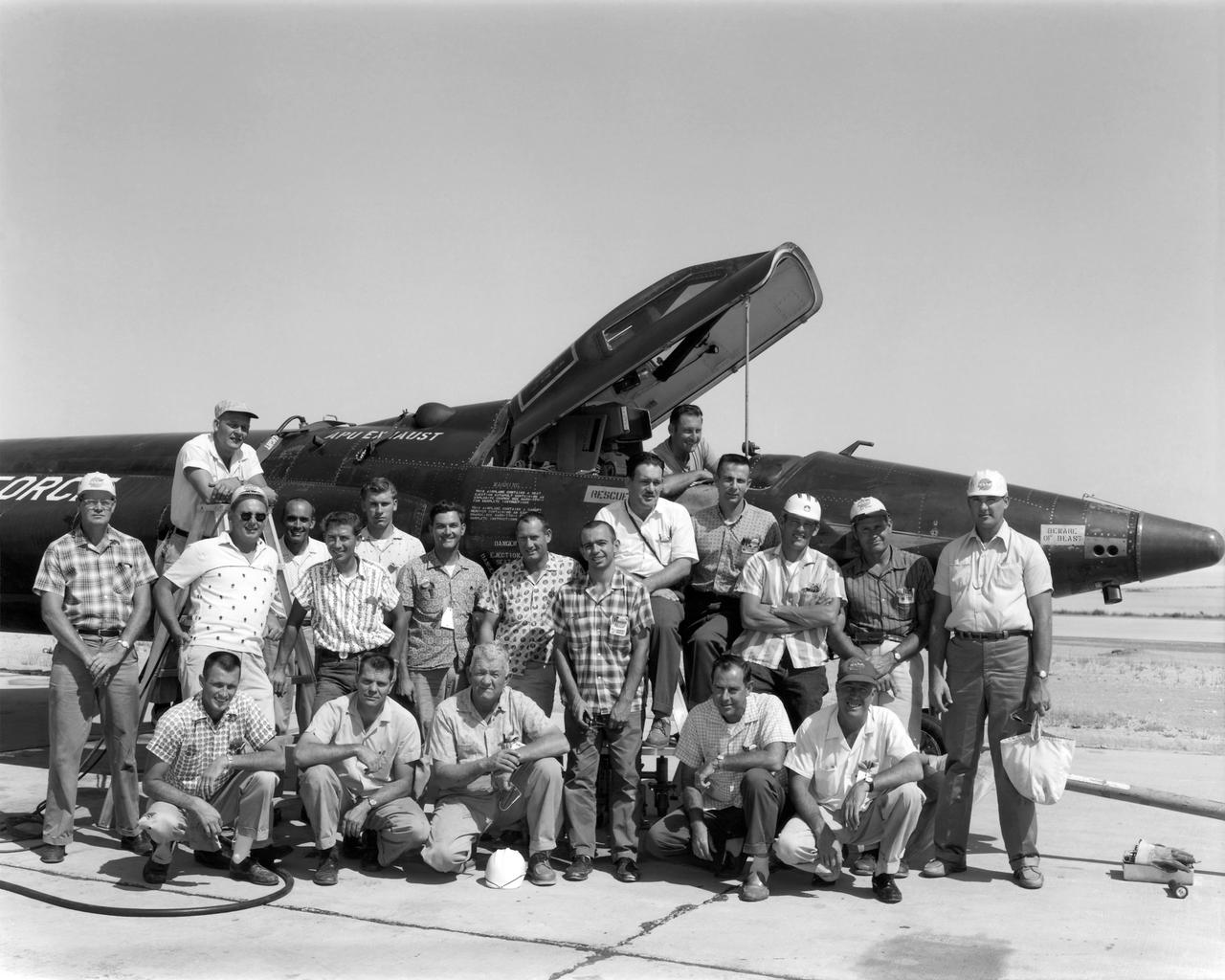
X-15 personnel July 1962 Cockpit: Edward "Ed" Nice Ladder: Thomas "Tom" McAlister Back Row, left to right: William Clark, Edward "Ed" Sabo, Donald "Don" Hall, Billy Furr, Allen Dustin, Raymond "Ray" White, George E. Trott, Alfred "Al" Grieshaber, Merle Curtis, LeRoy "Lee" Adelsbach, Allen Lowe, Jay L. King, Lorenzo "Larry" Barnett. Kneeling, left to right: Byron Gibbs, Price "Bob" Workman, Ira Cupp, unidentified, John Gordon.
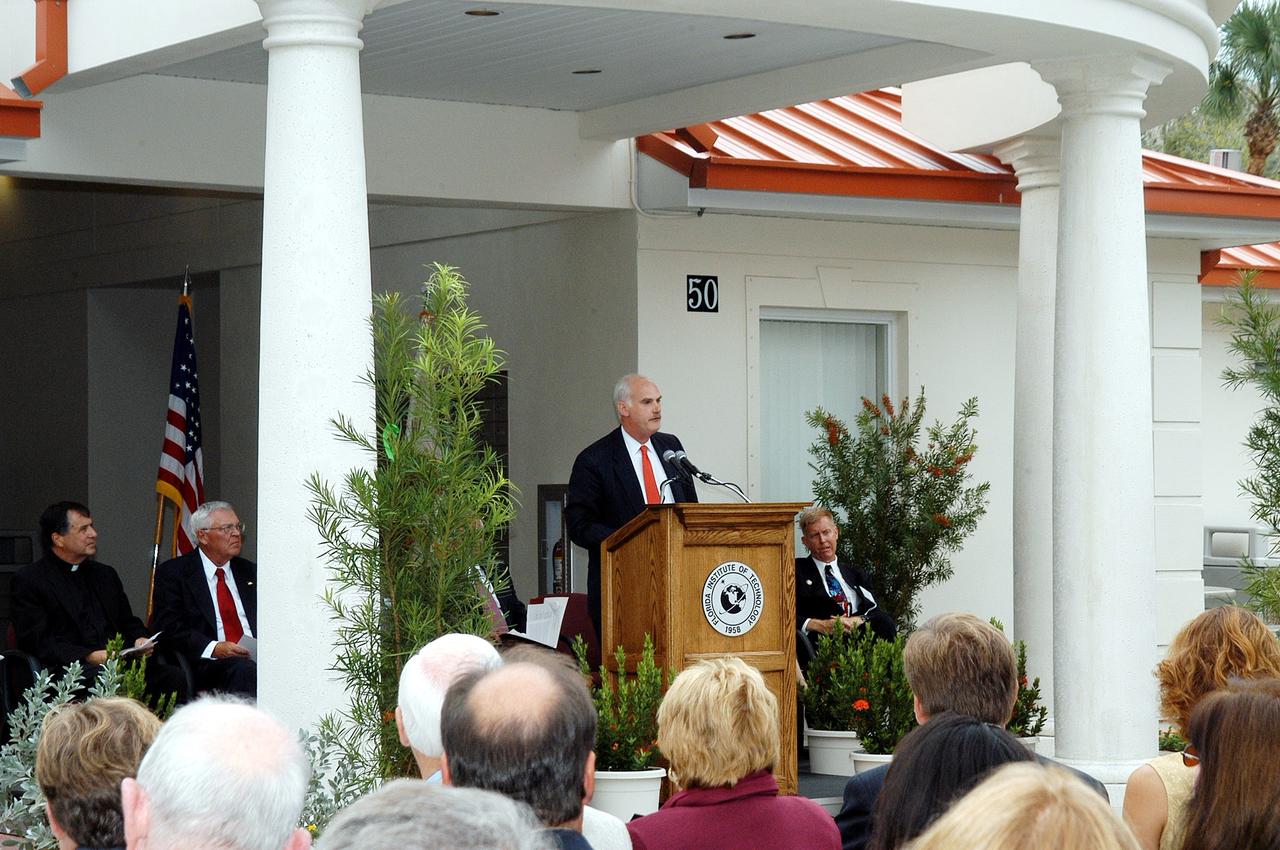
KENNEDY SPACE CENTER, FLA. -- NASA Associate Administrator for Space Flight William F. Readdy addresses the family members of the STS-107 astronauts, other dignitaries, members of the university community and the public gathered for the dedication ceremony of the Columbia Village at the Florida Institute of Technology in Melbourne, Fla. Each of the seven new residence halls in the complex is named for one of the STS-107 astronauts who perished during the Columbia accident -- Rick Husband, Willie McCool, Laurel Clark, Michael Anderson, David Brown, Kalpana Chawla, and Ilan Ramon.
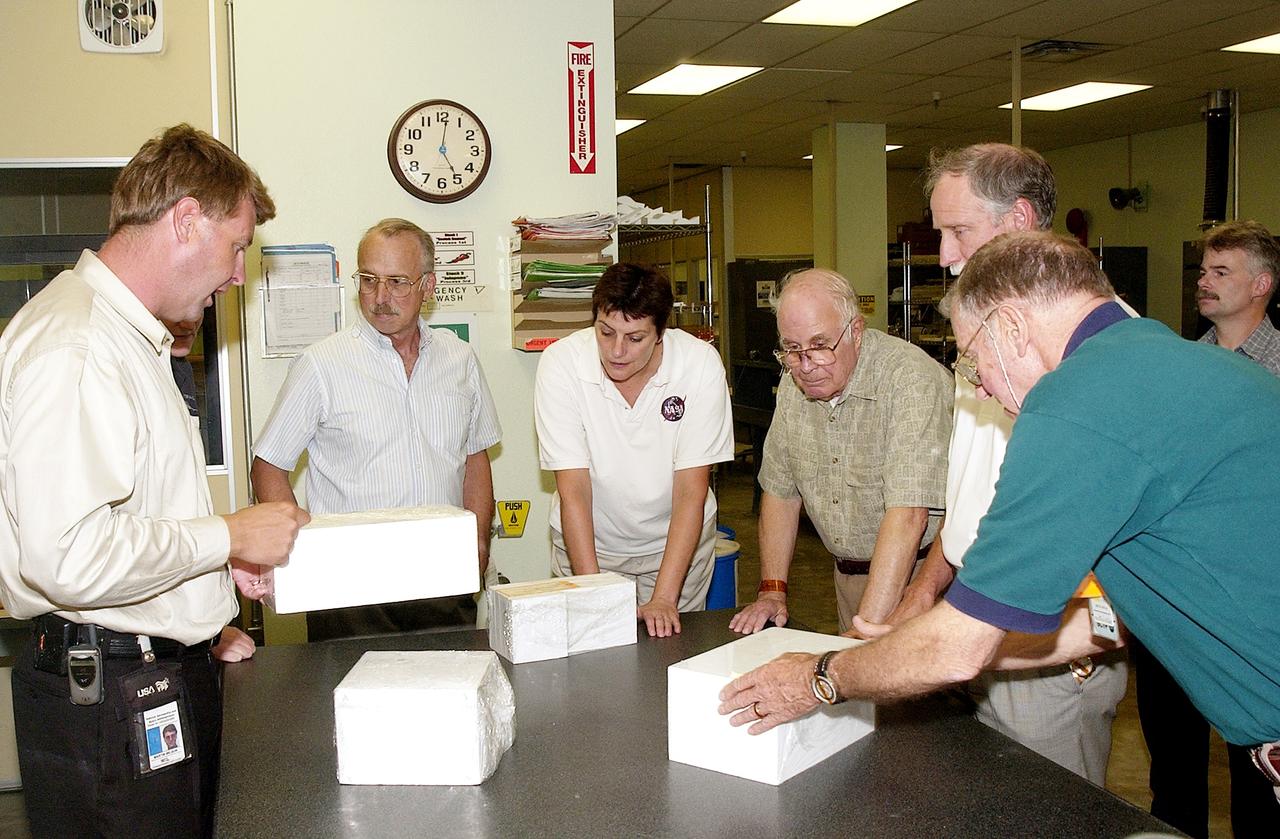
KENNEDY SPACE CENTER, FLA. - On a tour of the Tile Shop, members of the Stafford-Covey Return to Flight Task Group (SCTG) learn about PU-tiles, part of an orbiter’s Thermal Protection System. At left is Martin Wilson, with United Space Alliance. Others (left to right) around the table are James Adamson, Dr. Kathryn Clark, William Wegner, Richard Covey and Joe Engle. Covey, former Space Shuttle commander, is co-chair of the SCTG, along with Thomas P. Stafford, Apollo commander. Chartered by NASA Administrator Sean O’Keefe, the task group will perform an independent assessment of NASA’s implementation of the final recommendations by the Columbia Accident Investigation Board.
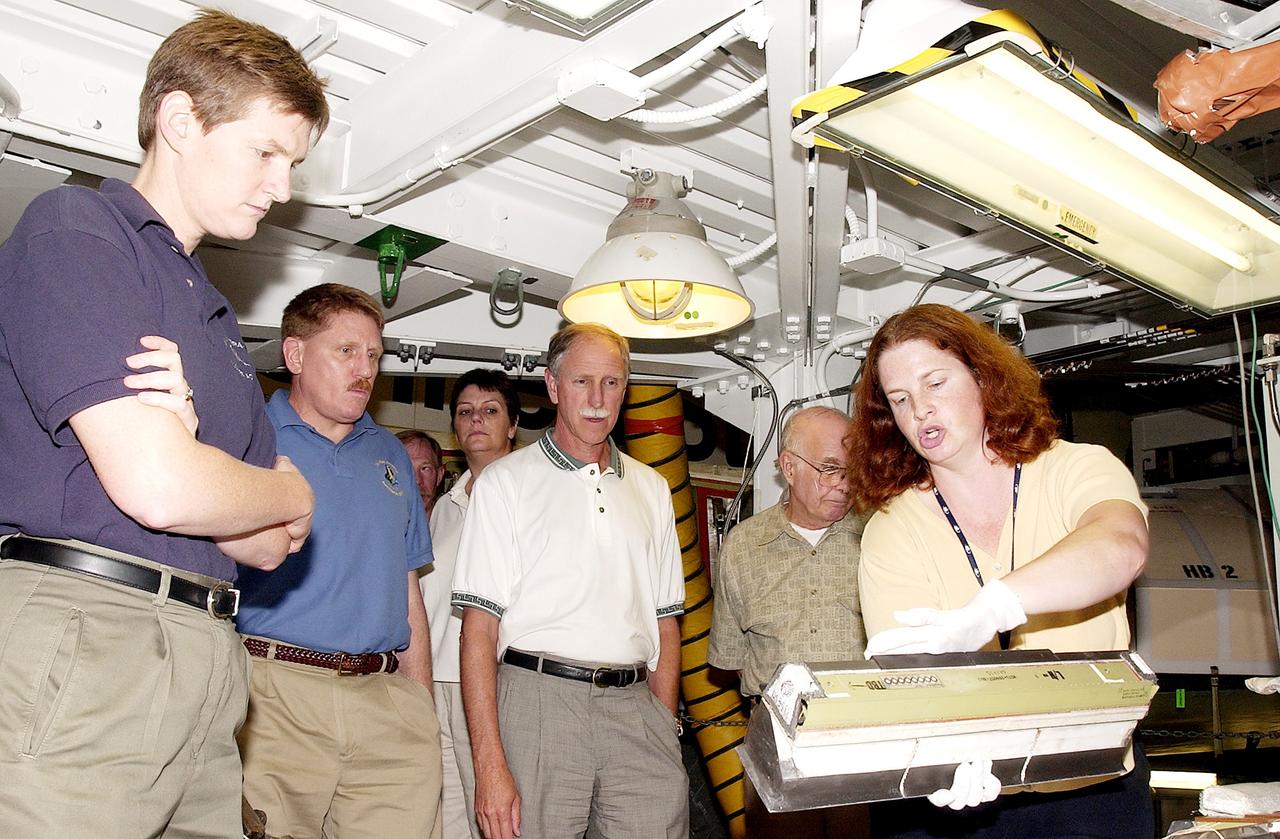
KENNEDY SPACE CENTER, FLA. - NASA worker Joy Huff (right) shows a leading edge subsystems (LESS) with tile bonded to it to members of the Stafford-Covey Return to Flight Task Group (SCTG). From left are Dr. Amy Donahue, David Lengyel, Dr. Kathryn Clark, Richard Covey, former Space Shuttle commander, and William Wegner. Covey is co-chair of the SCTG along with Thomas P. Stafford, Apollo commander. Chartered by NASA Administrator Sean O’Keefe, the task group will perform an independent assessment of NASA’s implementation of the final recommendations by the Columbia Accident Investigation Board.
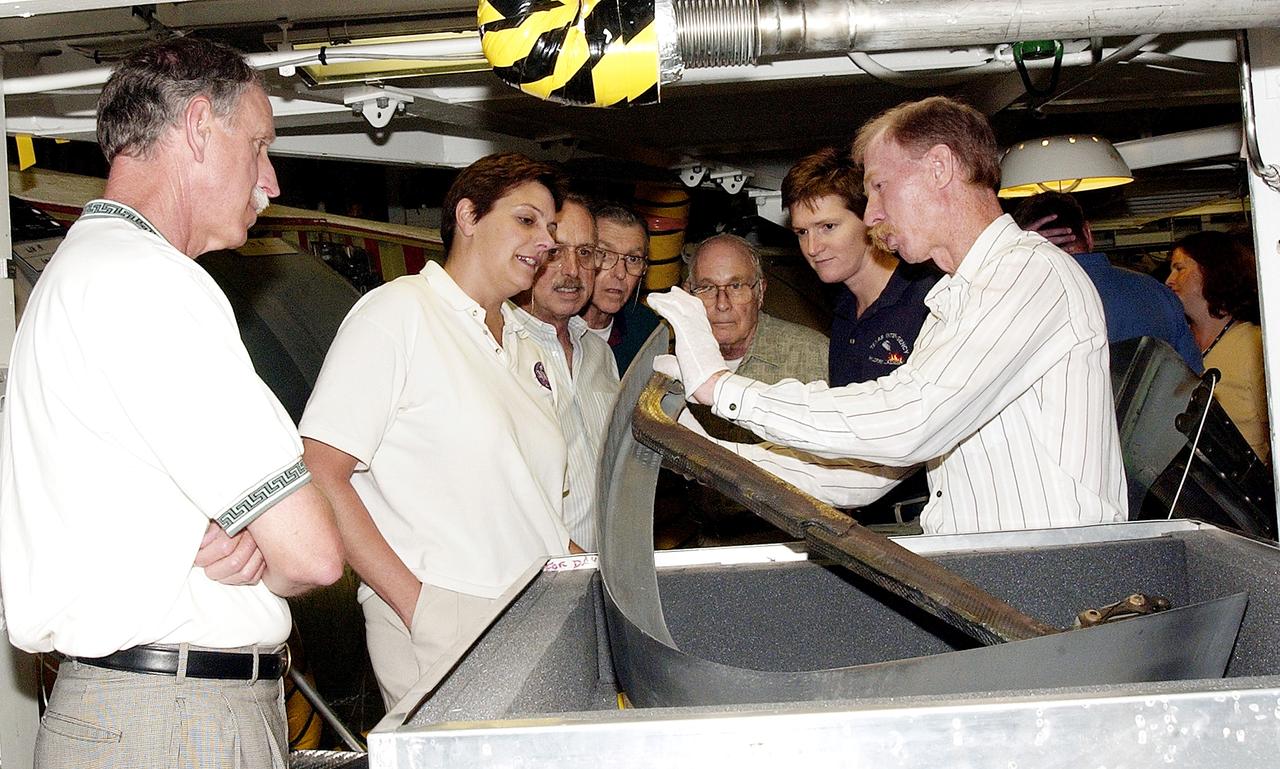
KENNEDY SPACE CENTER, FLA. - On a tour of the Orbiter Processing Facility, members of the Stafford-Covey Return to Flight Task Group (RTFTG) look at a Reinforced Carbon-Carbon panels with a T-seal held by Tom Roberts, with United Space Alliance. From left are Richard O. Covey, former Space Shuttle commander, Dr. Kathryn Clark, James Adamson, Joe Engle, William Wegner and Dr. Amy Donahue. Chairing the task group are Covey and Thomas P. Stafford, Apollo commander. Chartered by NASA Administrator Sean O’Keefe, the task group will perform an independent assessment of NASA’s implementation of the final recommendations by the Columbia Accident Investigation Board.

JOHNSON SPACE CENTER, HOUSTON, Texas -- (JSC-STS107-5-002) -- The seven STS-107 crew members take a break from their training regimen to pose for the traditional crew portrait. Seated in front are astronauts Rick D. Husband (left), mission commander, and William C. McCool, pilot. Standing are (from left) astronauts David M. Brown, Laurel B. Clark, Kalpana Chawla and Michael P. Anderson, all mission specialists; and Ilan Ramon, payload specialist representing the Israeli Space Agency.
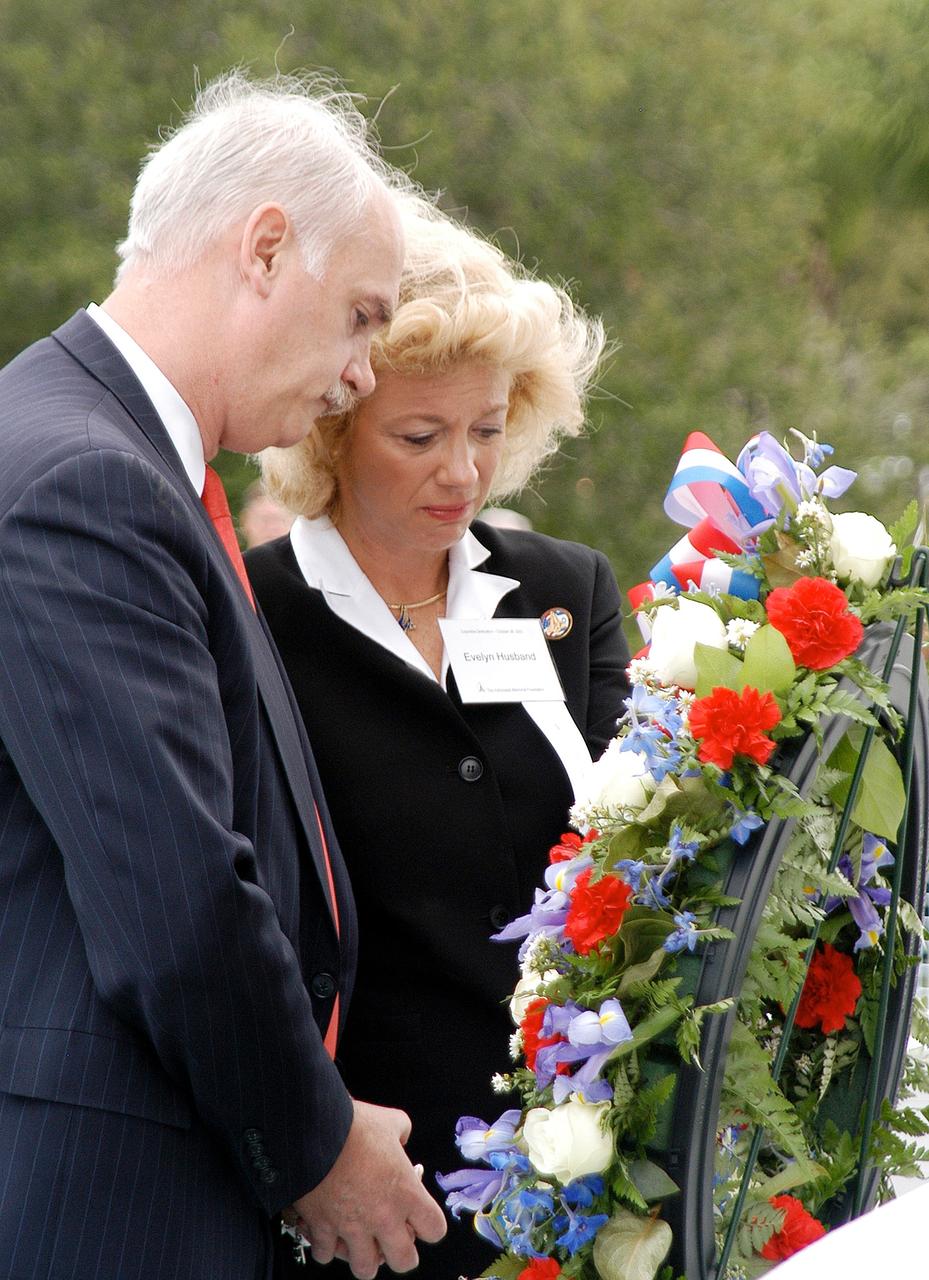
KENNEDY SPACE CENTER, FLA. - NASA's Associate Administrator for Space Flight William Readdy and Evelyn Husband, widow of astronaut Rick Husband, place a ceremonial wreath at the Space Mirror Memorial at the Kennedy Space Center Visitor Complex. During this dedication ceremony, the names of the STS-107 astronauts who lost their lives during the Columbia accident -- Rick Husband, Willie McCool, Laurel Clark, Michael Anderson, David Brown, Kalpana Chawla, and Ilan Ramon -- join the names of 17 other space heroes who gave their lives for the U.S. space program. The "Space Mirror," 42 1/2 feet high by 50 feet wide, illuminates the names of the fallen astronauts cut through the monument's black granite surface.
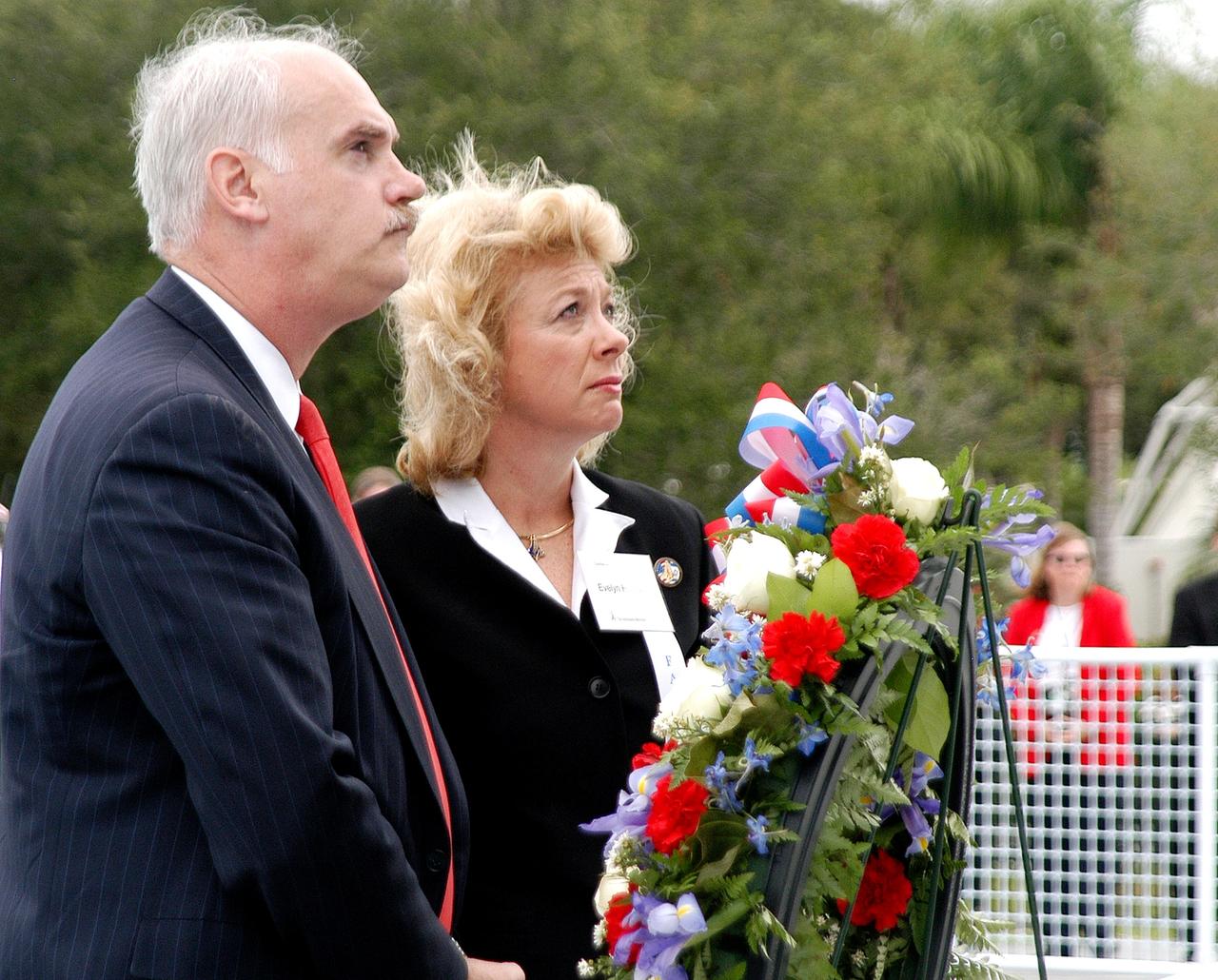
KENNEDY SPACE CENTER, FLA. - NASA's Associate Administrator for Space Flight William Readdy and Evelyn Husband, widow of astronaut Rick Husband, place a ceremonial wreath at the Space Mirror Memorial at the Kennedy Space Center Visitor Complex. During this dedication ceremony, the names of the STS-107 astronauts who lost their lives during the Columbia accident -- Rick Husband, Willie McCool, Laurel Clark, Michael Anderson, David Brown, Kalpana Chawla, and Ilan Ramon -- join the names of 17 other space heroes who gave their lives for the U.S. space program. The "Space Mirror," 42 1/2 feet high by 50 feet wide, illuminates the names of the fallen astronauts cut through the monument's black granite surface.
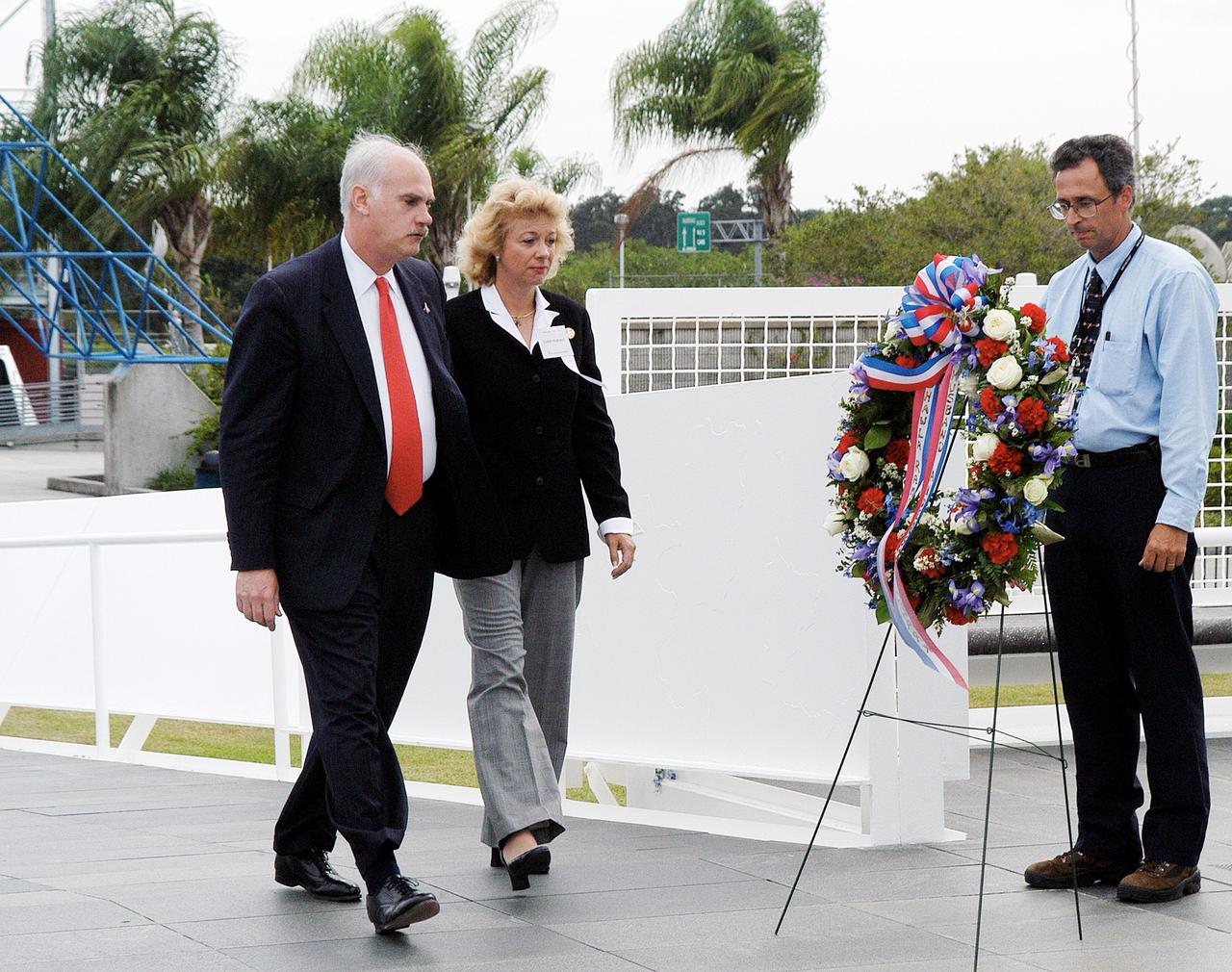
KENNEDY SPACE CENTER, FLA. - NASA's Associate Administrator for Space Flight William Readdy (left) and Evelyn Husband, widow of astronaut Rick Husband, place a ceremonial wreath at the Space Mirror Memorial at the Kennedy Space Center Visitor Complex. During this dedication ceremony, the names of the STS-107 astronauts who lost their lives during the Columbia accident -- Rick Husband, Willie McCool, Laurel Clark, Michael Anderson, David Brown, Kalpana Chawla, and Ilan Ramon -- join the names of 17 other space heroes who gave their lives for the U.S. space program. The "Space Mirror," 42 1/2 feet high by 50 feet wide, illuminates the names of the fallen astronauts cut through the monument's black granite surface.
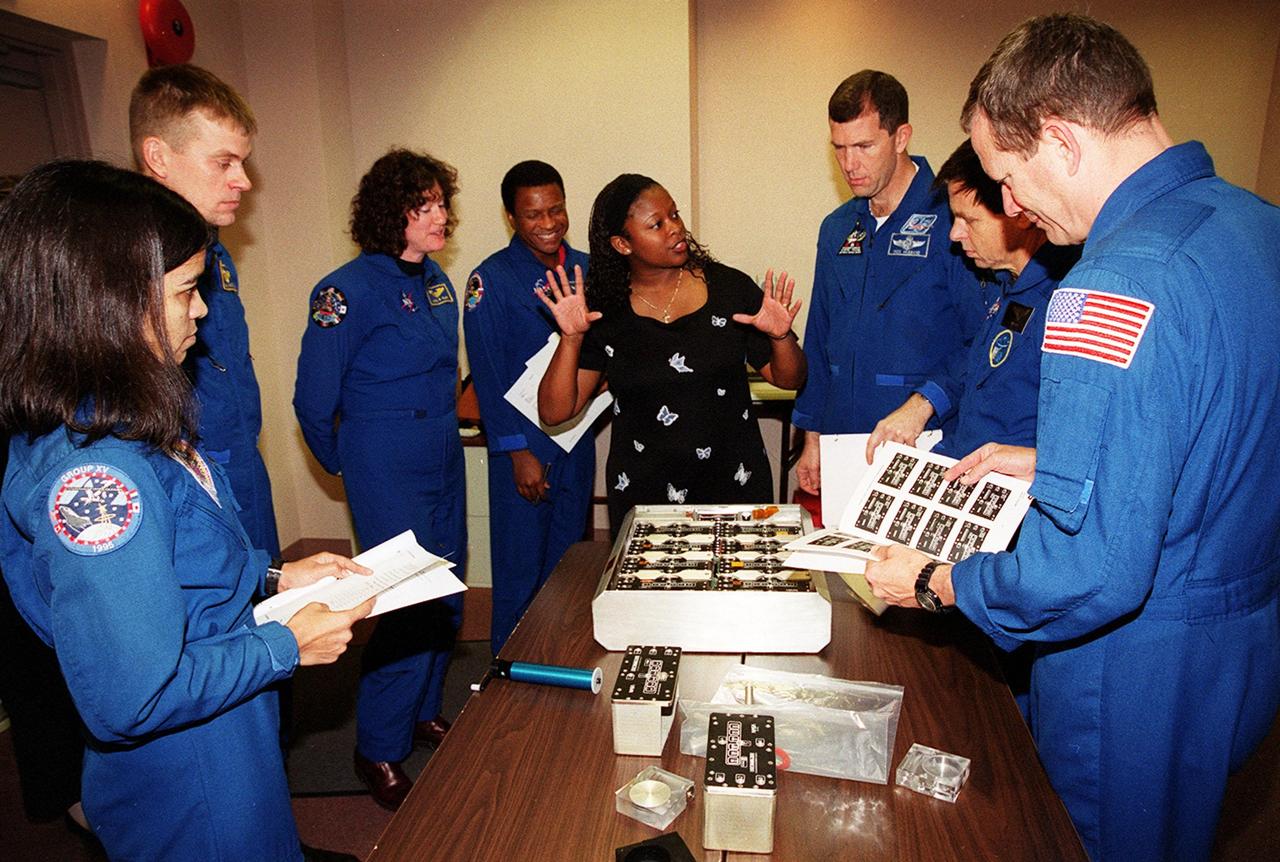
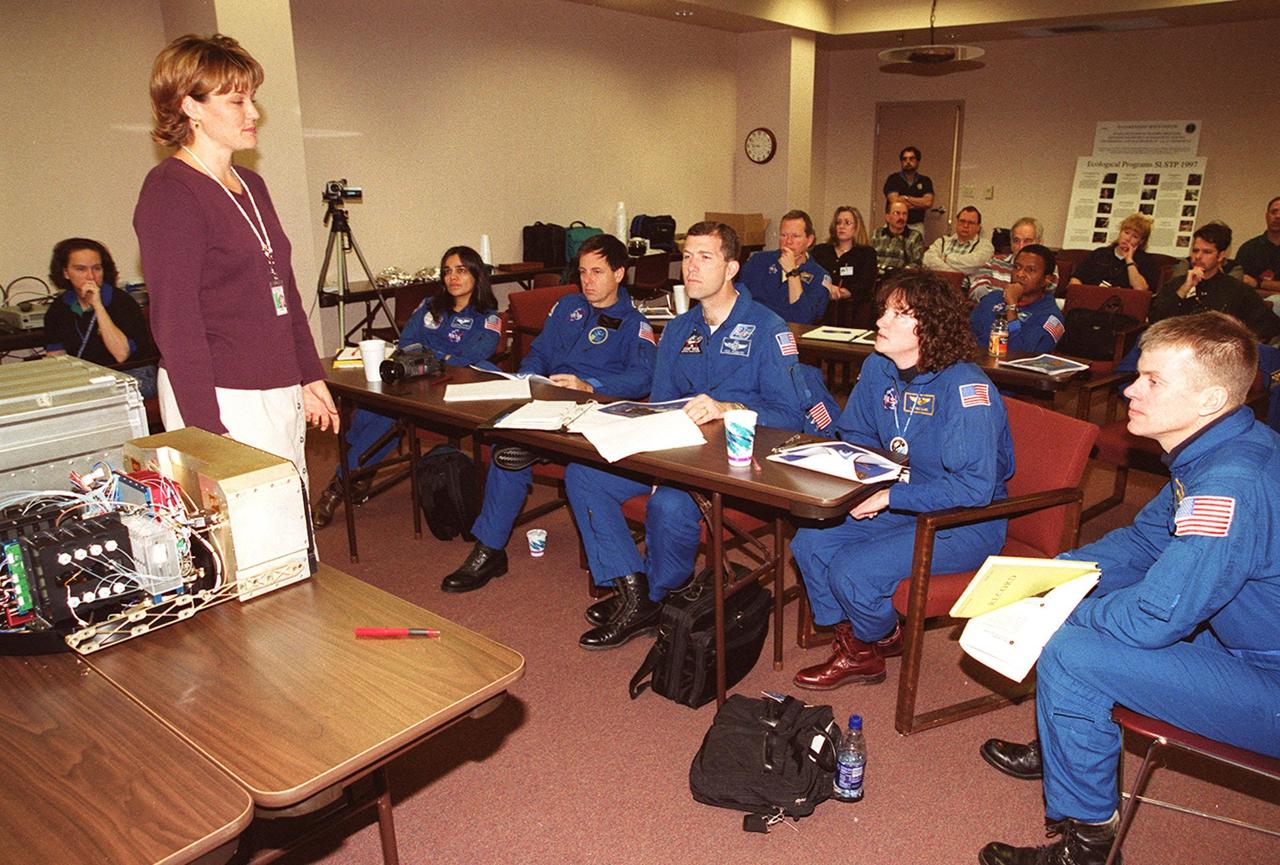
KENNEDY SPACE CENTER, FLA. -- As part of In-Flight Maintenance training at SPACEHAB, in Cape Canaveral, Fla., members of the STS-107 crew learn about Biological Research in Canisters (BRIC) experiments that will be on their mission. From left are Mission Specialist Kalpana Chawla, Pilot William C. “Willie” McCool, Mission Specialists Laurel Clark and Michael Anderson, Roberteen McCray of Bionetics, Commander Rick D. Husband,; Payload Specialist Ilan Ramon of Israel and Mission Specialist David M. Brown. STS-107 will carry a broad collection of experiments ranging from material science to life science. It is scheduled to launch July 19, 2001
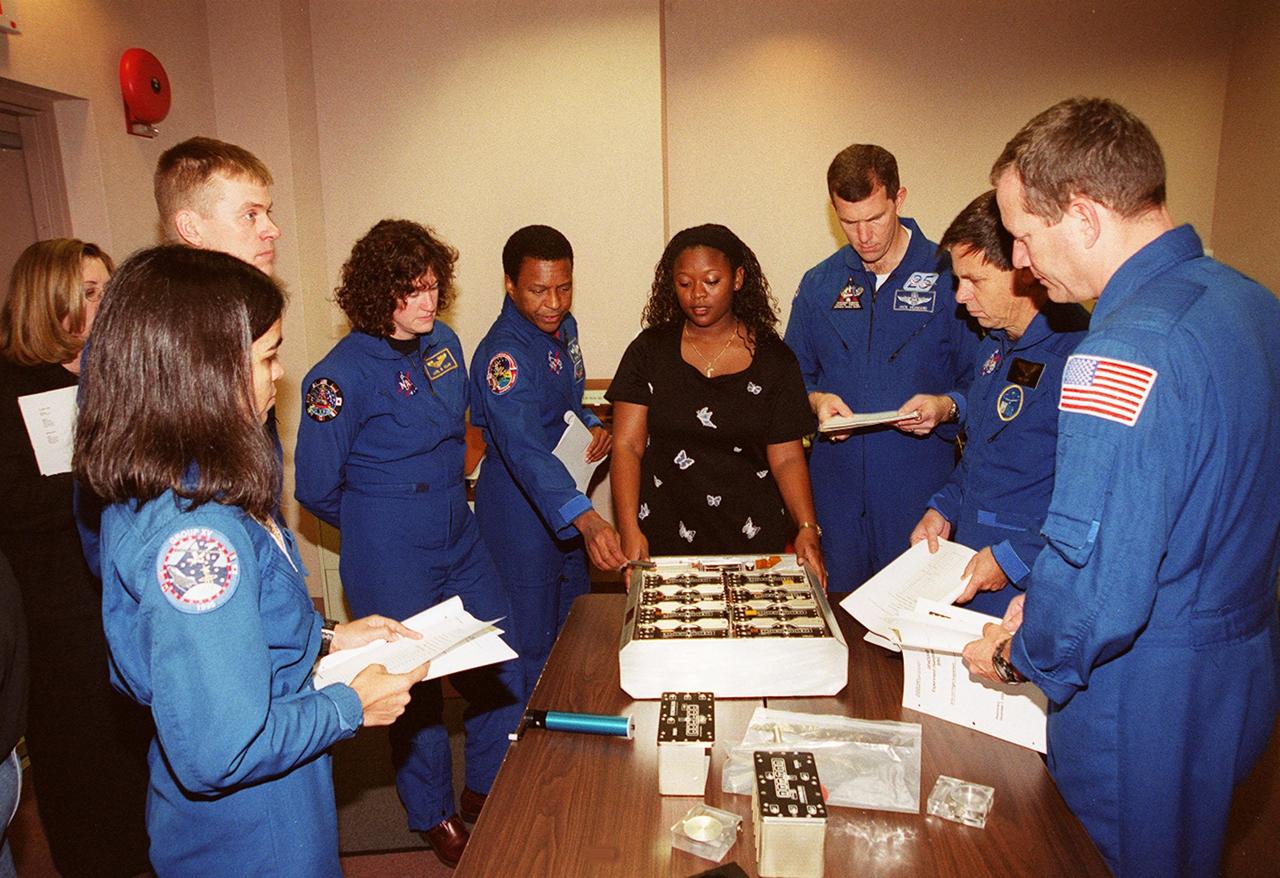
As part of In-Flight Maintenance training at SPACEHAB, in Cape Canaveral, Fla., members of the STS-107 crew learn about Biological Research in Canisters (BRIC) experiments that will be on their mission. Gathered around the table are (from left) Mission Specialist Kalpana Chawla, Pilot William C. “Willie” McCool, Mission Specialists Laurel Clark and Michael Anderson, Roberteen McCray of Bionetics, Commander Rick D. Husband, Payload Specialist Ilan Ramon of Israel and Mission Specialist David M. Brown. STS-107 will carry a broad collection of experiments ranging from material science to life science. It is scheduled to launch July 19, 2001
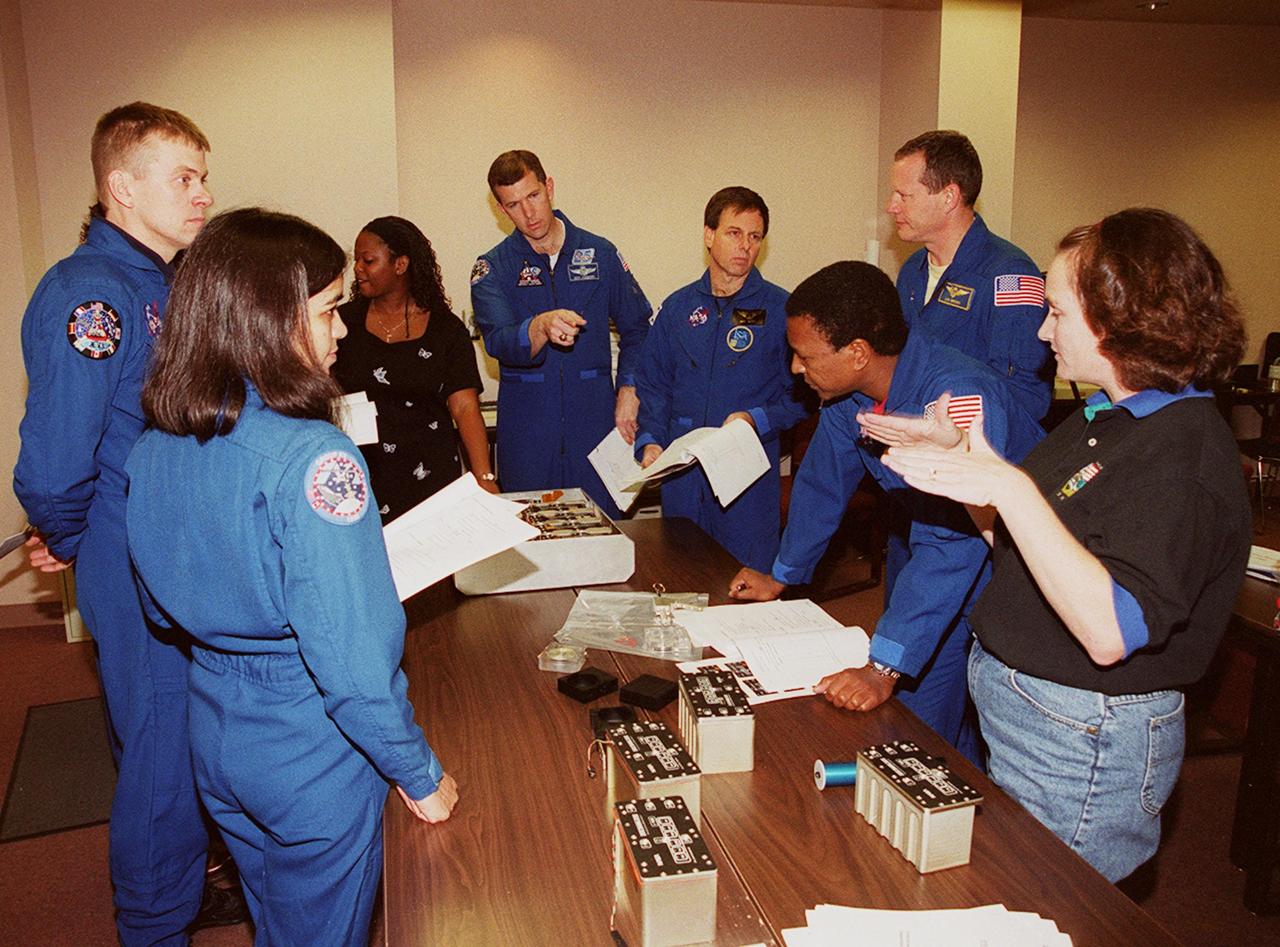
KENNEDY SPACE CENTER, FLA. -- As part of In-Flight Maintenance training at SPACEHAB, in Cape Canaveral, Fla., the STS-107 crew learns about Biological Research in Canisters (BRIC) experiments that will be on their mission. From left are Mission Specialist Kalpana Chawla, Pilot William C. “Willie” McCool, Roberteen McCray of Bionetics, Commander Rick D. Husband, Payload Specialist Ilan Ramon of Israel, and Mission Specialists David M. Brown and Michael Anderson. At right is Debbie Wells of Bionetics. Not seen is Mission Specialist Laurel Clark. STS-107 will carry a broad collection of experiments ranging from material science to life science. It is scheduled to launch July 19, 2001
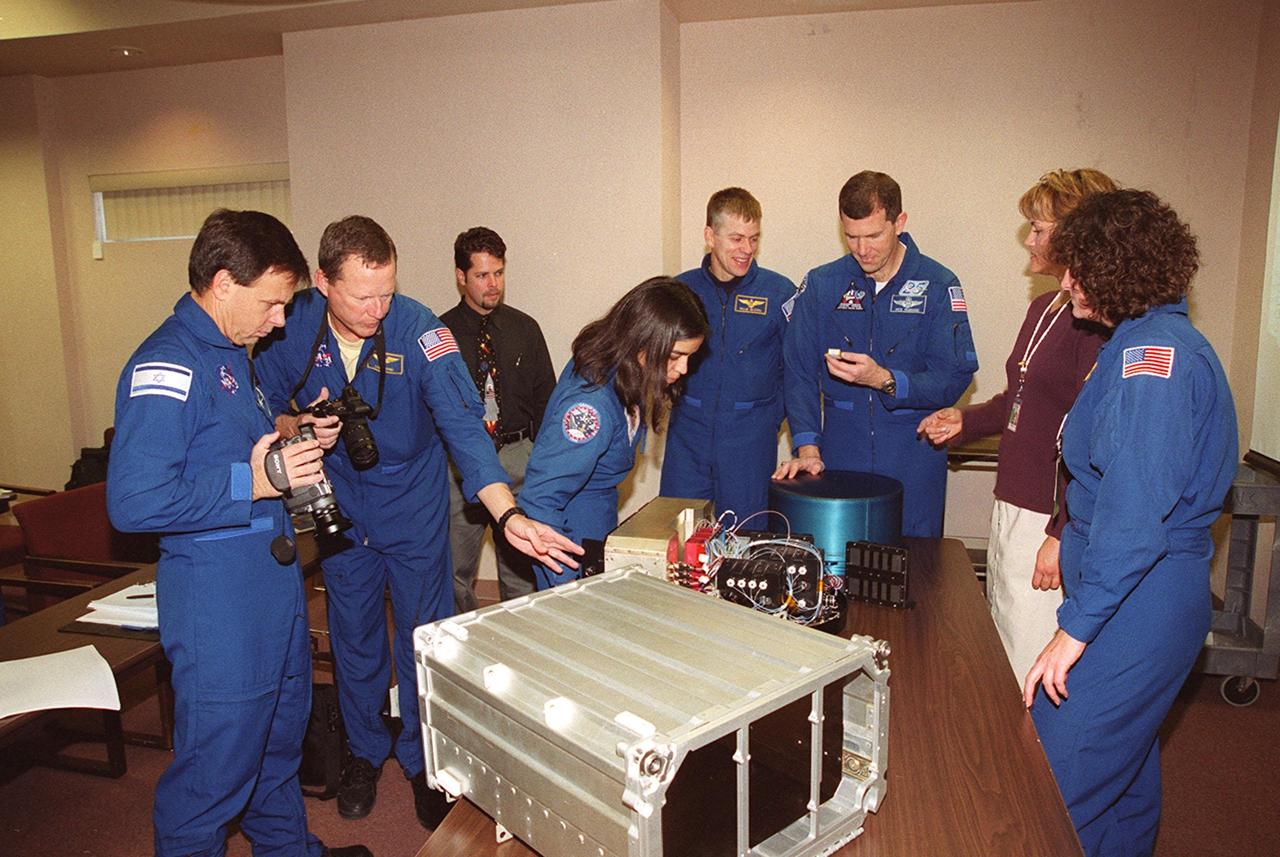
KENNEDY SPACE CENTER, FLA. -- As part of In-Flight Maintenance training, members of the STS-107 crew check out one of the Biotube experiments that will be part of their research mission. From left (in uniform) are Payload Specialist Ilan Ramon of Israel, Mission Specialists David M. Brown and Kalpana Chawla, Pilot William C. “Willie” McCool (crouching behind the table), Commander Rick D. Husband, and Mission Specialist Laurel Clark. STS-107 will carry the SPACEHAB Double Module in its first research flight into space and a broad collection of experiments ranging from material science to life science. It is scheduled to launch July 19, 2001
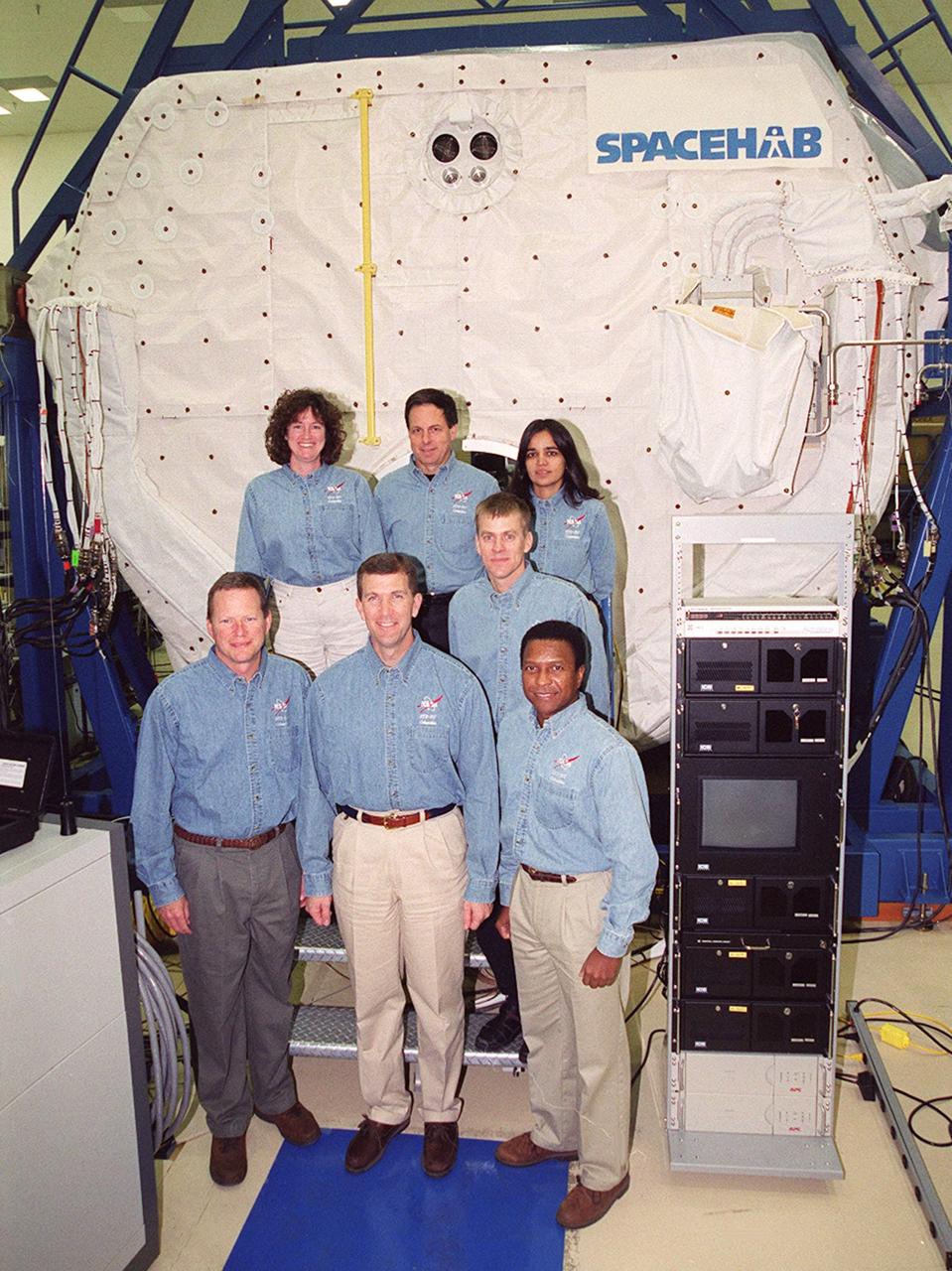
KENNEDY SPACE CENTER, Fla. -- Taking part in In-Flight Maintenance training, the STS-107 crew poses in front of the SPACEHAB Double Module. In back are Mission Specialist Laurel Clark, Payload Specialist Ilan Ramon of Israel, and Mission Specialist Kalpana Chawla; in front are Mission Specialist David M. Brown, Commander Rick D. Husband, Pilot William C. “Willie” McCool (behind) and Mission Specialist Michael Anderson. As a research mission, STS-107 will carry the SPACEHAB Double Module in its first research flight into space and a broad collection of experiments ranging from material science to life science. It is scheduled to launch July 19, 2001

KENNEDY SPACE CENTER, FLA. -- The STS-107 crew takes part in In-Flight Maintenance training, learning more about experiments that will be part of the mission. Seated in front (left to right) are Mission Specialist Kalpana Chawla, Payload Specialist Ilan Ramon of Israel; Commander Rick D. Husband; Mission Specialist Laurel Clark; and Pilot William C. “Willie” McCool; in back are Mission Specialists David M. Brown and Michael Anderson. As a research mission, STS-107 will carry the SPACEHAB Double Module in its first research flight into space and a broad collection of experiments ranging from material science to life science. It is scheduled to launch July 19, 2001
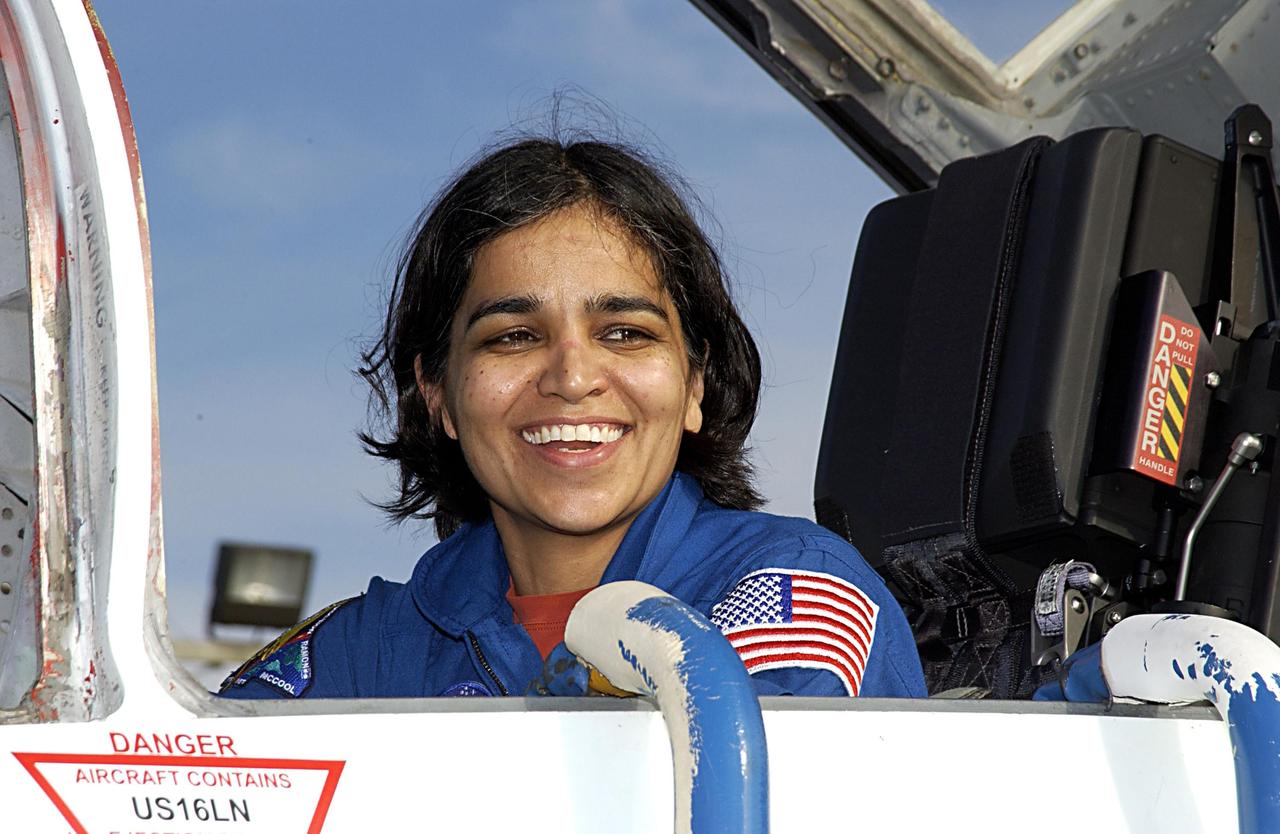
KENNEDY SPACE CENTER, FLA. - STS-107 Mission Specialist Kalpana Chawla arrives at KSC to take part in Terminal Countdown Demonstration Test activities, which include a simulated launch countdown. Other crew members are Commander Rick Husband, Pilot William "Willie" McCool, Payload Commander Michael Anderson, Mission Specialists David Brown and Laurel Clark and Payload Specialist Ilan Ramon (the first Israeli astronaut). STS-107 is a mission devoted to research and will include more than 80 experiments that will study Earth and space science, advanced technology development, and astronaut health and safety. Launch is scheduled for Jan. 16, 2003.

KENNEDY SPACE CENTER, FLA. -- Members of the STS-107 crew take part in In-Flight Maintenance training for their mission. Looking over an OSTEO experiment and paperwork are (left to right) Commander Rick D. Husband; Mission Specialists Laurel Clark, David M. Brown and Ilan Ramon of Israel; and Pilot William C. “Willie” McCool. As a research mission, STS-107will carry the SPACEHAB Double Module in its first research flight into space and a broad collection of experiments ranging from material science to life science. It is scheduled to launch July 19, 2001
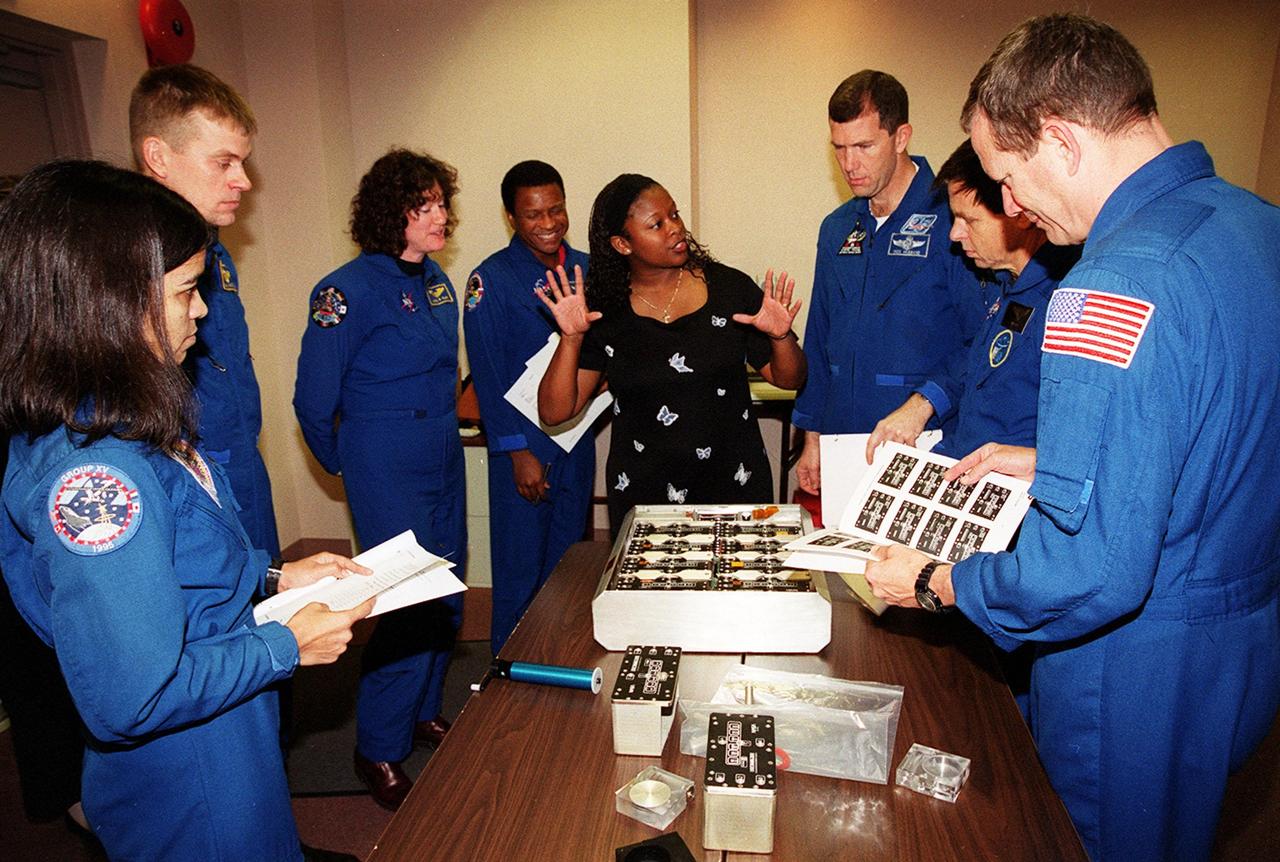
KENNEDY SPACE CENTER, FLA. -- As part of In-Flight Maintenance training at SPACEHAB, in Cape Canaveral, Fla., members of the STS-107 crew learn about Biological Research in Canisters (BRIC) experiments that will be on their mission. From left are Mission Specialist Kalpana Chawla, Pilot William C. “Willie” McCool, Mission Specialists Laurel Clark and Michael Anderson, Roberteen McCray of Bionetics, Commander Rick D. Husband,; Payload Specialist Ilan Ramon of Israel and Mission Specialist David M. Brown. STS-107 will carry a broad collection of experiments ranging from material science to life science. It is scheduled to launch July 19, 2001
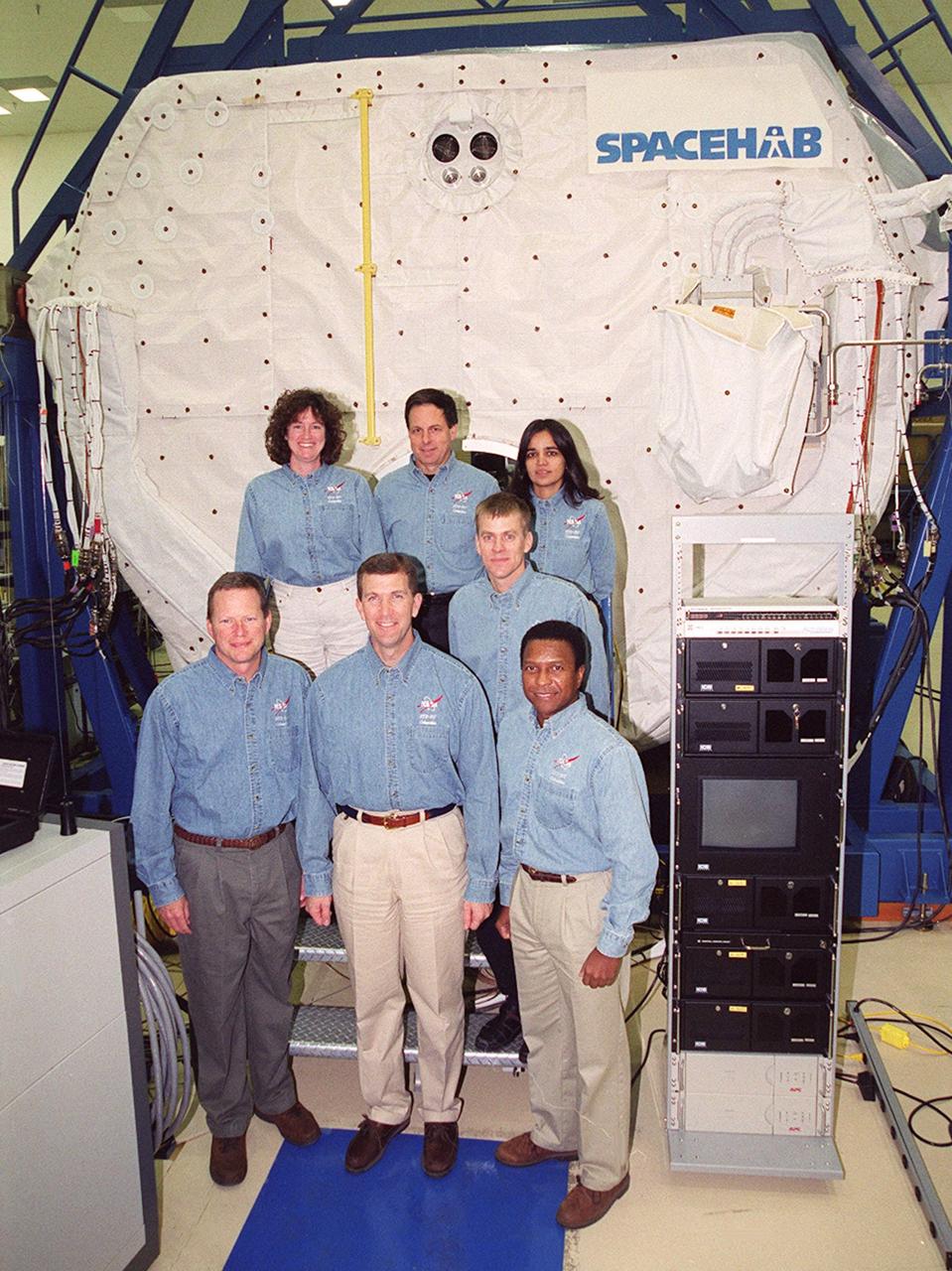
KENNEDY SPACE CENTER, Fla. -- Taking part in In-Flight Maintenance training, the STS-107 crew poses in front of the SPACEHAB Double Module. In back are Mission Specialist Laurel Clark, Payload Specialist Ilan Ramon of Israel, and Mission Specialist Kalpana Chawla; in front are Mission Specialist David M. Brown, Commander Rick D. Husband, Pilot William C. “Willie” McCool (behind) and Mission Specialist Michael Anderson. As a research mission, STS-107 will carry the SPACEHAB Double Module in its first research flight into space and a broad collection of experiments ranging from material science to life science. It is scheduled to launch July 19, 2001
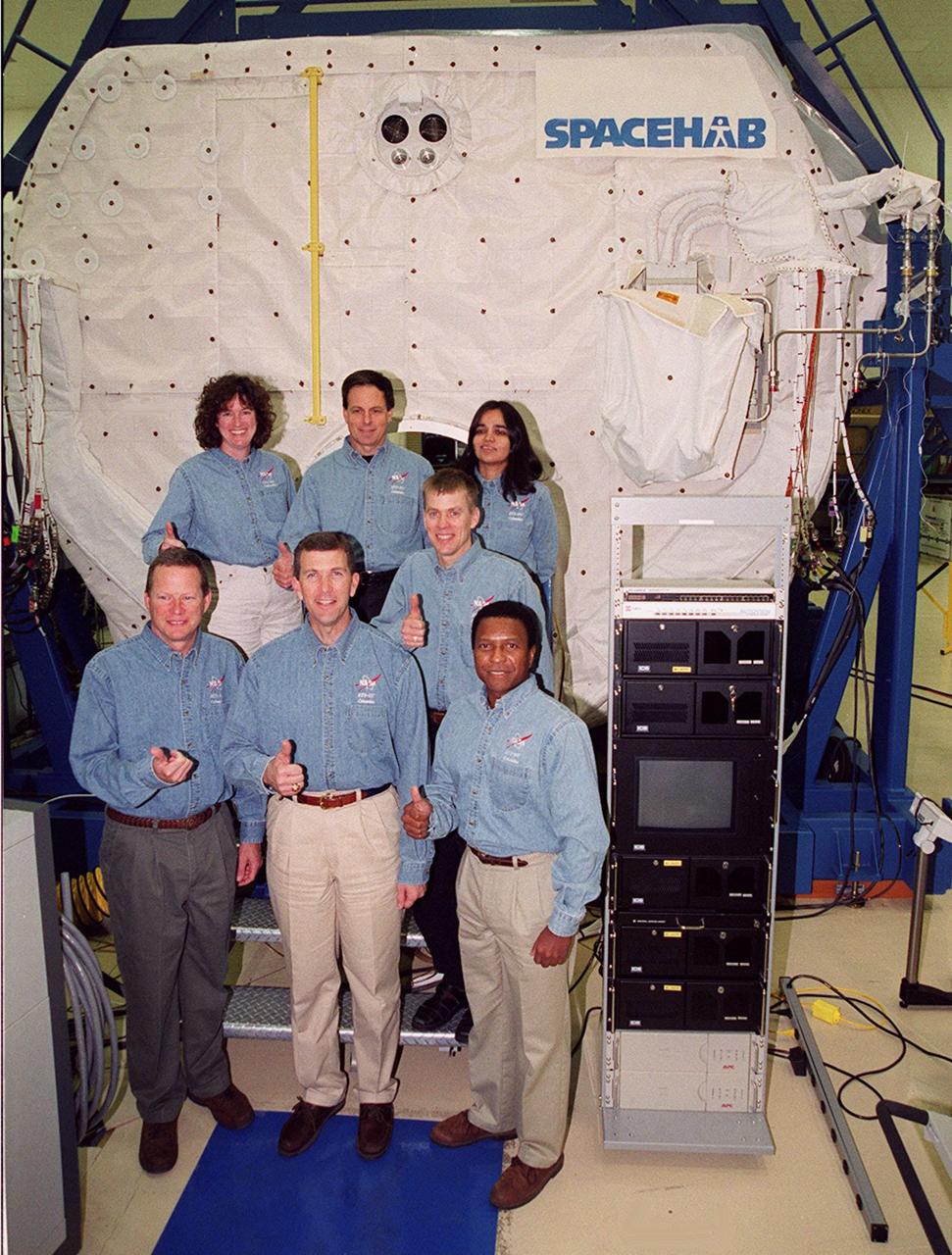
KENNEDY SPACE CENTER, Fla. -- Taking part in In-Flight Maintenance training, the STS-107 crew poses in front of the SPACEHAB Double Module. In back are Mission Specialist Laurel Clark, Payload Specialist Ilan Ramon of Israel and Mission Specialist Kalpana Chawla; in front are Mission Specialist David M. Brown, Commander Rick D. Husband, Pilot William C. “Willie” McCool (behind) and Mission Specialist Michael Anderson. As a research mission, STS-107 will carry the SPACEHAB Double Module in its first research flight into space and a broad collection of experiments ranging from material science to life science. It is scheduled to launch July 19, 2001
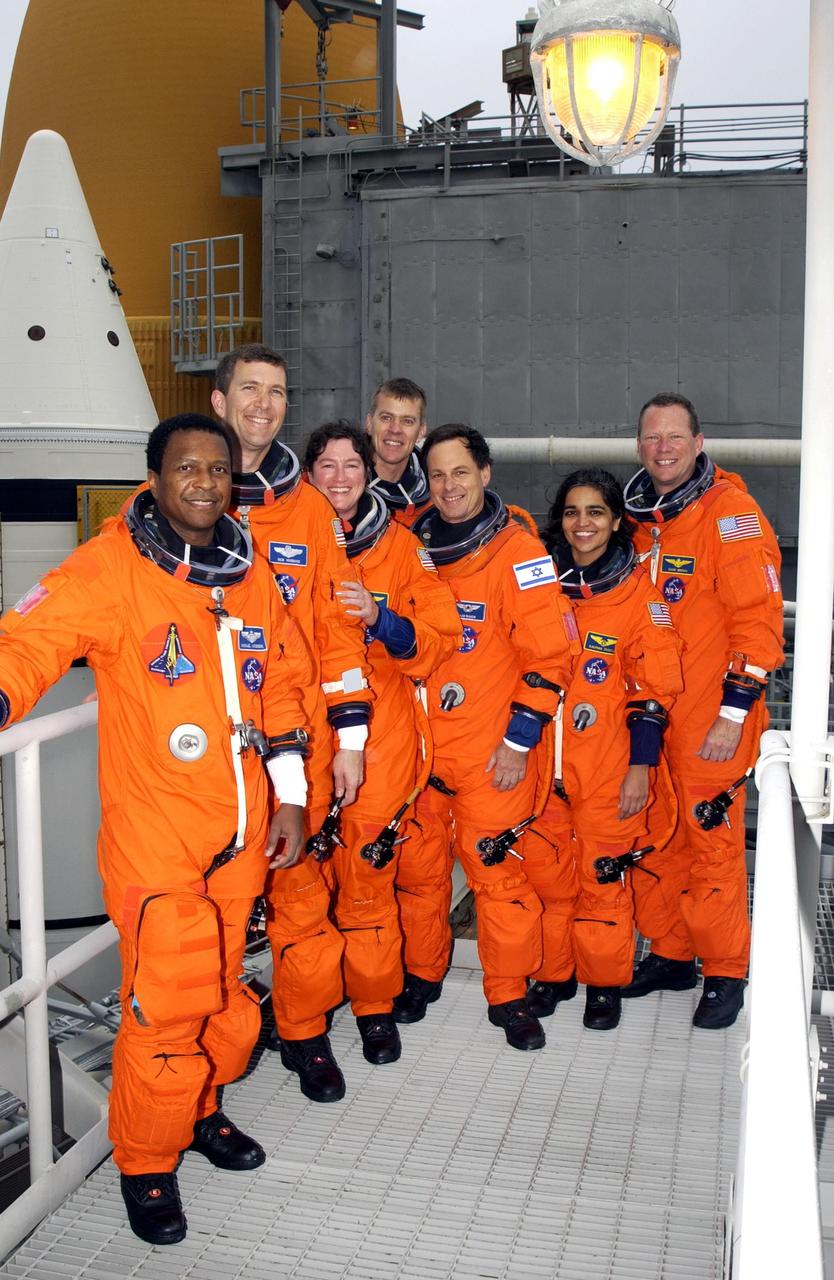
KENNEDY SPACE CENTER, FLA. - During Terminal Countdown Demonstration Test activities at the launch pad, the STS-107 crew pauses for a group photo. From left are Payload Commander Michael Anderson, Commander Rick Husband, Mission Specialist Laurel Clark, Pilot William "Willie" McCool, and Mission Specialists Ilan Ramon, Kalpana Chawla and David Brown. Behind them is Space Shuttle Columbia. STS-107 is a mission devoted to research and will include more than 80 experiments that will study Earth and space science, advanced technology development, and astronaut health and safety. Launch is planned for Jan. 16, 2003, between 10 a.m. and 2 p.m. EST aboard Space Shuttle Columbia. .
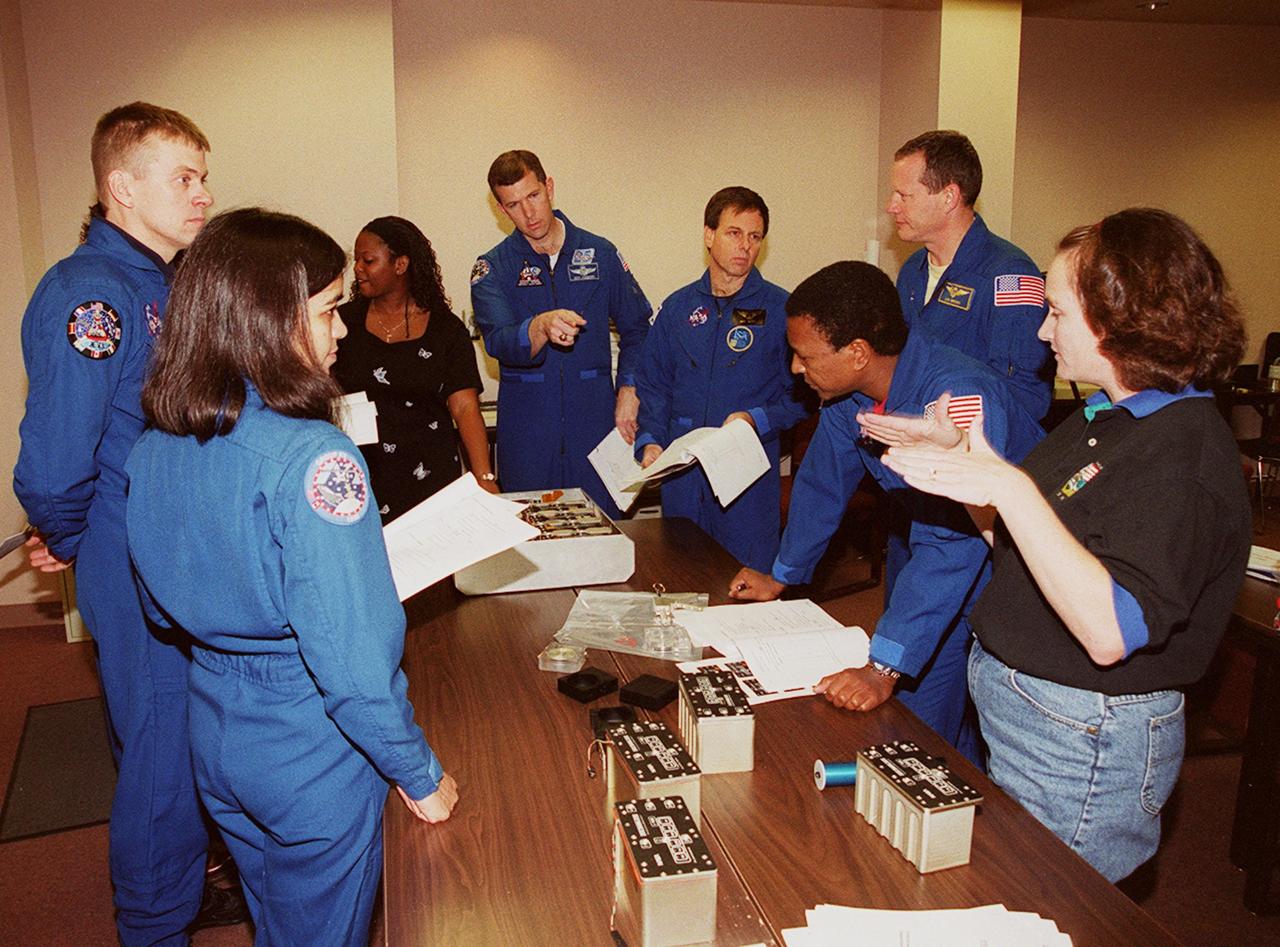
KENNEDY SPACE CENTER, FLA. -- As part of In-Flight Maintenance training at SPACEHAB, in Cape Canaveral, Fla., the STS-107 crew learns about Biological Research in Canisters (BRIC) experiments that will be on their mission. From left are Mission Specialist Kalpana Chawla, Pilot William C. “Willie” McCool, Roberteen McCray of Bionetics, Commander Rick D. Husband, Payload Specialist Ilan Ramon of Israel, and Mission Specialists David M. Brown and Michael Anderson. At right is Debbie Wells of Bionetics. Not seen is Mission Specialist Laurel Clark. STS-107 will carry a broad collection of experiments ranging from material science to life science. It is scheduled to launch July 19, 2001
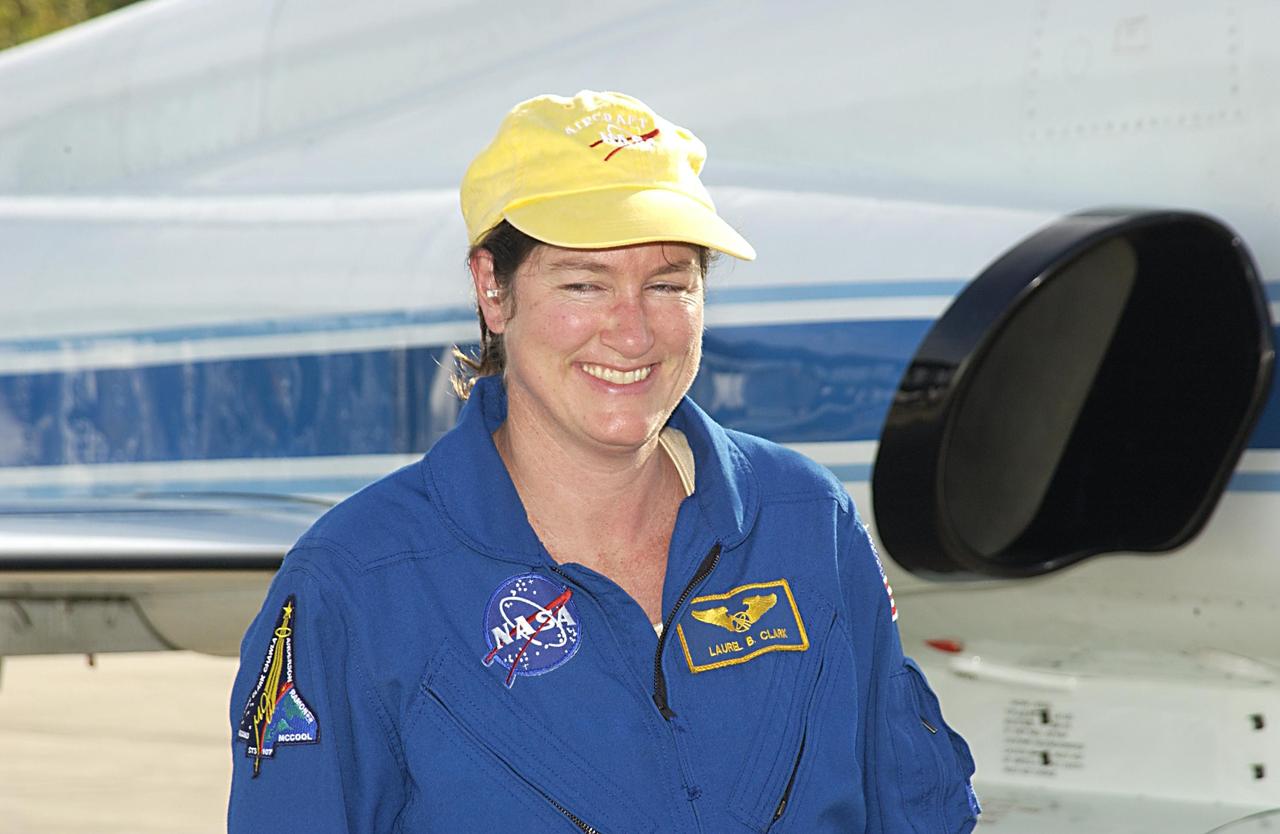
KENNEDY SPACE CENTER, FLA. -- STS-107 Mission Specialist Laurel Clark arrives at KSC to take part in Terminal Countdown Demonstration Test activities, which include a simulated launch countdown. Other crew members are Commander Rick Husband, Pilot William "Willie" McCool, Payload Commander Michael Anderson, Mission Specialists Kalpana Chawla and David Brown, and Payload Specialist Ilan Ramon, the first Israeli astronaut. STS-107 is a mission devoted to research and will include more than 80 experiments that will study Earth and space science, advanced technology development, and astronaut health and safety. Launch is scheduled for Jan. 16, 2003.
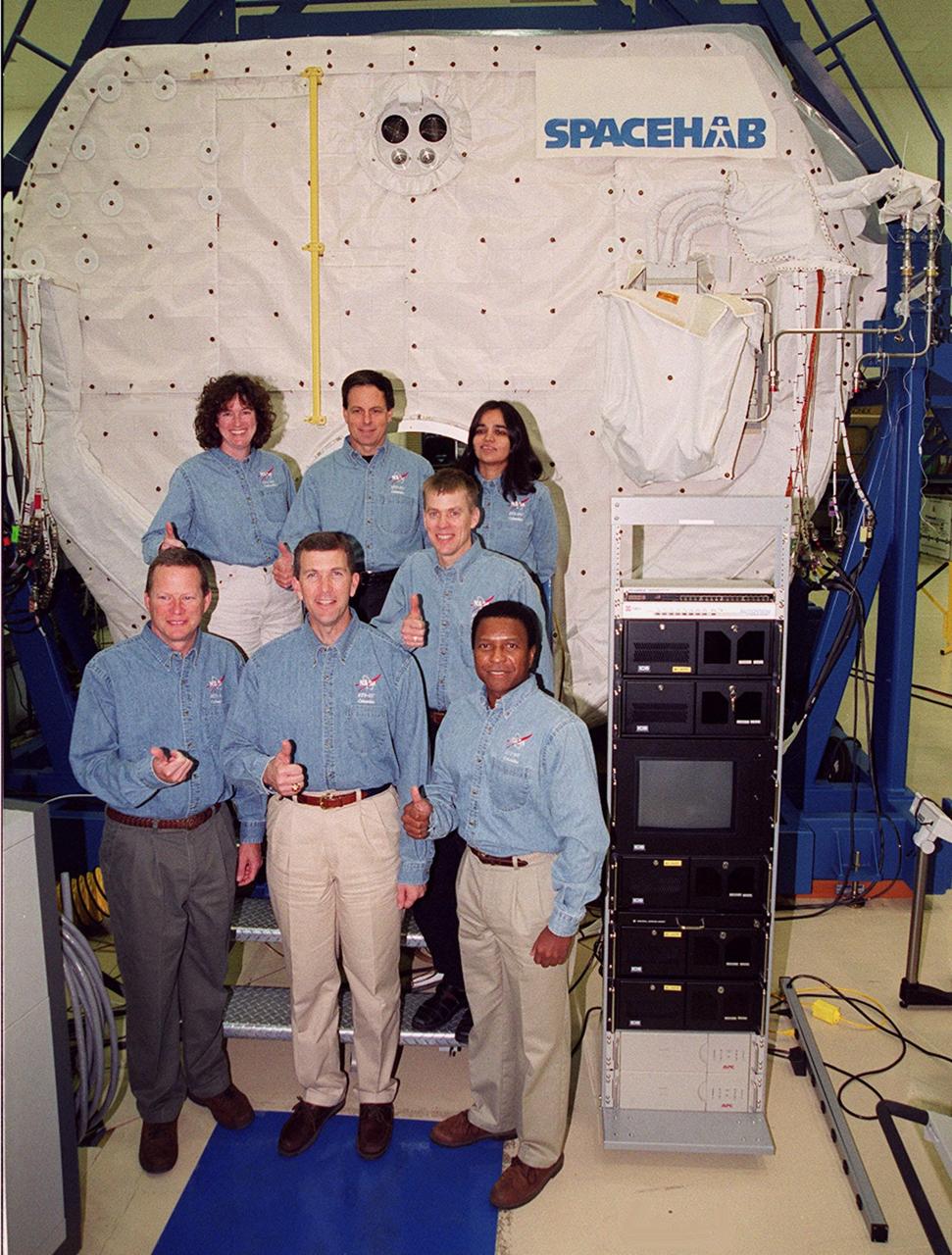
KENNEDY SPACE CENTER, Fla. -- Taking part in In-Flight Maintenance training, the STS-107 crew poses in front of the SPACEHAB Double Module. In back are Mission Specialist Laurel Clark, Payload Specialist Ilan Ramon of Israel and Mission Specialist Kalpana Chawla; in front are Mission Specialist David M. Brown, Commander Rick D. Husband, Pilot William C. “Willie” McCool (behind) and Mission Specialist Michael Anderson. As a research mission, STS-107 will carry the SPACEHAB Double Module in its first research flight into space and a broad collection of experiments ranging from material science to life science. It is scheduled to launch July 19, 2001
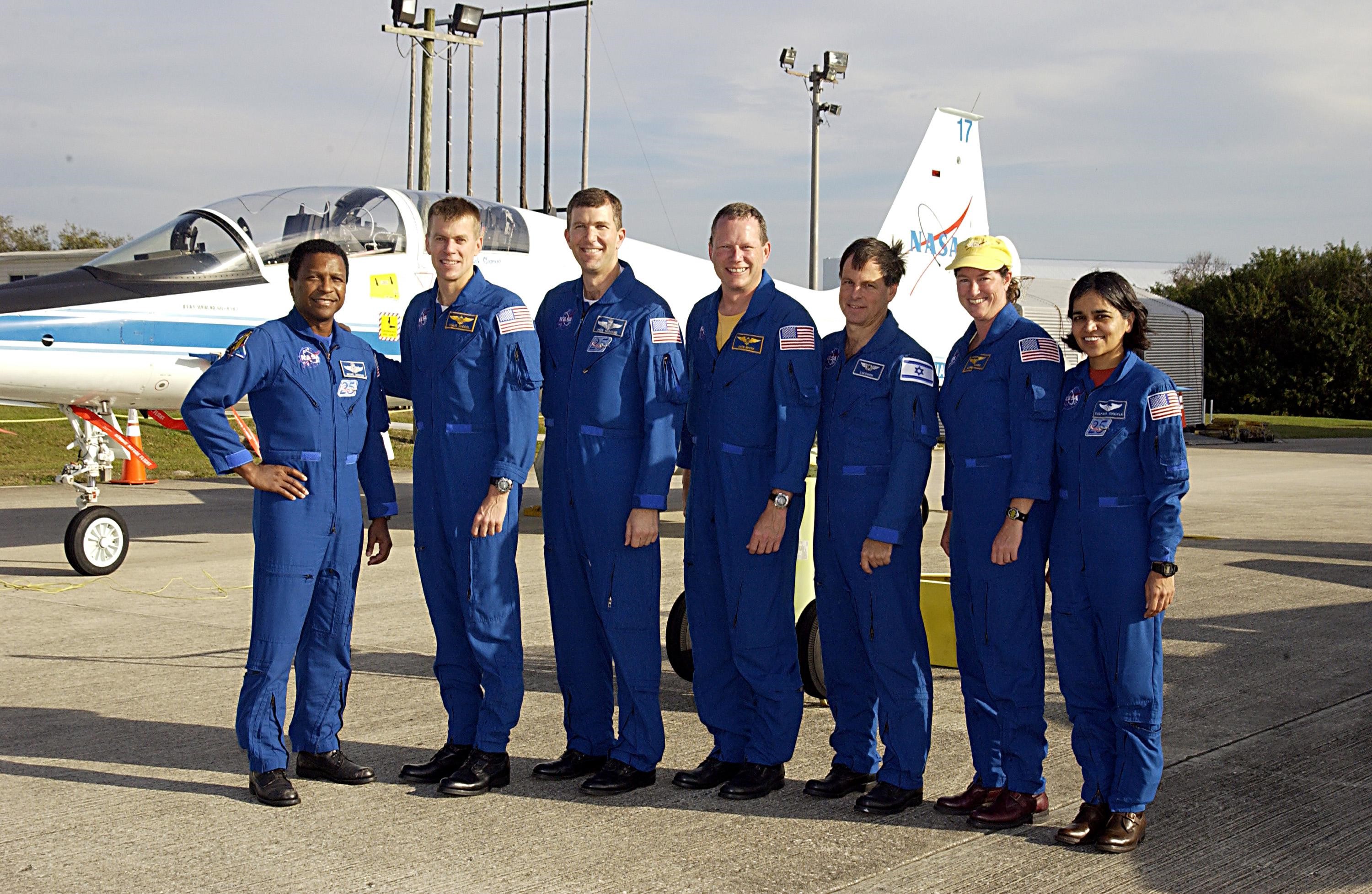
KENNEDY SPACE CENTER, FLA. -- The STS-107 crew arrives at KSC to take part in Terminal Countdown Demonstration Test activities. Standing, left to right, are Payload Commander Michael Anderson, Pilot William "Willie" McCool, Commander Rick Husband, Mission Specialist David Brown, Payload Specialist Ilan Ramon (the first Israeli astronaut), and Mission Specialists Laurel Clark and Kalpana Chawla. STS-107 is a mission devoted to research and will include more than 80 experiments that will study Earth and space science, advanced technology development, and astronaut health and safety.
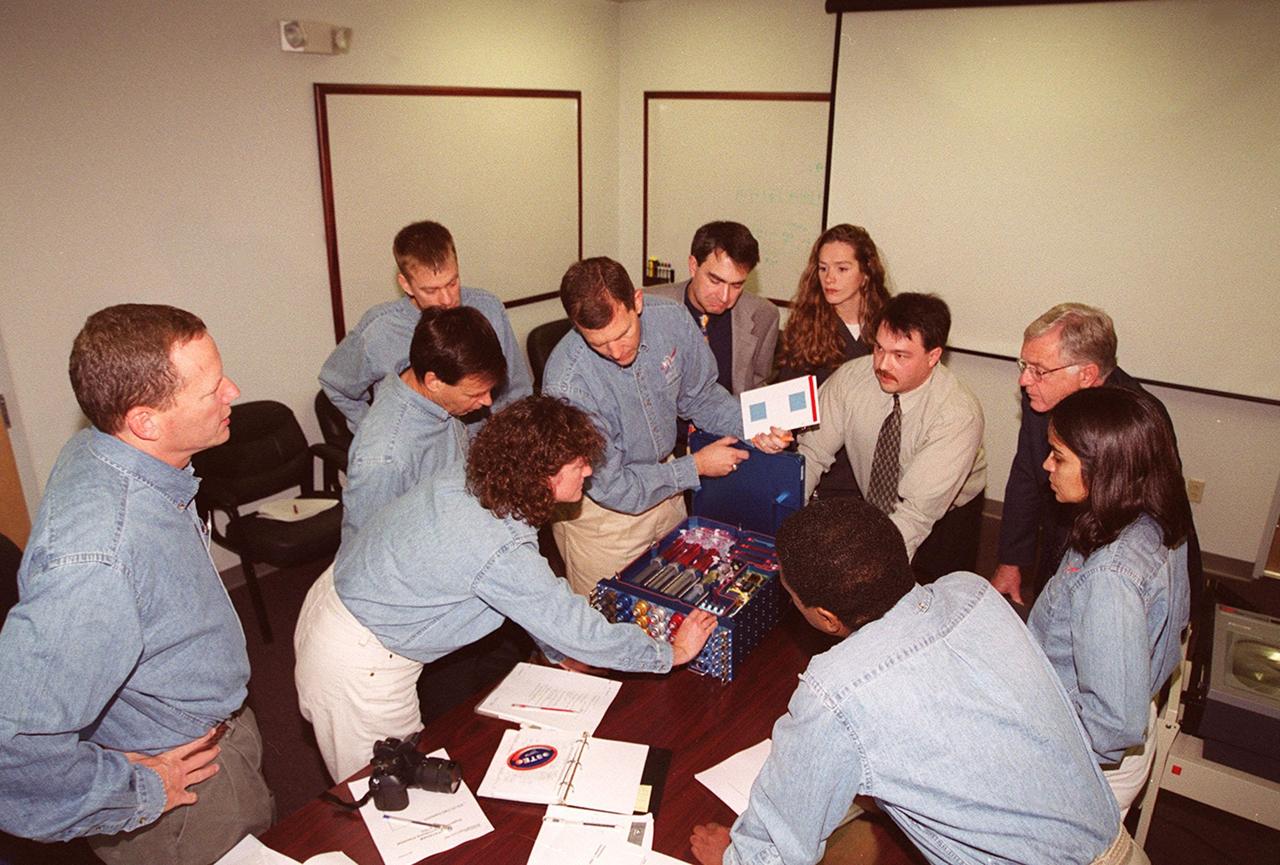
KENNEDY SPACE CENTER, FLA. -- Members of the STS-107 crew take part in In-Flight Maintenance training for their mission. Looking over the OSTEO experiment and paperwork are (at left) Mission Specialists David M. Brown and Laurel Clark and Payload Specialist Ilan Roman of Israel; Pilot William C. “Willie” McCool; and Commander Rick D. Husband. Looking on are project engineers and scientists. On the right are Mission Specialists Michael Anderson (back to camera) and Kalpana Chawla. As a research mission, STS-107will carry the SPACEHAB Double Module in its first research flight into space and a broad collection of experiments ranging from material science to life science. It is scheduled to launch July 19, 2001
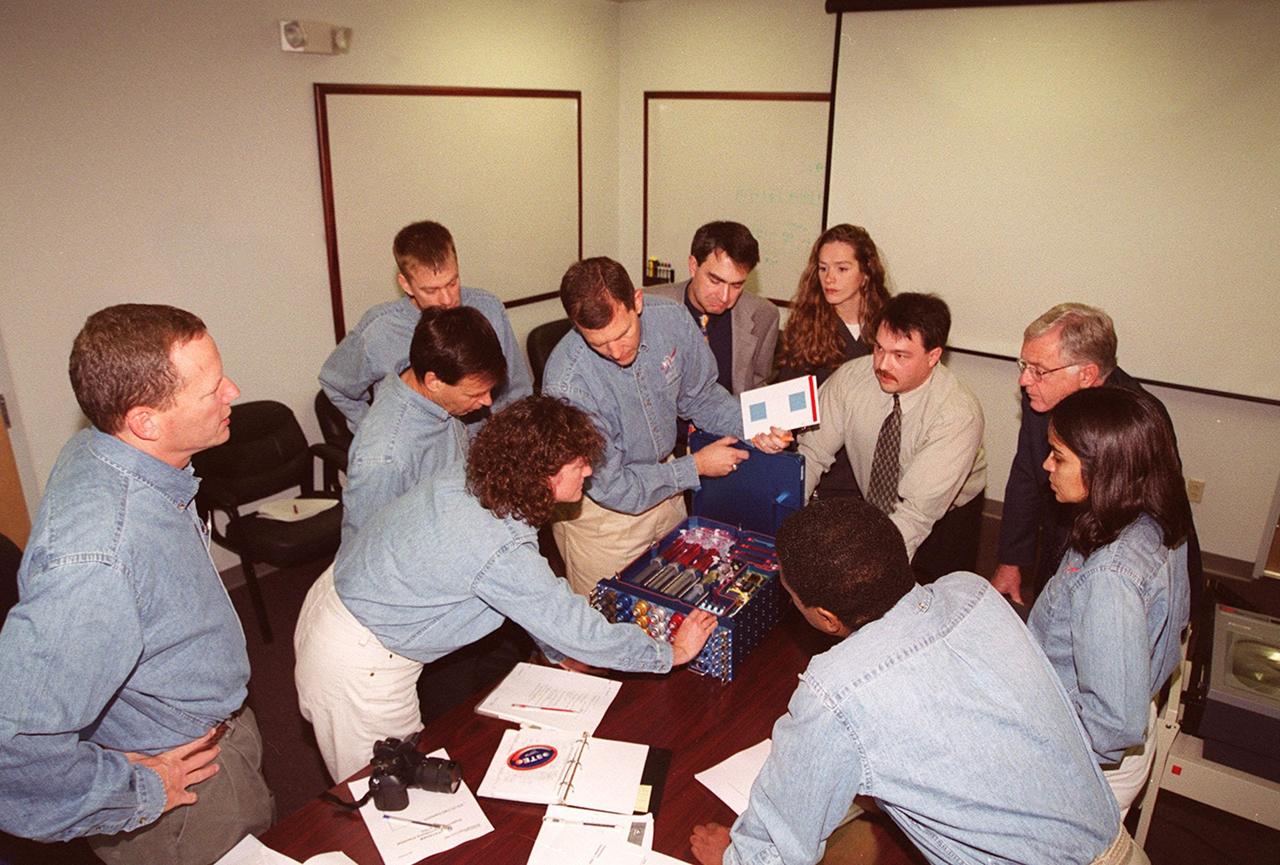
KENNEDY SPACE CENTER, FLA. -- Members of the STS-107 crew take part in In-Flight Maintenance training for their mission. Looking over the OSTEO experiment and paperwork are (at left) Mission Specialists David M. Brown and Laurel Clark and Payload Specialist Ilan Roman of Israel; Pilot William C. “Willie” McCool; and Commander Rick D. Husband. Looking on are project engineers and scientists. On the right are Mission Specialists Michael Anderson (back to camera) and Kalpana Chawla. As a research mission, STS-107will carry the SPACEHAB Double Module in its first research flight into space and a broad collection of experiments ranging from material science to life science. It is scheduled to launch July 19, 2001
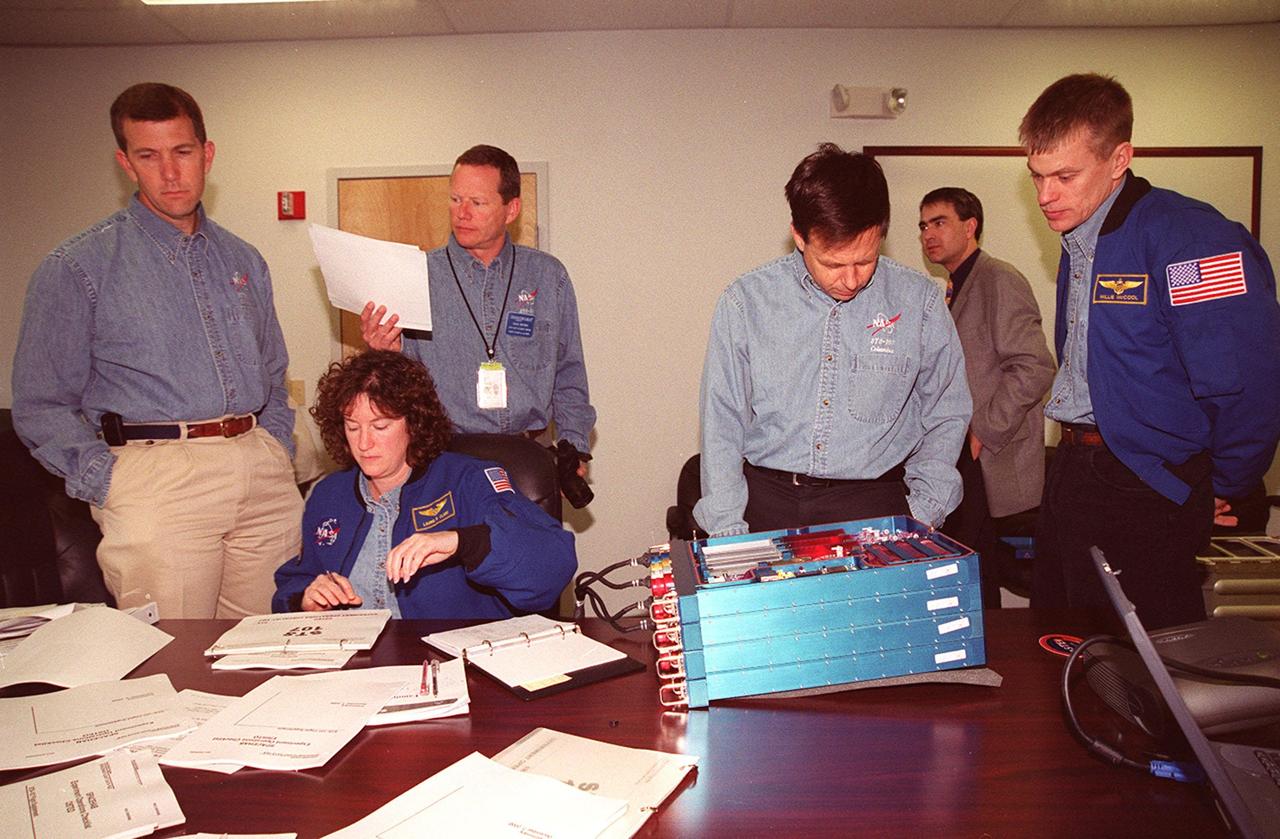
KENNEDY SPACE CENTER, FLA. -- Members of the STS-107 crew take part in In-Flight Maintenance training for their mission. Looking over an OSTEO experiment and paperwork are (left to right) Commander Rick D. Husband; Mission Specialists Laurel Clark, David M. Brown and Ilan Ramon of Israel; and Pilot William C. “Willie” McCool. As a research mission, STS-107will carry the SPACEHAB Double Module in its first research flight into space and a broad collection of experiments ranging from material science to life science. It is scheduled to launch July 19, 2001
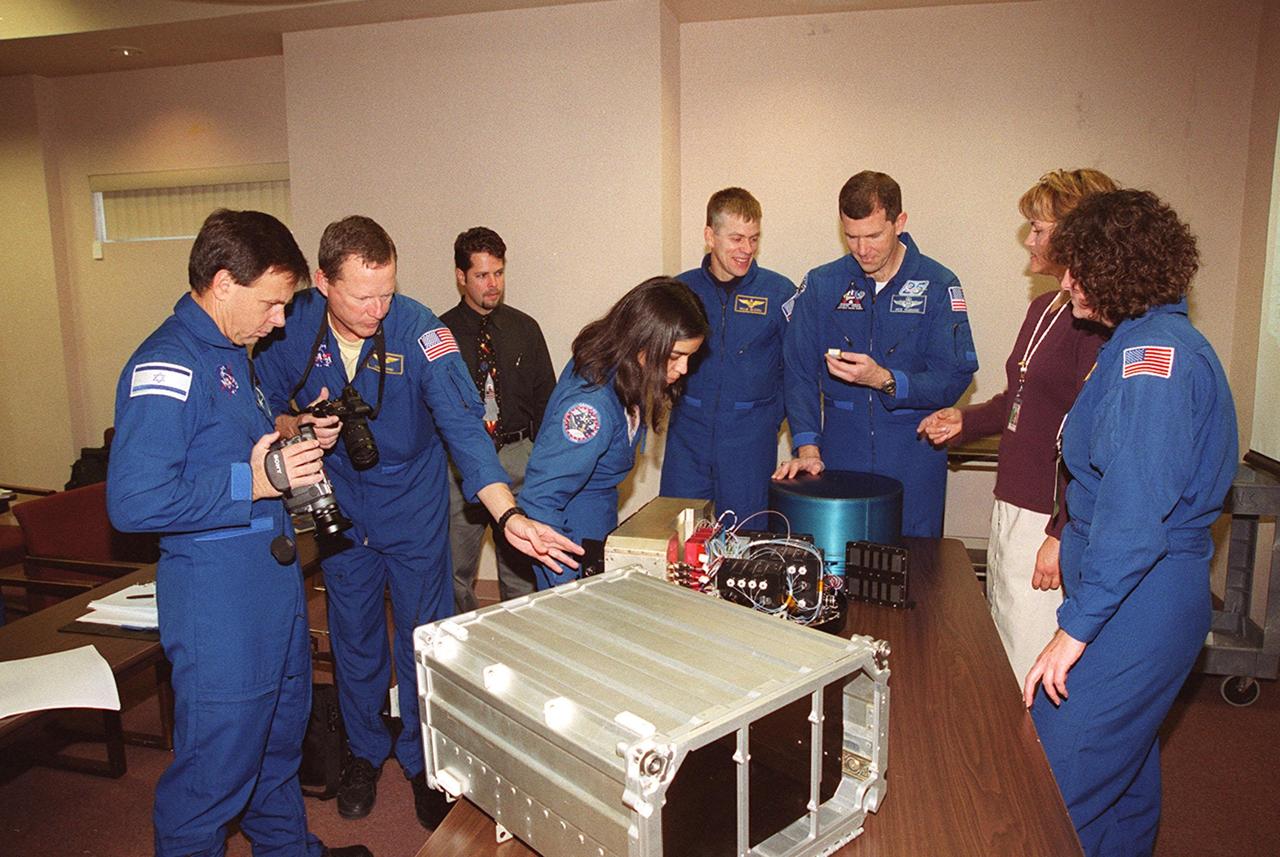
KENNEDY SPACE CENTER, FLA. -- As part of In-Flight Maintenance training, members of the STS-107 crew check out one of the Biotube experiments that will be part of their research mission. From left (in uniform) are Payload Specialist Ilan Ramon of Israel, Mission Specialists David M. Brown and Kalpana Chawla, Pilot William C. “Willie” McCool (crouching behind the table), Commander Rick D. Husband, and Mission Specialist Laurel Clark. STS-107 will carry the SPACEHAB Double Module in its first research flight into space and a broad collection of experiments ranging from material science to life science. It is scheduled to launch July 19, 2001
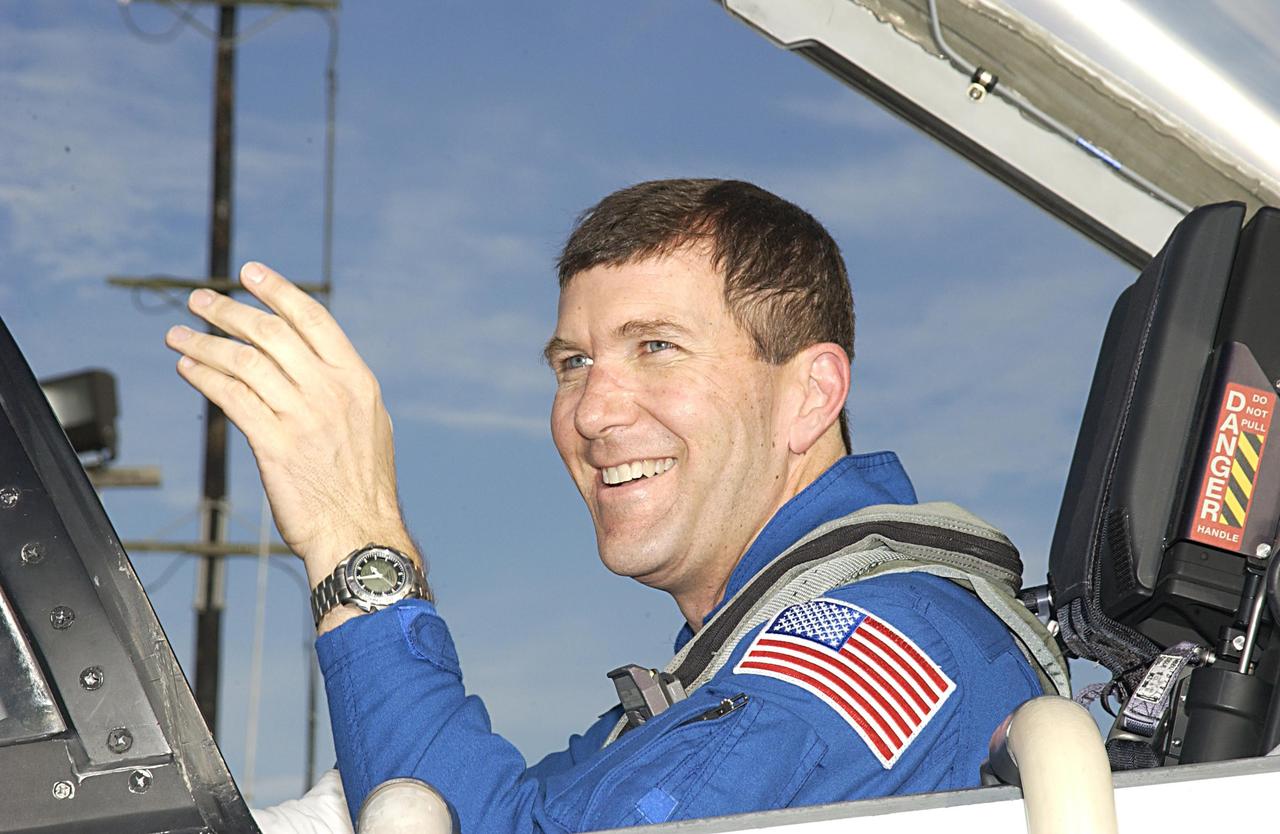
KENNEDY SPACE CENTER, FLA. -- STS-107 Commander Rick Husband arrives at KSC to take part in Terminal Countdown Demonstration Test activities, which include a simulated launch countdown. Other crew members are Pilot William "Willie" McCool Payload Commander Michael Anderson, Mission Specialists Kalpana Chawla, David Brown, Laurel Clark and Payload Specialist Ilan Ramon (the first Israeli astronaut). STS-107 is a mission devoted to research and will include more than 80 experiments that will study Earth and space science, advanced technology development, and astronaut health and safety. Launch is scheduled for Jan. 16, 2003.
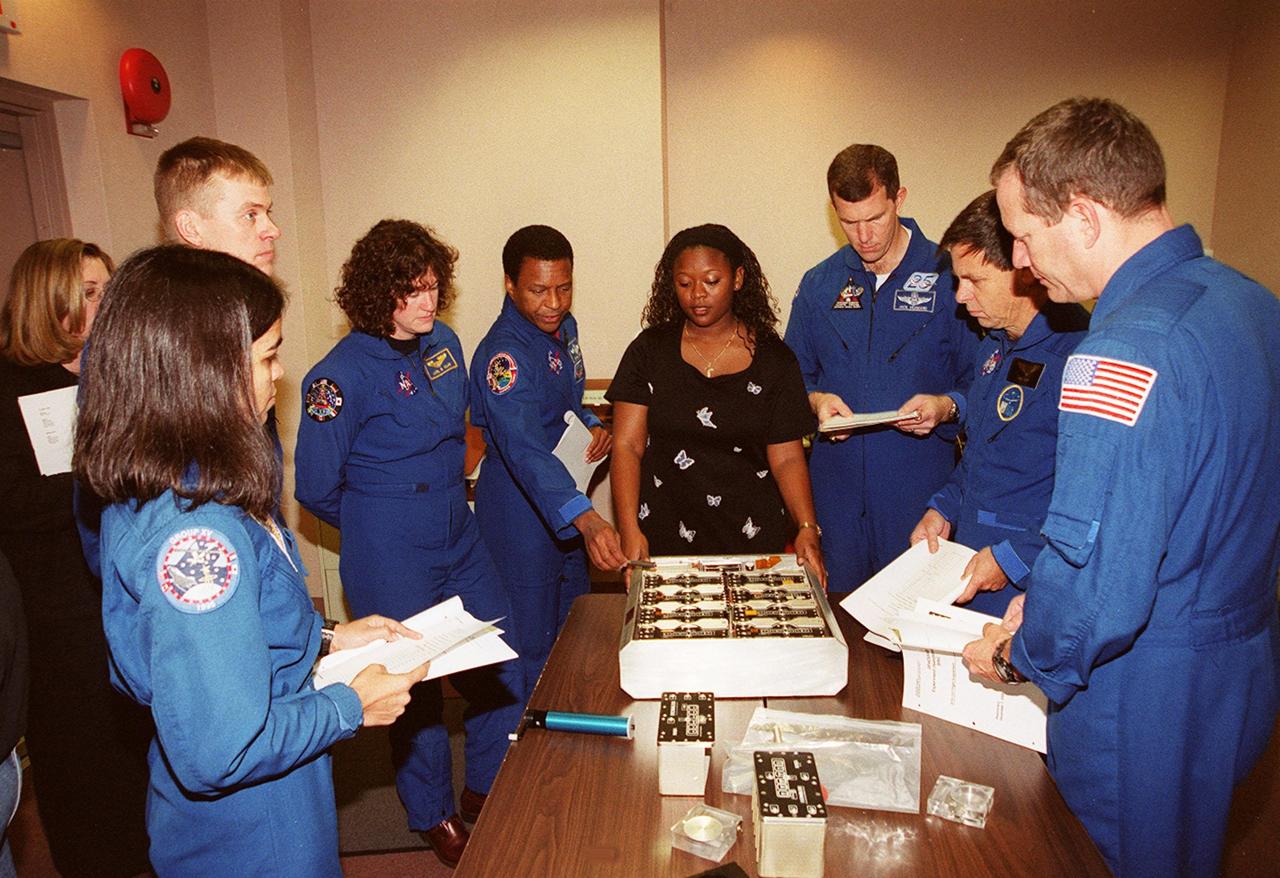
As part of In-Flight Maintenance training at SPACEHAB, in Cape Canaveral, Fla., members of the STS-107 crew learn about Biological Research in Canisters (BRIC) experiments that will be on their mission. Gathered around the table are (from left) Mission Specialist Kalpana Chawla, Pilot William C. “Willie” McCool, Mission Specialists Laurel Clark and Michael Anderson, Roberteen McCray of Bionetics, Commander Rick D. Husband, Payload Specialist Ilan Ramon of Israel and Mission Specialist David M. Brown. STS-107 will carry a broad collection of experiments ranging from material science to life science. It is scheduled to launch July 19, 2001
KENNEDY SPACE CENTER, FLA. -- The STS-107 crew takes part in In-Flight Maintenance training, learning more about experiments that will be part of the mission. Seated in front (left to right) are Mission Specialist Kalpana Chawla, Payload Specialist Ilan Ramon of Israel; Commander Rick D. Husband; Mission Specialist Laurel Clark; and Pilot William C. “Willie” McCool; in back are Mission Specialists David M. Brown and Michael Anderson. As a research mission, STS-107 will carry the SPACEHAB Double Module in its first research flight into space and a broad collection of experiments ranging from material science to life science. It is scheduled to launch July 19, 2001
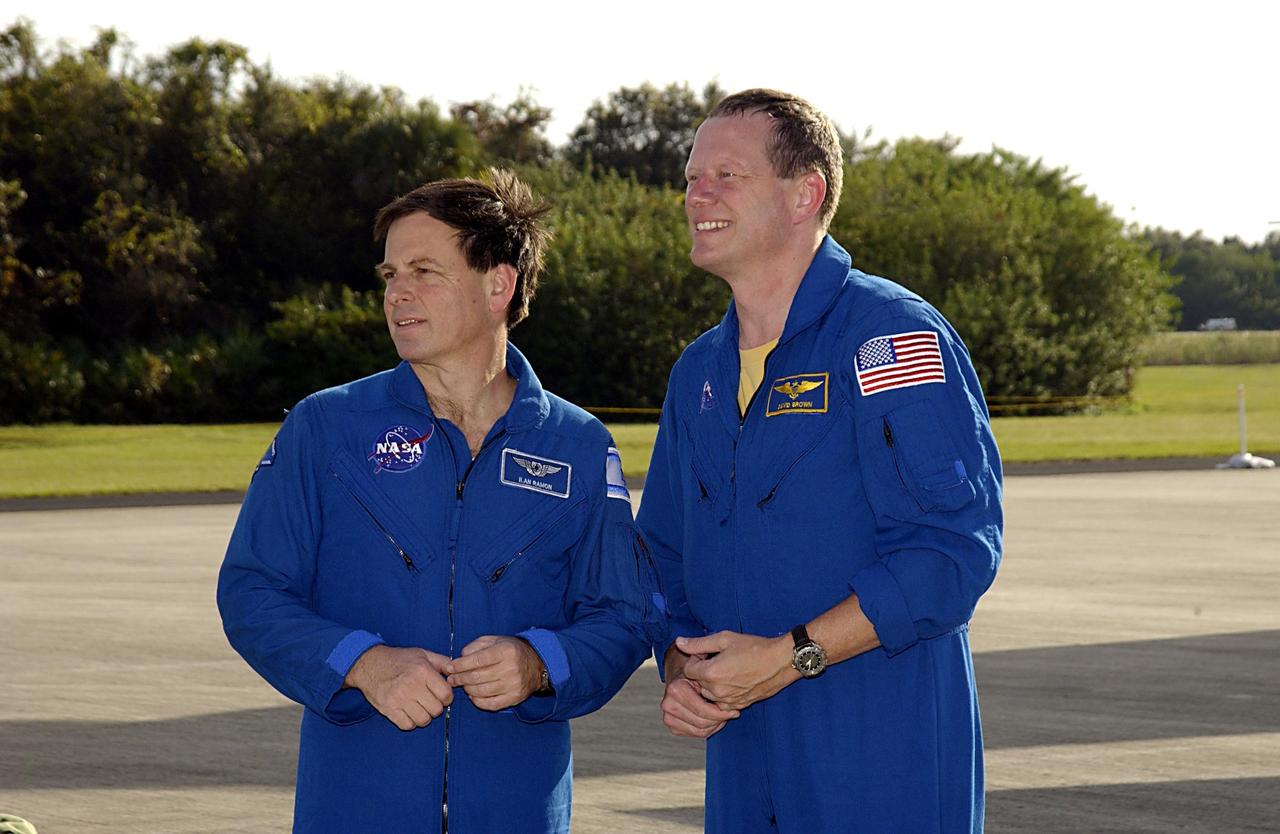
KENNEDY SPACE CENTER, FLA. - STS-107 Payload Specialist Ilan Ramon (left) and Mission Specialist David Brown (right) are ready to head for crew quarters after arriving at KSC. The crew is taking part in Terminal Countdown Demonstration Test activities, which include a simulated launch countdown. Other crew members are Commander Rick Husband, Pilot William "Willie" McCool, Payload Commander Michael Anderson, and Mission Specialists Kalpana Chawla and Laurel Clark. STS-107 is a mission devoted to research and will include more than 80 experiments that will study Earth and space science, advanced technology development, and astronaut health and safety. Launch is scheduled for Jan. 16, 2003.
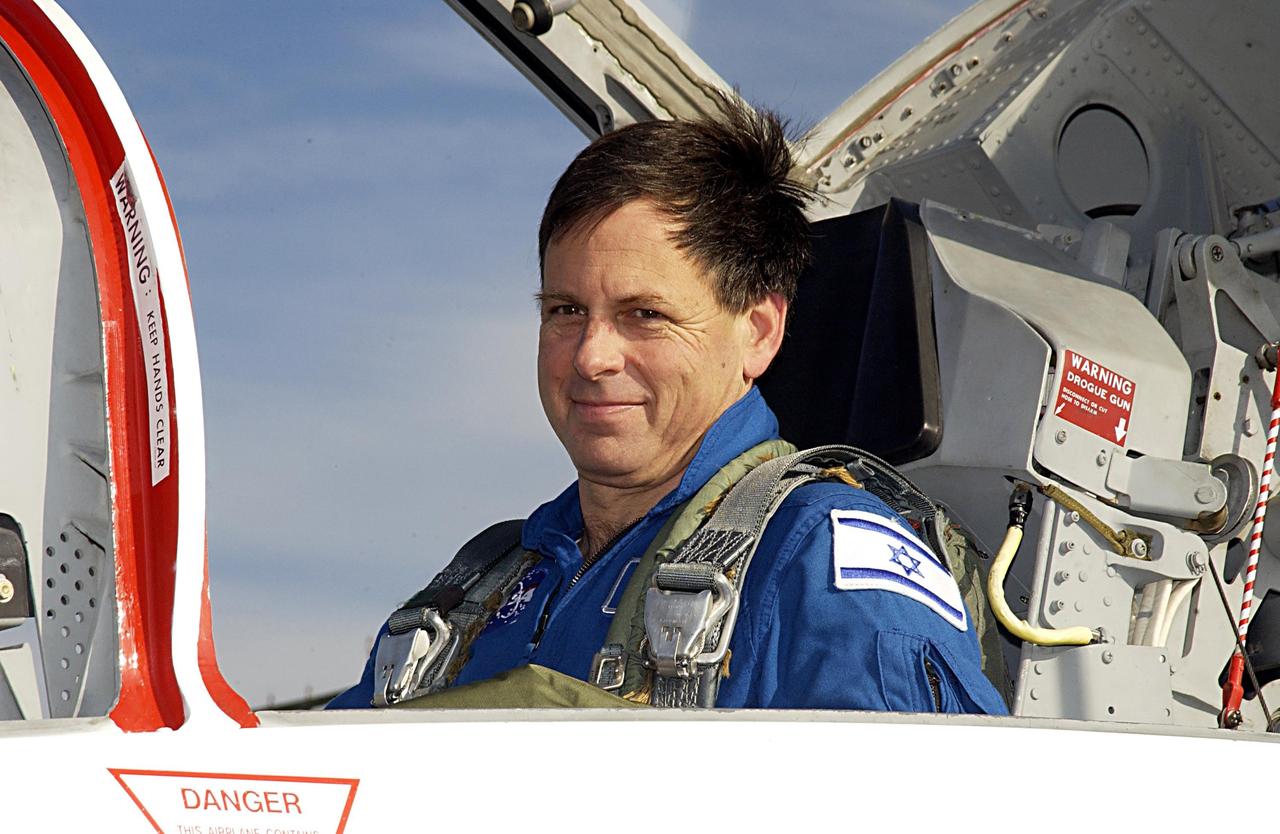
KENNEDY SPACE CENTER, FLA. - STS-107 Payload Specialist Ilan Ramon (the first Israeli astronaut) arrives at KSC to take part in Terminal Countdown Demonstration Test activities, which include a simulated launch countdown. Other crew members are Commander Rick Husband, Pilot William "Willie" McCool, Payload Commander Michael Anderson, Mission Specialists Kalpana Chawla, David Brown and Laurel Clark. STS-107 is a mission devoted to research and will include more than 80 experiments that will study Earth and space science, advanced technology development, and astronaut health and safety. Launch is scheduled for Jan. 16, 2003.
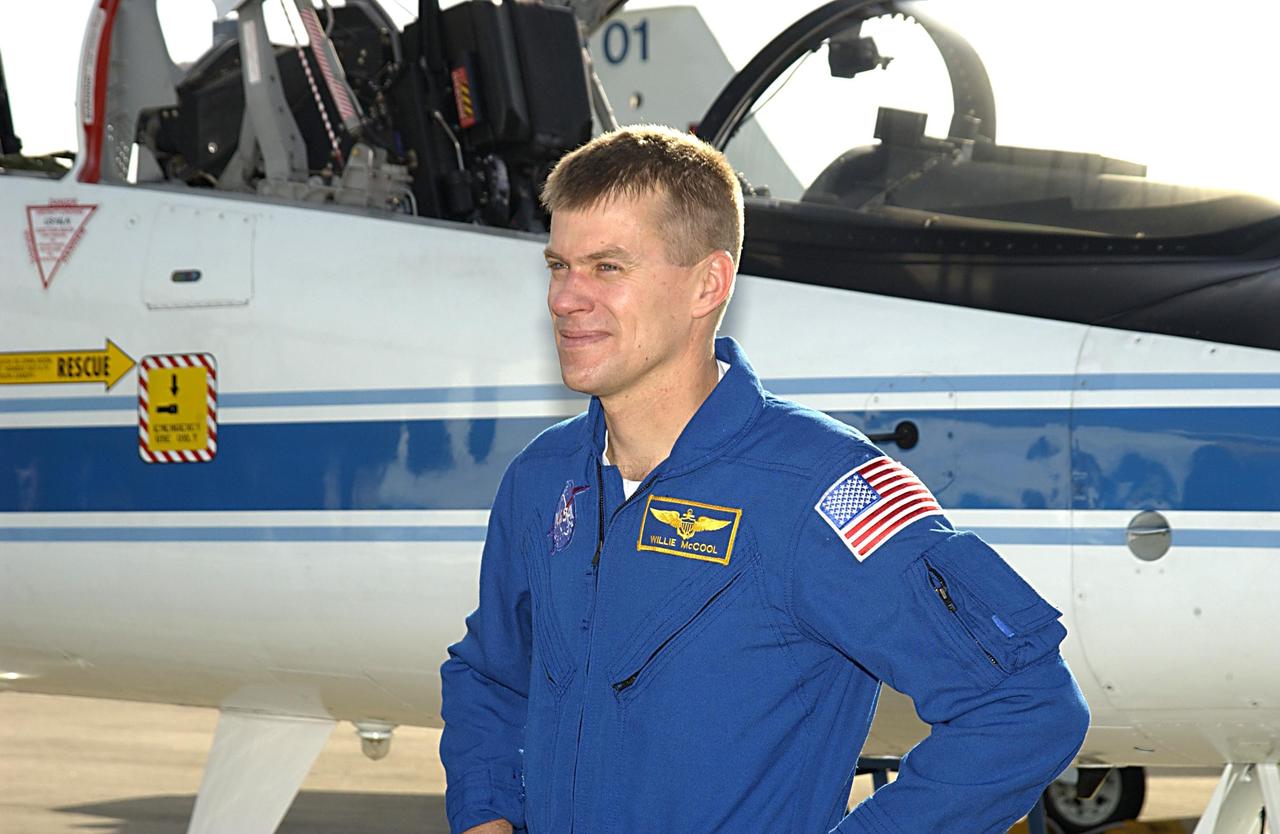
KENNEDY SPACE CENTER, FLA. - STS-107 Pilot William "Willie" McCool pauses next to the T-38 jet aircraft in which he flew to KSC. He and the crew are at KSC to take part in Terminal Countdown Demonstration Test activities, which include a simulated launch countdown. Other crew members are Commander Rick Husband, Payload Commander Michael Anderson, Mission Specialists Kalpana Chawla, David Brown and Laurel Clark, and Payload Specialist Ilan Ramon, the first Israeli astronaut. STS-107 is a mission devoted to research and will include more than 80 experiments that will study Earth and space science, advanced technology development, and astronaut health and safety. Launch is scheduled for Jan. 16, 2003.
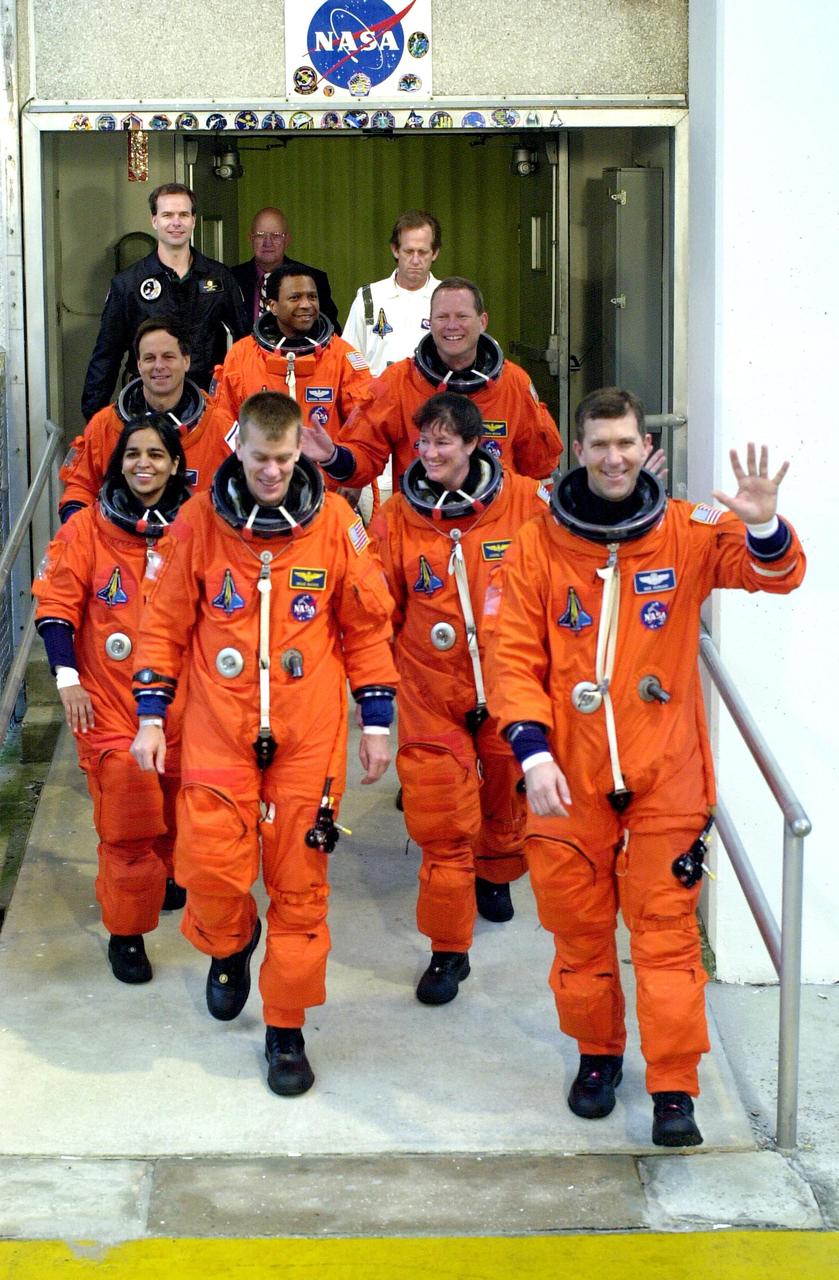
KENNEDY SPACE CENTER, FLA. -- The STS-107 crew exits the Operations and Checkout Building for a ride to Launch Pad 39A and a simulated launch countdown. From left are Payload Specialist Ilan Ramon, Mission Specialist Kalpana Chawla, Payload Commander Michael Anderson, Mission Specialist David Brown, Pilot William "Willie" McCool, Mission Specialist Laurel Clark and Commander Rick Husband. The countdown is part of Terminal Countdown Demonstration Test activities. STS-107 is a mission devoted to research and will include more than 80 experiments that will study Earth and space science, advanced technology development, and astronaut health and safety. Launch is planned for Jan. 16, 2003, between 10 a.m. and 2 p.m. EST aboard Space Shuttle Columbia. .
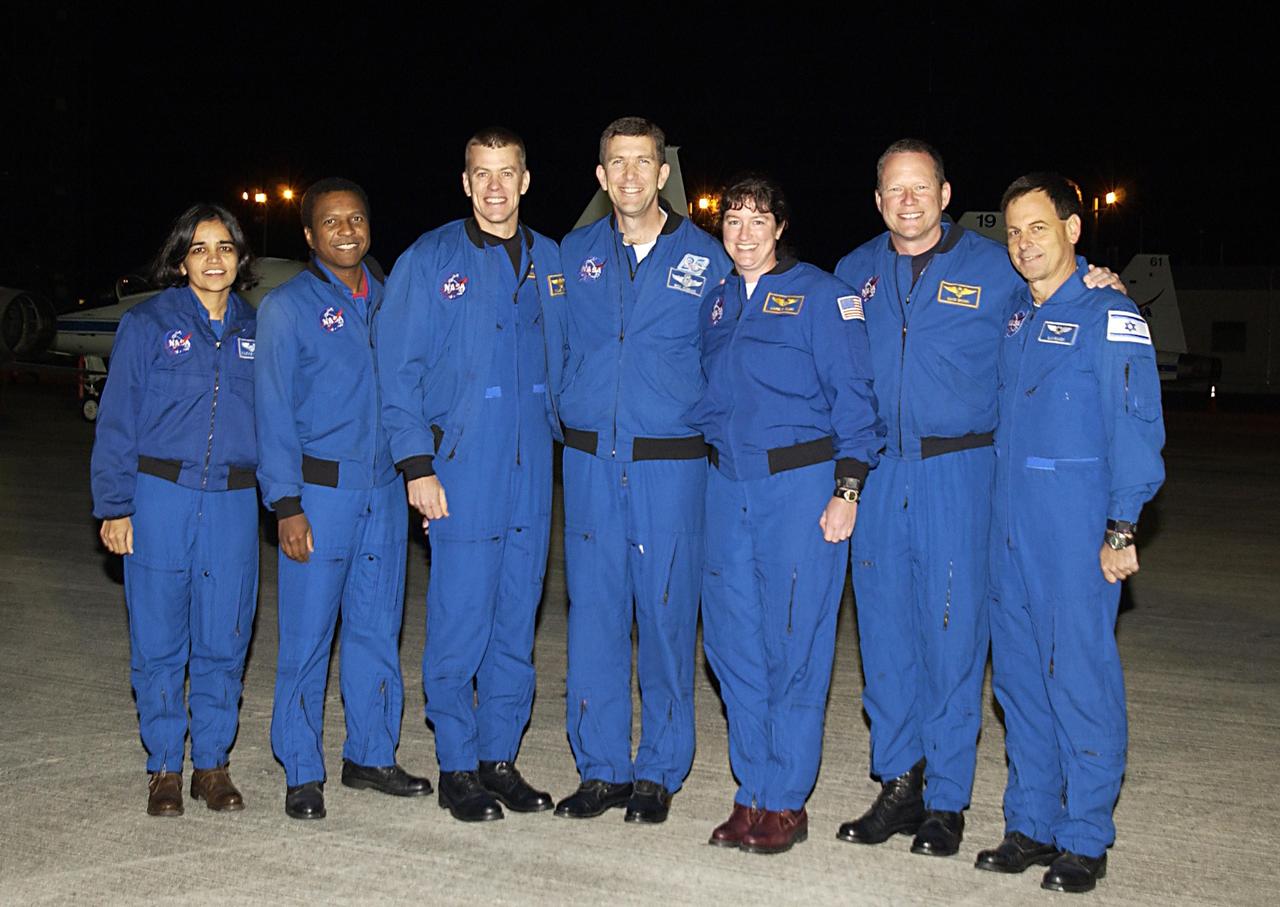
KENNEDY SPACE CENTER, FLA. - The STS-107 crew pose for a photo after their arrival at KSC for pre-launch preparations. Standing from left to right are Mission Specialist Kalpana Chawla, Payload Commander Michael Anderson, Pilot William "Willie" McCool, Commander Rick Husband, Mission Specialists Laurel Clark and David Brown, and Payload Specialist Ilan Ramon, who is the first Israeli astronaut to fly on a Shuttle mission. STS-107 is a mission devoted to research and will include more than 80 experiments that will study Earth and space science, advanced technology development, and astronaut health and safety. The payload on Space Shuttle Columbia includes FREESTAR (Fast Reaction Experiments Enabling Science, Technology, Applications and Research) and the SHI Research Double Module (SHI/RDM), known as SPACEHAB. Experiments on the module range from material sciences to life sciences. Launch of Columbia is targeted for Jan. 16 between 10 a.m. and 2 p.m.
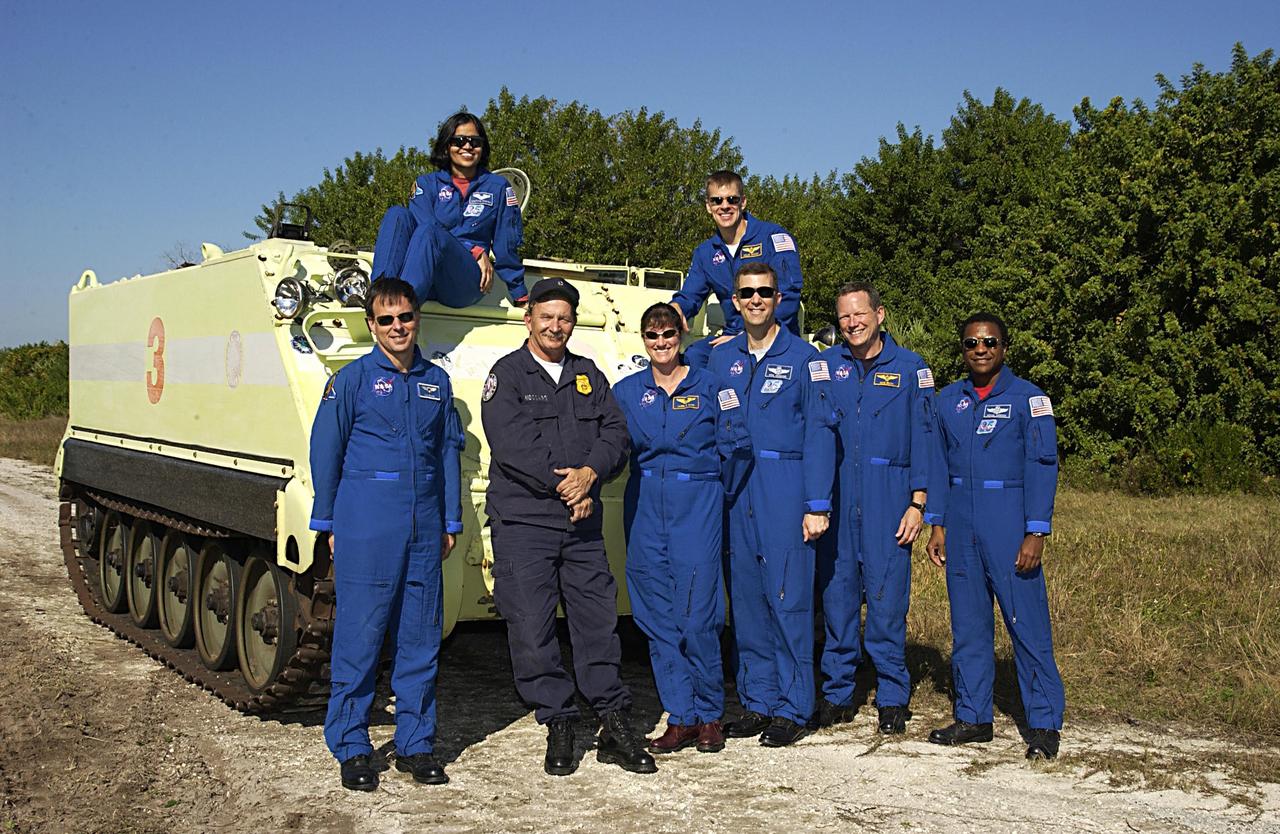
KENNEDY SPACE CENTER, FLA. -- -- The STS-107 crew poses for a group portrait with their instructor beside an M113 armored personnel carrier. The crew is participating in Terminal Countdown Demonstration Test activities, a standard part of launch preparations. In the front, from left, are Payload Specialist Ilan Ramon (the first Israeli astronaut), Instructor George Hoggard, Mission Specialist Laurel Clark, Commander Rick Husband, Mission Specialist David Brown, and Payload Commander Michael Anderson. In the back, from left, are Mission Specialist Kalpana Chawla and Pilot William "Willie" McCool. STS-107 is a mission devoted to research and will include more than 80 experiments that will study Earth and space science, advanced technology development, and astronaut health and safety. Launch is planned for Jan. 16, 2003, between 10 a.m. and 2 p.m. EST aboard Space Shuttle Columbia.
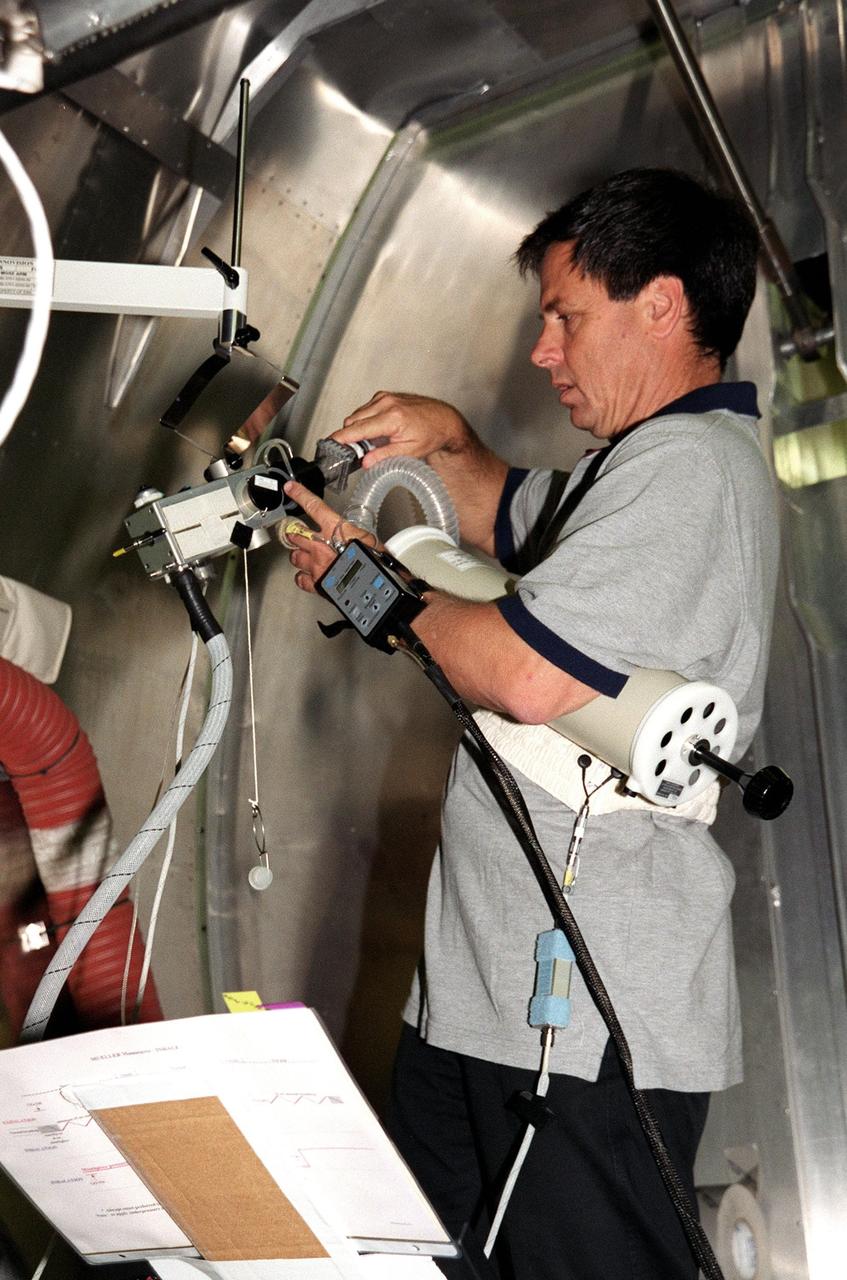
KENNEDY SPACE CENTER, Fla. -- STS-107 Payload Specialist Ilan Ramon, of Israel, manipulates a piece of equipment in the Spacehab module. He and other crew members are taking part in Crew Equipment Interface Test (CEIT) activities at SPACEHAB, Cape Canaveral, Fla. As a research mission, STS-107 will carry the Spacehab Double Module in its first research flight into space and a broad collection of experiments ranging from material science to life science. The CEIT activities enable the crew to perform certain flight operations, operate experiments in a flight-like environment, evaluate stowage locations and obtain additional exposure to specific experiment operations. Other STS-107 crew members are Commander Rick Douglas Husband, Pilot William C. McCool; Payload Commander Michael P. Anderson; and Mission Specialists Kalpana Chawla, Laurel Blair Salton Clark and David M. Brown. STS-107 is scheduled for launch May 23, 2002
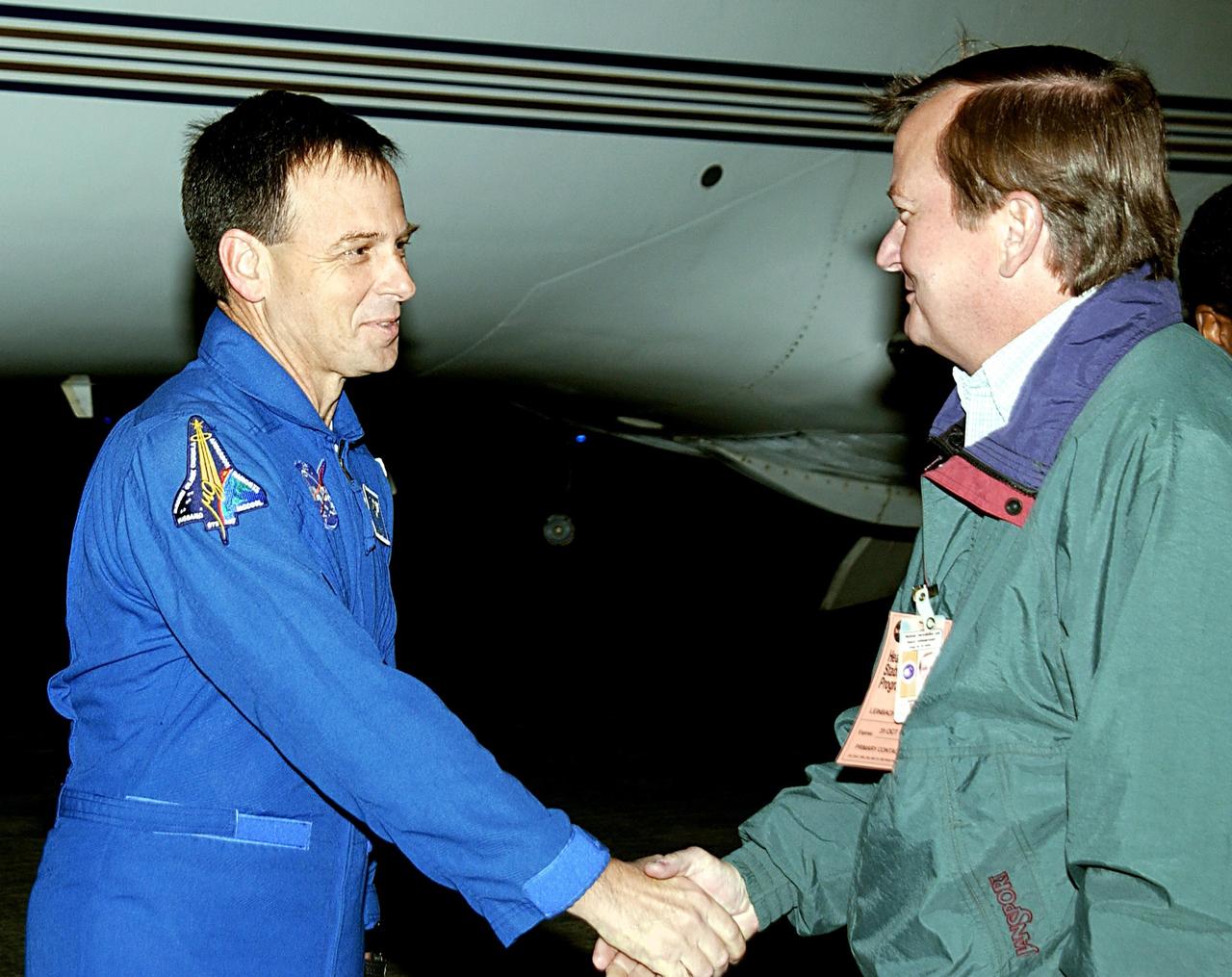
KENNEDY SPACE CENTER, FLA. -- STS-107 Payload Specialist Ilan Ramon (left) is greeted on his arrival by Launch Director Mike Linebach. Ramon is the first Israeli astronaut to fly on a Shuttle mission. STS-107 is a mission devoted to research and will include more than 80 experiments that will study Earth and space science, advanced technology development, and astronaut health and safety. The payload on Space Shuttle Columbia includes FREESTAR (Fast Reaction Experiments Enabling Science, Technology, Applications and Research) and the SHI Research Double Module (SHI/RDM), known as SPACEHAB. Experiments on the module range from material sciences to life sciences. Other crew members are Commander Rick Husband, Pilot William "Willie" McCool, Payload Commander Michael Anderson and Mission Specialists Kalpana Chawla, David Brown and Laurel Clark. Launch of Columbia is targeted for Jan. 16 between 10 a.m. and 2 p.m.
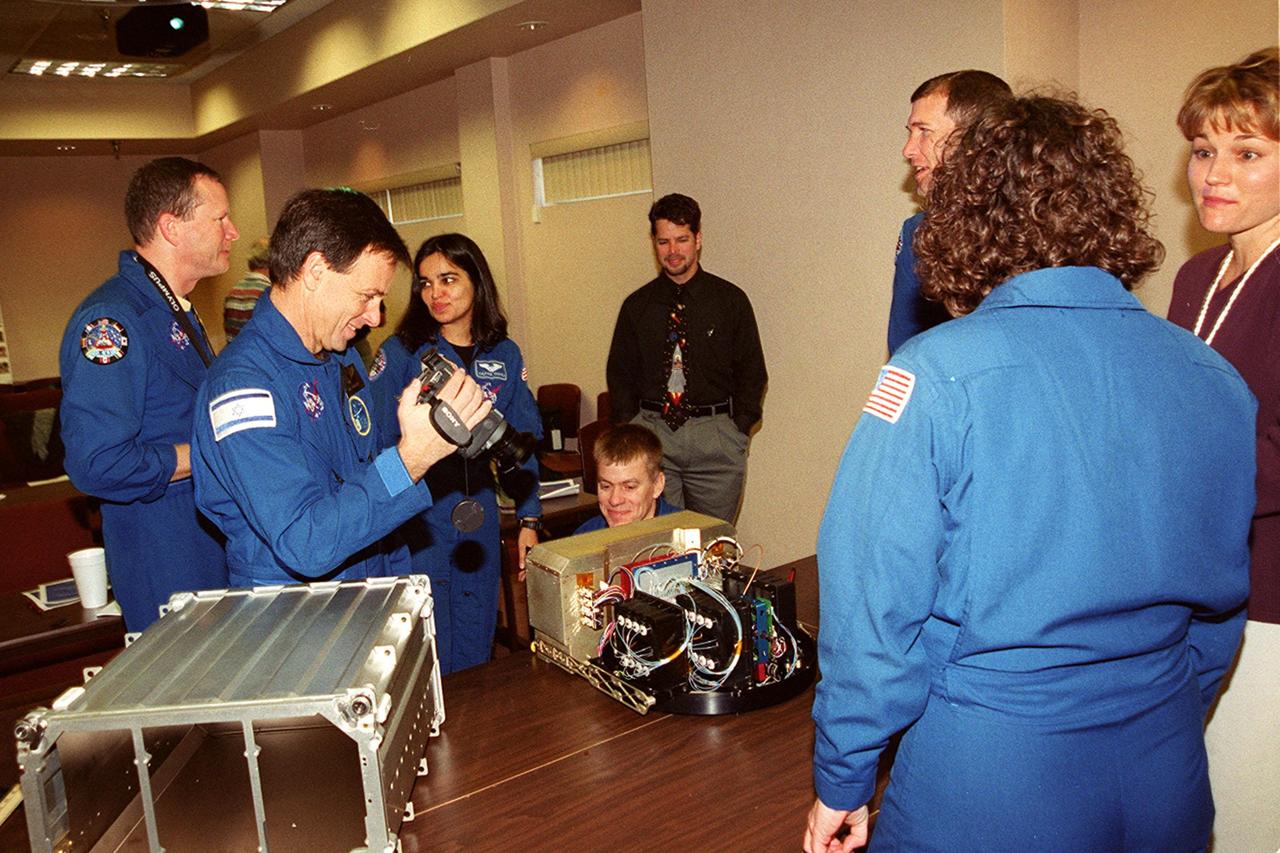
KENNEDY SPACE CENTER, FLA. -- As part of In-Flight Maintenance training, members of the STS-107 crew check out one of the Biotube experiments that will be part of their research mission . From left (in uniform) are Mission Specialist David M. Brown, Payload Specialist Ilan Ramon of Israel, and Mission Specialist Kalpana Chawla; Pilot William C. “Willie” McCool (crouching behind the table); Commander Rick D. Husband; and Mission Specialist Laurel Clark. At right is project engineer April Boody. As a research mission, STS-107 will carry the SPACEHAB Double Module in its first research flight into space and a broad collection of experiments ranging from material science to life science. It is scheduled to launch July 19, 2001

KENNEDY SPACE CENTER, FLA. - STS-107 Mission Specialist Kalpana Chawla joins other crew members after arrival at KSC for pre-launch preparations. Not seen are Commander Rick Husband, Pilot William "Willie" McCool, Payload Commander Michael Anderson, Payload Specialist Ilan Ramon, and Mission Specialists David Brown and Laurel Clark. STS-107 is a mission devoted to research and will include more than 80 experiments that will study Earth and space science, advanced technology development, and astronaut health and safety. The payload on Space Shuttle Columbia includes FREESTAR (Fast Reaction Experiments Enabling Science, Technology, Applications and Research) and the SHI Research Double Module (SHI/RDM), known as SPACEHAB. Experiments on the module range from material sciences to life sciences. Launch of Columbia is targeted for Jan. 16 between 10 a.m. and 2 p.m.
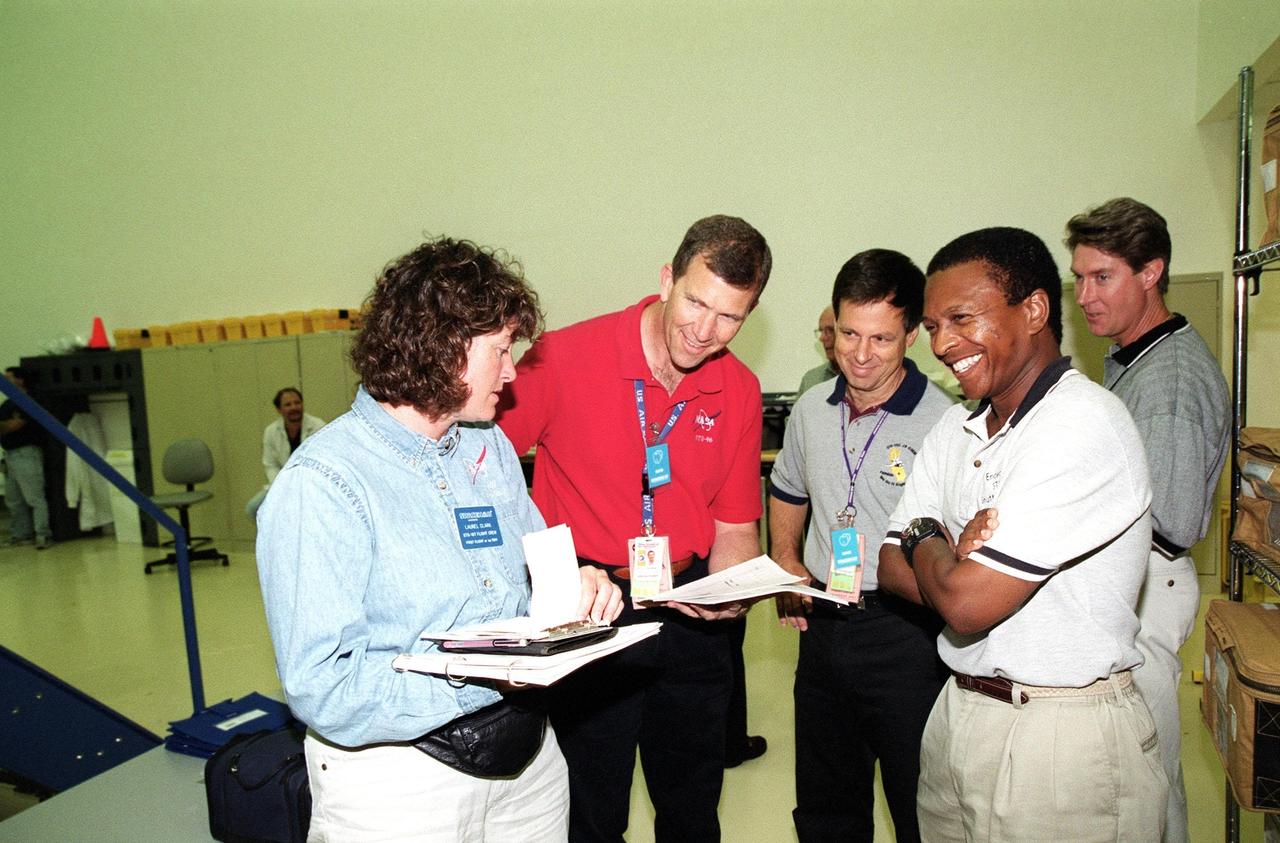
KENNEDY SPACE CENTER, Fla. -- At SPACEHAB, Cape Canaveral, Fla., the STS-107 crew takes part in Crew Equipment Interface Test (CEIT) activities. From left are Mission Specialist Laurel Blair Salton Clark, Commander Rick Douglas Husband, Payload Specialist Ilan Ramon, of Israel, and Payload Commander Michael P. Anderson. A trainer is at far right. As a research mission, STS-107 will carry the Spacehab Double Module in its first research flight into space and a broad collection of experiments ranging from material science to life science. The CEIT activities enable the crew to perform certain flight operations, operate experiments in a flight-like environment, evaluate stowage locations and obtain additional exposure to specific experiment operations. Other STS-107 crew members are Pilot William C. McCool and Mission Specialists Kalpana Chawla and David M. Brown. STS-107 is scheduled for launch May 23, 2002
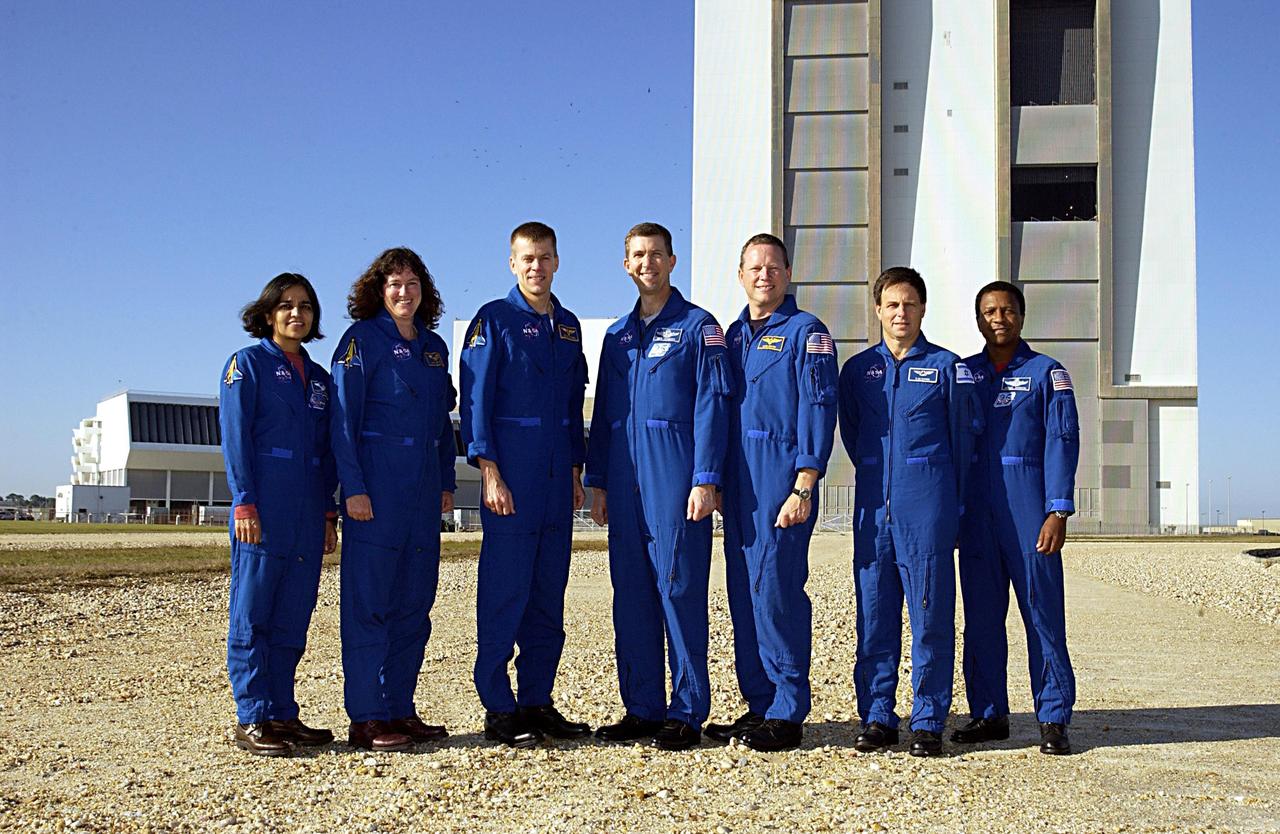
KENNEDY SPACE CENTER, FLA. -- The STS-107 crew poses for a group portrait with the Vehicle Assembly Building in the background. They are at KSC to take part in Terminal Countdown Demonstration Test activities, a standard part of launch preparations. From left to right are Mission Specialists Kalpana Chawla and Laurel Clark, Pilot William "Willie" McCool, Commander Rick Husband, Mission Specialist David Brown, Payload Specialist Ilan Ramon (the first Israeli astronaut), and Payload Commander Michael Anderson. STS-107 is a mission devoted to research and will include more than 80 experiments that will study Earth and space science, advanced technology development, and astronaut health and safety. Launch is targeted for Jan. 16, 2003, between 10 a.m. and 2 p.m. EST.
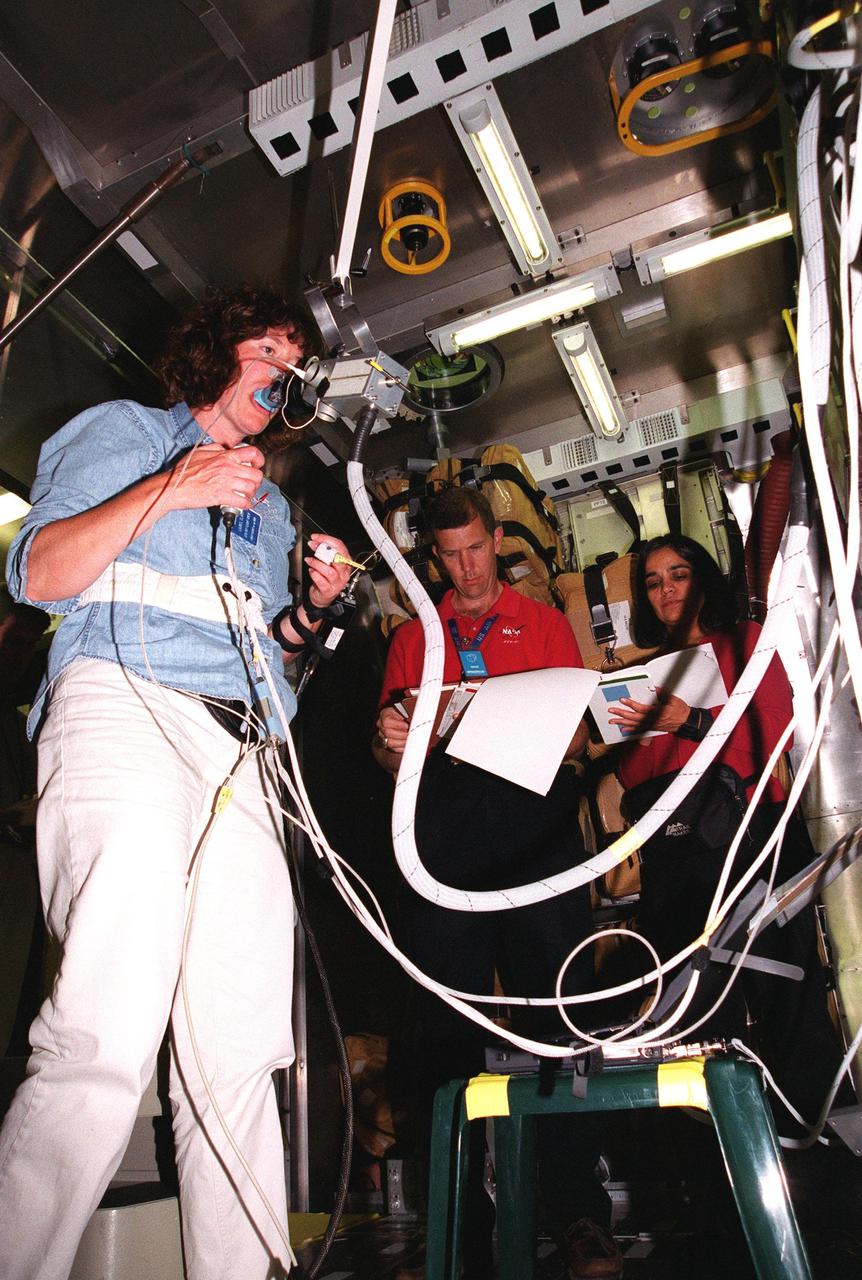
KENNEDY SPACE CENTER, Fla. -- At SPACEHAB, Cape Canaveral, Fla., Mission Specialist Laurel Blair Salton Clark practices an experiment while Commander Rick Douglas Husband and Mission Specialist Kalpana Chawla observe. They and other crew members Pilot William C. McCool; Payload Commander Michael P. Anderson; and Mission Specialists David M. Brown and Ilan Ramon, of Israel, are at SPACEHAB for Crew Equipment Interface Test (CEIT) activities. The CEIT enables the crew to perform certain flight operations, operate experiments in a flight-like environment, evaluate stowage locations and obtain additional exposure to specific experiment operations. As a research mission, STS-107 will carry the Spacehab Double Module in its first research flight into space and a broad collection of experiments ranging from material science to life science. STS-107 is scheduled for launch May 23, 2002
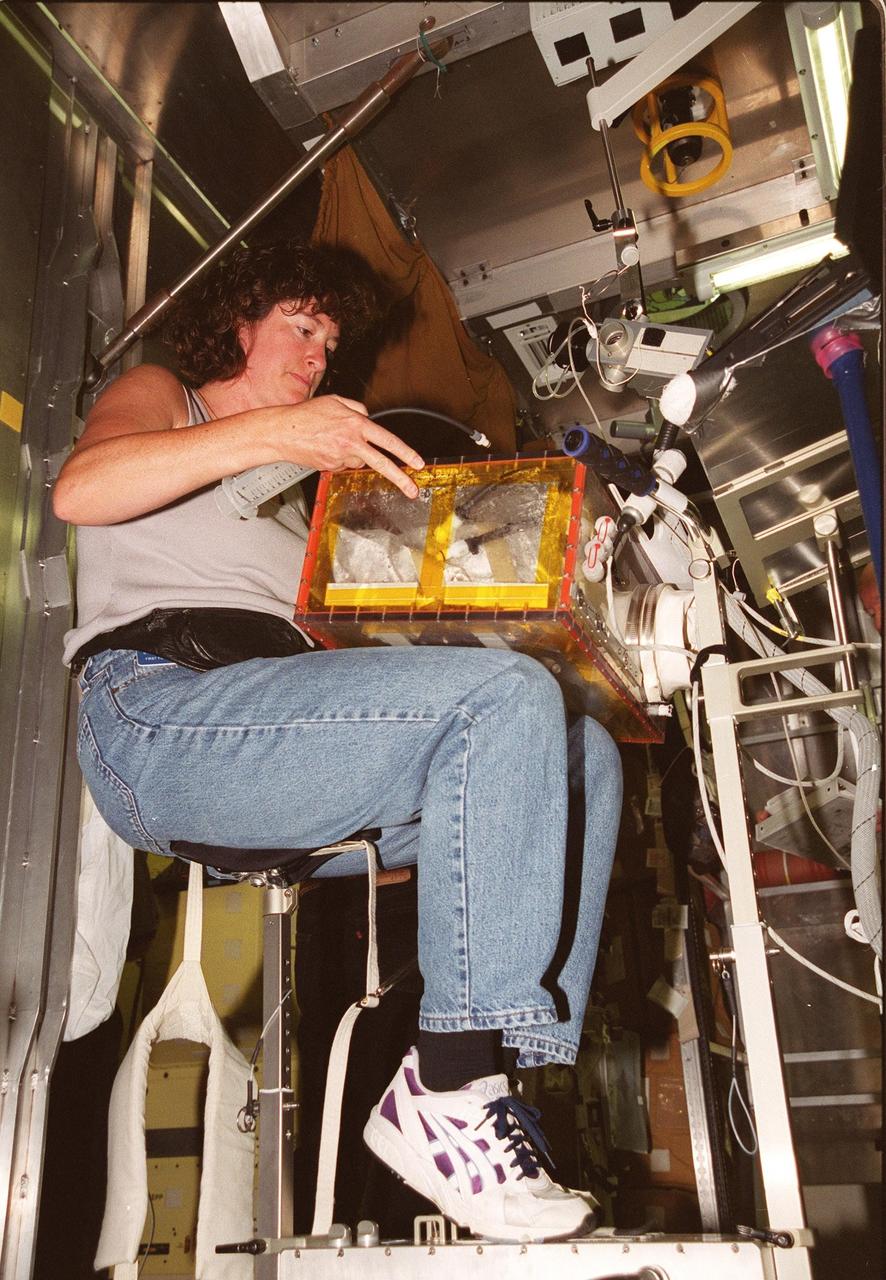
KENNEDY SPACE CENTER, Fla. -- During Crew Equipment Interface Test activities at SPACEHAB, Cape Canaveral, Fla., STS-107 Mission Specialist Laurel Blair Salton Clark gets hands-on training on a glove box experiment inside the training module. As a research mission, STS-107 will carry the SPACEHAB Double Module in its first research flight into space and a broad collection of experiments ranging from material science to life science. CEIT activities enable the crew to perform certain flight operations, operate experiments in a flight-like environment, evaluate stowage locations and obtain additional exposure to specific experiment operations. Other STS-107 crew members are Commander Rick Douglas Husband; Pilot William C. McCool; Payload Commander Michael P. Anderson; Mission Specialists Kalpana Chawla and David M. Brown; and Payload Specialist Ilan Ramon, of Israel. STS-107 is scheduled for launch May 23, 2002
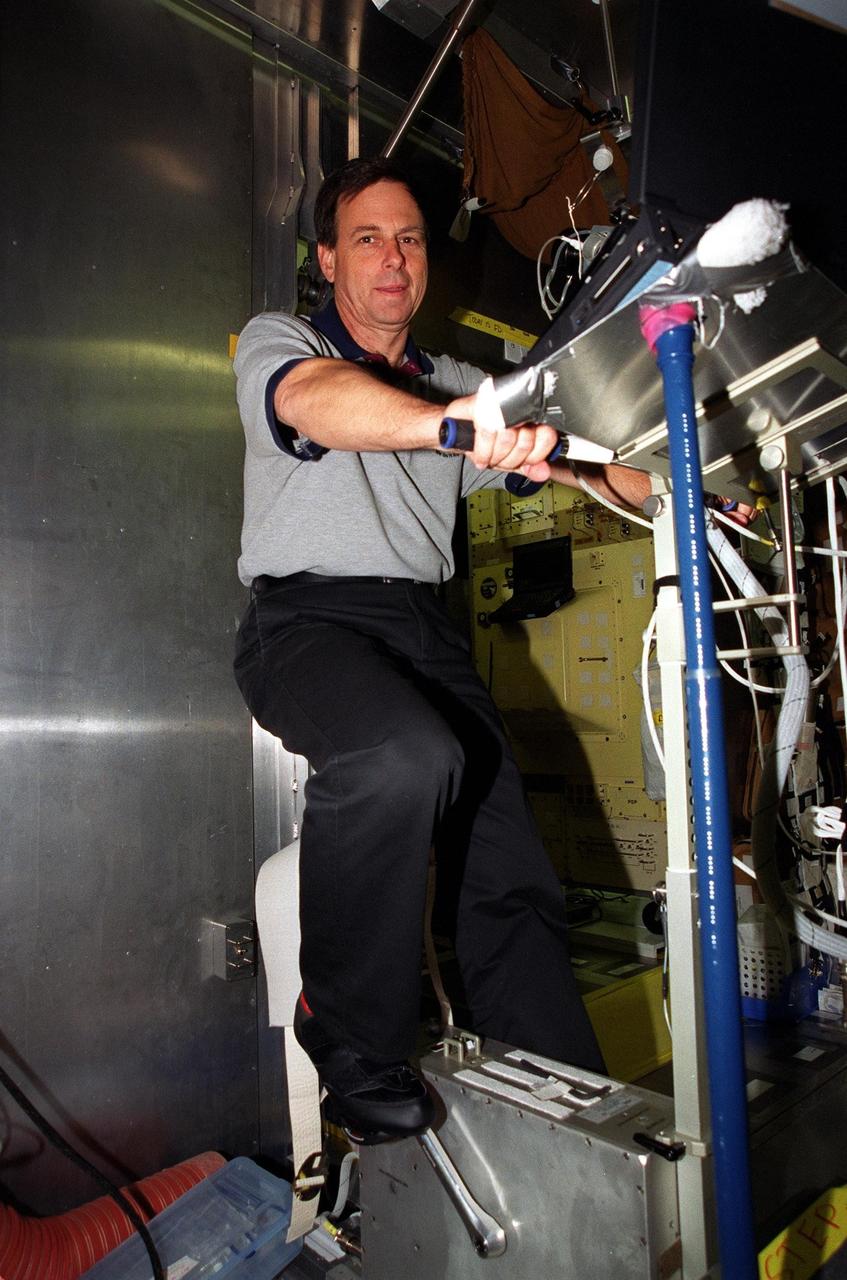
KENNEDY SPACE CENTER, Fla. -- STS-107 Payload Specialist Ilan Ramon, of Israel, trains on equipment in the training module at SPACEHAB, Cape Canaveral. Ramon and other crew members Commander Rick D. Husband, Pilot William C. McCool, Payload Commander Michael P. Anderson; and Mission Specialists Kalpana Chawla, Laurel Blair Salton Clark and David M. Brown are at SPACEHAB to take part in Crew Equipment Interface Test (CEIT) activities. The CEIT enables the crew to perform certain flight operations, operate experiments in a flight-like environment, evaluate stowage locations and obtain additional exposure to specific experiment operations. As a research mission, STS-107 will carry the SPACEHAB Double Module in its first research flight into space and a broad collection of experiments ranging from material science to life science. STS-107 is scheduled for launch May 23, 2002
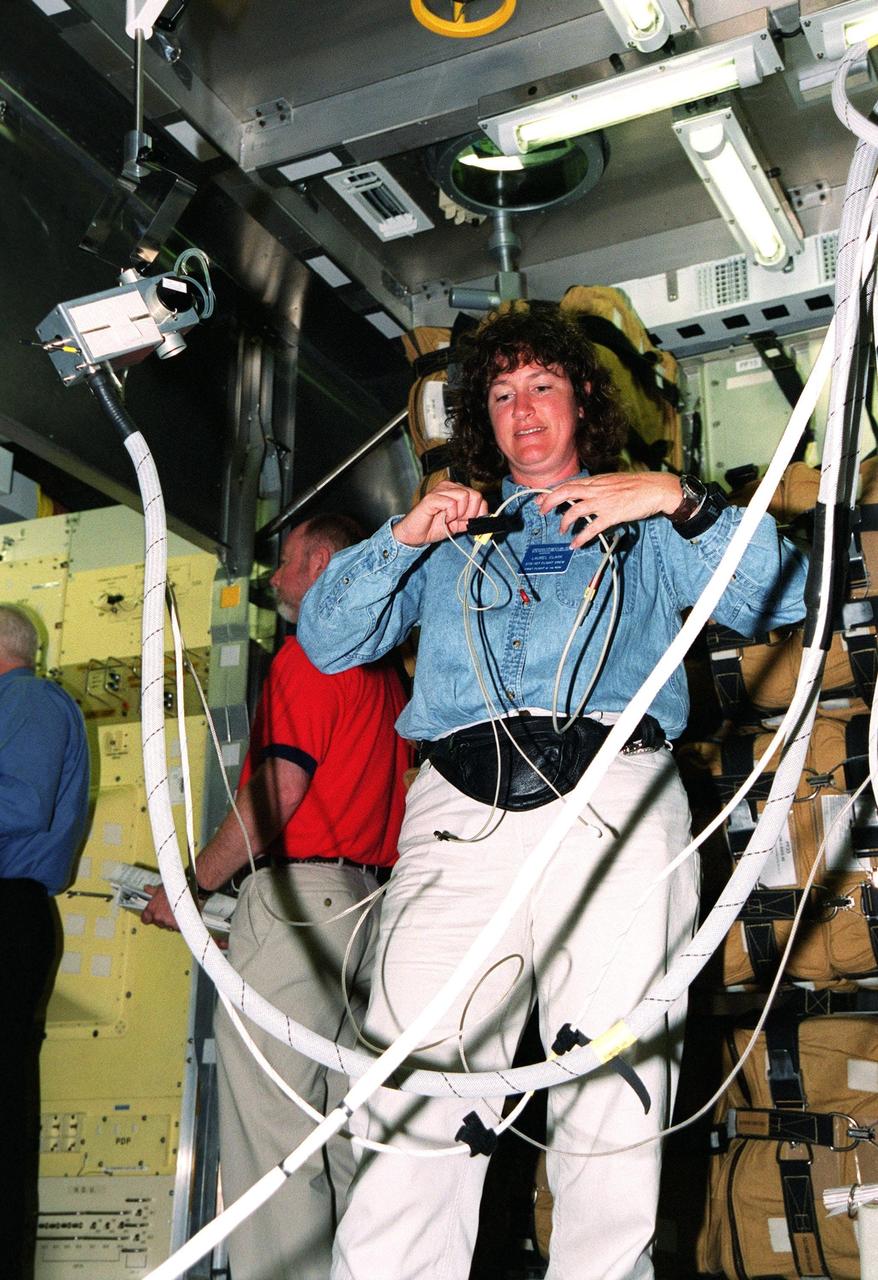
KENNEDY SPACE CENTER, Fla. -- During Crew Equipment Interface Test (CEIT)activities at SPACEHAB, Cape Canaveral, Fla., STS-107 Mission Specialist Laurel Blair Salton Clark gets hands-on training on equipment inside the Spacehab module. As a research mission, STS-107 will carry the Spacehab Double Module in its first research flight into space and a broad collection of experiments ranging from material science to life science. CEIT activities enable the crew to perform certain flight operations, operate experiments in a flight-like environment, evaluate stowage locations and obtain additional exposure to specific experiment operations. Other STS-107 crew members are Commander Rick Douglas Husband; Pilot William C. McCool; Payload Commander Michael P. Anderson; Mission Specialists Kalpana Chawla and David M. Brown; and Payload Specialist Ilan Ramon, of Israel. STS-107 is scheduled for launch May 23, 2002
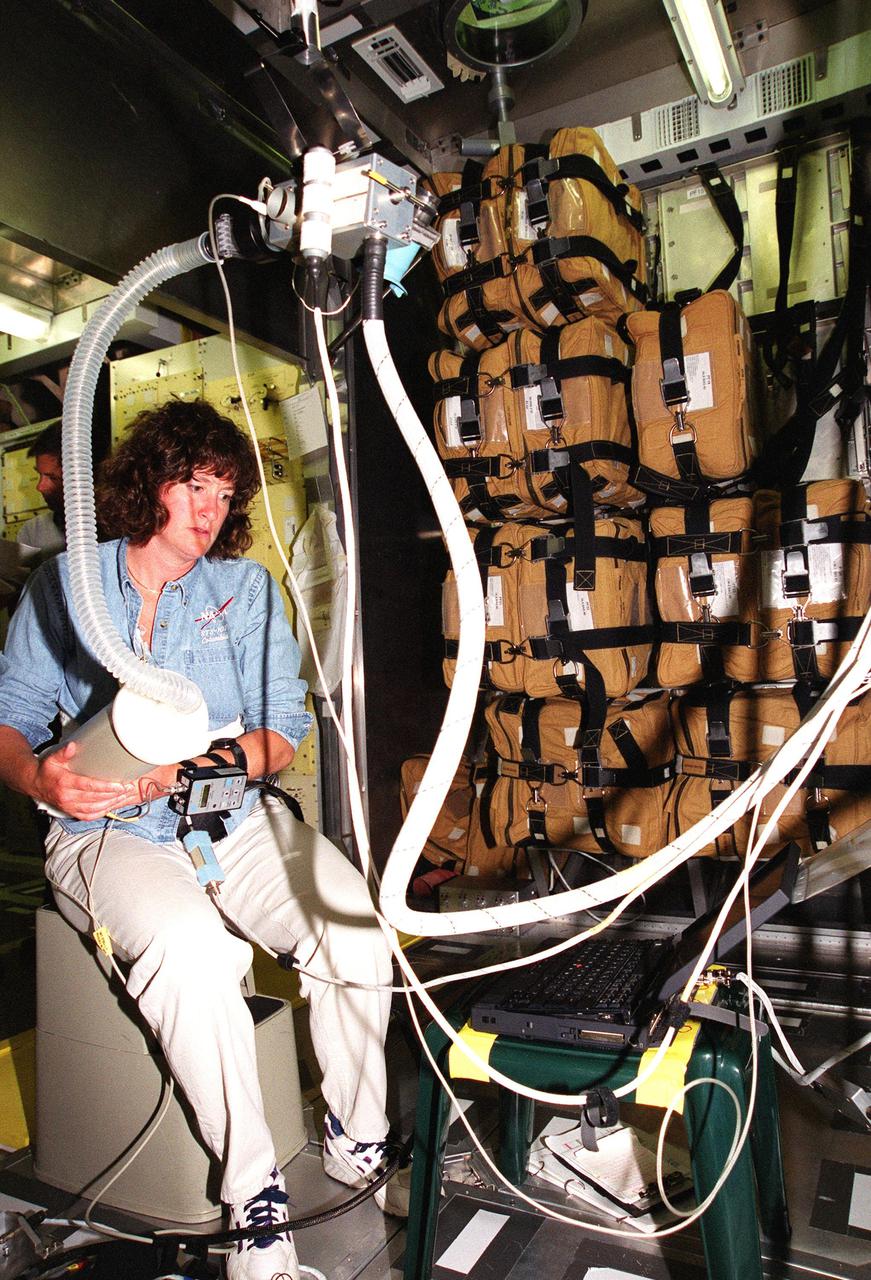
KENNEDY SPACE CENTER, Fla. -- At SPACEHAB, Cape Canaveral, Fla., STS-107 Mission Specialist Laurel Blair Salton Clark manipulates a piece of equipment. She and other crew members are at SPACEHAB, Port Canaveral, Fla., for Crew Equipment Interface Test (CEIT) activities that enable the crew to perform certain flight operations, operate experiments in a flight-like environment, evaluate stowage locations and obtain additional exposure to specific experiment operations. As a research mission, STS-107 will carry the Spacehab Double Module in its first research flight into space and a broad collection of experiments ranging from material science to life science. Other STS-107 crew members are Commander Rick Douglas Husband, Pilot William C. McCool; Payload Commander Michael P. Anderson; and Mission Specialists Kalpana Chawla, David M. Brown and Ilan Ramon, of Israel. STS-107 is scheduled for launch May 23, 2002
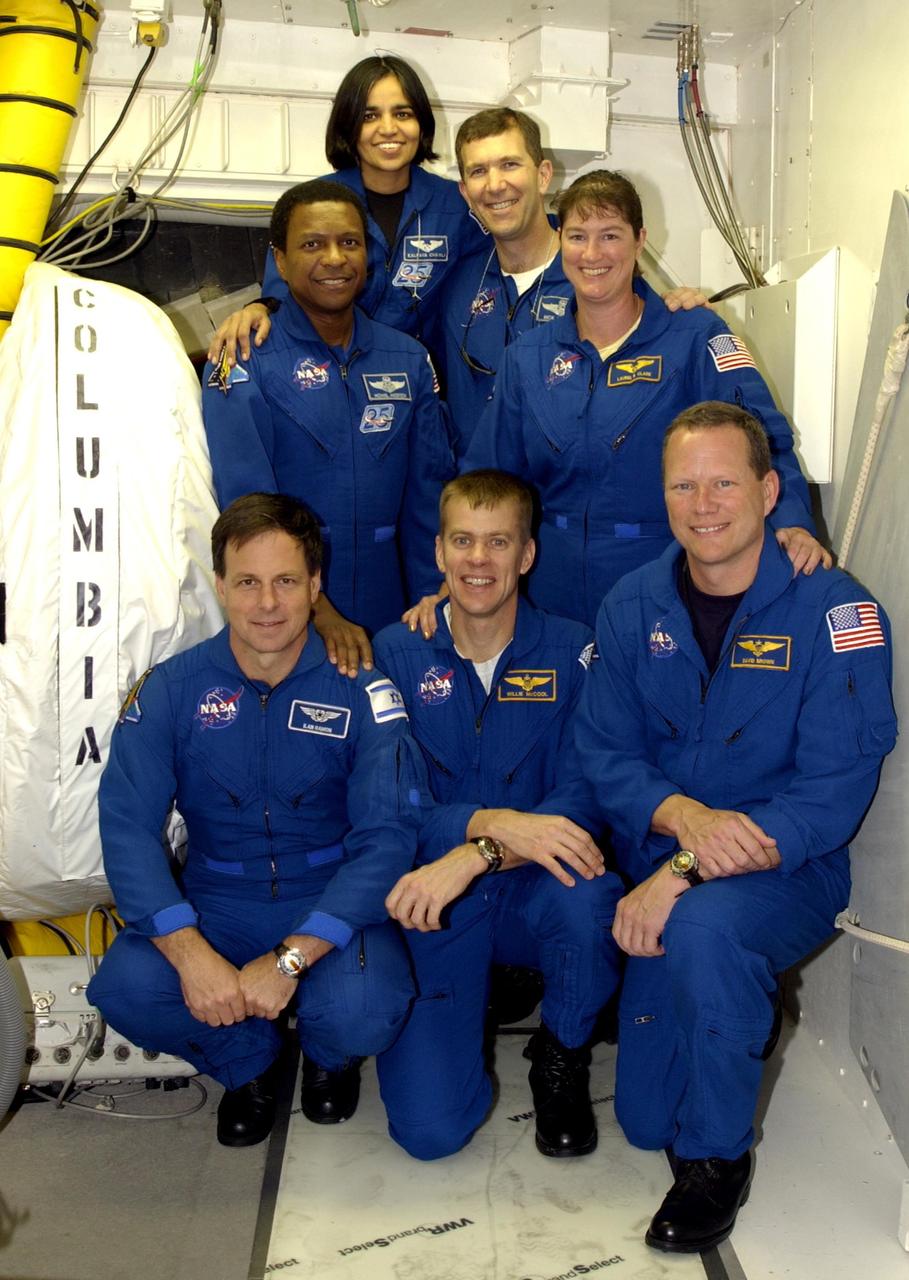
KENNEDY SPACE CENTER, FLA. -- The STS-107 crew poses in front of the entry into Space Shuttle Columbia during Terminal Countdown Demonstration Test activities on the pad. Kneeling in front are (left to right) Payload Specialist Ilan Ramon (the first Israeli astronaut), Pilot William "Willie" McCool and Mission Specialist David Brown. Standing in back are (left to right) Payload Commander Michael Anderson, Mission Specialist Kalpana Chawla, Commander Rick Husband and Mission Specialist Laurel Clark. The TCDT also includes a simulated launch countdown. STS-107 is a mission devoted to research and will include more than 80 experiments that will study Earth and space science, advanced technology development, and astronaut health and safety. Launch is planned for Jan. 16, 2003, between 10 a.m. and 2 p.m. EST aboard Columbia. .
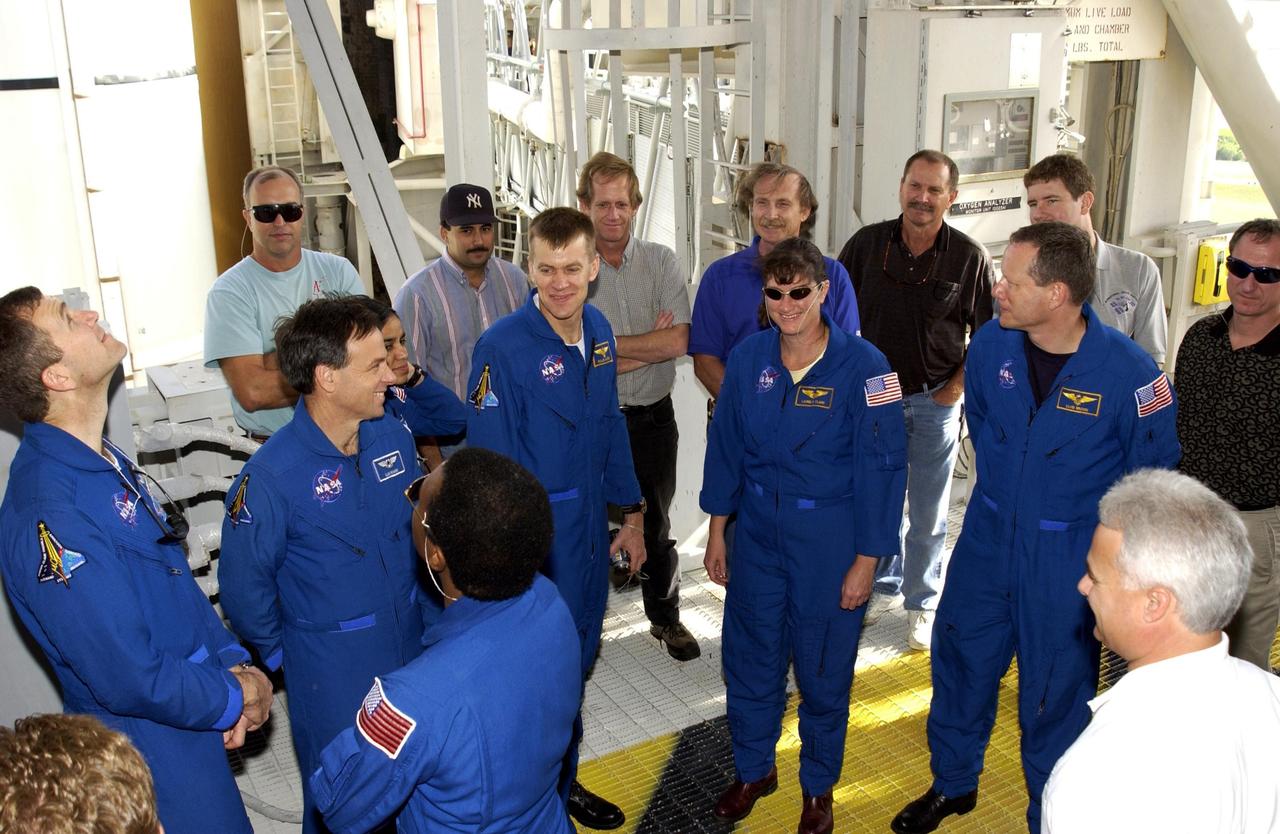
KENNEDY SPACE CENTER, FLA. - The STS-107 crew share a humorous moment on Launch Pad 39A during Terminal Countdown Demonstration Test activities. From left are Commander Rick Husband, Payload Specialist Ilan Ramon (the first Israeli astronaut), Pilot William "Willie" McCool, Mission Specialists Lauarel Clark and David Brown; in the foreground (back to camera) is Payload Commander Michael Anderson. The TCDT also includes a simulated launch countdown. STS-107 is a mission devoted to research and will include more than 80 experiments that will study Earth and space science, advanced technology development, and astronaut health and safety. Launch is planned for Jan. 16, 2003, between 10 a.m. and 2 p.m. EST aboard Space Shuttle Columbia. .
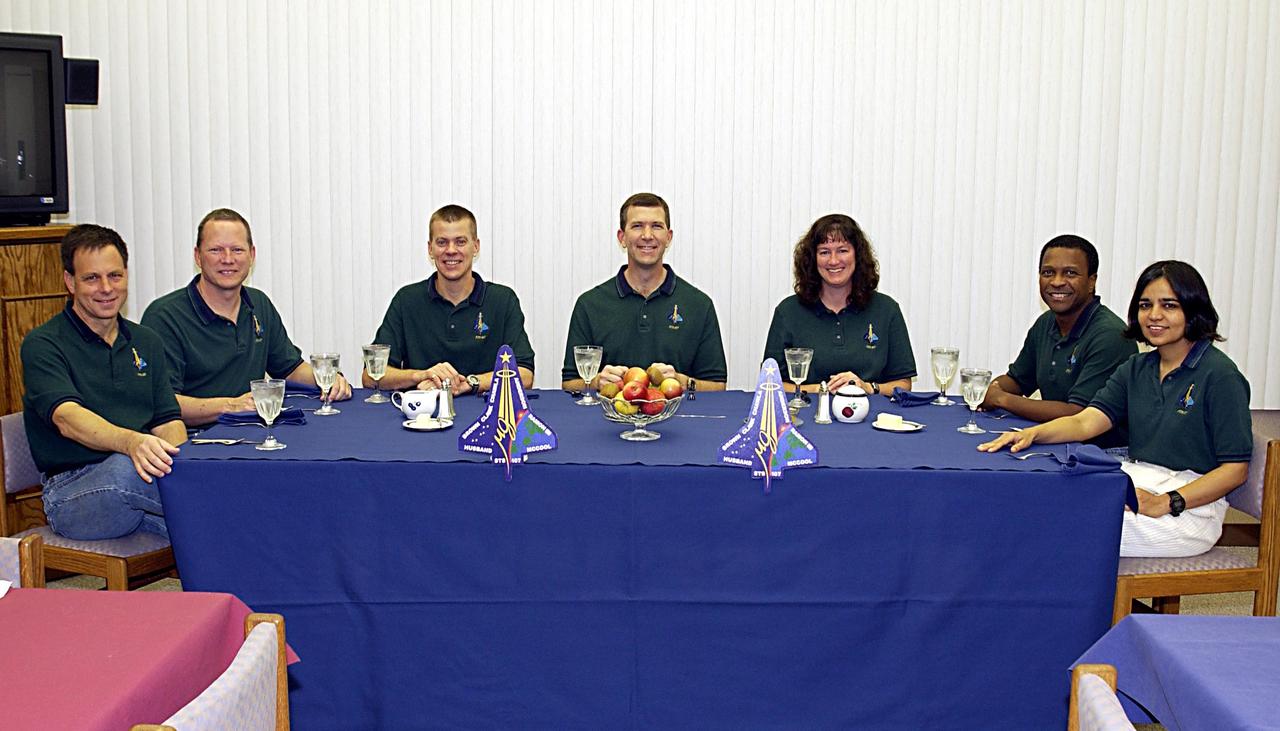
KENNEDY SPACE CENTER, FLA. - The STS-107 crew gathers at breakfast prior to preparing for launch. Seated left to right are Payload Specialist Ilan Ramon, Mission Specialist David Brown, Pilot William "Willie" McCool, Commander Rick Husband, Mission Specialist Laurel Clark, Payload Commander Michael Anderson and Mission Specialist Kalpana Chawla. STS-107 is a mission devoted to research and will include more than 80 experiments that will study Earth and space science, advanced technology development, and astronaut health and safety. The payload on Space Shuttle Columbia includes FREESTAR (Fast Reaction Experiments Enabling Science, Technology, Applications and Research) and the SHI Research Double Module (SHI/RDM), known as SPACEHAB. Experiments on the module range from material sciences to life sciences. Liftoff is scheduled for 10:39 a.m. EST.
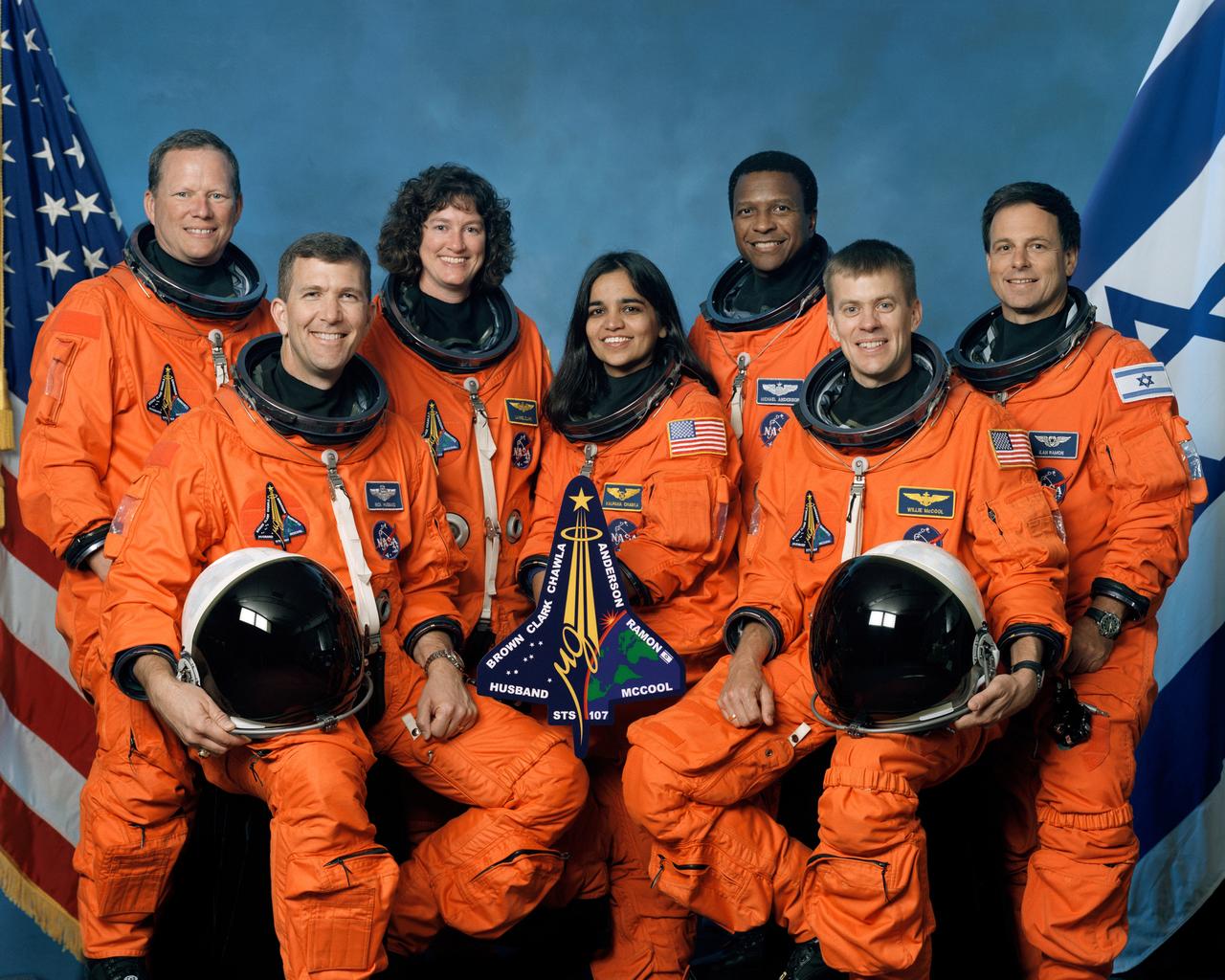
This is a traditional crew portrait of the seven STS-107 crew members. Seated in front, from left, are: Astronauts Rick D. Husband, mission commander; Kalpana Chawla, mission specialist; and William C. McCool, pilot. Standing, from left, are: David M. Brown, Laurel B. Clark, and Michael P. Anderson, all mission specialists; and Ilan Ramon, payload specialist, representing the Israeli Space Agency. Launched January 16, 2003, the STS-107 mission is strictly a multidiscipline microgravity and Earth science research mission involving 80-plus International experiments to be performed during 16-days, many of which will be managed by the Marshall Space Flight Center in Huntsville, Alabama. The first shuttle mission in 2003, the STS-107 mission marks the 113th flight overall in NASA's Space Shuttle program and the 28th flight of the Space Shuttle Orbiter Columbia.
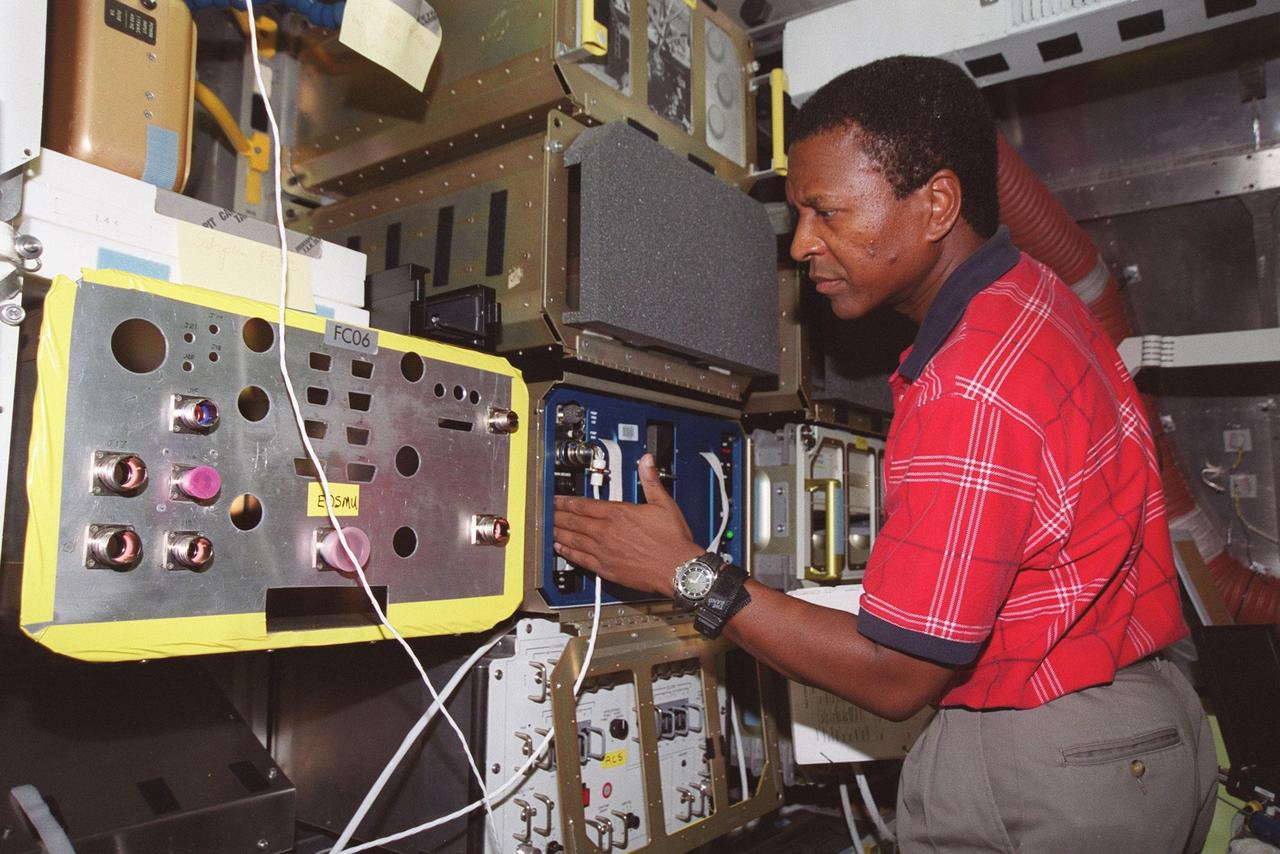
KENNEDY SPACE CENTER, Fla. -- STS-107 Payload Commander Michael Anderson trains on equipment in the training module at SPACEHAB, Cape Canaveral, Fla. Anderson and other crew members Commander Rick D. Husband, Pilot William C. McCool, Mission Specialists Kalpana Chawla, Laurel Blair Salton Clark and David M. Brown; and Payload Specialist Ilan Ramon, of Israel, are at SPACEHAB to take part in Crew Equipment Interface Test (CEIT) activities. The CEIT enables the crew to perform certain flight operations, operate experiments in a flight-like environment, evaluate stowage locations and obtain additional exposure to specific experiment operations. . As a research mission, STS-107 will carry the SPACEHAB Double Module in its first research flight into space and a broad collection of experiments ranging from material science to life science. STS-107 is scheduled for launch May 23, 2002
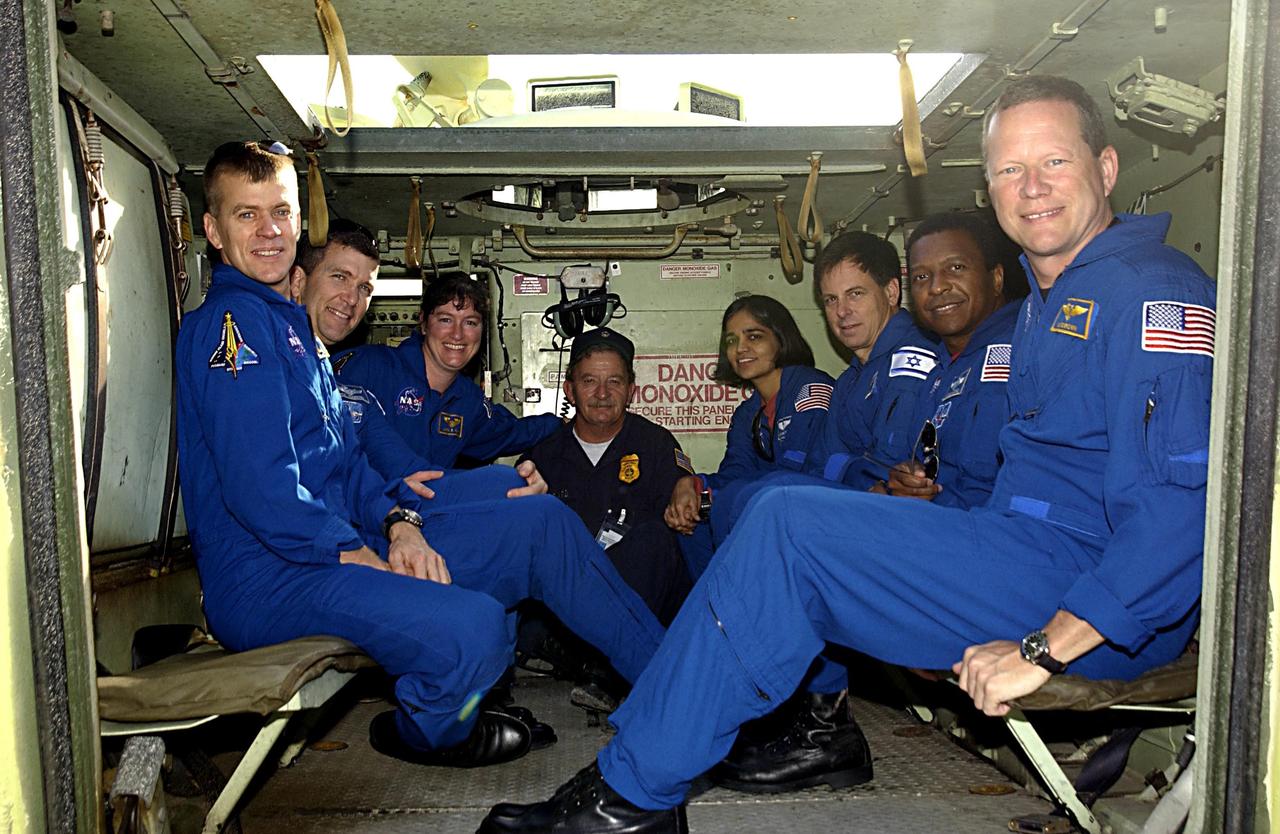
KENNEDY SPACE CENTER, FLA. -- The STS-107 crew poses for a group portrait with their instructor inside an M113 armored personnel carrier. The crew is participating in Terminal Countdown Demonstration Test activities, a standard part of launch preparations. From left to right are Pilot William "Willie" McCool, Commander Rick Husband, Mission Specialist Laurel Clark, Instructor George Hoggard, Mission Specialist Kalpana Chawla, Payload Specialist Ilan Ramon (the first Israeli astronaut), Payload Commander Michael Anderson, and Mission Specialist David Brown. STS-107 is a mission devoted to research and will include more than 80 experiments that will study Earth and space science, advanced technology development, and astronaut health and safety. Launch is planned for Jan. 16, 2003, between 10 a.m. and 2 p.m. EST aboard Space Shuttle Columbia.
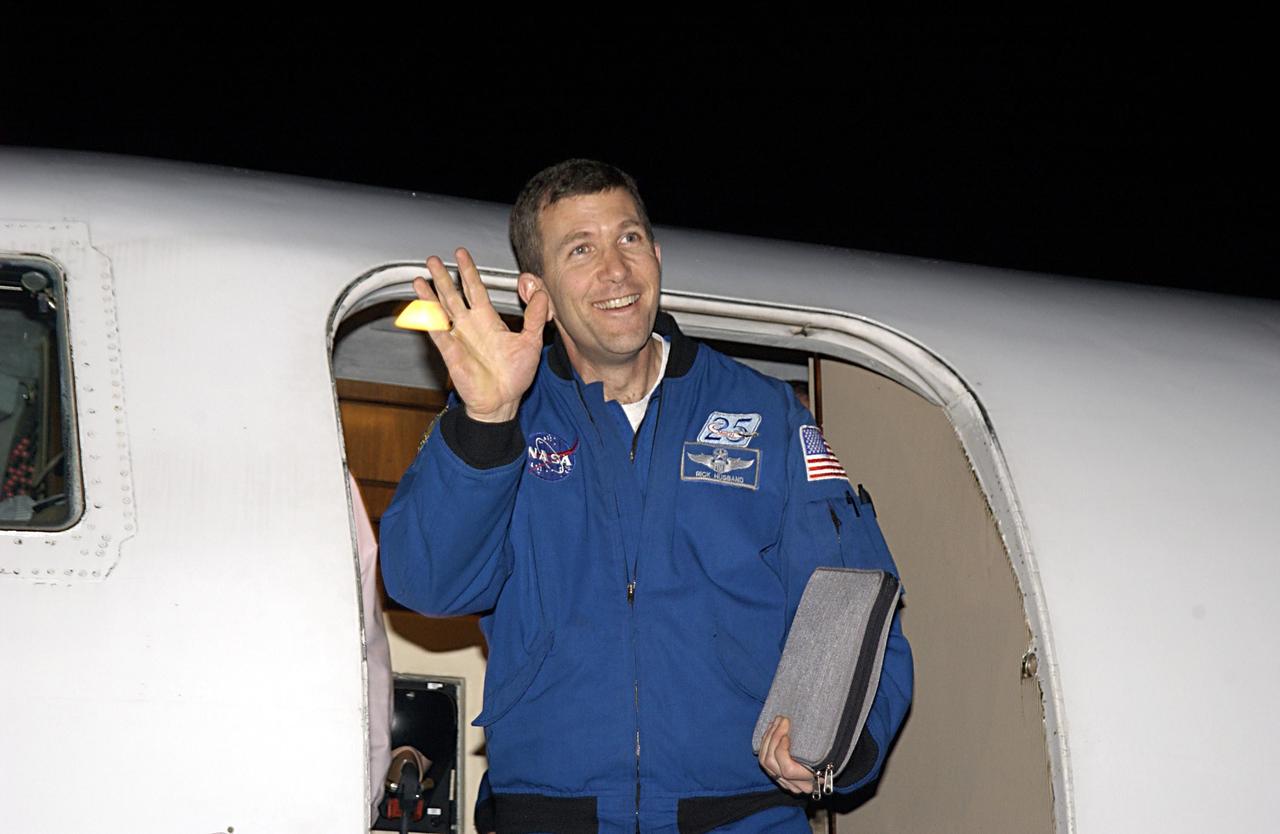
KENNEDY SPACE CENTER, FLA. - STS-107 Commander Rick Husband waves to spectators as he arrives at KSC for pre-launch preparations. STS-107 is a mission devoted to research and will include more than 80 experiments that will study Earth and space science, advanced technology development, and astronaut health and safety. The payload on Space Shuttle Columbia includes FREESTAR (Fast Reaction Experiments Enabling Science, Technology, Applications and Research) and the SHI Research Double Module (SHI/RDM), known as SPACEHAB. Experiments on the module range from material sciences to life sciences. The crew includes Payload Specialist Ilan Ramon, the first Israeli astronaut. Other crew members are Pilot William "Willie" McCool, Payload Commander Michael Anderson and Mission Specialists Kalpana Chawla, David Brown and Laurel Clark. Launch of Columbia is targeted for Jan. 16 between 10 a.m. and 2 p.m.
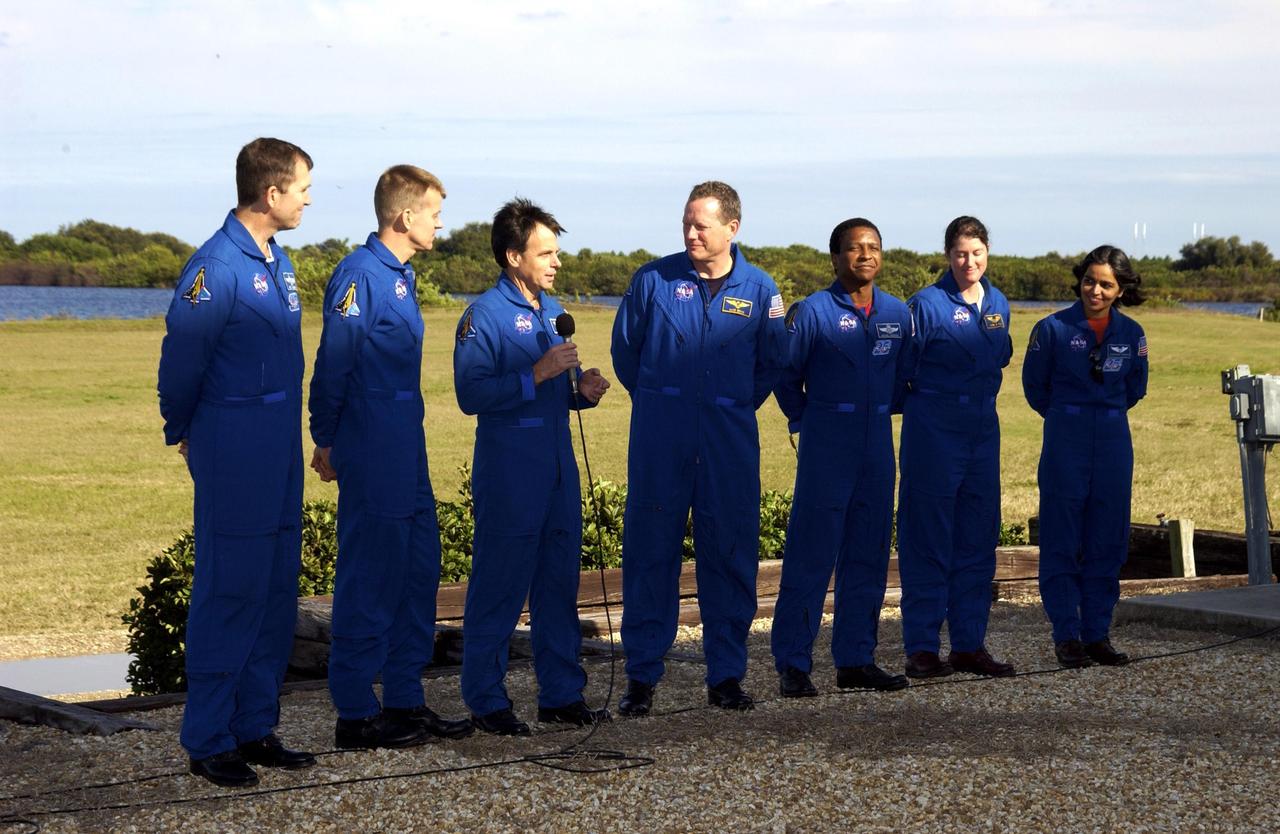
KENNEDY SPACE CENTER, FLA. -- The STS-107 crew meet with the media in front of the grandstand. With the microphone is Payload Specialist Ilan Ramon, the first Israeli astronaut. Others, from left, are Commander Rick Husband, Pilot William "Willie" McCool, Ramon, Mission Specialist David Brown, Payload Commander Michael Anderson, and Mission Specialists Laurel Clark and Kalpana Chawla. The crew just finished Terminal Countdown Demonstration Test activities, including a simulated launch countdown, in preparation for launch planned for Jan. 16, 2003, between 10 a.m. and 2 p.m. EST aboard Space Shuttle Columbia. STS-107 is a mission devoted to research and will include more than 80 experiments that will study Earth and space science, advanced technology development, and astronaut health and safety. .
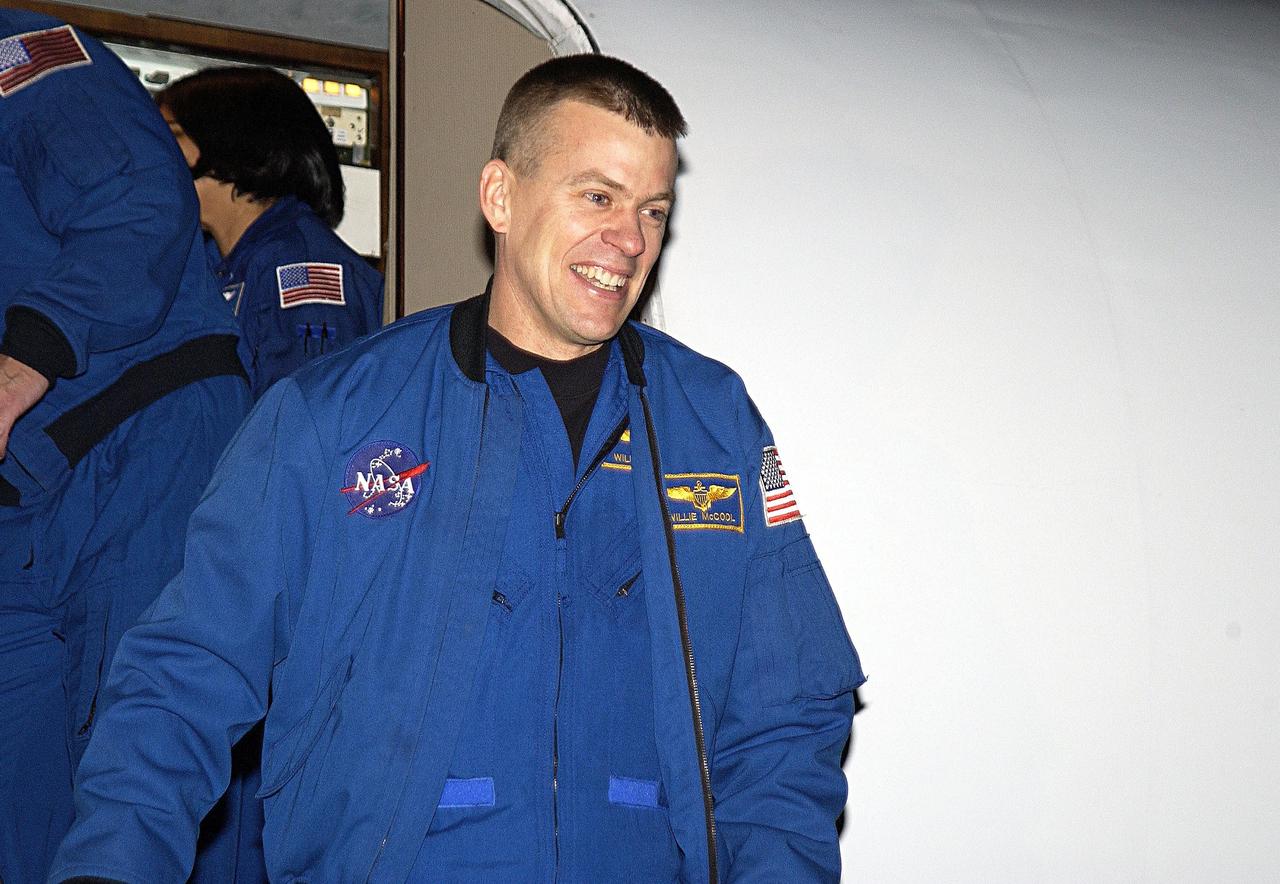
KENNEDY SPACE CENTER, FLA. - STS-107 Pilot William "Willie" McCool smiles at spectators as he arrives at KSC for pre-launch preparations. STS-107 is a mission devoted to research and will include more than 80 experiments that will study Earth and space science, advanced technology development, and astronaut health and safety. The payload on Space Shuttle Columbia includes FREESTAR (Fast Reaction Experiments Enabling Science, Technology, Applications and Research) and the SHI Research Double Module (SHI/RDM), known as SPACEHAB. Experiments on the module range from material sciences to life sciences. The crew includes Payload Specialist Ilan Ramon, the first Israeli astronaut. Other crew members are Commander Rick Husband, Payload Commander Michael Anderson and Mission Specialists Kalpana Chawla, David Brown and Laurel Clark. Launch of Columbia is targeted for Jan. 16 between 10 a.m. and 2 p.m.
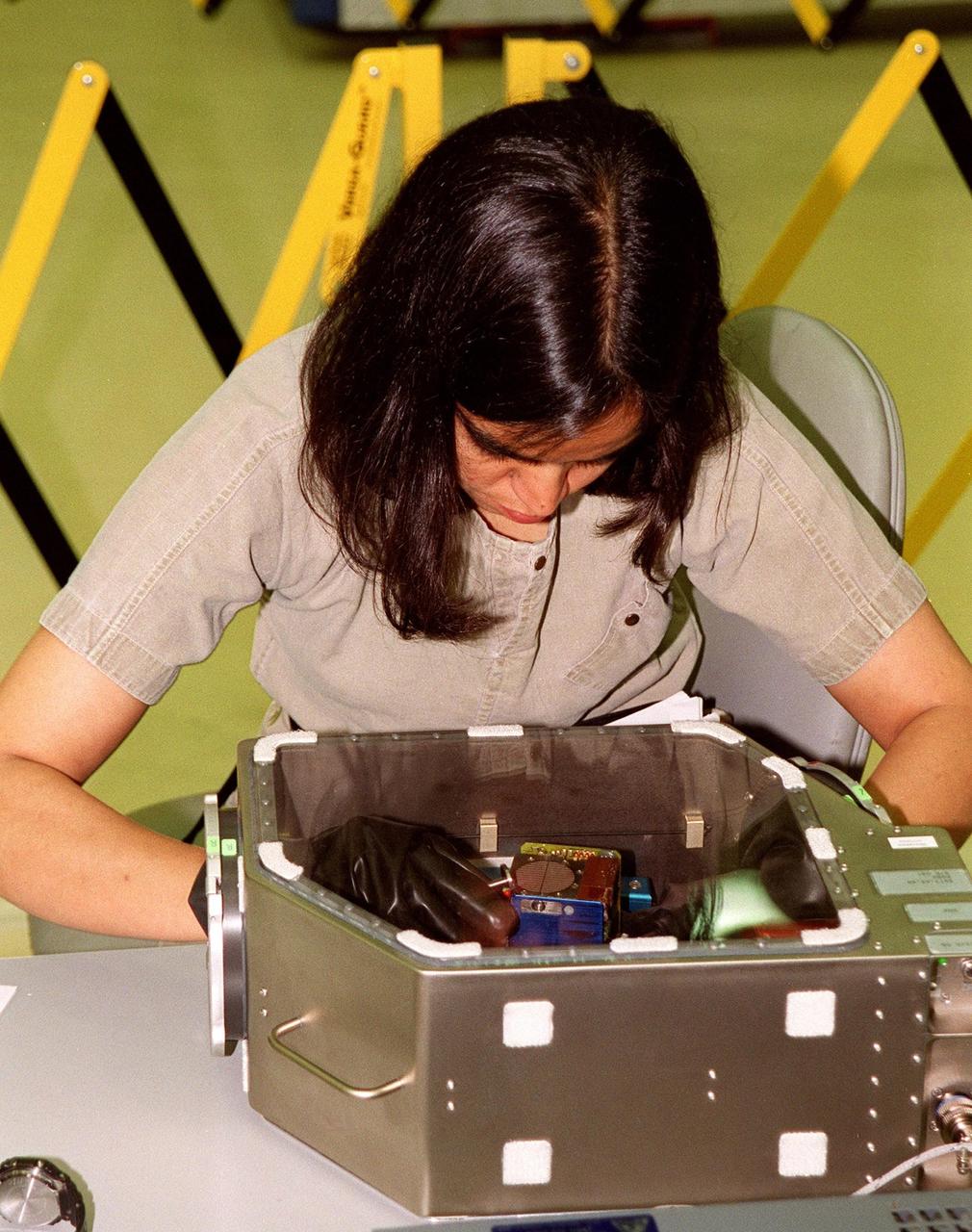
KENNEDY SPACE CENTER, Fla. -- During Crew Equipment Interface Test activities at SPACEHAB, Cape Canaveral, Fla., STS-107 Mission Specialist Kalpana Chawla trains on a glove box experiment. As a research mission, STS-107 will carry the SPACEHAB Double Module in its first research flight into space and a broad collection of experiments ranging from material science to life science. CEIT activities enable the crew to perform certain flight operations, operate experiments in a flight-like environment, evaluate stowage locations and obtain additional exposure to specific experiment operations. Other STS-107 crew members are Commander Rick Douglas Husband; Pilot William C. McCool; Payload Commander Michael P. Anderson; Mission Specialists Laurel Blair Salton Clark and David M. Brown; and Payload Specialist Ilan Ramon, of Israel. STS-107 is scheduled for launch May 23, 2002
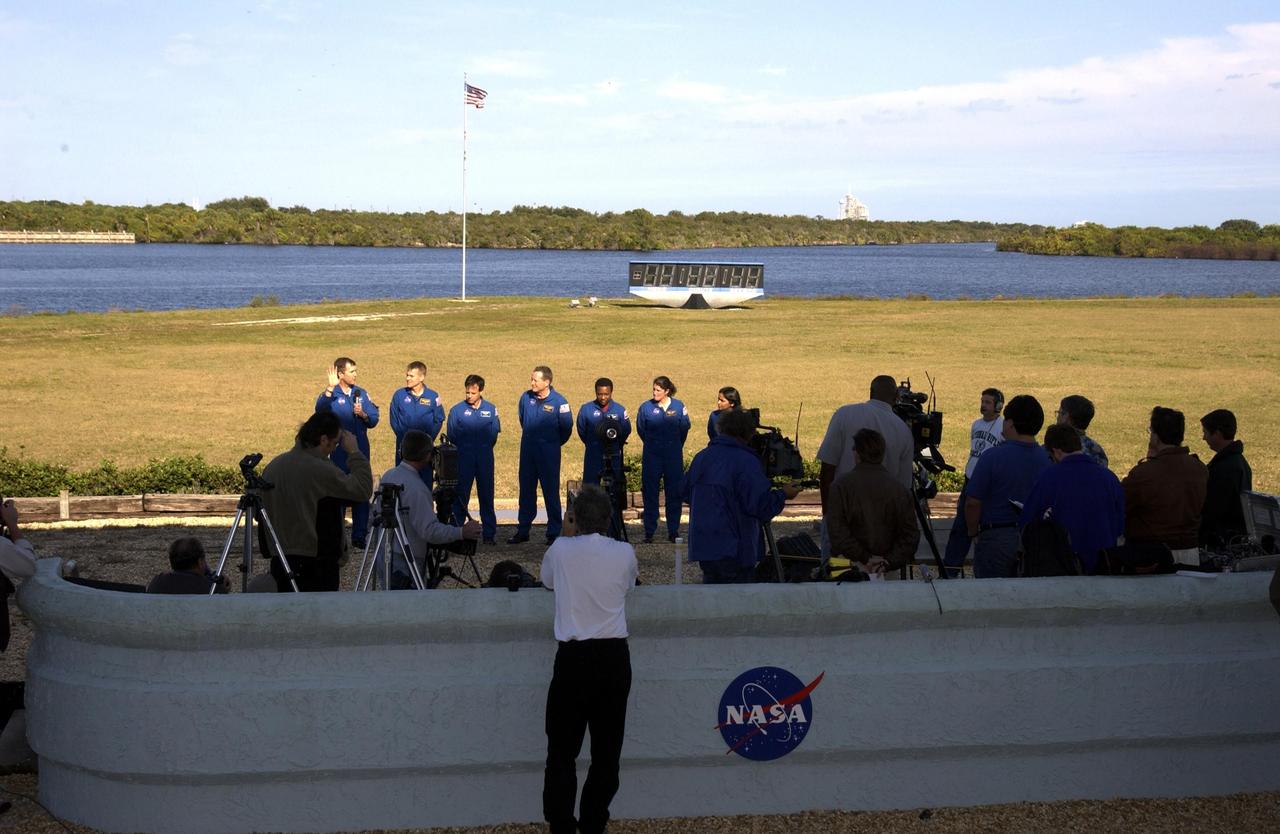
KENNEDY SPACE CENTER, FLA. - The STS-107 crew meet with the media in front of the grandstand. From left are Commander Rick Husband, Pilot William "Willie" McCool, Payload Specialist Ilan Ramon, Mission Specialist David Brown, Payload Commander Michael Anderson, and Mission Specialists Laurel Clark and Kalpana Chawla. The crew just finished Terminal Countdown Demonstration Test activities, including a simulated launch countdown, in preparation for launch planned for Jan. 16, 2003, between 10 a.m. and 2 p.m. EST aboard Space Shuttle Columbia. STS-107 is a mission devoted to research and will include more than 80 experiments that will study Earth and space science, advanced technology development, and astronaut health and safety. .
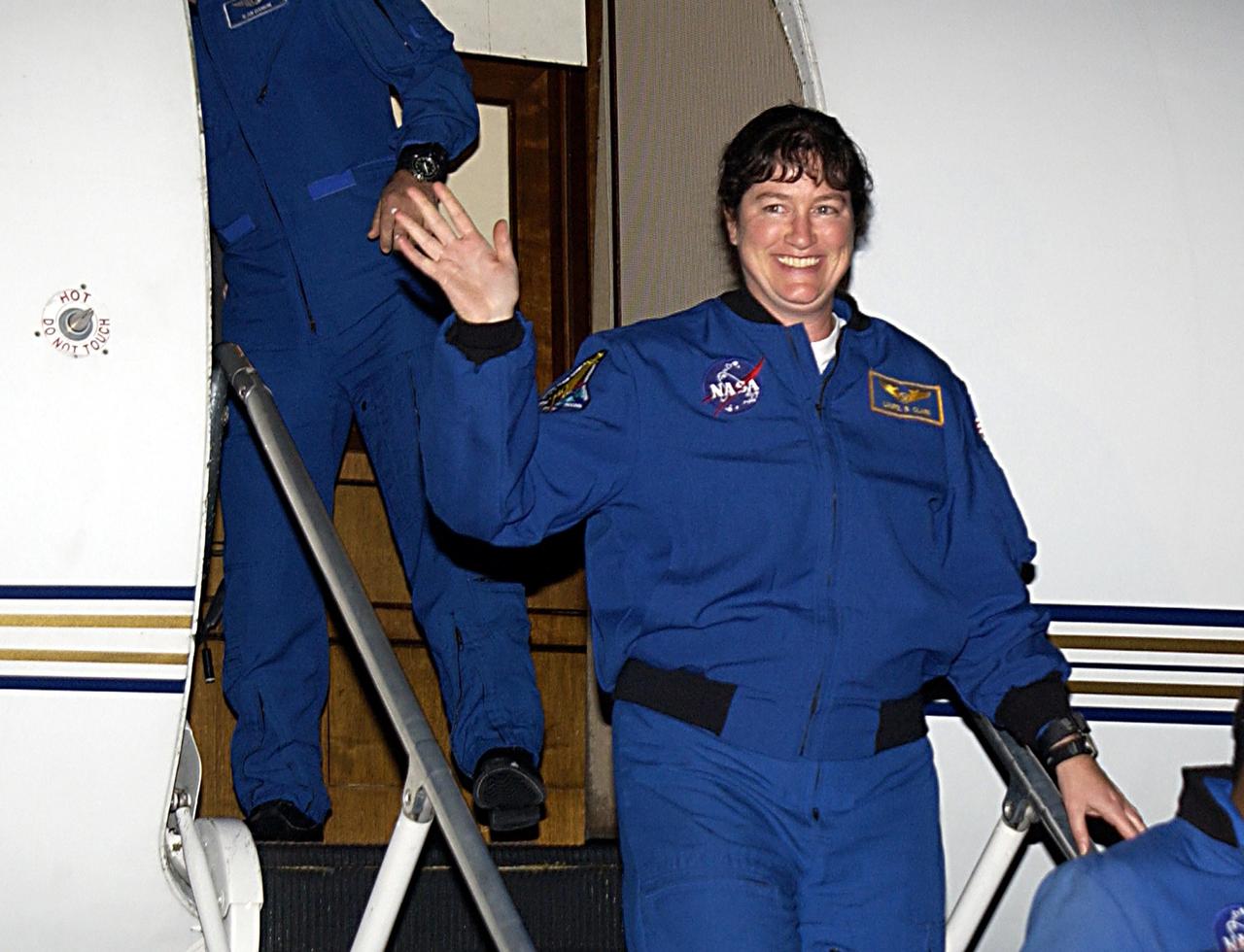
KENNEDY SPACE CENTER, FLA. - STS-107 Mission Specialist Laurel Clark waves to onlookers as she arrives at KSC for pre-launch preparations. STS-107 is a mission devoted to research and will include more than 80 experiments that will study Earth and space science, advanced technology development, and astronaut health and safety. The payload on Space Shuttle Columbia includes FREESTAR (Fast Reaction Experiments Enabling Science, Technology, Applications and Research) and the SHI Research Double Module (SHI/RDM), known as SPACEHAB. Experiments on the module range from material sciences to life sciences. The crew includes Payload Specialist Ilan Ramon, the first Israeli astronaut. Other crew members are Commander Rick Husband, Pilot William "Willie" McCool, Payload Commander Michael Anderson and Mission Specialists Kalpana Chawla and David Brown. Launch of Columbia is targeted for Jan. 16 between 10 a.m. and 2 p.m.
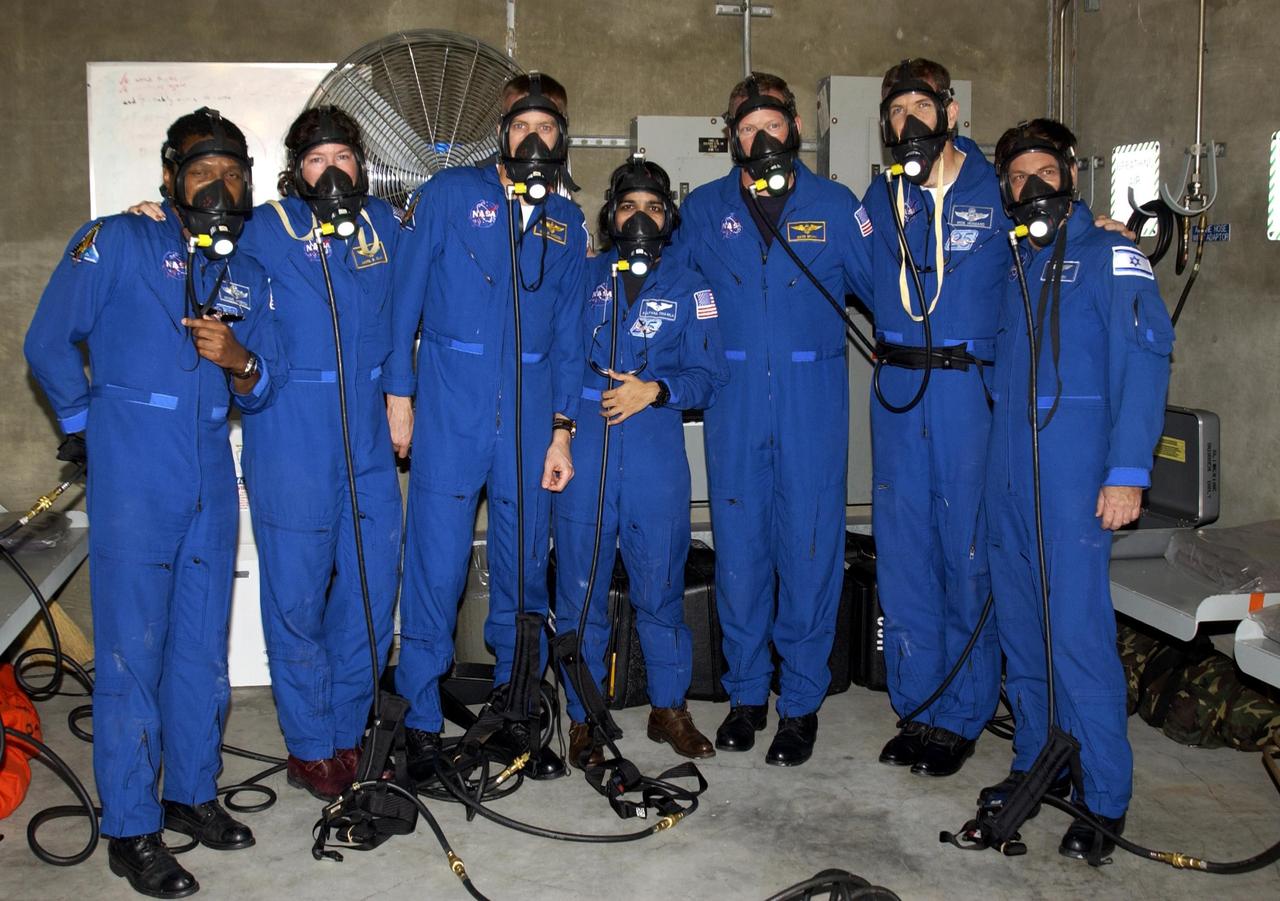
KENNEDY SPACE CENTER, FLA. -- During emergency egress training, part of Terminal Countdown Demonstration Test activities at the pad, STS-107 crew members test breathing masks in the emergency bunker. From left are Payload Commander Michael Anderson, Mission Specialist Laurel Clark, Pilot William "Willie" McCool, Mission Specialists Kalpana Chawla and David Brown, Commander Rick Husband and Mission Specialist Ilan Ramon (the first Israeli astronaut). STS-107 is a mission devoted to research and will include more than 80 experiments that will study Earth and space science, advanced technology development, and astronaut health and safety. Launch is planned for Jan. 16, 2003, between 10 a.m. and 2 p.m. EST aboard Space Shuttle Columbia. .
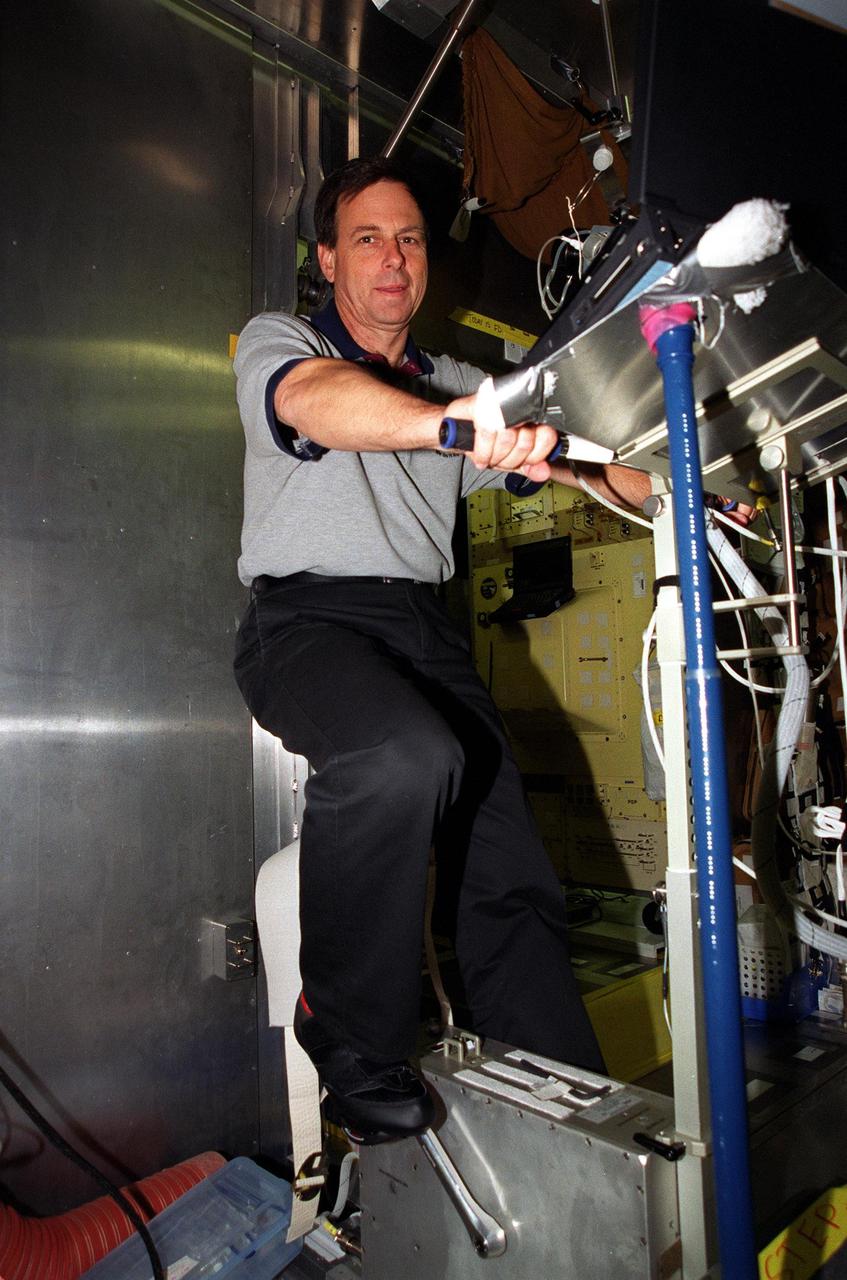
KENNEDY SPACE CENTER, Fla. -- STS-107 Payload Specialist Ilan Ramon, of Israel, trains on equipment in the training module at SPACEHAB, Cape Canaveral. Ramon and other crew members Commander Rick D. Husband, Pilot William C. McCool, Payload Commander Michael P. Anderson; and Mission Specialists Kalpana Chawla, Laurel Blair Salton Clark and David M. Brown are at SPACEHAB to take part in Crew Equipment Interface Test (CEIT) activities. The CEIT enables the crew to perform certain flight operations, operate experiments in a flight-like environment, evaluate stowage locations and obtain additional exposure to specific experiment operations. As a research mission, STS-107 will carry the SPACEHAB Double Module in its first research flight into space and a broad collection of experiments ranging from material science to life science. STS-107 is scheduled for launch May 23, 2002
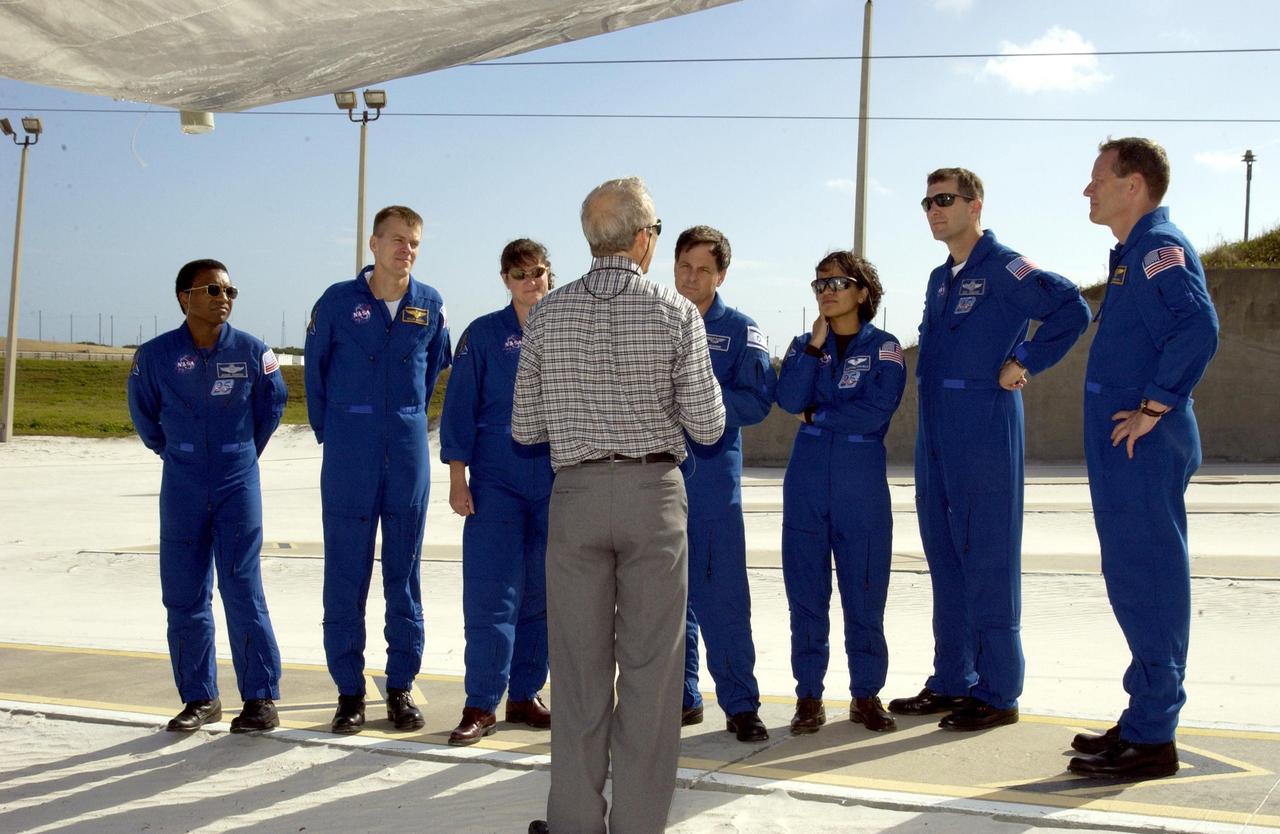
KENNEDY SPACE CENTER, FLA. - In the emergency egress landing site on Launch Pad 39A, the STS-107 crew listens to instructions. Standing from left are Payload Commander Michael Anderson, Pilot William "Willie" McCool, Mission Specialists Laurel Clark, Ilan Ramon and Kalpana Chawla, Commander Rick Husband and Mission Specialist David Brown. Ramon is the first Israeli astronaut. The crew is taking part in Terminal Countdown Demonstration Test activities at the pad, which also include a simulated launch countdown. STS-107 is a mission devoted to research and will include more than 80 experiments that will study Earth and space science, advanced technology development, and astronaut health and safety. Launch is planned for Jan. 16, 2003, between 10 a.m. and 2 p.m. EST aboard Space Shuttle Columbia. .
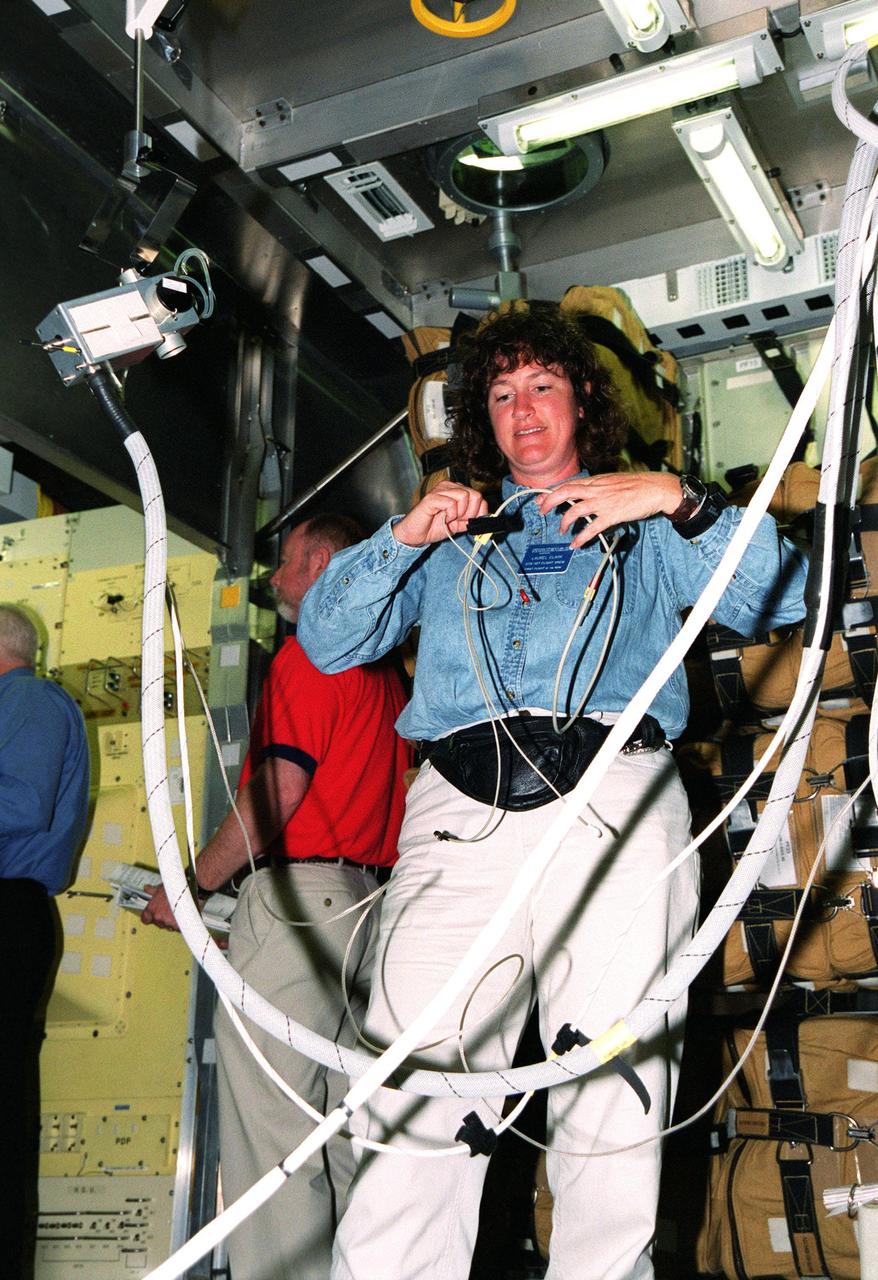
KENNEDY SPACE CENTER, Fla. -- During Crew Equipment Interface Test (CEIT)activities at SPACEHAB, Cape Canaveral, Fla., STS-107 Mission Specialist Laurel Blair Salton Clark gets hands-on training on equipment inside the Spacehab module. As a research mission, STS-107 will carry the Spacehab Double Module in its first research flight into space and a broad collection of experiments ranging from material science to life science. CEIT activities enable the crew to perform certain flight operations, operate experiments in a flight-like environment, evaluate stowage locations and obtain additional exposure to specific experiment operations. Other STS-107 crew members are Commander Rick Douglas Husband; Pilot William C. McCool; Payload Commander Michael P. Anderson; Mission Specialists Kalpana Chawla and David M. Brown; and Payload Specialist Ilan Ramon, of Israel. STS-107 is scheduled for launch May 23, 2002
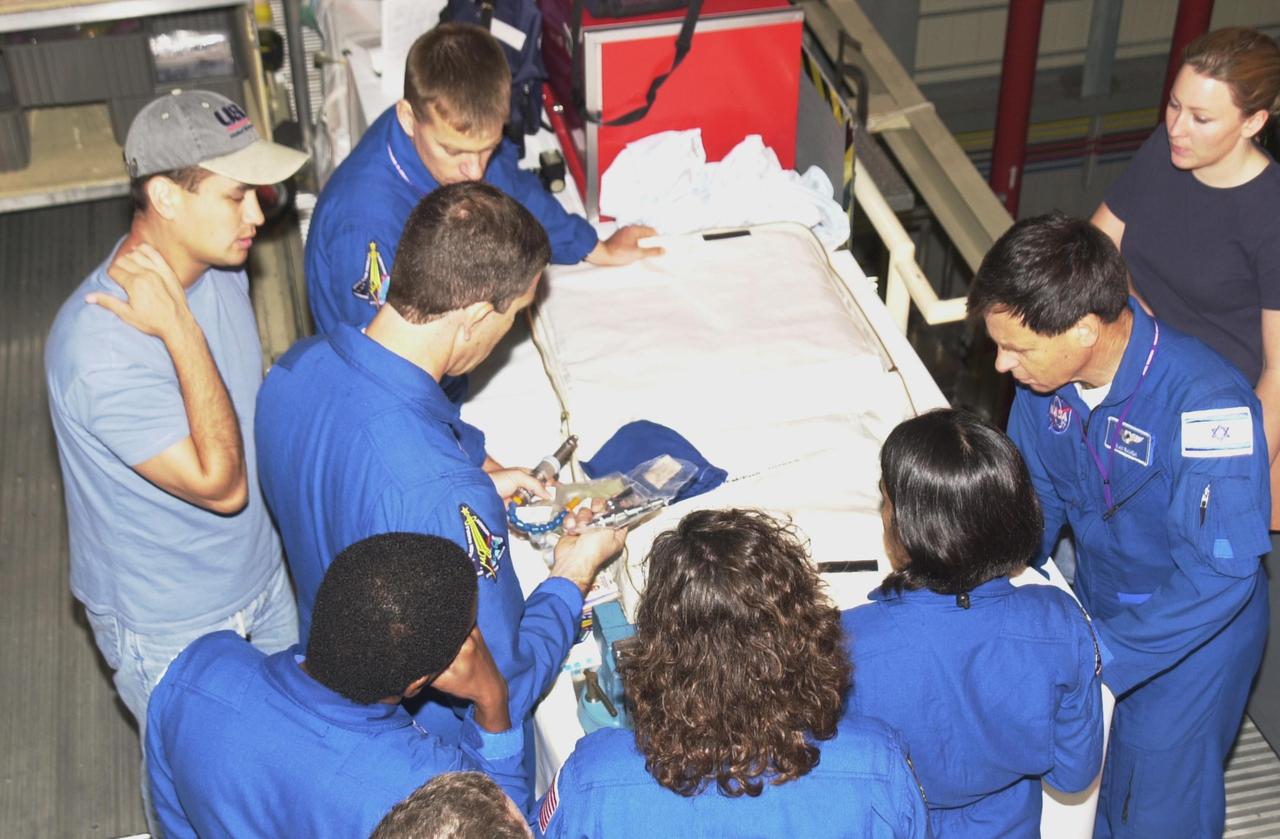
KENNEDY SPACE CENTER, FLA. -- During Crew Equipment Interface Test activities, the STS-107 crew looks at flight equipment in the Orbiter Processing Facility. Seen counter clockwise from top left are Pilot William "Willie" McCool, Commander Rick Husband, Payload Commander Michael Anderson, Mission Specialists Laurel Clark and Kalpana Chawla, and Payload Specialist Ilan Ramon, who is with the Israeli Space Agency. STS-107 is a research mission, with the SHI Research Double Module (SHI/RDM), also known as SPACEHAB, as the primary payload, plus the Fast Reaction Experiments Enabling Science, Technology, Applications and Research (FREESTAR) that incorporates eight high priority secondary attached shuttle experiments. STS-107 is scheduled to launch July 19, 2002
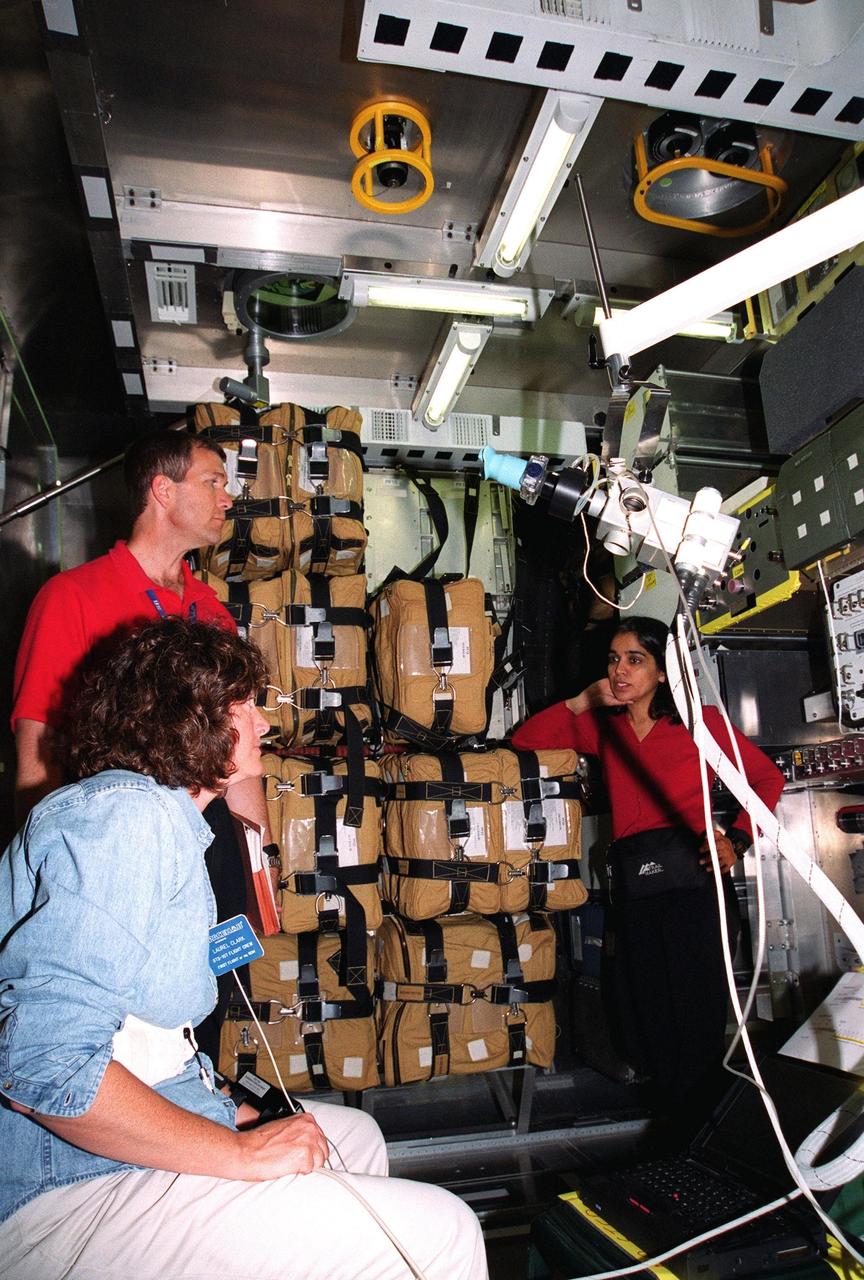
KENNEDY SPACE CENTER, Fla. -- At SPACEHAB, Cape Canaveral, Fla., members of the STS-107 crew discuss the experiments in the Spacehab module. Seated, in the foreground, is Mission Specialist Laurel Blair Salton Clark; standing behind her are Commander Rick Douglas Husband and Mission Specialist Kalpana Chawla. They and other crew members Pilot William C. McCool; Payload Commander Michael P. Anderson; and Mission Specialists David M. Brown and Ilan Ramon, of Israel, are at SPACEHAB for Crew Equipment Interface Test (CEIT) activities. The CEIT enables the crew to perform certain flight operations, operate experiments in a flight-like environment, evaluate stowage locations and obtain additional exposure to specific experiment operations. As a research mission, STS-107 will carry the Spacehab Double Module in its first research flight into space and a broad collection of experiments ranging from material science to life science. STS-107 is scheduled for launch May 23, 2002
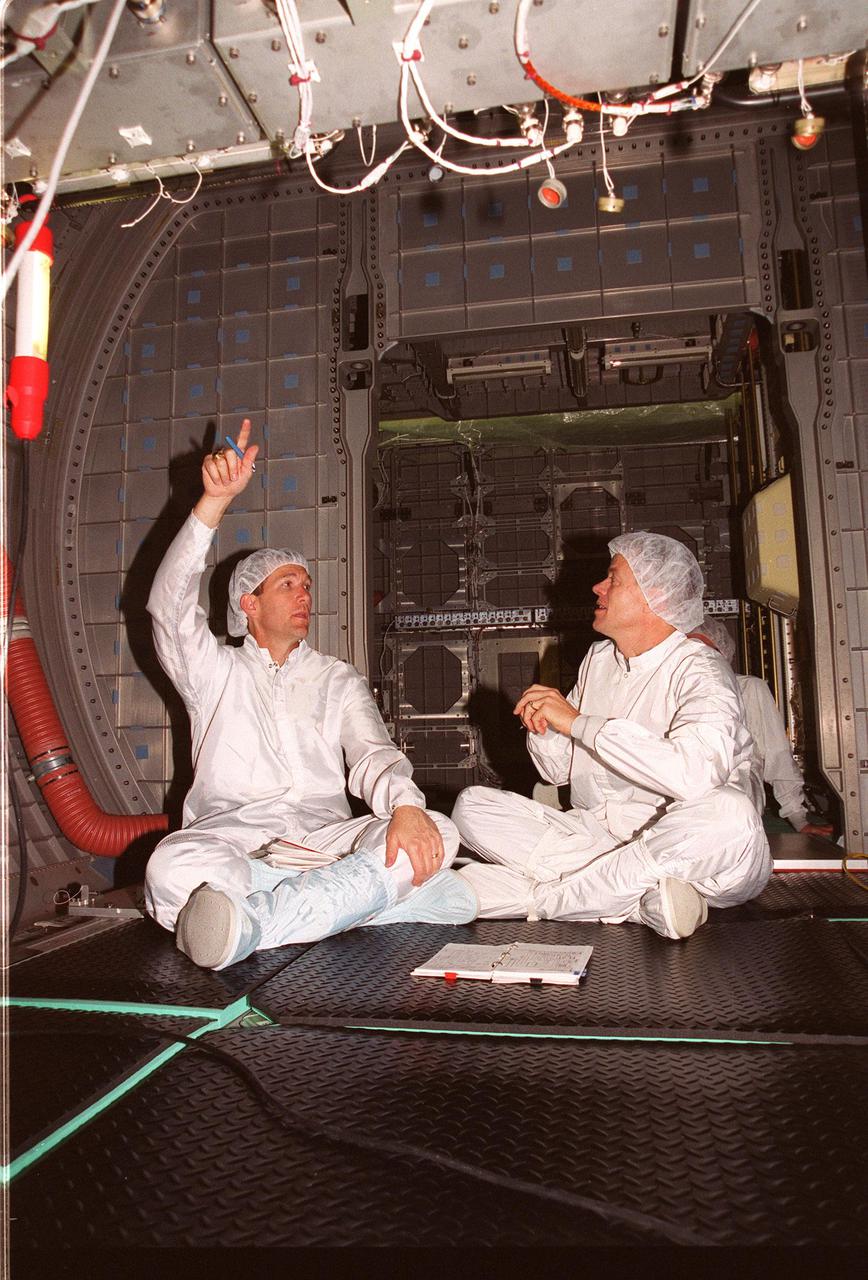
KENNEDY SPACE CENTER, Fla. -- - STS-107 Commander Rick D. Husband (left) and Pilot William C. McCool train in the SPACHEAB Double Module that will fly on their mission. Husband, McCool and other crew members Payload Commander Michael P. Anderson; Mission Specialists Laurel Blair Salton Clark and David M. Brown; and Payload Specialist Ilan Ramon, of Israel, are at SPACEHAB, Cape Canaveral, Fla., to take part in Crew Equipment Interface Test (CEIT) activities. The CEIT enables the crew to perform certain flight operations, operate experiments in a flight-like environment, evaluate stowage locations and obtain additional exposure to specific experiment operations. As a research mission, STS-107 will carry the SPACEHAB Double Module in its first research flight into space and a broad collection of experiments ranging from material science to life science. STS-107 is scheduled for launch May 23, 2002
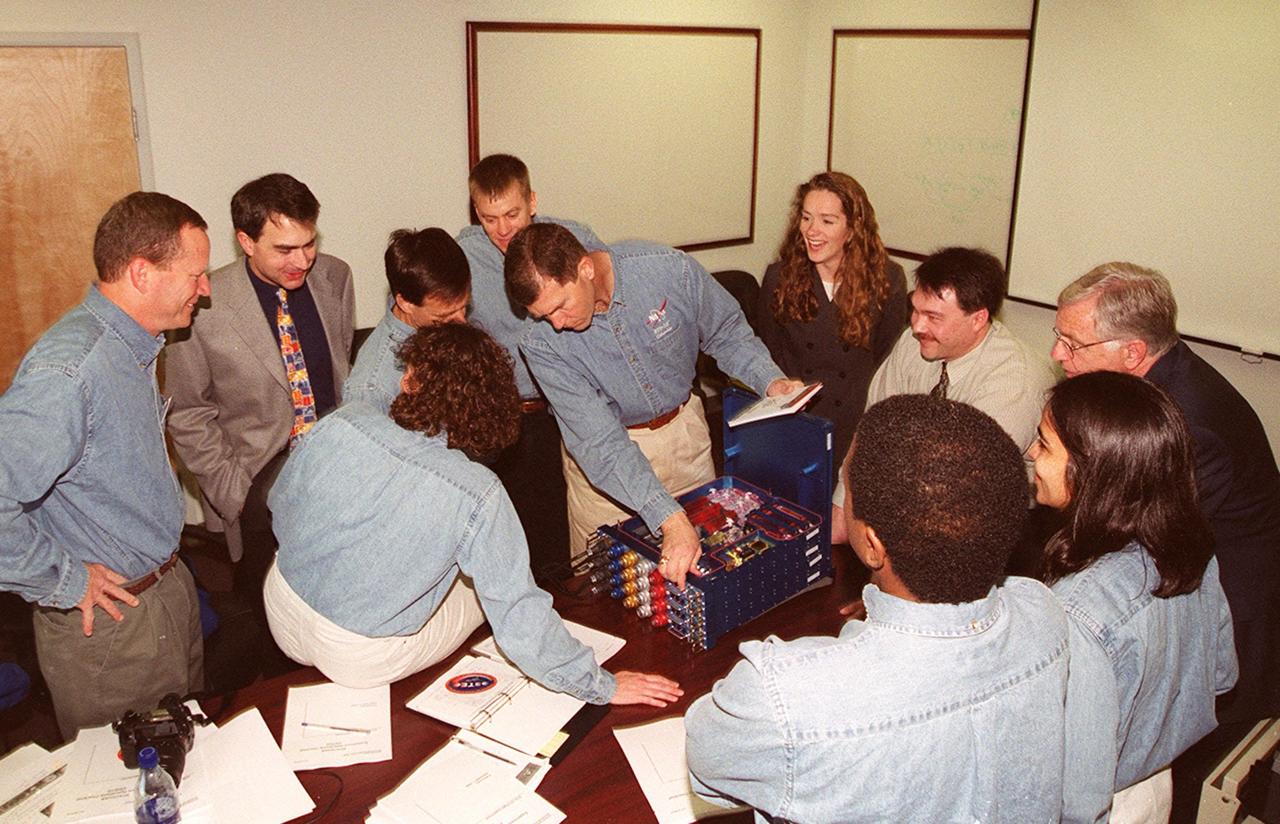
KENNEDY SPACE CENTER, FLA. -- Members of the STS-107 crew take part in In-Flight Maintenance training for their mission. As a research mission, STS-107 will carry the SPACEHAB Double Module in its first research flight into space and a broad collection of experiments ranging from material science to life science. Looking over an experiment are (left to right) Mission Specialist David M. Brown and Laurel Clark (back to camera), Payload Specialist Ilan Ramon of Israel and Commander Rick D. Husband; Pilot William C. “Willie” McCool is behind them. Looking on are project engineers and scientists. At right are Mission Specialists Michael Anderson and Kalpana Chawla. STS-107 is scheduled to launch July 19, 2001
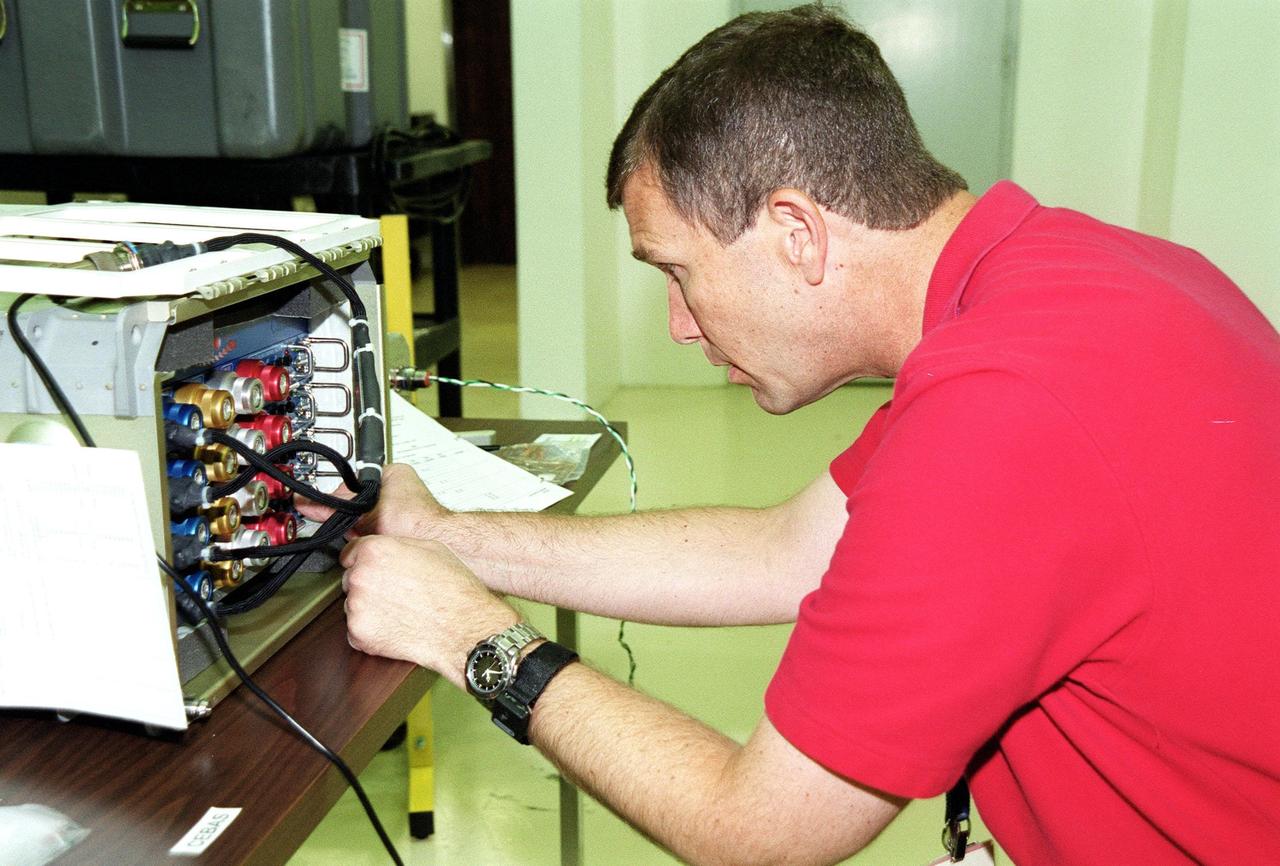
KENNEDY SPACE CENTER, Fla. -- During Crew Equipment Interface Test (CEIT)activities at Spacehab, Cape Canaveral, Fla., STS-107 Commander Rick Douglas Husband checks out a piece of equipment. As a research mission, STS-107 will carry the Spacehab Double Module in its first research flight into space and a broad collection of experiments ranging from material science to life science. The CEIT activities enable the crew to perform certain flight operations, operate experiments in a flight-like environment, evaluate stowage locations and obtain additional exposure to specific experiment operations. Other STS-107 crew members are Pilot William C. McCool; Payload Commander Michael P. Anderson; Mission Specialists Kalpana Chawla, David M. Brown and Laurel Blair Salton Clark; and Payload Specialist Ilan Ramon, of Israel. STS-107 is scheduled for launch May 23, 2002
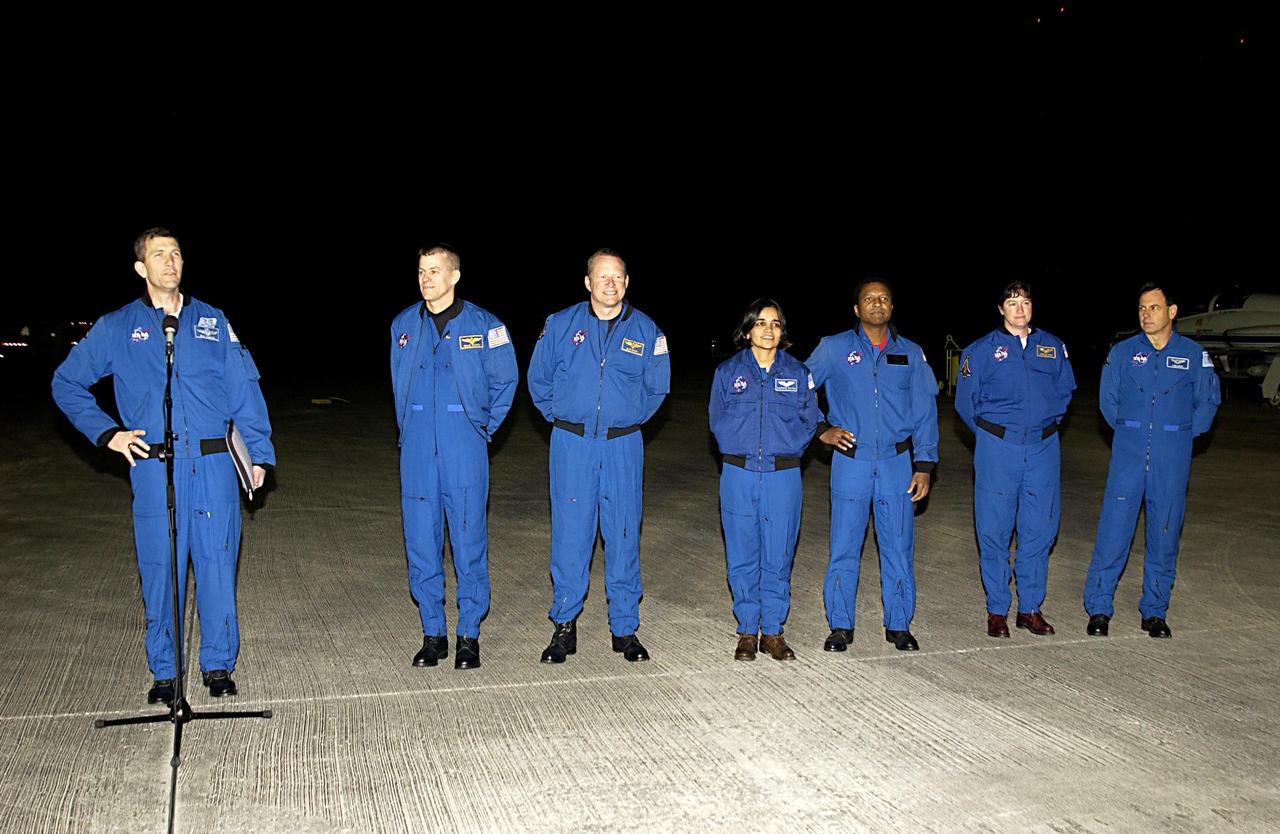
KENNEDY SPACE CENTER, FLA. -STS-107 Commander Rick Husband (at the microphone) makes a few comments after the crew's arrival at KSC for pre-launch preparations. Standing left to right are Husband, Pilot William "Willie" McCool, Mission Specialists David Brown and Kalpana Chawla, Payload Commander Michael Anderson, Mission Specialist Laurel Clark and Payload Specialist Ilan Ramon, who is the first Israeli astronaut to fly on a Shuttle mission. STS-107 is a mission devoted to research and will include more than 80 experiments that will study Earth and space science, advanced technology development, and astronaut health and safety. The payload on Space Shuttle Columbia includes FREESTAR (Fast Reaction Experiments Enabling Science, Technology, Applications and Research) and the SHI Research Double Module (SHI/RDM), known as SPACEHAB. Experiments on the module range from material sciences to life sciences. Launch of Columbia is targeted for Jan. 16 between 10 a.m. and 2 p.m.
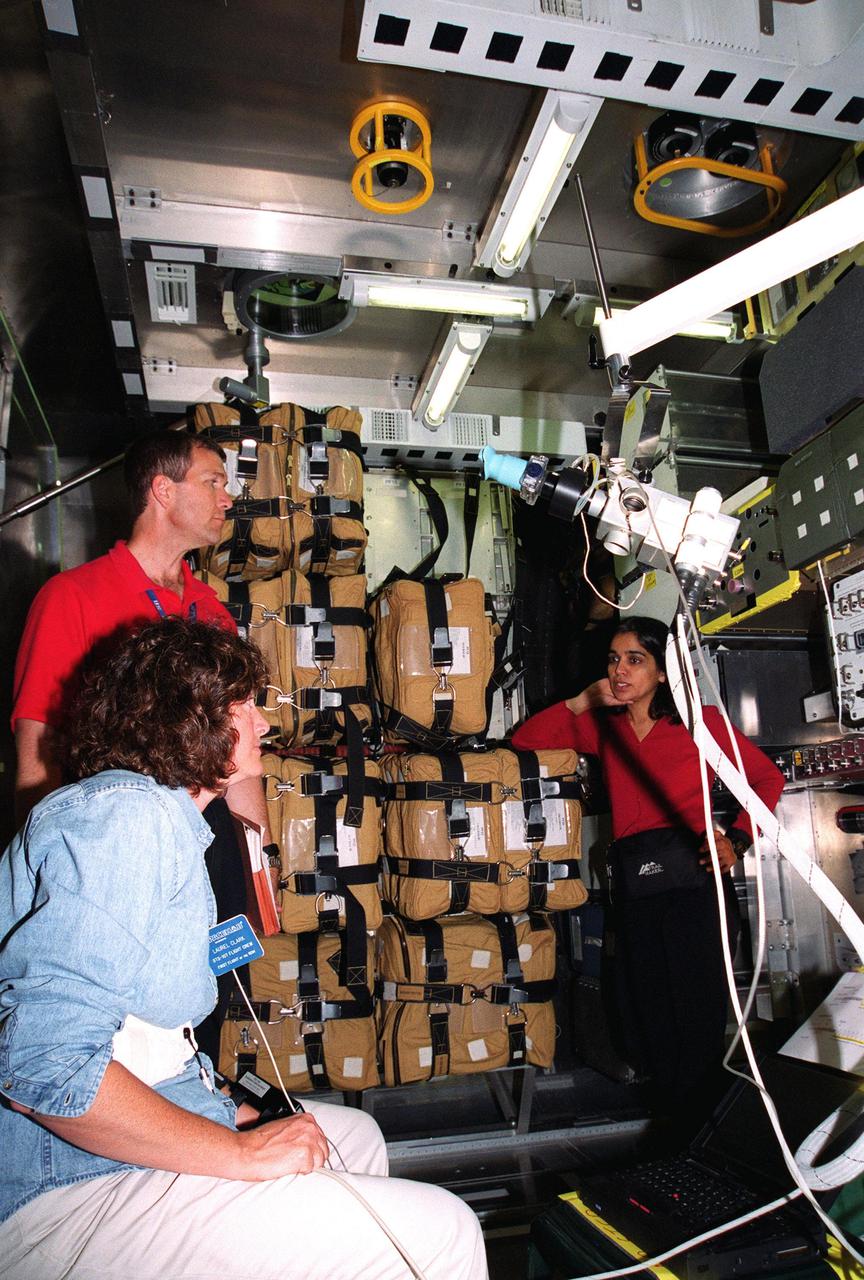
KENNEDY SPACE CENTER, Fla. -- At SPACEHAB, Cape Canaveral, Fla., members of the STS-107 crew discuss the experiments in the Spacehab module. Seated, in the foreground, is Mission Specialist Laurel Blair Salton Clark; standing behind her are Commander Rick Douglas Husband and Mission Specialist Kalpana Chawla. They and other crew members Pilot William C. McCool; Payload Commander Michael P. Anderson; and Mission Specialists David M. Brown and Ilan Ramon, of Israel, are at SPACEHAB for Crew Equipment Interface Test (CEIT) activities. The CEIT enables the crew to perform certain flight operations, operate experiments in a flight-like environment, evaluate stowage locations and obtain additional exposure to specific experiment operations. As a research mission, STS-107 will carry the Spacehab Double Module in its first research flight into space and a broad collection of experiments ranging from material science to life science. STS-107 is scheduled for launch May 23, 2002
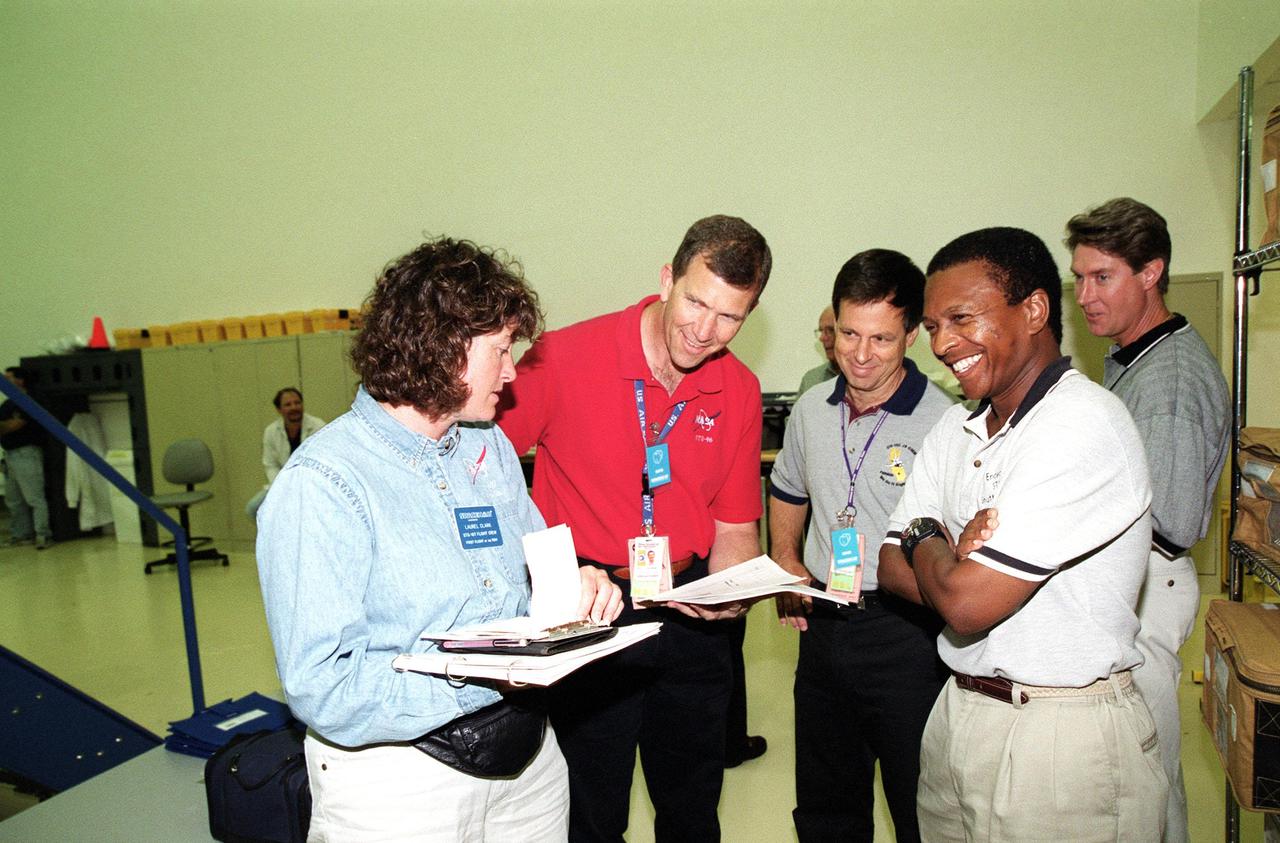
KENNEDY SPACE CENTER, Fla. -- At SPACEHAB, Cape Canaveral, Fla., the STS-107 crew takes part in Crew Equipment Interface Test (CEIT) activities. From left are Mission Specialist Laurel Blair Salton Clark, Commander Rick Douglas Husband, Payload Specialist Ilan Ramon, of Israel, and Payload Commander Michael P. Anderson. A trainer is at far right. As a research mission, STS-107 will carry the Spacehab Double Module in its first research flight into space and a broad collection of experiments ranging from material science to life science. The CEIT activities enable the crew to perform certain flight operations, operate experiments in a flight-like environment, evaluate stowage locations and obtain additional exposure to specific experiment operations. Other STS-107 crew members are Pilot William C. McCool and Mission Specialists Kalpana Chawla and David M. Brown. STS-107 is scheduled for launch May 23, 2002
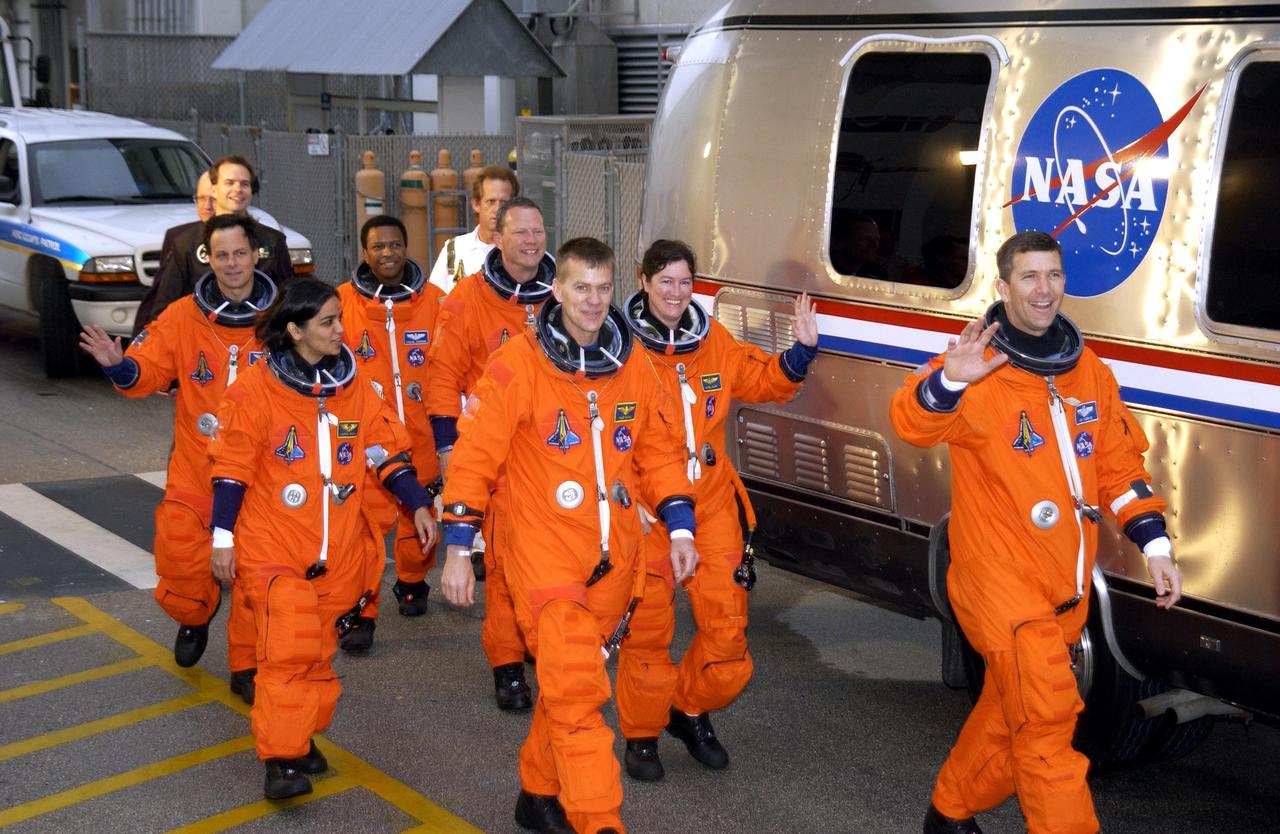
KENNEDY SPACE CENTER, FLA. - The STS-107 crew heads for the Astrovan and a ride to Launch Pad 39A for a simulated launch countdown. From left are Payload Specialist Ilan Ramon, Mission Specialist Kalpana Chawla, Payload Commander Michael Anderson, Mission Specialist David Brown, Pilot William "Willie" McCool, Mission Specialist Laurel Clark and Commander Rick Husband. The countdown is part of Terminal Countdown Demonstration Test activities. STS-107 is a mission devoted to research and will include more than 80 experiments that will study Earth and space science, advanced technology development, and astronaut health and safety. Launch is planned for Jan. 16, 2003, between 10 a.m. and 2 p.m. EST aboard Space Shuttle Columbia. .
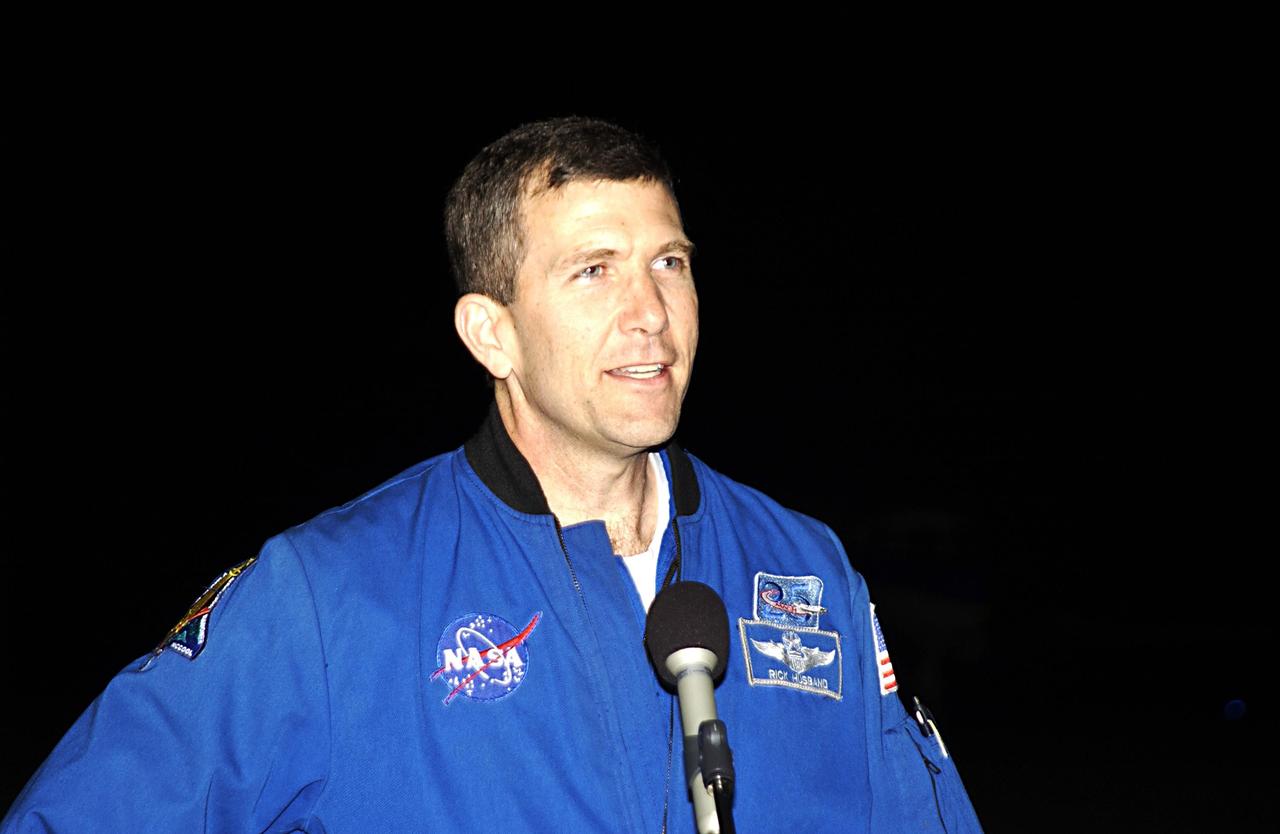
KENNEDY SPACE CENTER, FLA. -- STS-107 Commander Rick Husband makes a few comments after the crew's arrival at KSC for pre-launch preparations. Other crew members are Pilot William "Willie" McCool, Payload Commander Michael Anderson, Payload Specialist Ilan Ramon, and Mission Specialists Kalpana Chawla, David Brown and Laurel Clark. Ramon is the first Israeli astronaut to fly on a Shuttle mission. STS-107 is a mission devoted to research and will include more than 80 experiments that will study Earth and space science, advanced technology development, and astronaut health and safety. The payload on Space Shuttle Columbia includes FREESTAR (Fast Reaction Experiments Enabling Science, Technology, Applications and Research) and the SHI Research Double Module (SHI/RDM), known as SPACEHAB. Experiments on the module range from material sciences to life sciences. Launch of Columbia is targeted for Jan. 16 between 10 a.m. and 2 p.m.
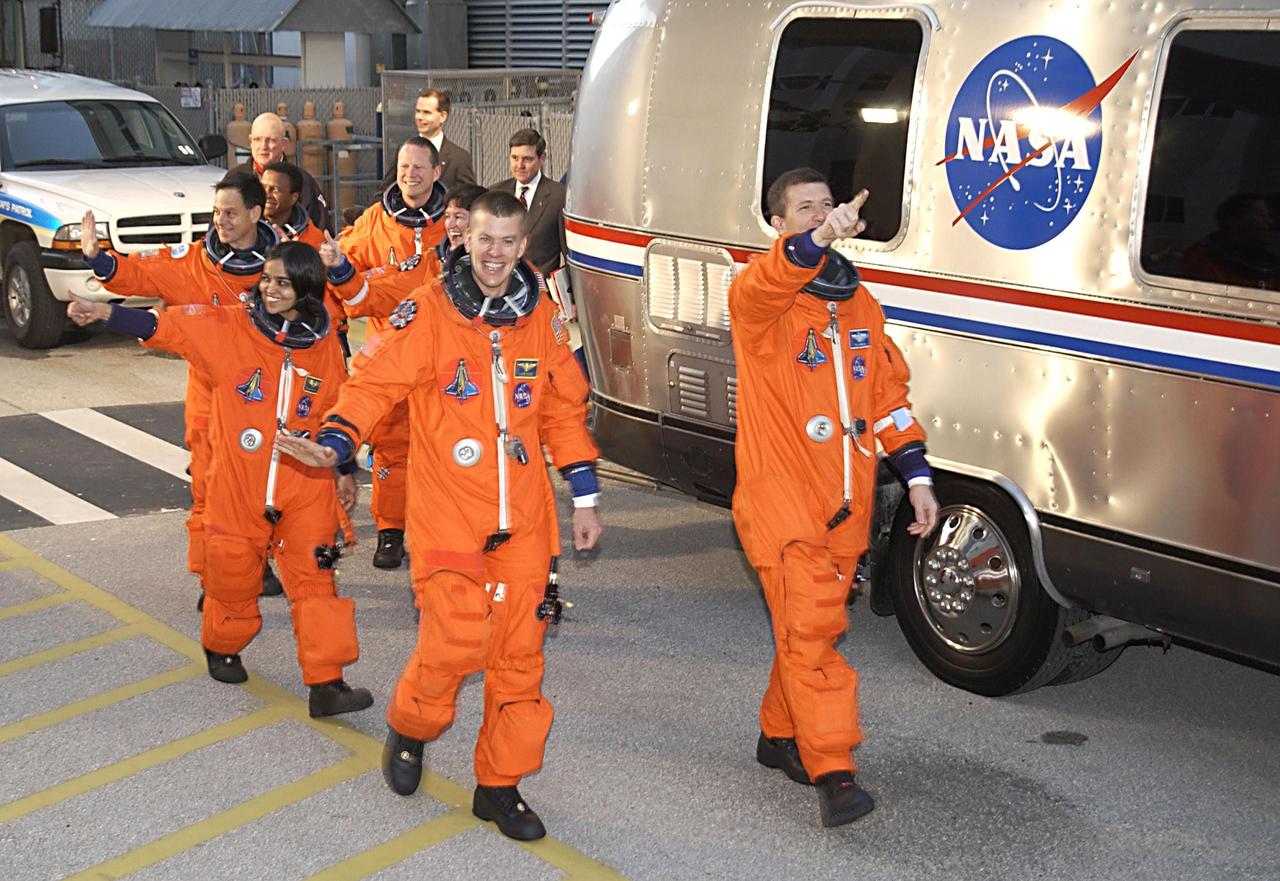
KENNEDY SPACE CENTER, FLA. - The STS-107 crew heads for the Astrovan and a ride to Launch Pad 39A for liftoff. In front, left to right, are Payload Specialist Ilan Ramon, Mission Specialist Kalpana Chawla and Pilot William "Willie" McCool; behind them, left to right, are Payload Commander Michael Anderson, Mission Specialists David Brown and Laurel Clark, and Mission Commander Rick Husband. Ramon is the first astronaut from Israel to fly on a Shuttle. The 16-day mission is devoted to research and will include more than 80 experiments that will study Earth and space science, advanced technology development, and astronaut health and safety. The payload on Space Shuttle Columbia includes FREESTAR (Fast Reaction Experiments Enabling Science, Technology, Applications and Research) and the SHI Research Double Module (SHI/RDM), known as SPACEHAB. Experiments on the module range from material sciences to life sciences. Liftoff is scheduled for 10:39 a.m. EST.
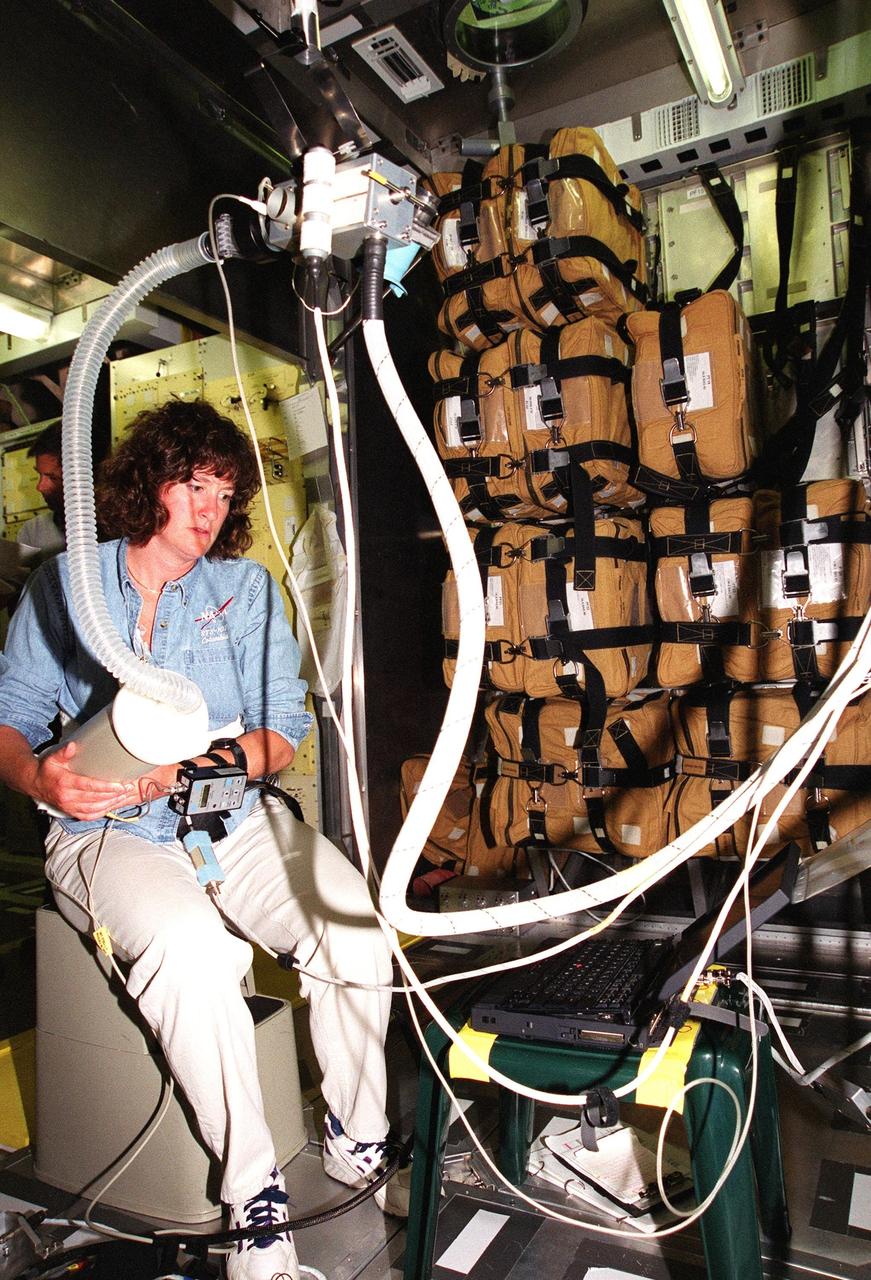
KENNEDY SPACE CENTER, Fla. -- At SPACEHAB, Cape Canaveral, Fla., STS-107 Mission Specialist Laurel Blair Salton Clark manipulates a piece of equipment. She and other crew members are at SPACEHAB, Port Canaveral, Fla., for Crew Equipment Interface Test (CEIT) activities that enable the crew to perform certain flight operations, operate experiments in a flight-like environment, evaluate stowage locations and obtain additional exposure to specific experiment operations. As a research mission, STS-107 will carry the Spacehab Double Module in its first research flight into space and a broad collection of experiments ranging from material science to life science. Other STS-107 crew members are Commander Rick Douglas Husband, Pilot William C. McCool; Payload Commander Michael P. Anderson; and Mission Specialists Kalpana Chawla, David M. Brown and Ilan Ramon, of Israel. STS-107 is scheduled for launch May 23, 2002
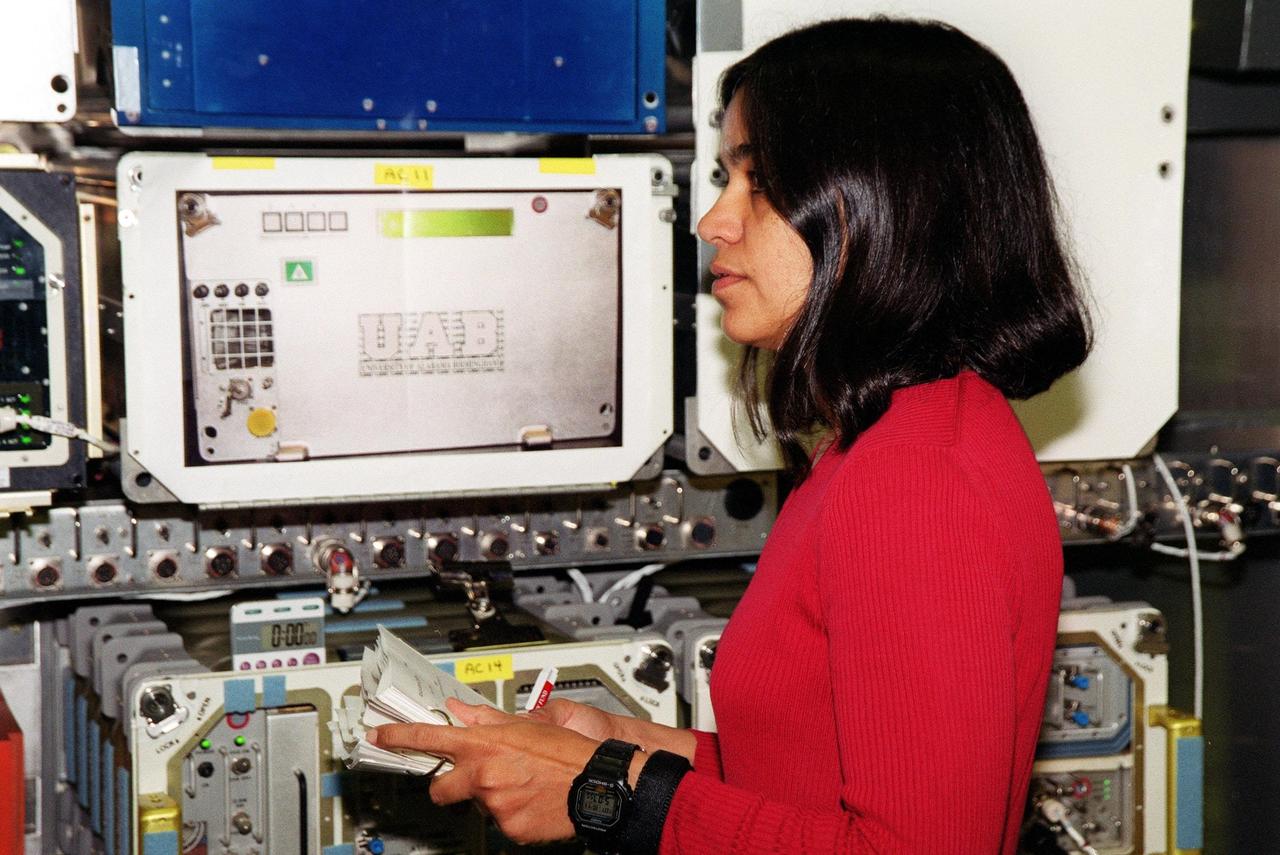
KENNEDY SPACE CENTER, Fla. -- During Crew Equipment Interface Test (CEIT)activities at SPACEHAB, Cape Canaveral, Fla., STS-107 Mission Specialist Kalpana Chawla looks over equipment inside the Spacehab module. As a research mission, STS-107 will carry the Spacehab Double Module in its first research flight into space and a broad collection of experiments ranging from material science to life science. The CEIT activities enable the crew to perform certain flight operations, operate experiments in a flight-like environment, evaluate stowage locations and obtain additional exposure to specific experiment operations. Other STS-107 crew members are Commander Rick Douglas Husband; Pilot William C. McCool; Payload Commander Michael P. Anderson; Mission Specialists Laurel Blair Salton Clark and David M. Brown; and Payload Specialist Ilan Ramon, of Israel. STS-107 is scheduled for launch May 23, 2002
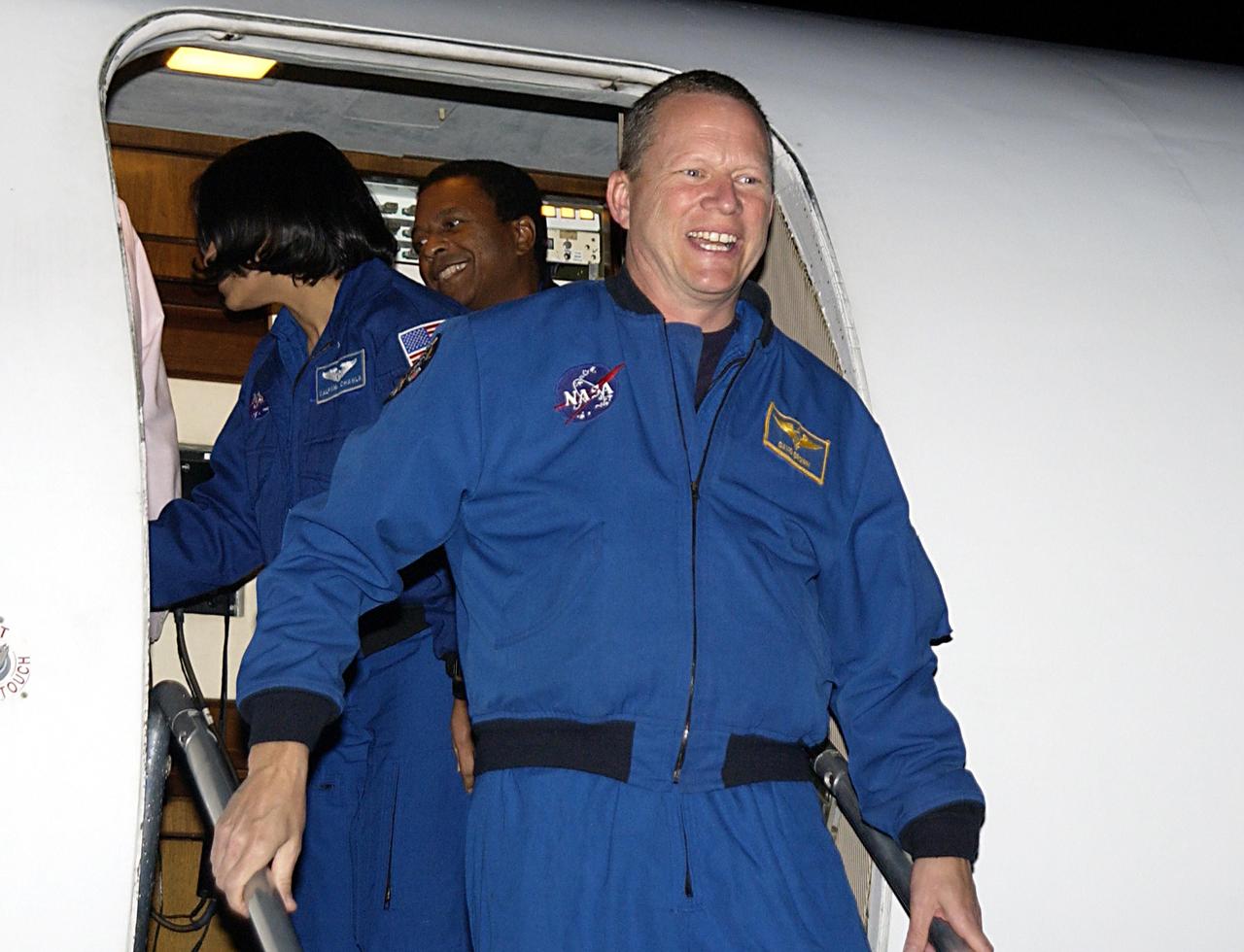
KENNEDY SPACE CENTER, FLA. - STS-107 Mission Specialist David Brown shows his pleasure at arriving at KSC for pre-launch preparations. STS-107 is a mission devoted to research and will include more than 80 experiments that will study Earth and space science, advanced technology development, and astronaut health and safety. The payload on Space Shuttle Columbia includes FREESTAR (Fast Reaction Experiments Enabling Science, Technology, Applications and Research) and the SHI Research Double Module (SHI/RDM), known as SPACEHAB. Experiments on the module range from material sciences to life sciences. The crew includes Payload Specialist Ilan Ramon, the first Israeli astronaut. Other crew members are Commander Rick Husband, Pilot William "Willie" McCool, Payload Commander Michael Anderson and Mission Specialists Kalpana Chawla and Laurel Clark. Launch of Columbia is targeted for Jan. 16 between 10 a.m. and 2 p.m.
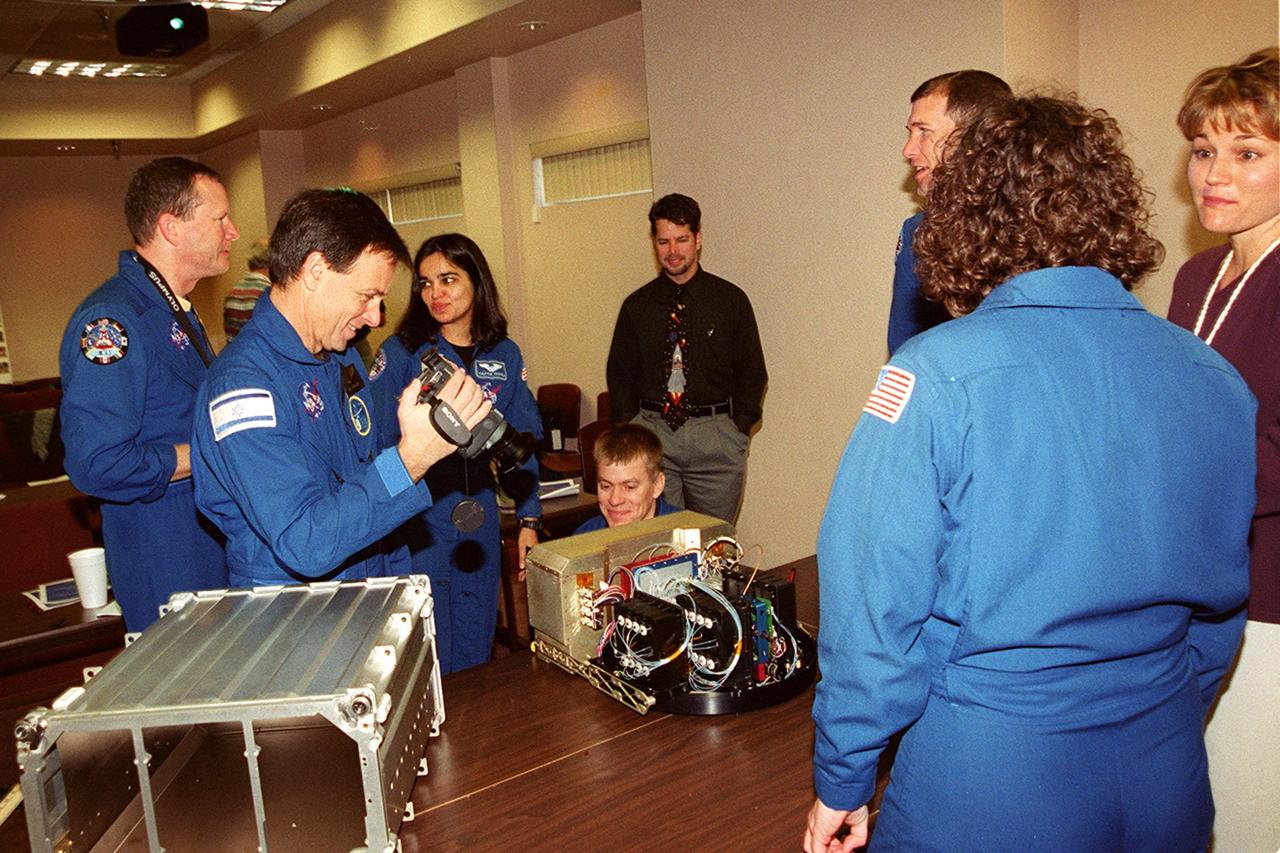
KENNEDY SPACE CENTER, FLA. -- As part of In-Flight Maintenance training, members of the STS-107 crew check out one of the Biotube experiments that will be part of their research mission . From left (in uniform) are Mission Specialist David M. Brown, Payload Specialist Ilan Ramon of Israel, and Mission Specialist Kalpana Chawla; Pilot William C. “Willie” McCool (crouching behind the table); Commander Rick D. Husband; and Mission Specialist Laurel Clark. At right is project engineer April Boody. As a research mission, STS-107 will carry the SPACEHAB Double Module in its first research flight into space and a broad collection of experiments ranging from material science to life science. It is scheduled to launch July 19, 2001

KENNEDY SPACE CENTER, FLA. - STS-107 Payload Specialist Ilan Ramon comments on the mission after the crew's arrival at KSC for pre-launch preparations. Ramon is the first Israeli astronaut to fly on a Shuttle mission. Standing behind him are (left to right) Commander Rick Husband, Pilot William "Willie" McCool, Mission Specialists David Brown and Kalpana Chawla, Payload Commander Michael Anderson and Mission Specialist Laurel Clark. STS-107 is a mission devoted to research and will include more than 80 experiments that will study Earth and space science, advanced technology development, and astronaut health and safety. The payload on Space Shuttle Columbia includes FREESTAR (Fast Reaction Experiments Enabling Science, Technology, Applications and Research) and the SHI Research Double Module (SHI/RDM), known as SPACEHAB. Experiments on the module range from material sciences to life sciences. Launch of Columbia is targeted for Jan. 16 between 10 a.m. and 2 p.m.
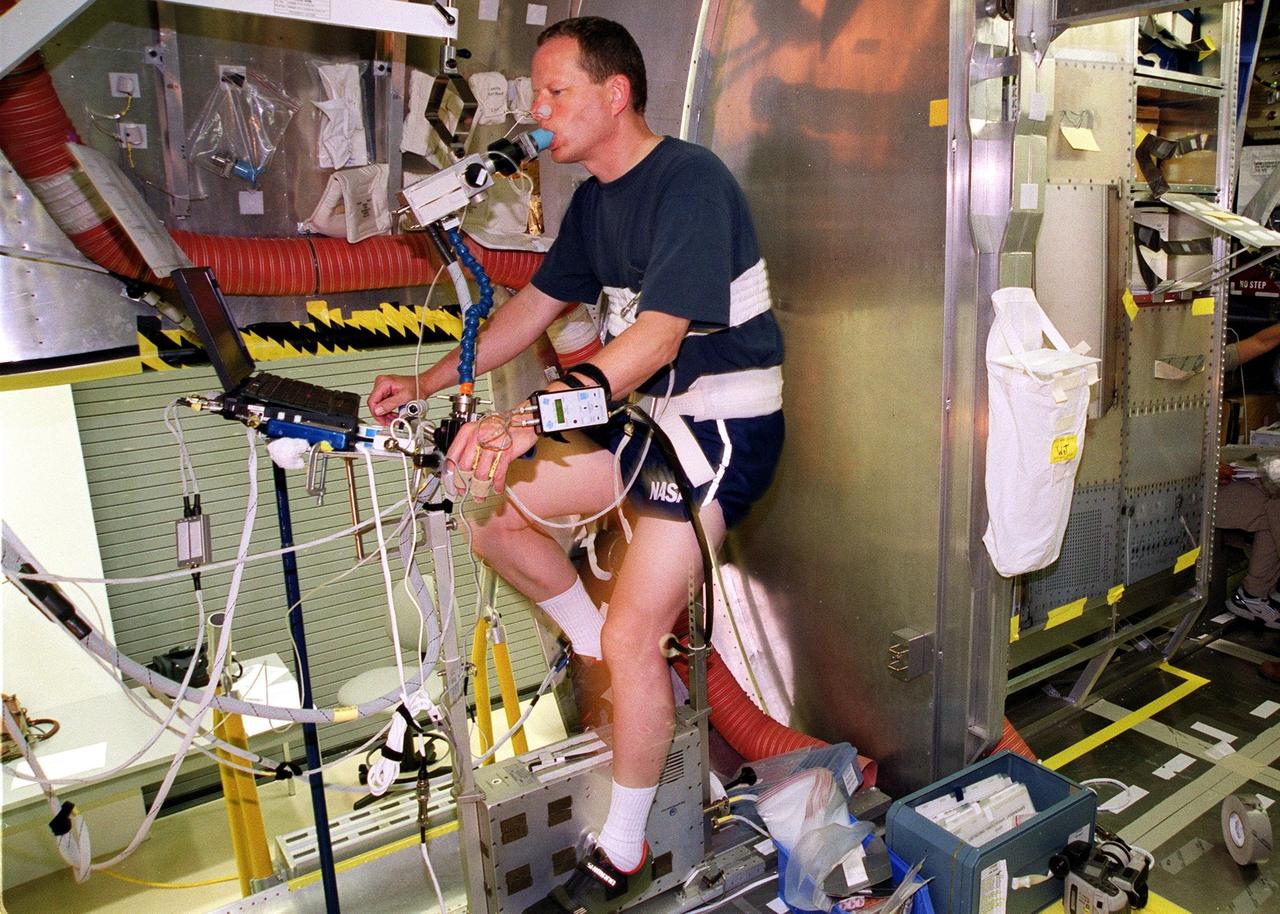
KENNEDY SPACE CENTER, Fla. -- STS-107 Mission Specialist David M. Brown trains on equipment in the training module at SPACEHAB, Cape Canaveral, Fla. Brown and other crew members Commander Rick D. Husband, Pilot William C. McCool, Payload Commander Michael P. Anderson; Mission Specialists Kalpana Chawla and Laurel Blair Salton Clark; and Payload Specialist Ilan Ramon, of Israel, are at SPACEHAB to take part in Crew Equipment Interface Test (CEIT) activities. The CEIT enables the crew to perform certain flight operations, operate experiments in a flight-like environment, evaluate stowage locations and obtain additional exposure to specific experiment operations. As a research mission, STS-107 will carry the SPACEHAB Double Module in its first research flight into space and a broad collection of experiments ranging from material science to life science. STS-107 is scheduled for launch May 23, 2002
![KENNEDY SPACE CENTER, FLA. -- The STS-107 crew heads for the Astrovan and a ride to Launch Pad 39A for liftoff. From left to right are Payload Commander Michael Anderson, Mission Specialist David Brown, Payload Specialist Ilan Ramon, Mission Specialists Laurel Clark and Kalpana Chawla, Mission Commandaer Rick Husband and Pilot William "Willie" McCool. Ramon is the first astronaut from Israel to fly on a Shuttle. The 16-day mission is devoted to research and will include more than 80 experiments that will study Earth and space science, advanced technology development, and astronaut health and safety. The payload on Space Shuttle Columbia includes FREESTAR (Fast Reaction Experiments Enabling Science, Technology, Applications and Research) and the SHI Research Double Module (SHI/RDM), known as SPACEHAB. Experiments on the module range from material sciences to life sciences. Liftoff is scheduled for 10:39 a.m. EST. [Photo courtesy of Scott Andrews]](https://images-assets.nasa.gov/image/KSC-03pd0110/KSC-03pd0110~medium.jpg)
KENNEDY SPACE CENTER, FLA. -- The STS-107 crew heads for the Astrovan and a ride to Launch Pad 39A for liftoff. From left to right are Payload Commander Michael Anderson, Mission Specialist David Brown, Payload Specialist Ilan Ramon, Mission Specialists Laurel Clark and Kalpana Chawla, Mission Commandaer Rick Husband and Pilot William "Willie" McCool. Ramon is the first astronaut from Israel to fly on a Shuttle. The 16-day mission is devoted to research and will include more than 80 experiments that will study Earth and space science, advanced technology development, and astronaut health and safety. The payload on Space Shuttle Columbia includes FREESTAR (Fast Reaction Experiments Enabling Science, Technology, Applications and Research) and the SHI Research Double Module (SHI/RDM), known as SPACEHAB. Experiments on the module range from material sciences to life sciences. Liftoff is scheduled for 10:39 a.m. EST. [Photo courtesy of Scott Andrews]
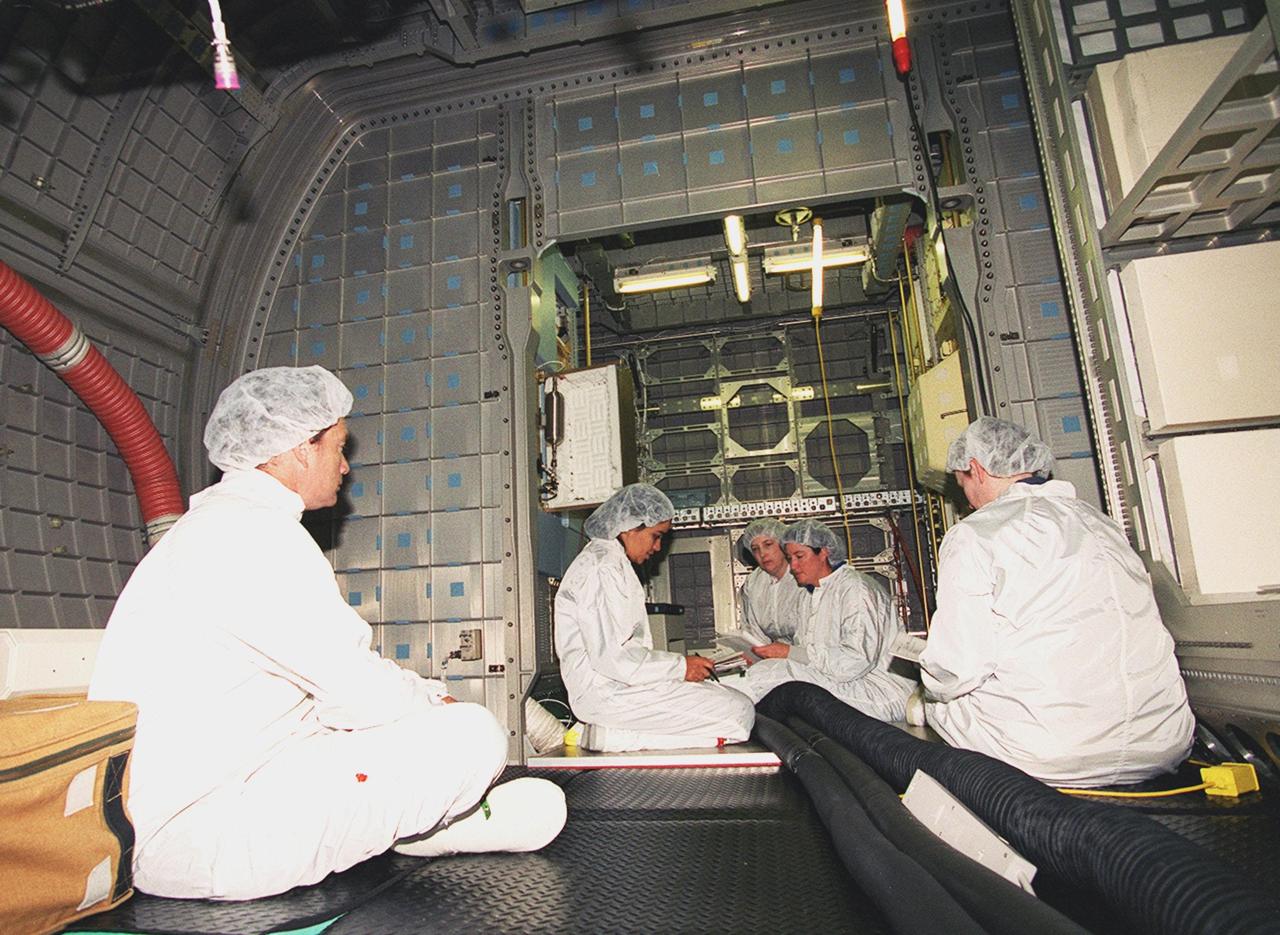
KENNEDY SPACE CENTER, Fla. -- At SPACEHAB, Cape Canaveral, members of the STS-107 crew look over elements in the SPACEHAB Double Module as part of equipment familiarization for their mission. The crew comprises Commander Rick Husband, Pilot William McCool, Payload Commander Michael Anderson, Mission Specialists Kalpana Chawla, David Brown and Laurel Clark, and Payload Specialist Ilan Ramon. STS-107 has two payload elements, the Double Module in its first flight into space and a Hitchhiker payload. The double module provides greater experiment capability than on previous flights, resulting for this mission in a very broad collection of experiments for NASA and commercial and European customers. The experiments range from material sciences to life sciences (many rats). The Hitchhiker carrier system is modular and expandable in accordance with payload requirements, which allows maximum efficiency in utilizing orbiter resources and increases the potential for early manifesting on the Shuttle. Hitchhiker experiments are housed in canisters or attached to mounting plates. The Hitchhiker canister comes in two varieties--the Hitchhiker Motorized Door Canister and the Sealed Canisters. STS-107 is scheduled to launch in May 2002

KENNEDY SPACE CENTER, Fla. -- At SPACEHAB, Cape Canaveral, members of the STS-107 crew look over elements in the SPACEHAB Double Module as part of equipment familiarization for their mission. The crew comprises Commander Rick Husband, Pilot William McCool, Payload Commander Michael Anderson, Mission Specialists Kalpana Chawla, David Brown and Laurel Clark, and Payload Specialist Ilan Ramon. STS-107 has two payload elements, the Double Module in its first flight into space and a Hitchhiker payload. The double module provides greater experiment capability than on previous flights, resulting for this mission in a very broad collection of experiments for NASA and commercial and European customers. The experiments range from material sciences to life sciences (many rats). The Hitchhiker carrier system is modular and expandable in accordance with payload requirements, which allows maximum efficiency in utilizing orbiter resources and increases the potential for early manifesting on the Shuttle. Hitchhiker experiments are housed in canisters or attached to mounting plates. The Hitchhiker canister comes in two varieties--the Hitchhiker Motorized Door Canister and the Sealed Canisters. STS-107 is scheduled to launch in May 2002
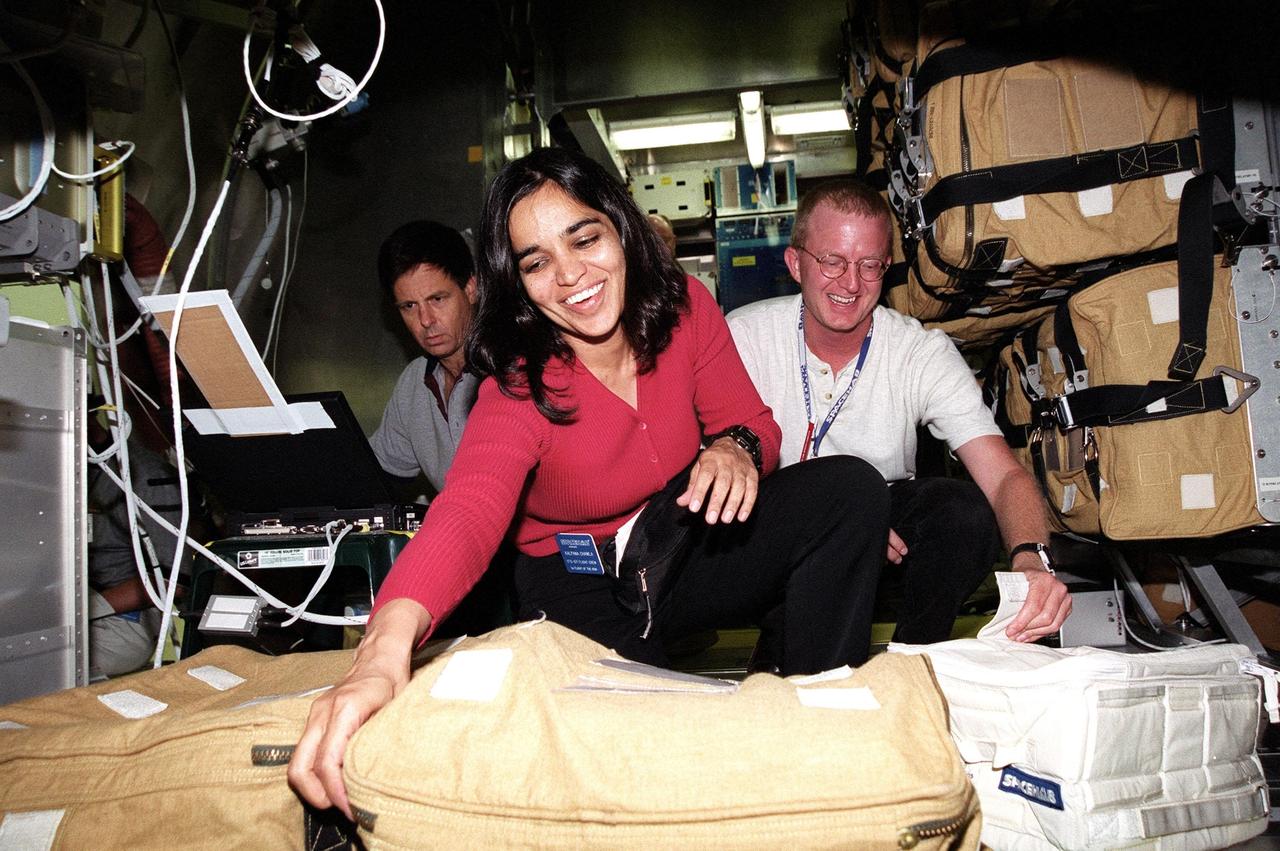
KENNEDY SPACE CENTER, Fla. -- At SPACEHAB, Cape Canaveral, Fla., STS-107 Mission Specialist Kalpana Chawla checks out items stored in the Spacehab module. Behind her, left, is Payload Specialist Ilan Ramon, of Israel, looking over a piece of equipment. At right is a trainer. The crew is taking part in Crew Equipment Interface Test (CEIT) activities at SPACEHAB, Port Canaveral, Fla. As a research mission, STS-107 will carry the Spacehab Double Module in its first research flight into space and a broad collection of experiments ranging from material science to life science. The CEIT activities enable the crew to perform certain flight operations, operate experiments in a flight-like environment, evaluate stowage locations and obtain additional exposure to specific experiment operations. Other STS-107 crew members are Commander Rick Douglas Husband, Pilot William C. McCool; Payload Commander Michael P. Anderson; and Mission Specialists Laurel Blair Salton Clark and David M. Brown. STS-107 is scheduled for launch May 23, 2002
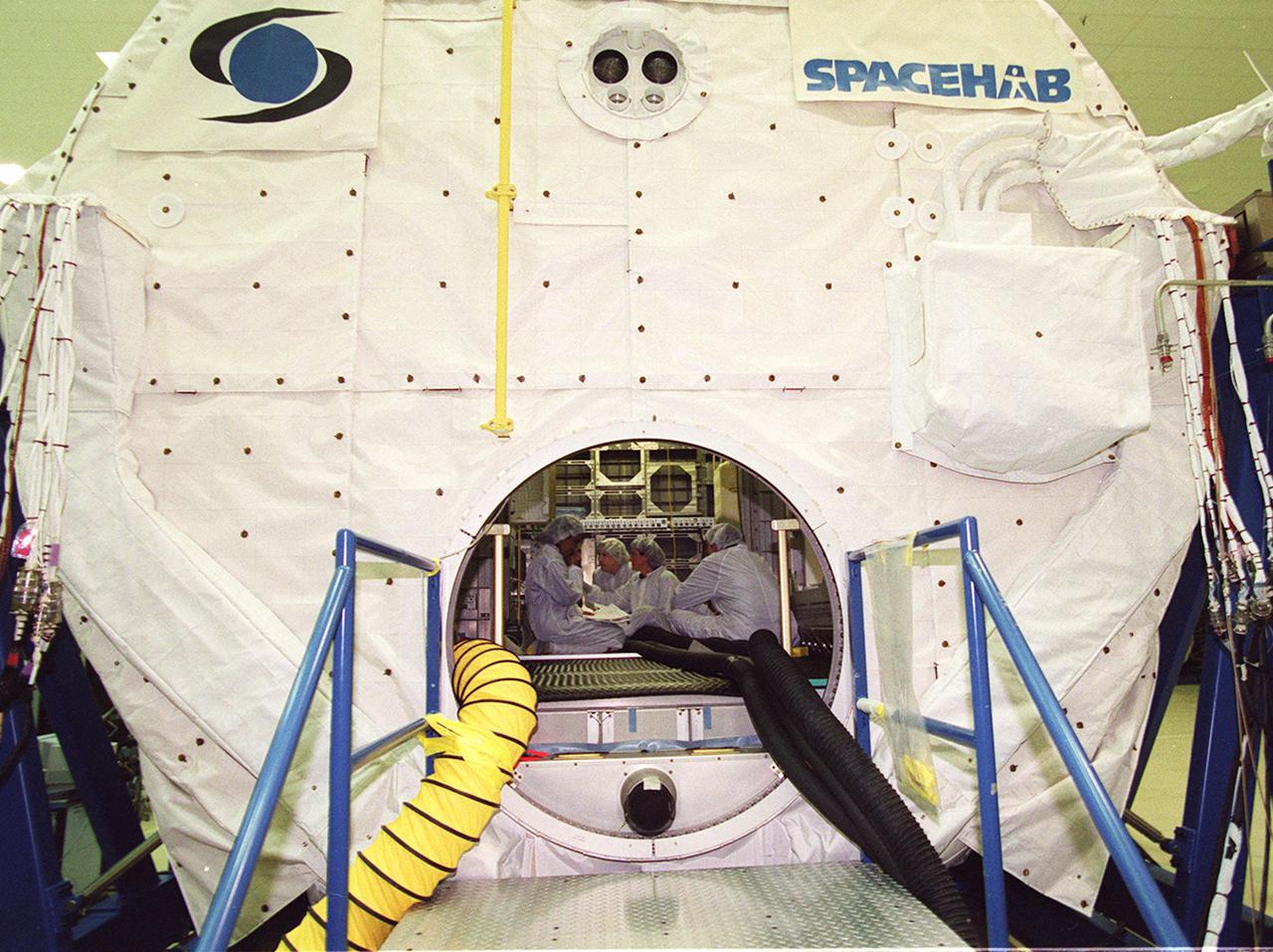
KENNEDY SPACE CENTER, Fla. -- At SPACEHAB,Cape Canaveral, the SPACEHAB Double Module is the site for equipment familiarization for some STS-107 crew members inside. The crew comprises Commander Rick Husband, Pilot William McCool, Payload Commander Michael Anderson, Mission Specialists Kalpana Chawla, David Brown and Laurel Clark, and Payload Specialist Ilan Ramon. STS-107 has two payload elements, the Double Module in its first flight into space and a Hitchhiker payload. The double module provides greater experiment capability than on previous flights, resulting for this mission in a very broad collection of experiments for NASA and commercial and European customers. The experiments range from material sciences to life sciences (many rats). The Hitchhiker carrier system is modular and expandable in accordance with payload requirements, which allows maximum efficiency in utilizing orbiter resources and increases the potential for early manifesting on the Shuttle. Hitchhiker experiments are housed in canisters or attached to mounting plates. The Hitchhiker canister comes in two varieties--the Hitchhiker Motorized Door Canister and the Sealed Canisters. STS-107 is scheduled to launch in May 2002
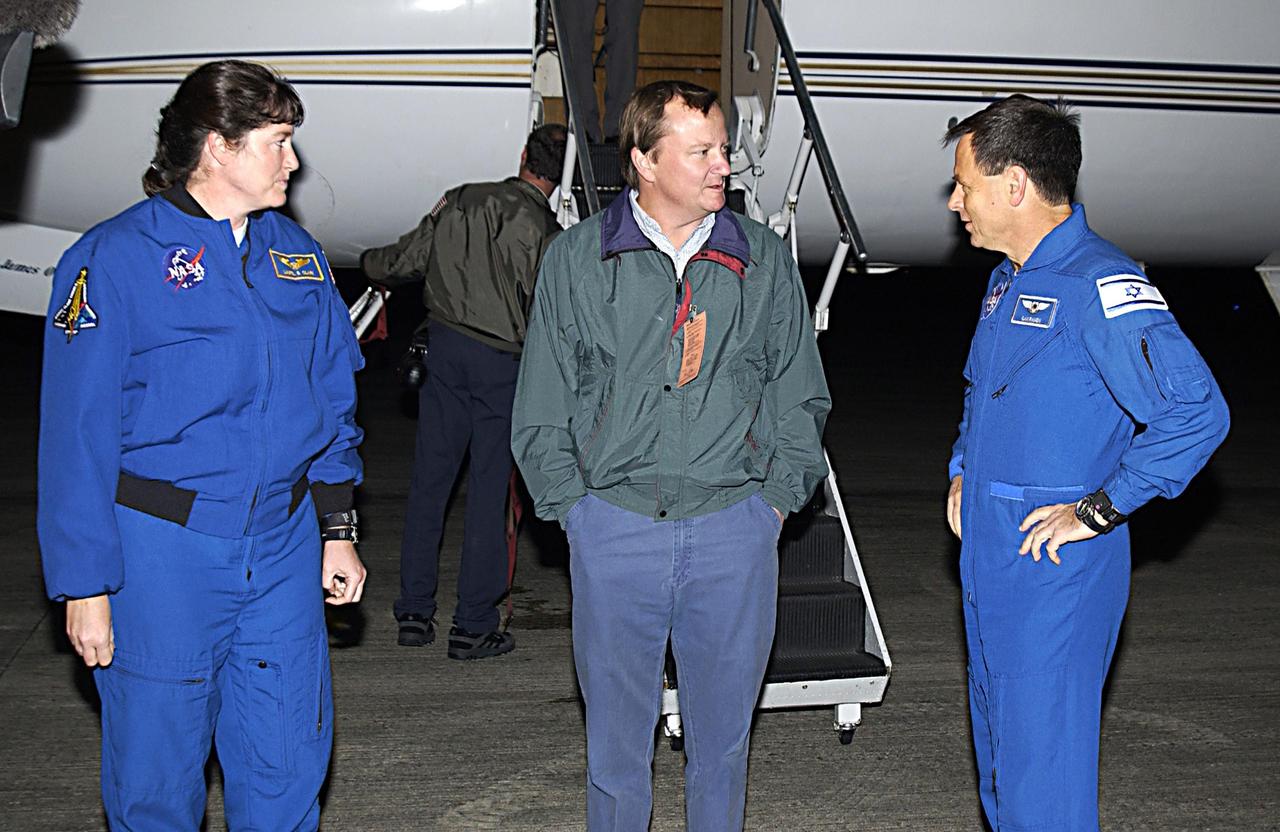
KENNEDY SPACE CENTER, FLA. -- Two members of the STS-107 crew, Mission Specialist Laurel Clark (left) and Payload Specialist Ilan Ramon (right), talk after their arrival at KSC to Launch Director Mike Leinbach. Ramon is the first Israeli astronaut to fly on a Shuttle mission. STS-107 is a mission devoted to research and will include more than 80 experiments that will study Earth and space science, advanced technology development, and astronaut health and safety. The payload on Space Shuttle Columbia includes FREESTAR (Fast Reaction Experiments Enabling Science, Technology, Applications and Research) and the SHI Research Double Module (SHI/RDM), known as SPACEHAB. Experiments on the module range from material sciences to life sciences. Other crew members are Commander Rick Husband, Pilot William "Willie" McCool, Payload Commander Michael Anderson and Mission Specialists Kalpana Chawla and David Brown. Launch of Columbia is targeted for Jan. 16 between 10 a.m. and 2 p.m.
![KENNEDY SPACE CENTER, FLA. - . The STS-107 crew, waving to onlookers, exits the Operations and Checkout Building on their way to Launch Pad 39A for liftoff. Leading the way are Pilot William "Willie" McCool (left) and Commander Rick Husband (right). Following in the second row are Mission Specialists Kalpana Chawla (left) and Laurel Clark; in the rear are Payload Specialist Ilan Ramon, Payload Commander Michael Anderson and Mission Specialist David Brown. Ramon is the first astronaut from Israel to fly on a Shuttle. The 16-day mission is devoted to research and will include more than 80 experiments that will study Earth and space science, advanced technology development, and astronaut health and safety. The payload on Space Shuttle Columbia includes FREESTAR (Fast Reaction Experiments Enabling Science, Technology, Applications and Research) and the SHI Research Double Module (SHI/RDM), known as SPACEHAB. Experiments on the module range from material sciences to life sciences. Liftoff is scheduled for 10:39 a.m. EST. [Photo courtesy of Scott Andrews]](https://images-assets.nasa.gov/image/KSC-03pd0109/KSC-03pd0109~medium.jpg)
KENNEDY SPACE CENTER, FLA. - . The STS-107 crew, waving to onlookers, exits the Operations and Checkout Building on their way to Launch Pad 39A for liftoff. Leading the way are Pilot William "Willie" McCool (left) and Commander Rick Husband (right). Following in the second row are Mission Specialists Kalpana Chawla (left) and Laurel Clark; in the rear are Payload Specialist Ilan Ramon, Payload Commander Michael Anderson and Mission Specialist David Brown. Ramon is the first astronaut from Israel to fly on a Shuttle. The 16-day mission is devoted to research and will include more than 80 experiments that will study Earth and space science, advanced technology development, and astronaut health and safety. The payload on Space Shuttle Columbia includes FREESTAR (Fast Reaction Experiments Enabling Science, Technology, Applications and Research) and the SHI Research Double Module (SHI/RDM), known as SPACEHAB. Experiments on the module range from material sciences to life sciences. Liftoff is scheduled for 10:39 a.m. EST. [Photo courtesy of Scott Andrews]
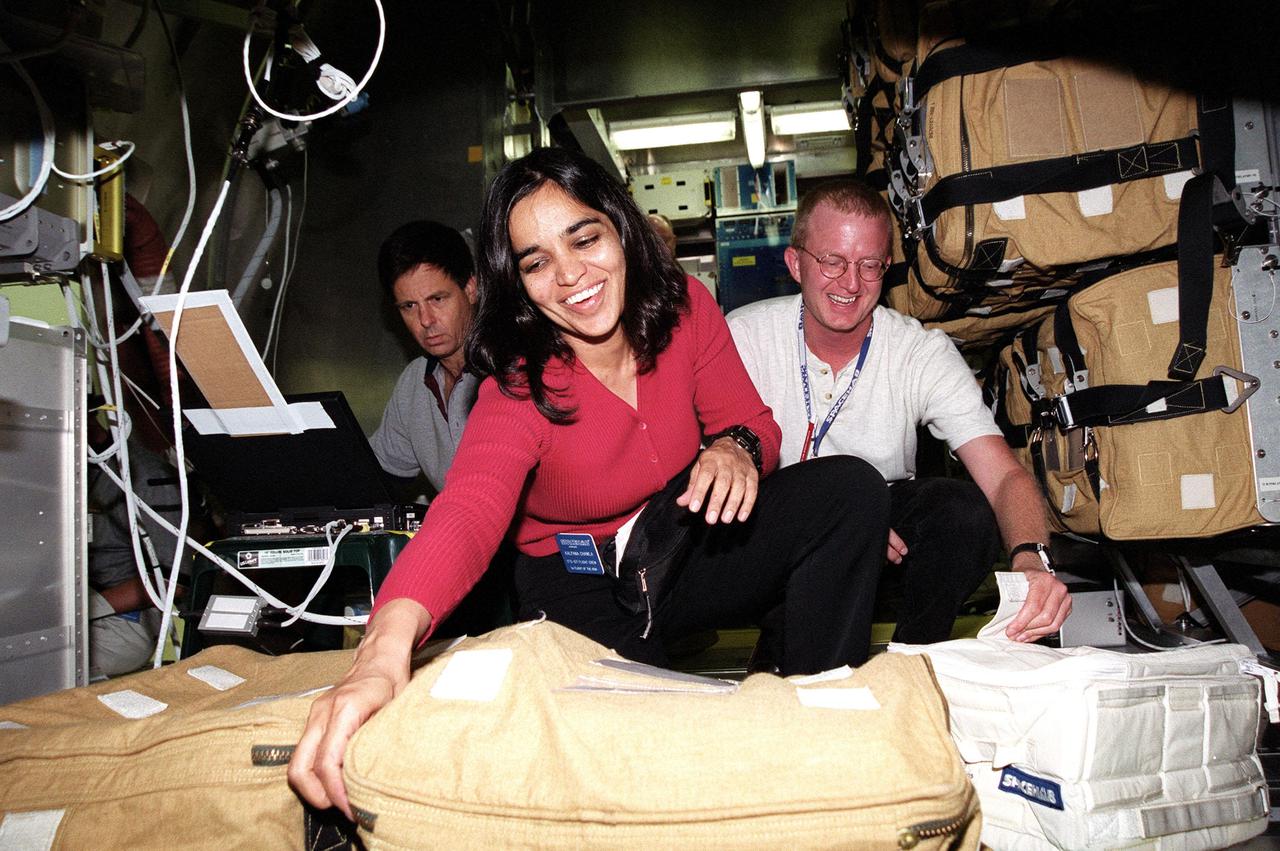
KENNEDY SPACE CENTER, Fla. -- At SPACEHAB, Cape Canaveral, Fla., STS-107 Mission Specialist Kalpana Chawla checks out items stored in the Spacehab module. Behind her, left, is Payload Specialist Ilan Ramon, of Israel, looking over a piece of equipment. At right is a trainer. The crew is taking part in Crew Equipment Interface Test (CEIT) activities at SPACEHAB, Port Canaveral, Fla. As a research mission, STS-107 will carry the Spacehab Double Module in its first research flight into space and a broad collection of experiments ranging from material science to life science. The CEIT activities enable the crew to perform certain flight operations, operate experiments in a flight-like environment, evaluate stowage locations and obtain additional exposure to specific experiment operations. Other STS-107 crew members are Commander Rick Douglas Husband, Pilot William C. McCool; Payload Commander Michael P. Anderson; and Mission Specialists Laurel Blair Salton Clark and David M. Brown. STS-107 is scheduled for launch May 23, 2002
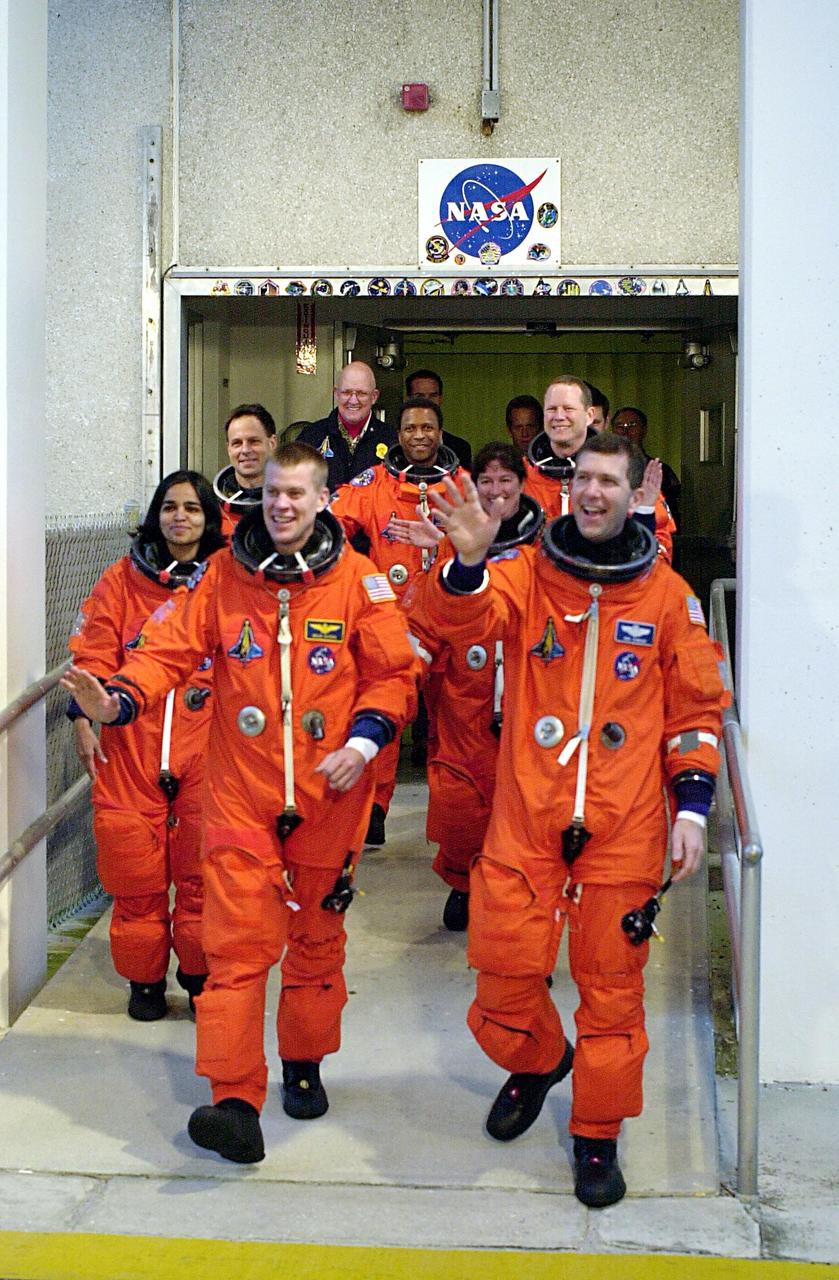
KENNEDY SPACE CENTER, FLA. -- The STS-107 crew, waving to onlookers, exits the Operations and Checkout Building on their way to Launch Pad 39A for liftoff. Leading the way are Pilot William "Willie" McCool (left) and Commander Rick Husband (right). Following in the second row are Mission Specialists Kalpana Chawla (left) and Laurel Clark; in the rear are Payload Specialist Ilan Ramon, Payload Commander Michael Anderson and Mission Specialist David Brown. Ramon is the first astronaut from Israel to fly on a Shuttle. The 16-day mission is devoted to research and will include more than 80 experiments that will study Earth and space science, advanced technology development, and astronaut health and safety. The payload on Space Shuttle Columbia includes FREESTAR (Fast Reaction Experiments Enabling Science, Technology, Applications and Research) and the SHI Research Double Module (SHI/RDM), known as SPACEHAB. Experiments on the module range from material sciences to life sciences. Liftoff is scheduled for 10:39 a.m. EST.

KENNEDY SPACE CENTER, Fla. -- At SPACEHAB, Cape Canaveral, Fla., STS-107 Payload Specialist Ilan Ramon (foreground), of Israel, and Mission Specialist Kalpana Chawla (background) check out experiments inside the Spacehab module. They and other crew members are taking part in Crew Equipment Interface Test (CEIT) activities that enable the crew to perform certain flight operations, operate experiments in a flight-like environment, evaluate stowage locations and obtain additional exposure to specific experiment operations. As a research mission, STS-107 will carry the Spacehab Double Module in its first research flight into space and a broad collection of experiments ranging from material science to life science. . Other STS-107 crew members are Commander Rick Douglas Husband, Pilot William C. McCool; Payload Commander Michael P. Anderson; and Mission Specialists Laurel Blair Salton Clark and David M. Brown. STS-107 is scheduled for launch May 23, 2002
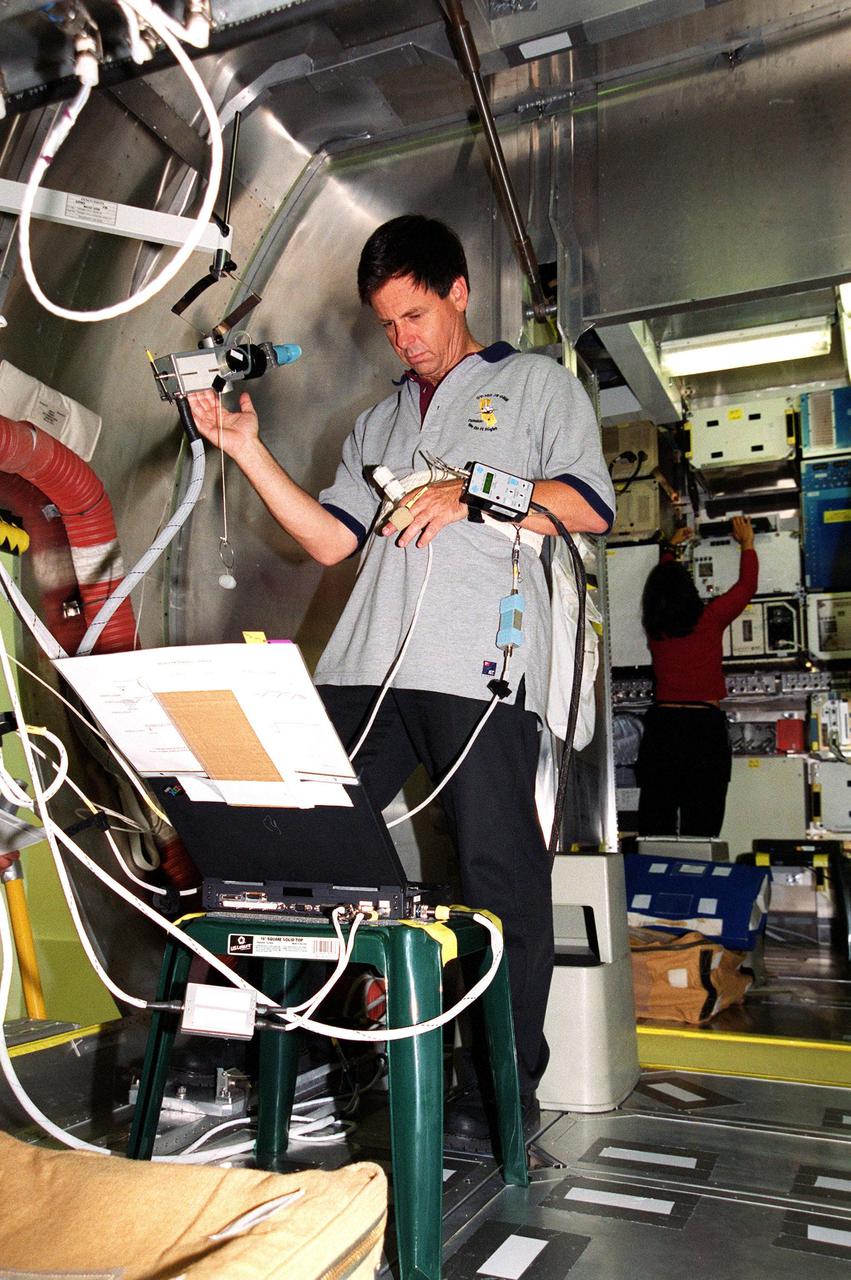
KENNEDY SPACE CENTER, Fla. -- At SPACEHAB, Cape Canaveral, Fla., STS-107 Payload Specialist Ilan Ramon (foreground), of Israel, and Mission Specialist Kalpana Chawla (background) check out experiments inside the Spacehab module. They and other crew members are taking part in Crew Equipment Interface Test (CEIT) activities that enable the crew to perform certain flight operations, operate experiments in a flight-like environment, evaluate stowage locations and obtain additional exposure to specific experiment operations. As a research mission, STS-107 will carry the Spacehab Double Module in its first research flight into space and a broad collection of experiments ranging from material science to life science. . Other STS-107 crew members are Commander Rick Douglas Husband, Pilot William C. McCool; Payload Commander Michael P. Anderson; and Mission Specialists Laurel Blair Salton Clark and David M. Brown. STS-107 is scheduled for launch May 23, 2002
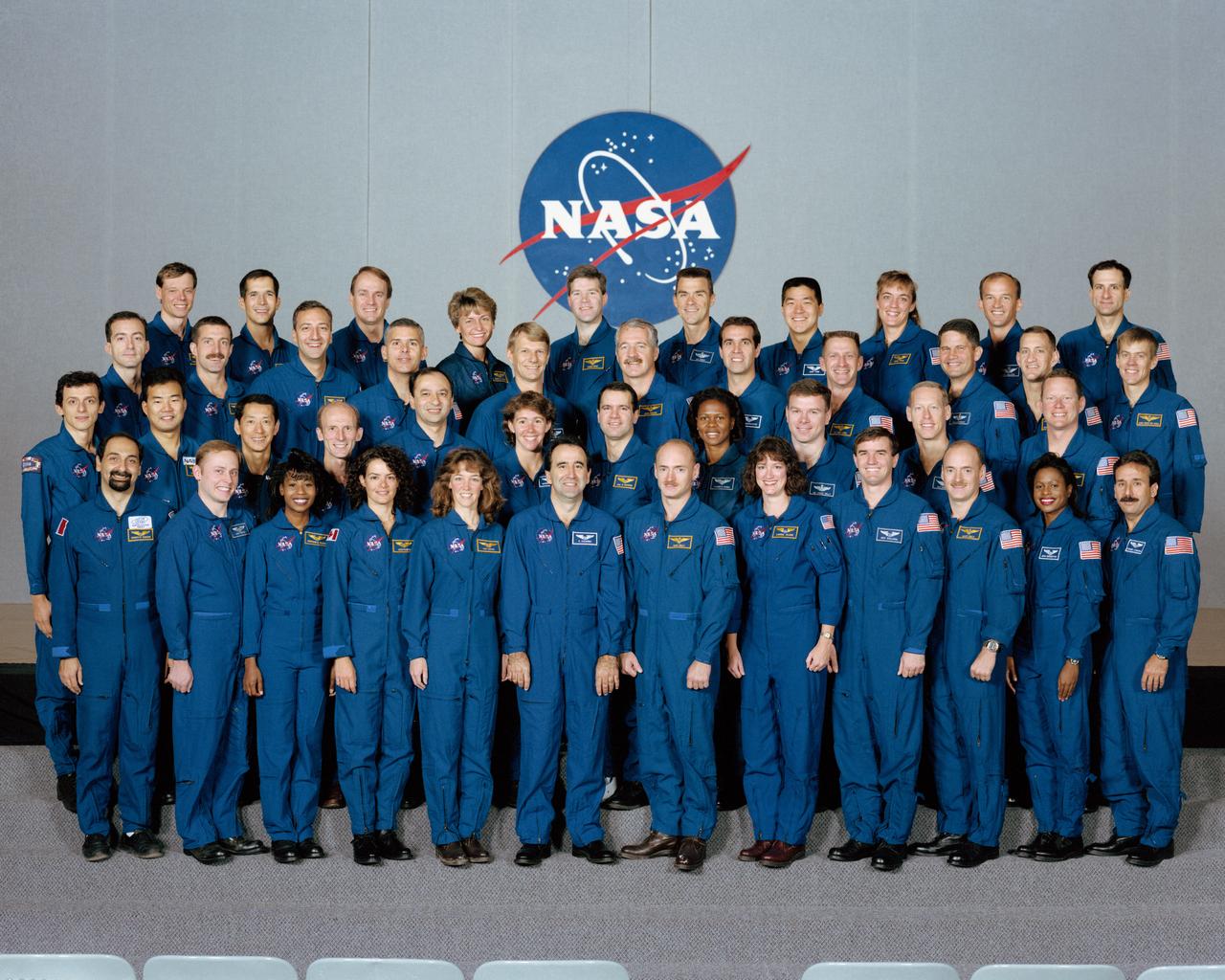
S96-18546 (5 Nov. 1996) --- Following their selection from among 2,400 applicants, the 44 astronaut candidates begin a lengthy period of training and evaluation at NASA's Johnson Space Center as they gather for their group portrait. This year?s class is the largest in the history of space shuttle astronauts and their early program predecessors. Ten pilots and 25 mission specialists make up the internationally diverse class. The international trainees represent the Canadian, Japanese, Italian, French, German and European space agencies. Back row ? from the left, Christer Fuglesang, John Herrington, Steve MacLean, Peggy Whitson, Stephen Frick, Duane Carey, Daniel Tani, Heidemarie Stefanyshyn-Piper, Jeffrey Williams and Donald Pettit. Second to back row ? from the left, Philippe Perrin, Daniel Burbank, Michael Massimino, Lee Morin, Piers Sellers, John Phillips, Richard Mastraccio, Christopher Loria, Paul Lockhart, Charles Hobaugh and William McCool. Second to front row ? from the left, Pedro Duque, Soichi Noguchi, Mamoru Mohri, Gerhard Thiele, Mark Polansky, Sandra Magnus, Paul Richards, Yvonne Cagle, James Kelly, Patrick Forrester and David Brown. Front row ? from the left, Umberto Guidoni, Edward Fincke, Stephanie Wilson, Julie Payette, Lisa Nowak, Fernando Caldeiro, Mark Kelly, Laurel Clark, Rex Walheim, Scott Kelly, Joan Higginbotham and Charles Camarda. Guidoni represents the Italian Space Agency (ASI). Fuglesang and Duque represent the European Space Agency (ESA). Mohri and Noguchi represent the Japanese Space Agency (NASDA). MacLean and Payette are with the Canadian Space Agency. Perrin is associated with the French Space Agency (CNES) and Thiele represents the German Space Agency (DARA). Photo credit: NASA or National Aeronautics and Space Administration
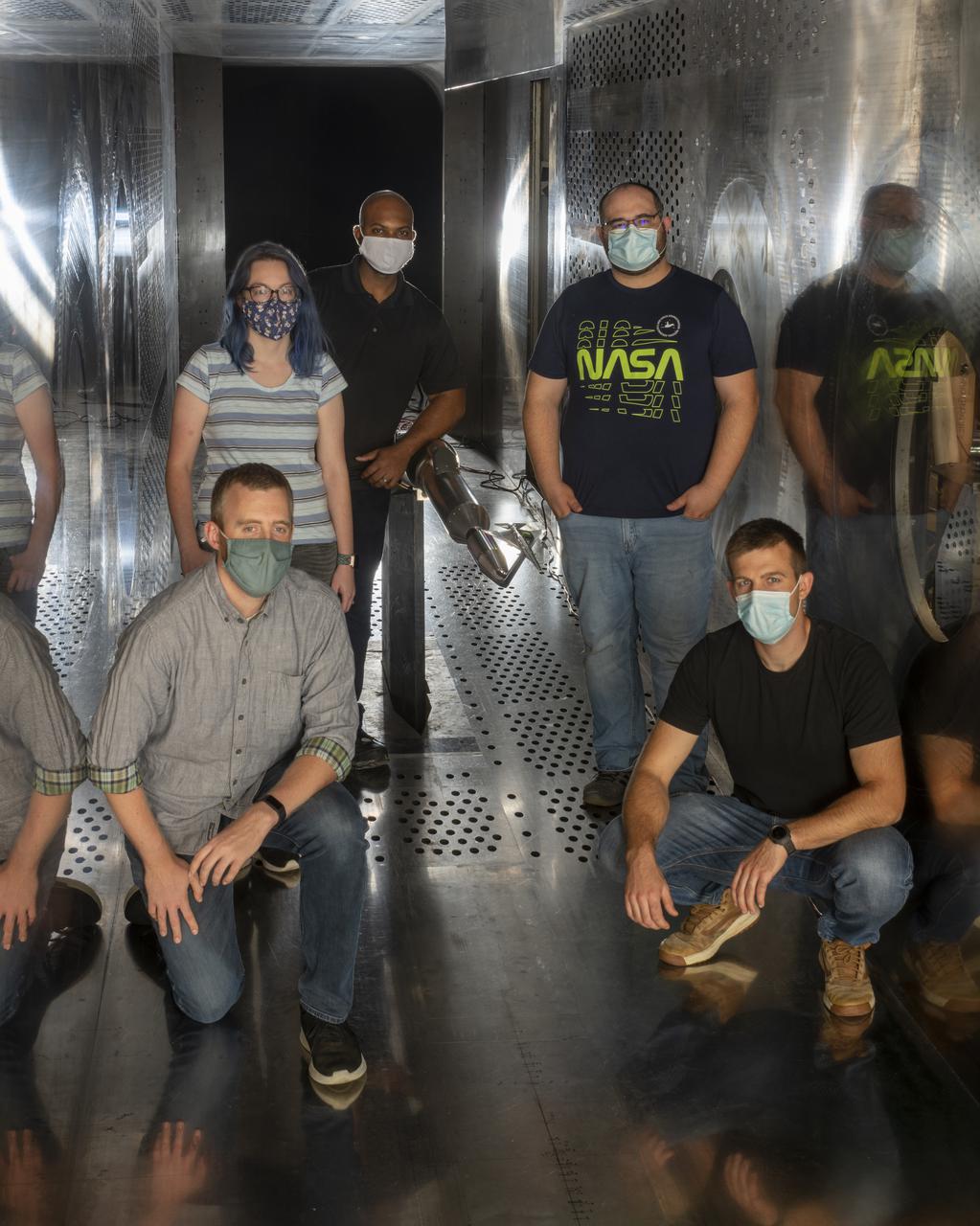
Commercial Supersonic Transport, CST Project, X-59 Sonic Boom Test Model, in the 8x6-foot Supersonic Wind Tunnel, SWT