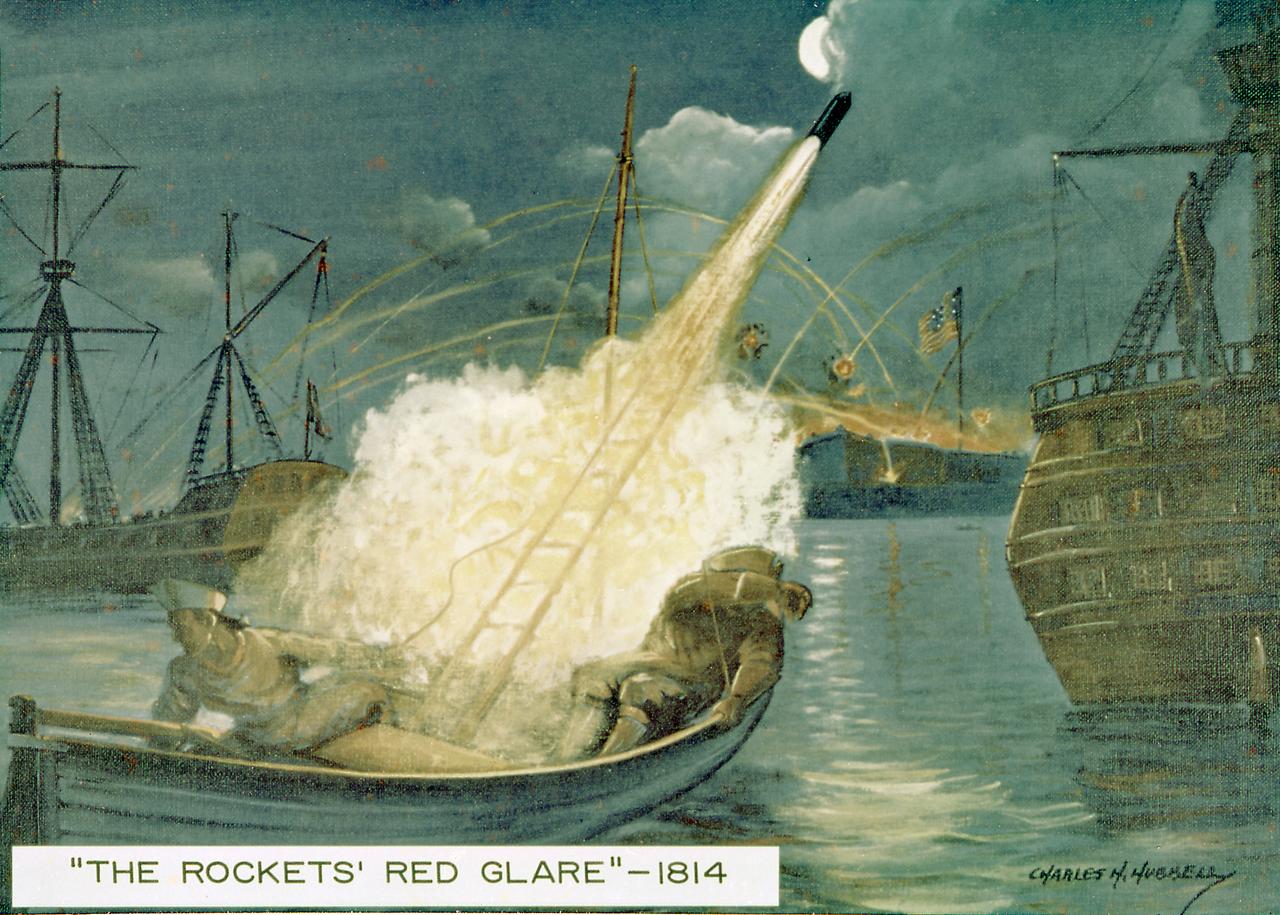
The British fired Congreve rockets against the United States in the War of 1812. As a result Francis Scott Key coined the phrase the "rocket's red glare." Congreve had used a 16-foot guide stick to help stabilize his rocket. William Hale, another British inventor, invented the stickless rocket in 1846. The U.S. Army used the Hale rocket more than 100 years ago in the war with Mexico. Rockets were also used to a limited extent by both sides in the American Civil War.
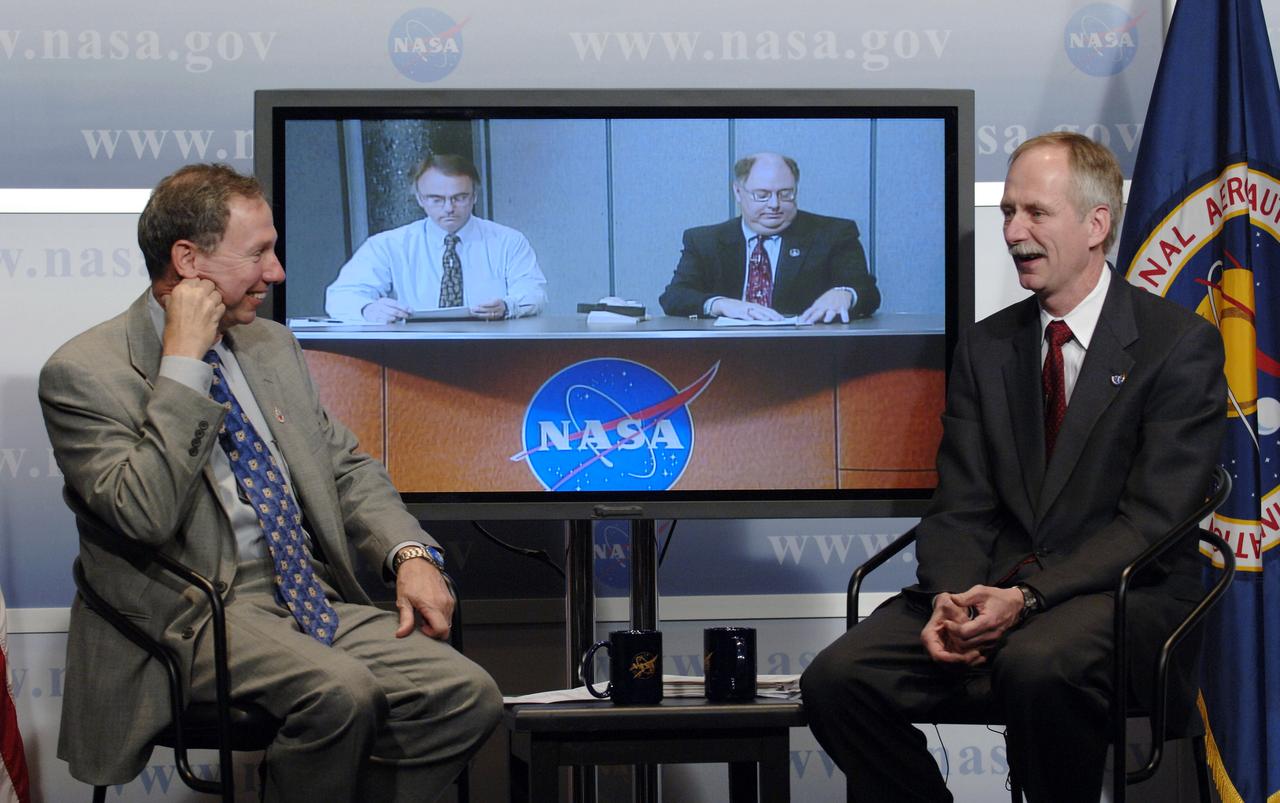
NASA Administrator Michael Griffin, left, and Associate Administrator for Space Operations William Gerstenmaier, right, smile as Space Shuttle Program Manager Wayne Hale, right on television screen, and Ken Welzyn, External Tank Chief Engineer, join in from NASA's Marshall Space Flight Center during a media briefing about the space shuttle program and processing for the STS-121 mission, Friday, April 28, 2006, at NASA Headquarters in Washington. Photo Credit (NASA/Bill Ingalls)
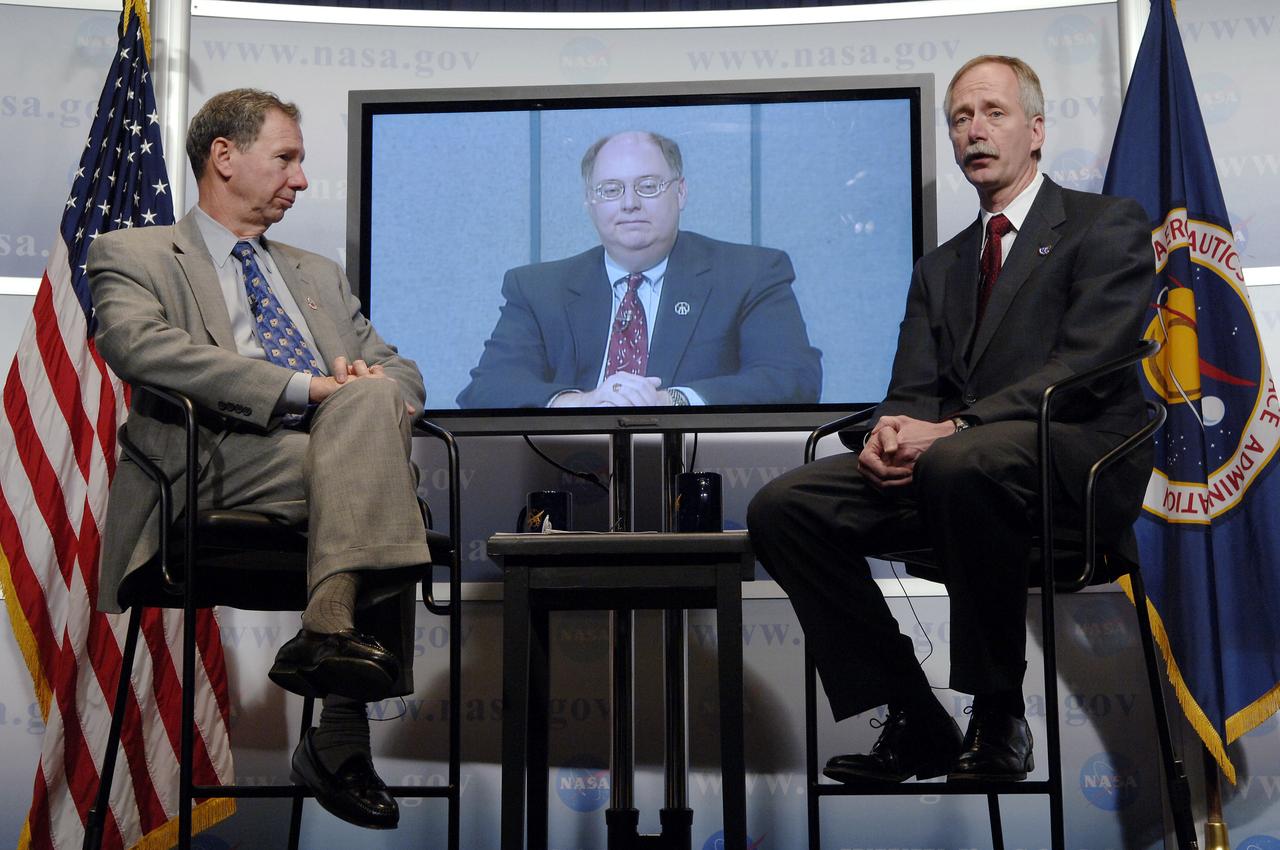
NASA Administrator Michael Griffin, left, looks on as Associate Administrator for Space Operations William Gerstenmaier, right, speaks while Space Shuttle Program Manager Wayne Hale of NASA's Marshall Space Flight Center waits by during a media briefing about the space shuttle program and processing for the STS-121 mission, Friday, April 28, 2006, at NASA Headquarters in Washington. Photo Credit (NASA/Bill Ingalls)
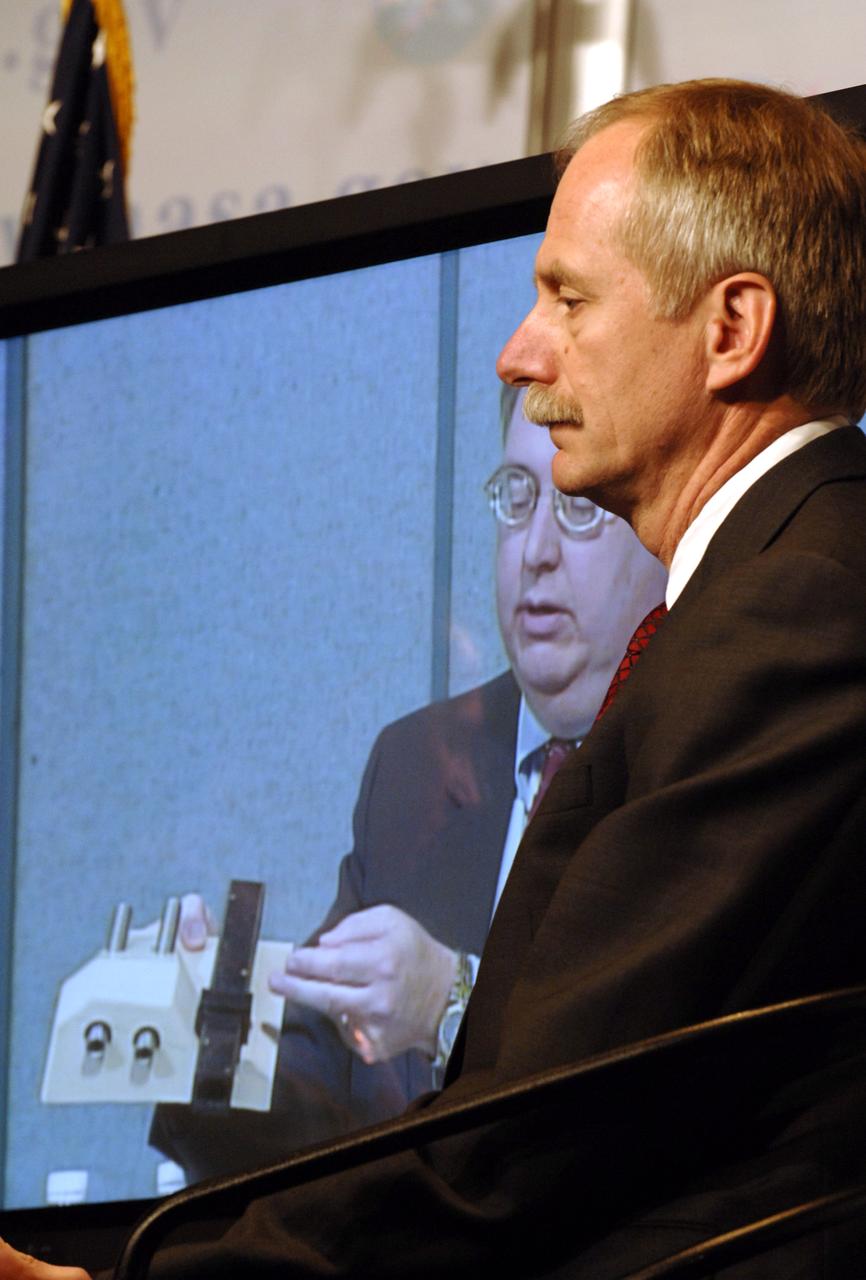
NASA Associate Administrator for Space Operations William Gerstenmaier, right, look on as Space Shuttle Program Manager Wayne Hale speaks from NASA's Marshall Space Flight Center during a media briefing about the space shuttle program and processing for the STS-121 mission, Friday, April 28, 2006, at NASA Headquarters in Washington. Photo Credit (NASA/Bill Ingalls)
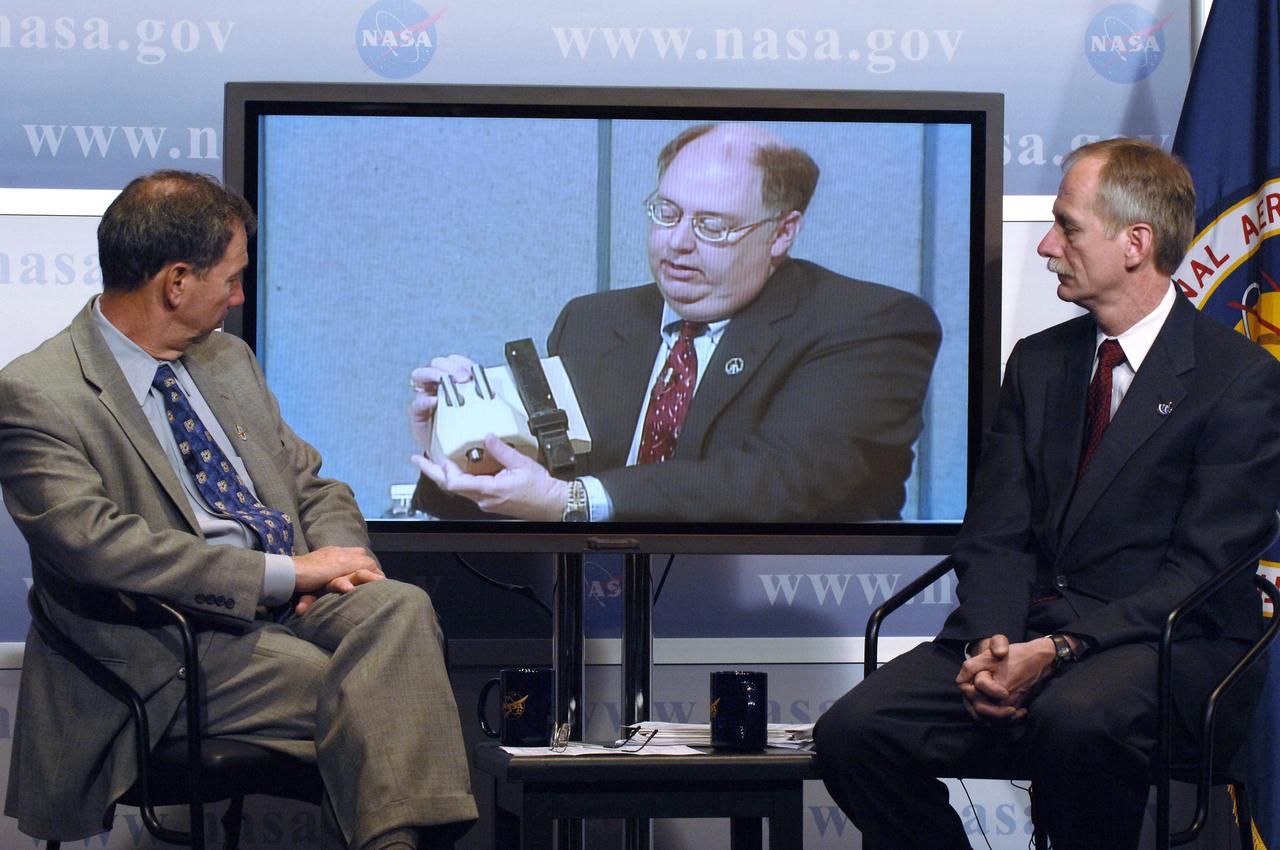
NASA Administrator Michael Griffin, left, and Associate Administrator for Space Operations William Gerstenmaier, right, look on as Space Shuttle Program Manager Wayne Hale talks from NASA's Marshall Space Flight Center about the space shuttle's ice frost ramps during a media briefing about the space shuttle program and processing for the STS-121 mission, Friday, April 28, 2006, at NASA Headquarters in Washington. Photo Credit (NASA/Bill Ingalls)
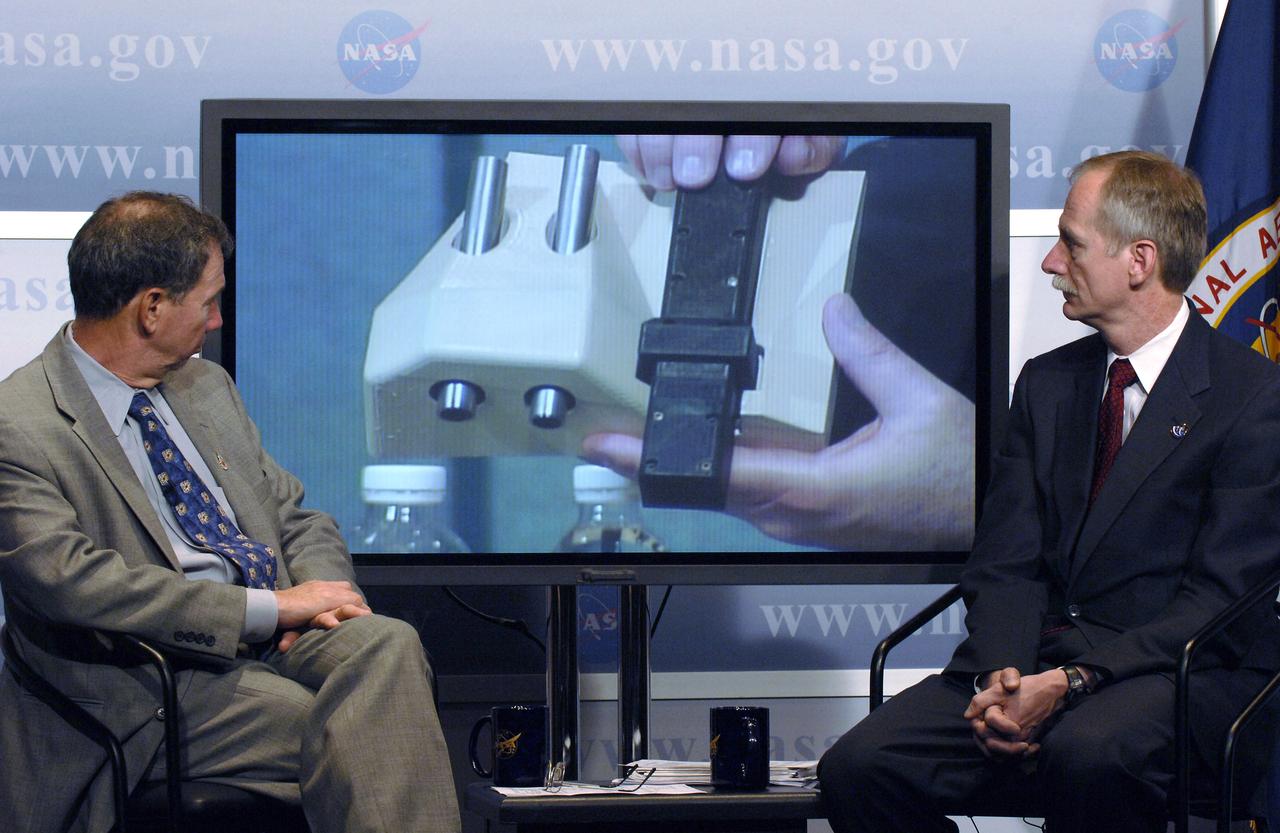
NASA Administrator Michael Griffin, left, and Associate Administrator for Space Operations William Gerstenmaier, right, look on as Space Shuttle Program Manager Wayne Hale from NASA's Marshall Space Flight Center, holds a test configuration of an ice frost ramp during a media briefing about the space shuttle program and processing for the STS-121 mission, Friday, April 28, 2006, at NASA Headquarters in Washington. Photo Credit (NASA/Bill Ingalls)
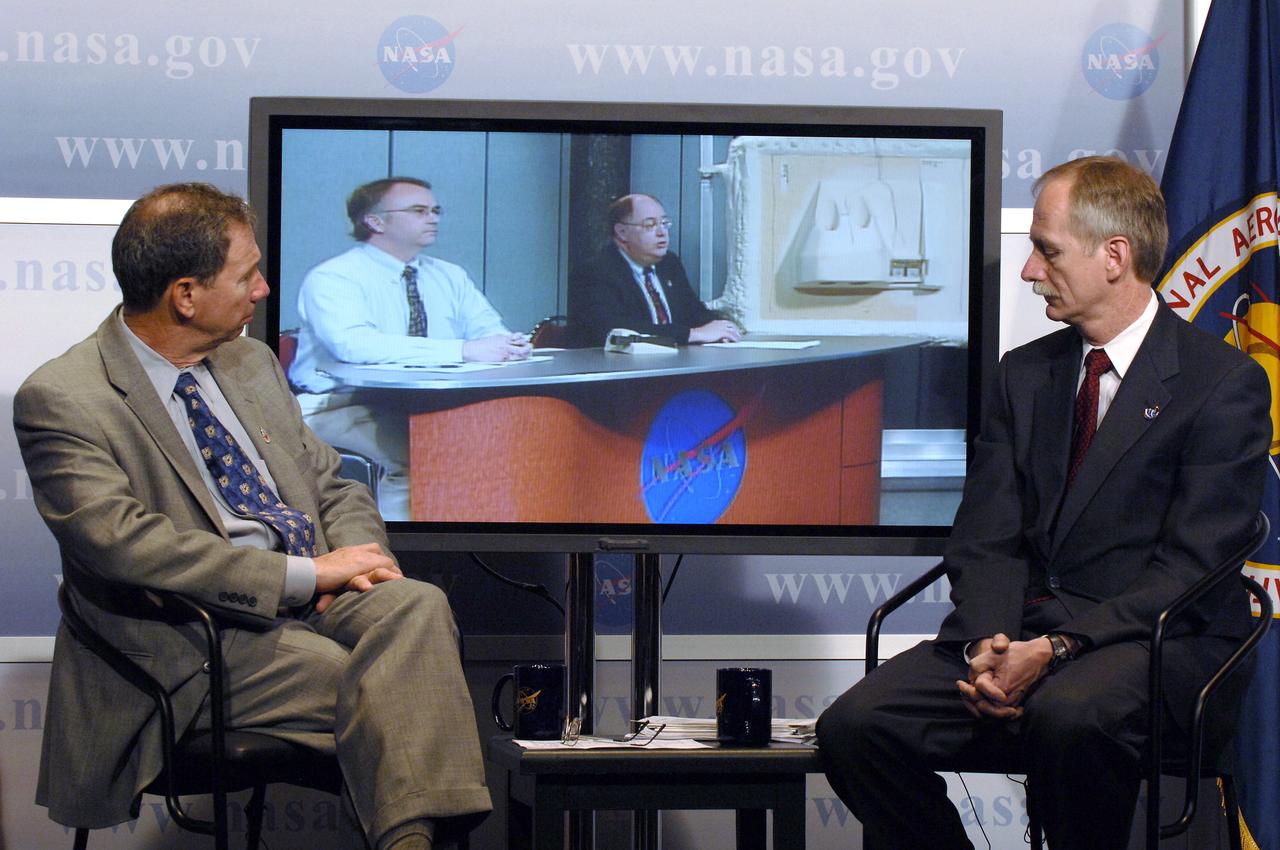
NASA Administrator Michael Griffin, left, and Associate Administrator for Space Operations William Gerstenmaier, right, look on as Space Shuttle Program Manager Wayne Hale speaks from NASA's Marshall Space Flight Center during a media briefing about the space shuttle program and processing for the STS-121 mission, Friday, April 28, 2006, at NASA Headquarters in Washington. At left on screen is Ken Welzyn, External Tank Chief Engineer. Photo Credit (NASA/Bill Ingalls)
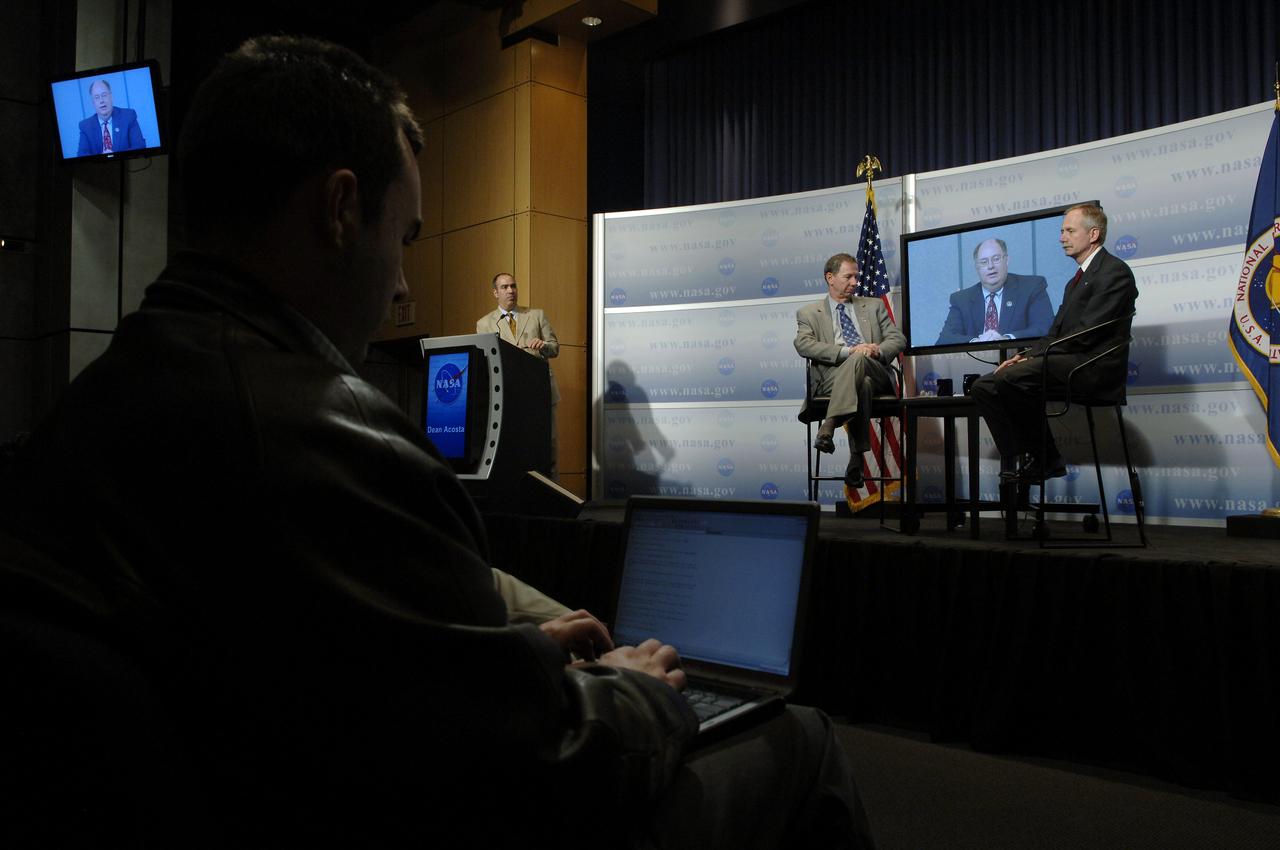
NASA Administrator Michael Griffin, second from left, and Associate Administrator for Space Operations William Gerstenmaier, right, look on as Space Shuttle Program Manager Wayne Hale speaks from NASA's Marshall Space Flight Center during a media briefing about the space shuttle program and processing for the STS-121 mission, Friday, April 28, 2006, at NASA Headquarters in Washington. Moderator Dean Acosta looks on af far left. Photo Credit (NASA/Bill Ingalls)
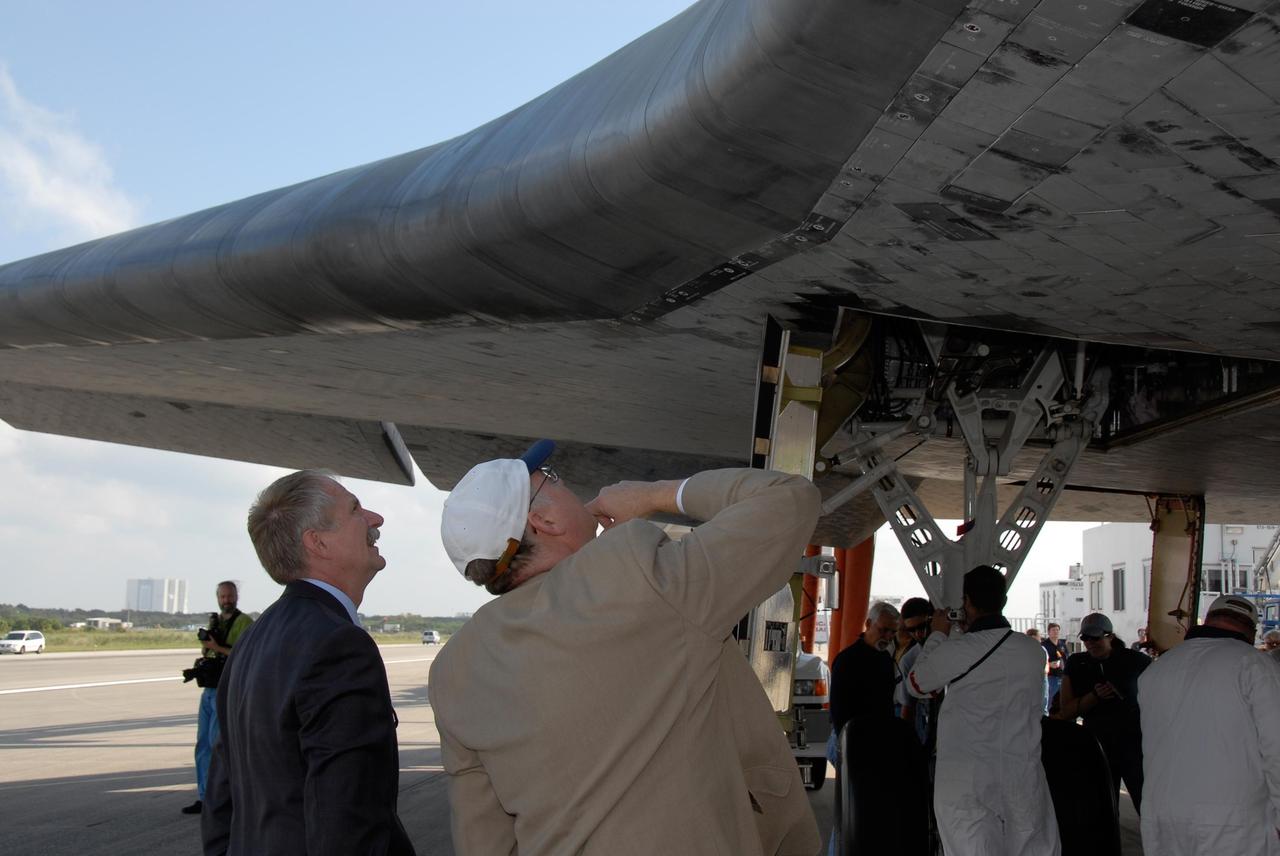
KENNEDY SPACE CENTER, FLA. -- Associate Administrator for NASA Space Operations William Gerstenmaier and Shuttle Program Manager Wayne Hale examine the thermal protection system on the wing of space shuttle Discovery after its landing at NASA's Kennedy Space Center. Discovery completed the 15-day mission STS-120, with an on-time landing at 1:01:16 p.m. Wheel stop was at 1:02:07 p.m. Mission elapsed time was 15 days, 2 hours, 24 minutes and 2 seconds. Mission STS-120 continued the construction of the station with the installation of the Harmony Node 2 module and the relocation of the P6 truss. Photo credit: NASA//Kim Shiflett
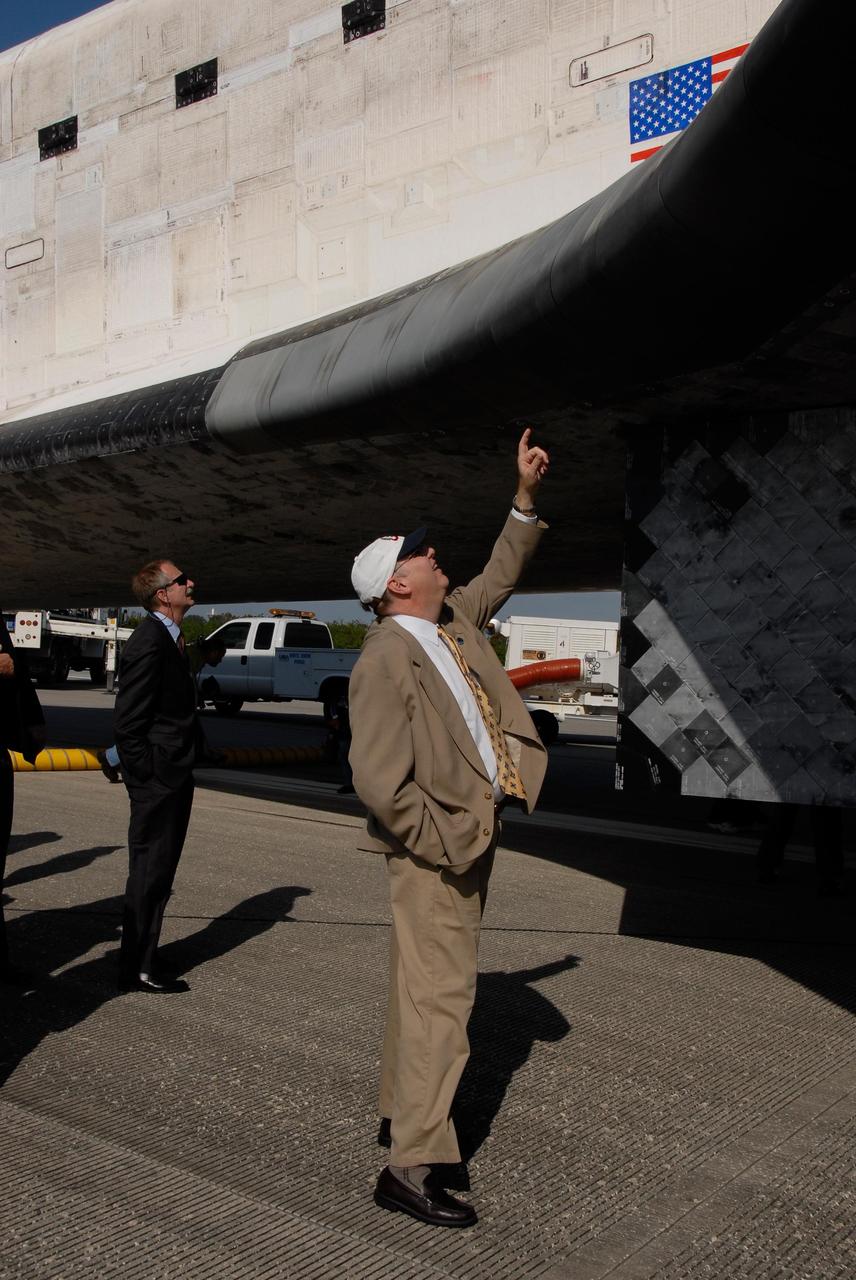
KENNEDY SPACE CENTER, FLA. -- Shuttle Program Manager Wayne Hale points to the left wing of space shuttle Discovery after its landing at NASA's Kennedy Space Center. To the left is Associate Administrator for NASA Space Operations William Gerstenmaier. Discovery completed the 15-day mission STS-120, with an on-time landing at 1:01:16 p.m. Wheel stop was at 1:02:07 p.m. Mission elapsed time was 15 days, 2 hours, 24 minutes and 2 seconds. Mission STS-120 continued the construction of the station with the installation of the Harmony Node 2 module and the relocation of the P6 truss. Photo credit: NASA/Kim Shiflett
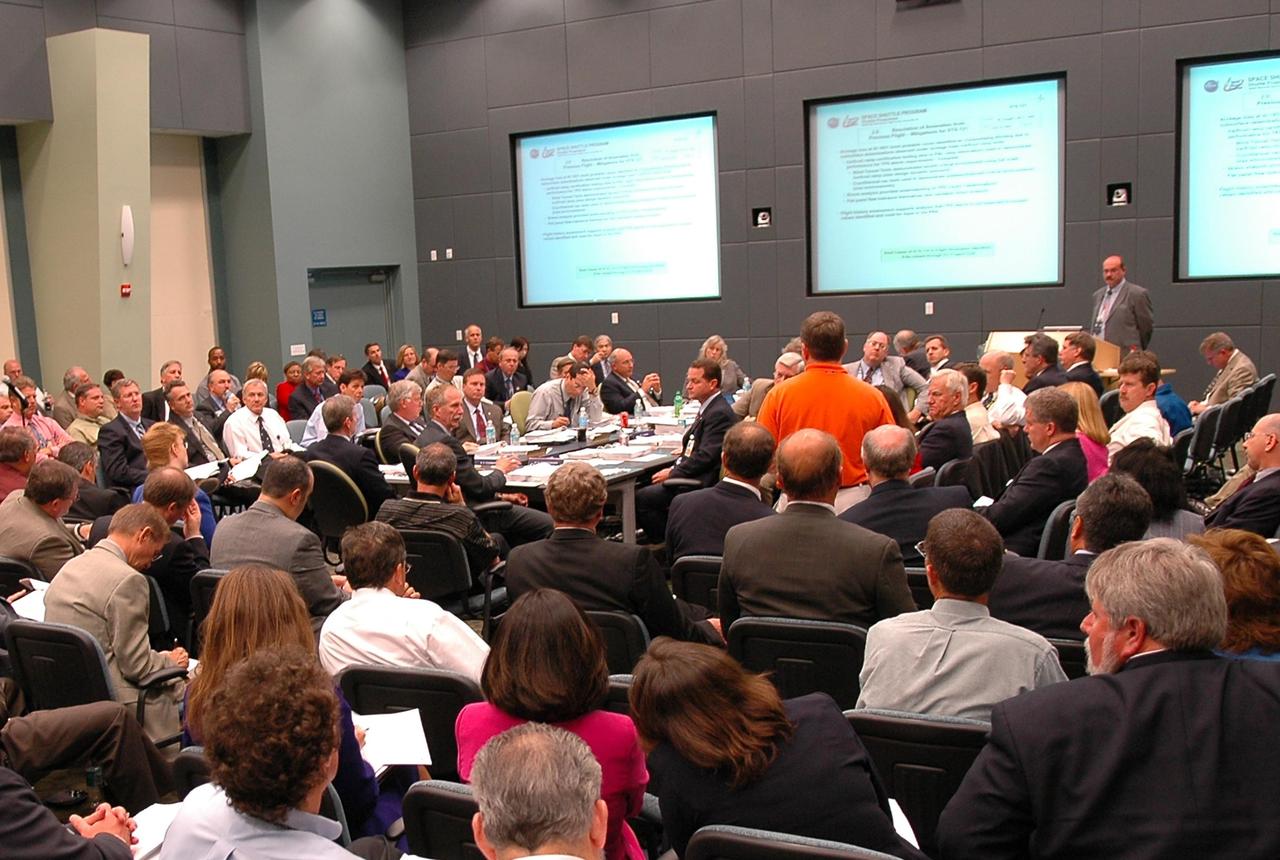
KENNEDY SPACE CENTER, FLA. - Space Shuttle Program and mission managers meet for the traditional Flight Readiness Review, a thorough assessment of preparations for the mission. Among those seated at the table on the left are Center Director Jim Kennedy, Associate Administrator for Space Operations William Gerstenmaier and Marshall Space Flight Center Director Dave King. Shuttle Program Manager Wayne Hale is seated under the center screen on the back wall. Also attending is NASA Administrator Mike Griffin. The June 16-17 meeting is designed to produce a number of key decisions about Discovery's mission, STS-121, including selection of an official launch date. Photo credit: NASA/Kim Shiflett
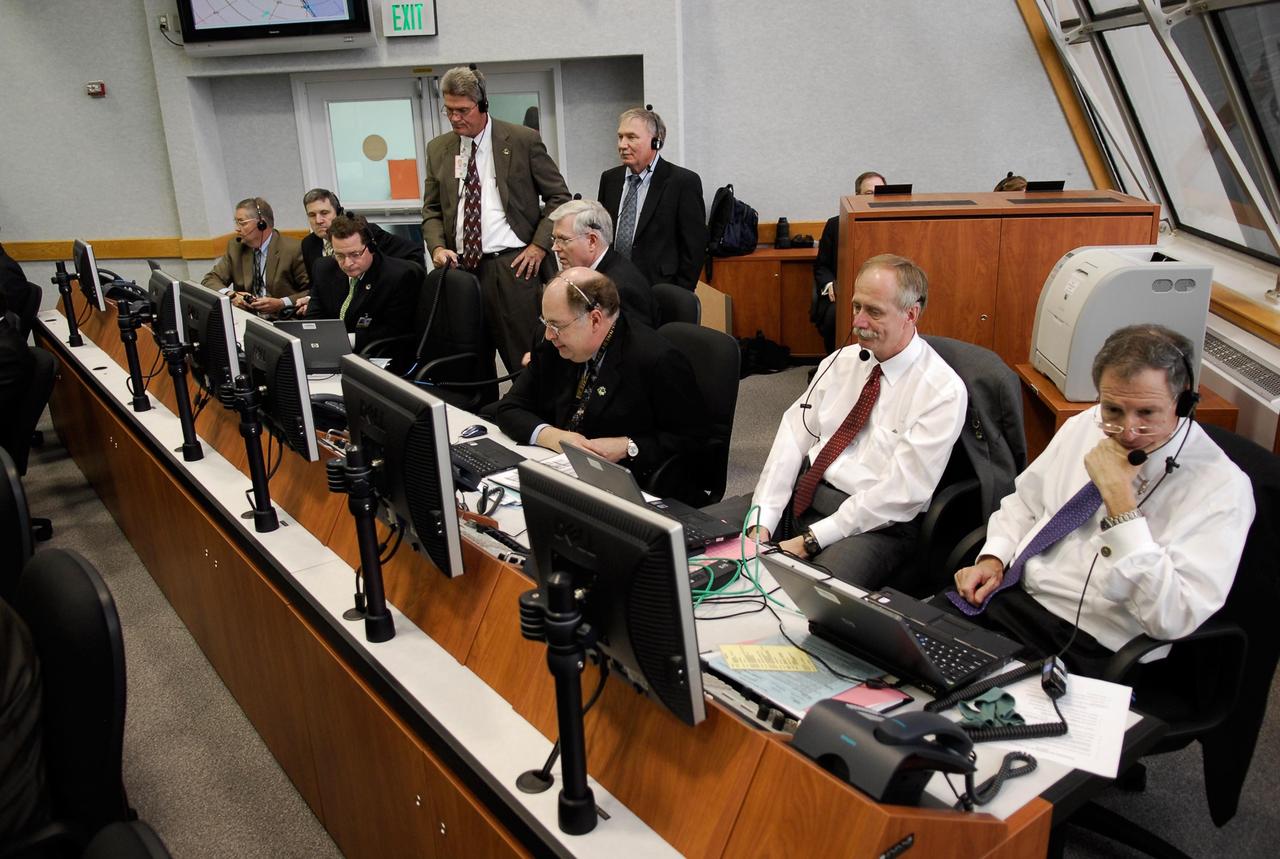
KENNEDY SPACE CENTER, FLA. -- Inside the Launch Control Center at NASA's Kennedy Space Center, NASA management watches and waits for the launch of space shuttle Atlantis on the STS-122 mission to the International Space Station. From right are NASA Administrator Mike Griffin, Associate Administrator for NASA Space Operations William H. Gerstenmaier, Shuttle Program Manager Wayne Hale. Standing on the left is Center Director Bill Parsons. The launch is the third attempt for Atlantis since December 2007 to carry the European Space Agency's Columbus laboratory to the International Space Station. During the 11-day mission, the crew's prime objective is to attach the laboratory to the Harmony module, adding to the station's size and capabilities. Photo credit: NASA/Kim Shiflett
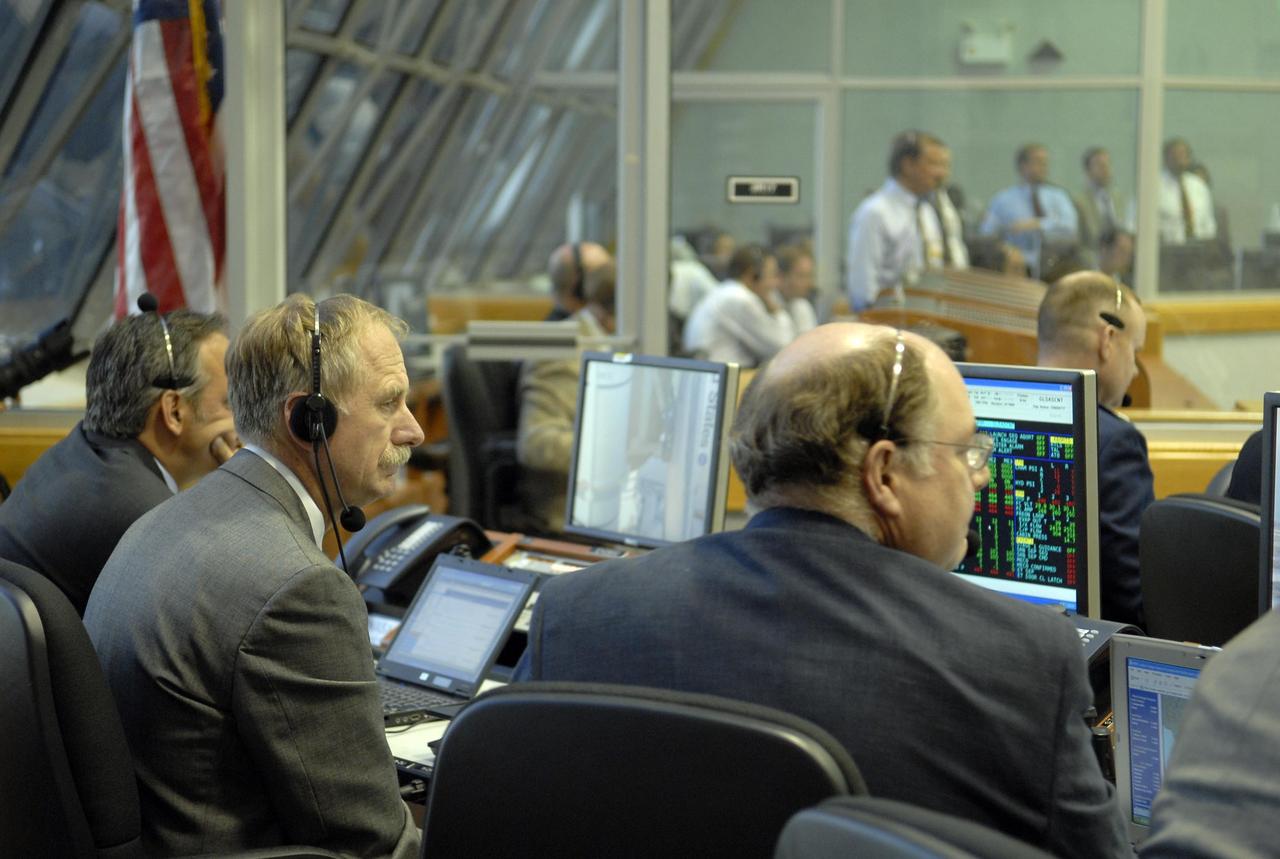
KENNEDY SPACE CENTER, FLA. -- In the Launch Control Center, William Gerstenmeier (left), associate administrator for NASA Space Operations Mission, and Wayne Hale, shuttle program manager, monitor proceedings before the launch of Space Shuttle Atlantis on mission STS-117 to the International Space Station. Liftoff from Launch Pad 39A was on-time at 7:38:04 p.m. EDT. The shuttle is delivering a new segment to the starboard side of the International Space Station's backbone, known as the truss. Three spacewalks are planned to install the S3/S4 truss segment, deploy a set of solar arrays and prepare them for operation. STS-117 is the 118th space shuttle flight, the 21st flight to the station, the 28th flight for Atlantis and the first of four flights planned for 2007. Photo credit: NASA/Kim Shiflett
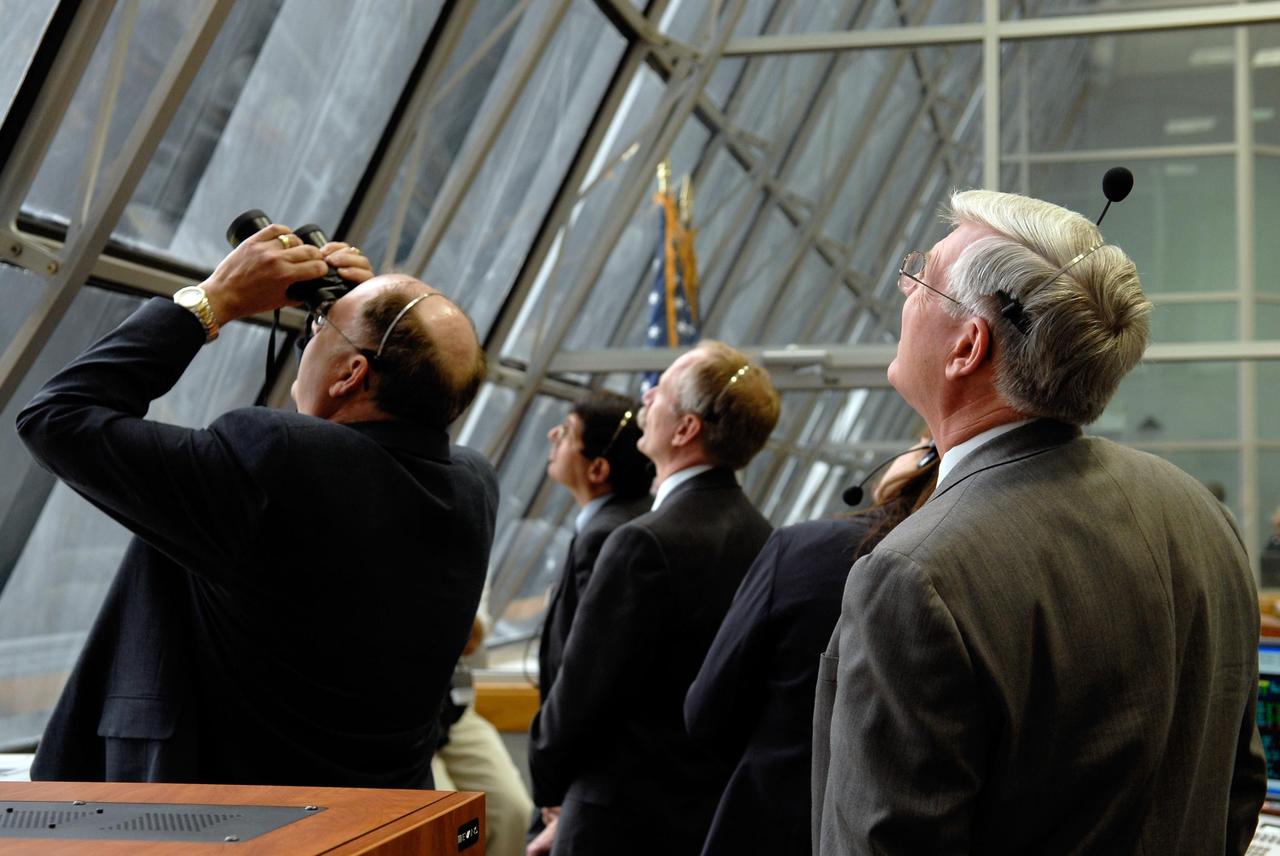
KENNEDY SPACE CENTER, FLA. -- In the firing room of the Launch Control Center at NASA's Kennedy Space Center, all eyes are on the successful launch of space shuttle Discovery on mission STS-120. From left are Space Shuttle Program Manager Wayne Hale, Associate Administrator for NASA Space Operations William Gerstenmaier, NASA Flow Director Stephanie Stilson and Johnson Space Center Director Michael Coats. Liftoff was on time at 11:38:19 a.m. EDT. Liftoff was on time at 11:38:19 a.m. EDT. Discovery carries the Italian-built U.S. Node 2, called Harmony. During the 14-day STS-120 mission, the crew will install Harmony and move the P6 solar arrays to their permanent position and deploy them. Discovery is expected to complete its mission and return home at 4:47 a.m. EST on Nov. 6. Photo credit: NASA/Kim Shiflett

KENNEDY SPACE CENTER, FLA. -- In the Launch Control Center, NASA and Kennedy Space Center officials observe proceedings before the launch of Space Shuttle Atlantis on mission STS-117 to the International Space Station. Second from left is KSC Director Bill Parsons. Second and third from the right are William Gerstenmeier, associate administrator for NASA Space Operations Mission, and Wayne Hale, shuttle program manager, Liftoff from Launch Pad 39A was on-time at 7:38:04 p.m. EDT. The shuttle is delivering a new segment to the starboard side of the International Space Station's backbone, known as the truss. Three spacewalks are planned to install the S3/S4 truss segment, deploy a set of solar arrays and prepare them for operation. STS-117 is the 118th space shuttle flight, the 21st flight to the station, the 28th flight for Atlantis and the first of four flights planned for 2007. Photo credit: NASA/Kim Shiflett
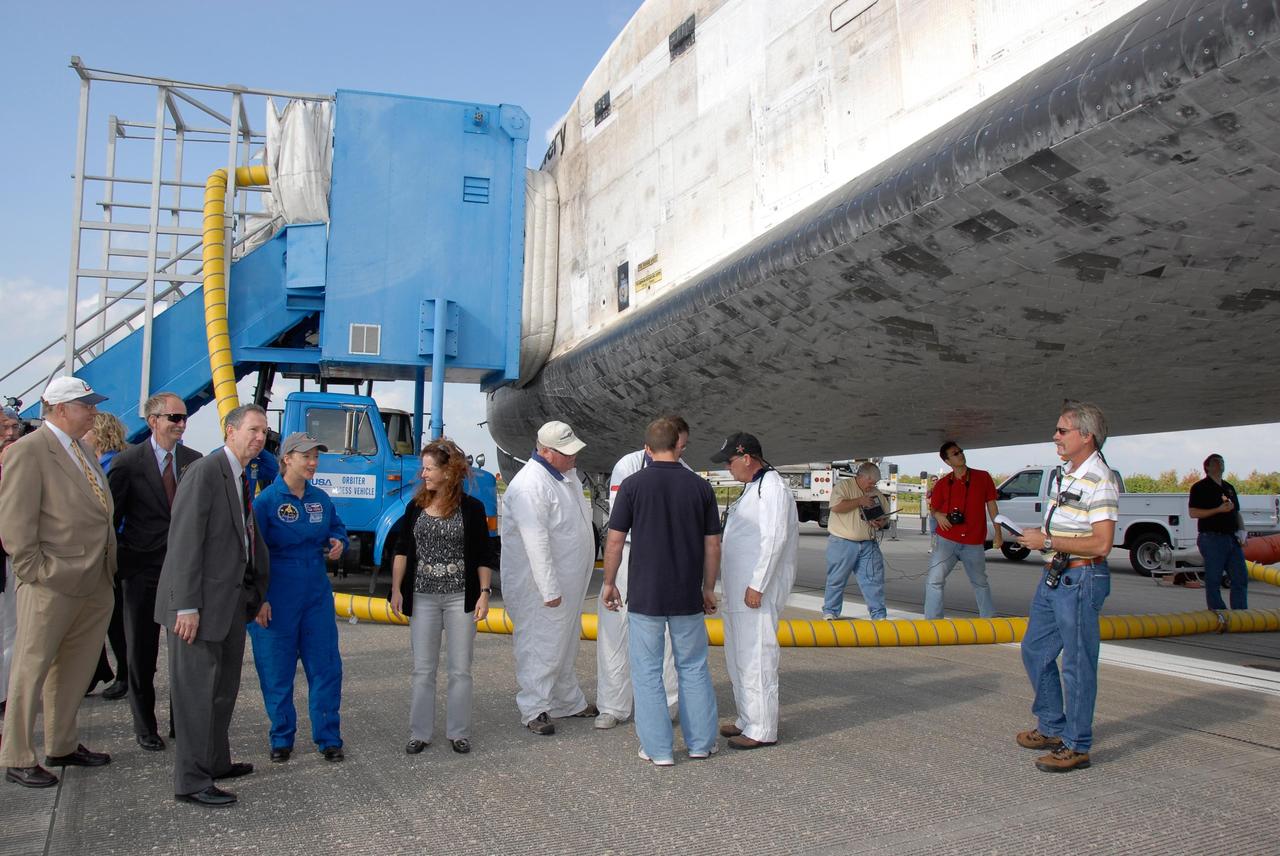
KENNEDY SPACE CENTER, FLA. -- At center, STS-120 Commander Pamela Melroy begins a checkout of space shuttle Discovery. With her are, from left, Shuttle Program Manager Wayne Hale, Associate Administrator for NASA Space Operations William Gerstenmaier and NASA Administrator Mike Griffin. On the right is Rebecca Griffin, wife of the administrator. Melroy and the Discovery crew completed the 15-day mission STS-120, with an on-time landing at 1:01:16 p.m. Wheel stop was at 1:02:07 p.m. Mission elapsed time was 15 days, 2 hours, 24 minutes and 2 seconds. Mission STS-120 continued the construction of the station with the installation of the Harmony Node 2 module and the relocation of the P6 truss. Photo credit: NASA/Kim Shiflett
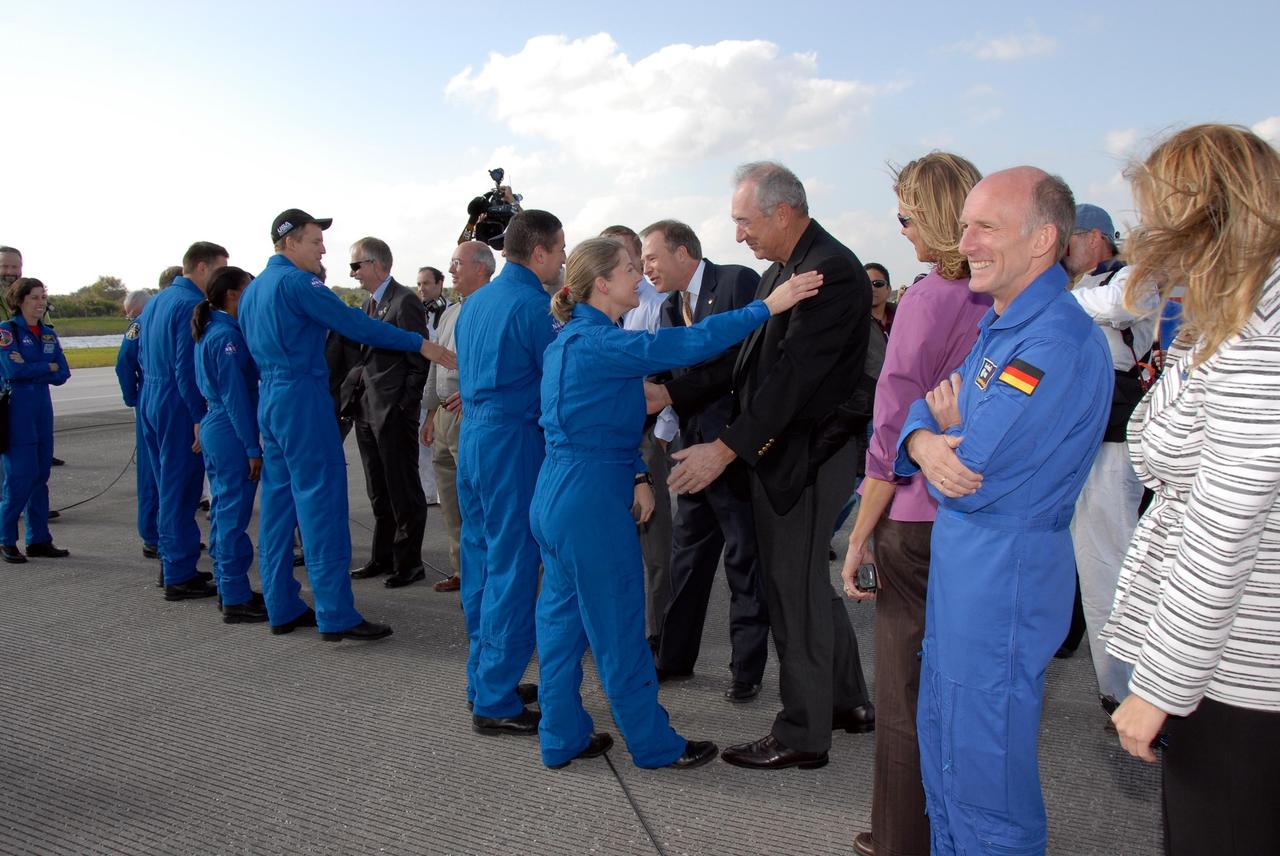
KENNEDY SPACE CENTER, FLA. -- The STS-120 crew members are greeted by NASA and Kennedy VIPs after completing their successful mission. From left are STS-120 mission specialists Doug Wheelock, Stephanie Wilson and Scott Parazynski, Pilot George Zamka and Commander Pamela Melroy. The NASA VIPs include NASA Administrator Mike Griffin, Associate Administrator for NASA Space Operations William Gerstenmaier and Shuttle Program Manager Wayne Hale. The lineup also includes Shuttle Launch Director Mike Leinbach. Melroy and the Discovery crew completed the 15-day mission STS-120, with an on-time landing at 1:01:16 p.m. Wheel stop was at 1:02:07 p.m. Mission elapsed time was 15 days, 2 hours, 24 minutes and 2 seconds. Mission elapsed time was 15 days, 2 hours, 24 minutes and 2 seconds. Mission STS-120 continued the construction of the station with the installation of the Harmony Node 2 module and the relocation of the P6 truss. Photo credit: NASA/Kim Shiflett