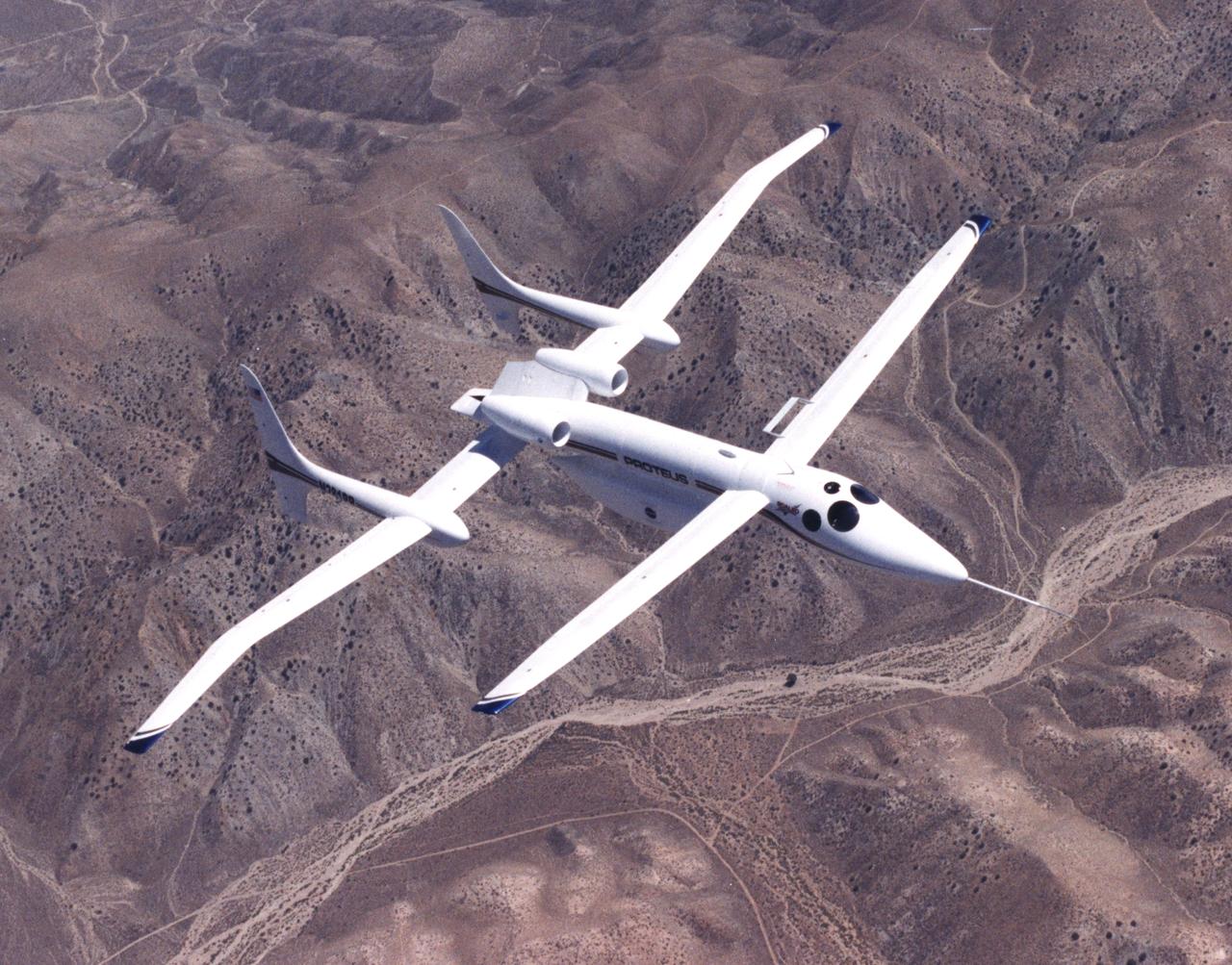
The unusual design of the Proteus high-altitude aircraft, incorporating a gull-wing shape for its main wing and a long, slender forward canard, is clearly visible in this view of the aircraft in flight over the Mojave Desert in California.
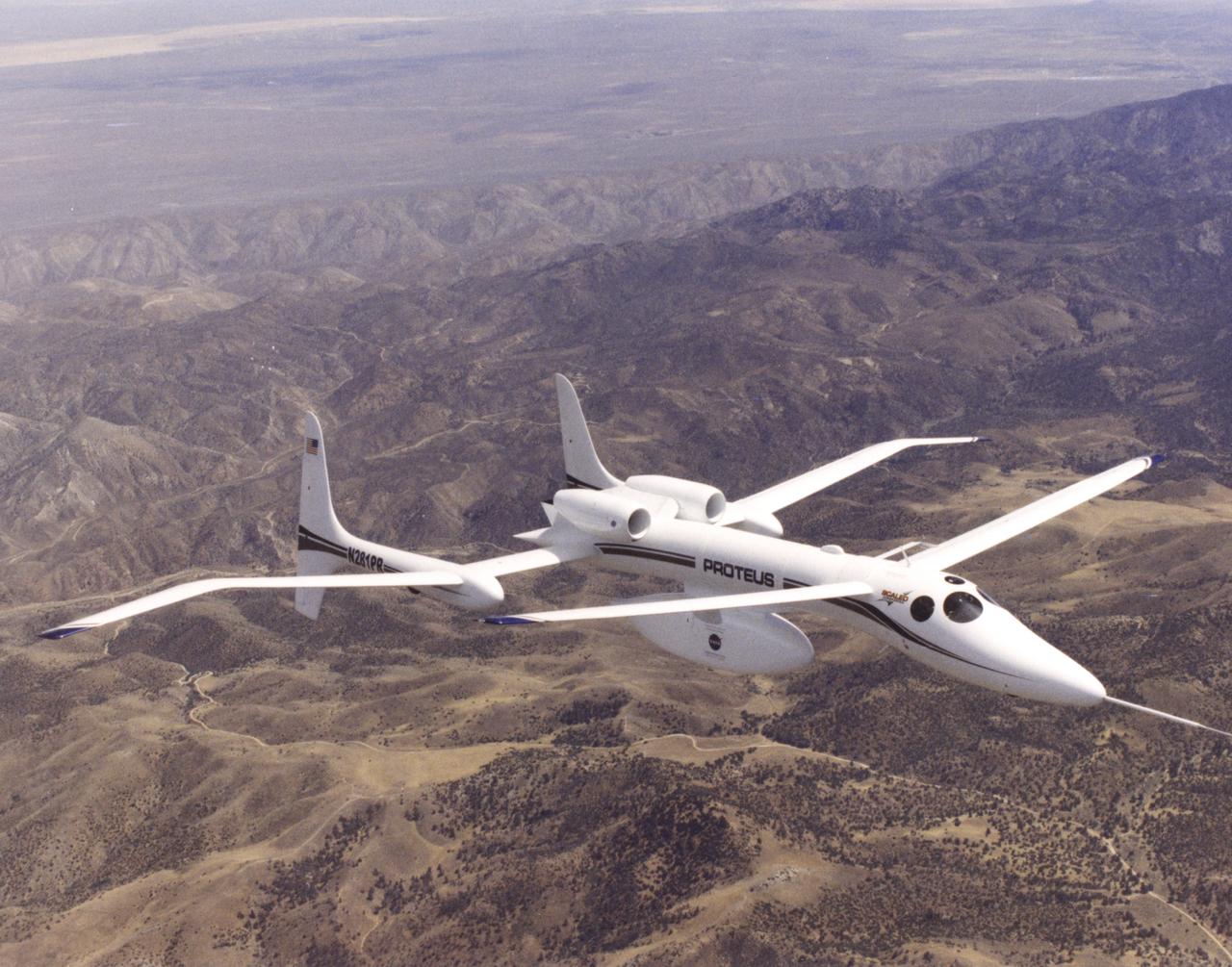
The unusual design of the Proteus high-altitude aircraft, incorporating a gull-wing shape for its main wing and a long, slender forward canard, is clearly visible in this view of the aircraft in flight over the Mojave Desert in California.
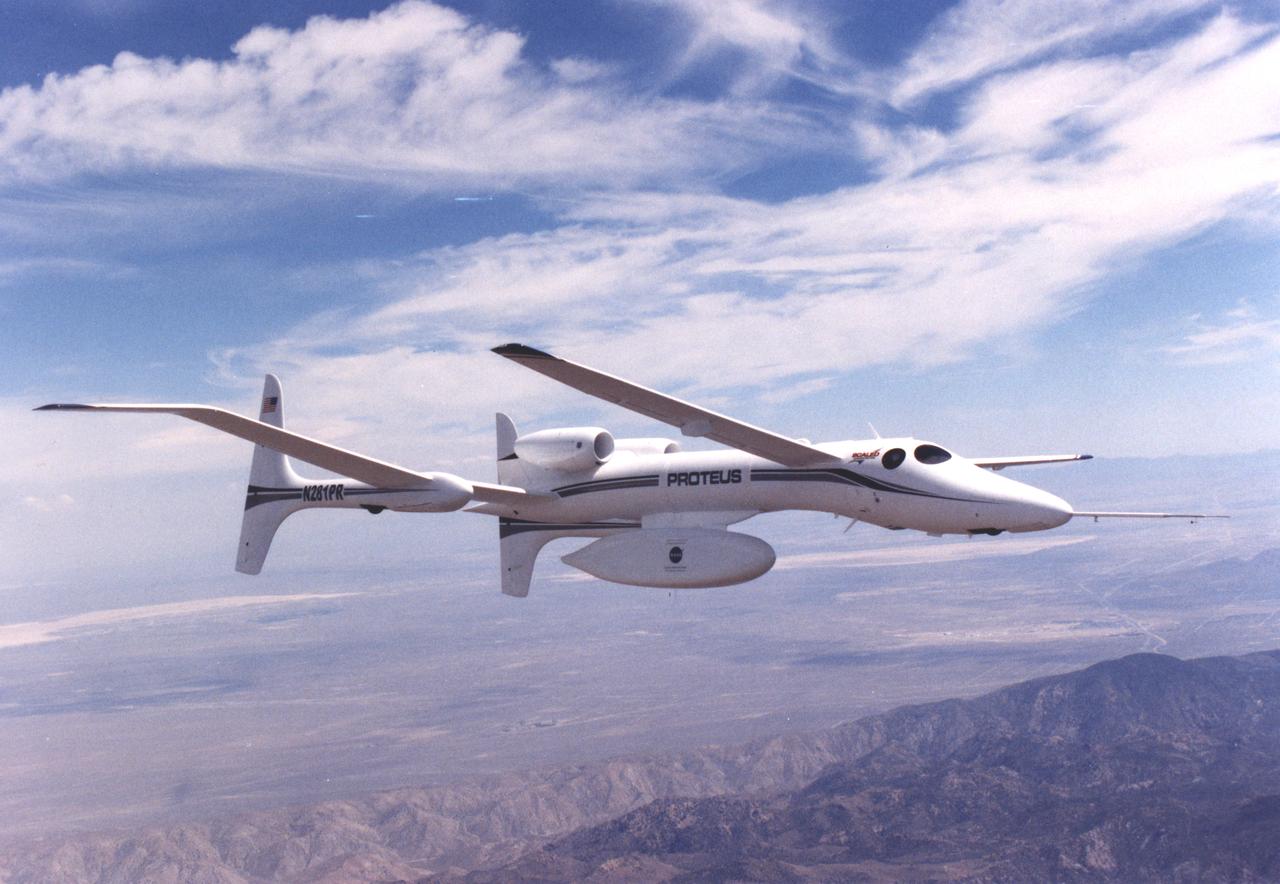
The uniquely shaped Proteus high-altitude aircraft soars over California’s Mojave Desert during a July 1999 flight.
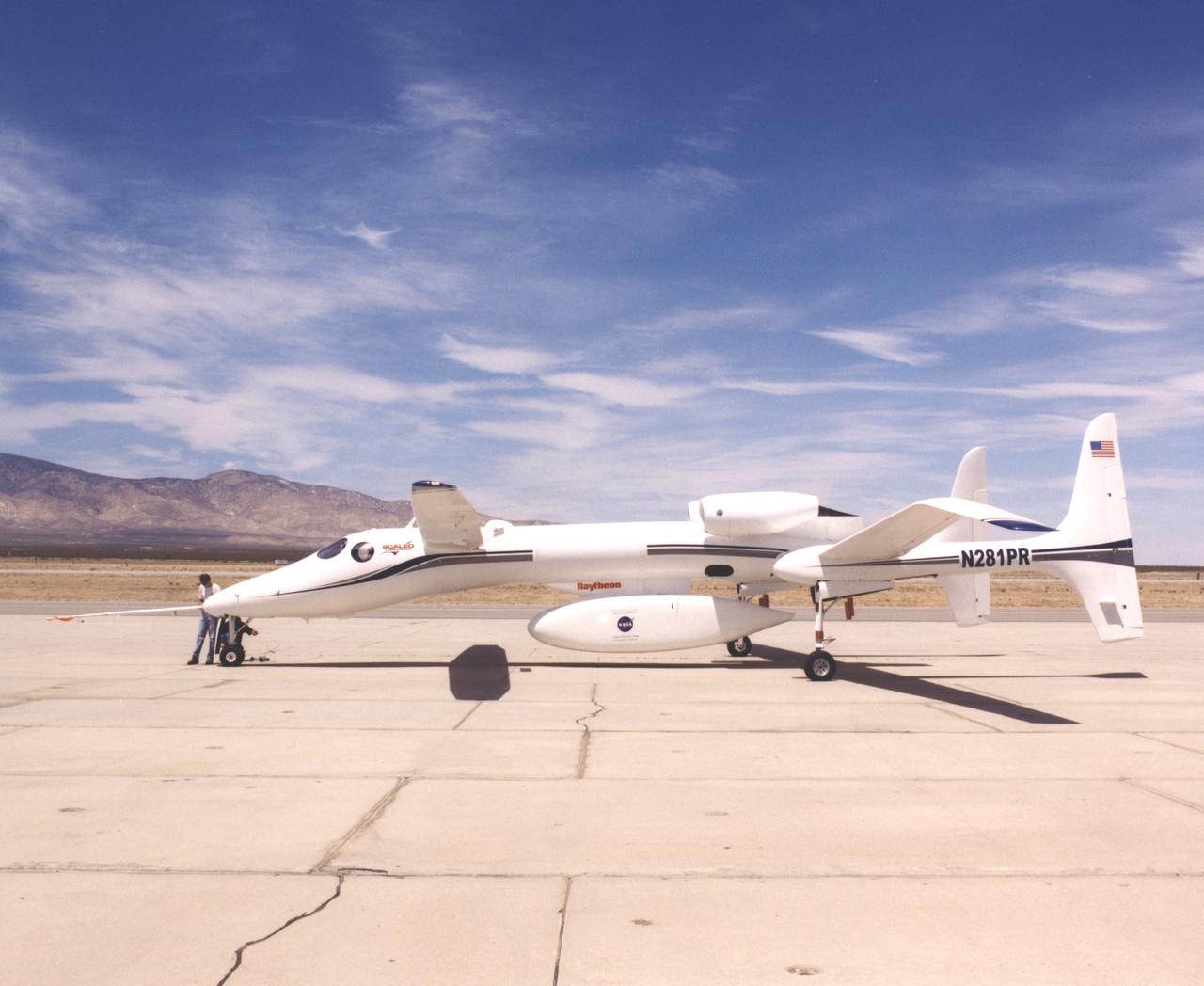
The Proteus high-altitude aircraft on the ramp at the Mojave Airport in Mojave, California.
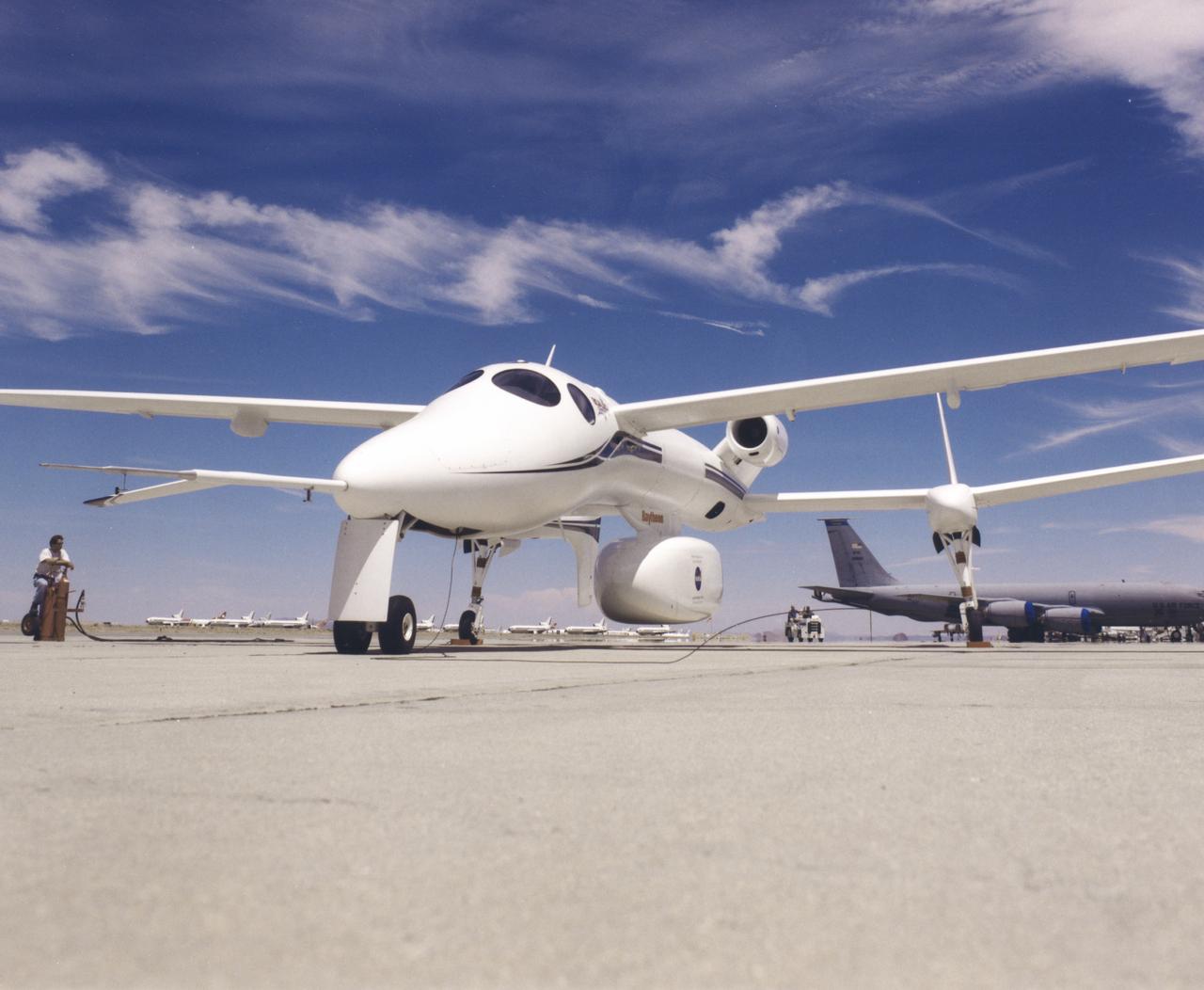
A frontal view of the Proteus high-altitude aircraft on the ramp at the Mojave Airport in Mojave, California in July 1999.
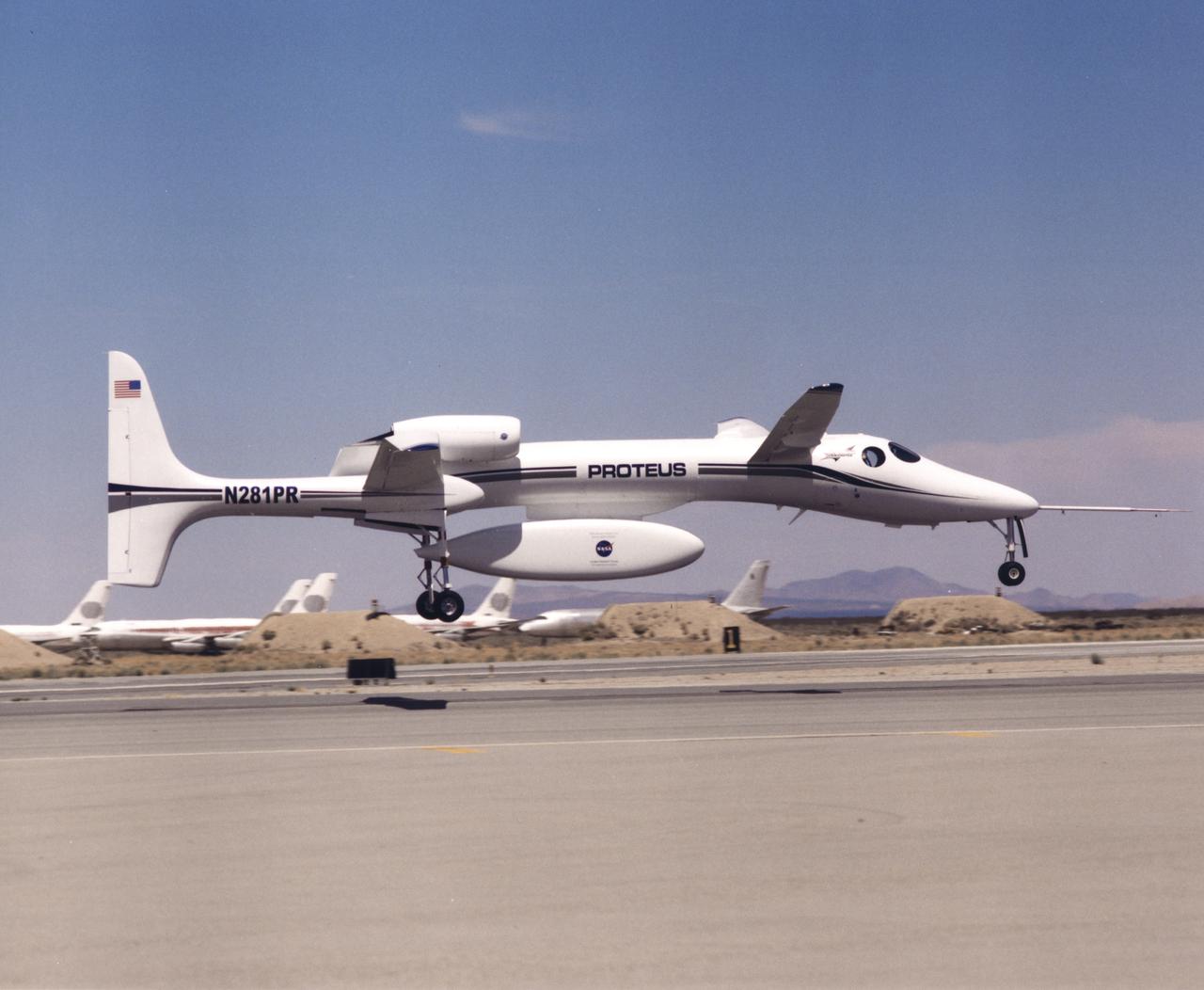
The uniquely-shaped Proteus high-altitude research aircraft lifts off from the runway at the Mojave Airport in Mojave, California.
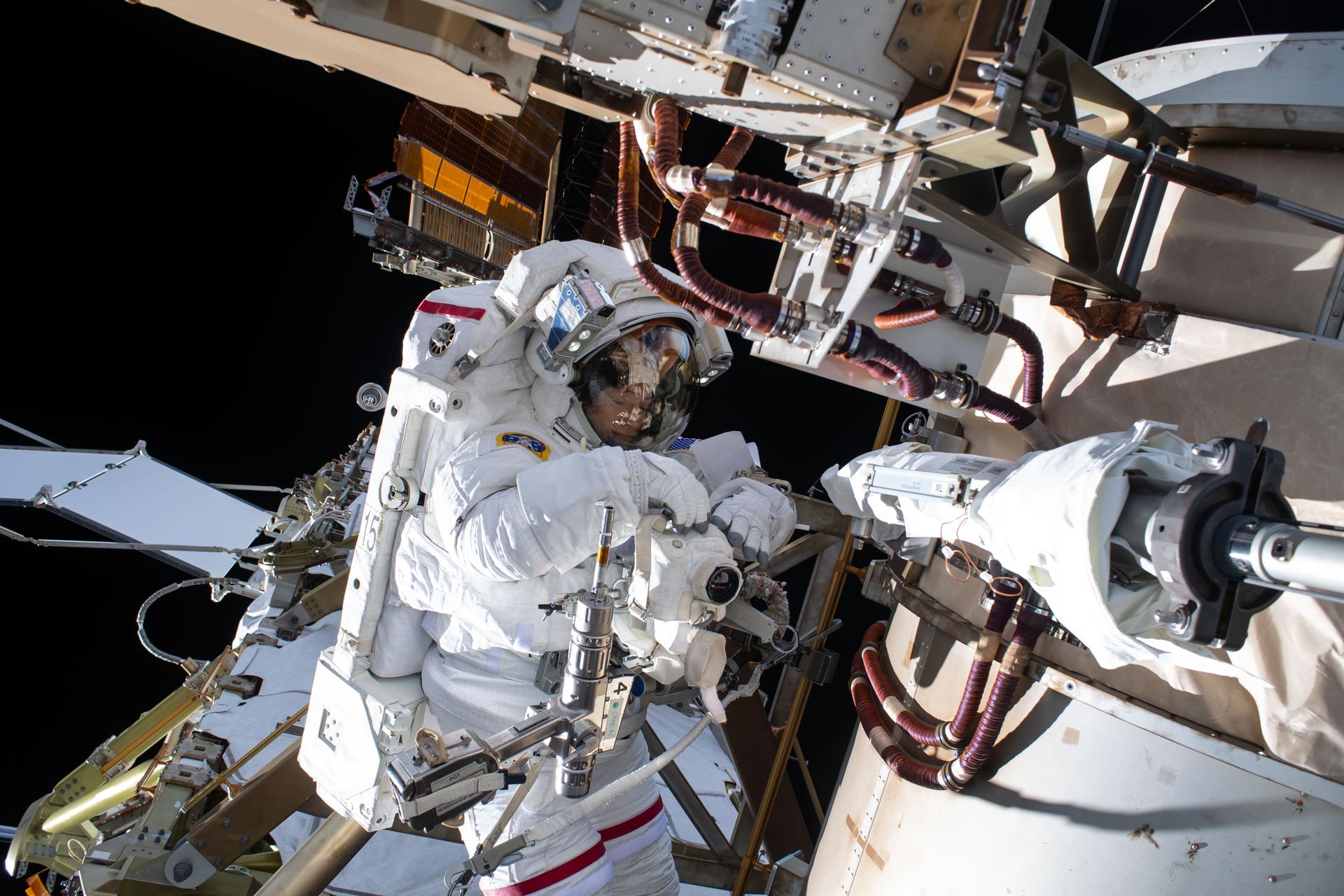
iss074e0403089 (March 18, 2026) -- NASA astronaut Jessica Meir installs a roll-out solar array modification kit to the exterior of the International Space Station during the 278th spacewalk in support of space station maintenance, assembly, and upgrades on March 18, 2026. Credit: NASA/Chris Williams
iss074e0403089 (March 18, 2026) -- NASA astronaut Jessica Meir installs a roll-out solar array modification kit to the exterior of the International Space Station during the 278th spacewalk in support of space station maintenance, assembly, and upgrades on March 18, 2026. Credit: NASA/Chris Williams
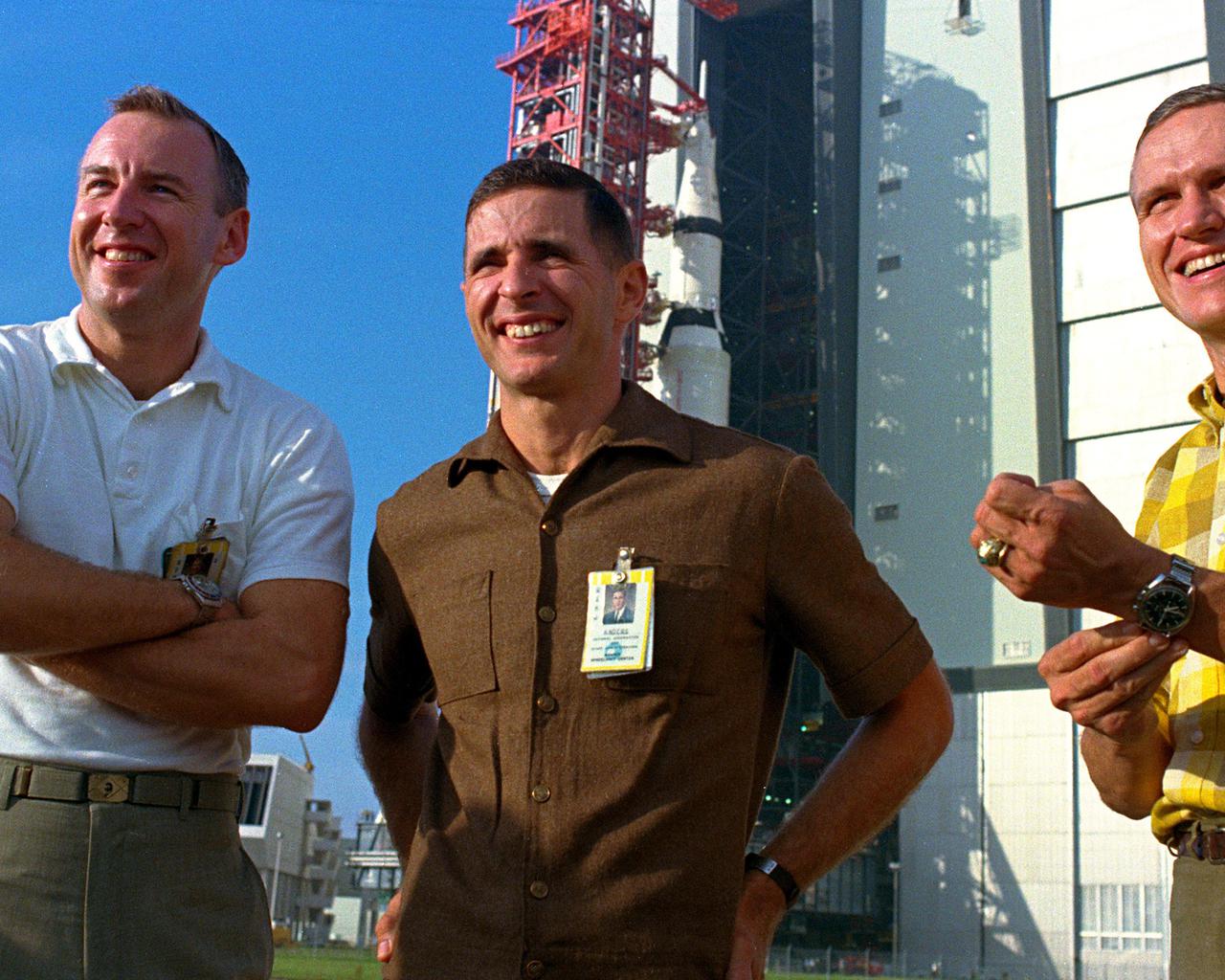
KENNEDY SPACE CENTER, FLA. - The 363-foot-high Apollo Saturn V space vehicle dwarfs the Apollo 8 Astronauts Frank Borman, James Lovell, and William Anders, during the roll out today of the space vehicle from the Vehicle Assembly Building (VAB) to Launch Pad 39A. .

iss074e0404896 (March 18, 2026) -- NASA astronauts Chris Williams (left) and Jessica Meir (right) are pictured installing a roll-out solar array modification kit to the International Space Station during a seven-hour, two-minute spacewalk on March 18, 2026. Credit: NASA
 --- The drag chute on the Space Shuttle Discovery is deployed as the vehicle rolls toward mission completion at Edwards Air Force Base in the Mojave Desert of California. Onboard were astronauts Brian Duffy, Pamela A. Melroy, Leroy Chiao, William S. McArthur, Jr., Peter J.K. (Jeff) Wisoff, Michael E. Lopez-Alegria, and Koichi Wakata of Japan's National Space Development Agency (NASDA). Discovery touched down at 2 p.m. (PDT), October 24, and rolled to a stop on Edward's concrete runway at 2:0l, for a mission elapsed time of 12 days, 21 hours and 43 minutes.](https://images-assets.nasa.gov/image/sts092-s-022/sts092-s-022~medium.jpg)
STS092-S-022 [EC00-0311-3](24 OCTOBER 2000) --- The drag chute on the Space Shuttle Discovery is deployed as the vehicle rolls toward mission completion at Edwards Air Force Base in the Mojave Desert of California. Onboard were astronauts Brian Duffy, Pamela A. Melroy, Leroy Chiao, William S. McArthur, Jr., Peter J.K. (Jeff) Wisoff, Michael E. Lopez-Alegria, and Koichi Wakata of Japan's National Space Development Agency (NASDA). Discovery touched down at 2 p.m. (PDT), October 24, and rolled to a stop on Edward's concrete runway at 2:0l, for a mission elapsed time of 12 days, 21 hours and 43 minutes.
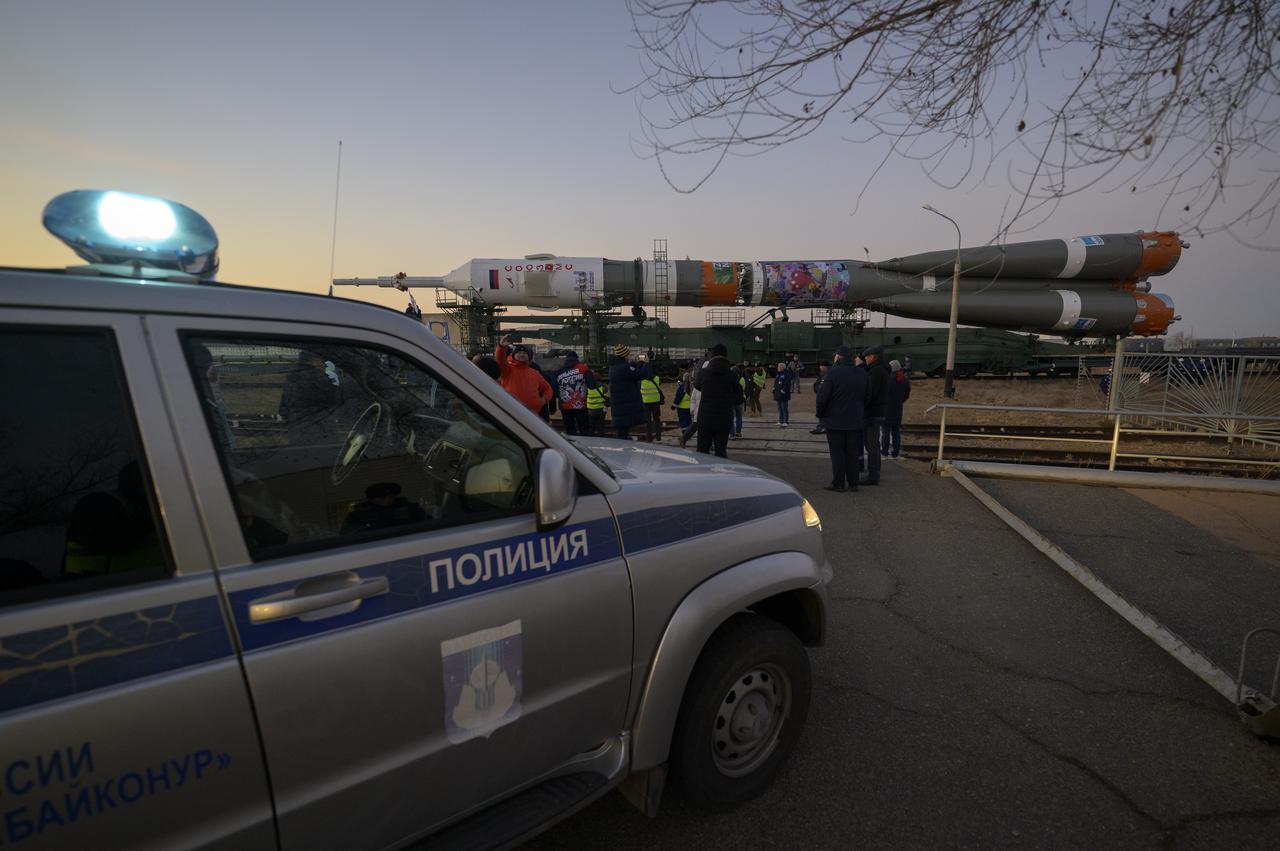
The Soyuz rocket is rolled out by train to the launch pad, Monday, Nov. 24, 2025, at Site 31 of the Baikonur Cosmodrome in Kazakhstan. Expedition 74 crewmembers: NASA astronaut Chris Williams, Roscosmos cosmonauts Sergey Kud-Sverchkov and Sergey Mikaev are scheduled to launch aboard their Soyuz MS-28 spacecraft on November 27. Photo Credit: (NASA/Bill Ingalls)
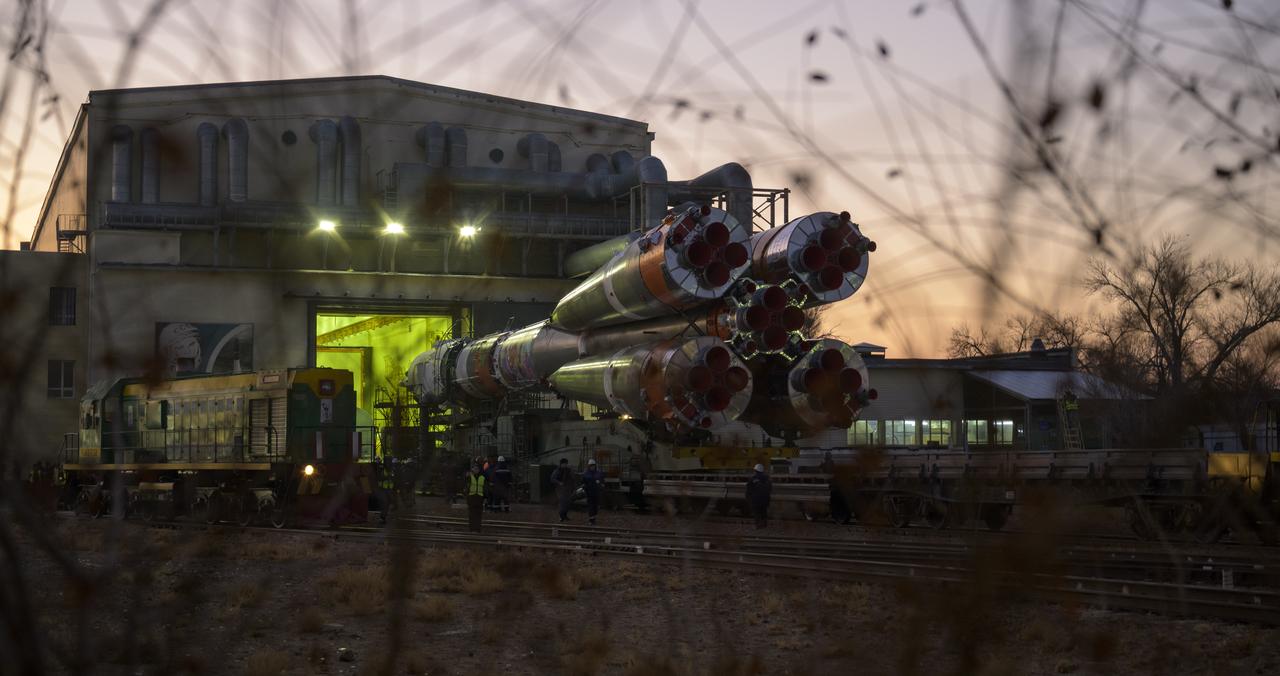
The Soyuz rocket is rolled out by train to the launch pad, Monday, Nov. 24, 2025, at Site 31 of the Baikonur Cosmodrome in Kazakhstan. Expedition 74 crewmembers: NASA astronaut Chris Williams, Roscosmos cosmonauts Sergey Kud-Sverchkov and Sergey Mikaev are scheduled to launch aboard their Soyuz MS-28 spacecraft on November 27. Photo Credit: (NASA/Bill Ingalls)
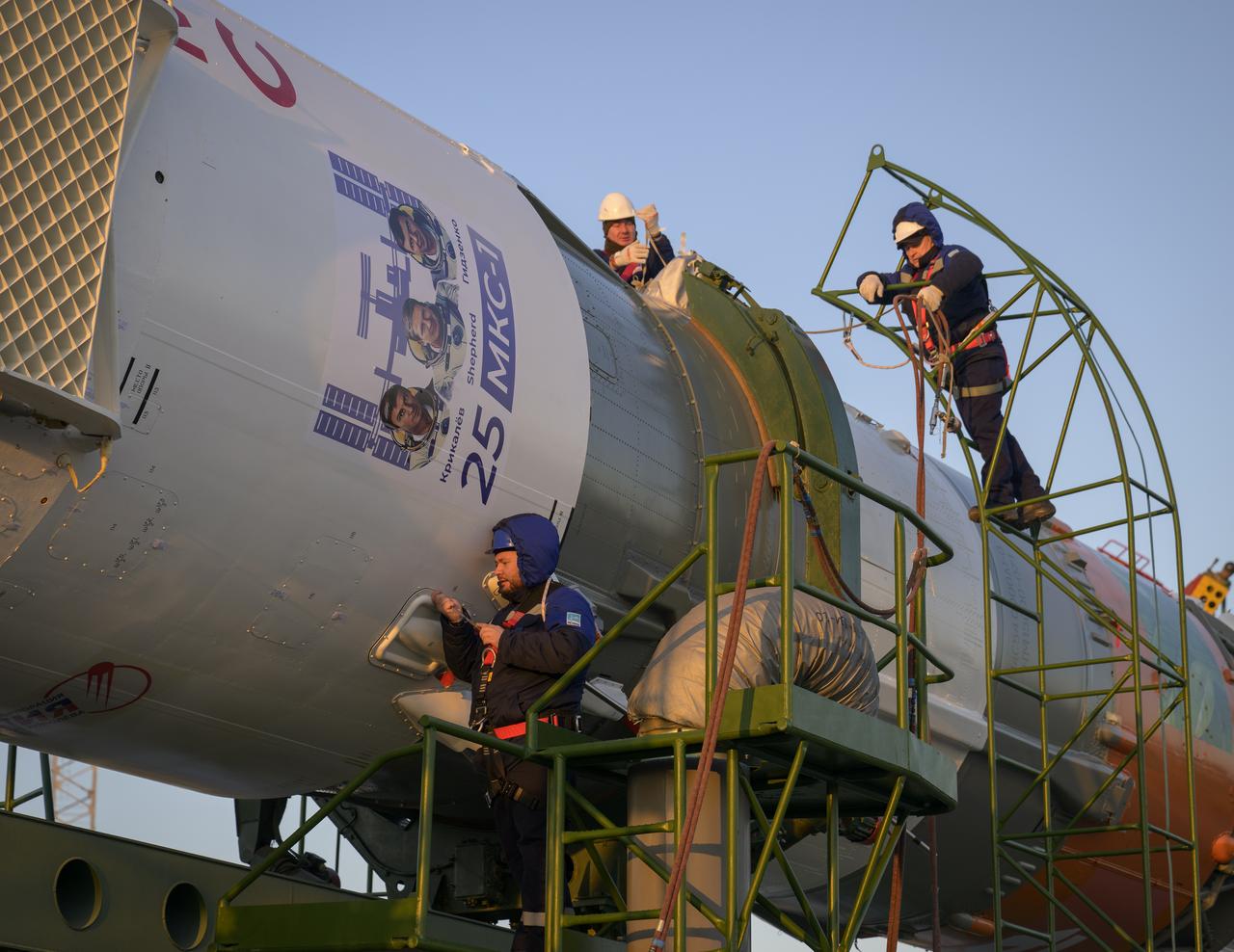
Technicians work on the Soyuz rocket after it was rolled out by train to the launch pad, Monday, Nov. 24, 2025, at Site 31 of the Baikonur Cosmodrome in Kazakhstan. Expedition 74 crewmembers: NASA astronaut Chris Williams, Roscosmos cosmonauts Sergey Kud-Sverchkov and Sergey Mikaev are scheduled to launch aboard their Soyuz MS-28 spacecraft on November 27. Photo Credit: (NASA/Bill Ingalls)
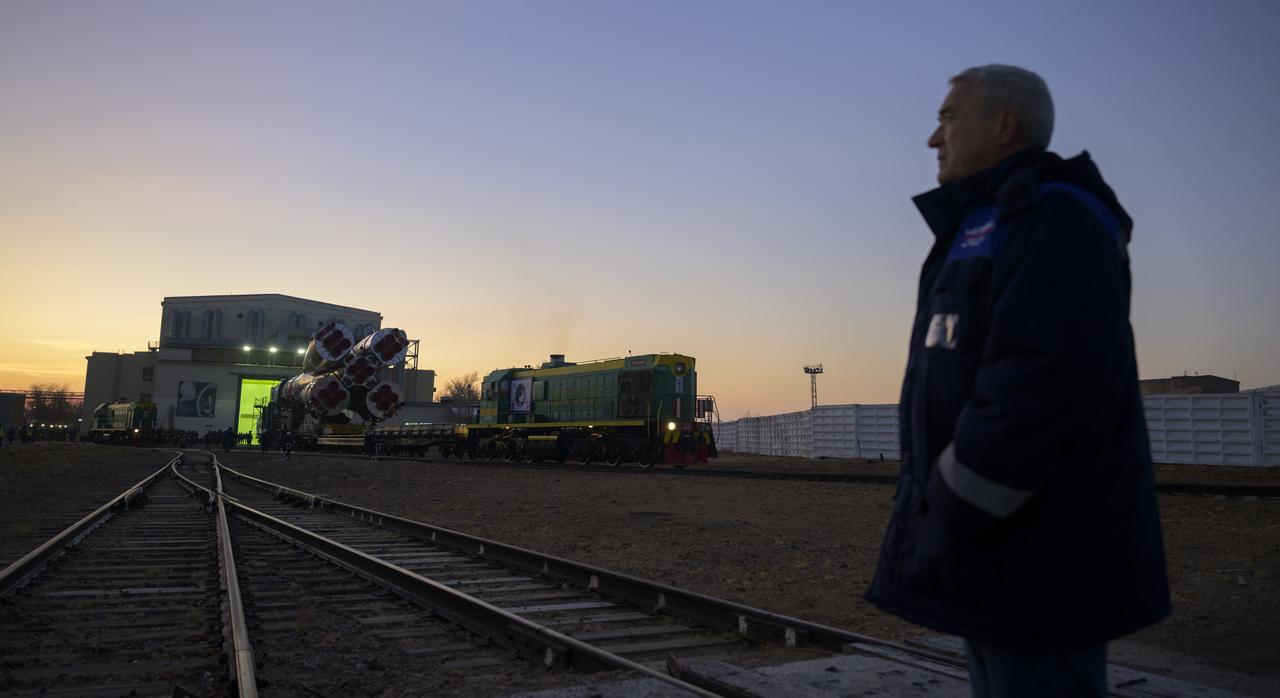
The Soyuz rocket is rolled out by train to the launch pad, Monday, Nov. 24, 2025, at Site 31 of the Baikonur Cosmodrome in Kazakhstan. Expedition 74 crewmembers: NASA astronaut Chris Williams, Roscosmos cosmonauts Sergey Kud-Sverchkov and Sergey Mikaev are scheduled to launch aboard their Soyuz MS-28 spacecraft on November 27. Photo Credit: (NASA/Bill Ingalls)
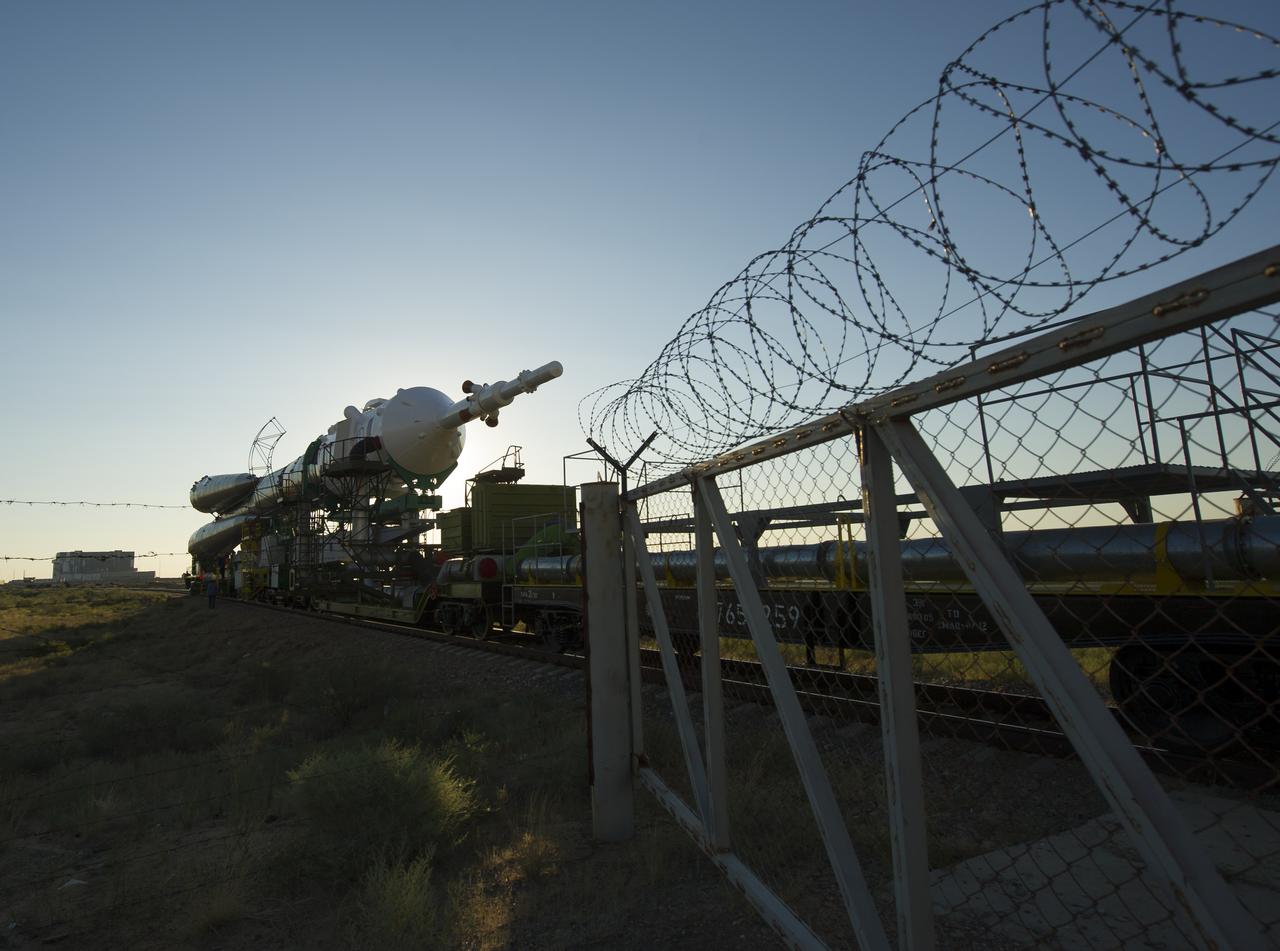
The Soyuz TMA-05M spacecraft is rolled out by train on its way to the launch pad at the Baikonur Cosmodrome in Kazakhstan, Thursday, July 12, 2012. The launch of the Soyuz spacecraft with Expedition 32 Soyuz Commander Yuri Malenchenko, NASA Flight Engineer Sunita Williams and JAXA (Japan Aerospace Exploration Agency) Flight Engineer Akihiko Hoshide is scheduled for the morning of Sunday, July 15, local time. Photo Credit (NASA/Carla Cioffi)
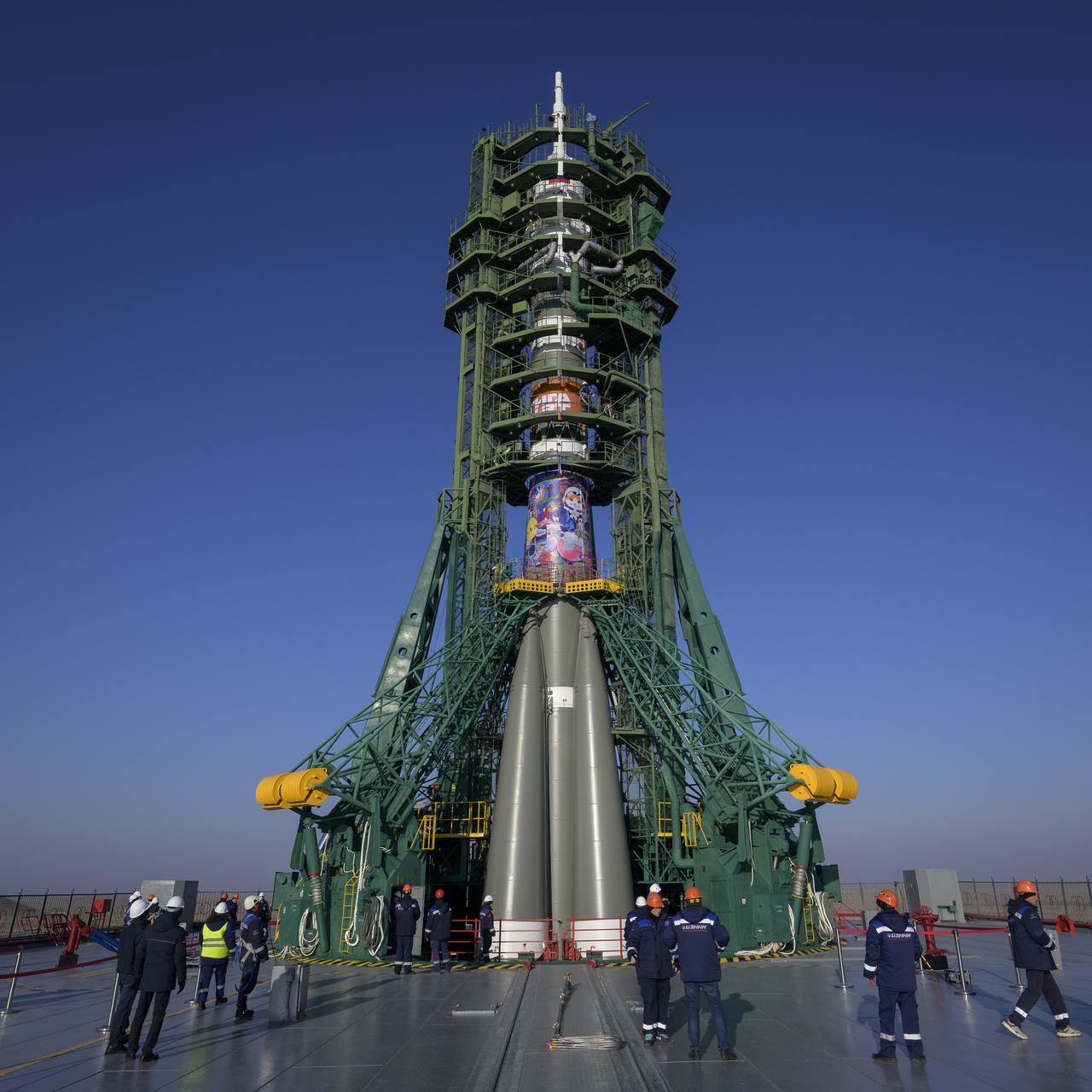
The Soyuz rocket is seen after having been rolled out by train to the launch pad, Monday, Nov. 24, 2025, at Site 31 of the Baikonur Cosmodrome in Kazakhstan. Expedition 74 crewmembers: NASA astronaut Chris Williams, Roscosmos cosmonauts Sergey Kud-Sverchkov and Sergey Mikaev are scheduled to launch aboard their Soyuz MS-28 spacecraft on November 27. Photo Credit: (NASA/Bill Ingalls)
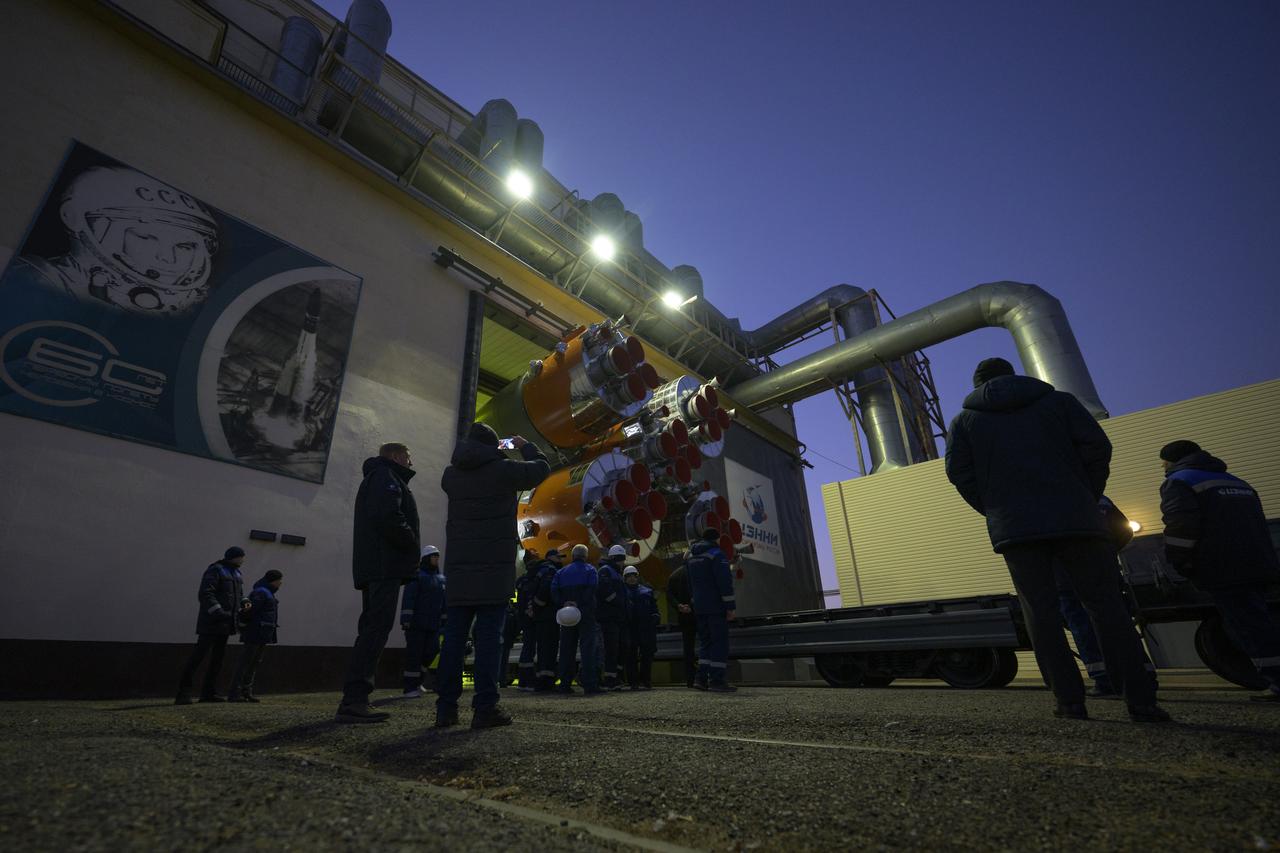
The Soyuz rocket is rolled out by train to the launch pad, Monday, Nov. 24, 2025, at Site 31 of the Baikonur Cosmodrome in Kazakhstan. Expedition 74 crewmembers: NASA astronaut Chris Williams, Roscosmos cosmonauts Sergey Kud-Sverchkov and Sergey Mikaev are scheduled to launch aboard their Soyuz MS-28 spacecraft on November 27. Photo Credit: (NASA/Bill Ingalls)
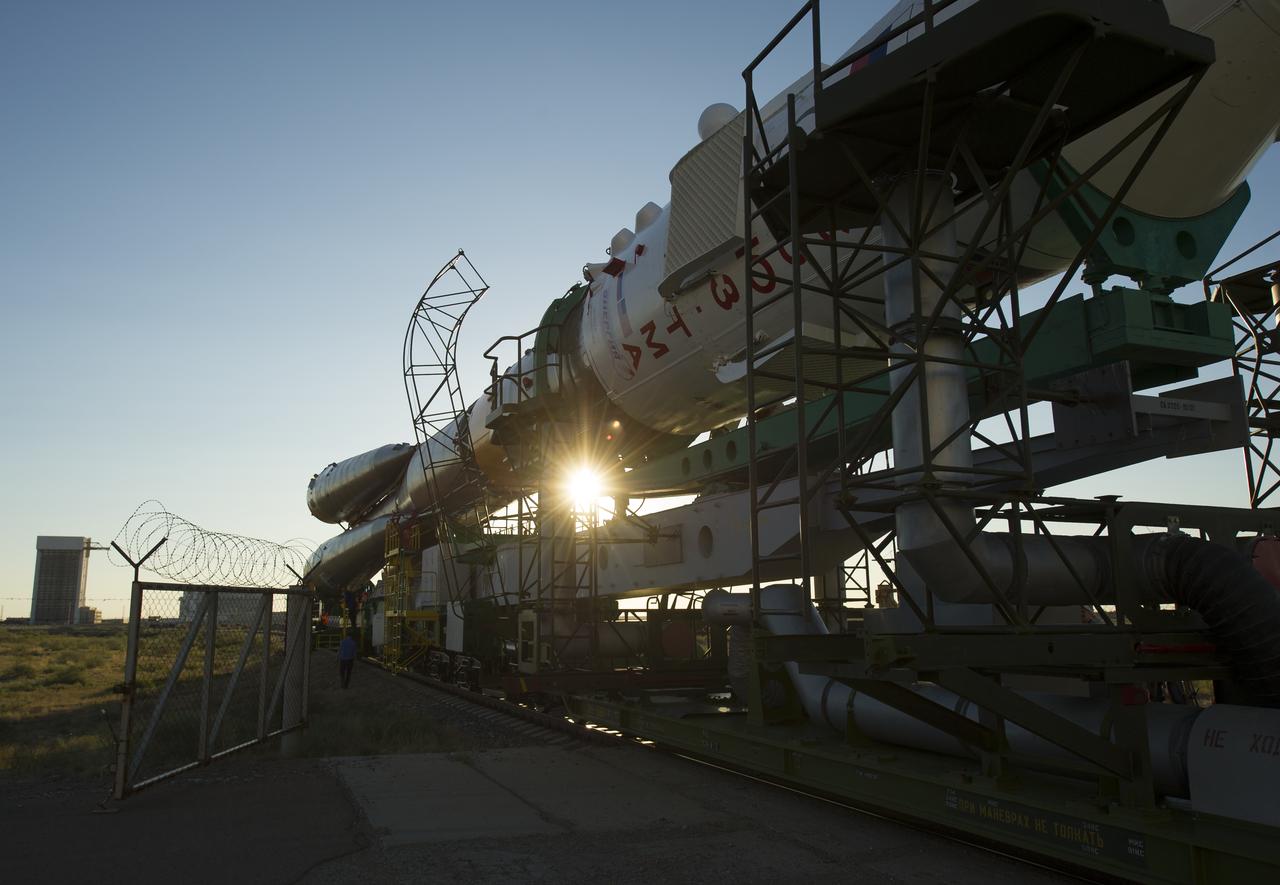
The Soyuz TMA-05M spacecraft is rolled out by train on its way to the launch pad at the Baikonur Cosmodrome in Kazakhstan, Thursday, July 12, 2012. The launch of the Soyuz spacecraft with Expedition 32 Soyuz Commander Yuri Malenchenko, NASA Flight Engineer Sunita Williams and JAXA (Japan Aerospace Exploration Agency) Flight Engineer Akihiko Hoshide is scheduled for the morning of Sunday, July 15, local time. Photo Credit (NASA/Carla Cioffi)
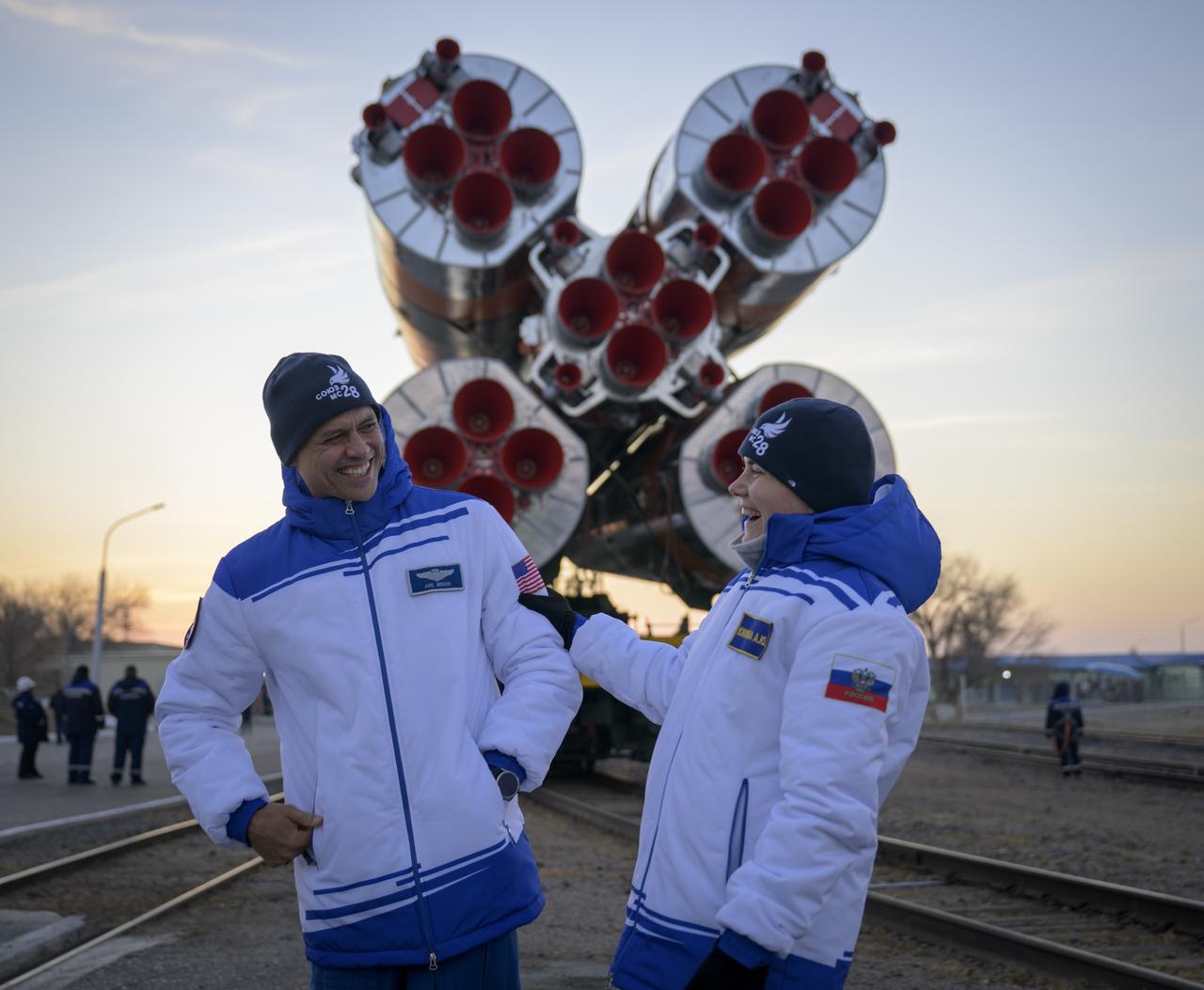
Expedition 74 backup crew members: Anna Kikina of Roscosmos, left, and Anil Menon of NASA, are seen as the Soyuz rocket is rolled out by train to the launch pad, Monday, Nov. 24, 2025, at Site 31 of the Baikonur Cosmodrome in Kazakhstan. Expedition 74 crewmembers: NASA astronaut Chris Williams, Roscosmos cosmonauts Sergey Kud-Sverchkov and Sergey Mikaev are scheduled to launch aboard their Soyuz MS-28 spacecraft on November 27. Photo Credit: (NASA/Bill Ingalls)
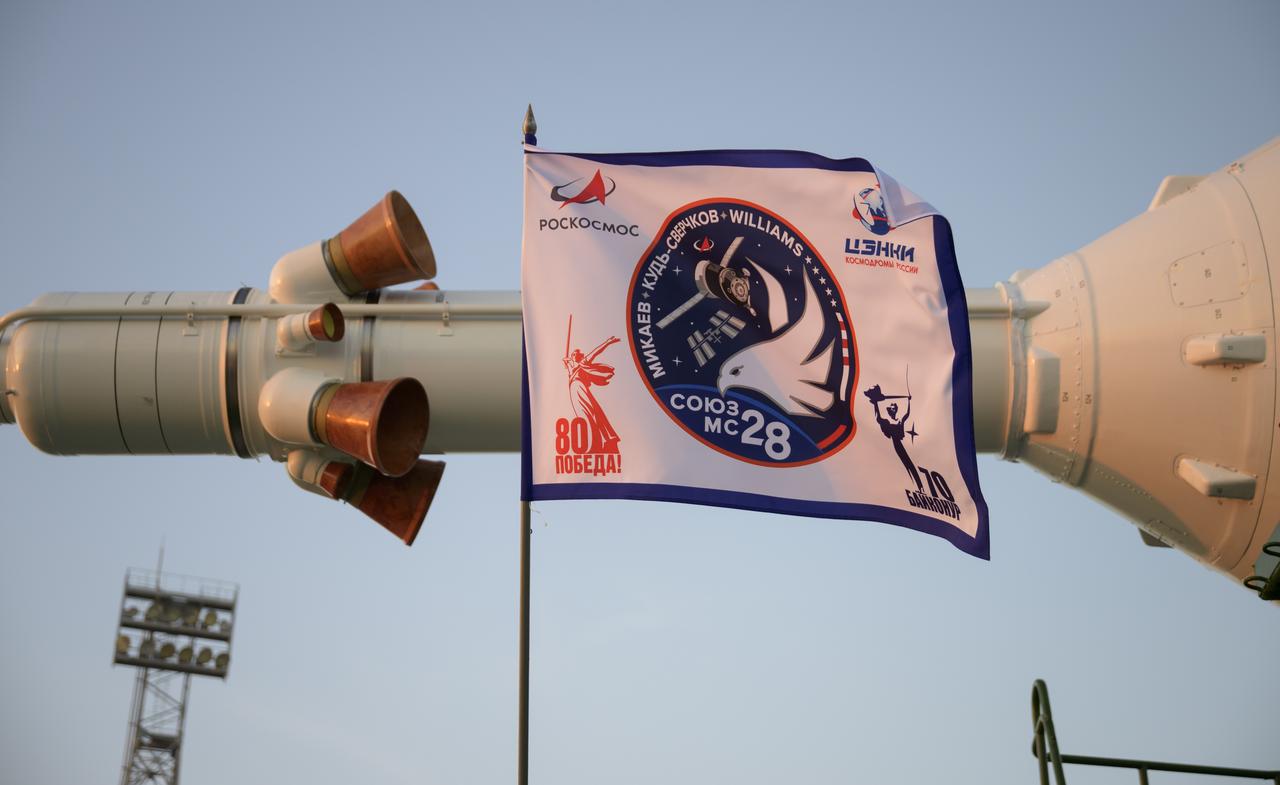
A flag attached to the train rolling out the Soyuz rocket to the launch pad is seen, Monday, Nov. 24, 2025, at Site 31 of the Baikonur Cosmodrome in Kazakhstan. Expedition 74 crewmembers: NASA astronaut Chris Williams, Roscosmos cosmonauts Sergey Kud-Sverchkov and Sergey Mikaev are scheduled to launch aboard their Soyuz MS-28 spacecraft on November 27. Photo Credit: (NASA/Bill Ingalls)
![<i>[Photo courtesy of Boeing photographer Bob Williams.]</i> The orbiter Columbia, atop a modified Boeing 747, rolls under protective cover at Palmdale, Calif. Columbia has been undergoing modifications and upgrades at Boeing’s Orbiter Assembly Facility in Palmdale and is ready to return to Kennedy Space Center. Ferry preparations and the flight plan are contingent upon weather conditions in California and enroute to Florida.](https://images-assets.nasa.gov/image/KSC01padig095/KSC01padig095~orig.jpg)
<i>[Photo courtesy of Boeing photographer Bob Williams.]</i> The orbiter Columbia, atop a modified Boeing 747, rolls under protective cover at Palmdale, Calif. Columbia has been undergoing modifications and upgrades at Boeing’s Orbiter Assembly Facility in Palmdale and is ready to return to Kennedy Space Center. Ferry preparations and the flight plan are contingent upon weather conditions in California and enroute to Florida.
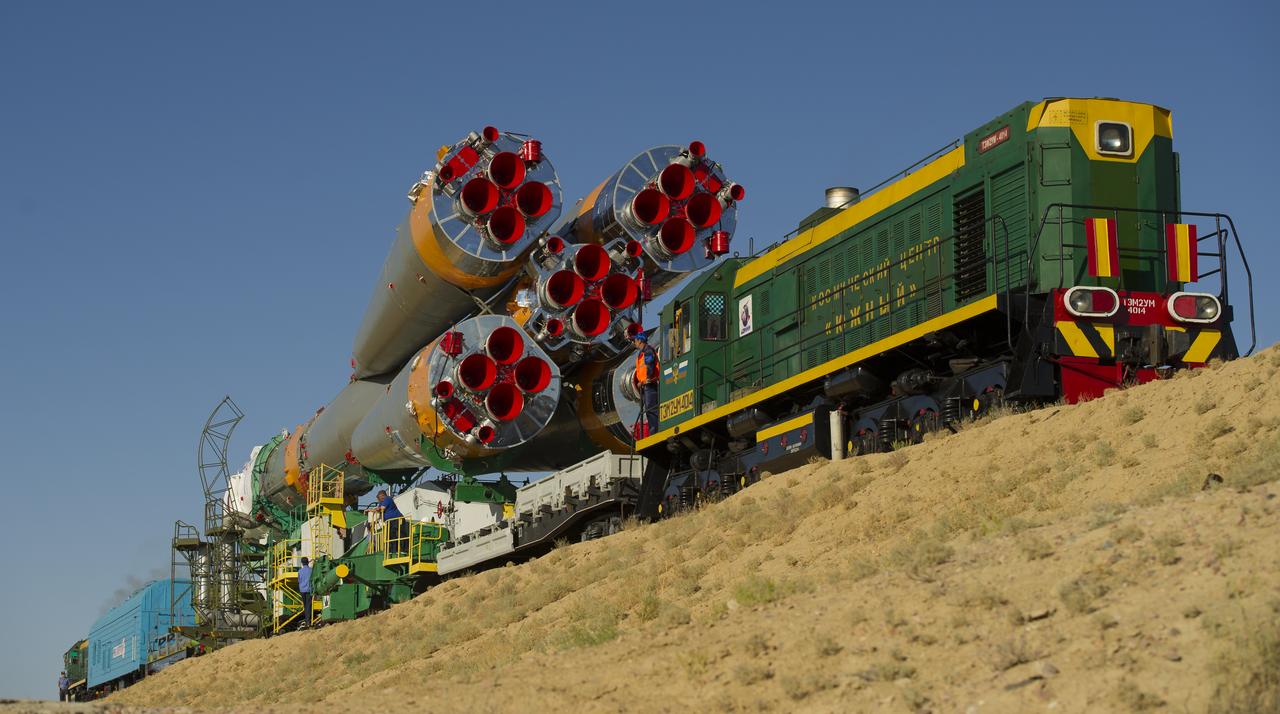
The Soyuz TMA-05M spacecraft is rolled out by train on its way to the launch pad at the Baikonur Cosmodrome in Kazakhstan, Thursday, July 12, 2012. The launch of the Soyuz spacecraft with Expedition 32 Soyuz Commander Yuri Malenchenko, NASA Flight Engineer Sunita Williams and JAXA (Japan Aerospace Exploration Agency) Flight Engineer Akihiko Hoshide is scheduled for the morning of Sunday, July 15, local time. Photo Credit (NASA/Carla Cioffi)

The Soyuz rocket is rolled out by train to the launch pad, Monday, Nov. 24, 2025, at Site 31 of the Baikonur Cosmodrome in Kazakhstan. Expedition 74 crewmembers: NASA astronaut Chris Williams, Roscosmos cosmonauts Sergey Kud-Sverchkov and Sergey Mikaev are scheduled to launch aboard their Soyuz MS-28 spacecraft on November 27. Photo Credit: (NASA/Bill Ingalls)
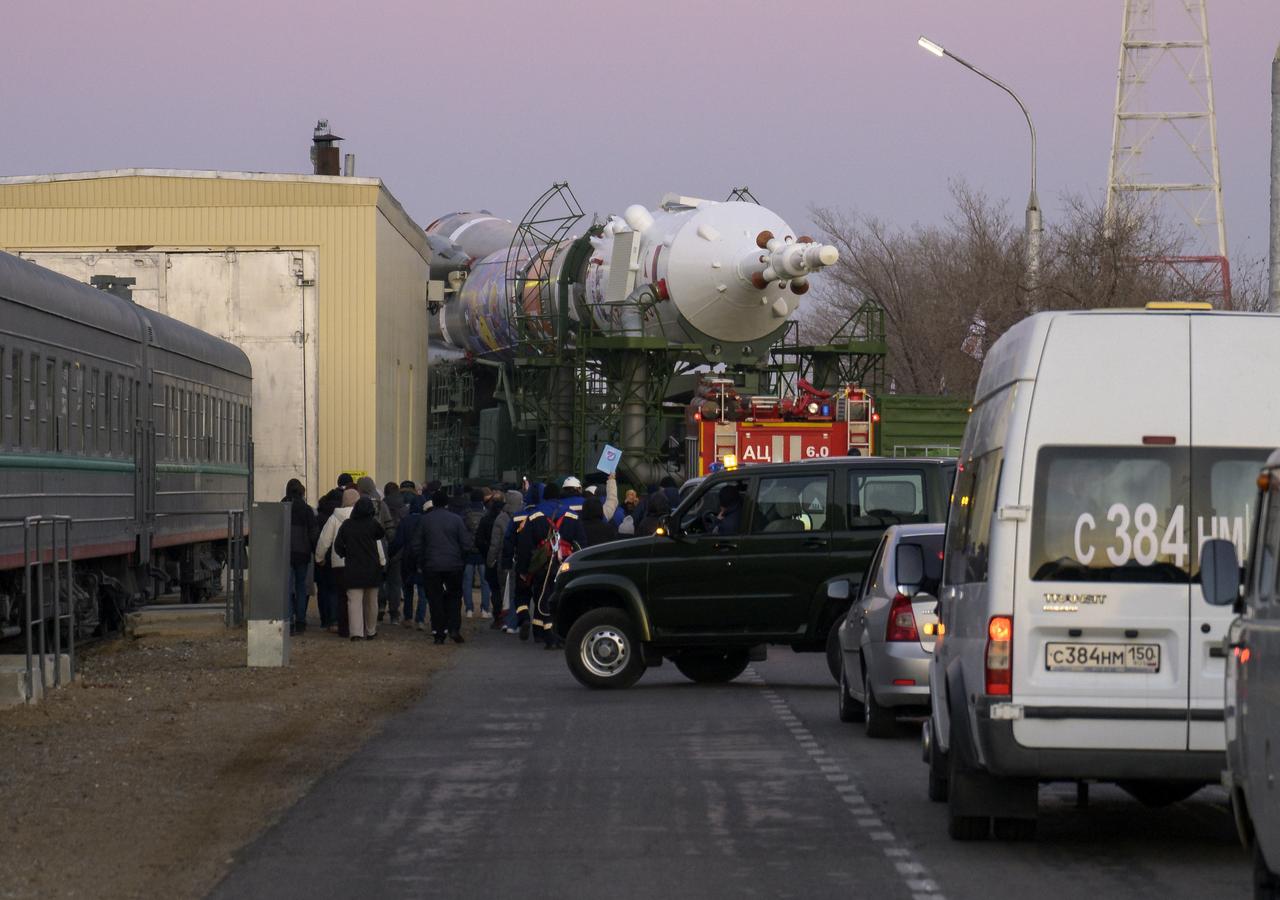
The Soyuz rocket is rolled out by train to the launch pad, Monday, Nov. 24, 2025, at Site 31 of the Baikonur Cosmodrome in Kazakhstan. Expedition 74 crewmembers: NASA astronaut Chris Williams, Roscosmos cosmonauts Sergey Kud-Sverchkov and Sergey Mikaev are scheduled to launch aboard their Soyuz MS-28 spacecraft on November 27. Photo Credit: (NASA/Bill Ingalls)
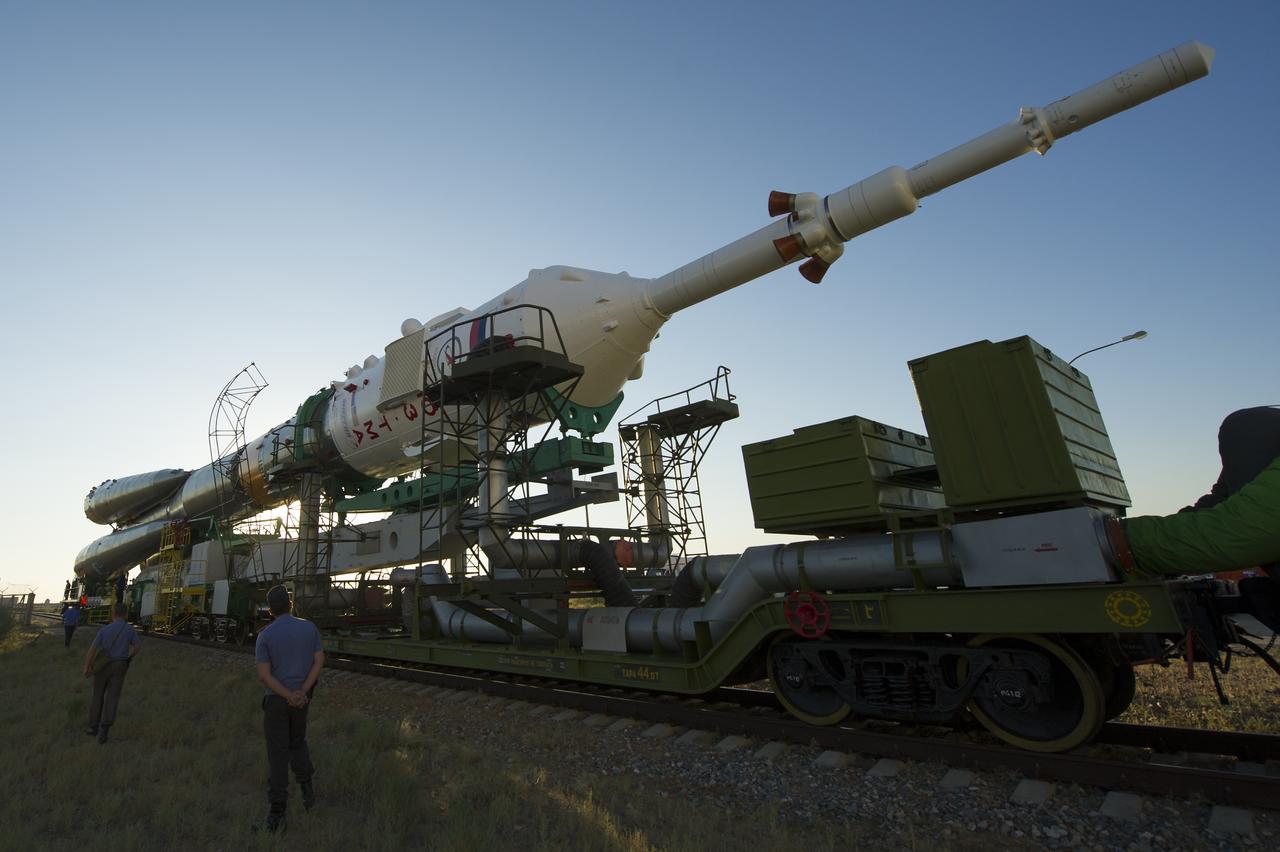
The Soyuz TMA-05M spacecraft is rolled out by train on its way to the launch pad at the Baikonur Cosmodrome in Kazakhstan, Thursday, July 12, 2012. The launch of the Soyuz spacecraft with Expedition 32 Soyuz Commander Yuri Malenchenko, NASA Flight Engineer Sunita Williams and JAXA (Japan Aerospace Exploration Agency) Flight Engineer Akihiko Hoshide is scheduled for the morning of Sunday, July 15, local time. Photo Credit (NASA/Carla Cioffi)
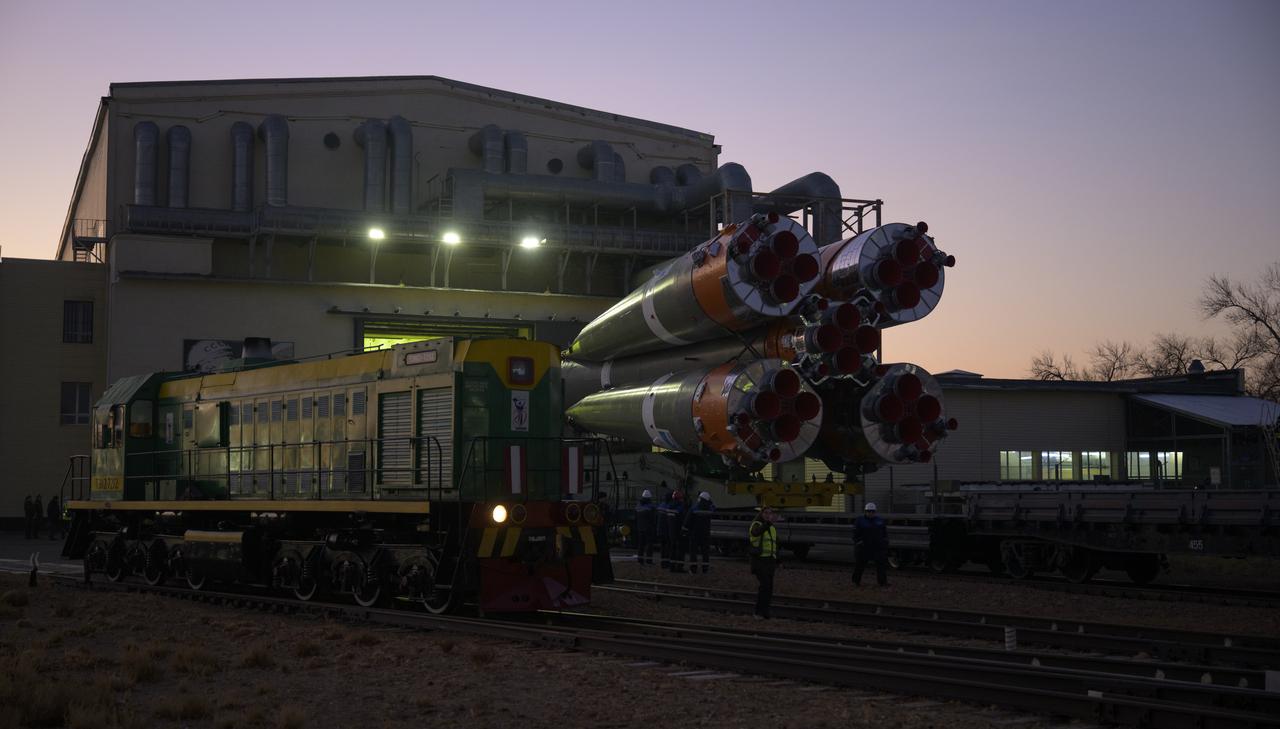
The Soyuz rocket is rolled out by train to the launch pad, Monday, Nov. 24, 2025, at Site 31 of the Baikonur Cosmodrome in Kazakhstan. Expedition 74 crewmembers: NASA astronaut Chris Williams, Roscosmos cosmonauts Sergey Kud-Sverchkov and Sergey Mikaev are scheduled to launch aboard their Soyuz MS-28 spacecraft on November 27. Photo Credit: (NASA/Bill Ingalls)
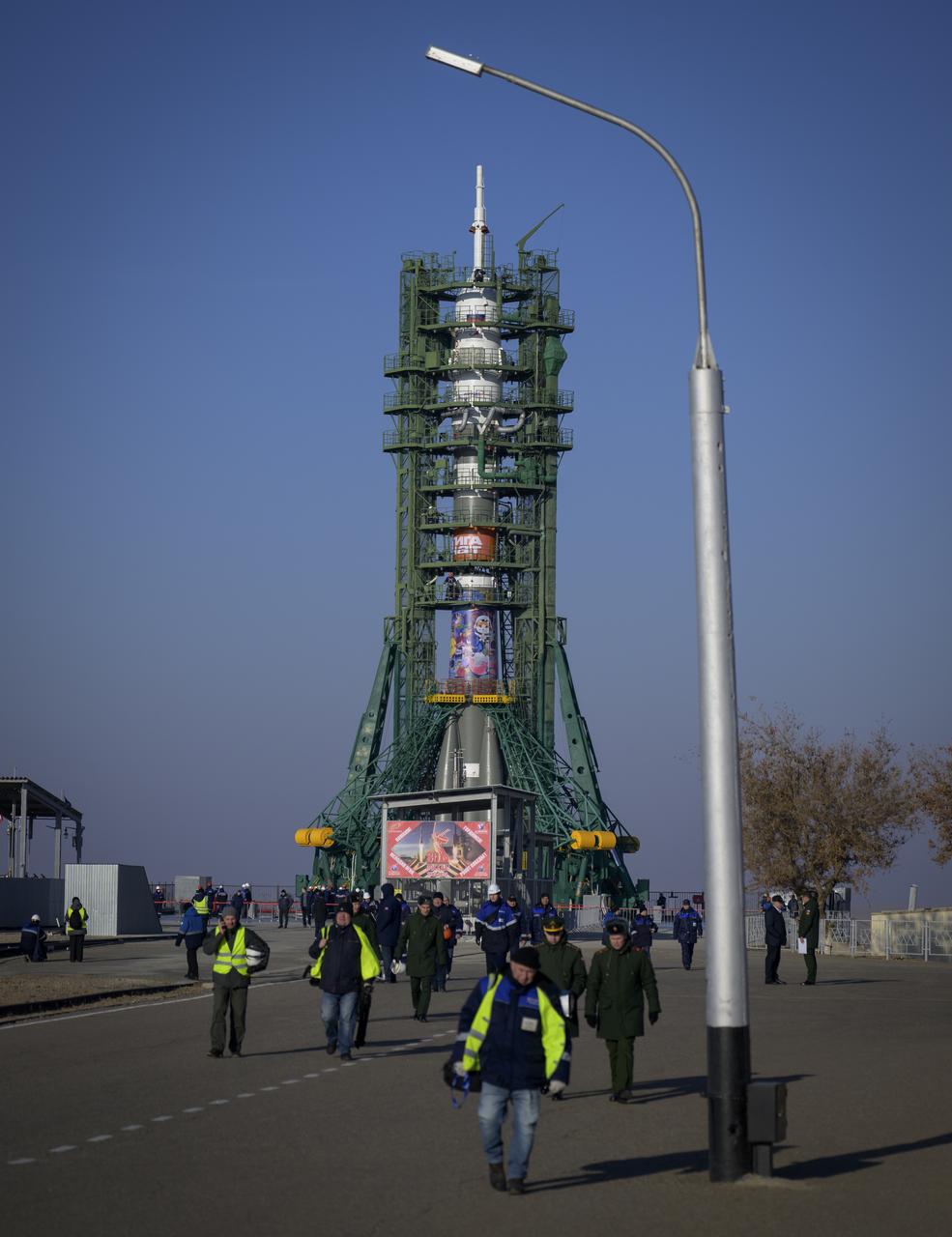
The Soyuz rocket is seen after having been rolled out by train to the launch pad, Monday, Nov. 24, 2025, at Site 31 of the Baikonur Cosmodrome in Kazakhstan. Expedition 74 crewmembers: NASA astronaut Chris Williams, Roscosmos cosmonauts Sergey Kud-Sverchkov and Sergey Mikaev are scheduled to launch aboard their Soyuz MS-28 spacecraft on November 27. Photo Credit: (NASA/Bill Ingalls)
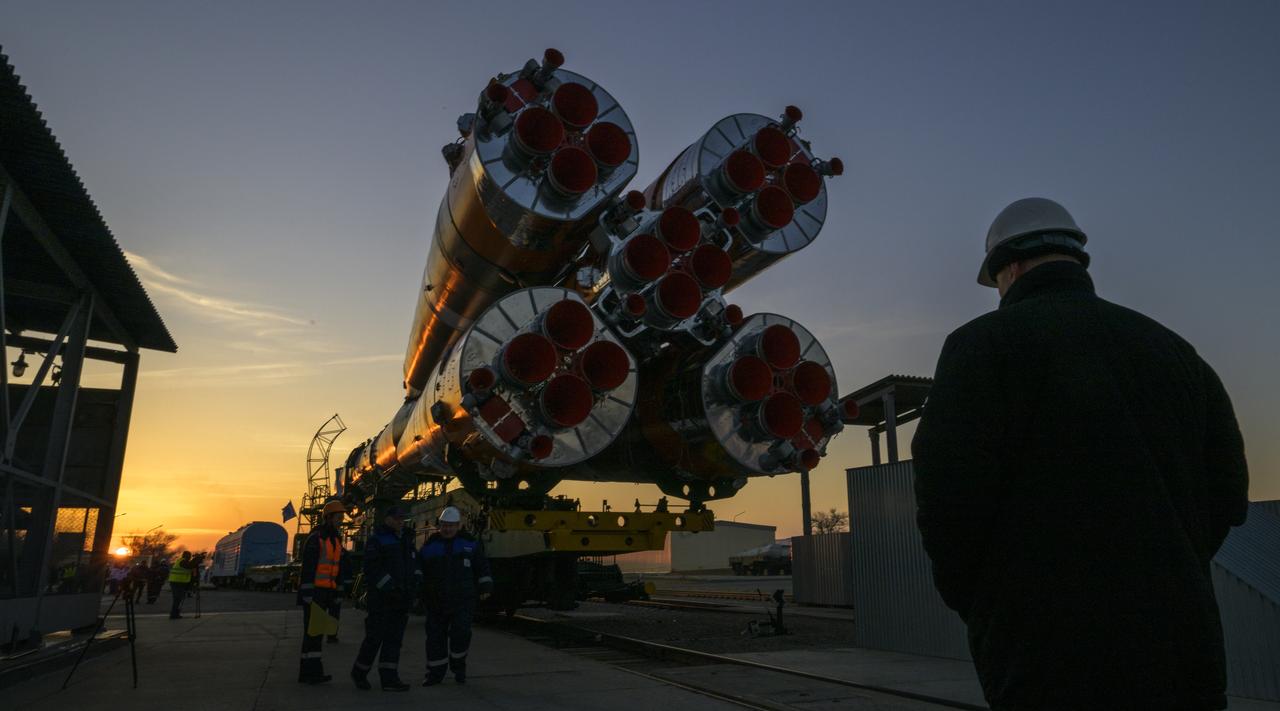
The Soyuz rocket is rolled out by train to the launch pad, Monday, Nov. 24, 2025, at Site 31 of the Baikonur Cosmodrome in Kazakhstan. Expedition 74 crewmembers: NASA astronaut Chris Williams, Roscosmos cosmonauts Sergey Kud-Sverchkov and Sergey Mikaev are scheduled to launch aboard their Soyuz MS-28 spacecraft on November 27. Photo Credit: (NASA/Bill Ingalls)
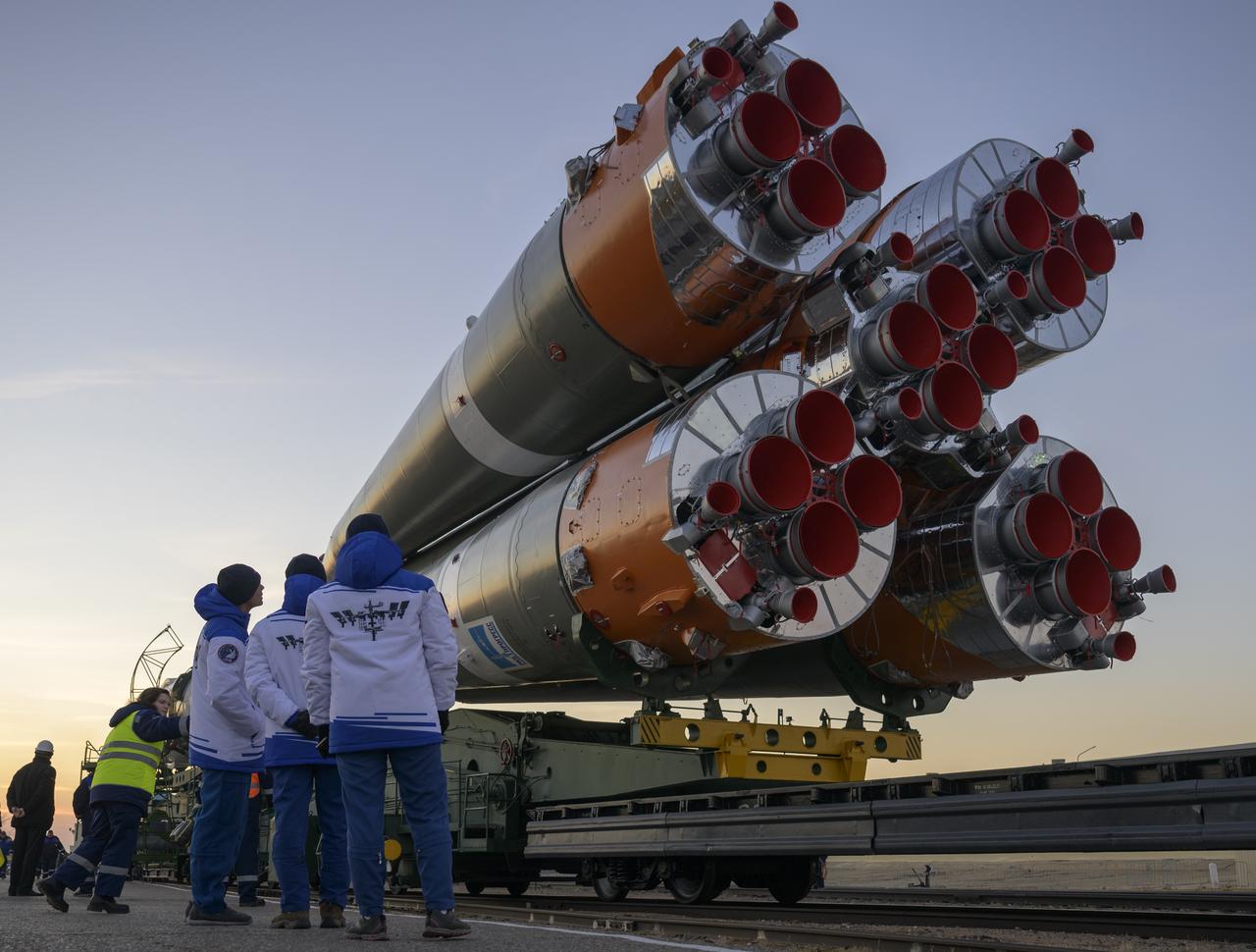
Expedition 74 backup crew members: Anil Menon of NASA, Petr Dubrov and Anna Kikina of Roscosmos, watch as the Soyuz rocket is rolled out by train to the launch pad, Monday, Nov. 24, 2025, at Site 31 of the Baikonur Cosmodrome in Kazakhstan. Expedition 74 crewmembers: NASA astronaut Chris Williams, Roscosmos cosmonauts Sergey Kud-Sverchkov and Sergey Mikaev are scheduled to launch aboard their Soyuz MS-28 spacecraft on November 27. Photo Credit: (NASA/Bill Ingalls)
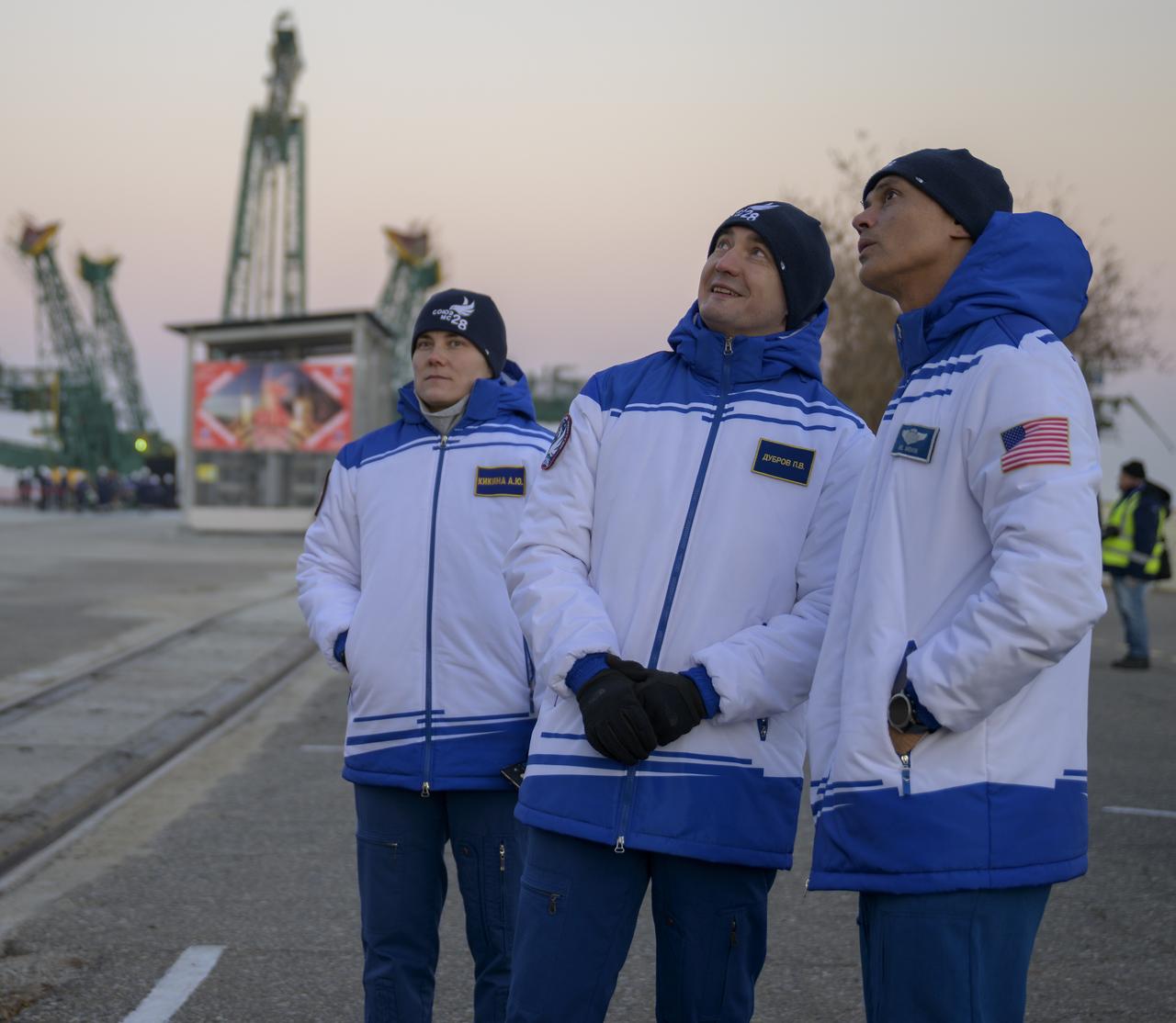
Expedition 74 backup crew members: Anna Kikina of Roscosmos, left, Petr Dubrov of Roscosmos, and Anil Menon of NASA, right, watch as the Soyuz rocket is rolled out by train to the launch pad, Monday, Nov. 24, 2025, at Site 31 of the Baikonur Cosmodrome in Kazakhstan. Expedition 74 crewmembers: NASA astronaut Chris Williams, Roscosmos cosmonauts Sergey Kud-Sverchkov and Sergey Mikaev are scheduled to launch aboard their Soyuz MS-28 spacecraft on November 27. Photo Credit: (NASA/Bill Ingalls)
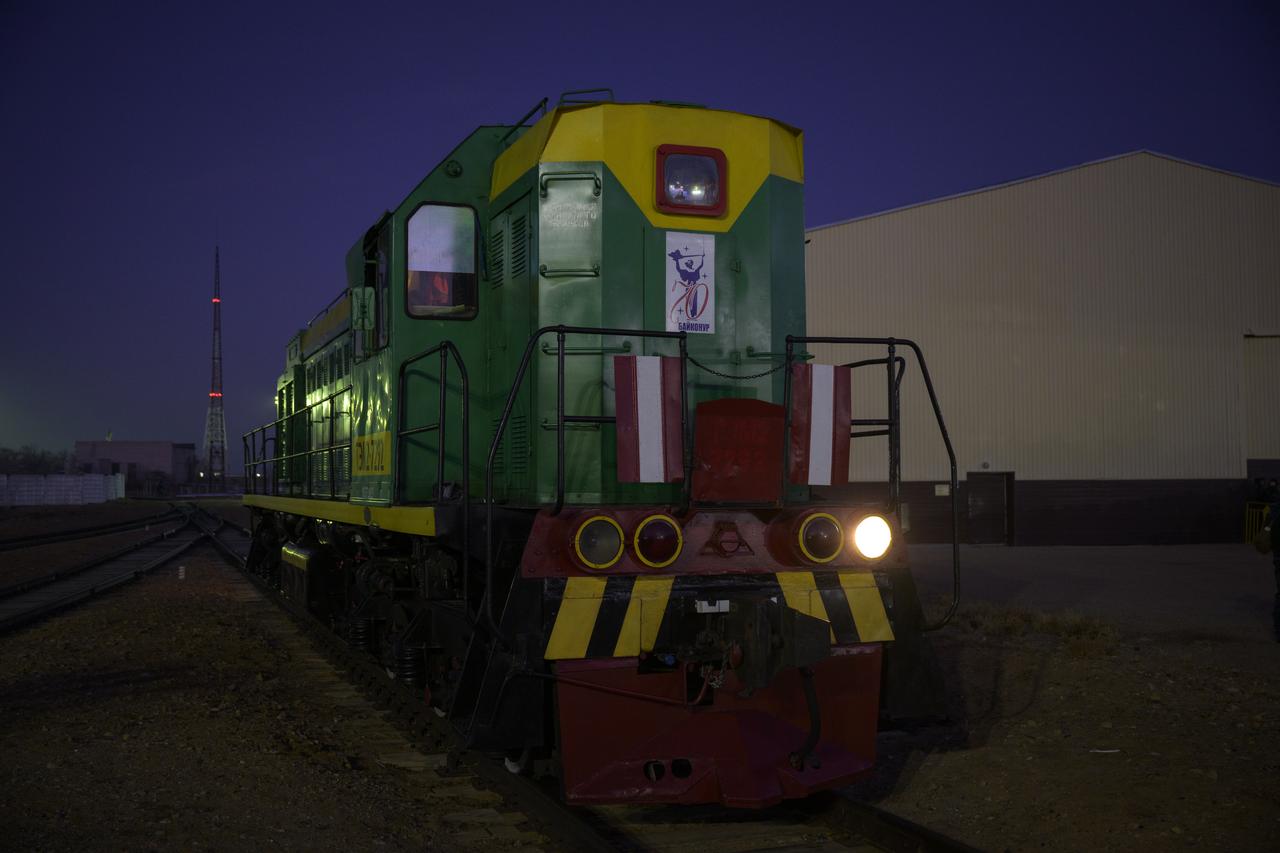
A train is ready to help roll the Soyuz rocket out to the launch pad, Monday, Nov. 24, 2025, at Site 31 of the Baikonur Cosmodrome in Kazakhstan. Expedition 74 crewmembers: NASA astronaut Chris Williams, Roscosmos cosmonauts Sergey Kud-Sverchkov and Sergey Mikaev are scheduled to launch aboard their Soyuz MS-28 spacecraft on November 27. Photo Credit: (NASA/Bill Ingalls)
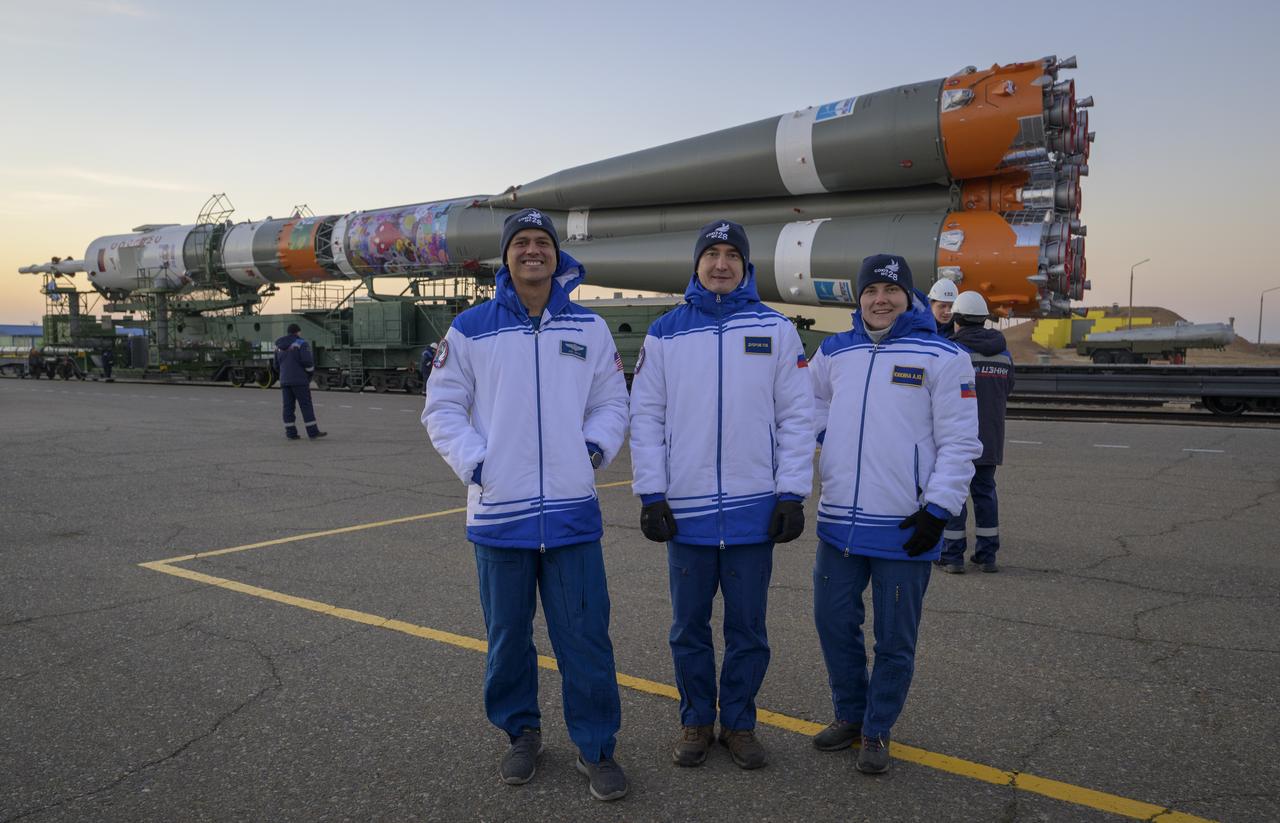
Expedition 74 backup crew members: Anil Menon of NASA, left, Petr Dubrov, and Anna Kikina of Roscosmos, right, pose for a photograph as the Soyuz rocket is rolled out by train to the launch pad, Monday, Nov. 24, 2025, at Site 31 of the Baikonur Cosmodrome in Kazakhstan. Expedition 74 crewmembers: NASA astronaut Chris Williams, Roscosmos cosmonauts Sergey Kud-Sverchkov and Sergey Mikaev are scheduled to launch aboard their Soyuz MS-28 spacecraft on November 27. Photo Credit: (NASA/Bill Ingalls)
![<i>[Photo courtesy of Boeing photographer Bob Williams.]<_i> The orbiter Columbia, atop a modified Boeing 747, rolls under protective cover at Palmdale, Calif. Columbia has been undergoing modifications and upgrades at Boeing’s Orbiter Assembly Facility in Palmdale and is ready to return to Kennedy Space Center. Ferry preparations and the flight plan are contingent upon weather conditions in California and enroute to Florida.](https://images-assets.nasa.gov/image/01padig095/01padig095~medium.jpg)
<i>[Photo courtesy of Boeing photographer Bob Williams.]<_i> The orbiter Columbia, atop a modified Boeing 747, rolls under protective cover at Palmdale, Calif. Columbia has been undergoing modifications and upgrades at Boeing’s Orbiter Assembly Facility in Palmdale and is ready to return to Kennedy Space Center. Ferry preparations and the flight plan are contingent upon weather conditions in California and enroute to Florida.
![<i>[Photo courtesy of Boeing photographer Bob Williams.]<_i> The orbiter Columbia rolls out of Boeing’s Orbiter Assembly Facility in Palmdale, Calif. It will be mated to Shuttle Carrier Aircraft no. 905 for a ferry flight to Kennedy Space Center. Columbia has been undergoing modifications and upgrades at the Boeing plant. Ferry preparations and the flight plan are contingent upon weather conditions in California and enroute to Florida](https://images-assets.nasa.gov/image/01padig094/01padig094~medium.jpg)
<i>[Photo courtesy of Boeing photographer Bob Williams.]<_i> The orbiter Columbia rolls out of Boeing’s Orbiter Assembly Facility in Palmdale, Calif. It will be mated to Shuttle Carrier Aircraft no. 905 for a ferry flight to Kennedy Space Center. Columbia has been undergoing modifications and upgrades at the Boeing plant. Ferry preparations and the flight plan are contingent upon weather conditions in California and enroute to Florida
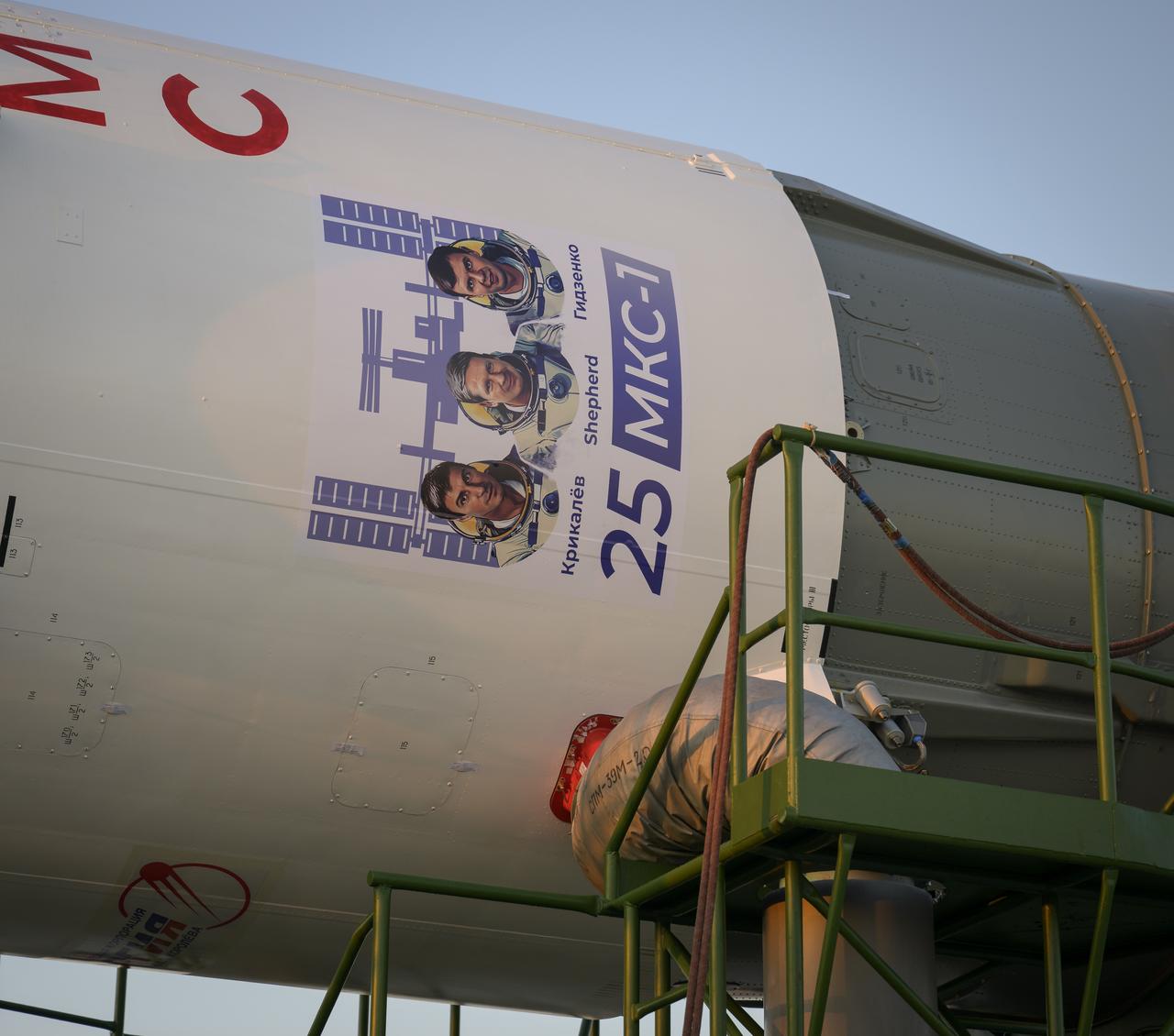
An emblem recognizing 25 years since Expedition 1, is seen on the Soyuz rocket as the rocket is rolled out by train to the launch pad, Monday, Nov. 24, 2025, at Site 31 of the Baikonur Cosmodrome in Kazakhstan. Expedition 74 crewmembers: NASA astronaut Chris Williams, Roscosmos cosmonauts Sergey Kud-Sverchkov and Sergey Mikaev are scheduled to launch aboard their Soyuz MS-28 spacecraft on November 27. Photo Credit: (NASA/Bill Ingalls)
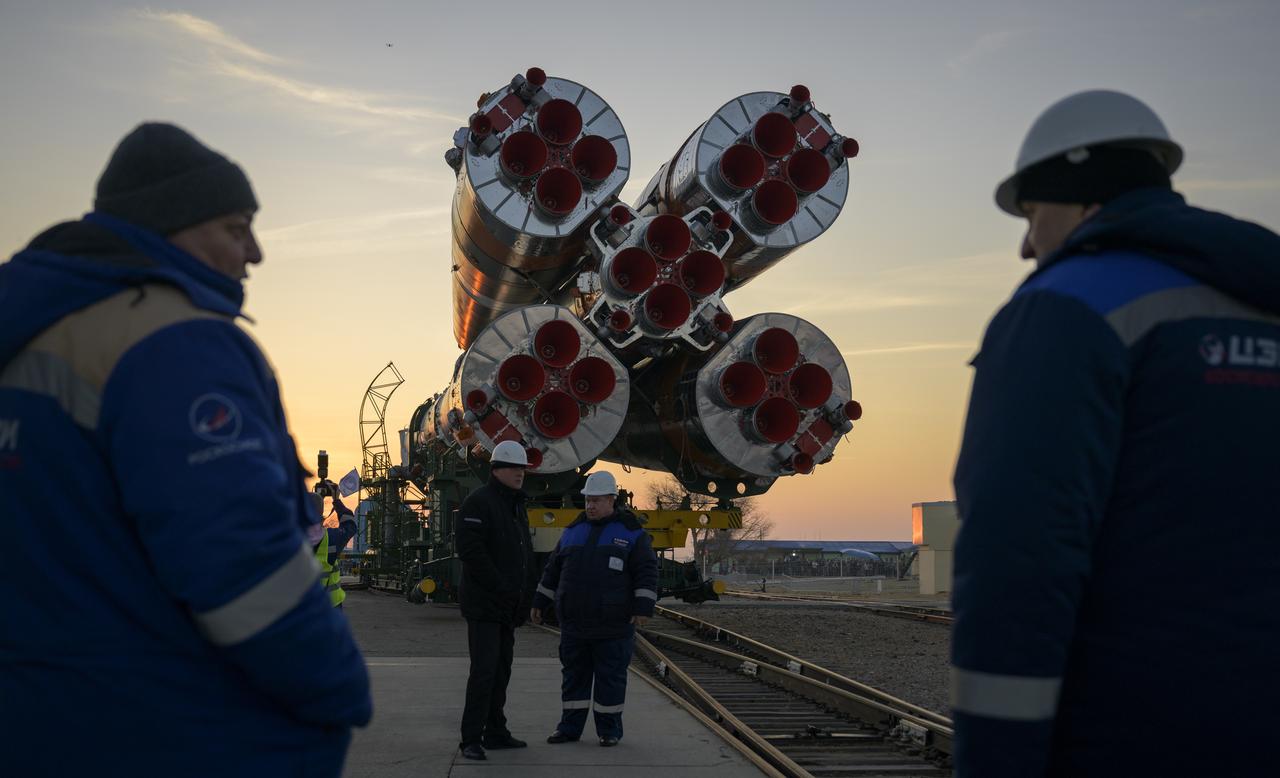
The Soyuz rocket is rolled out by train to the launch pad, Monday, Nov. 24, 2025, at Site 31 of the Baikonur Cosmodrome in Kazakhstan. Expedition 74 crewmembers: NASA astronaut Chris Williams, Roscosmos cosmonauts Sergey Kud-Sverchkov and Sergey Mikaev are scheduled to launch aboard their Soyuz MS-28 spacecraft on November 27. Photo Credit: (NASA/Bill Ingalls)

iss074e0046046 (Jan. 5, 2025) --- The Arapey Grande River splits into its tributary, the Arapey Chico River, in northern Uruguay within the Arapey Grande Basin—a region characterized by rolling hills, natural grasslands, and dense woodlands that support a biodiverse ecosystem. The International Space Station was orbiting 268 miles above the Brazil–Uruguay border when this photograph was taken. Credit: NASA/Chris Williams
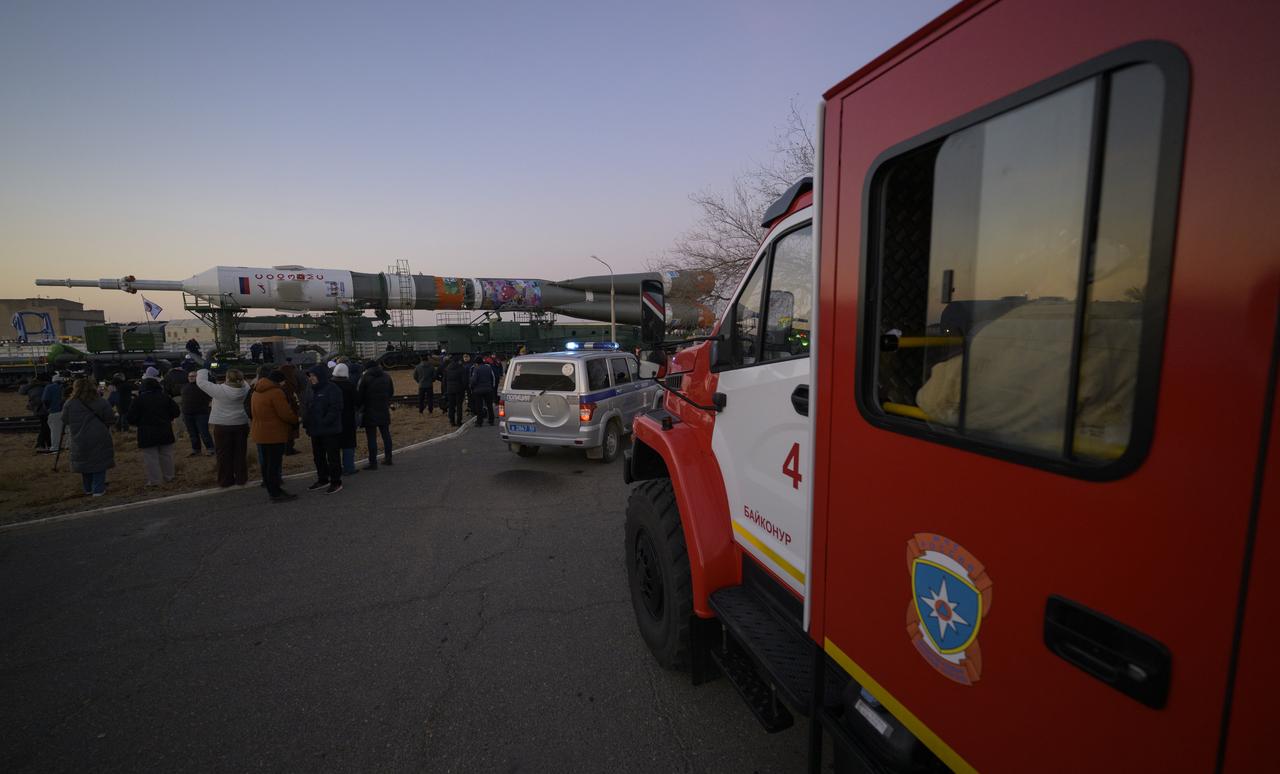
The Soyuz rocket is rolled out by train to the launch pad, Monday, Nov. 24, 2025, at Site 31 of the Baikonur Cosmodrome in Kazakhstan. Expedition 74 crewmembers: NASA astronaut Chris Williams, Roscosmos cosmonauts Sergey Kud-Sverchkov and Sergey Mikaev are scheduled to launch aboard their Soyuz MS-28 spacecraft on November 27. Photo Credit: (NASA/Bill Ingalls)
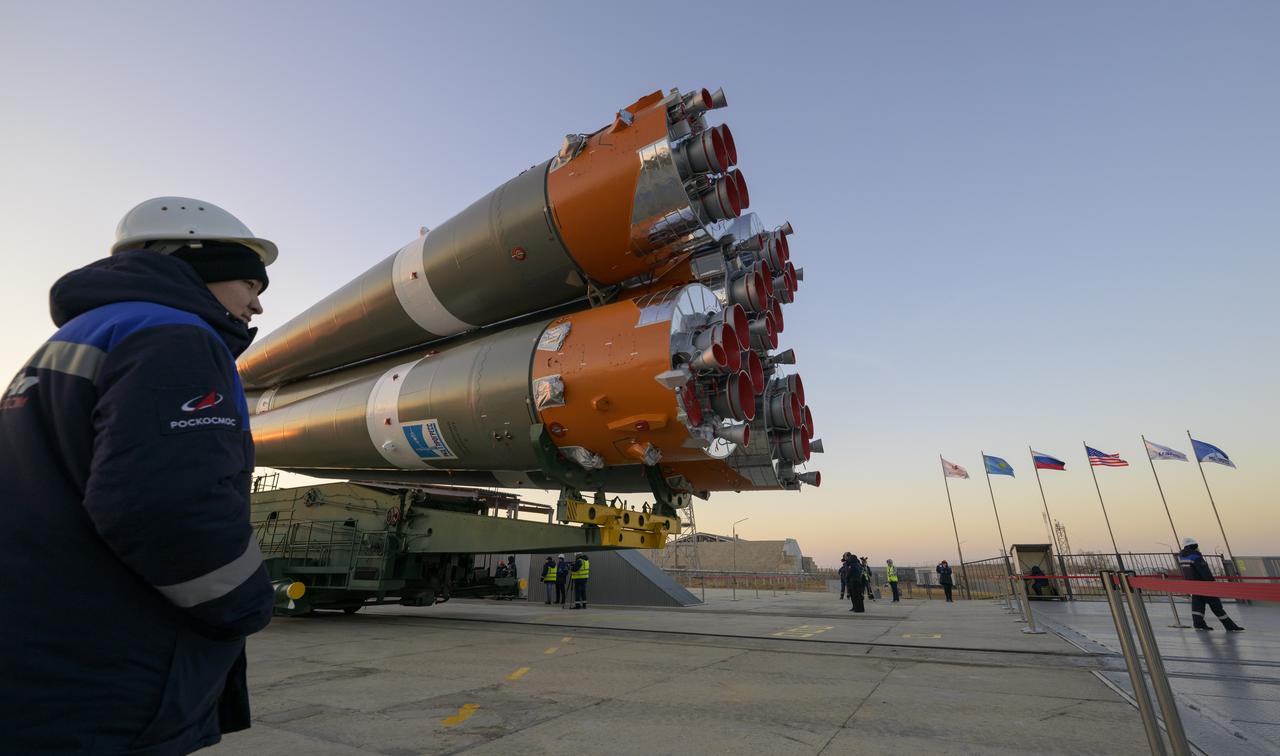
The Soyuz rocket is rolled out by train to the launch pad, Monday, Nov. 24, 2025, at Site 31 of the Baikonur Cosmodrome in Kazakhstan. Expedition 74 crewmembers: NASA astronaut Chris Williams, Roscosmos cosmonauts Sergey Kud-Sverchkov and Sergey Mikaev are scheduled to launch aboard their Soyuz MS-28 spacecraft on November 27. Photo Credit: (NASA/Bill Ingalls)

The Soyuz TMA-05M spacecraft is rolled out by train on its way to the launch pad at the Baikonur Cosmodrome in Kazakhstan, Thursday, July 12, 2012. The launch of the Soyuz spacecraft with Expedition 32 Soyuz Commander Yuri Malenchenko, NASA Flight Engineer Sunita Williams and JAXA (Japan Aerospace Exploration Agency) Flight Engineer Akihiko Hoshide is scheduled for the morning of Sunday, July 15, local time. Photo Credit (NASA/Carla Cioffi)
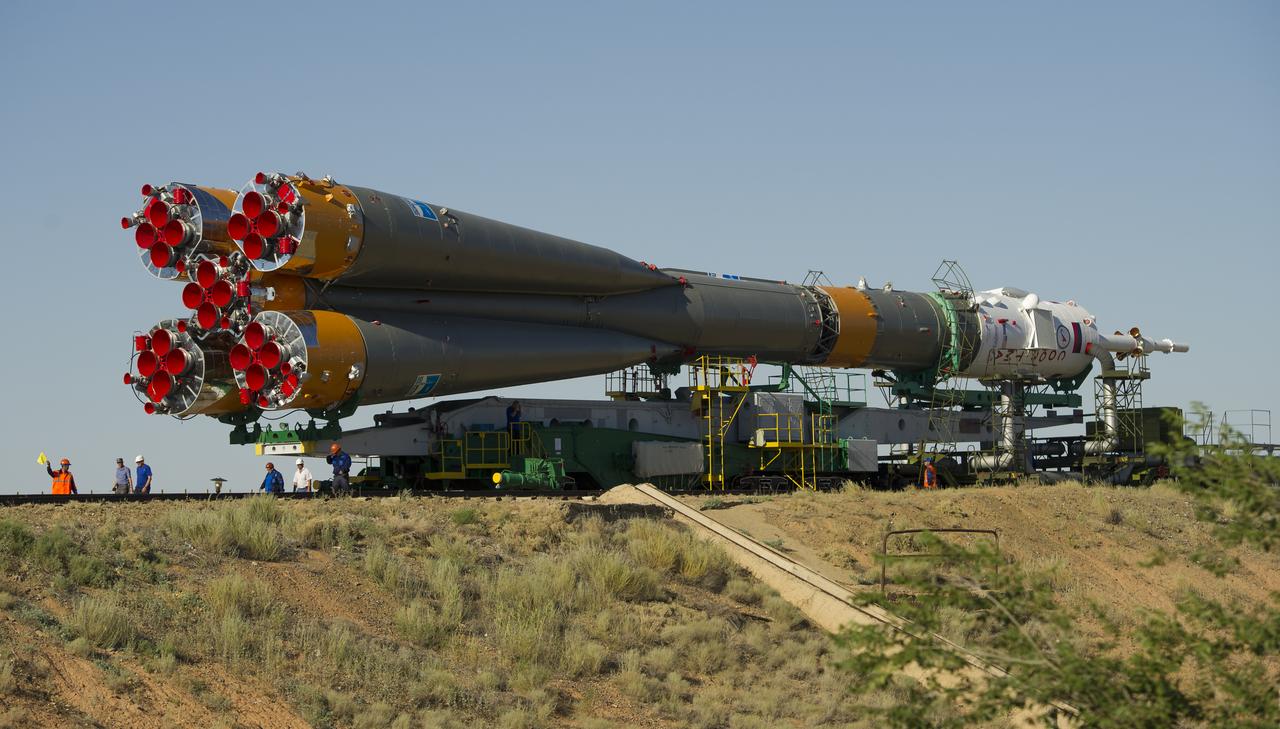
The Soyuz TMA-05M spacecraft is rolled out by train on its way to the launch pad at the Baikonur Cosmodrome in Kazakhstan, Thursday, July 12, 2012. The launch of the Soyuz spacecraft with Expedition 32 Soyuz Commander Yuri Malenchenko, NASA Flight Engineer Sunita Williams and JAXA (Japan Aerospace Exploration Agency) Flight Engineer Akihiko Hoshide is scheduled for the morning of Sunday, July 15, local time. Photo Credit (NASA/Carla Cioffi)
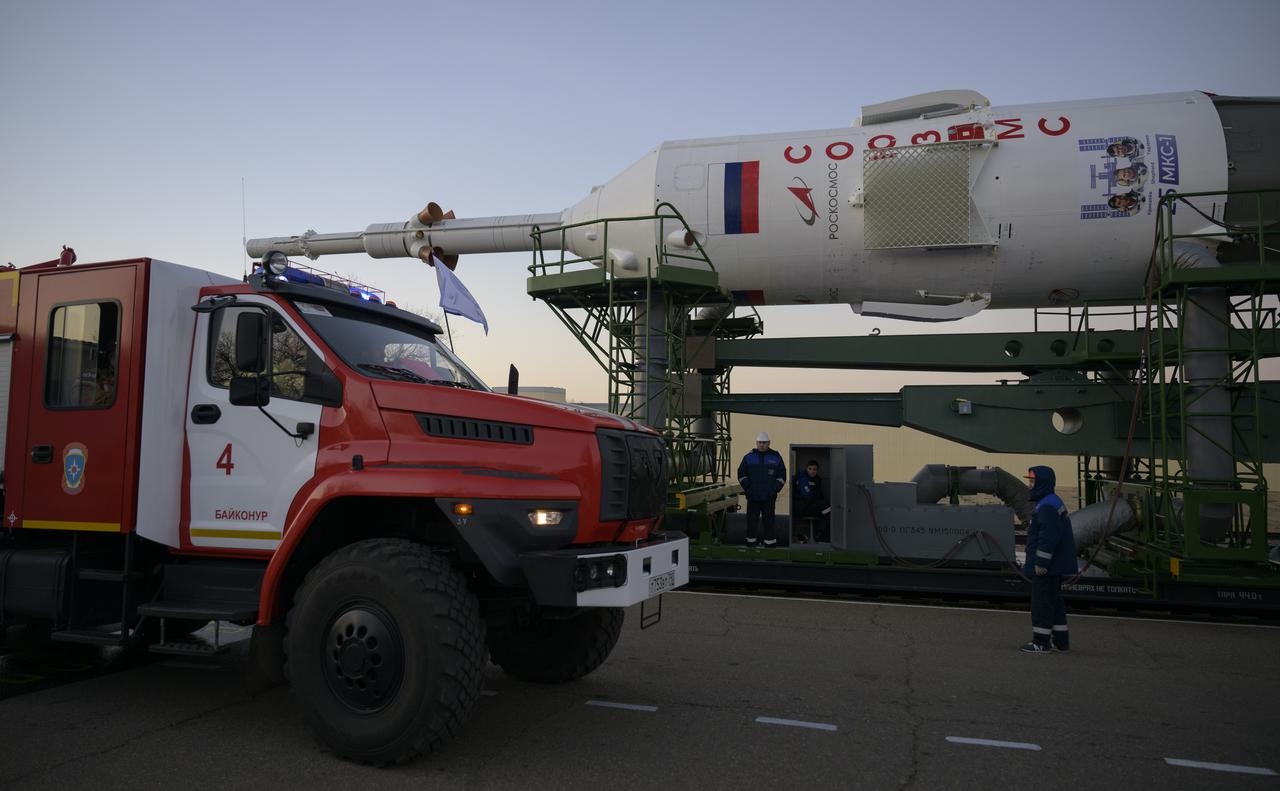
The Soyuz rocket is rolled out by train to the launch pad, Monday, Nov. 24, 2025, at Site 31 of the Baikonur Cosmodrome in Kazakhstan. Expedition 74 crewmembers: NASA astronaut Chris Williams, Roscosmos cosmonauts Sergey Kud-Sverchkov and Sergey Mikaev are scheduled to launch aboard their Soyuz MS-28 spacecraft on November 27. Photo Credit: (NASA/Bill Ingalls)
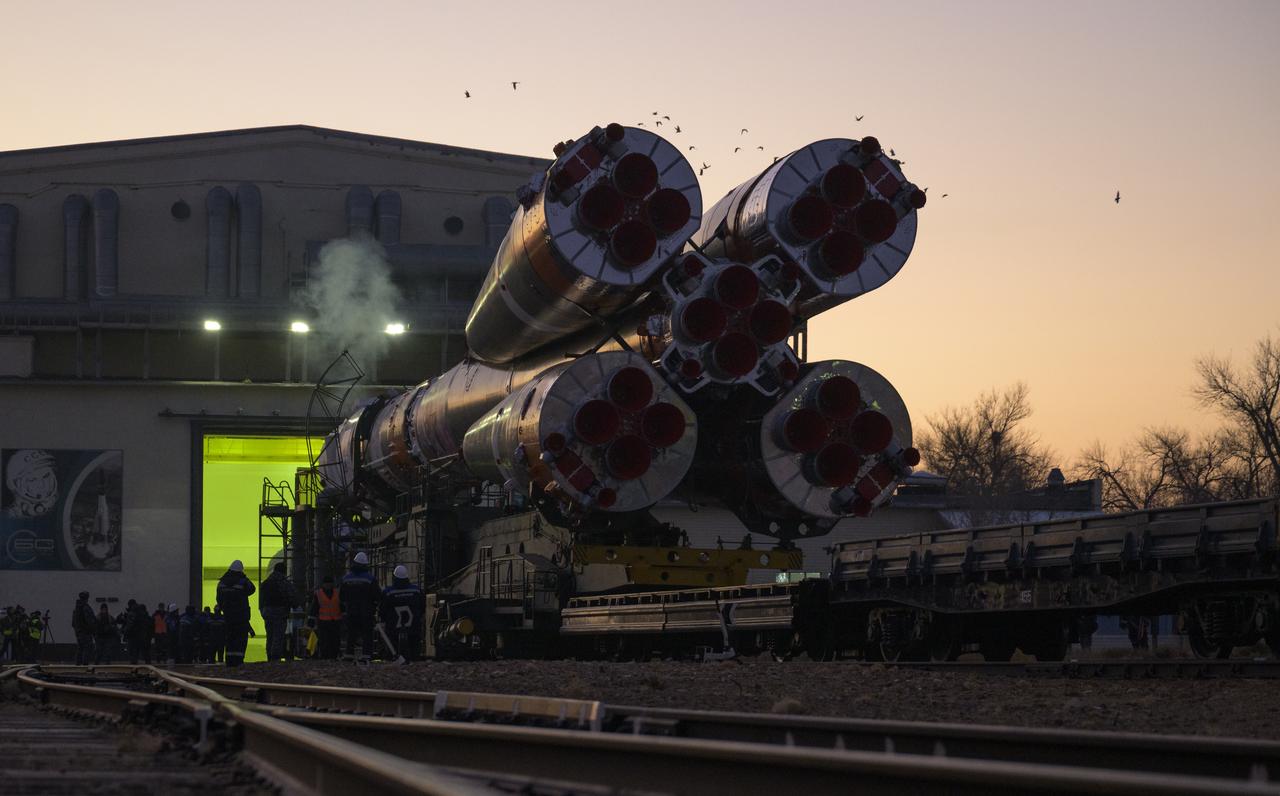
The Soyuz rocket is rolled out by train to the launch pad, Monday, Nov. 24, 2025, at Site 31 of the Baikonur Cosmodrome in Kazakhstan. Expedition 74 crewmembers: NASA astronaut Chris Williams, Roscosmos cosmonauts Sergey Kud-Sverchkov and Sergey Mikaev are scheduled to launch aboard their Soyuz MS-28 spacecraft on November 27. Photo Credit: (NASA/Bill Ingalls)

iss074e0364697 (March 5, 2026) --- NASA astronaut and Expedition 74 flight engineer Chris Williams familiarizes himself with the hardware he will use to install a modification kit and route cables on the port side of the International Space Station during a spacewalk with fellow NASA astronaut Jessica Meir. The duo will use the hardware to prepare the orbital outpost for a future roll‑out solar array that will be installed during a later spacewalk. Credit: NASA/Jack Hathaway
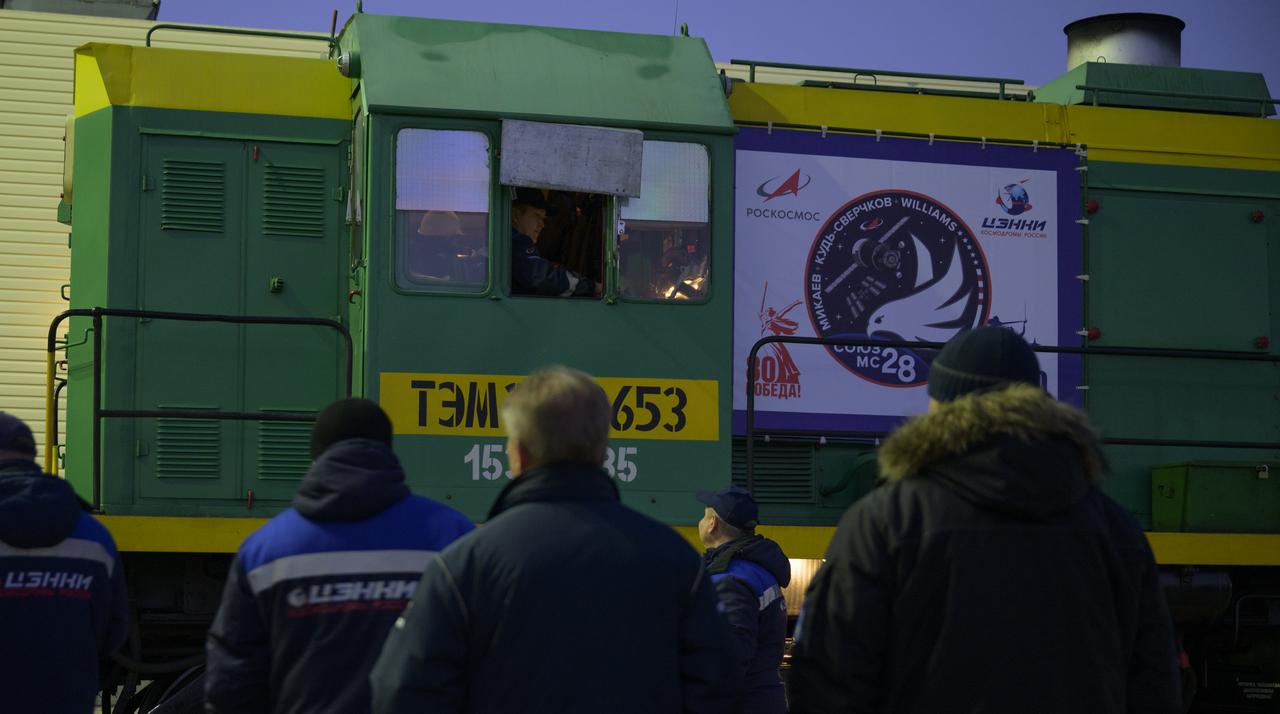
A train is prepared to roll the Soyuz rocket out to the launch pad, Monday, Nov. 24, 2025, at Site 31 of the Baikonur Cosmodrome in Kazakhstan. Expedition 74 crewmembers: NASA astronaut Chris Williams, Roscosmos cosmonauts Sergey Kud-Sverchkov and Sergey Mikaev are scheduled to launch aboard their Soyuz MS-28 spacecraft on November 27. Photo Credit: (NASA/Bill Ingalls)
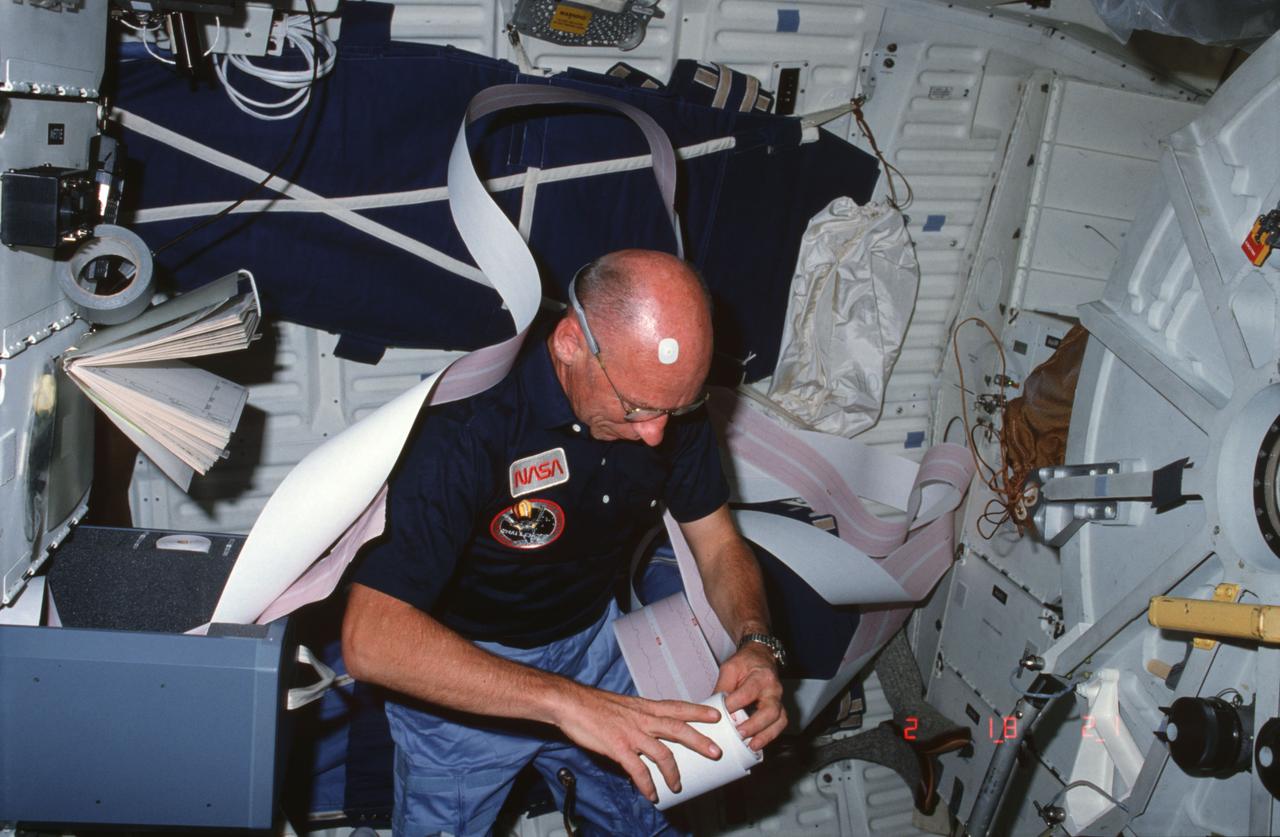
STS008-14-378 (30 Aug-5 Sept 1983) --- Astronaut William E. Thornton, a very busy mission specialist conducting a great deal of bio-medical experimentation, checks a prolific roll of data in the mid deck of the Earth-orbiting Space Shuttle Challenger. The electrode on Dr. Thornton’s forehead indicates that his four crewmates were not his only test subjects during the extensive test on this six-day flight.
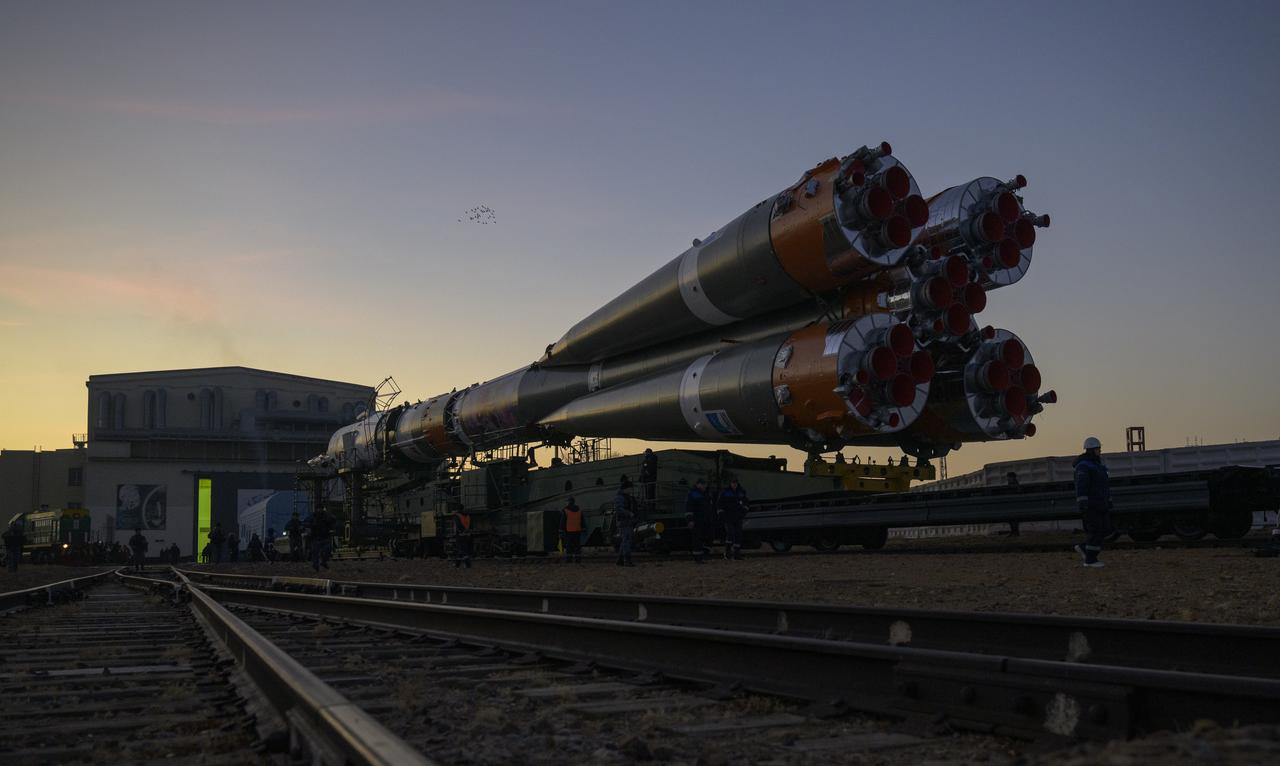
The Soyuz rocket is rolled out by train to the launch pad, Monday, Nov. 24, 2025, at Site 31 of the Baikonur Cosmodrome in Kazakhstan. Expedition 74 crewmembers: NASA astronaut Chris Williams, Roscosmos cosmonauts Sergey Kud-Sverchkov and Sergey Mikaev are scheduled to launch aboard their Soyuz MS-28 spacecraft on November 27. Photo Credit: (NASA/Bill Ingalls)
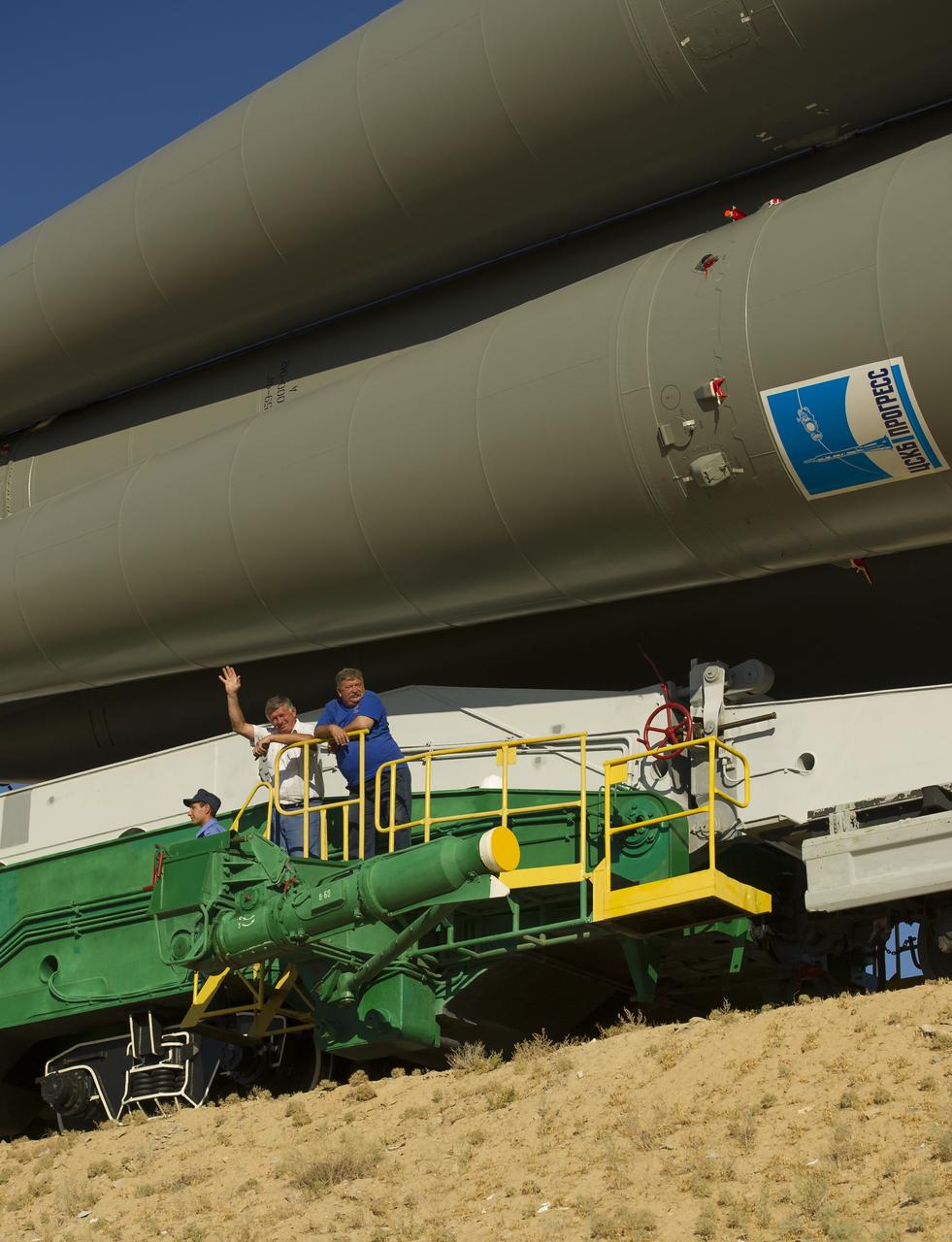
A russian space engineer waves hello as the Soyuz TMA-05M is rolled to its launch pad at the Baikonur Cosmodrome in Kazakhstan, Thursday, July 12, 2012. The launch of the Soyuz spacecraft with Expedition 32 Soyuz Commander Yuri Malenchenko, NASA Flight Engineer Sunita Williams and JAXA (Japan Aerospace Exploration Agency) Flight Engineer Akihiko Hoshide is scheduled for the morning of Sunday, July 15, local time. Photo Credit (NASA/Carla Cioffi)
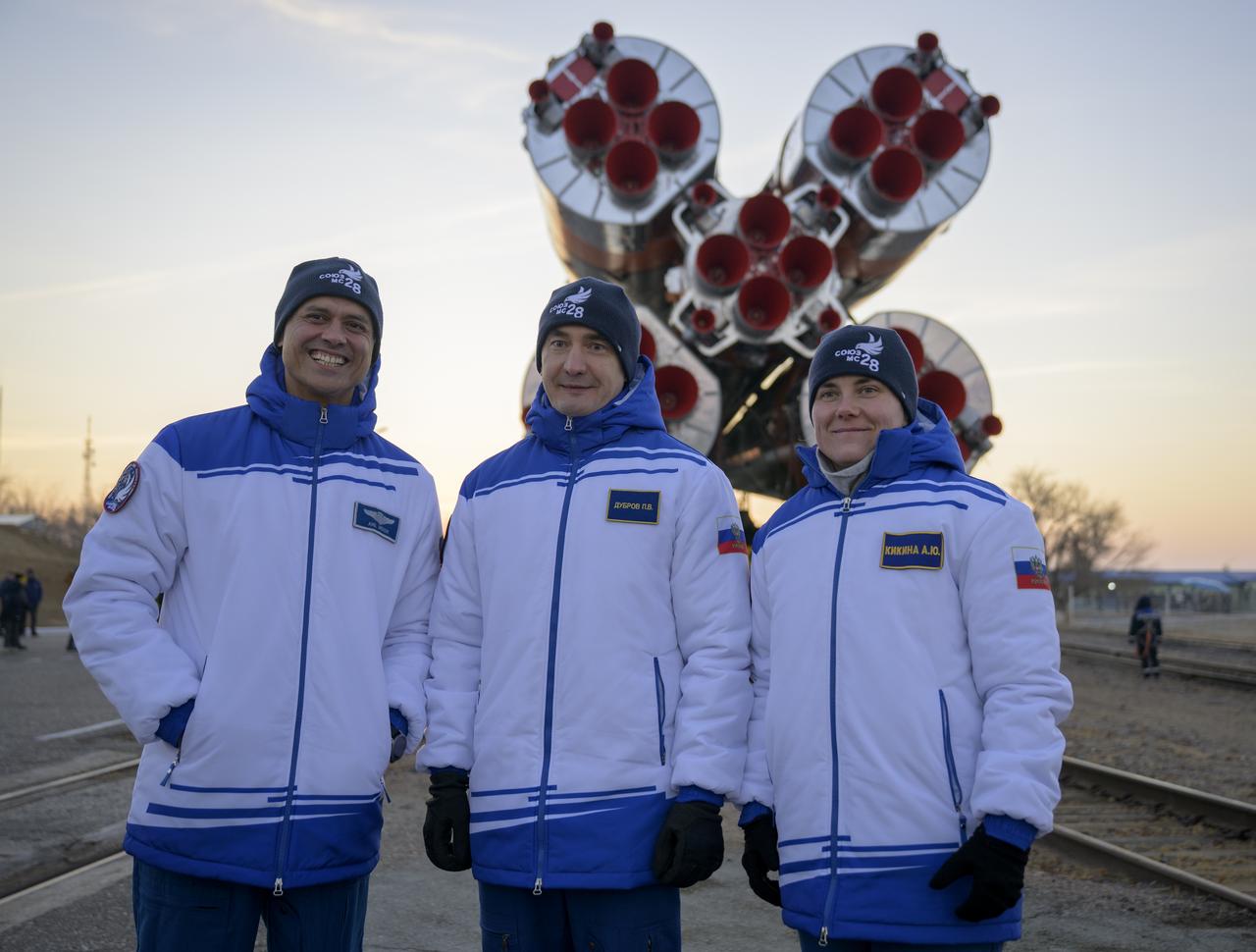
Expedition 74 backup crew members: Anil Menon of NASA, left, Petr Dubrov, and Anna Kikina of Roscosmos, right, pose for a photograph as the Soyuz rocket is rolled out by train to the launch pad, Monday, Nov. 24, 2025, at Site 31 of the Baikonur Cosmodrome in Kazakhstan. Expedition 74 crewmembers: NASA astronaut Chris Williams, Roscosmos cosmonauts Sergey Kud-Sverchkov and Sergey Mikaev are scheduled to launch aboard their Soyuz MS-28 spacecraft on November 27. Photo Credit: (NASA/Bill Ingalls)
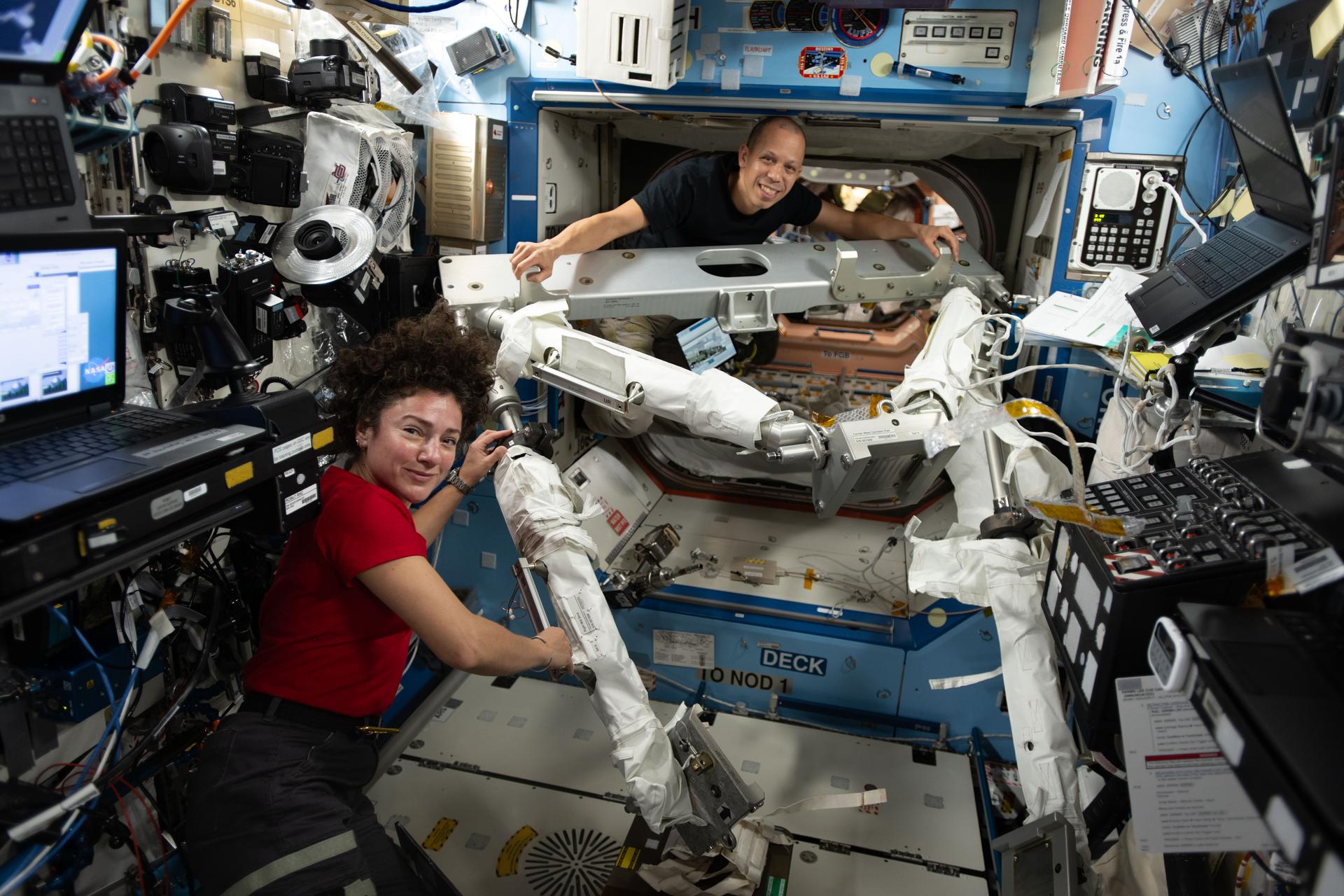
iss074e0364708 (March 5, 2026) --- NASA astronauts Jessica Meir and Chris Williams, both Expedition 74 flight engineers, familiarize themselves with the hardware they will use to install a modification kit and route cables on the port side of the International Space Station. The duo will conduct a spacewalk using the hardware to prepare the orbital outpost for a future roll‑out solar array that will be installed during a later spacewalk. Credit: NASA/Jack Hathaway
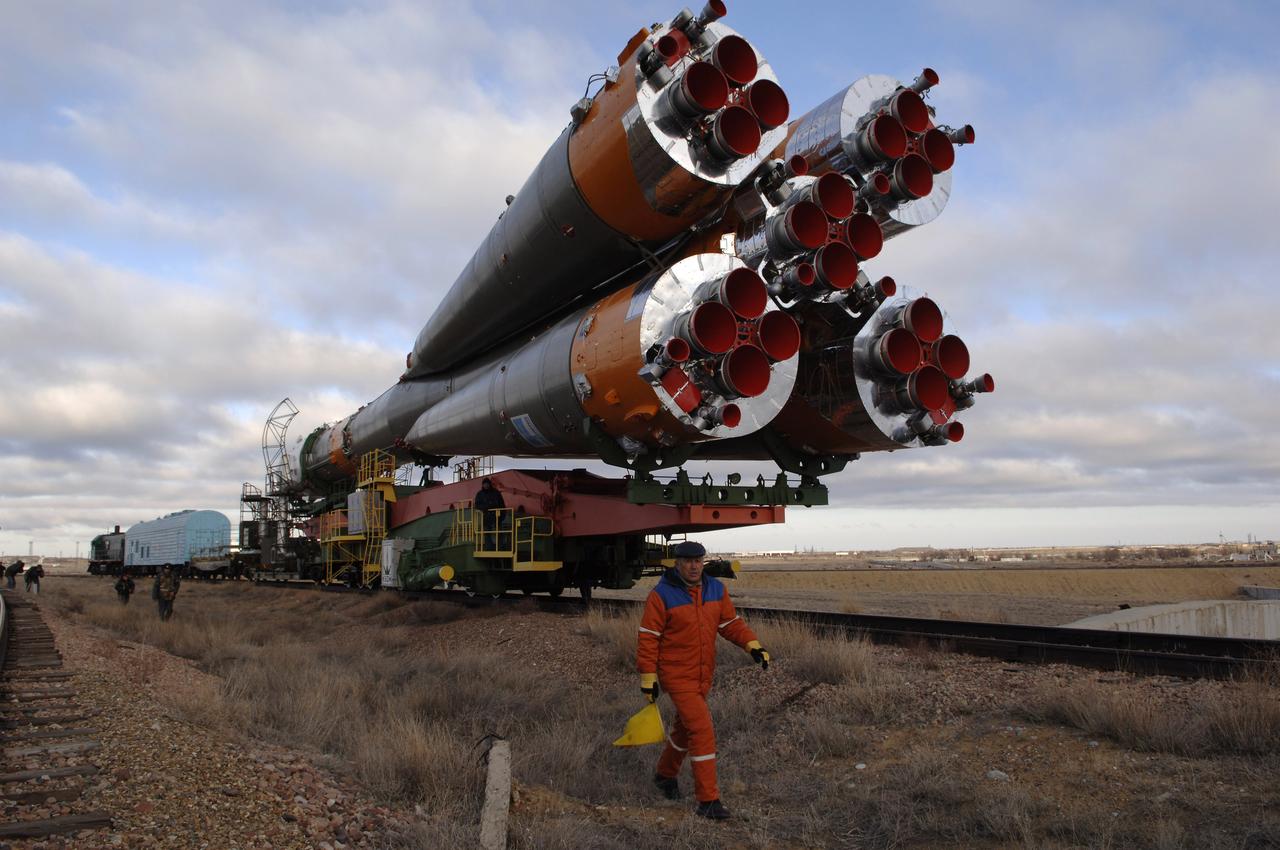
The Soyuz TMA-8 spacecraft and its booster rolled out to the launch pad on Tuesday, March 28, 2006 at the Baikonur Cosmodrome in Baikonur, Kazakhstan for final pre-launch preparations. The Soyuz will blast off on March 30, 2006 to carry Expedition 13 Commander Pavel V. Vinogradov and Science Officer and Flight Engineer Jeffrey N. Williams to the International Space Station for a six-month mission. The spacecraft will also be carrying Brazilian Space Agency Soyuz crew member Marcos Pontes, who will spend 10 days aboard the International Space Station under an agreement with the Russian Federal Space Agency. Photo Credit: (NASA/Bill Ingalls) The Soyuz TMA-8 spacecraft and its booster rolled out to the launch pad on Tuesday, March 28, 2006 at the Baikonur Cosmodrome in Baikonur, Kazakhstan for final pre-launch preparations. The Soyuz will blast off on March 30, 2006 to carry Expedition 13 Commander Pavel V. Vinogradov and Science Officer and Flight Engineer Jeffrey N. Williams to the International Space Station for a six-month mission. The spacecraft will also be carrying Brazilian Space Agency Soyuz crew member Marcos Pontes, who will spend 10 days aboard the International Space Station under an agreement with the Russian Federal Space Agency. Photo Credit: (NASA/Bill Ingalls)

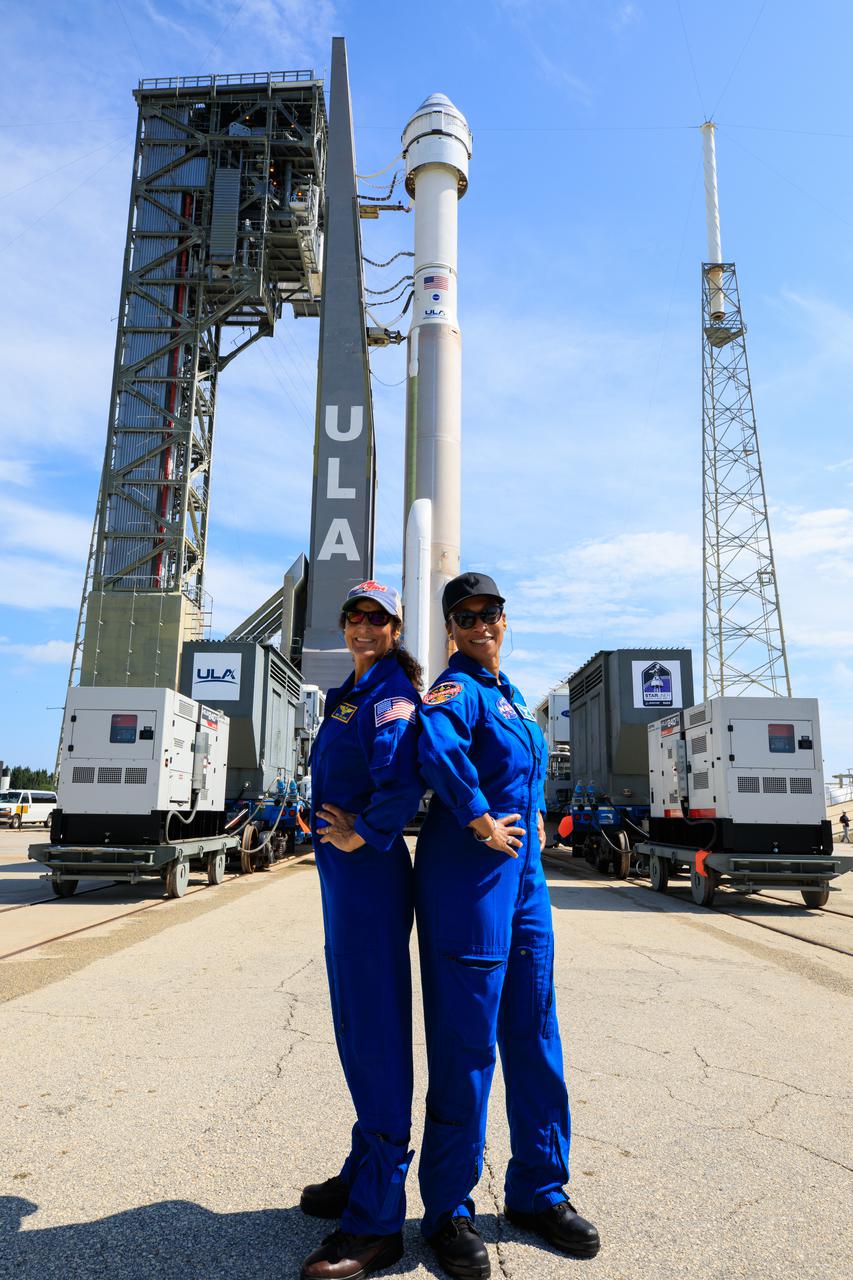
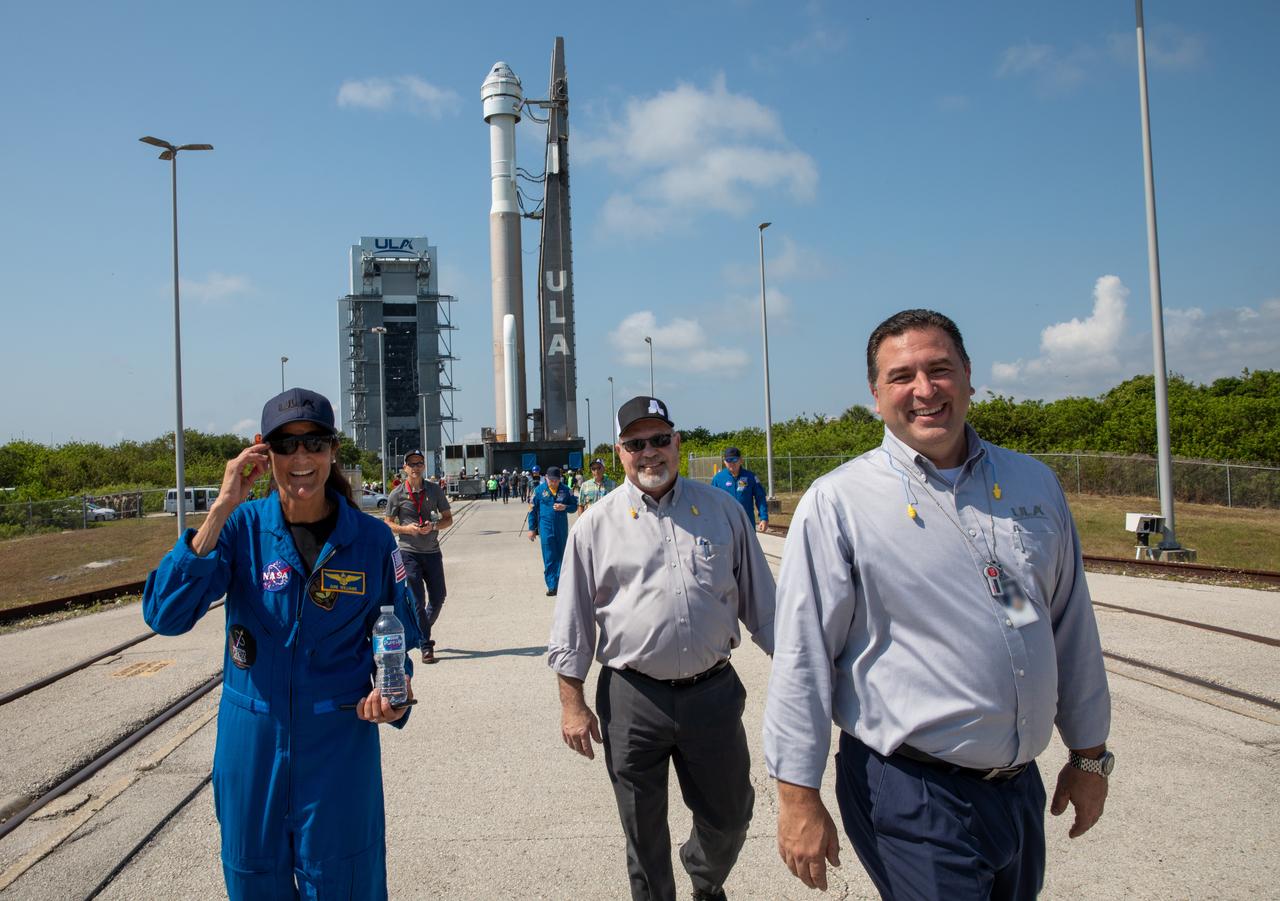
NASA astronauts Butch Wilmore, left, and Suni Williams are seen after a United Launch Alliance Atlas V rocket with Boeing’s CST-100 Starliner spacecraft aboard is seen as it is rolled out of the Vertical Integration Facility to the launch pad at Space Launch Complex 41 ahead of the NASA’s Boeing Crew Flight Test, Saturday, May 4, 2024 at Cape Canaveral Space Force Station in Florida. NASA’s Boeing Crew Flight Test is the first launch with astronauts aboard the Starliner spacecraft and Atlas V rocket to the International Space Station as part of the agency’s Commercial Crew Program. The flight test, targeted for launch at 10:34 p.m. EDT on Monday, May 6, serves as an end-to-end demonstration of Boeing’s crew transportation system and will carry Wilmore and Williams to and from the orbiting laboratory. Photo Credit: (NASA/Joel Kowsky)
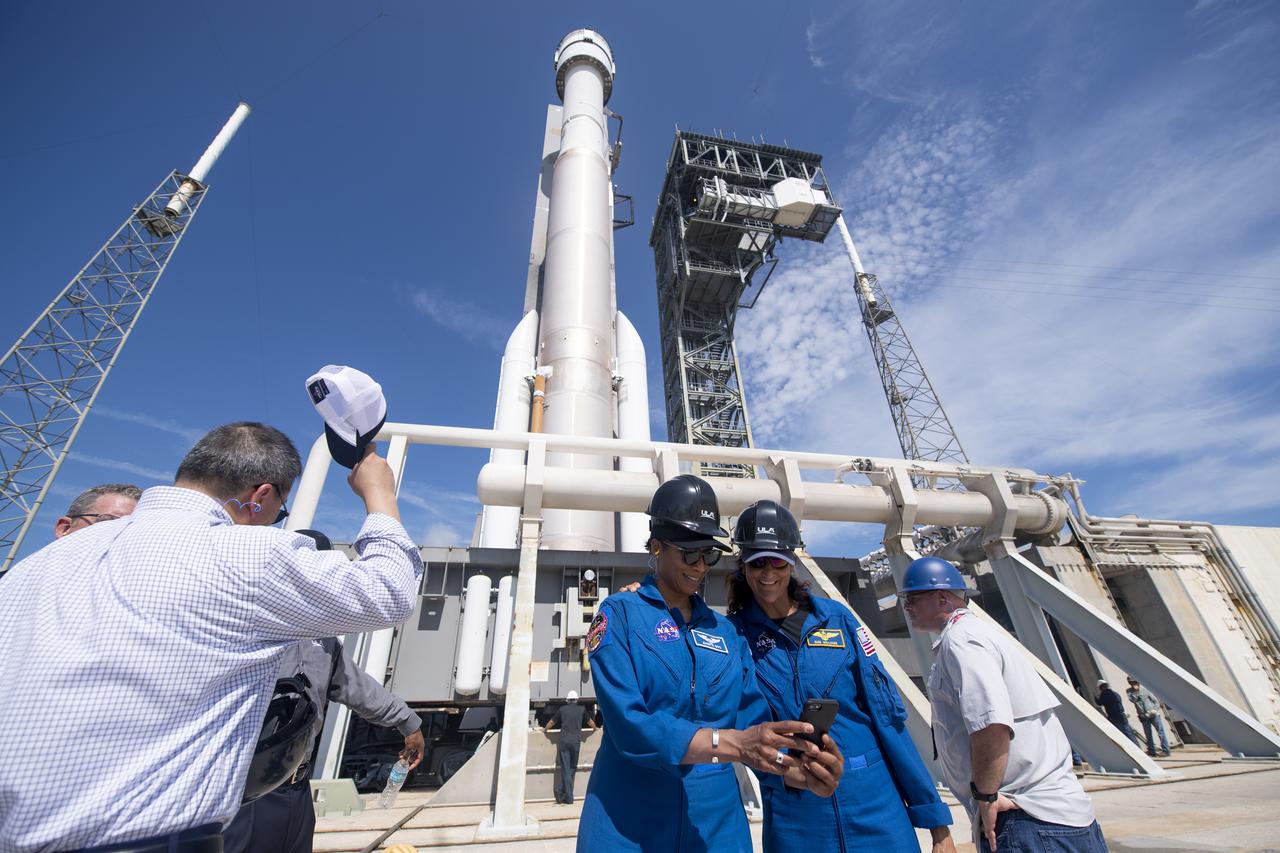
NASA astronauts Jeanette Epps, left, and Suni Williams, right, take a selfie as a United Launch Alliance Atlas V rocket with Boeing’s CST-100 Starliner spacecraft onboard is seen as it is rolled out of the Vertical Integration Facility to the launch pad at Space Launch Complex 41 ahead of the Orbital Flight Test-2 (OFT-2) mission, Thursday, July 29, 2021 at Cape Canaveral Space Force Station in Florida. Boeing’s Orbital Flight Test-2 will be Starliner’s second uncrewed flight test and will dock to the International Space Station as part of NASA's Commercial Crew Program. The mission, currently targeted for launch at 2:53 p.m. EDT Friday, July 30, will serve as an end-to-end test of the system's capabilities. Epps and Williams are assigned to fly on Starliner’s first operation mission. Photo Credit: (NASA/Joel Kowsky)
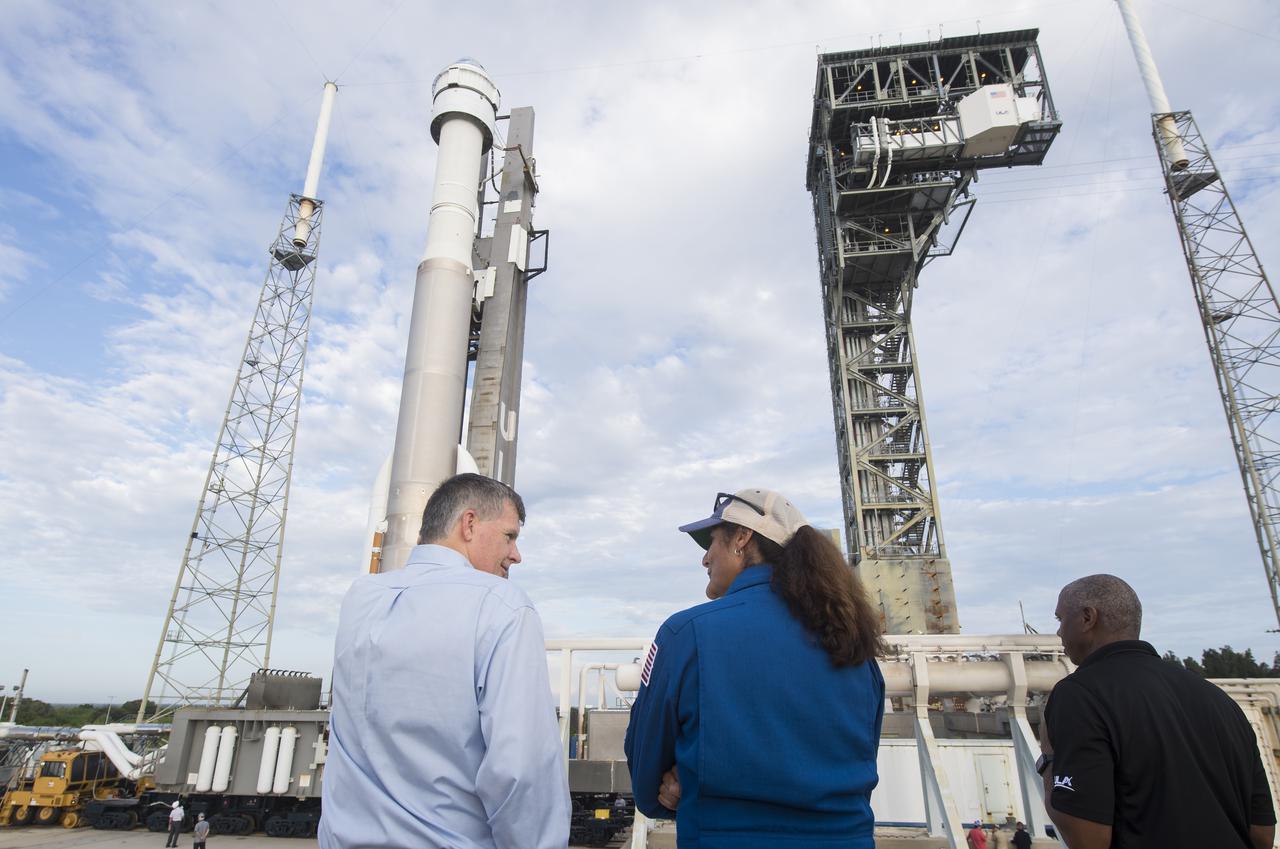
Steve Stich, manager of NASA’s Commercial Crew Program, left, and NASA astronaut Suni Williams, center, are seen as the United Launch Alliance Atlas V rocket with Boeing’s CST-100 Starliner spacecraft aboard is rolled out of the Vertical Integration Facility to the launch pad at Space Launch Complex 41 ahead of the Orbital Flight Test-2 (OFT-2) mission, Monday, Aug. 2, 2021 at Cape Canaveral Space Force Station in Florida. Boeing’s Orbital Flight Test-2 will be Starliner’s second uncrewed flight test and will dock to the International Space Station as part of NASA's Commercial Crew Program. The mission, currently targeted for launch at 1:20 p.m. EDT Tuesday, Aug. 3, will serve as an end-to-end test of the system's capabilities. Williams is scheduled to fly aboard Starliner’s first crew rotation mission. Photo Credit: (NASA/Aubrey Gemignani)
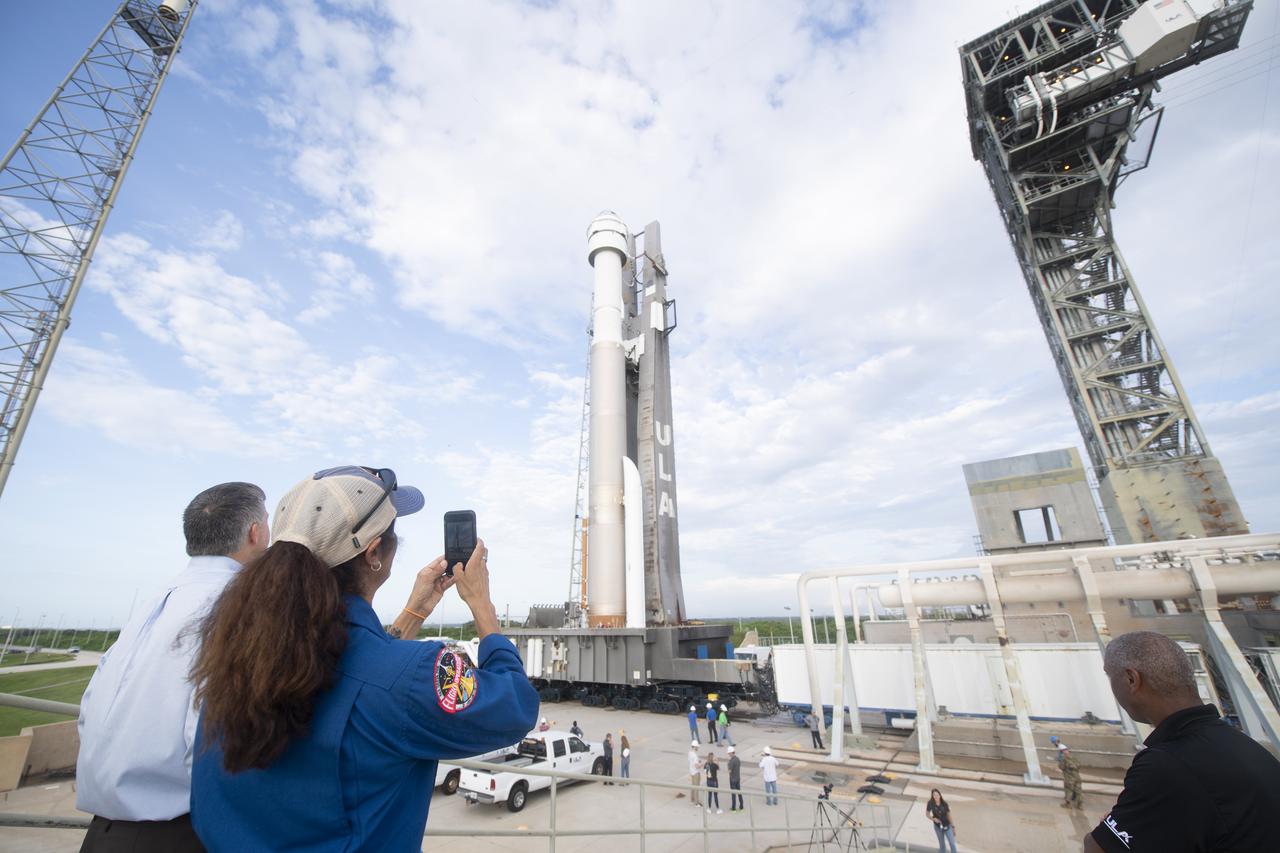
Steve Stich, manager of NASA’s Commercial Crew Program, left, and NASA astronaut Suni Williams are seen as a United Launch Alliance Atlas V rocket with Boeing’s CST-100 Starliner spacecraft aboard is seen as it is rolled out of the Vertical Integration Facility to the launch pad at Space Launch Complex 41 ahead of the Orbital Flight Test-2 (OFT-2) mission, Monday, Aug. 2, 2021 at Cape Canaveral Space Force Station in Florida. Boeing’s Orbital Flight Test-2 will be Starliner’s second uncrewed flight test and will dock to the International Space Station as part of NASA's Commercial Crew Program. The mission, currently targeted for launch at 1:20 p.m. EDT Tuesday, Aug. 3, will serve as an end-to-end test of the system's capabilities. Williams is scheduled to fly aboard Starliner’s first crew rotation mission. Photo Credit: (NASA/Joel Kowsky)
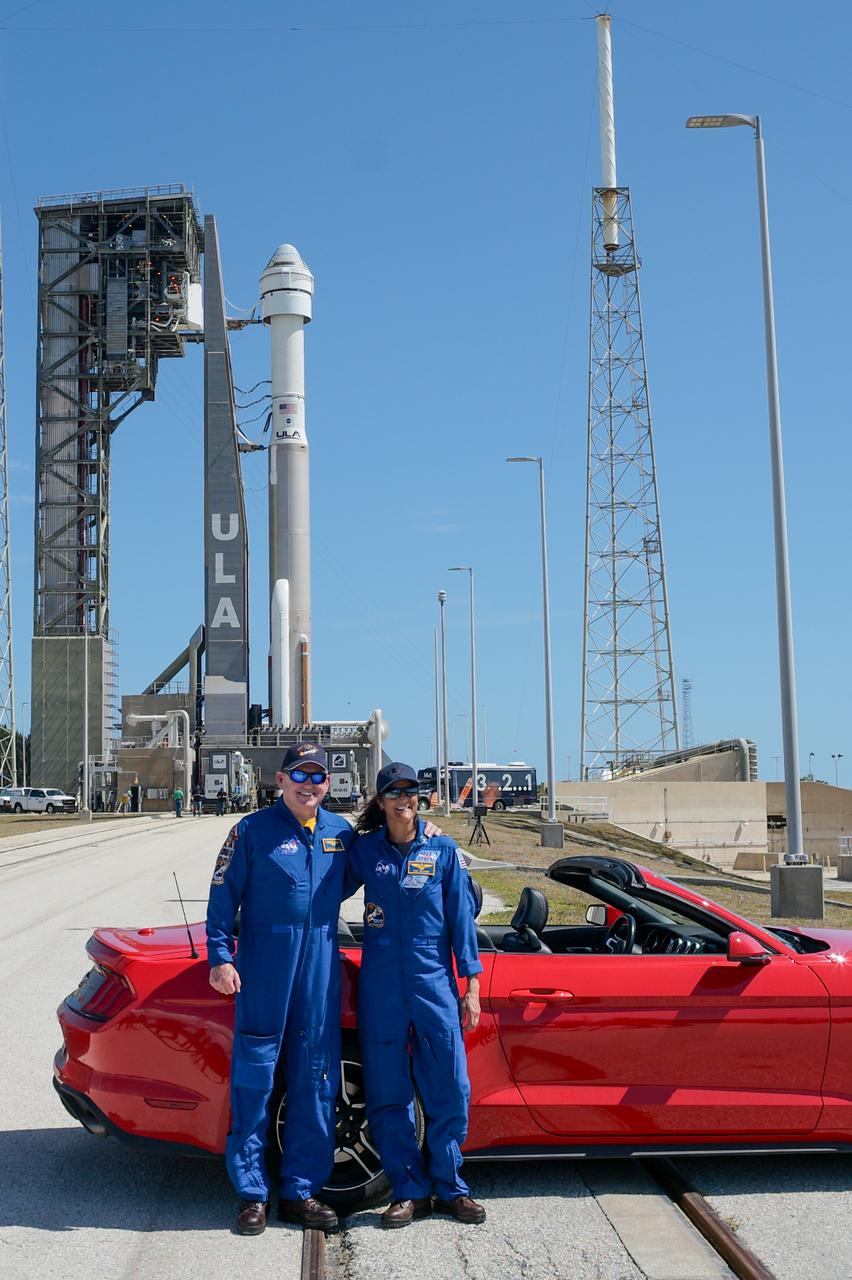
NASA astronauts Butch Wilmore and Suni Williams pose for a picture after a United Launch Alliance Atlas V rocket with Boeing’s CST-100 Starliner spacecraft aboard was rolled out of the Vertical Integration Facility to the launch pad at Space Launch Complex 41 ahead of the NASA’s Boeing Crew Flight Test, Saturday, May 4, 2024 at Cape Canaveral Space Force Station in Florida. NASA’s Boeing Crew Flight Test is the first launch with astronauts aboard the Starliner spacecraft and Atlas V rocket to the International Space Station as part of the agency’s Commercial Crew Program. The flight test, targeted for launch at 10:34 p.m. EDT on Monday, May 6, serves as an end-to-end demonstration of Boeing’s crew transportation system and will carry Wilmore and Williams to and from the orbiting laboratory. Photo Credit: (NASA/Joel Kowsky)
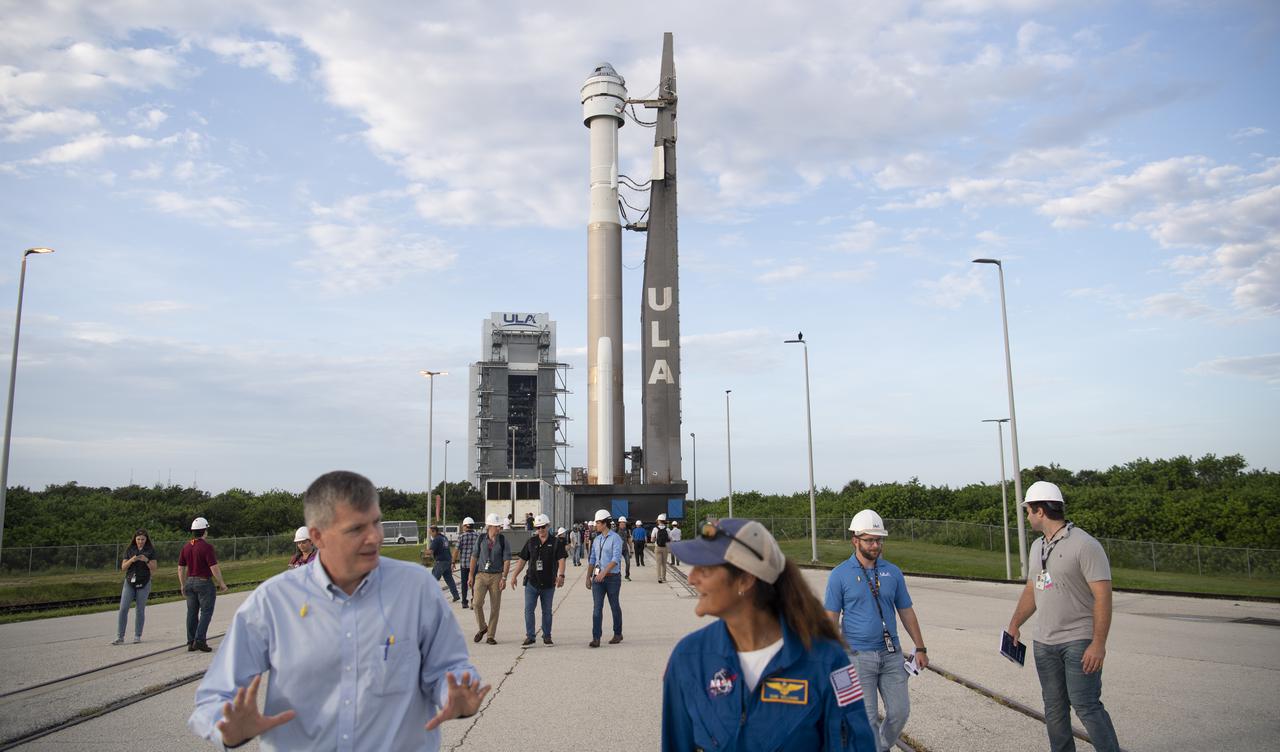
Steve Stich, manager of NASA’s Commercial Crew Program, left, and NASA astronaut Suni Williams are seen as a United Launch Alliance Atlas V rocket with Boeing’s CST-100 Starliner spacecraft aboard is seen as it is rolled out of the Vertical Integration Facility to the launch pad at Space Launch Complex 41 ahead of the Orbital Flight Test-2 (OFT-2) mission, Monday, Aug. 2, 2021 at Cape Canaveral Space Force Station in Florida. Boeing’s Orbital Flight Test-2 will be Starliner’s second uncrewed flight test and will dock to the International Space Station as part of NASA's Commercial Crew Program. The mission, currently targeted for launch at 1:20 p.m. EDT Tuesday, Aug. 3, will serve as an end-to-end test of the system's capabilities. Williams is scheduled to fly aboard Starliner’s first crew rotation mission. Photo Credit: (NASA/Joel Kowsky)
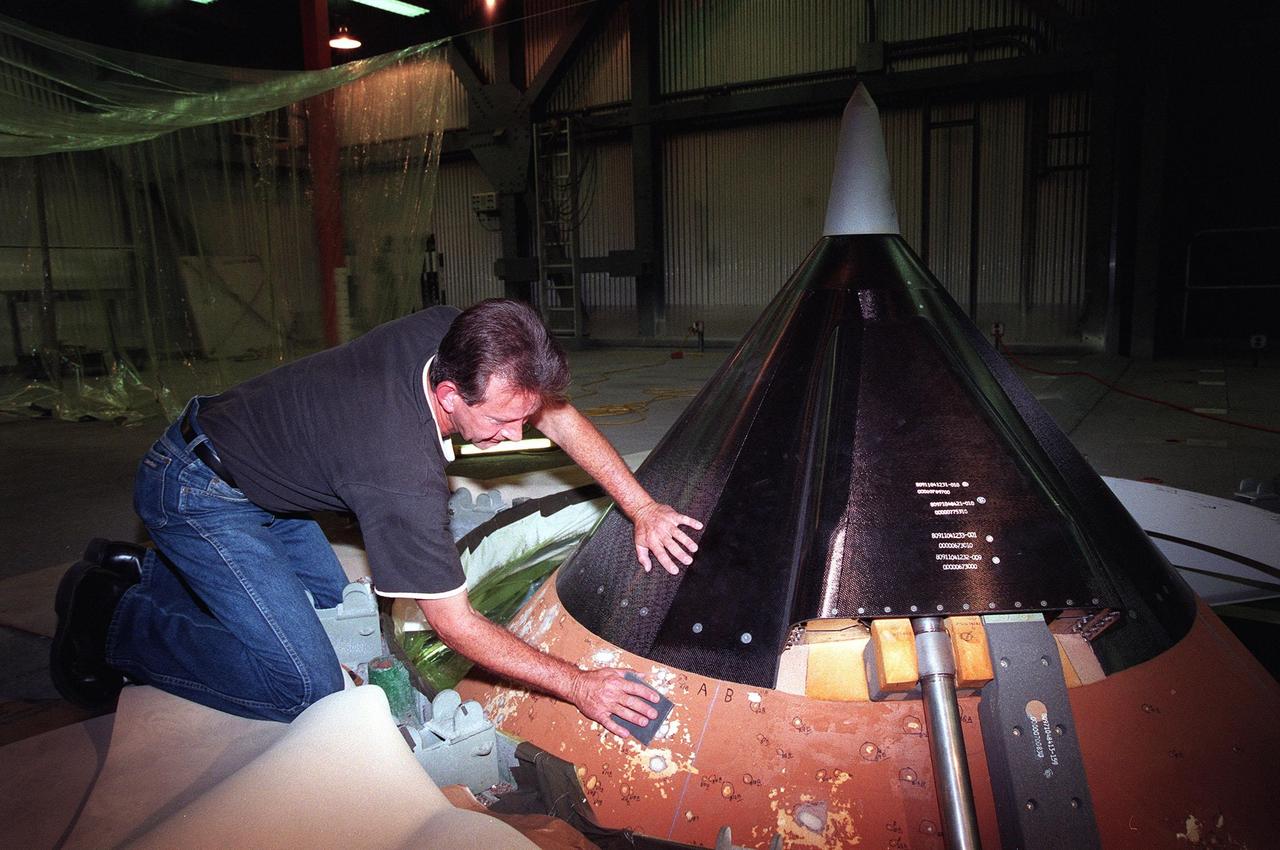
KENNEDY SPACE CENTER, FLA. -- In the Vehicle Assembly Building (VAB), United Space Alliance technician Robert Williams sands the repaired areas near the top of Space Shuttle Discovery's external tank. Repairs were required for damage caused by hail during recent storms. Because access to all of the damaged areas was not possible at the pad, the Shuttle was rolled back from Pad 39B to the VAB. The work is expected to take two to three days, allowing Discovery to roll back to the pad late this week for launch of mission STS-96, the 94th launch in the Space Shuttle Program. Liftoff will occur no earlier than May 27. STS-96 is a logistics and resupply mission for the International Space Station, carrying such payloads as a Russian crane, the Strela; a U.S.-built crane; the Spacehab Oceaneering Space System Box (SHOSS), a logistics items carrier; and STARSHINE, a student-shared experiment
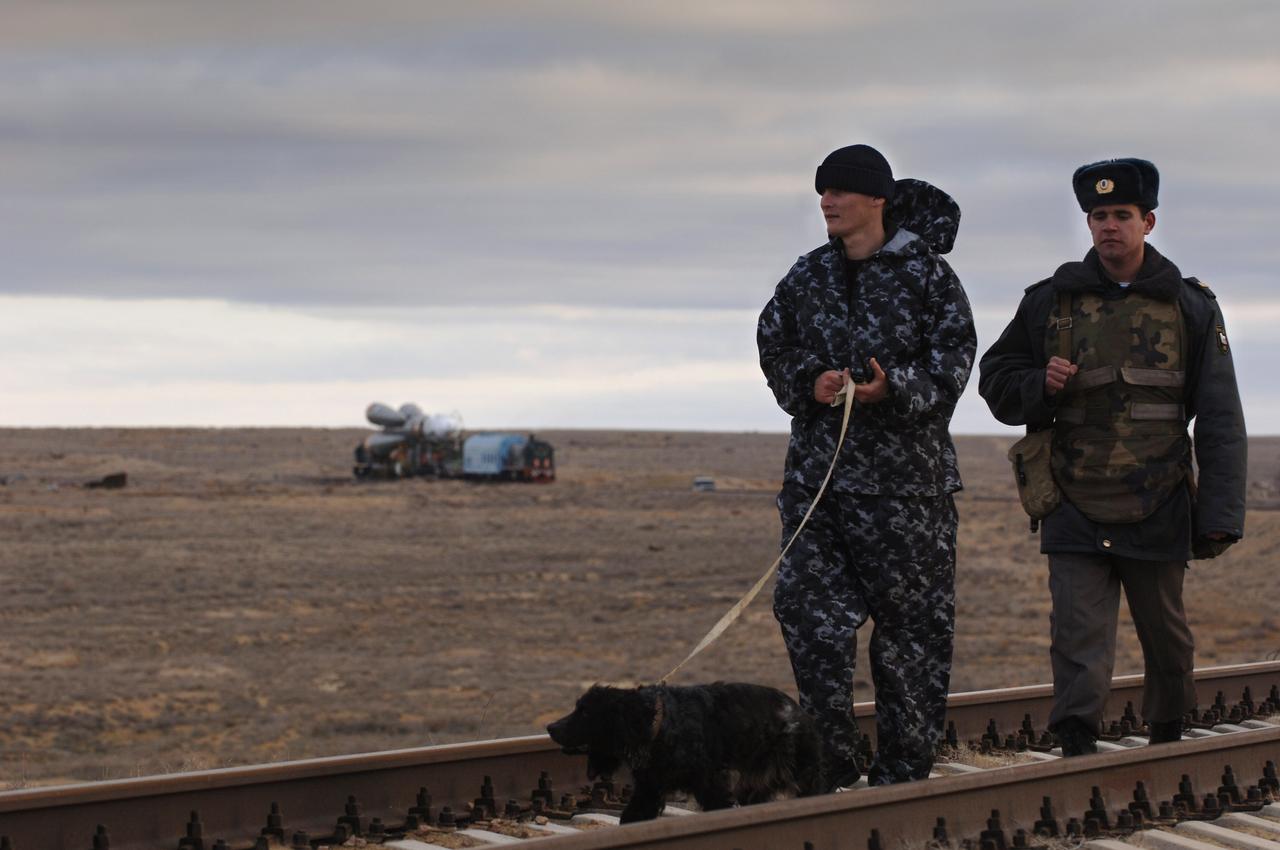
The Soyuz TMA-8 spacecraft and its booster rolled out to the launch pad on Tuesday, March 28, 2006 at the Baikonur Cosmodrome in Baikonur, Kazakhstan for final pre-launch preparations. The Soyuz will blast off on March 30, 2006 to carry Expedition 13 Commander Pavel V. Vinogradov and Science Officer and Flight Engineer Jeffrey N. Williams to the International Space Station for a six-month mission. The spacecraft will also be carrying Brazilian Space Agency Soyuz crew member Marcos Pontes, who will spend 10 days aboard the International Space Station under an agreement with the Russian Federal Space Agency. Photo Credit: (NASA/Bill Ingalls)
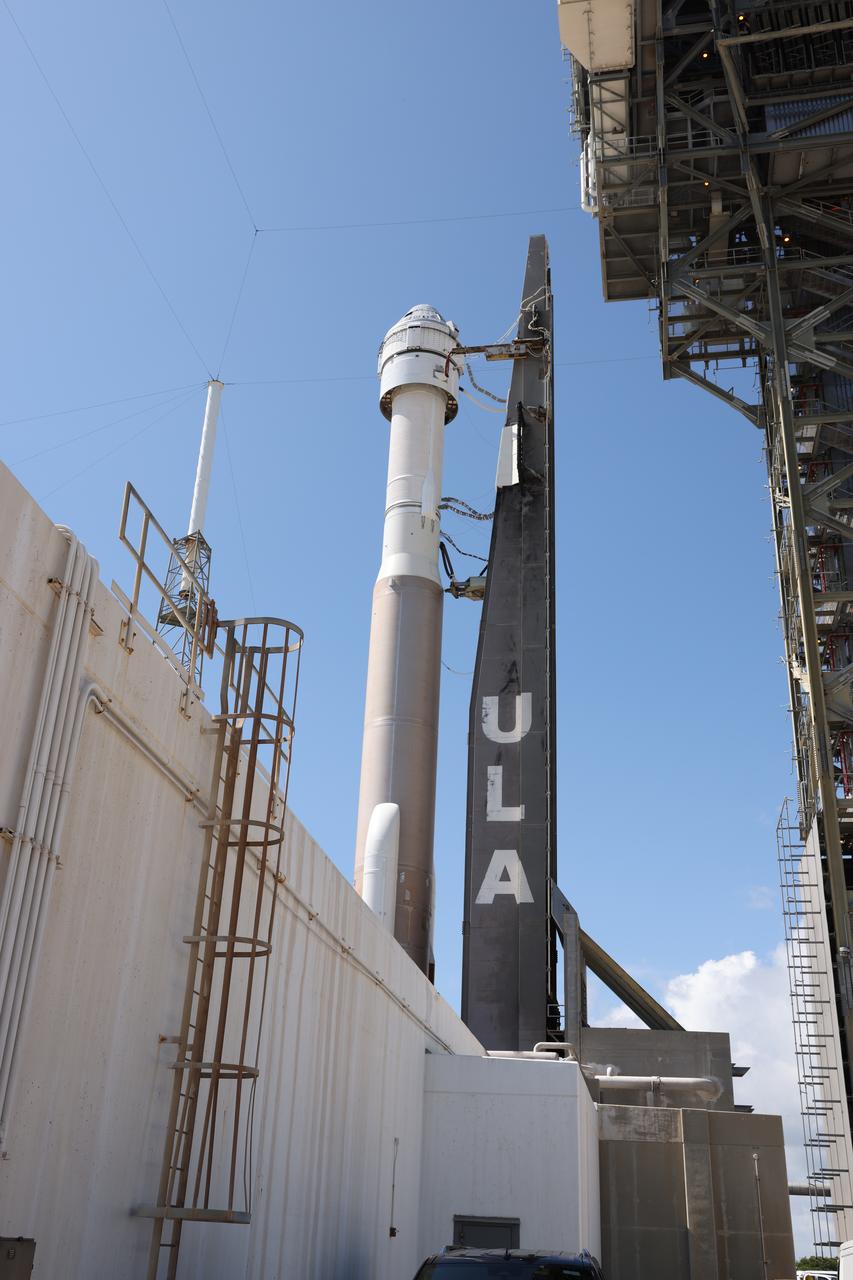
Boeing’s Starliner spacecraft atop the United Launch Alliance Atlas V rocket rolls out from the Vertical Integration Facility to the launch pad of Space Launch Complex-41 at Cape Canaveral Space Force Station in Florida on Saturday, May 4, 2024, ahead of NASA’s Boeing Crew Flight Test. As part of the agency’s Commercial Crew Program, NASA astronauts Butch Wilmore and Suni Williams are the first to launch to the International Space Station aboard Boeing’s Starliner spacecraft. Liftoff is scheduled for 10:34 p.m. ET Monday, May 6.
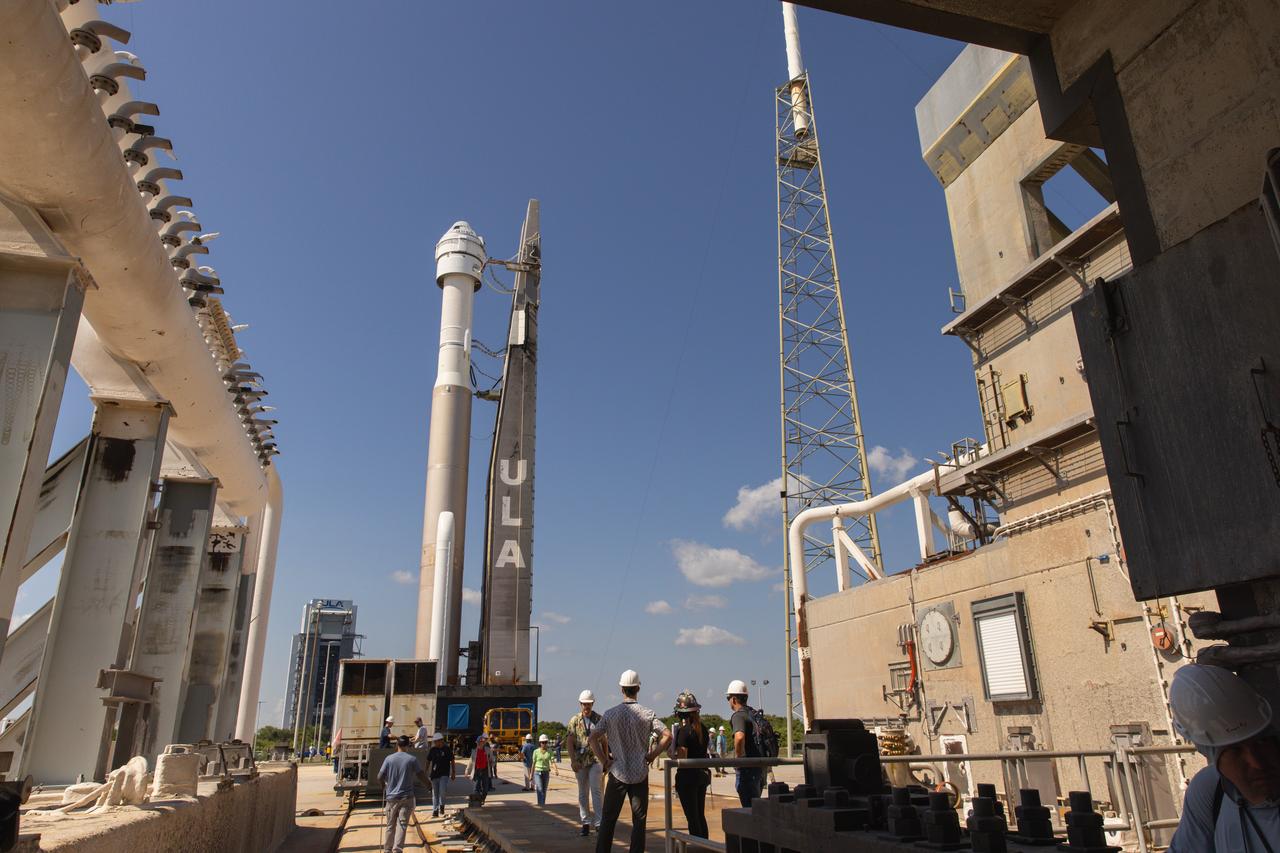
Boeing’s Starliner spacecraft atop the United Launch Alliance Atlas V rocket rolls out from the Vertical Integration Facility to the launch pad of Space Launch Complex-41 at Cape Canaveral Space Force Station in Florida on Thursday, May 30, 2024, ahead of NASA’s Boeing Crew Flight Test. As part of the agency’s Commercial Crew Program, NASA astronauts Butch Wilmore and Suni Williams are the first to launch to the International Space Station aboard Boeing’s Starliner spacecraft. Liftoff is scheduled for 12:25 p.m. ET on Saturday, June 1.
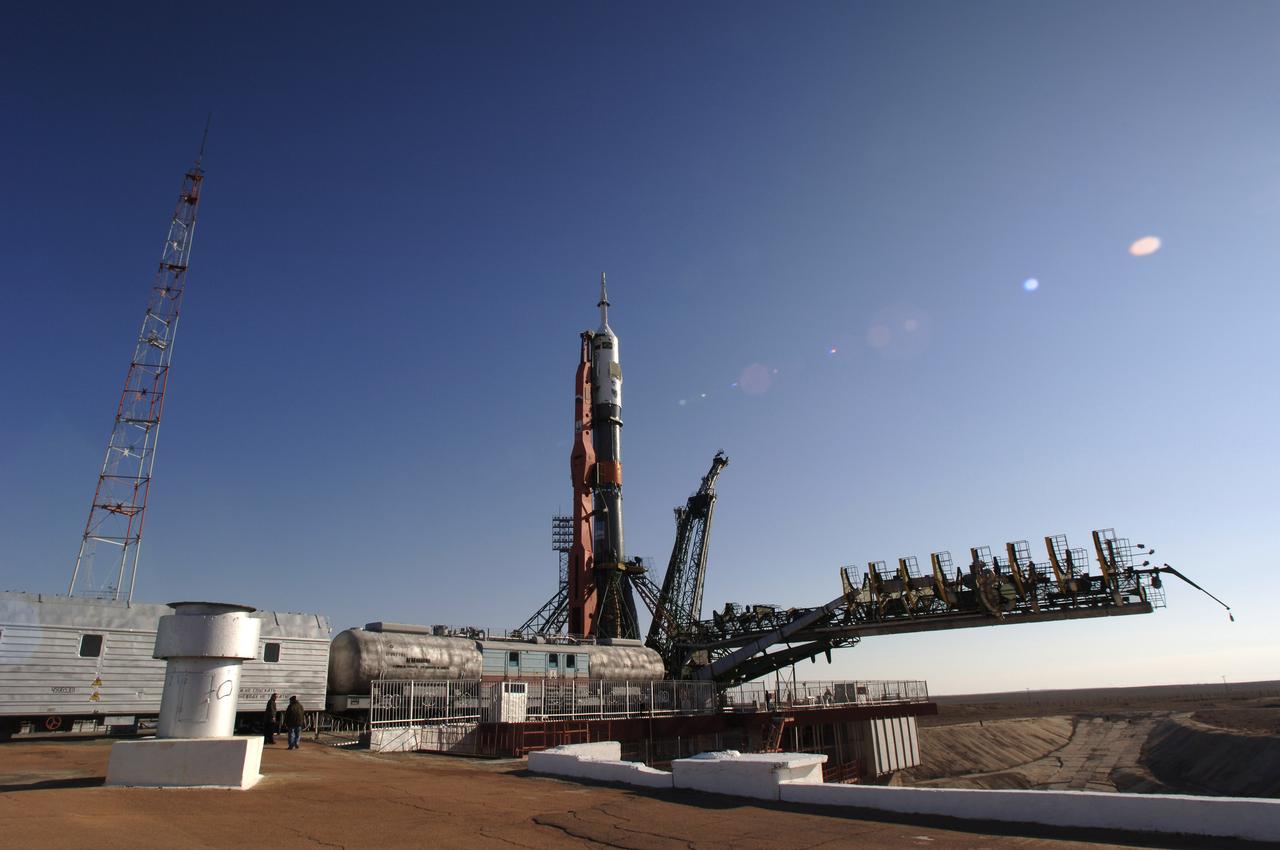
The Soyuz TMA-8 spacecraft and its booster rolled out to the launch pad on Tuesday, March 28, 2006 at the Baikonur Cosmodrome in Baikonur, Kazakhstan for final pre-launch preparations. The Soyuz will blast off on March 30, 2006 to carry Expedition 13 Commander Pavel V. Vinogradov and Science Officer and Flight Engineer Jeffrey N. Williams to the International Space Station for a six-month mission. The spacecraft will also be carrying Brazilian Space Agency Soyuz crew member Marcos Pontes, who will spend 10 days aboard the International Space Station under an agreement with the Russian Federal Space Agency. Photo Credit: (NASA/Bill Ingalls)
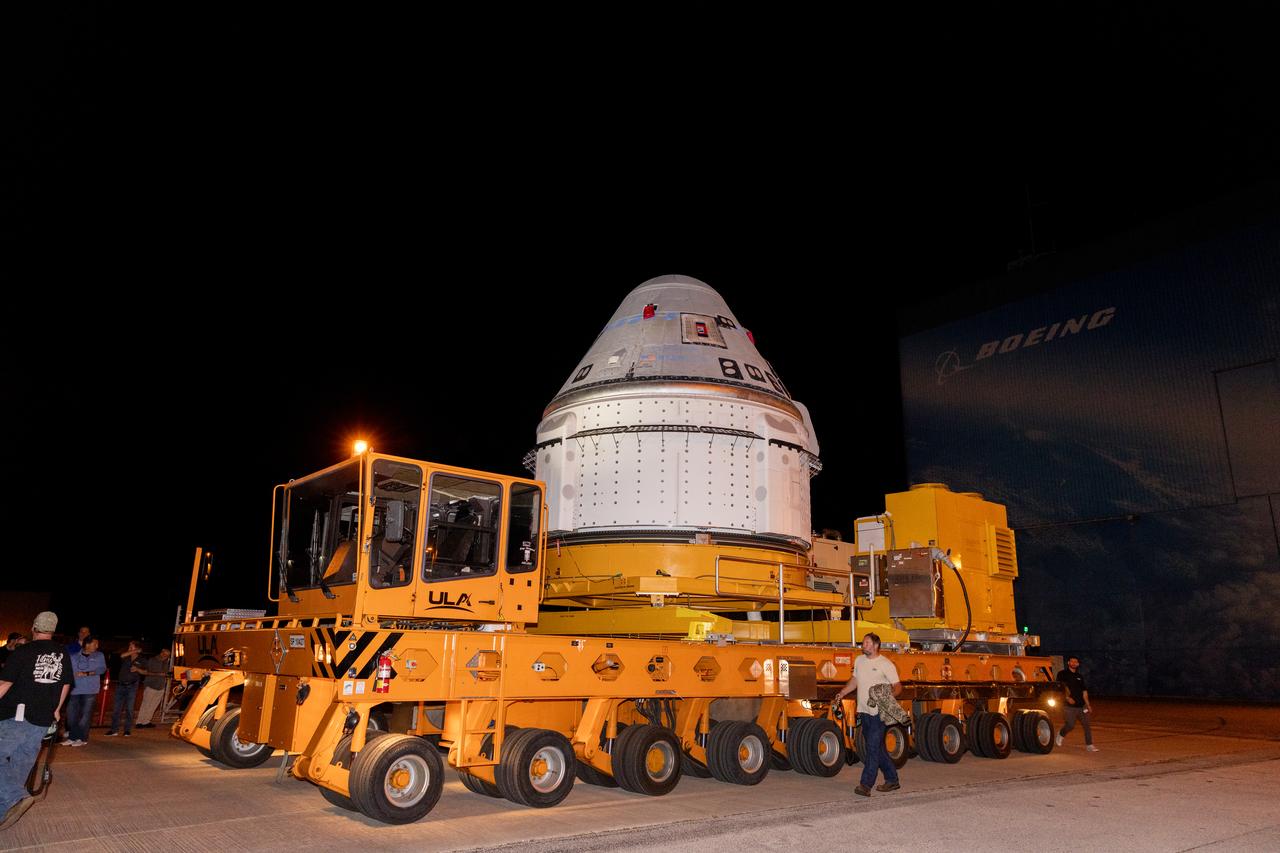
Boeing’s Starliner spacecraft, set to carry NASA astronauts Butch Wilmore and Suni Williams on the agency’s Boeing Crew Flight Test to the International Space Station, rolls out of the company’s Commercial Crew and Cargo Processing Facility at NASA’s Kennedy Space Center in Florida on Tuesday, April 16, 2024. The spacecraft will be transported to ULA’s (United Launch Alliance) Vertical Integration Facility at Space Launch Complex-41 at Cape Canaveral Space Force Station to be lifted and connected to the Atlas V rocket for launch no earlier than Monday, May 6, 2024.
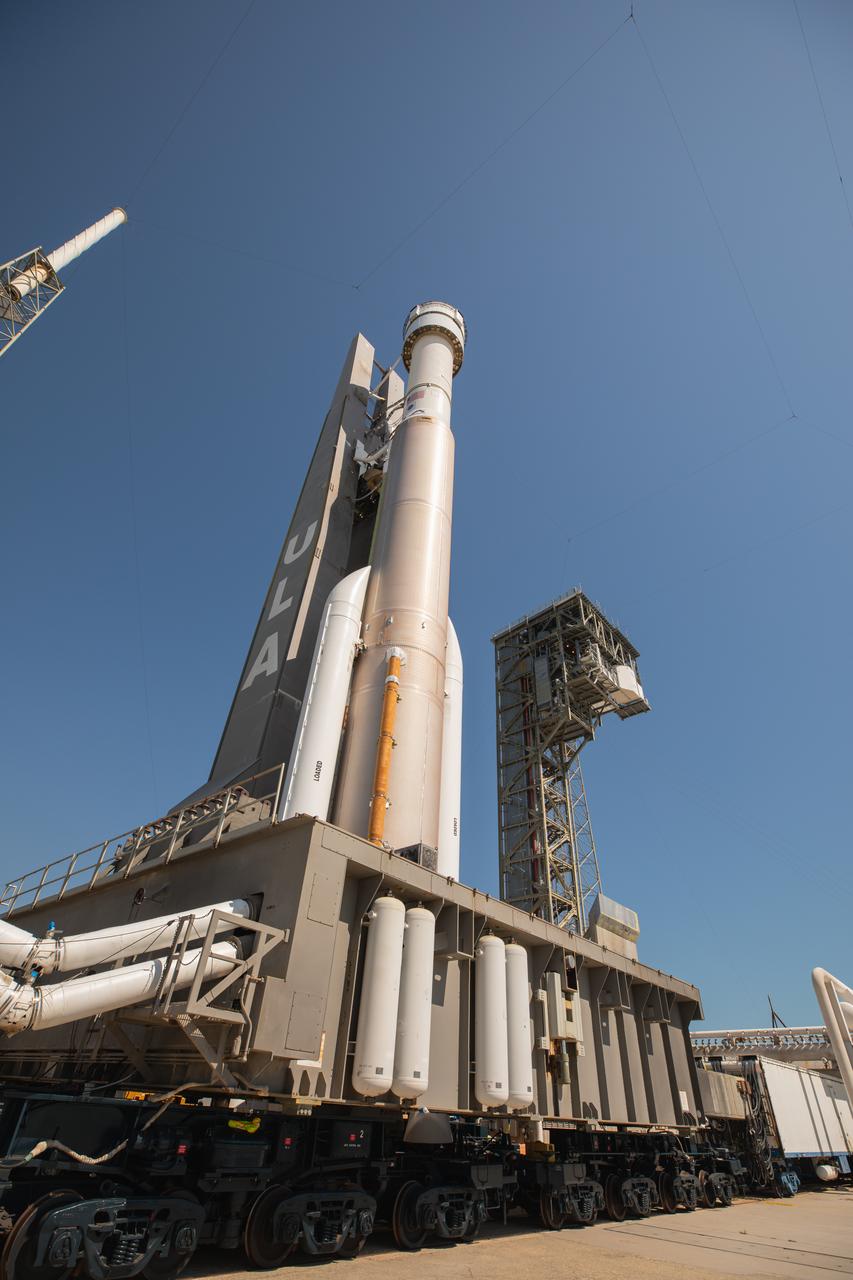
Boeing’s Starliner spacecraft atop the United Launch Alliance Atlas V rocket rolls out from the Vertical Integration Facility to the launch pad of Space Launch Complex-41 at Cape Canaveral Space Force Station in Florida on Thursday, May 30, 2024, ahead of NASA’s Boeing Crew Flight Test. As part of the agency’s Commercial Crew Program, NASA astronauts Butch Wilmore and Suni Williams are the first to launch to the International Space Station aboard Boeing’s Starliner spacecraft. Liftoff is scheduled for 12:25 p.m. ET on Saturday, June 1.
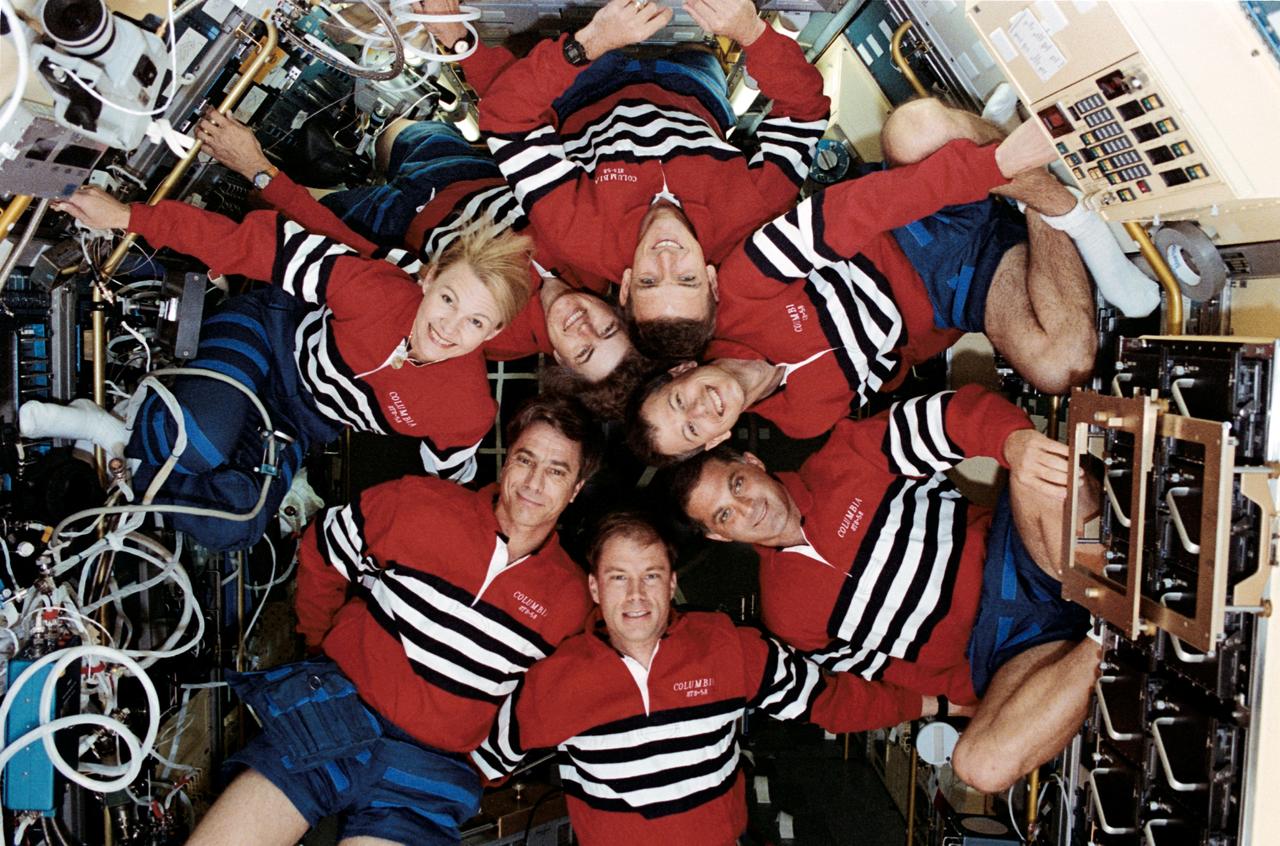
STS058-16-008 (18 Oct.-1 Nov. 1993) --- Inside the science module aboard the Earth-orbiting space shuttle Columbia, a pre-set 35mm camera recorded the traditional inflight portrait of the STS-58 crew. Pictured are (counter-clockwise from the roll of tape at upper right) payload specialist Martin J. Fettman, DVM; William S. McArthur and Shannon W. Lucid, mission specialists; Rhea Seddon, payload commander; John E. Blaha, mission commander; Richard A. Searfoss, pilot; and David A. Wolf, mission specialist. Photo credit: NASA

Boeing’s Starliner spacecraft, set to carry NASA astronauts Butch Wilmore and Suni Williams on the agency’s Boeing Crew Flight Test to the International Space Station, rolls out of the company’s Commercial Crew and Cargo Processing Facility at NASA’s Kennedy Space Center in Florida on Tuesday, April 16, 2024. The spacecraft will be transported to ULA’s (United Launch Alliance) Vertical Integration Facility at Space Launch Complex-41 at Cape Canaveral Space Force Station to be lifted and connected to the Atlas V rocket for launch no earlier than Monday, May 6, 2024.
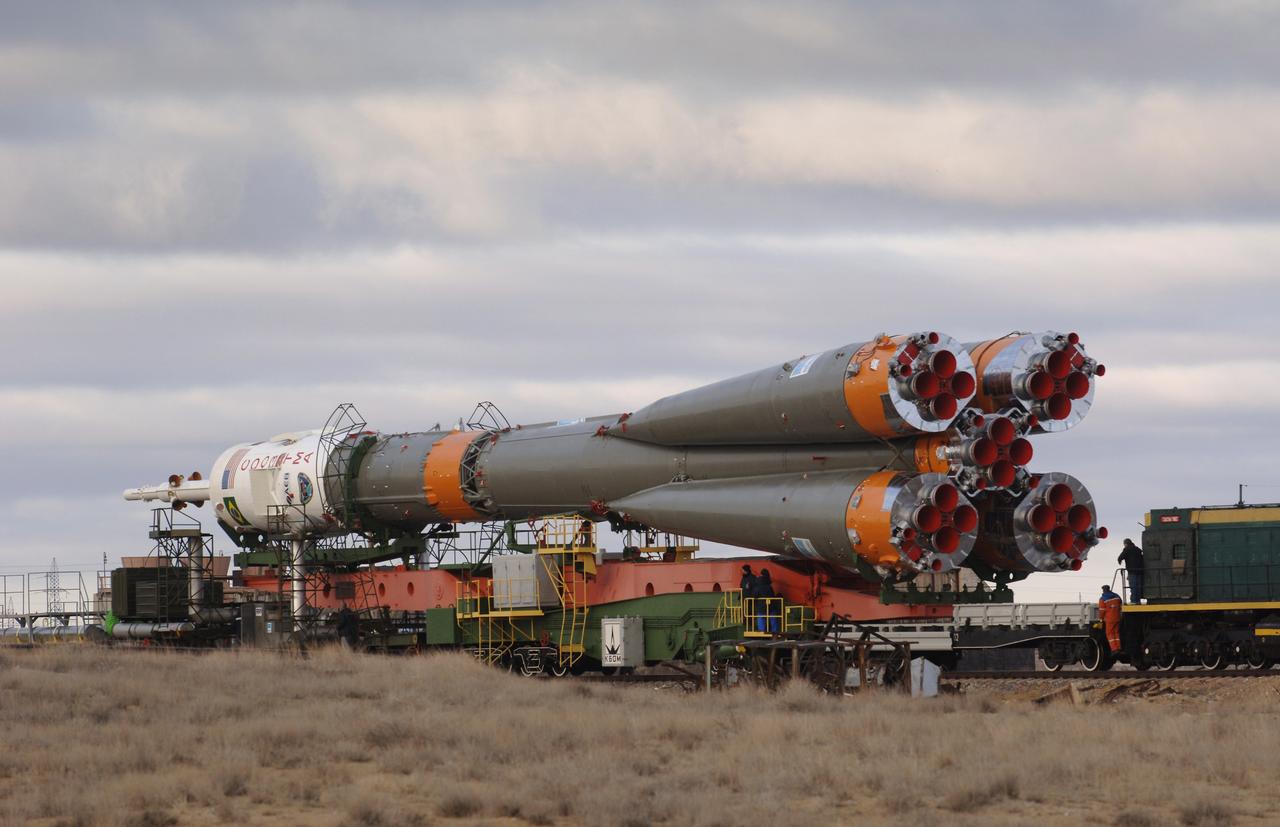
The Soyuz TMA-8 spacecraft and its booster rolled out to the launch pad on Tuesday, March 28, 2006 at the Baikonur Cosmodrome in Baikonur, Kazakhstan for final pre-launch preparations. The Soyuz will blast off on March 30, 2006 to carry Expedition 13 Commander Pavel V. Vinogradov and Science Officer and Flight Engineer Jeffrey N. Williams to the International Space Station for a six-month mission. The spacecraft will also be carrying Brazilian Space Agency Soyuz crew member Marcos Pontes, who will spend 10 days aboard the International Space Station under an agreement with the Russian Federal Space Agency. Photo Credit: (NASA/Bill Ingalls)
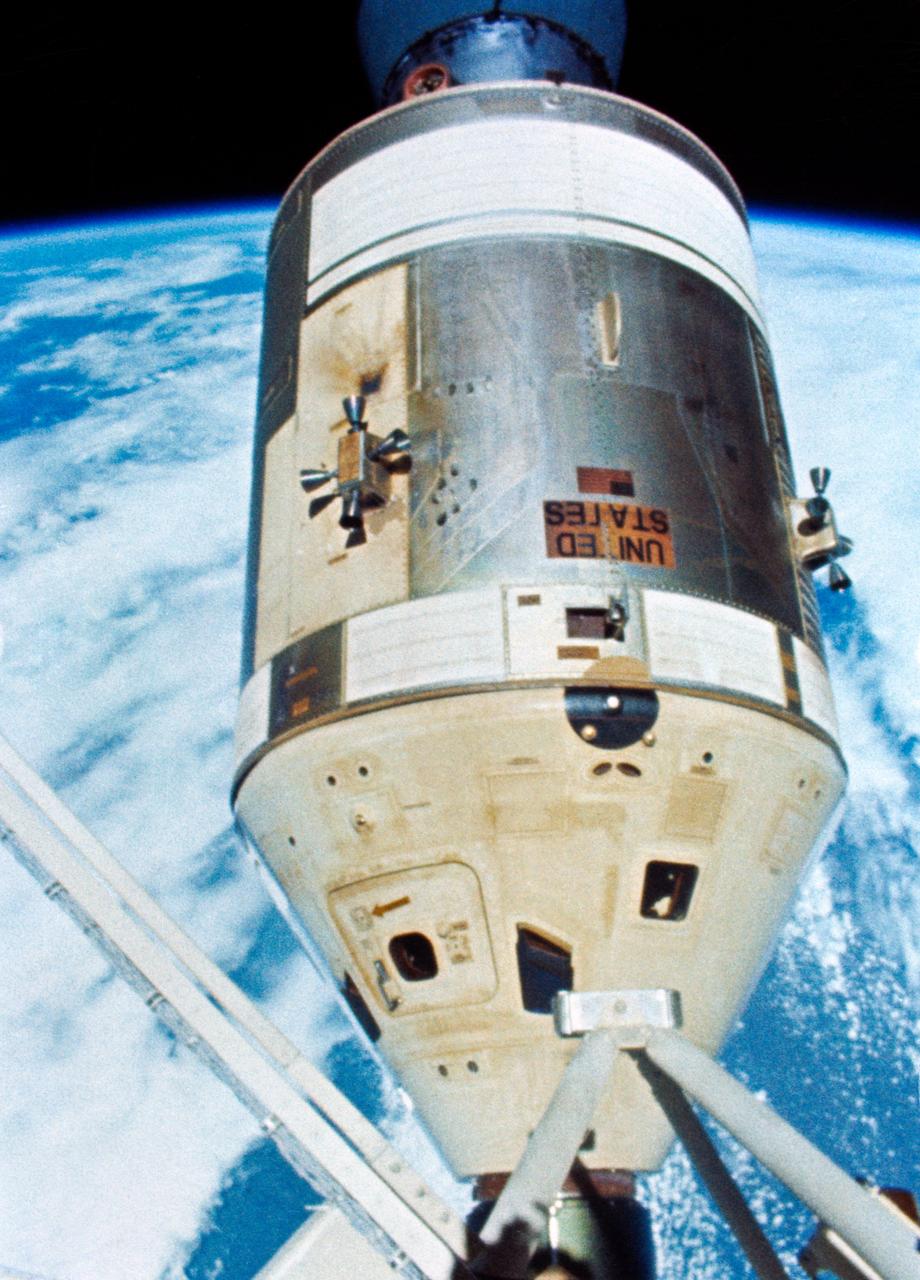
S74-17457 (3 Feb. 1974) --- This view of the Skylab 4 Command/Service Module in a docked configuration is a frame from a roll of movie film exposed by a 16mm Maurer camera. The other four components of the Skylab space station in Earth orbit are out of view to the right. This picture was taken by astronaut Gerald P. Carr, Skylab 4 commander, during the final Skylab extravehicular activity (EVA) which took place on Feb. 3, 1974. The crew members -- Gerald Carr, Edward Gibson and William Pogue -- were the first NASA astronauts to spend New Year's in space. A week earlier, they became the first crew to perform an EVA on Christmas day. Photo credit: NASA
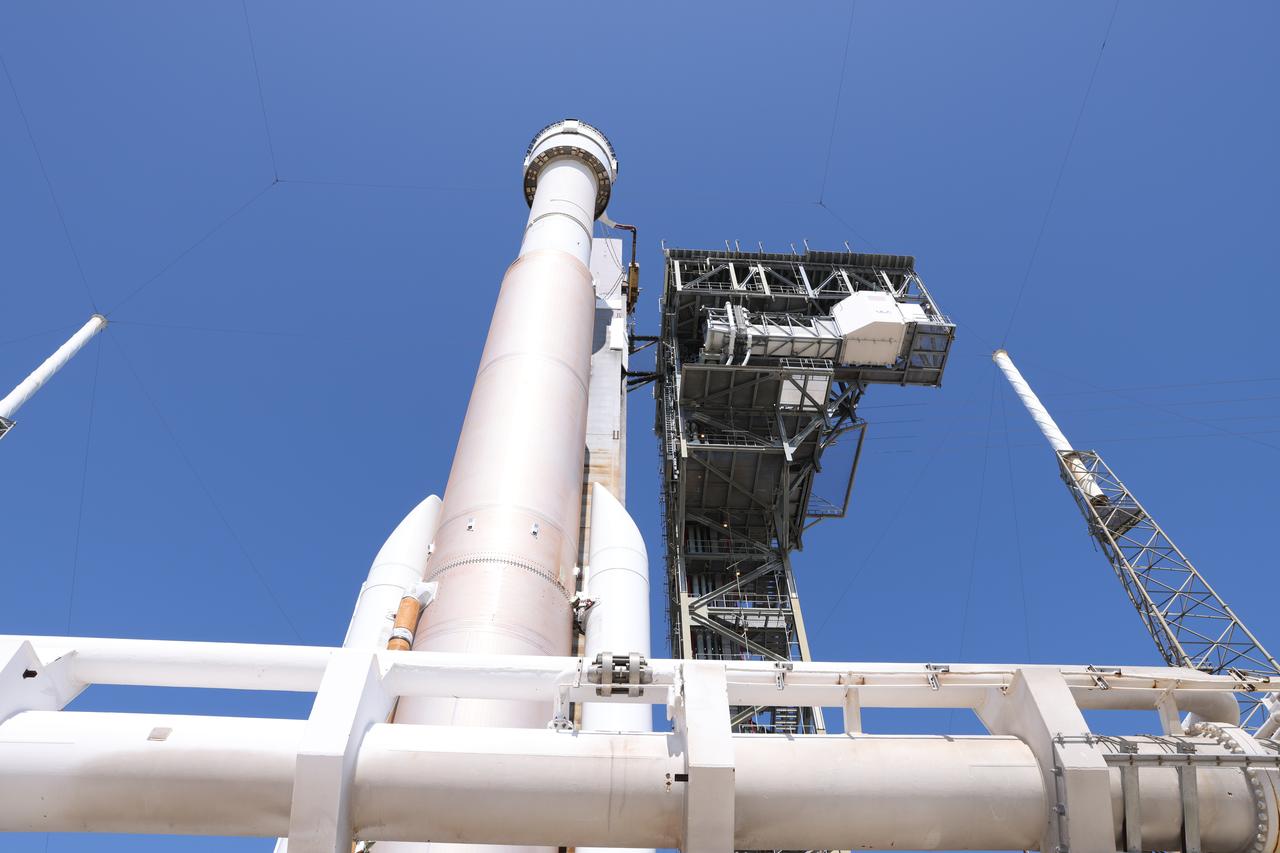
Boeing’s Starliner spacecraft atop the United Launch Alliance Atlas V rocket rolls out from the Vertical Integration Facility to the launch pad of Space Launch Complex-41 at Cape Canaveral Space Force Station in Florida on Saturday, May 4, 2024, ahead of NASA’s Boeing Crew Flight Test. As part of the agency’s Commercial Crew Program, NASA astronauts Butch Wilmore and Suni Williams are the first to launch to the International Space Station aboard Boeing’s Starliner spacecraft. Liftoff is scheduled for 10:34 p.m. ET Monday, May 6.
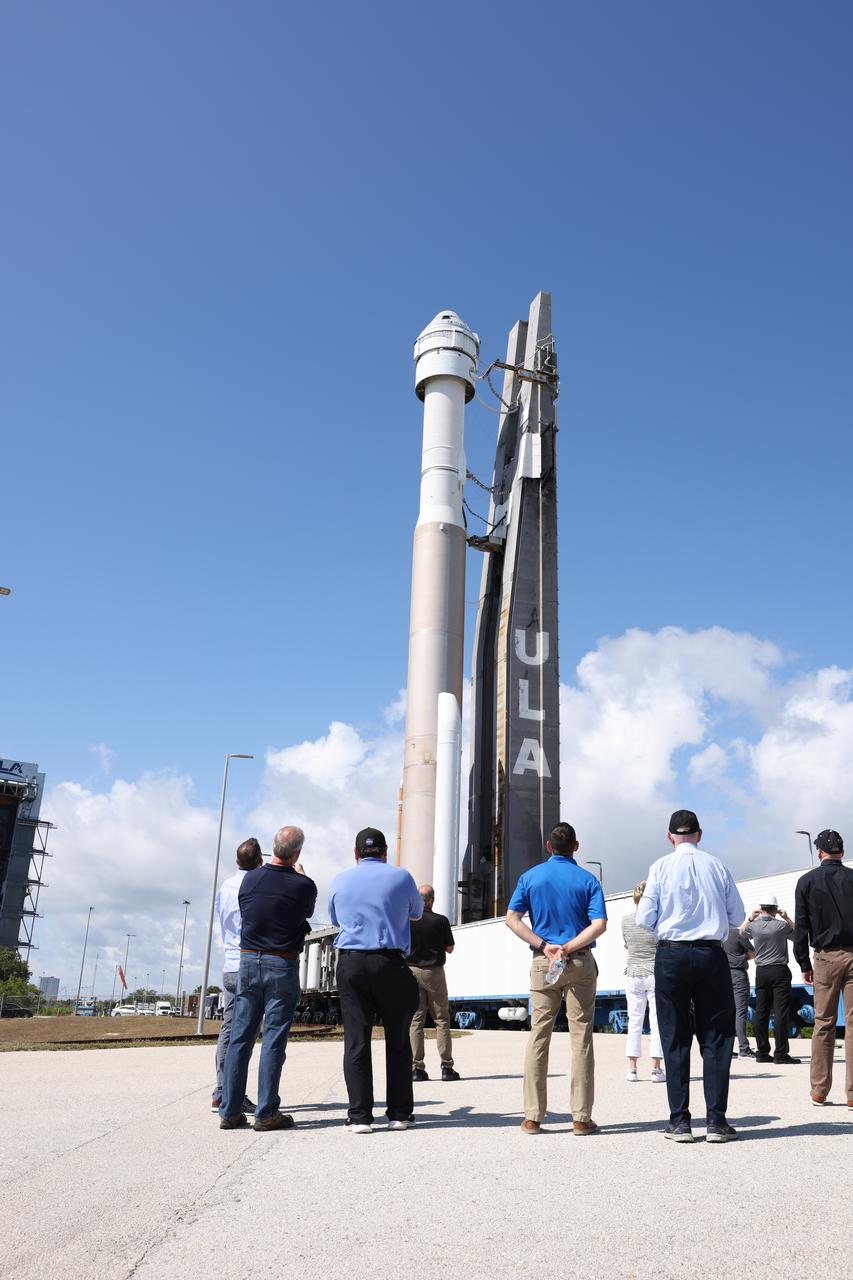
Boeing’s Starliner spacecraft atop the United Launch Alliance Atlas V rocket rolls out from the Vertical Integration Facility to the launch pad of Space Launch Complex-41 at Cape Canaveral Space Force Station in Florida on Saturday, May 4, 2024, ahead of NASA’s Boeing Crew Flight Test. As part of the agency’s Commercial Crew Program, NASA astronauts Butch Wilmore and Suni Williams are the first to launch to the International Space Station aboard Boeing’s Starliner spacecraft. Liftoff is scheduled for 10:34 p.m. ET Monday, May 6.
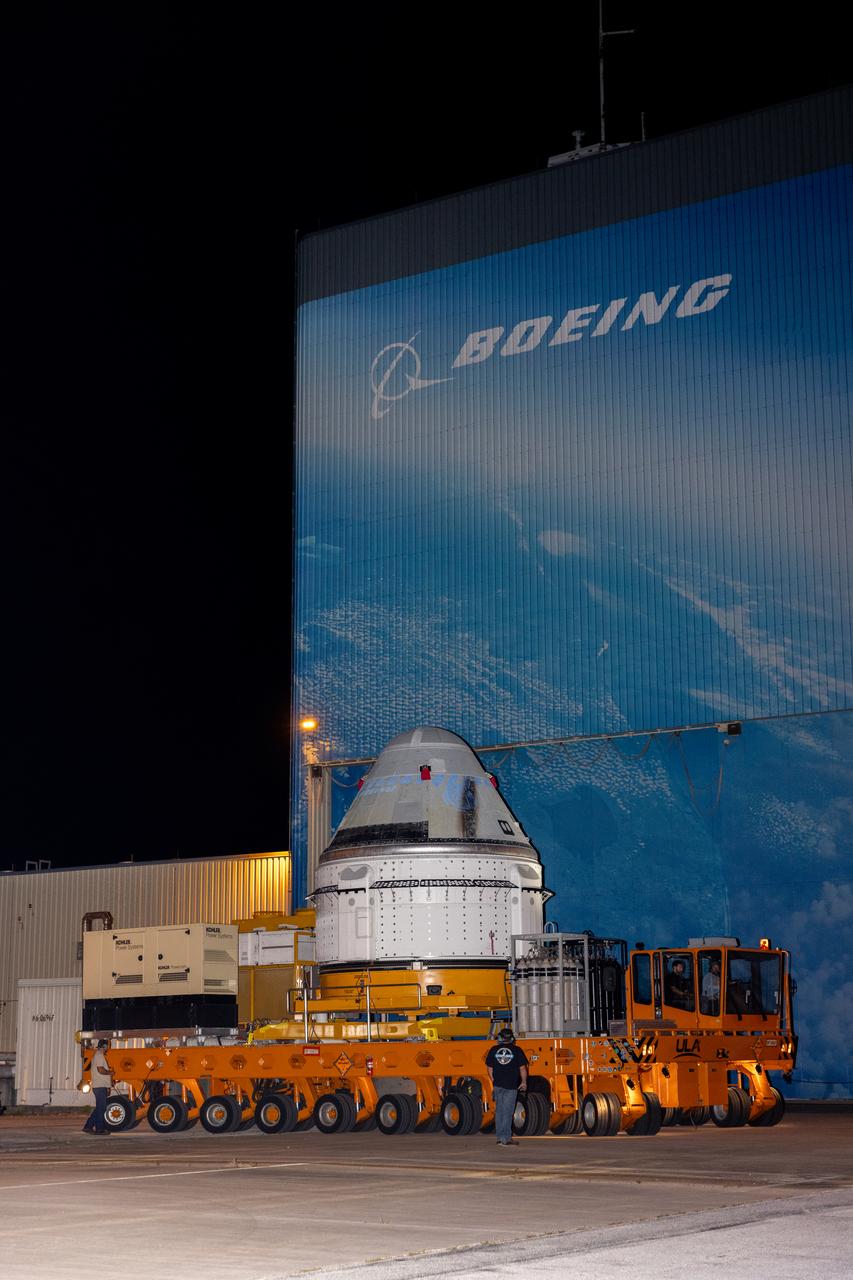
Boeing’s Starliner spacecraft, set to carry NASA astronauts Butch Wilmore and Suni Williams on the agency’s Boeing Crew Flight Test to the International Space Station, rolls out of the company’s Commercial Crew and Cargo Processing Facility at NASA’s Kennedy Space Center in Florida on Tuesday, April 16, 2024. The spacecraft will be transported to ULA’s (United Launch Alliance) Vertical Integration Facility at Space Launch Complex-41 at Cape Canaveral Space Force Station to be lifted and connected to the Atlas V rocket for launch no earlier than Monday, May 6, 2024.
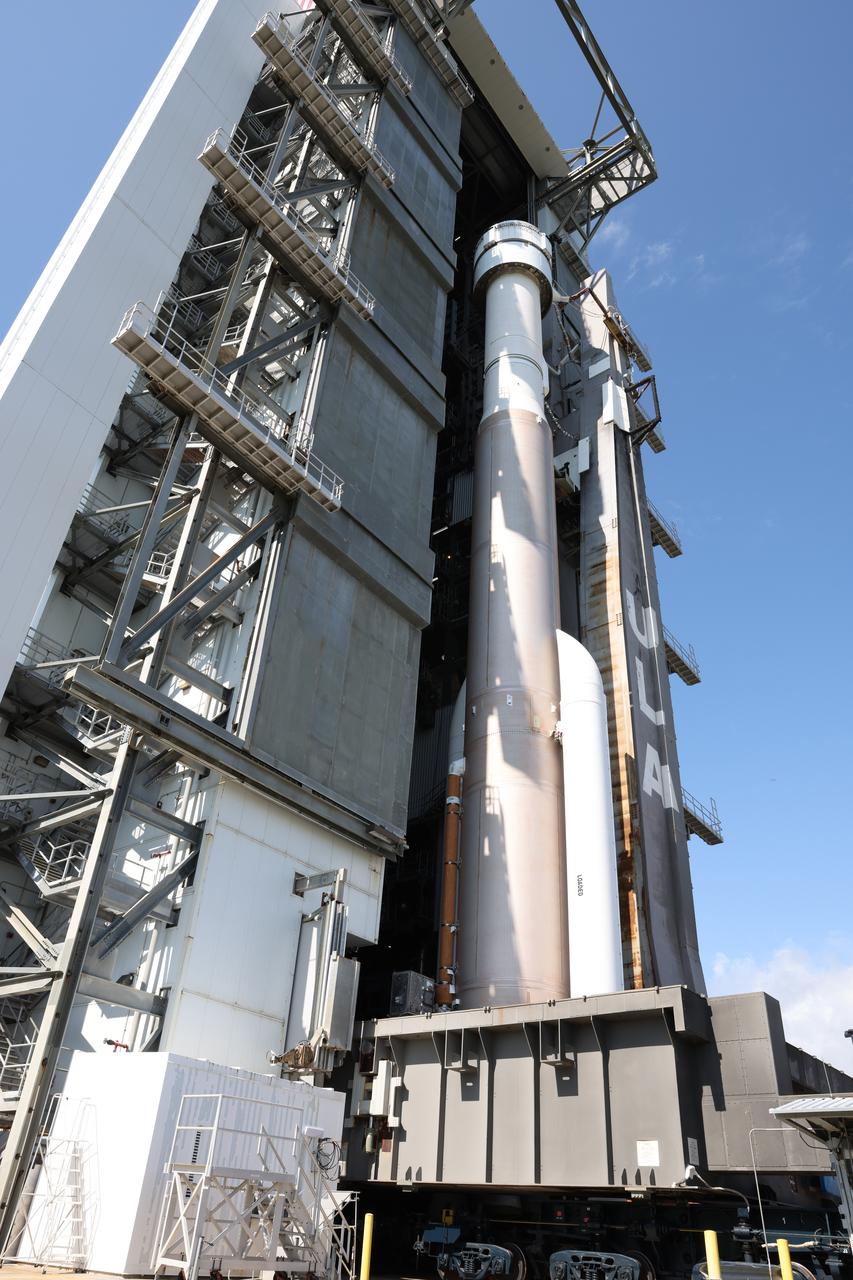
Boeing’s Starliner spacecraft atop the United Launch Alliance Atlas V rocket rolls out from the Vertical Integration Facility to the launch pad of Space Launch Complex-41 at Cape Canaveral Space Force Station in Florida on Saturday, May 4, 2024, ahead of NASA’s Boeing Crew Flight Test. As part of the agency’s Commercial Crew Program, NASA astronauts Butch Wilmore and Suni Williams are the first to launch to the International Space Station aboard Boeing’s Starliner spacecraft. Liftoff is scheduled for 10:34 p.m. ET Monday, May 6.
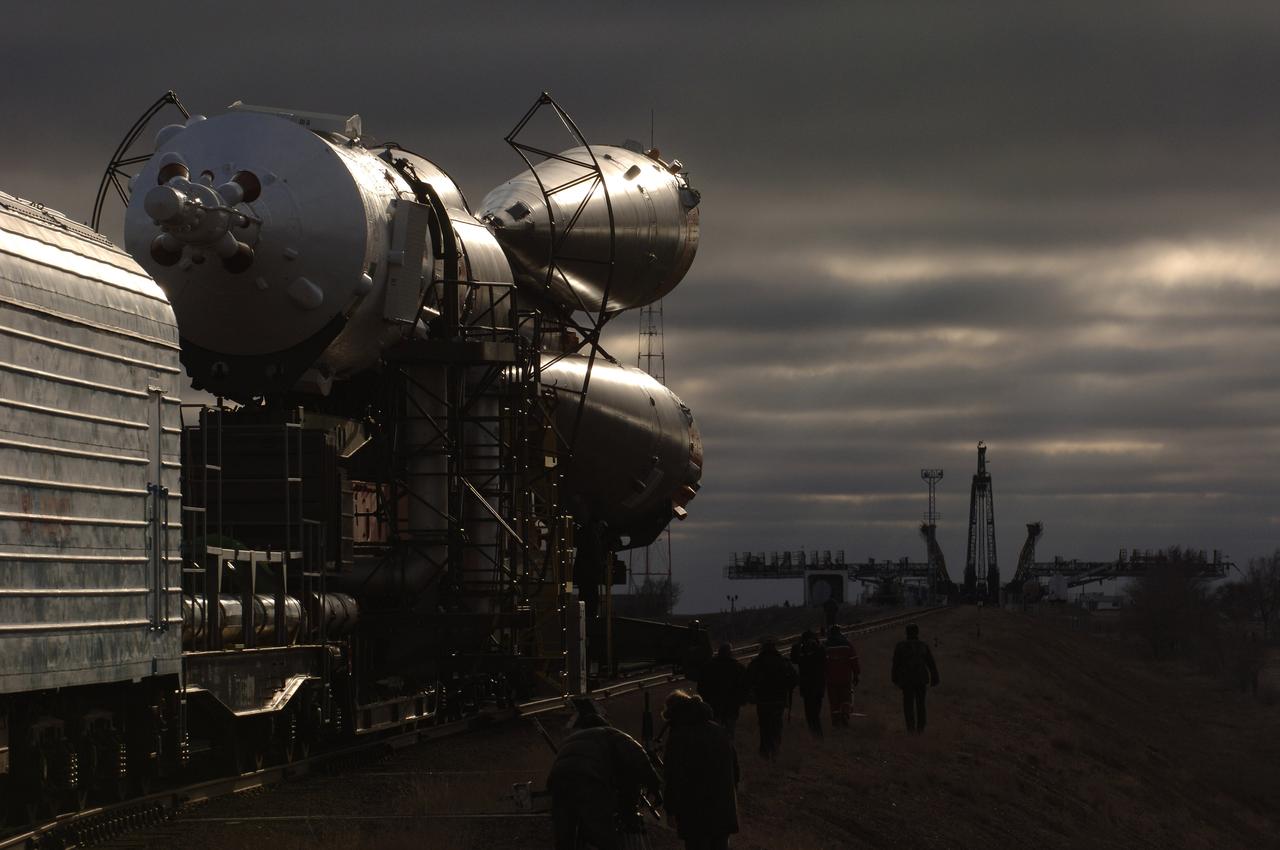
The Soyuz TMA-8 spacecraft and its booster rolled out to the launch pad on Tuesday, March 28, 2006 at the Baikonur Cosmodrome in Baikonur, Kazakhstan for final pre-launch preparations. The Soyuz will blast off on March 30, 2006 to carry Expedition 13 Commander Pavel V. Vinogradov and Science Officer and Flight Engineer Jeffrey N. Williams to the International Space Station for a six-month mission. The spacecraft will also be carrying Brazilian Space Agency Soyuz crew member Marcos Pontes, who will spend 10 days aboard the International Space Station under an agreement with the Russian Federal Space Agency. Photo Credit: (NASA/Bill Ingalls)
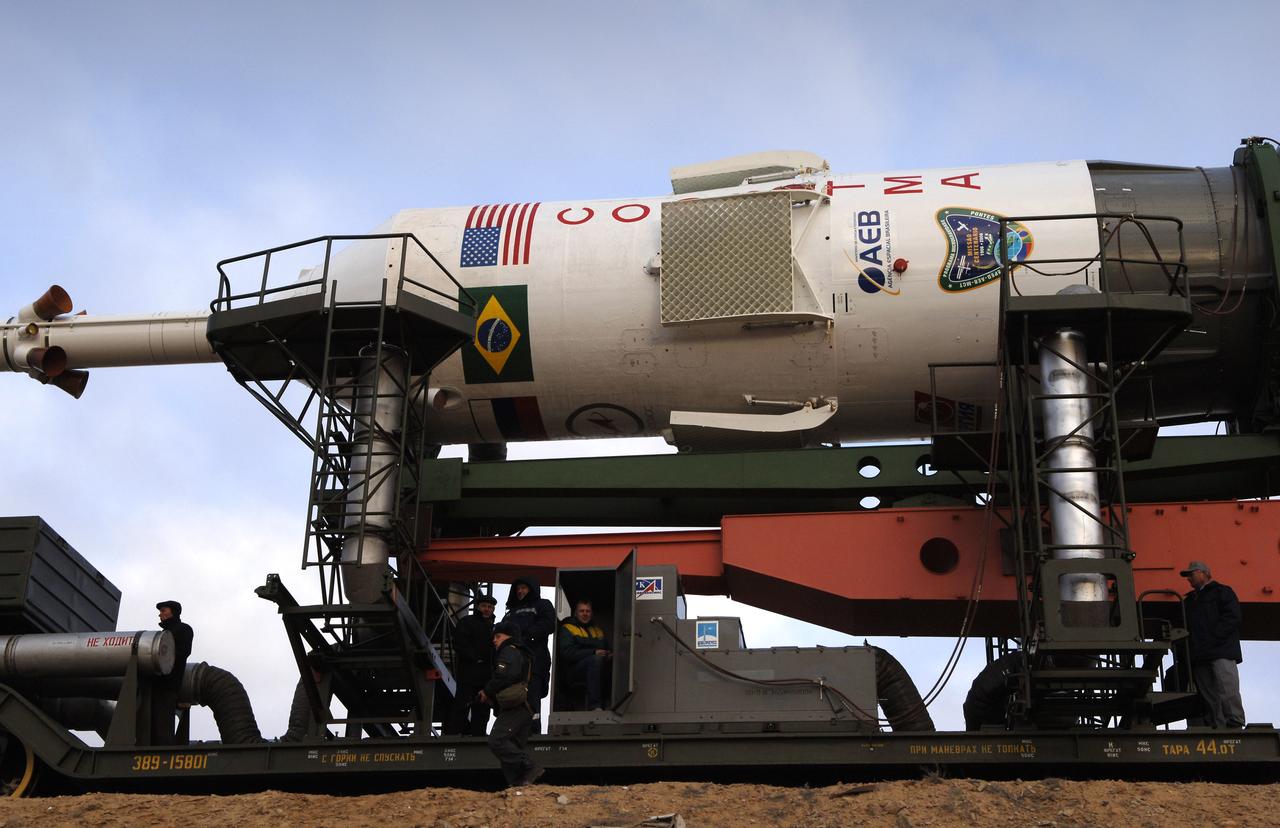
The Soyuz TMA-8 spacecraft and its booster rolled out to the launch pad on Tuesday, March 28, 2006 at the Baikonur Cosmodrome in Baikonur, Kazakhstan for final pre-launch preparations. The Soyuz will blast off on March 30, 2006 to carry Expedition 13 Commander Pavel V. Vinogradov and Science Officer and Flight Engineer Jeffrey N. Williams to the International Space Station for a six-month mission. The spacecraft will also be carrying Brazilian Space Agency Soyuz crew member Marcos Pontes, who will spend 10 days aboard the International Space Station under an agreement with the Russian Federal Space Agency. Photo Credit: (NASA/Bill Ingalls)
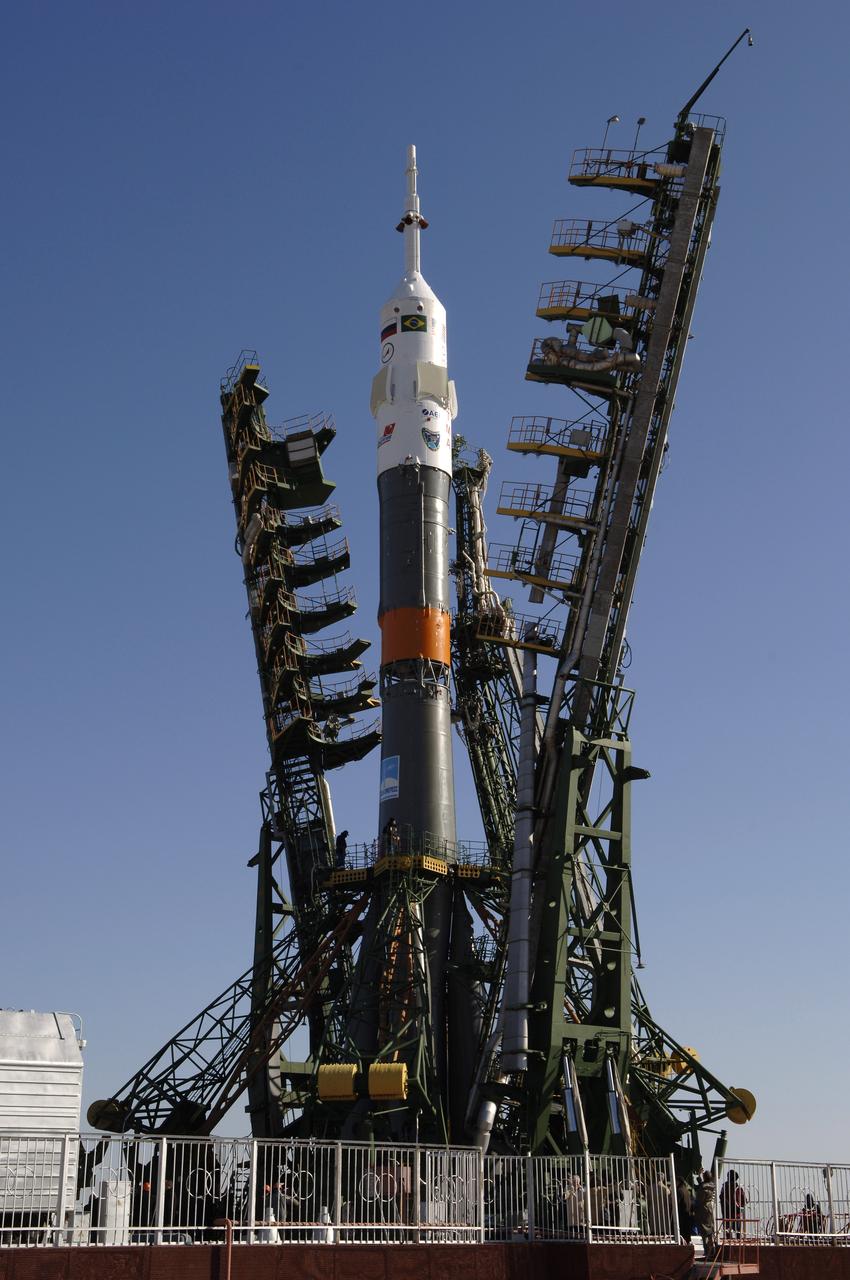
The Soyuz TMA-8 spacecraft and its booster rolled out to the launch pad on Tuesday, March 28, 2006 at the Baikonur Cosmodrome in Baikonur, Kazakhstan for final pre-launch preparations. The Soyuz will blast off on March 30, 2006 to carry Expedition 13 Commander Pavel V. Vinogradov and Science Officer and Flight Engineer Jeffrey N. Williams to the International Space Station for a six-month mission. The spacecraft will also be carrying Brazilian Space Agency Soyuz crew member Marcos Pontes, who will spend 10 days aboard the International Space Station under an agreement with the Russian Federal Space Agency. Photo Credit: (NASA/Bill Ingalls)
Suni Williams, left, and Jeanette Epps, NASA astronauts, Starliner-1, watch as Boeing’s CST-100 Starliner spacecraft and the United Launch Alliance Atlas V rocket is rolled out of the Vertical Integration Facility to the launch pad at Space Launch Complex-41 on July 29, 2021, at Cape Canaveral Space Force Station in Florida. Starliner will launch on the Atlas V for Boeing’s second uncrewed Orbital Flight Test (OFT-2) for NASA’s Commercial Crew Program. OFT-2 is an important uncrewed mission designed to test the end-to-end capabilities of the new system for NASA’s Commercial Crew Program.
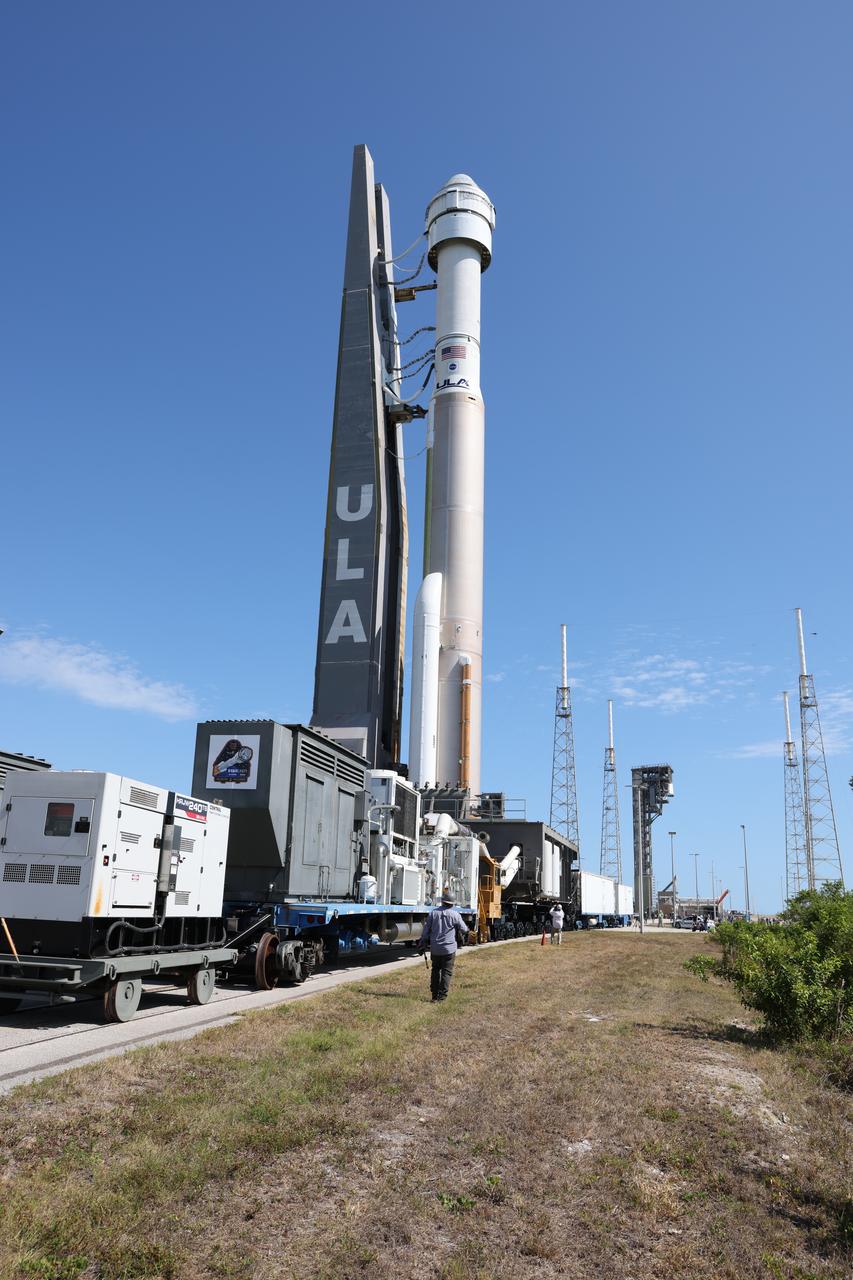
Boeing’s Starliner spacecraft atop the United Launch Alliance Atlas V rocket rolls out from the Vertical Integration Facility to the launch pad of Space Launch Complex-41 at Cape Canaveral Space Force Station in Florida on Saturday, May 4, 2024, ahead of NASA’s Boeing Crew Flight Test. As part of the agency’s Commercial Crew Program, NASA astronauts Butch Wilmore and Suni Williams are the first to launch to the International Space Station aboard Boeing’s Starliner spacecraft. Liftoff is scheduled for 10:34 p.m. ET Monday, May 6.
NASA astronaut Suni Williams, left, watches as a United Launch Alliance Atlas V rocket with Boeing’s CST-100 Starliner spacecraft aboard is rolled out of the Vertical Integration Facility to the launch pad at Space Launch Complex 41 ahead of the Orbital Flight Test-2 (OFT-2), Wednesday, May 18, 2022 at Cape Canaveral Space Force Station in Florida. Starliner is targeted to launch at 6:54 p.m. EDT on Thursday, May 19. OFT-2 is an important uncrewed flight test designed to test the end-to-end capabilities of the system to help the agency certify Starliner to carry astronauts to and from the International Space Station.
![STS092-S-020 [EC00-0311-1] (24 October 2000)--- The main landing gear on the Space Shuttle Discovery is just about to touch down to mark mission completion at Edwards Air Force Base in the Mojave Desert of California. Onboard were astronauts Brian Duffy, Pamela A. Melroy, William S. McArthur, Jr., Leroy Chiao, Michael E. Lopez-Alegria, Peter J.K. (Jeff) Wisoff and Koichi Wakata of Japan's National Space Development Agency (NASDA). Discovery touched down at 2 p.m. (PDT), October 24, and rolled to a stop on Edward's concrete runway at 2:0l, for a mission elapsed time of 12 days, 21 hours and 43 minutes.](https://images-assets.nasa.gov/image/sts092-s-020/sts092-s-020~medium.jpg)
STS092-S-020 [EC00-0311-1] (24 October 2000)--- The main landing gear on the Space Shuttle Discovery is just about to touch down to mark mission completion at Edwards Air Force Base in the Mojave Desert of California. Onboard were astronauts Brian Duffy, Pamela A. Melroy, William S. McArthur, Jr., Leroy Chiao, Michael E. Lopez-Alegria, Peter J.K. (Jeff) Wisoff and Koichi Wakata of Japan's National Space Development Agency (NASDA). Discovery touched down at 2 p.m. (PDT), October 24, and rolled to a stop on Edward's concrete runway at 2:0l, for a mission elapsed time of 12 days, 21 hours and 43 minutes.
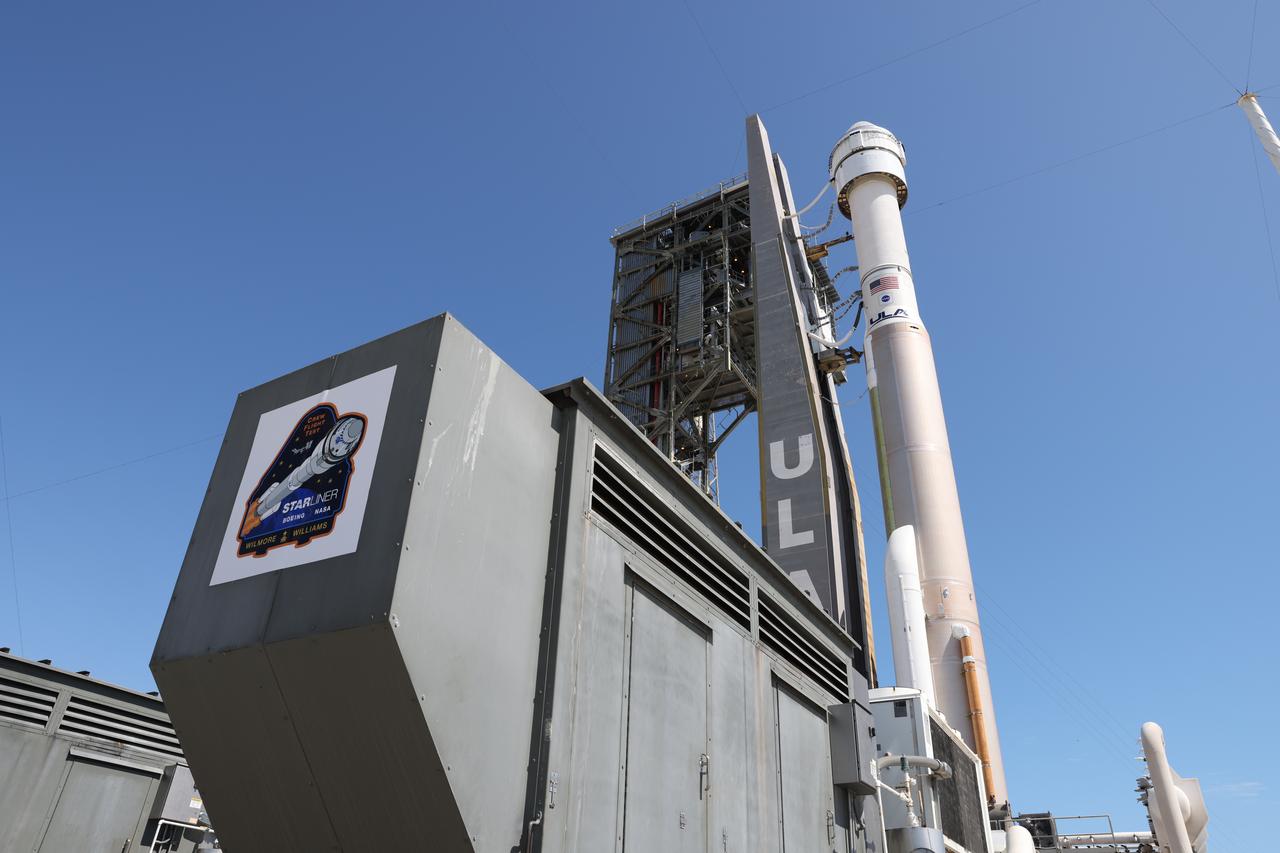
Boeing’s Starliner spacecraft atop the United Launch Alliance Atlas V rocket rolls out from the Vertical Integration Facility to the launch pad of Space Launch Complex-41 at Cape Canaveral Space Force Station in Florida on Saturday, May 4, 2024, ahead of NASA’s Boeing Crew Flight Test. As part of the agency’s Commercial Crew Program, NASA astronauts Butch Wilmore and Suni Williams are the first to launch to the International Space Station aboard Boeing’s Starliner spacecraft. Liftoff is scheduled for 10:34 p.m. ET Monday, May 6.
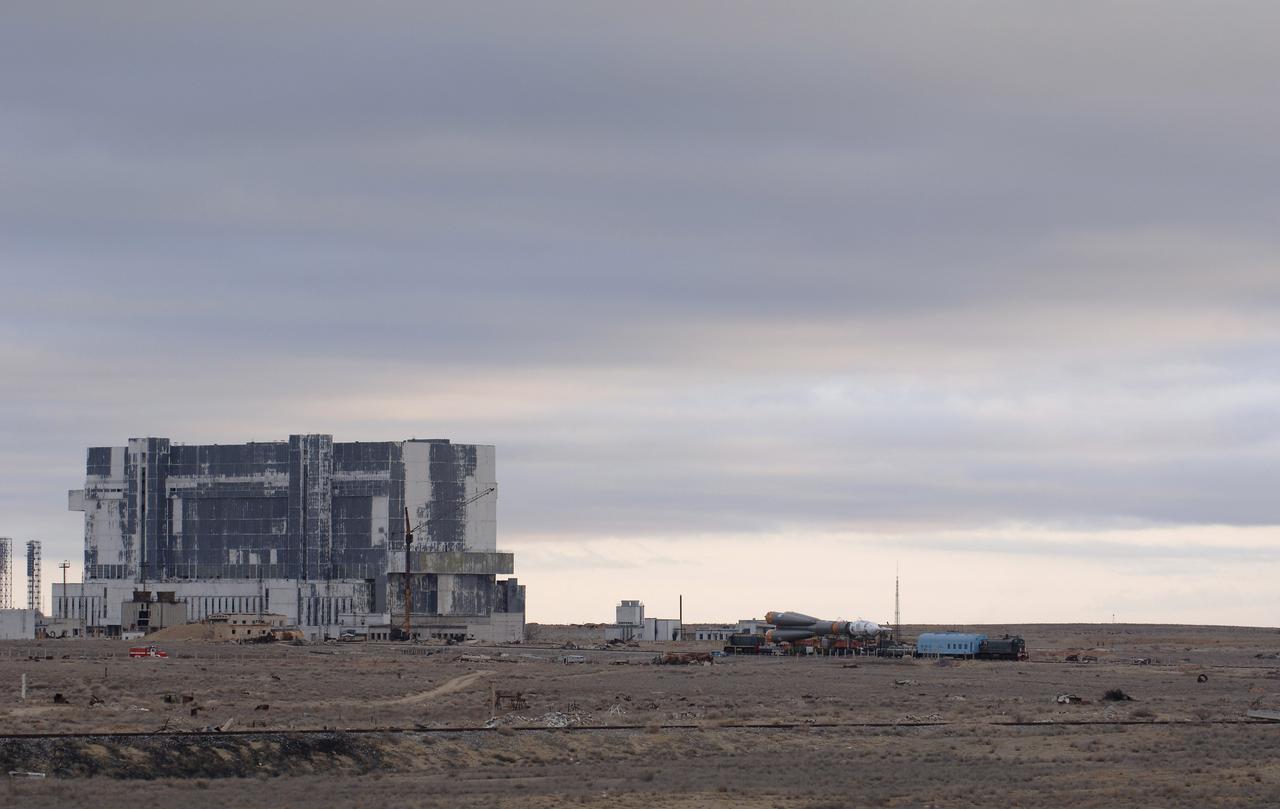
The Soyuz TMA-8 spacecraft and its booster rolled out to the launch pad on Tuesday, March 28, 2006 at the Baikonur Cosmodrome in Baikonur, Kazakhstan for final pre-launch preparations. The Soyuz will blast off on March 30, 2006 to carry Expedition 13 Commander Pavel V. Vinogradov and Science Officer and Flight Engineer Jeffrey N. Williams to the International Space Station for a six-month mission. The spacecraft will also be carrying Brazilian Space Agency Soyuz crew member Marcos Pontes, who will spend 10 days aboard the International Space Station under an agreement with the Russian Federal Space Agency. Photo Credit: (NASA/Bill Ingalls)
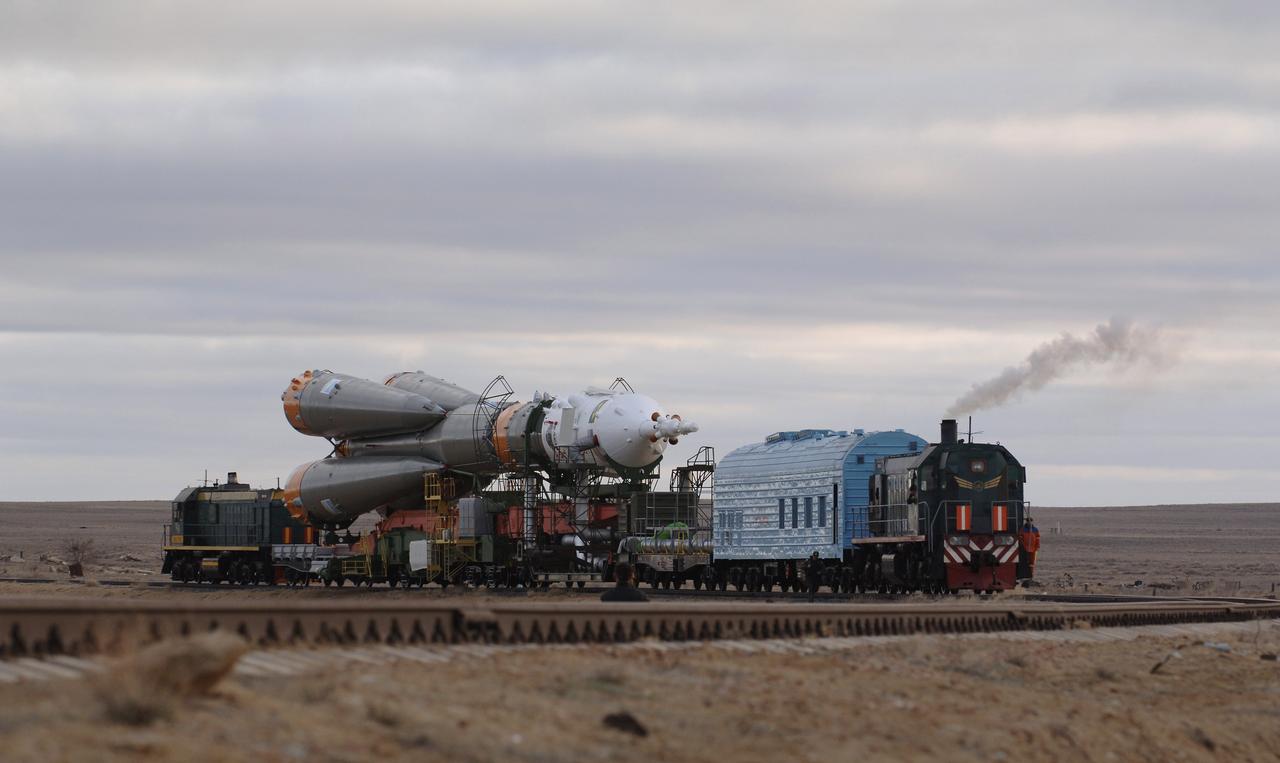
The Soyuz TMA-8 spacecraft and its booster rolled out to the launch pad on Tuesday, March 28, 2006 at the Baikonur Cosmodrome in Baikonur, Kazakhstan for final pre-launch preparations. The Soyuz will blast off on March 30, 2006 to carry Expedition 13 Commander Pavel V. Vinogradov and Science Officer and Flight Engineer Jeffrey N. Williams to the International Space Station for a six-month mission. The spacecraft will also be carrying Brazilian Space Agency Soyuz crew member Marcos Pontes, who will spend 10 days aboard the International Space Station under an agreement with the Russian Federal Space Agency. Photo Credit: (NASA/Bill Ingalls)
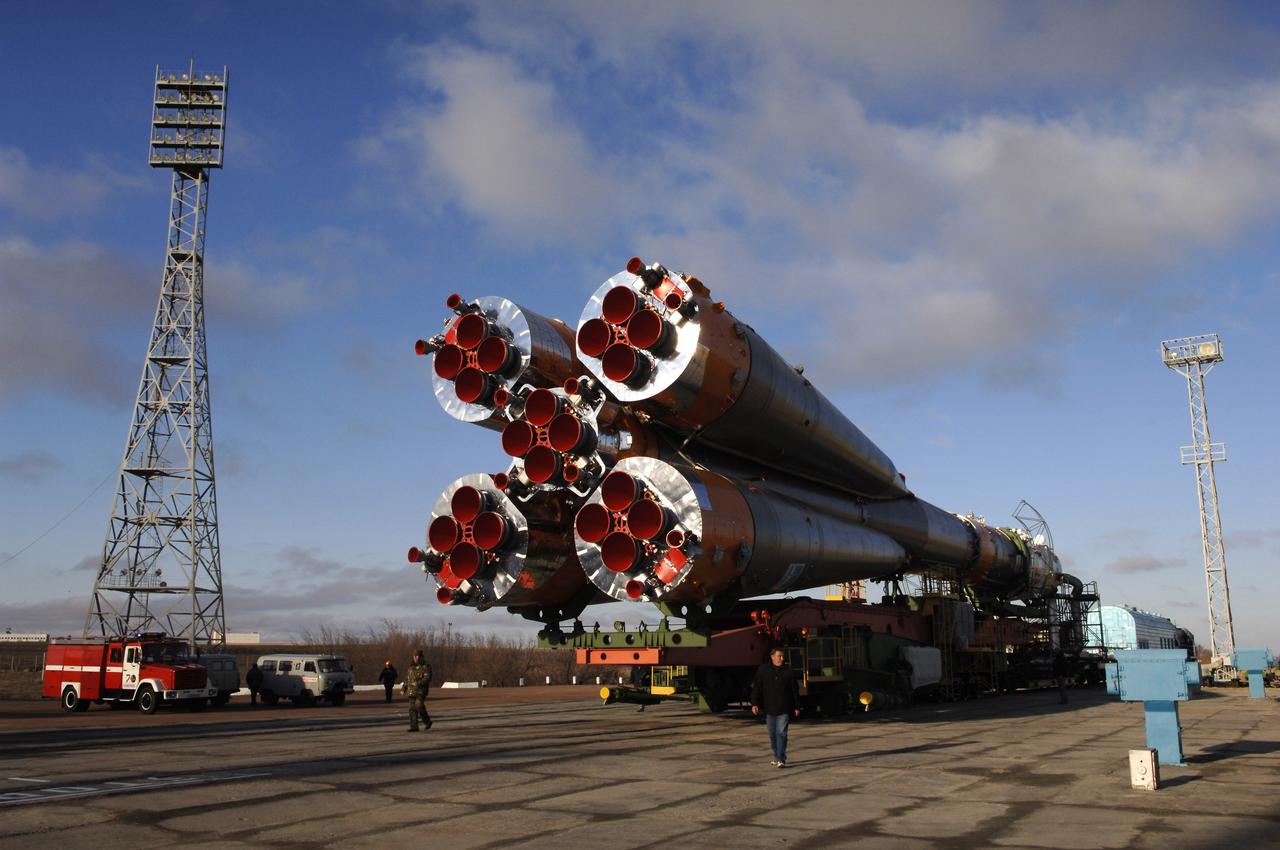
The Soyuz TMA-8 spacecraft and its booster rolled out to the launch pad on Tuesday, March 28, 2006 at the Baikonur Cosmodrome in Baikonur, Kazakhstan for final pre-launch preparations. The Soyuz will blast off on March 30, 2006 to carry Expedition 13 Commander Pavel V. Vinogradov and Science Officer and Flight Engineer Jeffrey N. Williams to the International Space Station for a six-month mission. The spacecraft will also be carrying Brazilian Space Agency Soyuz crew member Marcos Pontes, who will spend 10 days aboard the International Space Station under an agreement with the Russian Federal Space Agency. Photo Credit: (NASA/Bill Ingalls)
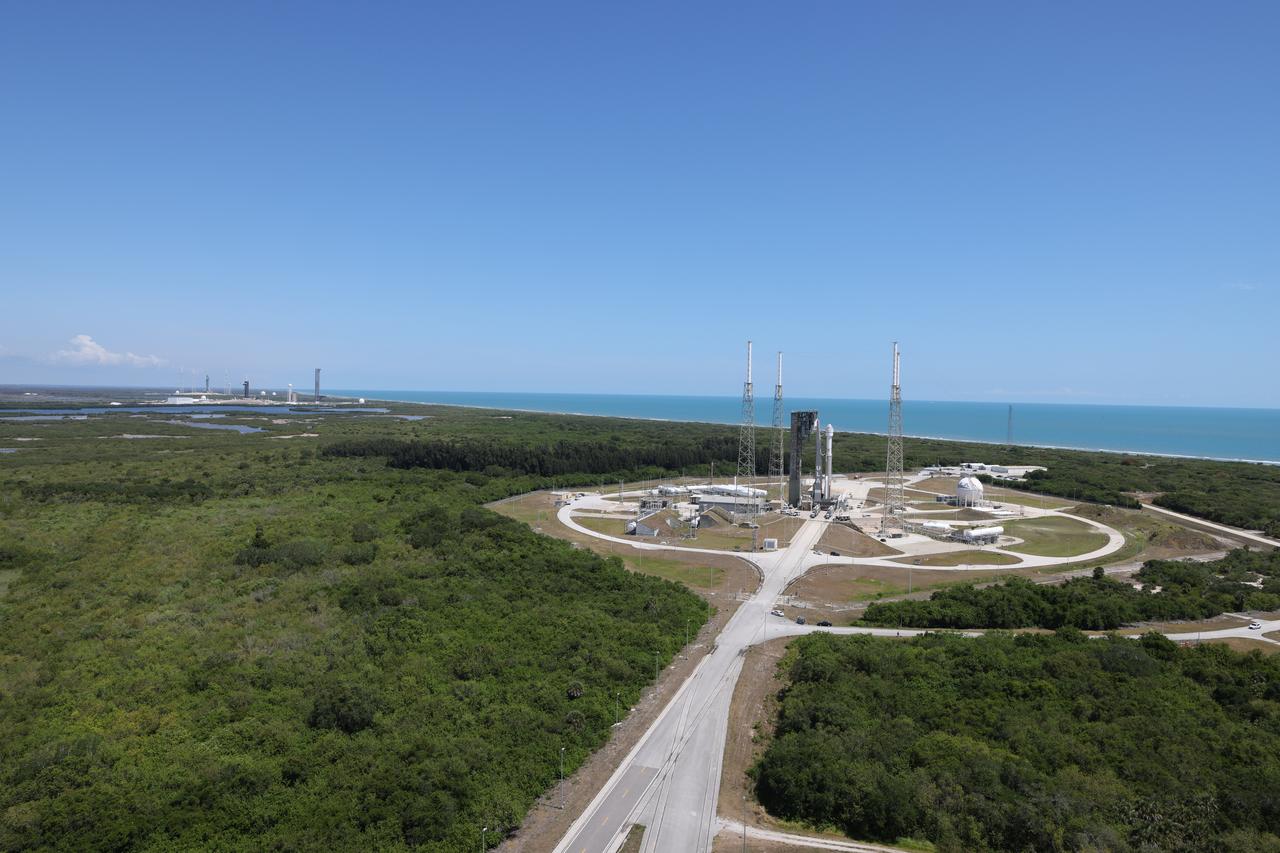
NASA astronaut Barry “Butch” Wilmore, Boeing Crew Flight Test (CFT) commander, watches Boeing’s Starliner spacecraft atop the United Launch Alliance Atlas V rocket roll out from the Vertical Integration Facility to the launch pad of Space Launch Complex-41 at Cape Canaveral Space Force Station in Florida on Saturday, May 4, 2024, ahead of NASA’s Boeing Crew Flight Test. As part of the agency’s Commercial Crew Program, NASA astronauts Butch Wilmore and Suni Williams are the first to launch to the International Space Station aboard Boeing’s Starliner spacecraft. Liftoff is scheduled for 10:34 p.m. ET Monday, May 6.
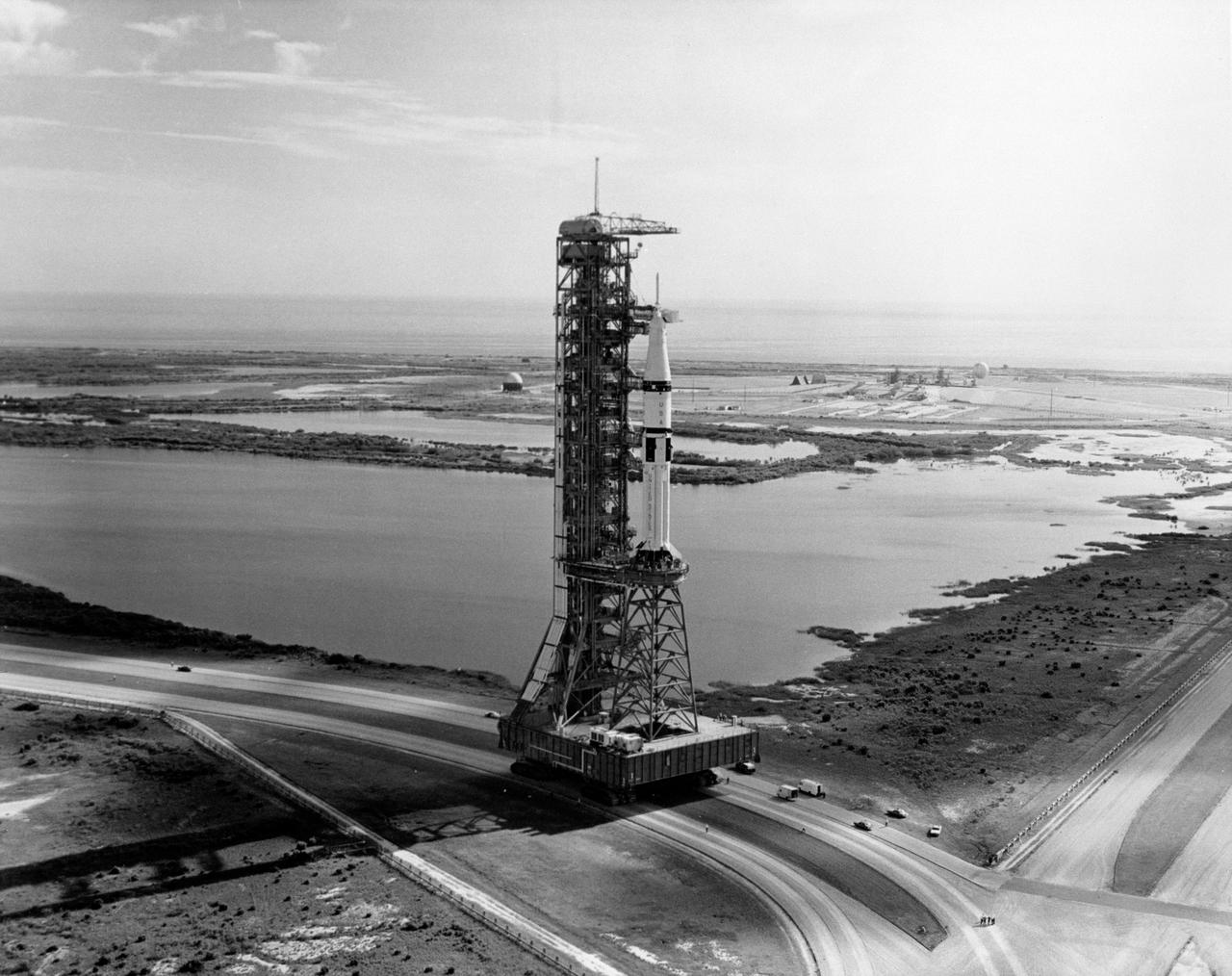
S73-34369 (14 Aug. 1973) --- A Saturn 1B launch vehicle is rolled to Launch Complex 39, Pad B. The space vehicle, to be launched by the Saturn 1B, will carry the third Skylab crew (Skylab 4) to the now-orbiting Orbital Workshop (OWS) and the other four components making up the cluster. The Skylab crewmen, astronaut Gerald P. Carr, commander; scientist-astronaut Edward G. Gibson, science pilot; and astronaut William R. Pogue, pilot, are scheduled to be launched from here in November 1973. Photo credit: NASA
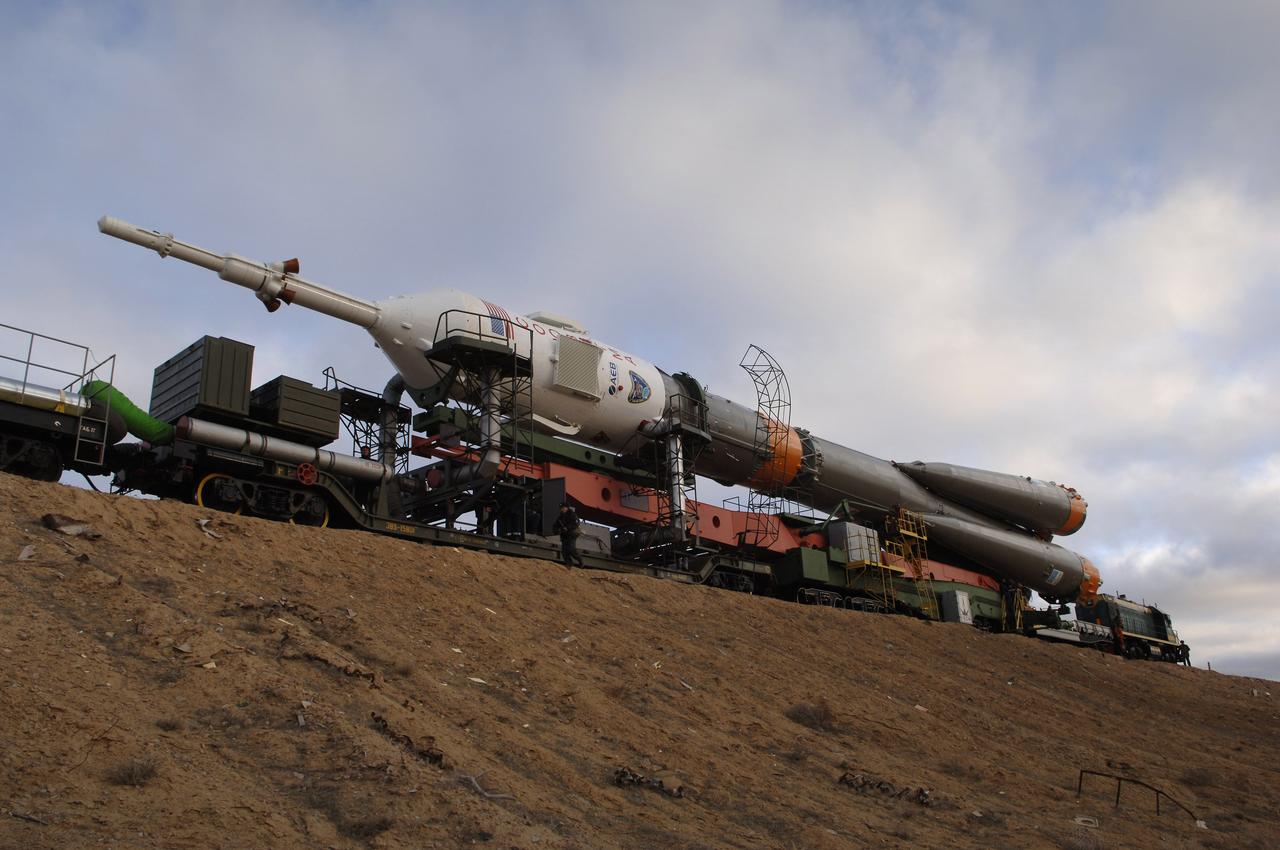
The Soyuz TMA-8 spacecraft and its booster rolled out to the launch pad on Tuesday, March 28, 2006 at the Baikonur Cosmodrome in Baikonur, Kazakhstan for final pre-launch preparations. The Soyuz will blast off on March 30, 2006 to carry Expedition 13 Commander Pavel V. Vinogradov and Science Officer and Flight Engineer Jeffrey N. Williams to the International Space Station for a six-month mission. The spacecraft will also be carrying Brazilian Space Agency Soyuz crew member Marcos Pontes, who will spend 10 days aboard the International Space Station under an agreement with the Russian Federal Space Agency. Photo Credit: (NASA/Bill Ingalls)
 Wisoff and Koichi Wakata of Japan's National Space Development Agency (NASDA). Discovery touched down at 2 p.m. (PDT), October 24, and rolled to a stop on Edward's concrete runway at 2:0l, for a mission elapsed time of 12 days, 21 hours and 43 minutes.](https://images-assets.nasa.gov/image/sts092-s-021/sts092-s-021~medium.jpg)
STS092-S-021 [EC00-0311-2](24 October 2000 --- The main landing gear on the Space Shuttle Discovery is just about to touch down to mark mission completion at Edwards Air Force Base in the Mojave Desert of California. Onboard were astronauts Brian Duffy, Pamela A. Melroy, William S. McArthur, Jr., Leroy Chiao, Michael E. Lopez-Alegria, Peter J.K. (Jeff) Wisoff and Koichi Wakata of Japan's National Space Development Agency (NASDA). Discovery touched down at 2 p.m. (PDT), October 24, and rolled to a stop on Edward's concrete runway at 2:0l, for a mission elapsed time of 12 days, 21 hours and 43 minutes.
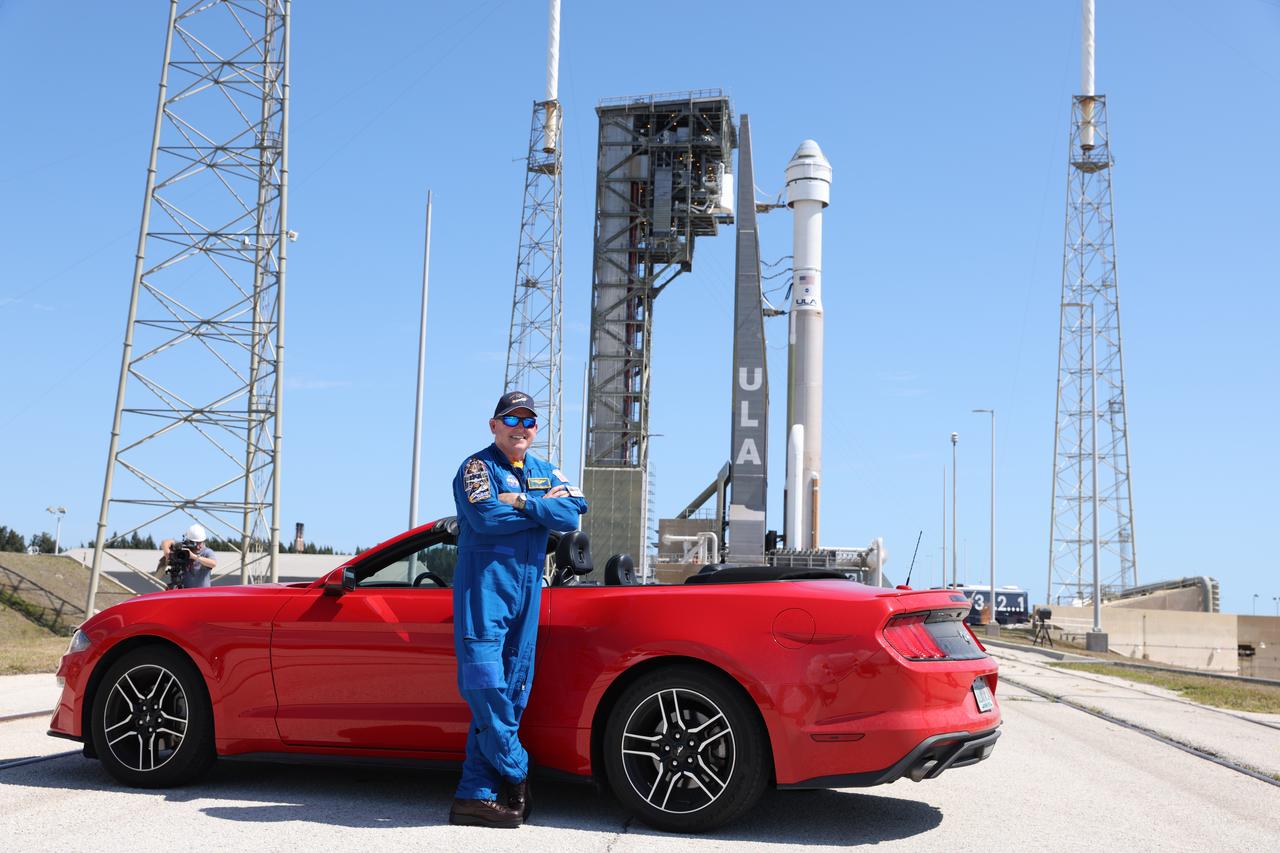
NASA astronaut Barry “Butch” Wilmore, Boeing Crew Flight Test (CFT) commander, watches Boeing’s Starliner spacecraft atop the United Launch Alliance Atlas V rocket roll out from the Vertical Integration Facility to the launch pad of Space Launch Complex-41 at Cape Canaveral Space Force Station in Florida on Saturday, May 4, 2024, ahead of NASA’s Boeing Crew Flight Test. As part of the agency’s Commercial Crew Program, NASA astronauts Butch Wilmore and Suni Williams are the first to launch to the International Space Station aboard Boeing’s Starliner spacecraft. Liftoff is scheduled for 10:34 p.m. ET Monday, May 6.
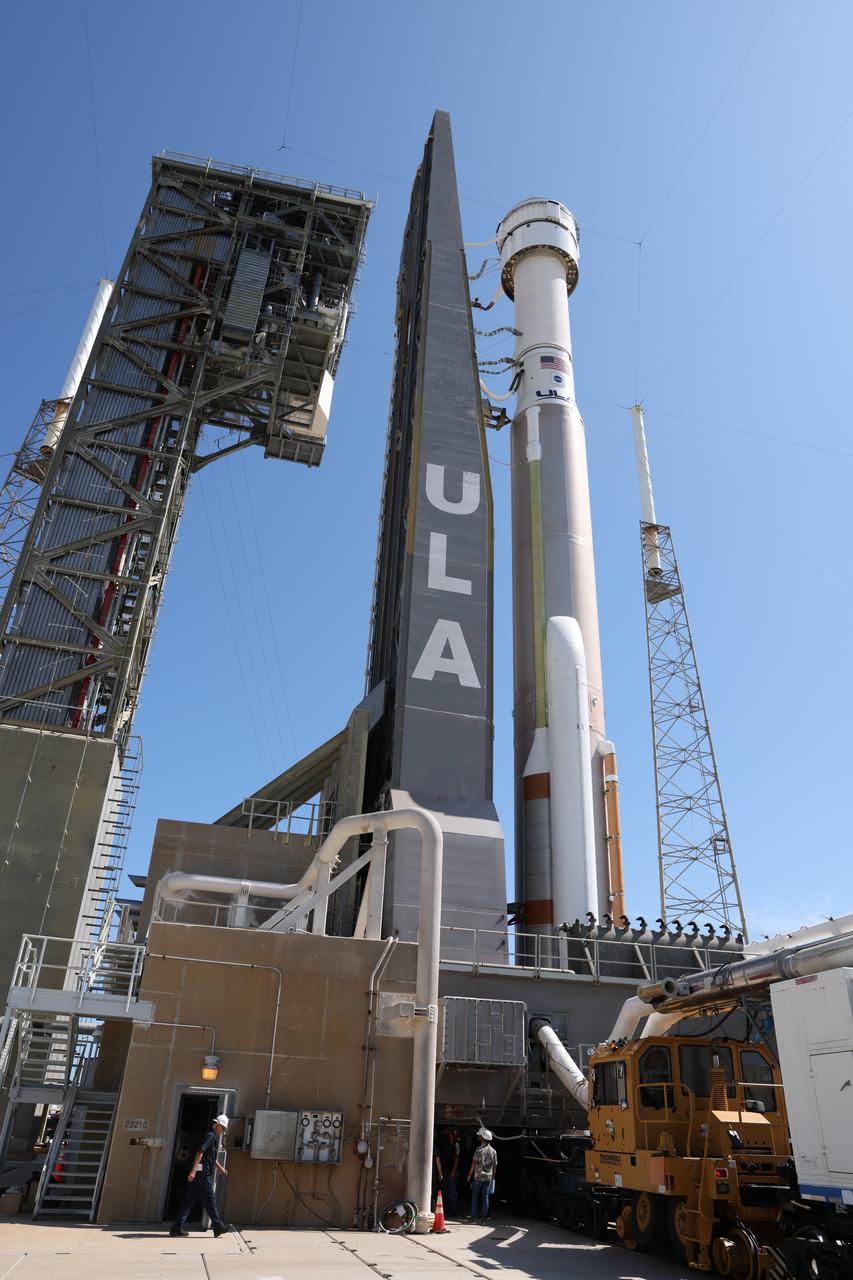
Boeing’s Starliner spacecraft atop the United Launch Alliance Atlas V rocket rolls out from the Vertical Integration Facility to the launch pad of Space Launch Complex-41 at Cape Canaveral Space Force Station in Florida on Saturday, May 4, 2024, ahead of NASA’s Boeing Crew Flight Test. As part of the agency’s Commercial Crew Program, NASA astronauts Butch Wilmore and Suni Williams are the first to launch to the International Space Station aboard Boeing’s Starliner spacecraft. Liftoff is scheduled for 10:34 p.m. ET Monday, May 6.
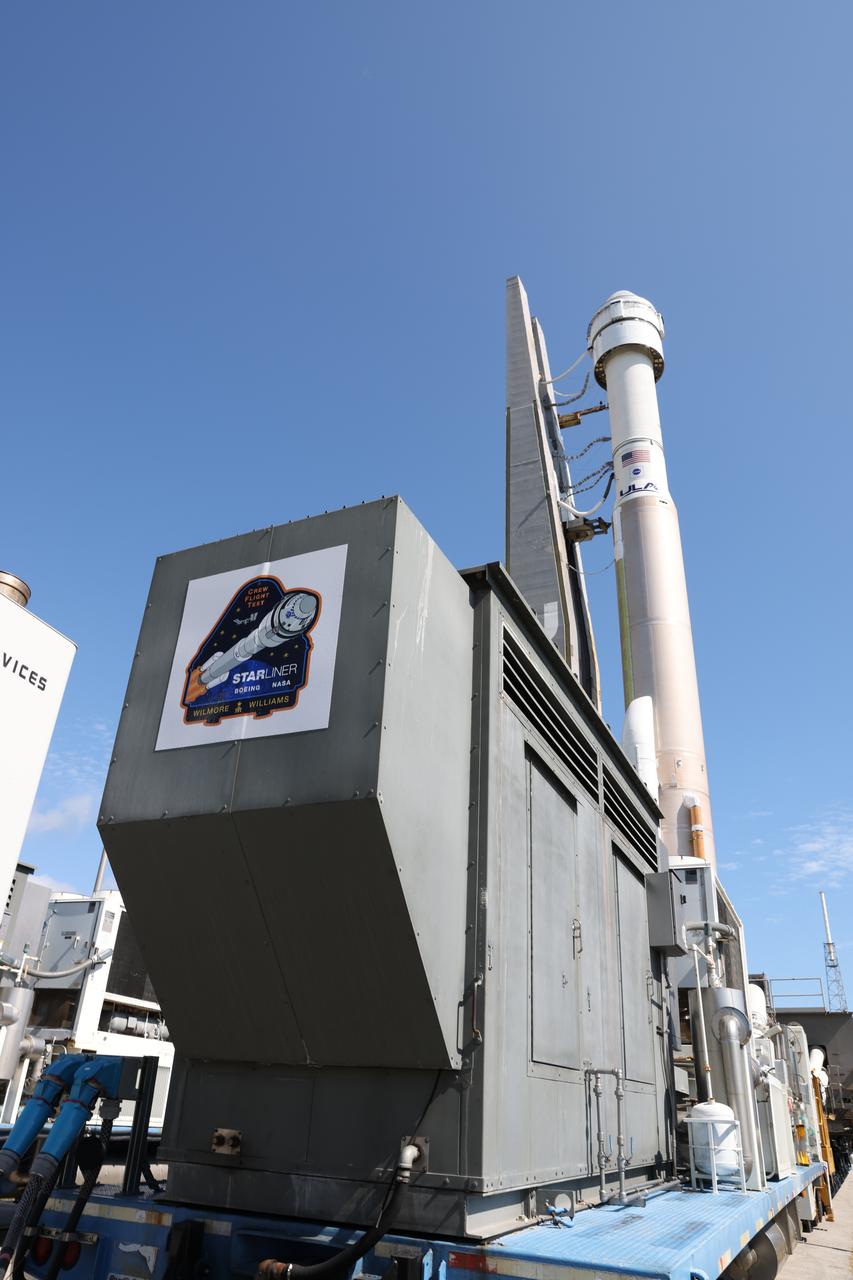
Boeing’s Starliner spacecraft atop the United Launch Alliance Atlas V rocket rolls out from the Vertical Integration Facility to the launch pad of Space Launch Complex-41 at Cape Canaveral Space Force Station in Florida on Saturday, May 4, 2024, ahead of NASA’s Boeing Crew Flight Test. As part of the agency’s Commercial Crew Program, NASA astronauts Butch Wilmore and Suni Williams are the first to launch to the International Space Station aboard Boeing’s Starliner spacecraft. Liftoff is scheduled for 10:34 p.m. ET Monday, May 6.
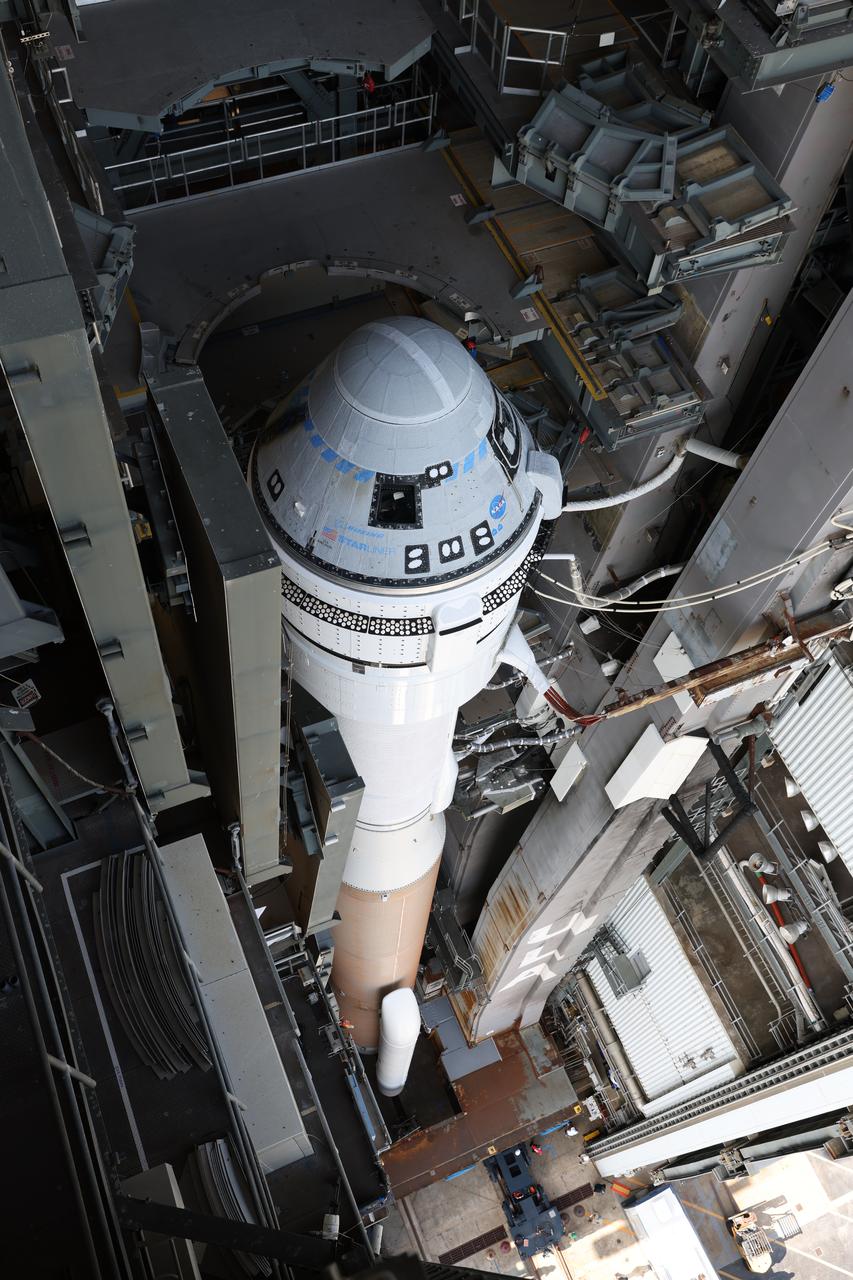
Boeing’s Starliner spacecraft atop the United Launch Alliance Atlas V rocket rolls out from the Vertical Integration Facility to the launch pad of Space Launch Complex-41 at Cape Canaveral Space Force Station in Florida on Saturday, May 4, 2024, ahead of NASA’s Boeing Crew Flight Test. As part of the agency’s Commercial Crew Program, NASA astronauts Butch Wilmore and Suni Williams are the first to launch to the International Space Station aboard Boeing’s Starliner spacecraft. Liftoff is scheduled for 10:34 p.m. ET Monday, May 6.
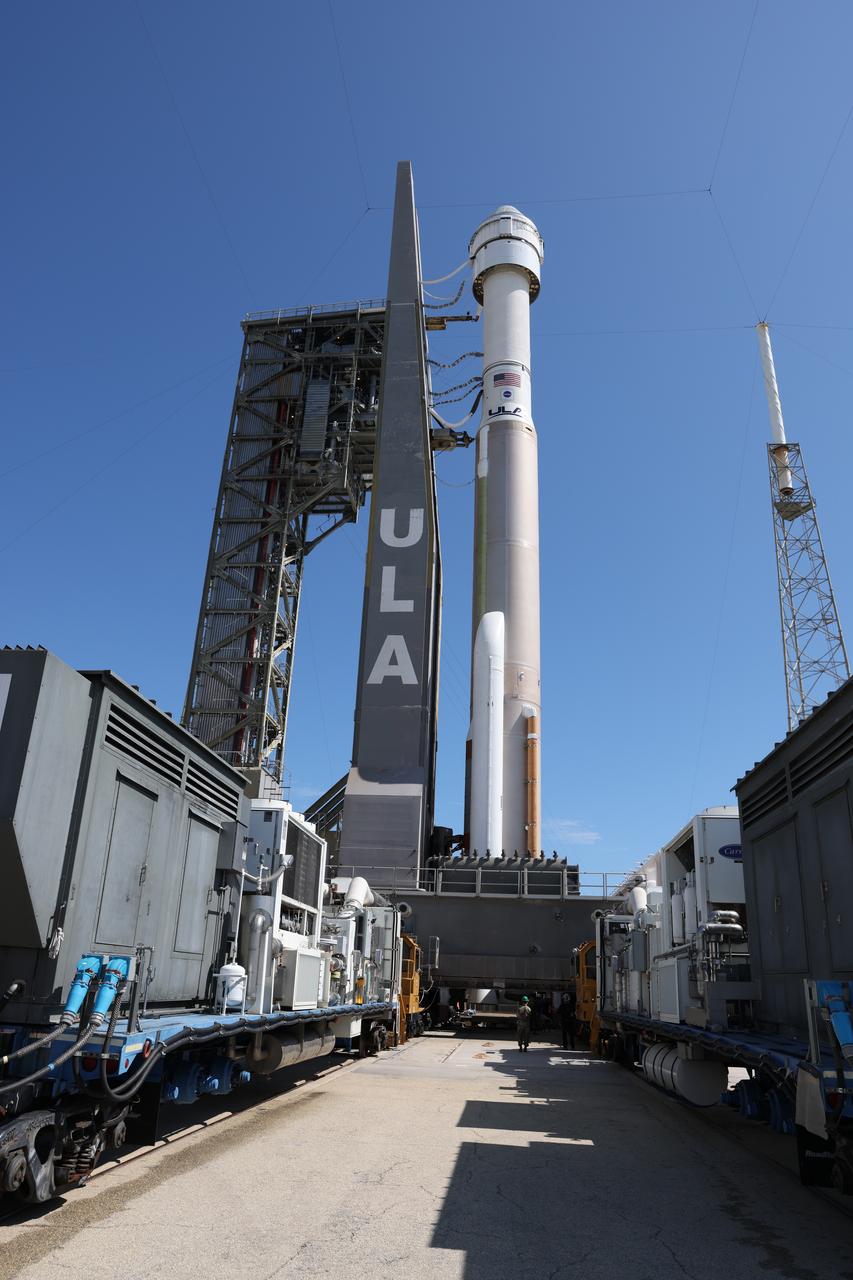
Boeing’s Starliner spacecraft atop the United Launch Alliance Atlas V rocket rolls out from the Vertical Integration Facility to the launch pad of Space Launch Complex-41 at Cape Canaveral Space Force Station in Florida on Saturday, May 4, 2024, ahead of NASA’s Boeing Crew Flight Test. As part of the agency’s Commercial Crew Program, NASA astronauts Butch Wilmore and Suni Williams are the first to launch to the International Space Station aboard Boeing’s Starliner spacecraft. Liftoff is scheduled for 10:34 p.m. ET Monday, May 6.
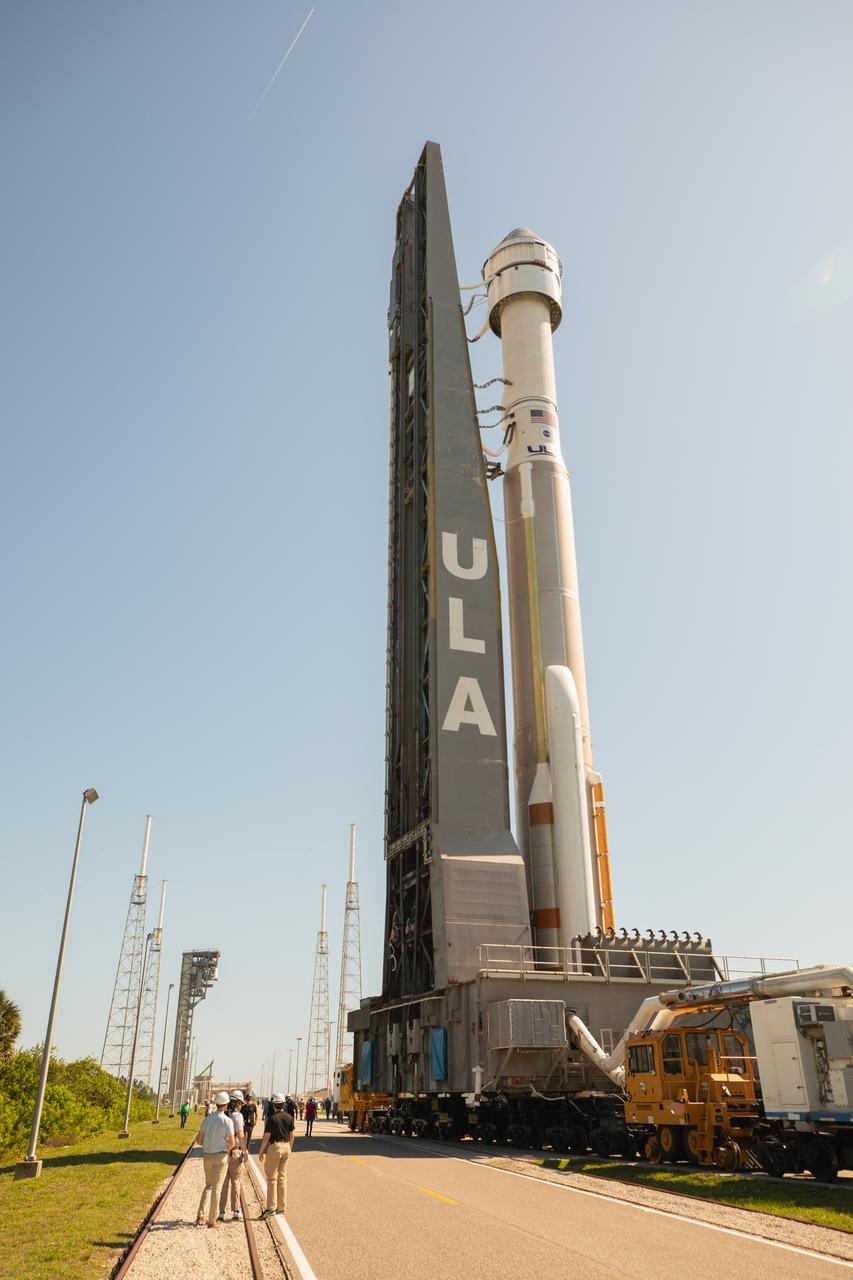
Boeing’s Starliner spacecraft atop the United Launch Alliance Atlas V rocket rolls out from the Vertical Integration Facility to the launch pad of Space Launch Complex-41 at Cape Canaveral Space Force Station in Florida on Thursday, May 30, 2024, ahead of NASA’s Boeing Crew Flight Test. As part of the agency’s Commercial Crew Program, NASA astronauts Butch Wilmore and Suni Williams are the first to launch to the International Space Station aboard Boeing’s Starliner spacecraft. Liftoff is scheduled for 12:25 p.m. ET on Saturday, June 1.
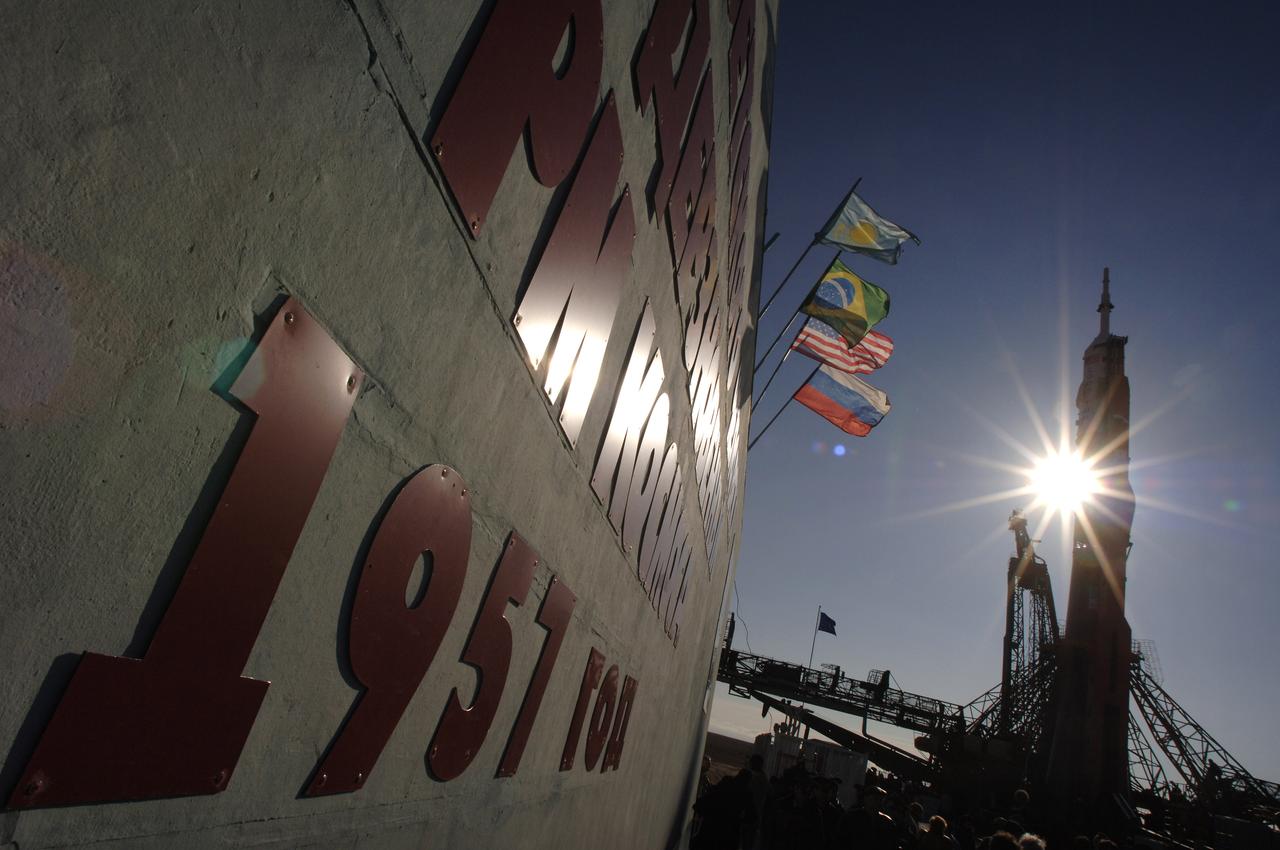
The Soyuz TMA-8 spacecraft and its booster rolled out to the launch pad on Tuesday, March 28, 2006 at the Baikonur Cosmodrome in Baikonur, Kazakhstan for final pre-launch preparations. The Soyuz will blast off on March 30, 2006 to carry Expedition 13 Commander Pavel V. Vinogradov and Science Officer and Flight Engineer Jeffrey N. Williams to the International Space Station for a six-month mission. The spacecraft will also be carrying Brazilian Space Agency Soyuz crew member Marcos Pontes, who will spend 10 days aboard the International Space Station under an agreement with the Russian Federal Space Agency. Photo Credit: (NASA/Bill Ingalls)
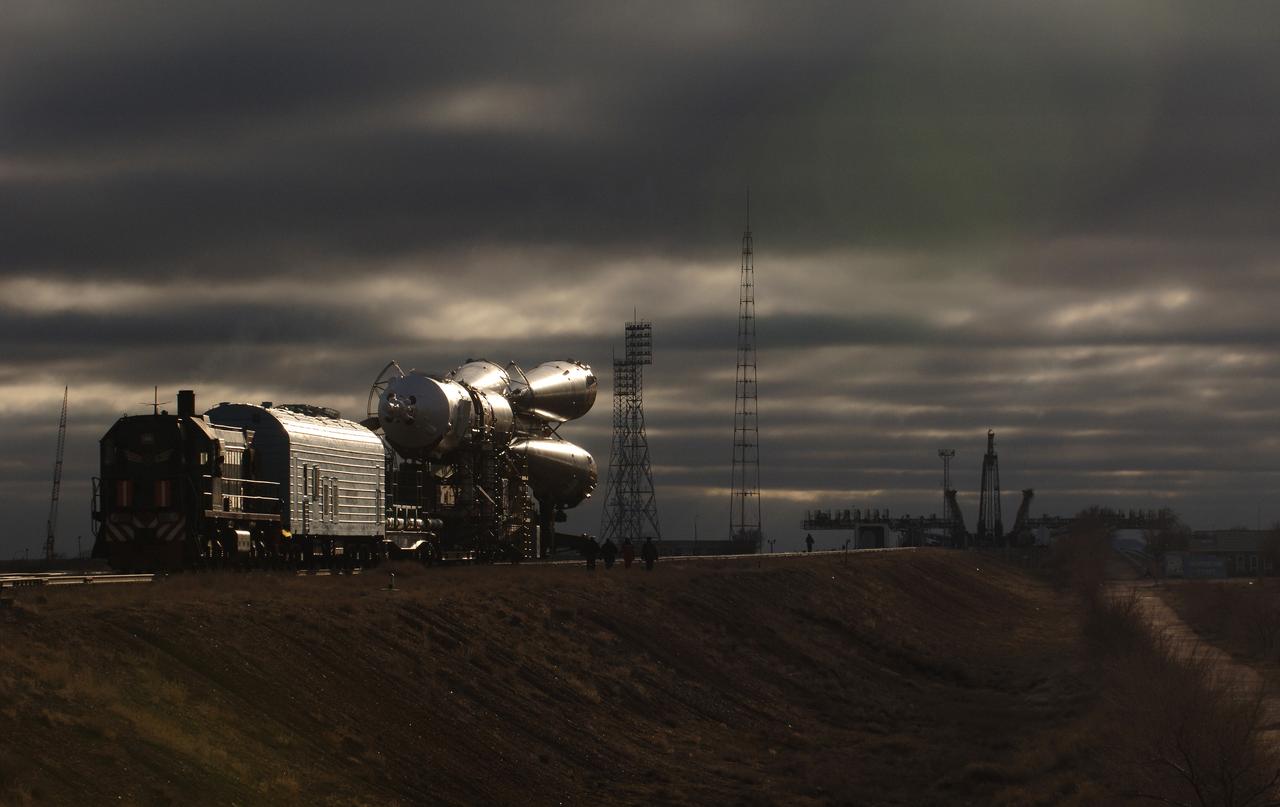
The Soyuz TMA-8 spacecraft and its booster rolled out to the launch pad on Tuesday, March 28, 2006 at the Baikonur Cosmodrome in Baikonur, Kazakhstan for final pre-launch preparations. The Soyuz will blast off on March 30, 2006 to carry Expedition 13 Commander Pavel V. Vinogradov and Science Officer and Flight Engineer Jeffrey N. Williams to the International Space Station for a six-month mission. The spacecraft will also be carrying Brazilian Space Agency Soyuz crew member Marcos Pontes, who will spend 10 days aboard the International Space Station under an agreement with the Russian Federal Space Agency. Photo Credit: (NASA/Bill Ingalls)
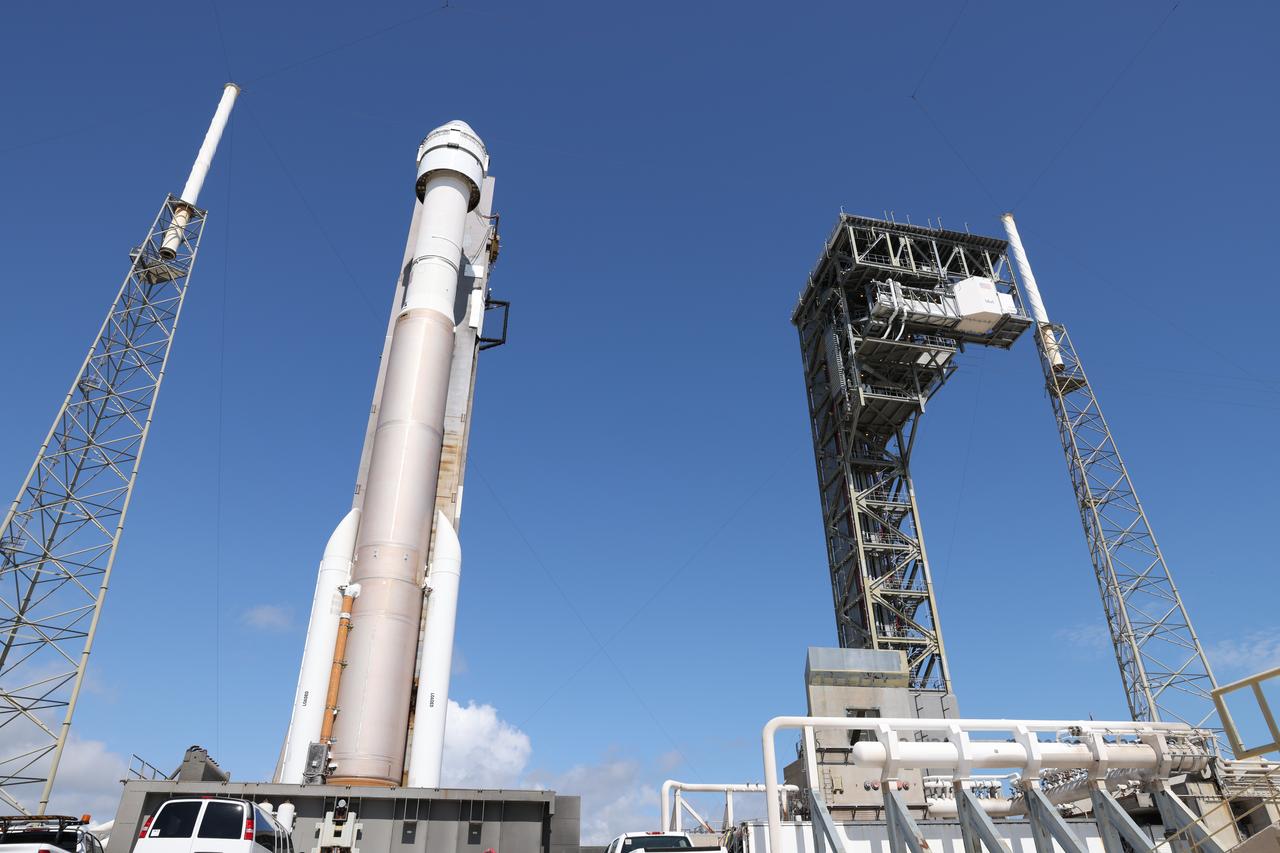
Boeing’s Starliner spacecraft atop the United Launch Alliance Atlas V rocket rolls out from the Vertical Integration Facility to the launch pad of Space Launch Complex-41 at Cape Canaveral Space Force Station in Florida on Saturday, May 4, 2024, ahead of NASA’s Boeing Crew Flight Test. As part of the agency’s Commercial Crew Program, NASA astronauts Butch Wilmore and Suni Williams are the first to launch to the International Space Station aboard Boeing’s Starliner spacecraft. Liftoff is scheduled for 10:34 p.m. ET Monday, May 6.
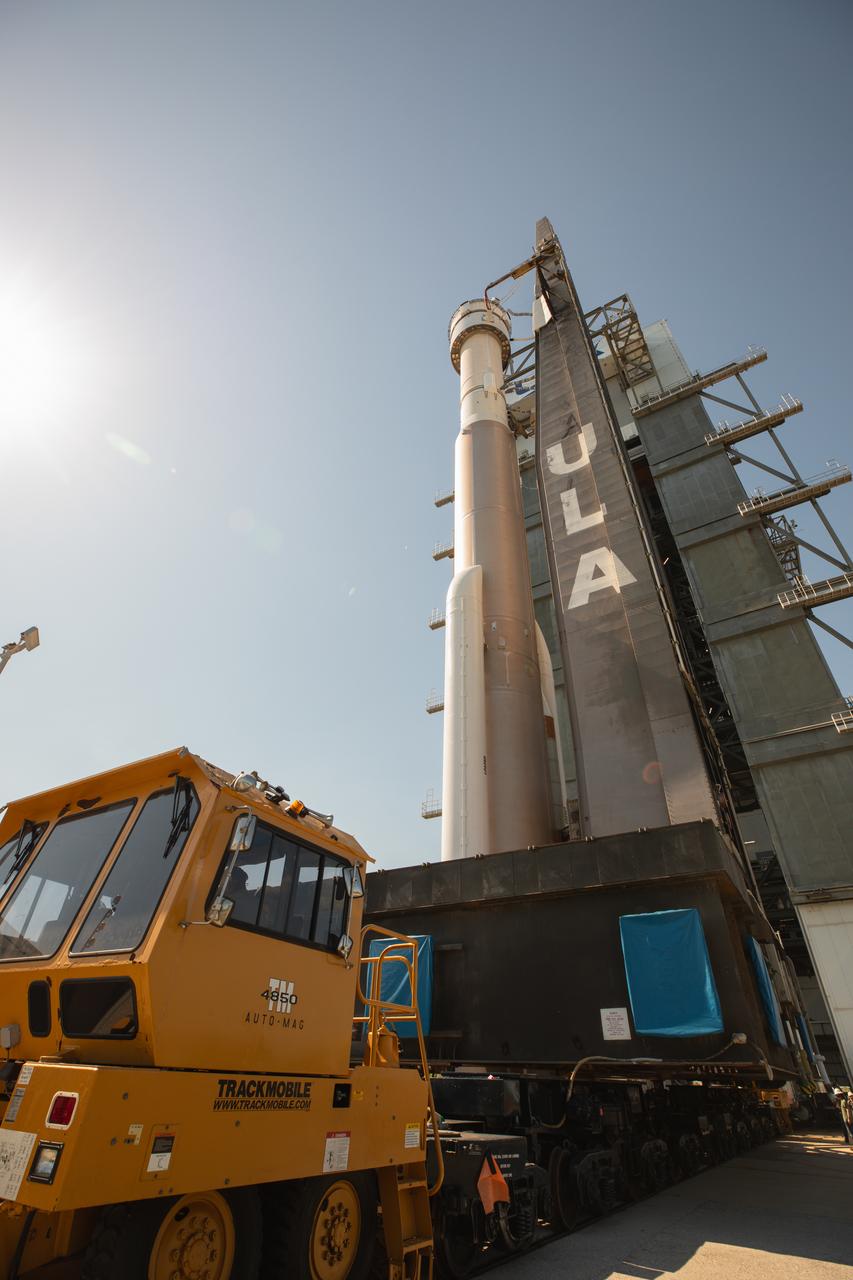
Boeing’s Starliner spacecraft atop the United Launch Alliance Atlas V rocket rolls out from the Vertical Integration Facility to the launch pad of Space Launch Complex-41 at Cape Canaveral Space Force Station in Florida on Thursday, May 30, 2024, ahead of NASA’s Boeing Crew Flight Test. As part of the agency’s Commercial Crew Program, NASA astronauts Butch Wilmore and Suni Williams are the first to launch to the International Space Station aboard Boeing’s Starliner spacecraft. Liftoff is scheduled for 12:25 p.m. ET on Saturday, June 1.
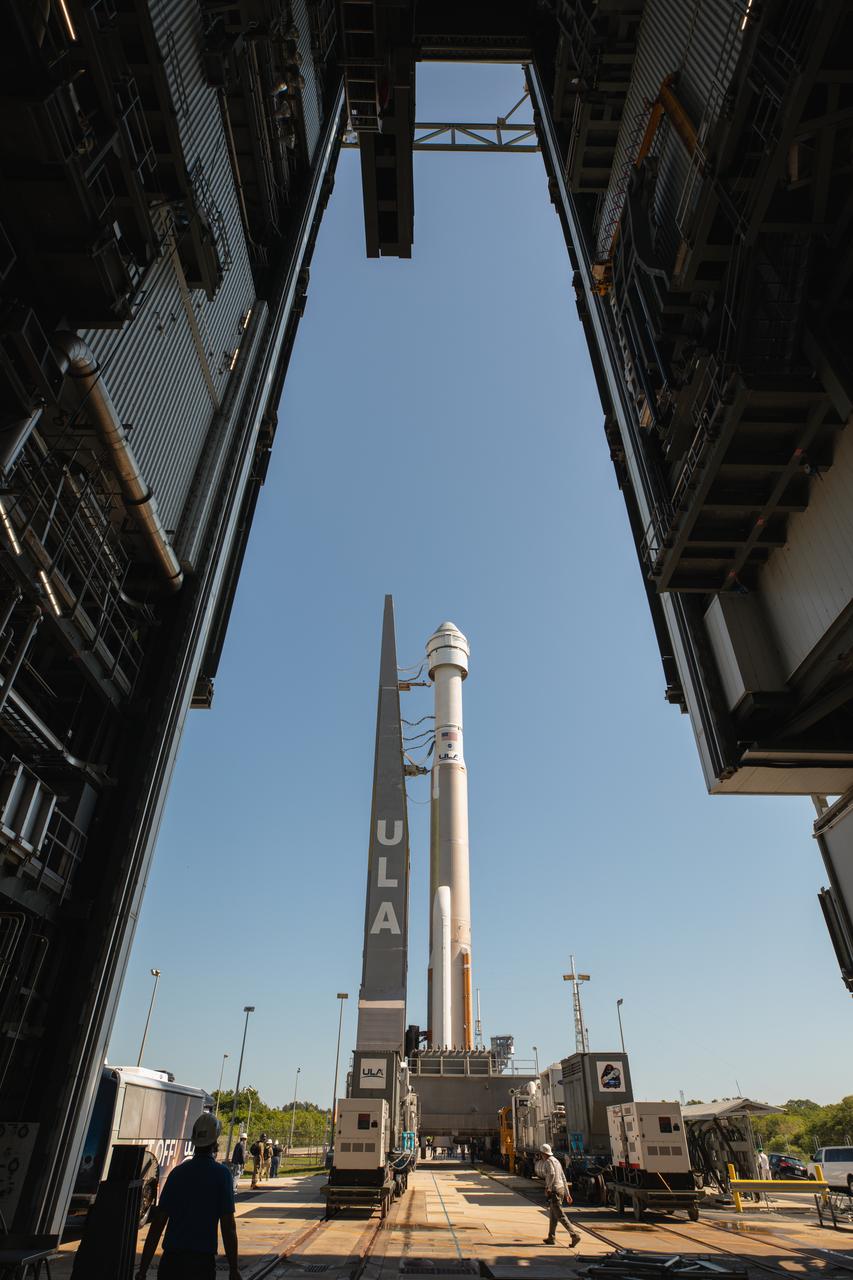
Boeing’s Starliner spacecraft atop the United Launch Alliance Atlas V rocket rolls out from the Vertical Integration Facility to the launch pad of Space Launch Complex-41 at Cape Canaveral Space Force Station in Florida on Thursday, May 30, 2024, ahead of NASA’s Boeing Crew Flight Test. As part of the agency’s Commercial Crew Program, NASA astronauts Butch Wilmore and Suni Williams are the first to launch to the International Space Station aboard Boeing’s Starliner spacecraft. Liftoff is scheduled for 12:25 p.m. ET on Saturday, June 1.
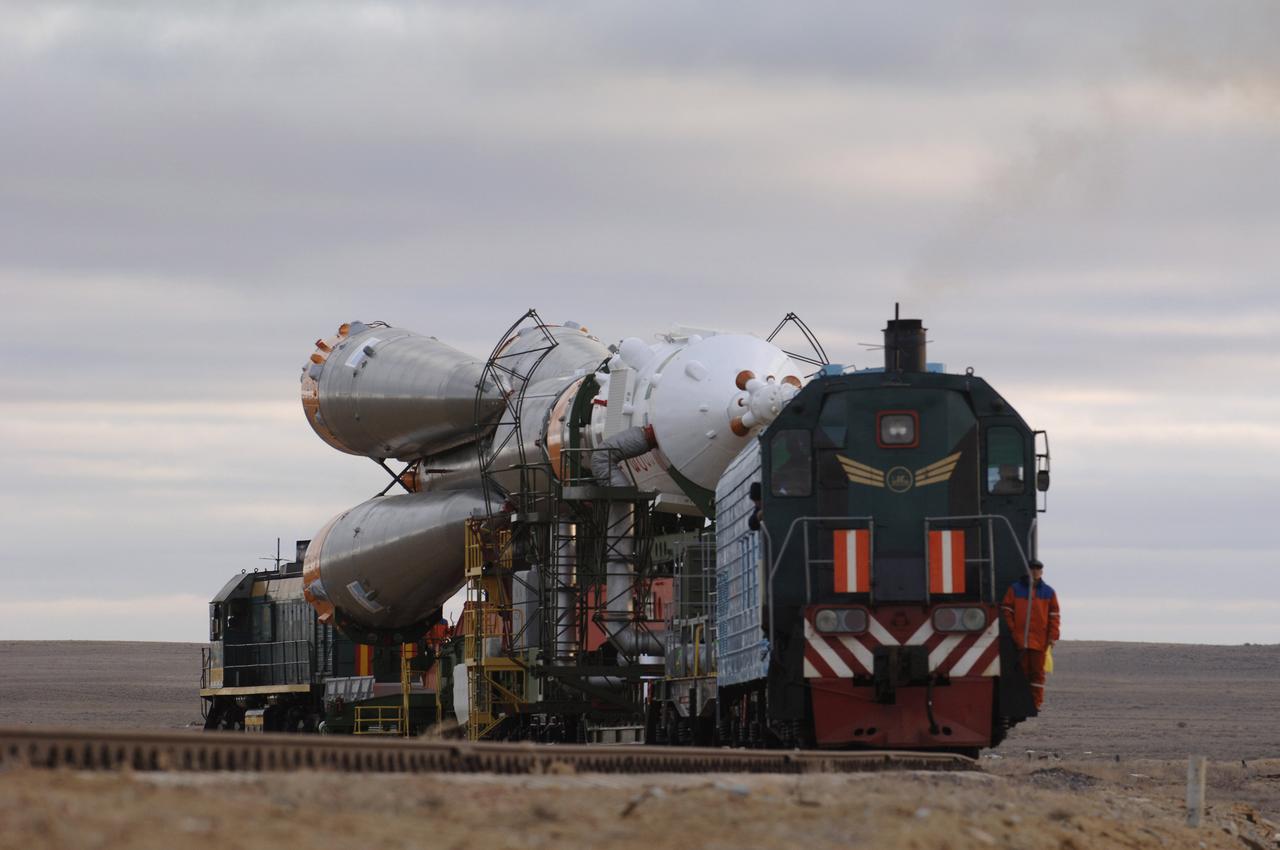
The Soyuz TMA-8 spacecraft and its booster rolled out to the launch pad on Tuesday, March 28, 2006 at the Baikonur Cosmodrome in Baikonur, Kazakhstan for final pre-launch preparations. The Soyuz will blast off on March 30, 2006 to carry Expedition 13 Commander Pavel V. Vinogradov and Science Officer and Flight Engineer Jeffrey N. Williams to the International Space Station for a six-month mission. The spacecraft will also be carrying Brazilian Space Agency Soyuz crew member Marcos Pontes, who will spend 10 days aboard the International Space Station under an agreement with the Russian Federal Space Agency. Photo Credit: (NASA/Bill Ingalls)