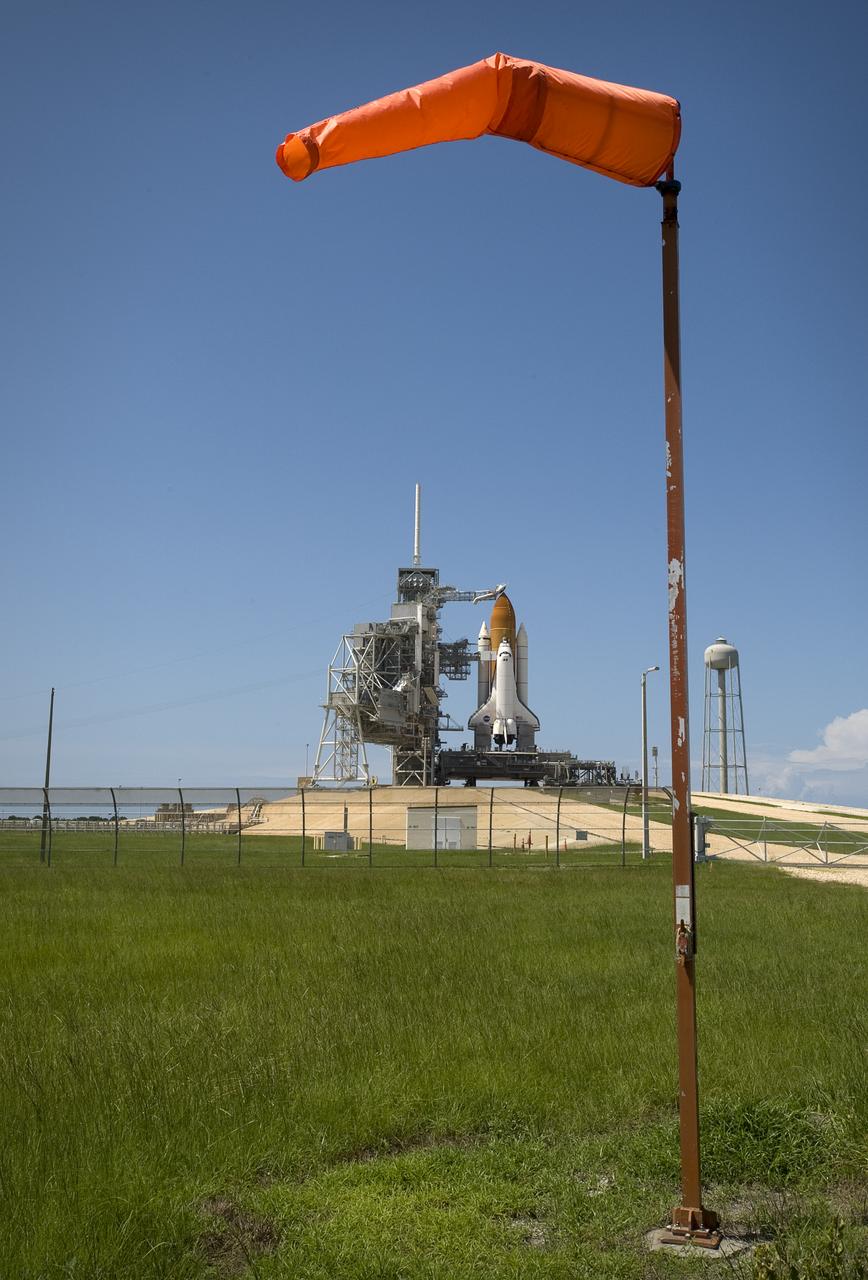
The space shuttle Endeavour is framed by a windsock at launch pad 39A at the NASA Kennedy Space Center in Cape Canaveral, Florida on Saturday, July 11, 2009. NASA is hopeful that Endeavour will launch with the crew of STS-127 on Sunday. Photo Credit: (NASA/Bill Ingalls)
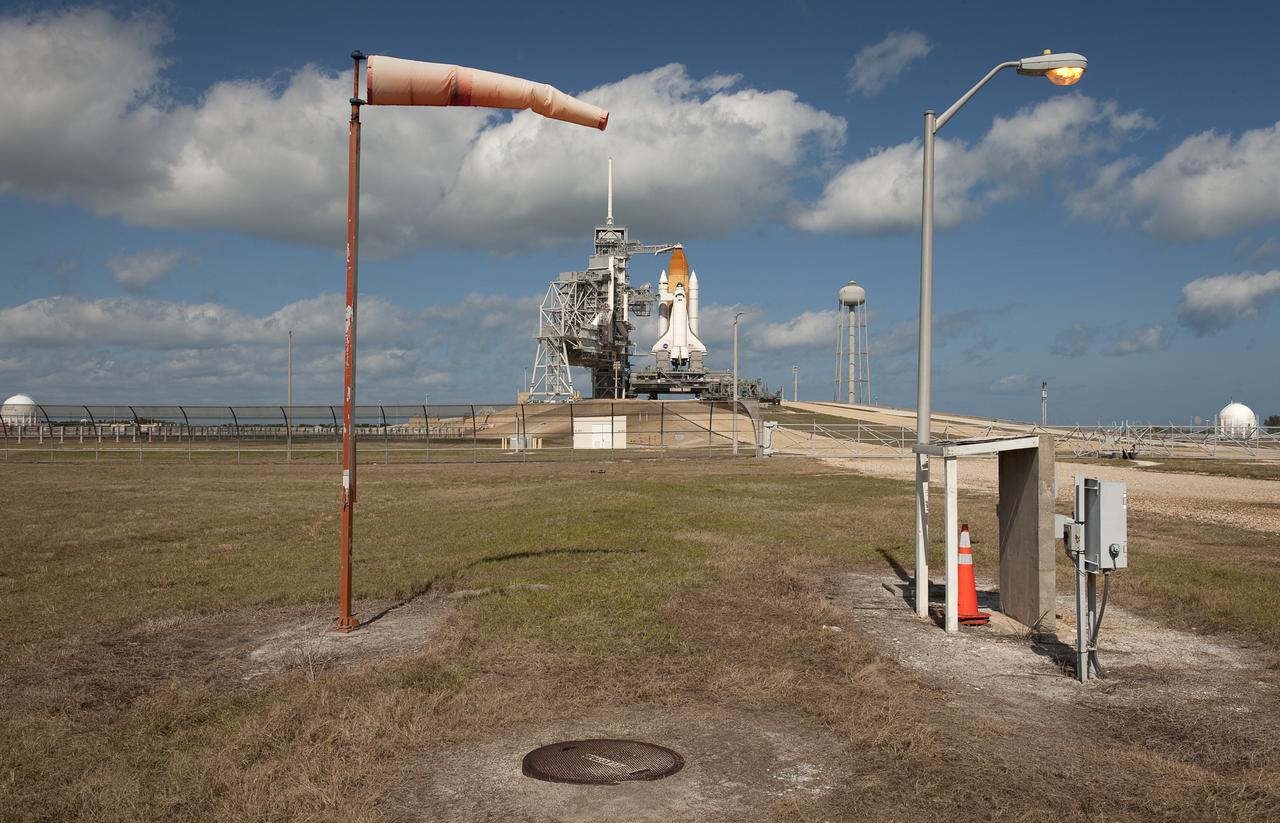
The space shuttle Endeavour is seen as strong winds inflate a windsock, Saturday Feb. 6, 2010 at pad 39a of the NASA Kennedy Space Center in Cape Canaveral, Florida. Endeavour and the crew members of the STS-130 mission are set to launch on Sunday at 4:39 a.m. EST. Photo Credit: (NASA/Bill Ingalls)
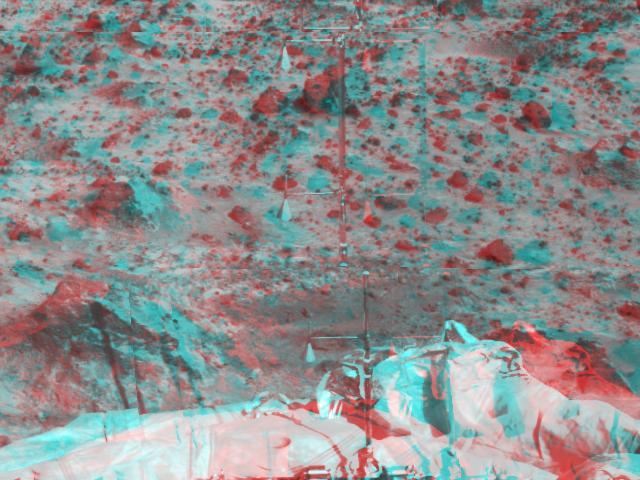
The Atmospheric Structure Instrument/Meteorology Package ASI/MET is the mast and windsocks at the center of this stereo image from NASA Mars Pathfinder. 3D glasses are necessary to identify surface detail.
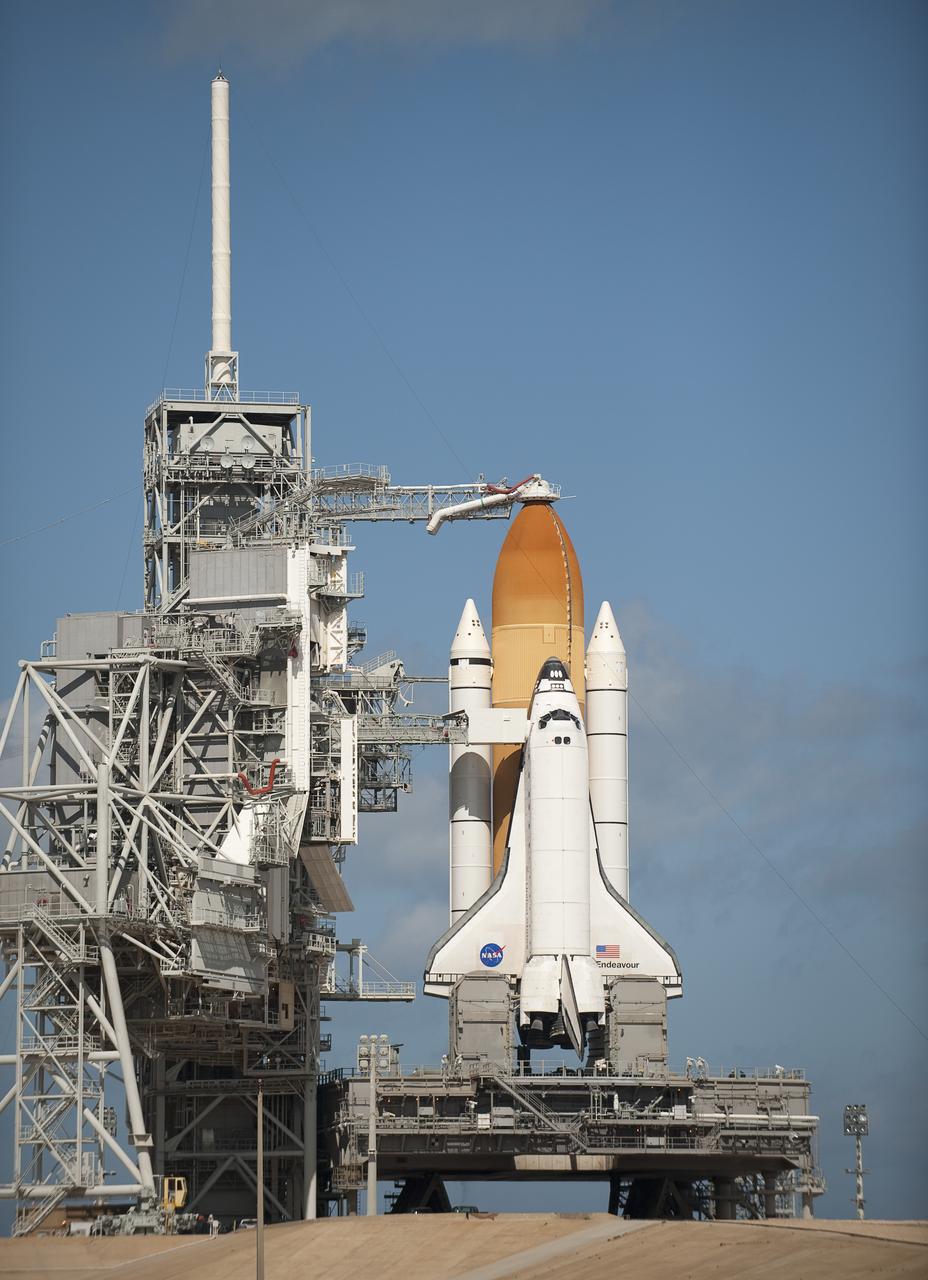
The space shuttle Endeavour is seen as strong winds inflate a windsock, Saturday Feb. 6, 2010 at pad 39a of the NASA Kennedy Space Center in Cape Canaveral, Florida. Endeavour and the crew members of the STS-130 mission are set to launch on Sunday at 4:39 a.m. EST. Photo Credit: (NASA/Bill Ingalls)
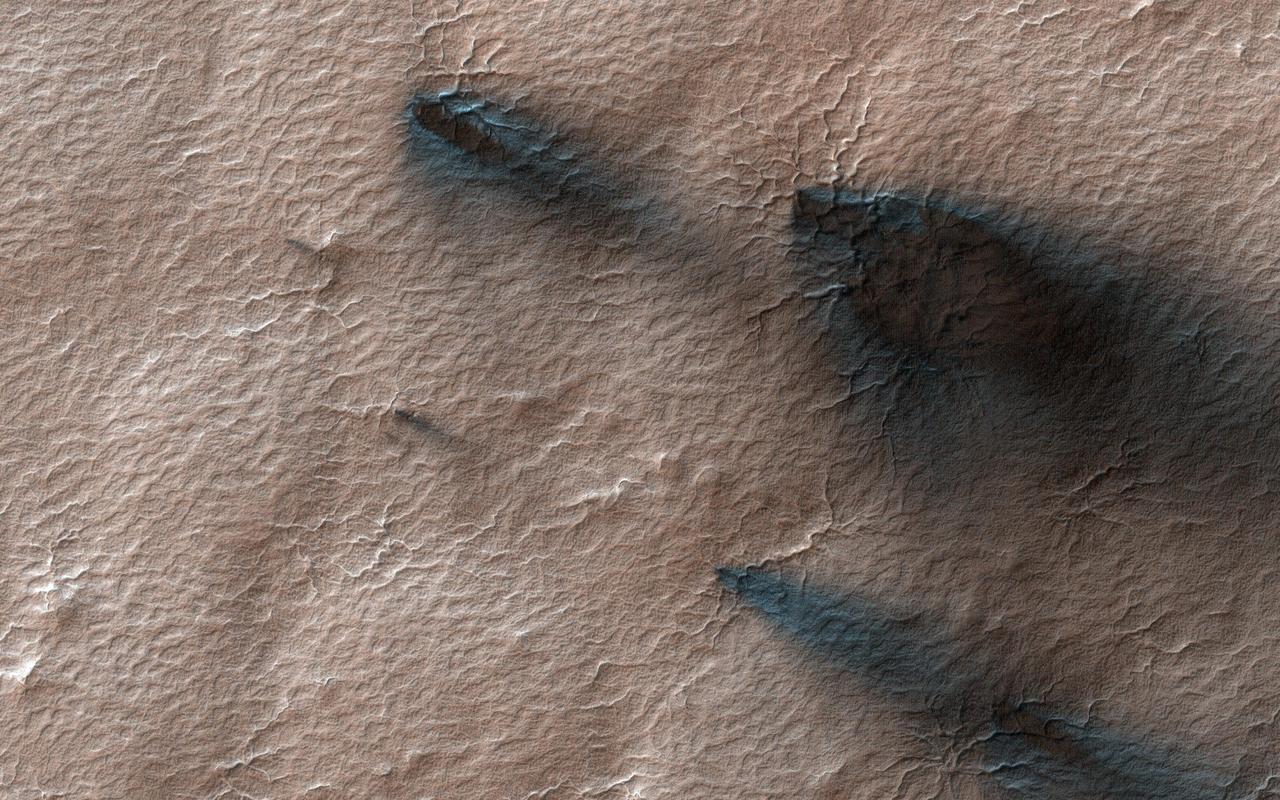
Every Martian spring, fans of dust are blown out from under the seasonal layer of carbon dioxide ice that forms a polar cap over the winter. Gas blowing out from under the ice carries with it a load of dust that is deposited on the surface in a direction determined by the wind at the time of the eruption. Like windsocks, these fans in a polar area we've dubbed Macclesfield, record the direction that the wind was blowing. A citizen science task at Planet Four enlists the public to outline the fans. Their measurements go into a data base that will ultimately help us to understand weather on Mars. https://photojournal.jpl.nasa.gov/catalog/PIA23954
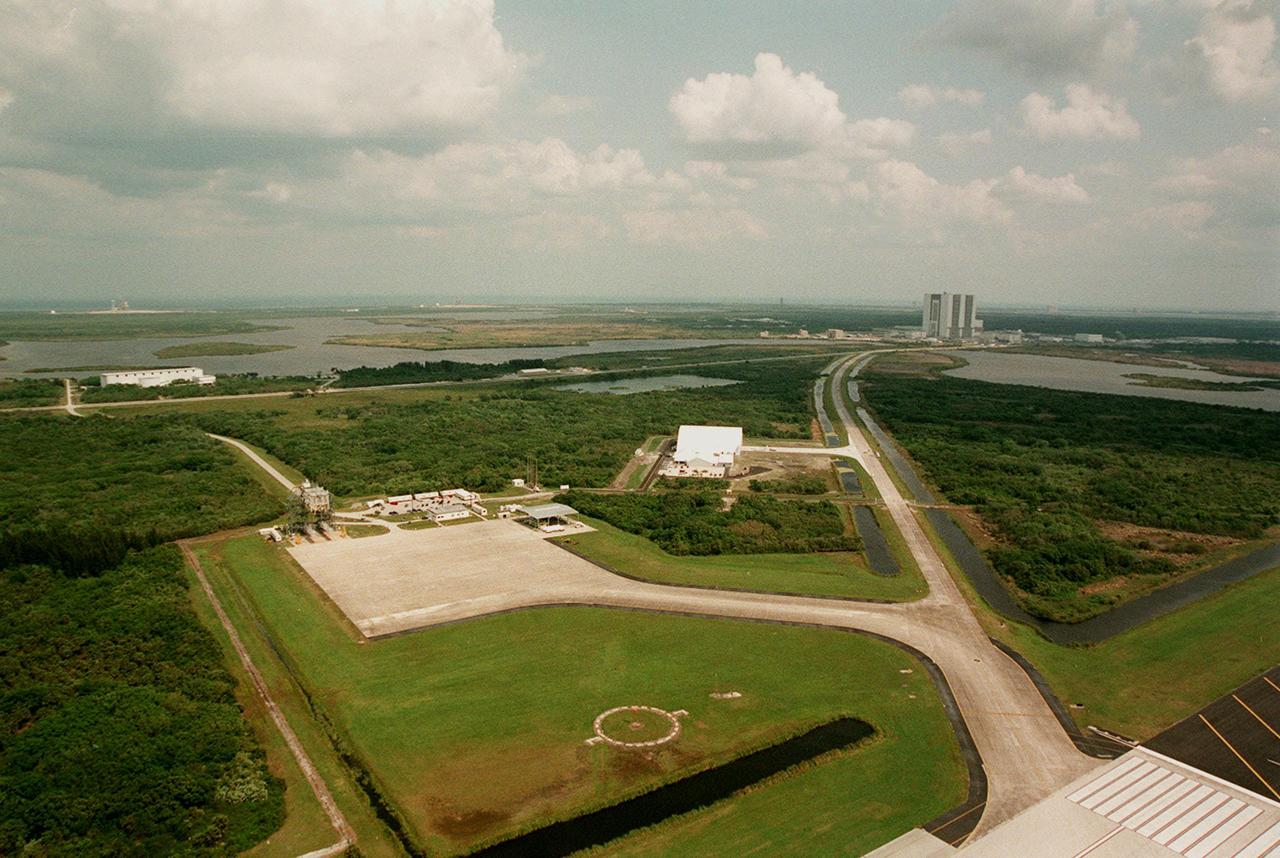
A broad aerial view west of Launch Complex 39 Area shows a multitude of facilities. Starting with the Shuttle Landing Facility, at bottom center is a circle around a windsock, a landing aid for pilots; at bottom right is a portion of the landing strip. In the center is the parking tarmac with its mate/demate device on the left corner. To the right is the remote launch vehicle hangar, still under construction. At the upper right is the Vehicle Assembly Building (VAB). The tow-way road runs from the landing strip to the Orbiter Processing Facility, next to the VAB. The Kennedy Parkway North extends from the left side toward the VAB. The long white building next to the parkway is the Apollo/Saturn V Center. Above it, slightly visible on the horizon (left), is Launch Complex 39, Pad B.
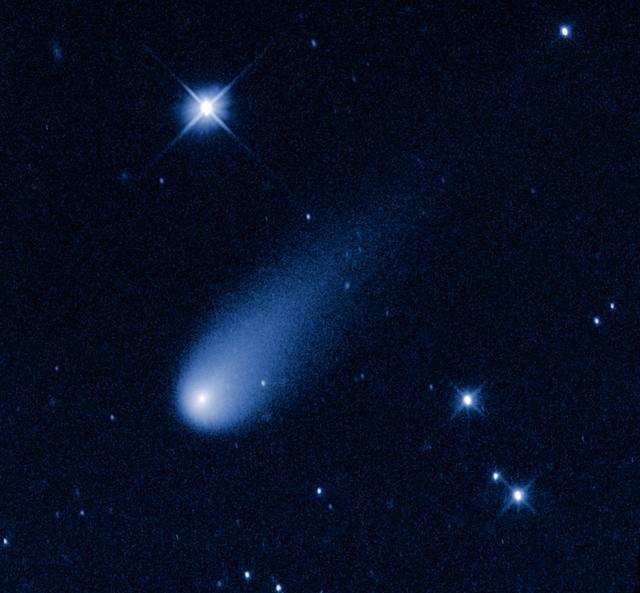
Superficially resembling a skyrocket, Comet ISON is hurtling toward the Sun at a whopping 48,000 miles per hour. Its swift motion is captured in this image taken May 8, 2013, by NASA's Hubble Space Telescope. At the time the image was taken, the comet was 403 million miles from Earth, between the orbits of Mars and Jupiter. Unlike a firework, the comet is not combusting, but in fact is pretty cold. Its skyrocket-looking tail is really a streamer of gas and dust bleeding off the icy nucleus, which is surrounded by a bright, star-like-looking coma. The pressure of the solar wind sweeps the material into a tail, like a breeze blowing a windsock. As the comet warms as it moves closer to the Sun, its rate of sublimation will increase. The comet will get brighter and the tail grows longer. The comet is predicted to reach naked-eye visibility in November. The comet is named after the organization that discovered it, the Russia-based International Scientific Optical Network. This false-color, visible-light image was taken with Hubble's Wide Field Camera 3. Credit: NASA, ESA, and the Hubble Heritage Team (STScI/AURA) -------- More details on Comet ISON: Comet ISON began its trip from the Oort cloud region of our solar system and is now travelling toward the sun. The comet will reach its closest approach to the sun on Thanksgiving Day -- 28 Nov 2013 -- skimming just 730,000 miles above the sun's surface. If it comes around the sun without breaking up, the comet will be visible in the Northern Hemisphere with the naked eye, and from what we see now, ISON is predicted to be a particularly bright and beautiful comet. Catalogued as C/2012 S1, Comet ISON was first spotted 585 million miles away in September 2012. This is ISON's very first trip around the sun, which means it is still made of pristine matter from the earliest days of the solar system’s formation, its top layers never having been lost by a trip near the sun. Comet ISON is, like all comets, a dirty snowball made up of dust and frozen gases like water, ammonia, methane and carbon dioxide -- some of the fundamental building blocks that scientists believe led to the formation of the planets 4.5 billion years ago. NASA has been using a vast fleet of spacecraft, instruments, and space- and Earth-based telescope, in order to learn more about this time capsule from when the solar system first formed. The journey along the way for such a sun-grazing comet can be dangerous. A giant ejection of solar material from the sun could rip its tail off. Before it reaches Mars -- at some 230 million miles away from the sun -- the radiation of the sun begins to boil its water, the first step toward breaking apart. And, if it survives all this, the intense radiation and pressure as it flies near the surface of the sun could destroy it altogether. This collection of images show ISON throughout that journey, as scientists watched to see whether the comet would break up or remain intact. The comet reaches its closest approach to the sun on Thanksgiving Day -- Nov. 28, 2013 -- skimming just 730,000 miles above the sun’s surface. If it comes around the sun without breaking up, the comet will be visible in the Northern Hemisphere with the naked eye, and from what we see now, ISON is predicted to be a particularly bright and beautiful comet. ISON stands for International Scientific Optical Network, a group of observatories in ten countries who have organized to detect, monitor, and track objects in space. ISON is managed by the Keldysh Institute of Applied Mathematics, part of the Russian Academy of Sciences. <b><a href="http://www.nasa.gov/audience/formedia/features/MP_Photo_Guidelines.html" rel="nofollow">NASA image use policy.</a></b> <b><a href="http://www.nasa.gov/centers/goddard/home/index.html" rel="nofollow">NASA Goddard Space Flight Center</a></b> enables NASA’s mission through four scientific endeavors: Earth Science, Heliophysics, Solar System Exploration, and Astrophysics. Goddard plays a leading role in NASA’s accomplishments by contributing compelling scienti