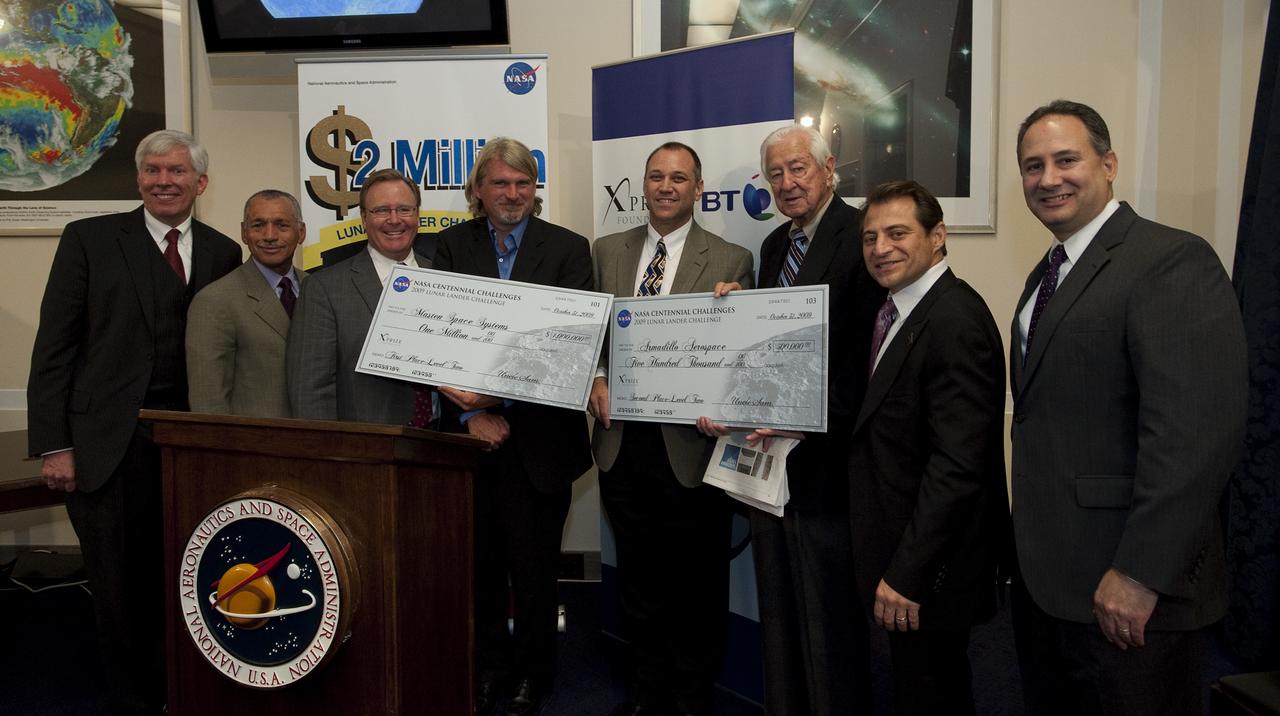
NASA and the X PRIZE Foundation announced the winners of the Northrop Grumman Lunar Lander Challenge at an awards ceremony at the Rayburn House Office Building, Thursday, Nov. 5, 2009 in Washington, DC. From left to right, George Nield, Associate Administrator of Commercial Space Transportation, FAA; Charles Bolden, NASA Administrator; Doug Comstock, Director, Innovative Partnerships Program, NASA; David Masten, CEO, Masten Space Systems; Phil Eaton, VP, Operations, Armadillo Aerospace; U.S. Rep. Ralph Hall (R-TX); Peter Diamandis, Chairman and CEO, X PRIZE Foundation and Mitch Waldman, VP, Advanced Programs & Technology, Northrop Grumman. Photo Credit: (NASA/Carla Cioffi)
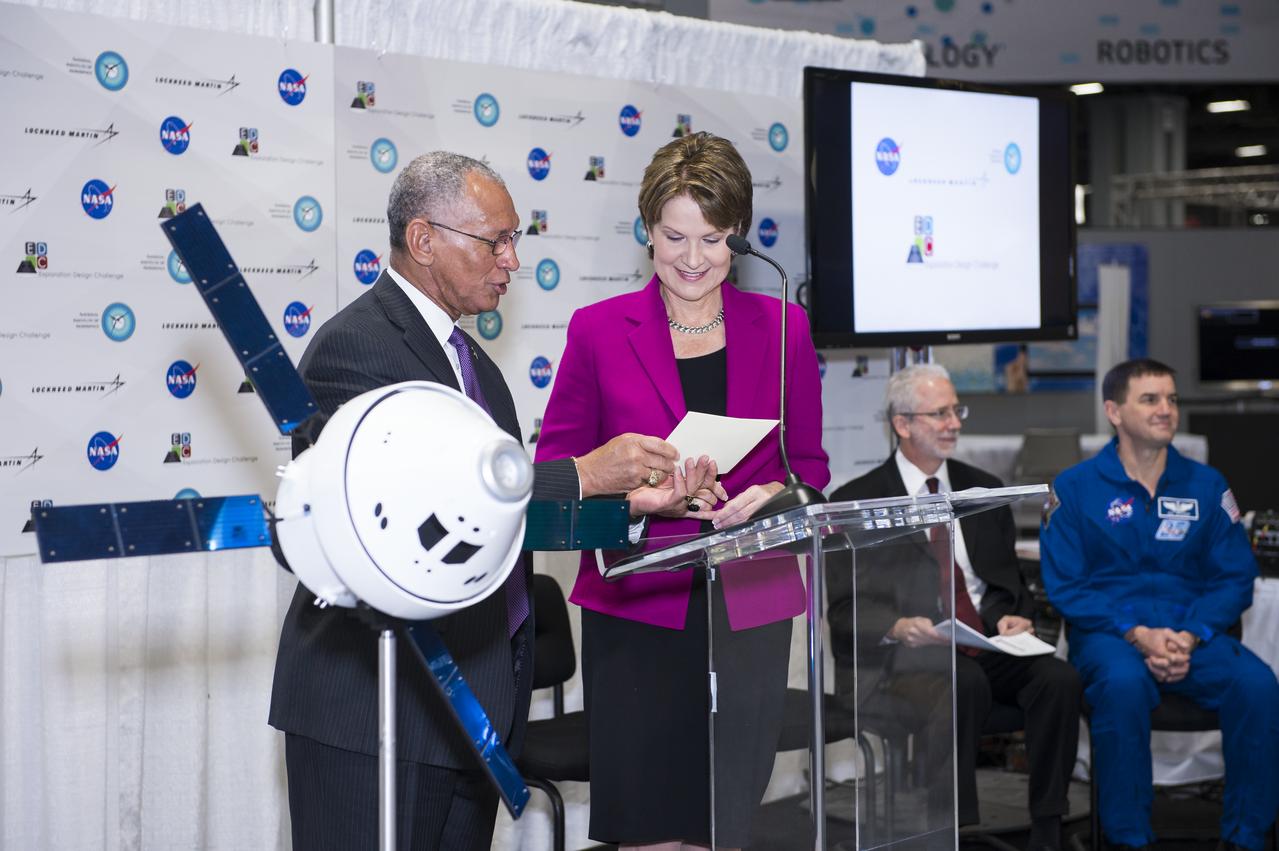
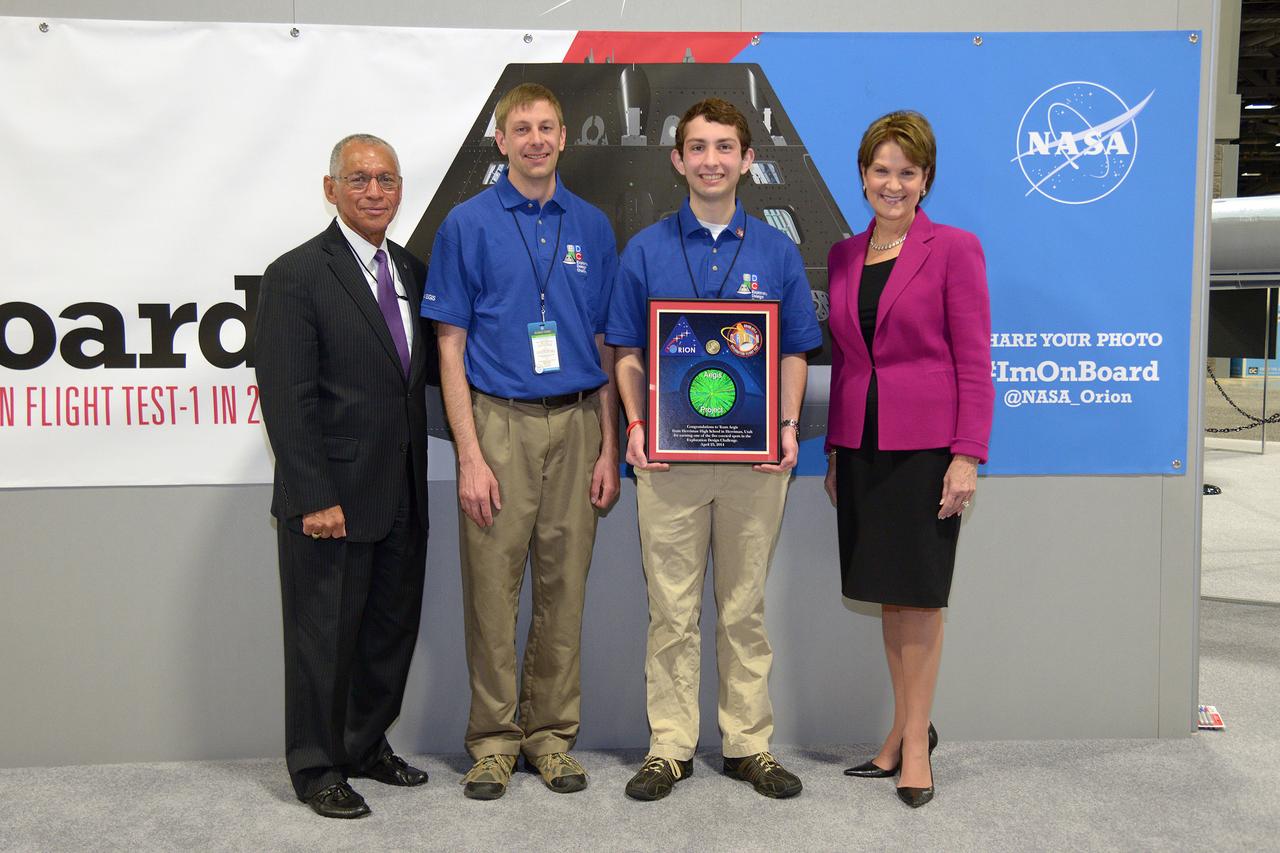
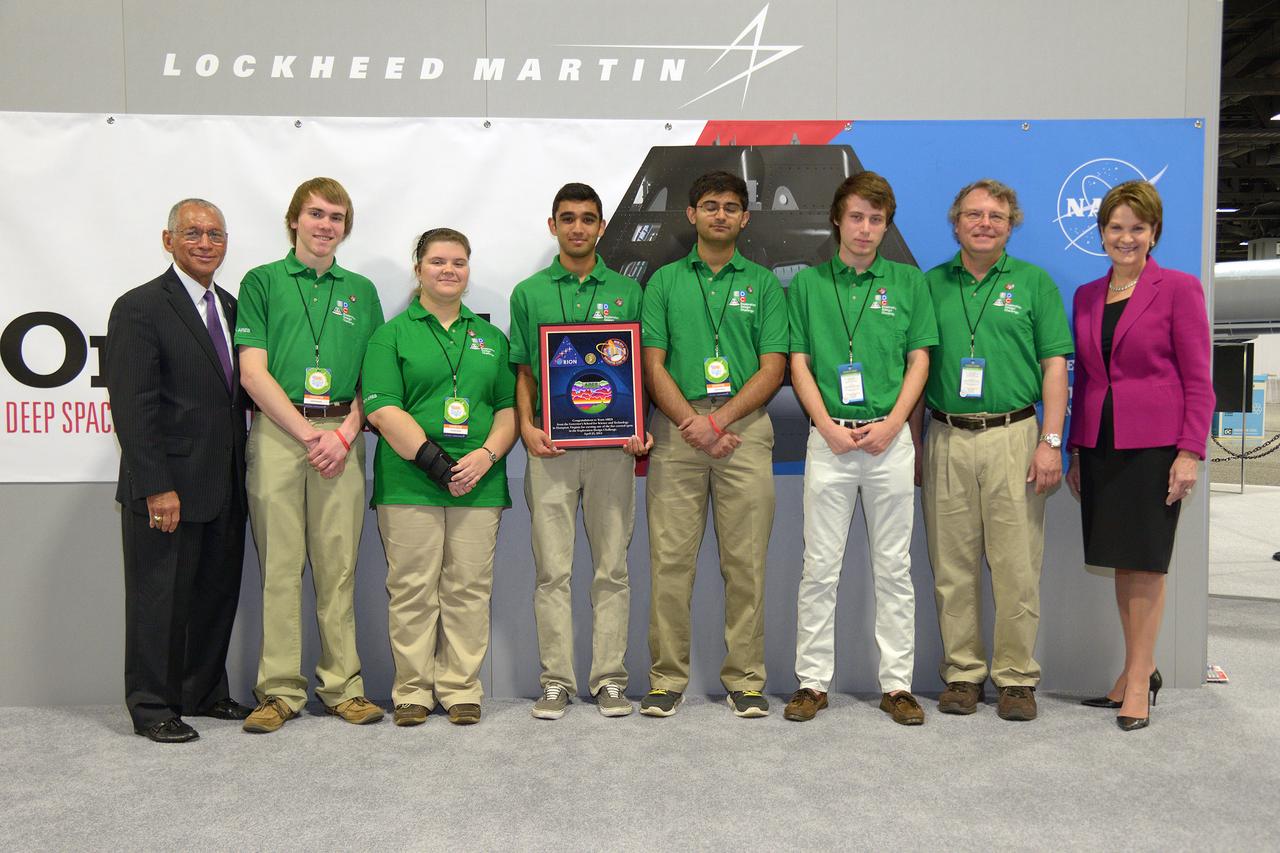
NASA Administrator, Charles Bolden and Lockheed Martin CEO, Marillyn Hewson announce the winner of the Exploration Design Challenge at the USA Science and Engineering Festival on April 25, 2014. The goal of the Exploration Design Challenge was for students to research and design ways to protect astronauts from space radiation.The USA Science and Engineering Festival is taking place at the Washington Convention Center in Washington, DC on April 26 and 27, 2014. Photo Credit: (NASA/Aubrey Gemignani)
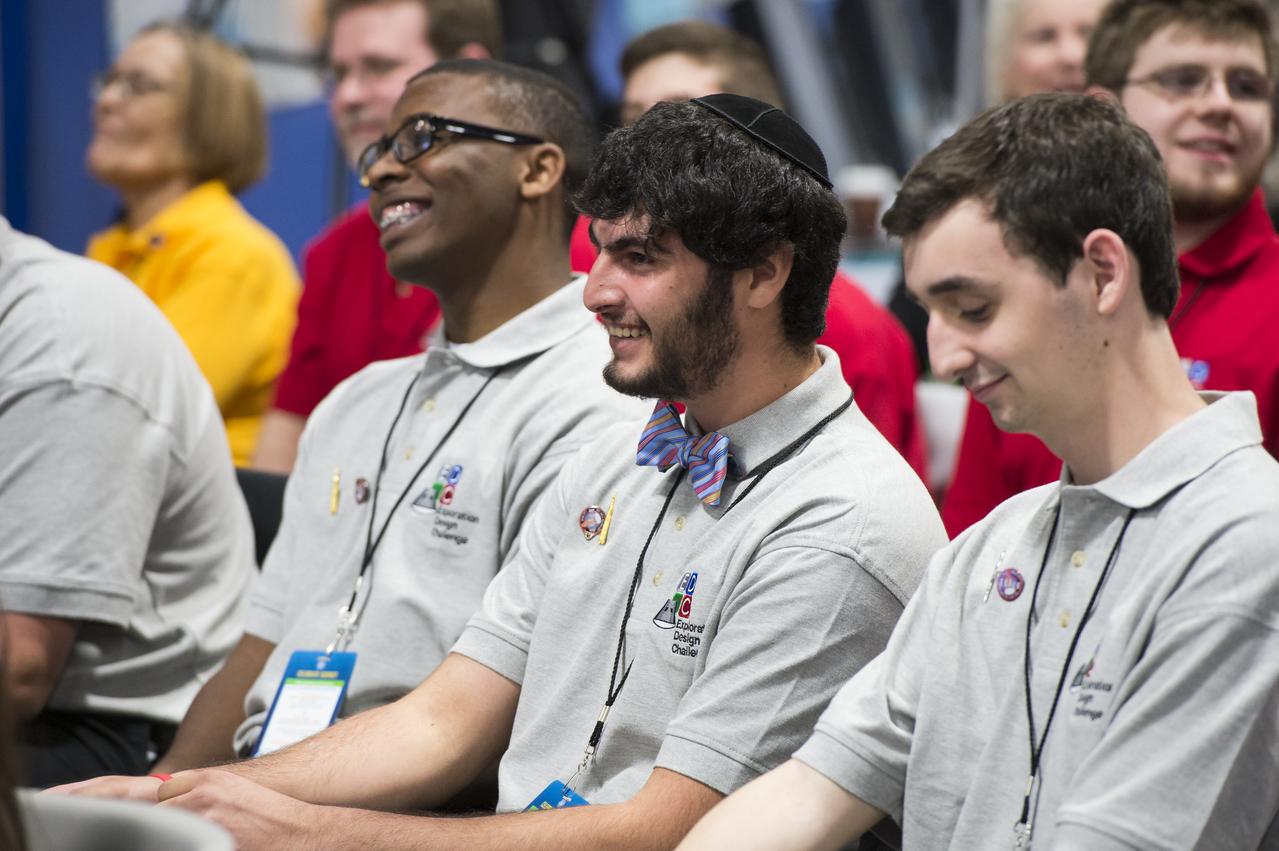
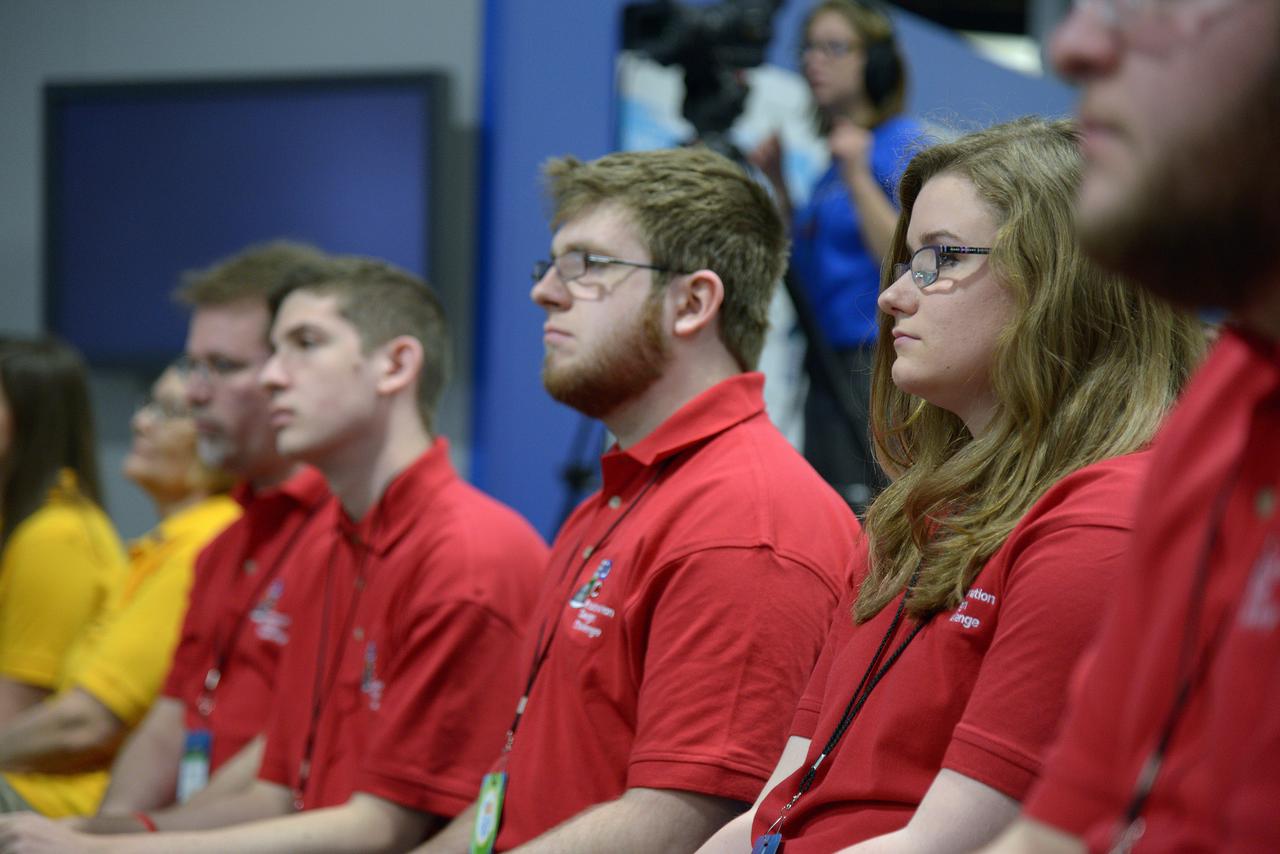
Team Lore listens in the audience as NASA Administrator Charles Bolden speaks at the event to announce the winner of the Exploration Design Challenge. Team Lore was one of the semi-finalists in the challenge. The goal of the Exploration Design Challenge is for students to research and design ways to protect astronauts from space radiation. The winner of the challenge was announced on April 25, 2014 at the USA Science and Engineering Festival at the Washington Convention Center in Washington, DC. Photo Credit: (NASA/Aubrey Gemignani)

During the Apollo 11 50th Gala, presented by Northrop Grumman, on July 16, 2019, last year's space-themed constume contest winner, left, helps the announcer preent this year's winners their awards. The gala was held inside the Apollo/Saturn V Center at the Kennedy Space Center Visitor Complex in Florida.
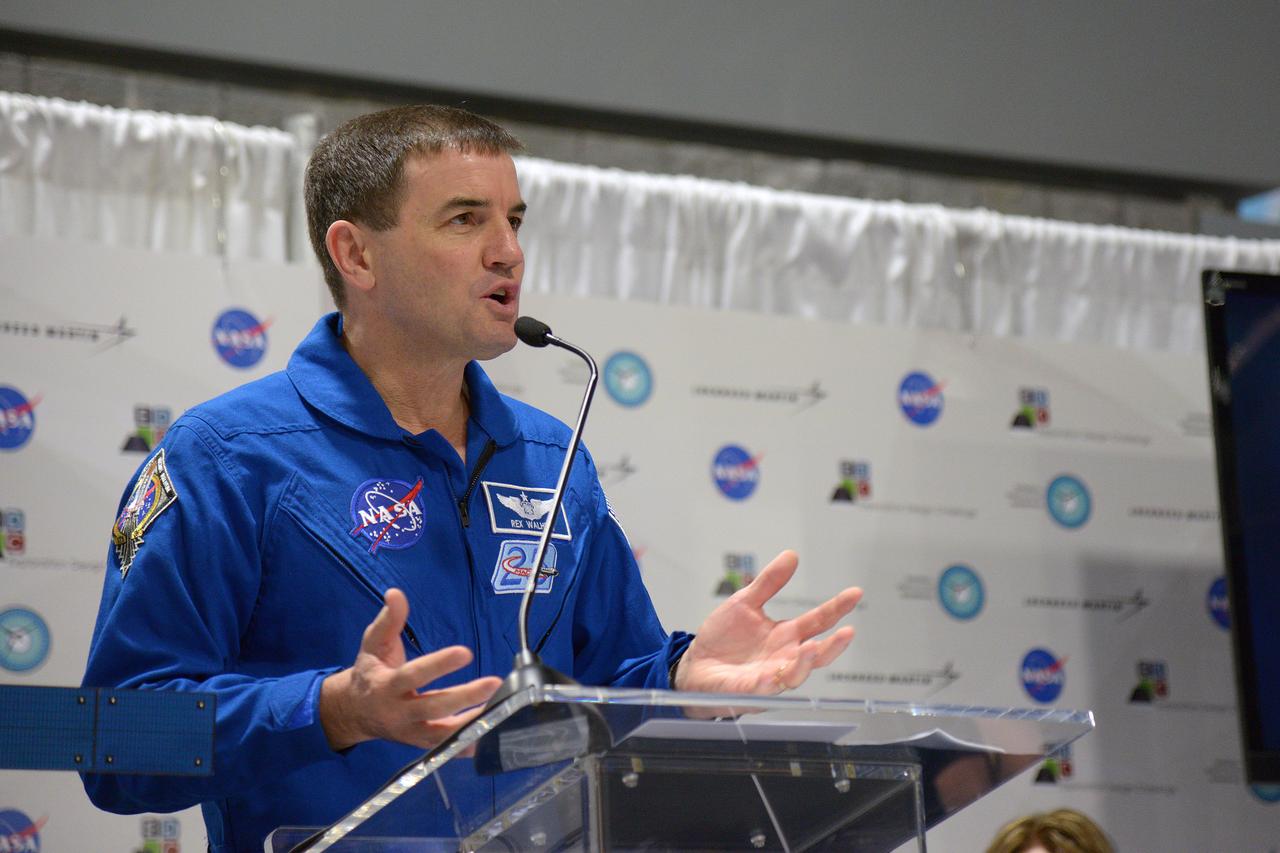
The winner of the high school portion of the Exploration Design Challenge is announced at the USA Science and Engineering Festival in Washington on April 25, 2014. Astronaut Rex Walheim speaks from podium. Part of Batch image transfer from Flickr.
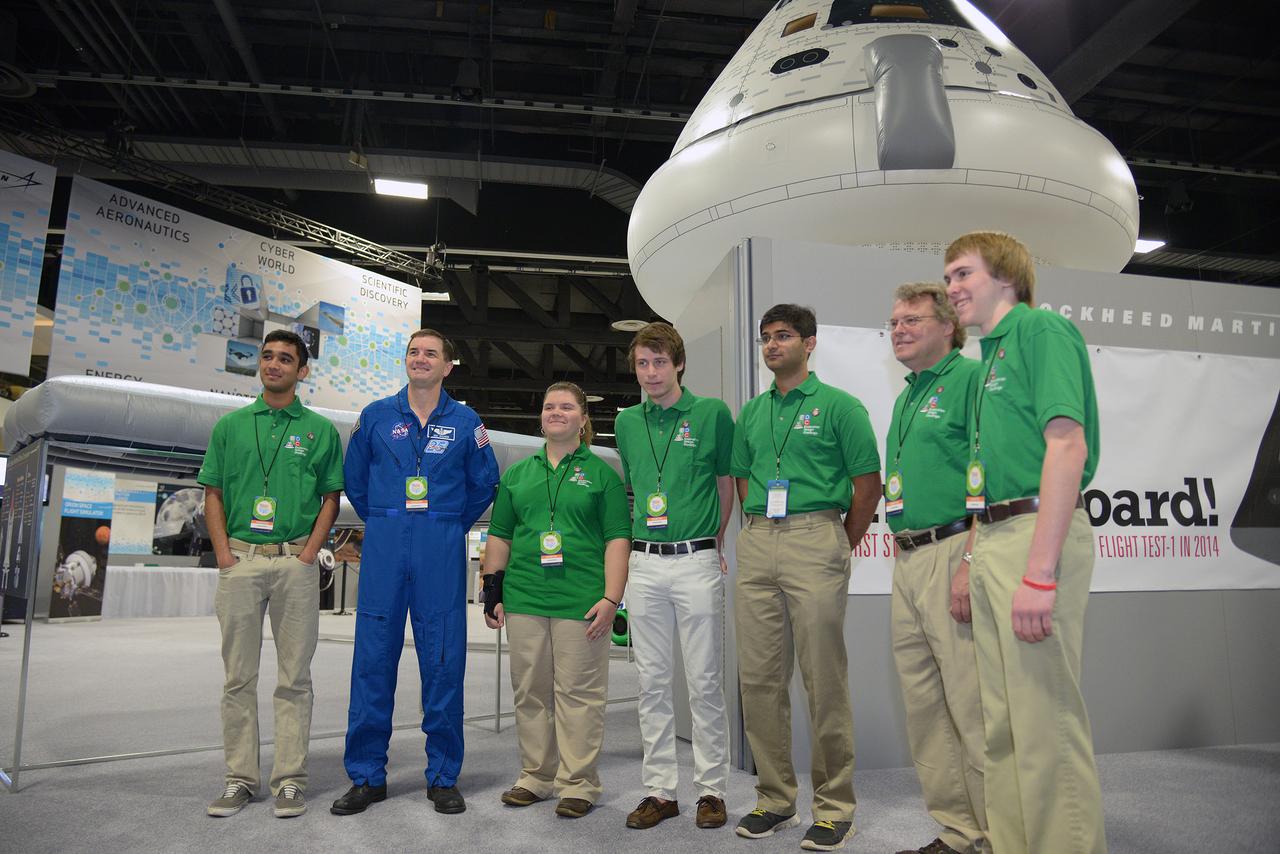
The winner of the high school portion of the Exploration Design Challenge is announced at the USA Science and Engineering Festival in Washington on April 25, 2014. Astronaut Rex Walheim poses for photo with students. Part of Batch image transfer from Flickr.
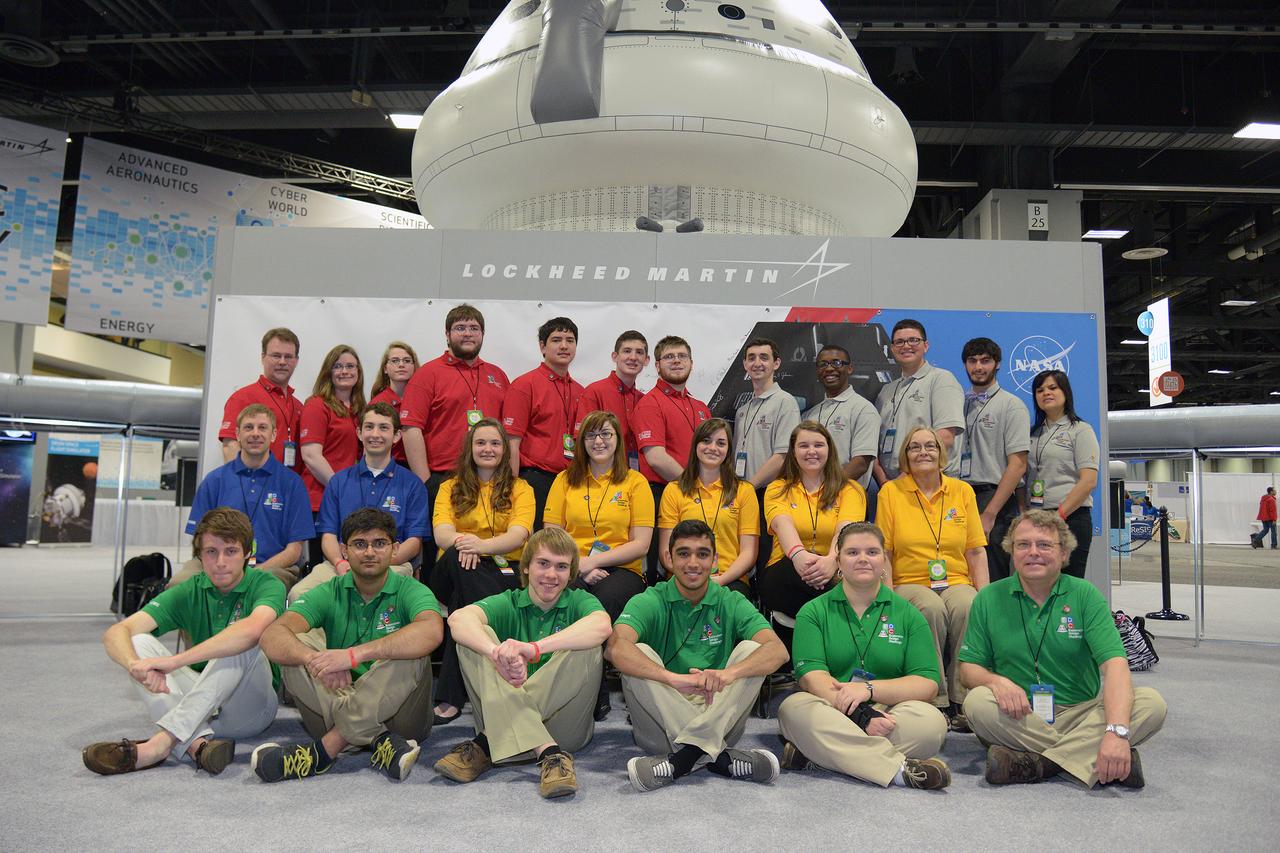
The winner of the high school portion of the Exploration Design Challenge is announced at the USA Science and Engineering Festival in Washington on April 25, 2014. Group shot of students. Part of Batch image transfer from Flickr.
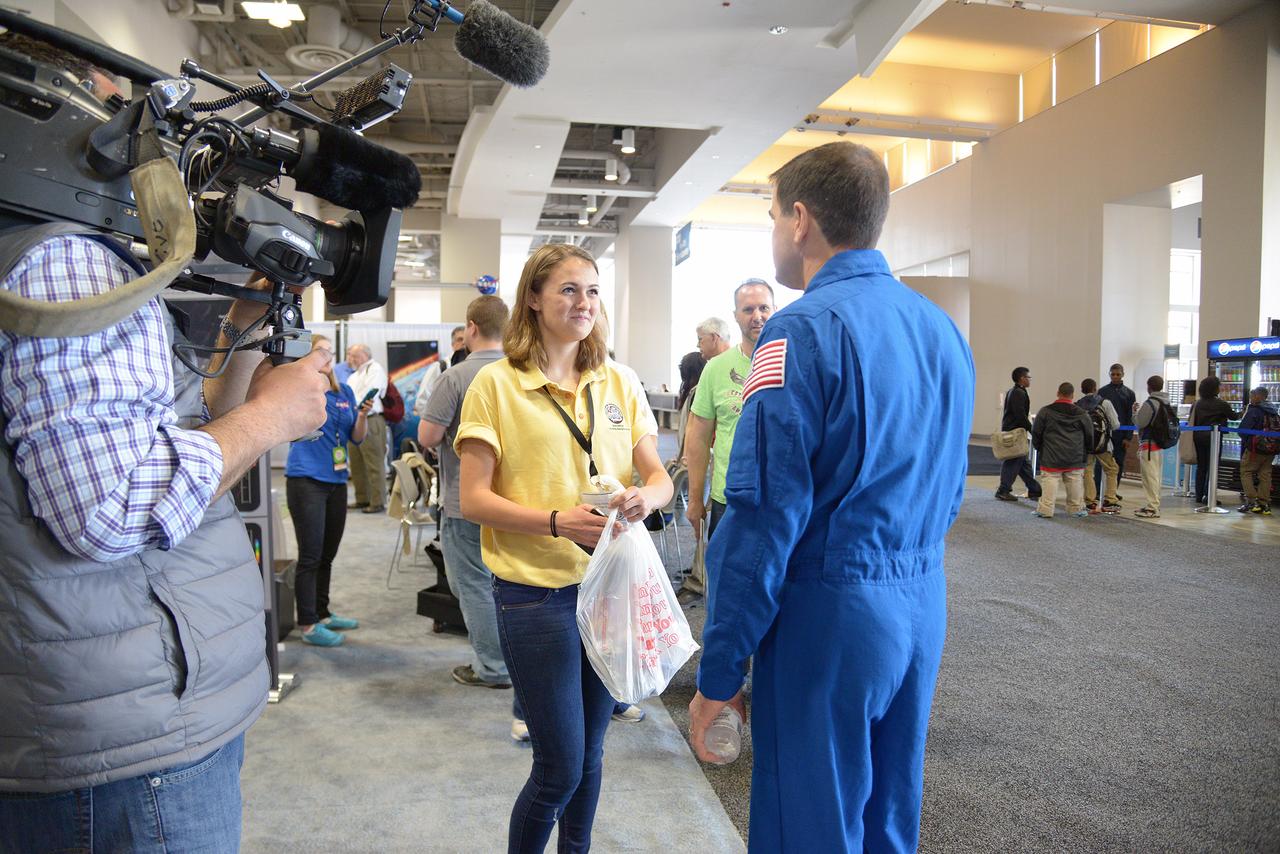
The winner of the high school portion of the Exploration Design Challenge is announced at the USA Science and Engineering Festival in Washington on April 25, 2014. Astronaut Rex Walheim talks with students. Part of Batch image transfer from Flickr.
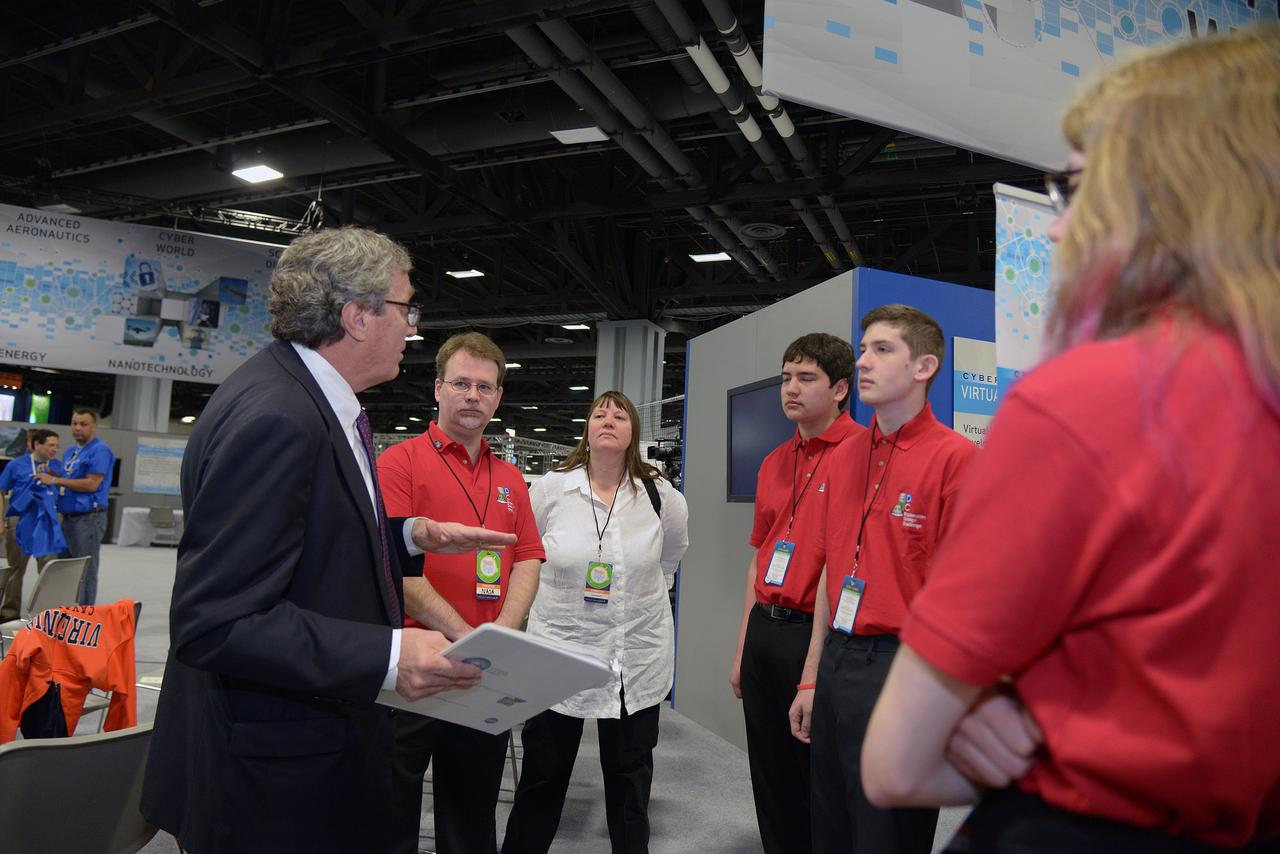
The winner of the high school portion of the Exploration Design Challenge is announced at the USA Science and Engineering Festival in Washington on April 25, 2014. Part of Batch image transfer from Flickr.
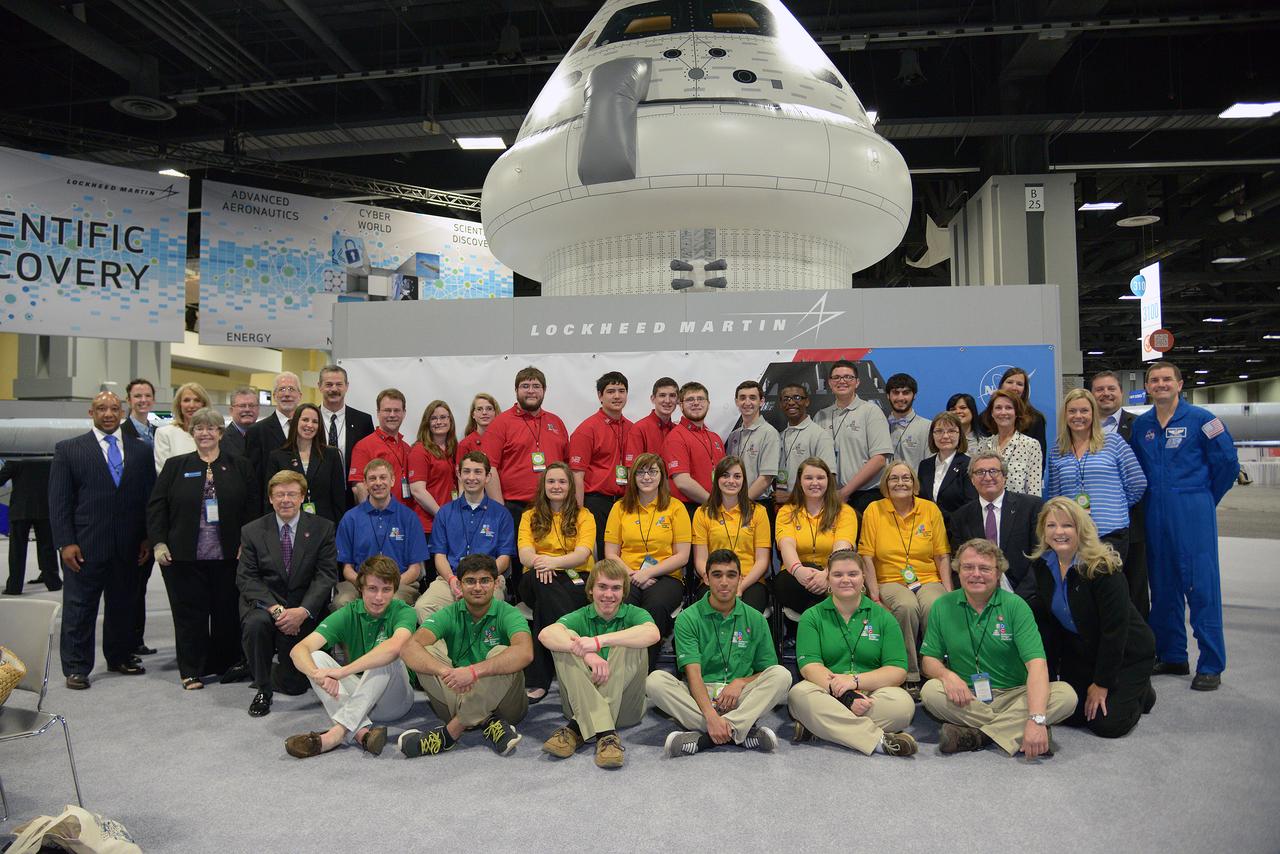
The winner of the high school portion of the Exploration Design Challenge is announced at the USA Science and Engineering Festival in Washington on April 25, 2014. Group photo of students. Part of Batch image transfer from Flickr.
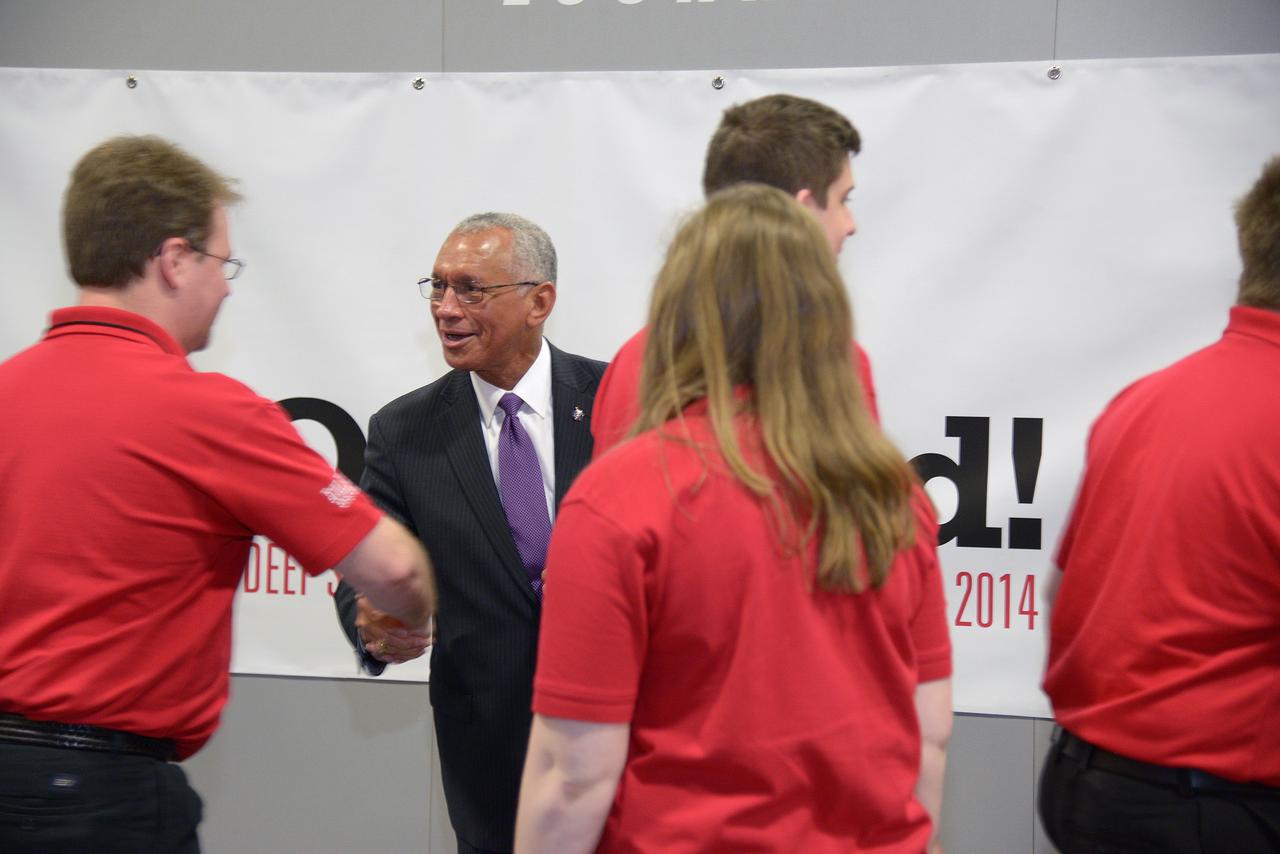
The winner of the high school portion of the Exploration Design Challenge is announced at the USA Science and Engineering Festival in Washington on April 25, 2014. ASA Director Charles Bolden congratulates students. Part of Batch image transfer from Flickr.
The winner of the high school portion of the Exploration Design Challenge is announced at the USA Science and Engineering Festival in Washington on April 25, 2014. Group photo of students. Part of Batch image transfer from Flickr.
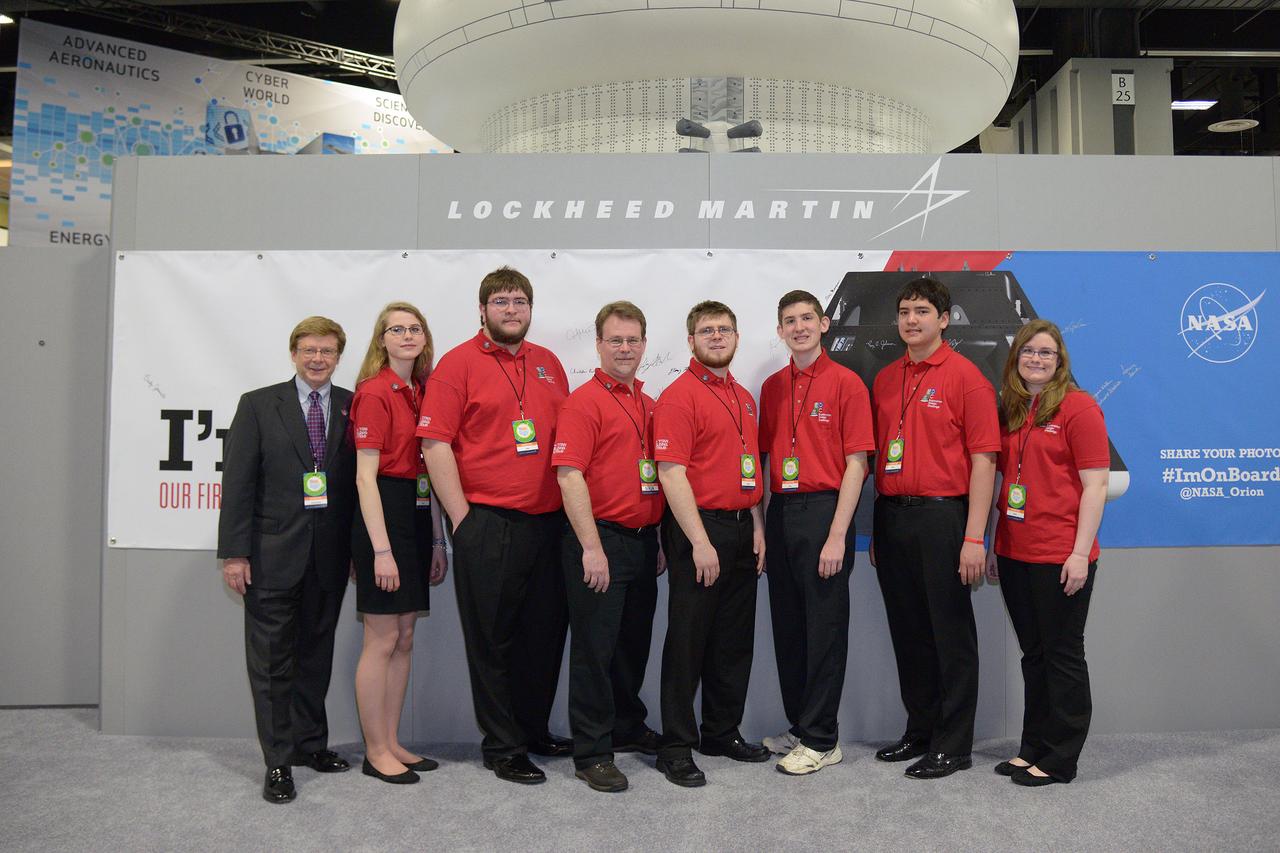
The winner of the high school portion of the Exploration Design Challenge is announced at the USA Science and Engineering Festival in Washington on April 25, 2014. Part of Batch image transfer from Flickr.
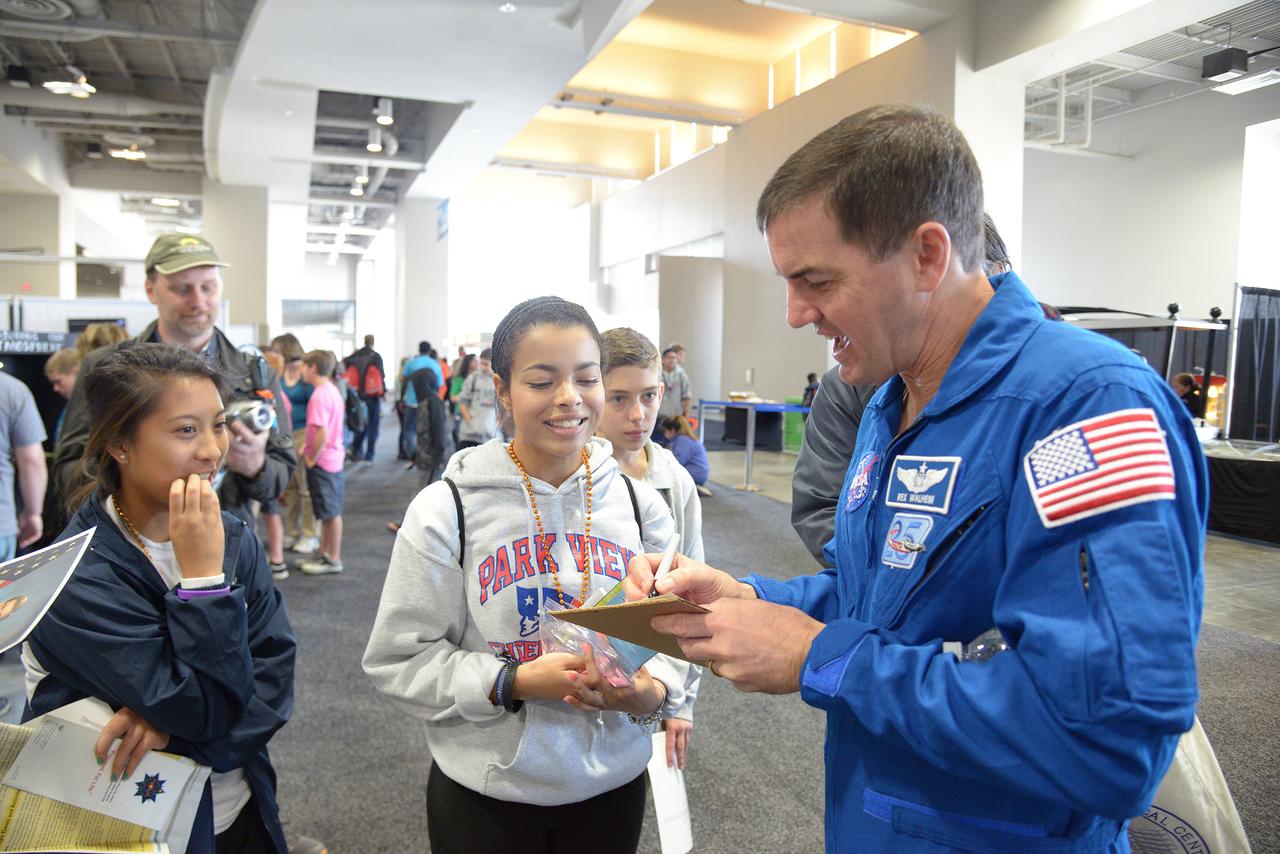
The winner of the high school portion of the Exploration Design Challenge is announced at the USA Science and Engineering Festival in Washington on April 25, 2014. Astronaut Rex Walheim signs autographs for students. Part of Batch image transfer from Flickr.
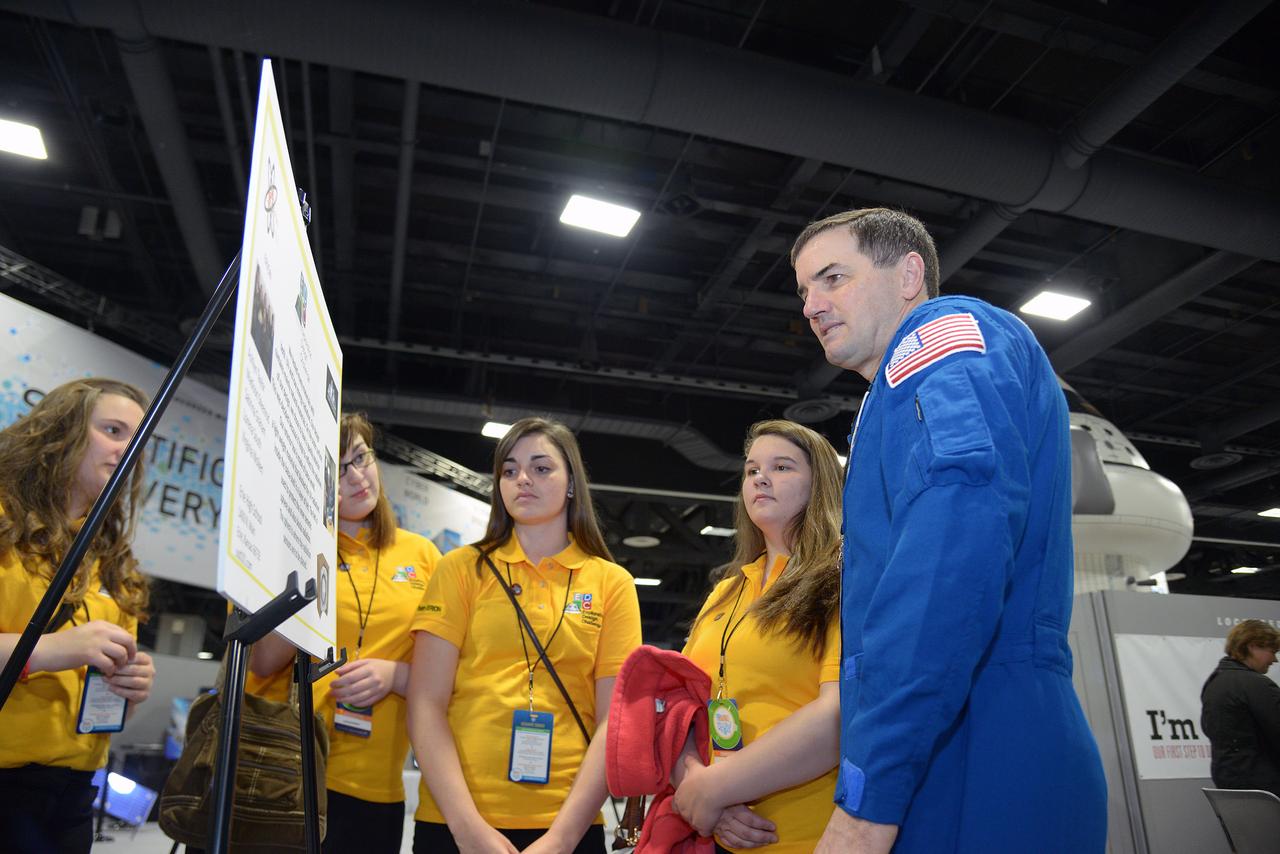
The winner of the high school portion of the Exploration Design Challenge is announced at the USA Science and Engineering Festival in Washington on April 25, 2014. Astronaut Rex Walheim is photographed with students. Part of Batch image transfer from Flickr.
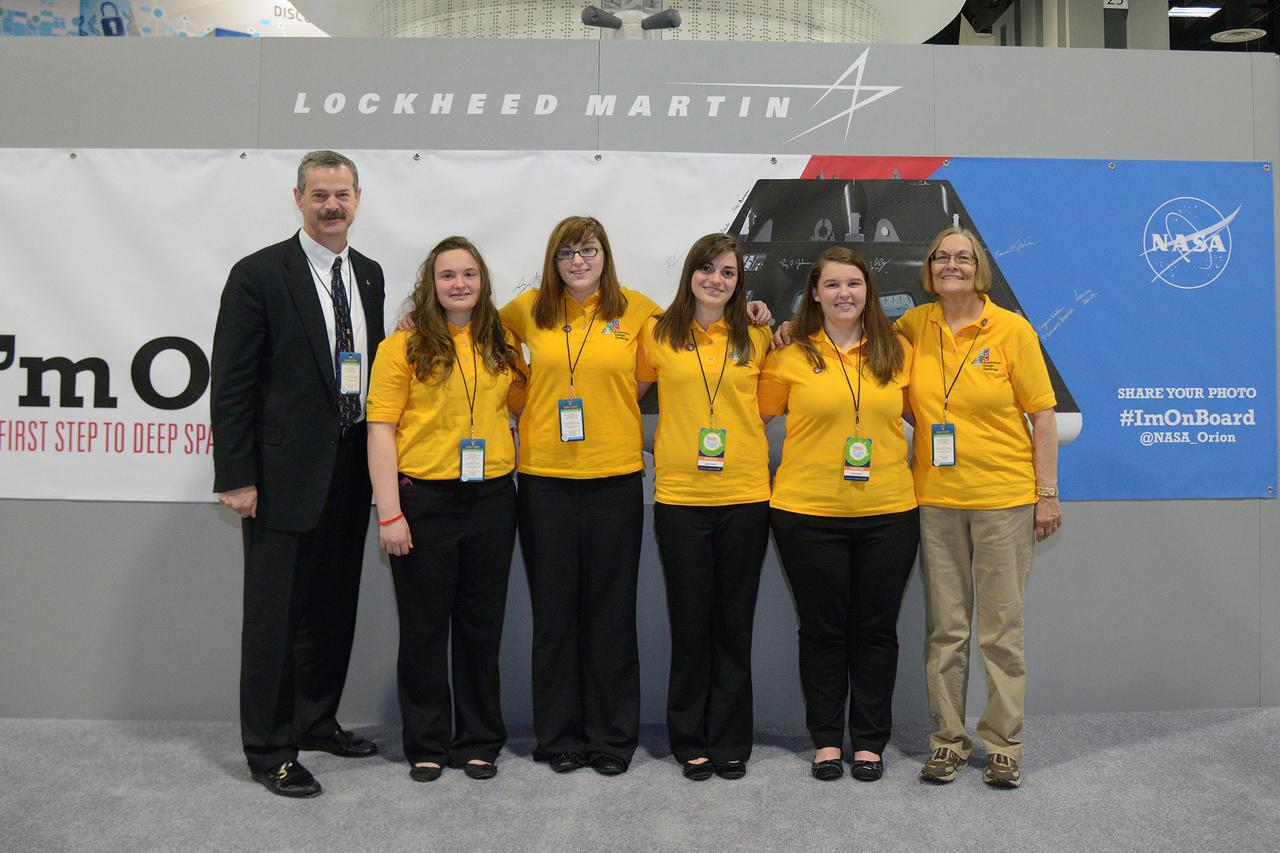
The winner of the high school portion of the Exploration Design Challenge is announced at the USA Science and Engineering Festival in Washington on April 25, 2014. Group photo of students. Part of Batch image transfer from Flickr.
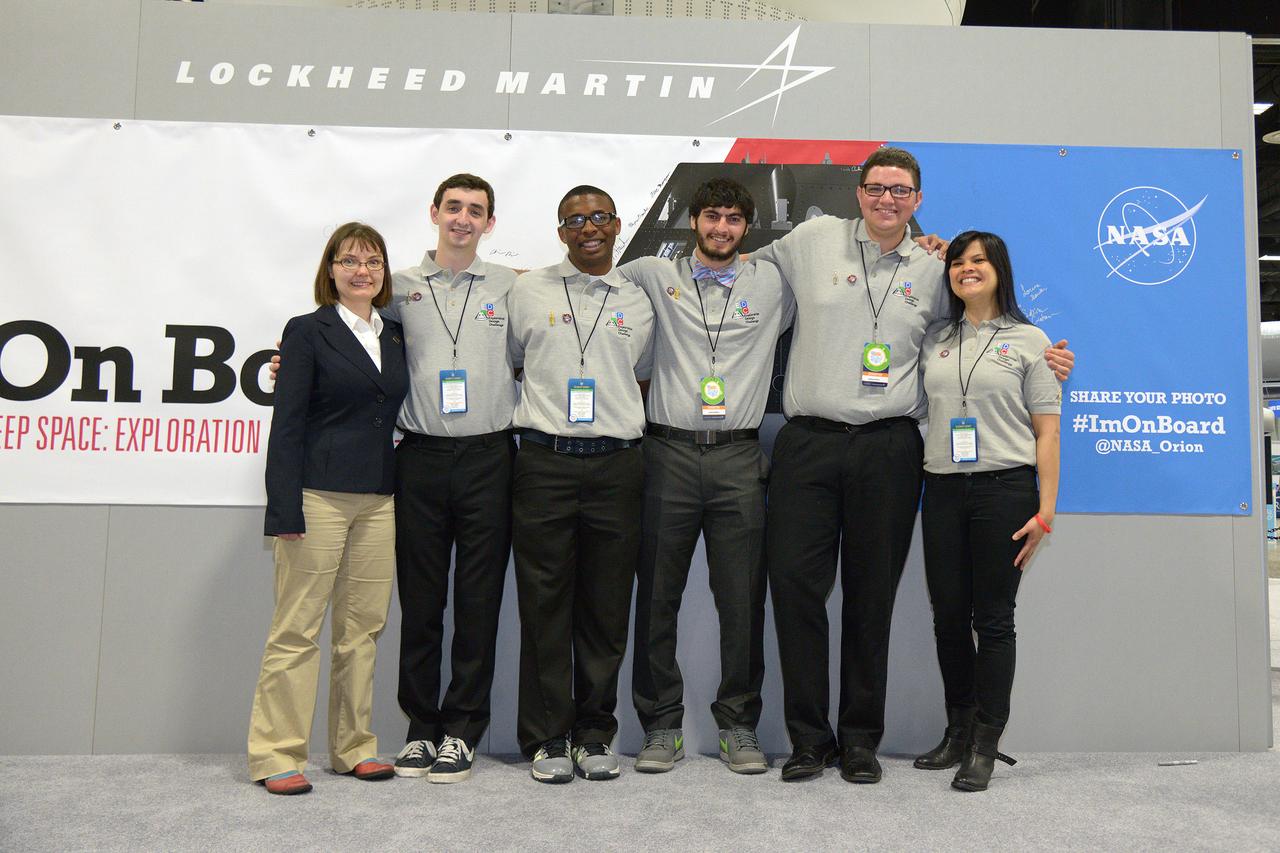
The winner of the high school portion of the Exploration Design Challenge is announced at the USA Science and Engineering Festival in Washington on April 25, 2014. Part of Batch image transfer from Flickr.
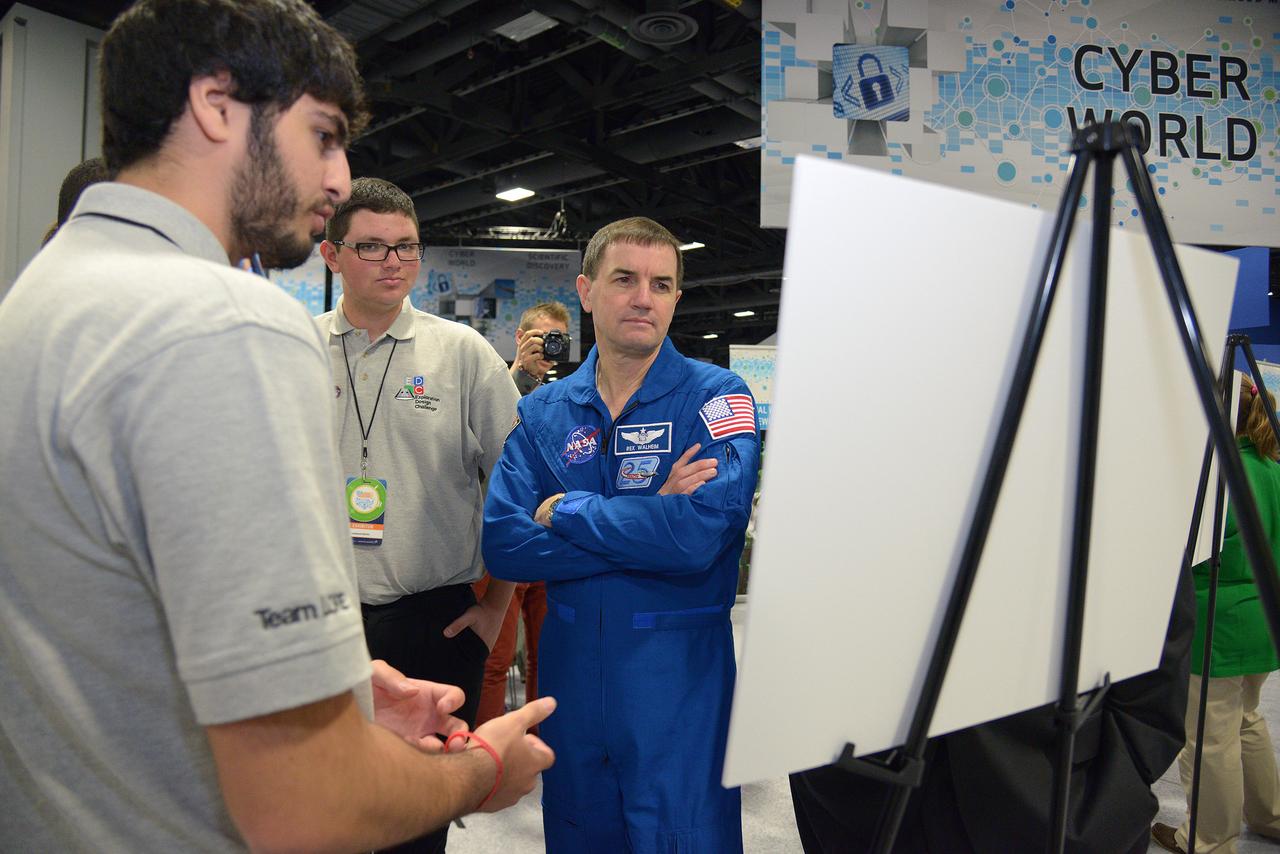
The winner of the high school portion of the Exploration Design Challenge is announced at the USA Science and Engineering Festival in Washington on April 25, 2014. Astronaut Rex Walheim speaks to students. Part of Batch image transfer from Flickr.
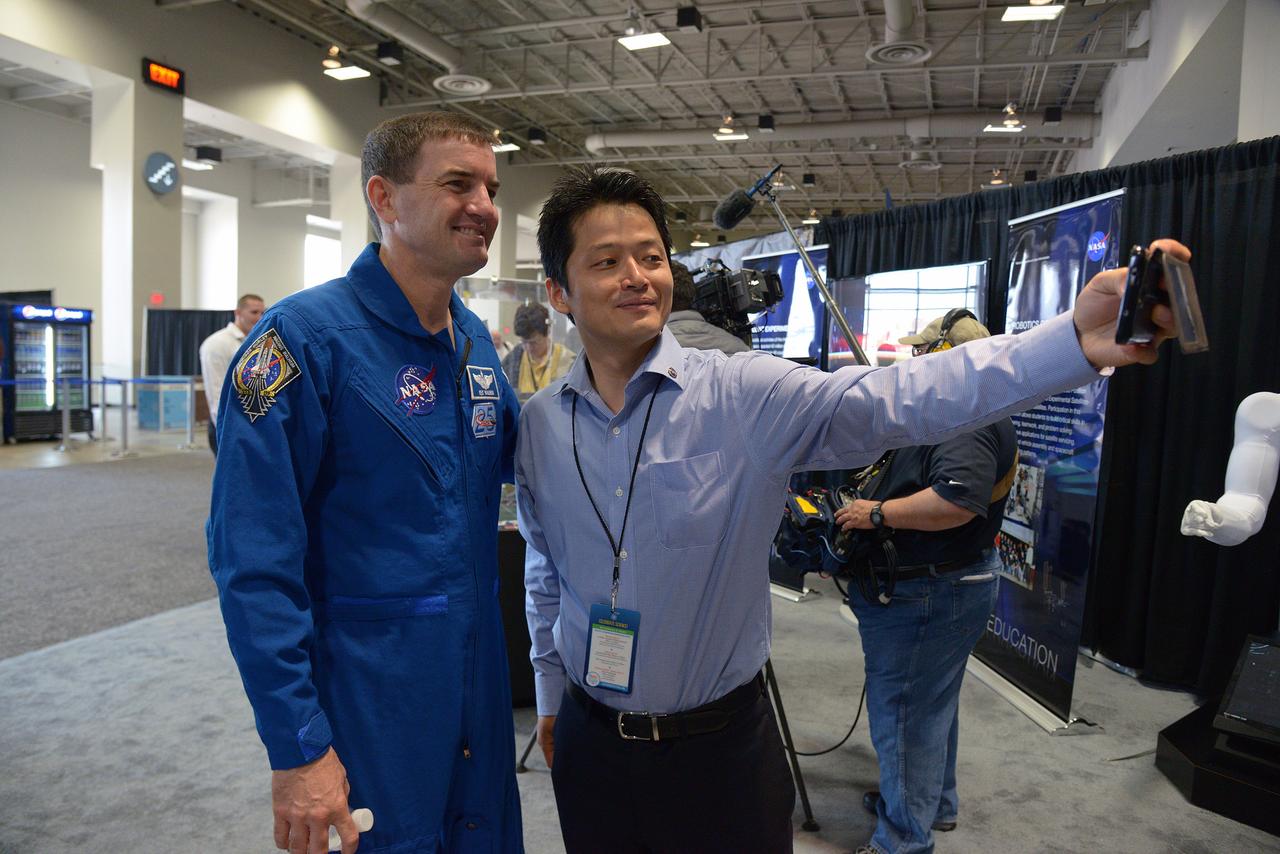
The winner of the high school portion of the Exploration Design Challenge is announced at the USA Science and Engineering Festival in Washington on April 25, 2014. Astronaut Rex Walheim is photographed with event participant. Part of Batch image transfer from Flickr.
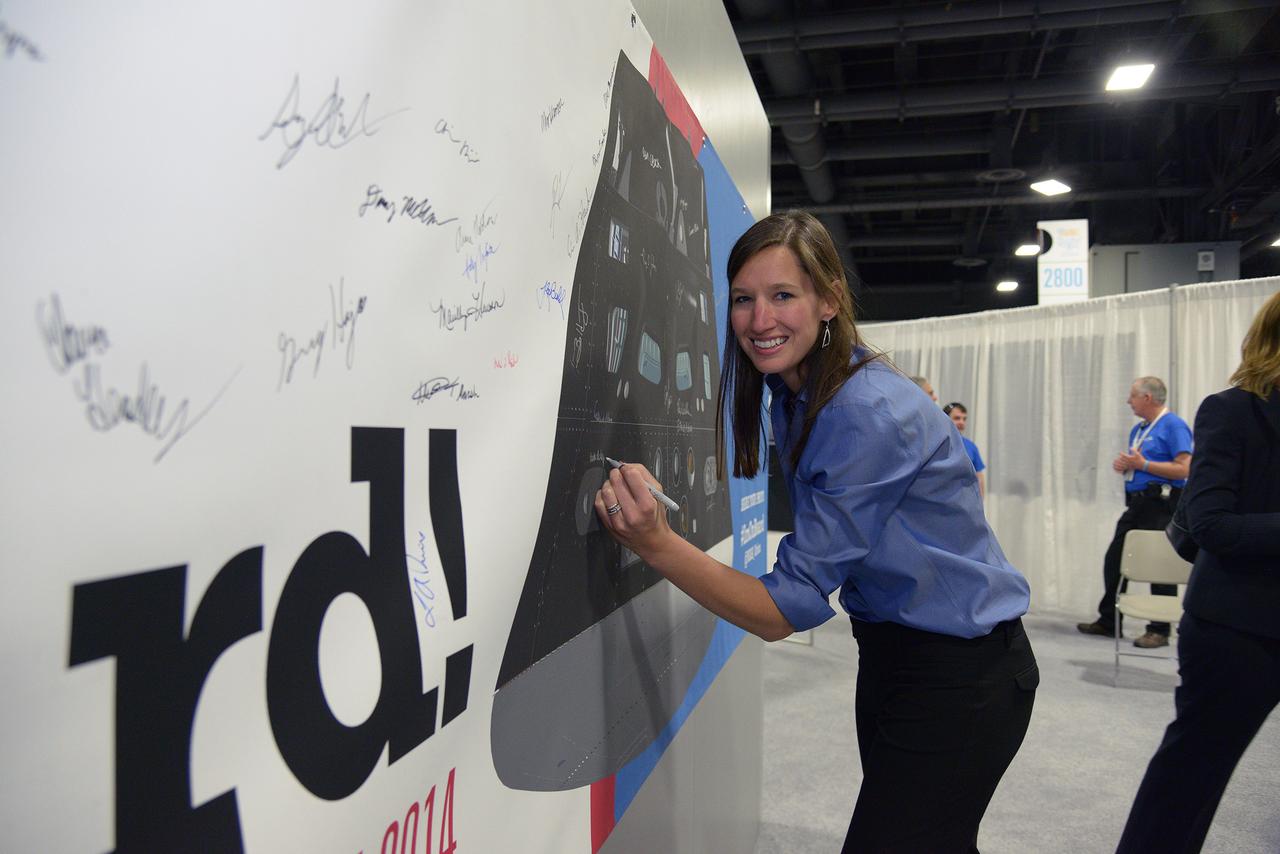
The winner of the high school portion of the Exploration Design Challenge is announced at the USA Science and Engineering Festival in Washington on April 25, 2014. Part of Batch image transfer from Flickr.
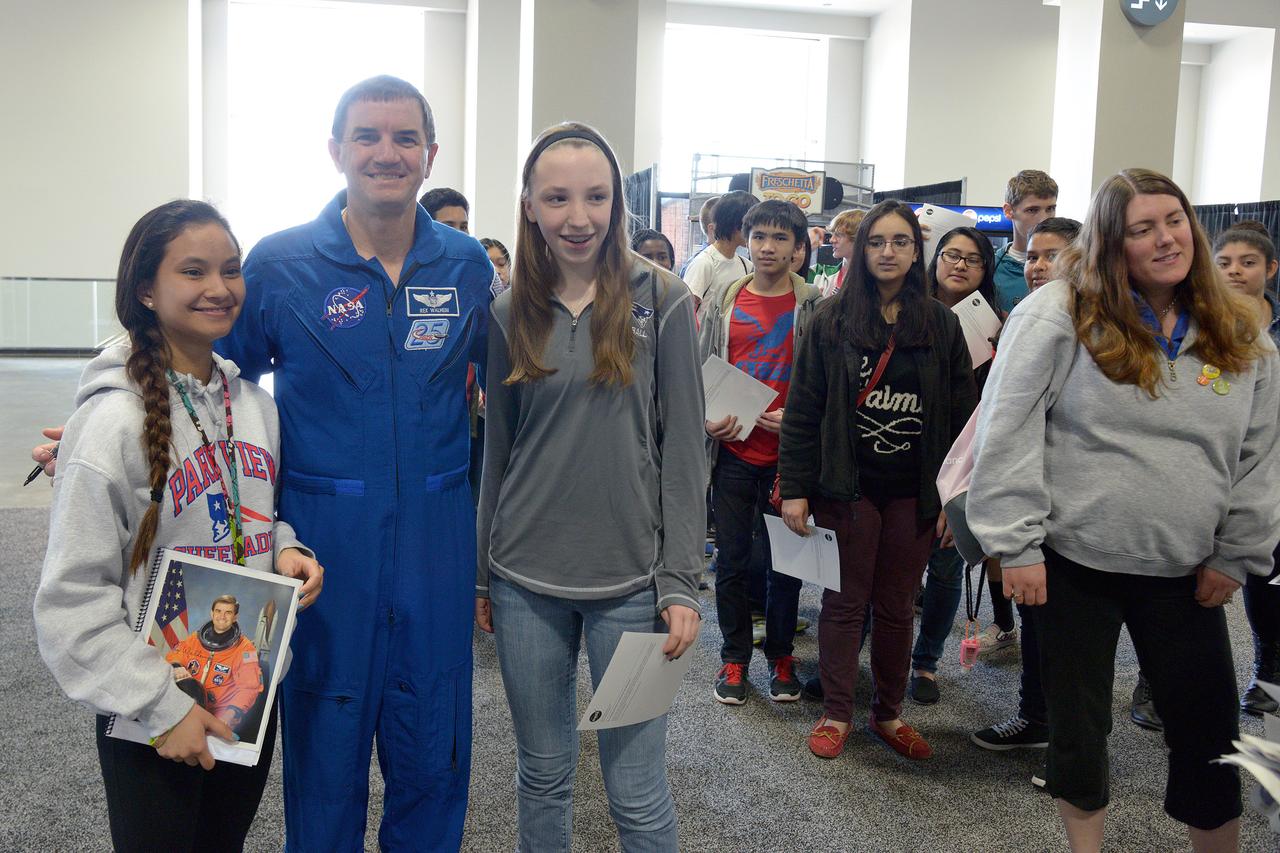
The winner of the high school portion of the Exploration Design Challenge is announced at the USA Science and Engineering Festival in Washington on April 25, 2014. Astronaut Rex Walheim is photographed with students. Part of Batch image transfer from Flickr.
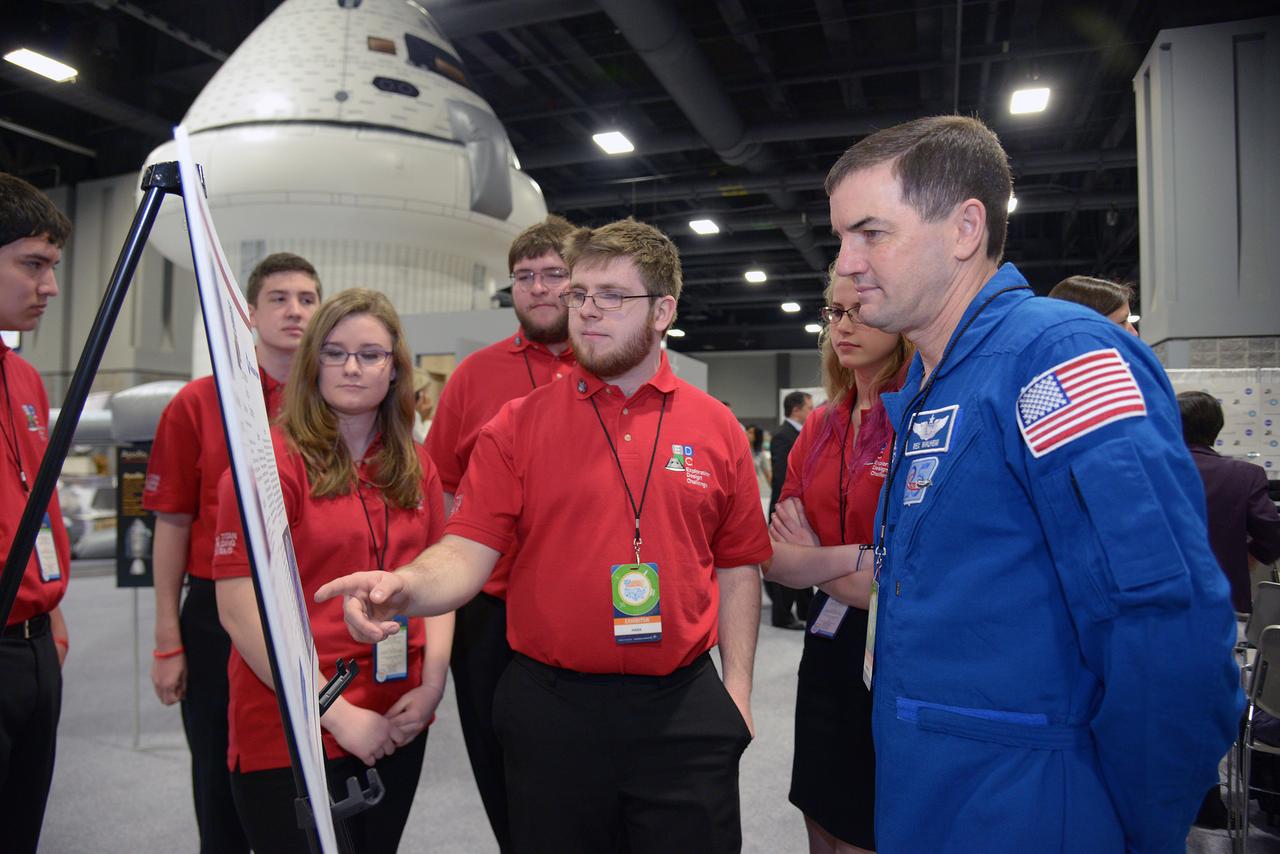
The winner of the high school portion of the Exploration Design Challenge is announced at the USA Science and Engineering Festival in Washington on April 25, 2014. Astronaut Rex Walheim speaks to students. Part of Batch image transfer from Flickr.
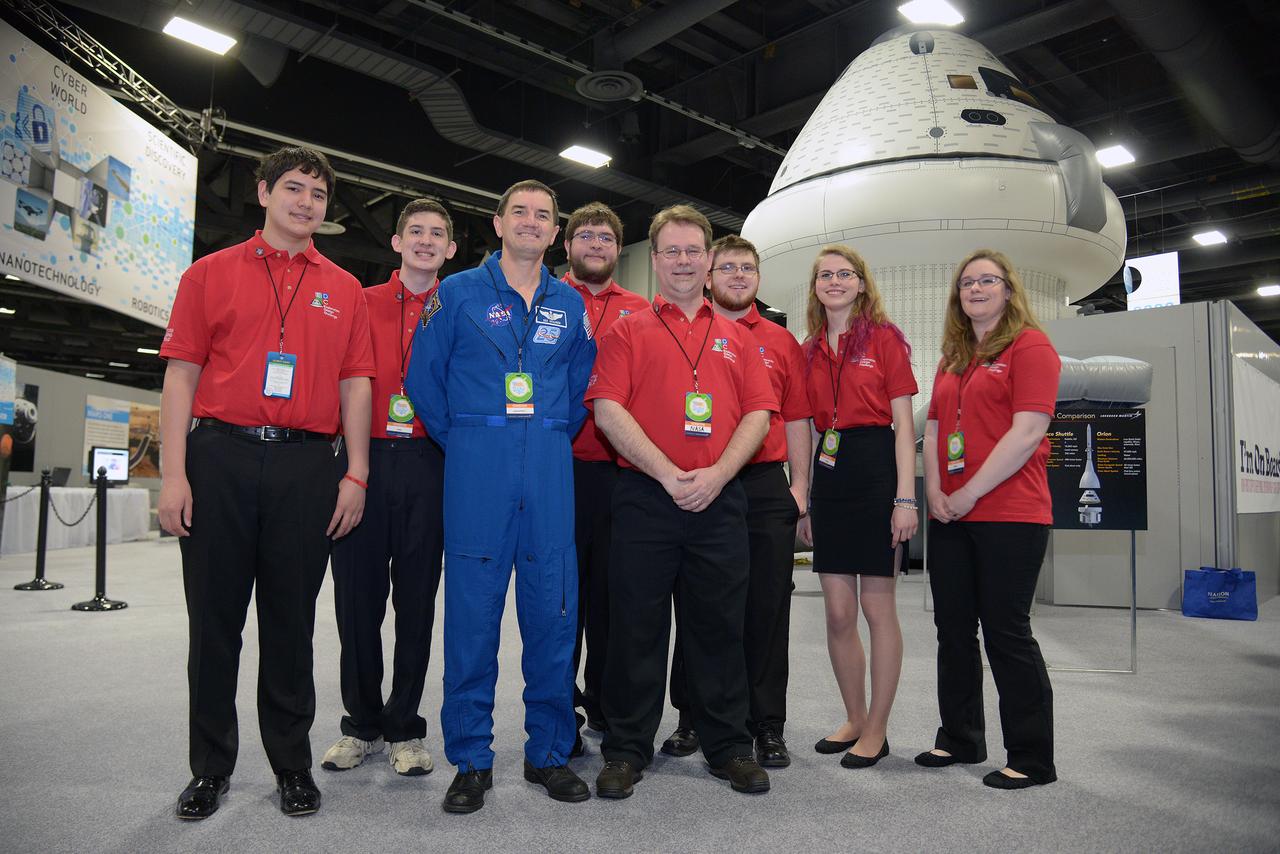
The winner of the high school portion of the Exploration Design Challenge is announced at the USA Science and Engineering Festival in Washington on April 25, 2014. Astronaut Rex Walheim poses for photo with students. Part of Batch image transfer from Flickr.
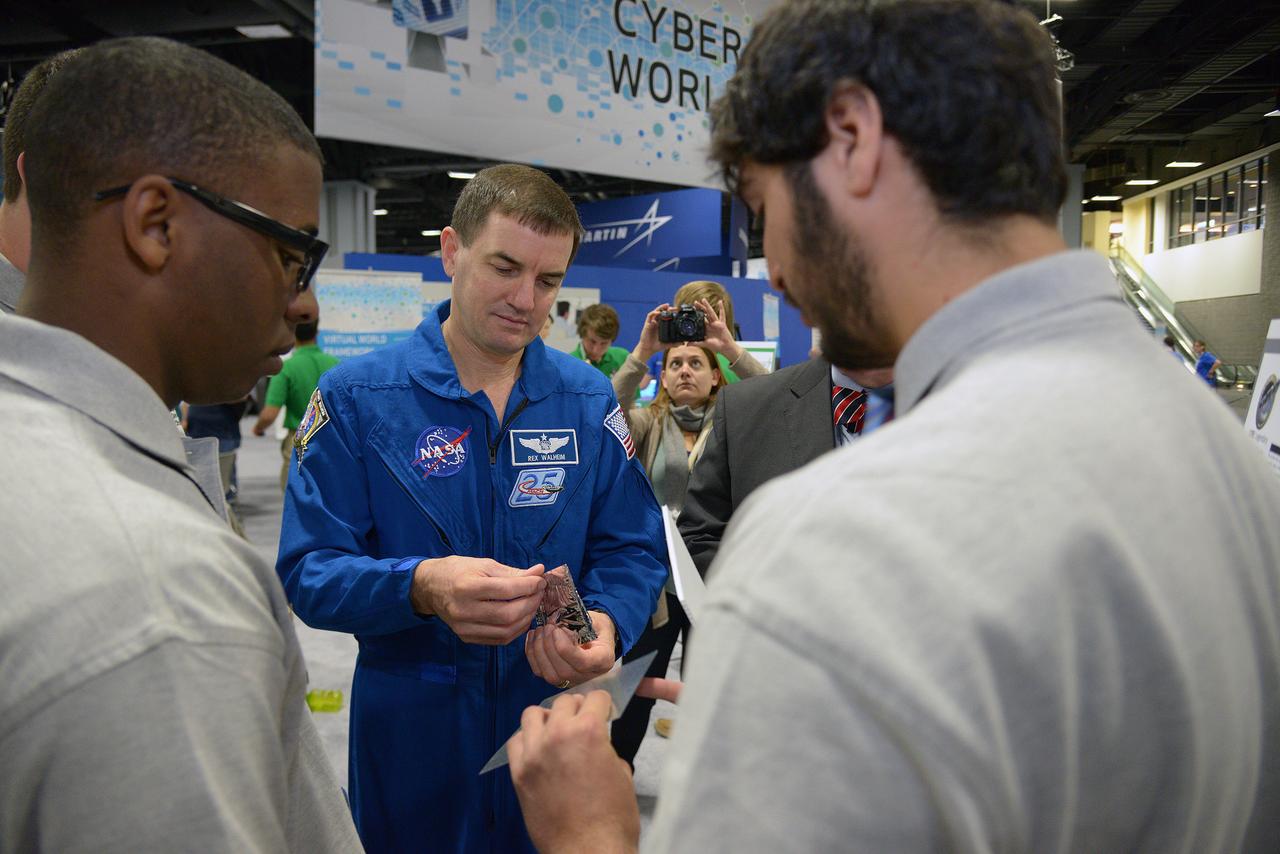
The winner of the high school portion of the Exploration Design Challenge is announced at the USA Science and Engineering Festival in Washington on April 25, 2014. Astronaut Rex Walheim talks with students. Part of Batch image transfer from Flickr.
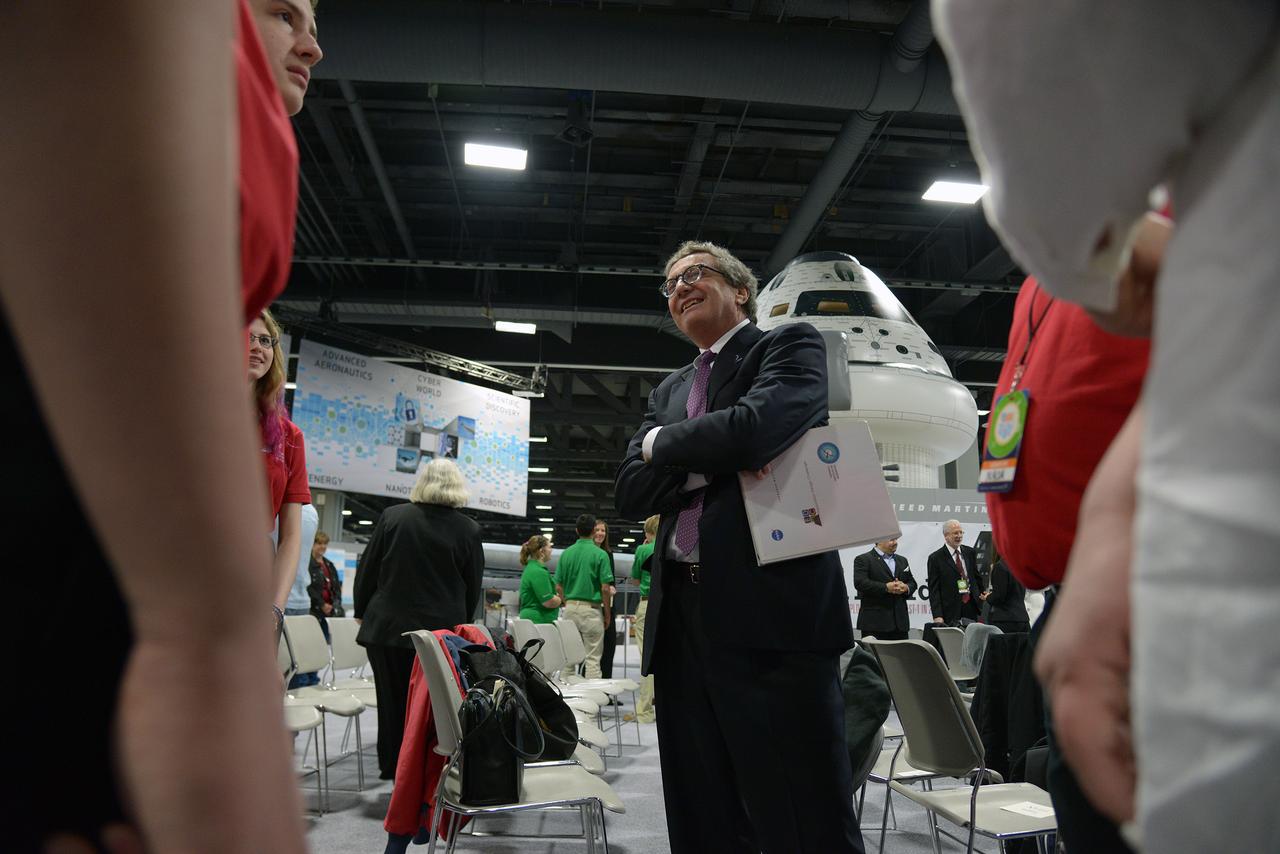
The winner of the high school portion of the Exploration Design Challenge is announced at the USA Science and Engineering Festival in Washington on April 25, 2014. Part of Batch image transfer from Flickr.
The winner of the high school portion of the Exploration Design Challenge is announced at the USA Science and Engineering Festival in Washington on April 25, 2014. Group photo of students. Part of Batch image transfer from Flickr.
The winner of the high school portion of the Exploration Design Challenge is announced at the USA Science and Engineering Festival in Washington on April 25, 2014. Group photo of students. Part of Batch image transfer from Flickr.
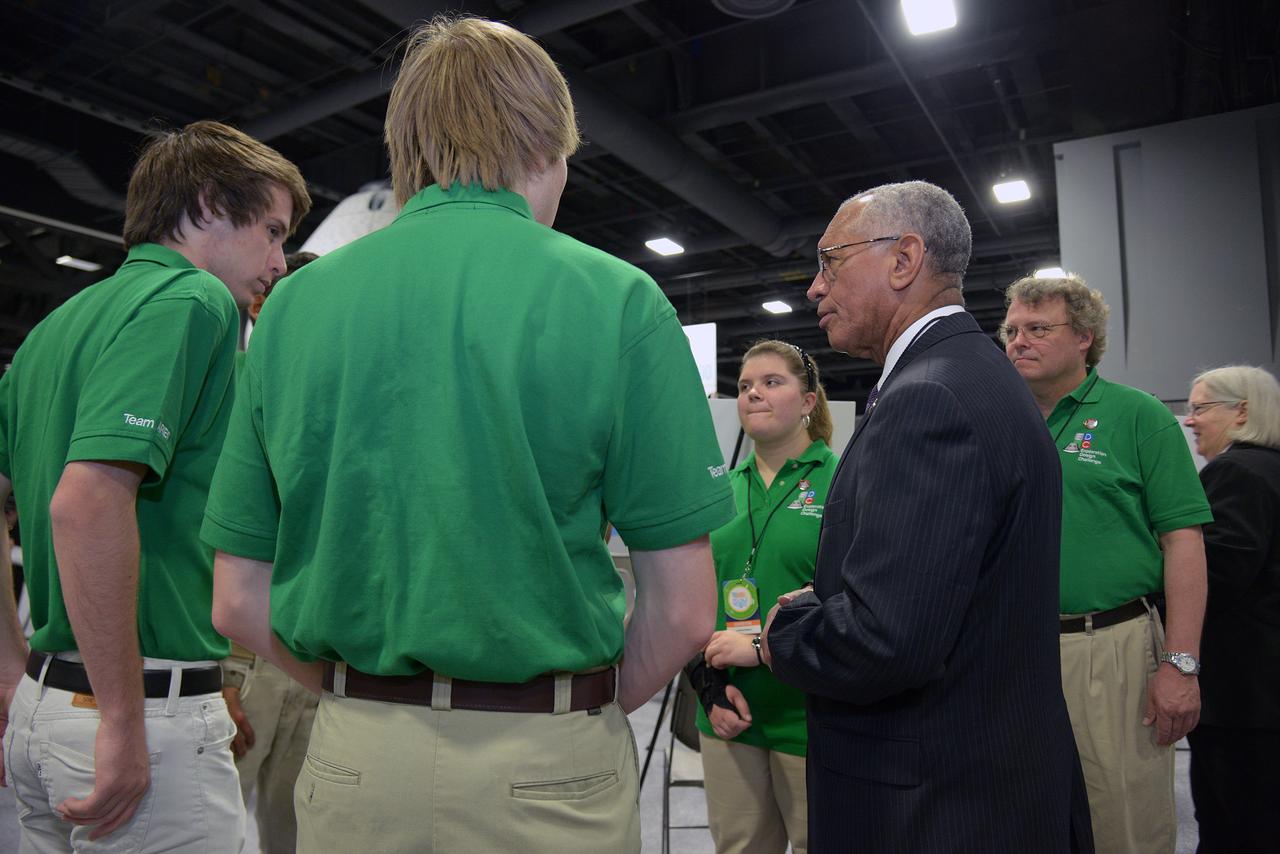
The winner of the high school portion of the Exploration Design Challenge is announced at the USA Science and Engineering Festival in Washington on April 25, 2014. NASA Director Charles Bolden speaks to students. Part of Batch image transfer from Flickr.
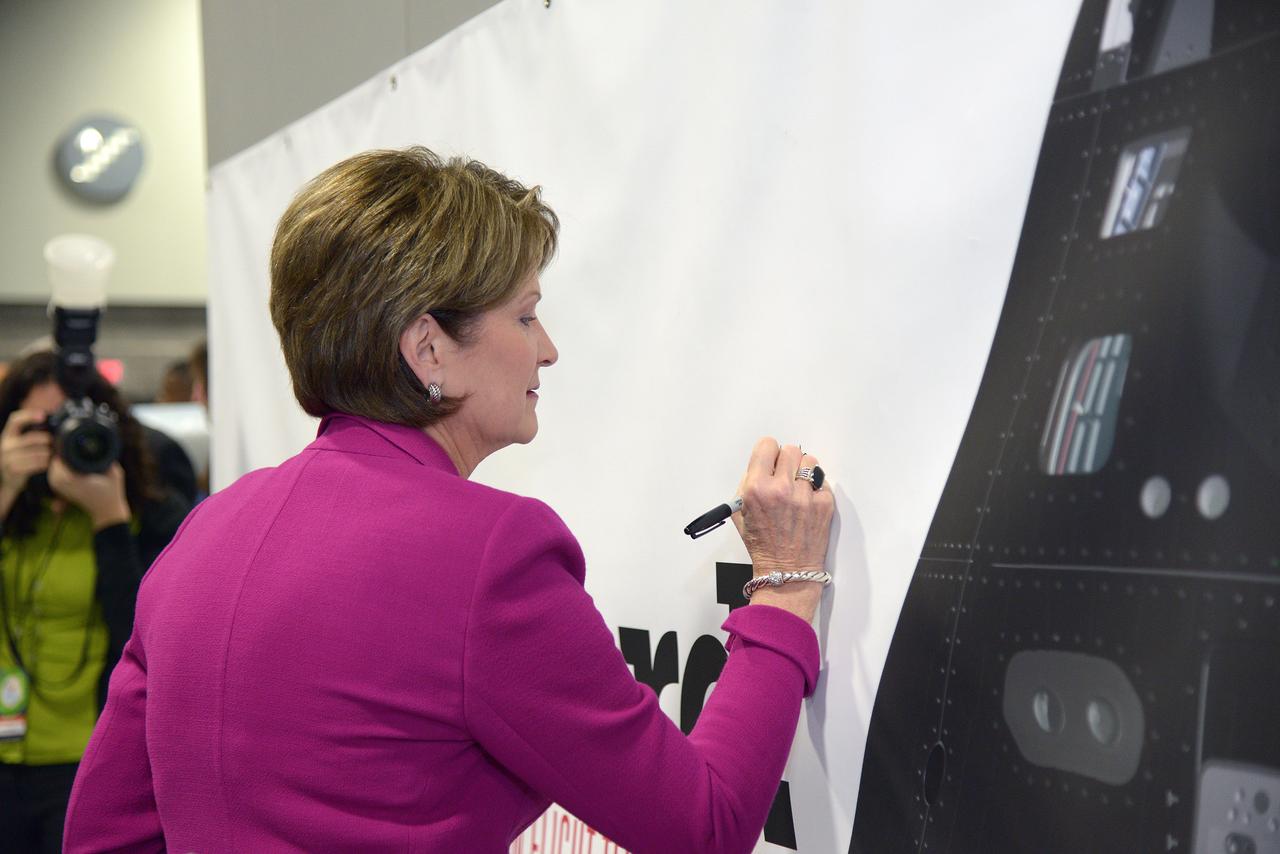
The winner of the high school portion of the Exploration Design Challenge is announced at the USA Science and Engineering Festival in Washington on April 25, 2014. Part of Batch image transfer from Flickr.
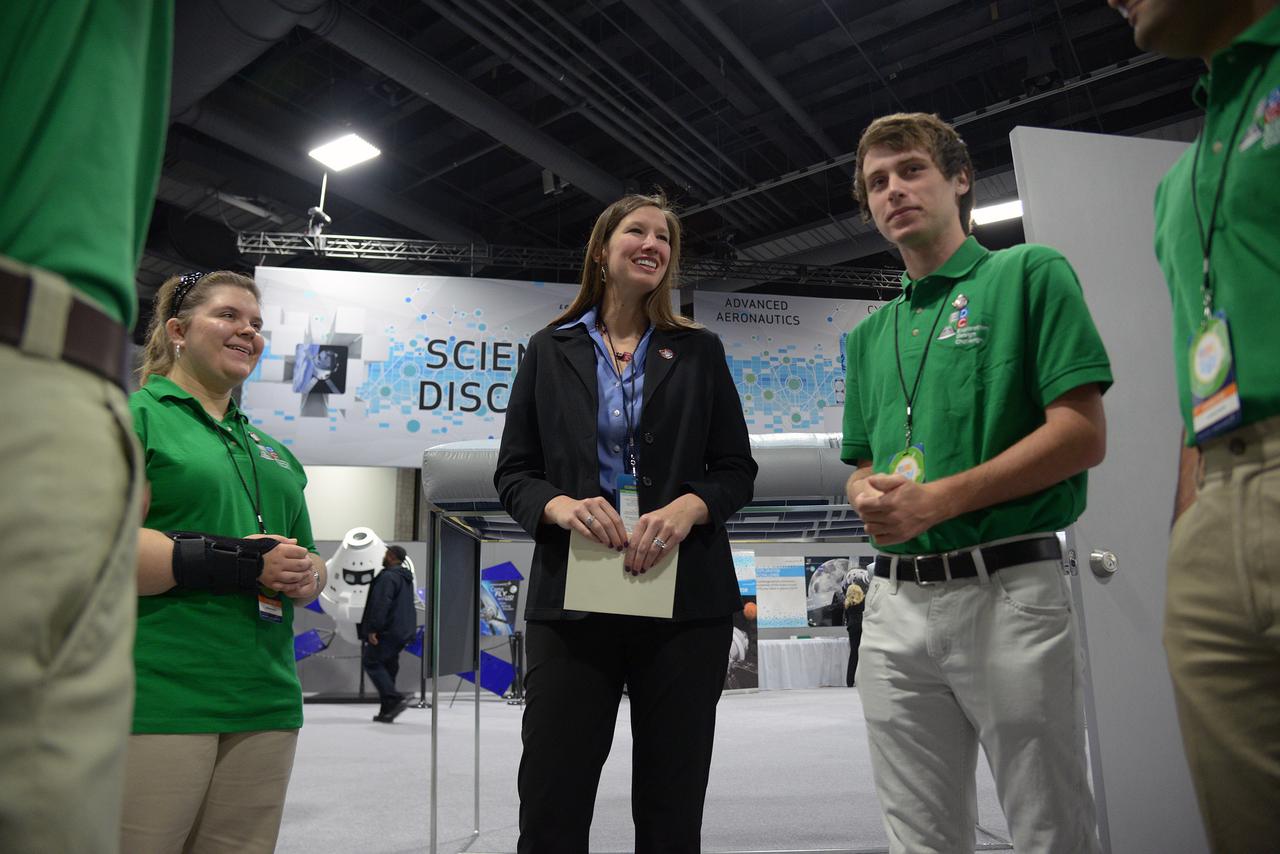
The winner of the high school portion of the Exploration Design Challenge is announced at the USA Science and Engineering Festival in Washington on April 25, 2014. Part of Batch image transfer from Flickr.
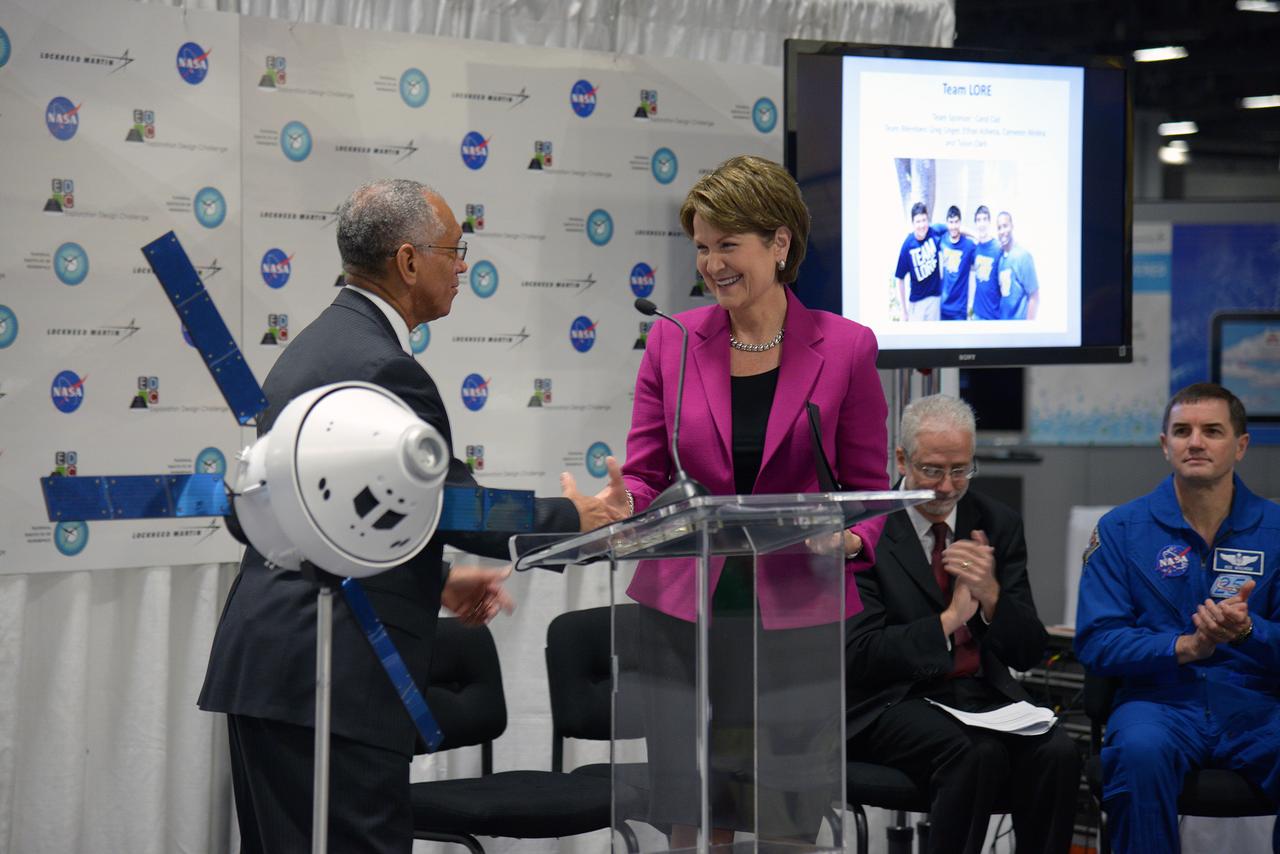
The winner of the high school portion of the Exploration Design Challenge is announced at the USA Science and Engineering Festival in Washington on April 25, 2014. NASA Director Charles Bolden at podium. Part of Batch image transfer from Flickr.
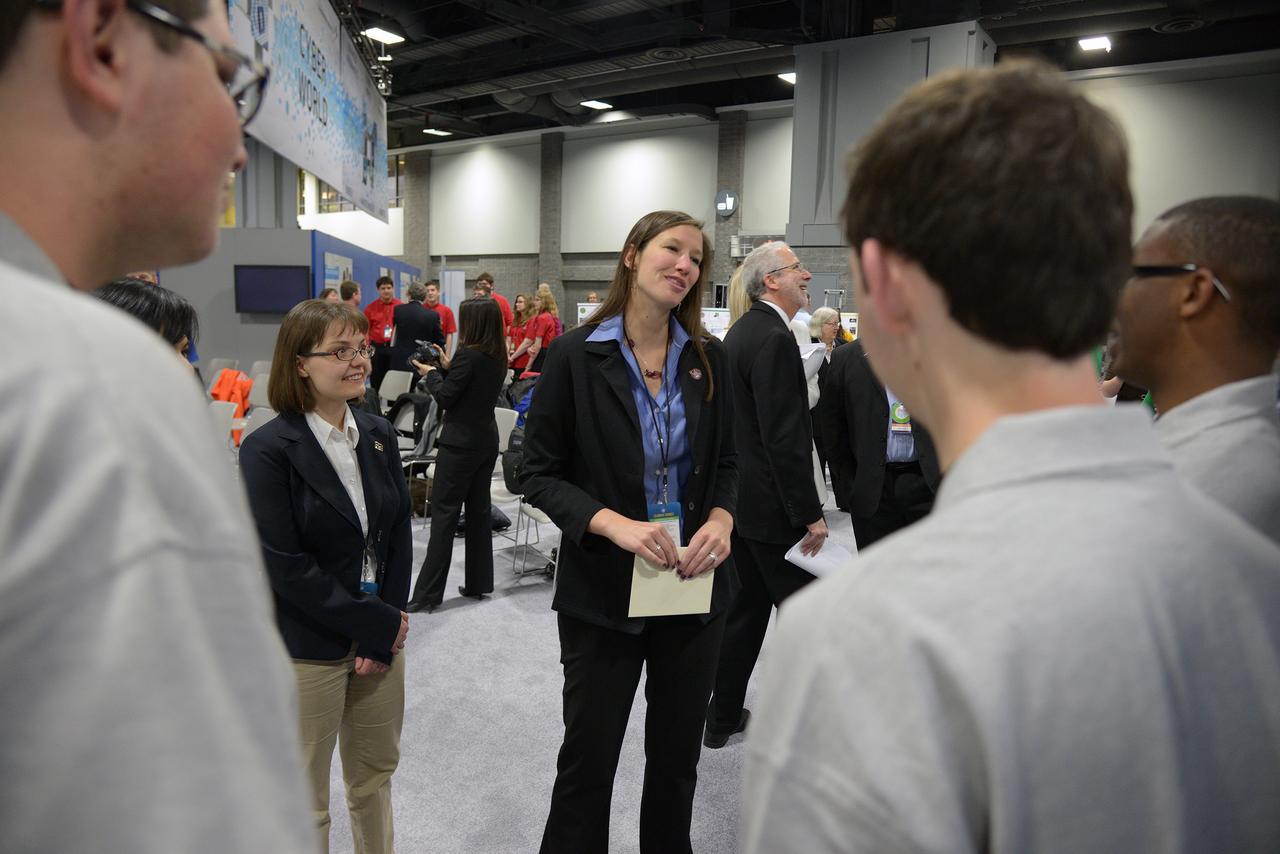
The winner of the high school portion of the Exploration Design Challenge is announced at the USA Science and Engineering Festival in Washington on April 25, 2014. Part of Batch image transfer from Flickr.
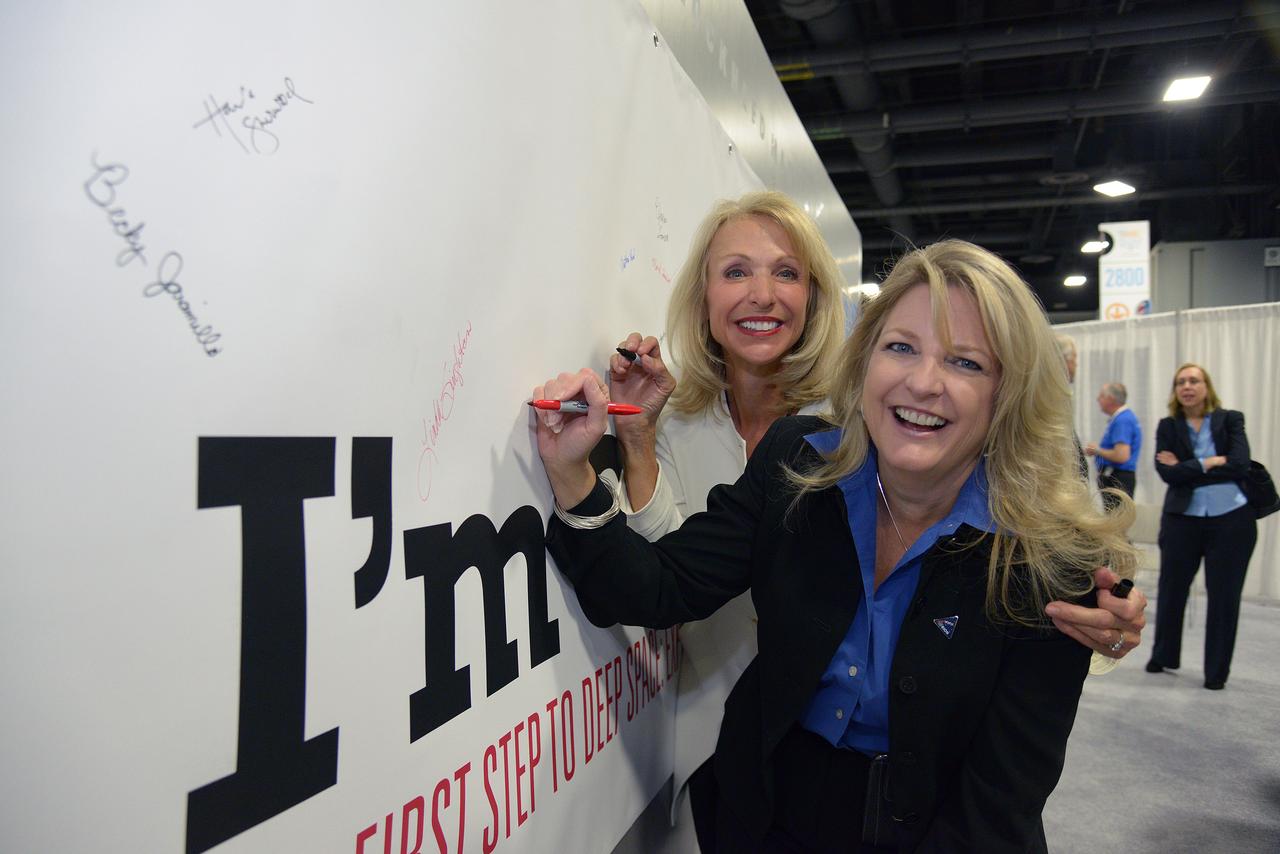
The winner of the high school portion of the Exploration Design Challenge is announced at the USA Science and Engineering Festival in Washington on April 25, 2014. Part of Batch image transfer from Flickr.
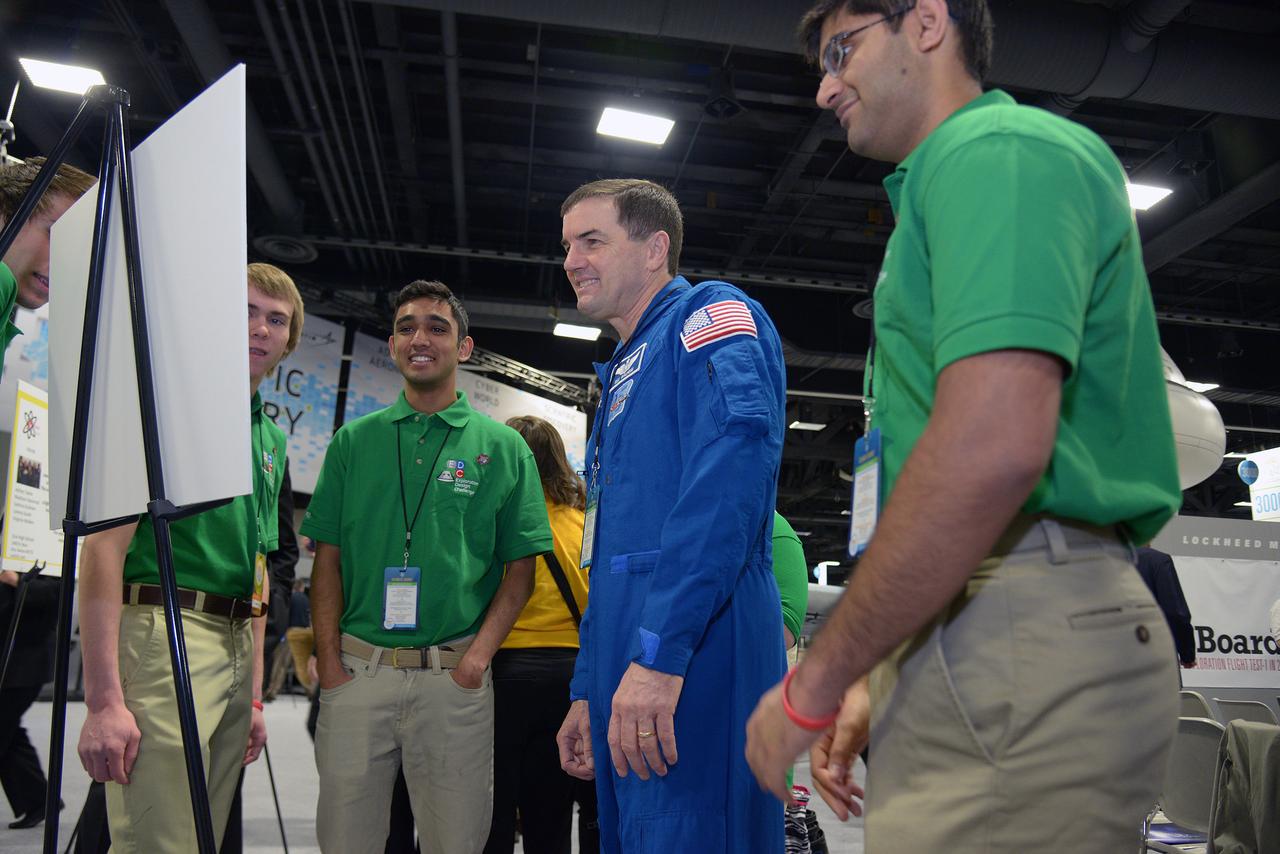
The winner of the high school portion of the Exploration Design Challenge is announced at the USA Science and Engineering Festival in Washington on April 25, 2014. Astronaut Rex Walheim talks with students. Part of Batch image transfer from Flickr.
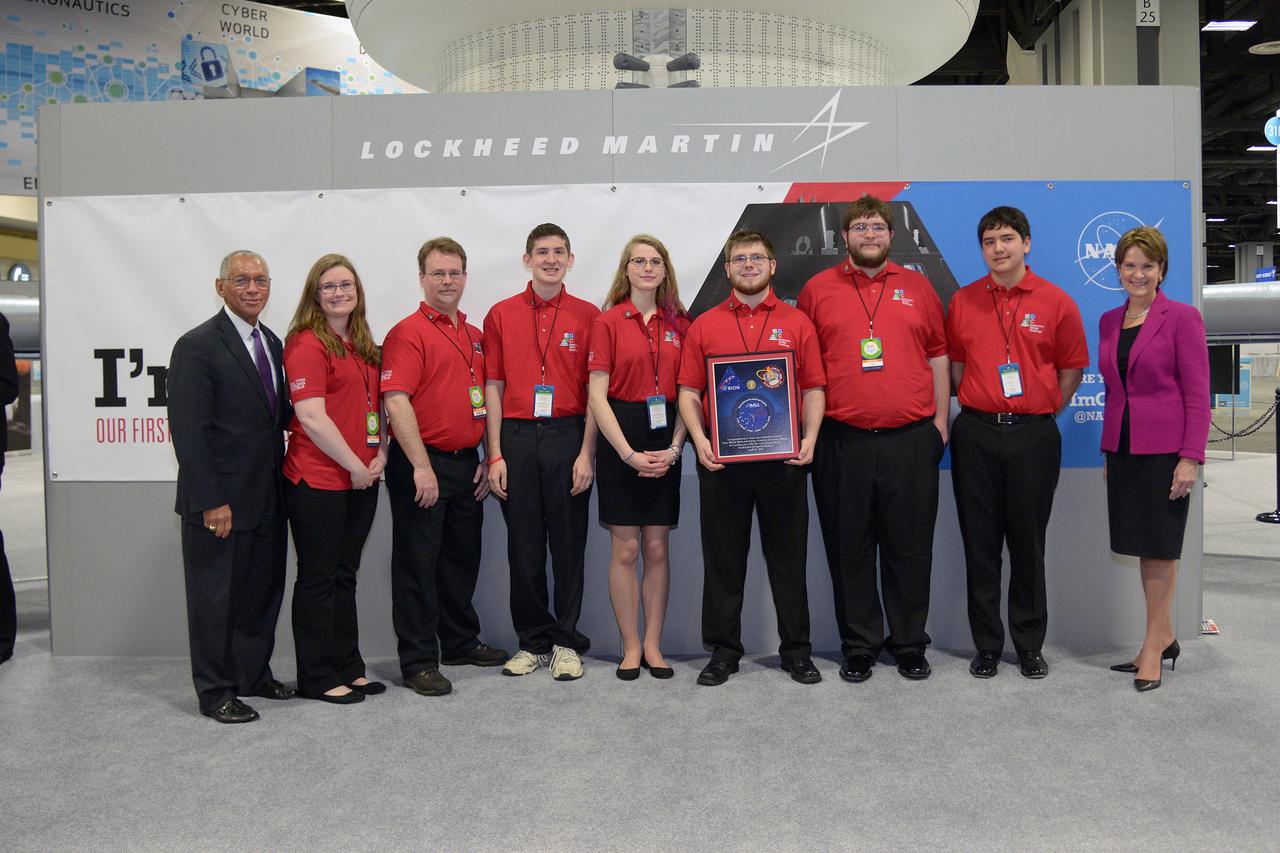
The winner of the high school portion of the Exploration Design Challenge is announced at the USA Science and Engineering Festival in Washington on April 25, 2014. Part of Batch image transfer from Flickr.
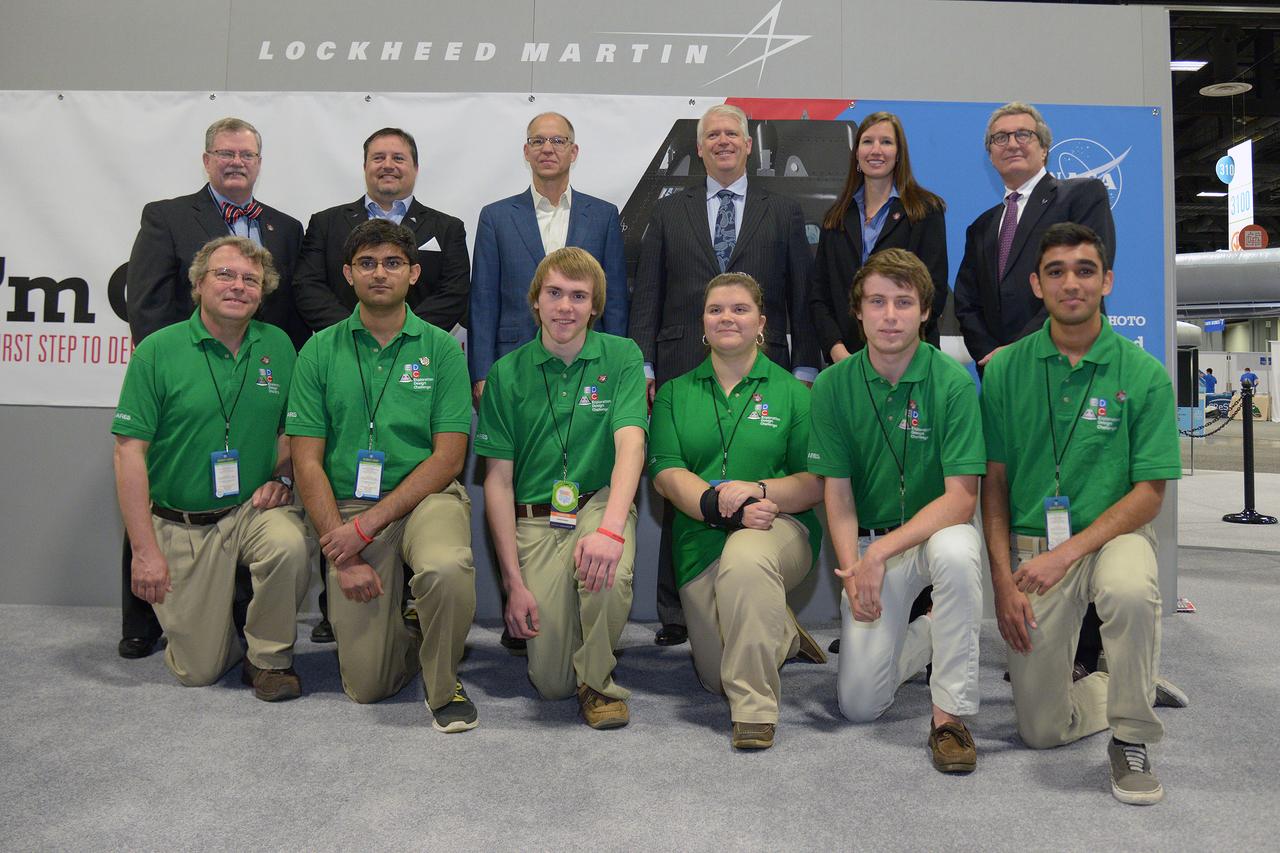
The winner of the high school portion of the Exploration Design Challenge is announced at the USA Science and Engineering Festival in Washington on April 25, 2014. Group photo of students. Part of Batch image transfer from Flickr.
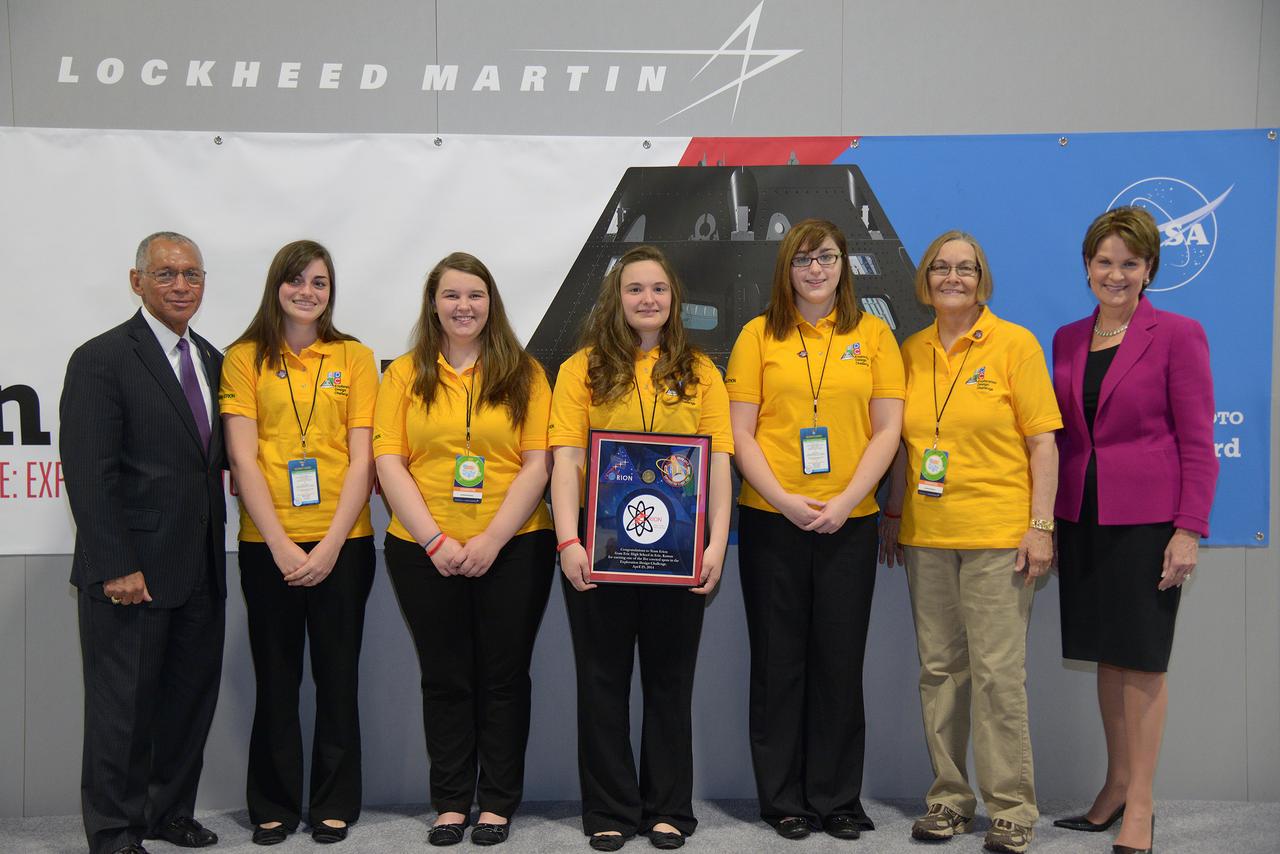
The winner of the high school portion of the Exploration Design Challenge is announced at the USA Science and Engineering Festival in Washington on April 25, 2014. Group photo of students. Part of Batch image transfer from Flickr.
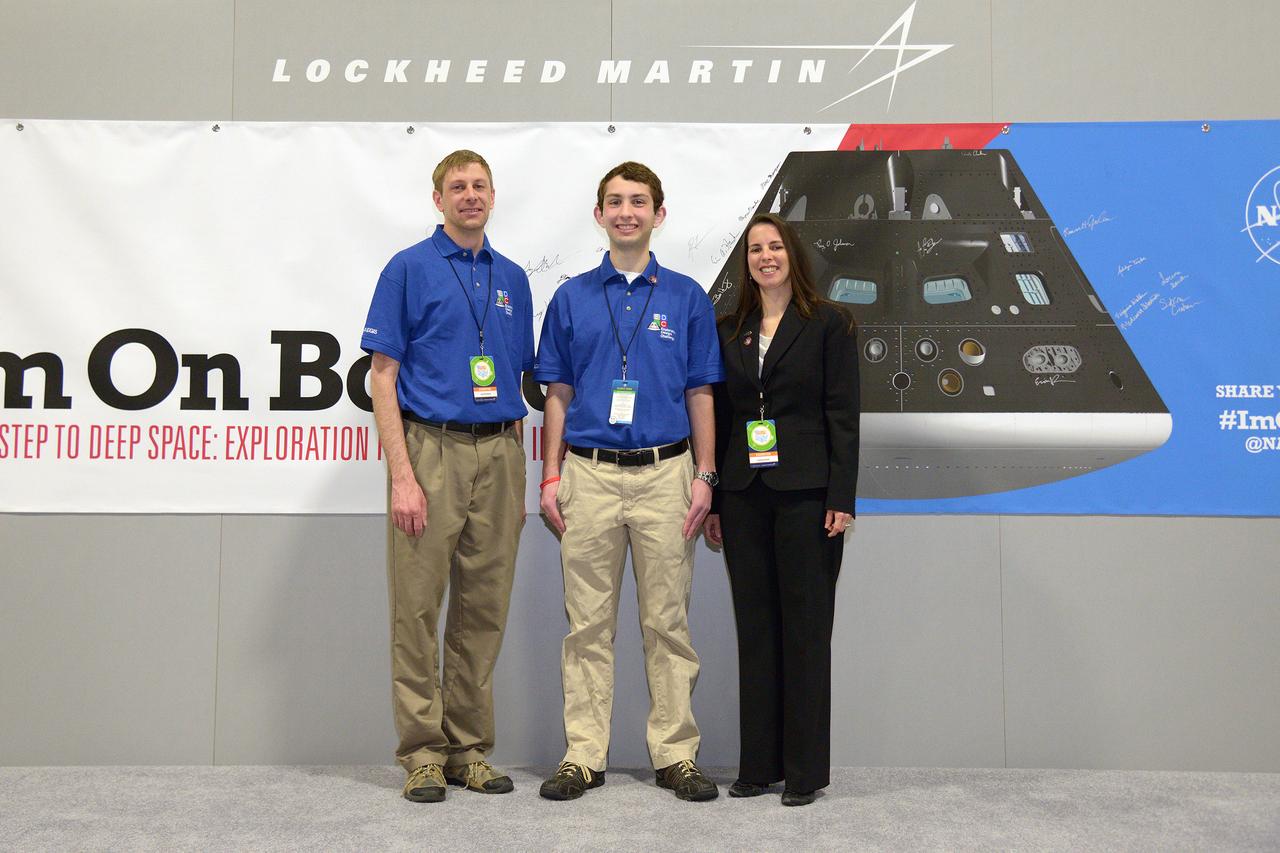
The winner of the high school portion of the Exploration Design Challenge is announced at the USA Science and Engineering Festival in Washington on April 25, 2014. Part of Batch image transfer from Flickr.
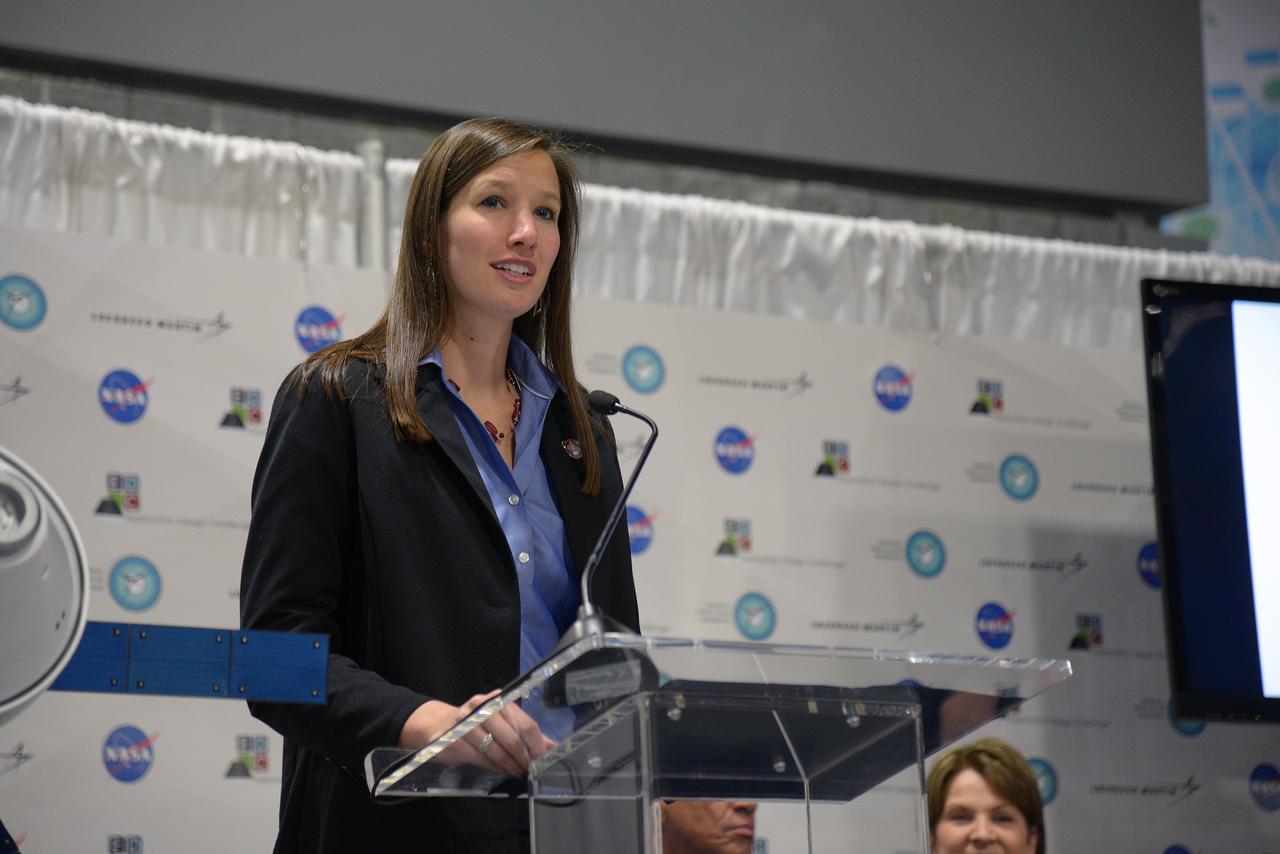
The winner of the high school portion of the Exploration Design Challenge is announced at the USA Science and Engineering Festival in Washington on April 25, 2014. Part of Batch image transfer from Flickr.
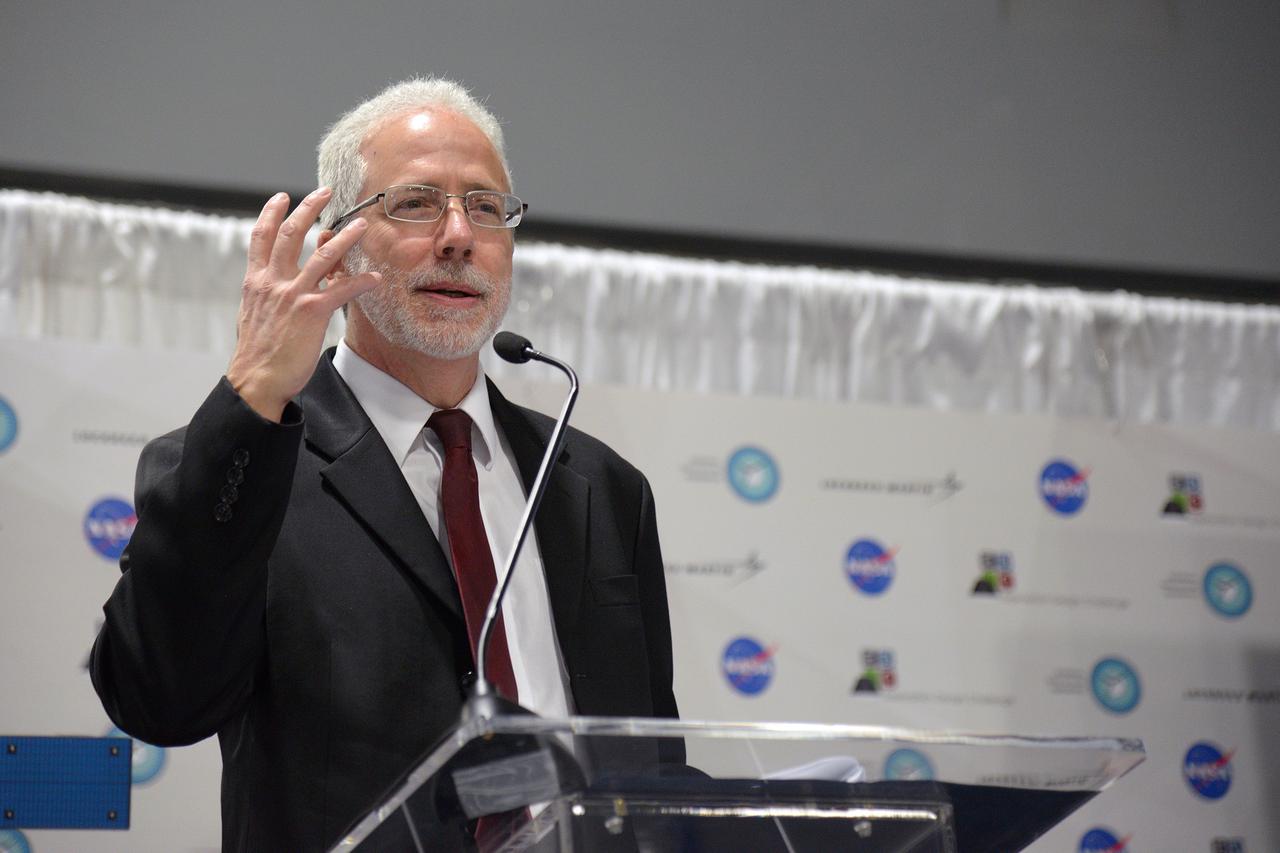
The winner of the high school portion of the Exploration Design Challenge is announced at the USA Science and Engineering Festival in Washington on April 25, 2014. Orion Program Manager Mark Geyer at podium. Part of Batch image transfer from Flickr.
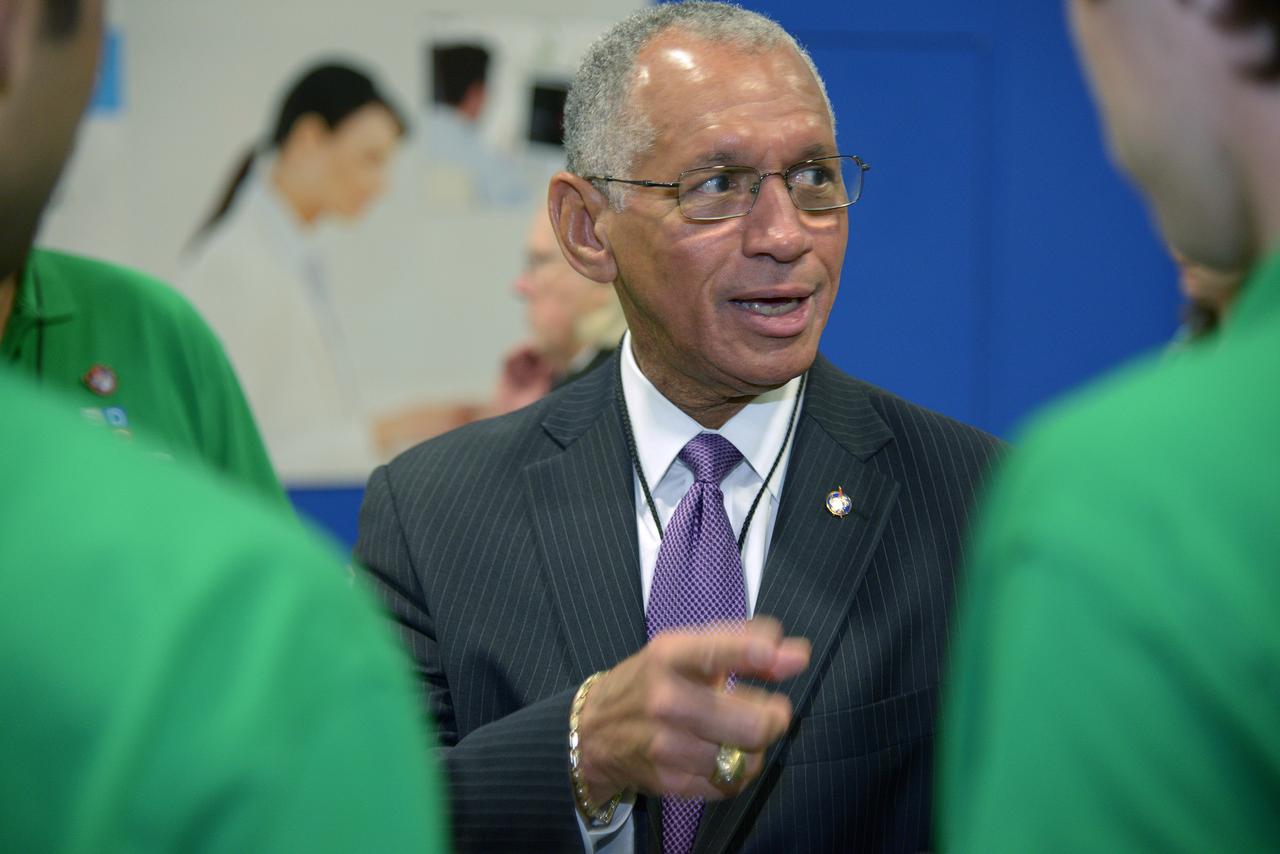
The winner of the high school portion of the Exploration Design Challenge is announced at the USA Science and Engineering Festival in Washington on April 25, 2014. NASA Administrator Charles Bolden is photographed at event. Part of Batch image transfer from Flickr.
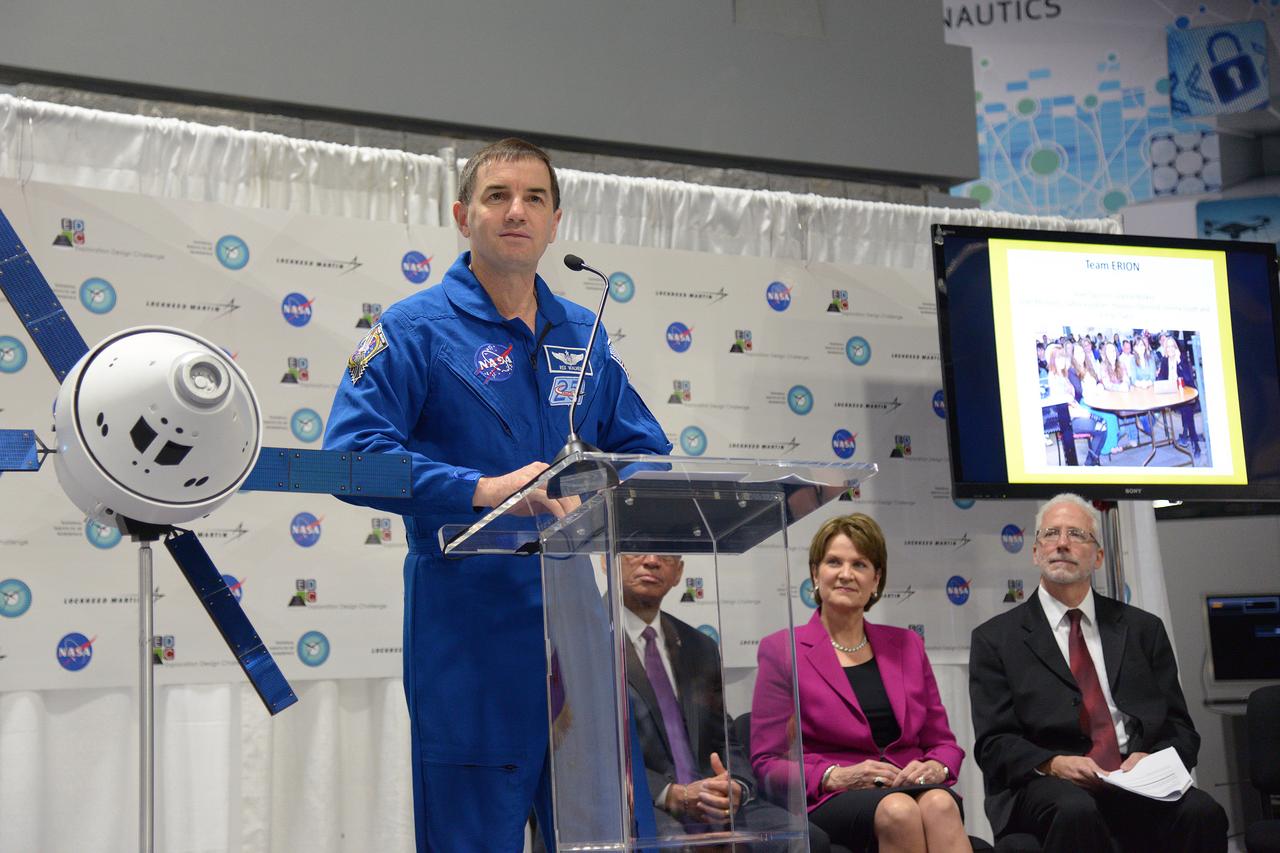
The winner of the high school portion of the Exploration Design Challenge is announced at the USA Science and Engineering Festival in Washington on April 25, 2014. Astronaut Rex Walheim speaks from podium. Part of Batch image transfer from Flickr.
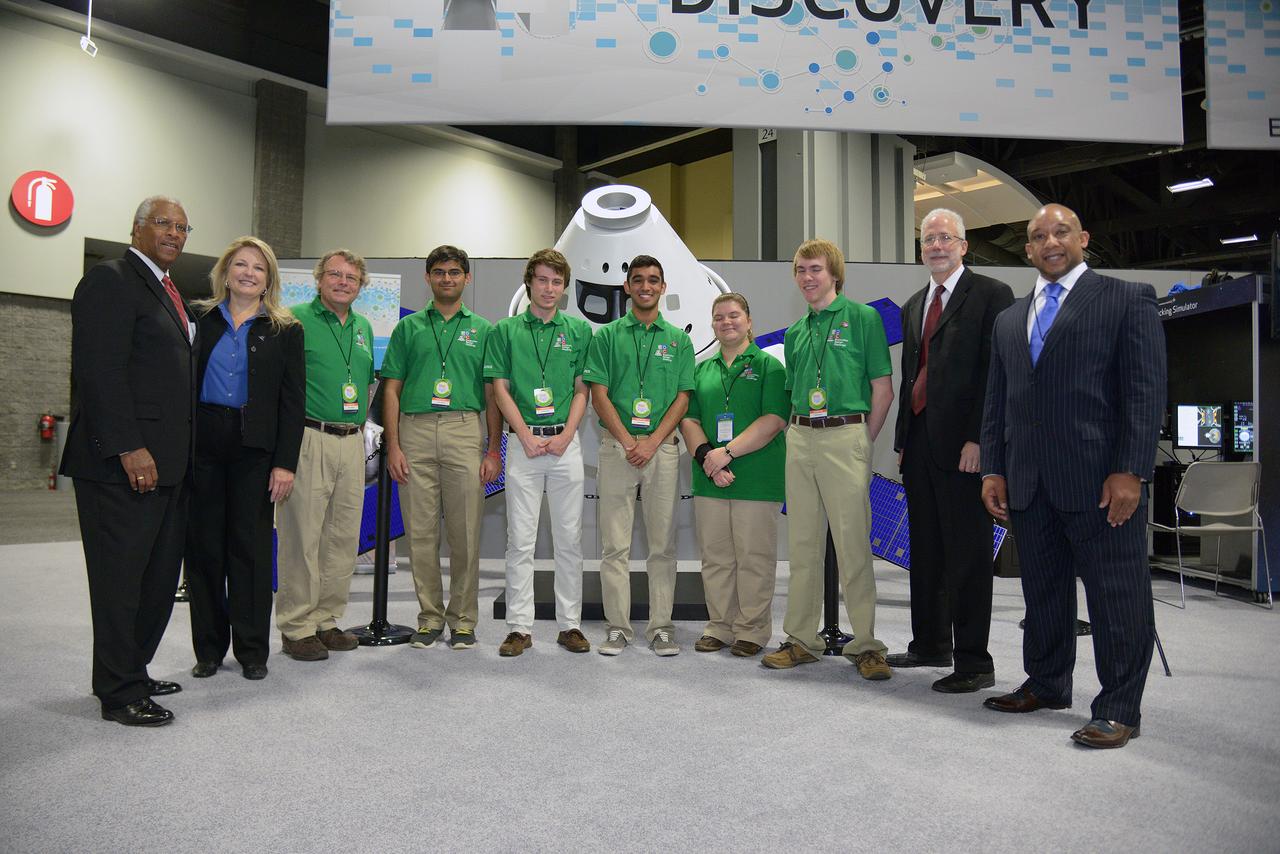
The winner of the high school portion of the Exploration Design Challenge is announced at the USA Science and Engineering Festival in Washington on April 25, 2014. Part of Batch image transfer from Flickr.
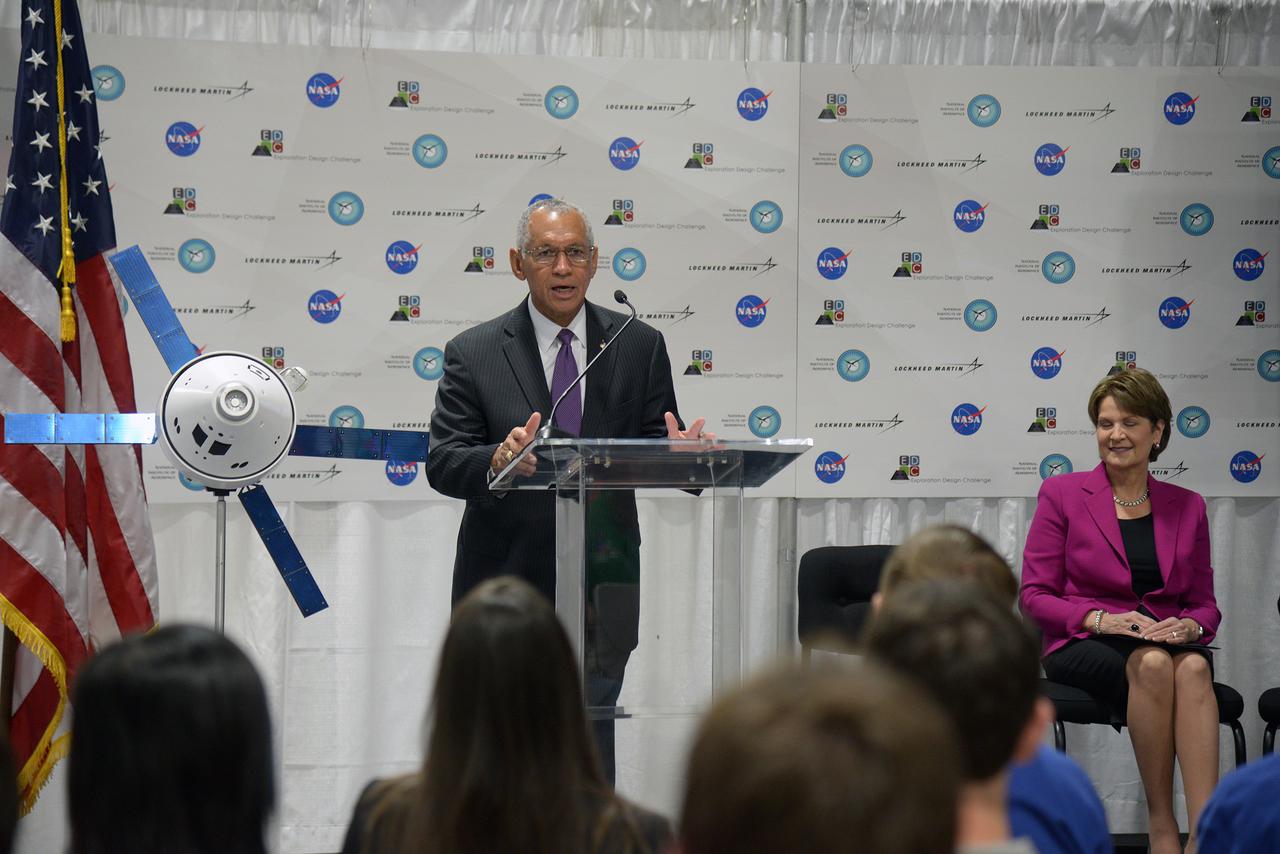
The winner of the high school portion of the Exploration Design Challenge is announced at the USA Science and Engineering Festival in Washington on April 25, 2014. NASA Director Charles Bolden speaks from podium. Part of Batch image transfer from Flickr.
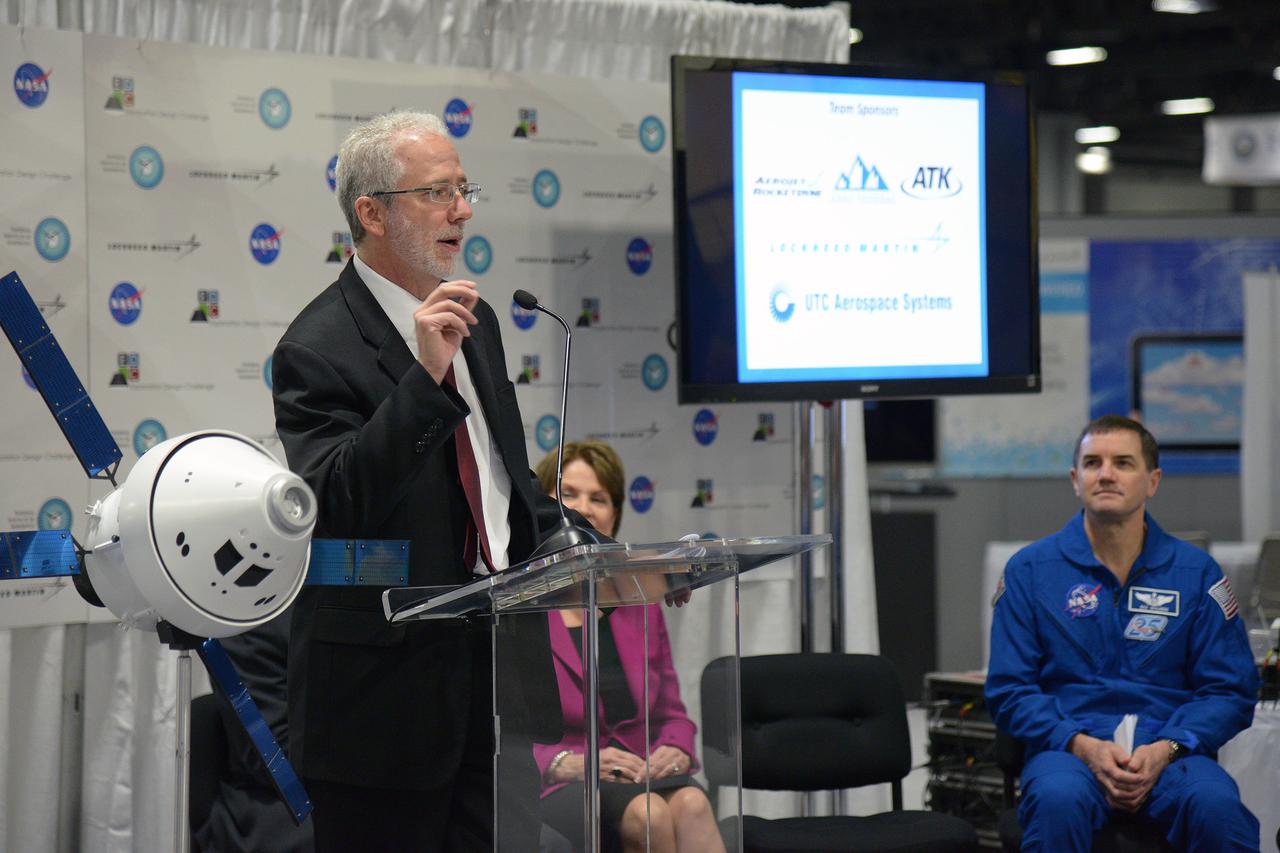
The winner of the high school portion of the Exploration Design Challenge is announced at the USA Science and Engineering Festival in Washington on April 25, 2014. Orion Program Manager Mark Geyer speaks from podium. Part of Batch image transfer from Flickr.
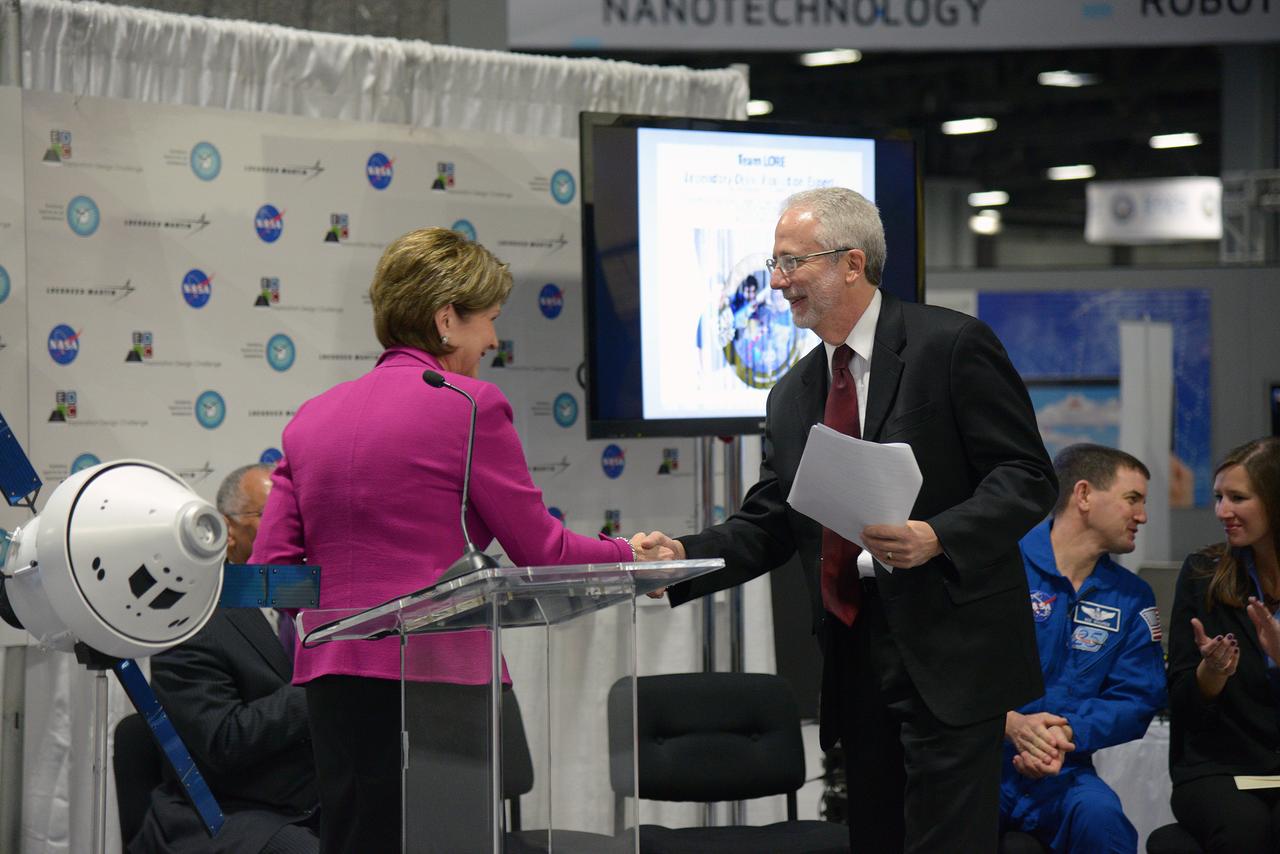
The winner of the high school portion of the Exploration Design Challenge is announced at the USA Science and Engineering Festival in Washington on April 25, 2014. Orion Program Manager Mark Geyer presents award. Part of Batch image transfer from Flickr.
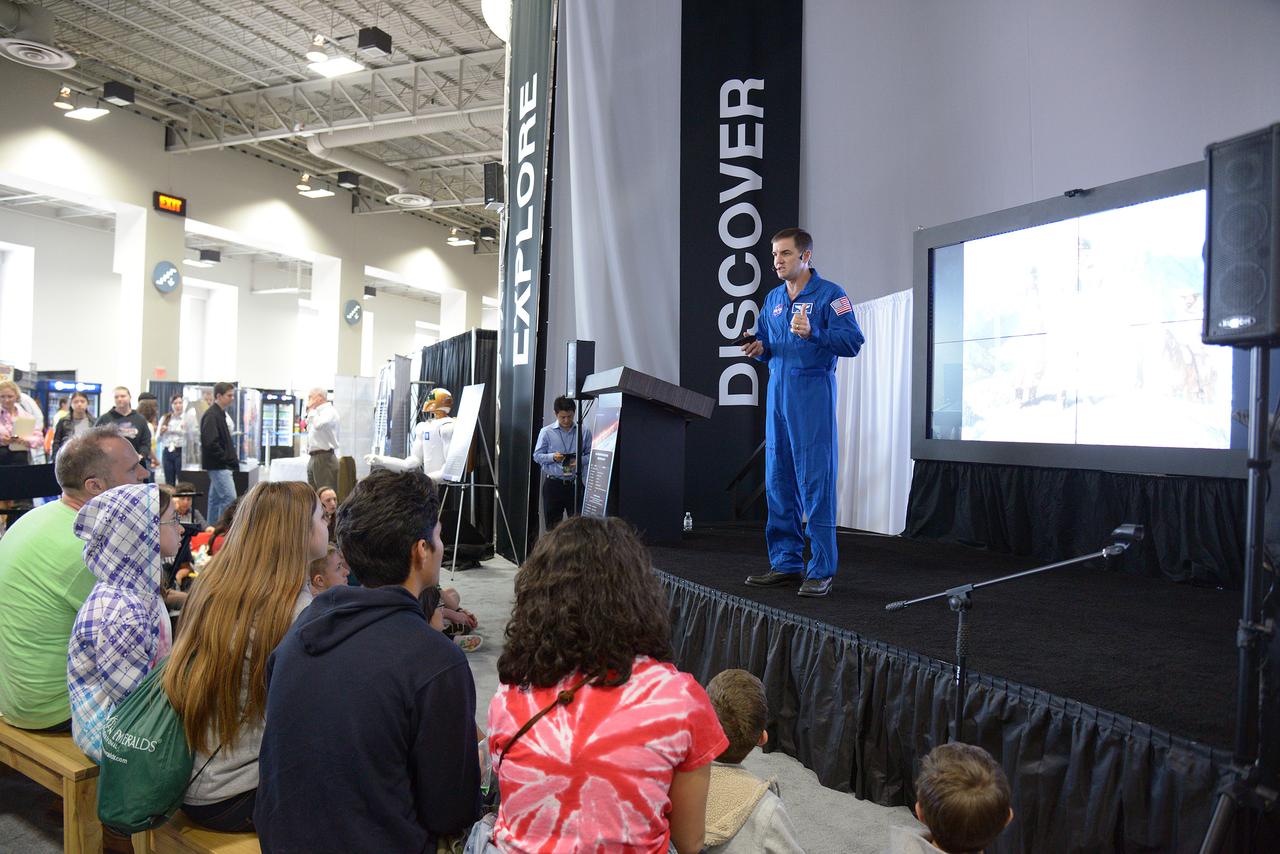
The winner of the high school portion of the Exploration Design Challenge is announced at the USA Science and Engineering Festival in Washington on April 25, 2014. Astronaut Rex Walheim speaks to students from podium. Part of Batch image transfer from Flickr.
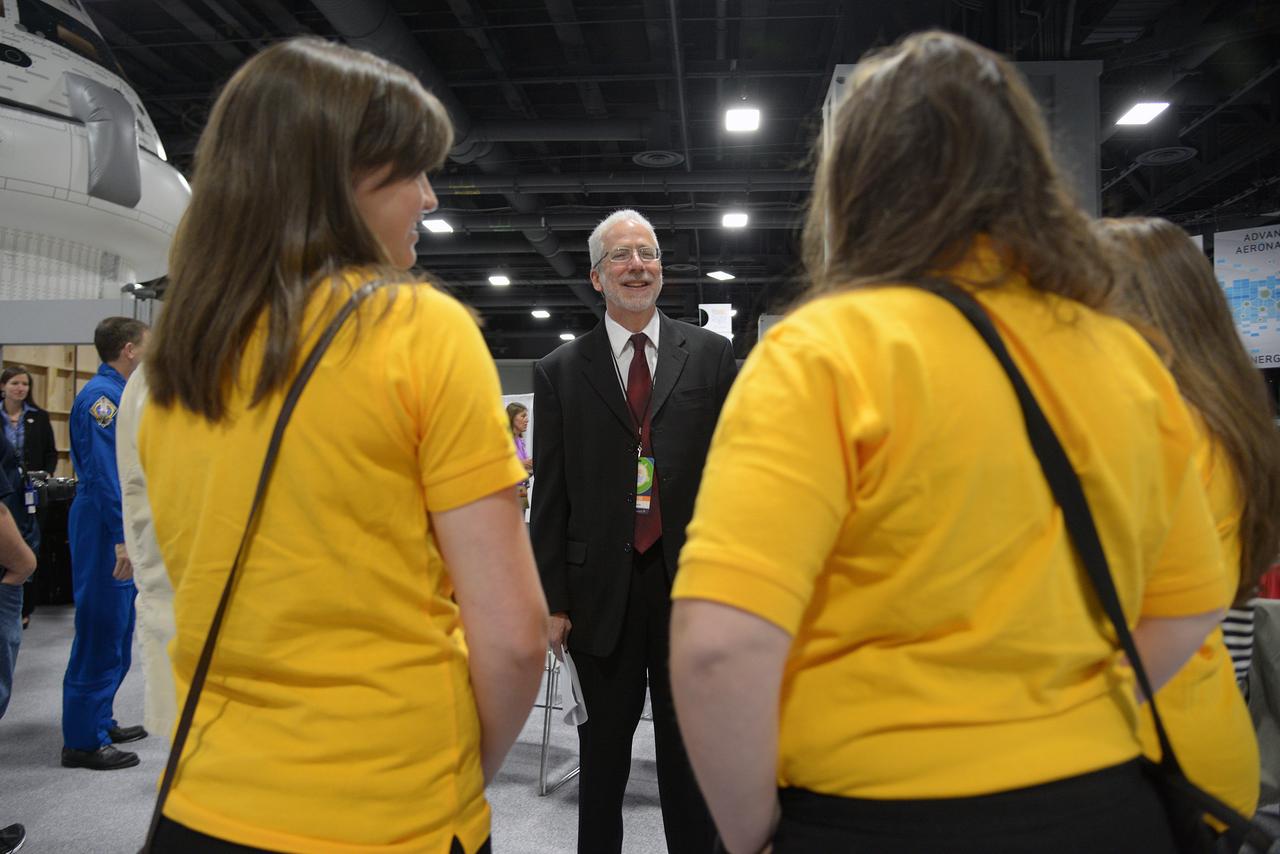
The winner of the high school portion of the Exploration Design Challenge is announced at the USA Science and Engineering Festival in Washington on April 25, 2014. Orion Program Manager Mark Geyer speaks to students. Part of Batch image transfer from Flickr.

Deanne Bell, engineer, television host, and the founder & CEO of Future Engineers speaks to students during a STEM in 30 event where they announced the winners of the "Two for the Crew" competition, Wednesday, June 27, 2018 at Smithsonian's National Air and Space Museum in Washington. Photo Credit: (NASA/Aubrey Gemignani)
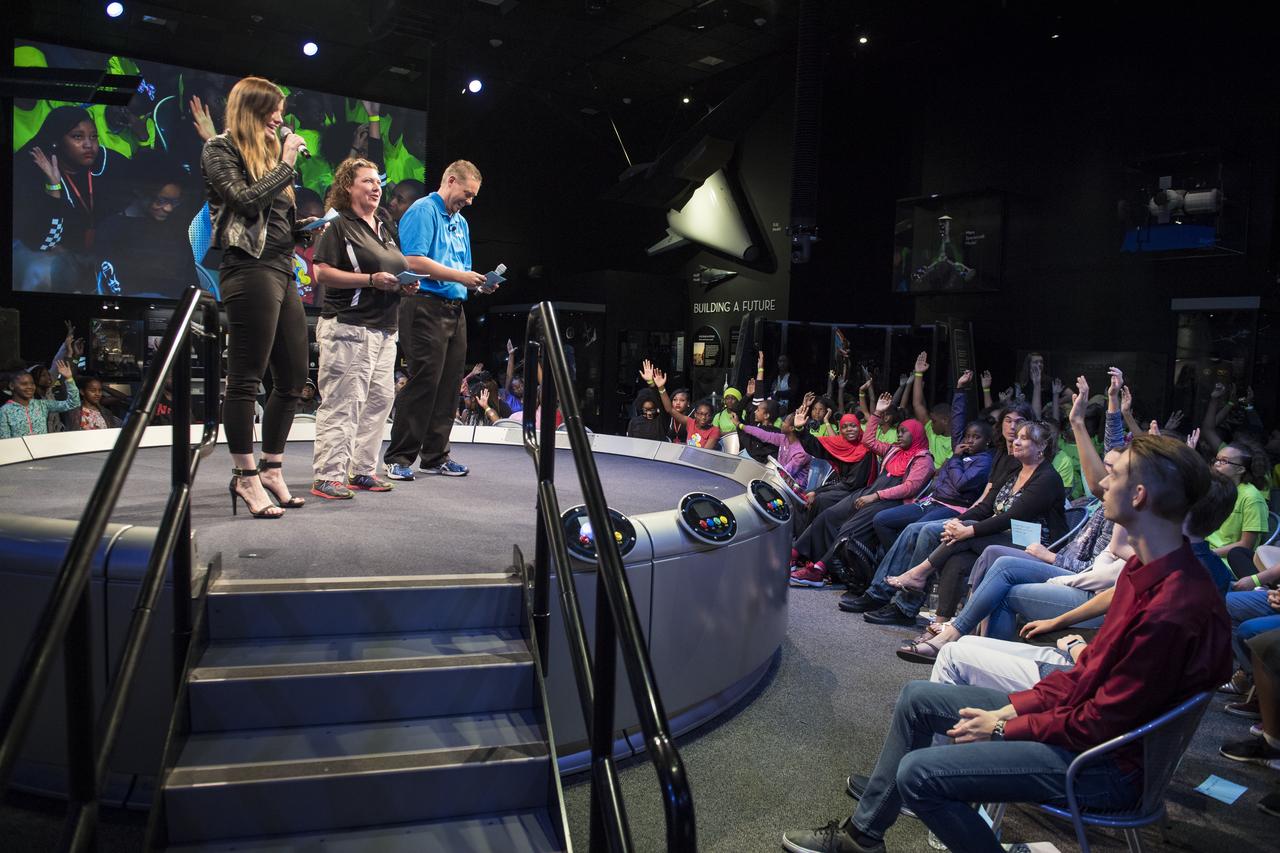
Deanne Bell, engineer, television host, and the founder & CEO of Future Engineers speaks to students during a STEM in 30 event where they announced the winners of the "Two for the Crew" competition, Wednesday, June 27, 2018 at Smithsonian's National Air and Space Museum in Washington. Photo Credit: (NASA/Aubrey Gemignani)
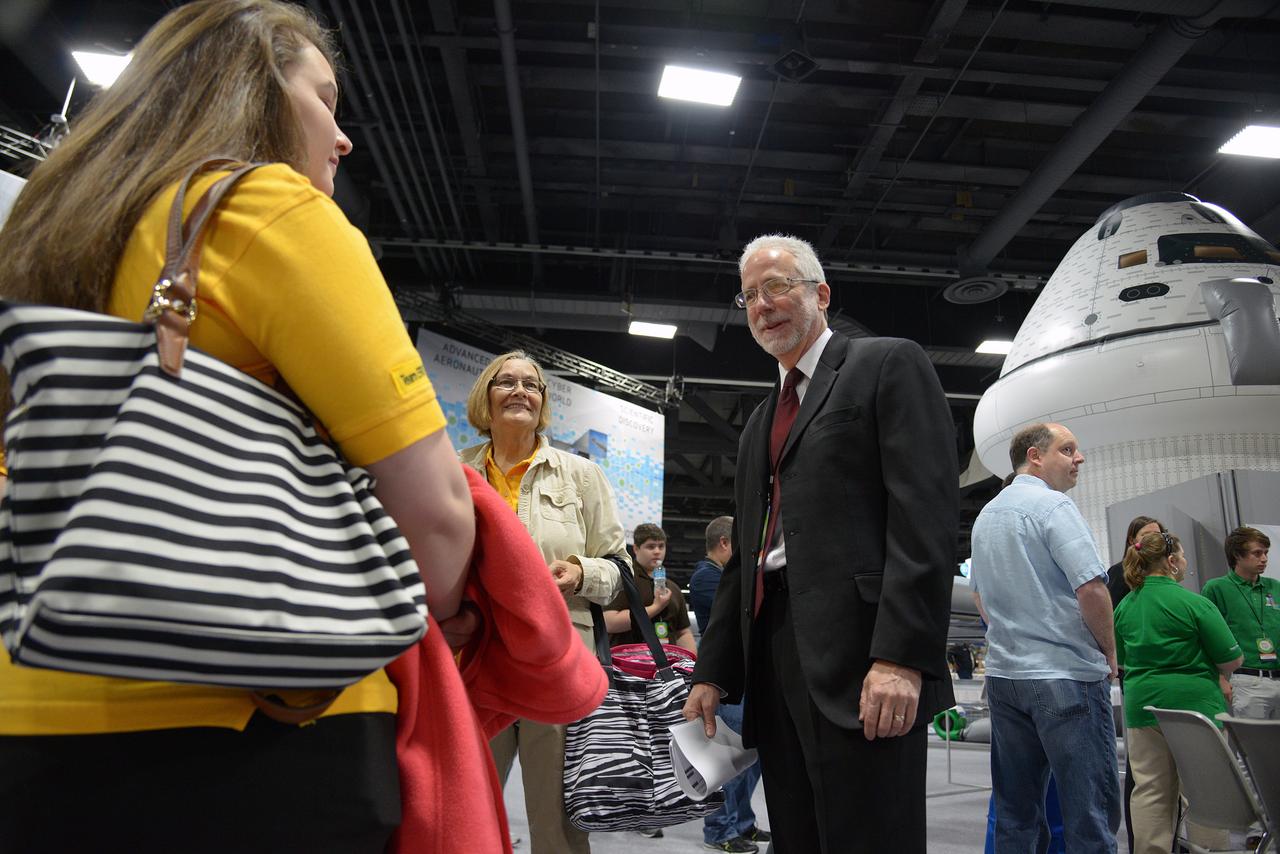
The winner of the high school portion of the Exploration Design Challenge is announced at the USA Science and Engineering Festival in Washington on April 25, 2014. Orion Program Manager Mark Geyer speaks to students. Part of Batch image transfer from Flickr.
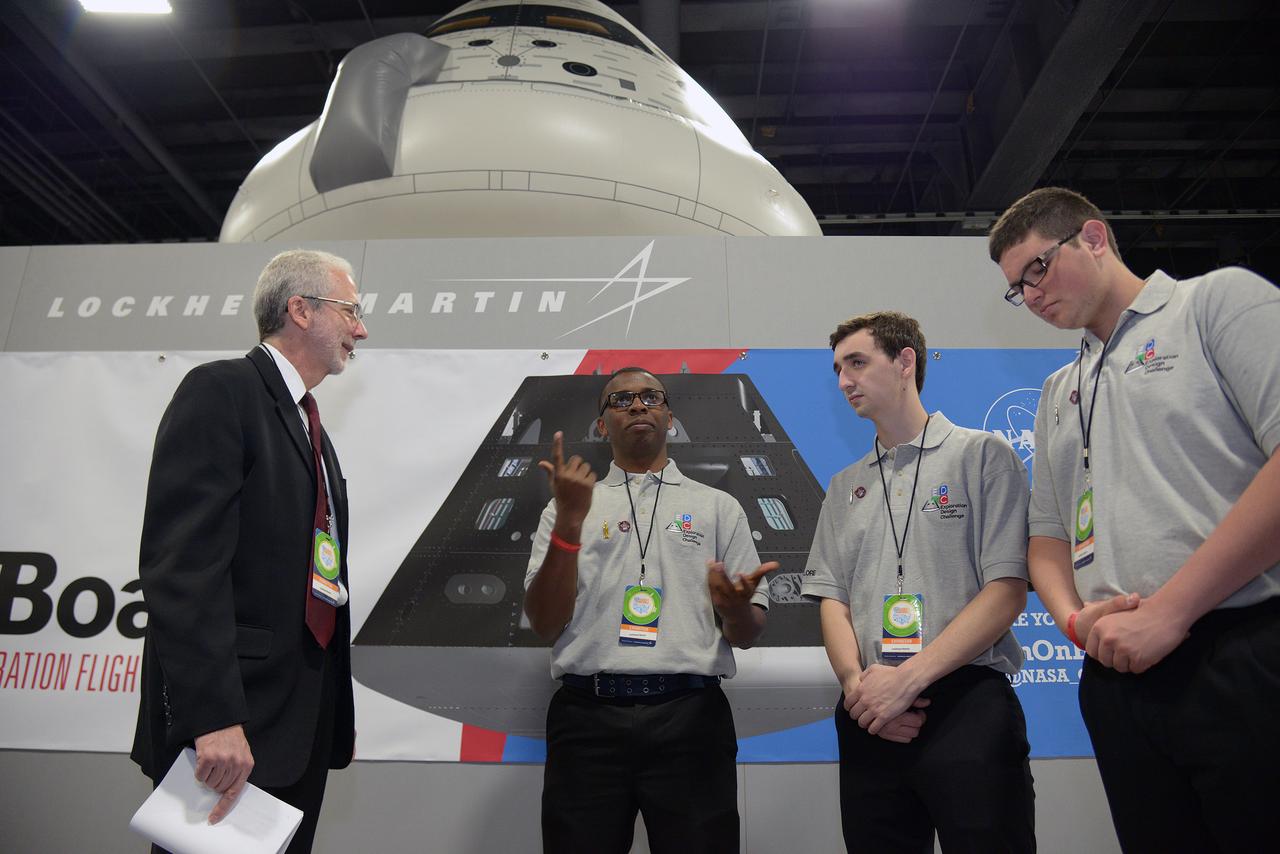
The winner of the high school portion of the Exploration Design Challenge is announced at the USA Science and Engineering Festival in Washington on April 25, 2014. Orion Program Manager Mark Geyer speaks to students. Part of Batch image transfer from Flickr.
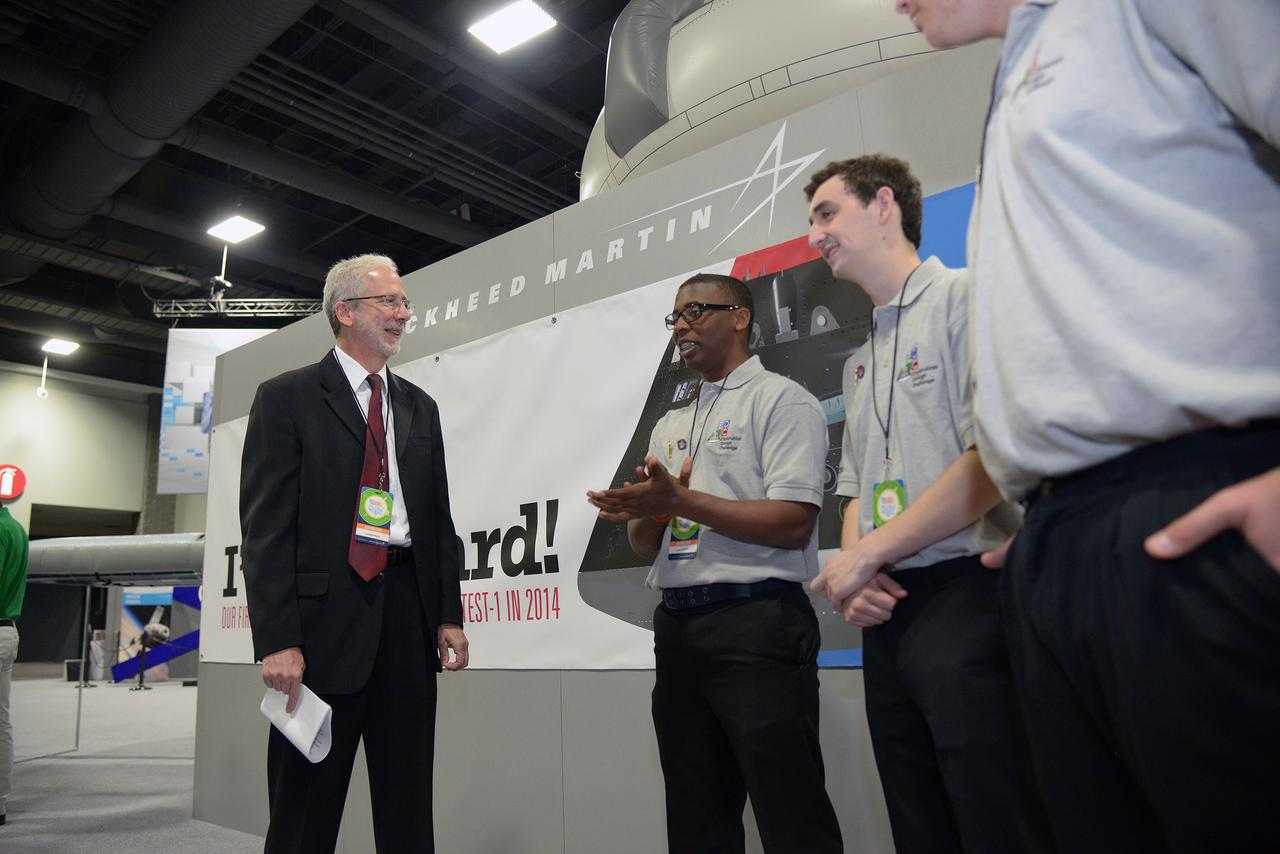
The winner of the high school portion of the Exploration Design Challenge is announced at the USA Science and Engineering Festival in Washington on April 25, 2014. Orion Program Manager Mark Geyer speaks to students. Part of Batch image transfer from Flickr.
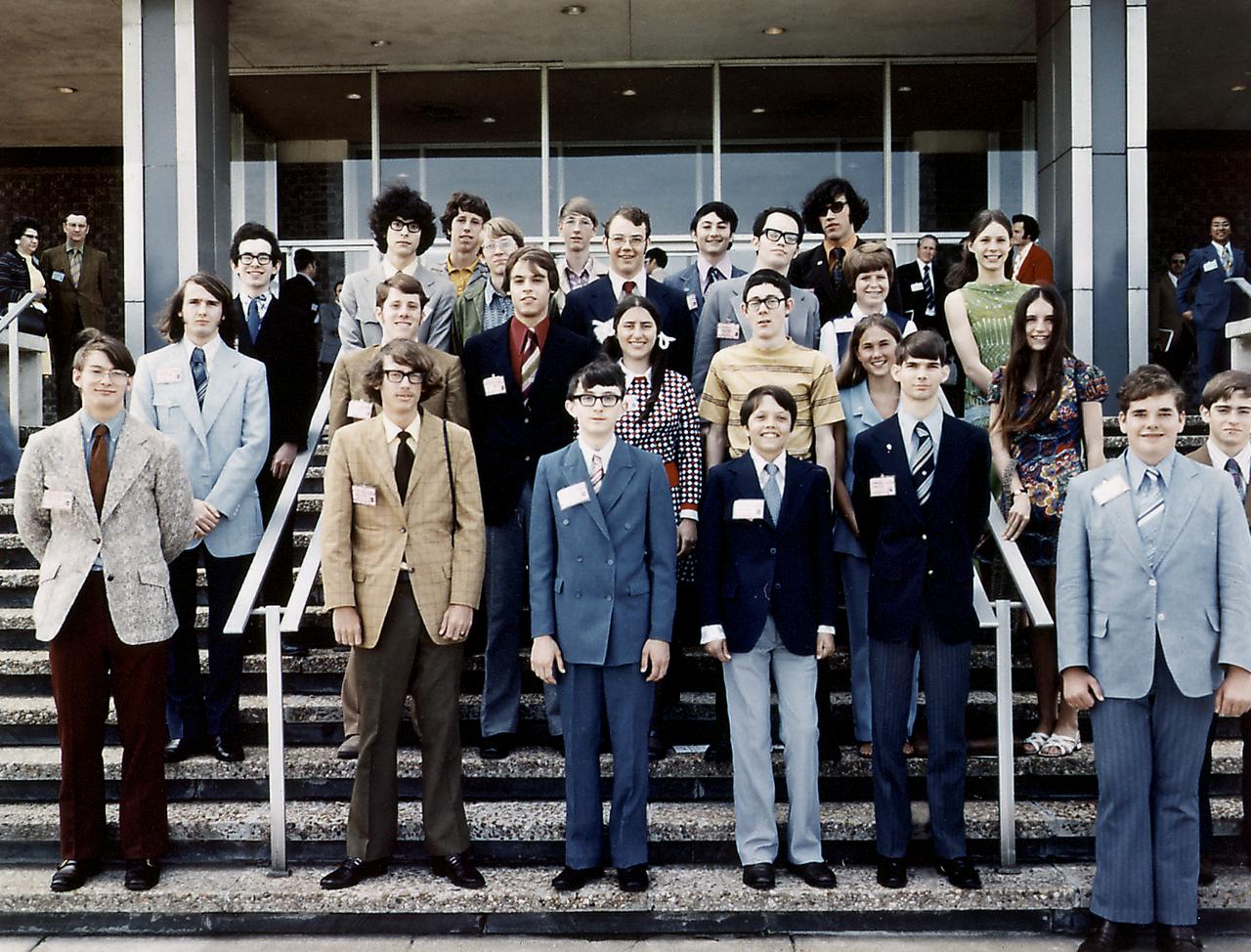
One of the most successful of the Skylab educational efforts was the Skylab Student Project. This was a nationwide contest in which secondary school students submitted proposals for experiments to fly on Skylab. After the official announcement of this project, over 4,000 students responded with 3,409 proposals from which 25 winners were selected. In the subsequent evaluation of these 25 proposed experiments in terms of their suitability for flight, the Marshall Space Flight Center, the lead center for Skylab, selected 19. This photograph is a group shot of the 25 winners in the Skylab student program when they met for the first time at the Marshall Space Flight Center in May 1972.
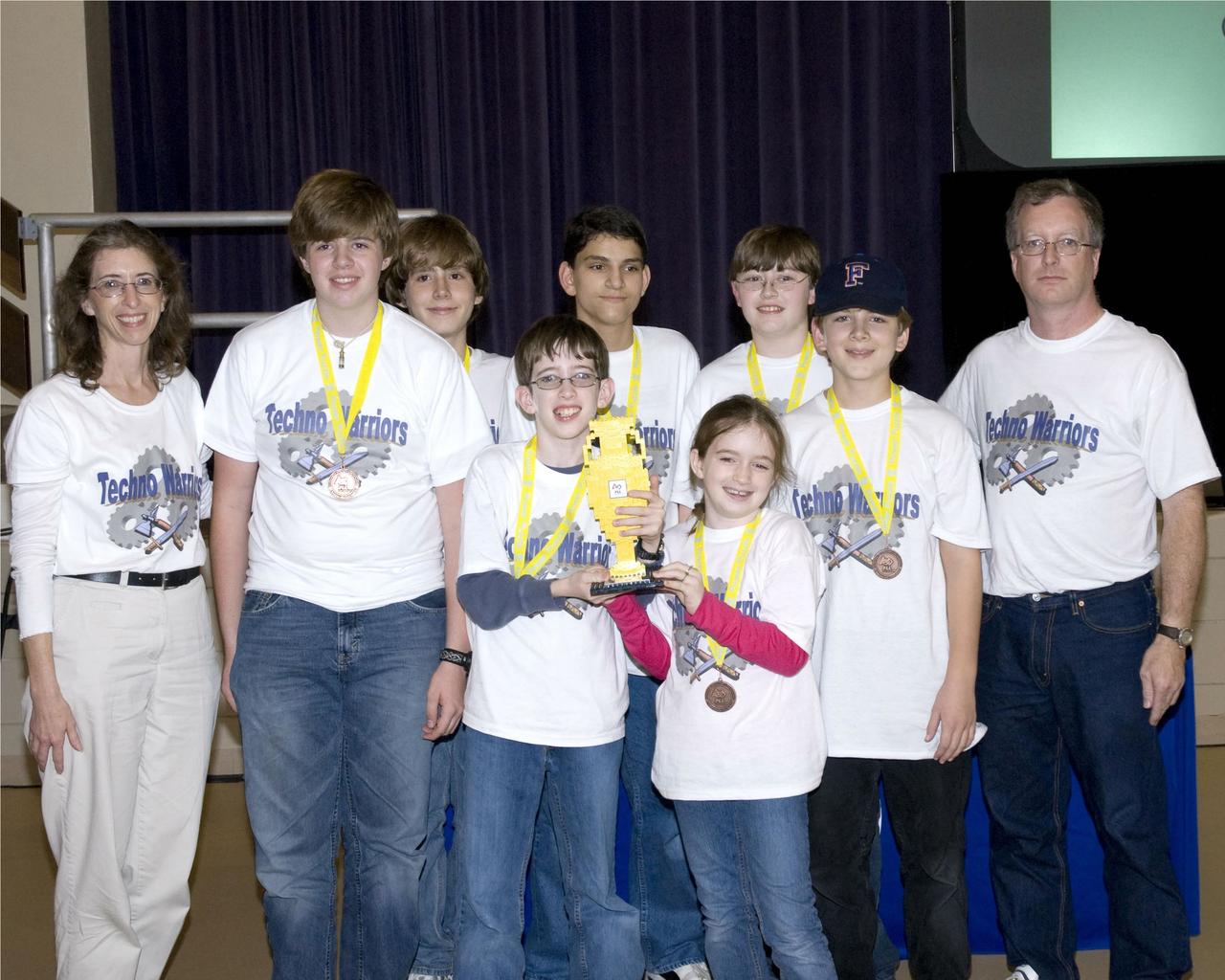
PEAK Home School Network Team 1832 'Techno Warriors' of Brandon sport the Champions Award they won during the Dec. 8 FIRST (For Inspiration and Recognition of Science and Technology) LEGO League 2007 Mississippi Championship Tournament.
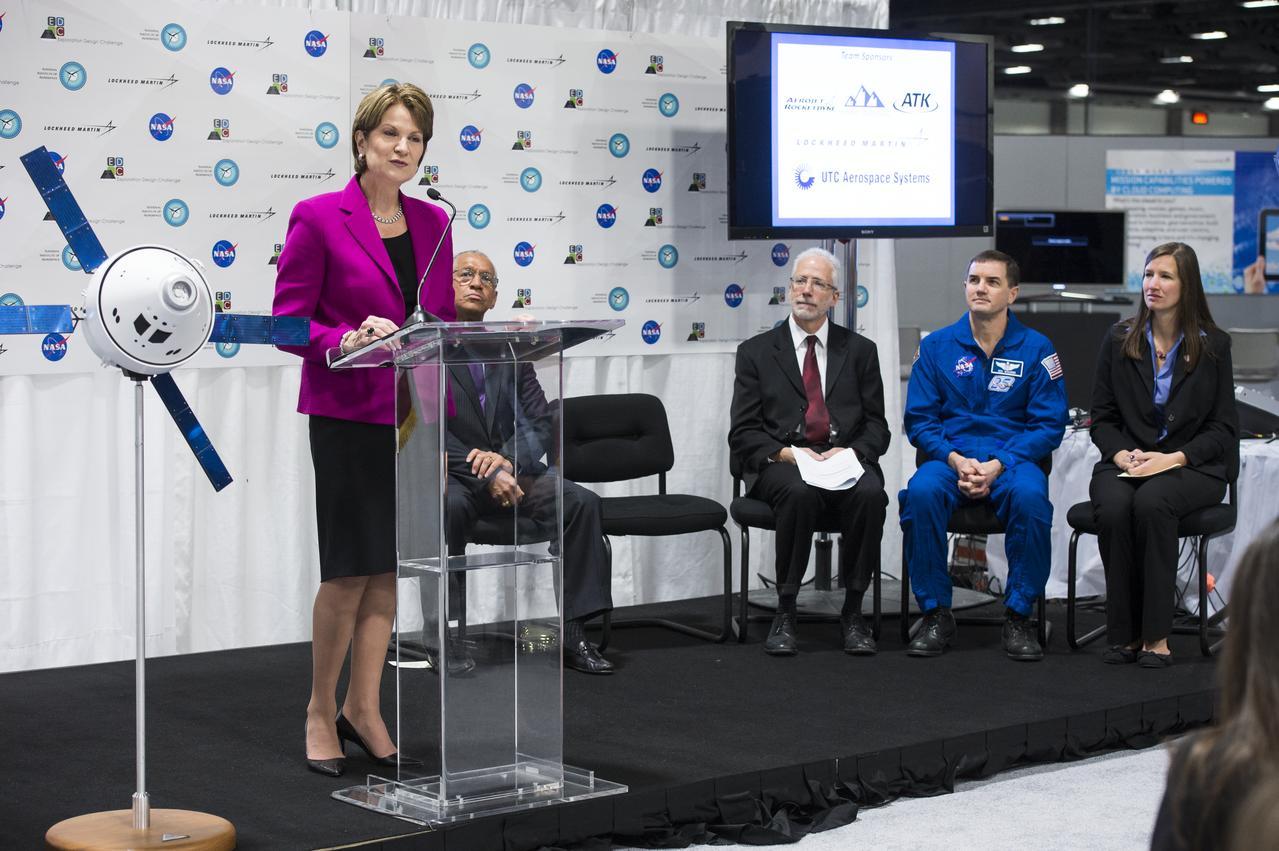
Lockheed Martin CEO Marillyn Hewson spoke at the Orion exhibit at the USA Science and Engineering Festival on April 25, 2014. The event was held to announce the winner of the Exploration Design Challenge. The goal of the Exploration Design Challenge was for students to research and design ways to protect astronauts from space radiation.The USA Science and Engineering Festival is taking place at the Washington Convention Center in Washington, DC on April 26 and 27, 2014. Photo Credit: (NASA/Aubrey Gemignani)
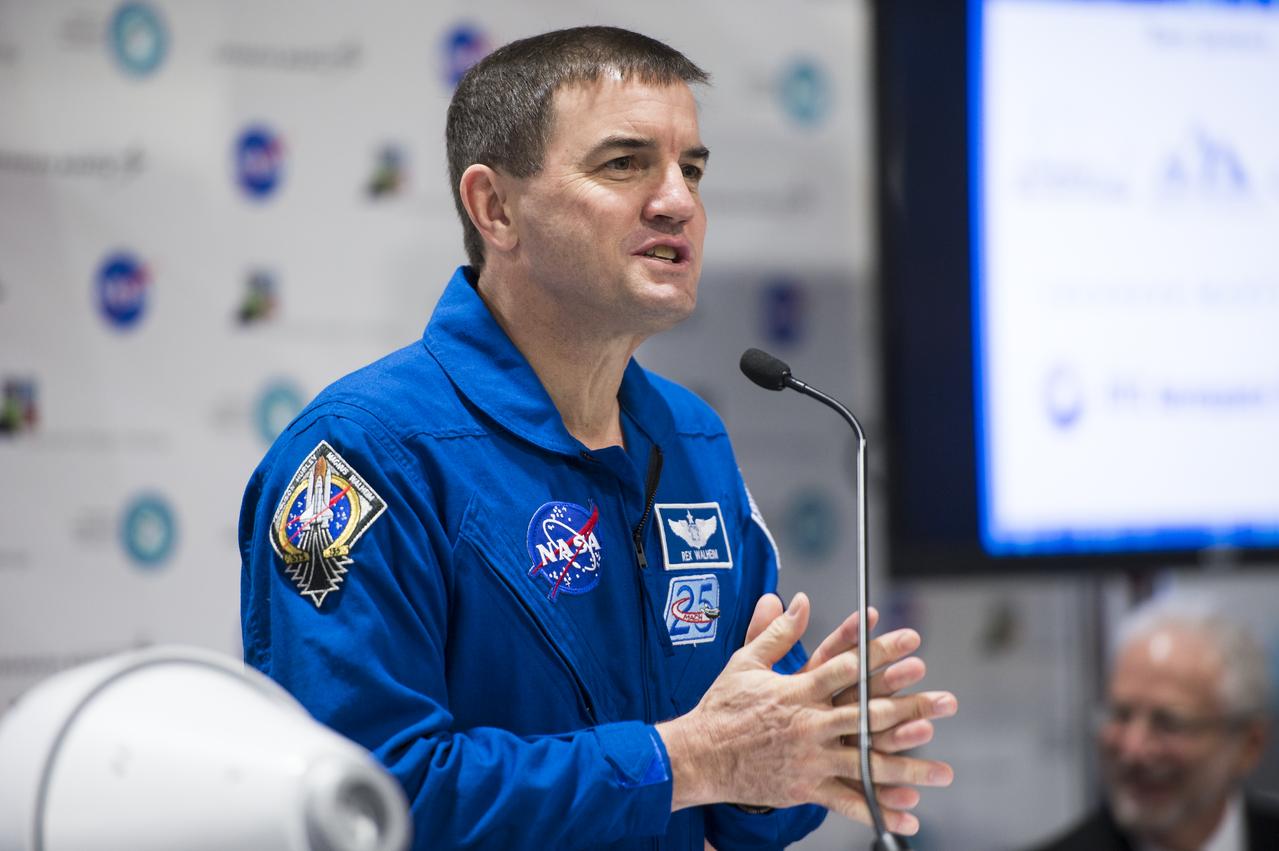
Astronaut Rex Walheim spoke at the USA Science and Engineering Festival on April 25, 2014. The event was held to announce the winner of the Exploration Design Challenge. The goal of the Exploration Design Challenge was for students to research and design ways to protect astronauts from space radiation.The winning team's design will be built and flown aboard the Orion/EFT-1. The USA Science and Engineering Festival takes place at the Washington Convention Center in Washington, DC on April 26 and 27, 2014. Photo Credit: (NASA/Aubrey Gemignani)
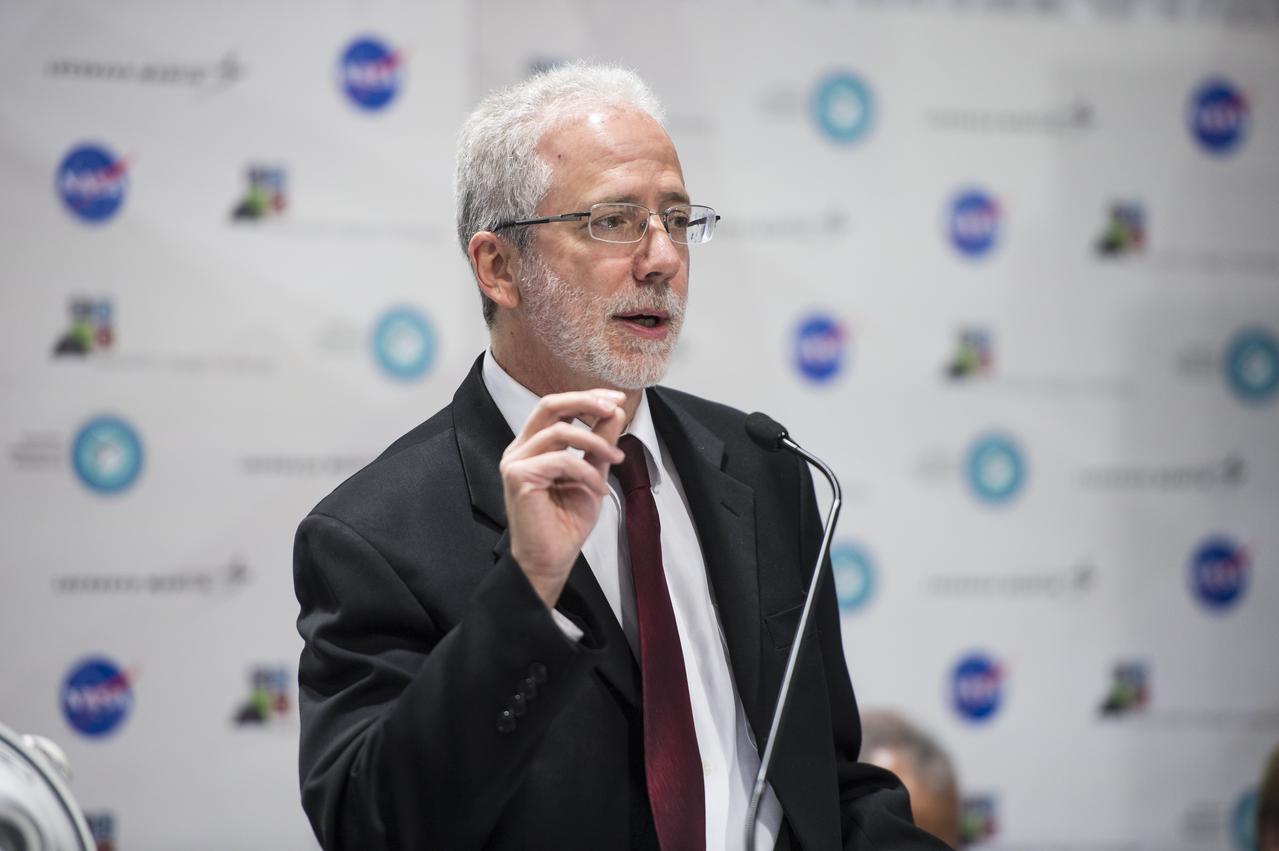
Mark Geyer, Orion Program Manager, spoke at the USA Science and Engineering Festival on April 25, 2014. The event was held to announce the winner of the Exploration Design Challenge. The goal of the Exploration Design Challenge was for students to research and design ways to protect astronauts from space radiation.The winning team's design will be built and flown aboard the Orion/EFT-1. The USA Science and Engineering Festival takes place at the Washington Convention Center in Washington, DC on April 26 and 27, 2014. Photo Credit: (NASA/Aubrey Gemignani)
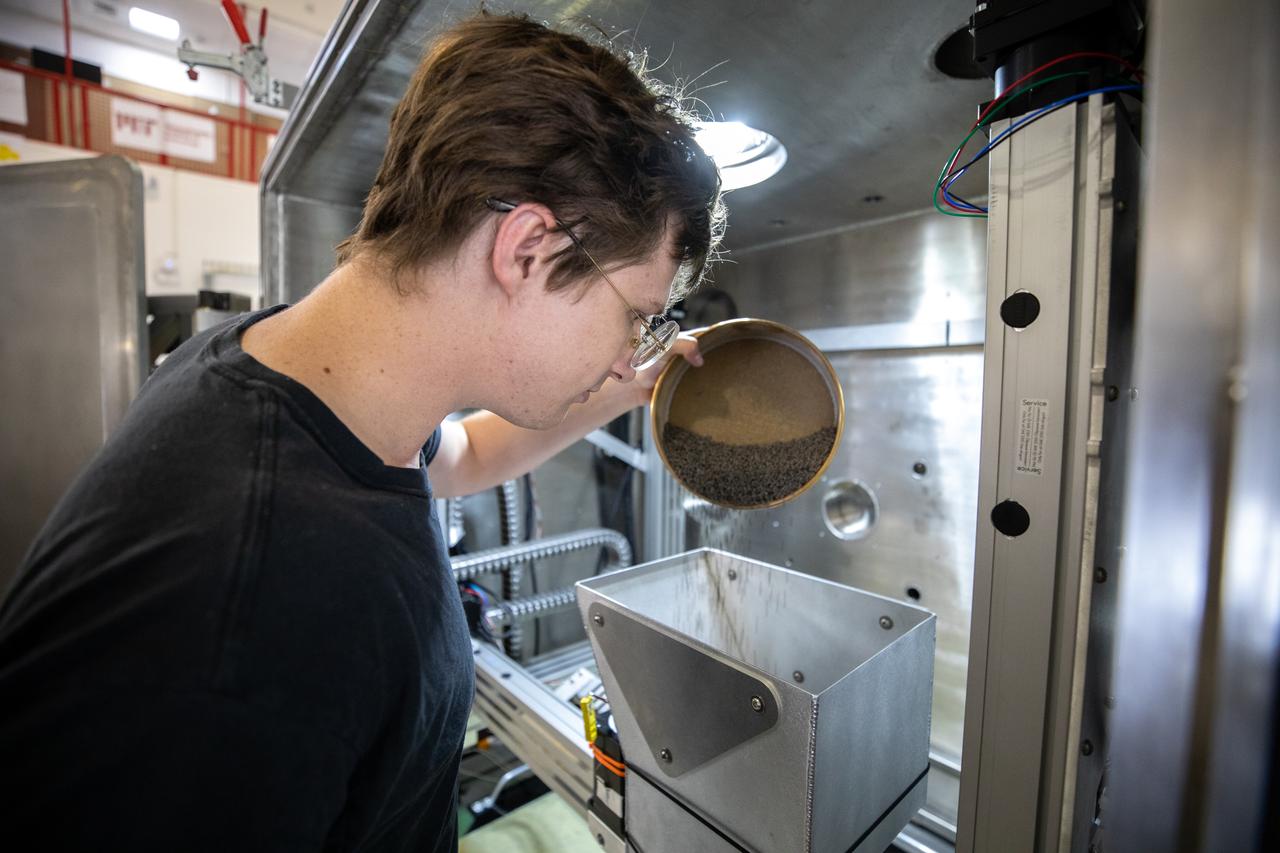
Materials engineer Thomas Lipscomb tests a 3D printer on July 28, 2022, at Swamp Works at NASA’s Kennedy Space Center in Florida, as part of the Relevant Environment Additive Construction Technology (REACT) project. Among the key objectives of the project is developing an architectural and structural design for a shelter that provides protection to habitable assets on the lunar surface. Testing REACT derives from NASA’s 2020 Announcement of Collaboration Opportunity with AI SpaceFactory – an architectural and construction technology company and winner of NASA’s 3D Printed Habitat Challenge.
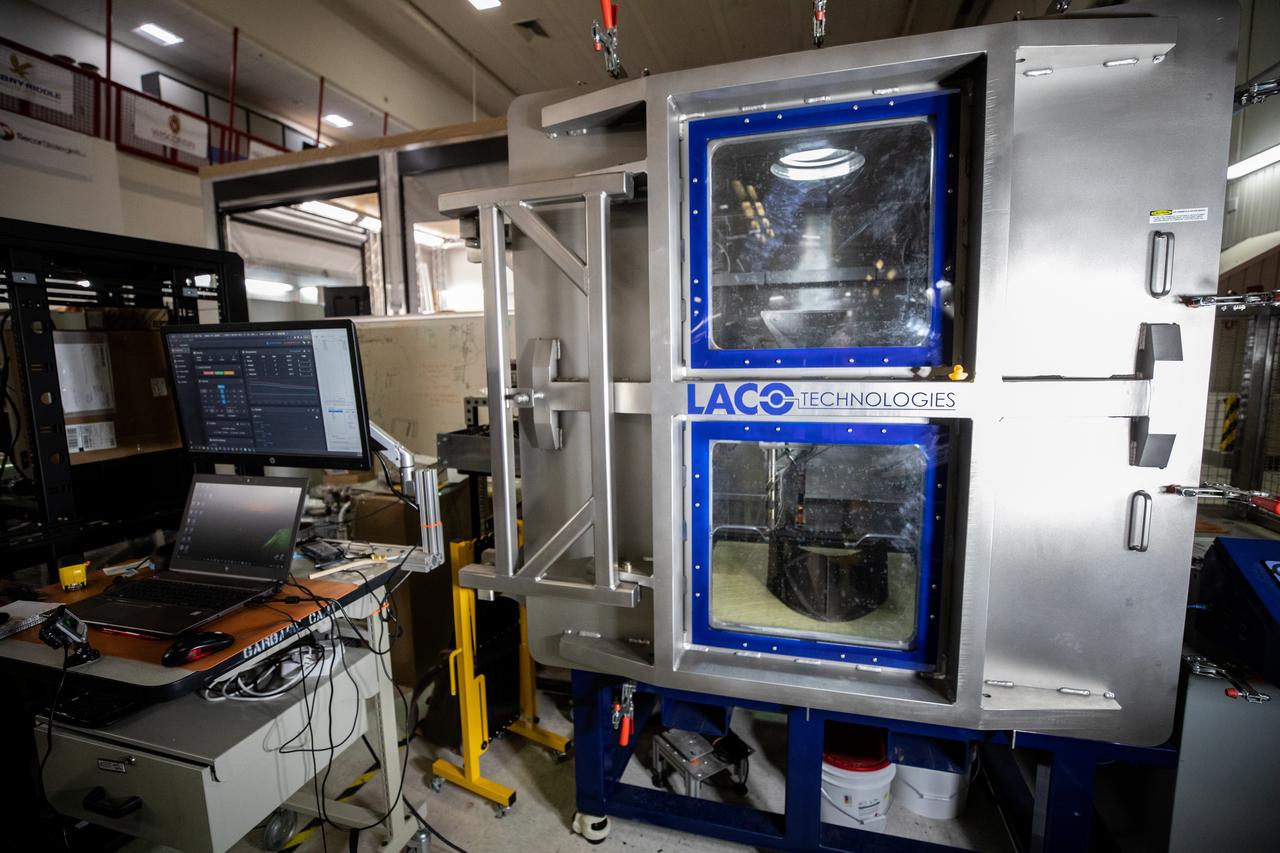
A team at NASA’s Kennedy Space Center in Florida tests a 3D printer on July 28, 2022, at the Florida spaceport’s Swamp Works, as part of the Relevant Environment Additive Construction Technology (REACT) project. Among the key objectives of the project is developing an architectural and structural design for a shelter that provides protection to habitable assets on the lunar surface. Testing REACT derives from NASA’s 2020 Announcement of Collaboration Opportunity with AI SpaceFactory – an architectural and construction technology company and winner of NASA’s 3D Printed Habitat Challenge.

Chemist Tesia Irwin tests a 3D printer on July 28, 2022, at Swamp Works at NASA’s Kennedy Space Center in Florida, as part of the Relevant Environment Additive Construction Technology (REACT) project. Among the key objectives of the project is developing an architectural and structural design for a shelter that provides protection to habitable assets on the lunar surface. Testing REACT derives from NASA’s 2020 Announcement of Collaboration Opportunity with AI SpaceFactory – an architectural and construction technology company and winner of NASA’s 3D Printed Habitat Challenge.
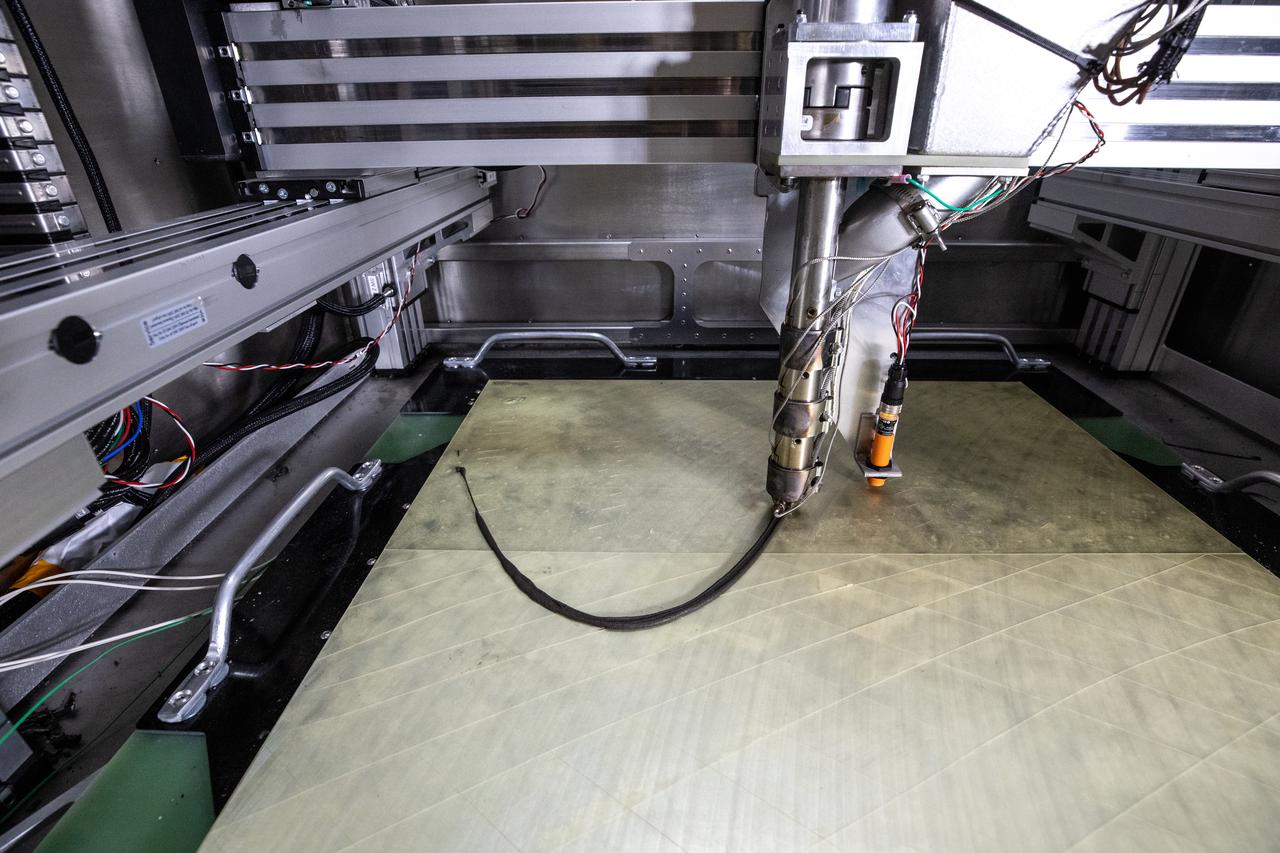
Shown is a Zero Launch Mass 3D printer on July 28, 2022, at NASA’s Kennedy Space Center’s Swamp Works. A team at the Florida spaceport tested the printer as part of the Relevant Environment Additive Construction Technology (REACT) project. Among the key objectives of the project is developing an architectural and structural design for a shelter that provides protection to habitable assets on the lunar surface. Testing REACT derives from NASA’s 2020 Announcement of Collaboration Opportunity with AI SpaceFactory – an architectural and construction technology company and winner of NASA’s 3D Printed Habitat Challenge.
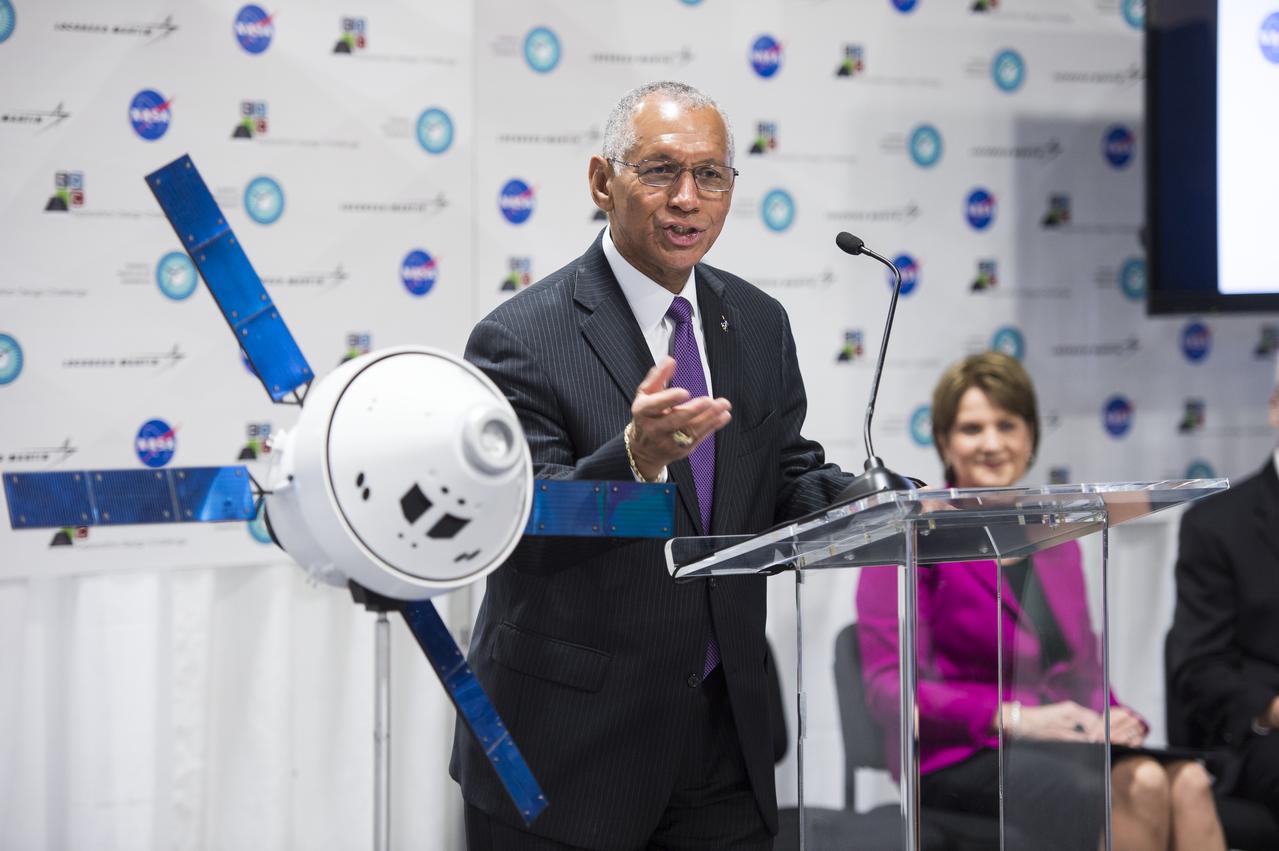
NASA Administrator Charles Bolden spoke at the Orion exhibit at the USA Science and Engineering Festival on April 25, 2014. The event was held to announce the winner of the Exploration Design Challenge. The goal of the Exploration Design Challenge was for students to research and design ways to protect astronauts from space radiation.The USA Science and Engineering Festival is taking place at the Washington Convention Center in Washington, DC on April 26 and 27, 2014. Photo Credit: (NASA/Aubrey Gemignani)
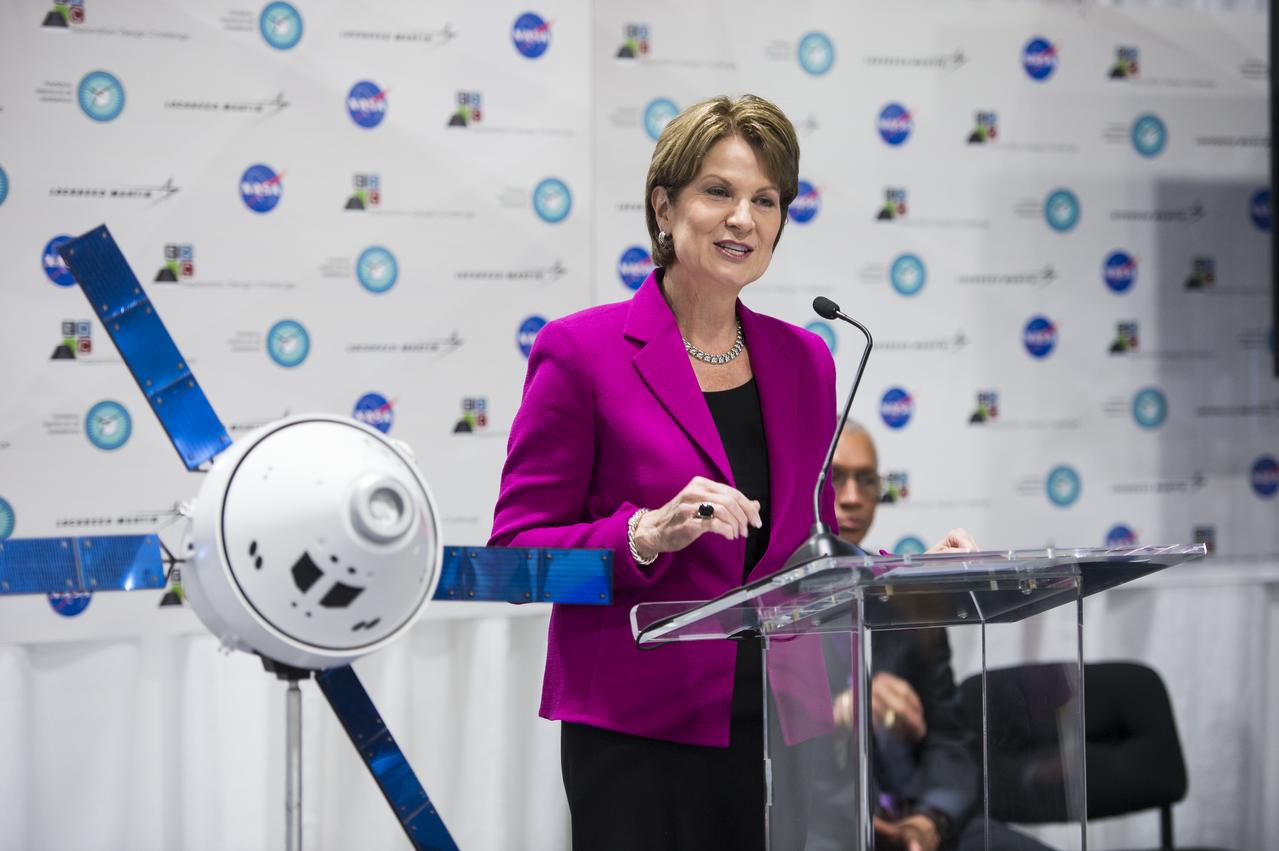
Lockheed Martin CEO Marillyn Hewson spoke at the Orion exhibit at the USA Science and Engineering Festival on April 25, 2014. The event was held to announce the winner of the Exploration Design Challenge. The goal of the Exploration Design Challenge was for students to research and design ways to protect astronauts from space radiation.The USA Science and Engineering Festival is taking place at the Washington Convention Center in Washington, DC on April 26 and 27, 2014. Photo Credit: (NASA/Aubrey Gemignani)
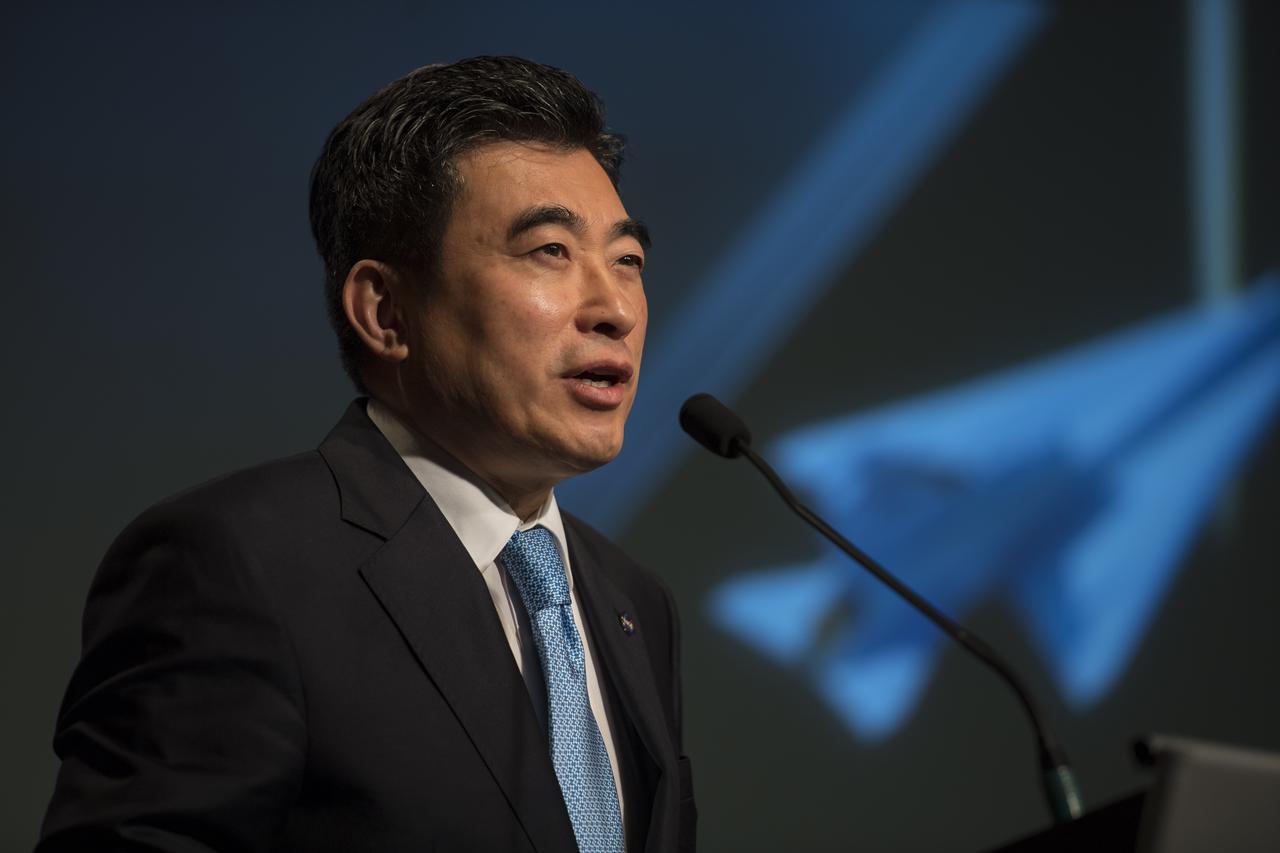
Dr. Jaiwon Shin, associate administrator for the Aeronautics Research Mission Directorate, NASA, announces Lockheed Martin as the winner of the contract to develop a Low Boom Flight Demonstrator at a briefing, Tuesday, April 3, 2018 at NASA Headquarters in Washington. This new experimental aircraft will cut cross country travel times in half by flying faster than the speed of sound without creating a sonic boom, enabling travel from New York to Los Angeles in two hours. Photo Credit: (NASA/Aubrey Gemignani)
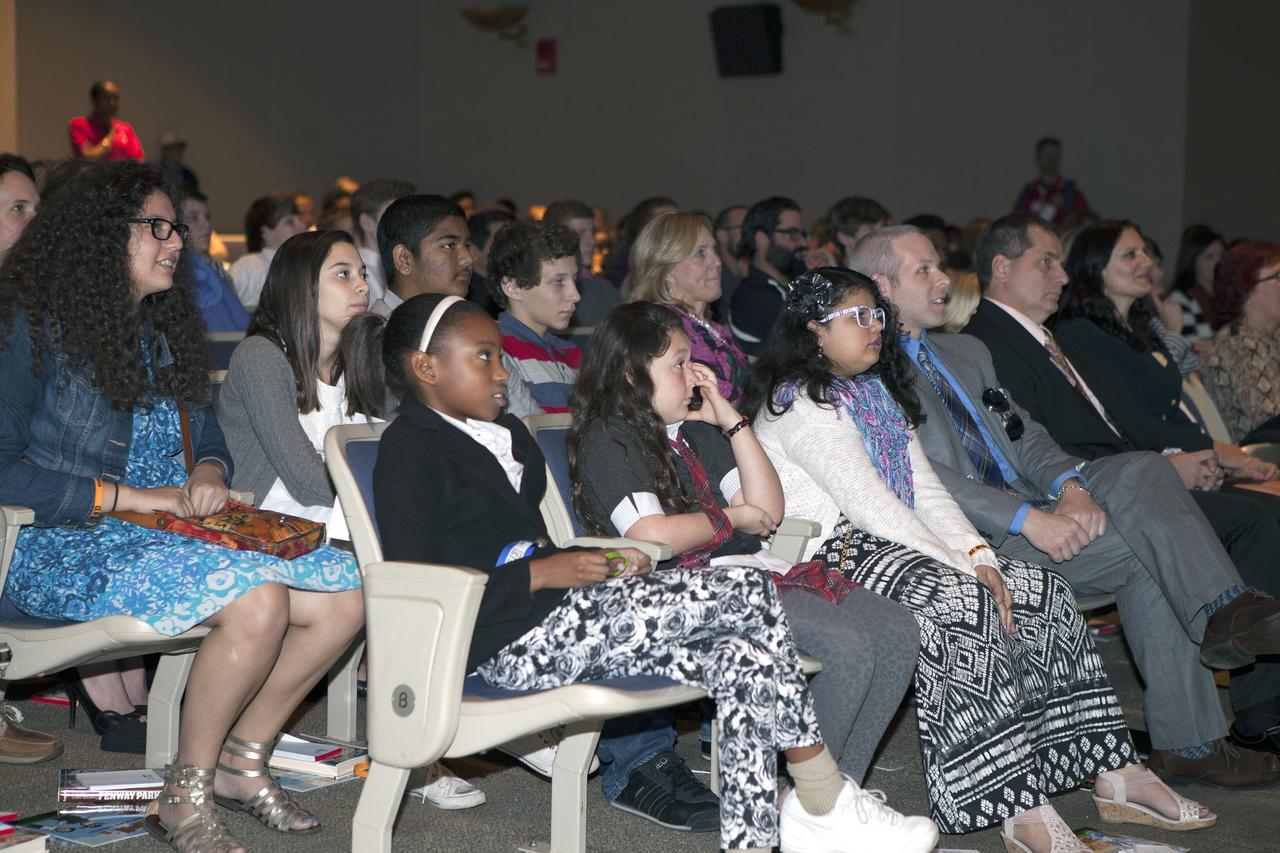
CAPE CANAVERAL, Fla. – Students, parents and guests attend the 2015 Celebrate Literacy Week Florida PSA Awards program inside the Astronaut Encounter Theater at NASA’s Kennedy Space Center in Florida. The event, hosted by the Florida Department of Education, announced the winners from elementary, middle, and high school students that best encouraged literacy and its connection to space careers. Photo credit: NASA/Ben Smegelsky
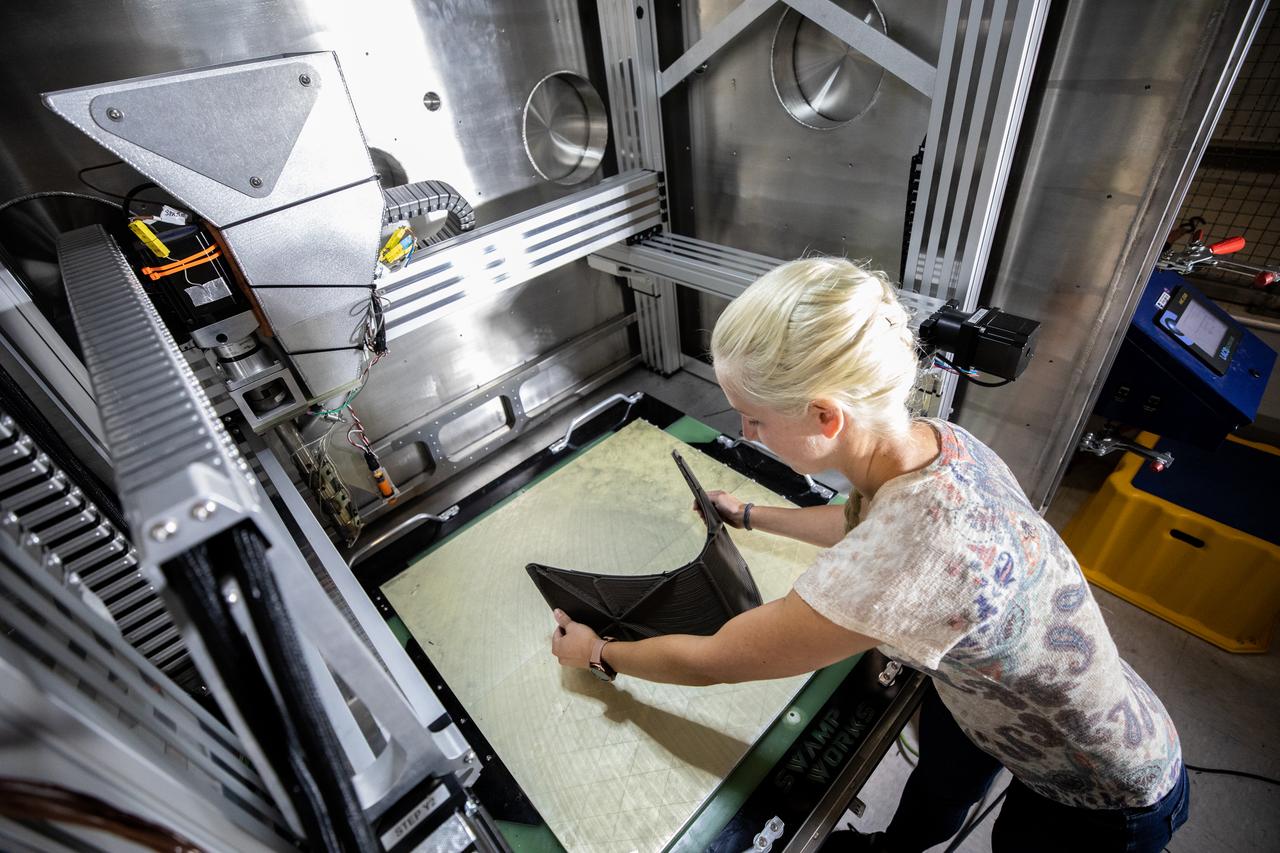
Chemist Tesia Irwin tests a 3D printer on July 28, 2022, at Swamp Works at NASA’s Kennedy Space Center in Florida, as part of the Relevant Environment Additive Construction Technology (REACT) project. Among the key objectives of the project is developing an architectural and structural design for a shelter that provides protection to habitable assets on the lunar surface. Testing REACT derives from NASA’s 2020 Announcement of Collaboration Opportunity with AI SpaceFactory – an architectural and construction technology company and winner of NASA’s 3D Printed Habitat Challenge.
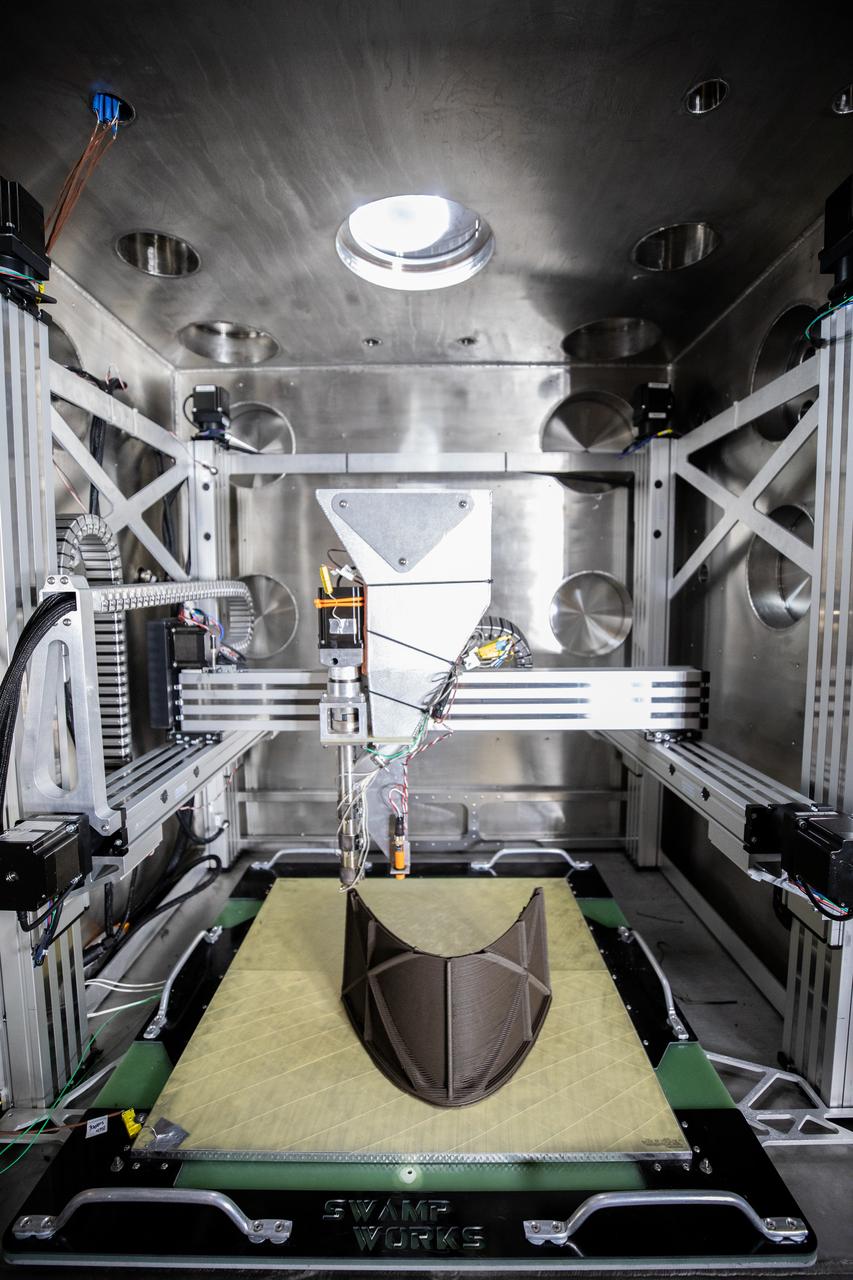
A team at NASA’s Kennedy Space Center in Florida tests a 3D printer on July 28, 2022, at the Florida spaceport’s Swamp Works, as part of the Relevant Environment Additive Construction Technology (REACT) project. Among the key objectives of the project is developing an architectural and structural design for a shelter that provides protection to habitable assets on the lunar surface. Testing REACT derives from NASA’s 2020 Announcement of Collaboration Opportunity with AI SpaceFactory – an architectural and construction technology company and winner of NASA’s 3D Printed Habitat Challenge.

NASA Administrator Charles Bolden spoke at the Orion exhibit at the USA Science and Engineering Festival on April 25, 2014. The event was held to announce the winner of the Exploration Design Challenge. The goal of the Exploration Design Challenge was for students to research and design ways to protect astronauts from space radiation.The USA Science and Engineering Festival is taking place at the Washington Convention Center in Washington, DC on April 26 and 27, 2014. Photo Credit: (NASA/Aubrey Gemignani)
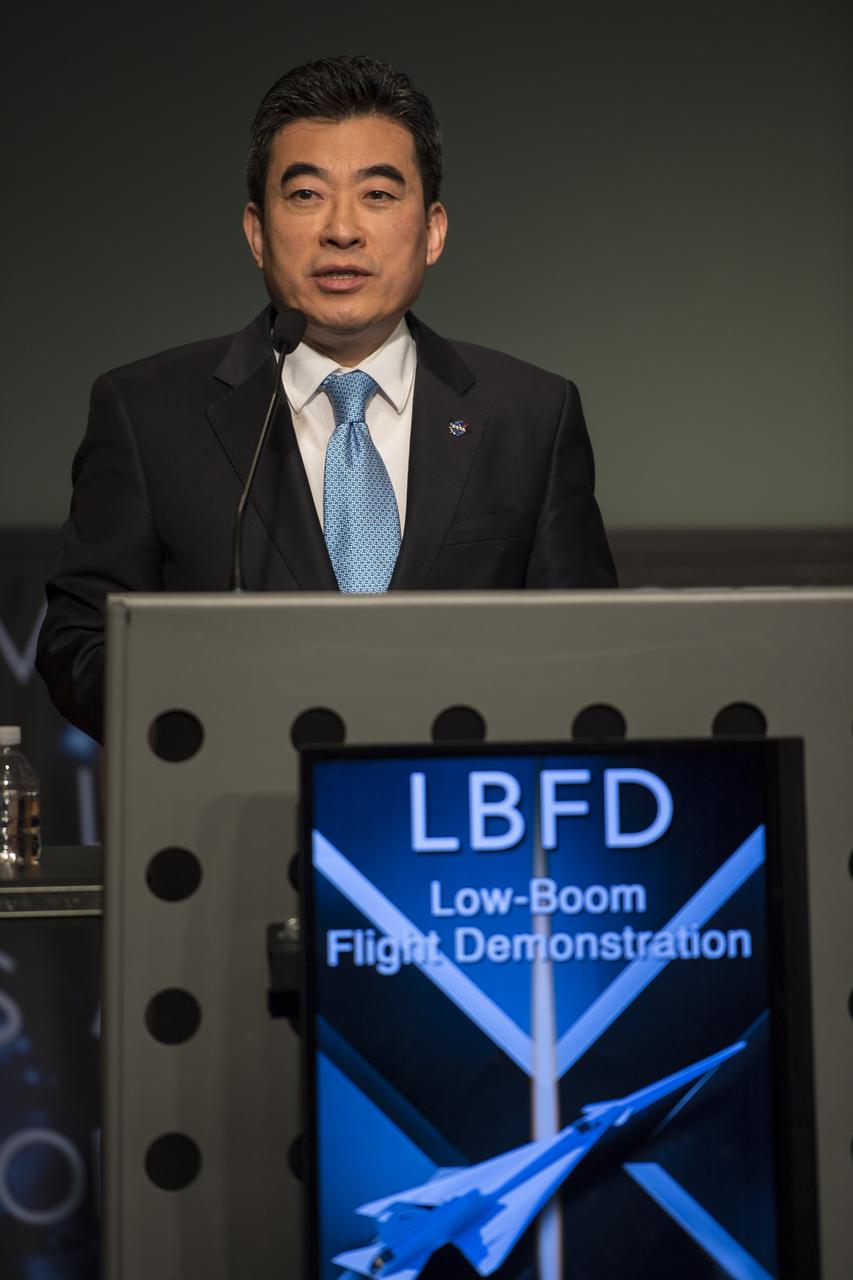
Dr. Jaiwon Shin, associate administrator for the Aeronautics Research Mission Directorate, NASA, announces Lockheed Martin as the winner of the contract to develop a Low Boom Flight Demonstrator at a briefing, Tuesday, April 3, 2018 at NASA Headquarters in Washington. This new experimental aircraft will cut cross country travel times in half by flying faster than the speed of sound without creating a sonic boom, enabling travel from New York to Los Angeles in two hours. Photo Credit: (NASA/Aubrey Gemignani)
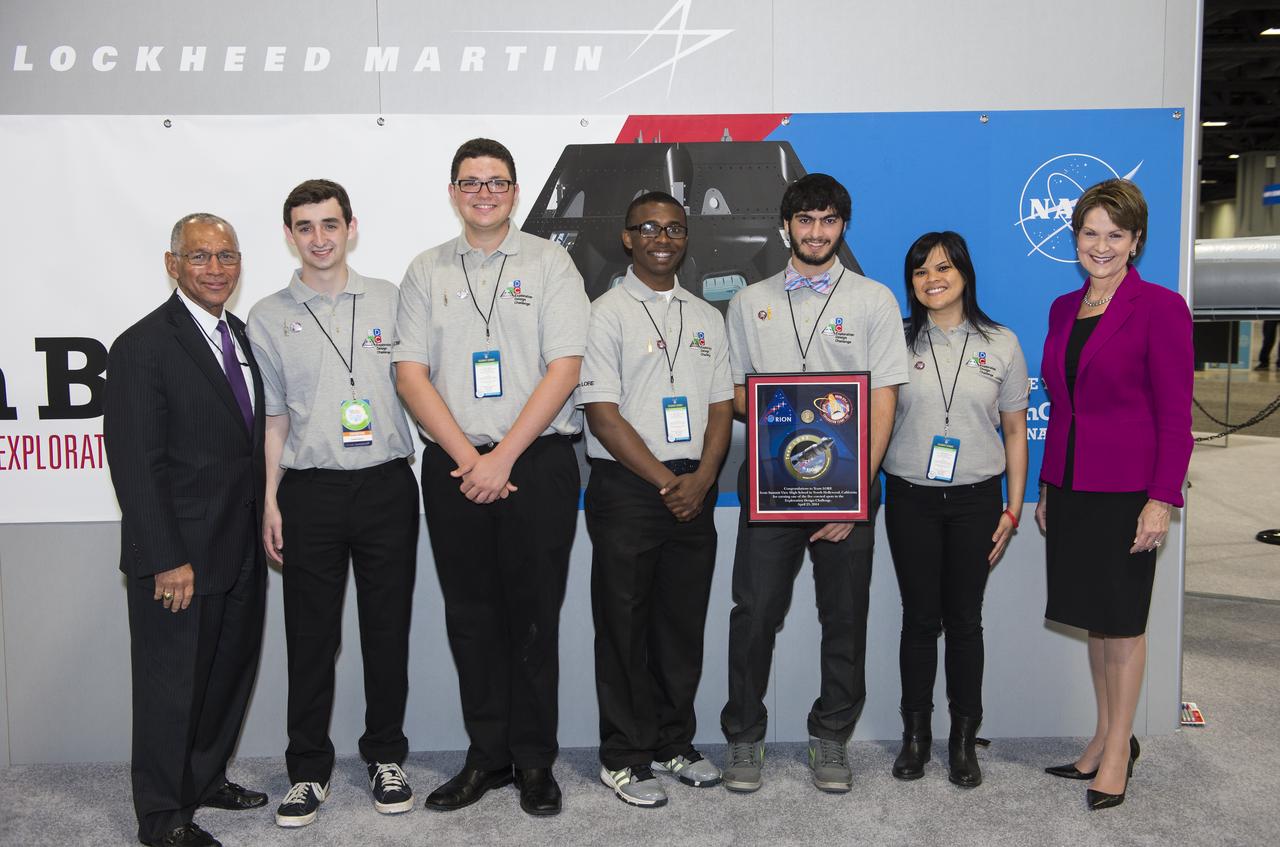
Team Lore poses with NASA Administrator Charles Bolden and Lockheed Martin CEO, Marillyn Hewson. Team Lore was one of the semi-finalists in the Exploration Design Challenge. The goal of the Exploration Design Challenge is for students to research and design ways to protect astronauts from space radiation. The winner of the challenge was announced on April 25, 2014 at the USA Science and Engineering Festival at the Washington Convention Center in Washington, DC. Photo Credit: (NASA/Aubrey Gemignani)
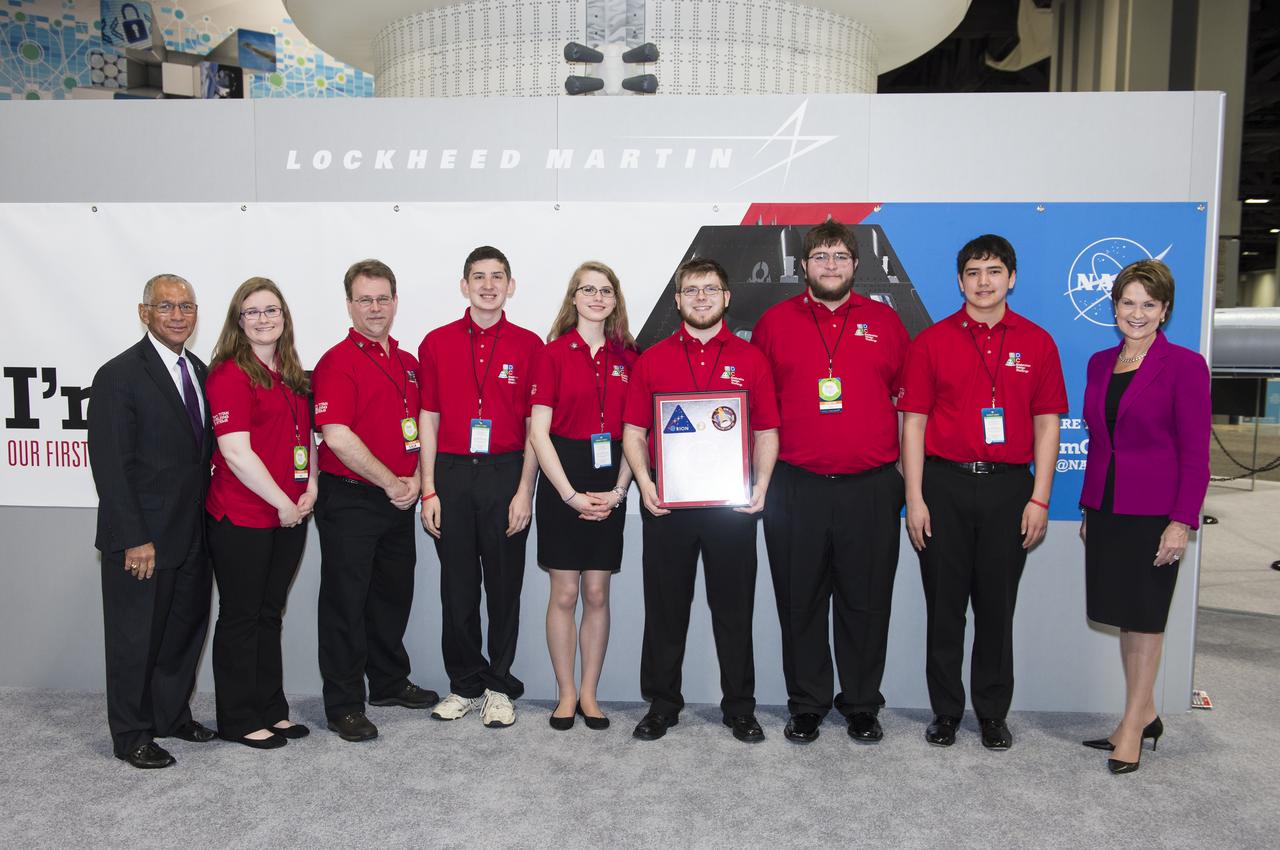
Team Titan Shielding Systems poses with NASA Administrator Charles Bolden and Lockheed Martin CEO, Marillyn Hewson. Team Titan Shielding Systems was one of the semi-finalists in the Exploration Design Challenge. The goal of the Exploration Design Challenge is for students to research and design ways to protect astronauts from space radiation. The winner of the challenge was announced on April 25, 2014 at the USA Science and Engineering Festival at the Washington Convention Center in Washington, DC. Photo Credit: (NASA/Aubrey Gemignani)
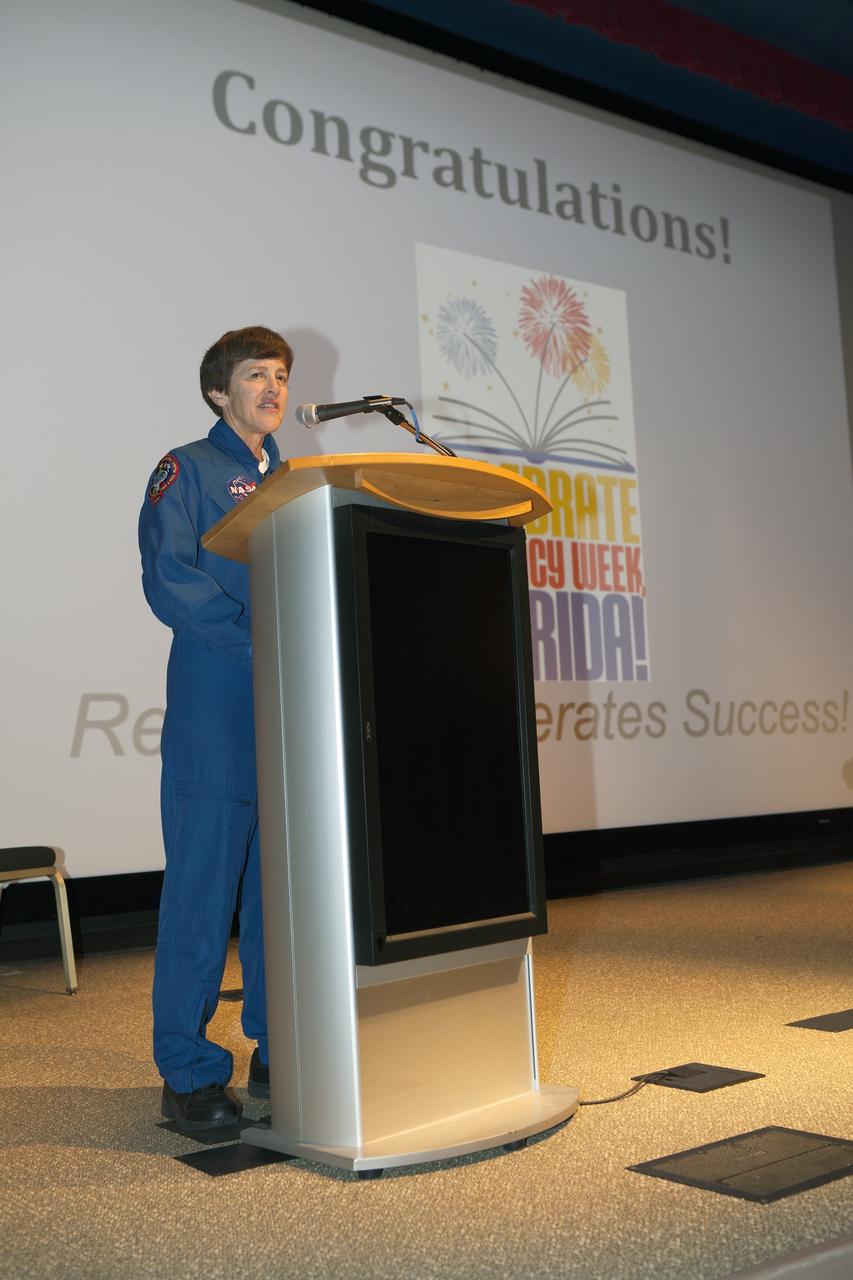
CAPE CANAVERAL, Fla. – Former NASA astronaut Wendy Lawrence speaks to students, parents and guests inside the Astronaut Encounter Theater at NASA’s Kennedy Space Center in Florida during the 2015 Celebrate Literacy Week Florida PSA Awards program. The event, hosted by the Florida Department of Education, announced the winners from elementary, middle school and high school students that best encouraged literacy and its connection to space careers. Photo credit: NASA/Ben Smegelsky
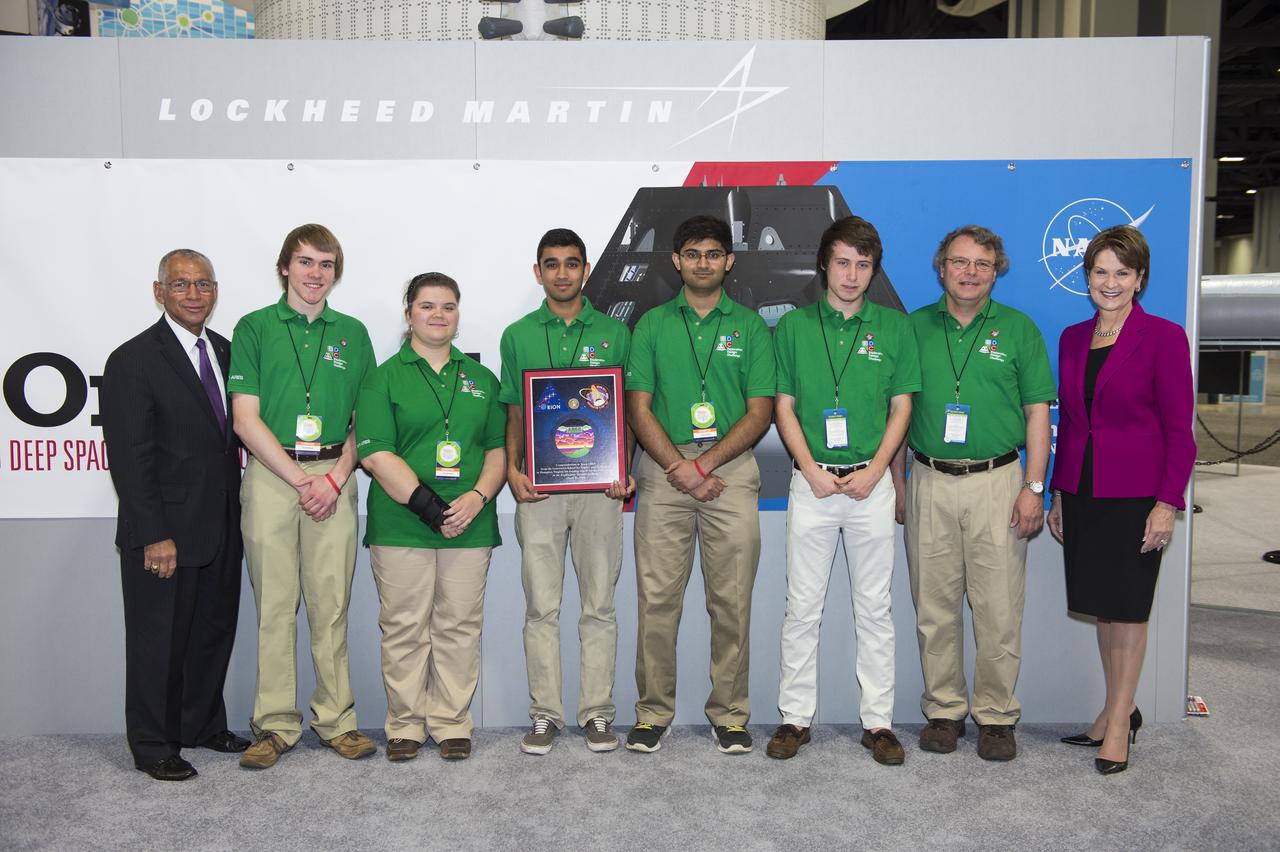
Team ARES poses with NASA Administrator Charles Bolden and Lockheed Martin CEO, Marillyn Hewson. Team ARES was the winner of the Exploration Design Challenge. The goal of the Exploration Design Challenge is for students to research and design ways to protect astronauts from space radiation. The winning team was announced on April 25, 2014 at the USA Science and Engineering Festival at the Washington Convention Center in Washington, DC. Photo Credit: (NASA/Aubrey Gemignani)
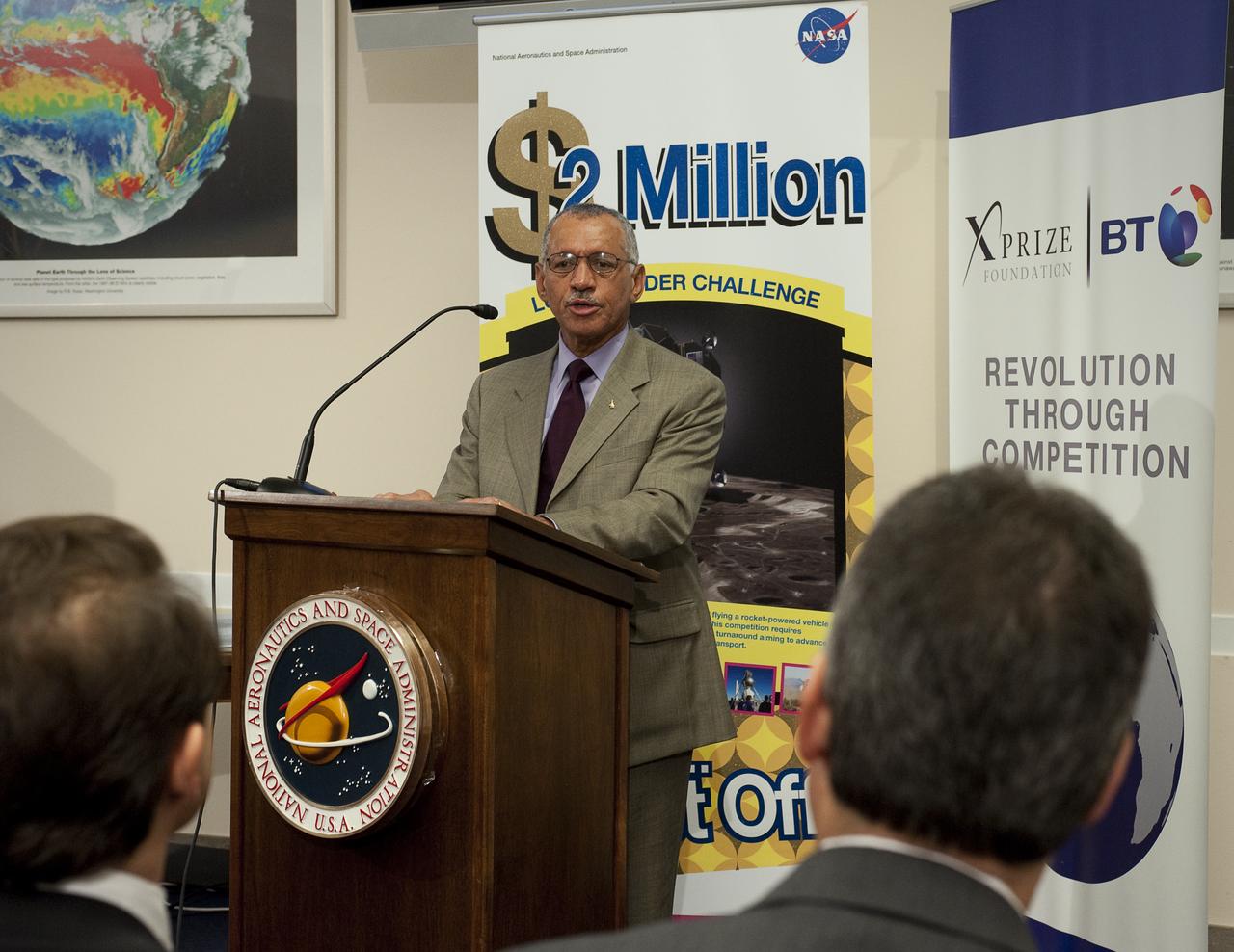
NASA Administrator Charles Bolden gives opening remarks at an awards ceremony for the Northrop Grumman Lunar Lander Challenge at the Rayburn House Office Building on Nov. 5, 2009, in Washington, DC. NASA's Centennial Challenges program gave $1.65 million in prize money to a pair of aerospace companies that successfully simulated landing a spacecraft on the moon and lifting off again. Photo Credit: (NASA/Carla Cioffi)
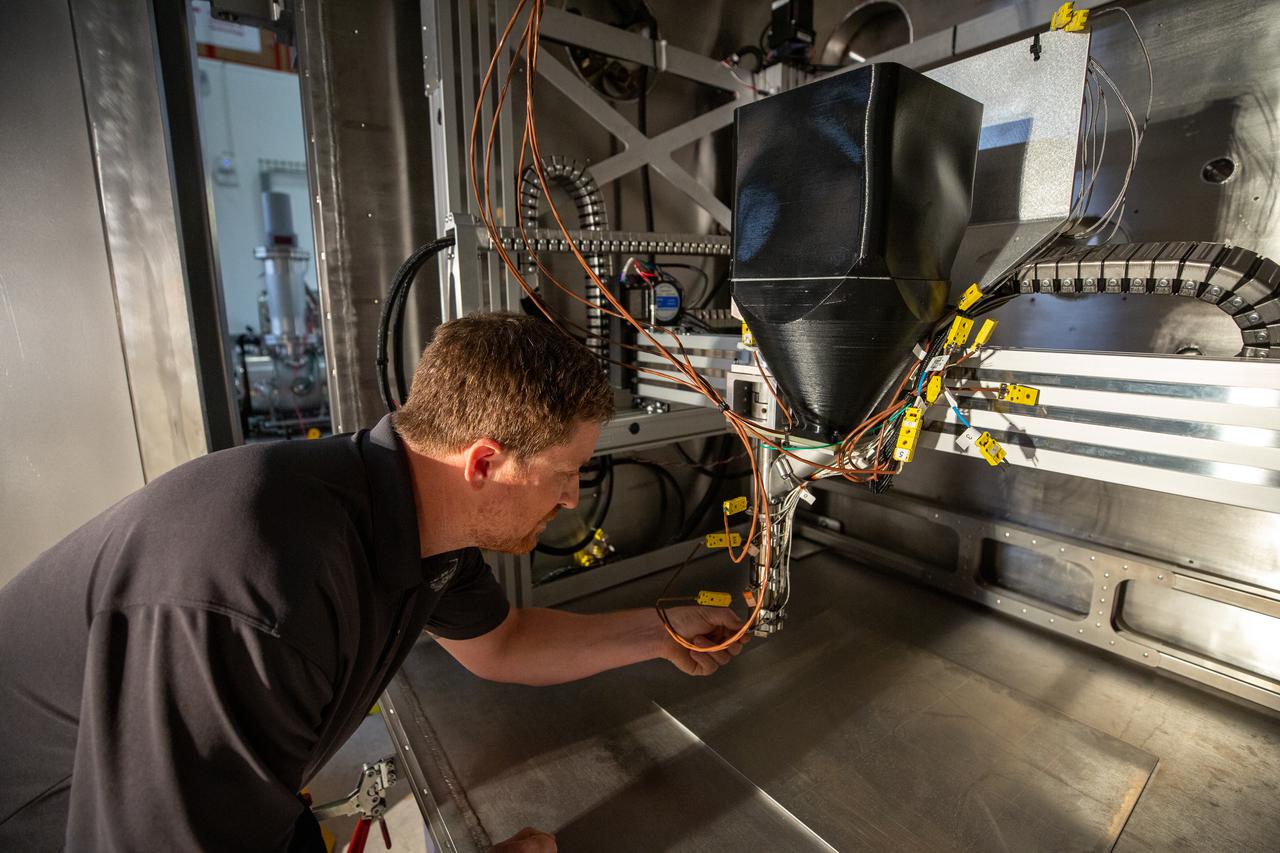
Nathan Gelino, a principal investigator with the Exploration Research and Technology programs at Kennedy Space Center in Florida, prepares a vacuum chamber for testing 3D printing inside the Granular Mechanics and Regolith Operations (GMRO) lab at Kennedy’s Swamp Works on April 5, 2022. The testing is part of the Relevant Environment Additive Construction Technology (REACT) project, which derives from NASA’s 2020 Announcement of Collaboration Opportunity, with AI SpaceFactory – an architectural and construction technology company and winner of NASA’s 3D Printed Habitat Challenge – collaborating with Kennedy teams to build 3D-printed test structures using a composite made from polymers and a regolith simulant in a vacuum chamber that mimics environmental conditions on the Moon.
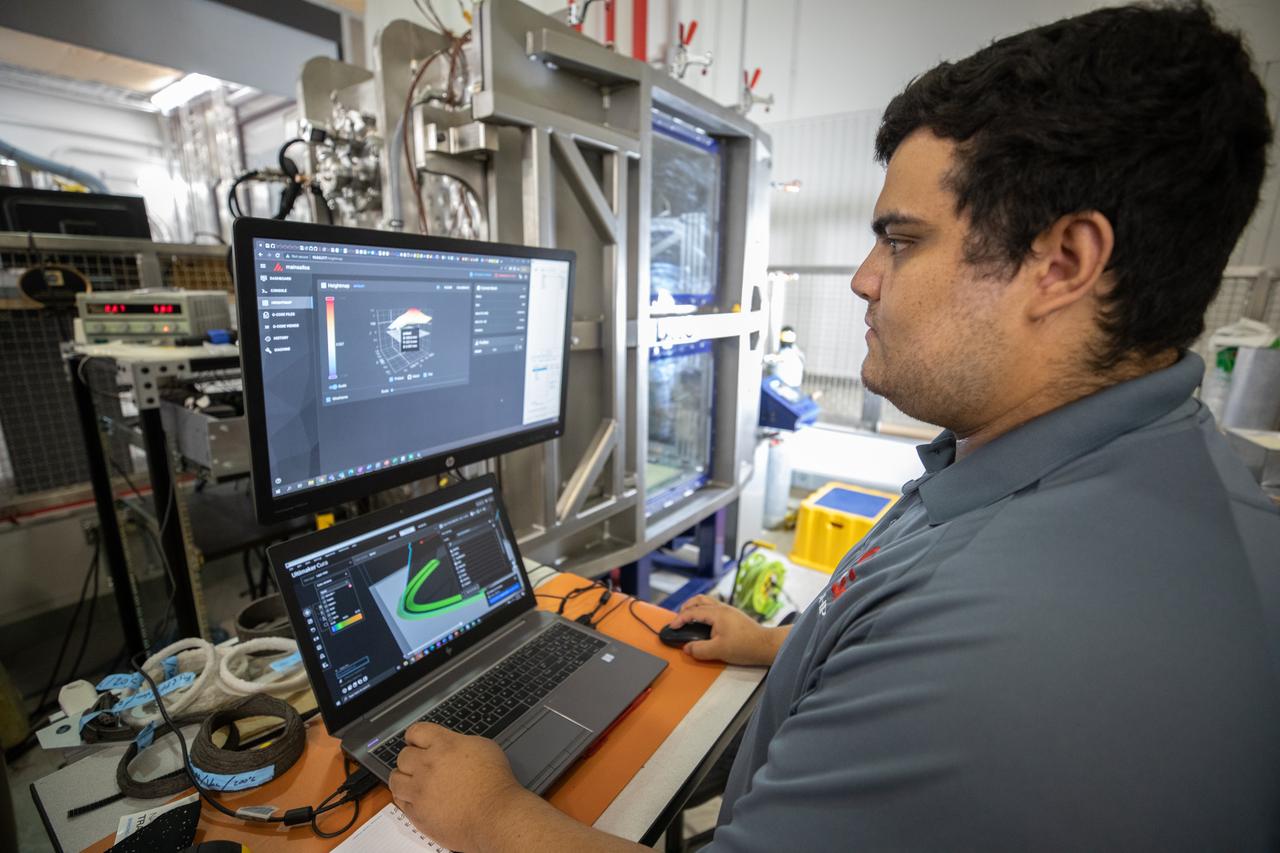
NASA Internships, Fellowships, and Scholarships (NIFS) intern Leonel Herrera tests a 3D printer on July 28, 2022, at Swamp Works at NASA’s Kennedy Space Center in Florida, as part of the Relevant Environment Additive Construction Technology (REACT) project. Among the key objectives of the project is developing an architectural and structural design for a shelter that provides protection to habitable assets on the lunar surface. Testing REACT derives from NASA’s 2020 Announcement of Collaboration Opportunity with AI SpaceFactory – an architectural and construction technology company and winner of NASA’s 3D Printed Habitat Challenge.
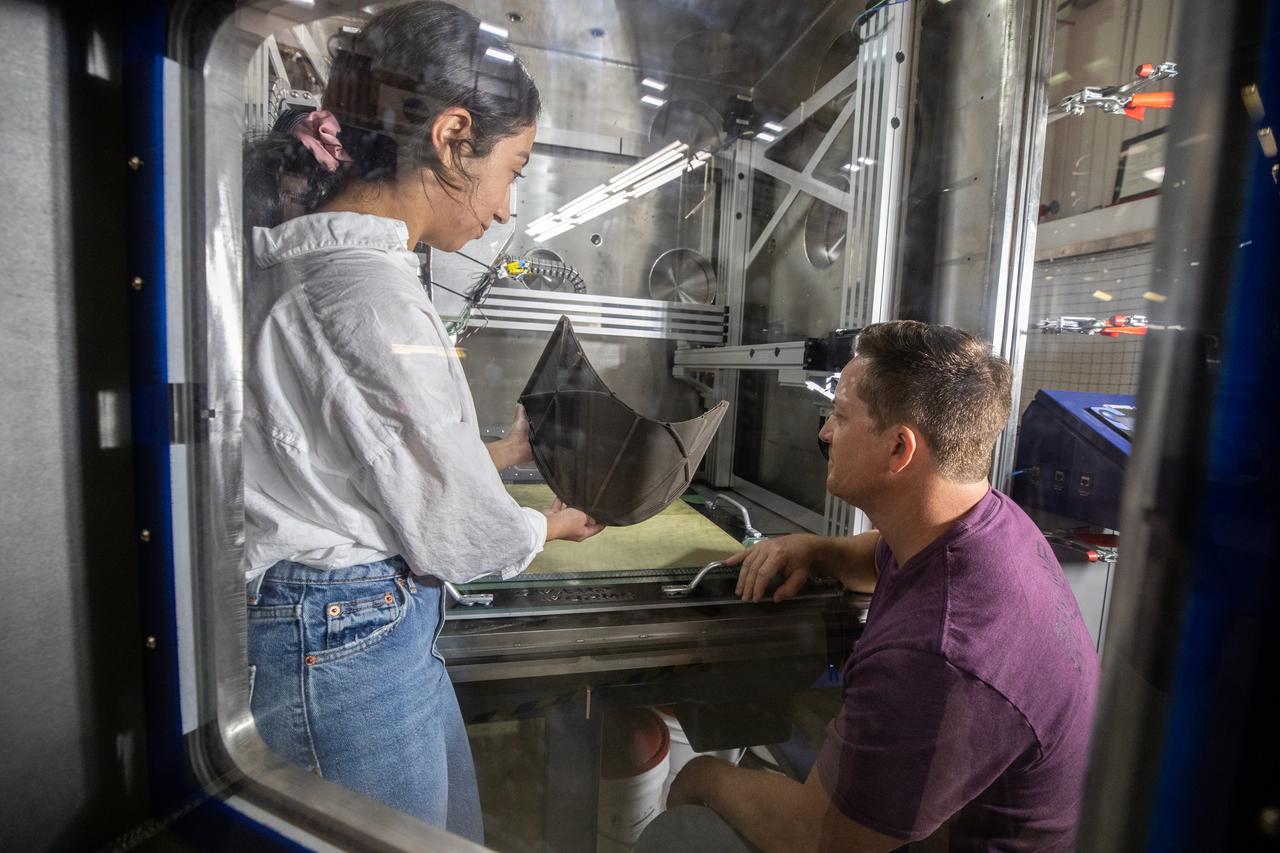
Chemist Nilab Azim, left, and Nathan Gelino, principal investigator with NASA’s Exploration Research and Technology programs, test a 3D printer on July 28, 2022, at Swamp Works at the agency’s Kennedy Space Center in Florida, as part of the Relevant Environment Additive Construction Technology (REACT) project. Among the key objectives of the project is developing an architectural and structural design for a shelter that provides protection to habitable assets on the lunar surface. Testing REACT derives from NASA’s 2020 Announcement of Collaboration Opportunity with AI SpaceFactory – an architectural and construction technology company and winner of NASA’s 3D Printed Habitat Challenge.
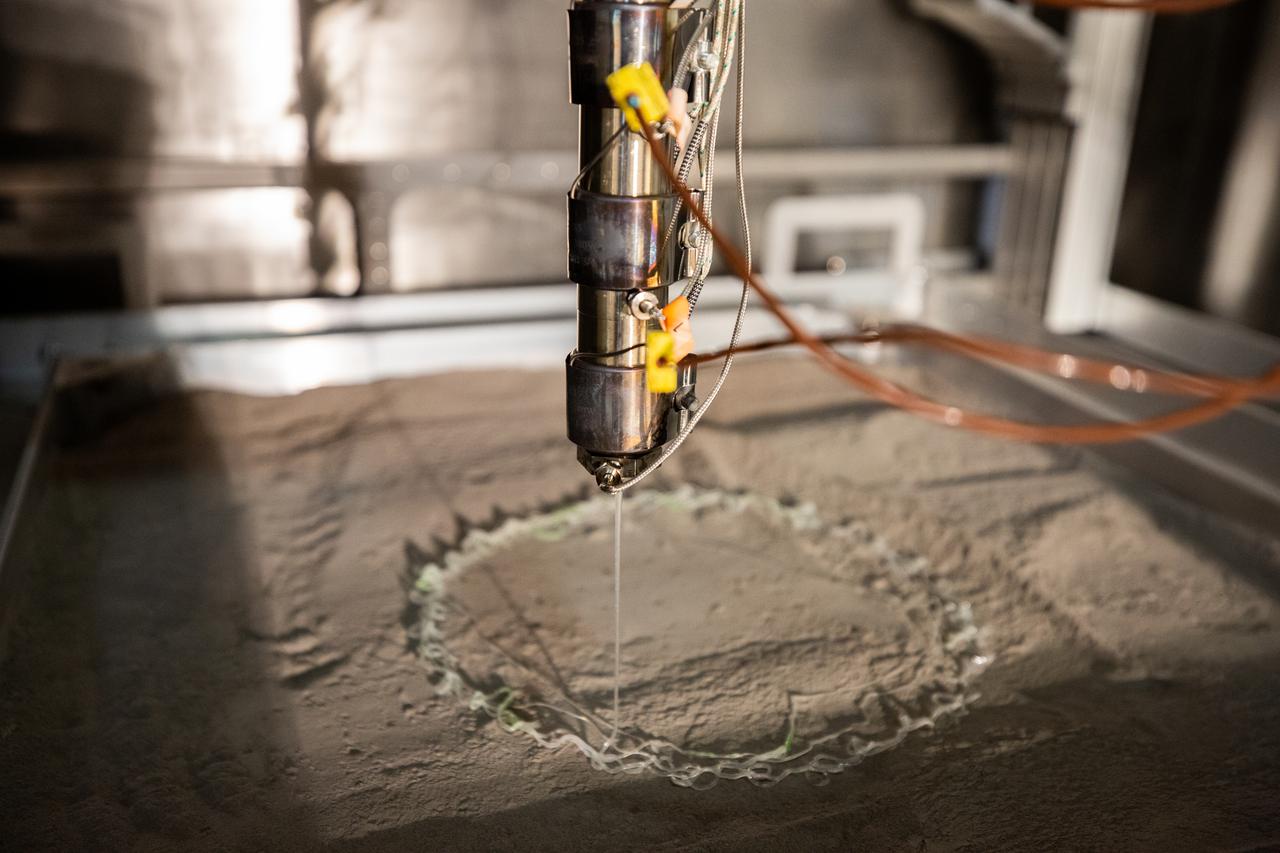
A team at NASA’s Kennedy Space Center in Florida test a 3D printer inside a vacuum chamber at the Granular Mechanics and Regolith Operations (GMRO) lab inside the spaceport’s Swamp Works, as part of the Relevant Environment Additive Construction Technology (REACT) project on April 5, 2022. Testing REACT derives from NASA’s 2020 Announcement of Collaboration Opportunity, with AI SpaceFactory – an architectural and construction technology company and winner of NASA’s 3D Printed Habitat Challenge – collaborating with Kennedy teams to build 3D-printed test structures using a composite made from polymers and a regolith simulant in a vacuum chamber that mimics environmental conditions on the Moon.
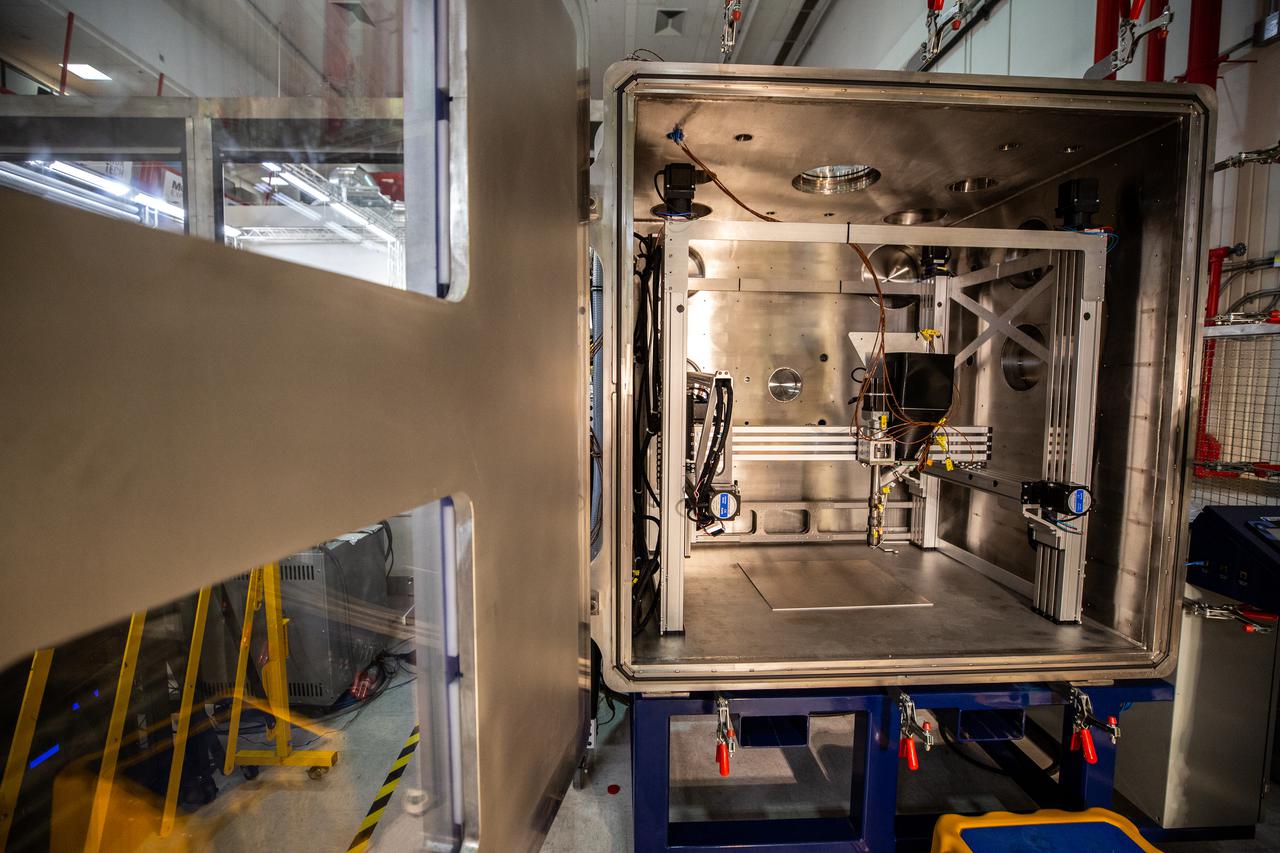
A team of engineers and researchers prepares a vacuum chamber in the Granular Mechanics and Regolith Operations (GMRO) lab inside NASA Kennedy Space Center’s Swamp Works for testing 3D printing, as part of the Relevant Environment Additive Construction Technology (REACT) project at the Florida spaceport on April 5, 2022. The project derives from NASA’s 2020 Announcement of Collaboration Opportunity, with AI SpaceFactory – an architectural and construction technology company and winner of NASA’s 3D Printed Habitat Challenge – collaborating with Kennedy teams to build 3D-printed test structures using a composite made from polymers and a regolith simulant in a vacuum chamber that mimics environmental conditions on the Moon.
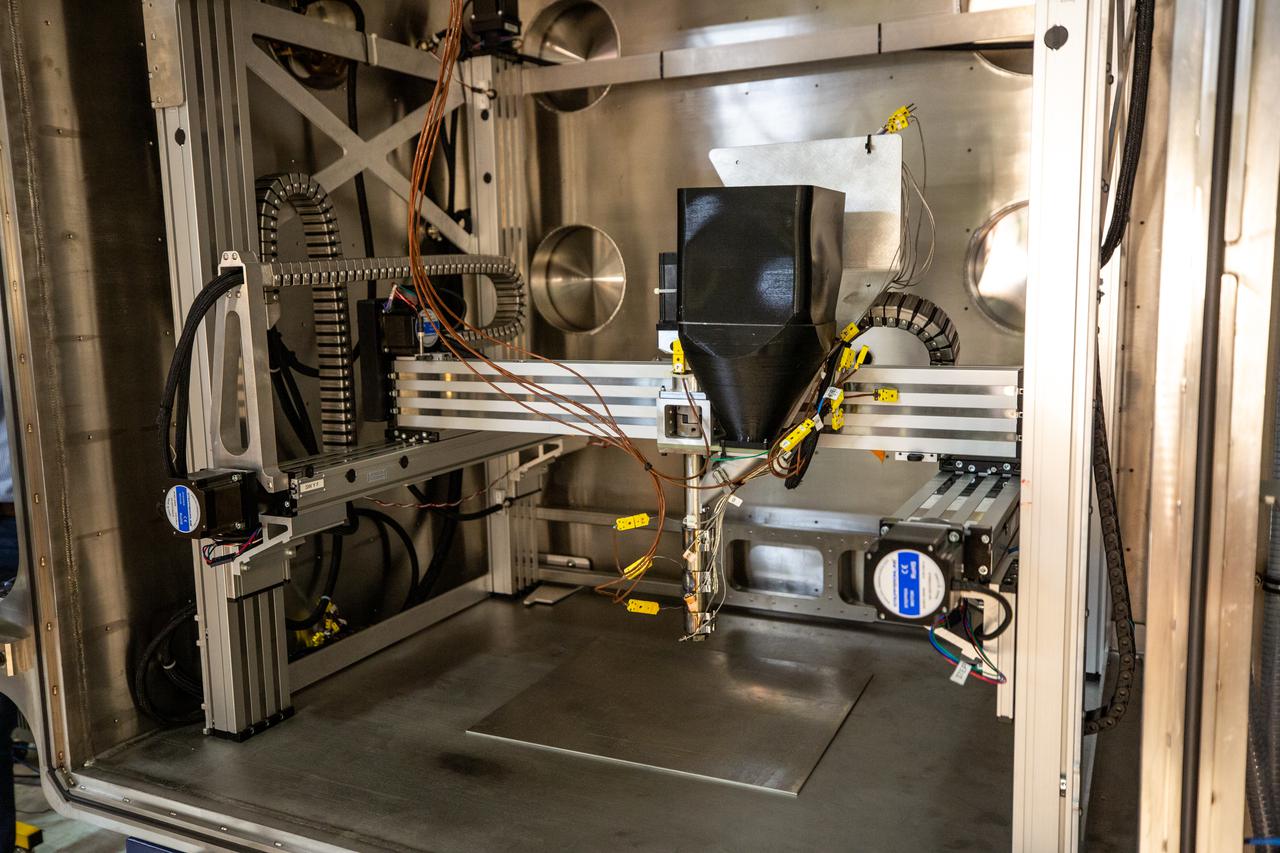
A team of engineers and researchers prepares a vacuum chamber in the Granular Mechanics and Regolith Operations (GMRO) lab inside NASA Kennedy Space Center’s Swamp Works for testing 3D printing, as part of the Relevant Environment Additive Construction Technology (REACT) project at the Florida spaceport on April 5, 2022. The project derives from NASA’s 2020 Announcement of Collaboration Opportunity, with AI SpaceFactory – an architectural and construction technology company and winner of NASA’s 3D Printed Habitat Challenge – collaborating with Kennedy teams to build 3D-printed test structures using a composite made from polymers and a regolith simulant in a vacuum chamber that mimics environmental conditions on the Moon.
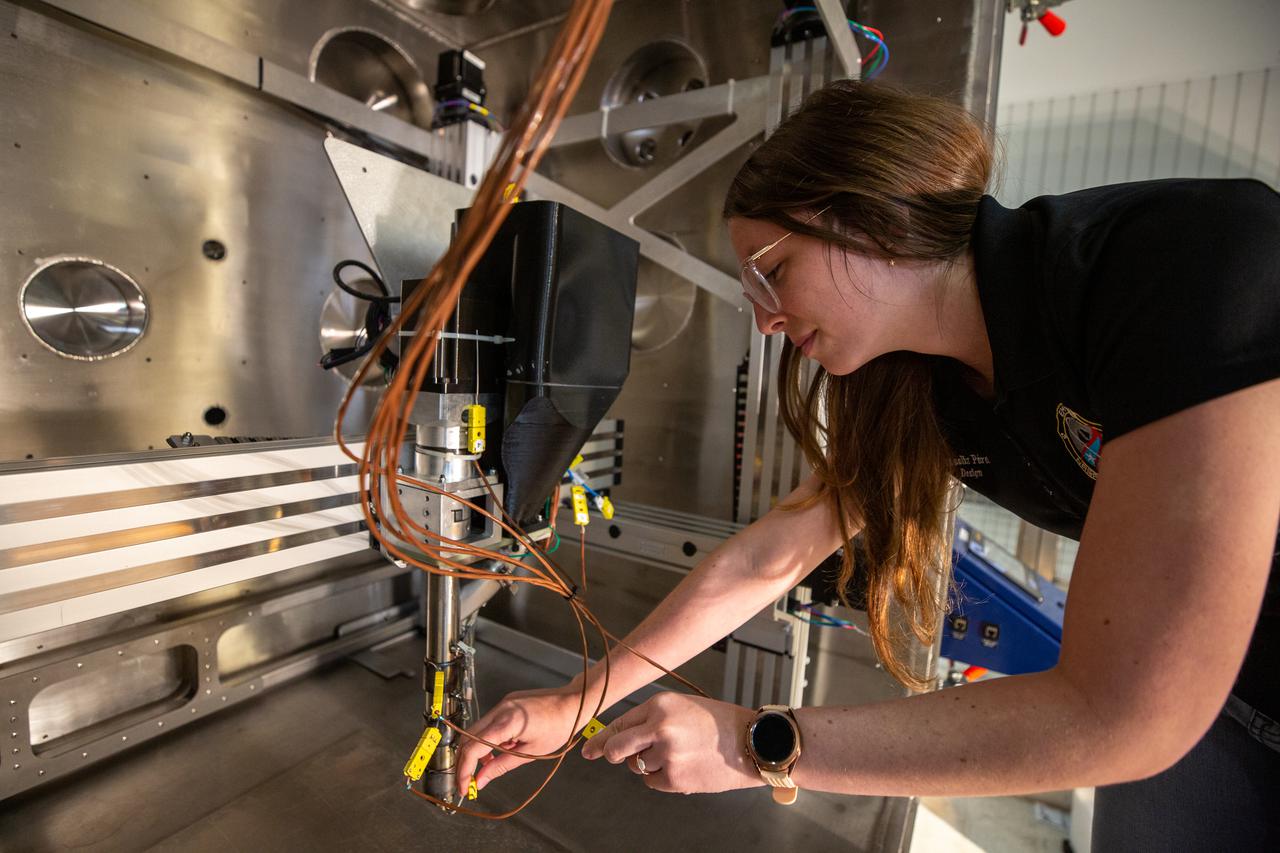
Joseliz Perez, a NASA intern at Kennedy Space Center in Florida, prepares a vacuum chamber for testing 3D printing inside the Granular Mechanics and Regolith Operations (GMRO) lab at the spaceport’s Swamp Works on April 5, 2022. The testing is part of the Relevant Environment Additive Construction Technology (REACT) project, which derives from NASA’s 2020 Announcement of Collaboration Opportunity, with AI SpaceFactory – an architectural and construction technology company and winner of NASA’s 3D Printed Habitat Challenge – collaborating with Kennedy teams to build 3D-printed test structures using a composite made from polymers and a regolith simulant in a vacuum chamber that mimics environmental conditions on the Moon.
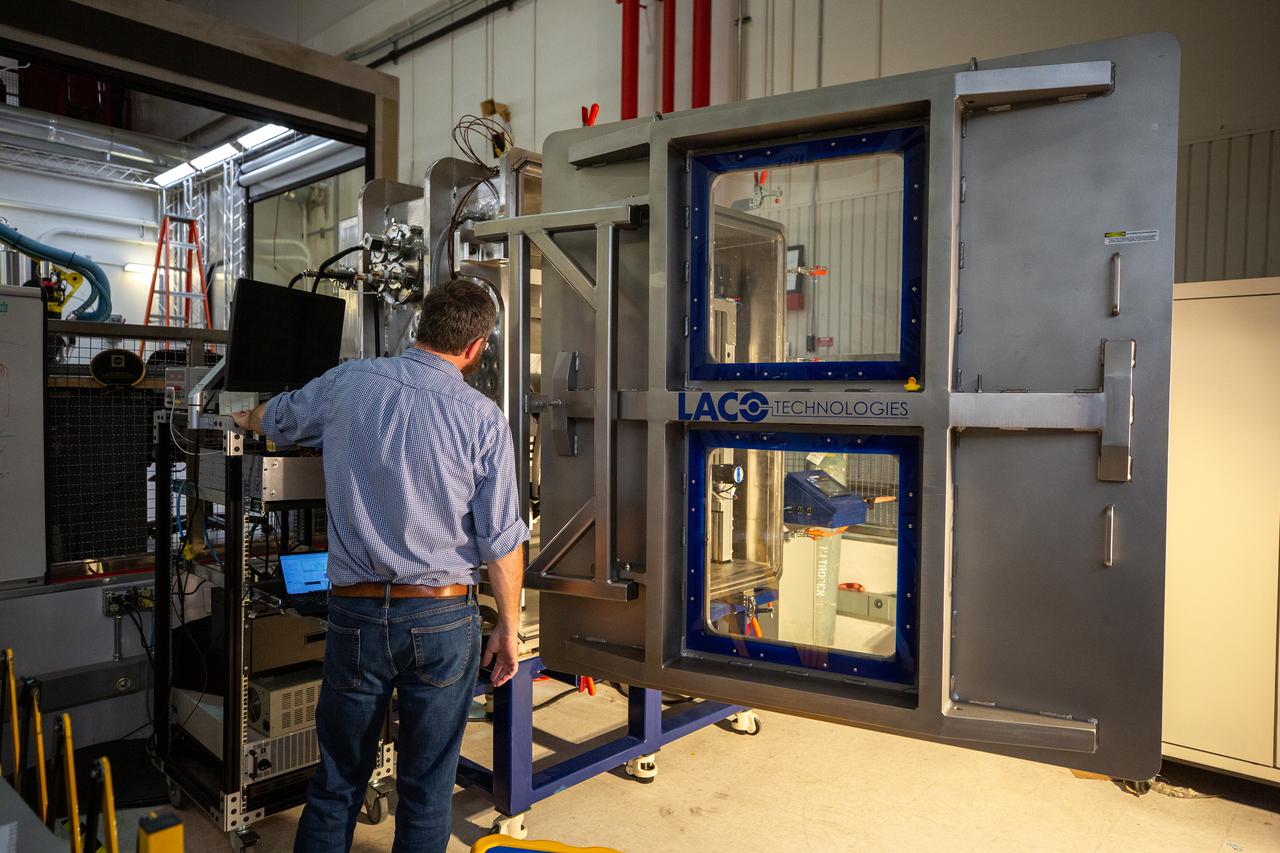
Engineer Matt Nugent prepares a vacuum chamber for testing 3D printing inside the Granular Mechanics and Regolith Operations (GMRO) lab at NASA Kennedy Space Center’s Swamp Works in Florida on April 5, 2022. The testing is part of the Relevant Environment Additive Construction Technology (REACT) project, which derives from NASA’s 2020 Announcement of Collaboration Opportunity, with AI SpaceFactory – an architectural and construction technology company and winner of NASA’s 3D Printed Habitat Challenge – collaborating with Kennedy teams to build 3D-printed test structures using a composite made from polymers and a regolith simulant in a vacuum chamber that mimics environmental conditions on the Moon.
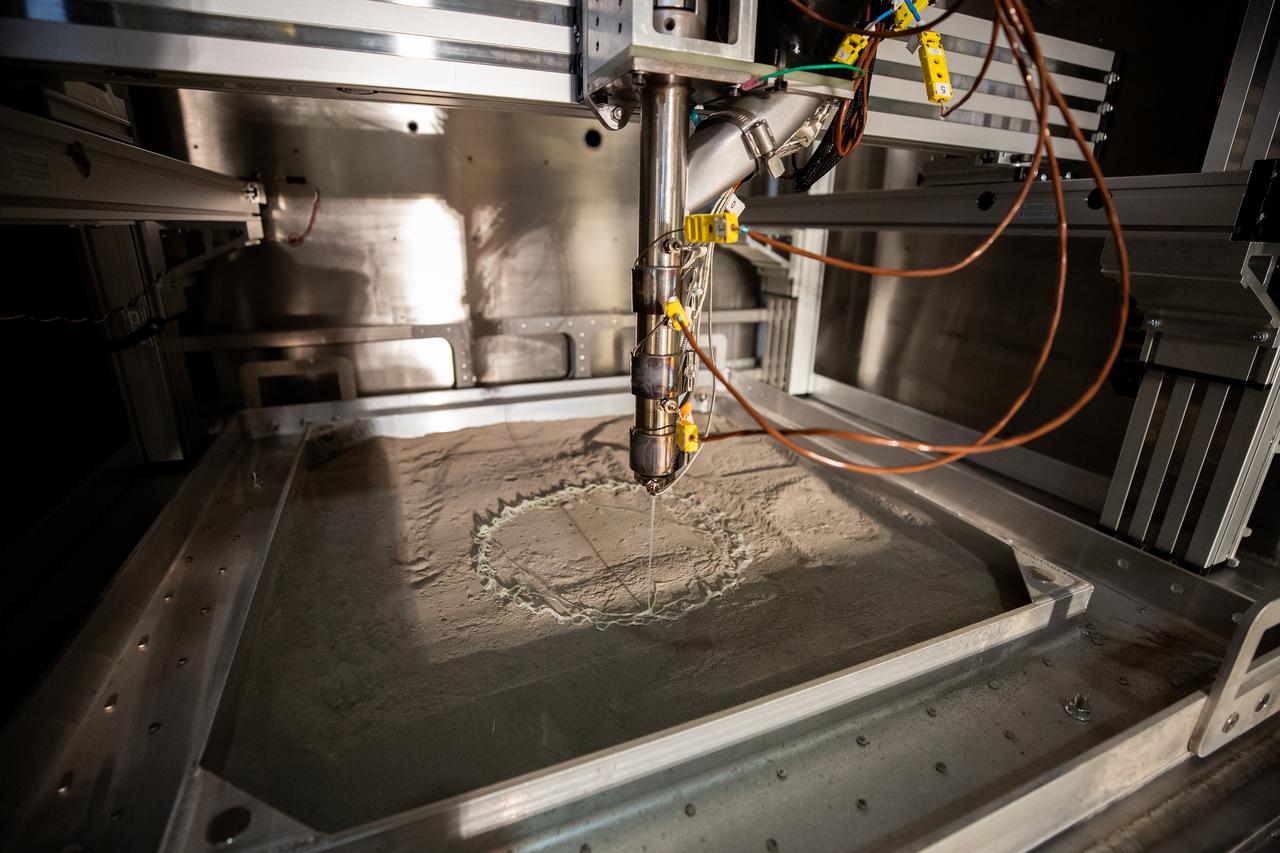
A team at NASA’s Kennedy Space Center in Florida test a 3D printer inside a vacuum chamber at the Granular Mechanics and Regolith Operations (GMRO) lab inside the spaceport’s Swamp Works, as part of the Relevant Environment Additive Construction Technology (REACT) project on April 5, 2022. Testing REACT derives from NASA’s 2020 Announcement of Collaboration Opportunity, with AI SpaceFactory – an architectural and construction technology company and winner of NASA’s 3D Printed Habitat Challenge – collaborating with Kennedy teams to build 3D-printed test structures using a composite made from polymers and a regolith simulant in a vacuum chamber that mimics environmental conditions on the Moon.
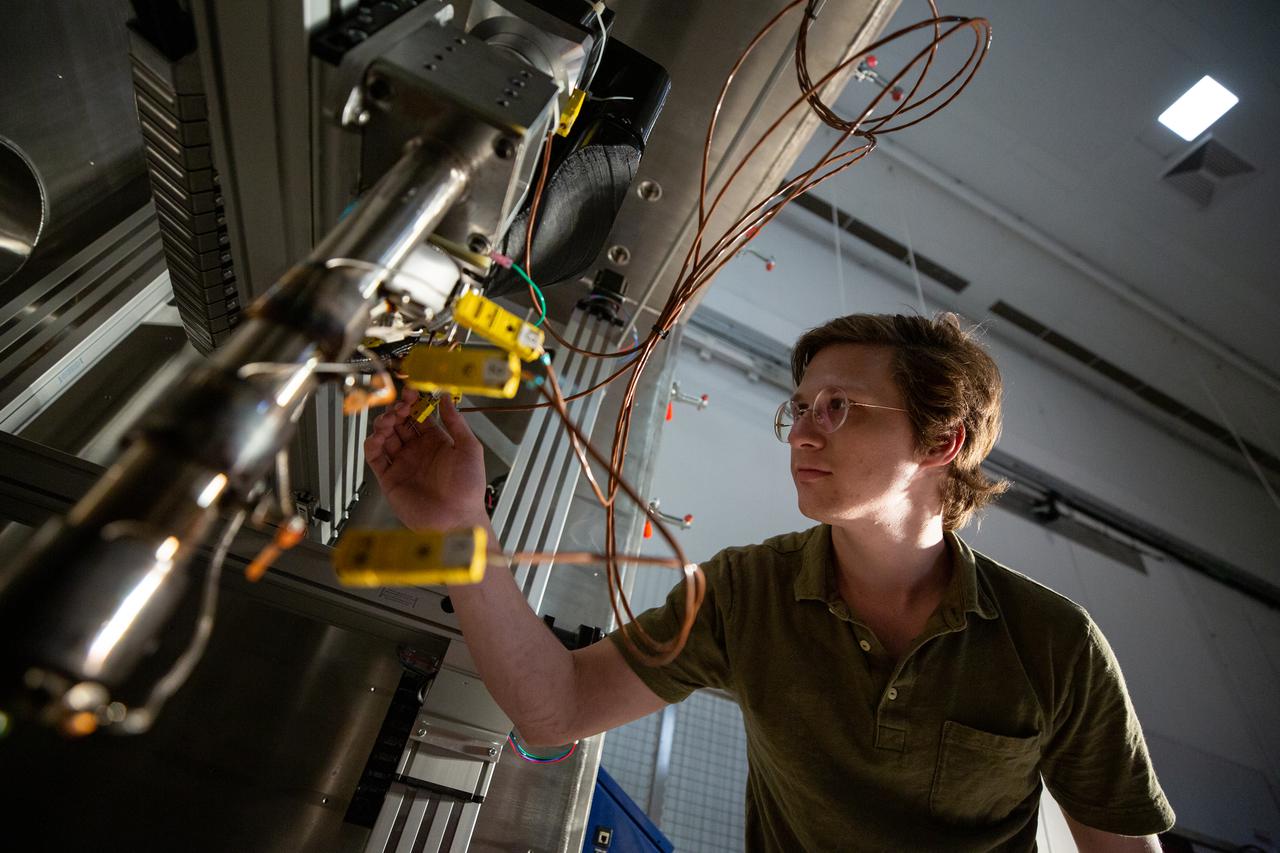
Thomas Lipscomb, a materials engineer at NASA’s Kennedy Space Center in Florida, prepares a vacuum chamber for testing 3D printing inside the Granular Mechanics and Regolith Operations (GMRO) lab at the spaceport’s Swamp Works on April 5, 2022. The testing is part of the Relevant Environment Additive Construction Technology (REACT) project, which derives from NASA’s 2020 Announcement of Collaboration Opportunity, with AI SpaceFactory – an architectural and construction technology company and winner of NASA’s 3D Printed Habitat Challenge – collaborating with Kennedy teams to build 3D-printed test structures using a composite made from polymers and a regolith simulant in a vacuum chamber that mimics environmental conditions on the Moon.
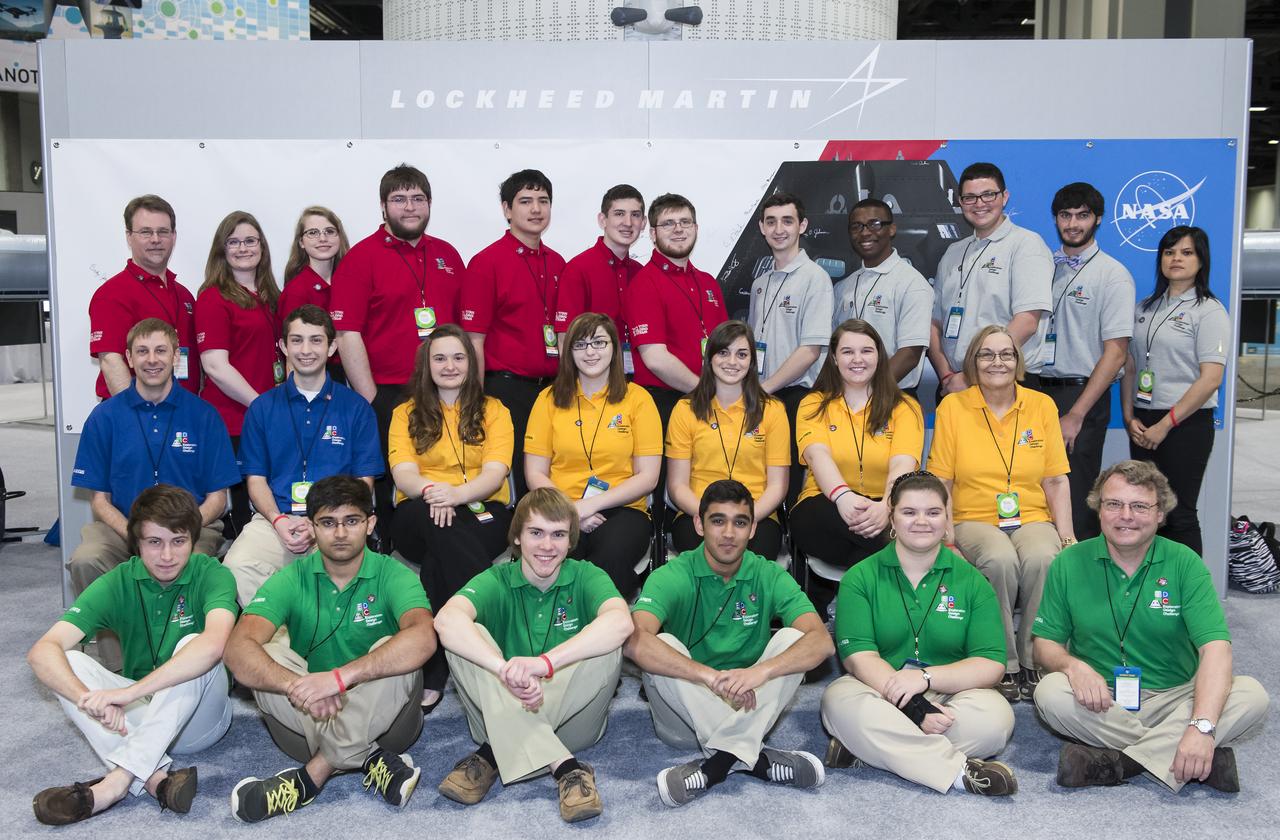
Pictured are all Semi-finalist teams in the Exploration Design Challenge. NASA Administrator, Charles Bolden and Lockheed Martin CEO, Marillyn Hewson announced the winner of the Exploration Design Challenge at the USA Science and Engineering Festival on April 25, 2014. The goal of the challenge was for students to research and design ways to protect astronauts from space radiation. The winning team's design will be built and flown aboard the Orion/EFT-1. The USA Science and Engineering Festival is taking place at the Washington Convention Center in Washington, DC on April 26 and 27, 2014. Photo Credit: (NASA/Aubrey Gemignani)
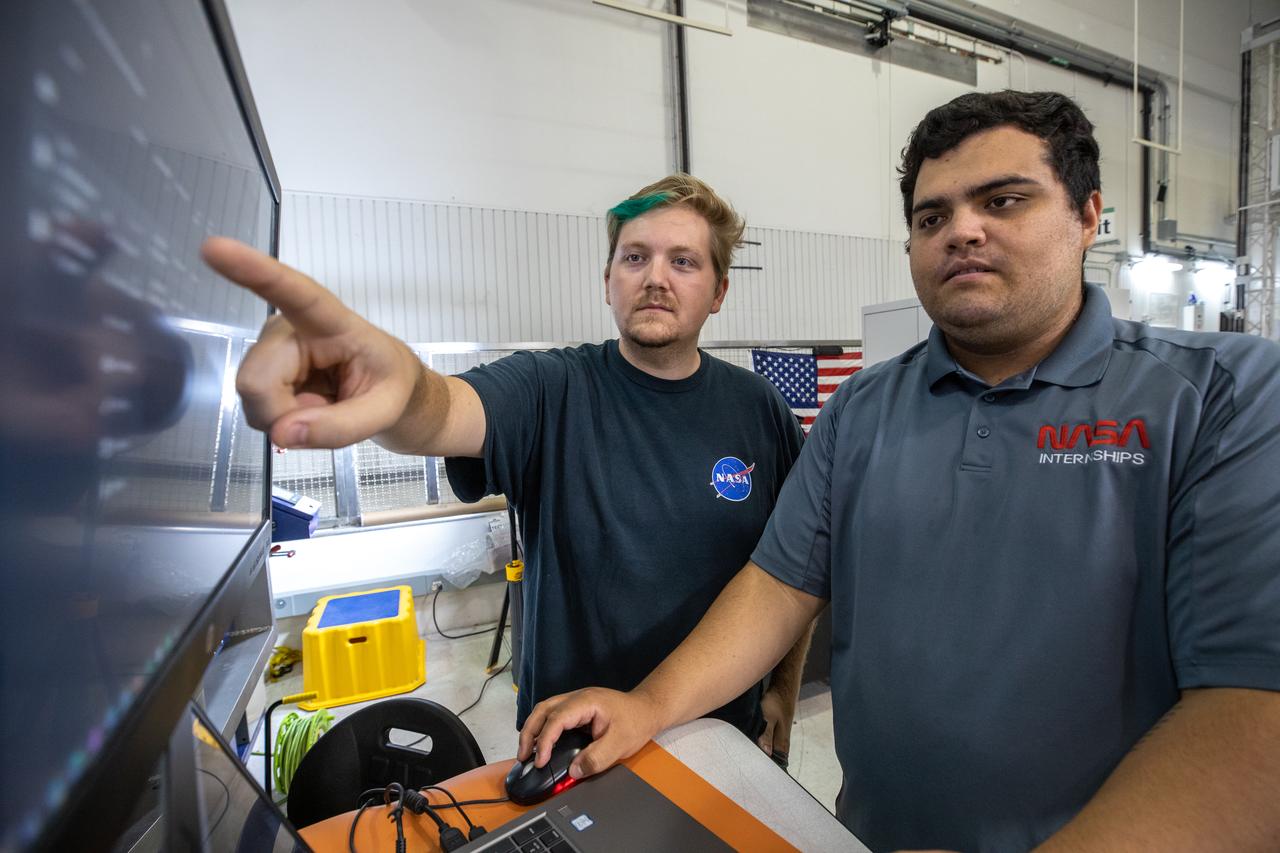
NASA engineer Evan Bell, left, and NASA Internships, Fellowships, and Scholarships (NIFS) intern Leonel Herrera test a 3D printer on July 28, 2022, at Swamp Works at NASA’s Kennedy Space Center in Florida, as part of the Relevant Environment Additive Construction Technology (REACT) project. Among the key objectives of the project is developing an architectural and structural design for a shelter that provides protection to habitable assets on the lunar surface. Testing REACT derives from NASA’s 2020 Announcement of Collaboration Opportunity with AI SpaceFactory – an architectural and construction technology company and winner of NASA’s 3D Printed Habitat Challenge.
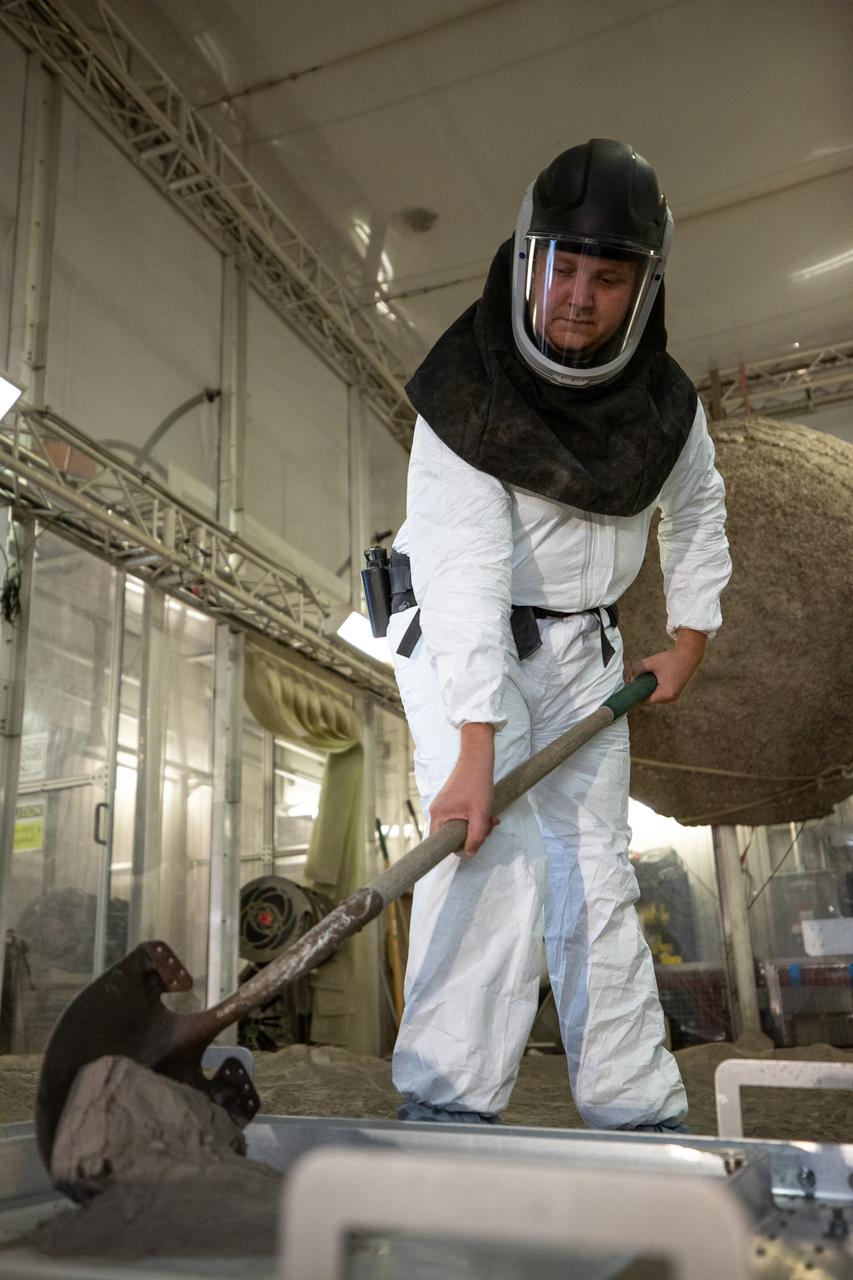
NASA engineer Evan Bell prepares a vacuum chamber for testing 3D printing inside the Granular Mechanics and Regolith Operations (GMRO) lab at Kennedy Space Center’s Swamp Works in Florida on April 5, 2022. The testing is part of the Relevant Environment Additive Construction Technology (REACT) project, which derives from NASA’s 2020 Announcement of Collaboration Opportunity, with AI SpaceFactory – an architectural and construction technology company and winner of NASA’s 3D Printed Habitat Challenge – collaborating with Kennedy teams to build 3D-printed test structures using a composite made from polymers and a regolith simulant in a vacuum chamber that mimics environmental conditions on the Moon.
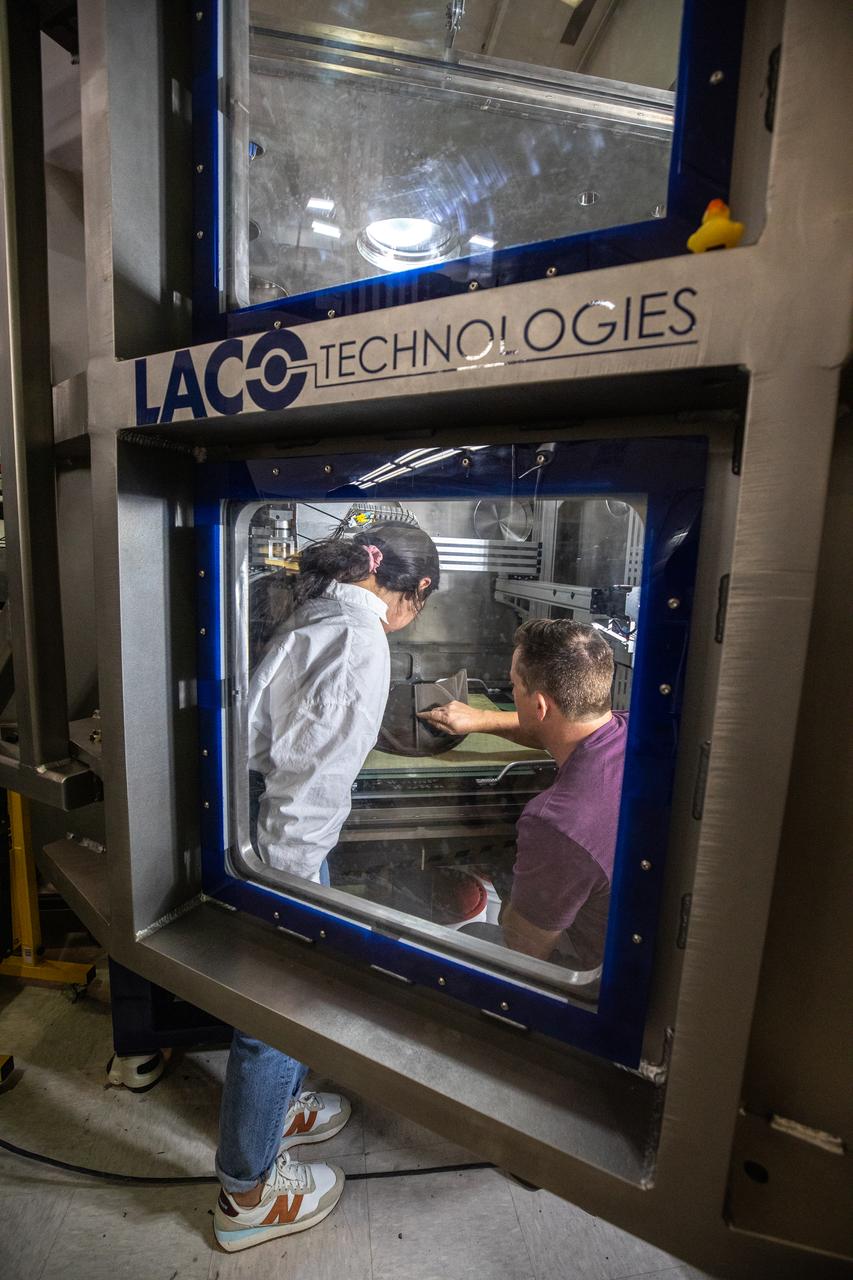
Chemist Nilab Azim, left, and Nathan Gelino, principal investigator with NASA’s Exploration Research and Technology programs, test a 3D printer on July 28, 2022, at Swamp Works at the agency’s Kennedy Space Center in Florida, as part of the Relevant Environment Additive Construction Technology (REACT) project. Among the key objectives of the project is developing an architectural and structural design for a shelter that provides protection to habitable assets on the lunar surface. Testing REACT derives from NASA’s 2020 Announcement of Collaboration Opportunity with AI SpaceFactory – an architectural and construction technology company and winner of NASA’s 3D Printed Habitat Challenge.
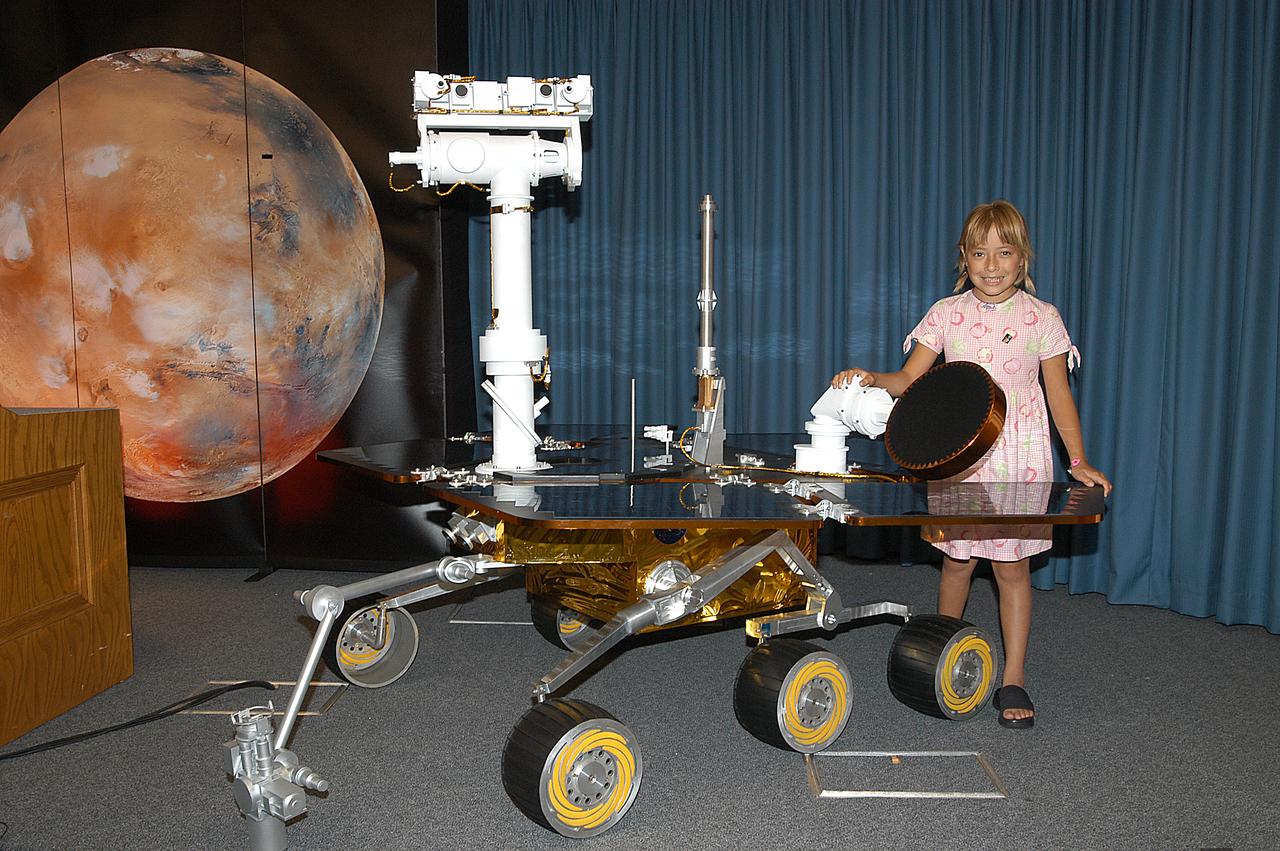
Sofi Collis, the third grade student winner of the "Name the Rovers" contest, poses with a model of a rover. The names she proposed -- Spirit and Opportunity -- were announced today in a press conference held by NASA Administrator Sean O'Keefe. NASA's twin Mars Exploration Rovers are designed to study the history of water on Mars. These robotic geologists are equipped with a robotic arm, a drilling tool, three spectrometers, and four pairs of cameras that allow them to have a human-like, 3D view of the terrain. Each rover could travel as far as 100 meters in one day to act as Mars scientists' eyes and hands, exploring an environment where humans are not yet able to go. MER-A, with the rover Spirit aboard, is scheduled to launch on June 8 at 2:06 p.m. EDT, with two launch opportunities each day during a launch period that closes on June 24.
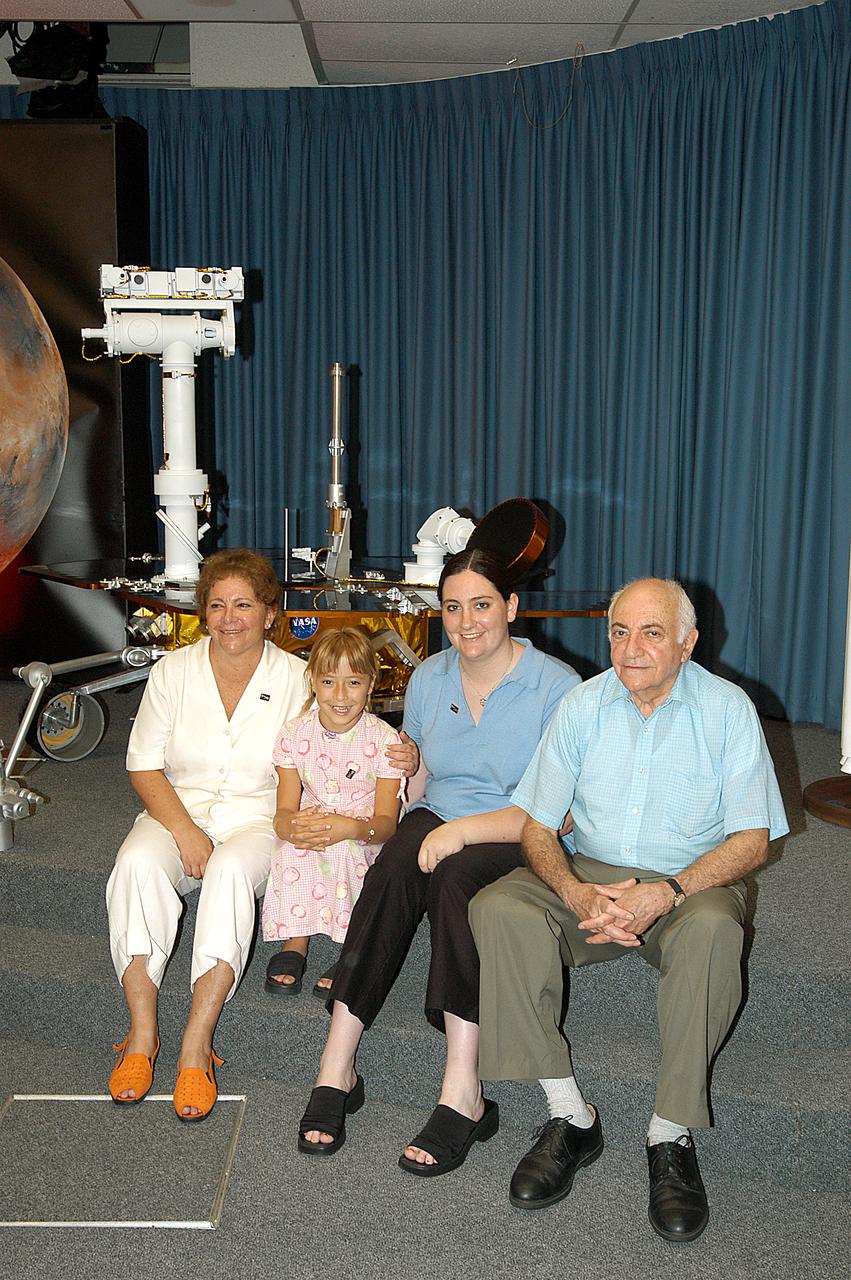
Siberian-born Sofi Collis (second from left), the third grade student winner of the "Name the Rovers" contest, poses with her adopted American family. The names she proposed -- Spirit and Opportunity -- were announced today in a press conference held by NASA Administrator Sean O'Keefe. NASA's twin Mars Exploration Rovers are designed to study the history of water on Mars. These robotic geologists are equipped with a robotic arm, a drilling tool, three spectrometers, and four pairs of cameras that allow them to have a human-like, 3D view of the terrain. Each rover could travel as far as 100 meters in one day to act as Mars scientists' eyes and hands, exploring an environment where humans are not yet able to go. MER-A, with the rover Spirit aboard, is scheduled to launch on June 8 at 2:06 p.m. EDT, with two launch opportunities each day during a launch period that closes on June 24.
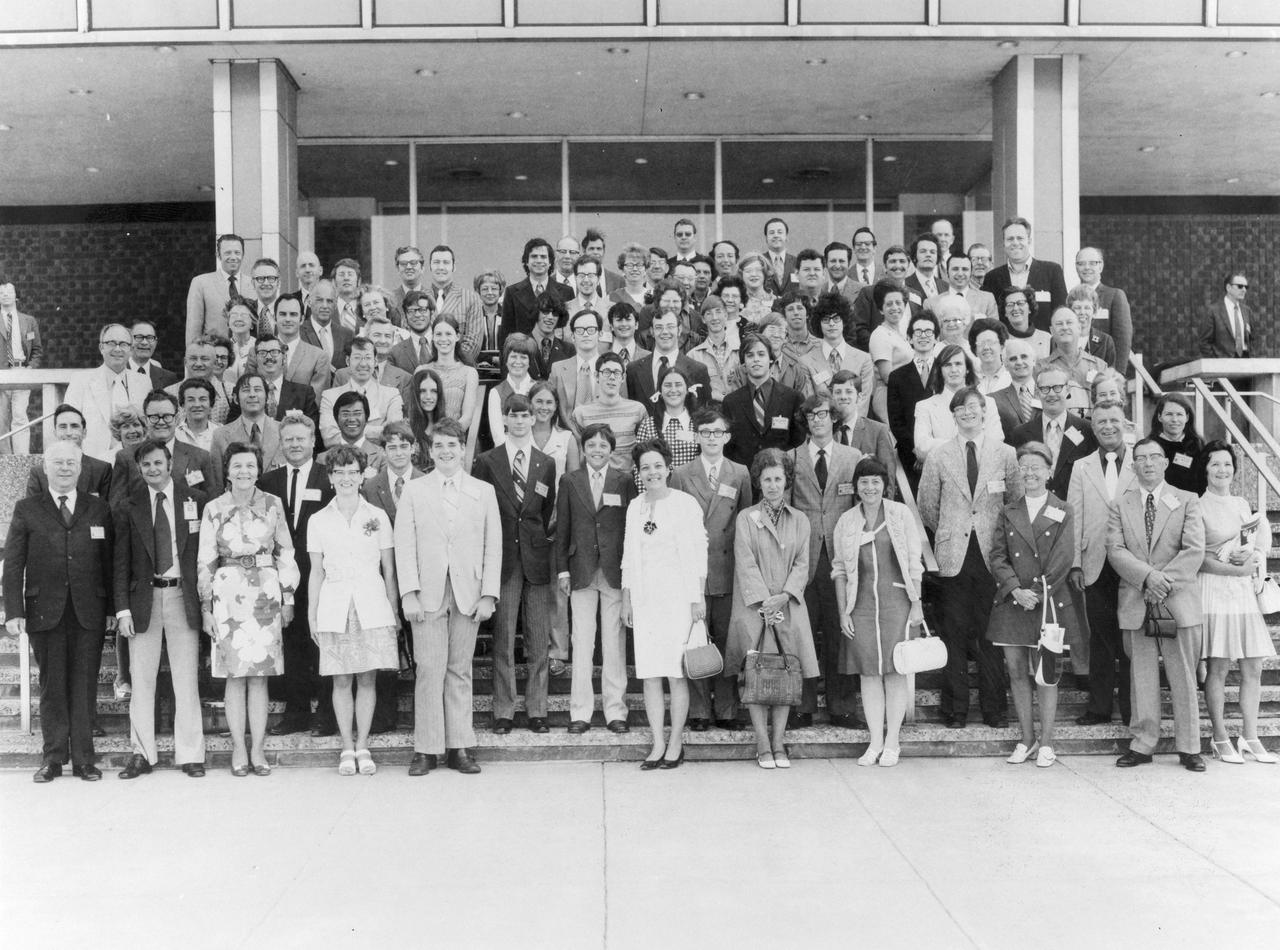
One of the most successful of the Skylab educational efforts was the Skylab Student Project. A nationwide scientific competition was sponsored by the National Science Teachers Association and the National Aeronautics and Space Administration (NASA) in which secondary students were encouraged to submit proposals for experiments to be conducted on Skylan in Earth orbit the following year. After the official announcement of this project, over 4,000 students responded with 3,409 proposals. The winning 25 students, along with their parents and sponsor teachers, visited Marshall Space Flight Center (MSFC), the lead center for Skylab, where they met with scientists and engineers, participated in design reviews for their experiments, and toured MSFC facilities. Of the 25 students, 6 did not see their experiments conducted on Skylab because the experiments were not compatible with Skylab hardware and timelines. Of the 19 remaining, 11 experiments required the manufacture of additional equipment. This photograph is a group shot of the 25 winners, parents, and sponsors when they met for the first time on the steps of Building 4200 at MSFC in the Spring of 1972.
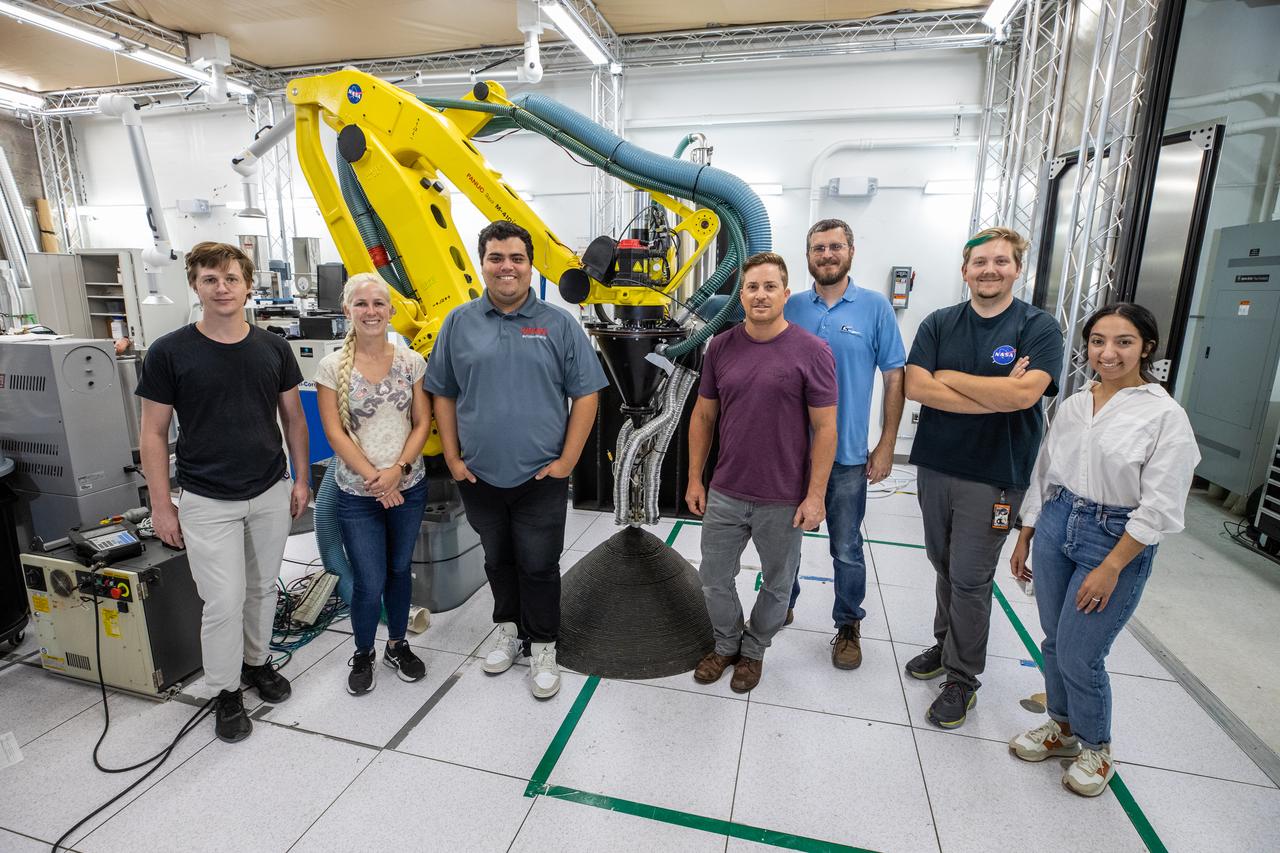
A team at NASA’s Kennedy Space Center in Florida poses with a Zero Launch Mass 3D printer on July 28, 2022, at the Florida spaceport’s Swamp Works, as part of the Relevant Environment Additive Construction Technology (REACT) project. Shown from left to right are: Tommy Lipscomb, materials engineer; Tesia Irwin, chemist; Leonel Herrera, NASA Internships, Fellowships, and Scholarships (NIFS) intern; Nathan Gelino, principal investigator; Matt Nugent, robotics engineer; Evan Bell, robotics engineer; and Nilab Azim, chemist. Among the key objectives of the project is developing an architectural and structural design for a shelter that provides protection to habitable assets on the lunar surface. Testing REACT derives from NASA’s 2020 Announcement of Collaboration Opportunity with AI SpaceFactory – an architectural and construction technology company and winner of NASA’s 3D Printed Habitat Challenge.
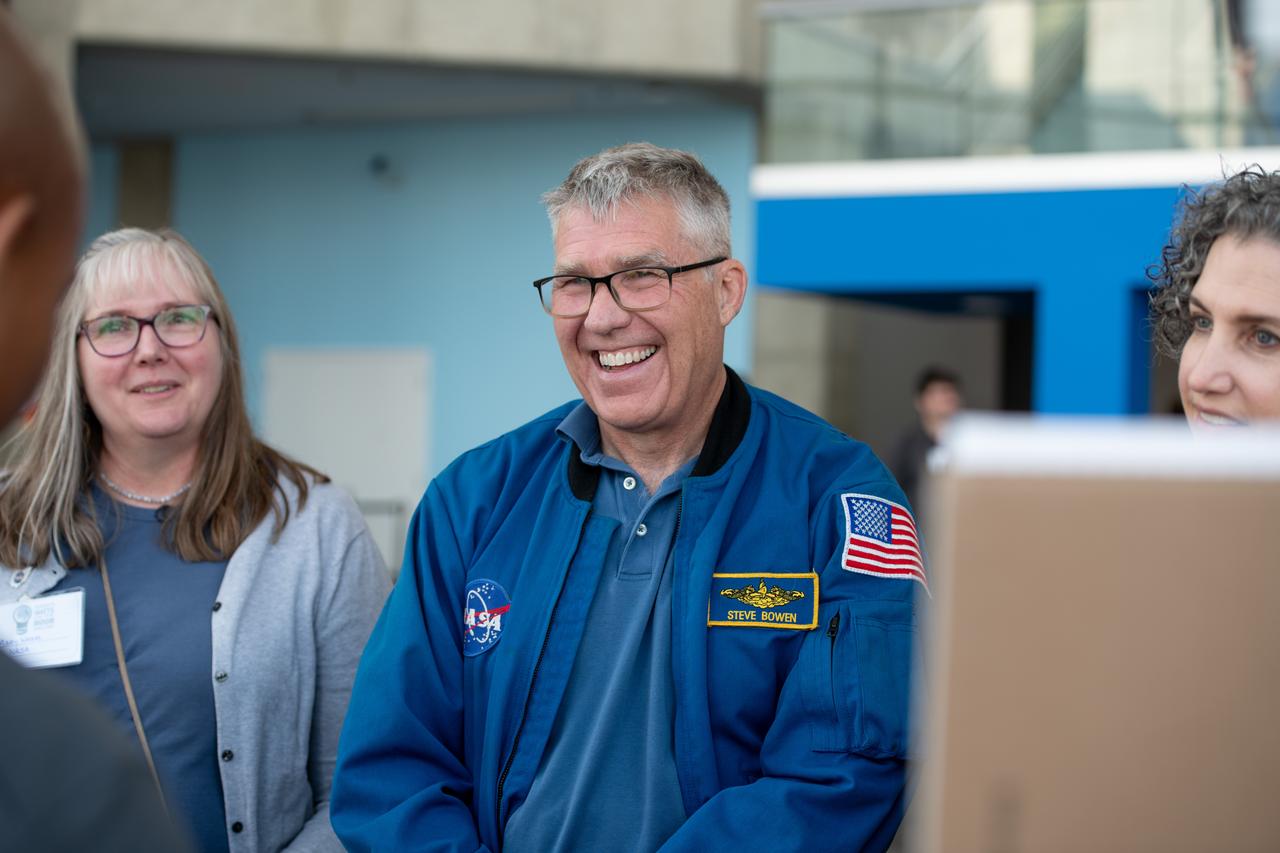
NASA has awarded a total of $1.5 million to two U.S. teams for their novel technology solutions addressing energy distribution, management, and storage as part of the agency’s Watts on the Moon Challenge. The innovations from this challenge aim to support NASA’s Artemis missions, which will establish long-term human presence on the Moon. This two-phase competition has challenged U.S. innovators to develop breakthrough power transmission and energy storage technologies that could enable long-duration Moon missions to advance the nation’s lunar exploration goals. The final phase of the challenge concluded with a technology showcase and winners’ announcement ceremony Friday at Great Lakes Science Center, home of the visitor center for NASA’s Glenn Research Center in Cleveland. Team H.E.L.P.S. (High Efficiency Long-Range Power Solution) from The University of California, Santa Barbara won the $1 million grand prize in NASA’s Watts on the Moon Challenge. Their team developed a low-mass, high efficiency cable and featured energy storage batteries on both ends of their power transmission and energy storage system. Second prize ($500,000): Orbital Mining Corporation of Golden, Colorado
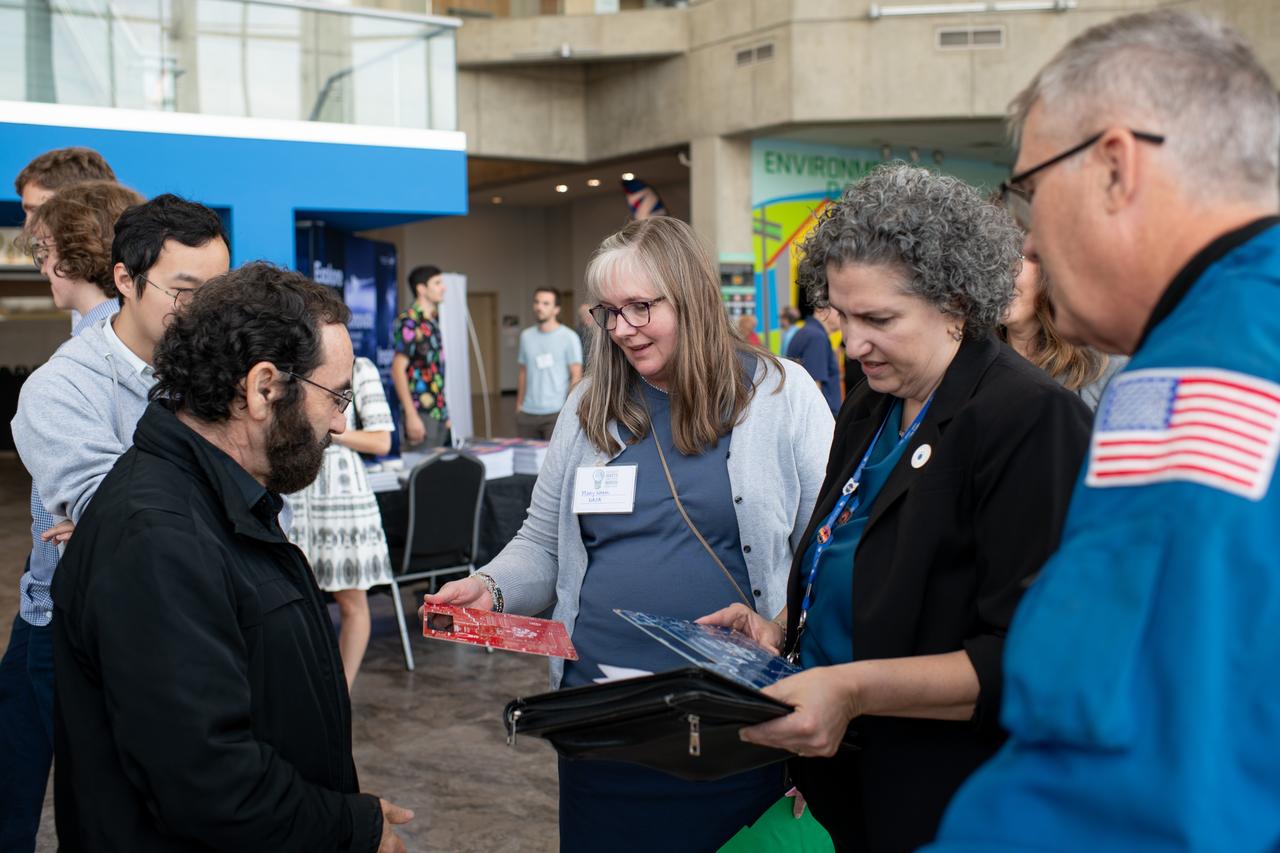
Philip Lubin from Team H.E.L.P.S. (High Efficiency Long-Range Power Solution) explains his project to Mary Wadel, Kirsten Ellenbogen and Stephen Bowen. NASA has awarded a total of $1.5 million to two U.S. teams for their novel technology solutions addressing energy distribution, management, and storage as part of the agency’s Watts on the Moon Challenge. The innovations from this challenge aim to support NASA’s Artemis missions, which will establish long-term human presence on the Moon. This two-phase competition has challenged U.S. innovators to develop breakthrough power transmission and energy storage technologies that could enable long-duration Moon missions to advance the nation’s lunar exploration goals. The final phase of the challenge concluded with a technology showcase and winners’ announcement ceremony Friday at Great Lakes Science Center, home of the visitor center for NASA’s Glenn Research Center in Cleveland. Team H.E.L.P.S. (High Efficiency Long-Range Power Solution) from The University of California, Santa Barbara won the $1 million grand prize in NASA’s Watts on the Moon Challenge. Their team developed a low-mass, high efficiency cable and featured energy storage batteries on both ends of their power transmission and energy storage system. Second prize ($500,000): Orbital Mining Corporation of Golden, Colorado Photo Credit: (NASA/Sara Lowthian-Hanna)
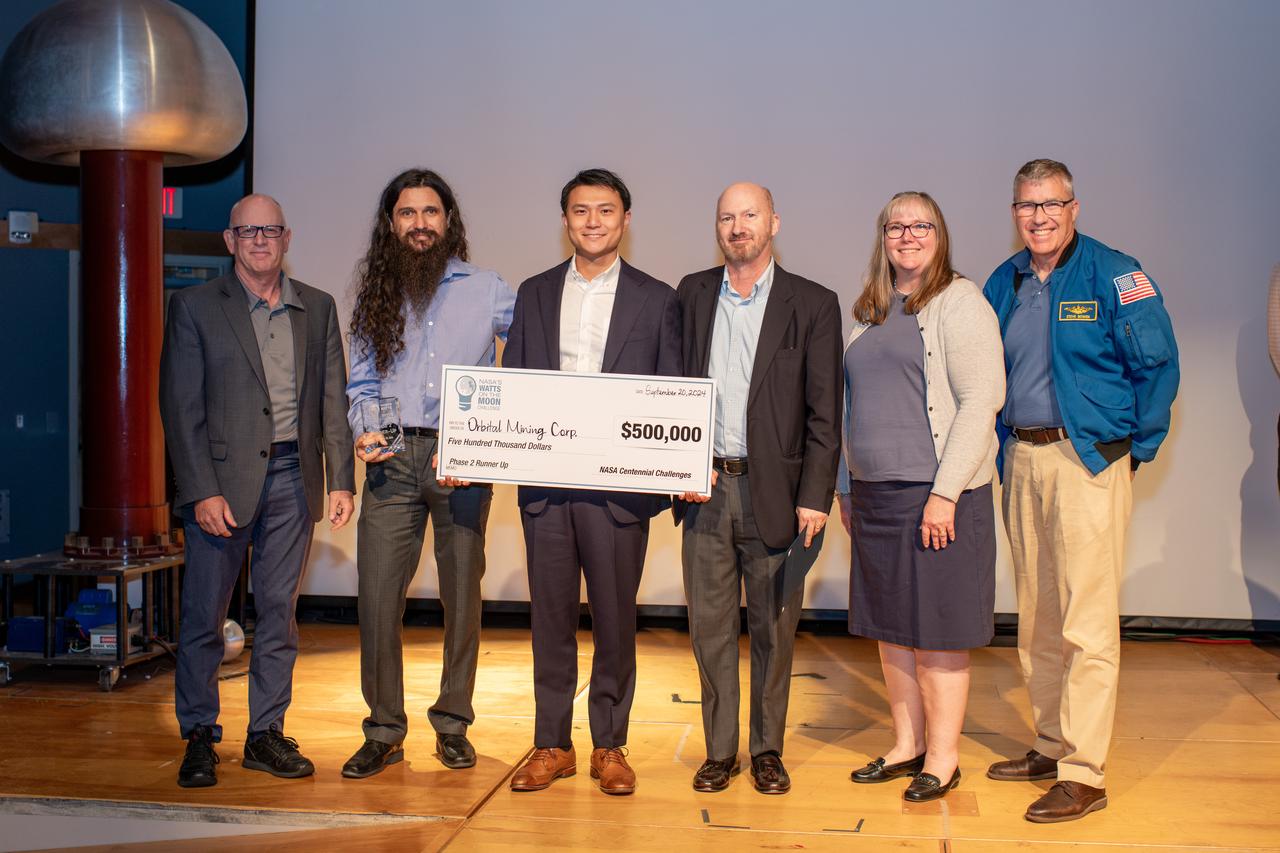
Individuals from Orbital Mining Corporation of Golden, Colorado pose with Robert Button, Mary Wadel and Astronaut Stephen Bowen. NASA has awarded a total of $1.5 million to two U.S. teams for their novel technology solutions addressing energy distribution, management, and storage as part of the agency’s Watts on the Moon Challenge. The innovations from this challenge aim to support NASA’s Artemis missions, which will establish long-term human presence on the Moon. This two-phase competition has challenged U.S. innovators to develop breakthrough power transmission and energy storage technologies that could enable long-duration Moon missions to advance the nation’s lunar exploration goals. The final phase of the challenge concluded with a technology showcase and winners’ announcement ceremony Friday at Great Lakes Science Center, home of the visitor center for NASA’s Glenn Research Center in Cleveland. Team H.E.L.P.S. (High Efficiency Long-Range Power Solution) from The University of California, Santa Barbara won the $1 million grand prize in NASA’s Watts on the Moon Challenge. Their team developed a low-mass, high efficiency cable and featured energy storage batteries on both ends of their power transmission and energy storage system. Second prize ($500,000): Orbital Mining Corporation of Golden, Colorado
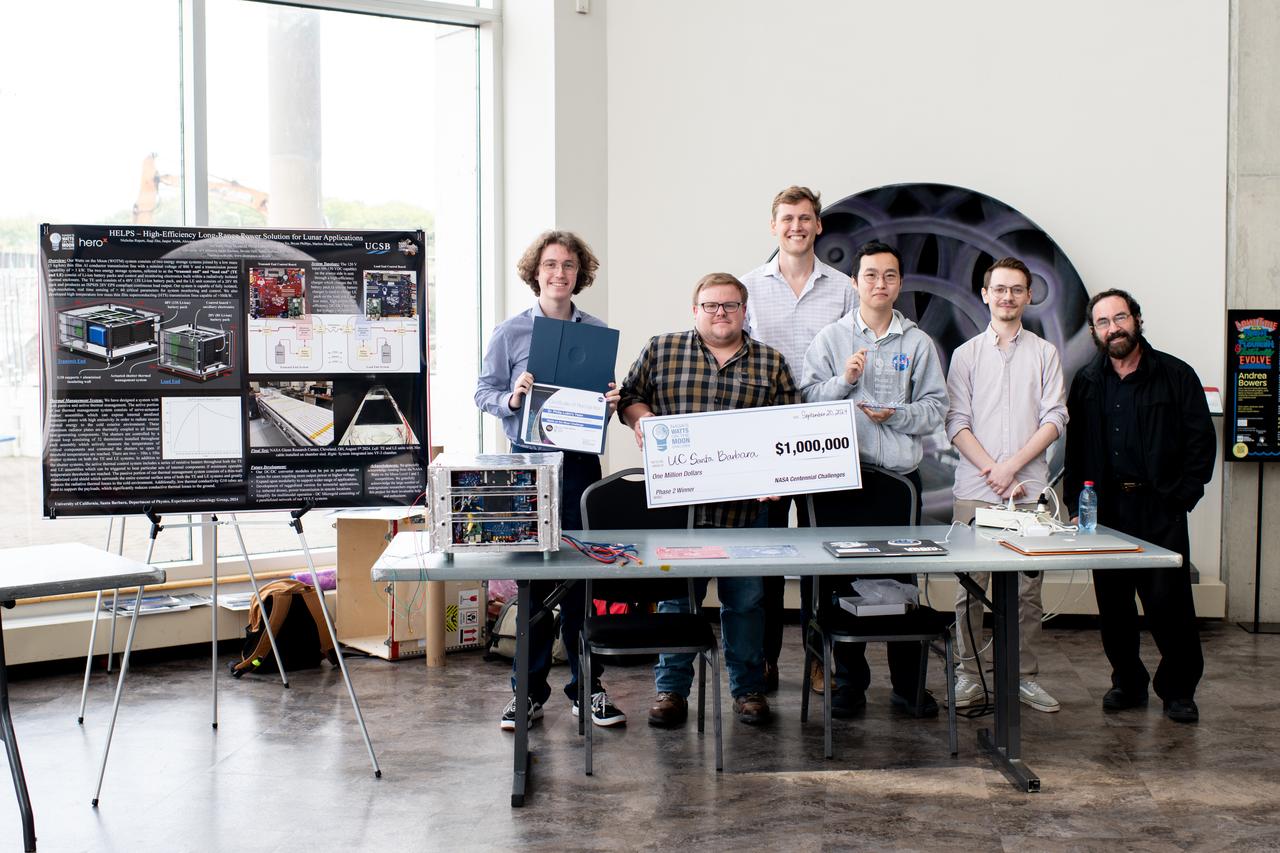
NASA has awarded a total of $1.5 million to two U.S. teams for their novel technology solutions addressing energy distribution, management, and storage as part of the agency’s Watts on the Moon Challenge. The innovations from this challenge aim to support NASA’s Artemis missions, which will establish long-term human presence on the Moon. This two-phase competition has challenged U.S. innovators to develop breakthrough power transmission and energy storage technologies that could enable long-duration Moon missions to advance the nation’s lunar exploration goals. The final phase of the challenge concluded with a technology showcase and winners’ announcement ceremony Friday at Great Lakes Science Center, home of the visitor center for NASA’s Glenn Research Center in Cleveland. Team H.E.L.P.S. (High Efficiency Long-Range Power Solution) from The University of California, Santa Barbara won the $1 million grand prize in NASA’s Watts on the Moon Challenge. Their team developed a low-mass, high efficiency cable and featured energy storage batteries on both ends of their power transmission and energy storage system. Second prize ($500,000): Orbital Mining Corporation of Golden, Colorado
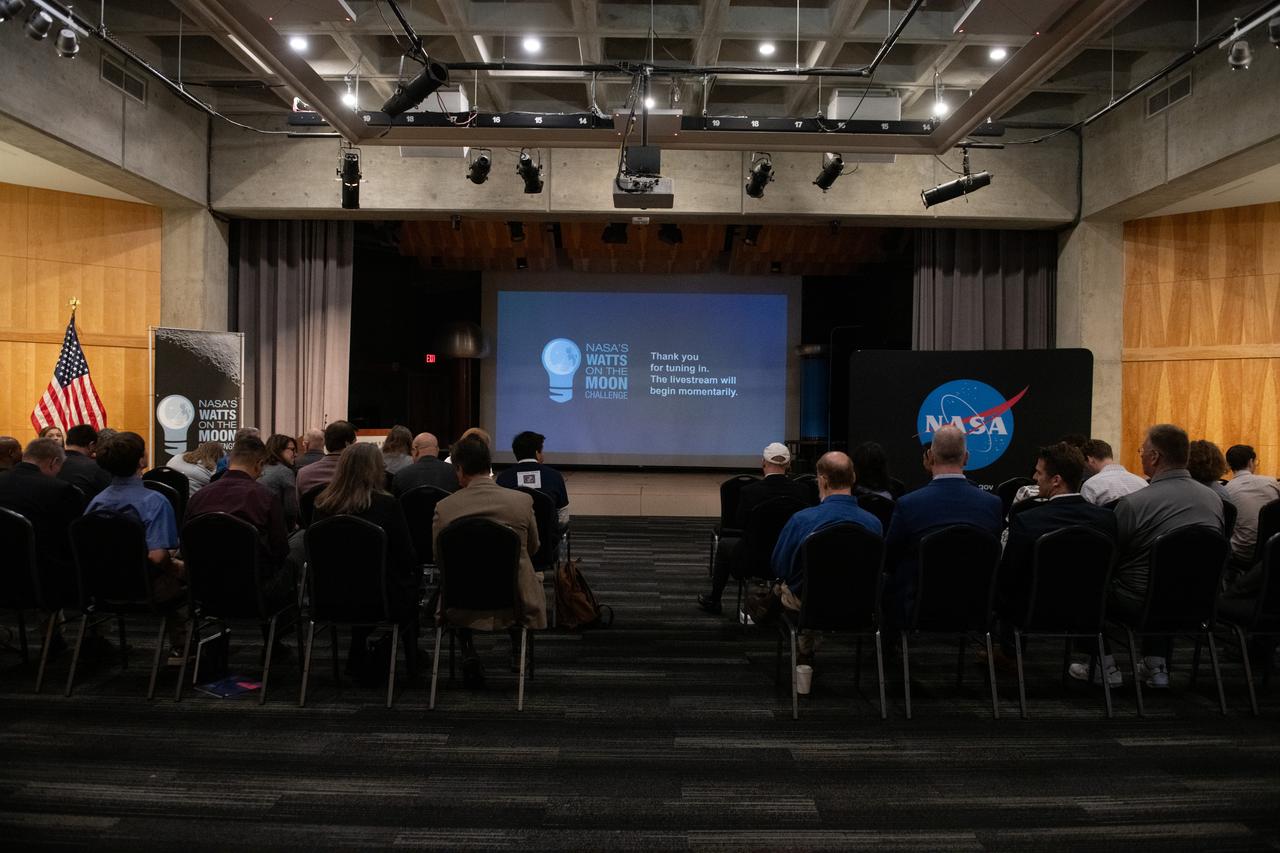
NASA has awarded a total of $1.5 million to two U.S. teams for their novel technology solutions addressing energy distribution, management, and storage as part of the agency’s Watts on the Moon Challenge. The innovations from this challenge aim to support NASA’s Artemis missions, which will establish long-term human presence on the Moon. This two-phase competition has challenged U.S. innovators to develop breakthrough power transmission and energy storage technologies that could enable long-duration Moon missions to advance the nation’s lunar exploration goals. The final phase of the challenge concluded with a technology showcase and winners’ announcement ceremony Friday at Great Lakes Science Center, home of the visitor center for NASA’s Glenn Research Center in Cleveland. Team H.E.L.P.S. (High Efficiency Long-Range Power Solution) from The University of California, Santa Barbara won the $1 million grand prize in NASA’s Watts on the Moon Challenge. Their team developed a low-mass, high efficiency cable and featured energy storage batteries on both ends of their power transmission and energy storage system. Second prize ($500,000): Orbital Mining Corporation of Golden, Colorado

Astronaut Stephen Bowen speaks during the award ceremony. NASA has awarded a total of $1.5 million to two U.S. teams for their novel technology solutions addressing energy distribution, management, and storage as part of the agency’s Watts on the Moon Challenge. The innovations from this challenge aim to support NASA’s Artemis missions, which will establish long-term human presence on the Moon. This two-phase competition has challenged U.S. innovators to develop breakthrough power transmission and energy storage technologies that could enable long-duration Moon missions to advance the nation’s lunar exploration goals. The final phase of the challenge concluded with a technology showcase and winners’ announcement ceremony Friday at Great Lakes Science Center, home of the visitor center for NASA’s Glenn Research Center in Cleveland. Team H.E.L.P.S. (High Efficiency Long-Range Power Solution) from The University of California, Santa Barbara won the $1 million grand prize in NASA’s Watts on the Moon Challenge. Their team developed a low-mass, high efficiency cable and featured energy storage batteries on both ends of their power transmission and energy storage system. Second prize ($500,000): Orbital Mining Corporation of Golden, Colorado
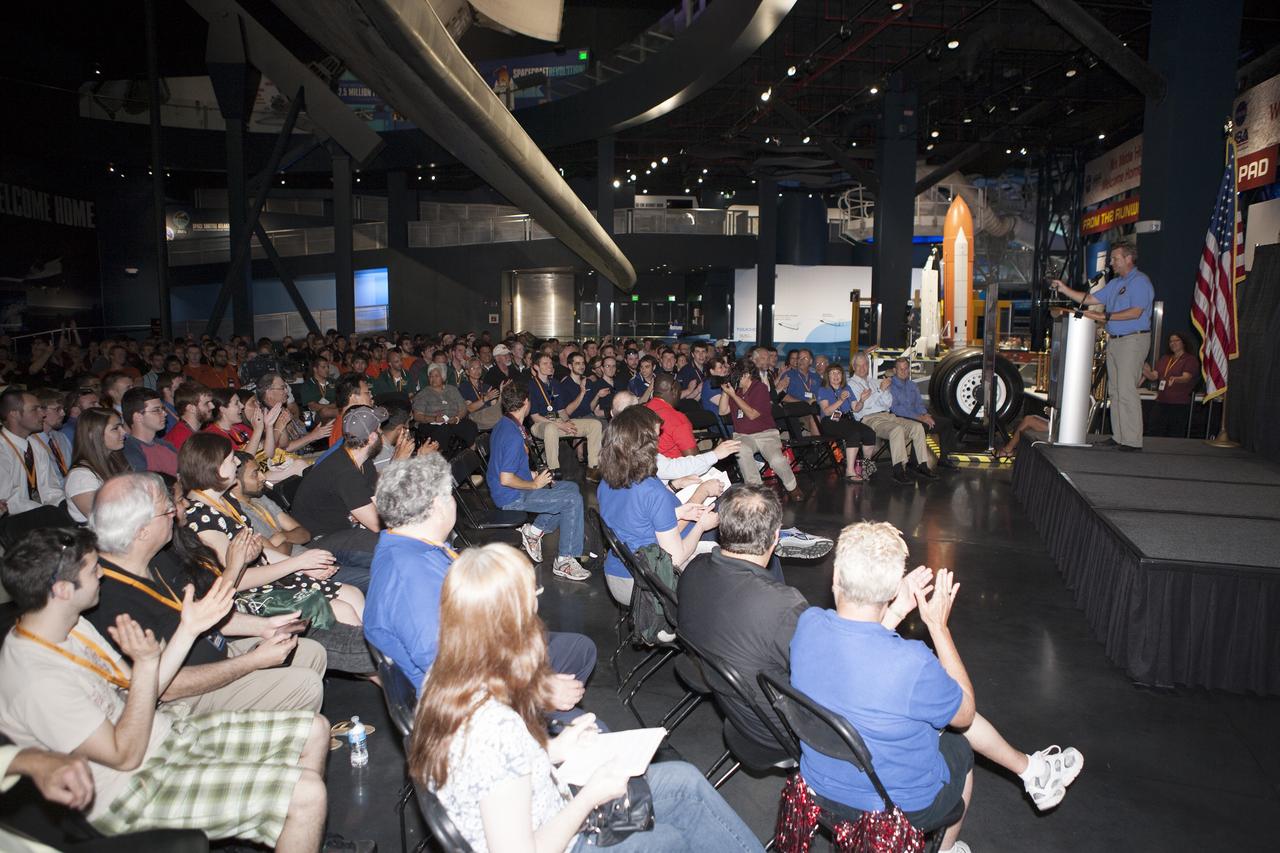
CAPE CANAVERAL, Fla. -- Rob Mueller announces the winner of the Judges' Innovation Award during NASA's 2014 Robotic Mining Competition awards ceremony inside the Space Shuttle Atlantis attraction at the Kennedy Space Center Visitor Complex in Florida. More than 35 teams from colleges and universities around the U.S. designed and built remote-controlled robots for the mining competition. The competition is a NASA Human Exploration and Operations Mission Directorate project designed to engage and retain students in science, technology, engineering and mathematics, or STEM, fields by expanding opportunities for student research and design. Teams use their remote-controlled robotics to maneuver and dig in a supersized sandbox filled with a crushed material that has characteristics similar to Martian soil. The objective of the challenge is to see which team’s robot can collect and move the most regolith within a specified amount of time. The competition includes on-site mining, writing a systems engineering paper, performing outreach projects for K-12 students, slide presentation and demonstrations, and team spirit. For more information, visit www.nasa.gov/nasarmc. Photo credit: NASA/Kim Shiflett