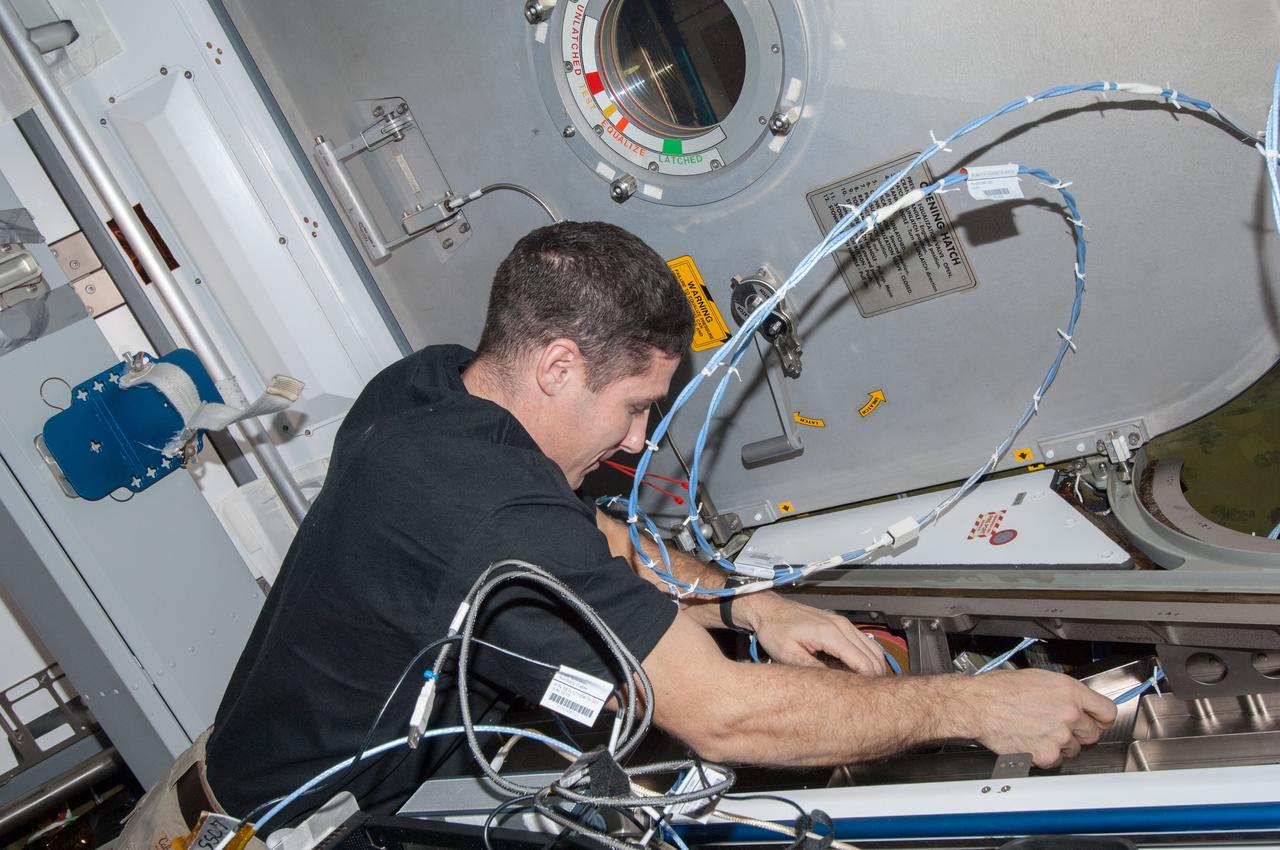
ISS038-E-008291 (24 Nov. 2013) --- NASA astronaut Michael Hopkins, Expedition 38 flight engineer, installs wire harnesses in the International Space Station?s Harmony node to support the installation of Ethernet video cables for the station?s local area network. These new cables will provide Ethernet connectivity to the visiting vehicles that dock to Harmony?s Earth-facing port.
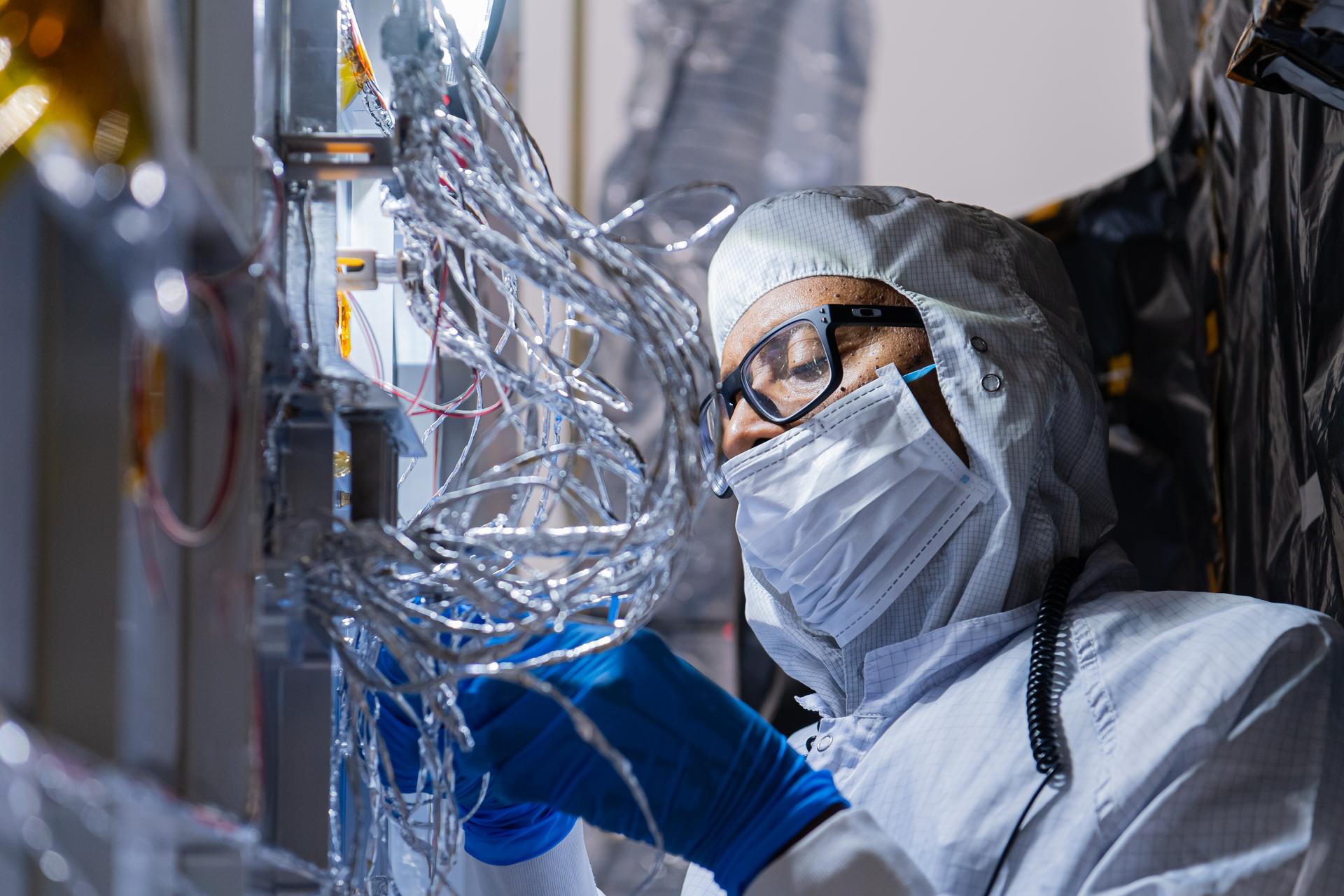
OSAM-1 Electrical Engineer Gregory Griffin tapes hardware on the underside of the OSAM-1 Servicing Payload inside cleanroom at Goddard Space Flight Center, Greenbelt Md., Aug 19, 2024. This photo has been reviewed by the Export Control Office, project Management, and Maxar release authority and is released for public view. NASA/Mike Guinto

KENNEDY SPACE CENTER, FLA. -- On Launch Pad 39A at NASA's Kennedy Space Center, the wiring is checked and validated before the tanking test on space shuttle Atlantis' external tank set for Dec. 18. The test wiring has been spliced into an electrical harness in the aft main engine compartment connected with the engine cut-off, or ECO, sensor system. The attached wiring leads to the interior of the mobile launcher platform where the time domain reflectometry, or TDR, test equipment is located. Photo credit: NASA/Kim Shiflett
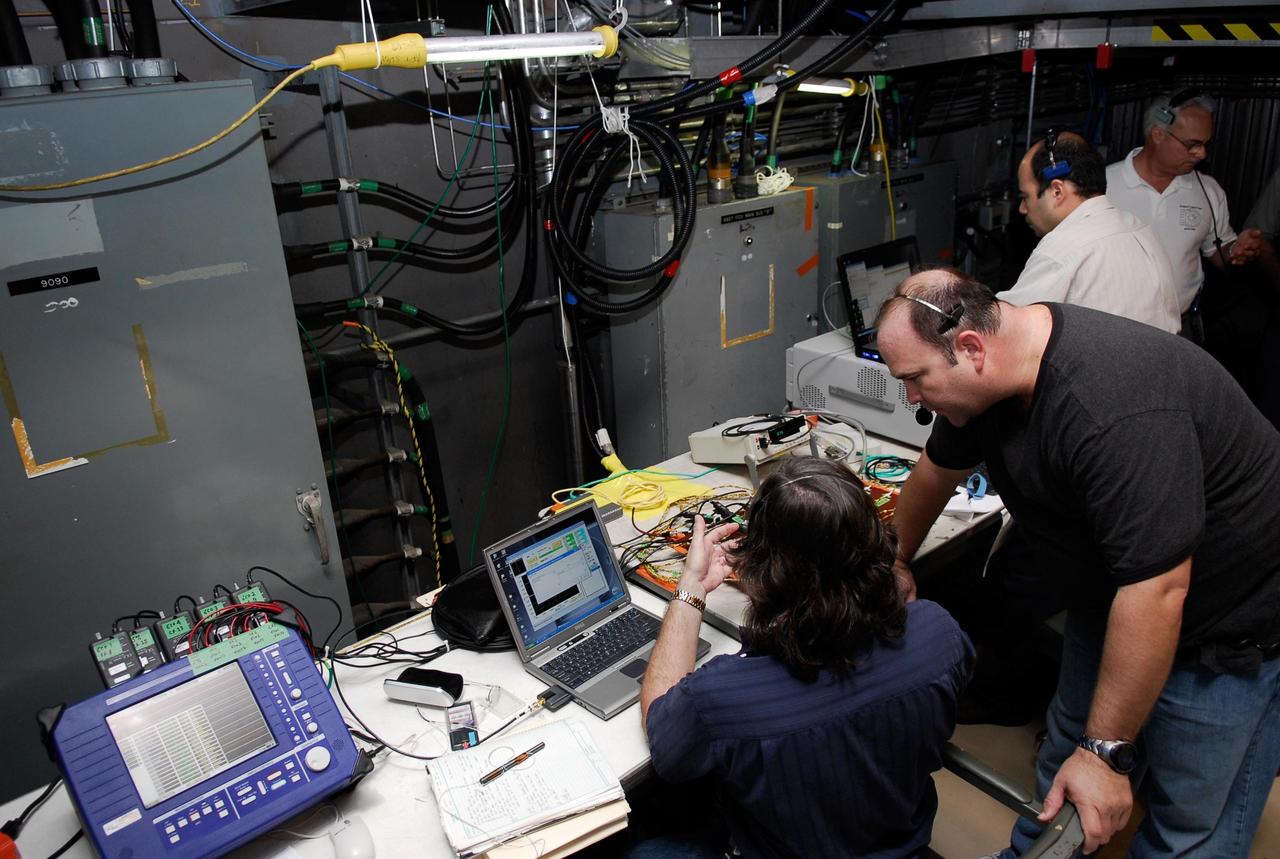
KENNEDY SPACE CENTER, FLA. -- On Launch Pad 39A at NASA's Kennedy Space Center, the wiring is checked and validated before the tanking test on space shuttle Atlantis' external tank set for Dec. 18. The test wiring has been spliced into an electrical harness in the aft main engine compartment connected with the engine cut-off, or ECO, sensor system. The attached wiring leads to the interior of the mobile launcher platform where the time domain reflectometry, or TDR, test equipment is located. Photo credit: NASA/Kim Shiflett
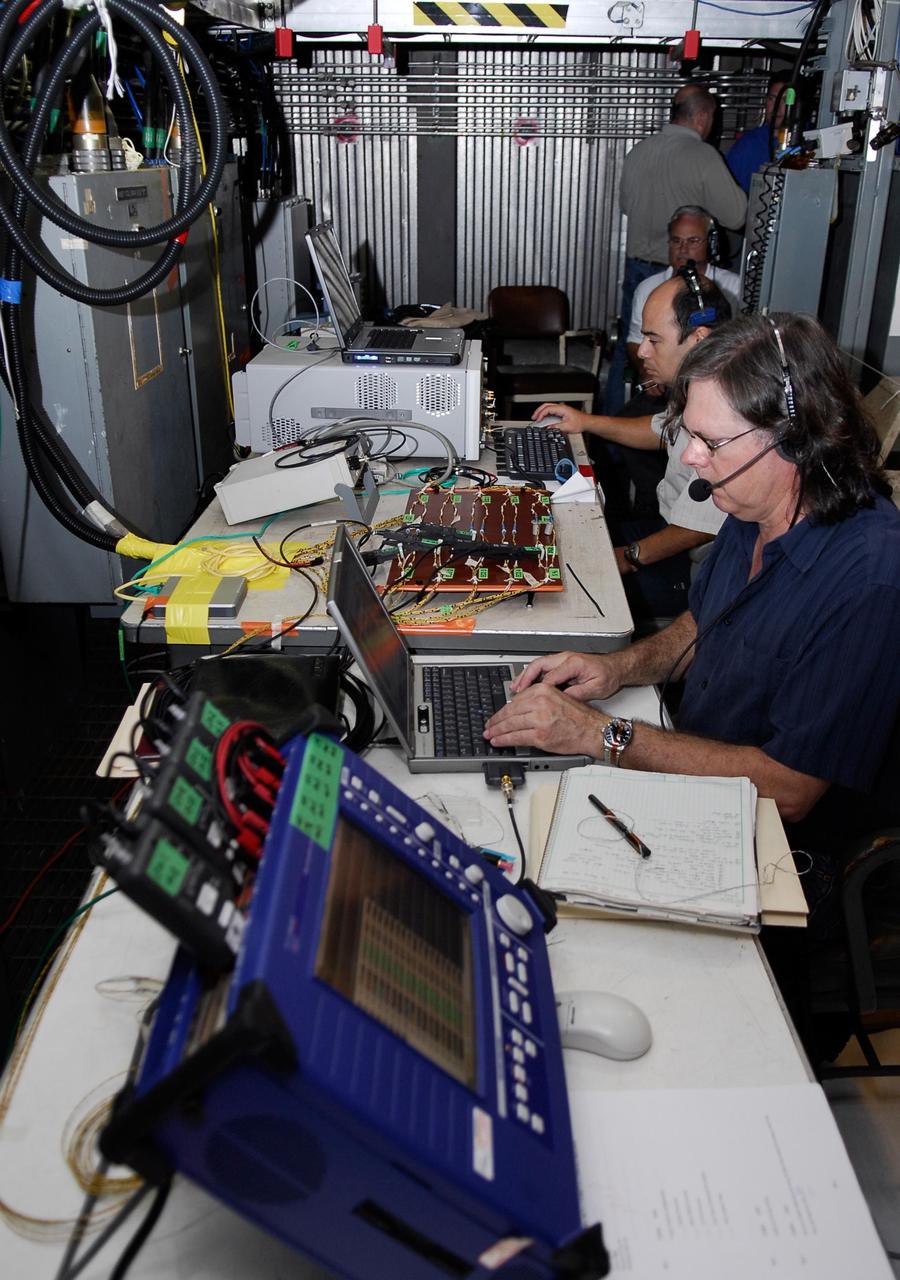
KENNEDY SPACE CENTER, FLA. -- On Launch Pad 39A at NASA's Kennedy Space Center, the wiring is checked and validated before the tanking test on space shuttle Atlantis' external tank set for Dec. 18. The test wiring has been spliced into an electrical harness in the aft main engine compartment connected with the engine cut-off, or ECO, sensor system. The attached wiring leads to the interior of the mobile launcher platform where the time domain reflectometry, or TDR, test equipment is located. Photo credit: NASA/Kim Shiflett
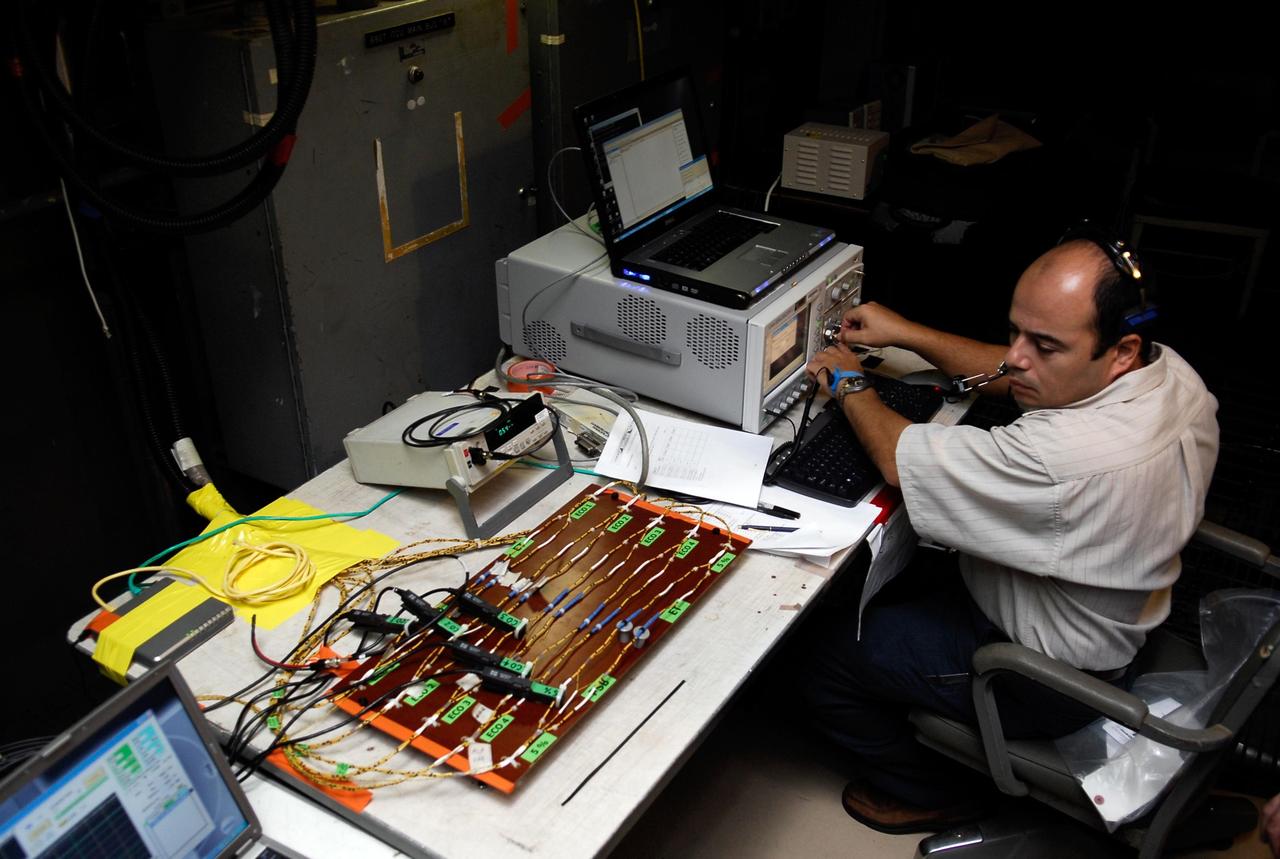
KENNEDY SPACE CENTER, FLA. -- On Launch Pad 39A at NASA's Kennedy Space Center, the wiring is checked and validated before the tanking test on space shuttle Atlantis' external tank set for Dec. 18. The test wiring has been spliced into an electrical harness in the aft main engine compartment connected with the engine cut-off, or ECO, sensor system. The attached wiring leads to the interior of the mobile launcher platform where the time domain reflectometry, or TDR, test equipment is located. Photo credit: NASA/Kim Shiflett
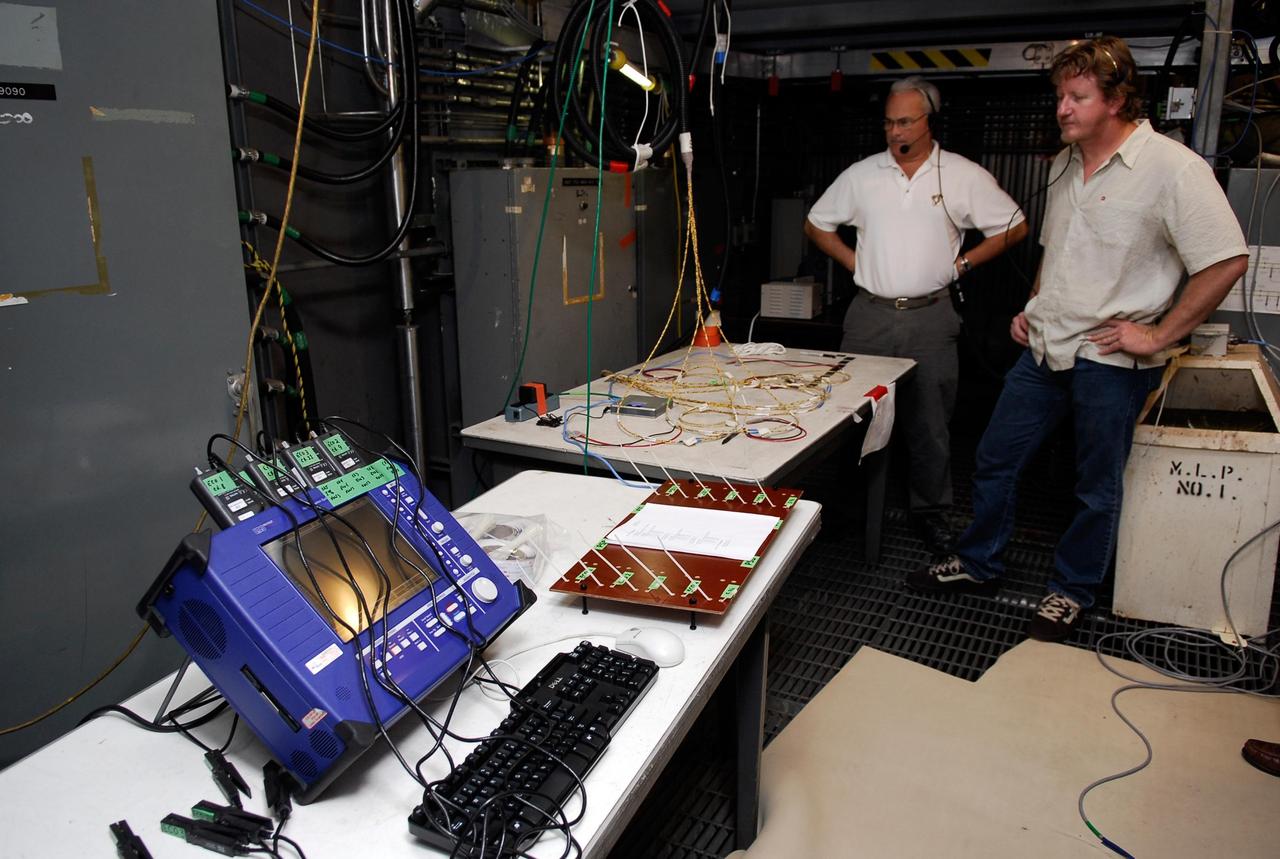
KENNEDY SPACE CENTER, FLA. -- On Launch Pad 39A, technicians overlook wires and monitoring equipment that will be used to validate the circuit on the test wiring from the electrical harness in space shuttle Atlantis' aft main engine compartment connected with the engine cut-off system. The test wiring leads from the tail mast on the mobile launcher platform to the interior where the Time Domain Reflectometry, or TDR, test equipment will be located to test the sensor system. Photo credit: NASA/Kim Shiflett
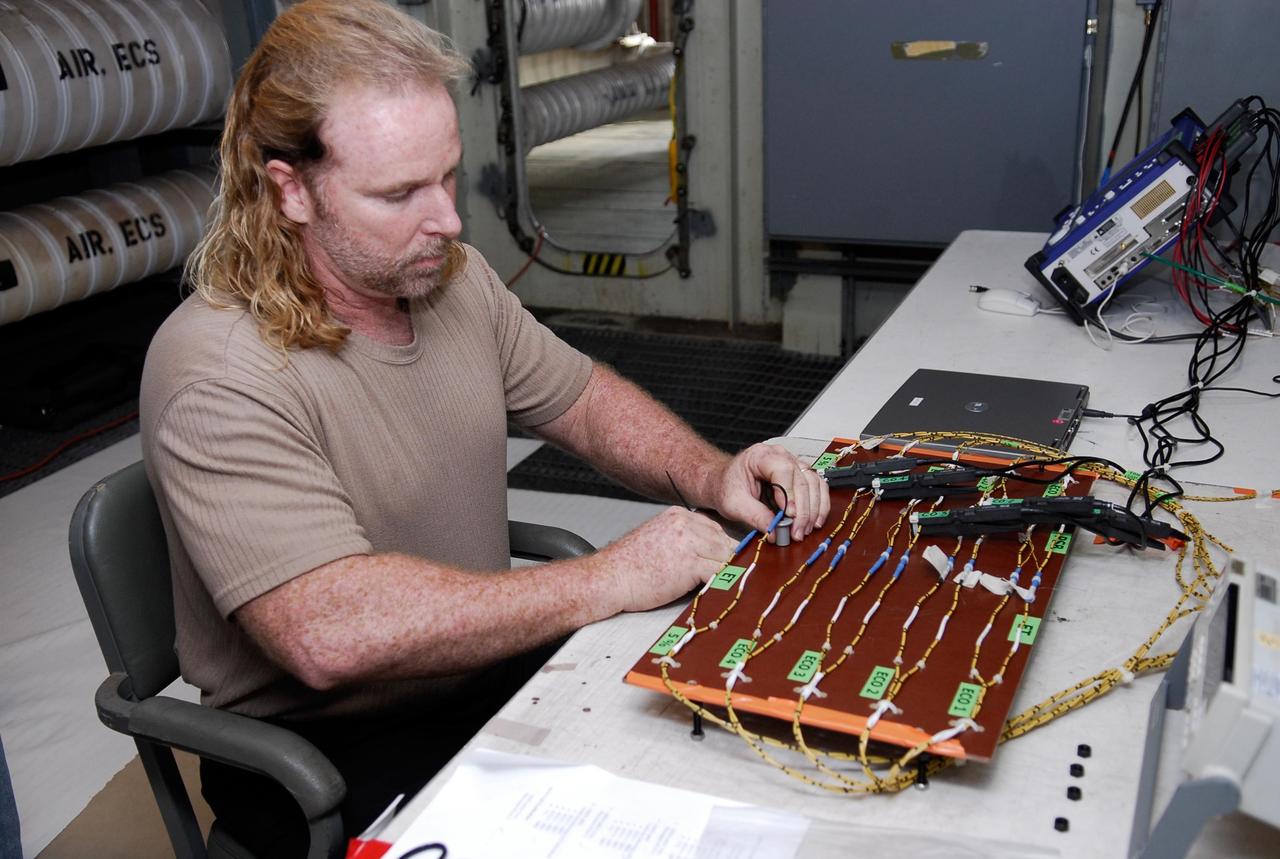
KENNEDY SPACE CENTER, FLA. -- On Launch Pad 39A at NASA's Kennedy Space Center, a technician sets up wiring for the tanking test on space shuttle Atlantis' external tank set for Dec. 18. The test wiring has been spliced into an electrical harness in the aft main engine compartment connected with the engine cut-off, or ECO, sensor system. The attached wiring leads to the interior of the mobile launcher platform where the time domain reflectometry, or TDR, test equipment is located. Photo credit: NASA/Kim Shiflett
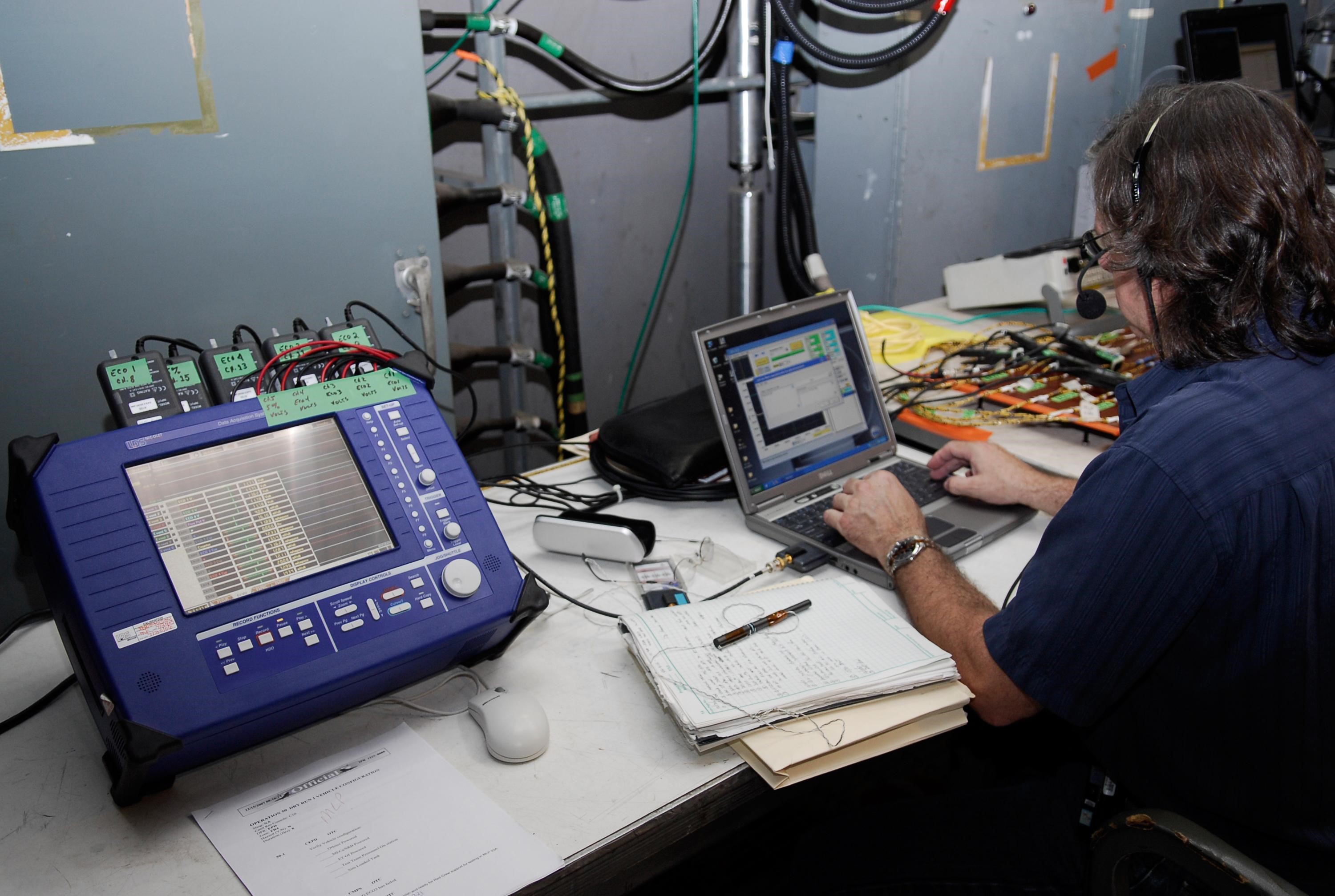
KENNEDY SPACE CENTER, FLA. -- On Launch Pad 39A at NASA's Kennedy Space Center, the wiring is checked and validated before the tanking test on space shuttle Atlantis' external tank set for Dec. 18. The test wiring has been spliced into an electrical harness in the aft main engine compartment connected with the engine cut-off, or ECO, sensor system. The attached wiring leads to the interior of the mobile launcher platform where the time domain reflectometry, or TDR, test equipment is located. Photo credit: NASA/Kim Shiflett
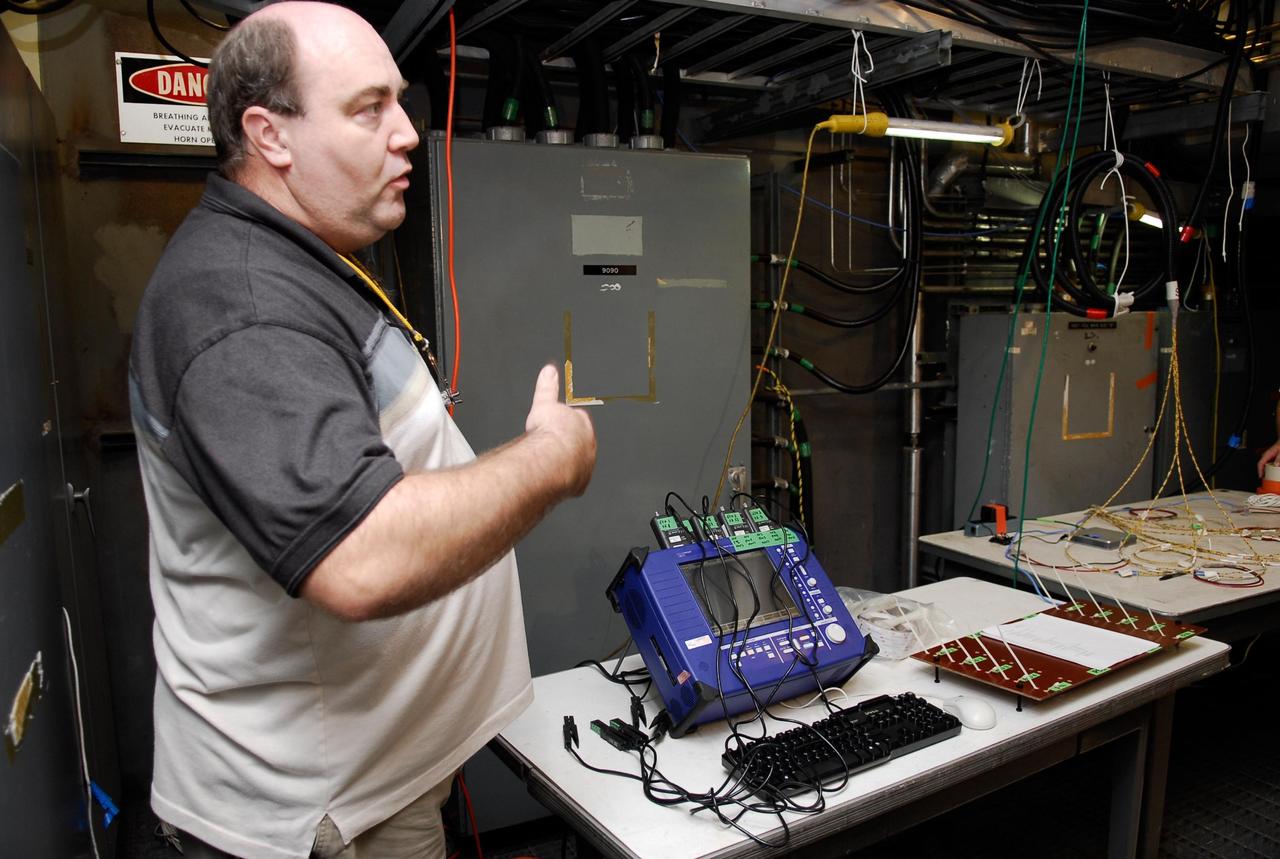
KENNEDY SPACE CENTER, FLA. -- On Launch Pad 39A, a technician explains how test equipment -- the blue monitor -- will be used to validate the circuit on test wiring from the electrical harness in space shuttle Atlantis' aft main engine compartment connected with the engine cut-off system. The test wiring leads from the tail mast on the mobile launcher platform to the interior where the Time Domain Reflectometry, or TDR, test equipment will be located to test the sensor system. Photo credit: NASA/Kim Shiflett
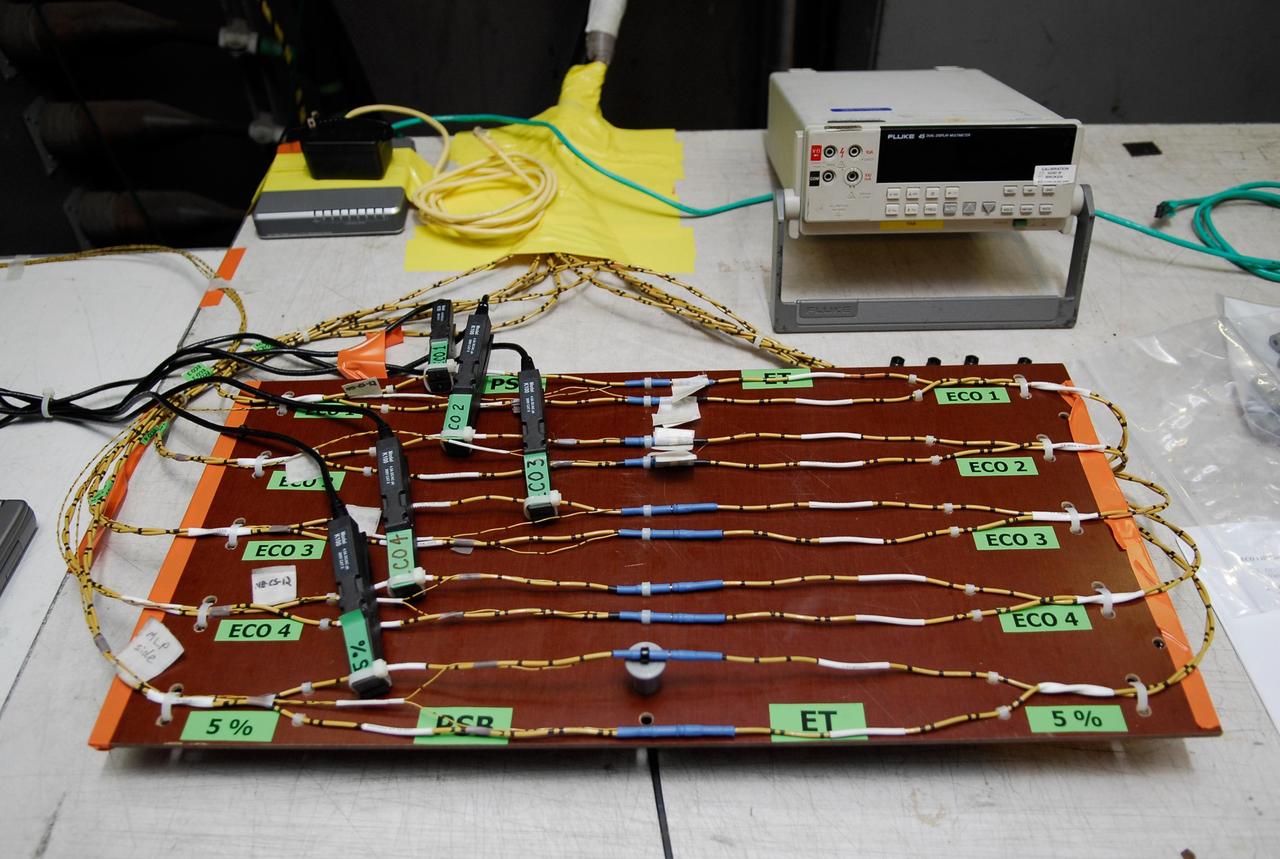
KENNEDY SPACE CENTER, FLA. -- On Launch Pad 39A at NASA's Kennedy Space Center, a wiring board has been set up for the tanking test on space shuttle Atlantis' external tank set for Dec. 18. The test wiring has been spliced into an electrical harness in the aft main engine compartment connected with the engine cut-off, or ECO, sensor system. The attached wiring leads to the interior of the mobile launcher platform where the time domain reflectometry, or TDR, test equipment is located. Photo credit: NASA/Kim Shiflett
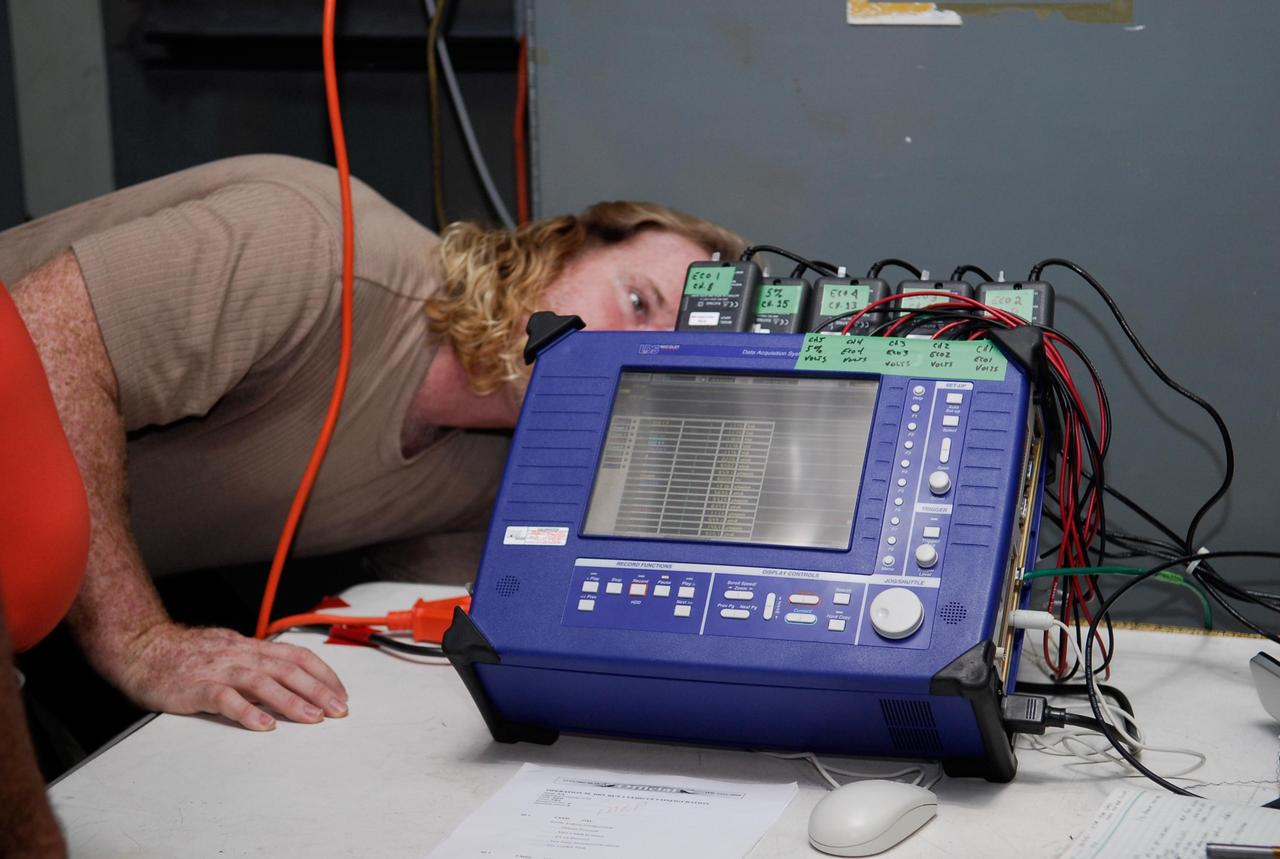
KENNEDY SPACE CENTER, FLA. -- On Launch Pad 39A at NASA's Kennedy Space Center, a technician checks the blue monitor that will be used to validate the circuit on test wiring during the tanking test on space shuttle Atlantis' external tank. The test wiring has been spliced into an electrical harness in the aft main engine compartment connected with the engine cut-off, or ECO, sensor system. The attached wiring leads to the interior of the mobile launcher platform where the time domain reflectometry, or TDR, test equipment is located. Photo credit: NASA/Kim Shiflett
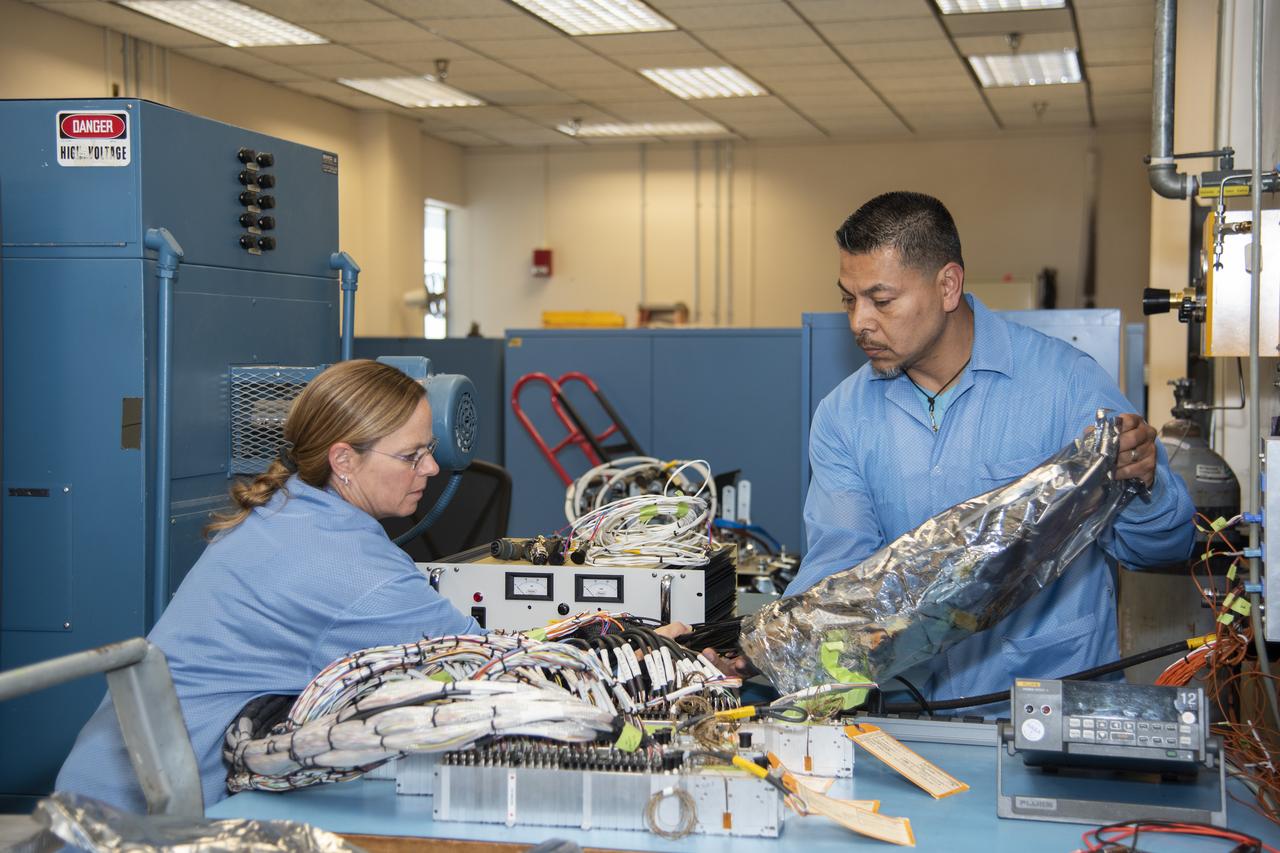
April Torres and Angelo De La Rosa remove wire harnesses for signal input for the Orion AA-2 vehicle from electrostatic discharge protective covers at NASA’s Armstrong Flight Research Center in California. The AA-2 test article is scheduled for a flight in 2019.
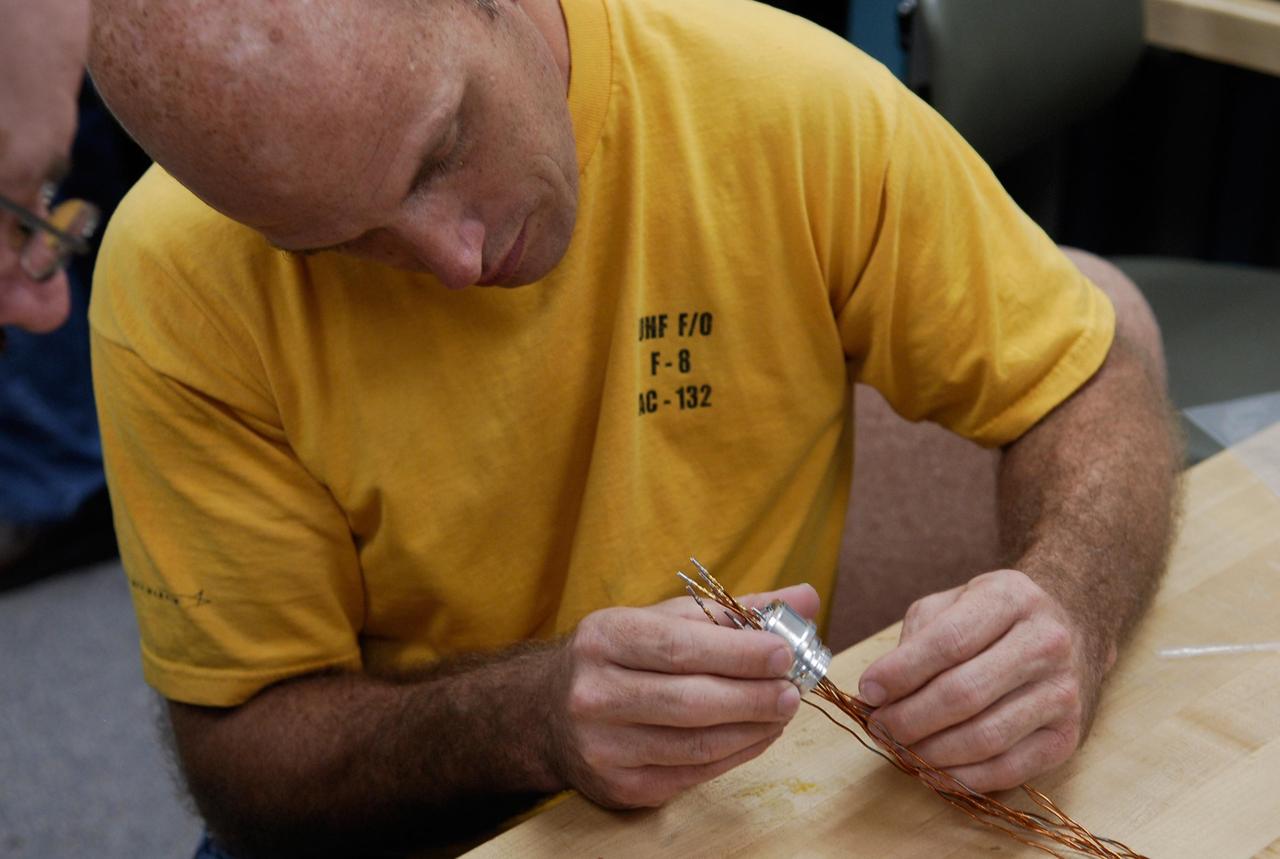
KENNEDY SPACE CENTER, FLA. -- At a lab at NASA's Kennedy Space Center, Kevin Wyckoff, an aerospace technician with the United Launch Alliance, examines an electrical wiring harness. The harness will be inserted into a replacement feed-through connector during preparations to solder the pins to the socket of the connector. The connector will later be installed in the external fuel tank for space shuttle Atlantis' STS-122 mission. The technician performed this exacting task on the Centaur upper stage for Atlas and Titan launches in 1994 and was specifically chosen for the task. Soldering the connector pins and sockets together addresses the most likely cause of a problem in the engine cutoff sensor system, or ECO system. Some of the tank's ECO sensors failed during propellant tanking for launch attempts on Dec. 6 and Dec. 9. Results of a tanking test on Dec. 18 pointed to an open circuit in the feed-through connector wiring, which is located at the base of the tank. The feed-through connector passes the wires from the inside of the tank to the outside. After the soldering is completed and the connector is reinstalled, shuttle program managers will decide on how to proceed. The launch date for mission STS-122 is under review. Photo credit: NASA/Kim Shiflett

jsc2024e016248 (11/24/2023) --- The Nanoracks-Killick-1 CubeSat with all components and wiring harnesses connected before button down (final assembly of outside panels). Nanoracks-Killick-1 is a CubeSat that measures sea ice parameters using Global Navigation Satellite System (GNSS) reflectometry or reflected signals. This monitoring system could contribute to a better understanding of important ocean phenomena and improved weather and climate models. Image courtesy of C-CORE and Memorial University.
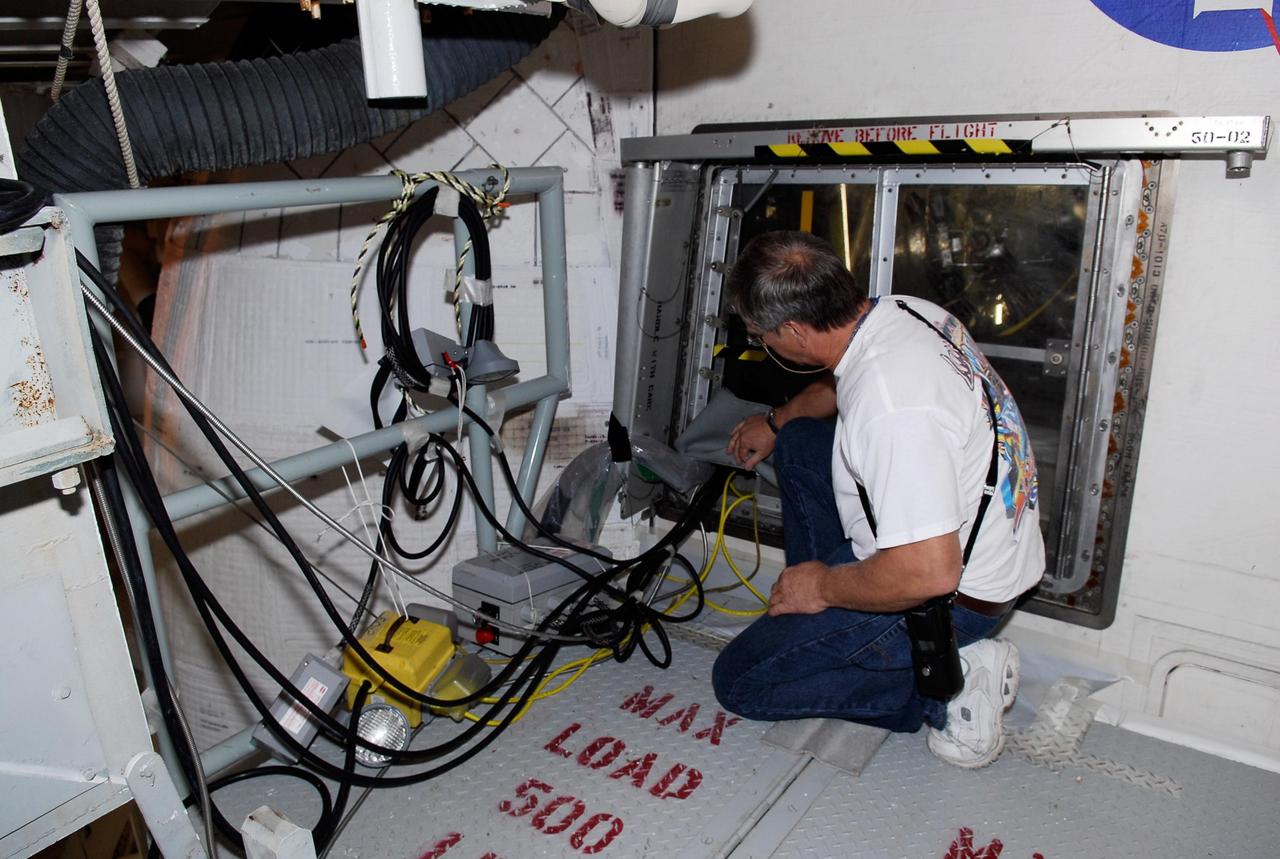
KENNEDY SPACE CENTER, FLA. -- On Launch Pad 39A, a technician checks test wiring spliced into an electrical harness in space shuttle Atlantis' aft main engine compartment connected with the engine cut-off, or ECO, system. The test wiring leads to the interior of the mobile launcher platform where the Time Domain Reflectometry, or TDR, test equipment will be located to test the sensor system. The shuttle's planned launches on Dec. 6 and Dec. 9 were postponed because of false readings from the part of the ECO system that monitors the liquid hydrogen section of the tank. The liftoff date from NASA's Kennedy Space Center, Florida, is now targeted for Jan. 10, depending on the resolution of the problem in the fuel sensor system. Photo credit: NASA/Kim Shiflett
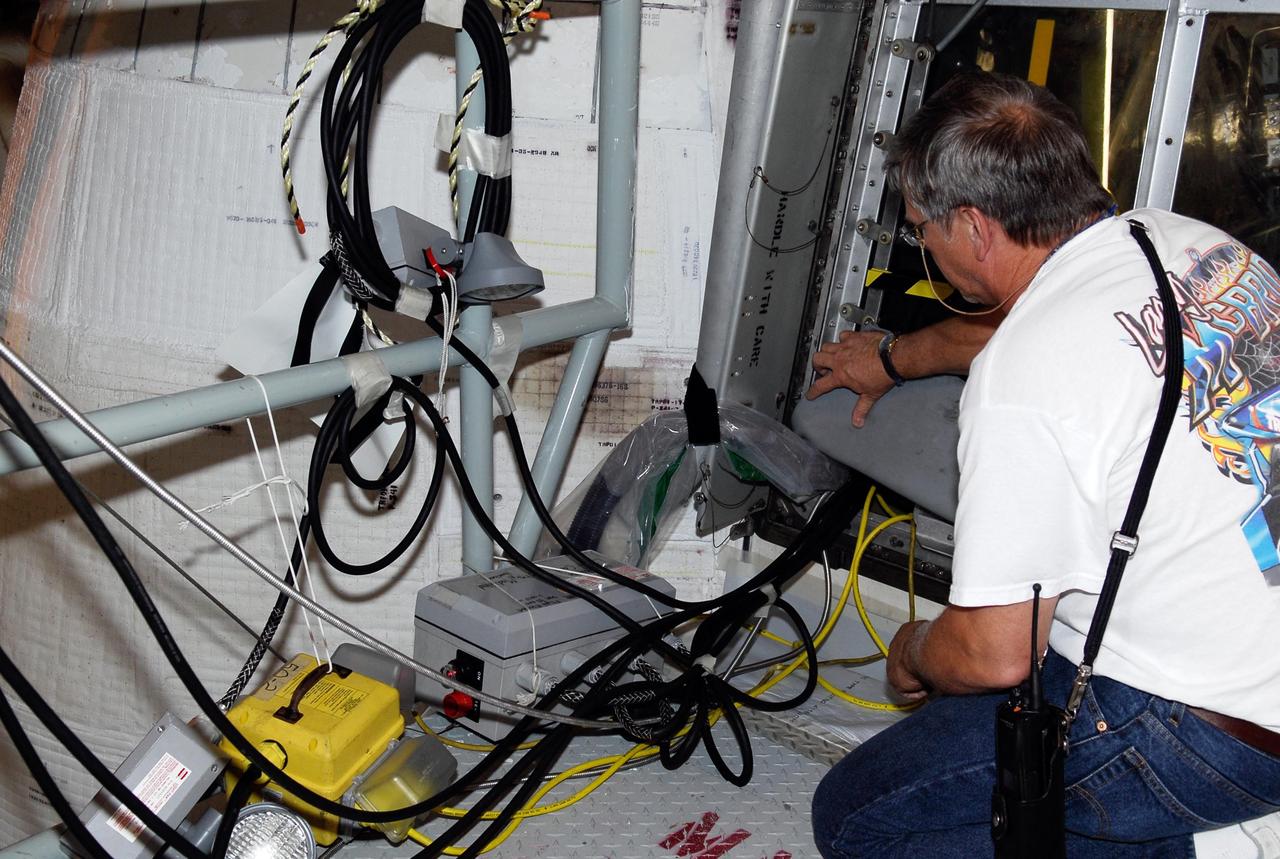
KENNEDY SPACE CENTER, FLA. -- On Launch Pad 39A, a technician checks test wiring spliced into an electrical harness in space shuttle Atlantis' aft main engine compartment connected with the engine cut-off, or ECO, system. The test wiring leads to the interior of the mobile launcher platform where the Time Domain Reflectometry, or TDR, test equipment will be located to test the sensor system. The shuttle's planned launches on Dec. 6 and Dec. 9 were postponed because of false readings from the part of the ECO system that monitors the liquid hydrogen section of the tank. The liftoff date from NASA's Kennedy Space Center, Florida, is now targeted for Jan. 10, depending on the resolution of the problem in the fuel sensor system. Photo credit: NASA/Kim Shiflett
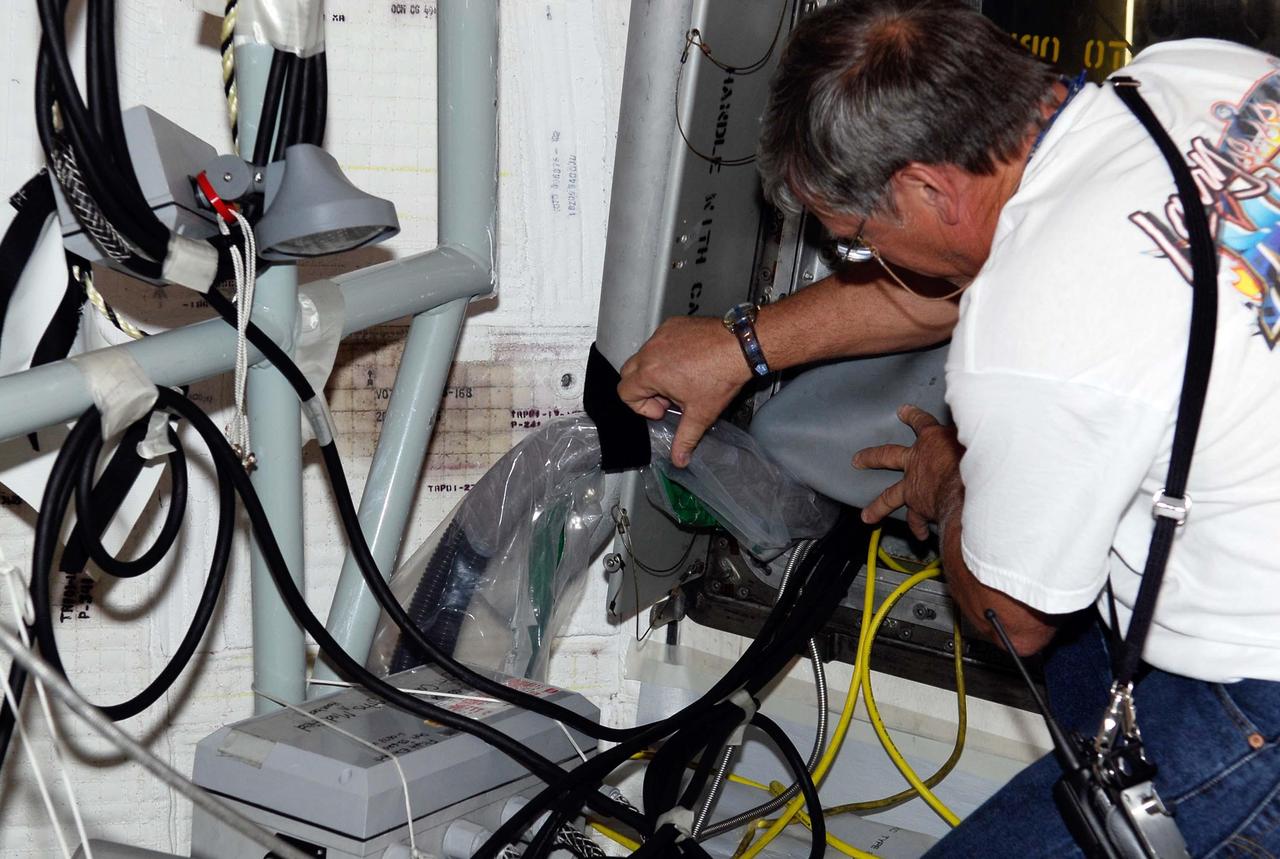
KENNEDY SPACE CENTER, FLA. -- On Launch Pad 39A, a technician checks test wiring spliced into an electrical harness in space shuttle Atlantis' aft main engine compartment connected with the engine cut-off, or ECO, system. The test wiring leads to the interior of the mobile launcher platform where the Time Domain Reflectometry, or TDR, test equipment will be located to test the sensor system. The shuttle's planned launches on Dec. 6 and Dec. 9 were postponed because of false readings from the part of the ECO system that monitors the liquid hydrogen section of the tank. The liftoff date from NASA's Kennedy Space Center, Florida, is now targeted for Jan. 10, depending on the resolution of the problem in the fuel sensor system. Photo credit: NASA/Kim Shiflett
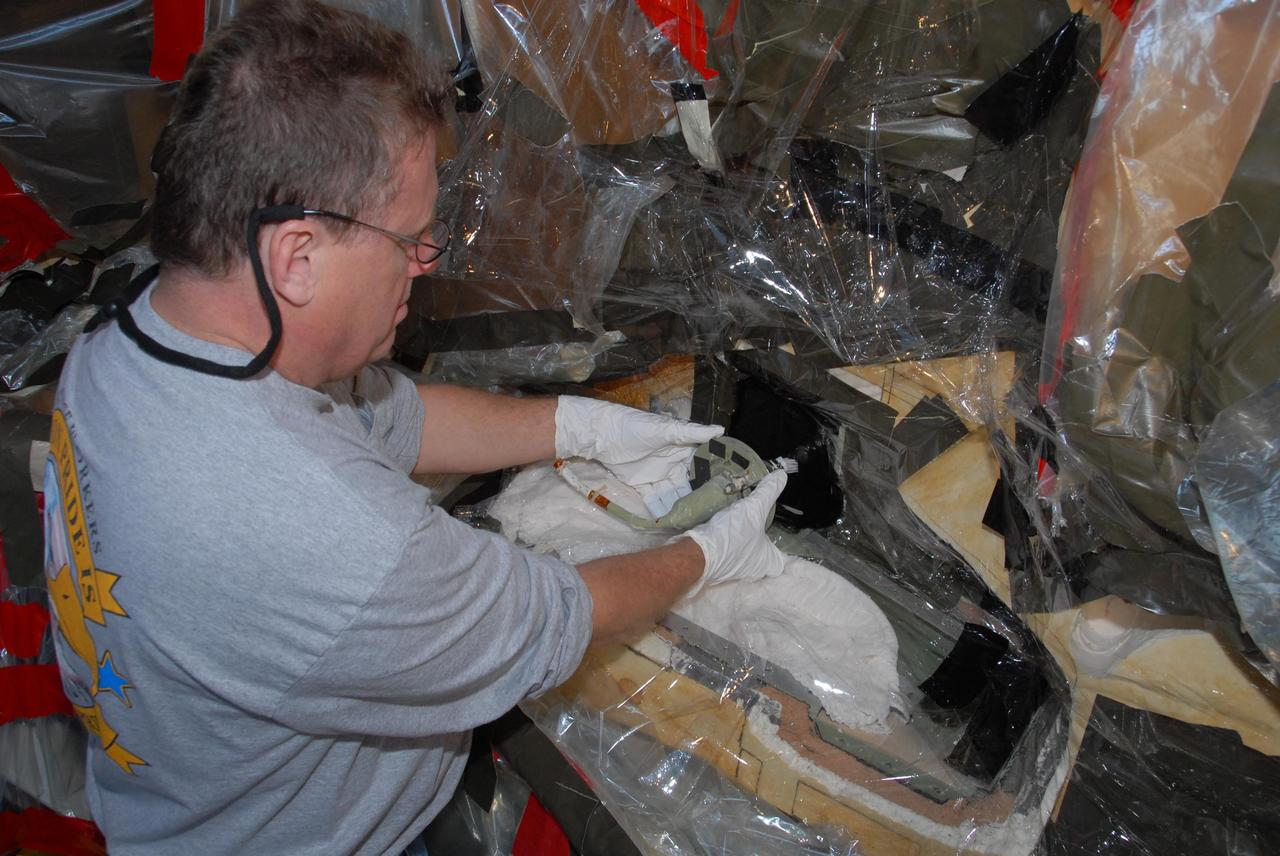
KENNEDY SPACE CENTER, FLA. -- At Launch Pad 39A, a team of external tank specialists from Lockheed Martin and the United Space Alliance undertakes the task of removing the hydrogen feed-through connector in support of space shuttle Atlantis' STS-122 mission. Here, a technician pulls the connector assembly, with its associated electrical harness, away from the tank. Some of the tank's engine cutoff sensors, or ECO sensors, failed during propellant tanking for launch attempts on Dec. 6 and Dec. 9. Results of a tanking test on Dec. 18 pointed to an open circuit in the feed-through connector wiring, which is located at the base of the tank. The feed-through connector passes the wires from the inside of the tank to the outside. After the data from additional testing on the connector is analyzed, shuttle program managers will decide on a forward plan. Launch of STS-122 is targeted for January 2008. Photo credit: NASA/George Shelton
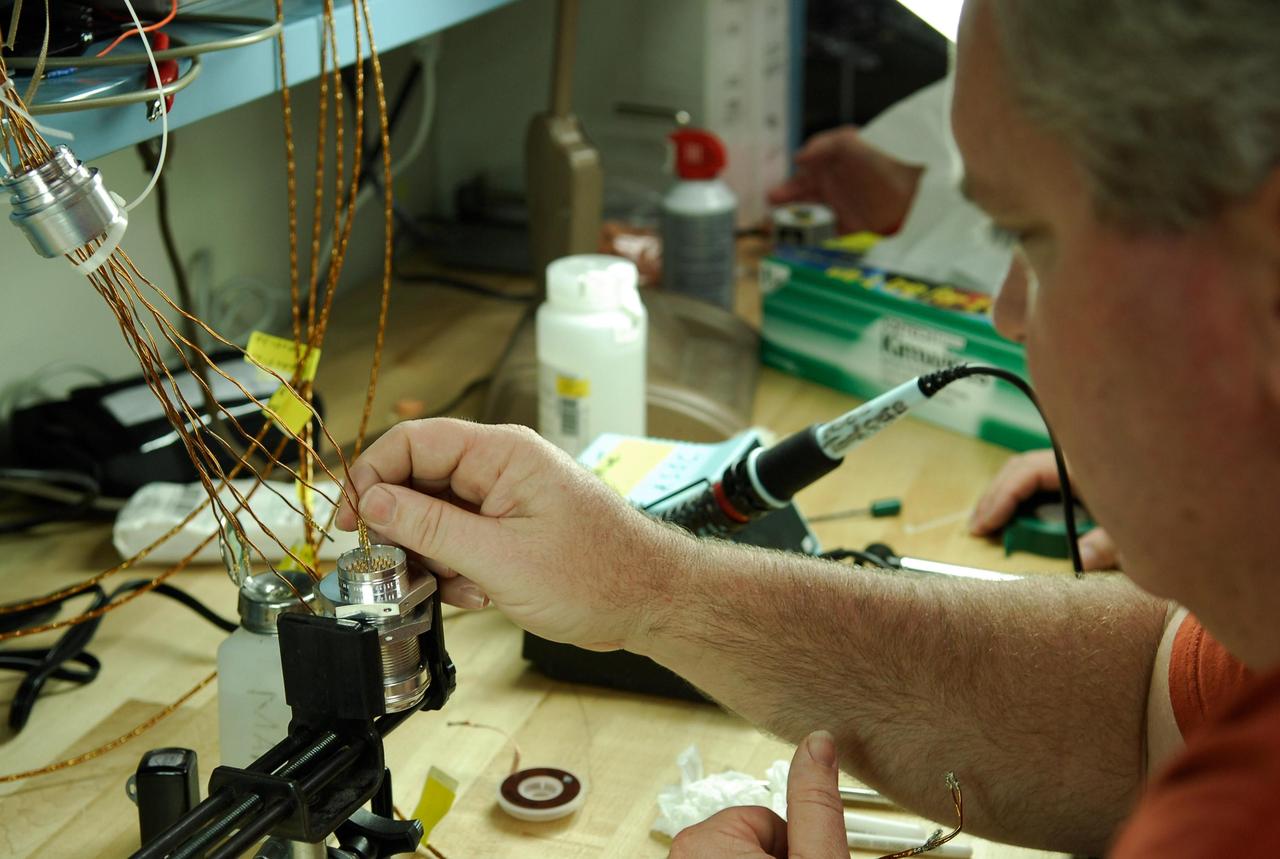
KENNEDY SPACE CENTER, FLA. -- At a lab at NASA's Kennedy Space Center, Bob Arp, an aerospace technician with the United Launch Alliance, inserts a wire from an electrical harness onto the pin of a replacement feed-through connector during preparations to solder the pins to the socket of the connector. The connector will be installed in the external fuel tank for space shuttle Atlantis' STS-122 mission. The technician performed this exacting task on the Centaur upper stage for Atlas and Titan launches in 1994 and was specifically chosen for the task. Soldering the connector pins and sockets together addresses the most likely cause of a problem in the engine cutoff sensor system, or ECO system. Some of the tank's ECO sensors failed during propellant tanking for launch attempts on Dec. 6 and Dec. 9. Results of a tanking test on Dec. 18 pointed to an open circuit in the feed-through connector wiring, which is located at the base of the tank. The feed-through connector passes the wires from the inside of the tank to the outside. After the soldering is completed and the connector is reinstalled, shuttle program managers will decide on how to proceed. The launch date for mission STS-122 is under review. Photo credit: NASA/Kim Shiflett

KENNEDY SPACE CENTER, FLA. -- At a lab at NASA's Kennedy Space Center, aerospace technicians with the United Launch Alliance inspect an electrical wiring harness that has been inserted into a replacement feed-through connector during preparations to solder the pins to the socket of the connector that will be installed in the external fuel tank for space shuttle Atlantis' STS-122 mission. The technicians performed this exacting task on the Centaur upper stage for Atlas and Titan launches in 1994 and were specifically chosen for the task. Soldering the connector pins and sockets together addresses the most likely cause of a problem in the engine cutoff sensor system, or ECO system. Some of the tank's ECO sensors failed during propellant tanking for launch attempts on Dec. 6 and Dec. 9. Results of a tanking test on Dec. 18 pointed to an open circuit in the feed-through connector wiring, which is located at the base of the tank. The feed-through connector passes the wires from the inside of the tank to the outside. After the soldering is completed and the connector is reinstalled, shuttle program managers will decide on how to proceed. The launch date for mission STS-122 is under review. Photo credit: NASA/Kim Shiflett
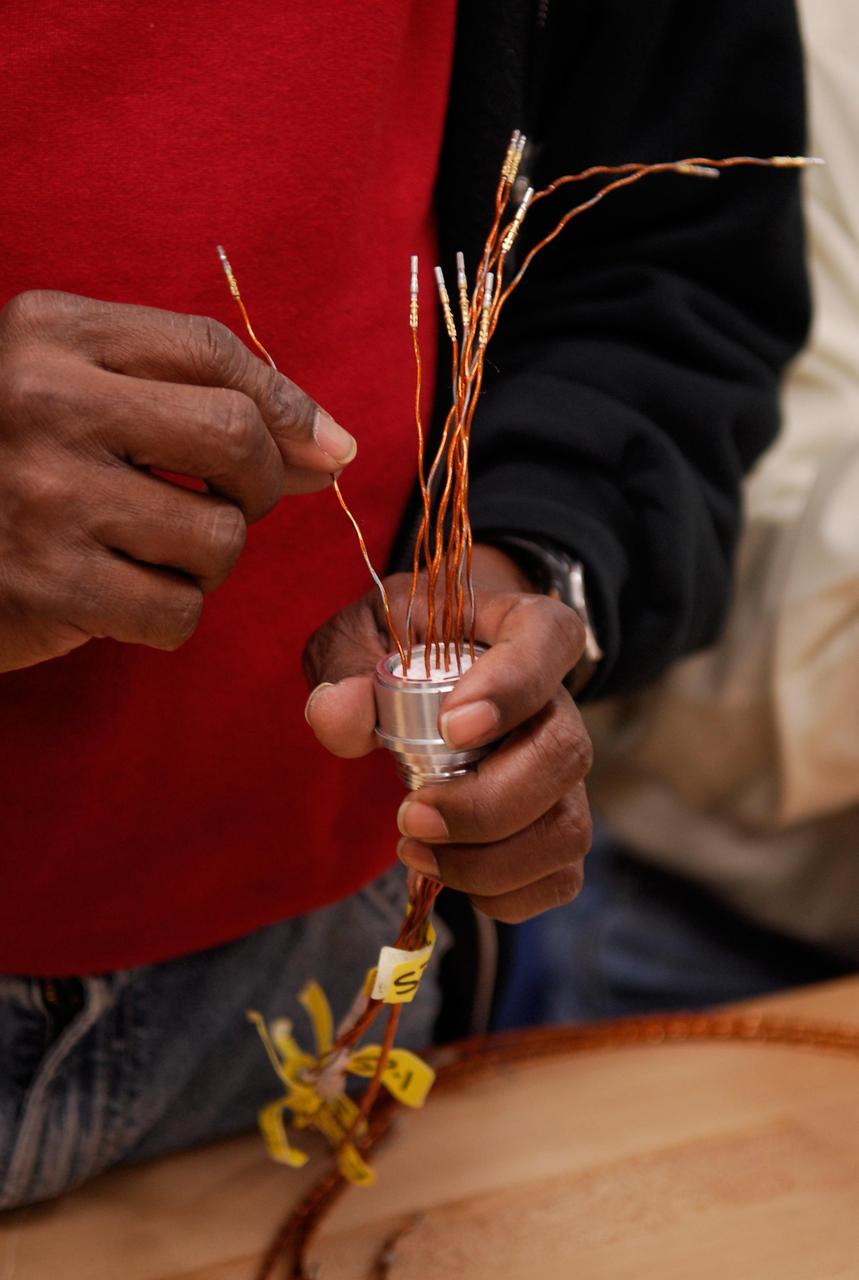
KENNEDY SPACE CENTER, FLA. -- At a lab at NASA's Kennedy Space Center, a Lockheed Martin technician prepares an electrical wiring harness during a procedure to solder the pins to the socket of the replacement feed-through connector that will be installed in the external fuel tank for space shuttle Atlantis' STS-122 mission. Two United Launch Alliance technicians, who performed this exacting task on the Centaur upper stage for Atlas and Titan launches in 1994, will be doing the soldering. Soldering the connector pins and sockets together addresses the most likely cause of a problem in the engine cutoff sensor system, or ECO system. Some of the tank's ECO sensors failed during propellant tanking for launch attempts on Dec. 6 and Dec. 9. Results of a tanking test on Dec. 18 pointed to an open circuit in the feed-through connector wiring, which is located at the base of the tank. The feed-through connector passes the wires from the inside of the tank to the outside. After the soldering is completed and the connector is reinstalled, shuttle program managers will decide on how to proceed. The launch date for mission STS-122 is under review. Photo credit: NASA/Kim Shiflett
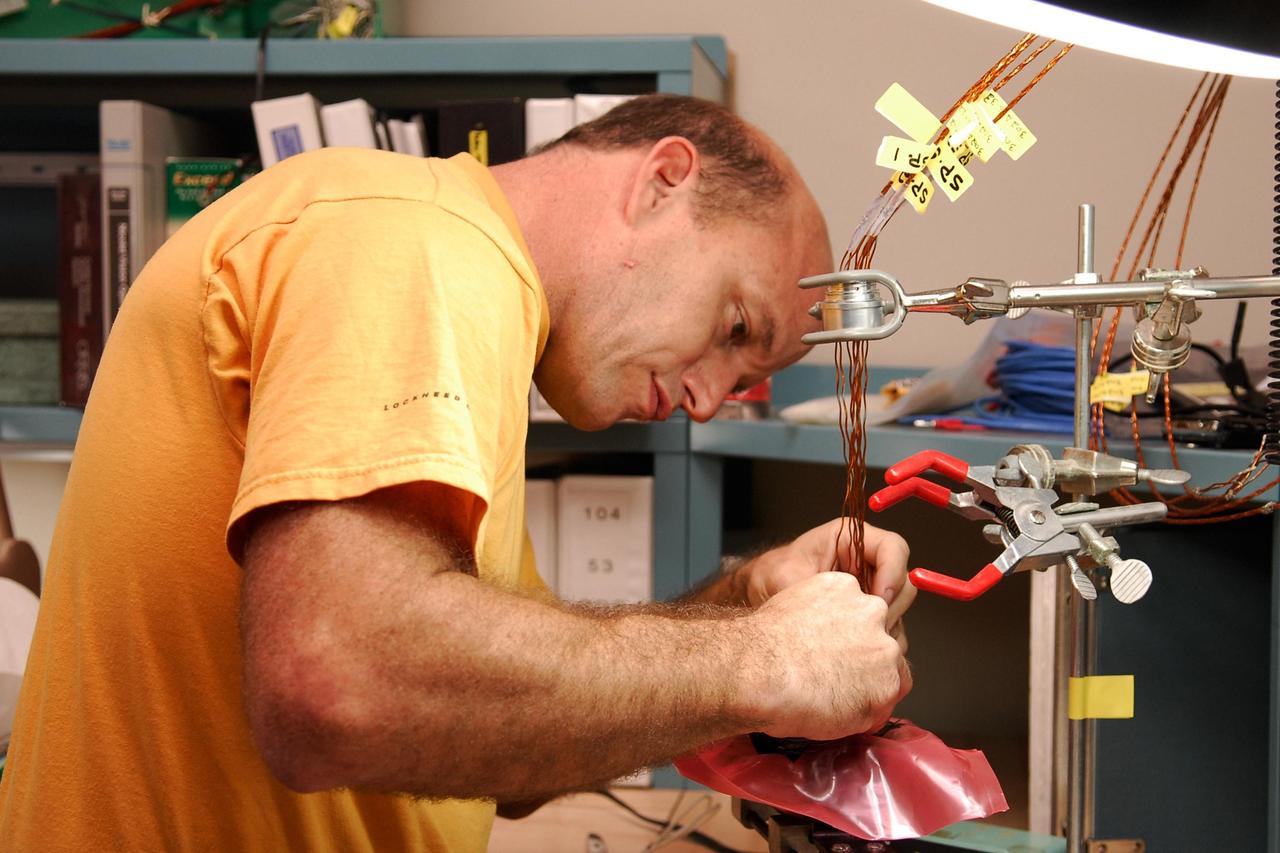
KENNEDY SPACE CENTER, FLA. -- At a lab at NASA's Kennedy Space Center, Kevin Wyckoff, an aerospace technician with the United Launch Alliance, inserts an electrical wiring harness into a replacement feed-through connector during preparations to solder the pins to the socket of the connector. The connector will later be installed in the external fuel tank for space shuttle Atlantis' STS-122 mission. The technician performed this exacting task on the Centaur upper stage for Atlas and Titan launches in 1994 and was specifically chosen for the task. Soldering the connector pins and sockets together addresses the most likely cause of a problem in the engine cutoff sensor system, or ECO system. Some of the tank's ECO sensors failed during propellant tanking for launch attempts on Dec. 6 and Dec. 9. Results of a tanking test on Dec. 18 pointed to an open circuit in the feed-through connector wiring, which is located at the base of the tank. The feed-through connector passes the wires from the inside of the tank to the outside. After the soldering is completed and the connector is reinstalled, shuttle program managers will decide on how to proceed. The launch date for mission STS-122 is under review. Photo credit: NASA/Kim Shiflett
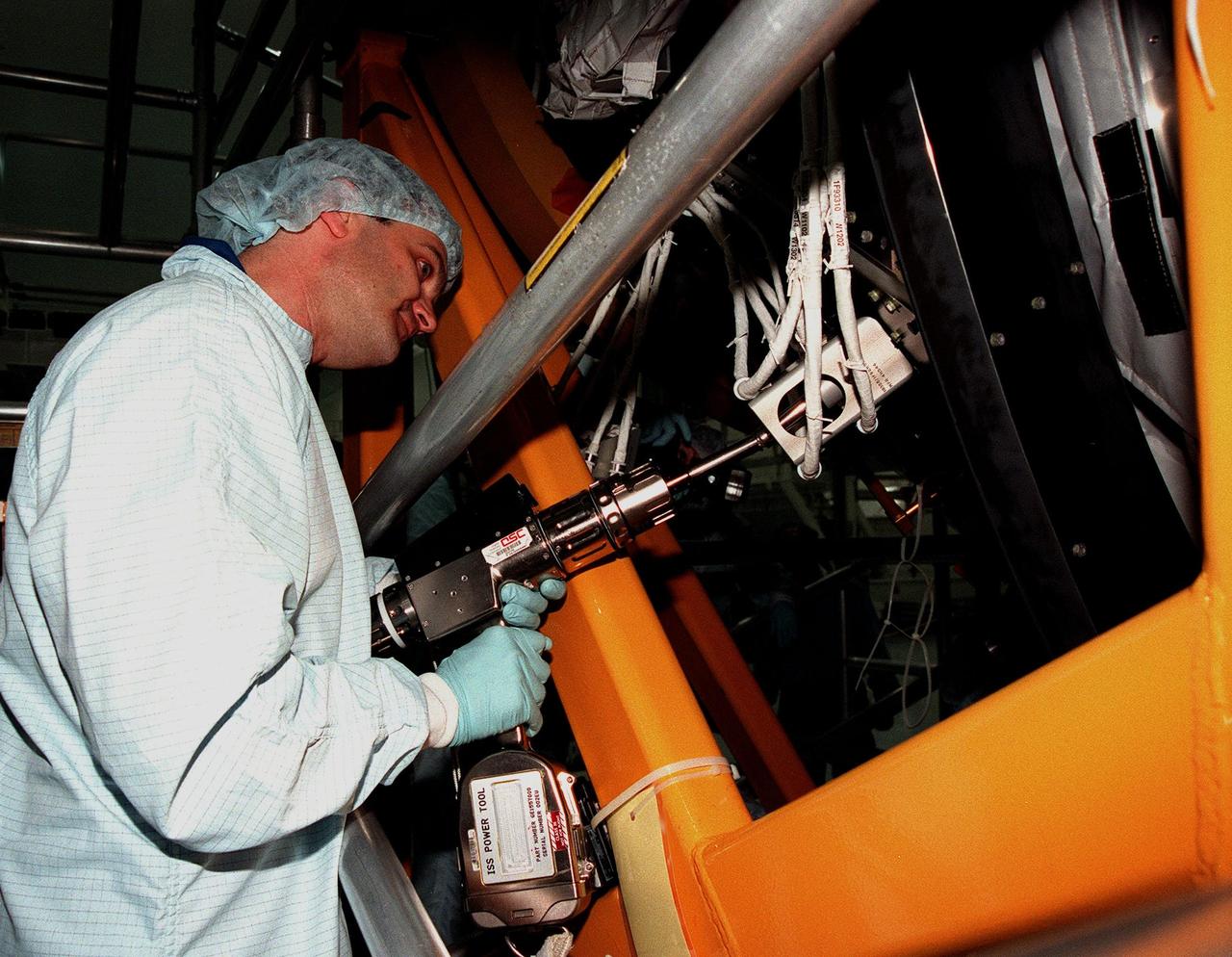
In the Space Station Processing Facility, STS-92 Mission Specialist Jeff Wisoff practices removing a wire harness from the Pressurized Mating Adapter-3, part of the payload on the STS-92 mission to the International Space Station (ISS). STS-92 is targeted for launch in December 1999. Other crew members visiting KSC are Commander Brian Duffy and Mission Specialists Koichi Wakata, Leroy Chiao, Michael Lopez-Alegria and Bill McArthur. STS-92 is the fourth U.S. flight for construction of the International Space Station. The payload also includes an integrated truss structure
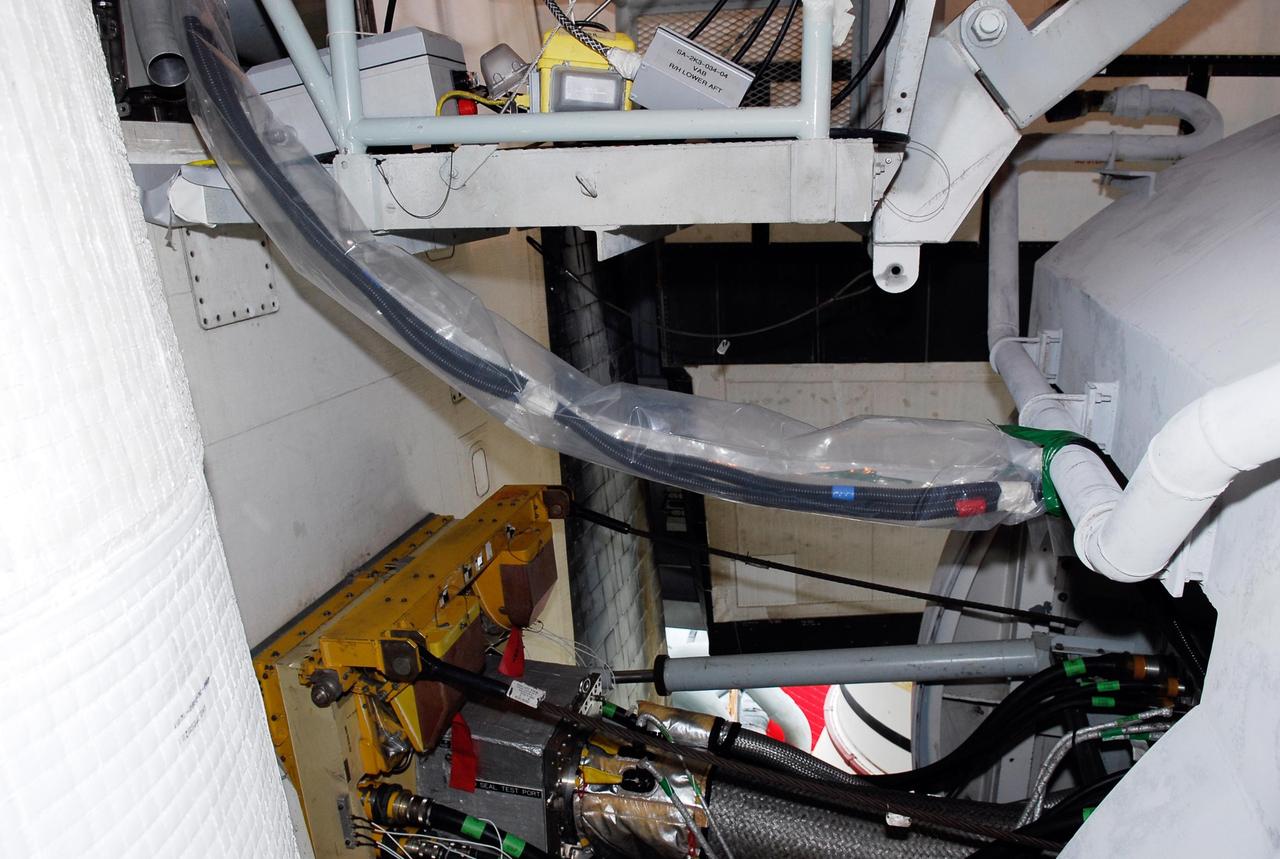
KENNEDY SPACE CENTER, FLA. -- On Launch Pad 39A, cables lead from an electrical harness in space shuttle Atlantis' aft main engine compartment connected with the engine cut-off, or ECO, system into the tail mast. The test wiring leads from the tail mast to the interior of the mobile launcher platform where the Time Domain Reflectometry, or TDR, test equipment will be located to test the sensor system. The shuttle's planned launches on Dec. 6 and Dec. 9 were postponed because of false readings from the part of the ECO system that monitors the liquid hydrogen section of the tank. The liftoff date from NASA's Kennedy Space Center, Florida, is now targeted for Jan. 10, depending on the resolution of the problem in the fuel sensor system. Photo credit: NASA/Kim Shiflett
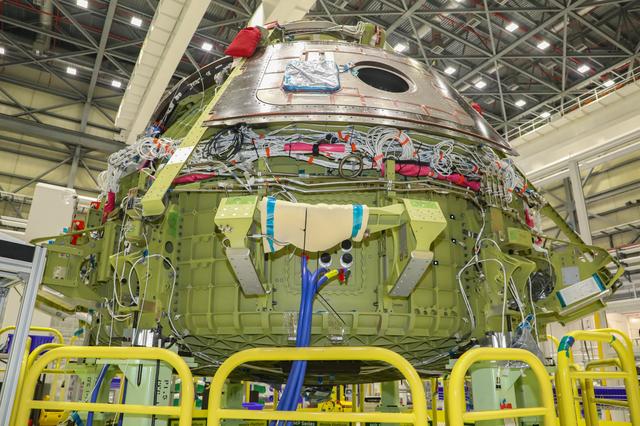
On March 11, Boeing mated the upper and lower domes of its CST-100 Starliner spacecraft slated to fly in the company’s Orbital Flight Test (OFT). The mate was completed at Boeing’s Commercial Crew and Cargo Processing Facility at NASA’s Kennedy Space Center in Florida. Starliner uses an innovative weldless design where the main structure is made of two domes, each spin-formed and machined from a solid piece of aerospace-grade aluminum. The two domes then undergo outfitting with avionics, cooling systems, wire harnesses, fuel and life support lines, and other critical systems before being mated together. This is one of the last major milestones ahead of final processing and closeouts for flight. OFT is Boeing’s uncrewed flight test of Starliner and part of NASA’s Commercial Crew Program, which will return human spaceflight launches into low-Earth orbit from U.S. soil.
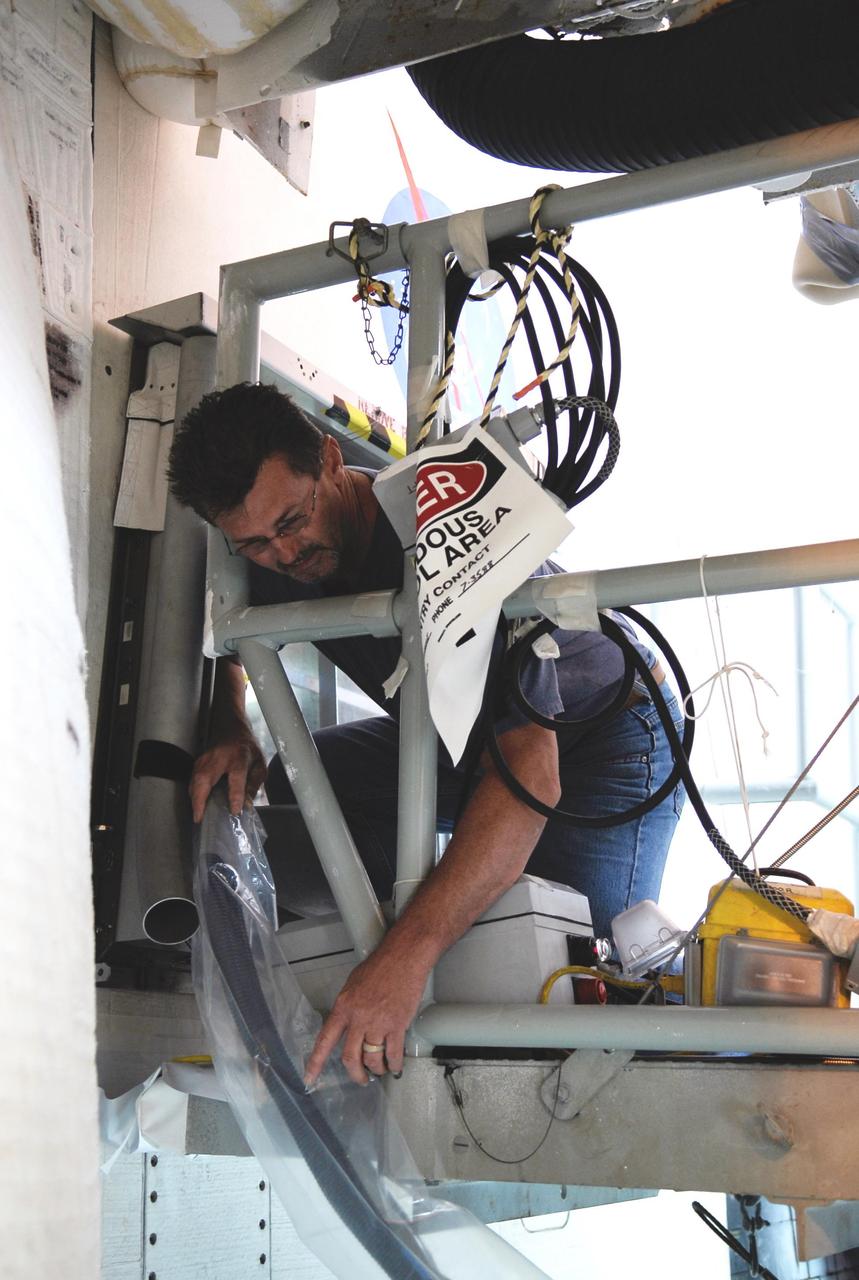
KENNEDY SPACE CENTER, FLA. -- On Launch Pad 39A, a technician prepares a cable from an electrical harness in space shuttle Atlantis' aft main engine compartment connected with the engine cut-off, or ECO, system leading into the tail mast. The test wiring leads from the tail mast to the interior of the mobile launcher platform where the Time Domain Reflectometry, or TDR, test equipment will be located to test the sensor system. The shuttle's planned launches on Dec. 6 and Dec. 9 were postponed because of false readings from the part of the ECO system that monitors the liquid hydrogen section of the tank. The liftoff date from NASA's Kennedy Space Center, Florida, is now targeted for Jan. 10, depending on the resolution of the problem in the fuel sensor system. Photo credit: NASA/Kim Shiflett
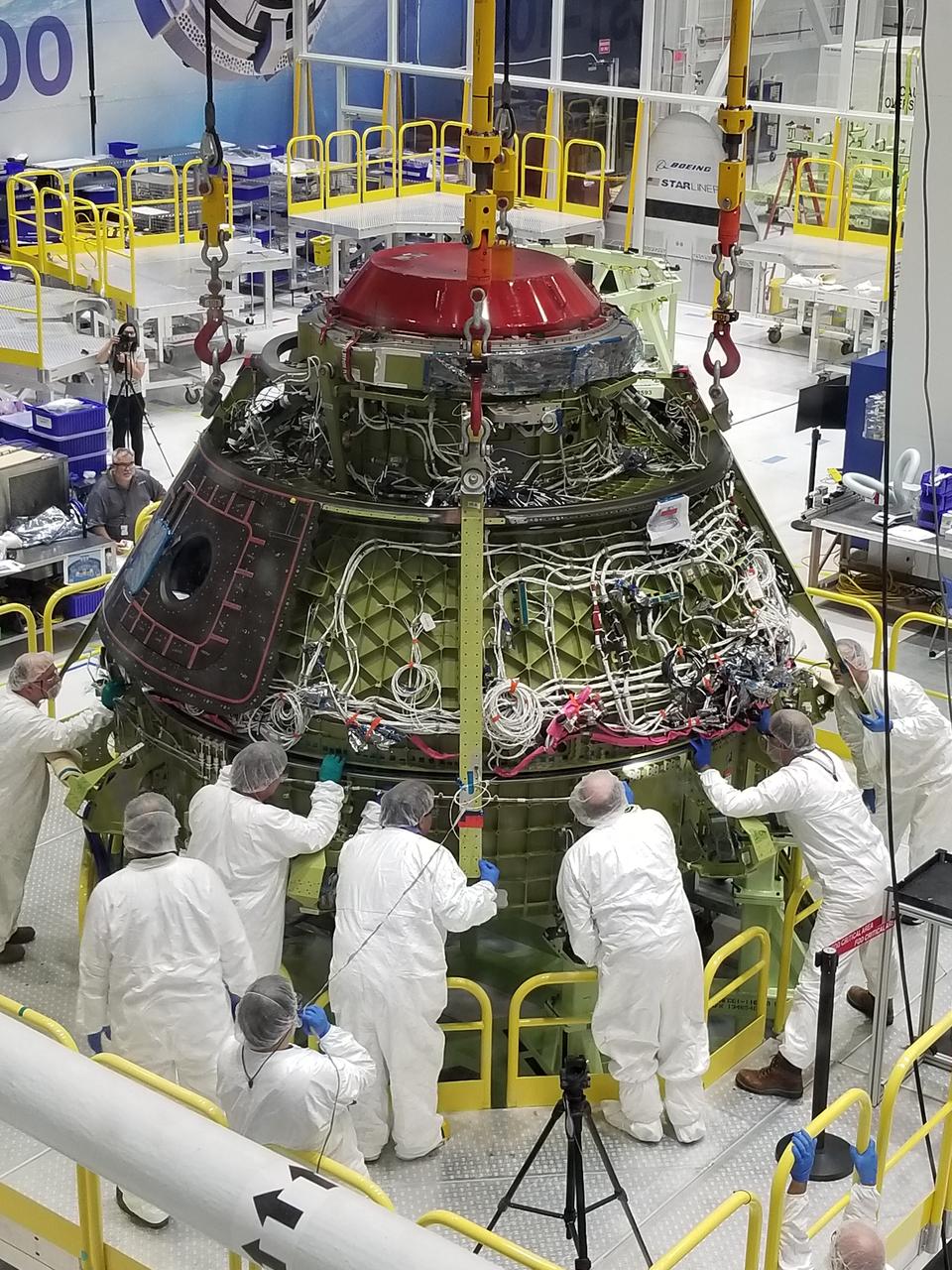
Boeing technicians meticulously lower its CST-100 Starliner’s upper dome to the lower dome before bolting and sealing the pressure vessel on March 11. This is the Starliner spacecraft slated to fly in the company’s Orbital Flight Test (OFT). The mate was completed at Boeing’s Commercial Crew and Cargo Processing Facility at NASA’s Kennedy Space Center in Florida. Starliner uses an innovative weldless design where the main structure is made of two domes, each spin-formed and machined from a solid piece of aerospace-grade aluminum. The two domes then undergo outfitting with avionics, cooling systems, wire harnesses, fuel and life support lines, and other critical systems before being mated together. This is one of the last major milestones ahead of final processing and closeouts for flight. OFT is Boeing’s uncrewed flight test of Starliner and part of NASA’s Commercial Crew Program, which will return human spaceflight launches into low-Earth orbit from U.S. soil.
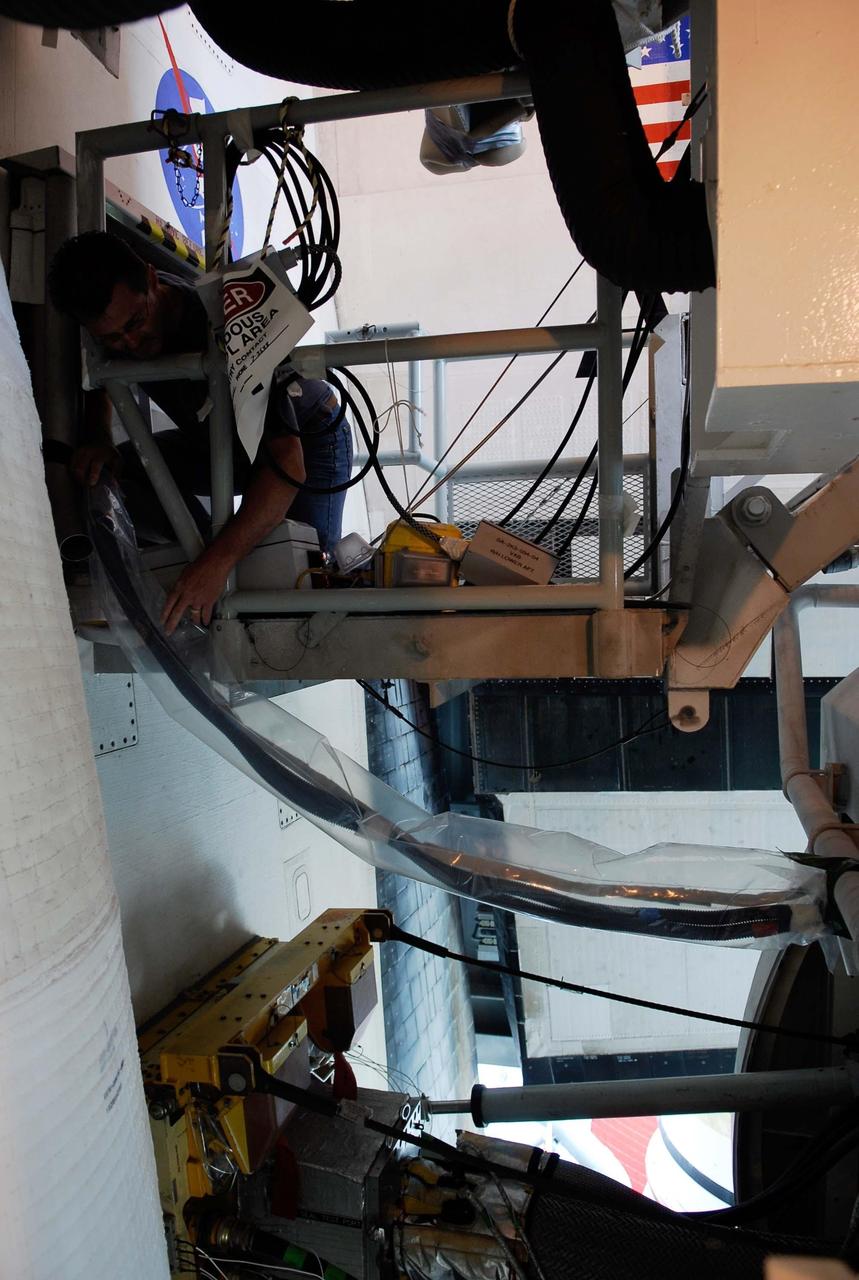
KENNEDY SPACE CENTER, FLA. -- On Launch Pad 39A, cables lead from an electrical harness in space shuttle Atlantis' aft main engine compartment connected with the engine cut-off, or ECO, system into the tail mast. The test wiring leads from the tail mast to the interior of the mobile launcher platform where the Time Domain Reflectometry, or TDR, test equipment will be located to test the sensor system. The shuttle's planned launches on Dec. 6 and Dec. 9 were postponed because of false readings from the part of the ECO system that monitors the liquid hydrogen section of the tank. The liftoff date from NASA's Kennedy Space Center, Florida, is now targeted for Jan. 10, depending on the resolution of the problem in the fuel sensor system. Photo credit: NASA/Kim Shiflett
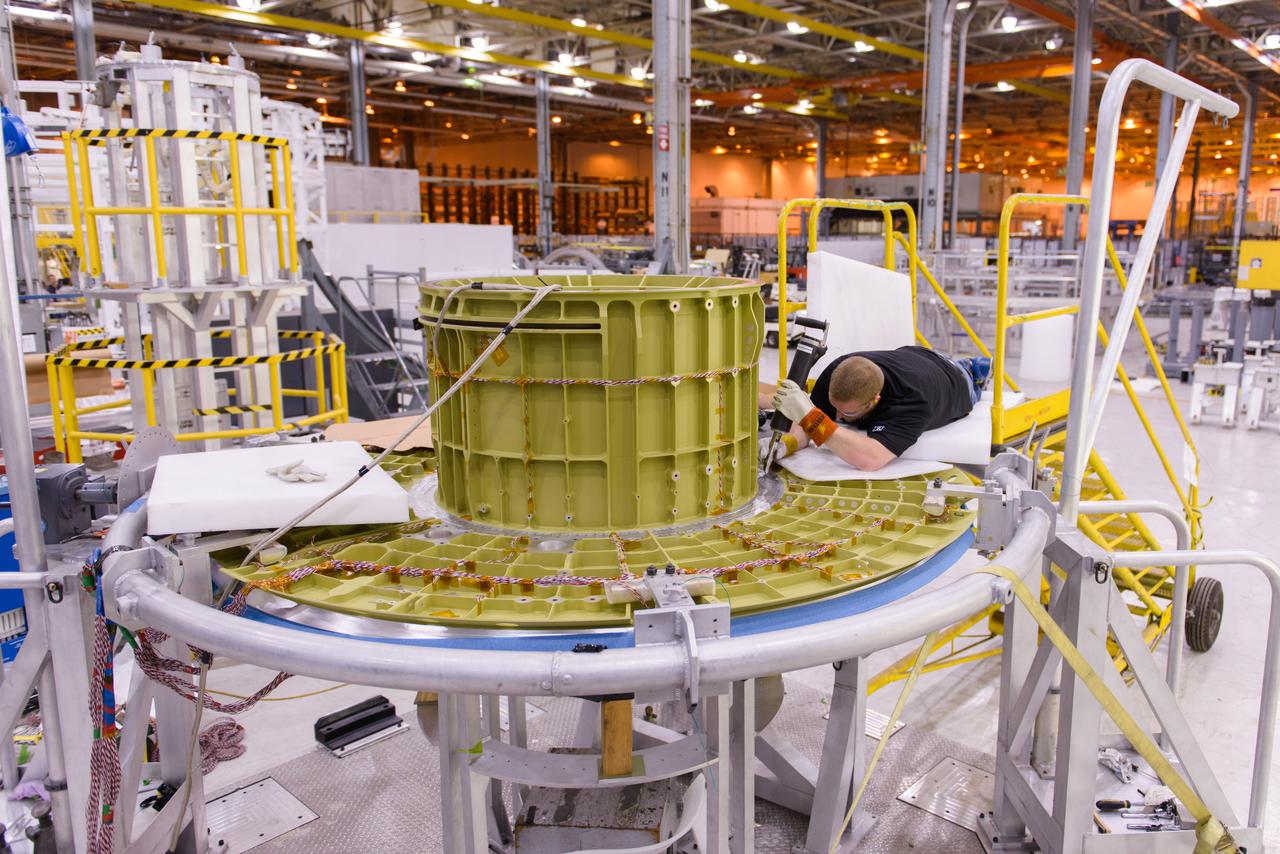
Lockheed Martin engineers at Michoud Assembly Facility in New Orleans, Louisiana, prepare elements of the Orion pressure vessel for welding on Sept. 23, 2015. Part of Batch image transfer from Flickr.
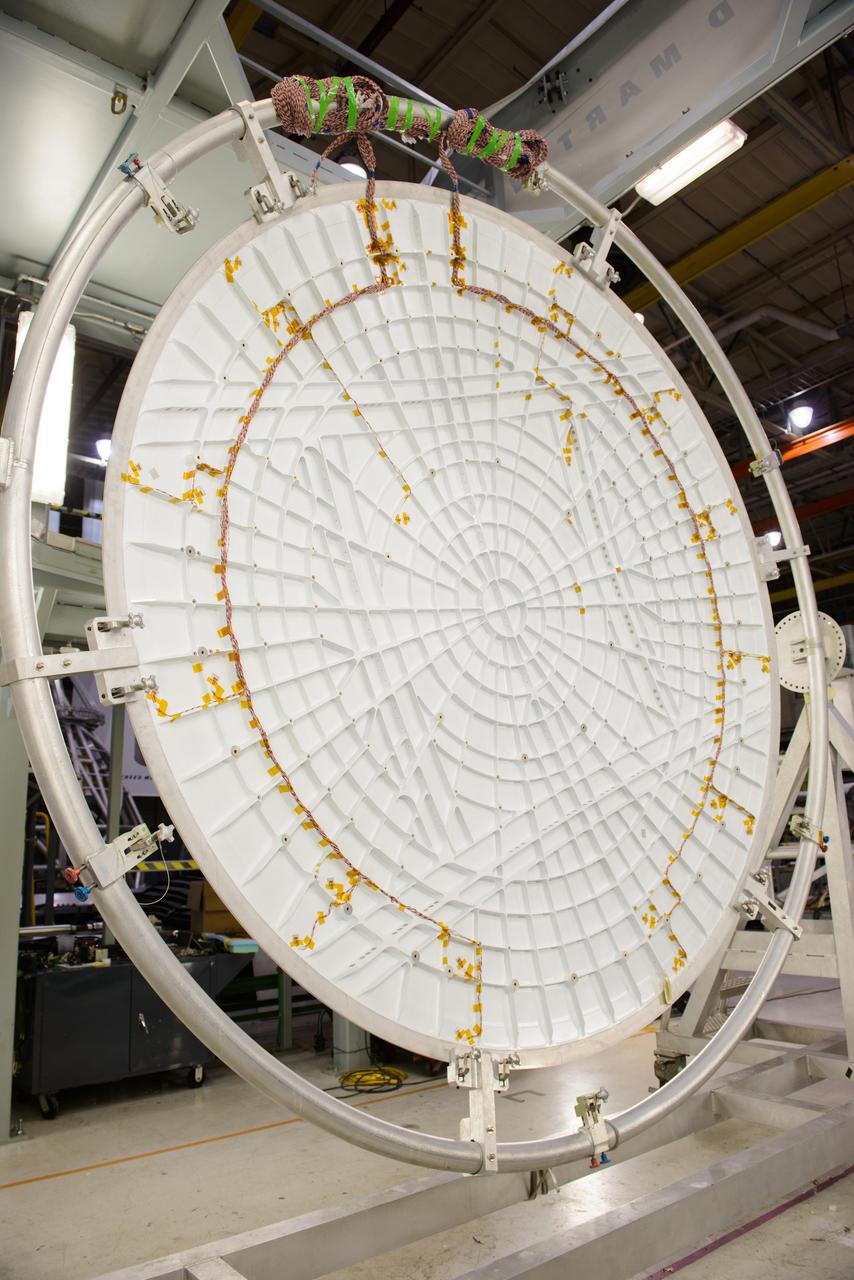
Lockheed Martin engineers at Michoud Assembly Facility in New Orleans, Louisiana, prepare elements of the Orion pressure vessel for welding on Sept. 23, 2015. Part of Batch image transfer from Flickr.
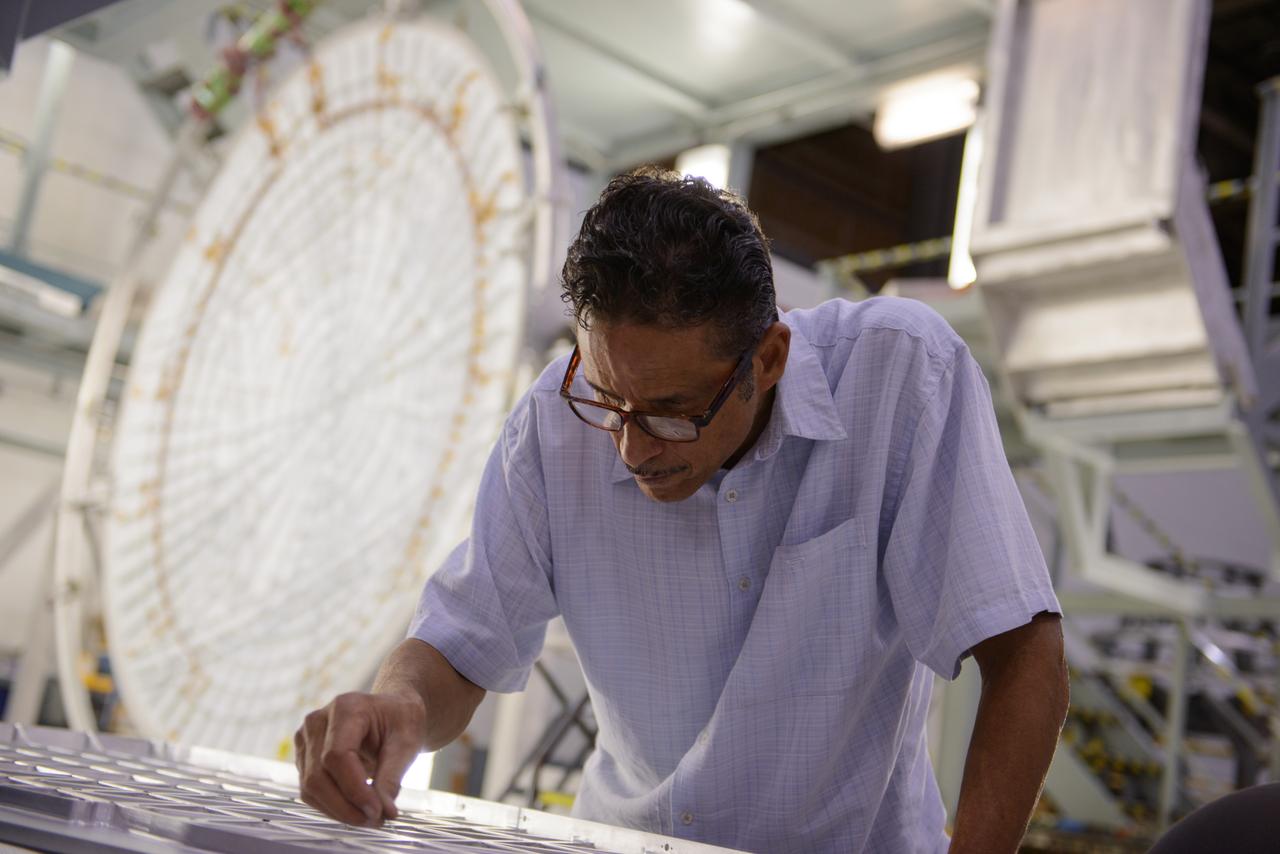
Lockheed Martin engineers at Michoud Assembly Facility in New Orleans, Louisiana, prepare elements of the Orion pressure vessel for welding on Sept. 23, 2015. Part of Batch image transfer from Flickr.
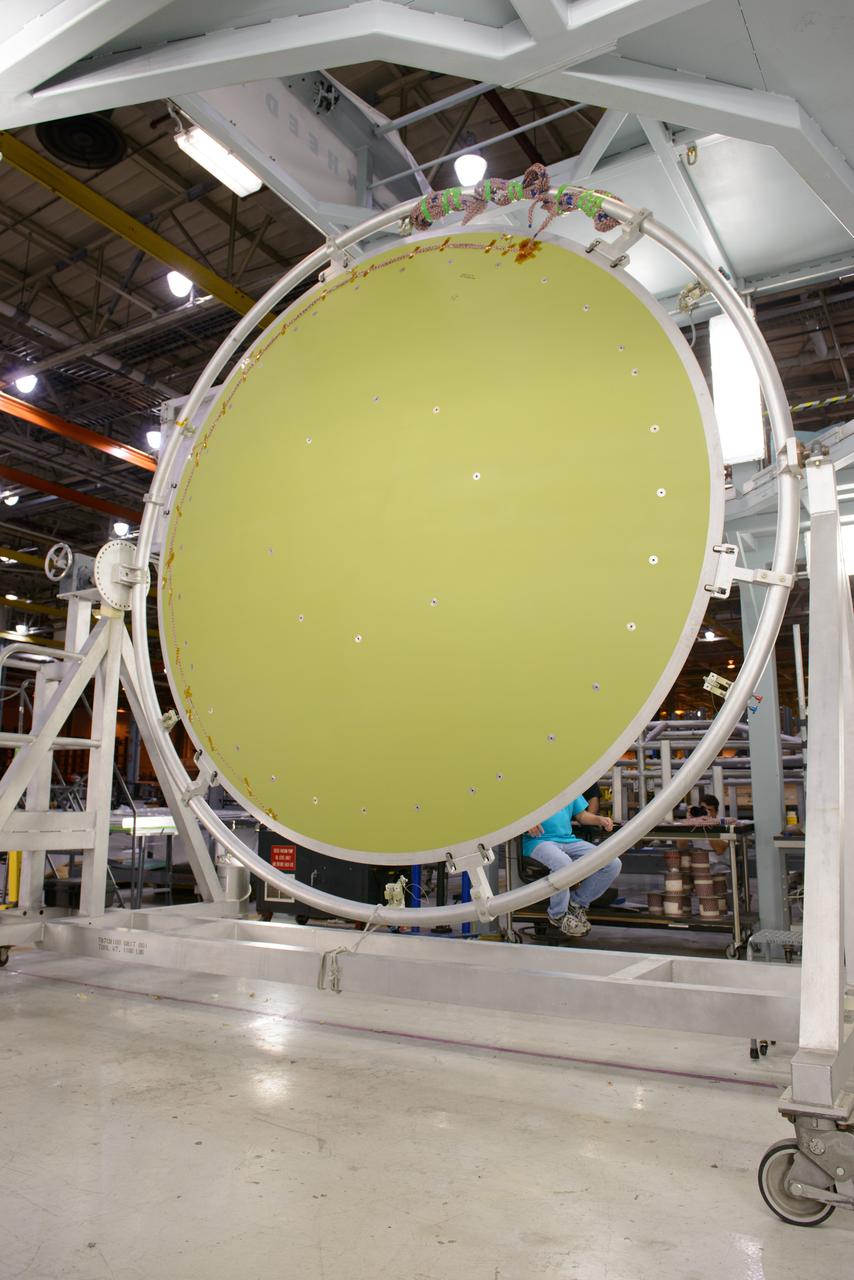
Lockheed Martin engineers at Michoud Assembly Facility in New Orleans, Louisiana, prepare elements of the Orion pressure vessel for welding on Sept. 23, 2015. Part of Batch image transfer from Flickr.
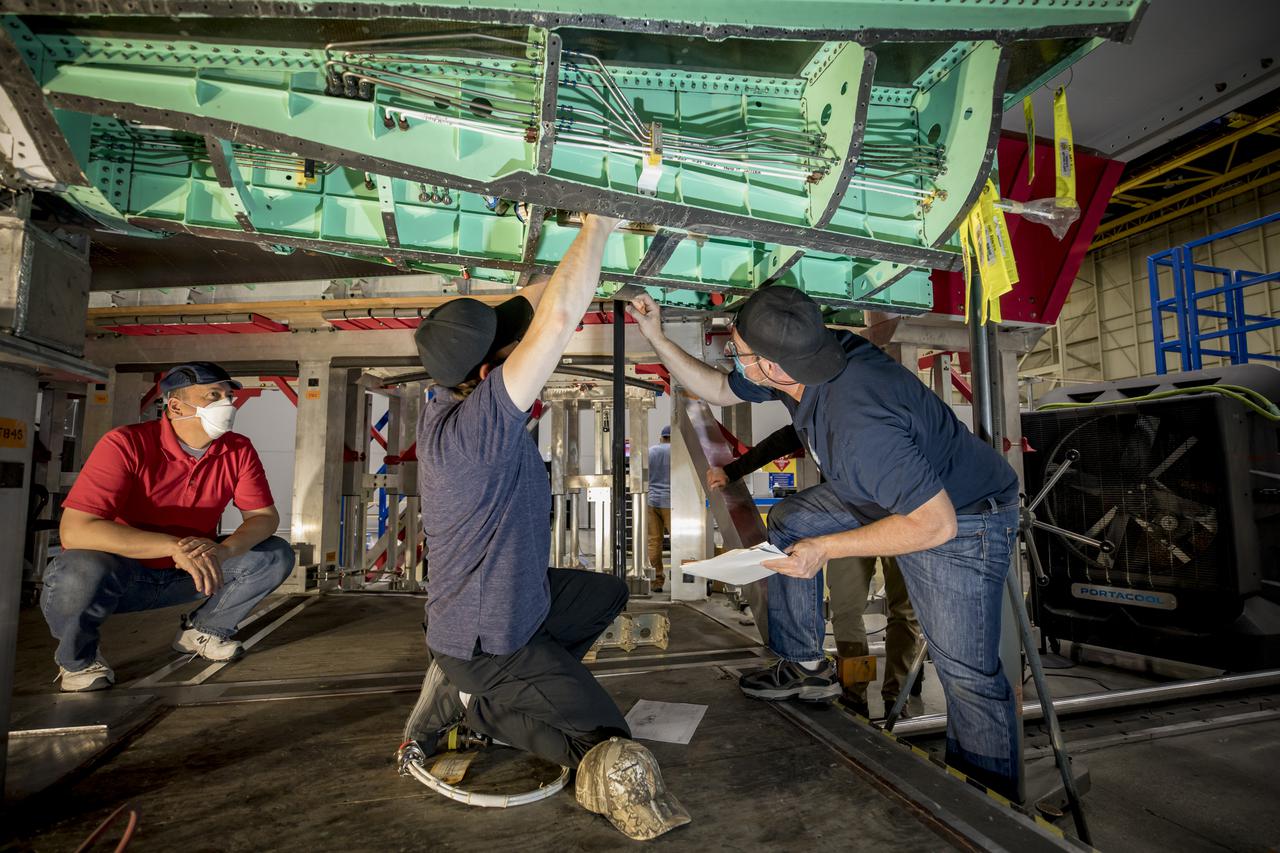
Technicians preform some installation work in the mid-bay on the X-59 Quiet SuperSonic Technology or QueSST aircraft. The aircraft, under construction at Lockheed Martin Skunk Works in Palmdale, California, will fly to demonstrate the ability to fly supersonic while reducing the loud sonic boom to a quiet sonic thump. Lockheed Martin Photography By Garry Tice 1011 Lockheed Way, Palmdale, Ca. 93599 Event: SEG 450 Mid Bay - Encoders Date: 4/28/2021
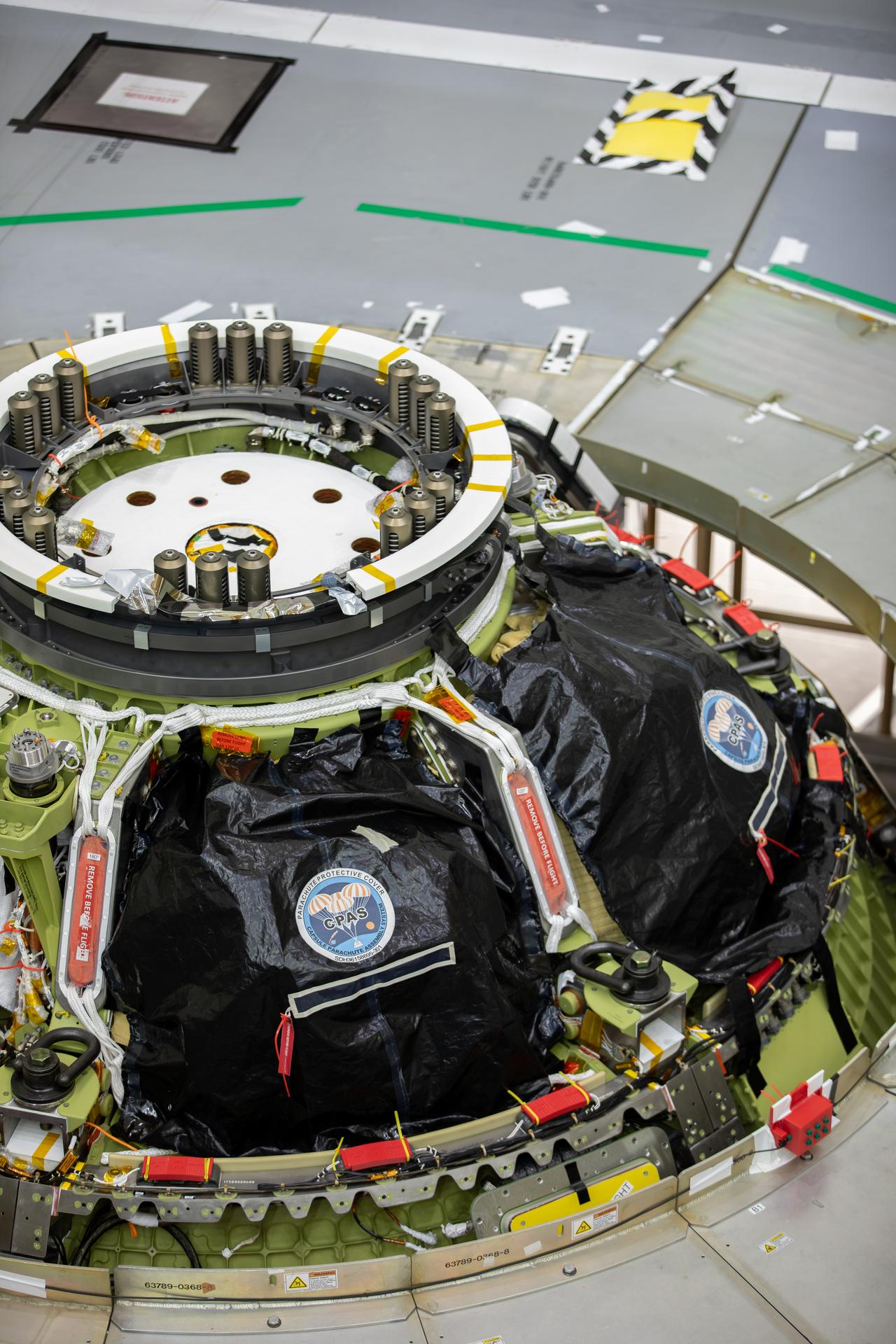
A photographer captures the top of the Artemis III Orion crew module and its parachutes after integration with the European Service Module on Friday, July 31, 2026, inside the Neil A. Armstrong Operations and Checkout Building at NASA’s Kennedy Space Center in Florida. Now integrated, the team will power up the combined crew and service module for the first time then begin altitude chamber testing, which will put the spacecraft through conditions as close as possible to the environment it will experience in low Earth orbit. Artemis III and the four-person crew will carry out a series of objectives in low Earth orbit designed to demonstrate critical systems needed for future lunar landings, beginning with Artemis IV.