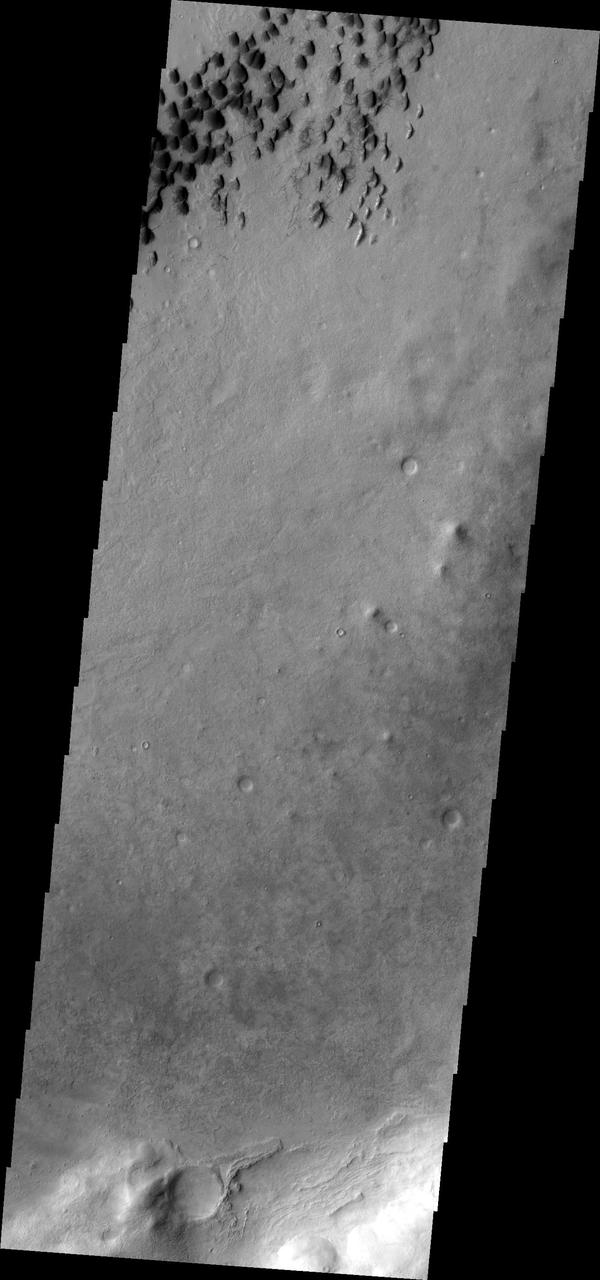
Wirtz Crater
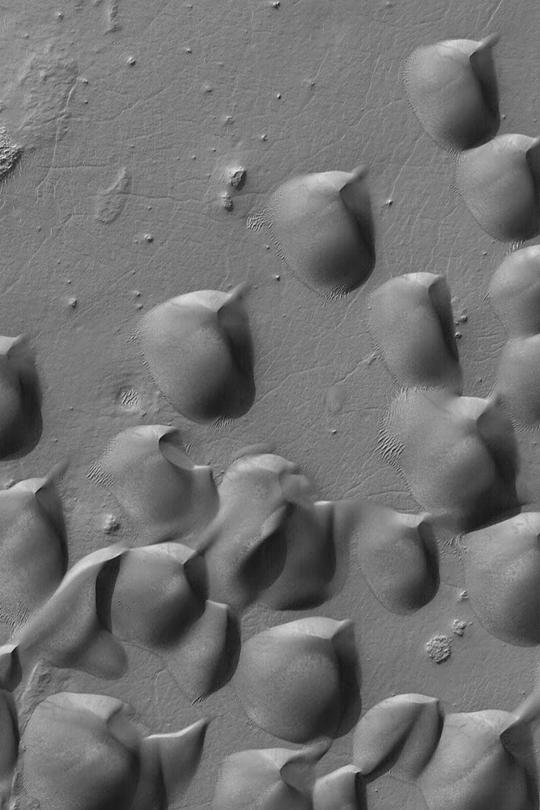
Wirtz Crater Dune Field
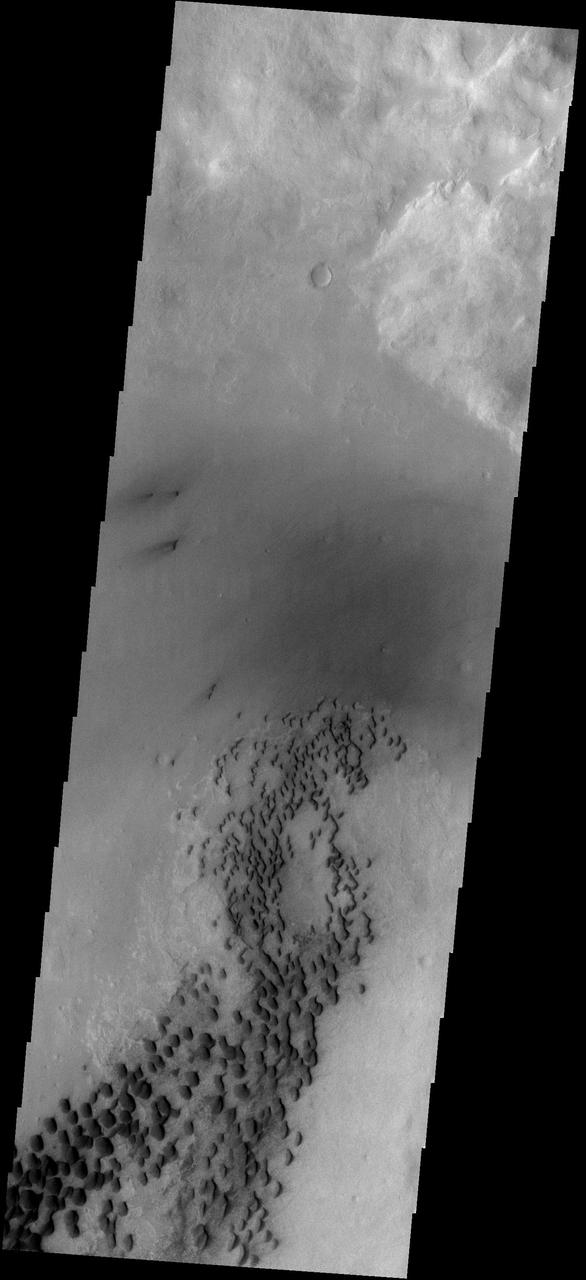
Dunes on Wirtz Crater
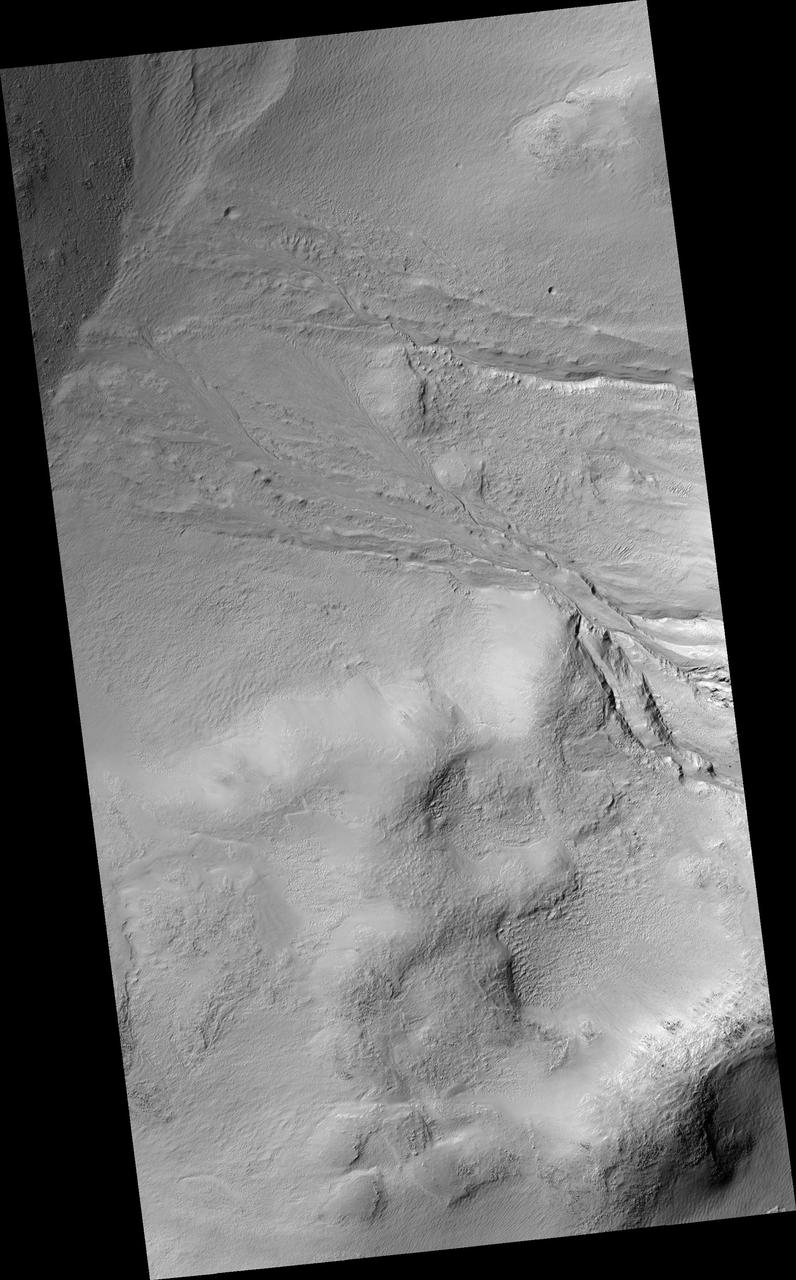
Gullies in Wirtz Crater
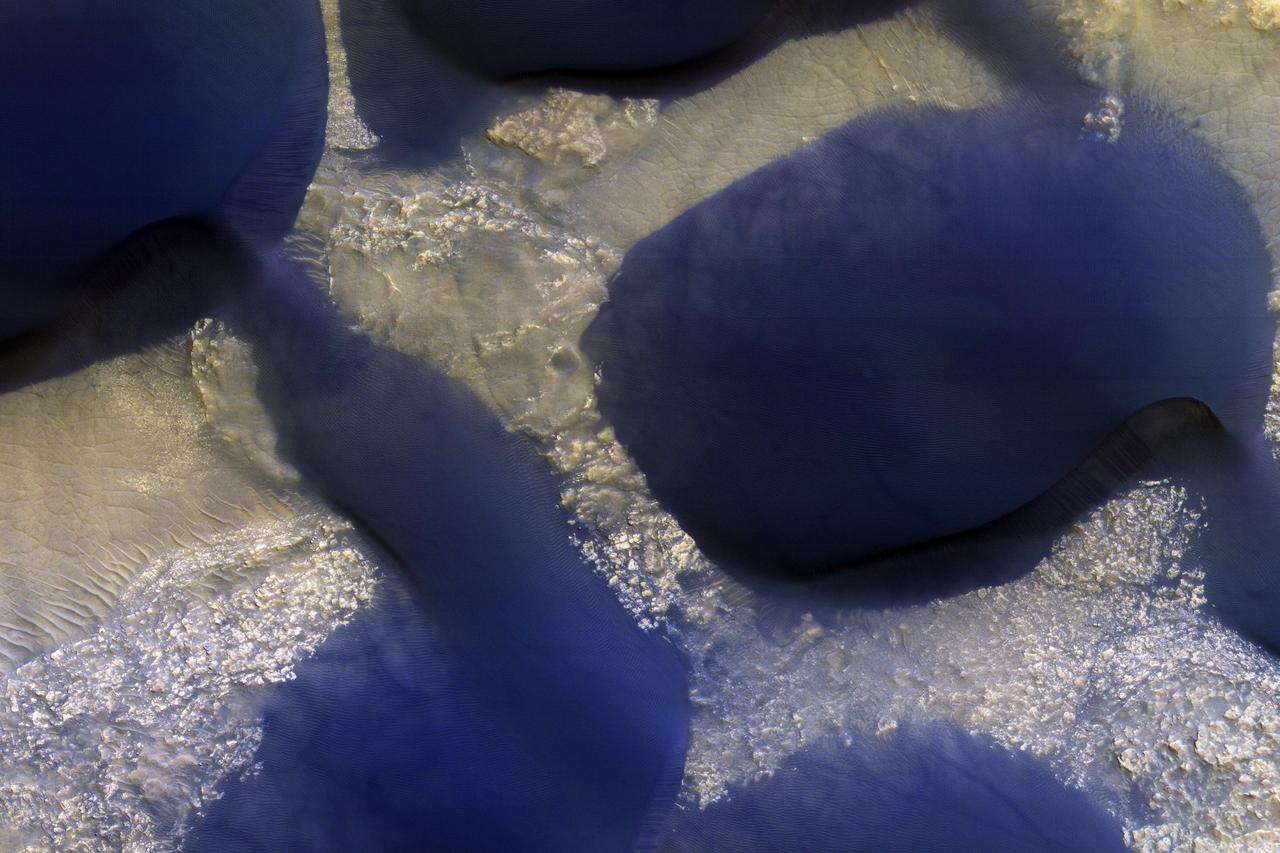
The large dark feature is a classic Martian sand dune. Most sand on Earth is made from the mineral quartz, which is white and bright. On Mars, most sand is composed of dark basalt, a volcanic rock. For this reason, dunes on Mars are darker than those on Earth. The dunes in this observation, within Wirtz Crater, are known as "barchans." The steepest slope is on the eastern (right) side, partially in shadow, and represents the direction the dune is migrating as the sand is blown and transported by the wind. Small ripples are visible on much of the dune surface. The dark streaks on the dune are tracks left by passing vortices known to us as dust devils. These raise dust off the dune, revealing a darker substrate. http://photojournal.jpl.nasa.gov/catalog/PIA12289
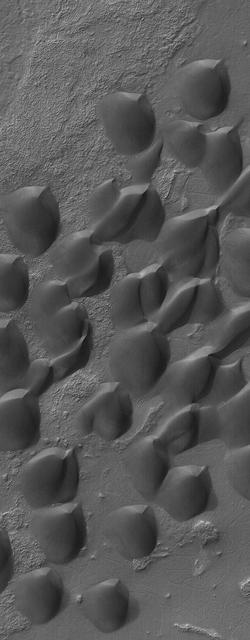
This MOC image shows dark sand dunes, formed by winds blowing from the southwest lower left, in Wirtz Crater. The crater is named for Carl Wilhelm Wirtz , a German astronomer
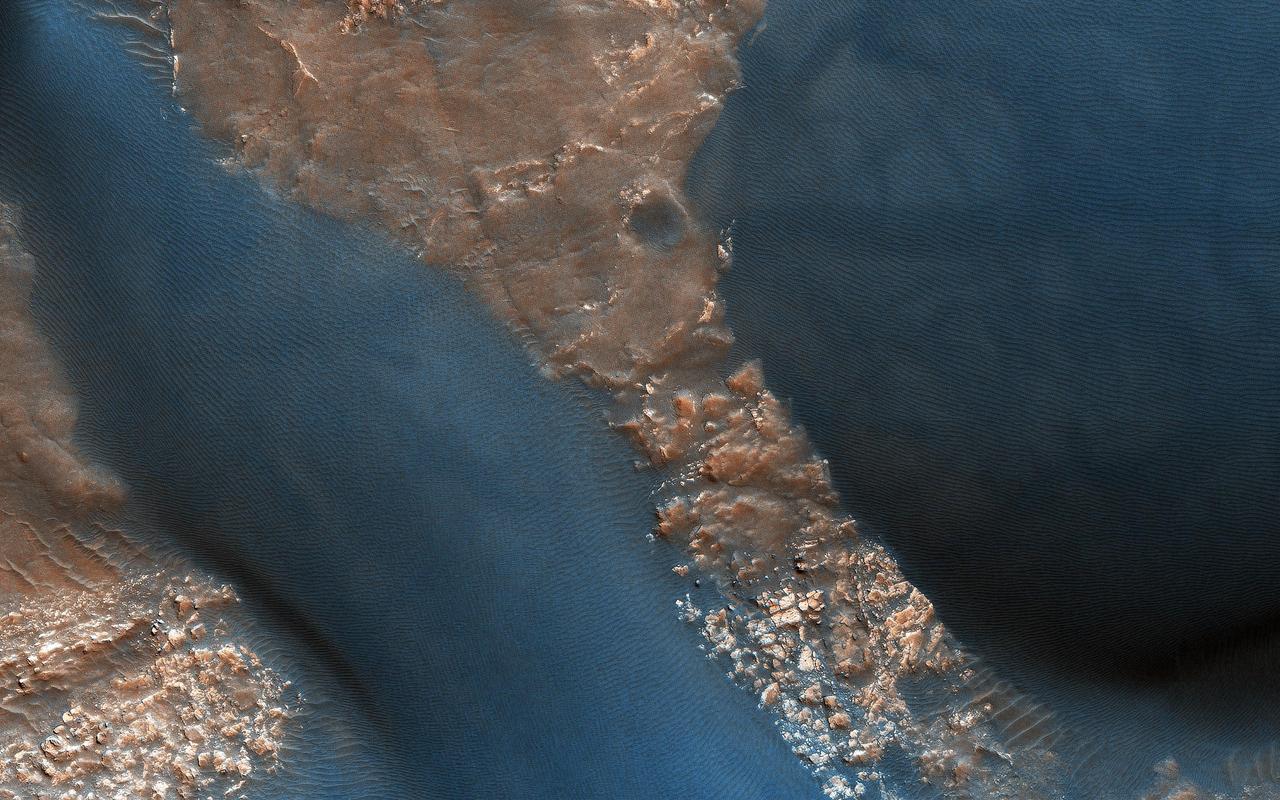
These gorgeous dunes are likely active, with ripples on their upwind slopes and dark streaks on their downwind slopes forming and changing due to wind-driven sand motion. Color has been enhanced to highlight the dunes. This motion will also keep the dune brink (the edge between the two slopes) and bottom edges sharply defined. The dark lines and squiggles on the dune slope are formed by passing dust devils. https://photojournal.jpl.nasa.gov/catalog/PIA22869