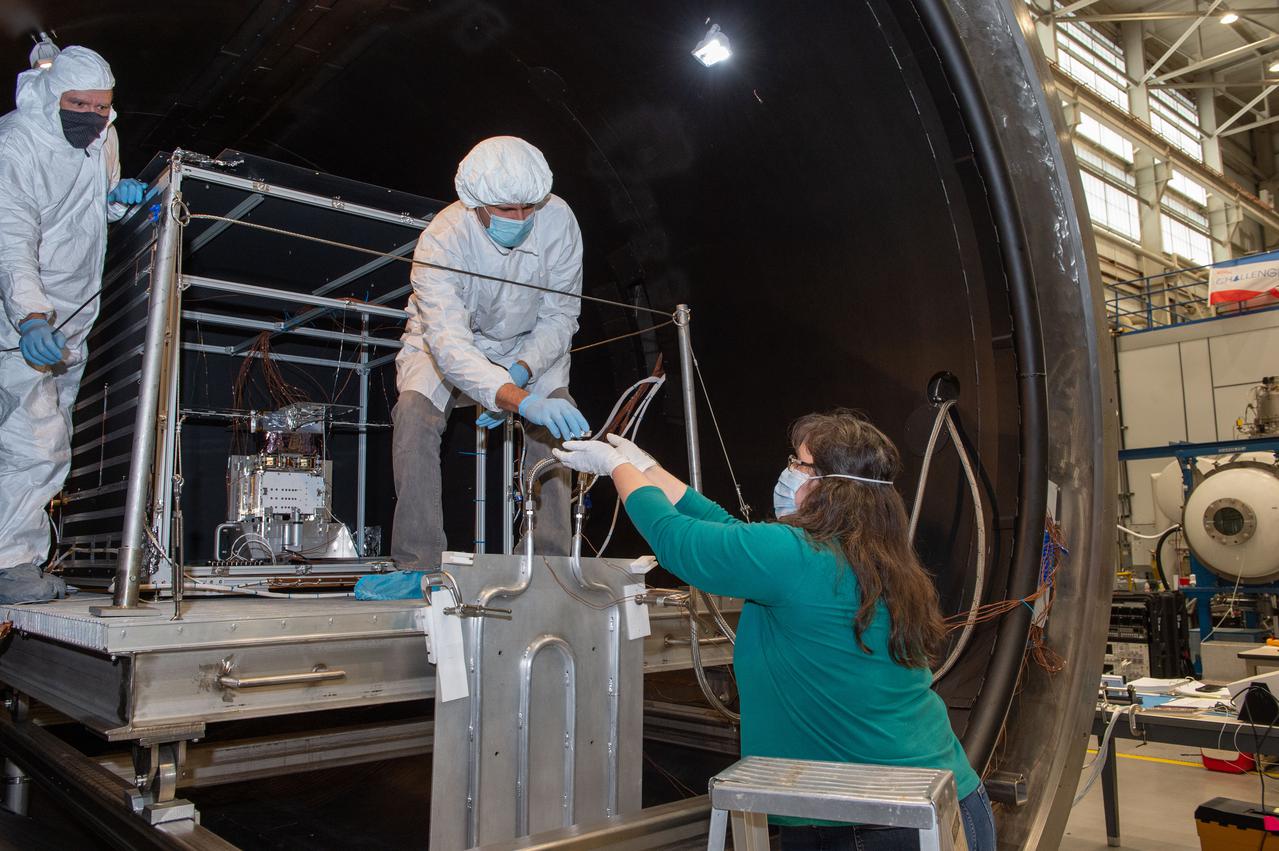
Miria Finckenor collects Optical Witness Samples and swab samples for analysis to verify that the NEA Scout thermal vacuum bake-out is complete and the chamber is clean.
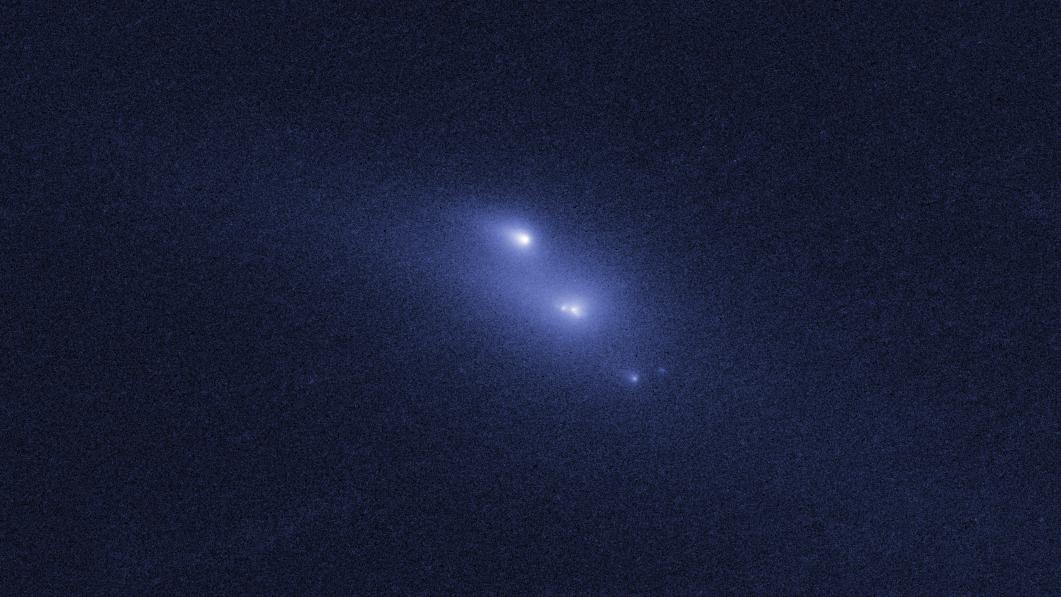
Though fragile comet nuclei have been seen falling apart as they near the Sun, nothing like the slow breakup of an asteroid has ever before been observed in the asteroid belt. A series of Hubble Space Telescope images shows that the fragments are drifting away from each other at a leisurely one mile per hour. This makes it unlikely that the asteroid is disintegrating because of a collision with another asteroid. A plausible explanation is that the asteroid is crumbling due to a subtle effect of sunlight. This causes the rotation rate to slowly increase until centrifugal force pulls the asteroid apart. The asteroid's remnant debris, weighing in at 200,000 tons, will in the future provide a rich source of meteoroids. Hubble Observation of P/2013 R3 - November 15, 2013 Credit: NASA, ESA, and D. Jewitt (University of California, Los Angeles) Read more: <a href="http://1.usa.gov/1ig2E0x" rel="nofollow">1.usa.gov/1ig2E0x</a> <b><a href="http://www.nasa.gov/audience/formedia/features/MP_Photo_Guidelines.html" rel="nofollow">NASA image use policy.</a></b> <b><a href="http://www.nasa.gov/centers/goddard/home/index.html" rel="nofollow">NASA Goddard Space Flight Center</a></b> enables NASA’s mission through four scientific endeavors: Earth Science, Heliophysics, Solar System Exploration, and Astrophysics. Goddard plays a leading role in NASA’s accomplishments by contributing compelling scientific knowledge to advance the Agency’s mission. <b>Follow us on <a href="http://twitter.com/NASAGoddardPix" rel="nofollow">Twitter</a></b> <b>Like us on <a href="http://www.facebook.com/pages/Greenbelt-MD/NASA-Goddard/395013845897?ref=tsd" rel="nofollow">Facebook</a></b> <b>Find us on <a href="http://instagram.com/nasagoddard?vm=grid" rel="nofollow">Instagram</a></b>
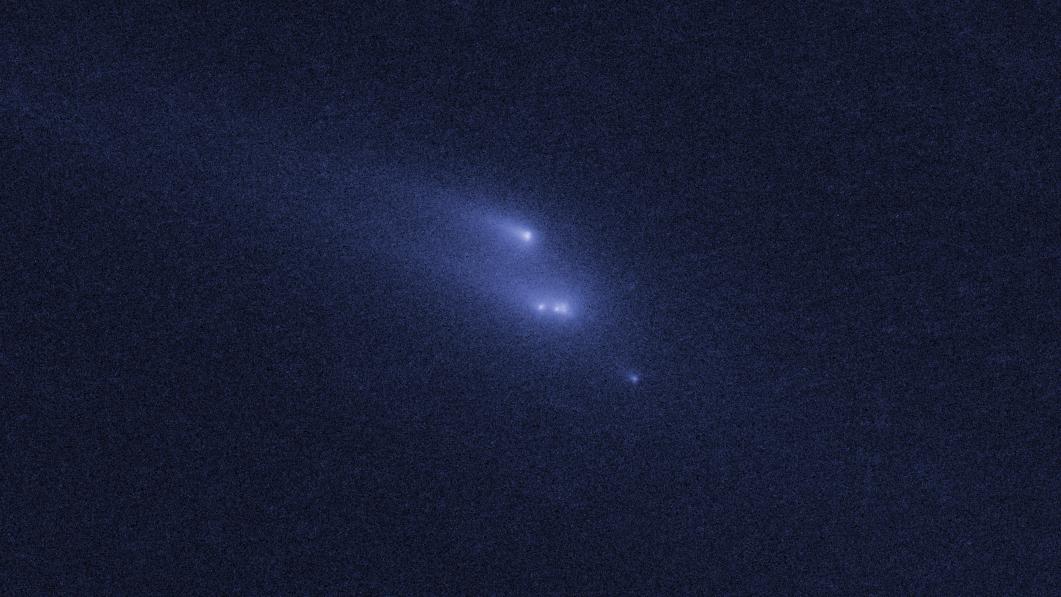
Though fragile comet nuclei have been seen falling apart as they near the Sun, nothing like the slow breakup of an asteroid has ever before been observed in the asteroid belt. A series of Hubble Space Telescope images shows that the fragments are drifting away from each other at a leisurely one mile per hour. This makes it unlikely that the asteroid is disintegrating because of a collision with another asteroid. A plausible explanation is that the asteroid is crumbling due to a subtle effect of sunlight. This causes the rotation rate to slowly increase until centrifugal force pulls the asteroid apart. The asteroid's remnant debris, weighing in at 200,000 tons, will in the future provide a rich source of meteoroids. Hubble Observation of P/2013 R3 - November 15, 2013 Credit: NASA, ESA, and D. Jewitt (University of California, Los Angeles) Read more: <a href="http://1.usa.gov/1ig2E0x" rel="nofollow">1.usa.gov/1ig2E0x</a> <b><a href="http://www.nasa.gov/audience/formedia/features/MP_Photo_Guidelines.html" rel="nofollow">NASA image use policy.</a></b> <b><a href="http://www.nasa.gov/centers/goddard/home/index.html" rel="nofollow">NASA Goddard Space Flight Center</a></b> enables NASA’s mission through four scientific endeavors: Earth Science, Heliophysics, Solar System Exploration, and Astrophysics. Goddard plays a leading role in NASA’s accomplishments by contributing compelling scientific knowledge to advance the Agency’s mission. <b>Follow us on <a href="http://twitter.com/NASAGoddardPix" rel="nofollow">Twitter</a></b> <b>Like us on <a href="http://www.facebook.com/pages/Greenbelt-MD/NASA-Goddard/395013845897?ref=tsd" rel="nofollow">Facebook</a></b> <b>Find us on <a href="http://instagram.com/nasagoddard?vm=grid" rel="nofollow">Instagram</a></b>
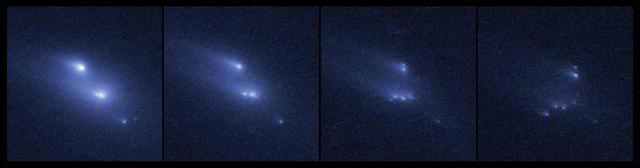
This series of images shows the asteroid P/2013 R3 breaking apart, as viewed by the NASA/ESA Hubble Space Telescope in 2013. This is the first time that such a body has been seen to undergo this kind of break-up. The Hubble observations showed that there are ten distinct objects, each with comet-like dust tails, embedded within the asteroid's dusty envelope. The four largest rocky fragments are up to 200 metres in radius, about twice the length of a football pitch. The date increases from left to right, with frames from 29 October 2013, 15 November 2013, 13 December 2013, and 14 January 2014 respectively, showing how the clumps of debris material move around. The 14 January 2014 frame was not included in the science paper and is additional data. Credit: NASA, ESA, D. Jewitt (UCLA) Read more: <a href="http://1.usa.gov/1ig2E0x" rel="nofollow">1.usa.gov/1ig2E0x</a> <b><a href="http://www.nasa.gov/audience/formedia/features/MP_Photo_Guidelines.html" rel="nofollow">NASA image use policy.</a></b> <b><a href="http://www.nasa.gov/centers/goddard/home/index.html" rel="nofollow">NASA Goddard Space Flight Center</a></b> enables NASA’s mission through four scientific endeavors: Earth Science, Heliophysics, Solar System Exploration, and Astrophysics. Goddard plays a leading role in NASA’s accomplishments by contributing compelling scientific knowledge to advance the Agency’s mission. <b>Follow us on <a href="http://twitter.com/NASAGoddardPix" rel="nofollow">Twitter</a></b> <b>Like us on <a href="http://www.facebook.com/pages/Greenbelt-MD/NASA-Goddard/395013845897?ref=tsd" rel="nofollow">Facebook</a></b> <b>Find us on <a href="http://instagram.com/nasagoddard?vm=grid" rel="nofollow">Instagram</a></b>
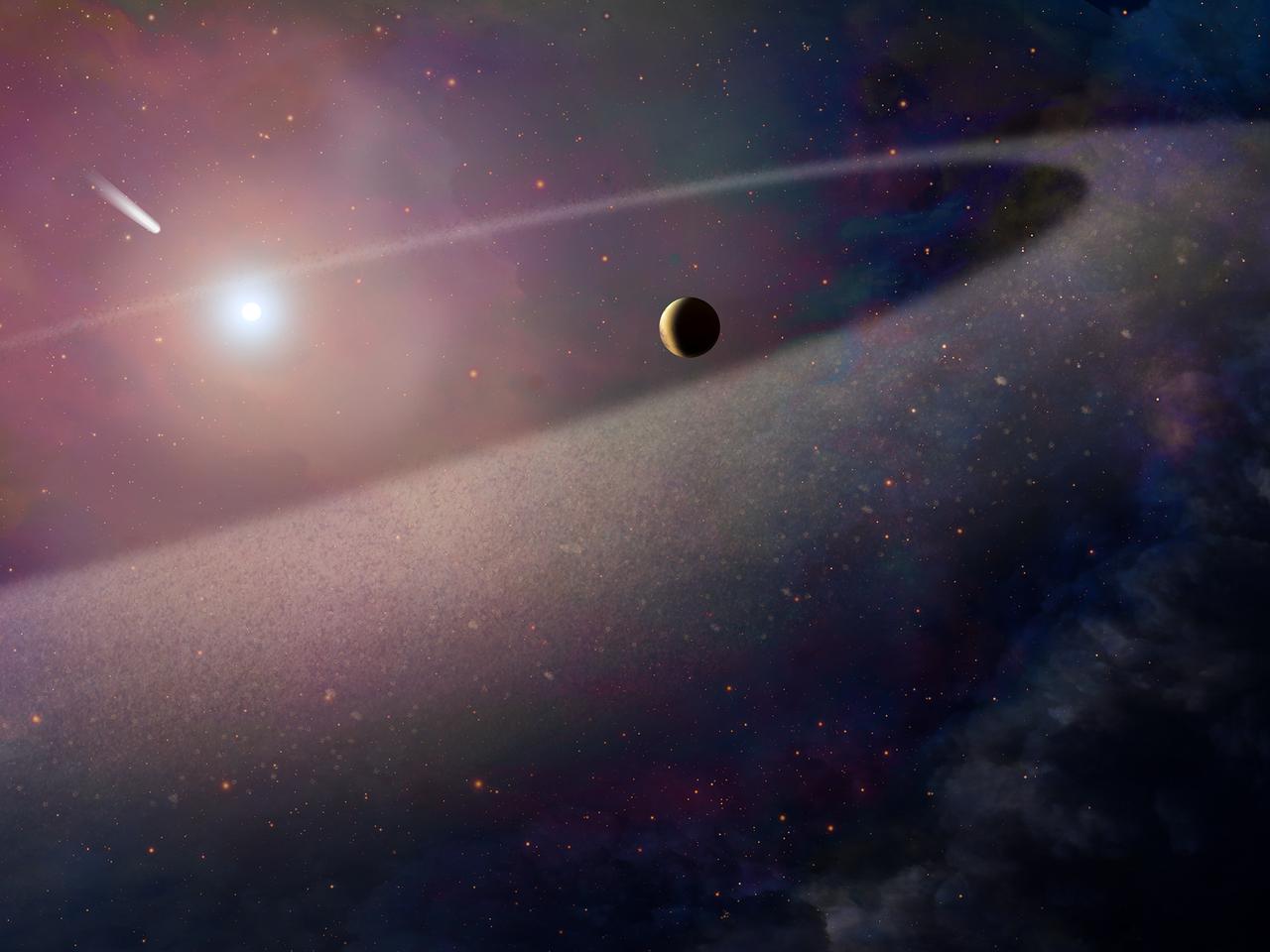
For the first time, scientists using NASA’s Hubble Space Telescope have witnessed a massive object with the makeup of a comet being ripped apart and scattered in the atmosphere of a white dwarf, the burned-out remains of a compact star. The object has a chemical composition similar to Halley’s Comet, but it is 100,000 times more massive and has a much higher amount of water. It is also rich in the elements essential for life, including nitrogen, carbon, oxygen, and sulfur. These findings are evidence for a belt of comet-like bodies orbiting the white dwarf, similar to our solar system’s Kuiper Belt. These icy bodies apparently survived the star’s evolution as it became a bloated red giant and then collapsed to a small, dense white dwarf. Caption: This artist's concept shows a massive, comet-like object falling toward a white dwarf. New Hubble Space Telescope findings are evidence for a belt of comet-like bodies orbiting the white dwarf, similar to our solar system's Kuiper Belt. The findings also suggest the presence of one or more unseen surviving planets around the white dwarf, which may have perturbed the belt to hurl icy objects into the burned-out star. Credits: NASA, ESA, and Z. Levay (STScI) <b><a href="http://www.nasa.gov/audience/formedia/features/MP_Photo_Guidelines.html" rel="nofollow">NASA image use policy.</a></b> <b><a href="http://www.nasa.gov/centers/goddard/home/index.html" rel="nofollow">NASA Goddard Space Flight Center</a></b> enables NASA’s mission through four scientific endeavors: Earth Science, Heliophysics, Solar System Exploration, and Astrophysics. Goddard plays a leading role in NASA’s accomplishments by contributing compelling scientific knowledge to advance the Agency’s mission. <b>Follow us on <a href="http://twitter.com/NASAGoddardPix" rel="nofollow">Twitter</a></b> <b>Like us on <a href="http://www.facebook.com/pages/Greenbelt-MD/NASA-Goddard/395013845897?ref=tsd" rel="nofollow">Facebook</a></b> <b>Find us on <a href="http://instagrid.me/nasagoddard/?vm=grid" rel="nofollow">Instagram</a></b>
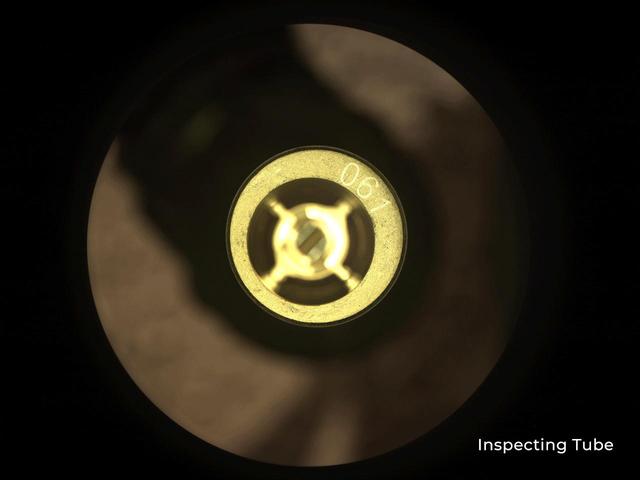
As part of its search for signs of ancient life on Mars, Perseverance is the first rover to bring a sample caching system to the Red Planet that will package promising samples for return to Earth by a future mission. This series of images shows NASA's Perseverance rover inspecting and sealing a "witness" sample tube on June 21, 2021 (the 120th sol, or Martian day, of the mission), as it prepares to collect its first sample of Martian rock and sediment. Witness tubes are similar to the sample tubes that will hold Martian rock and sediment, except they have been preloaded with a variety of materials that can capture molecular and particulate contaminants. They are opened on the Martian surface to "witness" the ambient environment near sample collection sites. With samples returned to Earth in the future, the witness tubes would show whether Earth contaminants were present during sample collection. Such information would help scientists tell which materials in the Martian samples may be of Earth origin. The sampling system's dedicated camera, the Cachecam, captured these images. A key objective for Perseverance's mission on Mars is astrobiology, including the search for signs of ancient microbial life. The rover will characterize the planet's geology and past climate, pave the way for human exploration of the Red Planet, and be the first mission to collect and cache Martian rock and regolith (broken rock and dust). Subsequent NASA missions, in cooperation with ESA (European Space Agency), would send spacecraft to Mars to collect these sealed samples from the surface and return them to Earth for in-depth analysis. The Mars 2020 Perseverance mission is part of NASA's Moon to Mars exploration approach, which includes Artemis missions to the Moon that will help prepare for human exploration of the Red Planet. Animation available at https://photojournal.jpl.nasa.gov/catalog/PIA24751
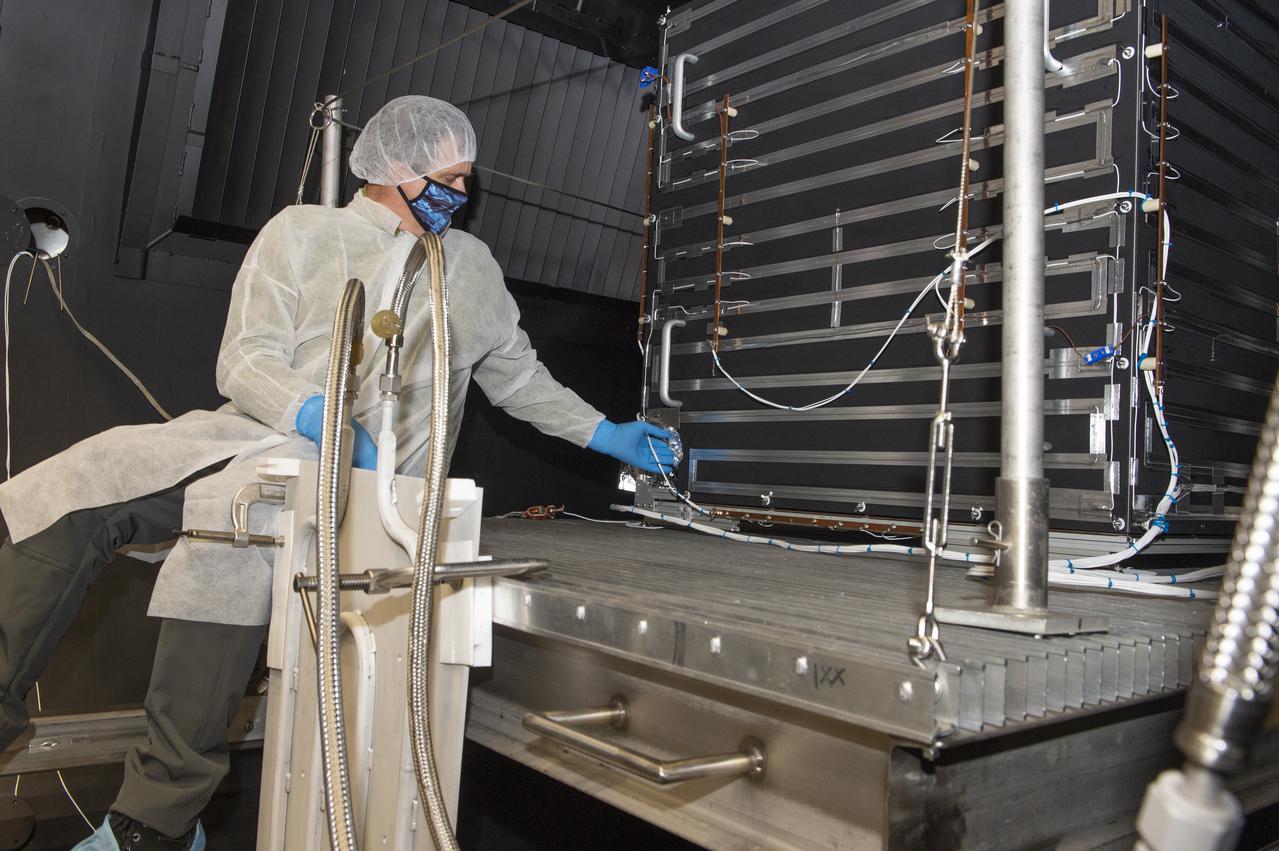
NEA (Near Earth Asteroid) Scout Hot Box – Repress Chamber V-15 and removal of Optical Witness Samples, (OWS), for analysis
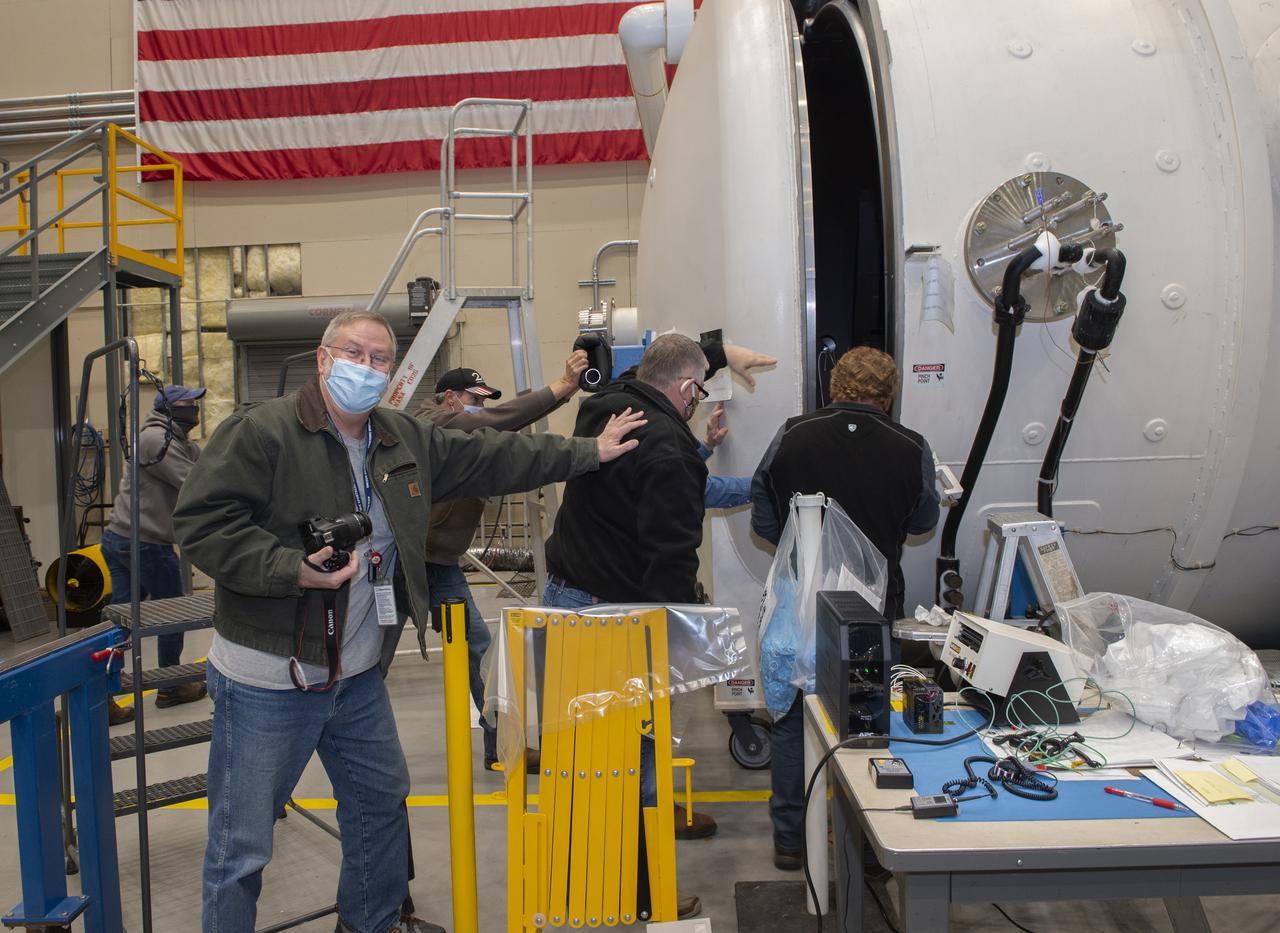
NEA (Near Earth Asteroid) Scout Hot Box – Repress Chamber V-15 and removal of Optical Witness Samples, (OWS), for analysis
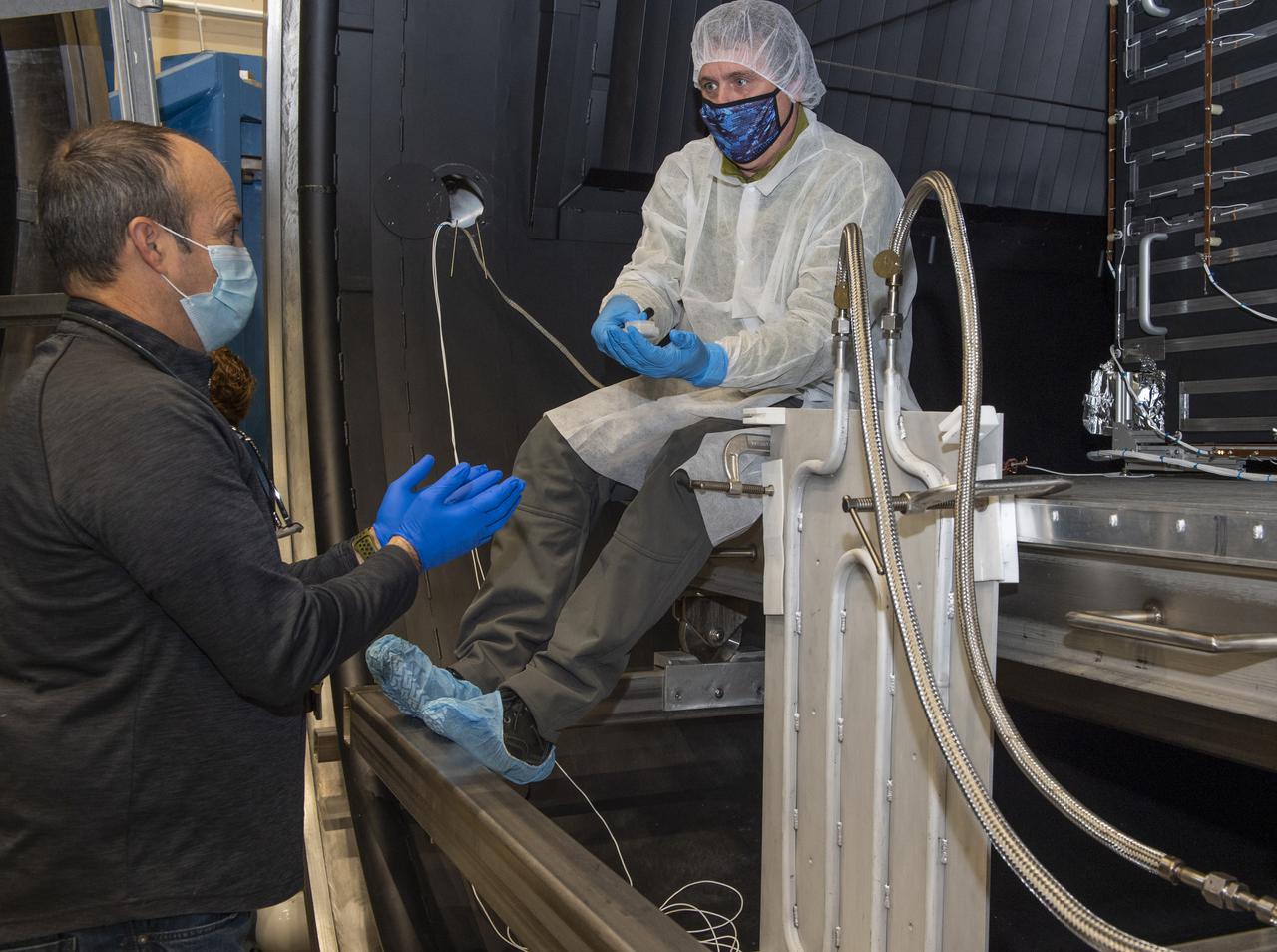
NEA (Near Earth Asteroid) Scout Hot Box – Repress Chamber V-15 and removal of Optical Witness Samples, (OWS), for analysis

NEA (Near Earth Asteroid) Scout Hot Box – Repress Chamber V-15 and removal of Optical Witness Samples, (OWS), for analysis
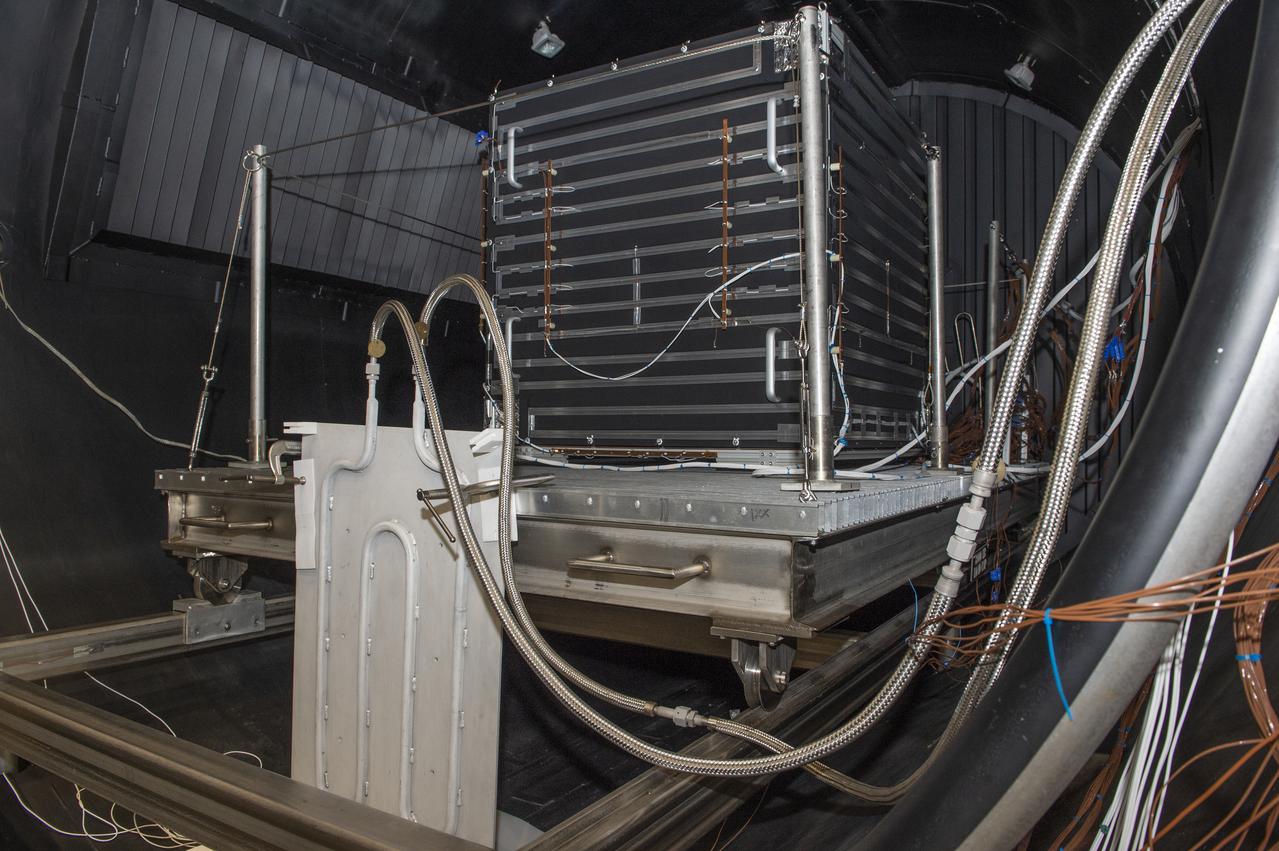
NEA (Near Earth Asteroid) Scout Hot Box – Repress Chamber V-15 and removal of Optical Witness Samples, (OWS), for analysis
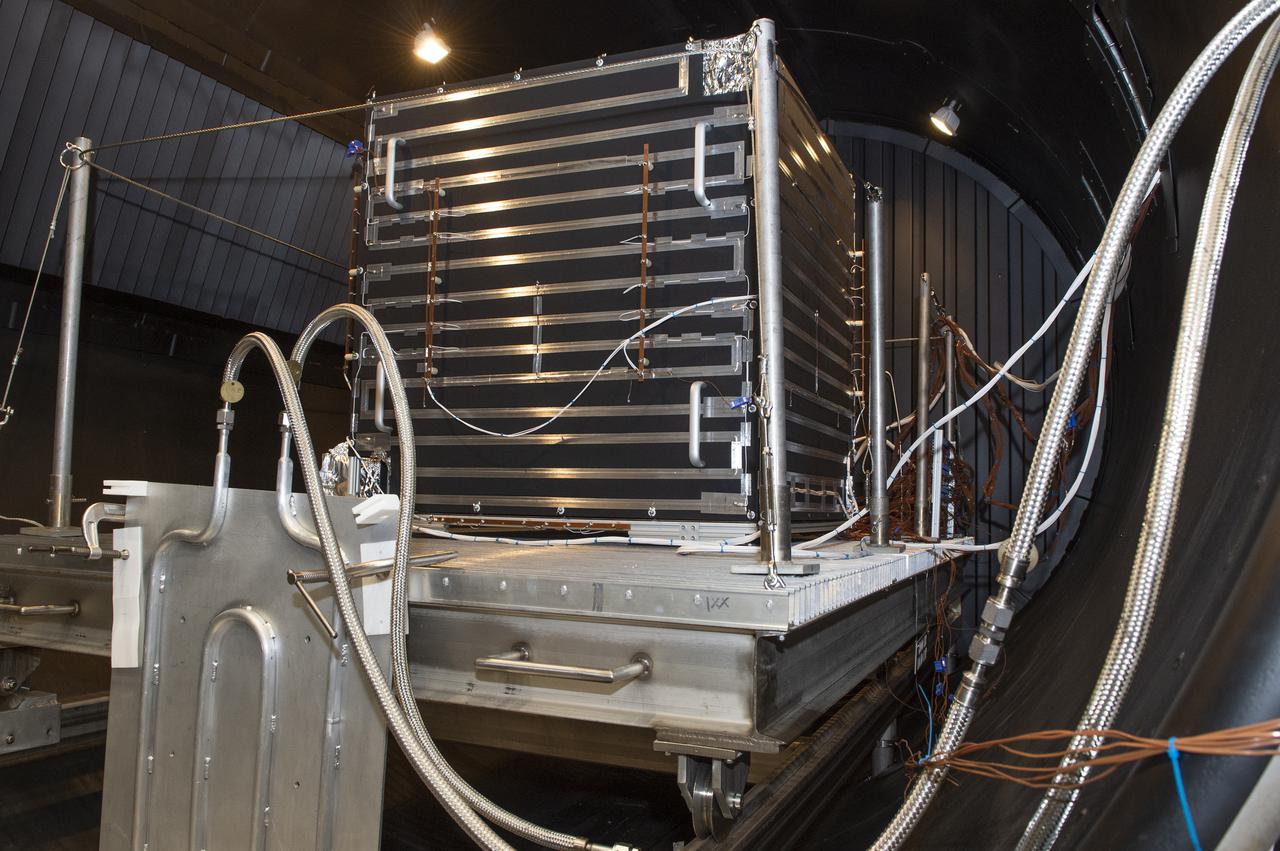
NEA (Near Earth Asteroid) Scout Hot Box – Repress Chamber V-15 and removal of Optical Witness Samples, (OWS), for analysis
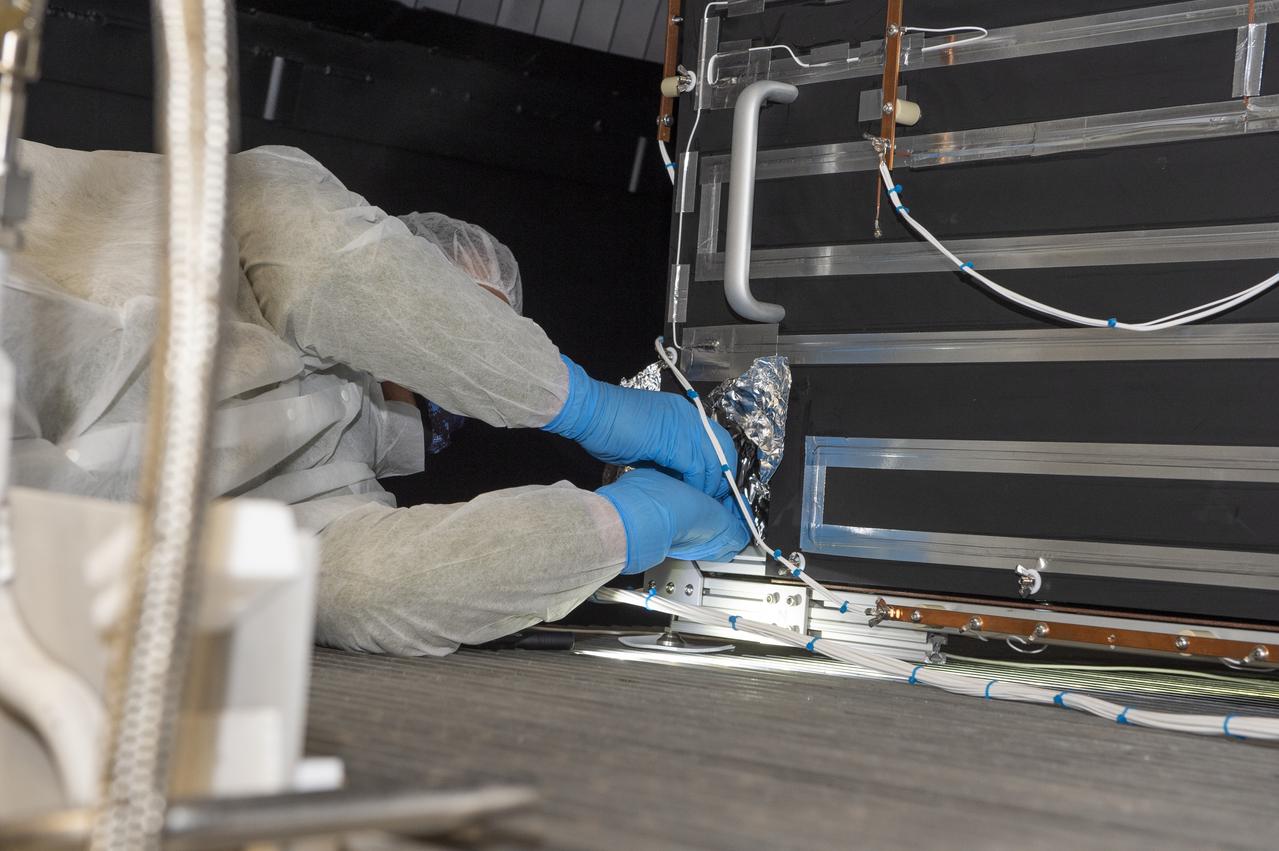
NEA (Near Earth Asteroid) Scout Hot Box – Repress Chamber V-15 and removal of Optical Witness Samples, (OWS), for analysis
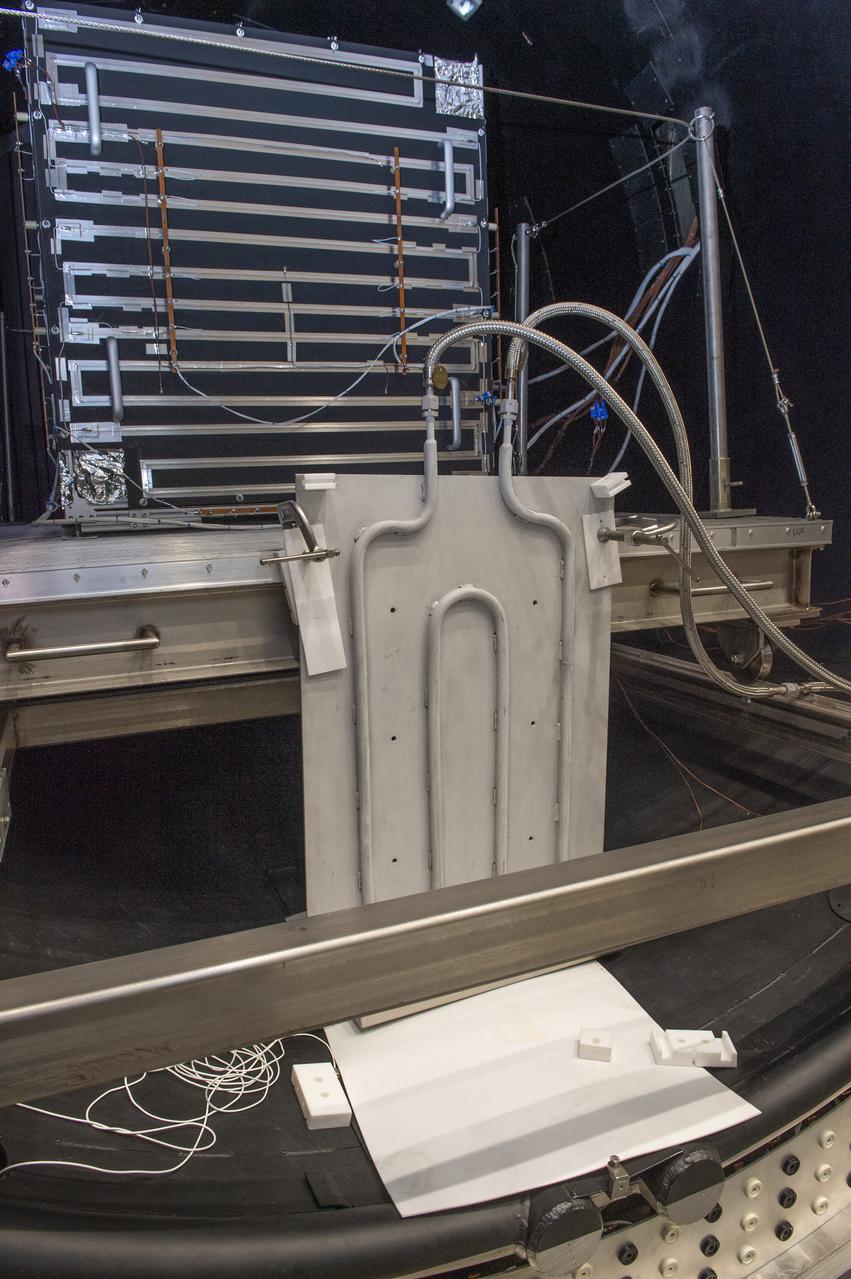
NEA (Near Earth Asteroid) Scout Hot Box – Repress Chamber V-15 and removal of Optical Witness Samples, (OWS), for analysis
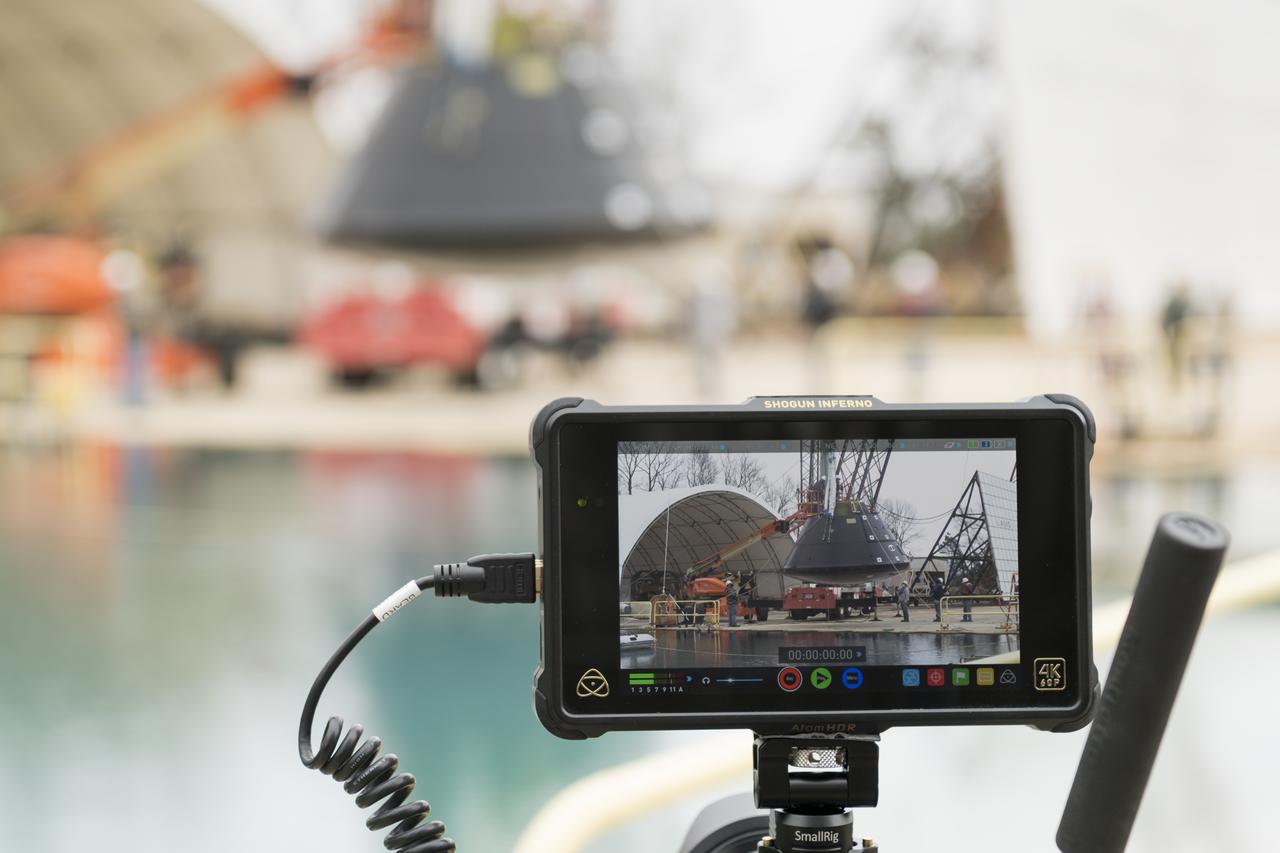
Images of Structural Test Article (STA) vertical water impact testing (WIT) testing at Impact Dynamics Facility NASA Langley Research Center.
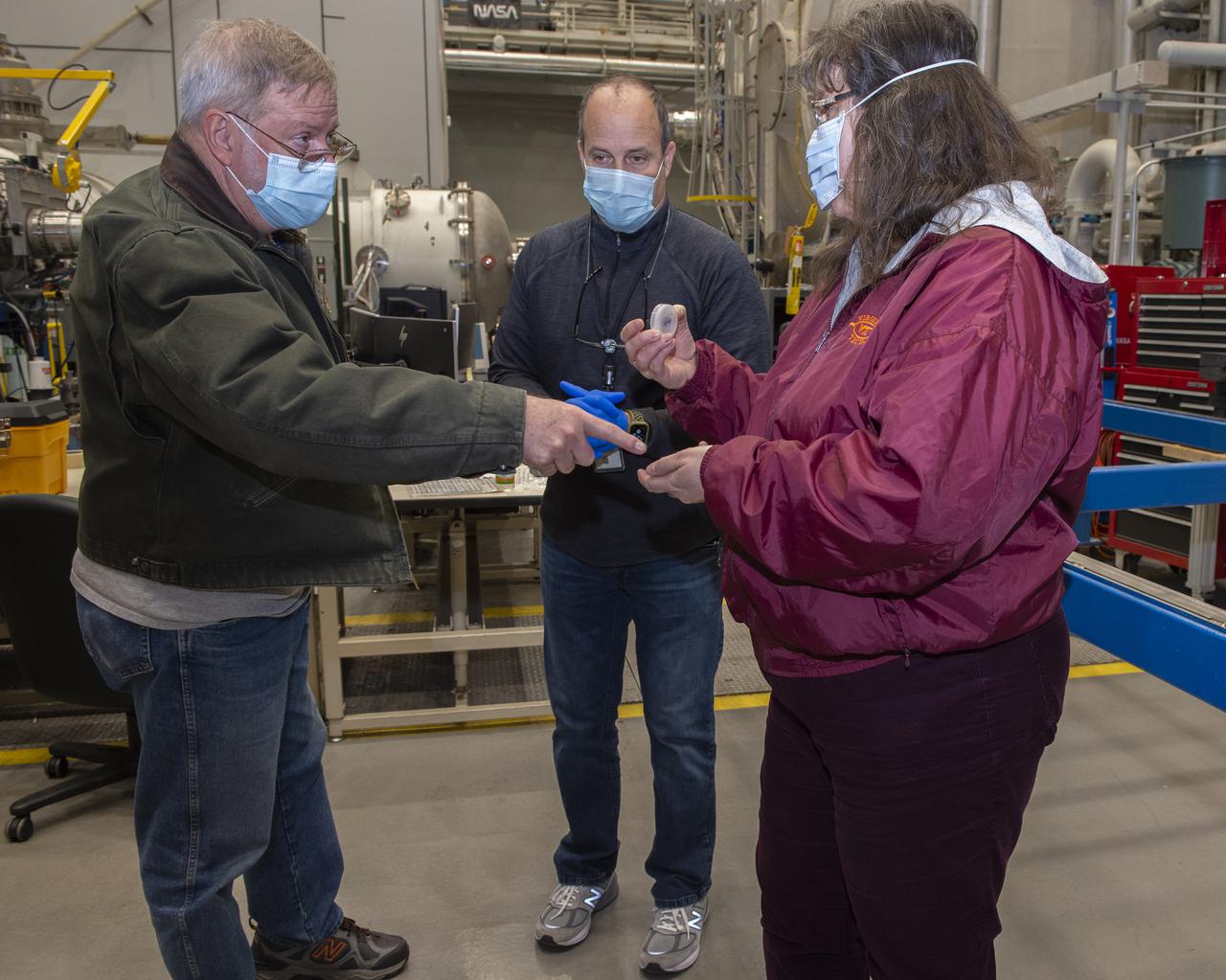
NEA (Near Earth Asteroid) Scout Hot Box – Repress Chamber V-15 and removal of Optical Witness Samples, (OWS), for analysis
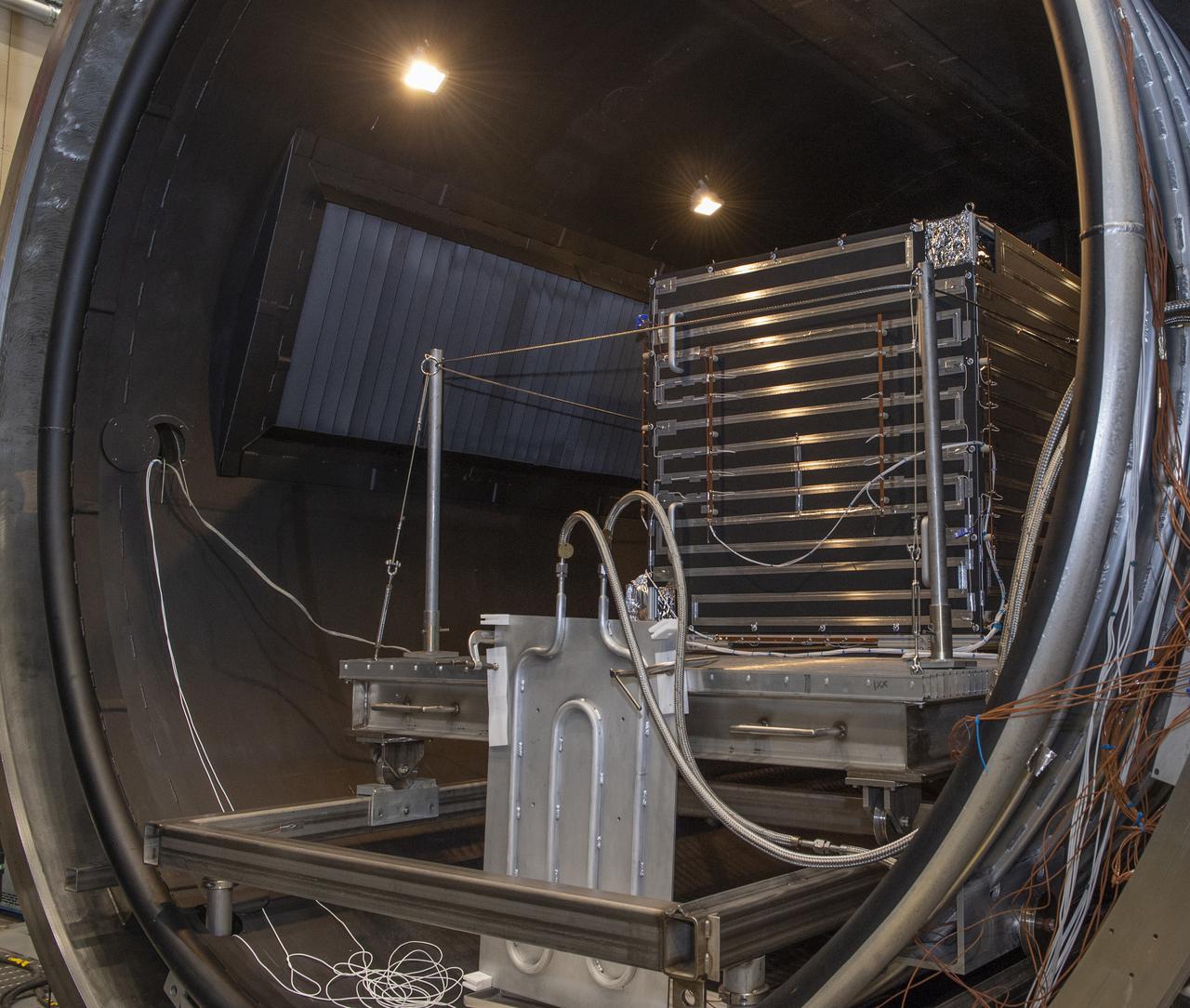
NEA (Near Earth Asteroid) Scout Hot Box – Repress Chamber V-15 and removal of Optical Witness Samples, (OWS), for analysis
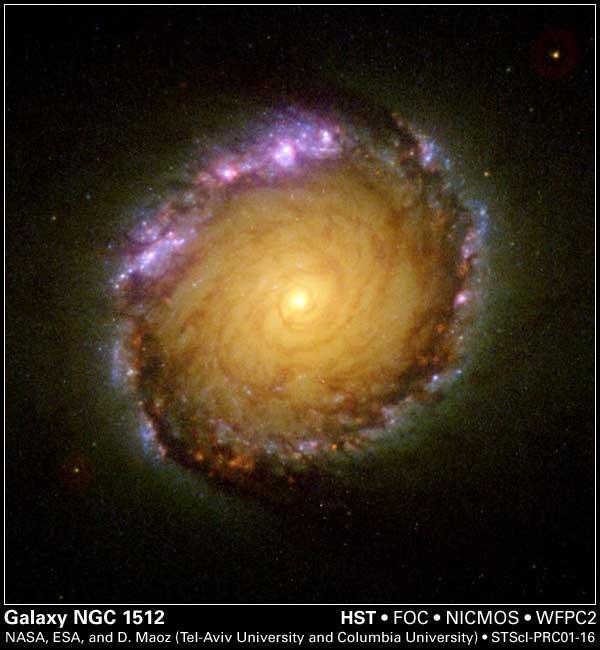
A rainbow of colors is captured in the center of a magnificent barred spiral galaxy, as witnessed by the three cameras of NASA Hubble Space Telescope.
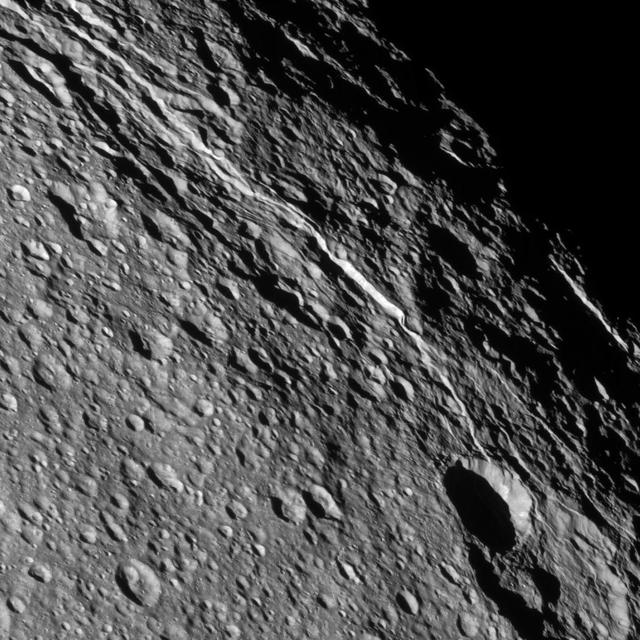
The surface of Saturn moon Rhea bears witness to its violent history. Each crater seen here by NASA Cassini spacecraft records an impact in the moon past.
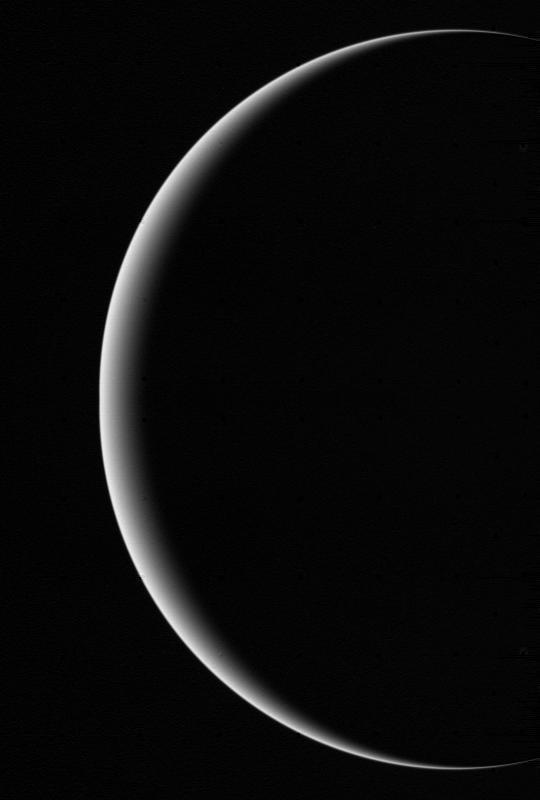
This image shows a crescent Uranus, a view that Earthlings never witnessed until Voyager 2 flew near and then beyond Uranus on Jan 24, 1986. http://photojournal.jpl.nasa.gov/catalog/PIA00346
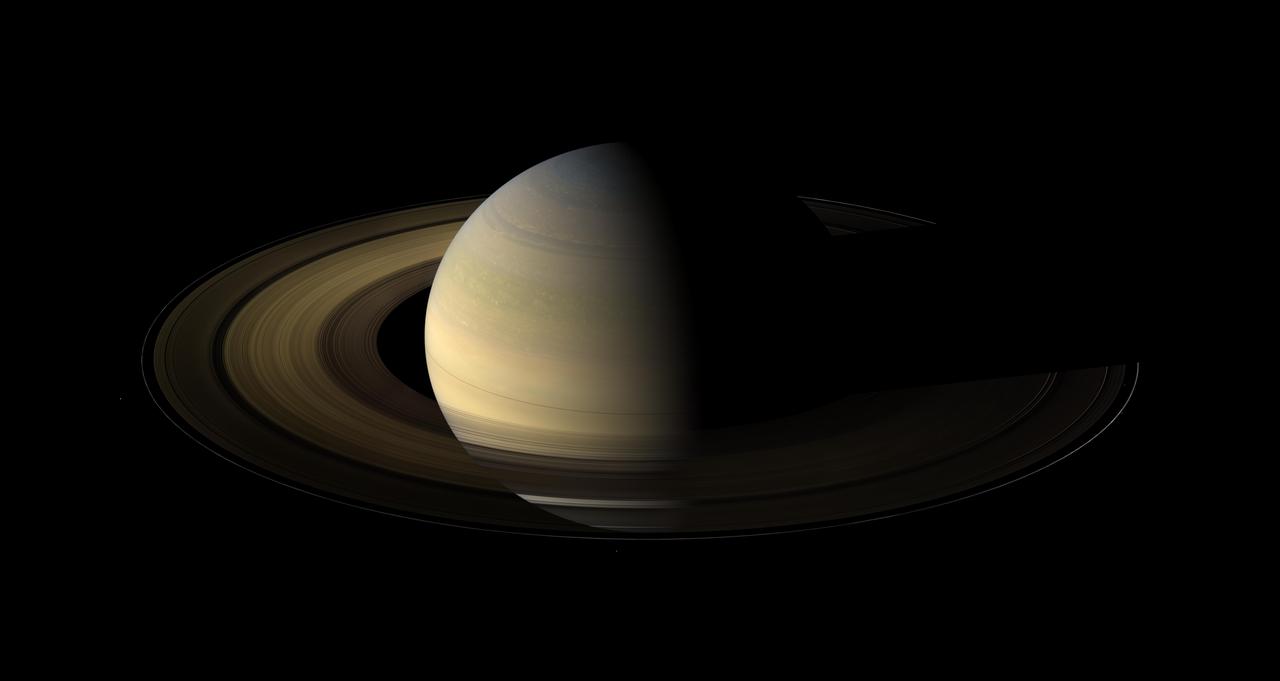
This Saturn equinox, captured here in a mosaic of light and dark, is the first witnessed up close by an emissary from Earth, none other than our NASA faithful robotic explorer, Cassini.
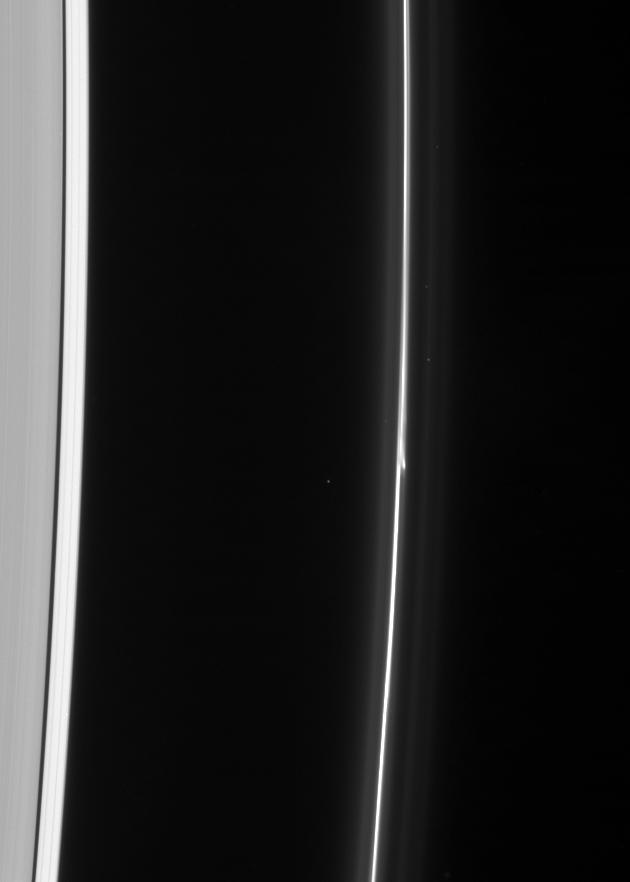
The brilliant core of the F ring displays a breakaway clump of material, possibly related to the other objects the Cassini spacecraft has witnessed in the dynamic ring in the past few years of observations
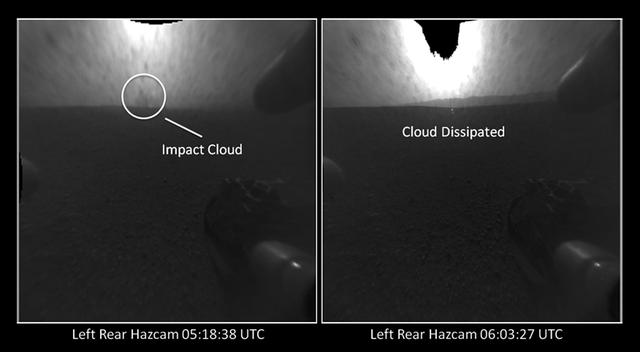
The distant blob seen in the view on left, taken by a Hazard-Avoidance camera on NASA Curiosity rover, may be a cloud created during the crash of the rover descent stage.

These pictures of comet Tempel 1 were taken by NASA Hubble Space Telescope. They show the comet before and after it ran over NASA Deep Impact probe.
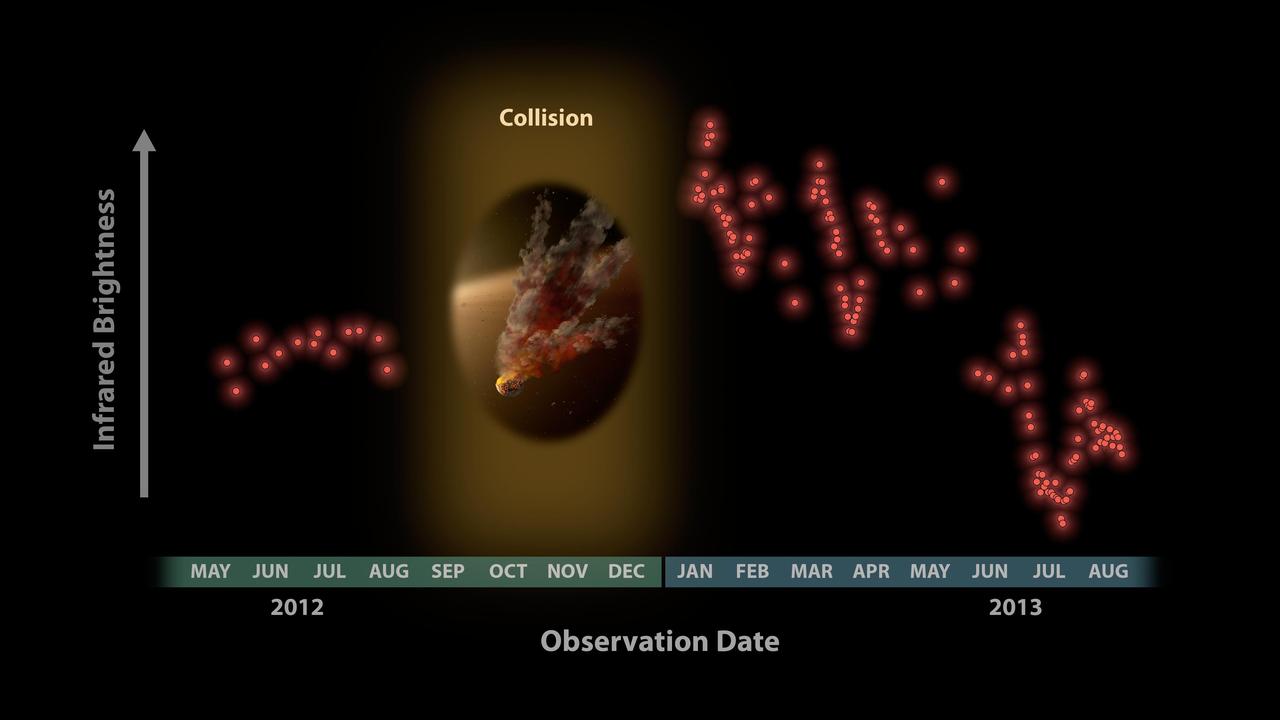
Astronomers were surprised to see these data from NASA Spitzer Space Telescope in January 2013, showing a huge eruption of dust around a star called NGC 2547-ID8.
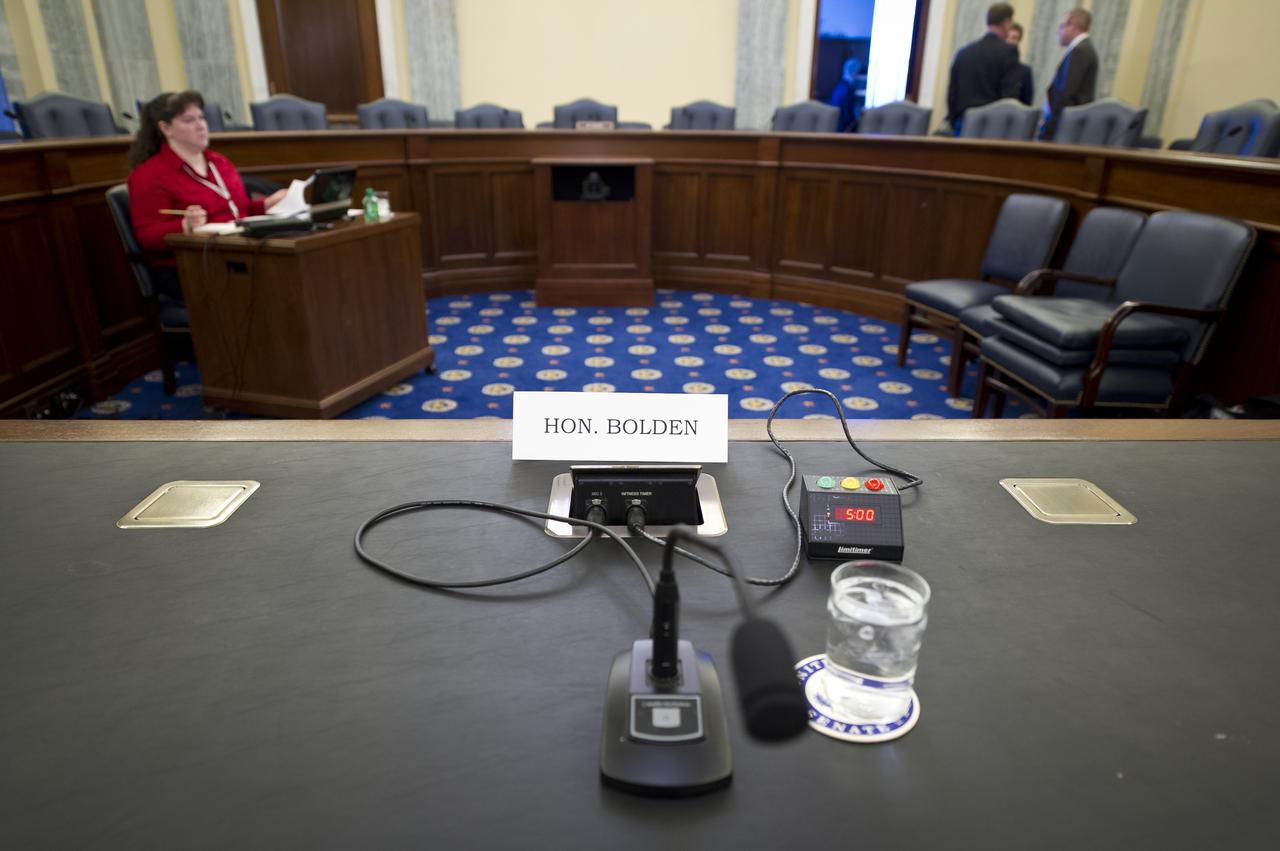
View from the witness table in the Russell Senate Office Building prior to the start of a U.S. Senate Committee on Commerce, Science, and Transportation hearing with NASA Administrator Charles Bolden as the first witness on Wednesday, March 7, 2012 in Washington. Photo Credit: (NASA/Bill Ingalls)

Perseid Meteor flight on Google's Gulfstream Aircraft. P.I. Peter Jenniskens, SETI Group wit Kat De Kleer, SETI, REU Program
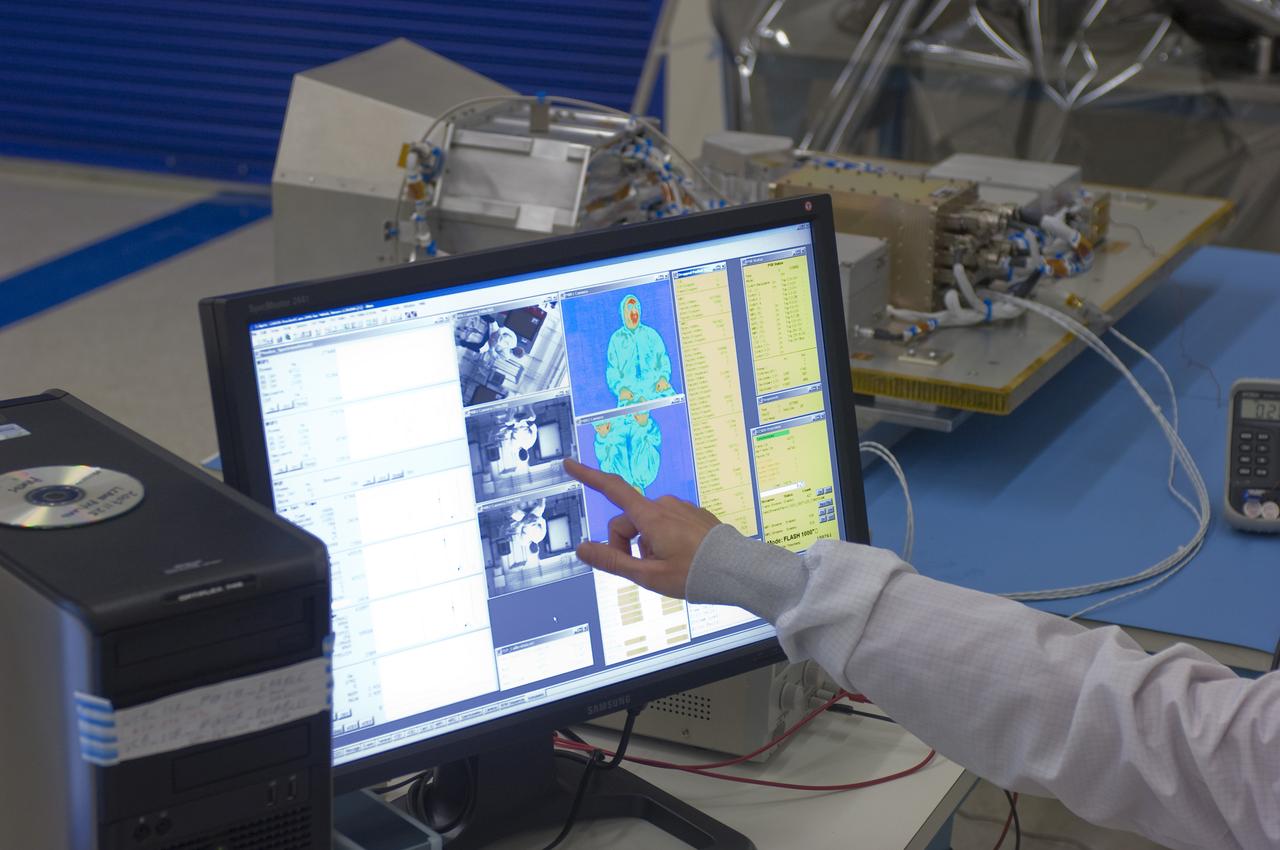
LCROSS in Ames clean room N-240 - calibration and camera check out wit Kim Ennico (Ed schilling is used as subject)

Perseid Meteor flight on Google's Gulfstream Aircraft. P.I. Peter Jenniskens, SETI Group wit Kat De Kleer, SETI, REU Program

Perseid Meteor flight on Google's Gulfstream Aircraft. P.I. Peter Jenniskens, SETI Group wit Kat De Kleer, SETI, REU Program
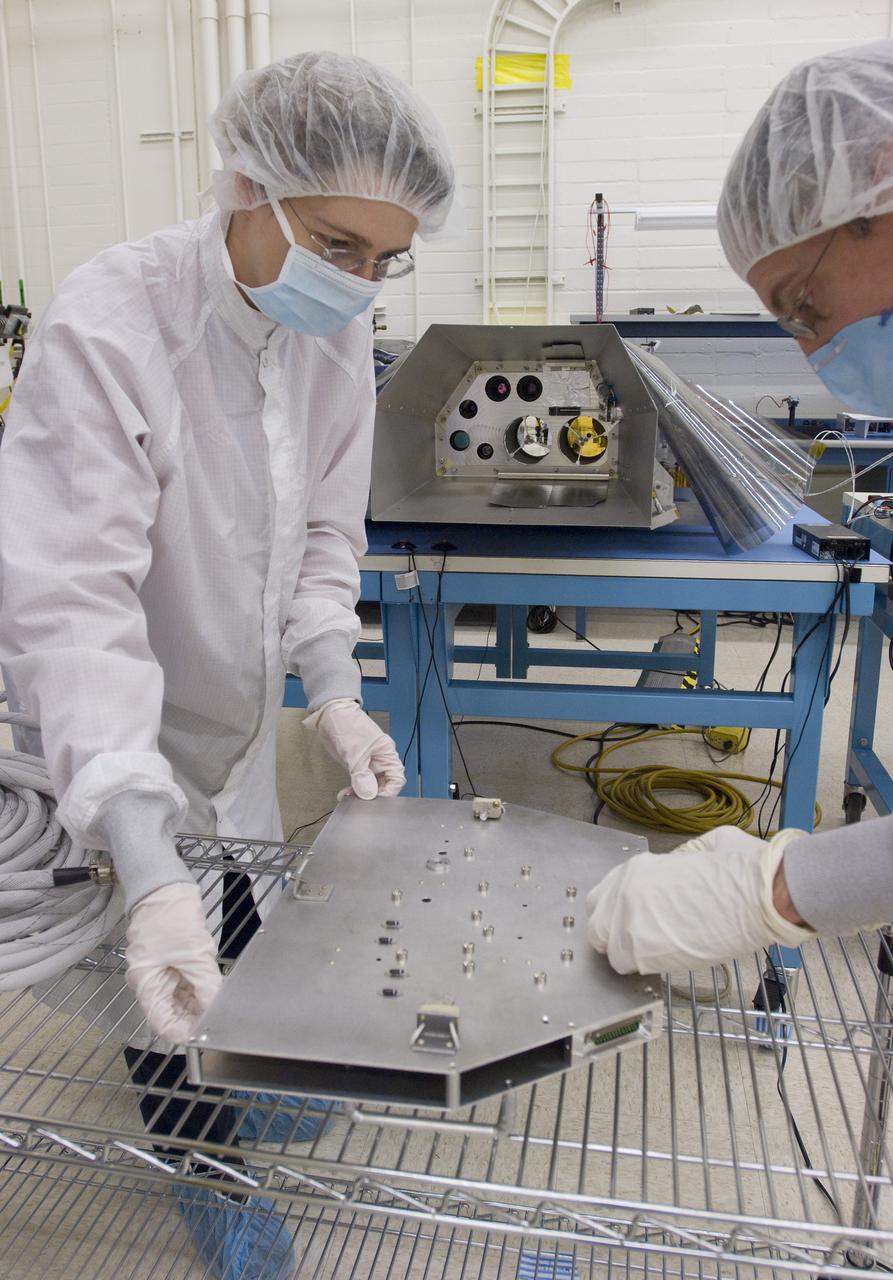
LCROSS in Ames Clean room N-240 - calibration and camera check out wit Kim Ennico (l) and Mark Shirley, Northrup Grumman Redondo Beach, CA remove rear cover
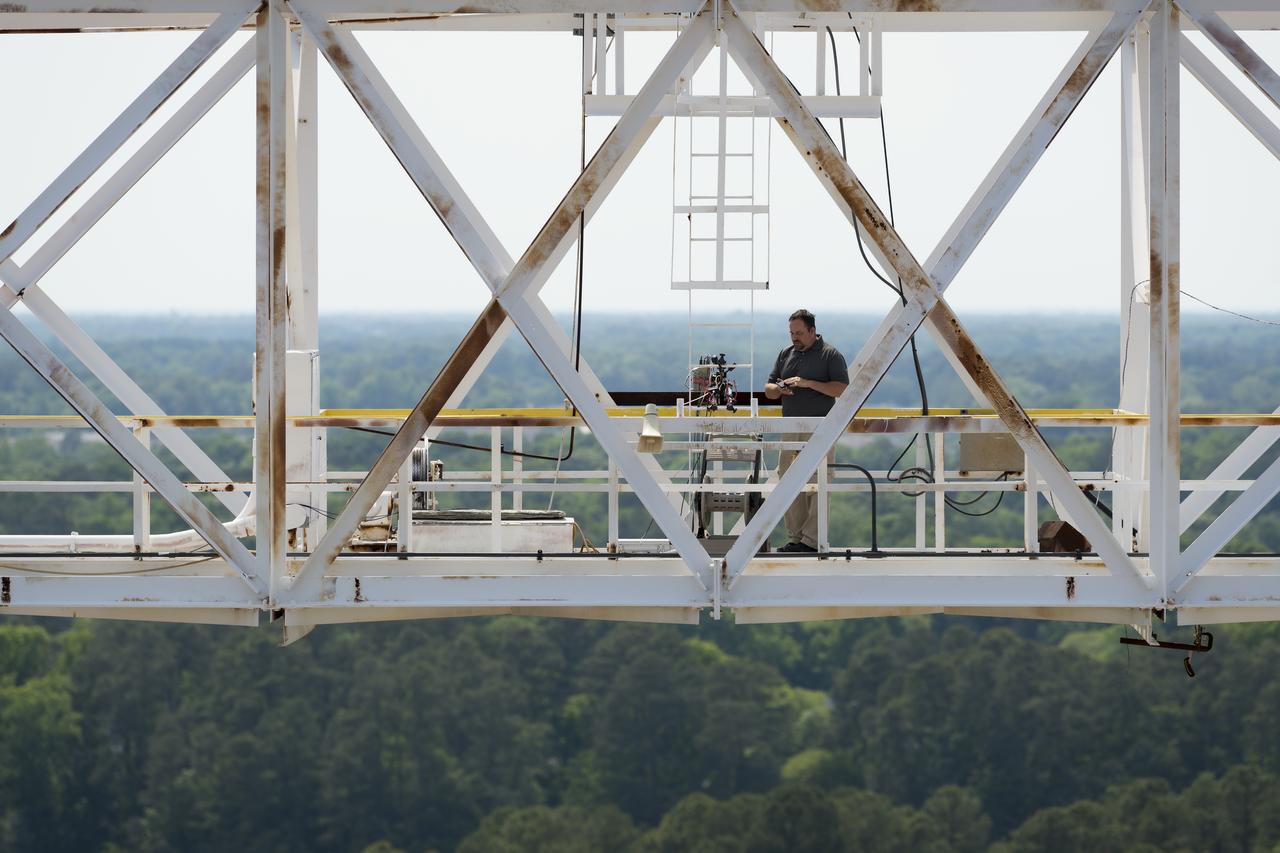
Images from Orion Structural Test Article (STA) vertical water impact testing (WIT) Swing Test 4, Photographer Harlen Capen at the top of the Impact Dynamics Facility or Gantry as it is know at NASA Langley Research Center.
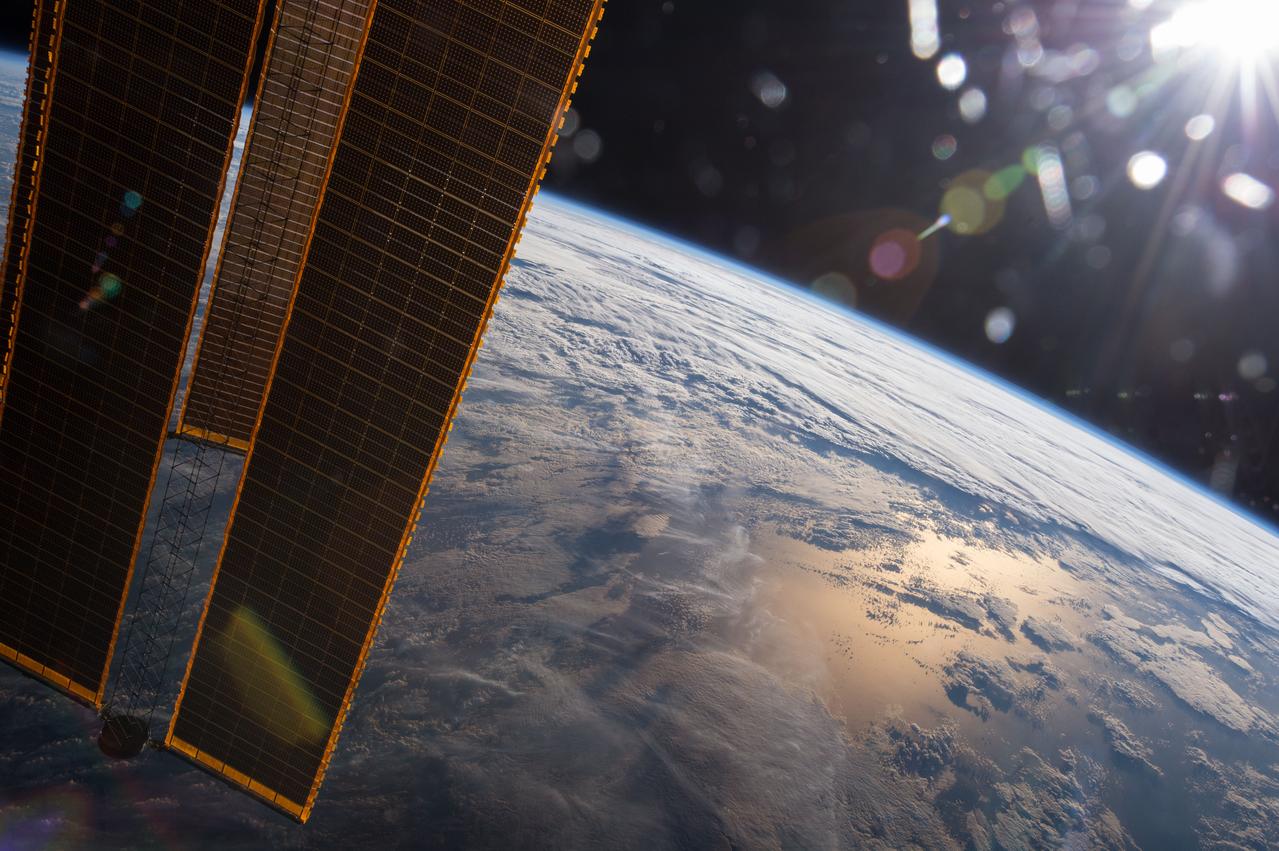
ISS043E091794 (04/07/2015) --- Astronauts and cosmonauts aboard the International Space Station are regular witness to the beauty of our planet Earth from their high vantage point. This image was taken on Apr 7, 2015 by the crew of Expedition 43.
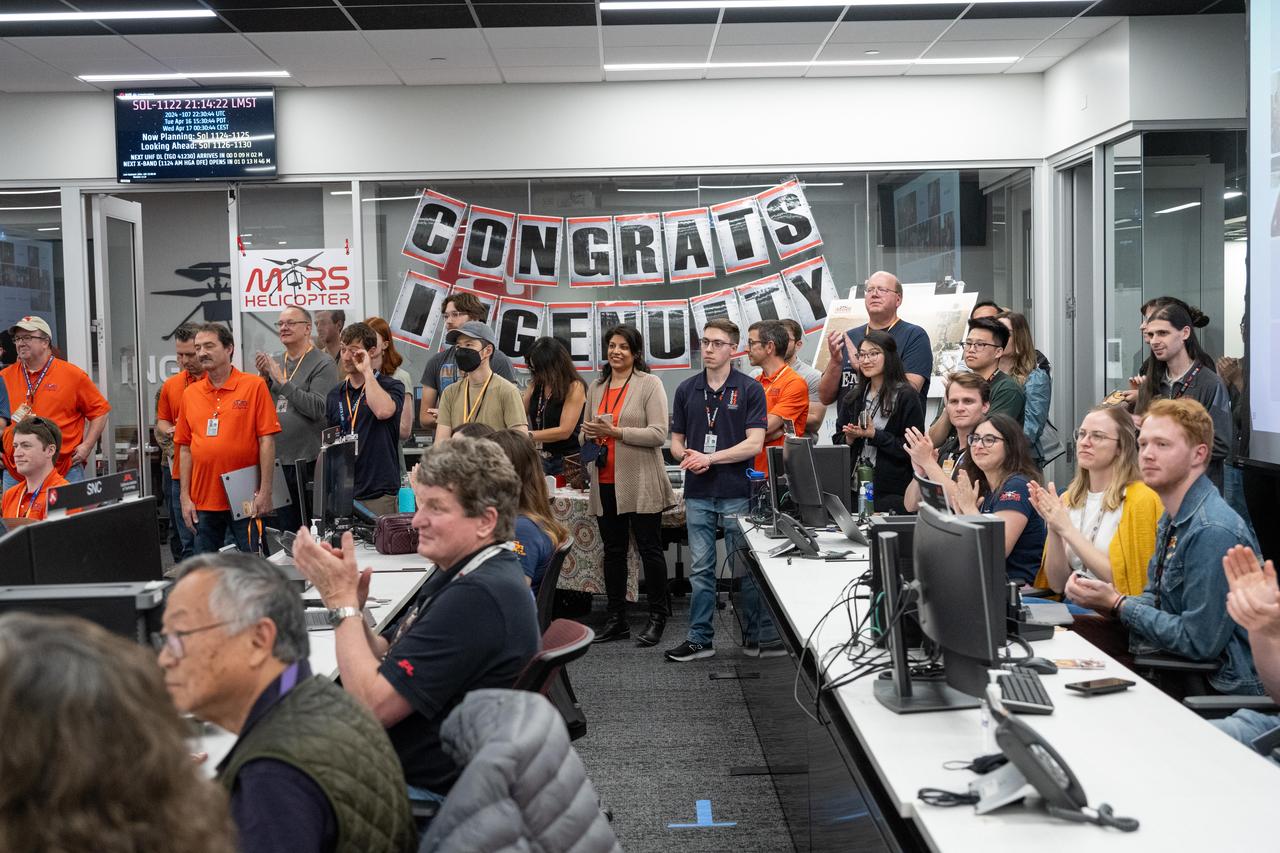
Engineers working on NASA's Ingenuity Mars Helicopter gathered together in a control room for one last time to monitor a transmission from the history-making helicopter at the agency's Jet Propulsion Laboratory on April 16, 2024. The transmission confirmed the operation of a software patch that will allow Ingenuity to act as a stationary testbed and collect data that could benefit future explorers of the Red Planet. Originally designed as short-lived technology demonstration mission that would perform up to five experimental test flights over 30 days, the first aircraft on another world operated from the Martian surface for almost three years, flew more than 14 times farther than planned, and logged more than two hours of total flight time. Its 72nd and final flight was Jan. 18, 2024. https://photojournal.jpl.nasa.gov/catalog/PIA26318
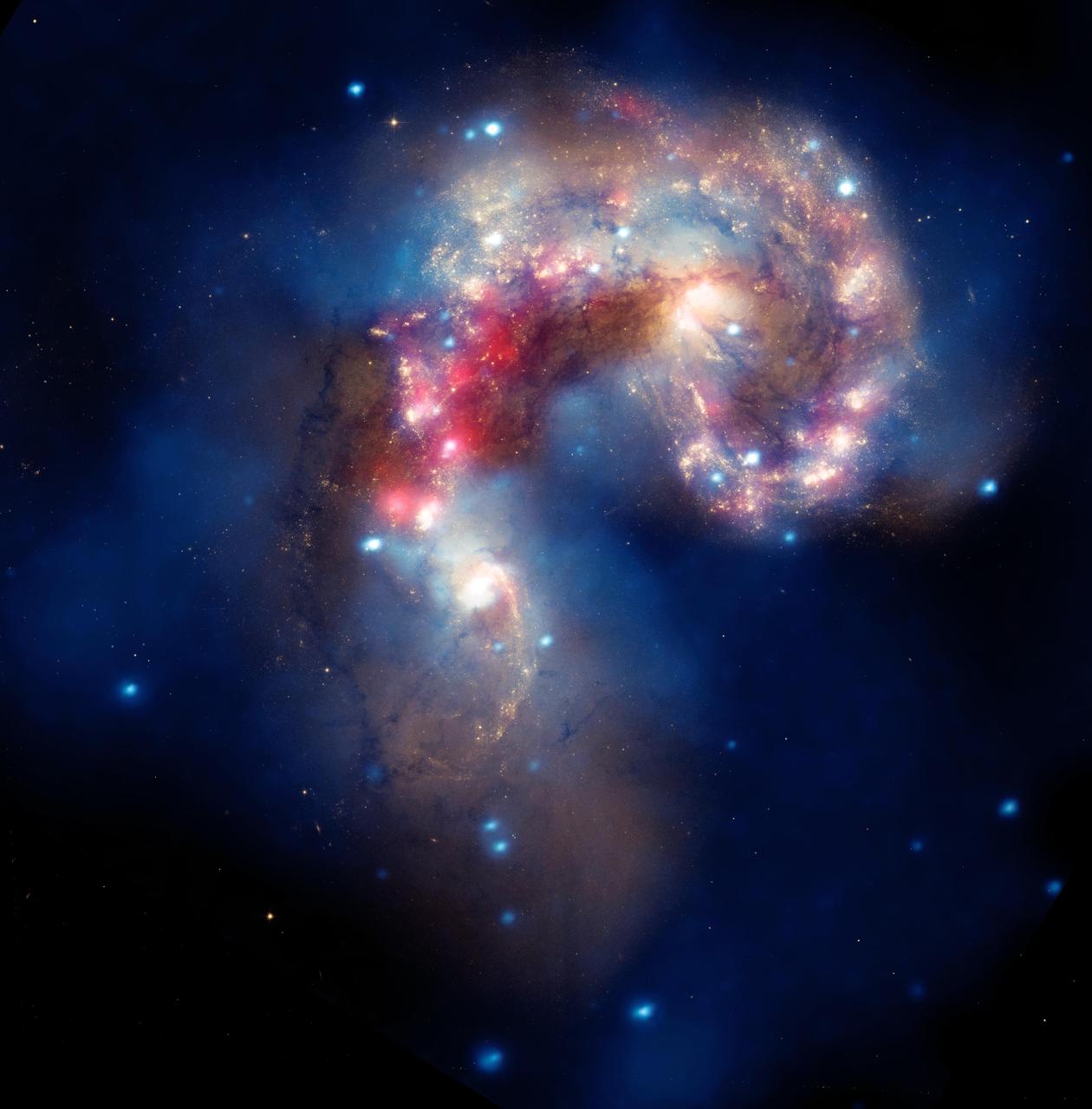
This image of two tangled galaxies has been released by NASA Great Observatories. The Antennae galaxies are shown in this composite image from the Chandra X-ray Observatory, the Hubble Space Telescope, and the Spitzer Space Telescope.
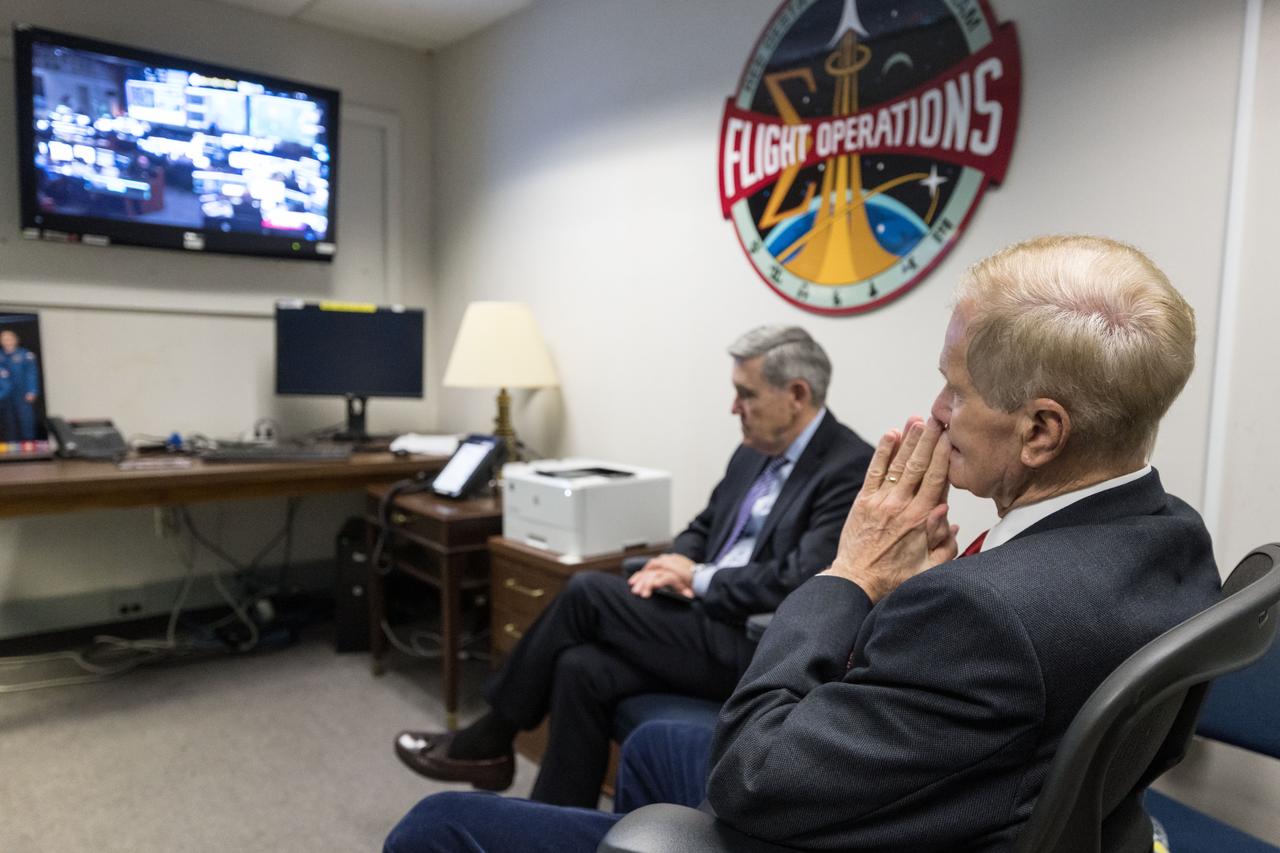
jsc2022e091674 (Dec. 11, 2022) NASA Administrator Bill Nelson visits Mission Control at NASA’s Johnson Space Center in Houston to witness the splashdown of Orion after a 25.5-day Artemis I mission. Nelson is seen here enjoying the view with NASA Associate Administrator Bob Cabana.
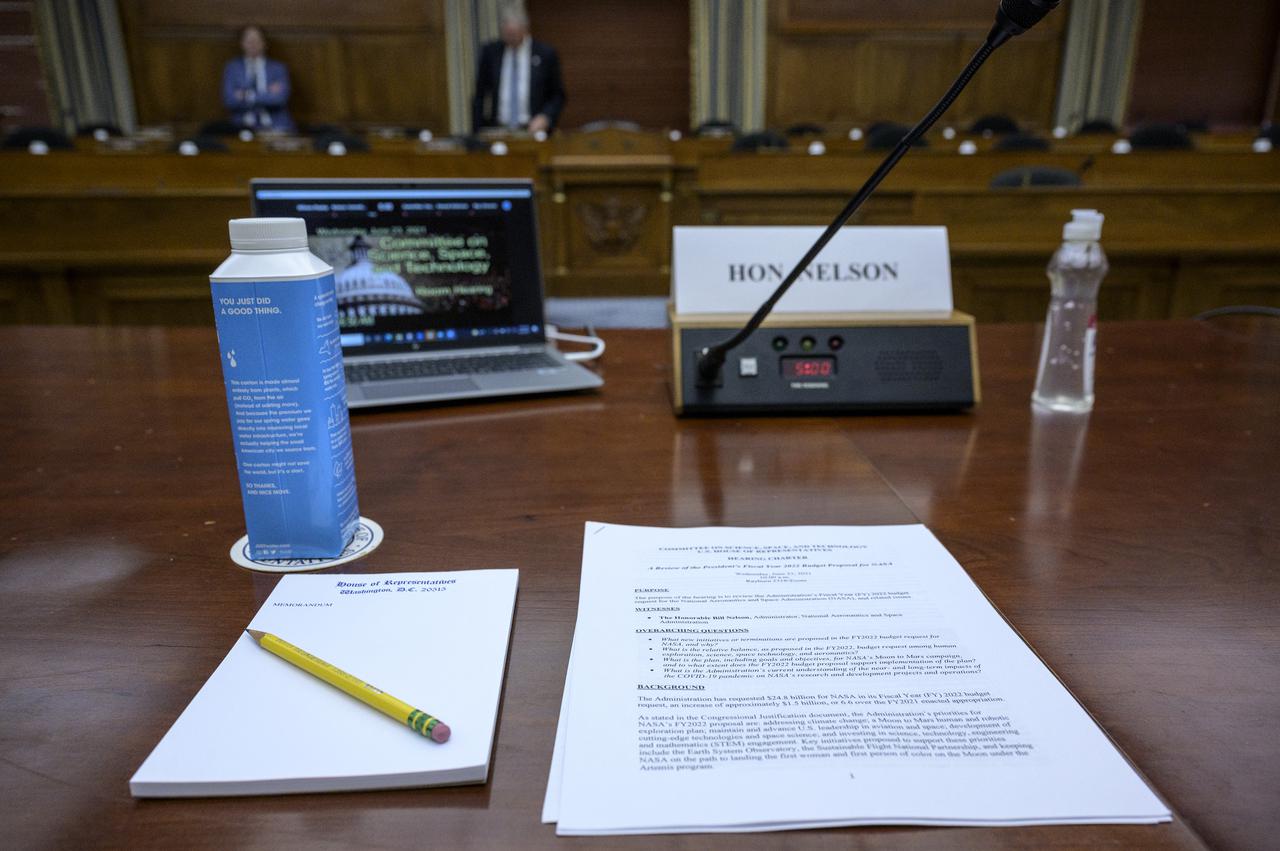
The witness desk is ready for NASA Administrator Bill Nelson prior to him testifying before a House Committee on Science, Space, and Technology hearing on the fiscal year 2022 budget proposal, Wednesday, June 23, 2021 at the Rayburn House Office Building in Washington. Photo Credit: (NASA/Bill Ingalls)
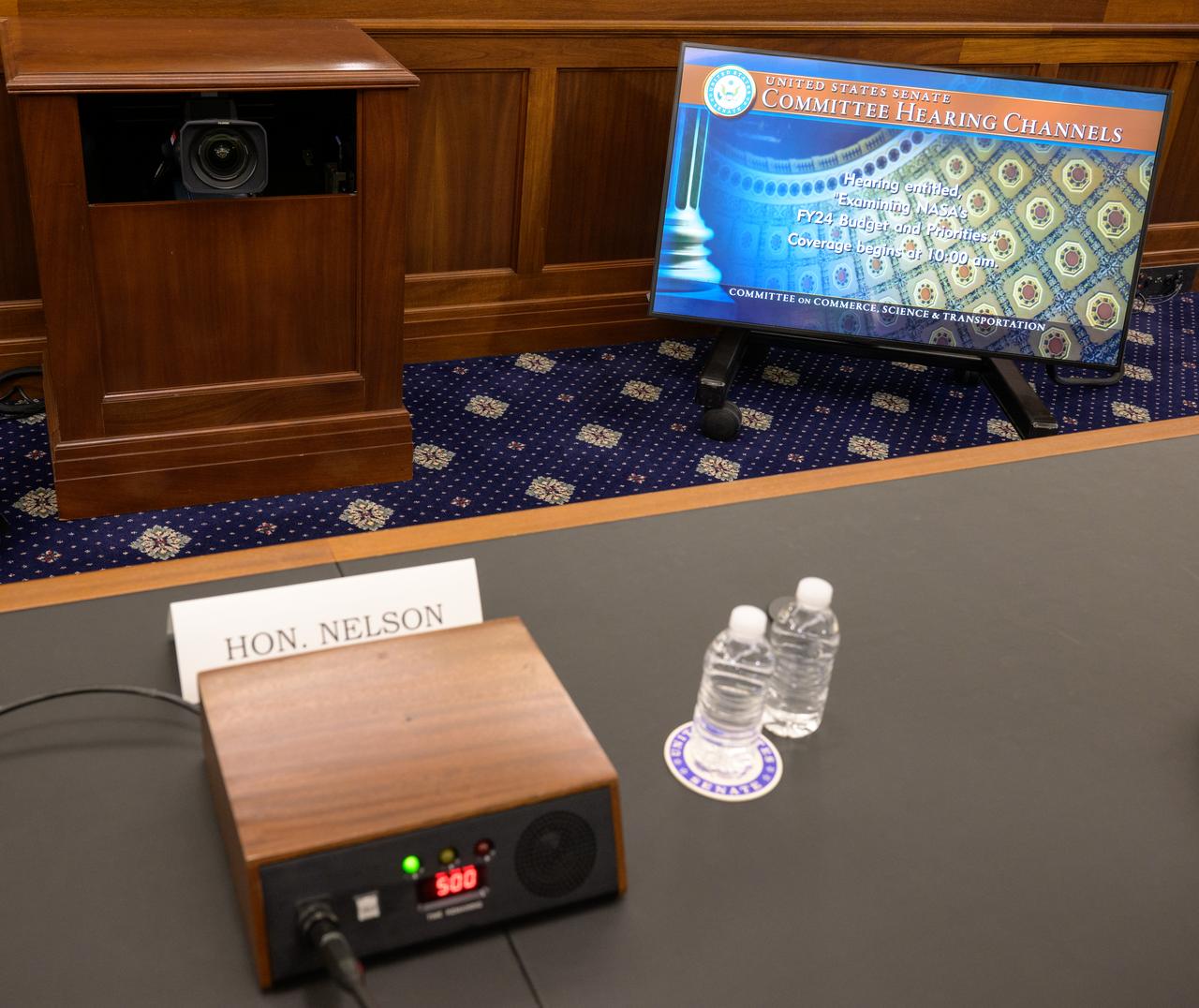
Witness table for NASA Administrator Bill Nelson ahead of him testifying before the Senate Committee on Commerce, Science, and Transportation during a hearing titled “Examining NASA’s Budget and Priorities,” Tuesday, May 16, 2023, at the Russell Senate Office Building in Washington. Photo Credit: (NASA/Bill Ingalls)
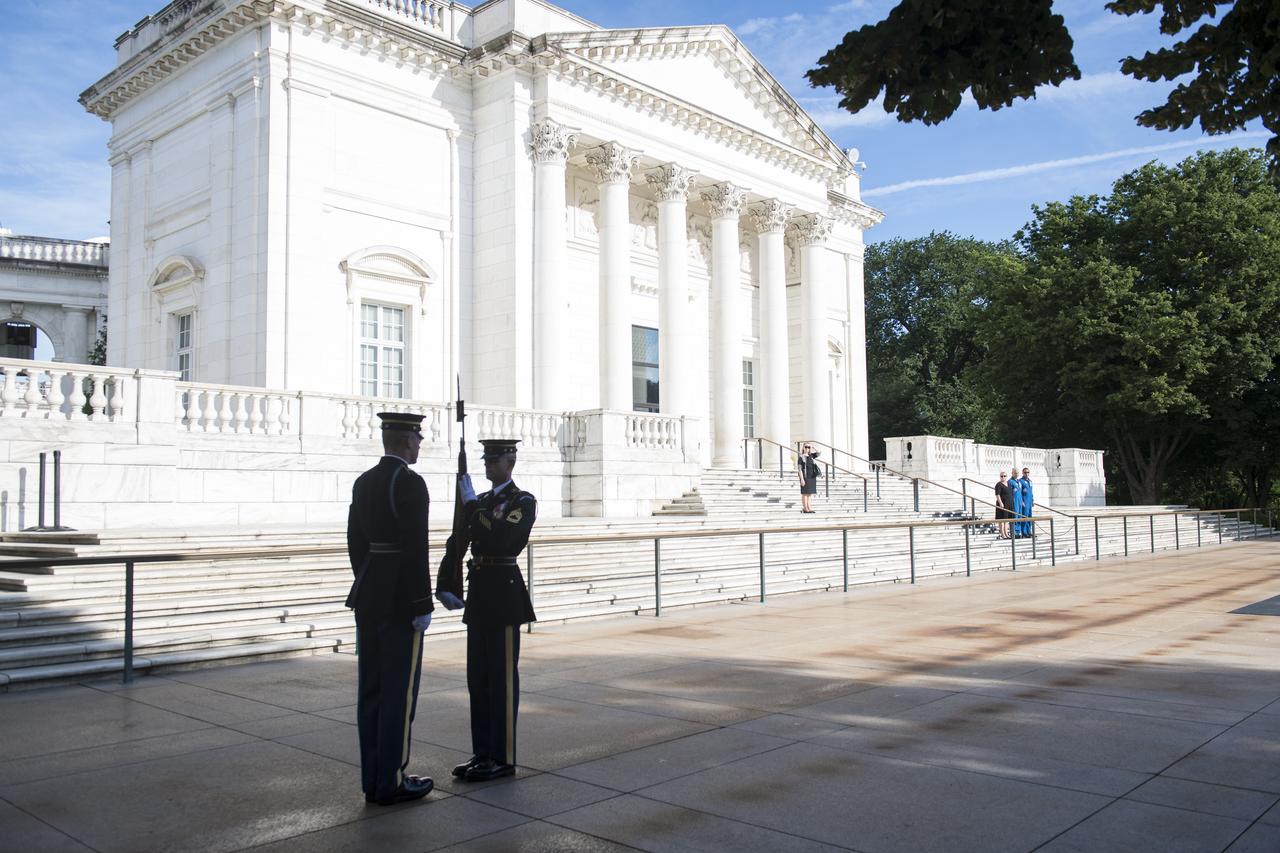
NASA astronaut Mark Vande Hei, center, his wife Julie, left, and NASA astronaut Joe Acaba witness the changing of the guards at the Tomb of the Unknown soldier, Friday, June 15, 2018 at Arlington National Cemetery in Arlington, Va. Photo Credit: (NASA/Aubrey Gemignani)
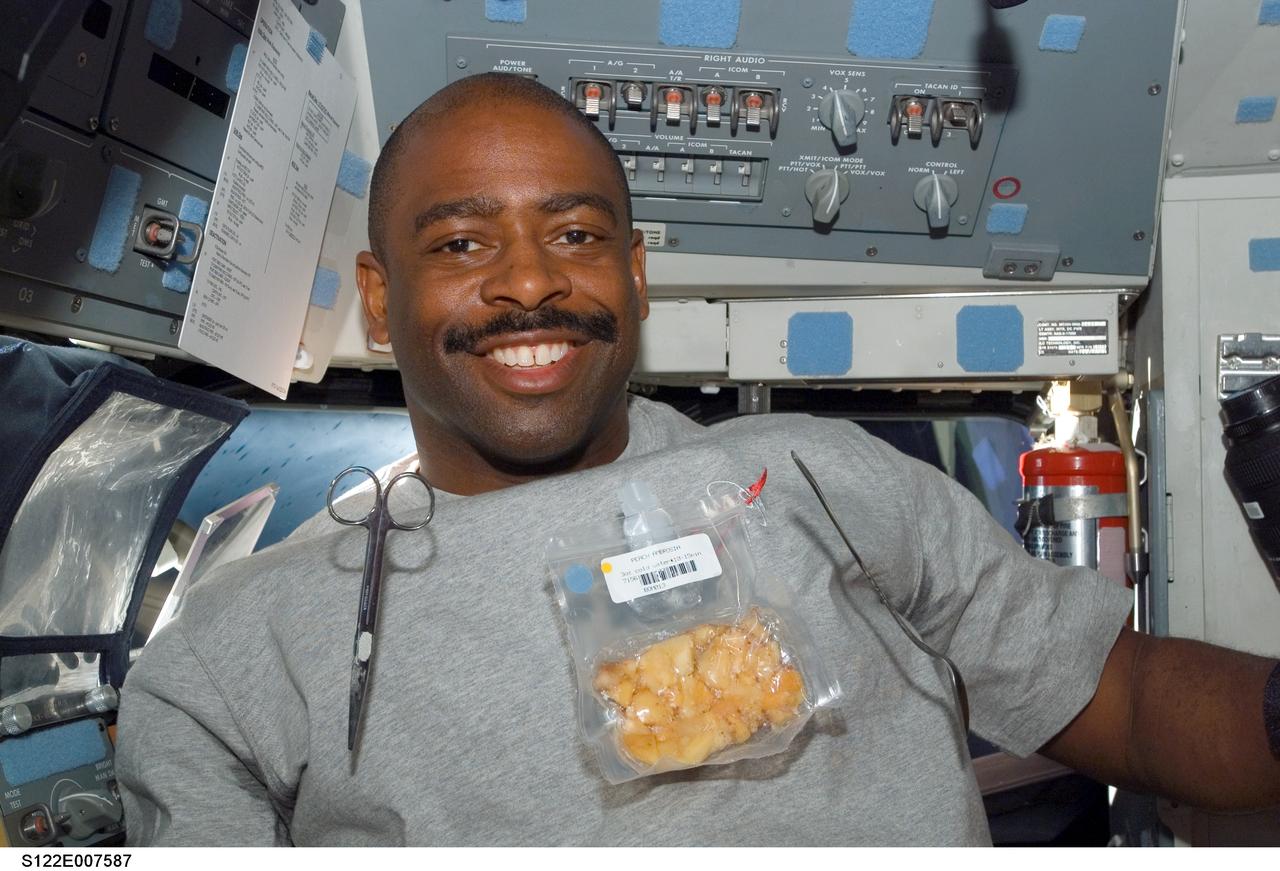
S122-E-007587 (10 Feb. 2008) --- Astronaut Leland Melvin, STS-122 mission specialist, witnesses microgravity in action on the aft flight deck of Space Shuttle Atlantis while docked with the International Space Station. A package of food, scissors and a spoon float freely near Melvin.
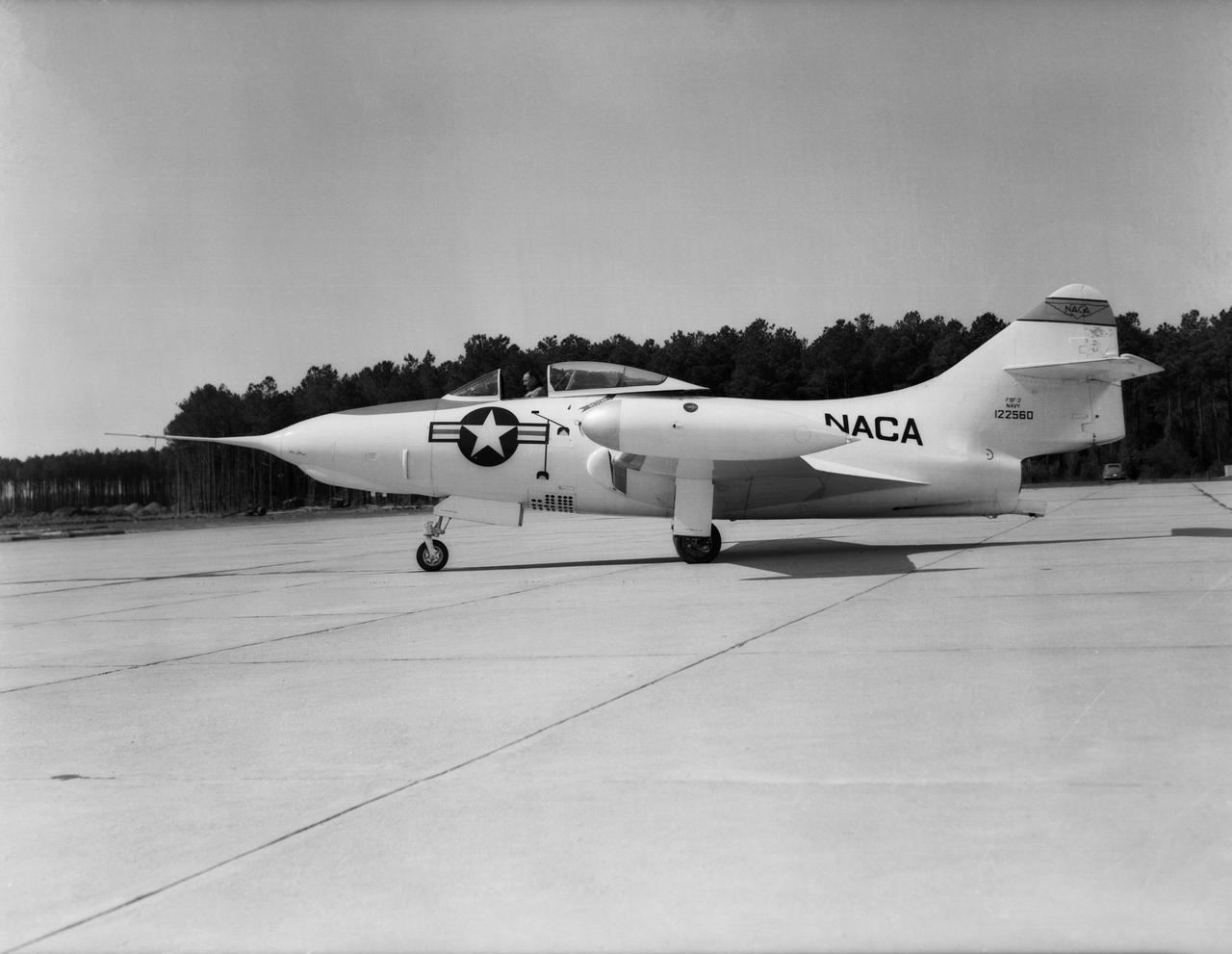
Grumman F9F-2 Panther: Originally built as a F9F-3, this Grumman F9F-2 Panther has a Pratt and Whitney J42 turbojet power plant, hence the designation change. This Panther underwent handling quality tests, serving long enough at Langley to witness the change from the NACA to NASA.
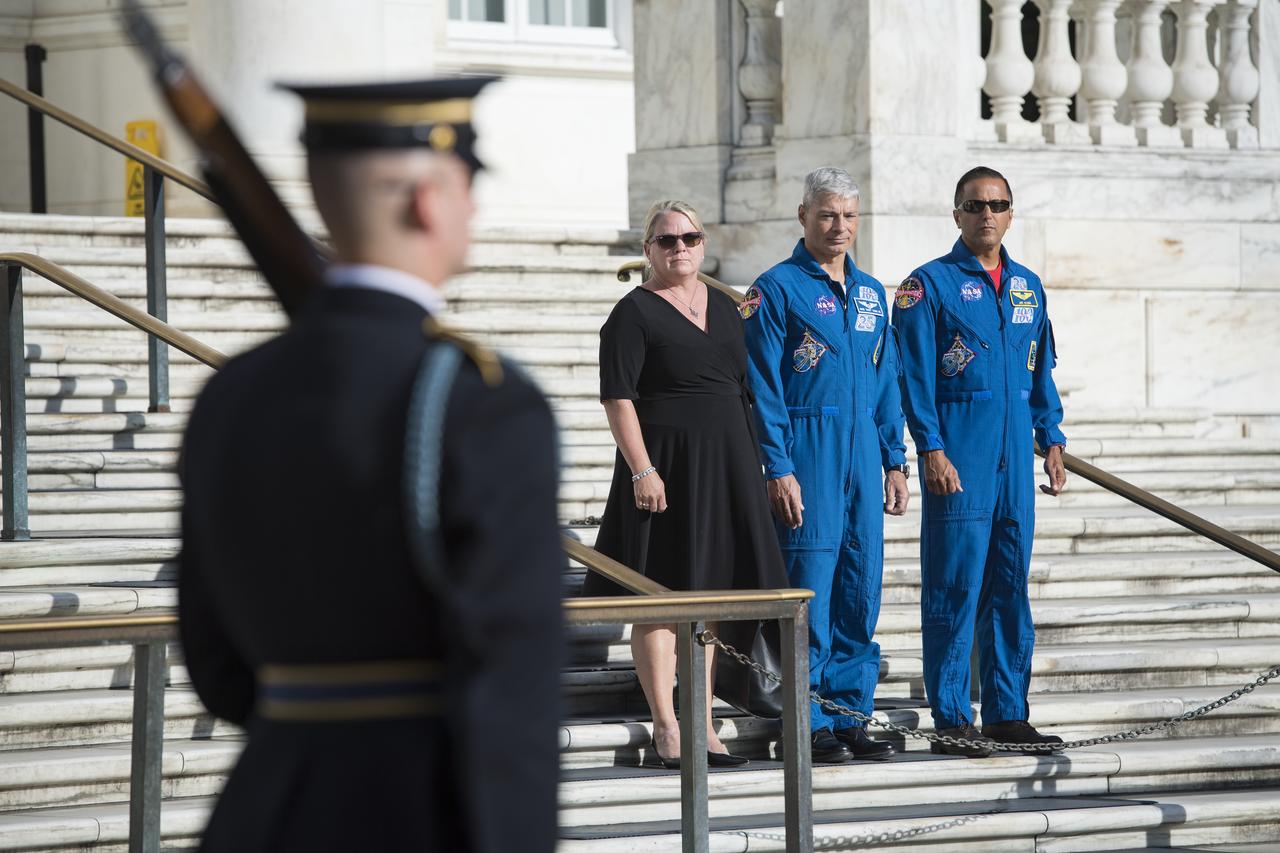
NASA astronaut Mark Vande Hei, center, his wife Julie, left, and NASA astronaut Joe Acaba witness the changing of the guards at the Tomb of the Unknown soldier, Friday, June 15, 2018 at Arlington National Cemetery in Arlington, Va. Photo Credit: (NASA/Aubrey Gemignani)
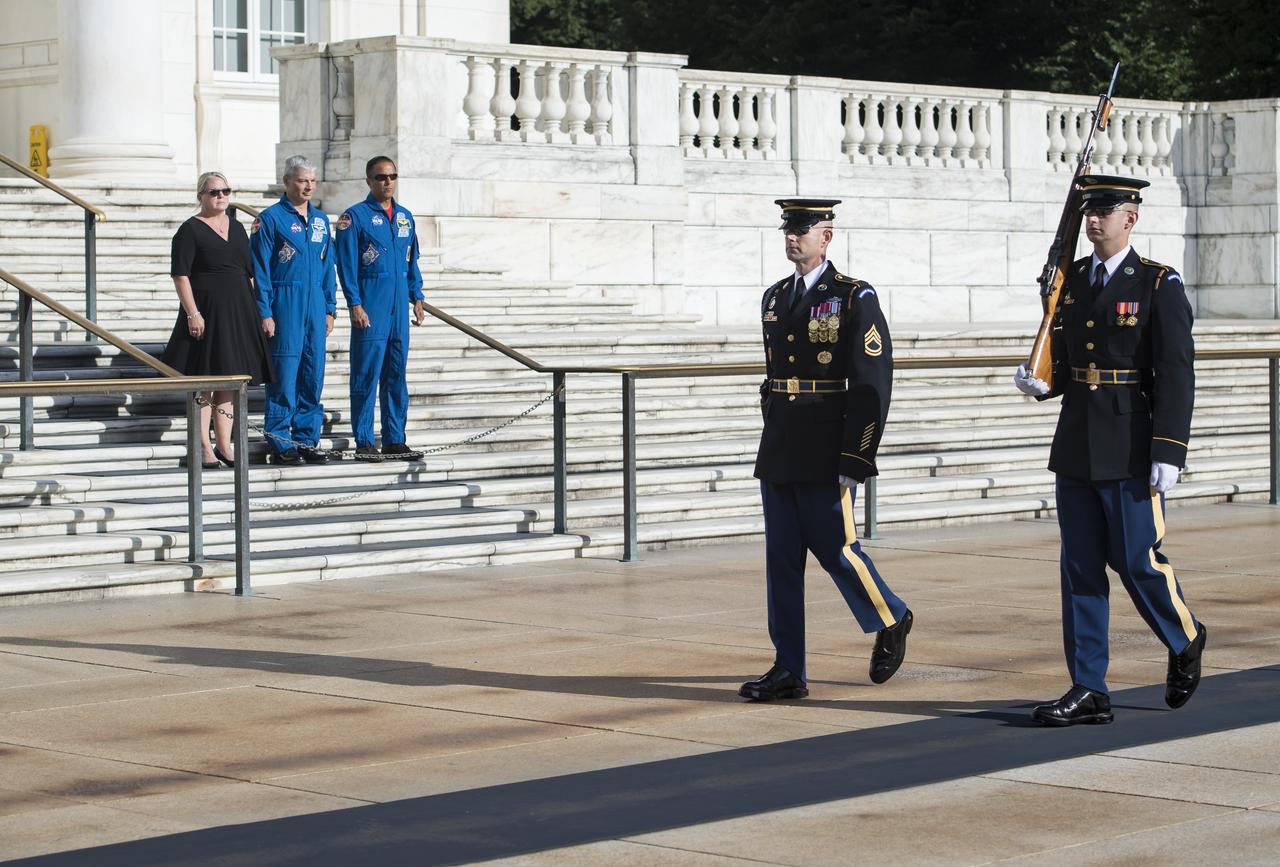
NASA astronaut Mark Vande Hei, center, his wife Julie, left, and NASA astronaut Joe Acaba witness the changing of the guards at the Tomb of the Unknown soldier, Friday, June 15, 2018 at Arlington National Cemetery in Arlington, Va. Photo Credit: (NASA/Aubrey Gemignani)
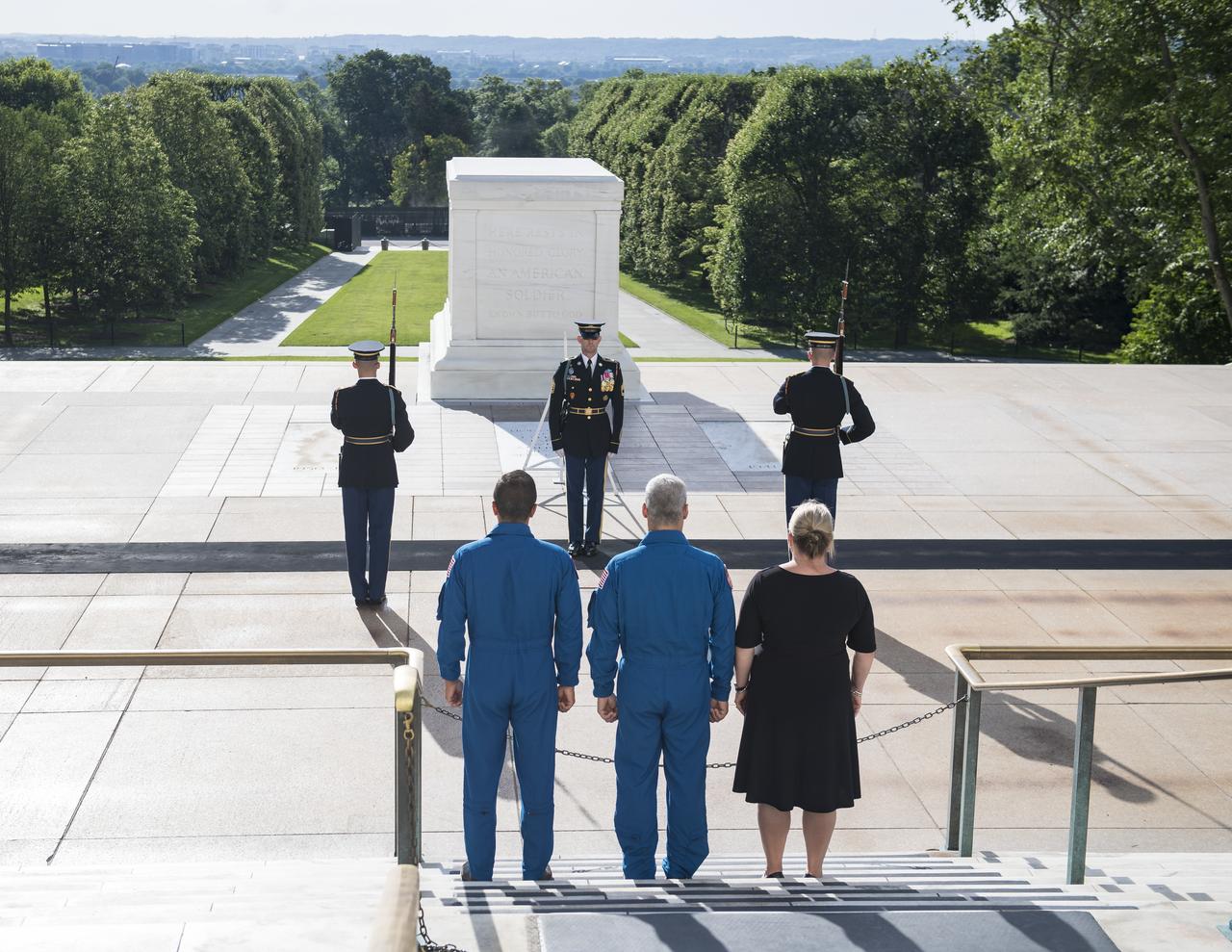
NASA astronaut Mark Vande Hei, center, his wife Julie, right, and NASA astronaut Joe Acaba witness the changing of the guards at the Tomb of the Unknown soldier, Friday, June 15, 2018 at Arlington National Cemetery in Arlington, Va. Photo Credit: (NASA/Aubrey Gemignani)
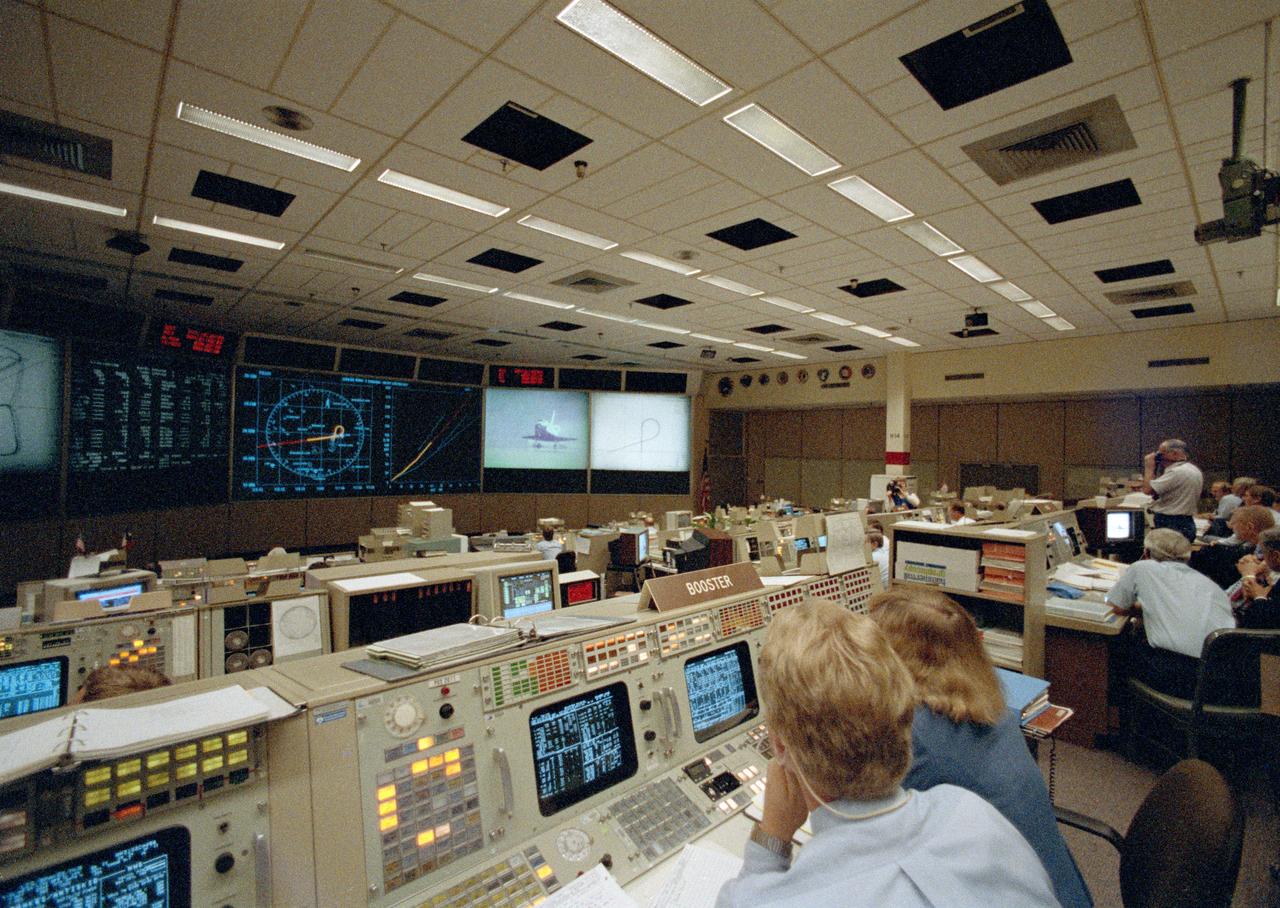
STS026-S-117 (3 Oct 1988) --- Flight controllers in Houston witness the landing of the Space Shuttle Discovery on a dry lake bed at NASA?s Dryden Flight Research Facility. The orbiter is seen on the giant screen in front of the flight control room just as the landing gear touches down.
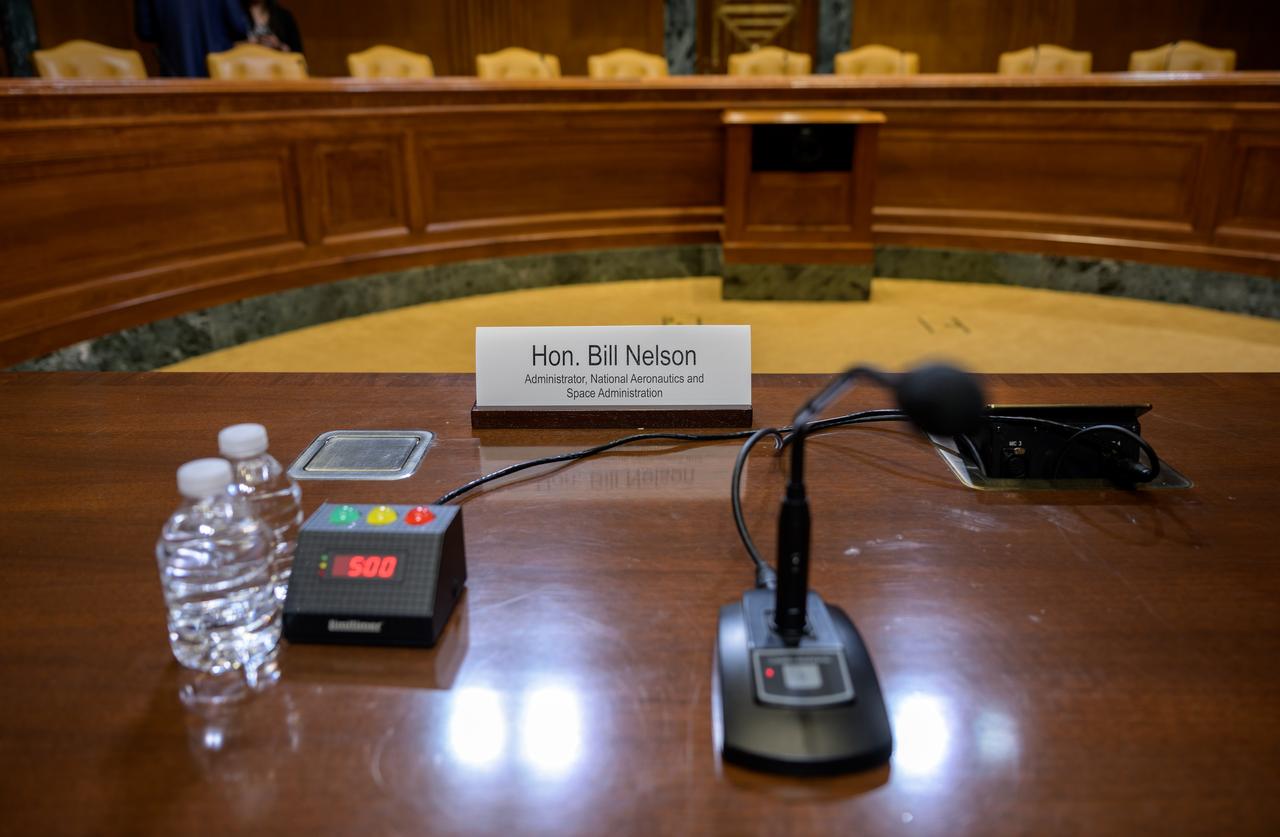
The witness table is seen ahead of NASA Administrator Bill Nelson testifing before the Senate Appropriations’ Commerce, Justice, Science, and Related Agencies subcommittee during a budget hearing, Tuesday, April 18, 2023, at the Dirksen Senate Office Building in Washington. Photo Credit: (NASA/Bill Ingalls)
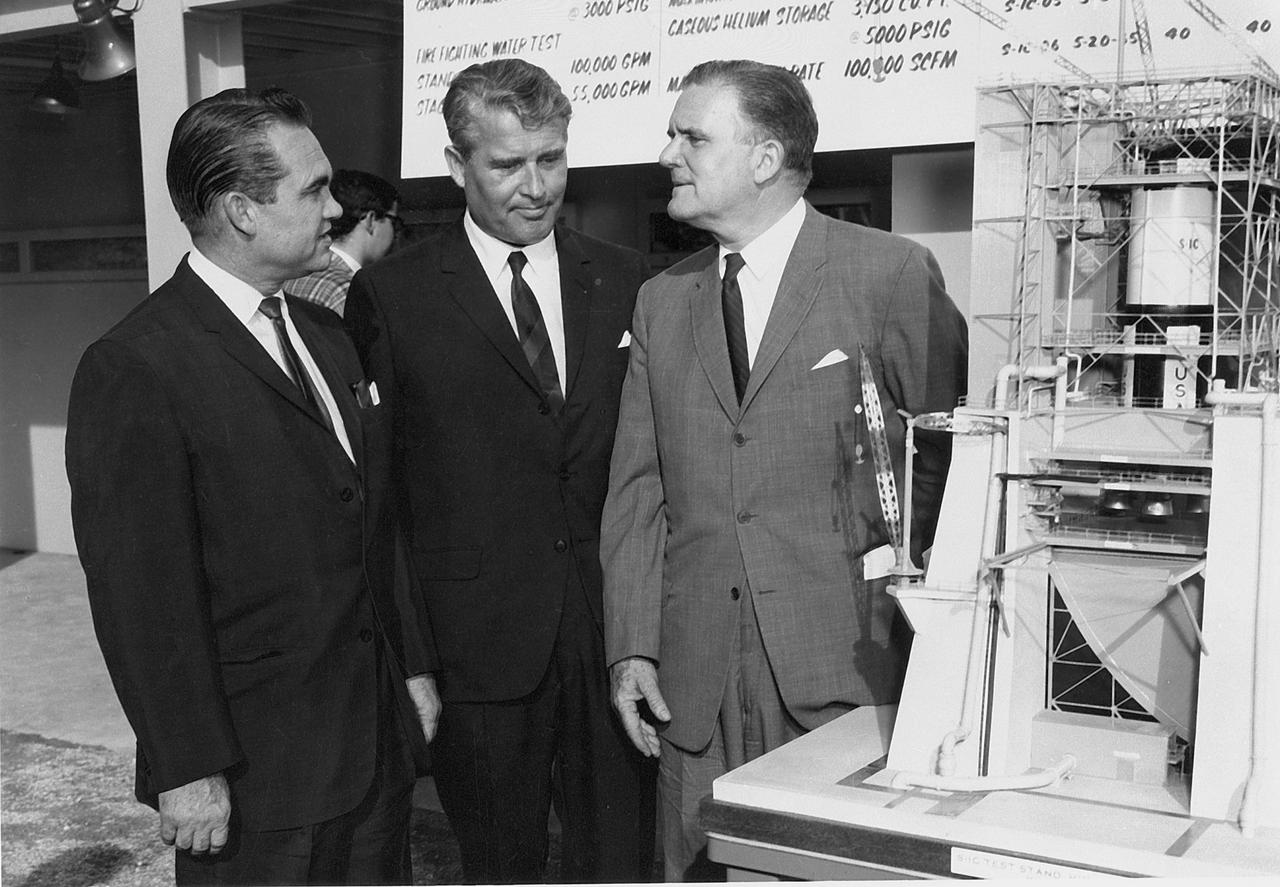
In this photograph are Alabama Governor George Wallace (left), Marshall Space Flight Center Dr. Wernher von Braun (Center) and NASA Administrator James Webb (right). Governor Wallace and Dr. Webb were at MSFC to witness the first test firing of a Saturn V Booster, along with members of the Alabama legislature and press reporters.
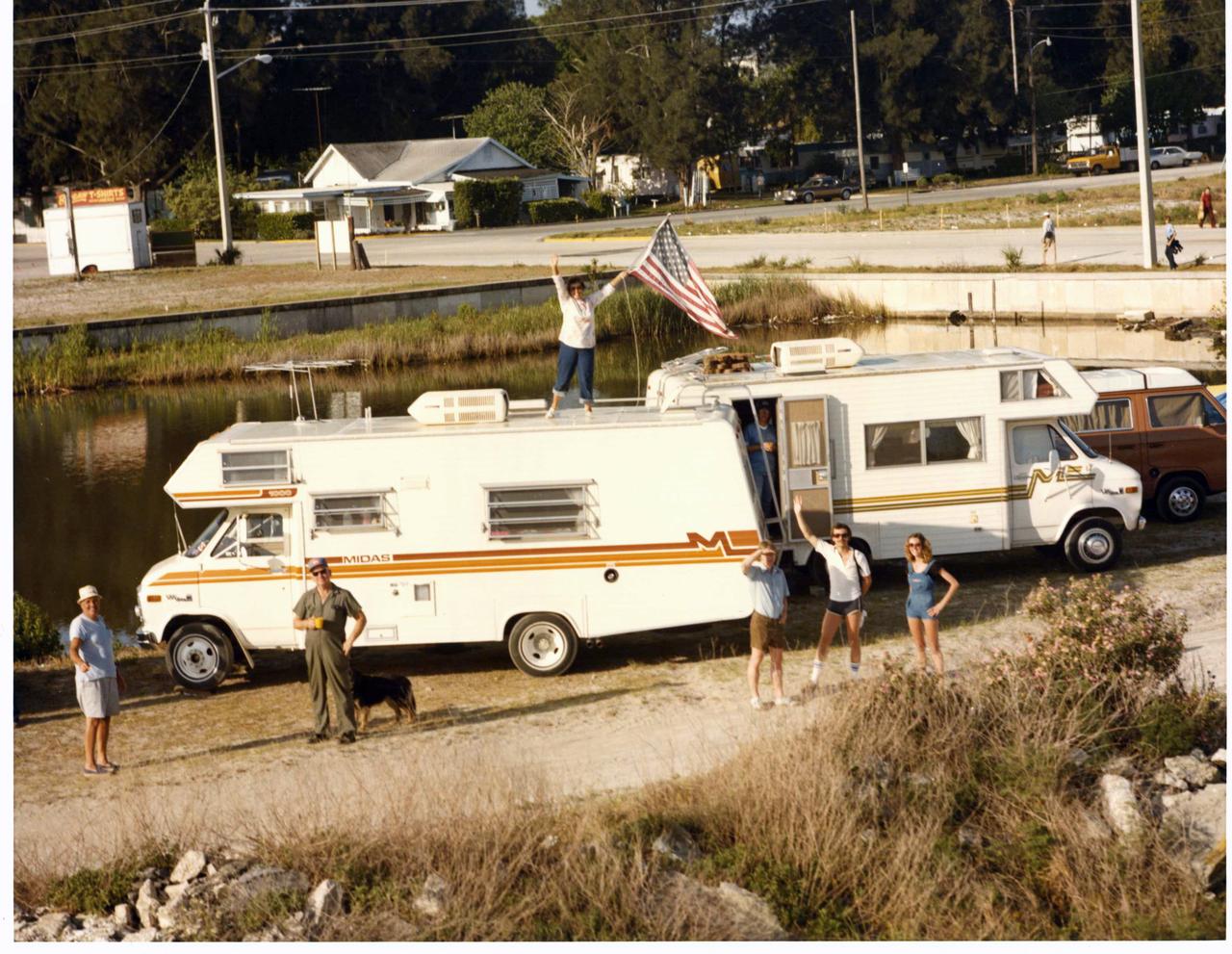
Go Columbia! Go America! Enthused by the sight of the space shuttle launch, one of the thousands of observers in Brevard County waves an American flag as Columbia heads skyward. Many people waited all night at viewing sites to assure that they would witness the historic first launch of the space shuttle.
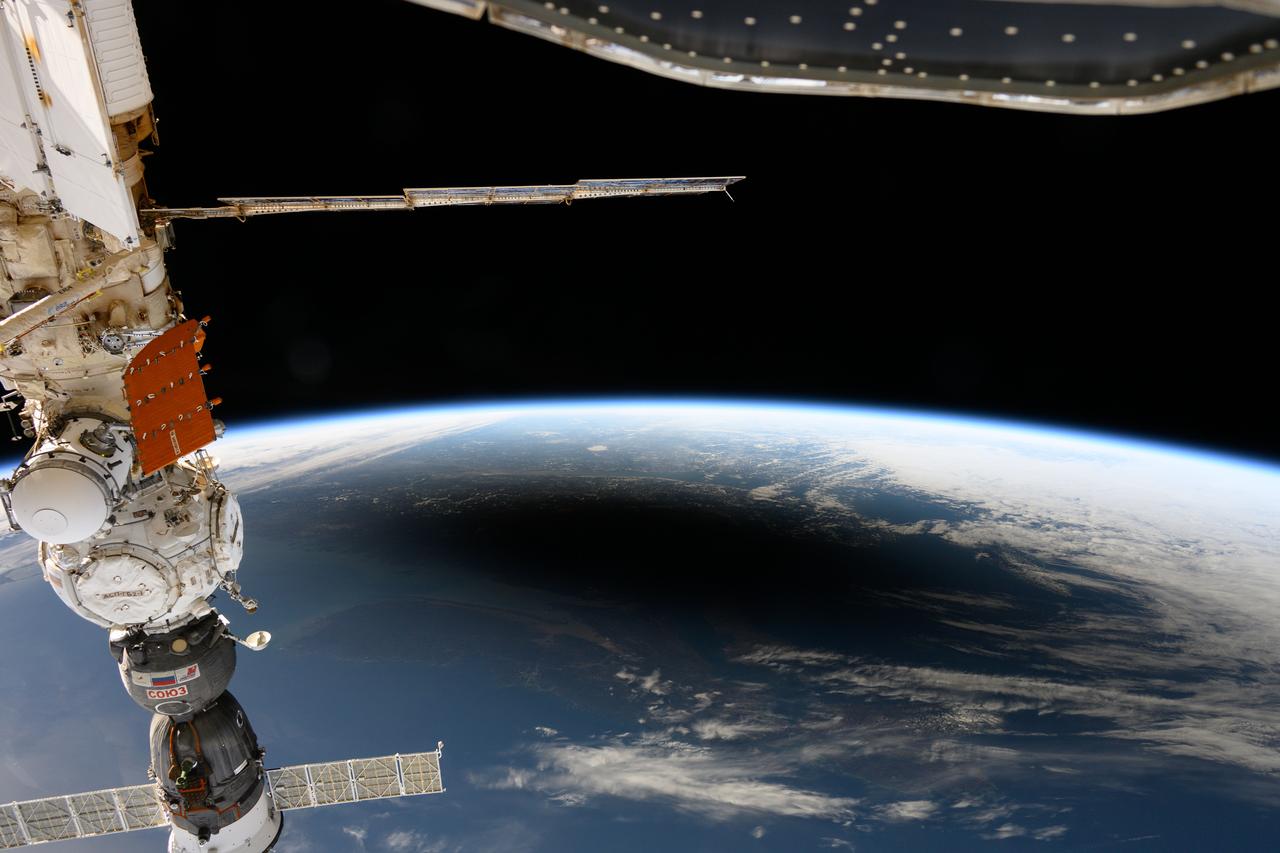
iss071e003390 (4/8/2024) --- A total solar eclipse passes over Mexico, the United States, and Canada. Millions of people witnessed skies darken as the Moon passed between Earth and the Sun. Astronauts aboard station captured the lunar shadow traverse the North American continent.
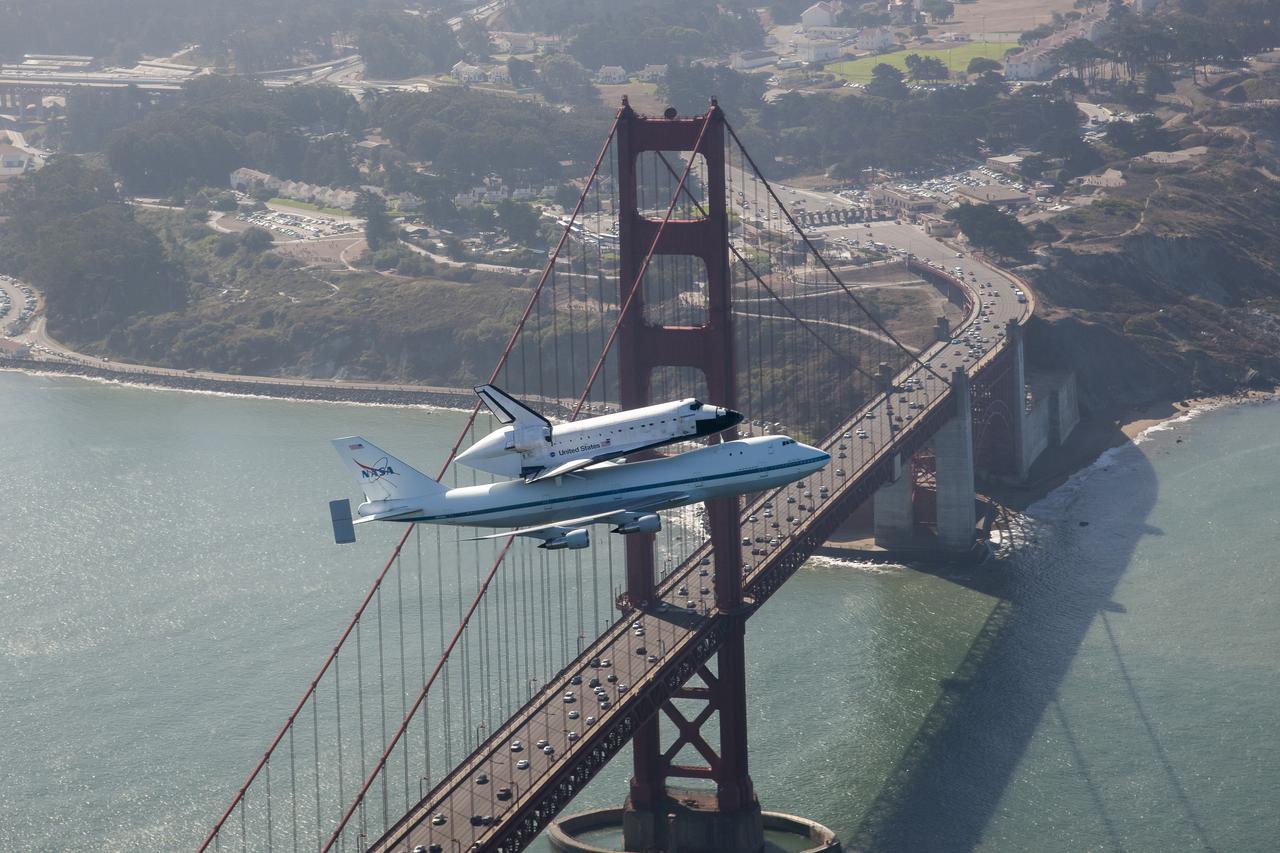
Space shuttle Endeavour and its host NASA 747 Shuttle Carrier Aircraft fly by the Golden Gate Bridge in 2012 on its way to the Los Angeles International Airport and an overland journey to the California Science Center. Californians looked up at the morning sky Sept. 21 to catch a glimpse of Endeavour. The final leg of Endeavour’s flight from NASA’s Kennedy Space Center, Florida, offered many people an opportunity to witness the historic flight. Space shuttle Endeavour and its host NASA 747 Shuttle Carrier Aircraft fly by the Golden Gate Bridge in 2012 on its way to the Los Angeles International Airport and an overland journey to the California Science Center. Californians looked up at the morning sky Sept. 21 to catch a glimpse of Endeavour. The final leg of Endeavour’s flight from NASA’s Kennedy Space Center, Florida, offered many people an opportunity to witness the historic flight.
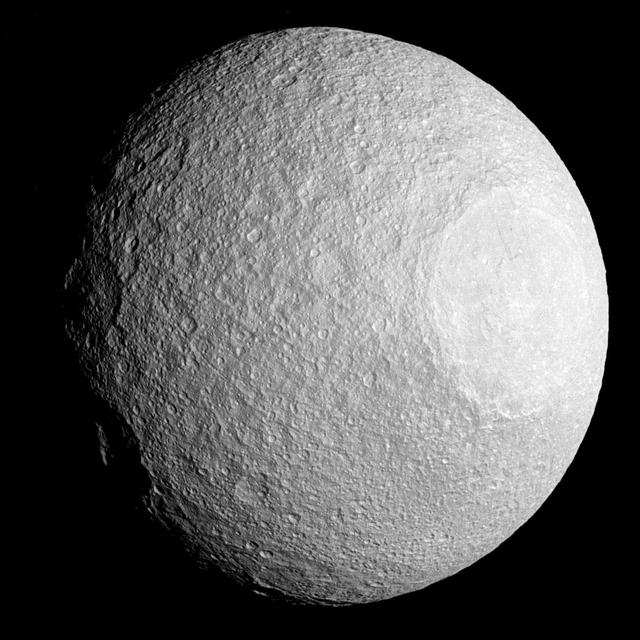
Like most moons in the solar system, Tethys is covered by impact craters. Some craters bear witness to incredibly violent events, such as the crater Odysseus (seen here at the right of the image). While Tethys is 660 miles (1,062 kilometers) across, the crater Odysseus is 280 miles (450 kilometers) across, covering about 4.5 percent of the moon's surface area. A comparably sized crater on Earth would be as large as Russia. This view looks toward the anti-Saturn hemisphere of Tethys. North on Tethys is up and rotated 42 degrees to the right. The image was taken in visible light with the Cassini spacecraft narrow-angle camera on April 11, 2015. The view was acquired at a distance of approximately 118,000 miles (190,000 kilometers) from Tethys. Image scale is 3,280 feet (1 kilometer) per pixel. http://photojournal.jpl.nasa.gov/catalog/pia18317

iss071e046021 (April 27, 2024) -- Off the coast of Newfoundland, NASA astronaut Mike Barratt captured this image of sea ice as the International Space Station orbited 258 miles above the North Atlantic Ocean. The sea ice appears in swirls floating on the ocean's surface. From the orbiting laboratory's unique vantage point, astronauts can observe events on our home planet that are otherwise impossible to witness on the ground.
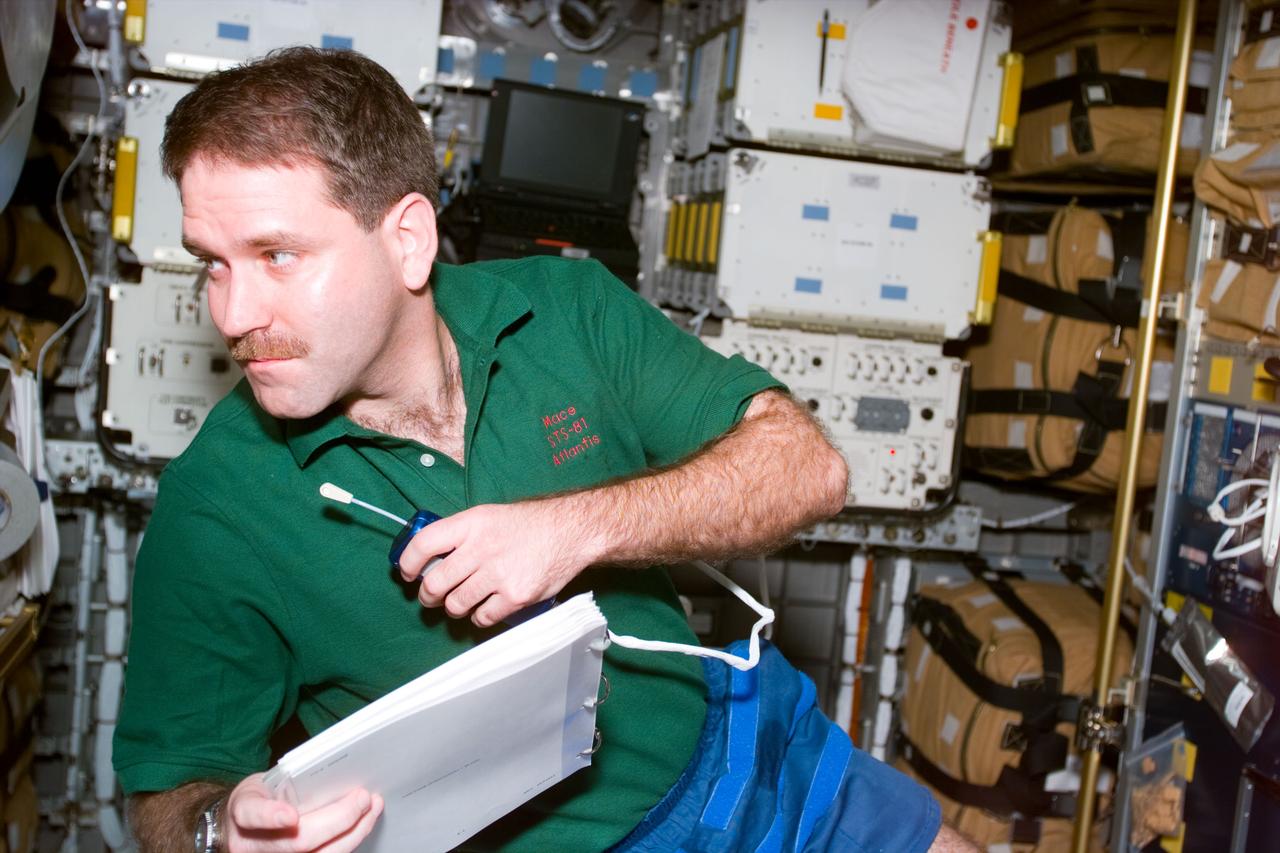
STS081-E-05144 (13 Jan. 1997) --- Making sure everything is in its place is no easy task as witnessed by the serious countenance of astronaut John M. Grunsfeld, mission specialist. Grunsfeld communicates with ground controllers as he checks progress of item transfers in the Spacehab Double Module (DM). This image was recorded with an Electronic Still Camera (ESC) and was later downlinked to flight controllers in Houston, Texas. Grunsfeld and five astronaut crew mates are preparing for a scheduled mid-week docking with Russia's Mir Space Station.
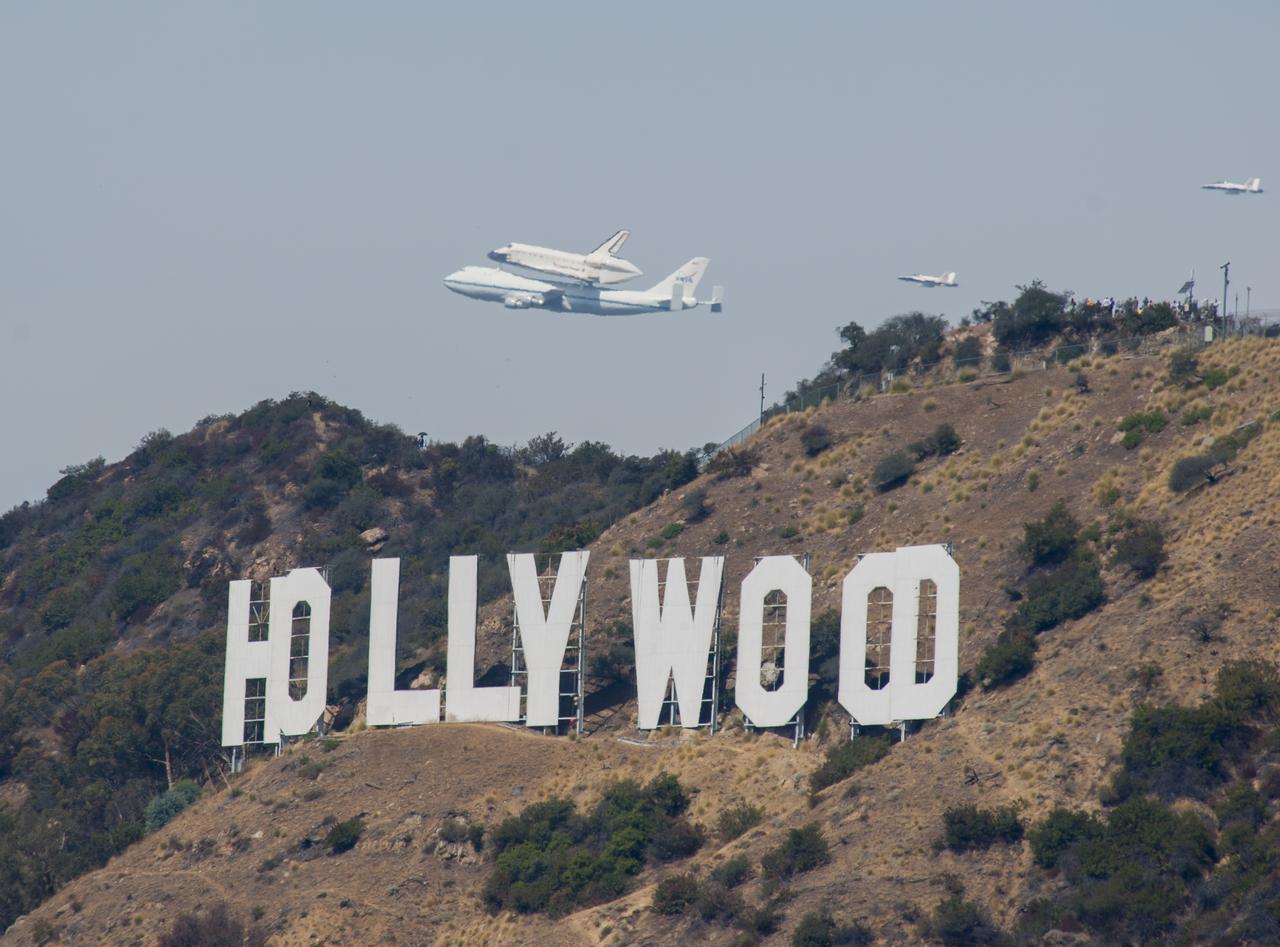
Space shuttle Endeavour and its host NASA 747 Shuttle Carrier Aircraft fly over the Hollywood sign in 2012 on its way to the Los Angeles International Airport, and an overland journey to the California Science Center. Californians looked up at the morning sky Sept. 21 looking to see Endeavour fly over their community. The final leg of Endeavour’s flight from NASA’s Kennedy Space Center, Florida, offered many people an opportunity to witness the historic flight.
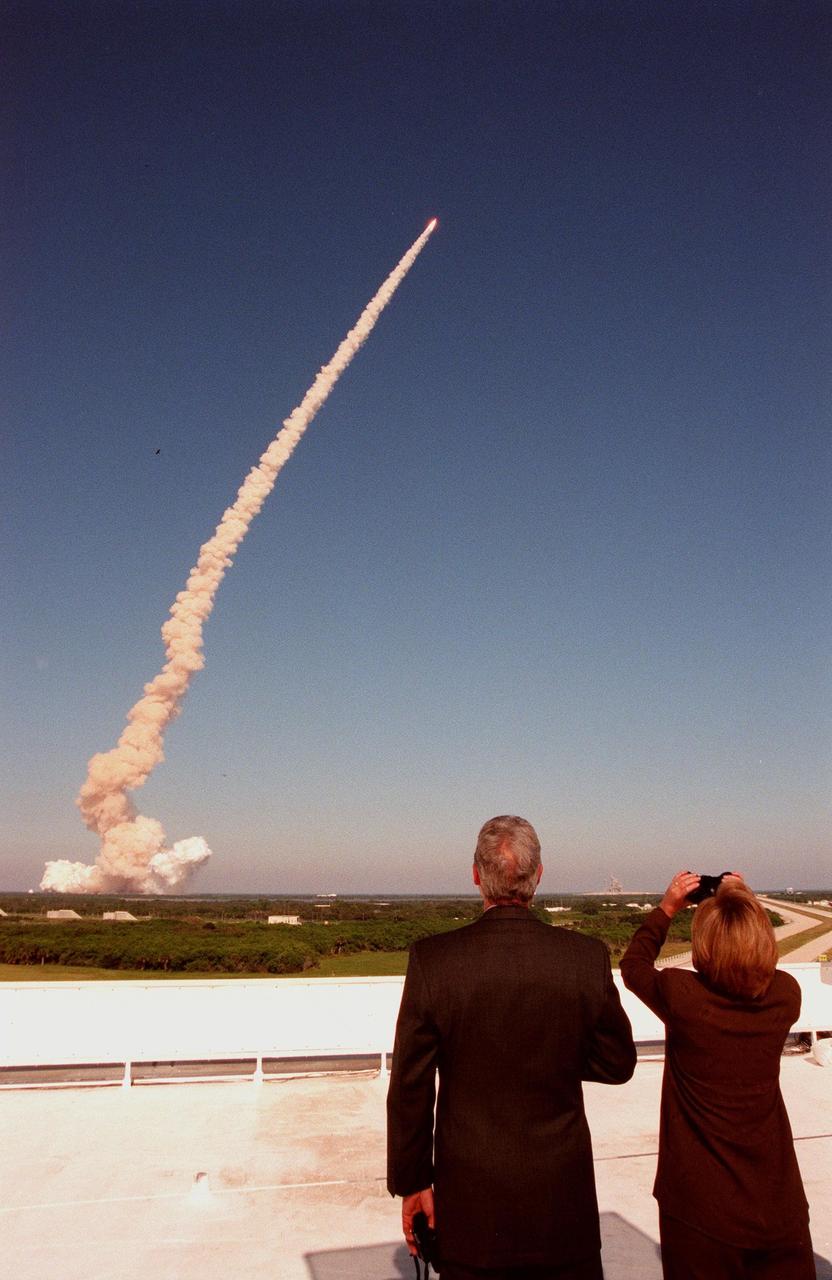
From the roof of the Launch Control Center, U.S. President Bill Clinton and First Lady Hillary Rodham Clinton track the plume and successful launch of Space Shuttle Discovery on mission STS-95. This was the first launch of a Space Shuttle to be viewed by President Clinton, or any President to date. They attended the launch to witness the return to space of American legend John H. Glenn Jr., payload specialist on the mission

KENNEDY SPACE CENTER, FLA. - Hundreds of news media representatives prepare for the big moment -- the liftoff of Apollo 11. That moment came at 9:32 a.m. EDT as Apollo 11 lifted off its launch pad to begin the first manned lunar landing mission. The space vehicle is seen on its mobile launcher at Pad 39A (center-rear, across water), prior to the liftoff. More than 3,000 press representatives witnessed the liftoff.
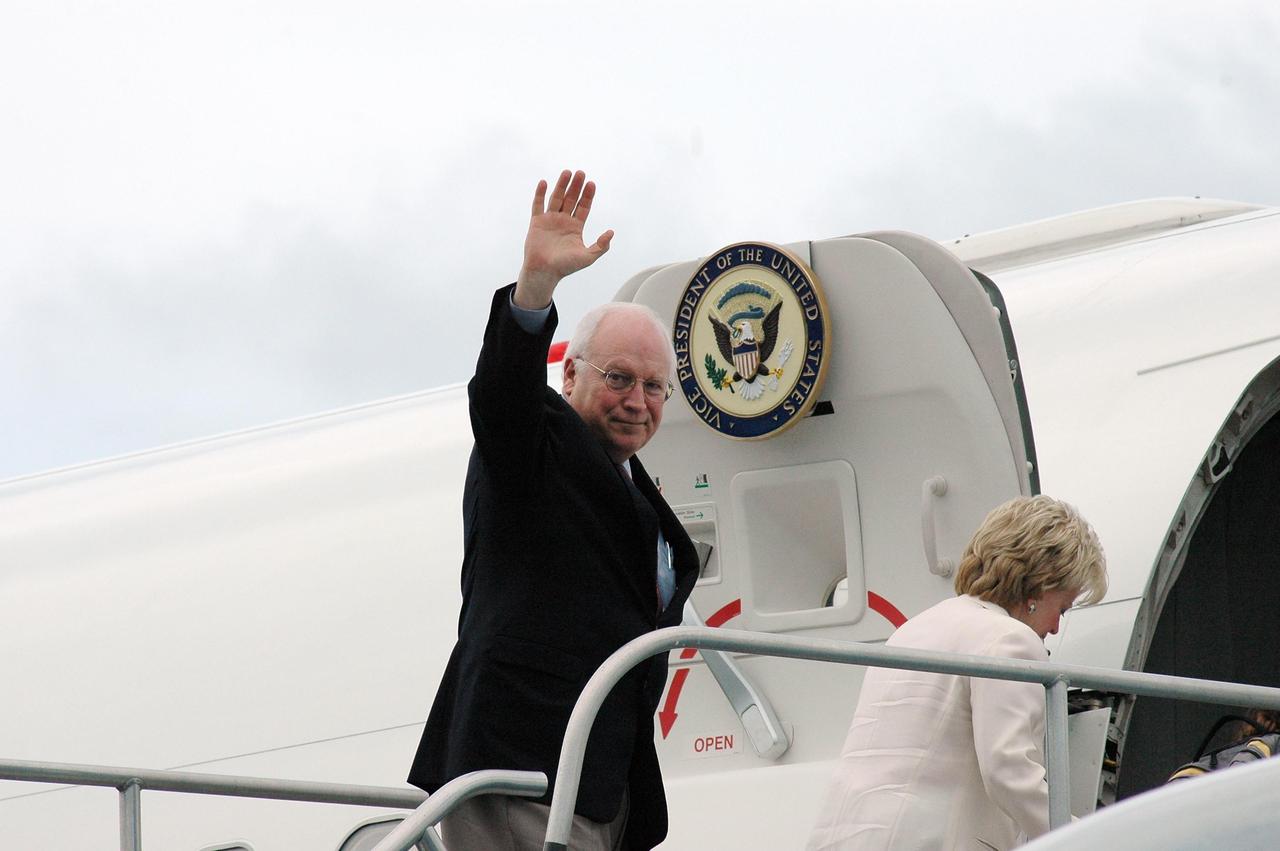
KENNEDY SPACE CENTER, FLA. - On the Skid Strip at Cape Canaveral Air Force Station in Florida, U.S. Vice President Dick Cheney waves before entering Air Force Two for a return trip to Washington. Preceding him is his wife, Lynne. Cheney and his family flew in earlier to witness the launch of Space Shuttle Discovery on mission STS-121. The launch was scrubbed due to weather concerns and postponed 24 hours. Photo credit: NASA/Kim Shiflett
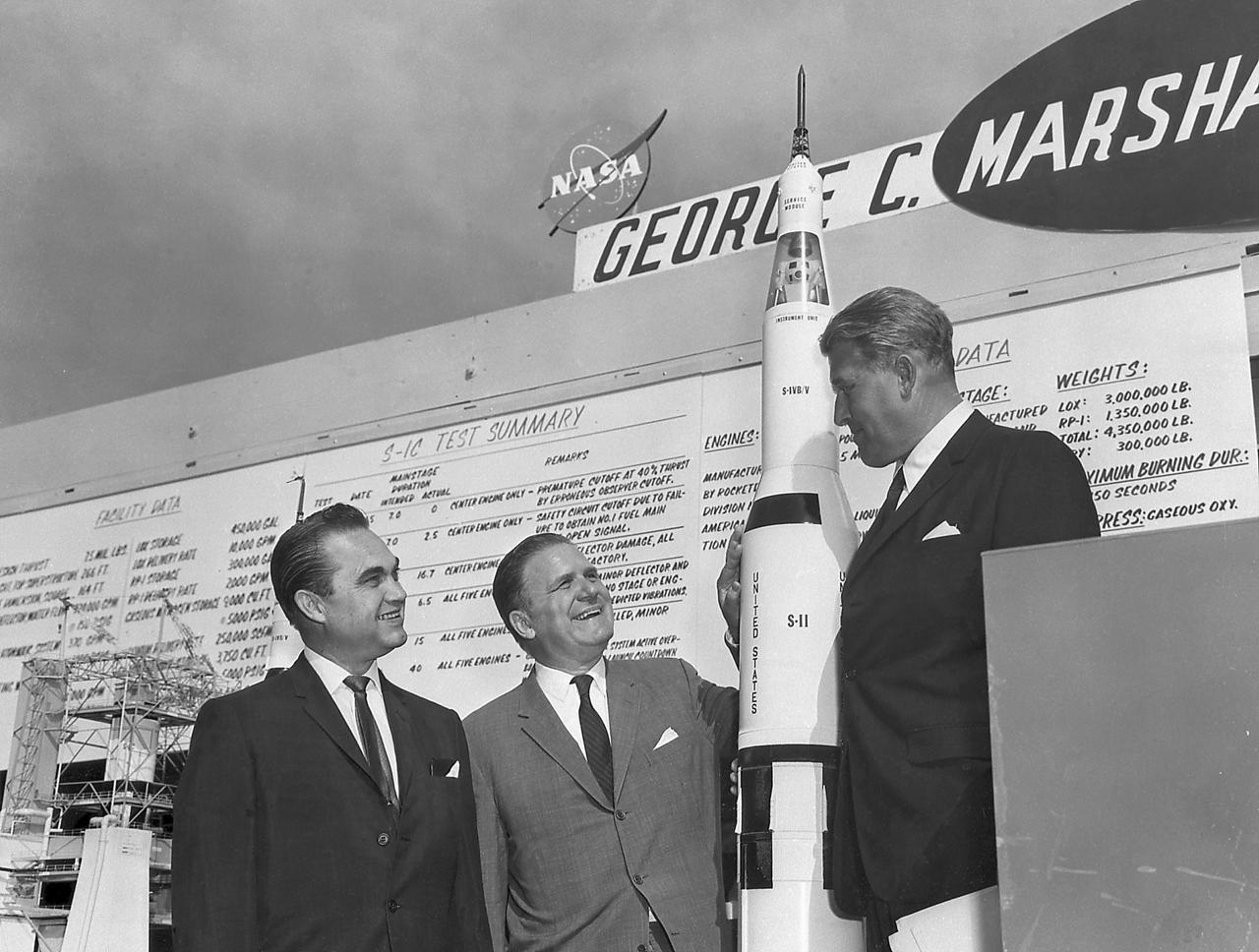
Governor of Alabama George Wallace (left), NASA Administrator James Webb and Marshall Space Flight Center (MSFC) Director Dr. von Braun during a tour of MSFC on June 8, 1965. Governor Wallace and Dr. Webb were at MSFC to witness the first test firing of a Saturn V Booster, along with members of the Alabama legislature and press reporters.
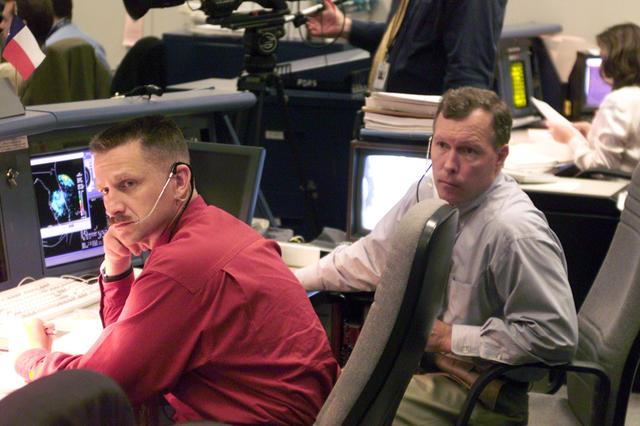
JSC2000-E-22289 (8 September 2000) --- Two astronauts at the Spacecraft Communicator (CAPCOM) console in Houston's Mission Control Center are about to witness the launch of the Space Shuttle Atlantis from the Kennedy Space Center (KSC) in Florida. They are astronauts Christopher J. Loria (left) and Dominic L. Gorie. Atlantis launched on schedule, at 8:46 a.m. (EDT), September 8, 2000, as the Johnson Space Center (JSC) flight control team took the baton from KSC's launch controllers.

Memorandum of Understanding (MOU) to establish a Unmanned Aerial Vehicles (UAV) Applications Center at NASA Research Park (NRP) was signed into being by (L-R) John Bassett Clark University, Worcester, Mass., Dr. Henry McDonald, Director of Ames Research Center and Paul Coleman, Girvan Institute (a non-profit organization lockated in NASA Research Park). Witnessed by (Back Row, L-R) Steve Douagan, Dave Peterson, Jim Brass, Stan Herwitz, Ken Souza, Estelle Condon, Carolina Blake.
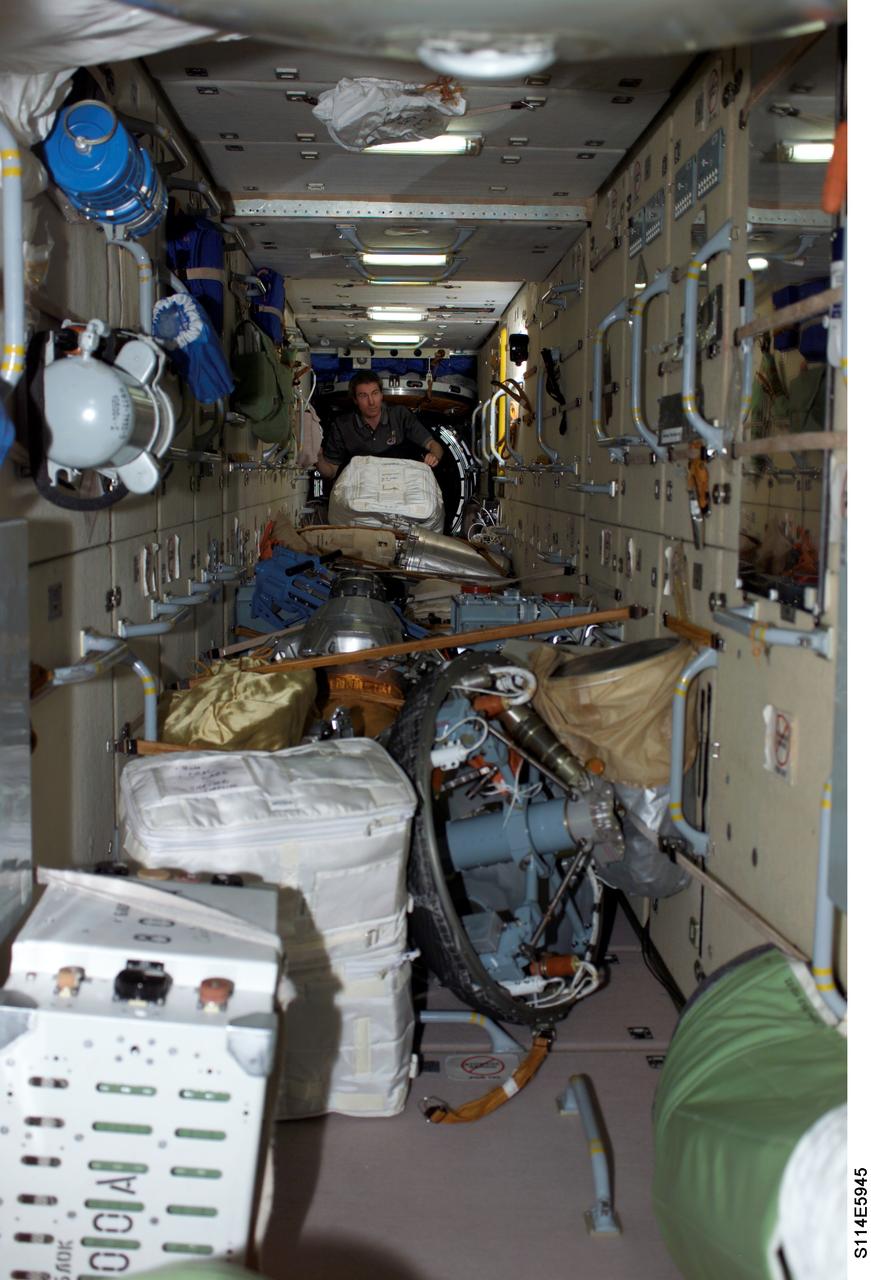
S114-E-5945 (31 July 2005) --- This scene in Zarya, the functional cargo block for the International Space Station, serves witness to the primary current emphasis onboard the orbital outpost. Transfers of additional water and supplies to the International Space Station continues on this Sunday as the crew aboard Space Shuttle Discovery begins Flight Day 6. Cosmonaut Sergei Krikalev of Russia's Federal Space Agency can be seen at the far end of the cluttered hallway.
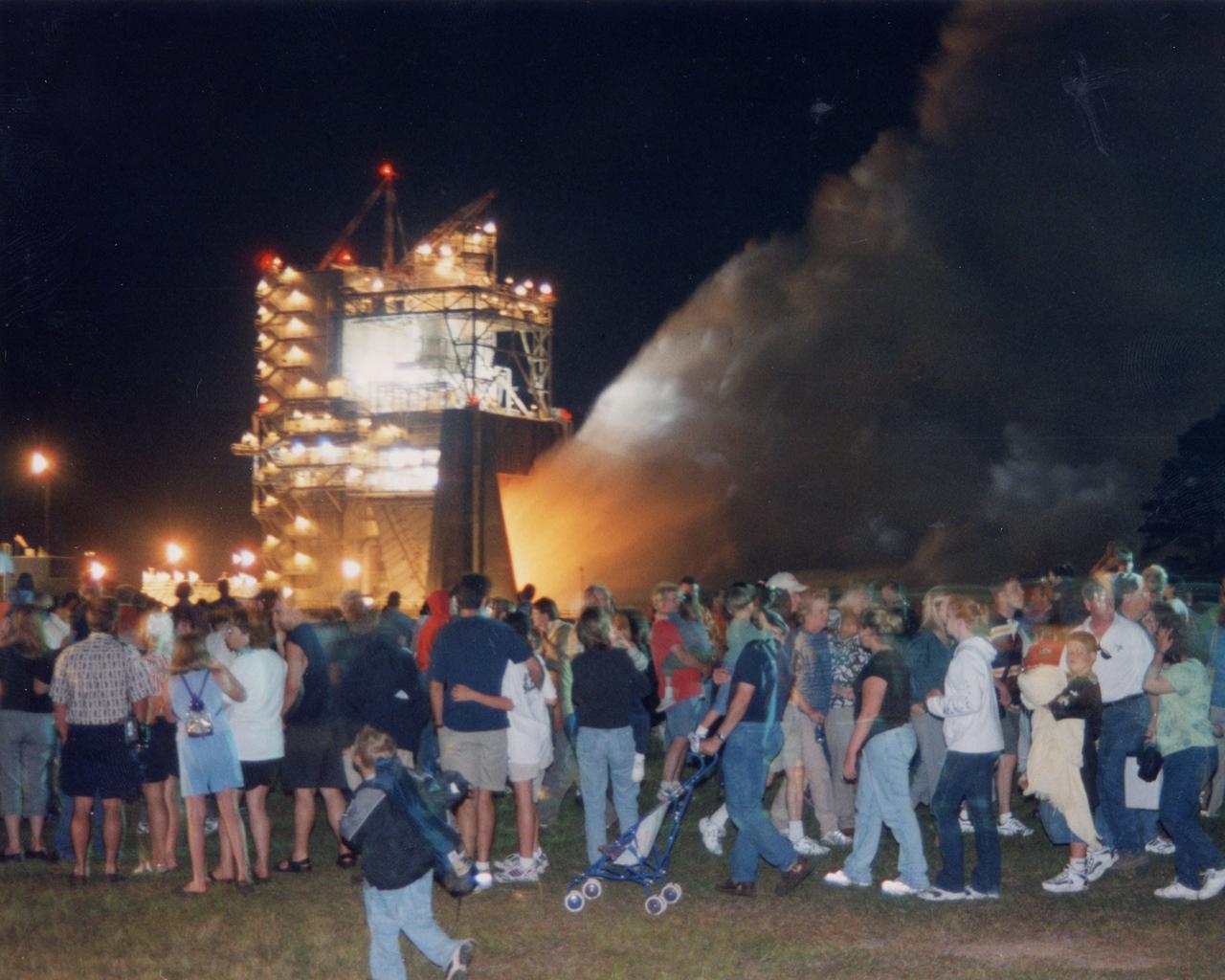
Over the past year, more than 20,000 people came to Stennis Space Center to witness the 'shake, rattle and roar' of one of the world's most sophisticated engines. Stennis Space Center in south Mississippi is NASA's lead center for rocket propulsion testing. StenniSphere, the visitor center for Stennis Space Center, hosted more than 250,000 visitors in its first year of operation. Of those visitors, 26.4 percent were from Louisiana.
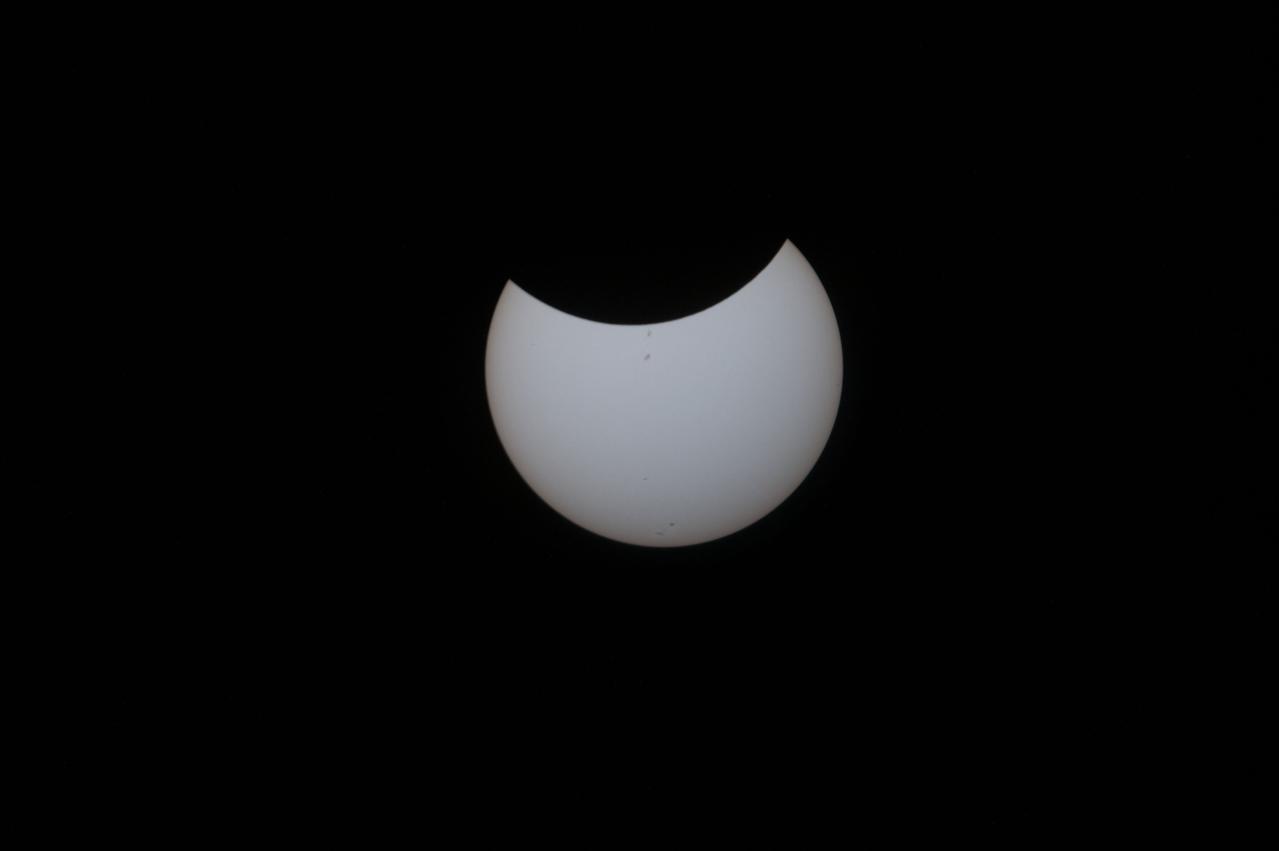
iss052e055885 (Aug. 21, 2017) --- Aboard the International Space Station, NASA Flight Engineer Randy Bresnik took still images of the eclipse as seen from the unique vantage of the Expedition 52 crew. Witnessing the eclipse from orbit with Bresnik were NASA’s Jack Fischer and Peggy Whitson, ESA (European Space Agency’s) Paolo Nespoli, and Roscosmos’ Commander Fyodor Yurchikhin and Sergey Ryazanskiy. The space station crossed the path of the eclipse three times as it orbited above the continental United States at an altitude of 250 miles.
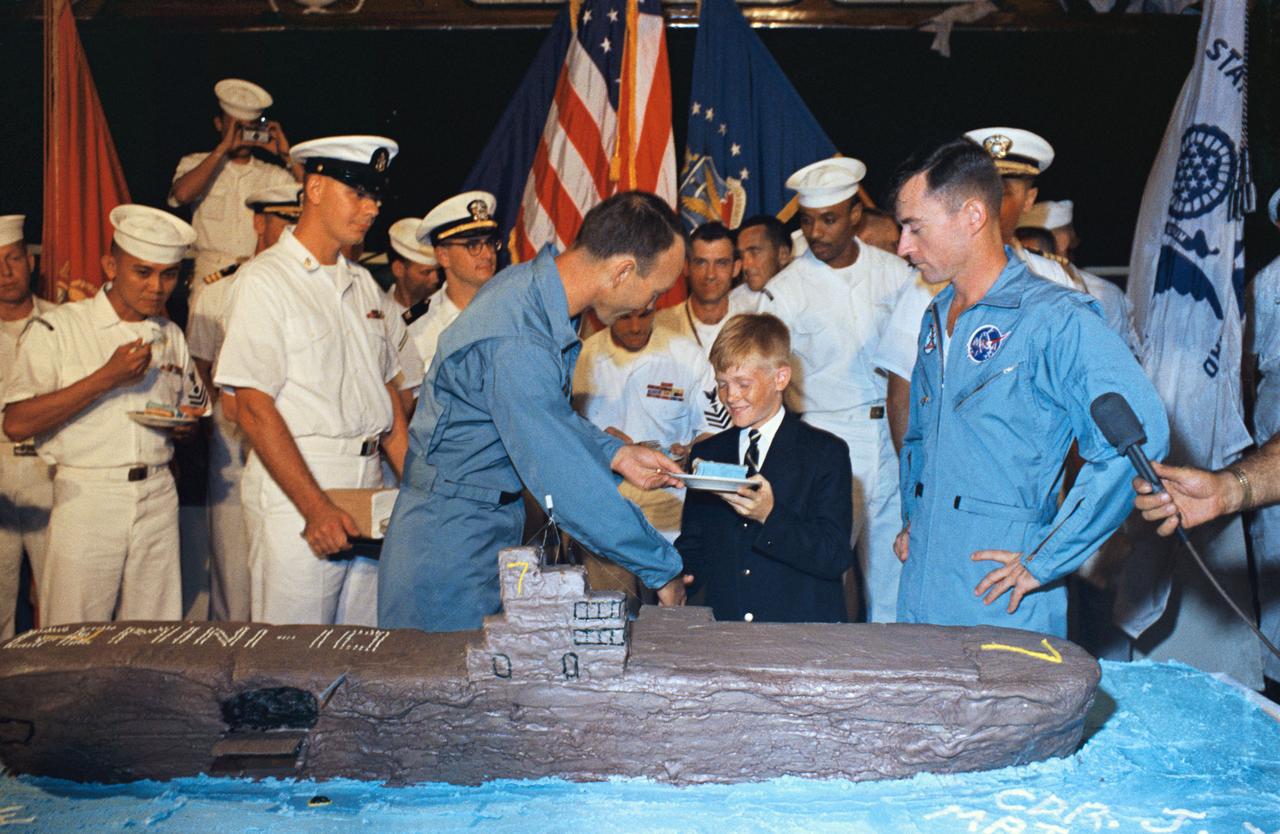
S66-42787 (21 July 1966) --- Twelve-year -old Billy Doyle of Virginia Beach, VA., shakes hands with astronaut Michael Collins, Gemini-10 pilot, aboard the recovery ship USS Guadalcanal. At right is John W. Young, command pilot of the Gemini-10 spaceflight. Billy represented 41 youngsters permitted aboard the Guadalcanal to witness the recovery with their Naval fathers or close relatives, marking the first time dependents have been permitted aboard a ship during a Gemini recovery operation. Photo credit: NASA
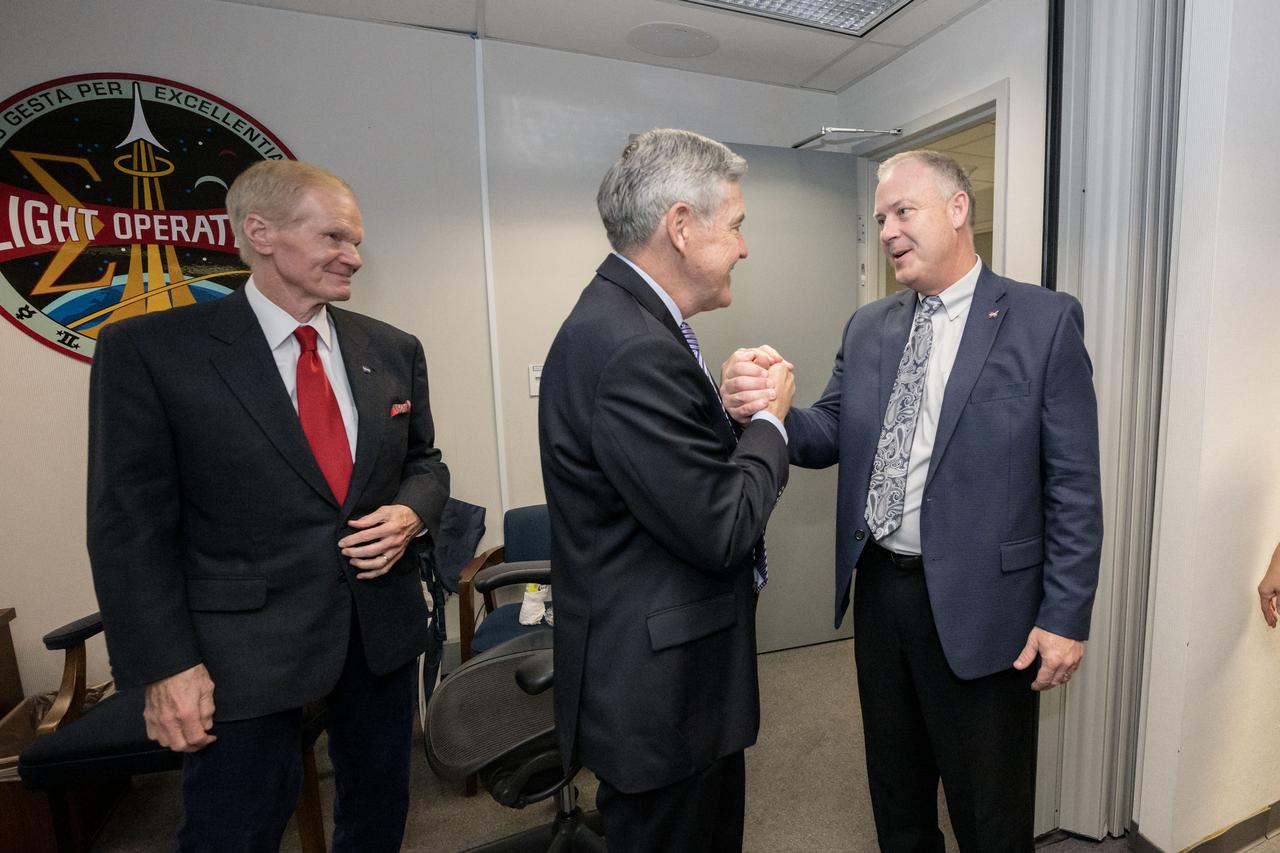
jsc2022e091676 (Dec. 11, 2022) NASA Administrator Bill Nelson visits Mission Control at NASA’s Johnson Space Center in Houston to witness the splashdown of Orion after a 25.5-day Artemis I mission. Nelson is joined by, from left, NASA Associate Administrator Bob Cabana, NASA Headquarters, and NASA Flight Operations Director Norm Knight, NASA Johnson.

Apollo 7 Commander Walter M. "Wally" Schirra and his wife, Josephine, were among the many special NASA STS-83 launch guests who witnessed the liftoff of the Space Shuttle Columbia April 4 at the Banana Creek VIP Viewing Site at KSC. Columbia took off from Launch Pad 39A at 2:20:32 p.m. EST to begin the 16-day Microgravity Science Laboratory-1 (MSL-1) mission
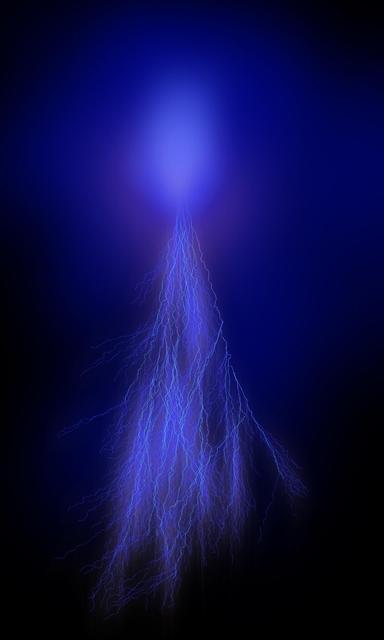
This illustration shows what a sprite could look like in Jupiter's atmosphere. Named after a mischievous, quick-witted character in English folklore, sprites last for only a few milliseconds. They feature a central blob of light with long tendrils of light extending down toward the ground and upward. In Earth's upper atmosphere, their interaction with nitrogen give sprites a reddish hue. At Jupiter, where the predominance of hydrogen in the upper atmosphere would likely give them a blue hue. https://photojournal.jpl.nasa.gov/catalog/PIA23990
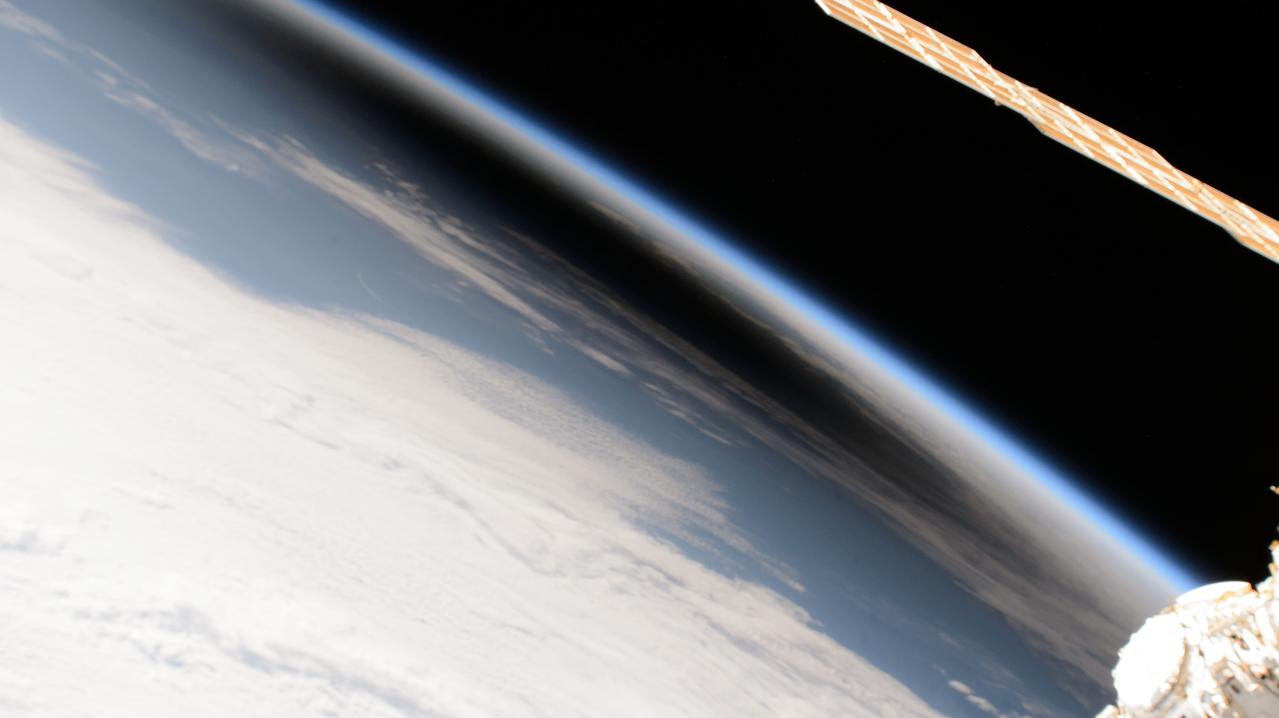
iss071e002694 (April 8, 2024) -- Orbiting 260 miles above the Northeastern coast of the United States, the Expedition 71 crew experienced the 2024 solar eclipse from space. Pictured here is the umbra, or the Moon's shadow, passing over Earth. Aboard the International Space Station to witness the celestial event was NASA astronauts Matthew Dominick, Michael Barratt, Jeanette Epps, and Tracy Dyson, as well as cosmonauts Oleg Kononenko, Nikolai Chub, and Alexander Grebenkin.
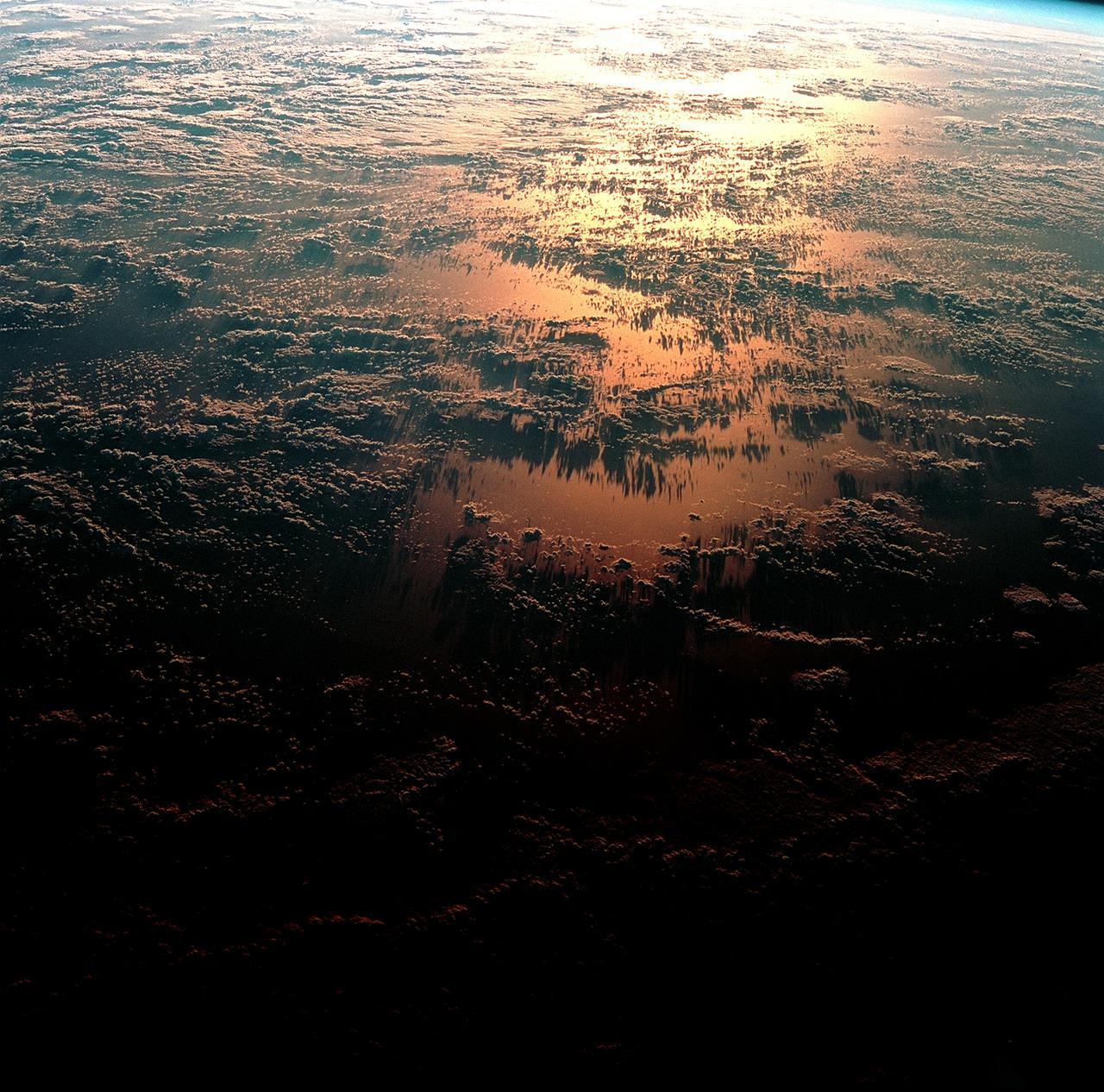
STS093-708-037 (23-27 July 1999) --- Sunset paints the ocean and low clouds with brilliant color and shadow just off the eastern coast of Brazil in the western South Atlantic in this photo from the Space Shuttle Columbia's 35th orbit. Since one orbit of the shuttle around the Earth only takes 90 minutes, every 45 minutes the astronauts can witness a sunrise or sunset. The shuttle was flying at a point located over 1.4 degrees north latitude and 26.9 west longitude.
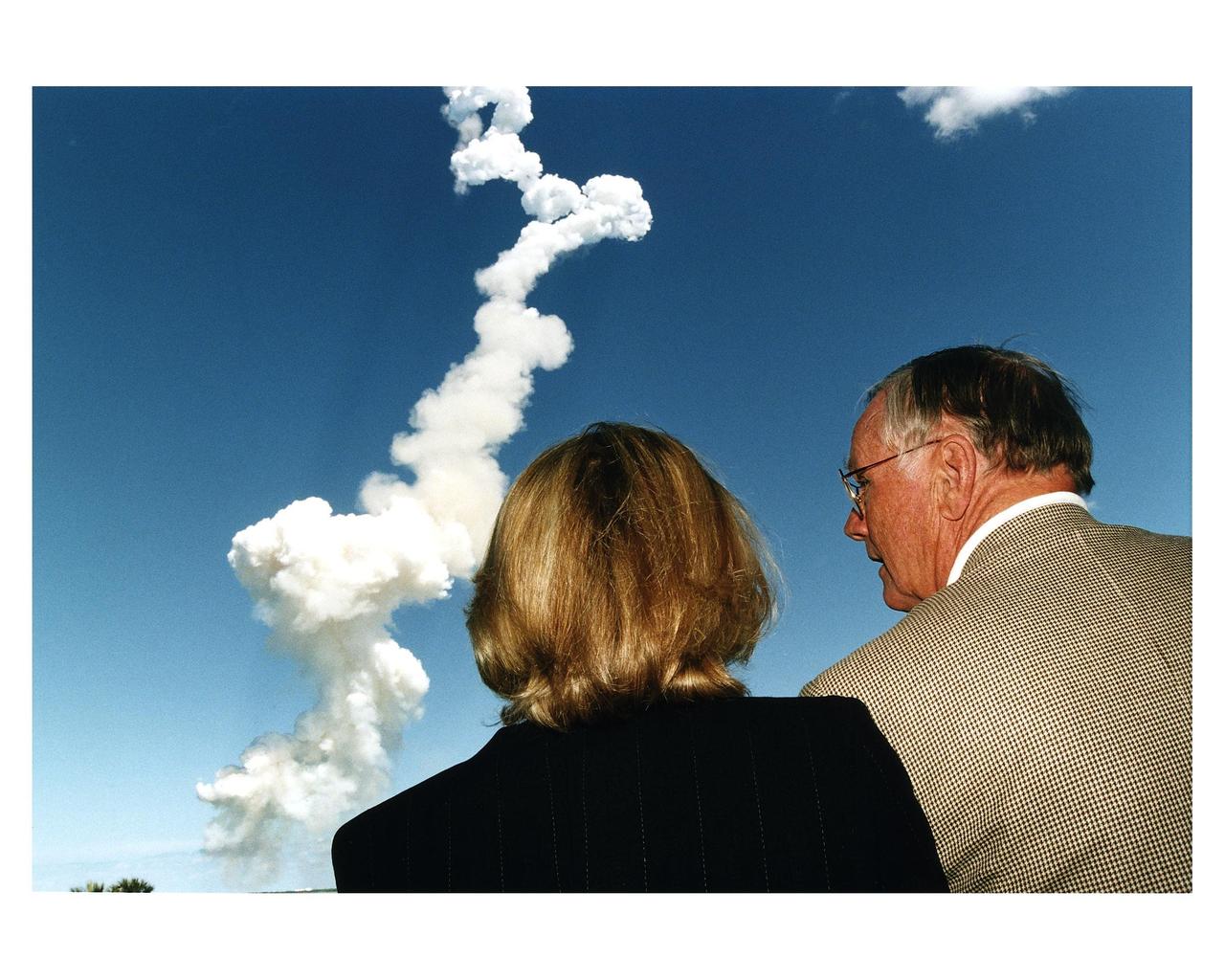
Apollo l1 Commander Neil A. Armstrong and his wife, Carol, were among the many special NASA STS-83 launch guests who witnessed the liftoff of the Space Shuttle Columbia April 4 at the Banana Creek VIP Viewing Site at KSC. Columbia took off from Launch Pad 39A at 2:20:32 p.m. EST to begin the 16-day Microgravity Science Laboratory-1 (MSL-1) mission
![KENNEDY SPACE CENTER, FLA. -- Vice President Spiro Agnew [right center] and Former President Lyndon Johnson (left center] view the liftoff of Apollo 11 from the stands located at the Kennedy Space Center VIP viewing site. The two political figures were at the Kennedy Space Center to witness the launch of the first Manned Lunar Landing mission which took place from Pad 39A at 9:32 a.m. EDT.](https://images-assets.nasa.gov/image/ksc-69pc-379/ksc-69pc-379~medium.jpg)
KENNEDY SPACE CENTER, FLA. -- Vice President Spiro Agnew [right center] and Former President Lyndon Johnson (left center] view the liftoff of Apollo 11 from the stands located at the Kennedy Space Center VIP viewing site. The two political figures were at the Kennedy Space Center to witness the launch of the first Manned Lunar Landing mission which took place from Pad 39A at 9:32 a.m. EDT.
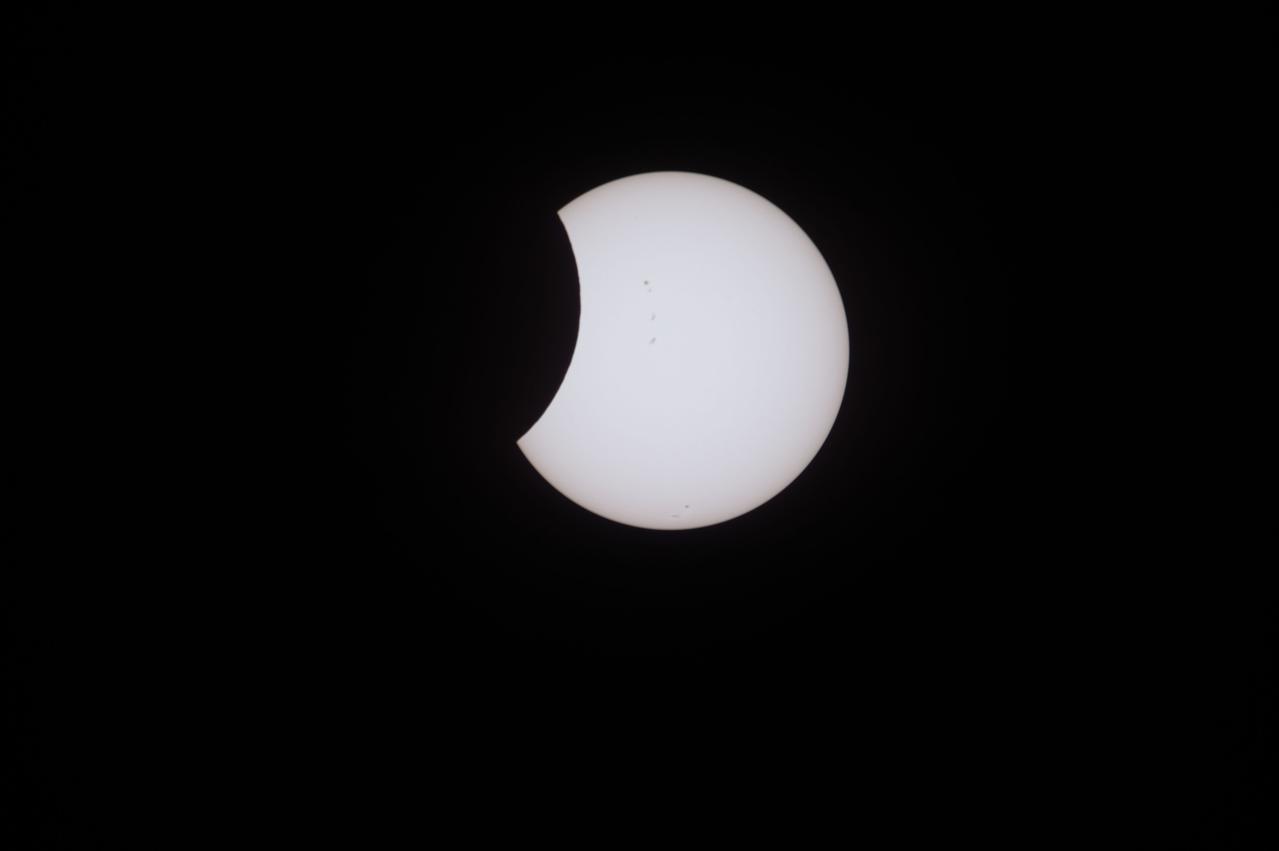
iss052e055851 (Aug. 21, 2017) --- Aboard the International Space Station, NASA Flight Engineer Randy Bresnik took still images of the eclipse as seen from the unique vantage of the Expedition 52 crew. Witnessing the eclipse from orbit with Bresnik were NASA’s Jack Fischer and Peggy Whitson, ESA (European Space Agency’s) Paolo Nespoli, and Roscosmos’ Commander Fyodor Yurchikhin and Sergey Ryazanskiy. The space station crossed the path of the eclipse three times as it orbited above the continental United States at an altitude of 250 miles
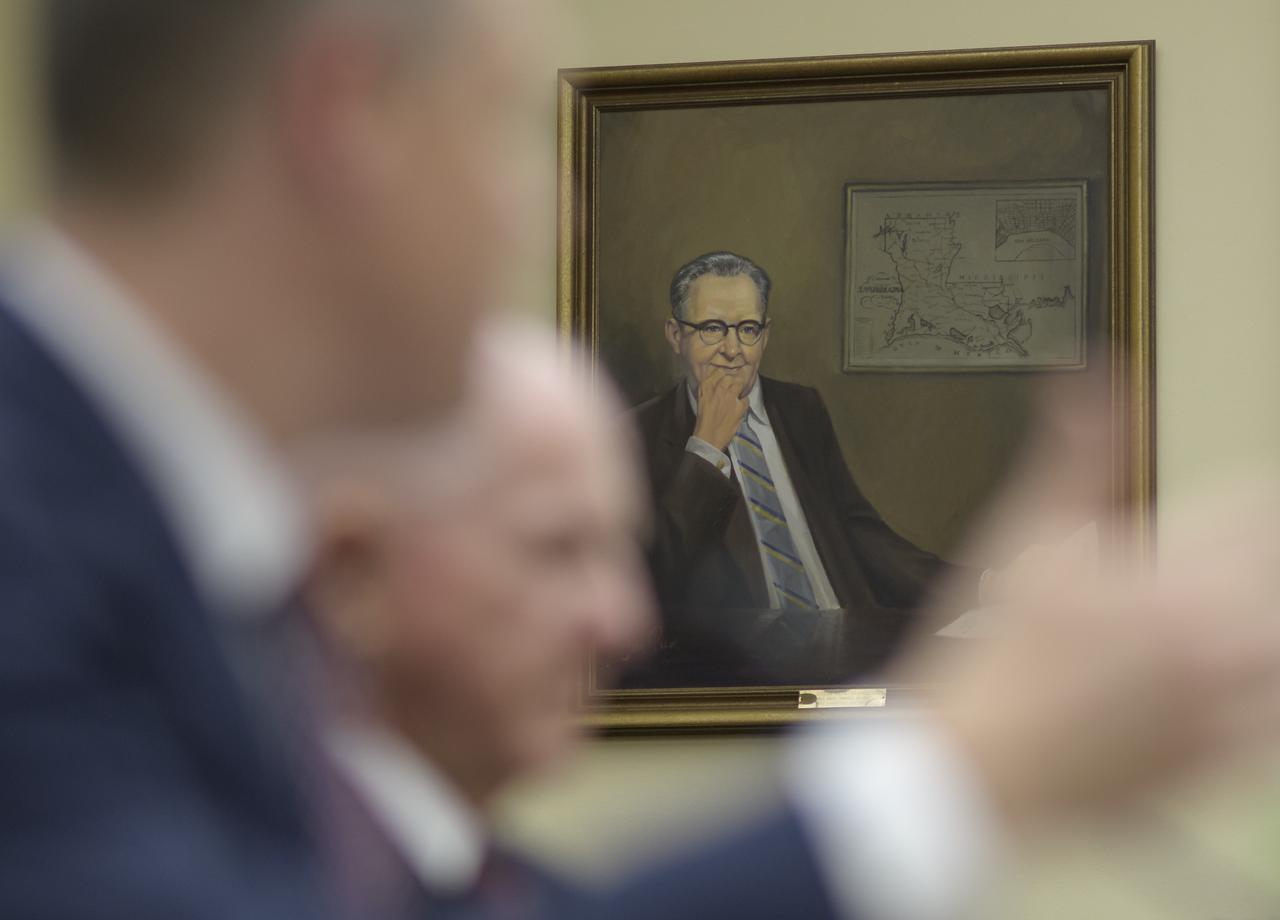
A portrait of Rep. Overton Brooks, D-Louisiana, former Chairman of the House Committee on Science and Astronautics is seen during a hearing on the James Webb Space Telescope, Wednesday, July 25, 2018 at the Rayburn House Office Building in Washington. Witnesses: NASA Administrator Jim Bridenstine and Mr. Tom Young, chairman, JWST Independent Review Board. Photo Credit: (NASA/Bill Ingalls)
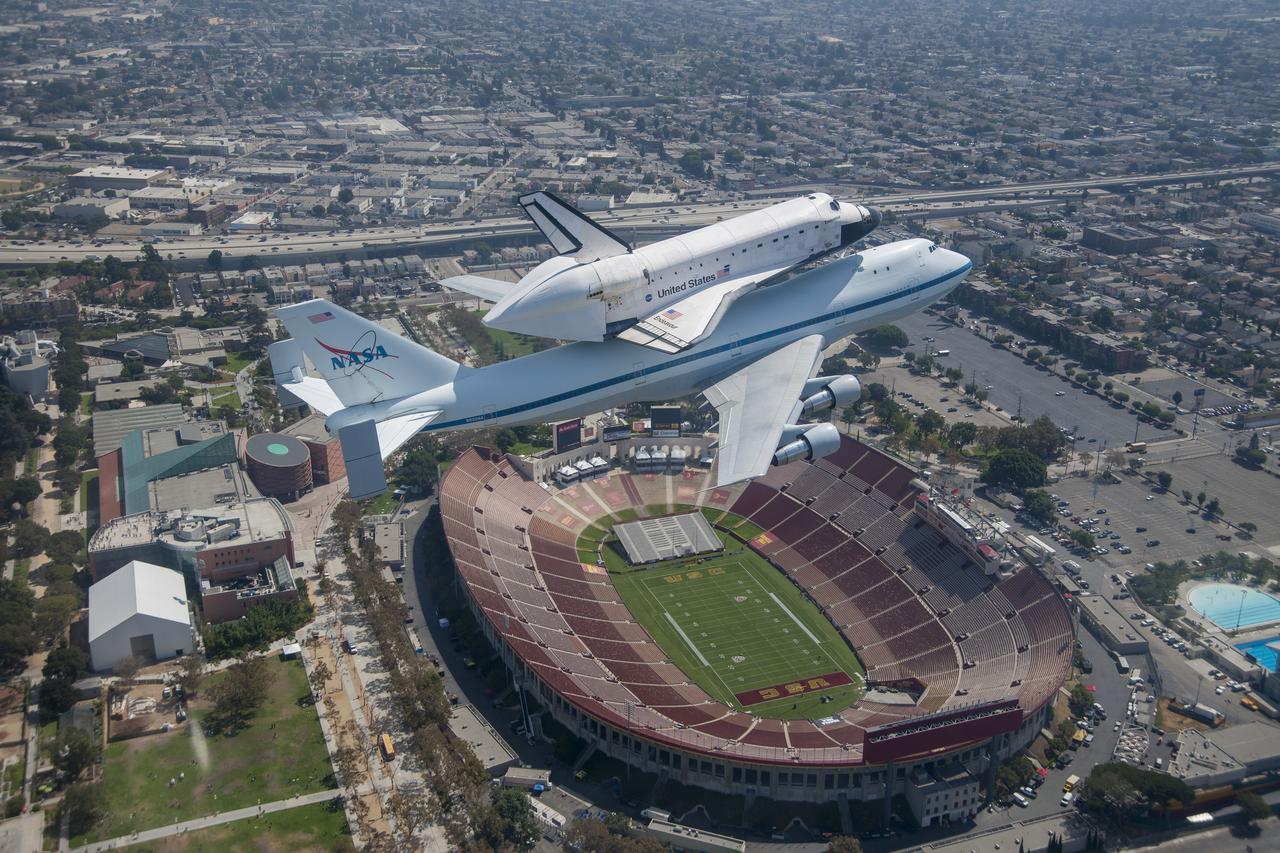
Space shuttle Endeavour and its host NASA 747 Shuttle Carrier Aircraft fly over the Los Angeles Coliseum in 2012 on its way to the Los Angeles International Airport, and an overland journey to the California Science Center. Californians looked up at the morning sky Sept. 21 looking for Endeavour over their community. The final leg of Endeavour’s flight from NASA’s Kennedy Space Center, Florida, offered many people an opportunity to witness the historic flight.
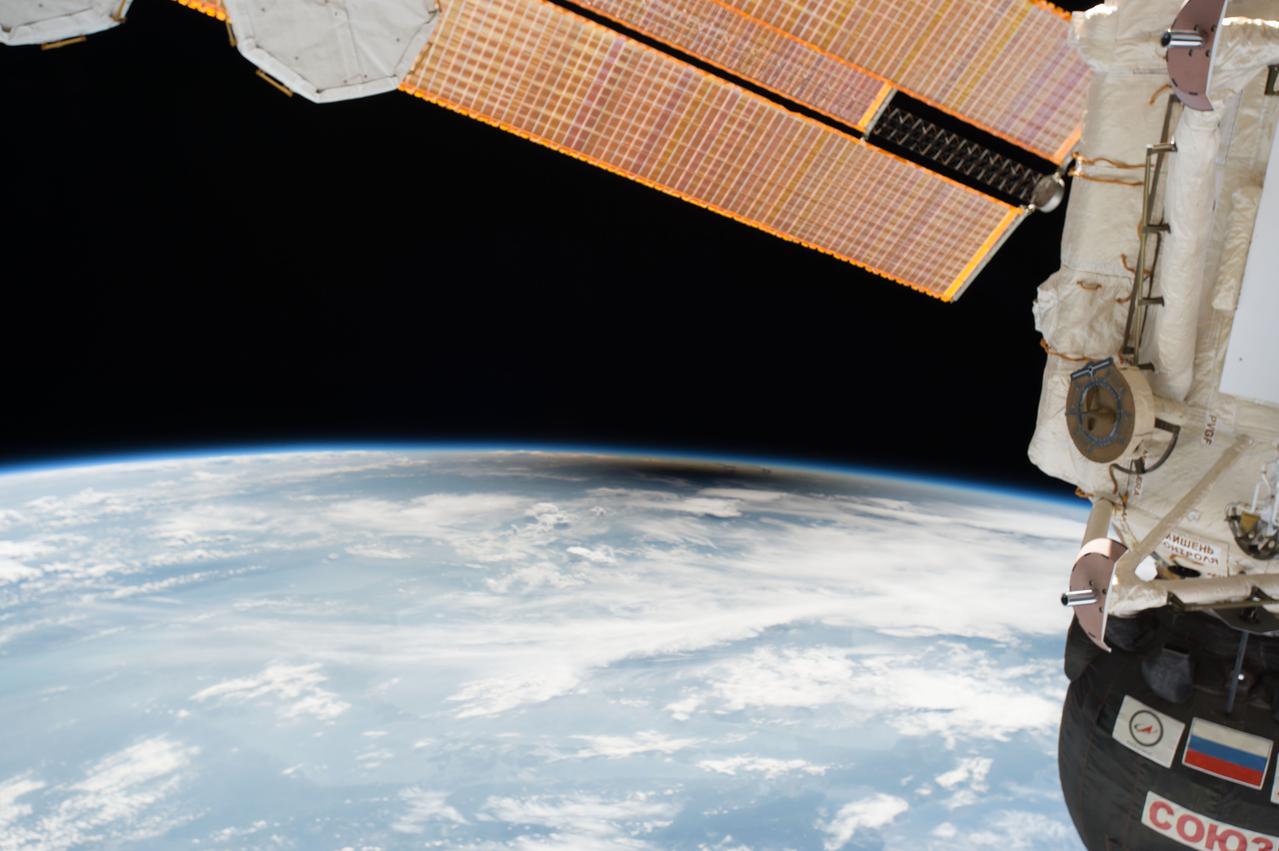
iss052e056245 (Aug. 21, 2017) --- As millions of people across the United States experienced a total eclipse as the umbra, or moon’s shadow passed over them, only six people witnessed the umbra from space. Viewing the eclipse from orbit were NASA’s Randy Bresnik, Jack Fischer and Peggy Whitson, ESA (European Space Agency’s) Paolo Nespoli, and Roscosmos’ Commander Fyodor Yurchikhin and Sergey Ryazanskiy. The space station crossed the path of the eclipse three times as it orbited above the continental United States at an altitude of 250 miles.
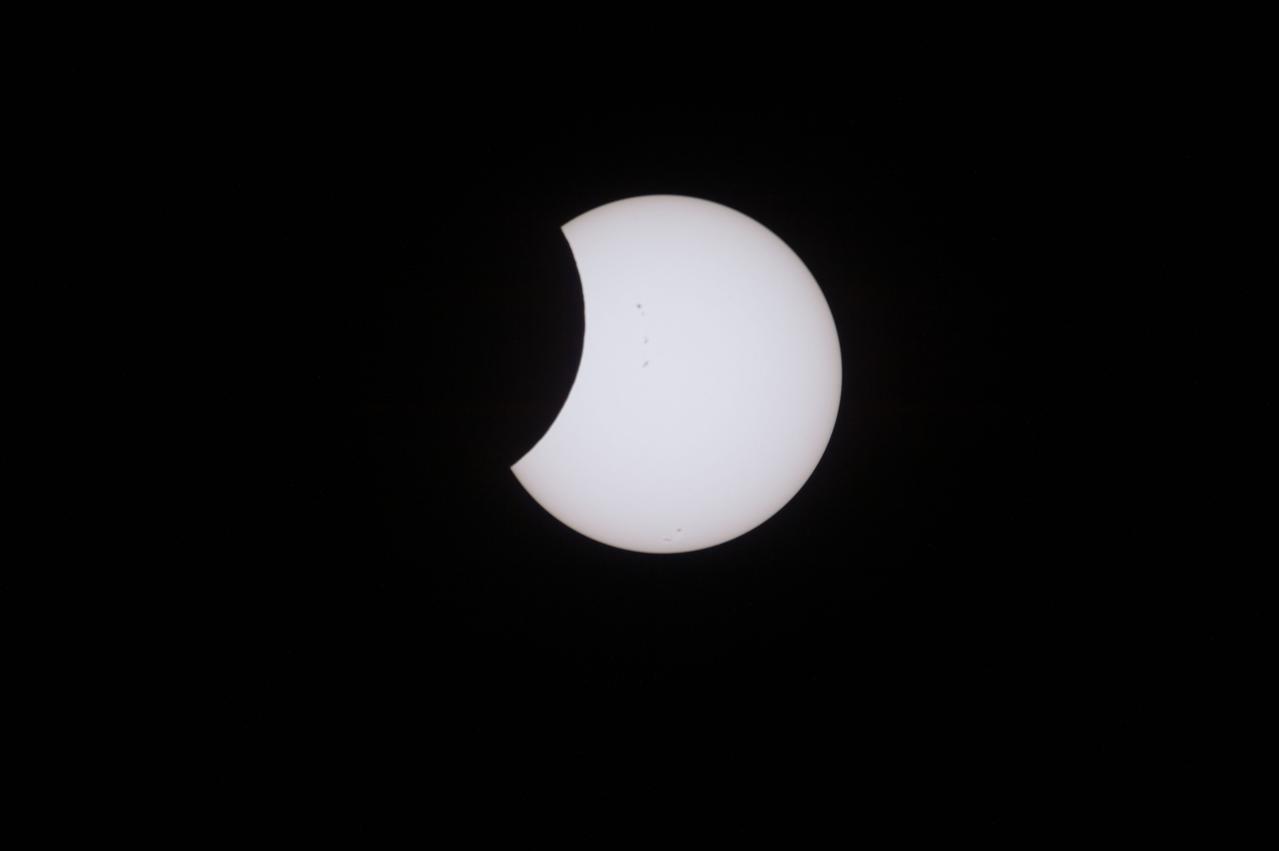
iss052e055856 (Aug. 21, 2017) --- Aboard the International Space Station, NASA Flight Engineer Randy Bresnik took still images of the eclipse as seen from the unique vantage of the Expedition 52 crew. Witnessing the eclipse from orbit with Bresnik were NASA’s Jack Fischer and Peggy Whitson, ESA (European Space Agency’s) Paolo Nespoli, and Roscosmos’ Commander Fyodor Yurchikhin and Sergey Ryazanskiy. The space station crossed the path of the eclipse three times as it orbited above the continental United States at an altitude of 250 miles
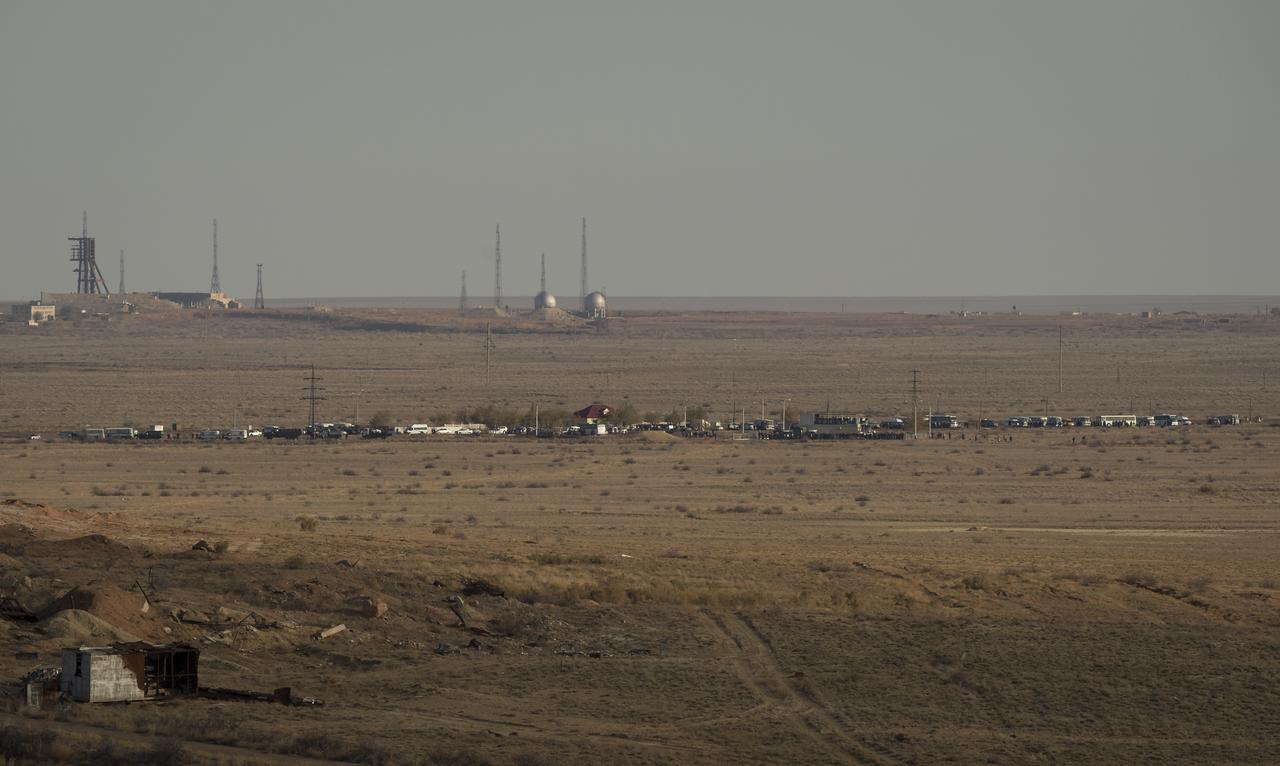
Guest gather over a mile away to witness the Soyuz rocket with Expedition 33/34 crew members, Russian Cosmonaut and Soyuz Commander Oleg Novitskiy, NASA Astronaut and Flight Engineer Kevin Ford, and Russian Cosmonaut and Flight Engineer Evgeny Tarelkin onboard their TMA-06M spacecraft launch to the International Space Station on Tuesday, October 23, 2012, in Baikonur, Kazakhstan. Ford, Novitskiy and Tarelkin will be on a five-month mission aboard the International Space Station. Photo Credit: (NASA/Bill Ingalls)
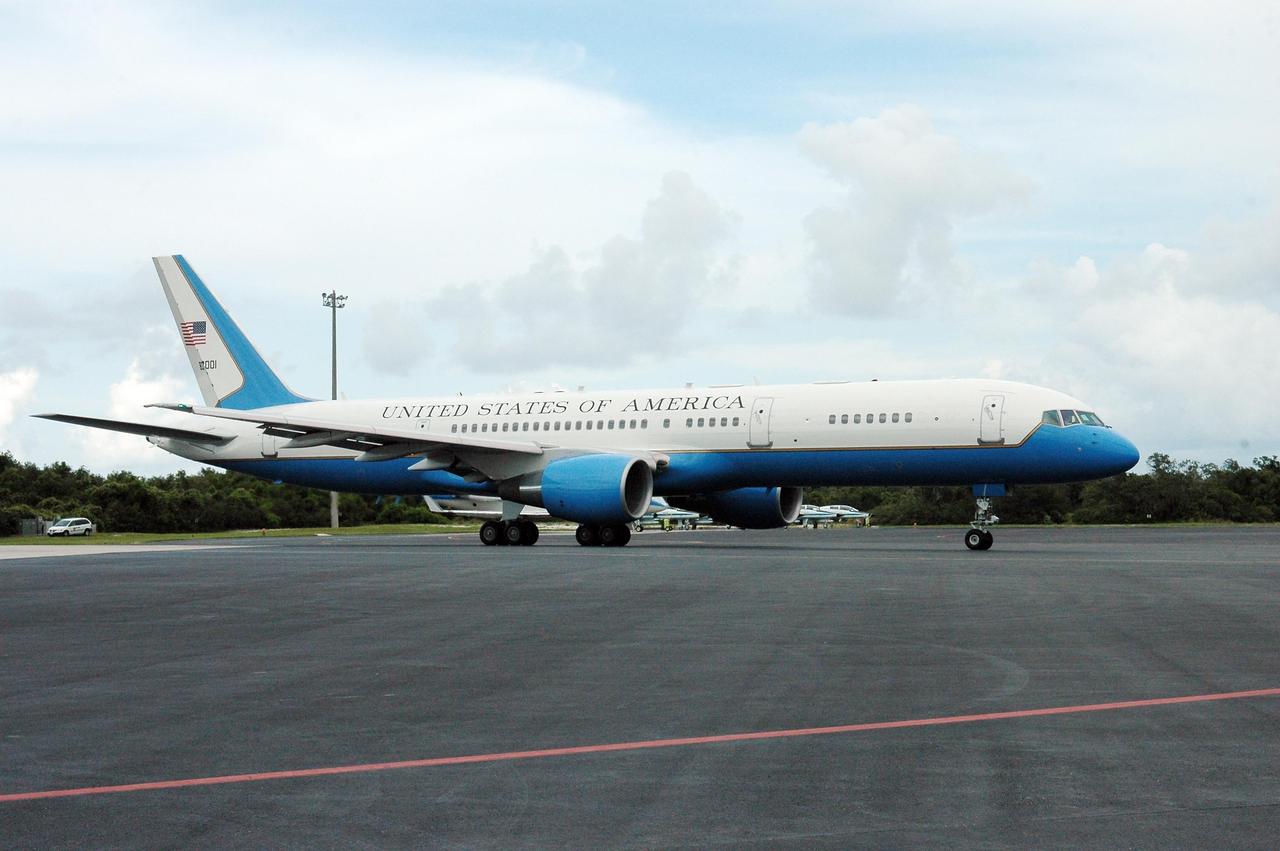
KENNEDY SPACE CENTER, FLA. - On the Skid Strip at Cape Canaveral Air Force Station in Florida, Air Force Two, carrying U.S. Vice President Dick Cheney and his family, is ready for a return trip to Washington. Cheney flew in earlier to witness the launch of Space Shuttle Discovery on mission STS-121. The launch was scrubbed due to weather concerns and postponed 24 hours. Photo credit: NASA/Kim Shiflett
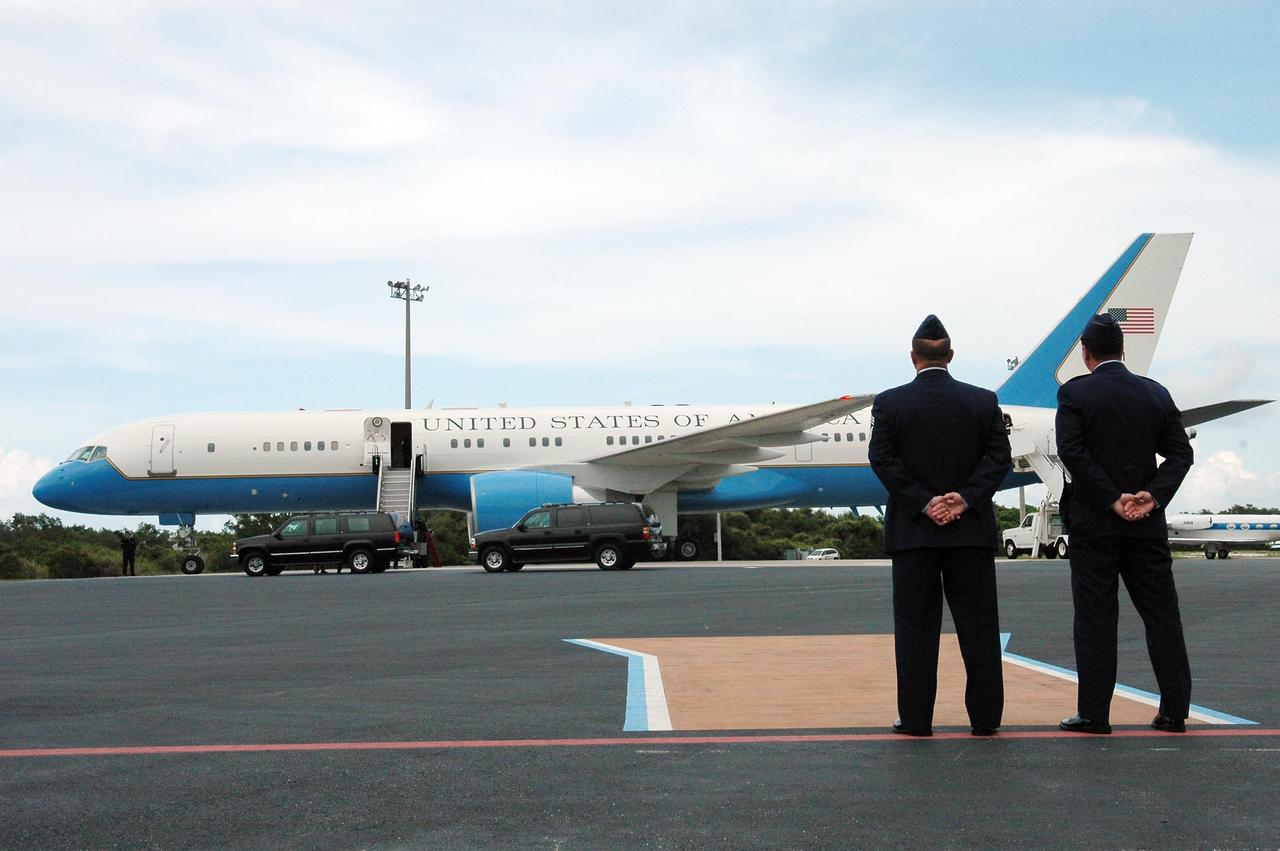
KENNEDY SPACE CENTER, FLA. - On the Skid Strip at Cape Canaveral Air Force Station in Florida, Air Force Two, carrying U.S. Vice President Dick Cheney and his family, is ready for a return trip to Washington. Cheney flew in earlier to witness the launch of Space Shuttle Discovery on mission STS-121. The launch was scrubbed due to weather concerns and postponed 24 hours. Photo credit: NASA/Kim Shiflett
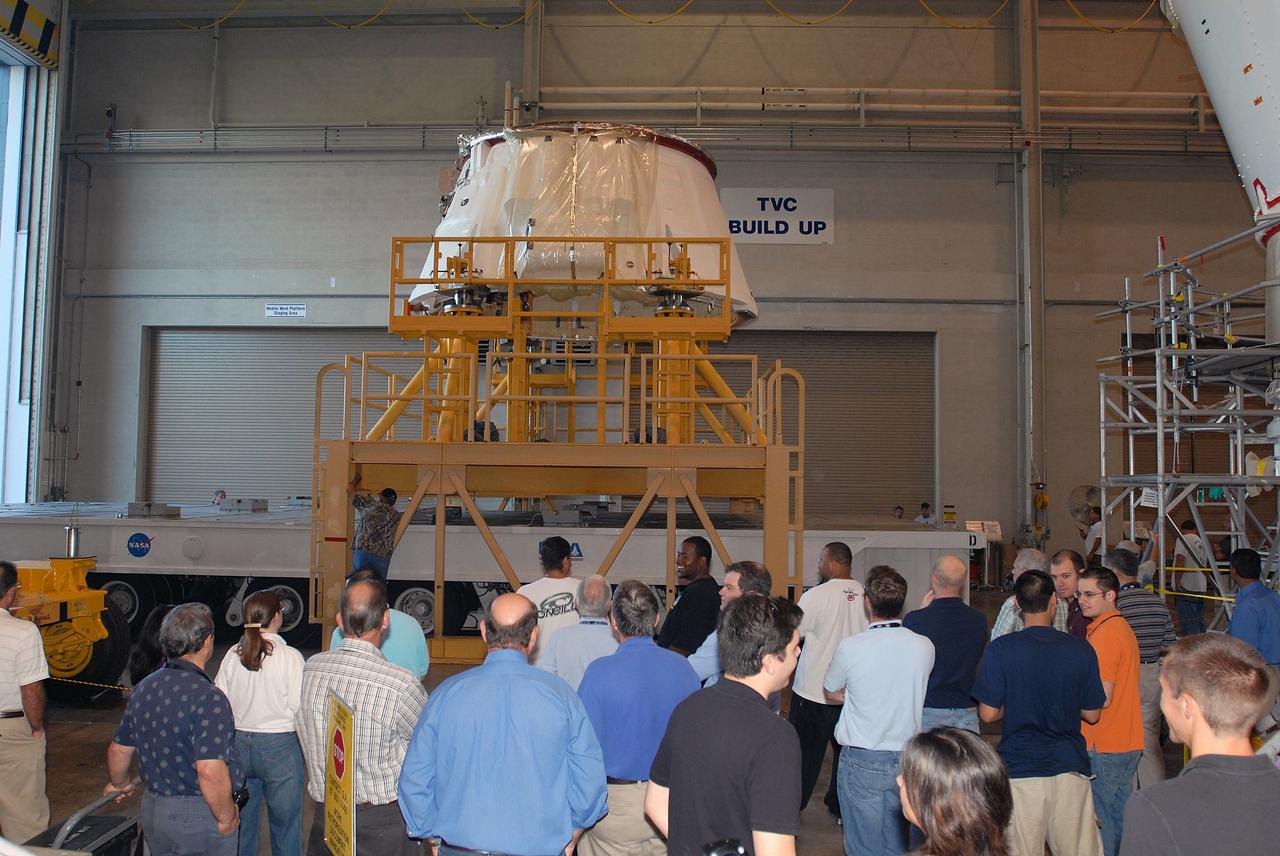
CAPE CANAVERAL, Fla. – Employees gather to witness the move of the Ares I-X aft skirt from the Assembly and Refurbishment Facility at NASA's Kennedy Space Center to the Rotation, Processing and Surge Facility. The aft skirt underwent modifications in the ARF. In the RSPF, it will be stacked with the aft motor to form the aft assembly. The complete Ares I-X will be assembled in the Vehicle Assembly Building. The launch of Ares I-X is targeted for August 2009. Photo credit: NASA/Jim Grossmann
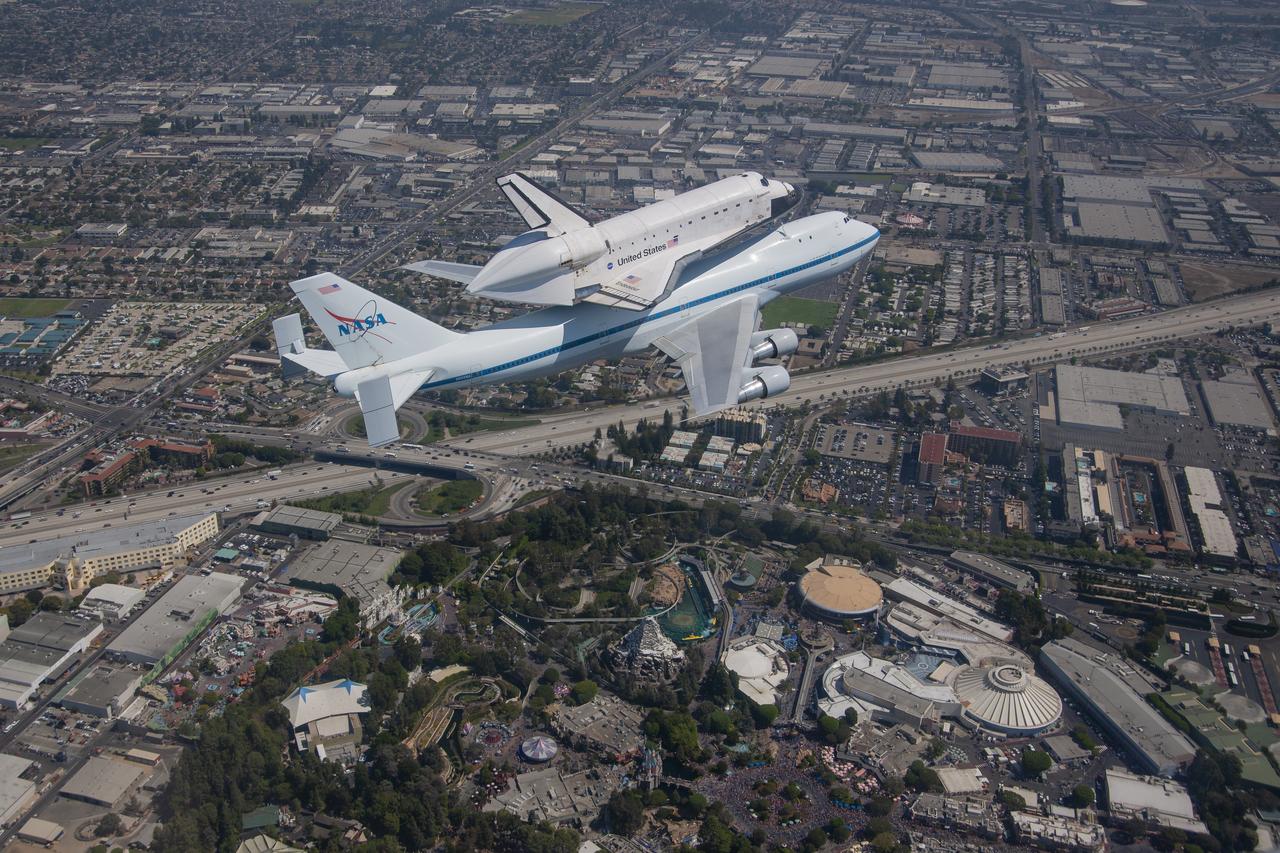
Space shuttle Endeavour and its host NASA 747 Shuttle Carrier Aircraft fly over Disneyland in 2012 on its way to the Los Angeles International Airport, and an overland journey to the California Science Center. Californians gazed at the morning sky Sept. 21 looking to see Endeavour over their community. The final leg of Endeavour’s flight from NASA’s Kennedy Space Center, Florida, offered many people an opportunity to witness the historic flight.
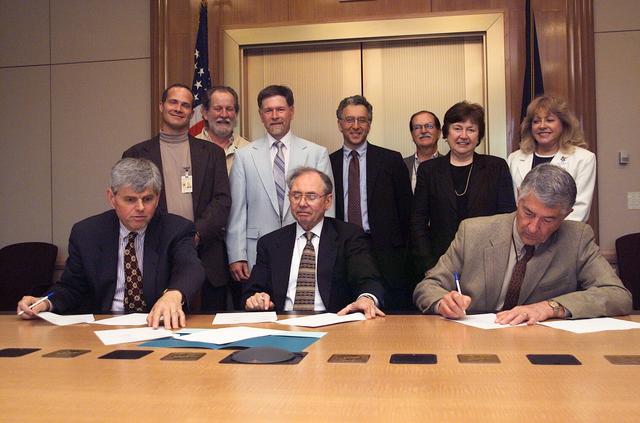
Memorandum of Understanding (MOU) to establish a Unmanned Aerial Vehicles (UAV) Applications Center at NASA Research Park (NRP) was signed into being by (L-R) John Bassett Clark University, Worcester, Mass., Dr. Henry McDonald, Director of Ames Research Center and Paul Coleman, Girvan Institute (a non-profit organization lockated in NASA Research Park). Witnessed by (Back Row, L-R) Steve Douagan, Dave Peterson, Jim Brass, Stan Herwitz, Ken Souza, Estelle Condon, Carolina Blake.
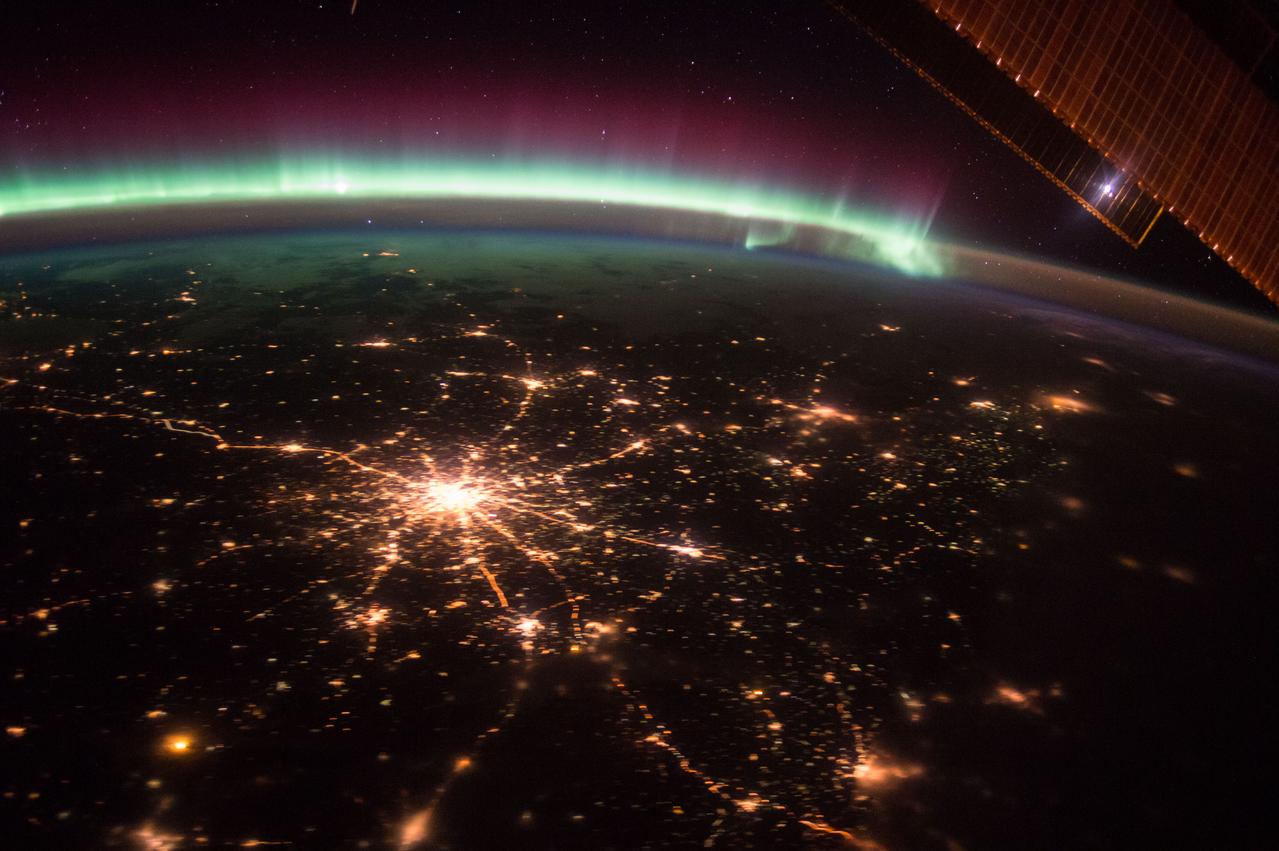
ISS045E048653 (10/06/2015) --- The International Space Station crew witness nightly scenes of our Earths beauty after performing their duties. Here on Oct. 6, 2015, framed by the edge of a huge Station solar panel, the city of Moscow Russia sparkles in the night with spoke streets streaming out across the land while an aurora of blue white and purple contrast the star filled sky.
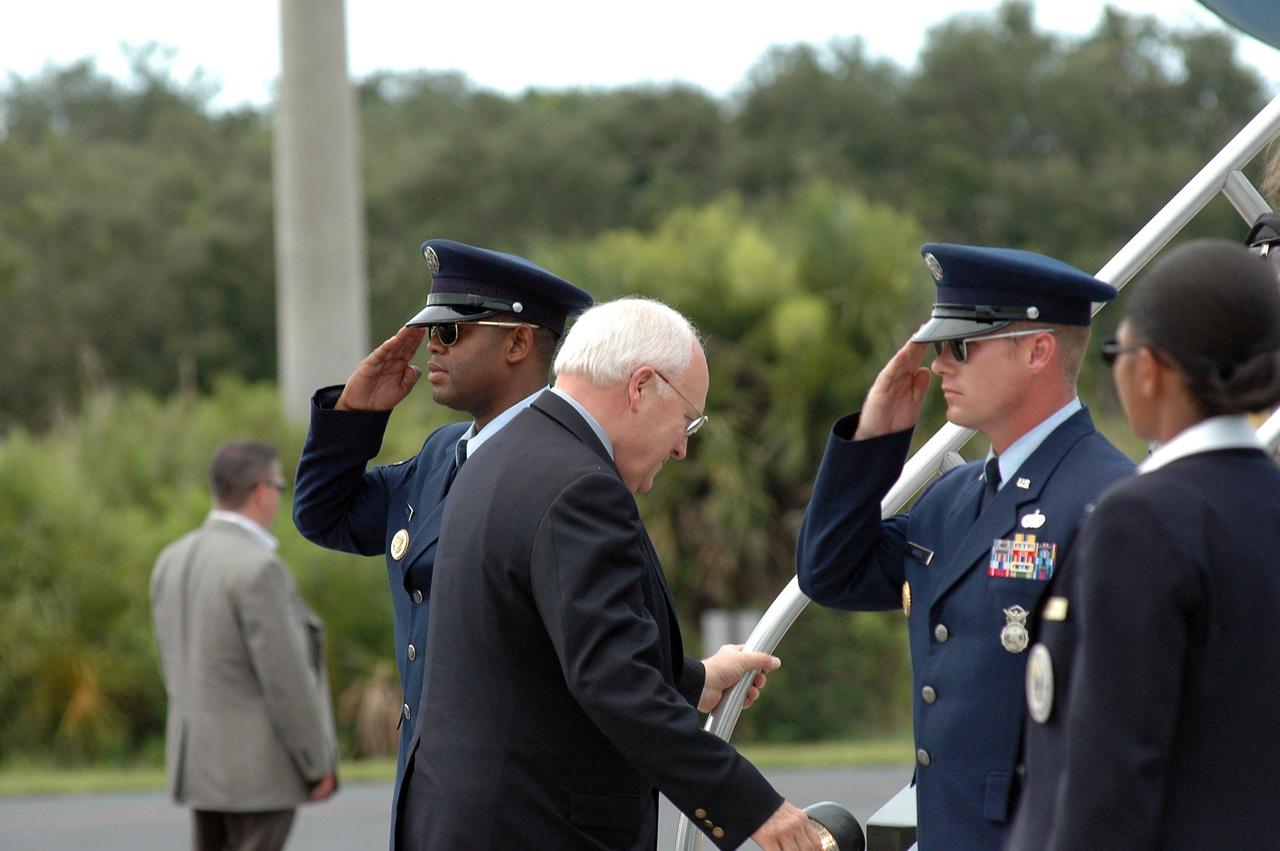
KENNEDY SPACE CENTER, FLA. - On the Skid Strip at Cape Canaveral Air Force Station in Florida, U.S. Vice President Dick Cheney is saluted by officers from Patrick Air Force Base as he boards Air Force Two for a return trip to Washington. Cheney and his family flew in earlier to witness the launch of Space Shuttle Discovery on mission STS-121. The launch was scrubbed due to weather concerns and postponed 24 hours. Photo credit: NASA/Kim Shiflett
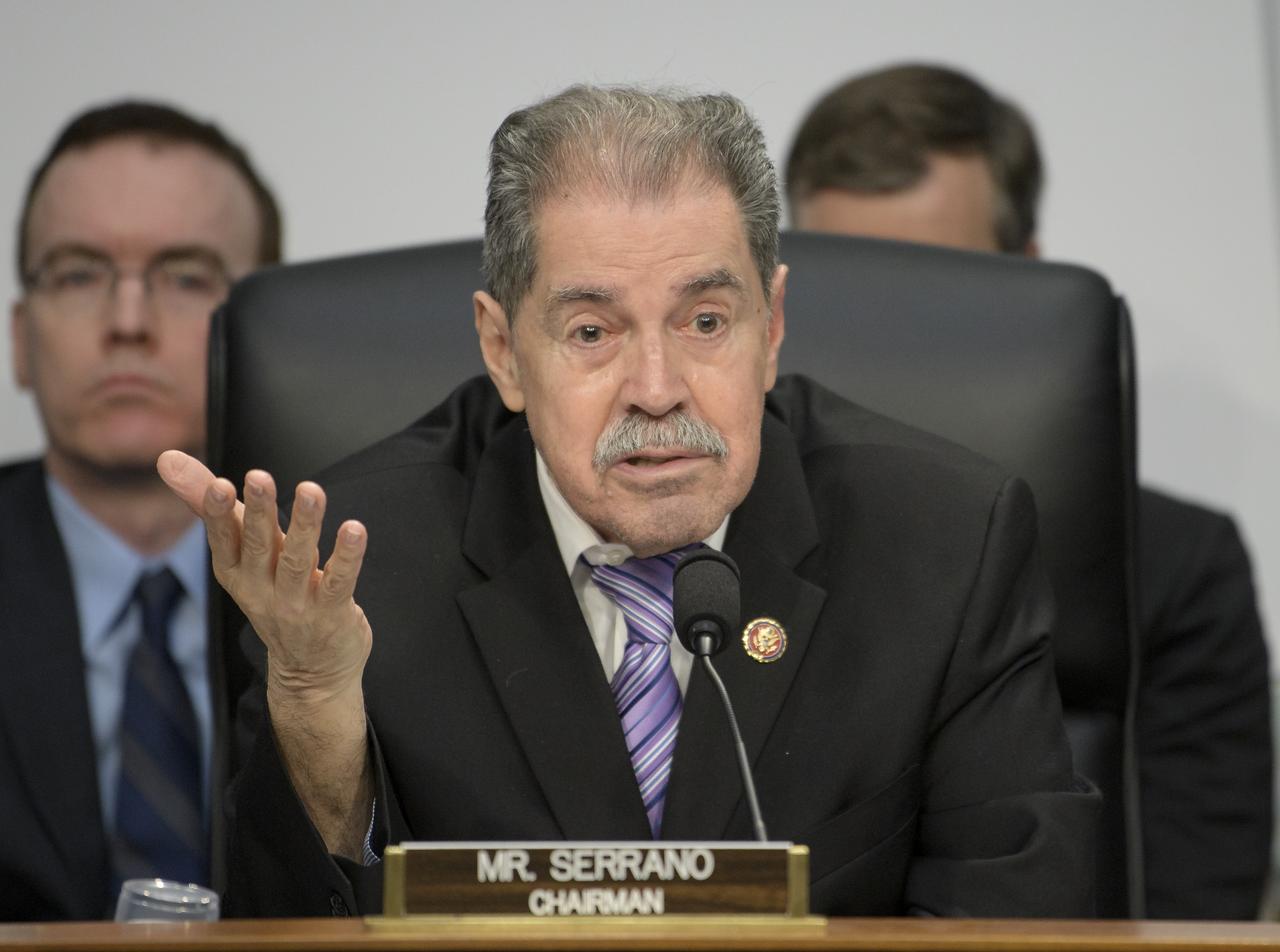
José Serrano, D-N.Y., Chairman of the House subcommittee on Commerce, Justice, Science, and Related Agencies holds a hearing titled “NASA’s Proposal to Advance the Next Moon Landing by Four Years” with NASA Administrator Jim Bridenstine and NASA acting Associate Administrator for Human Exploration and Operations Ken Bowersox as witnesses, Wednesday, Oct. 16, 2019, Rayburn House Office Building in Washington. Photo Credit: (NASA/Bill Ingalls)
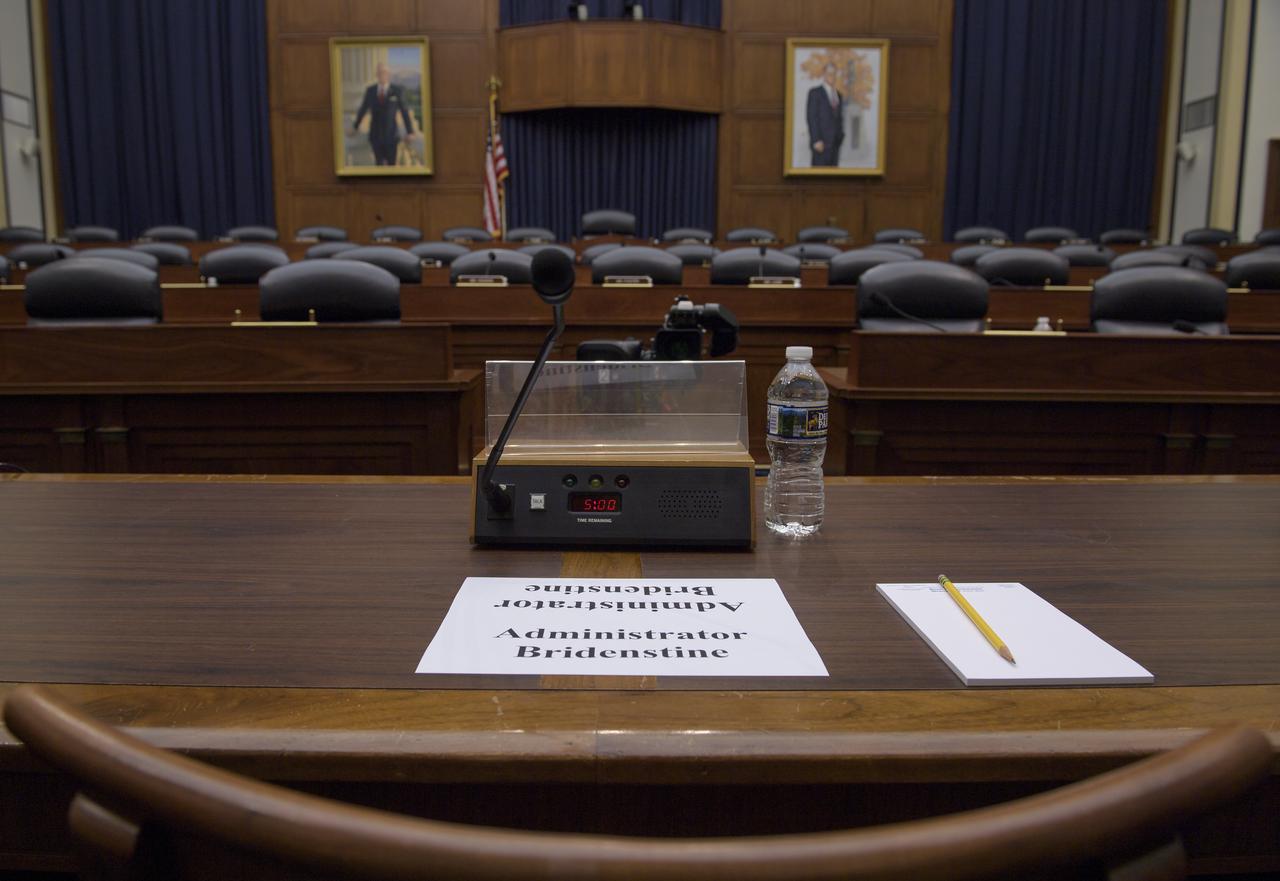
House Subcommittee on Strategic Forces holds a hearing on Space Situational Awareness: Whole of Government Perspectives on Roles and Responsibilities, Friday, June 22, 2018 at the Rayburn House Office Building in Washington. Witnesses: NASA Administrator Jim Bridenstine; Commander, U.S. Strategic Command, General John Hyten; and Secretary of Commerce Wilbur Ross. Photo Credit: (NASA/Bill Ingalls)
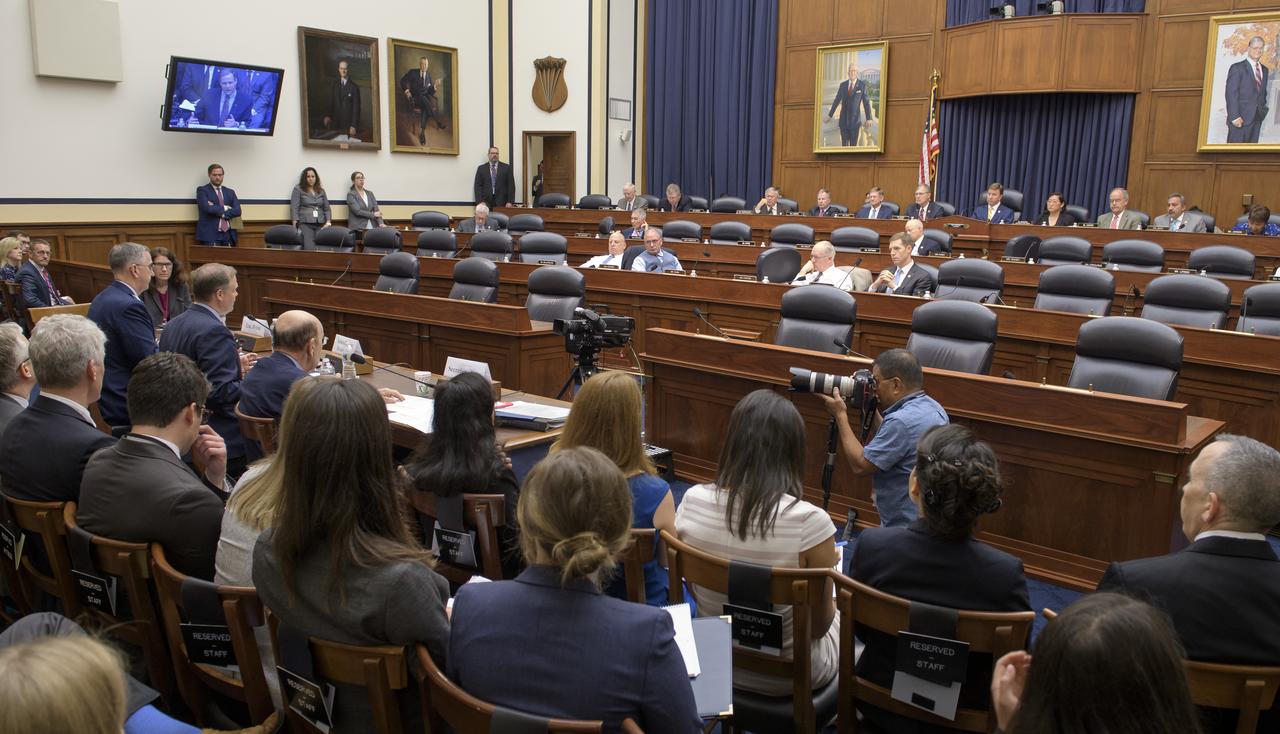
House Subcommittee on Strategic Forces holds a hearing on Space Situational Awareness: Whole of Government Perspectives on Roles and Responsibilities, Friday, June 22, 2018 at the Rayburn House Office Building in Washington. Witnesses: NASA Administrator Jim Bridenstine; Commander, U.S. Strategic Command, General John Hyten; and Secretary of Commerce Wilbur Ross. Photo Credit: (NASA/Bill Ingalls)
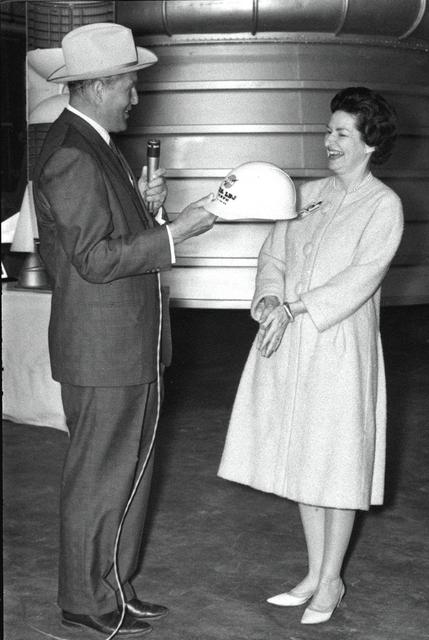
Marshall Space Flight Center Director Dr. Wernher von Braun presents Lady Bird Johnson with an inscribed hard hat during the First Lady's March 24, 1964 visit. While at the Marshall Center, Mrs. Johnson addressed Center employees, toured facilities and witnessed test firings of a Saturn I first stage and an F-1 engine. Dr. von Braun is wearing a Texas hat presented to him months earlier by Lyndon Johnson during a visit to the Johnson ranch in Texas.

Apollo 11 Commander Neil A. Armstrong and his wife, Carol, were among the many special NASA STS-83 launch guests who witnessed the liftoff of the Space Shuttle Columbia April 4 at the Banana Creek VIP Viewing Site at KSC. Columbia took off from Launch Pad 39A at 2:20:32 p.m. EST to begin the 16-day Microgravity Science Laboratory-1 (MSL-1) mission
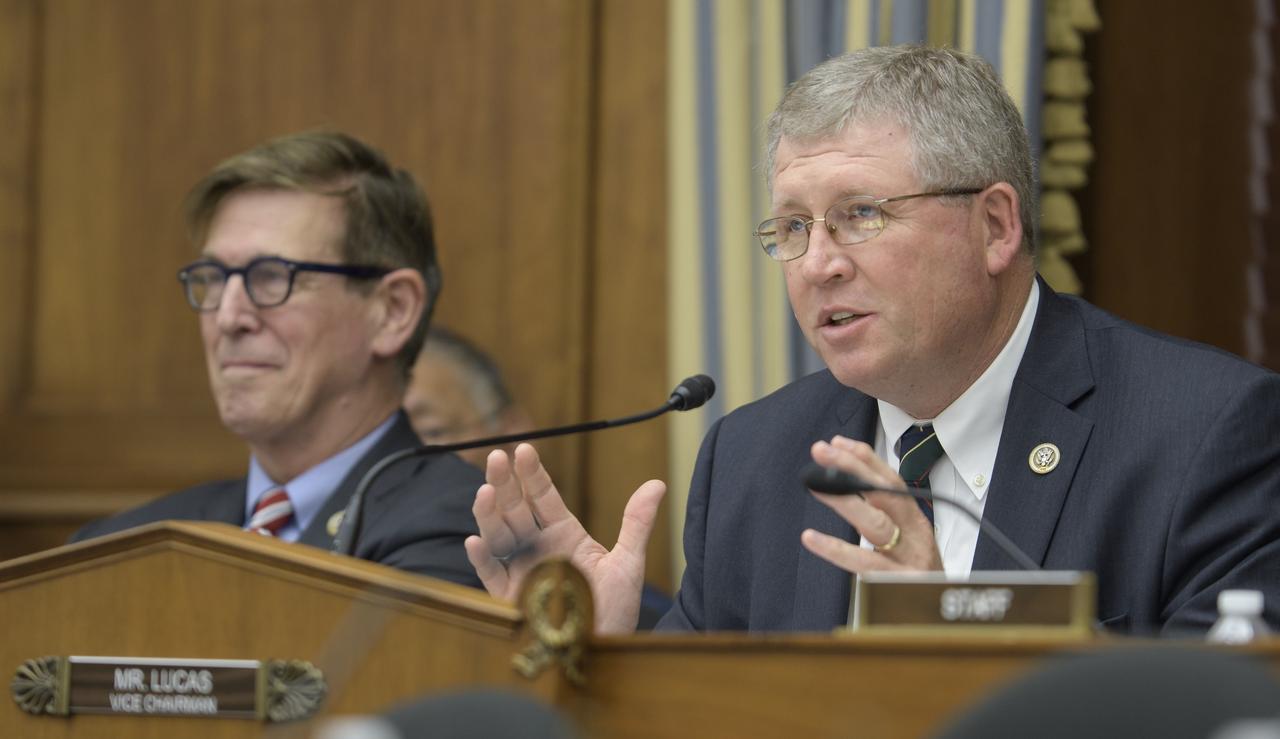
Rep. Frank Lucas, R-Oklahoma, Vice Chairman of the House Committee on Science, Space, and Technology is seen during a hearing on the James Webb Space Telescope, Wednesday, July 25, 2018 at the Rayburn House Office Building in Washington. Witnesses: NASA Administrator Jim Bridenstine and Mr. Tom Young, chairman, JWST Independent Review Board. Photo Credit: (NASA/Bill Ingalls)
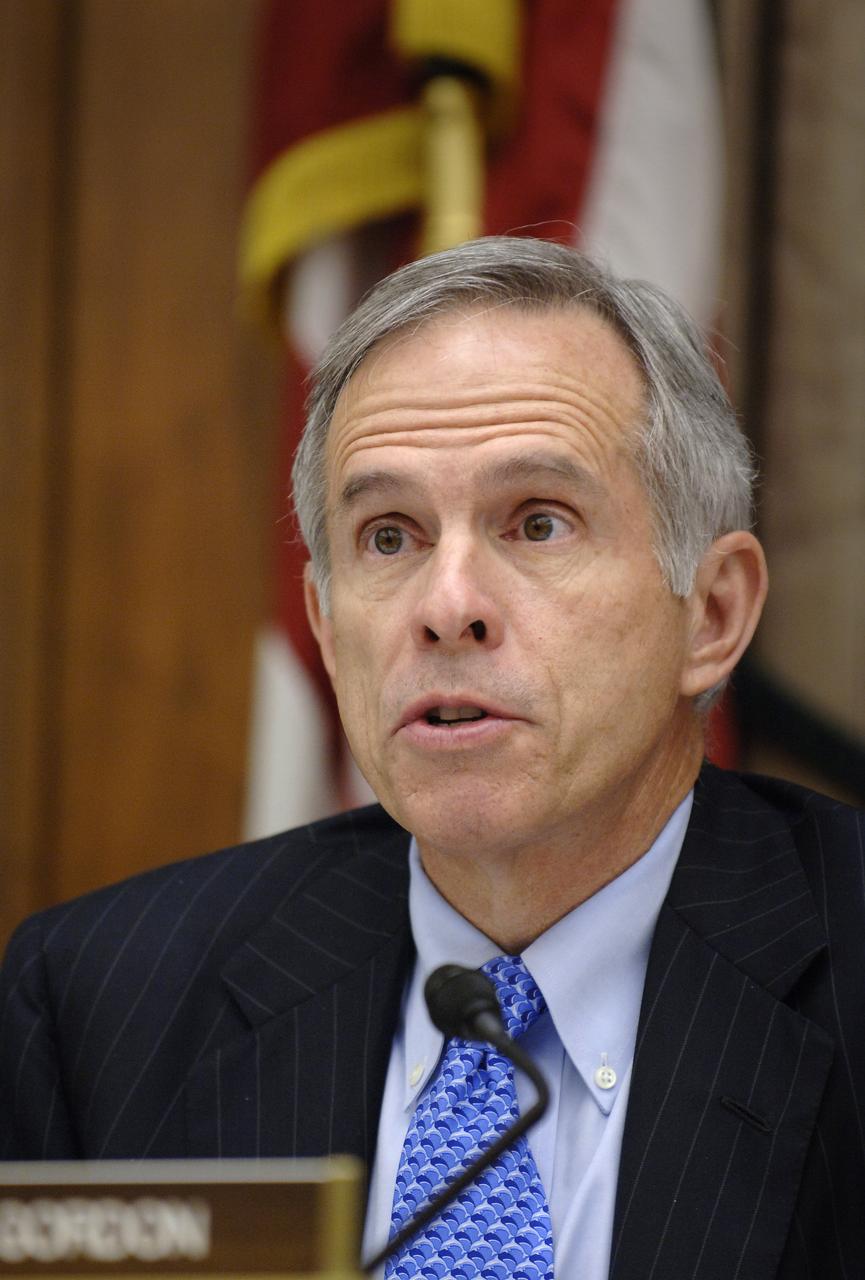
U.S. Rep. Bart Gordon, D-Tenn., questions witnesses during a hearing on the future of the National Polar-orbiting Operational Environmental Satellite System (NPOESS) and results of the Nunn-McCurdy review of NOAA’s weather satellite program, Thursday, June 8, 2006, at the Rayburn House Office Building in Washington. Photo Credit: (NASA/Bill Ingalls)
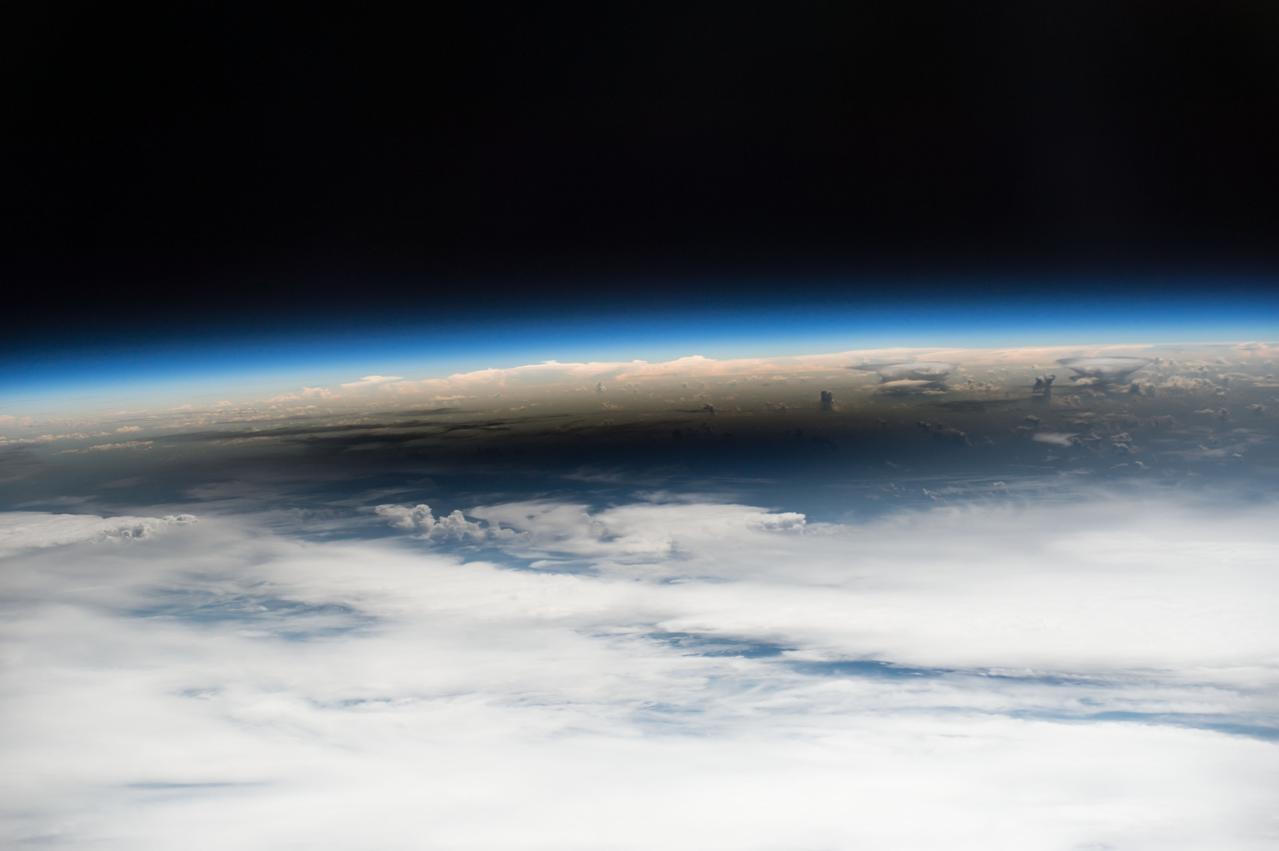
iss052e056122 (Aug. 21, 2017) --- As millions of people across the United States experienced a total eclipse as the umbra, or moon’s shadow passed over them, only six people witnessed the umbra from space. Viewing the eclipse from orbit were NASA’s Randy Bresnik, Jack Fischer and Peggy Whitson, ESA (European Space Agency’s) Paolo Nespoli, and Roscosmos’ Commander Fyodor Yurchikhin and Sergey Ryazanskiy. The space station crossed the path of the eclipse three times as it orbited above the continental United States at an altitude of 250 miles.
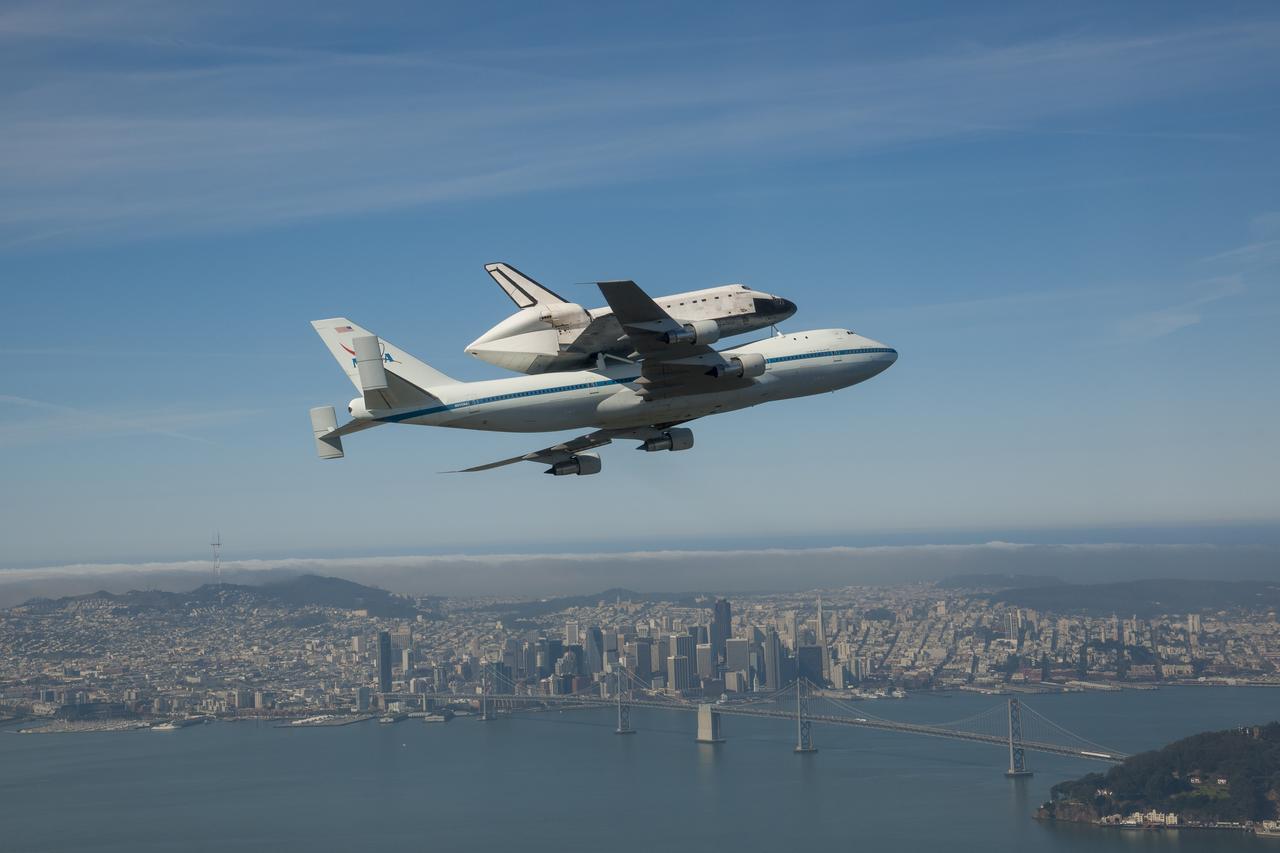
Space shuttle Endeavour and its host NASA 747 Shuttle Carrier Aircraft fly by the Bay Bridge in 2012 on its way to the Los Angeles International Airport and an overland journey to the California Science Center. The final leg of Endeavour’s flight from NASA’s Kennedy Space Center, Florida, offered many people an opportunity to witness the historic flight.
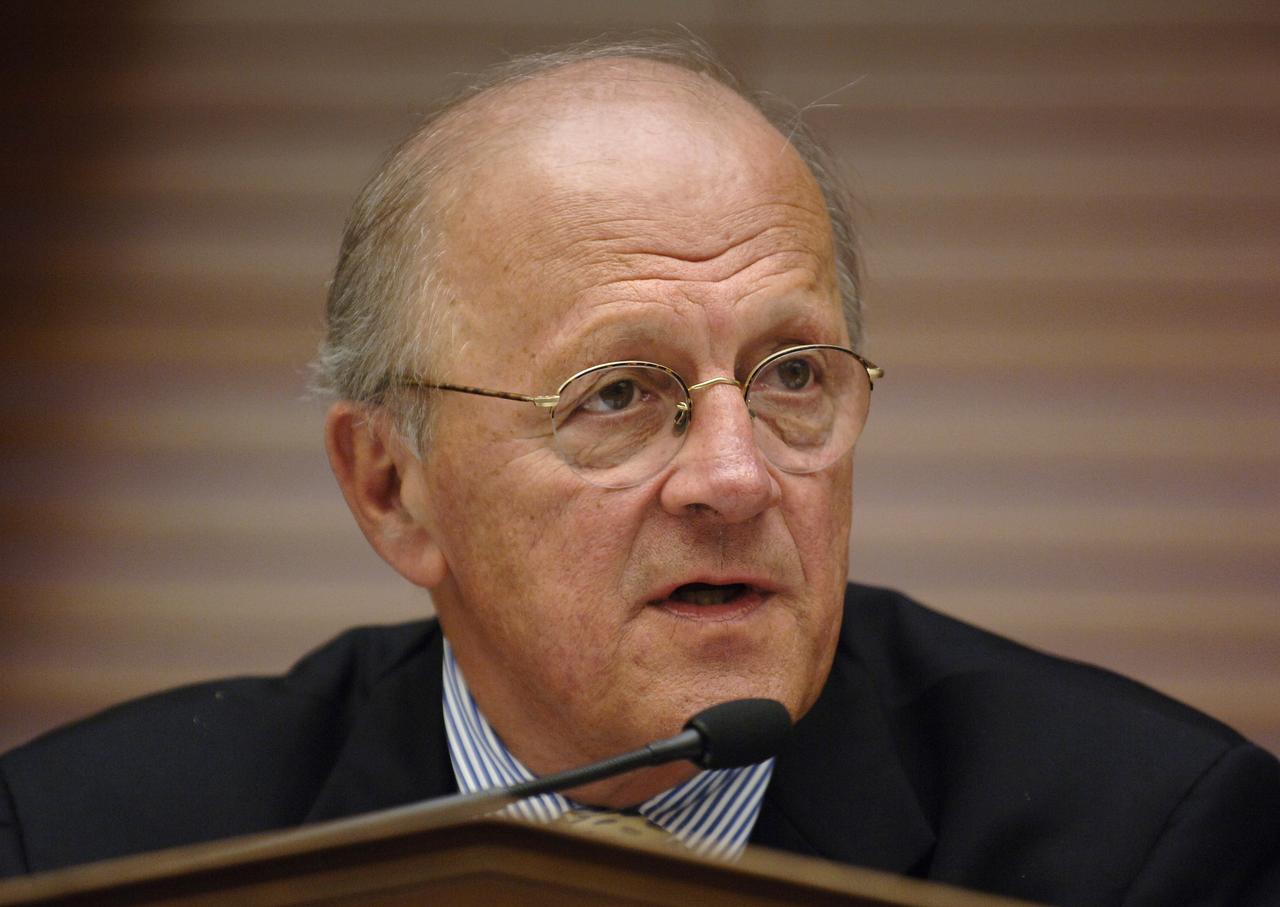
Chairman of the House Committee on Science and Technology U.S. Rep. Sherwood Boehlert, R-N.Y., questions witnesses during a hearing on the future of the National Polar-orbiting Operational Environmental Satellite System (NPOESS) and results of the Nunn-McCurdy review of NOAA’s weather satellite program, Thursday, June 8, 2006, at the Rayburn House Office Building in Washington. Photo Credit: (NASA/Bill Ingalls)
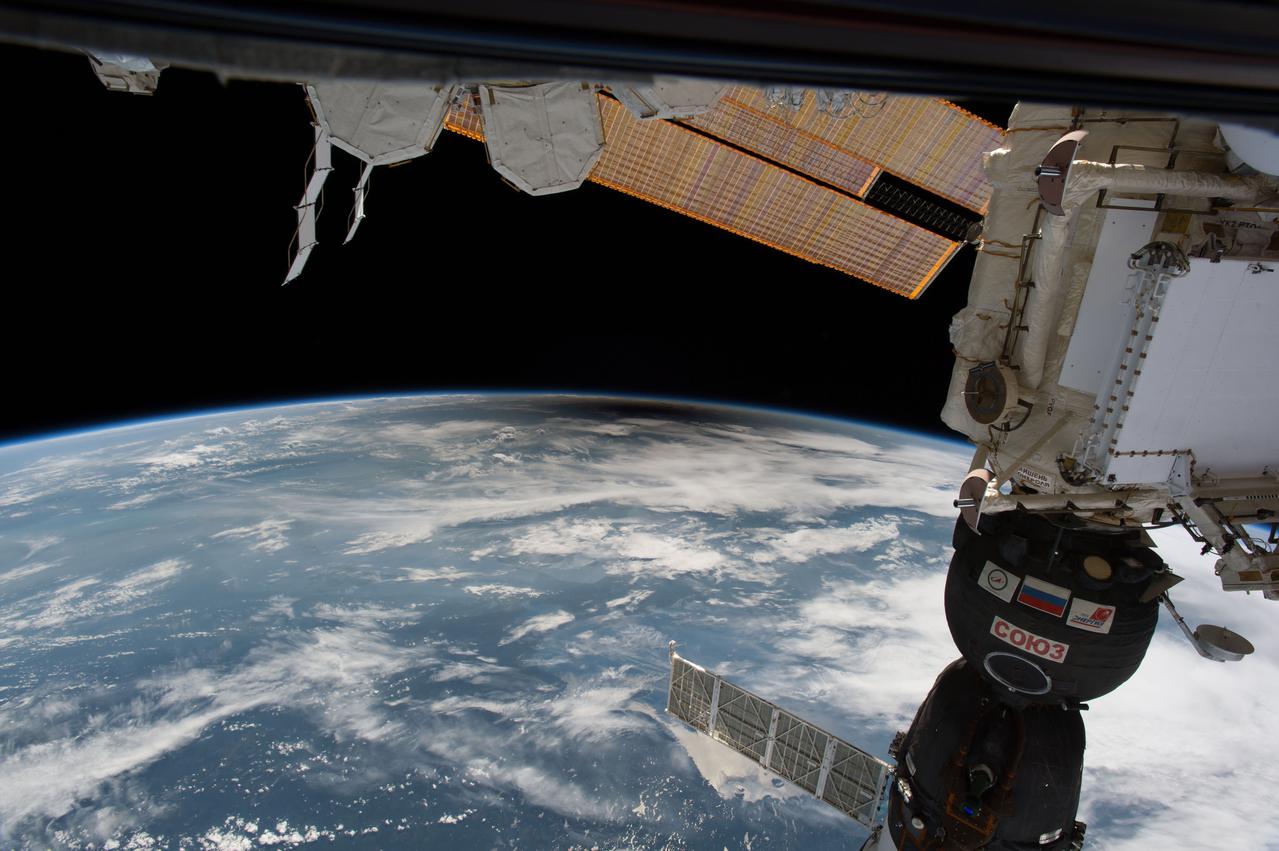
iss052e056225 (Aug. 21, 2017) --- As millions of people across the United States experienced a total eclipse as the umbra, or moon’s shadow passed over them, only six people witnessed the umbra from space. Viewing the eclipse from orbit were NASA’s Randy Bresnik, Jack Fischer and Peggy Whitson, ESA (European Space Agency’s) Paolo Nespoli, and Roscosmos’ Commander Fyodor Yurchikhin and Sergey Ryazanskiy. The space station crossed the path of the eclipse three times as it orbited above the continental United States at an altitude of 250 miles.
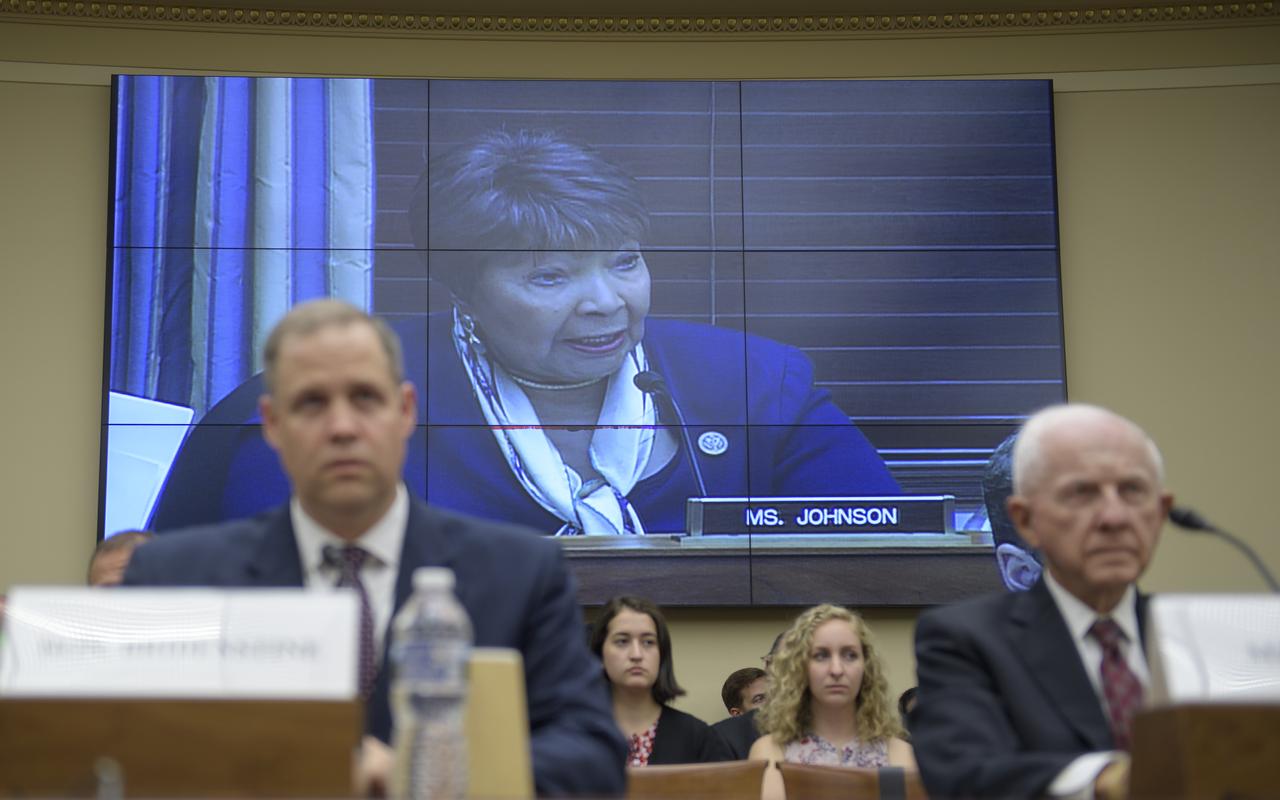
Rep. Eddie Bernice Johnson, D-Texas is seen on a monitor as she questions witnesses; NASA Administrator Jim Bridenstine, left, and Tom Young, chairman, JWST Independent Review Board, during a House Committee on Science, Space, and Technology hearing on the James Webb Space Telescope, Wednesday, July 25, 2018 at the Rayburn House Office Building in Washington. Photo Credit: (NASA/Bill Ingalls)
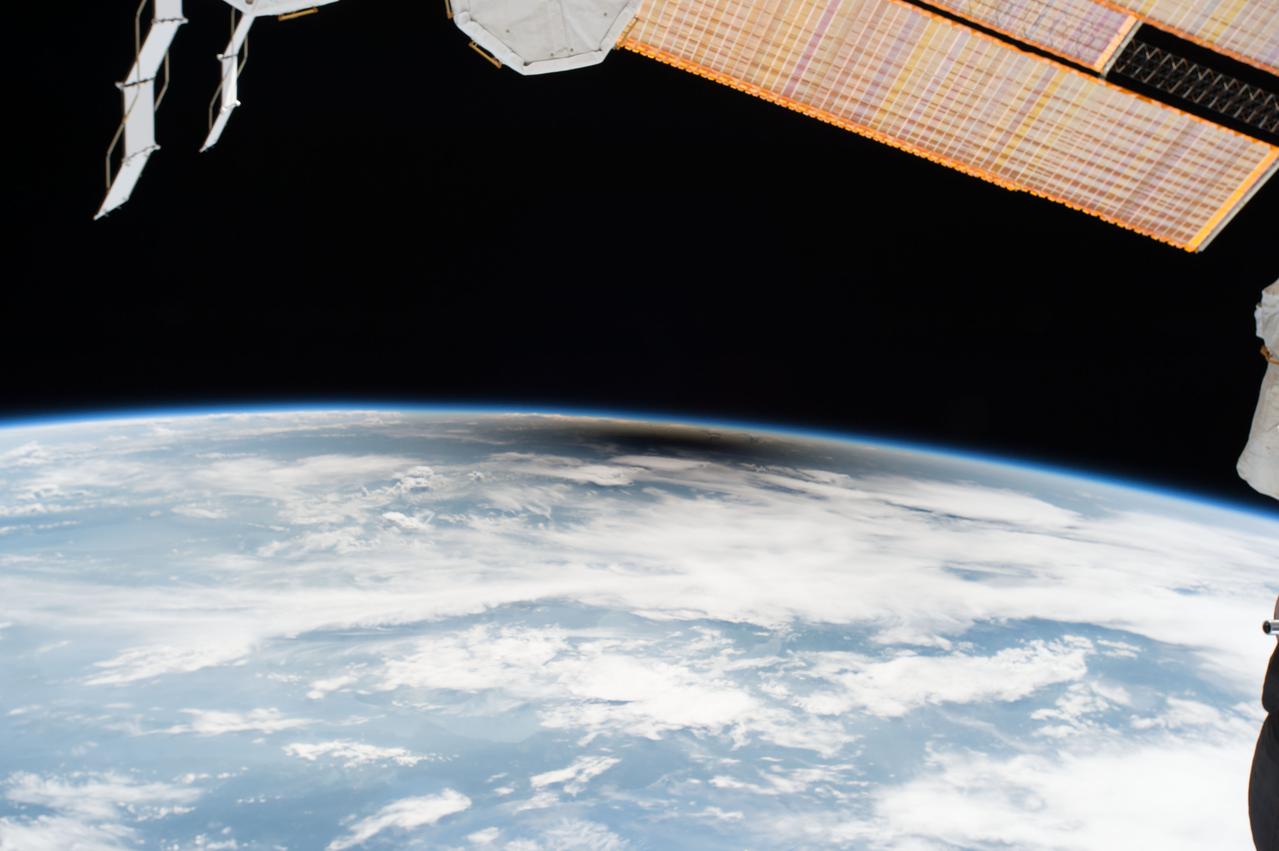
iss052e056222 (Aug. 21, 2017) --- As millions of people across the United States experienced a total eclipse as the umbra, or moon’s shadow passed over them, only six people witnessed the umbra from space. Viewing the eclipse from orbit were NASA’s Randy Bresnik, Jack Fischer and Peggy Whitson, ESA (European Space Agency’s) Paolo Nespoli, and Roscosmos’ Commander Fyodor Yurchikhin and Sergey Ryazanskiy. The space station crossed the path of the eclipse three times as it orbited above the continental United States at an altitude of 250 miles.
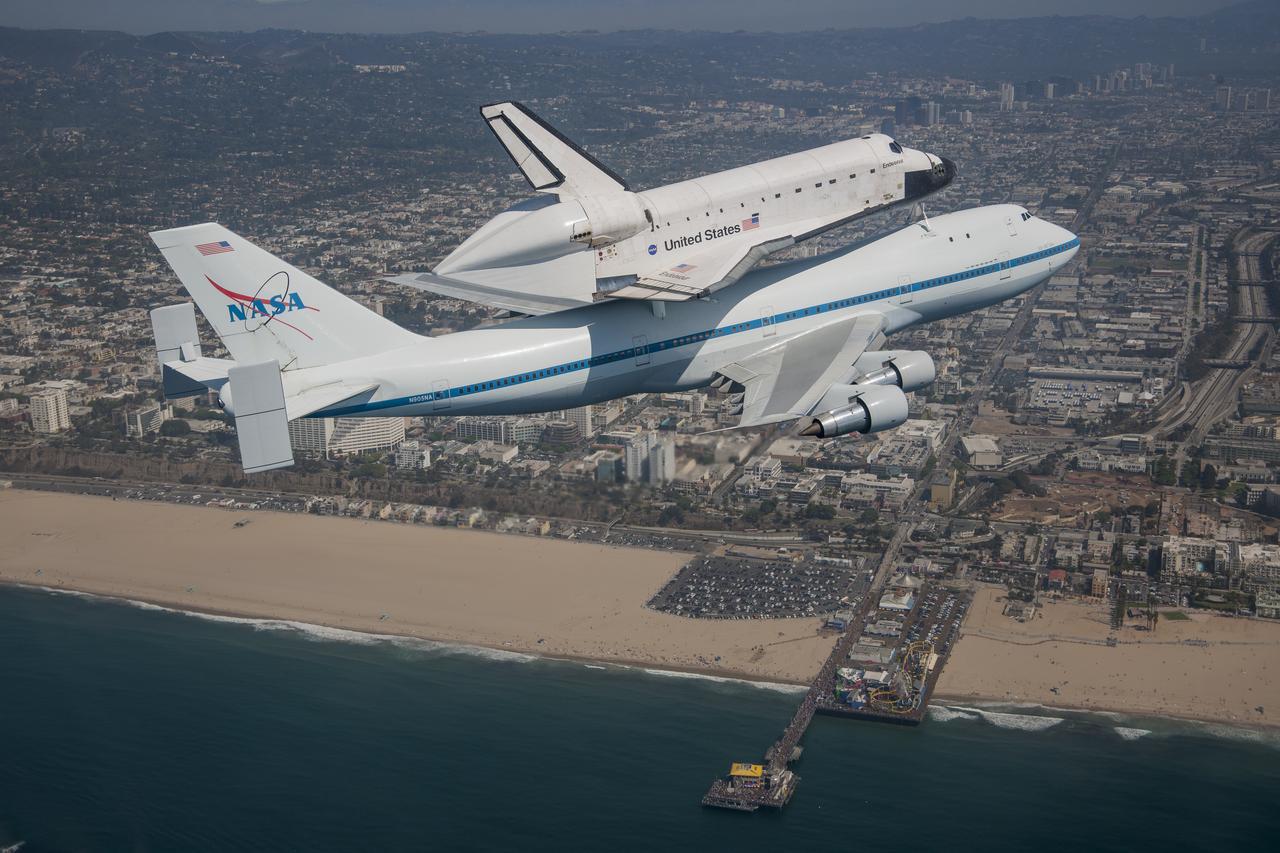
Space shuttle Endeavour and its host NASA 747 Shuttle Carrier Aircraft fly over the Santa Monica Pier in 2012 on its way to the Los Angeles International Airport, and an overland journey to the California Science Center. Californians gazed at the morning sky Sept. 21 looking for Endeavour over their community. The final leg of Endeavour’s flight from NASA’s Kennedy Space Center, Florida, offered many people an opportunity to witness the historic flight.
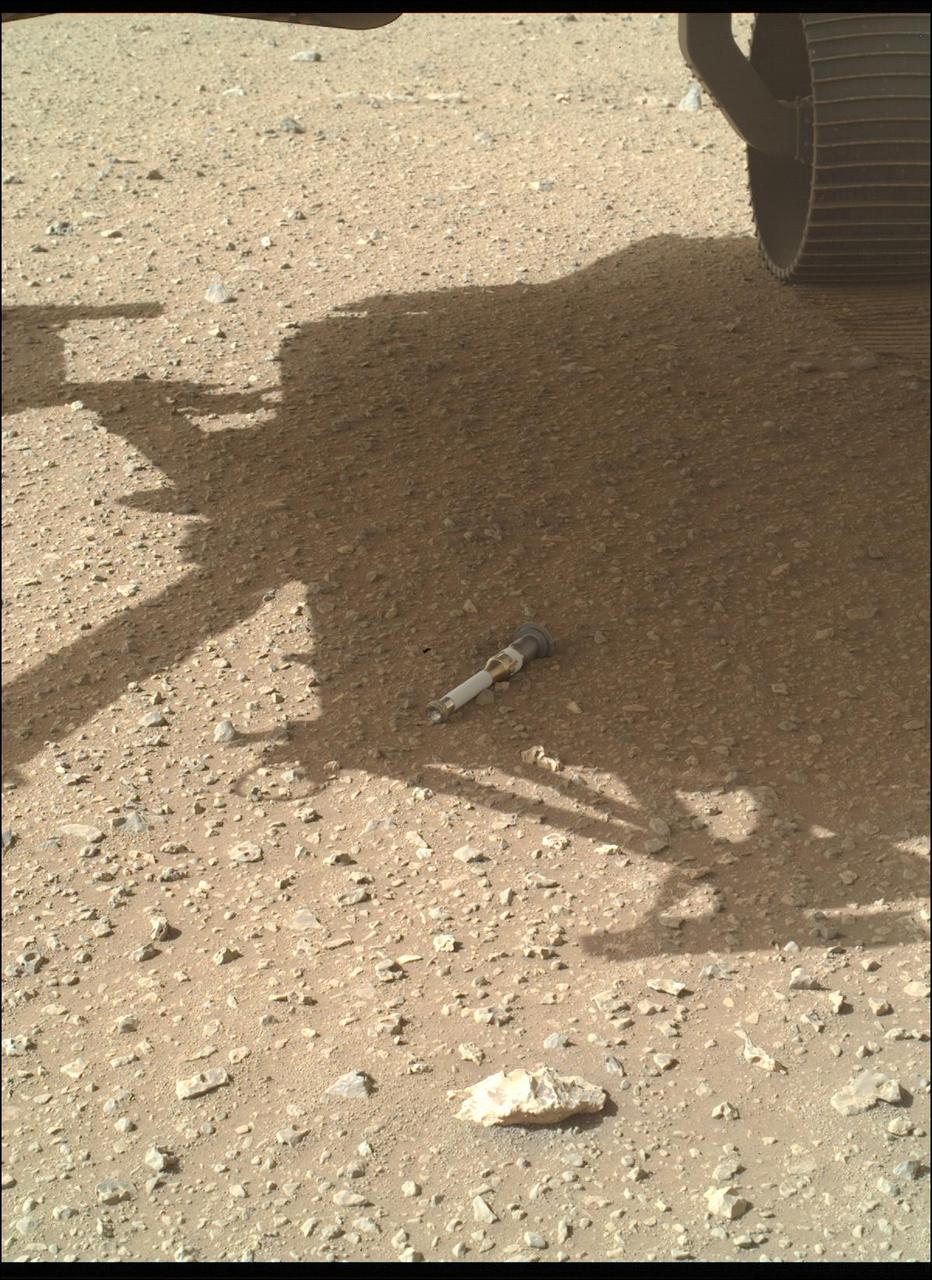
NASA's Perseverance Mars rover dropped the last of 10 tubes at the "Three Forks" sample depot on Jan. 28, 2023, the 690th Martian day, or sol, of the mission. This image of the 10th tube was taken by the WATSON (Wide Angle Topographic Sensor for Operations and eNgineering) camera on the end of the rover's 7-foot-long (2-meter-long) robotic arm. This final sample is what's called a "witness" tube – one of three collected by the rover so far and the only one deposited at the depot. Witness tubes are similar to the sample tubes that hold Martian rock and sediment, except they have been preloaded with a variety of materials that can capture molecular and particulate contaminants. They are opened on the Martian surface to "witness" the ambient environment near sample collection sites. With samples returned to Earth in the future, the witness tubes would be used to determine if samples being collected might be contaminated with materials that traveled with the rover from Earth. The Three Forks depot, the first sample depot on another world, is a crucial milestone in the NASA-ESA (European Space Agency) Mars Sample Return campaign, which aims to bring Mars samples to Earth for closer study. The Perseverance rover will be the primary means to convey the collected samples to a future robotic lander as part of the campaign. The lander would, in turn, use a robotic arm to place the samples in a containment capsule aboard a small rocket that would blast off to Mars orbit, where another spacecraft would capture the sample container and return it safely to Earth. Hosting the duplicate set, the Three Forks depot will serve as a backup if Perseverance can't deliver its samples. A key objective for Perseverance's mission on Mars is astrobiology, including the search for signs of ancient microbial life. The rover will characterize the planet's geology and past climate, pave the way for human exploration of the Red Planet, and be the first mission to collect and cache Martian rock and regolith (broken rock and dust). Subsequent NASA missions, in cooperation with ESA (European Space Agency), would send spacecraft to Mars to collect these sealed samples from the surface and return them to Earth for in-depth analysis. The Mars 2020 Perseverance mission is part of NASA's Moon to Mars exploration approach, which includes Artemis missions to the Moon that will help prepare for human exploration of the Red Planet. https://photojournal.jpl.nasa.gov/catalog/PIA25340
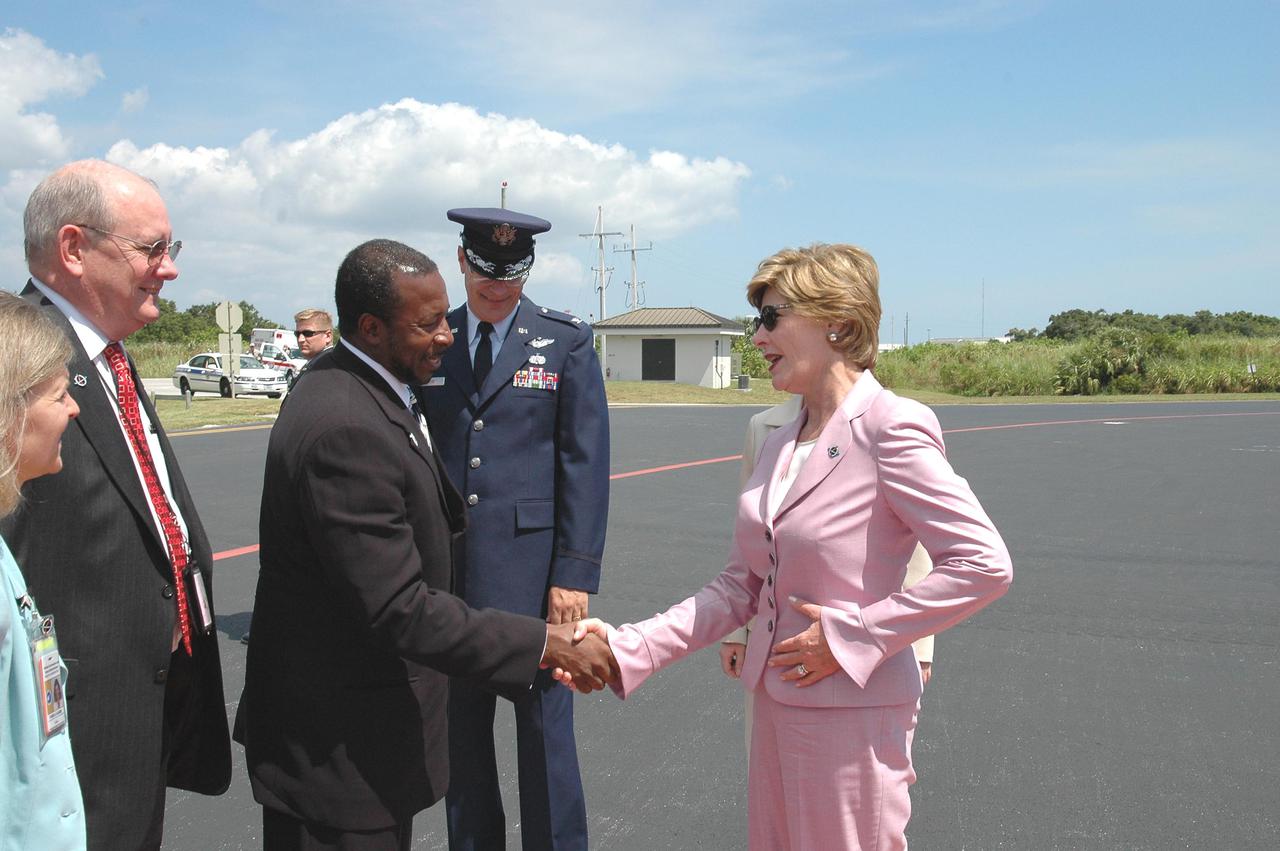
KENNEDY SPACE CENTER, FLA. - At the Skid Strip on Cape Canaveral Air Force Station, First Lady Laura Bush says farewell to KSC Deputy Director Woodrow Whitlow Jr. At left is Associate Director Jim Hattaway. Mrs. Bush witnessed the historic launch of Space Shuttle Discovery on Return to Flight mission STS-114. She is only the third First Lady to witness a Space Shuttle launch at KSC. On this mission to the International Space Station the crew will perform inspections on-orbit for the first time of all of the Reinforced Carbon-Carbon (RCC) panels on the leading edge of the wings and the Thermal Protection System tiles using the new Canadian-built Orbiter Boom Sensor System and the data from 176 impact and temperature sensors. Mission Specialists will also practice repair techniques on RCC and tile samples during a spacewalk in the payload bay. During two additional spacewalks, the crew will install the External Stowage Platform-2, equipped with spare part assemblies, and a replacement Control Moment Gyroscope contained in the Lightweight Multi-Purpose Experiment Support Structure. The 12-day mission is expected to end with touchdown at the Shuttle Landing Facility on Aug. 7.