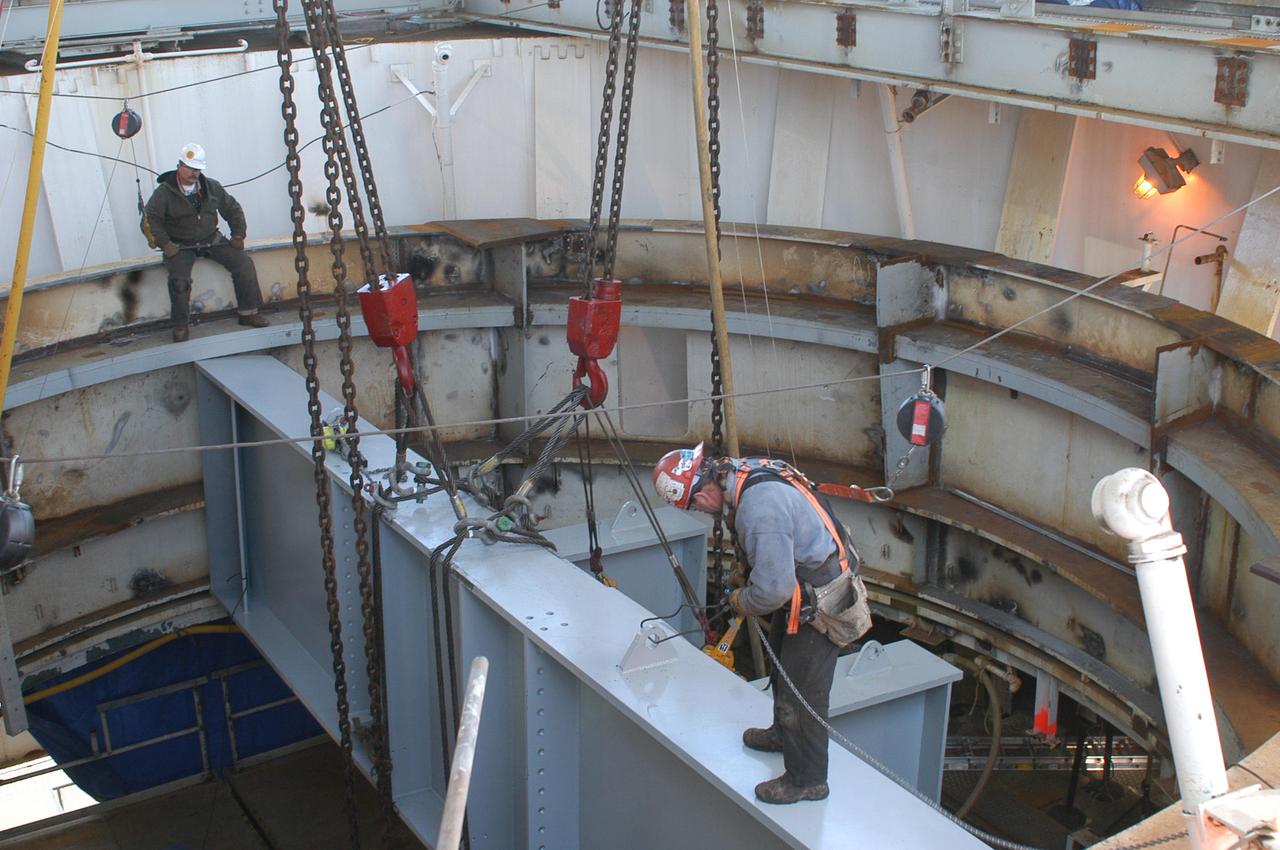
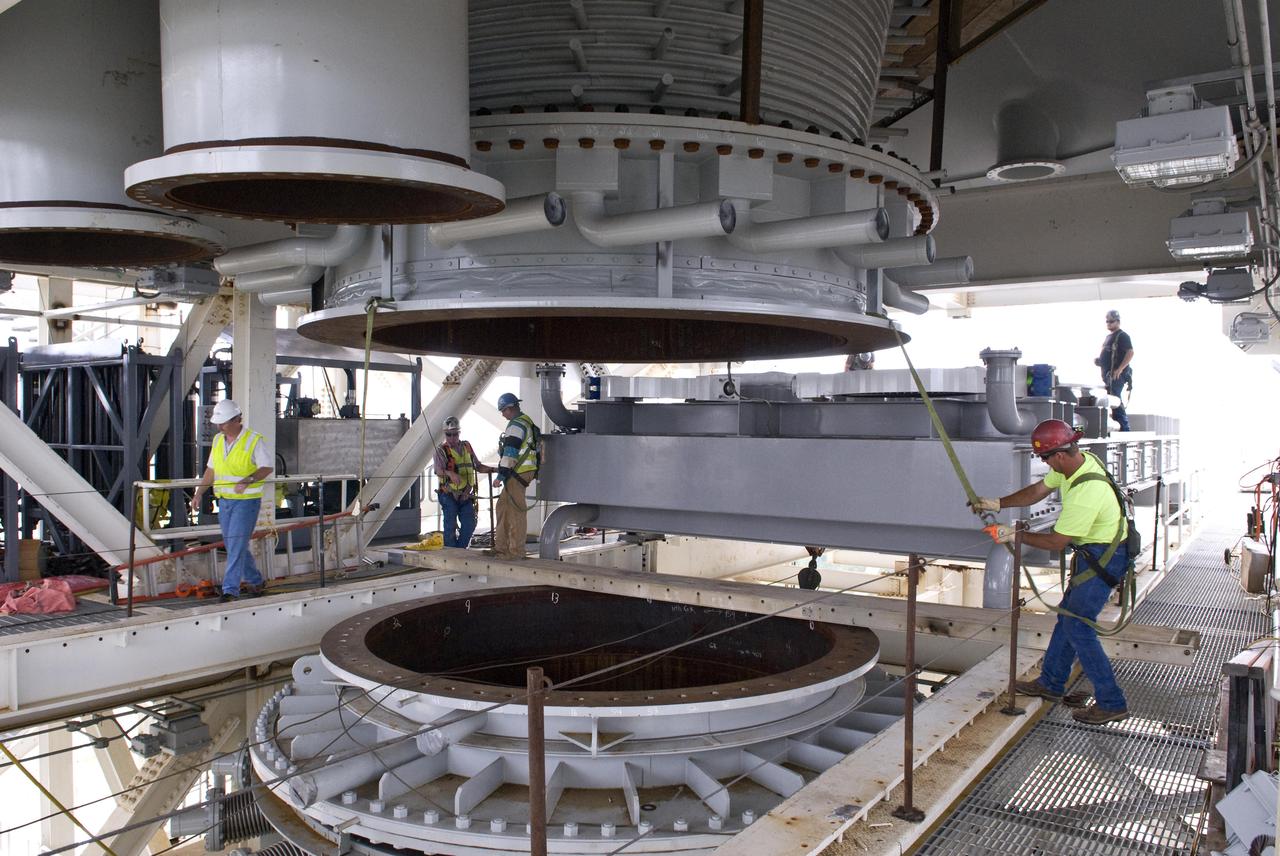
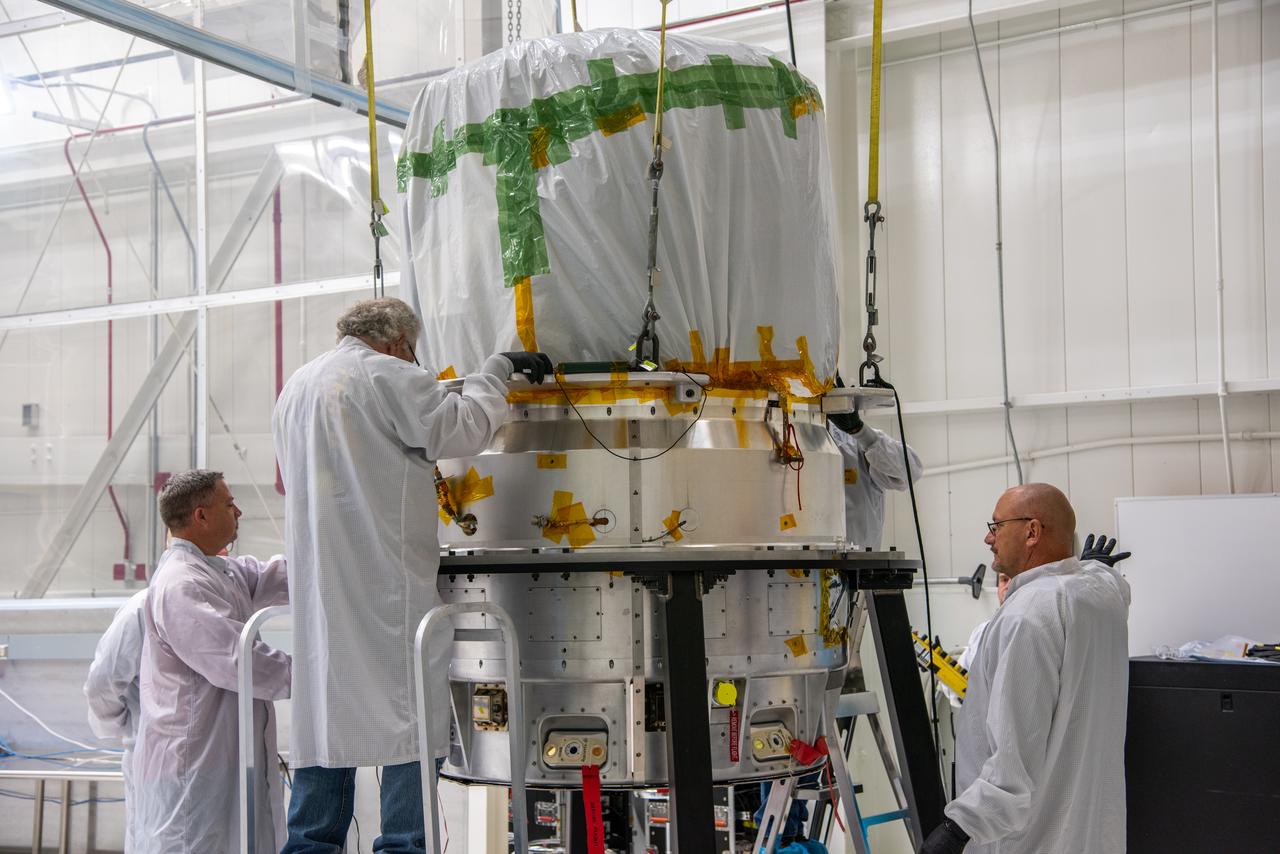
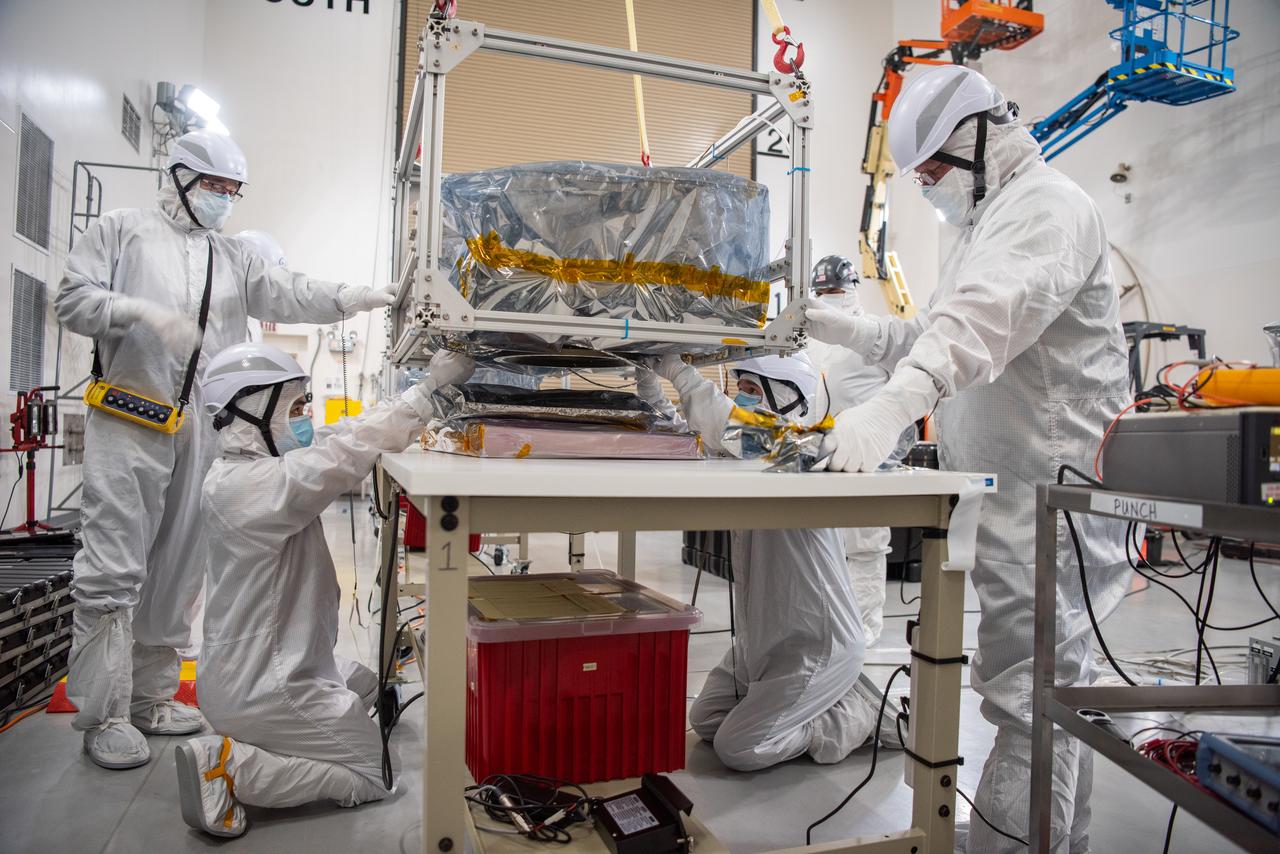
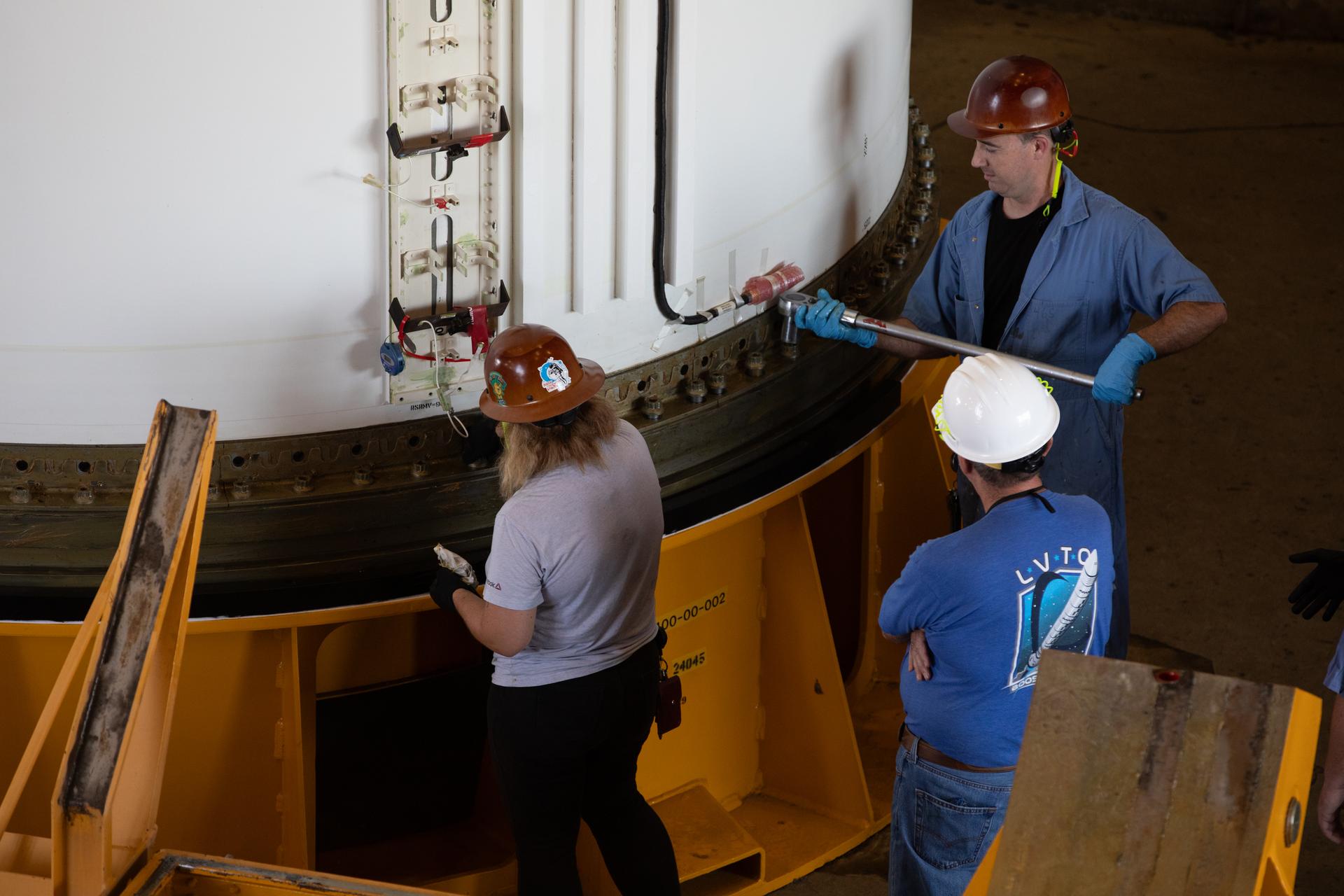
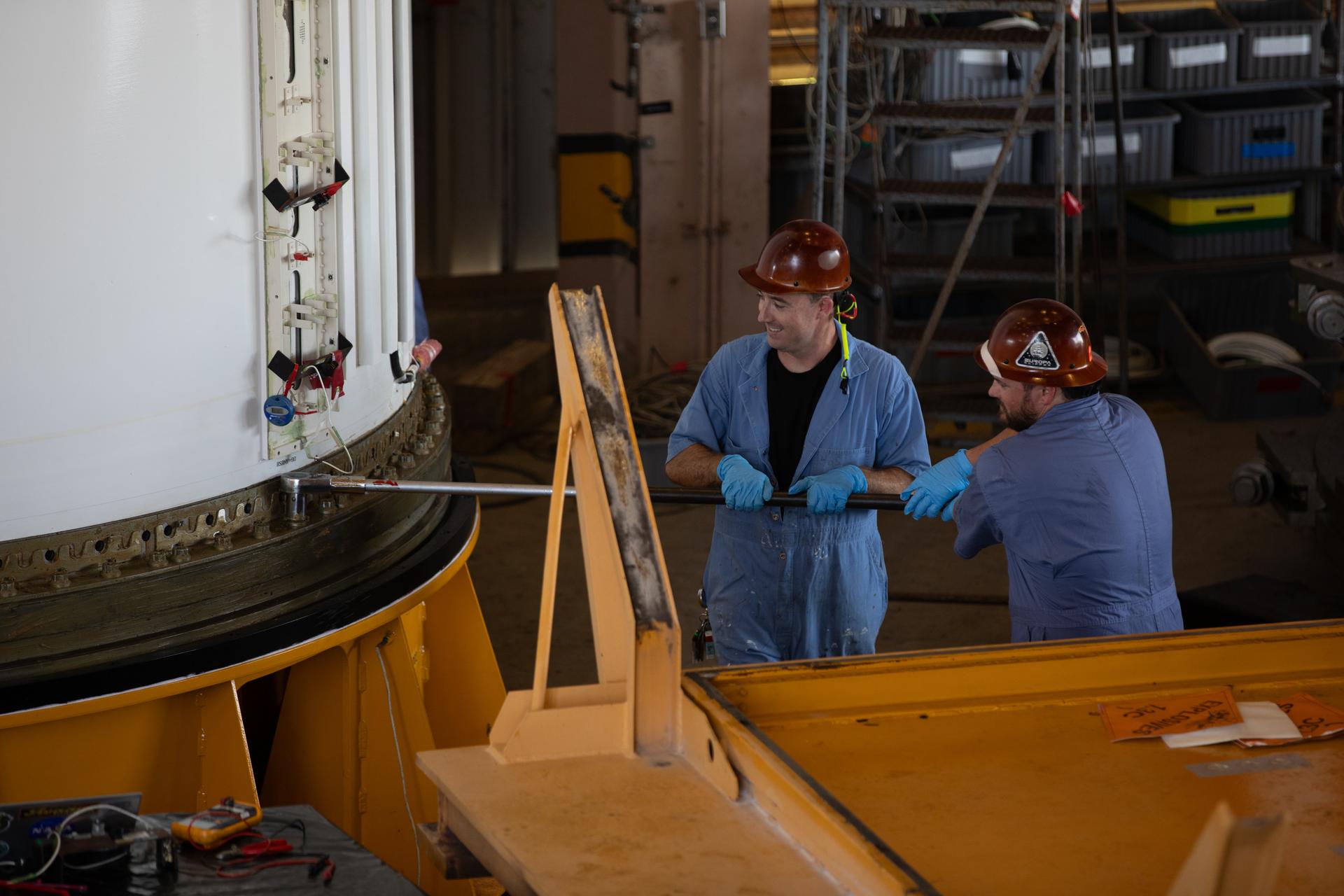
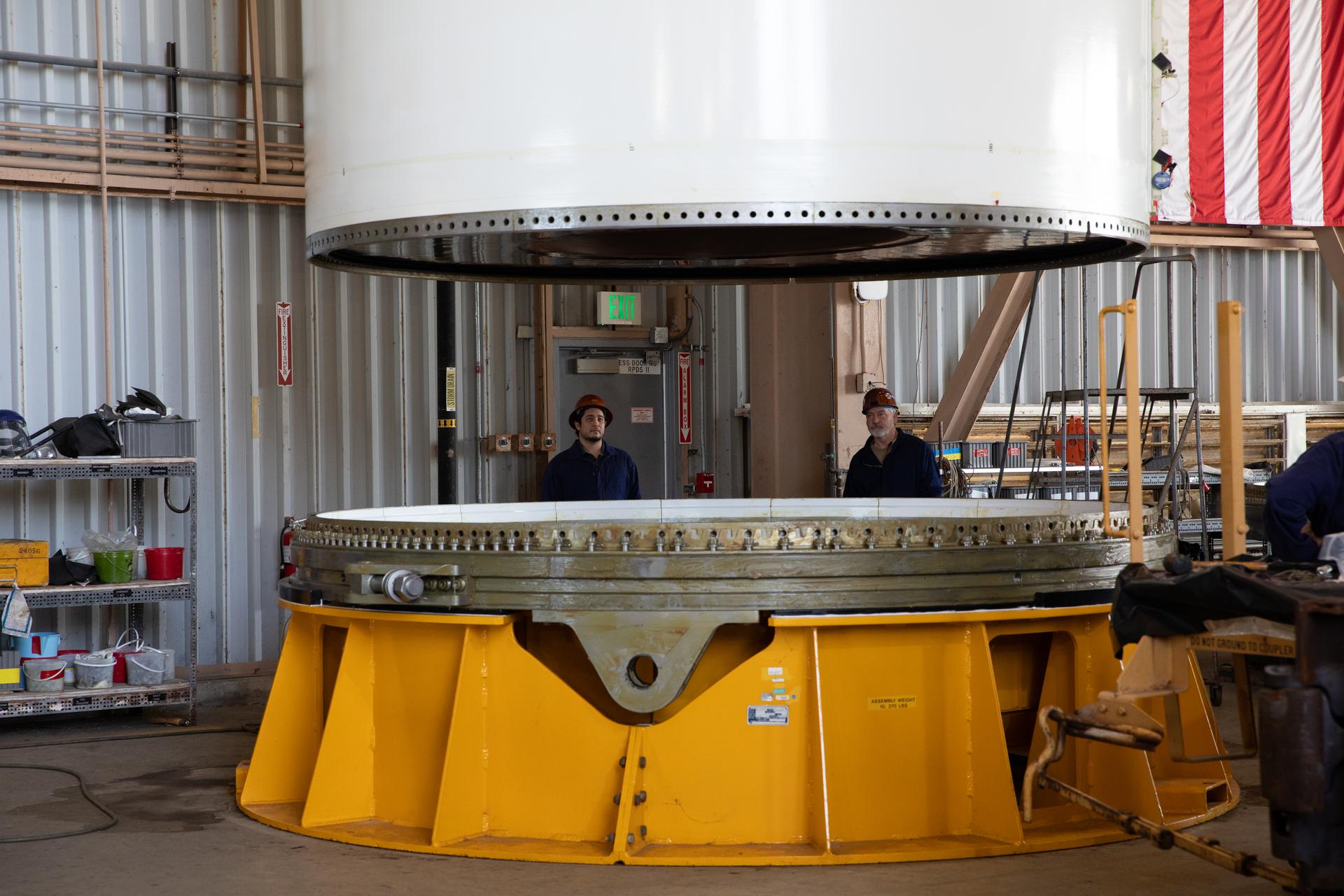
Employees at NASA's John C. Stennis Space Center work to maneuver a structural steam beam into place on the A-1 Test Stand on Jan. 13. The beam was one of several needed to form the thrust takeout structure that will support a new thrust measurement system being installed on the stand for future rocket engine testing. Once lifted onto the stand, the beams had to be hoisted into place through the center of the test stand, with only two inches of clearance on each side. The new thrust measurement system represents a state-of-the-art upgrade from the equipment installed more than 40 years ago when the test stand was first constructed.
A-1 Test Stand work
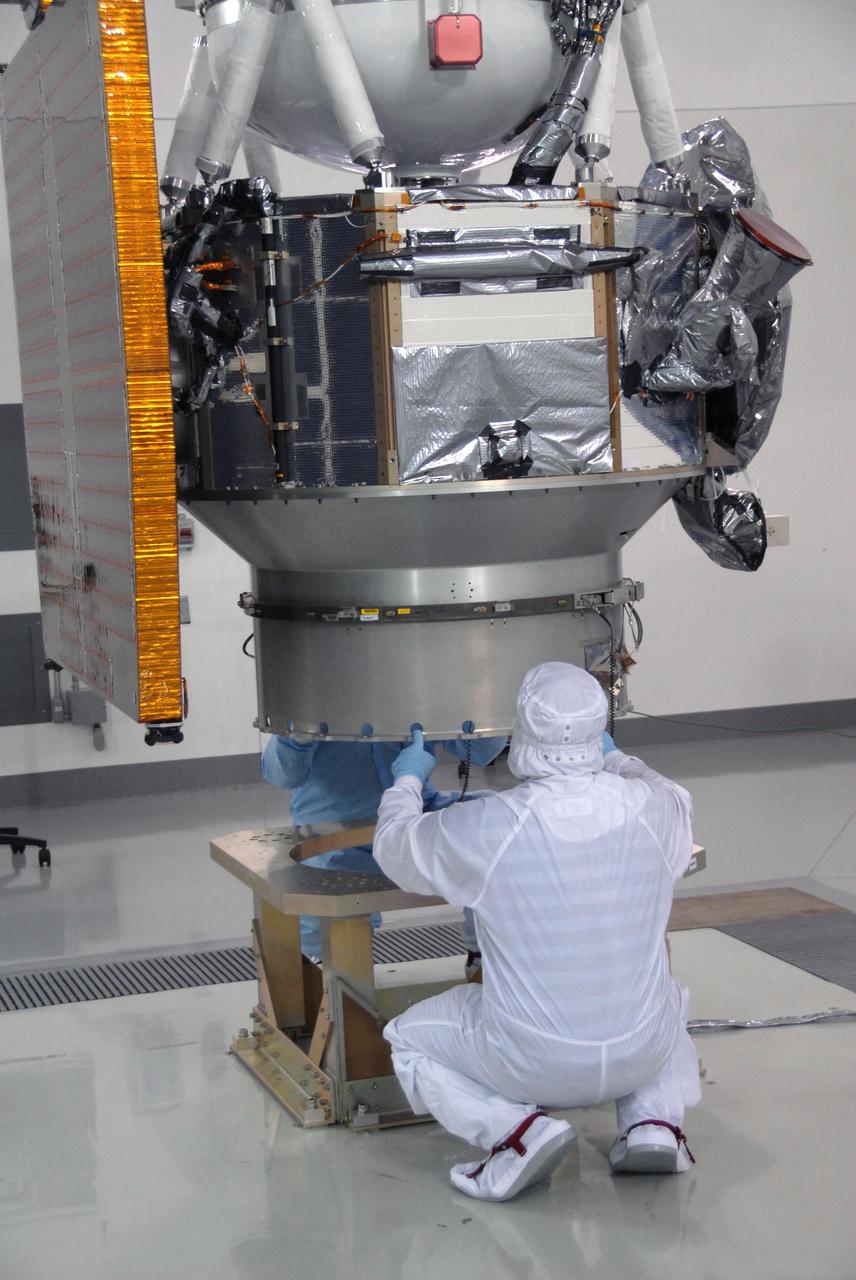
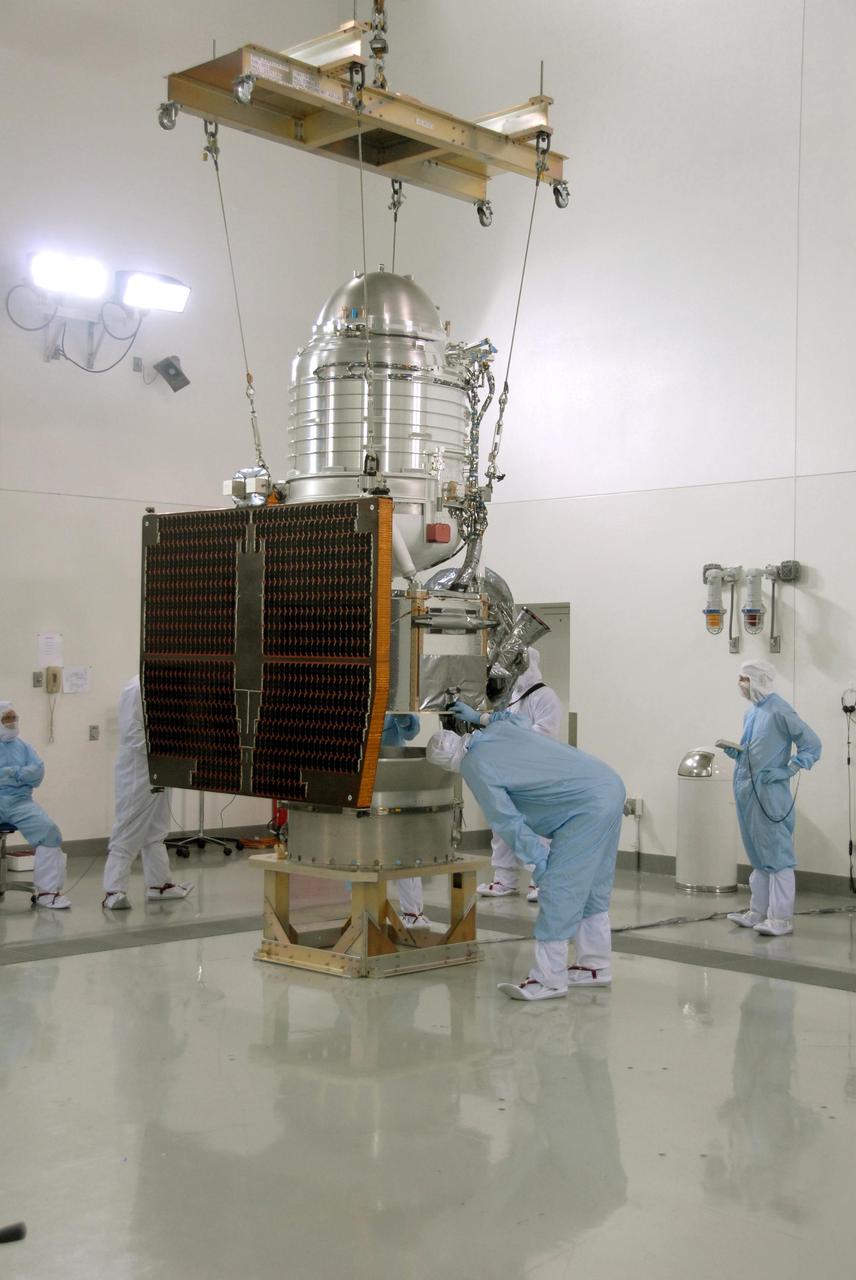
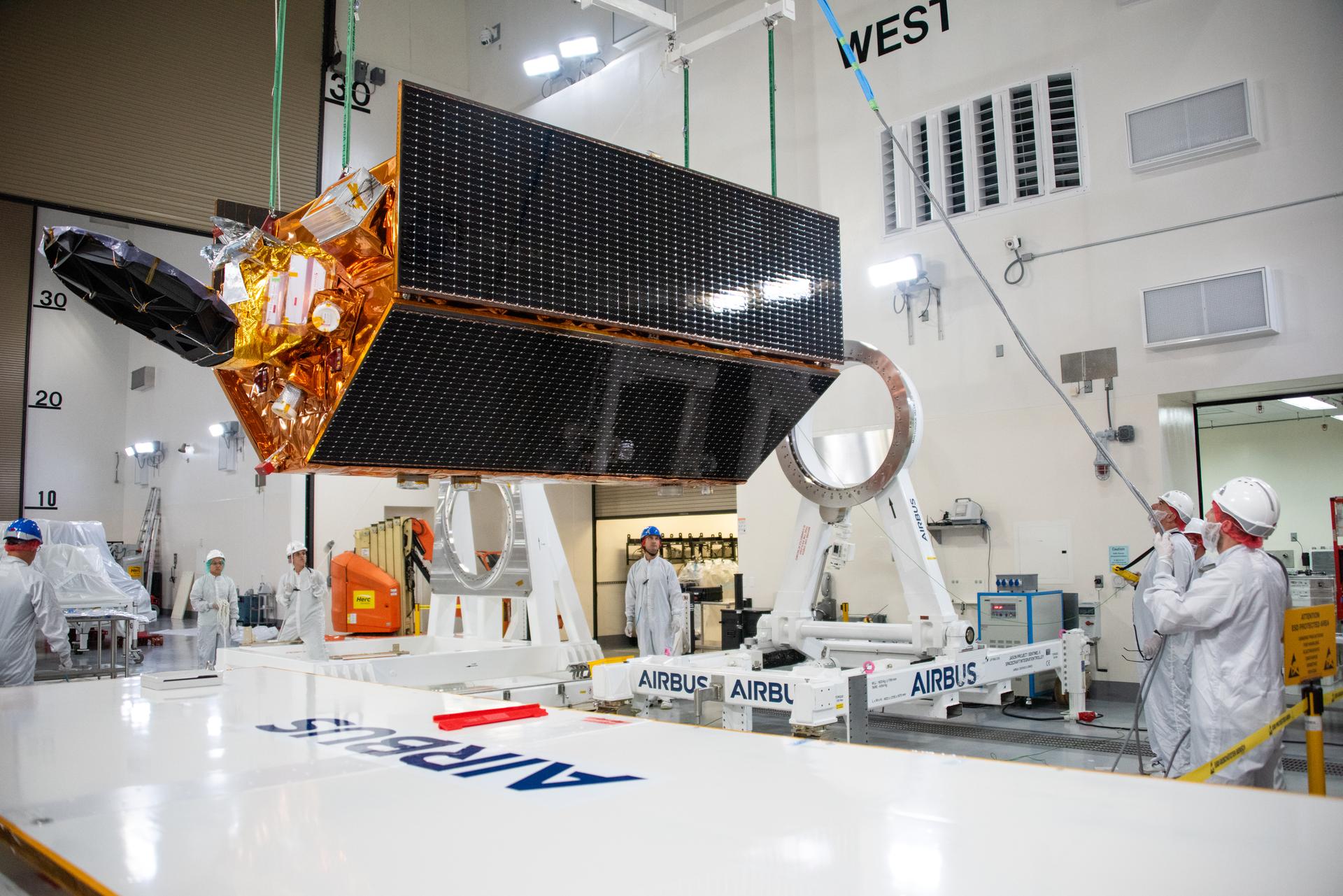
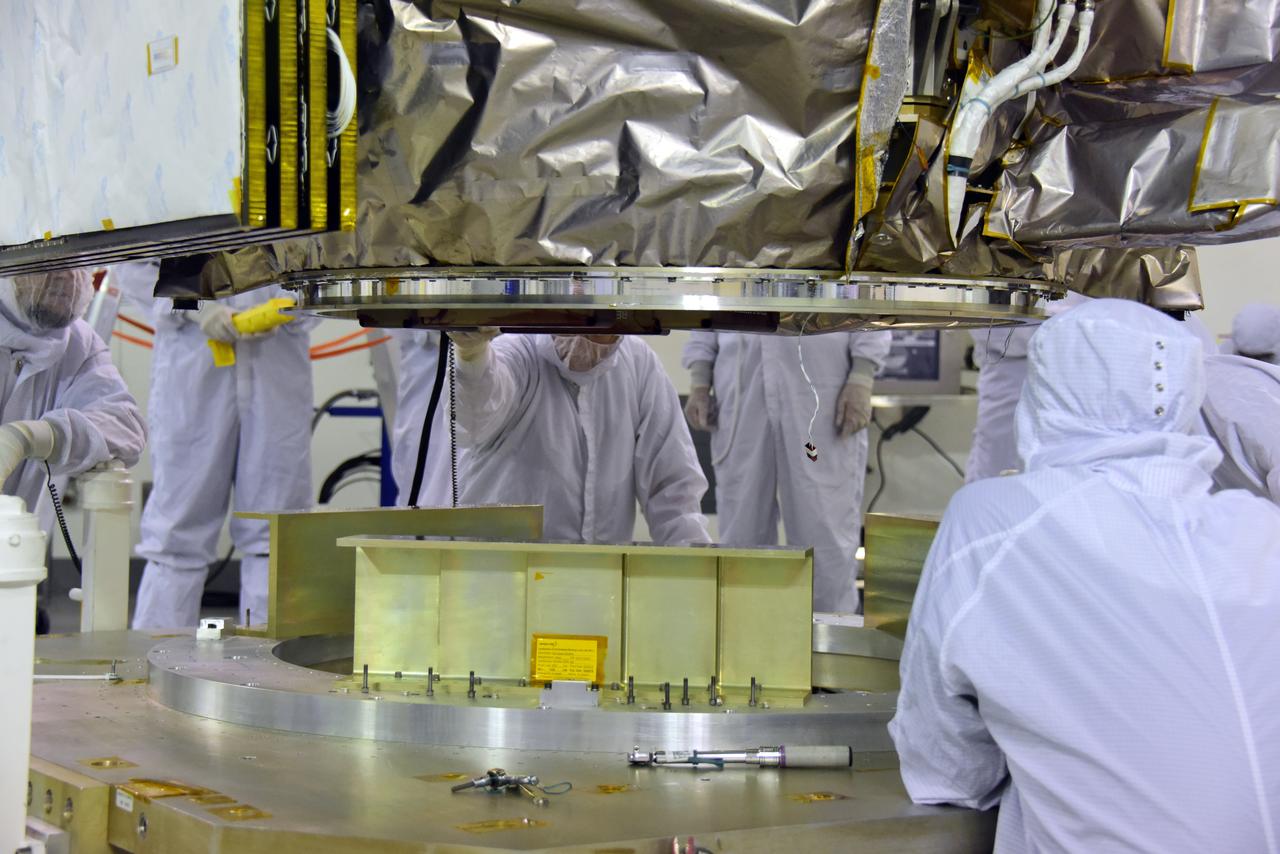
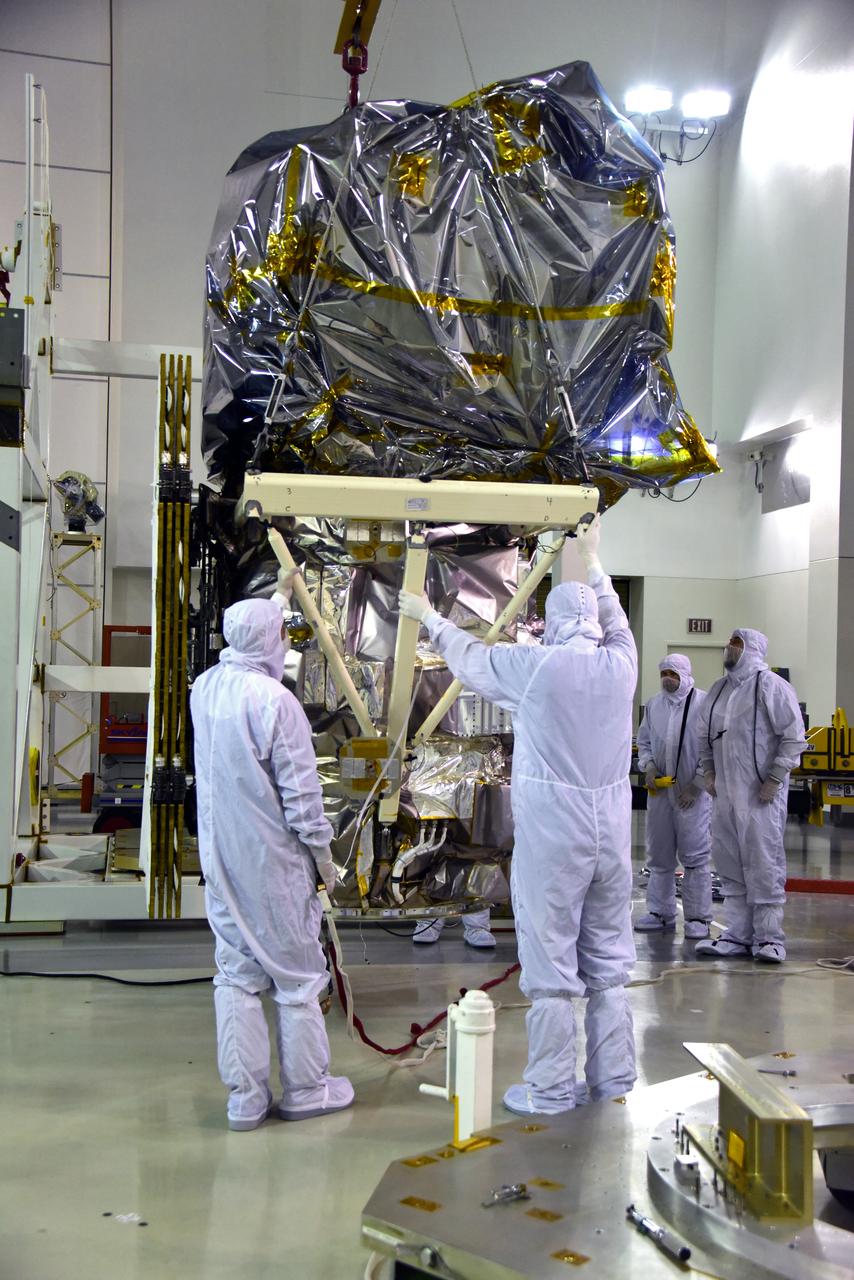
Workers check NASA Wide-field Infrared Survey Explorer, or WISE, spacecraft as it is lowered onto a work stand.
NASA WISE Spacecraft Lowered onto Work Stand
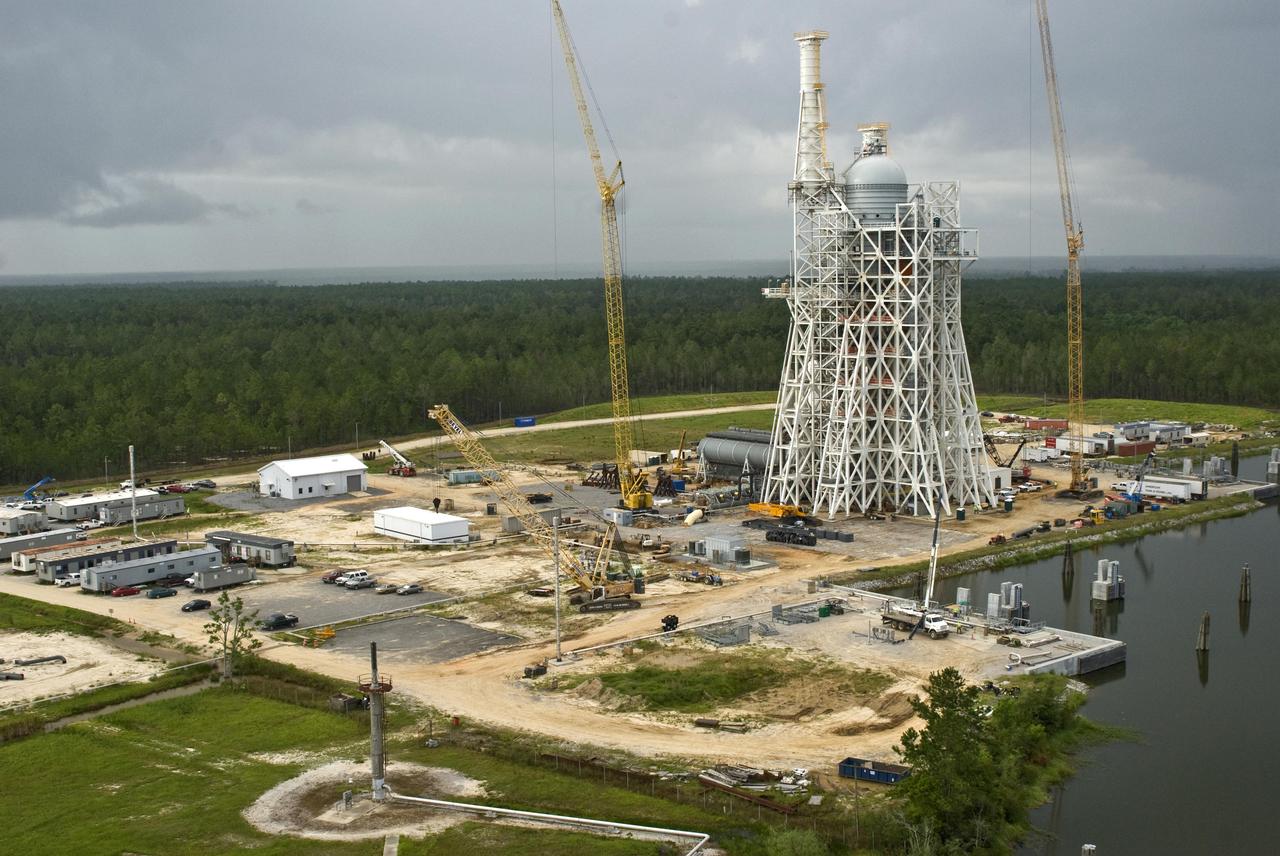
Work continues on the A-3 Test Stand at Stennis Space Center. The new stand will allow operators to test next-generation rocket engines at simulated altitudes up to 100,000 feet. The test stand is scheduled for completion and activation in 2013.
A-3 Test Stand work
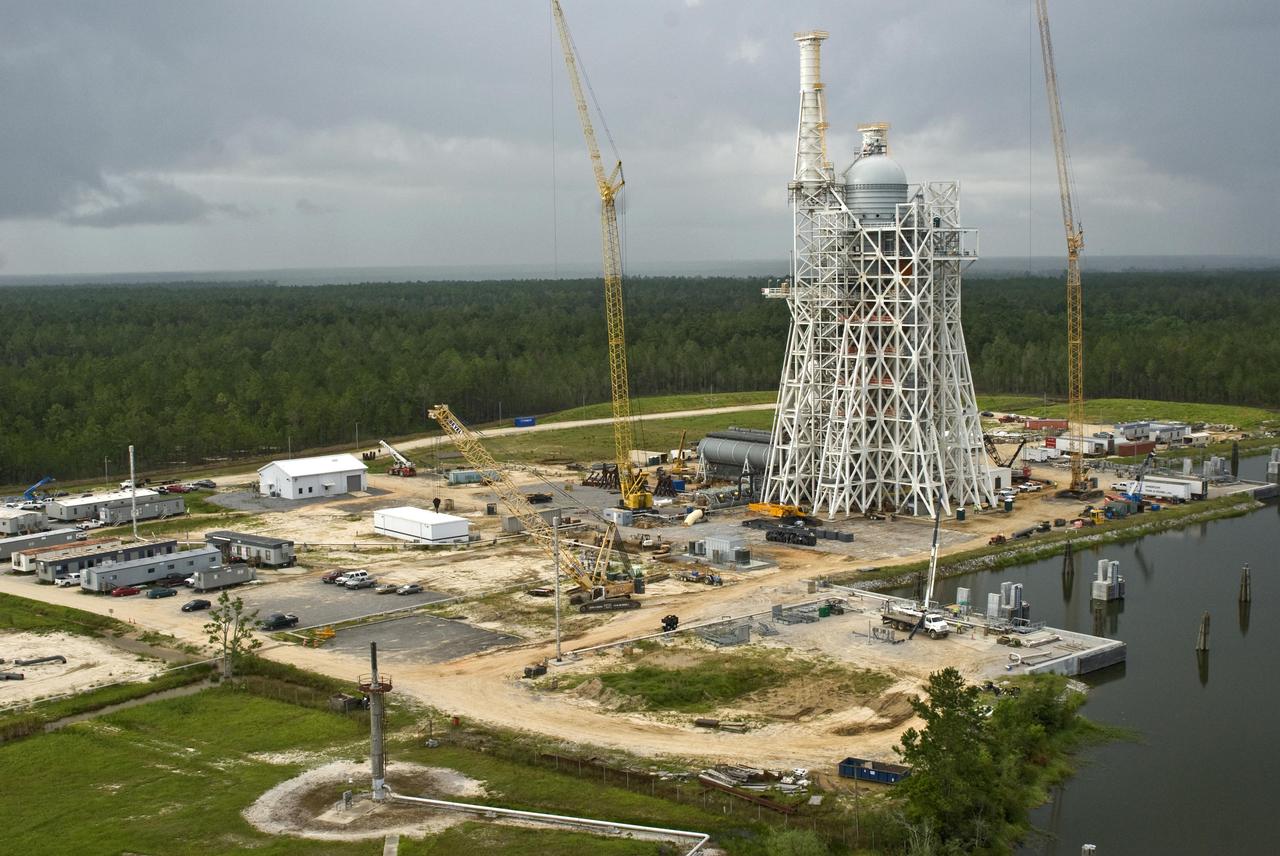
Work continues on the A-3 Test Stand at Stennis Space Center. The new stand will allow operators to test next-generation rocket engines at simulated altitudes up to 100,000 feet. The test stand is scheduled for completion and activation in 2013.
A-3 Test Stand work
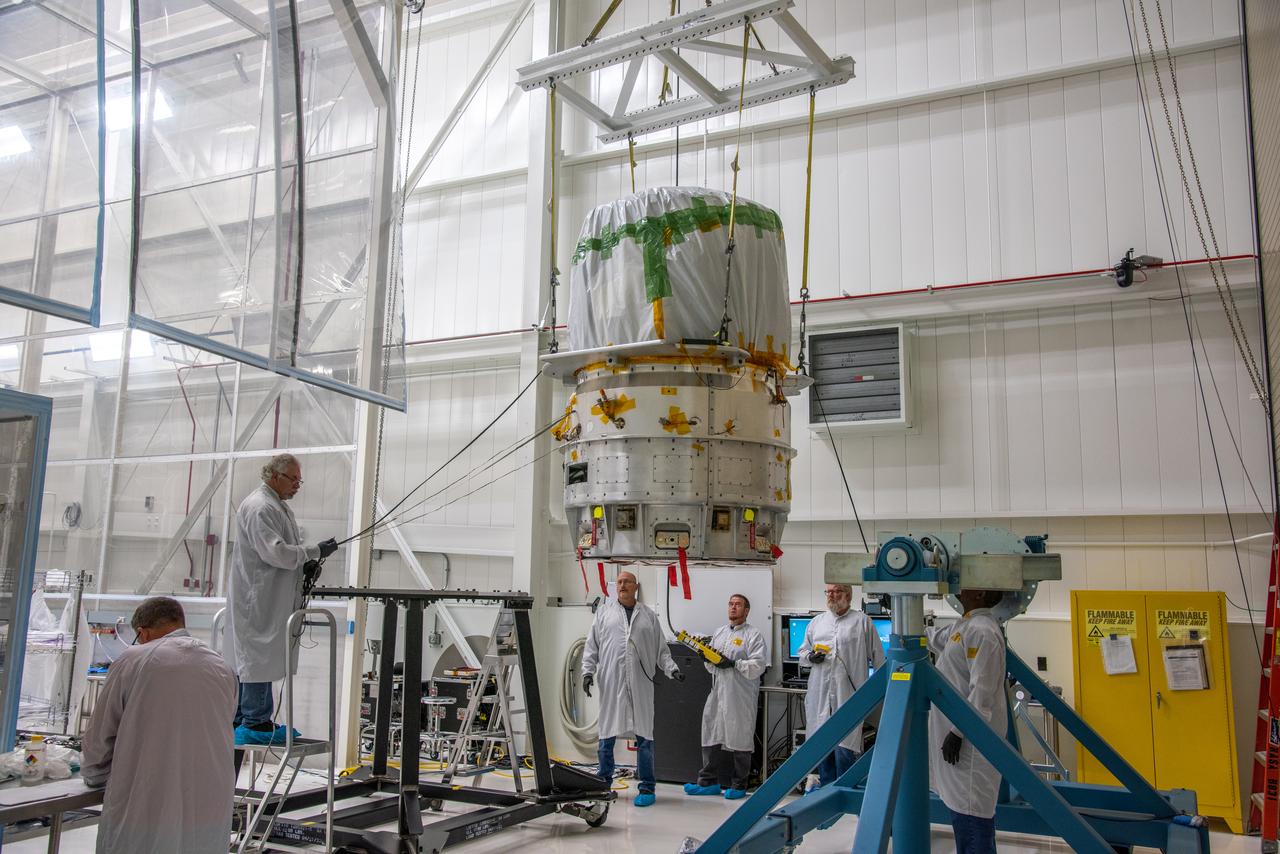
At Vandenberg Air Force Base Astrotech processing facility in California, NASA Wide-field Infrared Survey Explorer, or WISE, spacecraft is being lifted from a work stand.
NASA WISE Spacecraft Lifted from Work Stand
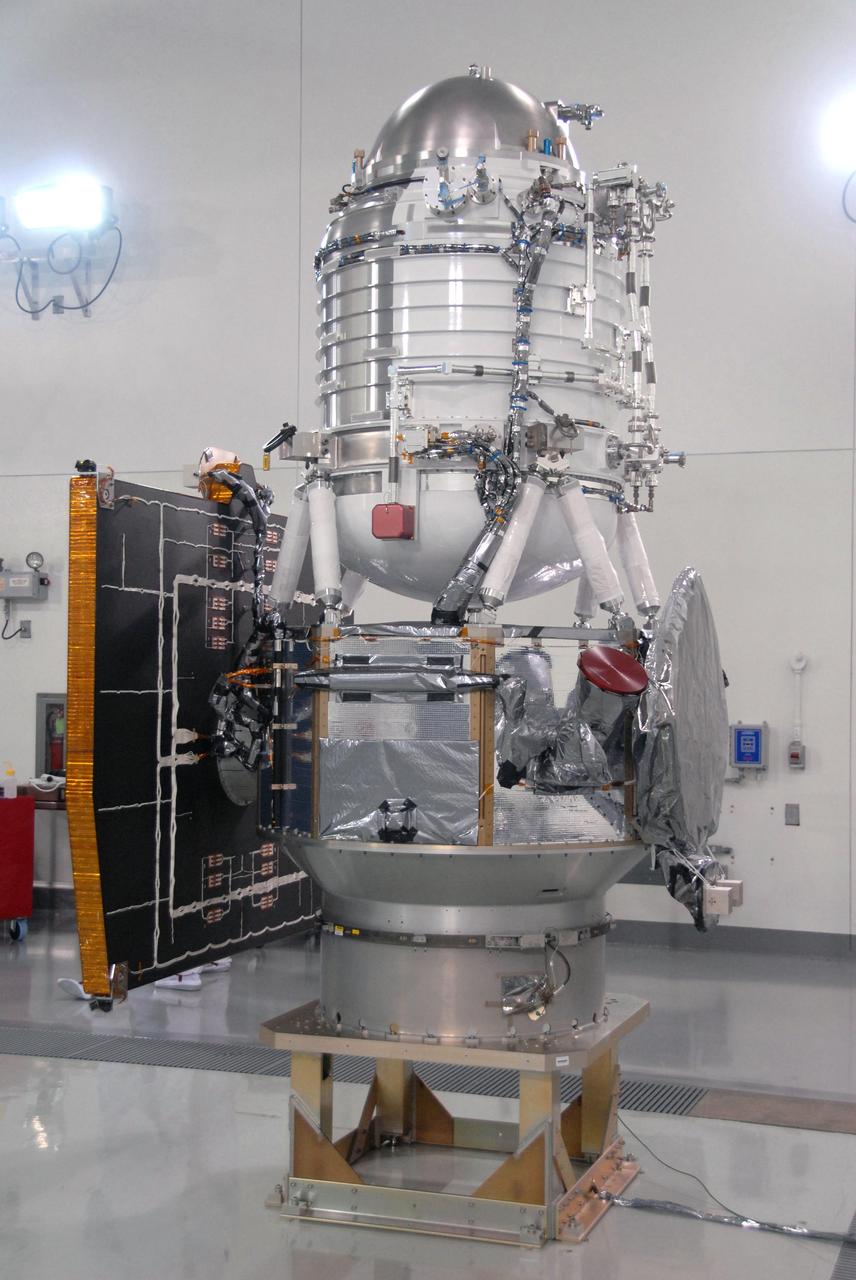
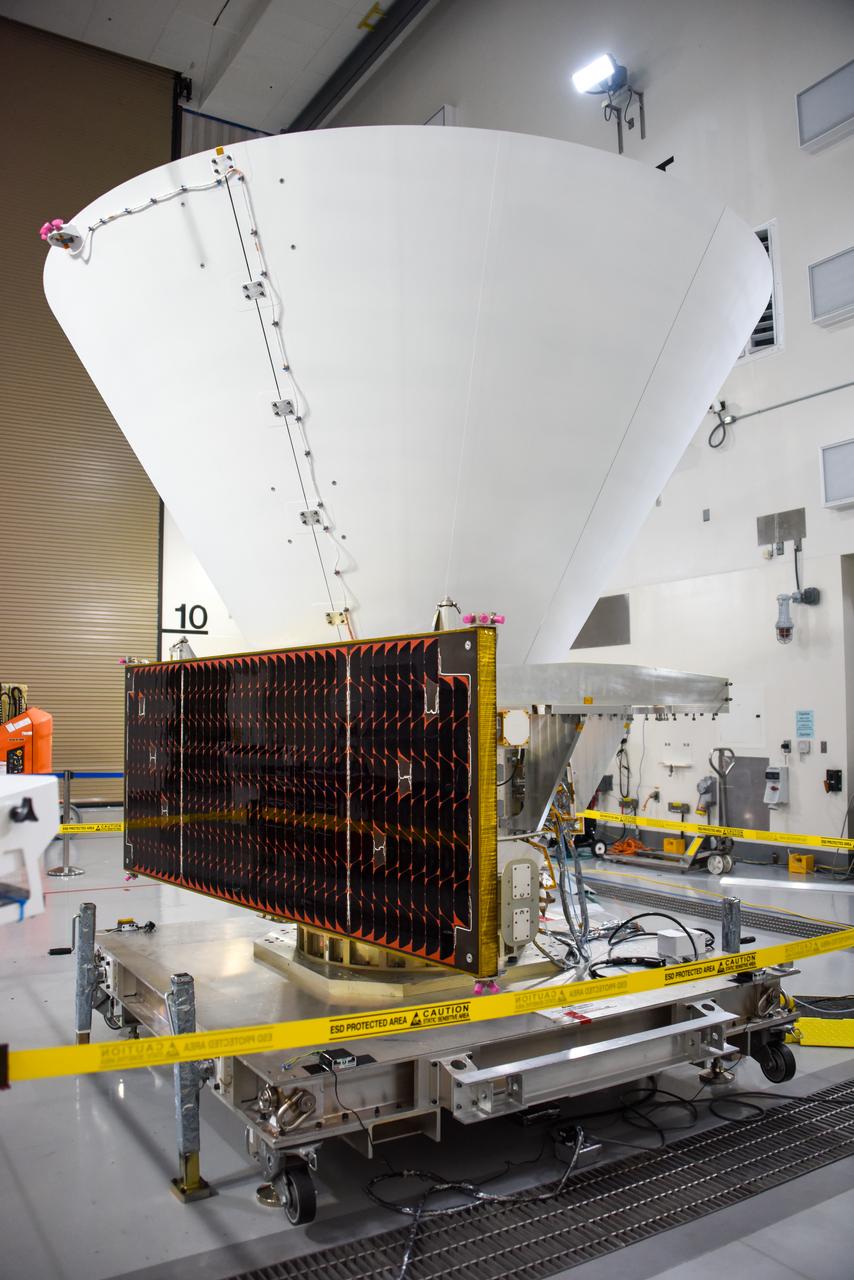
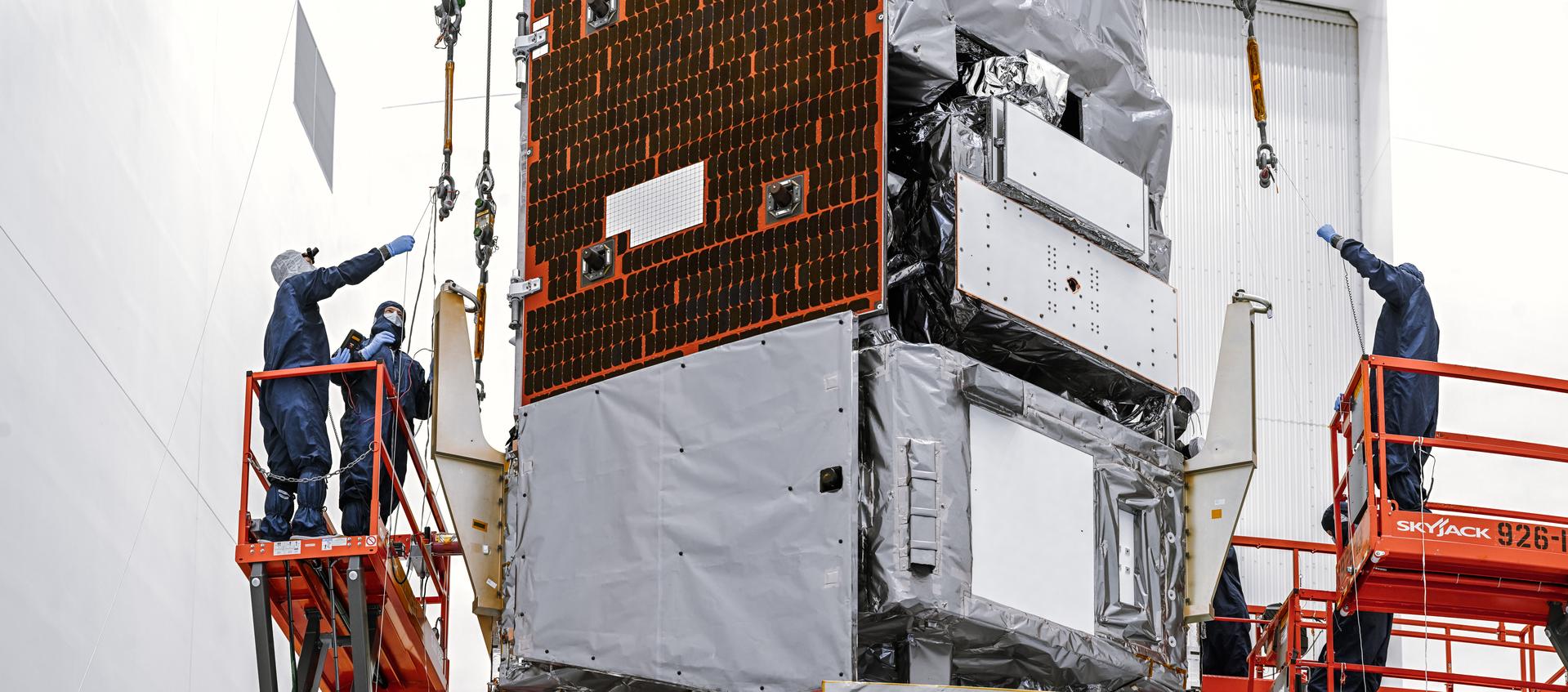
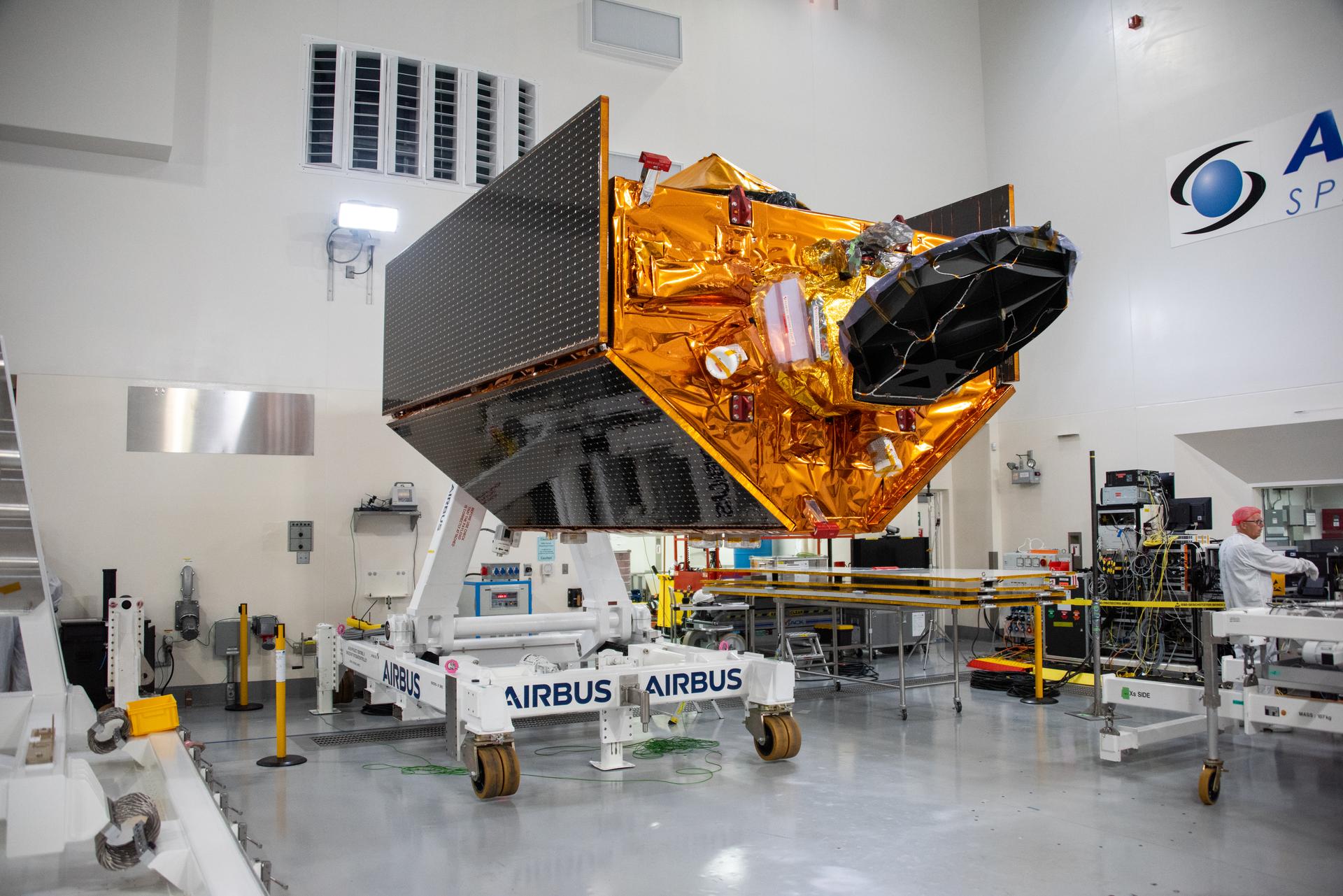
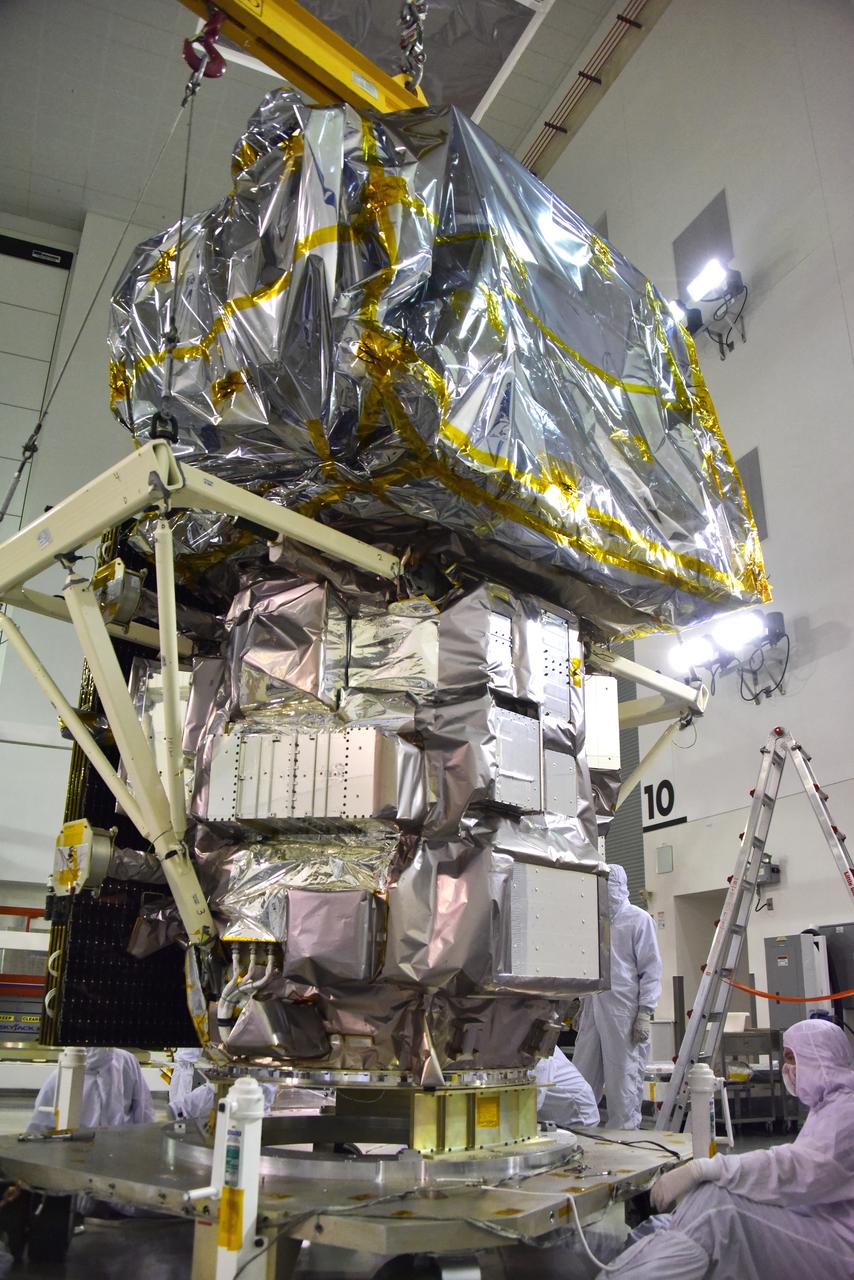
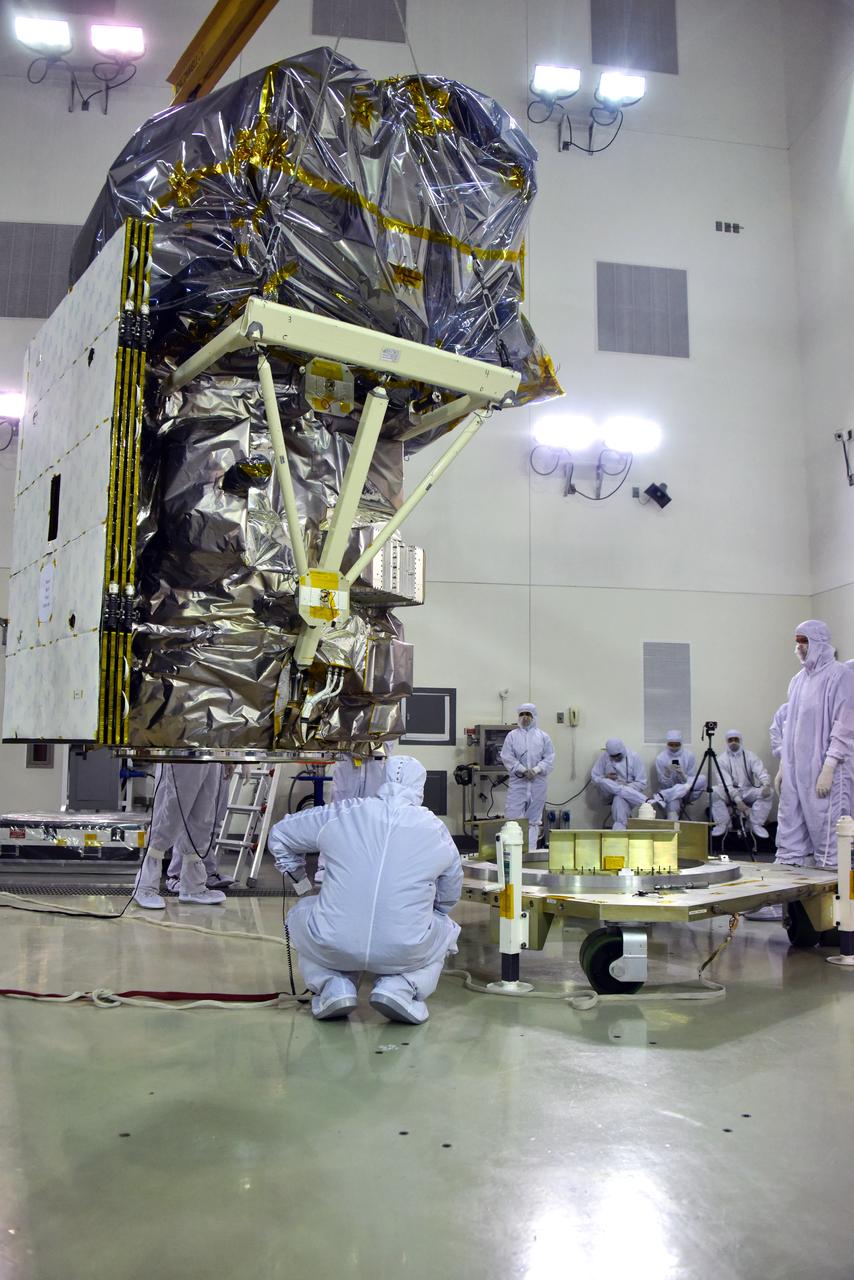
NASA Wide-field Infrared Survey Explorer spacecraft is situated on a work stand. At left on the spacecraft is the fixed panel solar array. In front, the square is the HGA Slotted Array Ku-Band.
NASA WISE Spacecraft Situated on Work Stand
Stennis Space Center employees continue work on the A-3 Test Stand test cell. The stand is being built to test next-generation rocket engines that could carry humans beyond low-Earth orbit into deep space.
A-3 Test Stand work continues
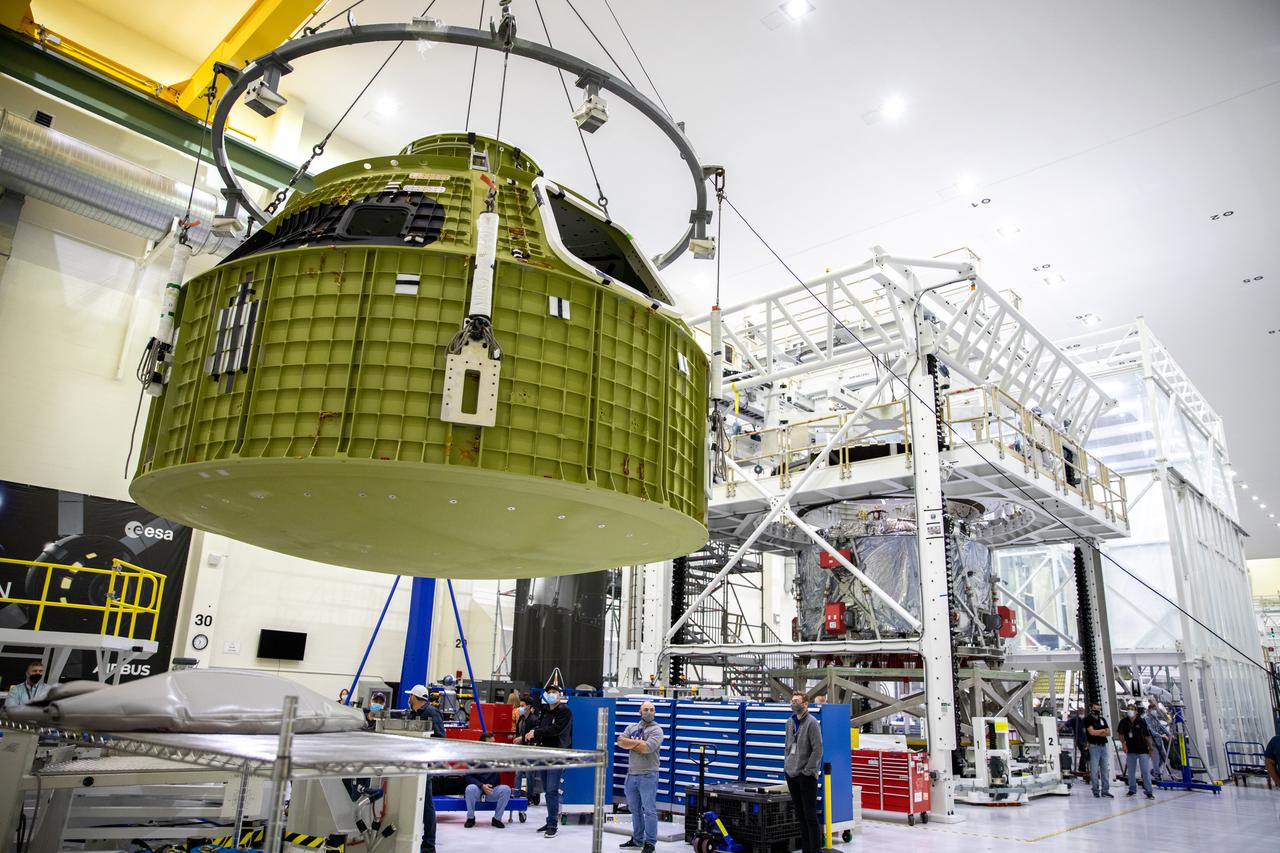
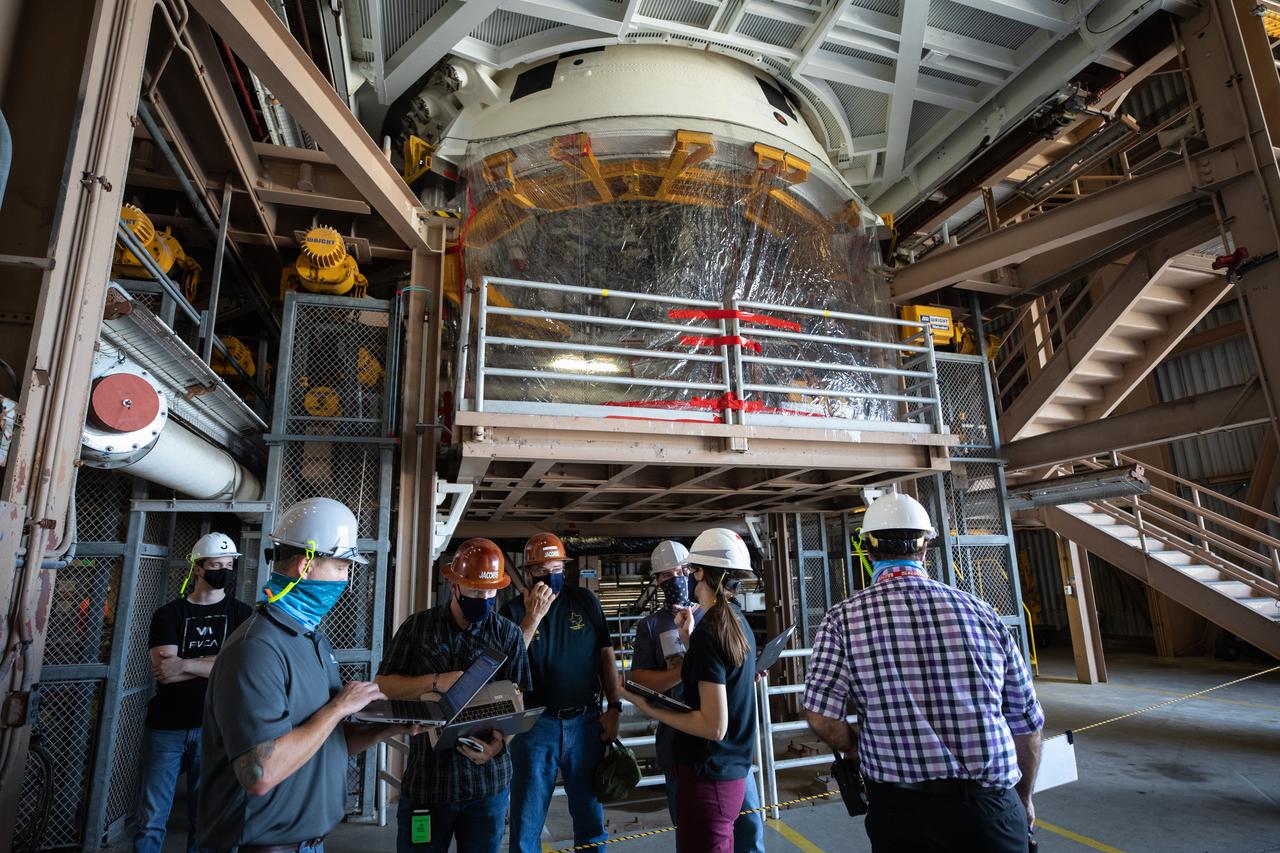
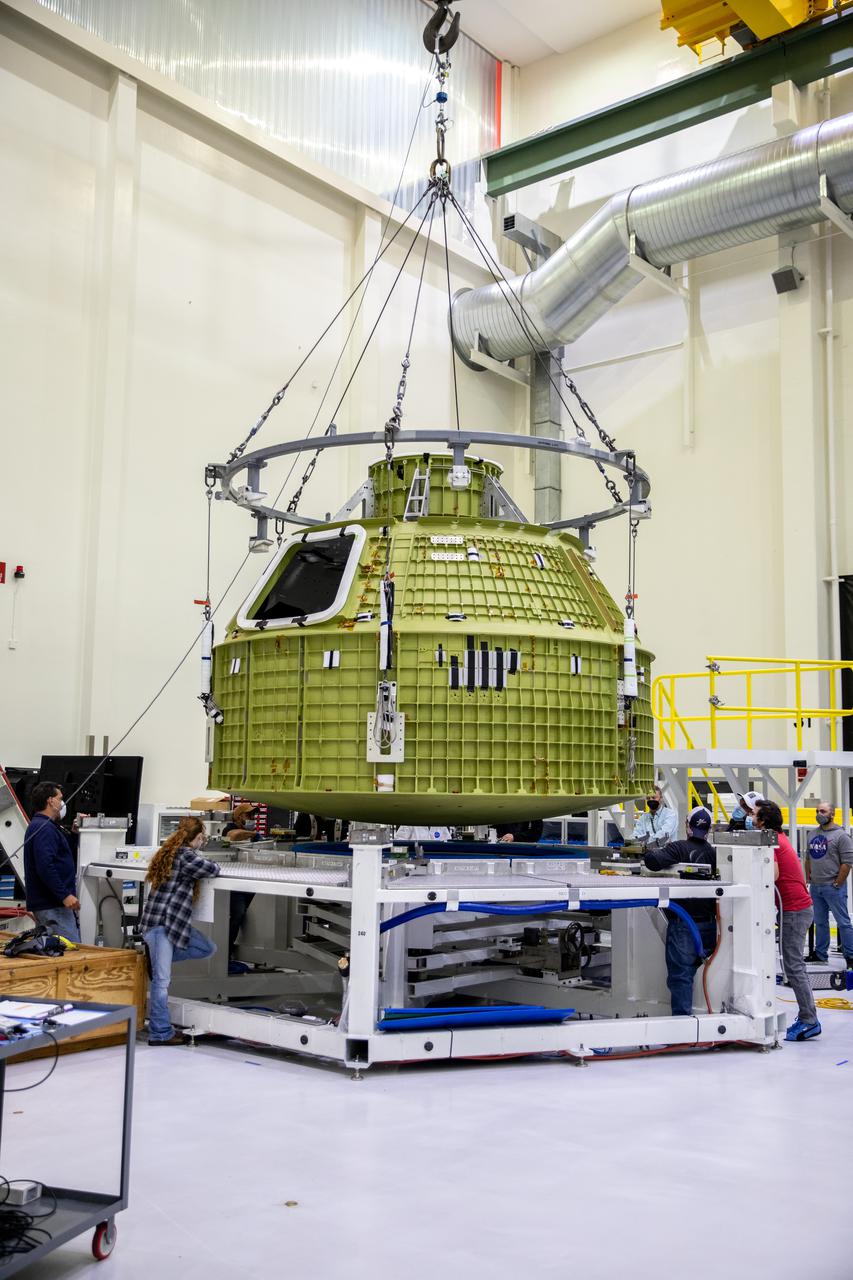
The Orion pressure vessel for NASA’s Artemis III mission is lifted by crane for its move onto a work stand  in the high bay of the Neil A. Armstrong Operations and Checkout Building at NASA’s Kennedy Space Center in Florida on Oct. 20, 2021. The pressure vessel will be secured onto the work stand where Lockheed Matin technicians will begin the work to prepare the spacecraft for its launch atop a Space Launch System rocket. Artemis III will send astronauts, including the first woman and first person of color, on a mission to the surface of the Moon by 2024.
Artemis III Pressure Vessel Arrival, Lift to Work Stand
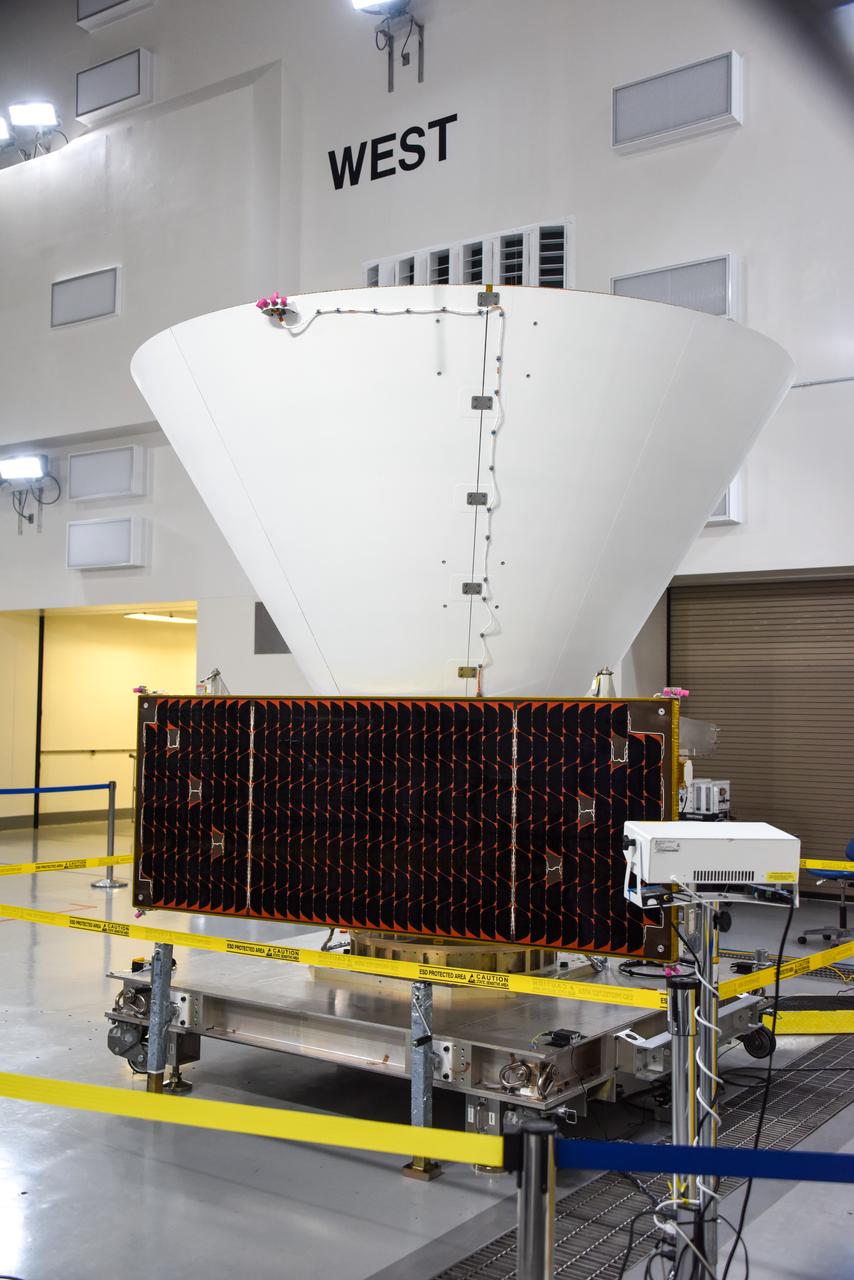
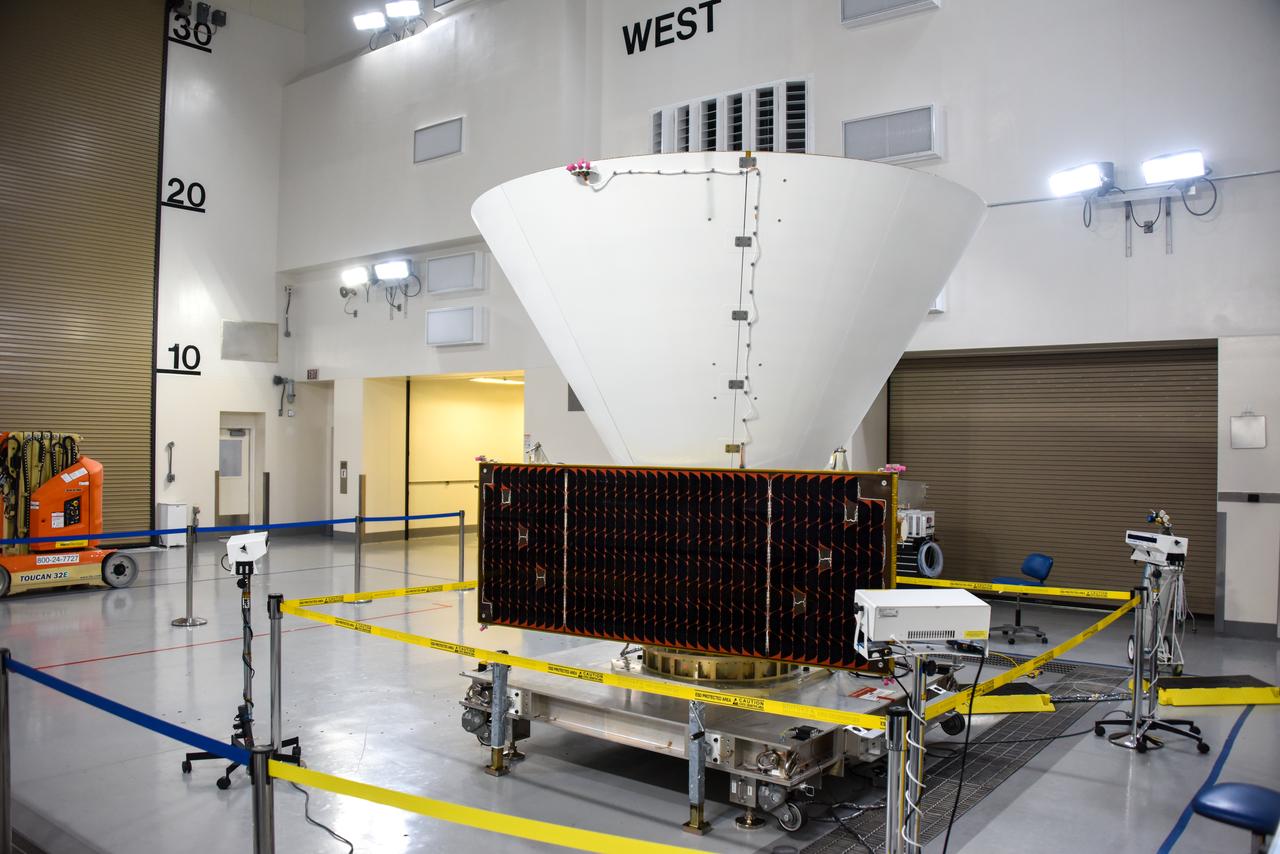
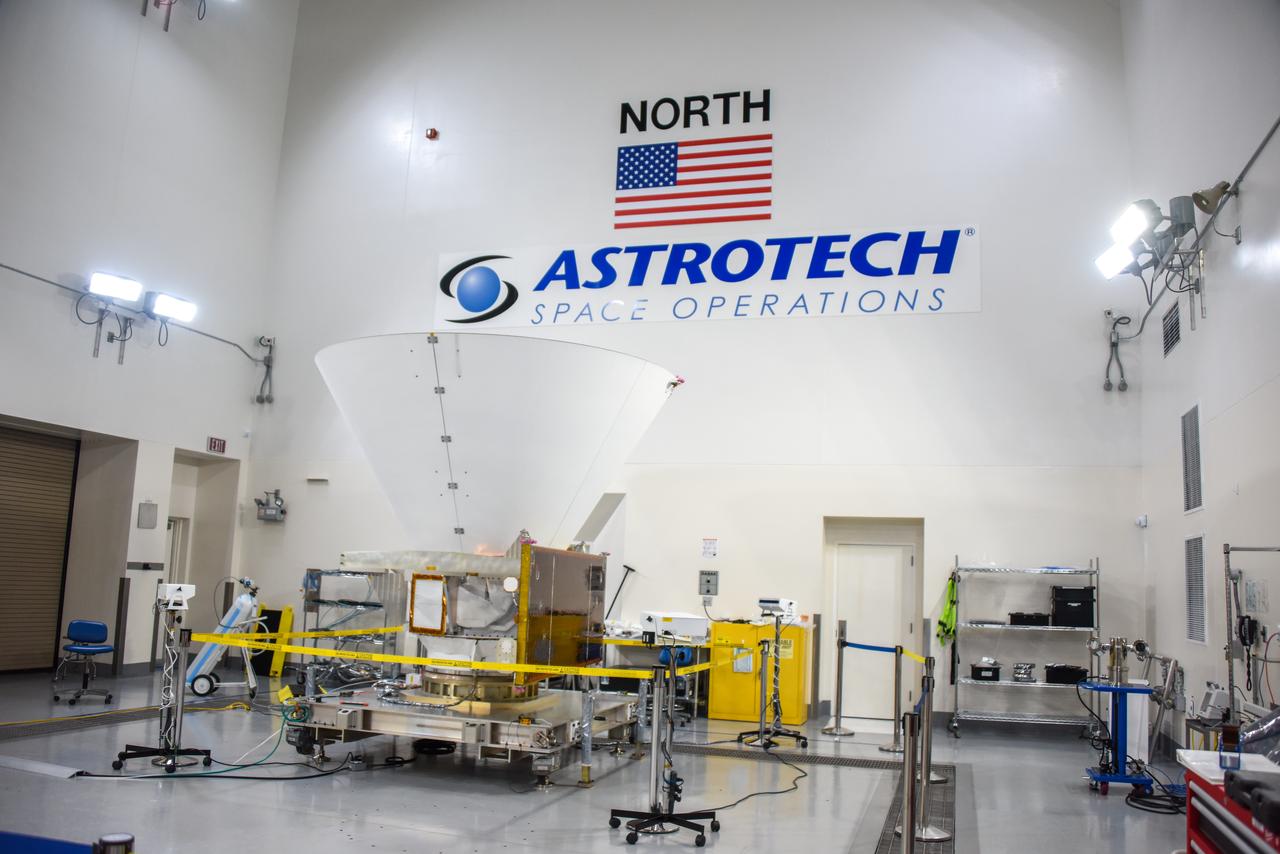
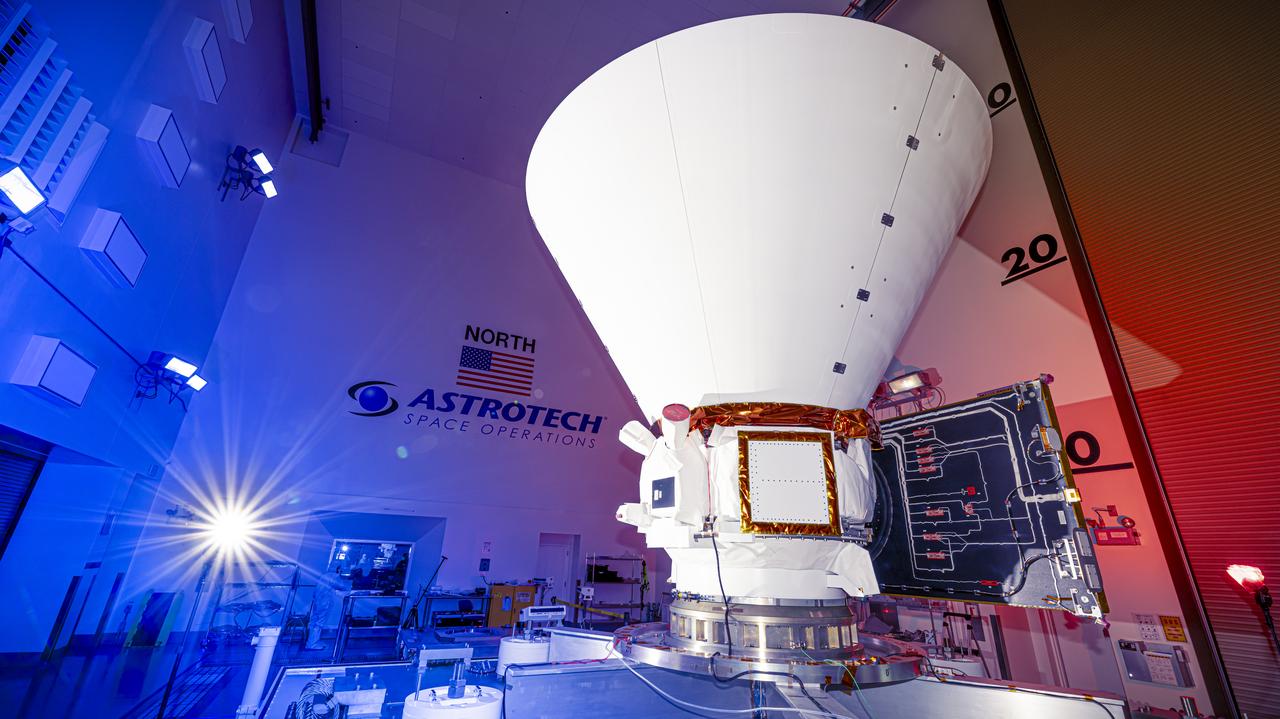
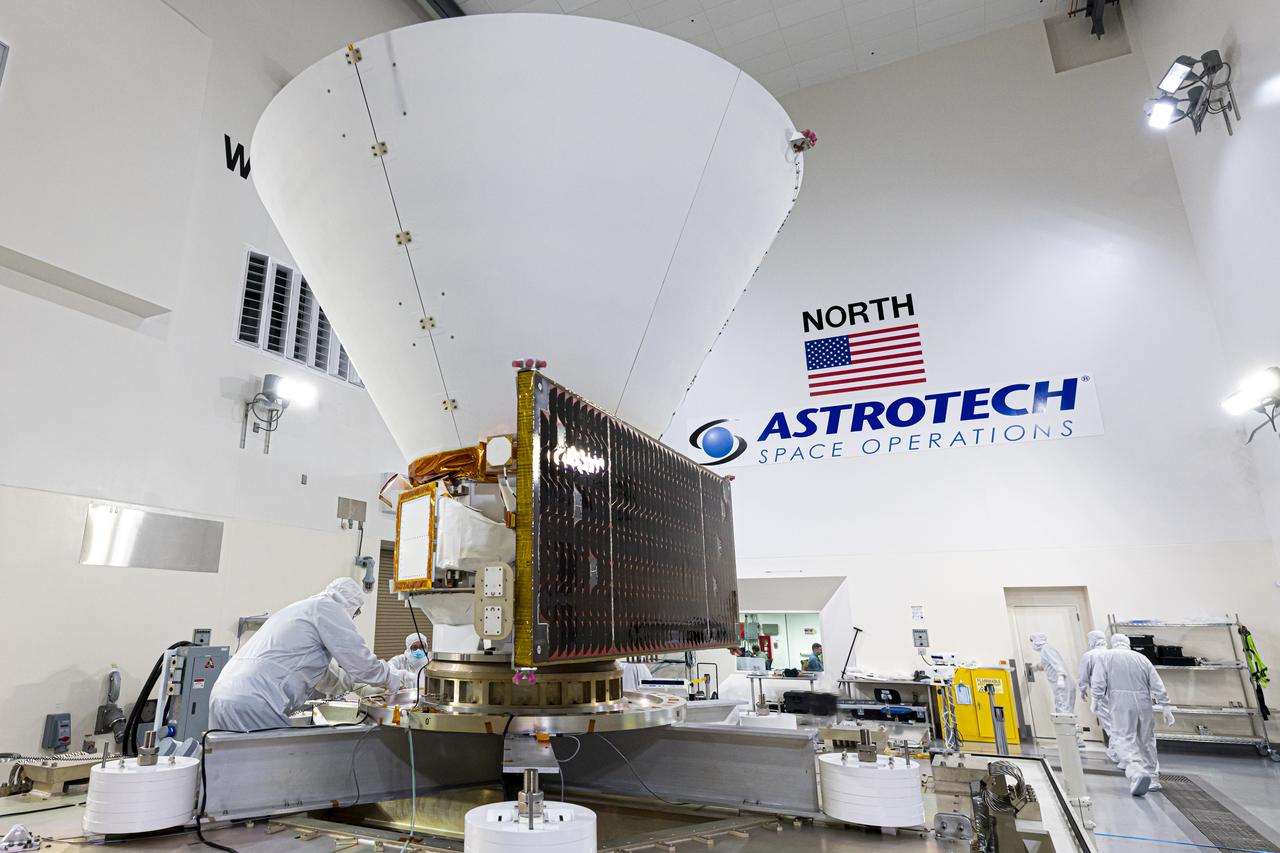
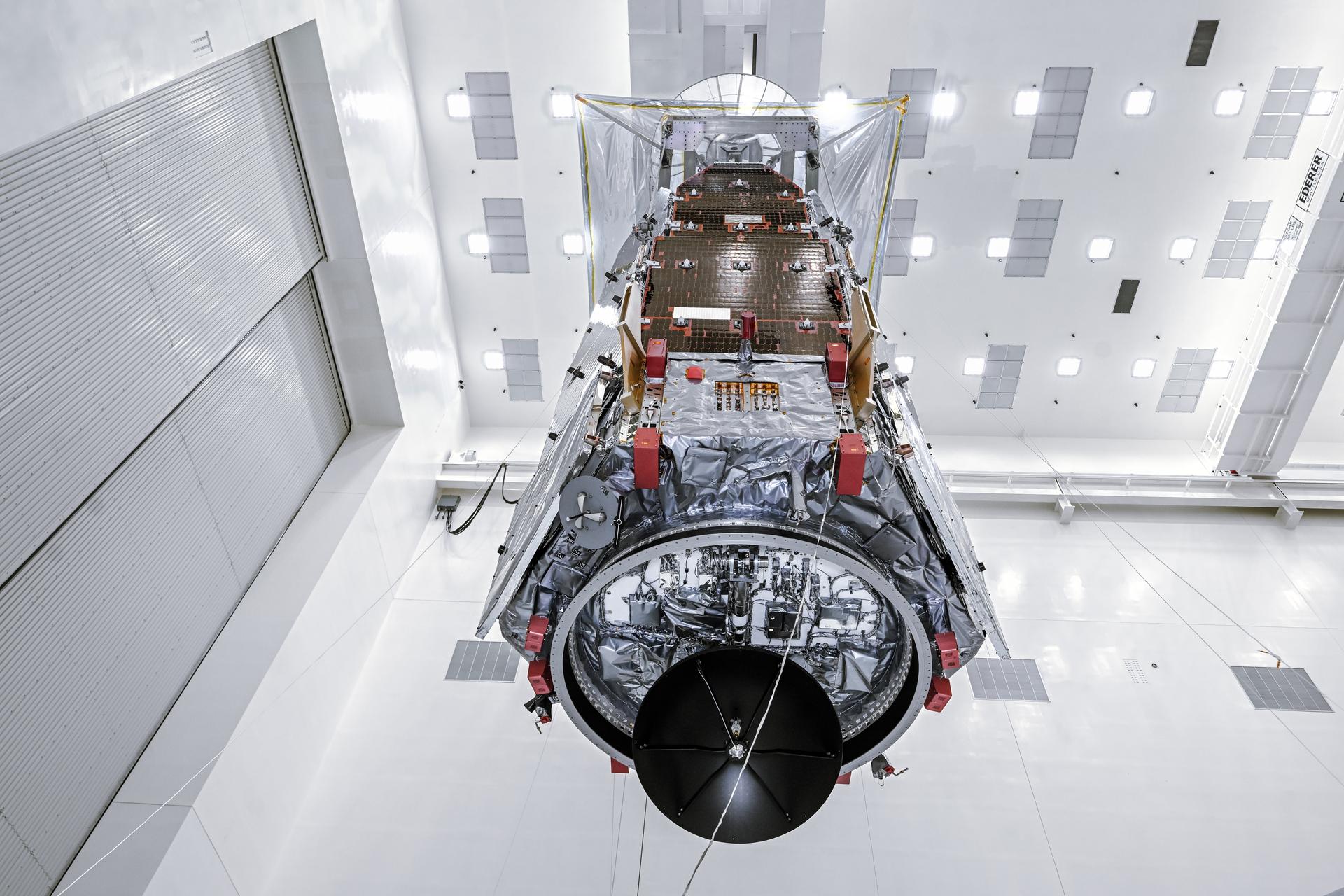
NASA’s SPHEREx (Spectro-Photometer for the History of the Universe, Epoch of Reionization and Ices Explorer), a space telescope, is situated on a work stand ahead of prelaunch operations at the Astrotech Processing Facility at Vandenberg Space Force Base in California on Thursday, Jan. 16, 2025. SPHEREx will enter a polar orbit around Earth and create a 3D map of the entire sky, gathering information about millions of galaxies for scientists to study what happened after the big bang, the history of galaxy evolution, and the origins of water in planetary systems in our galaxy. SPHEREx will launch aboard a SpaceX Falcon 9 rocket in late February 2025.
SPHEREx Spacecraft on Work Stand in Astrotech
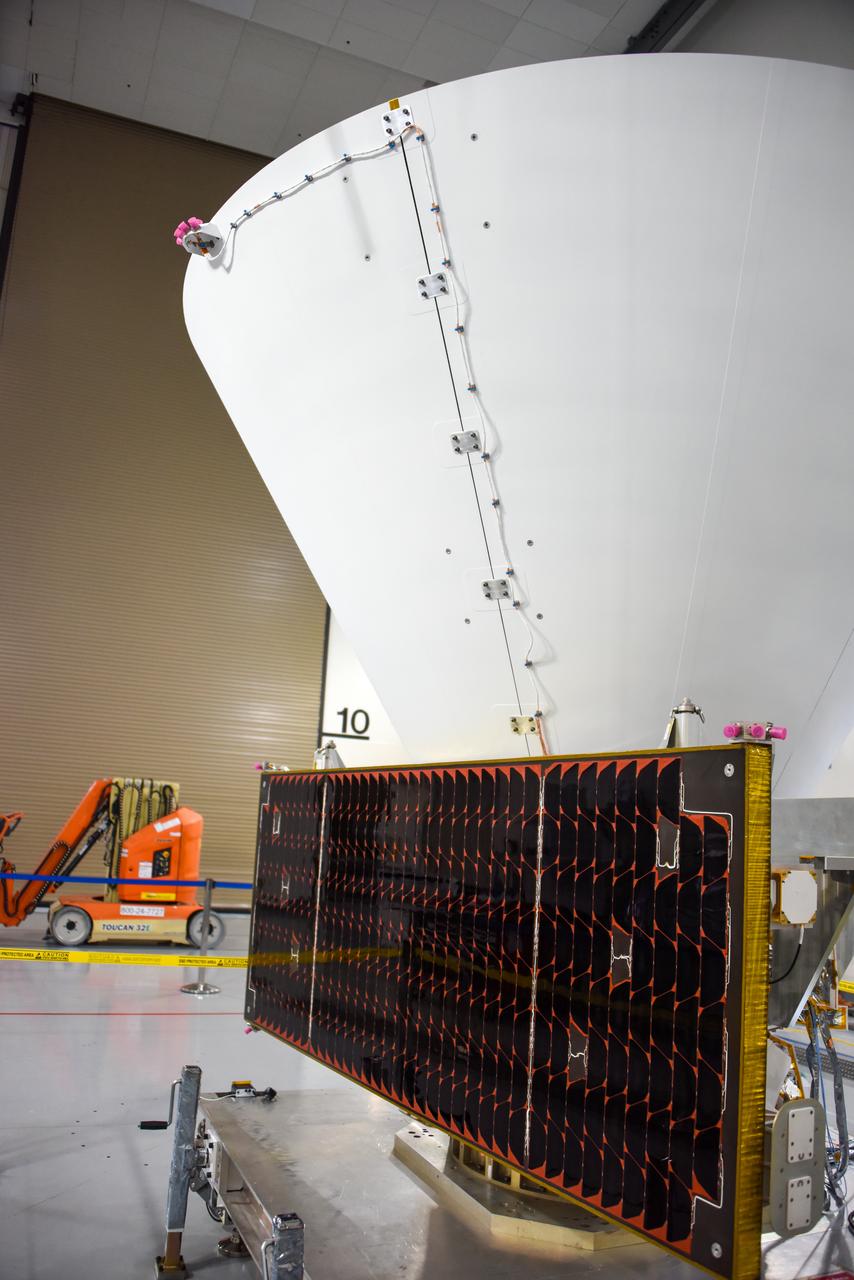
NASA’s SPHEREx (Spectro-Photometer for the History of the Universe, Epoch of Reionization and Ices Explorer), a space telescope, is situated on a work stand ahead of prelaunch operations at the Astrotech Processing Facility at Vandenberg Space Force Base in California on Friday, Jan. 17, 2025. SPHEREx will enter a polar orbit around Earth and create a 3D map of the entire sky, gathering information about millions of galaxies for scientists to study what happened after the big bang, the history of galaxy evolution, and the origins of water in planetary systems in our galaxy. SPHEREx will launch aboard a SpaceX Falcon 9 rocket in late February 2025.
SPHEREx Spacecraft on Work Stand in Astrotech
NASA’s SPHEREx (Spectro-Photometer for the History of the Universe, Epoch of Reionization and Ices Explorer), a space telescope, is situated on a work stand ahead of prelaunch operations at the Astrotech Processing Facility at Vandenberg Space Force Base in California on Friday, Jan. 17, 2025. SPHEREx will enter a polar orbit around Earth and create a 3D map of the entire sky, gathering information about millions of galaxies for scientists to study what happened after the big bang, the history of galaxy evolution, and the origins of water in planetary systems in our galaxy. SPHEREx will launch aboard a SpaceX Falcon 9 rocket in late February 2025.
SPHEREx Spacecraft on Work Stand in Astrotech
NASA’s SPHEREx (Spectro-Photometer for the History of the Universe, Epoch of Reionization and Ices Explorer), a space telescope, is situated on a work stand ahead of prelaunch operations at the Astrotech Processing Facility at Vandenberg Space Force Base in California on Thursday, Jan. 16, 2025. SPHEREx will enter a polar orbit around Earth and create a 3D map of the entire sky, gathering information about millions of galaxies for scientists to study what happened after the big bang, the history of galaxy evolution, and the origins of water in planetary systems in our galaxy. SPHEREx will launch aboard a SpaceX Falcon 9 rocket in late February 2025.
SPHEREx Spacecraft on Work Stand in Astrotech
NASA’s SPHEREx (Spectro-Photometer for the History of the Universe, Epoch of Reionization and Ices Explorer), a space telescope, is situated on a work stand ahead of prelaunch operations at the Astrotech Processing Facility at Vandenberg Space Force Base in California on Friday, Jan. 17, 2025. SPHEREx will enter a polar orbit around Earth and create a 3D map of the entire sky, gathering information about millions of galaxies for scientists to study what happened after the big bang, the history of galaxy evolution, and the origins of water in planetary systems in our galaxy. SPHEREx will launch aboard a SpaceX Falcon 9 rocket in late February 2025.
SPHEREx Spacecraft on Work Stand in Astrotech
NASA’s SPHEREx (Spectro-Photometer for the History of the Universe, Epoch of Reionization and Ices Explorer), a space telescope, is situated on a work stand ahead of prelaunch operations at the Astrotech Processing Facility at Vandenberg Space Force Base in California on Friday, Jan. 17, 2025. SPHEREx will enter a polar orbit around Earth and create a 3D map of the entire sky, gathering information about millions of galaxies for scientists to study what happened after the big bang, the history of galaxy evolution, and the origins of water in planetary systems in our galaxy. SPHEREx will launch aboard a SpaceX Falcon 9 rocket in late February 2025.
SPHEREx Spacecraft on Work Stand in Astrotech
NASA’s SPHEREx (Spectro-Photometer for the History of the Universe, Epoch of Reionization and Ices Explorer), a space telescope, is situated on a work stand ahead of prelaunch operations at the Astrotech Processing Facility at Vandenberg Space Force Base in California on Friday, Jan. 17, 2025. SPHEREx will enter a polar orbit around Earth and create a 3D map of the entire sky, gathering information about millions of galaxies for scientists to study what happened after the big bang, the history of galaxy evolution, and the origins of water in planetary systems in our galaxy. SPHEREx will launch aboard a SpaceX Falcon 9 rocket in late February 2025.
SPHEREx Spacecraft on Work Stand in Astrotech
NASA’s SPHEREx (Spectro-Photometer for the History of the Universe, Epoch of Reionization and Ices Explorer), a space telescope, is situated on a work stand ahead of prelaunch operations at the Astrotech Processing Facility at Vandenberg Space Force Base in California on Friday, Jan. 17, 2025. SPHEREx will enter a polar orbit around Earth and create a 3D map of the entire sky, gathering information about millions of galaxies for scientists to study what happened after the big bang, the history of galaxy evolution, and the origins of water in planetary systems in our galaxy. SPHEREx will launch aboard a SpaceX Falcon 9 rocket in late February 2025.
SPHEREx Spacecraft on Work Stand in Astrotech
NASA’s SPHEREx (Spectro-Photometer for the History of the Universe, Epoch of Reionization and Ices Explorer), a space telescope, is situated on a work stand ahead of prelaunch operations at the Astrotech Processing Facility at Vandenberg Space Force Base in California on Friday, Jan. 17, 2025. SPHEREx will enter a polar orbit around Earth and create a 3D map of the entire sky, gathering information about millions of galaxies for scientists to study what happened after the big bang, the history of galaxy evolution, and the origins of water in planetary systems in our galaxy. SPHEREx will launch aboard a SpaceX Falcon 9 rocket in late February 2025.
SPHEREx Spacecraft on Work Stand in Astrotech
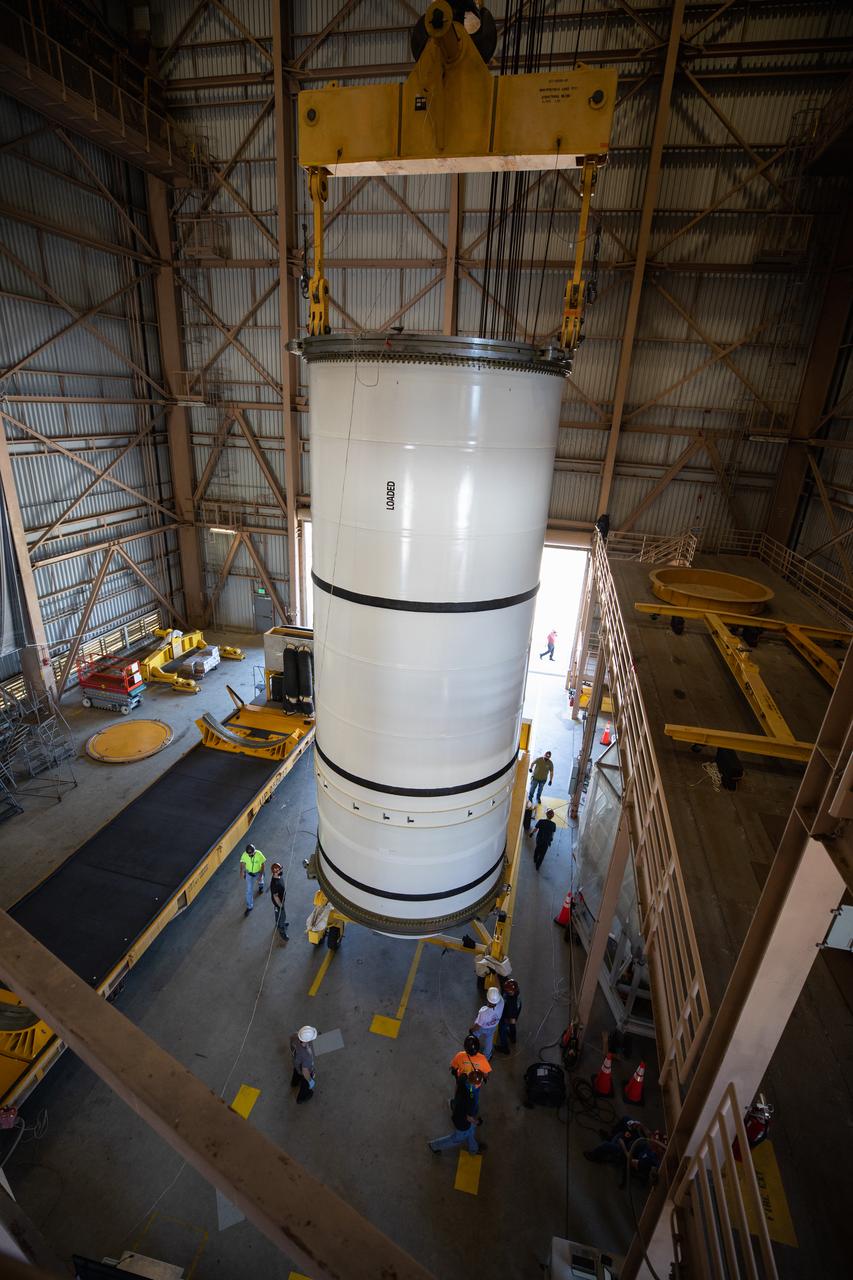
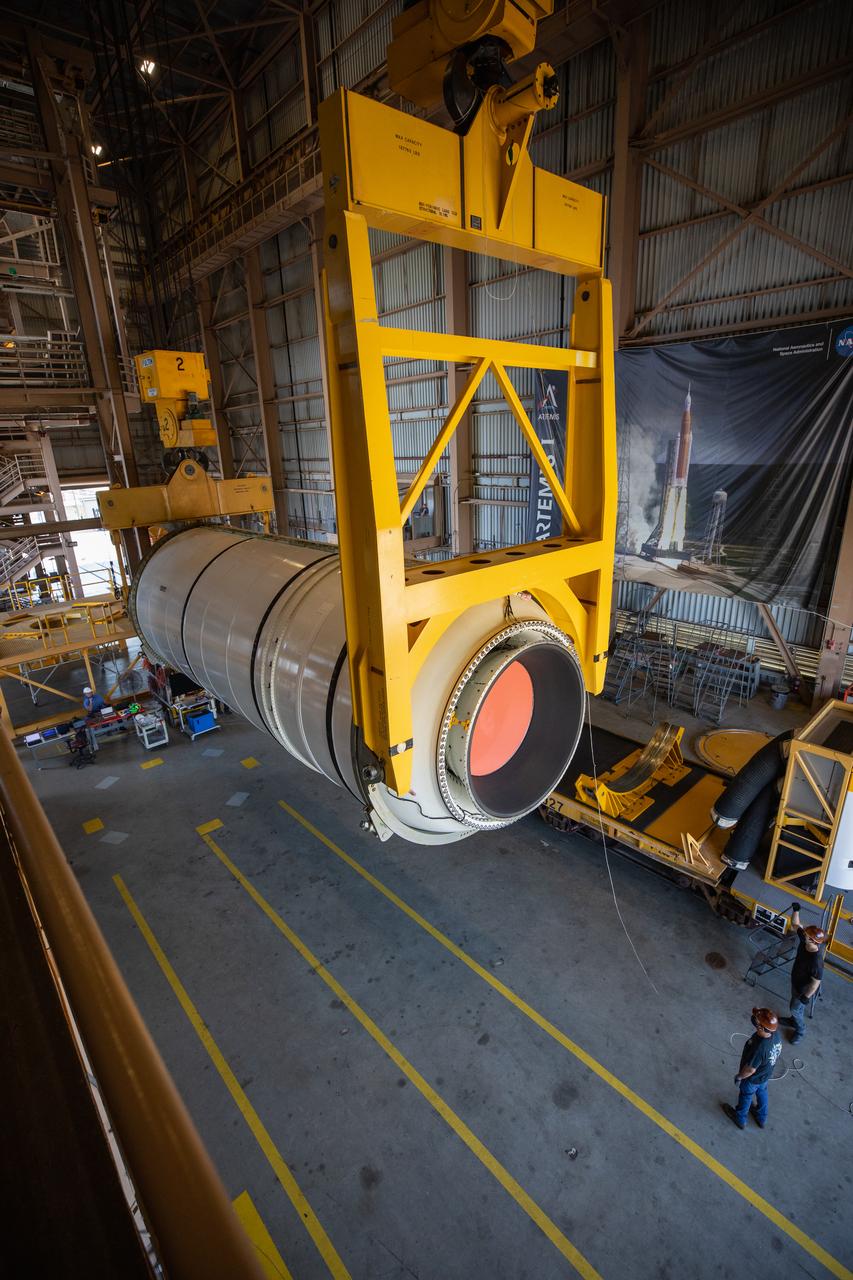
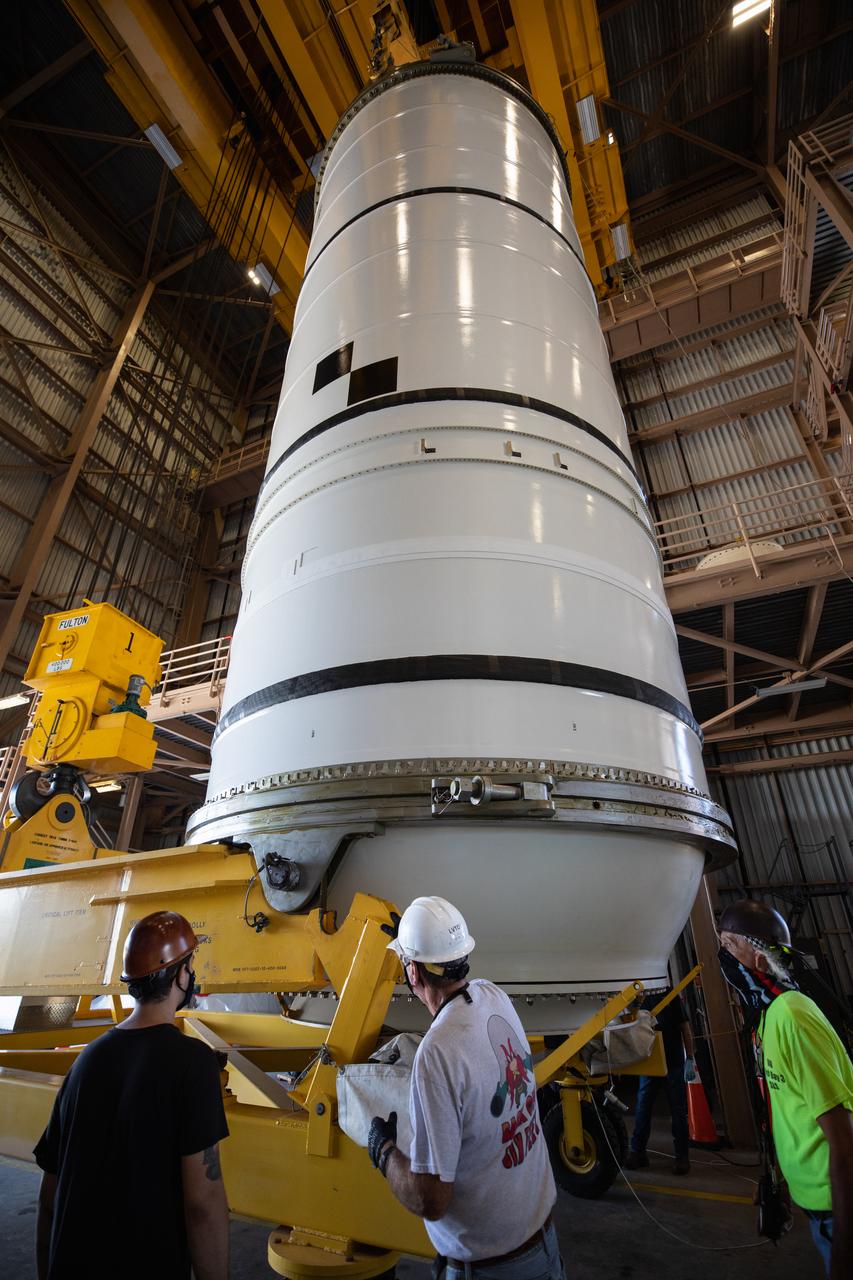
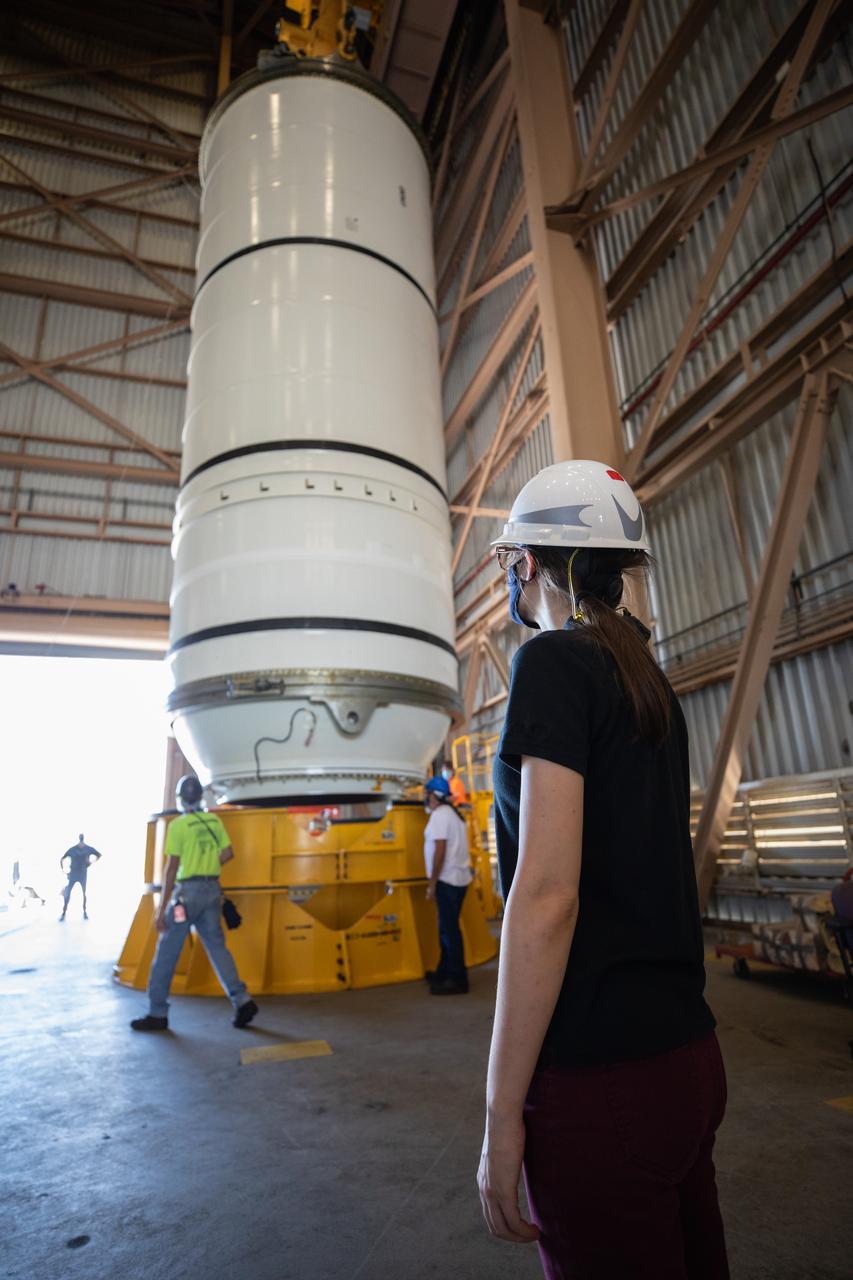
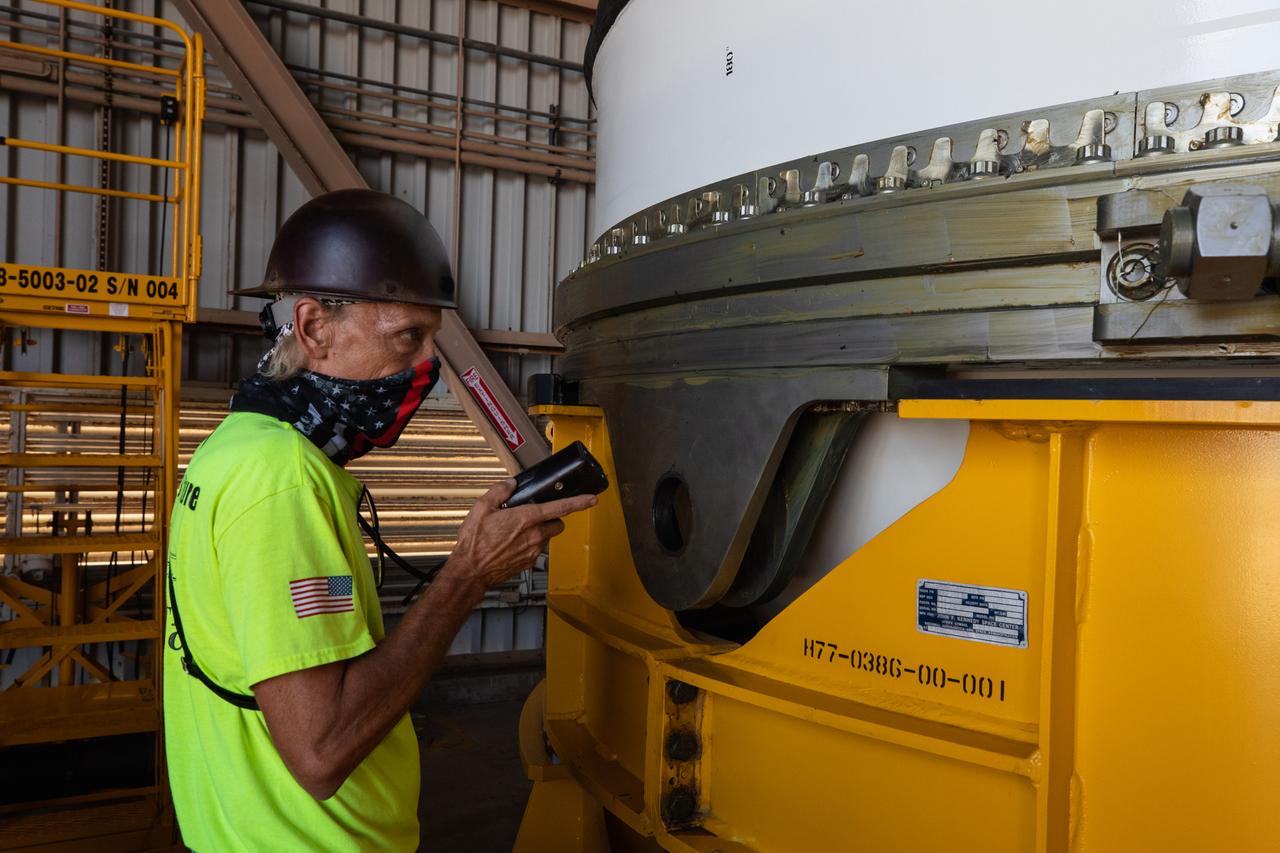
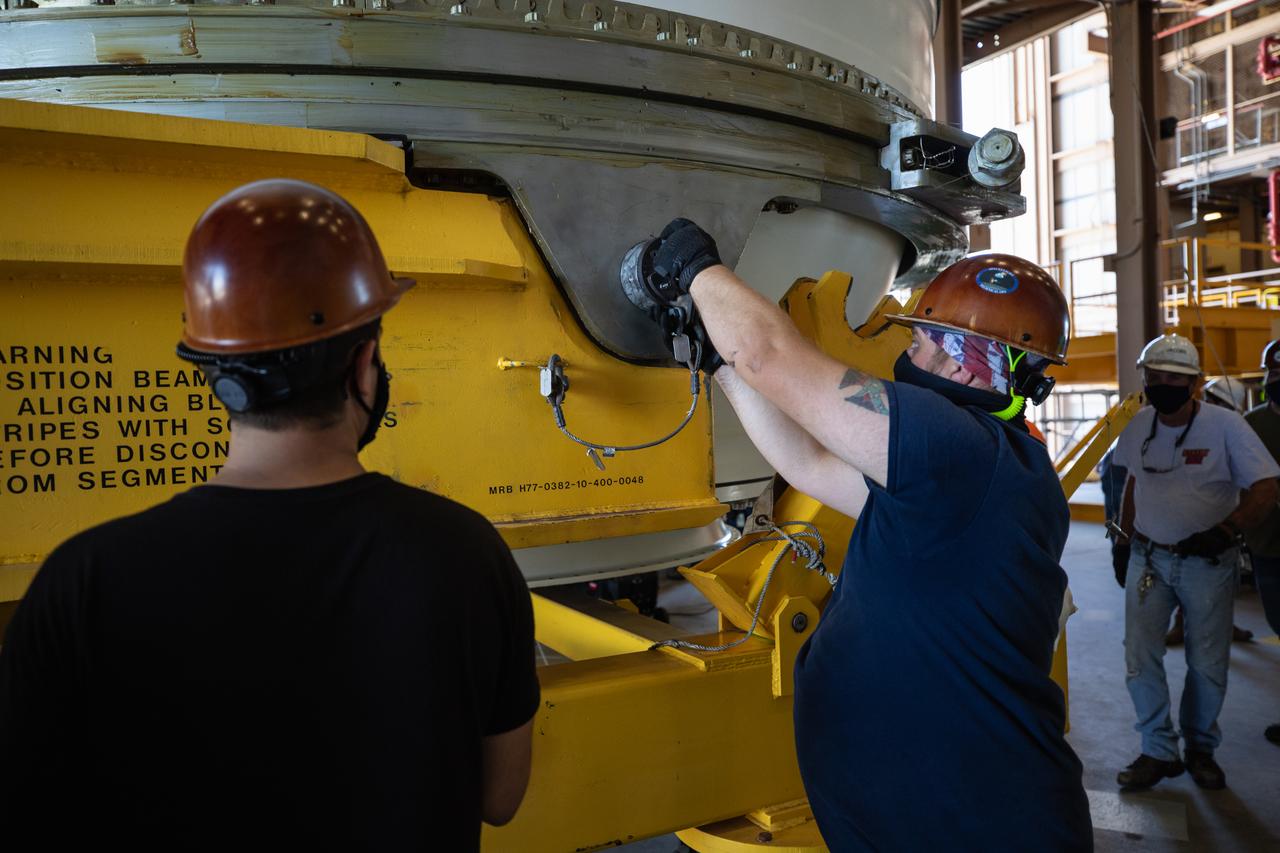
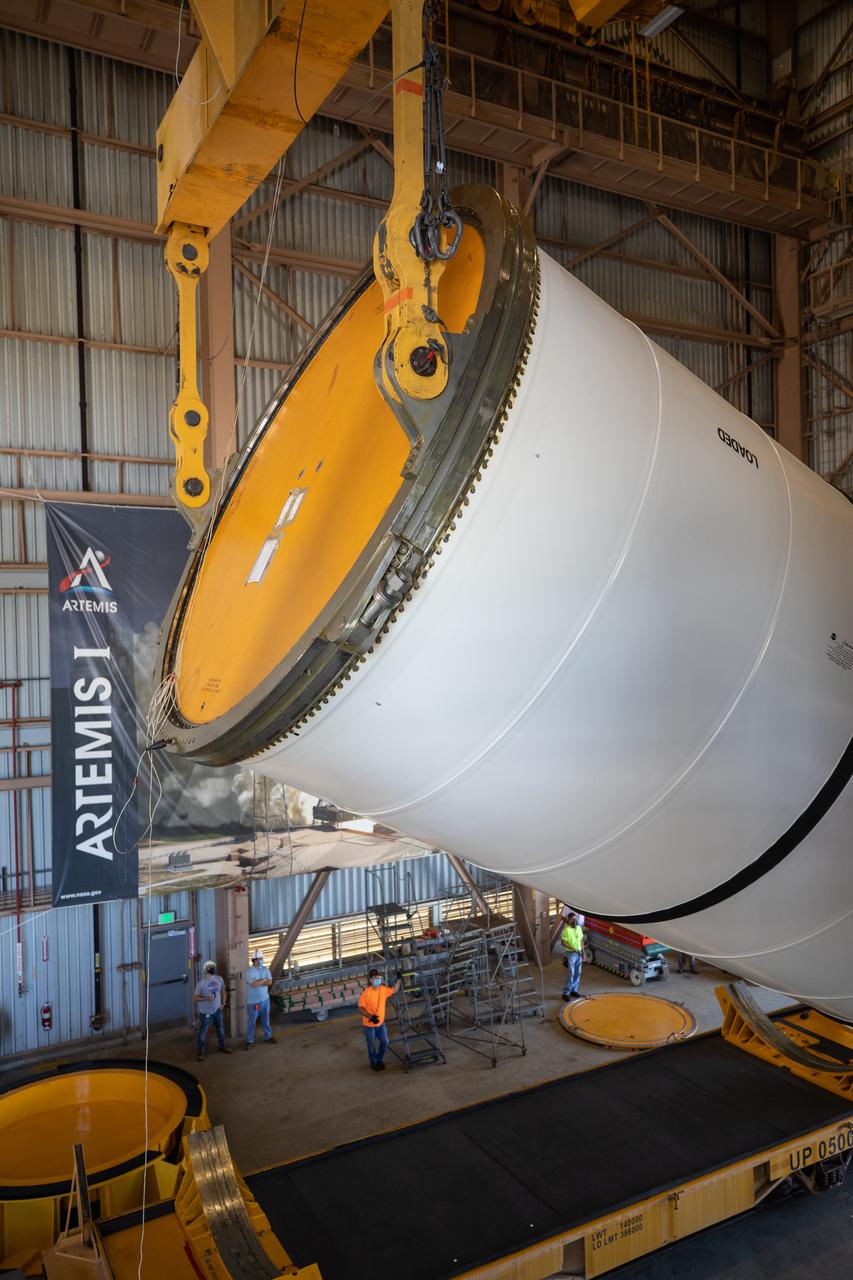
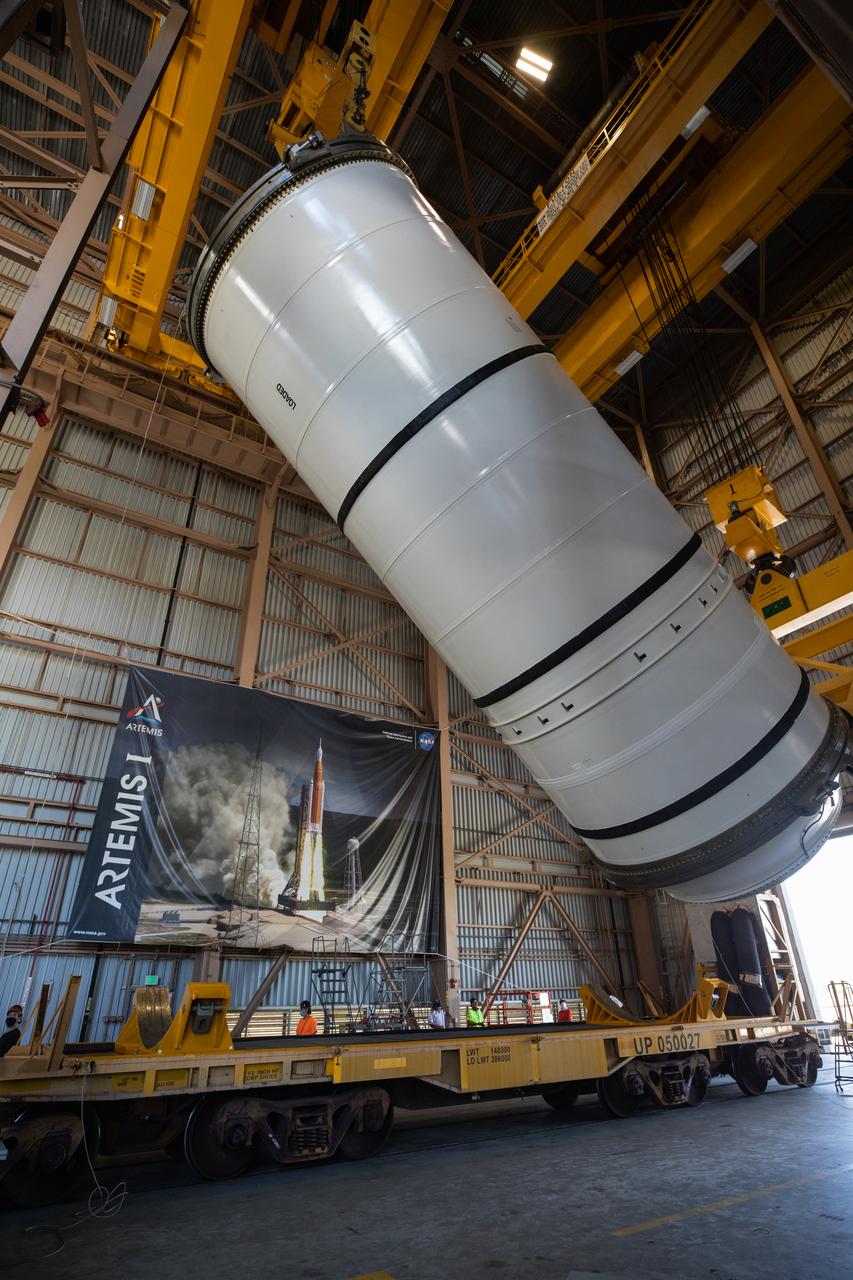
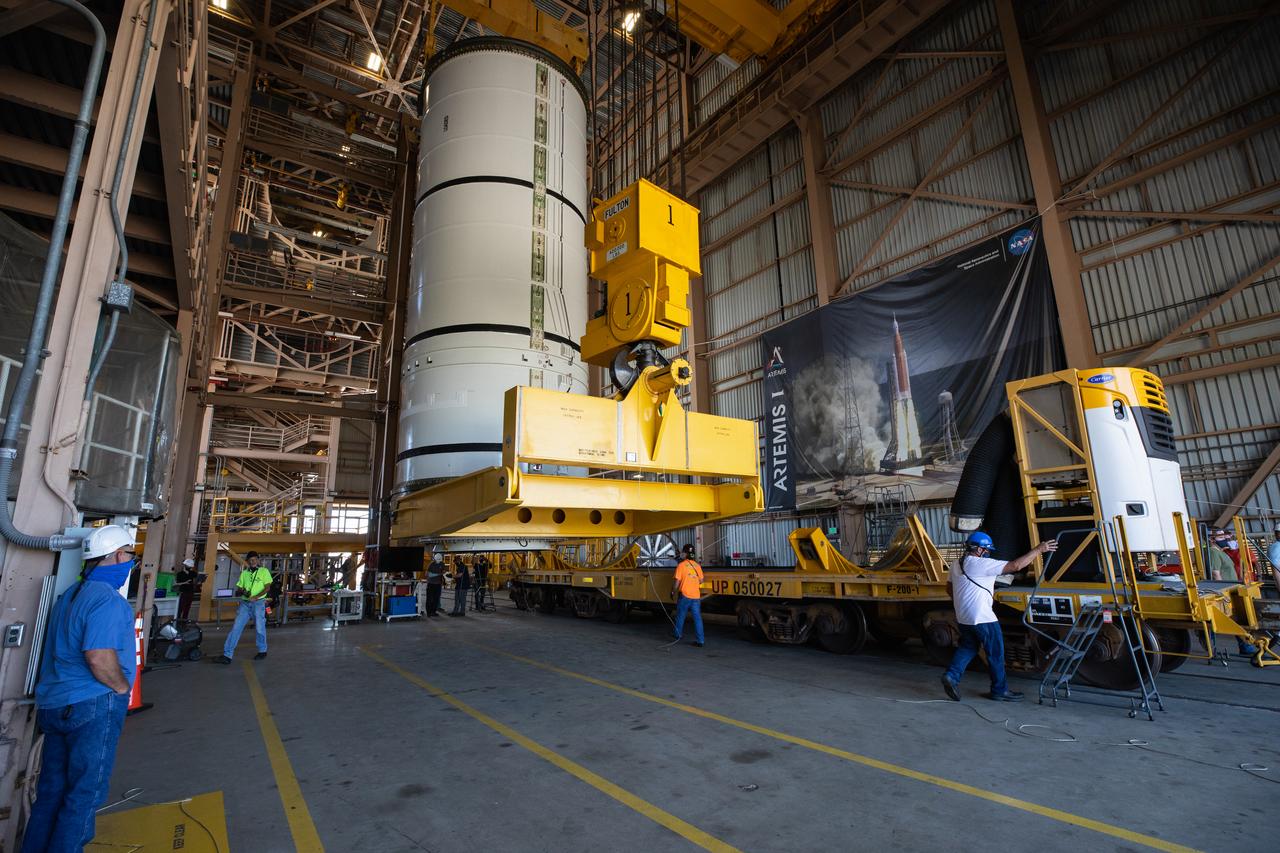
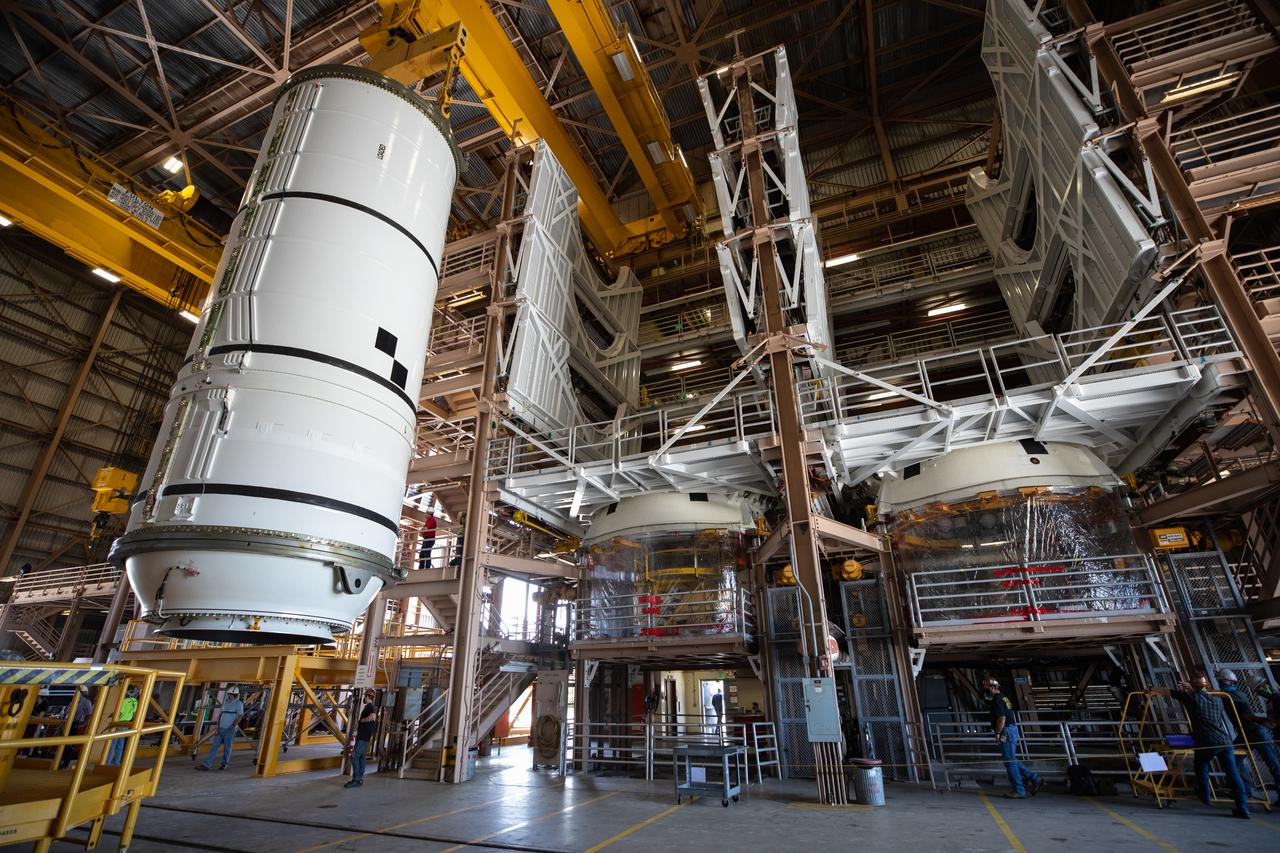
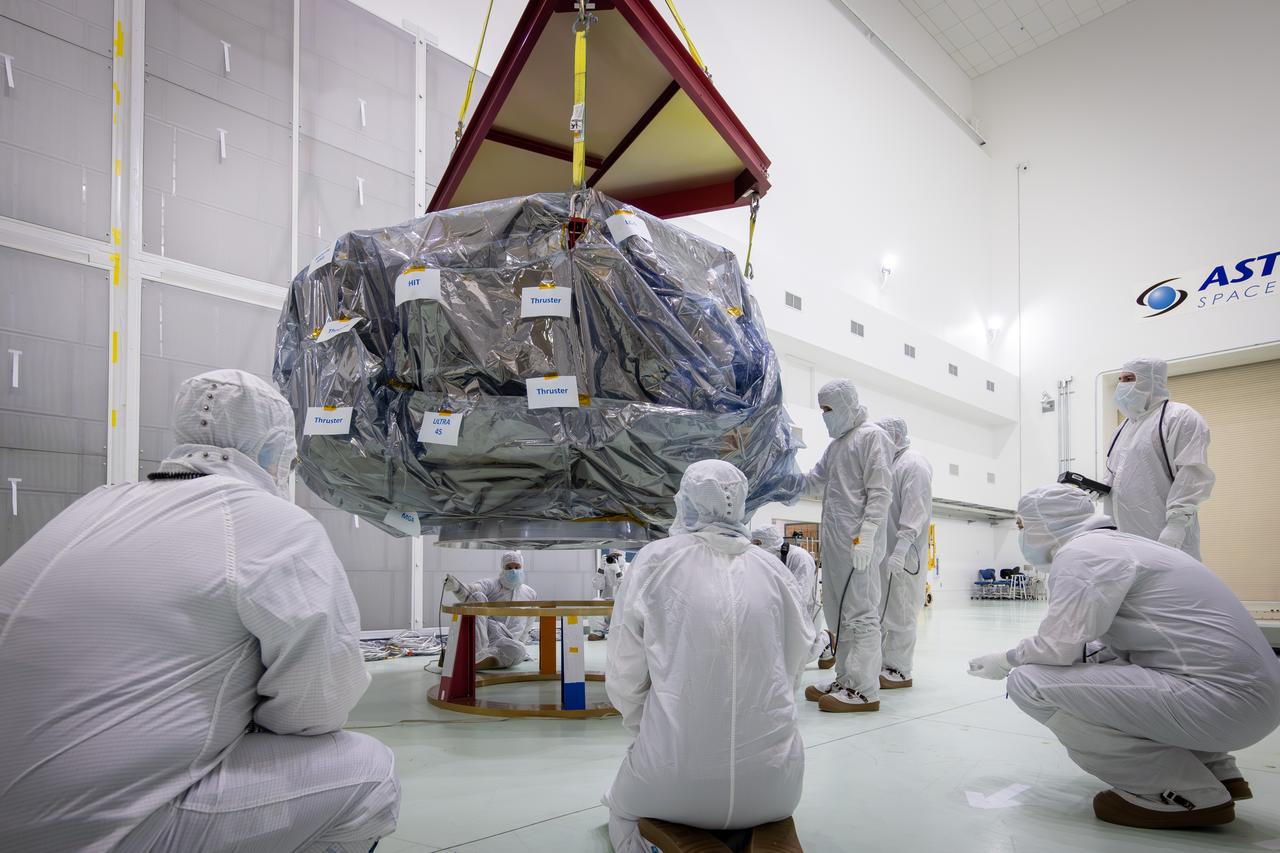
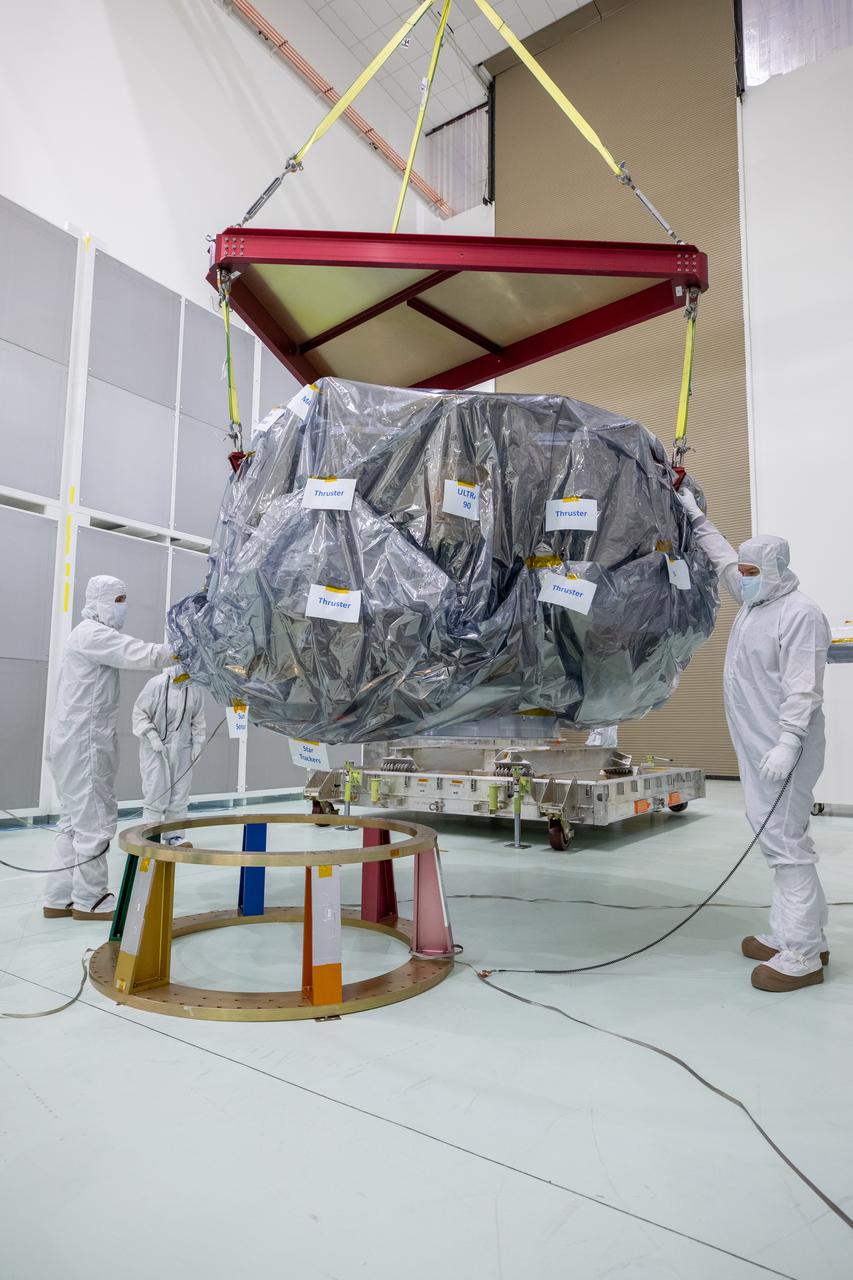
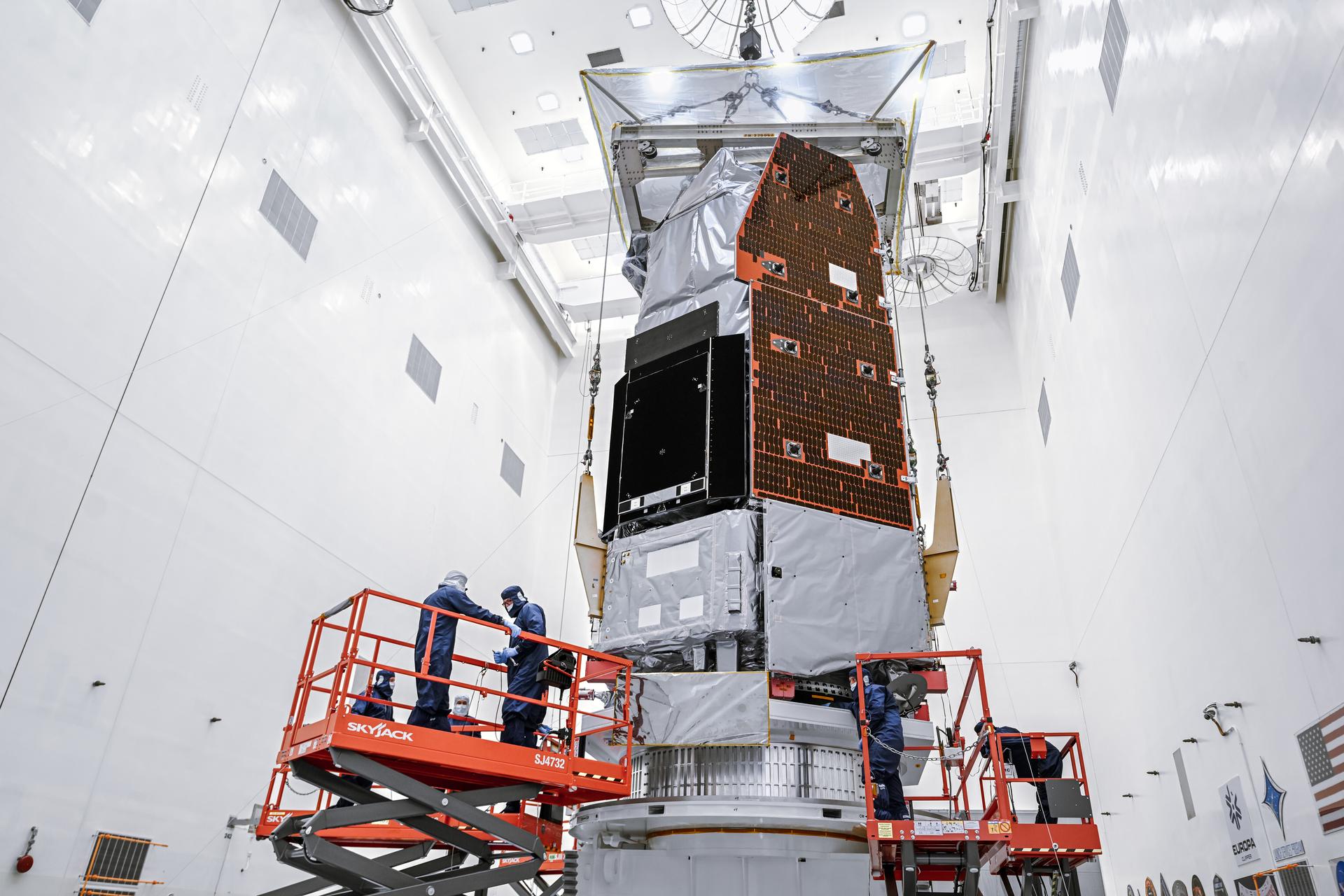
Inside the Rotation, Processing and Surge Facility (RPSF) at NASA’s Kennedy Space Center in Florida, technicians lift the right aft motor segment – one of five segments that make up one of two solid rocket boosters for the agency’s Space Launch System (SLS) – onto an inspection stand on June 23, 2020. While in the RPSF, the boosters will be mated to the rocket’s two aft skirts before they are moved to the Vehicle Assembly Building for stacking on the mobile launcher. The boosters, manufactured by Northrop Grumman in Utah, recently arrived at Kennedy for processing ahead of the Artemis I launch. Together, the twin boosters provide more than 75 percent of the total SLS thrust at launch. The first in a series of increasingly complex missions, Artemis I will test the Orion spacecraft and SLS as an integrated system ahead of crewed flights to the Moon.
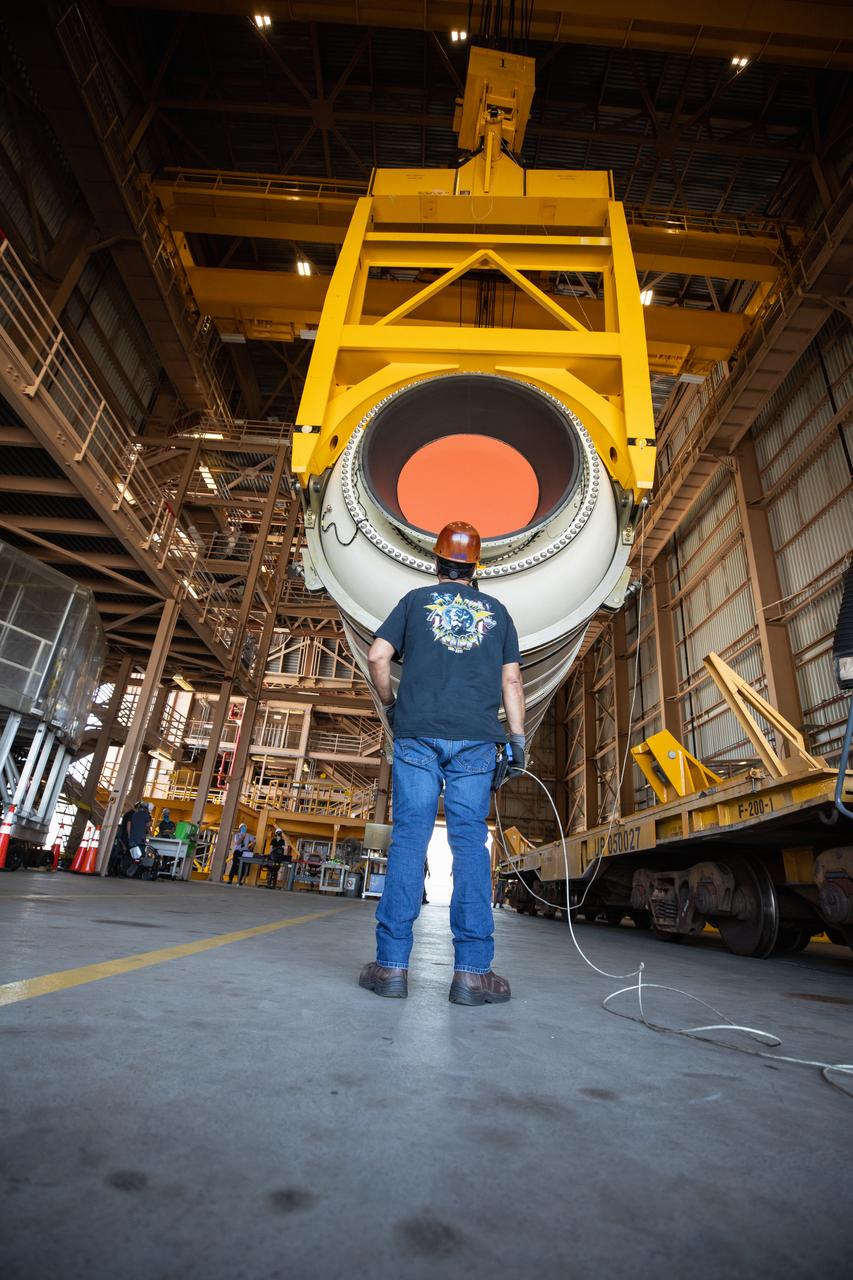
Artemis I Booster Segments Lift to Work Stand and Silhouettes
Inside the Rotation, Processing and Surge Facility (RPSF) at NASA’s Kennedy Space Center in Florida, technicians lift the right aft motor segment – one of five segments that make up one of two solid rocket boosters for the agency’s Space Launch System (SLS) – onto an inspection stand on June 23, 2020. While in the RPSF, the boosters will be mated to the rocket’s two aft skirts before they are moved to the Vehicle Assembly Building for stacking on the mobile launcher. The boosters, manufactured by Northrop Grumman in Utah, recently arrived at Kennedy for processing ahead of the Artemis I launch. Together, the twin boosters provide more than 75 percent of the total SLS thrust at launch. The first in a series of increasingly complex missions, Artemis I will test the Orion spacecraft and SLS as an integrated system ahead of crewed flights to the Moon.
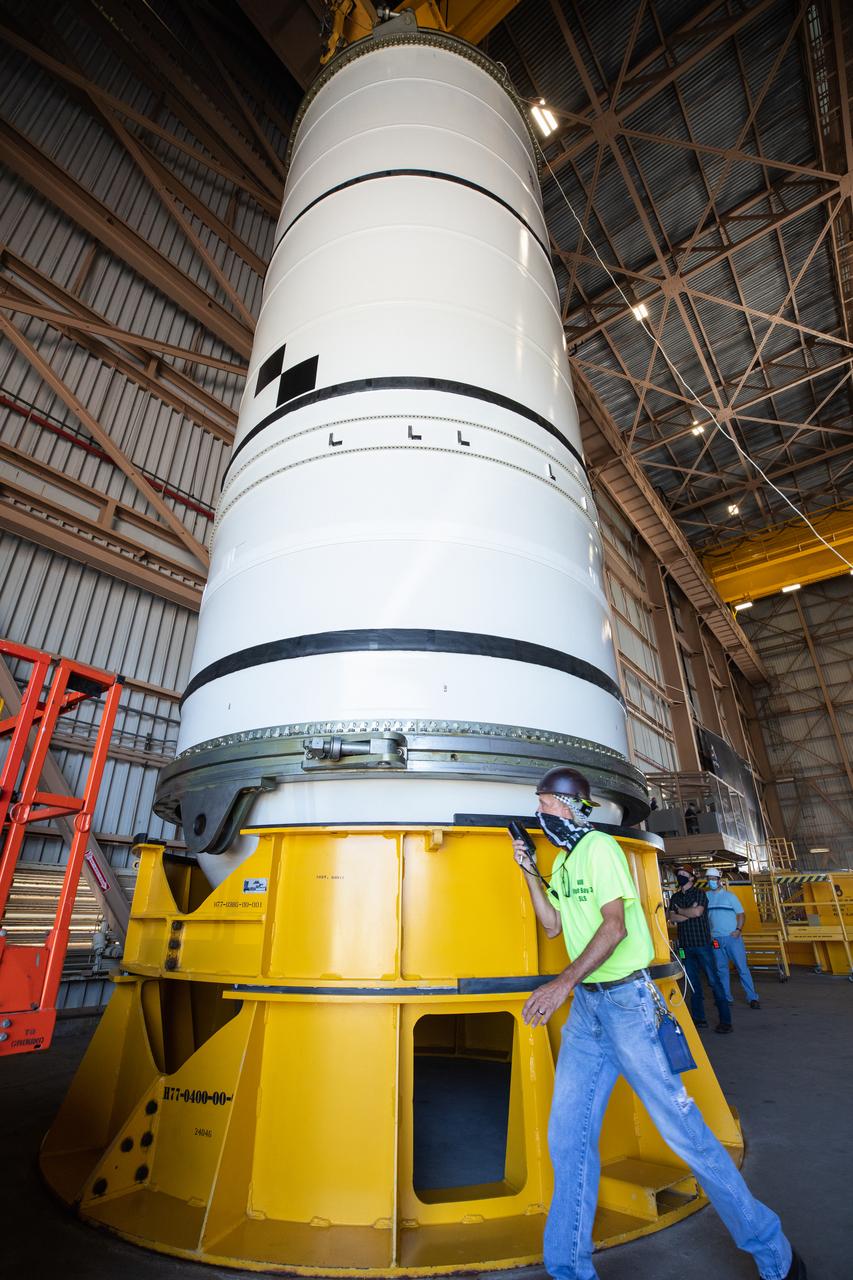
Artemis I Booster Segments Lift to Work Stand and Silhouettes
Inside the Rotation, Processing and Surge Facility (RPSF) at NASA’s Kennedy Space Center in Florida, technicians lift the right aft motor segment – one of five segments that make up one of two solid rocket boosters for the agency’s Space Launch System (SLS) – onto an inspection stand on June 23, 2020. While in the RPSF, the boosters will be mated to the rocket’s two aft skirts before they are moved to the Vehicle Assembly Building for stacking on the mobile launcher. The boosters, manufactured by Northrop Grumman in Utah, recently arrived at Kennedy for processing ahead of the Artemis I launch. Together, the twin boosters provide more than 75 percent of the total SLS thrust at launch. The first in a series of increasingly complex missions, Artemis I will test the Orion spacecraft and SLS as an integrated system ahead of crewed flights to the Moon.
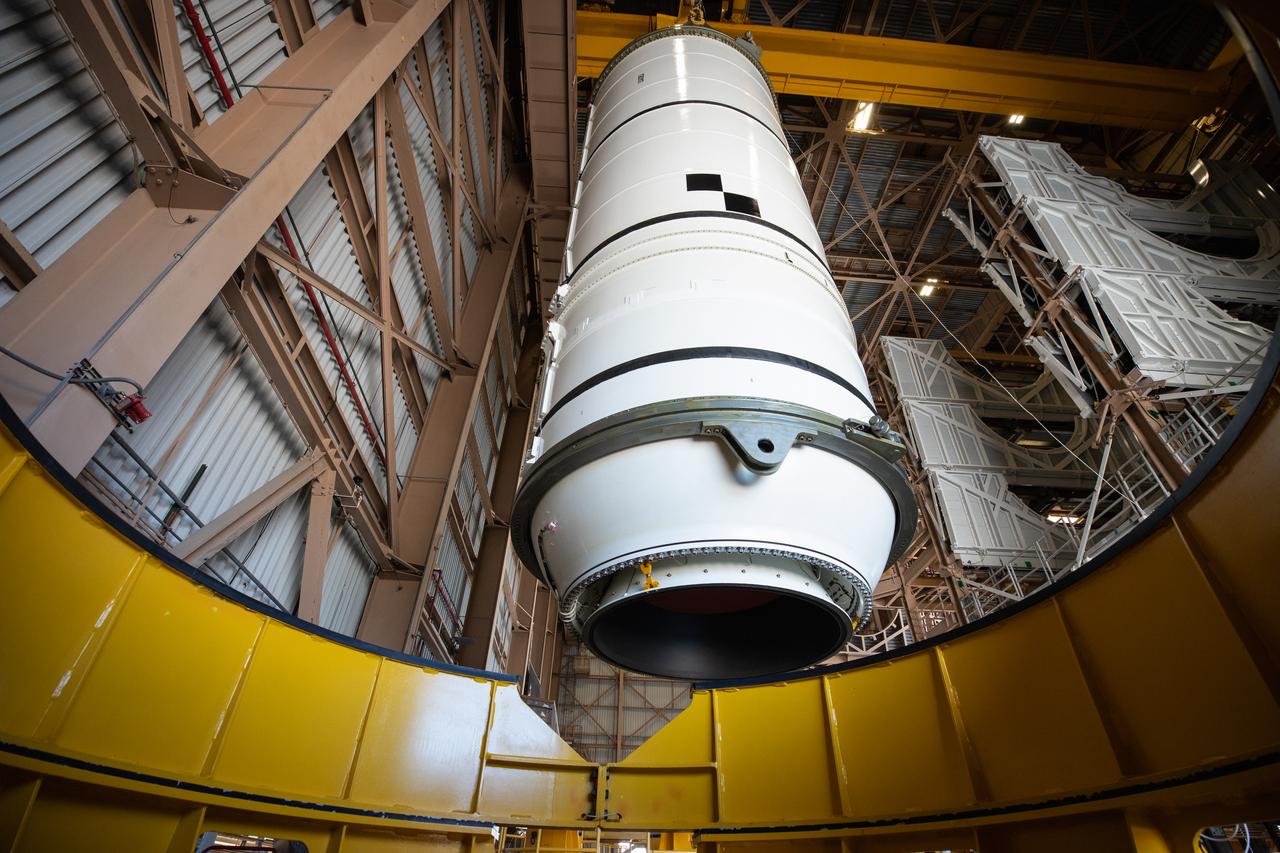
Artemis I Booster Segments Lift to Work Stand and Silhouettes
Inside the Rotation, Processing and Surge Facility (RPSF) at NASA’s Kennedy Space Center in Florida, technicians lift the right aft motor segment – one of five segments that make up one of two solid rocket boosters for the agency’s Space Launch System (SLS) – onto an inspection stand on June 23, 2020. While in the RPSF, the boosters will be mated to the rocket’s two aft skirts before they are moved to the Vehicle Assembly Building for stacking on the mobile launcher. The boosters, manufactured by Northrop Grumman in Utah, recently arrived at Kennedy for processing ahead of the Artemis I launch. Together, the twin boosters provide more than 75 percent of the total SLS thrust at launch. The first in a series of increasingly complex missions, Artemis I will test the Orion spacecraft and SLS as an integrated system ahead of crewed flights to the Moon.
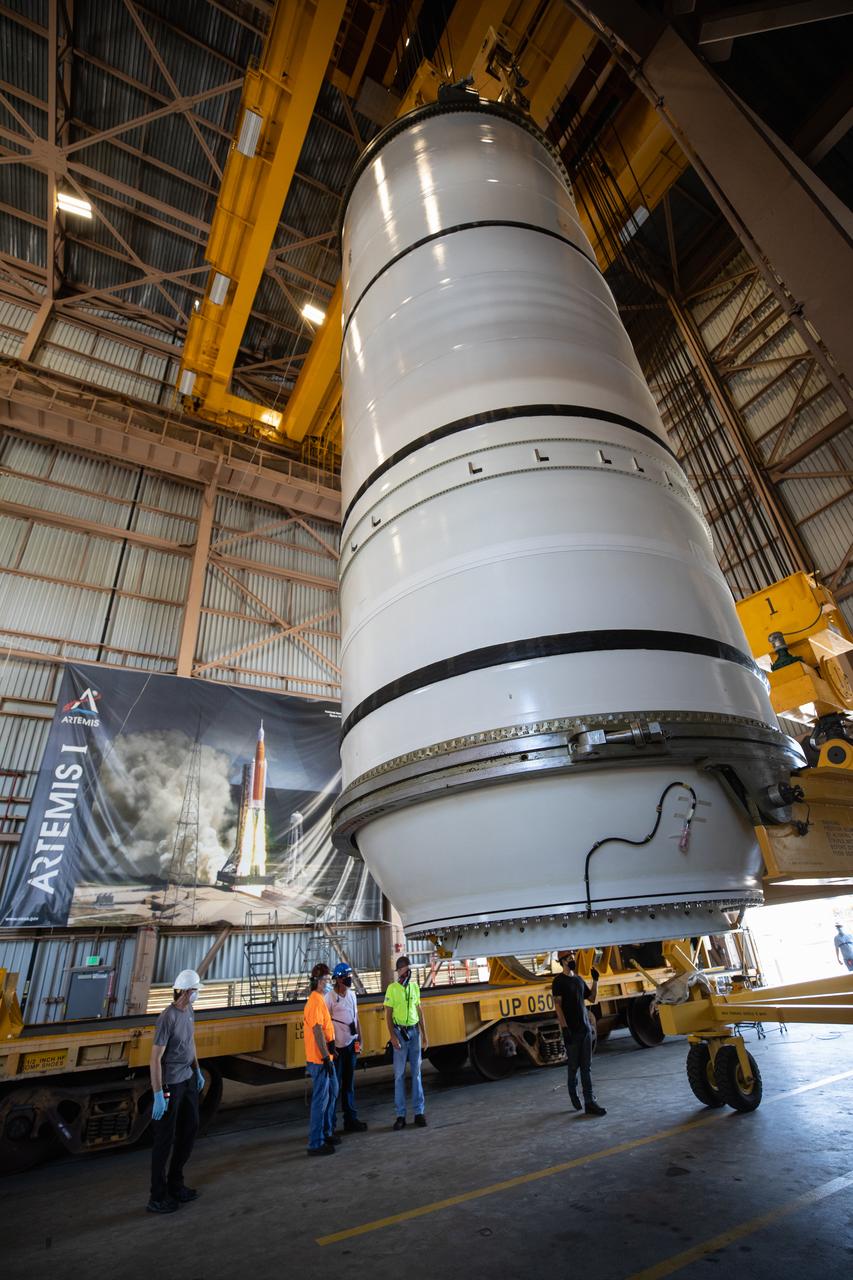
Artemis I Booster Segments Lift to Work Stand and Silhouettes
Inside the Rotation, Processing and Surge Facility (RPSF) at NASA’s Kennedy Space Center in Florida, technicians lift the right aft motor segment – one of five segments that make up one of two solid rocket boosters for the agency’s Space Launch System (SLS) – onto an inspection stand on June 23, 2020. While in the RPSF, the boosters will be mated to the rocket’s two aft skirts before they are moved to the Vehicle Assembly Building for stacking on the mobile launcher. The boosters, manufactured by Northrop Grumman in Utah, recently arrived at Kennedy for processing ahead of the Artemis I launch. Together, the twin boosters provide more than 75 percent of the total SLS thrust at launch. The first in a series of increasingly complex missions, Artemis I will test the Orion spacecraft and SLS as an integrated system ahead of crewed flights to the Moon.
Artemis I Booster Segments Lift to Work Stand and Silhouettes
Inside the Rotation, Processing and Surge Facility (RPSF) at NASA’s Kennedy Space Center in Florida, technicians lift the right aft motor segment – one of five segments that make up one of two solid rocket boosters for the agency’s Space Launch System (SLS) – onto an inspection stand on June 23, 2020. While in the RPSF, the boosters will be mated to the rocket’s two aft skirts before they are moved to the Vehicle Assembly Building for stacking on the mobile launcher. The boosters, manufactured by Northrop Grumman in Utah, recently arrived at Kennedy for processing ahead of the Artemis I launch. Together, the twin boosters provide more than 75 percent of the total SLS thrust at launch. The first in a series of increasingly complex missions, Artemis I will test the Orion spacecraft and SLS as an integrated system ahead of crewed flights to the Moon.
Artemis I Booster Segments Lift to Work Stand and Silhouettes
Inside the Rotation, Processing and Surge Facility (RPSF) at NASA’s Kennedy Space Center in Florida, technicians lift the right aft motor segment – one of five segments that make up one of two solid rocket boosters for the agency’s Space Launch System (SLS) – onto an inspection stand on June 23, 2020. While in the RPSF, the boosters will be mated to the rocket’s two aft skirts before they are moved to the Vehicle Assembly Building for stacking on the mobile launcher. The boosters, manufactured by Northrop Grumman in Utah, recently arrived at Kennedy for processing ahead of the Artemis I launch. Together, the twin boosters provide more than 75 percent of the total SLS thrust at launch. The first in a series of increasingly complex missions, Artemis I will test the Orion spacecraft and SLS as an integrated system ahead of crewed flights to the Moon.
Artemis I Booster Segments Lift to Work Stand and Silhouettes
Inside the Rotation, Processing and Surge Facility (RPSF) at NASA’s Kennedy Space Center in Florida, technicians lift the right aft motor segment – one of five segments that make up one of two solid rocket boosters for the agency’s Space Launch System (SLS) – onto an inspection stand on June 23, 2020. While in the RPSF, the boosters will be mated to the rocket’s two aft skirts before they are moved to the Vehicle Assembly Building for stacking on the mobile launcher. The boosters, manufactured by Northrop Grumman in Utah, recently arrived at Kennedy for processing ahead of the Artemis I launch. Together, the twin boosters provide more than 75 percent of the total SLS thrust at launch. The first in a series of increasingly complex missions, Artemis I will test the Orion spacecraft and SLS as an integrated system ahead of crewed flights to the Moon.
Artemis I Booster Segments Lift to Work Stand and Silhouettes
Inside the Rotation, Processing and Surge Facility (RPSF) at NASA’s Kennedy Space Center in Florida, technicians lift the right aft motor segment – one of five segments that make up one of two solid rocket boosters for the agency’s Space Launch System (SLS) – onto an inspection stand on June 23, 2020. While in the RPSF, the boosters will be mated to the rocket’s two aft skirts before they are moved to the Vehicle Assembly Building for stacking on the mobile launcher. The boosters, manufactured by Northrop Grumman in Utah, recently arrived at Kennedy for processing ahead of the Artemis I launch. Together, the twin boosters provide more than 75 percent of the total SLS thrust at launch. The first in a series of increasingly complex missions, Artemis I will test the Orion spacecraft and SLS as an integrated system ahead of crewed flights to the Moon.
Artemis I Booster Segments Lift to Work Stand and Silhouettes
Inside the Rotation, Processing and Surge Facility (RPSF) at NASA’s Kennedy Space Center in Florida, technicians lift the right aft motor segment – one of five segments that make up one of two solid rocket boosters for the agency’s Space Launch System (SLS) – onto an inspection stand on June 23, 2020. While in the RPSF, the boosters will be mated to the rocket’s two aft skirts before they are moved to the Vehicle Assembly Building for stacking on the mobile launcher. The boosters, manufactured by Northrop Grumman in Utah, recently arrived at Kennedy for processing ahead of the Artemis I launch. Together, the twin boosters provide more than 75 percent of the total SLS thrust at launch. The first in a series of increasingly complex missions, Artemis I will test the Orion spacecraft and SLS as an integrated system ahead of crewed flights to the Moon.
Artemis I Booster Segments Lift to Work Stand and Silhouettes
Inside the Rotation, Processing and Surge Facility (RPSF) at NASA’s Kennedy Space Center in Florida, technicians lift the right aft motor segment – one of five segments that make up one of two solid rocket boosters for the agency’s Space Launch System (SLS) – onto an inspection stand on June 23, 2020. While in the RPSF, the boosters will be mated to the rocket’s two aft skirts before they are moved to the Vehicle Assembly Building for stacking on the mobile launcher. The boosters, manufactured by Northrop Grumman in Utah, recently arrived at Kennedy for processing ahead of the Artemis I launch. Together, the twin boosters provide more than 75 percent of the total SLS thrust at launch. The first in a series of increasingly complex missions, Artemis I will test the Orion spacecraft and SLS as an integrated system ahead of crewed flights to the Moon.
Artemis I Booster Segments Lift to Work Stand and Silhouettes
Inside the Rotation, Processing and Surge Facility (RPSF) at NASA’s Kennedy Space Center in Florida, technicians lift the right aft motor segment – one of five segments that make up one of two solid rocket boosters for the agency’s Space Launch System (SLS) – onto an inspection stand on June 23, 2020. While in the RPSF, the boosters will be mated to the rocket’s two aft skirts before they are moved to the Vehicle Assembly Building for stacking on the mobile launcher. The boosters, manufactured by Northrop Grumman in Utah, recently arrived at Kennedy for processing ahead of the Artemis I launch. Together, the twin boosters provide more than 75 percent of the total SLS thrust at launch. The first in a series of increasingly complex missions, Artemis I will test the Orion spacecraft and SLS as an integrated system ahead of crewed flights to the Moon.
Artemis I Booster Segments Lift to Work Stand and Silhouettes
Inside the Rotation, Processing and Surge Facility (RPSF) at NASA’s Kennedy Space Center in Florida, technicians lift the right aft motor segment – one of five segments that make up one of two solid rocket boosters for the agency’s Space Launch System (SLS) – onto an inspection stand on June 23, 2020. While in the RPSF, the boosters will be mated to the rocket’s two aft skirts before they are moved to the Vehicle Assembly Building for stacking on the mobile launcher. The boosters, manufactured by Northrop Grumman in Utah, recently arrived at Kennedy for processing ahead of the Artemis I launch. Together, the twin boosters provide more than 75 percent of the total SLS thrust at launch. The first in a series of increasingly complex missions, Artemis I will test the Orion spacecraft and SLS as an integrated system ahead of crewed flights to the Moon.
Artemis I Booster Segments Lift to Work Stand and Silhouettes
Inside the Rotation, Processing and Surge Facility (RPSF) at NASA’s Kennedy Space Center in Florida, technicians lift the right aft motor segment – one of five segments that make up one of two solid rocket boosters for the agency’s Space Launch System (SLS) – onto an inspection stand on June 23, 2020. While in the RPSF, the boosters will be mated to the rocket’s two aft skirts before they are moved to the Vehicle Assembly Building for stacking on the mobile launcher. The boosters, manufactured by Northrop Grumman in Utah, recently arrived at Kennedy for processing ahead of the Artemis I launch. Together, the twin boosters provide more than 75 percent of the total SLS thrust at launch. The first in a series of increasingly complex missions, Artemis I will test the Orion spacecraft and SLS as an integrated system ahead of crewed flights to the Moon.
Artemis I Booster Segments Lift to Work Stand and Silhouettes
Inside the Rotation, Processing and Surge Facility (RPSF) at NASA’s Kennedy Space Center in Florida, technicians lift the right aft motor segment – one of five segments that make up one of two solid rocket boosters for the agency’s Space Launch System (SLS) – onto an inspection stand on June 23, 2020. While in the RPSF, the boosters will be mated to the rocket’s two aft skirts before they are moved to the Vehicle Assembly Building for stacking on the mobile launcher. The boosters, manufactured by Northrop Grumman in Utah, recently arrived at Kennedy for processing ahead of the Artemis I launch. Together, the twin boosters provide more than 75 percent of the total SLS thrust at launch. The first in a series of increasingly complex missions, Artemis I will test the Orion spacecraft and SLS as an integrated system ahead of crewed flights to the Moon.
Artemis I Booster Segments Lift to Work Stand and Silhouettes
Inside the Rotation, Processing and Surge Facility (RPSF) at NASA’s Kennedy Space Center in Florida, technicians lift the right aft motor segment – one of five segments that make up one of two solid rocket boosters for the agency’s Space Launch System (SLS) – onto an inspection stand on June 23, 2020. While in the RPSF, the boosters will be mated to the rocket’s two aft skirts before they are moved to the Vehicle Assembly Building for stacking on the mobile launcher. The boosters, manufactured by Northrop Grumman in Utah, recently arrived at Kennedy for processing ahead of the Artemis I launch. Together, the twin boosters provide more than 75 percent of the total SLS thrust at launch. The first in a series of increasingly complex missions, Artemis I will test the Orion spacecraft and SLS as an integrated system ahead of crewed flights to the Moon.
Artemis I Booster Segments Lift to Work Stand and Silhouettes
Inside the Rotation, Processing and Surge Facility (RPSF) at NASA’s Kennedy Space Center in Florida, technicians lift the right aft motor segment – one of five segments that make up one of two solid rocket boosters for the agency’s Space Launch System (SLS) – onto an inspection stand on June 23, 2020. While in the RPSF, the boosters will be mated to the rocket’s two aft skirts before they are moved to the Vehicle Assembly Building for stacking on the mobile launcher. The boosters, manufactured by Northrop Grumman in Utah, recently arrived at Kennedy for processing ahead of the Artemis I launch. Together, the twin boosters provide more than 75 percent of the total SLS thrust at launch. The first in a series of increasingly complex missions, Artemis I will test the Orion spacecraft and SLS as an integrated system ahead of crewed flights to the Moon.
Artemis I Booster Segments Lift to Work Stand and Silhouettes
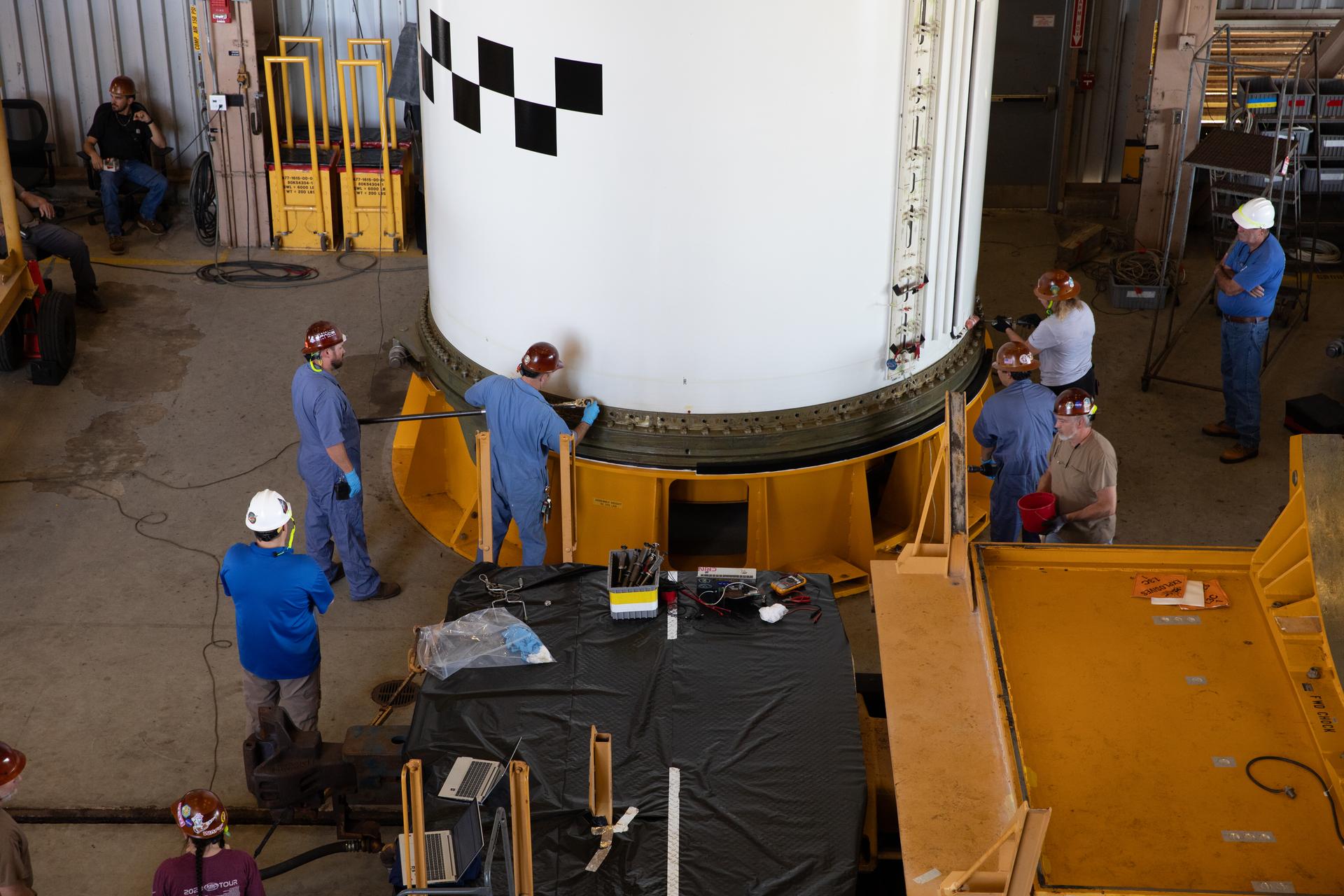
Inside the Rotation, Processing and Surge Facility (RPSF) at NASA’s Kennedy Space Center in Florida, technicians lift the right aft motor segment – one of five segments that make up one of two solid rocket boosters for the agency’s Space Launch System (SLS) – onto an inspection stand on June 23, 2020. While in the RPSF, the boosters will be mated to the rocket’s two aft skirts before they are moved to the Vehicle Assembly Building for stacking on the mobile launcher. The boosters, manufactured by Northrop Grumman in Utah, recently arrived at Kennedy for processing ahead of the Artemis I launch. Together, the twin boosters provide more than 75 percent of the total SLS thrust at launch. The first in a series of increasingly complex missions, Artemis I will test the Orion spacecraft and SLS as an integrated system ahead of crewed flights to the Moon.
Artemis I Booster Segments Lift to Work Stand and Silhouettes
Technicians lift NASA’s IMAP (Interstellar Mapping and Acceleration Probe) spacecraft onto a work stand inside the high bay at the Astrotech Space Operations Facility near the agency’s Kennedy Space Center in Florida on Thursday, May 29, 2025. The observatory will study how the Sun shapes the boundaries of the heliosphere, the bubble protecting around our solar system, and is targeted for launch this fall aboard a SpaceX Falcon 9 rocket from Launch Complex 39A at NASA Kennedy.
NASA's IMAP Spacecraft Lift to Work Stand and Unbagging
Technicians lift NASA’s IMAP (Interstellar Mapping and Acceleration Probe) spacecraft onto a work stand inside the high bay at the Astrotech Space Operations Facility near the agency’s Kennedy Space Center in Florida on Thursday, May 29, 2025. The observatory will study how the Sun shapes the boundaries of the heliosphere, the bubble protecting around our solar system, and is targeted for launch this fall aboard a SpaceX Falcon 9 rocket from Launch Complex 39A at NASA Kennedy.
NASA's IMAP Spacecraft Lift to Work Stand and Unbagging
Technicians lift NASA’s IMAP (Interstellar Mapping and Acceleration Probe) spacecraft onto a work stand inside the high bay at the Astrotech Space Operations Facility near the agency’s Kennedy Space Center in Florida on Thursday, May 29, 2025. The observatory will study how the Sun shapes the boundaries of the heliosphere, the bubble protecting around our solar system, and is targeted for launch this fall aboard a SpaceX Falcon 9 rocket from Launch Complex 39A at NASA Kennedy.
NASA's IMAP Spacecraft Lift to Work Stand and Unbagging
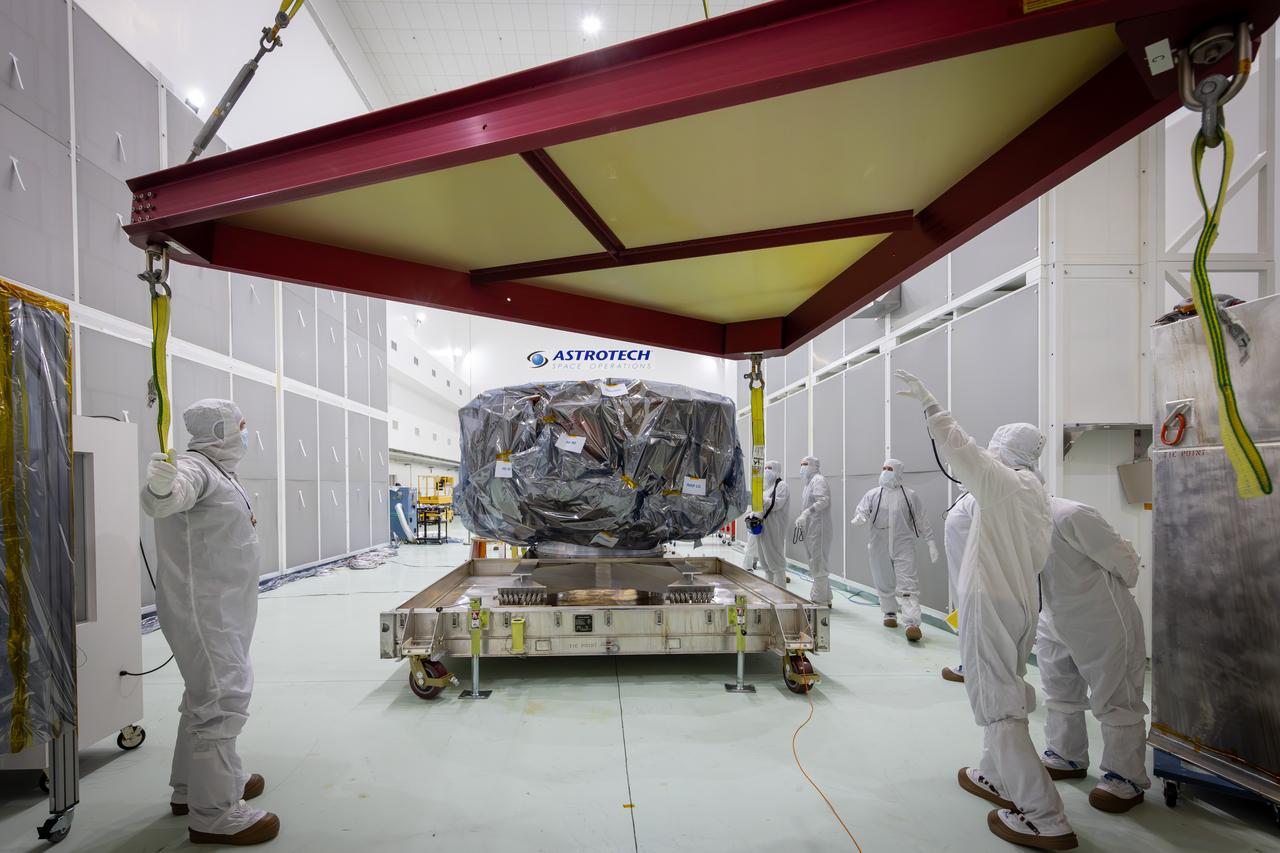
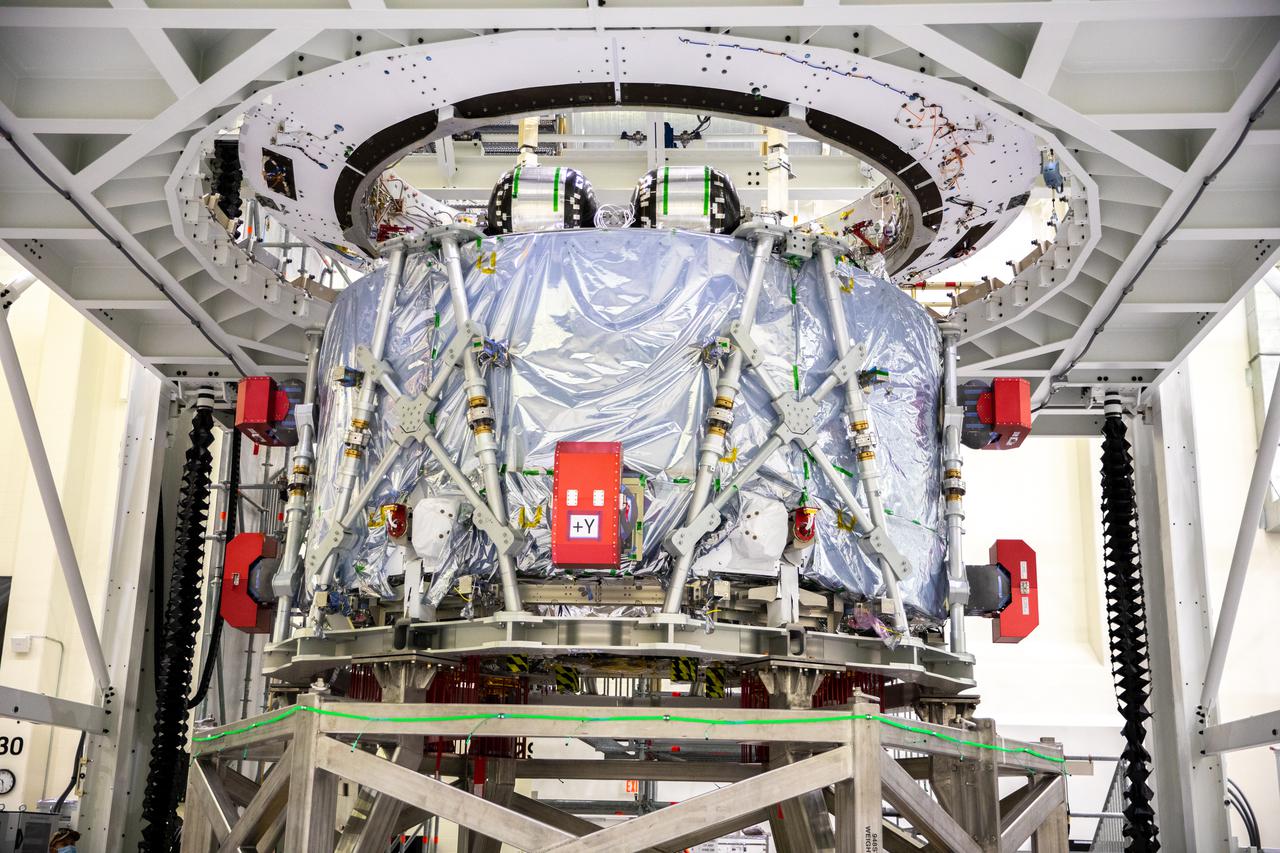
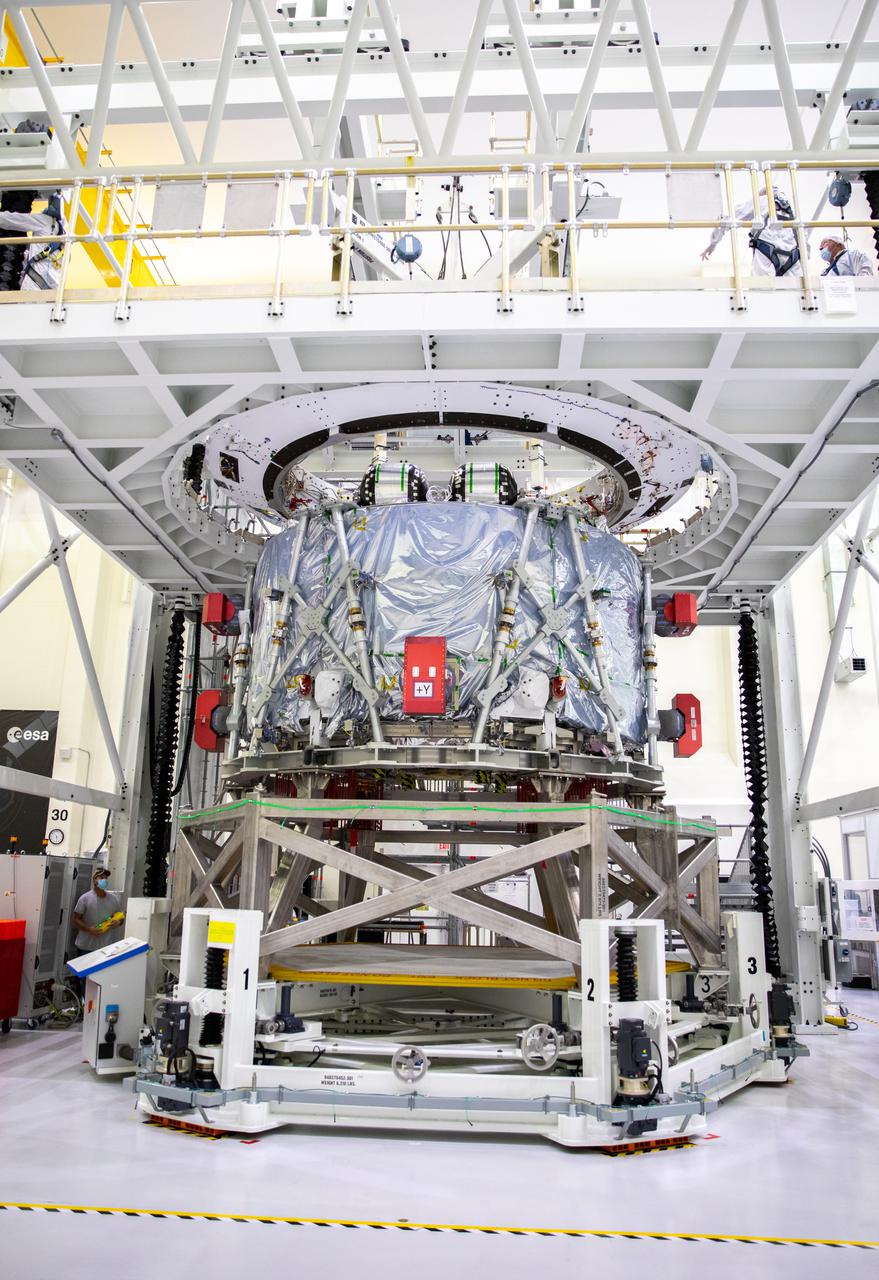
The European-built Service Module (ESM) for NASA’s Artemis II mission shown in a work stand inside the high bay of the Neil A. Armstrong Operations and Checkout Building at NASA’s Kennedy Space Center in Florida on Oct. 15, 2021. Teams from NASA, Lockheed Martin, the European Space Agency and Airbus prepare the service module to be integrated with the Orion crew module adapter and crew module, already housed in the facility. The powerhouse that will fuel and propel Orion in space, the ESM for Artemis II will be the first Artemis mission flying crew aboard Orion.
Artemis II - European Service Module on Work Stand
The European-built Service Module (ESM) for NASA’s Artemis II mission shown in a work stand inside the high bay of the Neil A. Armstrong Operations and Checkout Building at NASA’s Kennedy Space Center in Florida on Oct. 15, 2021. Teams from NASA, Lockheed Martin, the European Space Agency and Airbus prepare the service module to be integrated with the Orion crew module adapter and crew module, already housed in the facility. The powerhouse that will fuel and propel Orion in space, the ESM for Artemis II will be the first Artemis mission flying crew aboard Orion. Teams with the European Space Agency and Airbus built the service module.
Artemis II - European Service Module on Work Stand
The Orion pressure vessel for NASA’s Artemis III mission is lowered onto a work stand in the high bay of the Neil A. Armstrong Operations and Checkout Building at NASA’s Kennedy Space Center in Florida on Oct. 20, 2021. Lockheed Matin technicians will begin the work to prepare the spacecraft for its launch atop a Space Launch System rocket. Artemis III will send astronauts, including the first woman and first person of color, on a mission to the surface of the Moon by 2024.
Artemis III Pressure Vessel Arrival, Lift to Work Stand
The Orion pressure vessel for NASA’s Artemis III mission is moved into the high bay of the Neil A. Armstrong Operations and Checkout Building at NASA’s Kennedy Space Center in Florida on Oct. 20, 2021. The pressure vessel will be secured onto a work stand where Lockheed Matin technicians will begin the work to prepare the spacecraft for its launch atop a Space Launch System rocket. Artemis III will send astronauts, including the first woman and first person of color, on a mission to the surface of the Moon by 2024.
Artemis III Pressure Vessel Arrival, Lift to Work Stand
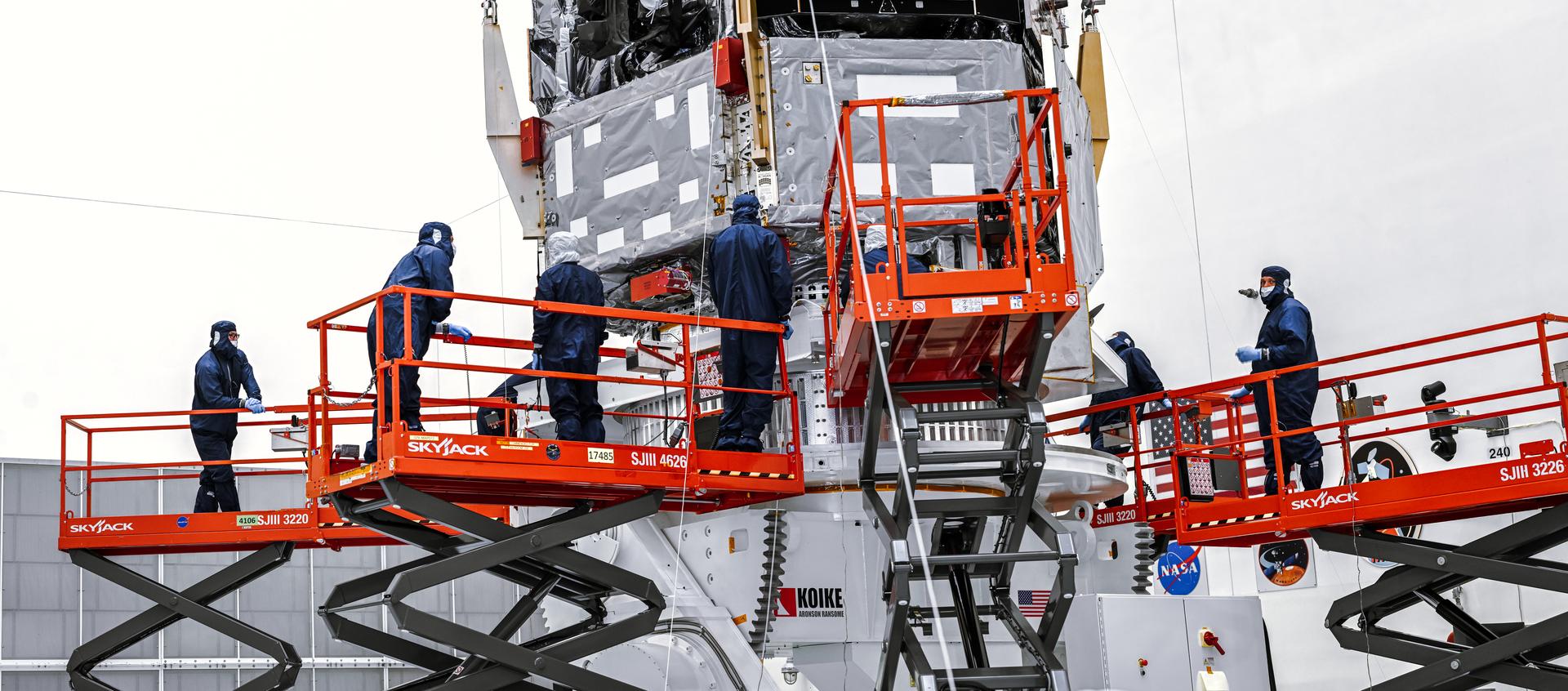
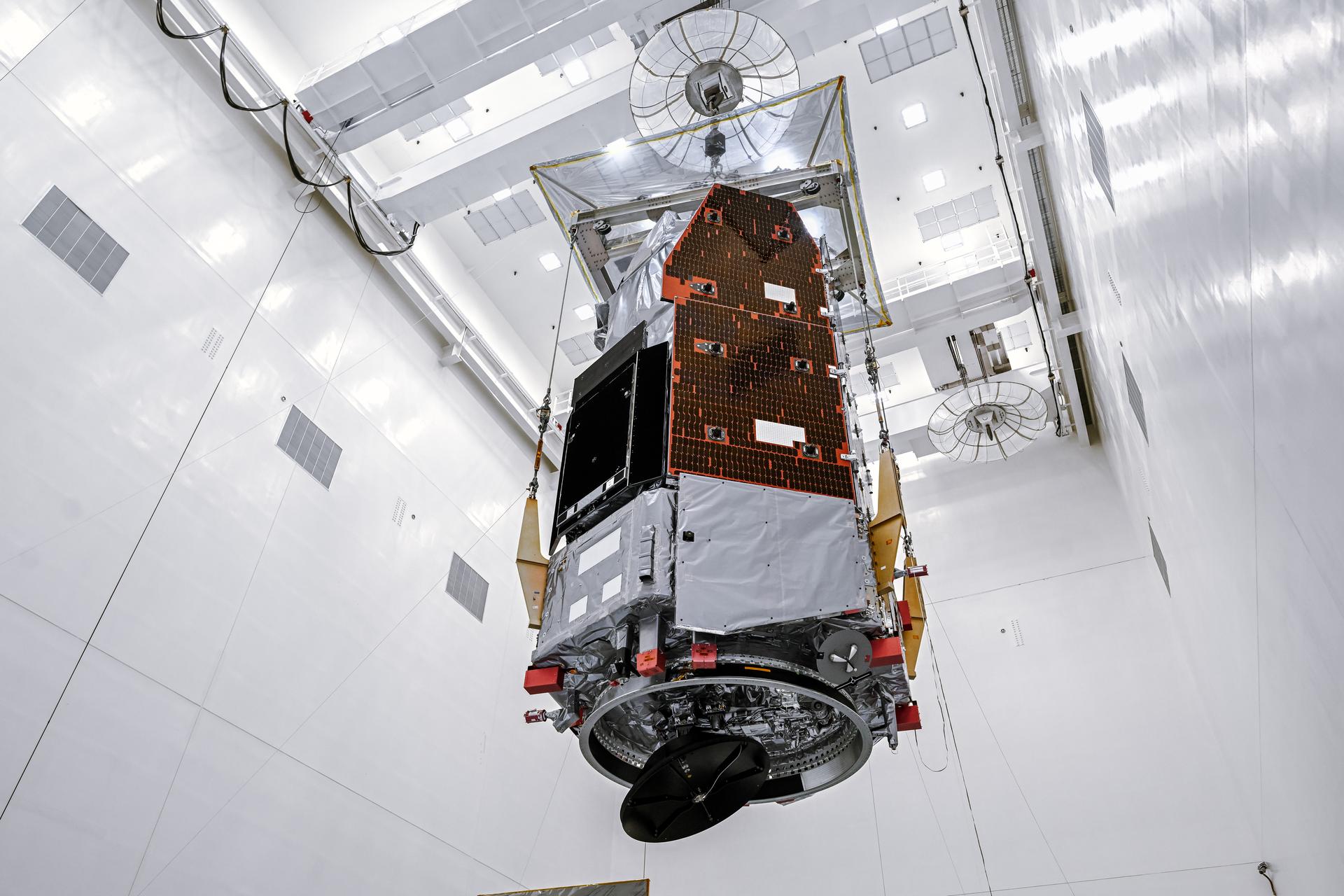
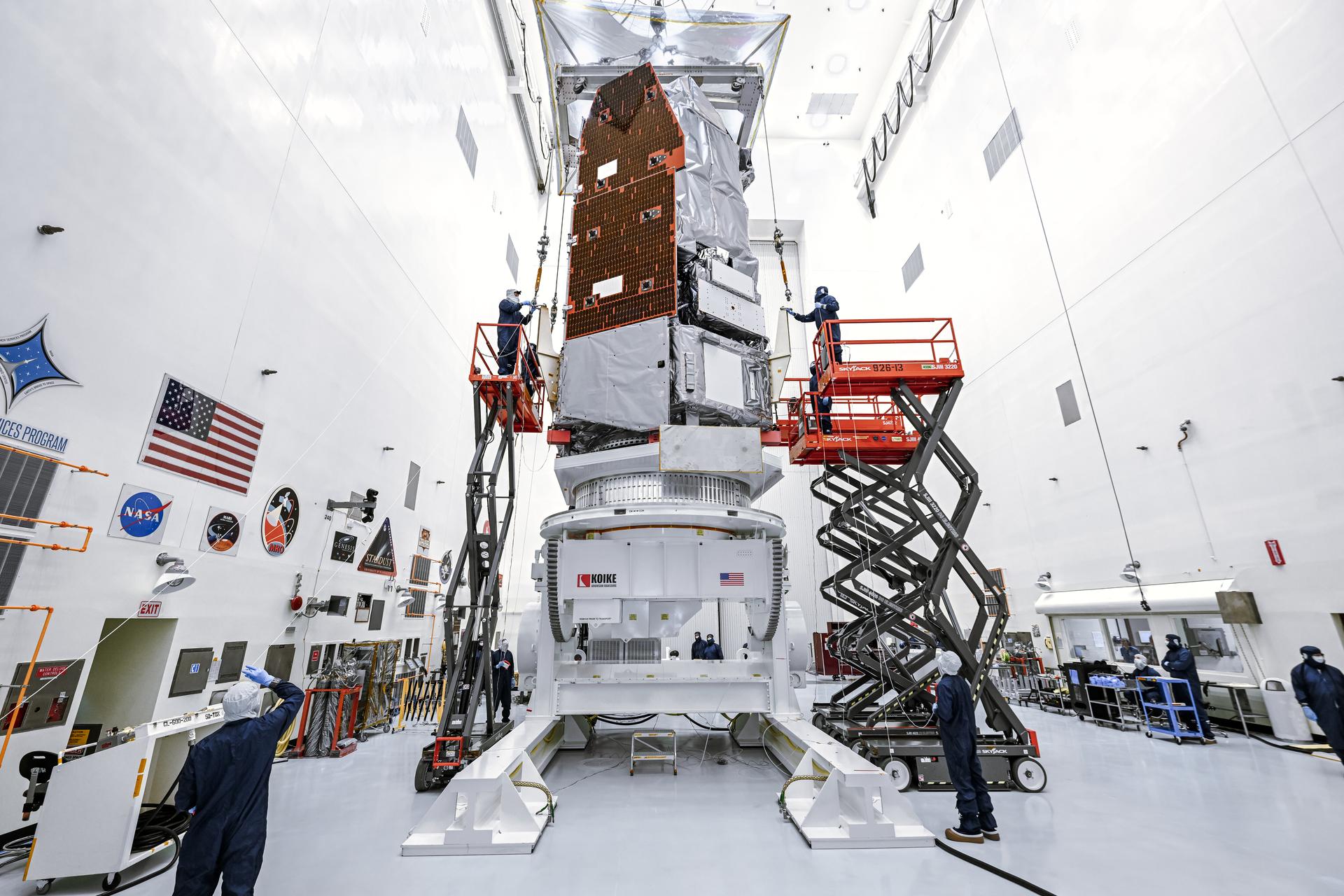
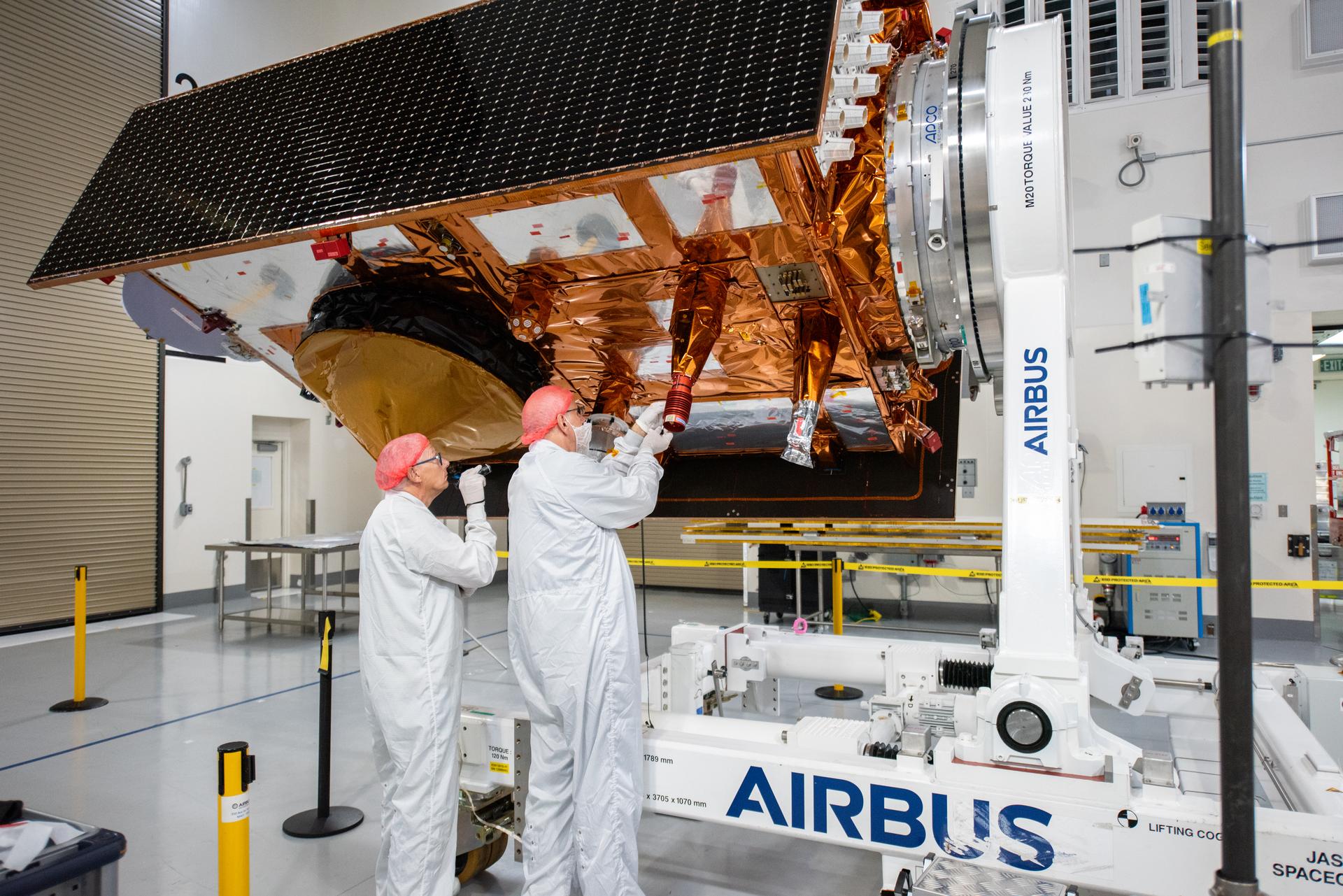
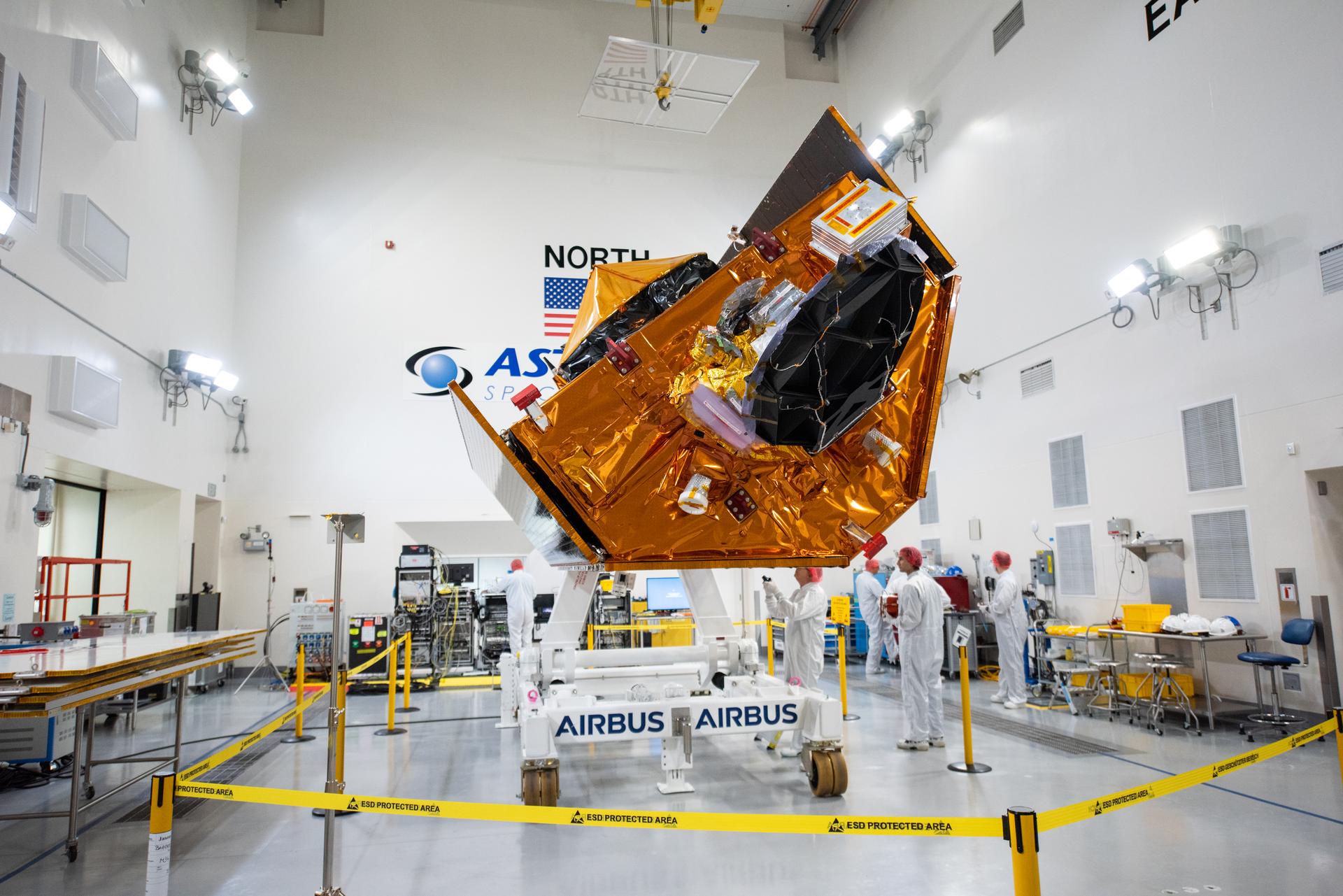
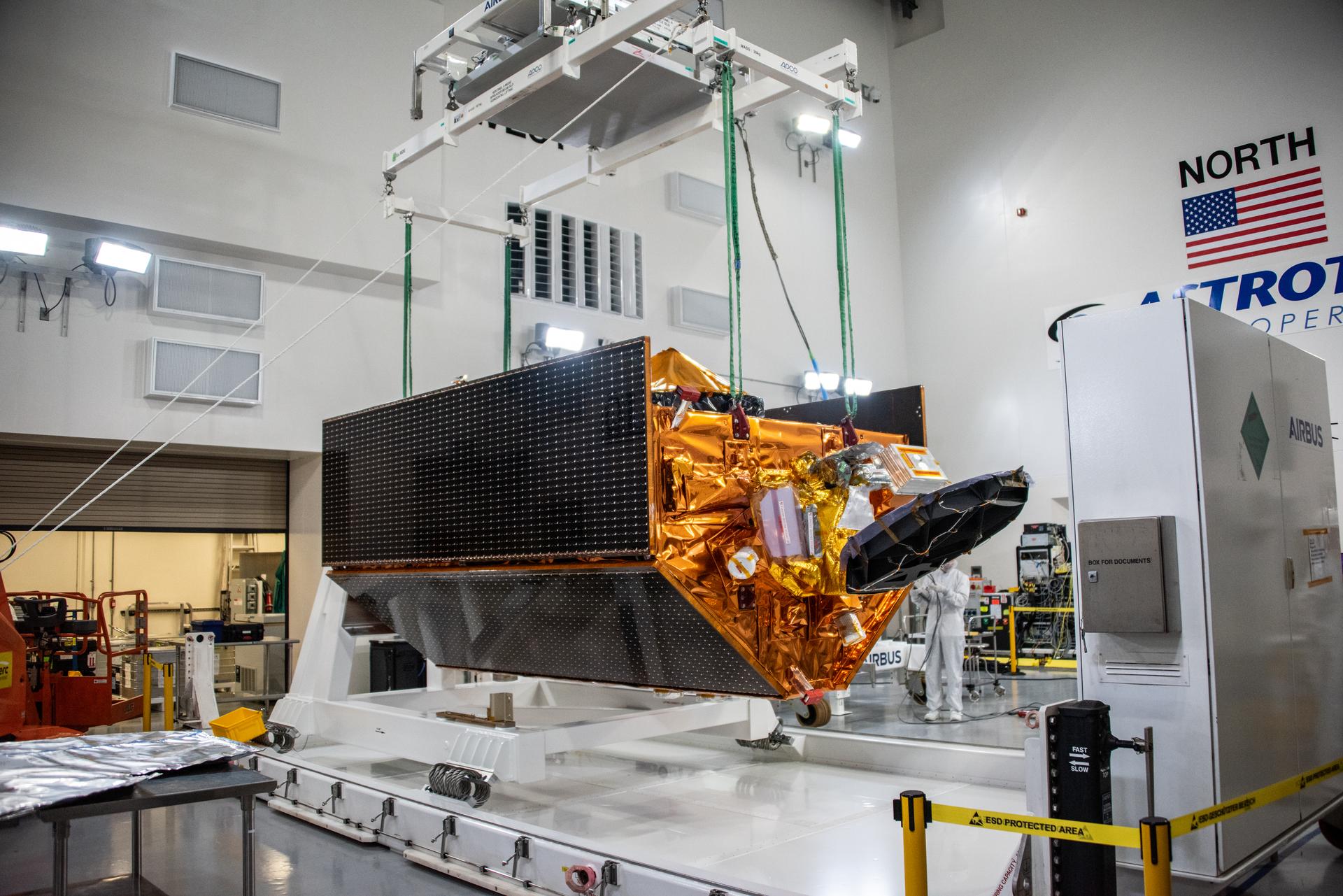
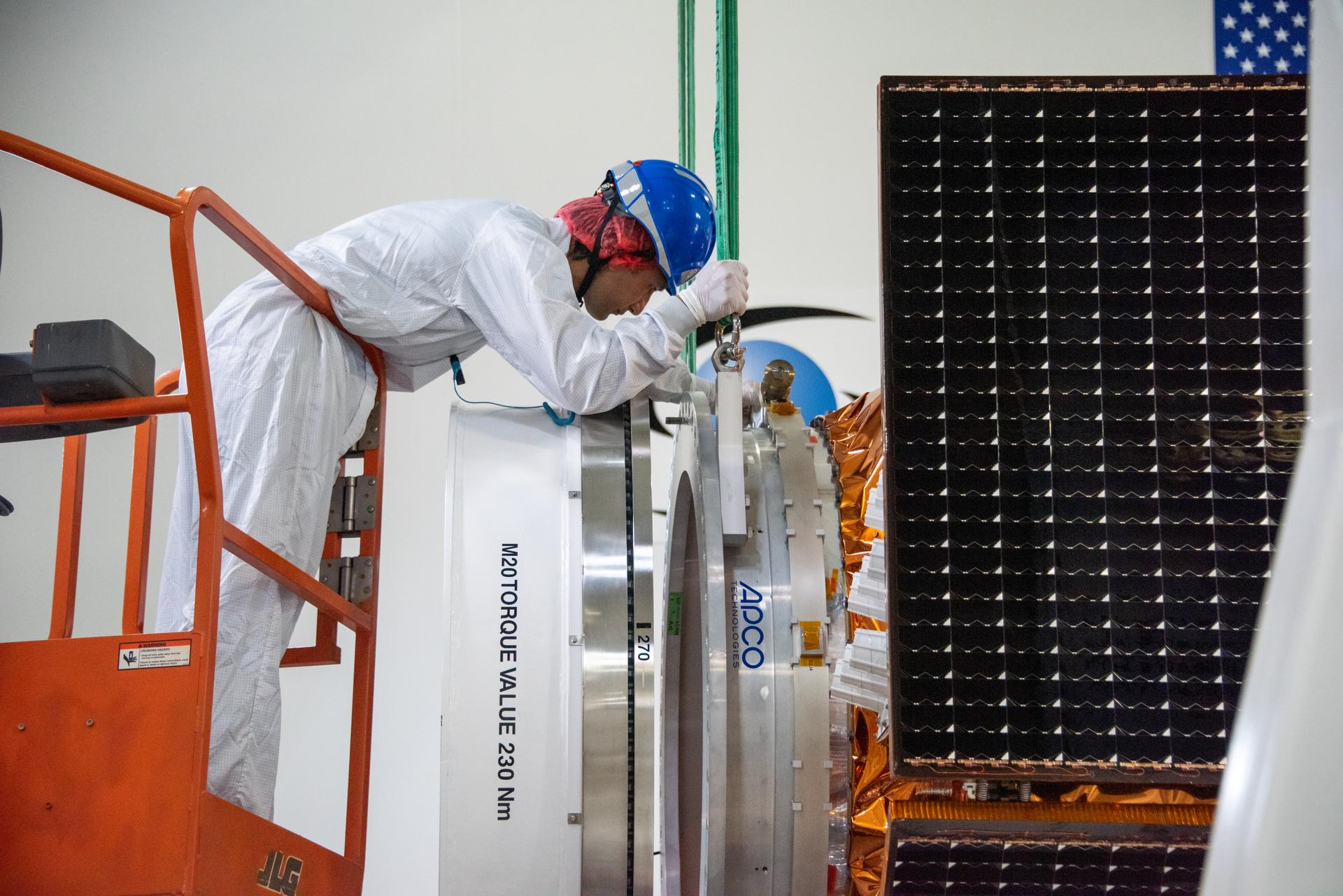
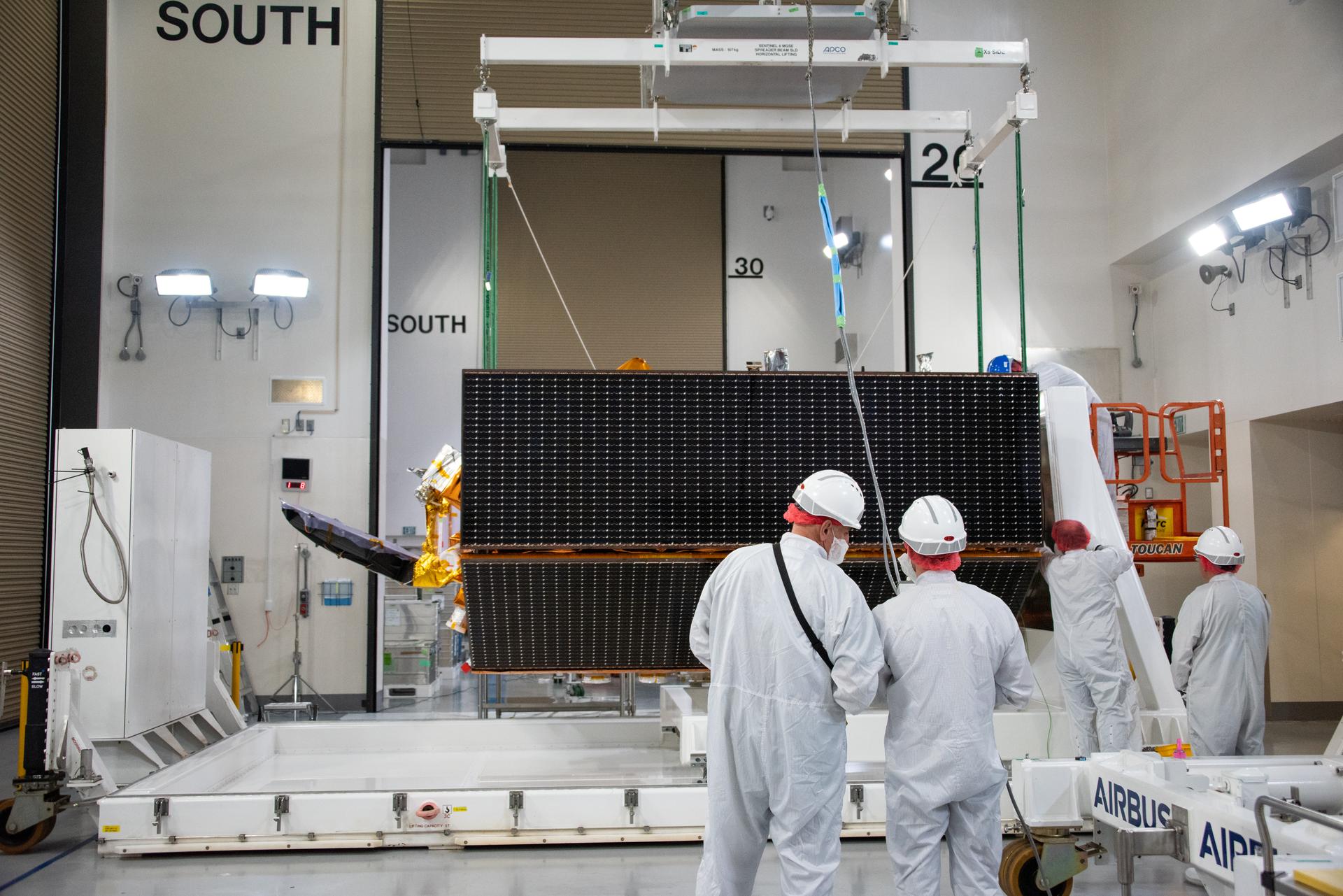
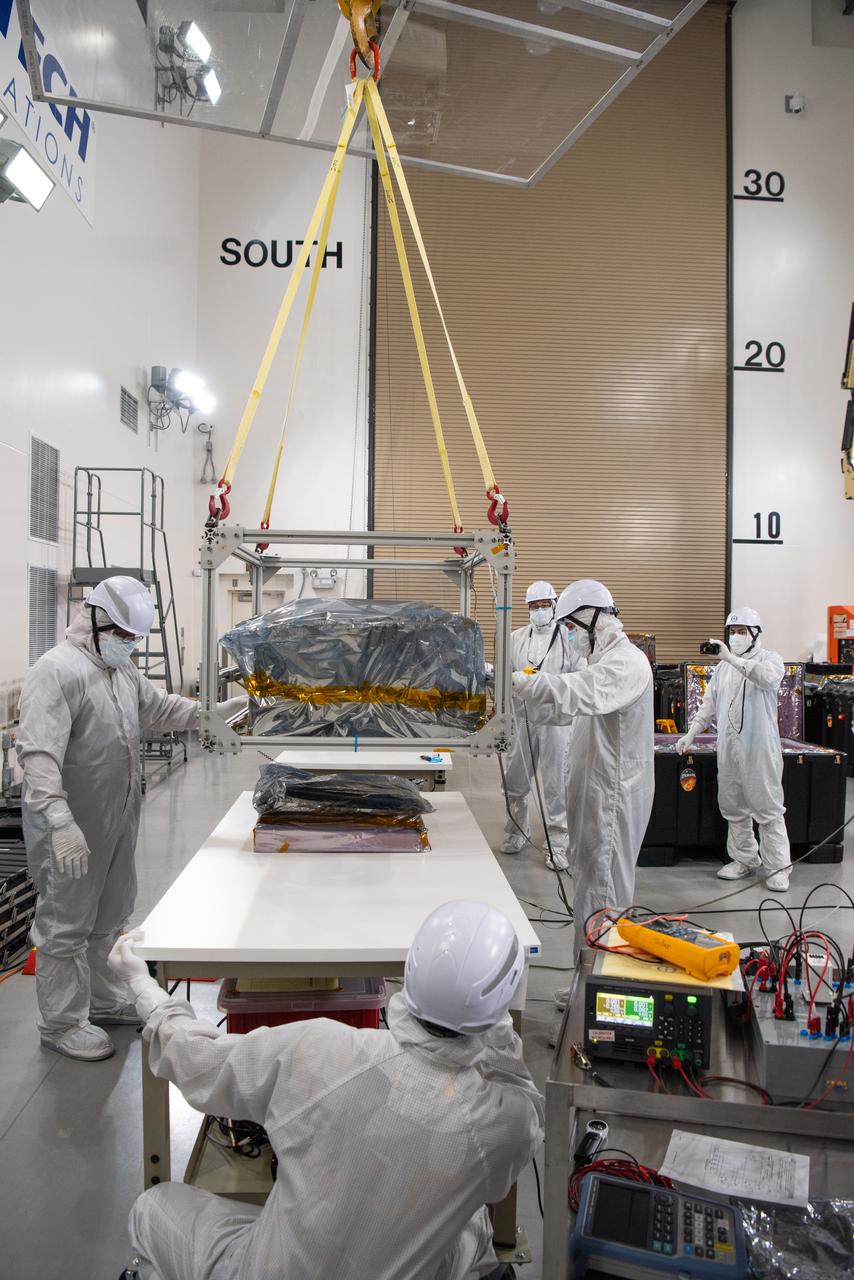
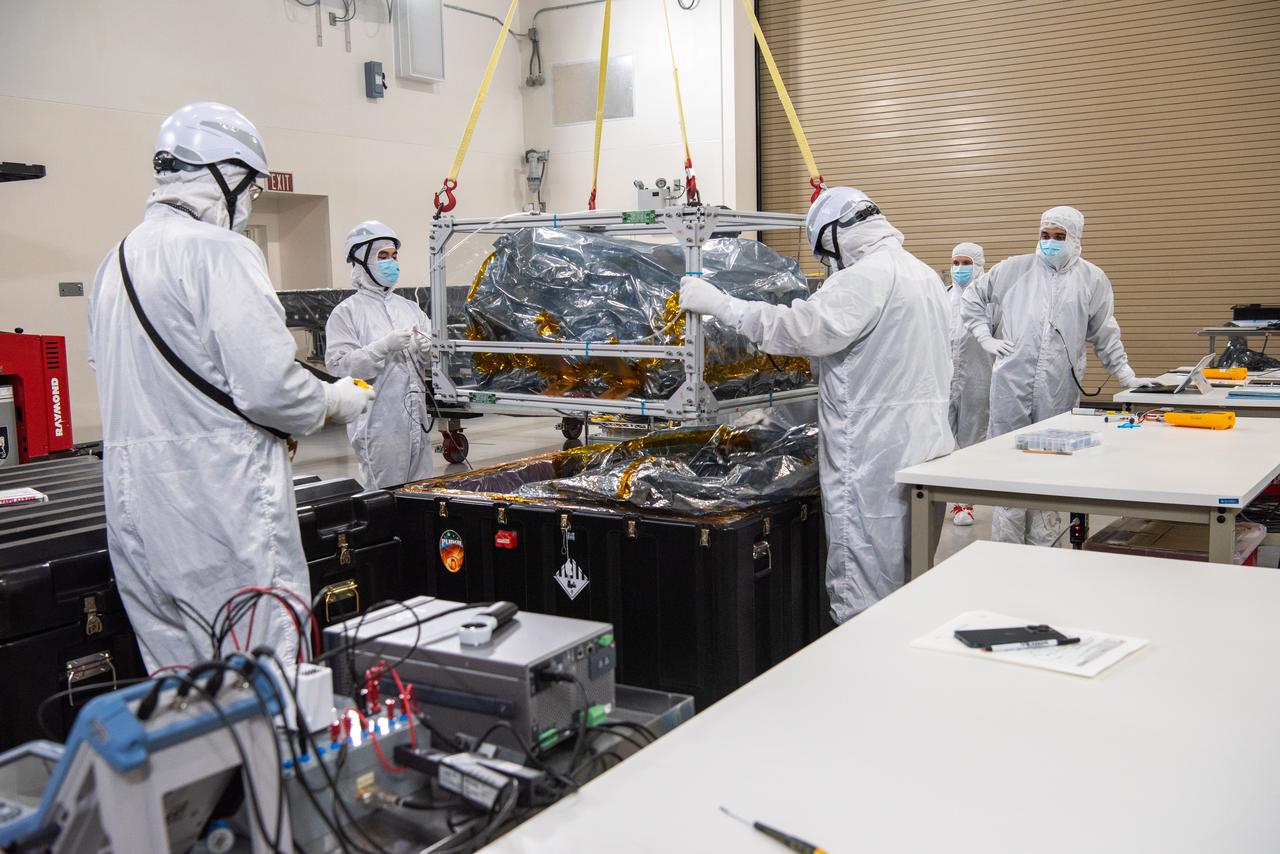
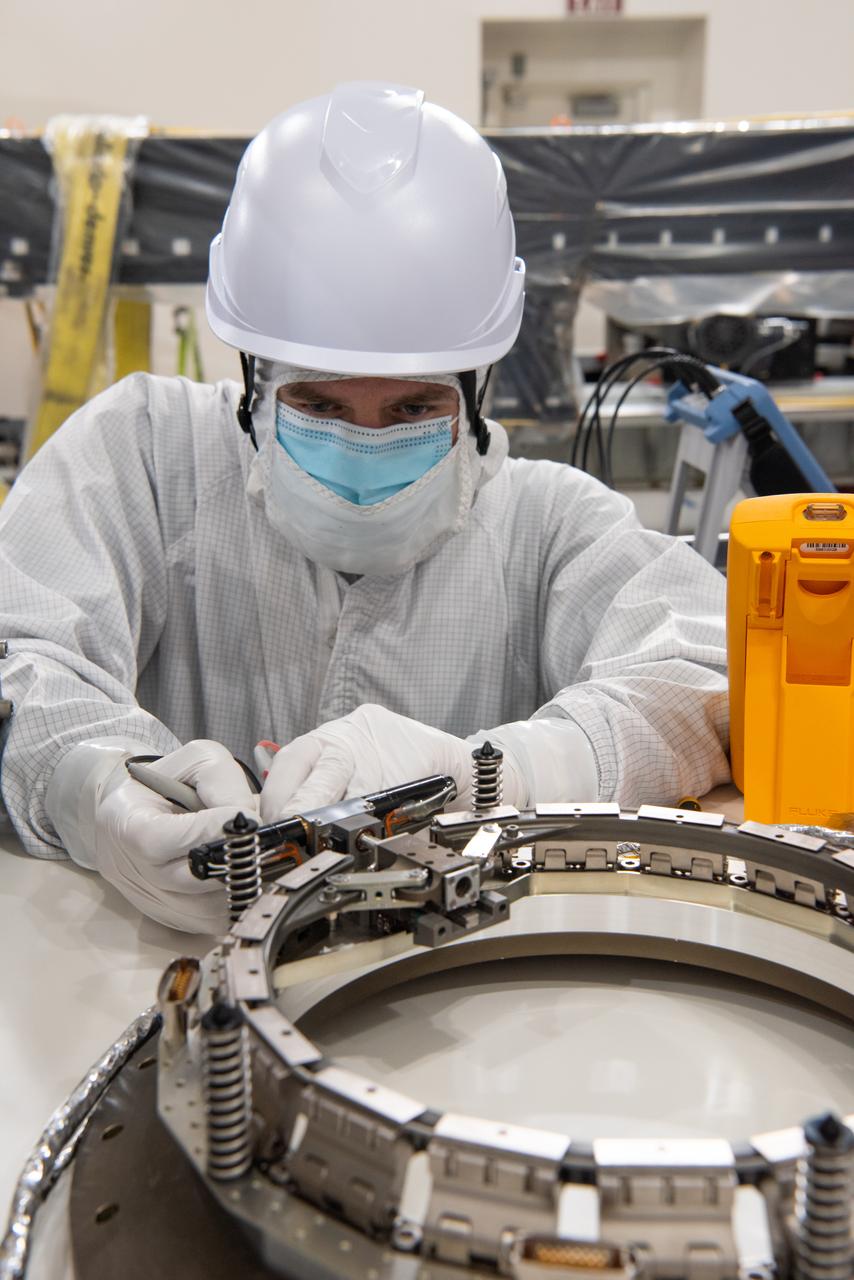
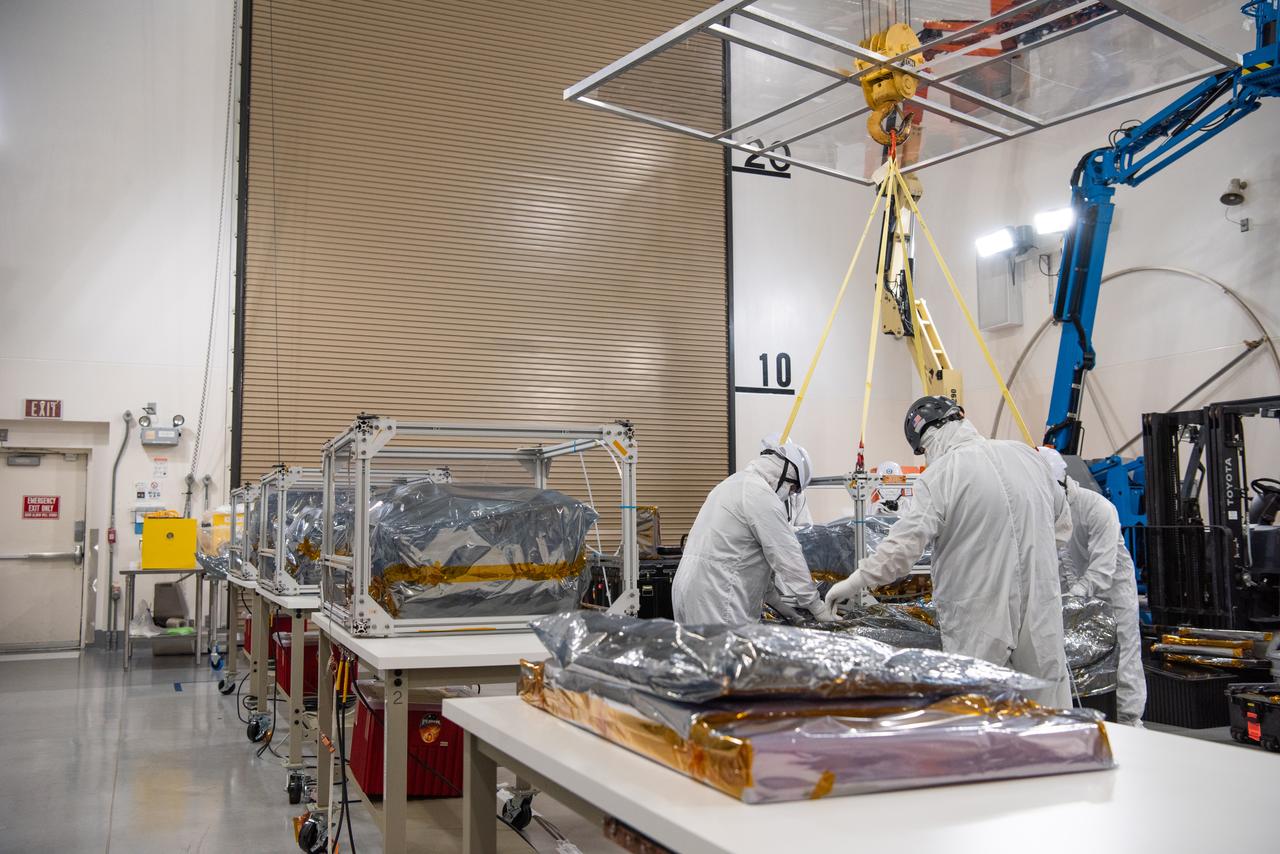
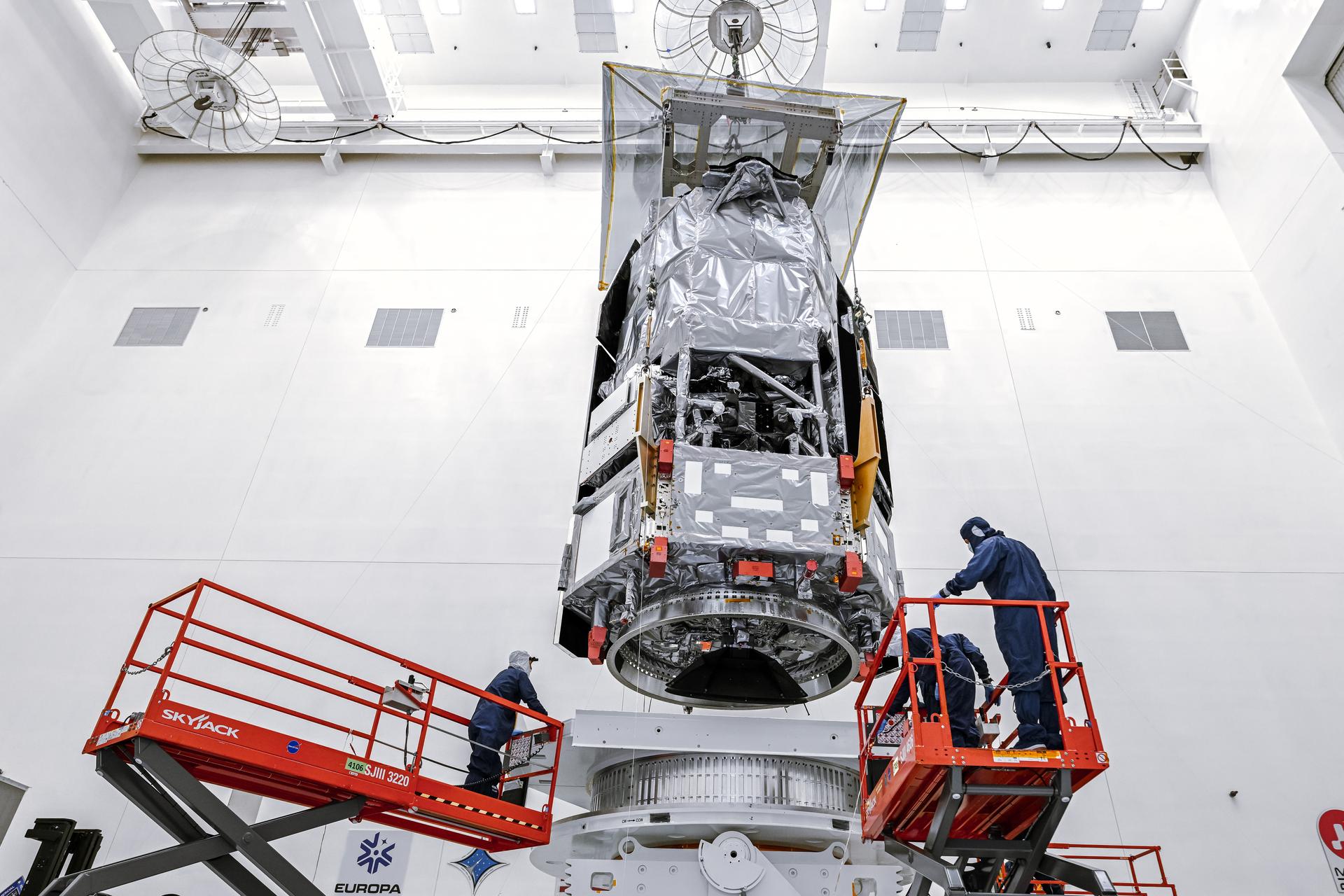
Technicians use a crane to place the Sentinel-6B spacecraft onto a work stand ahead of prelaunch operations at the Astrotech Space Operations payload processing facility at Vandenberg Space Force Base in California on Thursday, Sept. 25, 2025. Sentinel-6B will undergo detailed inspections, tests, and fueling in a cleanroom as it prepares for a November launch on a SpaceX Falcon 9 rocket. A collaboration between NASA, ESA (European Space Agency), EUMETSAT (European Organisation for the Exploitation of Meteorological Satellites), and the National Oceanic and Atmospheric Administration (NOAA), Sentinel-6B is designed to measure sea levels down to roughly an inch for about 90% of the world’s oceans and will extend out to a decade the record of atmospheric temperatures begun by Sentinel-6 Michael Freilich.
Sentinel-6B Spacecraft Mated to Work Stand
Technicians use a crane to place the Sentinel-6B spacecraft onto a work stand ahead of prelaunch operations at the Astrotech Space Operations payload processing facility at Vandenberg Space Force Base in California on Thursday, Sept. 25, 2025. Sentinel-6B will undergo detailed inspections, tests, and fueling in a cleanroom as it prepares for a November launch on a SpaceX Falcon 9 rocket. A collaboration between NASA, ESA (European Space Agency), EUMETSAT (European Organisation for the Exploitation of Meteorological Satellites), and the National Oceanic and Atmospheric Administration (NOAA), Sentinel-6B is designed to measure sea levels down to roughly an inch for about 90% of the world’s oceans and will extend out to a decade the record of atmospheric temperatures begun by Sentinel-6 Michael Freilich.
Sentinel-6B Spacecraft Mated to Work Stand
Technicians use a crane to place the Sentinel-6B spacecraft onto a work stand ahead of prelaunch operations at the Astrotech Space Operations payload processing facility at Vandenberg Space Force Base in California on Thursday, Sept. 25, 2025. Sentinel-6B will undergo detailed inspections, tests, and fueling in a cleanroom as it prepares for a November launch on a SpaceX Falcon 9 rocket. A collaboration between NASA, ESA (European Space Agency), EUMETSAT (European Organisation for the Exploitation of Meteorological Satellites), and the National Oceanic and Atmospheric Administration (NOAA), Sentinel-6B is designed to measure sea levels down to roughly an inch for about 90% of the world’s oceans and will extend out to a decade the record of atmospheric temperatures begun by Sentinel-6 Michael Freilich.
Sentinel-6B Spacecraft Mated to Work Stand
Technicians use a crane to place the Sentinel-6B spacecraft onto a work stand ahead of prelaunch operations at the Astrotech Space Operations payload processing facility at Vandenberg Space Force Base in California on Thursday, Sept. 25, 2025. Sentinel-6B will undergo detailed inspections, tests, and fueling in a cleanroom as it prepares for a November launch on a SpaceX Falcon 9 rocket. A collaboration between NASA, ESA (European Space Agency), EUMETSAT (European Organisation for the Exploitation of Meteorological Satellites), and the National Oceanic and Atmospheric Administration (NOAA), Sentinel-6B is designed to measure sea levels down to roughly an inch for about 90% of the world’s oceans and will extend out to a decade the record of atmospheric temperatures begun by Sentinel-6 Michael Freilich.
Sentinel-6B Spacecraft Mated to Work Stand
Technicians use a crane to place the Sentinel-6B spacecraft onto a work stand ahead of prelaunch operations at the Astrotech Space Operations payload processing facility at Vandenberg Space Force Base in California on Thursday, Sept. 25, 2025. Sentinel-6B will undergo detailed inspections, tests, and fueling in a cleanroom as it prepares for a November launch on a SpaceX Falcon 9 rocket. A collaboration between NASA, ESA (European Space Agency), EUMETSAT (European Organisation for the Exploitation of Meteorological Satellites), and the National Oceanic and Atmospheric Administration (NOAA), Sentinel-6B is designed to measure sea levels down to roughly an inch for about 90% of the world’s oceans and will extend out to a decade the record of atmospheric temperatures begun by Sentinel-6 Michael Freilich.
Sentinel-6B Spacecraft Mated to Work Stand
Technicians use a crane to place the Sentinel-6B spacecraft onto a work stand ahead of prelaunch operations at the Astrotech Space Operations payload processing facility at Vandenberg Space Force Base in California on Thursday, Sept. 25, 2025. Sentinel-6B will undergo detailed inspections, tests, and fueling in a cleanroom as it prepares for a November launch on a SpaceX Falcon 9 rocket. A collaboration between NASA, ESA (European Space Agency), EUMETSAT (European Organisation for the Exploitation of Meteorological Satellites), and the National Oceanic and Atmospheric Administration (NOAA), Sentinel-6B is designed to measure sea levels down to roughly an inch for about 90% of the world’s oceans and will extend out to a decade the record of atmospheric temperatures begun by Sentinel-6 Michael Freilich.
Sentinel-6B Spacecraft Mated to Work Stand
Technicians use a crane to place the Sentinel-6B spacecraft onto a work stand ahead of prelaunch operations at the Astrotech Space Operations payload processing facility at Vandenberg Space Force Base in California on Thursday, Sept. 25, 2025. Sentinel-6B will undergo detailed inspections, tests, and fueling in a cleanroom as it prepares for a November launch on a SpaceX Falcon 9 rocket. A collaboration between NASA, ESA (European Space Agency), EUMETSAT (European Organisation for the Exploitation of Meteorological Satellites), and the National Oceanic and Atmospheric Administration (NOAA), Sentinel-6B is designed to measure sea levels down to roughly an inch for about 90% of the world’s oceans and will extend out to a decade the record of atmospheric temperatures begun by Sentinel-6 Michael Freilich.
Sentinel-6B Spacecraft Mated to Work Stand
Technicians use a crane to place the Sentinel-6B spacecraft onto a work stand ahead of prelaunch operations at the Astrotech Space Operations payload processing facility at Vandenberg Space Force Base in California on Thursday, Sept. 25, 2025. Sentinel-6B will undergo detailed inspections, tests, and fueling in a cleanroom as it prepares for a November launch on a SpaceX Falcon 9 rocket. A collaboration between NASA, ESA (European Space Agency), EUMETSAT (European Organisation for the Exploitation of Meteorological Satellites), and the National Oceanic and Atmospheric Administration (NOAA), Sentinel-6B is designed to measure sea levels down to roughly an inch for about 90% of the world’s oceans and will extend out to a decade the record of atmospheric temperatures begun by Sentinel-6 Michael Freilich.
Sentinel-6B Spacecraft Mated to Work Stand
Technicians use a crane to place the Sentinel-6B spacecraft onto a work stand ahead of prelaunch operations at the Astrotech Space Operations payload processing facility at Vandenberg Space Force Base in California on Thursday, Sept. 25, 2025. Sentinel-6B will undergo detailed inspections, tests, and fueling in a cleanroom as it prepares for a November launch on a SpaceX Falcon 9 rocket. A collaboration between NASA, ESA (European Space Agency), EUMETSAT (European Organisation for the Exploitation of Meteorological Satellites), and the National Oceanic and Atmospheric Administration (NOAA), Sentinel-6B is designed to measure sea levels down to roughly an inch for about 90% of the world’s oceans and will extend out to a decade the record of atmospheric temperatures begun by Sentinel-6 Michael Freilich.
Sentinel-6B Spacecraft Mated to Work Stand
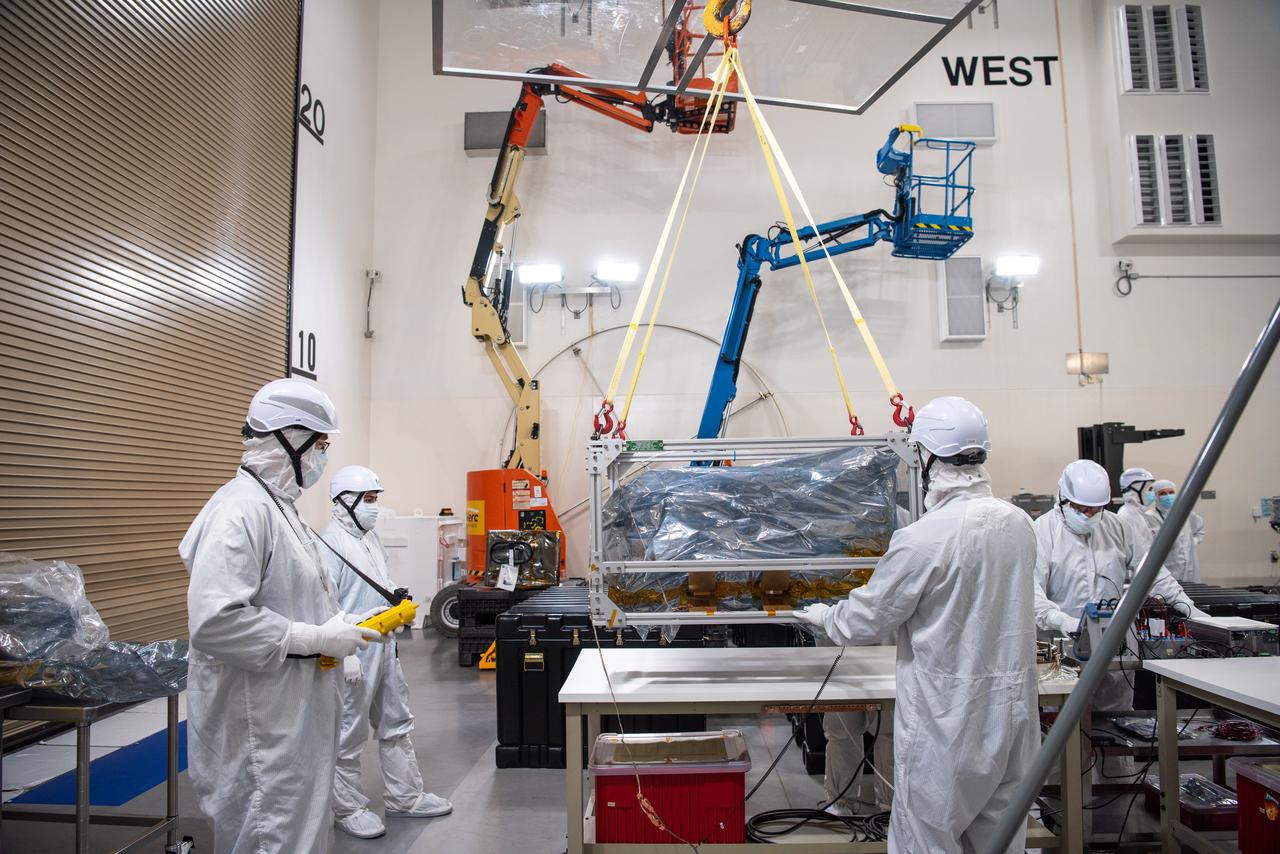
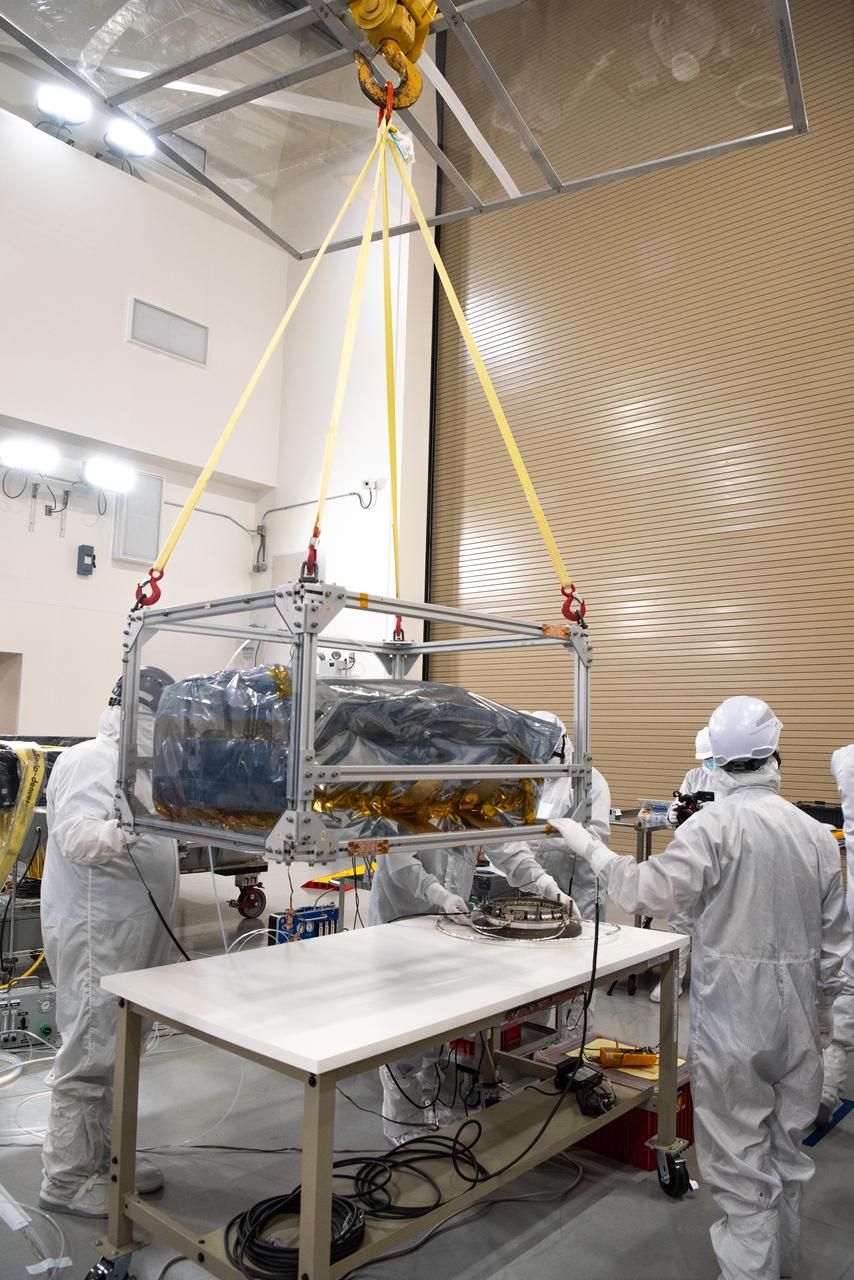
Technicians perform work preparing the Low-Earth Orbit Flight Test of an Inflatable Decelerator (LOFTID) for launch on a work stand inside Building 836 at Vandenberg Space Force Base (VSFB) in California on Aug. 25, 2022. LOFTID is the secondary payload on NASA and the National Oceanic and Atmospheric Administration’s (NOAA) Joint Polar Satellite System-2 (JPSS-2) satellite mission. JPSS-2 is the third satellite in the Joint Polar Satellite System series. It is scheduled to lift off from VSFB on Nov. 1 from Space Launch Complex-3. JPSS-2, which will be renamed NOAA-21 after reaching orbit, will join a constellation of JPSS satellites that orbit from the North to the South pole, circling Earth 14 times a day and providing a full view of the entire globe twice daily. The NOAA/NASA Suomi National Polar-orbiting Partnership (Suomi NPP) satellite, and NOAA-20, previously known as JPSS-1, are both already in orbit. Each satellite carries at least four advanced instruments to measure weather and climate conditions on Earth. LOFTID is dedicated to the memory of Bernard Kutter. LOFTID will demonstrate inflatable heat shield technology that could enable a variety of proposed NASA missions to destinations such as Mars, Venus, and Titan, as well as returning heavier payloads from low-Earth orbit.
LOFTID Spacecraft Lift RV to Work Stand
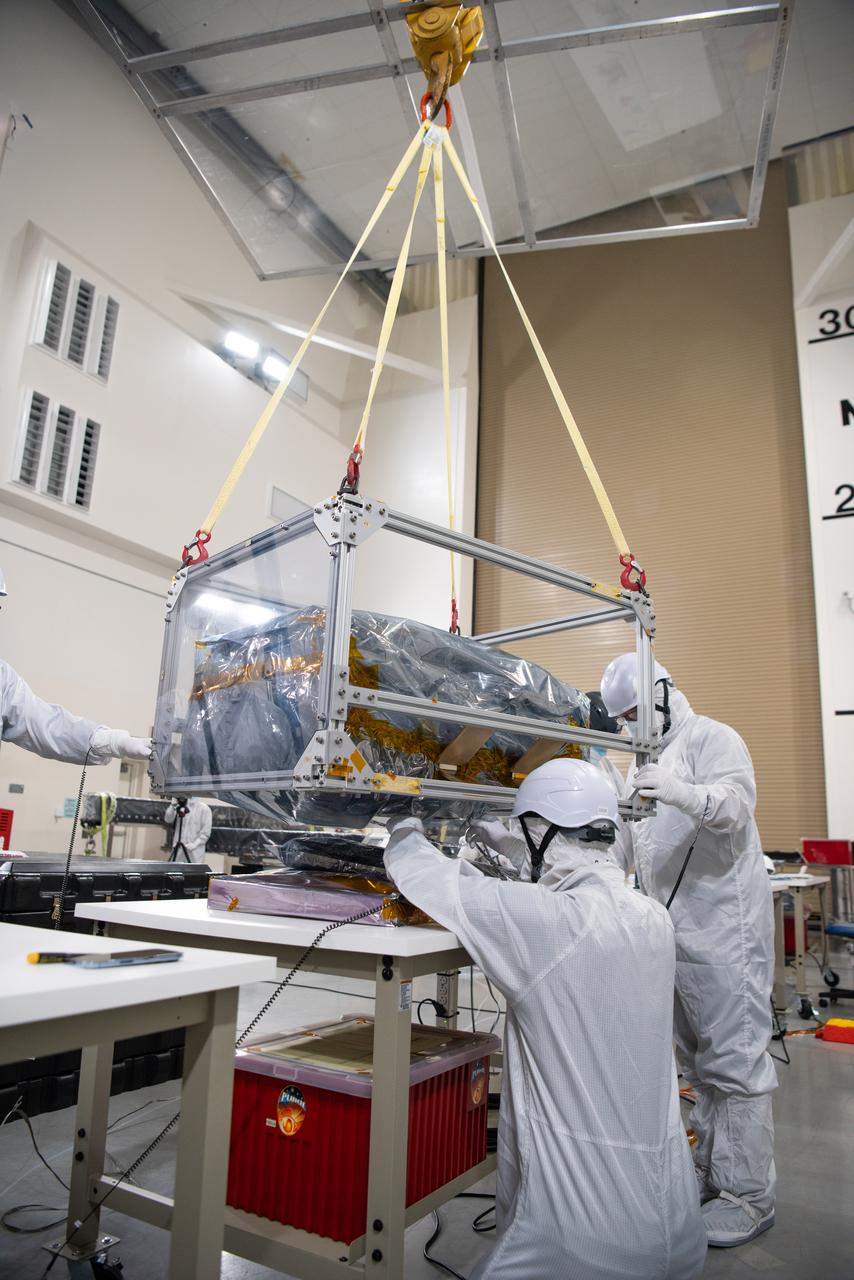
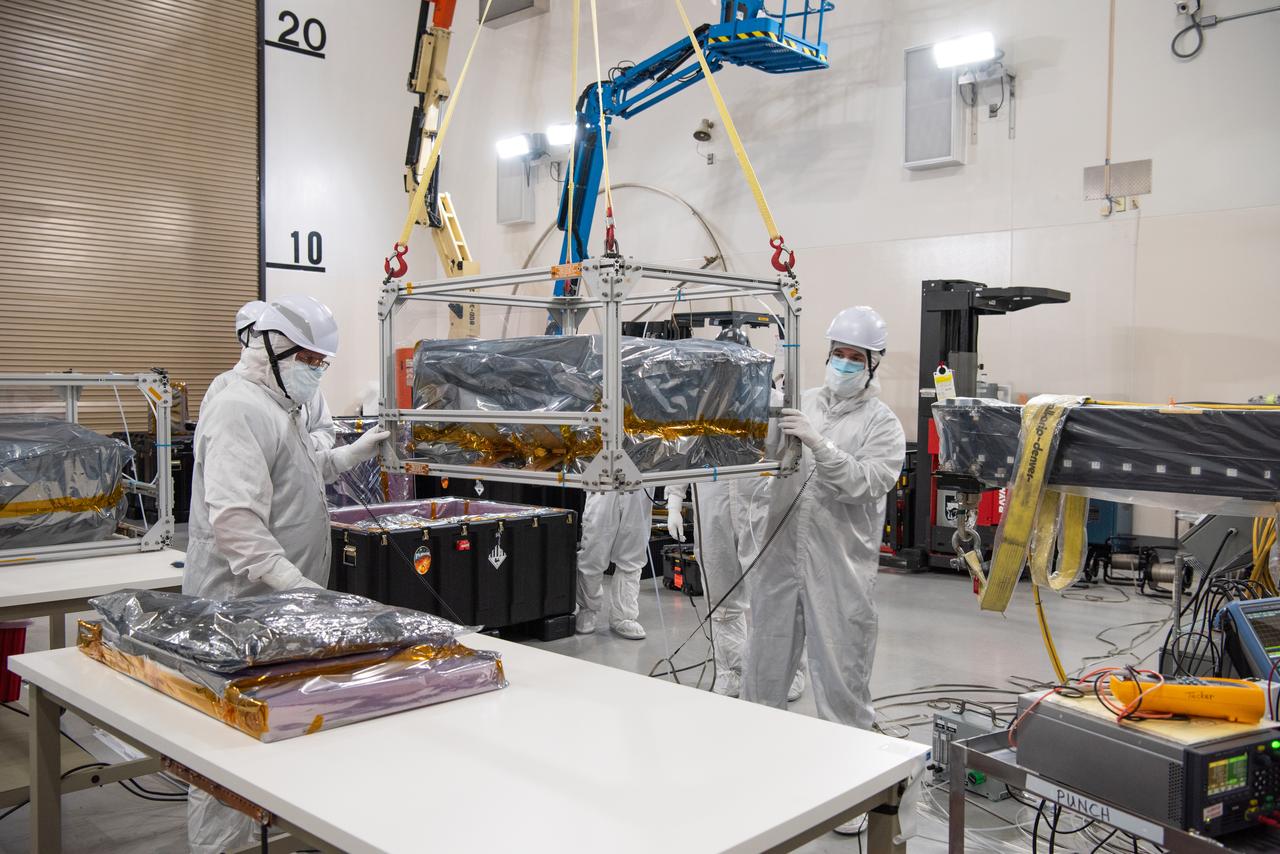
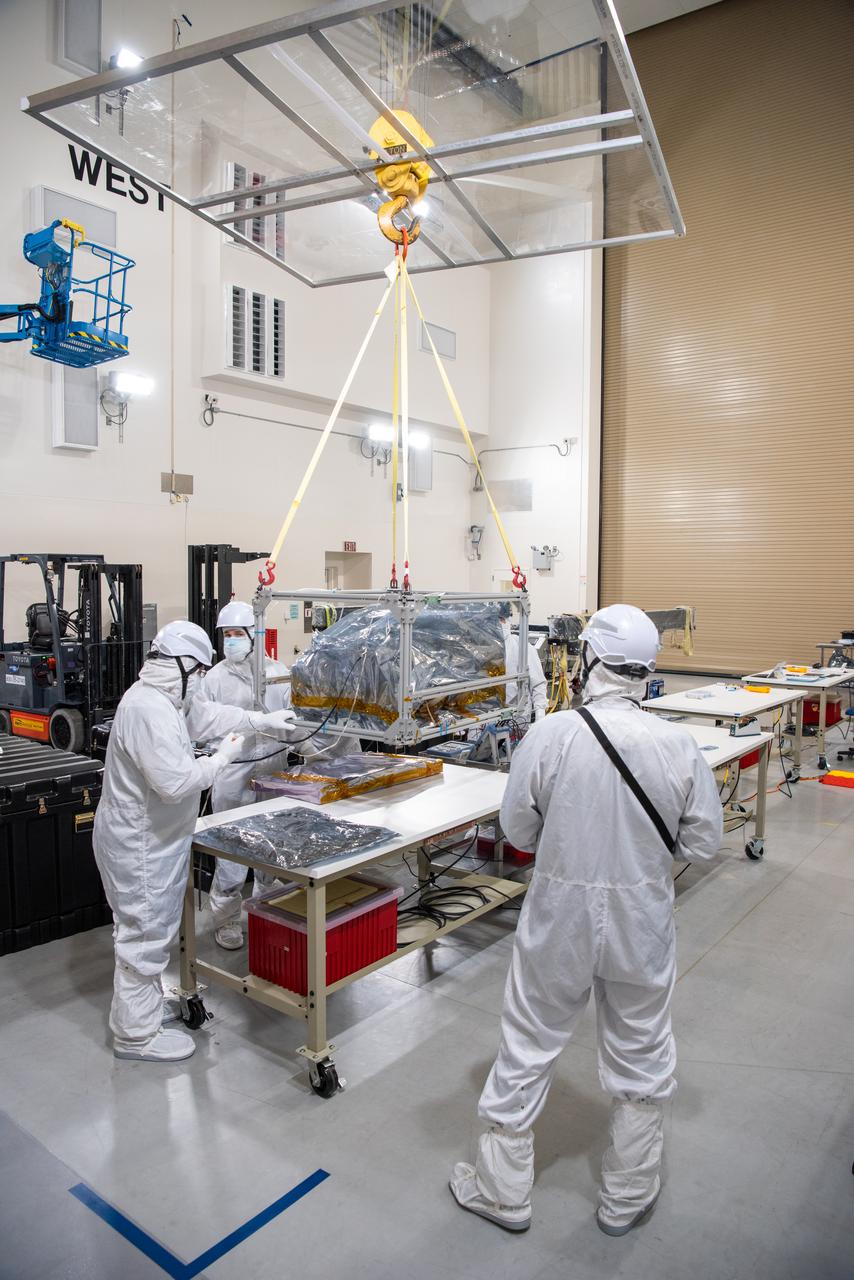
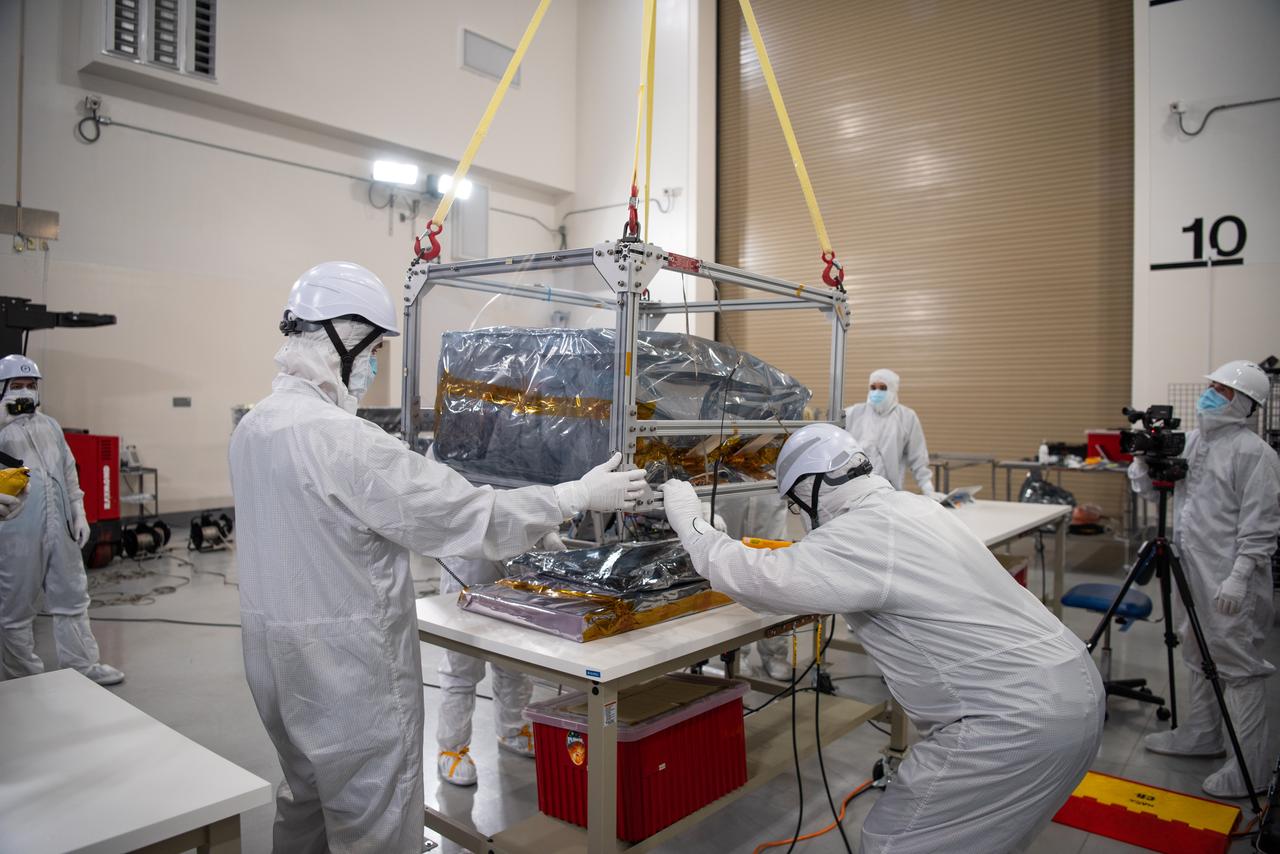
Technicians use an overheard crane to lift NASA’s PUNCH (Polarimeter to Unify the Corona and Heliosphere) spacecraft onto a work stand for testing operations at the Astrotech Processing Facility on Vandenberg Space Force Base in California on Sunday, Jan. 19, 2025. PUNCH, consisting of four satellites, will produce continuous 3D images of the solar wind and solar storms as it travels from the Sun to Earth to better understand how material in the corona accelerates to become the solar wind that fills the solar system. PUNCH will launch aboard a SpaceX Falcon 9 rocket in late February 2025.
PUNCH Satellites Lift to Work Stand fo Testing Operations
Technicians use an overheard crane to lift NASA’s PUNCH (Polarimeter to Unify the Corona and Heliosphere) spacecraft onto a work stand for testing operations at the Astrotech Processing Facility on Vandenberg Space Force Base in California on Sunday, Jan. 19, 2025. PUNCH, consisting of four satellites, will produce continuous 3D images of the solar wind and solar storms as it travels from the Sun to Earth to better understand how material in the corona accelerates to become the solar wind that fills the solar system. PUNCH will launch aboard a SpaceX Falcon 9 rocket in late February 2025.
PUNCH Satellites Lift to Work Stand fo Testing Operations
Technicians use an overheard crane to lift NASA’s PUNCH (Polarimeter to Unify the Corona and Heliosphere) spacecraft onto a work stand for testing operations at the Astrotech Processing Facility on Vandenberg Space Force Base in California on Sunday, Jan. 19, 2025. PUNCH, consisting of four satellites, will produce continuous 3D images of the solar wind and solar storms as it travels from the Sun to Earth to better understand how material in the corona accelerates to become the solar wind that fills the solar system. PUNCH will launch aboard a SpaceX Falcon 9 rocket in late February 2025.
PUNCH Satellites Lift to Work Stand fo Testing Operations
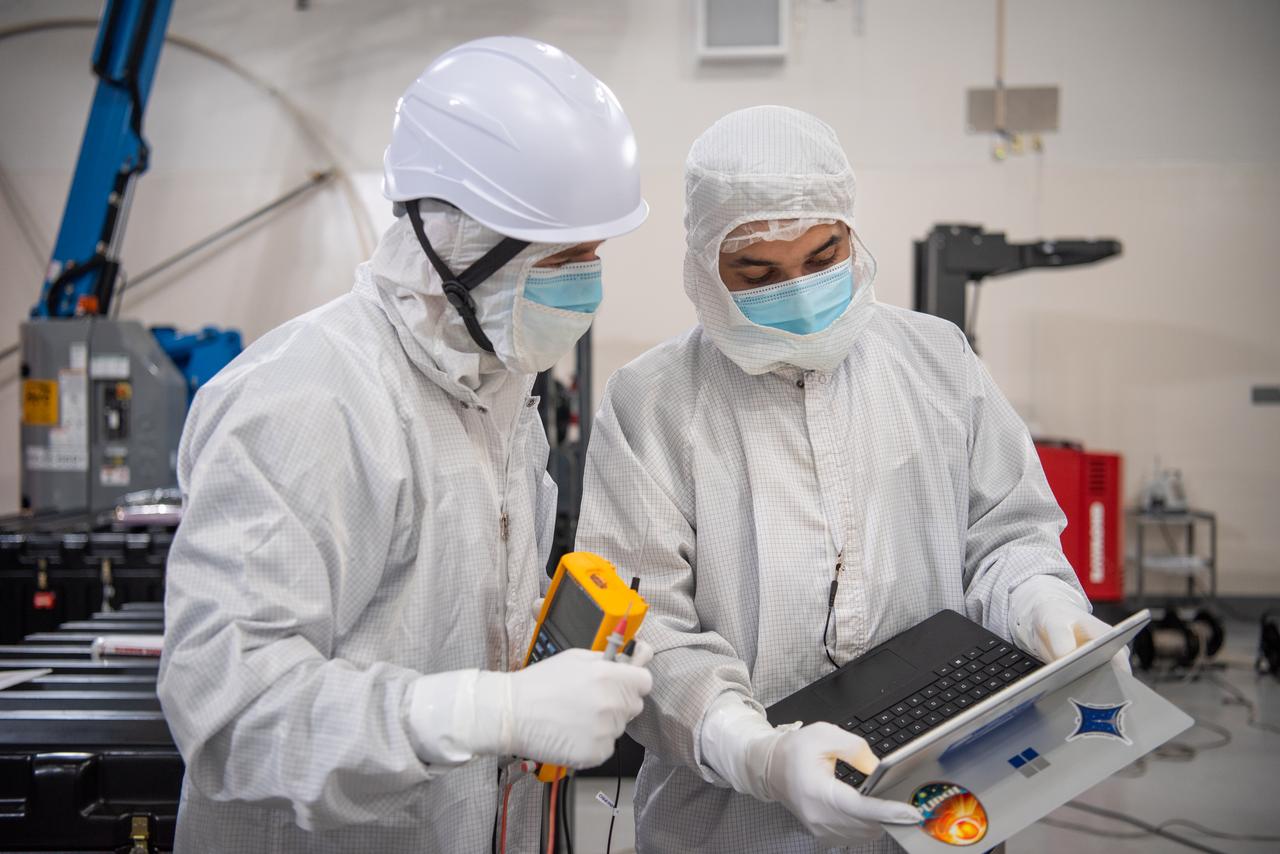
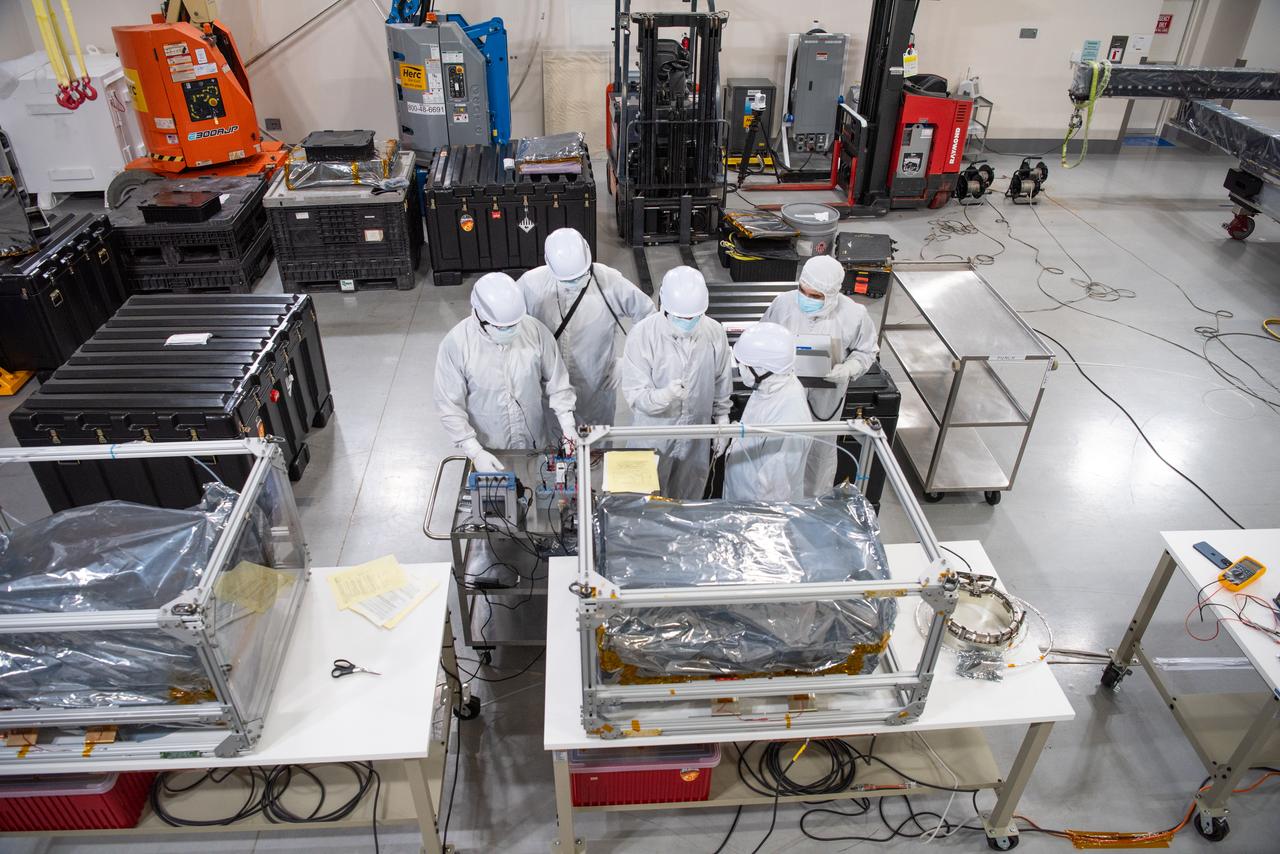
Technicians conduct testing operations on NASA’s PUNCH (Polarimeter to Unify the Corona and Heliosphere) spacecraft onto a work stand for testing operations at the Astrotech Processing Facility on Vandenberg Space Force Base in California on Sunday, Jan. 19, 2025. PUNCH, consisting of four satellites, will produce continuous 3D images of the solar wind and solar storms as it travels from the Sun to Earth to better understand how material in the corona accelerates to become the solar wind that fills the solar system. PUNCH will launch aboard a SpaceX Falcon 9 rocket in late February 2025.
PUNCH Satellites Lift to Work Stand fo Testing Operations
Technicians conduct testing operations on NASA’s PUNCH (Polarimeter to Unify the Corona and Heliosphere) spacecraft onto a work stand for testing operations at the Astrotech Processing Facility on Vandenberg Space Force Base in California on Sunday, Jan. 19, 2025. PUNCH, consisting of four satellites, will produce continuous 3D images of the solar wind and solar storms as it travels from the Sun to Earth to better understand how material in the corona accelerates to become the solar wind that fills the solar system. PUNCH will launch aboard a SpaceX Falcon 9 rocket in late February 2025.
PUNCH Satellites Lift to Work Stand fo Testing Operations
Technicians use an overheard crane to lift NASA’s PUNCH (Polarimeter to Unify the Corona and Heliosphere) spacecraft onto a work stand for testing operations at the Astrotech Processing Facility on Vandenberg Space Force Base in California on Sunday, Jan. 19, 2025. PUNCH, consisting of four satellites, will produce continuous 3D images of the solar wind and solar storms as it travels from the Sun to Earth to better understand how material in the corona accelerates to become the solar wind that fills the solar system. PUNCH will launch aboard a SpaceX Falcon 9 rocket in late February 2025.
PUNCH Satellites Lift to Work Stand fo Testing Operations
Technicians use an overheard crane to lift NASA’s PUNCH (Polarimeter to Unify the Corona and Heliosphere) spacecraft onto a work stand for testing operations at the Astrotech Processing Facility on Vandenberg Space Force Base in California on Sunday, Jan. 19, 2025. PUNCH, consisting of four satellites, will produce continuous 3D images of the solar wind and solar storms as it travels from the Sun to Earth to better understand how material in the corona accelerates to become the solar wind that fills the solar system. PUNCH will launch aboard a SpaceX Falcon 9 rocket in late February 2025.
PUNCH Satellites Lift to Work Stand fo Testing Operations
Technicians use an overheard crane to lift NASA’s PUNCH (Polarimeter to Unify the Corona and Heliosphere) spacecraft onto a work stand for testing operations at the Astrotech Processing Facility on Vandenberg Space Force Base in California on Sunday, Jan. 19, 2025. PUNCH, consisting of four satellites, will produce continuous 3D images of the solar wind and solar storms as it travels from the Sun to Earth to better understand how material in the corona accelerates to become the solar wind that fills the solar system. PUNCH will launch aboard a SpaceX Falcon 9 rocket in late February 2025.
PUNCH Satellites Lift to Work Stand fo Testing Operations
Technicians use an overheard crane to lift NASA’s PUNCH (Polarimeter to Unify the Corona and Heliosphere) spacecraft onto a work stand for testing operations at the Astrotech Processing Facility on Vandenberg Space Force Base in California on Sunday, Jan. 19, 2025. PUNCH, consisting of four satellites, will produce continuous 3D images of the solar wind and solar storms as it travels from the Sun to Earth to better understand how material in the corona accelerates to become the solar wind that fills the solar system. PUNCH will launch aboard a SpaceX Falcon 9 rocket in late February 2025.
PUNCH Satellites Lift to Work Stand fo Testing Operations
Technicians use an overheard crane to lift NASA’s PUNCH (Polarimeter to Unify the Corona and Heliosphere) spacecraft onto a work stand for testing operations at the Astrotech Processing Facility on Vandenberg Space Force Base in California on Sunday, Jan. 19, 2025. PUNCH, consisting of four satellites, will produce continuous 3D images of the solar wind and solar storms as it travels from the Sun to Earth to better understand how material in the corona accelerates to become the solar wind that fills the solar system. PUNCH will launch aboard a SpaceX Falcon 9 rocket in late February 2025.
PUNCH Satellites Lift to Work Stand fo Testing Operations
Technicians use an overheard crane to lift NASA’s PUNCH (Polarimeter to Unify the Corona and Heliosphere) spacecraft onto a work stand for testing operations at the Astrotech Processing Facility on Vandenberg Space Force Base in California on Sunday, Jan. 19, 2025. PUNCH, consisting of four satellites, will produce continuous 3D images of the solar wind and solar storms as it travels from the Sun to Earth to better understand how material in the corona accelerates to become the solar wind that fills the solar system. PUNCH will launch aboard a SpaceX Falcon 9 rocket in late February 2025.
PUNCH Satellites Lift to Work Stand fo Testing Operations
Technicians conduct testing operations on NASA’s PUNCH (Polarimeter to Unify the Corona and Heliosphere) spacecraft onto a work stand for testing operations at the Astrotech Processing Facility on Vandenberg Space Force Base in California on Sunday, Jan. 19, 2025. PUNCH, consisting of four satellites, will produce continuous 3D images of the solar wind and solar storms as it travels from the Sun to Earth to better understand how material in the corona accelerates to become the solar wind that fills the solar system. PUNCH will launch aboard a SpaceX Falcon 9 rocket in late February 2025.
PUNCH Satellites Lift to Work Stand fo Testing Operations
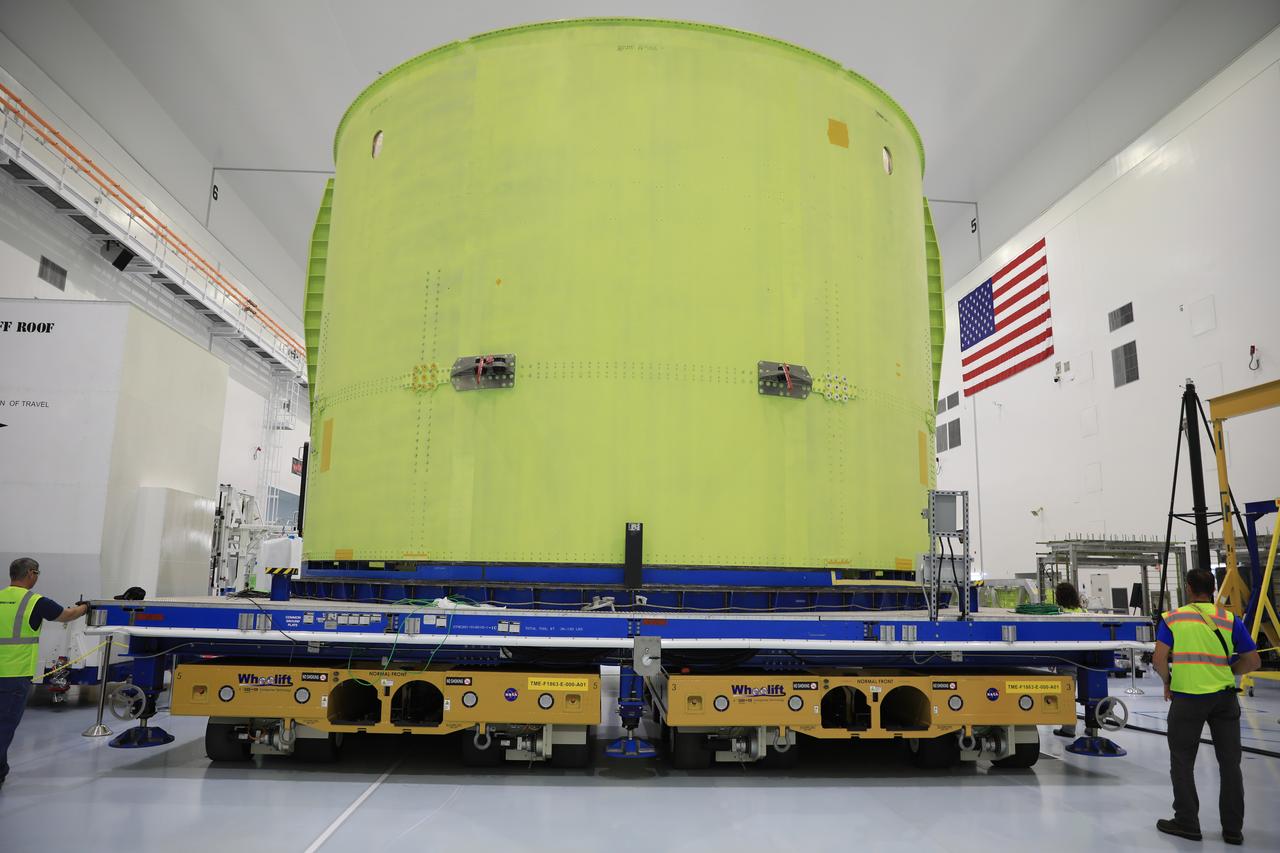
The engine section of the Space Launch System rocket’s core stage for NASA’s Artemis III mission is moved on a work stand into the high bay of the Space Station Processing Facility (SSPF) at NASA’s Kennedy Space Center in Florida on Dec. 15, 2022. The section was shipped from Michoud Assembly Facility in New Orleans on Dec. 10, 2022 aboard the Pegasus barge, was offloaded, and transferred to the SSPF. Teams will begin processing operations ahead of final integration in the Vehicle Assembly Building. Artemis III will send astronauts, including the first woman and first person of color, on a mission aboard the Orion spacecraft to the surface of the Moon.
Artemis III Core Stage Segment Move to Work Stand
Technicians use an overheard crane to lift NASA’s PUNCH (Polarimeter to Unify the Corona and Heliosphere) spacecraft onto a work stand for testing operations at the Astrotech Processing Facility on Vandenberg Space Force Base in California on Sunday, Jan. 19, 2025. PUNCH, consisting of four satellites, will produce continuous 3D images of the solar wind and solar storms as it travels from the Sun to Earth to better understand how material in the corona accelerates to become the solar wind that fills the solar system. PUNCH will launch aboard a SpaceX Falcon 9 rocket in late February 2025.
PUNCH Satellites Lift to Work Stand fo Testing Operations
The Low-Earth Orbit Flight Test of an Inflatable Decelerator (LOFTID) is lowered onto a work stand inside Building 836 at Vandenberg Space Force Base (VSFB) in California on Aug. 25, 2022. LOFTID is the secondary payload on NASA and the National Oceanic and Atmospheric Administration’s (NOAA) Joint Polar Satellite System-2 (JPSS-2) satellite mission. JPSS-2 is the third satellite in the Joint Polar Satellite System series. It is scheduled to lift off from VSFB on Nov. 1 from Space Launch Complex-3. JPSS-2, which will be renamed NOAA-21 after reaching orbit, will join a constellation of JPSS satellites that orbit from the North to the South pole, circling Earth 14 times a day and providing a full view of the entire globe twice daily. The NOAA/NASA Suomi National Polar-orbiting Partnership (Suomi NPP) satellite, and NOAA-20, previously known as JPSS-1, are both already in orbit. Each satellite carries at least four advanced instruments to measure weather and climate conditions on Earth. LOFTID is dedicated to the memory of Bernard Kutter. LOFTID will demonstrate inflatable heat shield technology that could enable a variety of proposed NASA missions to destinations such as Mars, Venus, and Titan, as well as returning heavier payloads from low-Earth orbit.
LOFTID Spacecraft Lift RV to Work Stand
The Low-Earth Orbit Flight Test of an Inflatable Decelerator (LOFTID) is lifted for its move to a work stand inside Building 836 at Vandenberg Space Force Base (VSFB) in California on Aug. 25, 2022. LOFTID is the secondary payload on NASA and the National Oceanic and Atmospheric Administration’s (NOAA) Joint Polar Satellite System-2 (JPSS-2) satellite mission. JPSS-2 is the third satellite in the Joint Polar Satellite System series. It is scheduled to lift off from VSFB on Nov. 1 from Space Launch Complex-3. JPSS-2, which will be renamed NOAA-21 after reaching orbit, will join a constellation of JPSS satellites that orbit from the North to the South pole, circling Earth 14 times a day and providing a full view of the entire globe twice daily. The NOAA/NASA Suomi National Polar-orbiting Partnership (Suomi NPP) satellite, and NOAA-20, previously known as JPSS-1, are both already in orbit. Each satellite carries at least four advanced instruments to measure weather and climate conditions on Earth. LOFTID is dedicated to the memory of Bernard Kutter. LOFTID will demonstrate inflatable heat shield technology that could enable a variety of proposed NASA missions to destinations such as Mars, Venus, and Titan, as well as returning heavier payloads from low-Earth orbit.
LOFTID Spacecraft Lift RV to Work Stand
Technicians remove NASA's Ice, Cloud and land Elevation Satellite-2 (ICESat-2) from its fixture inside the high bay of the Astrotech Space Operations facility on June 14, 2018, at Vandenberg Air Force Base in California. The satellite will be secured on a work stand for processing. ICESat-2 was shipped from the Northrop Grumman facility in Gilbert, Arizona, where it was built and tested. The satellite is scheduled to launch from Space Launch Complex-2 at Vandenberg on the final United Launch Alliance Delta II rocket. ICESat-2 will measure the height of a changing Earth, one laser pulse at a time, 10,000 laser pulses a second. The satellite will carry the Advanced Topographic Laser Altimeter System. ICESat-2 will help scientists investigate why, and how much our planet's frozen and icy areas, called the cryosphere, is changing in a warming climate.
Delta II ICESat-2 Spacecraft Lift to Work Stand
Technicians assist as a crane lowers NASA's Ice, Cloud and land Elevation Satellite-2 (ICESat-2) onto a work stand in the high bay of the Astrotech Space Operations facility on June 14, 2018, at Vandenberg Air Force Base in California. ICESat-2 was shipped from the Northrop Grumman facility in Gilbert, Arizona, where it was built and tested. The satellite is scheduled to launch from Space Launch Complex-2 at Vandenberg on the final United Launch Alliance Delta II rocket. ICESat-2 will measure the height of a changing Earth, one laser pulse at a time, 10,000 laser pulses a second. The satellite will carry the Advanced Topographic Laser Altimeter System. ICESat-2 will help scientists investigate why, and how much our planet's frozen and icy areas, called the cryosphere, is changing in a warming climate.
Delta II ICESat-2 Spacecraft Lift to Work Stand
Technicians assist as a crane lowers NASA's Ice, Cloud and land Elevation Satellite-2 (ICESat-2) onto a work stand in the high bay of the Astrotech Space Operations facility on June 14, 2018, at Vandenberg Air Force Base in California. ICESat-2 was shipped from the Northrop Grumman facility in Gilbert, Arizona, where it was built and tested. The satellite is scheduled to launch from Space Launch Complex-2 at Vandenberg on the final United Launch Alliance Delta II rocket. ICESat-2 will measure the height of a changing Earth, one laser pulse at a time, 10,000 laser pulses a second. The satellite will carry the Advanced Topographic Laser Altimeter System. ICESat-2 will help scientists investigate why, and how much our planet's frozen and icy areas, called the cryosphere, is changing in a warming climate.
Delta II ICESat-2 Spacecraft Lift to Work Stand
Technicians monitor the progress as NASA's Ice, Cloud and land Elevation Satellite-2 (ICESat-2) is removed from its fixture in the high bay of the Astrotech Space Operations facility on June 14, 2018, at Vandenberg Air Force Base in California. The satellite will be secured on a work stand for processing. ICESat-2 was shipped from the Northrop Grumman facility in Gilbert, Arizona, where it was built and tested. The satellite is scheduled to launch from Space Launch Complex-2 at Vandenberg on the final United Launch Alliance Delta II rocket. ICESat-2 will measure the height of a changing Earth, one laser pulse at a time, 10,000 laser pulses a second. The satellite will carry the Advanced Topographic Laser Altimeter System. ICESat-2 will help scientists investigate why, and how much our planet's frozen and icy areas, called the cryosphere, is changing in a warming climate.
Delta II ICESat-2 Spacecraft Lift to Work Stand
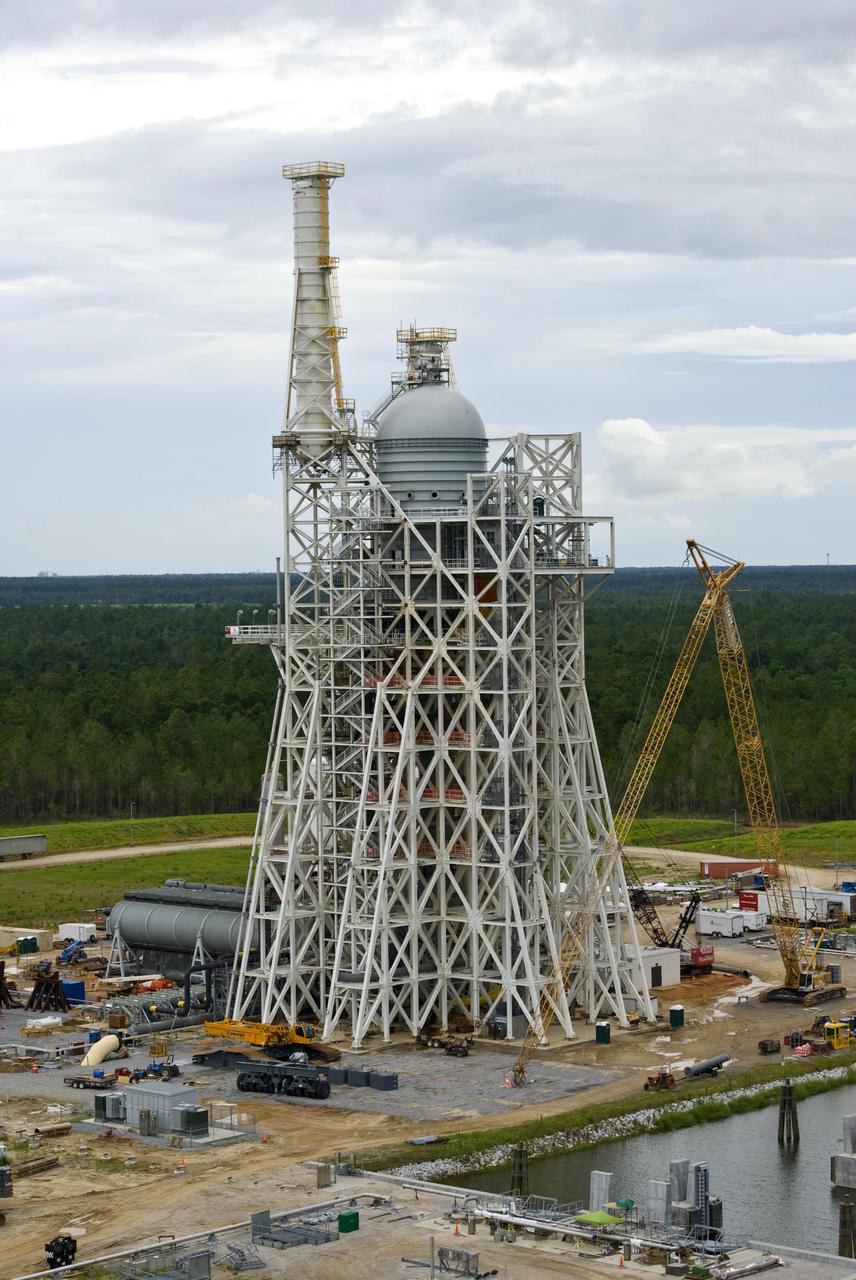
Rocket engine propellant tanks and cell dome top the A-3 Test Stand under construction at Stennis Space Center. The stand will test next-generation rocket engines that could carry humans beyond low-Earth orbit into deep space once more.
A-3 Test Stand work
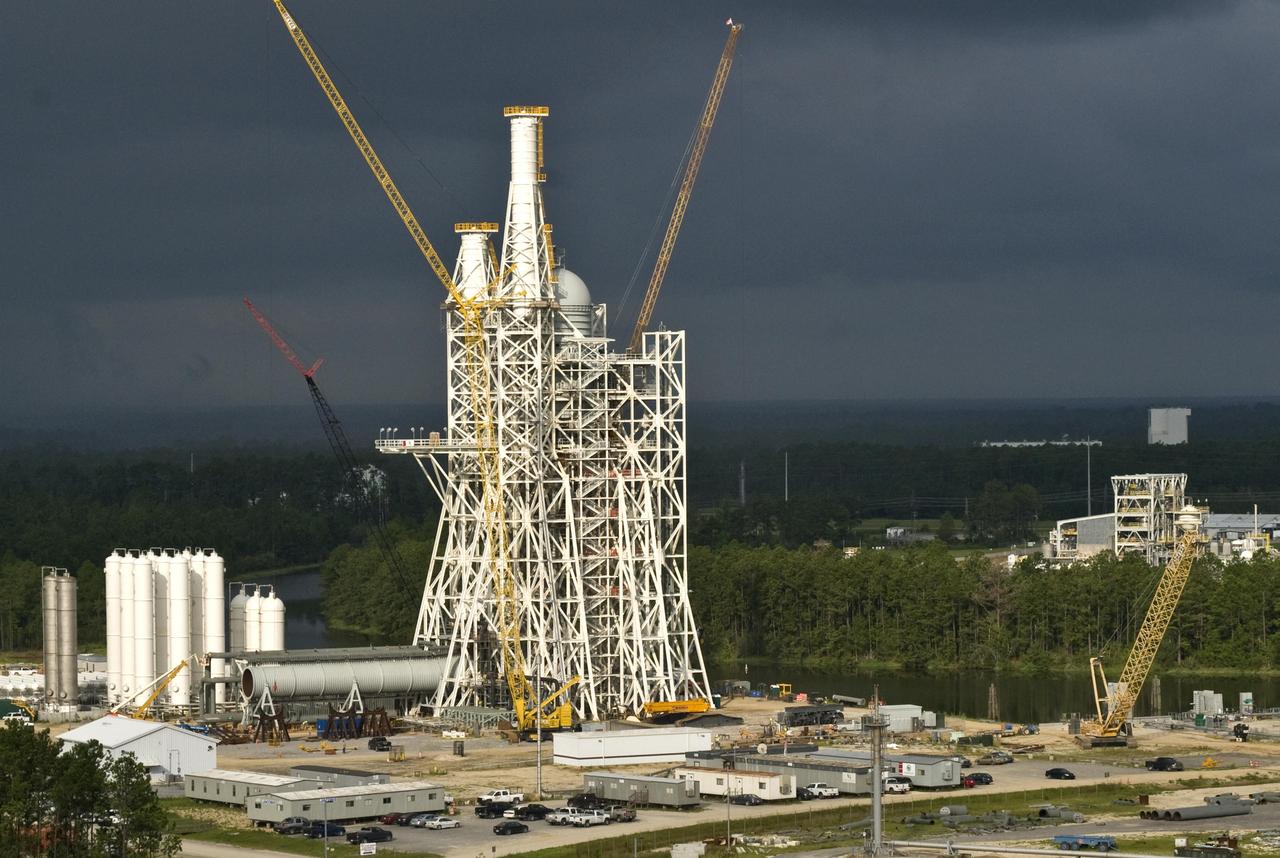
Stennis Space Center employees have installed liquid oxygen and liquid hydrogen tanks atop the A-3 Test Stand, raising the structure to its full 300-foot height. The stand is being built to test next-generation rocket engines that could carry humans beyond low-Earth orbit into deep space. The A-3 Test Stand is scheduled for completion and activation in 2013.
A-3 Test Stand work
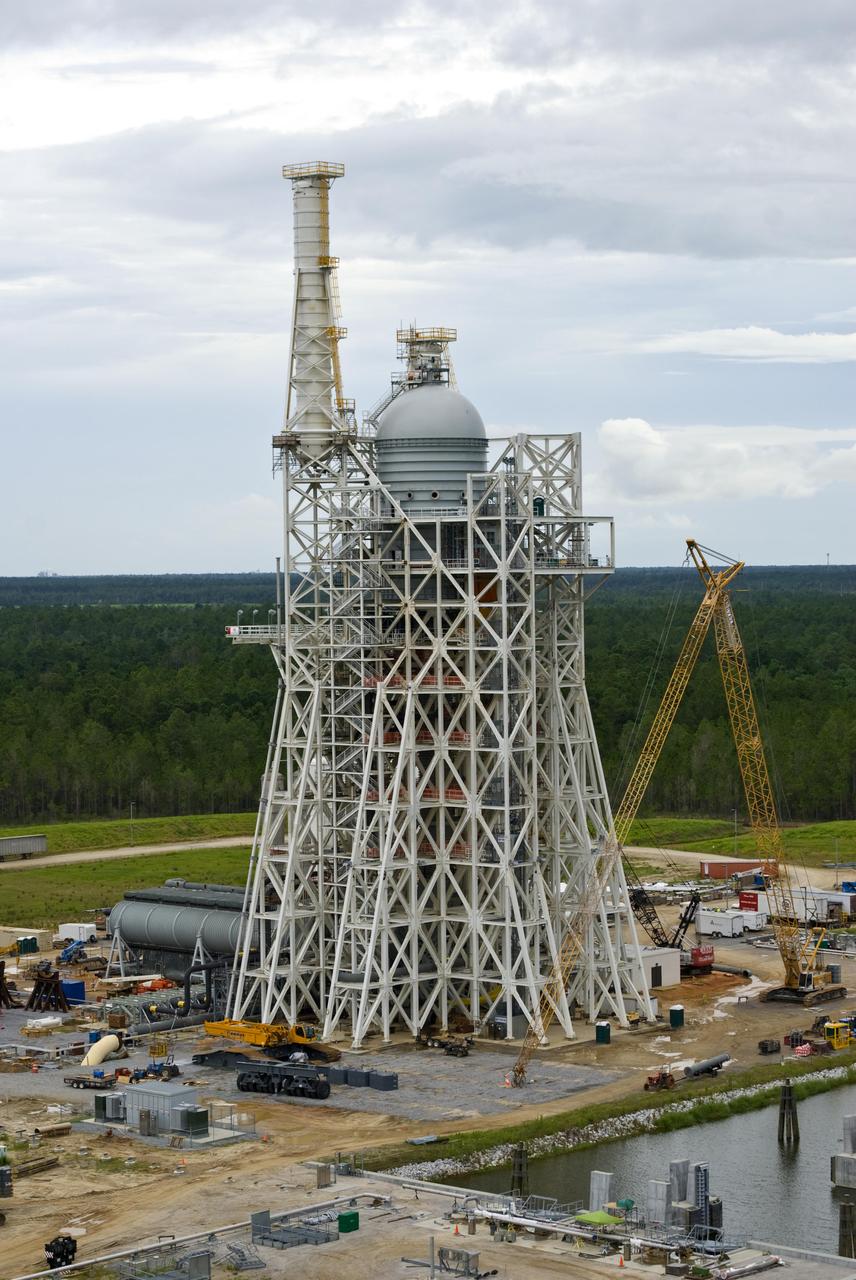
Rocket engine propellant tanks and cell dome top the A-3 Test Stand under construction at Stennis Space Center. The stand will test next-generation rocket engines that could carry humans beyond low-Earth orbit into deep space once more.
A-3 Test Stand work
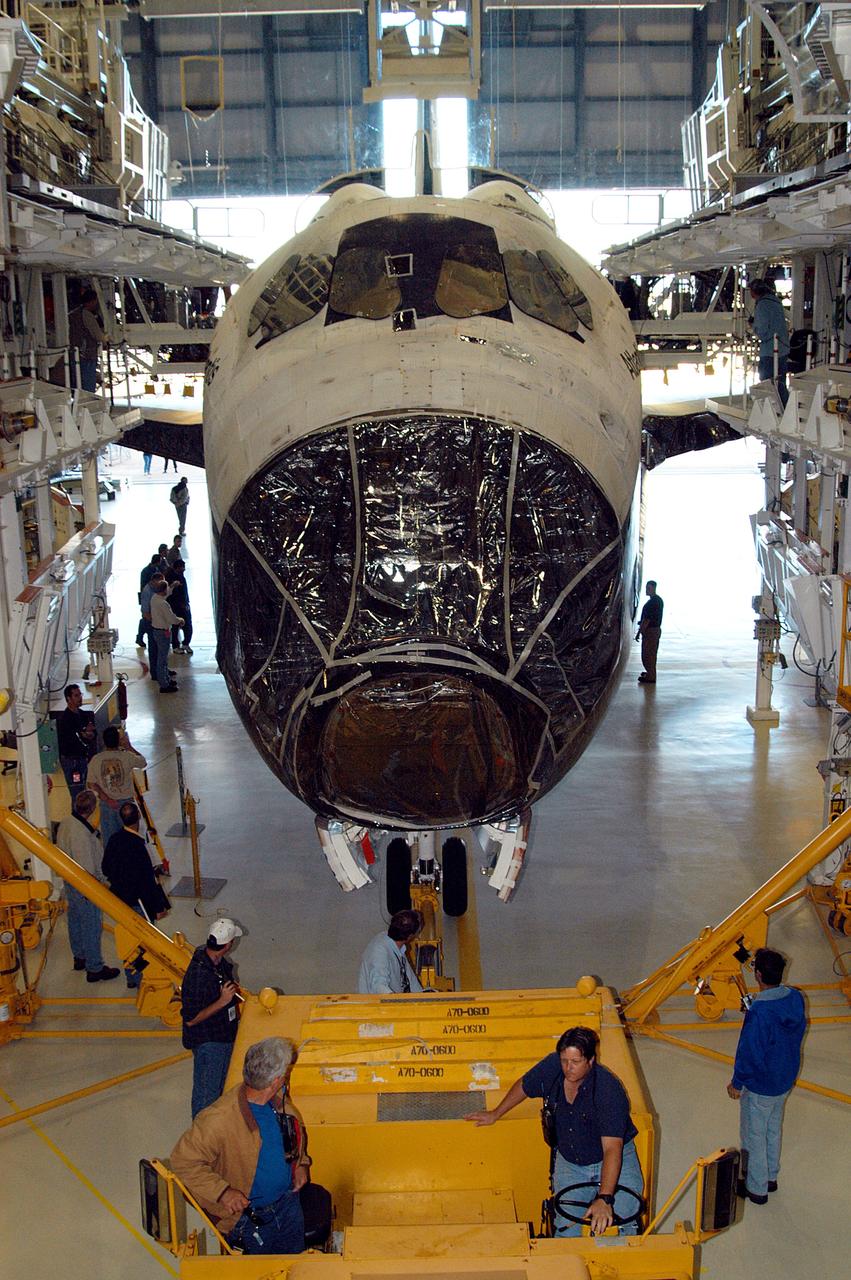
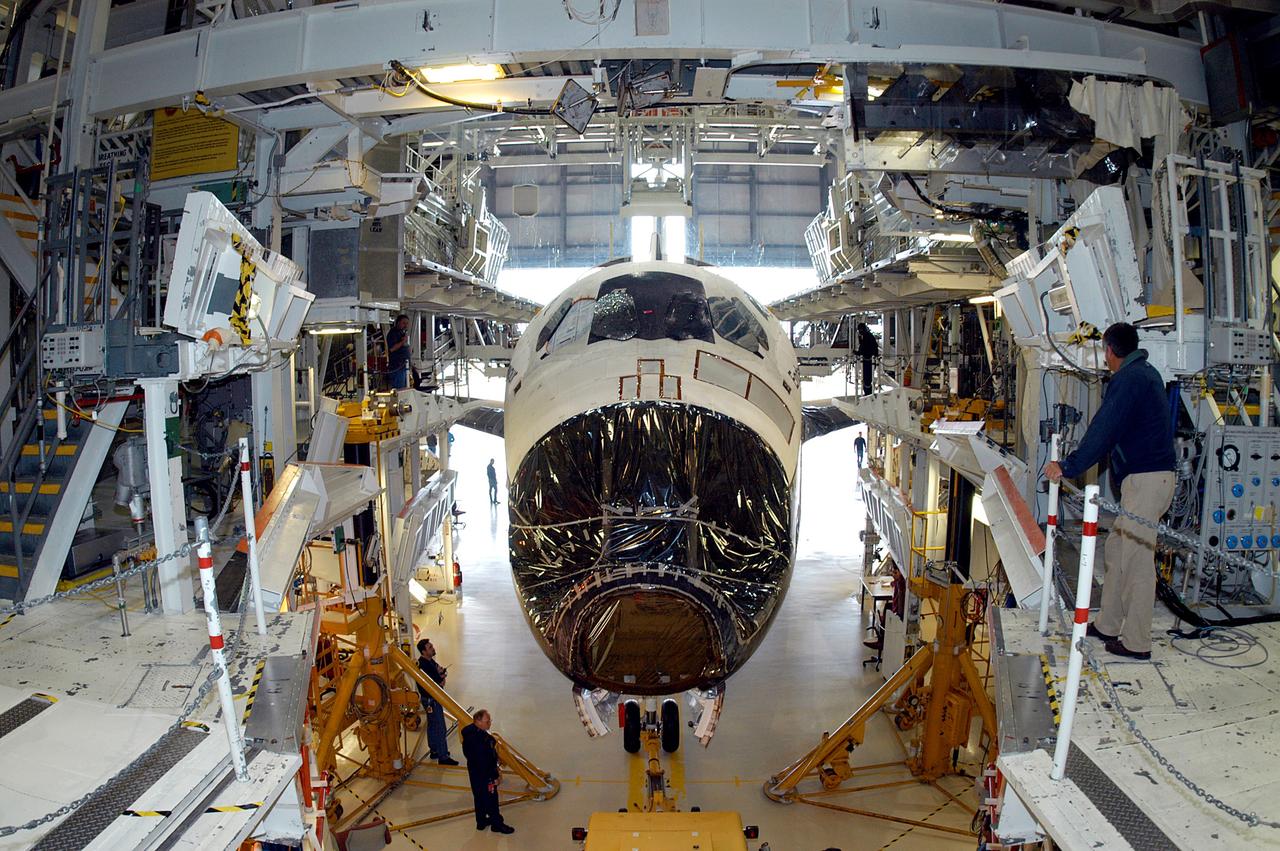
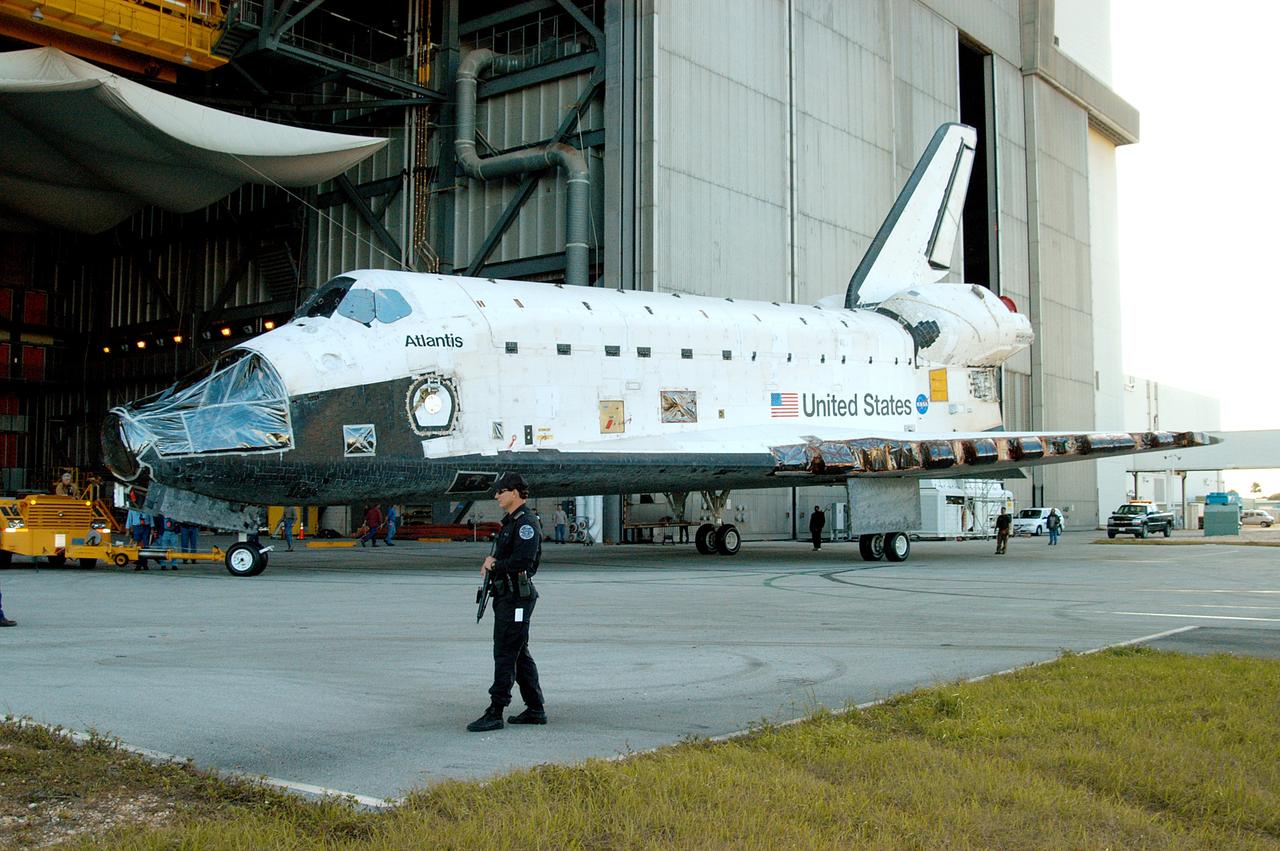
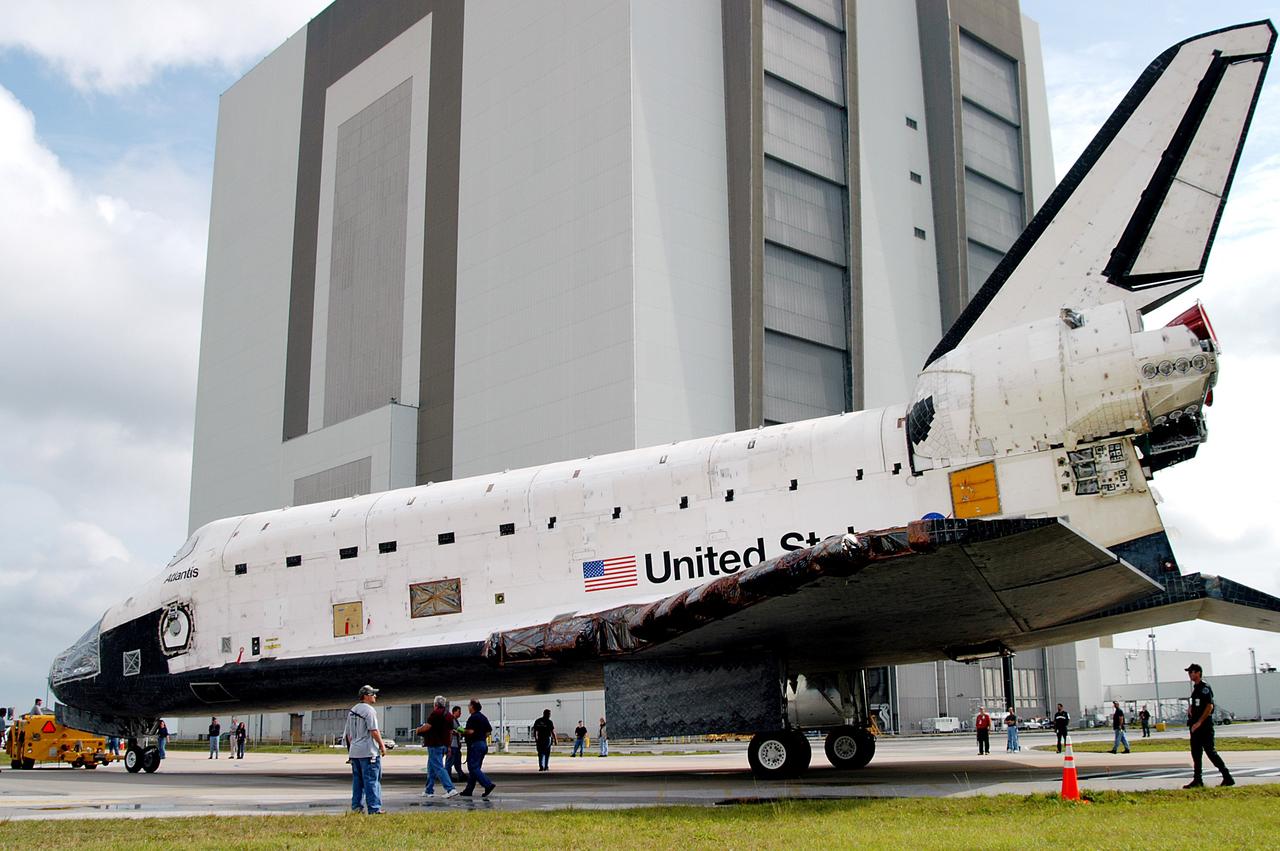
KENNEDY SPACE CENTER, FLA. -  The orbiter Atlantis rolls toward the Orbiter Processing Facility after spending 10 days in the Vehicle Assembly Building.  The hiatus in the VAB allowed work to be performed in the OPF that can only be accomplished while the bay is empty. Work included annual validation of the bay's cranes, work platforms, lifting mechanisms and jack stands.  Work resumes to prepare Atlantis for launch in September 2004 on the first return-to-flight mission, STS-114.
KENNEDY SPACE CENTER, FLA. - The orbiter Atlantis rolls toward the Orbiter Processing Facility after spending 10 days in the Vehicle Assembly Building. The hiatus in the VAB allowed work to be performed in the OPF that can only be accomplished while the bay is empty. Work included annual validation of the bay's cranes, work platforms, lifting mechanisms and jack stands. Work resumes to prepare Atlantis for launch in September 2004 on the first return-to-flight mission, STS-114.
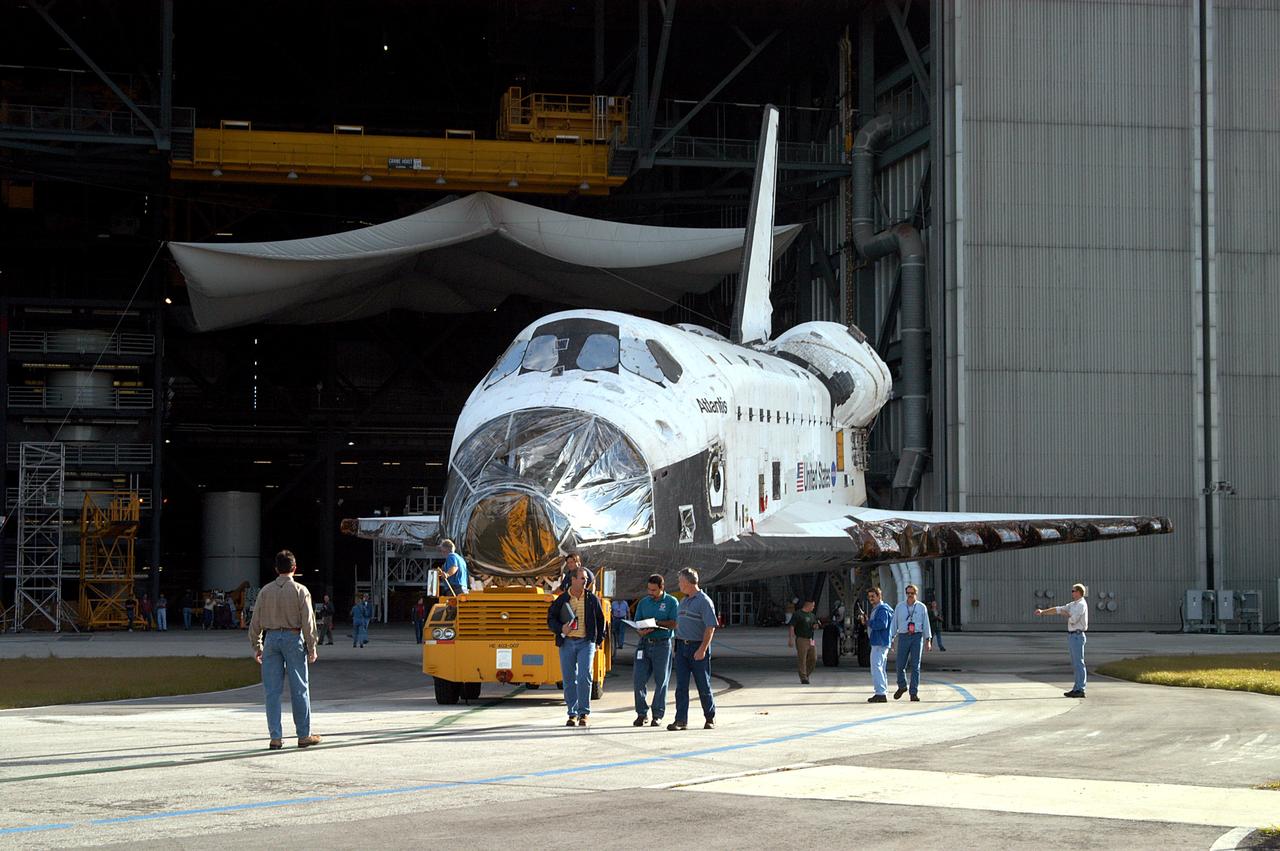
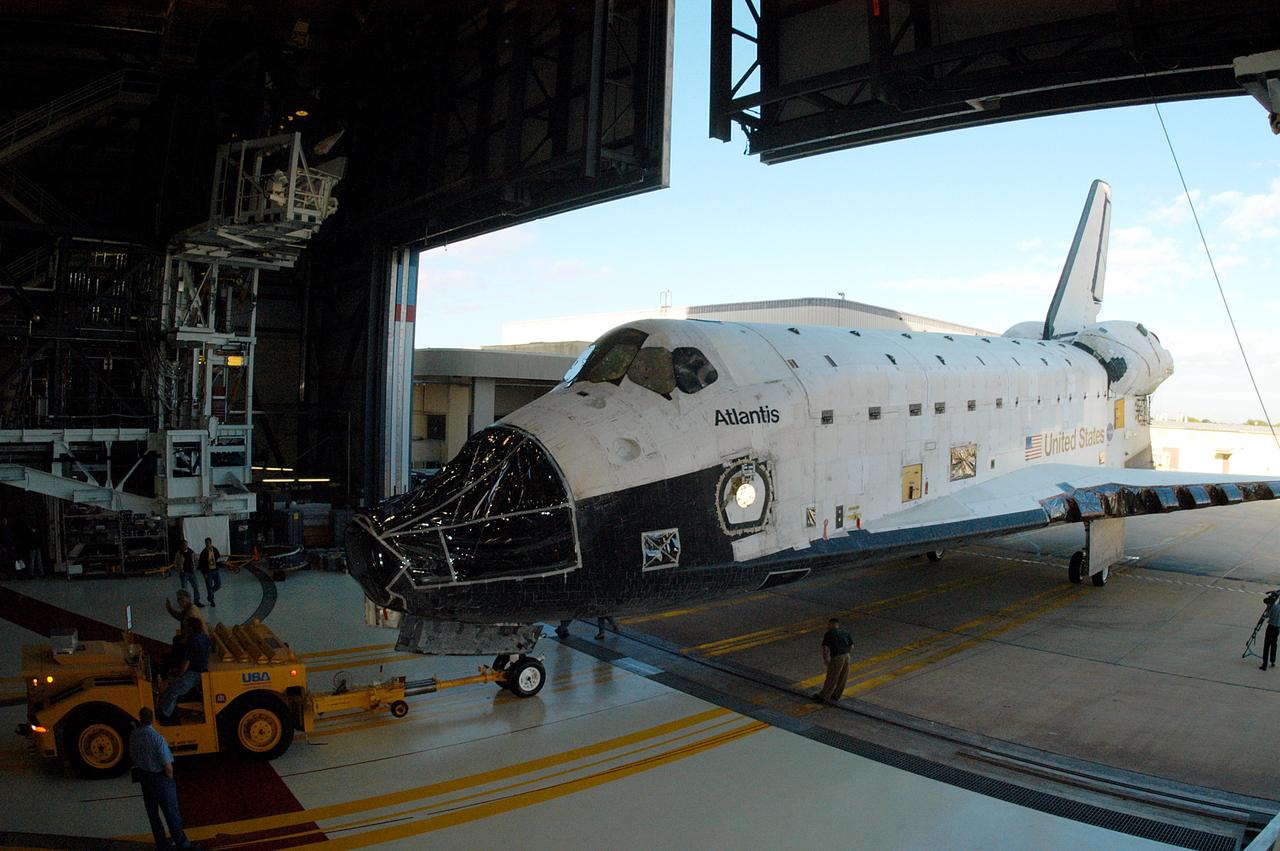
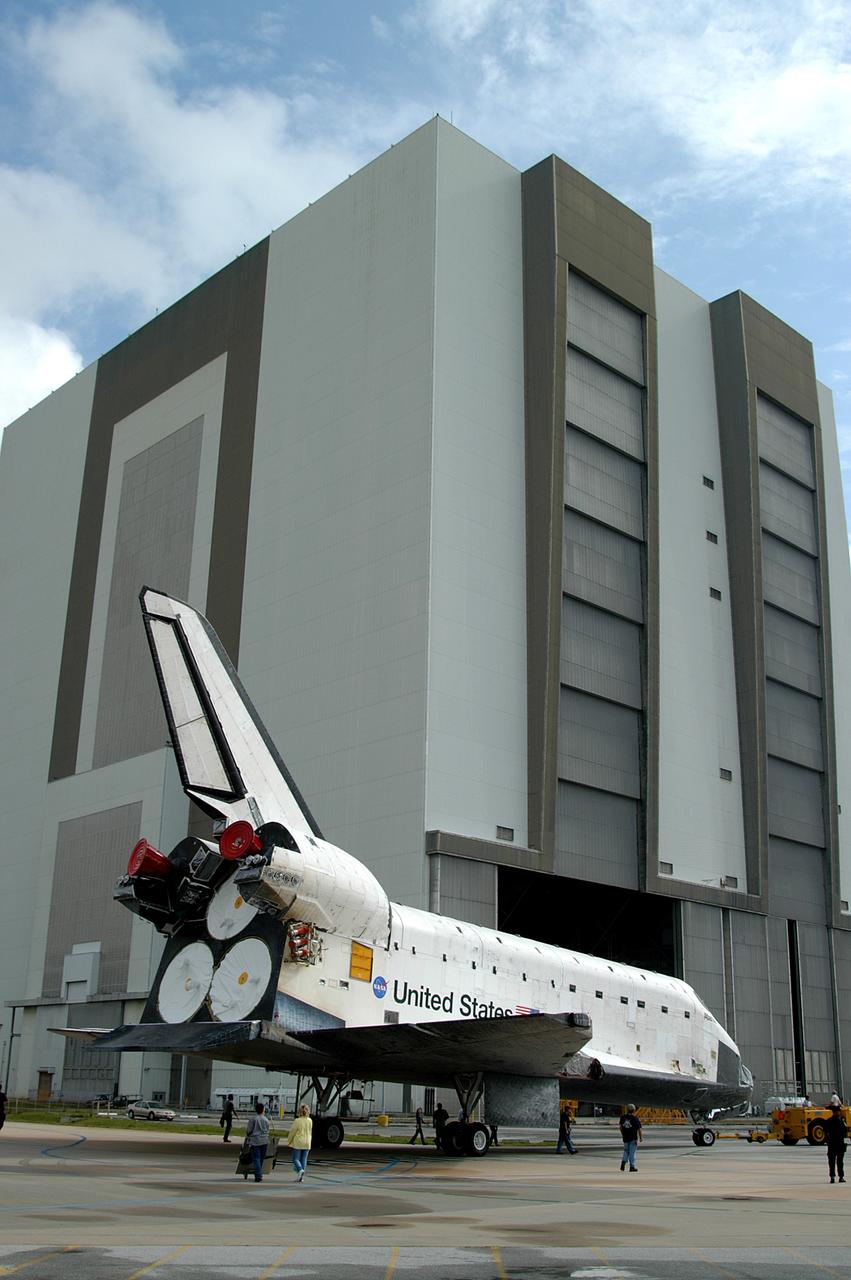
KENNEDY SPACE CENTER, FLA. -  The orbiter Atlantis rolls out of the Vehicle Assembly Building for transfer back to the Orbiter Processing Facility.  Atlantis spent 10 days in the VAB to allow work to be performed in the OPF that can only be accomplished while the bay is empty. Work included annual validation of the bay's cranes, work platforms, lifting mechanisms and jack stands.  Work resumes to prepare Atlantis for launch in September 2004 on the first return-to-flight mission, STS-114.
KENNEDY SPACE CENTER, FLA. - The orbiter Atlantis rolls out of the Vehicle Assembly Building for transfer back to the Orbiter Processing Facility. Atlantis spent 10 days in the VAB to allow work to be performed in the OPF that can only be accomplished while the bay is empty. Work included annual validation of the bay's cranes, work platforms, lifting mechanisms and jack stands. Work resumes to prepare Atlantis for launch in September 2004 on the first return-to-flight mission, STS-114.
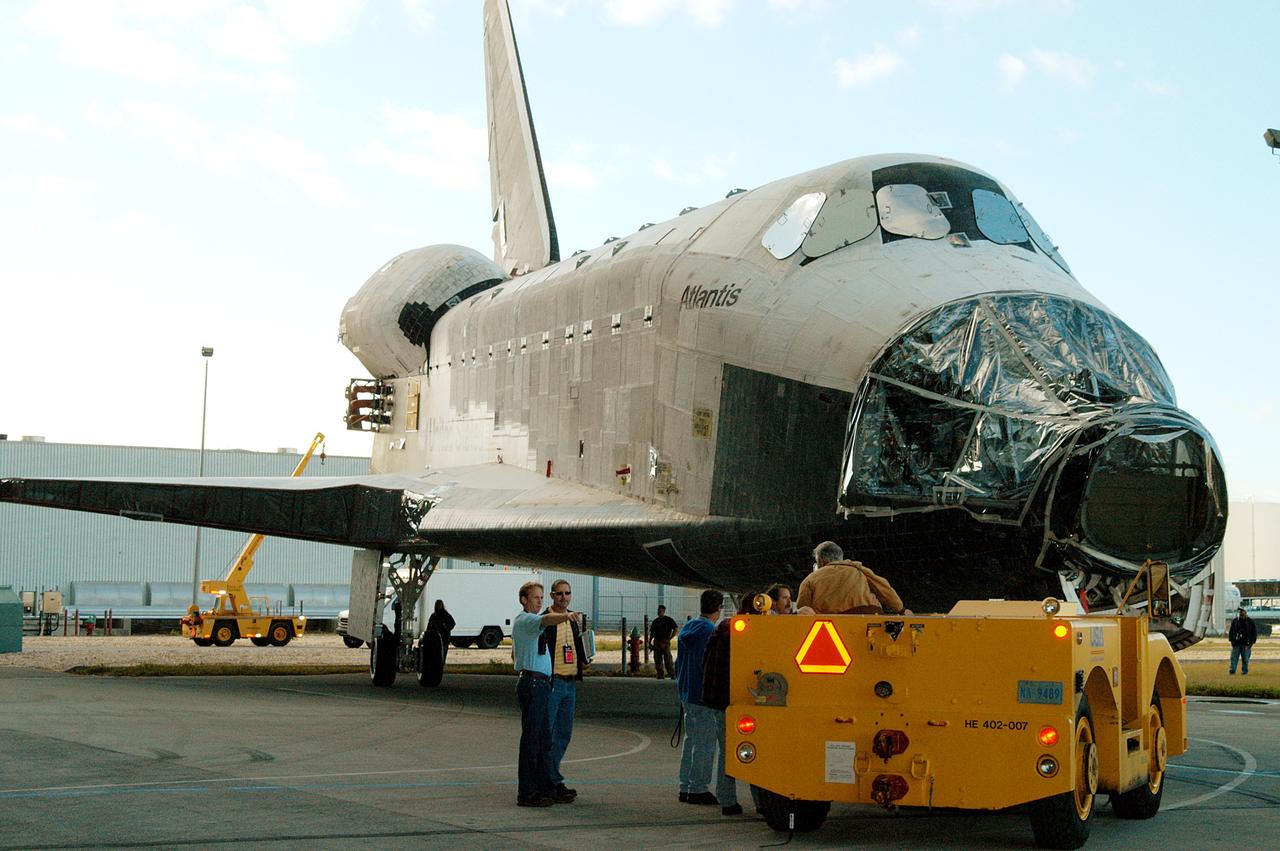
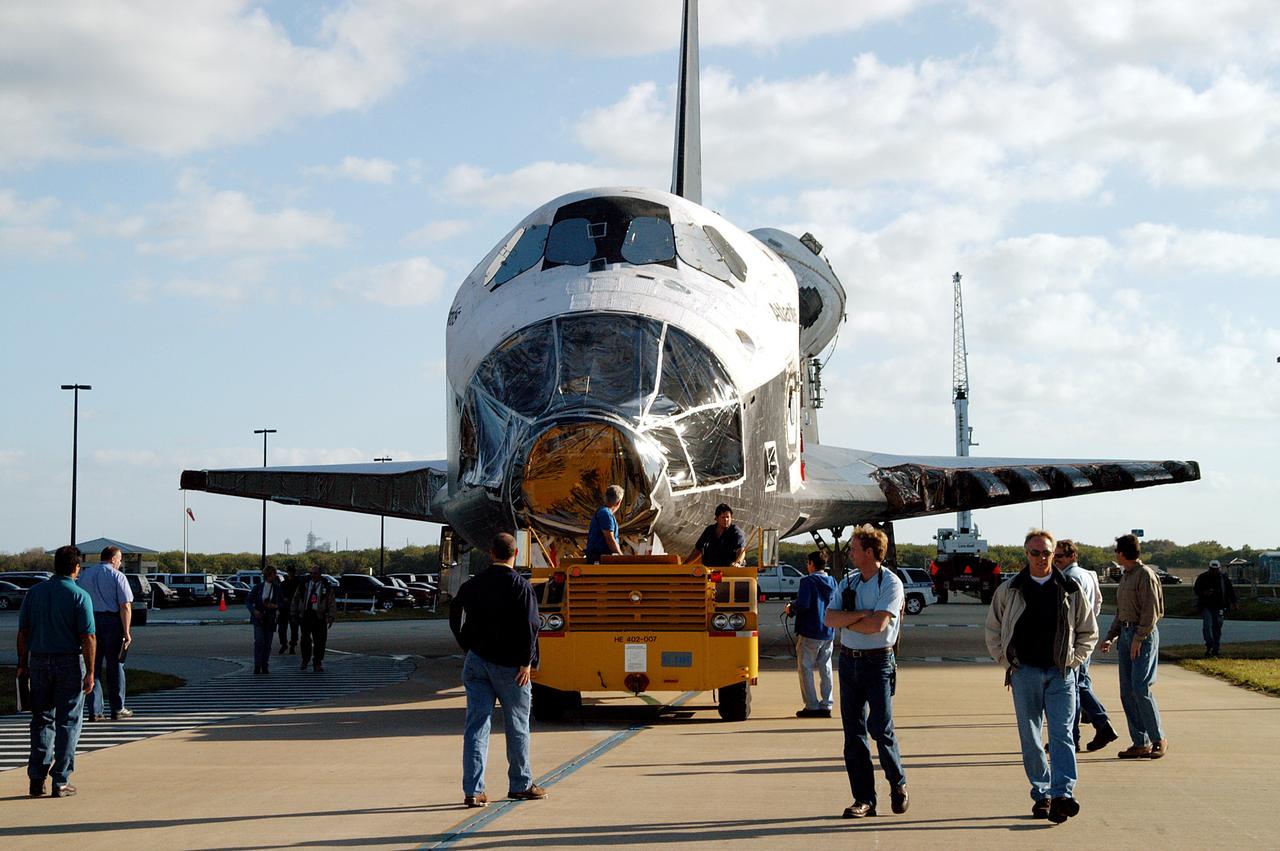
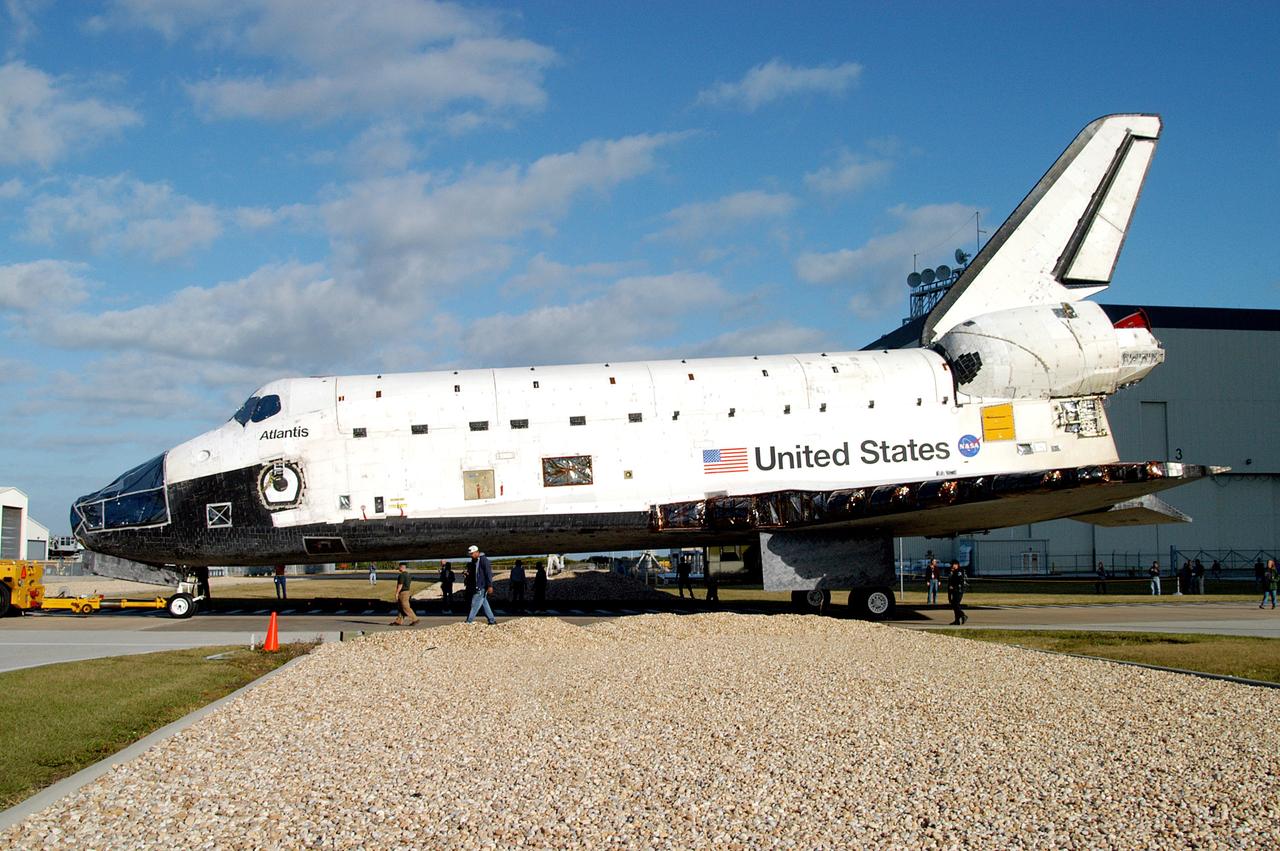
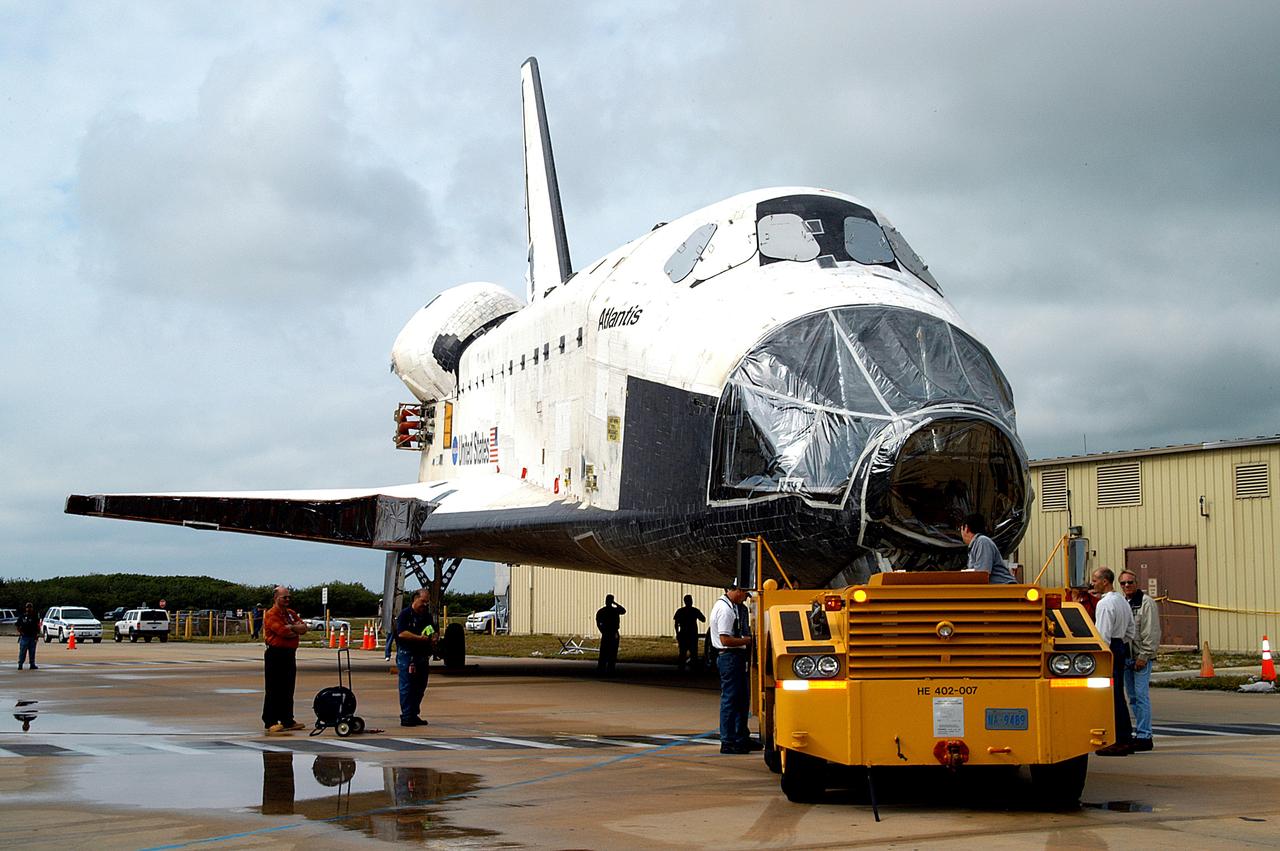
KENNEDY SPACE CENTER, FLA. -  Workers accompany the orbiter Atlantis as it is towed back to the Orbiter Processing Facility after spending 10 days in the Vehicle Assembly Building.  The hiatus in the VAB allowed work to be performed in the OPF that can only be accomplished while the bay is empty. Work included annual validation of the bay's cranes, work platforms, lifting mechanisms and jack stands.  Work resumes to prepare Atlantis for launch in September 2004 on the first return-to-flight mission, STS-114.
KENNEDY SPACE CENTER, FLA. - Workers accompany the orbiter Atlantis as it is towed back to the Orbiter Processing Facility after spending 10 days in the Vehicle Assembly Building. The hiatus in the VAB allowed work to be performed in the OPF that can only be accomplished while the bay is empty. Work included annual validation of the bay's cranes, work platforms, lifting mechanisms and jack stands. Work resumes to prepare Atlantis for launch in September 2004 on the first return-to-flight mission, STS-114.
KENNEDY SPACE CENTER, FLA. - The Space Shuttle orbiter Atlantis approaches the Vehicle Assembly Building (VAB).  It is being towed from the Orbiter Processing Facility (OPF) to allow work to be performed in the bay that can only be accomplished while it is empty. Work scheduled in the processing facility includes annual validation of the bay's cranes, work platforms, lifting mechanisms, and jack stands. Atlantis will remain in the VAB for about 10 days, then return to the OPF as work resumes to prepare it for launch in September 2004 on the first return-to-flight mission, STS-114.
KENNEDY SPACE CENTER, FLA. - The Space Shuttle orbiter Atlantis approaches the Vehicle Assembly Building (VAB). It is being towed from the Orbiter Processing Facility (OPF) to allow work to be performed in the bay that can only be accomplished while it is empty. Work scheduled in the processing facility includes annual validation of the bay's cranes, work platforms, lifting mechanisms, and jack stands. Atlantis will remain in the VAB for about 10 days, then return to the OPF as work resumes to prepare it for launch in September 2004 on the first return-to-flight mission, STS-114.
KENNEDY SPACE CENTER, FLA. - The Space Shuttle orbiter Atlantis nears the Vehicle Assembly Building (VAB).  It is being towed from the Orbiter Processing Facility (OPF) to allow work to be performed in the bay that can only be accomplished while it is empty. Work scheduled in the processing facility includes annual validation of the bay's cranes, work platforms, lifting mechanisms, and jack stands. Atlantis will remain in the VAB for about 10 days, then return to the OPF as work resumes to prepare it for launch in September 2004 on the first return-to-flight mission, STS-114.
KENNEDY SPACE CENTER, FLA. - The Space Shuttle orbiter Atlantis nears the Vehicle Assembly Building (VAB). It is being towed from the Orbiter Processing Facility (OPF) to allow work to be performed in the bay that can only be accomplished while it is empty. Work scheduled in the processing facility includes annual validation of the bay's cranes, work platforms, lifting mechanisms, and jack stands. Atlantis will remain in the VAB for about 10 days, then return to the OPF as work resumes to prepare it for launch in September 2004 on the first return-to-flight mission, STS-114.
KENNEDY SPACE CENTER, FLA. -  The orbiter Atlantis is towed back to the Orbiter Processing Facility after spending 10 days in the Vehicle Assembly Building.  The hiatus in the VAB allowed work to be performed in the OPF that can only be accomplished while the bay is empty. Work included annual validation of the bay's cranes, work platforms, lifting mechanisms and jack stands.  Work resumes to prepare Atlantis for launch in September 2004 on the first return-to-flight mission, STS-114.
KENNEDY SPACE CENTER, FLA. - The orbiter Atlantis is towed back to the Orbiter Processing Facility after spending 10 days in the Vehicle Assembly Building. The hiatus in the VAB allowed work to be performed in the OPF that can only be accomplished while the bay is empty. Work included annual validation of the bay's cranes, work platforms, lifting mechanisms and jack stands. Work resumes to prepare Atlantis for launch in September 2004 on the first return-to-flight mission, STS-114.
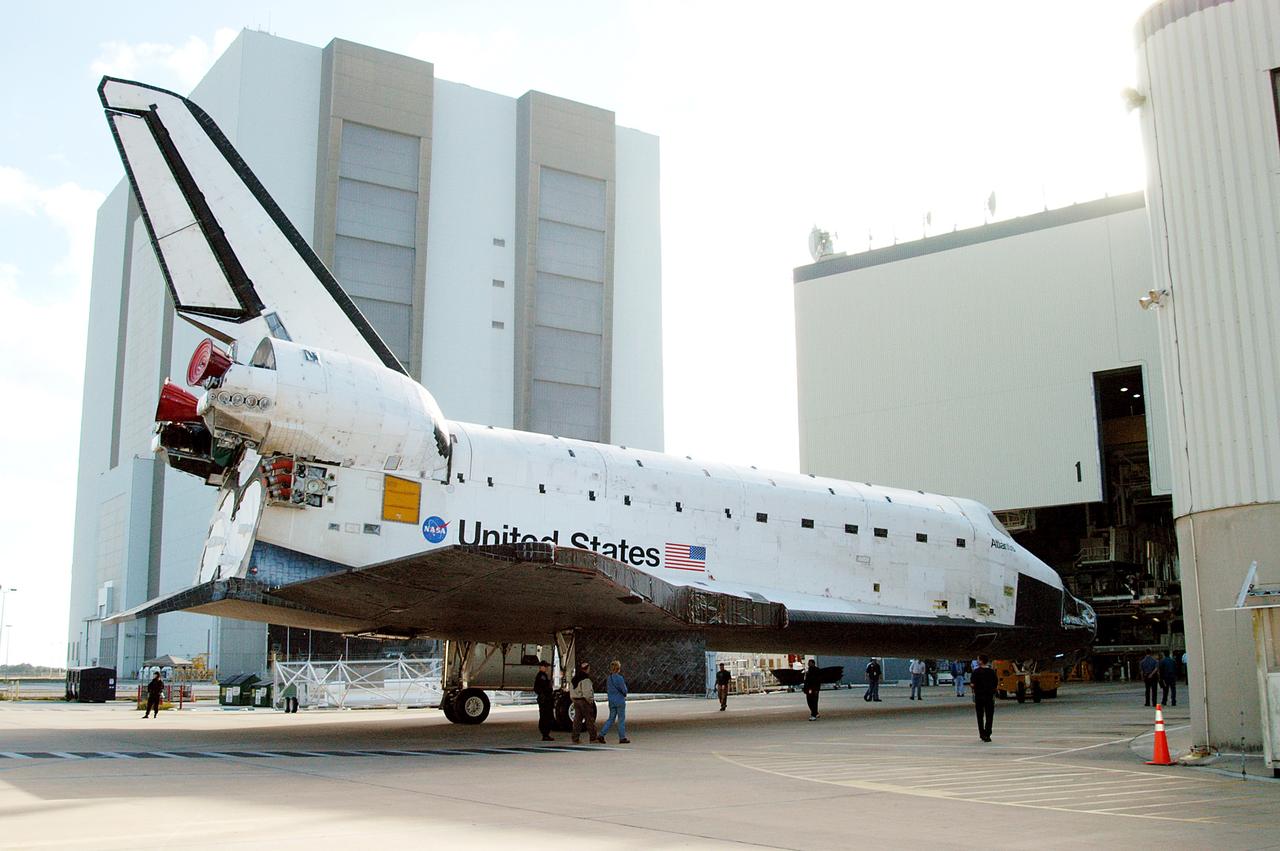
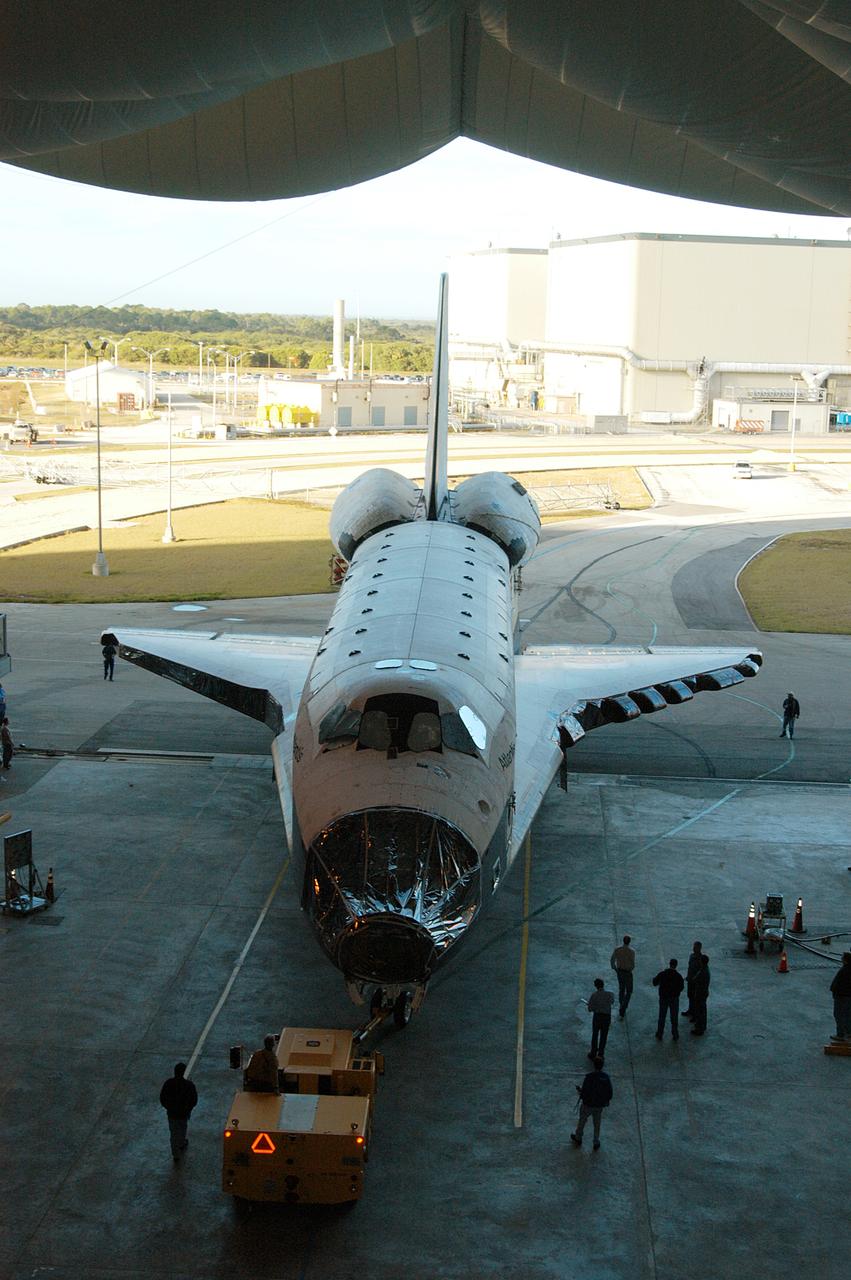
KENNEDY SPACE CENTER, FLA. -- The orbiter Atlantis  is backed away from the Vehicle Assembly Building for transfer back to the Orbiter Processing Facility.  Atlantis spent 10 days in the VAB to allow work to be performed in the OPF that can only be accomplished while the bay is empty. Work included annual validation of the bay's cranes, work platforms, lifting mechanisms and jack stands.  Work resumes to prepare Atlantis for launch in September 2004 on the first return-to-flight mission, STS-114.
KENNEDY SPACE CENTER, FLA. -- The orbiter Atlantis is backed away from the Vehicle Assembly Building for transfer back to the Orbiter Processing Facility. Atlantis spent 10 days in the VAB to allow work to be performed in the OPF that can only be accomplished while the bay is empty. Work included annual validation of the bay's cranes, work platforms, lifting mechanisms and jack stands. Work resumes to prepare Atlantis for launch in September 2004 on the first return-to-flight mission, STS-114.
KENNEDY SPACE CENTER, FLA. -  The orbiter Atlantis is backed out of the Vehicle Assembly Building for transfer back to the Orbiter Processing Facility.  Atlantis spent 10 days in the VAB to allow work to be performed in the OPF that can only be accomplished while the bay is empty. Work included annual validation of the bay's cranes, work platforms, lifting mechanisms and jack stands.  Work resumes to prepare Atlantis for launch in September 2004 on the first return-to-flight mission, STS-114.
KENNEDY SPACE CENTER, FLA. - The orbiter Atlantis is backed out of the Vehicle Assembly Building for transfer back to the Orbiter Processing Facility. Atlantis spent 10 days in the VAB to allow work to be performed in the OPF that can only be accomplished while the bay is empty. Work included annual validation of the bay's cranes, work platforms, lifting mechanisms and jack stands. Work resumes to prepare Atlantis for launch in September 2004 on the first return-to-flight mission, STS-114.
KENNEDY SPACE CENTER, FLA. - The Space Shuttle orbiter Atlantis is towed from the Orbiter Processing Facility (OPF) to the Vehicle Assembly Building (VAB). The move will allow work to be performed in the OPF that can only be accomplished while the bay is empty. Work scheduled in the processing facility includes annual validation of the bay's cranes, work platforms, lifting mechanisms, and jack stands. Atlantis will remain in the VAB for about 10 days, then return to the OPF as work resumes to prepare it for launch in September 2004 on the first return-to-flight mission, STS-114.
KENNEDY SPACE CENTER, FLA. -  The orbiter Atlantis rolls into the Orbiter Processing Facility after spending 10 days in the Vehicle Assembly Building.  The hiatus in the VAB allowed work to be performed in the OPF that can only be accomplished while the bay is empty. Work included annual validation of the bay's cranes, work platforms, lifting mechanisms and jack stands.  Work resumes to prepare Atlantis for launch in September 2004 on the first return-to-flight mission, STS-114.
KENNEDY SPACE CENTER, FLA. - The orbiter Atlantis rolls into the Orbiter Processing Facility after spending 10 days in the Vehicle Assembly Building. The hiatus in the VAB allowed work to be performed in the OPF that can only be accomplished while the bay is empty. Work included annual validation of the bay's cranes, work platforms, lifting mechanisms and jack stands. Work resumes to prepare Atlantis for launch in September 2004 on the first return-to-flight mission, STS-114.
KENNEDY SPACE CENTER, FLA. -  The orbiter Atlantis is back inside the Orbiter Processing Facility after spending 10 days in the Vehicle Assembly Building.  The hiatus in the VAB allowed work to be performed in the OPF that can only be accomplished while the bay is empty. Work included annual validation of the bay's cranes, work platforms, lifting mechanisms and jack stands.  Work resumes to prepare Atlantis for launch in September 2004 on the first return-to-flight mission, STS-114.
KENNEDY SPACE CENTER, FLA. - The orbiter Atlantis is back inside the Orbiter Processing Facility after spending 10 days in the Vehicle Assembly Building. The hiatus in the VAB allowed work to be performed in the OPF that can only be accomplished while the bay is empty. Work included annual validation of the bay's cranes, work platforms, lifting mechanisms and jack stands. Work resumes to prepare Atlantis for launch in September 2004 on the first return-to-flight mission, STS-114.
KENNEDY SPACE CENTER, FLA. -- The orbiter Atlantis is backed out of the Vehicle Assembly Building for transfer back to the Orbiter Processing Facility.  Atlantis spent 10 days in the VAB to allow work to be performed in the OPF that can only be accomplished while the bay is empty. Work included annual validation of the bay's cranes, work platforms, lifting mechanisms and jack stands.  Work resumes to prepare Atlantis for launch in September 2004 on the first return-to-flight mission, STS-114.
KENNEDY SPACE CENTER, FLA. -- The orbiter Atlantis is backed out of the Vehicle Assembly Building for transfer back to the Orbiter Processing Facility. Atlantis spent 10 days in the VAB to allow work to be performed in the OPF that can only be accomplished while the bay is empty. Work included annual validation of the bay's cranes, work platforms, lifting mechanisms and jack stands. Work resumes to prepare Atlantis for launch in September 2004 on the first return-to-flight mission, STS-114.
KENNEDY SPACE CENTER, FLA. -- Endeavour backs out of the Orbiter Processing Facility for temporary transfer to the Vehicle Assembly Building. The move allows work to be performed in the OPF that can only be accomplished while the bay is empty. Work scheduled in the OPF includes annual validation of the bay’s cranes, work platforms, lifting mechanisms and jack stands. Endeavour will remain in the VAB for approximately 12 days, then return to the OPF.
KENNEDY SPACE CENTER, FLA. -- Endeavour settles into  place inside the Vehicle Assembly Building (VAB) where it has been moved for temporary storage.  It left the Orbiter Processing Facility (OPF) to allow work to be performed in the OPF that can only be accomplished while the bay is empty. Work scheduled in the OPF includes annual validation of the bay’s cranes, work platforms, lifting mechanisms and jack stands. Endeavour will remain in the VAB for approximately 12 days, then return to the OPF.
KENNEDY SPACE CENTER, FLA. -- Endeavour settles into place inside the Vehicle Assembly Building (VAB) where it has been moved for temporary storage. It left the Orbiter Processing Facility (OPF) to allow work to be performed in the OPF that can only be accomplished while the bay is empty. Work scheduled in the OPF includes annual validation of the bay’s cranes, work platforms, lifting mechanisms and jack stands. Endeavour will remain in the VAB for approximately 12 days, then return to the OPF.
KENNEDY SPACE CENTER, FLA. -- Endeavour is towed in front of the Vehicle Assembly Building (VAB) where it is going for temporary storage.  The orbiter has been moved from the Orbiter Processing Facility (OPF) to allow work to be performed in the OPF that can only be accomplished while the bay is empty. Work scheduled in the OPF includes annual validation of the bay’s cranes, work platforms, lifting mechanisms and jack stands. Endeavour will remain in the VAB for approximately 12 days, then return to the OPF.
KENNEDY SPACE CENTER, FLA. -- Endeavour is towed in front of the Vehicle Assembly Building (VAB) where it is going for temporary storage. The orbiter has been moved from the Orbiter Processing Facility (OPF) to allow work to be performed in the OPF that can only be accomplished while the bay is empty. Work scheduled in the OPF includes annual validation of the bay’s cranes, work platforms, lifting mechanisms and jack stands. Endeavour will remain in the VAB for approximately 12 days, then return to the OPF.
KENNEDY SPACE CENTER, FLA. -- Endeavour begins rolling out of the Orbiter Processing Facility for temporary transfer to the Vehicle Assembly Building. The move allows work to be performed in the OPF that can only be accomplished while the bay is empty. Work scheduled in the OPF includes annual validation of the bay’s cranes, work platforms, lifting mechanisms and jack stands. Endeavour will remain in the VAB for approximately 12 days, then return to the OPF.
KENNEDY SPACE CENTER, FLA. -- Endeavour is ready to be rolled out of the Orbiter Processing Facility for temporary transfer to the Vehicle Assembly Building. The move allows work to be performed in the OPF that can only be accomplished while the bay is empty. Work scheduled in the OPF includes annual validation of the bay’s cranes, work platforms, lifting mechanisms and jack stands. Endeavour will remain in the VAB for approximately 12 days, then return to the OPF.
KENNEDY SPACE CENTER, FLA. -- Endeavour rolls into the Vehicle Assembly Building (VAB) for temporary storage.  The orbiter has been moved from the Orbiter Processing Facility (OPF) to allow work to be performed in the OPF that can only be accomplished while the bay is empty. Work scheduled in the OPF includes annual validation of the bay’s cranes, work platforms, lifting mechanisms and jack stands. Endeavour will remain in the VAB for approximately 12 days, then return to the OPF.
KENNEDY SPACE CENTER, FLA. -- Endeavour rolls into the Vehicle Assembly Building (VAB) for temporary storage. The orbiter has been moved from the Orbiter Processing Facility (OPF) to allow work to be performed in the OPF that can only be accomplished while the bay is empty. Work scheduled in the OPF includes annual validation of the bay’s cranes, work platforms, lifting mechanisms and jack stands. Endeavour will remain in the VAB for approximately 12 days, then return to the OPF.
KENNEDY SPACE CENTER, FLA. -- Endeavour is towed toward the Vehicle Assembly Building for temporary storage.  The orbiter has been moved from the Orbiter Processing Facility (OPF) to allow work to be performed in the OPF that can only be accomplished while the bay is empty. Work scheduled in the OPF includes annual validation of the bay’s cranes, work platforms, lifting mechanisms and jack stands. Endeavour will remain in the VAB for approximately 12 days, then return to the OPF.
KENNEDY SPACE CENTER, FLA. -- Endeavour is towed toward the Vehicle Assembly Building for temporary storage. The orbiter has been moved from the Orbiter Processing Facility (OPF) to allow work to be performed in the OPF that can only be accomplished while the bay is empty. Work scheduled in the OPF includes annual validation of the bay’s cranes, work platforms, lifting mechanisms and jack stands. Endeavour will remain in the VAB for approximately 12 days, then return to the OPF.
KENNEDY SPACE CENTER, FLA. -- Endeavour is towed in front of the Vehicle Assembly Building (VAB) where it is going for temporary storage.  The orbiter has been moved from the Orbiter Processing Facility (OPF) to allow work to be performed in the OPF that can only be accomplished while the bay is empty. Work scheduled in the OPF includes annual validation of the bay’s cranes, work platforms, lifting mechanisms and jack stands. Endeavour will remain in the VAB for approximately 12 days, then return to the OPF.
KENNEDY SPACE CENTER, FLA. -- Endeavour is towed in front of the Vehicle Assembly Building (VAB) where it is going for temporary storage. The orbiter has been moved from the Orbiter Processing Facility (OPF) to allow work to be performed in the OPF that can only be accomplished while the bay is empty. Work scheduled in the OPF includes annual validation of the bay’s cranes, work platforms, lifting mechanisms and jack stands. Endeavour will remain in the VAB for approximately 12 days, then return to the OPF.
KENNEDY SPACE CENTER, FLA. -- After Endeavour’s rollout from inside the Orbiter Processing Facility, the transporter (foreground) prepares to tow it to the Vehicle Assembly Building for temporary transfer.  A protective cover surrounds the nose of Endeavour.  The move to the VAB allows work to be performed in the OPF that can only be accomplished while the bay is empty. Work scheduled in the OPF includes annual validation of the bay’s cranes, work platforms, lifting mechanisms and jack stands. Endeavour will remain in the VAB for approximately 12 days, then return to the OPF.
KENNEDY SPACE CENTER, FLA. -- After Endeavour’s rollout from inside the Orbiter Processing Facility, the transporter (foreground) prepares to tow it to the Vehicle Assembly Building for temporary transfer. A protective cover surrounds the nose of Endeavour. The move to the VAB allows work to be performed in the OPF that can only be accomplished while the bay is empty. Work scheduled in the OPF includes annual validation of the bay’s cranes, work platforms, lifting mechanisms and jack stands. Endeavour will remain in the VAB for approximately 12 days, then return to the OPF.
KENNEDY SPACE CENTER, FLA. -- Endeavour rolls into the Vehicle Assembly Building (VAB) for temporary storage.  The orbiter has been moved from the Orbiter Processing Facility (OPF) to allow work to be performed in the OPF that can only be accomplished while the bay is empty. Work scheduled in the OPF includes annual validation of the bay’s cranes, work platforms, lifting mechanisms and jack stands. Endeavour will remain in the VAB for approximately 12 days, then return to the OPF.
KENNEDY SPACE CENTER, FLA. -- Endeavour rolls into the Vehicle Assembly Building (VAB) for temporary storage. The orbiter has been moved from the Orbiter Processing Facility (OPF) to allow work to be performed in the OPF that can only be accomplished while the bay is empty. Work scheduled in the OPF includes annual validation of the bay’s cranes, work platforms, lifting mechanisms and jack stands. Endeavour will remain in the VAB for approximately 12 days, then return to the OPF.
Two spacecraft engineers stand with three generations of Mars rovers developed at NASA JPL, Pasadena, Ca. Front and center is a flight spare of Sojourner, left is a working sibling to Spirit and Opportunity, right is test rover Curiosity.
Three Generations of Rovers with Standing Engineers
Two spacecraft engineers stand with three generations of Mars rovers developed at NASA JPL, Pasadena, Ca. Front and center is a flight spare of Sojourner, left is a working sibling to Spirit and Opportunity, right is test rover Curiosity.
Three Generations of Rovers with Crouching Engineers
A technician dressed in a clean room suit closely monitors the progress as a crane lowers NASA's Transiting Exoplanet Survey Satellite (TESS) onto a test stand inside the Payload Hazardous Servicing Facility (PHSF) at the agency's Kennedy Space Center in Florida. Inside the PHSF, the satellite will be processed and prepared for its flight. TESS is scheduled to launch atop a SpaceX Falcon 9 rocket from Space Launch Complex 40 at Cape Canaveral Air Force Station. TESS is the next step in NASA's search for planets outside our solar system, known as exoplanets. TESS is a NASA Astrophysics Explorer mission led and operated by MIT in Cambridge, Massachusetts, and managed by NASA’s Goddard Space Flight Center in Greenbelt, Maryland. Dr. George Ricker of MIT’s Kavli Institute for Astrophysics and Space Research serves as principal investigator for the mission. Additional partners include Orbital ATK, NASA’s Ames Research Center, the Harvard-Smithsonian Center for Astrophysics and the Space Telescope Science Institute. More than a dozen universities, research institutes and observatories worldwide are participants in the mission. NASA’s Launch Services Program is responsible for launch management.
TESS Spacecraft Lift to Work Stand