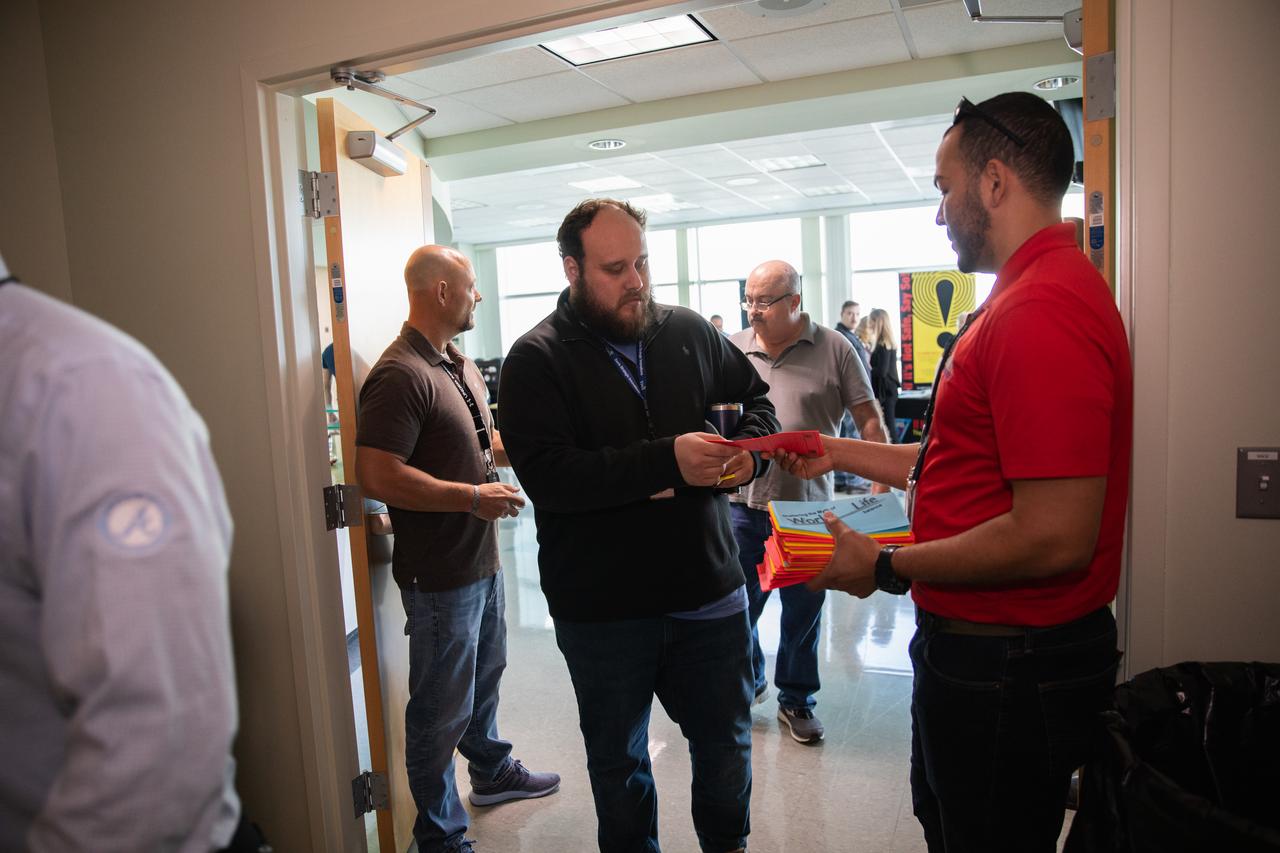
On March 3, 2020, NASA Kennedy Space Center employees attend a presentation in the Florida spaceport’s Operations Support Building II during the center’s annual Safety and Health Days. Taking place March 2 through March 6, Safety and Health Days provides Kennedy employees with a variety of presentations to attend – all of which focus on how to maintain a safe and healthy workforce.
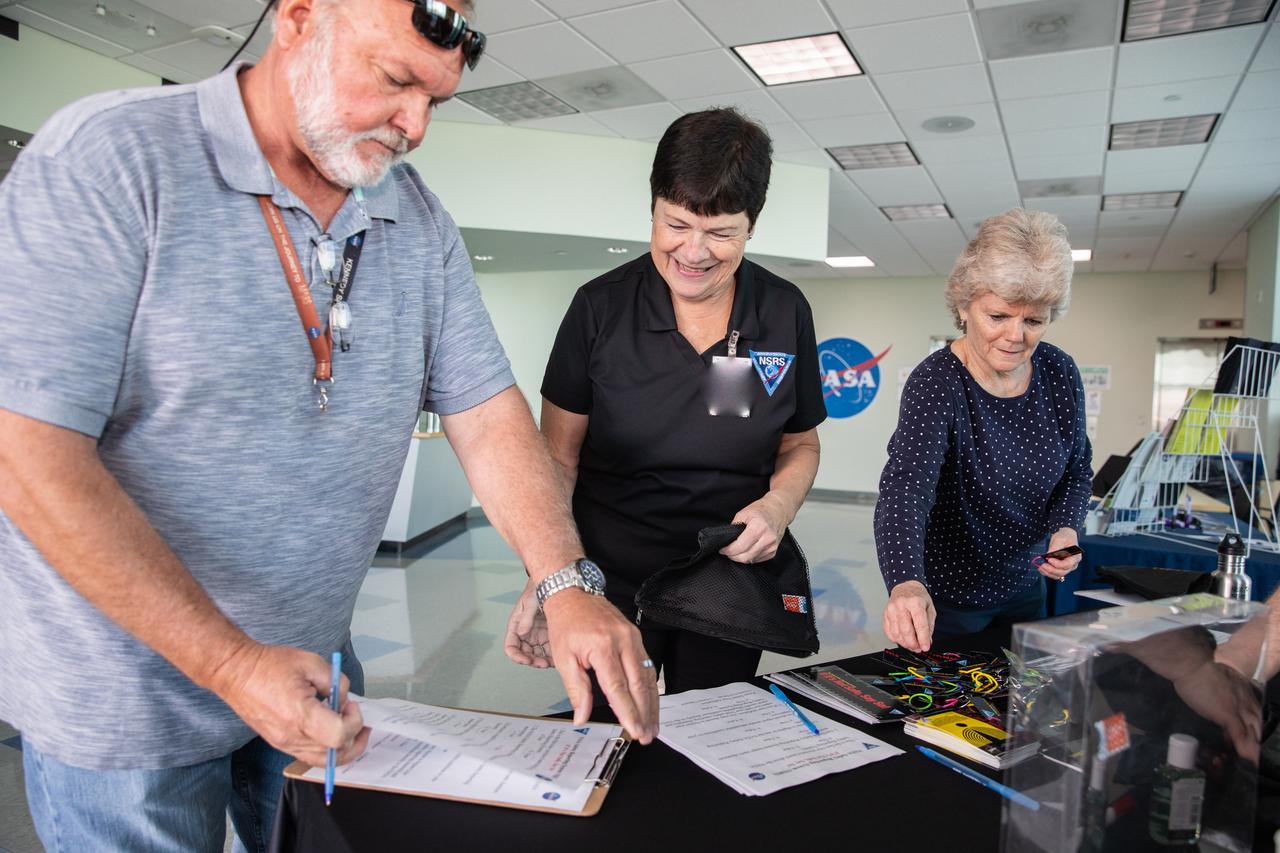
NASA Kennedy Space Center employees learn more about safety from informational tables set up inside the Florida spaceport’s Operations Support Building II on March 3, 2020, during the center’s annual Safety and Health Days. Taking place March 2 through March 6, Safety and Health Days provides Kennedy employees with a variety of presentations to attend – all of which focus on how to maintain a safe and healthy workforce.
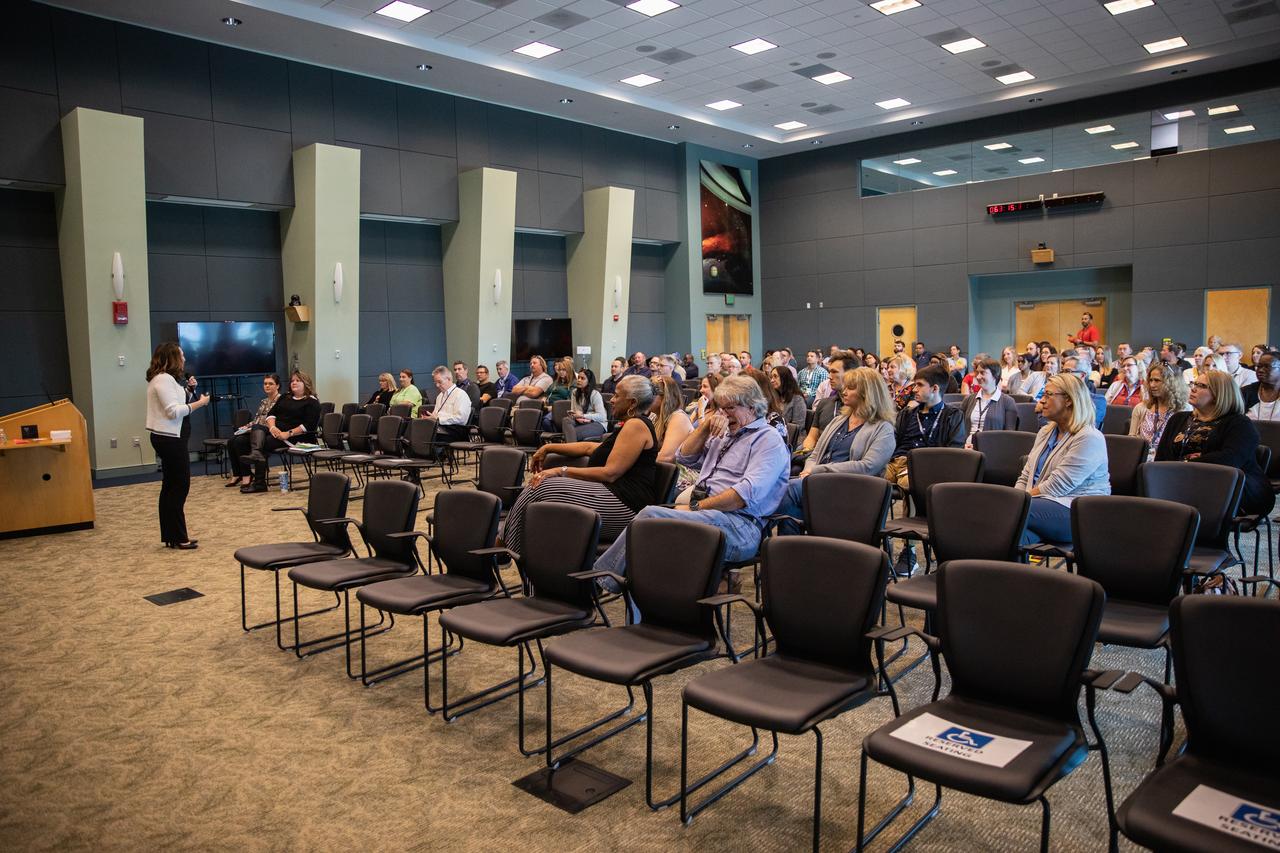
Eliz Greene, one of the guest speakers during Kennedy Space Center’s annual Safety and Health Days, addresses Kennedy employees inside the Florida spaceport’s Operations Support Building II on March 3, 2020. Taking place March 2 through March 6, Safety and Health Days provides Kennedy employees with a variety of presentations to attend – all of which focus on how to maintain a safe and healthy workforce. Greene’s presentation included information on reducing stress and improving focus.

Eliz Greene, one of the guest speakers during Kennedy Space Center’s annual Safety and Health Days, addresses Kennedy employees inside the Florida spaceport’s Operations Support Building II on March 3, 2020. Taking place March 2 through March 6, Safety and Health Days provides Kennedy employees with a variety of presentations to attend – all of which focus on how to maintain a safe and healthy workforce. Greene’s presentation included information on reducing stress and improving focus.

Eliz Greene, one of the guest speakers during Kennedy Space Center’s annual Safety and Health Days, addresses Kennedy employees inside the Florida spaceport’s Operations Support Building II on March 3, 2020. Taking place March 2 through March 6, Safety and Health Days provides Kennedy employees with a variety of presentations to attend – all of which focus on how to maintain a safe and healthy workforce. Greene’s presentation included information on reducing stress and improving focus.

Eliz Greene, one of the guest speakers during Kennedy Space Center’s annual Safety and Health Days, presents information on reducing stress and improving focus inside the Florida spaceport’s Operations Support Building II on March 3, 2020. Taking place March 2 through March 6, Safety and Health Days provides Kennedy employees with a variety of presentations to attend – all of which focus on how to maintain a safe and healthy workforce.
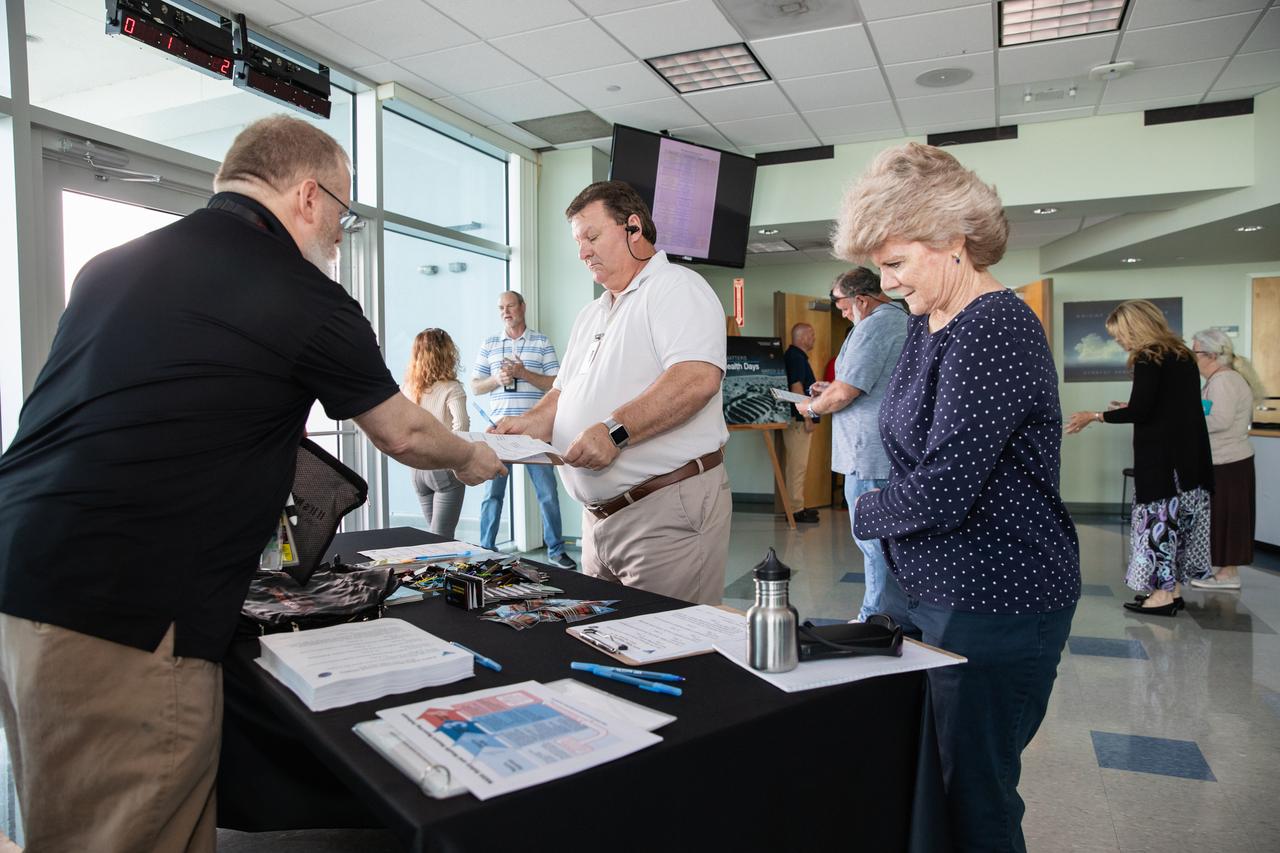
NASA Kennedy Space Center employees learn more about safety from informational tables set up inside the Florida spaceport’s Operations Support Building II on March 3, 2020, during the center’s annual Safety and Health Days. Taking place March 2 through March 6, Safety and Health Days provides Kennedy employees with a variety of presentations to attend – all of which focus on how to maintain a safe and healthy workforce.
Kennedy Space Center employees attend a presentation on reducing stress and improving focus inside the Florida spaceport’s Operations Support Building II on March 3, 2020. The presentation, led by guest speaker Eliz Greene, was offered during the center’s annual Safety and Health Days, which took place March 2 through March 6. Throughout the week, Kennedy employees had the opportunity to attend a variety of presentations – all of which focused on how to maintain a safe and healthy workforce.
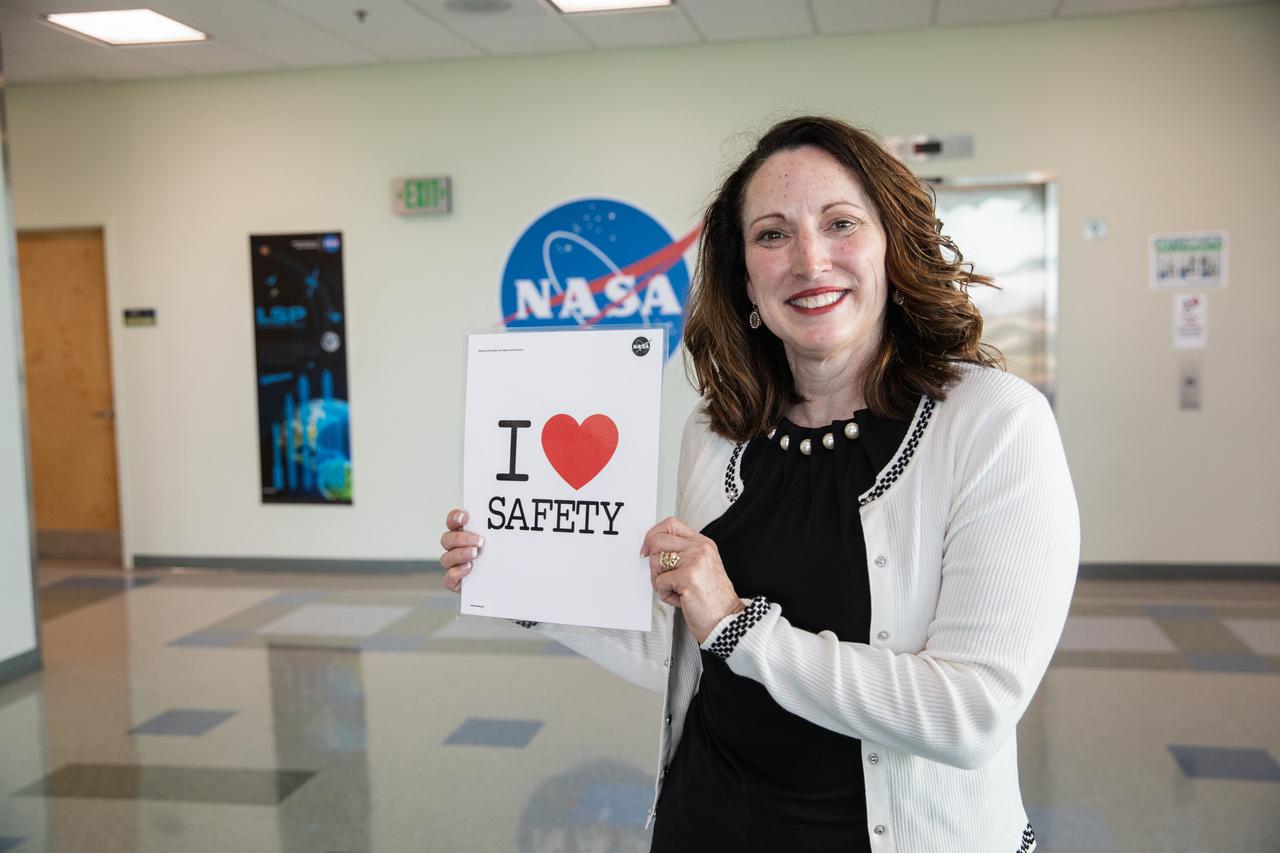
Eliz Greene, one of the guest speakers during NASA Kennedy Space Center’s annual Safety and Health Days, poses with the Safety and Mission Assurance “I Love Safety” poster inside the Operations Support Building II on March 3, 2020, prior to her presentation. Taking place March 2 through March 6, Safety and Health Days provides Kennedy employees with a variety of presentations to attend – all of which focus on how to maintain a safe and healthy workforce. Greene’s presentation included information on reducing stress and improving focus.
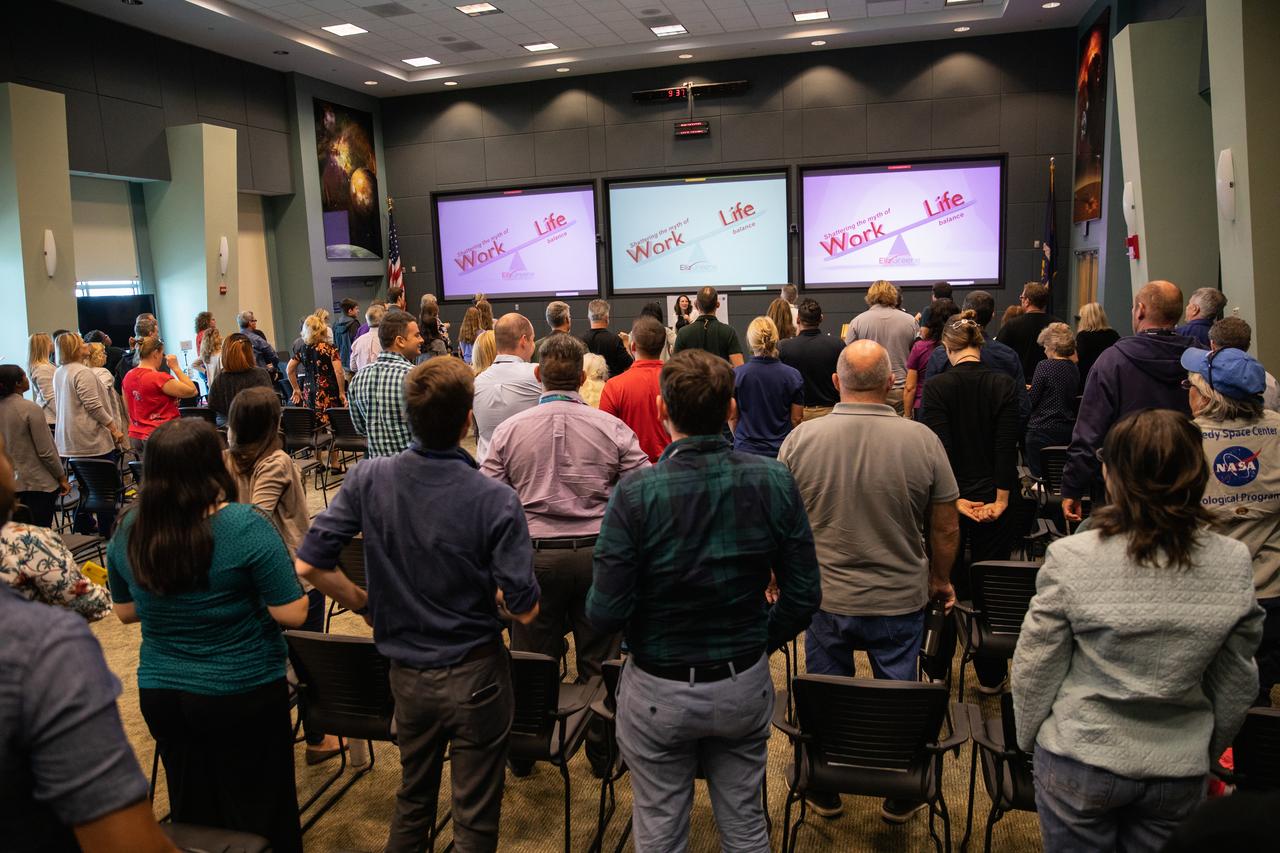
Kennedy Space Center employees attend a presentation on reducing stress and improving focus inside the Florida spaceport’s Operations Support Building II on March 3, 2020. The presentation, led by guest speaker Eliz Greene, was offered during the center’s annual Safety and Health Days, which took place March 2 through March 6. Throughout the week, Kennedy employees had the opportunity to attend a variety of presentations – all of which focused on how to maintain a safe and healthy workforce.
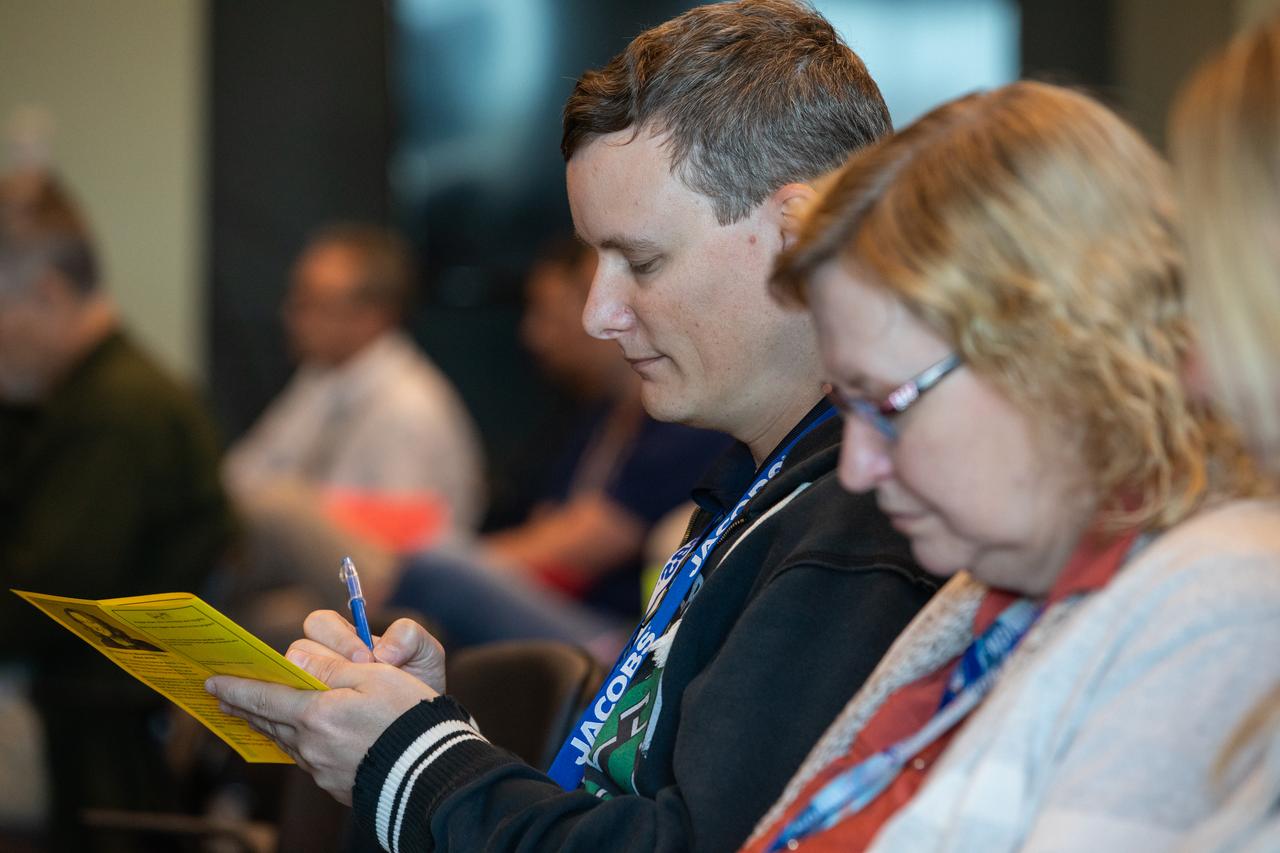
Kennedy Space Center employees attend a presentation on reducing stress and improving focus inside the Florida spaceport’s Operations Support Building II on March 3, 2020. The presentation, led by guest speaker Eliz Greene, was offered during the center’s annual Safety and Health Days, which took place March 2 through March 6. Throughout the week, Kennedy employees had the opportunity to attend a variety of presentations – all of which focused on how to maintain a safe and healthy workforce.
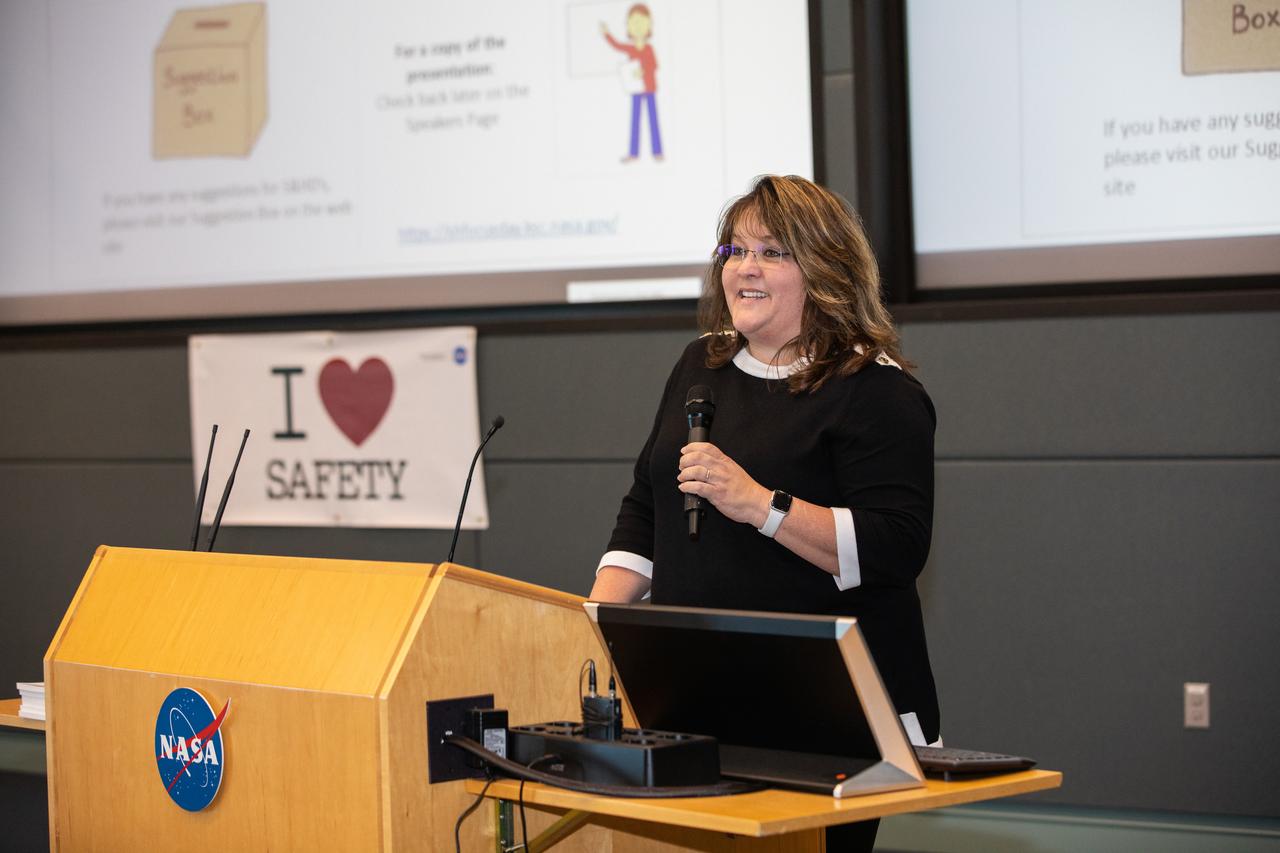
Becky Murray, associate director of Engineering at NASA’s Kennedy Space Center in Florida, addresses Kennedy employees inside the Operations Support Building II on March 3, 2020, during the center’s annual Safety and Health Days. Taking place March 2 through March 6, Safety and Health Days provides Kennedy employees with a variety of presentations to attend – all of which focus on how to maintain a safe and healthy workforce.
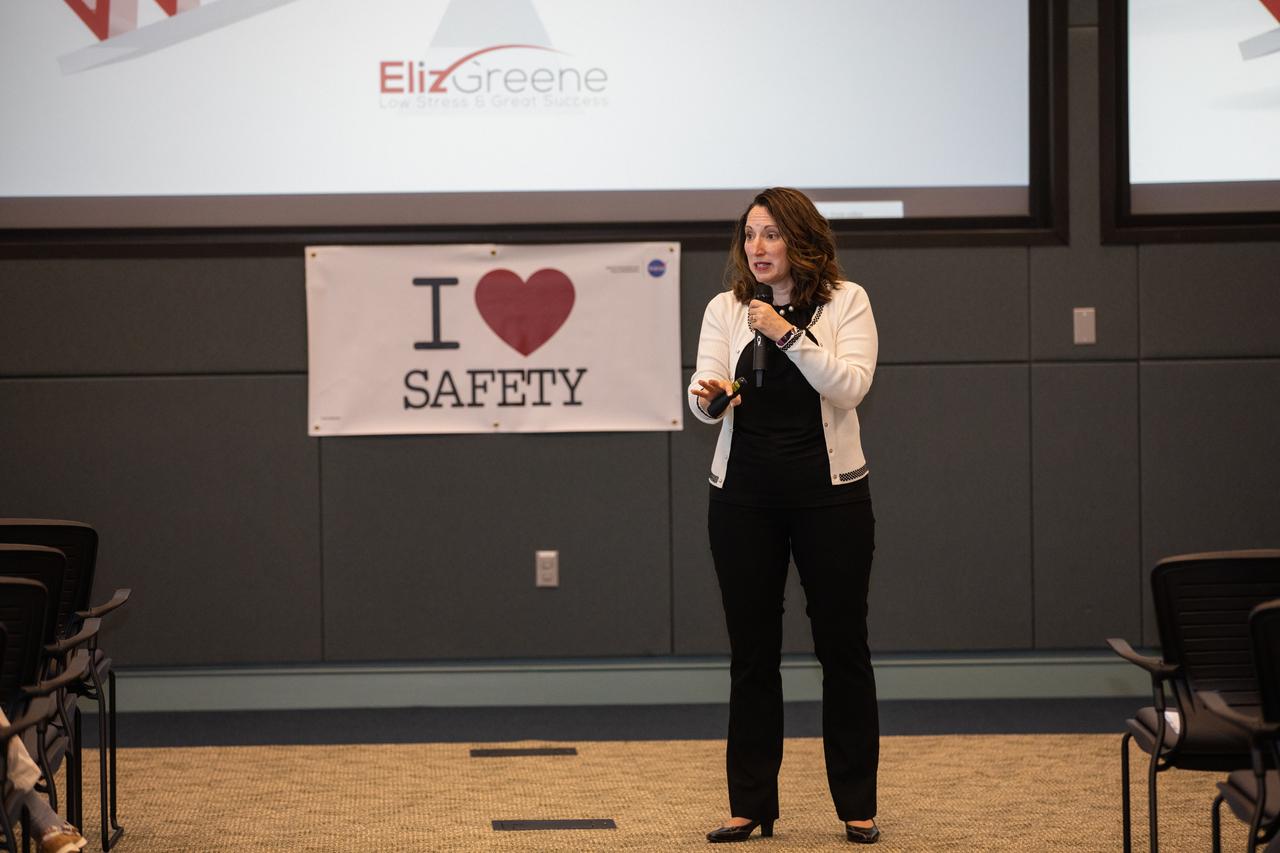
Eliz Greene, one of the guest speakers during Kennedy Space Center’s annual Safety and Health Days, presents information on reducing stress and improving focus inside the Florida spaceport’s Operations Support Building II on March 3, 2020. Taking place March 2 through March 6, Safety and Health Days provides Kennedy employees with a variety of presentations to attend – all of which focus on how to maintain a safe and healthy workforce.
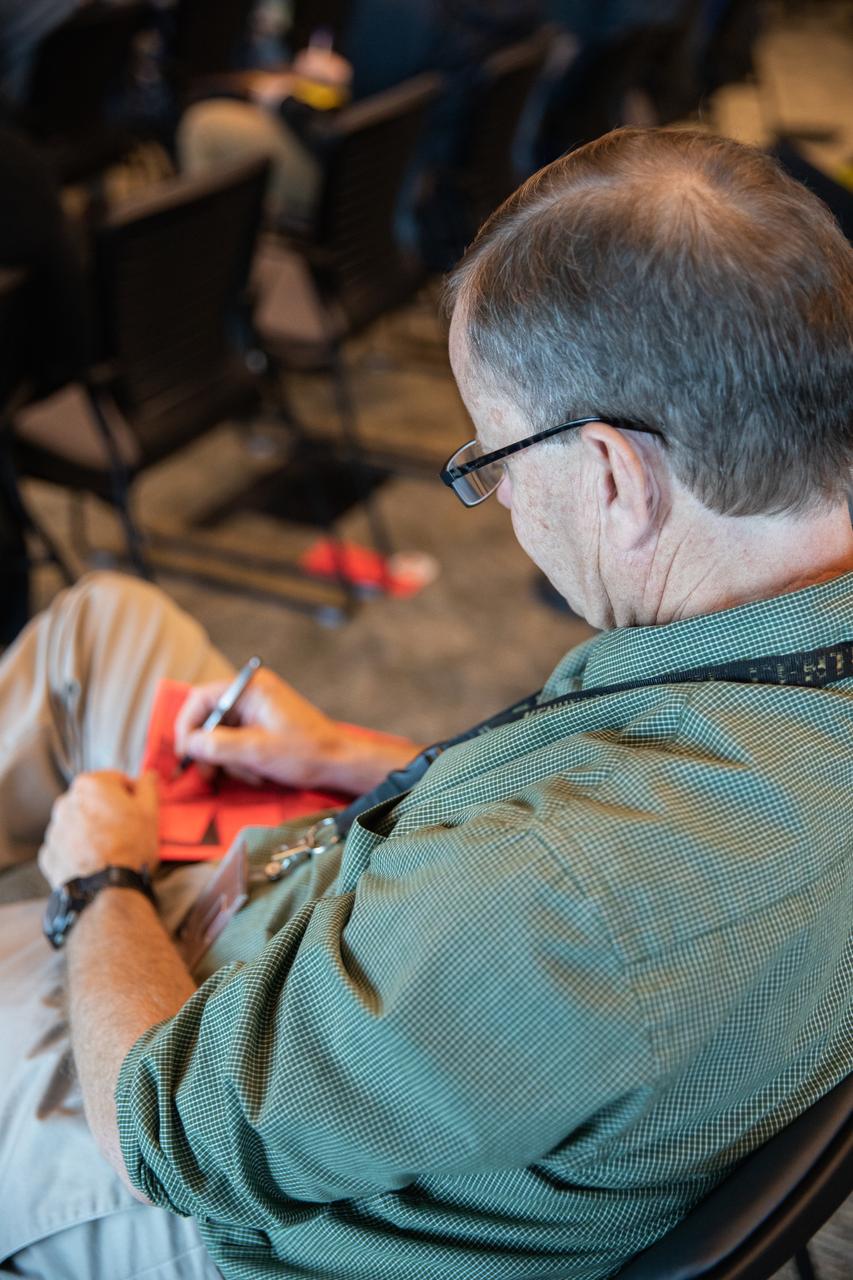
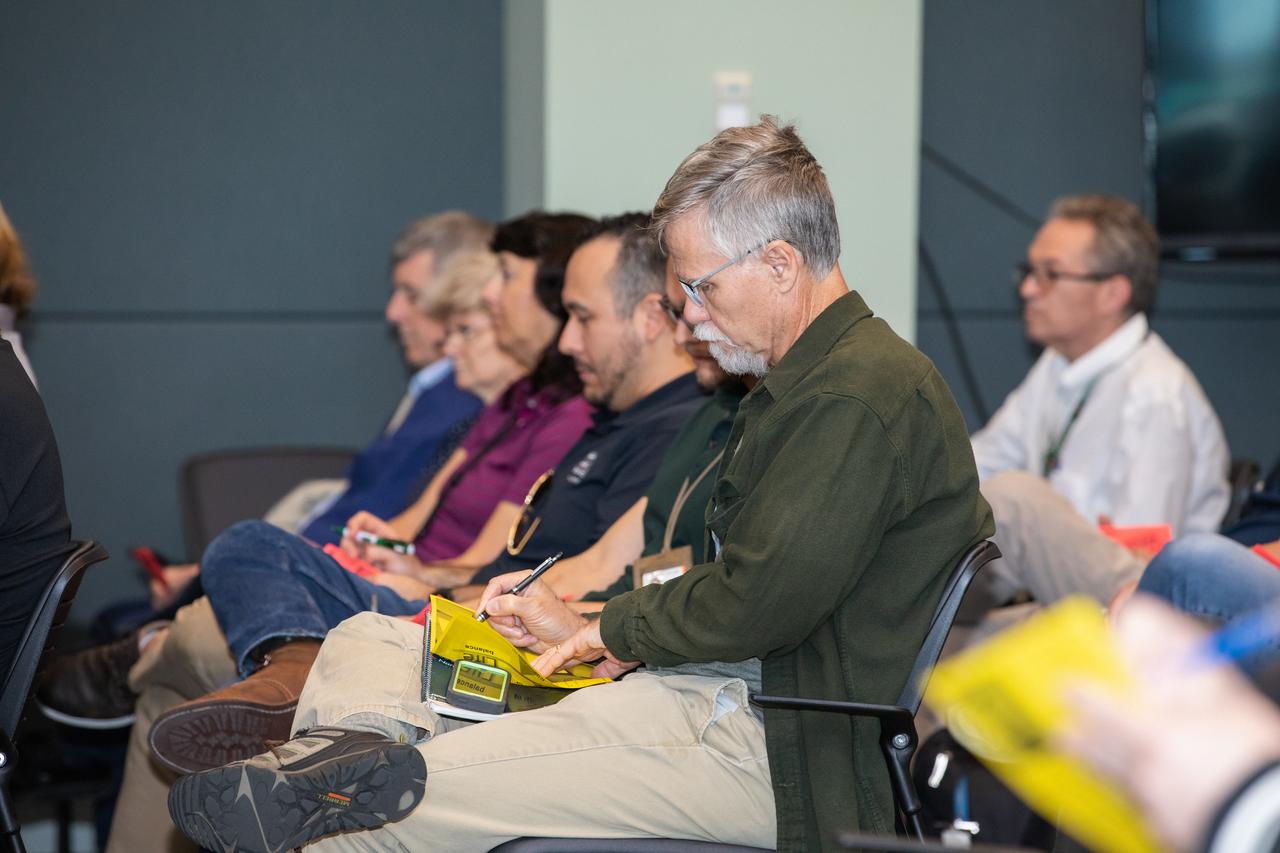
A Kennedy Space Center employee attends a presentation on reducing stress and improving focus inside the Operations Support Building II on March 3, 2020, during the Florida spaceport’s annual Safety and Health Days. Taking place March 2 through March 6, Safety and Health Days provides Kennedy employees with a variety of presentations to attend – all of which focus on how to maintain a safe and healthy workforce.
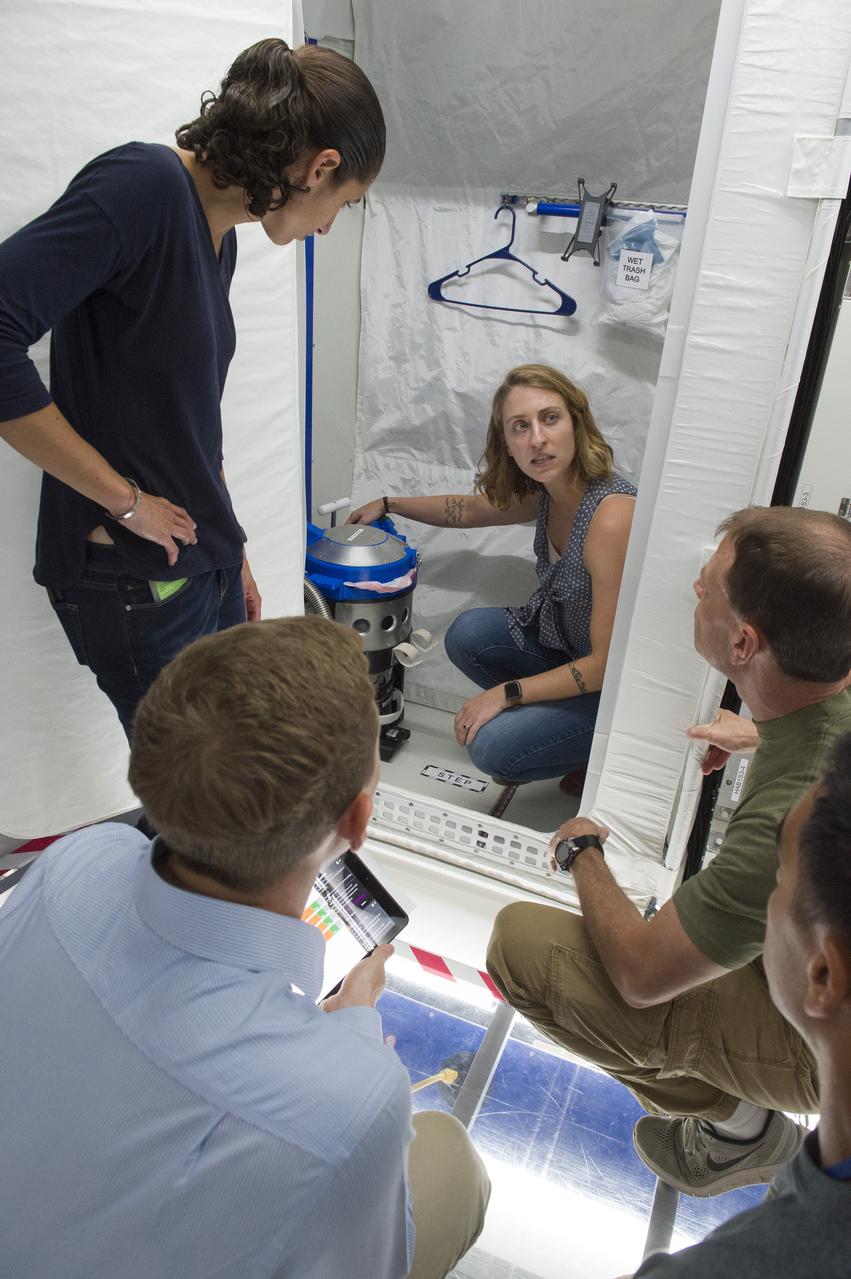
Boeing trainers conduct simulations inside the Boeing Exploration Habitat Demonstrator with astronauts to evaluate the internal layout and ergonomics, to support efficient work-life balance aboard a deep space ship.
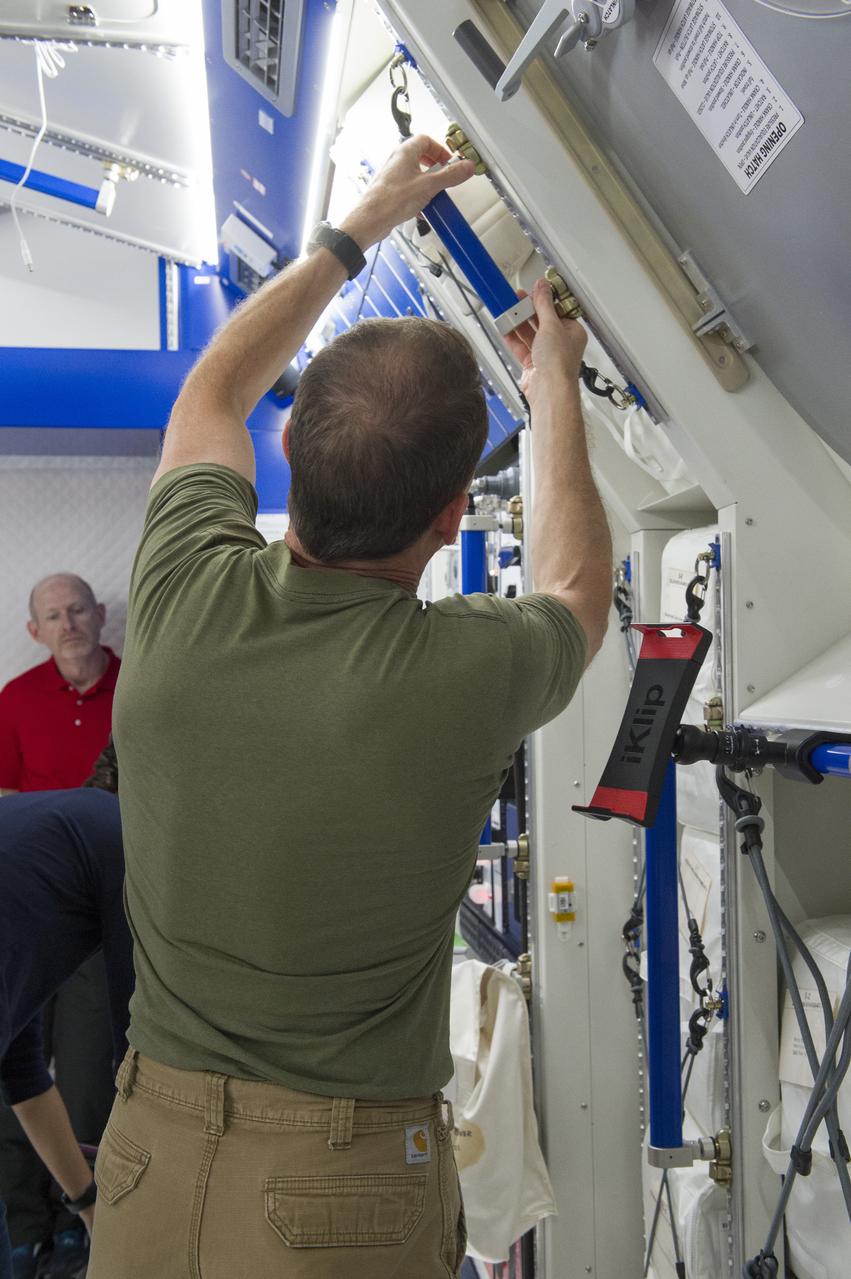
Boeing trainers conduct simulations inside the Boeing Exploration Habitat Demonstrator with astronauts to evaluate the internal layout and ergonomics, to support efficient work-life balance aboard a deep space ship.
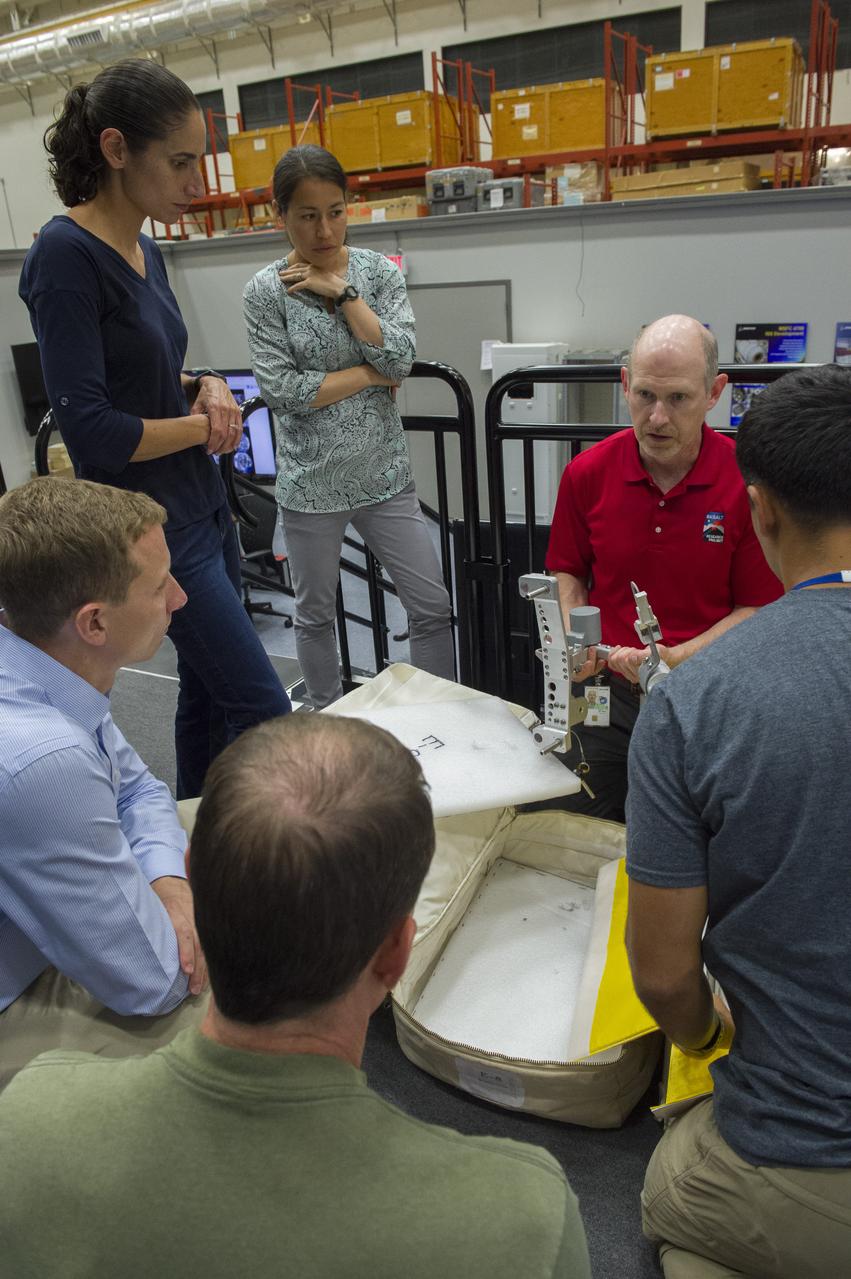
Boeing trainers conduct simulations inside the Boeing Exploration Habitat Demonstrator with astronauts to evaluate the internal layout and ergonomics, to support efficient work-life balance aboard a deep space ship.
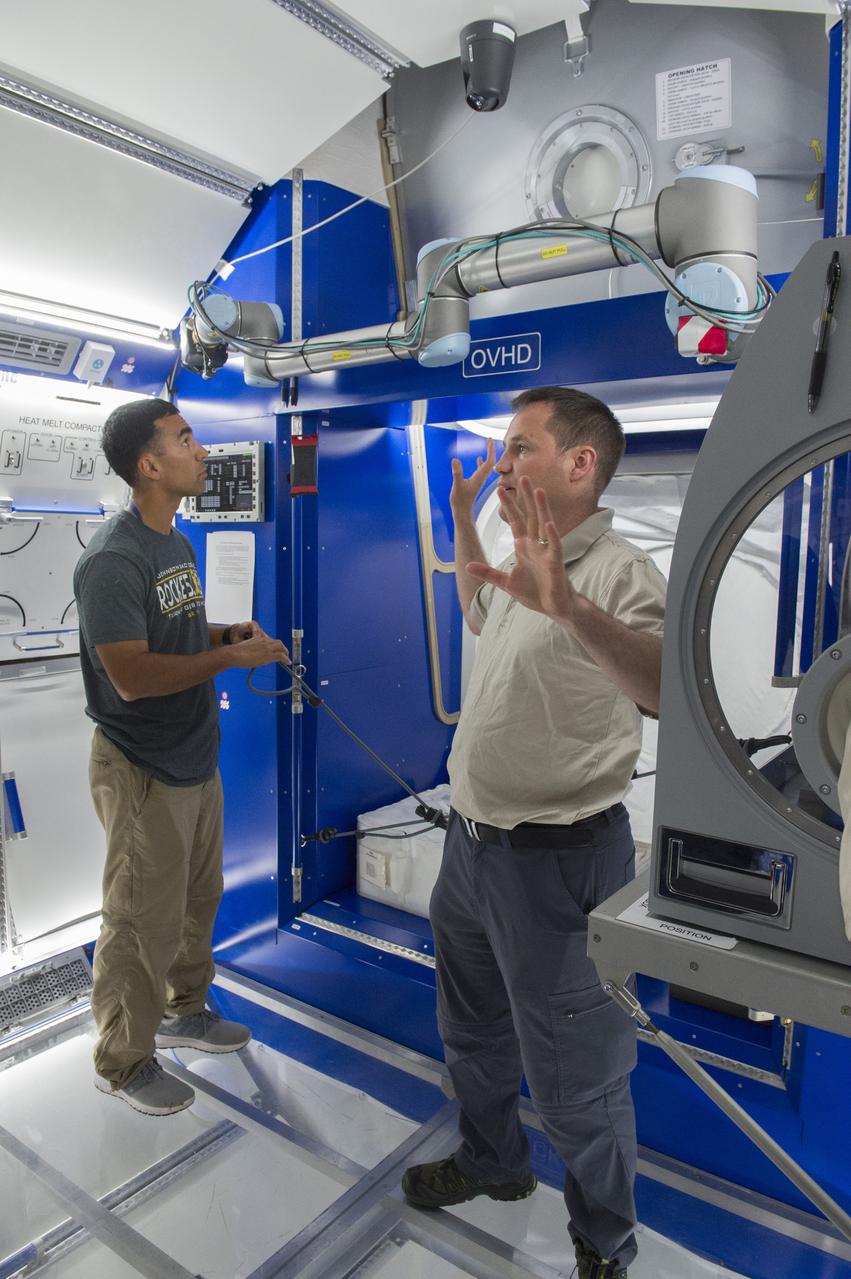
Boeing trainers conduct simulations inside the Boeing Exploration Habitat Demonstrator with astronauts to evaluate the internal layout and ergonomics, to support efficient work-life balance aboard a deep space ship.
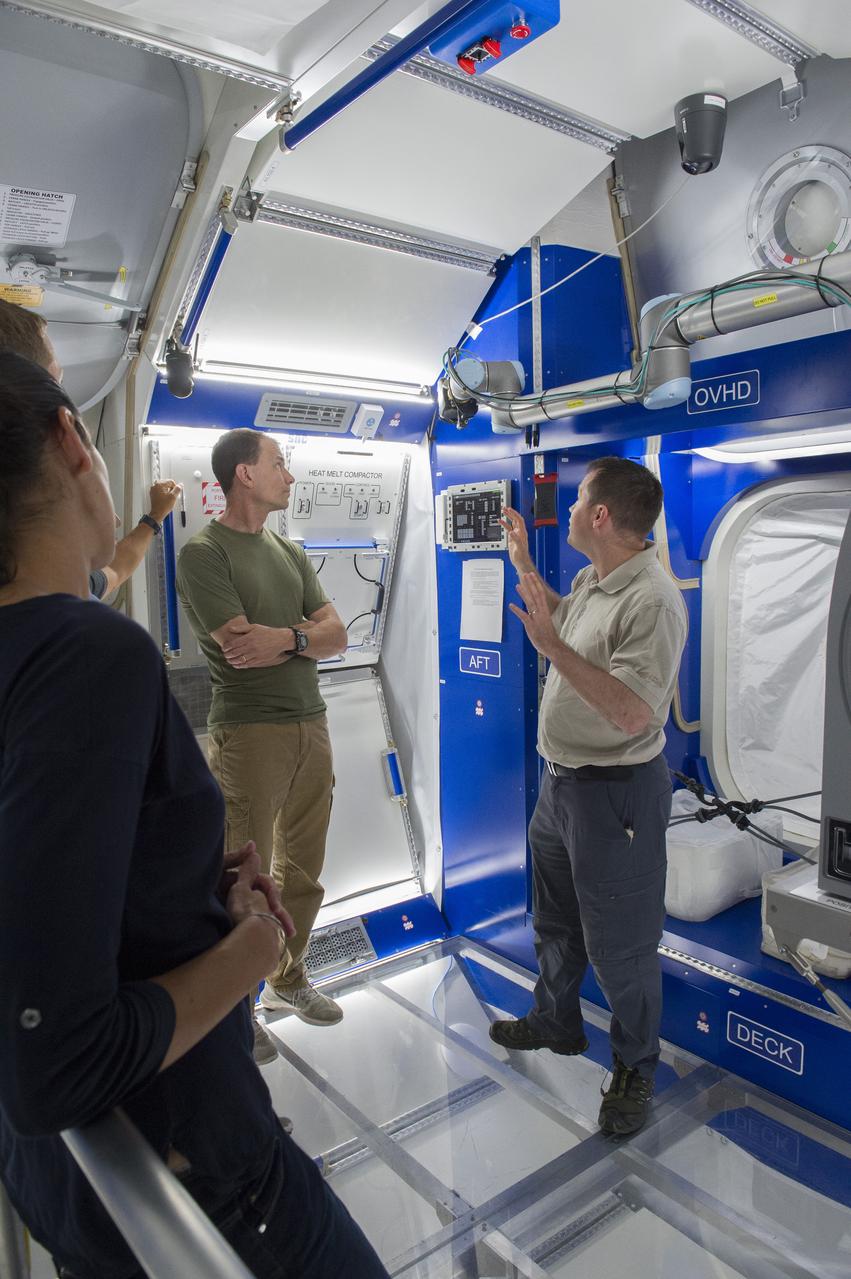
Boeing trainers conduct simulations inside the Boeing Exploration Habitat Demonstrator with astronauts to evaluate the internal layout and ergonomics, to support efficient work-life balance aboard a deep space ship.
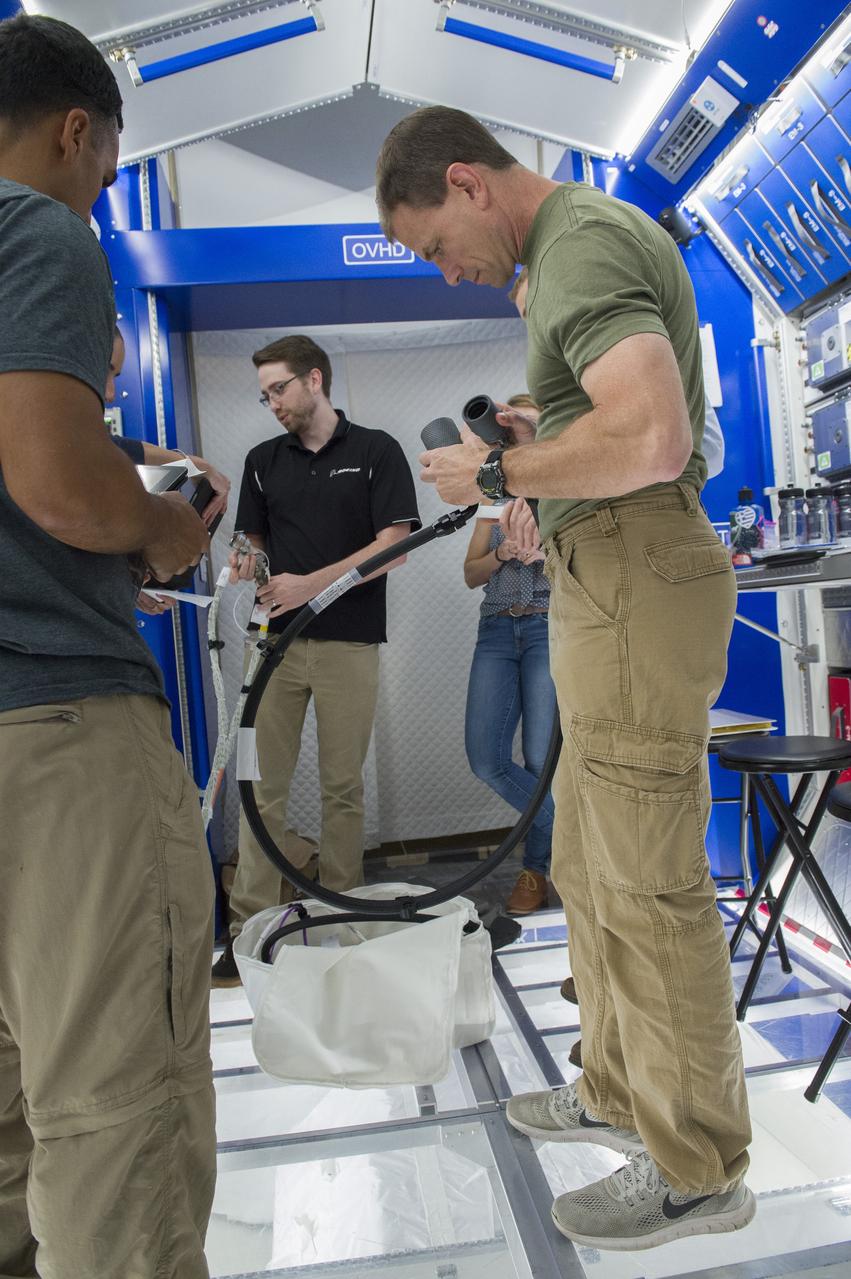
Boeing trainers conduct simulations inside the Boeing Exploration Habitat Demonstrator with astronauts to evaluate the internal layout and ergonomics, to support efficient work-life balance aboard a deep space ship.
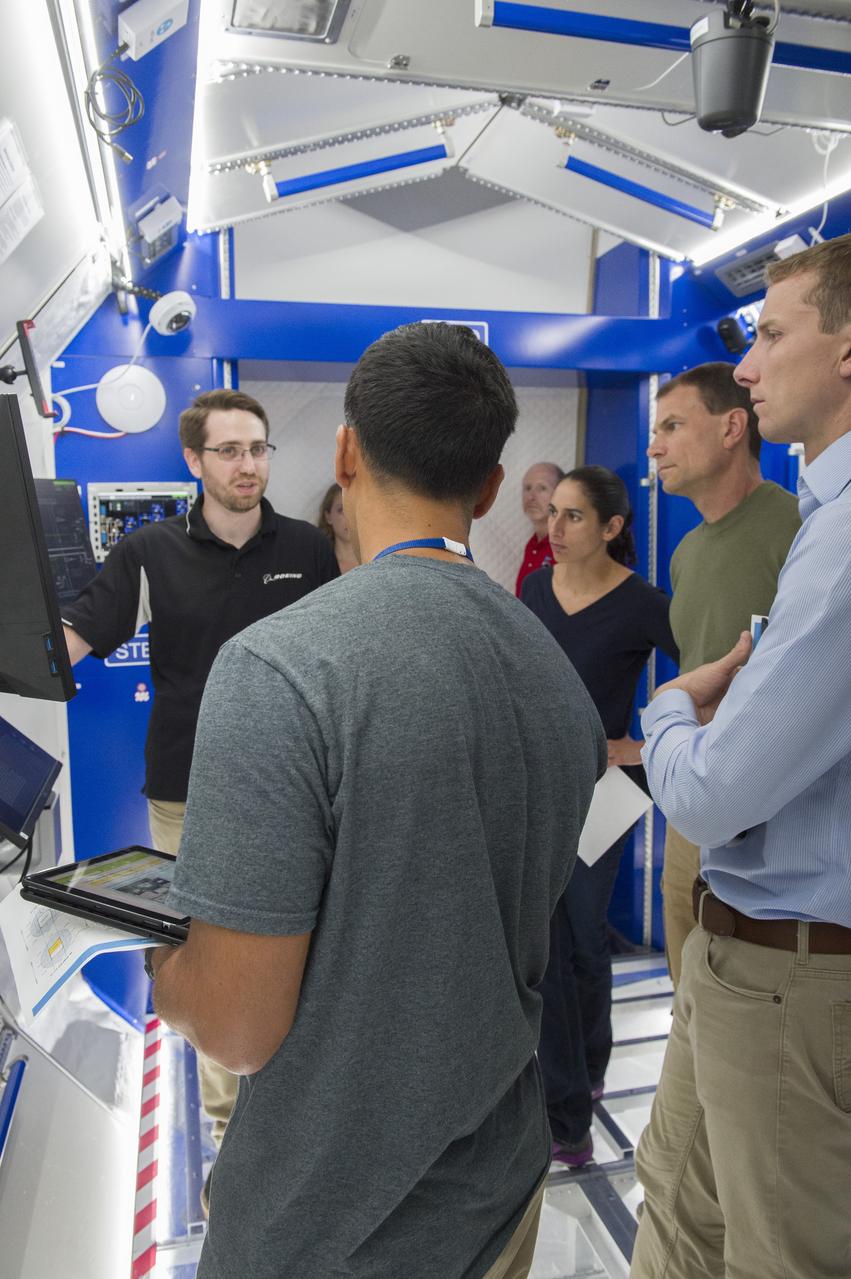
Boeing trainers conduct simulations inside the Boeing Exploration Habitat Demonstrator with astronauts to evaluate the internal layout and ergonomics, to support efficient work-life balance aboard a deep space ship.
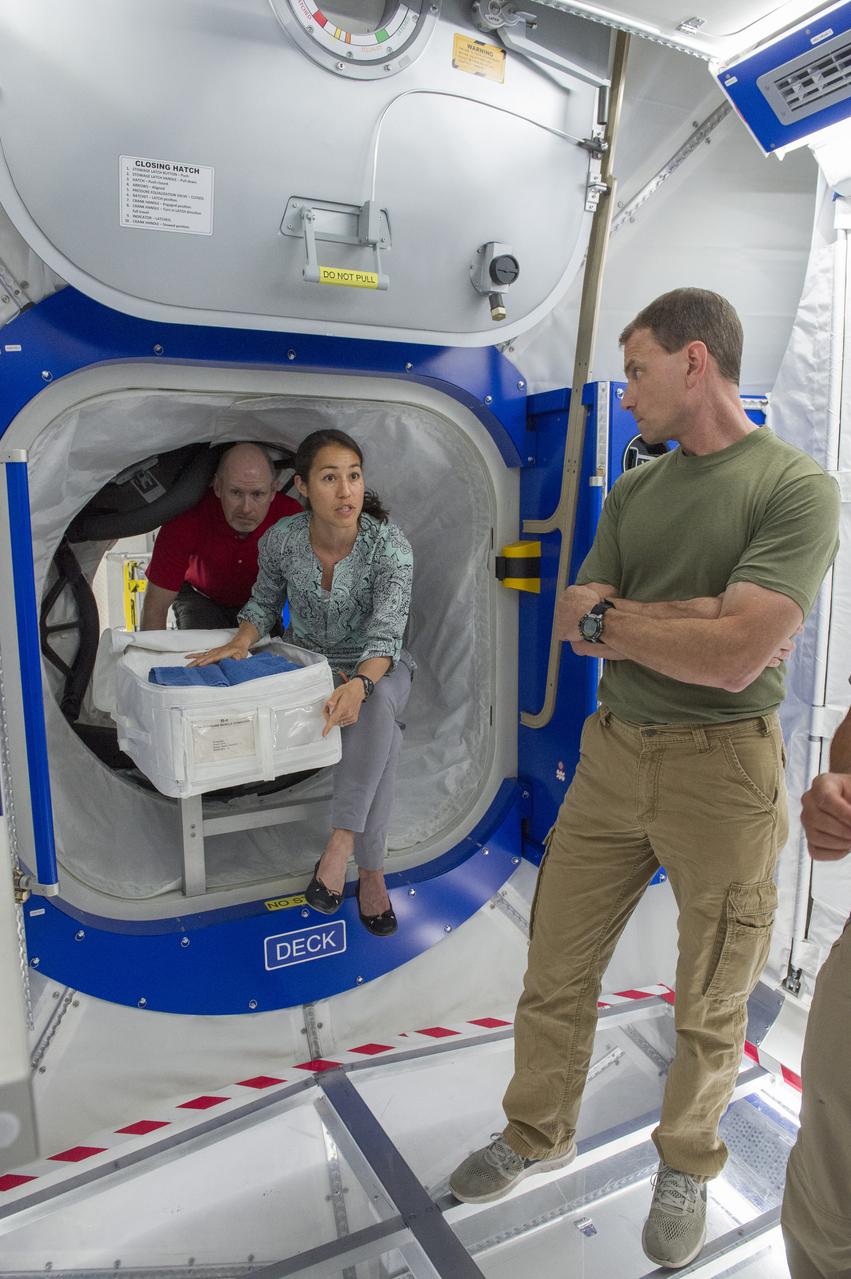
Boeing trainers conduct simulations inside the Boeing Exploration Habitat Demonstrator with astronauts to evaluate the internal layout and ergonomics, to support efficient work-life balance aboard a deep space ship.
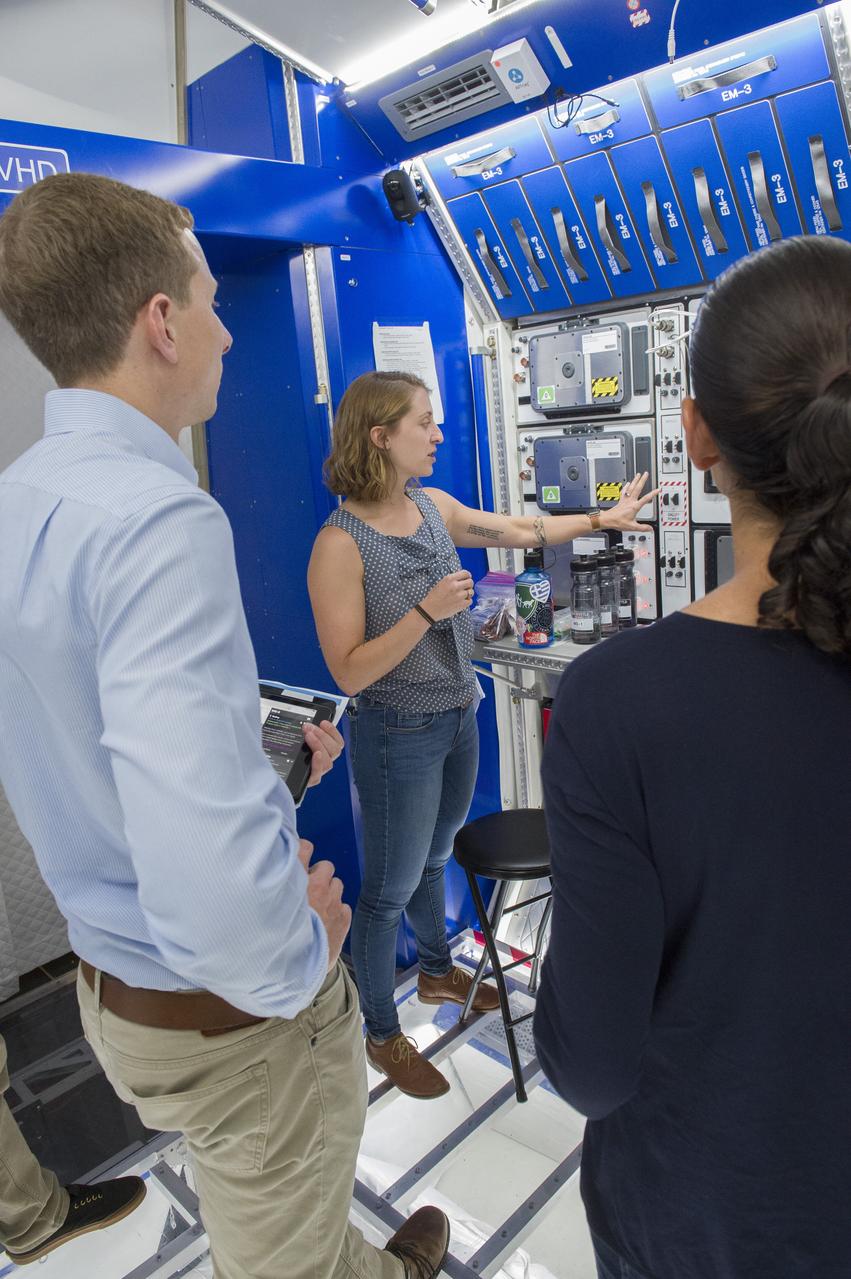
Boeing trainers conduct simulations inside the Boeing Exploration Habitat Demonstrator with astronauts to evaluate the internal layout and ergonomics, to support efficient work-life balance aboard a deep space ship.
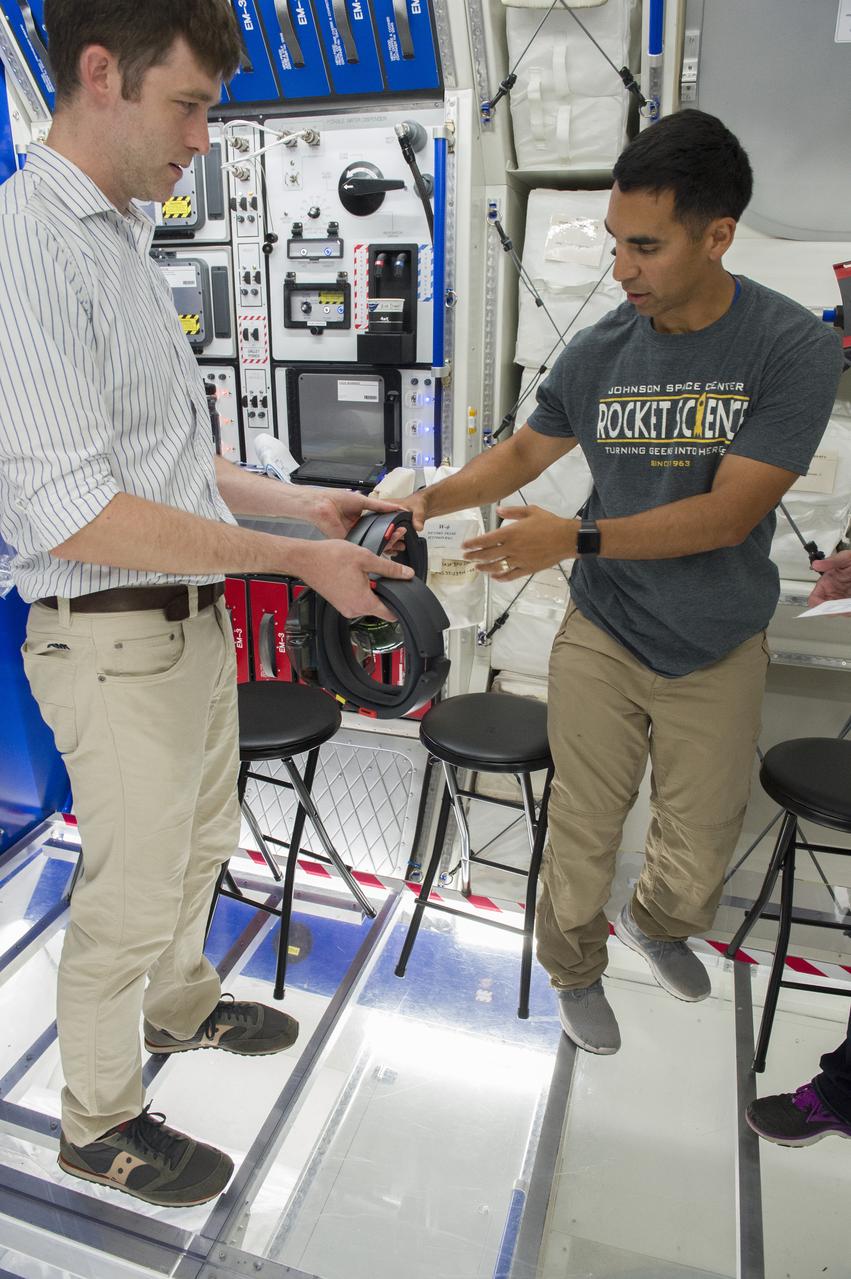
Boeing trainers conduct simulations inside the Boeing Exploration Habitat Demonstrator with astronauts to evaluate the internal layout and ergonomics, to support efficient work-life balance aboard a deep space ship.
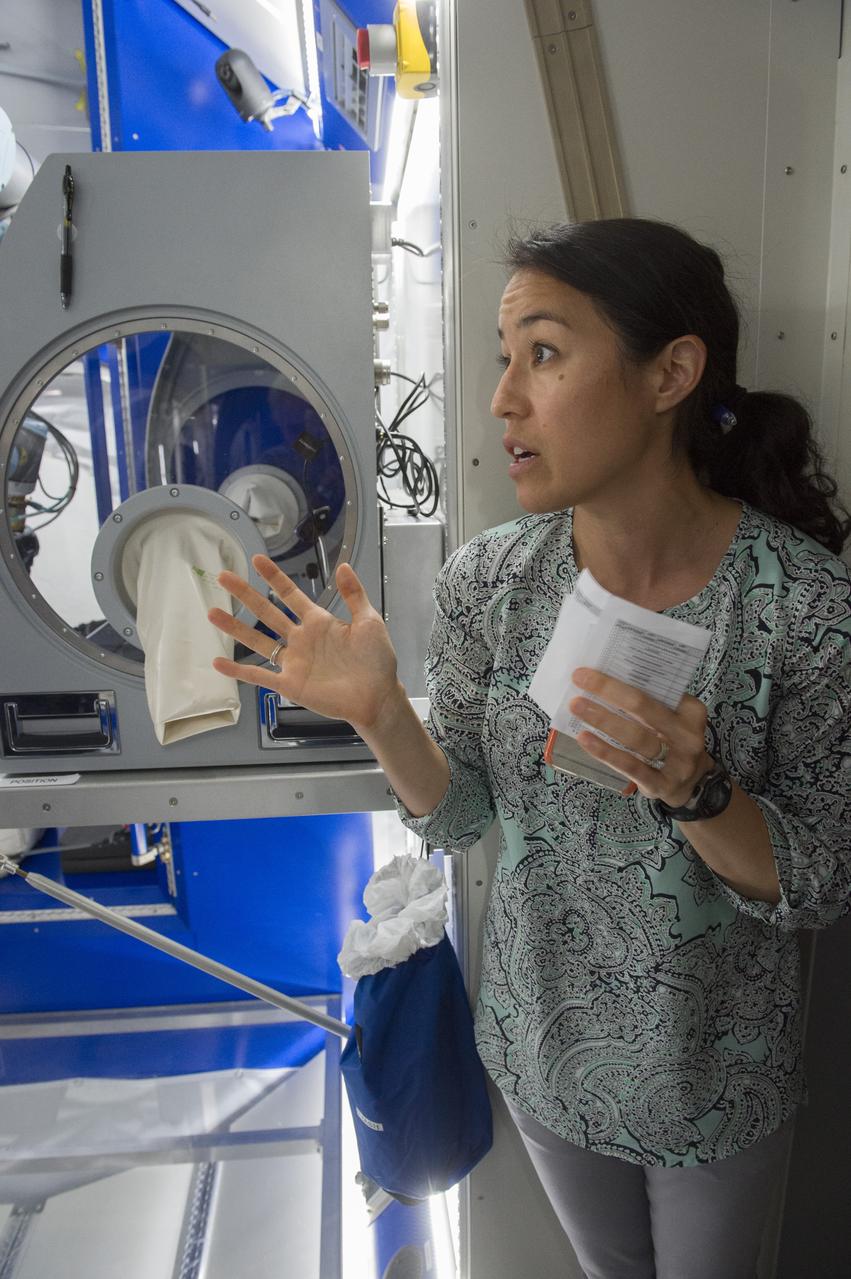
Boeing trainers conduct simulations inside the Boeing Exploration Habitat Demonstrator with astronauts to evaluate the internal layout and ergonomics, to support efficient work-life balance aboard a deep space ship.
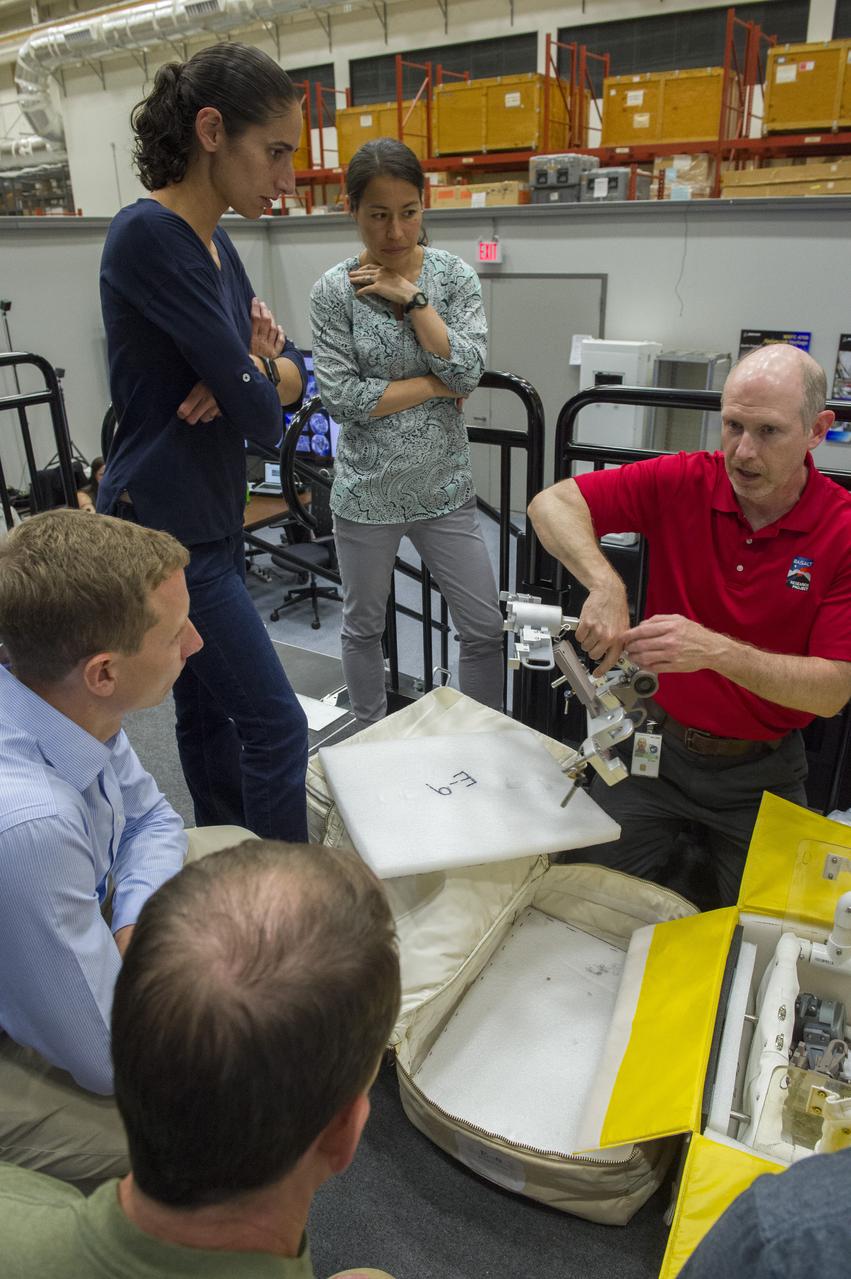
Boeing trainers conduct simulations inside the Boeing Exploration Habitat Demonstrator with astronauts to evaluate the internal layout and ergonomics, to support efficient work-life balance aboard a deep space ship.
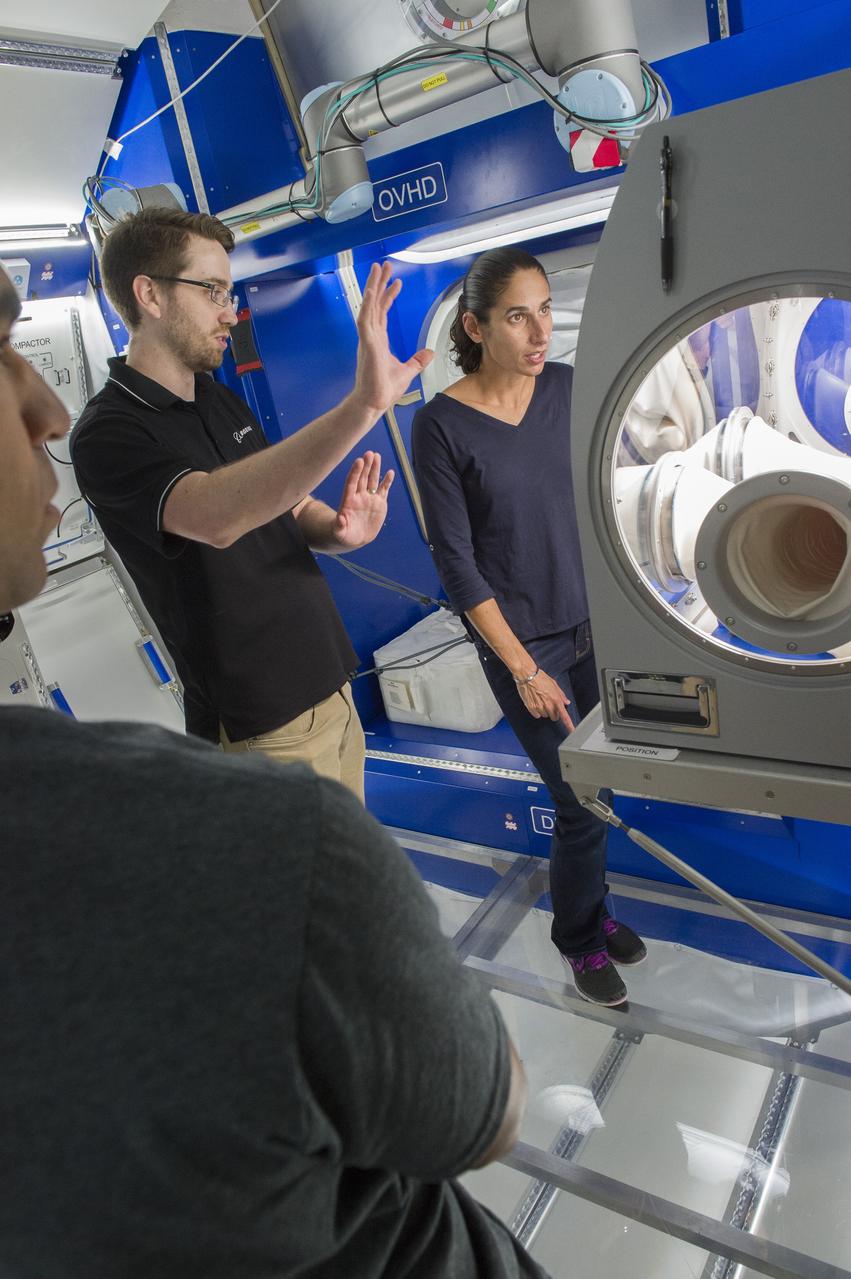
Boeing trainers conduct simulations inside the Boeing Exploration Habitat Demonstrator with astronauts to evaluate the internal layout and ergonomics, to support efficient work-life balance aboard a deep space ship.
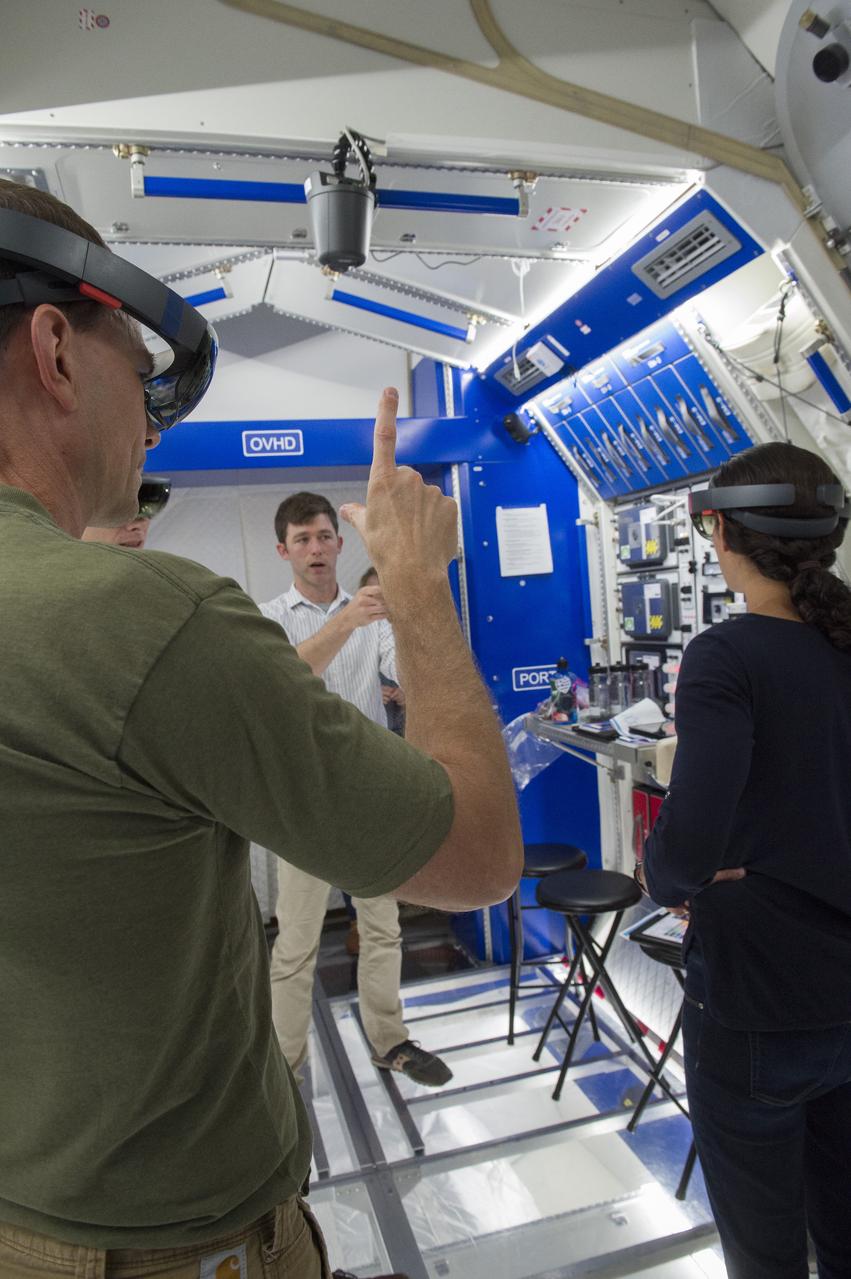
Boeing trainers conduct simulations inside the Boeing Exploration Habitat Demonstrator with astronauts to evaluate the internal layout and ergonomics, to support efficient work-life balance aboard a deep space ship.
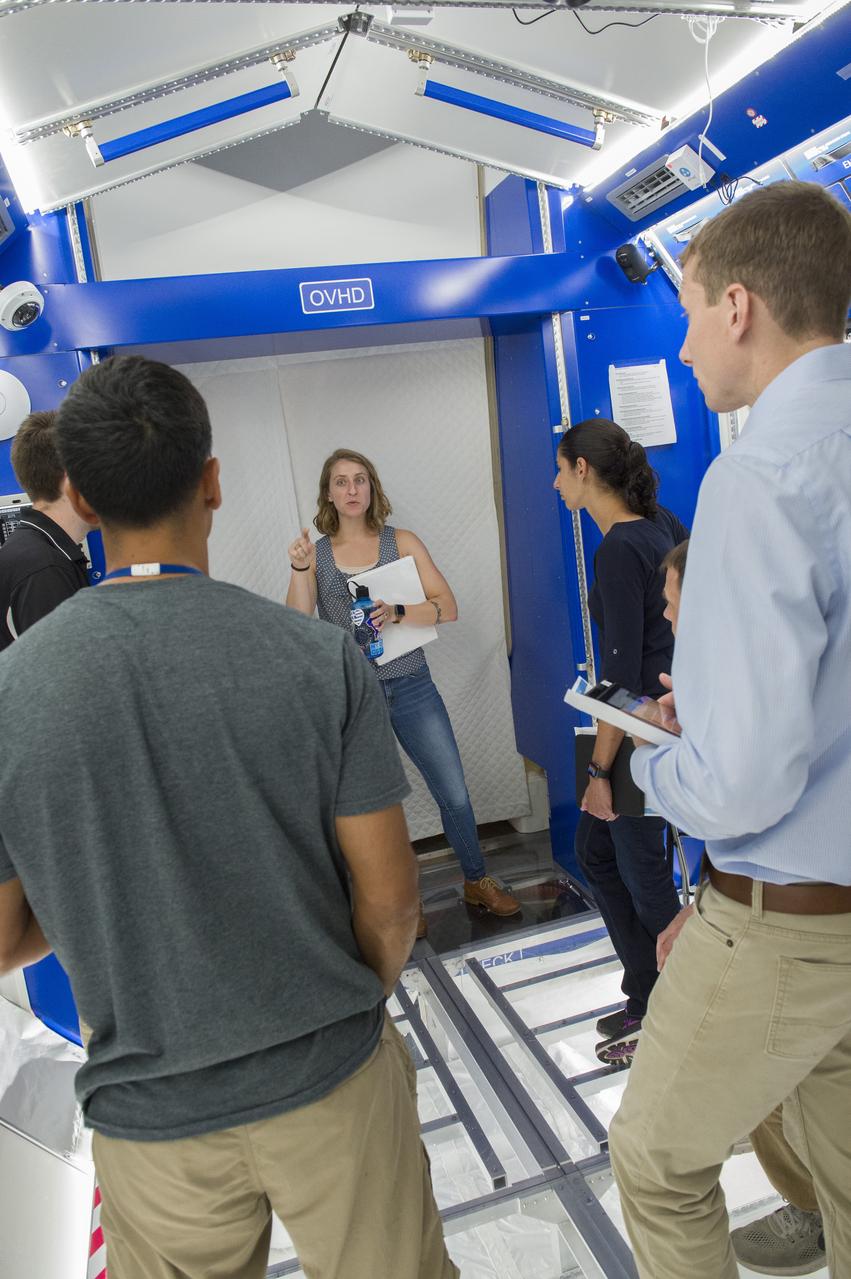
Boeing trainers conduct simulations inside the Boeing Exploration Habitat Demonstrator with astronauts to evaluate the internal layout and ergonomics, to support efficient work-life balance aboard a deep space ship.

“Since I was 13, I’ve had maybe two or three jobs. Right now, I feel like I have four jobs. I have the NASA job, the Navy job. I’m also the chair for the Hispanic Outreach and Leadership Alliance, and I’m a new dad. It’s a lot. They say that the more you do, the more you can do. That’s a motto we have in the military. It’s true. The more you do, the more you can do, and unless you try to do something, you won’t know if you can. I have this philosophy in life that you’re only ever going to do things related to four categories: fitness and health, social and family time, your career, or faith and spirituality. You’re never, ever going to get those things perfectly in balance because nobody’s perfect. But I think the goal is to try to maintain balance. You’re going to have periods in your life where you may have a lot of work assignments and you’re spending a lot of time on the career side of things, but you need to also remember that you owe some time to your family and your friends. Are you taking time off for your health? Recognize when you’re a little bit off-balanced on one end. Success is in the journey of trying to work your way back to balanced.” Magdiel Santana, Senior Program Analyst at NASA Headquarters, poses for a portrait, Tuesday, Sept. 1, 2020, near NASA Headquarters in Washington, DC. Photo Credit: (NASA/Joel Kowsky)
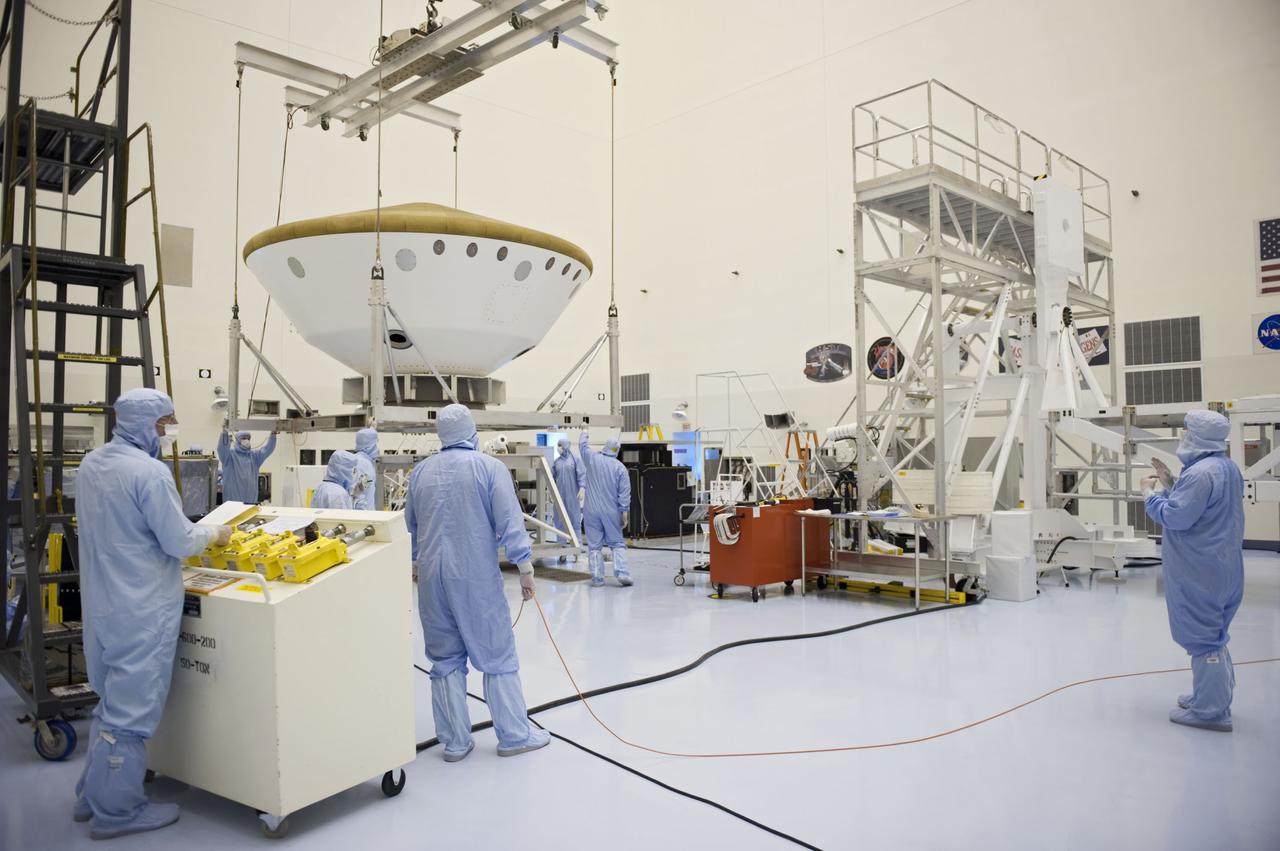
Cape Canaveral, Fla. -- At the Payload Hazardous Servicing Facility at NASA's Kennedy Space Center in Florida, technicians using an overhead crane, move the aeroshell, a component of NASA's Mars Science Laboratory (MSL), back to a work stand after a spin and balance test. The aeroshell consists of the backshell which carries the parachute and several components used during later stages of entry, descent and landing, and the spacecraft's heat shield. MSL's components include a compact car-sized rover, Curiosity, which has 10 science instruments designed to search for evidence on whether Mars has had environments favorable to microbial life, including chemical ingredients for life. The unique rover will use a laser to look inside rocks and release its gasses so that the rover’s spectrometer can analyze and send the data back to Earth. Launch of MSL aboard a United Launch Alliance Atlas V rocket is scheduled for Nov. 25 from Space Launch Complex 41 on Cape Canaveral Air Force Station in Florida. For more information, visit http://www.nasa.gov/msl. Photo credit: NASA/Kim Shiflett
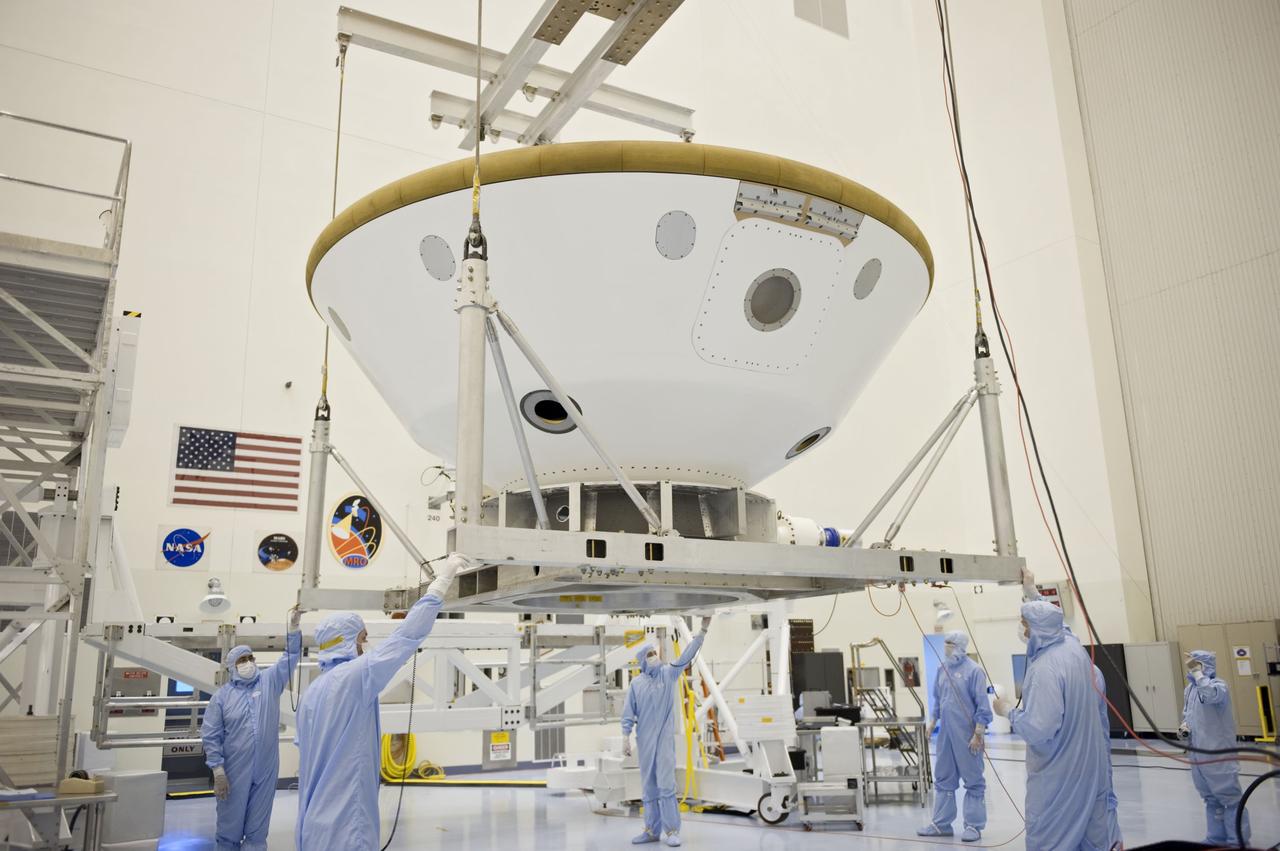
Cape Canaveral, Fla. -- At the Payload Hazardous Servicing Facility at NASA's Kennedy Space Center in Florida, technicians using an overhead crane, move the aeroshell, a component of NASA's Mars Science Laboratory (MSL), back to a work stand after a spin and balance test. The aeroshell consists of the backshell which carries the parachute and several components used during later stages of entry, descent and landing, and the spacecraft's heat shield. MSL's components include a compact car-sized rover, Curiosity, which has 10 science instruments designed to search for evidence on whether Mars has had environments favorable to microbial life, including chemical ingredients for life. The unique rover will use a laser to look inside rocks and release its gasses so that the rover’s spectrometer can analyze and send the data back to Earth. Launch of MSL aboard a United Launch Alliance Atlas V rocket is scheduled for Nov. 25 from Space Launch Complex 41 on Cape Canaveral Air Force Station in Florida. For more information, visit http://www.nasa.gov/msl. Photo credit: NASA/Kim Shiflett
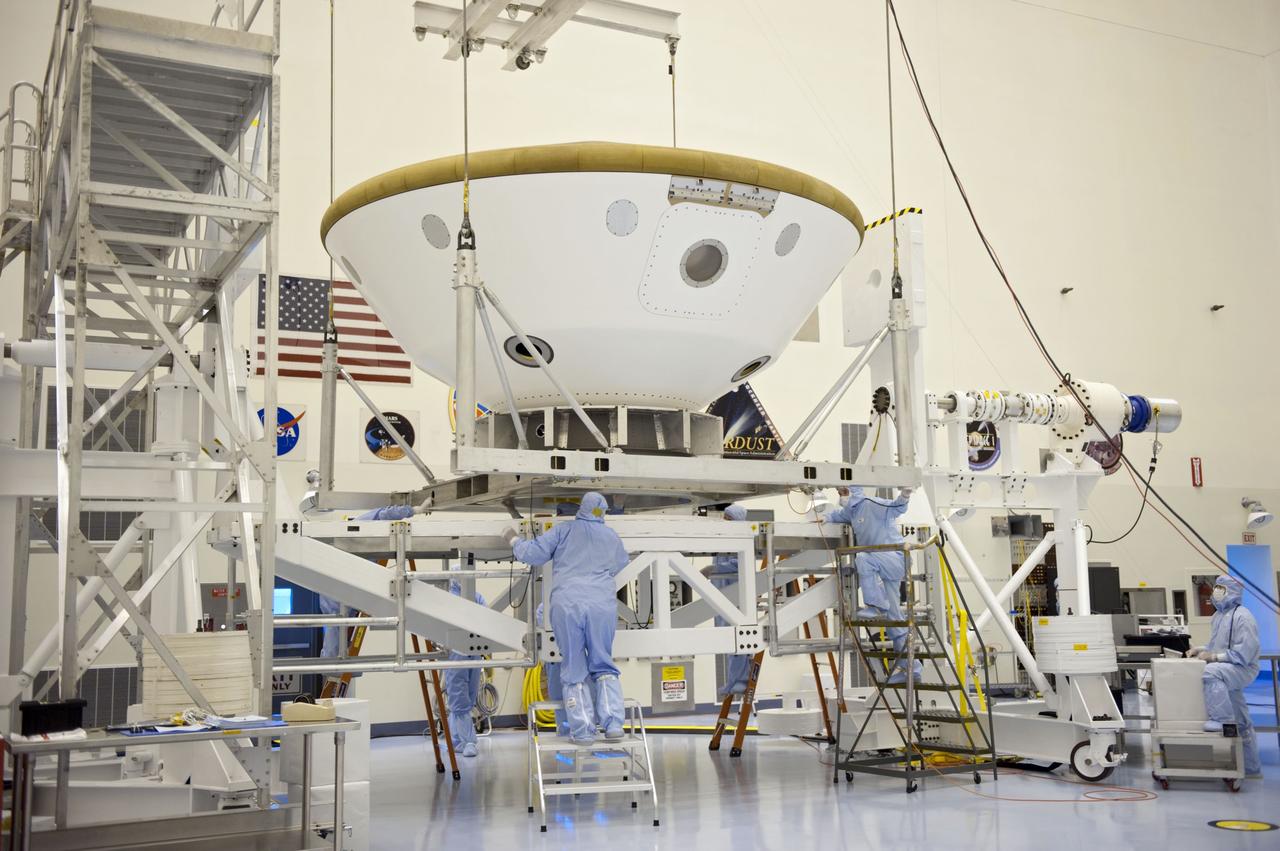
Cape Canaveral, Fla. -- At the Payload Hazardous Servicing Facility at NASA's Kennedy Space Center in Florida, technicians using an overhead crane, move the aeroshell, a component of NASA's Mars Science Laboratory (MSL), back to a work stand after a spin and balance test. The aeroshell consists of the backshell which carries the parachute and several components used during later stages of entry, descent and landing, and the spacecraft's heat shield. MSL's components include a compact car-sized rover, Curiosity, which has 10 science instruments designed to search for evidence on whether Mars has had environments favorable to microbial life, including chemical ingredients for life. The unique rover will use a laser to look inside rocks and release its gasses so that the rover’s spectrometer can analyze and send the data back to Earth. Launch of MSL aboard a United Launch Alliance Atlas V rocket is scheduled for Nov. 25 from Space Launch Complex 41 on Cape Canaveral Air Force Station in Florida. For more information, visit http://www.nasa.gov/msl. Photo credit: NASA/Kim Shiflett
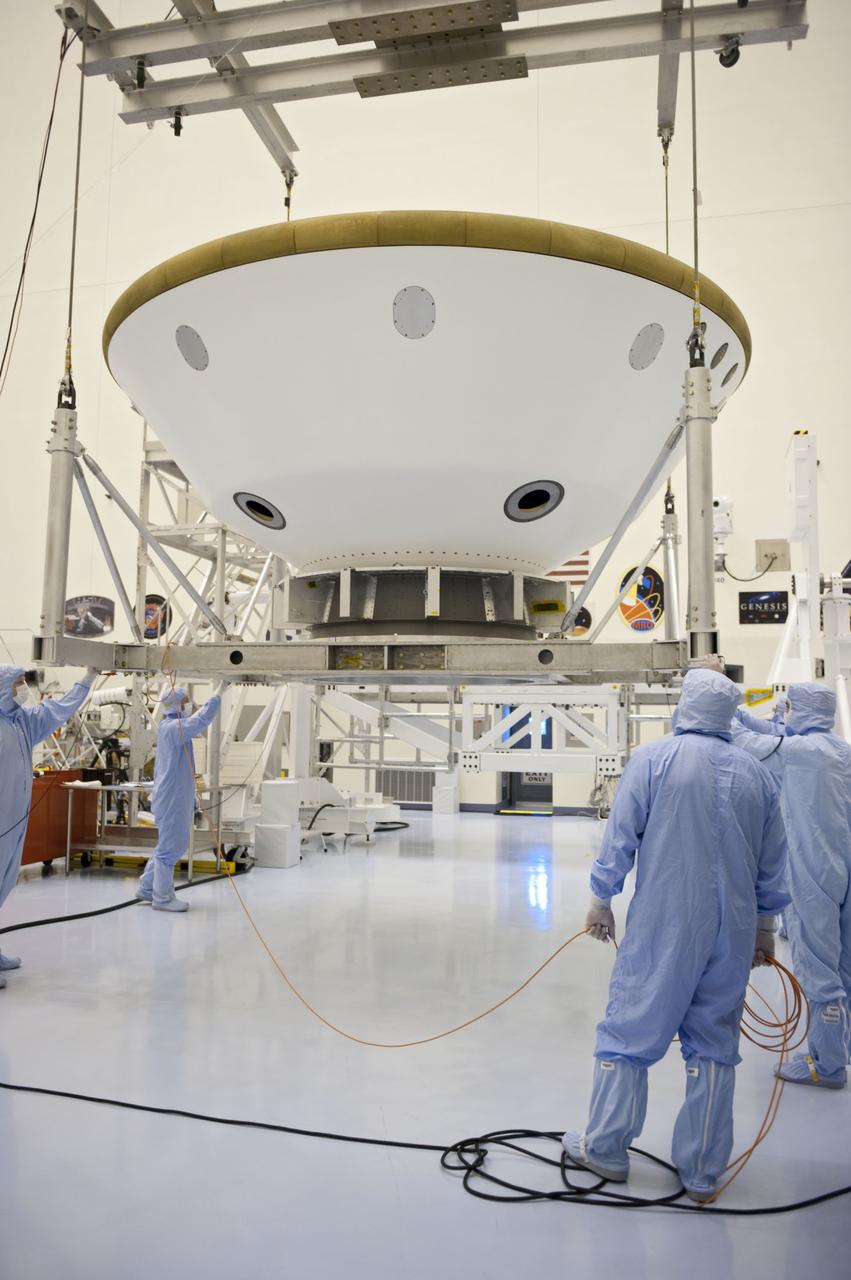
Cape Canaveral, Fla. -- At the Payload Hazardous Servicing Facility at NASA's Kennedy Space Center in Florida, technicians using an overhead crane, move the aeroshell, a component of NASA's Mars Science Laboratory (MSL), back to a work stand after a spin and balance test. The aeroshell consists of the backshell which carries the parachute and several components used during later stages of entry, descent and landing, and the spacecraft's heat shield. MSL's components include a compact car-sized rover, Curiosity, which has 10 science instruments designed to search for evidence on whether Mars has had environments favorable to microbial life, including chemical ingredients for life. The unique rover will use a laser to look inside rocks and release its gasses so that the rover’s spectrometer can analyze and send the data back to Earth. Launch of MSL aboard a United Launch Alliance Atlas V rocket is scheduled for Nov. 25 from Space Launch Complex 41 on Cape Canaveral Air Force Station in Florida. For more information, visit http://www.nasa.gov/msl. Photo credit: NASA/Kim Shiflett
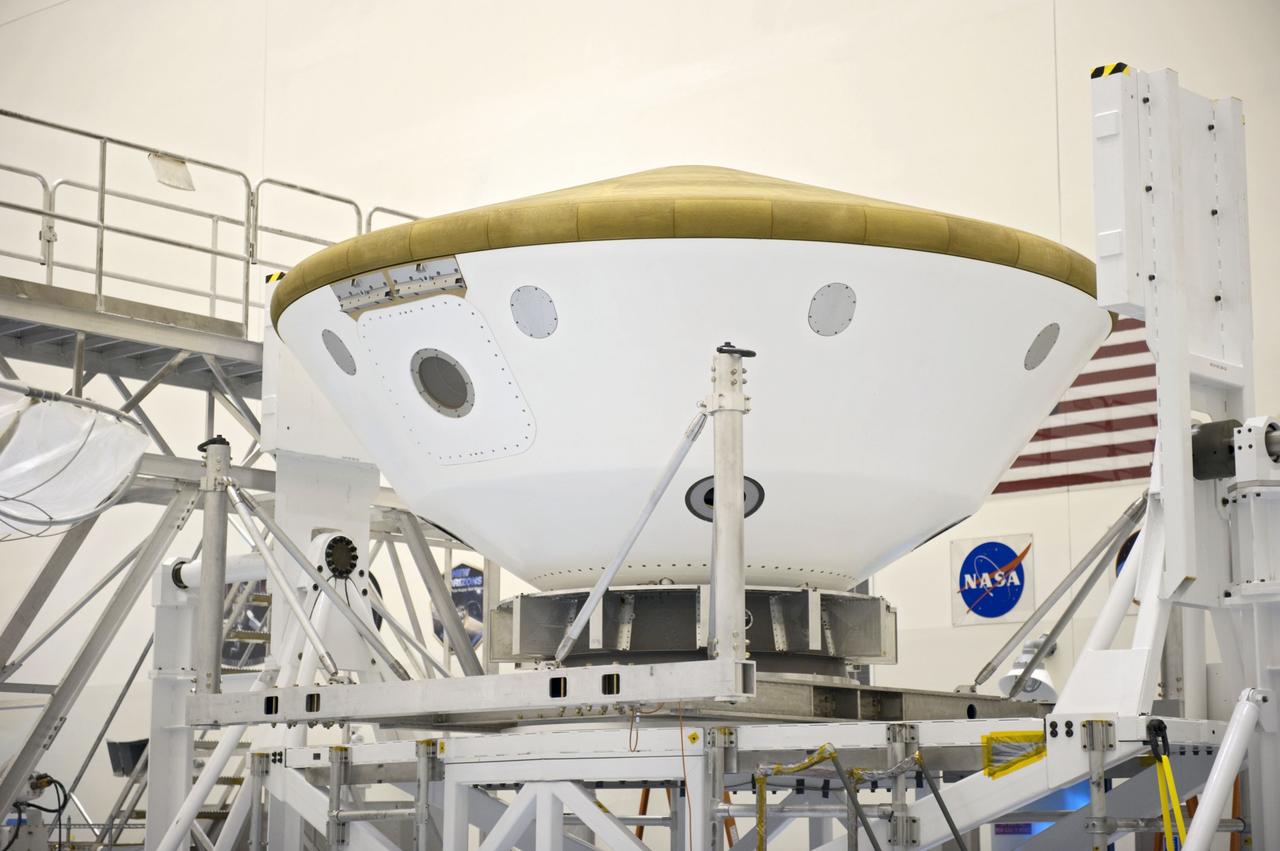
Cape Canaveral, Fla. -- At the Payload Hazardous Servicing Facility at NASA's Kennedy Space Center in Florida, technicians have moved the aeroshell, a component of NASA's Mars Science Laboratory (MSL), back to a work stand after a spin and balance test. The aeroshell consists of the backshell which carries the parachute and several components used during later stages of entry, descent and landing, and the spacecraft's heat shield. MSL's components include a compact car-sized rover, Curiosity, which has 10 science instruments designed to search for evidence on whether Mars has had environments favorable to microbial life, including chemical ingredients for life. The unique rover will use a laser to look inside rocks and release its gasses so that the rover’s spectrometer can analyze and send the data back to Earth. Launch of MSL aboard a United Launch Alliance Atlas V rocket is scheduled for Nov. 25 from Space Launch Complex 41 on Cape Canaveral Air Force Station in Florida. For more information, visit http://www.nasa.gov/msl. Photo credit: NASA/Kim Shiflett
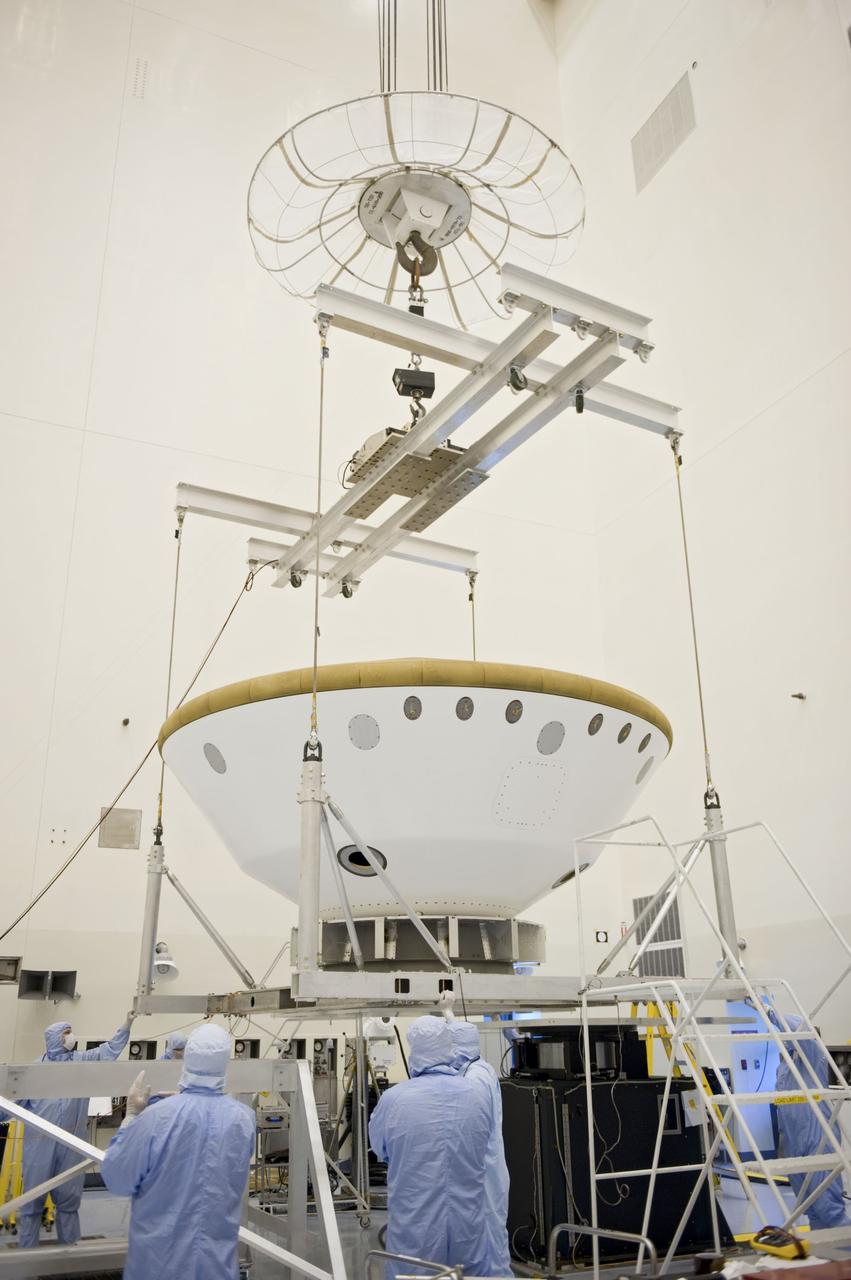
Cape Canaveral, Fla. -- At the Payload Hazardous Servicing Facility at NASA's Kennedy Space Center in Florida, technicians using an overhead crane, move the aeroshell, a component of NASA's Mars Science Laboratory (MSL), back to a work stand after a spin and balance test. The aeroshell consists of the backshell which carries the parachute and several components used during later stages of entry, descent and landing, and the spacecraft's heat shield. MSL's components include a compact car-sized rover, Curiosity, which has 10 science instruments designed to search for evidence on whether Mars has had environments favorable to microbial life, including chemical ingredients for life. The unique rover will use a laser to look inside rocks and release its gasses so that the rover’s spectrometer can analyze and send the data back to Earth. Launch of MSL aboard a United Launch Alliance Atlas V rocket is scheduled for Nov. 25 from Space Launch Complex 41 on Cape Canaveral Air Force Station in Florida. For more information, visit http://www.nasa.gov/msl. Photo credit: NASA/Kim Shiflett

Cape Canaveral, Fla. -- At the Payload Hazardous Servicing Facility at NASA's Kennedy Space Center in Florida, technicians using an overhead crane, move the aeroshell, a component of NASA's Mars Science Laboratory (MSL), back to a work stand after a spin and balance test. The aeroshell consists of the backshell which carries the parachute and several components used during later stages of entry, descent and landing, and the spacecraft's heat shield. MSL's components include a compact car-sized rover, Curiosity, which has 10 science instruments designed to search for evidence on whether Mars has had environments favorable to microbial life, including chemical ingredients for life. The unique rover will use a laser to look inside rocks and release its gasses so that the rover’s spectrometer can analyze and send the data back to Earth. Launch of MSL aboard a United Launch Alliance Atlas V rocket is scheduled for Nov. 25 from Space Launch Complex 41 on Cape Canaveral Air Force Station in Florida. For more information, visit http://www.nasa.gov/msl. Photo credit: NASA/Kim Shiflett
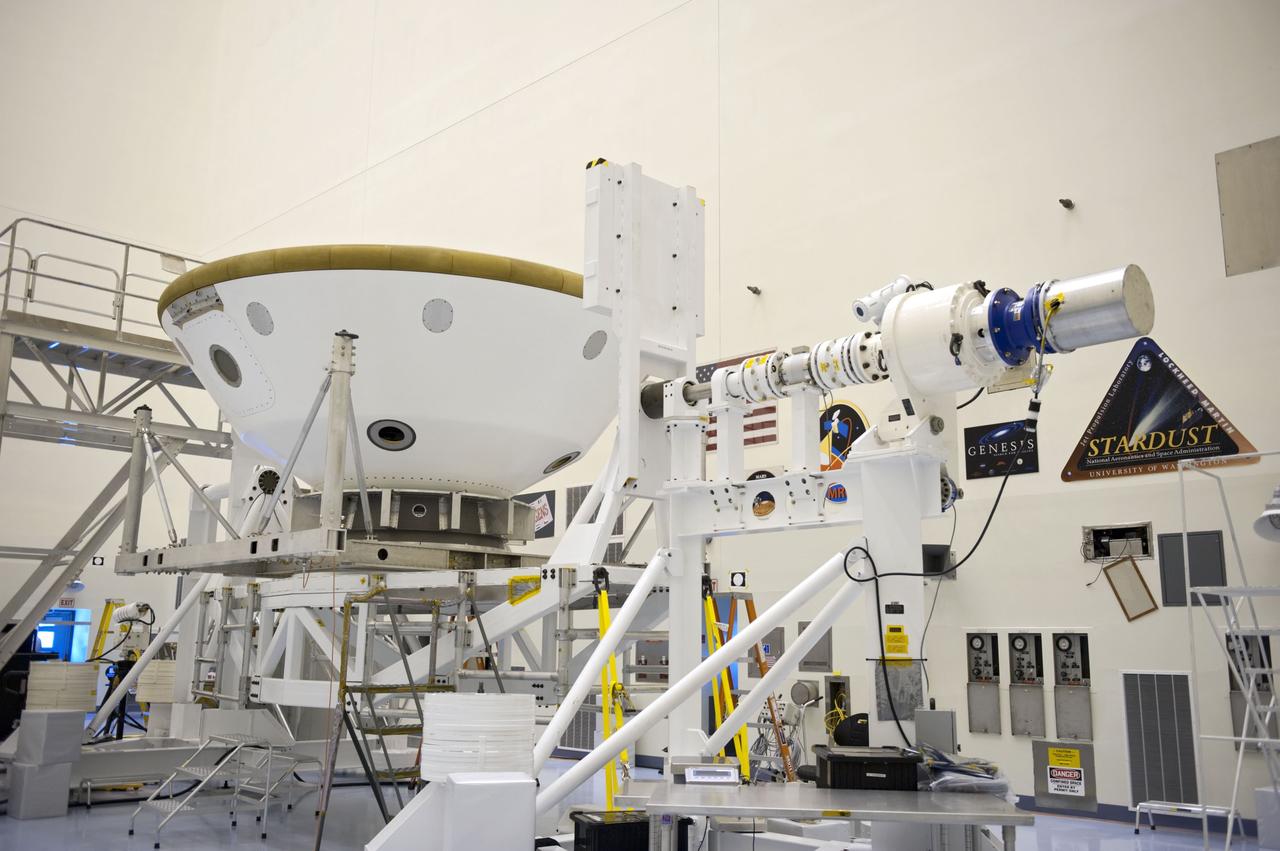
Cape Canaveral, Fla. -- At the Payload Hazardous Servicing Facility at NASA's Kennedy Space Center in Florida, technicians have moved the aeroshell, a component of NASA's Mars Science Laboratory (MSL), back to a work stand after a spin and balance test. The aeroshell consists of the backshell which carries the parachute and several components used during later stages of entry, descent and landing, and the spacecraft's heat shield. MSL's components include a compact car-sized rover, Curiosity, which has 10 science instruments designed to search for evidence on whether Mars has had environments favorable to microbial life, including chemical ingredients for life. The unique rover will use a laser to look inside rocks and release its gasses so that the rover’s spectrometer can analyze and send the data back to Earth. Launch of MSL aboard a United Launch Alliance Atlas V rocket is scheduled for Nov. 25 from Space Launch Complex 41 on Cape Canaveral Air Force Station in Florida. For more information, visit http://www.nasa.gov/msl. Photo credit: NASA/Kim Shiflett
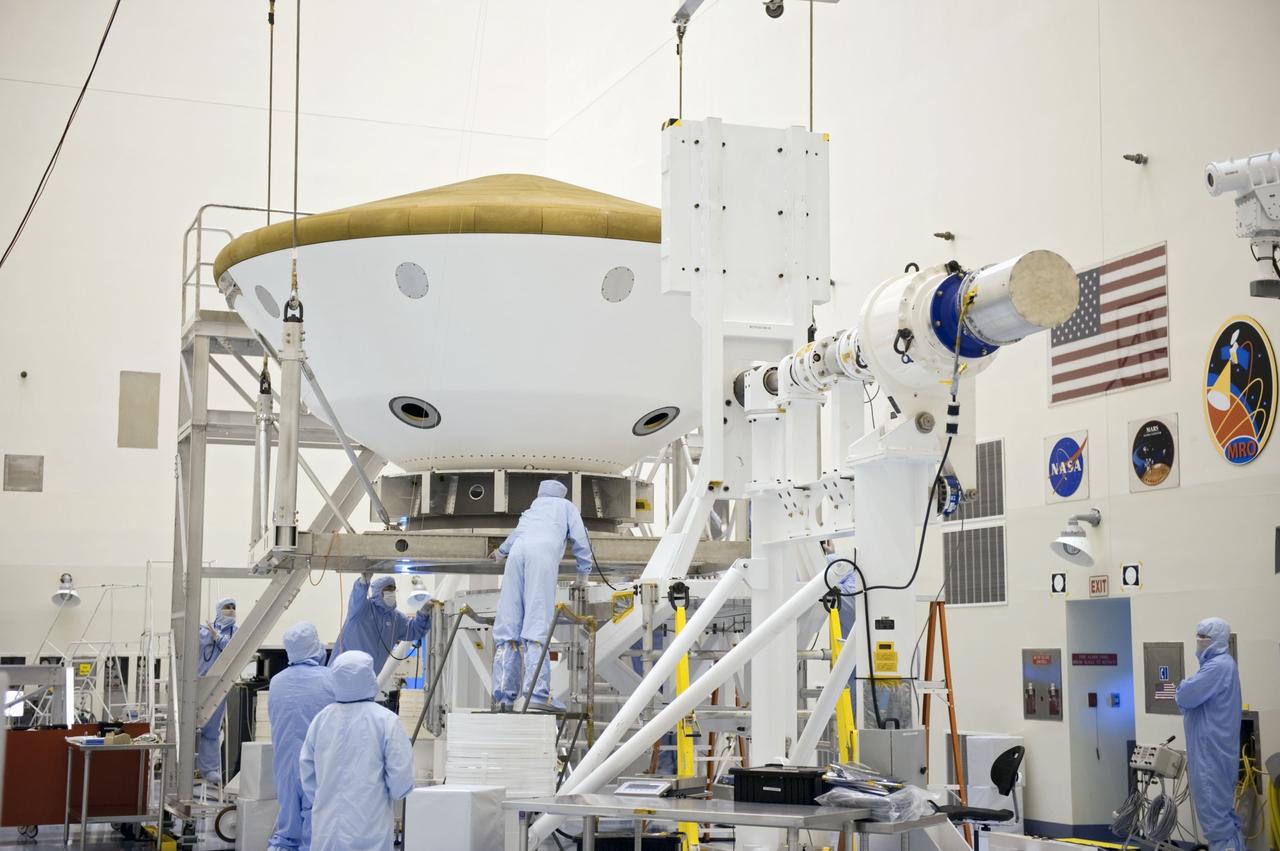
Cape Canaveral, Fla. -- At the Payload Hazardous Servicing Facility at NASA's Kennedy Space Center in Florida, technicians using an overhead crane, move the aeroshell, a component of NASA's Mars Science Laboratory (MSL), back to a work stand after a spin and balance test. The aeroshell consists of the backshell which carries the parachute and several components used during later stages of entry, descent and landing, and the spacecraft's heat shield. MSL's components include a compact car-sized rover, Curiosity, which has 10 science instruments designed to search for evidence on whether Mars has had environments favorable to microbial life, including chemical ingredients for life. The unique rover will use a laser to look inside rocks and release its gasses so that the rover’s spectrometer can analyze and send the data back to Earth. Launch of MSL aboard a United Launch Alliance Atlas V rocket is scheduled for Nov. 25 from Space Launch Complex 41 on Cape Canaveral Air Force Station in Florida. For more information, visit http://www.nasa.gov/msl. Photo credit: NASA/Kim Shiflett

Cape Canaveral, Fla. -- At the Payload Hazardous Servicing Facility at NASA's Kennedy Space Center in Florida, technicians using an overhead crane, move the aeroshell, a component of NASA's Mars Science Laboratory (MSL), back to a work stand after a spin and balance test. The aeroshell consists of the backshell which carries the parachute and several components used during later stages of entry, descent and landing, and the spacecraft's heat shield. MSL's components include a compact car-sized rover, Curiosity, which has 10 science instruments designed to search for evidence on whether Mars has had environments favorable to microbial life, including chemical ingredients for life. The unique rover will use a laser to look inside rocks and release its gasses so that the rover’s spectrometer can analyze and send the data back to Earth. Launch of MSL aboard a United Launch Alliance Atlas V rocket is scheduled for Nov. 25 from Space Launch Complex 41 on Cape Canaveral Air Force Station in Florida. For more information, visit http://www.nasa.gov/msl. Photo credit: NASA/Kim Shiflett
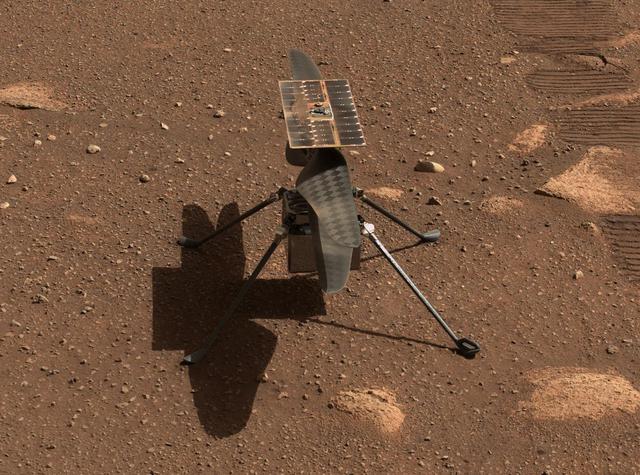
NASA's Ingenuity Mars helicopter is seen here in a close-up taken by Mastcam-Z, a pair of zoomable cameras aboard the Perseverance rover. This image was taken on April 5, the 45th Martian day, or sol, of the mission. The mosaic is not white balanced but is instead displayed in a preliminary calibrated version of a natural color composite, approximately simulating the colors of the scene that we would see if we were there viewing it ourselves. Arizona State University in Tempe leads the operations of the Mastcam-Z instrument, working in collaboration with Malin Space Science Systems in San Diego. A key objective for Perseverance's mission on Mars is astrobiology, including the search for signs of ancient microbial life. The rover will characterize the planet's geology and past climate, pave the way for human exploration of the Red Planet, and be the first mission to collect and cache Martian rock and regolith (broken rock and dust). Subsequent NASA missions, in cooperation with ESA (European Space Agency), would send spacecraft to Mars to collect these sealed samples from the surface and return them to Earth for in-depth analysis. The Mars 2020 Perseverance mission is part of NASA's Moon to Mars exploration approach, which includes Artemis missions to the Moon that will help prepare for human exploration of the Red Planet. https://photojournal.jpl.nasa.gov/catalog/PIA24547
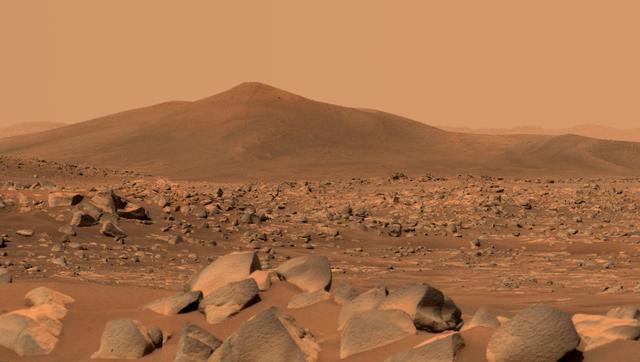
NASA's Perseverance Mars rover used its dual-camera Mastcam-Z imager to capture this image of "Santa Cruz," a hill about 1.5 miles (2.5 kilometers) away from the rover, on April 29, 2021, the 68th Martian day, or sol, of the mission. The entire scene is inside of Mars' Jezero Crater; the crater's rim can be seen on the horizon line beyond the hill. This scene is not white balanced; instead, it is displayed in a preliminary calibrated version of a natural-color composite, approximately simulating the colors of the scene as it would appear to a person on Mars. Arizona State University in Tempe leads the operations of the Mastcam-Z instrument, working in collaboration with Malin Space Science Systems in San Diego. A key objective for Perseverance's mission on Mars is astrobiology, including the search for signs of ancient microbial life. The rover will characterize the planet's geology and past climate, pave the way for human exploration of the Red Planet, and be the first mission to collect and cache Martian rock and regolith (broken rock and dust). Subsequent NASA missions, in cooperation with ESA (European Space Agency), would send spacecraft to Mars to collect these sealed samples from the surface and return them to Earth for in-depth analysis. The Mars 2020 Perseverance mission is part of NASA's Moon to Mars exploration approach, which includes Artemis missions to the Moon that will help prepare for human exploration of the Red Planet. https://photojournal.jpl.nasa.gov/catalog/PIA24546
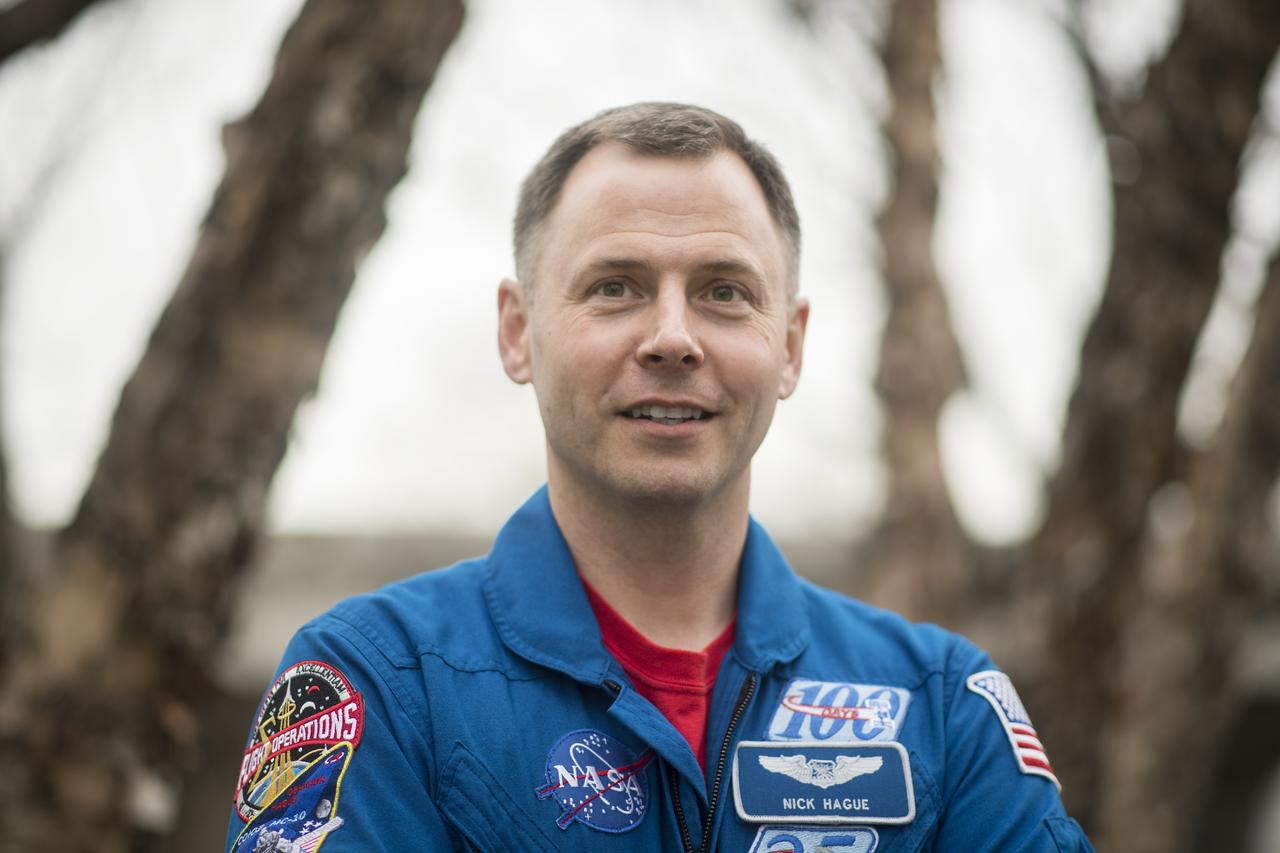
"When we do passes over parts of the world where you can see the human impact to the world, you get to really see the magnitude of the impact. When we’re flying over North America, we come up over Vancouver, and a short five minutes later we’re flying over Houston. We’d just cross over all of the Western United States. And during the daylight, you may not really see a whole lot of human influence, with all the great plains are stretched out and the cities blending into everything. "But when we’d do that same view over South America, at what at one point was rainforest, as far as we can see, has all been deforested. You can understand the reasons why people are doing it. They’re trying to survive. But you also know at your core that we’re having a significant impact on how life is balancing on the world. And so, I walked away with a deep sense of stewardship of the planet. My wife chuckles at this being my mid-life crisis. I came home and signed up for 100% renewable energy and looked at EV cars and everything. "When you look out into space, and you see all those stars and all those galaxies — there’s just so much stuff out there. But the only thing you see with any life on it is what’s right below you. You know that we’re on this island out in the middle of this vast darkness, and we need to just take care of it as best we can." NASA astronaut Nick Hague, Monday, Jan. 13, 2020 in Washington, DC. Hague most recently spent 203 days living and working onboard the International Space Station as part of Expeditions 59 and 60. Hague ventured outside the space station on three spacewalks totaling 19 hours and 56 minutes. Photo Credit: (NASA/Aubrey Gemignani)

This sunset on Mars was captured by NASA's Perseverance Mars rover using its Mastcam-Z camera system on Nov. 9, 2021, the 257th Martian day, or sol, of the mission. Martian sunsets typically stand out for their distinctive blue color. Fine dust in the atmosphere permits blue light to penetrate the atmosphere more efficiently than colors with longer wavelengths. But this sunset looks different: less dust in the atmosphere resulted in a more muted color than average. The color has been calibrated and white-balanced to remove camera artifacts. The Mastcam-Z investigation is led and operated by Arizona State University in Tempe, working in collaboration with Malin Space Science Systems in San Diego, California, on the design, fabrication, testing, and operation of the cameras, and in collaboration with the Neils Bohr Institute of the University of Copenhagen on the design, fabrication, and testing of the calibration targets. A key objective for Perseverance's mission on Mars is astrobiology, including the search for signs of ancient microbial life. The rover will characterize the planet's geology and past climate, pave the way for human exploration of the Red Planet, and be the first mission to collect and cache Martian rock and regolith (broken rock and dust). Subsequent NASA missions, in cooperation with ESA (European Space Agency), would send spacecraft to Mars to collect these sealed samples from the surface and return them to Earth for in-depth analysis. The Mars 2020 Perseverance mission is part of NASA's Moon to Mars exploration approach, which includes Artemis missions to the Moon that will help prepare for human exploration of the Red Planet. https://photojournal.jpl.nasa.gov/catalog/PIA24935
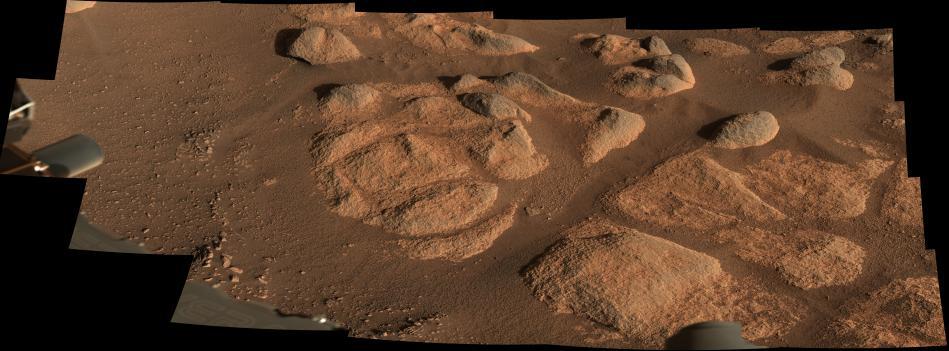
NASA's Perseverance Mars rover viewed these rocks using its Mastcam-Z imager on April 27, 2021, the 66th Martian day, or sol, of the mission. Stitched together from 21 images, this mosaic is not white balanced; instead, it is displayed in a preliminary calibrated version of a natural-color composite, approximately simulating the colors of the scene as it would appear on Mars. For scale, the largest piece of rock casting a shadow in the upper right part of the mosaic is about 11 inches (27 centimeters) across, and the entire scene is about 10 feet (3 meters) across. The smallest pebbles and other features that can reliably be resolved at this zoom scale are around 0.04 to 0.08 inches (1-2 millimeters) across. The scene was also captured in enhanced color (Figure 1) as well as a color anaglyph made for viewing through red-blue 3D glasses (Figure 2). Arizona State University in Tempe leads the operations of the Mastcam-Z instrument, working in collaboration with Malin Space Science Systems in San Diego. A key objective for Perseverance's mission on Mars is astrobiology, including the search for signs of ancient microbial life. The rover will characterize the planet's geology and past climate, pave the way for human exploration of the Red Planet, and be the first mission to collect and cache Martian rock and regolith (broken rock and dust). Subsequent NASA missions, in cooperation with ESA (European Space Agency), would send spacecraft to Mars to collect these sealed samples from the surface and return them to Earth for in-depth analysis. The Mars 2020 Perseverance mission is part of NASA's Moon to Mars exploration approach, which includes Artemis missions to the Moon that will help prepare for human exploration of the Red Planet. https://photojournal.jpl.nasa.gov/catalog/PIA24627
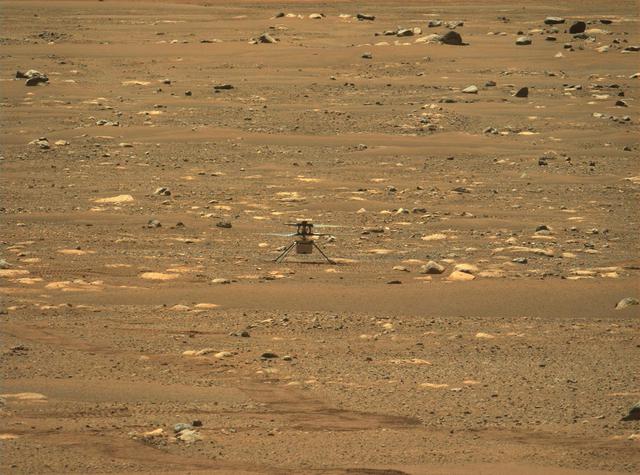
This image was taken after the first flight of NASA's Ingenuity Mars Helicopter — and the first powered, controlled flight on another planet. It was captured by Mastcam-Z, a pair of zoomable cameras aboard NASA's Perseverance Mars rover, on April 19, 2021. Flying in a controlled manner on Mars is far more difficult than flying on Earth. The Red Planet has significant gravity (about one-third that of Earth's), but its atmosphere is just 1% as dense as Earth's at the surface. Stitched together from multiple images, the mosaic is not white balanced; instead, it is displayed in a preliminary calibrated version of a natural color composite, approximately simulating the colors of the scene that we would see if we were there viewing it ourselves. Arizona State University in Tempe leads the operations of the Mastcam-Z instrument, working in collaboration with Malin Space Science Systems in San Diego. A key objective for Perseverance's mission on Mars is astrobiology, including the search for signs of ancient microbial life. The rover will characterize the planet's geology and past climate, pave the way for human exploration of the Red Planet, and be the first mission to collect and cache Martian rock and regolith (broken rock and dust). Subsequent NASA missions, in cooperation with ESA (European Space Agency), would send spacecraft to Mars to collect these sealed samples from the surface and return them to Earth for in-depth analysis. The Mars 2020 Perseverance mission is part of NASA's Moon to Mars exploration approach, which includes Artemis missions to the Moon that will help prepare for human exploration of the Red Planet. https://photojournal.jpl.nasa.gov/catalog/PIA24550
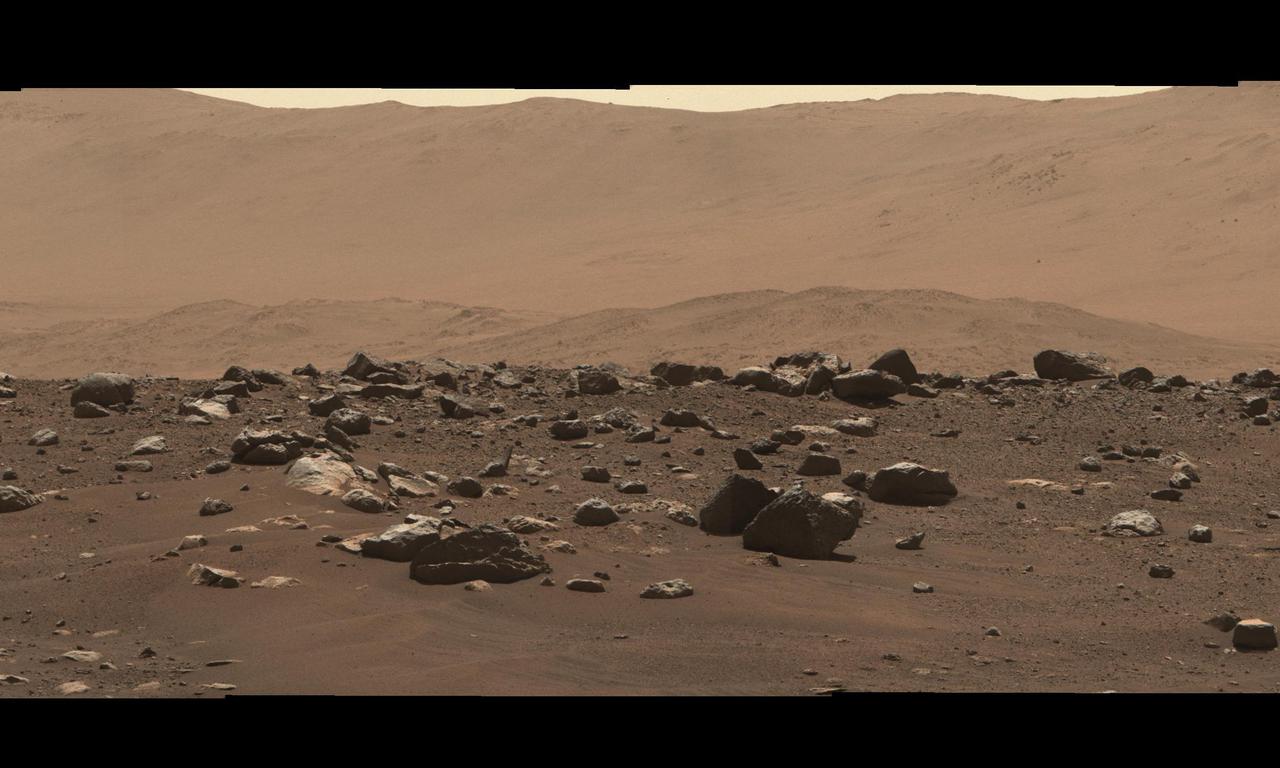
Stitched together from 79 individual images, this Mastcam-Z right-eye 110-mm zoom mosaic is from the camera's first high-resolution panorama imaging sequence. These images were taken on the afternoon of Sol 4 (Feb. 22, 2021) of the mission; a sol is a Martian day. The camera was commanded to take these images by scanning the mast, or "head," a full 360-degrees around the horizon visible from the landing site. The top of some of the distant crater rim is cut off in some images to ensure the images would cover the front ridge of the Jezero Crater's ancient delta, which is only about 1.25 miles (2 kilometers) away from the rover in the center of this panorama. At that distance and focal length, Mastcam-Z can resolve features as small as about 50 centimeters (1.6 feet) across along the front of the delta. The mosaic is not white balanced but is instead displayed in a preliminary calibrated version of a natural color composite, approximately simulating the colors of the scene that we would see if we were there viewing it ourselves. Arizona State University in Tempe leads the operations of the Mastcam-Z instrument, working in collaboration with Malin Space Science Systems in San Diego. A key objective for Perseverance's mission on Mars is astrobiology, including the search for signs of ancient microbial life. The rover will characterize the planet's geology and past climate, pave the way for human exploration of the Red Planet, and be the first mission to collect and cache Martian rock and regolith (broken rock and dust). Subsequent NASA missions, in cooperation with ESA (European Space Agency), would send spacecraft to Mars to collect these sealed samples from the surface and return them to Earth for in-depth analysis. The Mars 2020 Perseverance mission is part of NASA's Moon to Mars exploration approach, which includes Artemis missions to the Moon that will help prepare for human exploration of the Red Planet. Complete mosaic available at https://photojournal.jpl.nasa.gov/catalog/PIA23727
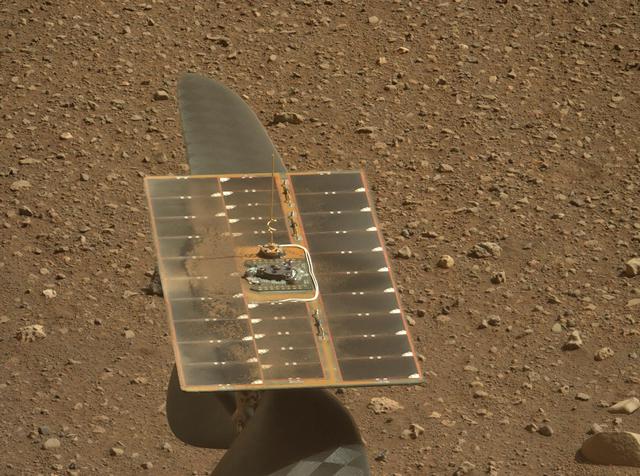
The solar panel of NASA's Ingenuity Mars Helicopter's solar panel as seen by Mastcam-Z, a pair of zoomable cameras aboard NASA's Perseverance Mars rover. Roughly 6.5 by 17 inches (425 mm by 165 mm), the panel charges six lithium-ion batteries inside the helicopter. The small amount of dust on the panel may have accumulated above the helicopter during landing and fallen onto it during helicopter deployment. This dust has had no adverse impact on the helicopter's power. Solar cells in the array are optimized for the solar spectrum encountered at Mars, and the stored energy is used to operate heaters for the cold Martian nights as well as power the helicopter during flight operations. Power expended by the helicopter during an up-to-90-second flight is about 350 watts. The image is not white balanced; instead it is displayed in a preliminary calibrated version of a natural-color composite, approximately simulating the colors of the scene that we would see if we were there viewing it ourselves. Arizona State University in Tempe leads the operations of the Mastcam-Z instrument, working in collaboration with Malin Space Science Systems in San Diego. A key objective for Perseverance's mission on Mars is astrobiology, including the search for signs of ancient microbial life. The rover will characterize the planet's geology and past climate, pave the way for human exploration of the Red Planet, and be the first mission to collect and cache Martian rock and regolith (broken rock and dust). Subsequent NASA missions, in cooperation with ESA (European Space Agency), would send spacecraft to Mars to collect these sealed samples from the surface and return them to Earth for in-depth analysis. The Mars 2020 Perseverance mission is part of NASA's Moon to Mars exploration approach, which includes Artemis missions to the Moon that will help prepare for human exploration of the Red Planet. https://photojournal.jpl.nasa.gov/catalog/PIA24545
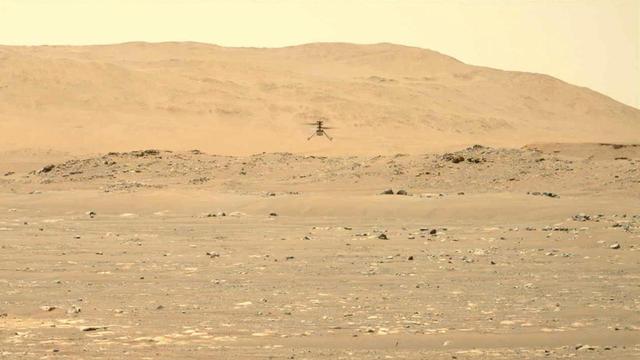
NASA's Ingenuity Mars Helicopter hovers and rotates over Jezero Crater during its second experimental flight test on April 22, 2021. The footage was captured by the Mastcam-Z imager, a pair of zoomable cameras aboard NASA's Perseverance Mars rover. Altimeter data from the solar-powered helicopter indicates it climbed to its prescribed maximum altitude of 16 feet (5 meters), flew downrange 7 feet (2 meters) and returned, performed several turns while in a hover, and landed. Total flight time 51.9 seconds. Flying in a controlled manner on Mars is far more difficult than flying on Earth. The Red Planet has significant gravity (about one-third that of Earth's), but an atmosphere with only about 1% of the density at Earth's surface. Stitched together from multiple images, the mosaic is not white balanced; instead, it is displayed in a preliminary calibrated version of a natural-color composite, approximately simulating the colors of the scene as it would appear on Mars. Arizona State University in Tempe leads the operations of the Mastcam-Z instrument, working in collaboration with Malin Space Science Systems in San Diego. The Ingenuity Mars Helicopter was built by JPL, which also manages this technology demonstration project for NASA Headquarters. It is supported by NASA's Science Mission Directorate, Aeronautics Research Mission Directorate, and Space Technology Mission Directorate. NASA's Ames Research Center and Langley Research Center provided significant flight performance analysis and technical assistance during Ingenuity's development. A key objective for Perseverance's mission on Mars is astrobiology, including the search for signs of ancient microbial life. The rover will characterize the planet's geology and past climate, pave the way for human exploration of the Red Planet, and be the first mission to collect and cache Martian rock and regolith (broken rock and dust). Subsequent NASA missions, in cooperation with ESA (European Space Agency), would send spacecraft to Mars to collect these sealed samples from the surface and return them to Earth for in-depth analysis. The Mars 2020 Perseverance mission is part of NASA's Moon to Mars exploration approach, which includes Artemis missions to the Moon that will help prepare for human exploration of the Red Planet. Movie available at https://photojournal.jpl.nasa.gov/catalog/PIA24595
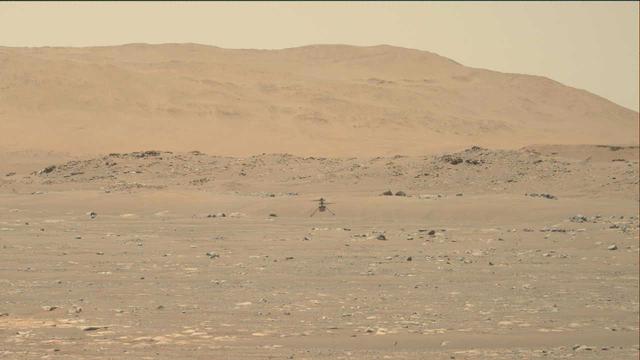
NASA's Ingenuity Mars Helicopter hovers over the Martian surface — the first instance of powered, controlled flight on another planet — as viewed by the Mastcam-Z imager aboard the Perseverance Mars rover on April 19, 2021. The solar-powered helicopter first became airborne at 3:34 a.m. EDT (12:34 a.m. PDT) — 12:33 Local Mean Solar Time (Mars time) — a time the Ingenuity team determined would have optimal energy and flight conditions. Altimeter data indicate Ingenuity climbed to its prescribed maximum altitude of 10 feet (3 meters) and maintained a stable hover for 30 seconds. It then descended, touching back down on the surface of Mars after logging a total of 39.1 seconds of flight. Flying in a controlled manner on Mars is far more difficult than flying on Earth. The Red Planet has significant gravity (about one-third that of Earth's), but its atmosphere is just 1% as dense as Earth's at the surface. Stitched together from multiple images, the mosaic is not white balanced; instead, it is displayed in a preliminary calibrated version of a natural-color composite, approximately simulating the colors of the scene as it would appear on Mars. Arizona State University in Tempe leads the operations of the Mastcam-Z instrument, working in collaboration with Malin Space Science Systems in San Diego. The Ingenuity Mars Helicopter was built by JPL, which also manages this technology demonstration project for NASA Headquarters. It is supported by NASA's Science Mission Directorate, Aeronautics Research Mission Directorate, and Space Technology Mission Directorate. NASA's Ames Research Center and Langley Research Center provided significant flight performance analysis and technical assistance during Ingenuity's development. A key objective for Perseverance's mission on Mars is astrobiology, including the search for signs of ancient microbial life. The rover will characterize the planet's geology and past climate, pave the way for human exploration of the Red Planet, and be the first mission to collect and cache Martian rock and regolith (broken rock and dust). Subsequent NASA missions, in cooperation with ESA (European Space Agency), would send spacecraft to Mars to collect these sealed samples from the surface and return them to Earth for in-depth analysis. The Mars 2020 Perseverance mission is part of NASA's Moon to Mars exploration approach, which includes Artemis missions to the Moon that will help prepare for human exploration of the Red Planet. Movie available at https://photojournal.jpl.nasa.gov/catalog/PIA24590
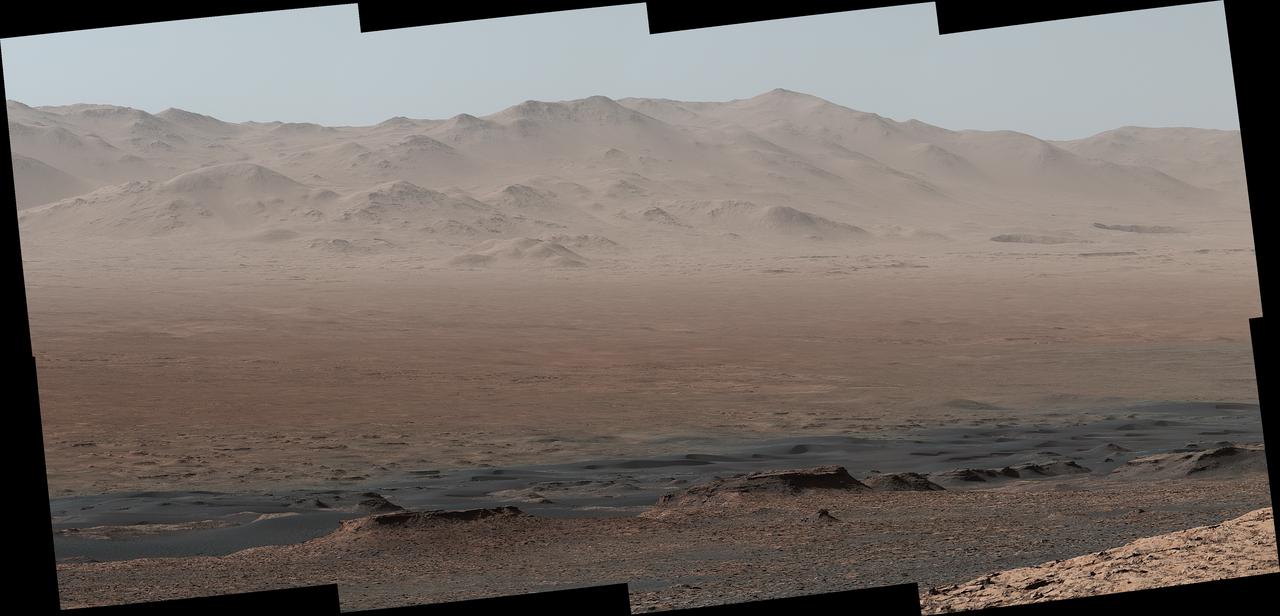
A vantage point on "Vera Rubin Ridge" provided NASA's Curiosity Mars rover this detailed look back over the area where it began its mission inside Gale Crater, plus more-distant features of the crater. This view toward the north-northeast combines eight images taken by the right-eye, telephoto-lens camera of Curiosity's Mast Camera (Mastcam). It shows more detail of a fraction of the area pictured in a more sweeping panorama (see PIA22210) acquired from the same rover location using Mastcam's left-eye, wider-angle-lens camera. The scene has been white-balanced so the colors of the rock materials resemble how they would appear under daytime lighting conditions on Earth. The component images were taken on Oct. 25, 2017, during the 1,856th Martian day, or sol, of the rover's work on Mars. At that point, Curiosity had gained 1,073 feet (327 meters) in elevation and driven 10.95 miles (17.63 kilometers) from its landing site. Mount Sharp stands about 3 miles (5 kilometers) high in the middle of Gale Crater, which spans 96 miles (154 kilometers) in diameter. Vera Rubin Ridge is on the northwestern flank of lower Mount Sharp. The right foreground of this panorama shows a portion of Vera Rubin Ridge. In the distance is the northern wall of Gale Crater, with the rim crest forming the horizon roughly 25 miles (40 kilometers) from the rover's location. An annotated version, Figure 1, indicates where the rover landed (at "Bradbury Landing") in 2012 and the initial portion of its drive, including investigation sites "Yellowknife Bay," "Darwin" and "Cooperstown." The rover's exact landing site is hidden behind a slight rise. The heat shield, back shell, and parachute used during the spacecraft's descent are within the pictured area but not recognizable due to the distance and to camouflaging by dust. At Yellowknife Bay in 2013, the mission found evidence of an ancient freshwater-lake environment that offered all of the basic chemical ingredients for microbial life. Figure 2 includes three scale bars: of 40 meters (131 feet) at a distance of about 1,530 meters (1,673 yards) near the base of Mount Sharp; of 1,500 meters (1,640 yards) at a distance of about 30.75 kilometers (19.1 miles) near the base of the crater wall; and of 2,000 meters (1.2 miles) at a distance of about 41.2 kilometers (25.6 miles) at the crest of the rim. Annotated images are available at https://photojournal.jpl.nasa.gov/catalog/PIA22209

In this footage captured by the Mastcam-Z imager aboard the Perseverance Mars rover on April 19, 2021, the agency's Ingenuity Mars Helicopter lifts of from the Martian surface, hovers for 30 seconds, then touches back down. Lasting a total of 39.1 seconds, the flight marks the first instance of powered, controlled flight on another planet. The solar-powered helicopter first became airborne at 3:34 a.m. EDT (12:34 a.m. PDT) — 12:33 Local Mean Solar Time (Mars time) — a time the Ingenuity team determined would have optimal energy and flight conditions. Altimeter data indicate Ingenuity climbed to its prescribed maximum altitude of 10 feet (3 meters) and maintained a stable hover for 30 seconds. It then descended. Flying in a controlled manner on Mars is far more difficult than flying on Earth. The Red Planet has significant gravity (about one-third that of Earth's), but its atmosphere is just 1% as dense as Earth's at the surface. Stitched together from multiple images, the mosaic is not white balanced; instead, it is displayed in a preliminary calibrated version of a natural-color composite, approximately simulating the colors of the scene as it would appear on Mars. Arizona State University in Tempe leads the operations of the Mastcam-Z instrument, working in collaboration with Malin Space Science Systems in San Diego. The Ingenuity Mars Helicopter was built by JPL, which also manages this technology demonstration project for NASA Headquarters. It is supported by NASA's Science Mission Directorate, Aeronautics Research Mission Directorate, and Space Technology Mission Directorate. NASA's Ames Research Center and Langley Research Center provided significant flight performance analysis and technical assistance during Ingenuity's development. A key objective for Perseverance's mission on Mars is astrobiology, including the search for signs of ancient microbial life. The rover will characterize the planet's geology and past climate, pave the way for human exploration of the Red Planet, and be the first mission to collect and cache Martian rock and regolith (broken rock and dust). Subsequent NASA missions, in cooperation with ESA (European Space Agency), would send spacecraft to Mars to collect these sealed samples from the surface and return them to Earth for in-depth analysis. The Mars 2020 Perseverance mission is part of NASA's Moon to Mars exploration approach, which includes Artemis missions to the Moon that will help prepare for human exploration of the Red Planet. Movie available at https://photojournal.jpl.nasa.gov/catalog/PIA24521