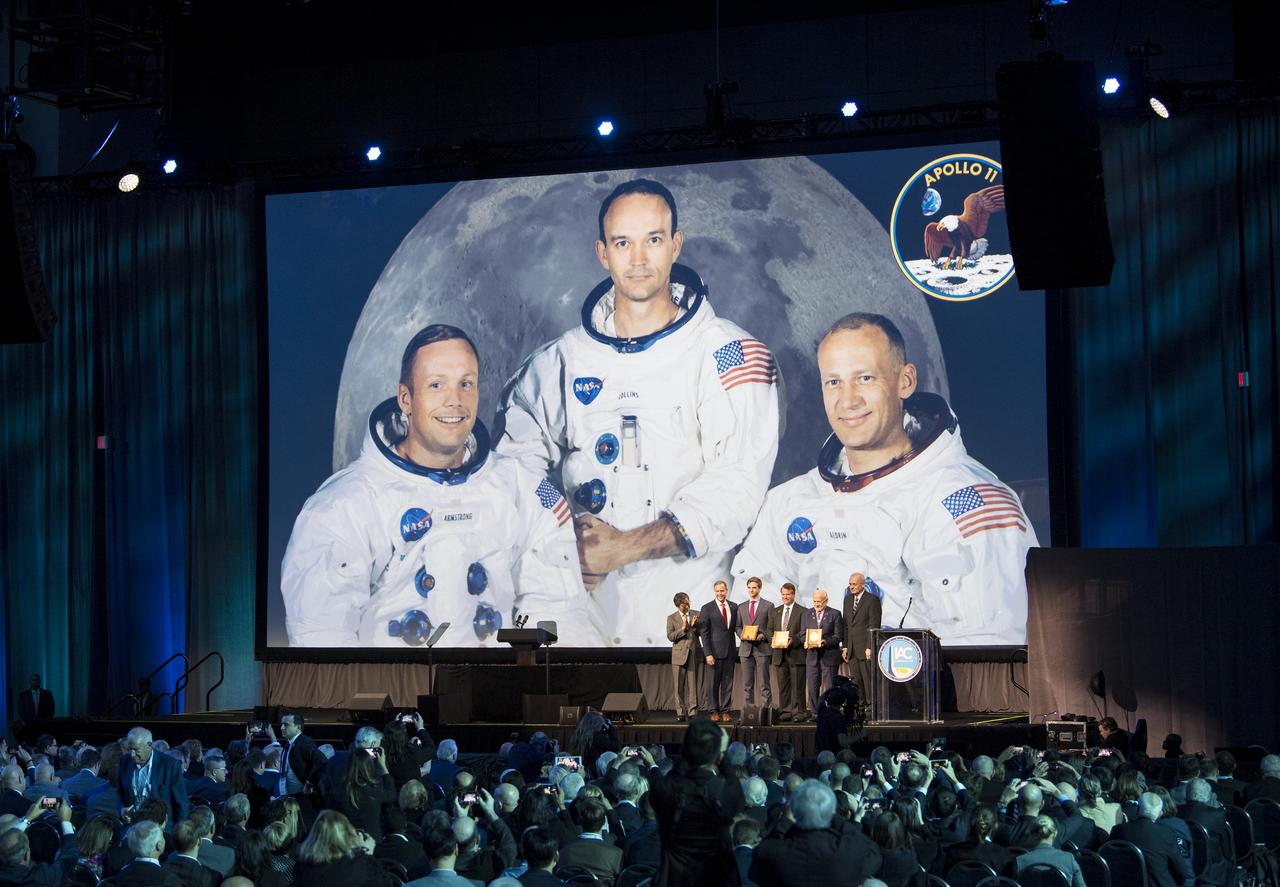
Seishiro Kibee on behalf of the International Astronautical Federation Awards Committee, left, NASA Administrator Jim Bridenstine, Luke Newell, grandson of Apollo 11 command module pilot Michael Collins, Mark Armstrong, son of Apollo 11 commander Neil Armstrong, and Apollo 11 lunar module pilot Buzz Aldrin, and Jean-Yves Le Gall, President of International Astronautical Federation (IAF), right, pose for a picture after the 2019 World Space Award was presented to the Apollo 11 crew during the opening ceremony of the 70th International Astronautical Congress, Monday, Oct. 21, 2019 at the Walter E. Washington Convention Center in Washington. Photo Credit: (NASA/Joel Kowsky)
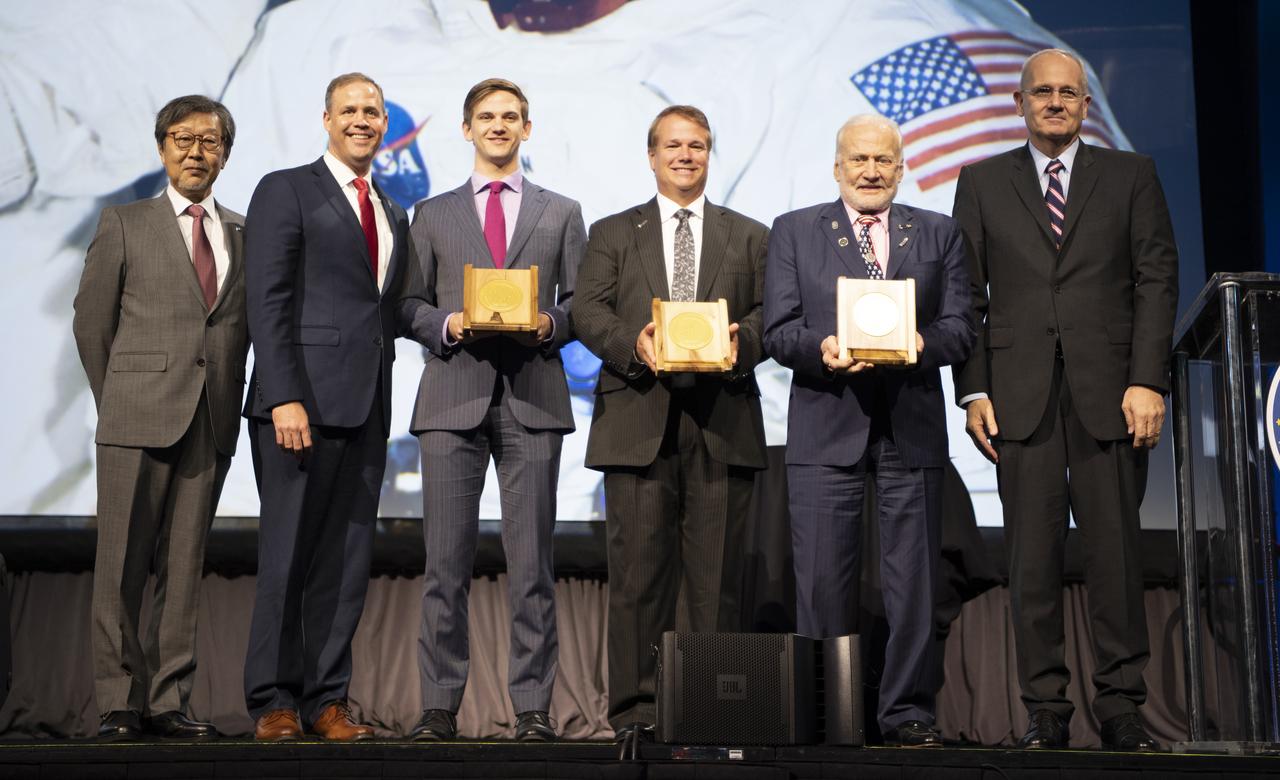
Seishiro Kibee on behalf of the International Astronautical Federation Awards Committee, left, NASA Administrator Jim Bridenstine, Luke Newell, grandson of Apollo 11 command module pilot Michael Collins, Mark Armstrong, son of Apollo 11 commander Neil Armstrong, and Apollo 11 lunar module pilot Buzz Aldrin, and Jean-Yves Le Gall, President of International Astronautical Federation (IAF), right, pose for a picture after the 2019 World Space Award was presented to the Apollo 11 crew during the opening ceremony of the 70th International Astronautical Congress, Monday, Oct. 21, 2019 at the Walter E. Washington Convention Center in Washington. Photo Credit: (NASA/Bill Ingalls)
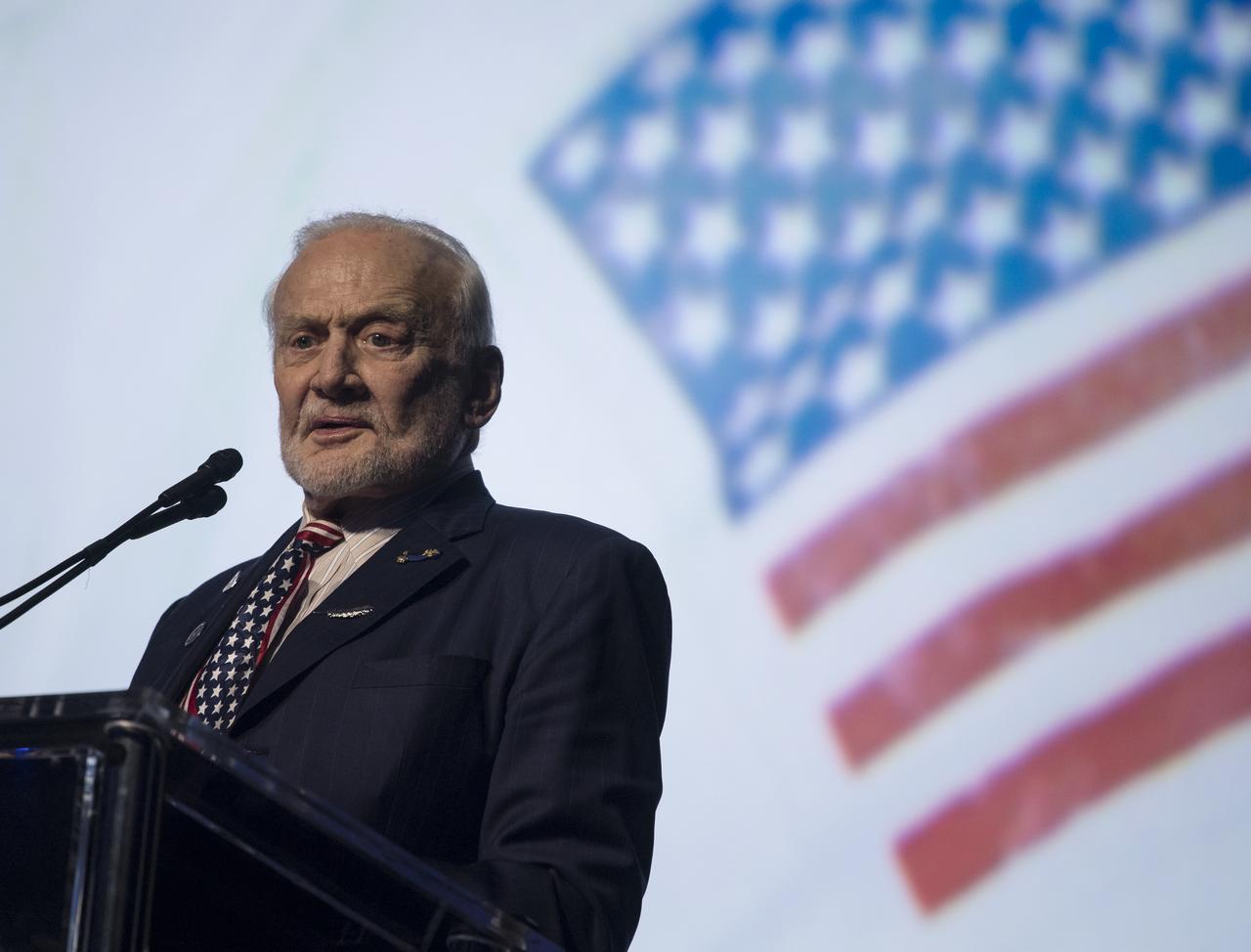
Apollo 11 astronaut Buzz Aldrin delivers remarks during the International Astronautical Federation World Space Award highlight lecture at the 70th International Astronautical Congress, Thursday, Oct. 24, 2019, at the Walter E. Washington Convention Center in Washington. The 2019 World Space Award was presented to the crew of Apollo 11. Photo Credit: (NASA/Joel Kowsky)
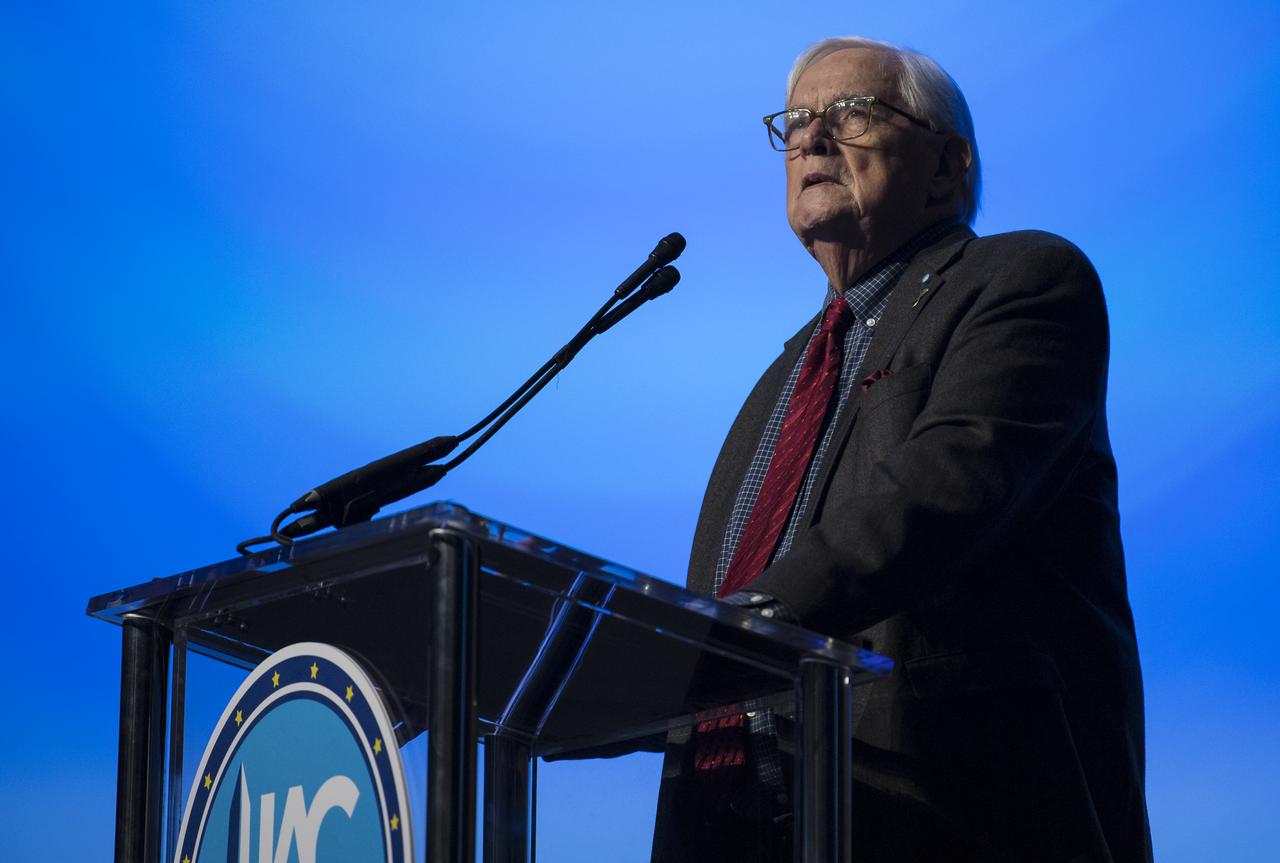
John Logsdon, Apollo historian and Professor Emeritus at George Washington University, speaks about the history of the Apollo program during the International Astronautical Federation World Space Award highlight lecture at the 70th International Astronautical Congress, Thursday, Oct. 24, 2019, at the Walter E. Washington Convention Center in Washington. The 2019 World Space Award was presented to the crew of Apollo 11. Photo Credit: (NASA/Joel Kowsky)
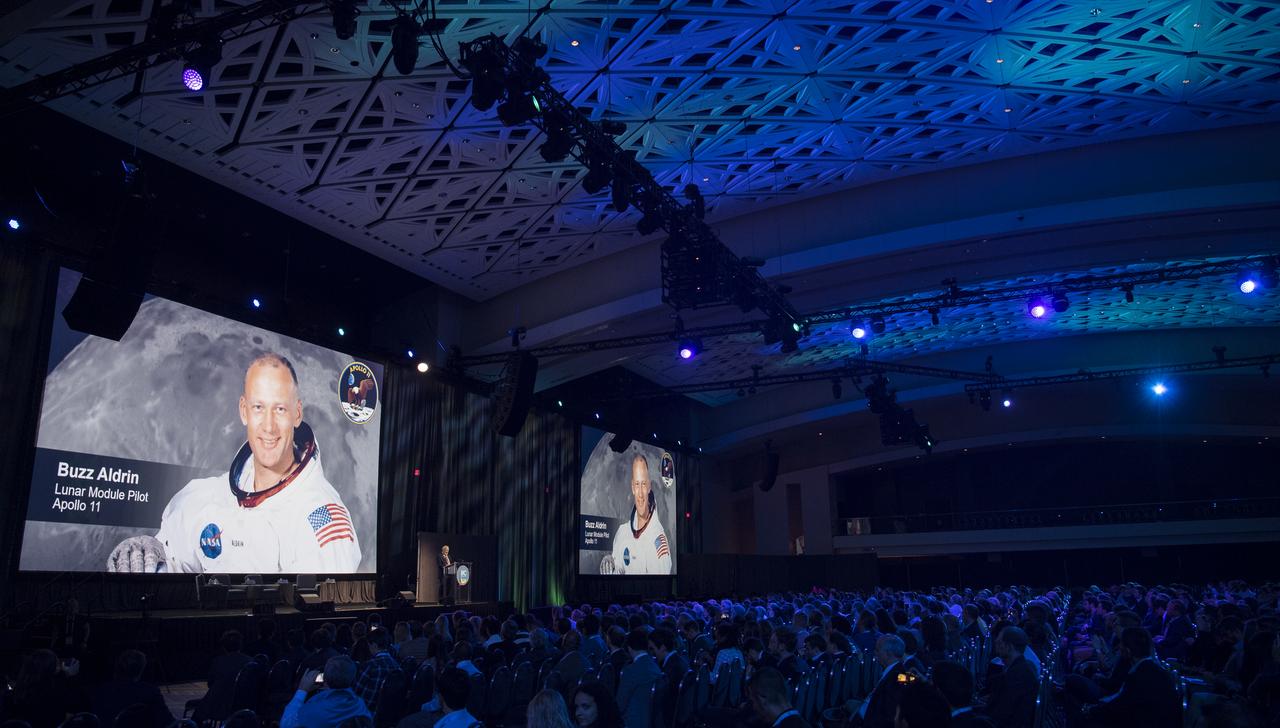
Apollo 11 astronaut Buzz Aldrin delivers remarks during the International Astronautical Federation World Space Award highlight lecture at the 70th International Astronautical Congress, Thursday, Oct. 24, 2019, at the Walter E. Washington Convention Center in Washington. The 2019 World Space Award was presented to the crew of Apollo 11. Photo Credit: (NASA/Joel Kowsky)
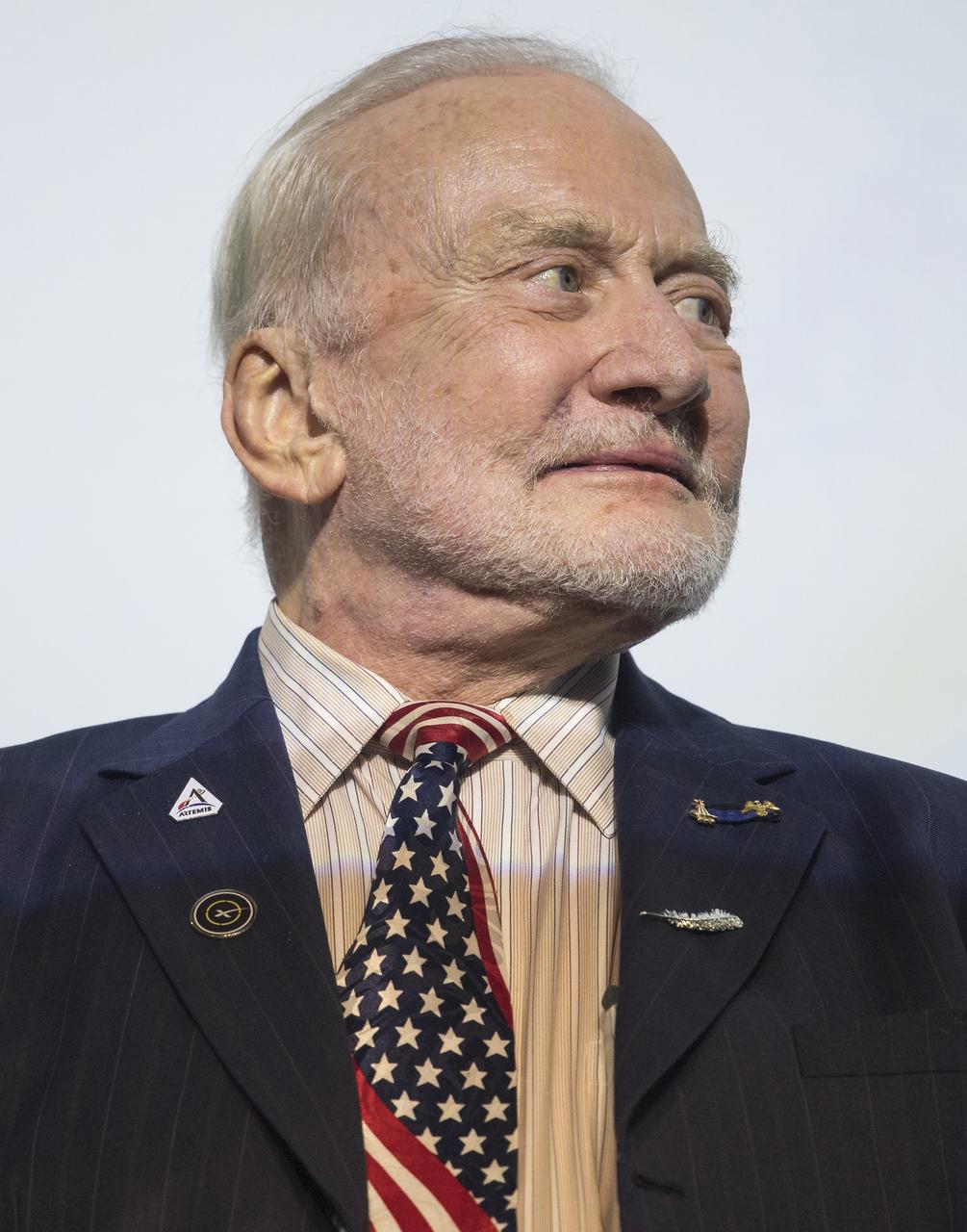
Apollo 11 astronaut Buzz Aldrin is seen during the International Astronautical Federation World Space Award highlight lecture at the 70th International Astronautical Congress, Thursday, Oct. 24, 2019, at the Walter E. Washington Convention Center in Washington. The 2019 World Space Award was presented to the crew of Apollo 11. Photo Credit: (NASA/Joel Kowsky)
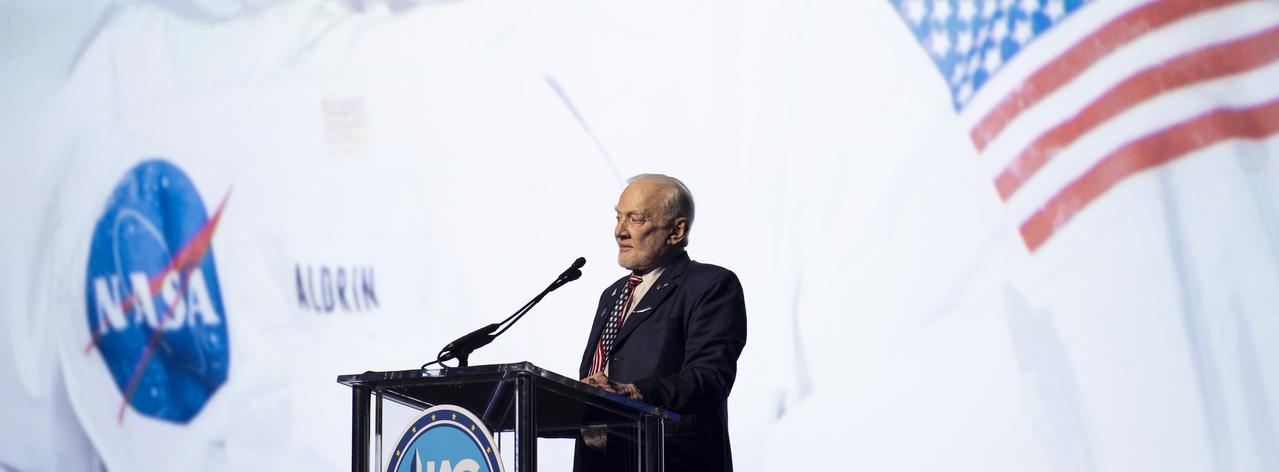
Apollo 11 astronaut Buzz Aldrin delivers remarks during the International Astronautical Federation World Space Award highlight lecture at the 70th International Astronautical Congress, Thursday, Oct. 24, 2019, at the Walter E. Washington Convention Center in Washington. The 2019 World Space Award was presented to the crew of Apollo 11. Photo Credit: (NASA/Joel Kowsky)
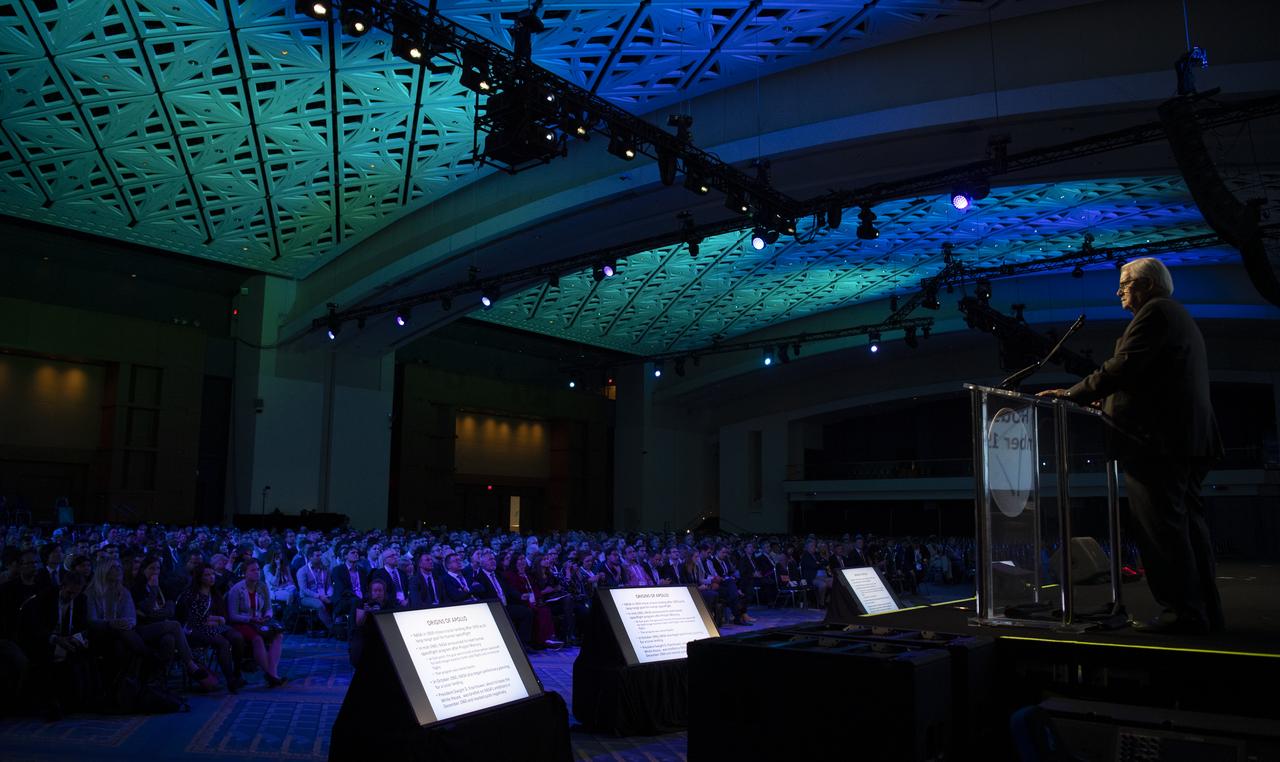
John Logsdon, Apollo historian and Professor Emeritus at George Washington University, speaks about the history of the Apollo program during the International Astronautical Federation World Space Award highlight lecture at the 70th International Astronautical Congress, Thursday, Oct. 24, 2019, at the Walter E. Washington Convention Center in Washington. The 2019 World Space Award was presented to the crew of Apollo 11. Photo Credit: (NASA/Joel Kowsky)
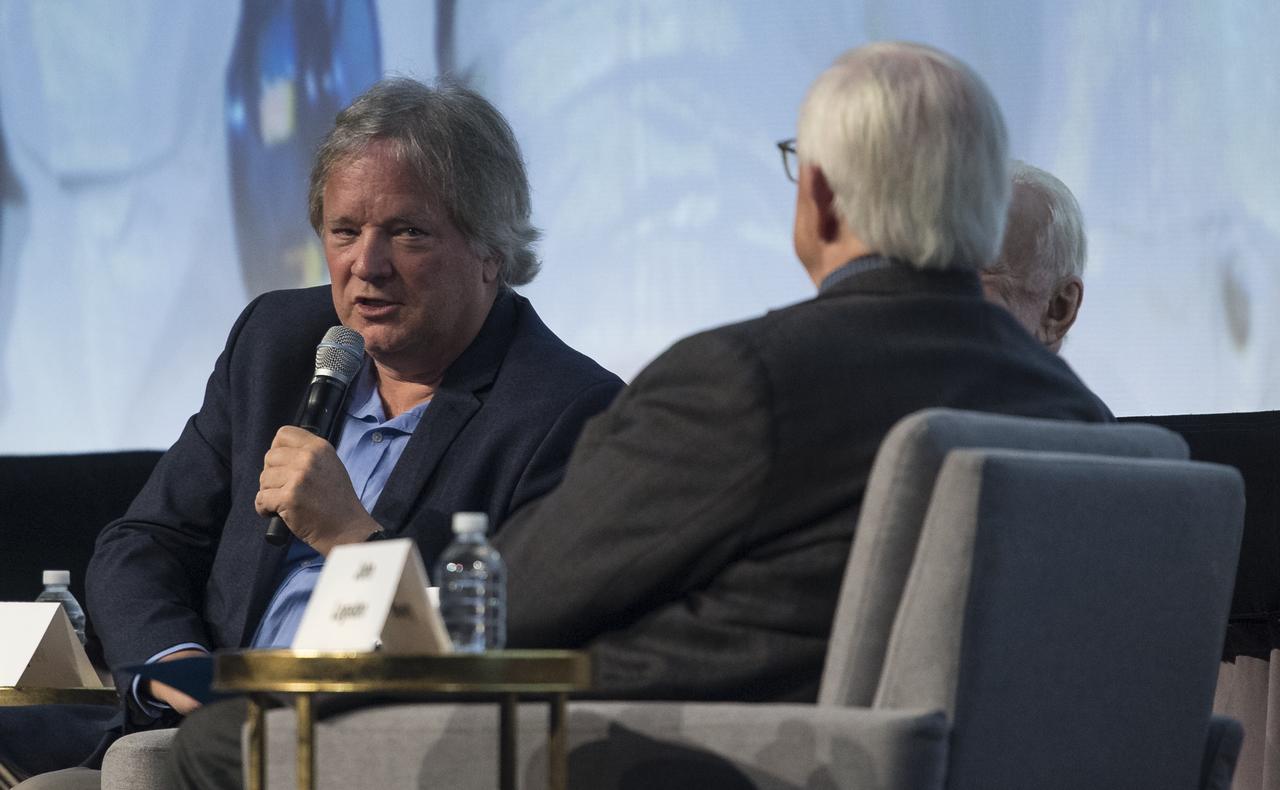
Rick Armstrong, son of Apollo 11 astronaut Neil Armstrong answers a question during at panel discussion at the International Astronautical Federation World Space Award highlight lecture at the 70th International Astronautical Congress, Thursday, Oct. 24, 2019, at the Walter E. Washington Convention Center in Washington. The 2019 World Space Award was presented to the crew of Apollo 11. Photo Credit: (NASA/Joel Kowsky)
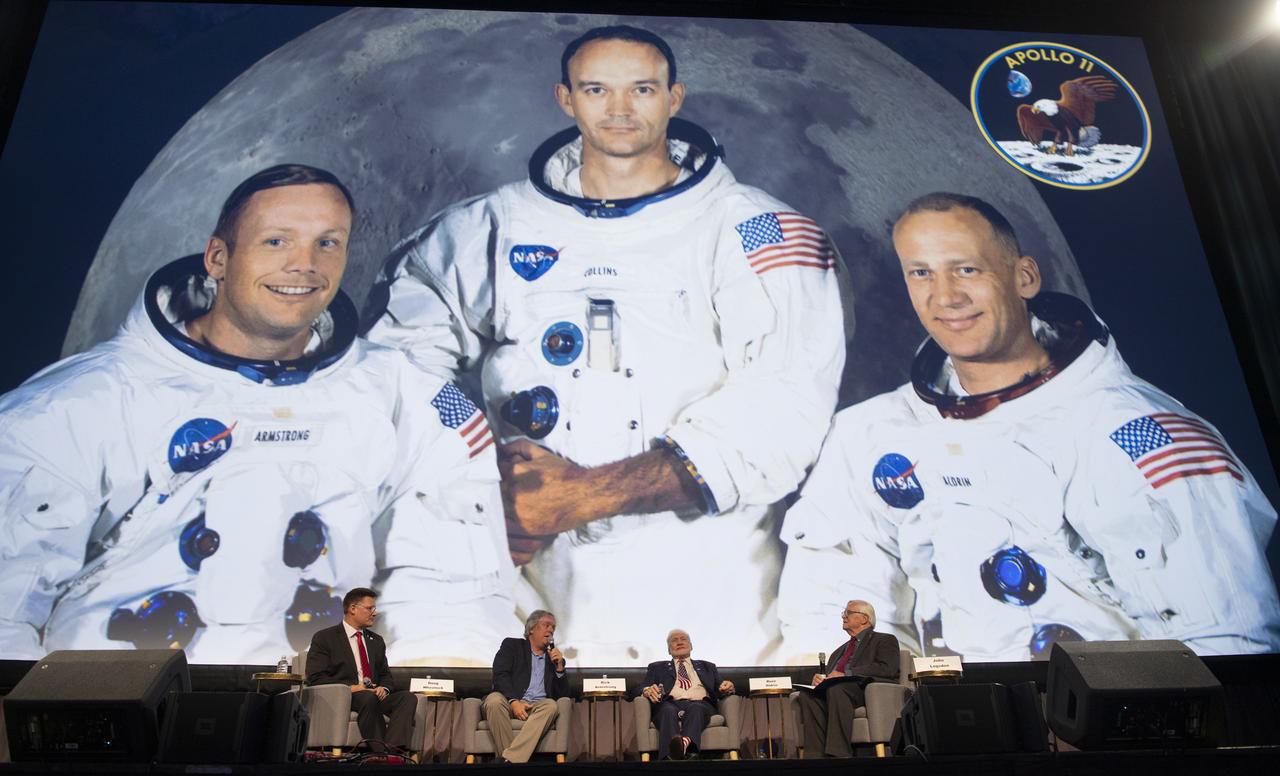
NASA astronaut Doug Wheelock, left, Rick Armstrong, son of Apollo 11 astronaut Neil Armstrong, second from left, Apollo 11 astronaut Buzz Aldrin, second from right, and John Logsdon, Apollo historian and Professor Emeritus at George Washington University, right, are seen during a panel discussion during the International Astronautical Federation World Space Award highlight lecture at the 70th International Astronautical Congress, Thursday, Oct. 24, 2019, at the Walter E. Washington Convention Center in Washington. The 2019 World Space Award was presented to the crew of Apollo 11. Photo Credit: (NASA/Joel Kowsky)
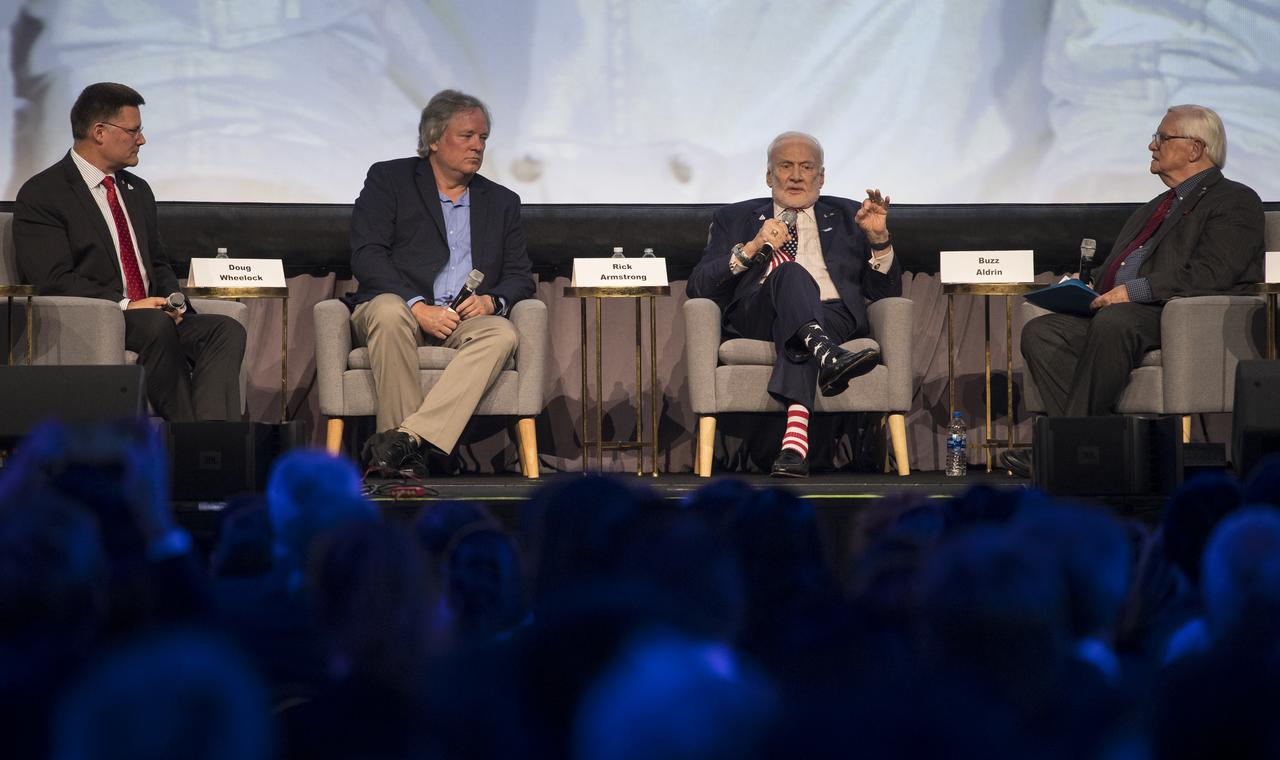
NASA astronaut Doug Wheelock, left, Rick Armstrong, son of Apollo 11 astronaut Neil Armstrong, second from left, Apollo 11 astronaut Buzz Aldrin, second from right, and John Logsdon, Apollo historian and Professor Emeritus at George Washington University, right, are seen during a panel discussion during the International Astronautical Federation World Space Award highlight lecture at the 70th International Astronautical Congress, Thursday, Oct. 24, 2019, at the Walter E. Washington Convention Center in Washington. The 2019 World Space Award was presented to the crew of Apollo 11. Photo Credit: (NASA/Joel Kowsky)
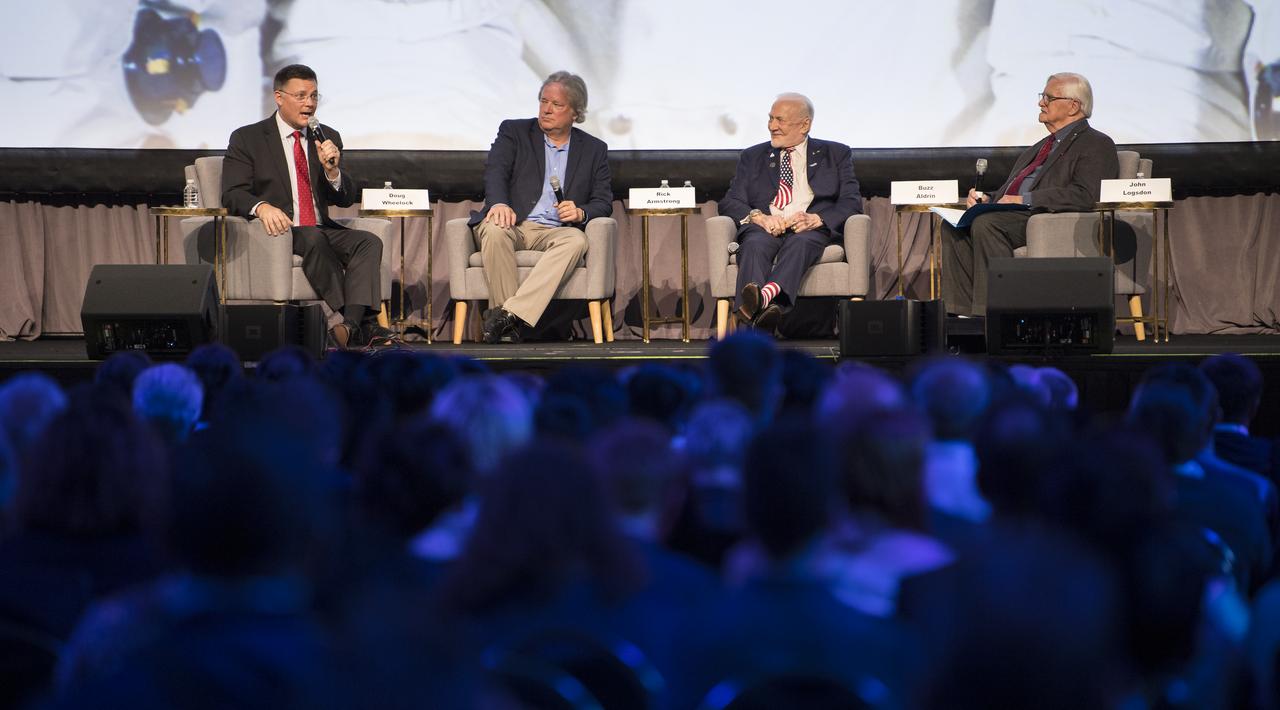
NASA astronaut Doug Wheelock, left, Rick Armstrong, son of Apollo 11 astronaut Neil Armstrong, second from left, Apollo 11 astronaut Buzz Aldrin, second from right, and John Logsdon, Apollo historian and Professor Emeritus at George Washington University, right, are seen during a panel discussion during the International Astronautical Federation World Space Award highlight lecture at the 70th International Astronautical Congress, Thursday, Oct. 24, 2019, at the Walter E. Washington Convention Center in Washington. The 2019 World Space Award was presented to the crew of Apollo 11. Photo Credit: (NASA/Joel Kowsky)
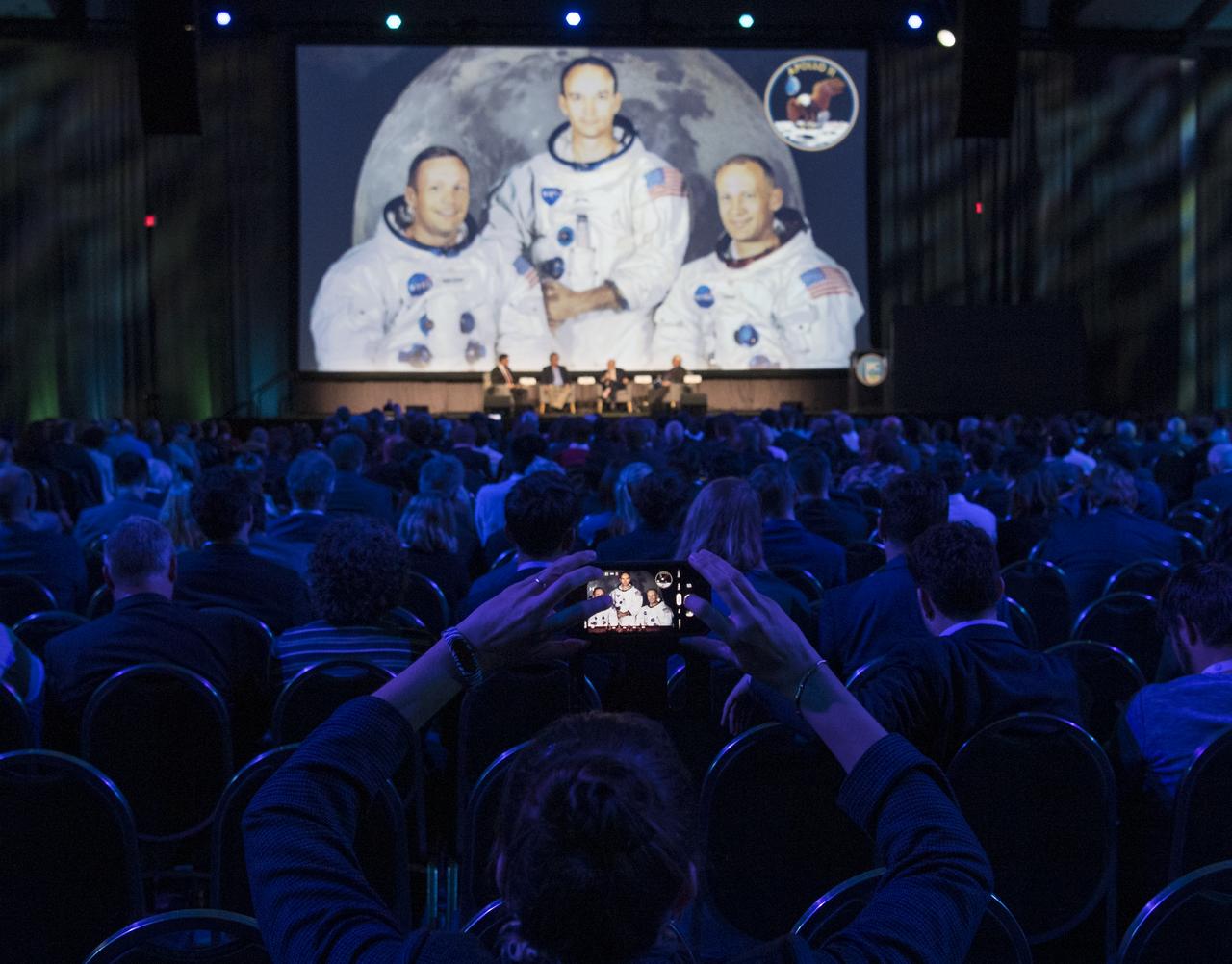
A member of the audience takes a picture of NASA astronaut Doug Wheelock, Rick Armstrong, son of Apollo 11 astronaut Neil Armstrong, Apollo 11 astronaut Buzz Aldrin, and John Logsdon, Apollo historian and Professor Emeritus at George Washington University, on stage during the International Astronautical Federation World Space Award highlight lecture at the 70th International Astronautical Congress, Thursday, Oct. 24, 2019, at the Walter E. Washington Convention Center in Washington. The 2019 World Space Award was presented to the crew of Apollo 11. Photo Credit: (NASA/Joel Kowsky)
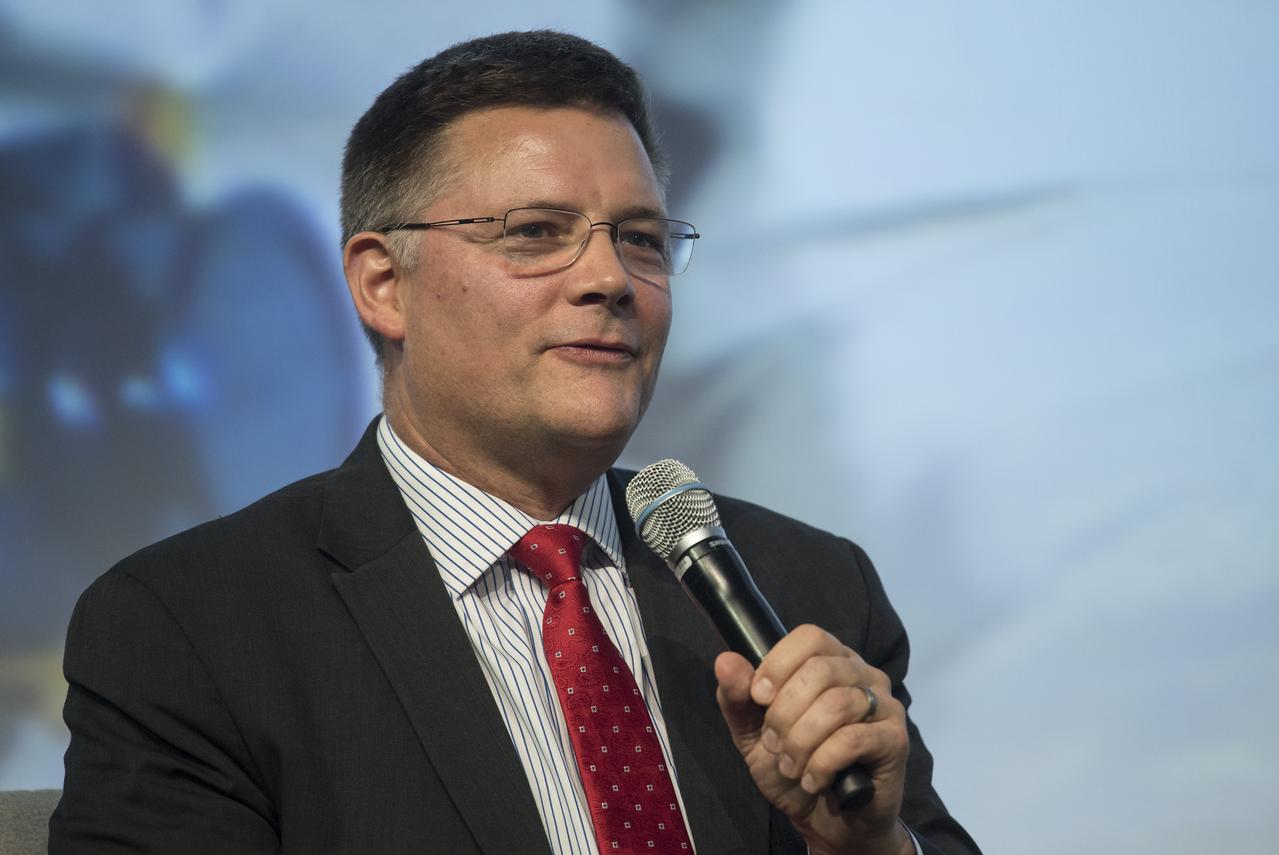
NASA astronaut Doug Wheelock, is seen during a panel discussion with Rick Armstrong, son of Apollo 11 astronaut Neil Armstrong, Apollo 11 astronaut Buzz Aldrin, and John Logsdon, Apollo historian and Professor Emeritus at George Washington University, at the International Astronautical Federation World Space Award highlight lecture at the 70th International Astronautical Congress, Thursday, Oct. 24, 2019, at the Walter E. Washington Convention Center in Washington. The 2019 World Space Award was presented to the crew of Apollo 11. Photo Credit: (NASA/Joel Kowsky)
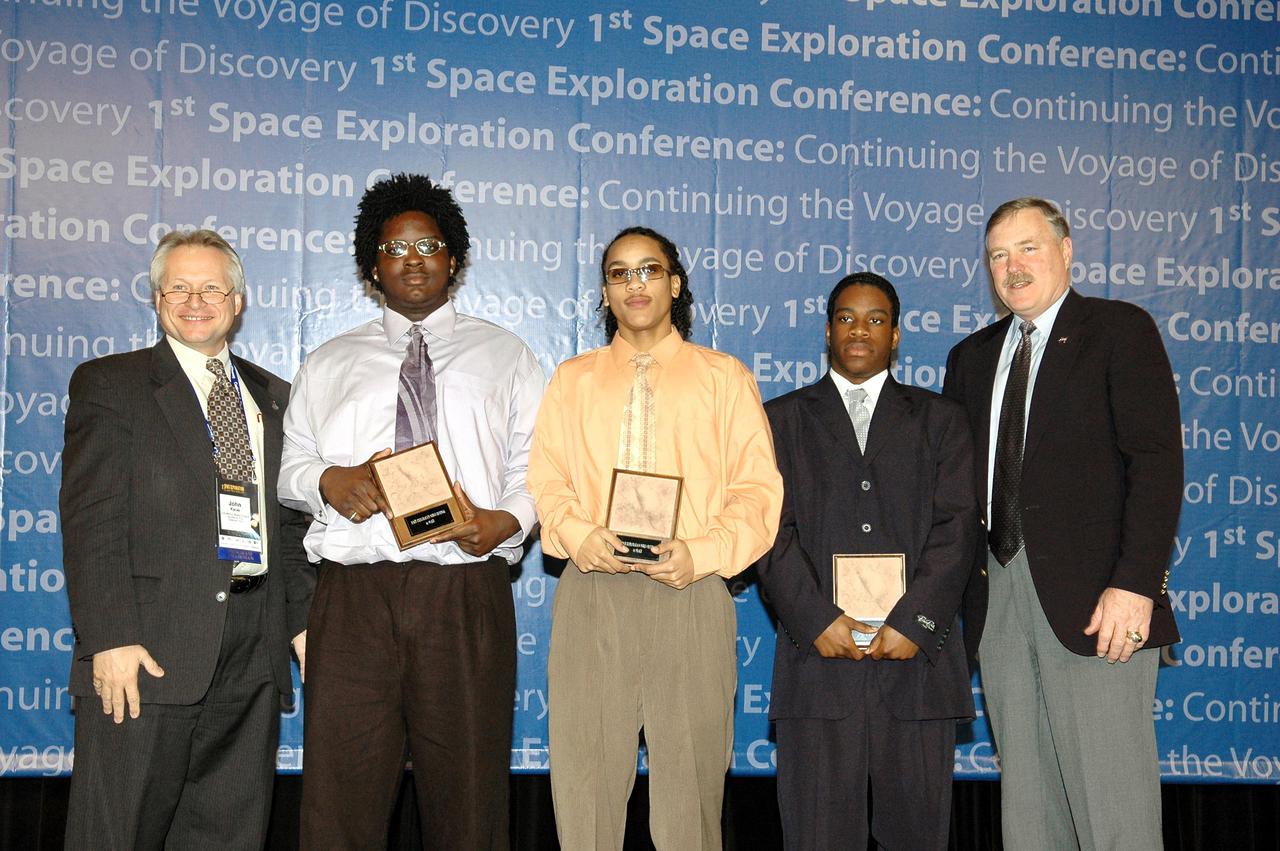
KENNEDY SPACE CENTER, FLA. - At the “1st Space Exploration Conference: Continuing the Voyage of Discovery,” being held at Disney’s Contemporary Resort in Orlando, the NASA Explorer School team from McNair High School in Dekalb County, Ga., receives the Space Exploration Video Festival award sponsored by Lockheed Martin. Standing with the awards are Trenten Nash, Theo Maxie and Daniel Jackson. Presenting the awards were John Karas (left), with Lockheed, and Adm. Craig Steidle (right), associate administrator, Office of Exploration Systems at NASA. The three-day conference drew attendees from around the world. It presented topics on new missions, technologies and infrastructure needed to turn the vision for space exploration into reality. Keynote speakers at the three-day conference include NASA Administrator Sean O'Keefe, Congressman Dave Weldon, film director James Cameron and NASA’s senior Mars scientist James Garvin. The conference has drawn attendees from around the world.
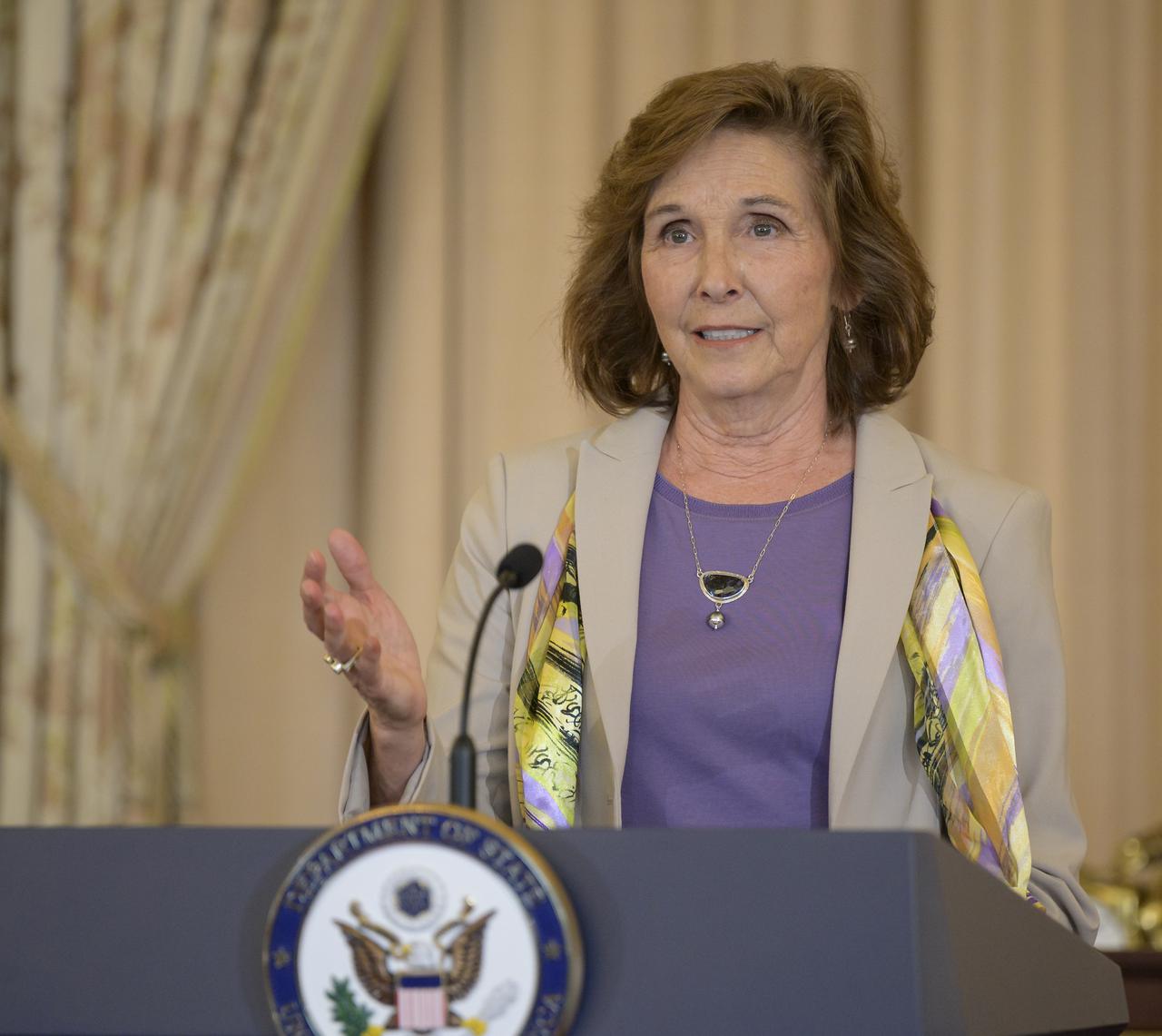
World Food Prize President, Barbara Stinson gives remarks during an event at the U.S Department of State where it was announced that Cynthia Rosenzweig, a senior research scientist and head of the Climate Impacts Group at NASA’s Goddard Institute for Space Studies (GISS) in New York City, was awarded the 2022 World Food Prize from the World Food Prize Foundation, Thursday, May 5, 2022, at the Harry S. Truman Building in Washington. Photo Credit: (NASA/Bill Ingalls)
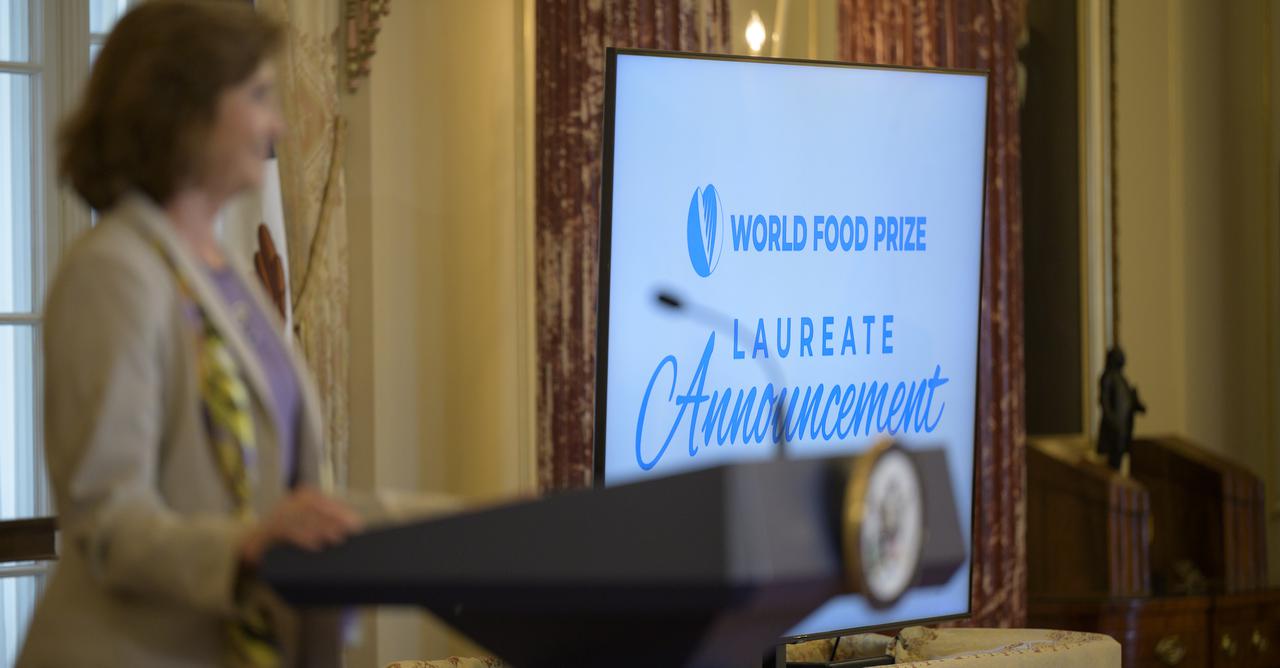
World Food Prize President, Barbara Stinson gives remarks during an event at the U.S Department of State where it was announced that Cynthia Rosenzweig, a senior research scientist and head of the Climate Impacts Group at NASA’s Goddard Institute for Space Studies (GISS) in New York City, was awarded the 2022 World Food Prize from the World Food Prize Foundation, Thursday, May 5, 2022, at the Harry S. Truman Building in Washington. Photo Credit: (NASA/Bill Ingalls)
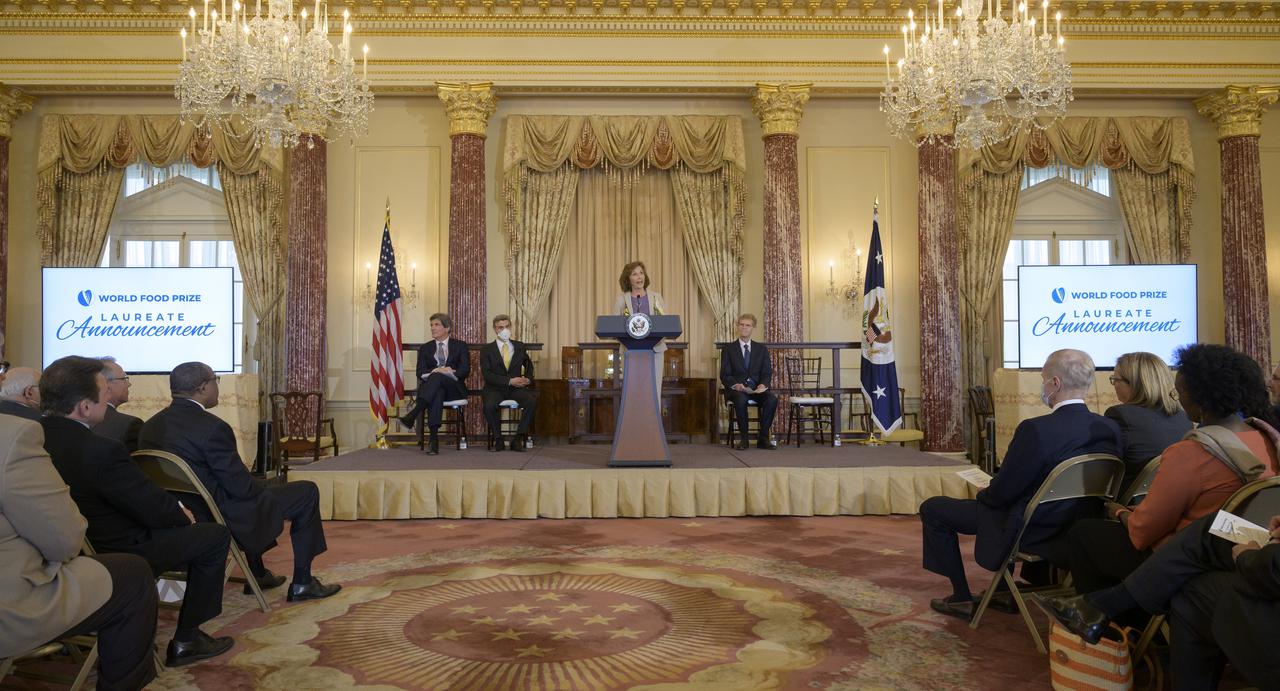
World Food Prize President, Barbara Stinson gives remarks during an event at the U.S Department of State where it was announced that Cynthia Rosenzweig, a senior research scientist and head of the Climate Impacts Group at NASA’s Goddard Institute for Space Studies (GISS) in New York City, was awarded the 2022 World Food Prize from the World Food Prize Foundation, Thursday, May 5, 2022, at the Harry S. Truman Building in Washington. Photo Credit: (NASA/Bill Ingalls)
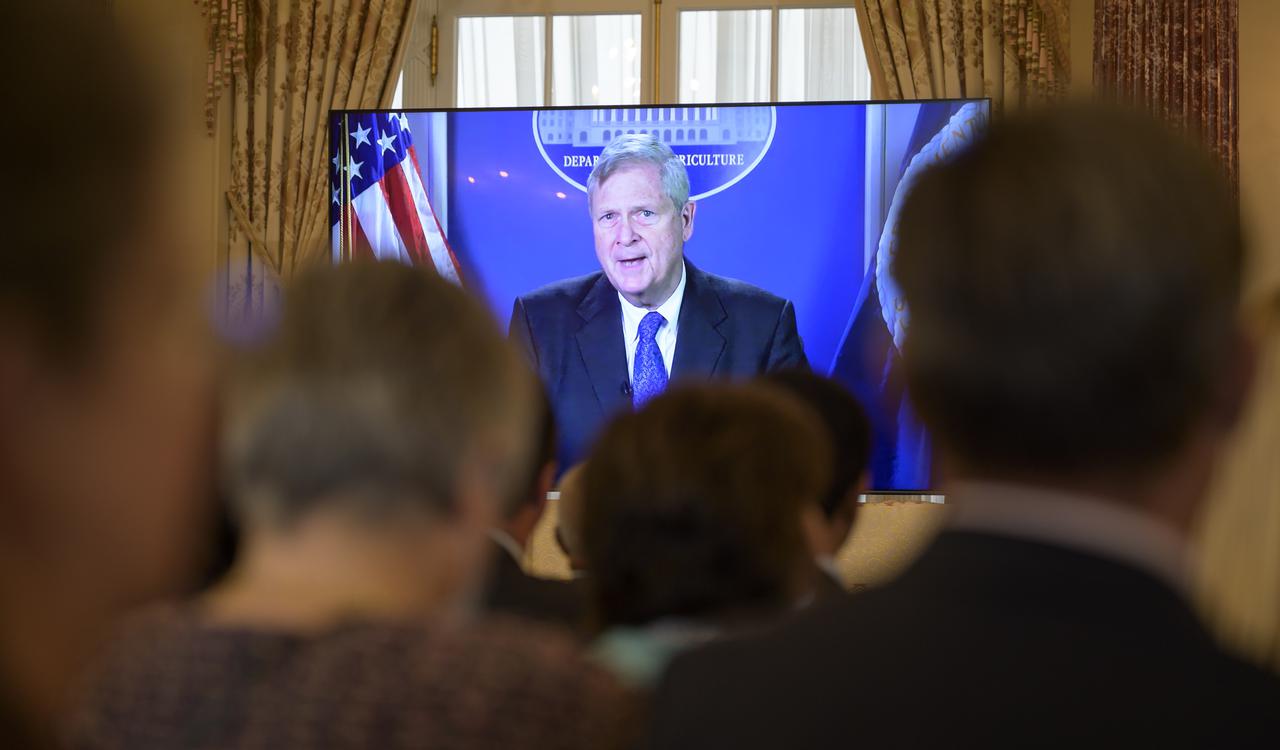
U.S. Secretary of Agriculture Tom Vilsack gives remarks via a previously recorded message, during an event at the U.S Department of State where it was announced that Cynthia Rosenzweig, a senior research scientist and head of the Climate Impacts Group at NASA’s Goddard Institute for Space Studies (GISS) in New York City, was awarded the 2022 World Food Prize from the World Food Prize Foundation, Thursday, May 5, 2022, at the Harry S. Truman Building in Washington. Photo Credit: (NASA/Bill Ingalls)
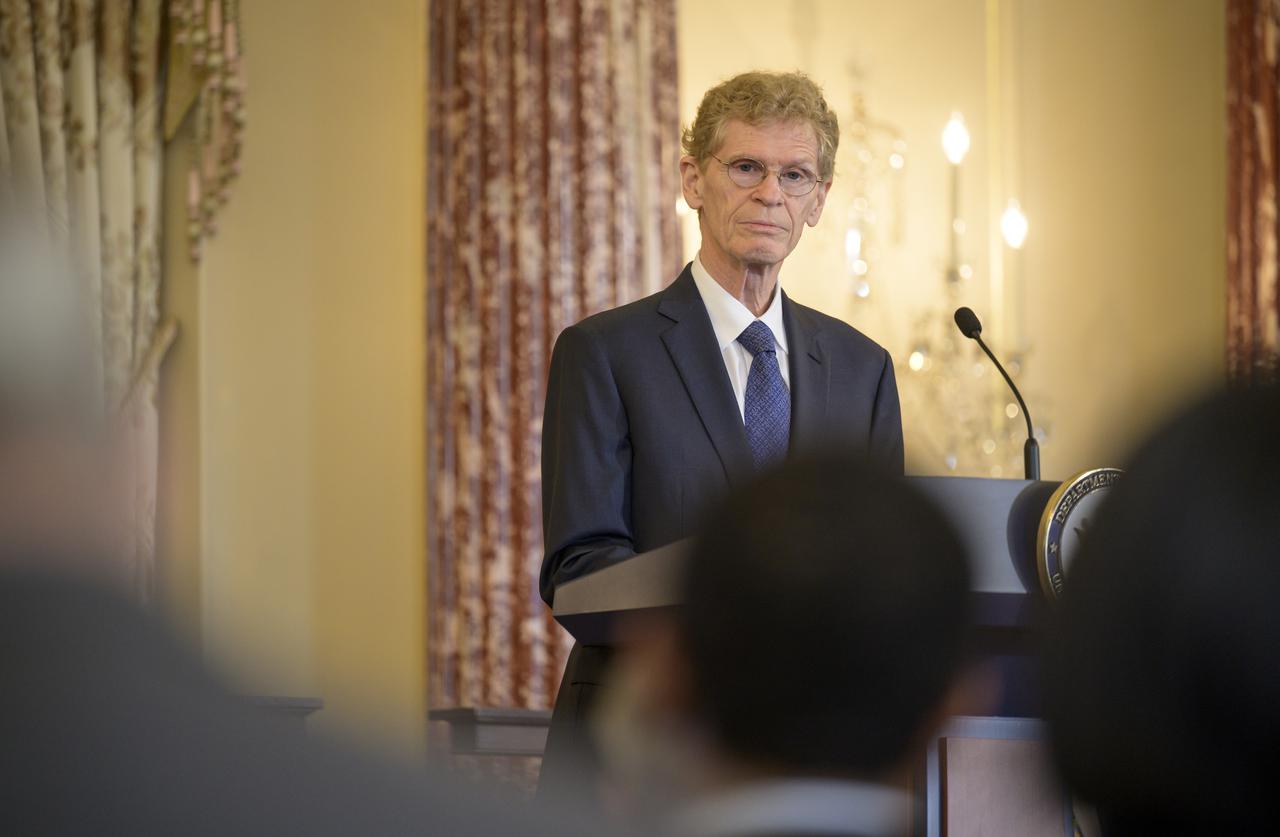
U.S. Special Envoy for Global Food Security, Dr. Cary Fowler gives remarks during an event at the U.S Department of State where it was announced that Cynthia Rosenzweig, a senior research scientist and head of the Climate Impacts Group at NASA’s Goddard Institute for Space Studies (GISS) in New York City, was awarded the 2022 World Food Prize from the World Food Prize Foundation, Thursday, May 5, 2022, at the Harry S. Truman Building in Washington. Photo Credit: (NASA/Bill Ingalls)
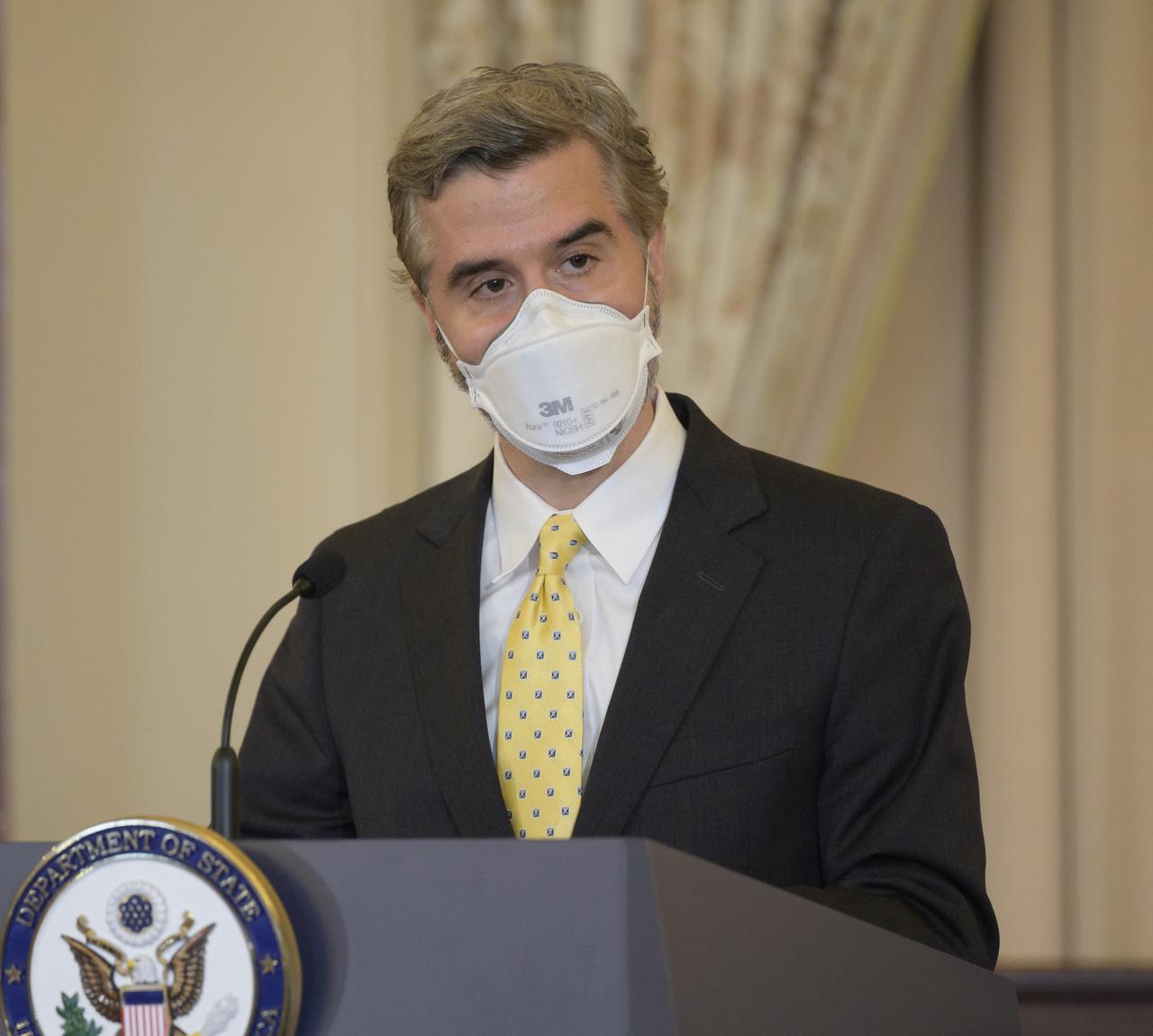
Assistant Secretary for Economic and Business Affairs, Ramin Toloui gives introductory remarks during an event at the U.S Department of State where it was announced that Cynthia Rosenzweig, a senior research scientist and head of the Climate Impacts Group at NASA’s Goddard Institute for Space Studies (GISS) in New York City, was awarded the 2022 World Food Prize from the World Food Prize Foundation, Thursday, May 5, 2022, at the Harry S. Truman Building in Washington. Photo Credit: (NASA/Bill Ingalls)
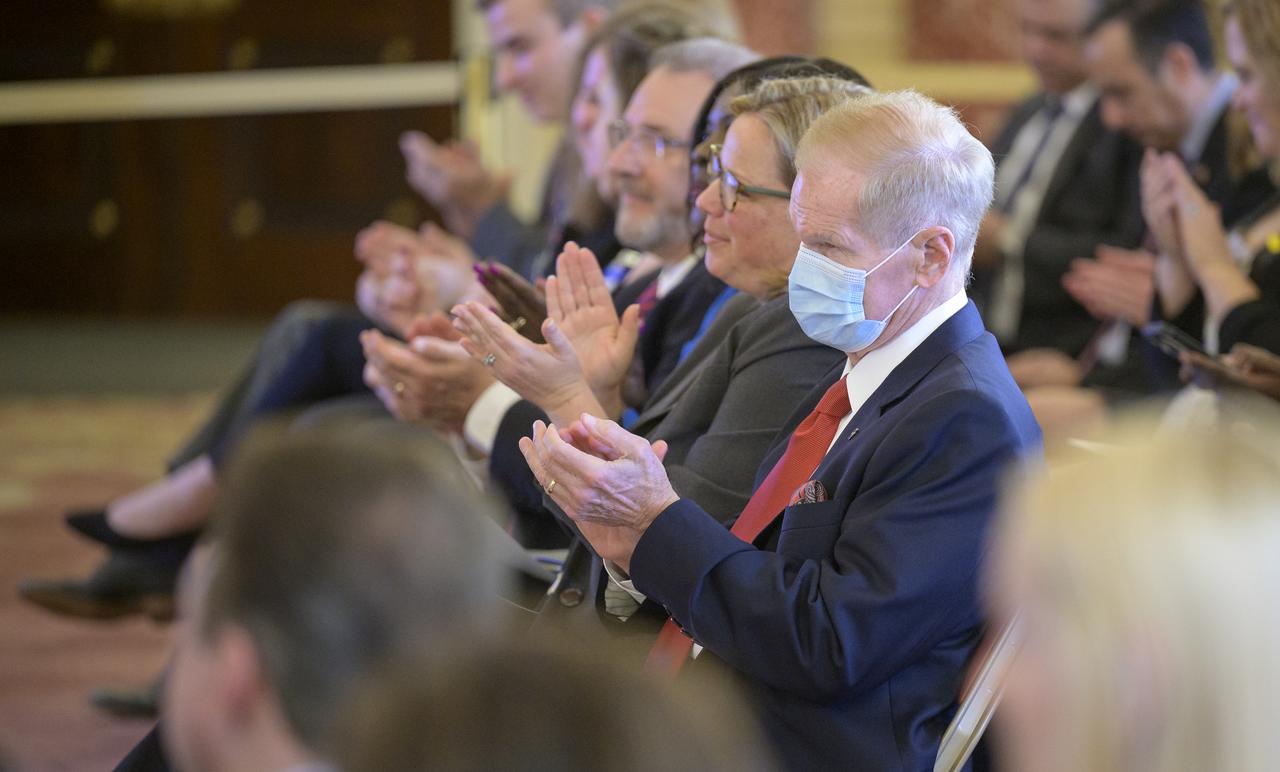
NASA Administrator Bill Nelson, and other attendees, applaud during an event at the U.S Department of State where it was announced that Cynthia Rosenzweig, a senior research scientist and head of the Climate Impacts Group at NASA’s Goddard Institute for Space Studies (GISS) in New York City, was awarded the 2022 World Food Prize from the World Food Prize Foundation, Thursday, May 5, 2022, at the Harry S. Truman Building in Washington. Photo Credit: (NASA/Bill Ingalls)
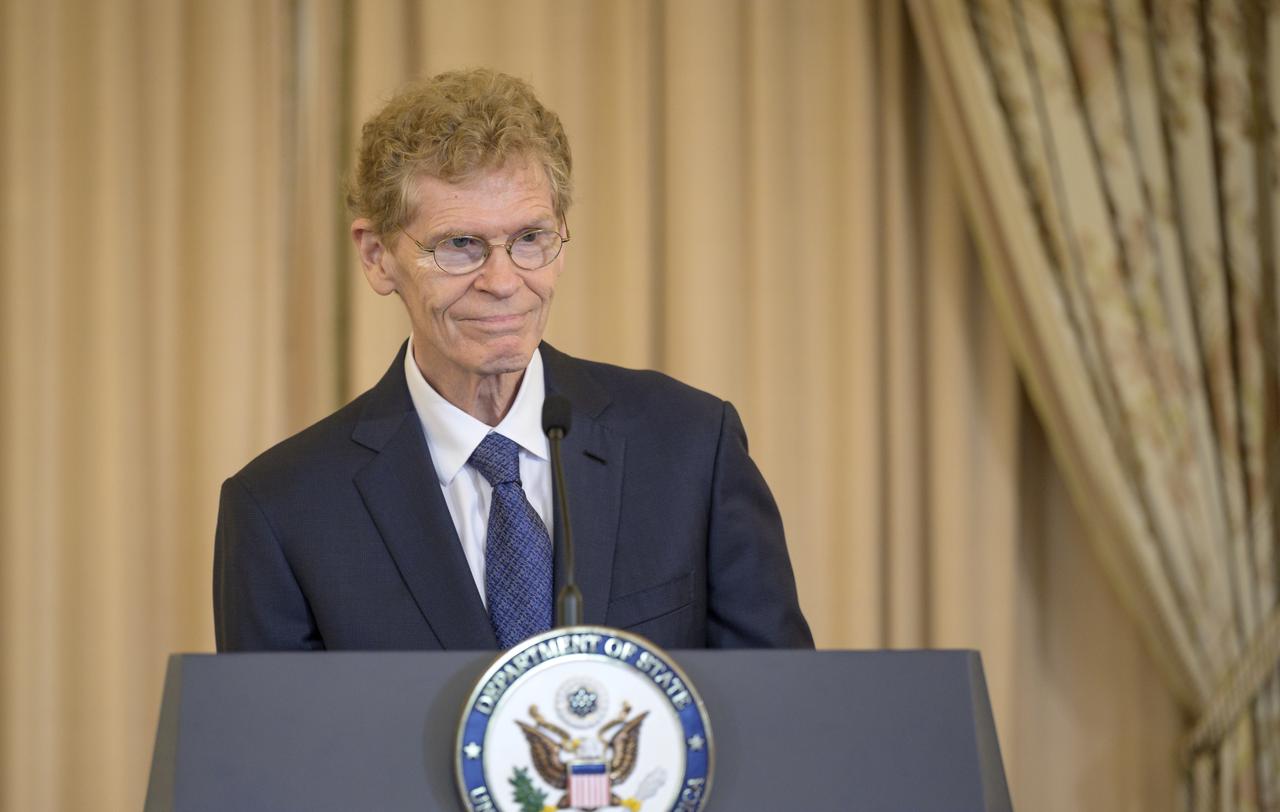
U.S. Special Envoy for Global Food Security, Dr. Cary Fowler gives remarks during an event at the U.S Department of State where it was announced that Cynthia Rosenzweig, a senior research scientist and head of the Climate Impacts Group at NASA’s Goddard Institute for Space Studies (GISS) in New York City, was awarded the 2022 World Food Prize from the World Food Prize Foundation, Thursday, May 5, 2022, at the Harry S. Truman Building in Washington. Photo Credit: (NASA/Bill Ingalls)
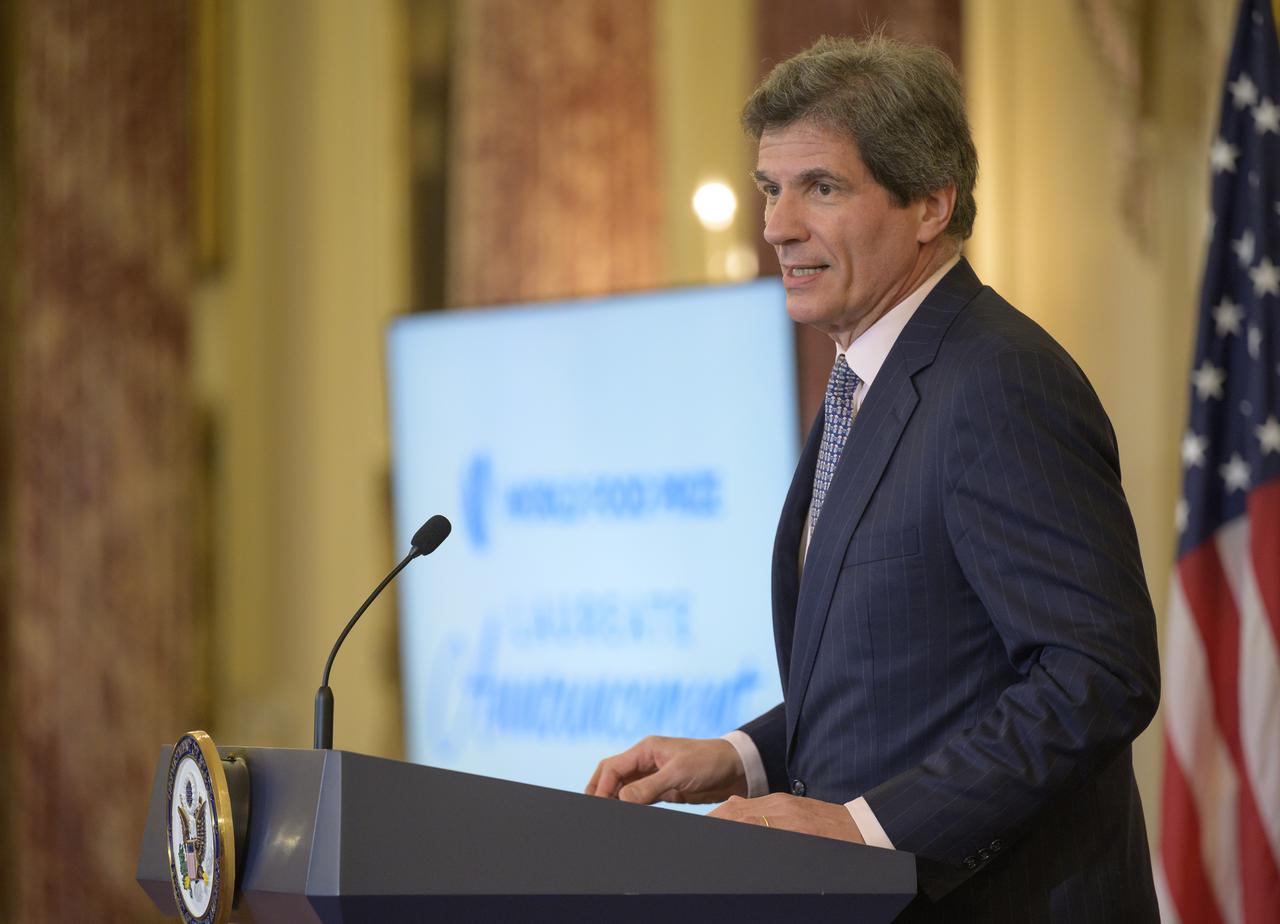
Under Secretary For Economic Growth, Energy, and the Environment, Jose W. Fernandez gives remarks during an event at the U.S Department of State where it was announced that Cynthia Rosenzweig, a senior research scientist and head of the Climate Impacts Group at NASA’s Goddard Institute for Space Studies (GISS) in New York City, was awarded the 2022 World Food Prize from the World Food Prize Foundation, Thursday, May 5, 2022, at the Harry S. Truman Building in Washington. Photo Credit: (NASA/Bill Ingalls)
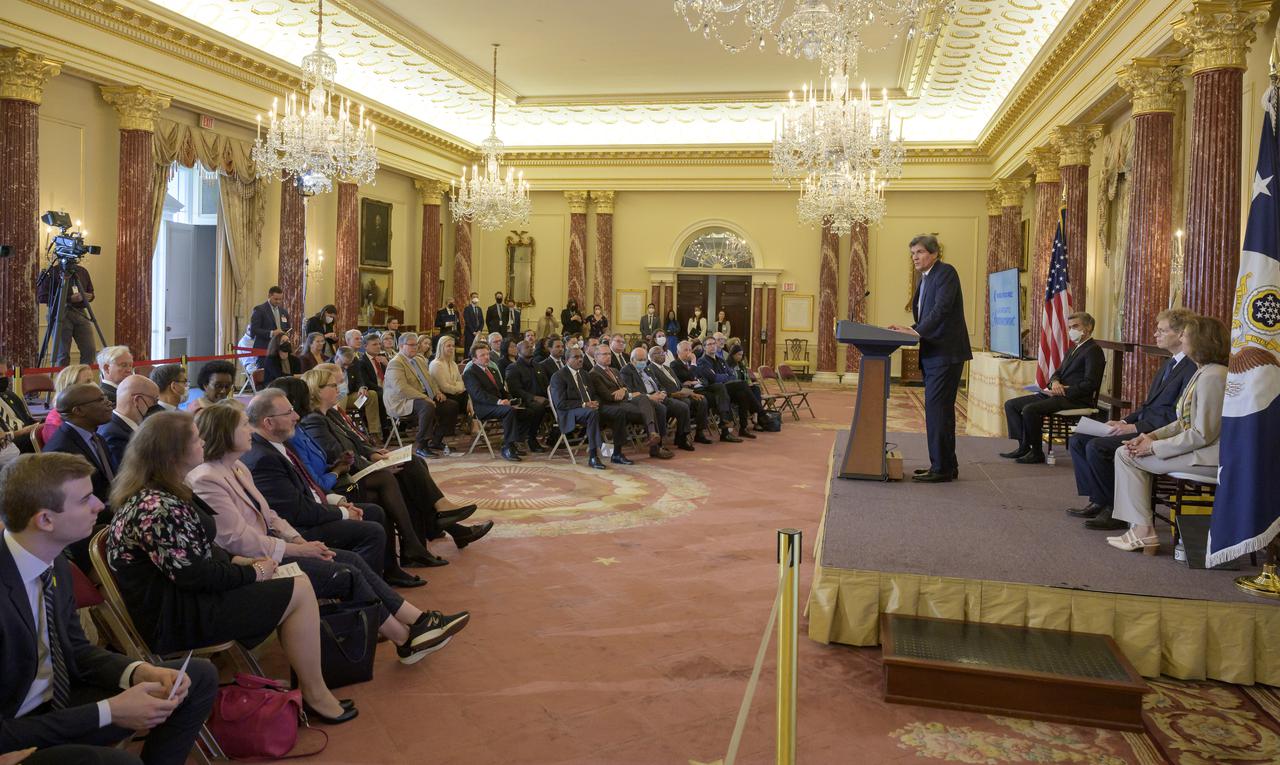
Under Secretary For Economic Growth, Energy, and the Environment, Jose W. Fernandez gives remarks during an event at the U.S Department of State where it was announced that Cynthia Rosenzweig, a senior research scientist and head of the Climate Impacts Group at NASA’s Goddard Institute for Space Studies (GISS) in New York City, was awarded the 2022 World Food Prize from the World Food Prize Foundation, Thursday, May 5, 2022, at the Harry S. Truman Building in Washington. Photo Credit: (NASA/Bill Ingalls)
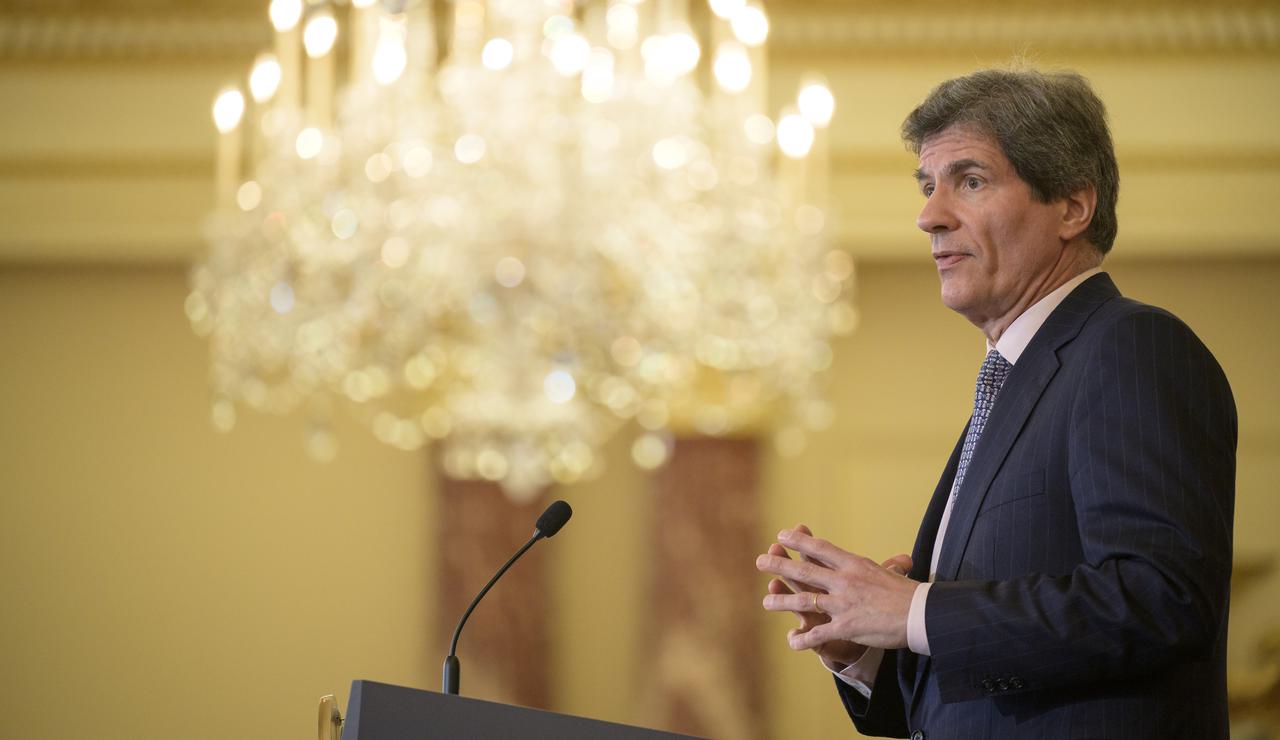
Under Secretary For Economic Growth, Energy, and the Environment, Jose W. Fernandez gives remarks during an event at the U.S Department of State where it was announced that Cynthia Rosenzweig, a senior research scientist and head of the Climate Impacts Group at NASA’s Goddard Institute for Space Studies (GISS) in New York City, was awarded the 2022 World Food Prize from the World Food Prize Foundation, Thursday, May 5, 2022, at the Harry S. Truman Building in Washington. Photo Credit: (NASA/Bill Ingalls)
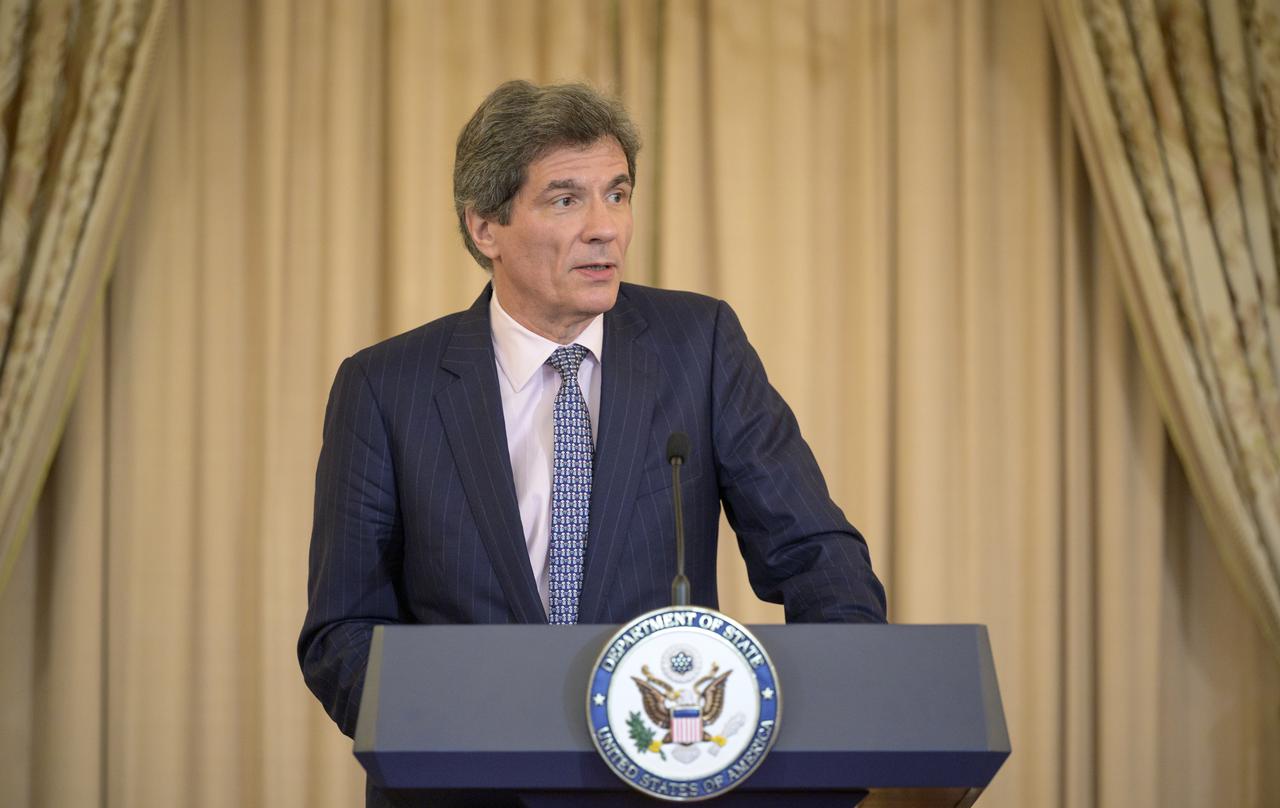
Under Secretary For Economic Growth, Energy, and the Environment, Jose W. Fernandez gives remarks during an event at the U.S Department of State where it was announced that Cynthia Rosenzweig, a senior research scientist and head of the Climate Impacts Group at NASA’s Goddard Institute for Space Studies (GISS) in New York City, was awarded the 2022 World Food Prize from the World Food Prize Foundation, Thursday, May 5, 2022, at the Harry S. Truman Building in Washington. Photo Credit: (NASA/Bill Ingalls)
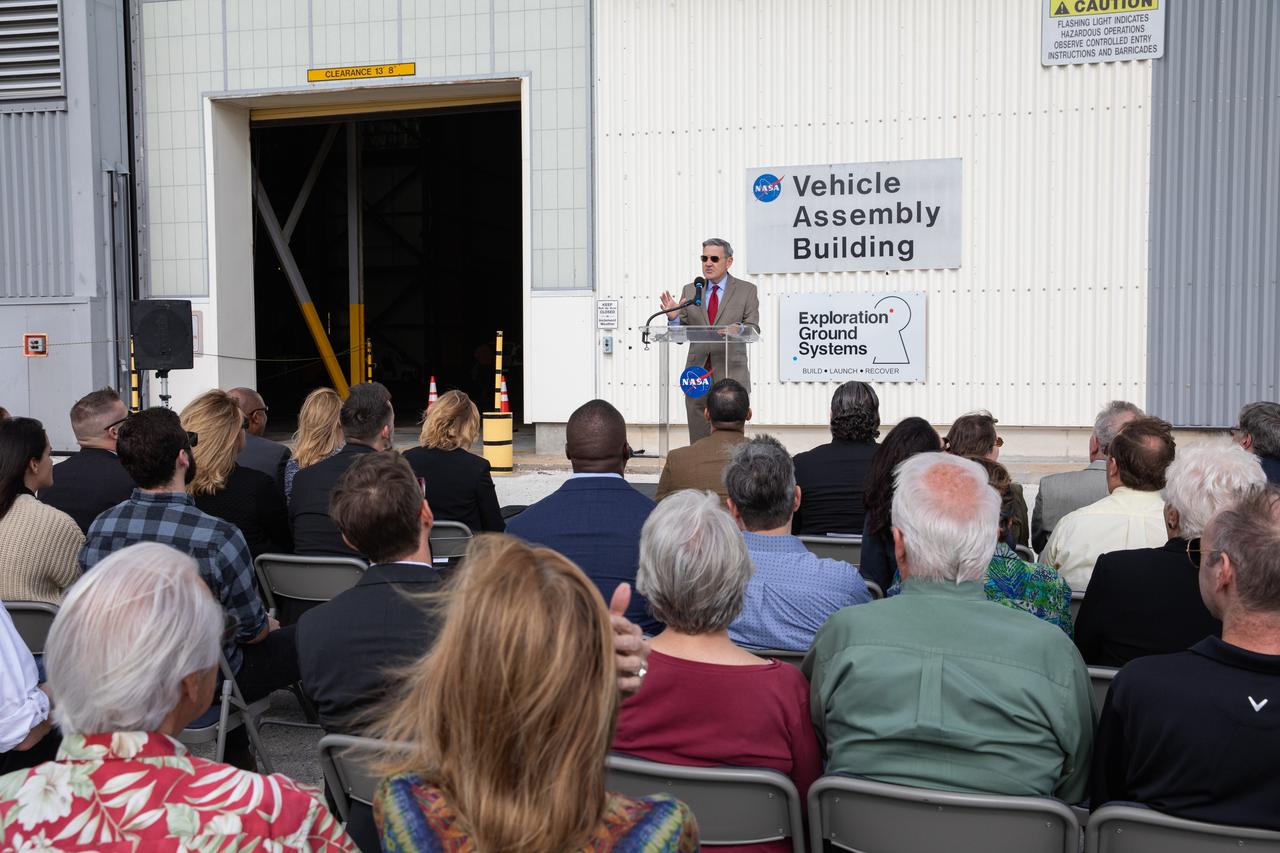
Kennedy Space Center Director Bob Cabana, speaks to attendees during a ceremony on Jan. 10, 2020, to recognize the Vehicle Assembly Building with the National Historic Civil Engineering Landmark award. The Florida Section American Society of Civil Engineers nominated the historic building and bestowed the award. The VAB is the first building at Kennedy Space Center to earn this distinction. At the time of its completion, the 129-million-cubic-foot structure was the largest building in the world. Originally designed and built to accommodate the Saturn V/Apollo used in Project Apollo, the VAB was later modified for its role in the Space Shuttle Program.
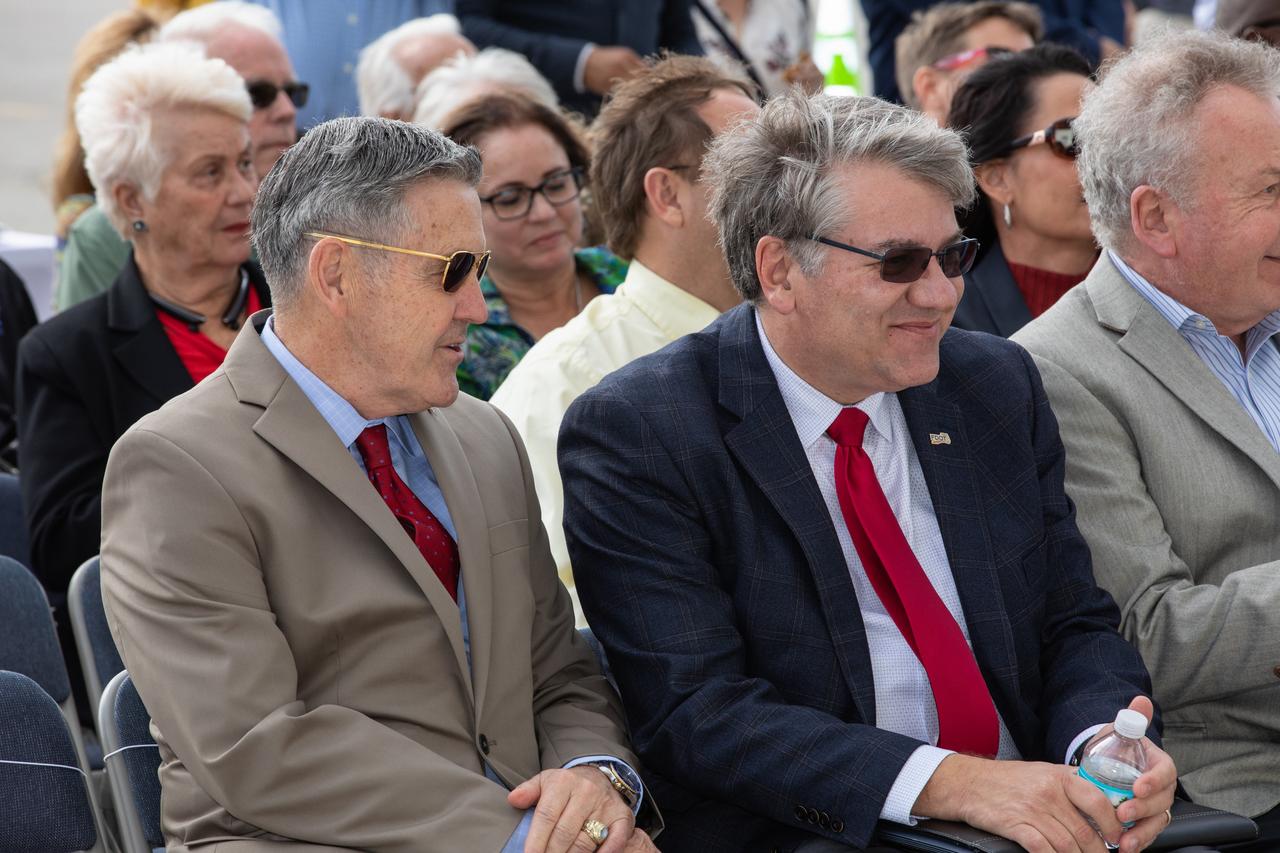
Kennedy Space Center Director Bob Cabana, left, talks with Florida Department of Transportation Secretary Kevin Thibault during a ceremony on Jan. 10, 2020, to recognize the Vehicle Assembly Building with the National Historic Civil Engineering Landmark award. The Florida Section American Society of Civil Engineers nominated the historic building and bestowed the award. The VAB is the first building at Kennedy Space Center to earn this distinction. At the time of its completion, the 129-million-cubic-foot structure was the largest building in the world. Originally designed and built to accommodate the Saturn V/Apollo used in Project Apollo, the VAB was later modified for its role in the Space Shuttle Program.
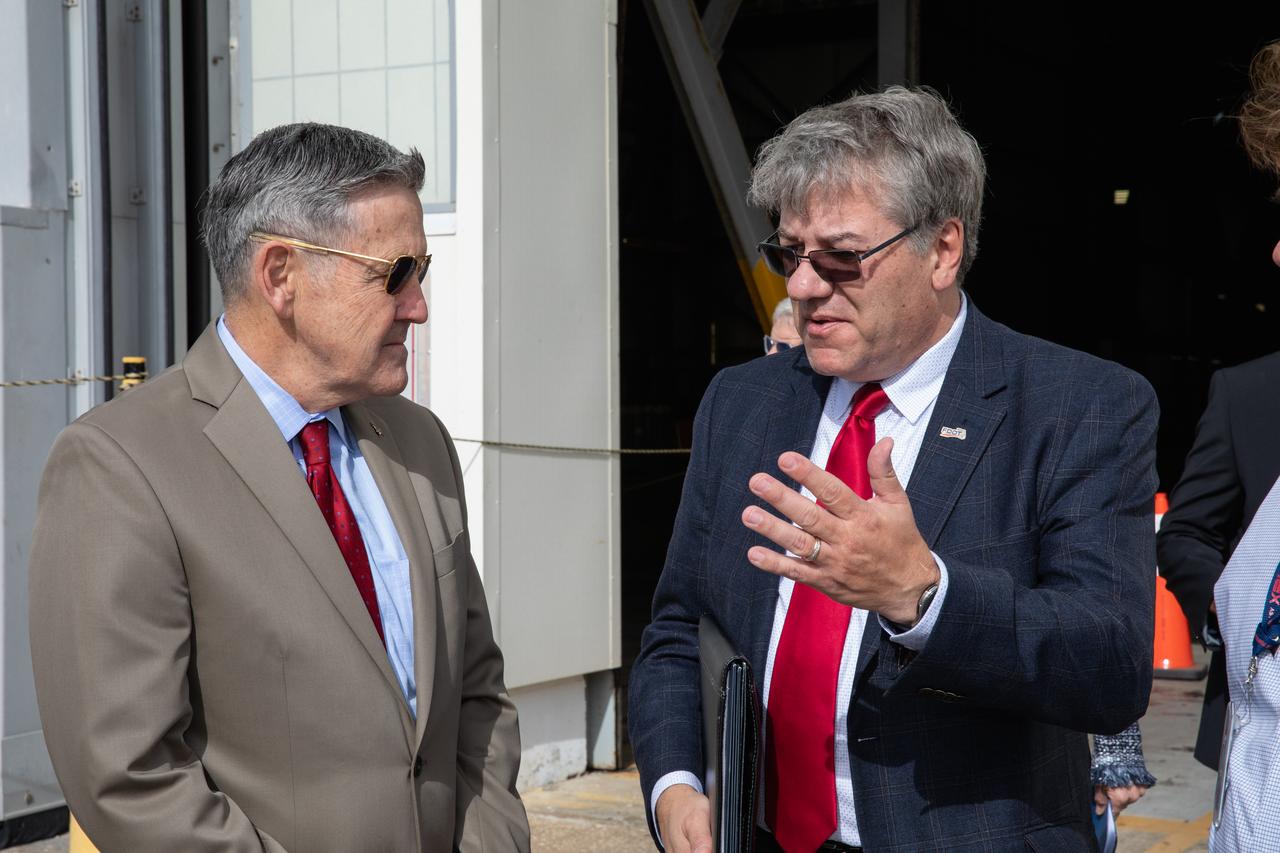
Kennedy Space Center Director Bob Cabana, left, talks with Florida Department of Transportation Secretary Kevin Thibault during a ceremony on Jan. 10, 2020, to recognize the Vehicle Assembly Building with the National Historic Civil Engineering Landmark award. The Florida Section American Society of Civil Engineers nominated the historic building and bestowed the award. The VAB is the first building at Kennedy Space Center to earn this distinction. At the time of its completion, the 129-million-cubic-foot structure was the largest building in the world. Originally designed and built to accommodate the Saturn V/Apollo used in Project Apollo, the VAB was later modified for its role in the Space Shuttle Program.
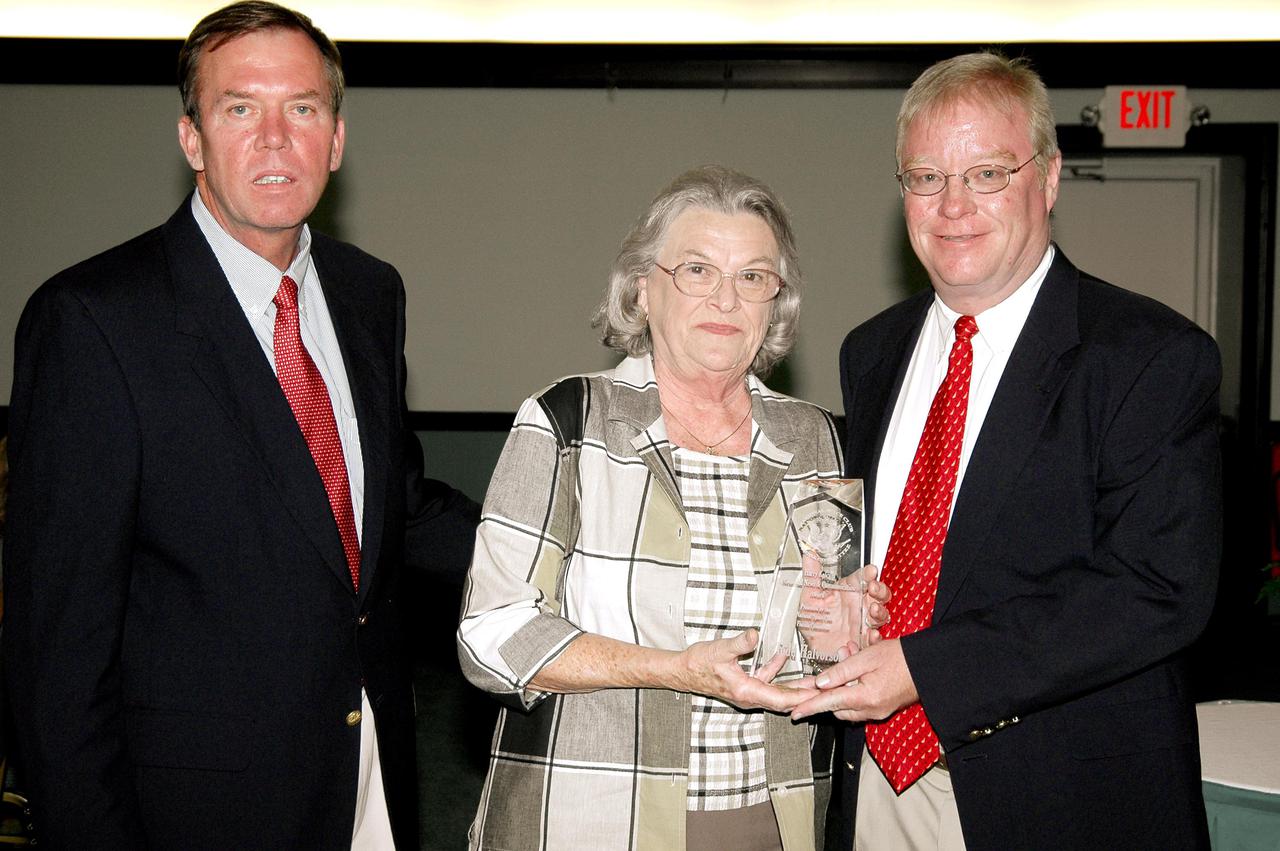
KENNEDY SPACE CENTER, FLA. - Florida Today senior aerospace reporter Todd Halvorson (right) is honored with a Harry Kolcum Memorial News and Communications Award for 2004 by the National Space Club Florida Committee at the Radisson Resort at the Port, Cape Canaveral, Fla. He is joined by Committee Chairman Jerry Moyer (left) and Eddie Kolcum, wife of the late journalist for whom the award is named. Each year, the National Space Club Florida Committee recognizes area representatives of the news media and communications professions for excellence in their ability to communicate the space story along Florida’s Space Coast and throughout the world. The award is named in honor of Harry Kolcum, the former managing editor of Aviation Week and Space Technology, who was Cape bureau chief from 1980 to 1993 prior to his death in 1994. Kolcum was a founding member of the National Space Club Florida Committee.
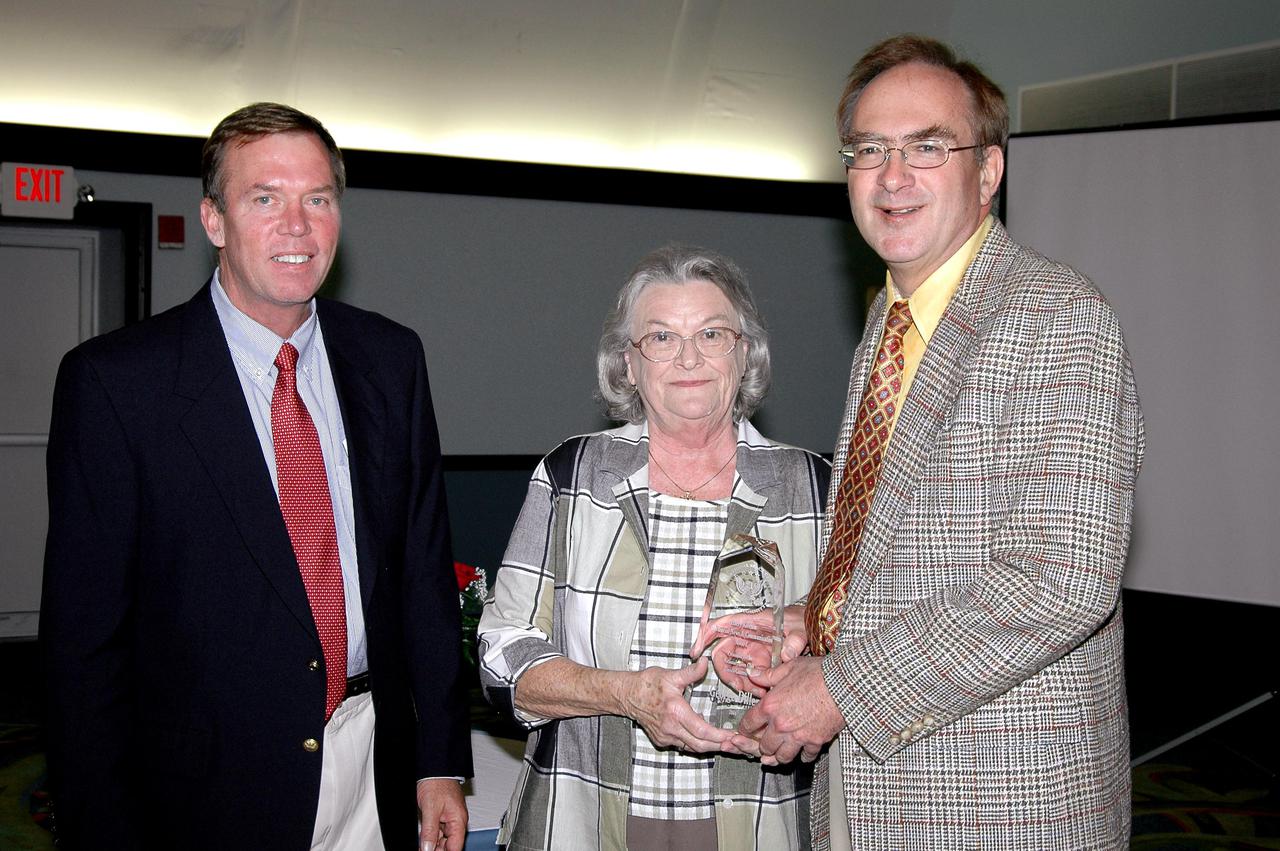
KENNEDY SPACE CENTER, FLA. - NASA public affairs specialist George Diller (right) is honored with a Harry Kolcum Memorial News and Communications Award for 2004 by the National Space Club Florida Committee at the Radisson Resort at the Port, Cape Canaveral, Fla. He is joined by Committee Chairman Jerry Moyer (left) and Eddie Kolcum, wife of the late journalist for whom the award is named. Each year, the National Space Club Florida Committee recognizes area representatives of the news media and communications professions for excellence in their ability to communicate the space story along Florida’s Space Coast and throughout the world. The award is named in honor of Harry Kolcum, the former managing editor of Aviation Week and Space Technology, who was Cape bureau chief from 1980 to 1993 prior to his death in 1994. Kolcum was a founding member of the National Space Club Florida Committee.
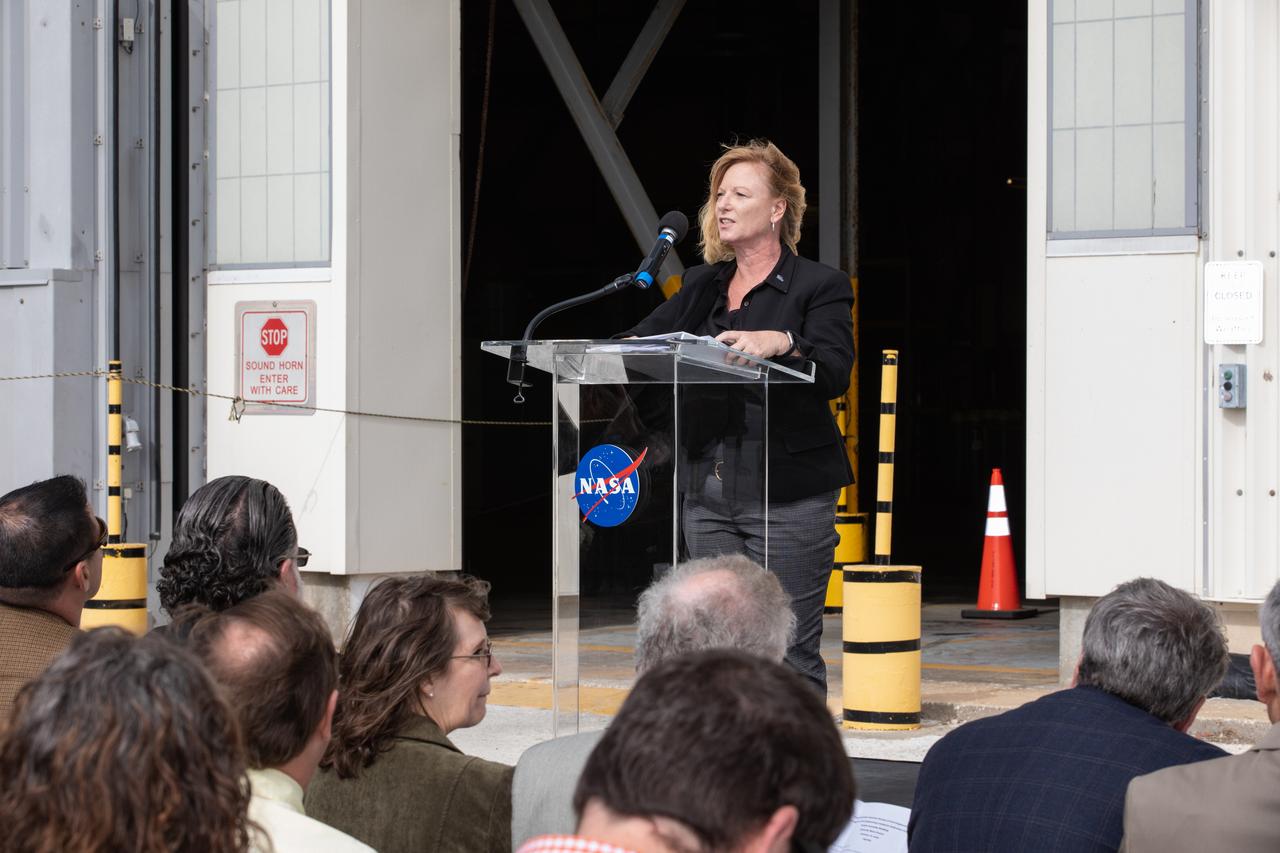
Kathleen Ruvarac, History and Heritage Committee chairperson with the American Society of Civil Engineers (ASCE), speaks to attendees during a ceremony on Jan. 10, 2020, to recognize the Vehicle Assembly Building with the National Historic Civil Engineering Landmark award. The Florida Section ASCE nominated the historic building and bestowed the award. The VAB is the first building at Kennedy Space Center to earn this distinction. At the time of its completion, the 129-million-cubic-foot structure was the largest building in the world. Originally designed and built to accommodate the Saturn V/Apollo used in Project Apollo, the VAB was later modified for its role in the Space Shuttle Program.
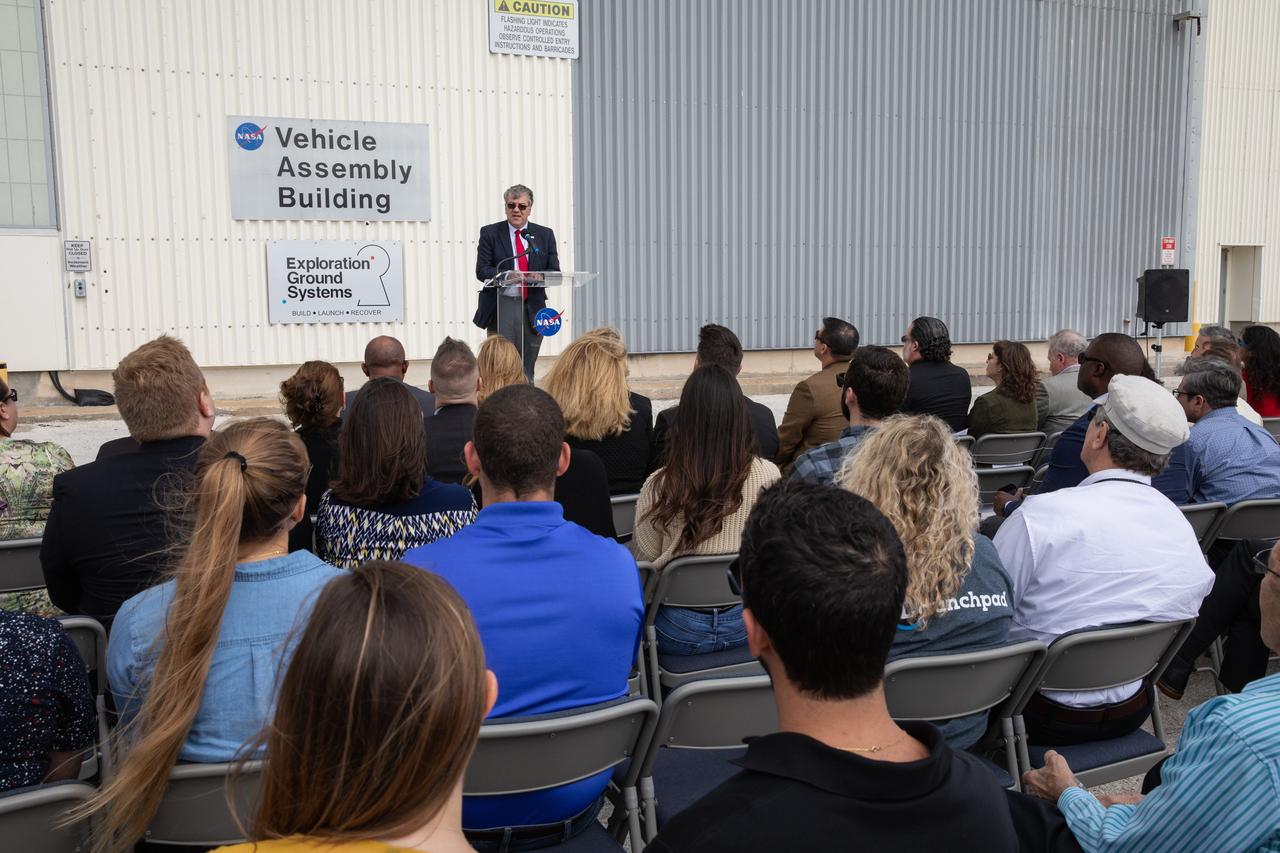
Florida Department of Transportation Secretary Kevin Thibault speaks to attendees during a ceremony on Jan. 10, 2020, to recognize the Vehicle Assembly Building with the National Historic Civil Engineering Landmark award. The Florida Section American Society of Civil Engineers nominated the historic building and bestowed the award. The VAB is the first building at Kennedy Space Center to earn this distinction. At the time of its completion, the 129-million-cubic-foot structure was the largest building in the world. Originally designed and built to accommodate the Saturn V/Apollo used in Project Apollo, the VAB was later modified for its role in the Space Shuttle Program.
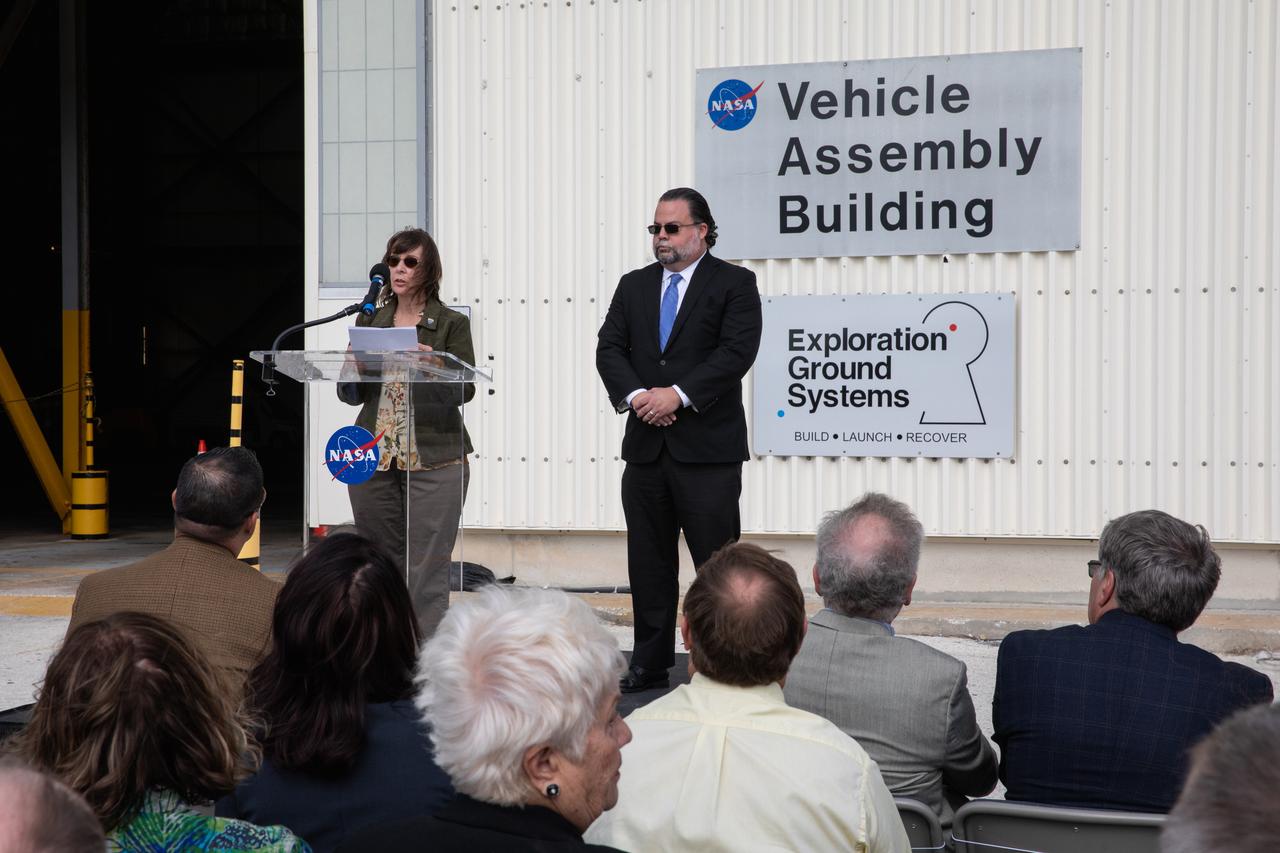
Carol Stevens, History and Heritage Committee member with the American Society of Civil Engineers (ASCE), speaks to attendees during a ceremony on Jan. 10, 2020, to recognize the Vehicle Assembly Building with the National Historic Civil Engineering Landmark award. At right is Peter Moore, ASCE Region 5 director. The Florida Section ASCE nominated the historic building and bestowed the award. The VAB is the first building at Kennedy Space Center to earn this distinction. At the time of its completion, the 129-million-cubic-foot structure was the largest building in the world. Originally designed and built to accommodate the Saturn V/Apollo used in Project Apollo, the VAB was later modified for its role in the Space Shuttle Program.
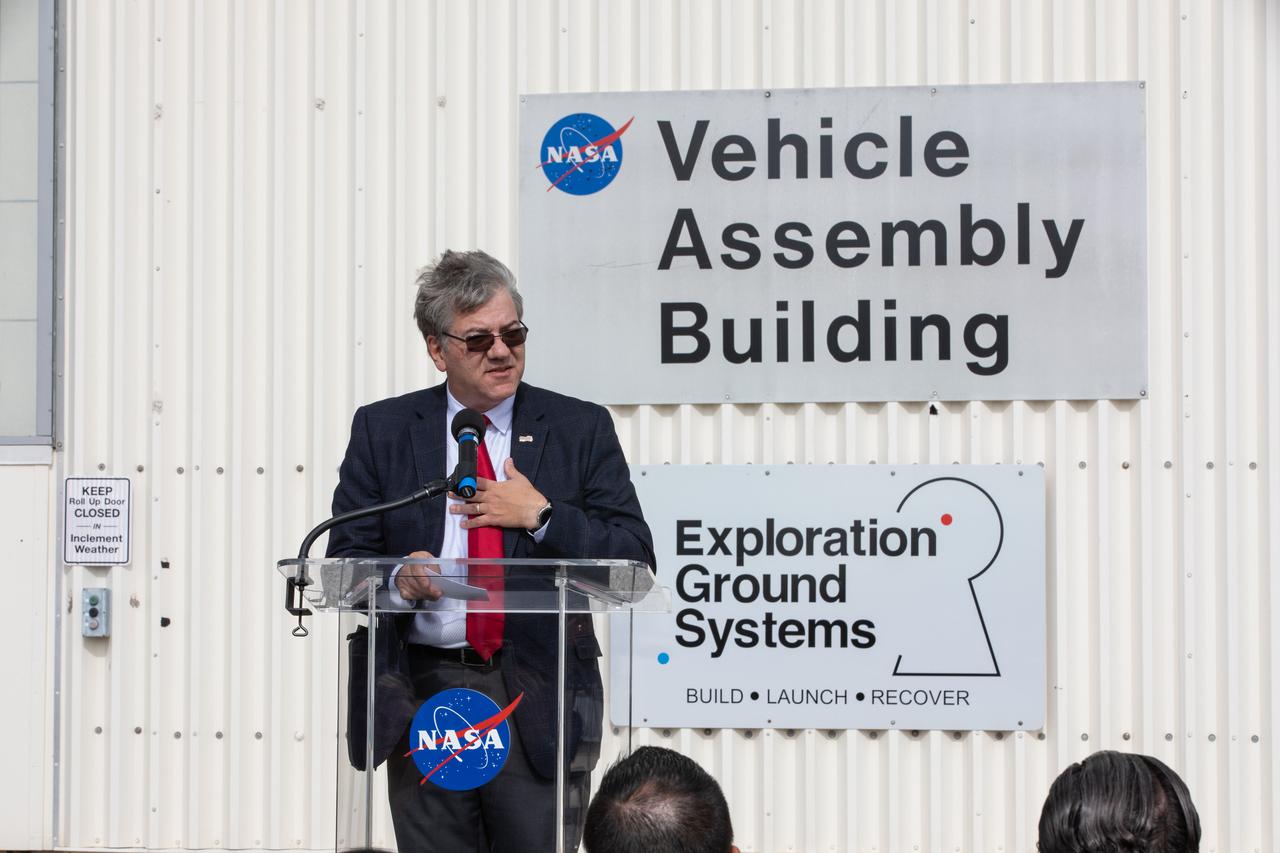
Florida Department of Transportation Secretary Kevin Thibault speaks to attendees during a ceremony on Jan. 10, 2020, to recognize the Vehicle Assembly Building with the National Historic Civil Engineering Landmark award. The Florida Section American Society of Civil Engineers nominated the historic building and bestowed the award. The VAB is the first building at Kennedy Space Center to earn this distinction. At the time of its completion, the 129-million-cubic-foot structure was the largest building in the world. Originally designed and built to accommodate the Saturn V/Apollo used in Project Apollo, the VAB was later modified for its role in the Space Shuttle Program.
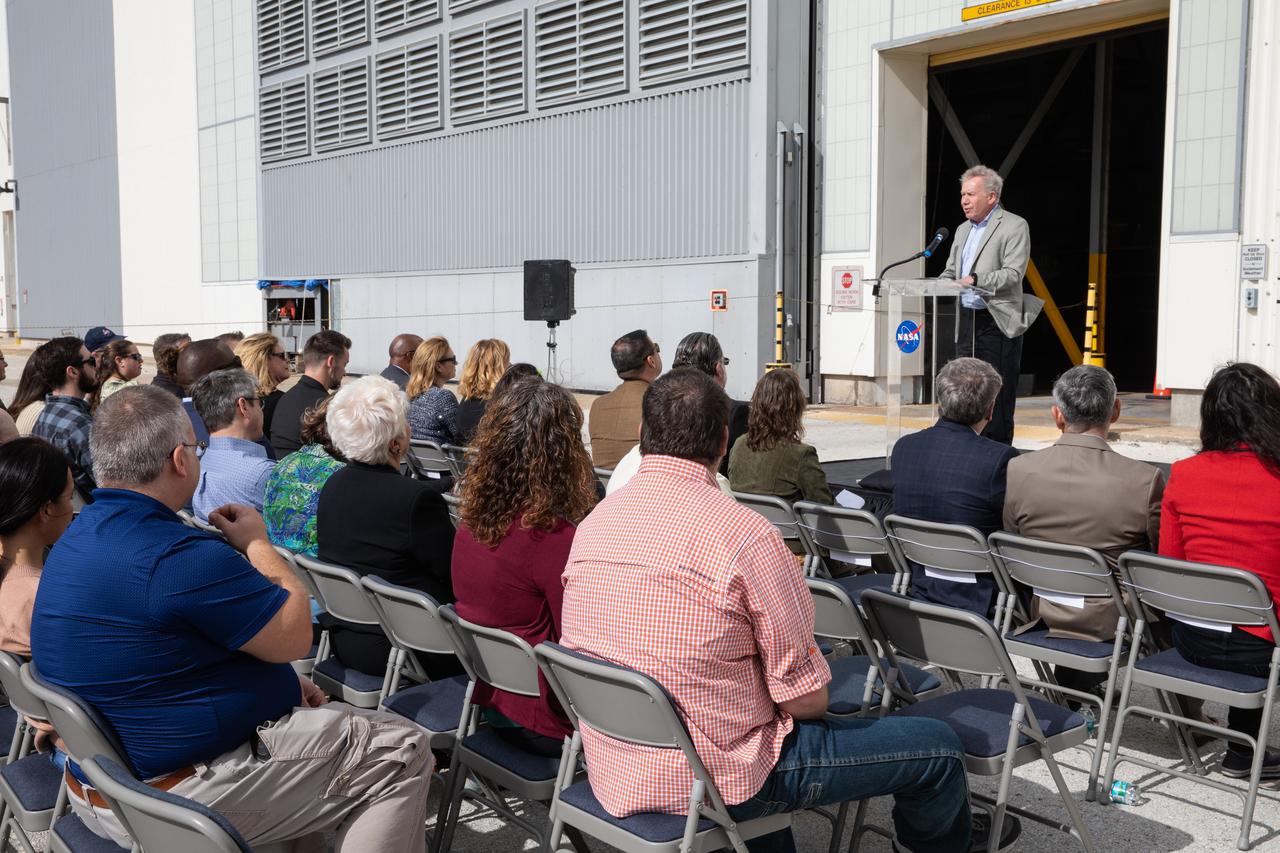
Glenn Bell, American Society of Civil Engineers (ASCE) Society of Structural Engineering Institute president speaks to attendees during a ceremony on Jan. 10, 2020, to recognize the Vehicle Assembly Building with the National Historic Civil Engineering Landmark award. The Florida Section ASCE nominated the historic building and bestowed the award. The VAB is the first building at Kennedy Space Center to earn this distinction. At the time of its completion, the 129-million-cubic-foot structure was the largest building in the world. Originally designed and built to accommodate the Saturn V/Apollo used in Project Apollo, the VAB was later modified for its role in the Space Shuttle Program.
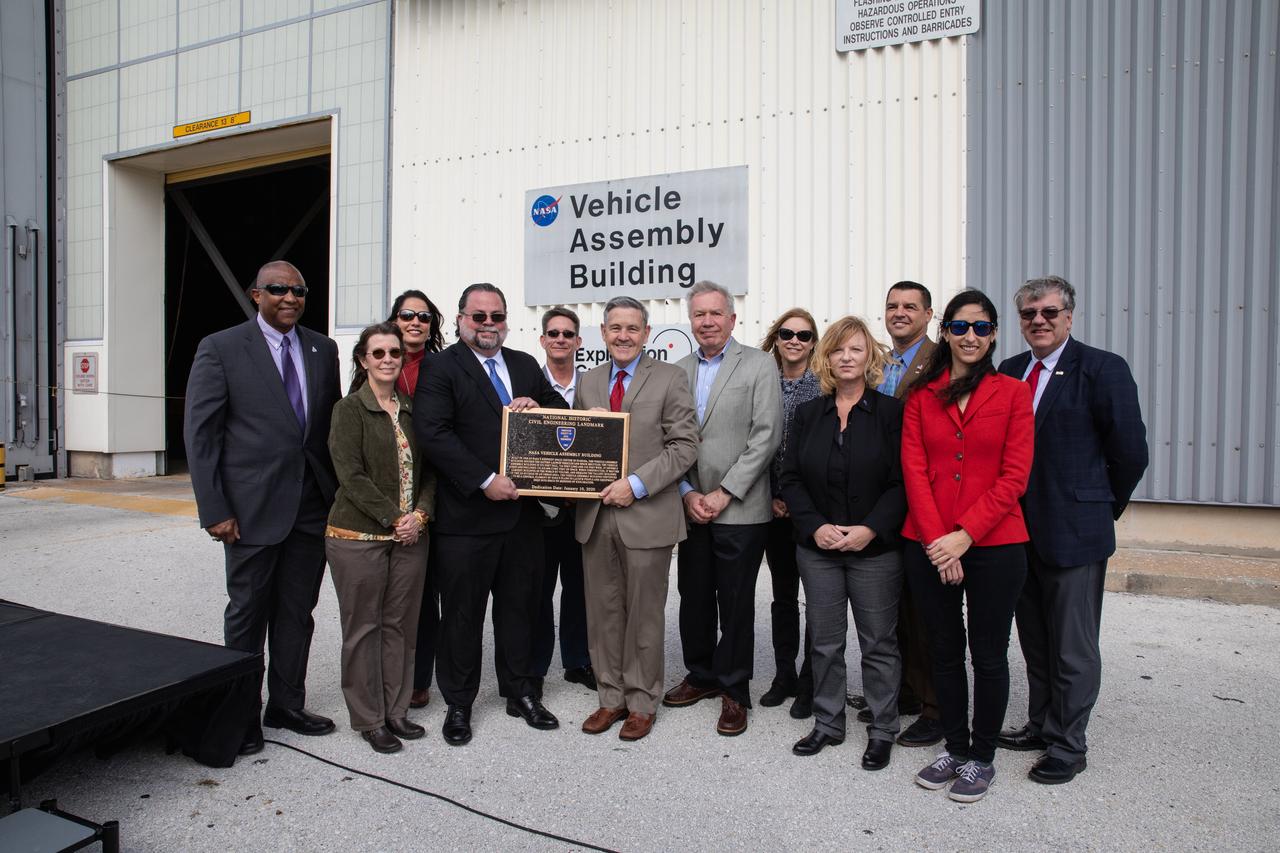
Kennedy Space Center Director Bob Cabana, center, accepts the National Historic Civil Engineering Landmark award from the Florida Section American Society of Civil Engineers (ASCE) for the Vehicle Assembly Building during a ceremony in front of the iconic facility on Jan. 10, 2020. Holding the award with Cabana is Peter Moore, ASCE Region 5 director. At far left is Kelvin Manning, associate director, technical. The ASCE nominated the historic building and bestowed the award. The VAB is the first building at Kennedy Space Center to earn this distinction. At the time of its completion, the 129-million-cubic-foot structure was the largest building in the world. Originally designed and built to accommodate the Saturn V/Apollo used in Project Apollo, the VAB was later modified for its role in the Space Shuttle Program.
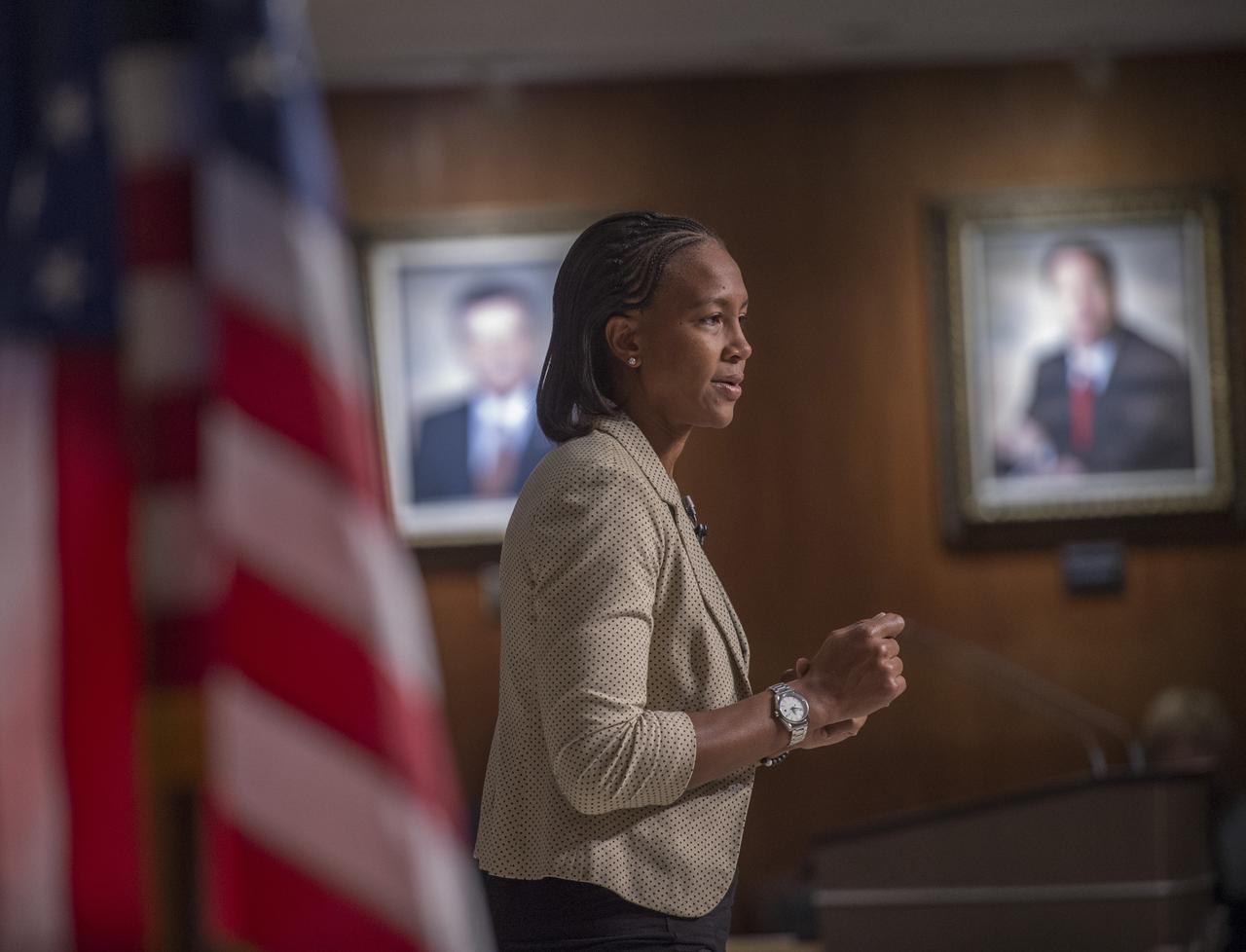
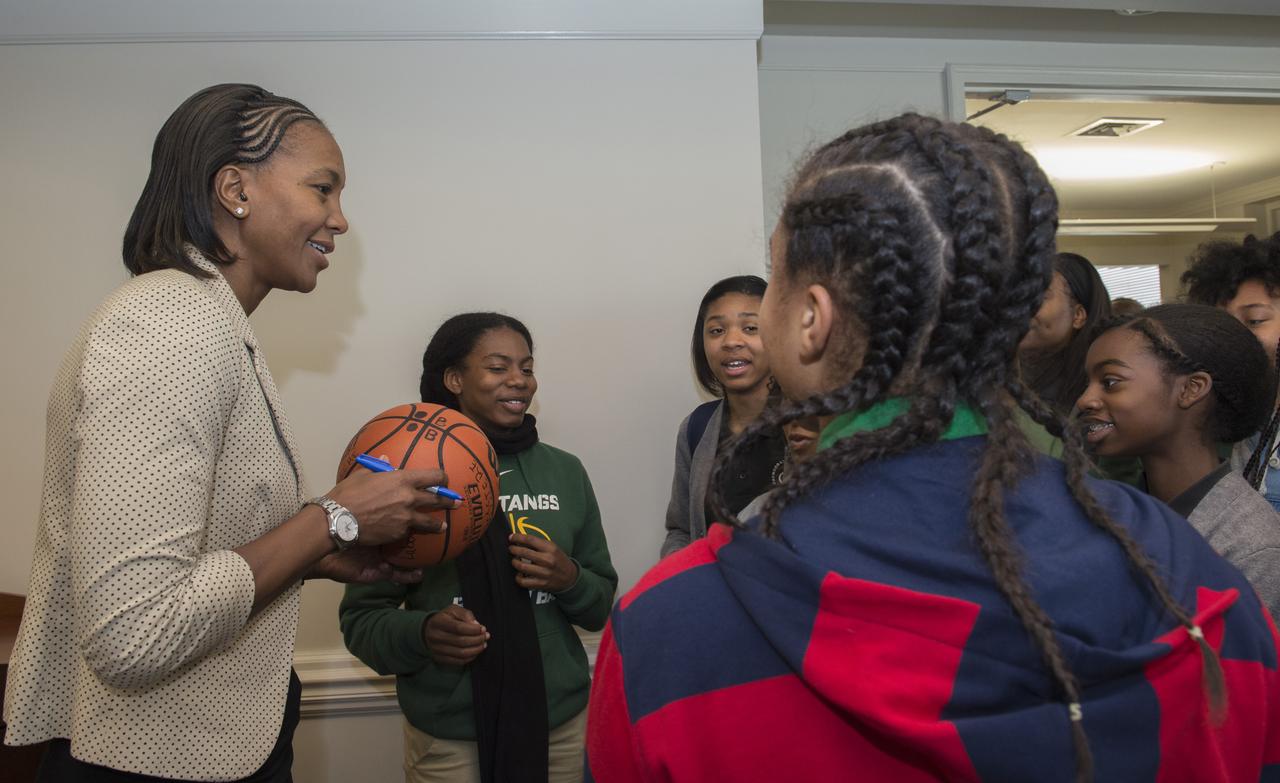
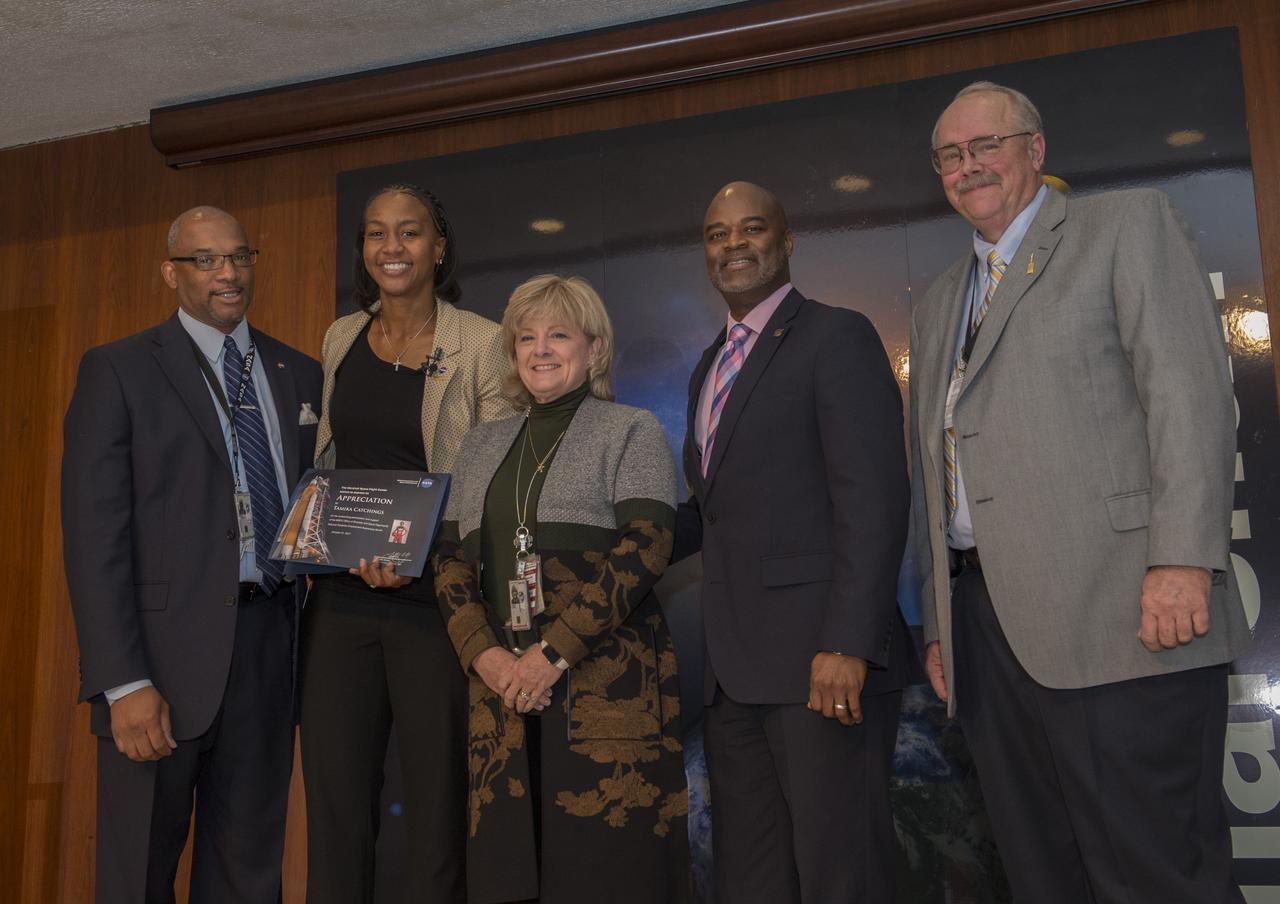
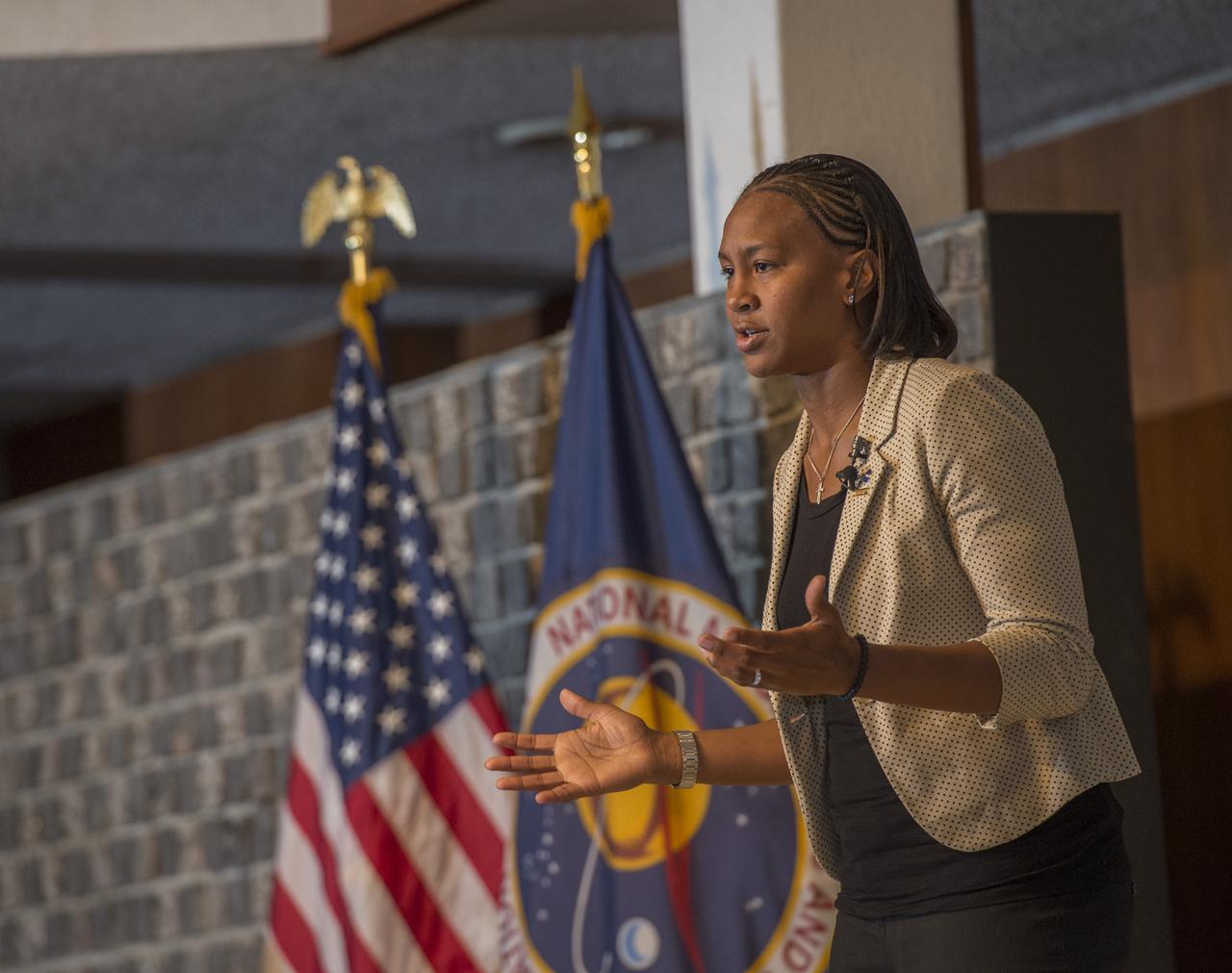
The 2017 Disabilities Awareness Month Program was presented at Marshall Space Flight Center's Morris Auditorium with guest speaker Tamika Catchings. Ms. Catchings is a retired WNBA player who spent her entire career with the Indiana Fever. She was the first recipient of ESPN’s Humanitarian Award in 2015. In 2016, Tamika became the first female recipient of the National Civil Rights Museum Sports Legacy Award. In 2016, Tamika released her autobiography, "Catch A Star," which became a New York Times best seller. She is also a world-renowned motivational and keynote speaker.
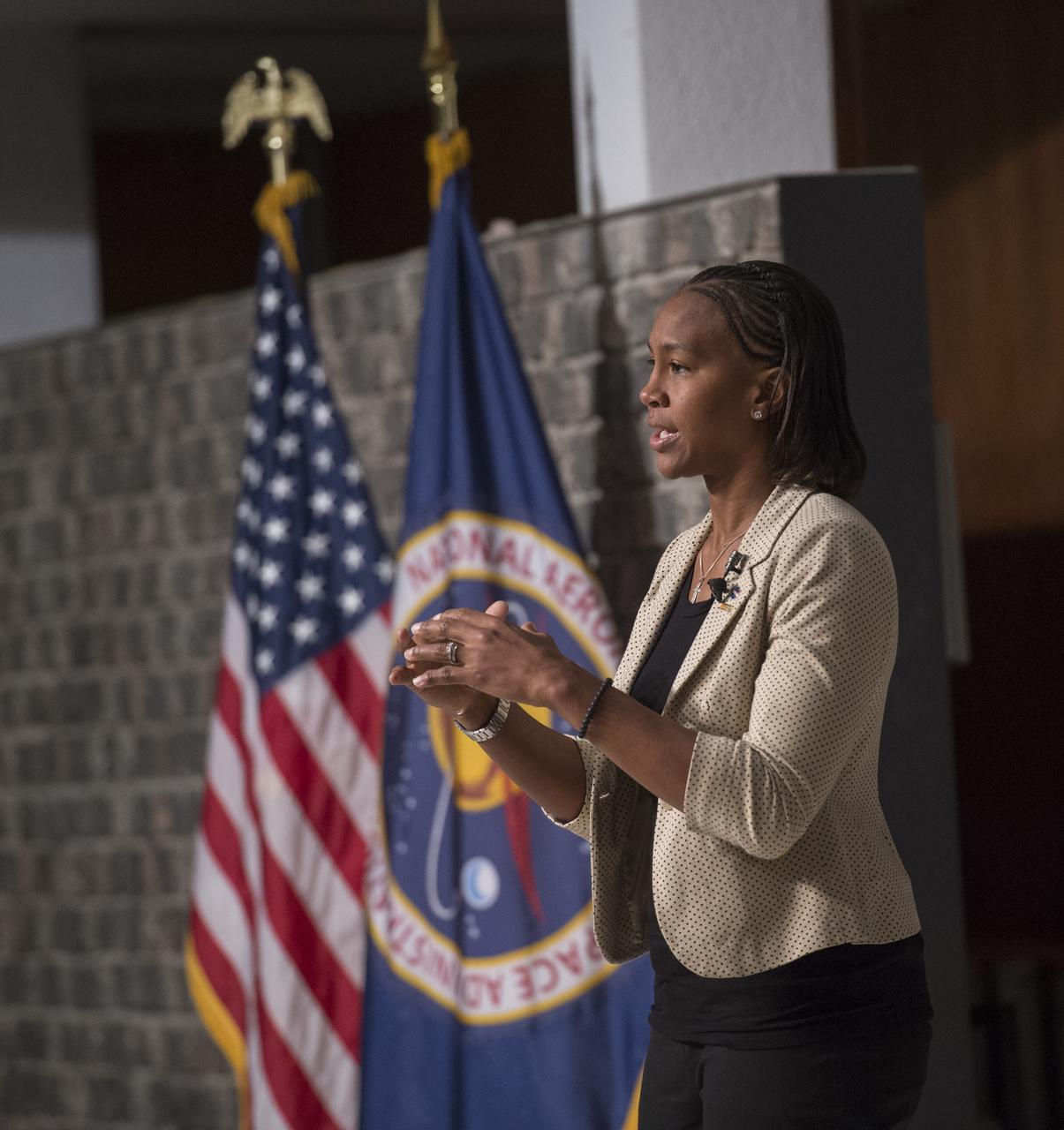
The 2017 Disabilities Awareness Month Program was presented at Marshall Space Flight Center's Morris Auditorium with guest speaker Tamika Catchings. Ms. Catchings is a retired WNBA player who spent her entire career with the Indiana Fever. She was the first recipient of ESPN’s Humanitarian Award in 2015. In 2016, Tamika became the first female recipient of the National Civil Rights Museum Sports Legacy Award. In 2016, Tamika released her autobiography, "Catch A Star," which became a New York Times best seller. She is also a world-renowned motivational and keynote speaker.
The 2017 Disabilities Awareness Month Program was presented at Marshall Space Flight Center's Morris Auditorium with guest speaker Tamika Catchings. Ms. Catchings is a retired WNBA player who spent her entire career with the Indiana Fever. She was the first recipient of ESPN’s Humanitarian Award in 2015. In 2016, Tamika became the first female recipient of the National Civil Rights Museum Sports Legacy Award. In 2016, Tamika released her autobiography, "Catch A Star," which became a New York Times best seller. She is also a world-renowned motivational and keynote speaker.
The 2017 Disabilities Awareness Month Program was presented at Marshall Space Flight Center's Morris Auditorium with guest speaker Tamika Catchings. Ms. Catchings is a retired WNBA player who spent her entire career with the Indiana Fever. She was the first recipient of ESPN’s Humanitarian Award in 2015. In 2016, Tamika became the first female recipient of the National Civil Rights Museum Sports Legacy Award. In 2016, Tamika released her autobiography, "Catch A Star," which became a New York Times best seller. She is also a world-renowned motivational and keynote speaker.
The 2017 Disabilities Awareness Month Program was presented at Marshall Space Flight Center's Morris Auditorium with guest speaker Tamika Catchings. Ms. Catchings is a retired WNBA player who spent her entire career with the Indiana Fever. She was the first recipient of ESPN’s Humanitarian Award in 2015. In 2016, Tamika became the first female recipient of the National Civil Rights Museum Sports Legacy Award. In 2016, Tamika released her autobiography, "Catch A Star," which became a New York Times best seller. She is also a world-renowned motivational and keynote speaker.
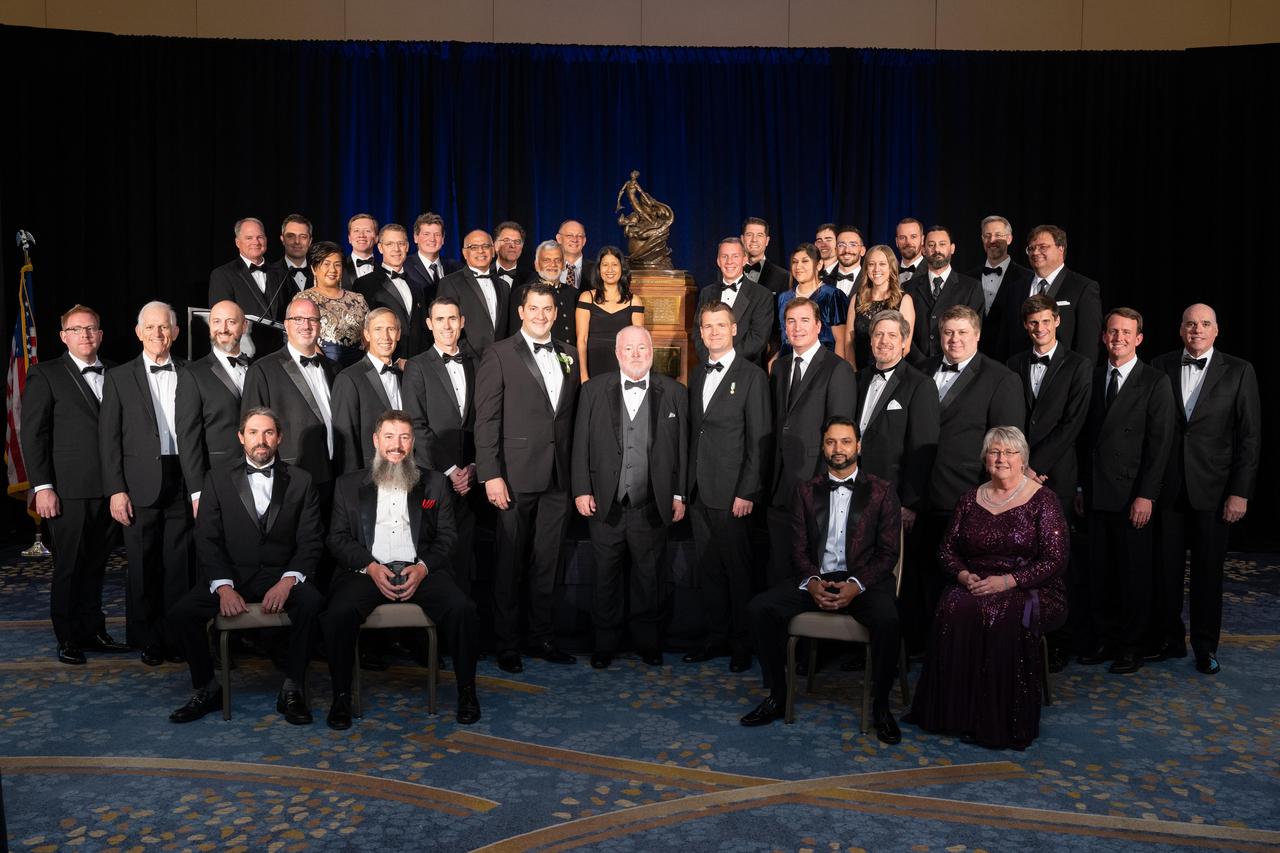
Members of NASA's Ingenuity Mars Helicopter team are pictured with the Collier Trophy during the Robert J. Collier Dinner in Washington on June 9, 2022. The team was awarded the 2021 Collier Trophy "for the first powered, controlled flight of an aircraft on another planet, thereby opening the skies of Mars and other worlds for future scientific discovery and exploration," the award citation states. This historic trophy – which is on permanent display at the Smithsonian Air and Space Museum in Washington – is awarded annually by the National Aeronautic Association "for the greatest achievement in aeronautics or astronautics in America, with respect to improving the performance, efficiency, and safety of air or space vehicles, the value of which has been thoroughly demonstrated by actual use during the preceding year." https://photojournal.jpl.nasa.gov/catalog/PIA25324
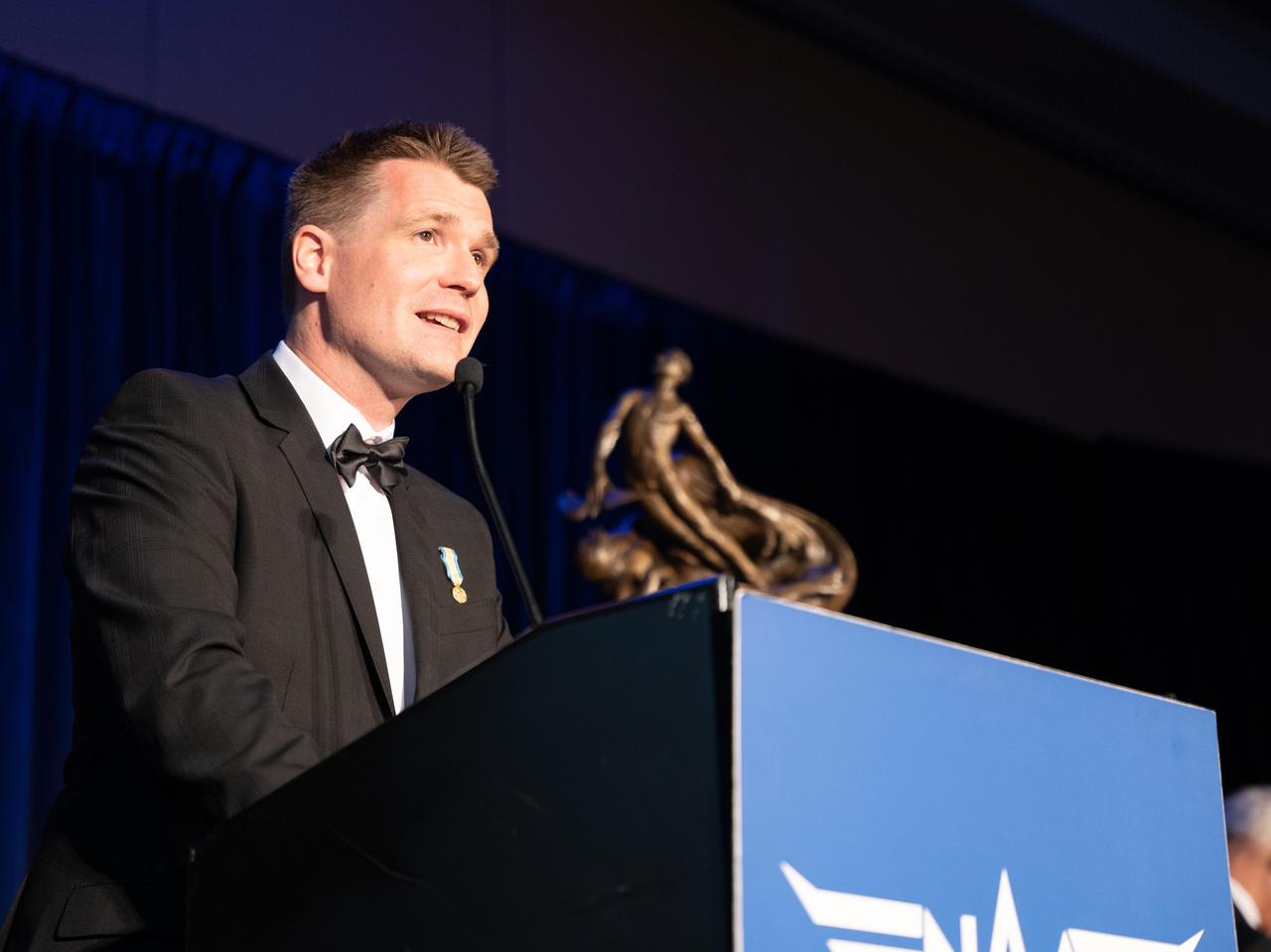
The chief pilot for NASA's Ingenuity Mars Helicopter, Håvard Grip, speaks at the Robert J. Collier Dinner in Washington on June 9, 2022. The Ingenuity Mars Helicopter team was awarded the 2021 Collier Trophy "for the first powered, controlled flight of an aircraft on another planet, thereby opening the skies of Mars and other worlds for future scientific discovery and exploration," the award citation states. This historic trophy – which is on permanent display at the Smithsonian Air and Space Museum in Washington – is awarded annually by the National Aeronautic Association "for the greatest achievement in aeronautics or astronautics in America, with respect to improving the performance, efficiency, and safety of air or space vehicles, the value of which has been thoroughly demonstrated by actual use during the preceding year." https://photojournal.jpl.nasa.gov/catalog/PIA25216
/USSRC_TravisHogan (195)~large.jpg)
More than 600 students with 44 teams from around the world participated in the 32nd year of NASA’s Human Exploration Rover Challenge (HERC) on April 10 and April 11 near NASA’s Marshall Space Flight Center in Huntsville, Alabama. Participating teams represented 28 colleges and universities, 13 high schools, and one middle school from 18 states, Puerto Rico, and four Artemis Accord countries. Teams were awarded points based on navigating a half-mile obstacle course with either a human-powered or remote-controlled rover, conducting mission-specific task challenges, and completing multiple safety and design reviews with NASA engineers.
/USSRC_MeganHolbrook (98)~large.jpg)
More than 600 students with 44 teams from around the world participated in the 32nd year of NASA’s Human Exploration Rover Challenge (HERC) on April 10 and April 11 near NASA’s Marshall Space Flight Center in Huntsville, Alabama. Participating teams represented 28 colleges and universities, 13 high schools, and one middle school from 18 states, Puerto Rico, and four Artemis Accord countries. Teams were awarded points based on navigating a half-mile obstacle course with either a human-powered or remote-controlled rover, conducting mission-specific task challenges, and completing multiple safety and design reviews with NASA engineers.

More than 600 students with 44 teams from around the world participated in the 32nd year of NASA’s Human Exploration Rover Challenge (HERC) on April 10 and April 11 near NASA’s Marshall Space Flight Center in Huntsville, Alabama. Participating teams represented 28 colleges and universities, 13 high schools, and one middle school from 18 states, Puerto Rico, and four Artemis Accord countries. Teams were awarded points based on navigating a half-mile obstacle course with either a human-powered or remote-controlled rover, conducting mission-specific task challenges, and completing multiple safety and design reviews with NASA engineers.
/USSRC_DavidSercel (616)~large.jpg)
More than 600 students with 44 teams from around the world participated in the 32nd year of NASA’s Human Exploration Rover Challenge (HERC) on April 10 and April 11 near NASA’s Marshall Space Flight Center in Huntsville, Alabama. Participating teams represented 28 colleges and universities, 13 high schools, and one middle school from 18 states, Puerto Rico, and four Artemis Accord countries. Teams were awarded points based on navigating a half-mile obstacle course with either a human-powered or remote-controlled rover, conducting mission-specific task challenges, and completing multiple safety and design reviews with NASA engineers.
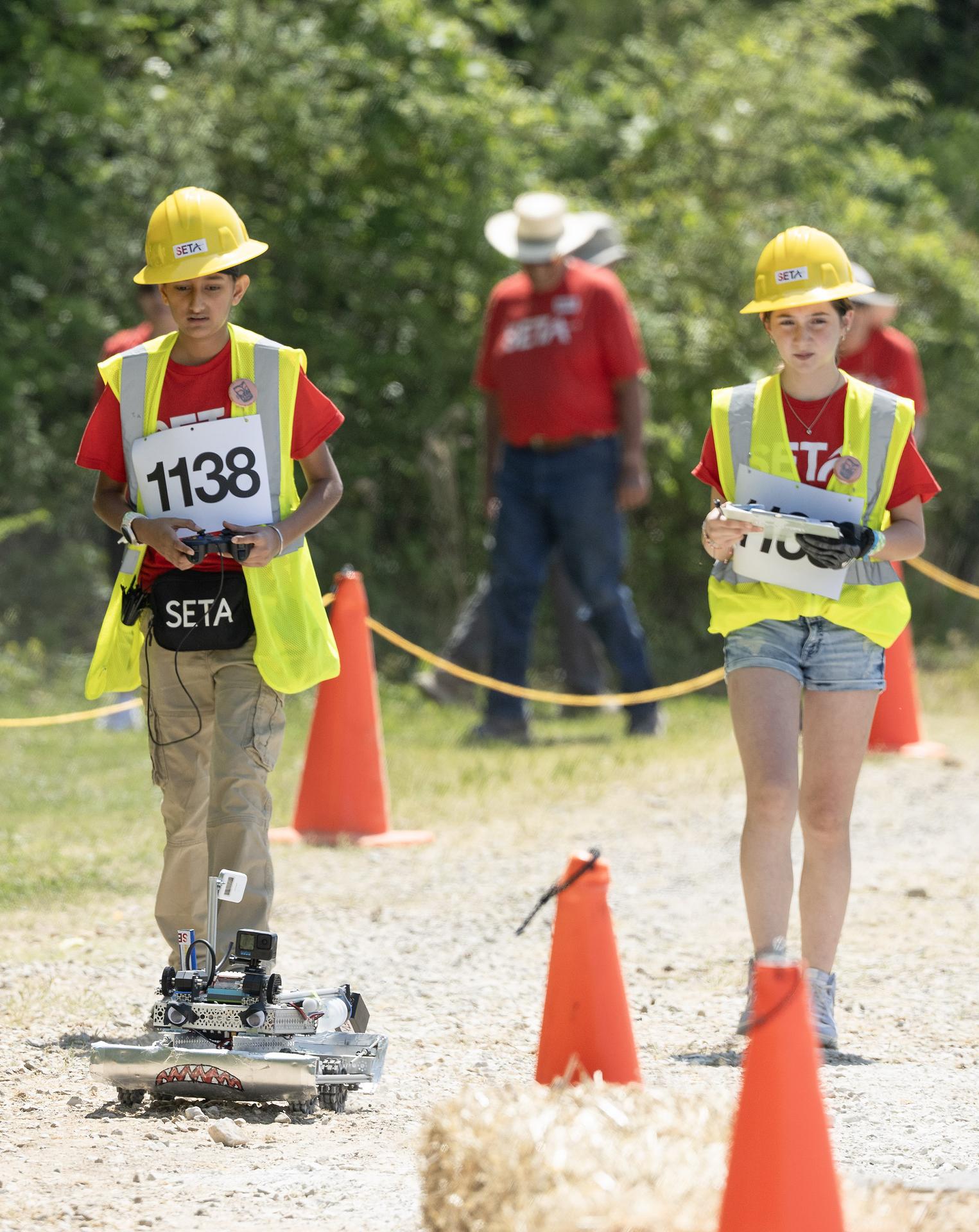
More than 600 students with 44 teams from around the world participated in the 32nd year of NASA’s Human Exploration Rover Challenge (HERC) on April 10 and April 11 near NASA’s Marshall Space Flight Center in Huntsville, Alabama. Participating teams represented 28 colleges and universities, 13 high schools, and one middle school from 18 states, Puerto Rico, and four Artemis Accord countries. Teams were awarded points based on navigating a half-mile obstacle course with either a human-powered or remote-controlled rover, conducting mission-specific task challenges, and completing multiple safety and design reviews with NASA engineers.
/USSRC_DavidSercel (195)~large.jpg)
More than 600 students with 44 teams from around the world participated in the 32nd year of NASA’s Human Exploration Rover Challenge (HERC) on April 10 and April 11 near NASA’s Marshall Space Flight Center in Huntsville, Alabama. Participating teams represented 28 colleges and universities, 13 high schools, and one middle school from 18 states, Puerto Rico, and four Artemis Accord countries. Teams were awarded points based on navigating a half-mile obstacle course with either a human-powered or remote-controlled rover, conducting mission-specific task challenges, and completing multiple safety and design reviews with NASA engineers.
/USSRC_MeganHolbrook (191)~large.jpg)
More than 600 students with 44 teams from around the world participated in the 32nd year of NASA’s Human Exploration Rover Challenge (HERC) on April 10 and April 11 near NASA’s Marshall Space Flight Center in Huntsville, Alabama. Participating teams represented 28 colleges and universities, 13 high schools, and one middle school from 18 states, Puerto Rico, and four Artemis Accord countries. Teams were awarded points based on navigating a half-mile obstacle course with either a human-powered or remote-controlled rover, conducting mission-specific task challenges, and completing multiple safety and design reviews with NASA engineers.
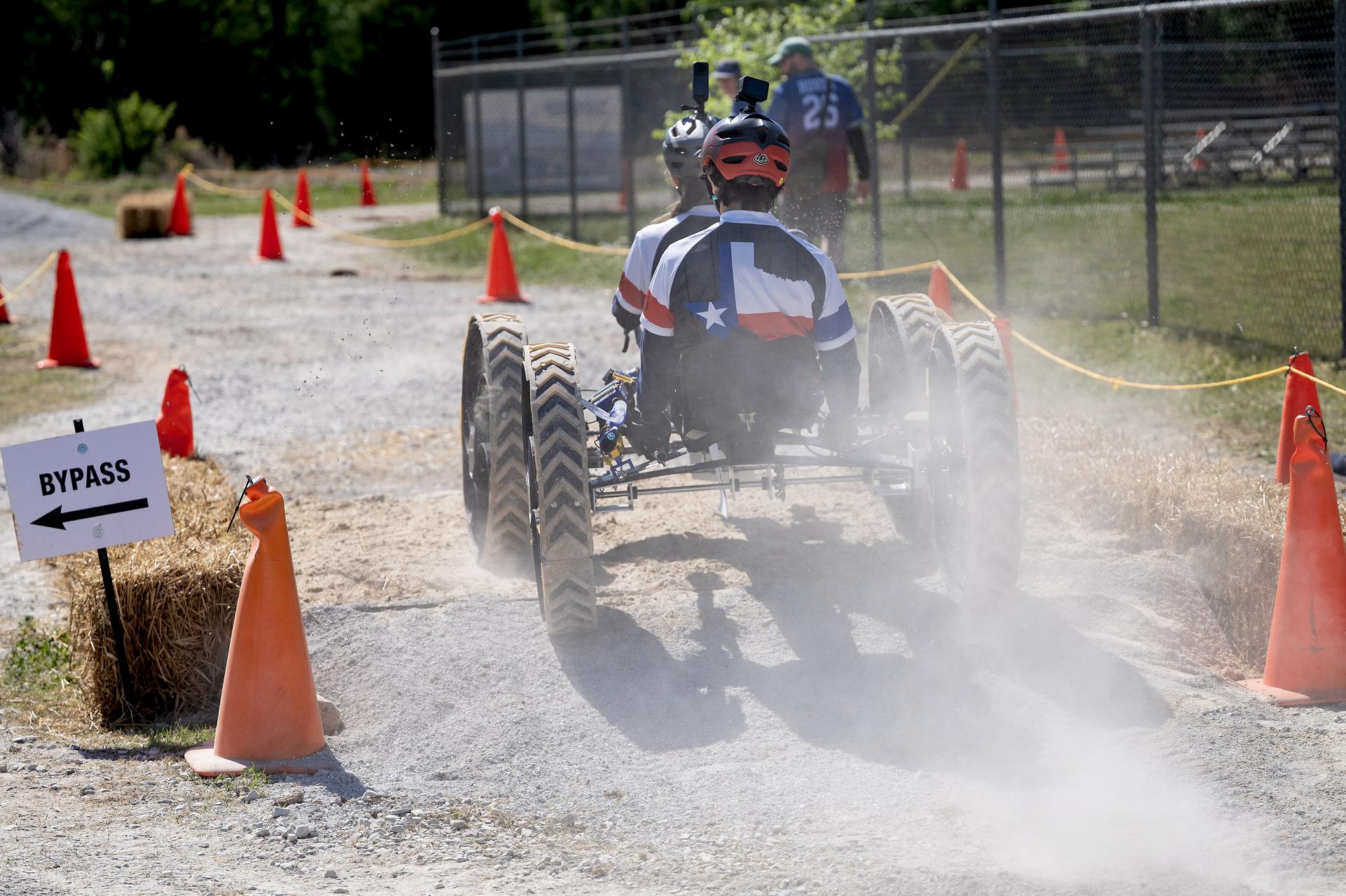
More than 600 students with 44 teams from around the world participated in the 32nd year of NASA’s Human Exploration Rover Challenge (HERC) on April 10 and April 11 near NASA’s Marshall Space Flight Center in Huntsville, Alabama. Participating teams represented 28 colleges and universities, 13 high schools, and one middle school from 18 states, Puerto Rico, and four Artemis Accord countries. Teams were awarded points based on navigating a half-mile obstacle course with either a human-powered or remote-controlled rover, conducting mission-specific task challenges, and completing multiple safety and design reviews with NASA engineers.
/USSRC_MeganHolbrook (344)~large.jpg)
More than 600 students with 44 teams from around the world participated in the 32nd year of NASA’s Human Exploration Rover Challenge (HERC) on April 10 and April 11 near NASA’s Marshall Space Flight Center in Huntsville, Alabama. Participating teams represented 28 colleges and universities, 13 high schools, and one middle school from 18 states, Puerto Rico, and four Artemis Accord countries. Teams were awarded points based on navigating a half-mile obstacle course with either a human-powered or remote-controlled rover, conducting mission-specific task challenges, and completing multiple safety and design reviews with NASA engineers.
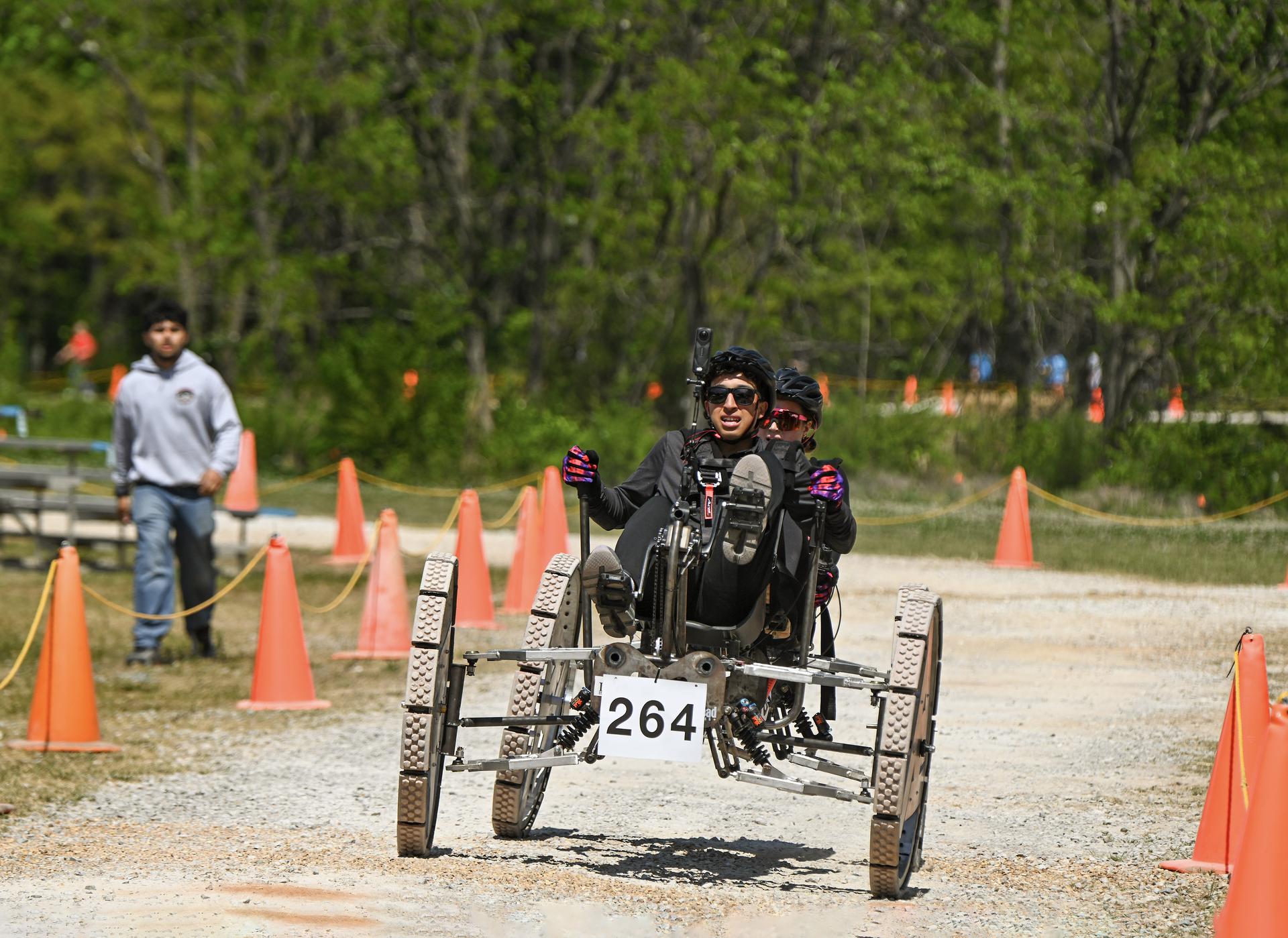
More than 600 students with 44 teams from around the world participated in the 32nd year of NASA’s Human Exploration Rover Challenge (HERC) on April 10 and April 11 near NASA’s Marshall Space Flight Center in Huntsville, Alabama. Participating teams represented 28 colleges and universities, 13 high schools, and one middle school from 18 states, Puerto Rico, and four Artemis Accord countries. Teams were awarded points based on navigating a half-mile obstacle course with either a human-powered or remote-controlled rover, conducting mission-specific task challenges, and completing multiple safety and design reviews with NASA engineers.

Ronnie Rigney (r), chief of the Propulsion Test Office in the Project Directorate at Stennis Space Center, stands with agency colleagues to receive the prestigious American Institute of Aeronautics and Astronautics George M. Low Space Transportation Award on Sept. 12. Rigney accepted the award on behalf of the NASA and contractor team at Stennis for their support of the Space Shuttle Program that ended last summer. From 1975 to 2009, Stennis Space Center tested every main engine used to power 135 space shuttle missions. Stennis continued to provide flight support services through the end of the Space Shuttle Program in July 2011. The center also supported transition and retirement of shuttle hardware and assets through September 2012. The 2012 award was presented to the space shuttle team 'for excellence in the conception, development, test, operation and retirement of the world's first and only reusable space transportation system.' Joining Rigney for the award ceremony at the 2012 AIAA Conference in Pasadena, Calif., were: (l to r) Allison Zuniga, NASA Headquarters; Michael Griffin, former NASA administrator; Don Noah, Johnson Space Center in Houston; Steve Cash, Marshall Space Flight Center in Huntsville, Ala.; and Pete Nickolenko, Kennedy Space Center in Florida.

Ronnie Rigney (r), chief of the Propulsion Test Office in the Project Directorate at Stennis Space Center, stands with agency colleagues to receive the prestigious American Institute of Aeronautics and Astronautics George M. Low Space Transportation Award on Sept. 12. Rigney accepted the award on behalf of the NASA and contractor team at Stennis for their support of the Space Shuttle Program that ended last summer. From 1975 to 2009, Stennis Space Center tested every main engine used to power 135 space shuttle missions. Stennis continued to provide flight support services through the end of the Space Shuttle Program in July 2011. The center also supported transition and retirement of shuttle hardware and assets through September 2012. The 2012 award was presented to the space shuttle team 'for excellence in the conception, development, test, operation and retirement of the world's first and only reusable space transportation system.' Joining Rigney for the award ceremony at the 2012 AIAA Conference in Pasadena, Calif., were: (l to r) Allison Zuniga, NASA Headquarters; Michael Griffin, former NASA administrator; Don Noah, Johnson Space Center in Houston; Steve Cash, Marshall Space Flight Center in Huntsville, Ala.; and Pete Nickolenko, Kennedy Space Center in Florida.
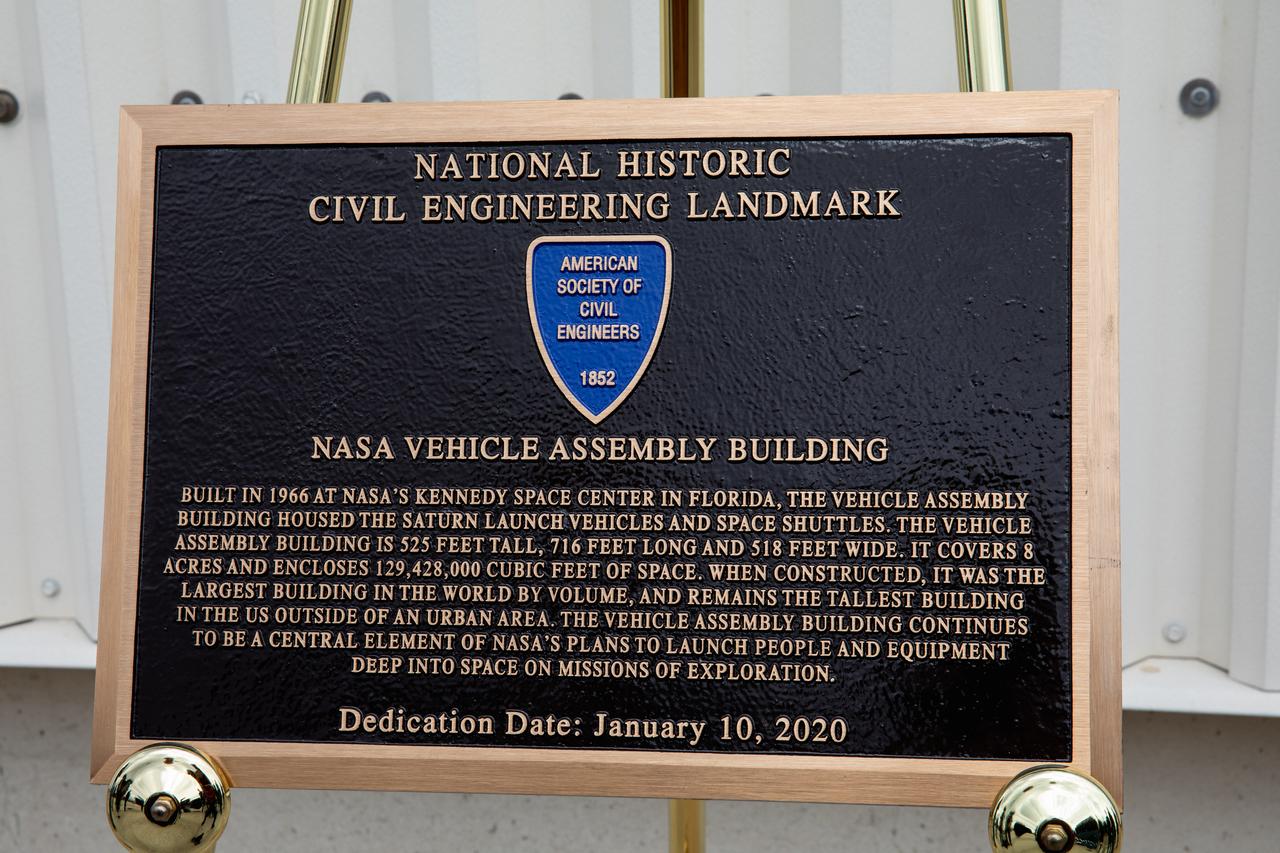
The Florida Section of the American Society of Civil Engineers bestowed the ASCE National Historic Civil Engineering Landmark award to Kennedy Space Center’s iconic Vehicle Assembly Building during a ceremony on Jan. 10, 2020. The VAB is the first building at Kennedy Space Center to earn this distinction. At the time of its completion, the 129-million-cubic-foot structure was the largest building in the world. Originally designed and built to accommodate the Saturn V/Apollo used in Project Apollo, the VAB was later modified for its role in the Space Shuttle Program.
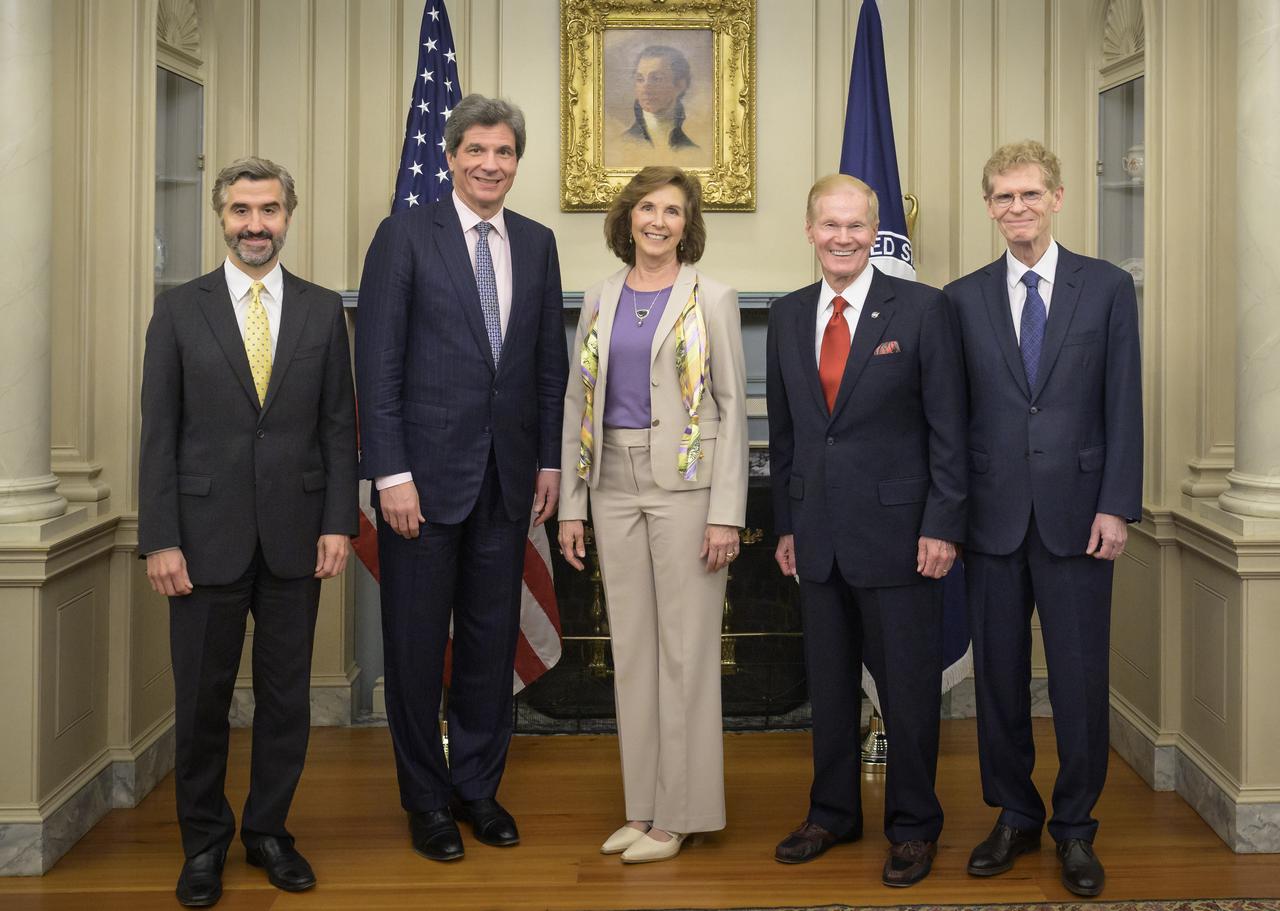
Assistant Secretary for Economic and Business Affairs Ramin Toloui, left, Under Secretary For Economic Growth, Energy, and the Environment Jose W. Fernandez, World Food Prize President Barbara Stinson, NASA Administrator Bill Nelson, and U.S. Special Envoy for Global Food Security, Dr. Cary Fowler, right, pose for a group photograph during an event at the U.S Department of State where it was announced that Cynthia Rosenzweig, a senior research scientist and head of the Climate Impacts Group at NASA’s Goddard Institute for Space Studies (GISS) in New York City, will be awarded the 2022 World Food Prize from the World Food Prize Foundation, Thursday, May 5, 2022, at the Harry S. Truman Building in Washington. Photo Credit: (NASA/Bill Ingalls)
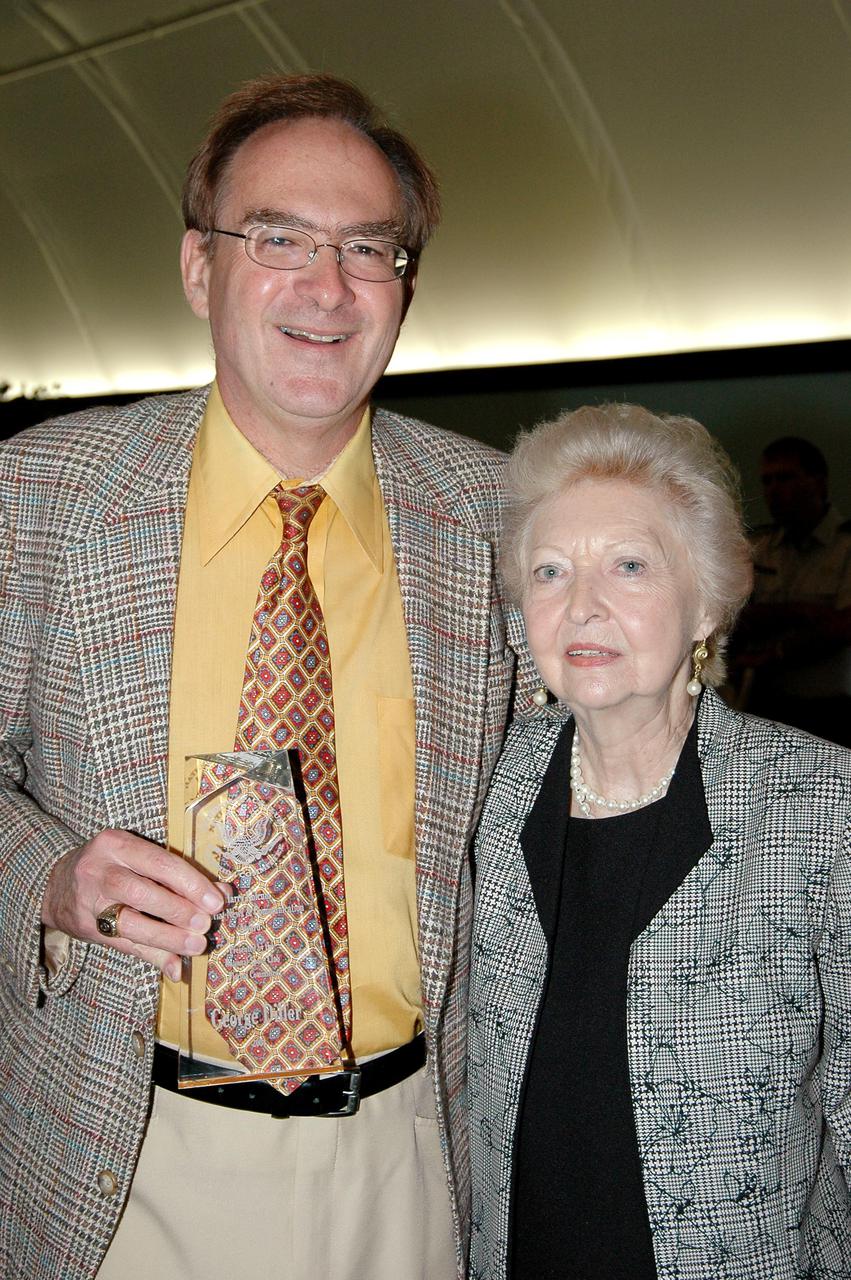
KENNEDY SPACE CENTER, FLA. - NASA public affairs specialist George Diller (left) is honored with a Harry Kolcum Memorial News and Communications Award for 2004 by the National Space Club Florida Committee at the Radisson Resort at the Port, Cape Canaveral, Fla. He is joined by Marcie Young, wife of the late chief of NASA news operations at Kennedy Space Center, Dick Young, with whom Diller worked for many years. Each year, the National Space Club Florida Committee recognizes area representatives of the news media and communications professions for excellence in their ability to communicate the space story along Florida’s Space Coast and throughout the world. The award is named in honor of Harry Kolcum, the former managing editor of Aviation Week and Space Technology, who was Cape bureau chief from 1980 to 1993 prior to his death in 1994. Kolcum was a founding member of the National Space Club Florida Committee.
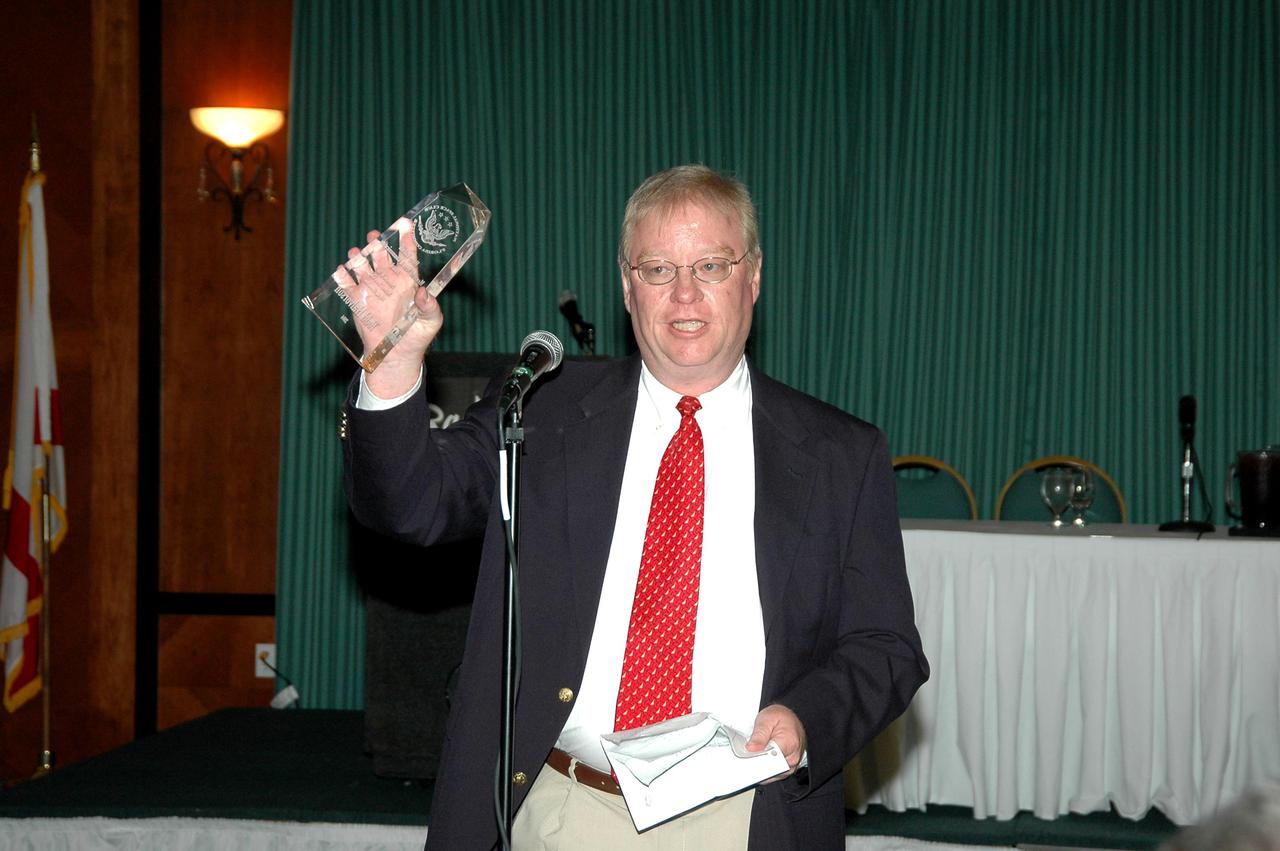
KENNEDY SPACE CENTER, FLA. - Florida Today senior aerospace reporter Todd Halvorson is honored with a Harry Kolcum Memorial News and Communications Award for 2004 by the National Space Club Florida Committee at the Radisson Resort at the Port, Cape Canaveral, Fla. Each year, the National Space Club Florida Committee recognizes area representatives of the news media and communications professions for excellence in their ability to communicate the space story along Florida’s Space Coast and throughout the world. The award is named in honor of Harry Kolcum, the former managing editor of Aviation Week and Space Technology, who was Cape bureau chief from 1980 to 1993 prior to his death in 1994. Kolcum was a founding member of the National Space Club Florida Committee.
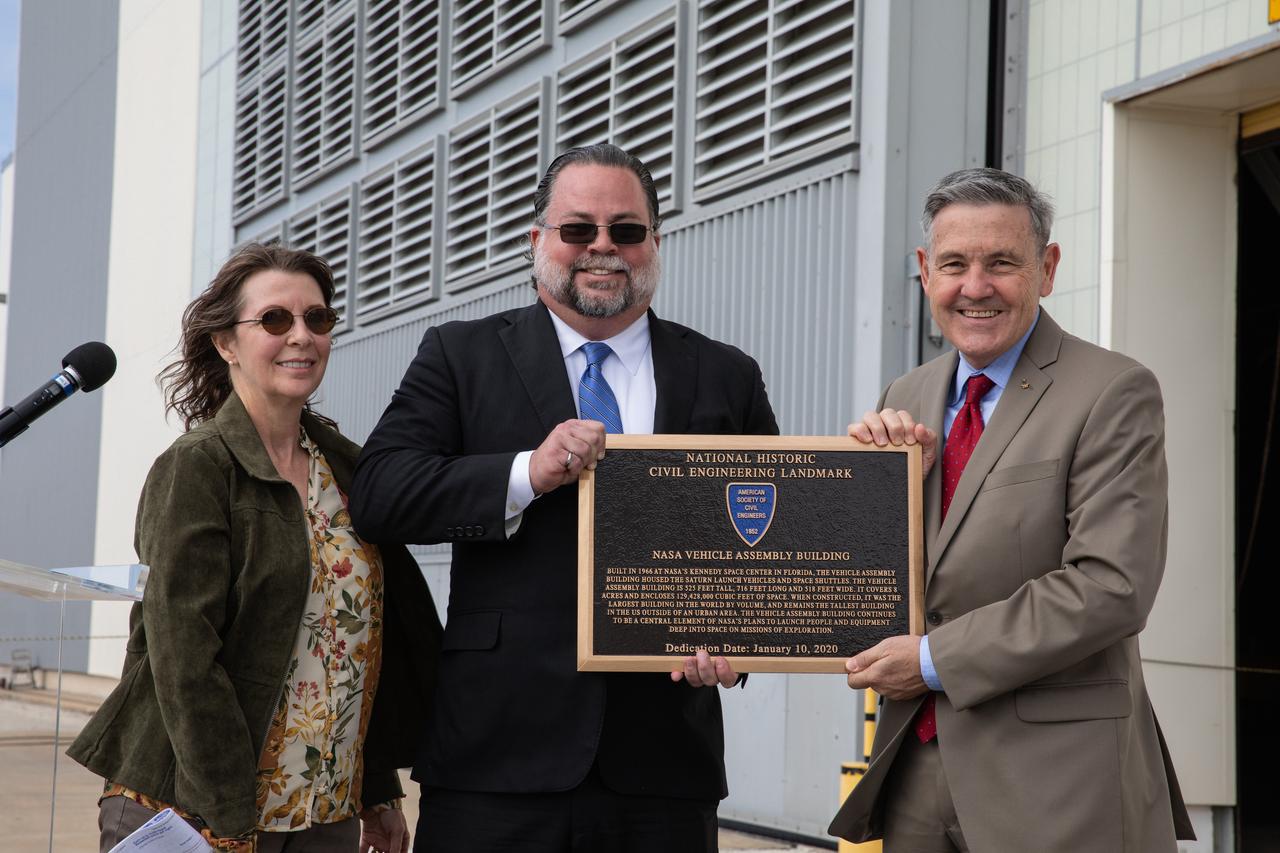
Kennedy Space Center Director Bob Cabana, far right, accepts the National Historic Civil Engineering Landmark award from the Florida Section American Society of Civil Engineers (ASCE) for the Vehicle Assembly Building during a ceremony in front of the iconic facility on Jan. 10, 2020. Next to Cabana, from left are Carol Stevens, ASCE Society of History and Heritage Committee member; and Peter Moore, ASCE Region 5 director. The ASCE nominated the historic building and bestowed the award. The VAB is the first building at Kennedy Space Center to earn this distinction. At the time of its completion, the 129-million-cubic-foot structure was the largest building in the world. Originally designed and built to accommodate the Saturn V/Apollo used in Project Apollo, the VAB was later modified for its role in the Space Shuttle Program.
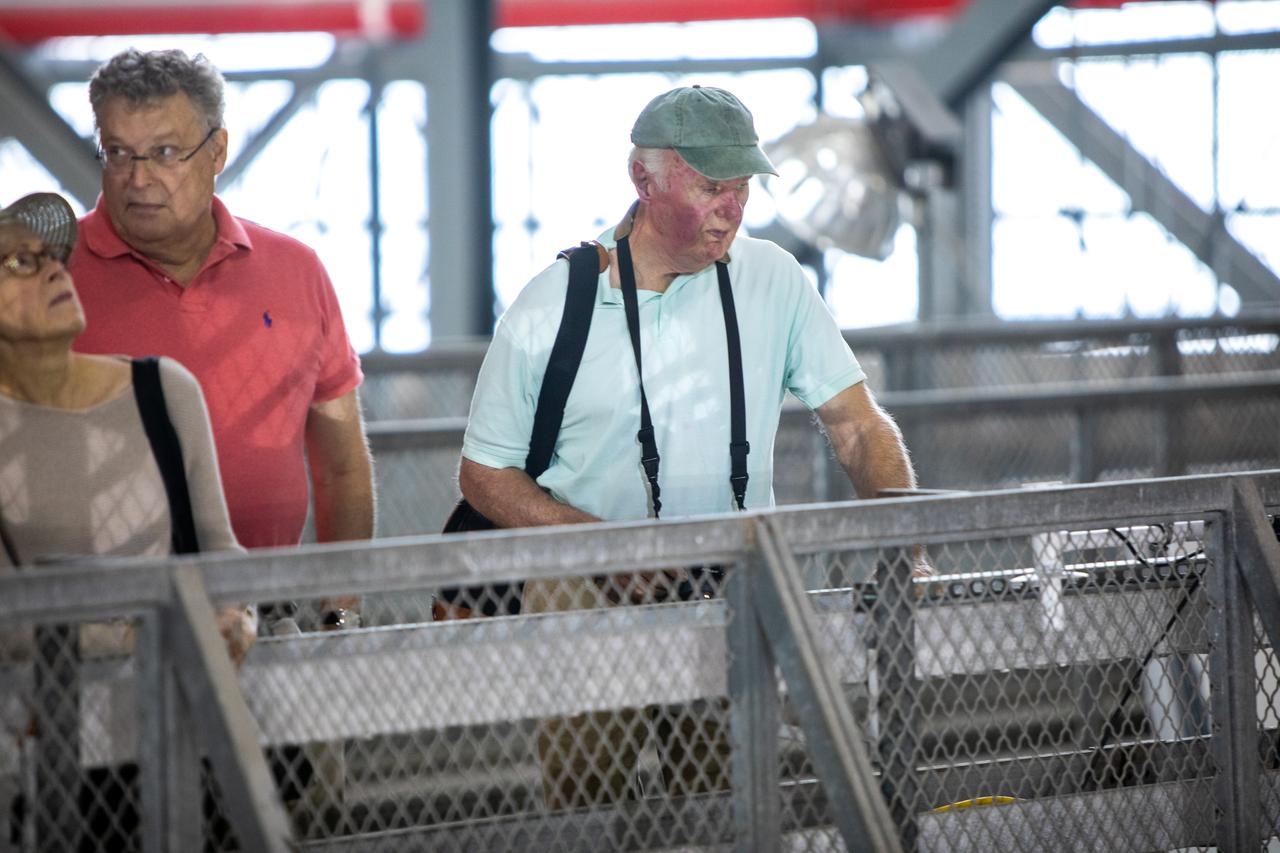
Dick Bergmann, at right, original lead designer for the Vehicle Assembly Building, tours the iconic facility on Nov. 22, 2019 at NASA’s Kennedy Space Center in Florida. Vehicle Assembly Building with the National Historic Civil Engineering Landmark award. The Florida Section American Society of Civil Engineers bestowed its National Historic Civil Engineering Landmark award during a ceremony on Jan. 10, 2020. The VAB is the first building at Kennedy Space Center to earn this distinction. At the time of its completion, the 129-million-cubic-foot structure was the largest building in the world. Originally designed and built to accommodate the Saturn V/Apollo used in Project Apollo, the VAB was later modified for its role in the Space Shuttle Program.
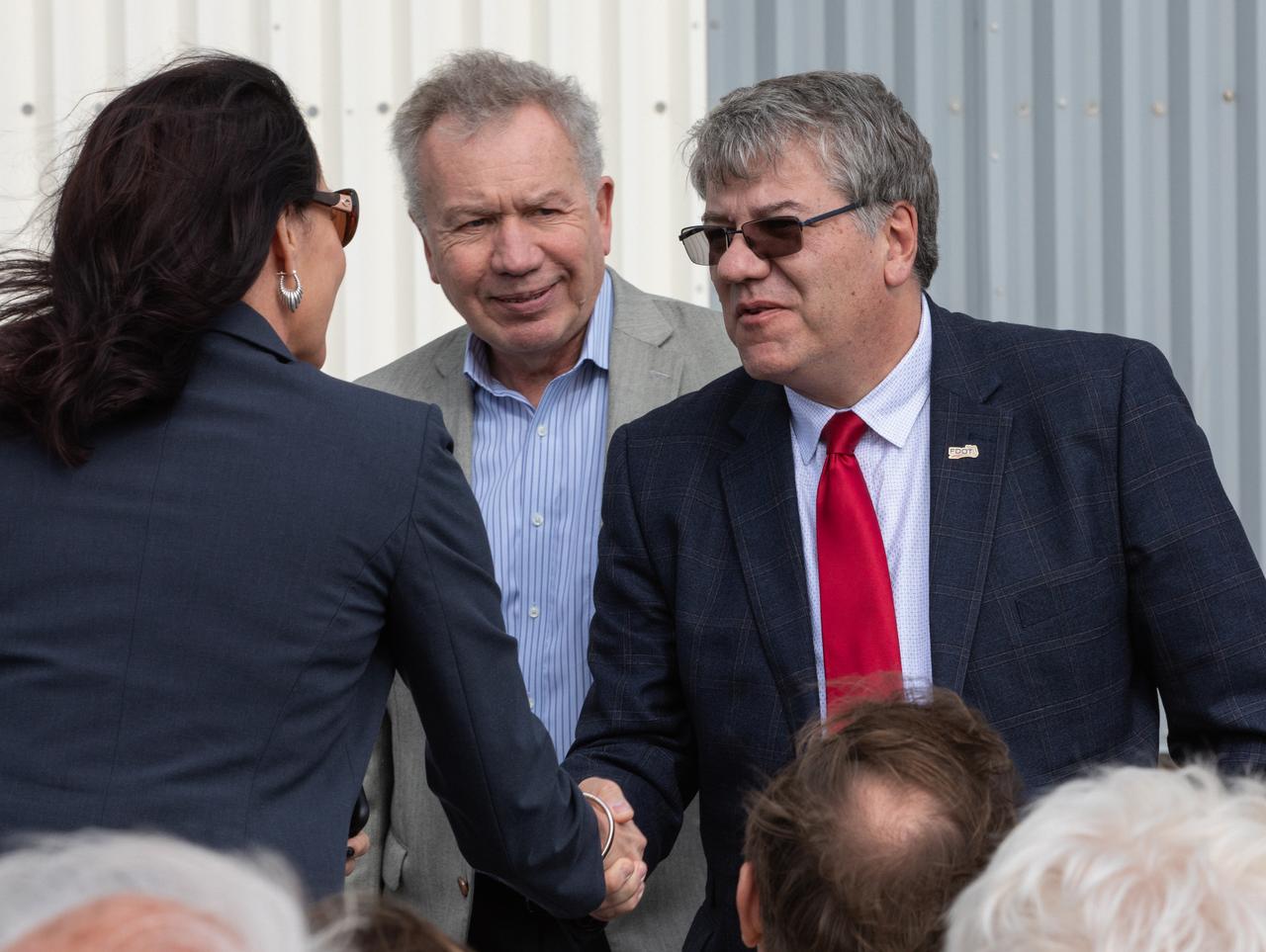
Florida Department of Transportation Secretary Kevin Thibault shakes hands with an attendee during a ceremony on Jan. 10, 2020, to recognize the Vehicle Assembly Building with the National Historic Civil Engineering Landmark award. The Florida Section American Society of Civil Engineers (ASCE) nominated the historic building and bestowed the award. Standing next to Thibault is Glenn Bell, ASCE Society of Structural Engineering Institute president. The VAB is the first building at Kennedy Space Center to earn this distinction. At the time of its completion, the 129-million-cubic-foot structure was the largest building in the world. Originally designed and built to accommodate the Saturn V/Apollo used in Project Apollo, the VAB was later modified for its role in the Space Shuttle Program.
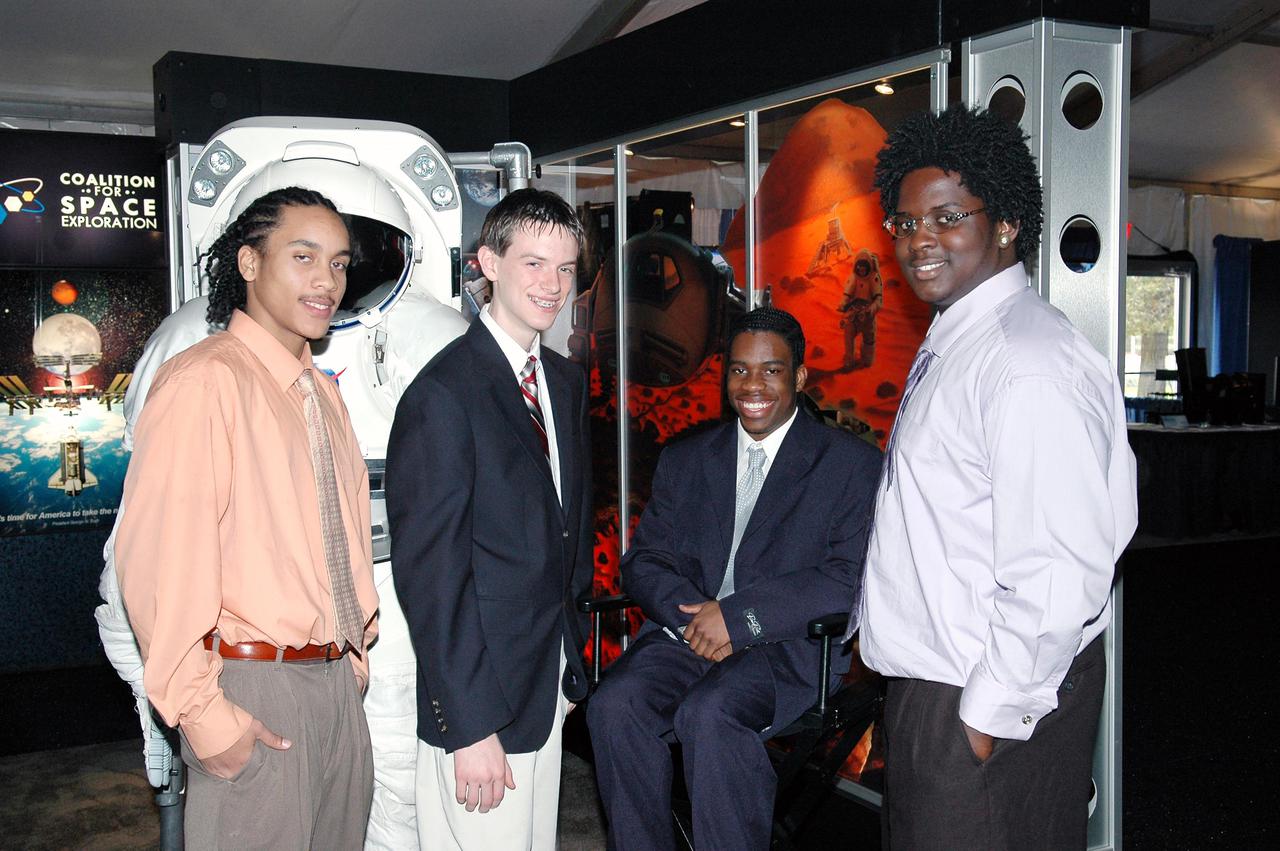
KENNEDY SPACE CENTER, FLA. - At the “1st Space Exploration Conference: Continuing the Voyage of Discovery,” held at Disney’s Contemporary Resort in Orlando, the winners of the Space Exploration Video Festival award sponsored by Lockheed Martin get together. Second from left is Daniel Stearns, from East Longmeadow, Mass. The others are the winning team from NASA Explorer School McNair High School in Dekalb County, Ga. At left is Theo Maxie; at right are Daniel Jackson and Trenten Nash. The three-day conference drew attendees from around the world. It presented topics on new missions, technologies and infrastructure needed to turn the vision for space exploration into reality. Keynote speakers at the three-day conference include NASA Administrator Sean O'Keefe, Congressman Dave Weldon, film director James Cameron and NASA’s senior Mars scientist James Garvin. The conference has drawn attendees from around the world.
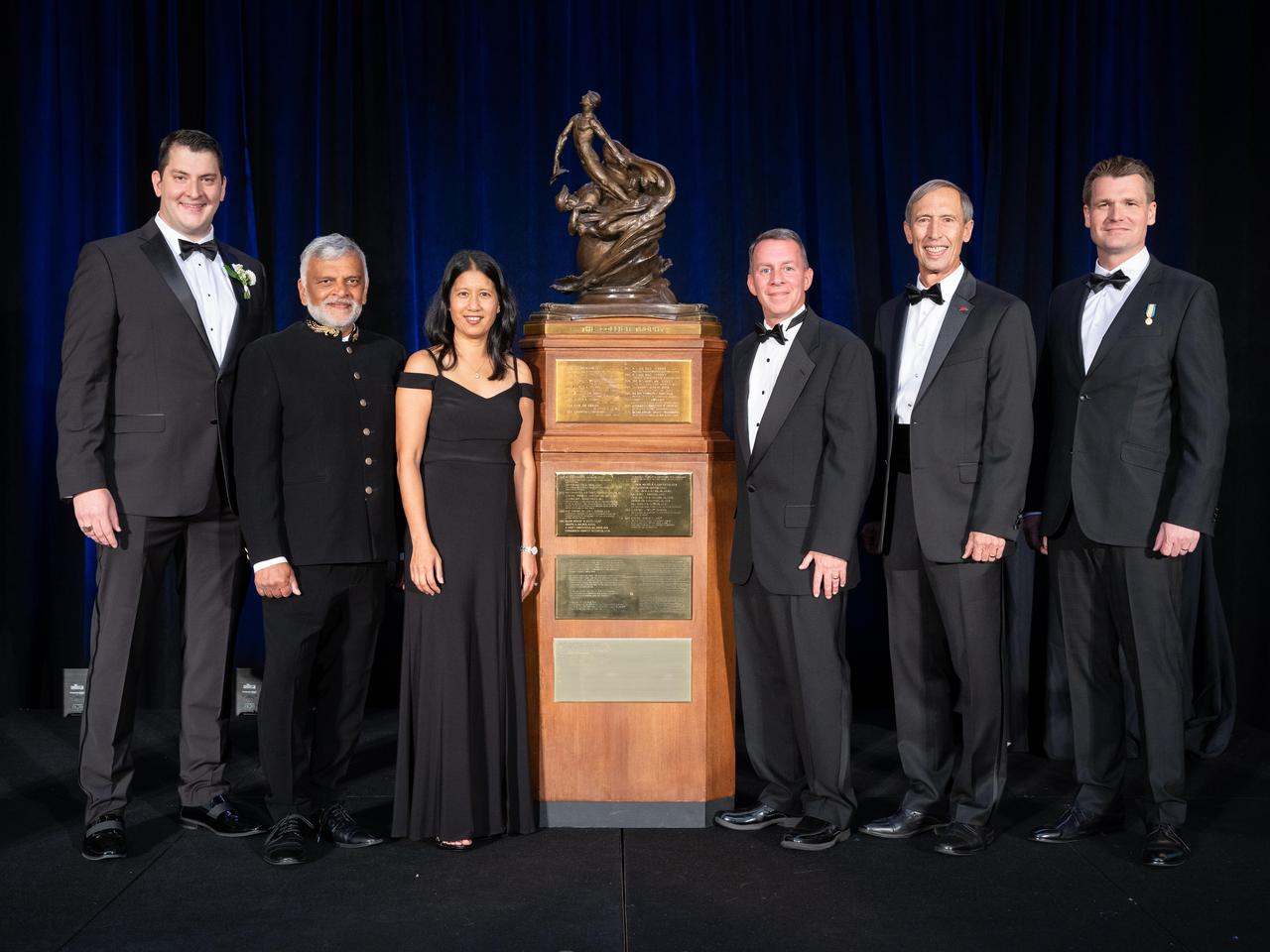
Members of NASA's Ingenuity Mars Helicopter team stand next to the Collier Trophy during the Robert J. Collier Dinner in Washington on June 9, 2022. The team was awarded the 2021 Collier Trophy "for the first powered, controlled flight of an aircraft on another planet, thereby opening the skies of Mars and other worlds for future scientific discovery and exploration," the award citation states. From left to right: Teddy Tzanetos, Ingenuity team lead at NASA's Jet Propulsion Laboratory; Bob Balaram, Ingenuity emeritus chief engineer at JPL; MiMi Aung, former Ingenuity project manager at JPL; Bobby Braun, former director for Planetary Science at JPL; Larry James, deputy director at JPL; Håvard Grip, Ingenuity chief pilot at JPL. This historic trophy – which is on permanent display at the Smithsonian Air and Space Museum in Washington – is awarded annually by the National Aeronautic Association "for the greatest achievement in aeronautics or astronautics in America, with respect to improving the performance, efficiency, and safety of air or space vehicles, the value of which has been thoroughly demonstrated by actual use during the preceding year." https://photojournal.jpl.nasa.gov/catalog/PIA25323
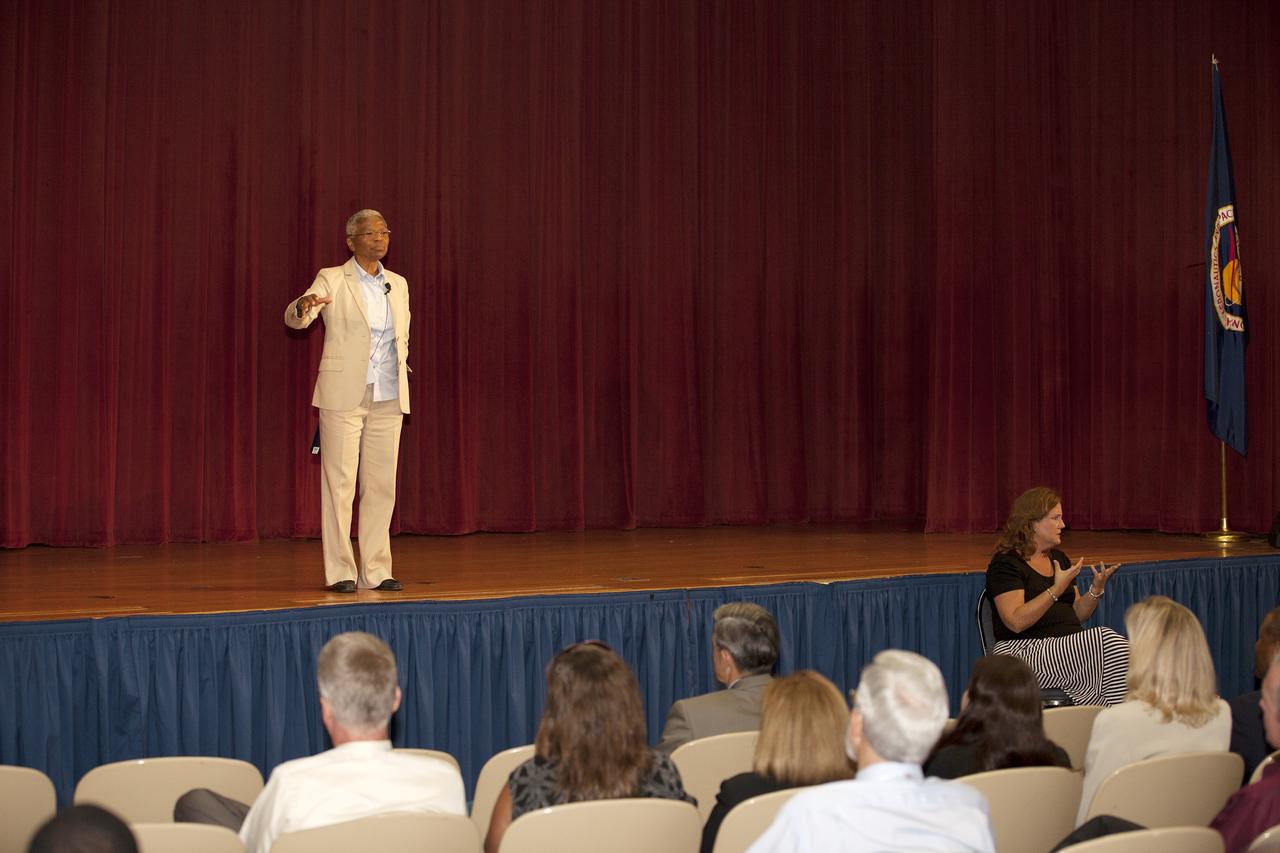
CAPE CANAVERAL, Fla. -- In the KSC Training Auditorium at NASA's Kennedy Space Center in Florida, Dr. Mary Frances Berry, on stage, addresses the audience gathered for a special event marking the 50th anniversary of the Civil Rights Act of 1964, supported by a sign-language interpreter. Berry served as the assistant secretary for education in the U.S. Department of Health, Education and Welfare HEW between 1977 and 1980. From 1980 to 2004, she was a member of the U.S. Commission on Civil Rights, serving as chair from 1993 to 2004. Among Berry's many honors are the NAACP's Roy Wilkins Award, the Rosa Parks Award of the Southern Christian Leadership Conference, and the Ebony Magazine Black Achievement Award. She is one of 75 women featured in the book "I Dream a World: Portraits of Black Women Who Changed America." Sienna College Research Institute and the Women's Hall of Fame also designated her one of "America's Women of the Century." The event was presented by Kennedy's Office of Diversity and Equal Opportunity. For more information about Kennedy Space Center, visit http://www.nasa.gov/kennedy. Photo credit: NASA/Kim Shiflett
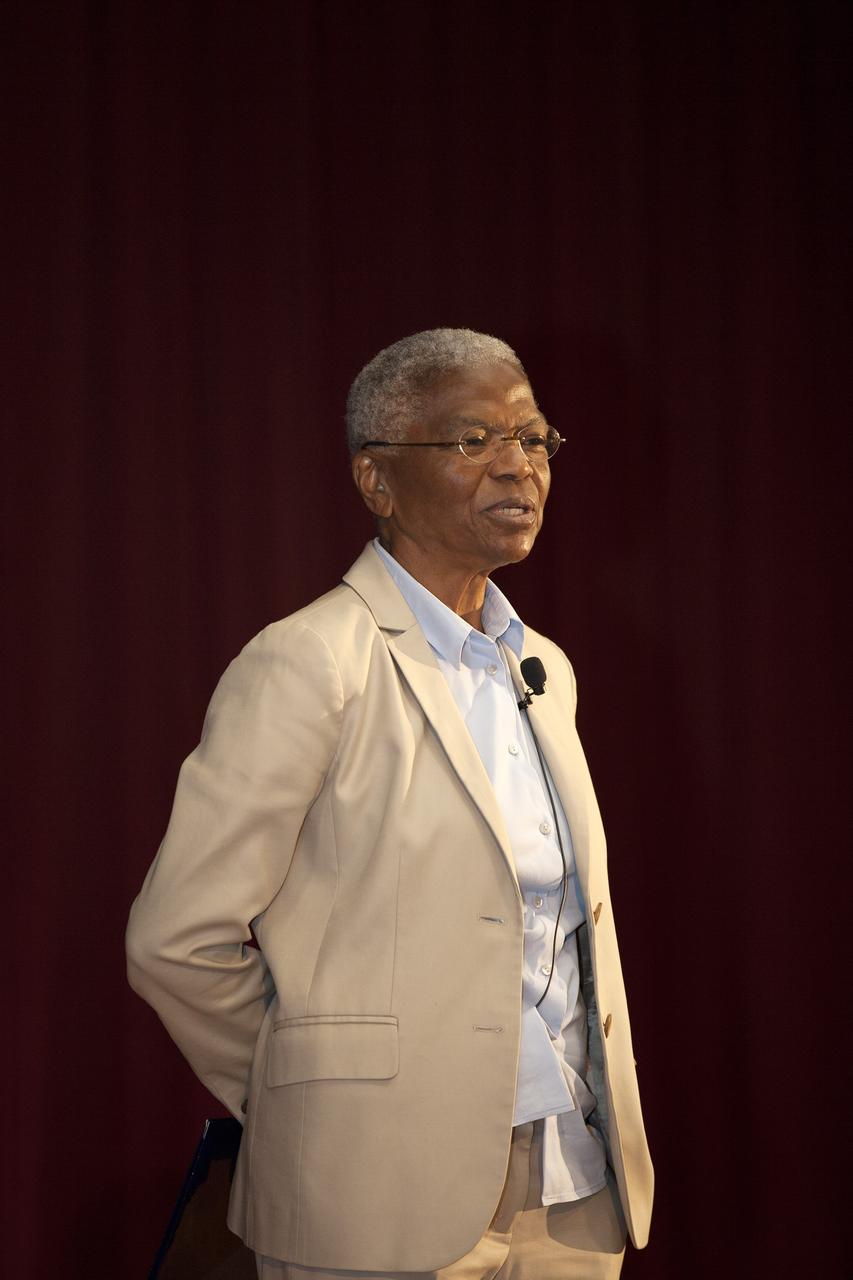
CAPE CANAVERAL, Fla. -- In the KSC Training Auditorium at NASA's Kennedy Space Center in Florida, Dr. Mary Frances Berry relates her personal experiences in the fight for civil liberties to employees gathered for a special event marking the 50th anniversary of the Civil Rights Act of 1964. Berry served as the assistant secretary for education in the U.S. Department of Health, Education and Welfare HEW between 1977 and 1980. From 1980 to 2004, she was a member of the U.S. Commission on Civil Rights, serving as chair from 1993 to 2004. Among Berry's many honors are the NAACP's Roy Wilkins Award, the Rosa Parks Award of the Southern Christian Leadership Conference, and the Ebony Magazine Black Achievement Award. She is one of 75 women featured in the book "I Dream a World: Portraits of Black Women Who Changed America." Sienna College Research Institute and the Women's Hall of Fame also designated her one of "America's Women of the Century." The event was presented by Kennedy's Office of Diversity and Equal Opportunity. For more information about Kennedy Space Center, visit http://www.nasa.gov/kennedy. Photo credit: NASA/Kim Shiflett
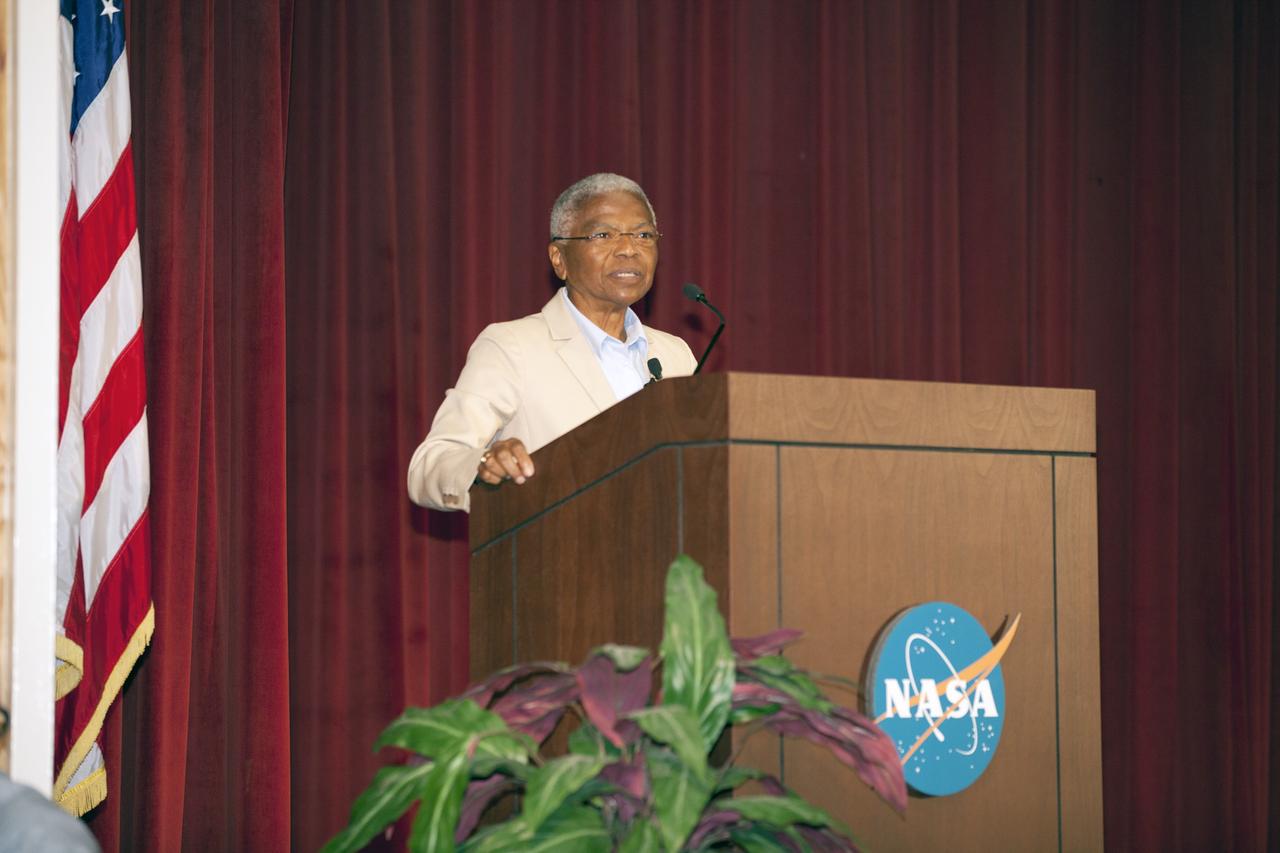
CAPE CANAVERAL, Fla. -- In the KSC Training Auditorium at NASA's Kennedy Space Center in Florida, Dr. Mary Frances Berry relates her personal experiences in the fight for civil liberties to employees gathered for a special event marking the 50th anniversary of the Civil Rights Act of 1964. Berry served as the assistant secretary for education in the U.S. Department of Health, Education and Welfare HEW between 1977 and 1980. From 1980 to 2004, she was a member of the U.S. Commission on Civil Rights, serving as chair from 1993 to 2004. Among Berry's many honors are the NAACP's Roy Wilkins Award, the Rosa Parks Award of the Southern Christian Leadership Conference, and the Ebony Magazine Black Achievement Award. She is one of 75 women featured in the book "I Dream a World: Portraits of Black Women Who Changed America." Sienna College Research Institute and the Women's Hall of Fame also designated her one of "America's Women of the Century." The event was presented by Kennedy's Office of Diversity and Equal Opportunity. For more information about Kennedy Space Center, visit http://www.nasa.gov/kennedy. Photo credit: NASA/Kim Shiflett
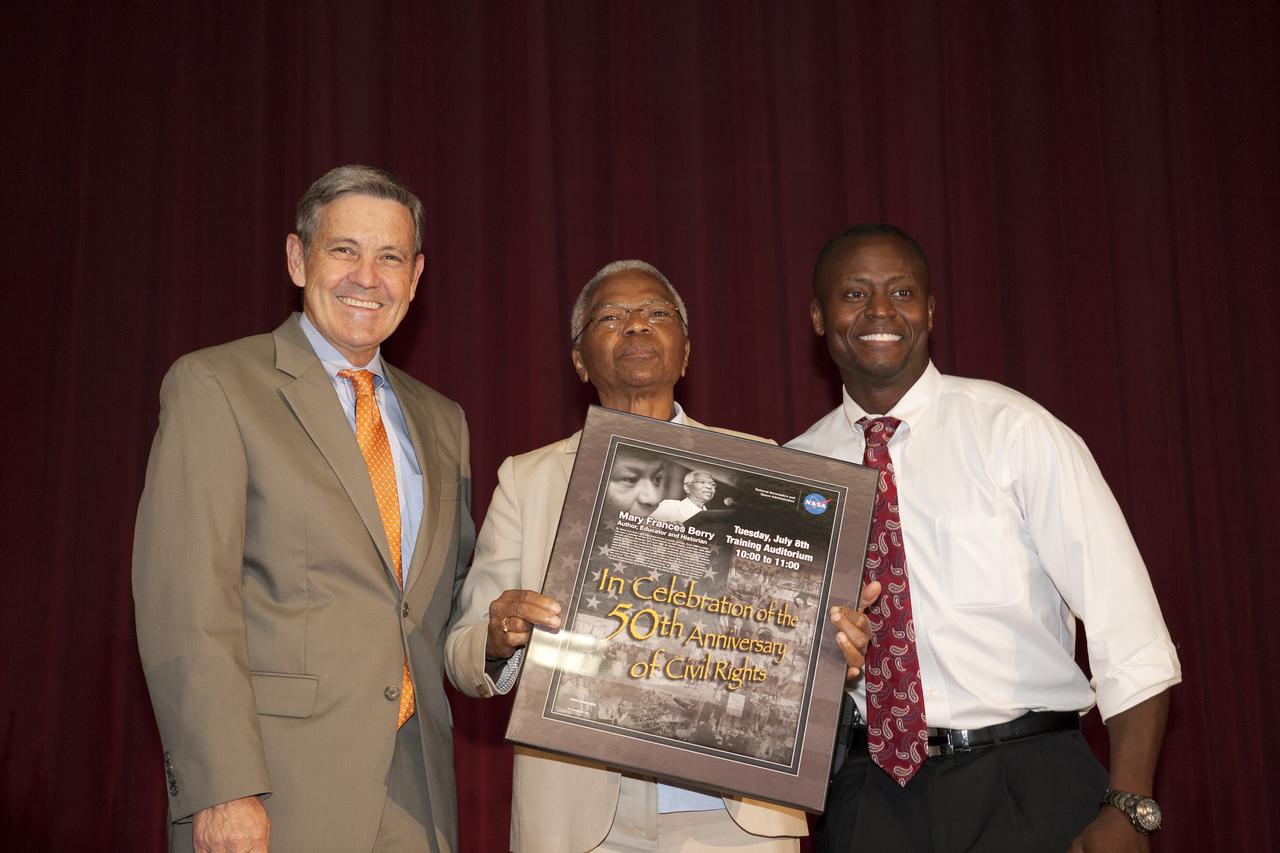
CAPE CANAVERAL, Fla. -- In the KSC Training Auditorium at NASA's Kennedy Space Center in Florida, Dr. Mary Frances Berry, center, accepts a framed poster announcing her appearance from Center Director Robert Cabana, left, who made the opening remarks, and Yves Lamothe, right, transition manager for the Ground Systems Development and Operations Program, the master of ceremonies. Berry served as the assistant secretary for education in the U.S. Department of Health, Education and Welfare HEW between 1977 and 1980. From 1980 to 2004, she was a member of the U.S. Commission on Civil Rights, serving as chair from 1993 to 2004. Among Berry's many honors are the NAACP's Roy Wilkins Award, the Rosa Parks Award of the Southern Christian Leadership Conference, and the Ebony Magazine Black Achievement Award. She is one of 75 women featured in the book "I Dream a World: Portraits of Black Women Who Changed America." Sienna College Research Institute and the Women's Hall of Fame also designated her one of "America's Women of the Century." The event was presented by Kennedy's Office of Diversity and Equal Opportunity. For more information about Kennedy Space Center, visit http://www.nasa.gov/kennedy. Photo credit: NASA/Kim Shiflett
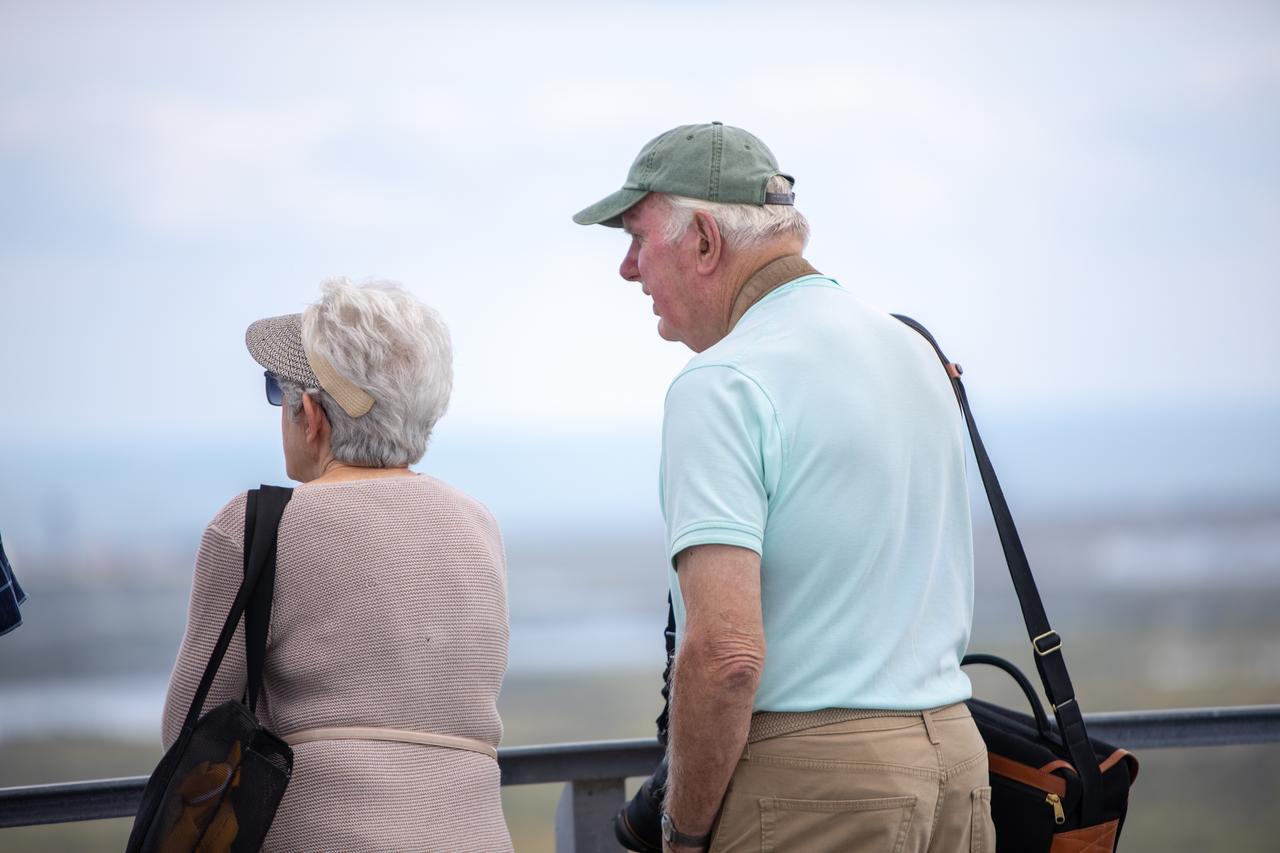
Dick Bergmann, at right, original lead designer for the Vehicle Assembly Building, stands on the roof of the iconic facility during a tour on Nov. 22, 2019 at NASA’s Kennedy Space Center in Florida. The VAB was recognized with the National Historic Civil Engineering Landmark award by the Florida Section American Society of Civil Engineers during a ceremony on Jan. 10, 2020. The VAB is the first building at Kennedy Space Center to earn this distinction. At the time of its completion, the 129-million-cubic-foot structure was the largest building in the world. Originally designed and built to accommodate the Saturn V/Apollo used in Project Apollo, the VAB was later modified for its role in the Space Shuttle Program.

Phil Moyer, original project lead for the Vehicle Assembly Building (VAB), tours the Vehicle Assembly Building on Nov. 22, 2019 at NASA’s Kennedy Space Center in Florida. The VAB was recognized with the National Historic Civil Engineering Landmark award by the Florida Section American Society of Civil Engineers during a ceremony on Jan. 10, 2020. The VAB is the first building at Kennedy Space Center to earn this distinction. At the time of its completion, the 129-million-cubic-foot structure was the largest building in the world. Originally designed and built to accommodate the Saturn V/Apollo used in Project Apollo, the VAB was later modified for its role in the Space Shuttle Program.
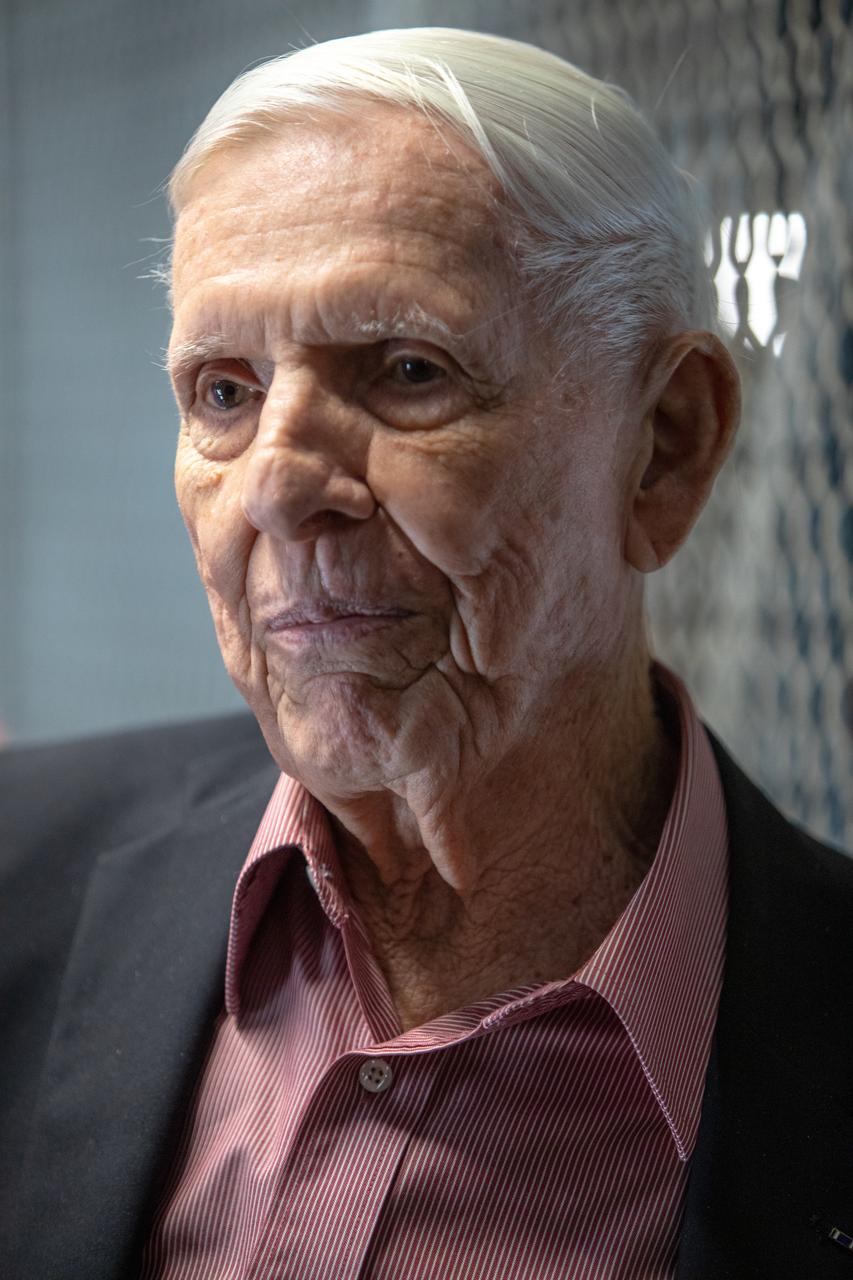
Phil Moyer, original project lead for the Vehicle Assembly Building (VAB), tours the Vehicle Assembly Building on Nov. 22, 2019 at NASA’s Kennedy Space Center in Florida. The VAB was recognized with the National Historic Civil Engineering Landmark award by the Florida Section American Society of Civil Engineers during a ceremony on Jan. 10, 2020. The VAB is the first building at Kennedy Space Center to earn this distinction. At the time of its completion, the 129-million-cubic-foot structure was the largest building in the world. Originally designed and built to accommodate the Saturn V/Apollo used in Project Apollo, the VAB was later modified for its role in the Space Shuttle Program.
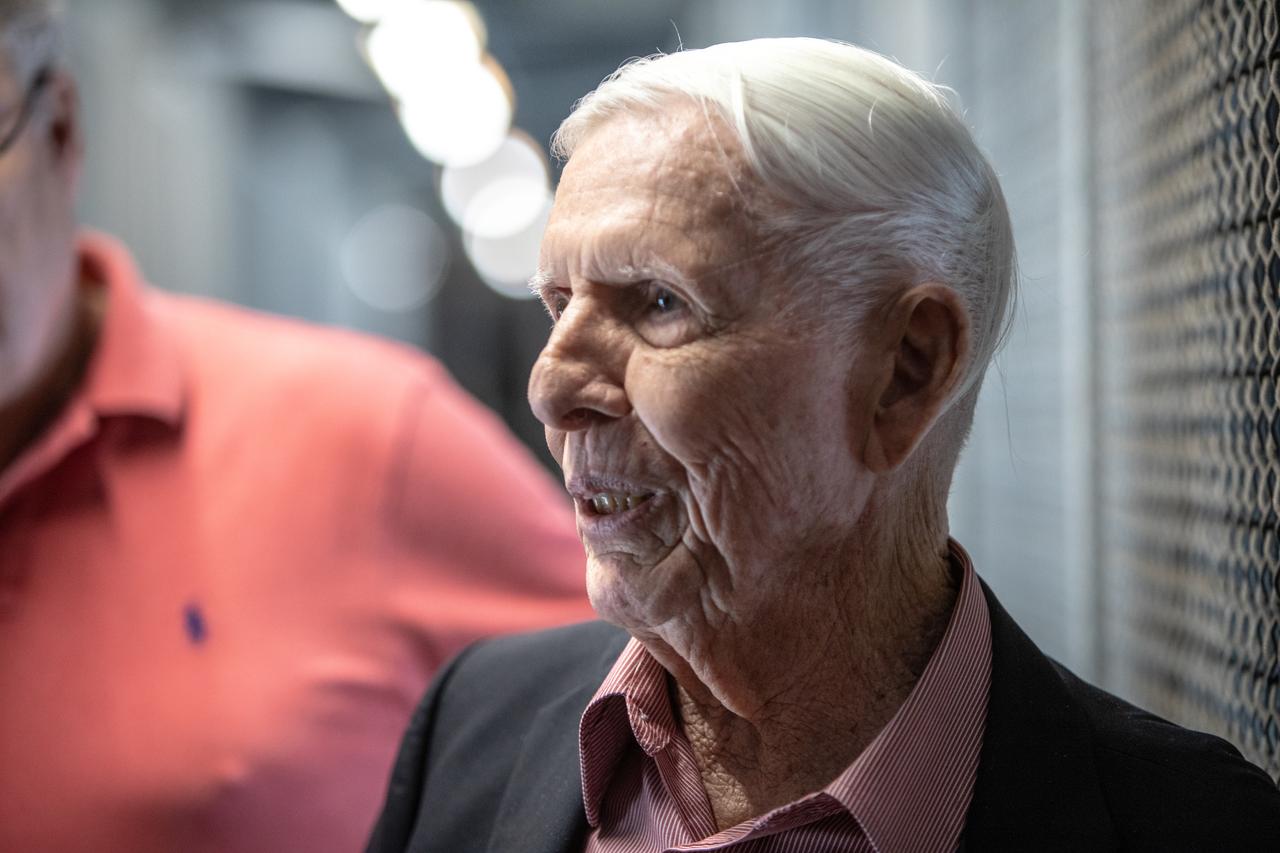
Phil Moyer, original project lead for the Vehicle Assembly Building (VAB), tours the Vehicle Assembly Building on Nov. 22, 2019 at NASA’s Kennedy Space Center in Florida. The VAB was recognized with the National Historic Civil Engineering Landmark award by the Florida Section American Society of Civil Engineers during a ceremony on Jan. 10, 2020. The VAB is the first building at Kennedy Space Center to earn this distinction. At the time of its completion, the 129-million-cubic-foot structure was the largest building in the world. Originally designed and built to accommodate the Saturn V/Apollo used in Project Apollo, the VAB was later modified for its role in the Space Shuttle Program.
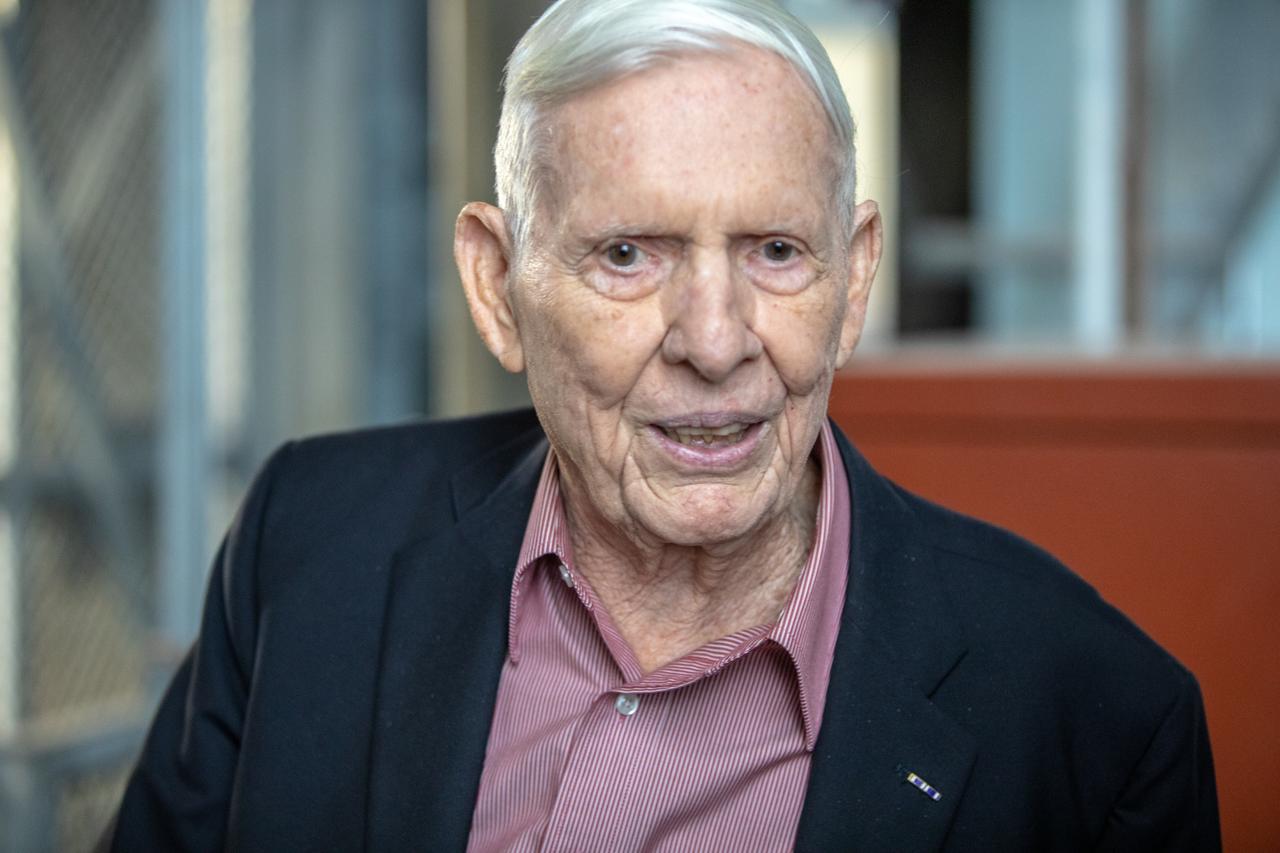
Phil Moyer, original project lead for the Vehicle Assembly Building (VAB), tours the Vehicle Assembly Building on Nov. 22, 2019 at NASA’s Kennedy Space Center in Florida. The VAB was recognized with the National Historic Civil Engineering Landmark award by the Florida Section American Society of Civil Engineers during a ceremony on Jan. 10, 2020. The VAB is the first building at Kennedy Space Center to earn this distinction. At the time of its completion, the 129-million-cubic-foot structure was the largest building in the world. Originally designed and built to accommodate the Saturn V/Apollo used in Project Apollo, the VAB was later modified for its role in the Space Shuttle Program.
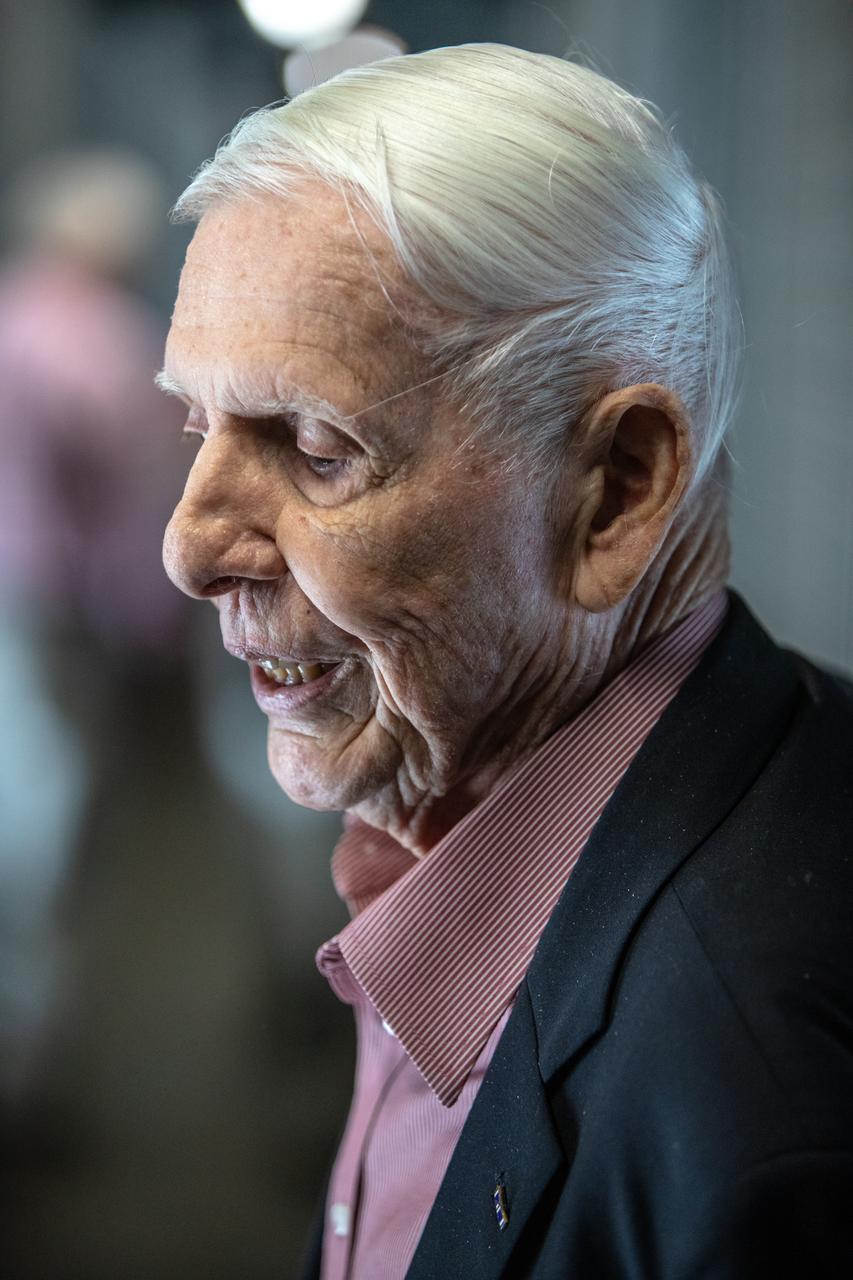
Phil Moyer, original project lead for the Vehicle Assembly Building (VAB), tours the Vehicle Assembly Building on Nov. 22, 2019 at NASA’s Kennedy Space Center in Florida. The VAB was recognized with the National Historic Civil Engineering Landmark award by the Florida Section American Society of Civil Engineers during a ceremony on Jan. 10, 2020. The VAB is the first building at Kennedy Space Center to earn this distinction. At the time of its completion, the 129-million-cubic-foot structure was the largest building in the world. Originally designed and built to accommodate the Saturn V/Apollo used in Project Apollo, the VAB was later modified for its role in the Space Shuttle Program.
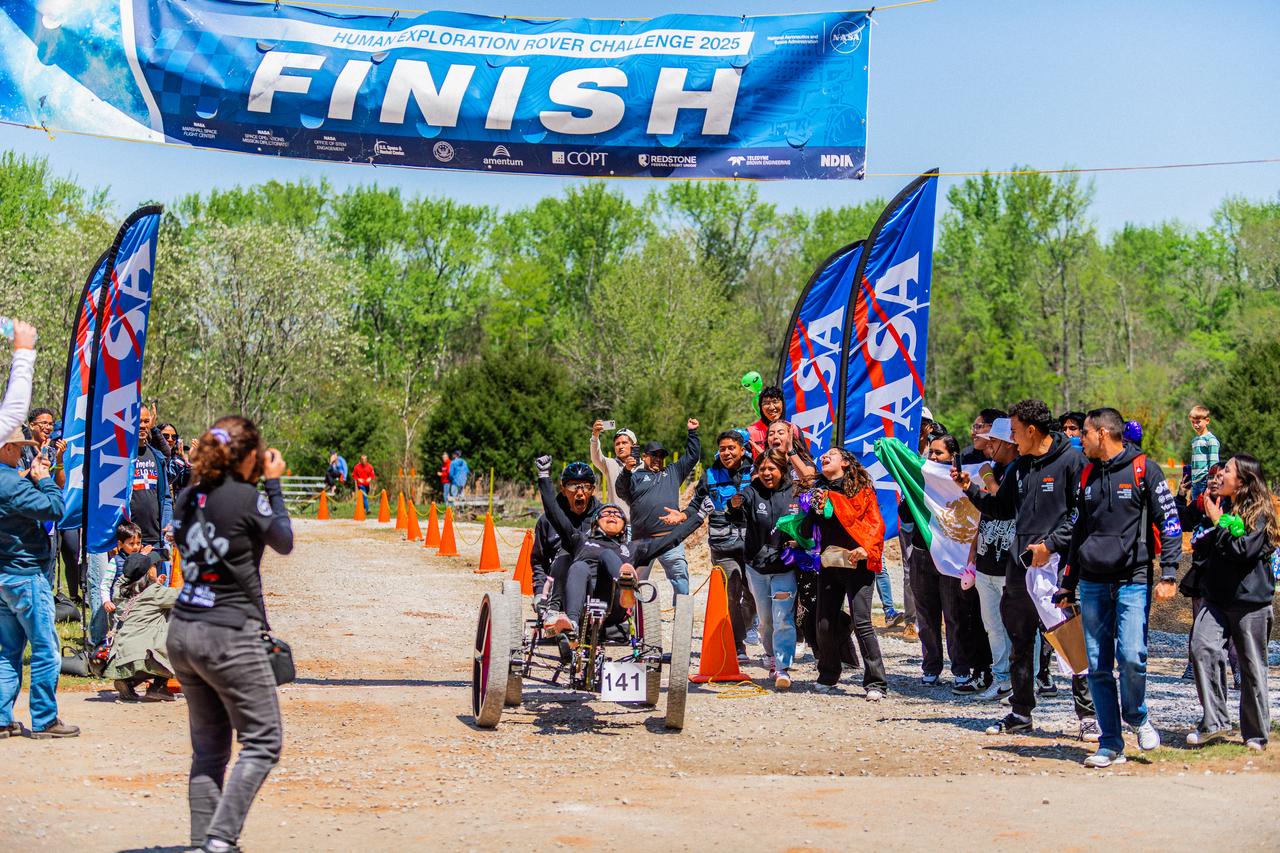
More than 500 students with 75 teams from around the world participated in the 31st year of NASA’s Human Exploration Rover Challenge (HERC) on April 11 and April 12, 2025, near NASA’s Marshall Space Flight Center in Huntsville, Alabama. Participating teams represented 35 colleges and universities, 38 high schools, and two middle schools from 20 states, Puerto Rico, and 16 other nations. NASA expanded the 2025 challenge to include a remote-control division - named Remote-Operated Vehicular Research - and invited middle school students to participate. Teams were awarded points based on navigating a half-mile obstacle course, conducting mission-specific task challenges, and completing multiple safety and design reviews with NASA engineers.
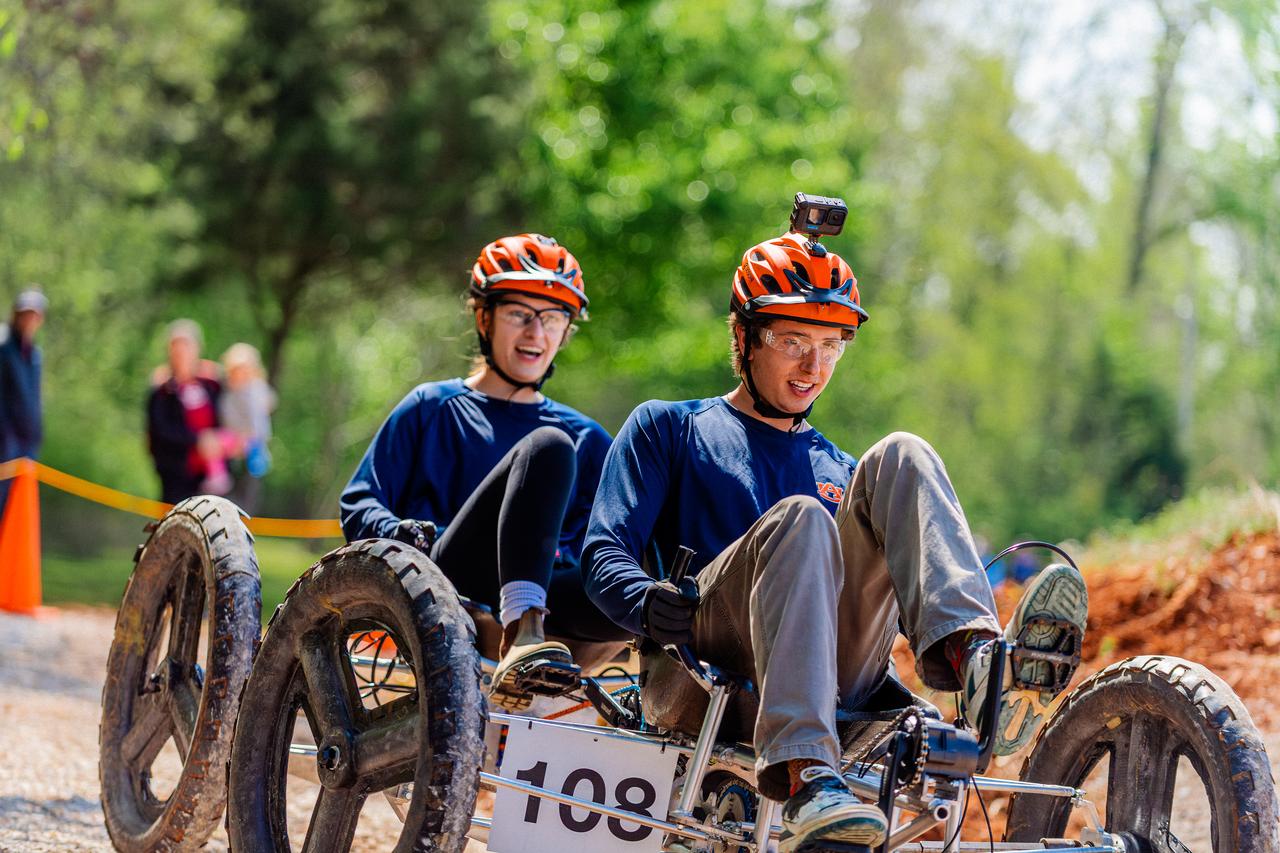
More than 500 students with 75 teams from around the world participated in the 31st year of NASA’s Human Exploration Rover Challenge (HERC) on April 11 and April 12, 2025, near NASA’s Marshall Space Flight Center in Huntsville, Alabama. Participating teams represented 35 colleges and universities, 38 high schools, and two middle schools from 20 states, Puerto Rico, and 16 other nations. NASA expanded the 2025 challenge to include a remote-control division - named Remote-Operated Vehicular Research - and invited middle school students to participate. Teams were awarded points based on navigating a half-mile obstacle course, conducting mission-specific task challenges, and completing multiple safety and design reviews with NASA engineers.
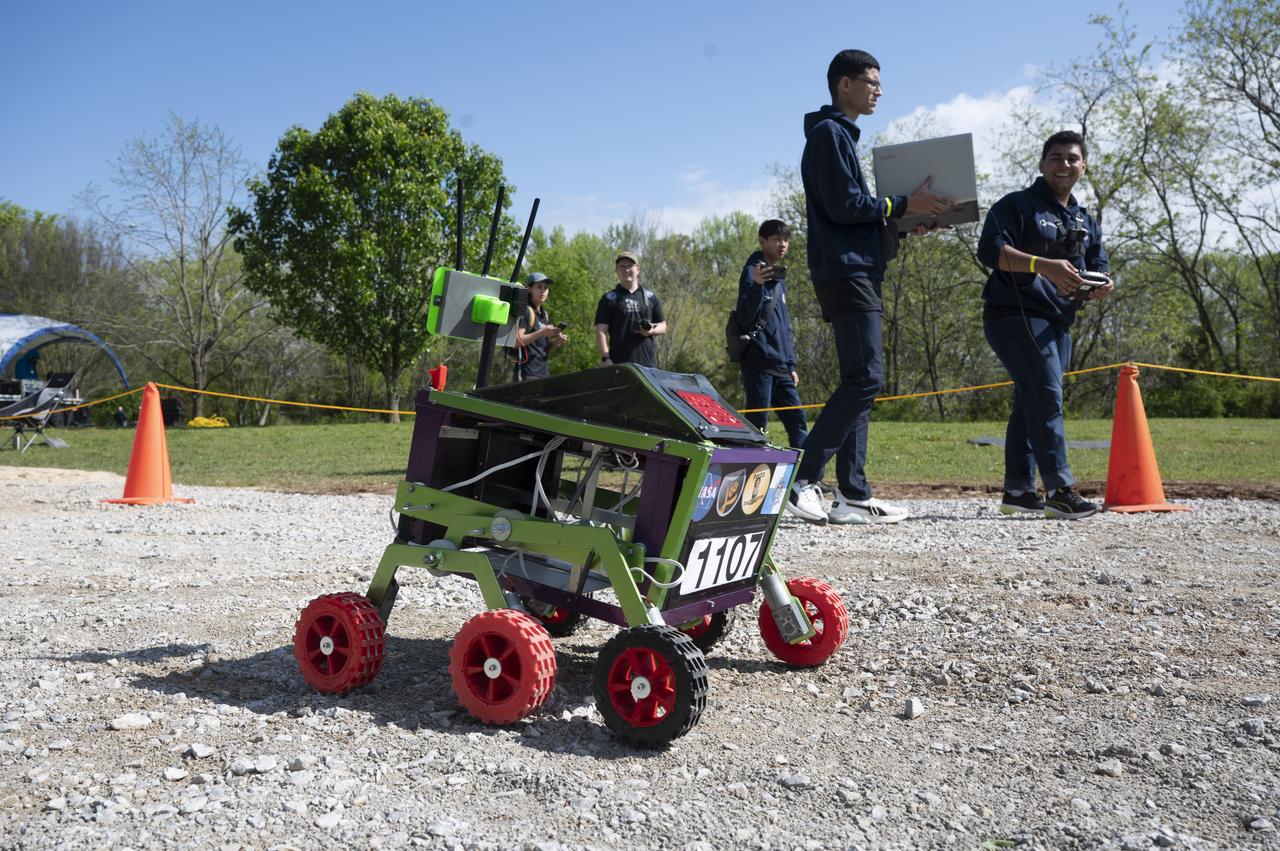
More than 500 students with 75 teams from around the world participated in the 31st year of NASA’s Human Exploration Rover Challenge (HERC) on April 11 and April 12, 2025, near NASA’s Marshall Space Flight Center in Huntsville, Alabama. Participating teams represented 35 colleges and universities, 38 high schools, and two middle schools from 20 states, Puerto Rico, and 16 other nations. NASA expanded the 2025 challenge to include a remote-control division - named Remote-Operated Vehicular Research - and invited middle school students to participate. Teams were awarded points based on navigating a half-mile obstacle course, conducting mission-specific task challenges, and completing multiple safety and design reviews with NASA engineers.

More than 500 students with 75 teams from around the world participated in the 31st year of NASA’s Human Exploration Rover Challenge (HERC) on April 11 and April 12, 2025, near NASA’s Marshall Space Flight Center in Huntsville, Alabama. Participating teams represented 35 colleges and universities, 38 high schools, and two middle schools from 20 states, Puerto Rico, and 16 other nations. NASA expanded the 2025 challenge to include a remote-control division - named Remote-Operated Vehicular Research - and invited middle school students to participate. Teams were awarded points based on navigating a half-mile obstacle course, conducting mission-specific task challenges, and completing multiple safety and design reviews with NASA engineers.
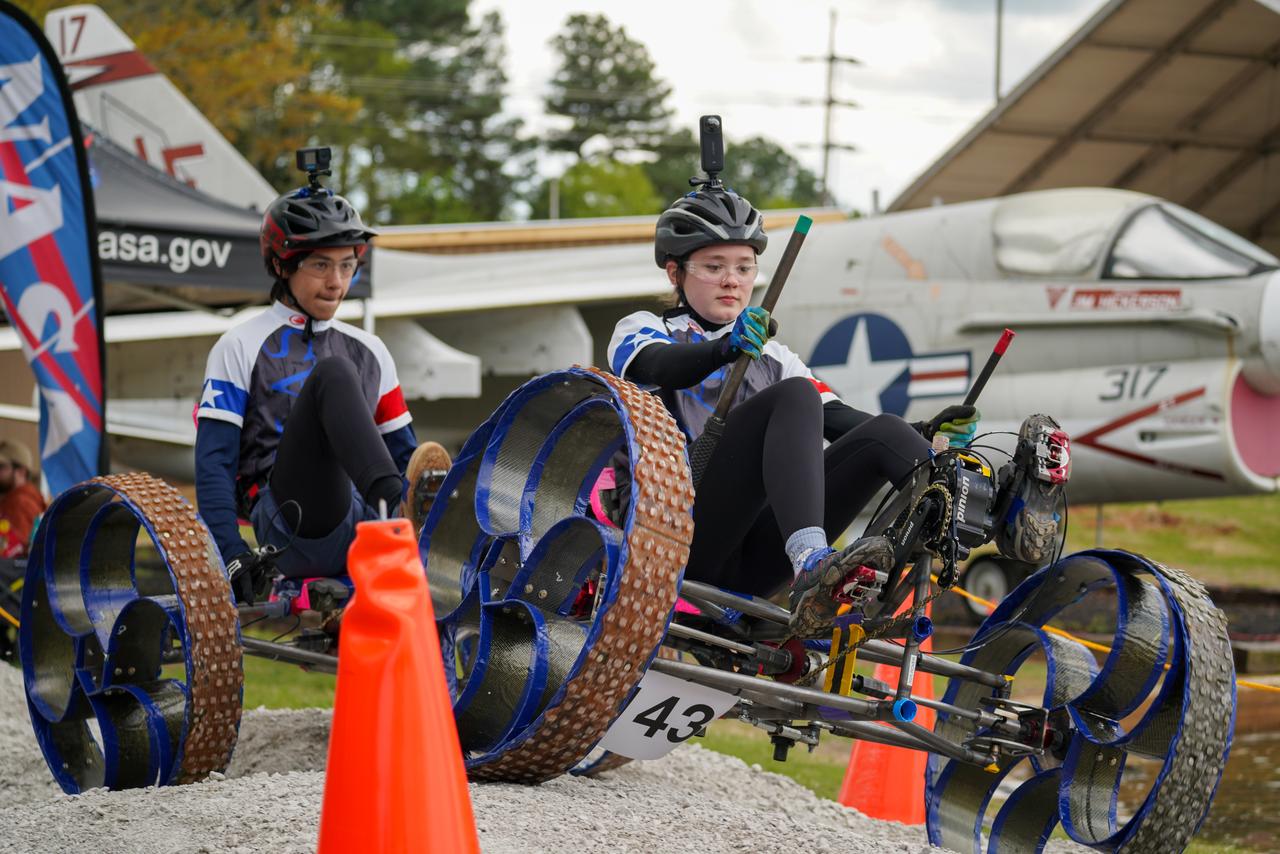
More than 500 students with 75 teams from around the world participated in the 31st year of NASA’s Human Exploration Rover Challenge (HERC) on April 11 and April 12, 2025, near NASA’s Marshall Space Flight Center in Huntsville, Alabama. Participating teams represented 35 colleges and universities, 38 high schools, and two middle schools from 20 states, Puerto Rico, and 16 other nations. NASA expanded the 2025 challenge to include a remote-control division - named Remote-Operated Vehicular Research - and invited middle school students to participate. Teams were awarded points based on navigating a half-mile obstacle course, conducting mission-specific task challenges, and completing multiple safety and design reviews with NASA engineers.
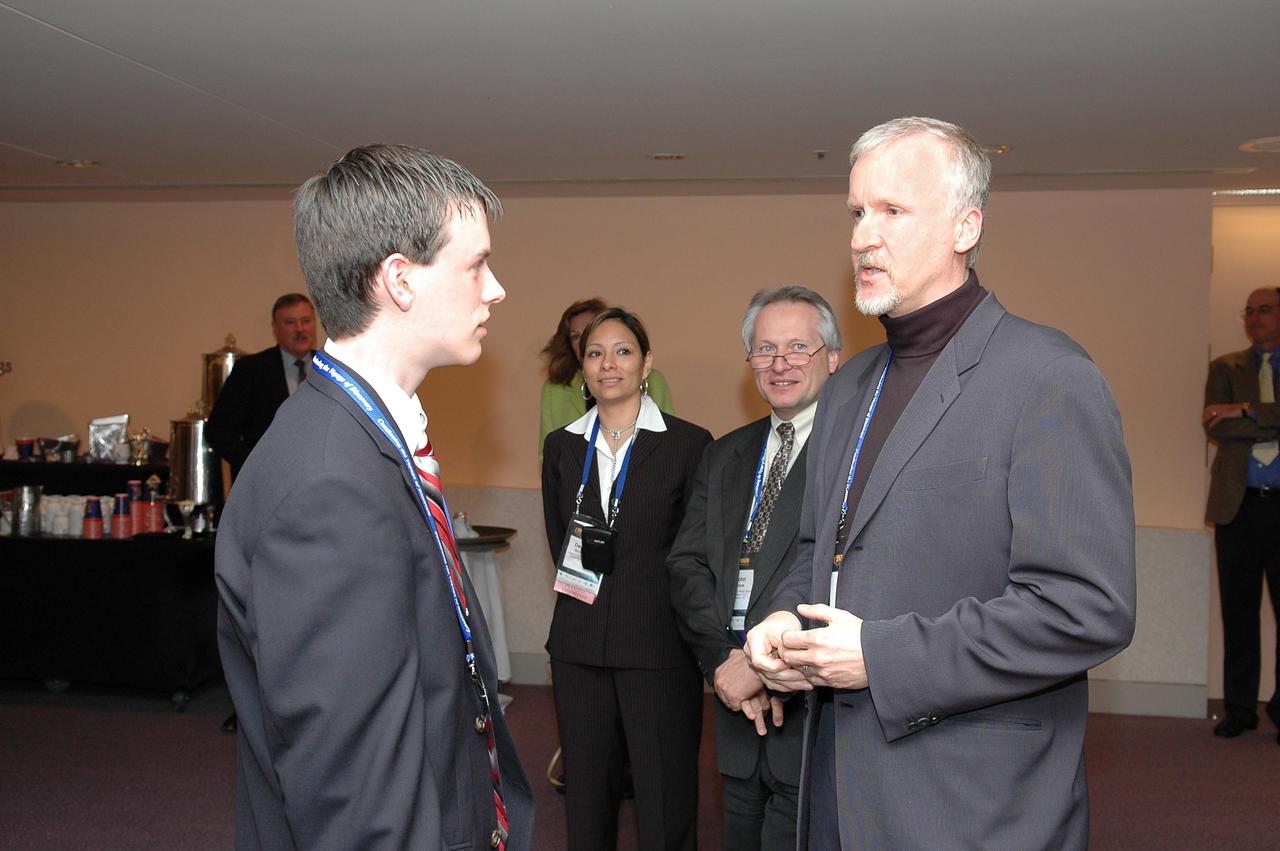
KENNEDY SPACE CENTER, FLA. - At the “1st Space Exploration Conference: Continuing the Voyage of Discovery,” held at Disney’s Contemporary Resort in Orlando, film director James Cameron (right) talks to Daniel Stearns, a 13-year-old student from Longmeadow, Mass., who won the Space Exploration Video Festival award sponsored by Lockheed Martin. Stearns shared first place with a team from McNair High School in Dekalb County, Ga. The Georgia school participates in NASA’s Explorer School program. Cameron is one of the keynote speakers at the conference. Topics being presented focus on new missions, technologies and infrastructure needed to turn the vision for space exploration into reality. Other keynote speakers at the three-day conference are Congressman Dave Weldon, film director James Cameron and NASA’s senior Mars scientist James Garvin. The conference has drawn attendees from around the world.
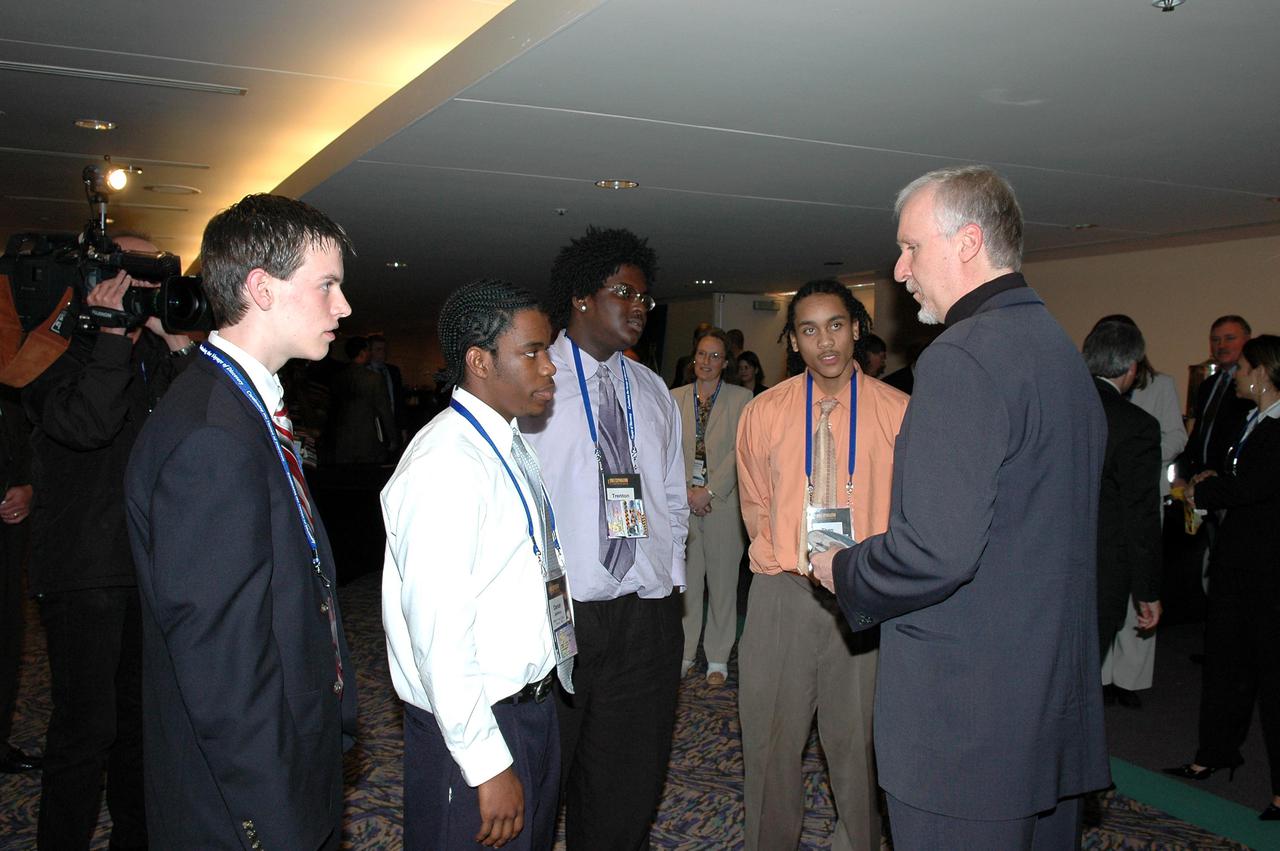
KENNEDY SPACE CENTER, FLA. - At the “1st Space Exploration Conference: Continuing the Voyage of Discovery,” held at Disney’s Contemporary Resort in Orlando, film director James Cameron (right) talks to the winning students of the Space Exploration Video Festival award sponsored by Lockheed Martin. At left is Daniel Stearns, from East Longmeadow, Mass. The others are Daniel Jackson, Trenten Nash and Theo Maxie, from the NASA Explorer School McNair High School in Dekalb County, Ga.. Cameron is one of the keynote speakers at the conference. Topics being presented focus on new missions, technologies and infrastructure needed to turn the vision for space exploration into reality. Keynote speakers at the three-day conference include NASA Administrator Sean O'Keefe, Congressman Dave Weldon, film director James Cameron and NASA’s senior Mars scientist James Garvin. The conference has drawn attendees from around the world.
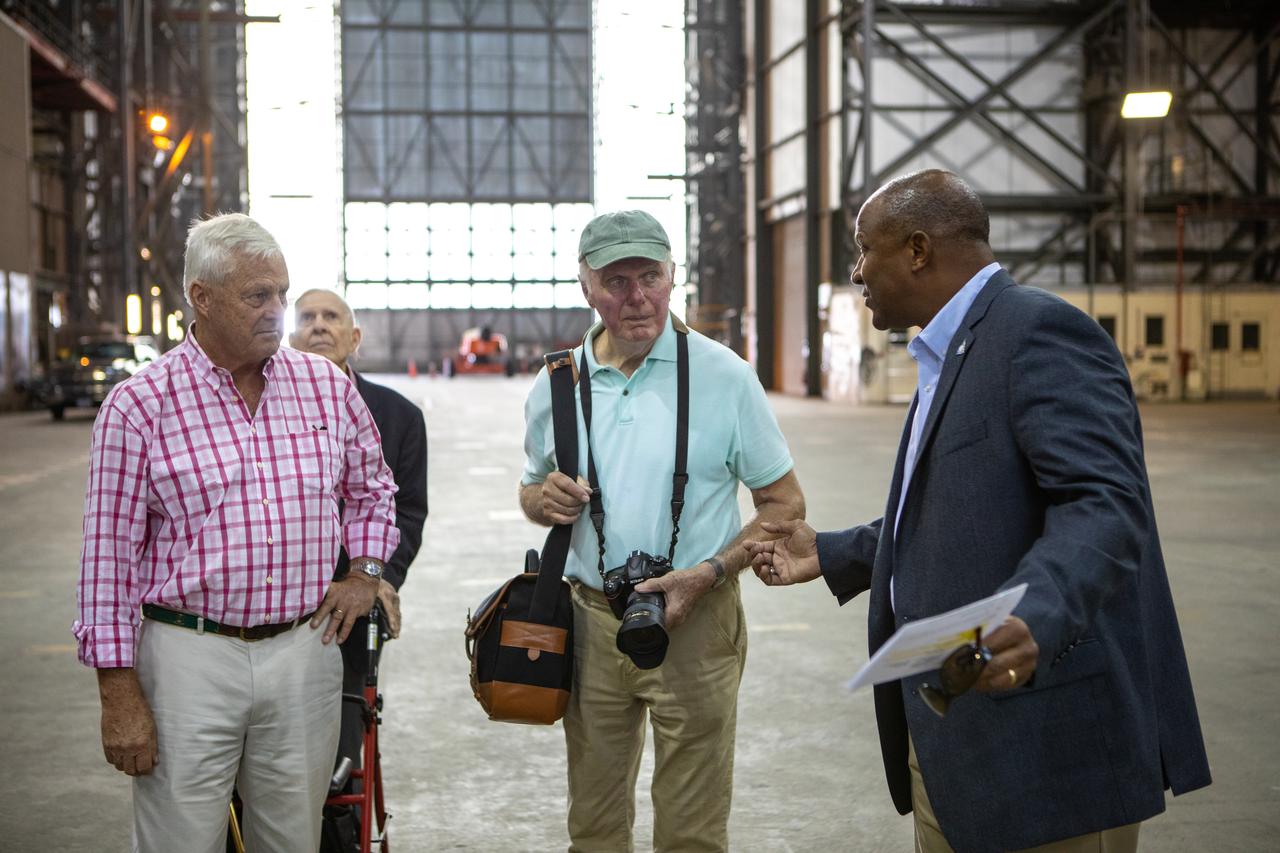
Kelvin Manning, at right, Kennedy Space Center’s associate director, technical, speaks to Dick Bergmann, center, original lead designer for the Vehicle Assembly (VAB), during a tour of the iconic facility on Nov. 22, 2019, at NASA’s Kennedy Space Center in Florida. The VAB was recognized with the National Historic Civil Engineering Landmark award by the Florida Section American Society of Civil Engineers during a ceremony on Jan. 10, 2020. The VAB is the first building at Kennedy to earn this distinction. At the time of its completion, the 129-million-cubic-foot structure was the largest building in the world. Originally designed and built to accommodate the Saturn V/Apollo used in Project Apollo, the VAB was later modified for its role in the Space Shuttle Program.
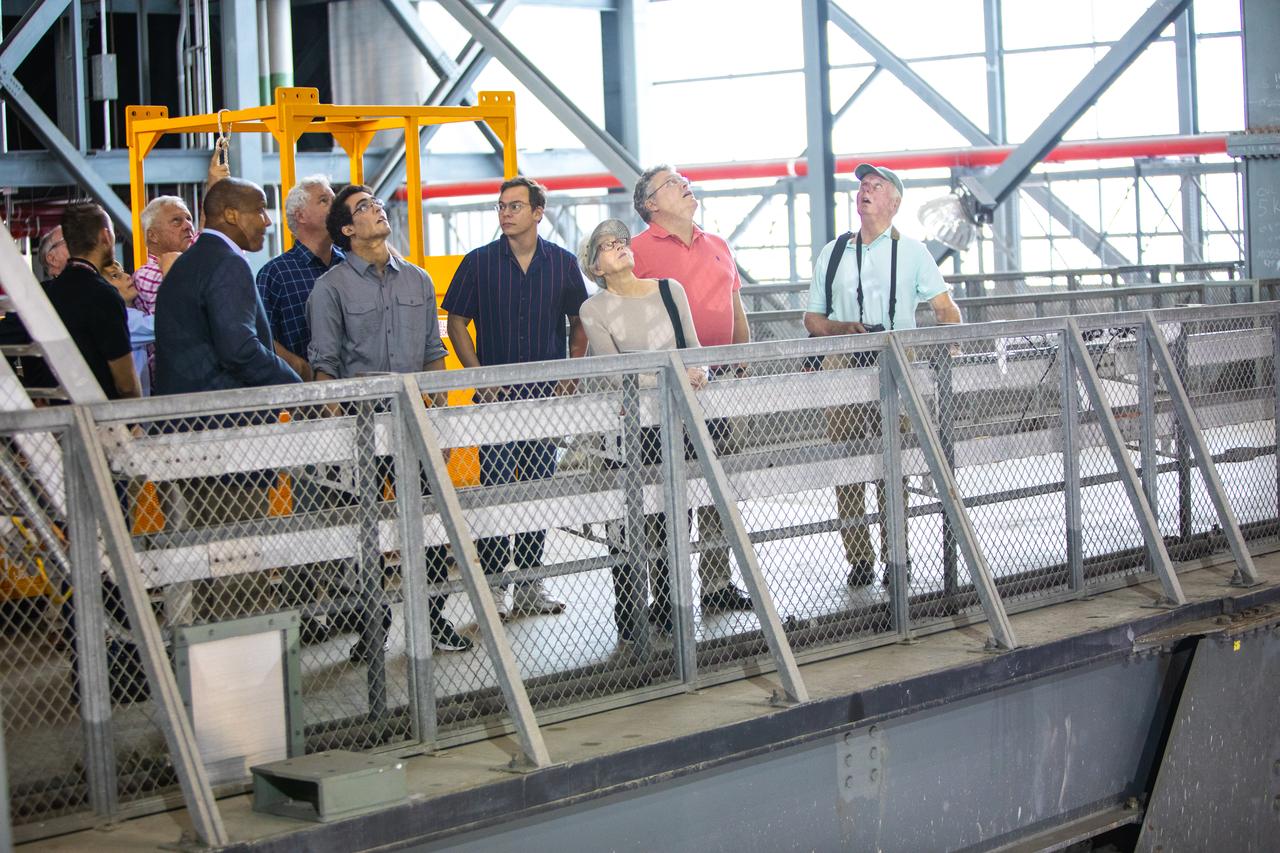
Family members of the original Vehicle Assembly Building (VAB) architect tour the iconic facility on Nov. 22, 2019 at NASA’s Kennedy Space Center in Florida. Among the visitors are Dick Bergmann, far right, original lead designer for the VAB. In view, far left, is Kelvin Manning, Kennedy’s associate director, technical. The Florida Section American Society of Civil Engineers bestowed its National Historic Civil Engineering Landmark award to the facility. The VAB is the first building at Kennedy Space Center to earn this distinction. At the time of its completion, the 129-million-cubic-foot structure was the largest building in the world. Originally designed and built to accommodate the Saturn V/Apollo used in Project Apollo, the VAB was later modified for its role in the Space Shuttle Program.
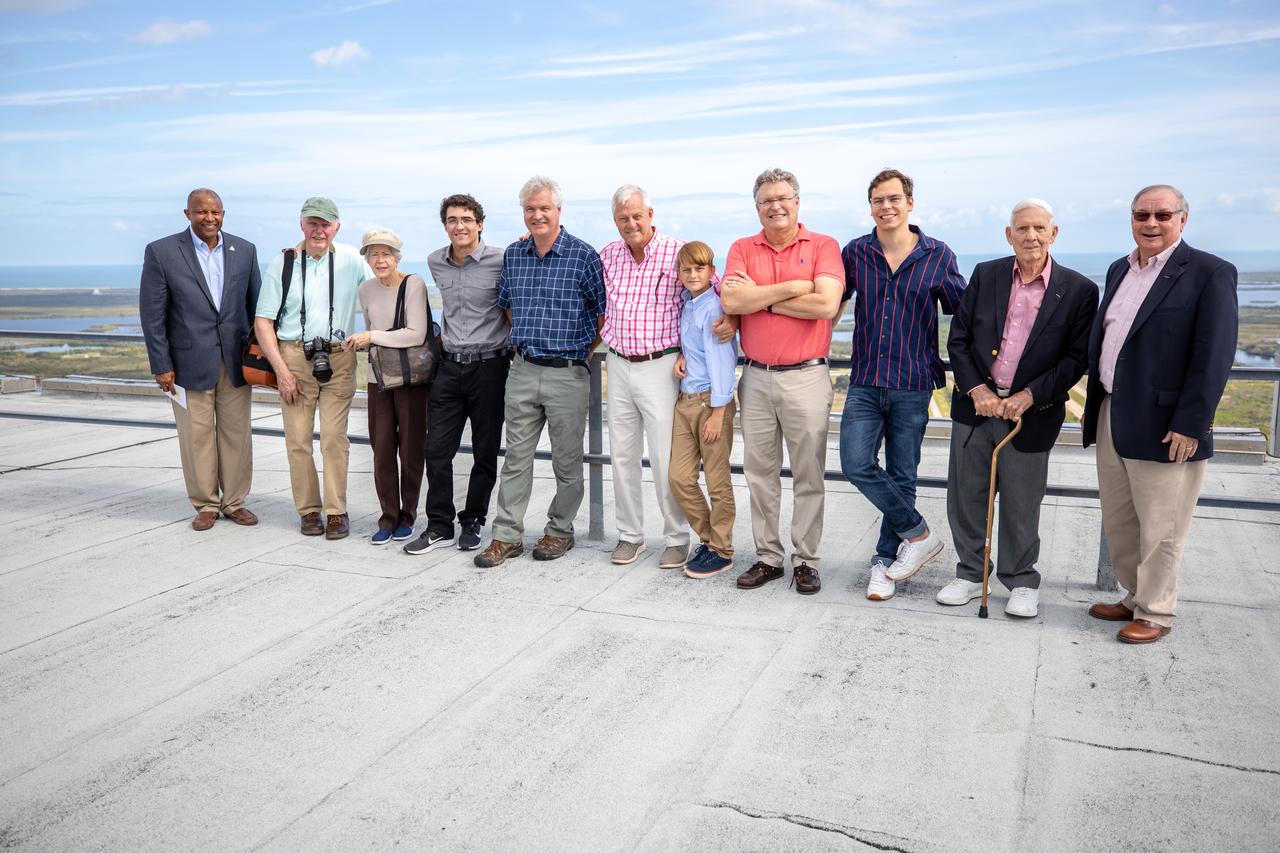
Dick Bergmann, second from left, original lead designer for the Vehicle Assembly Building (VAB), and Phil Moyer, second from right, original project lead, are on the roof of the VAB during a tour of Kennedy Space Center in Florida with descendants of Max Urbahn, the original architect, on Nov. 22, 2019. At far left is Kelvin Manning, Kennedy associate director, technical. The Florida Section American Society of Civil Engineers bestowed its National Historic Civil Engineering Landmark award to the facility. The VAB is the first building at Kennedy Space Center to earn this distinction. At the time of its completion, the 129-million-cubic-foot structure was the largest building in the world. Originally designed and built to accommodate the Saturn V/Apollo used in Project Apollo, the VAB was later modified for its role in the Space Shuttle Program.
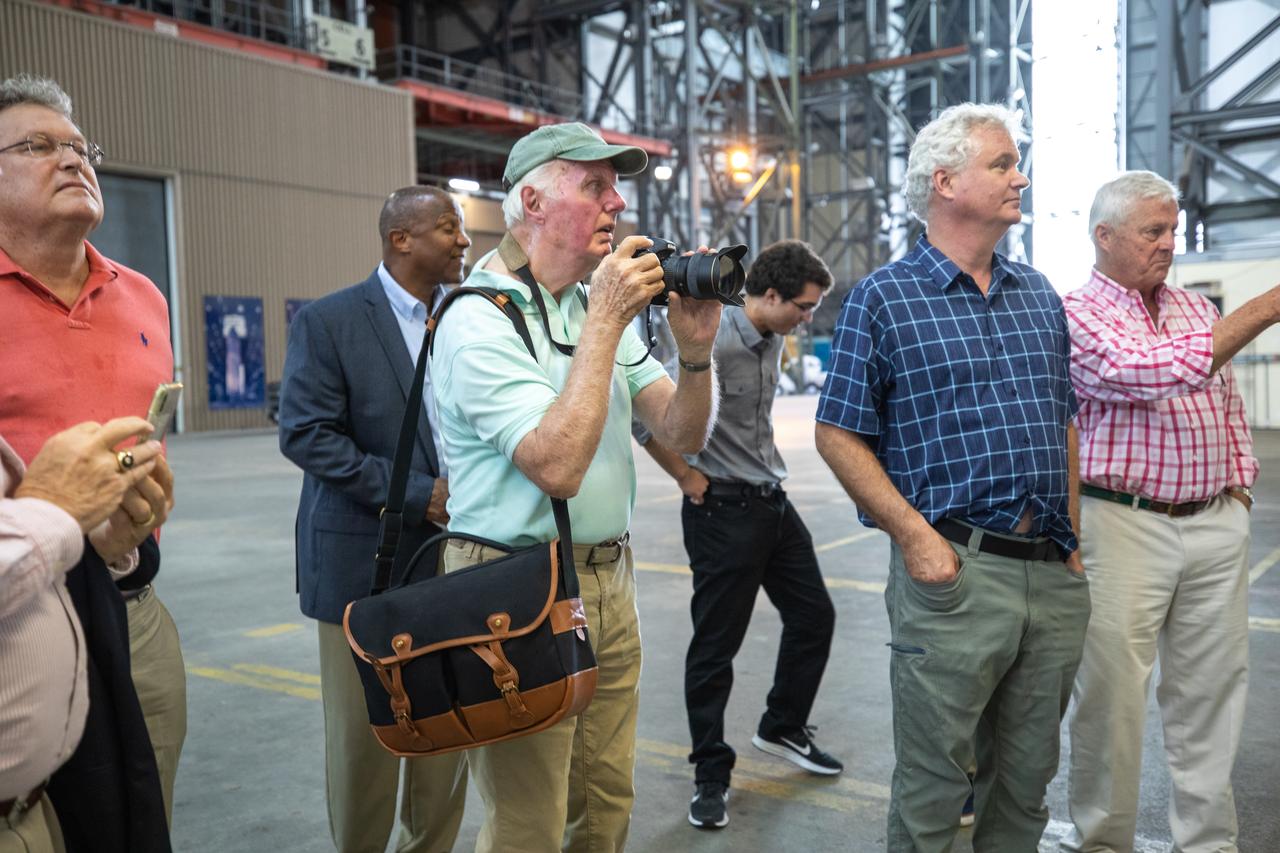
Dick Bergmann, far left in front, original lead designer for the Vehicle Assembly Building (VAB), tours the iconic facility at Kennedy Space Center in Florida with descendants of Max Urbahn, the original architect, on Nov. 22, 2019. Behind Bergmann is Kelvin Manning, Kennedy associate director, technical. The Florida Section American Society of Civil Engineers bestowed its National Historic Civil Engineering Landmark award to the facility. The VAB is the first building at Kennedy Space Center to earn this distinction. At the time of its completion, the 129-million-cubic-foot structure was the largest building in the world. Originally designed and built to accommodate the Saturn V/Apollo used in Project Apollo, the VAB was later modified for its role in the Space Shuttle Program.
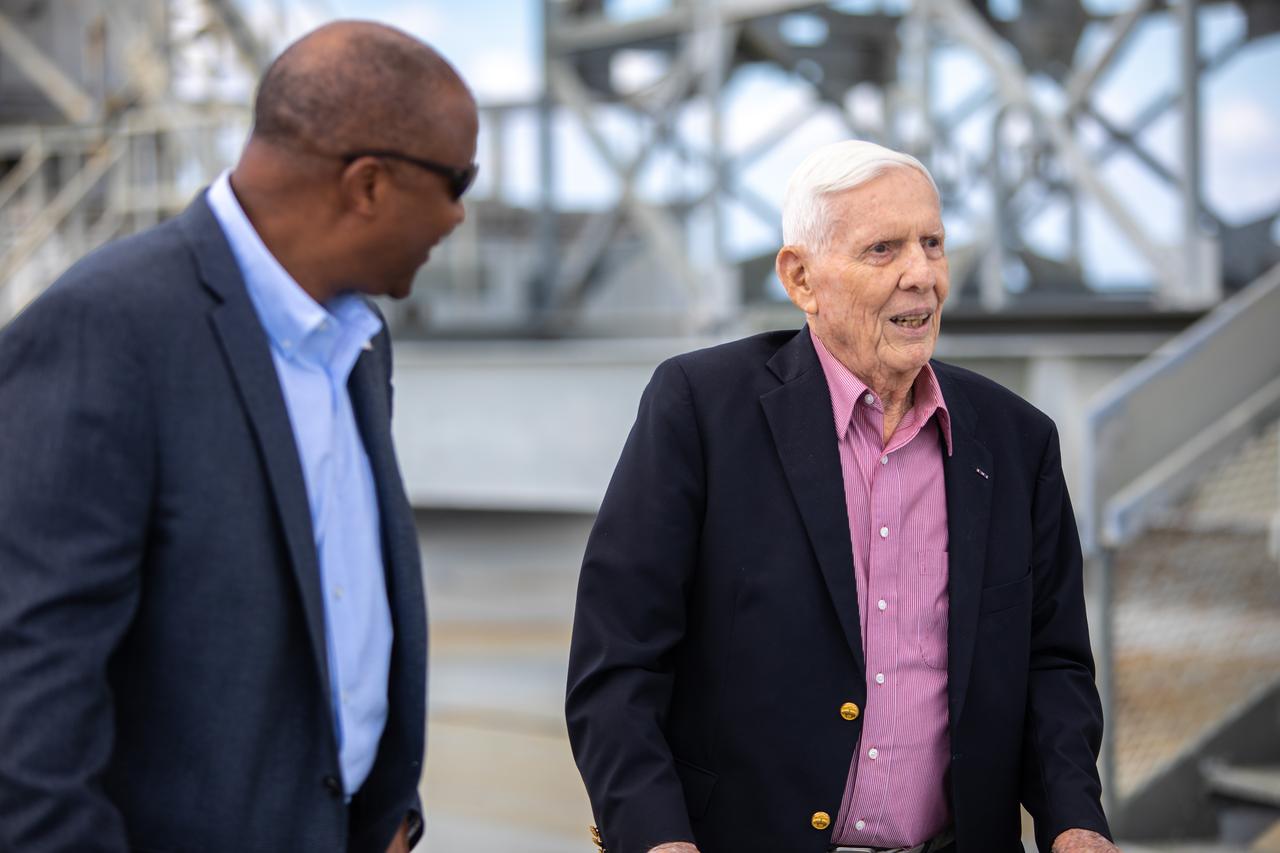
Phil Moyer, at right, original project lead for the Vehicle Assembly Building (VAB), tours the iconic facility on Nov. 22, 2019 at NASA’s Kennedy Space Center in Florida. At left is Kelvin Manning, Kennedy’s associate director, technical. The VAB was recognized with the National Historic Civil Engineering Landmark award by the Florida Section American Society of Civil Engineers during a ceremony on Jan. 10, 2020. The VAB is the first building at Kennedy Space Center to earn this distinction. At the time of its completion, the 129-million-cubic-foot structure was the largest building in the world. Originally designed and built to accommodate the Saturn V/Apollo used in Project Apollo, the VAB was later modified for its role in the Space Shuttle Program.
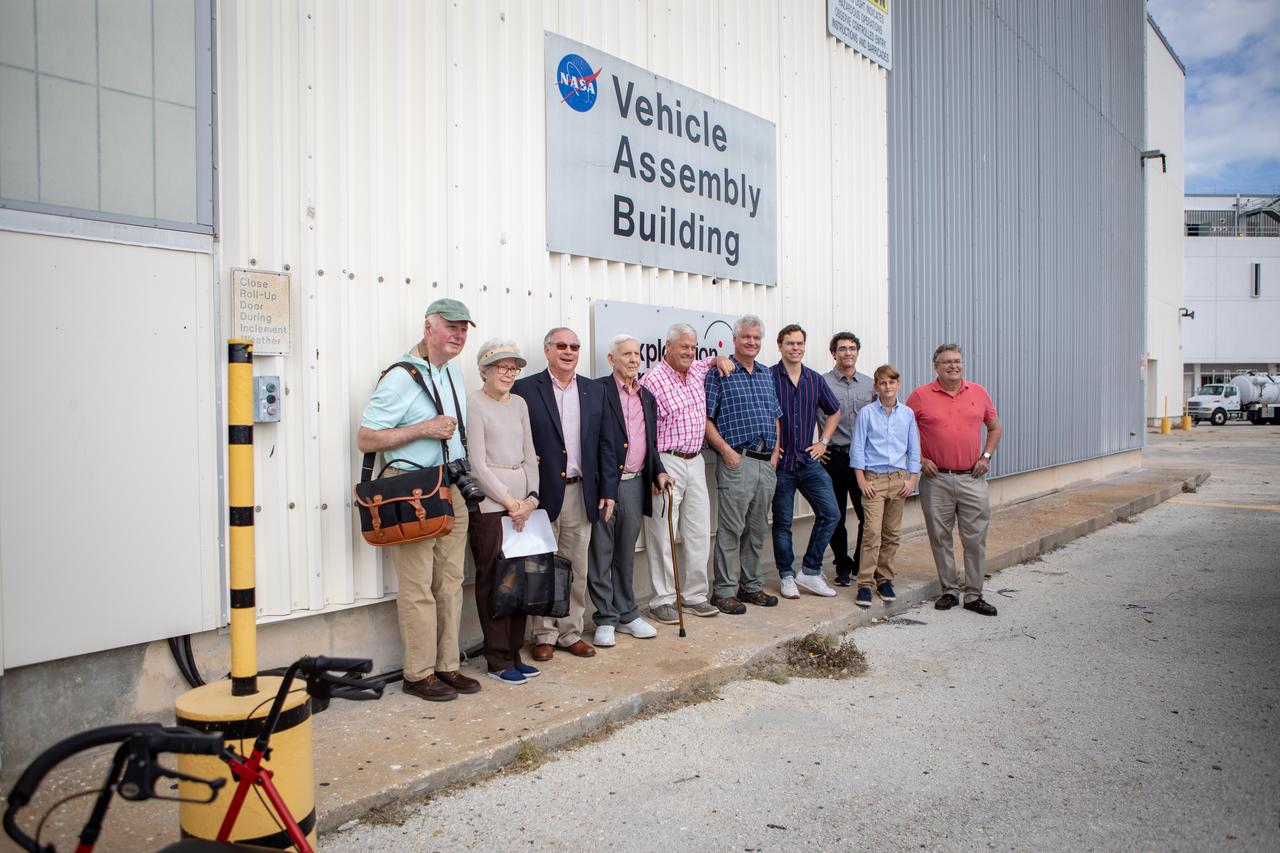
Dick Bergmann, far left, original lead designer for the Vehicle Assembly Building (VAB); and Phil Moyer, fourth from left, original project lead for the VAB, tour the iconic facility at Kennedy Space Center in Florida with descendants of Max Urbahn, the original architect, on Nov. 22, 2019. The Florida Section American Society of Civil Engineers bestowed its National Historic Civil Engineering Landmark award to the facility. The VAB is the first building at Kennedy Space Center to earn this distinction. At the time of its completion, the 129-million-cubic-foot structure was the largest building in the world. Originally designed and built to accommodate the Saturn V/Apollo used in Project Apollo, the VAB was later modified for its role in the Space Shuttle Program.
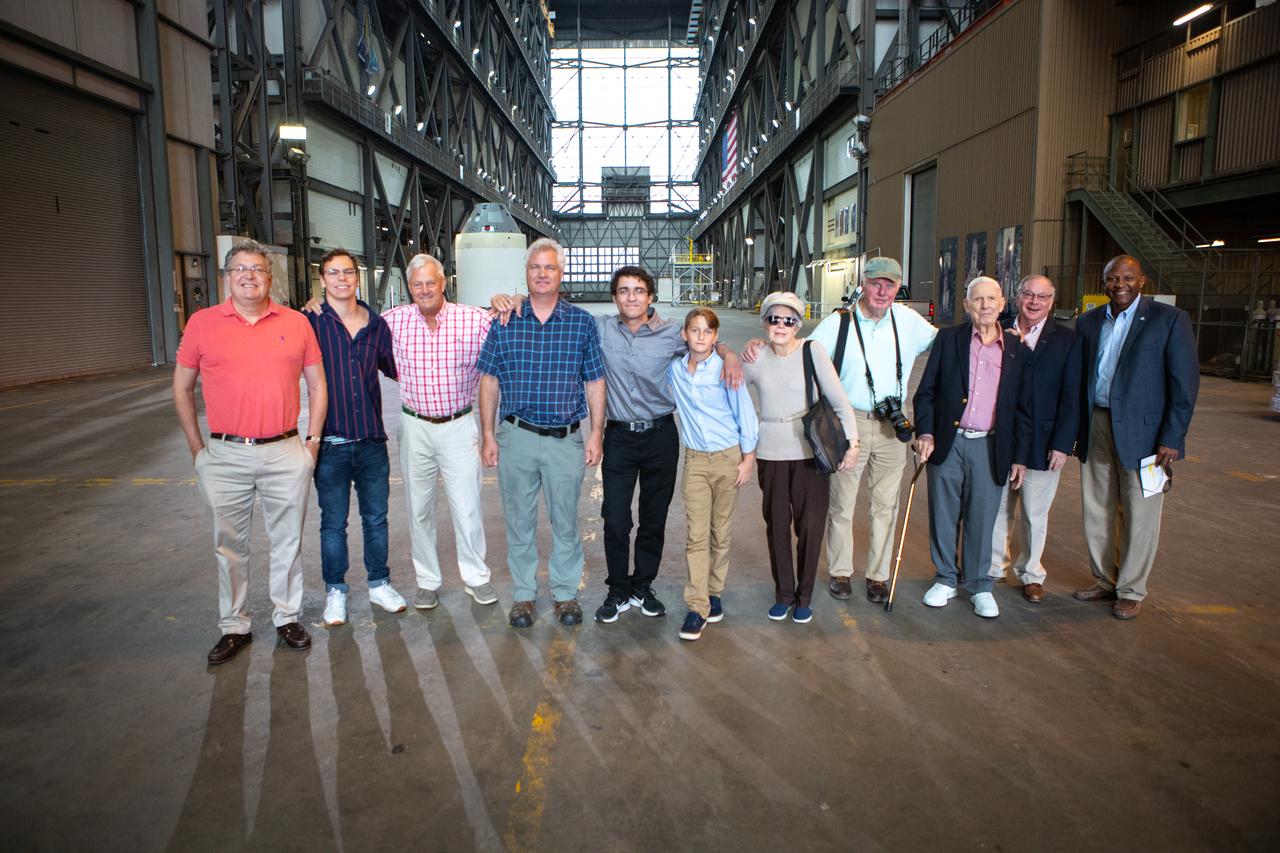
Phil Moyer, third from right, original project lead for the Vehicle Assembly Building (VAB); and Dick Bergmann, fourth from right, original lead designer for the VAB, tour the iconic facility with the families of the original architect on Nov. 22, 2019 at NASA’s Kennedy Space Center in Florida. At far right is Kelvin Manning, Kennedy’s associate director, technical. The Florida Section American Society of Civil Engineers bestowed the historic building with its National Historic Civil Engineering Landmark award during a ceremony on Jan. 10, 2020. The VAB is the first building at Kennedy Space Center to earn this distinction. At the time of its completion, the 129-million-cubic-foot structure was the largest building in the world. Originally designed and built to accommodate the Saturn V/Apollo used in Project Apollo, the VAB was later modified for its role in the Space Shuttle Program.

Family members of the original Vehicle Assembly Building (VAB) architect ride in an elevator during a tour of the iconic facility on Nov. 22, 2019 at NASA’s Kennedy Space Center in Florida. Among the visitors are Phil Moyer, in front, original project lead for the VAB; and Dick Bergmann, in the light green shirt, original lead designer for the VAB. The Florida Section American Society of Civil Engineers bestowed its National Historic Civil Engineering Landmark award to the facility. The VAB is the first building at Kennedy Space Center to earn this distinction. At the time of its completion, the 129-million-cubic-foot structure was the largest building in the world. Originally designed and built to accommodate the Saturn V/Apollo used in Project Apollo, the VAB was later modified for its role in the Space Shuttle Program.
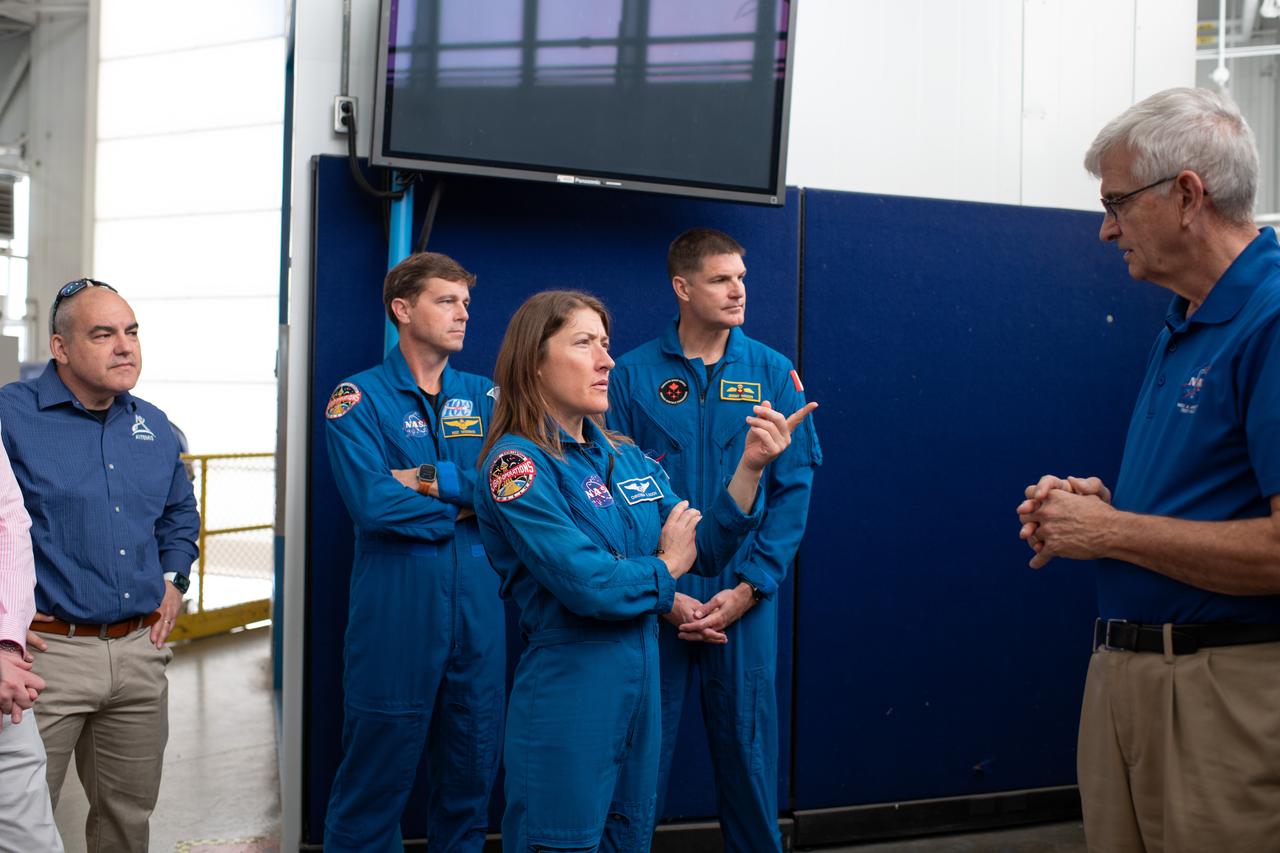
Tours were given of the In Space Propulsion Facility (ISP) in Sandusky, OH at Neil Armstrong Test Facility. NASA’s Facility is the world’s only high altitude test facility capable of full-scale rocket engine and launch vehicle system level tests. The facility supports mission profile thermal vacuum simulation and engine firing. Employees meet three of the four astronauts who will venture around the Moon on Artemis II, the first crewed flight paving the way for future lunar surface missions. Commander Reid Wiseman and Mission Specialists Christina Koch and Jeremy Hansen will be on hand to discuss their upcoming mission and participate in a Question and Answer session with employees afterward. Hansen is an astronaut with the Canadian Space Agency. Victor Glover, the pilot and fourth crew member, will not be present. Awards were given to employees that participated in Orion for Artemis I.
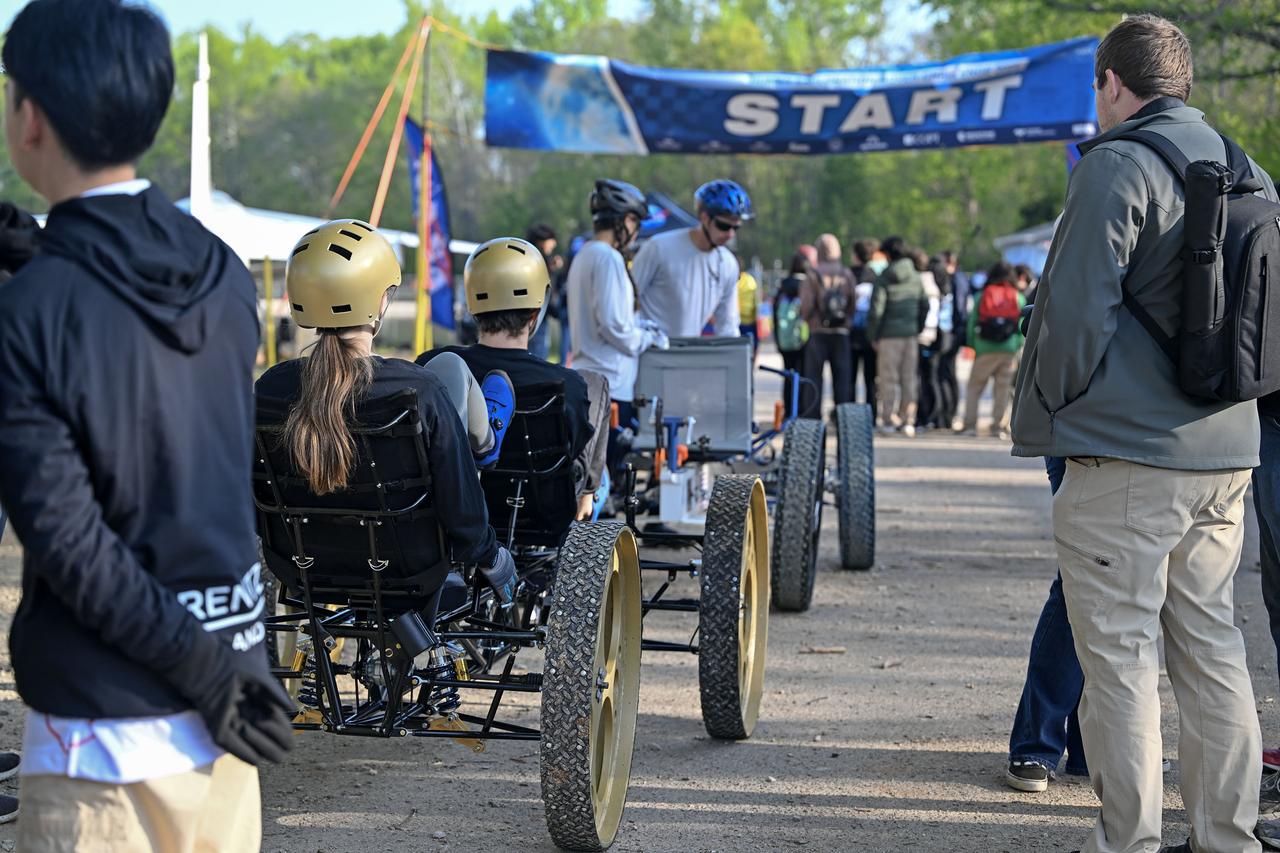
More than 500 students with 75 teams from around the world participated in the 31st year of NASA’s Human Exploration Rover Challenge (HERC) on April 11 and April 12, 2025, near NASA’s Marshall Space Flight Center in Huntsville, Alabama. Participating teams represented 35 colleges and universities, 38 high schools, and two middle schools from 20 states, Puerto Rico, and 16 other nations. NASA expanded the 2025 challenge to include a remote-control division - named Remote-Operated Vehicular Research - and invited middle school students to participate. Teams were awarded points based on navigating a half-mile obstacle course, conducting mission-specific task challenges, and completing multiple safety and design reviews with NASA engineers.
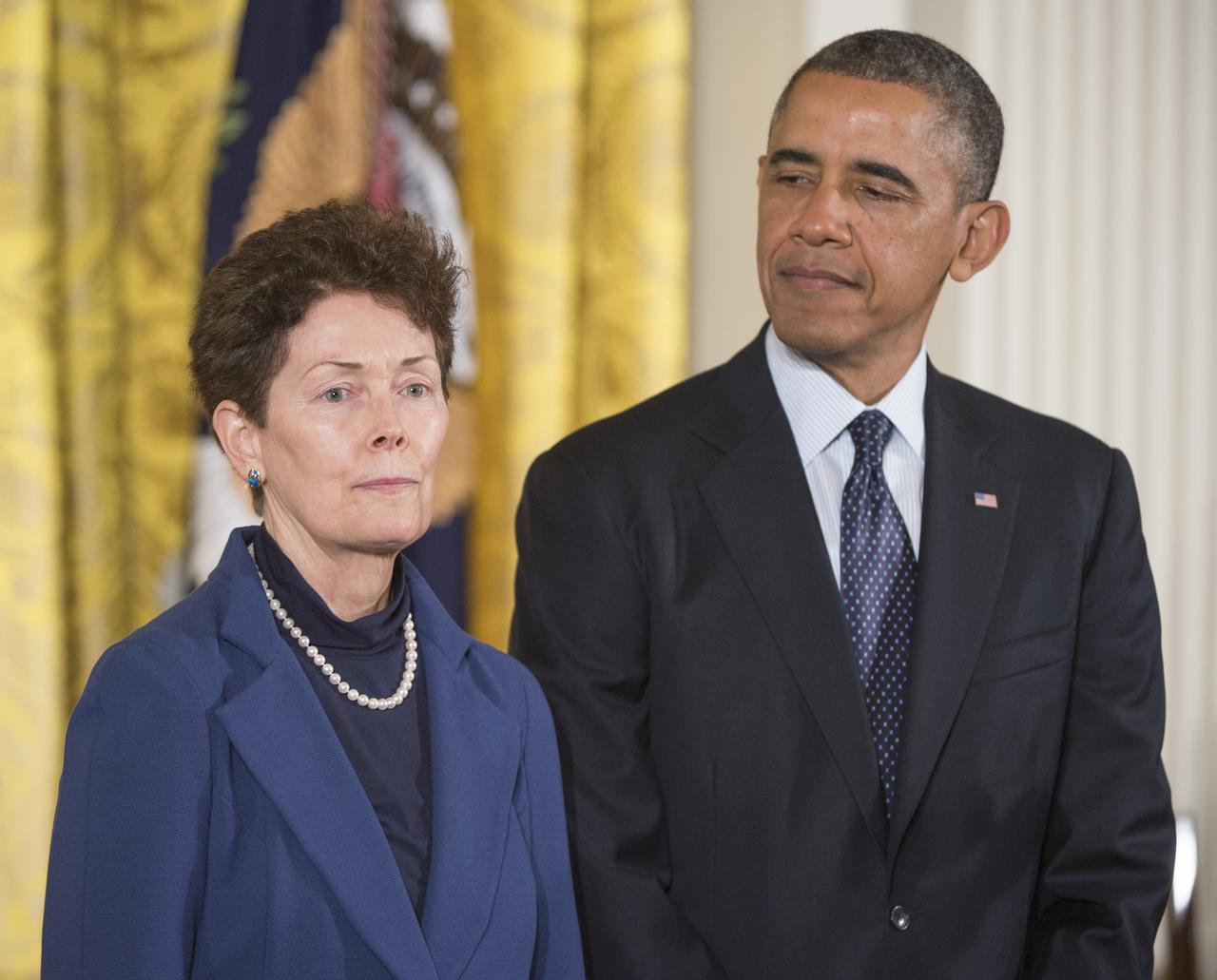
Tam O'Shaughnessy, Sally Ride's life partner and chair, board of directors of Sally Ride Science, is seen with President Barack Obama as she prepares to accept the Presidential Medal of Freedom on behalf of Dr. Ride, Wednesday, Nov. 20, 2013 at the White House in Washington. Sally Ride, who was awarded the Medal of Freedom posthumously, was the first American female astronaut to travel to space. As a role model to generations of young women, she advocated passionately for science education, stood up for racial and gender equality in the classroom, and taught students from every background that there are no limits to what they can accomplish. The Medal of Freedom is our Nation’s highest civilian honor, presented to individuals who have made especially meritorious contributions to the security or national interests of the United States, to world peace, or to cultural or other significant public or private endeavors. Photo Credit: (NASA/Carla Cioffi)
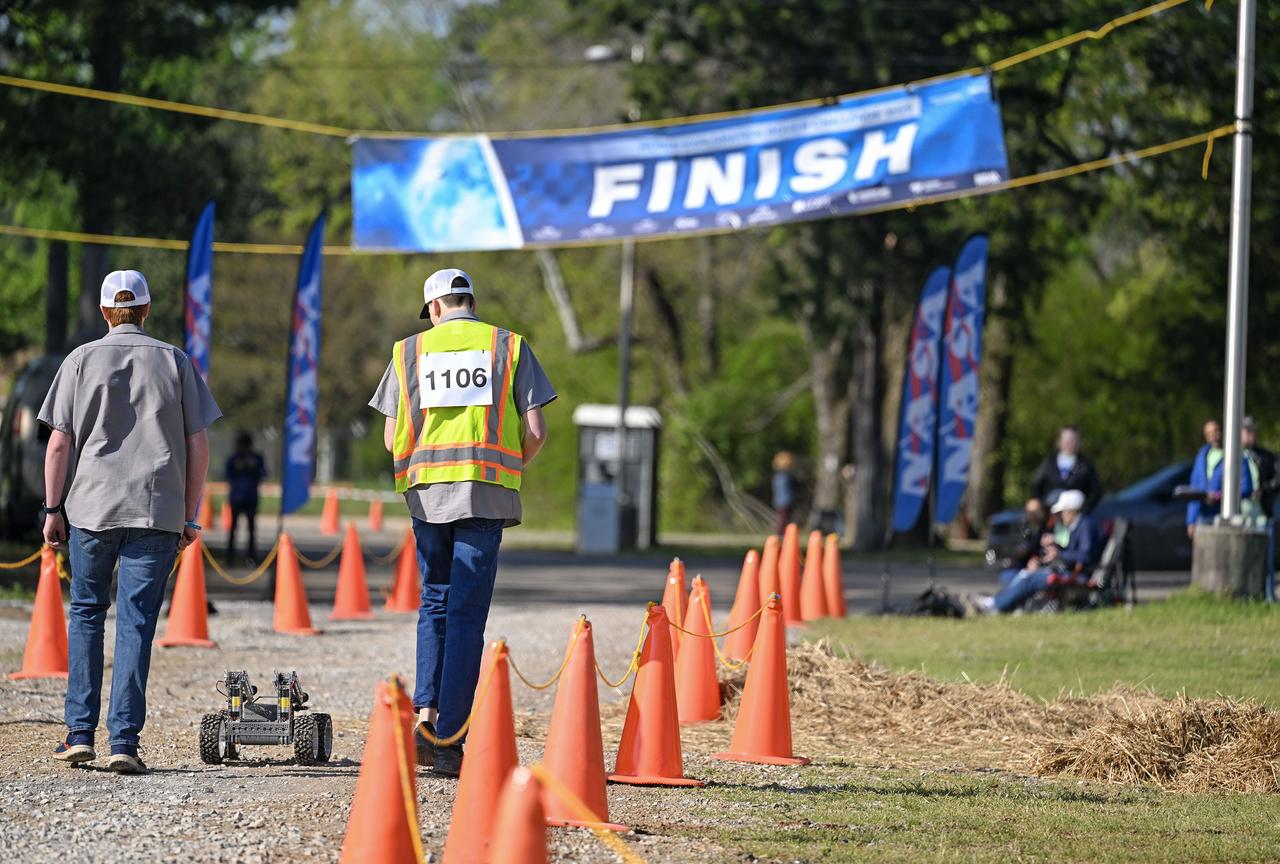
More than 500 students with 75 teams from around the world participated in the 31st year of NASA’s Human Exploration Rover Challenge (HERC) on April 11 and April 12, 2025, near NASA’s Marshall Space Flight Center in Huntsville, Alabama. Participating teams represented 35 colleges and universities, 38 high schools, and two middle schools from 20 states, Puerto Rico, and 16 other nations. NASA expanded the 2025 challenge to include a remote-control division - named Remote-Operated Vehicular Research - and invited middle school students to participate. Teams were awarded points based on navigating a half-mile obstacle course, conducting mission-specific task challenges, and completing multiple safety and design reviews with NASA engineers.
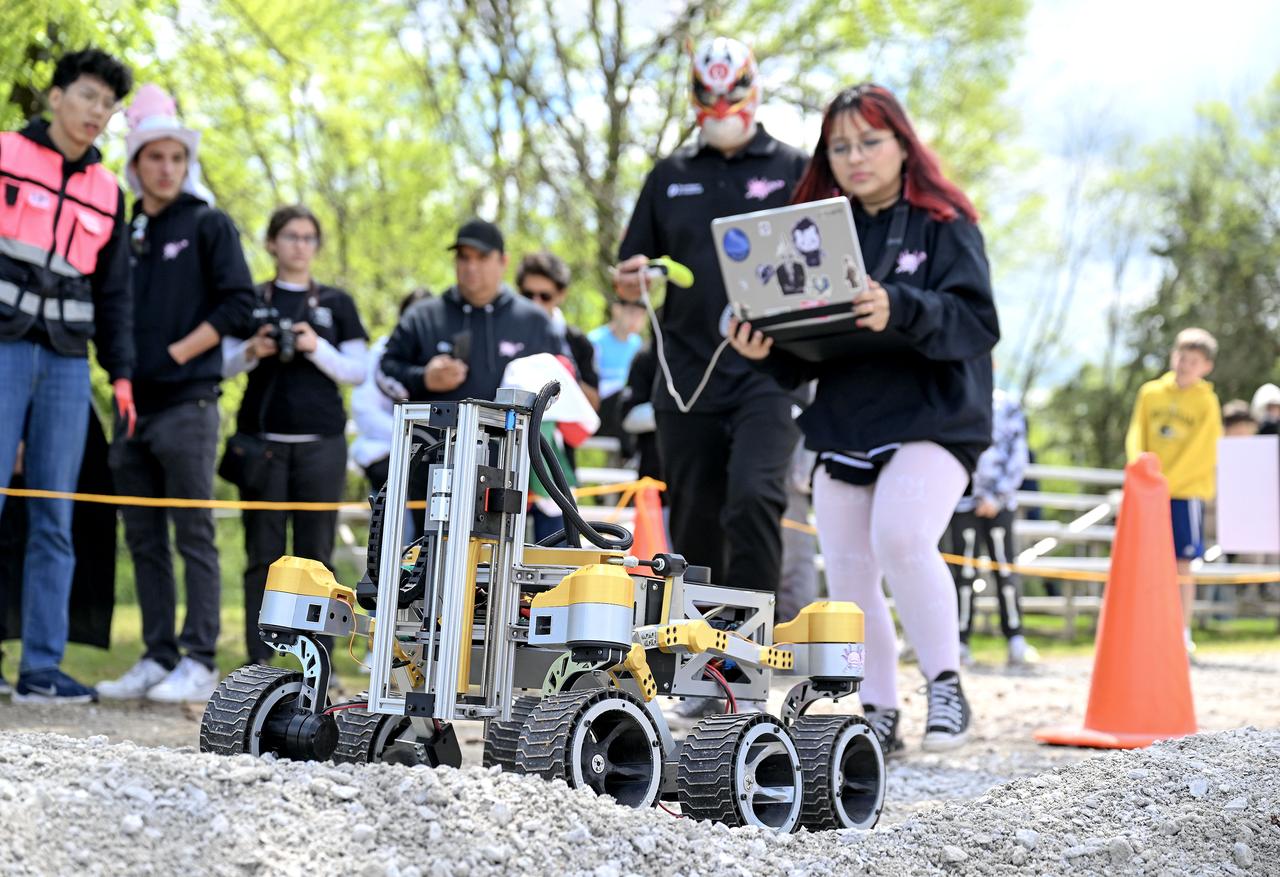
More than 500 students with 75 teams from around the world participated in the 31st year of NASA’s Human Exploration Rover Challenge (HERC) on April 11 and April 12, 2025, near NASA’s Marshall Space Flight Center in Huntsville, Alabama. Participating teams represented 35 colleges and universities, 38 high schools, and two middle schools from 20 states, Puerto Rico, and 16 other nations. NASA expanded the 2025 challenge to include a remote-control division - named Remote-Operated Vehicular Research - and invited middle school students to participate. Teams were awarded points based on navigating a half-mile obstacle course, conducting mission-specific task challenges, and completing multiple safety and design reviews with NASA engineers.
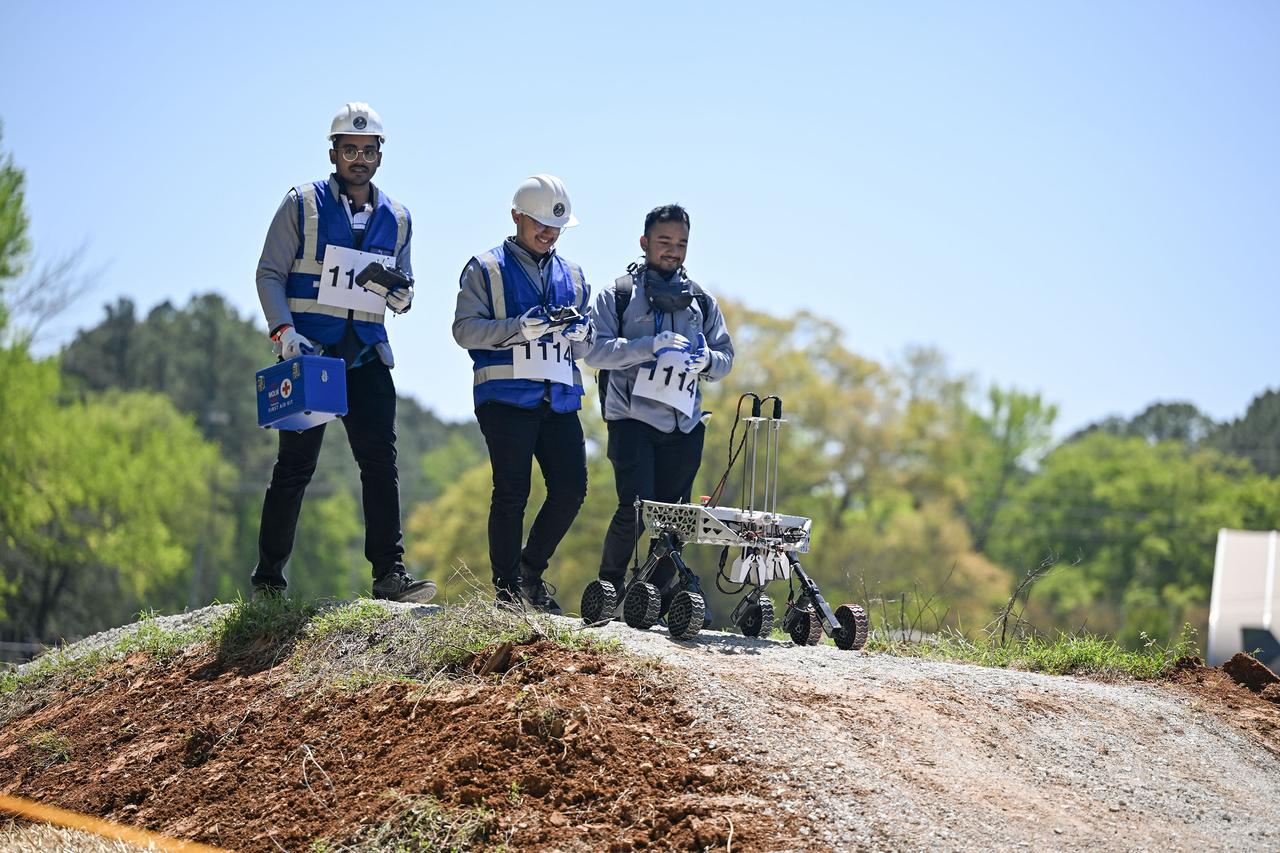
More than 500 students with 75 teams from around the world participated in the 31st year of NASA’s Human Exploration Rover Challenge (HERC) on April 11 and April 12, 2025, near NASA’s Marshall Space Flight Center in Huntsville, Alabama. Participating teams represented 35 colleges and universities, 38 high schools, and two middle schools from 20 states, Puerto Rico, and 16 other nations. NASA expanded the 2025 challenge to include a remote-control division - named Remote-Operated Vehicular Research - and invited middle school students to participate. Teams were awarded points based on navigating a half-mile obstacle course, conducting mission-specific task challenges, and completing multiple safety and design reviews with NASA engineers.
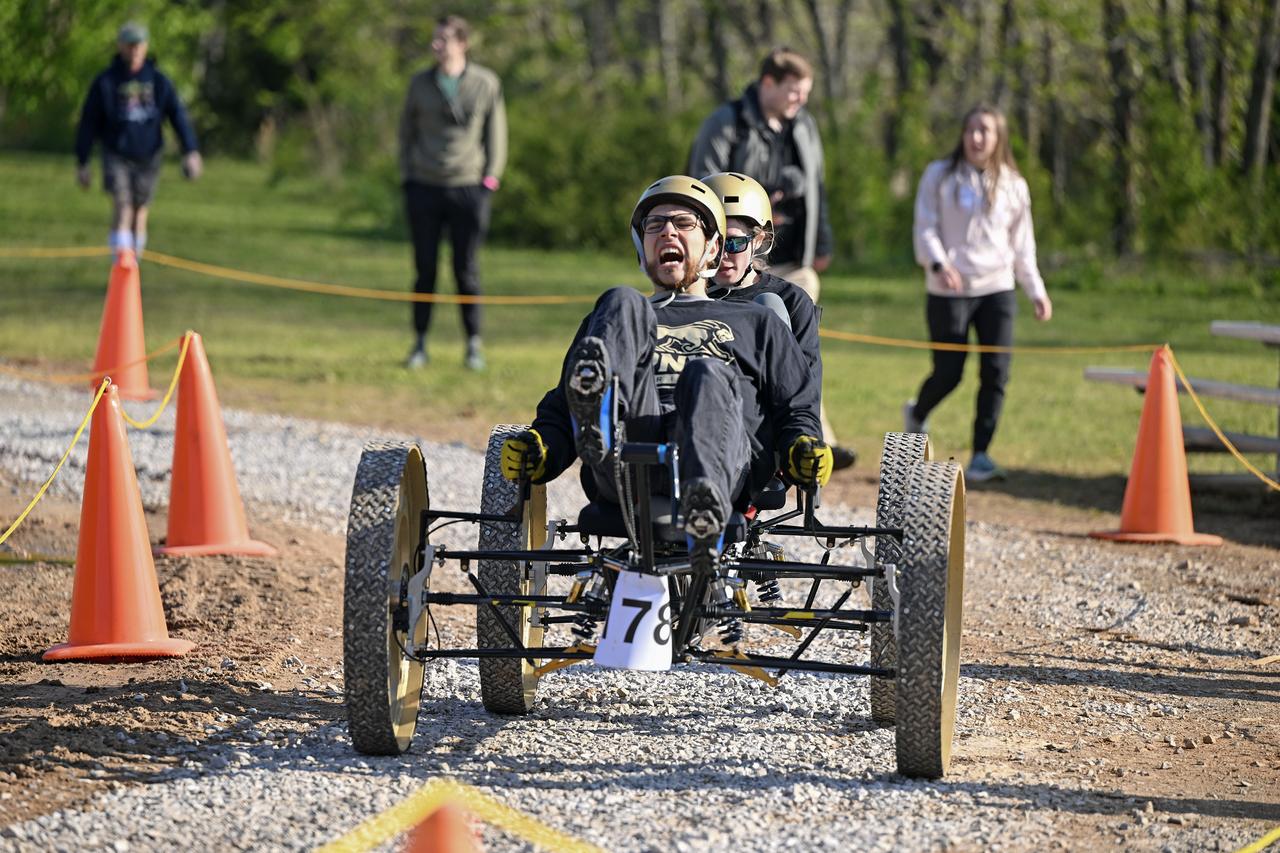
More than 500 students with 75 teams from around the world participated in the 31st year of NASA’s Human Exploration Rover Challenge (HERC) on April 11 and April 12, 2025, near NASA’s Marshall Space Flight Center in Huntsville, Alabama. Participating teams represented 35 colleges and universities, 38 high schools, and two middle schools from 20 states, Puerto Rico, and 16 other nations. NASA expanded the 2025 challenge to include a remote-control division - named Remote-Operated Vehicular Research - and invited middle school students to participate. Teams were awarded points based on navigating a half-mile obstacle course, conducting mission-specific task challenges, and completing multiple safety and design reviews with NASA engineers.
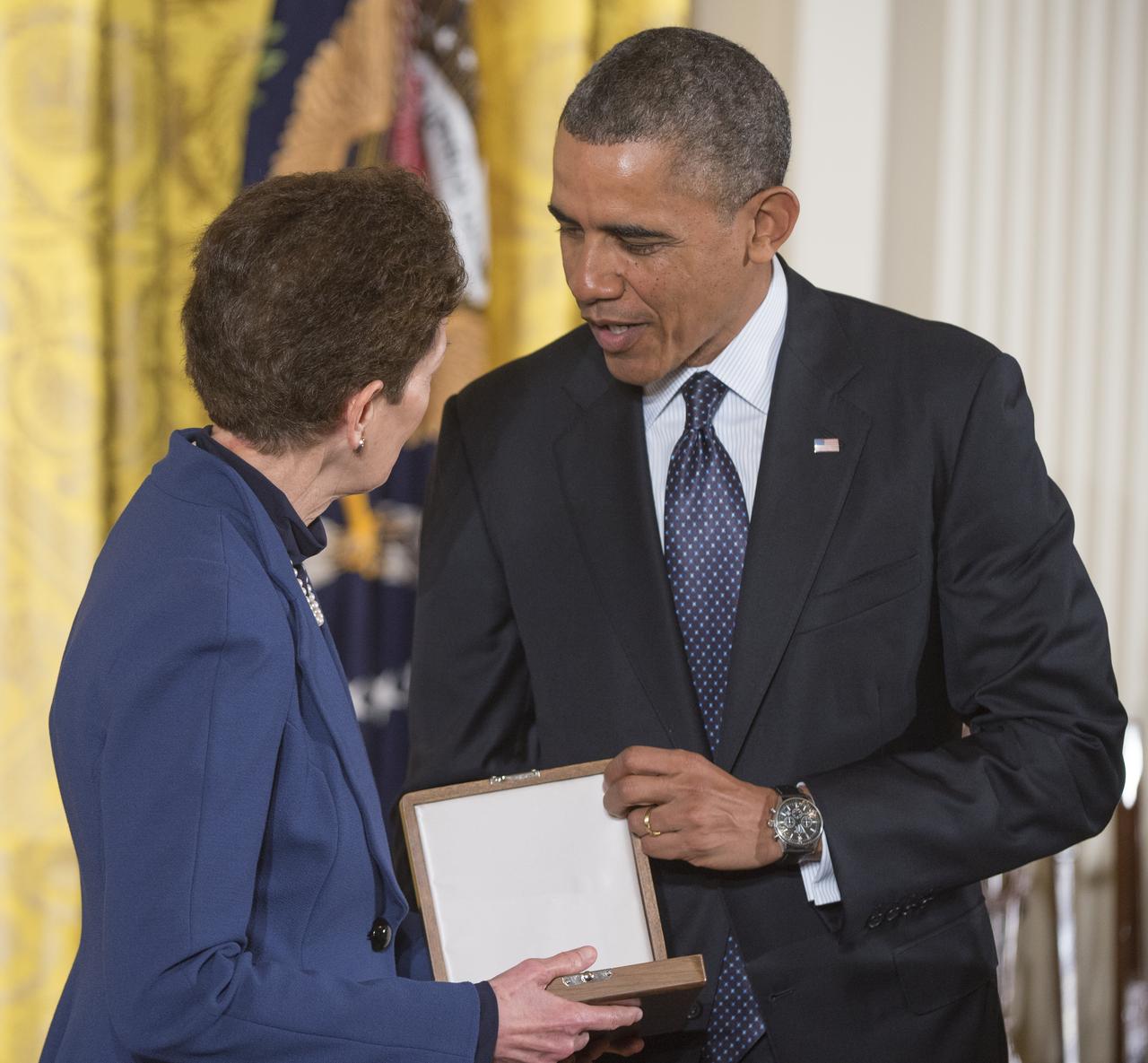
Tam O'Shaughnessy, Sally Ride's life partner and chair, board of directors of Sally Ride Science, is seen with President Barack Obama as she accepts the Presidential Medal of Freedom on behalf of Dr. Ride, Wednesday, Nov. 20, 2013 at the White House in Washington. Sally Ride, who was awarded the Medal of Freedom posthumously, was the first American female astronaut to travel to space. As a role model to generations of young women, she advocated passionately for science education, stood up for racial and gender equality in the classroom, and taught students from every background that there are no limits to what they can accomplish. The Medal of Freedom is our Nation’s highest civilian honor, presented to individuals who have made especially meritorious contributions to the security or national interests of the United States, to world peace, or to cultural or other significant public or private endeavors. Photo Credit: (NASA/Carla Cioffi)
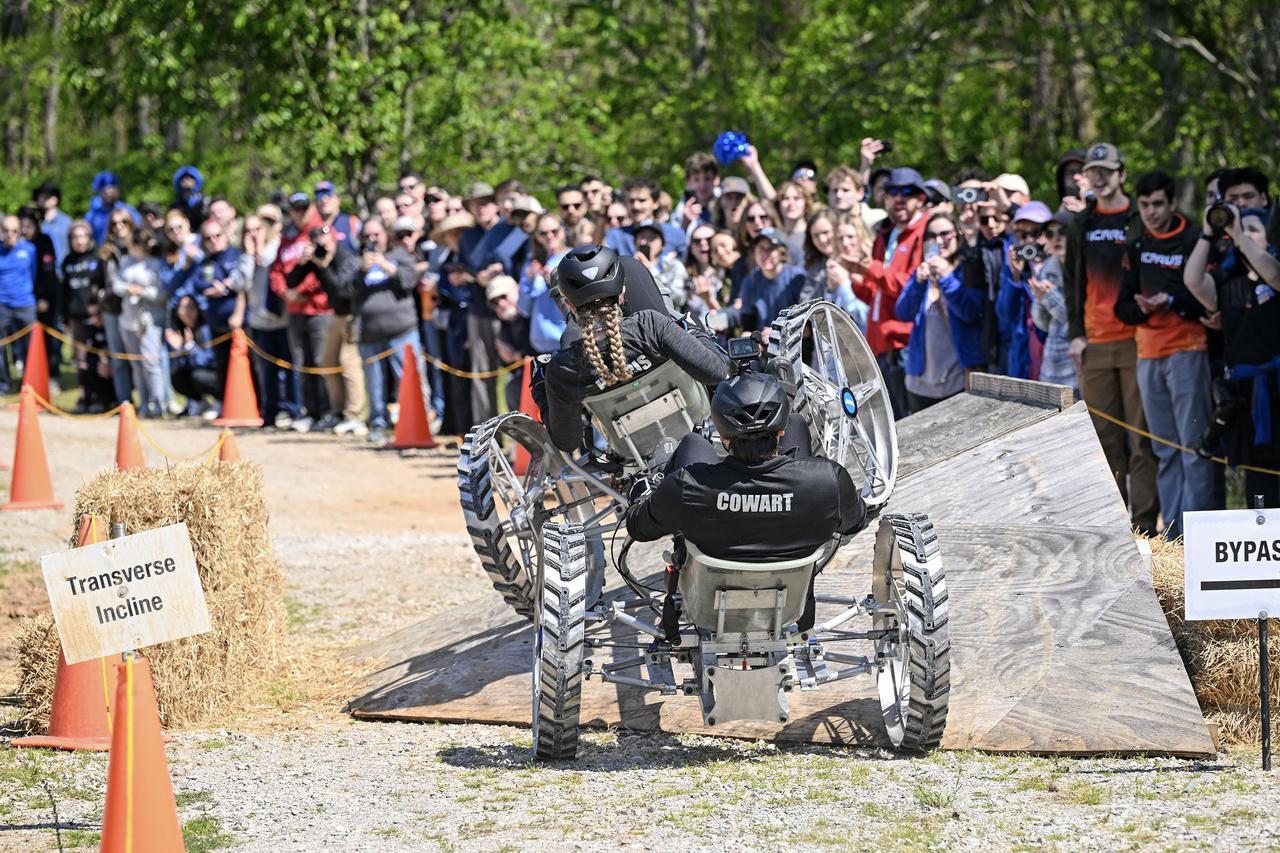
More than 500 students with 75 teams from around the world participated in the 31st year of NASA’s Human Exploration Rover Challenge (HERC) on April 11 and April 12, 2025, near NASA’s Marshall Space Flight Center in Huntsville, Alabama. Participating teams represented 35 colleges and universities, 38 high schools, and two middle schools from 20 states, Puerto Rico, and 16 other nations. NASA expanded the 2025 challenge to include a remote-control division - named Remote-Operated Vehicular Research - and invited middle school students to participate. Teams were awarded points based on navigating a half-mile obstacle course, conducting mission-specific task challenges, and completing multiple safety and design reviews with NASA engineers.