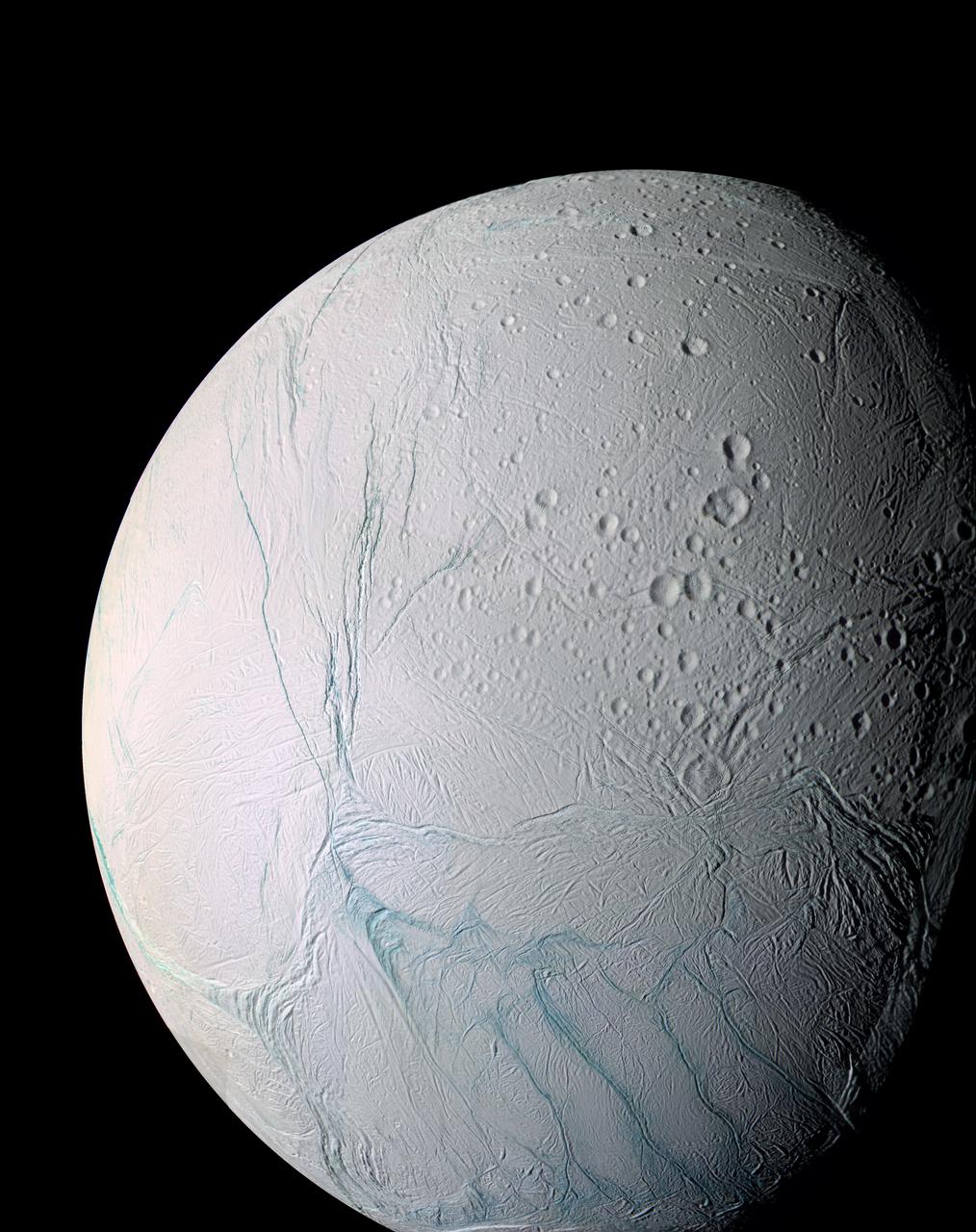
A masterpiece of deep time and wrenching gravity, the tortured surface of Saturn moon Enceladus and its fascinating ongoing geologic activity tell the story of the ancient and present struggles of one tiny world.
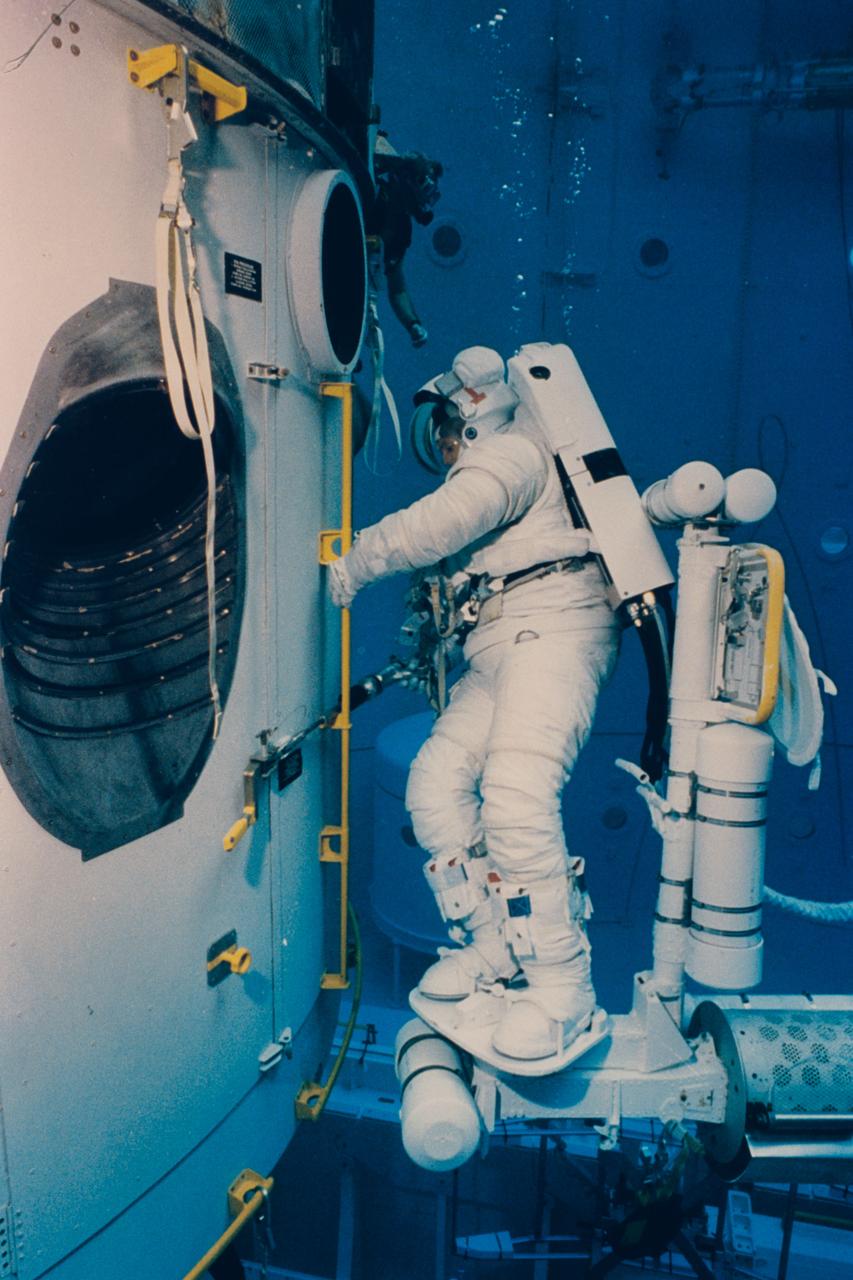
Astronaut Thomas D. Akers uses a power wrench to deploy one of the tools on the Hubble Space Telescope (HST) during a training session in the Neutral Buoyancy Simulator at Marshall Space Flight Center.
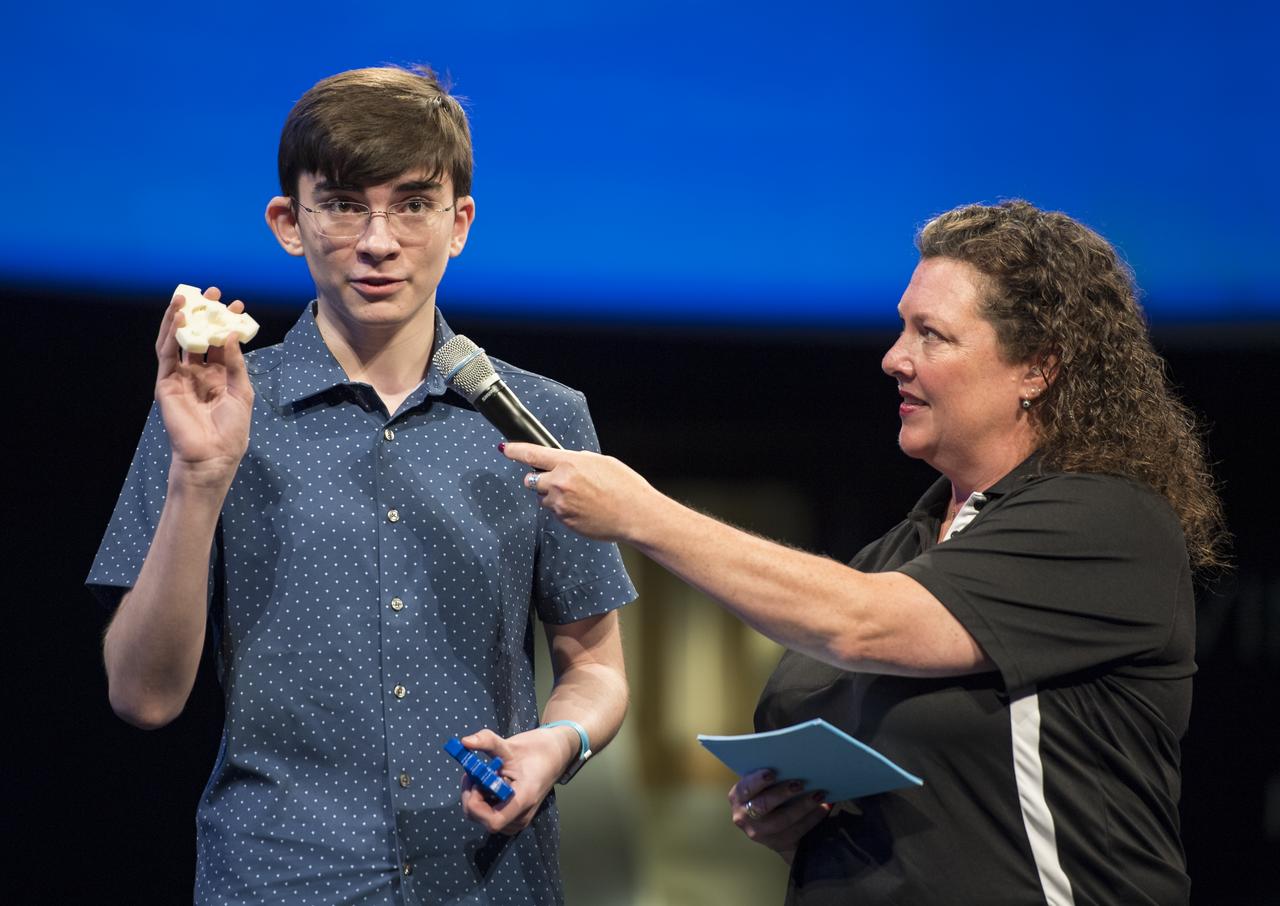
Future Engineers "Two for the Crew" competition winner, Ansel Austin, speaks about his Trillium Tool, a type of wrench, during a STEM in 30 event, Wednesday, June 27, 2018 at Smithsonian's National Air and Space Museum in Washington. Photo Credit: (NASA/Aubrey Gemignani)
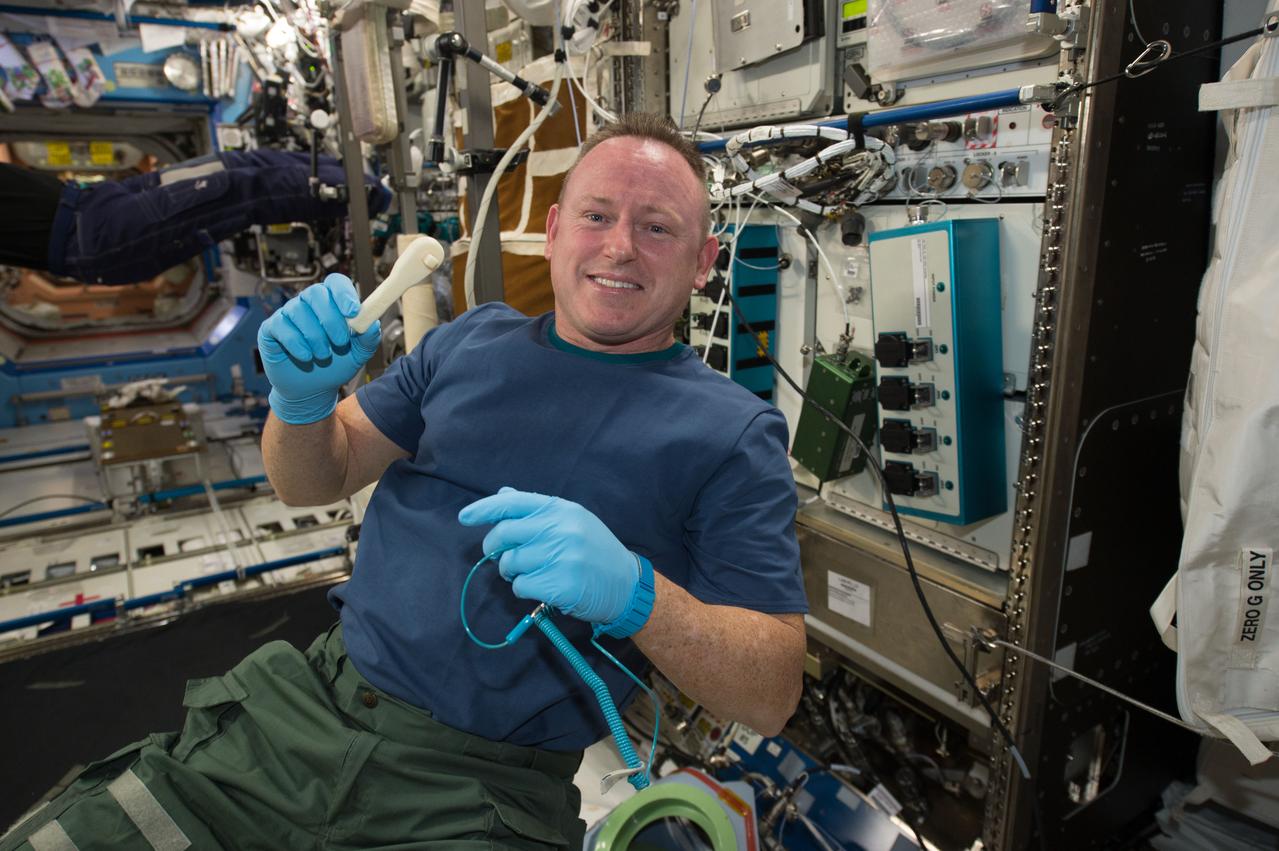
iss042e046048 (12/16/14) --- NASA Astronaut Barry (Butch) Wilmore holds a 3-D printed ratchet wrench from the new 3-D printer aboard the International Space Station. The printer completed the first phase of a NASA technology demonstration by printing a tool with a design file that was transmitted from the ground to the printer.
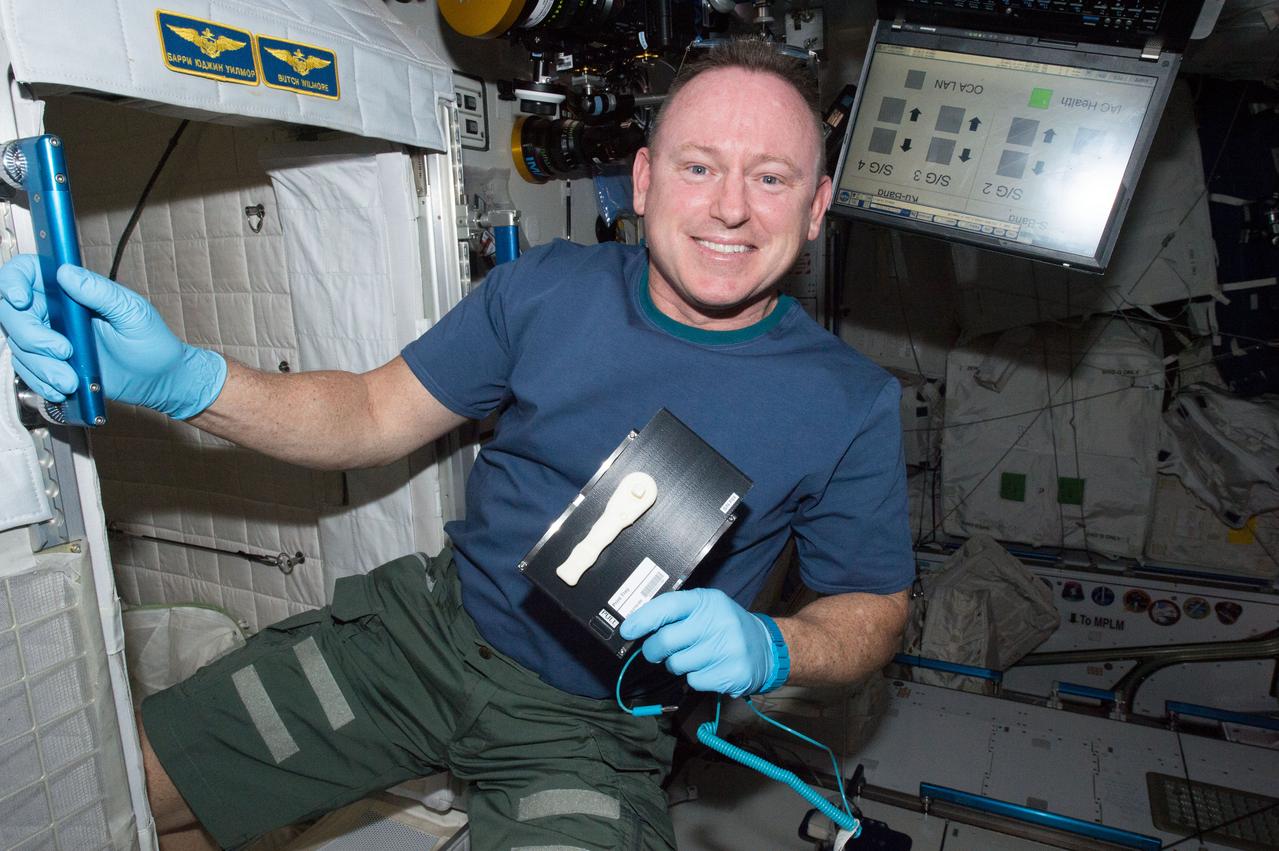
iss042e046041 (12/16/14) --- NASA Astronaut Barry (Butch) Wilmore holds a 3-D printed ratchet wrench and plate from the new 3-D printer aboard the International Space Station. The printer completed the first phase of a NASA technology demonstration by printing a tool with a design file that was transmitted from the ground to the printer.
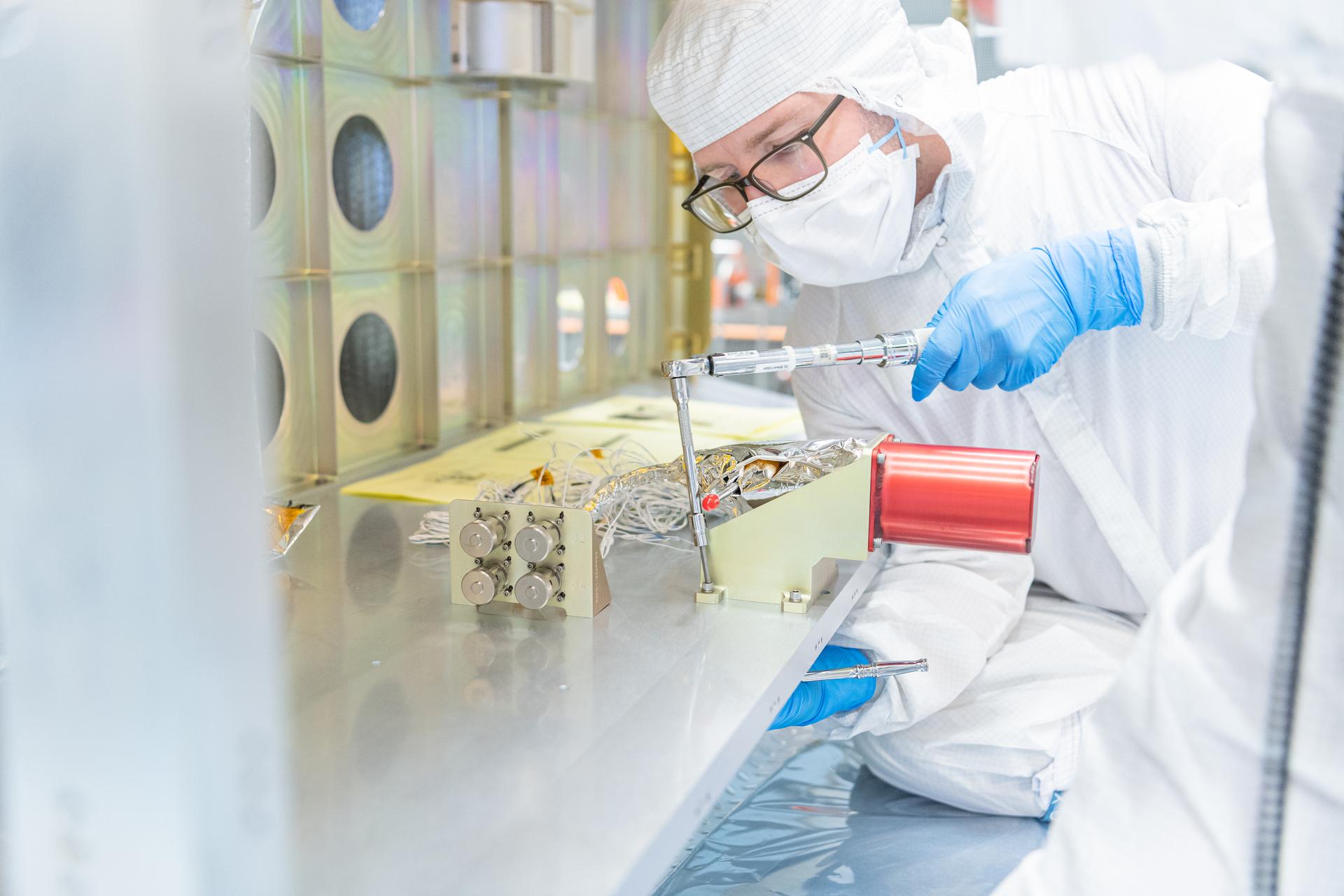
Seth Aulton, a mechanical engineering and integration technician, installs part of the Propellant Transfer System onto the servicing payload of OSAM-1 inside a cleanroom at Goddard Space Flight Center, Greenbelt, Md., Feb 14, 2023. This photo has been reviewed by OSAM-1 project management and the Export Control Office and is released for public view. NASA/Mike Guinto
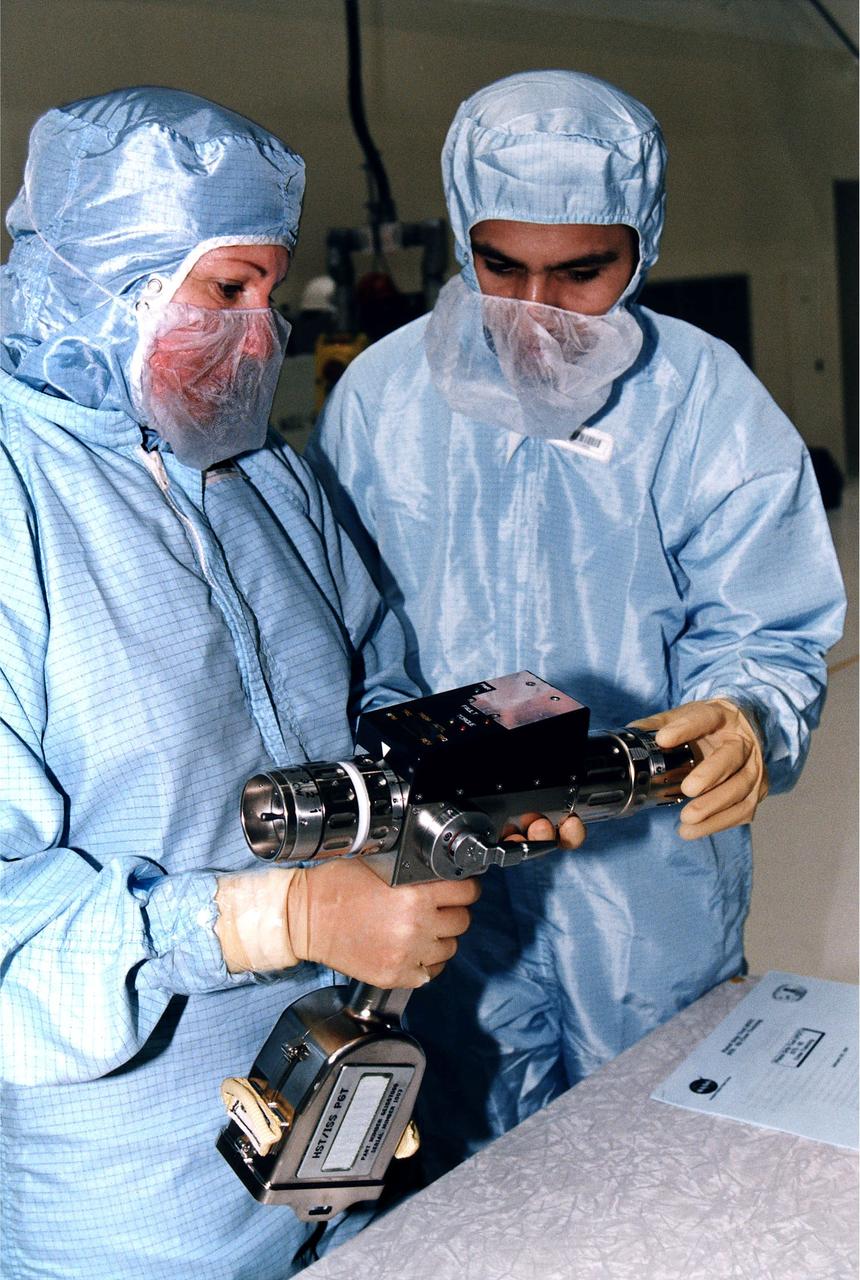
KENNEDY SPACE CENTER, FLA. - In KSC's Vertical Processing Facility, Louise Kleba of the Vehicle Integration Test Team (VITT) and engineer Devin Tailor of Goddard Space Flight Center examine the Pistol Grip Tool (PGT), which was designed for use by astronauts during spacewalks. The PGT is a self-contained, micro-processor controlled, battery-powered tool. It also can be used as a nonpowered ratchet wrench. The experiences of the astronauts on the first Hubble Space Telescope (HST) servicing mission led to recommendations for this smaller, more efficient tool for precision work during spacewalks. The PGT will be used on the second HST servicing mission, STS-82. Liftoff aboard Discovery is scheduled Feb. 11.
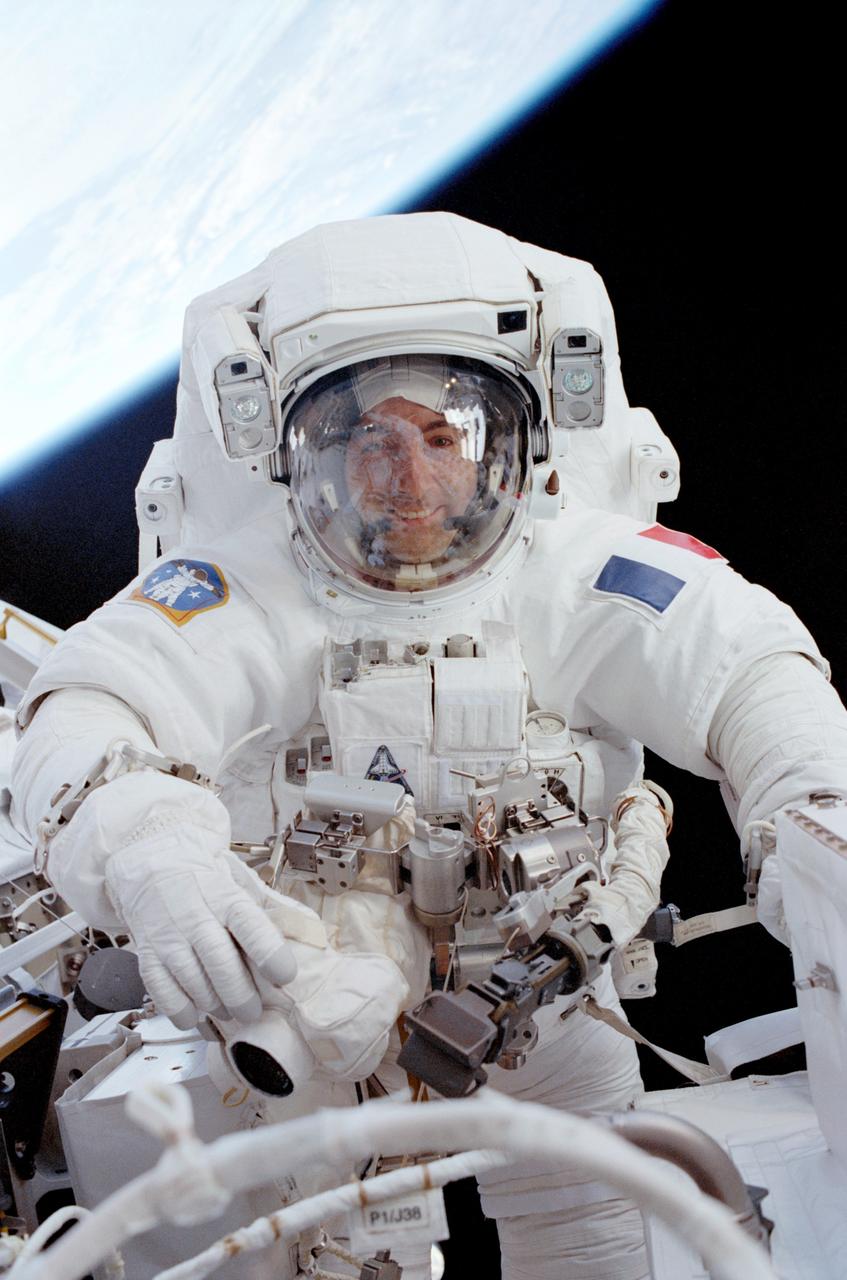
STS111-307-017 (11 June 2002) --- Astronaut Philippe Perrin, STS-111 mission specialist representing CNES, the French Space Agency, participates in the second scheduled session of extravehicular activity (EVA) for the STS-111 mission. During the spacewalk, Perrin and Chang-Diaz attached power, data and video cables from the International Space Station (ISS) to the Mobile Base System (MBS) and used a power wrench to complete the attachment of the MBS onto the Mobile Transporter (MT).
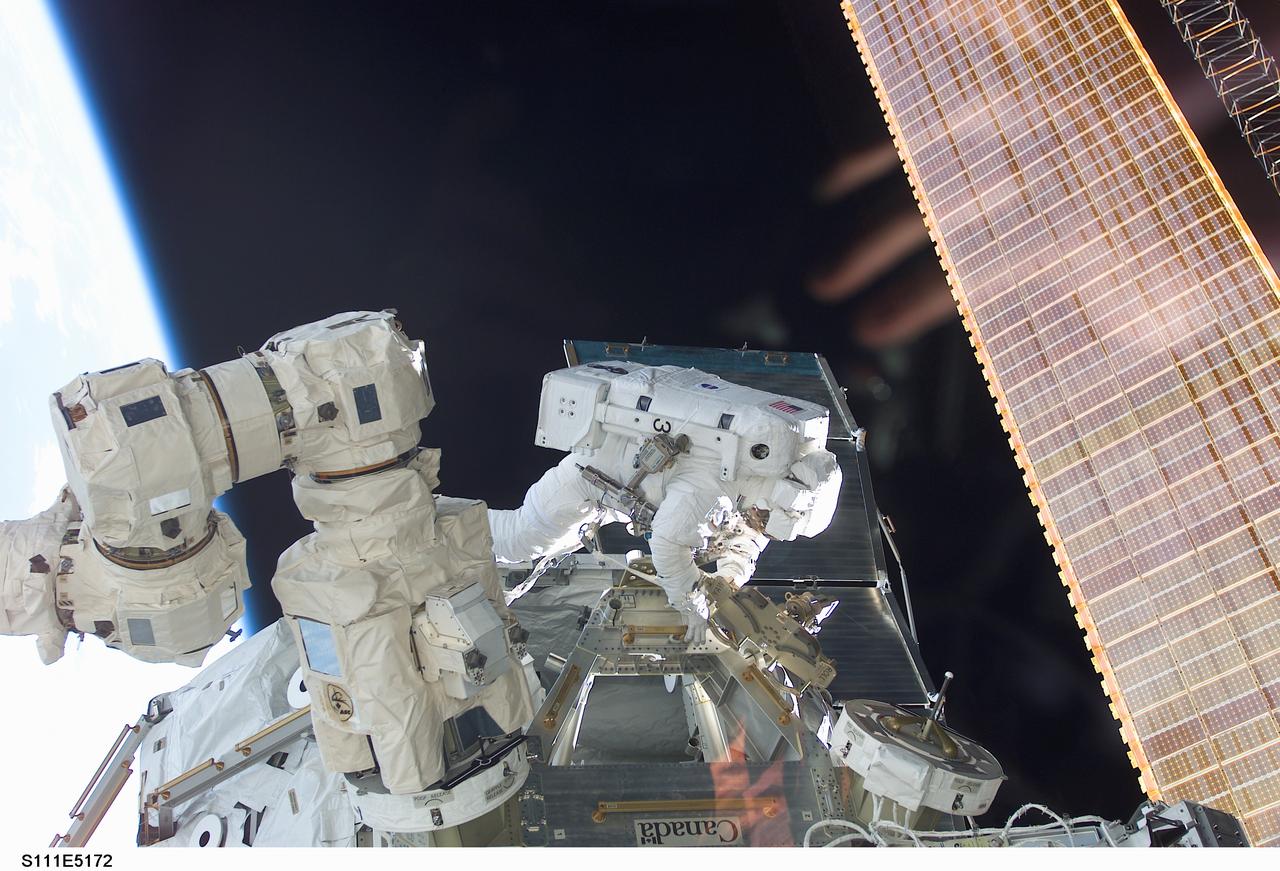
STS111-E-5172 (11 June 2002) --- Astronaut Philippe Perrin, mission specialist representing CNES, the French Space Agency, participates in the second scheduled session of extravehicular activity (EVA) for the STS-111 mission. During the spacewalk, Perrin and Chang-Diaz attached power, data and video cables from the International Space Station (ISS) to the Mobile Base System (MBS) and used a power wrench to complete the attachment of the MBS onto the Mobile Transporter (MT).
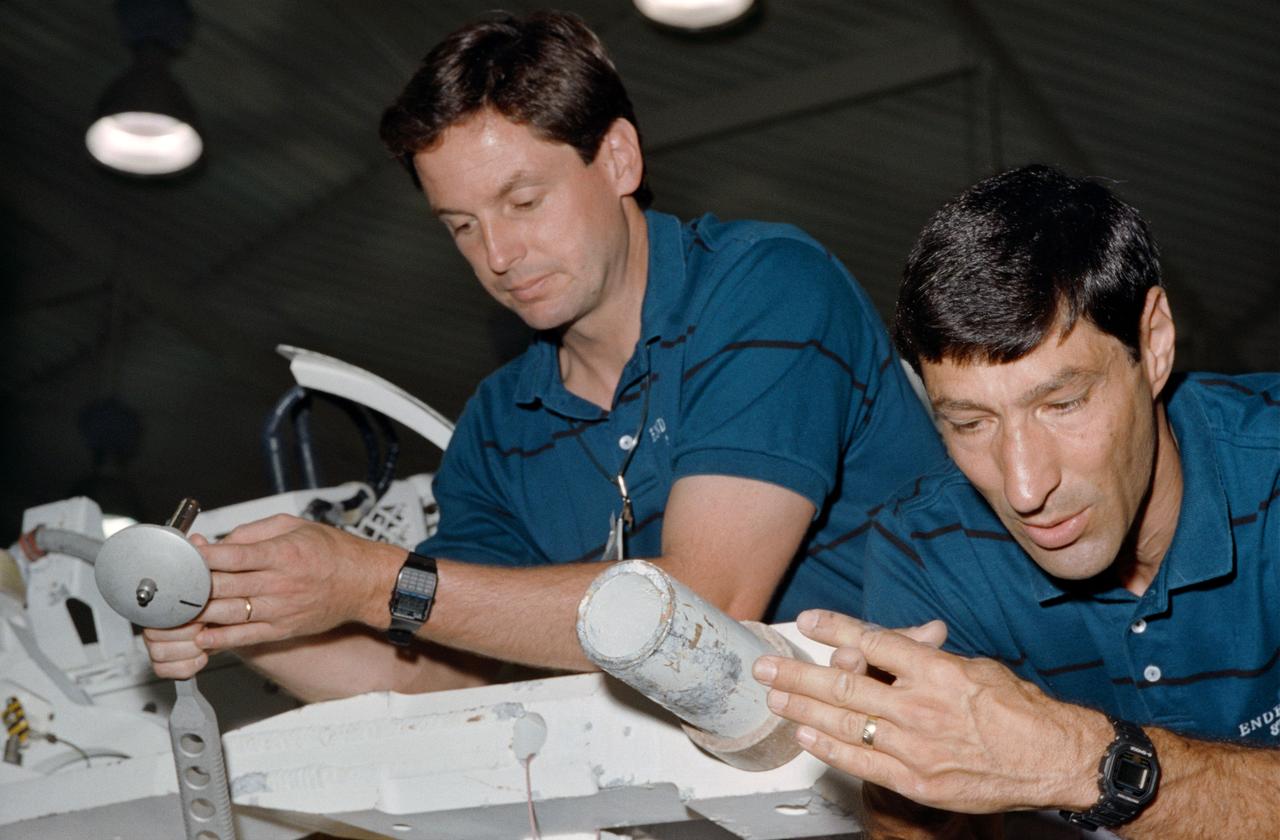
STS-54 Endeavour, Orbiter Vehicle (OV) 105, Mission Specialist 1 (MS1) Mario Runco, Jr (right) and MS2 Gregory J. Harbaugh, holding an ESSEX wrench, examine mockup and tools prior to an underwater simulation in JSC's Weightless Environment Training Facility (WETF) Bldg 29 pool. Runco and Harbaugh discuss the trunnion / payload retention latch assembly (PRLA) configuration.
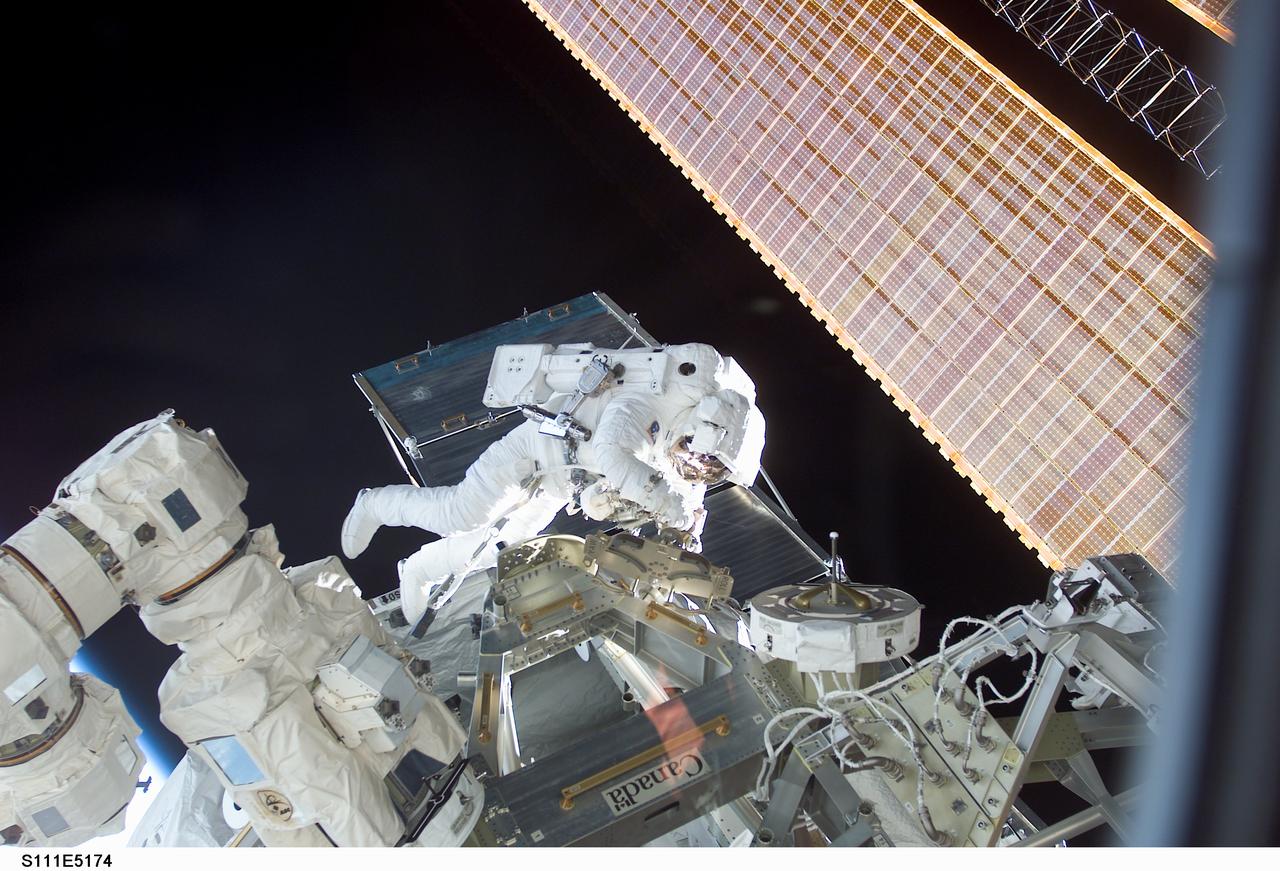
STS111-E-5174 (11 June 2002) --- Astronaut Philippe Perrin, mission specialist representing CNES, the French Space Agency, participates in the second scheduled session of extravehicular activity (EVA) for the STS-111 mission. During the spacewalk, Perrin and Chang-Diaz attached power, data and video cables from the International Space Station (ISS) to the Mobile Base System (MBS) and used a power wrench to complete the attachment of the MBS onto the Mobile Transporter (MT).
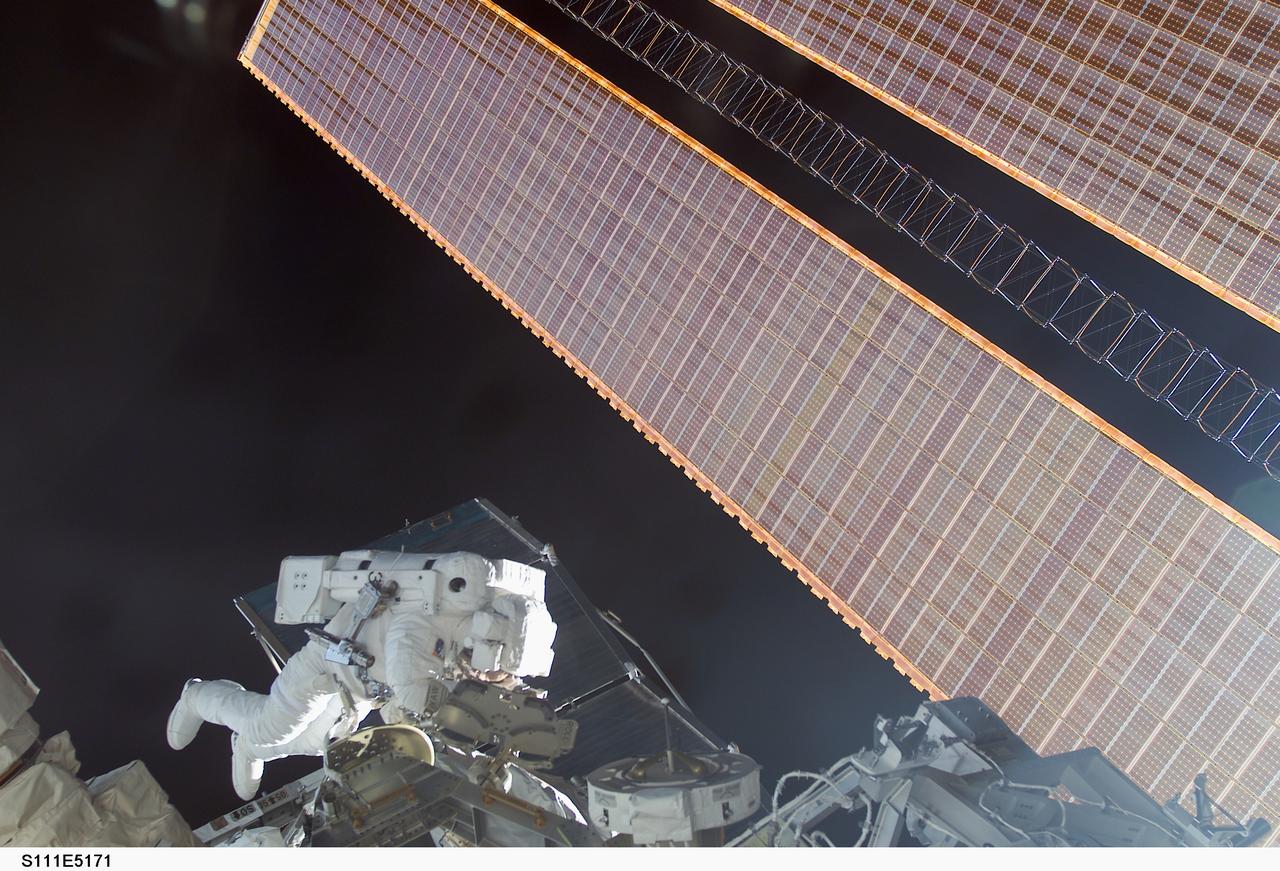
STS111-E-5171 (11 June 2002) --- Astronaut Philippe Perrin, mission specialist representing CNES, the French Space Agency, participates in the second scheduled session of extravehicular activity (EVA) for the STS-111 mission. During the spacewalk, Perrin and Chang-Diaz attached power, data and video cables from the International Space Station (ISS) to the Mobile Base System (MBS) and used a power wrench to complete the attachment of the MBS onto the Mobile Transporter (MT).
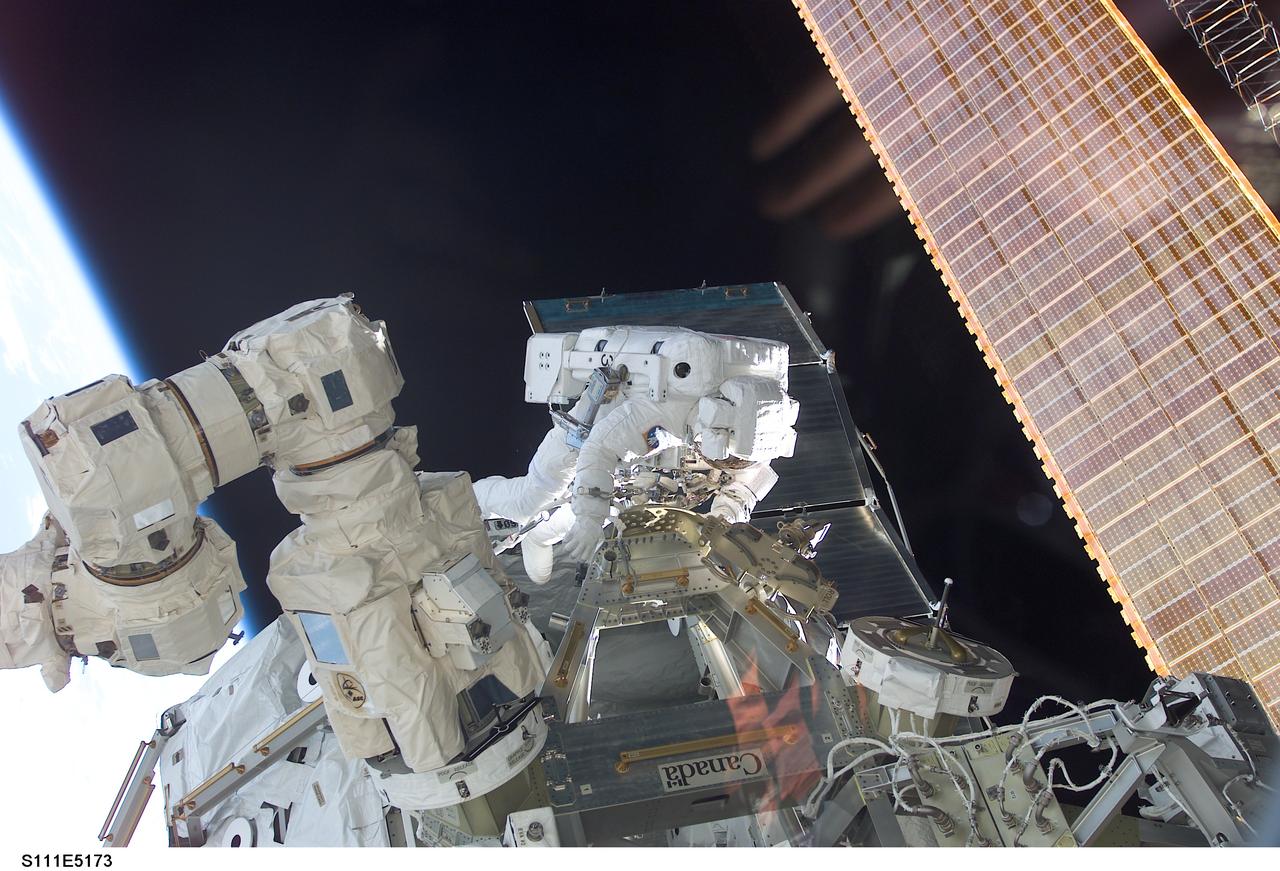
STS111-E-5173 (11 June 2002) --- Astronaut Philippe Perrin, mission specialist representing CNES, the French Space Agency, participates in the second scheduled session of extravehicular activity (EVA) for the STS-111 mission. During the spacewalk, Perrin and Chang-Diaz attached power, data and video cables from the International Space Station (ISS) to the Mobile Base System (MBS) and used a power wrench to complete the attachment of the MBS onto the Mobile Transporter (MT).
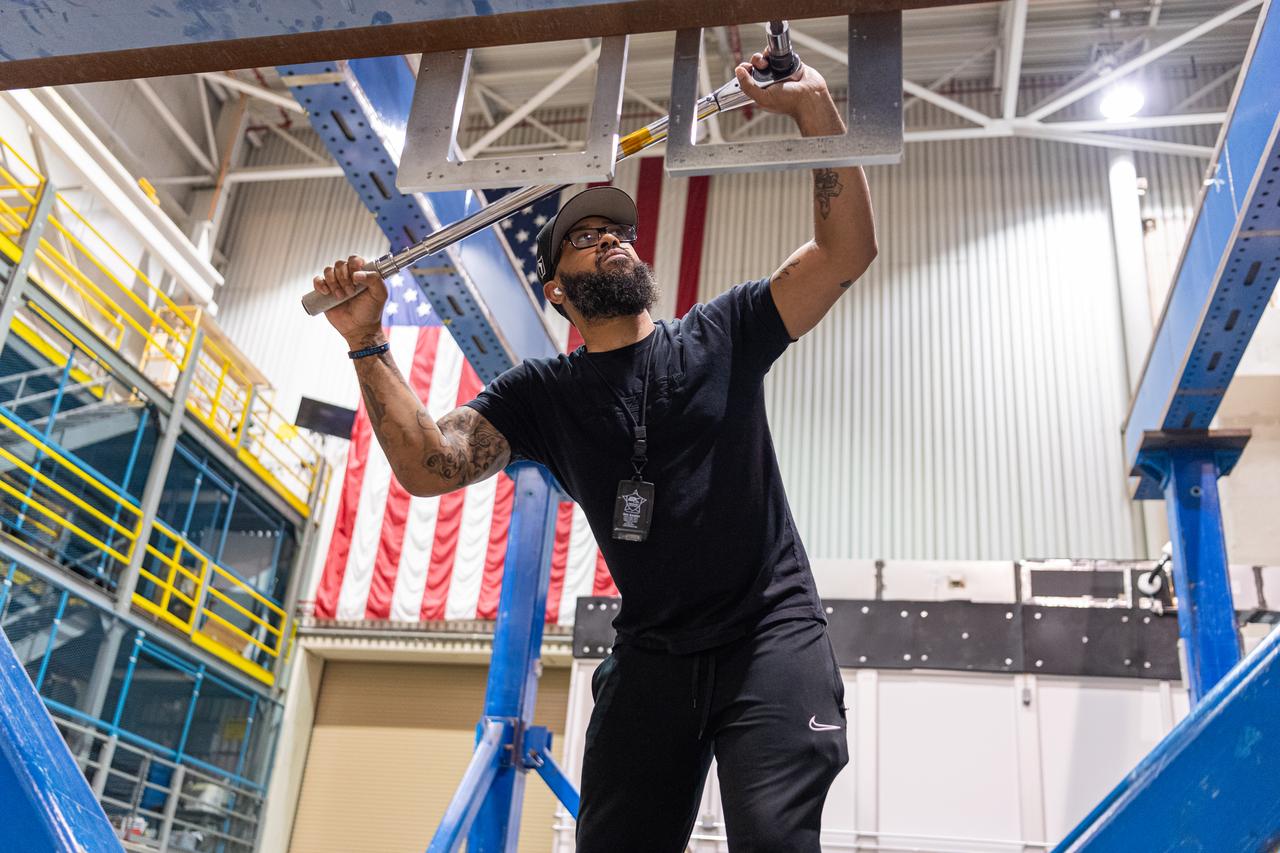
Mechanical engineering and integration technician Ivan Pratt installs brackets onto the static load testing platform in preparation of an OSAM-1 ground support equipment proof test at Goddard Space Flight Center, Greenbelt Md., July 19, 2023. This photo has been reviewed by OSAM1 project management and the Export Control Office and is released for public view. NASA/Mike Guinto
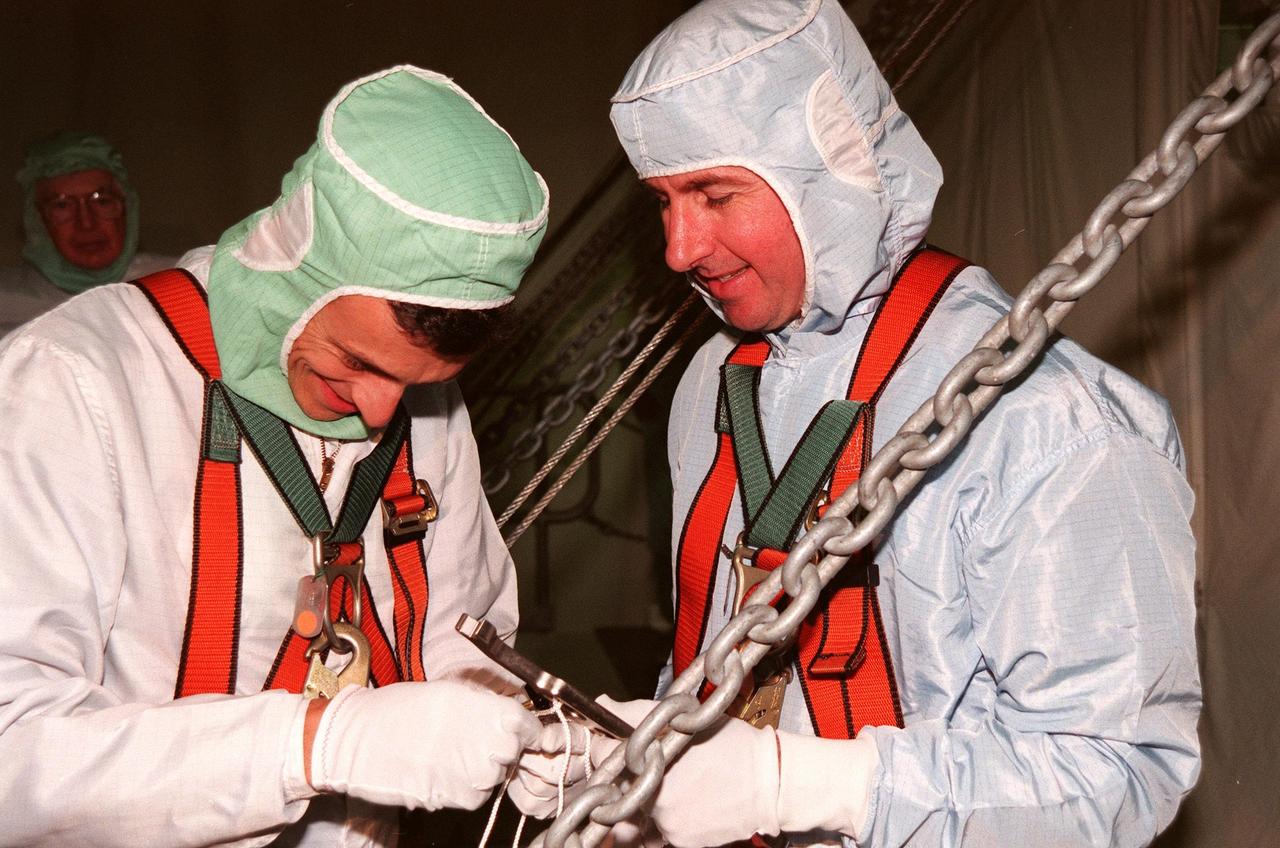
During the Crew Equipment Interface Test (CEIT) in the payload bay of Discovery, STS-95 Mission Specialist Pedro Duque (left), of the European Space Agency, tethers a wrench held by Mission Specialist Stephen K. Robinson (right) that they will use during the mission. The CEIT gives astronauts an opportunity for a hands-on look at the payloads and equipment with which they will be working on orbit. The launch of the STS-95 mission is scheduled for Oct. 29, 1998. The mission includes research payloads such as the Spartan solar-observing deployable spacecraft, the Hubble Space Telescope Orbital Systems Test Platform, the International Extreme Ultraviolet Hitchhiker, as well as the SPACEHAB single module with experiments on space flight and the aging process
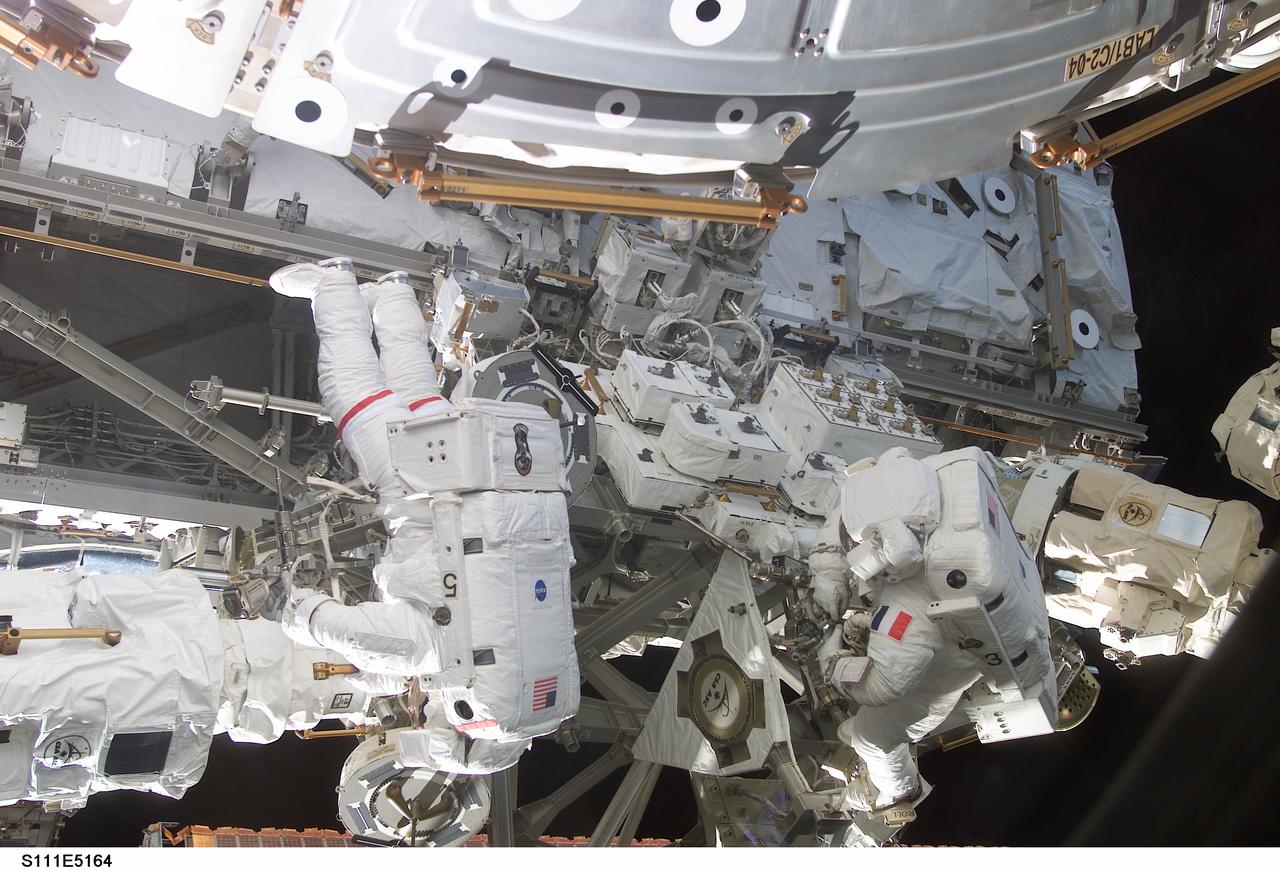
STS111-E-5164 (11 June 2002) --- Astronauts Franklin R. Chang-Diaz (left) and Philippe Perrin, both STS-111 mission specialists, work in tandem on the second scheduled session of extravehicular activity (EVA) for the STS-111 mission. During the spacewalk, Chang-Diaz and Perrin attached power, data and video cables from the International Space Station (ISS) to the Mobile Base System (MBS) and used a power wrench to complete the attachment of the MBS onto the Mobile Transporter (MT). Perrin represents CNES, the French Space Agency.
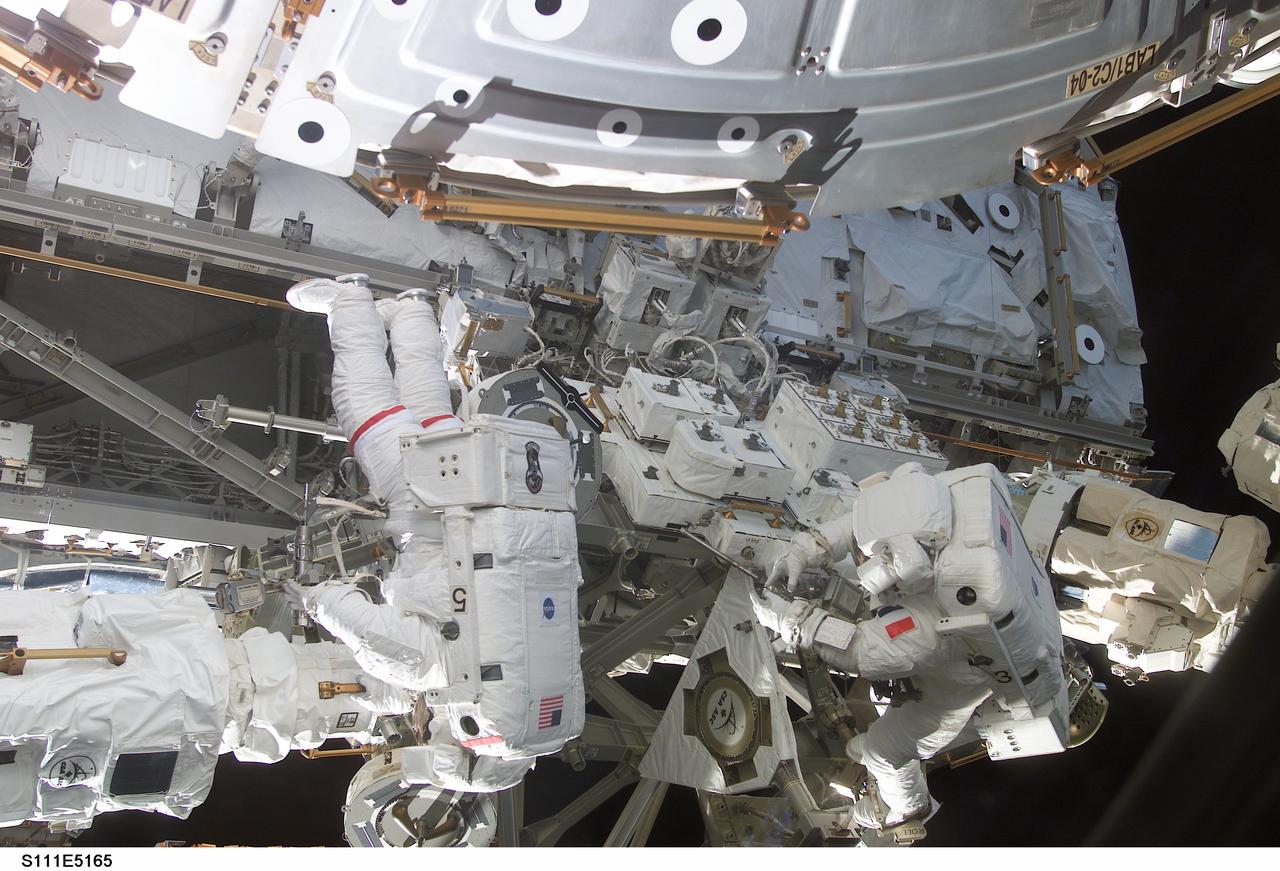
STS111-E-5165 (11 June 2002) --- Astronauts Franklin R. Chang-Diaz (left) and Philippe Perrin, both STS-111 mission specialists, work in tandem on the second scheduled session of extravehicular activity (EVA) for the STS-111 mission. During the spacewalk, Chang-Diaz and Perrin attached power, data and video cables from the International Space Station (ISS) to the Mobile Base System (MBS) and used a power wrench to complete the attachment of the MBS onto the Mobile Transporter (MT). Perrin represents CNES, the French Space Agency.
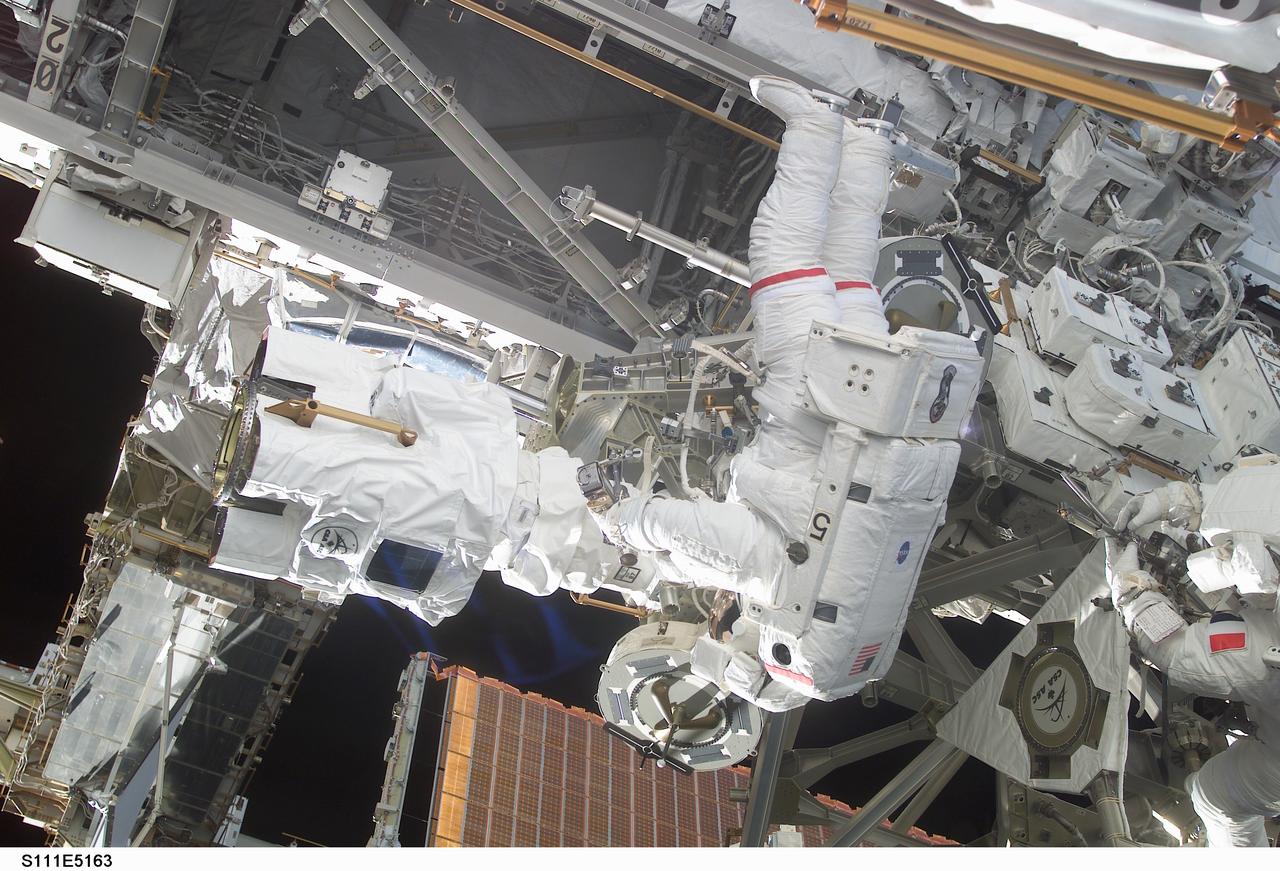
STS111-E-5163 (11 June 2002) --- Astronauts Franklin R. Chang-Diaz (center frame) and Philippe Perrin (partially obscured), both STS-111 mission specialists, work in tandem on the second scheduled session of extravehicular activity (EVA) for the STS-111 mission. During the spacewalk, Chang-Diaz and Perrin attached power, data and video cables from the International Space Station (ISS) to the Mobile Base System (MBS) and used a power wrench to complete the attachment of the MBS onto the Mobile Transporter (MT). Perrin represents CNES, the French Space Agency.
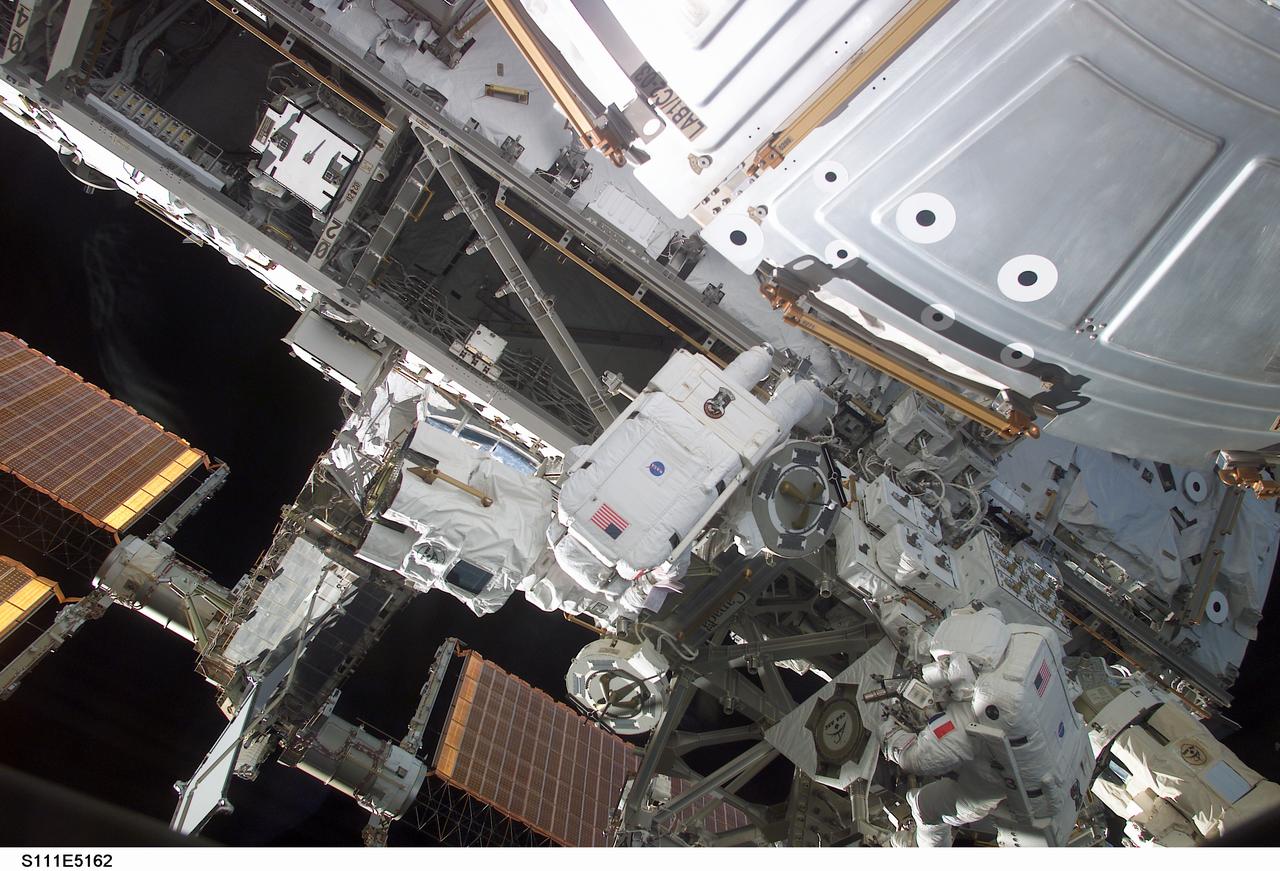
STS111-E-5162 (11 June 2002) --- Astronauts Franklin R. Chang-Diaz (center frame) and Philippe Perrin, both STS-111 mission specialists, work in tandem on the second scheduled session of extravehicular activity (EVA) for the STS-111 mission. During the spacewalk, Chang-Diaz and Perrin attached power, data and video cables from the International Space Station (ISS) to the Mobile Base System (MBS) and used a power wrench to complete the attachment of the MBS onto the Mobile Transporter (MT). Perrin represents CNES, the French Space Agency.
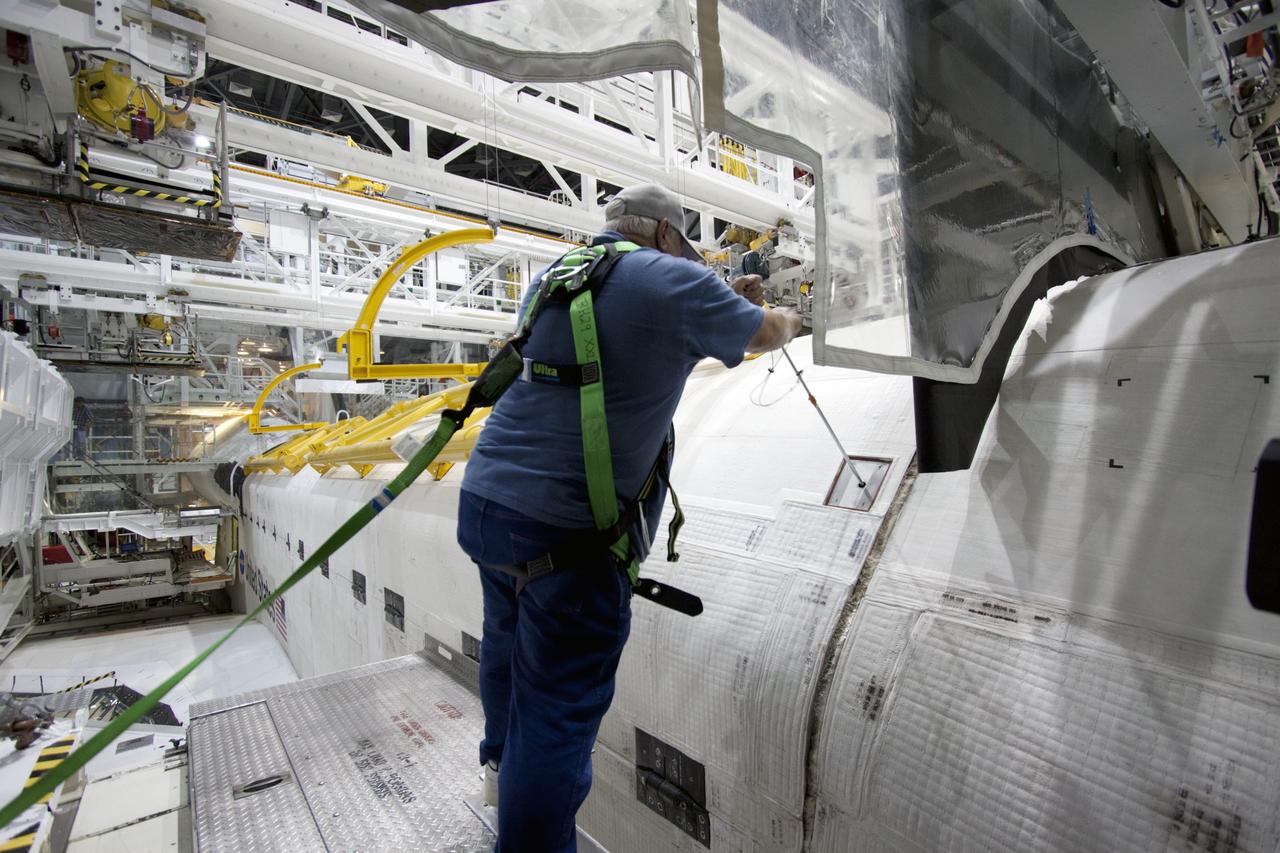
CAPE CANAVERAL, Fla. – Inside Orbiter Processing Facility-2 at NASA’s Kennedy Space Center in Florida, United Space Alliance technician Jim Reed uses a speed wrench in a gear box to lock the left payload bay door in place after it was closed. Both payload bay doors will be closed for the final time. The orbiter is undergoing final preparations for its transfer to the Kennedy Space Center Visitor complex targeted for November. The work is part of Transition and Retirement of the remaining shuttle. Atlantis is being prepared for public display at the visitor complex. Over the course of its 26-year career, Atlantis spent 293 days in space during 33 missions. For more information, visit http://www.nasa.gov/transition. Photo credit: NASA/Jim Grossmann
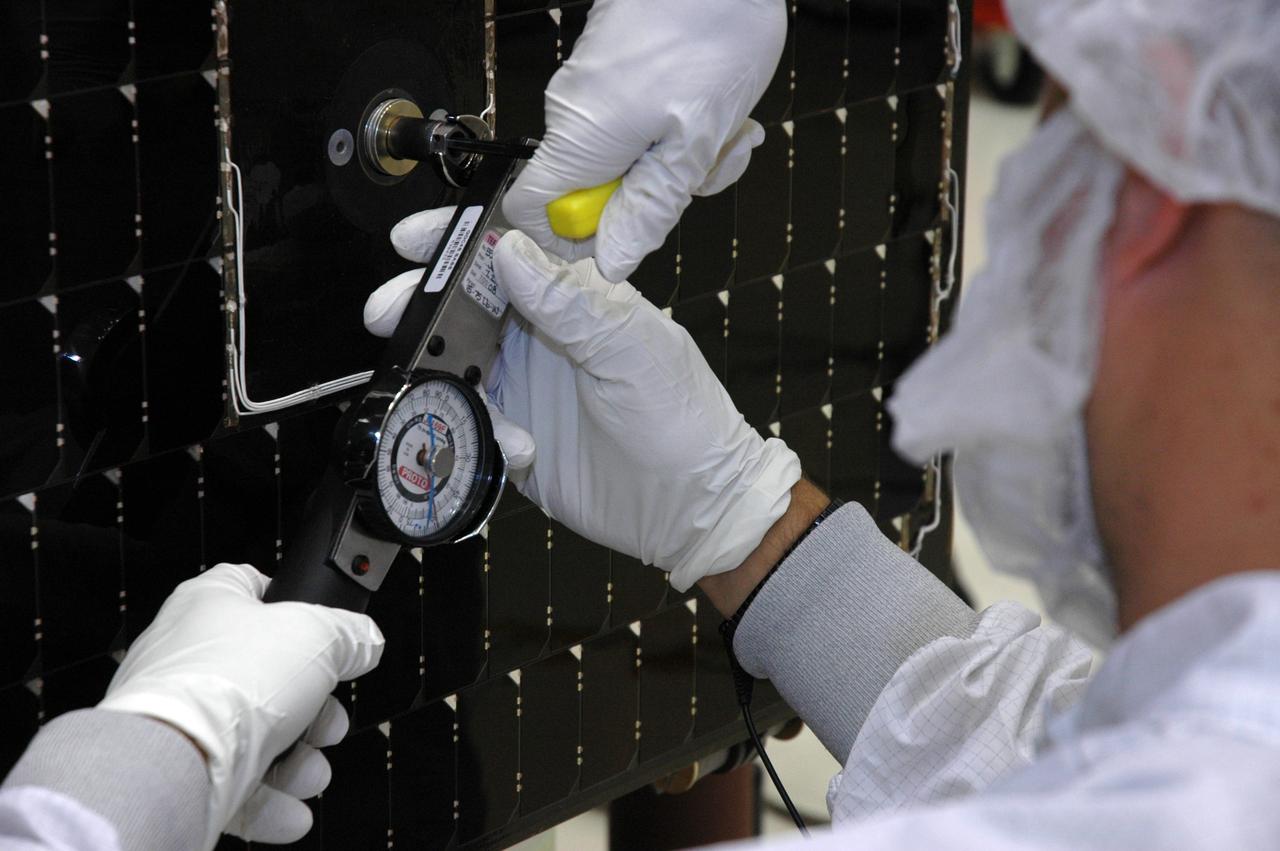
KENNEDY SPACE CENTER, FLA. - In the Astrotech payload processing facility, General Dynamics technicians use a socket wrench equipped with a torque meter to tighten the bolts holding one of twin solar arrays to NASA's Gamma-Ray Large Area Space Telescope, or GLAST. The telescope will launch aboard a Delta II rocket May 16 from Launch Pad 17-B on Cape Canaveral Air Force Station. A powerful space observatory, the GLAST will explore the most extreme environments in the universe, and answer questions about supermassive black hole systems, pulsars and the origin of cosmic rays. It also will study the mystery of powerful explosions known as gamma-ray bursts. Photo credit: NASA/Chris Rhodes
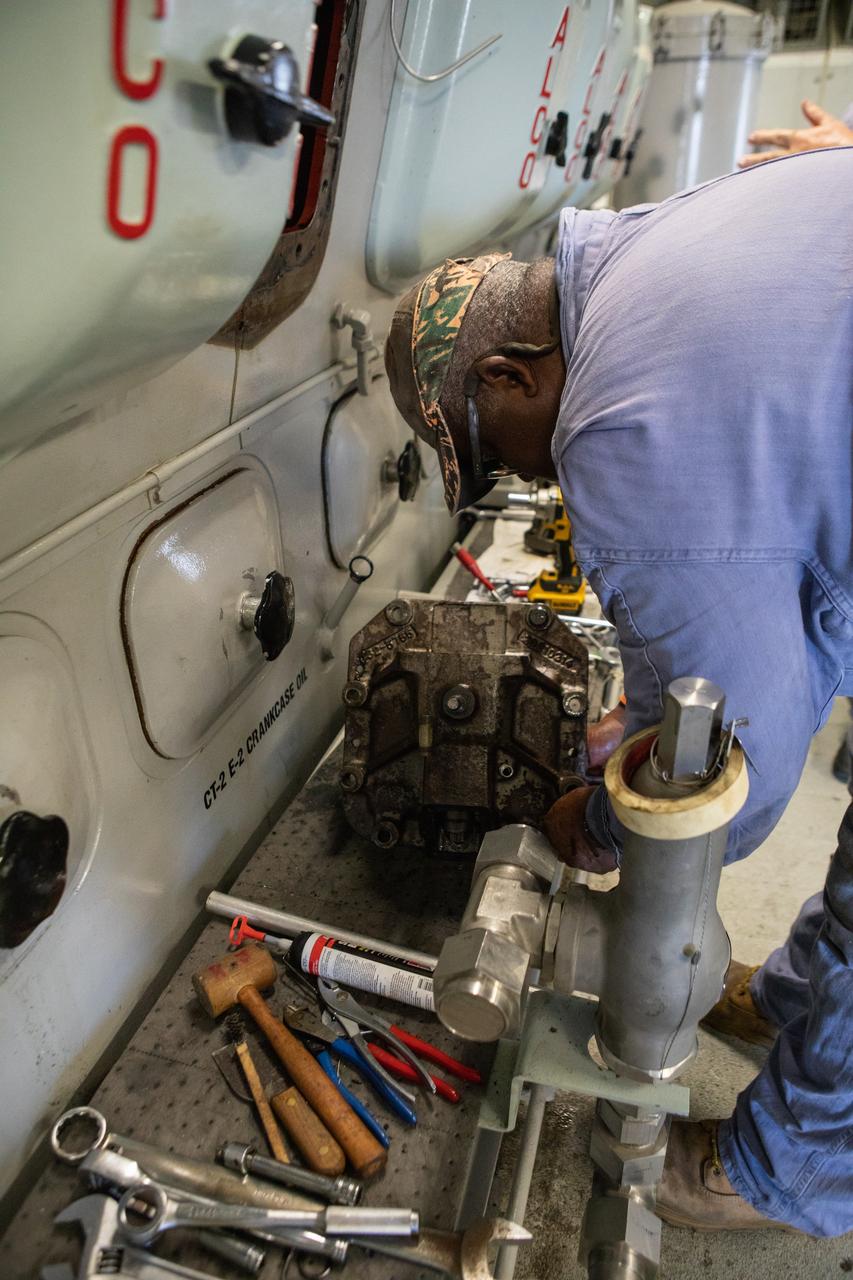
Pat Brown, a mechanical technician with Jacobs, has wrenches, pliers and other tools at the ready as he performs engine maintenance on NASA's crawler-transporter 2 on March 26, 2019, in the crawler yard located in Kennedy Space Center's Launch Complex 39 area. Recent engine work included rebuilding the vehicles’ fuel pump assemblies and installing new oil pumps that will help minimize future wear. This is one of two crawler-transporters that carried rockets and spacecraft, including the Apollo/Saturn V and space shuttle, from the Vehicle Assembly Building to the launch pad. NASA’s Exploration Ground Systems oversaw modifications and upgrades to crawler-transporter 2 so it can carry the mobile launcher and NASA's Space Launch System rocket, topped by the Orion spacecraft, to Launch Pad 39B for Exploration Mission-1.
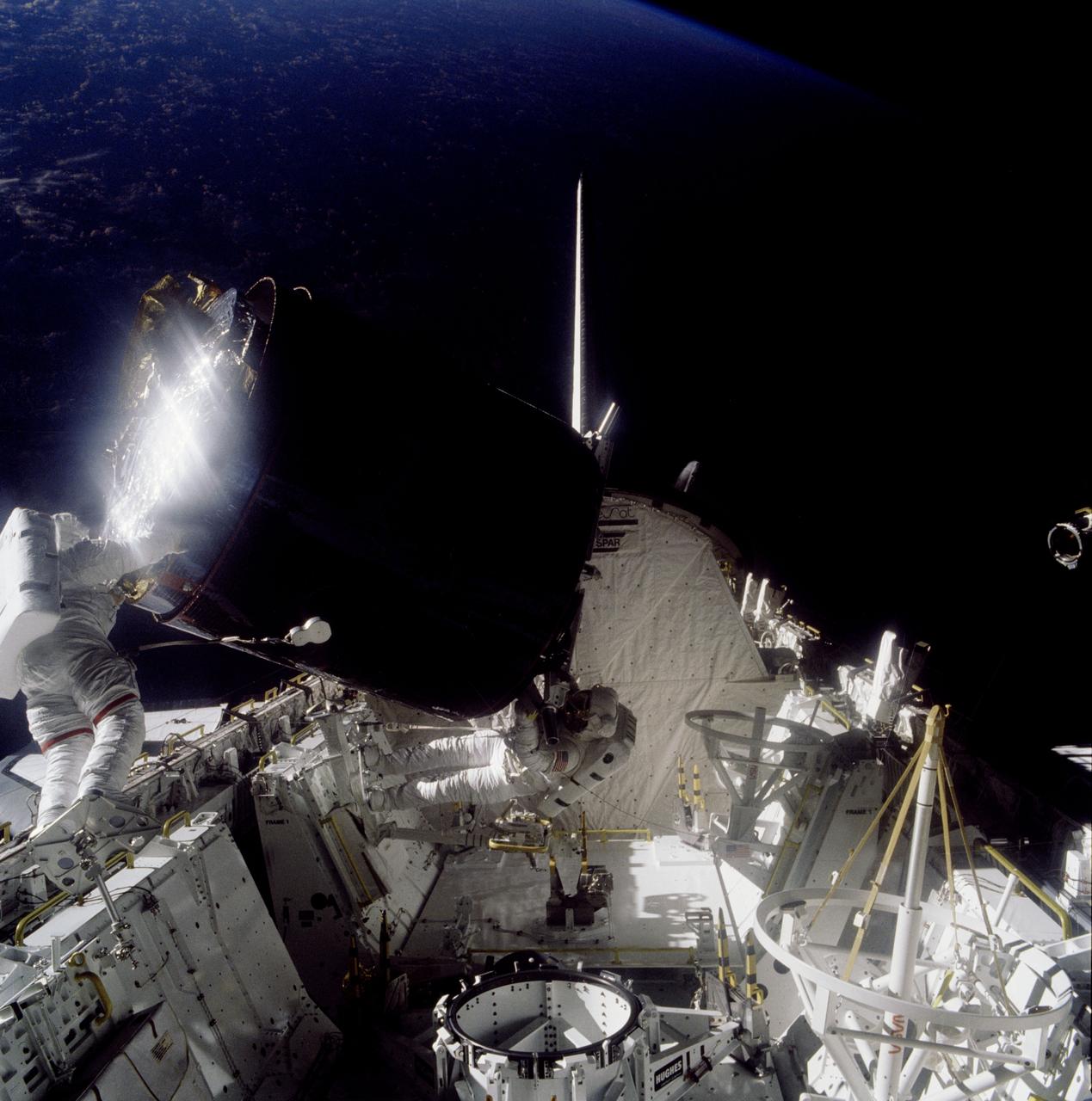
51A-41-058 (12 November 1984) --- Astronaut Joseph P. Allen IV appears to be lifting weights. Astronaut Dale A. Gardner holding on. Actually, Dr. Allen is the sole anchor for the top portion (and most of) the captured Palapa B-2 communications satellite during the Nov. 12 retrieval extravehicular activity (EVA) of the two mission specialists. This scene came near the end of the long-duration task. Gardner used a torque wrench to tighten clamps on an adapter used to secure the Palapa to its "parking place" in Discovery's cargo bay. Note the difference between the two stinger devices stowed on Challenger's port side (right side of frame). The one nearer the spacecraft's vertical stabilizer is spent, having been inserted by Allen earlier in the day to stabilize the communications satellite. The one nearer the camera awaited duty in two days when it would aid in the capture of the Westar VI satellite.

NASA Administrator Dan Goldin congratulates Phase I Shuttle/Mir Program Manager Frank Culbertson on the successful conclusion of Phase I of the joint U.S.-Russian International Space Station Program at KSC's Shuttle Landing Facility following Discovery's landing, as Mission Commander Charles J. Precourt (applauding) and the other members of the STS-91 flight crew look on. Culbertson is holding an American flag, a special wrench, and an optical disc, which he had just been presented by Goldin. The flag rode aboard Mir from the beginning of the Phase I program, the wrench was used on Mir and will be used on the International Space Station, and the optical disc holds data recorded on Mir. All of these items were brought back to Earth from Mir by the STS-91 crew. Discovery's main gear touchdown on Runway 15 was at 2:00:18 p.m. EDT on June 12, 1998, on orbit 155 of the mission. The wheels stopped at 2:01:22 p.m. EDT, for a total mission-elapsed time of 9 days, 19 hours, 55 minutes and 1 second. The 91st Shuttle mission was the 44th KSC landing in the history of the Space Shuttle program and the 15th consecutive landing at KSC. Besides Commander Precourt, the STS-91 flight crew also included Pilot Dominic L. Gorie and Mission Specialists Wendy B. Lawrence, Franklin R. Chang-Diaz, Janet Lynn Kavandi and Valery Victorovitch Ryumin of the Russian Space Agency. Astronaut Andrew S. W. Thomas also returned to Earth from Mir as an STS-91 crew member after 141 days in space
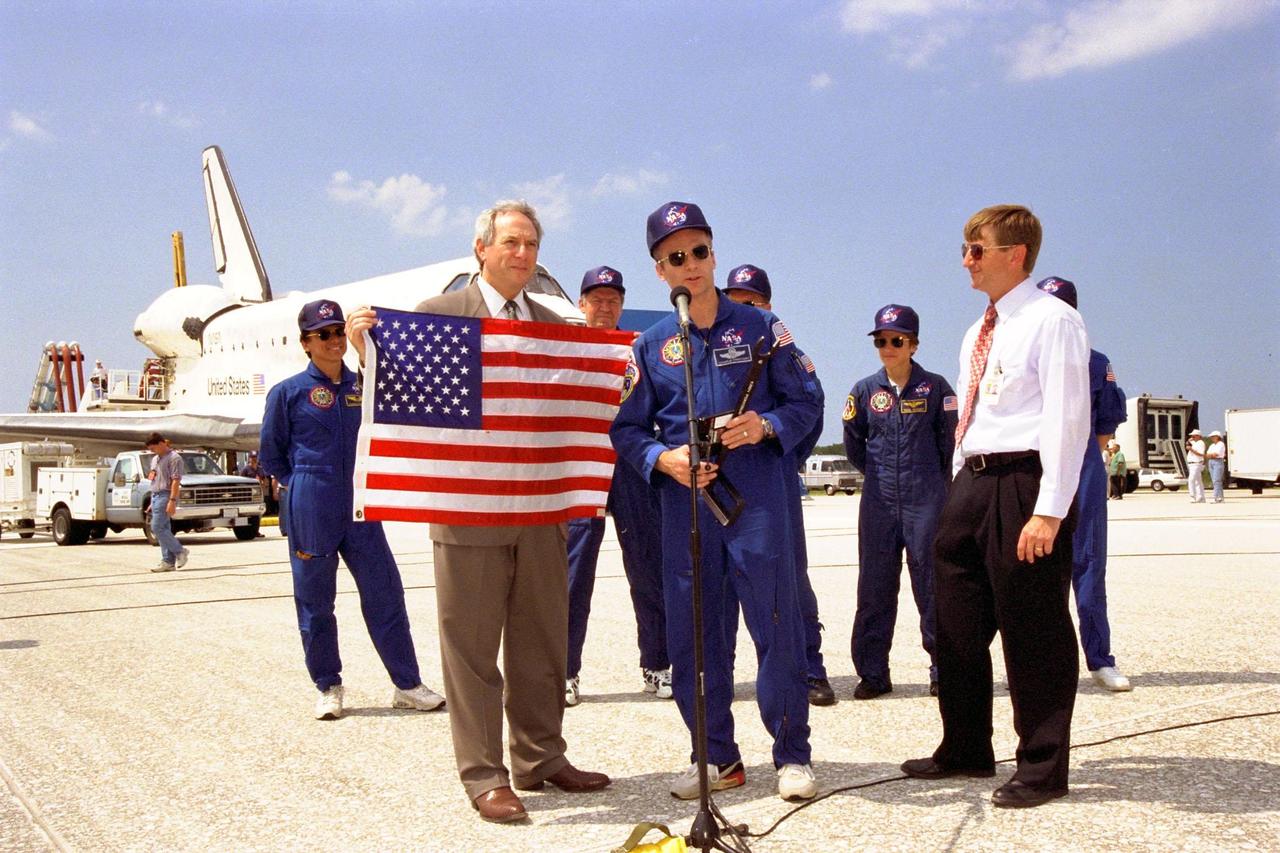
STS-91 Mission Commander Charles J. Precourt (at microphone) presents an American flag, a special wrench, and an optical disc to NASA Administrator Dan Goldin following Discovery's landing at KSC's Shuttle Landing Facility, as Phase I Shuttle/Mir Program Manager Frank Culbertson and the other members of the STS-91 flight crew look on. This landing not only concluded the STS-91 mission, but Phase I of the joint U.S.-Russian International Space Station Program as well. The flag rode aboard Mir from the beginning of the Phase I program, the wrench was used on Mir and will be used on the International Space Station, and the optical disc holds data recorded on Mir. All of these items were brought back to Earth from Mir by the STS-91 crew. Discovery's main gear touchdown on Runway 15 was at 2:00:18 p.m. EDT on June 12, 1998, on orbit 155 of the mission. The wheels stopped at 2:01:22 p.m. EDT, for a total mission-elapsed time of 9 days, 19 hours, 55 minutes and 1 second. The 91st Shuttle mission was the 44th KSC landing in the history of the Space Shuttle program and the 15th consecutive landing at KSC. Besides Commander Precourt, the STS-91 flight crew also included Pilot Dominic L. Gorie and Mission Specialists Wendy B. Lawrence, Franklin R. Chang-Diaz, Janet Lynn Kavandi and Valery Victorovitch Ryumin of the Russian Space Agency. Astronaut Andrew S. W. Thomas also returned to Earth from Mir as an STS-91 crew member after 141 days in space
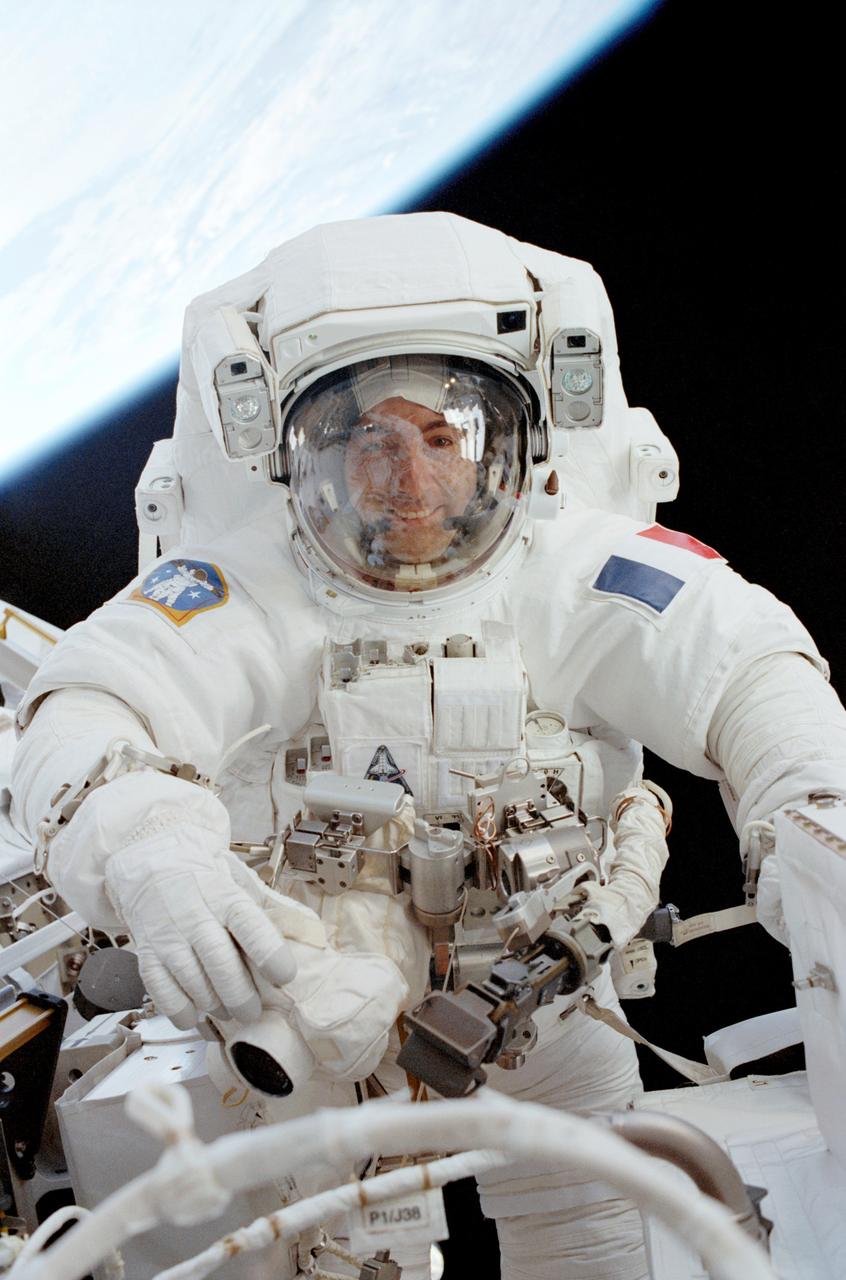
The STS-111 mission, the 14th Shuttle mission to visit the International Space Station (ISS), was launched on June 5, 2002 aboard the Space Shuttle Orbiter Endeavour. On board were the STS-111 and Expedition Five crew members. Astronauts Kerneth D. Cockrell, commander; Paul S. Lockhart, pilot; and mission specialists Franklin R. Chang-Diaz and Philippe Perrin were the STS-111 crew members. Expedition Five crew members included Cosmonaut Valeri G. Korzun, commander; Astronaut Peggy A. Whitson and Cosmonaut Sergei Y. Treschev, flight engineers. Three space walks enabled the STS-111 crew to accomplish the delivery and installation of the Mobile Remote Servicer Base System (MBS), an important part of the Station's Mobile Servicing System that allows the robotic arm to travel the length of the Station, which is necessary for future construction tasks. In this photograph, Astronaut Philippe Perrin, representing CNES, the French Space Agency, participates in the second scheduled EVA. During the space walk, Perrin and Chang-Diaz attached power, data, and video cables from the ISS to the MBS, and used a power wrench to complete the attachment of the MBS onto the Mobile Transporter (MT).