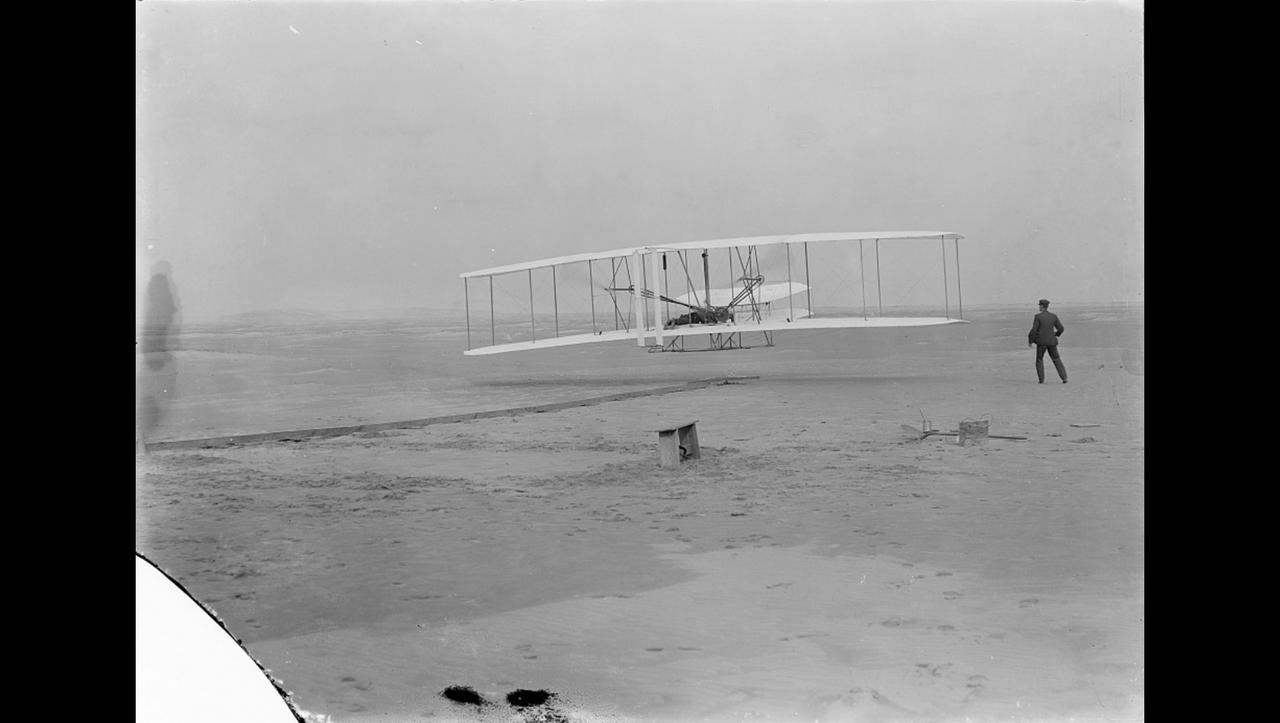
Orville Wright makes the first powered, controlled flight on Earth as his brother Wilbur looks on in this image taken at Kitty Hawk, North Carolina, on Dec. 17, 1903. Orville Wright covered 120 feet in 12 seconds during the first flight. The Wright brothers made four flights that day, each longer than the last. A small amount of the material that covered the wing of the aircraft, Flyer 1, during the first flight was flown to Mars aboard NASA's Ingenuity Mars Helicopter. An insulative tape was used to wrap the small swatch of fabric around a cable located underneath the helicopter's solar panel. Ingenuity is scheduled to attempt the first powered, controlled flight on another planet in April 2021. The Wrights had been using the same type of material – an unbleached muslin called "Pride of the West" – to cover their glider and aircraft wings since 1901. A different piece of the material, along with a small splinter of wood, from the Flyer 1 was flown to the Moon and back aboard Apollo 11. The image was taken by John Daniels, a member of the U.S. Life-Saving Station in Kill Devil Hills, North Carolina. Until the day of the flight, Daniels had never seen a camera. https://photojournal.jpl.nasa.gov/catalog/PIA24434
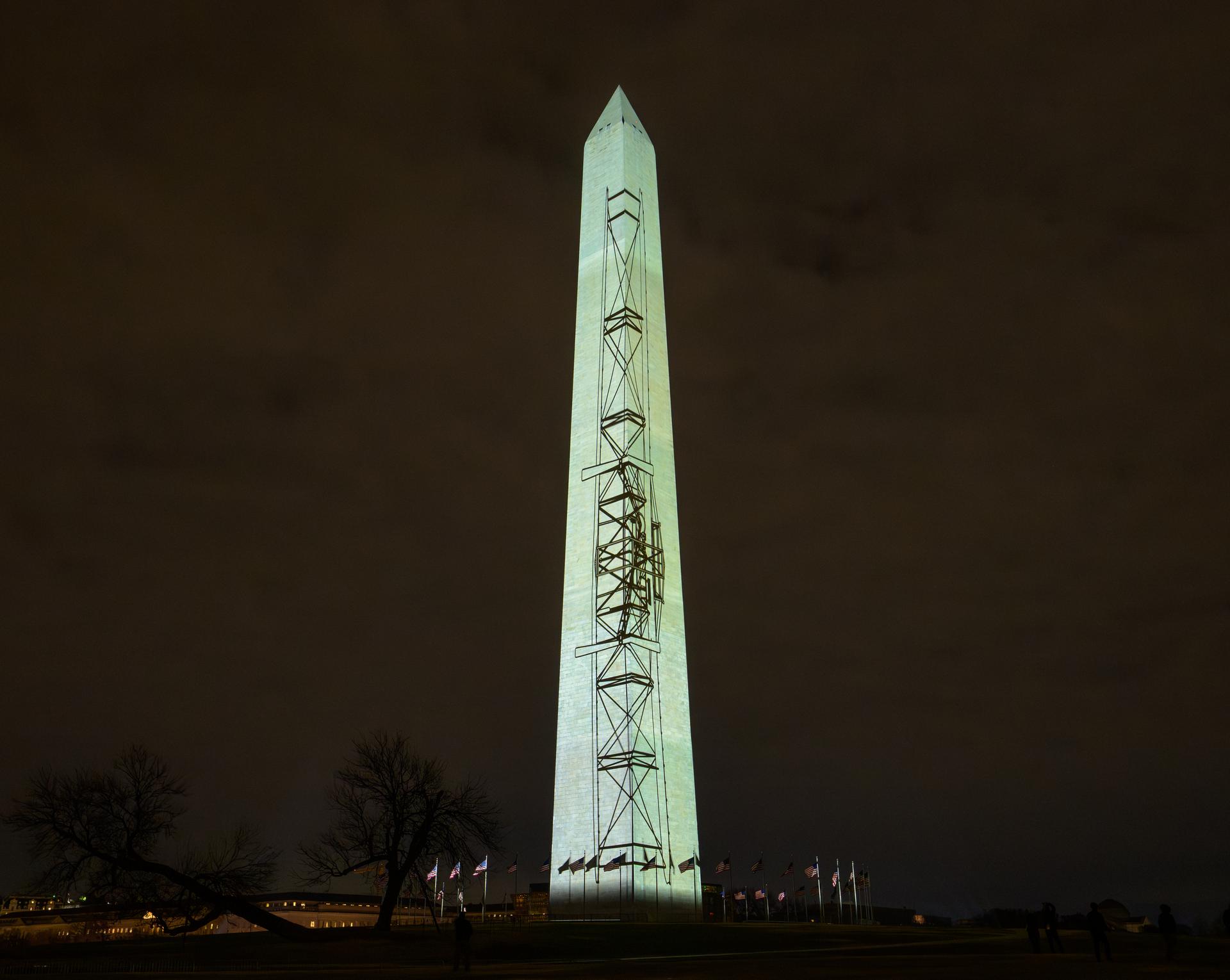
Images depicting the Wright brothers aircraft are projected onto the Washington Monument as part of an event to kick off the nation's 250th birthday year, Wednesday, Dec. 31, 2025, in Washington. Photo Credit: (NASA/Bill Ingalls)

NASA's Ingenuity Mars Helicopter carries a small swatch of muslin material from the lower-left wing of the Wright Brothers Flyer 1. Located on the underside of the helicopter's solar panel (the dark rectangle), the swatch is attached with dark orange polymide tape to a cable extending from the panel, and then further secured in place with white polyester cord used to bind cables together. A gray dot of epoxy at the intersection of the three wraps of cord prevents the lacing from loosening as the rotor blades (upper pair seen at bottom of image) rotate at up to 2,400 rpm. The entire process, from enclosing the material in the plastic to affixing it onto the helicopter took, approximately 30 minutes. The swatch of material from the Wright brothers' first airplane was obtained from the Carillon Historical Park, in Dayton, Ohio — home to the Wright Brothers National Museum. The image was taken in a clean room at NASA's Jet Propulsion Laboratory in Southern California on January 15, 2020. https://photojournal.jpl.nasa.gov/catalog/PIA24291
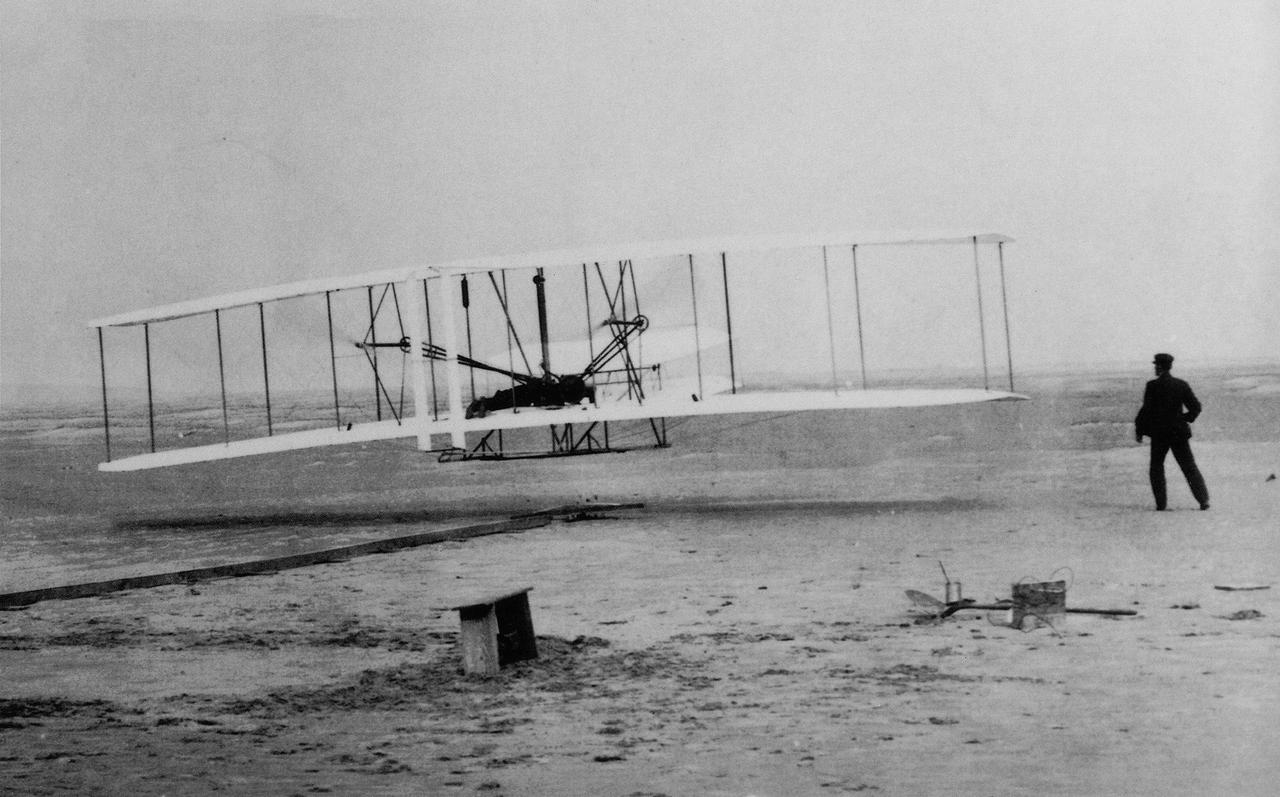
On December 17, 1903, two brothers from Dayton, Ohio, named Wilbur and Orville Wright, were successful in flying an airplane they built. Their powered aircraft flew for 12 seconds above the sand dunes of Kitty Hawk, North Carolina, making them the first men to pilot a heavier-than-air machine that took off on its own power, remained under control, and sustained flight.
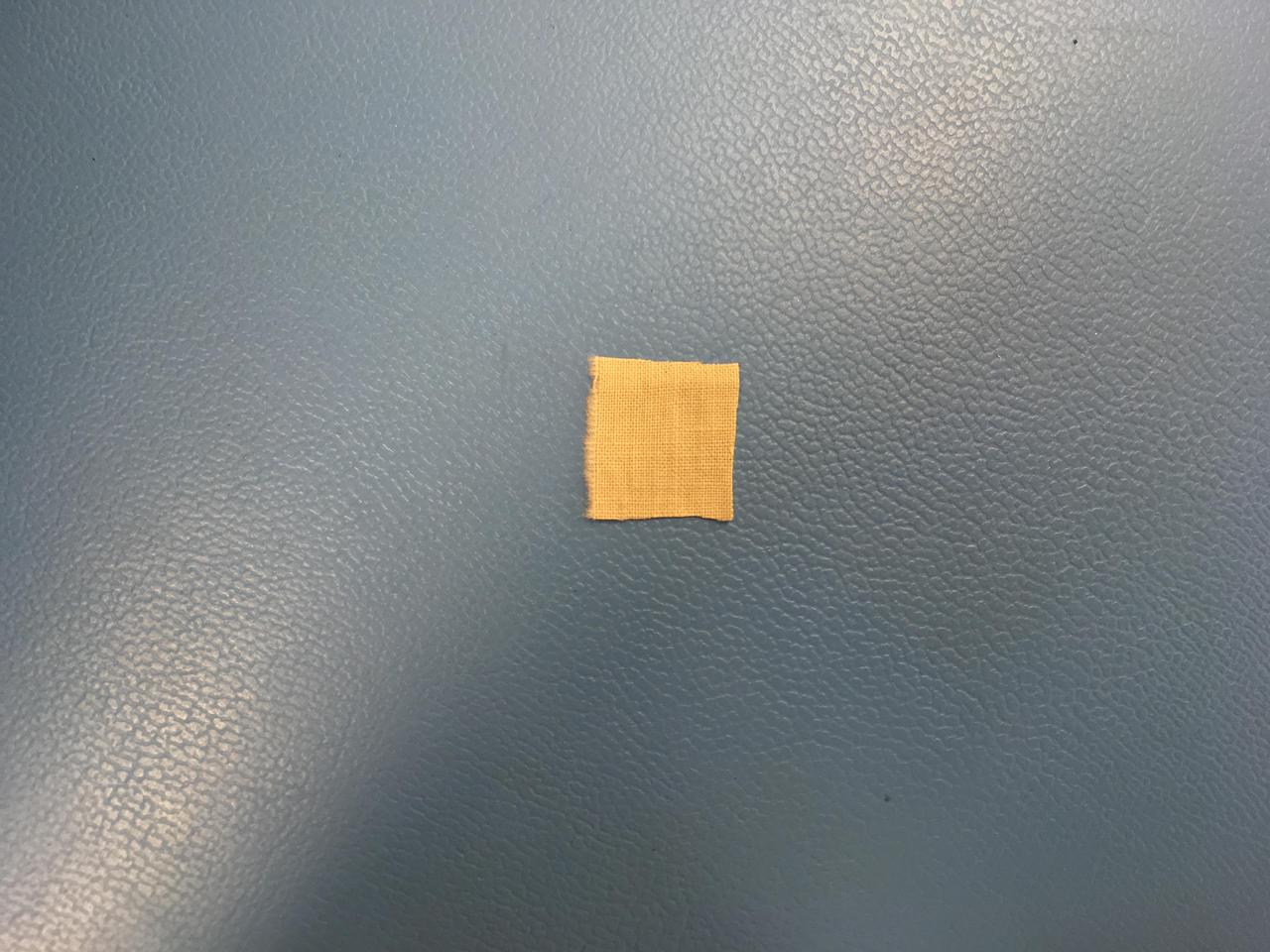
This 0.5-inch x 0.5-inch (1.3 x 1.3 centimeter) square of unbleached muslin material from the Wright brothers' first airplane was encapsulated in a protective polyamide film before being attached to a cable underneath the solar panel of NASA's Ingenuity Mars Helicopter. Procured by the Wrights from a local department store in downtown Dayton, Ohio, the cotton fabric (called "Pride of the West Muslin") was at the time mostly used for ladies undergarments. In the front parlor of their home, the Wrights cut the material into strips and used the family sewing machine to create wing coverings for their airplane Flyer 1, which achieved the first powered, controlled flight on Earth on Dec. 17, 1903. The swatch of material from the Wright brothers' first airplane was obtained from the Carillon Historical Park, in Dayton, Ohio — home to the Wright Brothers National Museum. The image was taken in a clean room at NASA's Jet Propulsion Laboratory on January 15, 2020. https://photojournal.jpl.nasa.gov/catalog/PIA24438
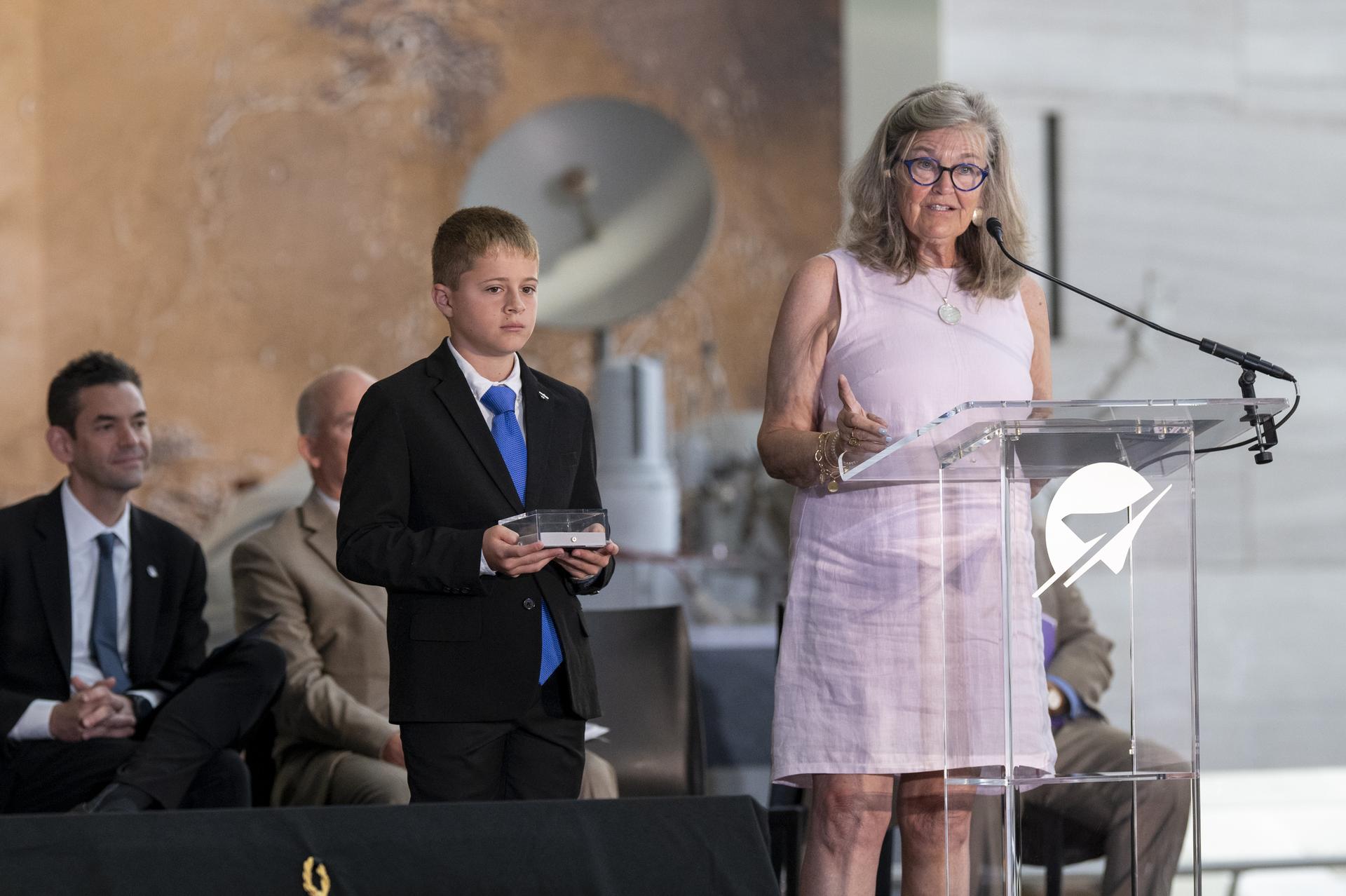
Wright brother’s great-grandniece Amanda Wright Lane, right, delivers remarks alongside her grandson Wren Wright Banhos, left, after accepting a swatch of muslin fabric from the original Wright Flyer the Wright Brothers used to make the first powered flight in 1903 on behalf of the Smithsonian’s National Air and Space Museum during the museum’s rededication ceremony Wednesday, July 1, 2026, in Washington. The swatch is being returned to the museum after having been flown aboard NASA’s Artemis II mission around the Moon and back to Earth in April 2026. Photo Credit: (NASA/Keegan Barber)
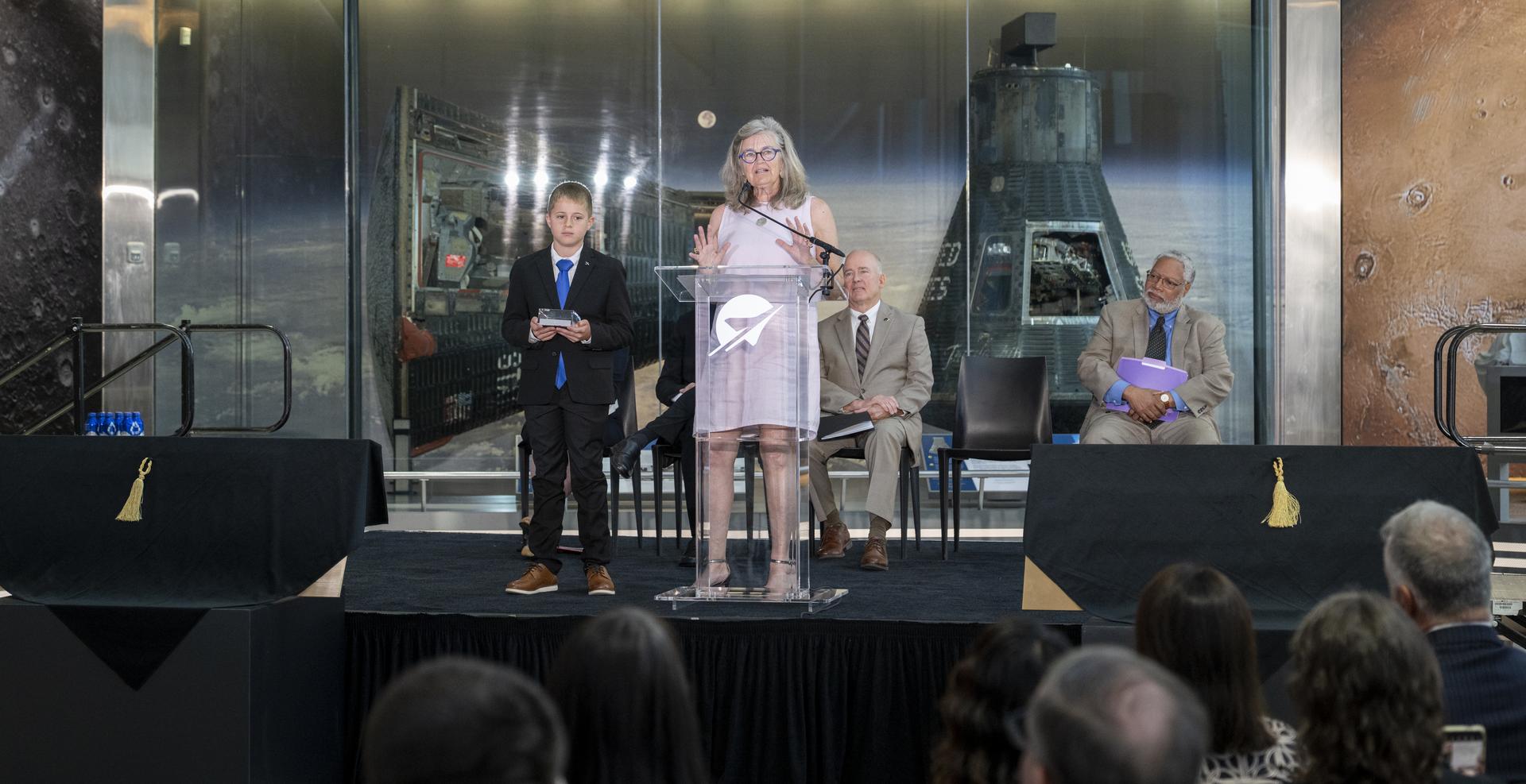
Wright brother’s great-grandniece Amanda Wright Lane, right, delivers remarks alongside her grandson Wren Wright Banhos, left, after accepting a swatch of muslin fabric from the original Wright Flyer the Wright Brothers used to make the first powered flight in 1903 on behalf of the Smithsonian’s National Air and Space Museum during the museum’s rededication ceremony Wednesday, July 1, 2026, in Washington. The swatch is being returned to the museum after having been flown aboard NASA’s Artemis II mission around the Moon and back to Earth in April 2026. Photo Credit: (NASA/Keegan Barber)

Warren Randolph, deputy executive director of the Accident Investigation and Prevention for Aviation Safety at the FAA, left, Reggie Brothers, operating partner at AE Industrial Partners, center, and Shelley Wright, professor of Physics at the University of California San Diego's Center for Astrophysics and Space Studies, right, are seen during a public meeting of NASA’s unidentified anomalous phenomena (UAP) independent study team, Wednesday, May 31, 2023 at the Mary W. Jackson NASA Headquarters building in Washington. The UAP independent study team is a counsel of 16 community experts across diverse areas on matters relevant to potential methods of study for unidentified anomalous phenomena. NASA commissioned the nine-month study to examine UAP from a scientific perspective and create a roadmap for how to use data and the tools of science to move our understanding of UAP forward. Photo Credit: (NASA/Joel Kowsky)
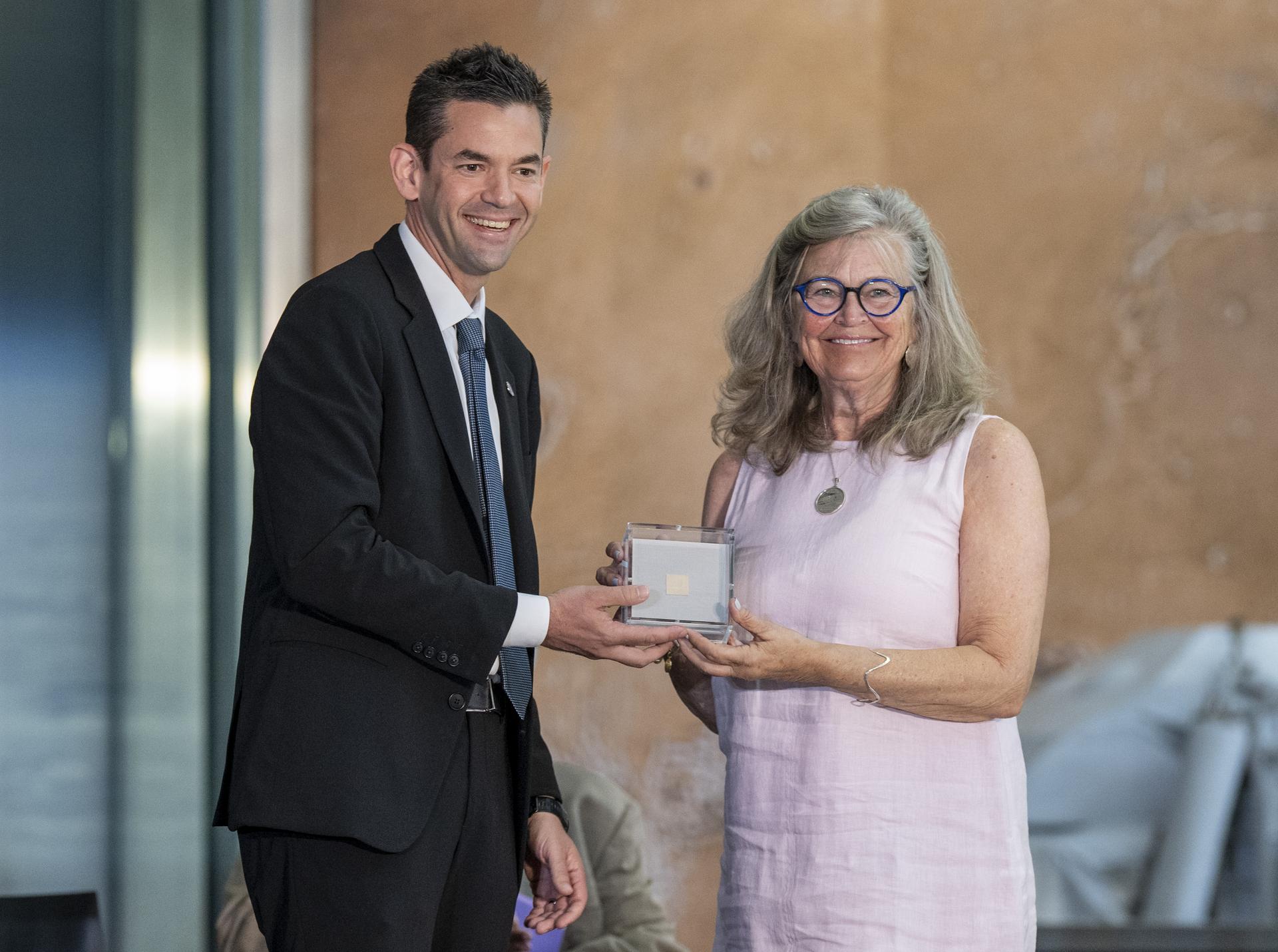
NASA Administrator Jared Isaacman presents a swatch of muslin fabric from the original Wright Flyer the Wright Brothers used to make the first powered flight in 1903 to great-grandniece Amanda Wright Lane during the Smithsonian’s National Air and Space Museum rededication ceremony Wednesday, July 1, 2026, in Washington. The swatch is being returned to the museum after having been flown aboard NASA’s Artemis II mission around the Moon and back to Earth in April 2026. Photo Credit: (NASA/Keegan Barber)
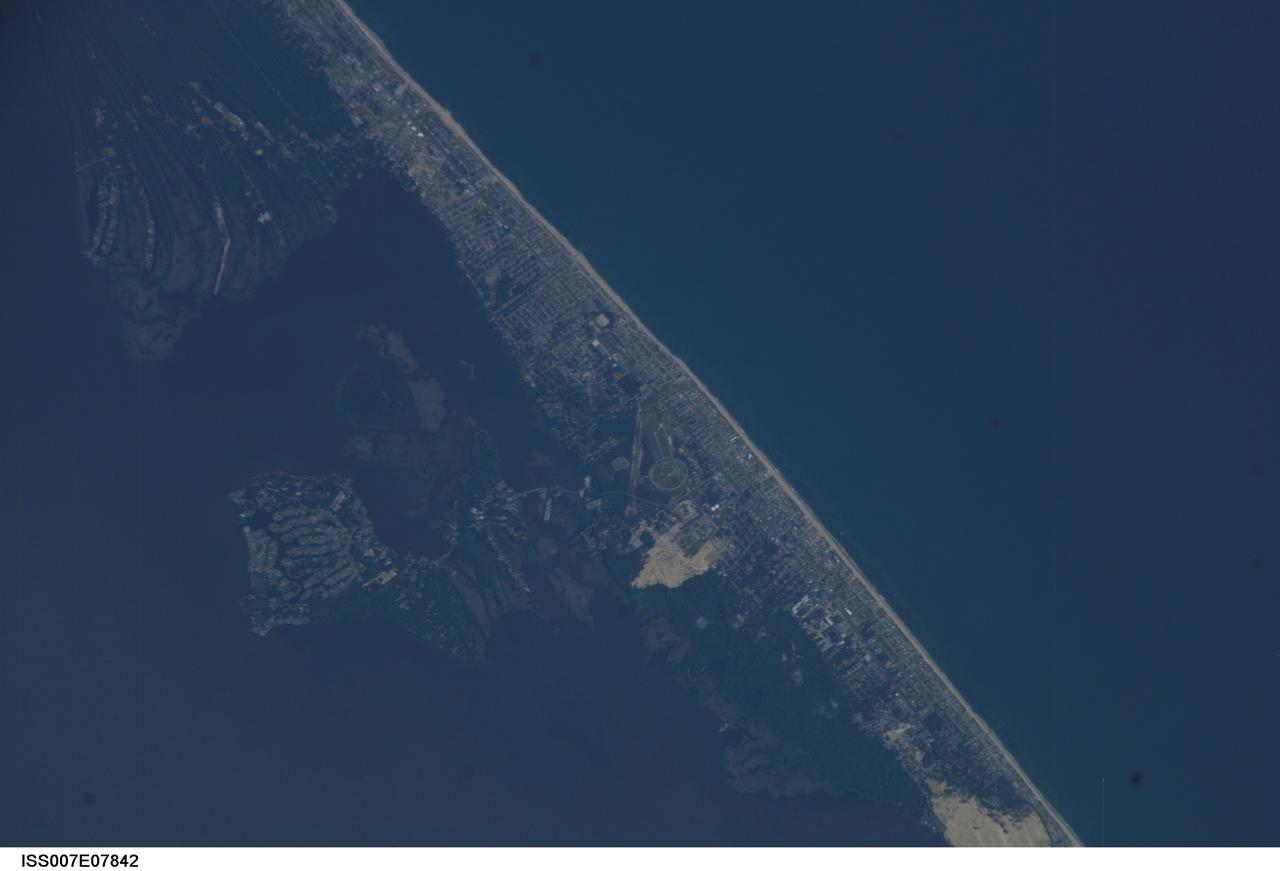
ISS007-E-07842 (22 June 2003) --- This image, photographed by an Expedition 7 crewmember onboard the International Space Station (ISS), features Kitty Hawk, N.C., on North Carolina’s Outer Banks. The view shows part of Pamlico Sound and the Atlantic side of the banks as well. This year the world celebrates a century of human flight with the 100th anniversary of the Wright Brothers' first flight at Kitty Hawk. The Wrights used the Outer Banks’ prevailing winds and the altitude gained by climbing a 90-foot hill (Kill Devil Hill) to successfully demonstrate powered flight. The large circle on the image is a road that wraps around Kill Devil Hill, now part of the Wright Brothers National Memorial.
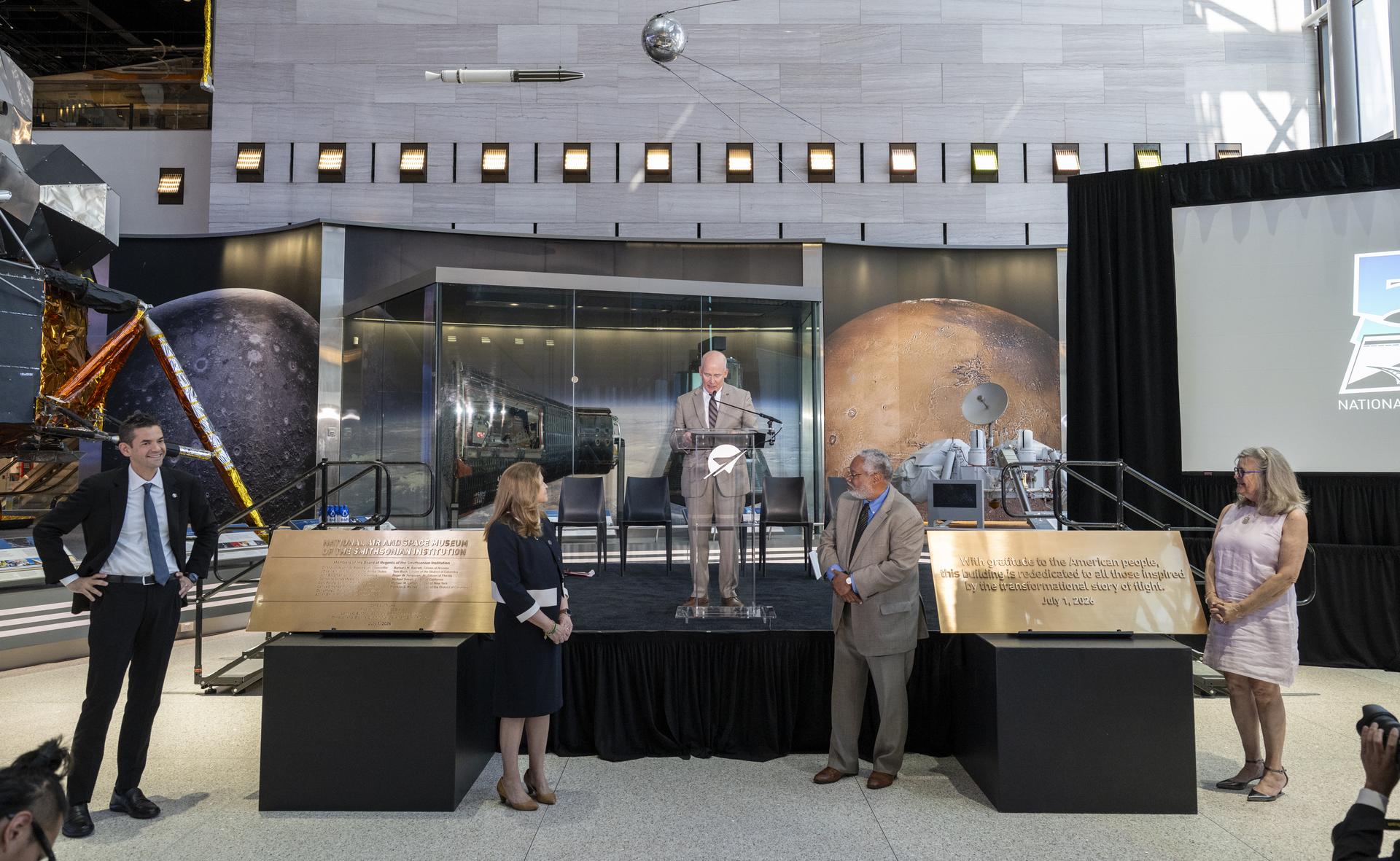
From left to right, NASA Administrator Jared Isaacman, Under Secretary for Science and Research at the Smithsonian Institution Ellen Stofan, Director of the Smithsonian’s National Air and Space Museum Christopher Browne, Secretary of the Smithsonian Institution Lonnie G. Bunch III, and Wright brother’s great-grandniece Amanda Wright Lane are seen after unveiling plaques during the Smithsonian’s National Air and Space Museum rededication ceremony Wednesday, July 1, 2026, in Washington. Photo Credit: (NASA/Keegan Barber)
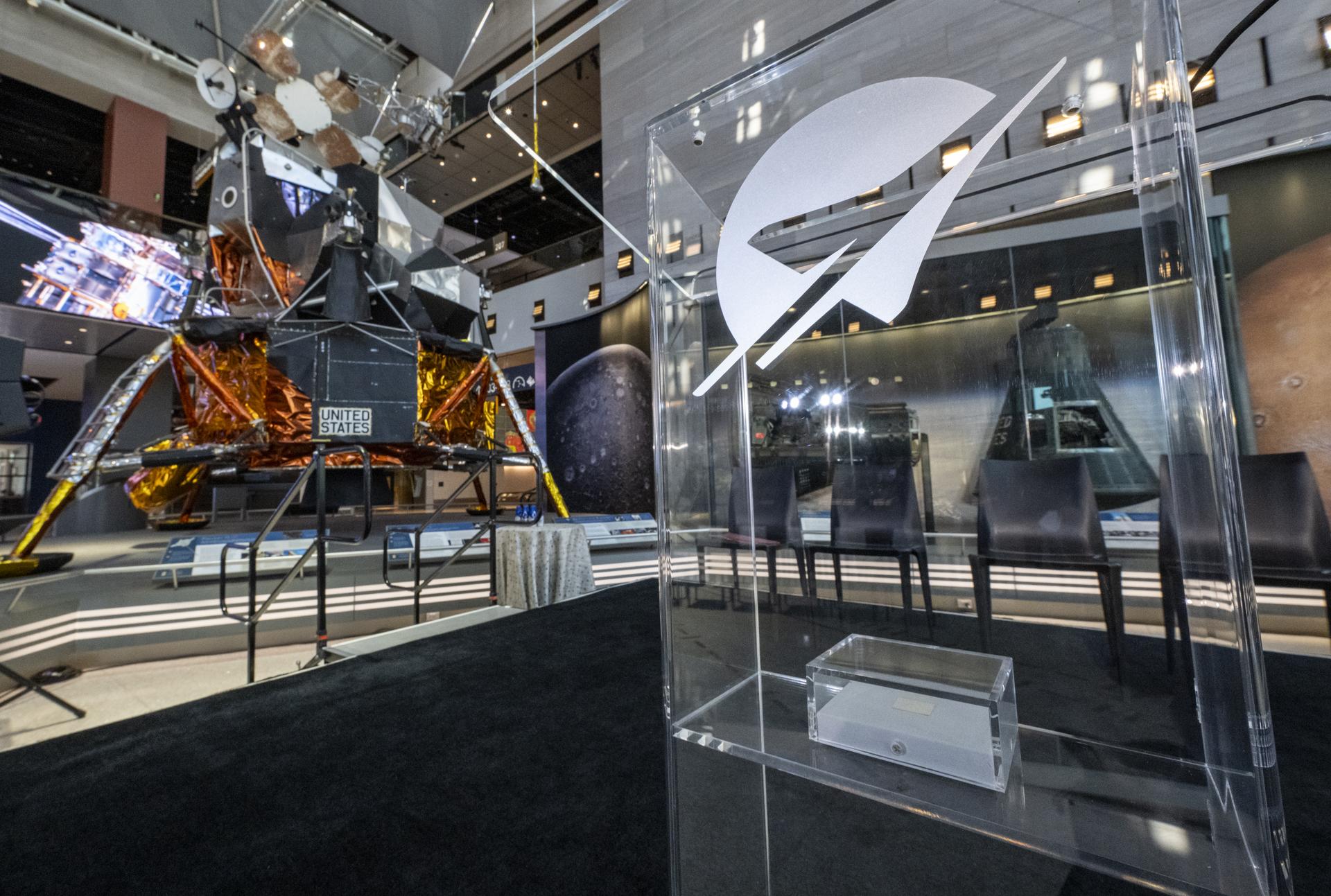
A swatch of muslin fabric from the original Wright Flyer the Wright Brothers used to make the first powered flight in 1903 is seen prior to the Smithsonian’s National Air and Space Museum rededication ceremony Wednesday, July 1, 2026, in Washington. The swatch is being returned to the museum after having been flown aboard NASA’s Artemis II mission around the Moon and back to Earth in April 2026. Photo Credit: (NASA/Keegan Barber)
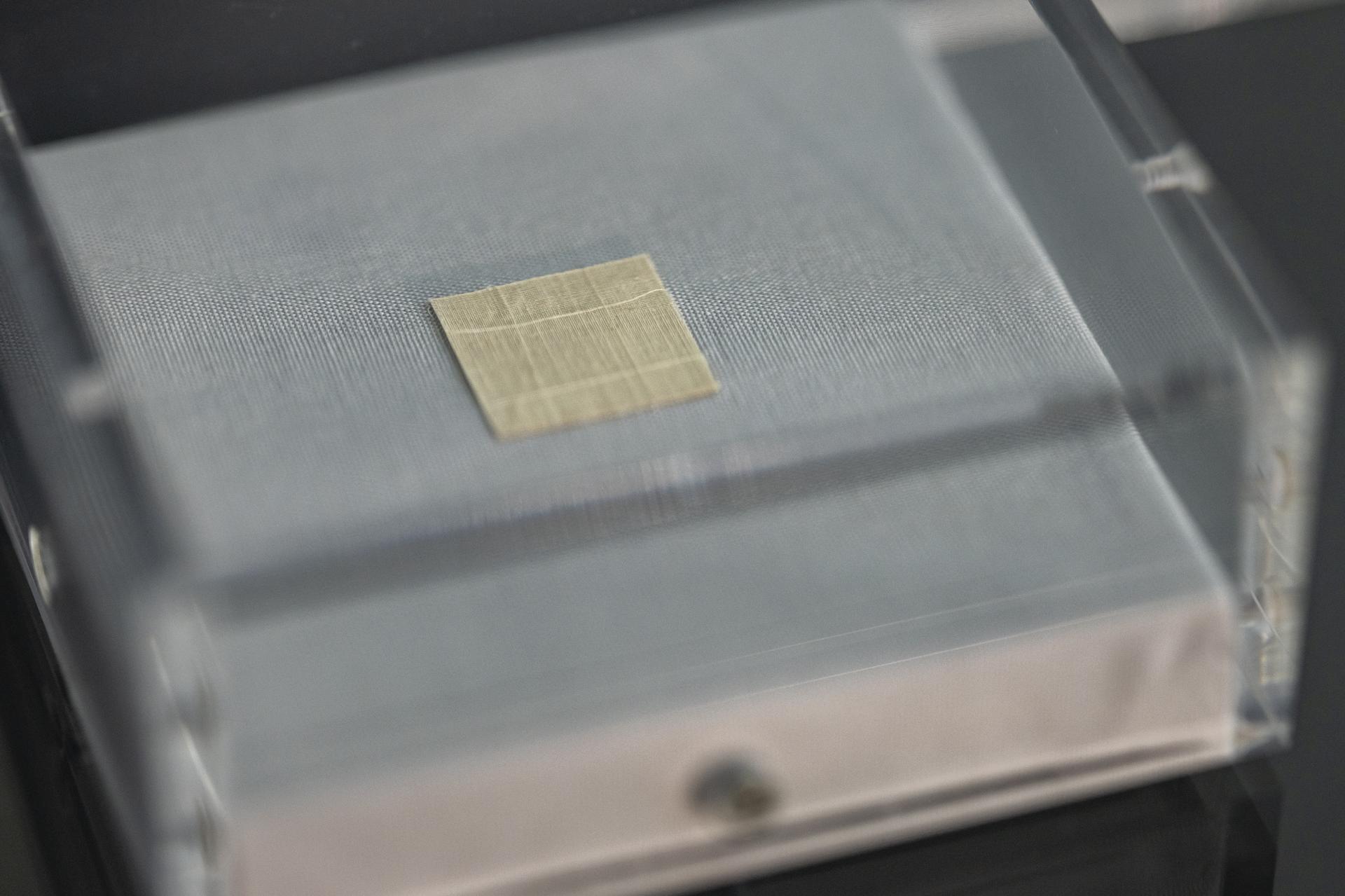
A swatch of muslin fabric from the original Wright Flyer the Wright Brothers used to make the first powered flight in 1903 is seen prior to the Smithsonian’s National Air and Space Museum rededication ceremony Wednesday, July 1, 2026, in Washington. The swatch is being returned to the museum after having been flown aboard NASA’s Artemis II mission around the Moon and back to Earth in April 2026. Photo Credit: (NASA/Keegan Barber)
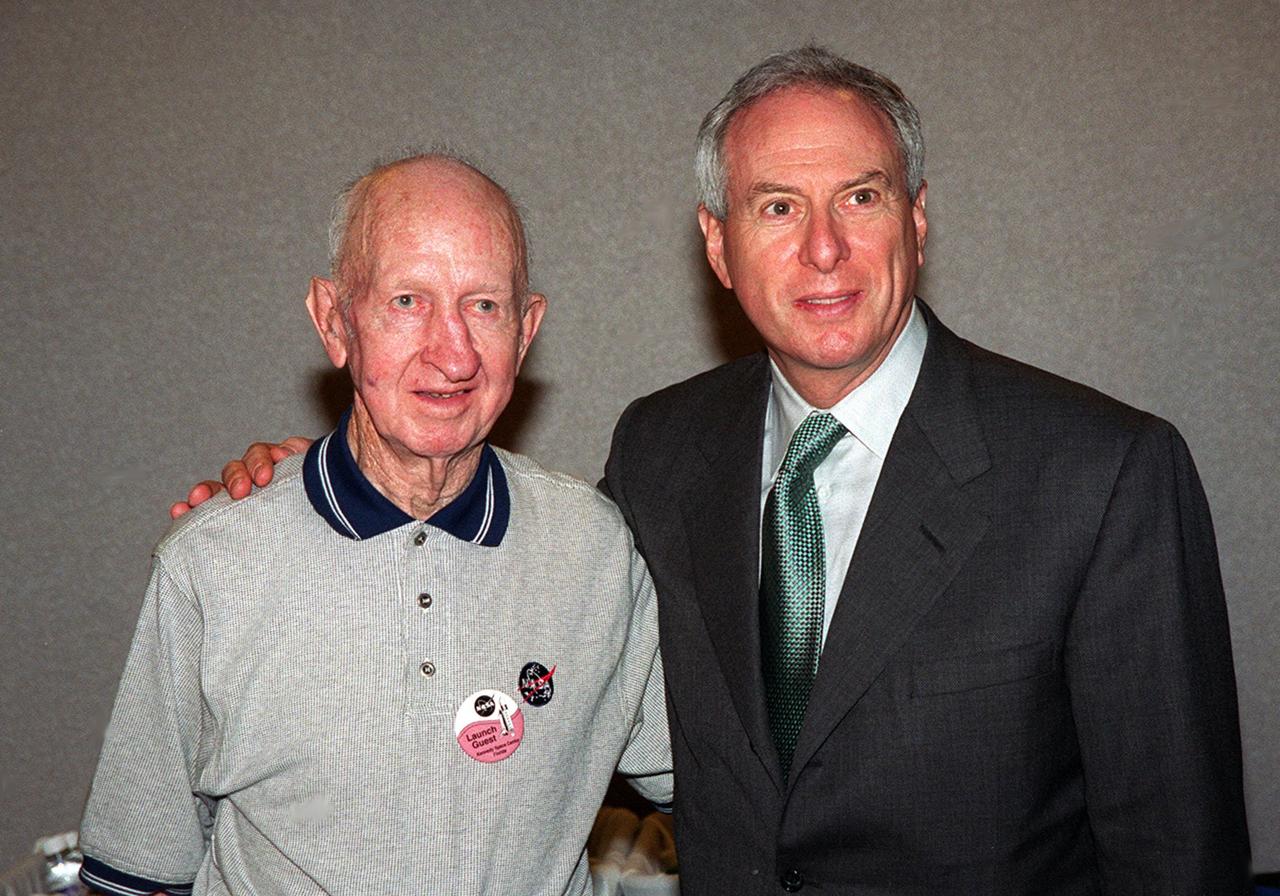
Among the VIPs attending the launch of STS-99 is Captain Ralph Charles (left), standing next to NASA Administrator Dan Goldin. Charles hopes to have his wish fulfilled of watching a Shuttle launch in person. The 100-year-old aviator has experienced nearly a century of flight history, from the Wright Brothers to the Space Program. He took flying lessons from one of the first fliers trained by Orville Wright, first repaired then built airplanes, went barnstorming, operated a charter service in the Caribbean, and worked as a test pilot for the Curtiss Wright Airplane Co. Charles is the oldest licensed pilot in the United States, and is still flying
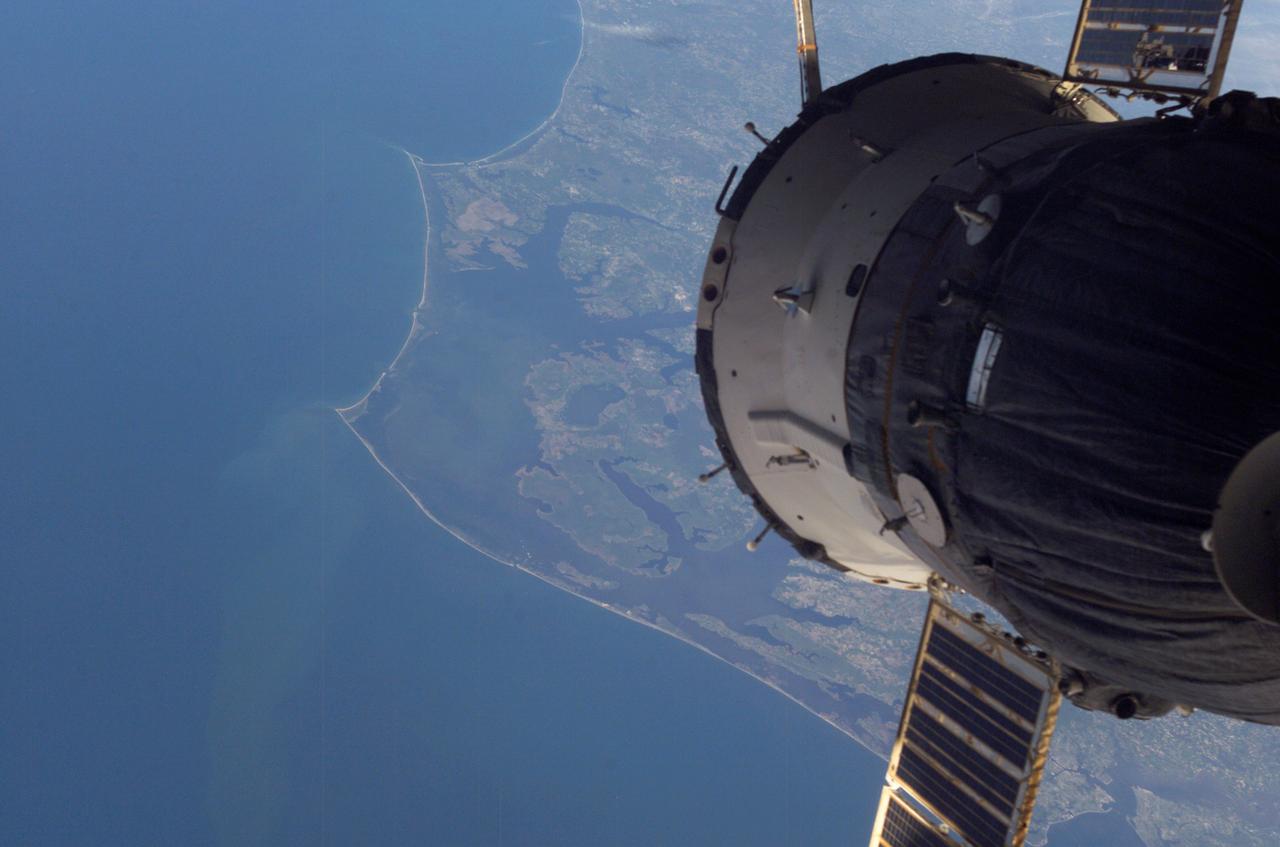
ISS006-E-50419 (2003) --- This digital still camera image of Cape Hatteras and Cape Lookout, North Carolina, with a Soyuz vehicle docked to the orbital outpost in the foreground was taken by Expedition 6 crewmember Don Pettit during his 5 1/2 month stay on the International Space Station (ISS). The largest inland body of water is Pamlico Sound. Kitty Hawk, on North Carolina's Outer Banks is also visible. On Dec. 17, 2003, the world celebrates a century of human flight with the anniversary of the Wright Brothers' first flight at Kitty Hawk. The brothers used the Outer Banks' prevailing winds and a 90-foot hill (Kill Devil Hill) to successfully demonstrate powered flight.
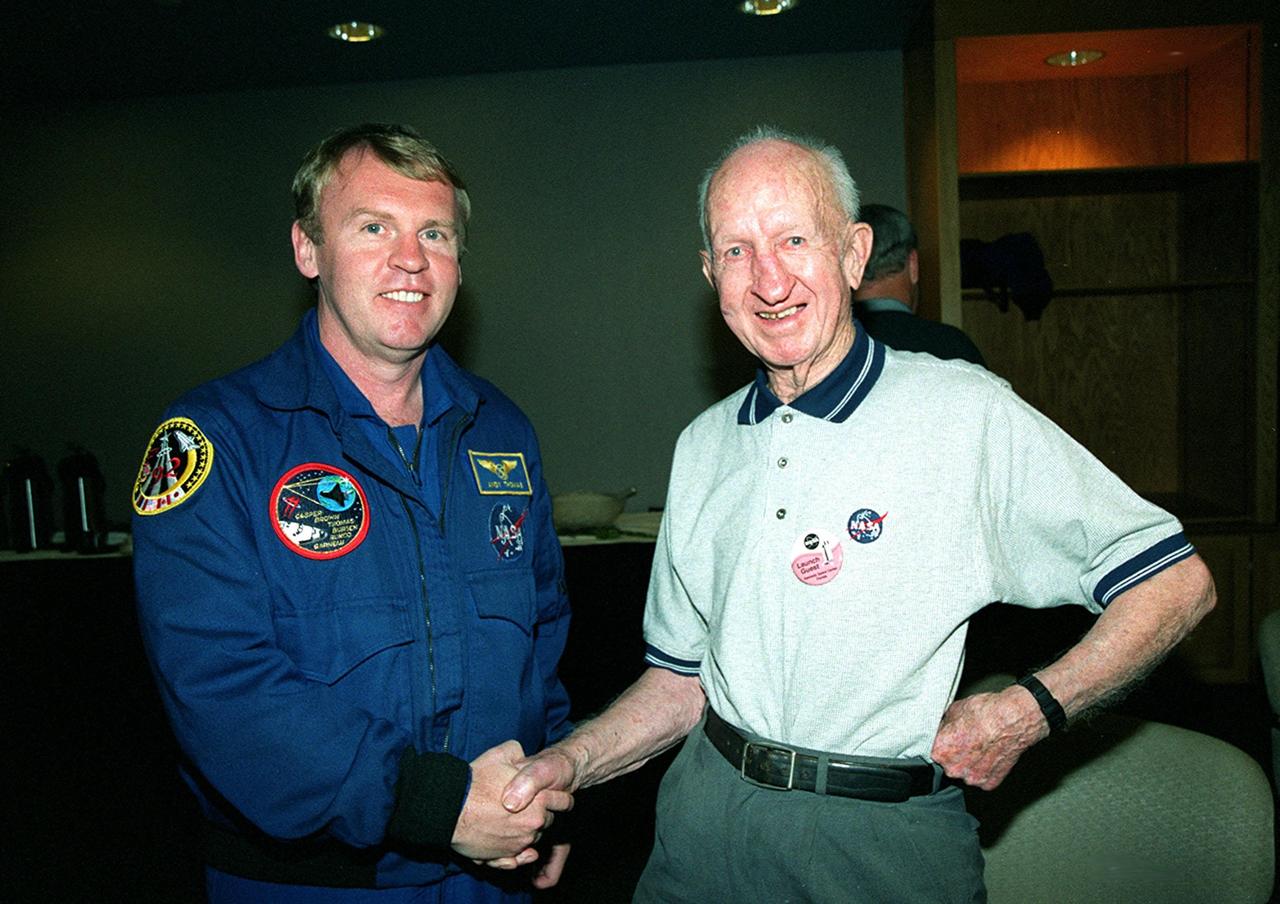
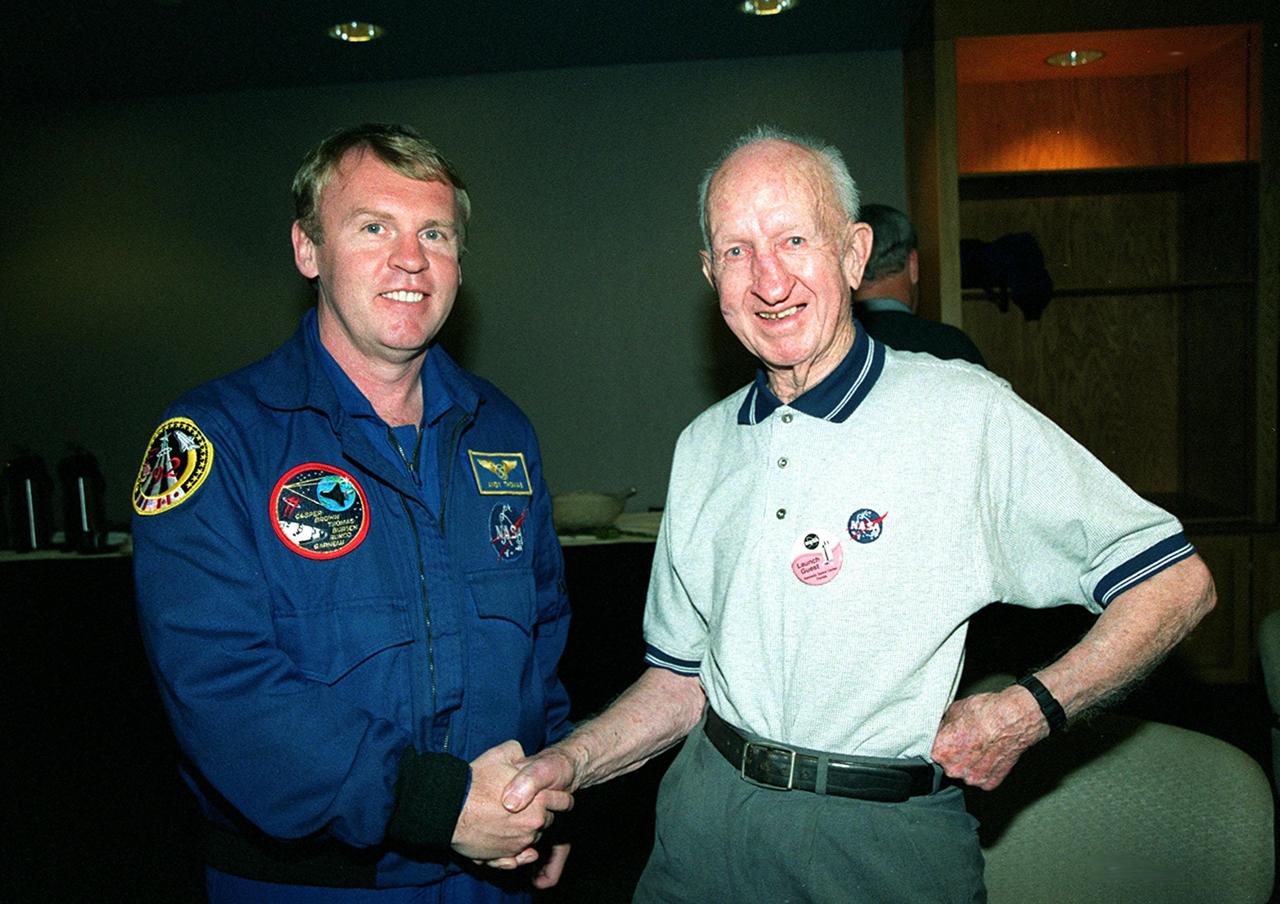
Astronaut Andy Thomas (left) greets 100-year-old Captain Ralph Charles, one of the VIPs attending the launch of STS-99. Charles also met NASA Administrator Dan Goldin. An aviator who has the distinction of being the oldest licensed pilot in the United States, Charles is still flying. He has experienced nearly a century of flight history, from the Wright Brothers to the Space Program. He took flying lessons from one of the first fliers trained by Orville Wright, first repaired then built airplanes, went barnstorming, operated a charter service in the Caribbean, and worked as a test pilot for the Curtiss Wright Airplane Co. Charles watches all the Shuttle launches from his home in Ohio and his greatest wish is to be able to watch one in person from KSC
Astronaut Andy Thomas (left) greets 100-year-old Captain Ralph Charles, one of the VIPs attending the launch of STS-99. Charles also met NASA Administrator Dan Goldin. An aviator who has the distinction of being the oldest licensed pilot in the United States, Charles is still flying. He has experienced nearly a century of flight history, from the Wright Brothers to the Space Program. He took flying lessons from one of the first fliers trained by Orville Wright, first repaired then built airplanes, went barnstorming, operated a charter service in the Caribbean, and worked as a test pilot for the Curtiss Wright Airplane Co. Charles watches all the Shuttle launches from his home in Ohio and his greatest wish is to be able to watch one in person from KSC
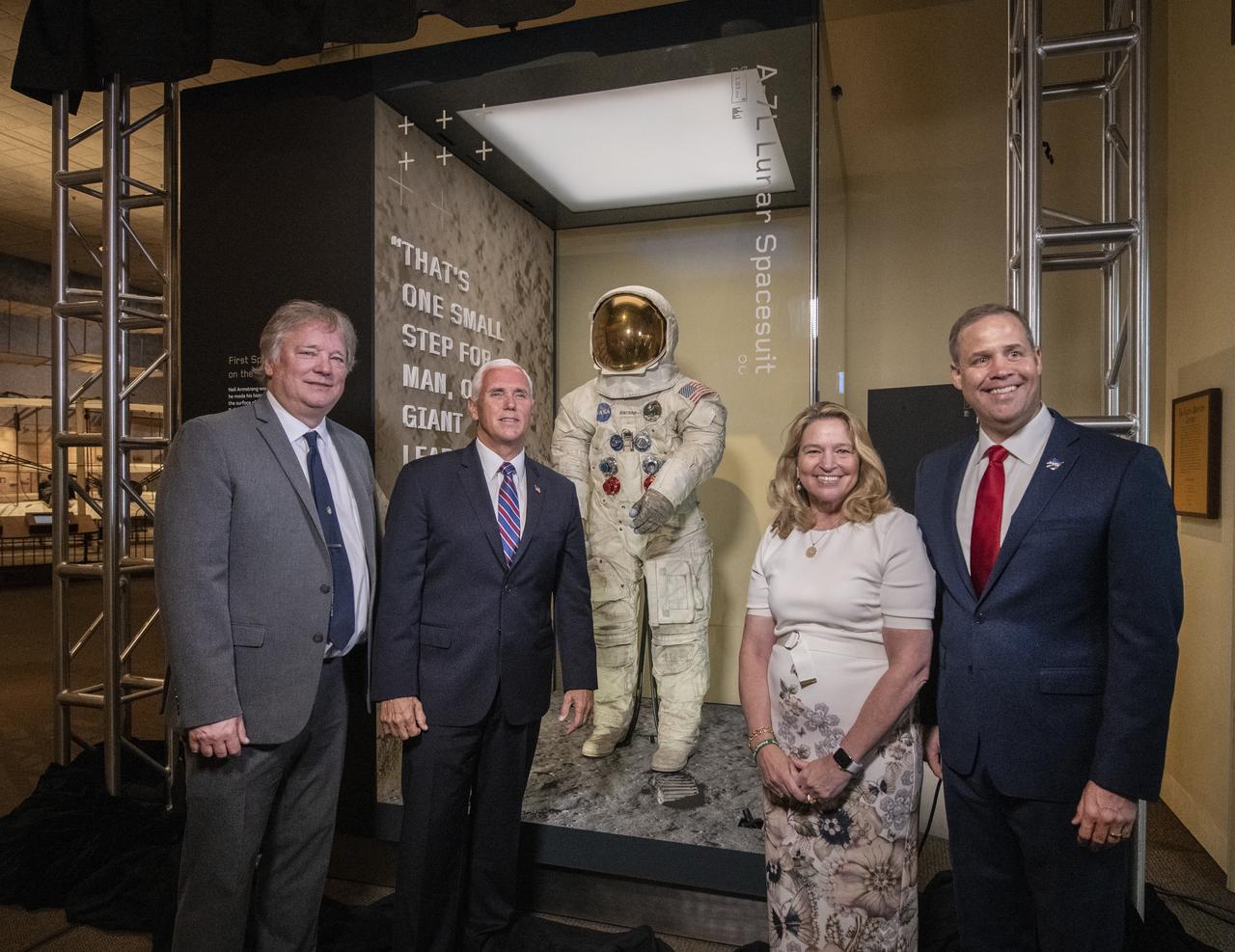
In celebration of the 50th anniversary of Apollo 11, NASA Astronaut Neil Armstrong's spacesuit was unveiled today in The Wright Brothers and The Invention of the Aerial Age Gallery of the Smithsonian Air and Space Museum, in Washington, DC, July 16, 2019. Unveiling the spacesuit, from left, Rick Armstrong, son of Neil Armstrong, Vice President Mike Pence, Dr. Ellen Stofan, The John and Adrienne Mars Director of the National Air and Space Museum, and James Bridenstine, Administrator of NASA. (Smithsonian Air and Space photo by Jim Preston)
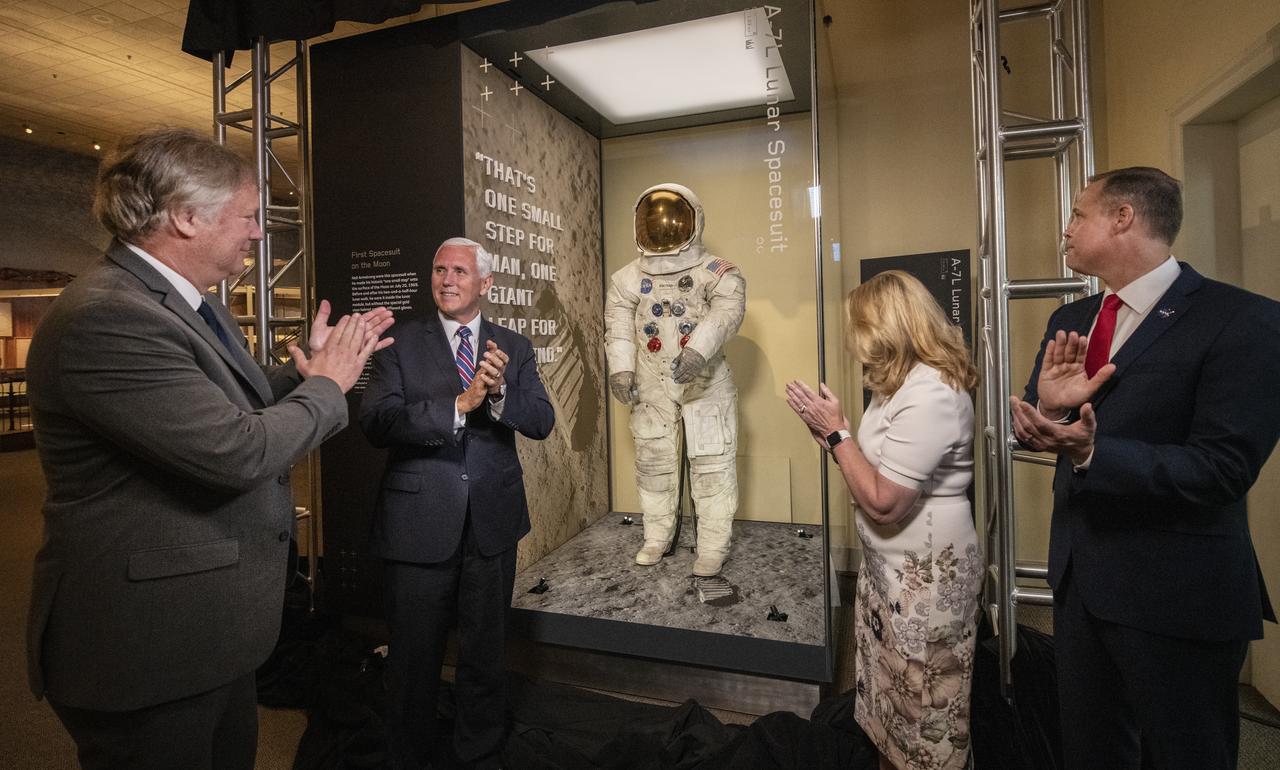
In celebration of the 50th anniversary of Apollo 11, NASA Astronaut Neil Armstrong's spacesuit was unveiled today in The Wright Brothers and The Invention of the Aerial Age Gallery of the Smithsonian Air and Space Museum, in Washington, DC, July 16, 2019. Unveiling the spacesuit, from left, Rick Armstrong, son of Neil Armstrong, Vice President Mike Pence, Dr. Ellen Stofan, The John and Adrienne Mars Director of the National Air and Space Museum, and James Bridenstine, Administrator of NASA. (Smithsonian Air and Space photo by Jim Preston)
![Neil Armstrong's Pressure Suit, A7-L, A19730040000, Apollo 11, that he wore to walk on the moon July 20, 1969 in its new display case in The Wright Brothers & the Invention of the Aerial Age Gallery of the National Air and Space Museum, July 12, 2019. (Smithsonian Air and Space Museum photo by Jim Preston) [20190712JP-0036] [NASM2019-03983]](https://images-assets.nasa.gov/image/NHQ201907120001/NHQ201907120001~medium.jpg)
Neil Armstrong's Pressure Suit, A7-L, A19730040000, Apollo 11, that he wore to walk on the moon July 20, 1969 in its new display case in The Wright Brothers & the Invention of the Aerial Age Gallery of the National Air and Space Museum, July 12, 2019. (Smithsonian Air and Space Museum photo by Jim Preston) [20190712JP-0036] [NASM2019-03983]
![Neil Armstrong's Pressure Suit, A7-L, A19730040000, Apollo 11, that he wore to walk on the moon July 20, 1969 in its new display case in The Wright Brothers & the Invention of the Aerial Age Gallery of the National Air and Space Museum, July 12, 2019. (Smithsonian Air and Space Museum photo by Jim Preston) [20190712JP-0084] [NASM2019-03985]](https://images-assets.nasa.gov/image/NHQ201907120003/NHQ201907120003~medium.jpg)
Neil Armstrong's Pressure Suit, A7-L, A19730040000, Apollo 11, that he wore to walk on the moon July 20, 1969 in its new display case in The Wright Brothers & the Invention of the Aerial Age Gallery of the National Air and Space Museum, July 12, 2019. (Smithsonian Air and Space Museum photo by Jim Preston) [20190712JP-0084] [NASM2019-03985]
![Neil Armstrong's Pressure Suit, A7-L, A19730040000, Apollo 11, that he wore to walk on the moon July 20, 1969 in its new display case in The Wright Brothers & the Invention of the Aerial Age Gallery of the National Air and Space Museum, July 12, 2019. (Smithsonian Air and Space Museum photo by Jim Preston) [20190712JP-0063] [NASM2019-03984]](https://images-assets.nasa.gov/image/NHQ201907120002/NHQ201907120002~medium.jpg)
Neil Armstrong's Pressure Suit, A7-L, A19730040000, Apollo 11, that he wore to walk on the moon July 20, 1969 in its new display case in The Wright Brothers & the Invention of the Aerial Age Gallery of the National Air and Space Museum, July 12, 2019. (Smithsonian Air and Space Museum photo by Jim Preston) [20190712JP-0063] [NASM2019-03984]
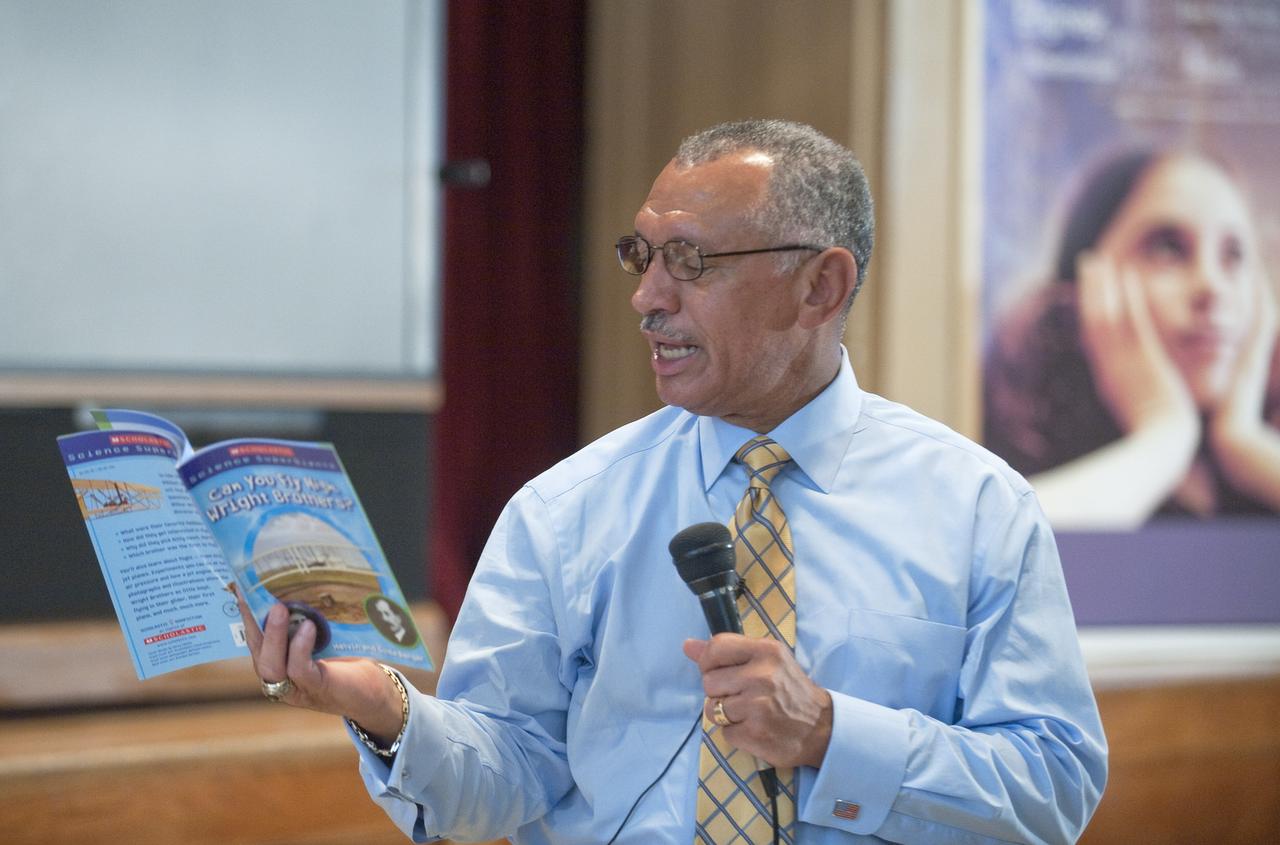
NASA Administrator Charles F. Bolden reads a passage from the book "Can You Fly High Wright Brothers?" while visiting with students at Davis Elementary School, Friday, Sept. 11, 2009, in Washington. Bolden spent time with approximately 120 students in third, fourth and fifth grade talking about science, technology, mathematics and engineering as part of the National Day of Service and Remembrance. Photo Credit: (NASA/Paul E. Alers)
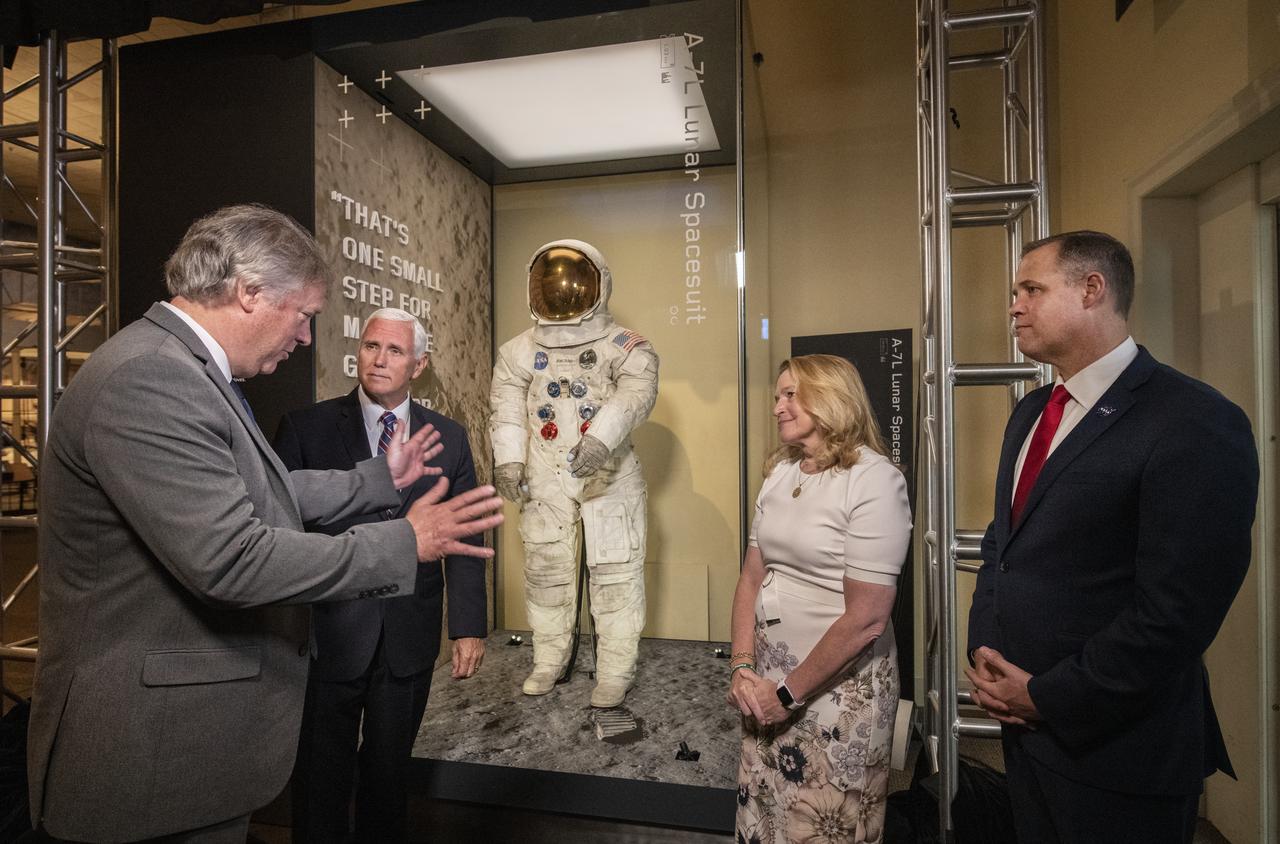
In celebration of the 50th anniversary of Apollo 11, NASA Astronaut Neil Armstrong's spacesuit was unveiled today in The Wright Brothers and The Invention of the Aerial Age Gallery of the Smithsonian Air and Space Museum, in Washington, DC, July 16, 2019. Unveiling the spacesuit, from left, Rick Armstrong, son of Neil Armstrong, Vice President Mike Pence, Dr. Ellen Stofan, The John and Adrienne Mars Director of the National Air and Space Museum, and James Bridenstine, Administrator of NASA. (Smithsonian Air and Space photo by Jim Preston)
![Neil Armstrong's Pressure Suit, A7-L, A19730040000, Apollo 11, that he wore to walk on the moon July 20, 1969 in its new display case in The Wright Brothers & the Invention of the Aerial Age Gallery of the National Air and Space Museum, July 12, 2019. (Smithsonian Air and Space Museum photo by Eric Long) [20190712JP-0089] [NASM2019-03995]](https://images-assets.nasa.gov/image/NHQ201907120004/NHQ201907120004~medium.jpg)
Neil Armstrong's Pressure Suit, A7-L, A19730040000, Apollo 11, that he wore to walk on the moon July 20, 1969 in its new display case in The Wright Brothers & the Invention of the Aerial Age Gallery of the National Air and Space Museum, July 12, 2019. (Smithsonian Air and Space Museum photo by Eric Long) [20190712JP-0089] [NASM2019-03995]
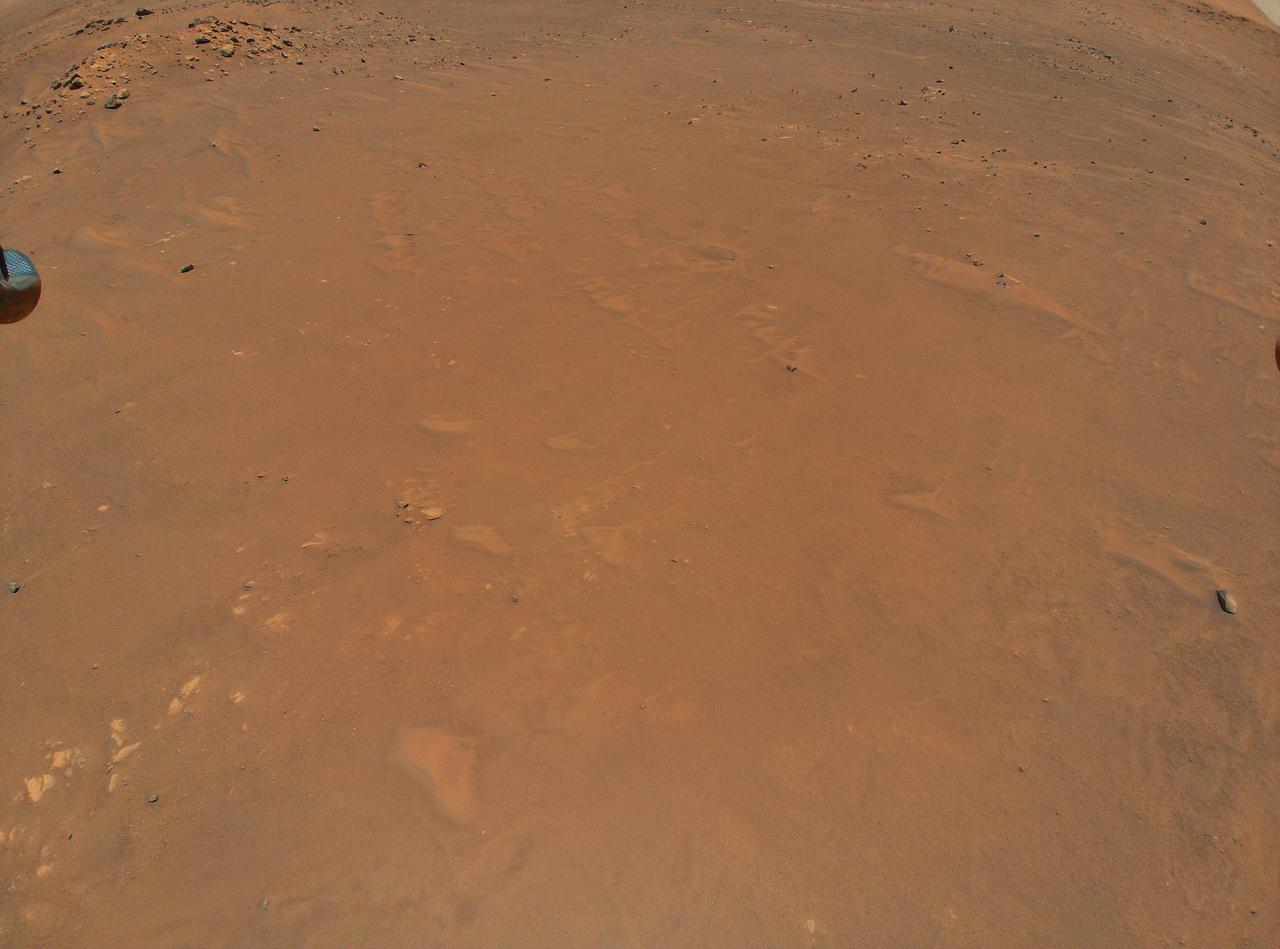
NASA's Ingenuity Mars Helicopter took this color image from an altitude of 33 feet (10 meters) during its fifth flight on May 7, 2021. This was the helicopter's first one-way flight, and it settled down at a new landing location 423 feet (129 meters) south of its previous location at Wright Brothers Field. The contrast has been enhanced to show surface details. https://photojournal.jpl.nasa.gov/catalog/PIA24650

The mural was created to celebrate the achievements of Wilbur and Orville Wright and to commemorate a century of powered flight. Central to the composition is the 1903 Wright Flyer. "On Dec. 17, 1903, the Wright brothers inaugurated the aerial age with their successful first flights of a heavier-than-air flying machine at Kitty Hawk, N.C. This airplane, known as the Wright Flyer, sometimes referred to as the Kitty Hawk Flyer, was the product of a sophisticated four-year program of research and development conducted by Wilbur and Orville Wright beginning in 1899. During the Wrights' design and construction of their experimental aircraft, they also pioneered many of the basic tenets and techniques of modern aeronautical engineering, such as the use of a wind tunnel and flight testing as design tools. Their seminal accomplishment encompassed not only the breakthrough first flight of an airplane, but also the equally important achievement of establishing the foundation of aeronautical engineering." Dr. Peter Jakab, Curator of Aviation, National Air and Space Museum, Smithsonian Institution "Celebrating One Hundred Years of Powered Flight, 1903-2003", documents many significant achievements in aeronautics and space flight from the dawn of powered flight to the present. Historic aircraft and spacecraft serve as the backdrop, highlighting six figures representing the human element that made these milestones possible. These figures stand, symbolically supported by the words of Wilbur Wright, "It is my belief that flight is possible…" The quote was taken from a letter written to his father on September 3rd, 1900, announcing Wilbur's intention to make "some experiments with a flying machine" at Kitty Hawk, North Carolina. "This year, Bob is helping us commemorate the Centennial of Flight with a beautiful mural slated for placement in our Dryden Flight Research Center that documents the history of flight from the Wright Flyer to the International Space Station. We should
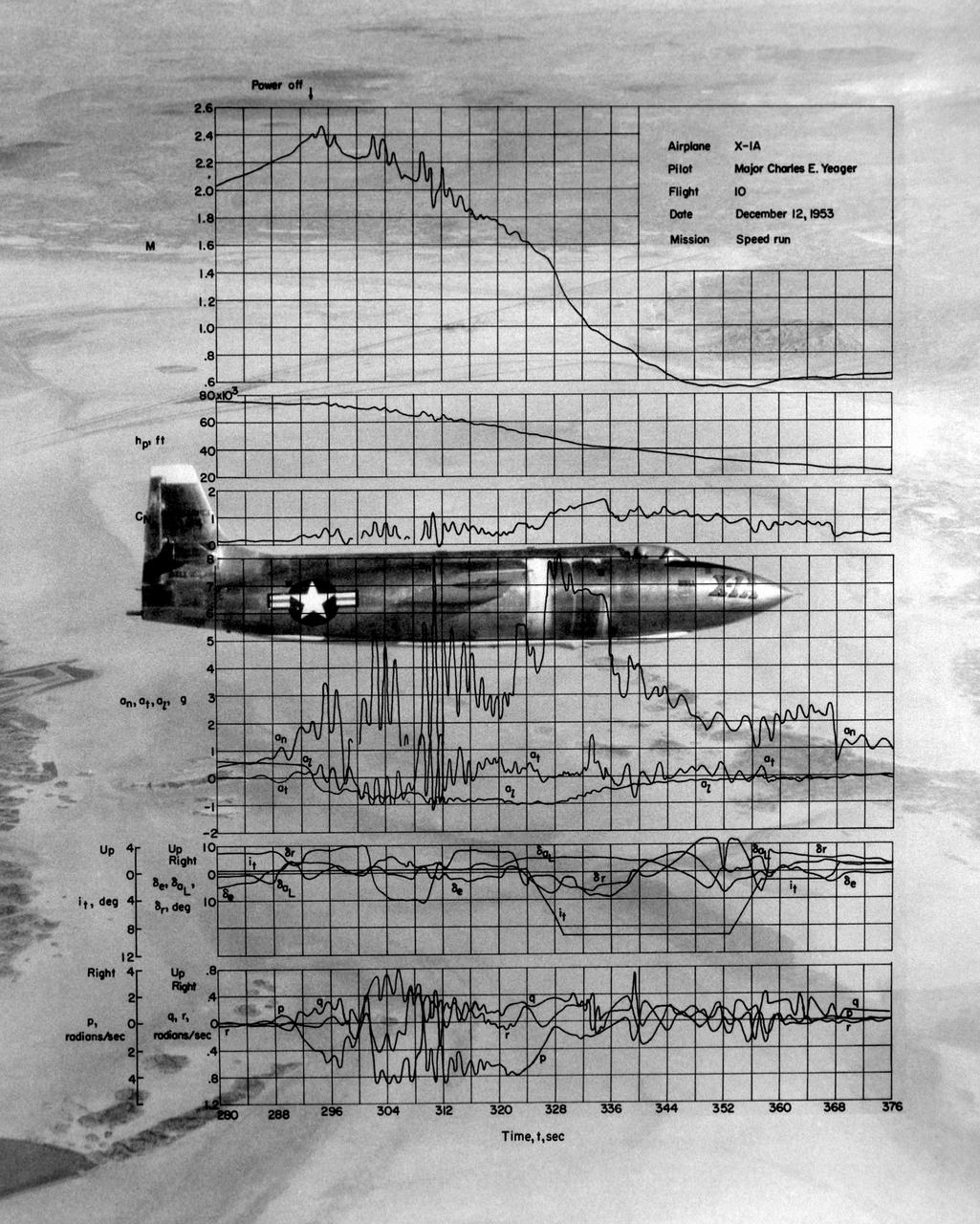
This photo of the X-1A includes graphs of the flight data from Maj. Charles E. Yeager's Mach 2.44 flight on December 12, 1953. (This was only a few days short of the 50th anniversary of the Wright brothers' first powered flight.) After reaching Mach 2.44, then the highest speed ever reached by a piloted aircraft, the X-1A tumbled completely out of control. The motions were so violent that Yeager cracked the plastic canopy with his helmet. He finally recovered from a inverted spin and landed on Rogers Dry Lakebed. Among the data shown are Mach number and altitude (the two top graphs). The speed and altitude changes due to the tumble are visible as jagged lines. The third graph from the bottom shows the G-forces on the airplane. During the tumble, these twice reached 8 Gs or 8 times the normal pull of gravity at sea level. (At these G forces, a 200-pound human would, in effect, weigh 1,600 pounds if a scale were placed under him in the direction of the force vector.) Producing these graphs was a slow, difficult process. The raw data from on-board instrumentation recorded on oscillograph film. Human computers then reduced the data and recorded it on data sheets, correcting for such factors as temperature and instrument errors. They used adding machines or slide rules for their calculations, pocket calculators being 20 years in the future.
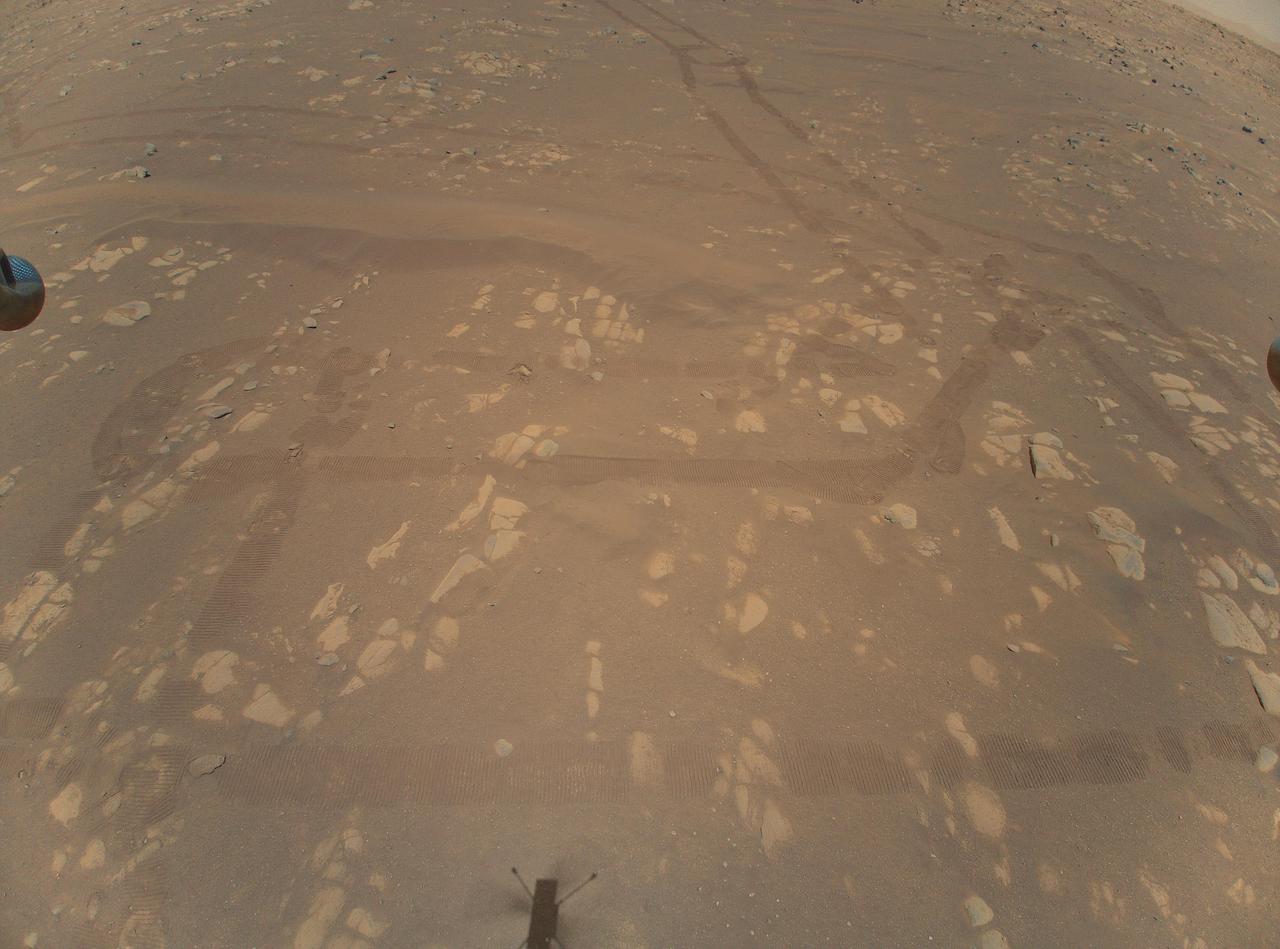
This is the first color image of the Martian surface taken by an aerial vehicle while it was aloft. The Ingenuity Mars Helicopter captured it with its color camera during its second successful flight test on April 22, 2021. At the time this image, Ingenuity was 17 feet (5.2 meters) above the surface and pitching (moving the camera's field of view upward) so the helicopter could begin its 7-foot (2-meter) translation to the west — away from the rover. The image demonstrates the utility of scouting Martian terrain from an aerial perspective. The winding parallel discolorations in the surface reveal the tread of the six-wheeled rover. Perseverance itself is located top center, just out frame. "Wright Brothers Field" is in the vicinity of the helicopter's shadow, bottom center, with the actual point of takeoff of the helicopter just below the image. A portion of the landing pads on two of the helicopter's four landing legs can be seen in on the left and right sides of the image, and a small portion of the horizon can be seen at the upper right and left corners. Mounted in the helicopter's fuselage and pointed approximately 22 degree below the horizon, Ingenuity's high-resolution color camera contains a 4208-by-3120-pixel sensor. https://photojournal.jpl.nasa.gov/catalog/PIA24593