
The mural was created to celebrate the achievements of Wilbur and Orville Wright and to commemorate a century of powered flight. Central to the composition is the 1903 Wright Flyer. "On Dec. 17, 1903, the Wright brothers inaugurated the aerial age with their successful first flights of a heavier-than-air flying machine at Kitty Hawk, N.C. This airplane, known as the Wright Flyer, sometimes referred to as the Kitty Hawk Flyer, was the product of a sophisticated four-year program of research and development conducted by Wilbur and Orville Wright beginning in 1899. During the Wrights' design and construction of their experimental aircraft, they also pioneered many of the basic tenets and techniques of modern aeronautical engineering, such as the use of a wind tunnel and flight testing as design tools. Their seminal accomplishment encompassed not only the breakthrough first flight of an airplane, but also the equally important achievement of establishing the foundation of aeronautical engineering." Dr. Peter Jakab, Curator of Aviation, National Air and Space Museum, Smithsonian Institution "Celebrating One Hundred Years of Powered Flight, 1903-2003", documents many significant achievements in aeronautics and space flight from the dawn of powered flight to the present. Historic aircraft and spacecraft serve as the backdrop, highlighting six figures representing the human element that made these milestones possible. These figures stand, symbolically supported by the words of Wilbur Wright, "It is my belief that flight is possible…" The quote was taken from a letter written to his father on September 3rd, 1900, announcing Wilbur's intention to make "some experiments with a flying machine" at Kitty Hawk, North Carolina. "This year, Bob is helping us commemorate the Centennial of Flight with a beautiful mural slated for placement in our Dryden Flight Research Center that documents the history of flight from the Wright Flyer to the International Space Station. We should
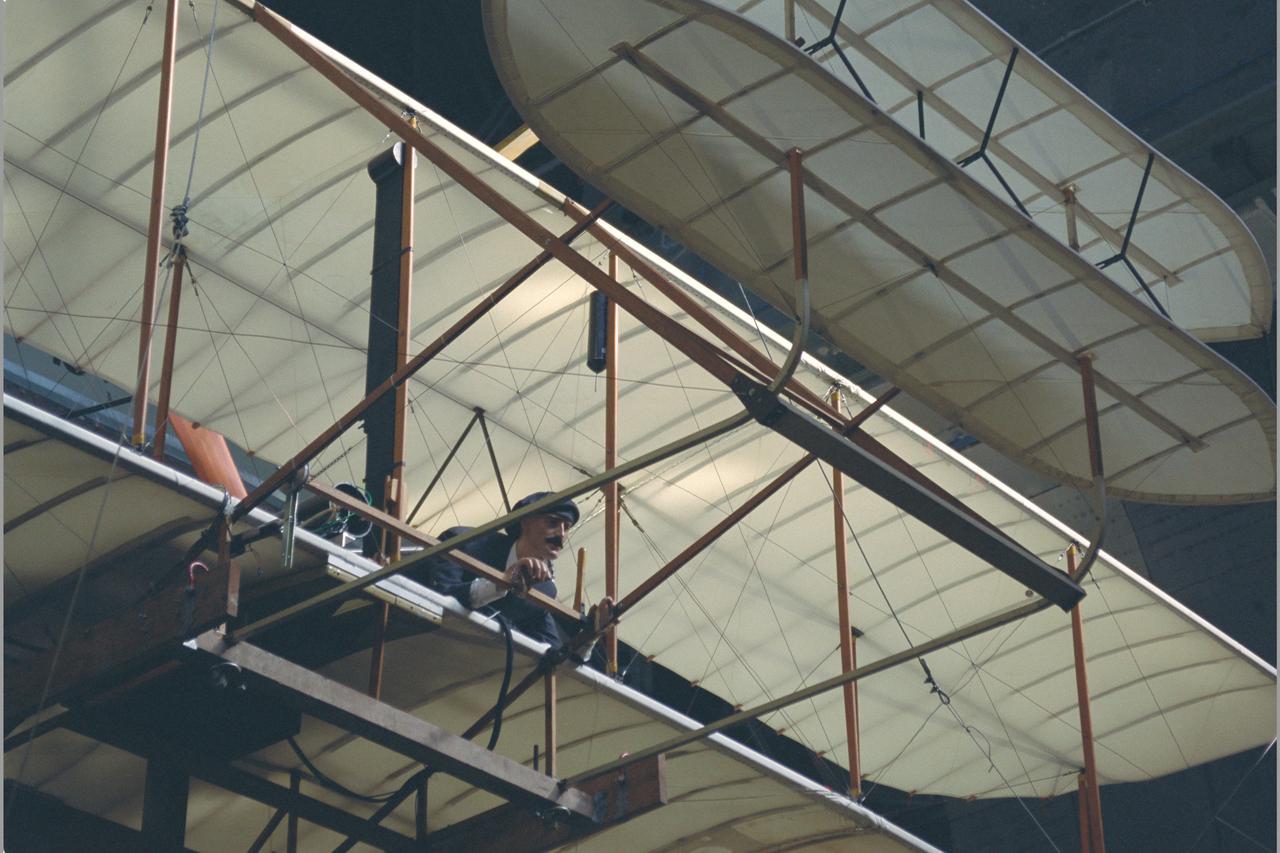
Wright Flyer Replica Test-40-0047: 40 x 80 ft. Wind Tunnel.
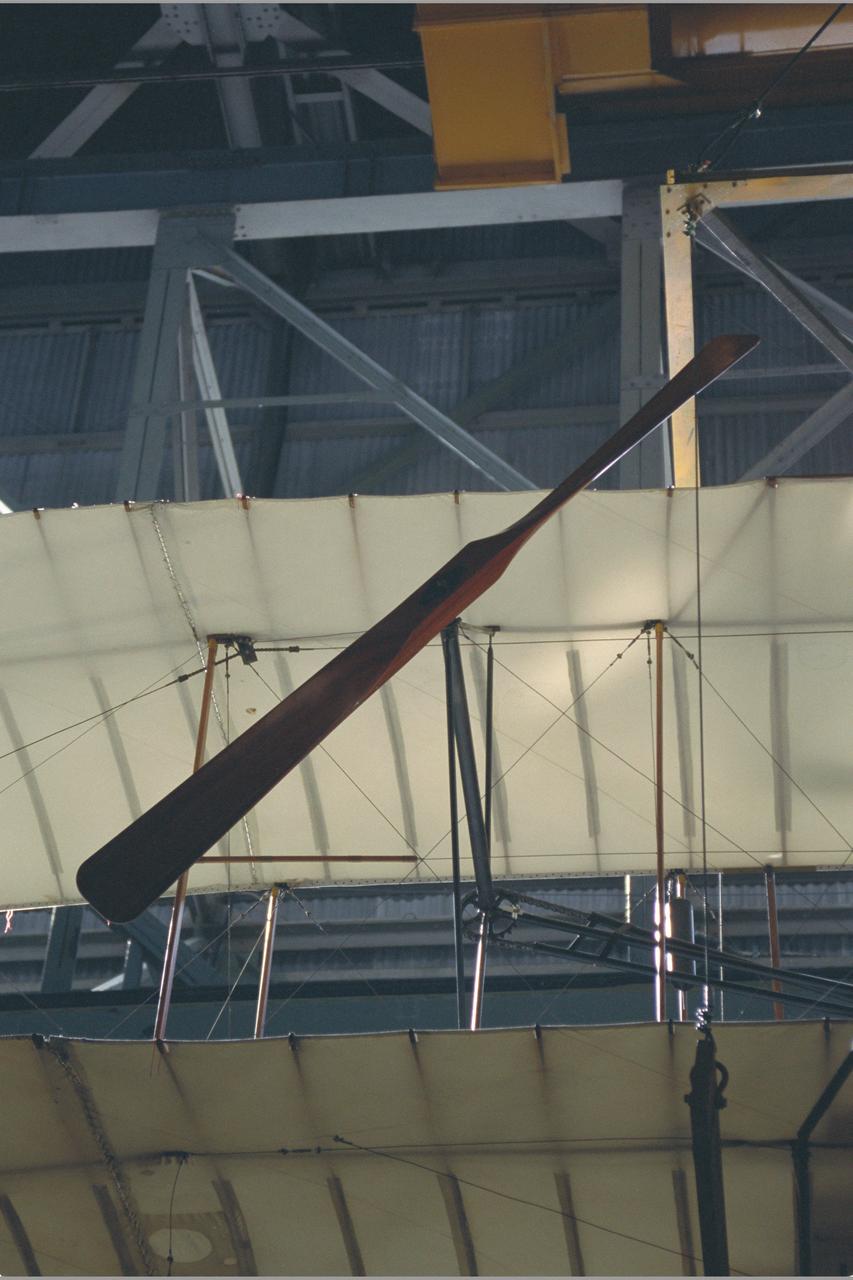
Wright Flyer Replica Test-40-0047: 40 x 80 ft. Wind Tunnel.
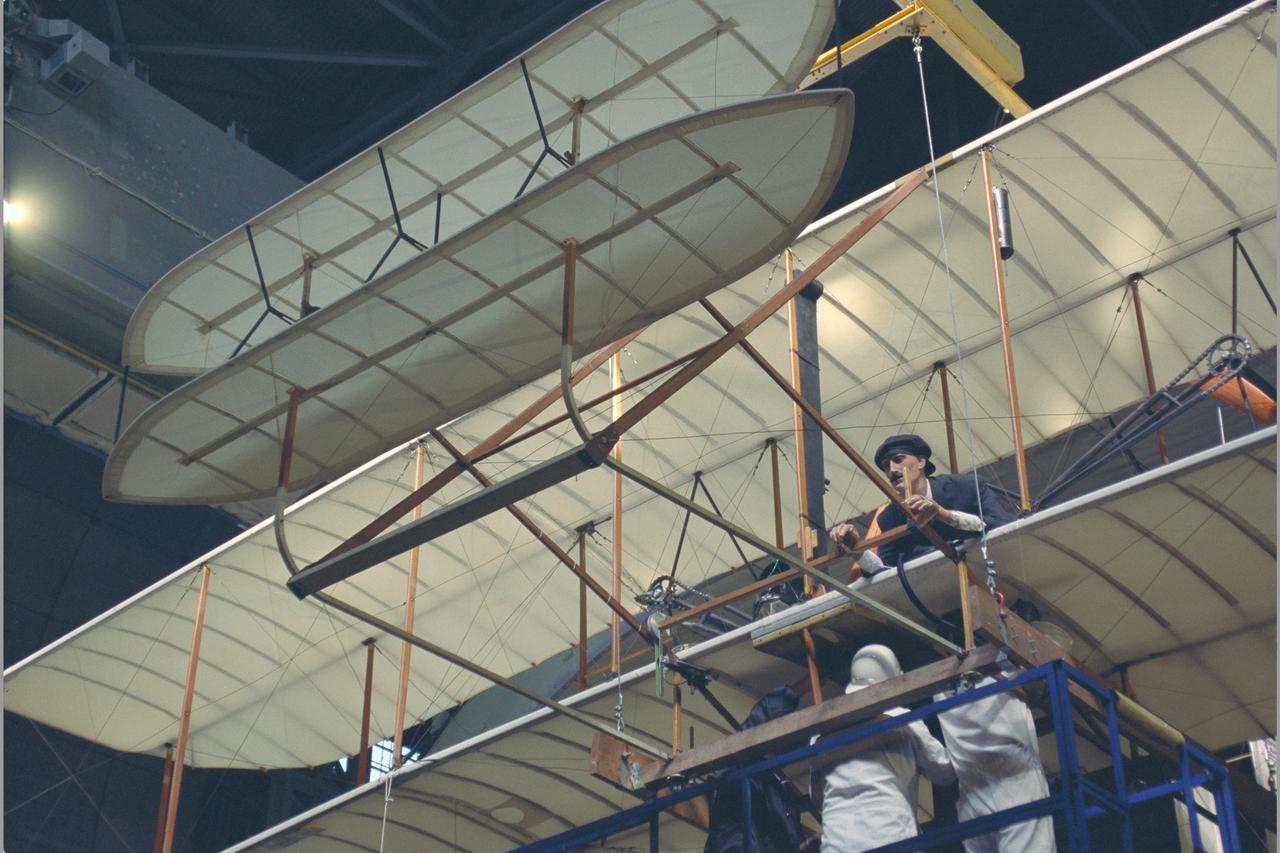
Wright Flyer Replica Test-40-0047: 40 x 80 ft. Wind Tunnel.
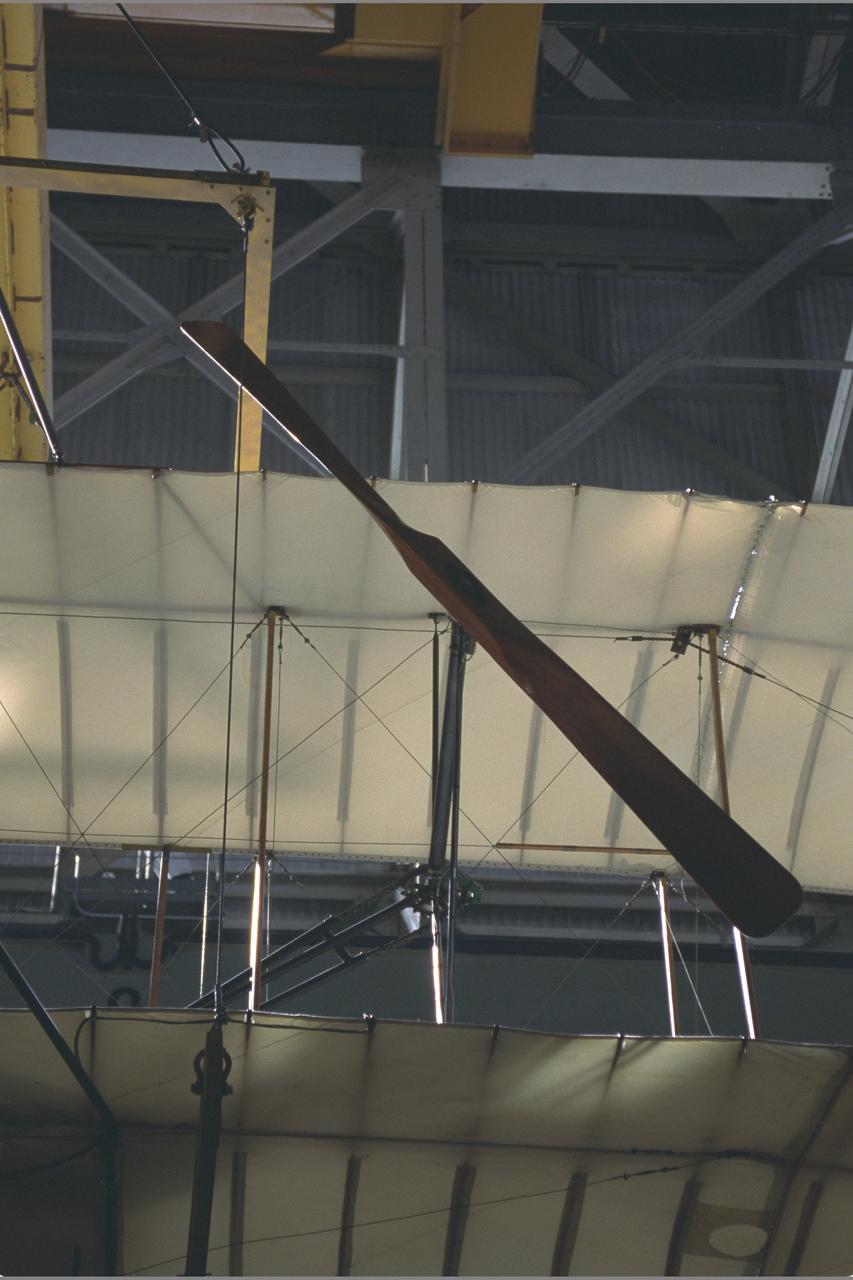
Wright Flyer Replica Test-40-0047: 40 x 80 ft. Wind Tunnel.
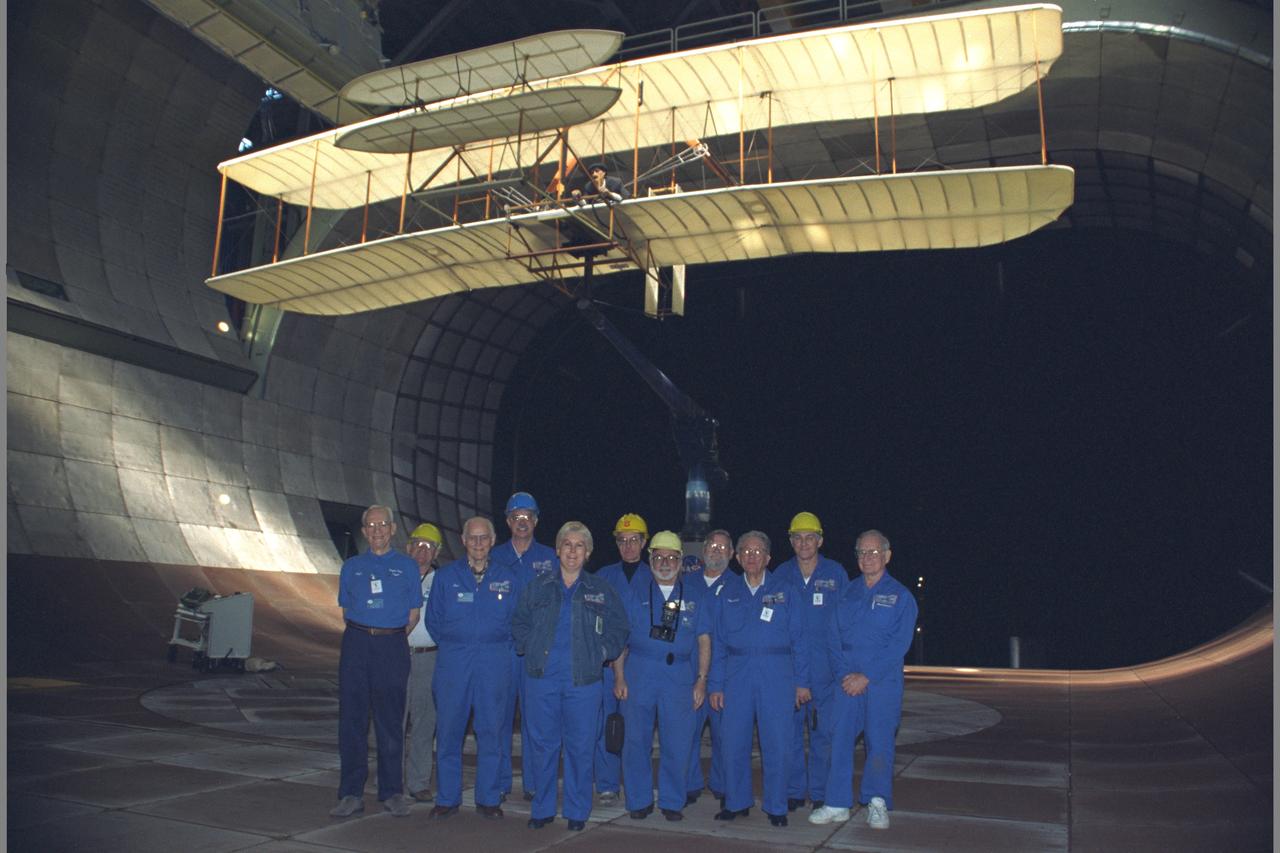
Wright Flyer Replica Test-40-0047: 40 x 80 ft. Wind Tunnel. AIAA crew
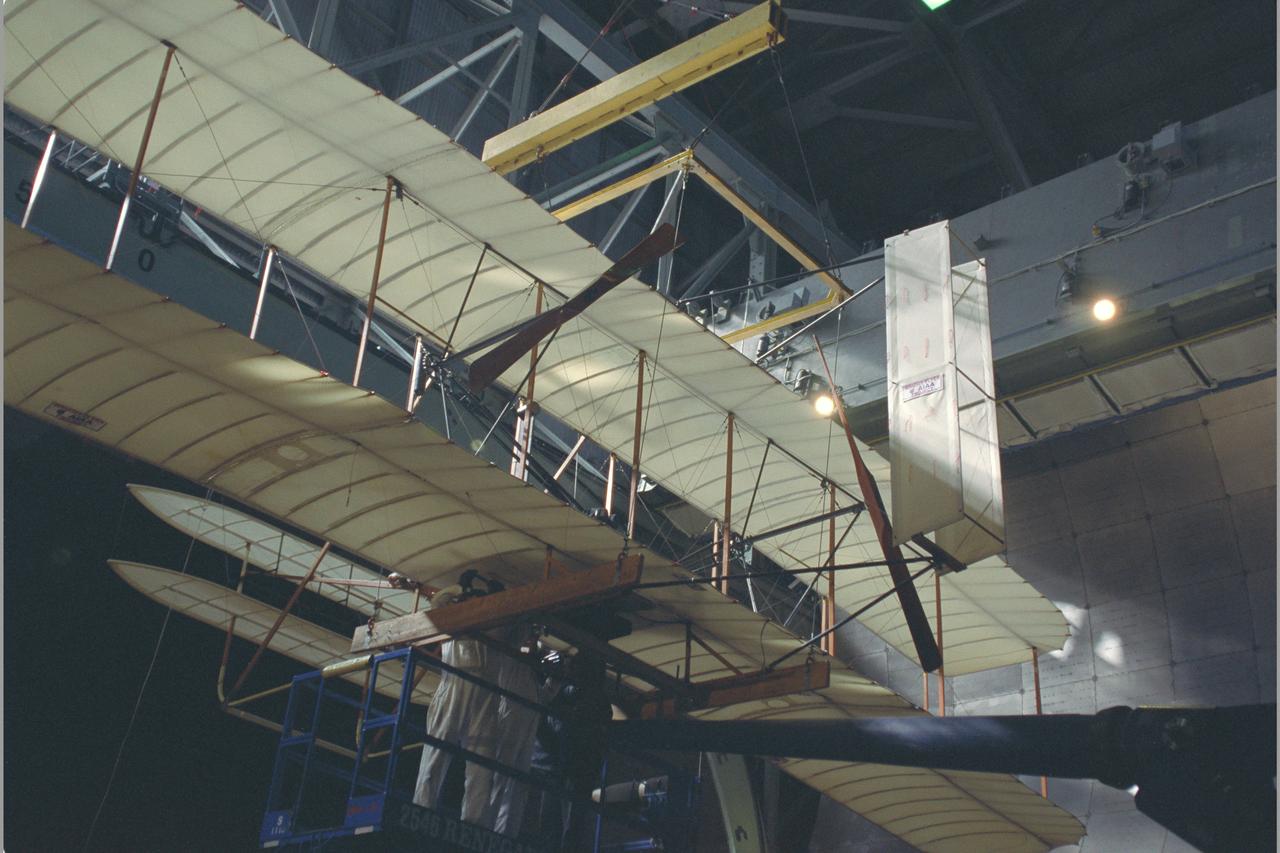
Wright Flyer Replica Test-40-0047: 40 x 80 ft. Wind Tunnel.
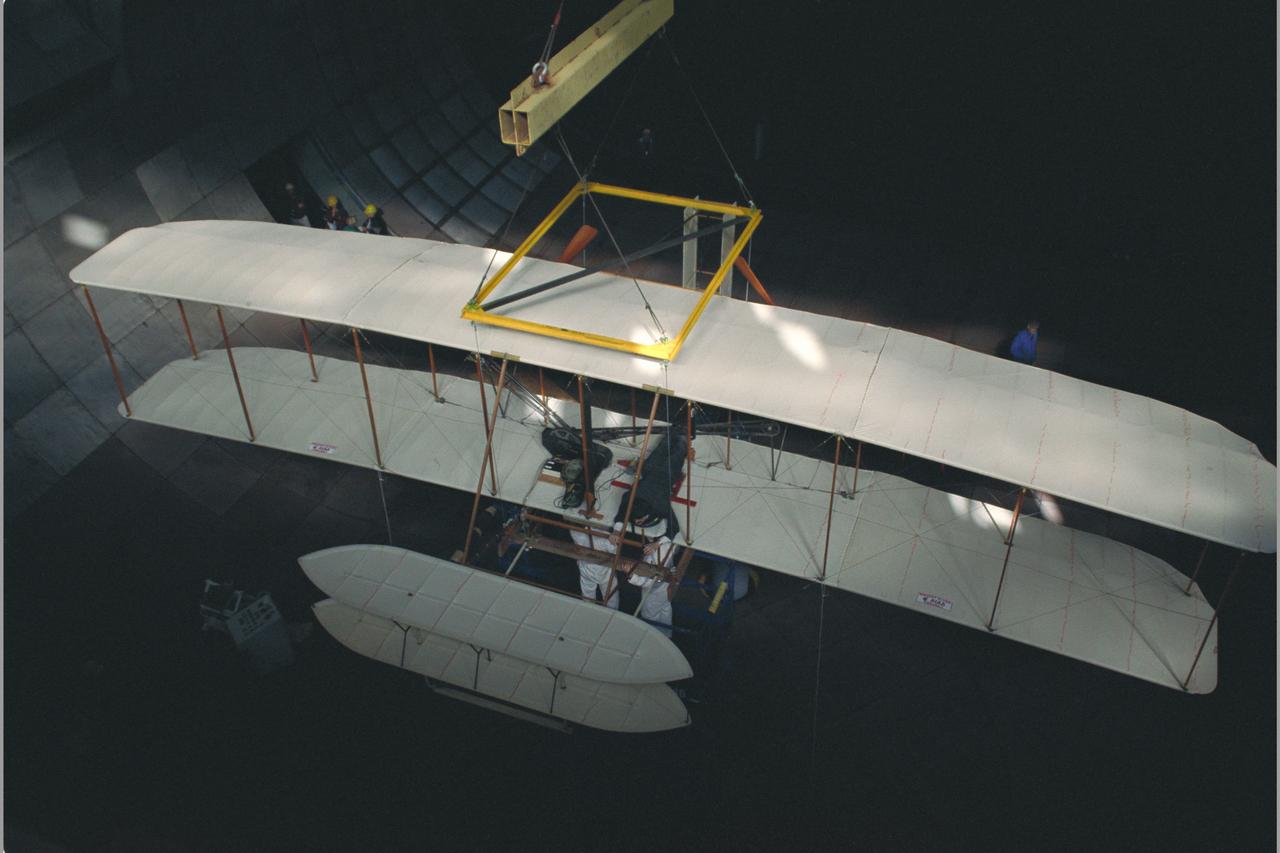
Wright Flyer Replica Test-40-0047: 40 x 80 ft. Wind Tunnel.
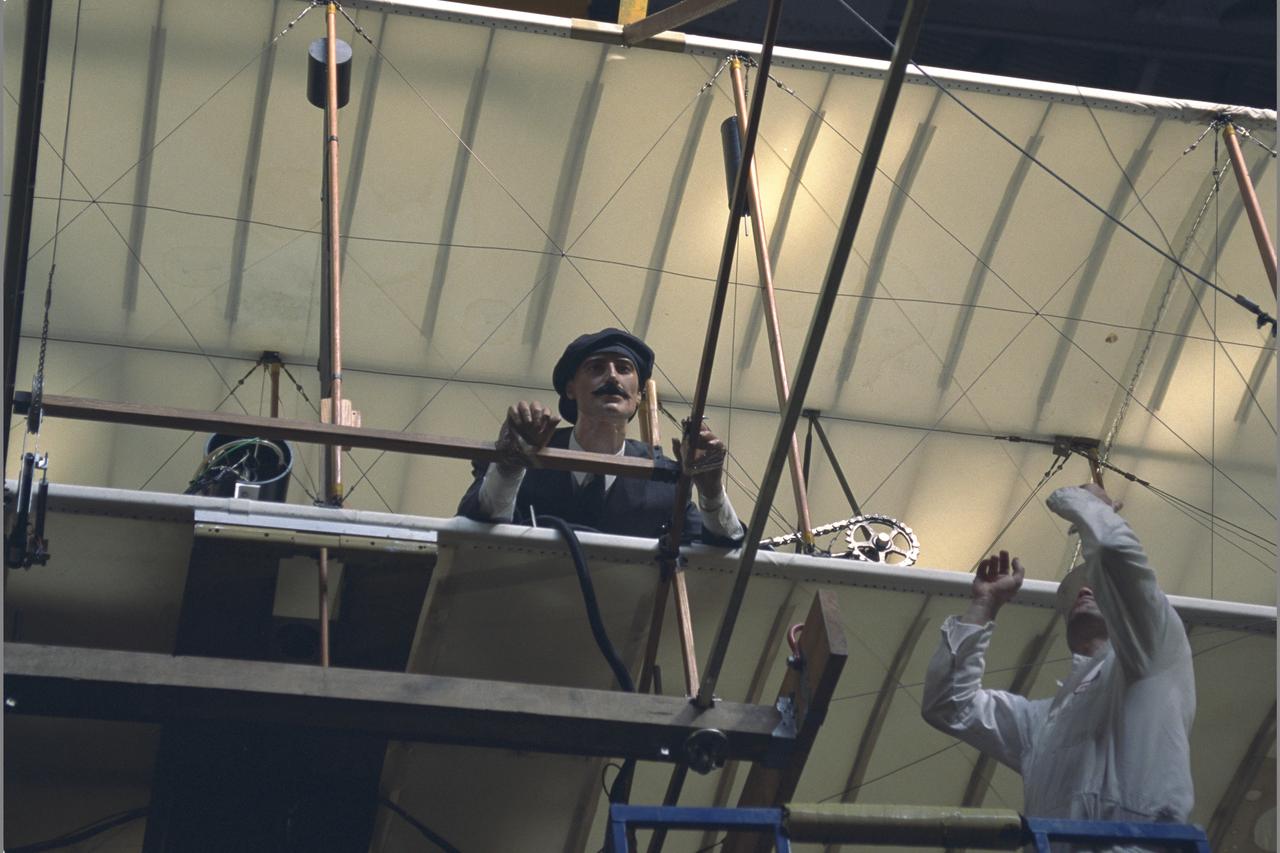
Wright Flyer Replica Test-40-0047: 40 x 80 ft. Wind Tunnel.
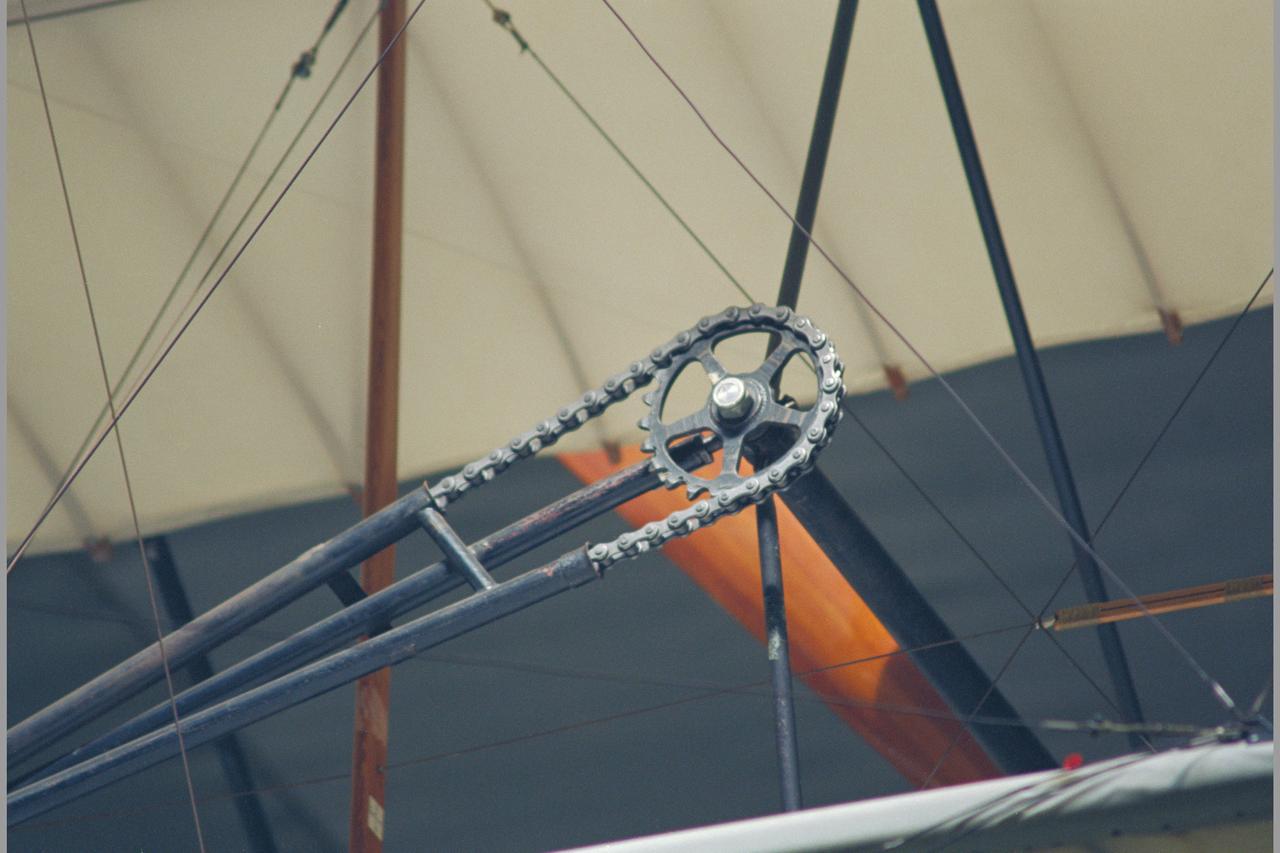
Wright Flyer Replica Test-40-0047: 40 x 80 ft. Wind Tunnel.
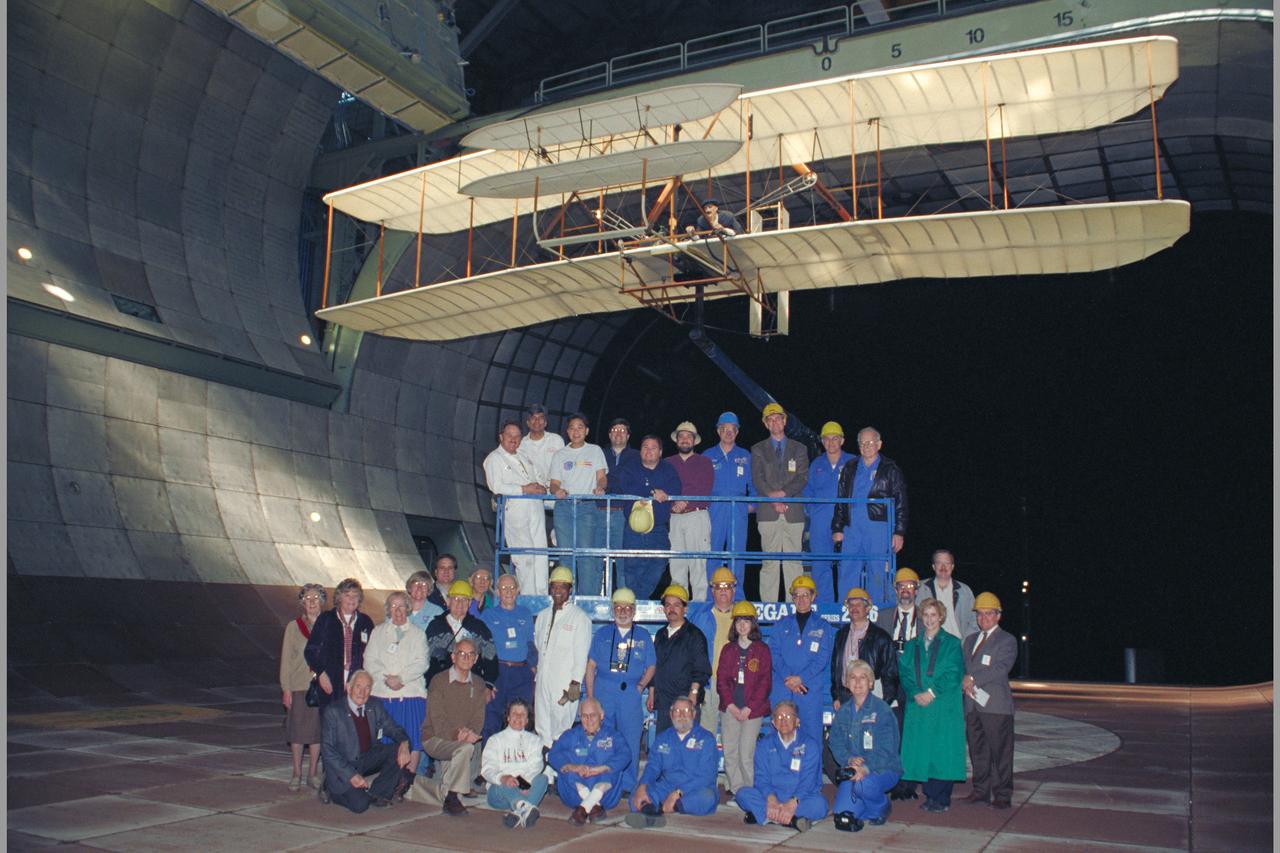
Wright Flyer Replica Test-40-0047: 40 x 80 ft. Wind Tunnel. test crew
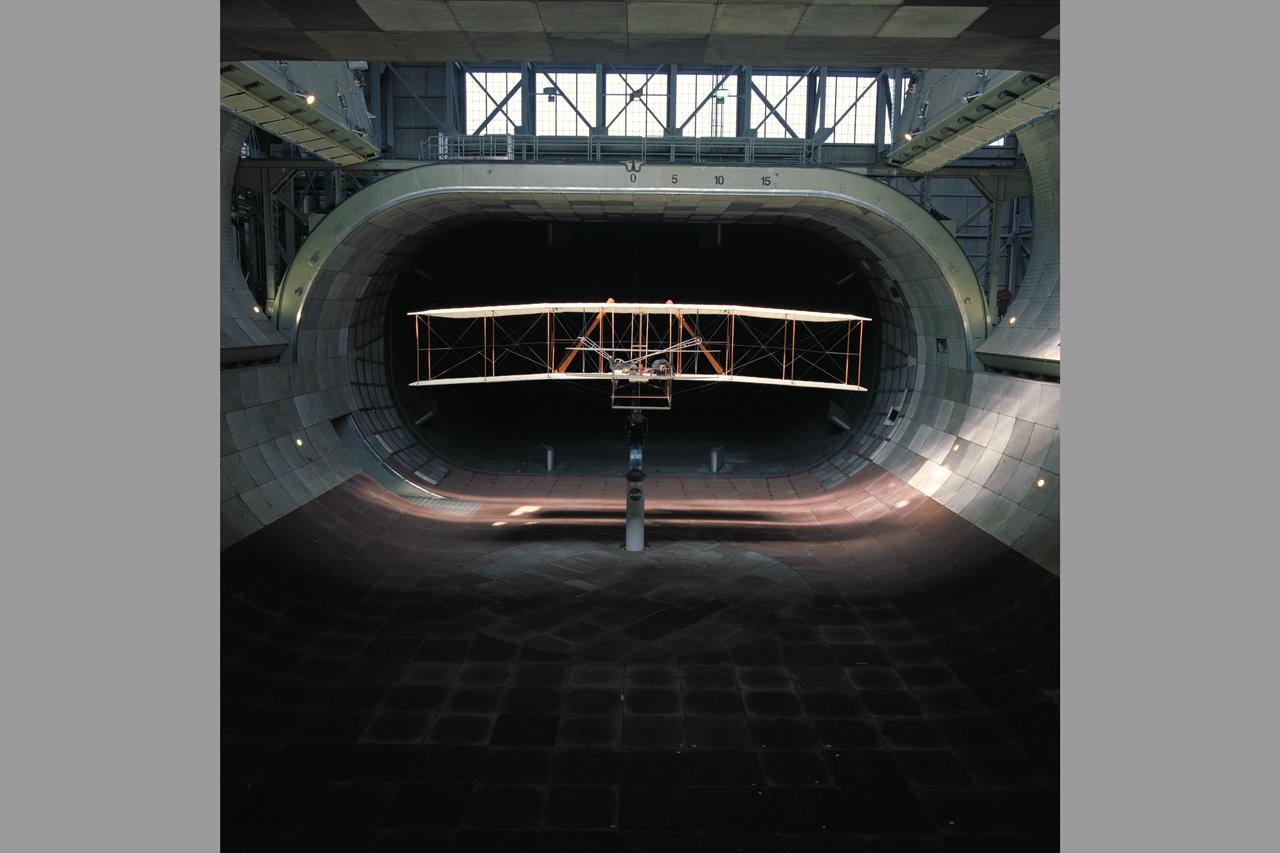
Wright Flyer Replica Test-40-0047: Ames 40 x 80 foot Subsonic Wind Tunnel. (Testing of the replica for it's airworthiness was as part of the Centennial of Flight celebration.)
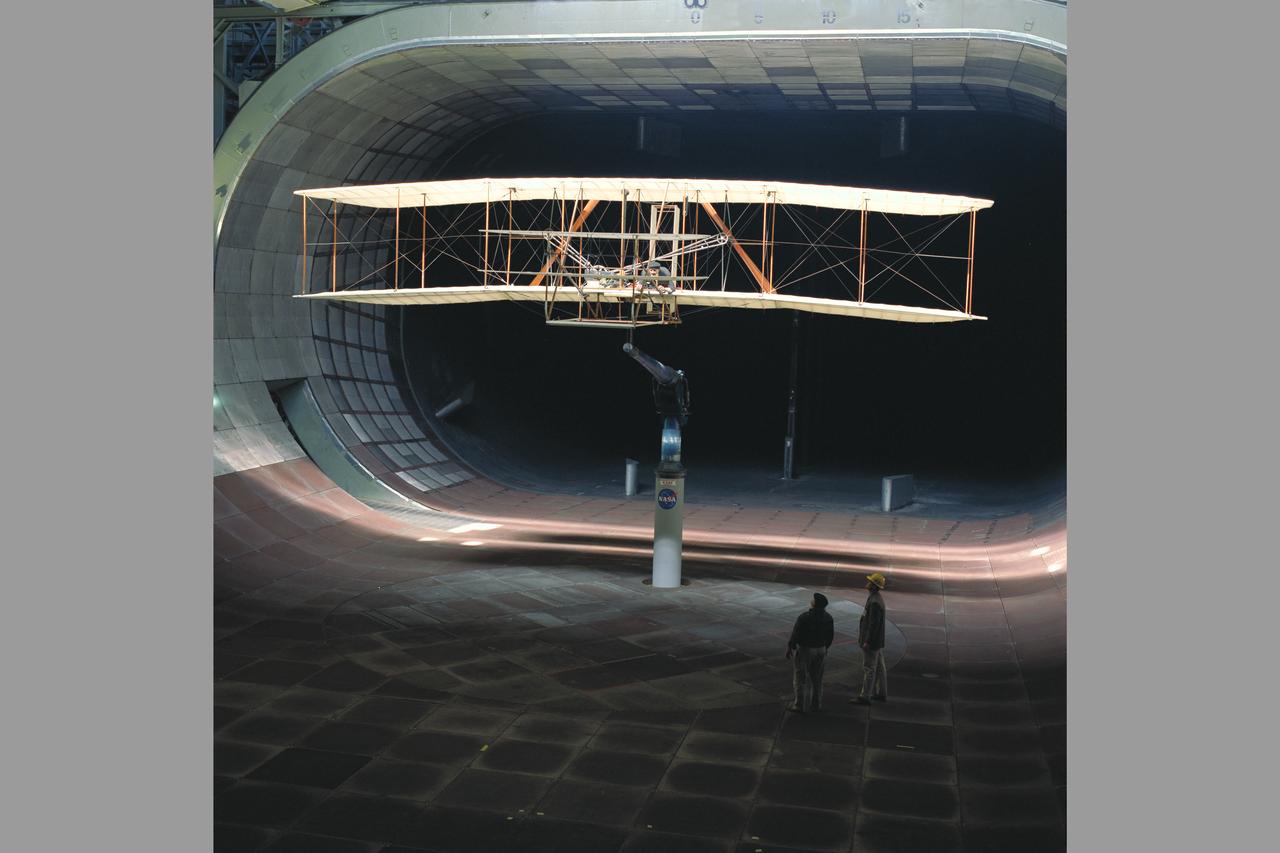
Wright Flyer Replica Test-40-0047: Ames 40 x 80 foot Subsonic Wind Tunnel. View of Installation with Pete Zell, Tom Aiken (in cap) and Felton Smith and Richard McLimoil (in shadow). (Testing of the replica for it's airworthiness was as part of the Centennial of Flight celebration.)
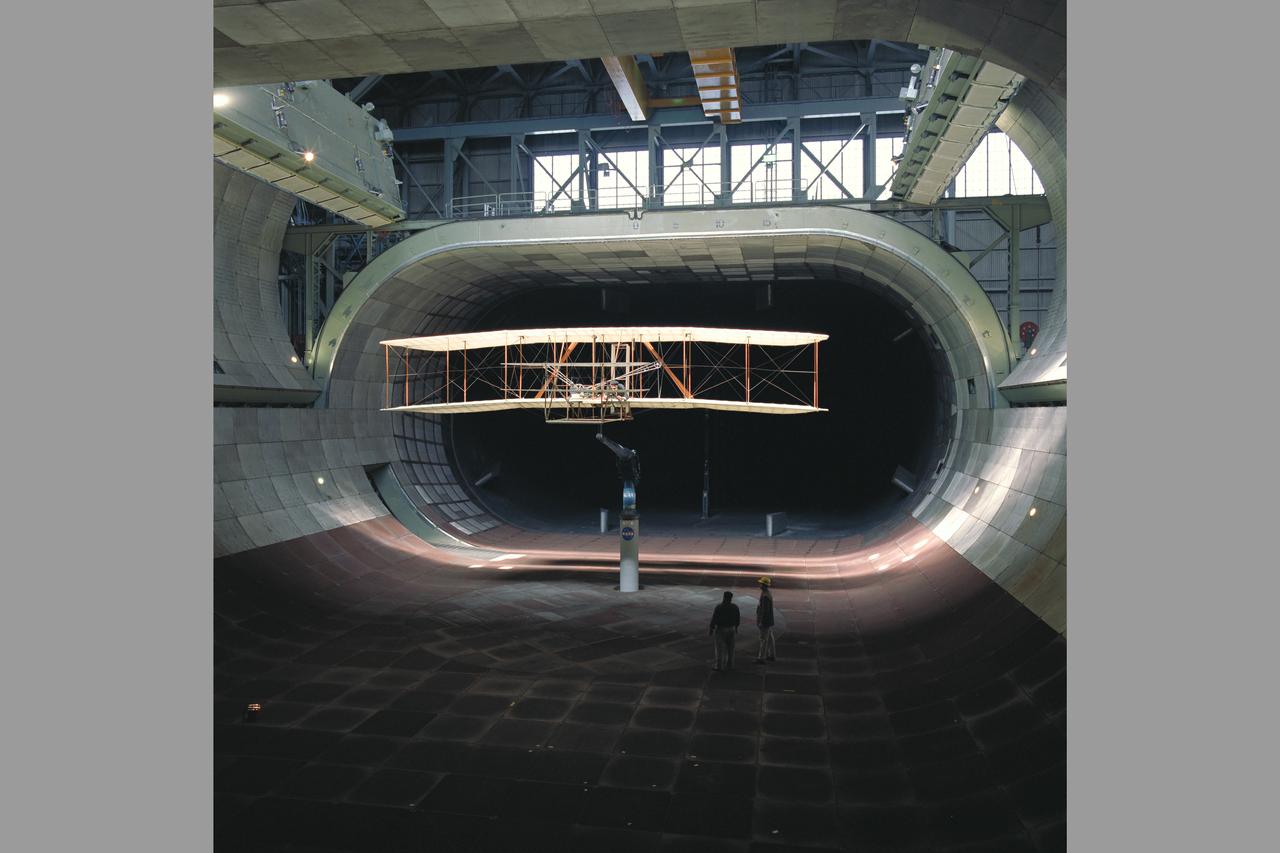
Wright Flyer Replica Test-40-0047: Ames 40 x 80 foot Subsonic Wind Tunnel. View of Installation with Pete Zell, Tom Aiken (in cap) and Felton Smith and Richard McLimoil (in shadow). (Testing of the replica for it's airworthiness was as part of the Centennial of Flight celebration.)
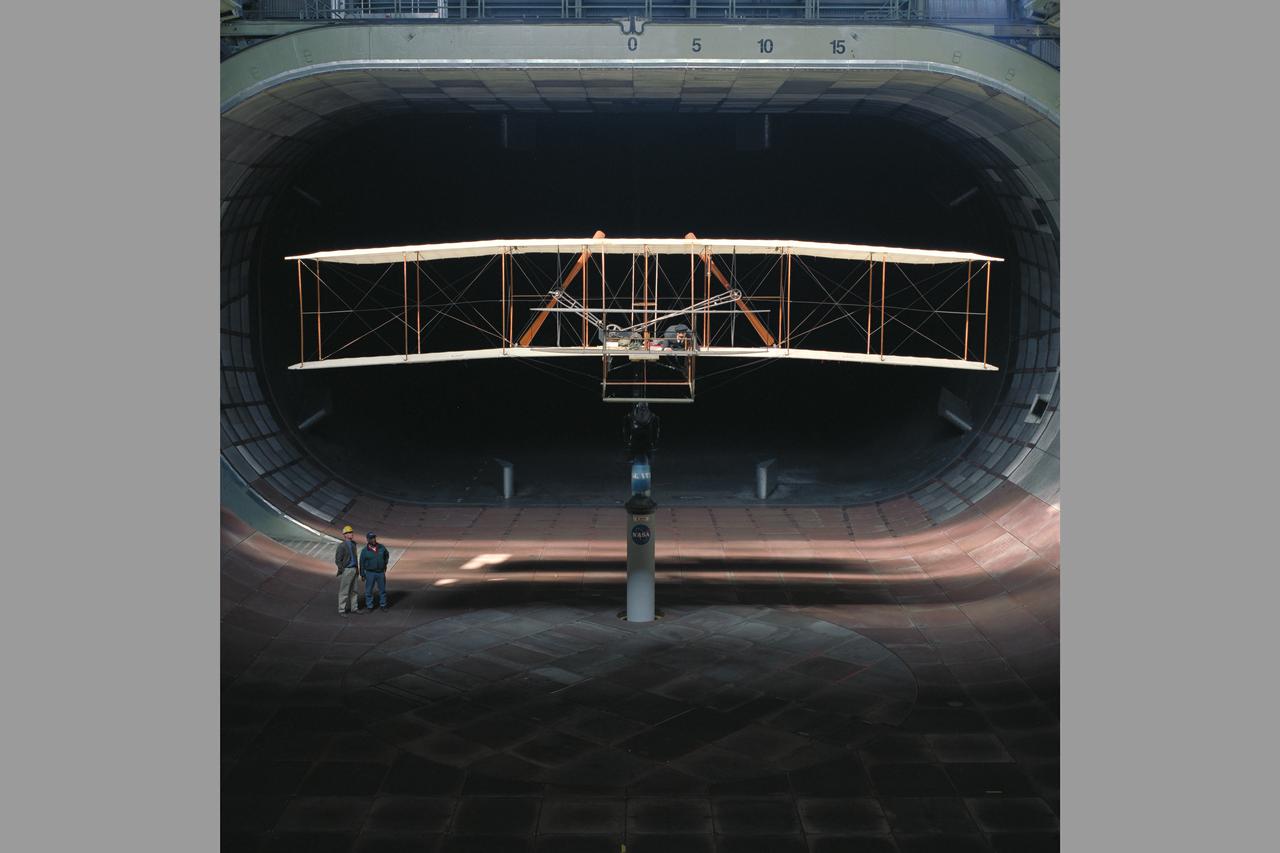
Wright Flyer Replica Test-40-0047: Ames 40 x 80 foot Subsonic Wind Tunnel. Shown here with Pete Zell, Ames test engineer. (Testing of the replica for it's airworthiness was as part of the Centennial of Flight celebration.)
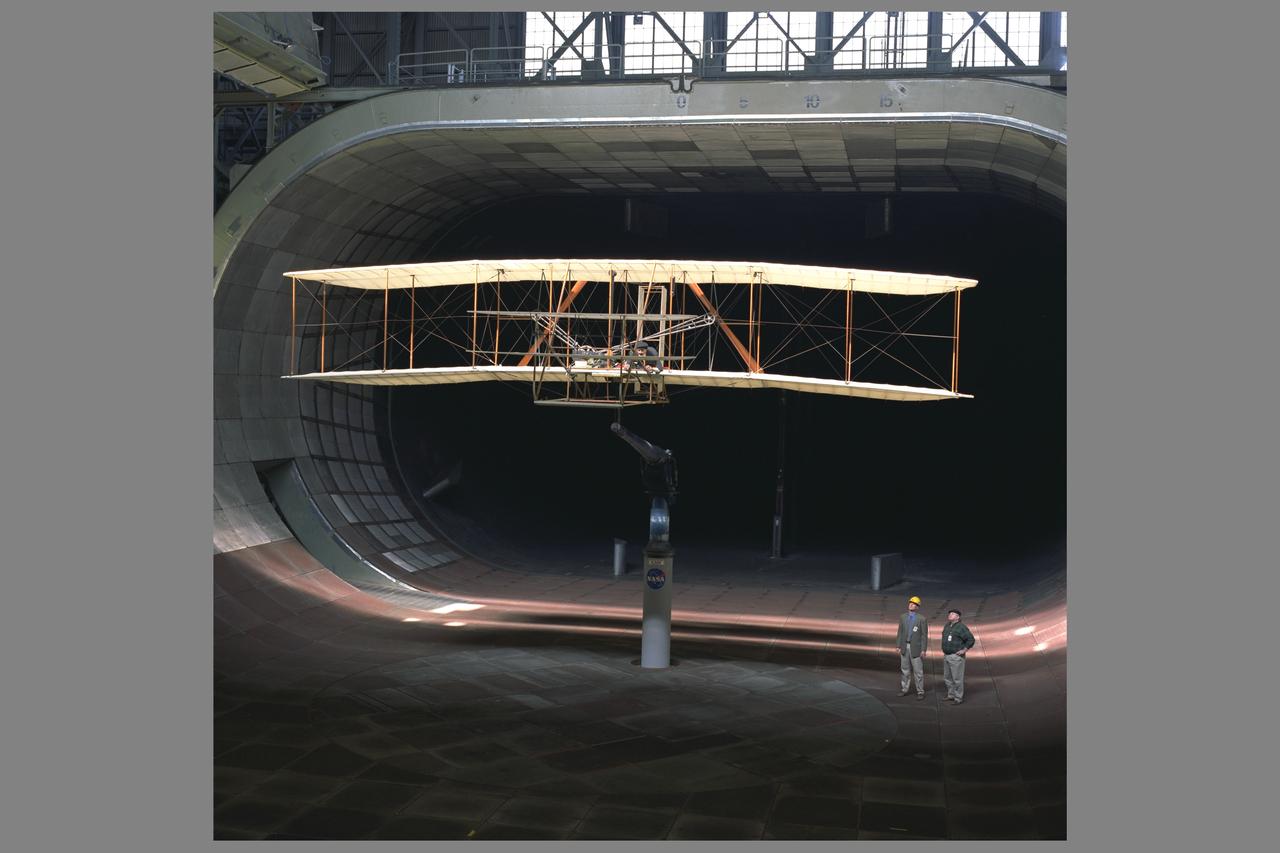
Wright Flyer Replica Test-40-0047: Ames 40 x 80 foot Subsonic Wind Tunnel. View of Installation with Pete Zell (In Cap) and Felton Smith. (Testing of the replica for it's airworthiness was as part of the Centennial of Flight celebration.)

NASA's Ingenuity Mars Helicopter carries a small swatch of muslin material from the lower-left wing of the Wright Brothers Flyer 1. Located on the underside of the helicopter's solar panel (the dark rectangle), the swatch is attached with dark orange polymide tape to a cable extending from the panel, and then further secured in place with white polyester cord used to bind cables together. A gray dot of epoxy at the intersection of the three wraps of cord prevents the lacing from loosening as the rotor blades (upper pair seen at bottom of image) rotate at up to 2,400 rpm. The entire process, from enclosing the material in the plastic to affixing it onto the helicopter took, approximately 30 minutes. The swatch of material from the Wright brothers' first airplane was obtained from the Carillon Historical Park, in Dayton, Ohio — home to the Wright Brothers National Museum. The image was taken in a clean room at NASA's Jet Propulsion Laboratory in Southern California on January 15, 2020. https://photojournal.jpl.nasa.gov/catalog/PIA24291
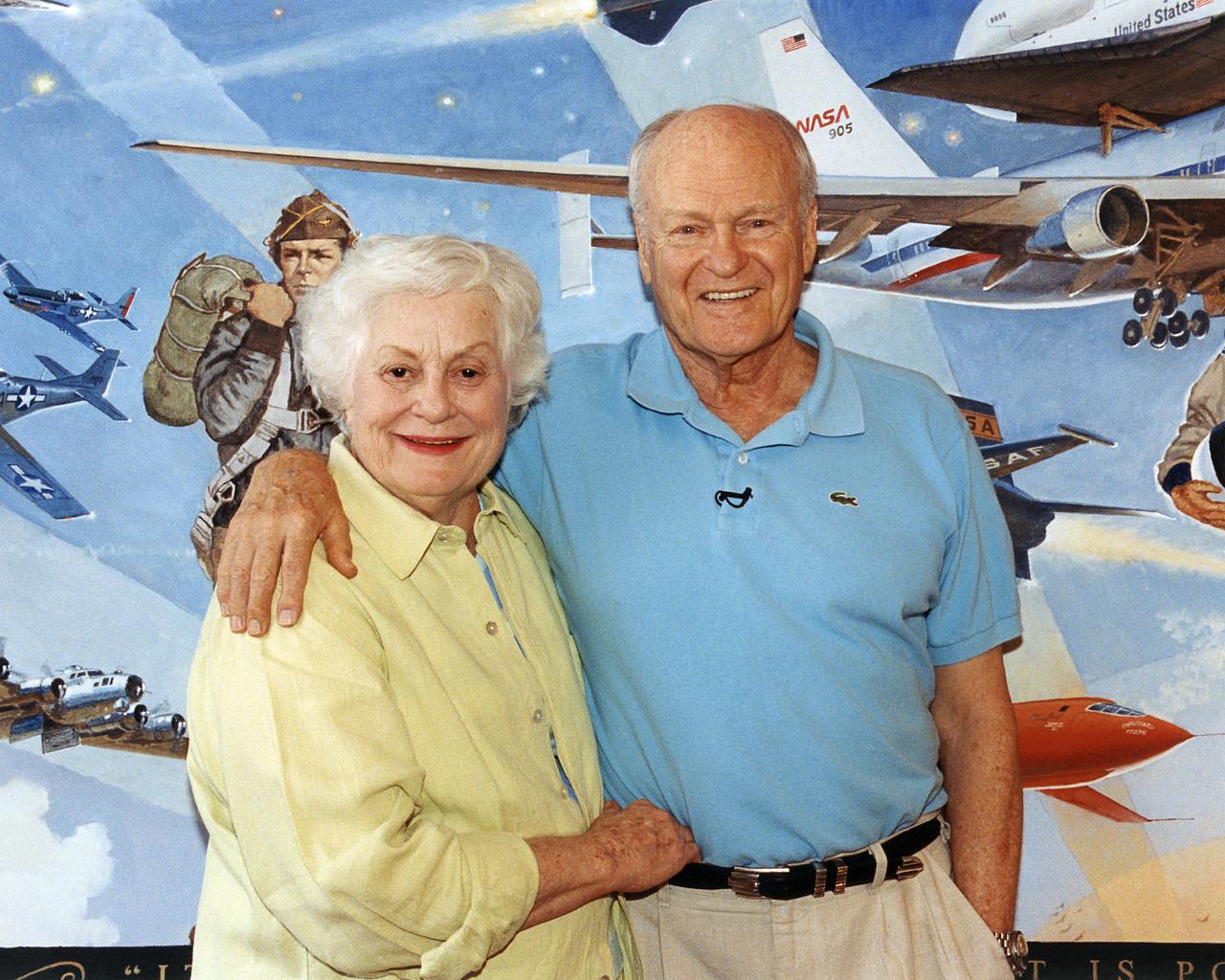
Artists Bob and Louise McCall in their Paradise Valley, Arizona studio, in front of "Celebrating One Hundred Years of Powered Flight 1903-2003." The mural was created to celebrate the achievements of Wilbur and Orville Wright and to commemorate a century of powered flight. Many of the epic flights represented in the painting took place in the skies over NASA Dryden Flight Research Center. An equally important goal of this celebration is to encourage the values that have characterized 100 years of aviation history: ingenuity, inventiveness, persistence, creativity and courage. These values hold true not just for pioneers of flight, but also for all pioneers of invention and innovation, and they will remain an important part of America's future. "Celebrating One Hundred Years of Powered Flight, 1903-2003", documents many significant achievements in aeronautics and space flight from the dawn of powered flight to the present. Historic aircraft and spacecraft serve as the backdrop, highlighting six figures representing the human element that made these milestones possible. These figures stand, symbolically supported by the words of Wilbur Wright, "It is my belief that flight is possible…" The quote was taken from a letter written to his father on September 3rd, 1900, announcing Wilbur's intention to make "some experiments with a flying machine" at Kitty Hawk, North Carolina. "This year, Bob is helping us commemorate the Centennial of Flight with a beautiful mural slated for placement in our Dryden Flight Research Center that documents the history of flight from the Wright Flyer to the International Space Station. We should all take note, I think, that in the grand scheme of things, one hundred years is a very short period of time. In that blink of an eye we've gone from Kitty Hawk to Tranquility Base and now look forward to our rovers traversing the surface of Mars. Despite the challenges we face, the future we envision, like the future depicted in the artwork of Bo
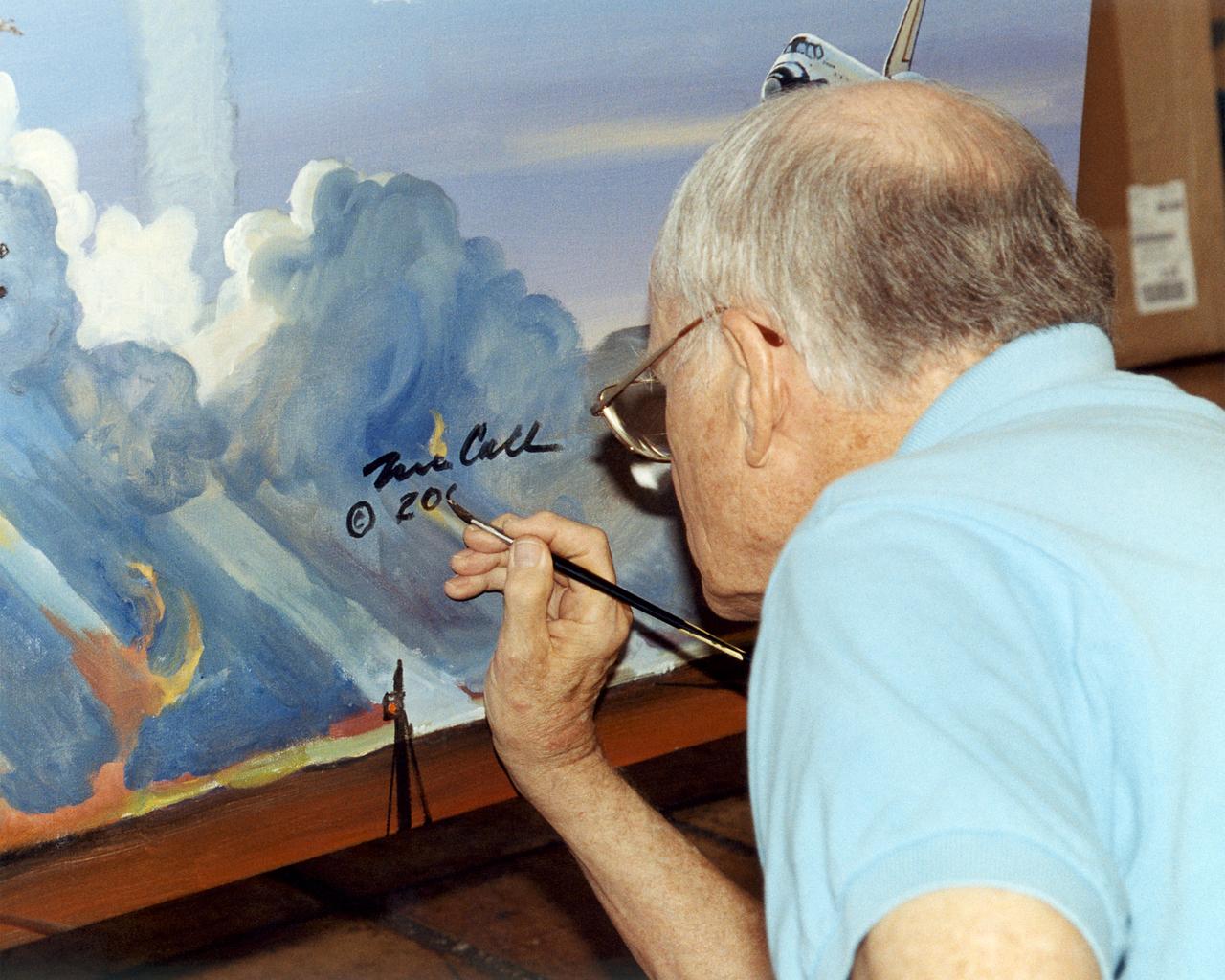
Artist Bob McCall signs the Centennial of Flight Mural in his Paradise Valley, Arizona Studio. The mural was created to celebrate the achievements of Wilbur and Orville Wright and to commemorate a century of powered flight. Many of the epic flights represented in the painting took place in the skies over NASA Dryden Flight Research Center. An equally important goal of this celebration is to encourage the values that have characterized 100 years of aviation history: ingenuity, inventiveness, persistence, creativity and courage. These values hold true not just for pioneers of flight, but also for all pioneers of invention and innovation, and they will remain an important part of America's future. "Celebrating One Hundred Years of Powered Flight, 1903-2003", documents many significant achievements in aeronautics and space flight from the dawn of powered flight to the present. Historic aircraft and spacecraft serve as the backdrop, highlighting six figures representing the human element that made these milestones possible. These figures stand, symbolically supported by the words of Wilbur Wright, "It is my belief that flight is possible…" The quote was taken from a letter written to his father on September 3rd, 1900, announcing Wilbur's intention to make "some experiments with a flying machine" at Kitty Hawk, North Carolina. "This year, Bob is helping us commemorate the Centennial of Flight with a beautiful mural slated for placement in our Dryden Flight Research Center that documents the history of flight from the Wright Flyer to the International Space Station. We should all take note, I think, that in the grand scheme of things, one hundred years is a very short period of time. In that blink of an eye we've gone from Kitty Hawk to Tranquility Base and now look forward to our rovers traversing the surface of Mars. Despite the challenges we face, the future we envision, like the future depicted in the artwork of Bob McCall, is a future of boundless possibility. "
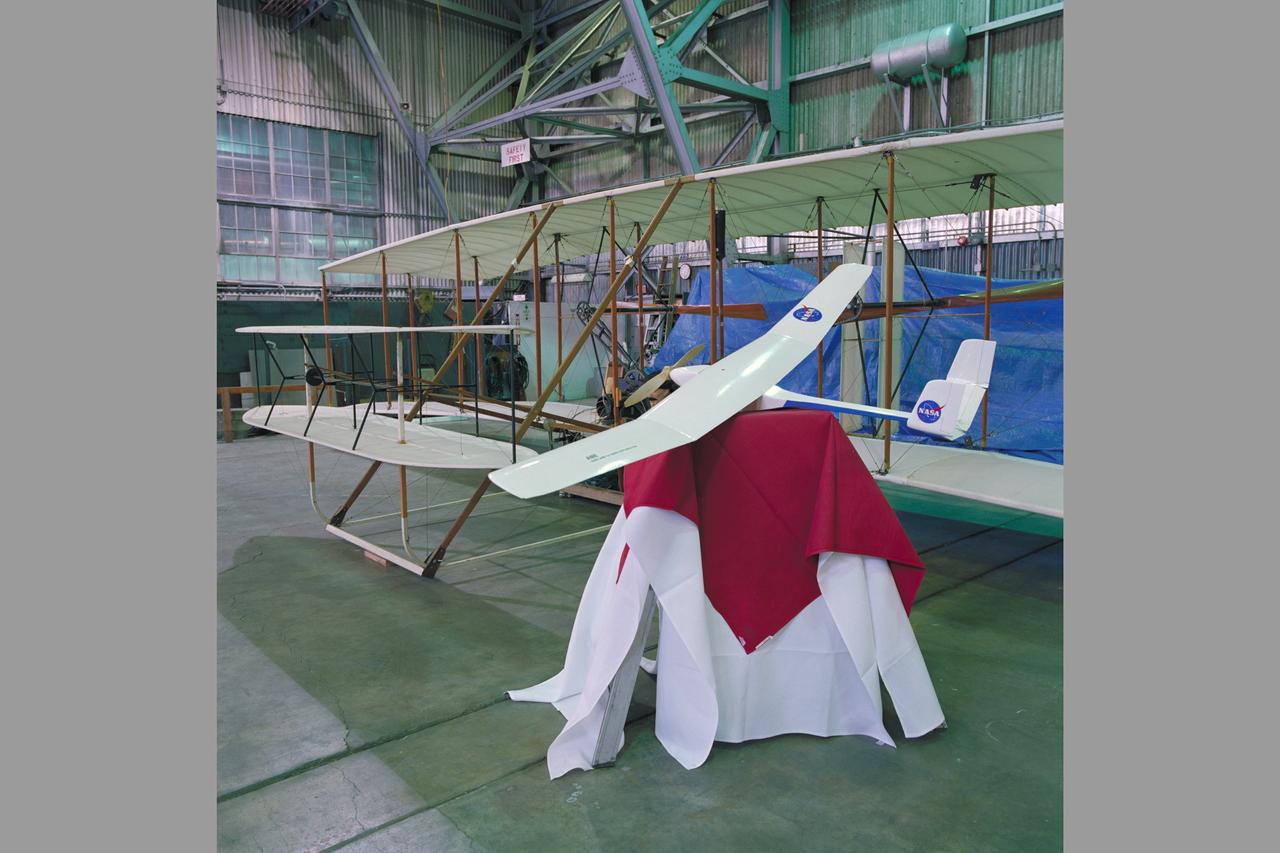
A model of the Ames Mars micromission concept aircraft is shown beside the Wright Flyer replica in the high bay of Ames 40x80ft. wind tunnel
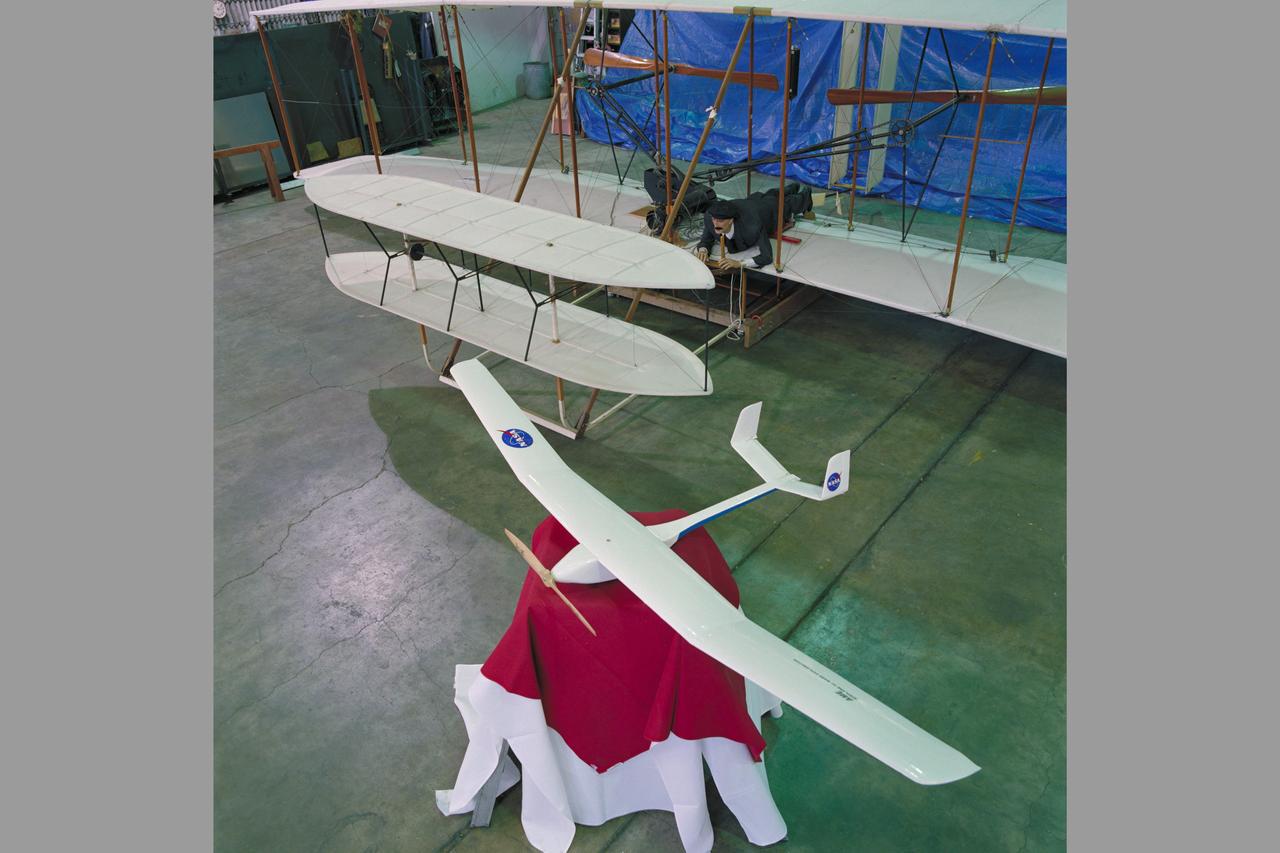
A model of the Ames Mars micromission concept aircraft is shown beside the Wright Flyer replica in the high bay of Ames 40x80ft. wind tunnel
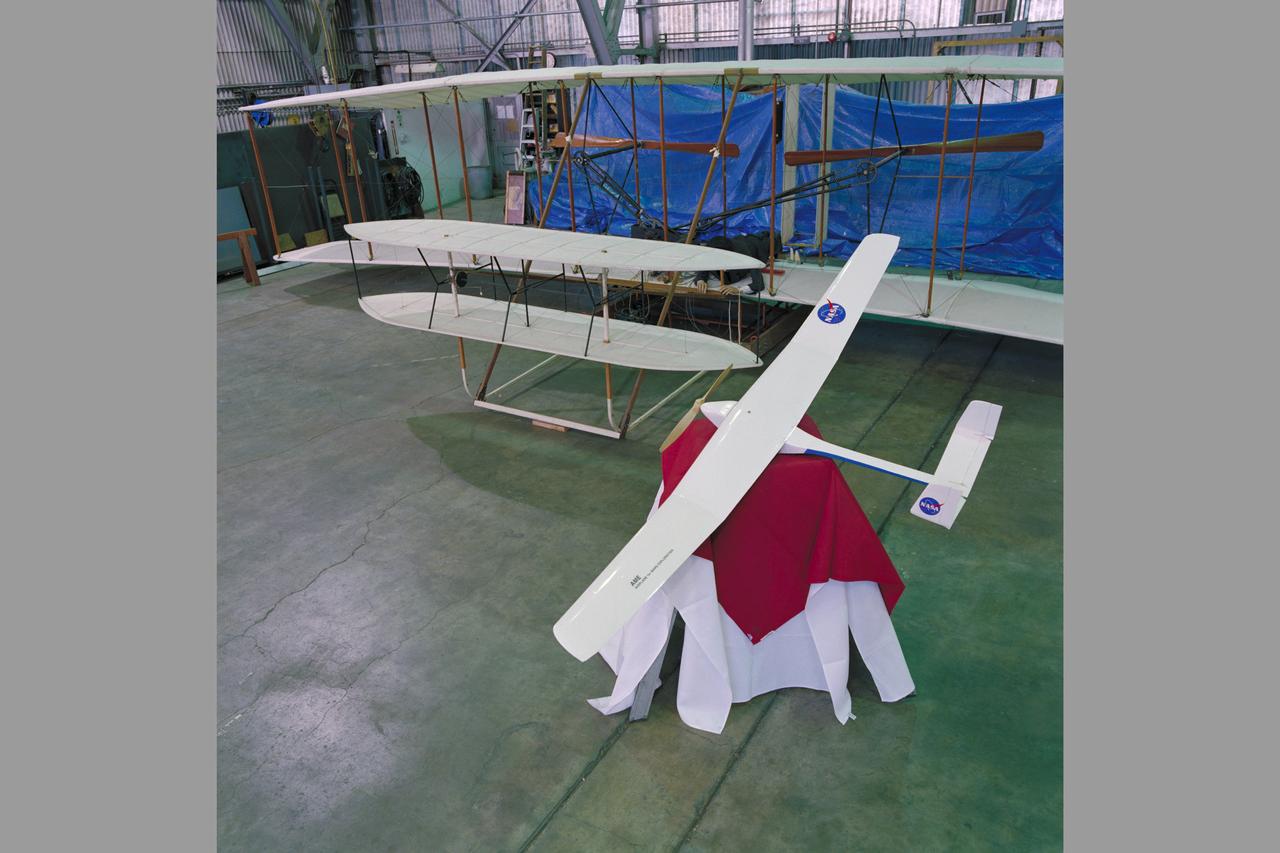
A model of the Ames Mars micromission concept aircraft is shown beside the Wright Flyer replica in the high bay of Ames 40x80ft. wind tunnel
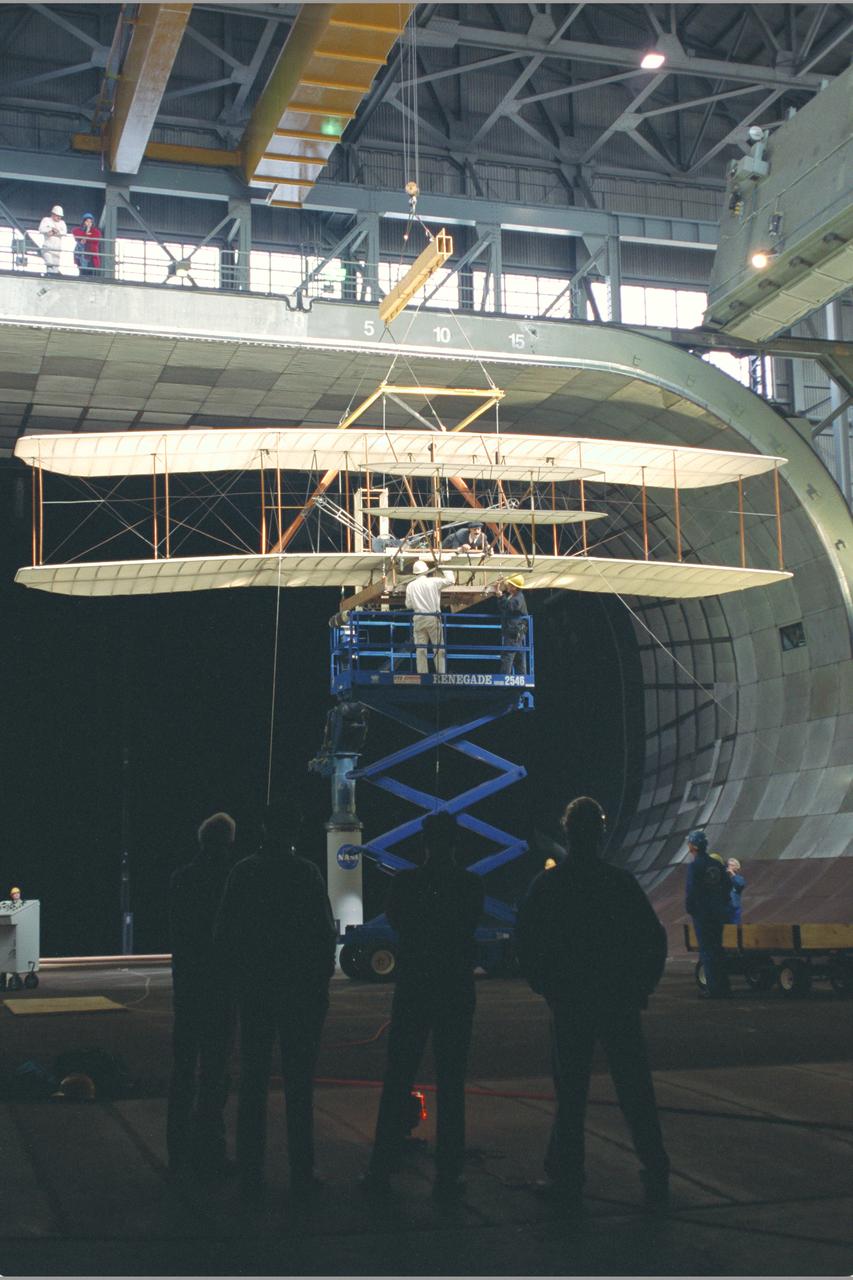
View of Installation with Pete Zell (In Cap) and Felton Smith and Richard McLimoil (In Shadows). Wright Flyer Replica Test-40-0047: 40x80 ft. Wind Tunnel.
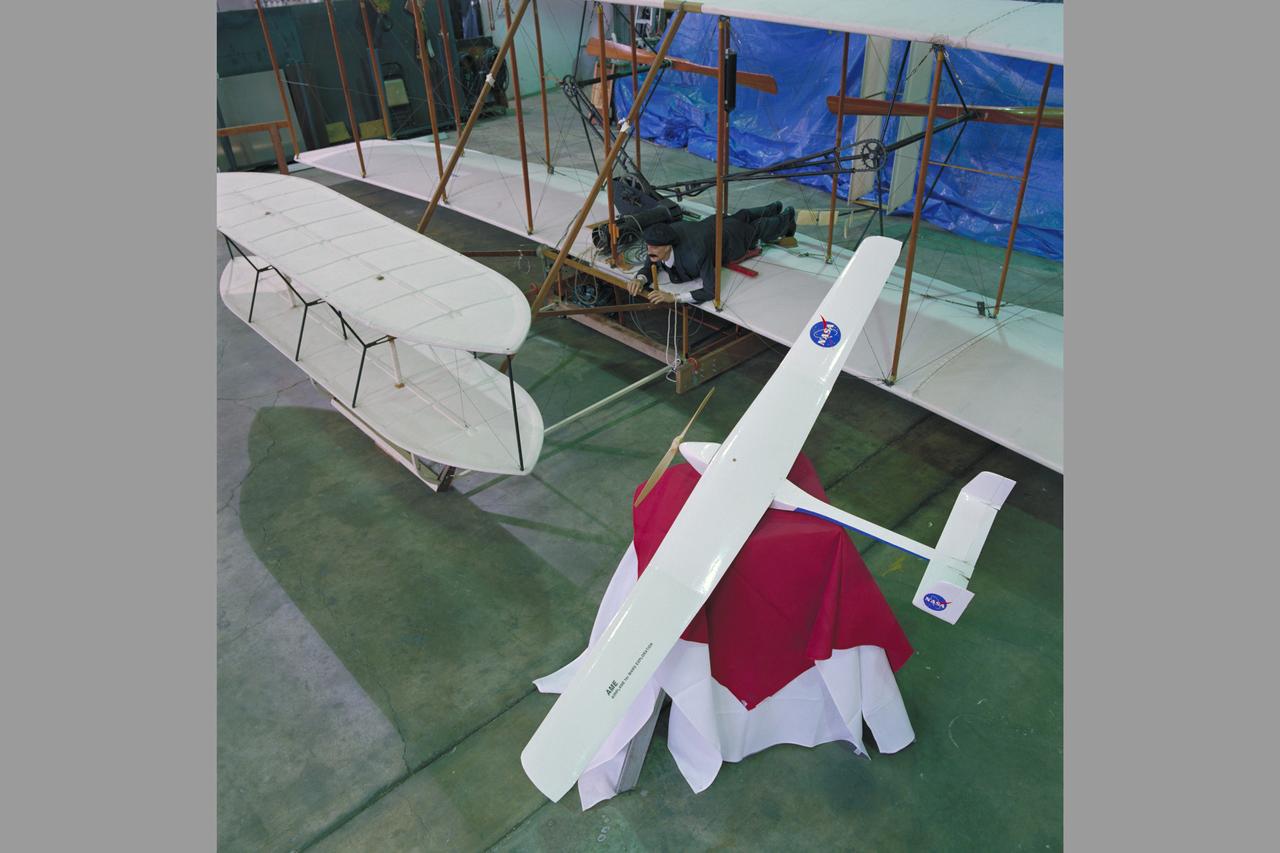
A model of the Ames Mars micromission concept aircraft is shown beside the Wright Flyer replica in the high bay of Ames 40x80ft. wind tunnel
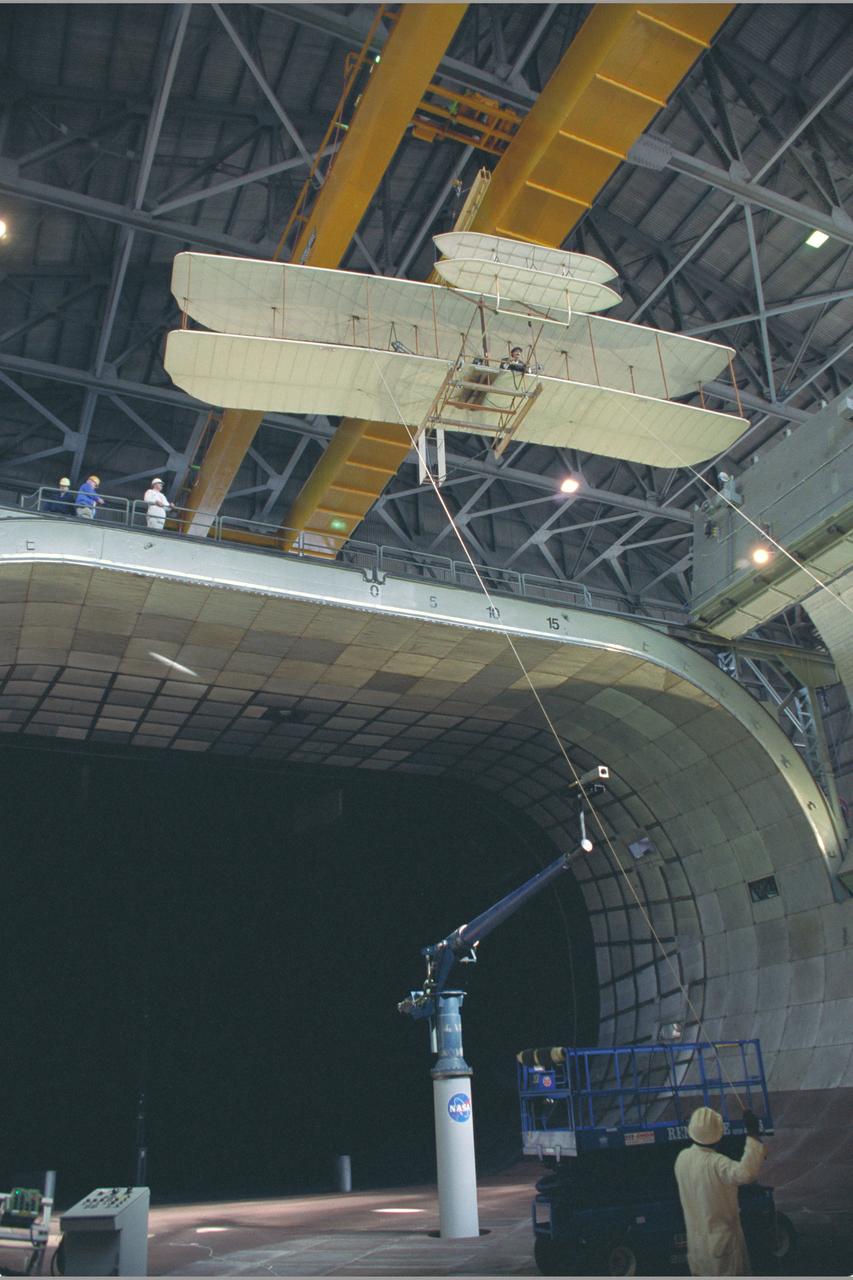
View of Installation with Pete Zell, Tom Aiken (In Cap) and Felton Smith and Richard McLimoil (In Shadow). Wright Flyer Replica Test-40-0047: 40 x 80 ft. Wind Tunnel.
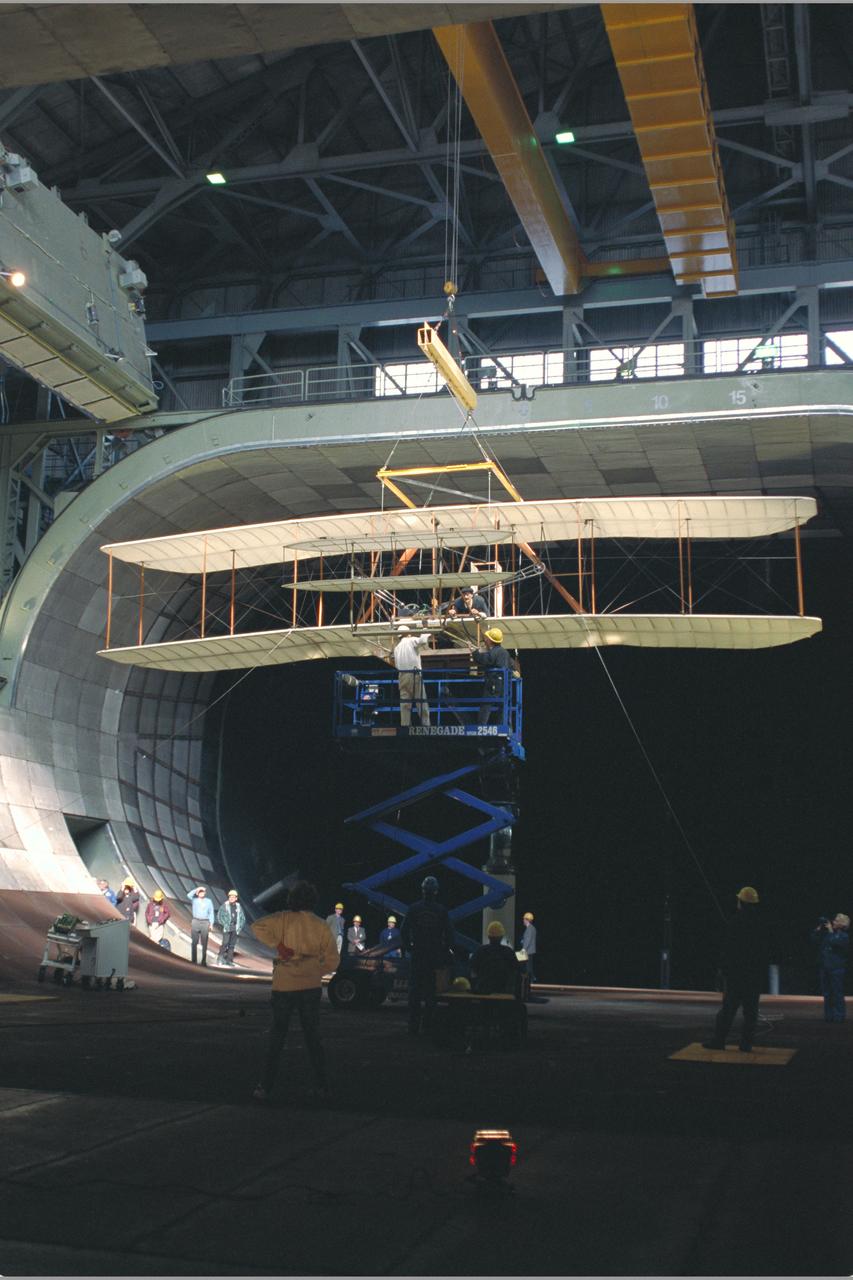
View of Installation with Pete Zell (In Cap) and Felton Smith and Richard McLimoil (In Shadows). Wright Flyer Replica Test-40-0047: 40 x 80 ft. Wind Tunnel.
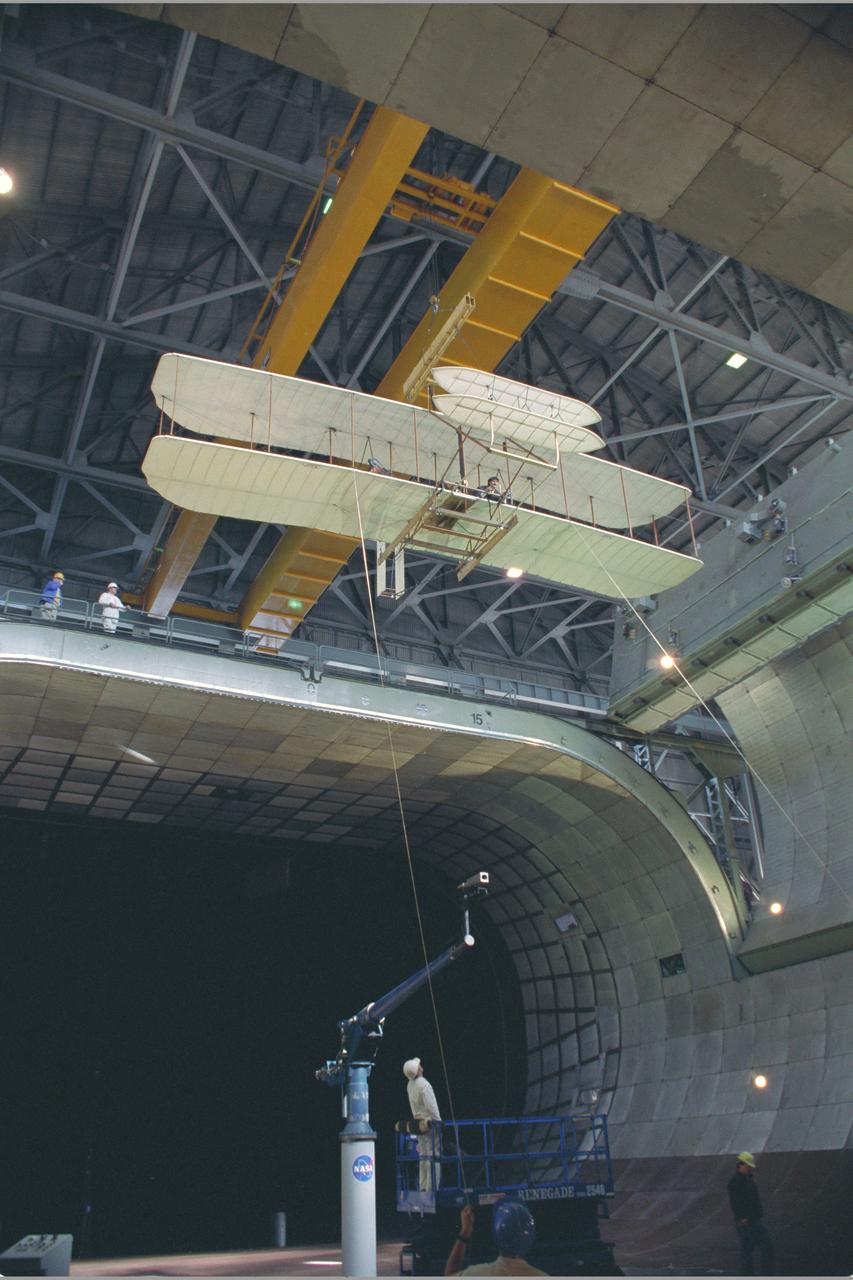
View of Installation with Pete Zell, Tom Aiken (In Cap) and Felton Smith and Richard McLimoil (In Shadow). Wright Flyer Replica Test-40-0047: 40 x 80 ft. Wind Tunnel.
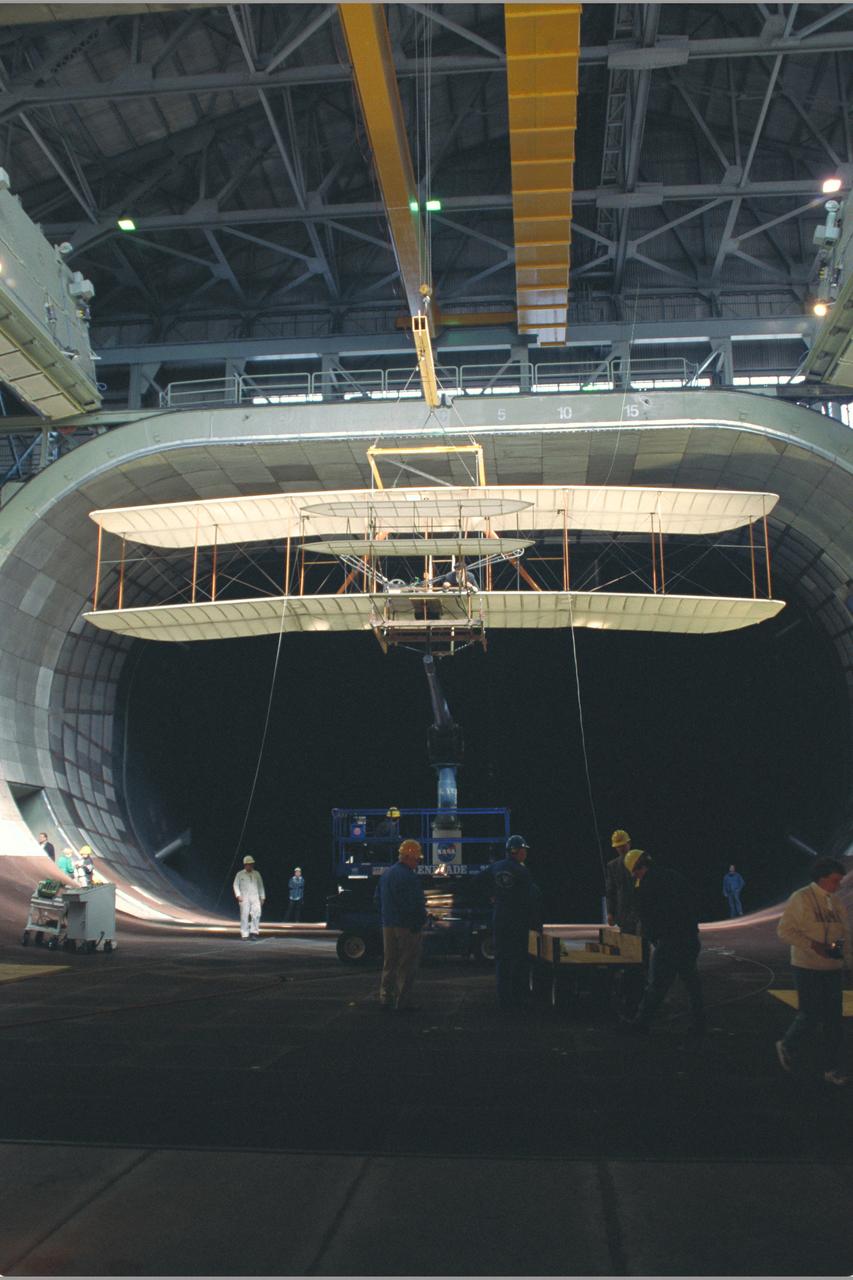
View of Installation with Pete Zell (In Cap) and Felton Smith and Richard McLimoil (In Shadows). Wright Flyer Replica Test-40-0047: 40 x 80 ft. Wind Tunnel.
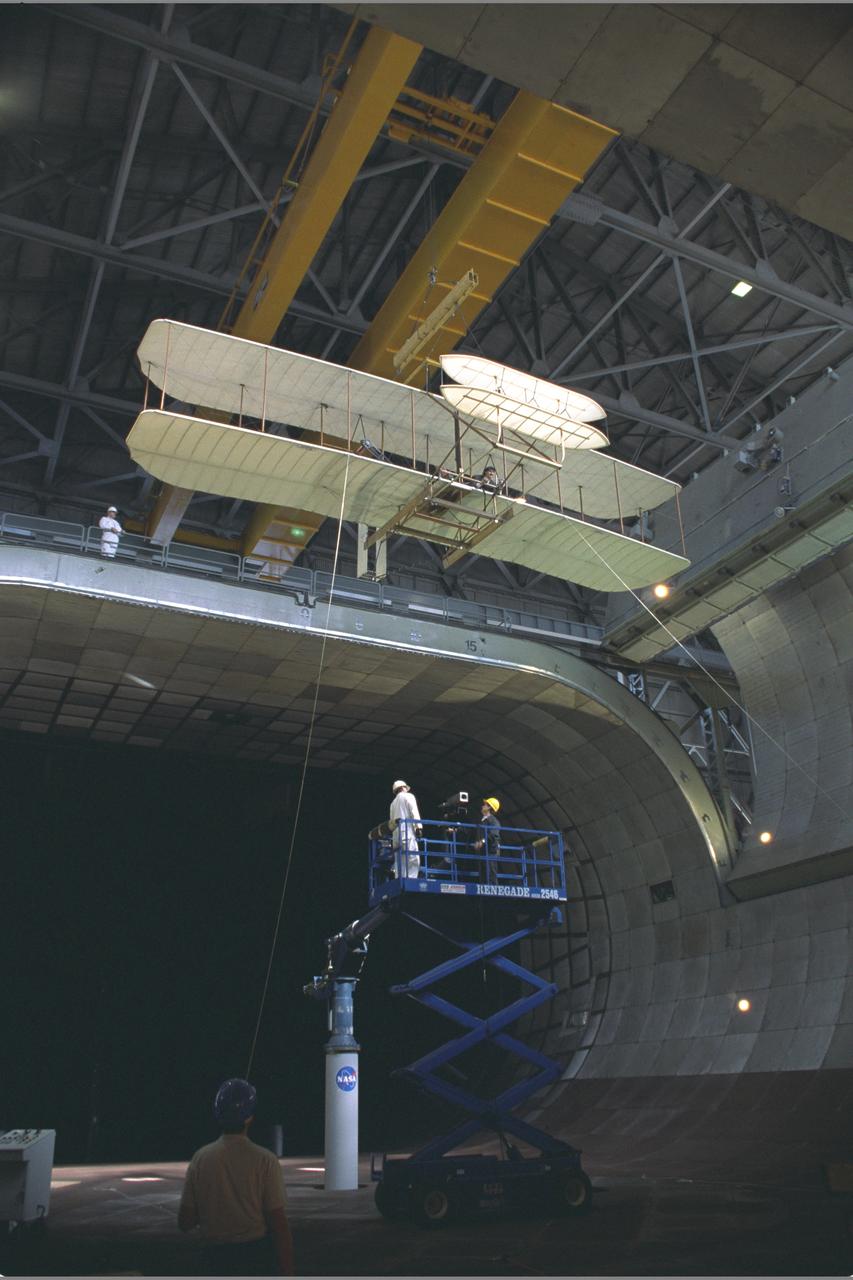
View of Installation with Pete Zell, Tom Aiken (In Cap) and Felton Smith and Richard McLimoil (In Shadow). Wright Flyer Replica Test-40-0047: 40 x 80 ft. Wind Tunnel.
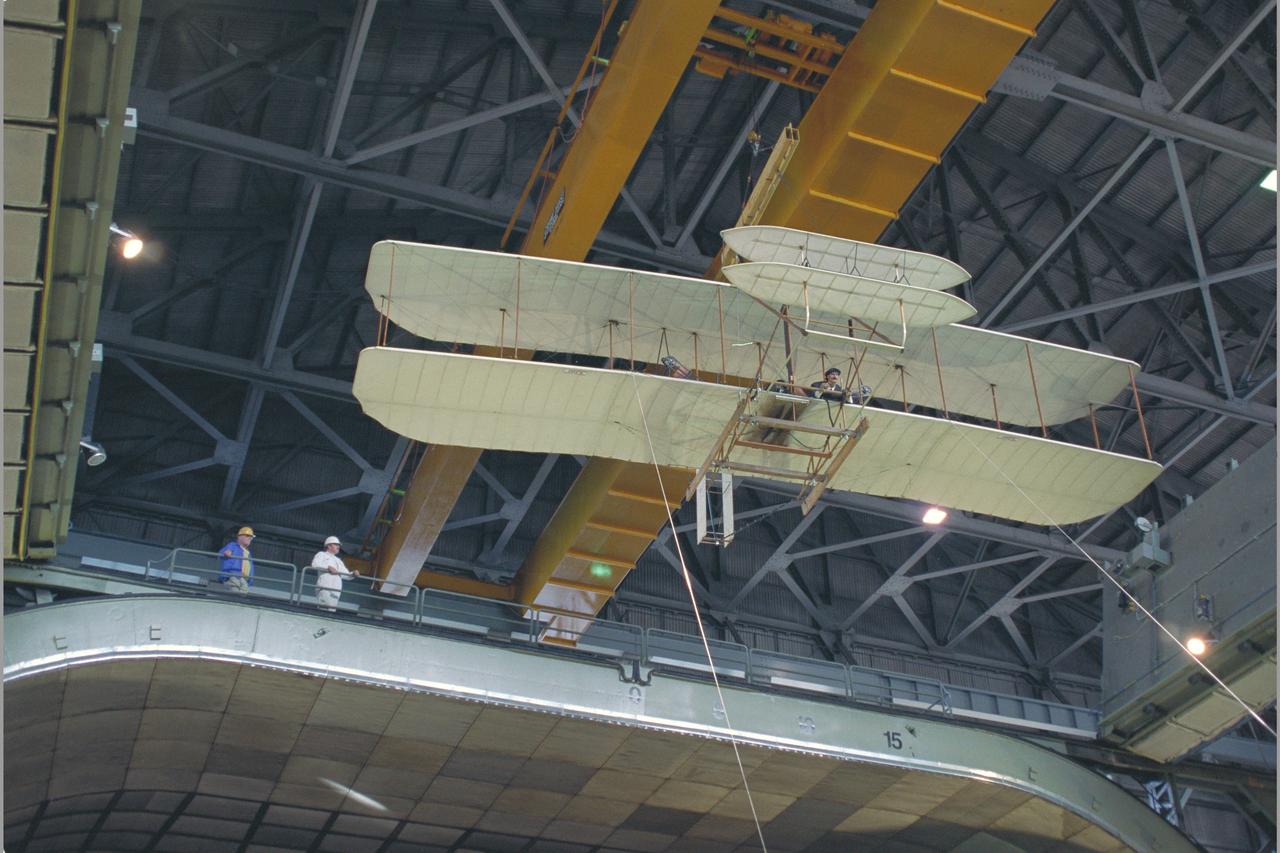
View of Installation with Pete Zell, Tom Aiken (In Cap) and Felton Smith and Richard McLimoil (In Shadow). Wright Flyer Replica Test-40-0047: 40 x 80 ft. Wind Tunnel.
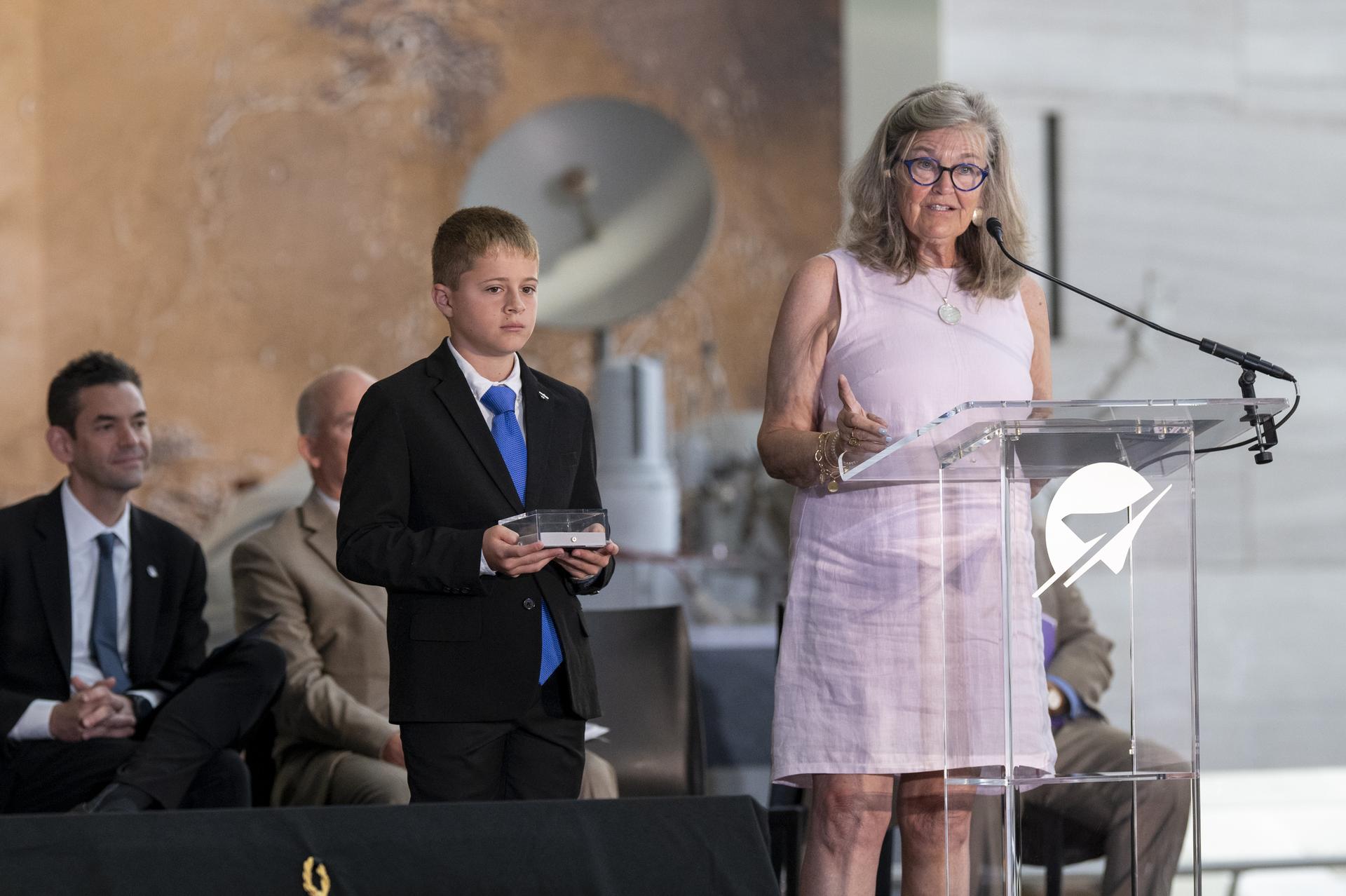
Wright brother’s great-grandniece Amanda Wright Lane, right, delivers remarks alongside her grandson Wren Wright Banhos, left, after accepting a swatch of muslin fabric from the original Wright Flyer the Wright Brothers used to make the first powered flight in 1903 on behalf of the Smithsonian’s National Air and Space Museum during the museum’s rededication ceremony Wednesday, July 1, 2026, in Washington. The swatch is being returned to the museum after having been flown aboard NASA’s Artemis II mission around the Moon and back to Earth in April 2026. Photo Credit: (NASA/Keegan Barber)
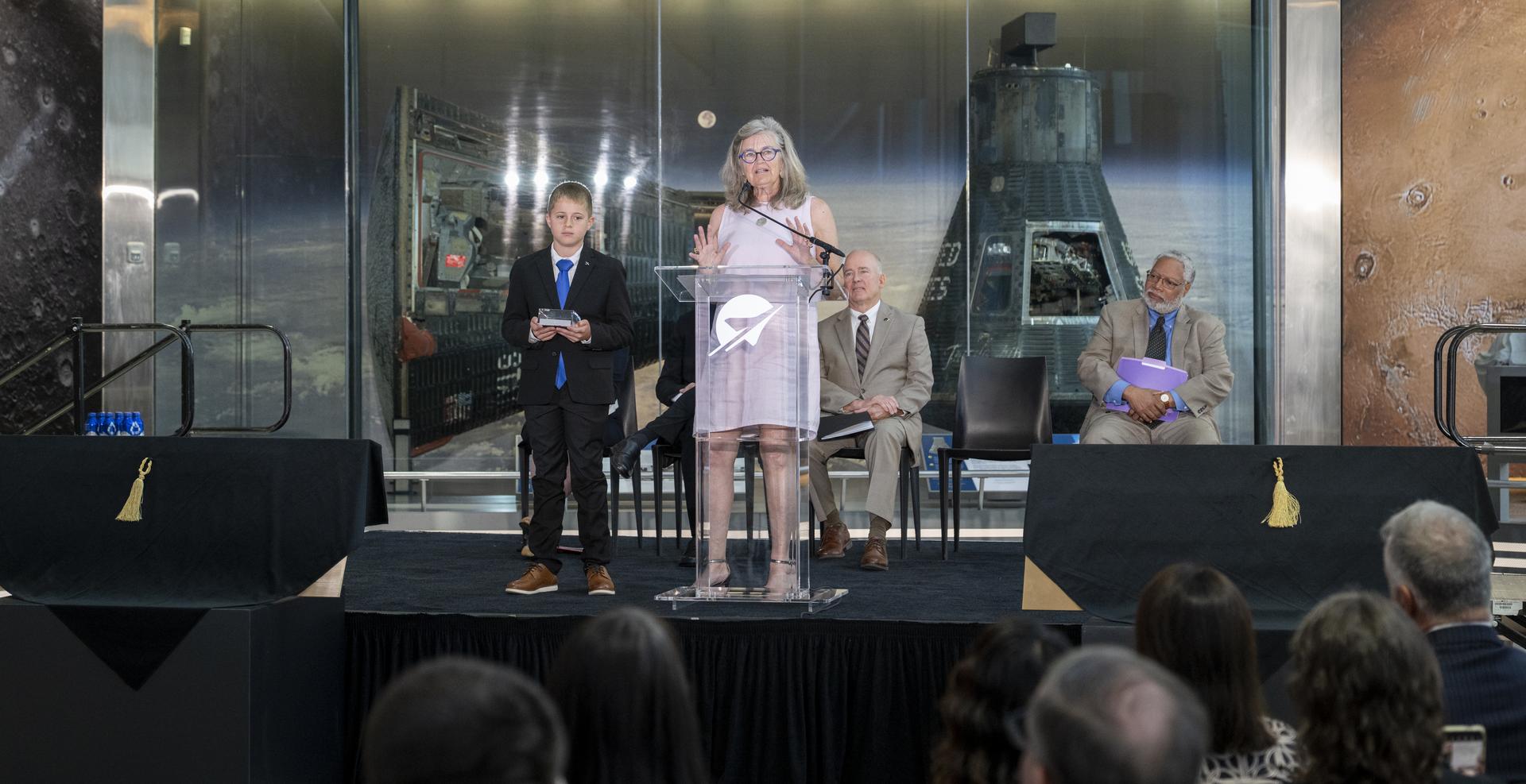
Wright brother’s great-grandniece Amanda Wright Lane, right, delivers remarks alongside her grandson Wren Wright Banhos, left, after accepting a swatch of muslin fabric from the original Wright Flyer the Wright Brothers used to make the first powered flight in 1903 on behalf of the Smithsonian’s National Air and Space Museum during the museum’s rededication ceremony Wednesday, July 1, 2026, in Washington. The swatch is being returned to the museum after having been flown aboard NASA’s Artemis II mission around the Moon and back to Earth in April 2026. Photo Credit: (NASA/Keegan Barber)
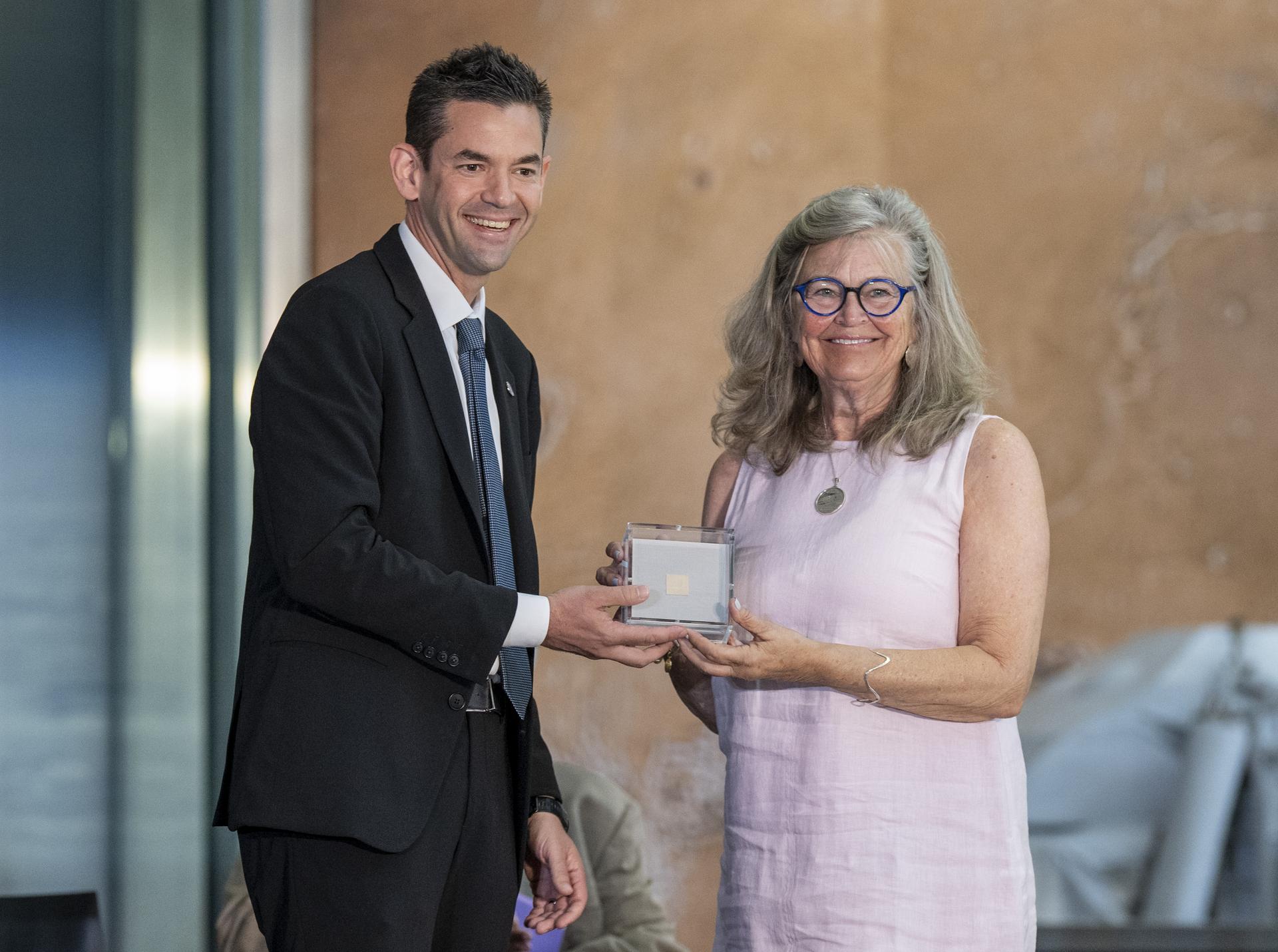
NASA Administrator Jared Isaacman presents a swatch of muslin fabric from the original Wright Flyer the Wright Brothers used to make the first powered flight in 1903 to great-grandniece Amanda Wright Lane during the Smithsonian’s National Air and Space Museum rededication ceremony Wednesday, July 1, 2026, in Washington. The swatch is being returned to the museum after having been flown aboard NASA’s Artemis II mission around the Moon and back to Earth in April 2026. Photo Credit: (NASA/Keegan Barber)
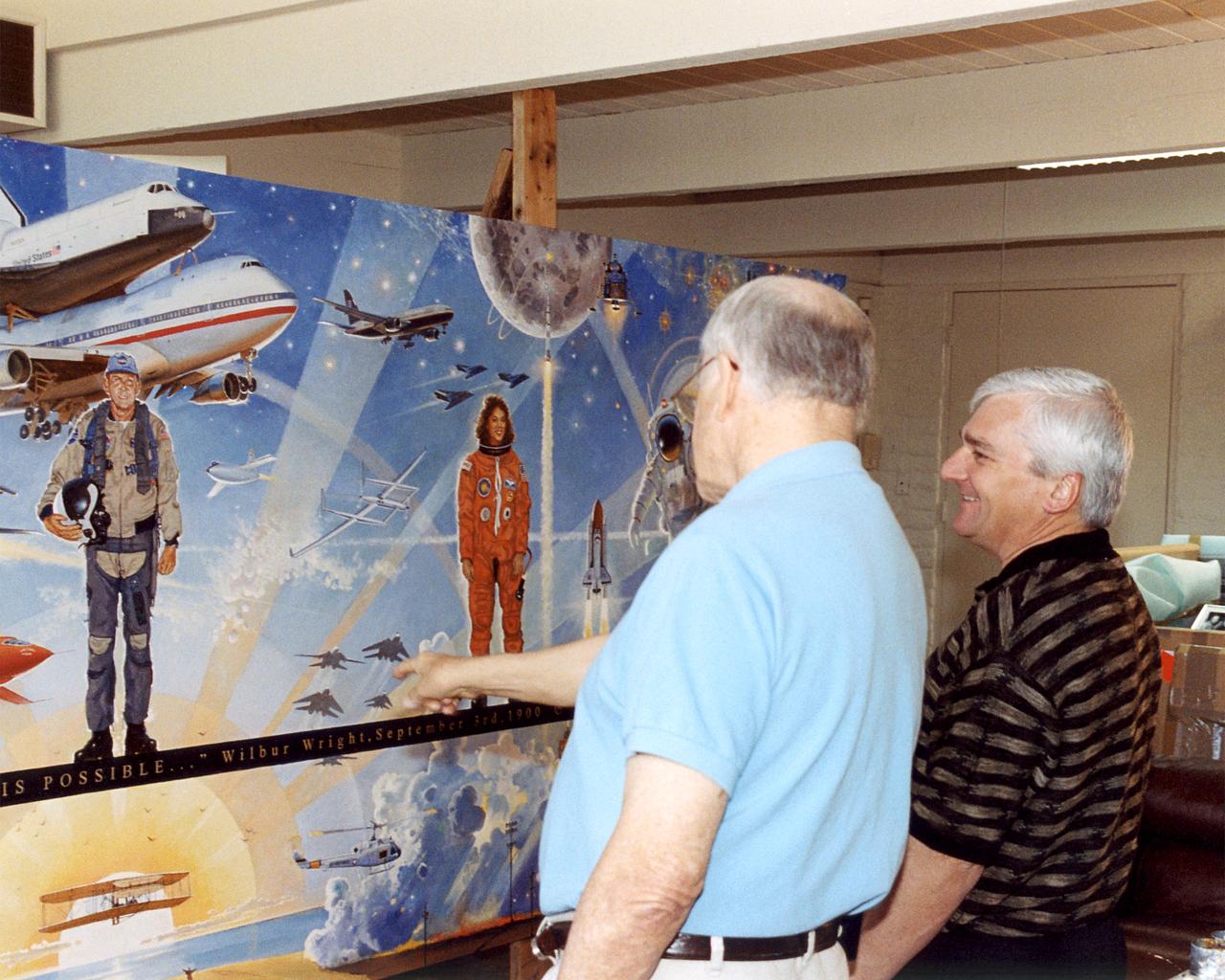
Bob Mccall and NASA Dryden Director Kevin Petersen stand by "Celebrating One Hundred Years of Powered Flight, 1903-2003", in the artist's studio in Paradise Valley, Arizona. The mural was created to celebrate the achievements of Wilbur and Orville Wright and to commemorate a century of powered flight. Many of the epic flights represented in the painting took place in the skies over NASA Dryden Flight Research Center. An equally important goal of this celebration will be to encourage the values that have characterized 100 years of aviation history: ingenuity, inventiveness, persistence, creativity and courage. These values hold true not just for pioneers of flight, but also for all pioneers of invention and innovation, and they will remain an important part of America's future. "Celebrating One Hundred Years of Powered Flight, 1903-2003", documents many significant achievements in aeronautics and space flight from the dawn of powered flight to the present. Historic aircraft and spacecraft serve as the backdrop, highlighting six figures representing the human element that made these milestones possible. These figures stand, symbolically supported by the words of Wilbur Wright, "It is my belief that flight is possible…" The quote was taken from a letter written to his father on September 3rd, 1900, announcing Wilbur's intention to make "some experiments with a flying machine" at Kitty Hawk, North Carolina. "This year, Bob is helping us commemorate the Centennial of Flight with a beautiful mural slated for placement in our Dryden Flight Research Center that documents the history of flight from the Wright Flyer to the International Space Station. We should all take note, I think, that in the grand scheme of things, one hundred years is a very short period of time. In that blink of an eye we've gone from Kitty Hawk to Tranquility Base and now look forward to our rovers traversing the surface of Mars. Despite the challenges we face, the future we envision, like the fu
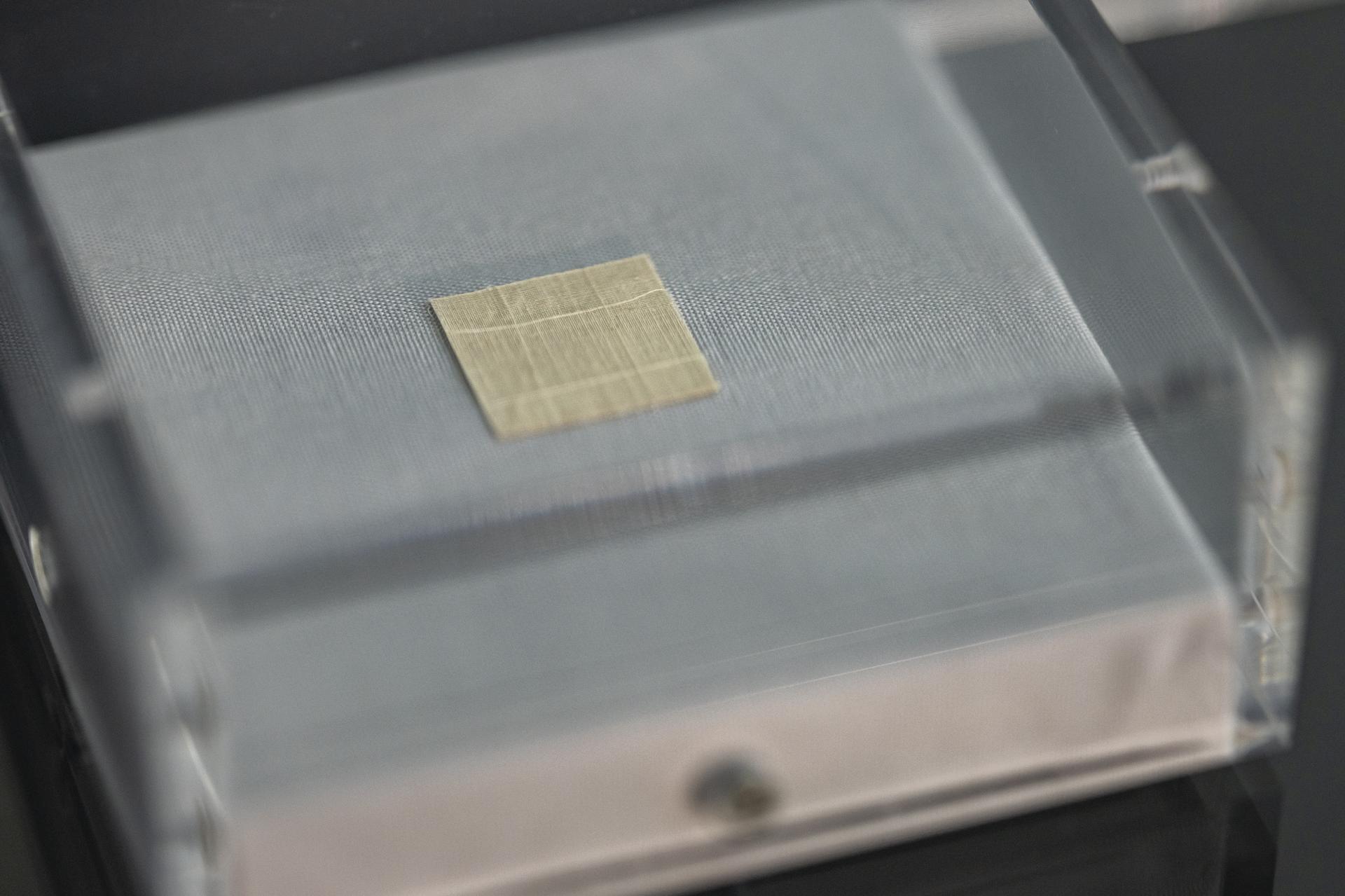
A swatch of muslin fabric from the original Wright Flyer the Wright Brothers used to make the first powered flight in 1903 is seen prior to the Smithsonian’s National Air and Space Museum rededication ceremony Wednesday, July 1, 2026, in Washington. The swatch is being returned to the museum after having been flown aboard NASA’s Artemis II mission around the Moon and back to Earth in April 2026. Photo Credit: (NASA/Keegan Barber)
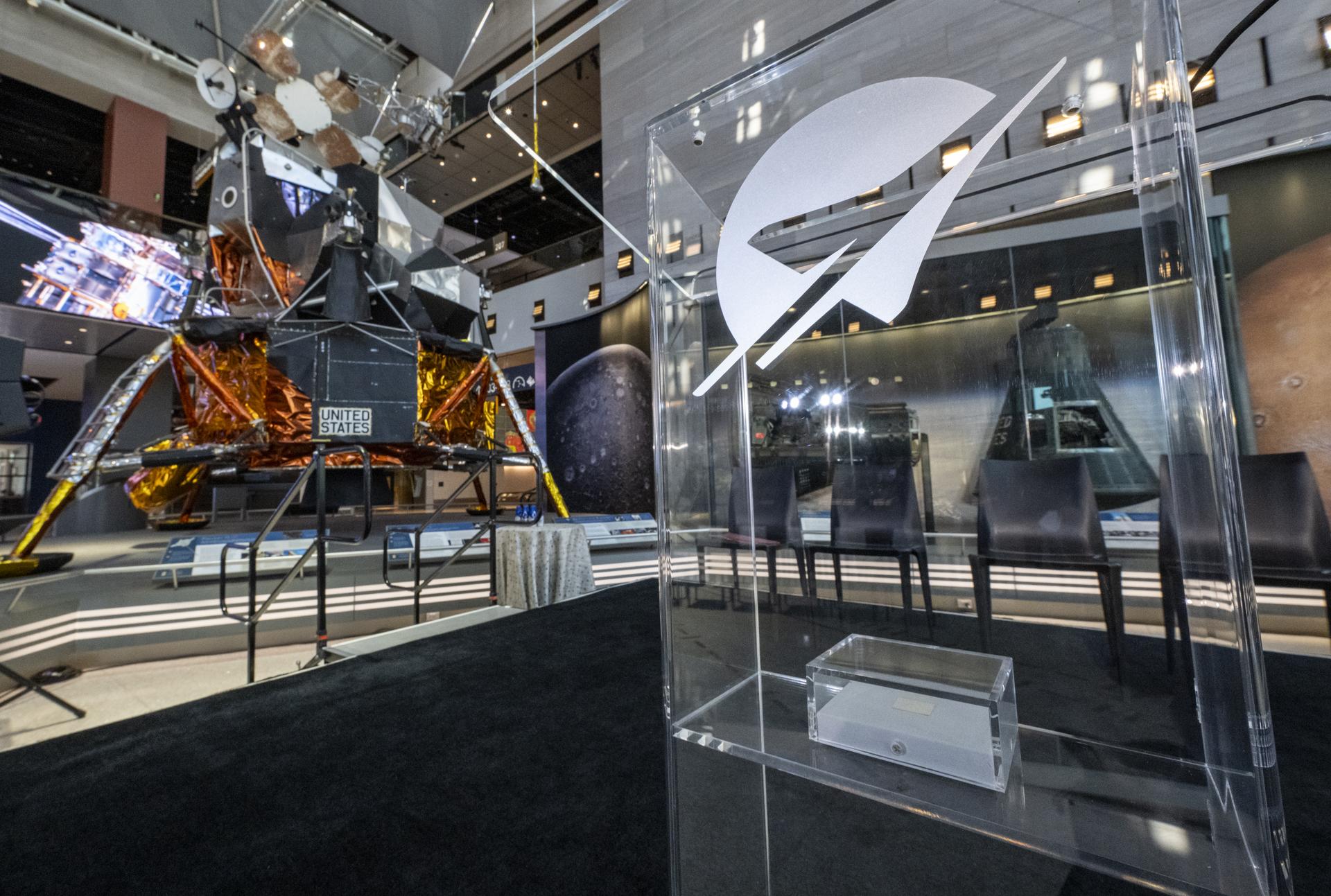
A swatch of muslin fabric from the original Wright Flyer the Wright Brothers used to make the first powered flight in 1903 is seen prior to the Smithsonian’s National Air and Space Museum rededication ceremony Wednesday, July 1, 2026, in Washington. The swatch is being returned to the museum after having been flown aboard NASA’s Artemis II mission around the Moon and back to Earth in April 2026. Photo Credit: (NASA/Keegan Barber)
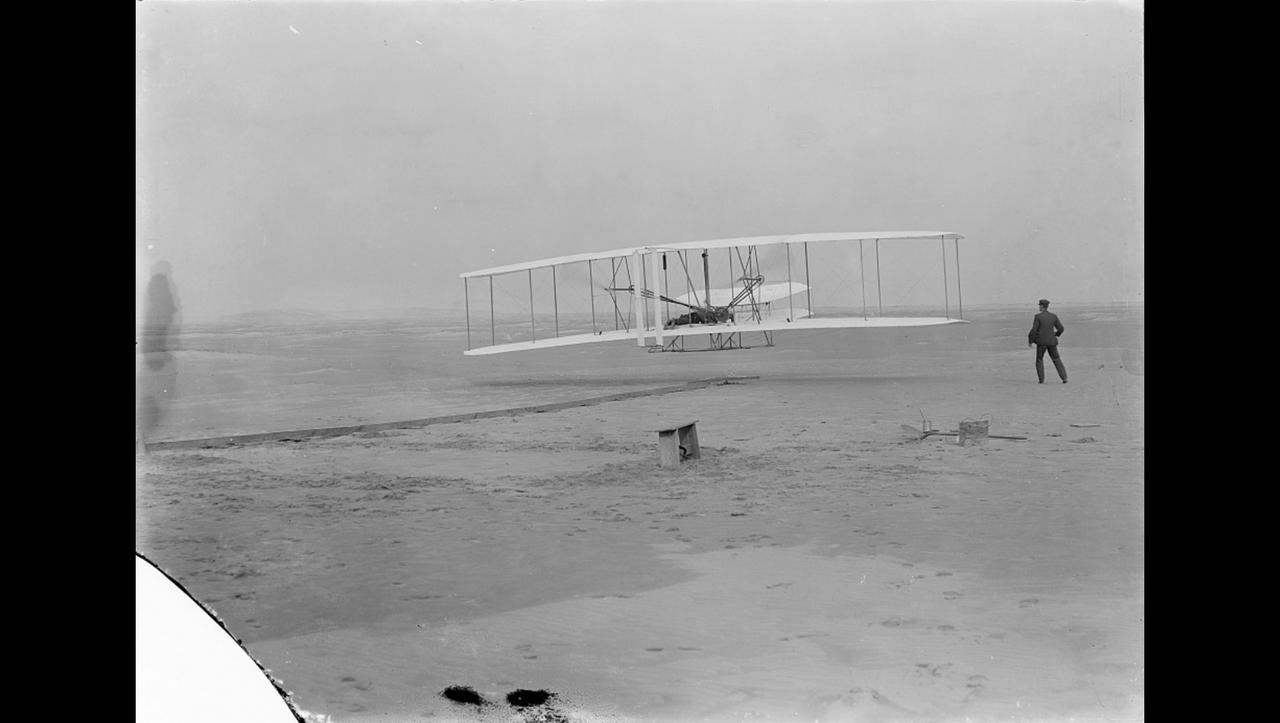
Orville Wright makes the first powered, controlled flight on Earth as his brother Wilbur looks on in this image taken at Kitty Hawk, North Carolina, on Dec. 17, 1903. Orville Wright covered 120 feet in 12 seconds during the first flight. The Wright brothers made four flights that day, each longer than the last. A small amount of the material that covered the wing of the aircraft, Flyer 1, during the first flight was flown to Mars aboard NASA's Ingenuity Mars Helicopter. An insulative tape was used to wrap the small swatch of fabric around a cable located underneath the helicopter's solar panel. Ingenuity is scheduled to attempt the first powered, controlled flight on another planet in April 2021. The Wrights had been using the same type of material – an unbleached muslin called "Pride of the West" – to cover their glider and aircraft wings since 1901. A different piece of the material, along with a small splinter of wood, from the Flyer 1 was flown to the Moon and back aboard Apollo 11. The image was taken by John Daniels, a member of the U.S. Life-Saving Station in Kill Devil Hills, North Carolina. Until the day of the flight, Daniels had never seen a camera. https://photojournal.jpl.nasa.gov/catalog/PIA24434
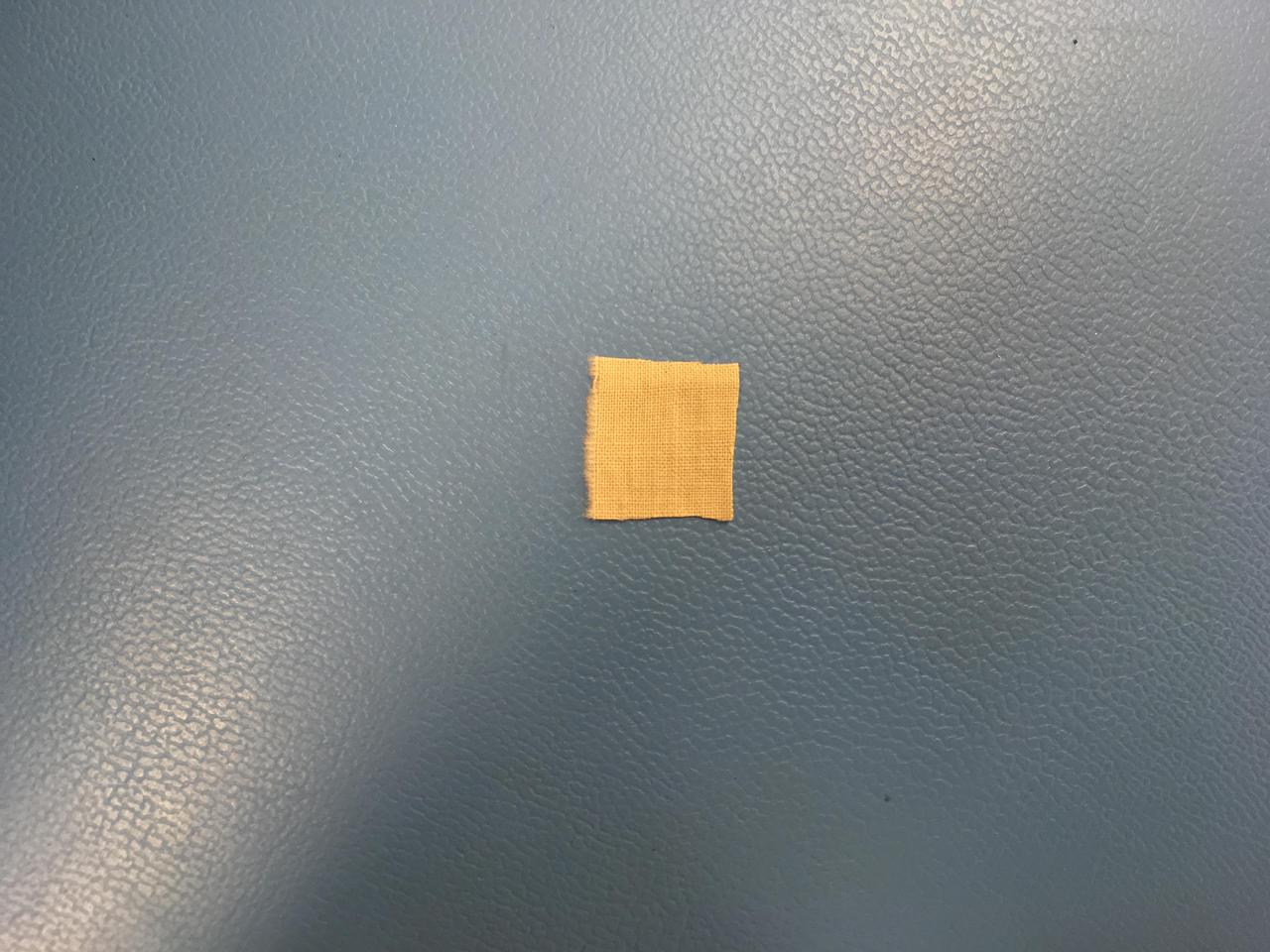
This 0.5-inch x 0.5-inch (1.3 x 1.3 centimeter) square of unbleached muslin material from the Wright brothers' first airplane was encapsulated in a protective polyamide film before being attached to a cable underneath the solar panel of NASA's Ingenuity Mars Helicopter. Procured by the Wrights from a local department store in downtown Dayton, Ohio, the cotton fabric (called "Pride of the West Muslin") was at the time mostly used for ladies undergarments. In the front parlor of their home, the Wrights cut the material into strips and used the family sewing machine to create wing coverings for their airplane Flyer 1, which achieved the first powered, controlled flight on Earth on Dec. 17, 1903. The swatch of material from the Wright brothers' first airplane was obtained from the Carillon Historical Park, in Dayton, Ohio — home to the Wright Brothers National Museum. The image was taken in a clean room at NASA's Jet Propulsion Laboratory on January 15, 2020. https://photojournal.jpl.nasa.gov/catalog/PIA24438