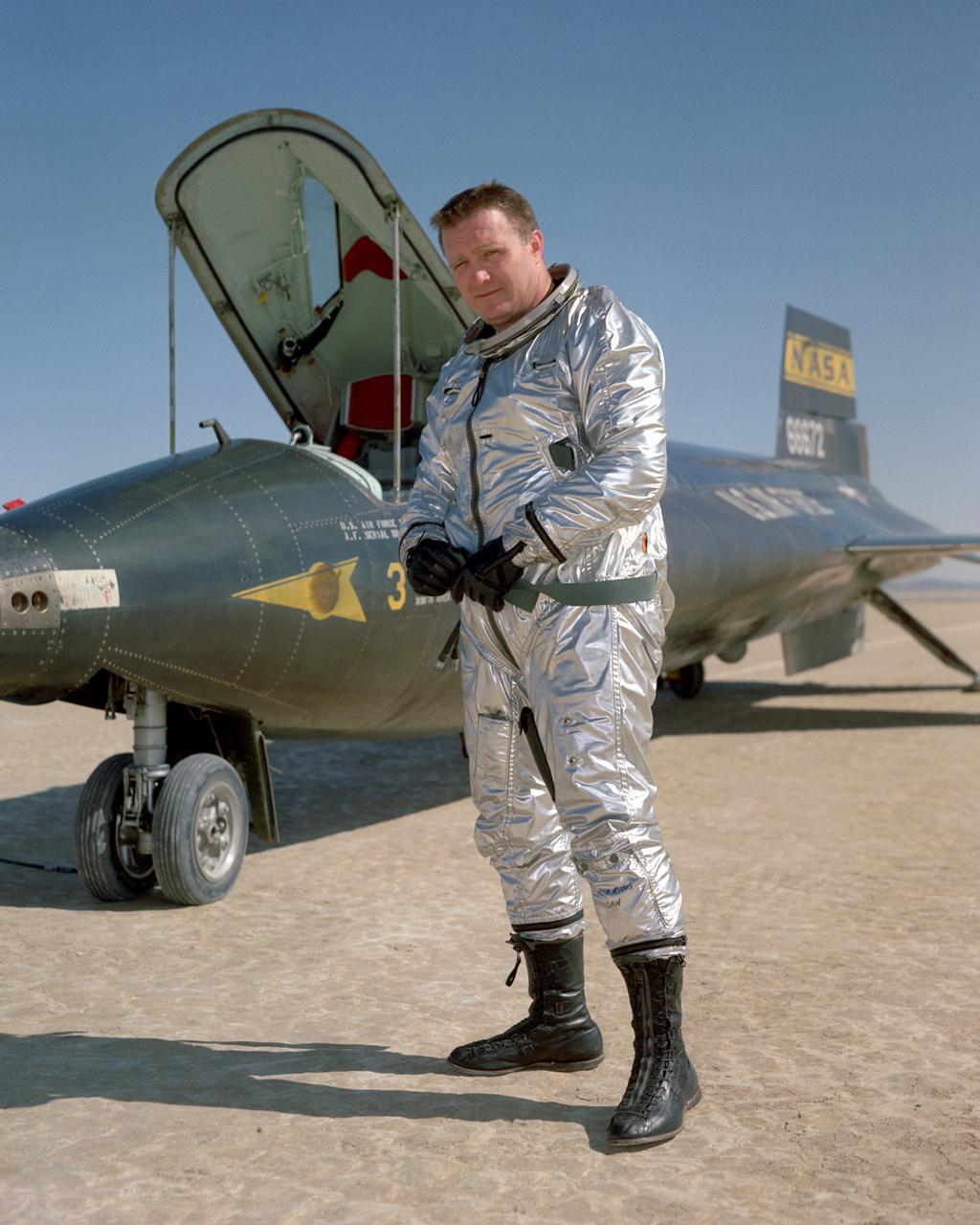
John B. McKay was one of the first pilots assigned to the X-15 flight research program at NASA's Flight Research Center, Edwards, Calif. As a civilian research pilot and aeronautical engineer, he made 30 flights in X-15s from October 28, 1960, until September 8, 1966. His peak altitude was 295,600 feet, and his highest speed was 3863 mph (Mach 5.64). McKay was with the NACA and NASA from February 8,1951 until October 5, 1971 and specialized in high-speed flight research programs. He began as an NACA intern, but assumed pilot status on July 11, 1952. In addition to the X-l5, he flew such experimental aircraft as the D-558-1, D-558-2, X-lB, and the X-lE. He has also served as a research pilot on flight programs involving the F-100, F-102, F-104, and the F-107. Born on December 8, 1922, in Portsmouth, Va., McKay graduated from Virginia Polytechnic Institute in 195O with a Bachelor of Science degree in Aeronautical Engineering. During World War II he served as a Navy pilot in the Pacific Theater, earning the Air Medal and Two Clusters, and a Presidential Unit Citation. McKay wrote several technical papers, and was a member of the American Institute of Aeronautics and Astronautics, as well as the Society of Experimental Test Pilots. He passed away on April 27, 1975.
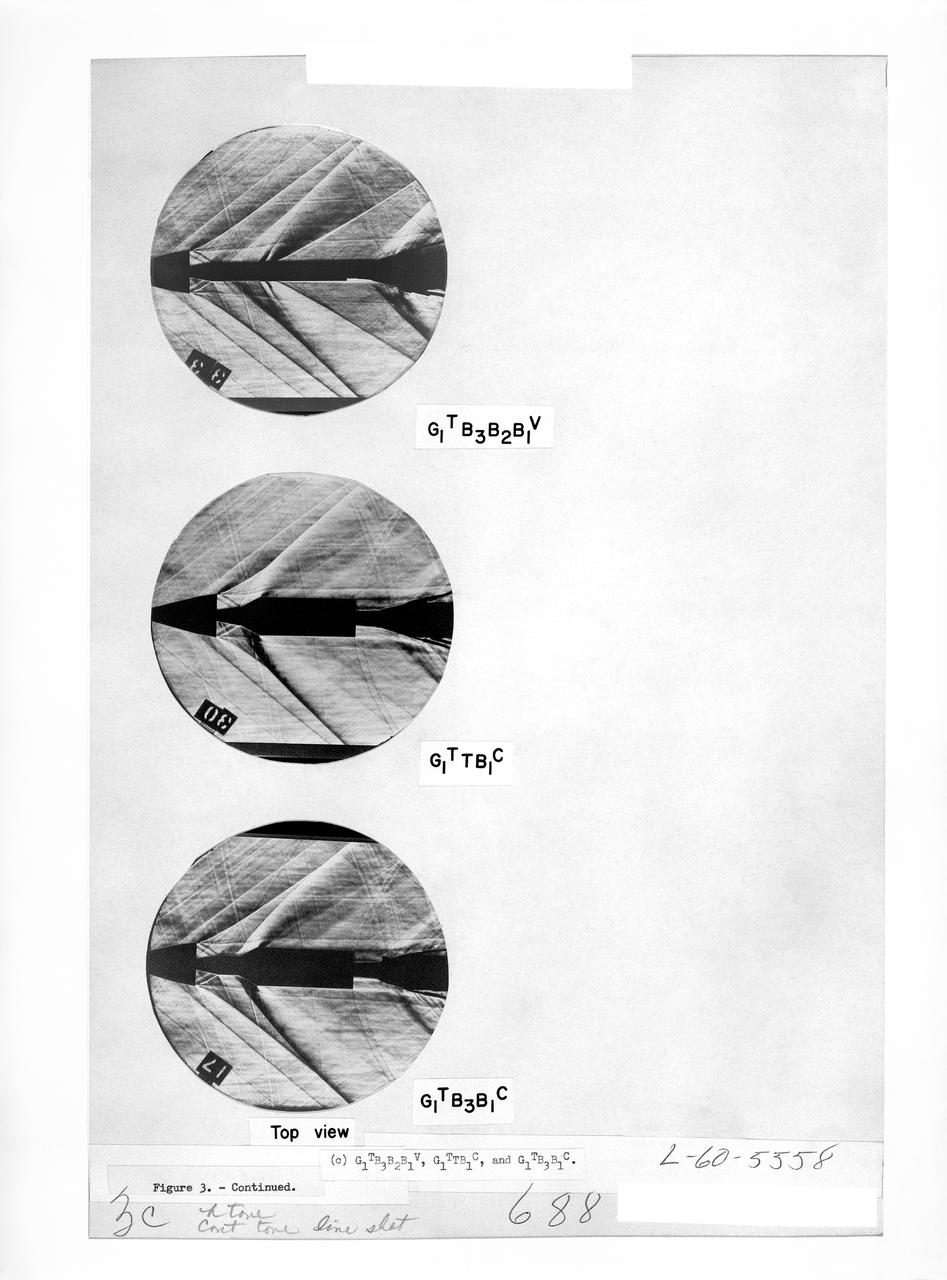
Figure 3-5 for NASA Document TM-X-356
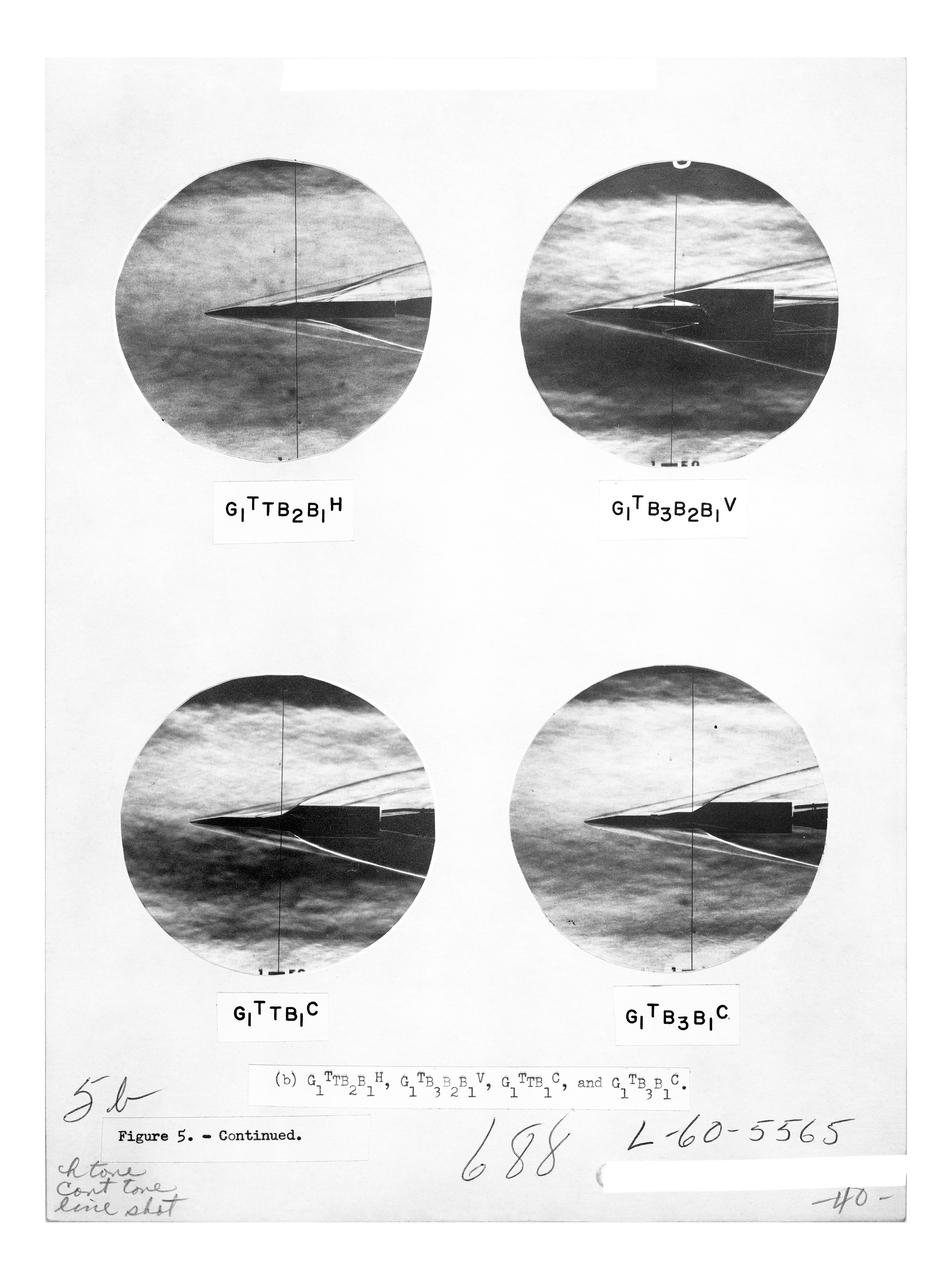
Figure 3-5 for NASA Document TM-X-356
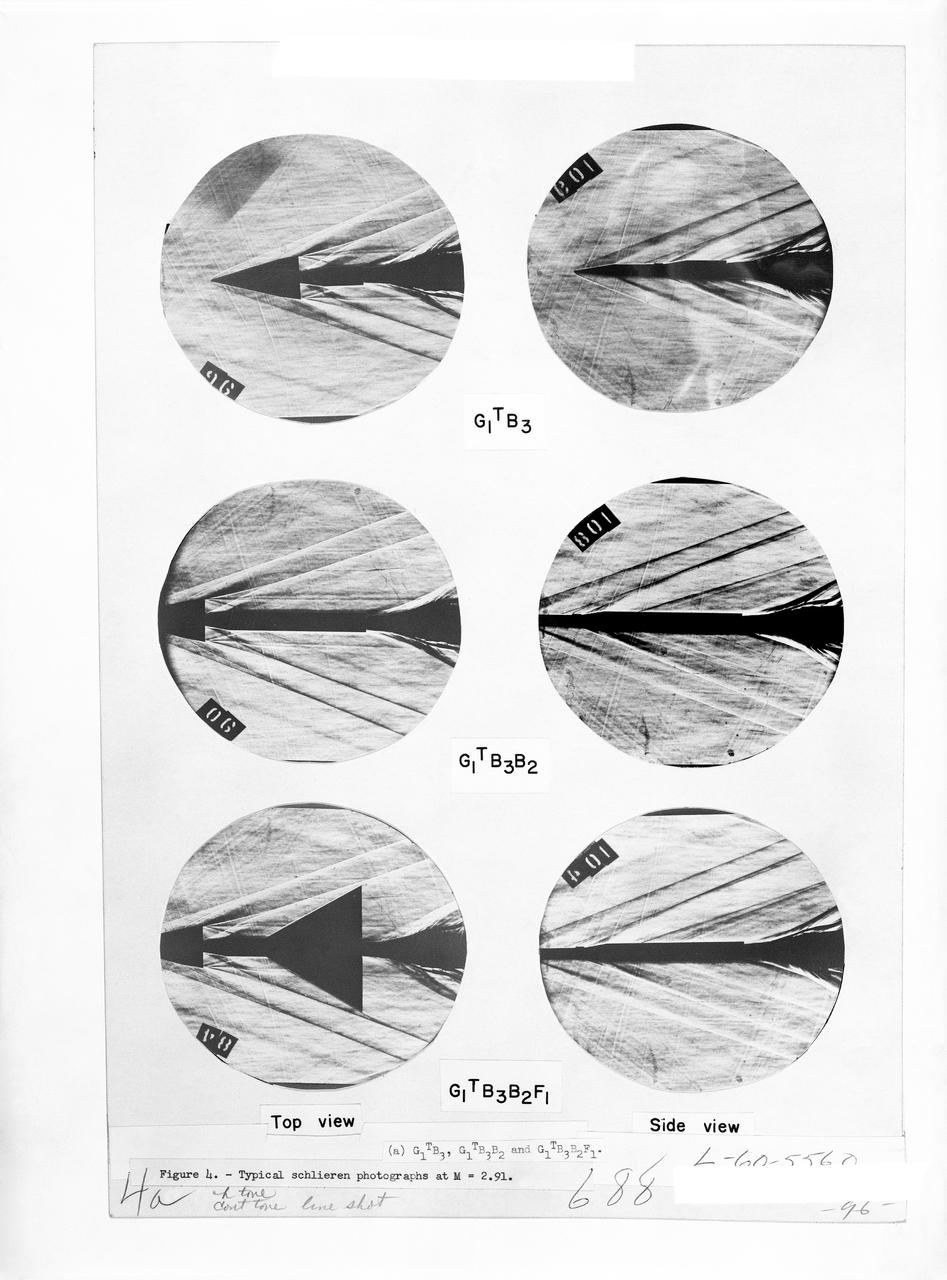
Figure 3-5 for NASA Document TM-X-356
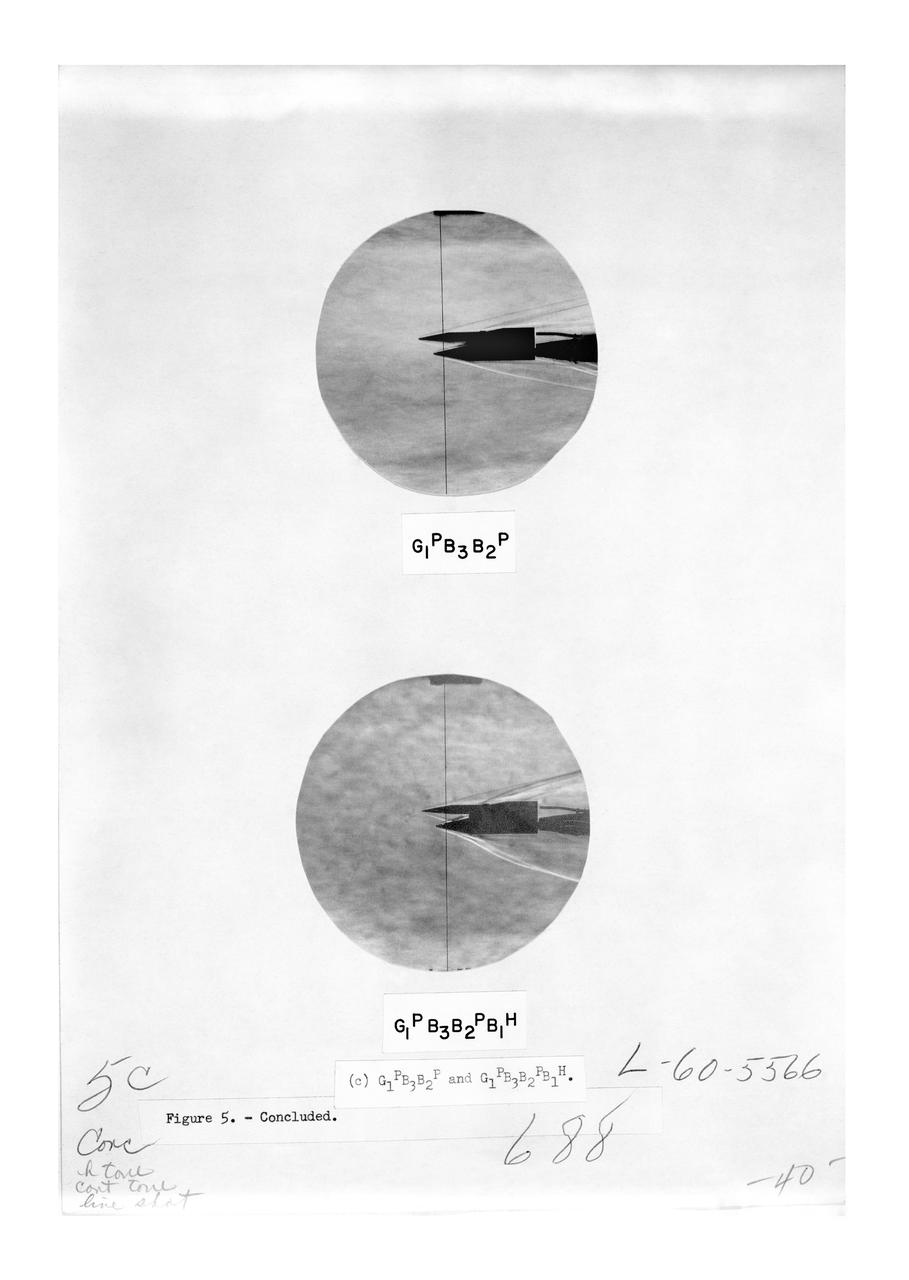
Figure 3-5 for NASA Document TM-X-356
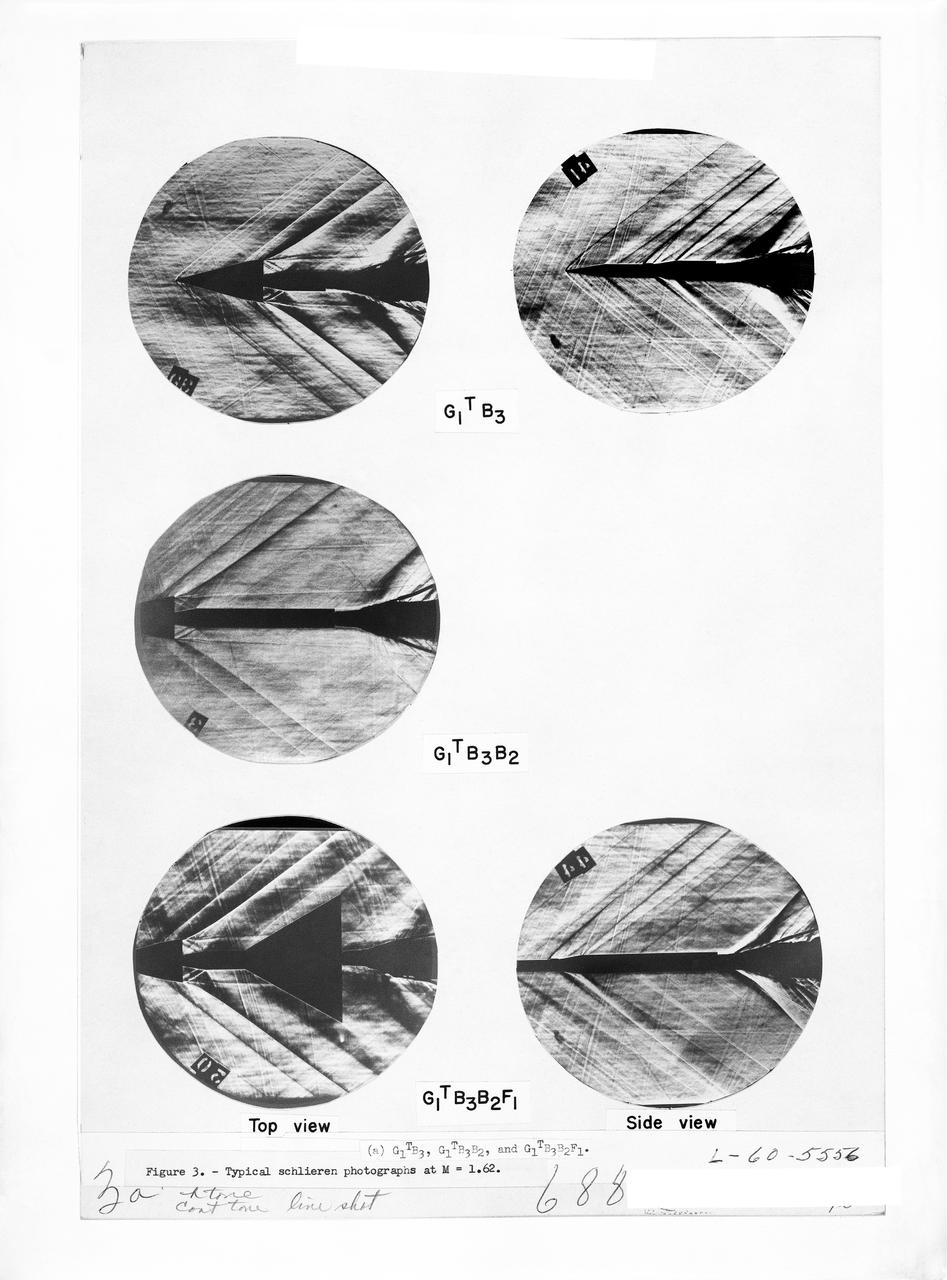
Figure 3-5 for NASA Document TM-X-356
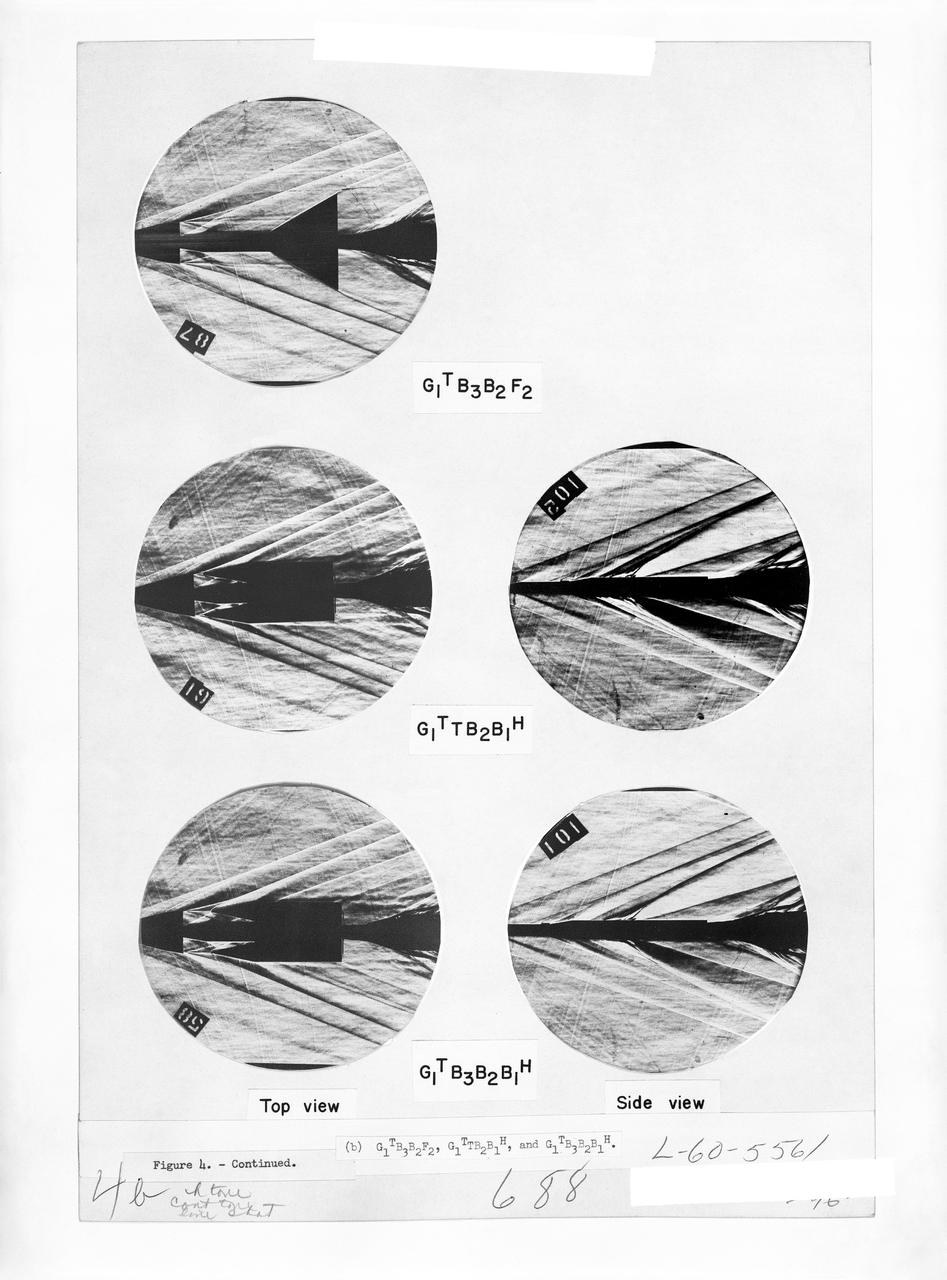
Figure 3-5 for NASA Document TM-X-356
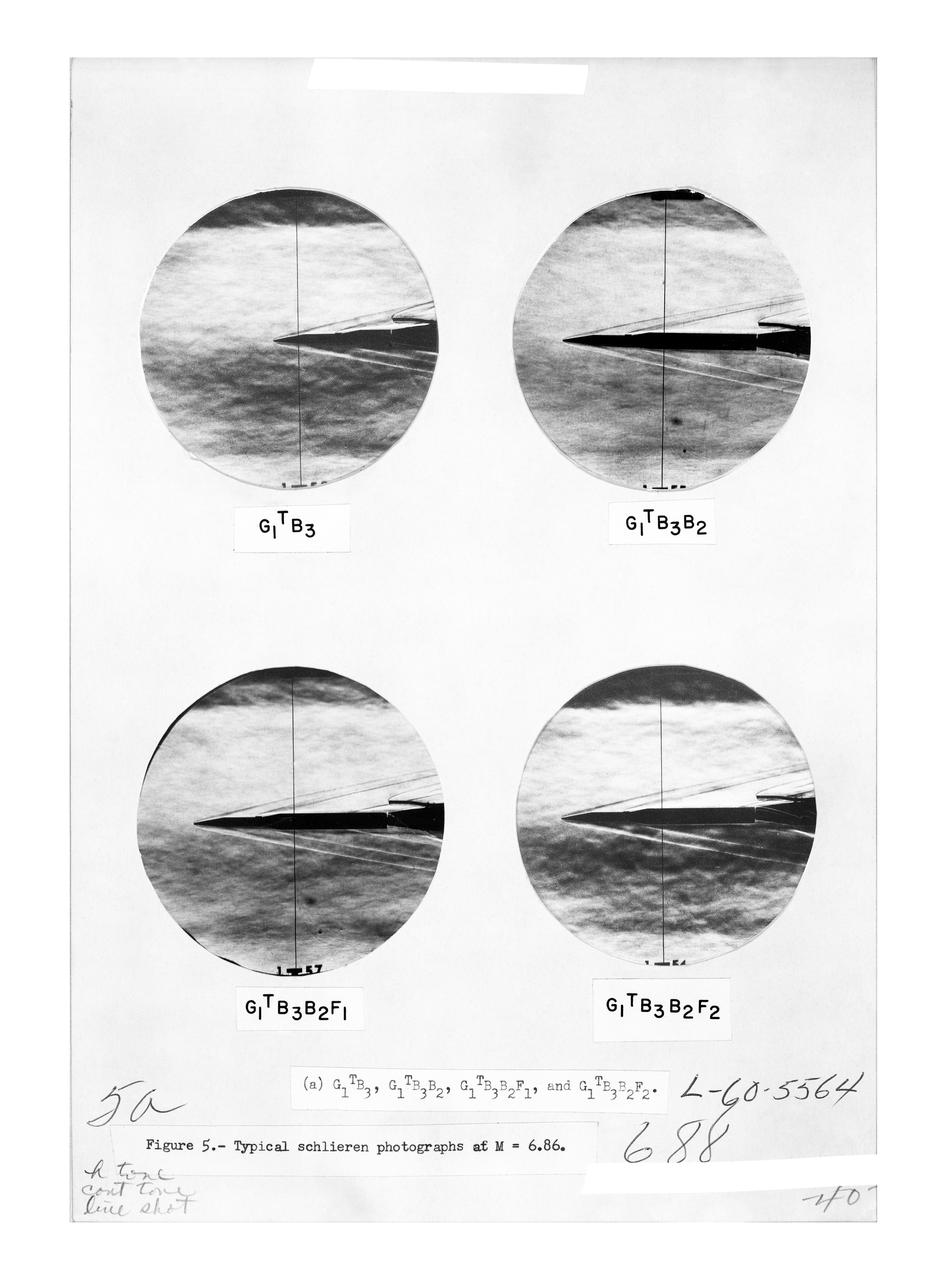
Figure 3-5 for NASA Document TM-X-356
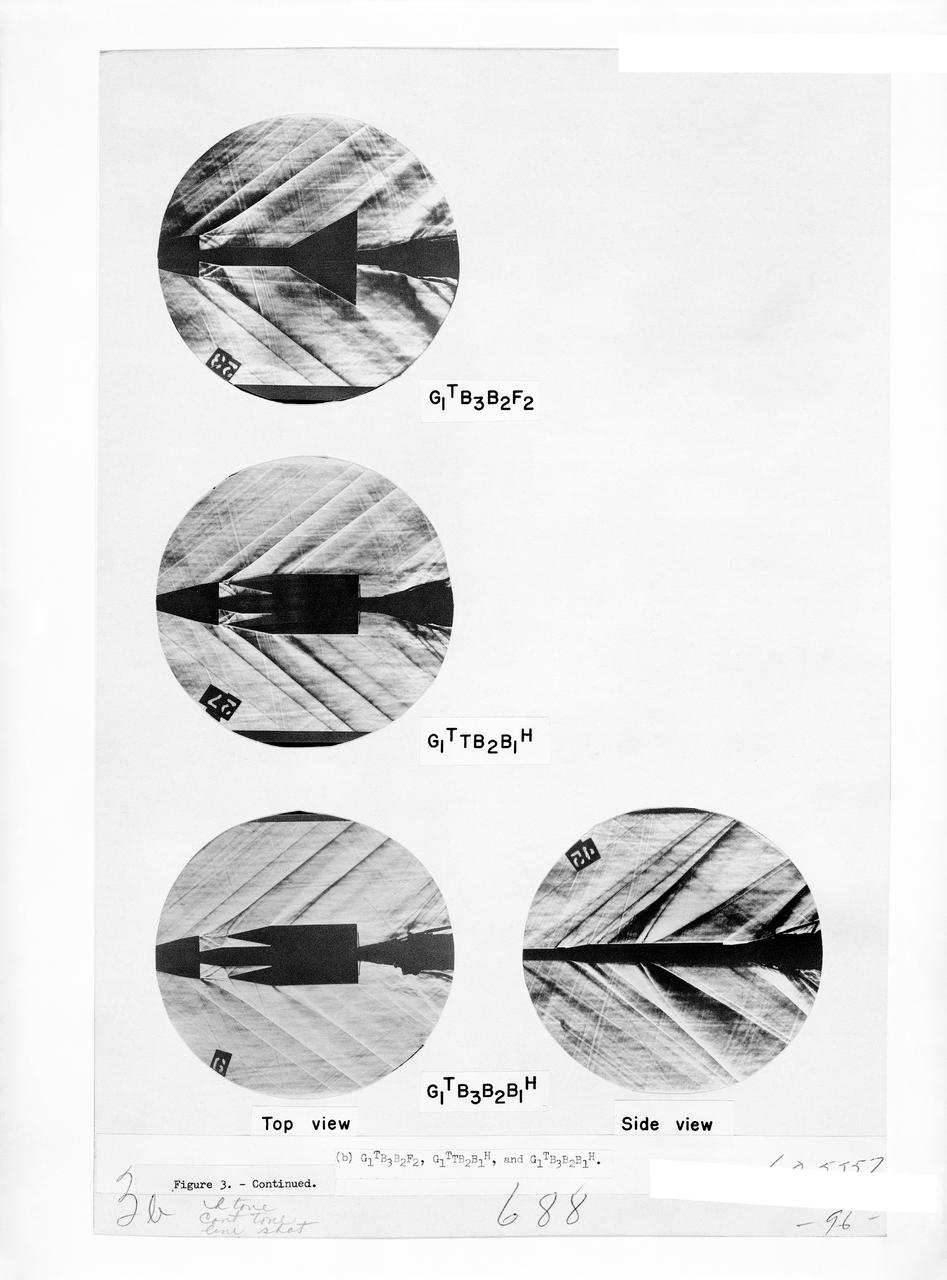
Figure 3-5 for NASA Document TM-X-356
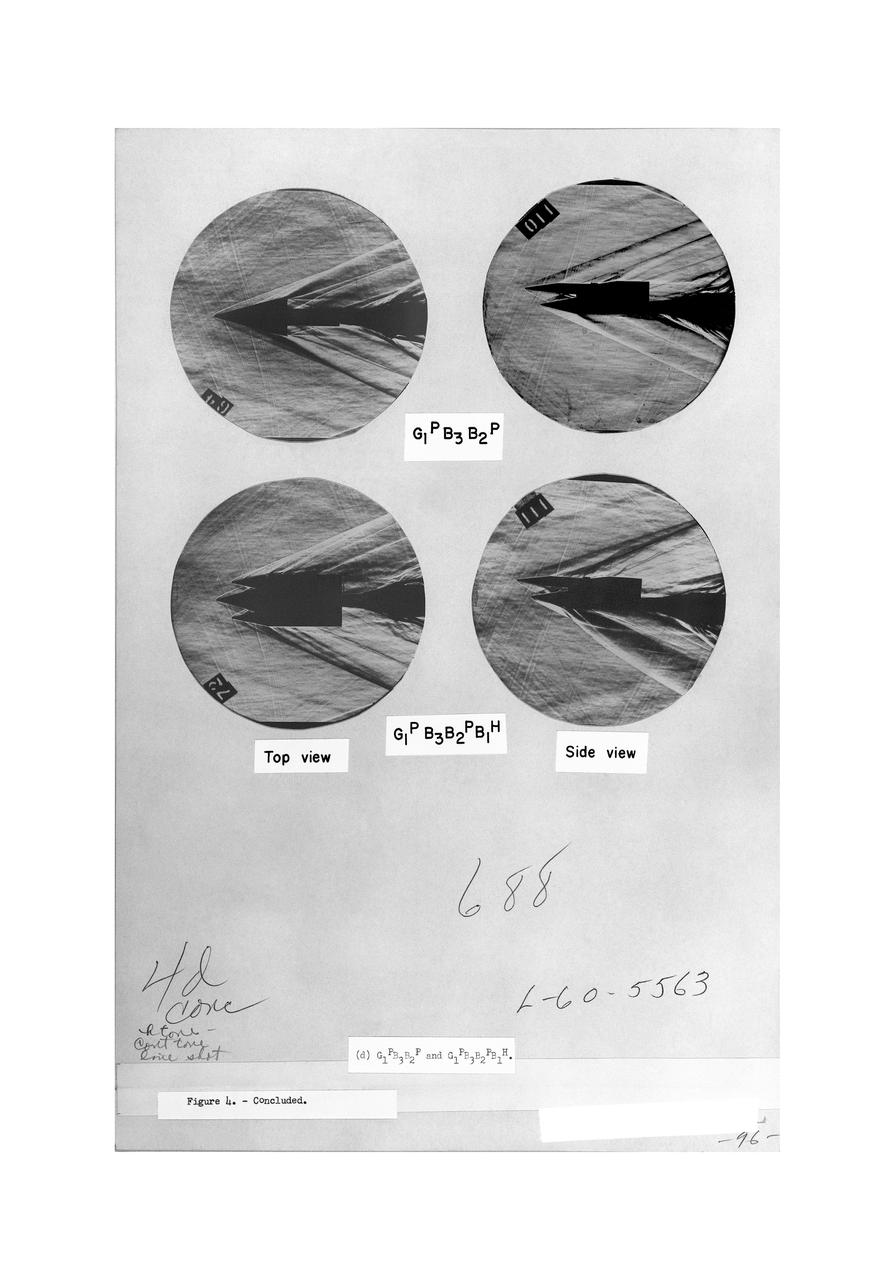
Figure 3-5 for NASA Document TM-X-356

Figure 3-5 for NASA Document TM-X-356
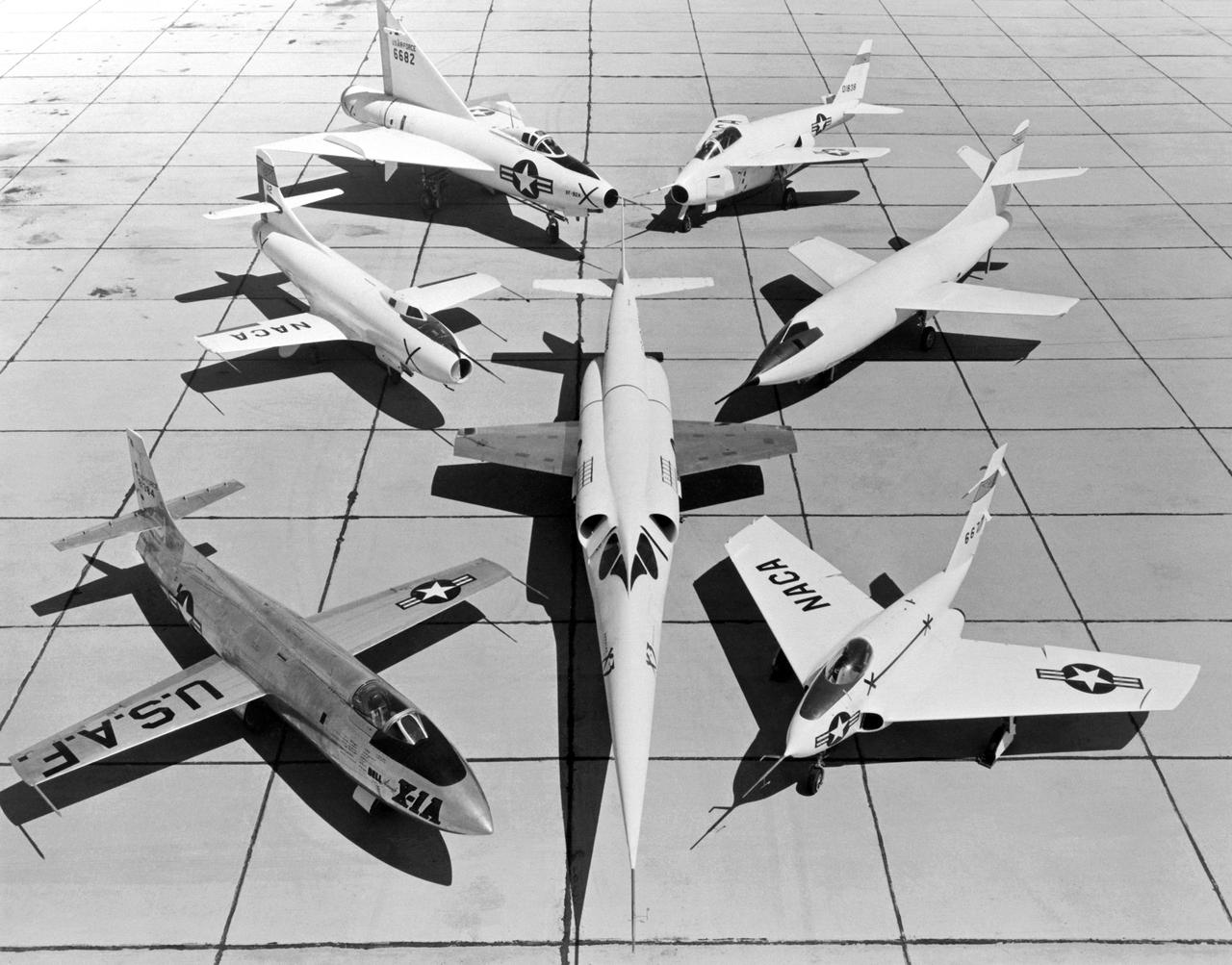
A 1953 photo of some of the research aircraft at the NACA High-Speed Flight Research Station (now known as the the Dryden Flight Research Center). The photo shows the X-3 (center) and, clockwise from left: X-1A (Air Force serial number 48-1384), the third D-558-1 (NACA tail number 142), XF-92A, X-5, D-558-2, and X-4.

Veterans of the X-15 flight research program, most of them now retired, reunited at Dryden on the 40th anniversary of the last X-15 flight on Oct. 24, 1968 for a historical colloquium on the X-15 by noted aerospace historian and author Dennis Jenkins on Oct. 24, 2008. Gathered in front of the replica of X-15 #3 the were (from left) Johnny Armstrong, Betty Love, Paul Reukauf, Bob Hoey, Dave Stoddard, Dean Webb, Vince Capasso, Bill Dana (who flew the last flight), John McTigue and T.D. Barnes. Jenkins, the author of "X-15: Extending the Frontiers of Flight," maintained during his presentation that despite setbacks, the X-15 program became the most successful of all the X-plane research programs due to the can-do, fix-the-problem and go-fly-again attitude of the X-15's cadre of engineers and technicians.
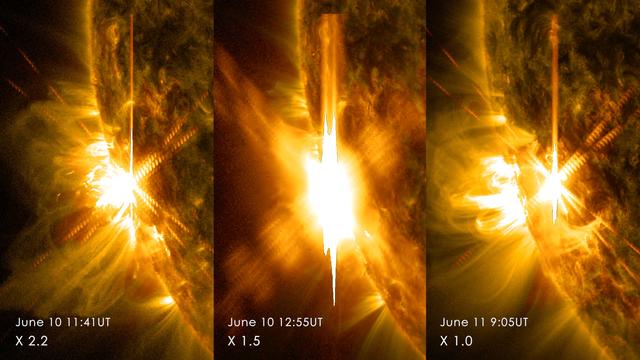
Three X-class flares erupted from the left side of the sun June 10-11, 2014. These images are from NASA's Solar Dynamics Observatory and show light in a blend of two ultraviolet wavelengths: 171 and 131 angstroms. The former is colorized in yellow; the latter, in red. Read more: <a href="http://1.usa.gov/1lneJ3p" rel="nofollow">1.usa.gov/1lneJ3p</a> Credit: NASA/SDO <b><a href="http://www.nasa.gov/audience/formedia/features/MP_Photo_Guidelines.html" rel="nofollow">NASA image use policy.</a></b> <b><a href="http://www.nasa.gov/centers/goddard/home/index.html" rel="nofollow">NASA Goddard Space Flight Center</a></b> enables NASA’s mission through four scientific endeavors: Earth Science, Heliophysics, Solar System Exploration, and Astrophysics. Goddard plays a leading role in NASA’s accomplishments by contributing compelling scientific knowledge to advance the Agency’s mission. <b>Follow us on <a href="http://twitter.com/NASAGoddardPix" rel="nofollow">Twitter</a></b> <b>Like us on <a href="http://www.facebook.com/pages/Greenbelt-MD/NASA-Goddard/395013845897?ref=tsd" rel="nofollow">Facebook</a></b> <b>Find us on <a href="http://instagram.com/nasagoddard?vm=grid" rel="nofollow">Instagram</a></b>
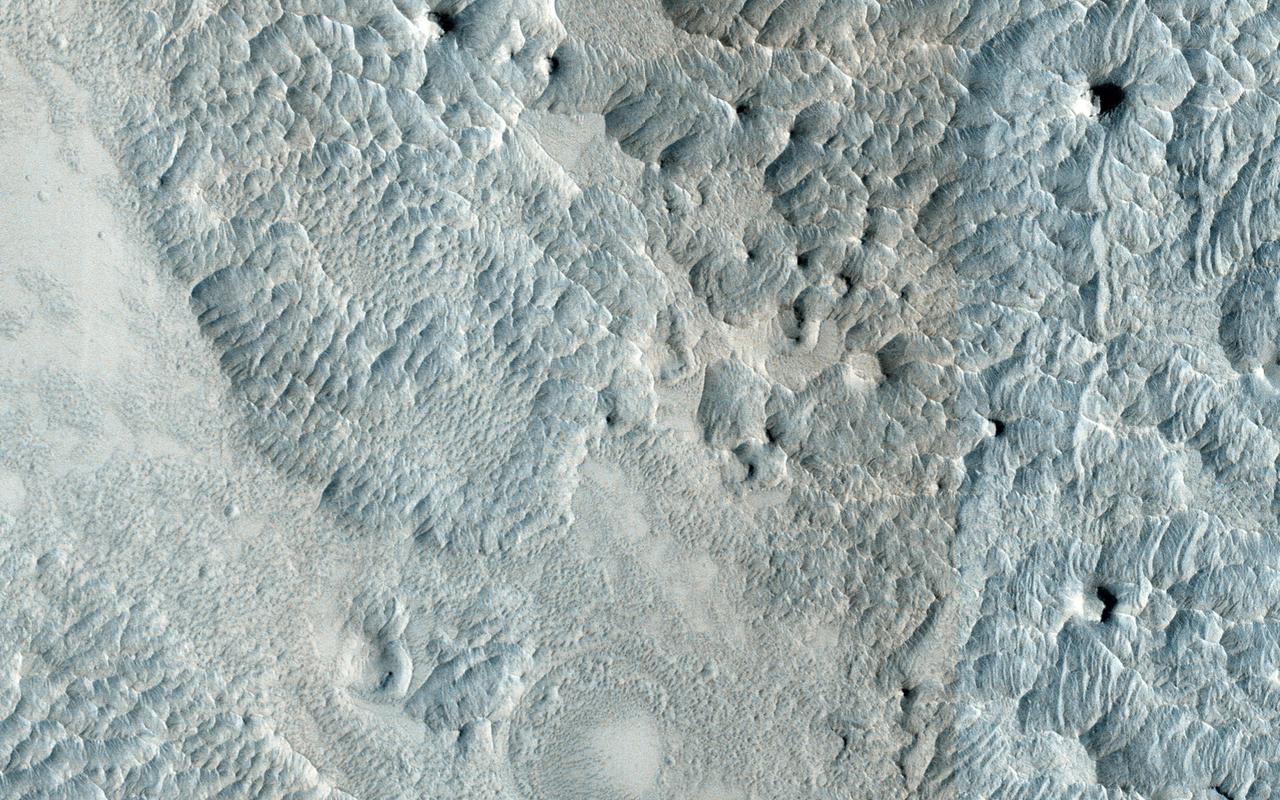
This image from NASA Mars Reconnaissance Orbiter, approximately 1.5 x 3 kilometers, shows a sample of eroded Martian terrain in Arabia Terra.
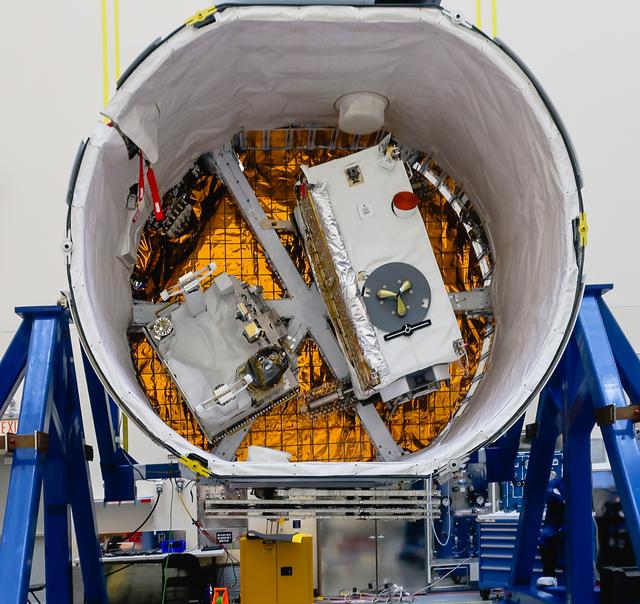
NASA’s Orbiting Carbon Observatory-3 (OCO-3) and Space Test Program-Houston 6 (STP-H6) are in view installed in the truck of SpaceX’s Dragon spacecraft inside the SpaceX facility at NASA’s Kennedy Space Center in Florida on March 23, 2019. OCO-3 and STP-H6 will be delivered to the International Space Station on SpaceX’s 17th Commercial Resupply Services mission (CRS-17) for NASA. STP-H6 is an x-ray communication investigation that will be used to perform a space-based demonstration of a new technology for generating beams of modulated x-rays. This technology may be useful for providing efficient communication to deep space probes, or communicating with hypersonic vehicles where plasma sheaths prevent traditional radio communications. OCO-3 will be robotically installed on the exterior of the space station’s Japanese Experiment Module Exposed Facility Unit, where it will measure and map carbon dioxide from space to provide further understanding of the relationship between carbon and climate. CRS-17 is scheduled to launch from Space Launch Complex 40 on Cape Canaveral Air Force Station in late April.
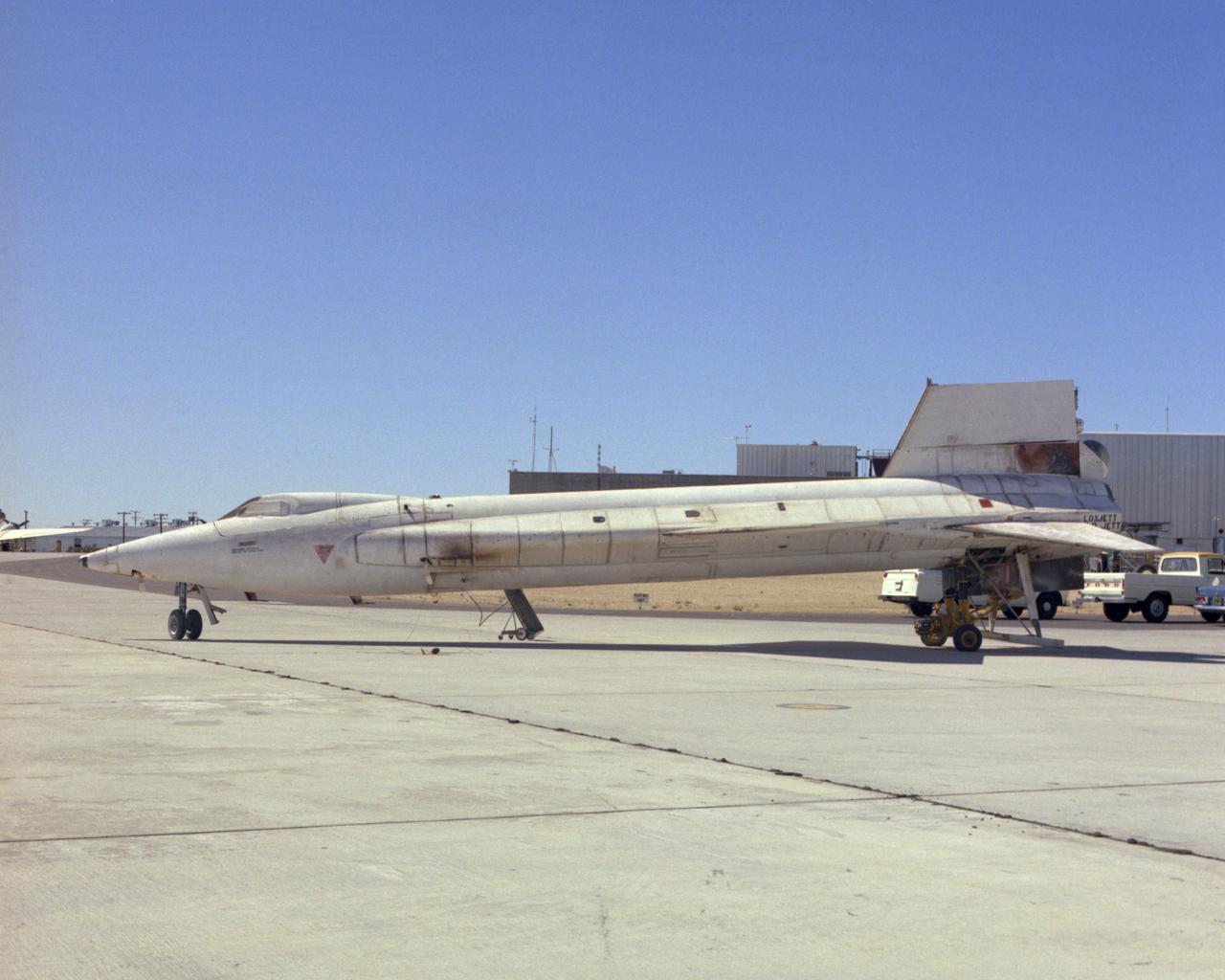
X-15A-2 post flight photo showing heat damage from Mach 6.7 flight on 3 Oct 67. Flt. 2-53-97; pilot-Pete Knight.
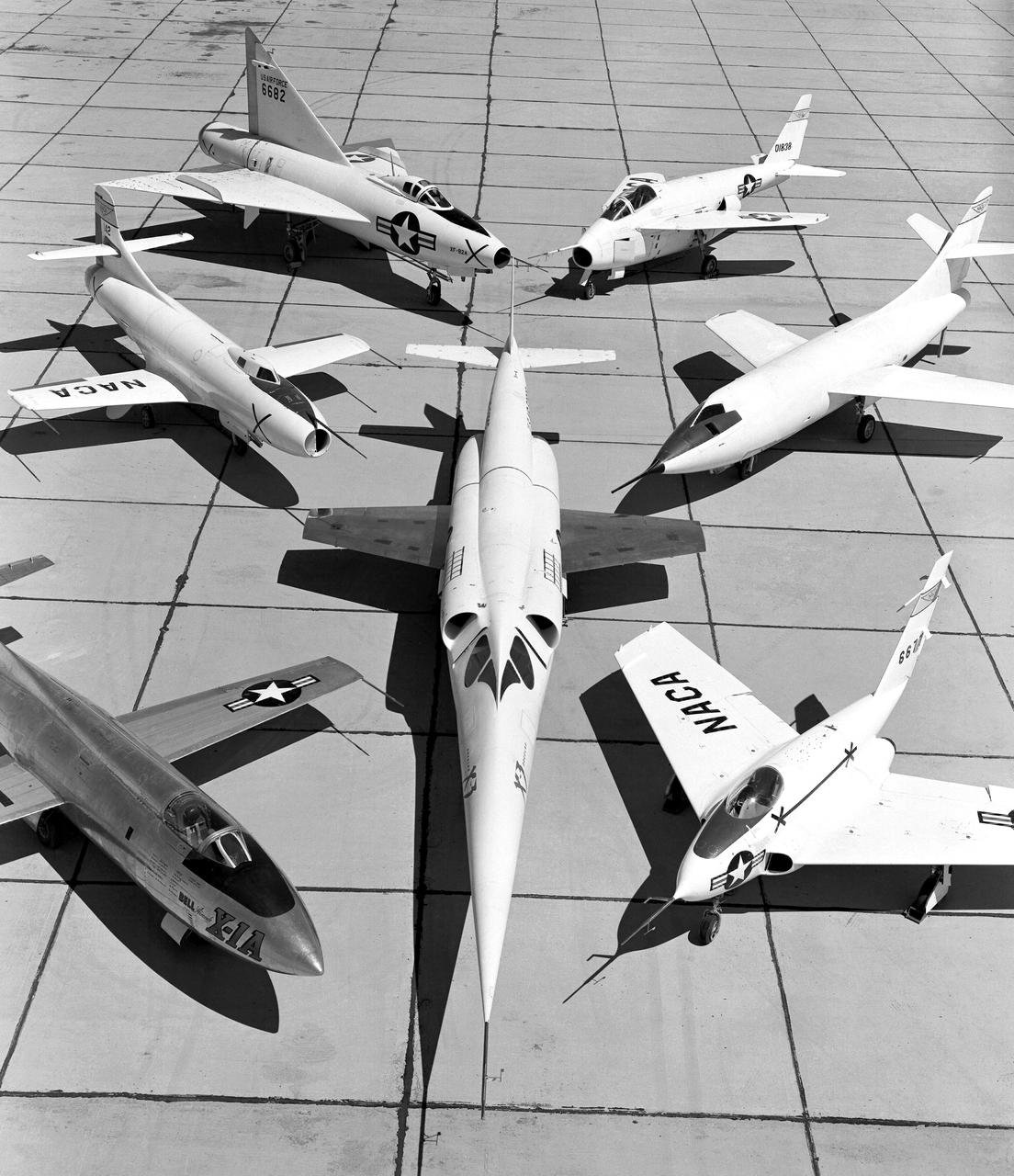
X-3 (center), and clockwise from left: X-1A, D-558-I, XF-92A, X-5, D-558-II, and X-4.
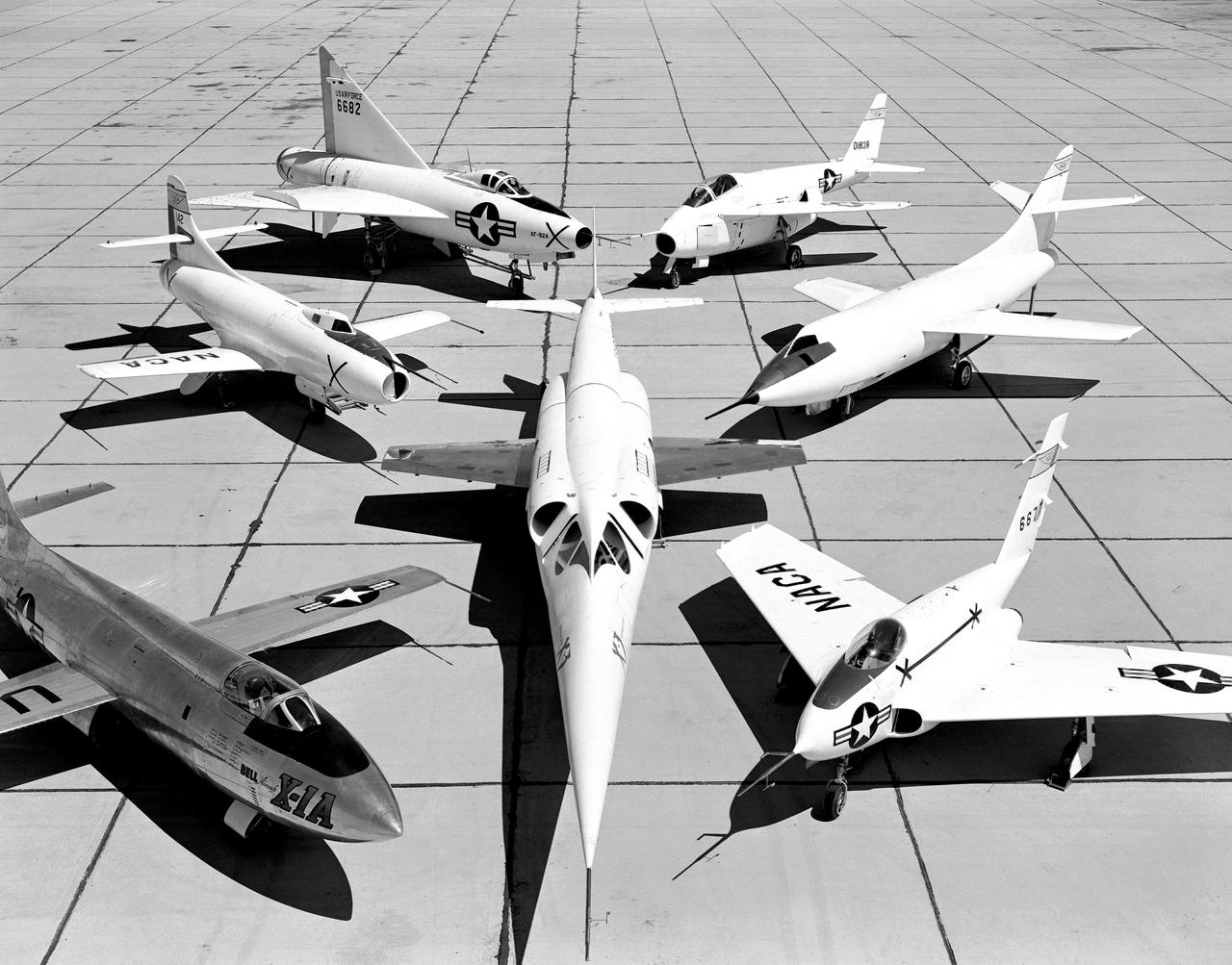
X-3 (center), and clockwise from left: X-1A, D-558-I, XF-92A, X-5, D-558-II, and X-4.
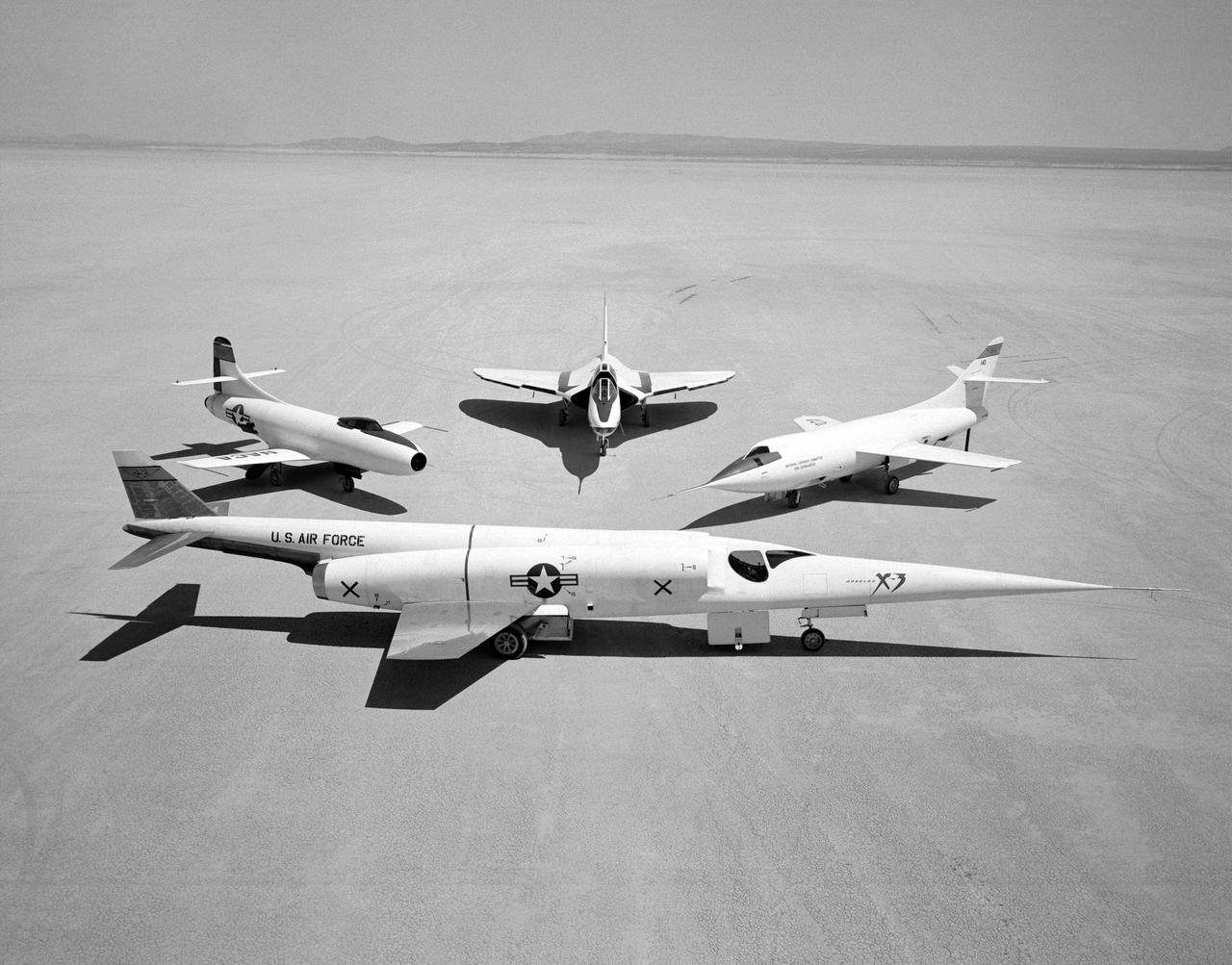
A group picture of Douglas Airplanes, taken for a photographic promotion in 1954, at what is now known as the Dryden Flight Research Center at Edwards Air Force Base, California. The photo includes the X-3 (in front--Air Force serial number 49-2892) then clockwise D-558-I, XF4D-1 (a Navy jet fighter prototype not flown by the NACA), and the first D-558-II (NACA tail number 143, Navy serial number 37973), which was flown only once by the NACA.
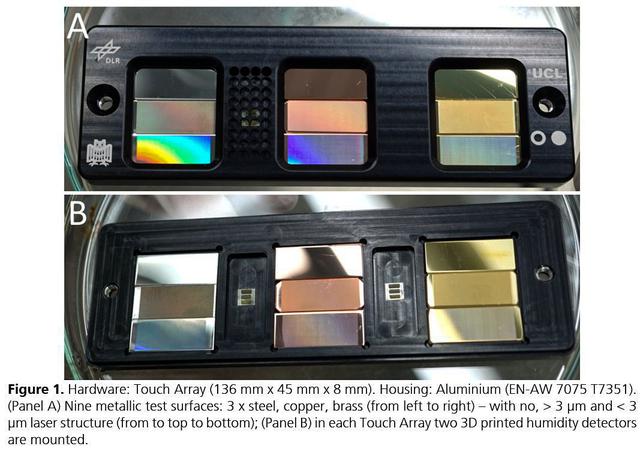
jsc2021e037879 (8/24/2021) --- A preflight view of the Touching Surfaces investigation hardware. The Touch Array (136 mm x 45 mm x 8 mm). Housing : Aluminum (EN-AW 7075 T7351). (Panel A) Nine metallic test surfaces: 3 x steel, copper, brass (from left to right) – with no greater than 3 ?m and less than 3 ?m laser structure (from top to bottom); (Panel B) in each Touch Array two 3 printed humidity detectors are mounted. Image Courtesy DLR
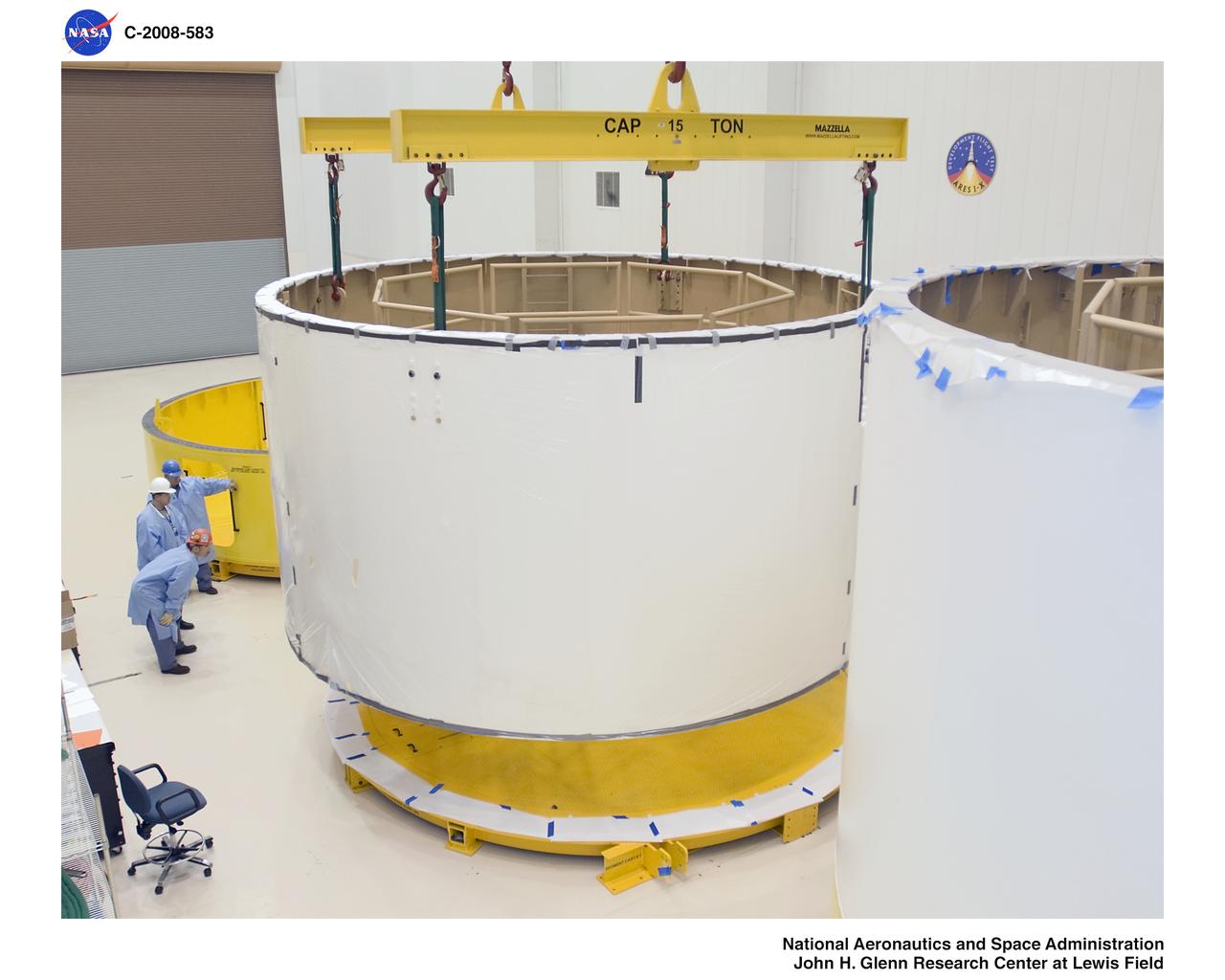
Ares 1-X segment US-3 being lifted onto the cart prior to being stacked onto US-2 to start forming the Ares 1-X USS Super Stack
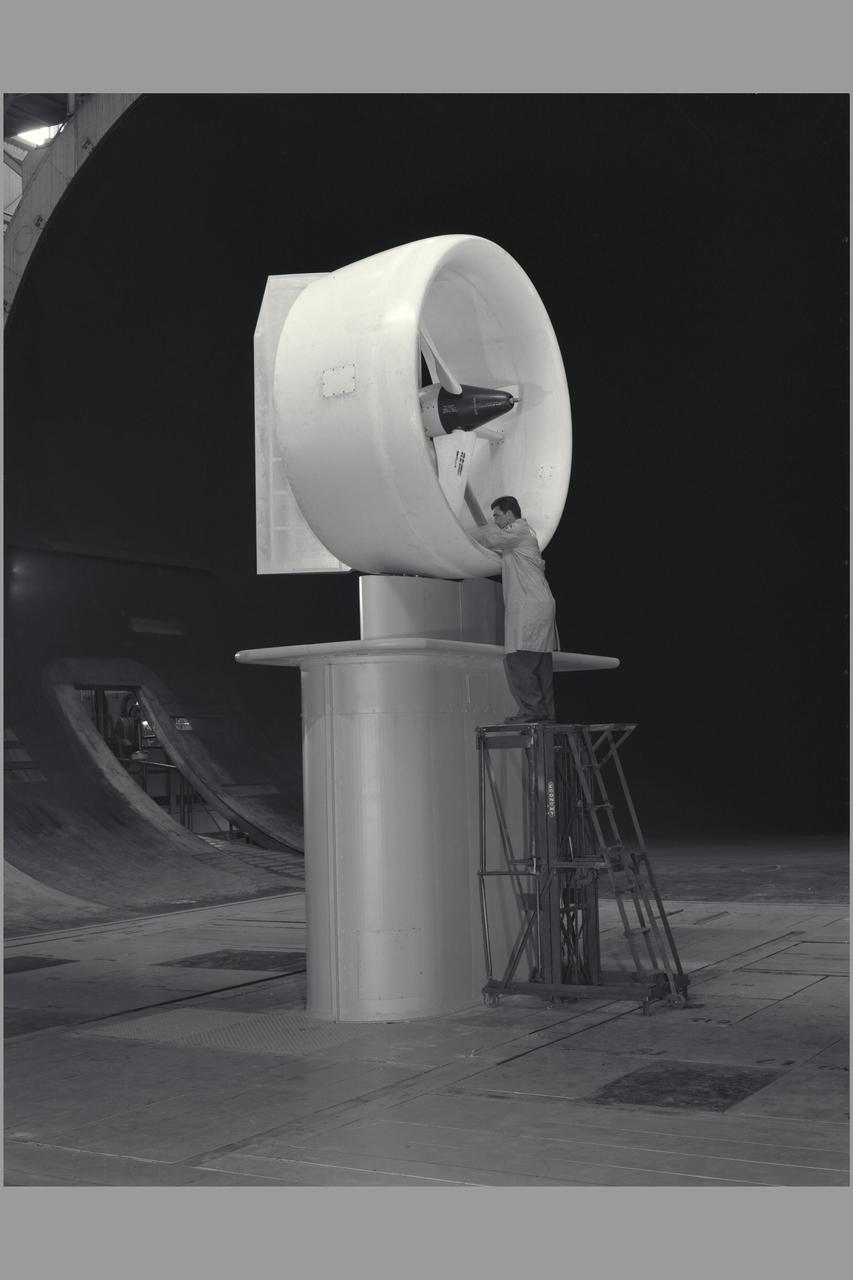
3/4 front view of full scale X-22A ducted fan model. Chuck Greco
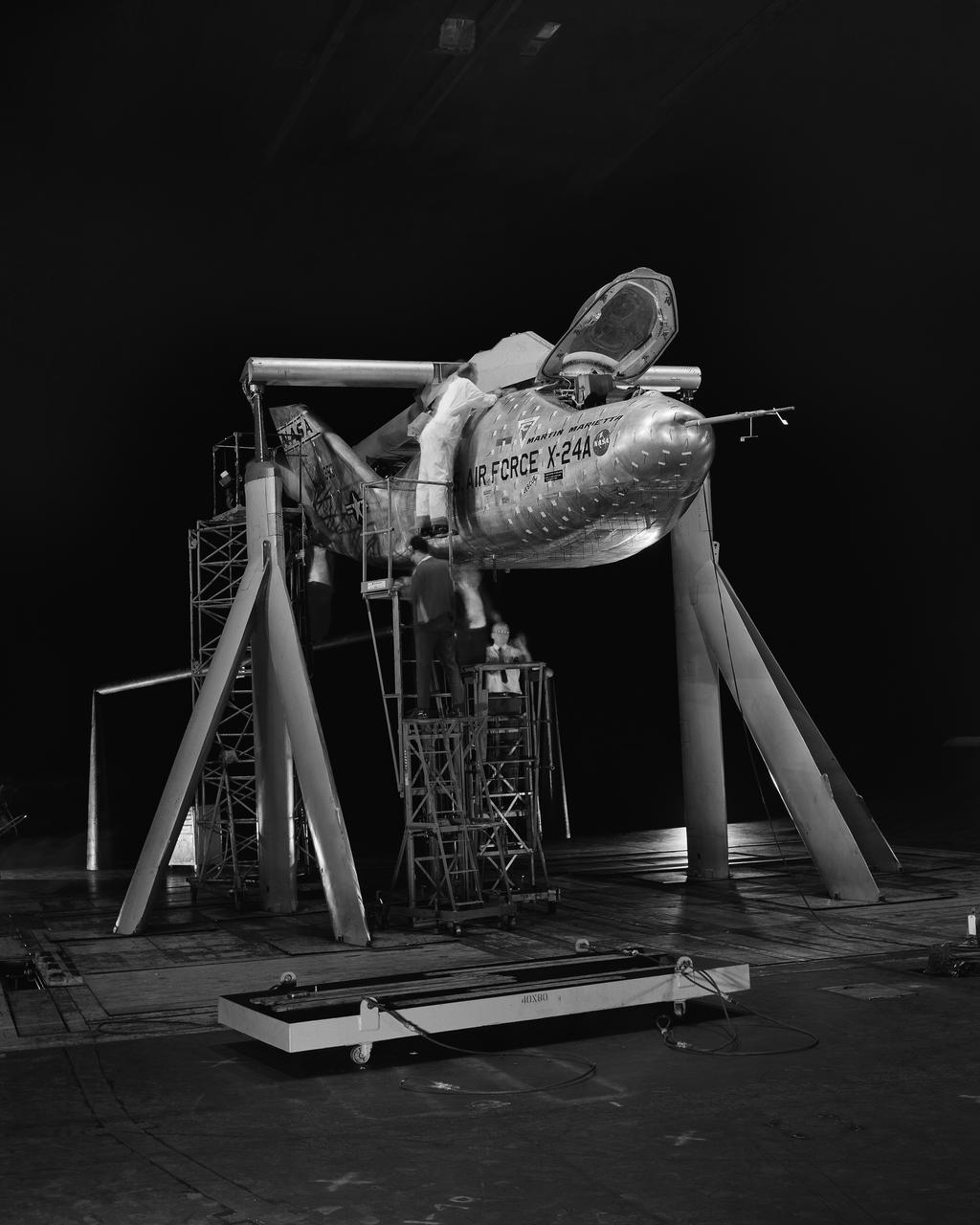
3/4 front view of Martin X-24A lifting body, mounted on B-52 mount.
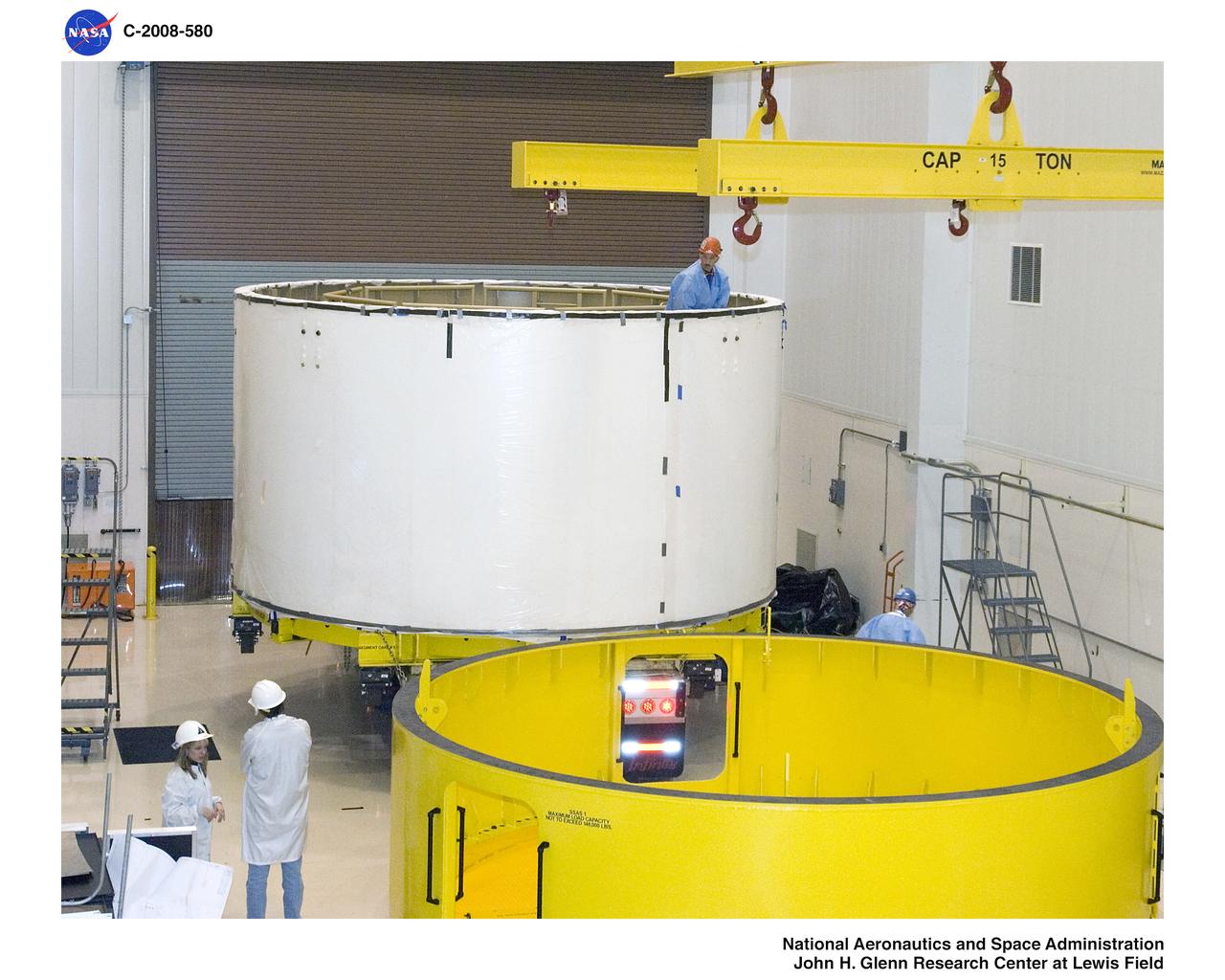
Ares 1-X Segment US-3 being lifted from the truck in Building 333
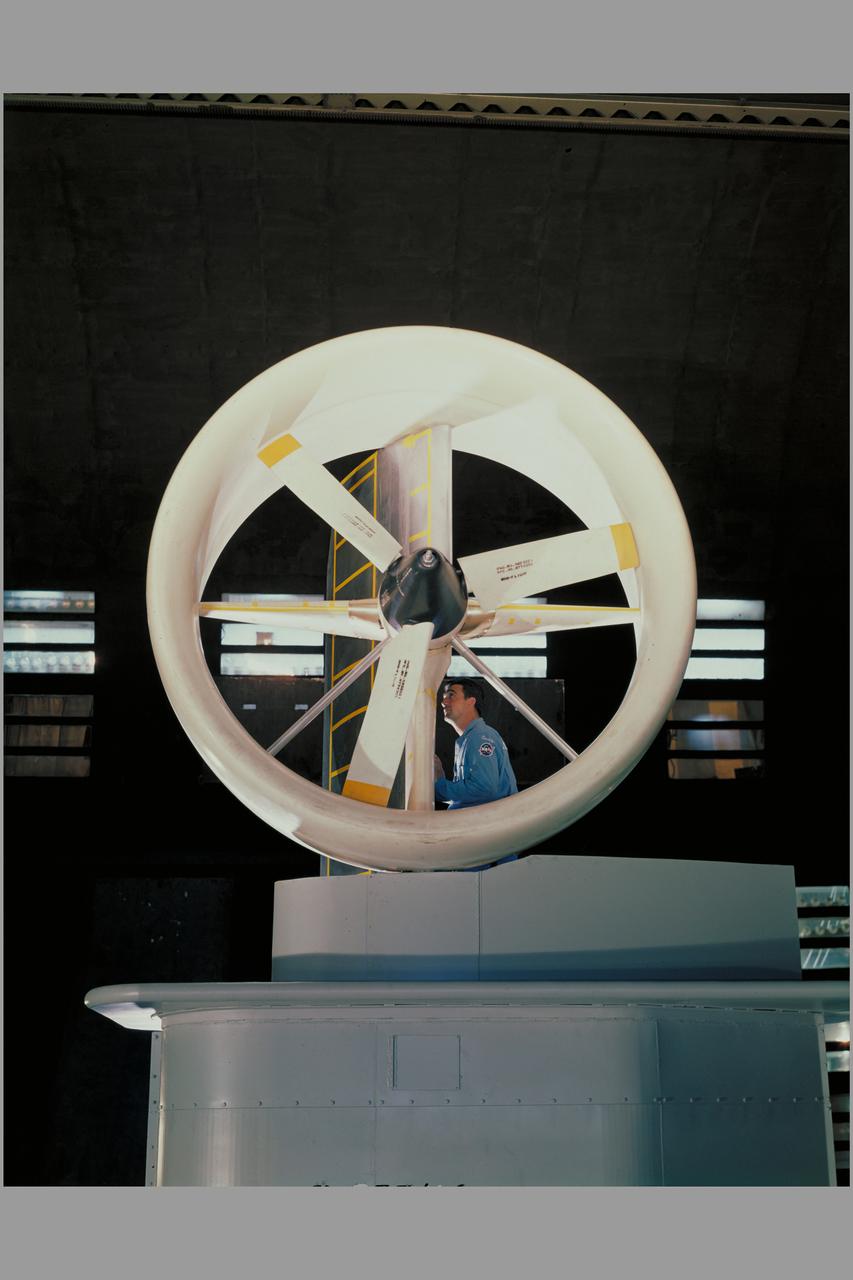
3/4 front view offull scale X-22A ducted fan model. Chuck Greco
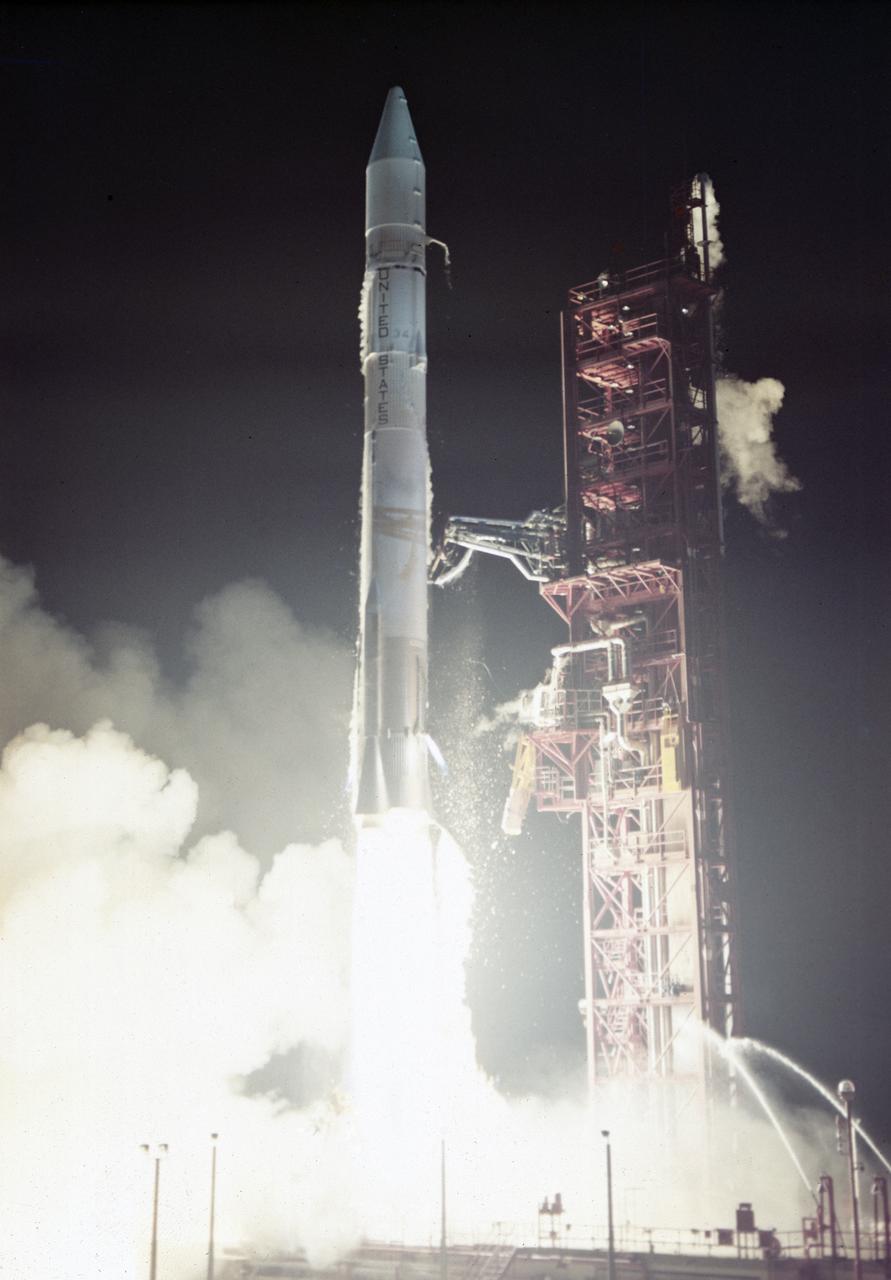
The launch of the Atlas-Centaur carrying the Mariner X spacecraft on November 3, 1973. This mission was for the exploration of the planets Venus and Mercury.
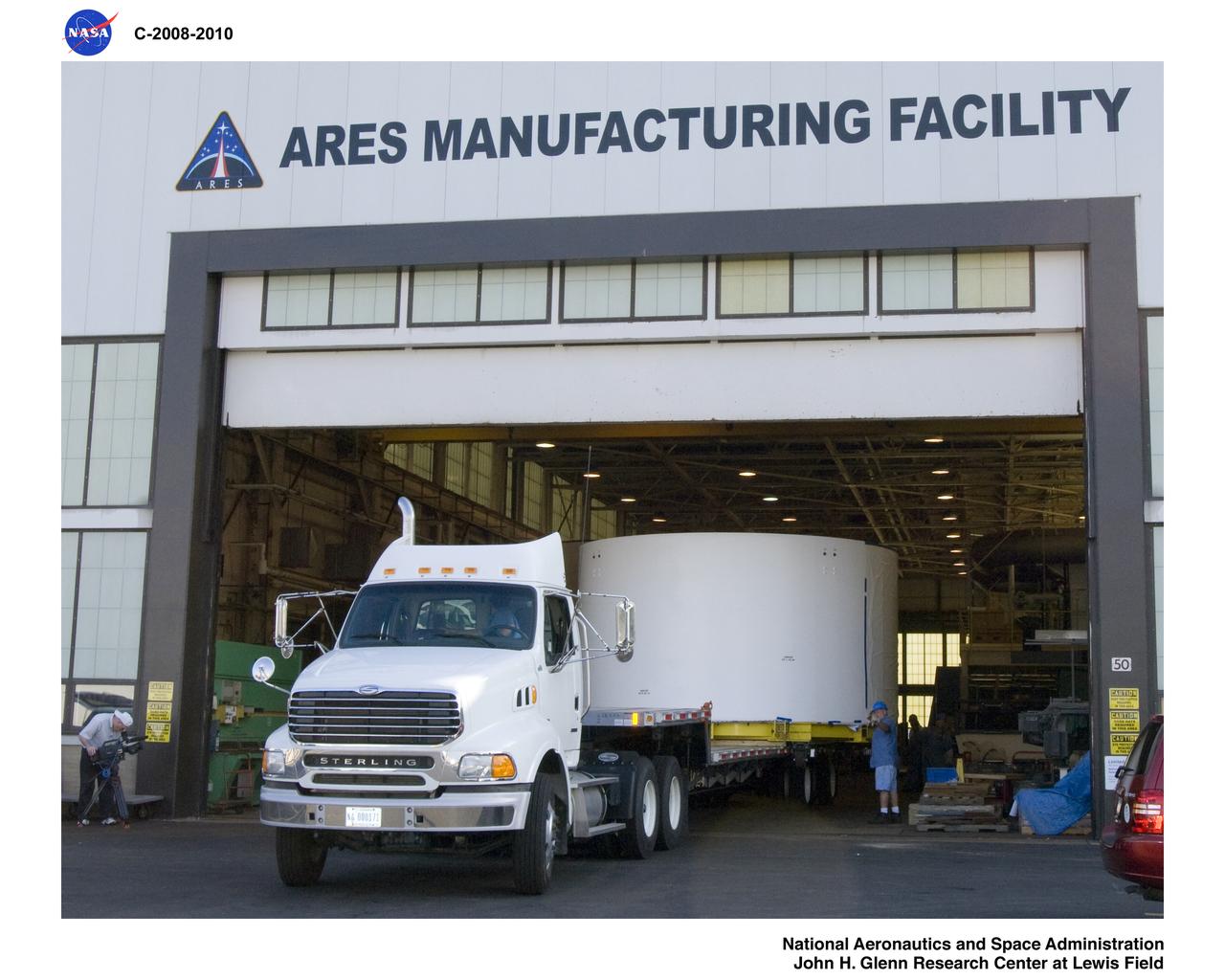
the Super Stack 3 of ARES I-X segments being de-stacked in Building 333 and moved to Building 50
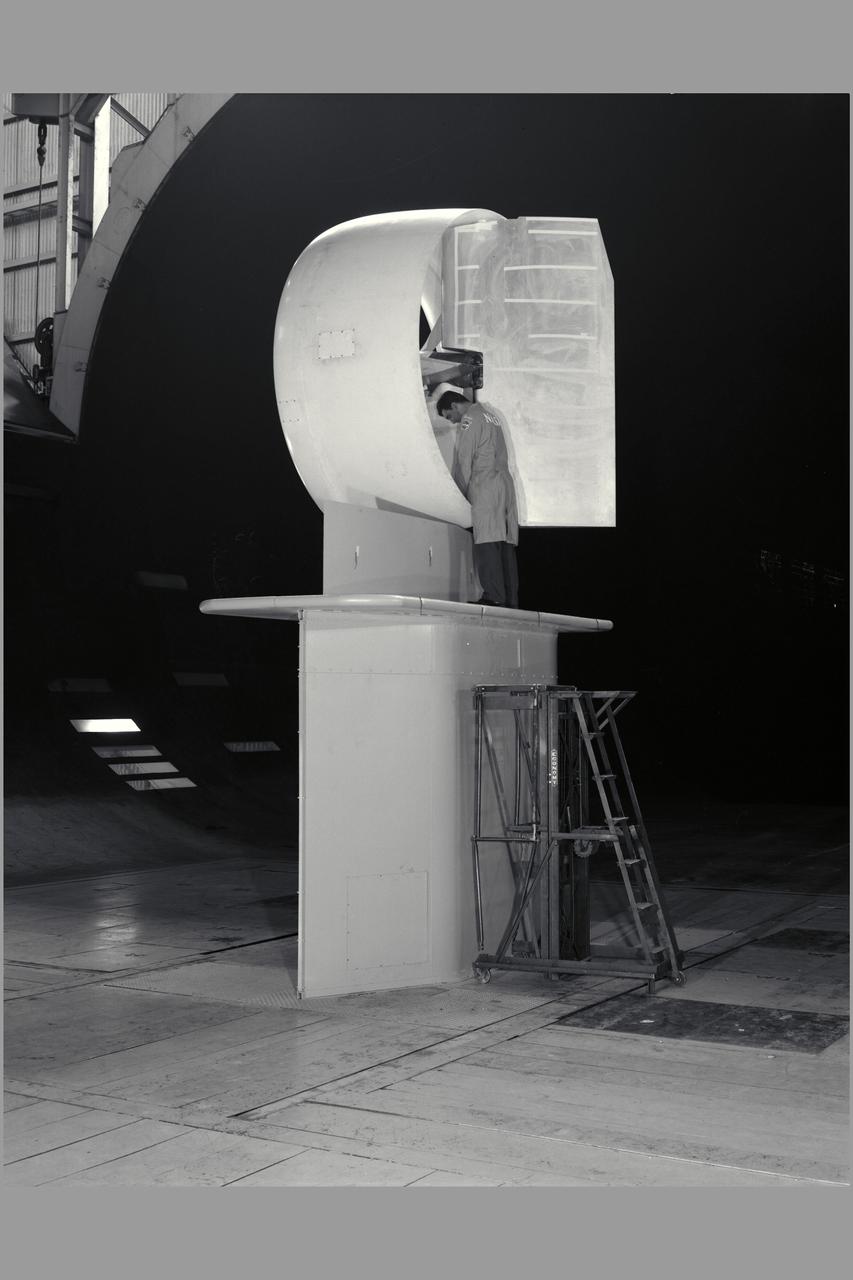
3/4 front view of full scale X-22A ducted fan model. Chuck Greco
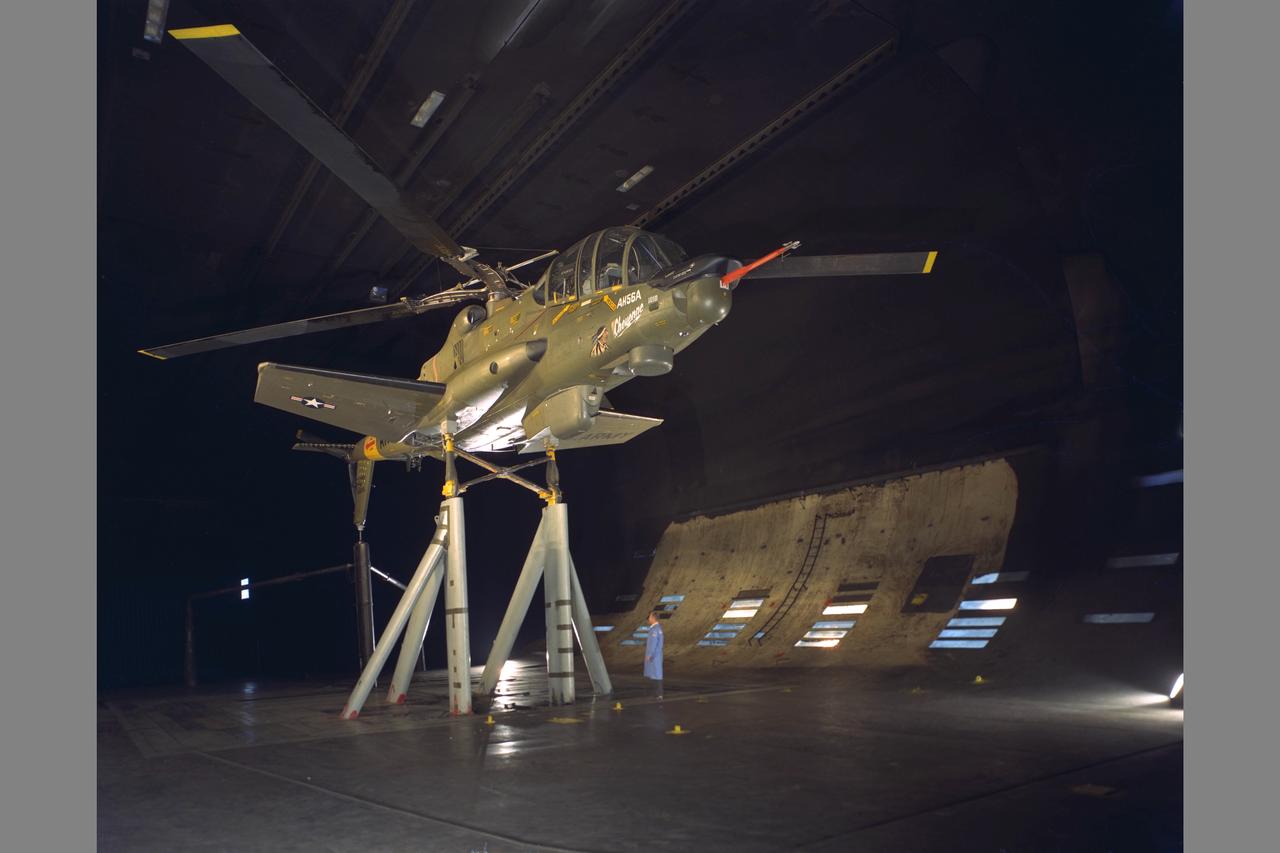
Lockheed AH-56 Helicopter; Cheyenne, 40 x 80 ft. Wind Tunnel. (3/4 front view)
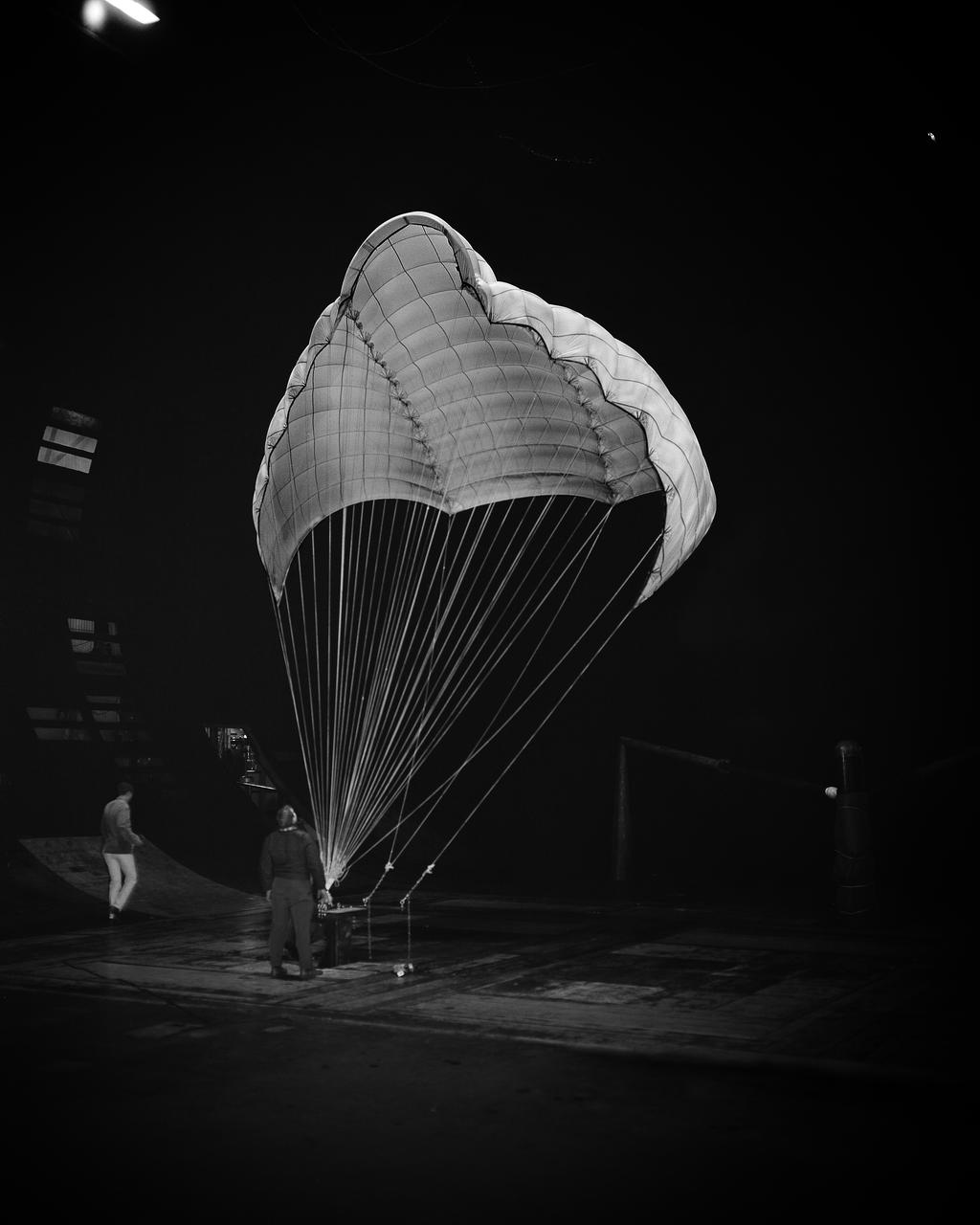
Langley Parawing 3/4 front view flying vertically in 40 x 80 wind tunnel.
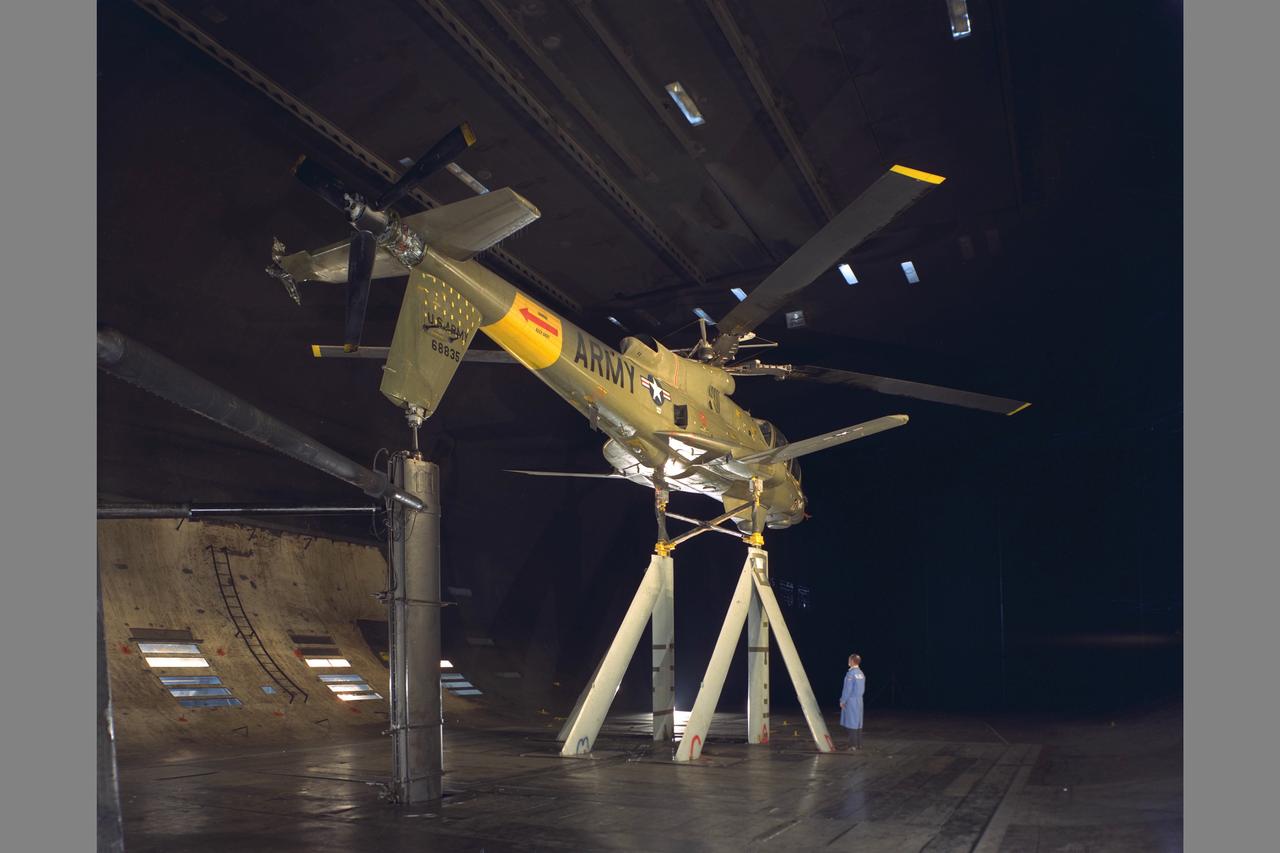
Lockheed AH-56 Helicopter; Cheyenne, 40 x 80 ft. Wind Tunnel. (3/4 rear view)

CAPE CANAVERAL, Fla. – In the Vehicle Assembly Building's High Bay 3, a crane lowers the Ares I-X Super Stack 4 onto Super Stack 3 for integration. Five super stacks make up the upper stage that will be integrated with the four-segment solid rocket booster first stage on the mobile launch platform. Ares I-X is the test vehicle for the Ares I, which is part of the Constellation Program to return men to the moon and beyond. The Ares I-X flight test is targeted for Oct. 31, pending formal NASA Headquarters approval. Photo credit: NASA/Jack Pfaller
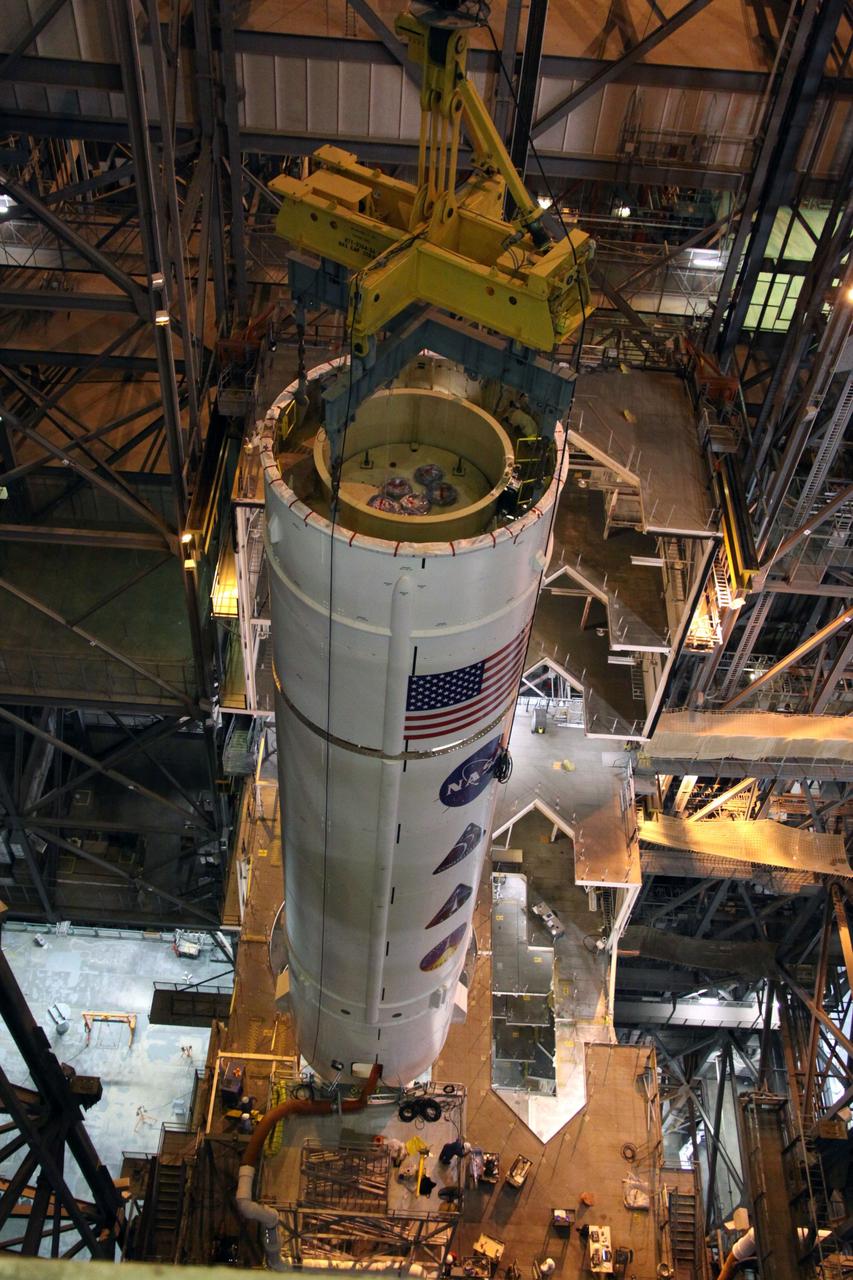
CAPE CANAVERAL, Fla. – In the Vehicle Assembly Building's High Bay 3, a crane lowers the Ares I-X Super Stack 4 onto Super Stack 3 for integration. Five super stacks make up the upper stage that will be integrated with the four-segment solid rocket booster first stage on the mobile launch platform. Ares I-X is the test vehicle for the Ares I, which is part of the Constellation Program to return men to the moon and beyond. The Ares I-X flight test is targeted for Oct. 31, pending formal NASA Headquarters approval. Photo credit: NASA/Jack Pfaller
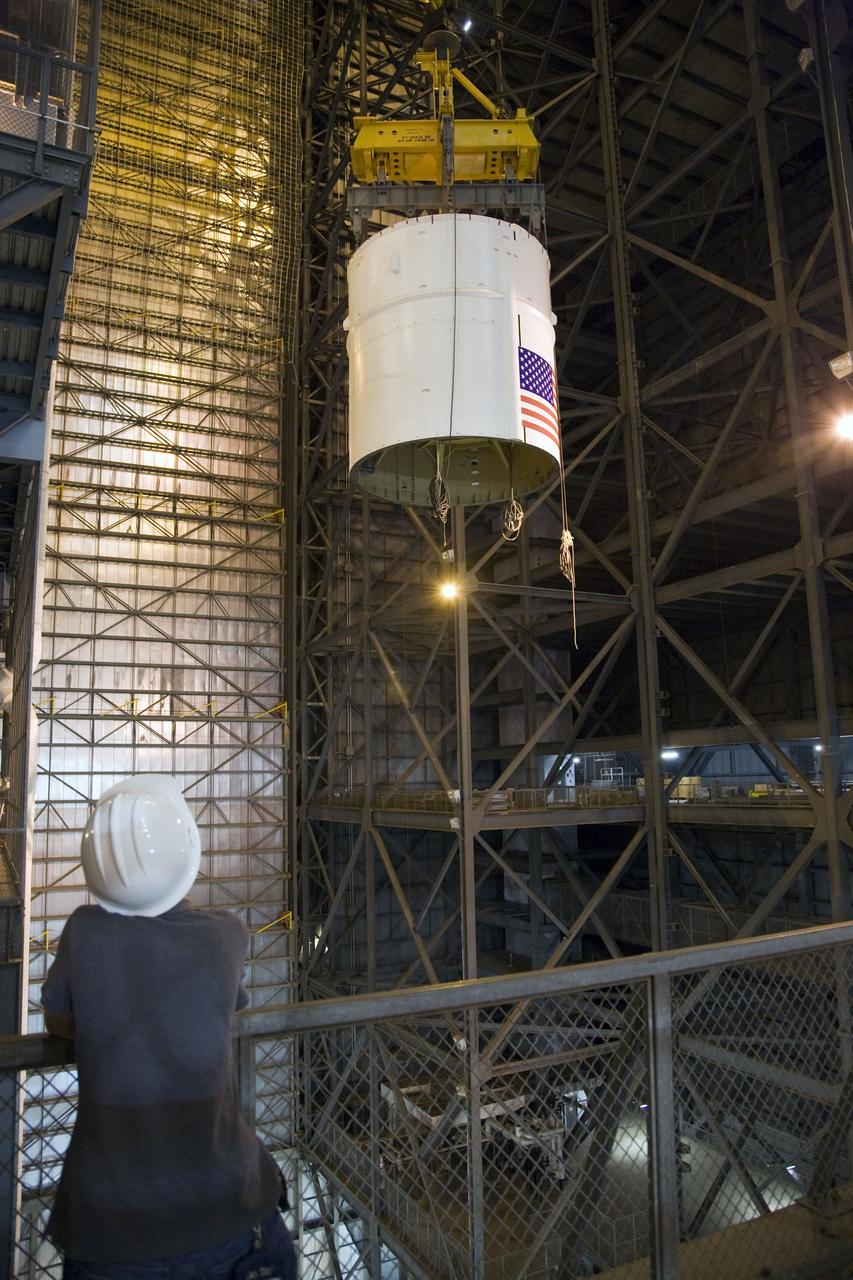
CAPE CANAVERAL, Fla. – In the Vehicle Assembly Building's High Bay 3, a worker watches as a crane lowers the Ares I-X Super Stack 4 for integration with Super Stack 3. Five super stacks make up the upper stage that will be integrated with the four-segment solid rocket booster first stage on the mobile launch platform. Ares I-X is the test vehicle for the Ares I, which is part of the Constellation Program to return men to the moon and beyond. The Ares I-X flight test is targeted for Oct. 31, pending formal NASA Headquarters approval. Photo credit: NASA/Dimitri Gerondidakis
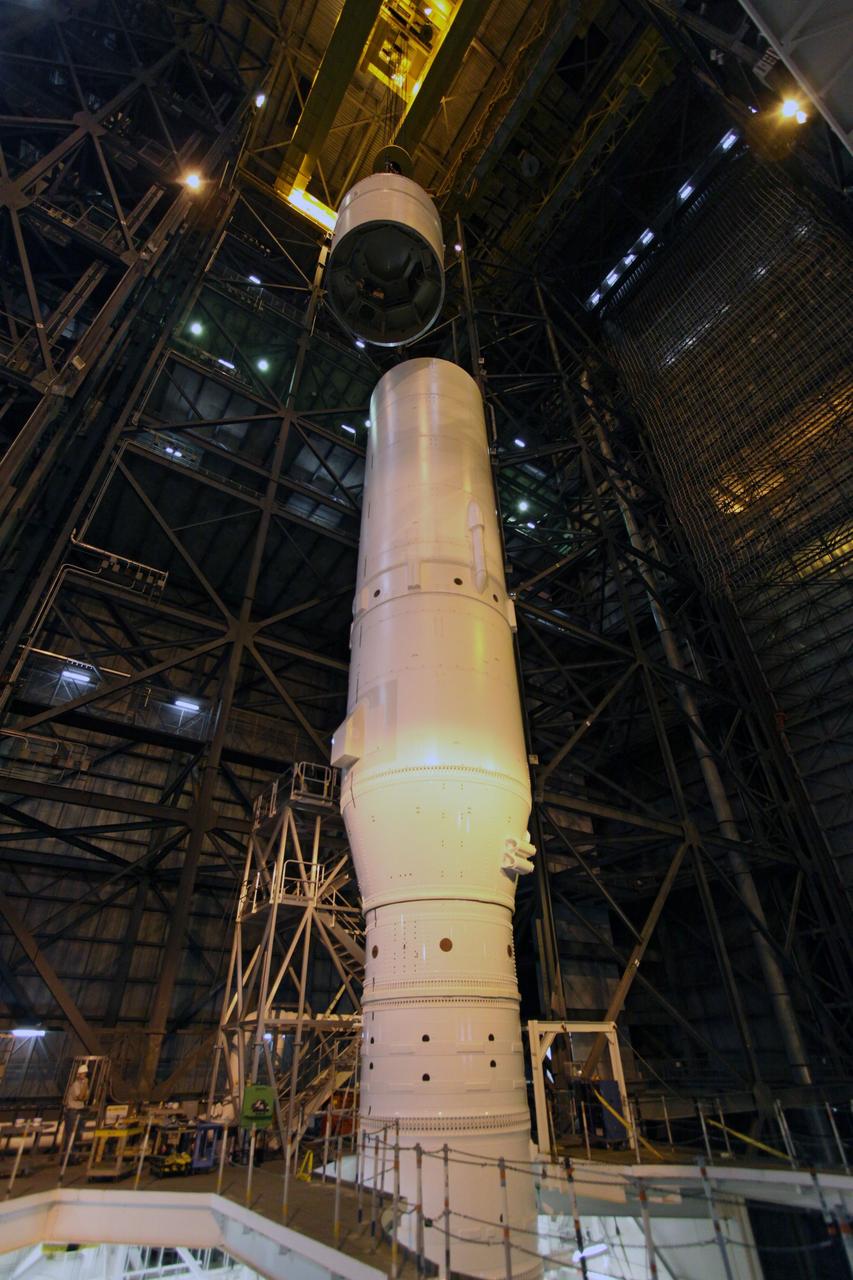
CAPE CANAVERAL, Fla. –In the Vehicle Assembly Building's High Bay 3, a crane lowers the Ares I-X Super Stack 4 toward Super Stack 3 for integration. Five super stacks make up the upper stage that will be integrated with the four-segment solid rocket booster first stage on the mobile launch platform. Ares I-X is the test vehicle for the Ares I, which is part of the Constellation Program to return men to the moon and beyond. The Ares I-X flight test is targeted for Oct. 31, pending formal NASA Headquarters approval. Photo credit: NASA/Jack Pfaller
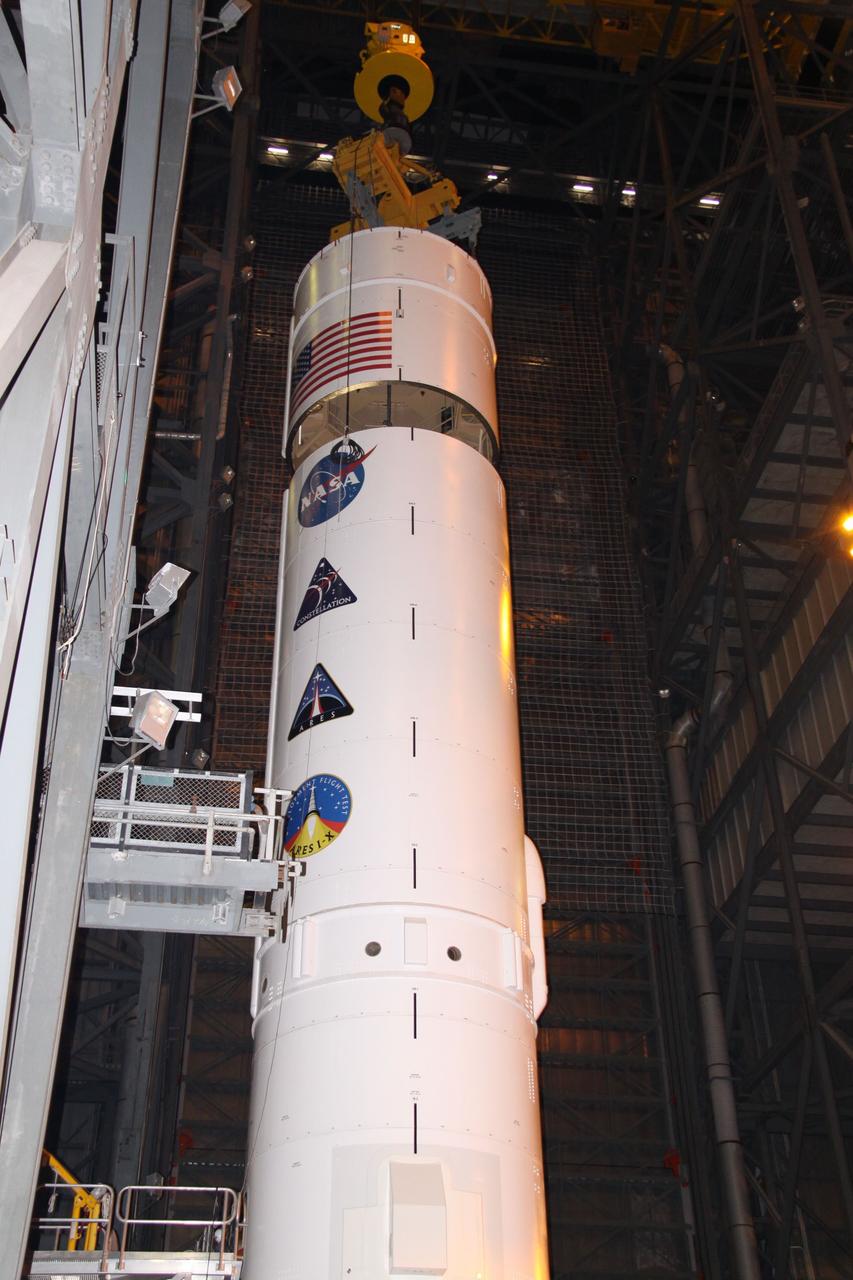
CAPE CANAVERAL, Fla. – In the Vehicle Assembly Building's High Bay 3, a crane lowers the Ares I-X Super Stack 4 toward Super Stack 3 for integration. Five super stacks make up the upper stage that will be integrated with the four-segment solid rocket booster first stage on the mobile launch platform. Ares I-X is the test vehicle for the Ares I, which is part of the Constellation Program to return men to the moon and beyond. The Ares I-X flight test is targeted for Oct. 31, pending formal NASA Headquarters approval. Photo credit: NASA/Jack Pfaller
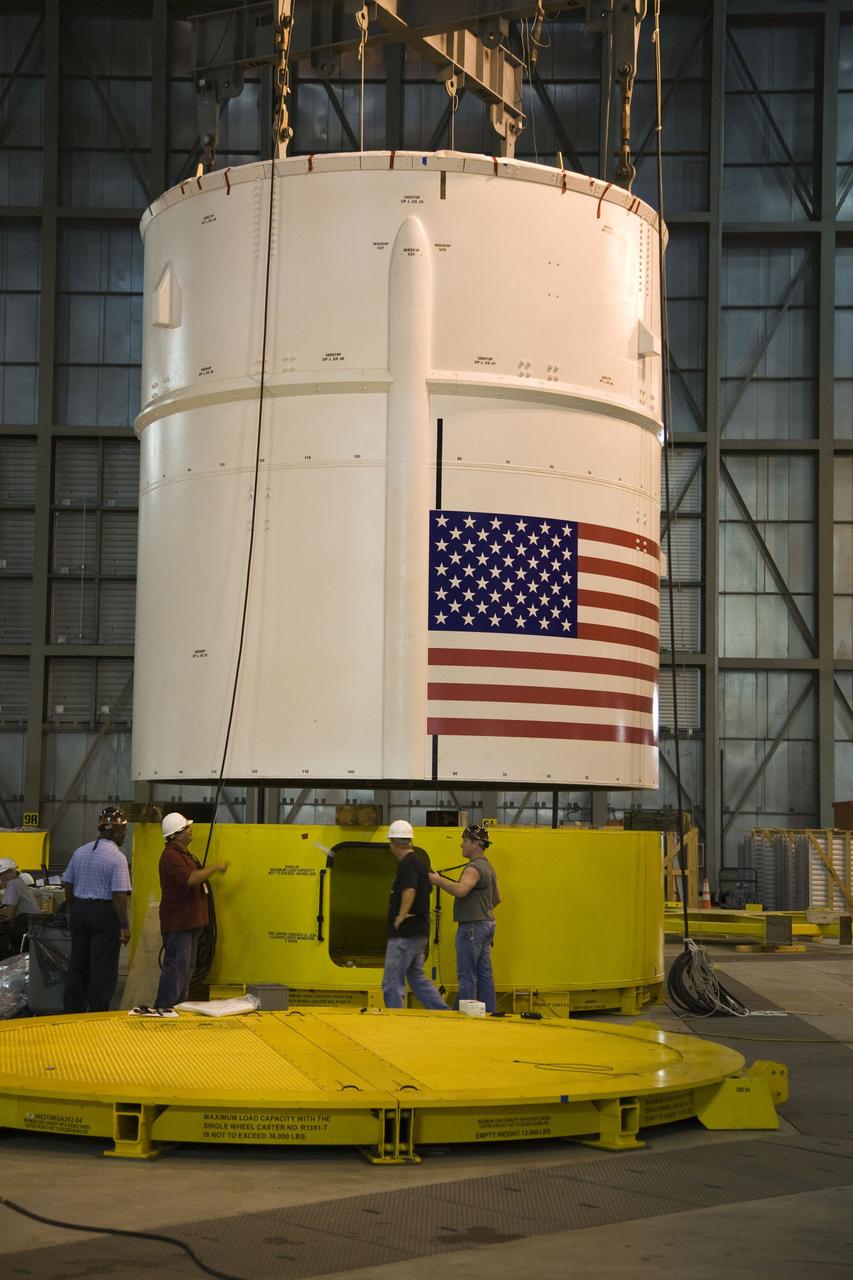
CAPE CANAVERAL, Fla. – In the Vehicle Assembly Building's High Bay 4 at NASA's Kennedy Space Center in Florida, a crane lifts the Ares I-X Super Stack 4. The stack will be moved to High Bay 3 for integration with Super Stack 3. Five super stacks make up the upper stage that will be integrated with the four-segment solid rocket booster first stage on the mobile launch platform. Ares I-X is the test vehicle for the Ares I, which is part of the Constellation Program to return men to the moon and beyond. The Ares I-X flight test is targeted for Oct. 31, pending formal NASA Headquarters approval. Photo credit: NASA/Dimitri Gerondidakis
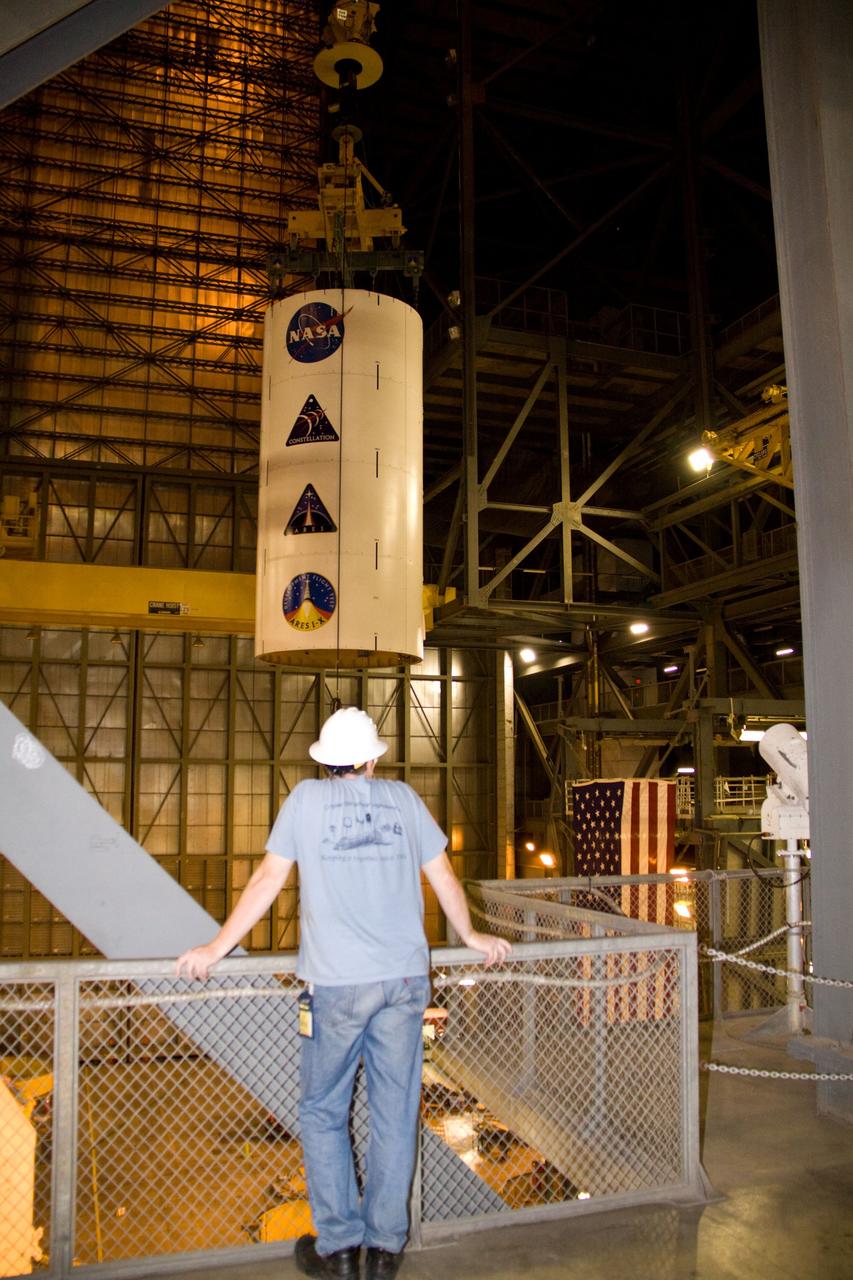
CAPE CANAVERAL, Fla. – In NASA Kennedy Space Center's Vehicle Assembly Building High Bay 3, a crane moves the Ares I-X Super Stack 3 across the transfer aisle to High Bay 4. There it will be integrated with Super Stack 2. The upper stage comprises five super stacks, which are integrated with the four-segment solid rocket booster first stage on the mobile launch platform. Ares I-X is the test vehicle for the Ares I, which is part of the Constellation Program to return men to the moon and beyond. The Ares I-X flight test is targeted for Oct. 31, pending formal NASA Headquarters approval. Photo credit: NASA/Jack Pfaller
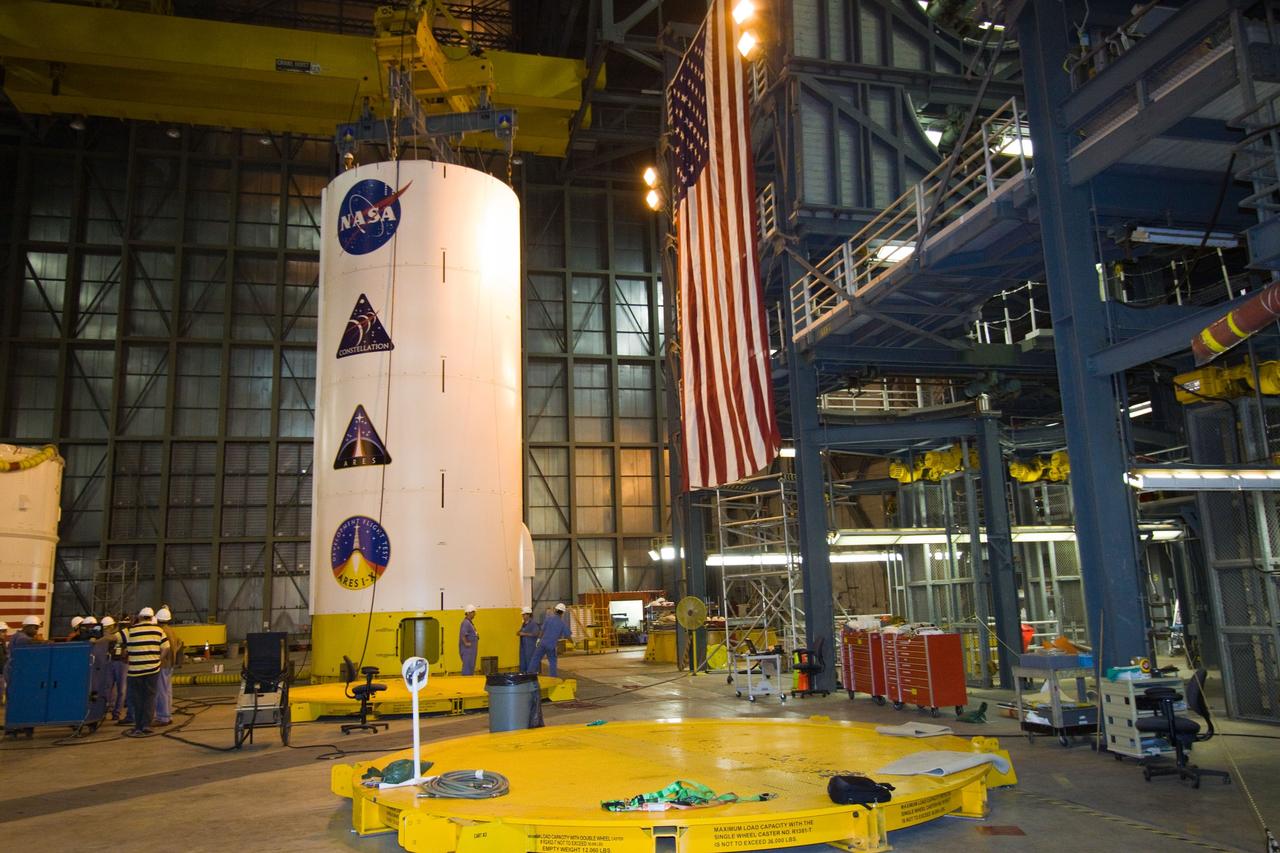
CAPE CANAVERAL, Fla. – In NASA Kennedy Space Center's Vehicle Assembly Building, a crane is attached to the Ares I-X Super Stack 3 in High Bay 3. The stack is being moved to High Bay 4 for integration with Super Stack 2. The upper stage comprises five super stacks, which are integrated with the four-segment solid rocket booster first stage on the mobile launch platform. Ares I-X is the test vehicle for the Ares I, which is part of the Constellation Program to return men to the moon and beyond. The Ares I-X flight test is targeted for Oct. 31, pending formal NASA Headquarters approval. Photo credit: NASA/Jack Pfaller
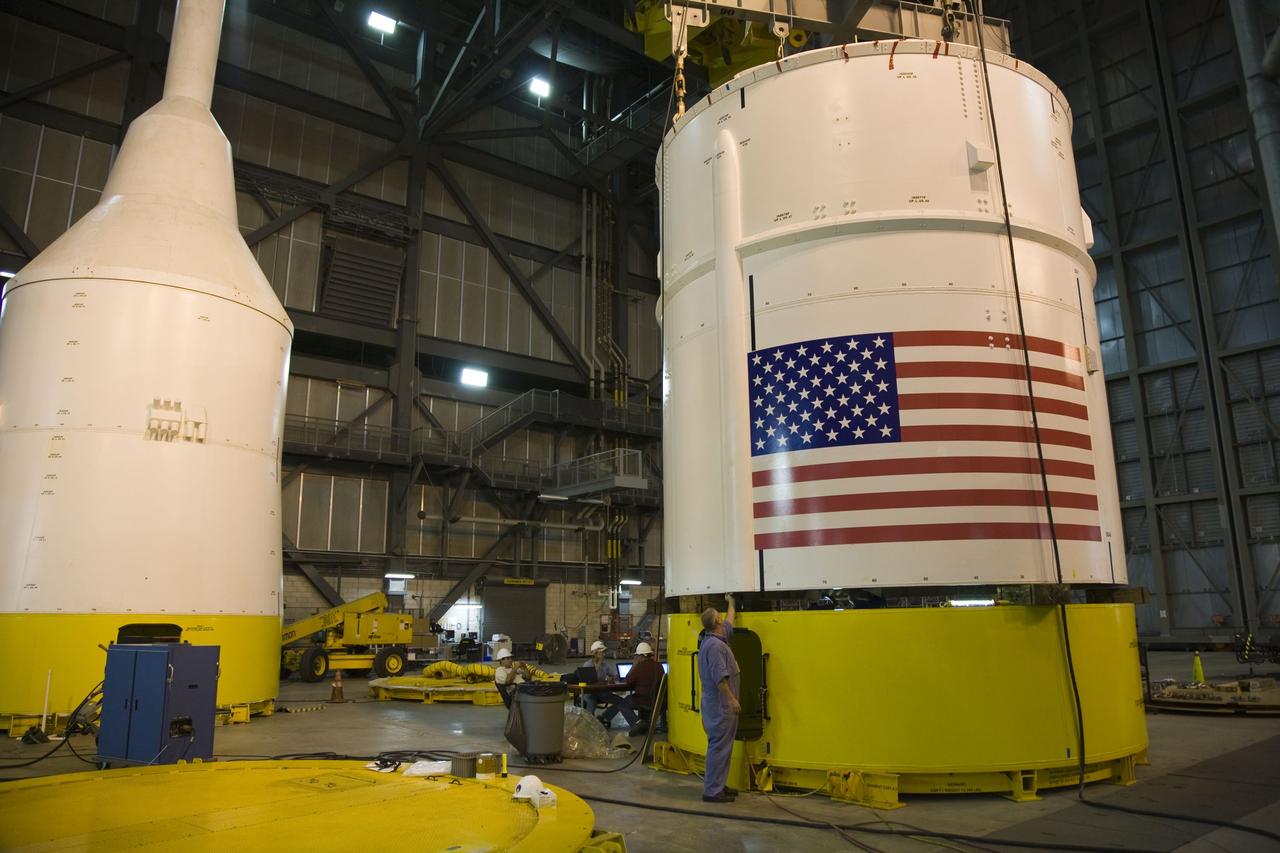
CAPE CANAVERAL, Fla. – In the Vehicle Assembly Building's High Bay 4 at NASA's Kennedy Space Center in Florida, a crane is attached to the Ares I-X Super Stack 4. The stack will be lifted and moved to High Bay 3 for integration with Super Stack 3. Five super stacks make up the upper stage that will be integrated with the four-segment solid rocket booster first stage on the mobile launch platform. Ares I-X is the test vehicle for the Ares I, which is part of the Constellation Program to return men to the moon and beyond. The Ares I-X flight test is targeted for Oct. 31, pending formal NASA Headquarters approval. Photo credit: NASA/Dimitri Gerondidakis
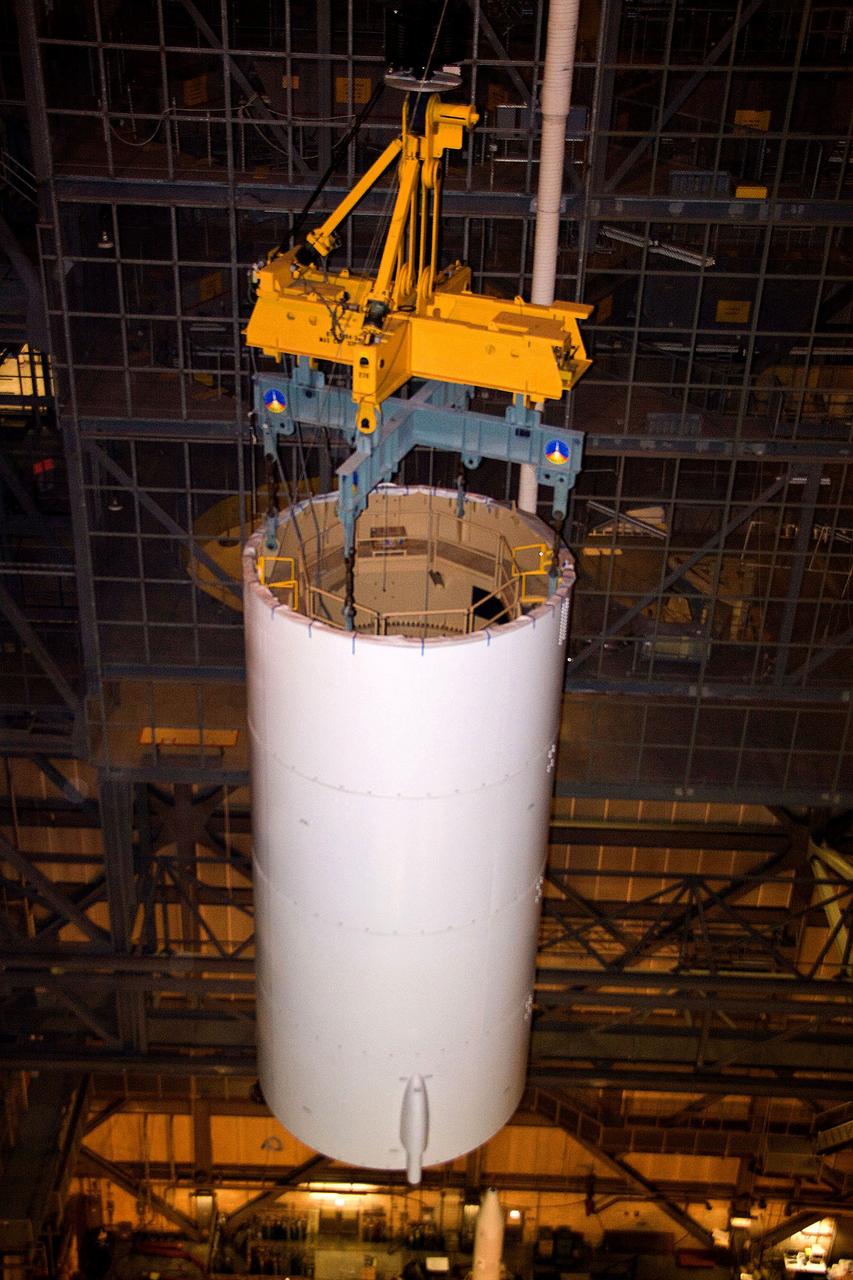
CAPE CANAVERAL, Fla. – In NASA Kennedy Space Center's Vehicle Assembly Building High Bay 3, a crane moves the Ares I-X Super Stack 3 across the transfer aisle to High Bay 4. There it will be integrated with Super Stack 2. The upper stage comprises five super stacks, which are integrated with the four-segment solid rocket booster first stage on the mobile launch platform. Ares I-X is the test vehicle for the Ares I, which is part of the Constellation Program to return men to the moon and beyond. The Ares I-X flight test is targeted for Oct. 31, pending formal NASA Headquarters approval. Photo credit: NASA/Jack Pfaller
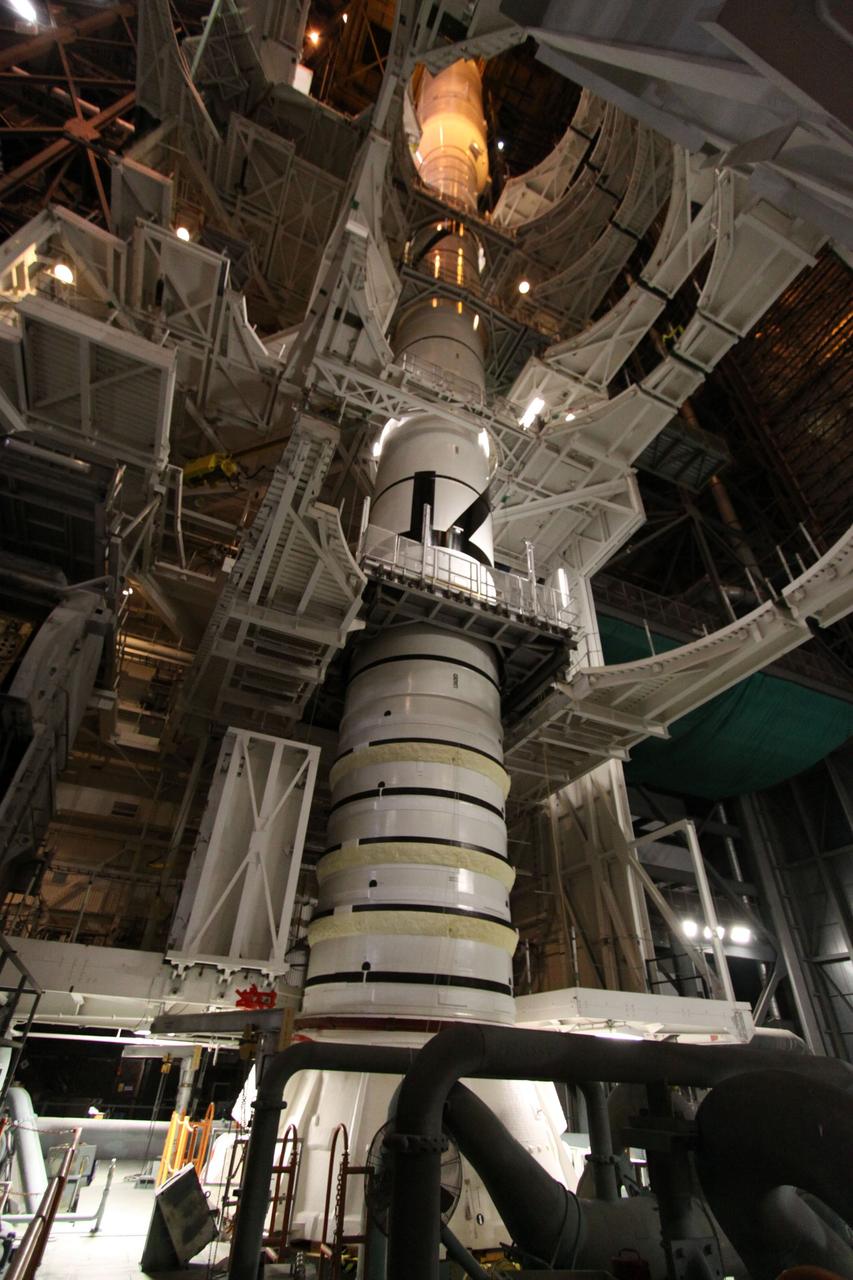
CAPE CANAVERAL, Fla. – In the Vehicle Assembly Building's High Bay 3, the Ares I-X rocket is being assembled on the mobile launcher platform. Super Stack 4 has just been mated to Super Stack 3 on top. Five super stacks make up the upper stage that will be integrated with the four-segment solid rocket booster first stage on the mobile launch platform. Ares I-X is the test vehicle for the Ares I, which is part of the Constellation Program to return men to the moon and beyond. The Ares I-X flight test is targeted for Oct. 31, pending formal NASA Headquarters approval. Photo credit: NASA/Jack Pfaller
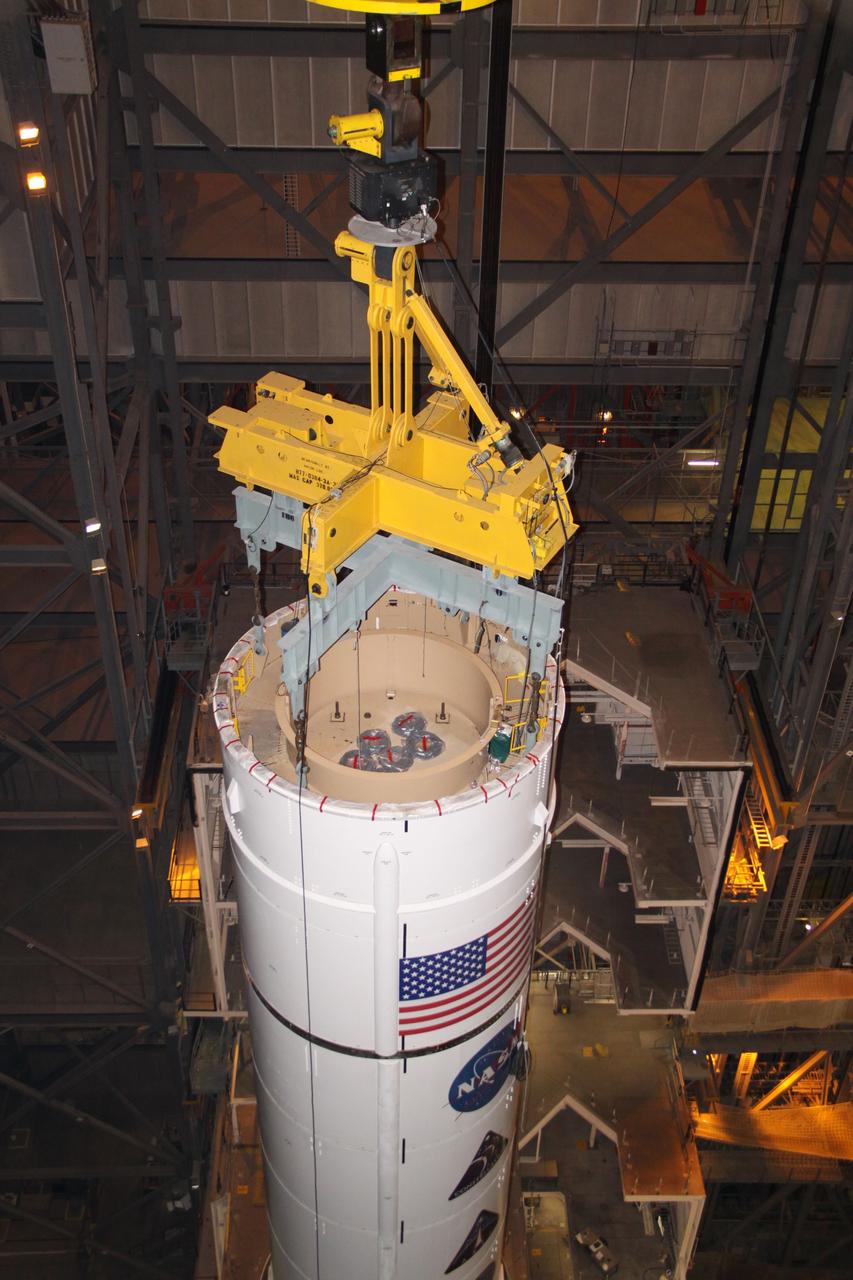
CAPE CANAVERAL, Fla. – In the Vehicle Assembly Building's High Bay 3, a crane lowers the Ares I-X Super Stack 4 onto Super Stack 3 for integration. Five super stacks make up the upper stage that will be integrated with the four-segment solid rocket booster first stage on the mobile launch platform. Ares I-X is the test vehicle for the Ares I, which is part of the Constellation Program to return men to the moon and beyond. The Ares I-X flight test is targeted for Oct. 31, pending formal NASA Headquarters approval. Photo credit: NASA/Jack Pfaller
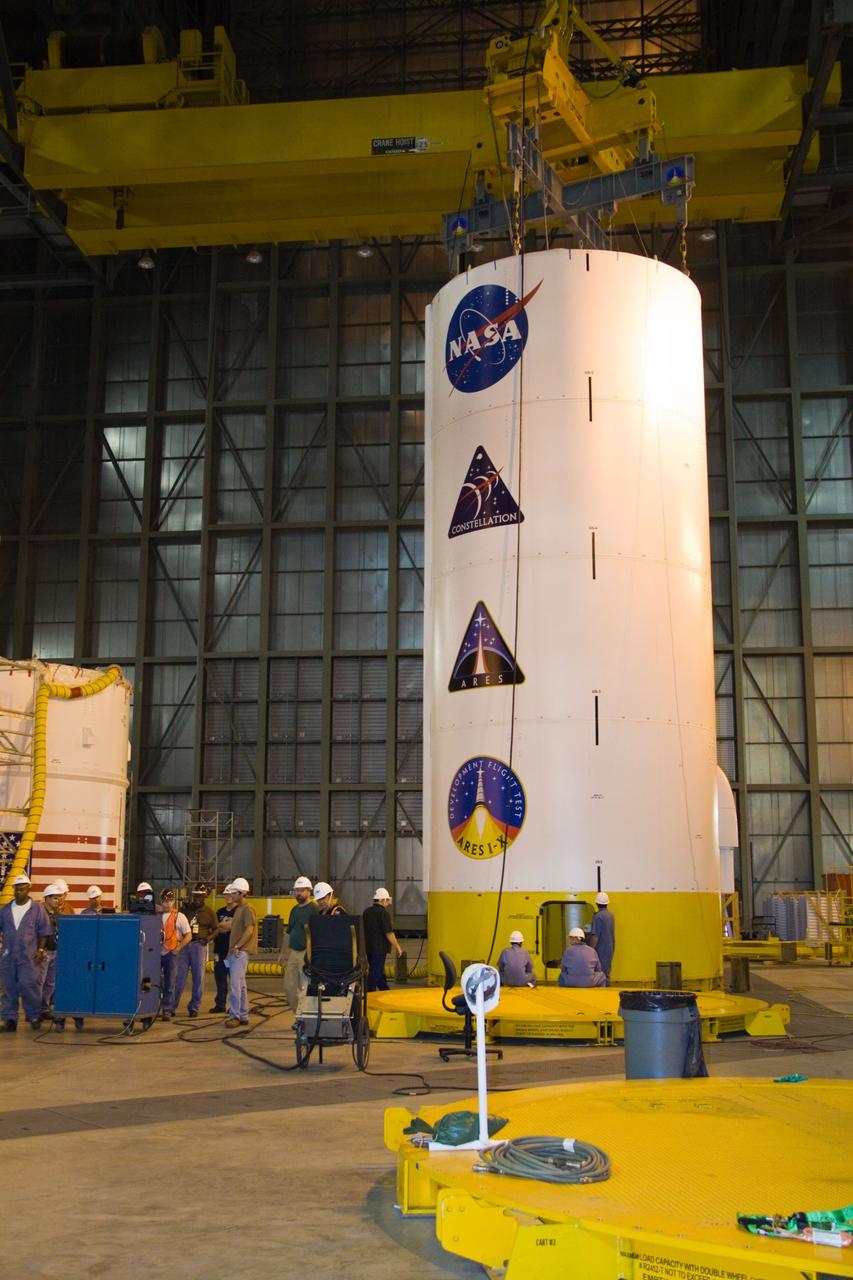
CAPE CANAVERAL, Fla. – In NASA Kennedy Space Center's Vehicle Assembly Building, a crane is attached to the Ares I-X Super Stack 3 in High Bay 3. The stack is being moved to High Bay 4 for integration with Super Stack 2. The upper stage comprises five super stacks, which are integrated with the four-segment solid rocket booster first stage on the mobile launch platform. Ares I-X is the test vehicle for the Ares I, which is part of the Constellation Program to return men to the moon and beyond. The Ares I-X flight test is targeted for Oct. 31, pending formal NASA Headquarters approval. Photo credit: NASA/Jack Pfaller
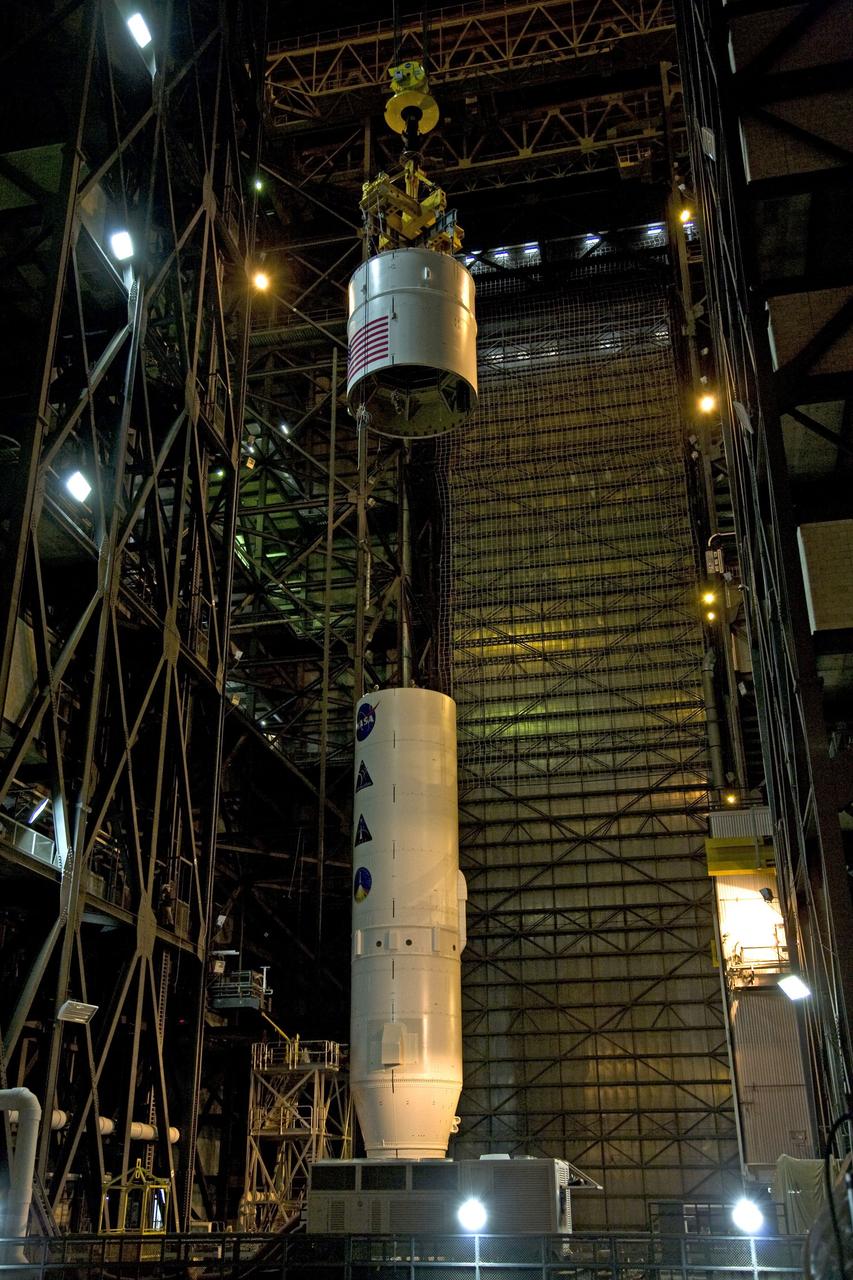
CAPE CANAVERAL, Fla. – In the Vehicle Assembly Building's High Bay 3, a crane lowers the Ares I-X Super Stack 4 toward Super Stack 3 for integration. Five super stacks make up the upper stage that will be integrated with the four-segment solid rocket booster first stage on the mobile launch platform. Ares I-X is the test vehicle for the Ares I, which is part of the Constellation Program to return men to the moon and beyond. The Ares I-X flight test is targeted for Oct. 31, pending formal NASA Headquarters approval. Photo credit: NASA/Dimitri Gerondidakis
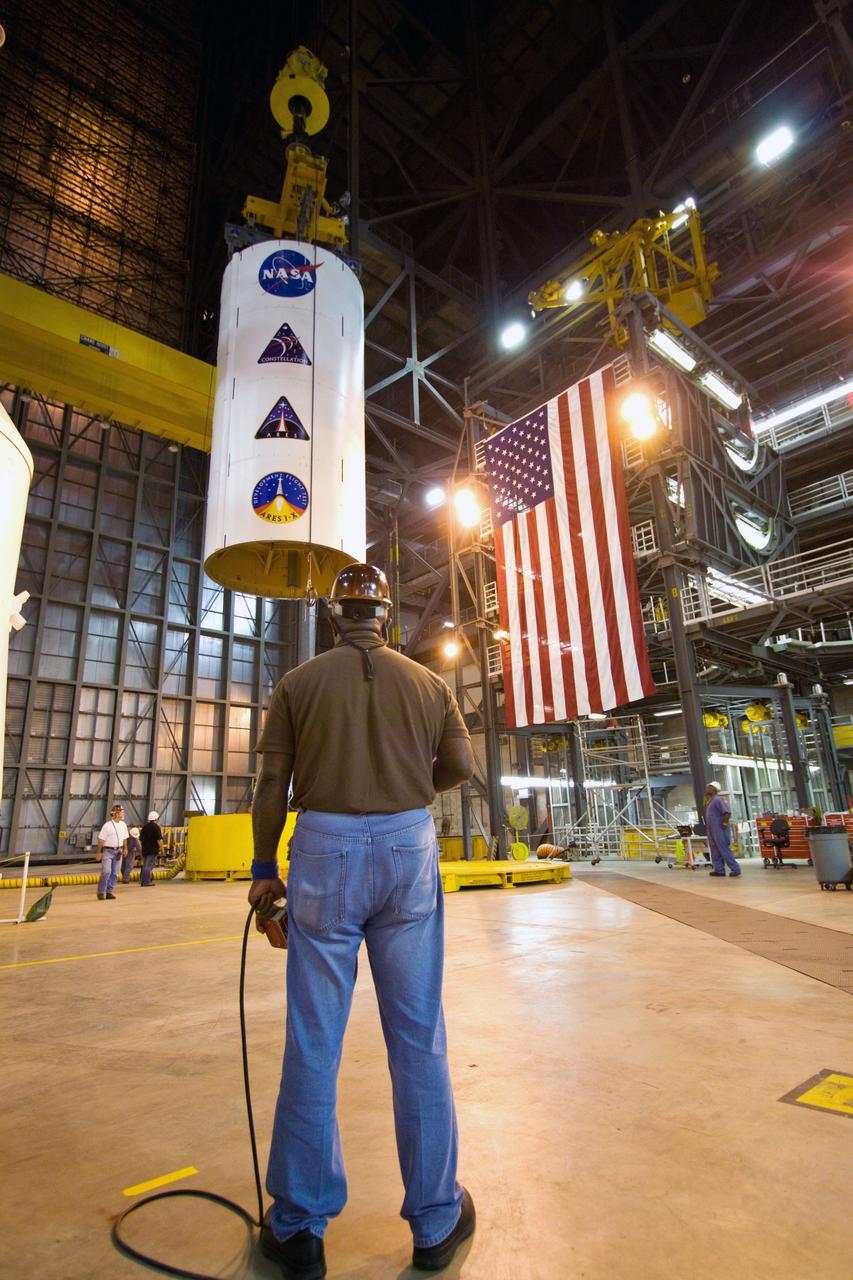
CAPE CANAVERAL, Fla. – In NASA Kennedy Space Center's Vehicle Assembly Building High Bay 3, a crane lifts the Ares I-X Super Stack 3 to move it across the transfer aisle to High Bay 4. There it will be integrated with Super Stack 2. The upper stage comprises five super stacks, which are integrated with the four-segment solid rocket booster first stage on the mobile launch platform. Ares I-X is the test vehicle for the Ares I, which is part of the Constellation Program to return men to the moon and beyond. The Ares I-X flight test is targeted for Oct. 31, pending formal NASA Headquarters approval. Photo credit: NASA/Jack Pfaller
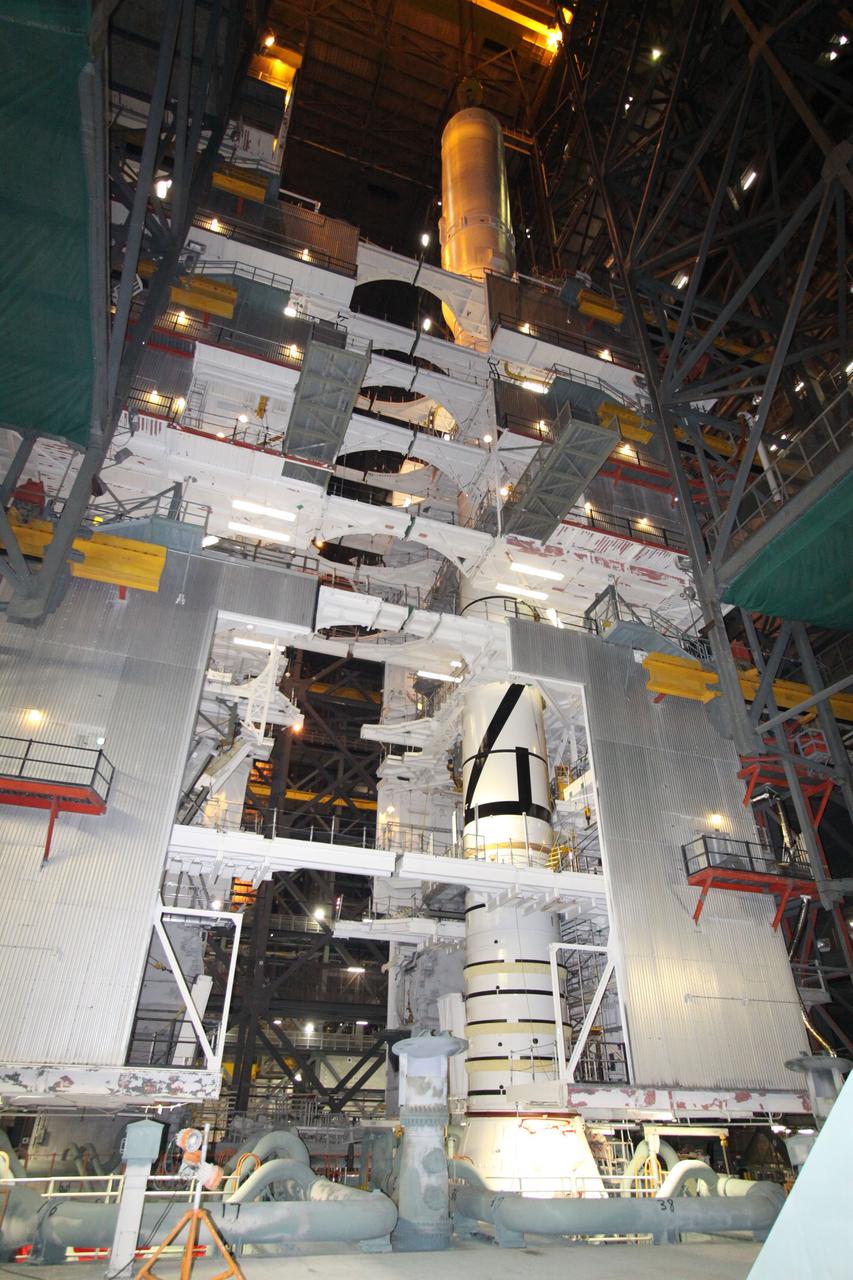
CAPE CANAVERAL, Fla. – In the Vehicle Assembly Building's High Bay 3, the Ares I-X rocket is being assembled on the mobile launcher platform. Super Stack 4 has just been mated to Super Stack 3 on top. Five super stacks make up the upper stage that will be integrated with the four-segment solid rocket booster first stage on the mobile launch platform. Ares I-X is the test vehicle for the Ares I, which is part of the Constellation Program to return men to the moon and beyond. The Ares I-X flight test is targeted for Oct. 31, pending formal NASA Headquarters approval. Photo credit: NASA/Jack Pfaller
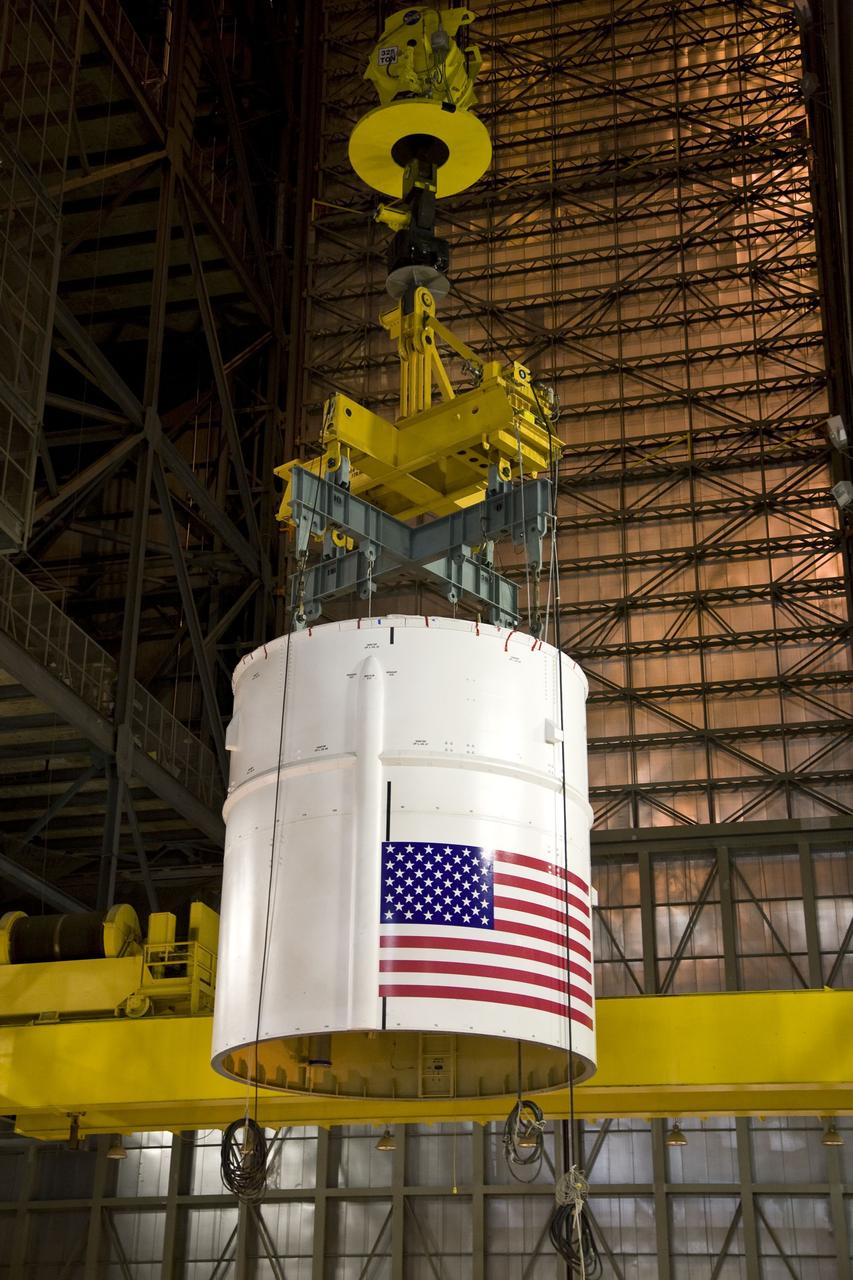
CAPE CANAVERAL, Fla. – In the Vehicle Assembly Building's High Bay 4 at NASA's Kennedy Space Center in Florida, a crane moves the Ares I-X Super Stack 4 across the floor to High Bay 3 for integration with Super Stack 3. Five super stacks make up the upper stage that will be integrated with the four-segment solid rocket booster first stage on the mobile launch platform. Ares I-X is the test vehicle for the Ares I, which is part of the Constellation Program to return men to the moon and beyond. The Ares I-X flight test is targeted for Oct. 31, pending formal NASA Headquarters approval. Photo credit: NASA/Dimitri Gerondidakis
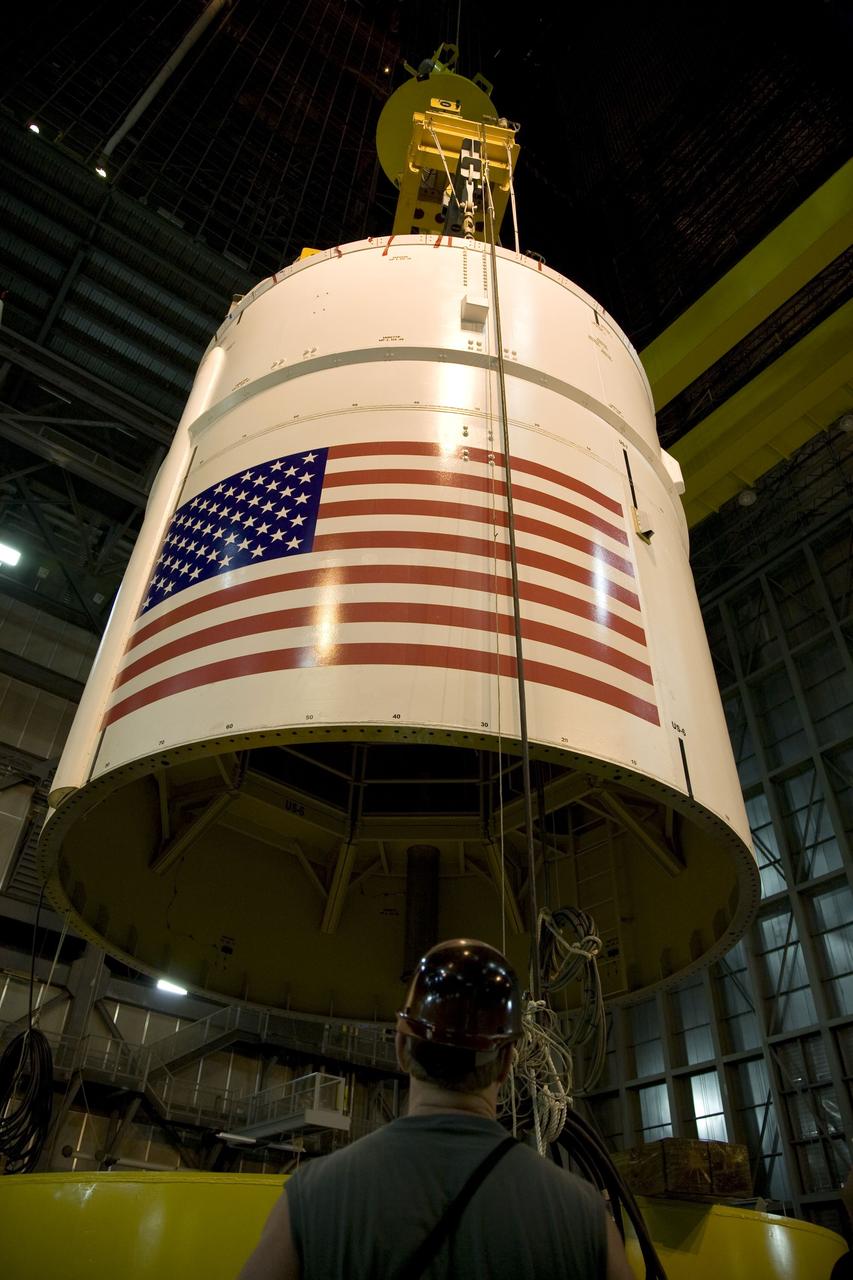
CAPE CANAVERAL, Fla. – In the Vehicle Assembly Building's High Bay 4 at NASA's Kennedy Space Center in Florida, a crane lifts the Ares I-X Super Stack 4. The stack will be moved to High Bay 3 for integration with Super Stack 3. Five super stacks make up the upper stage that will be integrated with the four-segment solid rocket booster first stage on the mobile launch platform. Ares I-X is the test vehicle for the Ares I, which is part of the Constellation Program to return men to the moon and beyond. The Ares I-X flight test is targeted for Oct. 31, pending formal NASA Headquarters approval. Photo credit: NASA/Dimitri Gerondidakis
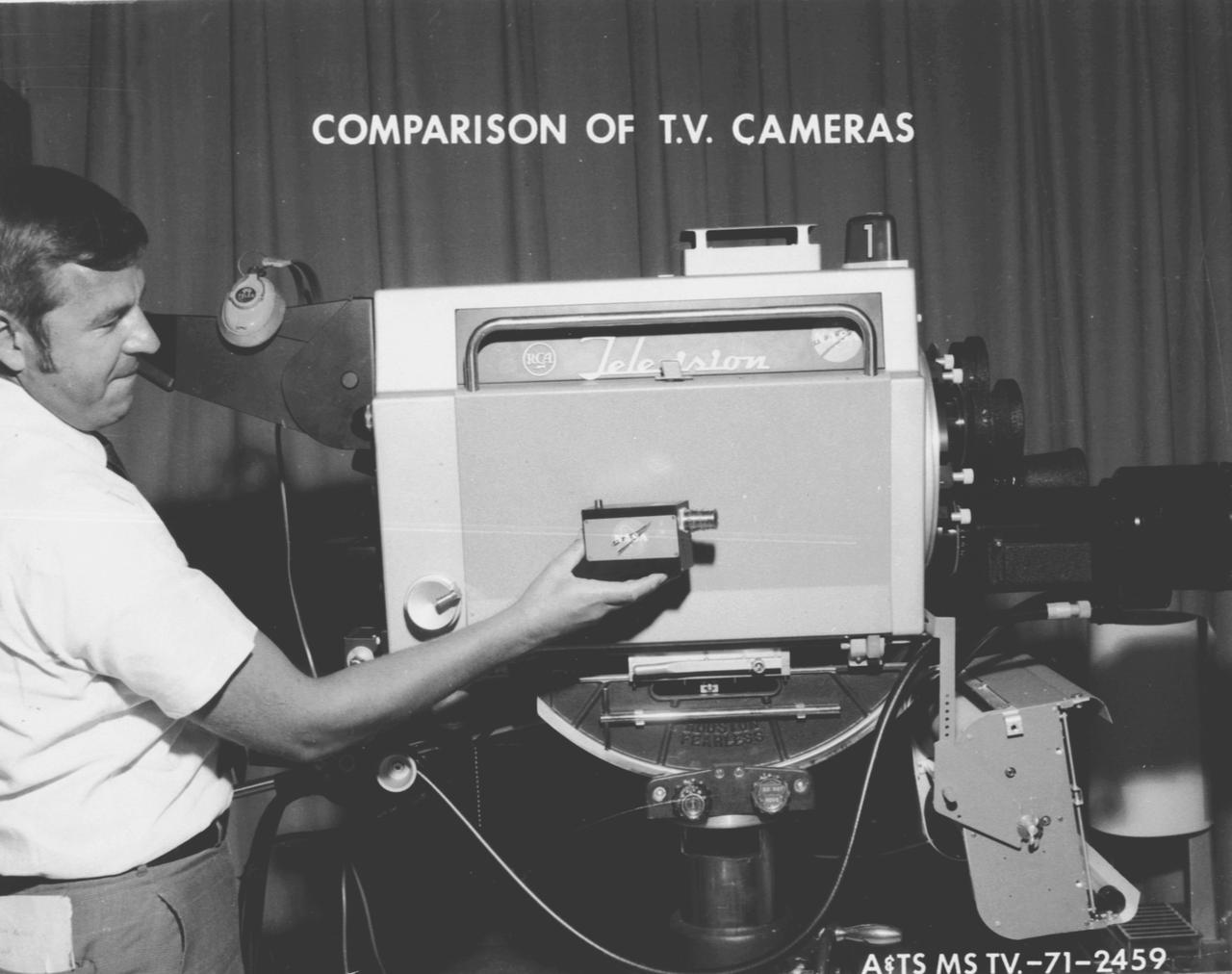
Originally devised to observe Saturn stage separation during Apollo flights, Marshall Space Flight Center's Miniature Television Camera, measuring only 4 x 3 x 1 1/2 inches, quickly made its way to the commercial telecommunications market.

2-Prop. R.C.F. (Rotating Cylinder Flap) in 40 x 80ft. wind tunnel. 3/4 front view with Jim Weiberg Chuck Greco.
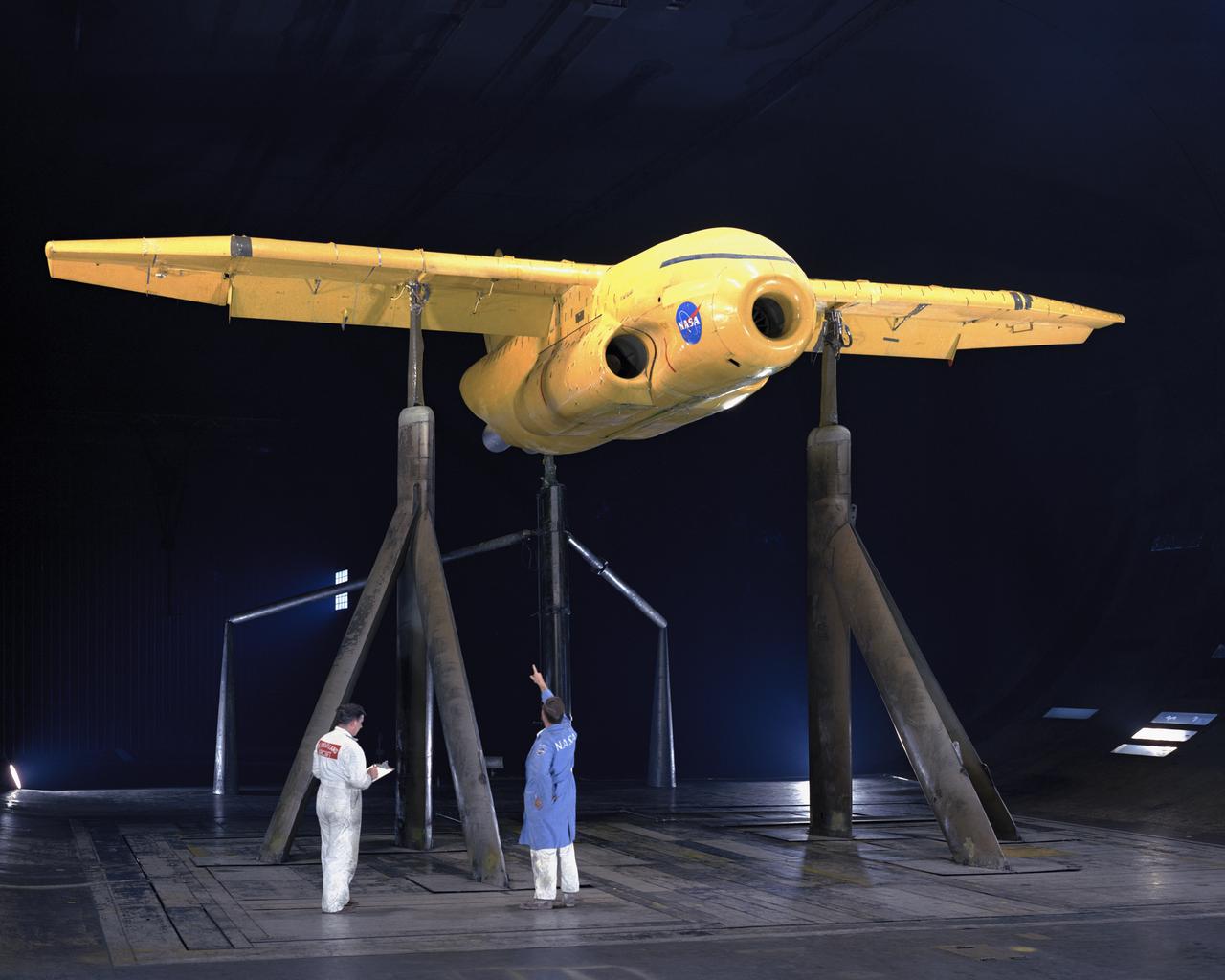
de Havilland augmenter wing model 3/4 front view in 40 x 80 wind tunnel. JOHN CONWAY, ALAN WHEELBAND
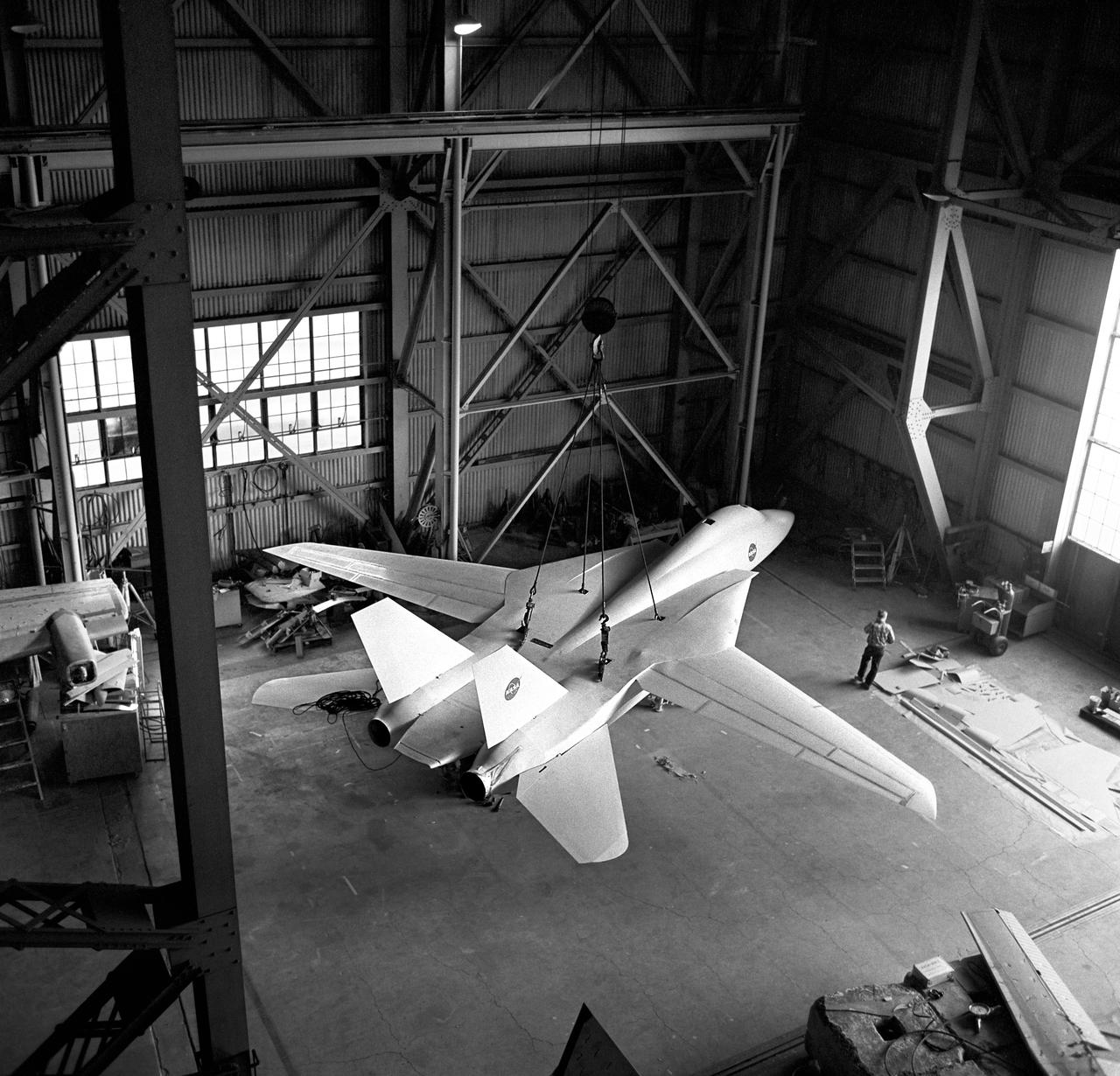
F-14A fighter model lifted from the shop floor of the 40 x 80 foot wind tunnel. 3/4 scale
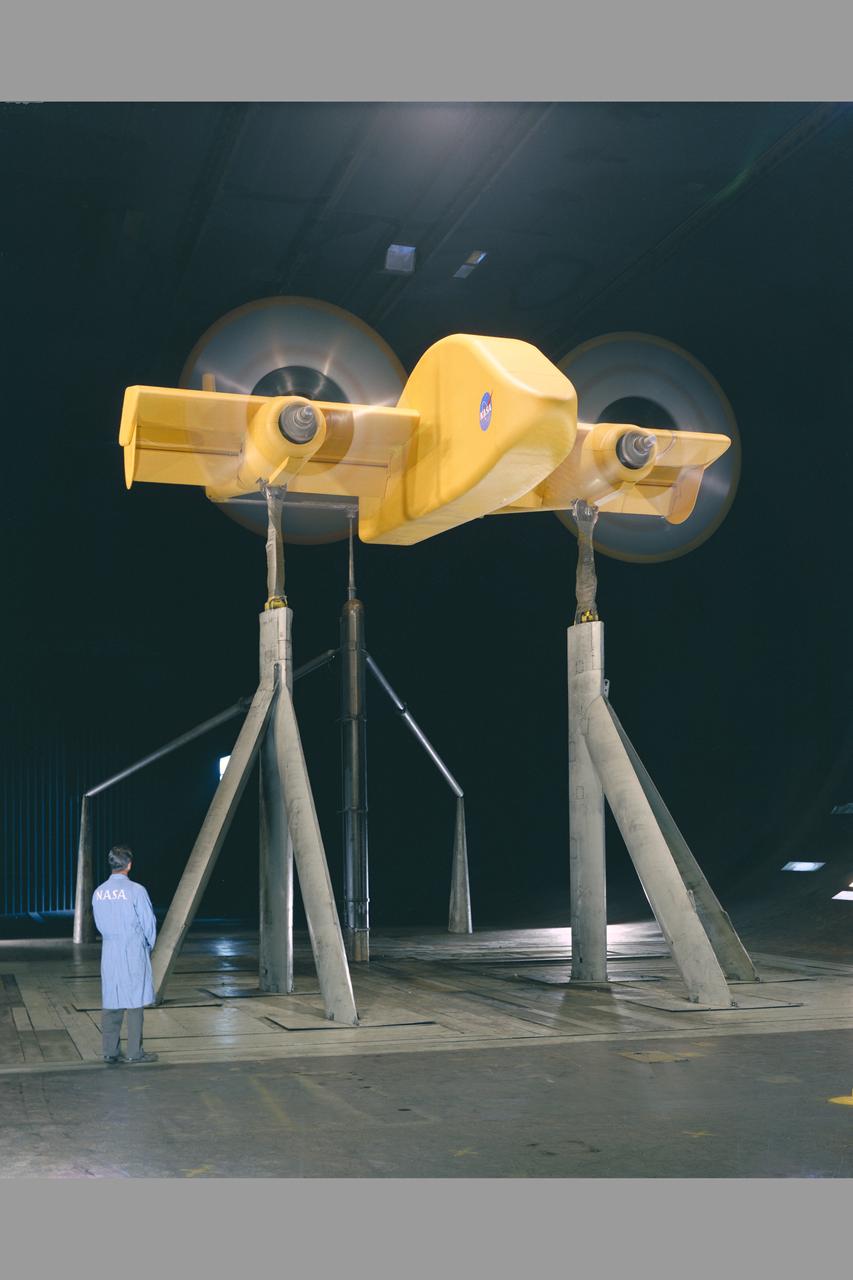
2-Prop. R.C.F. (Rotating Cylinder Flap) in 40 x 80ft. wind tunnel. 3/4 front view propeller spinning with Chuck Greco.
CAPE CANAVERAL, Fla. – In NASA Kennedy Space Center's Vehicle Assembly Building High Bay 3, NASA's Ares I-X rocket is ready to undergo its first power-up. Part of the Constellation Program, the Ares I-X is the test vehicle for the Ares I, which is the essential core of a space transportation system that eventually will carry crewed missions back to the moon, on to Mars and out into the solar system. The Ares I-X flight test is targeted for Oct. 31. Photo credit: NASA/Cory Huston

CAPE CANAVERAL, Fla. – The Ares I-X rocket stands tall inside NASA Kennedy Space Center's Vehicle Assembly Building Bay 3. Part of the Constellation Program, the Ares I-X is the test vehicle for the Ares I, which is the essential core of a space transportation system that eventually will carry crewed missions back to the moon, on to Mars and out into the solar system . The Ares I-X flight test is targeted for Oct. 27. Photo credit: NASA/Kim Shiflett
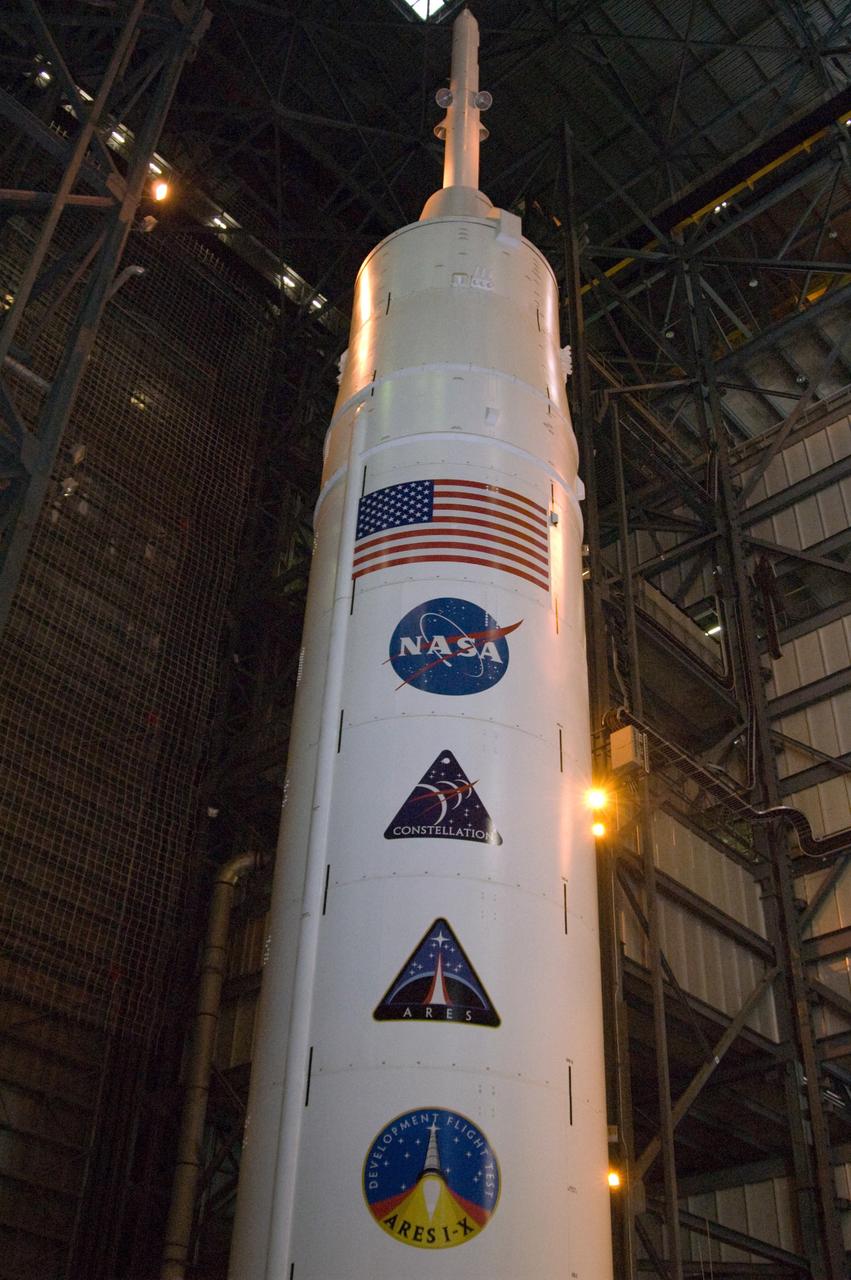
CAPE CANAVERAL, Fla. – In NASA Kennedy Space Center's Vehicle Assembly Building High Bay 3, NASA's Ares I-X rocket undergoes its first power-up. Part of the Constellation Program, the Ares I-X is the test vehicle for the Ares I, which is the essential core of a space transportation system that eventually will carry crewed missions back to the moon, on to Mars and out into the solar system. The Ares I-X flight test is targeted for Oct. 31. Photo credit: NASA/Cory Huston
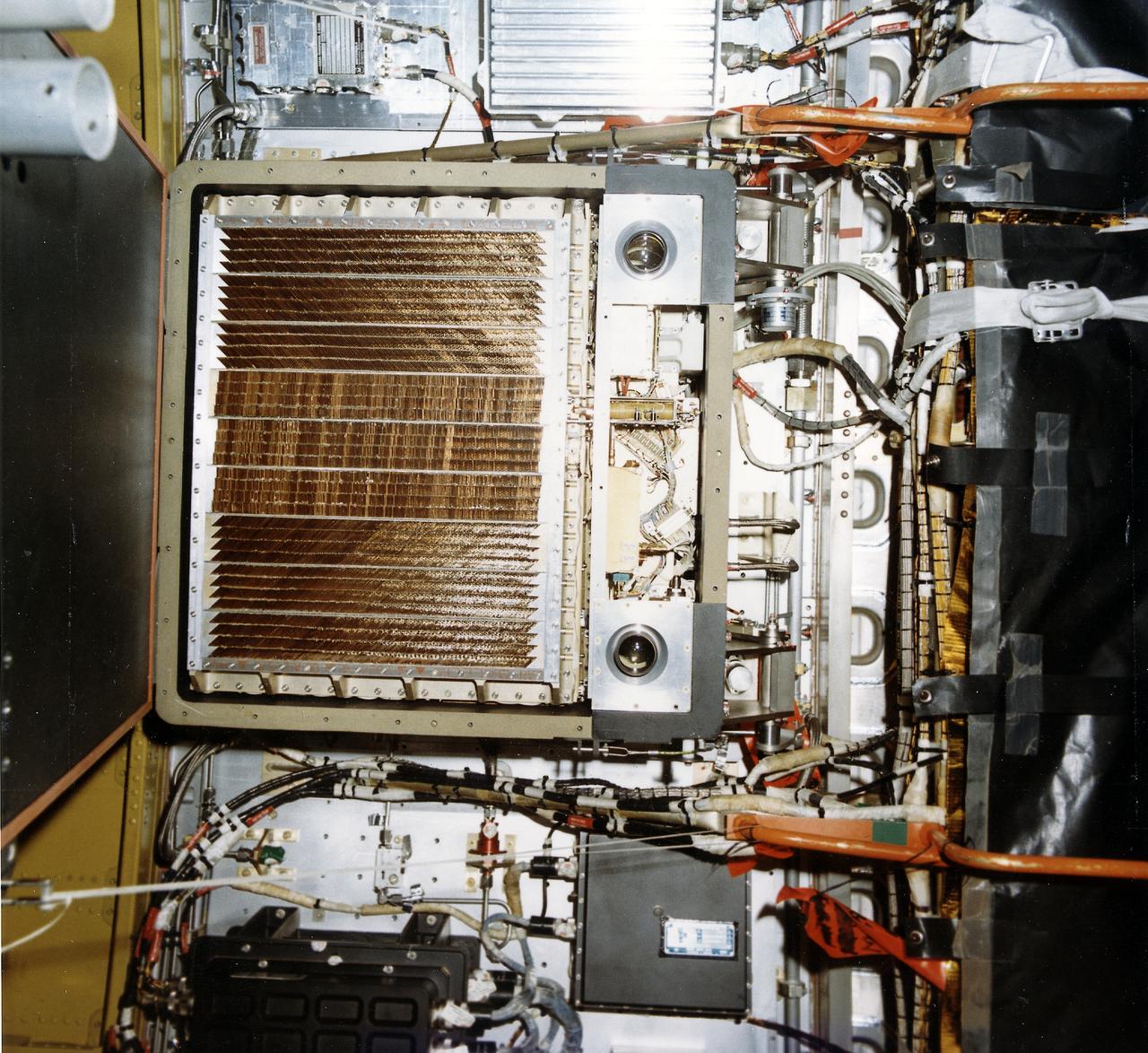
This photograph shows Skylab's Galactic X-Ray Mapping facility (S150), an astrophysics and space sciences investigation. An objective of this experiment was to extend the search for the origin of galactic x-rays beyond the sensitivity possible with short flights of small research rockets. This was accomplished by placing a large-area, soft x-ray detector in orbit to collect data for a much longer time. The S150 instrument was not in Skylab but in the instrument unit of the second stage of the Skylab-3 Saturn IB rocket.
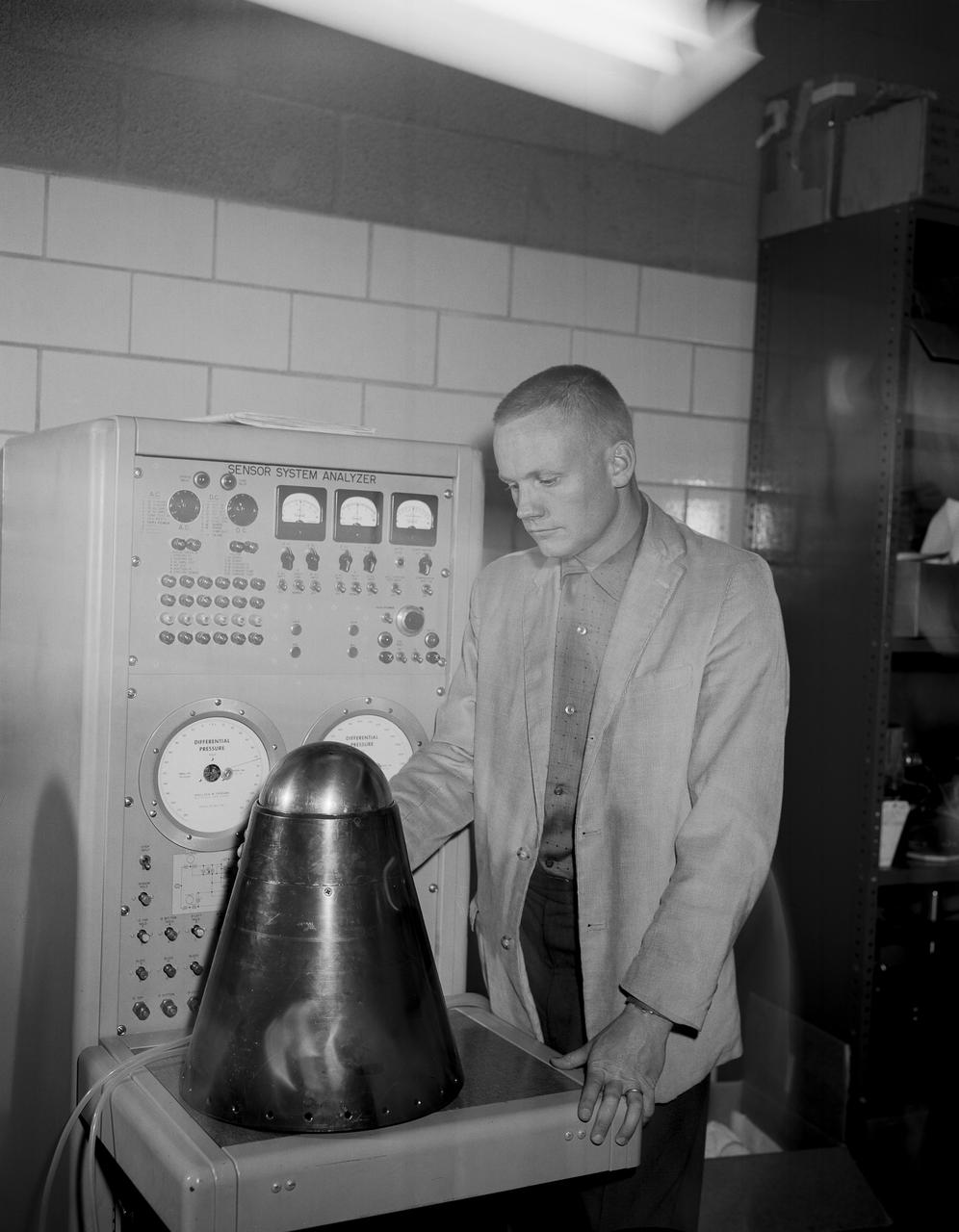
From the program’s inception, Neil Armstrong was actively engaged in both the piloting and engineering aspects of the X-15. He flew the first mission using a new flow-direction sensor (ball nose) and the first flight with a self-adaptive flight control system. Collaborating closely with designers and engineers on the system’s development, he made seven flights in the X-15 between December 1960 and July 1962. During these missions, he reached a peak altitude of 207,500 feet in the X-15-3 and a top speed of 3,989 mph (Mach 5.74) in the X-15-1.
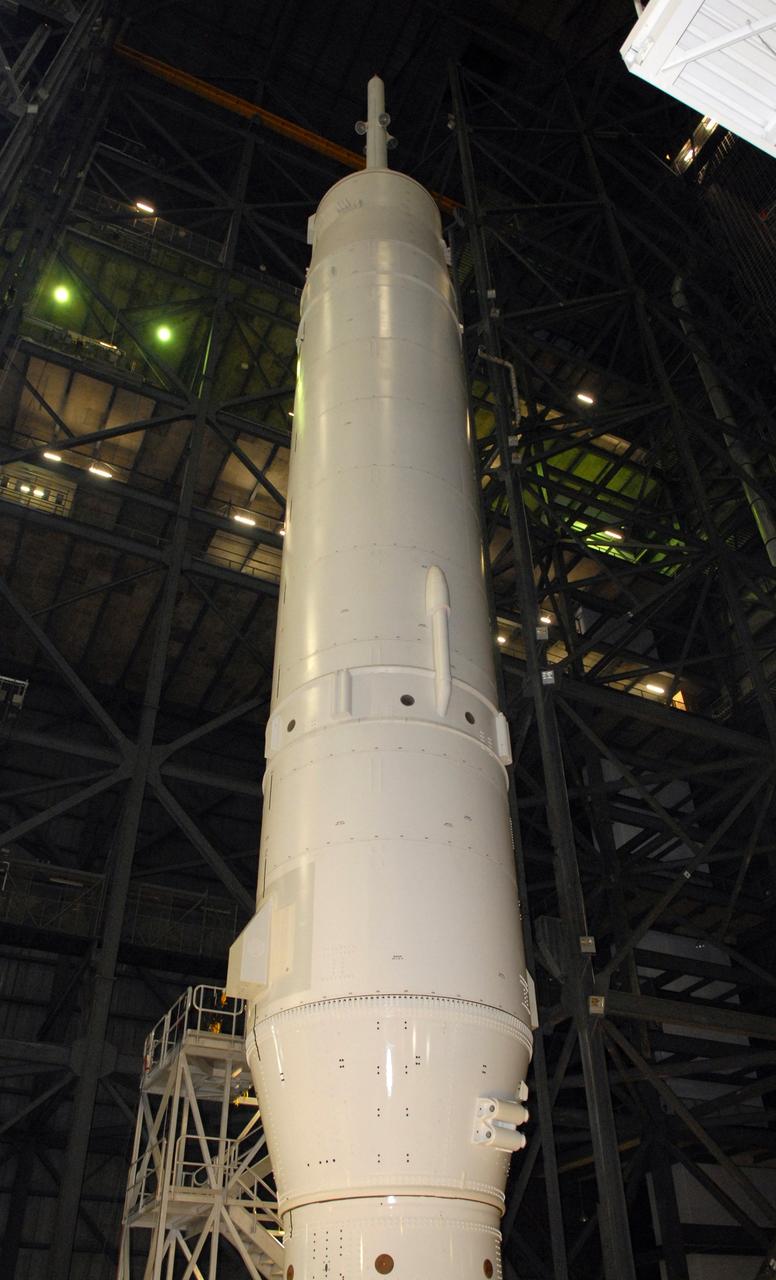
CAPE CANAVERAL, Fla. – Processing of the Ares I-X vehicle nears completion in the Vehicle Assembly Building's High Bay 3 at NASA's Kennedy Space Center in Florida. Rollout to Launch Pad 39B is targeted for Oct. 19. Part of the Constellation Program, the Ares I-X is the test vehicle for the Ares I, which is the essential core of a space transportation system designed to carry crewed missions back to the moon, on to Mars and out into the solar system. The Ares I-X flight test is targeted for Oct. 27. For information on the Ares I-X vehicle and flight test, visit http://www.nasa.gov/mission_pages/constellation/ares/flighttests/aresIx/index.html. Photo credit: NASA/Jim Grossmann
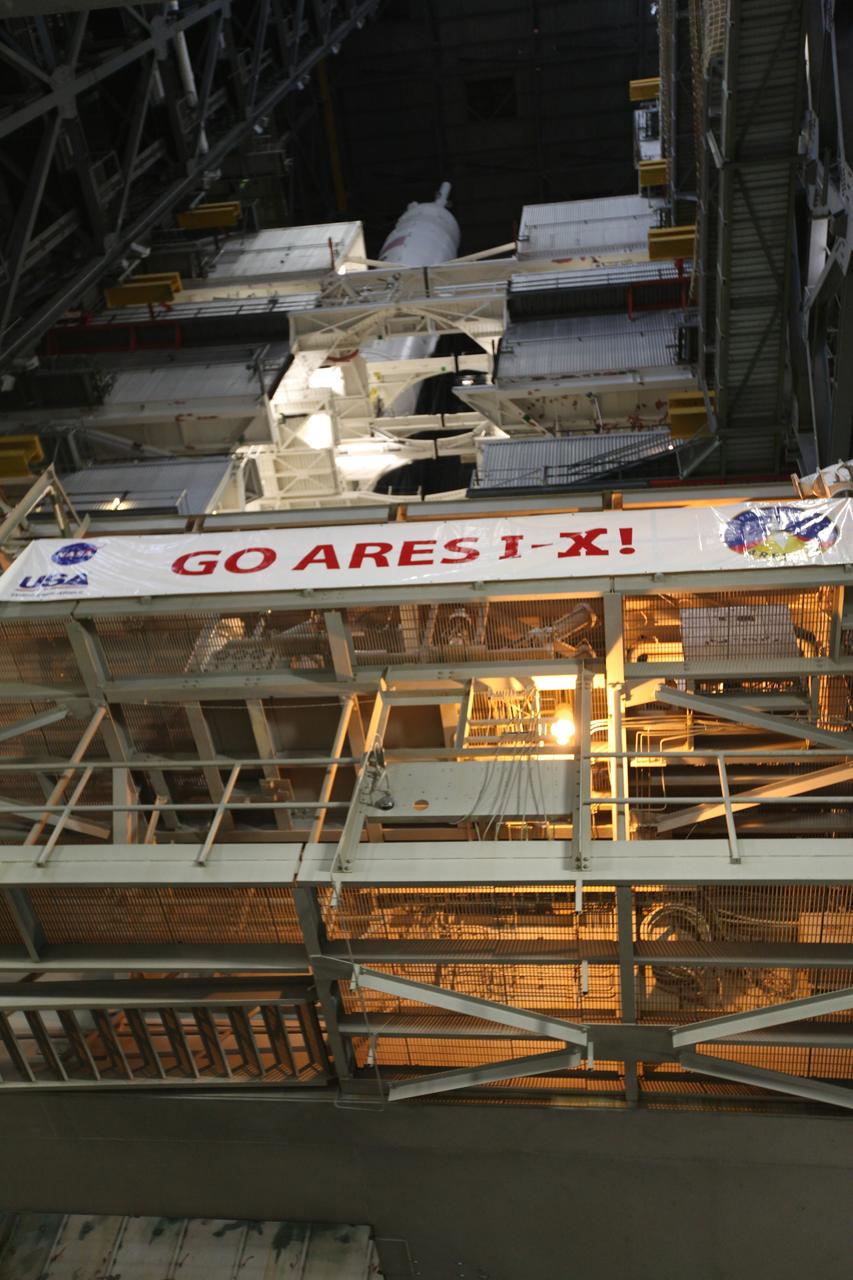
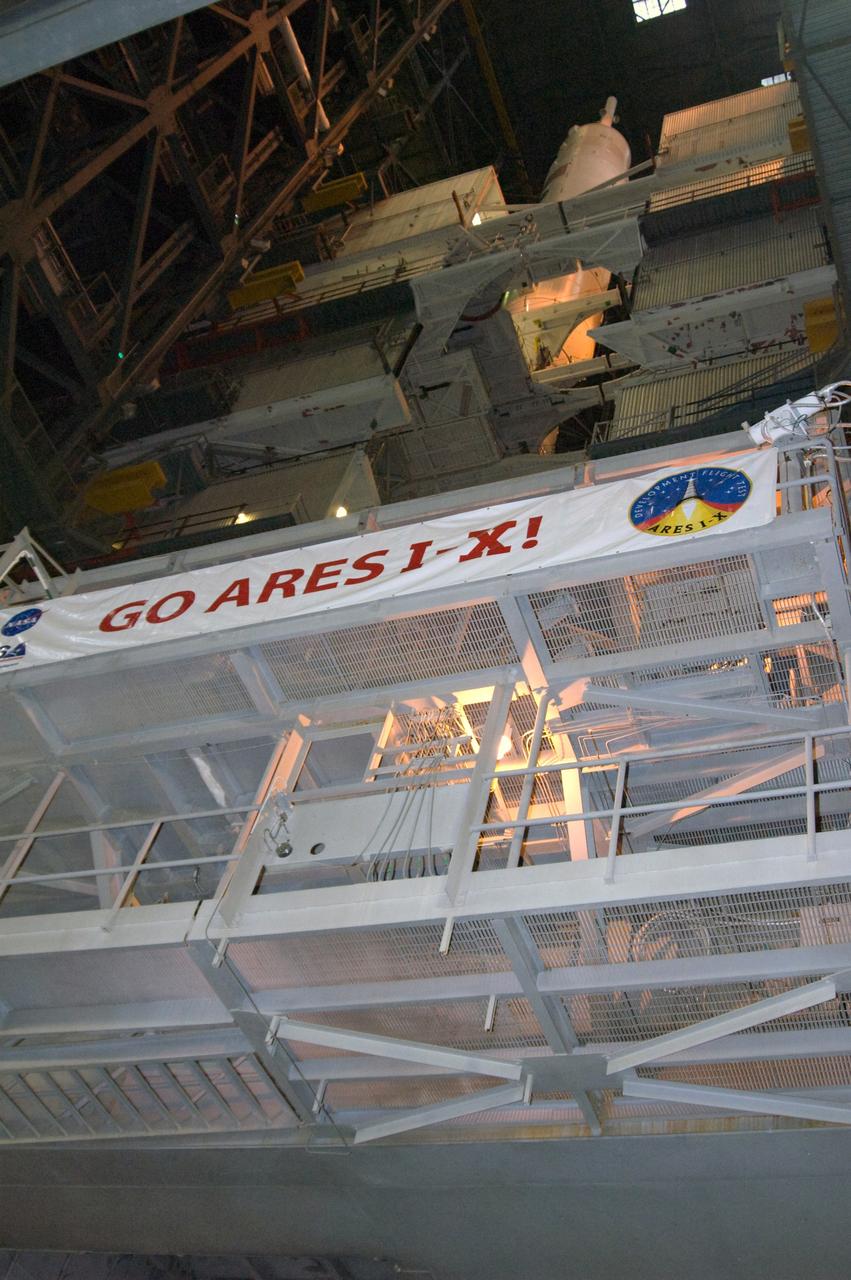
CAPE CANAVERAL, Fla. – A banner inside NASA Kennedy Space Center's Vehicle Assembly Building captures the excitement building at Kennedy in anticipation of the flight test of the Ares I-X rocket, towering above it in High Bay 3. Part of the Constellation Program, the Ares I-X is the test vehicle for the Ares I, which is the essential core of a space transportation system designed to carry crewed missions back to the moon, on to Mars and out into the solar system. The Ares I-X flight test is targeted for Oct. 27. For information on the Ares I-X vehicle and flight test, visit http://www.nasa.gov/mission_pages/constellation/ares/flighttests/aresIx/index.html. Photo credit: NASA/Glenn Benson
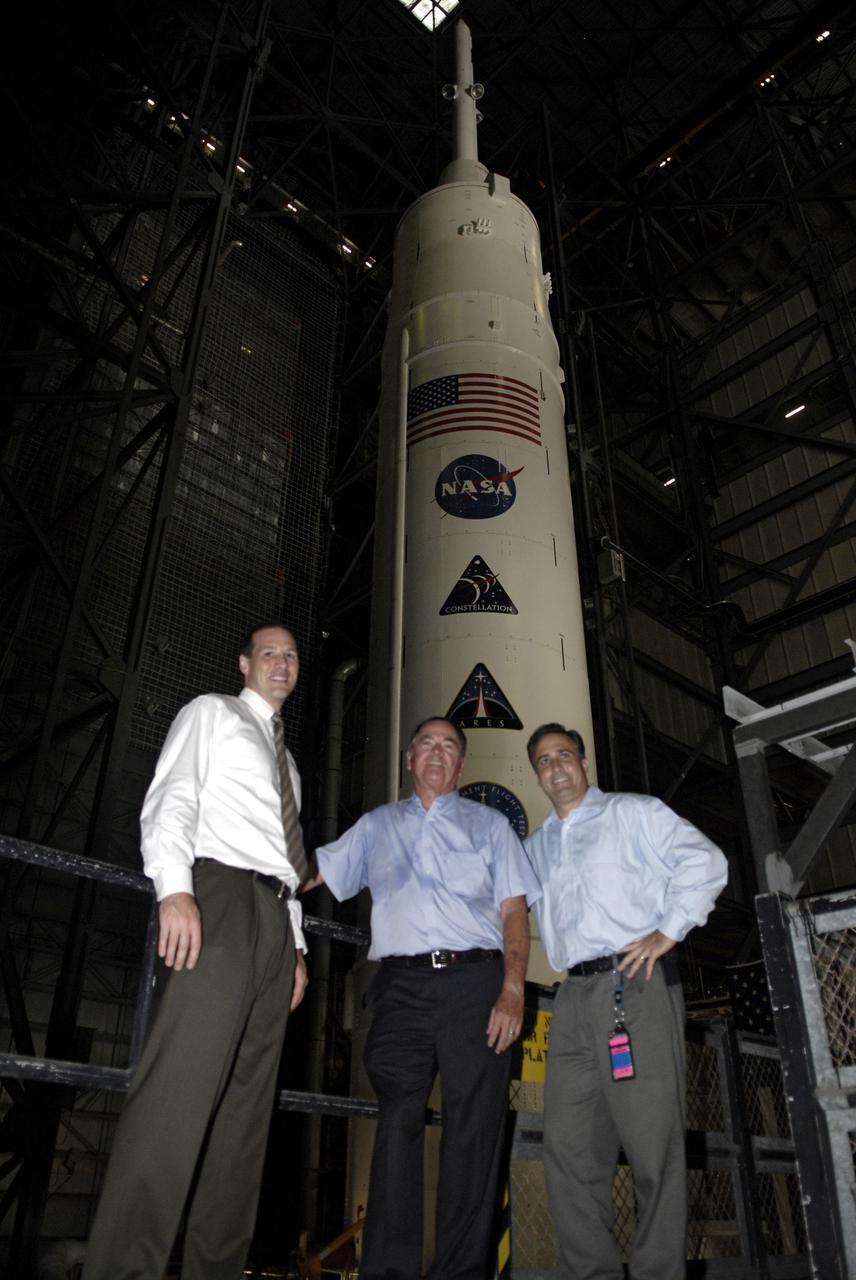
CAPE CANAVERAL, Fla. – – Inside NASA Kennedy Space Center's Vehicle Assembly Building Bay 3, Ares I-X mission manager Bob Ess, former astronaut Robert Crippen and mission team member Trent Smith stand in front of the Ares I-X rocket. Part of the Constellation Program, the Ares I-X is the test vehicle for the Ares I, which is the essential core of a space transportation system that eventually will carry crewed missions back to the moon, on to Mars and out into the solar system . The Ares I-X flight test is targeted for Oct. 27. Photo credit: NASA/Kim Shiflett
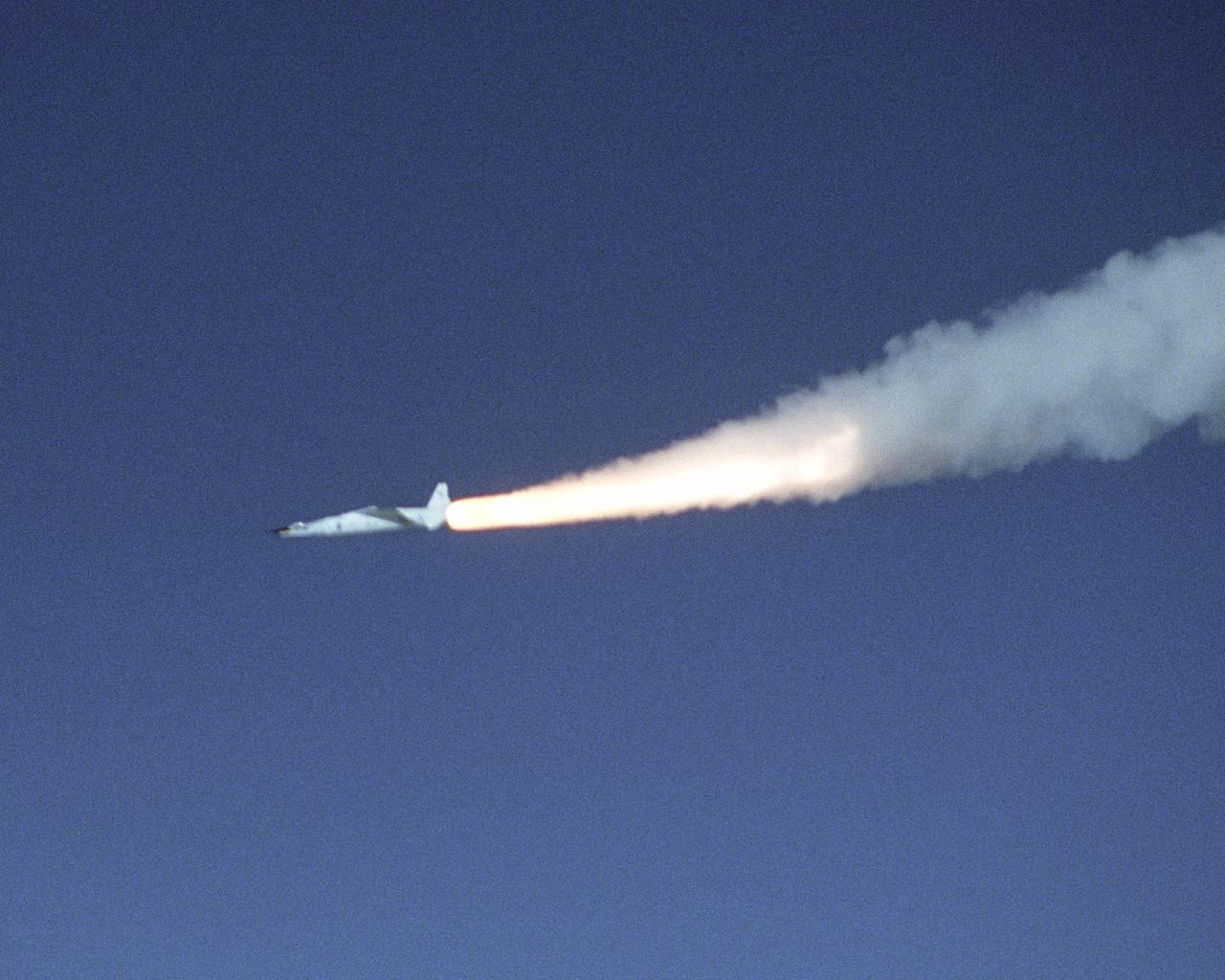
The third X-43A hypersonic research aircraft and its modified Pegasus booster rocket accelerate after launch from NASA's B-52B launch aircraft over the Pacific Ocean on November 16, 2004. The mission originated from the NASA Dryden Flight Research Center at Edwards Air Force Base, California. Minutes later the X-43A separated from the Pegasus booster and accelerated to its intended speed of Mach 10.
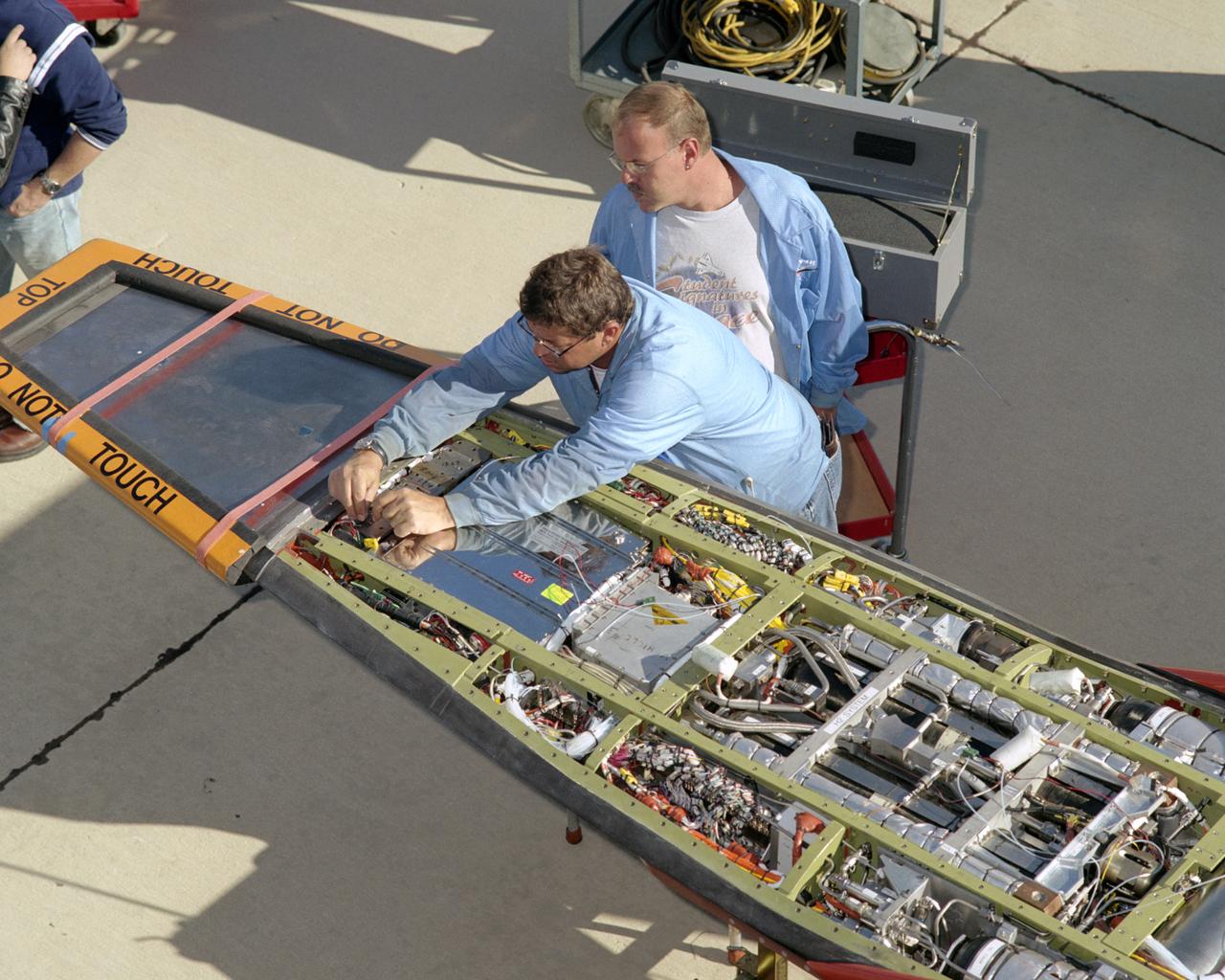
NASA avionics technicians Randy Wagner and Terry Bishop make final adjustments on the scramjet-powered X-43A before its record Mach 9.6 flight.
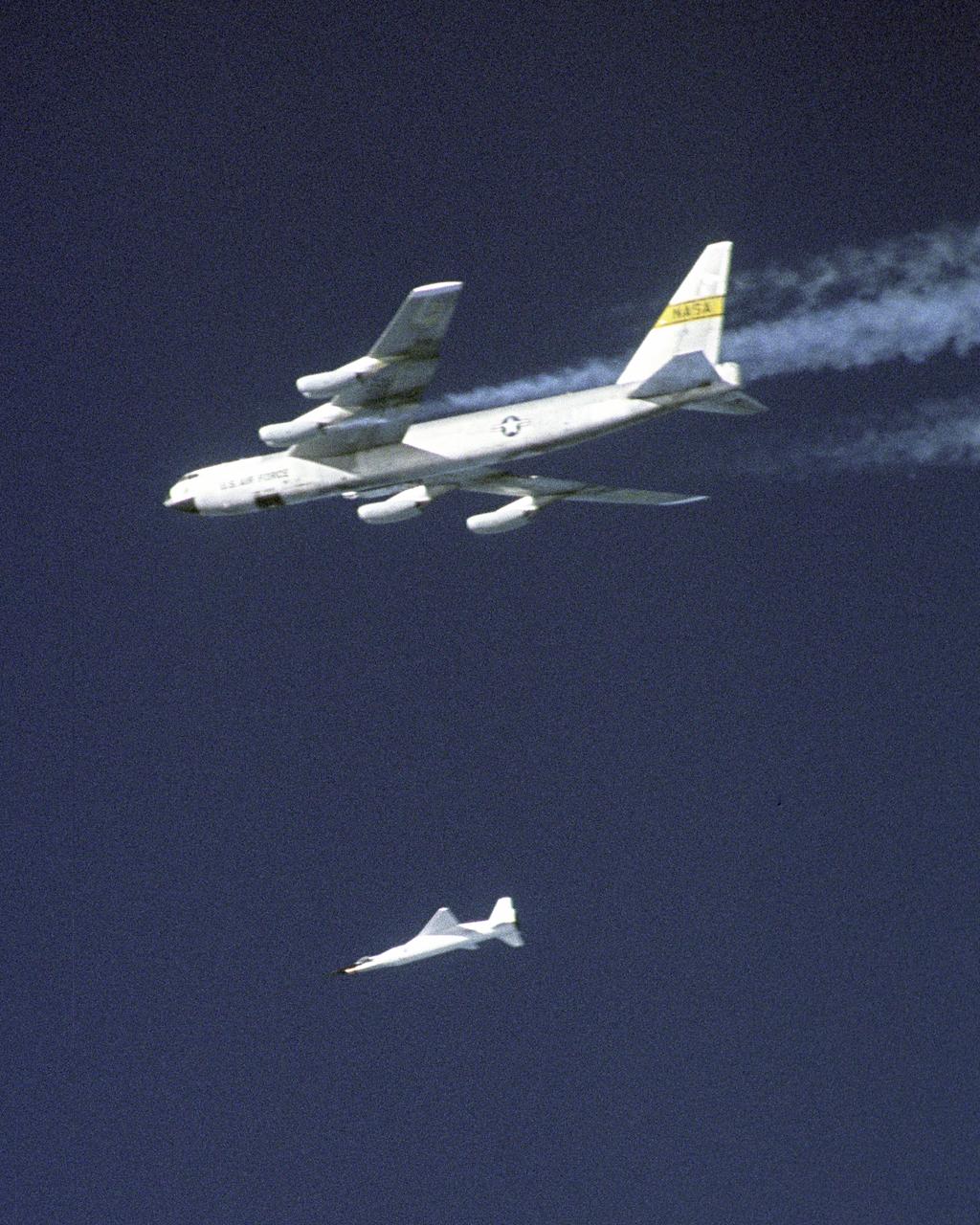
The third X-43A hypersonic research aircraft and its modified Pegasus booster rocket drop away from NASA's B-52B launch aircraft over the Pacific Ocean on November 16, 2004. The mission originated from the NASA Dryden Flight Research Center at Edwards Air Force Base, California. Moments later the Pegasus booster ignited to accelerate the X-43A to its intended speed of Mach 10.
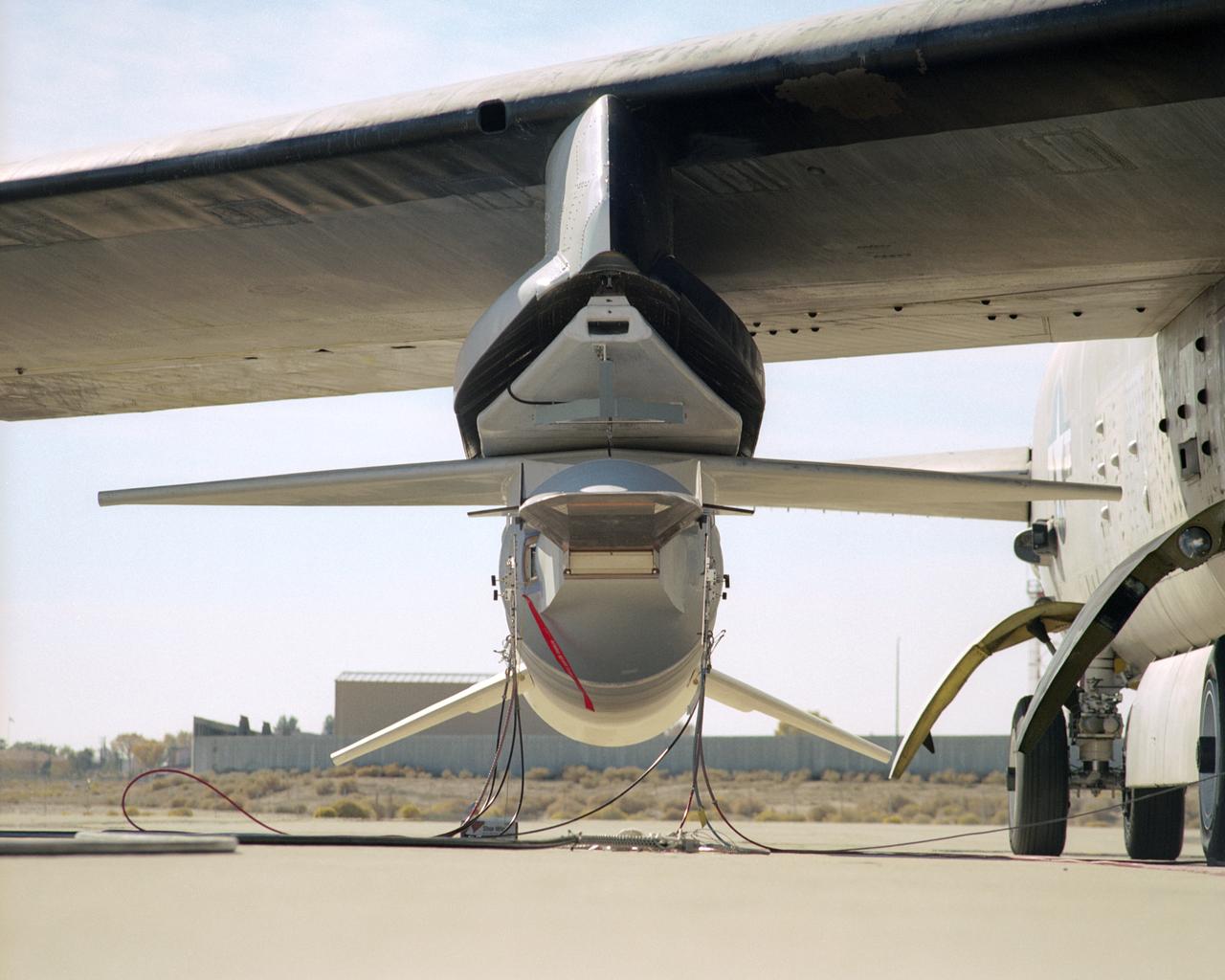
The small size of the X-43A scramjet is evident in this nose-on view while mounted to its modified Pegasus booster under the wing of NASA's B-52B mothership.
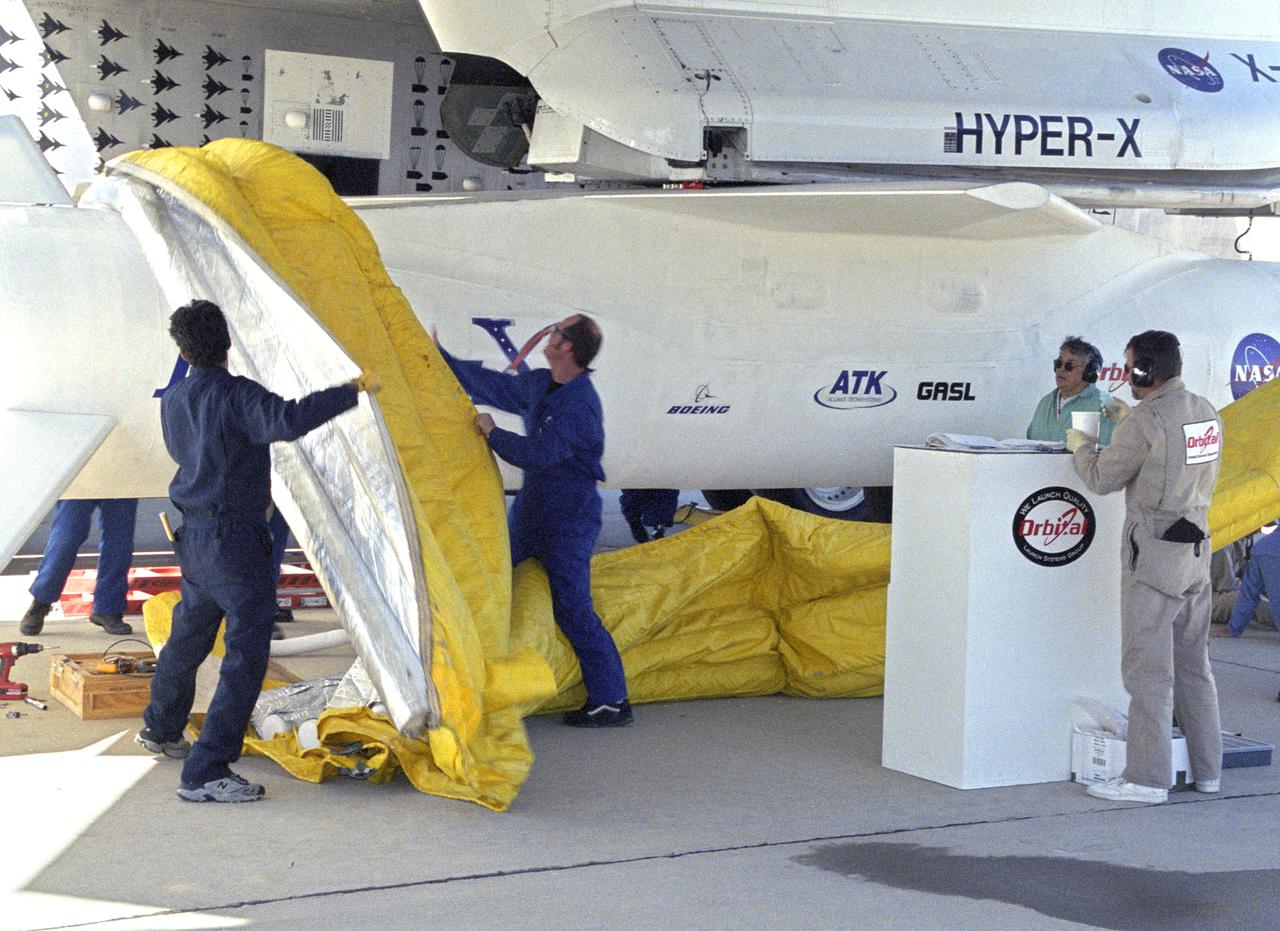
Orbital Sciences Corp. technicians remove protective shrouds from the modified Pegasus booster before takeoff on the X-43A's Mach 9.6 record scramjet flight.
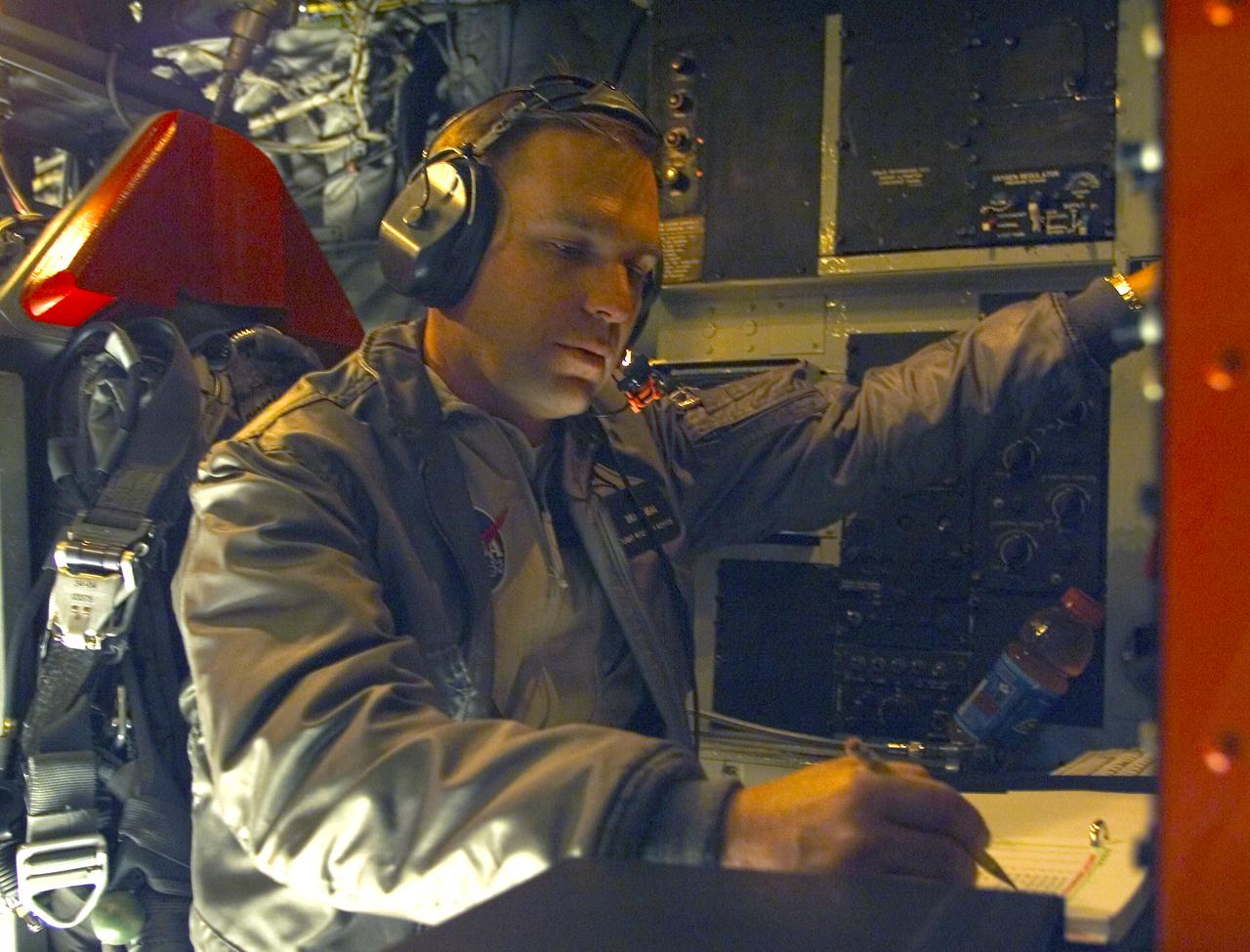
NASA X-43A Monitor Station Operator Brad Neal performs final checks and pre-flight preparations aboard the B-52 for the third X-43A research vehicle Mach 10 flight on November 16, 2004. Takeoff of the B-52B mothership carrying the X-43A took place at 1 p.m., PST, with launch of the booster rocket/X-43A approximately an hour later.
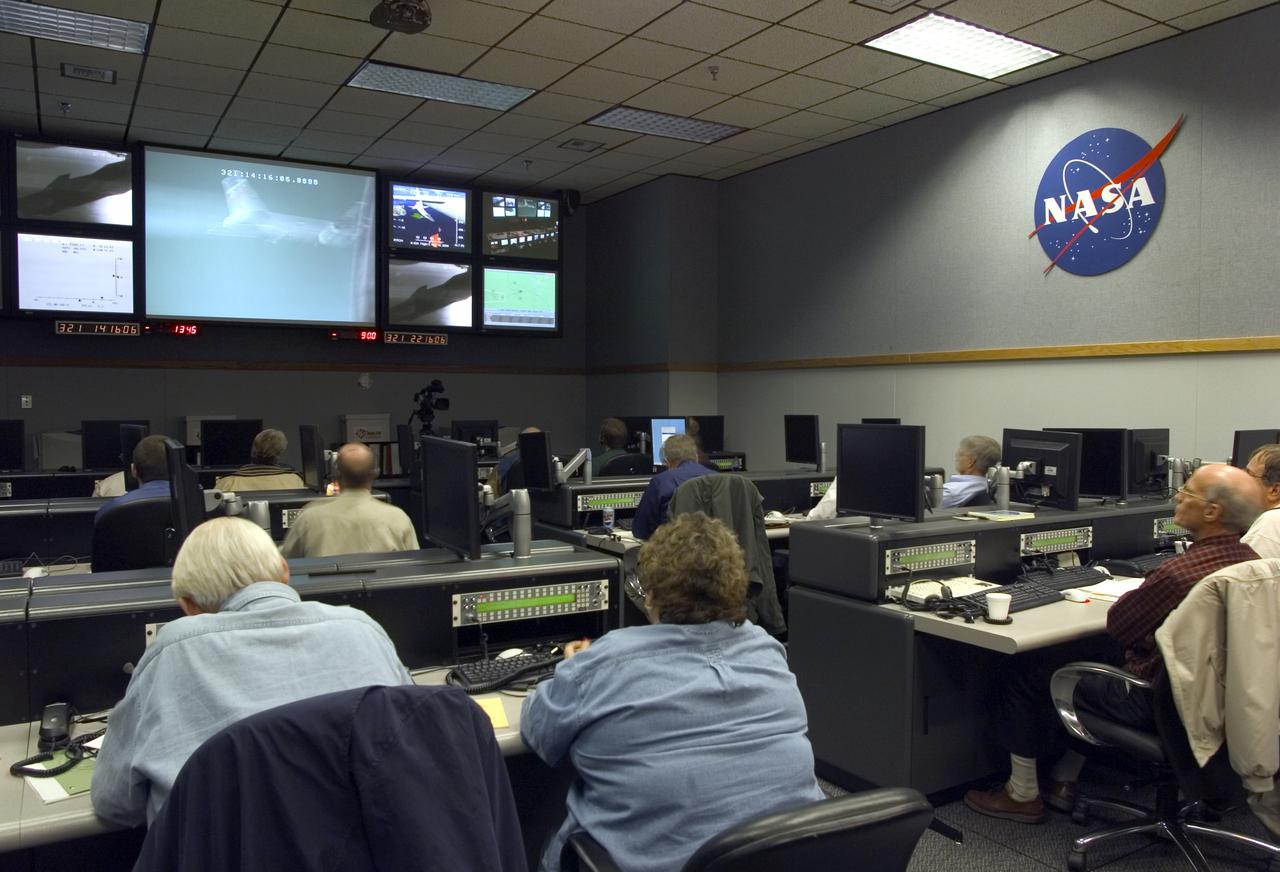
NASA engineers monitor mission progress from a Dryden control room prior to launch of the X-43A scramjet and its booster from NASA's B-52B mothership.
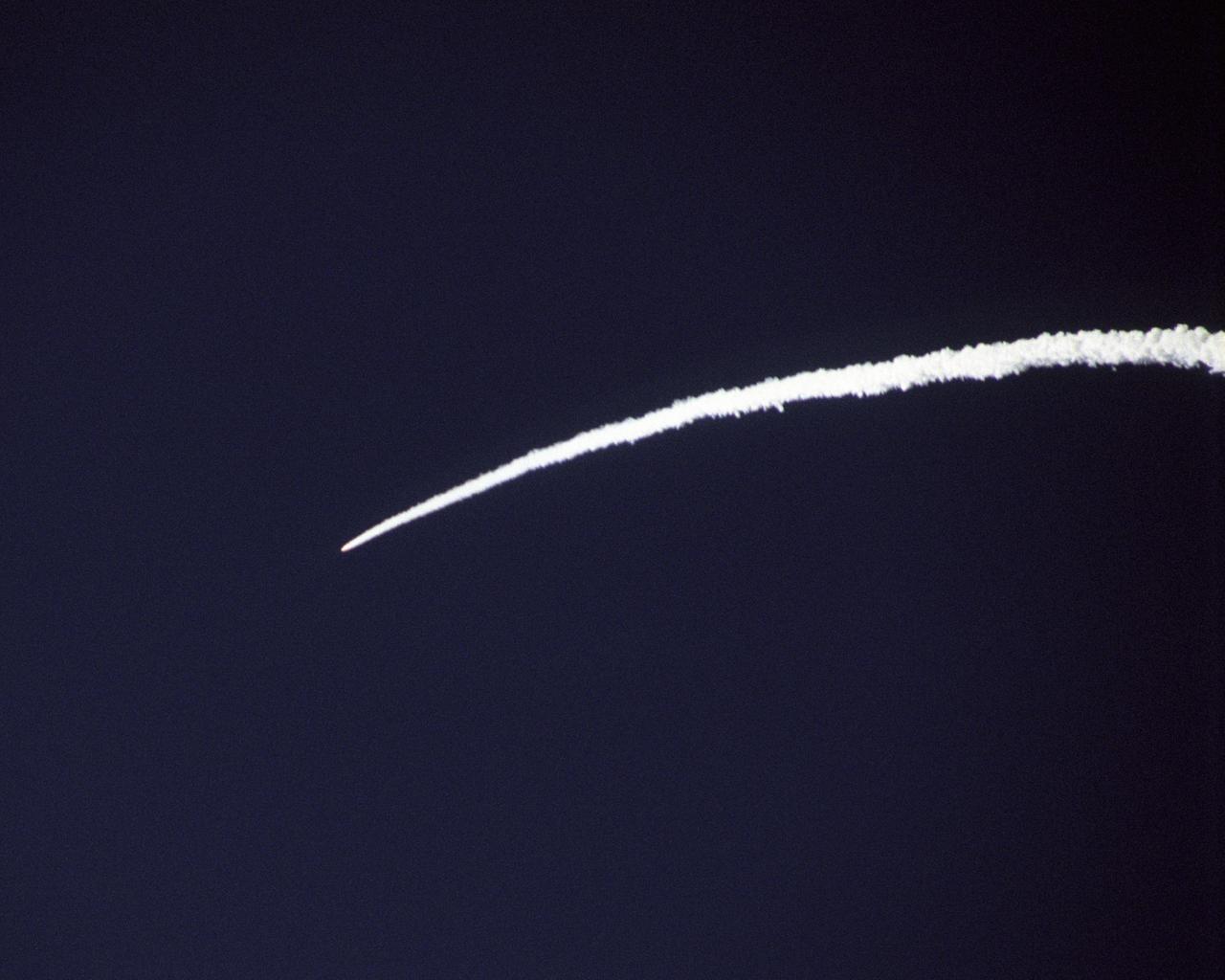
The Pegasus rocket that powered NASA's X-43A scramjet to almost Mach 10 test conditions leaves a bright arc in the Pacific sky during the boost phase.
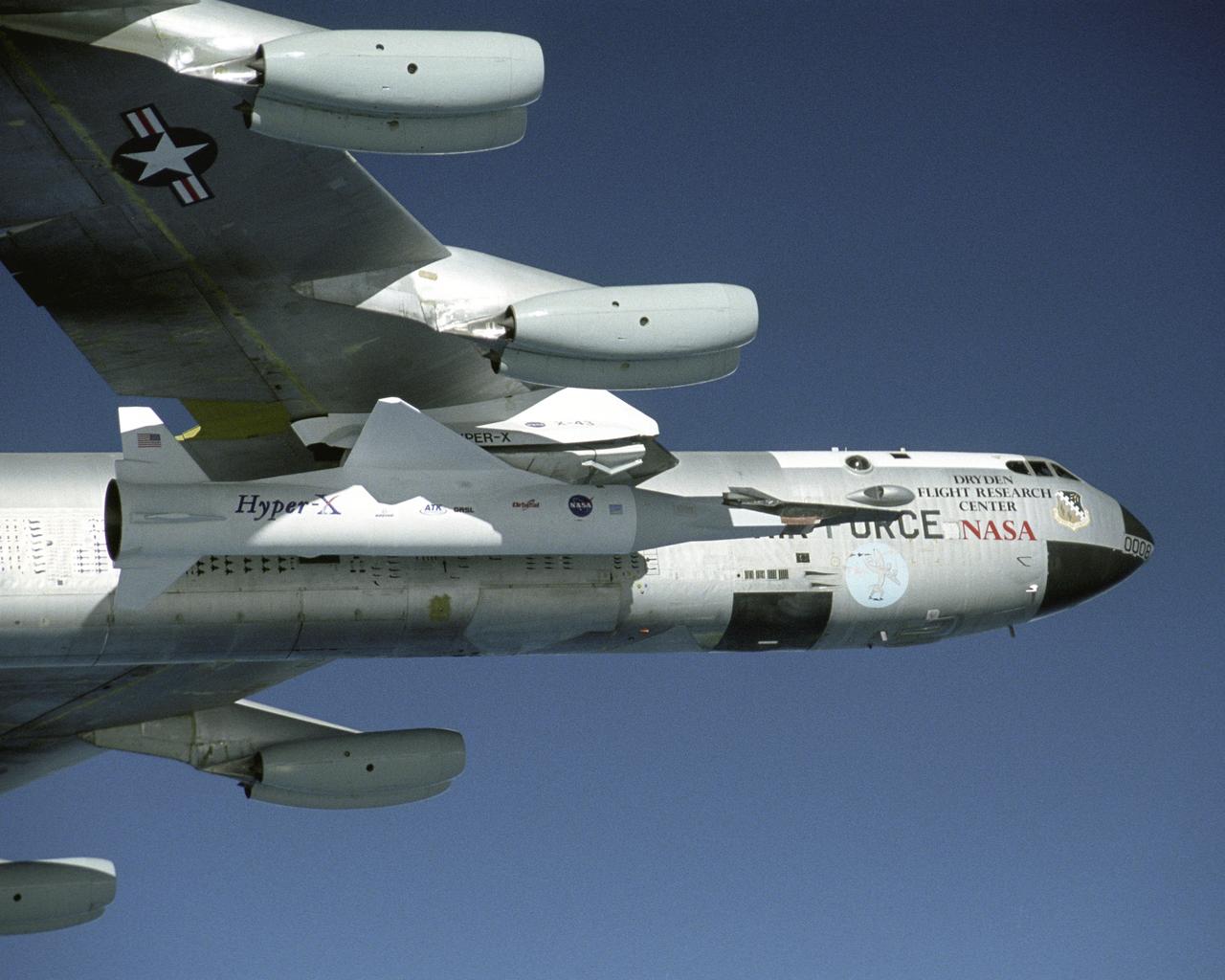
The third X-43A hypersonic research aircraft, attached to a modified Pegasus booster rocket, was taken to launch altitude by NASA's B-52B launch aircraft from the NASA Dryden Flight Research Center at Edwards Air Force Base, California, on November 16, 2004. About an hour later the Pegasus booster was released from the B-52 to accelerate the X-43A to its intended speed of Mach 10.
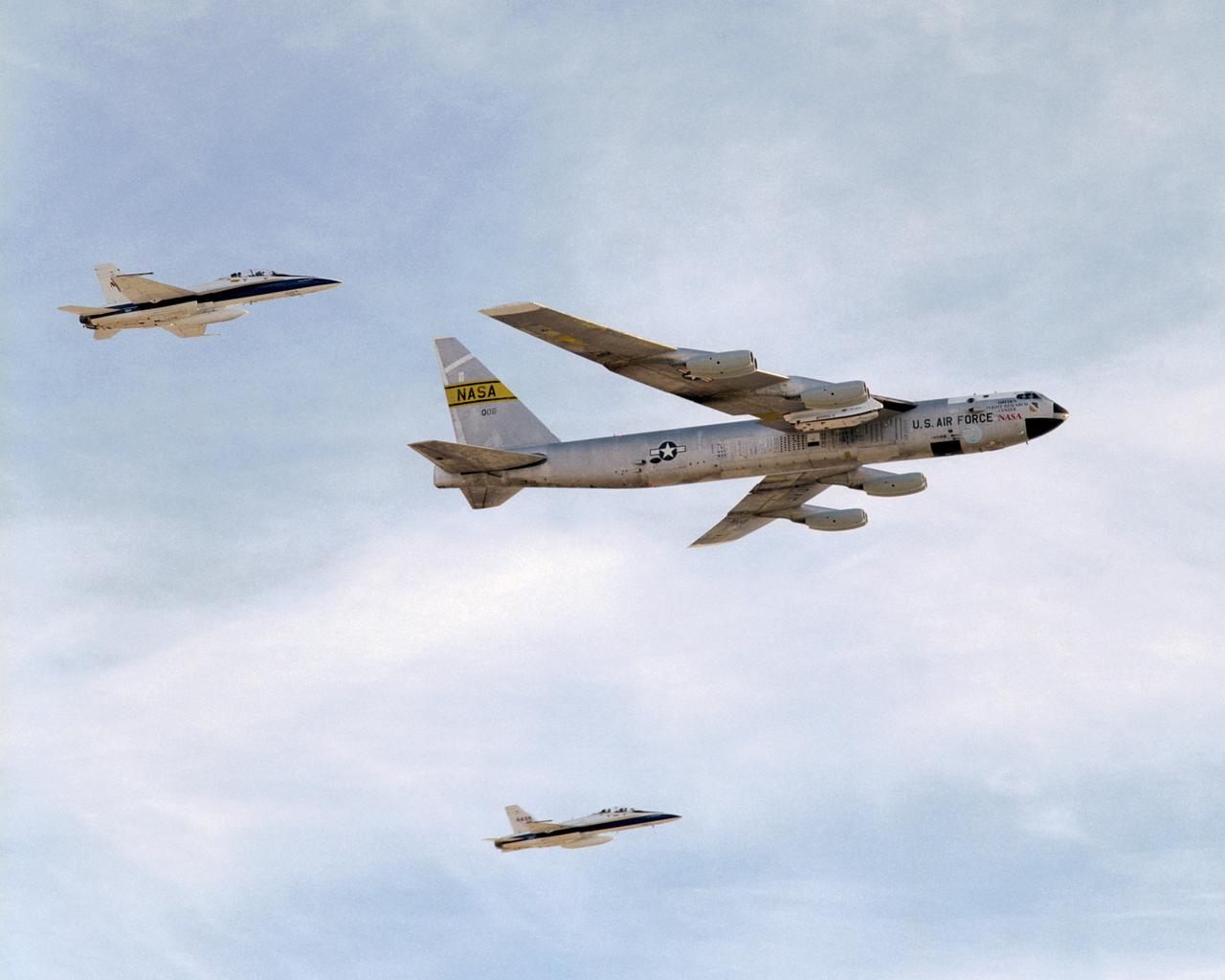
NASA's B-52B mothership, escorted by two F-18s, makes a final flyover after its last research mission that launched the X-43A on its record Mach 9.6 flight.
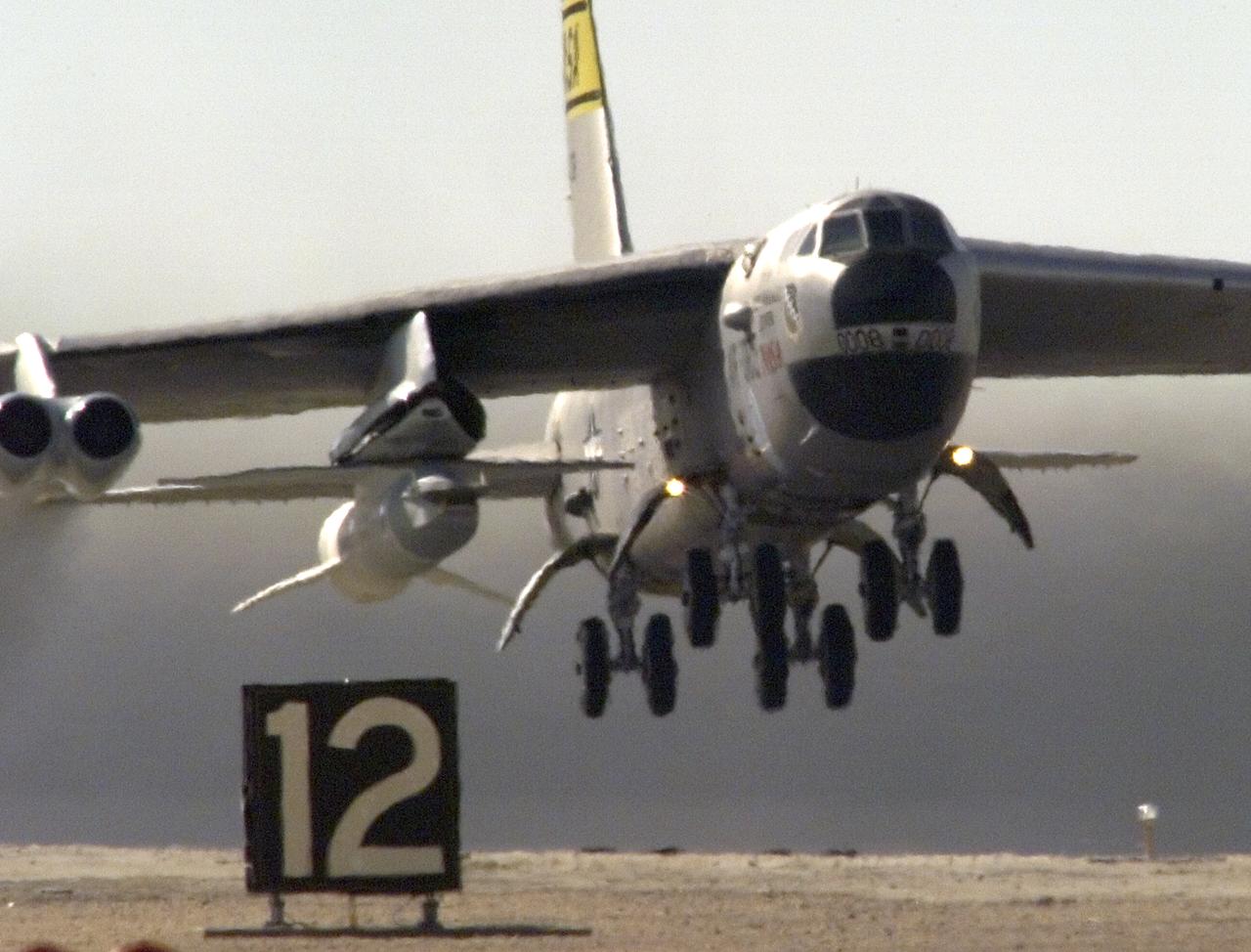
The third X-43A hypersonic research aircraft and its modified Pegasus booster rocket left the runway, carried aloft by NASA's B-52B launch aircraft from the NASA Dryden Flight Research Center at Edwards Air Force Base, California, on November 16, 2004. About an hour later the Pegasus booster was launched from the B-52 to accelerate the X-43A to its intended speed of Mach 10.
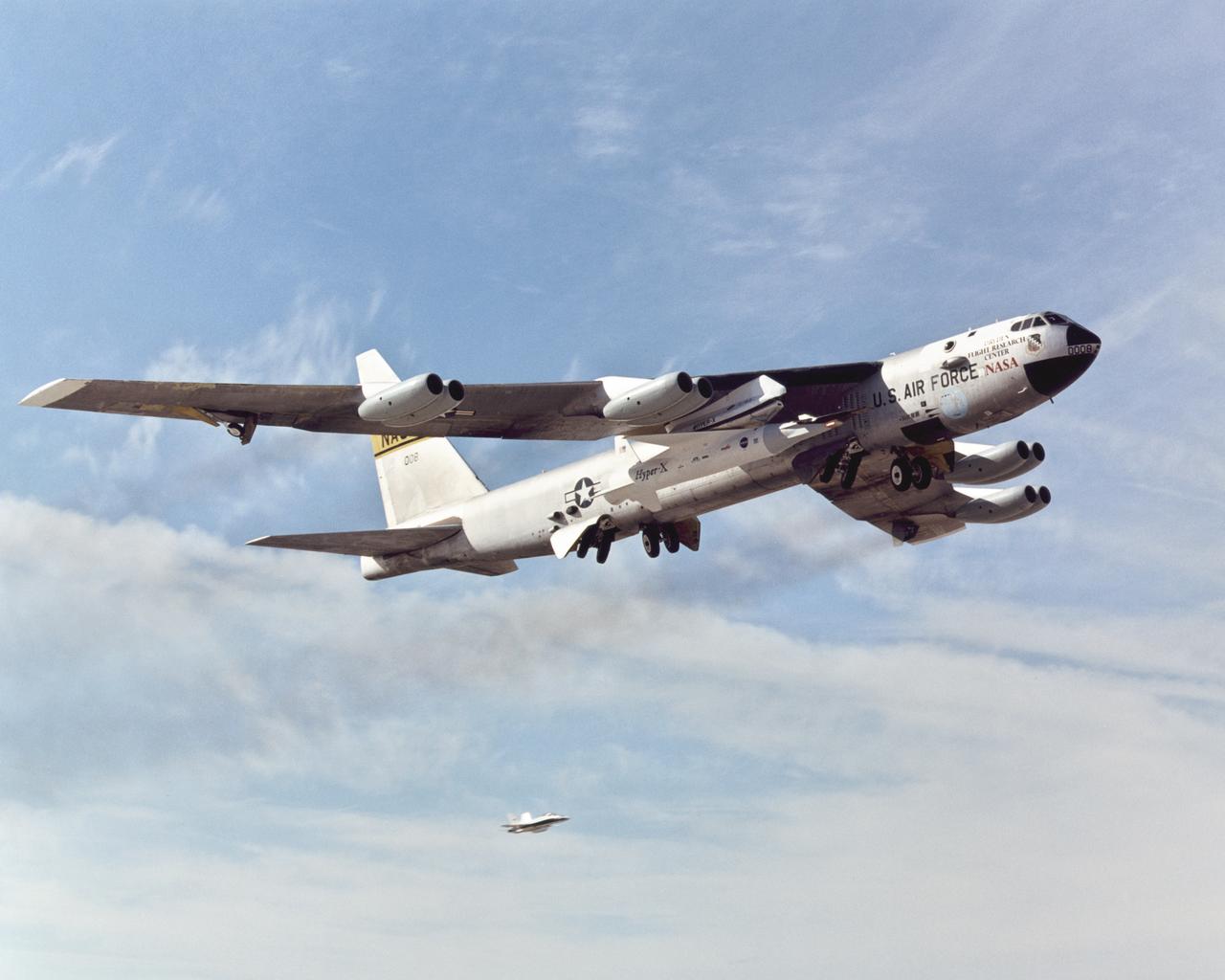
With the X-43A and its booster rocket tucked under its right wing, NASA's venerable B-52B mothership climbs out after takeoff on its final research mission.
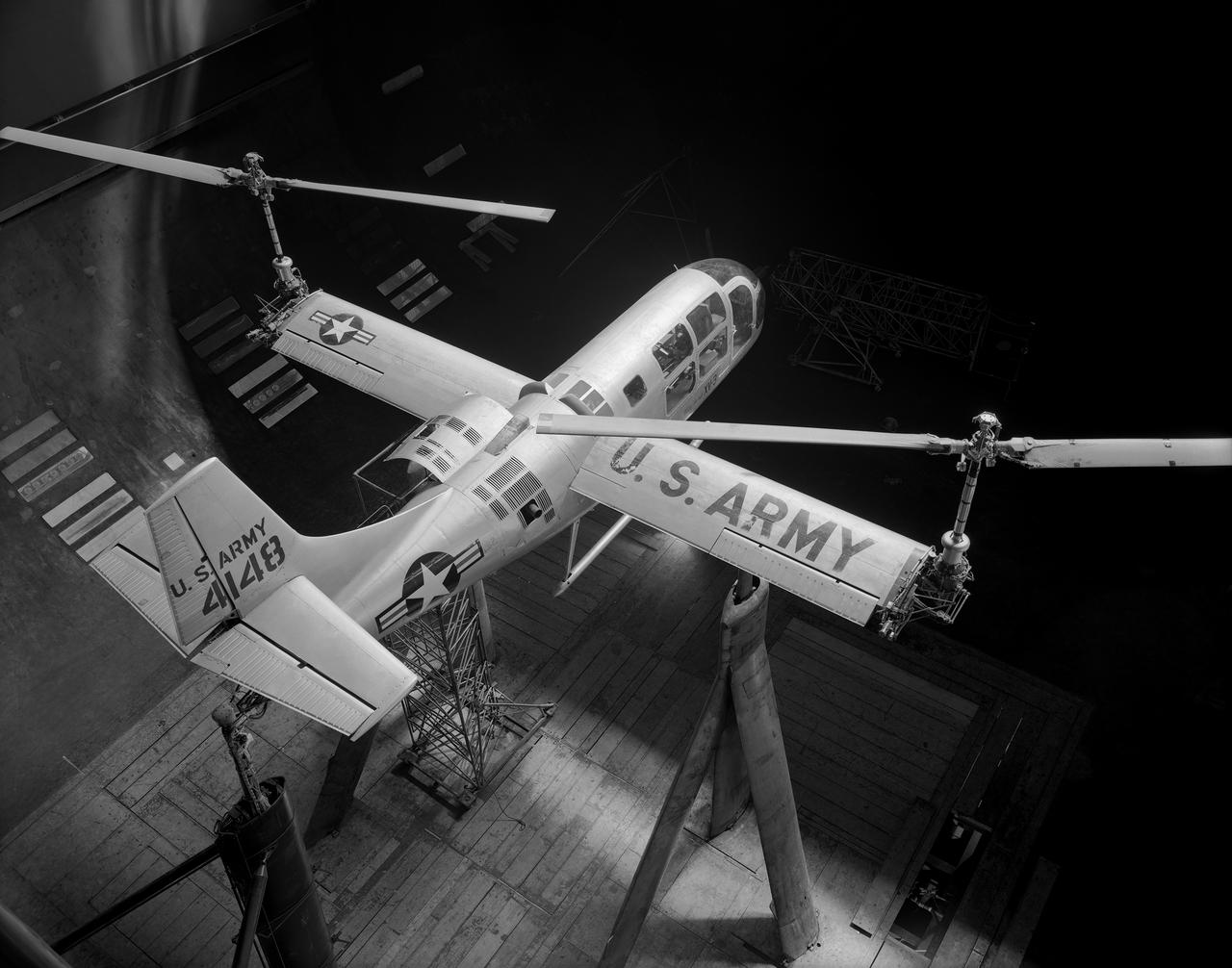
Overhead view of Bell XV-3 Convertiplane. First tilt rotor tested in the 40 x 80 wind tunnel. Transition aerodynamics studied; shown in hover mode.
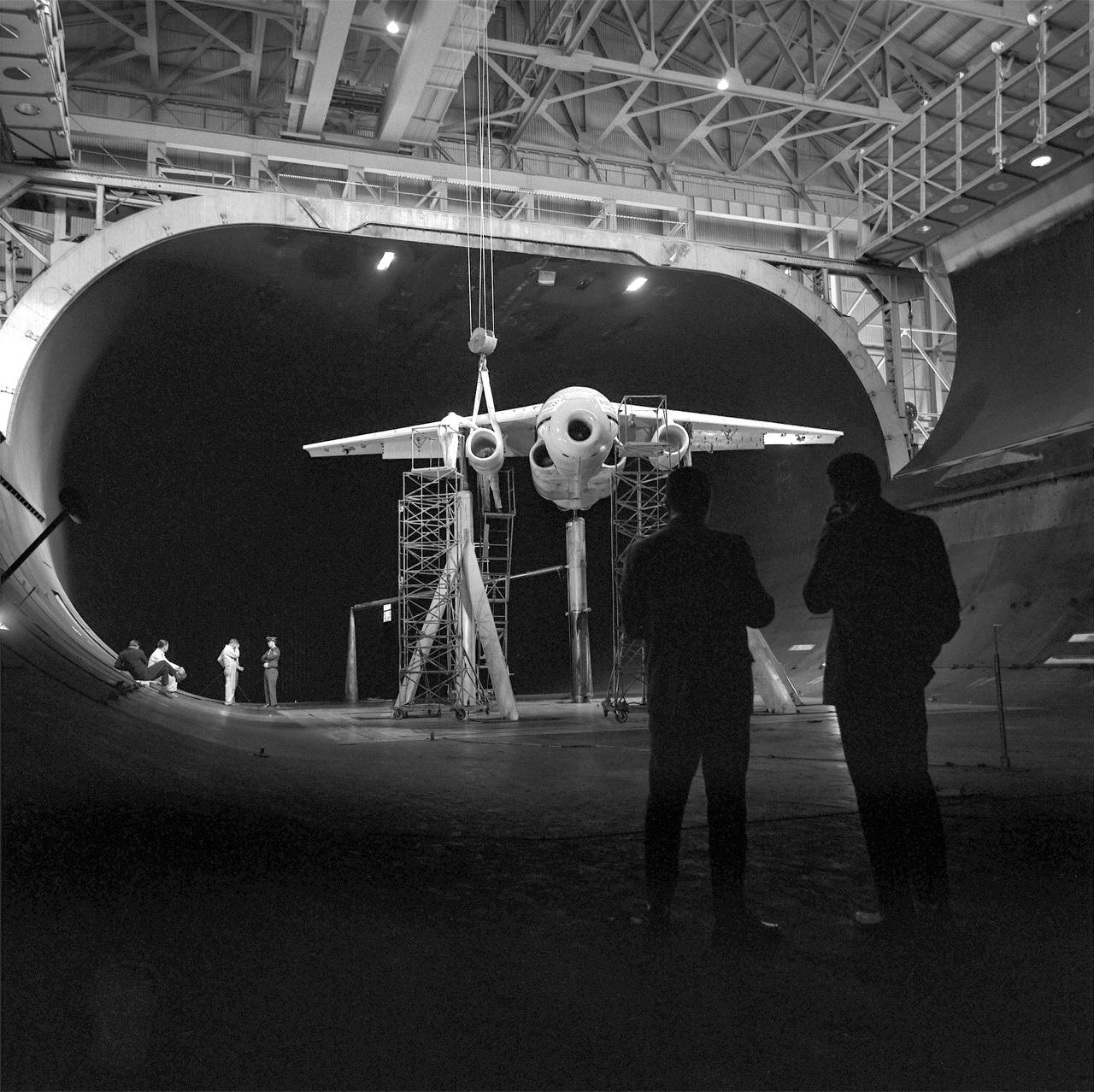
(11/12/1971) 3/4 Scale swept augmentor wing Quest model being installed into the test section of the ames 40 x 80 foot wind tunnel, overhead doors open.
CAPE CANAVERAL, Fla. – In the Vehicle Assembly Building's High Bay 3, assembly of the Ares I-X rocket nears completion. The yellow framework, nicknamed the "birdcage," lowers Super Stack 5 onto the Ares I-X segments already in place on the mobile launcher platform. Once in position, assembly of the Ares I-X rocket will be complete. The 327-foot-tall rocket is one of the largest processed in the bay, rivaling the height of the Apollo Program's 364-foot-tall Saturn V. Five super stacks make up the rocket's upper stage that is integrated with the four-segment solid rocket booster first stage. Ares I-X is the test vehicle for the Ares I, which is part of the Constellation Program to return men to the moon and beyond. The Ares I-X flight test is targeted for Oct. 31, pending formal NASA Headquarters approval. Photo credit: NASA/Dimitri Gerondidakis
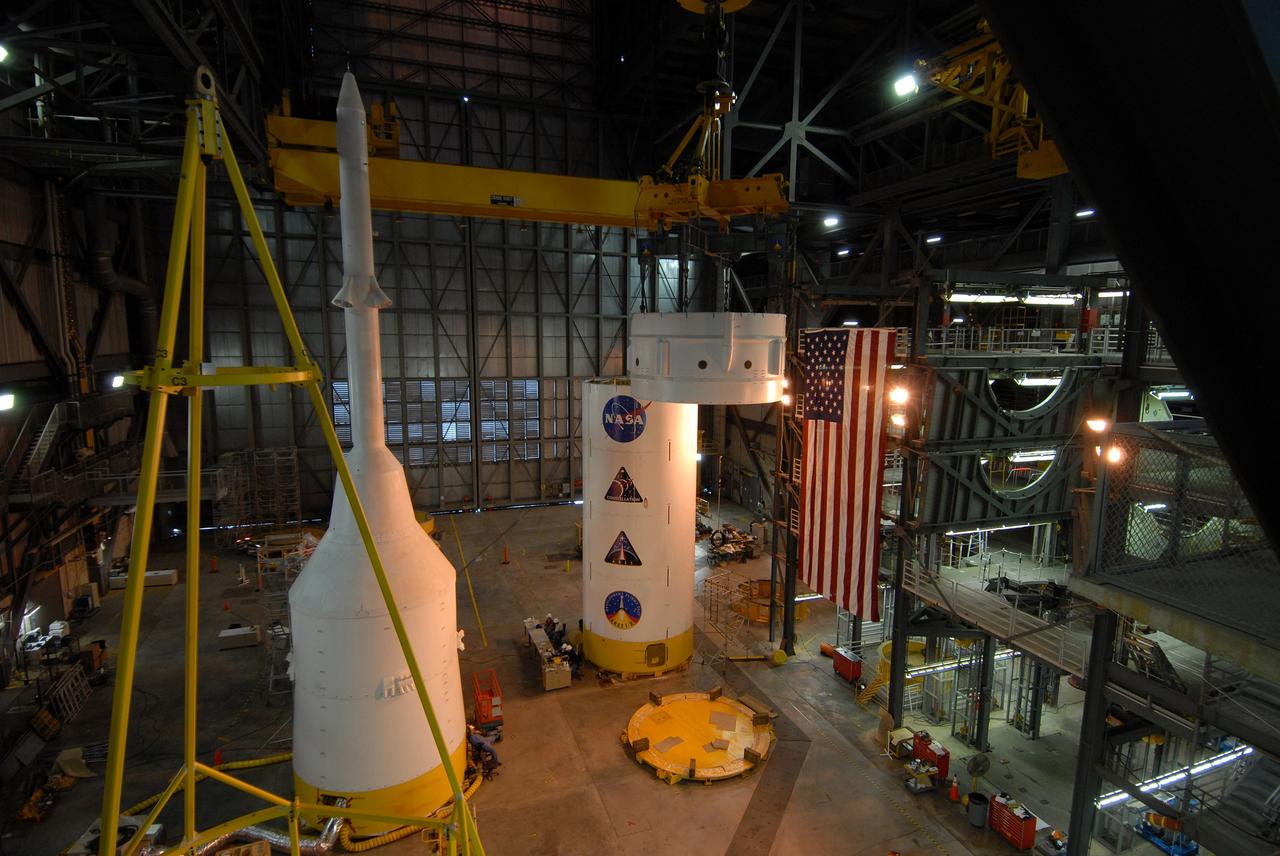
CAPE CANAVERAL, Fla. – In the Vehicle Assembly Building's High Bay 4 at NASA's Kennedy Space Center in Florida, a crane lifts Super Stack 2, part of the Ares I-X upper stage. The stack is being moved across the transfer aisle for attachment to Super Stack 1 in High Bay 3. Beneath can be seen Super Stack 3 and at left is the crew module-launch abort system, or CM-LAS, and simulator service module-service adapter stack. The upper stage comprises five super stacks, which are integrated with the four-segment solid rocket booster first stage on the mobile launch platform. Ares I-X is the test vehicle for the Ares I, which is part of the Constellation Program to return men to the moon and beyond. The Ares I-X flight test is targeted for Oct. 31, pending formal NASA Headquarters approval. Photo credit: NASA/Tim Jacobs
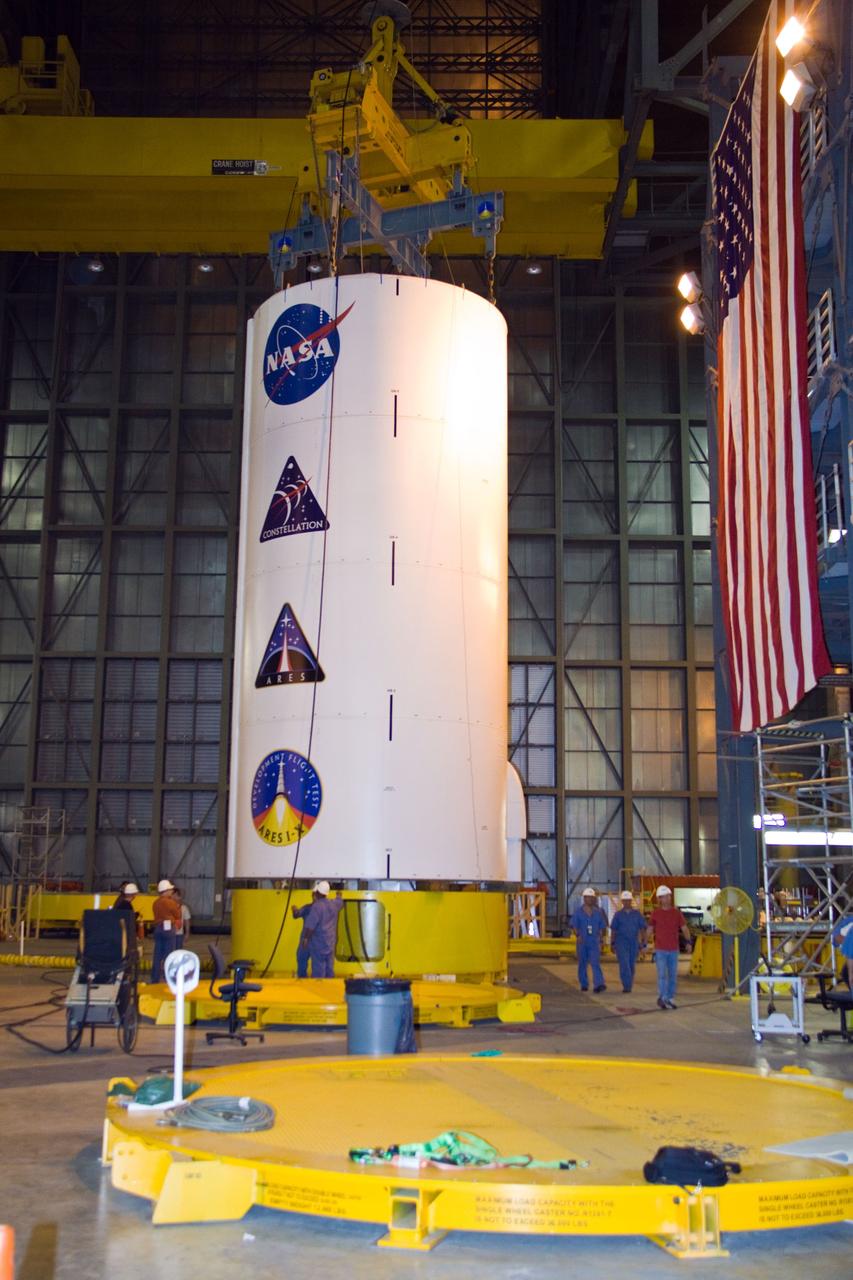
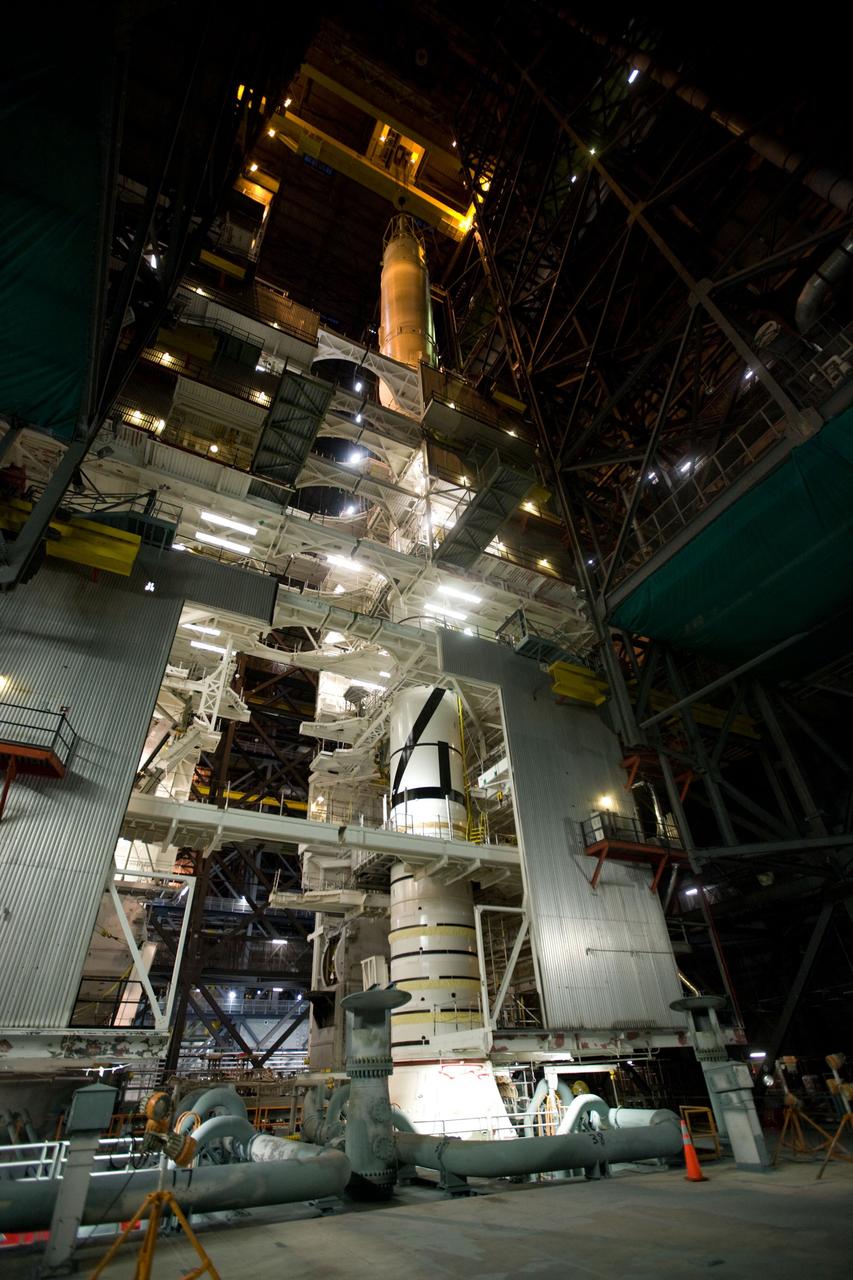
CAPE CANAVERAL, Fla. – In NASA Kennedy Space Center's Vehicle Assembly Building High Bay 3, a crane lifts the Ares I-X Super Stack 3 from its stand. The stack is being moved to High Bay 4 for integration with Super Stack 2. The upper stage comprises five super stacks, which are integrated with the four-segment solid rocket booster first stage on the mobile launch platform. Ares I-X is the test vehicle for the Ares I, which is part of the Constellation Program to return men to the moon and beyond. The Ares I-X flight test is targeted for Oct. 31, pending formal NASA Headquarters approval. Photo credit: NASA/Jack Pfaller
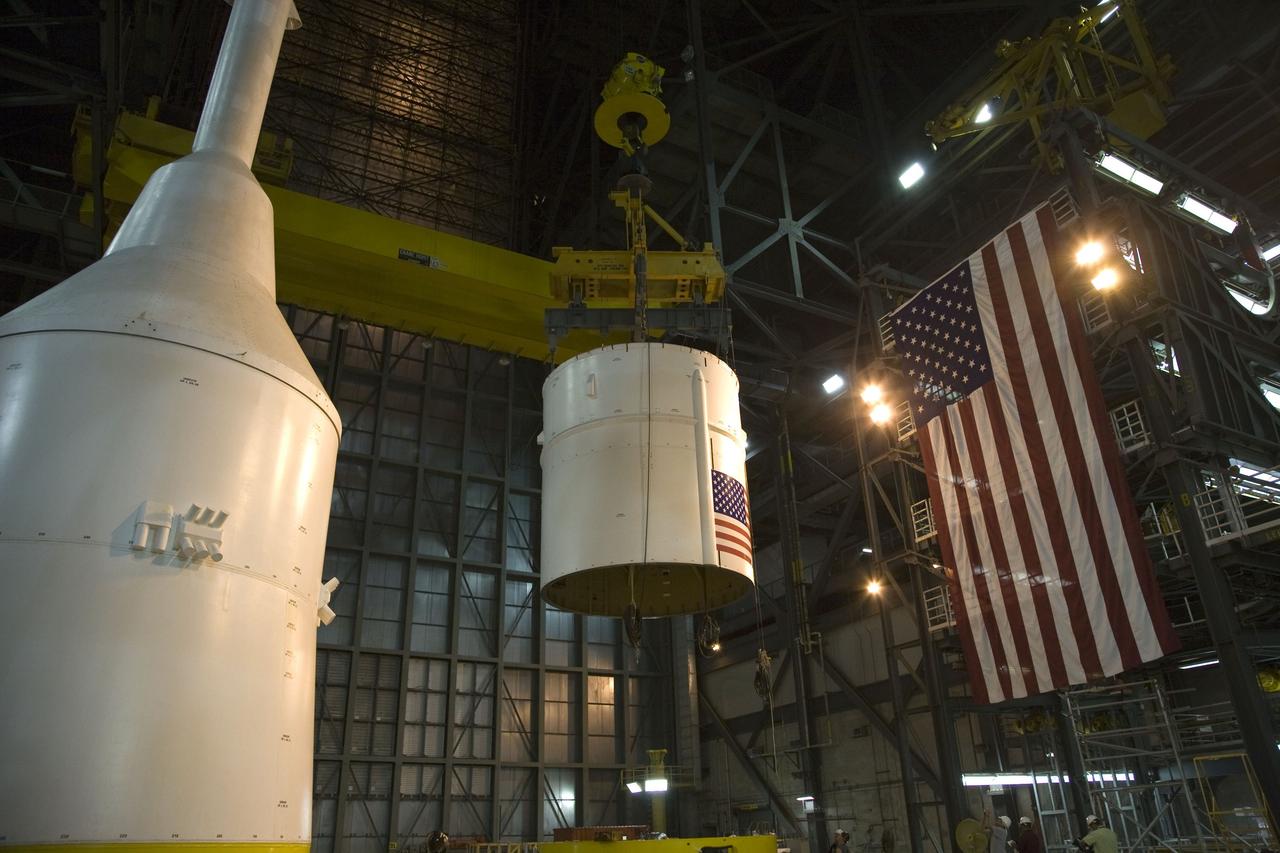
CAPE CANAVERAL, Fla. – In the Vehicle Assembly Building's High Bay 4 at NASA's Kennedy Space Center in Florida, a crane lifts the Ares I-X Super Stack 4. The stack will be moved to High Bay 3 for integration with Super Stack 3. At left is the crew module-launch abort system and simulator service module-service adapter stack. Five super stacks make up the upper stage that will be integrated with the four-segment solid rocket booster first stage on the mobile launch platform. Ares I-X is the test vehicle for the Ares I, which is part of the Constellation Program to return men to the moon and beyond. The Ares I-X flight test is targeted for Oct. 31, pending formal NASA Headquarters approval. Photo credit: NASA/Dimitri Gerondidakis
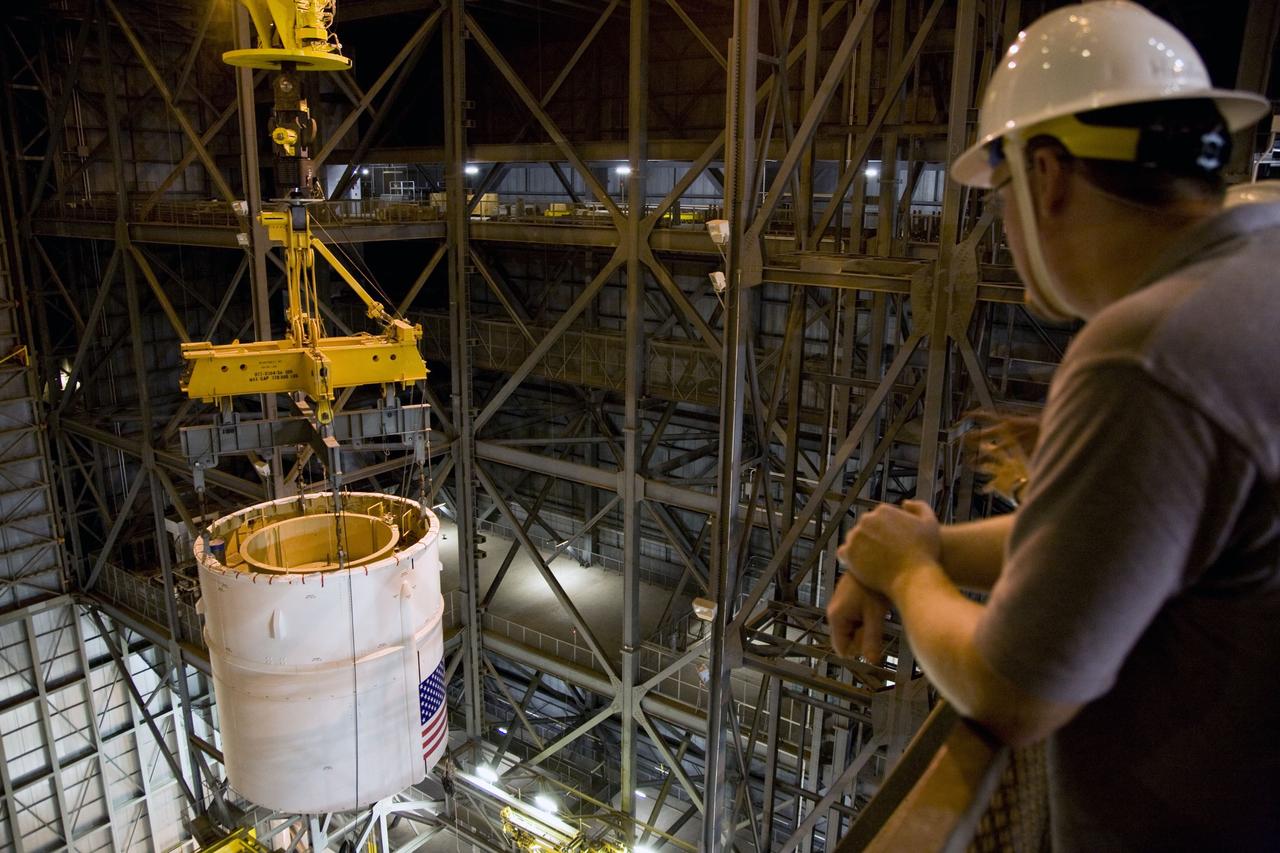
CAPE CANAVERAL, Fla. – In the Vehicle Assembly Building's High Bay 4 at NASA's Kennedy Space Center in Florida, workers at right watch as a crane lifts the Ares I-X Super Stack 4 into the upper levels for transfer to High Bay 3. There it will be integrated with Super Stack 3. Five super stacks make up the upper stage that will be integrated with the four-segment solid rocket booster first stage on the mobile launch platform. Ares I-X is the test vehicle for the Ares I, which is part of the Constellation Program to return men to the moon and beyond. The Ares I-X flight test is targeted for Oct. 31, pending formal NASA Headquarters approval. Photo credit: NASA/Dimitri Gerondidakis
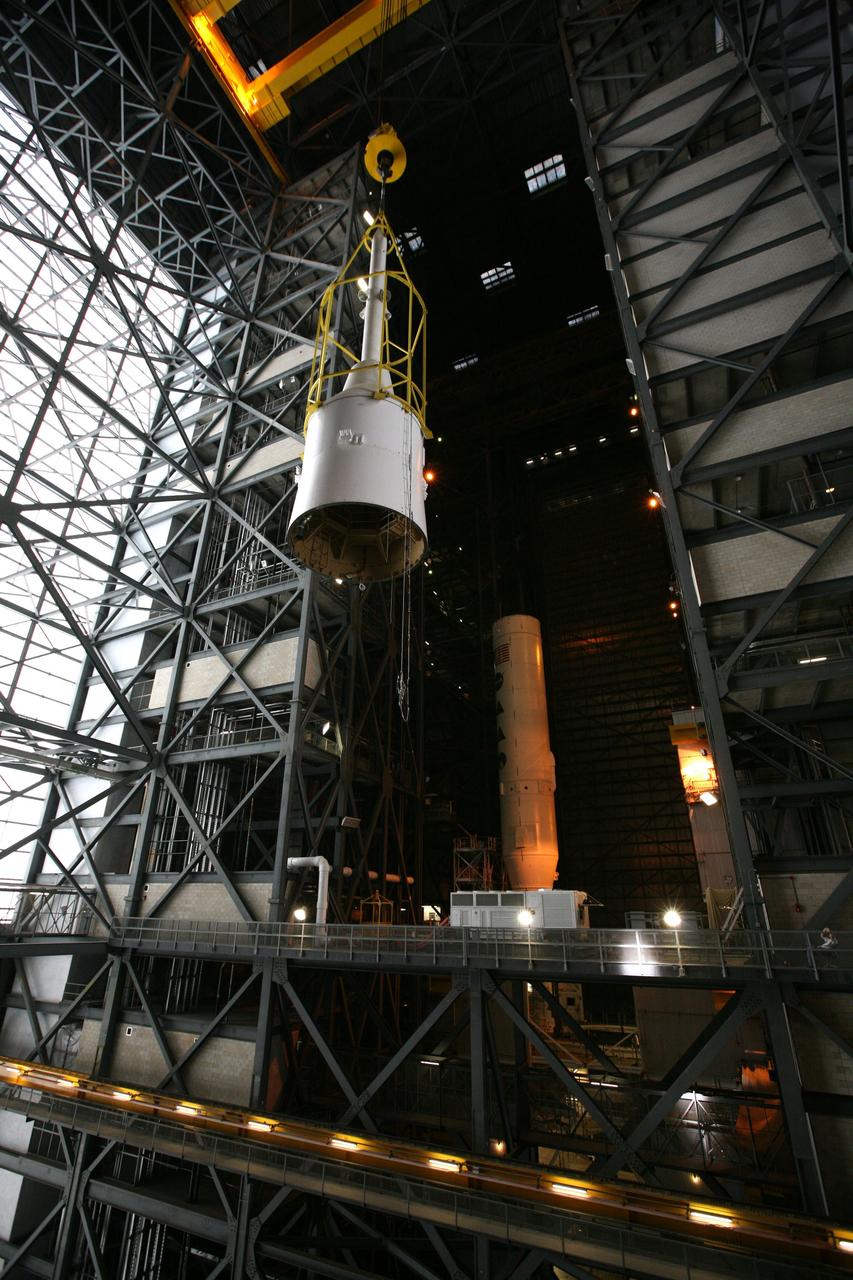
CAPE CANAVERAL, Fla. – In the Vehicle Assembly Building's transfer aisle, assembly of the Ares I-X rocket nears completion. The yellow framework, nicknamed the "birdcage," moves Super Stack 5 from High Bay 4 over the transfer aisle toward an opening at the 16th floor crossover in High Bay 3. The stack will be positioned on top of the segments already in place on the mobile launcher platform in High Bay 3, in the background, completing assembly of the 327-foot-tall rocket. Five super stacks make up the rocket's upper stage that is integrated with the four-segment solid rocket booster first stage. Ares I-X is the test vehicle for the Ares I, which is part of the Constellation Program to return men to the moon and beyond. The Ares I-X flight test is targeted for Oct. 31, pending formal NASA Headquarters approval. Photo credit: NASA/Dimitri Gerondidakis
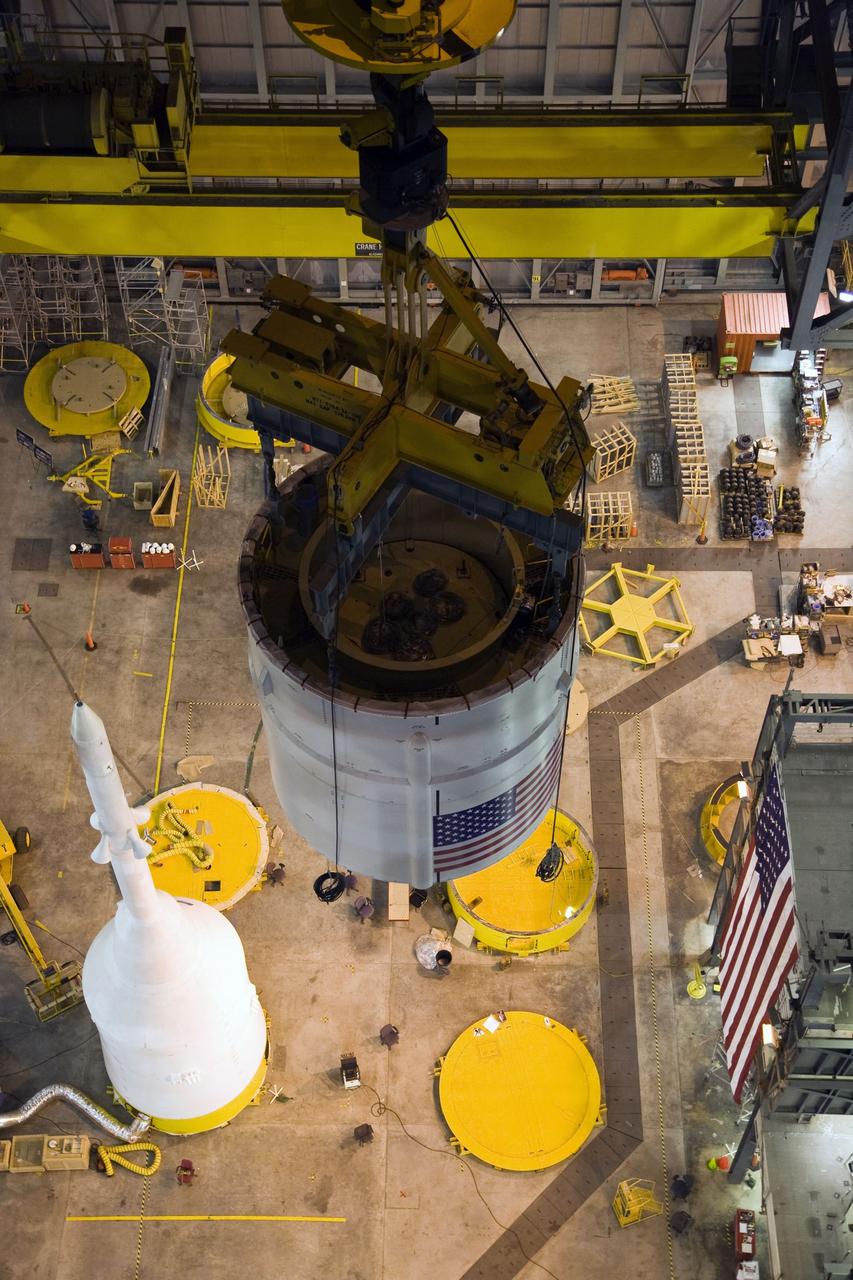
CAPE CANAVERAL, Fla. – In the Vehicle Assembly Building's High Bay 4 at NASA's Kennedy Space Center in Florida, a crane moves the Ares I-X Super Stack 4 across the floor to High Bay 3 for integration with Super Stack 3. Below left is the crew module-launch abort system and simulator service module-service adapter stack. Five super stacks make up the upper stage that will be integrated with the four-segment solid rocket booster first stage on the mobile launch platform. Ares I-X is the test vehicle for the Ares I, which is part of the Constellation Program to return men to the moon and beyond. The Ares I-X flight test is targeted for Oct. 31, pending formal NASA Headquarters approval. Photo credit: NASA/Dimitri Gerondidakis
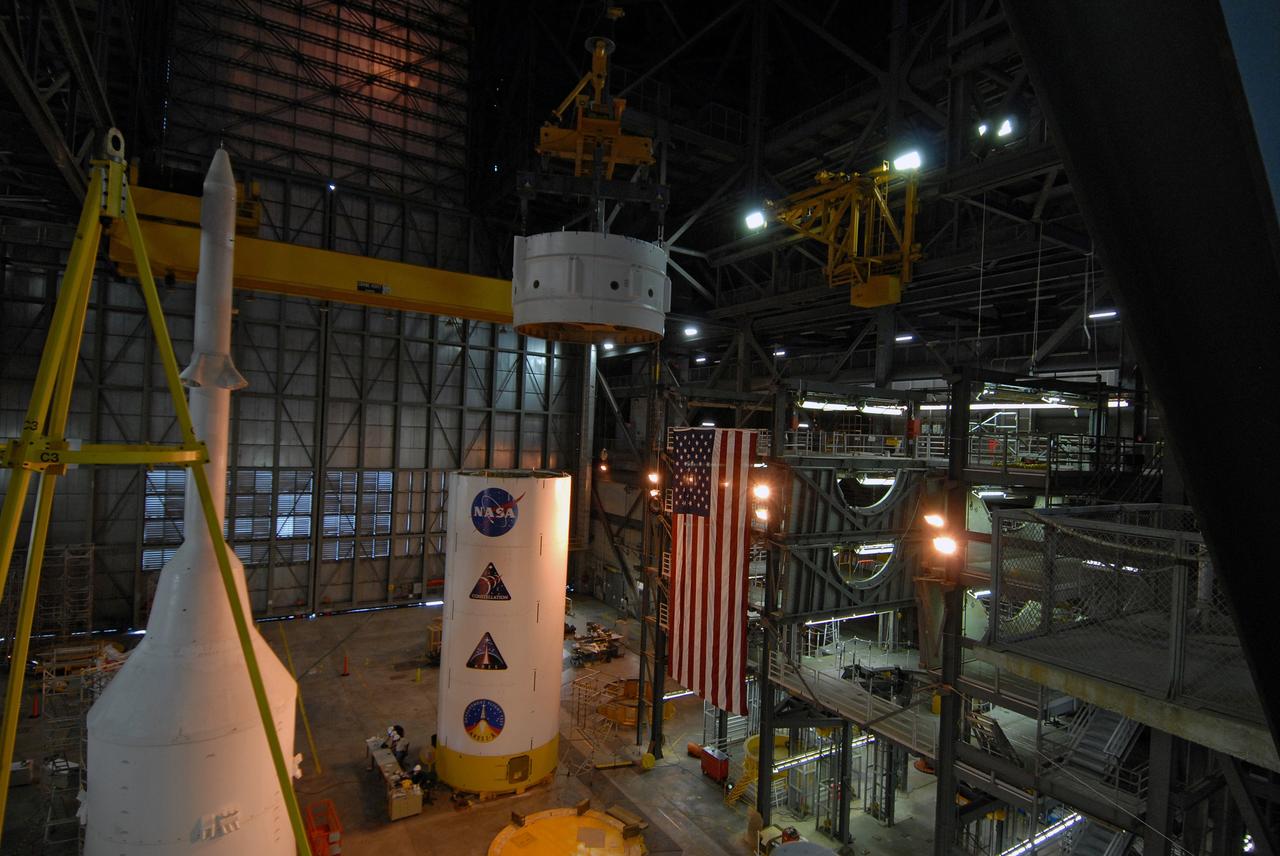
CAPE CANAVERAL, Fla. – In the Vehicle Assembly Building's High Bay 4 at NASA's Kennedy Space Center in Florida, a crane lifts Super Stack 2, part of the Ares I-X upper stage. The stack is being moved across the transfer aisle for attachment to Super Stack 1 in High Bay 3. Beneath is seen Super Stack 3 and at left is the crew module-launch abort system, or CM-LAS, and simulator service module-service adapter stack. The upper stage comprises five super stacks, which are integrated with the four-segment solid rocket booster first stage on the mobile launch platform. Ares I-X is the test vehicle for the Ares I, which is part of the Constellation Program to return men to the moon and beyond. The Ares I-X flight test is targeted for Oct. 31, pending formal NASA Headquarters approval. Photo credit: NASA/Tim Jacobs
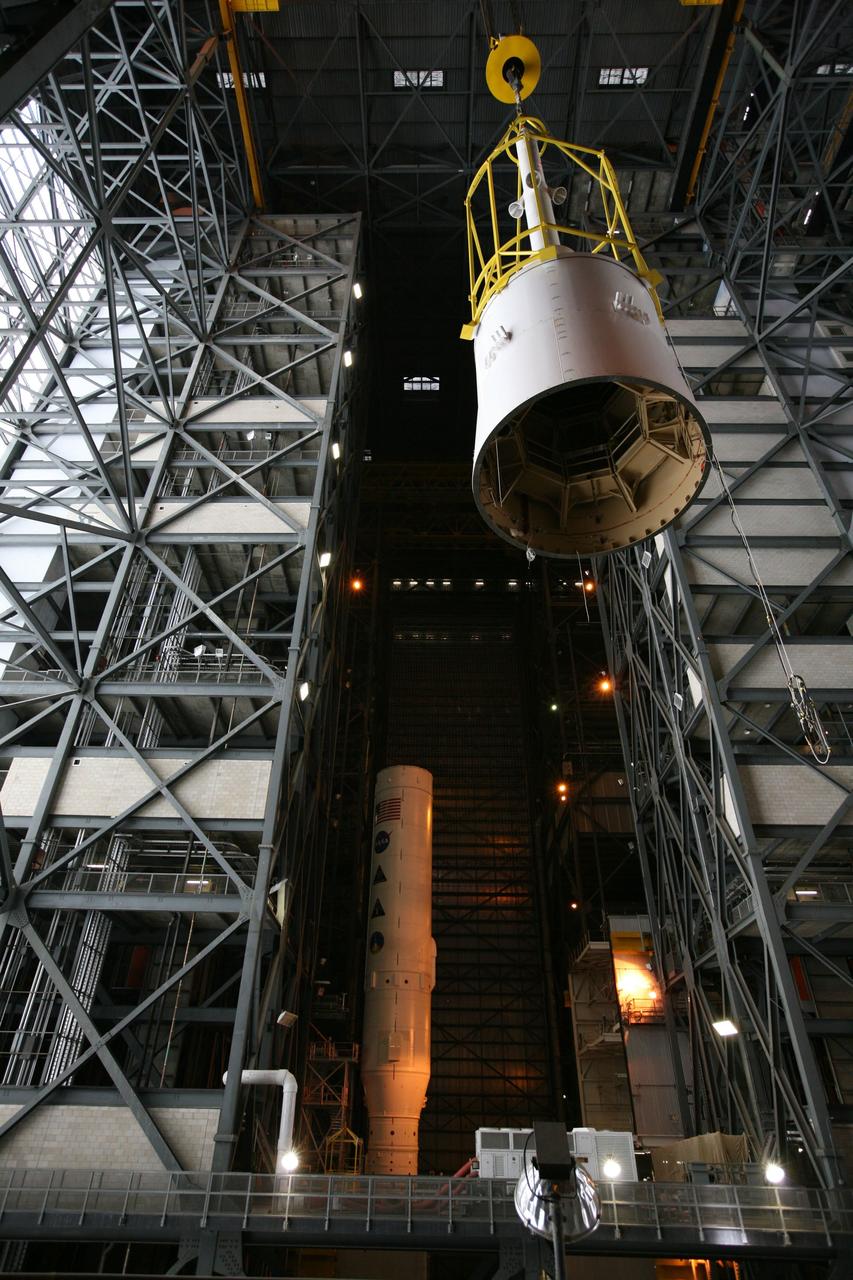
CAPE CANAVERAL, Fla. – In the Vehicle Assembly Building's transfer aisle, assembly of the Ares I-X rocket nears completion. The yellow framework, nicknamed the "birdcage," moves Super Stack 5 from High Bay 4 over the transfer aisle toward an opening at the 16th floor crossover in High Bay 3. The stack will be positioned on top of the segments already in place on the mobile launcher platform in High Bay 3, in the background, completing assembly of the 327-foot-tall rocket. Five super stacks make up the rocket's upper stage that is integrated with the four-segment solid rocket booster first stage. Ares I-X is the test vehicle for the Ares I, which is part of the Constellation Program to return men to the moon and beyond. The Ares I-X flight test is targeted for Oct. 31, pending formal NASA Headquarters approval. Photo credit: NASA/Dimitri Gerondidakis
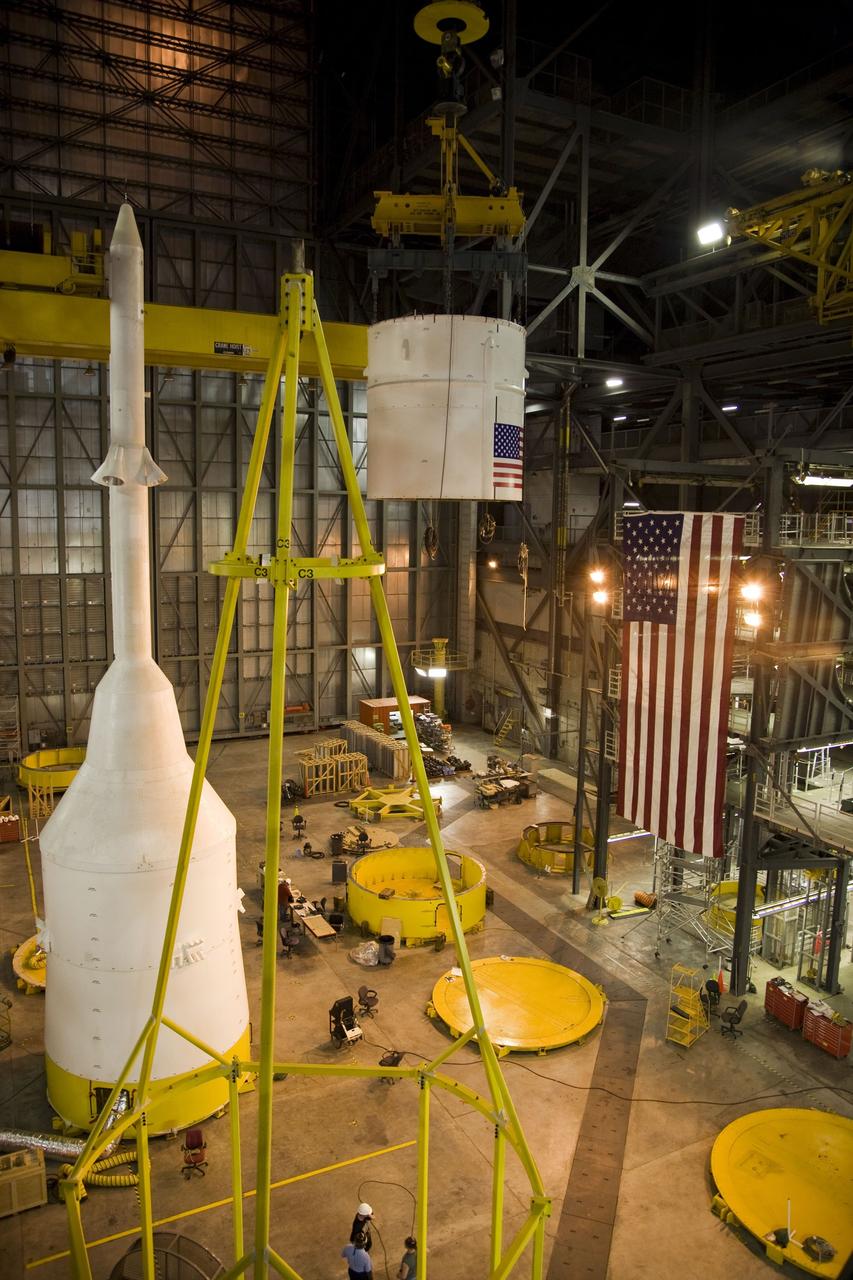
CAPE CANAVERAL, Fla. – In the Vehicle Assembly Building's High Bay 4 at NASA's Kennedy Space Center in Florida, a crane begins moving the Ares I-X Super Stack 4 to High Bay 3 for integration with Super Stack 3. At left are the crew module-launch abort system and simulator service module-service adapter stack and the "birdcage," the special crane that will lift the stack. Five super stacks make up the upper stage that will be integrated with the four-segment solid rocket booster first stage on the mobile launch platform. Ares I-X is the test vehicle for the Ares I, which is part of the Constellation Program to return men to the moon and beyond. The Ares I-X flight test is targeted for Oct. 31, pending formal NASA Headquarters approval. Photo credit: NASA/Dimitri Gerondidakis
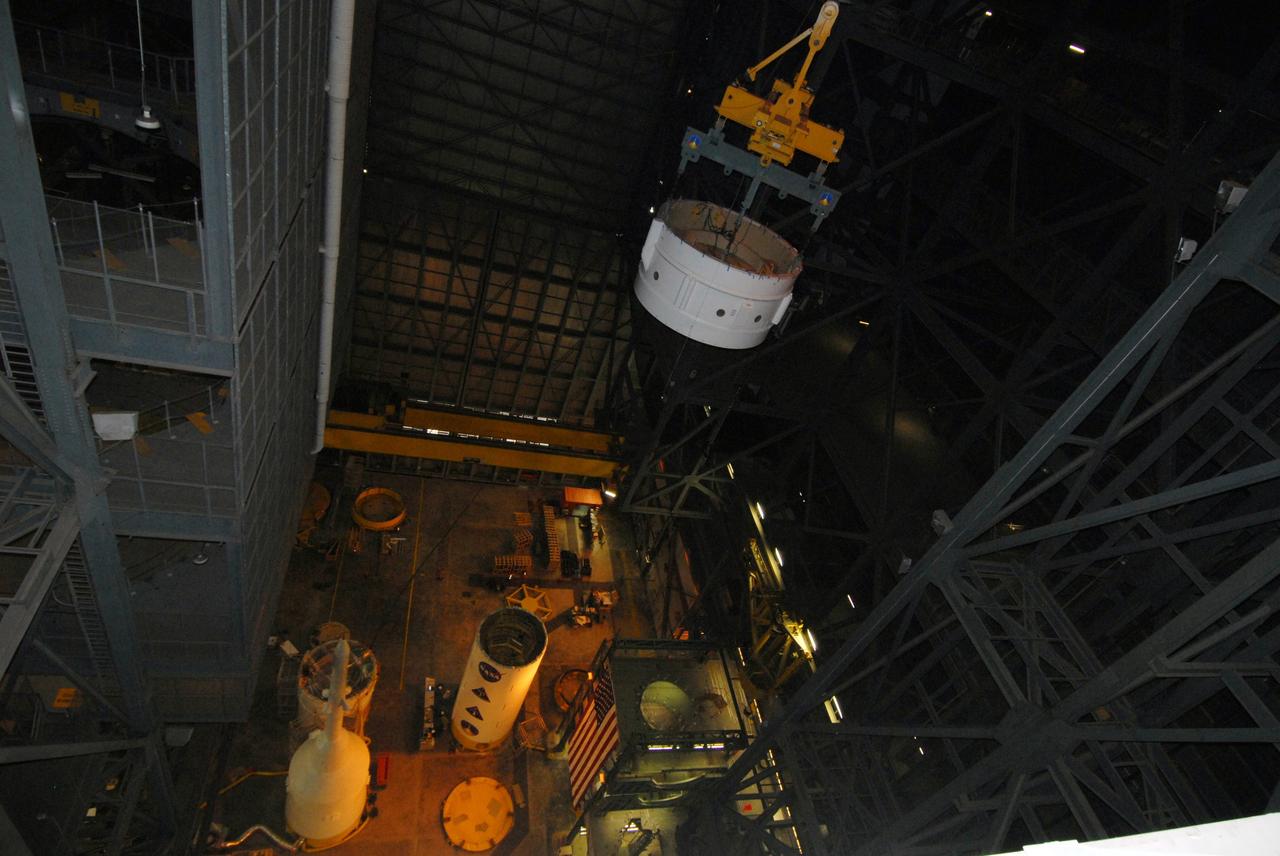
CAPE CANAVERAL, Fla. – In the Vehicle Assembly Building's High Bay 4 at NASA's Kennedy Space Center in Florida, a crane lifts Super Stack 2, part of the Ares I-X upper stage. The stack is being moved across the transfer aisle for attachment to Super Stack 1 in High Bay 3. Beneath is seen Super Stack 3 and at left is the crew module-launch abort system, or CM-LAS, and simulator service module-service adapter stack. The upper stage comprises five super stacks, which are integrated with the four-segment solid rocket booster first stage on the mobile launch platform. Ares I-X is the test vehicle for the Ares I, which is part of the Constellation Program to return men to the moon and beyond. The Ares I-X flight test is targeted for Oct. 31, pending formal NASA Headquarters approval. Photo credit: NASA/Tim Jacobs

CAPE CANAVERAL, Fla. – In the Vehicle Assembly Building's High Bay 4 at NASA's Kennedy Space Center in Florida, a crane lifts Super Stack 2, part of the Ares I-X upper stage. The stack will be attached to Super Stack 1 across the transfer aisle in High Bay 3. At left is Super Stack 3. The upper stage comprises five super stacks, which are integrated with the four-segment solid rocket booster first stage on the mobile launch platform. Ares I-X is the test vehicle for the Ares I, which is part of the Constellation Program to return men to the moon and beyond. The Ares I-X flight test is targeted for Oct. 31, pending formal NASA Headquarters approval. Photo credit: NASA/Tim Jacobs
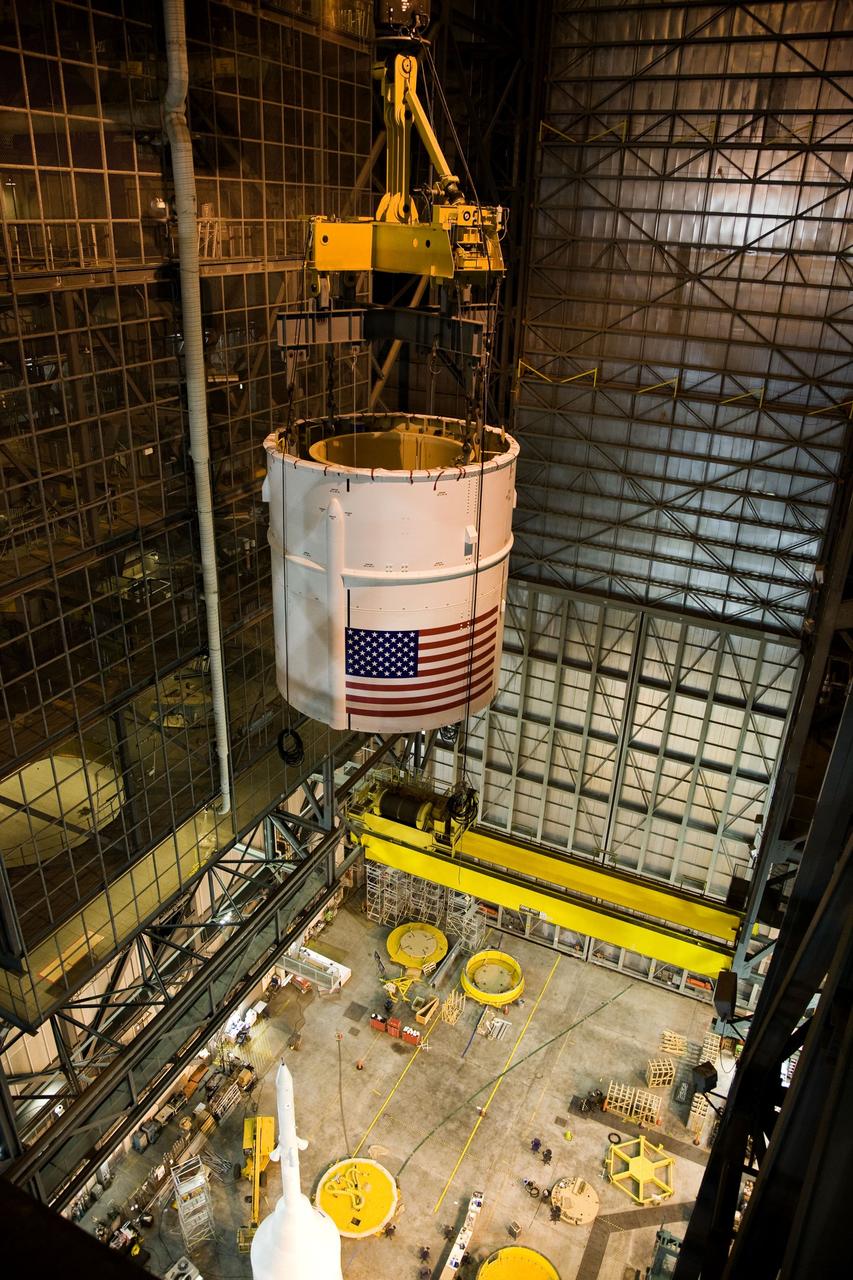
CAPE CANAVERAL, Fla. – In the Vehicle Assembly Building's High Bay 4 at NASA's Kennedy Space Center in Florida, a crane lifts the Ares I-X Super Stack 4 into the upper levels for transfer to High Bay 3 where it will be integrated with Super Stack 3. On the floor below, at left, can be seen the crew module-launch abort system and simulator service module-service adapter stack. Five super stacks make up the upper stage that will be integrated with the four-segment solid rocket booster first stage on the mobile launch platform. Ares I-X is the test vehicle for the Ares I, which is part of the Constellation Program to return men to the moon and beyond. The Ares I-X flight test is targeted for Oct. 31, pending formal NASA Headquarters approval. Photo credit: NASA/Dimitri Gerondidakis
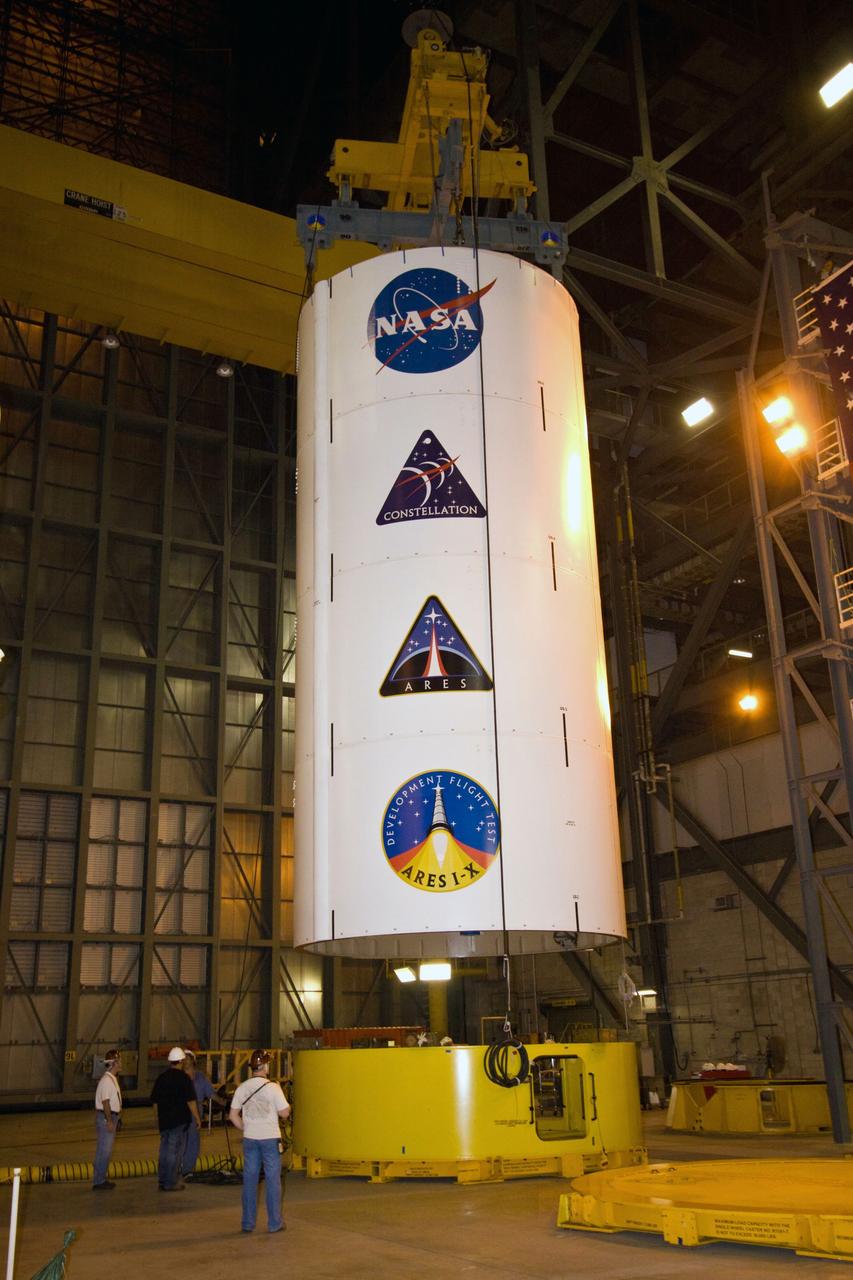
CAPE CANAVERAL, Fla. – In NASA Kennedy Space Center's Vehicle Assembly Building High Bay 3, a crane lifts the Ares I-X Super Stack 3 from its stand. The stack is being moved across the transfer aisle to High Bay 4 for integration with Super Stack 2. The upper stage comprises five super stacks, which are integrated with the four-segment solid rocket booster first stage on the mobile launch platform. Ares I-X is the test vehicle for the Ares I, which is part of the Constellation Program to return men to the moon and beyond. The Ares I-X flight test is targeted for Oct. 31, pending formal NASA Headquarters approval. Photo credit: NASA/Jack Pfaller
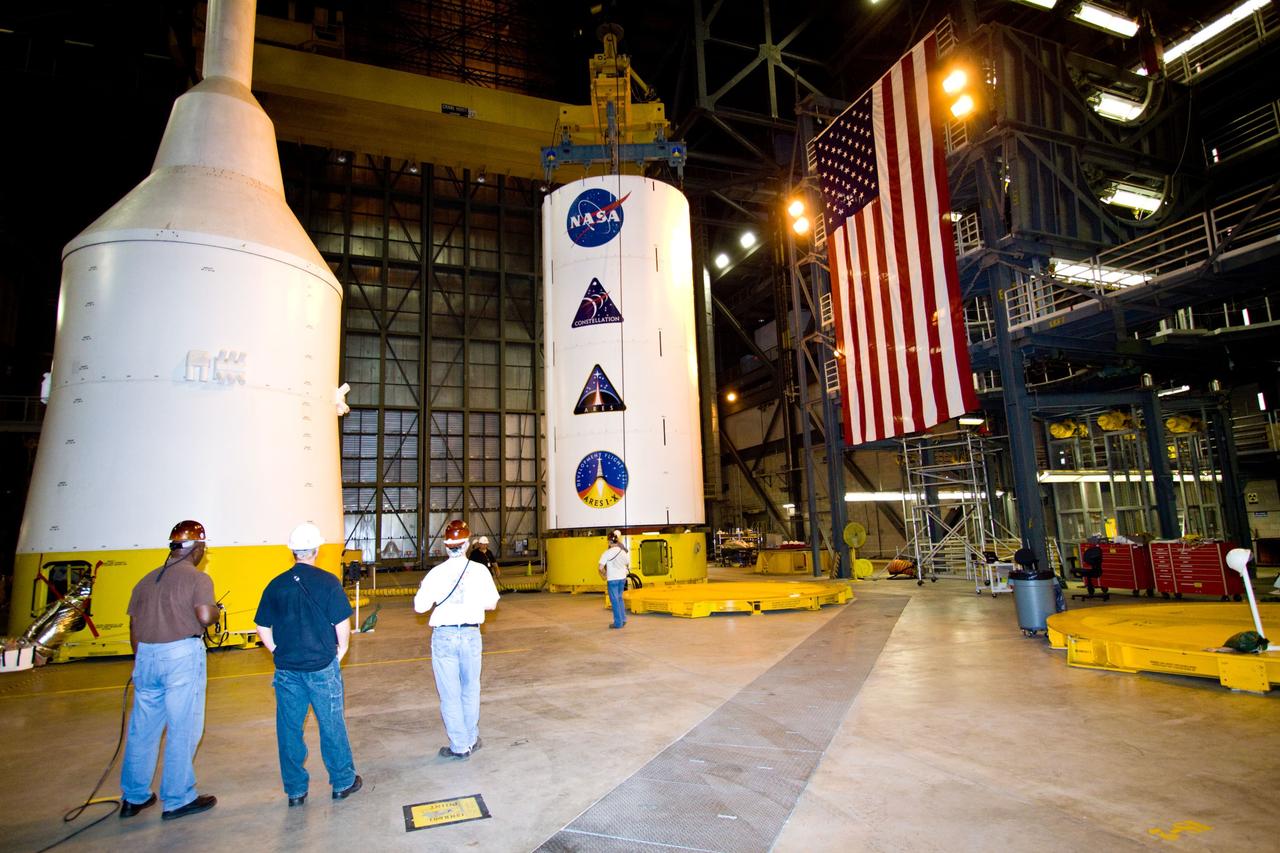
CAPE CANAVERAL, Fla. – In NASA Kennedy Space Center's Vehicle Assembly Building High Bay 3, a crane lifts the Ares I-X Super Stack 3 from its stand. The stack is being moved to High Bay 4 for integration with Super Stack 2. The upper stage comprises five super stacks, which are integrated with the four-segment solid rocket booster first stage on the mobile launch platform. Ares I-X is the test vehicle for the Ares I, which is part of the Constellation Program to return men to the moon and beyond. The Ares I-X flight test is targeted for Oct. 31, pending formal NASA Headquarters approval. Photo credit: NASA/Jack Pfaller
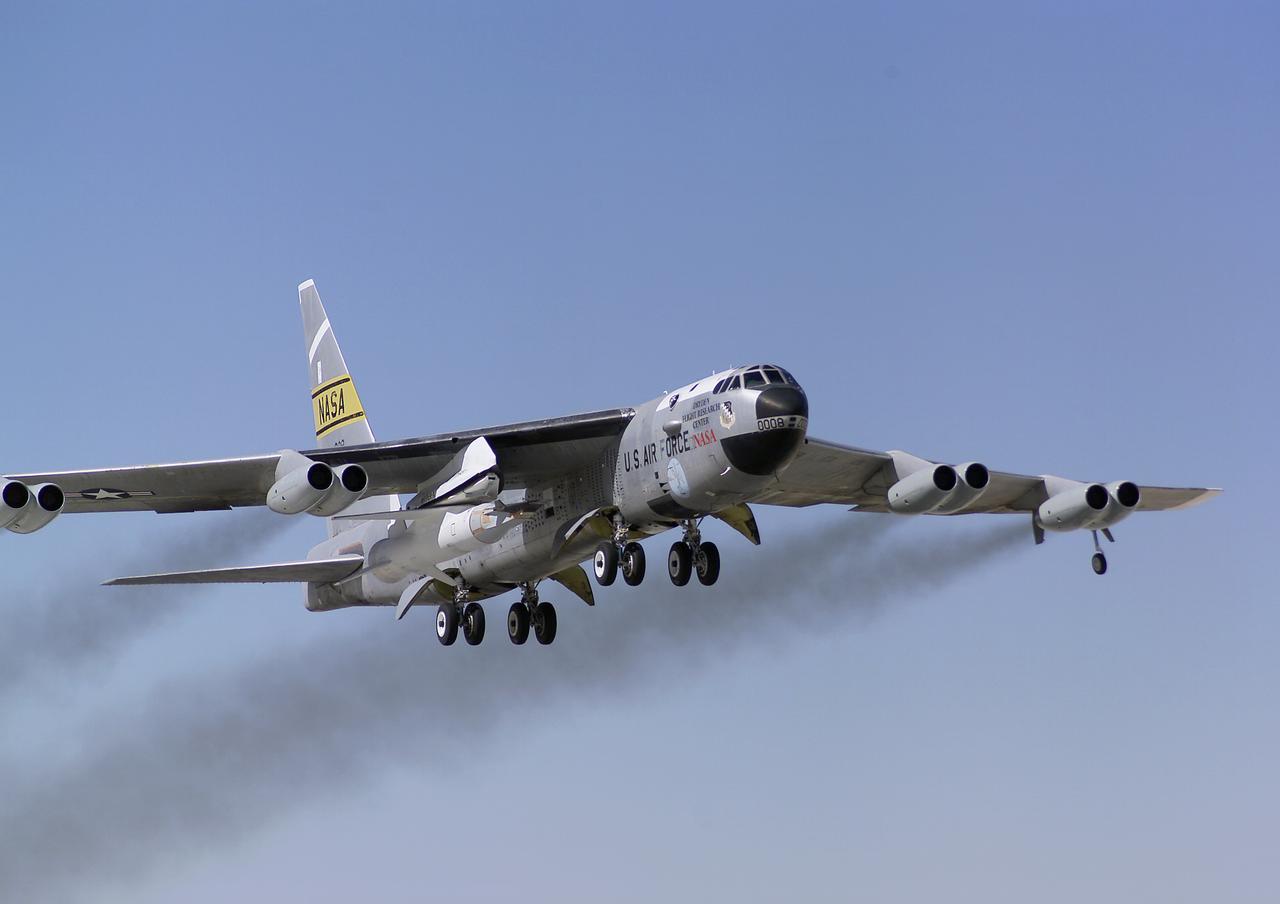
Attached to the same B-52B mothership that once launched X-15 research aircraft in the 1960s, NASA's third X-43A performed a captive carry evaluation flight from Edwards Air Force Base, California on September 27, 2004. The X-43 remained mated to the B-52 throughout this mission, intended to check its readiness for launch scheduled later in the fall.
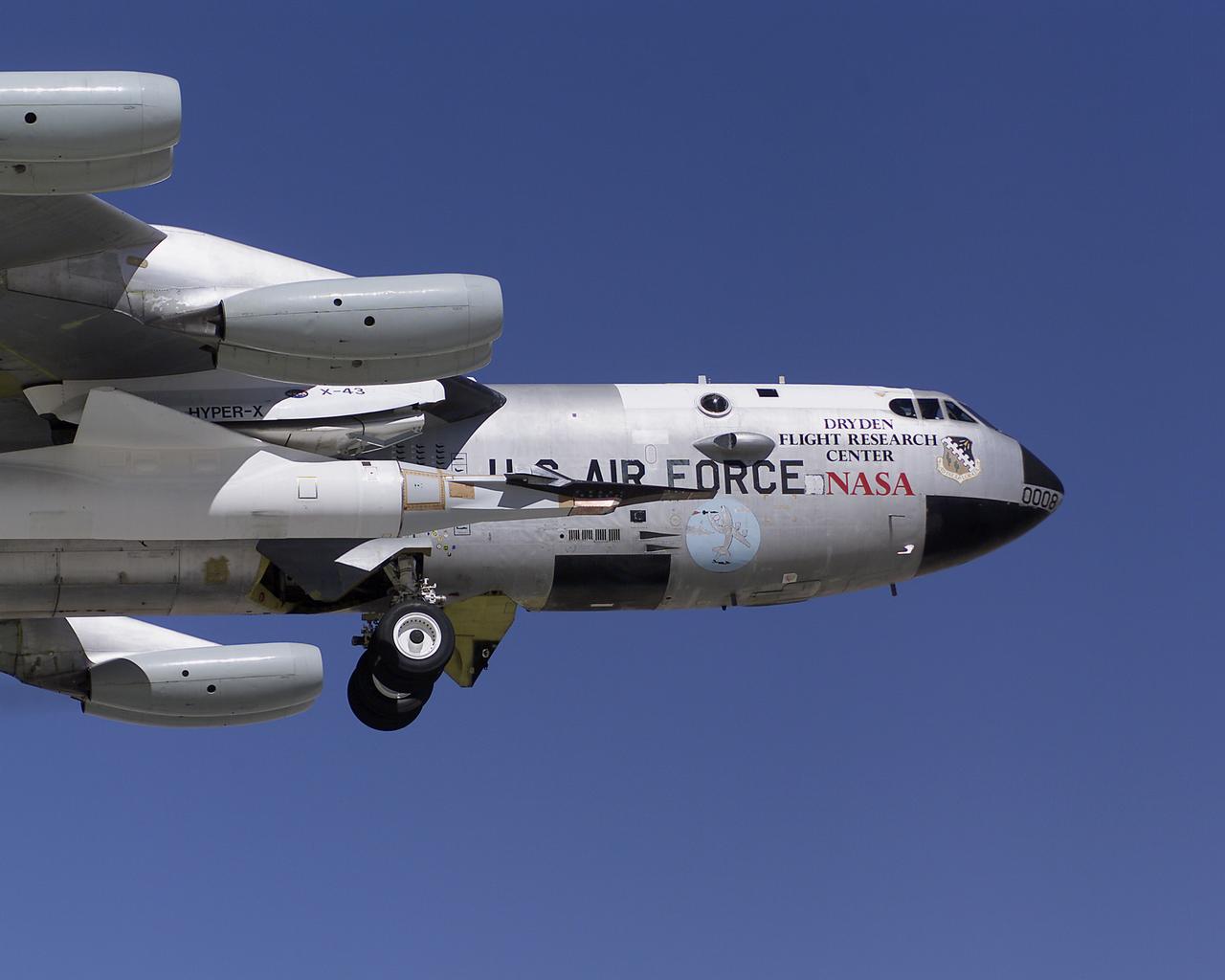
Attached to the same B-52B mothership that once launched X-15 research aircraft in the 1960s, NASA's third X-43A performed a captive carry evaluation flight from Edwards Air Force Base, California on September 27, 2004. The X-43 remained mated to the B-52 throughout this mission, intended to check its readiness for launch scheduled later in the fall.
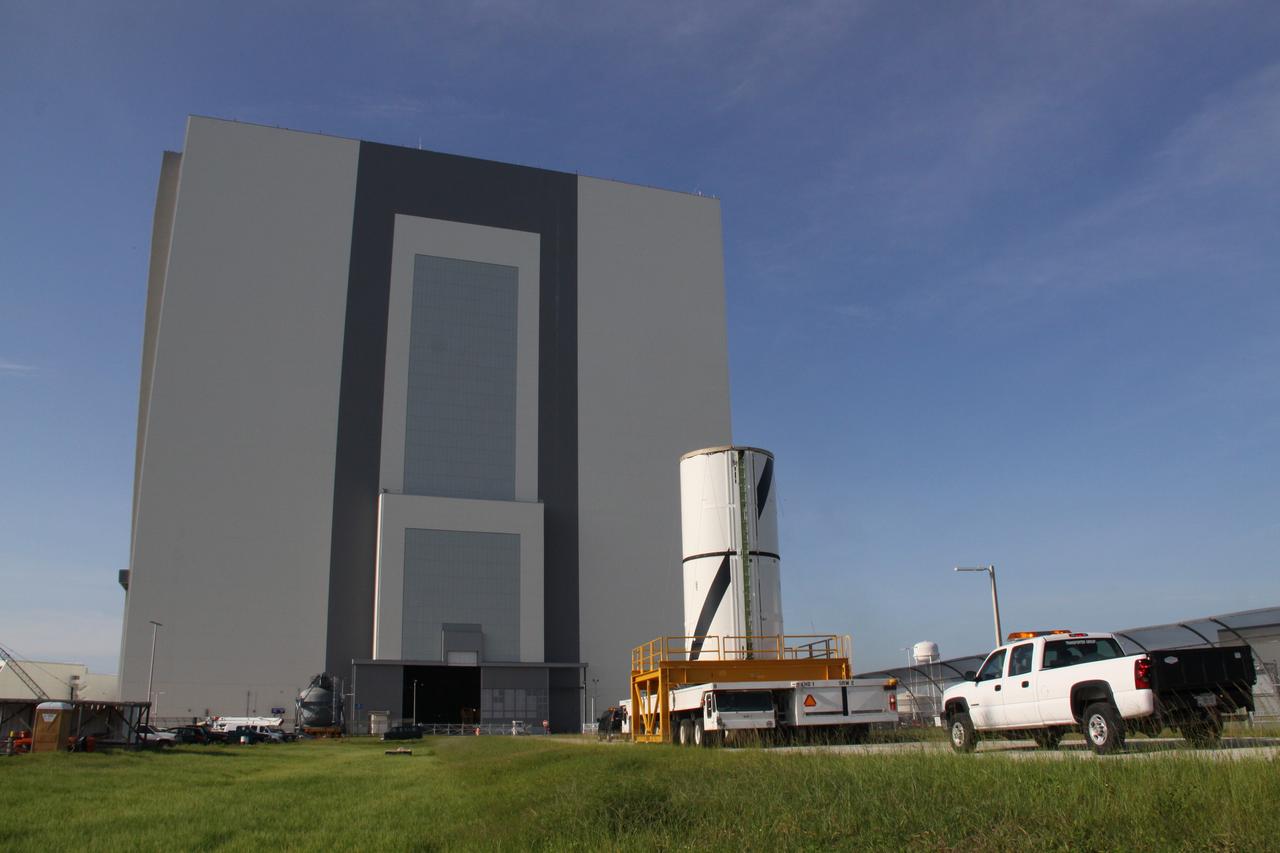
CAPE CANAVERAL, Fla. – At NASA's Kennedy Space Center in Florida, the Ares I-X forward center segment approaches the Vehicle Assembly Building, or VAB, after leaving the Rotation, Processing and Surge Facility. The launch vehicle is being assembled in the VAB's High Bay 3. Part of the Constellation Program, the Ares I-X is the test vehicle for the Ares I, which is the essential core of a space transportation system that eventually will carry crewed missions back to the moon, on to Mars and out into the solar system . The Ares I-X flight test is targeted for no earlier than Aug. 30. Photo credit: NASA/Jack Pfaller
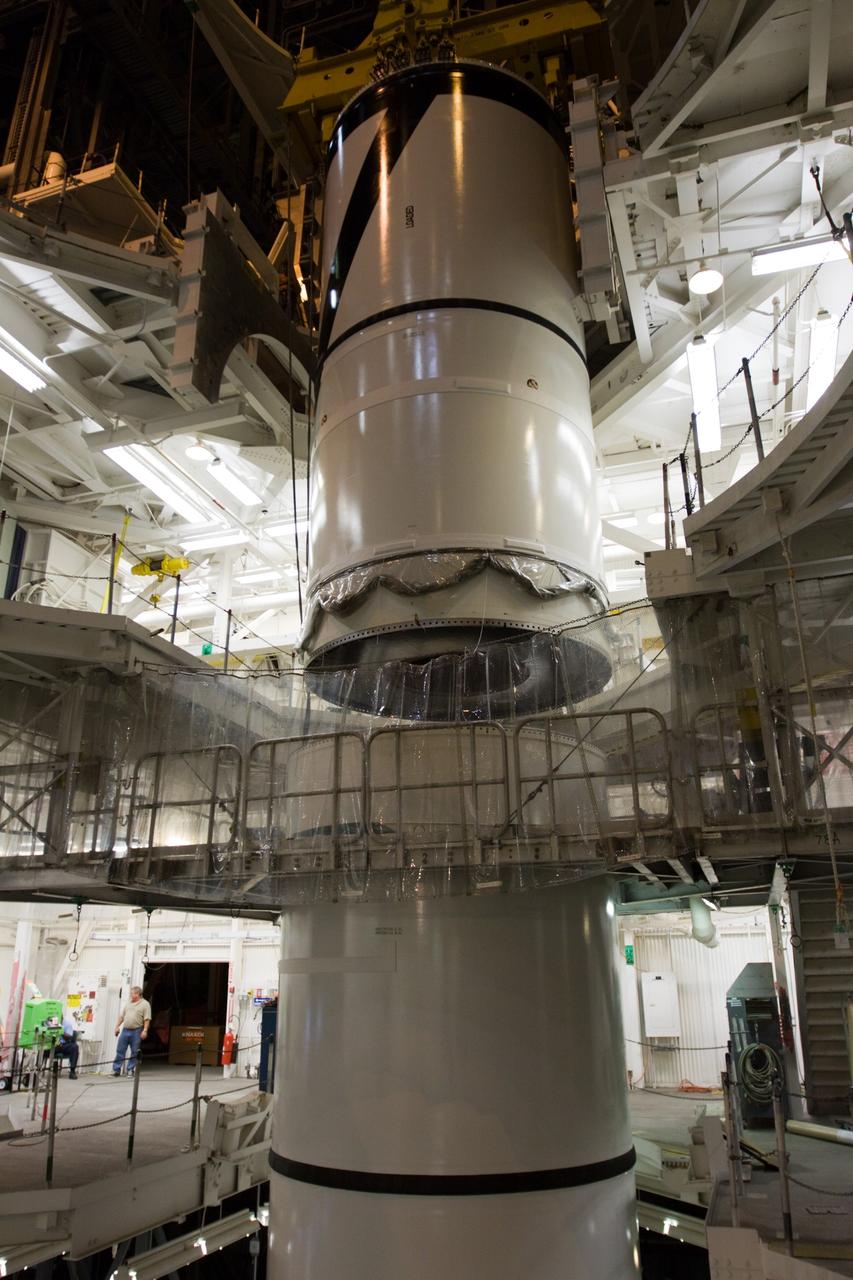
CAPE CANAVERAL, Fla. – In the High Bay 3 of NASA Kennedy Space Center's Vehicle Assembly Building, the Ares I-X forward segment is lowered onto the forward center for mating. The forward center is already mated with the aft center and the aft skirt segments below. Part of the Constellation Program, the Ares I-X is the test vehicle for the Ares I, which is the essential core of a space transportation system that eventually will carry crewed missions back to the moon, on to Mars and out into the solar system . The Ares I-X flight test is targeted for no earlier than Aug. 30. Photo credit: NASA/Troy Cryder
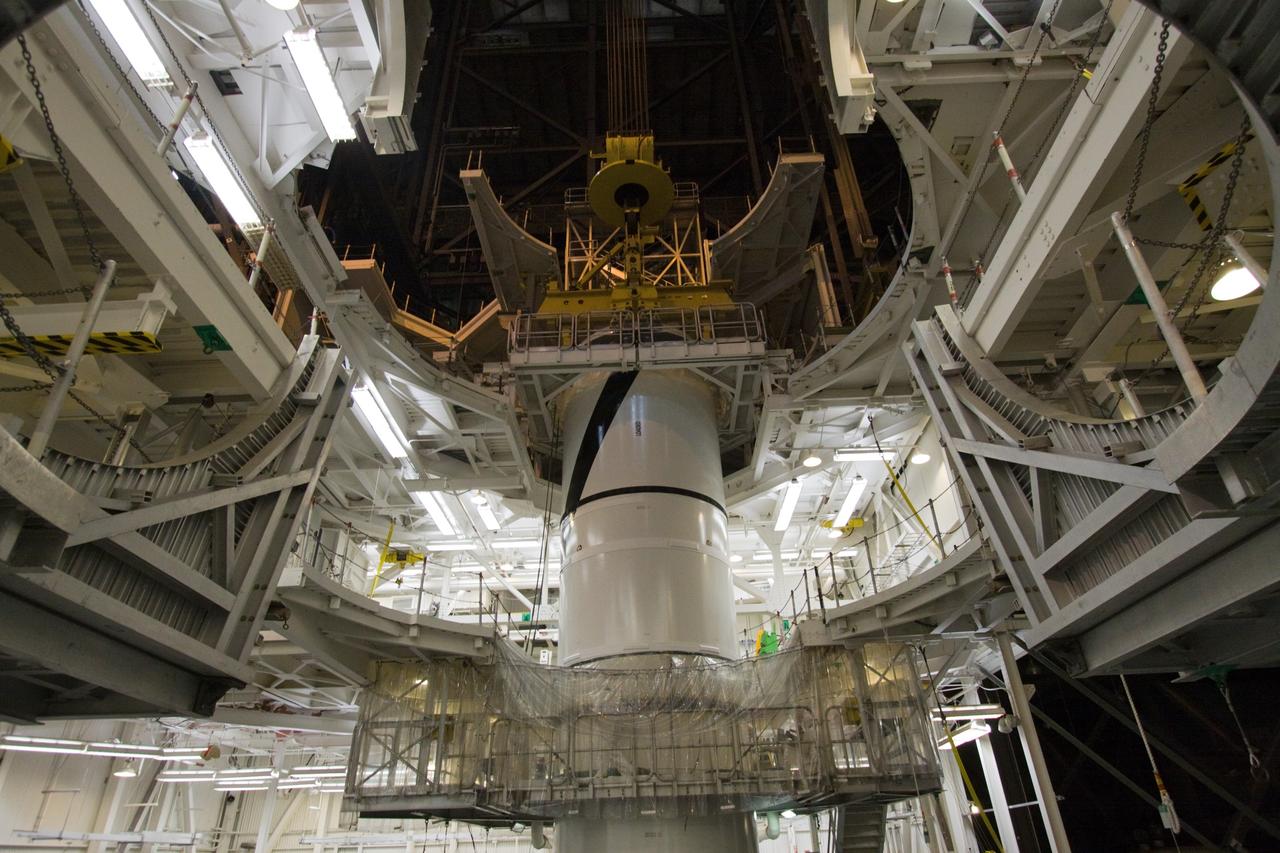
CAPE CANAVERAL, Fla. – In the Vehicle Assembly Building's High Bay 3 at NASA's Kennedy Space Center in Florida, workers check the attachment, or mating, of the Ares I-X forward center segment atop the aft assembly (aft segment and aft skirt). Part of the Constellation Program, the Ares I-X is the test vehicle for the Ares I, which is the essential core of a space transportation system that eventually will carry crewed missions back to the moon, on to Mars and out into the solar system . The Ares I-X flight test is targeted for no earlier than Aug. 30. Photo credit: NASA/Jack Pfaller
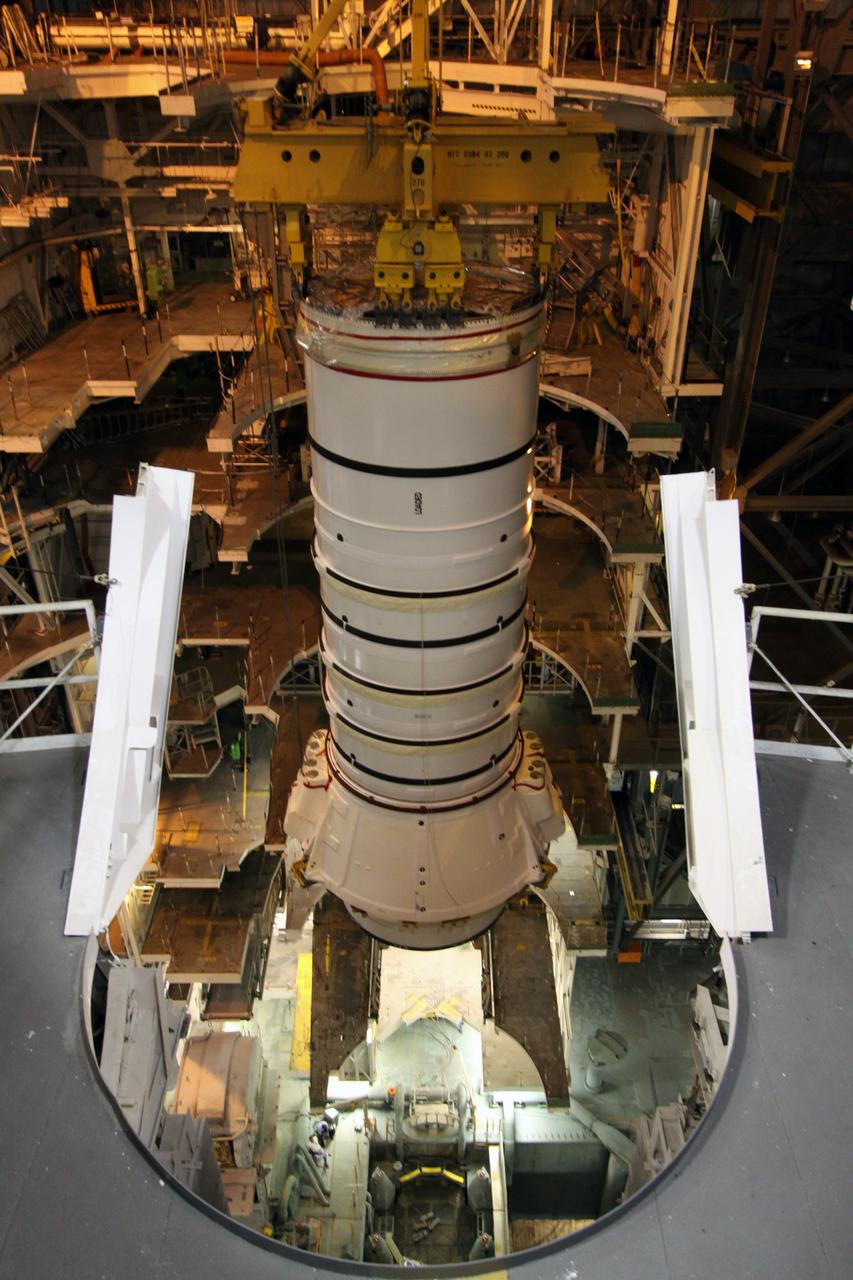
CAPE CANAVERAL, Fla. – In the Vehicle Assembly Building at NASA's Kennedy Space Center in Florida, the Ares I-X aft booster segment with the aft skirt is lowered into High Bay 3. It will be placed on the mobile launch platform. This is the start of the buildup of the Ares I-X launch vehicle for the flight test targeted for no earlier than Aug. 30. Part of the Constellation Program, the Ares I-X is the test vehicle for the Ares I, which is the essential core of a space transportation system that eventually will carry crewed missions back to the moon, on to Mars and out into the solar system. Photo credit: NASA/Jack Pfaller
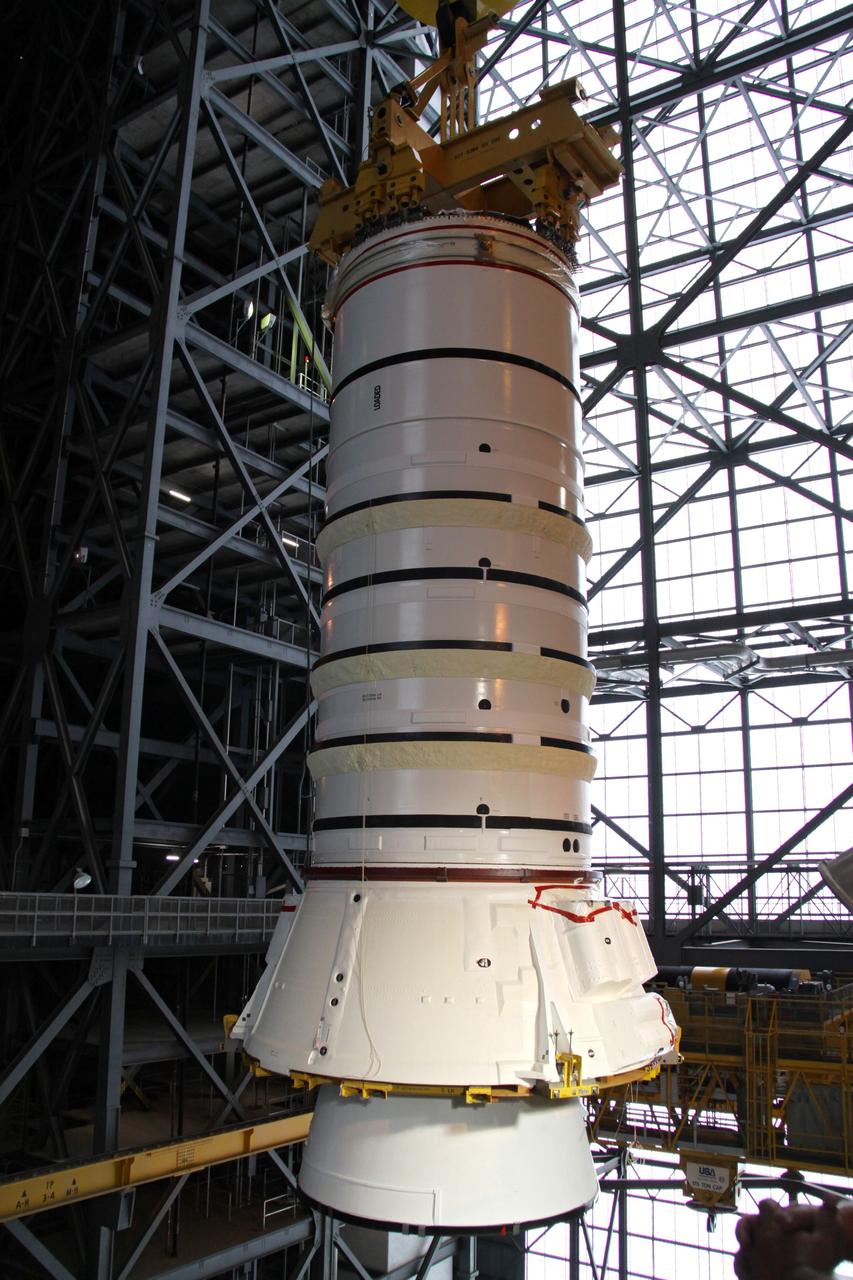
CAPE CANAVERAL, Fla. – In the Vehicle Assembly Building at NASA's Kennedy Space Center in Florida, the Ares I-X aft booster segment with the aft skirt is lifted into the upper regions of the VAB. The stack will be lowered onto the mobile launch platform in High Bay 3. This is the start of the buildup of the Ares I-X launch vehicle for the flight test targeted for no earlier than Aug. 30. Part of the Constellation Program, the Ares I-X is the test vehicle for the Ares I, which is the essential core of a space transportation system that eventually will carry crewed missions back to the moon, on to Mars and out into the solar system. Photo credit: NASA/Jack Pfaller
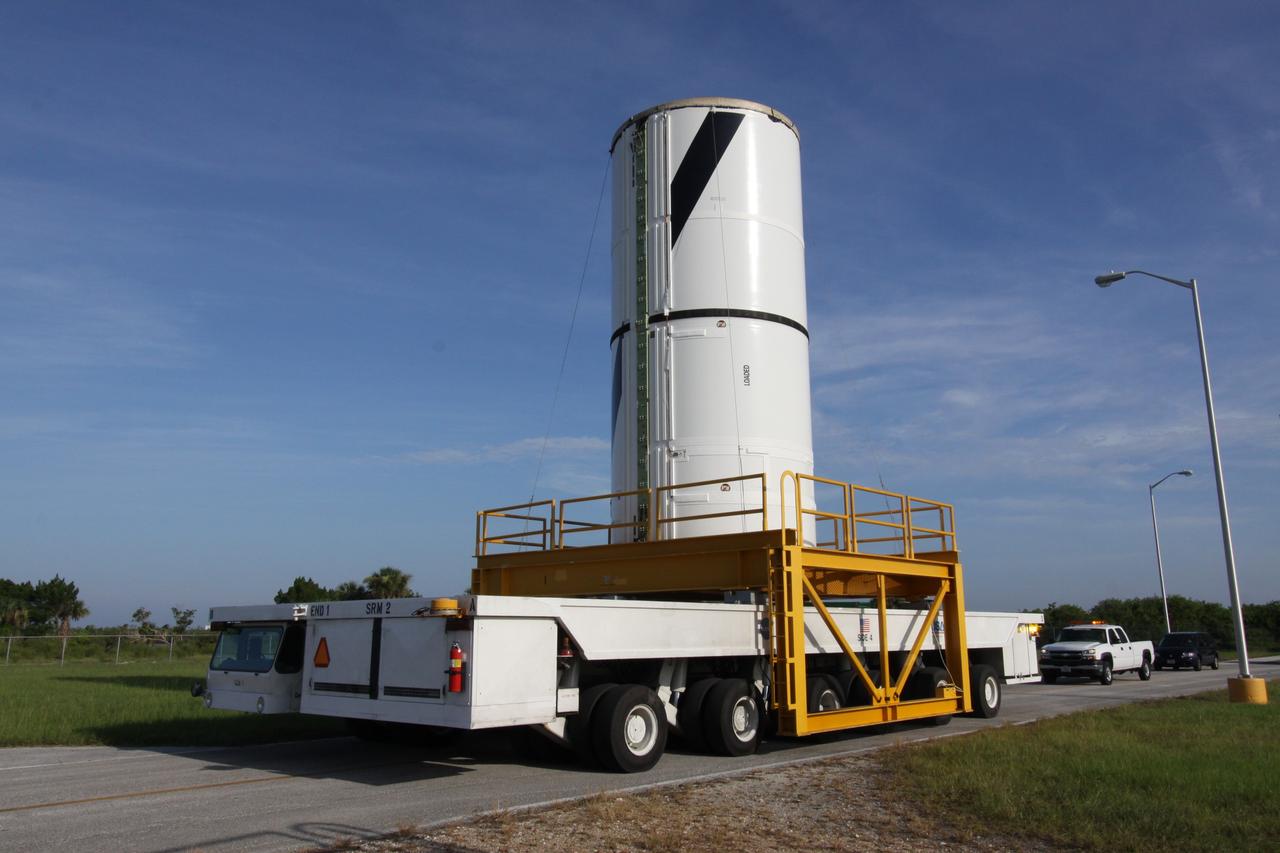
CAPE CANAVERAL, Fla. – At NASA's Kennedy Space Center in Florida, the Ares I-X forward center segment is moving from the Rotation, Processing and Surge Facility to the Vehicle Assembly Building, or VAB. The launch vehicle is being assembled in the VAB's High Bay 3. Part of the Constellation Program, the Ares I-X is the test vehicle for the Ares I, which is the essential core of a space transportation system that eventually will carry crewed missions back to the moon, on to Mars and out into the solar system . The Ares I-X flight test is targeted for no earlier than Aug. 30. Photo credit: NASA/Jack Pfaller